How High School Became an Academic Pressure Cooker
Airdate: Tuesday, September 29, 2026 at 10 am
Extreme academic workloads and relentless achievement culture are driving a youth mental health crisis in classrooms nationwide — especially among students trying to get into top colleges. That’s according to Stuart Slavin, a pediatrician who researches how to improve student mental health and the author of “The Success Trap.” We’ll hear from Slavin, a former school administrator and a high school journalist about how to escape “The Success Trap” and how parents can help their kids navigate this pressure.
Guests:
- Stuart Slavin, pediatrician, medical educator, researcher; author, The Success Trap: How the Pressure to Stand Out Is Fueling Anxiety, Depression, and Burnout in Teens—And the Fundamental Fix They Deserve
- Ananya Kota, student journalist, Los Altos High School – published an article in May in student paper detailing the pressures students face
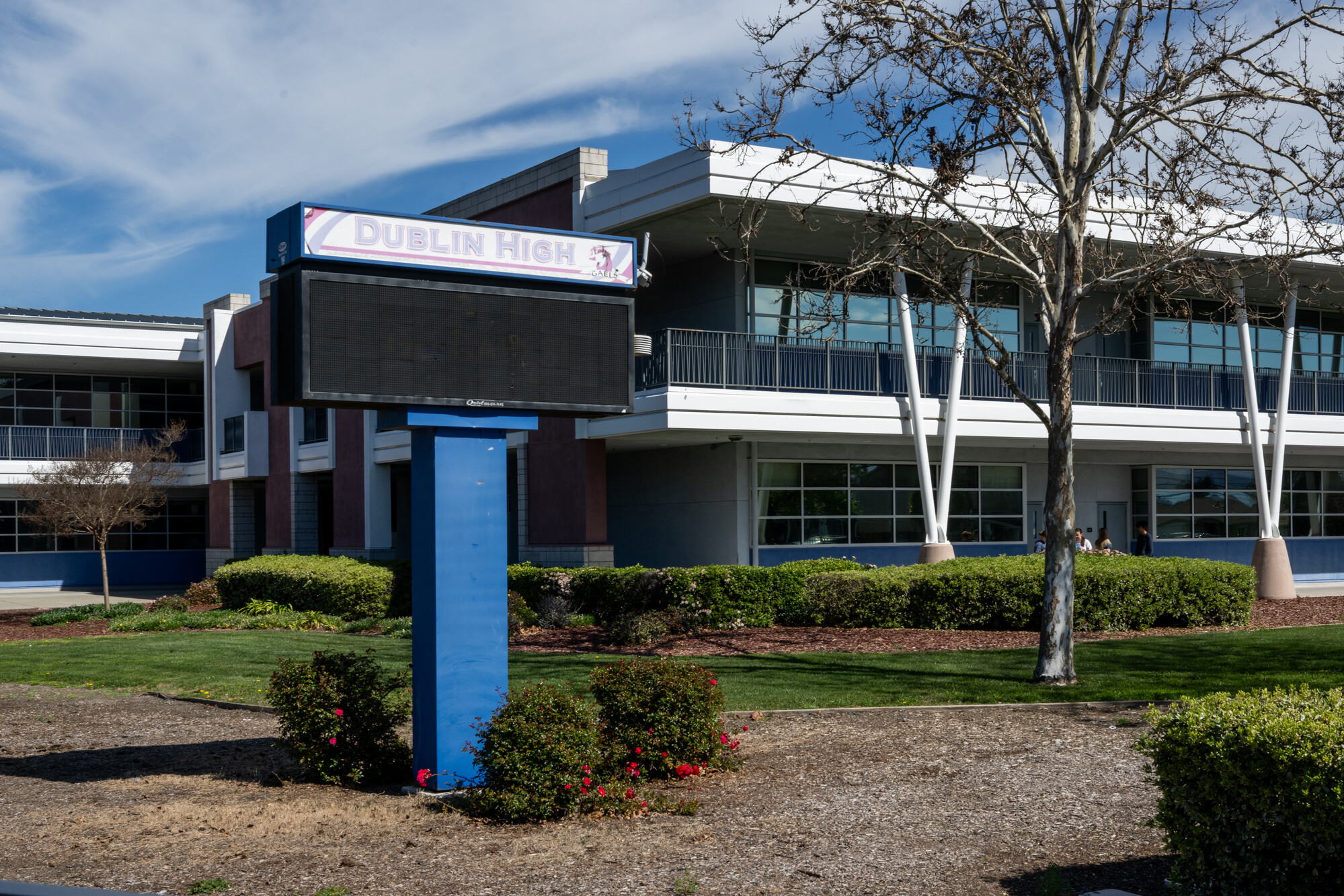
- Chris Funk, former superintendent, Dublin Unified School District – initiated policy limiting the number of AP/honors courses students can take yearly
Episode Transcript
This is a computer-generated transcript. While our team has reviewed it, there may be errors.
Mina Kim: Welcome to Forum, I’m Mina Kim. Anxiety, depression, and burnout are increasingly common among high school students, especially these days as they apply to top colleges. Pediatrician Stuart Slavin says the phenomenon that was largely concentrated in affluent neighborhoods two decades ago has spread like a contagion, infecting a wider socioeconomic swath. And far more than smartphones and social media are the culprits. Slavin says it’s the pressure cooker of academic and extracurricular demands: performance expectations from teachers, coaches, parents, and the students themselves.
And this hour, we hear from a student, a school administrator, and from Slavin, whose new book is called The Success Trap. And listeners, if this sounds familiar to you, give us a call at 866-733-6786. Find us on Discord, Bluesky, Facebook, or Instagram at KQED Forum, or call us at 866-733-6786. Are you a student, a recent graduate, a parent of a student? How has academic pressure affected you?
I’d also like to welcome to the program now Los Altos High School senior Ananya Kota. Ananya, welcome.
Ananya Kota: Thank you so much for having me.
Mina Kim: And of course, Stuart Slavin, pediatrician, medical educator and researcher, and author of The Success Trap. Stuart, welcome to Forum.
Stuart Slavin: Thank you so much, Mina. Pleasure to be here with you.
Mina Kim: So, Ananya, I’ll start with you. You wrote a piece for your student paper in May about the pressure a student faced. So tell me, what made you write the piece?
Ananya Kota: Yeah, of course. So I’ve always kind of been aware of the academic pressure that was in the Bay Area, and generally I felt that it manifested differently in different schools. And I was really curious how the academic pressure affected Los Altos High School in particular.
So, I was kind of mulling it over, and while I was thinking about it, unfortunately, a student had committed suicide in one of our school districts nearby, and I think that kind of made me realize just how horrible the academic pressure could be. And I really wanted to understand by speaking to students and getting their experiences, speaking to teachers and understanding how does it affect our school particularly, and why do students feel the need to overperform so much.
Mina Kim: So how were you seeing it manifest? How was it affecting you and your peers?
Ananya Kota: I honestly primarily saw it manifest within the student community itself. So, when I started writing the article, I had to — it was a little difficult, honestly — turn myself into an observer of a community I was already so integrated in.
I was constantly observing and seeing the interactions between students, where students should be like, “Oh, I just got a B on this test. I’m going to fail.” And I was just thinking in the back of my head, like, no, you’re not going to fail. I mean, the standard is so high, and students are making very casual comments that kind of inflate that standard.
And I just think, like, a lot of the times when we get, for example, grades back, or there’s the SAT or the ACT, AP scores, it’s always the highest standard that’s expected among students. If students don’t get a five on their AP exam, they’re automatically disappointed and assume that they’re failing. If they get a B, they’re automatically panicked and assuming, “I’m failing.” Anything less than the standard feels like failing to a lot of the students. That’s sort of the impression that I got while observing my community.
Mina Kim: Did you find that people were talking about having trouble sleeping, that they were, you know, experiencing some degree of not feeling like they were good enough?
Ananya Kota: Definitely. It’s very common for me to hear, like, “Oh, I only got like three hours of sleep. I was studying for this test,” or, “Oh, I barely slept yesterday.” And it feels very normal. But when I think about it objectively, I’m just like, that’s not healthy at all. Like, you should be getting sleep. You should be eating well. But all these basic things are being sacrificed for studying and getting those perfect grades.
I do think that students have placed the entirety of their self-worth on their grades and these numbers and these letters, and you can really see how it affects their mindset, how it affects the basic care they do for themselves.
Mina Kim: I was also struck from the outset that you talked about the Bay Area, how things were specific to the Bay Area in your high school. Tell me about how you think your community plays a role in the pressure that these students feel.
Ananya Kota: Of course. So when I was doing research for the article, I was drawn to the city and the Silicon Valley in particular because I noticed that in the Silicon Valley, in the Bay Area, there’s a lot of upper-class people who have very high median incomes. And I thought perhaps that contributed because the standard of success in the Bay Area in particular is very inflated.
It’s like a tech hub. We see all these successful companies, these successful tech companies. And when students see that, I think they think that’s the standard of success, that’s a baseline level of success. When you’re surrounded by so much success and so much opportunity, if you don’t take that or if you don’t meet that, it can feel automatically like failure.
And so I think there really is, like, it’s amazing to live here in Silicon Valley and have so much opportunity at your fingertips, but with that opportunity comes like an unsaid sort of expectation to meet all of that and have to achieve that, and everyone else is trying to do the exact same thing as you are.
Mina Kim: Yeah, I was struck by this line in your piece where you say, “Even as I write this article and acknowledge these issues, the idea of breaking away from the culture is scary.” Talk about that. It’s hard even as you’re aware of it, right, to be able to adopt, you know, things that might reduce the pressure yourself.
Ananya Kota: Yeah, I would say personally I, of course, am in the student community and I feel those pressures firsthand. I think that I also value my academics a lot, and it sometimes feels like, you know, if I get anything less than an A, I’m automatically, like, extremely upset at myself. And I think, like, while perhaps I understand, like, objectively it’s not the end of the world, after you’re just surrounded by that pressure for so many years, it kind of becomes your norm.
You automatically feel those before you can really catch yourself and realize, hey, no, I’m not a failure. I’m feeling I’m gonna fail because I got a B in a class.
So I do think that the first step to breaking away, as I said, from these expectations is acknowledgement because it is such a deep-rooted issue that it doesn’t even start in high school. It starts from when your academic journey begins in middle school. You’re taught that, like, academics are the be-all and end-all, and that doesn’t end in high school. It doesn’t — like, and when you go to college, I think when you grow up around that environment, it sticks with you.
Mina Kim: Would you say it was middle school where you started to feel it, or did you even feel it as early as elementary?
Ananya Kota: I would say, like, personally, it didn’t really affect me until high school, but I don’t think that’s the case at all for my peers, because I did see my peers very frequently panicking over their grades.
And when I entered as a freshman in high school, I could already see that academic pressure around, and I think that — I don’t think it all of a sudden manifested in the first couple months of freshman year. I think it had been there since middle school, and that’s why so many freshmen were already anxious about their grades.
Mina Kim: Well, Stuart, Ananya mentions acknowledgement, and that’s what you’re trying to do, acknowledge this issue. And I imagine what she’s saying also sounds familiar to you after serving more than 18,000 teenagers in some 18 high schools, I understand, including in California.
Stuart Slavin: Yes, absolutely. The first schools that I looked at were all in the Bay Area. And I have to say, Ananya really encapsulated so beautifully, or eloquently, the challenges kids are facing these days and the pressure-cooker environment that they’re facing in communities across this country.
Mina Kim: And even your own child was not immune, right? You share a very relatable experience of her feeling like she couldn’t stop to eat dinner because of all the homework she had and bursting into tears.
Stuart Slavin: Yeah, this really started me on this journey. So I’m a pediatrician, and I was watching my daughters in a high school that was reputedly kind of the most progressive school in the St. Louis region, but the amounts of homework and academic pressure they were facing was just extraordinary.
And so that really launched me on this journey to look at this issue and really raise awareness about it, because I think it could almost be viewed as a problem hiding in plain sight, that we’re so hyper-focused on phones and screens as a source of the adolescent mental health crisis. I have deep concerns about those, but I think it’s led us to kind of ignore this problem, which I think Ananya has really described.
Mina Kim: Yeah, how do you know that what your daughter was expressing, or what you see happening around you, is not, you know, temporary stress or momentary drama, but a bigger, more serious structural problem?
Stuart Slavin: Well, there are a couple of layers to that that I would say. One is, if your child as an adolescent suffers from depression or anxiety, it markedly increases their likelihood of having those mental health problems as adults.
But the other that Ananya kind of alluded to is there are these kind of mindsets. I’ll describe a couple of them. One is maladaptive perfectionism that’s been on the rise for 35 years, where an A-minus or a B isn’t good enough and it feels just terrible. Another is performance as identity. It’s not that you got the score, it’s you are that score.
Those don’t disappear. Kids are internalizing these and then carrying them into adulthood in ways that then can contribute to their distress later as young adults and on into adulthood.
Mina Kim: And you have seen this as widespread. Like, what do the stats tell you, and also widening? I quoted you saying that you were also seeing this in much broader economic swaths and also happening younger even than high school. Can you help us understand sort of the scope of what you’re seeing?
Stuart Slavin: Yeah, the scope I describe in a few ways. I mean, I have done research then in California and Missouri, and also in Ohio. And I also had the opportunity over the last eight years or so in my job to travel the country and just talk to families and talk to kids.
And it became very clear that what used to be, I think, really in very affluent communities and on both coasts has spread like wildfire really across the country. And I think to a great degree, it’s understandably kind of — it is driven by, I think, a sense of economic insecurity. A sense that the divide between the haves and the have-nots is growing and that to have a middle-class existence is increasingly difficult.
So a lot of this, I think, is well-intended efforts to launch kids to success, which sadly I don’t think are actually even achieving that goal.
Mina Kim: Hmm. Actually, this Discord user Nicole writes — no, well, writes: “This extreme academic pressure is a symptom of our growing inequality.” And I think you have some thoughts on that.
We’re coming up on a break, though, so let me remind listeners that we are talking with Stuart Slavin, a pediatrician and medical educator and researcher and author of the new book The Success Trap, and Ananya Kota, a student journalist at Los Altos High School.
And with you, are you a high school student or recent graduate? How did academic pressure affect your mental health? If you’re the parent of an adolescent, have you noticed symptoms of anxiety or depression in your child? What did you find helped relieve the stress that comes with high school or college applications? 866-733-6786 is the number.
Stay with us. This is Forum. I’m Mina Kim.
Welcome back to Forum. I’m Mina Kim. We’re talking this hour about the increasing pressure students are facing and feeling in high school. We’re talking about it with Stuart Slavin, who’s written a new book called The Success Trap: How the Pressure to Stand Out Is Fueling Anxiety, Depression, and Burnout in Teens and the Fundamental Fix They Deserve. He’s a pediatrician and researcher.
Ananya Kota is also with us, a student journalist at Los Altos High School, who published a piece in May in her student paper detailing the pressure students face there.
And you are joining us at the email address [email protected], listeners on Discord, Bluesky, Facebook, or Instagram at KQED Forum. Tell us if you are a student or a parent of a student and you’ve noticed these types of academic pressures and their effect on students’ mental health.
Are you a teacher or administrator? Are there policies or changes you’ve made at your school that you have found helped improve student mental health? Or what did you find students or parents helped relieve the stress that comes with high school, college admissions and applications, and also with the demands of extracurricular activities?
Listener on Discord writes, “A student’s fear of disappointing their parents often creates more stress than direct parental pressure.”
One of the things you were saying, Stuart, was just how much there is concern among parents about economic anxiety and growing inequality as well driving this. What more would you add to what you feel like is leading students to what you’ve described as really unprecedented levels of stress and anxiety?
Stuart Slavin: You know, I think one way to look at that, Mina, is looking at the survey that we used in these 18 schools, and we asked students to rate 35 different stressors in their life to see how big of a stress factor they were.
And these included things like school-related, obviously, but boyfriend, girlfriend, family issues, health issues, bullying, cyberbullying, social media. And the thing that really struck me is that in every one of the 18 schools, the top-rated stressors, the biggest stressors in kids’ lives, was school- and achievement-related.
And just to add to that point of your really perceptive learner, who said pressure — pressure to not disappoint parents. In our survey, it was actually ranked higher as a greater stressor than direct pressure from parents. So even as parents, if we’re not putting that direct pressure on them, they know our values and sometimes react to those.
The last thing I’ll say about that, which is true, the number one or number two stressor that was cited by kids in every single school was pressure from self. So what they’re doing is reacting to this pressure-cooker environment and then absorbing all of this, and it’s really creating these mindsets that they’re again going to carry with them to adulthood and contribute to future distress as well.
Mina Kim: Well, I want to bring into the conversation now a former administrator of the California school district, Dublin Unified, Chris Funk. Chris, welcome to Forum.
Chris Funk: Thank you for having me.
Mina Kim: So your district is trying something new, and I know you just left as an administrator in the summer, but you really set the stage for this experiment, essentially. What are you trying to do in Dublin?
Chris Funk: I just retired in June after 36 years in public education, and the majority of that spent between either two K-12 districts and one high school district.
It was clear to me that this zero-sum race to the top to get to the best colleges was causing students to have excessive academic course loading that seemed like they were just chasing that grade point average, that boost that you get by taking an honors or Advanced Placement course, as opposed to for the love of learning, the engagement of really trying to be masterful of the content that you’re learning.
And so in Dublin last year, the board passed a resolution that limited the number of courses, honors and Advanced Placement courses, that a student could take in a single year as well as across their four years. So they could take up to four classes combined, honors and AP, in a single year, and up to 11 across their four-year high school time.
Mina Kim: And what are you hoping the effect of this change will be?
Chris Funk: Well, we’re trying to promote more balance, student well-being and a healthier school culture. Because at all three of my systems that I’ve been a part of, there has been mental health has been kind of that stigma. That stigma, I think, has been reduced now after COVID, and now it becomes an expectation that wellness, mental health, is such an important, vital part of everyone’s life, not just high school students, grownups also.
And so we’re just trying to focus on creating a more healthy environment, change that mindset that Dr. Slavin has been talking about. And also focus on all the other amazing aspects of being an adolescent in high school, whether it’s athletics, whether it is extracurricular activities like band and choir and drama and dance, all the amazing things that happen in high school, and less focus on just the academic course loading.
Mina Kim: And what was the reaction to this decision to limit the number of AP classes offered? And similarly, Discord user Jeff writes, “Did you get pushback from families who worried the AP class limit would disadvantage their kids in college admissions?”
Chris Funk: Well, I had a unanimous decision by my board, and my board represents the entire district. So that’s a good sign. And yes, there’s always going to be some pushback on any policy that you implement.
And I believe the pushback was minor compared to the larger conversation we had around grading, because we did change our grading policy prior to the resolution on limiting AP courses. But most of it was around the fact that families and students felt like they were going to be put at a disadvantage, and just really not understanding the academic entrance requirements into colleges and universities, the idea of what is the official school profile, that you’re really just competing against your own peers at your school and you’re not competing against other schools across the nation.
And the reality is that you can get to the very best colleges without having to overload on your course taking. So it’s really about education.
Mina Kim: And universities, they do know or have profiles on high schools, right, about how many APs are offered there, so they recognize that if a student is taking a certain number that may be less than another district, it’s just because that district simply didn’t offer that many of them.
Chris Funk: Absolutely. That’s exactly it. That is why each school and each district has their school profile.
And the other piece is that there is this idea that the more classes I take, the better chance I have of getting into this college. And the reality is every college, every university recalculates the GPA, and they have the base level, 22 courses, 24 courses that they actually take the GPA of. So if you take 30 courses, six of those courses, depending on which college or university you apply for, aren’t even going to count because they’re not going to calculate that in your GPA.
And so what we’re trying to create in Dublin was this concept of focus on the areas that you love, do the very best and master those areas. Focus on the other aspects of being an adolescent and what colleges look for in terms of your extracurricular activities, your community service, and all being that whole child. It has been lost with this race to the top.
Mina Kim: It’s very interesting because I hear echoes in what Chris Funk is saying with what you’ve said about, maybe we have lost our understanding of what successful means.
Stuart Slavin: Yeah, I think that’s exactly right, and I have to say first, kudos to you, Chris, and your board for taking these actions. I think a lot of schools have been really reluctant to take these kind of measures.
One of the key things, I think, for listeners to really understand is that I think there’s this idea that if you back off, the performance is going to drop.
A couple of things I would say to counter that: In every school I looked at, kids reported on average getting six and a half hours of sleep per night. The adolescent brain needs eight to ten, so at that level they’re cognitively and emotionally compromised.
And then the other piece that I think is really important stems from my work with medical students, in which we found high rates of depression and anxiety, reduced pressure, reduced demands, and not only did their mental health improve dramatically, their performance improved as well.
So I think there’s kind of this false narrative that if we back off, if we reduce the pressure, that somehow performance is going to drop and they aren’t going to be as competitive. And I think that’s just false.
Mina Kim: Ananya, though, I was struck by a Chronicle piece that covered what Dublin was doing, and it quoted a student, or just a recent graduate from Dublin, as saying that students are just going to find other ways to stand out if they can’t stand out based on the number of AP courses they’ve taken.
What do you think about that? Do you think that’s likely true?
Ananya Kota: I think partially yes, just because, I mean, the AP cap has also been discussed among our districts, and I certainly did hear a lot of pushback from my peers at the idea of being limited about the number of APs. I frankly think some of them find it scary.
But there is also, I know you mentioned it before, like a stigma around extracurriculars, how many you need to take, how they need to stand out. And I think some of that pressure will shift.
But also I do think academics and extracurriculars are two very separate entities, and I do think limiting the number of APs can potentially really help students focus academically and really take the classes they’re passionate about.
But I do unfortunately think that it won’t eliminate the pressure and they’ll still feel stressed about it. So I think it will help them, but that pressure might unfortunately feel more prominent just because there’s that underlying worry that if I’m not taking enough AP classes, am I going to be competitive, or do I need to make up for this in my extracurriculars?
So I think it honestly completely kind of depends on the student and how they receive that. But yeah, I think they can be received in multiple ways.
Mina Kim: Let me go to caller Naomi in Berkeley. Naomi, go ahead, you’re on.
Caller: Hi, my students graduated from Berkeley High in 2023 and 2025. And I think the pressure comes not only from the academic achievements, but the community and the parents of friends and the peers themselves.
My kids were admitted to fine, decent state and UC schools. And they heard comments from parents at parties or from their peers that they would never allow their kids to apply to that school, or they would never go to that school as only their backup school, and I found that to be, as a parent, to be very distressing.
My kids were fine students. They had A’s and B’s. I did not allow them, or do not encourage them, to max out their APs. They had, you know, they were varsity athletes, and still, by their peers and the parents in our community, they heard very negative comments, and it was very hurtful.
Mina Kim: Naomi, thank you for sharing that. Stuart, what have you found are sort of the most common or problematic ways that parents in communities inadvertently add pressure to kids?
Stuart Slavin: Yeah, so back to that point that pressure to not disappoint parents, even if you’re not putting that direct pressure on, they may know your values by, you know, when you’re talking to friends and somebody mentions that their child is going to Harvard or Stanford, etc., and they just light up. The kids can know your value.
But I think what your caller also really alludes to is that this is widespread in the culture, and I think in some ways it requires some courage on the part of parents and kids to say, no, I’m not going to be influenced and affected by that. I have a sense of my self-worth as a human being that isn’t tied to going to the most, you know, selective, prestigious college possible.
Mina Kim: Well, Jane writes, “My 18-year-old has dealt with depression and anxiety and expresses desire to relieve their stress with drugs and alcohol. I feel like saying, well, just don’t do that. But just like abstinence, I know saying just say no is unrealistic. How would you suggest talking to a young adult about drugs and alcohol and moderation in a world filled with anxiety?”
And it sounds like if they’re using it to relieve anxiety, Stuart.
Stuart Slavin: Oh, it’s a very difficult situation, I feel, for that person, and I think that’s kind of the downstream consequences of having a child who’s living in such a pressurized environment as an adolescent that they enter young adulthood really at risk.
And in terms of how to talk to them, I guess, you know, I think with a supportive approach, without a judgmental approach, and ideally encouraging them with you to seek care from a health professional of some kind.
But it is, I think, these are the kind of hidden consequences of what may happen if our kids do feel such enormous pressure and demands as they’re in their early development.
Mina Kim: Well, Laura writes, “How do we encourage a kid to work and do well, to put in the time to understand the schoolwork without putting dangerous pressures on them?” Stuart.
Stuart Slavin: Yeah, I guess what I would say is one of the things that I think is important is to focus less. We have a tendency — how’d that test go? What kind of scores are you getting? How’s your grade point average?
And these electronic dashboards, I think, have become a real problem, where it’s not just kids checking them furiously, but parents are as well.
I think it’s vitally important, it’s just vitally important, for parents to acknowledge and celebrate other identities than their kids’ academic performance: their humor, their creativity, their kindness, their ability to work with others. There are so many things that we need to recognize in our kids that I think get lost in our daily conversations of left cars.
Mina Kim: Yeah. Talk about where it can lead. You mentioned the phenomenon of crashing out. What is that?
Stuart Slavin: Oh, crashing out, I think, Ananya, I’d love to hear what she says, where, you know, what looks like a minor setback to anybody else, you know, if anybody else looks at somebody who gets an A-minus or a B-plus, and, you know, the kid thinks it’s a failure.
It’s not a failure, but that’s what it feels like. And that’s what these mindsets do. You know, you have the discomfort of a less-than-ideal performance. But the story, the narrative you add to it, that you attach to it, can make the pain much, much worse.
And I think there are skills that kids can easily learn and that parents can use. Tell them and help them understand these are just stories you’re telling yourself that really aren’t accurate and are harmful. And helping kids change those thought processes, I think, could be incredibly helpful on their journey to adulthood.
Mina Kim: Yeah. And you write that they manifest as essentially an acute cognitive and emotional breakdown, right? From explosive outbursts to actually emotional withdrawal.
Stuart Slavin: Yeah, and I think parents just can’t really even comprehend. Again, it’s hard for them to understand why this, what looks like a minor setback, um, feels so profoundly painful.
And again, I think it’s what Ananya had described is this culture that people live in, and it’s not just parents, it’s just, you know, teachers, coaches, et cetera, peers that are also creating this environment that is profound.
And again, as you said, the crashing out can be just breakdowns, perseverative thinking where they just can’t stop thinking about this problem. You know, meltdowns, tears, or anger as well.
Mina Kim: Ananya, we’re coming up on a break, but you wrote about a friend distancing themselves from your friend group for months. How were you able to reach out?
Ananya Kota: I noticed it initially because she stopped coming to sit with lunch with us, and she stopped talking in our group chats. And I don’t think the pressure she felt was purposeful, I think, because our friends are very aware of the academic pressure, but a lot of them are extremely successful.
All my friends are wonderful. I have a friend that’s going to Stanford and another one is going to Barnard. And I think even just being around such immensely successful people can make you feel, “I’m not doing enough.” And I think that’s what she felt.
And it’s exactly what he described, the emotional withdrawal. That was the aspect that she was facing. And it really manifested in, not in necessarily like outward outburst, but inward.
Mina Kim: We’re talking about the increasing academic pressures on high school students today. More after the break. I’m Mina Kim.
You’re listening to Forum. I’m Mina Kim. We’re talking this hour with Los Altos High School senior Ananya Kota, former superintendent of Dublin Unified School District, Chris Funk, and pediatrician, researcher and author of the new book The Success Trap, Stuart Slavin, about how to address the increasing anxiety, depression and burnout that students are experiencing as a result of increased parental and social expectations and the desire to stand out in a college admissions process that seems to be demanding more AP courses and extracurriculars.
Join the conversation with your own experiences and questions about how to address this at 866-733-6786, at the email address [email protected]. You can find us on Discord, Bluesky, Facebook, and Instagram. We’re at KQED Forum.
Let me go to AJ in Mountain View. Hi, AJ, you’re on.
Caller: Hi, thanks for taking me on. I actually wanted to share a comment with regards to the pressure even though that comes from extracurricular activities that contribute to, that are important for college.
I actually know this family. I mean, the child is all of 10 years old at this point. He’s into diving. There’s math class, there’s — I had no class, but of others, but what stood out for me was when the parent actually created a website, took some pictures, printed a calendar, and sold them to fund an NGO.
And all of this to support his future college admissions. My concern was when a child is all of 10, I believe it’s going to be under 10 more years before he enters, and the pressure is already on. And this is in Los Altos, so I understand. I hear what Ananya is actually talking about. I actually see it around me and my neighbors.
Mina Kim: Concerning. Well, AJ, thanks so much for sharing that. Stuart, would love to get your reactions to what AJ is describing, and it also seems to underscore the earlier point that you are seeing this younger and younger.
Stuart Slavin: When I first started writing this book, and much of the research that supports it was really focused on high school students. But as I was talking to more people and I heard more and more stories of this kind of behavior, I think what it’s reflective of is a phenomenon called intensive parenting, where parents feel enormous social pressure to have their children in a lot of enrichment activities that increasingly have become much more intensive.
The old days of just, like, you know, rec-league baseball has been replaced by club sports that go year-round, involve travel, sometimes enormous pressure and sense of competition on the kids. So, yeah, you have to wonder and worry about the impact on, goodness, a 10-year-old child. And it starts earlier.
I’ve talked to parents of five- and six-year-olds. A quick story, which is a mom who told me, another mom said, “Do you have a soccer coach for your six-year-old?” And she said, “No.” “Well, he’s never gonna get into the travel team.”
So I think those pressures are widespread and they’re starting earlier and earlier.
Mina Kim: One of the things you’ve warned against, Stuart, is parent as problem solver, the increasing role they take in that. What do you see as the dangers and how can they pull back?
Stuart Slavin: Yeah, and I have to admit I was a problem solver in many ways as a parent, and I think there’s a tendency for us to jump in when your kids are struggling. And while that’s important and at times to do, I think what you have to recognize is that if you jump in too quickly and intervene too aggressively, it has unintended consequences of reducing their own self-confidence in dealing with their problems, undermining their ability potentially to deal with challenges in the future.
I mean, in many ways, we should be viewing adolescents as this kind of training ground for adulthood, and they need practice in working through and solving their problems as well.
So you should be there to support. Don’t abandon your kids, but don’t fall into the tendency to jump in too quickly to try to rescue and solve problems.
Mina Kim: Well, Scott in Sacramento writes, “Does involvement in extracurricular activities like after-school sports or clubs help relieve that stress of everyday student lives, or does it just compound it? As a parent, I feel that it would relieve it, but I didn’t have social media and other modern-day pressures that kids experience nowadays.”
What do you think, Ananya? Do you think that extracurriculars — do you find them to be a place of relief or do you find them to be added stress?
Ananya Kota: I think it can be both. Honestly, personally, an extracurricular I find that stress relieving, as I do cross-country, and it’s so nice to have a dedicated time period where I can just exercise. And I know it’s a really good medium of stress relief. So that’s an example of one extracurricular that I think is stress relief.
But also, in turn, I think in the back of my head, “Oh, this is taking a couple hours out of my day, so when am I going to do homework? When am I going to do this? When do I do that?”
So I think it’s a mix of both, and the key to finding an extracurricular that can do stress relief is just time management, knowing that, oh, if I’m gonna do this sport, can I have a time where I can do this other extracurricular or take the time to do homework this other time period?
So don’t cram like seven extracurriculars into one day, because I think that starts to make it more of a pressure than a stress relief. But I think if you can find the key number of extracurriculars you genuinely enjoy, it can definitely be a stress relief.
Mina Kim: Have you found helpful, Ananya, as a high school student deep in this, right? Like strategies or things that you have found helped work for you in terms of relieving the stress and pressure?
Ananya Kota: I think the biggest thing is just being very aware of my limits as a student. I think, like, obviously being surrounded by so much pressure, it’s definitely affected me to the point where, like, sometimes I’ll find myself being like, “Oh, I should have taken that AP class,” even if it’s like not a class I’m necessarily, like, very passionate about.
But I think just having a support group around you, friends who don’t encourage, like, the academic pressure or don’t say things like, “Oh, you didn’t get an A on that test. Well, what are you doing?”
I think being very aware of your own limits and also communicating that to your peers, especially to your parents, as they’re your main support, can really help with developing an understanding of, this is what I can do and I’m going to stick with it because I don’t want to burn out and I don’t want to fall down that rabbit hole of I’m not doing enough.
Mina Kim: Chris, I’m curious what you’ve observed with regard to, you know, parents who seem to have a healthy relationship with their kids’ success levels.
Chris Funk: Yeah, you see it as has been mentioned. It starts younger and younger. But in terms of the academics, one of the key things or guidelines that happens — measure points — is in middle school math acceleration.
I can’t tell you, in all three of my school districts that I was in in 36 years, the goal to take calculus by your junior or even your sophomore year is the new trend. And you start ninth grade in Algebra 2, which is just completely a mindset that has to be changed, because every student that really wants to take calculus can get there in four years of high school math.
For some, it might require taking a summer course or a bridge course. But for most students, if they are applicable to taking calculus, they’ll be able to do it. But to have kids start to accelerate, taking algebra and geometry in middle school, I think that is way too much pressure.
And so, same families that put their kids in math acceleration, that also put them in academic classes in the summertime. You know, summertime really should be that time to explore other passions that you have. Just like with teachers, you’ve got to recharge your battery, because the school year is not a sprint, it’s a marathon.
And there are certain stages throughout the year, October, December, end of February, that kids hit the wall, teachers hit the wall. And you got to be able to have that well-groundedness that’s important.
I think one other aspect that we haven’t really talked about is that this policy is not a silver bullet. It’s to address one aspect of the academic stress. But grading is a huge discussion that may be for another day, but we have kids that are just chasing points.
And that grading actually starts even in elementary school, where they don’t normally have letter grades. But this extra credit, chasing that extra credit, bringing in paper towel dispensers, bringing in hand cleanser for extra points — all that does is boost your grade, but doesn’t necessarily translate, or certainly doesn’t translate, to mastery of that content.
When you’re only chasing points, that’s another stressor on kids that the grading policy has to be addressed.
Mina Kim: Stuart, you have a whole section about how many of the kids you spoke with have painted a picture of a lack of joy in their lives, which I really feel like is what Chris has been getting to.
Stuart Slavin: Yeah, it is. I think that was the thing that was most striking to me. And one thing I’ll add on to a comment that Ananya made about cross-country: I think she seems to be approaching it in a healthy way, but I’ve talked to people, and this was one of the things that surprised me as I talked to kids, is that the perfectionism they had in their academics was also there in their extracurriculars.
So if they had a disappointing cross-country time, they would just beat up on themselves and ruminate on this thought for just forever. So, this is a deep problem that I think kind of is — infiltrates, you know, all aspects of their life. Everything can become a competition.
And when everything’s a competition, like the idea of just fun and joy disappears.
And last thing I think I would say about that that’s especially true: It isn’t the activities themselves that are a problem. It’s the nature of the activities. There’s great research that shows that it’s not the amount of time you spend in these, but it’s how competitive, how pressured, how controlled by adults is it. Those are the things that seem to correlate with adverse mental health outcomes.
And I think we do need to, like, let’s bring some joy and fun back into the lives of our kids.
Mina Kim: Do you see the turn to smartphones and screens or social media in part as a symptom of this lack of joy?
Stuart Slavin: I think that’s such a good question, and I think how I’d answer that is, yeah, and brief, yes.
And I think one of the things that’s really striking to me about it is that our approach largely is, you know, kind of pushing these companies to change their algorithms, et cetera. That’s great. But a lot of it’s like prohibition, like let’s take your phones when you walk in the door at school, et cetera, et cetera.
I think we need to be working on the other side of the engagement. I think kids are turning to these devices because in many ways their virtual lives are more interesting and pleasant than their real ones.
So one of the ways we maybe can work to get kids off their screens is actually to make their real lives more pleasant, more joyful, more enjoyable.
Mina Kim: Let me remind listeners, you are listening to Forum. I’m Mina Kim. I’m going to caller Jonathan in San Francisco. Go ahead, Jonathan. You’re on.
Caller: I mean, I think this is a great topic that you guys have covered in a very well-rounded way. As a parent of a freshman and a seventh grader, I’m kind of in the middle of seeing a lot of this happening.
And I think there’s kind of a bifurcated set of forces that haven’t entirely been hit on yet on both sides of the collegiate experience.
On the high school side, more and more, as parents, we keep hearing, and the kids you’re hearing, but straight A is kind of the entry level, the bare minimum of what you need to get accepted at the top colleges. You need to have published papers. You need to be a part of research projects at reputable institutions. They’re not even just looking at the AP courses you took, they’re looking at how many AP courses did your high school offer? And then what percentage of those did you take?
And so those pressures really mount on the kids because I hear the kids talking about it a lot and comparing their strategies for getting into these sought-after schools.
And then on the other side of the collegiate experience, looking at where AI is going, I hear kids talking, a lot of my kids’ friends talking about, we’re worried that there’s not gonna be as many jobs. We’re hearing, you know, people that have graduated into college are now struggling to find work. And it’s a small percentage, but it’s still enough that it’s a part of the conversation.
And so they’re worried that they have to work even harder to achieve even more to make sure that they’ll have a shot at what’s going to be left over after that unknown piece takes a bite out of the workforce.
So I think those two forces are kind of creating or adding to that pressure cooker as well.
Mina Kim: Jonathan, thanks for saying that. Yeah, Chris, I mean, I’m wondering if you see, you know, Stuart is talking about worries of insufficiency, right? Essentially that the child is, you know, not — is going to have to face a very difficult economic situation and so on. But the other thing is, is this sense — I’m wondering if you’re seeing that is adding to it — that we’re also sort of living under threat, like the threat of climate change or dangerous AI agents, right, among other things, that are driving parents to put a lot of pressure on their teens.
Chris Funk: Yeah, I think those are all very valid points. And the reality is the society that I grew up in, and even my two older sons who are in their late 20s, early 30s, things have changed just since COVID.
And the amount of pressure that’s out there on society, whether it’s the national — the way we communicate with each other nationally started stemming from the very top, the White House, to all these other pressures, as you mentioned, climate change, AI, do I wanna take on student debt and maybe not even find a job that will pay that student debt off in five to 10 years, but it’ll be 20 to 25, 30 years of student debt.
Um, you know, there’s always the exception to the rule. There are certain kids that just by their nature and their intelligence and what have you, they’re going to go — they want to go to MIT, they want to go to Stanford, they’re gonna go to Stanford because they’re just exceptional.
I just think trying to get to the very top colleges is extremely overrated for the majority of students. It’s the college experience that is, just like the high school experience is what’s amazing. And you can go to beautiful, wonderful colleges, get a great education and not have that student debt that some are chasing.
Um, yeah, maybe I just live in an old world, but one of the issues that we face and we intentionally try to create time for our kids is kids don’t play with their friends in the neighborhood anymore. You don’t go down to the local park and play baseball on the weekend, pick-up baseball in the summertime, because kids are so scheduled now by their families, by their parents, or they’re traveling so much to get to whatever the competition may be. It could be a chess tournament, it could be athletics.
There’s just not enough downtime to allow kids to be kids and to allow them to be creative. Creativity has just fallen off the board, especially in school.
Mina Kim: And it doesn’t even sound like, Stuart, that once the kid achieves a top college placement that the issues go away.
Stuart Slavin: Yeah, they don’t. And I think one of the things, especially if they’ve suffered with depression or anxiety along the way, parents need to keep in mind that if you look at the causes of kids dropping out from college, cost is a big one. But mental health and emotional challenges are four times more likely than lack of academic preparation leading to kids dropping out.
And so I think what Chris said is really important. I think we’ve really focused too much on that you have to go to the best college possible or the most selective. It isn’t — you shouldn’t even say best college, most selective, highly prestigious, or your life will be compromised. And I think that’s just a false narrative.
There are many great colleges across this country that students can thrive in.
Mina Kim: It’s the end of the hour, but what’s the good news, Stuart? I noted in your book that you have said that not a single one of the mindsets and the situations that these kids find themselves in is fixed.
Stuart Slavin: Yeah, I think that what I would end with is absolutely so that kids can learn how to manage these mindsets in ways that cause less distress.
And I’m encouraged by stories like Chris, where there are communities that are saying, this is not okay. We need to change what we’re doing for our kids, and the changes that need to be made I don’t think have to be revolutionary or too expensive in terms of school demands and culture.
Mina Kim: Stuart Slavin, the book is The Success Trap. Ananya Kota, Los Altos High School senior. Chris Funk, former superintendent of Dublin Unified. Thanks to all of you.
Thank you, listeners. Thank you, Jeremy Garza, for producing this segment. You’ve been listening to Forum. I’m Mina Kim.
Announcer: Funds for the production of Forum are provided by the Jenerosity Family Fund and the members of KQED.