Ke Huy Quan’s Hollywood Comeback
Airdate: Tuesday, September 22, 2026 at 10 am
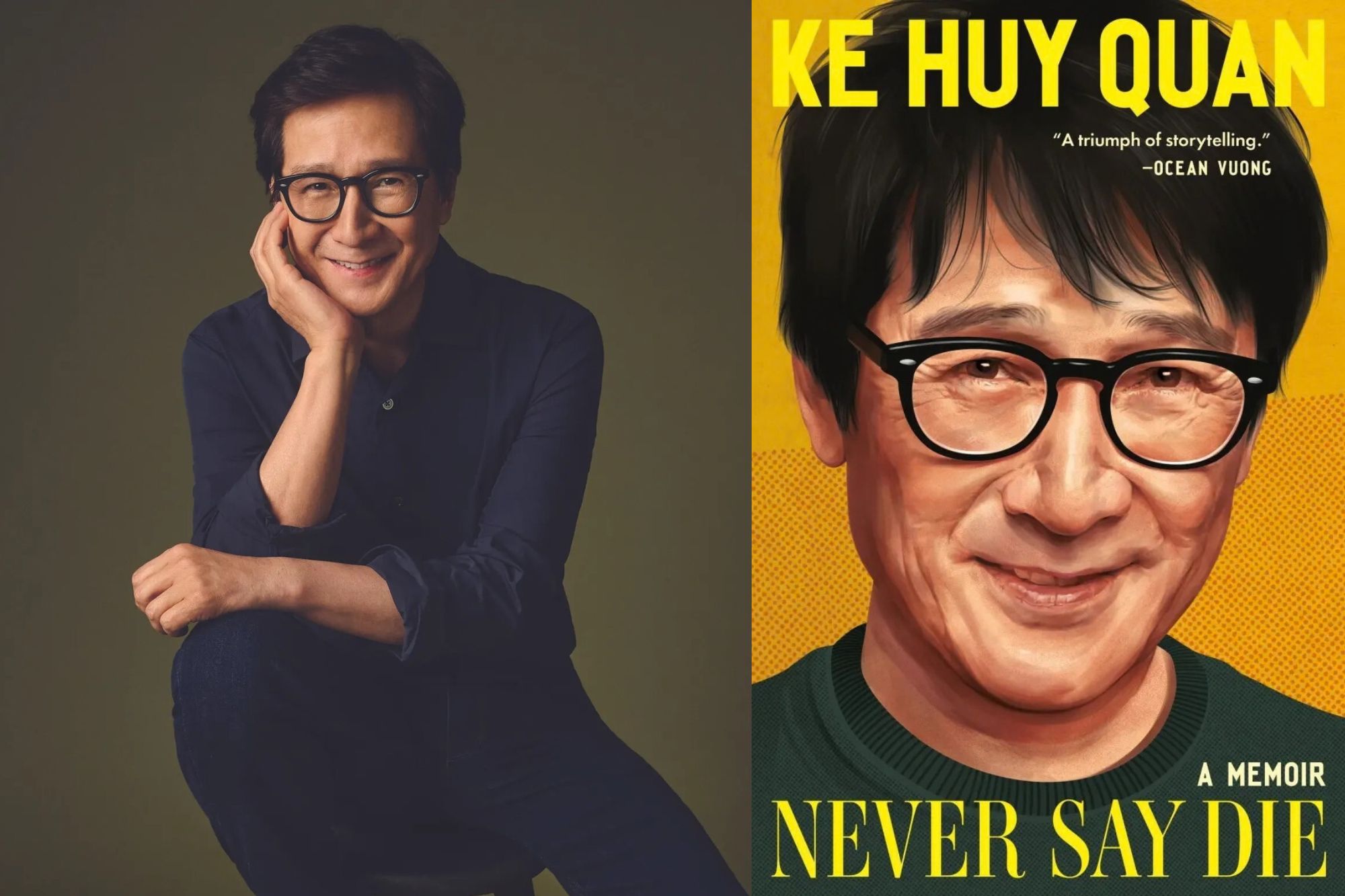
Actor Ke Huy Quan’s family fled post-war Vietnam and lived in a Hong Kong refugee camp before his unlikely turn as an iconic 1980s child star. He stumbled into a casting call for “Indiana Jones and the Temple of Doom” at 12 years old, then rolled right into “The Goonies.” But as he transitioned into adulthood, roles started drying up. After decades of rejection, Quan made an Oscar-winning comeback in “Everything Everywhere All at Once.” In his new memoir, “Never Say Die,” Quan shares his forty-year journey of perseverance and self-discovery.
Guests:
- Ke Huy Quan, Academy Award-winning actor; author, “Never Say Die”
Episode Transcript
This is a computer-generated transcript. While our team has reviewed it, there may be errors.
Mina Kim: Welcome to Forum, I’m Mina Kim. When Ke Huy Quan walked on stage in 2023 to accept the Academy Award for Best Supporting Actor in Everything Everywhere All at Once, he did not hold back tears.
Ke Huy Quan: Thank you. My mom is 84 years old and she’s at home watching. Mom, I just won an Oscar.
Mina Kim: For Quan, his path to Hollywood’s highest honor included decades of painful self-doubt and very few roles, this after a big-screen debut in the ’80s at the age of 12 as Short Round in Indiana Jones and the Temple of Doom.
Ke Huy Quan: Short Round, step on it! Okie dokie, Dr. Jones, hold onto your potato!
Mina Kim: It’s a journey Quan chronicles in his new memoir called Never Say Die. And he joins me now. Welcome to Forum, Ke.
Ke Huy Quan: Mina, hey, thank you for having me.
Mina Kim: Oh, it’s so wonderful to have you and to have been able to learn so much about your life, especially starting out as the kid that I, you know, maybe the first Asian kid actor I ever saw in a film, Short Round.
Ke Huy Quan: Ha, ha, ha! Well, I’m very proud of that. I don’t know if that’s a good thing or not. It just goes to show you how underrepresented we were back then.
Mina Kim: Yeah, you write actually in your book that it was a moment when you got that part, when your life split into a clear before and after. First, can you just talk about getting that part in 1983? Because it was basically accidental, right?
Ke Huy Quan: Yes, it was. It was only a few years since we immigrated to Chinatown, Los Angeles, and I was busy acclimating into this new life, learning this new language. And we were ESL students, so we would go on every Saturday morning to get extra help with vocabulary and reading comprehension.
And normally it’s really quiet until that one Saturday while we were studying. We noticed that people kept showing up, more and more people. It was parents with their kids heading into the building, and it really piqued my little brother David’s interest. And he said, “Hey, what’s going on?” And our tutors said, “Didn’t you see the flyers everywhere? They’re looking for a Chinese kid to be in a big Hollywood movie.”
And that was the first time we heard it. And after the tutoring session, my brother wanted to go check out to see what’s going on and wanted to give it a try, and I tagged along. Walked into a hallway filled with Asian kids reciting lines that they were told to memorize, and that’s how it all began.
Mina Kim: Yeah, and you were feeling like, so David signs up to do this and you are feeling like he’s not really bringing it, right? What the casting directors are asking for, so you start coaching—
Ke Huy Quan: In front of the casting directors? Here’s the thing. It actually came out of my love for my brother. We would watch TV and reenact scenes together, so I know how good he can be. But being in front of the camera, I felt like he was a little nervous and he was holding back. And the casting directors weren’t seeing him the way I see him.
And thinking that they don’t understand Cantonese, so I just jumped out of the chair and started screaming at him, you know, in Cantonese, kind of directing him what to do. And unbeknownst to me, their attention started to turn to me. So when my brother finished, they asked me if I would stay behind and read for them.
Mina Kim: Incredible. And then, of course, you know, they knew right then that they had their Short Round. And you also talk about auditioning in front of Steven Spielberg and Harrison Ford and George Lucas and how they really embraced you as well.
But this was not an experience that you had had leading up to this. Let’s talk about the before, living in post-war Vietnam and needing to flee with your family in 1977. Why did you make that decision? What was happening? Or why did your parents make that decision?
Ke Huy Quan: Well, you know, this is 1977, post-Vietnam War, and our lives prior to that were really good. I mean, my parents were successful middle-class business people, and they had every intention of building a life for all of us there. And when that future looked bleak, they had no choice but to make the incredibly difficult decision to get all of us out of there.
Uh, and it was, uh, it was really traumatic. I was only seven years old. I didn’t know what was going on. I wasn’t given any information. Uh, all I knew was one day I was playing with my little brother and the next, being woken up in the middle of the night, being carried over my dad’s shoulder and carried into a waiting car.
And that was our very first attempt to escape. We made a total of three attempts. The first two were unsuccessful and landed me in jail. So by the time I turned eight, I had spent, you know, the first time three weeks, the second time three months in jail, and it was not until the third attempt, then as long as you can pay, you would have a spot on the ship and everything was out in the open.
Mina Kim: Yeah, and your family’s savings have been confiscated when you were arrested, and incredibly, spending that much time in jail as a little kid. But as you say, he gets the money to secure passage, basically in the cargo hold of a boat, by borrowing it. And you’re with 3,000 others packed in, experiencing bouts of seasickness and so on.
But talk about when you finally make it to Hong Kong. The country won’t take you in, right?
Ke Huy Quan: Yeah. After we spent seven treacherous days, you know, out in the South China Sea — you understand, this was winter. Almost all of us were city people, never been on a boat before, so those waves were big and the boat was rocking, like, really violently. Pretty much every single one of us were vomiting left and right.
And when we finally made it to Hong Kong, we thought that, wow, we had made it now. You know, everything’s gonna be all right. But once we got there, we got the terrible news that the Hong Kong government would not allow us to come on board. And we were desperate. We were hungry. The sanitation was really awful.
And we ended up spending more than a month on the shore of Hong Kong, while this incredible organization called United Nations High Commissioner for Refugees, UNHCR, stepped in and worked with countries all over the world to convince Hong Kong that if they were to allow us to come ashore, that they would help to get us off of their hands.
And that’s what happened. And we ended up spending more than a year in a refugee camp.
Mina Kim: I want to invite listeners into the conversation. Listen, we’re talking with Ke Huy Quan, Academy Award-winning actor for Everything Everywhere All at Once and now the author of a new memoir called Never Say Die. Maybe you remember seeing him in Indiana Jones and the Temple of Doom or as Data in The Goonies, or are familiar with his recent voicing of Gary De’Snake in Zootopia 2.
Tell us what your questions are for Ke, what you want to say, what your favorite movies of his are or his work, or what parts of Ke’s story resonate with you, maybe feel similar to yours. You can email [email protected], find us on Discord, Bluesky, Facebook or Instagram at KQED Forum, or call us at 866-733-6786. Again, that’s 866-733-6786.
You know, one of the stories of the most painful memories of rejection in Hong Kong that really struck me was when you actually go to your aunt’s home to visit, to have a meal with her and her family. Can you talk about what happened there?
Ke Huy Quan: Yes. My mom was born in Hong Kong, so her family lives in Hong Kong. And one day, you know, the refugee camp that we stayed in, we were allowed to go in and out. My older siblings were allowed to go work, so they were all supporting themselves.
And being the youngest of six with my dad, I didn’t have much to do. So one day when I found out that my aunt invited me and my sister to a home to have dinner, I was so excited. My dad bought me a brand-new outfit, and I hadn’t had a home-cooked meal in, you know, months. And here I am, you know, getting invited to my mom’s sister, older sister’s apartment. And I thought that, you know, she looked like my mom and I thought everything was going to be great.
When I sat down to have dinner, I didn’t understand what the Hong Kong culture was like. Everybody had their own customized pair of chopsticks with their name on it. But I was so excited, I was hungry. I sat and started eating and literally didn’t know that I was actually using my cousin’s pair of chopsticks.
And I was called out on it right away. And I witnessed my aunt took the very same pair of chopsticks that I had used into the kitchen, washed it extensively, and poured hot boiling water over it. And at that age, I didn’t understand why she did that. I thought we were family.
But, of course, many years later, uh… I understand. I don’t think she was trying to hurt me in any other way, but it was just this fear that everyone had, you know, we were refugees, and there was that stigma that comes with it. And because of little information that was known about all of us, I mean, she thought that we would carry disease. And, yeah, it was — it was, you know, a moment that I never forgot.
Mina Kim: Yeah. I mean, it’s a moment you never got — you finally reunite with your mom and siblings in Los Angeles’ Chinatown in ’79. They had gone ahead and you had been separated from them. But how does that experience shape your sort of sense of self or your place in the world early on? And we’re coming up on a break. Sorry about that, Ke, but we just have about 30 seconds.
Ke Huy Quan: Uh, it really, you know, when I sat down and write this book, it really made me confront my own identity, uh, and as a refugee and what that label carried. And for so many years, I was really ashamed of it. Um, I didn’t know, you know, I think it really shaped who I am today.
Mina Kim: Yeah, we’re talking with Ke Huy Quan. And so are you, listeners, at 866-733-6786, on our social channels at KQED Forum, and you can email Forum at kqed.org. More after the break. I’m Mina Kim.
Welcome back to Forum, I’m Mina Kim. We’re talking this hour with actor Ke Huy Quan, who played Waymond in 2022’s Everything Everywhere All at Once, which he won the Academy Award for Best Supporting Actor. He has a new memoir called Never Say Die. And here’s a clip of a press interview Ke gave in 1984 about getting the part of Short Round in Indiana Jones and the Temple of Doom.
Ke Huy Quan: I think I changed a lot and I was a bold people and now I get to make the movie. Do you think you’ve been very lucky? Yes, definitely. I think I’m very lucky, and I’m number seven in my family. That’s a lucky number.
Mina Kim: What’s it like to hear that, Ke, or voice?
Ke Huy Quan: I’m so precocious. And I think that’s how I got the role too, I’m sure.
Mina Kim: That played a big part. Well, we’ve got a call coming in from Lubna in Palo Alto. Lubna, join us. You’re on.
Caller: Thank you so much. I wanted to just congratulate the guest on his success and just overcoming so much in his life and being successful. It’s wonderful.
We are of South Asian descent, and my son is just embarking on his acting career after graduating from school, college. And we know that Brown people are having a moment. But we don’t know how long this moment will last. And we were just wondering, what advice do you have for someone just starting out, you know, Indian-Pakistani descent, trying to land roles and get noticed and, you know, where, of course, still the majority of roles do not go to people of minority descent?
Ke Huy Quan: Great question. Thanks for calling in. Yeah, I mean, you know, if I’m being honest, it is very difficult. And my advice is that you have to be prepared for a lot of rejections. And make sure that the belief you have in yourself doesn’t waver. And work really hard. Don’t give up and don’t let anybody… you know, tell you anything different.
I think it’s really important. If you look at my story, you know, I wouldn’t be here talking to you if I didn’t persevere. A lot of times, you know, we don’t know what’s right around the corner. But if we stop, we’ll never see it. So we have to always keep going and work really hard and be patient because, you know, I believe that everyone — you know, everyone has their own time and that time will come one day.
Mina Kim: Yeah, talk about what happened in those years after Indiana Jones and The Goonies, right? Another big hit and the film you reference in your title, Never Say Die. You know, after that, you wanted nothing more than to be an actor, but pretty quickly, like within a few years, the roles, the calls, they just stopped.
Ke Huy Quan: Yeah, you know, my career went south rather quickly. I mean, you would think, you know, to start at 12 years old and having done Indiana Jones and The Goonies, too, hugely popular movies, that I would have a very bright future. But by the time I turned 18 years old, when everybody is very optimistic on what their path would look like, mine looked very different.
Um, and I didn’t really know, you know, what I would do. But there was one thing I was sure of, was that I wanted to be an actor. In fact, I was only 13 when I knew I wanted to be an actor for the rest of my life.
Um, those years were very hard. But luckily, you know, I never forgot what inspired me, because every time I got dejected… I would go to the movie theater and I would watch a great movie, a great performance by an actor. I would be totally immersed in it and I would walk out feeling so motivated and I’ll go back home, lock myself in the room and start playing out those scenes that I love, kind of reenact, kind of put myself in that character’s shoes and try to, you know, and have my own moment.
And I think it’s the movie theater that really kept my passion alive all these years. But they were not easy years. It wasn’t a short time. It was a very long time. I call them the quiet years in my book.
Mina Kim: Yeah, and then they last about 30 years. I was struck by the story of you talking about hitting puberty and your voice changing, but not in the way that most people’s voices change.
Ke Huy Quan: Yeah, I remember when I had to go back to public school because I wasn’t working anymore. And I would, you know, the first three days I would show up at the cafeteria and I didn’t have any friends and I felt so alone. And I felt like just because of my fame in the movies that I had done, I felt everyone was watching me. Maybe they weren’t, but it felt like that.
And I lasted no more than three days, and then I would get in my car and then just then every lunchtime I would go to McDonald’s. I would go to the drive-thru and order a hamburger, french fries and a Coke, and the lady that works there would always say, “Oh, thank you, ma’am. Please pull up to the first window.” It was always “ma’am.”
And, you know, I realized that I sound like — yeah, I sound very different than I imagined. And then I would go back the next day and I would try to speak a little bit lower voice. “Hey, yes, uh…”
Ke Huy Quan: “Can I have a hamburger, french fries and a Coke, please?”
And it will be the same thing: “Thank you, ma’am. Please pull up to the first window.”
Mina Kim: All right, you said your voice went higher when you were eating.
Ke Huy Quan: But you know, it’s interesting because I remember there’s a story that I tell in the book. This was like after Michael Jackson had come to visit The Goonies and he invited all of us to his Victory Tour. And one day, just out of the blue, I got a call from him and my brother picked it up and I was in the other room and he screamed really loud, “Ke! Some girl is looking for you!”
Uh, and, uh, and I just realized, I guess that’s the, you know, that’s the, um, uh, little thing that Michael Jackson and I have in common, which sound a bit different.
Mina Kim: The other thing that you did that I think also speaks to the struggle of that time is you changed your name to Jonathan. And can you also tell the story about sort of the awkwardness of seeing your former castmate from The Goonies, Sean Astin, who asks you about changing your name?
Ke Huy Quan: Yeah, uh, I was 18 years old and I just got naturalized, so I was going to become an American citizen. Uh, so, you know, I’m filling out all these paperwork and it was at the same time my manager had suggested for some time that I should change to a more American-sounding name, and also it didn’t sound like a bad idea at that time.
Because every time I would walk into a casting room, my fame and my name would always walk in before I did. And I felt like my past was holding me back. It wasn’t helping me in any way. It was kind of hindering me from getting the opportunities that I wanted.
So I thought, yeah, it sounds like a great idea. So that’s what I did. I mean, honestly, at that point in my life, I would have done anything to change the status quo.
Because everywhere I look, everyone was doing so well, my co-stars from The Goonies, Sean Astin, Corey Feldman, and all the child actors that I grew up with. They were all doing movies and TV shows, one after the other.
And there was one moment when I walked on the set of Encino Man, and Sean was the star of that movie. I had a very small role, and we met. And that was — I mean, he didn’t know that I had changed my name. So he kind of looked at me. I mean, he was still the same Sean that I remember. He was very warm, gave me a big hug. And then he asked, “Jonathan? Like, when did that happen?”
And I go, “Yeah, you know, I go by that now.”
And he was so sweet. And he said, “You will always be Ke to me.” Uh, and I remember that.
Mina Kim: Yeah. Well, the Discord user Turd writes, “Kwan is a really great person. He’s so positive and delighted despite having to deal with many challenges. He never seems bitter about his setbacks. What an inspiration.”
Another listener on Discord writes, “Kwan was great in Loki, very cool to see him pop up there.”
Ke, I understand when you were sort of first presented with the idea of writing a memoir, your impulse was to say no. Why?
Ke Huy Quan: Oh, yes. I mean, you know, I never shared my own personal struggles with anyone. In fact, there are so many stories in this book that I never shared, not even with my wife or my family until now.
Uh, it was just how I was raised. Uh, I grew up in a very traditional Chinese-value family. None of us share our feelings with each other.
Um, I thought, you know, during the whole awards season of Everything Everywhere All at Once, first time coming back, there were a lot of personal questions that I was being asked, but I was also very careful in answering them. I just opened the door a little bit, just to allow people a glimpse of what I had went through.
But writing a memoir is completely different. And I knew that if I were to do this, I would have to be very candid, uh, and share everything. And just the thought of that scared — scared me.
Um, but every time I’ve met so many fans on the streets and at different events, and they’ve always told me that my story really resonated with them and it helped them through a difficult time. And I just thought that, well, you know, if I can do this and play a small role in helping, you know, people who are struggling, if I can help them, give them strength and courage, and also help them feel a little less alone, then this entire journey will be worthwhile.
Mina Kim: Yeah. Why did it scare you? I mean, I know you say there were stories that you never shared with people close to you. But why did that scare you?
Ke Huy Quan: I think I had such huge success at a very young age. And then not long after that, I felt like a failure. And I really kept that to myself.
I felt my best years were behind me. And honestly, Mina, it’s one of the worst feelings you can have when you are 18 years old or when you’re in your early twenties, to feel like, wow, you know, your best years are behind you rather than, you know, to have something to look forward to.
So there were a lot of those feelings that I had during the quiet years that I didn’t want people to know about. I wanted people to see, you know, the happier side of me. Those were, those were really difficult days that… that I didn’t know that I would have the strength to share.
Mina Kim: Yeah. Listeners, what do you want to ask or tell Ke Huy Quan? What parts of Ke’s story feel similar to yours or resonate with you? Did you see his Oscar speech? Have you struggled to hold onto a dream? The email address is [email protected]. Find us on Discord, Bluesky, Facebook, or Instagram at KQED Forum, or call us at 866-733-6786. That’s 866-733-6786.
And Chris writes, “What was it like as one of the earliest young Asian-American actors? It must have been hard balancing our Asian-American career expectations with stardom and Hollywood in that era.”
Ke, did you also, you know, feel pressure? Like, did you feel like you had sort of career expectations from your family and so on that so many Asian-American kids say that they experience?
Ke Huy Quan: Oh, yes. I mean, when you hit it big at such a young age, I mean, it’s understandable that your family and all your friends and, you know, and the public expect you to — you would go on to have this incredible career.
And also, back then, I mean, there were not a lot of us working in Hollywood. So I felt really proud when people in our community would come up to me and say, “Wow, you know, I went to school, people call me Short Round, people call me Data.” That was, you know, that made me feel good.
So there’s that pressure, but also the same, I mean, I started out so young, honestly. I didn’t think much of it. It was not until years later did I really understand, one, how lucky I was, what I was going through, but also, I just really wanted to, I guess because of my background, because of where my journey started as a refugee and all of that. So to get that validation from everyone made me feel great.
Mina Kim: Yeah. The after. Can you talk about that moment when you decided you couldn’t do auditions anymore? You tell the story about trying to get this part as a Viet Cong soldier, and then sort of realize how desperately you wanted a part that just had two…
Ke Huy Quan: Lines. Yeah, that decision didn’t come easily and it wasn’t, you know, spontaneous or, you know, it was just like, okay, one day I just decided that I don’t want to do this anymore. It’s over a span of many, many years of just doing nothing, waiting by the phone to ring.
Uh, I guess the best way I can describe it is… I felt like the world was still spinning. Everyone was moving forward at a very fast pace while I was just standing still.
There were so many, many sleepless nights staring up at the ceiling, wondering if my tomorrow will be better than today. And it’s really disheartening when you go to an audition after nine months, a year, and just everything rides on that one audition and hoping to land it. And when you get rejected again, and again, and again.
And then finally, I think what really broke was in 1993, when I auditioned for that, you know, that Viet Cong role. Didn’t have a character name. It had two lines. Again, there were like 50 other Asian actors fighting for this little, little tiny role. And when I didn’t even get that, then I really started to question, “Wait, do I still wanna do this? Like, how long do I wanna continue down this path when I didn’t see the light at the end of the tunnel?”
And it was the hardest — one of the hardest decisions I’ve ever made.
Mina Kim: Yeah, it definitely sounded that way. And then you, you know, tried to stay in the world, but just not in acting specifically, right? You go to USC and get a film degree. You, you know, learn about stunt roles and so on.
Ke Huy Quan: Yeah, I mean, up until that point, you know, all I knew, you know, was about the movie business is from an actor’s point of view. I didn’t know, like, what a costume designer did or cinematography or editor. I didn’t understand what it takes to put a movie together.
And so now here I am. There are no more acting jobs. What am I going to do? I didn’t know how to do anything else. I was 25. So it’s been seven years since high school, and I felt like I don’t know a lot and I need to go back to school.
I didn’t want to leave this industry, so the only thing that made sense to me was film school. Luckily, when I applied, I got in.
Mina Kim: He was a refugee from Vietnam who shot to stardom as Short Round in Indiana Jones when he was 12, but after quick success, his acting career ground to a halt. And he’s talking about those decades of painful self-doubt and few roles. He shares them in a new memoir called Never Say Die, and we’ll have more with him and with you, listeners, after the break. Stay with us. This is Forum. I’m Mina Kim.
This is Forum. We’re talking this hour with Academy Award-winning actor Ke Huy Quan, who won for 2022’s Everything Everywhere All at Once. He has a new memoir called Never Say Die about his years — very early of quick success as Short Round in Indiana Jones and the Temple of Doom and Data in The Goonies. But then as he grew older, the roles dried up, but him never giving up.
And listeners, what are your questions for Ke about his work, his life, his story? Did you — do you remember his Oscar speech? And does it make you think about the dreams that you have struggled to hold onto or that you’ve kept alive? 866-733-6786, the number. Find us on Discord, Bluesky, Facebook, or Instagram at KQED Forum, email [email protected].
Jeremy in San Francisco writes, “Your role in Zootopia 2 really inspired me. I was shocked by how impactful that movie was. After hearing more about your story, I’m wondering if you see parallels between Gary the Snake and your life.”
Talk about doing Gary the Snake for Zootopia 2. Too cute. It’s actually a film that my kids absolutely loved as well.
Ke Huy Quan: I love that movie. I’m so proud of it. I still remember the day I went into a Disney Animation building to meet with the creative team, and when they offered me the role, I really, you know, I was so thrilled because I was a big fan of the first one.
And in terms of do I see any parallels between myself and Gary the Snake? I mean, he’s so different in ways where he looks, you know, very intimidating because he’s a, you know, venomous pit viper. I don’t think I look intimidating at all.
But I think what we do share in common is having respect and kindness for the people around us. You know, he’s a big, goofy guy with a big heart, and that’s how I kind of like to think of myself that way.
Mina Kim: Yeah. Also, you know, he has to deal with stigma, he has to try to reunite with his family, and tries to feel whole again. We actually have a clip from the film, you know, where he’s trying to explain that he’s trying to change the narrative about himself and reunite with his family before the character Nick Wilde, not realizing this, bops him on the head. Let’s hear it.
Ke Huy Quan: This is our only chance to set things right. And when I do, my family will finally be able to come home.
Ke Huy Quan: I am here! Cops and Wiles. Dream team. We got him. So good. I love that movie so much.
Mina Kim: You know, so it was the 2018 film Crazy Rich Asians, right, that sort of reignites your desire to act again? Because before the book, we were talking about how you made the decision just to stop doing it.
Ke Huy Quan: Yeah, I mean, it’s all true. I mean, also, like, a few years prior to the movie came out, I mean, I started to see the landscape in Hollywood started changing. You know, you would have a wonderful, successful show called Fresh Off the Boat on ABC. And, you know, more and more Asian actors were playing no longer like a one-dimensional buttered-Joe kind of character, but they’re more nuanced, you know, contributing to the stories.
I was beginning to see a lot of that, but I didn’t think much of it. I mean, I thought I had buried my, you know, the acting bug for many years. I thought that chapter of my life was over.
It was not until when I was in that movie theater on opening weekend and, you know, the room was filled with people, all kinds of people. And in the very beginning, I enjoyed it. I was watching it as if you would watch it as an audience.
But somewhere along the line, this tiny thought started creeping into my head. And I go, “Wow, wouldn’t it be great if I was up there with them instead of here hearing the audience watching?”
And really, that was the moment. The idea of getting back to acting started percolating. And I didn’t make the decision right away. I mean, it would be another year before I decided to finally do it.
Mina Kim: Yeah, and you say that your wife didn’t know you as an actor and that, you know, you actually sort of voiced carefully, you know, that desire to act again to her.
Ke Huy Quan: Yeah. When we met, you know, she didn’t know me as an actor. She knew me as this, in fact, aspiring filmmaker. I graduated from USC. I was working for Wong Kar-wai, and I wanted to, you know, I was thinking that, oh, once when I get enough experience, I’m going to go out and direct my own film.
So, and she believed that. She said, “You’re going to make a great filmmaker one day.” Uh, and she’s been so supportive, whatever I want to do. She’s always like my biggest cheering squad, you know, uh, and, and she would say, “Well, if you want to go for it.”
And that was how that was, how it really began. So when I sat her down and I said, “Hey, what do you think about if I would act again?” I think it really surprised her because we never, we never ever talked about that.
In fact, even… you know, the year leading up to that conversation, it was all in my head. I never said it out loud. But once when she found out that I was serious, she was so supportive.
Mina Kim: Yeah. You, um, you also say you thought about your father, who you dedicate this book to. You know, we hear you give tribute to your mother in your Oscar speech. Why did you dedicate this book to your dad?
Ke Huy Quan: You know, a lot of people know my story as, you know, someone who never gives up. And, you know, it’s pretty remarkable. But when I look — when I sat down to write this book, I realized that it was actually my father who had set that example all his life.
When you think about it, I mean, it wasn’t one attempt to flee Vietnam. It was three, a total of three attempts. He faced obstacle after obstacle to get our entire family out and never gave up until he successfully did it.
And when he came here, he himself personally was faced with the most challenging thing in his life. He had a massive stroke. And even then, he did not give up.
In fact, when he took his very last breath, his brain gave out before his heart did. And that’s one of the reasons why I titled this book, Never Say Die. To me, it was a nice way to honor his legacy and also everything that he has done for me and my family. He has given us a chance at life, and I could not have been more grateful.
And writing this book was so, you know, not only was it an emotional roller coaster, but it was also wonderful because I got to walk alongside him once again. It was as if he came alive. And to be able to memorialize him on these pages is something that I’m very proud of.
Mina Kim: I actually want to just play one last clip from your Oscar speech, where you give tribute to Echo and also to that persistence.
Ke Huy Quan: I owe everything to the love of my life, my wife, Echo, who…
Ke Huy Quan: Thank you.
Ke Huy Quan: Who month after month, year after year for 20 years told me that one day, one day my time will come. Dreams are something you have to believe in. I almost gave up on mine. To all of you out there, please keep your dreams alive.
Ke Huy Quan: Oh, it still gets me.
Mina Kim: It always gets me too. Your speech, really, really memorable.
Bob writes, “Everything Everywhere All at Once is one of my favorite movies ever. And the character Waymond has so much heart. Thanks so much.”
Viewers who want to know more about the history of Asian Americans in film should check out the documentary Slaying the Dragon, which my partner teaches in her Asian American culture class.
When you got the part of Waymond, you say you felt like the part was written for you. How so, Ke?
Ke Huy Quan: You know, when I first read the script, I mean, I was blown away by how good it was, but it was also something that I always wanted to read. I was so familiar with reading scripts where, if there was an Asian character, he would only appear, you know, sporadically across the pages. And more often than not, we’re asked to fit into a character rather than something that is written that feels authentic.
But here I am reading this, it felt like it was written for me because I understood every version of this character and everything that he was saying, you know, every disappointment, every rejection has led you to this moment. Don’t let anything take you away from it.
Uh, I… I knew where those words come from, and every version of Waymond was my life. It felt like I had spent the last 30 years preparing for this role, and here it was.
Uh, and that’s why I — when I — put that script down, I wanted this more than anything in my entire life. I don’t think I ever wanted anything as much as I did.
When Indiana Jones came along, I didn’t go searching to be an actor. I didn’t think that I would, you know, it was just… You’d never even been in a movie theater before.
Never been in a movie theater. The last thing on my mind was pursuing acting. And all of a sudden, I was just thrown into this incredible world of movie making.
Uh, but now, flash forward 40 years later, I just turned 50. And here was an opportunity that I thought was made for me, but yet I hadn’t done it in 25 years. So it’s very natural for me to think, yeah, you want it. So what are they going to give it to you? You know, I mean.
Yeah, you were, you know, a lot of times, I felt like, yeah, you were really good as a kid, but that was a long, long time ago. You don’t even know if you have what it takes.
When I, when I stepped back, my goal was only to have like a small role in maybe a, you know, as a series regular, uh, that I could do week after week and have that steady paycheck. Uh, that was, that was it. Uh, and this felt so impossible.
Mina Kim: But you got it, and it really is — many listeners are commenting on that film and also many listeners are also commenting on sort of just your warmth.
Okay, let me remind listeners you’re listening to Forum. I’m Mina Kim. Halina in Fremont is on the line. Halina, go ahead.
Caller: Thank you very much. Hi, Ke. I’m so fascinated by your story. My husband and I, we are first-generation Chinese immigrants, so I understand quite of the experience you shared. Not as harsh as yours, but the main thing I want to share with you is that your story, your theory, your ethic of work not only resonated with the same age, same group, but also inspiring the new generation.
My daughter was born here, grew up here. She’s a college student in journalism major. She read through all the things about you. We went to — she goes to see the movie herself as well, so she’s absolutely a lover of the movie.
And your work ethic, the whole experience you shared with the audience, inspired her so much. Because she is also trying to get into the reporting and entertainment industry. It’s not easy for young people.
But she told me that, you know what, I listened to so many of my quote-unquote heroes talking about how they struggle, how they survive, how do they make all the effort. I don’t think I have any other choice. I need to continue pushing through until one day I have a breakthrough.
So I want to share with you. Continue.
Ke Huy Quan: That’s so sweet. Thank you for sharing that. I think that’s what gives me the greatest joy, is I didn’t know that my story would resonate with so many people.
And ever since the book came out, the reception has been really positive, and I’ve met and gotten, you know, many messages saying that they see themselves in my story.
Uh, and that was my — that’s what I was hoping for when I set out to write this book. So thank you for sharing that. That really means a lot.
Mina Kim: The listener on Discord writes, “I think for everyone who saw it, Ke’s Oscar speech created a moment where he celebrated his perseverance while questioning your own. Yes, there are things in life I wish I’d kept at, yet others I wish had given up sooner. It was a real self-mirror moment.”
Another listener in San Francisco writes, “Ke, after your success with Everything Everywhere All at Once, will there continue to be more opportunities for Asian-American actors? Where does he want his career to go from here?”
It’s interesting, right? Because, so yes, what are you seeing with regard to the landscape for Asian-American actors, but also how do you think about the question now? Because there is no guarantee that work will continue for you either, right?
So how do you think about that question of where you want your career to go from here, or handling an industry where there are no guarantees?
Ke Huy Quan: Yes, that’s a big question. Here’s the difference between me now and the 30-year-old, you know, me. I’m no longer afraid of failure. It would no longer define me. I had failed before, I had gotten back up. And I’ve tried and I’ve tried and I’ve tried again. And here I am.
But in terms of — and you’re absolutely right, I mean, who knows what the next five, ten years entail? And the truth is, we have made a lot of progress in the last 10, 15 years. There have been a lot of wonderful movies that portrayed our community accurately and authentically and all of that.
But moving forward, I’m a little wary just of how everything that has happened in the last year, year and a half. I feel like, you know, all the progress that we have made, we have taken a couple of steps back, and I’m looking — I’m curious to see where this is all going to go.
But here’s what I want to say. I wouldn’t be here if there wasn’t all these incredible — this incredible generation of young people who are really so outspoken, demand a change, they’re very vocal about what they want to see, what they wanted it to be represented up on the screen.
And I think we need to continue that. But yeah, I don’t know. That’s a great question.
Mina Kim: I’ve been wondering myself about how the landscape is still right now in Hollywood.
But in the meantime, thank you so much for putting all of this about yourself out in the world after describing sort of the struggles that you had to think about that and do that, Ke. Thank you.
The book is Never Say Die, and my guest is Ke Huy Quan. And I want to thank Jared Sport for producing this segment, and as always, to our listeners for sharing their own stories and questions and struggles and dreams.
And also I want to wish our former host, longtime host Michael Krasny, a happy birthday today. You’ve been listening to Forum. I’m Mina Kim.
Announcer: Funds for the production of Forum are provided by the Jenerosity Family Fund and the members of KQED.