'Changing Gender' in a Time of Backlash
Airdate: Thursday, September 17, 2026 at 10am
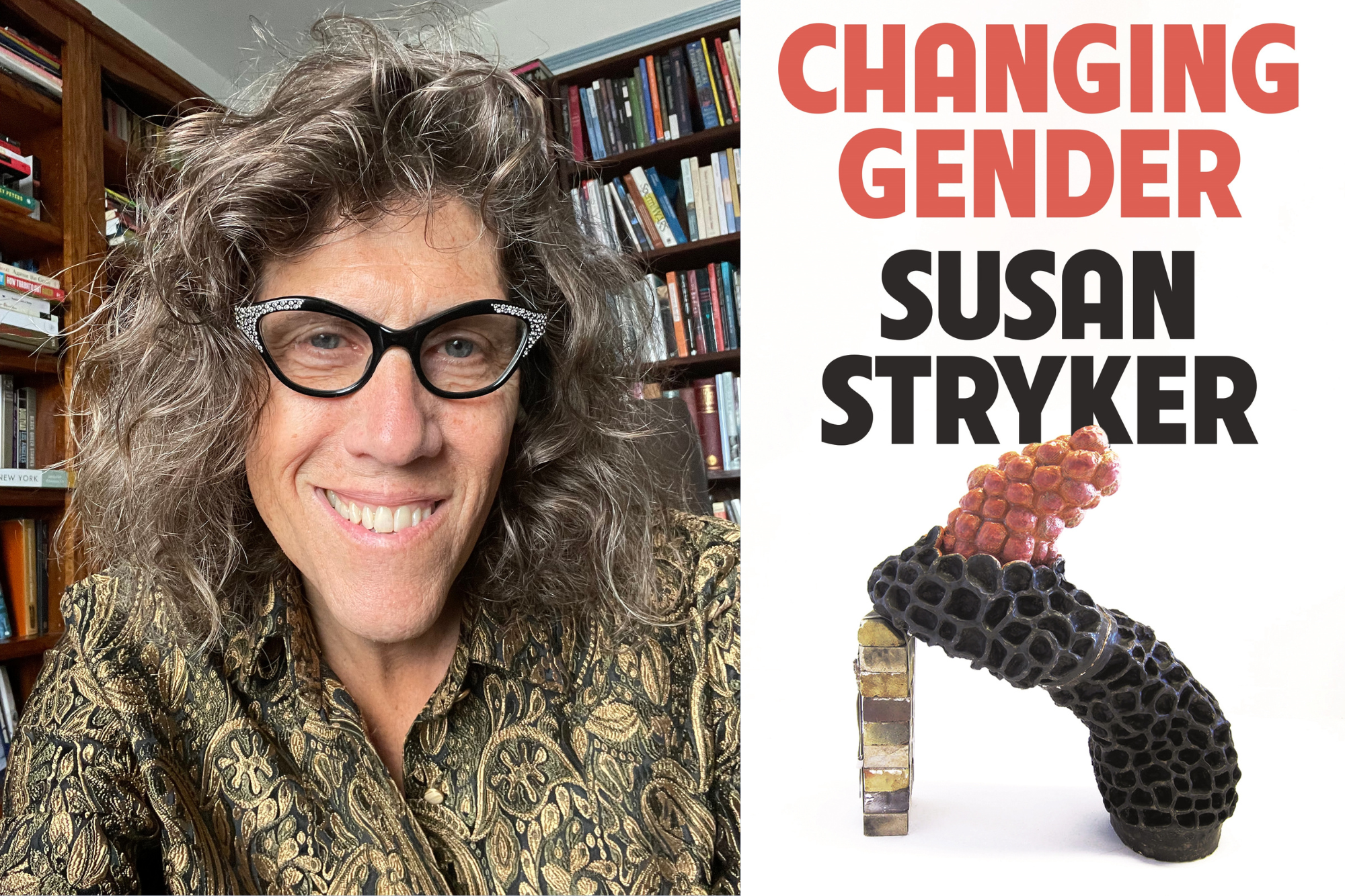
Since returning to office, President Trump has moved to restrict gender-affirming care, bar transgender and nonbinary people from the military and roll back other LGBTQ nondiscrimination policies. It’s a sweeping attack that pioneering transgender historian Susan Stryker says the trans rights movement was not prepared for. We talk to Stryker about what this moment means for transgender people and for everyone’s freedom to define themselves. Her new book is “Changing Gender.”
Guests:
- Susan Stryker, historian, author, filmmaker and activist; author, “Changing Gender”
Episode Transcript
This is a computer-generated transcript. While our team has reviewed it, there may be errors.
Mina Kim: Welcome to Forum, I’m Mina Kim. The Trump administration has taken sweeping actions against trans people, rescinded federal LGBTQ+ equity and nondiscrimination orders, dissolved the White House Gender Policy Council, and is now seeking to restrict gender-affirming care for young people.
“Our antagonists are actively gunning for us,” writes historian and activist Susan Stryker in her new book, Changing Gender, “and the world mostly still couldn’t care less.” Stryker has documented and helped shape the trans movement as the author of Transgender History, which is in its third edition, and with her film Screaming Queens: The Riot at Compton’s Cafeteria. And Susan Stryker joins me now. It’s really a pleasure to have you back on Forum, Susan.
Susan Stryker: Mina, it’s great to be here. Thanks for having me on.
Mina Kim: You know, you write in your new book, Changing Gender, the world’s become an increasingly abrasive place for many of us. And as someone who’s been so dedicated to and even shaped the trans movement, what has this moment been like for you?
Susan Stryker: It’s bizarre, I have to say. You know, that I’m — as we were talking about off-microphone just a moment ago — I turned 65 recently, and, you know, I remember as a child that trans issues were just not on anybody’s radar screen. I remember my sort of working life as an adult, you know, between my 30s and my 60s, feeling like I was able to use some of my skills and training as a historian to say, trans, it’s not a new thing. And, you know, it’s like it’s been around and, you know, we’re people.
And to just watch what has happened over the last decade has been breathtaking and disheartening, but also energizing in the sense of, like, there’s a very clear target to push back against — against the people who are targeting us in these really pernicious and completely not grounded in reality ways about, you know, the supposed threat trans people pose to society at large.
Mina Kim: Yeah, you actually described this political moment as one without precedent. What do you mean by that?
Susan Stryker: Well, yeah. Trans folks have never had an easy walk through life, I would say. There are, you know, challenges to overcome. There’s incomprehension or ignorance or prejudice, or just, you know, people not being familiar with the issues and some of the ways that being trans can complicate your life.
But for the most part, I would say trans people have been malignantly neglected rather than actively targeted. And what’s new, I think, is the way that weaponizing, demonizing trans issues has been taken up by one of the major political parties in the United States. You know, some very well-funded anti-trans people, or some very well-funded people who would like us to have a different form of government in this country, who have discovered that trans issues are sort of a hot-button topic that they can, you know, flame the fans of — fan the flames. I could flame the fans, too, but it would be a very different project.
Mina Kim: Yeah, you know, you have characterized the federal government’s actions also in this way, which I thought was really interesting. You said to make the lives of trans people administratively impossible. Talk about that.
Susan Stryker: Well, I think most people don’t really notice, you know, that there is a government record of our lives from birth to death. I mean, there are birth certificates and school records, and that our gender is something that is marked administratively, you know, bureaucratically in so many ways, not just on identity documents like passports or driver’s licenses, but that, um, that gender plays into how our lives are administered by the state.
It’s like a census category, right? That what the federal government is now doing is, like, I’d say, making it administratively possible in the sense of, you can’t have that name on this document. You can have this gender marker. You can’t go into this room because of how we are interpreting what your body means.
And so, in all of, you know, it’s — some people have actually called what’s happening right now a paper genocide. There’s a group called the Lemkin Institute for Genocide Prevention, who, you know, they always say, you know, genocide is not an event. It’s a process. And that the process of, you know, targeting a segment of the population, making, you know, like the classic example, you know, from the 1930s, it’d be like, oh, do you have to wear a yellow star on your clothing? It’s like, can you hold this job? You know, do you have to declare your status, you know, in some context or another?
And that kind of movement towards, you know, what I think of as an eliminationist position against trans people is something that is well-begun, you know, that it is — it’s not like the government is saying, like, you know, come with me and they’re, like, taking us to the camps or putting us up against the wall, but that they’re already doing these steps that make your life, you know, administratively impossible.
It’s like you can’t get your papers straight, and if you can get your papers straight, you’re more vulnerable to many kinds of government intervention in your life.
Mina Kim: And then we’re also hearing things like at the state level, you know, Kansas announcing that it’s rescinding amended driver’s licenses and birth certificates for trans people.
I want to ask listeners, how are you experiencing the anti-trans backlash? And you can email Forum at kqed.org to tell us. You can find us on Discord, Blue Sky, Facebook, or Instagram at KQED Forum. You can call us at 866-733-6786, 866-733-6786.
I want to talk a little bit about the trajectory of this retrenchment, essentially, right? Because I was struck by something you said in a recent interview, that sometime in the 2010s we’d sort of reached peak trans. What did peak trans look like?
Susan Stryker: I think there was a moment, the Obama administration, let’s just say, where some of the gains that trans activists had made since the ’90s and, you know, calling attention to forms of oppression or repression or discrimination that trans people faced, we had gotten some traction with that. There was more cultural understanding of trans issues. It didn’t seem quite so unknown, might seem exotic, but it didn’t, you know, seem unknown.
And I would say the peak of that moment is having Laverne Cox on the cover of Time magazine with a feature story that says, “Is America at a transgender tipping point?” And there was, I think, a broad perception or assumption, expectation that trans issues were, you know, there was a progressive trend to history and that, you know, trans issues would become increasingly mainstreamed and not an issue for many people.
And that’s actually not what happened. It’s like, you know, in the immediate aftermath of that so-called trans tipping point in 2014, you start to see a backlash growing. Like by 2015, there are — one of the first big incidents I paid attention to after that was in Houston. There was this thing called the Houston Equal Rights Ordinance. That was the first time that civil rights on a wide range of issues, LGBT issues and others, was rolled back precisely because this broad-spectrum antidiscrimination ordinance was targeted as a quote-unquote bathroom bill that was gonna let men go into women’s restrooms.
And I think that turnaround on sort of a progressive sense of increasing rights for LGBT and particularly T people, it’s like that incident in Houston is the foreshadowing of what happens the next year with Trump. It’s like the backlash started in by around 2015.
Mina Kim: We’re talking about the anti-trans backlash with Susan Stryker, who holds a distinguished visiting appointment at Stanford University’s Michelle Klement Institute for Gender Research and is also the author of Transgender History, which is in its third edition.
And you’re listening to Forum. I’m Mina Kim.