Remembering Dolly Parton
Airdate: Wednesday, August 26, 2026 at 10 am
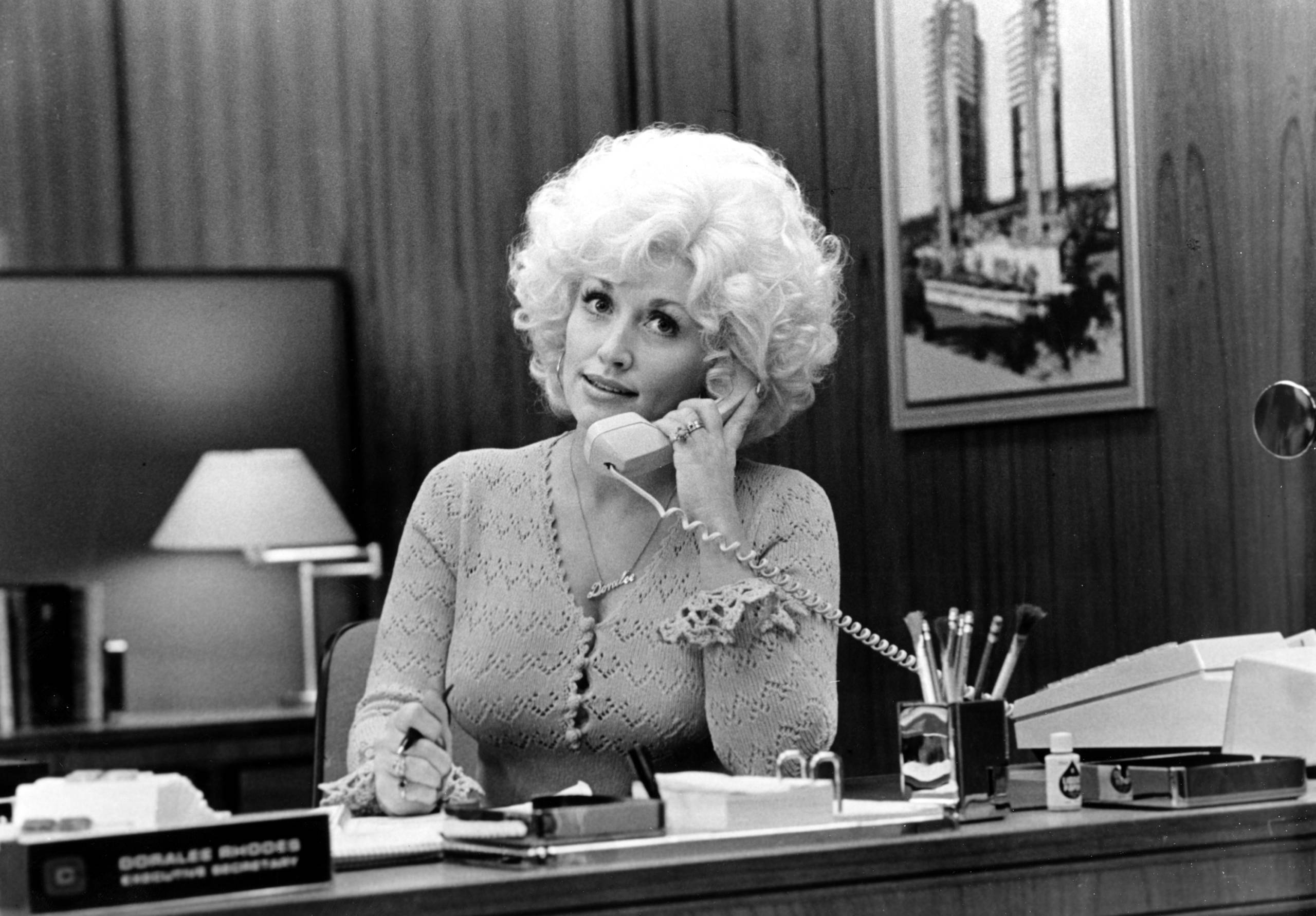
A uniquely and universally beloved musician and philanthropist, Dolly Parton died Tuesday at 80. One of country music’s most celebrated performers, her signature songs including “Jolene” and “I Will Always Love You” resonated across generations. We talk to Parton biographers about the singer’s life and legacy, and what made her such a distinct American icon. What did Dolly Parton mean to you?
Guests:
- Robert K. Oermann, author, Dolly Parton, Songteller: My Life in Lyrics
- Lydia Hamessley, professor of music at Hamilton College; author, Unlikely Angel: The Songs of Dolly Parton and Dolly Parton’s Jolene
- Jacob Stensberg, artistic director & conductor, San Francisco Gay Men’s Chorus
Episode Transcript
This is a computer-generated transcript. While our team has reviewed it, there may be errors.
Mina Kim: Welcome to Forum. I’m Mina Kim. The Times headline announcing Dolly Parton’s death called her simply “superstar” because she was more than a chart-topping country music singer, movie star, entrepreneur and philanthropist. Dolly Parton was a legend. And from San Francisco’s Castro to the halls of D.C., she made people of different genders, races and political affiliations feel embraced.
Dolly Parton would say, and did more than once on NPR and public media, that she was mainly a songwriter. Here she is with Kermit the Frog in 1987.
Dolly Parton: Folks sometimes forget that we’re just everyday people.
Kermit the Frog: Yeah, yeah. You want to talk about it?
Dolly Parton: Not really.
Kermit the Frog: You wanna sing about it?
Dolly Parton: Well, I’d love to, Kermit, but I have a frog in my throat.
Mina Kim: Dolly Parton’s death at the age of 80 was announced yesterday, and listeners tell us: What did Dolly Parton mean to you? The number is 866-733-6786. The email address is [email protected], and you can find us on Discord, Bluesky, Facebook or Instagram. We’re at KQED Forum.
Joining me this hour, Robert K. Oermann, author of Dolly Parton, Songteller: My Life in Lyrics. Robert, really glad to have you with us.
Robert K. Oermann: Thank you. Good to be here.
Mina Kim: Lydia Hamessley is also with us, professor of music at Hamilton College and author of Unlikely Angel: The Songs of Dolly Parton. Lydia, really appreciate you being with us, too. Thank you very much.
And Jacob Stensberg, artistic director and conductor of the San Francisco Gay Men’s Chorus. Jacob, welcome to Forum. Thank you so much.
So, Robert, you wrote, as I mentioned, Songteller. Tell me, what was your reaction to receiving news of her death?
Robert K. Oermann: Oh, God, it was the worst day of my life. Several people called and asked me, “Was it a hoax?” You know, because there’s so much misinformation out there, and nobody wants to believe that there’s a world without Dolly Parton in it, including me.
And it was devastating, but I didn’t have time to think. CNN called and all, you know, NBC and ABC and CBS. I mean, just had a — I never had time to grieve. I never had time to cry, and I still want to cry. I still haven’t had time. I have never wept over a celebrity’s death before, but this one is the worst.
Mina Kim: Well, I so appreciate you being here to share that, given what you just shared. And also, just the point that you made that nobody wants to imagine a world without Dolly Parton. Why is that, do you think, Robert?
Robert K. Oermann: The one thing that they left out in their introduction about her, you know, philanthropist and musician, star and movie star — how about best dang human being ever? She touched people in profound ways with her life and her music. Yes, a luminous superstar, a great music talent, but above that, a great humanitarian and a person who gave empathy to the world. She gave compassion and understanding and love. And that is the legacy. We should all carry that forward.
Mina Kim: Lydia, you know, similar question that we’re asking Robert and also our audience, but what did Dolly Parton mean to you? You wrote so deeply about her songs, her lyrics.
Lydia Hamessley: Thank you. Well, I had a similar experience as Robert did with assuming it was a hoax, but what she meant to me was just — it was even hard to describe.
You know, I titled my book Unlikely Angel, partly because people think of her as an angel a lot. She often played angels. She wrote a song called “Unlikely Angels.” But to me, in my life, she was also an unlikely angel. I hadn’t expected to fall in love with her in the way that I did.
And just so much joy in her music and modeling of what it might be to be a good human being in the world with, as Robert said, the kindness and empathy.
And as he said, I had just sat down to dinner. I’m in Germany right now, so it was evening, 8:30 p.m. I just sat down, had my phone out to kill time before my food came, and there it was. And I thought, “No, no, that can’t be right.” And I started texting my friends back in the States. And then someone posted immediately the New York Times obituary. And I just choked up and started blubbering. And I thought, “I’m a woman alone at a table in Germany. I don’t really think I should just be crying here. That might look weird,” you know? So I just kept breathing and I ate.
And then, like Robert, I got back to my room and couldn’t cry because I had my phone blew up, this thing.
Mina Kim: Yeah. And actually, we’re going to see, Lydia, if we can get you on a slightly better line because your phone being in Germany is making a bit of a clicking sound, but we’ll see if we can try to figure that out.
In the meantime, Jacob, the San Francisco Gay Men’s Chorus just did a tribute concert to Dolly in June. Talk about why — why Dolly Parton in particular, what she means to you and the chorus.
Jacob Stensberg: Thank you. Yeah, last Pride, Dolly was our muse for the entire Pride season here in San Francisco in the Bay Area, and I was so eager to program a concert completely from her songbook and songwriting, because I discovered that much of our membership, especially the younger generations, knew more about Dolly’s activism and sort of her ethos and the way she made them feel, but didn’t necessarily know all of her incredible music.
And so it was amazing to watch singers take some of her songs, which were incredibly autobiographical, and find so much identity and connection with them, feeling like they were singing about their own experiences and not necessarily just hers.
Mina Kim: Yeah, your lineup included “Travelin’ Thru” and “Coat of Many Colors,” as I understand it. Talk about those songs in particular. “Coat of Many Colors,” in particular, has been described as a queer anthem by some. What makes those songs particularly meaningful, Jacob?
Jacob Stensberg: You know, she has a way of writing these incredible lyrics that can be both hyper-specific to a moment in time, but also universal. And both of those songs that maybe are about, in a really broad sense, going from dark to light or hardship to the other side of that catharsis or healing — especially in a time when all communities, but especially the queer community, is seeking catharsis, healing and joy — singing about those experiences that are both honest but have kind of a happy ending, I think mean a lot to us right now.
Mina Kim: That was “Coat of Many Colors.” We’re talking right now with Jacob Stensberg, artistic director and conductor of the San Francisco Gay Men’s Chorus; Lydia Hamessley, a professor of music at Hamilton College who wrote Unlikely Angel: The Songs of Dolly Parton and Dolly Parton’s Jolene; and Robert K. Oermann, co-author with Dolly Parton of Songteller: My Life in Lyrics. And you, our listeners, are joining the conversation with your reflections and memories.
Corey writes, “I’m a columnist at the Sydney Morning Herald and just published a piece about her. My argument in the piece is that Dolly built a congregation around the idea of American individualism done right. She was completely herself and carefully avoided defining anyone else, but gave them permission to be whoever they could be. In doing that, she created one of the last places in American life where people could be different together.”
Robert, I’m so struck by the choice of the word “Songteller” to describe Dolly Parton for your book. Why “Songteller” as opposed to, say, “songwriter”?
Robert K. Oermann: First of all, I’m not the author. I am the co-author. Dolly and I wrote that together.
Mina Kim: That’s right, you co-wrote it together, yeah.
Robert K. Oermann: We spent days and days together working on that book, and it was Dolly’s idea to call it Songteller. It was completely her idea. I had mentioned to her that Tom T. Hall was a big, huge country music influence on me, and that he was called the storyteller, and he was a great songwriter as well. She thought, “If he’s the storyteller, then I’m the Songteller.” And she’s also named her downtown Nashville hotel the Songteller Hotel. And it will open this fall, sadly without her.
Mina Kim: Yes. What were the types of stories, Lydia, that Dolly would like to tell through her songs that you noticed by looking so deeply at them?
Lydia Hamessley: Well, there are several kind of categories. One of them is the uplifting, very much hope and joy and optimism. So there are many of those kinds of songs where she really thinks there’s one better [world] to get to live in, you know, and don’t complain. Like, if you want things to be different, do it, make it different.
So she has a lot of those, but then she can go the other way and write songs that she would have called “sad-ass songs,” and those are the ones that are the dead-baby songs, you know. I think of one called “Evening Shade,” which is just a horror of orphans being mistreated, and they all band together and burn down the orphanage with the evil matron in it. And her last line in that is, “Evening Shade was burning just like the—” It was, you know.
So she could go from the sublime to the morose to everything in between, and yet in each of those categories you can find 10, 20, 30 songs.
So she has these kind of tropes that she kept revisiting, and in fact, in the book I had to try to figure out, how am I going to talk about all these songs? I can’t do it chronologically. That seemed haphazard. I did it by topic because she revisits these things over the course of a career.
So she might have a song about the dead babies in the ’70s and then another in the ’90s and another, you know, a couple years later. So she’s got these kind of clumps of, for want of a better word, of ideas.
And one thing that she said, especially, I think, about the really sad songs, is that she can tell stories for other people who can’t tell their own stories.
Mina Kim: And she really took that role very seriously, didn’t she?
Lydia Hamessley: Absolutely. Yeah, yeah. She felt that that could empower people who didn’t have a voice or, as she said, the gift of rhyme or being able to write a song.
Mina Kim: We’re remembering Dolly Parton this hour with Lydia Hamessley, professor of music at Hamilton College; Robert K. Oermann, co-author with Dolly Parton of Songteller; and Jacob Stensberg of the San Francisco Gay Men’s Chorus, and with you, our listeners. Stay with us. This is Forum. I’m Mina Kim.