Should You Rethink How Much You’re Drinking?
Airdate: Monday, August 24, 2026 at 10 am
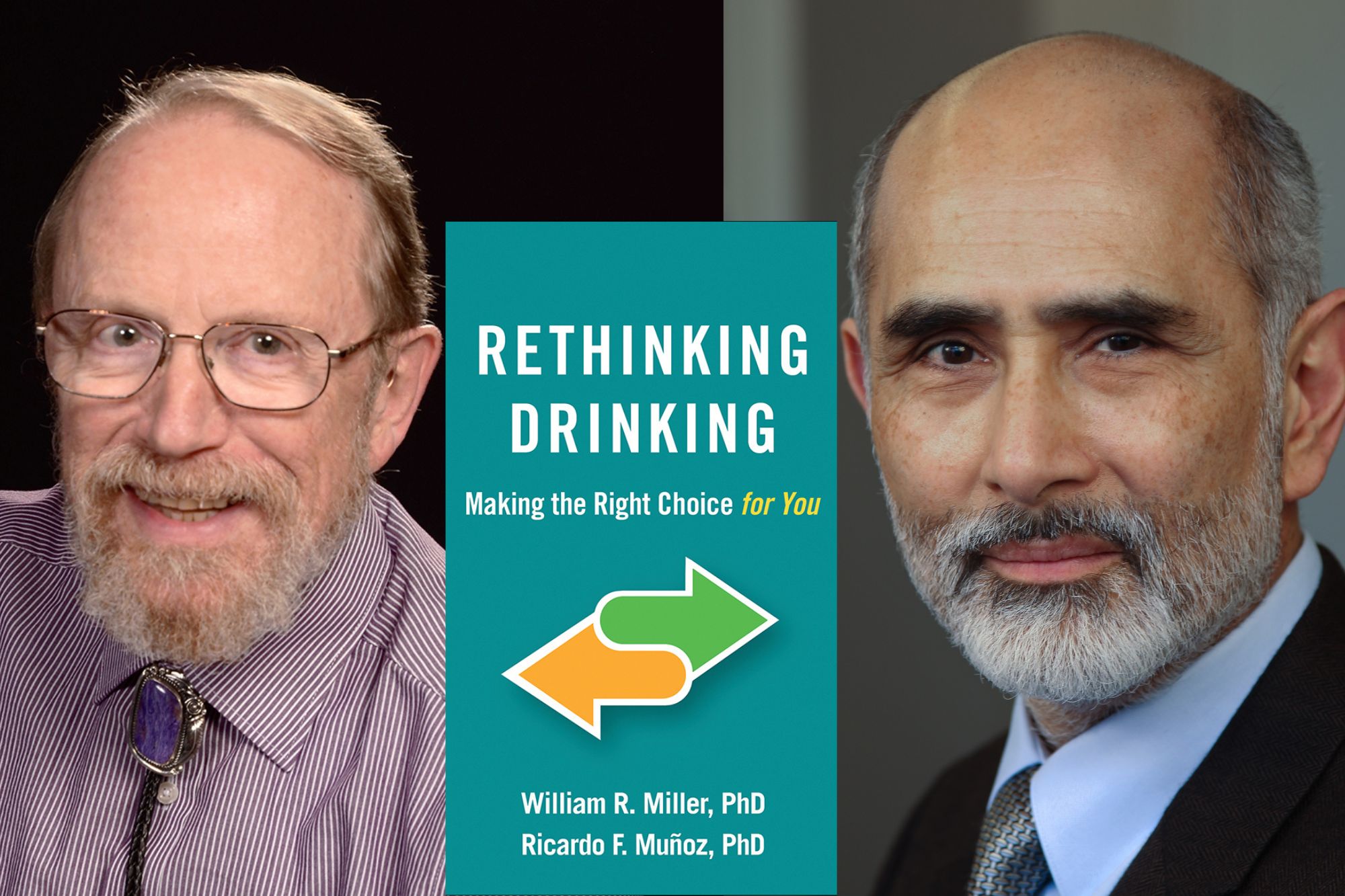
In their groundbreaking 1976 book, “How to Control Your Drinking,” William R. Miller and Ricardo F. Muñoz offered a guide for moderate alcohol use. Back then about two-thirds of American adults drank, and now about half do. As Americans drink less and question whether any amount of alcohol is healthy, Miller and Muñoz are out with a new book called “Rethinking Drinking,” to help us figure out what role, if any, drinking should have in our lives.
Guests:
- William R. Miller, American clinical psychologist, an emeritus distinguished professor of psychology and psychiatry at the University of New Mexico in Albuquerque; co-author of “How to Control Your Drinking” (1976) and “Rethinking Drinking” (2026)
- Ricardo F. Muñoz, Distinguished Professor of Clinical Psychology, Emeritus, Palo Alto University; Professor of Psychology, Emeritus, University of California, San Francisco, School of Medicine; co-author of “How to Control Your Drinking” (1976) and “Rethinking Drinking” (2026)
Episode Transcript
This is a computer-generated transcript. While our team has reviewed it, there may be errors.
Mina Kim: Welcome to Forum, I’m Mina Kim. A new Gallup poll finds that about half of Americans drink now — a record low — with 13% saying they sometimes drink too much, compared to 35% who said that in 1989. So what’s changed?
For more than 50 years, doctors William R. Miller and Ricardo F. Muñoz have been looking at what makes people’s attitudes and behavior change. In 1976, they co-authored How to Control Your Drinking. And since then, they’ve revised it five times. The newest version, Rethinking Drinking, will be released next month and incorporates the latest research and social trends.
Muñoz is Distinguished Professor of Clinical Psychology Emeritus at Palo Alto University, an Emeritus Professor of Psychology at the UCSF School of Medicine, where he was Chief Psychologist at San Francisco General Hospital for 25 years. Miller is an emeritus distinguished professor of psychology and psychiatry at the University of New Mexico in Albuquerque. He’s known for originating motivational interviewing and also for his work on alcohol use disorders.
Ricardo Muñoz, welcome to Forum.
Ricardo F. Muñoz: I’m very happy to be here. Thank you, Mina.
Mina Kim: Bill Miller, really glad to have you with us as well.
William R. Miller: Good morning!
Mina Kim: So, Bill, take me back to 1976. What were the attitudes and norms around drinking back then?
William R. Miller: It was very common to have a three-martini lunch. People, on average, drank about 20 beers a week, and of course, drinking and driving was a huge problem. Bars had huge parking lots, and in fact, if you didn’t drink, people asked you why. It was kind of unusual not to drink alcohol at the time.
Mina Kim: Yeah, Ricardo, you’ve talked about how people had sort of a binary view about drinking and drinkers. What was their conception?
Ricardo F. Muñoz: Yeah, back then it was thought that there were only two kinds of drinkers. There were alcoholics who really couldn’t drink at all, otherwise they couldn’t stop drinking. And everybody else who didn’t have to worry about drinking. And Bill actually was one of the pioneers in beginning to try controlled drinking approaches. So there were people who had problems with alcohol, but they could learn to moderate their drinking.
Mina Kim: Yeah, but they didn’t believe that they had the problems because they didn’t view themselves as, quote unquote, an alcoholic.
Ricardo F. Muñoz: Yeah, many people who had problem drinking did not think they were alcoholics, and again, Bill’s work was one of the first to try to see whether we could help people.
Mina Kim: Yeah.
Ricardo F. Muñoz: To moderate drinking.
Mina Kim: Bill, what made you challenge, yeah, that commonly held idea that Ricardo was describing? What prompted you to take up studying this and to come up with, you know, the idea of moderation as a tool?
William R. Miller: I had a summer internship on an alcoholism unit in a veterans hospital and firsthand witnessed the devastation that that can do in people’s lives. And my passion really was to try to go upstream and see if we couldn’t prevent this and help people get their drinking turned around before it has the devastating consequences that I was seeing.
Mina Kim: Yeah, what would you say was sort of the kind of public health information about drinking that was available at the time?
William R. Miller: Well, that’s changed so much over the decades. I mean, up until about the 1920s, public education was that this is such a dangerous drug that no one can use it safely. And then when Prohibition was repealed, suddenly, it was available everywhere. And so we had this national case of cognitive dissonance, and by the time that we were writing our first book in the 1970s, drinking was so normalized that people wondered what was wrong with you if you didn’t drink.
Mina Kim: So then, Ricardo, how did you realize the dangers of drinking if the general social, you know, conversation was what Bill describes? Can you talk about when you were an undergrad at Stanford?
Ricardo F. Muñoz: Yes, I was an undergrad living at Lagunita Court, a dorm there, and marijuana joints were passed around when we would get together on weekends, you know, and I would just pass the joint to the next person and…
Mina Kim: Oh, you didn’t smoke it.
Ricardo F. Muñoz: I didn’t smoke it, and one of the guys said, well, you don’t smoke? And I said, no. Do you drink? And I say, yeah. He said, well, drinking is a lot more dangerous than marijuana, and if you don’t believe me, look it up. So I did. I went to the undergraduate library — we called it Ugly back then — and I looked up alcohol and marijuana, and he was absolutely right.
You know, the amount of risk involved with alcohol drinking, both at the individual level — cirrhosis of the liver, problems with dementia and so on — were already known back in the ’70s. But in addition to that, what really convinced me not to drink was all these social risks. I mean, alcohol was involved, obviously, with traffic accidents, but also was involved with violence. It was involved with sexual assaults, date rapes. Also having sex with someone you didn’t intend to because you were under the influence, and domestic violence, all these things that were happening.
So I decided — the guy wanted me to begin using marijuana, but I decided that the reasonable thing to do was stop using alcohol. So I haven’t drunk alcohol since then. It was just a logical choice for me.
Mina Kim: Yes, and it’s a good point to underscore just how much alcohol does come with social harms as much as individual harms.
So, Bill, you know, the book you and Ricardo co-authored in 1976, How to Control Your Drinking, it was considered the first self-help book on moderate alcohol use, as I understand it. What did it address? What were you recommending then?
William R. Miller: Well, again, we were just trying to help people cut down their drinking, which now is what your doctor tells you. When you go to the doctor’s office, they now ask you how much you drink. And if it’s over an amount they think is too much, they encourage you to cut it down.
We were giving very practical strategies for doing just that, of keeping track of how much you’re drinking, of reducing the speed, slowing down your drinking, and just getting out of situations that are high-risk situations. So just, you know, not rocket science, just very straightforward ways to reduce your drinking. And we put that into a self-help format that, to our surprise, we found people could use on their own, even without working with a therapist.
Mina Kim: Are there things in that book that you would not include in your book now, you know, that you would consider dated, Bill?
William R. Miller: Well, one thing we said in earlier versions was that moderate drinking may be beneficial to your health. And I think that has changed. I mean, that was in the ’70s and ’80s, almost an accepted fact that, well, moderate drinking is good for you. Not so much now.
The World Health Organization says there really is no truly safe level of alcohol consumption. And I think we’re just much more aware as a society of both the social and the physical risks attached to alcohol use, and whatever level of drinking you do.
Mina Kim: Yeah, I’ve noticed that the title is different. So you have revised this book five times, Ricardo, and each time it is some version of How to Control Your Drinking. This time, it is called Rethinking Drinking. Why the change in title?
Ricardo F. Muñoz: Well, back in the 1970s, in psychology, it was a move to help people to learn ways of controlling themselves. That was a big deal. There was a book called, for example, Power to the Person, which was a take-off on “power to the people.” But the whole idea was that you could learn what was making you do the things you did.
Mina Kim: So control was a trendy thing.
Ricardo F. Muñoz: Control was a trendy thing, so we had incorporated it. Yes, so How to Control Your Drinking. I also co-authored the book called Control Your Depression, for example, so control was a big deal then — self-control — and that’s what the focus of the book was, to try to help people who felt they had problems.
Now we are thinking, given the data that’s now known about health problems — for example, all the cancers that are related to alcohol — now that people, in terms of controlling their drinking, should think about control all the way down to zero. That is, that one way of controlling your drinking is not to use it at all.
Mina Kim: Though one of the things that I notice is that you really do try to make the point that you’re not telling people, don’t drink. I mean, the subtitle to Rethinking Drinking, Bill, is Making the Right Choice for You. So am I interpreting that correctly, that you still drink on occasion and you’re not necessarily saying with this book you shouldn’t drink any alcohol at all?
William R. Miller: Oh, definitely. Yeah, I mean, I’ve been a drinker all the time that Ricardo’s been an abstainer. I’m a very moderate drinker, I must say. But it’s up to people. It’s — we take risks every day, just in driving cars and so forth.
But what we’re trying to do is help people just be aware of when and how alcohol use can be risky. And how much risk do you want to take with it? So it’s respecting people’s choice to make their own decisions about how they will use alcohol and just giving them the information that they can use to make good decisions.
Mina Kim: Yeah, do you also feel like that with all the new research that has come out saying that no amount of alcohol is good for you, right, that people are, you’re hearing people sort of wondering what place, what role drinking should have, if any, Bill?
William R. Miller: Well, that really is part of the audience for this book now as well. We’re not just writing for people who are drinking way too much and want to moderate it. There are lots of people who are saying, do I want to drink at all? And how do I make that choice? How do I decide that? And so that’s part of the audience for whom we’re writing this book as well, if you’re just thinking about what role does alcohol have in my life. Uh, and it’s not the way I want it.
Mina Kim: The social conversation has really changed.
We’re talking with Bill Miller, American clinical psychologist, distinguished professor of psychology and psychiatry emeritus at the University of New Mexico in Albuquerque, co-author with Ricardo F. Muñoz of the new book Rethinking Drinking. They were co-authors of a book like this, though, you know, it’s been revised five times since 1976, but in 1976 it was called How to Control Your Drinking.
And listeners, join the conversation. Have you started drinking less? And if you have, tell us why. How are you going about it if you are? And what is the hardest part, do you find, of reducing the amount of drinking or probably going cold turkey? What questions do you have about the effects of alcohol on your health? And if you drink, where does alcohol fit into your life?
You can tell us by calling 866-733-6786, by emailing [email protected], and finding us on Discord, Blue Sky, Facebook, or Instagram at KQED Forum.
More after the break. I’m Mina Kim.