The Alarming Rise of Colorectal Cancer in Young Adults
Airdate: Tuesday, August 11, 2026 at 9 AM
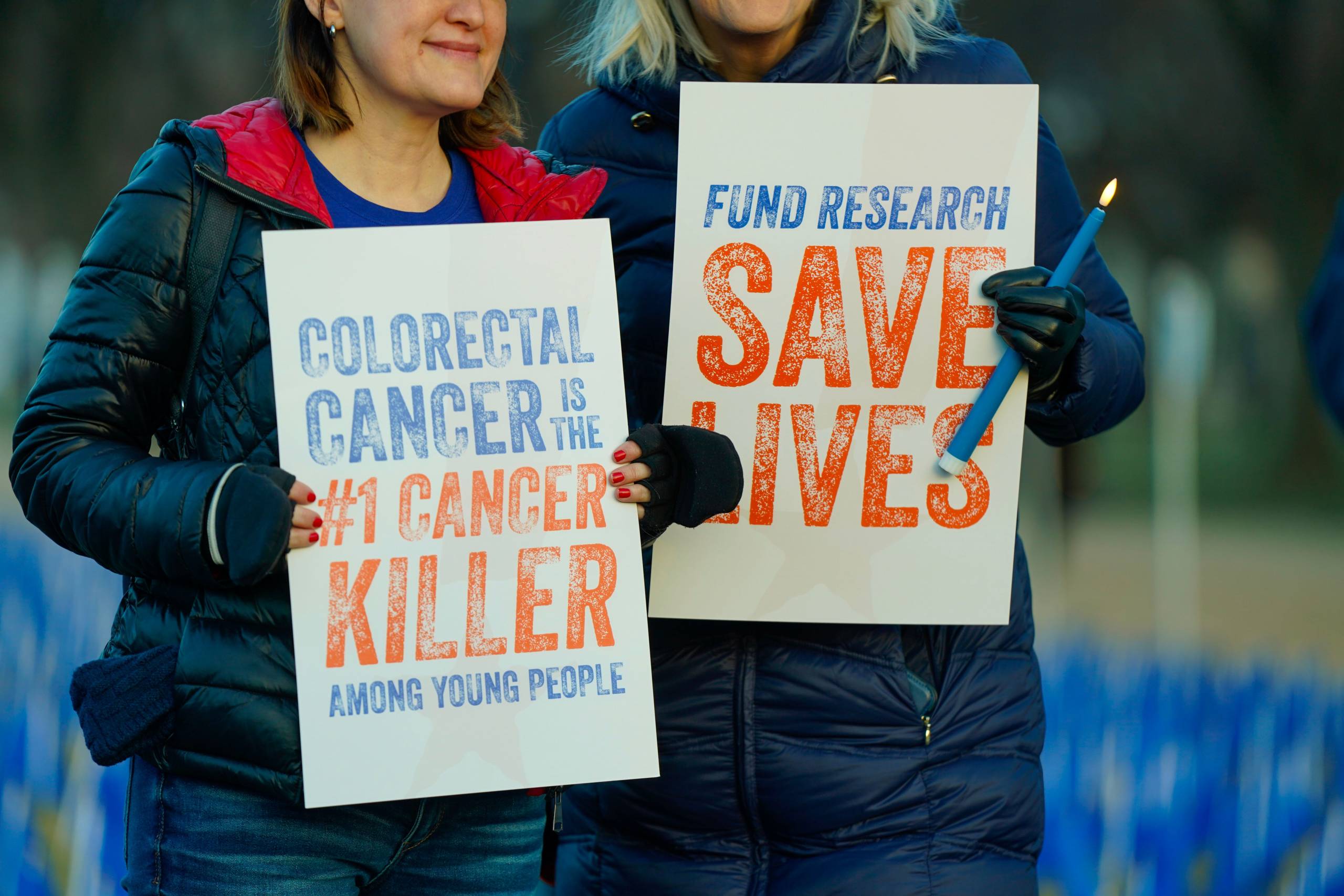
Colorectal cancer is now the leading cause of cancer-related death for Americans under 50. And, for people in their 20s and 30s, the rate of incidences is expected to increase 90% by 2030. We explore what’s causing this alarming trend, the warning symptoms everyone should know, and what’s being done to improve treatment, advance research, and advocate for patients nationwide.
Guests:
- Dr. Chloe Atreya, medical oncologist, UCSF; co-director, UCSF Young Onset Colorectal Cancer Center
- Molly Roberts, vice president of advocacy, Fight Colorectal Cancer!
- Amanda Webb, colorectal cancer survivor and advocate
Episode Transcript
This is a computer-generated transcript. While our team has reviewed it, there may be errors.
Lesley McClurg: Welcome to Forum. I’m Lesley McClurg. I’m in today for Alexis Madrigal. Colon cancer is what haunted my family. It still does. It’s what killed my grandmother and my father. I always thought it would be what got him, and I didn’t think I had to start worrying about it until I got much, much older. But apparently that’s no longer true. It’s now the leading cause of cancer-related death for Americans under 50, which is why scientists are scrambling to figure out why it’s hitting younger people so hard right now.
But first, let’s hear from a patient. Amanda Webb is a survivor and an advocate. Welcome, Amanda.
Amanda Webb: Hi, Lesley. Thanks for having me. Sorry to hear about your grandmother and father. It sounds like you’re really familiar with what you likely need to do to be screened.
Lesley McClurg: Well, I think you’re going to tell me more. So I’m excited to hear your story. When did you — let’s just kind of back up to the beginning. When did you first realize that something might be wrong health-wise for you?
Amanda Webb: You know, it’s funny. My symptoms probably went back to, you know, more than five years before I was actually diagnosed. It’s such a slow-growing cancer. And I dismissed my symptoms, what I thought was maybe a result of being a recreational runner and having a high metabolism — experiencing narrow stools, not feeling empty after a bowel movement. Some blood that I thought was a result of hemorrhoids because I was later pregnant. There was no thought in my mind that this could be colon cancer. I thought that was an old man’s disease.
You know, when I mentioned it to a doctor, it was like, you know, let’s cut out dairy and see if that makes a difference. And for most adults, that does provide some relief. My husband was also newly diagnosed with colitis around the same time, so we thought he had the digestion issues.
Lesley McClurg: And you were 36, right, when you eventually got the diagnosis. How surprised were you?
Amanda Webb: I was shocked, let alone to receive a stage four diagnosis. I was 31 weeks pregnant at the time. And what led to the diagnosis was the fact that we got a false positive for a rare chromosome during our genetic screening of the baby, a false positive for trisomy 13. Most babies only live about a week with that. So at one point we were grappling with the possibility of terminating a wanted pregnancy.
I was at UCSF. They knew I had a small history of malignant melanoma that was removed, received a clear pathology report, but they really erred on the side of caution. They knew that these false positives in the genetic screening could be a result of cancer cells in moms, so I’m so grateful they sent me to a melanoma clinic, even though I thought, “What am I doing here?”
The dermatologist sent me for an MRI, really erring on the side of caution, and it showed growths on my liver. You know, they said, “Oh, we hope this is benign and just something that grew during pregnancy.” And finally, I was actually admitted just to be at their disposal for a colonoscopy, a liver biopsy, ultrasounds, a CT scan, even though I was pregnant.
So at that point, I kind of knew we were probably dealing with the big C — cancer. But I didn’t — so to receive that stage four diagnosis, having been admitted, let alone on my husband’s birthday, and he was on the phone and, of course, then came to the hospital. I mean, I’ll never forget that day. I’ll never forget the people that rallied around me from the moment I was diagnosed. A high-risk OB took me to the garden and just held me while I cried. And, I mean, this was 2021. We were still in the pandemic.
Lesley McClurg: Oh my God, Amanda. Wow, that is quite a story. You’re 36, you’re pregnant, it’s the pandemic, you’re 31 weeks. So what were the doctors telling you about your chances? I mean, stage four cancer and your baby’s chances at that point.
Amanda Webb: Sure. You know, they weren’t telling me, even if I was asking, and I’m grateful for that. You know, you don’t get to put an expiration on anyone. I decided not to hit Google. This was my journey. There’s a lot of old statistics around there.
I was healthy. I look at it like I was kind of set up to be able to fight this because I was healthy. I was so lucky that my baby was viable. I didn’t have to make a decision between baby or starting treatment. UCSF felt confident in starting me on the same treatment they said they would pursue even if I hadn’t been pregnant at the time.
I did three rounds of inpatient chemo and antepartum so they could monitor the baby, and oncology brought the chemo to me, delivered my son three weeks early by C-section because he was breech and my water broke, so I knew I would have a C-section, and then I resumed chemo two weeks later, outpatient.
I responded really well to chemo. The tumors in my liver shrunk, so I became a candidate for surgery. UCSF did it in one procedure. I had two surgeons. They removed 20% of my colon, the full right lobe of the liver — it grows back — and I received a clear pathology report, did some cleanup chemo just in case, and I’ve been no evidence of disease ever since I finished treatment in late 2021.
I mean, I… It was done and over in seven months, but I quickly figured out after that, this isn’t done and ever. This is always gonna be part of my life.
Lesley McClurg: I mean, could it come back? Do they —
Amanda Webb: Oh, totally. I mean, recurrence chances for stage four are very high. I know the statistics now for survival rates for stage four. I’m one of the very lucky ones because May of this year marked five years since my diagnosis, and to reach five years with a stage four diagnosis is a huge milestone, let alone to be no evidence of disease.
Lesley McClurg: God, thank God. Congratulations for that. Do you have any idea why you could have developed colon cancer so, so young?
Amanda Webb: No idea. My grandma survived stage one, but they didn’t find any correlation. I’m just, I’m one of many at this point that is experiencing it earlier in life. And we still don’t know why.
Lesley McClurg: And we should say your child was healthy and happy and continues to be today, correct?
Amanda Webb: It’s true. Levi turned five in July and he starts kindergarten in San Francisco on Monday, and I cannot believe I’m here for it. I am so thrilled. That’s a huge milestone.
Lesley McClurg: Congratulations again.
Amanda Webb: Thank you.
Lesley McClurg: Congratulations again.
Amanda Webb: Thank you.
Lesley McClurg: That’s great. Yeah. And so you’ve become an advocate. What do you wish someone had told you at 36? What’s the message that you’re really trying to get out?
Amanda Webb: I wish I had advocated for myself when I had those symptoms. I wish I had pushed harder. The rates of survival increase so much with an earlier-stage diagnosis. So many of the young people being diagnosed are being diagnosed at later stages because they’re young, their symptoms are dismissed. It’s easy to diagnose something like IBS.
Screening for colon cancer starts at 45 for average risk. So it’s so important to pursue screening. If you have those symptoms, if you have a family history, it’s important to talk about it. And I just internalized it and thought, again, symptoms of running, symptoms of adult digestive discomforts.
Lesley McClurg: Tell us about your Light Up Blue event.
Amanda Webb: Yeah, it’s funny. It started three years ago, and I saw other people doing displays of blue lights during colorectal cancer awareness month in March. And I emailed San Francisco City Hall, and it turns out you can get on the lighting schedule. And for a while, okay, I didn’t see it on the lighting schedule, and then I happened to look like a day in advance and I was like, “Wow, it is tomorrow.”
So I was out there the first year I did this with just a running friend. And it was a party of two, like we just went out there and took photos together. And then I shared the photos with my oncologist, and she said, “You know, we need to do this bigger.”
So for the last two years, we’ve done a Light It Up Blue at San Francisco City Hall with the mayor. And we’ve had patients and survivors and medical personnel, loved ones, caregivers speak. And we brought people out together in remembrance and awareness of this horrible disease.
Lesley McClurg: I remember it when it was blue. Amanda Webb, thank you so much for sharing your story. I really appreciate it.
Amanda Webb: Thanks for having me, Lesley.
Lesley McClurg: I’m going to turn now to Dr. Chloe Atreya. She’s a medical oncologist and the co-director of the UCSF Young-Onset Colorectal Cancer Center. Welcome, Dr. Atreya.
Dr. Chloe Atreya: Thank you so much for having me.
Lesley McClurg: When you hear Amanda’s story, how familiar does that sound these days, someone so young?
Dr. Chloe Atreya: Unfortunately, so familiar. I mean, her story is both unique and she tells it incredibly. And so many people that I see every day, every week — new people every week — have similar stories.
Lesley McClurg: How young is the youngest patients that you’re seeing now? How young are they?
Dr. Chloe Atreya: Early 20s. You know, I’m an adult oncologist, so I see people over the age of 18, but I’m seeing people who are 20.
Lesley McClurg: And how has that changed? I mean, how is that drastically different than what your patient population looked like a decade or two decades ago?
Dr. Chloe Atreya: It’s been a gradual increase over the past 30 years or so. I’ve been in practice for almost 20 years, and it’s been noticeable to us that the number of younger patients has been increasing steadily over the years.
Lesley McClurg: And do we have any idea why?
Dr. Chloe Atreya: There are some things that we do know. We know that our food supply has been changing, that lifestyle has changed. There’s a definite association between ultra-processed foods and the rise of ultra-processed foods in our food supply in the United States. And also, I should say that this is a global problem. It’s not just happening in the U.S. over the past few decades.
And so ultra-processed foods is definitely an association. And I will say that the ultra-processed foods are ubiquitous now. They, me… David Chiu, who’s our SF City Attorney, has found that it’s like 70% of our food supply at this time, and he’s leading a historic lawsuit against the 11 major producers of ultra-processed foods at this point because it’s causing so many health problems.
Lesley McClurg: And killing our kids in this.
Dr. Chloe Atreya: Exactly, exactly. And so I do want to say that, you know, although we hear about the obesity epidemic, there are people like Amanda, many of my patients, that you would never guess that have a lifestyle-associated cancer. And we’re all being exposed to chemicals from a very young age. And there are some interesting associations with microplastics as well. That’s more a correlation right now. The causation is still being investigated, and then certain pesticides as well.
And these things are all linked, right? There are pesticides that are used to grow these big monocrops that are used to make ultra-processed foods that are then packaged in plastic that, you know, is coating so many of our foods right now. So these are some of the factors that we’re looking at, and we’re really looking at the gut microbiome for clues. So our gut microbiome interacts with our immune system, and when it’s healthy, it can be, you know, a healthy biome. But when it is disrupted by all of these chemicals that cause inflammation, then that can lead to an inflammatory environment.
Lesley McClurg: We are talking about the alarming rise in colorectal cancer in young adults, young people under 50. You just heard there Dr. Chloe Atreya. She’s a medical oncologist and co-director of the UCSF Young-Onset Colorectal Cancer Center. We heard from Amanda Webb, a stage four survivor earlier. We’ll be right back after this break to continue the conversation. I’m Lesley McClurg. Stay with us. You’re listening to Forum.
I’m Lesley McClurg. I’m in today for Alexis Madrigal, and we are talking about colon cancer and the really alarming rise in cases among people under 50. We just heard earlier from Amanda Webb. She is a survivor of stage four colon cancer, which she got at age 36. Luckily, she made it through and she’s thriving today, but her story is a harrowing tale and cautionary tale for all of us.
We’re joined now by Dr. Chloe Atreya. She’s a medical oncologist and co-director of the UCSF Young-Onset Colorectal Cancer Center, which is new to address these rising cases. And Molly Roberts is also with us now, Vice President of Advocacy at Fight CRC.
We want to hear from you. Has colon cancer touched some part of your life, yourself, a close friend, someone young in your life? Were you diagnosed at a young age and did you get dismissed or think, potentially initially, kind of brushed off those symptoms? Maybe are you planning for your preventative colorectal cancer screening now? Why or why not? And if you’re not, start planning.
Give us a call now at 866-733-6786. Again, that’s 866-733-6786. You can email your comments, your questions to [email protected], or you can find us on any of our social platforms, Bluesky, Instagram, or at KQED Forum. Or you can join our Discord community.