window.__IS_SSR__=true
window.__INITIAL_STATE__={
"attachmentsReducer": {
"audio_0": {
"type": "attachments",
"id": "audio_0",
"imgSizes": {
"kqedFullSize": {
"file": "https://ww2.kqed.org/news/wp-content/themes/KQED-unified/img/audio_bgs/background0.jpg"
}
}
},
"audio_1": {
"type": "attachments",
"id": "audio_1",
"imgSizes": {
"kqedFullSize": {
"file": "https://ww2.kqed.org/news/wp-content/themes/KQED-unified/img/audio_bgs/background1.jpg"
}
}
},
"audio_2": {
"type": "attachments",
"id": "audio_2",
"imgSizes": {
"kqedFullSize": {
"file": "https://ww2.kqed.org/news/wp-content/themes/KQED-unified/img/audio_bgs/background2.jpg"
}
}
},
"audio_3": {
"type": "attachments",
"id": "audio_3",
"imgSizes": {
"kqedFullSize": {
"file": "https://ww2.kqed.org/news/wp-content/themes/KQED-unified/img/audio_bgs/background3.jpg"
}
}
},
"audio_4": {
"type": "attachments",
"id": "audio_4",
"imgSizes": {
"kqedFullSize": {
"file": "https://ww2.kqed.org/news/wp-content/themes/KQED-unified/img/audio_bgs/background4.jpg"
}
}
},
"placeholder": {
"type": "attachments",
"id": "placeholder",
"imgSizes": {
"thumbnail": {
"file": "https://cdn.kqed.org/wp-content/uploads/2024/12/KQED-Default-Image-816638274-2000x1333-1-160x107.jpg",
"width": 160,
"height": 107,
"mimeType": "image/jpeg"
},
"medium": {
"file": "https://cdn.kqed.org/wp-content/uploads/2024/12/KQED-Default-Image-816638274-2000x1333-1-800x533.jpg",
"width": 800,
"height": 533,
"mimeType": "image/jpeg"
},
"medium_large": {
"file": "https://cdn.kqed.org/wp-content/uploads/2024/12/KQED-Default-Image-816638274-2000x1333-1-768x512.jpg",
"width": 768,
"height": 512,
"mimeType": "image/jpeg"
},
"large": {
"file": "https://cdn.kqed.org/wp-content/uploads/2024/12/KQED-Default-Image-816638274-2000x1333-1-1020x680.jpg",
"width": 1020,
"height": 680,
"mimeType": "image/jpeg"
},
"1536x1536": {
"file": "https://cdn.kqed.org/wp-content/uploads/2024/12/KQED-Default-Image-816638274-2000x1333-1-1536x1024.jpg",
"width": 1536,
"height": 1024,
"mimeType": "image/jpeg"
},
"fd-lrg": {
"file": "https://cdn.kqed.org/wp-content/uploads/2024/12/KQED-Default-Image-816638274-2000x1333-1-1536x1024.jpg",
"width": 1536,
"height": 1024,
"mimeType": "image/jpeg"
},
"fd-med": {
"file": "https://cdn.kqed.org/wp-content/uploads/2024/12/KQED-Default-Image-816638274-2000x1333-1-1020x680.jpg",
"width": 1020,
"height": 680,
"mimeType": "image/jpeg"
},
"fd-sm": {
"file": "https://cdn.kqed.org/wp-content/uploads/2024/12/KQED-Default-Image-816638274-2000x1333-1-800x533.jpg",
"width": 800,
"height": 533,
"mimeType": "image/jpeg"
},
"post-thumbnail": {
"file": "https://cdn.kqed.org/wp-content/uploads/2024/12/KQED-Default-Image-816638274-2000x1333-1-672x372.jpg",
"width": 672,
"height": 372,
"mimeType": "image/jpeg"
},
"twentyfourteen-full-width": {
"file": "https://cdn.kqed.org/wp-content/uploads/2024/12/KQED-Default-Image-816638274-2000x1333-1-1038x576.jpg",
"width": 1038,
"height": 576,
"mimeType": "image/jpeg"
},
"xxsmall": {
"file": "https://cdn.kqed.org/wp-content/uploads/2024/12/KQED-Default-Image-816638274-2000x1333-1-160x107.jpg",
"width": 160,
"height": 107,
"mimeType": "image/jpeg"
},
"xsmall": {
"file": "https://cdn.kqed.org/wp-content/uploads/2024/12/KQED-Default-Image-816638274-2000x1333-1-672x372.jpg",
"width": 672,
"height": 372,
"mimeType": "image/jpeg"
},
"small": {
"file": "https://cdn.kqed.org/wp-content/uploads/2024/12/KQED-Default-Image-816638274-2000x1333-1-672x372.jpg",
"width": 672,
"height": 372,
"mimeType": "image/jpeg"
},
"xlarge": {
"file": "https://cdn.kqed.org/wp-content/uploads/2024/12/KQED-Default-Image-816638274-2000x1333-1-1020x680.jpg",
"width": 1020,
"height": 680,
"mimeType": "image/jpeg"
},
"full-width": {
"file": "https://cdn.kqed.org/wp-content/uploads/2024/12/KQED-Default-Image-816638274-2000x1333-1-1920x1280.jpg",
"width": 1920,
"height": 1280,
"mimeType": "image/jpeg"
},
"guest-author-32": {
"file": "https://cdn.kqed.org/wp-content/uploads/2025/01/KQED-Default-Image-816638274-1333x1333-1-160x160.jpg",
"width": 32,
"height": 32,
"mimeType": "image/jpeg"
},
"guest-author-50": {
"file": "https://cdn.kqed.org/wp-content/uploads/2025/01/KQED-Default-Image-816638274-1333x1333-1-160x160.jpg",
"width": 50,
"height": 50,
"mimeType": "image/jpeg"
},
"guest-author-64": {
"file": "https://cdn.kqed.org/wp-content/uploads/2025/01/KQED-Default-Image-816638274-1333x1333-1-160x160.jpg",
"width": 64,
"height": 64,
"mimeType": "image/jpeg"
},
"guest-author-96": {
"file": "https://cdn.kqed.org/wp-content/uploads/2025/01/KQED-Default-Image-816638274-1333x1333-1-160x160.jpg",
"width": 96,
"height": 96,
"mimeType": "image/jpeg"
},
"guest-author-128": {
"file": "https://cdn.kqed.org/wp-content/uploads/2025/01/KQED-Default-Image-816638274-1333x1333-1-160x160.jpg",
"width": 128,
"height": 128,
"mimeType": "image/jpeg"
},
"detail": {
"file": "https://cdn.kqed.org/wp-content/uploads/2025/01/KQED-Default-Image-816638274-1333x1333-1-160x160.jpg",
"width": 160,
"height": 160,
"mimeType": "image/jpeg"
},
"kqedFullSize": {
"file": "https://cdn.kqed.org/wp-content/uploads/2024/12/KQED-Default-Image-816638274-2000x1333-1.jpg",
"width": 2000,
"height": 1333
}
}
},
"education_532735": {
"type": "attachments",
"id": "education_532735",
"meta": {
"index": "attachments_1716263798",
"site": "education",
"id": "532735",
"found": true
},
"parent": 532728,
"imgSizes": {
"twentyfourteen-full-width": {
"file": "https://ww2.kqed.org/app/uploads/sites/38/2019/10/manage-assets-1038x476.png",
"width": 1038,
"mimeType": "image/png",
"height": 476
},
"thumbnail": {
"file": "https://ww2.kqed.org/app/uploads/sites/38/2019/10/manage-assets-160x69.png",
"width": 160,
"mimeType": "image/png",
"height": 69
},
"post-thumbnail": {
"file": "https://ww2.kqed.org/app/uploads/sites/38/2019/10/manage-assets-672x372.png",
"width": 672,
"mimeType": "image/png",
"height": 372
},
"kqedFullSize": {
"file": "https://ww2.kqed.org/app/uploads/sites/38/2019/10/manage-assets.png",
"width": 1100,
"height": 476
},
"large": {
"file": "https://ww2.kqed.org/app/uploads/sites/38/2019/10/manage-assets-1020x441.png",
"width": 1020,
"mimeType": "image/png",
"height": 441
},
"medium": {
"file": "https://ww2.kqed.org/app/uploads/sites/38/2019/10/manage-assets-800x346.png",
"width": 800,
"mimeType": "image/png",
"height": 346
},
"medium_large": {
"file": "https://ww2.kqed.org/app/uploads/sites/38/2019/10/manage-assets-768x332.png",
"width": 768,
"mimeType": "image/png",
"height": 332
}
},
"publishDate": 1569966650,
"modified": 1569966691,
"caption": null,
"description": null,
"title": "KQED-Teach-manage-assets",
"credit": null,
"status": "inherit",
"isLoading": false,
"fetchFailed": false
},
"education_532710": {
"type": "attachments",
"id": "education_532710",
"meta": {
"index": "attachments_1716263798",
"site": "education",
"id": "532710",
"found": true
},
"parent": 532709,
"imgSizes": {
"twentyfourteen-full-width": {
"file": "https://ww2.kqed.org/app/uploads/sites/38/2019/09/DigCitCommit_SocialGraphics_ISTE19_06-2019_vf-02-1038x576.png",
"width": 1038,
"mimeType": "image/png",
"height": 576
},
"thumbnail": {
"file": "https://ww2.kqed.org/app/uploads/sites/38/2019/09/DigCitCommit_SocialGraphics_ISTE19_06-2019_vf-02-160x81.png",
"width": 160,
"mimeType": "image/png",
"height": 81
},
"post-thumbnail": {
"file": "https://ww2.kqed.org/app/uploads/sites/38/2019/09/DigCitCommit_SocialGraphics_ISTE19_06-2019_vf-02-672x372.png",
"width": 672,
"mimeType": "image/png",
"height": 372
},
"kqedFullSize": {
"file": "https://ww2.kqed.org/app/uploads/sites/38/2019/09/DigCitCommit_SocialGraphics_ISTE19_06-2019_vf-02.png",
"width": 4342,
"height": 2209
},
"large": {
"file": "https://ww2.kqed.org/app/uploads/sites/38/2019/09/DigCitCommit_SocialGraphics_ISTE19_06-2019_vf-02-1020x519.png",
"width": 1020,
"mimeType": "image/png",
"height": 519
},
"complete_open_graph": {
"file": "https://ww2.kqed.org/app/uploads/sites/38/2019/09/DigCitCommit_SocialGraphics_ISTE19_06-2019_vf-02-1200x611.png",
"width": 1200,
"mimeType": "image/png",
"height": 611
},
"full-width": {
"file": "https://ww2.kqed.org/app/uploads/sites/38/2019/09/DigCitCommit_SocialGraphics_ISTE19_06-2019_vf-02-1920x977.png",
"width": 1920,
"mimeType": "image/png",
"height": 977
},
"medium": {
"file": "https://ww2.kqed.org/app/uploads/sites/38/2019/09/DigCitCommit_SocialGraphics_ISTE19_06-2019_vf-02-800x407.png",
"width": 800,
"mimeType": "image/png",
"height": 407
},
"medium_large": {
"file": "https://ww2.kqed.org/app/uploads/sites/38/2019/09/DigCitCommit_SocialGraphics_ISTE19_06-2019_vf-02-768x391.png",
"width": 768,
"mimeType": "image/png",
"height": 391
}
},
"publishDate": 1569861582,
"modified": 1569861702,
"caption": null,
"description": null,
"title": "DigCitCommit_SocialGraphics_ISTE19_06-2019_vf-02",
"credit": null,
"status": "inherit",
"isLoading": false,
"fetchFailed": false
},
"education_532465": {
"type": "attachments",
"id": "education_532465",
"meta": {
"index": "attachments_1716263798",
"site": "education",
"id": "532465",
"found": true
},
"parent": 532447,
"imgSizes": {
"thumbnail": {
"file": "https://ww2.kqed.org/app/uploads/sites/38/2019/08/CDE-blog-post-hero-160x91.png",
"width": 160,
"mimeType": "image/png",
"height": 91
},
"post-thumbnail": {
"file": "https://ww2.kqed.org/app/uploads/sites/38/2019/08/CDE-blog-post-hero-672x372.png",
"width": 672,
"mimeType": "image/png",
"height": 372
},
"kqedFullSize": {
"file": "https://ww2.kqed.org/app/uploads/sites/38/2019/08/CDE-blog-post-hero.png",
"width": 700,
"height": 400
}
},
"publishDate": 1565904662,
"modified": 1565904662,
"caption": null,
"description": null,
"title": "CDE blog post hero",
"credit": null,
"status": "inherit",
"isLoading": false,
"fetchFailed": false
},
"education_531353": {
"type": "attachments",
"id": "education_531353",
"meta": {
"index": "attachments_1716263798",
"site": "education",
"id": "531353",
"found": true
},
"parent": 0,
"imgSizes": {
"twentyfourteen-full-width": {
"file": "https://ww2.kqed.org/app/uploads/sites/38/2019/03/Academy-2018-e1551918173784-1038x576.jpg",
"width": 1038,
"mimeType": "image/jpeg",
"height": 576
},
"thumbnail": {
"file": "https://ww2.kqed.org/app/uploads/sites/38/2019/03/Academy-2018-e1551918173784-160x90.jpg",
"width": 160,
"mimeType": "image/jpeg",
"height": 90
},
"post-thumbnail": {
"file": "https://ww2.kqed.org/app/uploads/sites/38/2019/03/Academy-2018-e1551918173784-672x372.jpg",
"width": 672,
"mimeType": "image/jpeg",
"height": 372
},
"kqedFullSize": {
"file": "https://ww2.kqed.org/app/uploads/sites/38/2019/03/Academy-2018-e1551918173784.jpg",
"width": 3800,
"height": 2136
},
"large": {
"file": "https://ww2.kqed.org/app/uploads/sites/38/2019/03/Academy-2018-e1551918173784-1020x573.jpg",
"width": 1020,
"mimeType": "image/jpeg",
"height": 573
},
"complete_open_graph": {
"file": "https://ww2.kqed.org/app/uploads/sites/38/2019/03/Academy-2018-e1551918173784-1200x675.jpg",
"width": 1200,
"mimeType": "image/jpeg",
"height": 675
},
"guest-author-50": {
"file": "https://ww2.kqed.org/app/uploads/sites/38/2019/03/Academy-2018-e1551918173784-50x50.jpg",
"width": 50,
"mimeType": "image/jpeg",
"height": 50
},
"guest-author-96": {
"file": "https://ww2.kqed.org/app/uploads/sites/38/2019/03/Academy-2018-e1551918173784-96x96.jpg",
"width": 96,
"mimeType": "image/jpeg",
"height": 96
},
"medium": {
"file": "https://ww2.kqed.org/app/uploads/sites/38/2019/03/Academy-2018-e1551918173784-800x450.jpg",
"width": 800,
"mimeType": "image/jpeg",
"height": 450
},
"guest-author-64": {
"file": "https://ww2.kqed.org/app/uploads/sites/38/2019/03/Academy-2018-e1551918173784-64x64.jpg",
"width": 64,
"mimeType": "image/jpeg",
"height": 64
},
"guest-author-32": {
"file": "https://ww2.kqed.org/app/uploads/sites/38/2019/03/Academy-2018-e1551918173784-32x32.jpg",
"width": 32,
"mimeType": "image/jpeg",
"height": 32
},
"full-width": {
"file": "https://ww2.kqed.org/app/uploads/sites/38/2019/03/Academy-2018-e1551918173784-1920x1079.jpg",
"width": 1920,
"mimeType": "image/jpeg",
"height": 1079
},
"medium_large": {
"file": "https://ww2.kqed.org/app/uploads/sites/38/2019/03/Academy-2018-e1551918173784-768x432.jpg",
"width": 768,
"mimeType": "image/jpeg",
"height": 432
},
"guest-author-128": {
"file": "https://ww2.kqed.org/app/uploads/sites/38/2019/03/Academy-2018-e1551918173784-128x128.jpg",
"width": 128,
"mimeType": "image/jpeg",
"height": 128
}
},
"publishDate": 1551917963,
"modified": 1551918285,
"caption": "KQED Academy 2018-2019 participants",
"description": null,
"title": "Academy 2018",
"credit": null,
"status": "inherit",
"isLoading": false,
"fetchFailed": false
},
"education_530804": {
"type": "attachments",
"id": "education_530804",
"meta": {
"index": "attachments_1716263798",
"site": "education",
"id": "530804",
"found": true
},
"parent": 0,
"imgSizes": {
"small": {
"file": "https://ww2.kqed.org/app/uploads/sites/38/2018/10/SAT_Thumbnail_YT-520x293.png",
"width": 520,
"mimeType": "image/png",
"height": 293
},
"twentyfourteen-full-width": {
"file": "https://ww2.kqed.org/app/uploads/sites/38/2018/10/SAT_Thumbnail_YT-1038x576.png",
"width": 1038,
"mimeType": "image/png",
"height": 576
},
"thumbnail": {
"file": "https://ww2.kqed.org/app/uploads/sites/38/2018/10/SAT_Thumbnail_YT-160x90.png",
"width": 160,
"mimeType": "image/png",
"height": 90
},
"fd-sm": {
"file": "https://ww2.kqed.org/app/uploads/sites/38/2018/10/SAT_Thumbnail_YT-960x540.png",
"width": 960,
"mimeType": "image/png",
"height": 540
},
"post-thumbnail": {
"file": "https://ww2.kqed.org/app/uploads/sites/38/2018/10/SAT_Thumbnail_YT-672x372.png",
"width": 672,
"mimeType": "image/png",
"height": 372
},
"xsmall": {
"file": "https://ww2.kqed.org/app/uploads/sites/38/2018/10/SAT_Thumbnail_YT-375x211.png",
"width": 375,
"mimeType": "image/png",
"height": 211
},
"kqedFullSize": {
"file": "https://ww2.kqed.org/app/uploads/sites/38/2018/10/SAT_Thumbnail_YT.png",
"width": 1920,
"height": 1080
},
"large": {
"file": "https://ww2.kqed.org/app/uploads/sites/38/2018/10/SAT_Thumbnail_YT-1020x574.png",
"width": 1020,
"mimeType": "image/png",
"height": 574
},
"xlarge": {
"file": "https://ww2.kqed.org/app/uploads/sites/38/2018/10/SAT_Thumbnail_YT-1180x664.png",
"width": 1180,
"mimeType": "image/png",
"height": 664
},
"complete_open_graph": {
"file": "https://ww2.kqed.org/app/uploads/sites/38/2018/10/SAT_Thumbnail_YT-1200x675.png",
"width": 1200,
"mimeType": "image/png",
"height": 675
},
"guest-author-50": {
"file": "https://ww2.kqed.org/app/uploads/sites/38/2018/10/SAT_Thumbnail_YT-50x50.png",
"width": 50,
"mimeType": "image/png",
"height": 50
},
"guest-author-96": {
"file": "https://ww2.kqed.org/app/uploads/sites/38/2018/10/SAT_Thumbnail_YT-96x96.png",
"width": 96,
"mimeType": "image/png",
"height": 96
},
"medium": {
"file": "https://ww2.kqed.org/app/uploads/sites/38/2018/10/SAT_Thumbnail_YT-800x450.png",
"width": 800,
"mimeType": "image/png",
"height": 450
},
"guest-author-64": {
"file": "https://ww2.kqed.org/app/uploads/sites/38/2018/10/SAT_Thumbnail_YT-64x64.png",
"width": 64,
"mimeType": "image/png",
"height": 64
},
"guest-author-32": {
"file": "https://ww2.kqed.org/app/uploads/sites/38/2018/10/SAT_Thumbnail_YT-32x32.png",
"width": 32,
"mimeType": "image/png",
"height": 32
},
"fd-lrg": {
"file": "https://ww2.kqed.org/app/uploads/sites/38/2018/10/SAT_Thumbnail_YT-1920x1080.png",
"width": 1920,
"mimeType": "image/png",
"height": 1080
},
"fd-med": {
"file": "https://ww2.kqed.org/app/uploads/sites/38/2018/10/SAT_Thumbnail_YT-1180x664.png",
"width": 1180,
"mimeType": "image/png",
"height": 664
},
"full-width": {
"file": "https://ww2.kqed.org/app/uploads/sites/38/2018/10/SAT_Thumbnail_YT-1920x1080.png",
"width": 1920,
"mimeType": "image/png",
"height": 1080
},
"detail": {
"file": "https://ww2.kqed.org/app/uploads/sites/38/2018/10/SAT_Thumbnail_YT-150x150.png",
"width": 150,
"mimeType": "image/png",
"height": 150
},
"medium_large": {
"file": "https://ww2.kqed.org/app/uploads/sites/38/2018/10/SAT_Thumbnail_YT-768x432.png",
"width": 768,
"mimeType": "image/png",
"height": 432
},
"guest-author-128": {
"file": "https://ww2.kqed.org/app/uploads/sites/38/2018/10/SAT_Thumbnail_YT-128x128.png",
"width": 128,
"mimeType": "image/png",
"height": 128
},
"xxsmall": {
"file": "https://ww2.kqed.org/app/uploads/sites/38/2018/10/SAT_Thumbnail_YT-240x135.png",
"width": 240,
"mimeType": "image/png",
"height": 135
}
},
"publishDate": 1539291919,
"modified": 1539291919,
"caption": null,
"description": null,
"title": "SAT_Thumbnail_YT",
"credit": null,
"status": "inherit",
"isLoading": false,
"fetchFailed": false
},
"education_530519": {
"type": "attachments",
"id": "education_530519",
"meta": {
"index": "attachments_1716263798",
"site": "education",
"id": "530519",
"found": true
},
"parent": 530517,
"imgSizes": {
"small": {
"file": "https://ww2.kqed.org/app/uploads/sites/38/2018/08/maxresdefault-520x293.jpg",
"width": 520,
"mimeType": "image/jpeg",
"height": 293
},
"twentyfourteen-full-width": {
"file": "https://ww2.kqed.org/app/uploads/sites/38/2018/08/maxresdefault-1038x576.jpg",
"width": 1038,
"mimeType": "image/jpeg",
"height": 576
},
"thumbnail": {
"file": "https://ww2.kqed.org/app/uploads/sites/38/2018/08/maxresdefault-160x90.jpg",
"width": 160,
"mimeType": "image/jpeg",
"height": 90
},
"fd-sm": {
"file": "https://ww2.kqed.org/app/uploads/sites/38/2018/08/maxresdefault-960x540.jpg",
"width": 960,
"mimeType": "image/jpeg",
"height": 540
},
"post-thumbnail": {
"file": "https://ww2.kqed.org/app/uploads/sites/38/2018/08/maxresdefault-672x372.jpg",
"width": 672,
"mimeType": "image/jpeg",
"height": 372
},
"xsmall": {
"file": "https://ww2.kqed.org/app/uploads/sites/38/2018/08/maxresdefault-375x211.jpg",
"width": 375,
"mimeType": "image/jpeg",
"height": 211
},
"kqedFullSize": {
"file": "https://ww2.kqed.org/app/uploads/sites/38/2018/08/maxresdefault.jpg",
"width": 1280,
"height": 720
},
"large": {
"file": "https://ww2.kqed.org/app/uploads/sites/38/2018/08/maxresdefault-1020x574.jpg",
"width": 1020,
"mimeType": "image/jpeg",
"height": 574
},
"xlarge": {
"file": "https://ww2.kqed.org/app/uploads/sites/38/2018/08/maxresdefault-1180x664.jpg",
"width": 1180,
"mimeType": "image/jpeg",
"height": 664
},
"complete_open_graph": {
"file": "https://ww2.kqed.org/app/uploads/sites/38/2018/08/maxresdefault-1200x675.jpg",
"width": 1200,
"mimeType": "image/jpeg",
"height": 675
},
"guest-author-50": {
"file": "https://ww2.kqed.org/app/uploads/sites/38/2018/08/maxresdefault-50x50.jpg",
"width": 50,
"mimeType": "image/jpeg",
"height": 50
},
"guest-author-96": {
"file": "https://ww2.kqed.org/app/uploads/sites/38/2018/08/maxresdefault-96x96.jpg",
"width": 96,
"mimeType": "image/jpeg",
"height": 96
},
"medium": {
"file": "https://ww2.kqed.org/app/uploads/sites/38/2018/08/maxresdefault-800x450.jpg",
"width": 800,
"mimeType": "image/jpeg",
"height": 450
},
"guest-author-64": {
"file": "https://ww2.kqed.org/app/uploads/sites/38/2018/08/maxresdefault-64x64.jpg",
"width": 64,
"mimeType": "image/jpeg",
"height": 64
},
"guest-author-32": {
"file": "https://ww2.kqed.org/app/uploads/sites/38/2018/08/maxresdefault-32x32.jpg",
"width": 32,
"mimeType": "image/jpeg",
"height": 32
},
"fd-med": {
"file": "https://ww2.kqed.org/app/uploads/sites/38/2018/08/maxresdefault-1180x664.jpg",
"width": 1180,
"mimeType": "image/jpeg",
"height": 664
},
"detail": {
"file": "https://ww2.kqed.org/app/uploads/sites/38/2018/08/maxresdefault-150x150.jpg",
"width": 150,
"mimeType": "image/jpeg",
"height": 150
},
"medium_large": {
"file": "https://ww2.kqed.org/app/uploads/sites/38/2018/08/maxresdefault-768x432.jpg",
"width": 768,
"mimeType": "image/jpeg",
"height": 432
},
"guest-author-128": {
"file": "https://ww2.kqed.org/app/uploads/sites/38/2018/08/maxresdefault-128x128.jpg",
"width": 128,
"mimeType": "image/jpeg",
"height": 128
},
"xxsmall": {
"file": "https://ww2.kqed.org/app/uploads/sites/38/2018/08/maxresdefault-240x135.jpg",
"width": 240,
"mimeType": "image/jpeg",
"height": 135
}
},
"publishDate": 1534442626,
"modified": 1534442626,
"caption": null,
"description": null,
"title": "maxresdefault",
"credit": null,
"status": "inherit",
"isLoading": false,
"fetchFailed": false
},
"education_530395": {
"type": "attachments",
"id": "education_530395",
"meta": {
"index": "attachments_1716263798",
"site": "education",
"id": "530395",
"found": true
},
"parent": 530393,
"imgSizes": {
"small": {
"file": "https://ww2.kqed.org/app/uploads/sites/38/2018/07/maxresdefault-520x293.jpg",
"width": 520,
"mimeType": "image/jpeg",
"height": 293
},
"twentyfourteen-full-width": {
"file": "https://ww2.kqed.org/app/uploads/sites/38/2018/07/maxresdefault-1038x576.jpg",
"width": 1038,
"mimeType": "image/jpeg",
"height": 576
},
"thumbnail": {
"file": "https://ww2.kqed.org/app/uploads/sites/38/2018/07/maxresdefault-160x90.jpg",
"width": 160,
"mimeType": "image/jpeg",
"height": 90
},
"fd-sm": {
"file": "https://ww2.kqed.org/app/uploads/sites/38/2018/07/maxresdefault-960x540.jpg",
"width": 960,
"mimeType": "image/jpeg",
"height": 540
},
"post-thumbnail": {
"file": "https://ww2.kqed.org/app/uploads/sites/38/2018/07/maxresdefault-672x372.jpg",
"width": 672,
"mimeType": "image/jpeg",
"height": 372
},
"xsmall": {
"file": "https://ww2.kqed.org/app/uploads/sites/38/2018/07/maxresdefault-375x211.jpg",
"width": 375,
"mimeType": "image/jpeg",
"height": 211
},
"kqedFullSize": {
"file": "https://ww2.kqed.org/app/uploads/sites/38/2018/07/maxresdefault.jpg",
"width": 1280,
"height": 720
},
"large": {
"file": "https://ww2.kqed.org/app/uploads/sites/38/2018/07/maxresdefault-1020x574.jpg",
"width": 1020,
"mimeType": "image/jpeg",
"height": 574
},
"xlarge": {
"file": "https://ww2.kqed.org/app/uploads/sites/38/2018/07/maxresdefault-1180x664.jpg",
"width": 1180,
"mimeType": "image/jpeg",
"height": 664
},
"complete_open_graph": {
"file": "https://ww2.kqed.org/app/uploads/sites/38/2018/07/maxresdefault-1200x675.jpg",
"width": 1200,
"mimeType": "image/jpeg",
"height": 675
},
"guest-author-50": {
"file": "https://ww2.kqed.org/app/uploads/sites/38/2018/07/maxresdefault-50x50.jpg",
"width": 50,
"mimeType": "image/jpeg",
"height": 50
},
"guest-author-96": {
"file": "https://ww2.kqed.org/app/uploads/sites/38/2018/07/maxresdefault-96x96.jpg",
"width": 96,
"mimeType": "image/jpeg",
"height": 96
},
"medium": {
"file": "https://ww2.kqed.org/app/uploads/sites/38/2018/07/maxresdefault-800x450.jpg",
"width": 800,
"mimeType": "image/jpeg",
"height": 450
},
"guest-author-64": {
"file": "https://ww2.kqed.org/app/uploads/sites/38/2018/07/maxresdefault-64x64.jpg",
"width": 64,
"mimeType": "image/jpeg",
"height": 64
},
"guest-author-32": {
"file": "https://ww2.kqed.org/app/uploads/sites/38/2018/07/maxresdefault-32x32.jpg",
"width": 32,
"mimeType": "image/jpeg",
"height": 32
},
"fd-med": {
"file": "https://ww2.kqed.org/app/uploads/sites/38/2018/07/maxresdefault-1180x664.jpg",
"width": 1180,
"mimeType": "image/jpeg",
"height": 664
},
"detail": {
"file": "https://ww2.kqed.org/app/uploads/sites/38/2018/07/maxresdefault-150x150.jpg",
"width": 150,
"mimeType": "image/jpeg",
"height": 150
},
"medium_large": {
"file": "https://ww2.kqed.org/app/uploads/sites/38/2018/07/maxresdefault-768x432.jpg",
"width": 768,
"mimeType": "image/jpeg",
"height": 432
},
"guest-author-128": {
"file": "https://ww2.kqed.org/app/uploads/sites/38/2018/07/maxresdefault-128x128.jpg",
"width": 128,
"mimeType": "image/jpeg",
"height": 128
},
"xxsmall": {
"file": "https://ww2.kqed.org/app/uploads/sites/38/2018/07/maxresdefault-240x135.jpg",
"width": 240,
"mimeType": "image/jpeg",
"height": 135
}
},
"publishDate": 1531512727,
"modified": 1533313991,
"caption": "Name / Org",
"description": null,
"title": null,
"credit": null,
"status": "inherit",
"isLoading": false,
"fetchFailed": false
},
"education_529492": {
"type": "attachments",
"id": "education_529492",
"meta": {
"index": "attachments_1716263798",
"site": "education",
"id": "529492",
"found": true
},
"parent": 529491,
"imgSizes": {
"small": {
"file": "https://ww2.kqed.org/app/uploads/sites/38/2018/03/maxresdefault-2-520x293.jpg",
"width": 520,
"mimeType": "image/jpeg",
"height": 293
},
"twentyfourteen-full-width": {
"file": "https://ww2.kqed.org/app/uploads/sites/38/2018/03/maxresdefault-2-1038x576.jpg",
"width": 1038,
"mimeType": "image/jpeg",
"height": 576
},
"thumbnail": {
"file": "https://ww2.kqed.org/app/uploads/sites/38/2018/03/maxresdefault-2-160x90.jpg",
"width": 160,
"mimeType": "image/jpeg",
"height": 90
},
"fd-sm": {
"file": "https://ww2.kqed.org/app/uploads/sites/38/2018/03/maxresdefault-2-960x540.jpg",
"width": 960,
"mimeType": "image/jpeg",
"height": 540
},
"post-thumbnail": {
"file": "https://ww2.kqed.org/app/uploads/sites/38/2018/03/maxresdefault-2-672x372.jpg",
"width": 672,
"mimeType": "image/jpeg",
"height": 372
},
"xsmall": {
"file": "https://ww2.kqed.org/app/uploads/sites/38/2018/03/maxresdefault-2-375x211.jpg",
"width": 375,
"mimeType": "image/jpeg",
"height": 211
},
"kqedFullSize": {
"file": "https://ww2.kqed.org/app/uploads/sites/38/2018/03/maxresdefault-2.jpg",
"width": 1280,
"height": 720
},
"large": {
"file": "https://ww2.kqed.org/app/uploads/sites/38/2018/03/maxresdefault-2-1020x574.jpg",
"width": 1020,
"mimeType": "image/jpeg",
"height": 574
},
"xlarge": {
"file": "https://ww2.kqed.org/app/uploads/sites/38/2018/03/maxresdefault-2-1180x664.jpg",
"width": 1180,
"mimeType": "image/jpeg",
"height": 664
},
"guest-author-50": {
"file": "https://ww2.kqed.org/app/uploads/sites/38/2018/03/maxresdefault-2-50x50.jpg",
"width": 50,
"mimeType": "image/jpeg",
"height": 50
},
"guest-author-96": {
"file": "https://ww2.kqed.org/app/uploads/sites/38/2018/03/maxresdefault-2-96x96.jpg",
"width": 96,
"mimeType": "image/jpeg",
"height": 96
},
"medium": {
"file": "https://ww2.kqed.org/app/uploads/sites/38/2018/03/maxresdefault-2-800x450.jpg",
"width": 800,
"mimeType": "image/jpeg",
"height": 450
},
"guest-author-64": {
"file": "https://ww2.kqed.org/app/uploads/sites/38/2018/03/maxresdefault-2-64x64.jpg",
"width": 64,
"mimeType": "image/jpeg",
"height": 64
},
"guest-author-32": {
"file": "https://ww2.kqed.org/app/uploads/sites/38/2018/03/maxresdefault-2-32x32.jpg",
"width": 32,
"mimeType": "image/jpeg",
"height": 32
},
"fd-med": {
"file": "https://ww2.kqed.org/app/uploads/sites/38/2018/03/maxresdefault-2-1180x664.jpg",
"width": 1180,
"mimeType": "image/jpeg",
"height": 664
},
"detail": {
"file": "https://ww2.kqed.org/app/uploads/sites/38/2018/03/maxresdefault-2-150x150.jpg",
"width": 150,
"mimeType": "image/jpeg",
"height": 150
},
"medium_large": {
"file": "https://ww2.kqed.org/app/uploads/sites/38/2018/03/maxresdefault-2-768x432.jpg",
"width": 768,
"mimeType": "image/jpeg",
"height": 432
},
"guest-author-128": {
"file": "https://ww2.kqed.org/app/uploads/sites/38/2018/03/maxresdefault-2-128x128.jpg",
"width": 128,
"mimeType": "image/jpeg",
"height": 128
},
"xxsmall": {
"file": "https://ww2.kqed.org/app/uploads/sites/38/2018/03/maxresdefault-2-240x135.jpg",
"width": 240,
"mimeType": "image/jpeg",
"height": 135
}
},
"publishDate": 1520040480,
"modified": 1520040480,
"caption": null,
"description": null,
"title": "maxresdefault (2)",
"credit": null,
"status": "inherit",
"isLoading": false,
"fetchFailed": false
},
"education_529473": {
"type": "attachments",
"id": "education_529473",
"meta": {
"index": "attachments_1716263798",
"site": "education",
"id": "529473",
"found": true
},
"parent": 529472,
"imgSizes": {
"small": {
"file": "https://ww2.kqed.org/app/uploads/sites/38/2018/02/MOSQUITO-THUMBNAIL4-520x293.jpg",
"width": 520,
"mimeType": "image/jpeg",
"height": 293
},
"twentyfourteen-full-width": {
"file": "https://ww2.kqed.org/app/uploads/sites/38/2018/02/MOSQUITO-THUMBNAIL4-1038x576.jpg",
"width": 1038,
"mimeType": "image/jpeg",
"height": 576
},
"thumbnail": {
"file": "https://ww2.kqed.org/app/uploads/sites/38/2018/02/MOSQUITO-THUMBNAIL4-160x90.jpg",
"width": 160,
"mimeType": "image/jpeg",
"height": 90
},
"fd-sm": {
"file": "https://ww2.kqed.org/app/uploads/sites/38/2018/02/MOSQUITO-THUMBNAIL4-960x540.jpg",
"width": 960,
"mimeType": "image/jpeg",
"height": 540
},
"post-thumbnail": {
"file": "https://ww2.kqed.org/app/uploads/sites/38/2018/02/MOSQUITO-THUMBNAIL4-672x372.jpg",
"width": 672,
"mimeType": "image/jpeg",
"height": 372
},
"xsmall": {
"file": "https://ww2.kqed.org/app/uploads/sites/38/2018/02/MOSQUITO-THUMBNAIL4-375x211.jpg",
"width": 375,
"mimeType": "image/jpeg",
"height": 211
},
"kqedFullSize": {
"file": "https://ww2.kqed.org/app/uploads/sites/38/2018/02/MOSQUITO-THUMBNAIL4.jpg",
"width": 1920,
"height": 1080
},
"large": {
"file": "https://ww2.kqed.org/app/uploads/sites/38/2018/02/MOSQUITO-THUMBNAIL4-1020x574.jpg",
"width": 1020,
"mimeType": "image/jpeg",
"height": 574
},
"xlarge": {
"file": "https://ww2.kqed.org/app/uploads/sites/38/2018/02/MOSQUITO-THUMBNAIL4-1180x664.jpg",
"width": 1180,
"mimeType": "image/jpeg",
"height": 664
},
"guest-author-50": {
"file": "https://ww2.kqed.org/app/uploads/sites/38/2018/02/MOSQUITO-THUMBNAIL4-50x50.jpg",
"width": 50,
"mimeType": "image/jpeg",
"height": 50
},
"guest-author-96": {
"file": "https://ww2.kqed.org/app/uploads/sites/38/2018/02/MOSQUITO-THUMBNAIL4-96x96.jpg",
"width": 96,
"mimeType": "image/jpeg",
"height": 96
},
"medium": {
"file": "https://ww2.kqed.org/app/uploads/sites/38/2018/02/MOSQUITO-THUMBNAIL4-800x450.jpg",
"width": 800,
"mimeType": "image/jpeg",
"height": 450
},
"guest-author-64": {
"file": "https://ww2.kqed.org/app/uploads/sites/38/2018/02/MOSQUITO-THUMBNAIL4-64x64.jpg",
"width": 64,
"mimeType": "image/jpeg",
"height": 64
},
"guest-author-32": {
"file": "https://ww2.kqed.org/app/uploads/sites/38/2018/02/MOSQUITO-THUMBNAIL4-32x32.jpg",
"width": 32,
"mimeType": "image/jpeg",
"height": 32
},
"fd-lrg": {
"file": "https://ww2.kqed.org/app/uploads/sites/38/2018/02/MOSQUITO-THUMBNAIL4-1920x1080.jpg",
"width": 1920,
"mimeType": "image/jpeg",
"height": 1080
},
"fd-med": {
"file": "https://ww2.kqed.org/app/uploads/sites/38/2018/02/MOSQUITO-THUMBNAIL4-1180x664.jpg",
"width": 1180,
"mimeType": "image/jpeg",
"height": 664
},
"full-width": {
"file": "https://ww2.kqed.org/app/uploads/sites/38/2018/02/MOSQUITO-THUMBNAIL4-1920x1080.jpg",
"width": 1920,
"mimeType": "image/jpeg",
"height": 1080
},
"detail": {
"file": "https://ww2.kqed.org/app/uploads/sites/38/2018/02/MOSQUITO-THUMBNAIL4-150x150.jpg",
"width": 150,
"mimeType": "image/jpeg",
"height": 150
},
"medium_large": {
"file": "https://ww2.kqed.org/app/uploads/sites/38/2018/02/MOSQUITO-THUMBNAIL4-768x432.jpg",
"width": 768,
"mimeType": "image/jpeg",
"height": 432
},
"guest-author-128": {
"file": "https://ww2.kqed.org/app/uploads/sites/38/2018/02/MOSQUITO-THUMBNAIL4-128x128.jpg",
"width": 128,
"mimeType": "image/jpeg",
"height": 128
},
"xxsmall": {
"file": "https://ww2.kqed.org/app/uploads/sites/38/2018/02/MOSQUITO-THUMBNAIL4-240x135.jpg",
"width": 240,
"mimeType": "image/jpeg",
"height": 135
}
},
"publishDate": 1519871037,
"modified": 1519871037,
"caption": null,
"description": null,
"title": "MOSQUITO THUMBNAIL4",
"credit": null,
"status": "inherit",
"isLoading": false,
"fetchFailed": false
}
},
"audioPlayerReducer": {
"postId": "stream_live",
"isPaused": true,
"isPlaying": false,
"pfsActive": false,
"pledgeModalIsOpen": true,
"playerDrawerIsOpen": false,
"liveAudioPlayStartedAt": 0,
"liveAudioPlayContext": ""
},
"authorsReducer": {
"matthewgreen": {
"type": "authors",
"id": "1263",
"meta": {
"index": "authors_1716337520",
"id": "1263",
"found": true
},
"name": "Matthew Green",
"firstName": "Matthew",
"lastName": "Green",
"slug": "matthewgreen",
"email": "mgreen@kqed.org",
"display_author_email": false,
"staff_mastheads": [],
"title": "KQED Editor/Reporter",
"bio": "Matthew Green is a digital media producer for KQED News. He previously produced \u003ca href=\"http://www.kqed.org/lowdown\">The Lowdown\u003c/a>, KQED’s multimedia news education blog. Matthew's written for numerous Bay Area publications, including the Oakland Tribune and San Francisco Chronicle. He also taught journalism classes at Fremont High School in East Oakland.\r\n\r\nEmail: mgreen@kqed.org; Twitter: @MGreenKQED",
"avatar": "https://secure.gravatar.com/avatar/3bf498d1267ca02c8494f33d8cfc575e?s=600&d=blank&r=g",
"twitter": "MGreenKQED",
"facebook": null,
"instagram": null,
"linkedin": null,
"sites": [
{
"site": "news",
"roles": []
},
{
"site": "lowdown",
"roles": []
},
{
"site": "science",
"roles": []
},
{
"site": "education",
"roles": []
},
{
"site": "quest",
"roles": []
},
{
"site": "liveblog",
"roles": []
}
],
"headData": {
"title": "Matthew Green | KQED",
"description": "KQED Editor/Reporter",
"ogImgSrc": "https://secure.gravatar.com/avatar/3bf498d1267ca02c8494f33d8cfc575e?s=600&d=blank&r=g",
"twImgSrc": "https://secure.gravatar.com/avatar/3bf498d1267ca02c8494f33d8cfc575e?s=600&d=blank&r=g"
},
"isLoading": false,
"link": "/author/matthewgreen"
},
"andrea-swensrud": {
"type": "authors",
"id": "6170",
"meta": {
"index": "authors_1716337520",
"id": "6170",
"found": true
},
"name": "Andrea Aust",
"firstName": "Andrea",
"lastName": "Aust",
"slug": "andrea-swensrud",
"email": "aaust@kqed.org",
"display_author_email": false,
"staff_mastheads": [],
"title": "KQED Contributor",
"bio": "Andrea is the Senior Manager of Science Education for KQED, where she has been developing science education resources and providing professional learning for STEM educators for more than 10 years. Andrea graduated from UC Berkeley with a B.A. in Environmental Science and earned her M.A. in Teaching and Multiple Subject Teaching Credential from the University of San Francisco. Prior to KQED, she taught, developed, and managed marine science and environmental education programs in Aspen, Catalina Island and the Bay Area. Follow her on Twitter at \u003ca href=\"https://twitter.com/KQEDaust\">@KQEDaust\u003c/a>.",
"avatar": "https://secure.gravatar.com/avatar/0e24afde91dbbf0fb0652c4ebbebceee?s=600&d=blank&r=g",
"twitter": "KQEDaust",
"facebook": null,
"instagram": null,
"linkedin": null,
"sites": [
{
"site": "science",
"roles": []
},
{
"site": "education",
"roles": []
},
{
"site": "quest",
"roles": [
"unfiltered_upload",
"administrator"
]
}
],
"headData": {
"title": "Andrea Aust | KQED",
"description": "KQED Contributor",
"ogImgSrc": "https://secure.gravatar.com/avatar/0e24afde91dbbf0fb0652c4ebbebceee?s=600&d=blank&r=g",
"twImgSrc": "https://secure.gravatar.com/avatar/0e24afde91dbbf0fb0652c4ebbebceee?s=600&d=blank&r=g"
},
"isLoading": false,
"link": "/author/andrea-swensrud"
},
"lfarrar": {
"type": "authors",
"id": "6544",
"meta": {
"index": "authors_1716337520",
"id": "6544",
"found": true
},
"name": "Lauren Farrar",
"firstName": "Lauren",
"lastName": "Farrar",
"slug": "lfarrar",
"email": "lfarrar@kqed.org",
"display_author_email": false,
"staff_mastheads": [],
"title": "KQED Contributor",
"bio": "Lauren has a background in biology, education, and filmmaking. She has had the privilege to work on a diverse array of educational endeavors and is currently a producer for KQED Learning's YouTube series \u003cem>Above the Noise\u003c/em>. Lauren's career has taken her to the deepest parts of the ocean to film deep sea hydrothermal vents for classroom webcasts, into the pool to film synchronized swimmers to teach about the pH scale, and on roller coasters to create a video about activation energy. And, she’s done it all for the sake of education. Lauren loves communicating science! Follow her on twitter @LFarrarAtWork",
"avatar": "https://secure.gravatar.com/avatar/580c4ece9fa0756ef42202cdcf4146d1?s=600&d=blank&r=g",
"twitter": null,
"facebook": null,
"instagram": null,
"linkedin": null,
"sites": [
{
"site": "news",
"roles": []
},
{
"site": "lowdown",
"roles": []
},
{
"site": "education",
"roles": []
},
{
"site": "quest",
"roles": []
}
],
"headData": {
"title": "Lauren Farrar | KQED",
"description": "KQED Contributor",
"ogImgSrc": "https://secure.gravatar.com/avatar/580c4ece9fa0756ef42202cdcf4146d1?s=600&d=blank&r=g",
"twImgSrc": "https://secure.gravatar.com/avatar/580c4ece9fa0756ef42202cdcf4146d1?s=600&d=blank&r=g"
},
"isLoading": false,
"link": "/author/lfarrar"
},
"almetriavaba": {
"type": "authors",
"id": "9323",
"meta": {
"index": "authors_1716337520",
"id": "9323",
"found": true
},
"name": "Almetria Vaba",
"firstName": "Almetria",
"lastName": "Vaba",
"slug": "almetriavaba",
"email": "avaba@kqed.org",
"display_author_email": false,
"staff_mastheads": [],
"title": "KQED Contributor",
"bio": "Almetria Vaba is the director for education partnerships and distribution at KQED. In her role, she leads collaborative efforts with education agencies, public media stations and other non profit organizations.",
"avatar": "https://secure.gravatar.com/avatar/d96f15109ffaefc23a215a8b8ac1424b7de62311c3469b8f2efafe917214c31d?s=600&d=mm&r=g",
"twitter": "metravaba",
"bluesky": null,
"facebook": null,
"instagram": null,
"linkedin": null,
"sites": [
{
"site": "arts",
"roles": [
"author"
]
},
{
"site": "artschool",
"roles": [
"editor"
]
},
{
"site": "news",
"roles": [
"author"
]
},
{
"site": "futureofyou",
"roles": [
"author"
]
},
{
"site": "mindshift",
"roles": [
"author"
]
},
{
"site": "lowdown",
"roles": [
"author"
]
},
{
"site": "stateofhealth",
"roles": [
"author"
]
},
{
"site": "spark",
"roles": [
"author"
]
},
{
"site": "science",
"roles": [
"author"
]
},
{
"site": "education",
"roles": [
"editor"
]
},
{
"site": "quest",
"roles": [
"editor"
]
},
{
"site": "food",
"roles": [
"author"
]
},
{
"site": "perspectives",
"roles": [
"editor"
]
},
{
"site": "youthmedia",
"roles": [
"administrator"
]
}
],
"headData": {
"title": "Almetria Vaba | KQED",
"description": "KQED Contributor",
"ogImgSrc": "https://secure.gravatar.com/avatar/d96f15109ffaefc23a215a8b8ac1424b7de62311c3469b8f2efafe917214c31d?s=600&d=mm&r=g",
"twImgSrc": "https://secure.gravatar.com/avatar/d96f15109ffaefc23a215a8b8ac1424b7de62311c3469b8f2efafe917214c31d?s=600&d=mm&r=g"
},
"isLoading": false,
"link": "/author/almetriavaba"
},
"robinmencher": {
"type": "authors",
"id": "9327",
"meta": {
"index": "authors_1716337520",
"id": "9327",
"found": true
},
"name": "Robin Mencher",
"firstName": "Robin",
"lastName": "Mencher",
"slug": "robinmencher",
"email": "rmencher@kqed.org",
"display_author_email": false,
"staff_mastheads": [],
"title": null,
"bio": "Robin Mencher, executive director of education at KQED, leads KQED’s service to the education community through providing free, high-quality open educational resources that deepen youth civic engagement, media literacy development and relevant, engaging real-world connections supporting college, career and community readiness. A former classroom teacher, teacher leader, and designer of professional learning experiences for educators, her work in education focuses on media and digital literacies, youth voice, technology integration, teaching English learners, and educational equity.",
"avatar": "https://secure.gravatar.com/avatar/838b4d64bfb3ea6223ecd113276f6b98?s=600&d=blank&r=g",
"twitter": null,
"facebook": null,
"instagram": null,
"linkedin": null,
"sites": [
{
"site": "education",
"roles": [
"editor"
]
}
],
"headData": {
"title": "Robin Mencher | KQED",
"description": null,
"ogImgSrc": "https://secure.gravatar.com/avatar/838b4d64bfb3ea6223ecd113276f6b98?s=600&d=blank&r=g",
"twImgSrc": "https://secure.gravatar.com/avatar/838b4d64bfb3ea6223ecd113276f6b98?s=600&d=blank&r=g"
},
"isLoading": false,
"link": "/author/robinmencher"
},
"dlartaud": {
"type": "authors",
"id": "10621",
"meta": {
"index": "authors_1716337520",
"id": "10621",
"found": true
},
"name": "Derek Lartaud",
"firstName": "Derek",
"lastName": "Lartaud",
"slug": "dlartaud",
"email": "dlartaud@kqed.org",
"display_author_email": true,
"staff_mastheads": [],
"title": "KQED Contributor",
"bio": "Derek Lartaud came to the Bay Area after nearly five years of researching schizophrenia and diabetes at Yale University. Determined to tell visual stories, he’s worked for the BBC, Al Jazeera America, TIME, PBS, and the Center for Investigative Reporting. He has a bachelor’s degree in neuroscience and a master’s degree in journalism. When not holding a camera or editing a story, he’s trying to rebuild his 1969 Honda CL350.",
"avatar": "https://secure.gravatar.com/avatar/e03912790b9252d0f67d68120966e449?s=600&d=mm&r=g",
"twitter": null,
"facebook": null,
"instagram": null,
"linkedin": null,
"sites": [
{
"site": "education",
"roles": [
"contributor"
]
},
{
"site": "quest",
"roles": [
"contributor"
]
},
{
"site": "food",
"roles": [
"editor"
]
}
],
"headData": {
"title": "Derek Lartaud | KQED",
"description": "KQED Contributor",
"ogImgSrc": "https://secure.gravatar.com/avatar/e03912790b9252d0f67d68120966e449?s=600&d=mm&r=g",
"twImgSrc": "https://secure.gravatar.com/avatar/e03912790b9252d0f67d68120966e449?s=600&d=mm&r=g"
},
"isLoading": false,
"link": "/author/dlartaud"
},
"rroberson": {
"type": "authors",
"id": "11274",
"meta": {
"index": "authors_1716337520",
"id": "11274",
"found": true
},
"name": "Rachel Roberson",
"firstName": "Rachel",
"lastName": "Roberson",
"slug": "rroberson",
"email": "rroberson@kqed.org",
"display_author_email": false,
"staff_mastheads": [],
"title": null,
"bio": "Rachel Roberson is KQED's news education manager. Previously, she was a reading, writing and social studies teacher leader on three continents, having served on the founding staff of KIPP Bayview Academy in San Francisco before moving to schools in Abu Dhabi and Austin, Texas. She started her teaching career as a Peace Corps volunteer in Cameroon. Before she was a teacher, Rachel was a journalist in the East Bay.",
"avatar": "https://secure.gravatar.com/avatar/d0516373a400e4059f65bd29bc026a20?s=600&d=mm&r=g",
"twitter": null,
"facebook": null,
"instagram": null,
"linkedin": null,
"sites": [
{
"site": "news",
"roles": [
"editor"
]
},
{
"site": "lowdown",
"roles": [
"editor"
]
},
{
"site": "stateofhealth",
"roles": [
"editor"
]
},
{
"site": "science",
"roles": [
"editor"
]
},
{
"site": "education",
"roles": [
"editor"
]
},
{
"site": "perspectives",
"roles": [
"editor"
]
},
{
"site": "youthmedia",
"roles": [
"editor"
]
}
],
"headData": {
"title": "Rachel Roberson | KQED",
"description": null,
"ogImgSrc": "https://secure.gravatar.com/avatar/d0516373a400e4059f65bd29bc026a20?s=600&d=mm&r=g",
"twImgSrc": "https://secure.gravatar.com/avatar/d0516373a400e4059f65bd29bc026a20?s=600&d=mm&r=g"
},
"isLoading": false,
"link": "/author/rroberson"
},
"jordanstewartrozema": {
"type": "authors",
"id": "11385",
"meta": {
"index": "authors_1716337520",
"id": "11385",
"found": true
},
"name": "Jordan Stewart-Rozema",
"firstName": "Jordan",
"lastName": "Stewart-Rozema",
"slug": "jordanstewartrozema",
"email": "jstewartrozema@kqed.org",
"display_author_email": false,
"staff_mastheads": [],
"title": null,
"bio": "\u003cspan style=\"font-weight: 400;\">As the Online Learning Community Manager for KQED, Jordan develops instruction and coordinates the online professional learning community for KQED Teach. Previously, Jordan worked at Emory University as an Instructor and Digital Scholarship Consultant, developing and leading courses to help faculty incorporate digital media projects into their teaching. Jordan received her Ph.D. in philosophy from Emory University.\u003c/span>",
"avatar": "https://secure.gravatar.com/avatar/c38d39ebc92eae4d1487053c11e9719f?s=600&d=blank&r=g",
"twitter": null,
"facebook": null,
"instagram": null,
"linkedin": null,
"sites": [
{
"site": "education",
"roles": [
"administrator"
]
}
],
"headData": {
"title": "Jordan Stewart-Rozema | KQED",
"description": null,
"ogImgSrc": "https://secure.gravatar.com/avatar/c38d39ebc92eae4d1487053c11e9719f?s=600&d=blank&r=g",
"twImgSrc": "https://secure.gravatar.com/avatar/c38d39ebc92eae4d1487053c11e9719f?s=600&d=blank&r=g"
},
"isLoading": false,
"link": "/author/jordanstewartrozema"
}
},
"pagesReducer": {
"education_tag_media-literacy": {
"type": "terms",
"id": "education_745",
"meta": {
"index": "terms_1716263798",
"site": "education",
"id": "745",
"score": 9.107508
},
"featImg": null,
"name": "media literacy",
"description": null,
"taxonomy": "tag",
"headData": {
"twImgId": null,
"twTitle": null,
"ogTitle": null,
"ogImgId": null,
"twDescription": null,
"description": null,
"title": "media literacy | KQED Education",
"ogDescription": null
},
"ttid": 756,
"slug": "media-literacy",
"isLoading": false,
"title": "media literacy",
"pageMeta": {
"site": "education",
"WpPageTemplate": "page-topic-company",
"currentPage": 2
},
"blocks": [
{
"blockName": "kqed/post-list",
"attrs": {
"layout": "cardCompany2",
"query": "posts/education?tag=media-literacy",
"seeMore": false,
"paginated": true,
"page": 2
}
},
{
"blockName": "kqed/ad"
}
]
}
},
"pfsSessionReducer": {},
"postsReducer": {
"stream_live": {
"type": "live",
"id": "stream_live",
"audioUrl": "https://hls.kqed.org/hls/kqed_app/playlist.m3u8",
"title": "Live Stream",
"excerpt": "Live Stream information currently unavailable.",
"link": "/radio",
"featImg": "",
"label": {
"name": "KQED Live",
"link": "/"
}
},
"stream_kqedNewscast": {
"type": "posts",
"id": "stream_kqedNewscast",
"audioUrl": "https://www.kqed.org/.stream/anon/radio/RDnews/newscast.mp3?_=1",
"title": "KQED Newscast",
"featImg": "",
"label": {
"name": "88.5 FM",
"link": "/"
}
},
"education_532728": {
"type": "posts",
"id": "education_532728",
"meta": {
"index": "posts_1716263798",
"site": "education",
"id": "532728",
"score": null,
"sort": [
1569965323000
]
},
"parent": 0,
"labelTerm": {
"site": "education",
"term": 52
},
"blocks": [],
"publishDate": 1569965323,
"format": "standard",
"title": "Register Now for Facilitated Courses on KQED Teach",
"headTitle": "Register Now for Facilitated Courses on KQED Teach | KQED",
"content": "\u003cblockquote>\u003cp>Check out the new \u003ca href=\"https://teach.kqed.org/media-academy-for-educators\">KQED Media Academy for Educators\u003c/a>, offering free, online, instructor-led courses and certificates of completion year-round.\u003c/p>\u003c/blockquote>\n\u003cp>KQED Teach facilitated courses are like an online PD bootcamp. KQED Teach self-paced courses are always online for free, but these one-week sessions provide daily email prompts that help you commit to and complete the process of learning media-making skills you can then integrate into your teaching.\u003c/p>\n\u003cp>Each week-long course takes about 15-30 min/day to complete. You can do that work whenever it fits in your schedule. And, at the end, you will have created evidence that can support applying for a micro-credential that leads to PBS Media Literacy Educator Certification.\u003c/p>\n\u003cp>Sign up for a free, facilitated course now.\u003c/p>\n\u003cul>\n\u003cli style=\"font-weight: 400\">\u003ca href=\"https://teach.kqed.org/course/making-memes-gifs\" target=\"_blank\" rel=\"noopener noreferrer\">\u003cb>Making Memes & GIFs\u003c/b>\u003c/a>\u003cb>, Oct 7-13\u003cbr>\n\u003c/b>\u003cspan style=\"font-weight: 400\">\u003cem>Note: This facilitated cohort is finished, but you can click the course title to take it free online, at your own pace, anytime.\u003c/em>\u003cbr>\nLearn how you can use memes and gifs in your teaching, and get practice in analyzing this media format.\u003cbr>\n\u003c/span>\u003ci>Associated micro-credential:\u003c/i> \u003ci>\u003ci>Making Media for Classroom Use: Images, Graphics and Interactives\u003cbr>\n\u003c/i>\u003c/i>\u003c/li>\n\u003cli style=\"font-weight: 400\">\u003ca href=\"https://teach.kqed.org/course/finding-evaluating-information\" target=\"_blank\" rel=\"noopener noreferrer\">\u003cb>Finding & Evaluating Information\u003c/b>\u003c/a>\u003cb>, Oct 21-27\u003c/b>\u003cspan style=\"font-weight: 400\">\u003cbr>\nBetween misinformation, advertising and algorithms, it can be hard to know how to find reliable online sources. Build your source-checking skills in this one-week facilitated course.\u003cbr>\n\u003c/span>\u003ci>Associated micro-credential:\u003c/i> \u003ci>Evaluating Online Information\u003c/i>\u003ci> \u003c/i>\u003c/li>\n\u003cli style=\"font-weight: 400\">\u003ca href=\"https://teach.kqed.org/course/making-infographics\" target=\"_blank\" rel=\"noopener noreferrer\">\u003cb>Making Infographics\u003c/b>\u003c/a>\u003cb>, Nov 18-24\u003cbr>\n\u003c/b>\u003cspan style=\"font-weight: 400\">Make your very own infographic! In this course, you’ll learn how to use visual design and data to tell a story.\u003cbr>\n\u003c/span>\u003ci>Associated micro-credential:\u003c/i> \u003ci>\u003ci>Making Media for Classroom Use: Images, Graphics and Interactives\u003cbr>\n\u003c/i>\u003c/i>\u003c/li>\n\u003cli style=\"font-weight: 400\">\u003ca href=\"https://teach.kqed.org/course/safety-and-privacy-in-participatory-culture\">\u003cb>Safety & Privacy in Participatory Culture\u003c/b>\u003c/a>\u003cb>, Jan 13-17\u003cbr>\n\u003c/b>In this course, you’ll learn how to support your students’ safety and privacy online so they can get started making media!\u003cbr>\n\u003ci>Associated micro-credentials:\u003c/i> \u003ci>Evaluating Online Tools for Classroom Use\u003c/i>\u003ci> and\u003c/i> \u003ci>Creating a Code of Conduct\u003cbr>\n\u003c/i>\u003c/li>\n\u003c/ul>\n\u003cp>\u003cem>The California Department of Education (CDE) recently highlighted \u003ca href=\"https://teach.kqed.org\">KQED Teach\u003c/a> and \u003ca href=\"https://edu-landing.kqed.org/certification/\">PBS Media Literacy Educator Certification by KQED\u003c/a> as the go-to professional learning resources for media literacy for teachers in the state.\u003c/em>\u003c/p>\n\u003cp>[ad fullwidth]\u003c/p>\u003cp>\u003c/p>\n",
"stats": {
"hasVideo": false,
"hasChartOrMap": false,
"hasAudio": false,
"hasPolis": false,
"wordCount": 359,
"hasGoogleForm": false,
"hasGallery": false,
"hasHearkenModule": false,
"iframeSrcs": [],
"paragraphCount": 7
},
"modified": 1704760739,
"excerpt": null,
"headData": {
"twImgId": "",
"twTitle": "",
"ogTitle": "",
"ogImgId": "",
"twDescription": "",
"description": "Check out the new KQED Media Academy for Educators, offering free, online, instructor-led courses and certificates of completion year-round. KQED Teach facilitated courses are like an online PD bootcamp. KQED Teach self-paced courses are always online for free, but these one-week sessions provide daily email prompts that help you commit to and complete the process",
"title": "Register Now for Facilitated Courses on KQED Teach | KQED",
"ogDescription": "",
"schema": {
"@context": "https://schema.org",
"@type": "Article",
"headline": "Register Now for Facilitated Courses on KQED Teach",
"datePublished": "2019-10-01T14:28:43-07:00",
"dateModified": "2024-01-08T16:38:59-08:00",
"image": "https://cdn.kqed.org/wp-content/uploads/2020/02/KQED-OG-Image@1x.png"
}
},
"guestAuthors": [],
"slug": "facilitated-courses-fall-2019",
"status": "publish",
"sticky": false,
"path": "/education/532728/facilitated-courses-fall-2019",
"audioTrackLength": null,
"parsedContent": [
{
"type": "contentString",
"content": "\u003cdiv class=\"post-body\">\u003cp>\u003cblockquote>\u003cp>Check out the new \u003ca href=\"https://teach.kqed.org/media-academy-for-educators\">KQED Media Academy for Educators\u003c/a>, offering free, online, instructor-led courses and certificates of completion year-round.\u003c/p>\u003c/blockquote>\n\u003cp>KQED Teach facilitated courses are like an online PD bootcamp. KQED Teach self-paced courses are always online for free, but these one-week sessions provide daily email prompts that help you commit to and complete the process of learning media-making skills you can then integrate into your teaching.\u003c/p>\n\u003cp>Each week-long course takes about 15-30 min/day to complete. You can do that work whenever it fits in your schedule. And, at the end, you will have created evidence that can support applying for a micro-credential that leads to PBS Media Literacy Educator Certification.\u003c/p>\n\u003cp>Sign up for a free, facilitated course now.\u003c/p>\n\u003cul>\n\u003cli style=\"font-weight: 400\">\u003ca href=\"https://teach.kqed.org/course/making-memes-gifs\" target=\"_blank\" rel=\"noopener noreferrer\">\u003cb>Making Memes & GIFs\u003c/b>\u003c/a>\u003cb>, Oct 7-13\u003cbr>\n\u003c/b>\u003cspan style=\"font-weight: 400\">\u003cem>Note: This facilitated cohort is finished, but you can click the course title to take it free online, at your own pace, anytime.\u003c/em>\u003cbr>\nLearn how you can use memes and gifs in your teaching, and get practice in analyzing this media format.\u003cbr>\n\u003c/span>\u003ci>Associated micro-credential:\u003c/i> \u003ci>\u003ci>Making Media for Classroom Use: Images, Graphics and Interactives\u003cbr>\n\u003c/i>\u003c/i>\u003c/li>\n\u003cli style=\"font-weight: 400\">\u003ca href=\"https://teach.kqed.org/course/finding-evaluating-information\" target=\"_blank\" rel=\"noopener noreferrer\">\u003cb>Finding & Evaluating Information\u003c/b>\u003c/a>\u003cb>, Oct 21-27\u003c/b>\u003cspan style=\"font-weight: 400\">\u003cbr>\nBetween misinformation, advertising and algorithms, it can be hard to know how to find reliable online sources. Build your source-checking skills in this one-week facilitated course.\u003cbr>\n\u003c/span>\u003ci>Associated micro-credential:\u003c/i> \u003ci>Evaluating Online Information\u003c/i>\u003ci> \u003c/i>\u003c/li>\n\u003cli style=\"font-weight: 400\">\u003ca href=\"https://teach.kqed.org/course/making-infographics\" target=\"_blank\" rel=\"noopener noreferrer\">\u003cb>Making Infographics\u003c/b>\u003c/a>\u003cb>, Nov 18-24\u003cbr>\n\u003c/b>\u003cspan style=\"font-weight: 400\">Make your very own infographic! In this course, you’ll learn how to use visual design and data to tell a story.\u003cbr>\n\u003c/span>\u003ci>Associated micro-credential:\u003c/i> \u003ci>\u003ci>Making Media for Classroom Use: Images, Graphics and Interactives\u003cbr>\n\u003c/i>\u003c/i>\u003c/li>\n\u003cli style=\"font-weight: 400\">\u003ca href=\"https://teach.kqed.org/course/safety-and-privacy-in-participatory-culture\">\u003cb>Safety & Privacy in Participatory Culture\u003c/b>\u003c/a>\u003cb>, Jan 13-17\u003cbr>\n\u003c/b>In this course, you’ll learn how to support your students’ safety and privacy online so they can get started making media!\u003cbr>\n\u003ci>Associated micro-credentials:\u003c/i> \u003ci>Evaluating Online Tools for Classroom Use\u003c/i>\u003ci> and\u003c/i> \u003ci>Creating a Code of Conduct\u003cbr>\n\u003c/i>\u003c/li>\n\u003c/ul>\n\u003cp>\u003cem>The California Department of Education (CDE) recently highlighted \u003ca href=\"https://teach.kqed.org\">KQED Teach\u003c/a> and \u003ca href=\"https://edu-landing.kqed.org/certification/\">PBS Media Literacy Educator Certification by KQED\u003c/a> as the go-to professional learning resources for media literacy for teachers in the state.\u003c/em>\u003c/p>\n\u003cp>\u003c/p>\u003c/div>",
"attributes": {
"named": {},
"numeric": []
}
},
{
"type": "component",
"content": "",
"name": "ad",
"attributes": {
"named": {
"label": "fullwidth"
},
"numeric": [
"fullwidth"
]
}
},
{
"type": "contentString",
"content": "\u003cdiv class=\"post-body\">\u003cp>\u003c/p>\u003cp>\u003c/p>\n\u003c/div>\u003c/p>",
"attributes": {
"named": {},
"numeric": []
}
}
],
"link": "/education/532728/facilitated-courses-fall-2019",
"authors": [
"11385"
],
"series": [
"education_52"
],
"categories": [
"education_3",
"education_1",
"education_2840",
"education_50",
"education_49"
],
"tags": [
"education_745"
],
"featImg": "education_532735",
"label": "education_52"
},
"education_532709": {
"type": "posts",
"id": "education_532709",
"meta": {
"index": "posts_1716263798",
"site": "education",
"id": "532709",
"score": null,
"sort": [
1569863170000
]
},
"parent": 0,
"labelTerm": {
"site": "education",
"term": 52
},
"blocks": [],
"publishDate": 1569863170,
"format": "standard",
"title": "Founding Partner KQED Announces Launch of New DigCitCommit Coalition to Empower Teachers and Students",
"headTitle": "Founding Partner KQED Announces Launch of New DigCitCommit Coalition to Empower Teachers and Students | KQED",
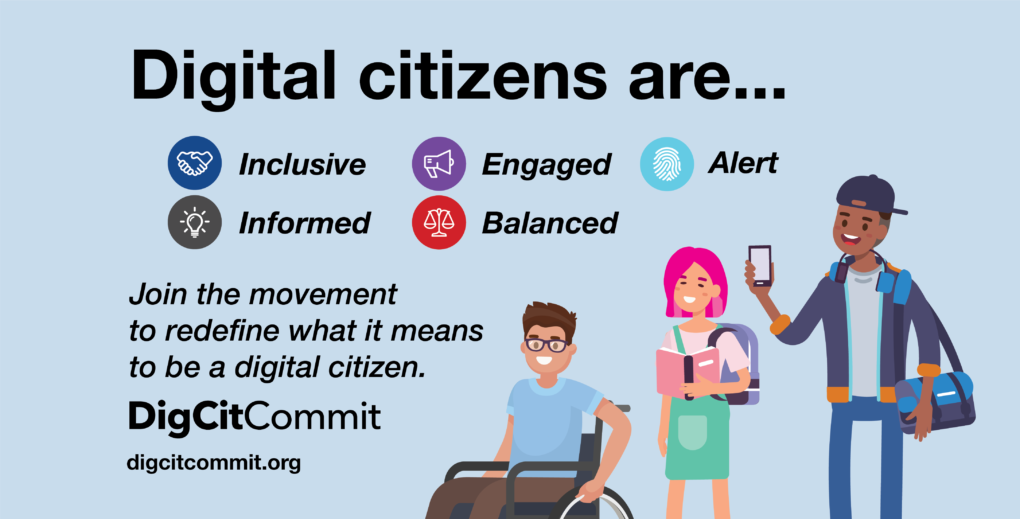
"content": "\u003cp>\u003cspan style=\"font-weight: 400\">KQED has joined a diverse group of tech, education, and media organizations to launch the Digital Citizenship Commitment campaign (DigCitCommit). Our goal is to reach one million students by 2021 by engaging educators and providing them with the tools to teach a new definition of digital citizenship and wellbeing.\u003c/span>\u003c/p>\n\u003cp>\u003cb>Why do we need a new definition of digital citizenship?\u003c/b>\u003c/p>\n\u003cp>\u003cspan style=\"font-weight: 400\">The five new DigCitCommit competencies developed by the coalition – \u003cstrong>inclusive, informed, engaged, balanced, and alert\u003c/strong> – are designed to focus less on a list of DON’Ts and more on a proactive approach of DOs that challenge students to stay safe, solve problems and become a force of positivity. The DigCitCommit campaign and the competencies were previewed at ISTE19 to more than 20,000 attendees. \u003c/span>\u003c/p>\n\u003cp>\u003cspan style=\"font-weight: 400\">“As more and more of our interactions move to virtual spaces, the future of our democracy depends on our ability to prepare the next generation of leaders to be kind online, have a healthy balance between the types of online activities they engage in, and view technology as a tool to improve their physical and virtual communities,” says Richard Culatta, CEO of ISTE. “Digital Citizenship must be more than just online safety if we hope to create a virtual world that doesn’t erode the foundations of our communities and democracy.” \u003c/span>\u003c/p>\n\u003cblockquote>\u003cp>KQED’s free resources for education provide support for building media literate digital citizens.\u003cbr>\n* Informed:\u003cstrong> \u003ca href=\"https://ww2.kqed.org/education/collections/above-the-noise/\" target=\"_blank\" rel=\"noopener\">Above the Noise\u003c/a> \u003c/strong>award-winning videos series tackles timely, debatable topics to prompt student discussion.\u003cbr>\n* Inclusive: \u003cstrong>\u003ca href=\"https://learn.kqed.org/\" target=\"_blank\" rel=\"noopener\">KQED Learn\u003c/a> \u003c/strong>discussion platform for middle and high school\u003cbr>\n* Engaged:\u003cstrong> \u003ca href=\"https://teach.kqed.org/\" target=\"_blank\" rel=\"noopener\">KQED Teach\u003c/a> \u003c/strong>online courses for teachers.\u003cbr>\n* Informed: \u003ca href=\"https://pbslearningmedia.org/\" target=\"_blank\" rel=\"noopener\">\u003cstrong>PBS LearningMedia\u003c/strong>\u003c/a> collections of high-quality instructional media for all grades.\u003c/p>\u003c/blockquote>\n\u003cp>\u003cb>What can the DigCitCommit initiative accomplish?\u003c/b>\u003c/p>\n\u003cp>[ad fullwidth]\u003c/p>\n\u003cp>\u003cspan style=\"font-weight: 400\">Through the development and sharing of curated and updated resources online and at in-person events, the DigCitCommit coalition provides educators with a set of competencies that teaches youth to be safe online as well as instill in them a strong sense of digital media literacy, civility, community, and engagement that will preserve and perpetuate our democracy.\u003c/span>\u003c/p>\n\u003cp>\u003cspan style=\"font-weight: 400\"> \u003c/span>\u003cspan style=\"font-weight: 400\">KQED is the only public media organization among the founding partners and brings deep experience in education, taking the lead on media literacy as a key component of digital citizenship. KQED provides free professional learning courses for teachers and classroom resources that help students learn to be informed, inclusive and engaged online. \u003c/span>\u003c/p>\n\u003cp>\u003cspan style=\"font-weight: 400\">“DigCitCommit aligns with KQED’s mission to nurture civic engagement skill building among youth and to amplify youth voices,” says Holly Kernan, Chief Content Officer at KQED. “Digital citizenship and media literacy are fundamental skills for participation in democratic life.”\u003c/span>\u003c/p>\n\u003cp>\u003cimg loading=\"lazy\" decoding=\"async\" class=\"alignnone size-medium wp-image-532712\" src=\"https://ww2.kqed.org/education/wp-content/uploads/sites/38/2019/09/DigCitCommit_SocialGraphics_ISTE19_06-2019_vf-05-800x407.png\" alt=\"I'm informed. I evaluate the accuracy, perspective and validity of digital media and social posts. digcitcommit.org\" width=\"800\" height=\"407\" srcset=\"https://cdn.kqed.org/wp-content/uploads/sites/38/2019/09/DigCitCommit_SocialGraphics_ISTE19_06-2019_vf-05-800x407.png 800w, https://cdn.kqed.org/wp-content/uploads/sites/38/2019/09/DigCitCommit_SocialGraphics_ISTE19_06-2019_vf-05-160x81.png 160w, https://cdn.kqed.org/wp-content/uploads/sites/38/2019/09/DigCitCommit_SocialGraphics_ISTE19_06-2019_vf-05-768x391.png 768w, https://cdn.kqed.org/wp-content/uploads/sites/38/2019/09/DigCitCommit_SocialGraphics_ISTE19_06-2019_vf-05-1020x519.png 1020w, https://cdn.kqed.org/wp-content/uploads/sites/38/2019/09/DigCitCommit_SocialGraphics_ISTE19_06-2019_vf-05-1200x611.png 1200w, https://cdn.kqed.org/wp-content/uploads/sites/38/2019/09/DigCitCommit_SocialGraphics_ISTE19_06-2019_vf-05-1920x977.png 1920w\" sizes=\"(max-width: 800px) 100vw, 800px\">\u003c/p>\n\u003cp>\u003cspan style=\"font-weight: 400\">Other coalition members include: ISTE, Google, KQED, HundrED, Team4Tech, Facebook Education, Common Sense Education, Digital Citizenship Institute, KidCitizen, Wiki Education, Los Angeles Unified School District, Caroline County School District, Generation Citizen, Media Education Lab, National Writing Project, EVERFI, National Constitution Center, The National Institute for Civil Discourse, and Newsela. Learn more about the coalition at \u003c/span>\u003ca href=\"https://digcitcommit.org/\">\u003cspan style=\"font-weight: 400\">digcitcommit.org.\u003c/span>\u003c/a>\u003c/p>\n\u003cp>\u003cspan style=\"font-weight: 400\">The DigCitCommit coalition also announced the first Digital Citizenship Commitment Virtual Congress February 11-12, 2020. The virtual conference will showcase educators and students who are demonstrating effective digital citizenship based on the five competencies. \u003c/span>\u003c/p>\n\u003cp>\u003c/p>\n\u003cp>\u003cspan style=\"font-weight: 400\">Educators, students and parents will be able to register for the virtual congress by visiting \u003c/span>\u003ca href=\"https://digcitcommit.org/\">\u003cspan style=\"font-weight: 400\">digcitcommit.org\u003c/span>\u003c/a>\u003cspan style=\"font-weight: 400\">. \u003c/span>\u003c/p>\n\n",
"stats": {
"hasVideo": false,
"hasChartOrMap": false,
"hasAudio": false,
"hasPolis": false,
"wordCount": 567,
"hasGoogleForm": false,
"hasGallery": false,
"hasHearkenModule": false,
"iframeSrcs": [],
"paragraphCount": 14
},
"modified": 1704760747,
"excerpt": null,
"headData": {
"twImgId": "",
"twTitle": "",
"ogTitle": "",
"ogImgId": "",
"twDescription": "",
"description": "KQED has joined a diverse group of tech, education, and media organizations to launch the Digital Citizenship Commitment campaign (DigCitCommit). Our goal is to reach one million students by 2021 by engaging educators and providing them with the tools to teach a new definition of digital citizenship and wellbeing. Why do we need a new",
"title": "Founding Partner KQED Announces Launch of New DigCitCommit Coalition to Empower Teachers and Students | KQED",
"ogDescription": "",
"schema": {
"@context": "https://schema.org",
"@type": "Article",
"headline": "Founding Partner KQED Announces Launch of New DigCitCommit Coalition to Empower Teachers and Students",
"datePublished": "2019-09-30T10:06:10-07:00",
"dateModified": "2024-01-08T16:39:07-08:00",
"image": "https://cdn.kqed.org/wp-content/uploads/2020/02/KQED-OG-Image@1x.png"
}
},
"guestAuthors": [],
"slug": "kqed-announces-launch-of-digcitcommit",
"status": "publish",
"sticky": false,
"path": "/education/532709/kqed-announces-launch-of-digcitcommit",
"audioTrackLength": null,
"parsedContent": [
{
"type": "contentString",
"content": "\u003cdiv class=\"post-body\">\u003cp>\u003cp>\u003cspan style=\"font-weight: 400\">KQED has joined a diverse group of tech, education, and media organizations to launch the Digital Citizenship Commitment campaign (DigCitCommit). Our goal is to reach one million students by 2021 by engaging educators and providing them with the tools to teach a new definition of digital citizenship and wellbeing.\u003c/span>\u003c/p>\n\u003cp>\u003cb>Why do we need a new definition of digital citizenship?\u003c/b>\u003c/p>\n\u003cp>\u003cspan style=\"font-weight: 400\">The five new DigCitCommit competencies developed by the coalition – \u003cstrong>inclusive, informed, engaged, balanced, and alert\u003c/strong> – are designed to focus less on a list of DON’Ts and more on a proactive approach of DOs that challenge students to stay safe, solve problems and become a force of positivity. The DigCitCommit campaign and the competencies were previewed at ISTE19 to more than 20,000 attendees. \u003c/span>\u003c/p>\n\u003cp>\u003cspan style=\"font-weight: 400\">“As more and more of our interactions move to virtual spaces, the future of our democracy depends on our ability to prepare the next generation of leaders to be kind online, have a healthy balance between the types of online activities they engage in, and view technology as a tool to improve their physical and virtual communities,” says Richard Culatta, CEO of ISTE. “Digital Citizenship must be more than just online safety if we hope to create a virtual world that doesn’t erode the foundations of our communities and democracy.” \u003c/span>\u003c/p>\n\u003cblockquote>\u003cp>KQED’s free resources for education provide support for building media literate digital citizens.\u003cbr>\n* Informed:\u003cstrong> \u003ca href=\"https://ww2.kqed.org/education/collections/above-the-noise/\" target=\"_blank\" rel=\"noopener\">Above the Noise\u003c/a> \u003c/strong>award-winning videos series tackles timely, debatable topics to prompt student discussion.\u003cbr>\n* Inclusive: \u003cstrong>\u003ca href=\"https://learn.kqed.org/\" target=\"_blank\" rel=\"noopener\">KQED Learn\u003c/a> \u003c/strong>discussion platform for middle and high school\u003cbr>\n* Engaged:\u003cstrong> \u003ca href=\"https://teach.kqed.org/\" target=\"_blank\" rel=\"noopener\">KQED Teach\u003c/a> \u003c/strong>online courses for teachers.\u003cbr>\n* Informed: \u003ca href=\"https://pbslearningmedia.org/\" target=\"_blank\" rel=\"noopener\">\u003cstrong>PBS LearningMedia\u003c/strong>\u003c/a> collections of high-quality instructional media for all grades.\u003c/p>\u003c/blockquote>\n\u003cp>\u003cb>What can the DigCitCommit initiative accomplish?\u003c/b>\u003c/p>\n\u003cp>\u003c/p>\u003c/div>",
"attributes": {
"named": {},
"numeric": []
}
},
{
"type": "component",
"content": "",
"name": "ad",
"attributes": {
"named": {
"label": "fullwidth"
},
"numeric": [
"fullwidth"
]
}
},
{
"type": "contentString",
"content": "\u003cdiv class=\"post-body\">\u003cp>\u003c/p>\n\u003cp>\u003cspan style=\"font-weight: 400\">Through the development and sharing of curated and updated resources online and at in-person events, the DigCitCommit coalition provides educators with a set of competencies that teaches youth to be safe online as well as instill in them a strong sense of digital media literacy, civility, community, and engagement that will preserve and perpetuate our democracy.\u003c/span>\u003c/p>\n\u003cp>\u003cspan style=\"font-weight: 400\"> \u003c/span>\u003cspan style=\"font-weight: 400\">KQED is the only public media organization among the founding partners and brings deep experience in education, taking the lead on media literacy as a key component of digital citizenship. KQED provides free professional learning courses for teachers and classroom resources that help students learn to be informed, inclusive and engaged online. \u003c/span>\u003c/p>\n\u003cp>\u003cspan style=\"font-weight: 400\">“DigCitCommit aligns with KQED’s mission to nurture civic engagement skill building among youth and to amplify youth voices,” says Holly Kernan, Chief Content Officer at KQED. “Digital citizenship and media literacy are fundamental skills for participation in democratic life.”\u003c/span>\u003c/p>\n\u003cp>\u003cimg loading=\"lazy\" decoding=\"async\" class=\"alignnone size-medium wp-image-532712\" src=\"https://ww2.kqed.org/education/wp-content/uploads/sites/38/2019/09/DigCitCommit_SocialGraphics_ISTE19_06-2019_vf-05-800x407.png\" alt=\"I'm informed. I evaluate the accuracy, perspective and validity of digital media and social posts. digcitcommit.org\" width=\"800\" height=\"407\" srcset=\"https://cdn.kqed.org/wp-content/uploads/sites/38/2019/09/DigCitCommit_SocialGraphics_ISTE19_06-2019_vf-05-800x407.png 800w, https://cdn.kqed.org/wp-content/uploads/sites/38/2019/09/DigCitCommit_SocialGraphics_ISTE19_06-2019_vf-05-160x81.png 160w, https://cdn.kqed.org/wp-content/uploads/sites/38/2019/09/DigCitCommit_SocialGraphics_ISTE19_06-2019_vf-05-768x391.png 768w, https://cdn.kqed.org/wp-content/uploads/sites/38/2019/09/DigCitCommit_SocialGraphics_ISTE19_06-2019_vf-05-1020x519.png 1020w, https://cdn.kqed.org/wp-content/uploads/sites/38/2019/09/DigCitCommit_SocialGraphics_ISTE19_06-2019_vf-05-1200x611.png 1200w, https://cdn.kqed.org/wp-content/uploads/sites/38/2019/09/DigCitCommit_SocialGraphics_ISTE19_06-2019_vf-05-1920x977.png 1920w\" sizes=\"(max-width: 800px) 100vw, 800px\">\u003c/p>\n\u003cp>\u003cspan style=\"font-weight: 400\">Other coalition members include: ISTE, Google, KQED, HundrED, Team4Tech, Facebook Education, Common Sense Education, Digital Citizenship Institute, KidCitizen, Wiki Education, Los Angeles Unified School District, Caroline County School District, Generation Citizen, Media Education Lab, National Writing Project, EVERFI, National Constitution Center, The National Institute for Civil Discourse, and Newsela. Learn more about the coalition at \u003c/span>\u003ca href=\"https://digcitcommit.org/\">\u003cspan style=\"font-weight: 400\">digcitcommit.org.\u003c/span>\u003c/a>\u003c/p>\n\u003cp>\u003cspan style=\"font-weight: 400\">The DigCitCommit coalition also announced the first Digital Citizenship Commitment Virtual Congress February 11-12, 2020. The virtual conference will showcase educators and students who are demonstrating effective digital citizenship based on the five competencies. \u003c/span>\u003c/p>\n\u003cp>\u003c/p>\n\u003cp>\u003cspan style=\"font-weight: 400\">Educators, students and parents will be able to register for the virtual congress by visiting \u003c/span>\u003ca href=\"https://digcitcommit.org/\">\u003cspan style=\"font-weight: 400\">digcitcommit.org\u003c/span>\u003c/a>\u003cspan style=\"font-weight: 400\">. \u003c/span>\u003c/p>\n\n\u003c/div>\u003c/p>",
"attributes": {
"named": {},
"numeric": []
}
}
],
"link": "/education/532709/kqed-announces-launch-of-digcitcommit",
"authors": [
"9327"
],
"series": [
"education_52"
],
"categories": [
"education_3",
"education_1",
"education_2840",
"education_50",
"education_48",
"education_49"
],
"tags": [
"education_367",
"education_745"
],
"featImg": "education_532710",
"label": "education_52"
},
"education_532447": {
"type": "posts",
"id": "education_532447",
"meta": {
"index": "posts_1716263798",
"site": "education",
"id": "532447",
"score": null,
"sort": [
1565904794000
]
},
"parent": 0,
"labelTerm": {
"site": "education",
"term": 52
},
"blocks": [],
"publishDate": 1565904794,
"format": "standard",
"title": "KQED Fulfills California Department of Education Media Literacy Mandate",
"headTitle": "KQED Fulfills California Department of Education Media Literacy Mandate | KQED",
"content": "\u003cp>\u003cspan style=\"font-weight: 400\">When California passed a new law requiring the state to provide instructional resources on media literacy to all of California’s teachers, KQED teamed up with the California Department of Education (CDE) and the California School Library Association to fulfill the mandate. The result is now live and available to all teachers at\u003c/span>\u003ca href=\"https://www.cde.ca.gov/ci/cr/ml/\"> \u003cspan style=\"font-weight: 400\">CDE Media Literacy Resources\u003c/span>\u003c/a>\u003cspan style=\"font-weight: 400\">. This site highlights\u003c/span>\u003ca href=\"https://teach.kqed.org\"> \u003cspan style=\"font-weight: 400\">KQED Teach\u003c/span>\u003c/a>\u003cspan style=\"font-weight: 400\"> and\u003c/span>\u003ca href=\"https://edu-landing.kqed.org/certification/\"> \u003cspan style=\"font-weight: 400\">PBS Media Literacy Educator Certification by KQED\u003c/span>\u003c/a>\u003cspan style=\"font-weight: 400\"> as the go-to professional learning resources for media literacy. \u003c/span>\u003c/p>\n\u003cp>\u003cspan style=\"font-weight: 400\">State Superintendent of Public Instruction, Tony Thurmond said in his announcement that “These resources will assist educators in the classroom as they teach students how to access, use, evaluate, and integrate the information they read or hear online.” He described why media media literacy is more pressing than ever. “Students are bombarded by information from a wide range of sources. Being media-literate is a skill that can not only help them become critical thinkers, but can also help in all areas of their education and future as informed and active civically engaged citizens.” \u003c/span>\u003c/p>\n\u003cp>\u003cspan style=\"font-weight: 400\">California is one of several states that have recently passed media literacy legislation, but few states have comprehensive resources lists to help teachers. The six-month partnership that built the CDE Media Literacy Resources site builds on KQED’s longstanding relationship with educational leaders throughout the state who view KQED as a trusted source for educational media and services and a foundational component of media literacy professional learning. KQED and the CDE will continue to collaborate to keep the resource site fresh.\u003c/span>\u003c/p>\n\u003cp>\u003ca href=\"https://teach.kqed.org\">\u003cspan style=\"font-weight: 400\">KQED Teach\u003c/span>\u003c/a>\u003cspan style=\"font-weight: 400\"> is platform with free, online, self-paced courses on teaching media literacy and media-making skills. Educators learn by doing with project-based, hands-on courses in a supportive community. They can learn at their own pace or join a facilitated cohort.\u003c/span>\u003ca href=\"https://edu-landing.kqed.org/certification/\"> \u003cspan style=\"font-weight: 400\">PBS Media Literacy Educator Certification by KQED\u003c/span>\u003c/a>\u003cspan style=\"font-weight: 400\"> is a competency based, on demand shareable credential verifying educators’ media literacy skills.\u003c/span>\u003c/p>\n\u003cp>[ad fullwidth]\u003c/p>\u003cp>\u003c/p>\n",
"stats": {
"hasVideo": false,
"hasChartOrMap": false,
"hasAudio": false,
"hasPolis": false,
"wordCount": 334,
"hasGoogleForm": false,
"hasGallery": false,
"hasHearkenModule": false,
"iframeSrcs": [],
"paragraphCount": 6
},
"modified": 1704760768,
"excerpt": null,
"headData": {
"twImgId": "",
"twTitle": "",
"ogTitle": "",
"ogImgId": "",
"twDescription": "",
"description": "When California passed a new law requiring the state to provide instructional resources on media literacy to all of California’s teachers, KQED teamed up with the California Department of Education (CDE) and the California School Library Association to fulfill the mandate. The result is now live and available to all teachers at CDE Media Literacy",
"title": "KQED Fulfills California Department of Education Media Literacy Mandate | KQED",
"ogDescription": "",
"schema": {
"@context": "https://schema.org",
"@type": "Article",
"headline": "KQED Fulfills California Department of Education Media Literacy Mandate",
"datePublished": "2019-08-15T14:33:14-07:00",
"dateModified": "2024-01-08T16:39:28-08:00",
"image": "https://cdn.kqed.org/wp-content/uploads/2020/02/KQED-OG-Image@1x.png"
}
},
"guestAuthors": [],
"slug": "kqed-fulfills-california-department-of-education-media-literacy-mandate",
"status": "publish",
"sticky": false,
"path": "/education/532447/kqed-fulfills-california-department-of-education-media-literacy-mandate",
"audioTrackLength": null,
"parsedContent": [
{
"type": "contentString",
"content": "\u003cdiv class=\"post-body\">\u003cp>\u003cp>\u003cspan style=\"font-weight: 400\">When California passed a new law requiring the state to provide instructional resources on media literacy to all of California’s teachers, KQED teamed up with the California Department of Education (CDE) and the California School Library Association to fulfill the mandate. The result is now live and available to all teachers at\u003c/span>\u003ca href=\"https://www.cde.ca.gov/ci/cr/ml/\"> \u003cspan style=\"font-weight: 400\">CDE Media Literacy Resources\u003c/span>\u003c/a>\u003cspan style=\"font-weight: 400\">. This site highlights\u003c/span>\u003ca href=\"https://teach.kqed.org\"> \u003cspan style=\"font-weight: 400\">KQED Teach\u003c/span>\u003c/a>\u003cspan style=\"font-weight: 400\"> and\u003c/span>\u003ca href=\"https://edu-landing.kqed.org/certification/\"> \u003cspan style=\"font-weight: 400\">PBS Media Literacy Educator Certification by KQED\u003c/span>\u003c/a>\u003cspan style=\"font-weight: 400\"> as the go-to professional learning resources for media literacy. \u003c/span>\u003c/p>\n\u003cp>\u003cspan style=\"font-weight: 400\">State Superintendent of Public Instruction, Tony Thurmond said in his announcement that “These resources will assist educators in the classroom as they teach students how to access, use, evaluate, and integrate the information they read or hear online.” He described why media media literacy is more pressing than ever. “Students are bombarded by information from a wide range of sources. Being media-literate is a skill that can not only help them become critical thinkers, but can also help in all areas of their education and future as informed and active civically engaged citizens.” \u003c/span>\u003c/p>\n\u003cp>\u003cspan style=\"font-weight: 400\">California is one of several states that have recently passed media literacy legislation, but few states have comprehensive resources lists to help teachers. The six-month partnership that built the CDE Media Literacy Resources site builds on KQED’s longstanding relationship with educational leaders throughout the state who view KQED as a trusted source for educational media and services and a foundational component of media literacy professional learning. KQED and the CDE will continue to collaborate to keep the resource site fresh.\u003c/span>\u003c/p>\n\u003cp>\u003ca href=\"https://teach.kqed.org\">\u003cspan style=\"font-weight: 400\">KQED Teach\u003c/span>\u003c/a>\u003cspan style=\"font-weight: 400\"> is platform with free, online, self-paced courses on teaching media literacy and media-making skills. Educators learn by doing with project-based, hands-on courses in a supportive community. They can learn at their own pace or join a facilitated cohort.\u003c/span>\u003ca href=\"https://edu-landing.kqed.org/certification/\"> \u003cspan style=\"font-weight: 400\">PBS Media Literacy Educator Certification by KQED\u003c/span>\u003c/a>\u003cspan style=\"font-weight: 400\"> is a competency based, on demand shareable credential verifying educators’ media literacy skills.\u003c/span>\u003c/p>\n\u003cp>\u003c/p>\u003c/div>",
"attributes": {
"named": {},
"numeric": []
}
},
{
"type": "component",
"content": "",
"name": "ad",
"attributes": {
"named": {
"label": "fullwidth"
},
"numeric": [
"fullwidth"
]
}
},
{
"type": "contentString",
"content": "\u003cdiv class=\"post-body\">\u003cp>\u003c/p>\u003cp>\u003c/p>\n\u003c/div>\u003c/p>",
"attributes": {
"named": {},
"numeric": []
}
}
],
"link": "/education/532447/kqed-fulfills-california-department-of-education-media-literacy-mandate",
"authors": [
"9323"
],
"series": [
"education_52"
],
"categories": [
"education_3",
"education_1",
"education_2840",
"education_50",
"education_49"
],
"tags": [
"education_225",
"education_745",
"education_1695"
],
"collections": [
"education_2842"
],
"featImg": "education_532465",
"label": "education_52"
},
"education_531290": {
"type": "posts",
"id": "education_531290",
"meta": {
"index": "posts_1716263798",
"site": "education",
"id": "531290",
"score": null,
"sort": [
1551972652000
]
},
"parent": 0,
"labelTerm": {
"site": "education",
"term": 52
},
"blocks": [],
"publishDate": 1551972652,
"format": "standard",
"title": "Apply Now to the KQED Media Literacy Educator Academy",
"headTitle": "Apply Now to the KQED Media Literacy Educator Academy | KQED",
"content": "\u003cblockquote>\u003cp>Check out the new \u003ca href=\"https://teach.kqed.org/media-academy-for-educators\">KQED Media Academy for Educators\u003c/a>, offering free, online, instructor-led courses and certificates of completion year-round.\u003c/p>\u003c/blockquote>\n\u003cp>\u003cstrong>Are you a San Francisco Bay Area educator serving grades 6-12? Join KQED and your peers for a year of media literacy learning. \u003ca href=\"https://docs.google.com/forms/d/e/1FAIpQLSc2CCeDrYorxPkyk-d8E9cIYHybWVGNlMTmGTCznfjt6oXYmQ/viewform\" target=\"_blank\" rel=\"noopener noreferrer\">Applications\u003c/a> due March 31!\u003c/strong>\u003c/p>\n\u003cp>\u003cspan style=\"font-weight: 400\">Applications are now being accepted for the 2019-2020 KQED Media Literacy Educator Academy. This year-long program is a professional learning opportunity created for educators serving middle and high school students. You’ll learn and practice media literacy skills, while working toward PBS Media Literacy Educator Certification. This is a great opportunity to get face-to-face coaching from KQED and learn in a supportive community of your Bay Area peers, both in-person and online. Teachers, instructional coaches, librarians and all middle and high school educators interested in media literacy are encouraged to apply. \u003c/span>\u003c/p>\n\u003ch4>\u003ca href=\"https://goo.gl/forms/ef6UGn3hTr3R81sy2\" target=\"_blank\" rel=\"noopener noreferrer\">\u003cb>Apply by March 31.\u003c/b>\u003c/a>\u003c/h4>\n\u003ch4>\u003cb>\u003cbr>\nWhat happens during the Academy?\u003c/b>\u003c/h4>\n\u003cp>Participants will attend in-person workshops and complete online work on \u003ca href=\"https://teach.kqed.org/\" target=\"_blank\" rel=\"noopener noreferrer\">\u003cspan style=\"font-weight: 400\">KQED Teach\u003c/span>\u003c/a>\u003cspan style=\"font-weight: 400\">. The workshops and courses will help you gain specific media literacy competencies that will empower you to effectively read, write and share media, and help your students do the same. Support from KQED’s curriculum and professional development specialists will be available throughout the year.\u003c/span>\u003c/p>\n\u003cfigure id=\"attachment_531310\" class=\"wp-caption aligncenter\" style=\"max-width: 500px\">\u003cimg loading=\"lazy\" decoding=\"async\" class=\"wp-image-531310\" src=\"https://ww2.kqed.org/education/wp-content/uploads/sites/38/2019/03/IMG_4510-800x600.jpg\" width=\"500\" height=\"375\" srcset=\"https://cdn.kqed.org/wp-content/uploads/sites/38/2019/03/IMG_4510-800x600.jpg 800w, https://cdn.kqed.org/wp-content/uploads/sites/38/2019/03/IMG_4510-160x120.jpg 160w, https://cdn.kqed.org/wp-content/uploads/sites/38/2019/03/IMG_4510-768x576.jpg 768w, https://cdn.kqed.org/wp-content/uploads/sites/38/2019/03/IMG_4510-1020x765.jpg 1020w, https://cdn.kqed.org/wp-content/uploads/sites/38/2019/03/IMG_4510-1200x900.jpg 1200w, https://cdn.kqed.org/wp-content/uploads/sites/38/2019/03/IMG_4510-1920x1440.jpg 1920w\" sizes=\"(max-width: 500px) 100vw, 500px\">\u003cfigcaption class=\"wp-caption-text\">KQED’s Rachel Roberson assists San Francisco English teacher Anna-Marie Booth during an Academy pilot workshop.\u003c/figcaption>\u003c/figure>\n\u003ch4>\u003cb>What is PBS Media Literacy Educator Certification?\u003c/b>\u003c/h4>\n\u003cp>\u003cspan style=\"font-weight: 400\">As you move through the Academy, you’ll gain skills and develop evidence of your practice that you can submit to earn micro-credentials from KQED and PBS. By earning eight micro-credentials, you will become a \u003c/span>\u003ca href=\"https://edu-landing.kqed.org/certification\" target=\"_blank\" rel=\"noopener noreferrer\">\u003cspan style=\"font-weight: 400\">PBS Certified Media Literacy Educator\u003c/span>\u003c/a>\u003cspan style=\"font-weight: 400\">. Micro-credentials and certification are free.\u003c/span>\u003c/p>\n\u003cblockquote>\u003cp>\u003cstrong>\u003cem>Want to learn more about certification and micro-credentials?\u003cbr>\n\u003c/em>\u003c/strong>\u003cem>\u003ca href=\"https://zoom.us/recording/play/Top-khBnkFEx5_fn-5RJO4b5fAw1CfIPe-nQVjvFZn99lXQrnhuy32cQJ1fGy2Xl\" target=\"_blank\" rel=\"noopener noreferrer\">View the recording\u003c/a> from our informational webinar that was held on March 19.\u003c/em>\u003c/p>\u003c/blockquote>\n\u003cfigure id=\"attachment_531270\" class=\"wp-caption aligncenter\" style=\"max-width: 236px\">\u003cimg loading=\"lazy\" decoding=\"async\" class=\" wp-image-531270\" src=\"https://ww2.kqed.org/education/wp-content/uploads/sites/38/2019/03/medialiteracyeducator-final.png\" alt=\"\" width=\"236\" height=\"236\" srcset=\"https://cdn.kqed.org/wp-content/uploads/sites/38/2019/03/medialiteracyeducator-final.png 302w, https://cdn.kqed.org/wp-content/uploads/sites/38/2019/03/medialiteracyeducator-final-160x160.png 160w, https://cdn.kqed.org/wp-content/uploads/sites/38/2019/03/medialiteracyeducator-final-32x32.png 32w, https://cdn.kqed.org/wp-content/uploads/sites/38/2019/03/medialiteracyeducator-final-50x50.png 50w, https://cdn.kqed.org/wp-content/uploads/sites/38/2019/03/medialiteracyeducator-final-64x64.png 64w, https://cdn.kqed.org/wp-content/uploads/sites/38/2019/03/medialiteracyeducator-final-96x96.png 96w, https://cdn.kqed.org/wp-content/uploads/sites/38/2019/03/medialiteracyeducator-final-128x128.png 128w\" sizes=\"(max-width: 236px) 100vw, 236px\">\u003cfigcaption class=\"wp-caption-text\">PBS Media Literacy Educator Certification badge\u003c/figcaption>\u003c/figure>\n\u003ch4>\u003cb>Who can apply to the Academy?\u003c/b>\u003c/h4>\n\u003cp>The Academy is open to San Francisco Bay Area middle and high school educators (grades 6-12) who serve as teachers, instructional coaches and librarians, in all subject areas. We encourage you to \u003ca href=\"https://goo.gl/forms/ef6UGn3hTr3R81sy2\" target=\"_blank\" rel=\"noopener noreferrer\">\u003cspan style=\"font-weight: 400\">apply\u003c/span>\u003c/a>\u003cspan style=\"font-weight: 400\"> with a colleague from your school, district or organization. \u003c/span>\u003c/p>\n\u003ch4>\u003cb>When and where will it take place?\u003c/b>\u003c/h4>\n\u003cp>The Academy will run June 2019-May 2020 with two cohorts of 30 educators each that will meet in different locations: East Bay and South Bay. Educators from anywhere in the Bay Area can apply to join either cohort.\u003c/p>\n\u003cp>[ad fullwidth]\u003c/p>\n\u003cp>Each cohort will have a two-day kick-off workshop that will focus on creating audio media and bringing podcasting to the classroom. \u003cb>Participants will earn a $150 stipend after attending the kick-off workshop.\u003c/b> After the kick-off, additional media literacy skills will be learned throughout the year via online courses and in-person meetings and workshops.\u003c/p>\n\u003cp>\u003cstrong>The full schedule of in-person meetings and workshops is as follows:\u003c/strong>\u003c/p>\n\u003cul>\n\u003cli style=\"font-weight: 400\">\u003cspan style=\"font-weight: 400\">East Bay cohort kick-off workshop: June 18 & 19, 10am-4pm at \u003c/span>\u003ca href=\"https://www.ce.csueastbay.edu/about/locations/oakland.html\" target=\"_blank\" rel=\"noopener noreferrer\">\u003cspan style=\"font-weight: 400\">Cal State East Bay’s Oakland Center\u003c/span>\u003c/a>\u003cspan style=\"font-weight: 400\"> (near 12th St BART Station)\u003c/span>\u003c/li>\n\u003cli style=\"font-weight: 400\">\u003cspan style=\"font-weight: 400\">South Bay cohort kick-off workshop: June 25 & 26, 10am-4pm at the \u003c/span>\u003ca href=\"https://www.sccoe.org/aboutsccoe/Pages/SCCOE-Maps.aspx\" target=\"_blank\" rel=\"noopener noreferrer\">\u003cspan style=\"font-weight: 400\">Santa Clara County Office of Education\u003c/span>\u003c/a>\u003cspan style=\"font-weight: 400\"> (free parking available) \u003c/span>\u003c/li>\n\u003cli style=\"font-weight: 400\">\u003cspan style=\"font-weight: 400\">Fall meet-up: November (dates/locations TBD)\u003c/span>\u003c/li>\n\u003cli style=\"font-weight: 400\">\u003cspan style=\"font-weight: 400\">Mid-year one-day workshop: January/February (dates/locations TBD)\u003c/span>\u003c/li>\n\u003cli style=\"font-weight: 400\">\u003cspan style=\"font-weight: 400\">Certification Celebration: May (dates/locations TBD)\u003c/span>\u003c/li>\n\u003c/ul>\n\u003cp>The South Bay co\u003ca href=\"https://ww2.kqed.org/education/wp-content/uploads/sites/38/2019/03/SCCOE-lofo.jpg\">\u003cimg loading=\"lazy\" decoding=\"async\" class=\"wp-image-531418 size-thumbnail alignleft\" src=\"https://ww2.kqed.org/education/wp-content/uploads/sites/38/2019/03/SCCOE-lofo-160x123.jpg\" width=\"160\" height=\"123\" srcset=\"https://cdn.kqed.org/wp-content/uploads/sites/38/2019/03/SCCOE-lofo-160x123.jpg 160w, https://cdn.kqed.org/wp-content/uploads/sites/38/2019/03/SCCOE-lofo-800x615.jpg 800w, https://cdn.kqed.org/wp-content/uploads/sites/38/2019/03/SCCOE-lofo-768x590.jpg 768w, https://cdn.kqed.org/wp-content/uploads/sites/38/2019/03/SCCOE-lofo-1020x784.jpg 1020w, https://cdn.kqed.org/wp-content/uploads/sites/38/2019/03/SCCOE-lofo-1200x922.jpg 1200w, https://cdn.kqed.org/wp-content/uploads/sites/38/2019/03/SCCOE-lofo-1920x1475.jpg 1920w\" sizes=\"(max-width: 160px) 100vw, 160px\">\u003c/a>hort is hosted in partnership with the Professional Learning and Instructional Support Division of the Santa Clara County Office of Education.\u003c/p>\n\u003ch4>\u003cb>What is the time commitment?\u003c/b>\u003c/h4>\n\u003cp>The Academy will require several hours per month of self-paced work, in addition to quarterly in-person workshops and meetups.\u003c/p>\n\u003ch4>\u003cb>What is the cost of the Academy?\u003c/b>\u003c/h4>\n\u003cp>\u003ci>Free! Micro-credentials and certification are free, too.\u003c/i>\u003c/p>\n\u003ch4>\u003cb>Wondering if the Academy is right for you?\u003c/b>\u003c/h4>\n\u003cp>Read through this self-assessment. You are a perfect candidate for the Academy if\u003c/p>\n\u003cul>\n\u003cli style=\"font-weight: 400\">\u003cspan style=\"font-weight: 400\">You are a teacher or educator who works directly with students in grades 6-12 OR you are in a role where you partner with and/or regularly train teachers that serve this age group. (Examples of student work are a requirement of certification. If you work closely with teachers, their work can take the place of student work.) See \u003ca href=\"#FAQ\">FAQs\u003c/a> for more information.\u003c/span>\u003c/li>\n\u003cli style=\"font-weight: 400\">\u003cspan style=\"font-weight: 400\">You are excited about improving your media analysis and media creation skills in a cohort of like-minded educators.\u003c/span>\u003c/li>\n\u003cli style=\"font-weight: 400\">\u003cspan style=\"font-weight: 400\">You are eager to learn innovative ways to improve student engagement and learning and \u003c/span>\u003ci>\u003cspan style=\"font-weight: 400\">put that learning into practice.\u003c/span>\u003c/i>\u003c/li>\n\u003cli style=\"font-weight: 400\">\u003cspan style=\"font-weight: 400\">You know your way around a computer, are comfortable with Google Drive, and you easily learn how to use new tools and programs.\u003c/span>\u003c/li>\n\u003cli style=\"font-weight: 400\">\u003cspan style=\"font-weight: 400\">You have time to put towards your own professional learning. \u003c/span>\u003c/li>\n\u003cli style=\"font-weight: 400\">\u003cspan style=\"font-weight: 400\">You are okay with sharing imperfect work and getting feedback from colleagues.\u003c/span>\u003c/li>\n\u003cli style=\"font-weight: 400\">\u003cspan style=\"font-weight: 400\">You intend to complete the entire Academy, including attending the in-person events and applying for all micro-credentials.\u003c/span>\u003c/li>\n\u003c/ul>\n\u003ch4>\u003cb>When is the deadline to apply?\u003c/b>\u003c/h4>\n\u003cp>The application deadline is \u003cstrong>March 31. \u003c/strong>We will notify you of your acceptance into the Academy by April 5.\u003c/p>\n\u003cp>We will accept a total of 60 educators into the Academy, 30 in each cohort.\u003c/p>\n\u003cp>We hope you apply to join us for our inaugural KQED Media Literacy Educator Academy! We look forward to helping you strengthen your media literacy skills and support you in achieving PBS Media Literacy Educator Certification. \u003ca name=\"FAQ\">\u003c/a>\u003c/p>\n\u003ch2 style=\"text-align: left\">\u003ca href=\"https://goo.gl/forms/ef6UGn3hTr3R81sy2\" target=\"_blank\" rel=\"noopener noreferrer\">\u003cb>Apply by March 31.\u003c/b>\u003c/a>\u003c/h2>\n\u003cp>\u003cstrong>\u003cbr>\nStill have questions about the KQED Media Literacy Educator Academy? \u003c/strong> Email us at \u003ca href=\"mailto:learn@kqed.org\" target=\"_blank\" rel=\"noopener noreferrer\"> learn@kqed.org\u003c/a>.\u003c/p>\n\u003ch4>\u003cb>\u003cbr>\nFAQs – KQED Media Literacy Educator Academy\u003c/b>\u003c/h4>\n\u003cp>\u003cb>Do I have to apply to the Academy with a colleague?\u003cbr>\n\u003c/b>\u003ci>\u003cspan style=\"font-weight: 400\">No, but we recommend it. We’ve found it’s helpful to have a colleague that can provide mutual encouragement and with whom you can regularly check in about your progress. However, if you don’t have a colleague to apply with, there will be many great people to partner and learn with.\u003c/span>\u003c/i>\u003c/p>\n\u003cp>\u003cb>Does the colleague I apply with need to work at the same school as I do?\u003cbr>\n\u003c/b>\u003ci>\u003cspan style=\"font-weight: 400\">They don’t need to work at your school or organization. But it should be someone that you see, plan with or check in with frequently. \u003c/span>\u003c/i>\u003c/p>\n\u003cp>\u003cb>What are the requirements for PBS Media Literacy Educator Certification?\u003cbr>\n\u003c/b>\u003ci>\u003cspan style=\"font-weight: 400\">You can view the competencies and the artifacts that will be assessed for each of the media literacy micro-credentials \u003c/span>\u003c/i>\u003ca href=\"https://edu-landing.kqed.org/certification/b.html#lp-pom-block-12\" target=\"_blank\" rel=\"noopener noreferrer\">\u003ci>\u003cspan style=\"font-weight: 400\">here\u003c/span>\u003c/i>\u003c/a>\u003ci>\u003cspan style=\"font-weight: 400\">.\u003c/span>\u003c/i>\u003c/p>\n\u003cp>\u003cem>\u003cspan style=\"font-weight: 400\">Note: During the Academy, we will focus on \u003c/span>\u003cb>audio\u003c/b>\u003cspan style=\"font-weight: 400\"> as the media production format for the micro-credential “Making Media for Classroom Use.”\u003c/span>\u003c/em>\u003c/p>\n\u003cp>\u003cb>I’m a librarian, instructional coach or teacher on special assignment. Is certification for me?\u003cbr>\n\u003c/b>\u003ci>\u003cspan style=\"font-weight: 400\">Each of the micro-credentials connected to PBS Media Literacy Educator Certification requires evidence of classroom instruction. However, “students” and “classrooms” are meant in their widest sense and support a range of instruction from coaches or administrators leading professional learning to individual instructors. For educators who do not have their own classrooms, such as school librarians or teachers on special assignment, it is acceptable to collaborate with another teacher on individual micro-credentials. The evidence you submit must reflect work you’ve created or co-created, and student work should be from students whose instruction you supported.\u003c/span>\u003c/i>\u003c/p>\n\u003cp>\u003cb>Why should I participate in the Academy versus becoming certified on my own?\u003cbr>\n\u003c/b>\u003ci>\u003cspan style=\"font-weight: 400\">You should participate if you are interested in becoming a PBS Certified Media Literacy Educator, but you’d like the extra support provided by KQED staff and a cohort of colleagues in order to complete all of the requirements. Think of it like training for a race. You could do it by yourself, but you may have more fun and stay motivated if you train with a group!\u003c/span>\u003c/i>\u003c/p>\n\u003cp>\u003cb>Who will be leading the KQED Academy?\u003c/b>\u003cb>\u003cbr>\n\u003c/b>\u003ci>\u003cspan style=\"font-weight: 400\">You will be guided by KQED’s curriculum and professional development specialists:\u003c/span>\u003c/i>\u003c/p>\n\u003cp>\u003cimg loading=\"lazy\" decoding=\"async\" class=\"wp-image-530599 size-thumbnail alignleft\" src=\"https://ww2.kqed.org/education/wp-content/uploads/sites/38/2018/08/Andrea-Aust-photo-160x160.png\" width=\"160\" height=\"160\" srcset=\"https://cdn.kqed.org/wp-content/uploads/sites/38/2018/08/Andrea-Aust-photo-160x160.png 160w, https://cdn.kqed.org/wp-content/uploads/sites/38/2018/08/Andrea-Aust-photo-800x800.png 800w, https://cdn.kqed.org/wp-content/uploads/sites/38/2018/08/Andrea-Aust-photo-768x768.png 768w, https://cdn.kqed.org/wp-content/uploads/sites/38/2018/08/Andrea-Aust-photo-960x960.png 960w, https://cdn.kqed.org/wp-content/uploads/sites/38/2018/08/Andrea-Aust-photo-240x240.png 240w, https://cdn.kqed.org/wp-content/uploads/sites/38/2018/08/Andrea-Aust-photo-375x375.png 375w, https://cdn.kqed.org/wp-content/uploads/sites/38/2018/08/Andrea-Aust-photo-520x520.png 520w, https://cdn.kqed.org/wp-content/uploads/sites/38/2018/08/Andrea-Aust-photo-32x32.png 32w, https://cdn.kqed.org/wp-content/uploads/sites/38/2018/08/Andrea-Aust-photo-50x50.png 50w, https://cdn.kqed.org/wp-content/uploads/sites/38/2018/08/Andrea-Aust-photo-64x64.png 64w, https://cdn.kqed.org/wp-content/uploads/sites/38/2018/08/Andrea-Aust-photo-96x96.png 96w, https://cdn.kqed.org/wp-content/uploads/sites/38/2018/08/Andrea-Aust-photo-128x128.png 128w, https://cdn.kqed.org/wp-content/uploads/sites/38/2018/08/Andrea-Aust-photo-150x150.png 150w, https://cdn.kqed.org/wp-content/uploads/sites/38/2018/08/Andrea-Aust-photo.png 1000w\" sizes=\"(max-width: 160px) 100vw, 160px\">\u003c/p>\n\u003cp>\u003ci>\u003cspan style=\"font-weight: 400\">Andrea Aust is the science education senior manager at KQED, where she has been developing educational resources and providing professional learning for more than 11 years. Prior to KQED, she taught, developed and managed marine science and environmental education programs.\u003c/span>\u003c/i>\u003ci>\u003cspan style=\"font-weight: 400\">\u003cbr>\n\u003c/span>\u003c/i>\u003ci>\u003cspan style=\"font-weight: 400\">\u003cbr>\n\u003c/span>\u003c/i>\u003ci>\u003c/i>\u003c/p>\n\u003cp>\u003cimg loading=\"lazy\" decoding=\"async\" class=\"wp-image-530598 size-thumbnail alignleft\" src=\"https://ww2.kqed.org/education/wp-content/uploads/sites/38/2018/08/Rachel-Roberson-photo-160x160.png\" width=\"160\" height=\"160\" srcset=\"https://cdn.kqed.org/wp-content/uploads/sites/38/2018/08/Rachel-Roberson-photo-160x160.png 160w, https://cdn.kqed.org/wp-content/uploads/sites/38/2018/08/Rachel-Roberson-photo-800x800.png 800w, https://cdn.kqed.org/wp-content/uploads/sites/38/2018/08/Rachel-Roberson-photo-768x768.png 768w, https://cdn.kqed.org/wp-content/uploads/sites/38/2018/08/Rachel-Roberson-photo-960x960.png 960w, https://cdn.kqed.org/wp-content/uploads/sites/38/2018/08/Rachel-Roberson-photo-240x240.png 240w, https://cdn.kqed.org/wp-content/uploads/sites/38/2018/08/Rachel-Roberson-photo-375x375.png 375w, https://cdn.kqed.org/wp-content/uploads/sites/38/2018/08/Rachel-Roberson-photo-520x520.png 520w, https://cdn.kqed.org/wp-content/uploads/sites/38/2018/08/Rachel-Roberson-photo-32x32.png 32w, https://cdn.kqed.org/wp-content/uploads/sites/38/2018/08/Rachel-Roberson-photo-50x50.png 50w, https://cdn.kqed.org/wp-content/uploads/sites/38/2018/08/Rachel-Roberson-photo-64x64.png 64w, https://cdn.kqed.org/wp-content/uploads/sites/38/2018/08/Rachel-Roberson-photo-96x96.png 96w, https://cdn.kqed.org/wp-content/uploads/sites/38/2018/08/Rachel-Roberson-photo-128x128.png 128w, https://cdn.kqed.org/wp-content/uploads/sites/38/2018/08/Rachel-Roberson-photo-150x150.png 150w, https://cdn.kqed.org/wp-content/uploads/sites/38/2018/08/Rachel-Roberson-photo.png 1000w\" sizes=\"(max-width: 160px) 100vw, 160px\">\u003c/p>\n\u003cp>[ad floatright]\u003c/p>\n\u003cp>\u003ci>\u003cspan style=\"font-weight: 400\">Rachel Roberson is KQED’s news education manager and develops educational resources and professional learning with a focus on humanities. Rachel spent 14 years in the classroom as an English and social studies teacher and literacy specialist. \u003c/span>\u003c/i>\u003c/p>\n\n",
"stats": {
"hasVideo": false,
"hasChartOrMap": false,
"hasAudio": false,
"hasPolis": false,
"wordCount": 1381,
"hasGoogleForm": false,
"hasGallery": false,
"hasHearkenModule": false,
"iframeSrcs": [],
"paragraphCount": 31
},
"modified": 1704760887,
"excerpt": null,
"headData": {
"twImgId": "",
"twTitle": "",
"ogTitle": "",
"ogImgId": "",
"twDescription": "",
"description": "Check out the new KQED Media Academy for Educators, offering free, online, instructor-led courses and certificates of completion year-round. Are you a San Francisco Bay Area educator serving grades 6-12? Join KQED and your peers for a year of media literacy learning. Applications due March 31! Applications are now being accepted for the 2019-2020 KQED",
"title": "Apply Now to the KQED Media Literacy Educator Academy | KQED",
"ogDescription": "",
"schema": {
"@context": "https://schema.org",
"@type": "Article",
"headline": "Apply Now to the KQED Media Literacy Educator Academy",
"datePublished": "2019-03-07T07:30:52-08:00",
"dateModified": "2024-01-08T16:41:27-08:00",
"image": "https://cdn.kqed.org/wp-content/uploads/2020/02/KQED-OG-Image@1x.png"
}
},
"guestAuthors": [],
"slug": "apply-now-to-the-kqed-media-literacy-educator-academy",
"status": "publish",
"sticky": false,
"path": "/education/531290/apply-now-to-the-kqed-media-literacy-educator-academy",
"audioTrackLength": null,
"parsedContent": [
{
"type": "contentString",
"content": "\u003cdiv class=\"post-body\">\u003cp>\u003cblockquote>\u003cp>Check out the new \u003ca href=\"https://teach.kqed.org/media-academy-for-educators\">KQED Media Academy for Educators\u003c/a>, offering free, online, instructor-led courses and certificates of completion year-round.\u003c/p>\u003c/blockquote>\n\u003cp>\u003cstrong>Are you a San Francisco Bay Area educator serving grades 6-12? Join KQED and your peers for a year of media literacy learning. \u003ca href=\"https://docs.google.com/forms/d/e/1FAIpQLSc2CCeDrYorxPkyk-d8E9cIYHybWVGNlMTmGTCznfjt6oXYmQ/viewform\" target=\"_blank\" rel=\"noopener noreferrer\">Applications\u003c/a> due March 31!\u003c/strong>\u003c/p>\n\u003cp>\u003cspan style=\"font-weight: 400\">Applications are now being accepted for the 2019-2020 KQED Media Literacy Educator Academy. This year-long program is a professional learning opportunity created for educators serving middle and high school students. You’ll learn and practice media literacy skills, while working toward PBS Media Literacy Educator Certification. This is a great opportunity to get face-to-face coaching from KQED and learn in a supportive community of your Bay Area peers, both in-person and online. Teachers, instructional coaches, librarians and all middle and high school educators interested in media literacy are encouraged to apply. \u003c/span>\u003c/p>\n\u003ch4>\u003ca href=\"https://goo.gl/forms/ef6UGn3hTr3R81sy2\" target=\"_blank\" rel=\"noopener noreferrer\">\u003cb>Apply by March 31.\u003c/b>\u003c/a>\u003c/h4>\n\u003ch4>\u003cb>\u003cbr>\nWhat happens during the Academy?\u003c/b>\u003c/h4>\n\u003cp>Participants will attend in-person workshops and complete online work on \u003ca href=\"https://teach.kqed.org/\" target=\"_blank\" rel=\"noopener noreferrer\">\u003cspan style=\"font-weight: 400\">KQED Teach\u003c/span>\u003c/a>\u003cspan style=\"font-weight: 400\">. The workshops and courses will help you gain specific media literacy competencies that will empower you to effectively read, write and share media, and help your students do the same. Support from KQED’s curriculum and professional development specialists will be available throughout the year.\u003c/span>\u003c/p>\n\u003cfigure id=\"attachment_531310\" class=\"wp-caption aligncenter\" style=\"max-width: 500px\">\u003cimg loading=\"lazy\" decoding=\"async\" class=\"wp-image-531310\" src=\"https://ww2.kqed.org/education/wp-content/uploads/sites/38/2019/03/IMG_4510-800x600.jpg\" width=\"500\" height=\"375\" srcset=\"https://cdn.kqed.org/wp-content/uploads/sites/38/2019/03/IMG_4510-800x600.jpg 800w, https://cdn.kqed.org/wp-content/uploads/sites/38/2019/03/IMG_4510-160x120.jpg 160w, https://cdn.kqed.org/wp-content/uploads/sites/38/2019/03/IMG_4510-768x576.jpg 768w, https://cdn.kqed.org/wp-content/uploads/sites/38/2019/03/IMG_4510-1020x765.jpg 1020w, https://cdn.kqed.org/wp-content/uploads/sites/38/2019/03/IMG_4510-1200x900.jpg 1200w, https://cdn.kqed.org/wp-content/uploads/sites/38/2019/03/IMG_4510-1920x1440.jpg 1920w\" sizes=\"(max-width: 500px) 100vw, 500px\">\u003cfigcaption class=\"wp-caption-text\">KQED’s Rachel Roberson assists San Francisco English teacher Anna-Marie Booth during an Academy pilot workshop.\u003c/figcaption>\u003c/figure>\n\u003ch4>\u003cb>What is PBS Media Literacy Educator Certification?\u003c/b>\u003c/h4>\n\u003cp>\u003cspan style=\"font-weight: 400\">As you move through the Academy, you’ll gain skills and develop evidence of your practice that you can submit to earn micro-credentials from KQED and PBS. By earning eight micro-credentials, you will become a \u003c/span>\u003ca href=\"https://edu-landing.kqed.org/certification\" target=\"_blank\" rel=\"noopener noreferrer\">\u003cspan style=\"font-weight: 400\">PBS Certified Media Literacy Educator\u003c/span>\u003c/a>\u003cspan style=\"font-weight: 400\">. Micro-credentials and certification are free.\u003c/span>\u003c/p>\n\u003cblockquote>\u003cp>\u003cstrong>\u003cem>Want to learn more about certification and micro-credentials?\u003cbr>\n\u003c/em>\u003c/strong>\u003cem>\u003ca href=\"https://zoom.us/recording/play/Top-khBnkFEx5_fn-5RJO4b5fAw1CfIPe-nQVjvFZn99lXQrnhuy32cQJ1fGy2Xl\" target=\"_blank\" rel=\"noopener noreferrer\">View the recording\u003c/a> from our informational webinar that was held on March 19.\u003c/em>\u003c/p>\u003c/blockquote>\n\u003cfigure id=\"attachment_531270\" class=\"wp-caption aligncenter\" style=\"max-width: 236px\">\u003cimg loading=\"lazy\" decoding=\"async\" class=\" wp-image-531270\" src=\"https://ww2.kqed.org/education/wp-content/uploads/sites/38/2019/03/medialiteracyeducator-final.png\" alt=\"\" width=\"236\" height=\"236\" srcset=\"https://cdn.kqed.org/wp-content/uploads/sites/38/2019/03/medialiteracyeducator-final.png 302w, https://cdn.kqed.org/wp-content/uploads/sites/38/2019/03/medialiteracyeducator-final-160x160.png 160w, https://cdn.kqed.org/wp-content/uploads/sites/38/2019/03/medialiteracyeducator-final-32x32.png 32w, https://cdn.kqed.org/wp-content/uploads/sites/38/2019/03/medialiteracyeducator-final-50x50.png 50w, https://cdn.kqed.org/wp-content/uploads/sites/38/2019/03/medialiteracyeducator-final-64x64.png 64w, https://cdn.kqed.org/wp-content/uploads/sites/38/2019/03/medialiteracyeducator-final-96x96.png 96w, https://cdn.kqed.org/wp-content/uploads/sites/38/2019/03/medialiteracyeducator-final-128x128.png 128w\" sizes=\"(max-width: 236px) 100vw, 236px\">\u003cfigcaption class=\"wp-caption-text\">PBS Media Literacy Educator Certification badge\u003c/figcaption>\u003c/figure>\n\u003ch4>\u003cb>Who can apply to the Academy?\u003c/b>\u003c/h4>\n\u003cp>The Academy is open to San Francisco Bay Area middle and high school educators (grades 6-12) who serve as teachers, instructional coaches and librarians, in all subject areas. We encourage you to \u003ca href=\"https://goo.gl/forms/ef6UGn3hTr3R81sy2\" target=\"_blank\" rel=\"noopener noreferrer\">\u003cspan style=\"font-weight: 400\">apply\u003c/span>\u003c/a>\u003cspan style=\"font-weight: 400\"> with a colleague from your school, district or organization. \u003c/span>\u003c/p>\n\u003ch4>\u003cb>When and where will it take place?\u003c/b>\u003c/h4>\n\u003cp>The Academy will run June 2019-May 2020 with two cohorts of 30 educators each that will meet in different locations: East Bay and South Bay. Educators from anywhere in the Bay Area can apply to join either cohort.\u003c/p>\n\u003cp>\u003c/p>\u003c/div>",
"attributes": {
"named": {},
"numeric": []
}
},
{
"type": "component",
"content": "",
"name": "ad",
"attributes": {
"named": {
"label": "fullwidth"
},
"numeric": [
"fullwidth"
]
}
},
{
"type": "contentString",
"content": "\u003cdiv class=\"post-body\">\u003cp>\u003c/p>\n\u003cp>Each cohort will have a two-day kick-off workshop that will focus on creating audio media and bringing podcasting to the classroom. \u003cb>Participants will earn a $150 stipend after attending the kick-off workshop.\u003c/b> After the kick-off, additional media literacy skills will be learned throughout the year via online courses and in-person meetings and workshops.\u003c/p>\n\u003cp>\u003cstrong>The full schedule of in-person meetings and workshops is as follows:\u003c/strong>\u003c/p>\n\u003cul>\n\u003cli style=\"font-weight: 400\">\u003cspan style=\"font-weight: 400\">East Bay cohort kick-off workshop: June 18 & 19, 10am-4pm at \u003c/span>\u003ca href=\"https://www.ce.csueastbay.edu/about/locations/oakland.html\" target=\"_blank\" rel=\"noopener noreferrer\">\u003cspan style=\"font-weight: 400\">Cal State East Bay’s Oakland Center\u003c/span>\u003c/a>\u003cspan style=\"font-weight: 400\"> (near 12th St BART Station)\u003c/span>\u003c/li>\n\u003cli style=\"font-weight: 400\">\u003cspan style=\"font-weight: 400\">South Bay cohort kick-off workshop: June 25 & 26, 10am-4pm at the \u003c/span>\u003ca href=\"https://www.sccoe.org/aboutsccoe/Pages/SCCOE-Maps.aspx\" target=\"_blank\" rel=\"noopener noreferrer\">\u003cspan style=\"font-weight: 400\">Santa Clara County Office of Education\u003c/span>\u003c/a>\u003cspan style=\"font-weight: 400\"> (free parking available) \u003c/span>\u003c/li>\n\u003cli style=\"font-weight: 400\">\u003cspan style=\"font-weight: 400\">Fall meet-up: November (dates/locations TBD)\u003c/span>\u003c/li>\n\u003cli style=\"font-weight: 400\">\u003cspan style=\"font-weight: 400\">Mid-year one-day workshop: January/February (dates/locations TBD)\u003c/span>\u003c/li>\n\u003cli style=\"font-weight: 400\">\u003cspan style=\"font-weight: 400\">Certification Celebration: May (dates/locations TBD)\u003c/span>\u003c/li>\n\u003c/ul>\n\u003cp>The South Bay co\u003ca href=\"https://ww2.kqed.org/education/wp-content/uploads/sites/38/2019/03/SCCOE-lofo.jpg\">\u003cimg loading=\"lazy\" decoding=\"async\" class=\"wp-image-531418 size-thumbnail alignleft\" src=\"https://ww2.kqed.org/education/wp-content/uploads/sites/38/2019/03/SCCOE-lofo-160x123.jpg\" width=\"160\" height=\"123\" srcset=\"https://cdn.kqed.org/wp-content/uploads/sites/38/2019/03/SCCOE-lofo-160x123.jpg 160w, https://cdn.kqed.org/wp-content/uploads/sites/38/2019/03/SCCOE-lofo-800x615.jpg 800w, https://cdn.kqed.org/wp-content/uploads/sites/38/2019/03/SCCOE-lofo-768x590.jpg 768w, https://cdn.kqed.org/wp-content/uploads/sites/38/2019/03/SCCOE-lofo-1020x784.jpg 1020w, https://cdn.kqed.org/wp-content/uploads/sites/38/2019/03/SCCOE-lofo-1200x922.jpg 1200w, https://cdn.kqed.org/wp-content/uploads/sites/38/2019/03/SCCOE-lofo-1920x1475.jpg 1920w\" sizes=\"(max-width: 160px) 100vw, 160px\">\u003c/a>hort is hosted in partnership with the Professional Learning and Instructional Support Division of the Santa Clara County Office of Education.\u003c/p>\n\u003ch4>\u003cb>What is the time commitment?\u003c/b>\u003c/h4>\n\u003cp>The Academy will require several hours per month of self-paced work, in addition to quarterly in-person workshops and meetups.\u003c/p>\n\u003ch4>\u003cb>What is the cost of the Academy?\u003c/b>\u003c/h4>\n\u003cp>\u003ci>Free! Micro-credentials and certification are free, too.\u003c/i>\u003c/p>\n\u003ch4>\u003cb>Wondering if the Academy is right for you?\u003c/b>\u003c/h4>\n\u003cp>Read through this self-assessment. You are a perfect candidate for the Academy if\u003c/p>\n\u003cul>\n\u003cli style=\"font-weight: 400\">\u003cspan style=\"font-weight: 400\">You are a teacher or educator who works directly with students in grades 6-12 OR you are in a role where you partner with and/or regularly train teachers that serve this age group. (Examples of student work are a requirement of certification. If you work closely with teachers, their work can take the place of student work.) See \u003ca href=\"#FAQ\">FAQs\u003c/a> for more information.\u003c/span>\u003c/li>\n\u003cli style=\"font-weight: 400\">\u003cspan style=\"font-weight: 400\">You are excited about improving your media analysis and media creation skills in a cohort of like-minded educators.\u003c/span>\u003c/li>\n\u003cli style=\"font-weight: 400\">\u003cspan style=\"font-weight: 400\">You are eager to learn innovative ways to improve student engagement and learning and \u003c/span>\u003ci>\u003cspan style=\"font-weight: 400\">put that learning into practice.\u003c/span>\u003c/i>\u003c/li>\n\u003cli style=\"font-weight: 400\">\u003cspan style=\"font-weight: 400\">You know your way around a computer, are comfortable with Google Drive, and you easily learn how to use new tools and programs.\u003c/span>\u003c/li>\n\u003cli style=\"font-weight: 400\">\u003cspan style=\"font-weight: 400\">You have time to put towards your own professional learning. \u003c/span>\u003c/li>\n\u003cli style=\"font-weight: 400\">\u003cspan style=\"font-weight: 400\">You are okay with sharing imperfect work and getting feedback from colleagues.\u003c/span>\u003c/li>\n\u003cli style=\"font-weight: 400\">\u003cspan style=\"font-weight: 400\">You intend to complete the entire Academy, including attending the in-person events and applying for all micro-credentials.\u003c/span>\u003c/li>\n\u003c/ul>\n\u003ch4>\u003cb>When is the deadline to apply?\u003c/b>\u003c/h4>\n\u003cp>The application deadline is \u003cstrong>March 31. \u003c/strong>We will notify you of your acceptance into the Academy by April 5.\u003c/p>\n\u003cp>We will accept a total of 60 educators into the Academy, 30 in each cohort.\u003c/p>\n\u003cp>We hope you apply to join us for our inaugural KQED Media Literacy Educator Academy! We look forward to helping you strengthen your media literacy skills and support you in achieving PBS Media Literacy Educator Certification. \u003ca name=\"FAQ\">\u003c/a>\u003c/p>\n\u003ch2 style=\"text-align: left\">\u003ca href=\"https://goo.gl/forms/ef6UGn3hTr3R81sy2\" target=\"_blank\" rel=\"noopener noreferrer\">\u003cb>Apply by March 31.\u003c/b>\u003c/a>\u003c/h2>\n\u003cp>\u003cstrong>\u003cbr>\nStill have questions about the KQED Media Literacy Educator Academy? \u003c/strong> Email us at \u003ca href=\"mailto:learn@kqed.org\" target=\"_blank\" rel=\"noopener noreferrer\"> learn@kqed.org\u003c/a>.\u003c/p>\n\u003ch4>\u003cb>\u003cbr>\nFAQs – KQED Media Literacy Educator Academy\u003c/b>\u003c/h4>\n\u003cp>\u003cb>Do I have to apply to the Academy with a colleague?\u003cbr>\n\u003c/b>\u003ci>\u003cspan style=\"font-weight: 400\">No, but we recommend it. We’ve found it’s helpful to have a colleague that can provide mutual encouragement and with whom you can regularly check in about your progress. However, if you don’t have a colleague to apply with, there will be many great people to partner and learn with.\u003c/span>\u003c/i>\u003c/p>\n\u003cp>\u003cb>Does the colleague I apply with need to work at the same school as I do?\u003cbr>\n\u003c/b>\u003ci>\u003cspan style=\"font-weight: 400\">They don’t need to work at your school or organization. But it should be someone that you see, plan with or check in with frequently. \u003c/span>\u003c/i>\u003c/p>\n\u003cp>\u003cb>What are the requirements for PBS Media Literacy Educator Certification?\u003cbr>\n\u003c/b>\u003ci>\u003cspan style=\"font-weight: 400\">You can view the competencies and the artifacts that will be assessed for each of the media literacy micro-credentials \u003c/span>\u003c/i>\u003ca href=\"https://edu-landing.kqed.org/certification/b.html#lp-pom-block-12\" target=\"_blank\" rel=\"noopener noreferrer\">\u003ci>\u003cspan style=\"font-weight: 400\">here\u003c/span>\u003c/i>\u003c/a>\u003ci>\u003cspan style=\"font-weight: 400\">.\u003c/span>\u003c/i>\u003c/p>\n\u003cp>\u003cem>\u003cspan style=\"font-weight: 400\">Note: During the Academy, we will focus on \u003c/span>\u003cb>audio\u003c/b>\u003cspan style=\"font-weight: 400\"> as the media production format for the micro-credential “Making Media for Classroom Use.”\u003c/span>\u003c/em>\u003c/p>\n\u003cp>\u003cb>I’m a librarian, instructional coach or teacher on special assignment. Is certification for me?\u003cbr>\n\u003c/b>\u003ci>\u003cspan style=\"font-weight: 400\">Each of the micro-credentials connected to PBS Media Literacy Educator Certification requires evidence of classroom instruction. However, “students” and “classrooms” are meant in their widest sense and support a range of instruction from coaches or administrators leading professional learning to individual instructors. For educators who do not have their own classrooms, such as school librarians or teachers on special assignment, it is acceptable to collaborate with another teacher on individual micro-credentials. The evidence you submit must reflect work you’ve created or co-created, and student work should be from students whose instruction you supported.\u003c/span>\u003c/i>\u003c/p>\n\u003cp>\u003cb>Why should I participate in the Academy versus becoming certified on my own?\u003cbr>\n\u003c/b>\u003ci>\u003cspan style=\"font-weight: 400\">You should participate if you are interested in becoming a PBS Certified Media Literacy Educator, but you’d like the extra support provided by KQED staff and a cohort of colleagues in order to complete all of the requirements. Think of it like training for a race. You could do it by yourself, but you may have more fun and stay motivated if you train with a group!\u003c/span>\u003c/i>\u003c/p>\n\u003cp>\u003cb>Who will be leading the KQED Academy?\u003c/b>\u003cb>\u003cbr>\n\u003c/b>\u003ci>\u003cspan style=\"font-weight: 400\">You will be guided by KQED’s curriculum and professional development specialists:\u003c/span>\u003c/i>\u003c/p>\n\u003cp>\u003cimg loading=\"lazy\" decoding=\"async\" class=\"wp-image-530599 size-thumbnail alignleft\" src=\"https://ww2.kqed.org/education/wp-content/uploads/sites/38/2018/08/Andrea-Aust-photo-160x160.png\" width=\"160\" height=\"160\" srcset=\"https://cdn.kqed.org/wp-content/uploads/sites/38/2018/08/Andrea-Aust-photo-160x160.png 160w, https://cdn.kqed.org/wp-content/uploads/sites/38/2018/08/Andrea-Aust-photo-800x800.png 800w, https://cdn.kqed.org/wp-content/uploads/sites/38/2018/08/Andrea-Aust-photo-768x768.png 768w, https://cdn.kqed.org/wp-content/uploads/sites/38/2018/08/Andrea-Aust-photo-960x960.png 960w, https://cdn.kqed.org/wp-content/uploads/sites/38/2018/08/Andrea-Aust-photo-240x240.png 240w, https://cdn.kqed.org/wp-content/uploads/sites/38/2018/08/Andrea-Aust-photo-375x375.png 375w, https://cdn.kqed.org/wp-content/uploads/sites/38/2018/08/Andrea-Aust-photo-520x520.png 520w, https://cdn.kqed.org/wp-content/uploads/sites/38/2018/08/Andrea-Aust-photo-32x32.png 32w, https://cdn.kqed.org/wp-content/uploads/sites/38/2018/08/Andrea-Aust-photo-50x50.png 50w, https://cdn.kqed.org/wp-content/uploads/sites/38/2018/08/Andrea-Aust-photo-64x64.png 64w, https://cdn.kqed.org/wp-content/uploads/sites/38/2018/08/Andrea-Aust-photo-96x96.png 96w, https://cdn.kqed.org/wp-content/uploads/sites/38/2018/08/Andrea-Aust-photo-128x128.png 128w, https://cdn.kqed.org/wp-content/uploads/sites/38/2018/08/Andrea-Aust-photo-150x150.png 150w, https://cdn.kqed.org/wp-content/uploads/sites/38/2018/08/Andrea-Aust-photo.png 1000w\" sizes=\"(max-width: 160px) 100vw, 160px\">\u003c/p>\n\u003cp>\u003ci>\u003cspan style=\"font-weight: 400\">Andrea Aust is the science education senior manager at KQED, where she has been developing educational resources and providing professional learning for more than 11 years. Prior to KQED, she taught, developed and managed marine science and environmental education programs.\u003c/span>\u003c/i>\u003ci>\u003cspan style=\"font-weight: 400\">\u003cbr>\n\u003c/span>\u003c/i>\u003ci>\u003cspan style=\"font-weight: 400\">\u003cbr>\n\u003c/span>\u003c/i>\u003ci>\u003c/i>\u003c/p>\n\u003cp>\u003cimg loading=\"lazy\" decoding=\"async\" class=\"wp-image-530598 size-thumbnail alignleft\" src=\"https://ww2.kqed.org/education/wp-content/uploads/sites/38/2018/08/Rachel-Roberson-photo-160x160.png\" width=\"160\" height=\"160\" srcset=\"https://cdn.kqed.org/wp-content/uploads/sites/38/2018/08/Rachel-Roberson-photo-160x160.png 160w, https://cdn.kqed.org/wp-content/uploads/sites/38/2018/08/Rachel-Roberson-photo-800x800.png 800w, https://cdn.kqed.org/wp-content/uploads/sites/38/2018/08/Rachel-Roberson-photo-768x768.png 768w, https://cdn.kqed.org/wp-content/uploads/sites/38/2018/08/Rachel-Roberson-photo-960x960.png 960w, https://cdn.kqed.org/wp-content/uploads/sites/38/2018/08/Rachel-Roberson-photo-240x240.png 240w, https://cdn.kqed.org/wp-content/uploads/sites/38/2018/08/Rachel-Roberson-photo-375x375.png 375w, https://cdn.kqed.org/wp-content/uploads/sites/38/2018/08/Rachel-Roberson-photo-520x520.png 520w, https://cdn.kqed.org/wp-content/uploads/sites/38/2018/08/Rachel-Roberson-photo-32x32.png 32w, https://cdn.kqed.org/wp-content/uploads/sites/38/2018/08/Rachel-Roberson-photo-50x50.png 50w, https://cdn.kqed.org/wp-content/uploads/sites/38/2018/08/Rachel-Roberson-photo-64x64.png 64w, https://cdn.kqed.org/wp-content/uploads/sites/38/2018/08/Rachel-Roberson-photo-96x96.png 96w, https://cdn.kqed.org/wp-content/uploads/sites/38/2018/08/Rachel-Roberson-photo-128x128.png 128w, https://cdn.kqed.org/wp-content/uploads/sites/38/2018/08/Rachel-Roberson-photo-150x150.png 150w, https://cdn.kqed.org/wp-content/uploads/sites/38/2018/08/Rachel-Roberson-photo.png 1000w\" sizes=\"(max-width: 160px) 100vw, 160px\">\u003c/p>\n\u003cp>\u003c/p>\u003c/div>",
"attributes": {
"named": {},
"numeric": []
}
},
{
"type": "component",
"content": "",
"name": "ad",
"attributes": {
"named": {
"label": "floatright"
},
"numeric": [
"floatright"
]
}
},
{
"type": "contentString",
"content": "\u003cdiv class=\"post-body\">\u003cp>\u003c/p>\n\u003cp>\u003ci>\u003cspan style=\"font-weight: 400\">Rachel Roberson is KQED’s news education manager and develops educational resources and professional learning with a focus on humanities. Rachel spent 14 years in the classroom as an English and social studies teacher and literacy specialist. \u003c/span>\u003c/i>\u003c/p>\n\n\u003c/div>\u003c/p>",
"attributes": {
"named": {},
"numeric": []
}
}
],
"link": "/education/531290/apply-now-to-the-kqed-media-literacy-educator-academy",
"authors": [
"6170",
"11274"
],
"series": [
"education_2816",
"education_52"
],
"categories": [
"education_1"
],
"tags": [
"education_745",
"education_916"
],
"featImg": "education_531353",
"label": "education_52"
},
"education_530951": {
"type": "posts",
"id": "education_530951",
"meta": {
"index": "posts_1716263798",
"site": "education",
"id": "530951",
"score": null,
"sort": [
1542390031000
]
},
"parent": 0,
"labelTerm": {
"site": "education",
"term": 2813
},
"blocks": [],
"publishDate": 1542390031,
"format": "video",
"title": "Should Colleges Still Require the SATs and ACTs?",
"headTitle": "Should Colleges Still Require the SATs and ACTs? | KQED",
"content": "\u003cp>Taking the SAT or ACT is a rite of passage for high school students applying to college. Millions of juniors and seniors take at least one of the tests every year, albeit reluctantly, and most colleges still require it to be considered for admission. But a growing number of colleges are putting much less emphasis on test scores. Many have made the test entirely optional. The change comes as more schools question the usefulness of standardized tests in predicting college readiness.\u003c/p>\n\u003cblockquote>\u003cp>\u003cstrong>FOR EDUCATORS\u003c/strong>\u003cbr>\nWant to your students to discuss this Above the Noise episode with peers from around the country? Sign up for KQED Learn (\u003ca href=\"https://learn.kqed.org/\">https://learn.kqed.org/\u003c/a>) and join the conversation (\u003ca href=\"https://learn.kqed.org/topics\">https://learn.kqed.org/topics\u003c/a>)!\u003c/p>\u003c/blockquote>\n\u003cp>\u003cstrong>What are the main arguments for and against the SAT/ACT?\u003c/strong>\u003c/p>\n\u003cp>Critics of the test say that, as opposed to grades, it is not a particularly good predictor of college success. Some also say it discriminated against lower income students, who don’t have the same test-prep opportunities.\u003c/p>\n\u003cp>Supporters of the test say it offers another important data point among the many academic variables that colleges consider. The test, they say, is always changing to reflect current academic skills and readiness. And there is little hard evidence, they argue, that lower income students face any measurable disadvantage.\u003c/p>\n\u003cp>\u003cstrong>How many colleges have stopped requiring it?\u003c/strong>\u003c/p>\n\u003cp>[ad fullwidth]\u003c/p>\n\u003cp>Roughly 1,000 schools, mostly liberal arts colleges, give the SAT/ACT limited consideration. Some are “test-optional,” which means the applicant can decide whether or not to submit test scores.\u003c/p>\n\u003cp>\u003cstrong>When did colleges start requiring the test?\u003c/strong>\u003c/p>\n\u003cp>It began with Harvard after WWI, which adapted an army intelligence exam to attract and identify qualified applicants outside the East Coast boarding school mold. Other prestigious schools soon followed, and by the late 1940s, most colleges started to require the SAT.\u003c/p>\n\u003cp>\u003cstrong>SOURCES AND ADDITIONAL RESOURCES\u003c/strong>\u003c/p>\n\u003cp>\u003ca href=\"https://www.fairtest.org/university/optional\">1. National Center for Fair and Open Testing, Fall 2017\u003c/a>\u003c/p>\n\u003cp>\u003ca href=\"https://www.nacacnet.org/globalassets/documents/publications/research/defining-access-report-2018.pdf\">2. National Association for College Admissions Counseling: Defining Access: How Test-Optional Works, 2018\u003c/a>\u003c/p>\n\u003cp>\u003ca href=\"https://www.npr.org/sections/ed/2018/04/26/604875394/study-colleges-that-ditch-the-sat-and-act-can-enhance-diversity\">3. NPR: Colleges That Ditch the SAT and ACT Can Enhance Diversity, April 2018\u003c/a>\u003c/p>\n\u003cp>\u003ca href=\"https://research.collegeboard.org/programs/sat/data\">4. The College Board: SAT Program Participation and Performance Statistics, 2017\u003c/a>\u003c/p>\n\u003cp>\u003ca href=\"https://www.insidehighered.com/\">5. Inside Higher Ed: Renewed Debate on SAT and Wealth, September 2012\u003c/a>\u003c/p>\n\u003cp>\u003ca href=\"https://www.princetonreview.com/college/sat-test-prep\">6. The Princeton Review: SAT Prep\u003c/a>\u003c/p>\n\u003cp>\u003ca href=\"https://collegereadiness.collegeboard.org/sat/register/fees/fee-waivers\">7. College Board SAT Fee Waiver\u003c/a>\u003c/p>\n\u003cp>\u003c/p>\n\u003cp> \u003c/p>\n\n",
"stats": {
"hasVideo": false,
"hasChartOrMap": false,
"hasAudio": false,
"hasPolis": false,
"wordCount": 386,
"hasGoogleForm": false,
"hasGallery": false,
"hasHearkenModule": false,
"iframeSrcs": [],
"paragraphCount": 19
},
"modified": 1704760967,
"excerpt": "When the robots come to take our jobs, what are we all going to do to keep a roof over our heads and food on the table? That’s the question that the universal basic income (UBI) hopes to answer. Where do you stand? Is the universal basic income a good idea or bad idea?",
"headData": {
"twImgId": "",
"twTitle": "",
"ogTitle": "",
"ogImgId": "",
"twDescription": "",
"description": "When the robots come to take our jobs, what are we all going to do to keep a roof over our heads and food on the table? That’s the question that the universal basic income (UBI) hopes to answer. Where do you stand? Is the universal basic income a good idea or bad idea?",
"title": "Should Colleges Still Require the SATs and ACTs? | KQED",
"ogDescription": "",
"schema": {
"@context": "https://schema.org",
"@type": "Article",
"headline": "Should Colleges Still Require the SATs and ACTs?",
"datePublished": "2018-11-16T09:40:31-08:00",
"dateModified": "2024-01-08T16:42:47-08:00",
"image": "https://cdn.kqed.org/wp-content/uploads/2020/02/KQED-OG-Image@1x.png"
}
},
"guestAuthors": [],
"slug": "should-colleges-still-require-the-sats-and-acts",
"status": "publish",
"videoEmbed": "https://www.youtube.com/watch?v=3HUaI2ofyo8&t=1s",
"sticky": false,
"path": "/education/530951/should-colleges-still-require-the-sats-and-acts",
"audioTrackLength": null,
"parsedContent": [
{
"type": "contentString",
"content": "\u003cdiv class=\"post-body\">\u003cp>\u003cp>Taking the SAT or ACT is a rite of passage for high school students applying to college. Millions of juniors and seniors take at least one of the tests every year, albeit reluctantly, and most colleges still require it to be considered for admission. But a growing number of colleges are putting much less emphasis on test scores. Many have made the test entirely optional. The change comes as more schools question the usefulness of standardized tests in predicting college readiness.\u003c/p>\n\u003cblockquote>\u003cp>\u003cstrong>FOR EDUCATORS\u003c/strong>\u003cbr>\nWant to your students to discuss this Above the Noise episode with peers from around the country? Sign up for KQED Learn (\u003ca href=\"https://learn.kqed.org/\">https://learn.kqed.org/\u003c/a>) and join the conversation (\u003ca href=\"https://learn.kqed.org/topics\">https://learn.kqed.org/topics\u003c/a>)!\u003c/p>\u003c/blockquote>\n\u003cp>\u003cstrong>What are the main arguments for and against the SAT/ACT?\u003c/strong>\u003c/p>\n\u003cp>Critics of the test say that, as opposed to grades, it is not a particularly good predictor of college success. Some also say it discriminated against lower income students, who don’t have the same test-prep opportunities.\u003c/p>\n\u003cp>Supporters of the test say it offers another important data point among the many academic variables that colleges consider. The test, they say, is always changing to reflect current academic skills and readiness. And there is little hard evidence, they argue, that lower income students face any measurable disadvantage.\u003c/p>\n\u003cp>\u003cstrong>How many colleges have stopped requiring it?\u003c/strong>\u003c/p>\n\u003cp>\u003c/p>\u003c/div>",
"attributes": {
"named": {},
"numeric": []
}
},
{
"type": "component",
"content": "",
"name": "ad",
"attributes": {
"named": {
"label": "fullwidth"
},
"numeric": [
"fullwidth"
]
}
},
{
"type": "contentString",
"content": "\u003cdiv class=\"post-body\">\u003cp>\u003c/p>\n\u003cp>Roughly 1,000 schools, mostly liberal arts colleges, give the SAT/ACT limited consideration. Some are “test-optional,” which means the applicant can decide whether or not to submit test scores.\u003c/p>\n\u003cp>\u003cstrong>When did colleges start requiring the test?\u003c/strong>\u003c/p>\n\u003cp>It began with Harvard after WWI, which adapted an army intelligence exam to attract and identify qualified applicants outside the East Coast boarding school mold. Other prestigious schools soon followed, and by the late 1940s, most colleges started to require the SAT.\u003c/p>\n\u003cp>\u003cstrong>SOURCES AND ADDITIONAL RESOURCES\u003c/strong>\u003c/p>\n\u003cp>\u003ca href=\"https://www.fairtest.org/university/optional\">1. National Center for Fair and Open Testing, Fall 2017\u003c/a>\u003c/p>\n\u003cp>\u003ca href=\"https://www.nacacnet.org/globalassets/documents/publications/research/defining-access-report-2018.pdf\">2. National Association for College Admissions Counseling: Defining Access: How Test-Optional Works, 2018\u003c/a>\u003c/p>\n\u003cp>\u003ca href=\"https://www.npr.org/sections/ed/2018/04/26/604875394/study-colleges-that-ditch-the-sat-and-act-can-enhance-diversity\">3. NPR: Colleges That Ditch the SAT and ACT Can Enhance Diversity, April 2018\u003c/a>\u003c/p>\n\u003cp>\u003ca href=\"https://research.collegeboard.org/programs/sat/data\">4. The College Board: SAT Program Participation and Performance Statistics, 2017\u003c/a>\u003c/p>\n\u003cp>\u003ca href=\"https://www.insidehighered.com/\">5. Inside Higher Ed: Renewed Debate on SAT and Wealth, September 2012\u003c/a>\u003c/p>\n\u003cp>\u003ca href=\"https://www.princetonreview.com/college/sat-test-prep\">6. The Princeton Review: SAT Prep\u003c/a>\u003c/p>\n\u003cp>\u003ca href=\"https://collegereadiness.collegeboard.org/sat/register/fees/fee-waivers\">7. College Board SAT Fee Waiver\u003c/a>\u003c/p>\n\u003cp>\u003c/p>\n\u003cp> \u003c/p>\n\n\u003c/div>\u003c/p>",
"attributes": {
"named": {},
"numeric": []
}
}
],
"link": "/education/530951/should-colleges-still-require-the-sats-and-acts",
"authors": [
"10621"
],
"categories": [
"education_1"
],
"tags": [
"education_2852",
"education_2929",
"education_1580",
"education_745",
"education_2889",
"education_812",
"education_865",
"education_2908",
"education_2930",
"education_1240"
],
"collections": [
"education_2813"
],
"featImg": "education_530804",
"label": "education_2813"
},
"education_530517": {
"type": "posts",
"id": "education_530517",
"meta": {
"index": "posts_1716263798",
"site": "education",
"id": "530517",
"score": null,
"sort": [
1534442675000
]
},
"parent": 0,
"labelTerm": {
"site": "education",
"term": 2813
},
"blocks": [],
"publishDate": 1534442675,
"format": "video",
"title": "Is Cryptocurrency the Future of Money?",
"headTitle": "Is Cryptocurrency the Future of Money? | KQED",
"content": "\u003cp>There’s been a lot of hype recently about Bitcoin and other types of cryptocurrency. So, are they really the future of money, or just a lot of digital hype?\u003c/p>\n\u003cp>Since 2017, when its value skyrocketed and turned a bunch lucky folks into overnight millionaires, there’s been a lot of buzz about Bitcoin and other types of cryptocurrencies. Millions of people around the world own some form of cryptocurrency, and entire new industries have sprung up around them. Some believers think that cryptocurrencies could even replace traditional monetary systems. But a good number of skeptics say that this new type of digital cash is just a short-term fad that won’t last long.\u003c/p>\n\u003cblockquote>\u003cp>\u003cstrong>FOR EDUCATORS\u003c/strong>\u003cbr>\nWant to your students to discuss this Above the Noise episode with peers from around the country? Sign up for KQED Learn (\u003ca href=\"https://learn.kqed.org/\">https://learn.kqed.org/\u003c/a>) and join the conversation (\u003ca href=\"https://learn.kqed.org/topics\">https://learn.kqed.org/topics\u003c/a>)!\u003c/p>\u003c/blockquote>\n\u003cp>\u003cstrong>What is Bitcoin?\u003c/strong>\u003c/p>\n\u003cp>Bitcoin was the first cryptocurrency, introduced by an anonymous programmer(s) in 2009 (under the alias Satoshi Nakamoto). Like the other cryptocurrencies that followed it, Bitcoin is a peer-to-peer digital cash network that was created to allow users to make financial transactions without the need for a bank or other trusted third party. Transactions are validated autonomously by computers on the network that compete to solve complex math problems. Cryptocurrencies are not tied to any national government or currency, and are therefore largely unregulated. Also, their value is extremely volatile and unpredictable, based entirely on speculation.\u003c/p>\n\u003cp>\u003cstrong>What is the blockchain?\u003c/strong>\u003c/p>\n\u003cp>[ad fullwidth]\u003c/p>\n\u003cp>Bitcoin and other cryptocurrencies operate on open-source software that facilitates transactions between users and ensures the transactions are valid. A group of transactions is known as a block. When that block is validated by other computers on the network, it gets added to a ongoing list of transactions called the chain. All users in the network can see this growing list of transactions (which is called a ledger), although the identify of the buyer and seller and what they’re actually exchanging remains anonymous.\u003c/p>\n\u003cp>\u003cstrong>Why are so many people so skeptical about cryptocurrencies?\u003c/strong>\u003c/p>\n\u003cp>Many traditional economists argue that Bitcoin and other cryptocurrencies are just bubbles waiting to pop. They note that their value is based on nothing but speculation – the confidence people have in them at any given moment for whatever reason. And unlike dollars and other traditional currencies, they are not backed by any government, so their value doesn’t come with any guarantee. Skeptics also note that because the value of cryptocurrencies is so erratic and so few businesses accept them, that they’ve largely failed to be functional alternative forms of payment.\u003c/p>\n\u003cp>\u003cstrong>SOURCES AND ADDITIONAL RESOURCES\u003c/strong>\u003c/p>\n\u003cp>\u003ca href=\"https://bitcoin.org/bitcoin.pdf\">Bitcoin: A Peer-to-Peer Electronic Cash System, Jan. 2009\u003c/a>\u003c/p>\n\u003cp>\u003ca href=\"https://www.nytimes.com/2017/10/01/technology/what-is-bitcoin-price.html\">NY Times: What is Bitcoin, and How Does it Work?, Oct. 2017\u003c/a>\u003c/p>\n\u003cp>\u003ca href=\"https://www.coindesk.com/price/\">Coindesk: Bitcoin Price, accessed June 2018\u003c/a>\u003c/p>\n\u003cp>\u003ca href=\"https://www.nytimes.com/2018/01/29/opinion/bitcoin-bubble-fraud.html\">NY Times: Bubble, Bubble, Fraud and Trouble, Jan. 2018\u003c/a>\u003c/p>\n\u003cp>\u003ca href=\"https://www.technologyreview.com/s/610783/bitcoin-would-be-a-calamity-not-an-economy/\">MIT Technology Review: Bitcoin would be a calamity, not an economy, April 2018\u003c/a>\u003c/p>\n\u003cp>\u003ca href=\"https://www.businessinsider.com/bitcoin-conference-stops-accepting-bitcoin-network-fees-congestion-2018-1\">Business Insider: A major bitcoin conference is no longer accepting bitcoin payments because the fees and lag have gotten so bad, Jan. 2018\u003c/a>\u003c/p>\n\u003cp>\u003ca href=\"https://www.economist.com/finance-and-economics/2018/01/25/venezuelas-currency-plumbs-unknown-depths\">The Economist: Venezuela’s currency plumbs unknown depths, Jan. 2018\u003c/a>\u003c/p>\n\u003cp>\u003ca href=\"https://www.businessinsider.com/venezuelas-new-note-is-worth-just-250-2017-11\">Business Insider: Venezuela’s new 100,000-bolivar note is worth less than $2.50 in US dollars, Nov. 2017\u003c/a>\u003c/p>\n\u003cp>\u003ca href=\"https://www.theguardian.com/technology/2018/jun/13/meet-erik-finman-the-teenage-bitcoin-millionaire\">The Guardian: Meet Erik Finman, the teenage bitcoin millionaire, June 2018\u003c/a>\u003c/p>\n\u003cp>\u003ca href=\"https://news.bitcoin.com/survey-says-8-of-the-american-population-now-own-cryptocurrency/\">Bitcoin.com: Survey Says 8% of the American Population Now Own Cryptocurrency, March 2018\u003c/a>\u003c/p>\n\u003cp>\u003ca href=\"https://www.foreignpolicyjournal.com/2018/02/12/can-bitcoin-save-venezuela/\">Foreign Policy Journal: Can Bitcoin Save Venezuela?, Feb. 2018\u003c/a>\u003c/p>\n\u003cp>\u003c/p>\n\u003cp>\u003ca href=\"https://www.wired.com/story/where-could-bitcoin-succeed-as-a-currency-in-a-failed-state/\">Wired: Where Could Bitcoin Succeed as a Currency? In a Failed State, March 2018\u003c/a>\u003c/p>\n\n",
"stats": {
"hasVideo": false,
"hasChartOrMap": false,
"hasAudio": false,
"hasPolis": false,
"wordCount": 609,
"hasGoogleForm": false,
"hasGallery": false,
"hasHearkenModule": false,
"iframeSrcs": [],
"paragraphCount": 24
},
"modified": 1704761046,
"excerpt": "There’s been a lot of hype recently about Bitcoin and other types of cryptocurrency. So, are they really the future of money, or just a lot of digital hype?",
"headData": {
"twImgId": "",
"twTitle": "",
"ogTitle": "",
"ogImgId": "",
"twDescription": "",
"description": "There’s been a lot of hype recently about Bitcoin and other types of cryptocurrency. So, are they really the future of money, or just a lot of digital hype?",
"title": "Is Cryptocurrency the Future of Money? | KQED",
"ogDescription": "",
"schema": {
"@context": "https://schema.org",
"@type": "Article",
"headline": "Is Cryptocurrency the Future of Money?",
"datePublished": "2018-08-16T11:04:35-07:00",
"dateModified": "2024-01-08T16:44:06-08:00",
"image": "https://cdn.kqed.org/wp-content/uploads/2020/02/KQED-OG-Image@1x.png"
}
},
"guestAuthors": [],
"slug": "530517",
"status": "publish",
"videoEmbed": "https://www.youtube.com/watch?v=ng7xdsWR3N4&lc=z22gfhbpypj0c3x3tacdp4315kkd3qzzgj5ohookzndw03c010c",
"sticky": false,
"path": "/education/530517/530517",
"audioTrackLength": null,
"parsedContent": [
{
"type": "contentString",
"content": "\u003cdiv class=\"post-body\">\u003cp>\u003cp>There’s been a lot of hype recently about Bitcoin and other types of cryptocurrency. So, are they really the future of money, or just a lot of digital hype?\u003c/p>\n\u003cp>Since 2017, when its value skyrocketed and turned a bunch lucky folks into overnight millionaires, there’s been a lot of buzz about Bitcoin and other types of cryptocurrencies. Millions of people around the world own some form of cryptocurrency, and entire new industries have sprung up around them. Some believers think that cryptocurrencies could even replace traditional monetary systems. But a good number of skeptics say that this new type of digital cash is just a short-term fad that won’t last long.\u003c/p>\n\u003cblockquote>\u003cp>\u003cstrong>FOR EDUCATORS\u003c/strong>\u003cbr>\nWant to your students to discuss this Above the Noise episode with peers from around the country? Sign up for KQED Learn (\u003ca href=\"https://learn.kqed.org/\">https://learn.kqed.org/\u003c/a>) and join the conversation (\u003ca href=\"https://learn.kqed.org/topics\">https://learn.kqed.org/topics\u003c/a>)!\u003c/p>\u003c/blockquote>\n\u003cp>\u003cstrong>What is Bitcoin?\u003c/strong>\u003c/p>\n\u003cp>Bitcoin was the first cryptocurrency, introduced by an anonymous programmer(s) in 2009 (under the alias Satoshi Nakamoto). Like the other cryptocurrencies that followed it, Bitcoin is a peer-to-peer digital cash network that was created to allow users to make financial transactions without the need for a bank or other trusted third party. Transactions are validated autonomously by computers on the network that compete to solve complex math problems. Cryptocurrencies are not tied to any national government or currency, and are therefore largely unregulated. Also, their value is extremely volatile and unpredictable, based entirely on speculation.\u003c/p>\n\u003cp>\u003cstrong>What is the blockchain?\u003c/strong>\u003c/p>\n\u003cp>\u003c/p>\u003c/div>",
"attributes": {
"named": {},
"numeric": []
}
},
{
"type": "component",
"content": "",
"name": "ad",
"attributes": {
"named": {
"label": "fullwidth"
},
"numeric": [
"fullwidth"
]
}
},
{
"type": "contentString",
"content": "\u003cdiv class=\"post-body\">\u003cp>\u003c/p>\n\u003cp>Bitcoin and other cryptocurrencies operate on open-source software that facilitates transactions between users and ensures the transactions are valid. A group of transactions is known as a block. When that block is validated by other computers on the network, it gets added to a ongoing list of transactions called the chain. All users in the network can see this growing list of transactions (which is called a ledger), although the identify of the buyer and seller and what they’re actually exchanging remains anonymous.\u003c/p>\n\u003cp>\u003cstrong>Why are so many people so skeptical about cryptocurrencies?\u003c/strong>\u003c/p>\n\u003cp>Many traditional economists argue that Bitcoin and other cryptocurrencies are just bubbles waiting to pop. They note that their value is based on nothing but speculation – the confidence people have in them at any given moment for whatever reason. And unlike dollars and other traditional currencies, they are not backed by any government, so their value doesn’t come with any guarantee. Skeptics also note that because the value of cryptocurrencies is so erratic and so few businesses accept them, that they’ve largely failed to be functional alternative forms of payment.\u003c/p>\n\u003cp>\u003cstrong>SOURCES AND ADDITIONAL RESOURCES\u003c/strong>\u003c/p>\n\u003cp>\u003ca href=\"https://bitcoin.org/bitcoin.pdf\">Bitcoin: A Peer-to-Peer Electronic Cash System, Jan. 2009\u003c/a>\u003c/p>\n\u003cp>\u003ca href=\"https://www.nytimes.com/2017/10/01/technology/what-is-bitcoin-price.html\">NY Times: What is Bitcoin, and How Does it Work?, Oct. 2017\u003c/a>\u003c/p>\n\u003cp>\u003ca href=\"https://www.coindesk.com/price/\">Coindesk: Bitcoin Price, accessed June 2018\u003c/a>\u003c/p>\n\u003cp>\u003ca href=\"https://www.nytimes.com/2018/01/29/opinion/bitcoin-bubble-fraud.html\">NY Times: Bubble, Bubble, Fraud and Trouble, Jan. 2018\u003c/a>\u003c/p>\n\u003cp>\u003ca href=\"https://www.technologyreview.com/s/610783/bitcoin-would-be-a-calamity-not-an-economy/\">MIT Technology Review: Bitcoin would be a calamity, not an economy, April 2018\u003c/a>\u003c/p>\n\u003cp>\u003ca href=\"https://www.businessinsider.com/bitcoin-conference-stops-accepting-bitcoin-network-fees-congestion-2018-1\">Business Insider: A major bitcoin conference is no longer accepting bitcoin payments because the fees and lag have gotten so bad, Jan. 2018\u003c/a>\u003c/p>\n\u003cp>\u003ca href=\"https://www.economist.com/finance-and-economics/2018/01/25/venezuelas-currency-plumbs-unknown-depths\">The Economist: Venezuela’s currency plumbs unknown depths, Jan. 2018\u003c/a>\u003c/p>\n\u003cp>\u003ca href=\"https://www.businessinsider.com/venezuelas-new-note-is-worth-just-250-2017-11\">Business Insider: Venezuela’s new 100,000-bolivar note is worth less than $2.50 in US dollars, Nov. 2017\u003c/a>\u003c/p>\n\u003cp>\u003ca href=\"https://www.theguardian.com/technology/2018/jun/13/meet-erik-finman-the-teenage-bitcoin-millionaire\">The Guardian: Meet Erik Finman, the teenage bitcoin millionaire, June 2018\u003c/a>\u003c/p>\n\u003cp>\u003ca href=\"https://news.bitcoin.com/survey-says-8-of-the-american-population-now-own-cryptocurrency/\">Bitcoin.com: Survey Says 8% of the American Population Now Own Cryptocurrency, March 2018\u003c/a>\u003c/p>\n\u003cp>\u003ca href=\"https://www.foreignpolicyjournal.com/2018/02/12/can-bitcoin-save-venezuela/\">Foreign Policy Journal: Can Bitcoin Save Venezuela?, Feb. 2018\u003c/a>\u003c/p>\n\u003cp>\u003c/p>\n\u003cp>\u003ca href=\"https://www.wired.com/story/where-could-bitcoin-succeed-as-a-currency-in-a-failed-state/\">Wired: Where Could Bitcoin Succeed as a Currency? In a Failed State, March 2018\u003c/a>\u003c/p>\n\n\u003c/div>\u003c/p>",
"attributes": {
"named": {},
"numeric": []
}
}
],
"link": "/education/530517/530517",
"authors": [
"1263"
],
"categories": [
"education_1"
],
"tags": [
"education_2852",
"education_666",
"education_745",
"education_2908"
],
"collections": [
"education_2813"
],
"featImg": "education_530519",
"label": "education_2813"
},
"education_530393": {
"type": "posts",
"id": "education_530393",
"meta": {
"index": "posts_1716263798",
"site": "education",
"id": "530393",
"score": null,
"sort": [
1531513171000
]
},
"parent": 0,
"labelTerm": {
"site": "education",
"term": 2813
},
"blocks": [],
"publishDate": 1531513171,
"format": "video",
"title": "Can You Trust Influencers On YouTube?",
"headTitle": "Can You Trust Influencers On YouTube? | KQED",
"content": "\u003cp>Ah, YouTube. Creators being creative, making videos about stuff they’re passionate about, and sharing them with the world. But YouTube has been around for over a decade now, and it dominates as THE place for video content. Because of that, it’s WAY more of a business now than anyone could have imagined. Enter the influencer — a social media personality with a homegrown fan base that they’ve been interacting with for years. Brands love them, and are paying influencers top dollar to promote their products.\u003c/p>\n\u003cp>In this episode, Myles heads to VidCon to ask fans, brands, and other YouTubers—can you trust what’s on YouTube?\u003c/p>\n\u003cp>\u003cstrong>What are influencers?\u003c/strong>\u003cbr>\nThe advertising world refers to many of the stars on YouTube, Instagram, and other social media platforms as INFLUENCERS, because they have their own, home-grown fanbase that they have been interacting with for years. To capitalize on that fanbase, companies pay these influencers to promote their product or service.\u003c/p>\n\u003cp>\u003cstrong>Why do marketers pay influencers to promote their products instead of just doing traditional commercials?\u003c/strong>\u003cbr>\nAt the end of the day, influencers possess something that advertisers can’t purchase directly — authenticity, and authenticity is YouTube’s thing. According to a study sponsored by Google, 4 in 10 YouTube subscribers between the ages of 18 to 34 said their favorite creator understands them better than their friends!\u003c/p>\n\u003cp>\u003cstrong>What are the rules about influencers advertising products on YouTube?\u003c/strong>\u003cbr>\nNew research out of Princeton University found that out of thousands of videos with paid endorsements, only 10 PERCENT disclosed that information to the viewer. And many of the videos that DID have disclosures didn’t even follow the guidelines outlined by the Federal Trade Commission, which is the government agency responsible for regulating commerce in the U.S. Basically, you can’t just have #ad or something like that buried somewhere in the YouTube description. The disclosure needs to be clear and easy to find.\u003c/p>\n\u003cp>[ad fullwidth]\u003c/p>\n\u003cp>\u003cstrong>SOURCES:\u003c/strong>\u003cbr>\nAn Empirical Study of Affiliate Marketing Disclosures on YouTube and Pinterest\u003cbr>\nhttps://arxiv.org/pdf/1803.08488.pdf\u003c/p>\n\u003cp>Why YouTube stars are more influential than traditional celebrities\u003cbr>\nhttps://www.thinkwithgoogle.com/consumer-insights/youtube-stars-influence/\u003c/p>\n\u003cp>Decline in TV viewership\u003cbr>\nhttp://www.businessinsider.com/tv-vs-internet-media-consumption-average-chart-2017-6\u003c/p>\n\u003cp>Highest Paid YouTubers of 2017\u003cbr>\nhttps://www.forbes.com/pictures/5a275d6931358e286471a7e8/the-worlds-highest-paid-y/#6600c80c2583\u003c/p>\n\u003cp>Warner Bros. Settles FTC Charges\u003cbr>\nhttps://www.ftc.gov/news-events/press-releases/2016/07/warner-bros-settles-ftc-charges-it-failed-adequately-disclose-it\u003c/p>\n\u003cp>\u003c/p>\n\u003cp>FTC endorsement guidelines for influencers\u003cbr>\nhttps://www.ftc.gov/tips-advice/business-center/guidance/ftcs-endorsement-guides-what-people-are-asking\u003c/p>\n\n",
"stats": {
"hasVideo": false,
"hasChartOrMap": false,
"hasAudio": false,
"hasPolis": false,
"wordCount": 453,
"hasGoogleForm": false,
"hasGallery": false,
"hasHearkenModule": false,
"iframeSrcs": [],
"paragraphCount": 13
},
"modified": 1704761052,
"excerpt": "Myles heads to VidCon, the world's biggest online video conference, to ask fans, brands, and other YouTubers---can you trust what’s on YouTube?",
"headData": {
"twImgId": "",
"twTitle": "",
"ogTitle": "",
"ogImgId": "",
"twDescription": "",
"description": "Myles heads to VidCon, the world's biggest online video conference, to ask fans, brands, and other YouTubers---can you trust what’s on YouTube?",
"title": "Can You Trust Influencers On YouTube? | KQED",
"ogDescription": "",
"schema": {
"@context": "https://schema.org",
"@type": "Article",
"headline": "Can You Trust Influencers On YouTube?",
"datePublished": "2018-07-13T13:19:31-07:00",
"dateModified": "2024-01-08T16:44:12-08:00",
"image": "https://cdn.kqed.org/wp-content/uploads/2020/02/KQED-OG-Image@1x.png"
}
},
"guestAuthors": [],
"slug": "can-you-trust-influencers-on-youtube",
"status": "publish",
"videoEmbed": "https://www.youtube.com/watch?v=trZhY_gXgKQ",
"sticky": false,
"path": "/education/530393/can-you-trust-influencers-on-youtube",
"audioTrackLength": null,
"parsedContent": [
{
"type": "contentString",
"content": "\u003cdiv class=\"post-body\">\u003cp>\u003cp>Ah, YouTube. Creators being creative, making videos about stuff they’re passionate about, and sharing them with the world. But YouTube has been around for over a decade now, and it dominates as THE place for video content. Because of that, it’s WAY more of a business now than anyone could have imagined. Enter the influencer — a social media personality with a homegrown fan base that they’ve been interacting with for years. Brands love them, and are paying influencers top dollar to promote their products.\u003c/p>\n\u003cp>In this episode, Myles heads to VidCon to ask fans, brands, and other YouTubers—can you trust what’s on YouTube?\u003c/p>\n\u003cp>\u003cstrong>What are influencers?\u003c/strong>\u003cbr>\nThe advertising world refers to many of the stars on YouTube, Instagram, and other social media platforms as INFLUENCERS, because they have their own, home-grown fanbase that they have been interacting with for years. To capitalize on that fanbase, companies pay these influencers to promote their product or service.\u003c/p>\n\u003cp>\u003cstrong>Why do marketers pay influencers to promote their products instead of just doing traditional commercials?\u003c/strong>\u003cbr>\nAt the end of the day, influencers possess something that advertisers can’t purchase directly — authenticity, and authenticity is YouTube’s thing. According to a study sponsored by Google, 4 in 10 YouTube subscribers between the ages of 18 to 34 said their favorite creator understands them better than their friends!\u003c/p>\n\u003cp>\u003cstrong>What are the rules about influencers advertising products on YouTube?\u003c/strong>\u003cbr>\nNew research out of Princeton University found that out of thousands of videos with paid endorsements, only 10 PERCENT disclosed that information to the viewer. And many of the videos that DID have disclosures didn’t even follow the guidelines outlined by the Federal Trade Commission, which is the government agency responsible for regulating commerce in the U.S. Basically, you can’t just have #ad or something like that buried somewhere in the YouTube description. The disclosure needs to be clear and easy to find.\u003c/p>\n\u003cp>\u003c/p>\u003c/div>",
"attributes": {
"named": {},
"numeric": []
}
},
{
"type": "component",
"content": "",
"name": "ad",
"attributes": {
"named": {
"label": "fullwidth"
},
"numeric": [
"fullwidth"
]
}
},
{
"type": "contentString",
"content": "\u003cdiv class=\"post-body\">\u003cp>\u003c/p>\n\u003cp>\u003cstrong>SOURCES:\u003c/strong>\u003cbr>\nAn Empirical Study of Affiliate Marketing Disclosures on YouTube and Pinterest\u003cbr>\nhttps://arxiv.org/pdf/1803.08488.pdf\u003c/p>\n\u003cp>Why YouTube stars are more influential than traditional celebrities\u003cbr>\nhttps://www.thinkwithgoogle.com/consumer-insights/youtube-stars-influence/\u003c/p>\n\u003cp>Decline in TV viewership\u003cbr>\nhttp://www.businessinsider.com/tv-vs-internet-media-consumption-average-chart-2017-6\u003c/p>\n\u003cp>Highest Paid YouTubers of 2017\u003cbr>\nhttps://www.forbes.com/pictures/5a275d6931358e286471a7e8/the-worlds-highest-paid-y/#6600c80c2583\u003c/p>\n\u003cp>Warner Bros. Settles FTC Charges\u003cbr>\nhttps://www.ftc.gov/news-events/press-releases/2016/07/warner-bros-settles-ftc-charges-it-failed-adequately-disclose-it\u003c/p>\n\u003cp>\u003c/p>\n\u003cp>FTC endorsement guidelines for influencers\u003cbr>\nhttps://www.ftc.gov/tips-advice/business-center/guidance/ftcs-endorsement-guides-what-people-are-asking\u003c/p>\n\n\u003c/div>\u003c/p>",
"attributes": {
"named": {},
"numeric": []
}
}
],
"link": "/education/530393/can-you-trust-influencers-on-youtube",
"authors": [
"10621"
],
"categories": [
"education_1"
],
"tags": [
"education_2852",
"education_666",
"education_745",
"education_2889",
"education_1129",
"education_1240"
],
"collections": [
"education_2813"
],
"featImg": "education_530395",
"label": "education_2813"
},
"education_529491": {
"type": "posts",
"id": "education_529491",
"meta": {
"index": "posts_1716263798",
"site": "education",
"id": "529491",
"score": null,
"sort": [
1520040779000
]
},
"parent": 0,
"labelTerm": {
"site": "education",
"term": 2813
},
"blocks": [],
"publishDate": 1520040779,
"format": "video",
"title": "Are Internet Trolls Born or Made?",
"headTitle": "Are Internet Trolls Born or Made? | KQED",
"content": "\u003cblockquote>\u003cp>TEACHERS: Guide your students to practice civil discourse about current topics and get practice writing CER (claim, evidence, reasoning) responses. \u003ca href=\"https://ca.pbslearningmedia.org/resource/internet-trolls-kqed/are-internet-trolls-born-or-made-above-the-noise/\">Explore lesson supports.\u003c/a>\u003c/p>\u003c/blockquote>\n\u003cp>Trolls are all over the internet, just annoying people to no end. So we were wondering, what makes someone an internet troll? Are some people just destined to be a troll, or do they develop this ability? The science may surprise you.\u003c/p>\n\u003cp>Believe it or not, but there have been numerous scientific studies surrounding trolling behavior. Several have found that internet trolls tend to have personality traits associated with sadism, psychopathy and machiavellianism. But new research out of Stanford and Cornell has found that when the conditions are right, regular old non-sadists can be provoked into trolling too. The researchers found that internet users are more likely to engage in troll-like behavior if they are in a bad mood or on a thread that already contains troll posts.\u003c/p>\n\u003cp>What’s the difference between an internet troll and a cyberbully?\u003cbr>\nSometimes they are one in the same, sometimes they’re not. Trolls tend to antagonize communities in order to amuse themselves and get attention at the expense of others. Rather than seeking attention for themselves, a cyberbully’s goal on the other hand is usually to hurt or damage a specific person.\u003c/p>\n\u003cp>What type of people are Internet trolls? Several research studies have looked at trolling behavior and they have found that Internet trolls tend to have personality traits associated with the dark triad of personality traits, like psychopathy and machiavelianism. One study found the strongest association with sadism.\u003c/p>\n\u003cp>Can anyone become an internet troll? New research suggests that people can be provoked into trolling if they are in bad mood or if there are already troll posts on a comment thread or forum.\u003c/p>\n\u003cp>[ad fullwidth]\u003c/p>\n\u003cp>\u003c/p>\n\u003cp>\u003cstrong>SOURCES:\u003c/strong>\u003cbr>\n\u003ca href=\"http://www.pewinternet.org/2017/07/11/online-harassment-2017/\">Online Harassment 2017 (Pew Research Center)\u003c/a>\u003cbr>\n\u003ca href=\"https://www.datasociety.net/pubs/oh/Online_Harassment_2016.pdf\">ONLINE HARASSMENT, DIGITAL ABUSE, AND CYBERSTALKING IN AMERICA (Data & Society Research Institute)\u003c/a>\u003cbr>\n\u003ca href=\"https://www.psychologytoday.com/blog/teen-angst/201401/trolling-or-cyberbullying-or-both\">Trolling or Cyberbullying? Or Both?\u003c/a>\u003cbr>\n\u003ca href=\"https://www.sciencedirect.com/science/article/pii/S0191886914000324\">Trolls Just Want to Have Fun\u003c/a>\u003cbr>\n\u003ca href=\"http://www.sciencedirect.com/science/article/pii/S0191886917304270\">Constructing the cyber-troll: Psychopathy, sadism, and empathy\u003c/a>\u003cbr>\n\u003ca href=\"https://arxiv.org/pdf/1702.01119.pdf\">Anyone Can Become a Troll: Causes of Trolling Behavior in Online Discussions\u003c/a>\u003c/p>\n\n",
"stats": {
"hasVideo": false,
"hasChartOrMap": false,
"hasAudio": false,
"hasPolis": false,
"wordCount": 355,
"hasGoogleForm": false,
"hasGallery": false,
"hasHearkenModule": false,
"iframeSrcs": [],
"paragraphCount": 9
},
"modified": 1704761205,
"excerpt": "Are some people just destined to be a troll, or do they develop this ability? The science may surprise you.",
"headData": {
"twImgId": "",
"twTitle": "",
"ogTitle": "",
"ogImgId": "",
"twDescription": "",
"description": "Are some people just destined to be a troll, or do they develop this ability? The science may surprise you.",
"title": "Are Internet Trolls Born or Made? | KQED",
"ogDescription": "",
"schema": {
"@context": "https://schema.org",
"@type": "Article",
"headline": "Are Internet Trolls Born or Made?",
"datePublished": "2018-03-02T17:32:59-08:00",
"dateModified": "2024-01-08T16:46:45-08:00",
"image": "https://cdn.kqed.org/wp-content/uploads/2020/02/KQED-OG-Image@1x.png"
}
},
"guestAuthors": [],
"slug": "are-internet-trolls-born-or-made",
"status": "publish",
"videoEmbed": "https://www.youtube.com/watch?v=YLggqoPEfJU",
"excludeFromSiteSearch": "Include",
"sticky": false,
"articleAge": "0",
"path": "/education/529491/are-internet-trolls-born-or-made",
"audioTrackLength": null,
"parsedContent": [
{
"type": "contentString",
"content": "\u003cdiv class=\"post-body\">\u003cp>\u003cblockquote>\u003cp>TEACHERS: Guide your students to practice civil discourse about current topics and get practice writing CER (claim, evidence, reasoning) responses. \u003ca href=\"https://ca.pbslearningmedia.org/resource/internet-trolls-kqed/are-internet-trolls-born-or-made-above-the-noise/\">Explore lesson supports.\u003c/a>\u003c/p>\u003c/blockquote>\n\u003cp>Trolls are all over the internet, just annoying people to no end. So we were wondering, what makes someone an internet troll? Are some people just destined to be a troll, or do they develop this ability? The science may surprise you.\u003c/p>\n\u003cp>Believe it or not, but there have been numerous scientific studies surrounding trolling behavior. Several have found that internet trolls tend to have personality traits associated with sadism, psychopathy and machiavellianism. But new research out of Stanford and Cornell has found that when the conditions are right, regular old non-sadists can be provoked into trolling too. The researchers found that internet users are more likely to engage in troll-like behavior if they are in a bad mood or on a thread that already contains troll posts.\u003c/p>\n\u003cp>What’s the difference between an internet troll and a cyberbully?\u003cbr>\nSometimes they are one in the same, sometimes they’re not. Trolls tend to antagonize communities in order to amuse themselves and get attention at the expense of others. Rather than seeking attention for themselves, a cyberbully’s goal on the other hand is usually to hurt or damage a specific person.\u003c/p>\n\u003cp>What type of people are Internet trolls? Several research studies have looked at trolling behavior and they have found that Internet trolls tend to have personality traits associated with the dark triad of personality traits, like psychopathy and machiavelianism. One study found the strongest association with sadism.\u003c/p>\n\u003cp>Can anyone become an internet troll? New research suggests that people can be provoked into trolling if they are in bad mood or if there are already troll posts on a comment thread or forum.\u003c/p>\n\u003cp>\u003c/p>\u003c/div>",
"attributes": {
"named": {},
"numeric": []
}
},
{
"type": "component",
"content": "",
"name": "ad",
"attributes": {
"named": {
"label": "fullwidth"
},
"numeric": [
"fullwidth"
]
}
},
{
"type": "contentString",
"content": "\u003cdiv class=\"post-body\">\u003cp>\u003c/p>\n\u003cp>\u003c/p>\n\u003cp>\u003cstrong>SOURCES:\u003c/strong>\u003cbr>\n\u003ca href=\"http://www.pewinternet.org/2017/07/11/online-harassment-2017/\">Online Harassment 2017 (Pew Research Center)\u003c/a>\u003cbr>\n\u003ca href=\"https://www.datasociety.net/pubs/oh/Online_Harassment_2016.pdf\">ONLINE HARASSMENT, DIGITAL ABUSE, AND CYBERSTALKING IN AMERICA (Data & Society Research Institute)\u003c/a>\u003cbr>\n\u003ca href=\"https://www.psychologytoday.com/blog/teen-angst/201401/trolling-or-cyberbullying-or-both\">Trolling or Cyberbullying? Or Both?\u003c/a>\u003cbr>\n\u003ca href=\"https://www.sciencedirect.com/science/article/pii/S0191886914000324\">Trolls Just Want to Have Fun\u003c/a>\u003cbr>\n\u003ca href=\"http://www.sciencedirect.com/science/article/pii/S0191886917304270\">Constructing the cyber-troll: Psychopathy, sadism, and empathy\u003c/a>\u003cbr>\n\u003ca href=\"https://arxiv.org/pdf/1702.01119.pdf\">Anyone Can Become a Troll: Causes of Trolling Behavior in Online Discussions\u003c/a>\u003c/p>\n\n\u003c/div>\u003c/p>",
"attributes": {
"named": {},
"numeric": []
}
}
],
"link": "/education/529491/are-internet-trolls-born-or-made",
"authors": [
"6544"
],
"categories": [
"education_1"
],
"tags": [
"education_5",
"education_629",
"education_745"
],
"collections": [
"education_2813"
],
"featImg": "education_529492",
"label": "education_2813"
},
"education_529472": {
"type": "posts",
"id": "education_529472",
"meta": {
"index": "posts_1716263798",
"site": "education",
"id": "529472",
"score": null,
"sort": [
1519871081000
]
},
"parent": 0,
"labelTerm": {
"site": "education",
"term": 2813
},
"blocks": [],
"publishDate": 1519871081,
"format": "video",
"title": "Can Genetically Engineered Mosquitoes Help Fight Disease?",
"headTitle": "Can Genetically Engineered Mosquitoes Help Fight Disease? | KQED",
"content": "\u003cp>Mosquitoes aren’t just annoying– they are big time killers spreading terrible diseases. Remember the Zika outbreak last year? That was spread primarily by the mosquito species—Aedes aegypti. And this species is pretty nasty it also transmits dengue fever and chikungunya. And to top it all off– it’s really hard to control their populations– they thrive in residential areas and can breed in super small amounts of water. So any still water sitting in your yard can act as a breeding ground for these bugs. Traditional control methods include using pesticides, larvicides and reducing breeding grounds– which often means eliminating any small puddles of water that have accumulated like on buckets left outdoors, play structures, and other items found around a yard.\u003c/p>\n\u003cp>In an effort to control these mosquito populations and reduce the spread of mosquito-borne diseases some scientists at the British company OXITEC have turned to genetic engineering. They have engineered the mosquitoes to over-produce a certain protein which in turn causes the mosquitoes to die. Here’s how it works. The modified male mosquitoes are released into the wild since the males don’t bite. They then mate with the wild female mosquitoes and pass their killer genetics onto their offspring. Once their offspring hatch they die young, before they are able to reproduce and bite you. As their offspring die off, the population decreases. And as for the genetically modified male that was released into the wild, he dies in a couple of days after being released.\u003c/p>\n\u003cp>These modified mosquitoes have been released in Brazil, Cayman Islands, and Panama– and they have indeed ended up reducing the mosquito populations there. And now OXITEC and the mosquito control board in the Florida Keys wants to do a trial release in Florida to see if it’ll work there. But there’s a vocal group of residents there that are opposed to this idea. Check out the video to explore the science and policy around the release of these mosquitoes in Florida.\u003c/p>\n\u003cp>\u003cstrong>SOURCES:\u003c/strong>\u003c/p>\n\u003cp>\u003ca href=\"https://www.fda.gov/downloads/AnimalVeterinary/DevelopmentApprovalProcess/GeneticEngineering/GeneticallyEngineeredAnimals/UCM514698.pdf\">FDA’s Environmental Assessment for the Investigational Use of Aedes aegypti OX513A\u003c/a>\u003cbr>\n\u003ca href=\"https://www.fda.gov/downloads/AnimalVeterinary/DevelopmentApprovalProcess/GeneticEngineering/GeneticallyEngineeredAnimals/UCM514699.pdf\">FDA’s Findings of No Significant Impact\u003c/a>\u003cbr>\n\u003ca href=\"http://www.centerforfoodsafety.org/files/60-day-notice-of-intent-for-mosquito-suit_38745.pdf\">Letter of Intent to Sue\u003c/a>\u003cbr>\n\u003ca href=\"http://www.oxitec.com/our-solution/technology/the-science/\">OXITEC’s explains the science\u003c/a>\u003cbr>\n\u003ca href=\"http://journals.plos.org/plosntds/article/file?id=10.1371/journal.pntd.0003864&type=printable\">Field Trial In Brazil\u003c/a>\u003c/p>\n\u003cp>[ad fullwidth]\u003c/p>\u003cp>\u003c/p>\n",
"stats": {
"hasVideo": false,
"hasChartOrMap": false,
"hasAudio": false,
"hasPolis": false,
"wordCount": 388,
"hasGoogleForm": false,
"hasGallery": false,
"hasHearkenModule": false,
"iframeSrcs": [],
"paragraphCount": 7
},
"modified": 1704761215,
"excerpt": "Dive into the science and policy surrounding the use of genetically engineered mosquitoes to combat mosquito-borne diseases like Zika, Dengue Fever and chikungunya.",
"headData": {
"twImgId": "",
"twTitle": "",
"ogTitle": "",
"ogImgId": "",
"twDescription": "",
"description": "Dive into the science and policy surrounding the use of genetically engineered mosquitoes to combat mosquito-borne diseases like Zika, Dengue Fever and chikungunya.",
"title": "Can Genetically Engineered Mosquitoes Help Fight Disease? | KQED",
"ogDescription": "",
"schema": {
"@context": "https://schema.org",
"@type": "Article",
"headline": "Can Genetically Engineered Mosquitoes Help Fight Disease?",
"datePublished": "2018-02-28T18:24:41-08:00",
"dateModified": "2024-01-08T16:46:55-08:00",
"image": "https://cdn.kqed.org/wp-content/uploads/2020/02/KQED-OG-Image@1x.png"
}
},
"guestAuthors": [],
"slug": "can-genetically-engineered-mosquitoes-help-fight-disease",
"status": "publish",
"videoEmbed": "https://www.youtube.com/watch?v=CB_h7aheAEM",
"sticky": false,
"path": "/education/529472/can-genetically-engineered-mosquitoes-help-fight-disease",
"audioTrackLength": null,
"parsedContent": [
{
"type": "contentString",
"content": "\u003cdiv class=\"post-body\">\u003cp>\u003cp>Mosquitoes aren’t just annoying– they are big time killers spreading terrible diseases. Remember the Zika outbreak last year? That was spread primarily by the mosquito species—Aedes aegypti. And this species is pretty nasty it also transmits dengue fever and chikungunya. And to top it all off– it’s really hard to control their populations– they thrive in residential areas and can breed in super small amounts of water. So any still water sitting in your yard can act as a breeding ground for these bugs. Traditional control methods include using pesticides, larvicides and reducing breeding grounds– which often means eliminating any small puddles of water that have accumulated like on buckets left outdoors, play structures, and other items found around a yard.\u003c/p>\n\u003cp>In an effort to control these mosquito populations and reduce the spread of mosquito-borne diseases some scientists at the British company OXITEC have turned to genetic engineering. They have engineered the mosquitoes to over-produce a certain protein which in turn causes the mosquitoes to die. Here’s how it works. The modified male mosquitoes are released into the wild since the males don’t bite. They then mate with the wild female mosquitoes and pass their killer genetics onto their offspring. Once their offspring hatch they die young, before they are able to reproduce and bite you. As their offspring die off, the population decreases. And as for the genetically modified male that was released into the wild, he dies in a couple of days after being released.\u003c/p>\n\u003cp>These modified mosquitoes have been released in Brazil, Cayman Islands, and Panama– and they have indeed ended up reducing the mosquito populations there. And now OXITEC and the mosquito control board in the Florida Keys wants to do a trial release in Florida to see if it’ll work there. But there’s a vocal group of residents there that are opposed to this idea. Check out the video to explore the science and policy around the release of these mosquitoes in Florida.\u003c/p>\n\u003cp>\u003cstrong>SOURCES:\u003c/strong>\u003c/p>\n\u003cp>\u003ca href=\"https://www.fda.gov/downloads/AnimalVeterinary/DevelopmentApprovalProcess/GeneticEngineering/GeneticallyEngineeredAnimals/UCM514698.pdf\">FDA’s Environmental Assessment for the Investigational Use of Aedes aegypti OX513A\u003c/a>\u003cbr>\n\u003ca href=\"https://www.fda.gov/downloads/AnimalVeterinary/DevelopmentApprovalProcess/GeneticEngineering/GeneticallyEngineeredAnimals/UCM514699.pdf\">FDA’s Findings of No Significant Impact\u003c/a>\u003cbr>\n\u003ca href=\"http://www.centerforfoodsafety.org/files/60-day-notice-of-intent-for-mosquito-suit_38745.pdf\">Letter of Intent to Sue\u003c/a>\u003cbr>\n\u003ca href=\"http://www.oxitec.com/our-solution/technology/the-science/\">OXITEC’s explains the science\u003c/a>\u003cbr>\n\u003ca href=\"http://journals.plos.org/plosntds/article/file?id=10.1371/journal.pntd.0003864&type=printable\">Field Trial In Brazil\u003c/a>\u003c/p>\n\u003cp>\u003c/p>\u003c/div>",
"attributes": {
"named": {},
"numeric": []
}
},
{
"type": "component",
"content": "",
"name": "ad",
"attributes": {
"named": {
"label": "fullwidth"
},
"numeric": [
"fullwidth"
]
}
},
{
"type": "contentString",
"content": "\u003cdiv class=\"post-body\">\u003cp>\u003c/p>\u003cp>\u003c/p>\n\u003c/div>\u003c/p>",
"attributes": {
"named": {},
"numeric": []
}
}
],
"link": "/education/529472/can-genetically-engineered-mosquitoes-help-fight-disease",
"authors": [
"6544"
],
"categories": [
"education_1"
],
"tags": [
"education_5",
"education_745"
],
"collections": [
"education_2813"
],
"featImg": "education_529473",
"label": "education_2813"
}
},
"podcastsReducer": {
"isFetching": false,
"fetchFailed": false,
"hasFetched": false,
"podcasts": {}
},
"radioProgramsReducer": {
"isFetching": false,
"fetchFailed": false,
"hasFetched": false,
"radioPrograms": {}
},
"radioSearchSegmentsReducer": {},
"programsReducer": {
"all-things-considered": {
"id": "all-things-considered",
"title": "All Things Considered",
"info": "Every weekday, \u003cem>All Things Considered\u003c/em> hosts Robert Siegel, Audie Cornish, Ari Shapiro, and Kelly McEvers present the program's trademark mix of news, interviews, commentaries, reviews, and offbeat features. Michel Martin hosts on the weekends.",
"airtime": "MON-FRI 1pm-2pm, 4:30pm-6:30pm\u003cbr />SAT-SUN 5pm-6pm",
"imageSrc": "https://cdn.kqed.org/wp-content/uploads/2024/04/All-Things-Considered-Podcast-Tile-360x360-1.jpg",
"officialWebsiteLink": "https://www.npr.org/programs/all-things-considered/",
"meta": {
"site": "news",
"source": "npr"
},
"link": "/radio/program/all-things-considered"
},
"american-suburb-podcast": {
"id": "american-suburb-podcast",
"title": "American Suburb: The Podcast",
"tagline": "The flip side of gentrification, told through one town",
"info": "Gentrification is changing cities across America, forcing people from neighborhoods they have long called home. Call them the displaced. Now those priced out of the Bay Area are looking for a better life in an unlikely place. American Suburb follows this migration to one California town along the Delta, 45 miles from San Francisco. But is this once sleepy suburb ready for them?",
"imageSrc": "https://cdn.kqed.org/wp-content/uploads/2024/04/American-Suburb-Podcast-Tile-703x703-1.jpg",
"officialWebsiteLink": "/news/series/american-suburb-podcast",
"meta": {
"site": "news",
"source": "kqed",
"order": 19
},
"link": "/news/series/american-suburb-podcast/",
"subscribe": {
"npr": "https://rpb3r.app.goo.gl/RBrW",
"apple": "https://itunes.apple.com/WebObjects/MZStore.woa/wa/viewPodcast?mt=2&id=1287748328",
"tuneIn": "https://tunein.com/radio/American-Suburb-p1086805/",
"rss": "https://ww2.kqed.org/news/series/american-suburb-podcast/feed/podcast",
"google": "https://podcasts.google.com/feed/aHR0cHM6Ly9mZWVkcy5tZWdhcGhvbmUuZm0vS1FJTkMzMDExODgxNjA5"
}
},
"baycurious": {
"id": "baycurious",
"title": "Bay Curious",
"tagline": "Exploring the Bay Area, one question at a time",
"info": "KQED’s new podcast, Bay Curious, gets to the bottom of the mysteries — both profound and peculiar — that give the Bay Area its unique identity. And we’ll do it with your help! You ask the questions. You decide what Bay Curious investigates. And you join us on the journey to find the answers.",
"imageSrc": "https://cdn.kqed.org/wp-content/uploads/2024/04/Bay-Curious-Podcast-Tile-703x703-1.jpg",
"imageAlt": "KQED Bay Curious",
"officialWebsiteLink": "/news/series/baycurious",
"meta": {
"site": "news",
"source": "kqed",
"order": 3
},
"link": "/podcasts/baycurious",
"subscribe": {
"apple": "https://podcasts.apple.com/us/podcast/bay-curious/id1172473406",
"npr": "https://www.npr.org/podcasts/500557090/bay-curious",
"rss": "https://ww2.kqed.org/news/category/bay-curious-podcast/feed/podcast",
"amazon": "https://music.amazon.com/podcasts/9a90d476-aa04-455d-9a4c-0871ed6216d4/bay-curious",
"stitcher": "https://www.stitcher.com/podcast/kqed/bay-curious",
"spotify": "https://open.spotify.com/show/6O76IdmhixfijmhTZLIJ8k"
}
},
"bbc-world-service": {
"id": "bbc-world-service",
"title": "BBC World Service",
"info": "The day's top stories from BBC News compiled twice daily in the week, once at weekends.",
"airtime": "MON-FRI 9pm-10pm, TUE-FRI 1am-2am",
"imageSrc": "https://cdn.kqed.org/wp-content/uploads/2024/04/BBC-World-Service-Podcast-Tile-360x360-1.jpg",
"officialWebsiteLink": "https://www.bbc.co.uk/sounds/play/live:bbc_world_service",
"meta": {
"site": "news",
"source": "BBC World Service"
},
"link": "/radio/program/bbc-world-service",
"subscribe": {
"apple": "https://itunes.apple.com/us/podcast/global-news-podcast/id135067274?mt=2",
"tuneIn": "https://tunein.com/radio/BBC-World-Service-p455581/",
"rss": "https://podcasts.files.bbci.co.uk/p02nq0gn.rss"
}
},
"californiareport": {
"id": "californiareport",
"title": "The California Report",
"tagline": "California, day by day",
"info": "KQED’s statewide radio news program providing daily coverage of issues, trends and public policy decisions.",
"imageSrc": "https://cdn.kqed.org/wp-content/uploads/2024/04/The-California-Report-Podcast-Tile-703x703-1.jpg",
"imageAlt": "KQED The California Report",
"officialWebsiteLink": "/californiareport",
"meta": {
"site": "news",
"source": "kqed",
"order": 8
},
"link": "/californiareport",
"subscribe": {
"apple": "https://podcasts.apple.com/us/podcast/kqeds-the-california-report/id79681292",
"amazon": "https://music.amazon.com/podcasts/26099305-72af-4542-9dde-ac1807fe36d5/kqed-s-the-california-report",
"npr": "https://www.npr.org/podcasts/432285393/the-california-report",
"stitcher": "https://www.stitcher.com/podcast/kqedfm-kqeds-the-california-report-podcast-8838",
"rss": "https://ww2.kqed.org/news/tag/tcram/feed/podcast"
}
},
"californiareportmagazine": {
"id": "californiareportmagazine",
"title": "The California Report Magazine",
"tagline": "Your state, your stories",
"info": "Every week, The California Report Magazine takes you on a road trip for the ears: to visit the places and meet the people who make California unique. The in-depth storytelling podcast from the California Report.",
"airtime": "FRI 4:30pm-5pm, 6:30pm-7pm, 11pm-11:30pm",
"imageSrc": "https://cdn.kqed.org/wp-content/uploads/2024/04/The-California-Report-Magazine-Podcast-Tile-703x703-1.jpg",
"imageAlt": "KQED The California Report Magazine",
"officialWebsiteLink": "/californiareportmagazine",
"meta": {
"site": "news",
"source": "kqed",
"order": 10
},
"link": "/californiareportmagazine",
"subscribe": {
"apple": "https://podcasts.apple.com/us/podcast/the-california-report-magazine/id1314750545",
"google": "https://podcasts.google.com/feed/aHR0cHM6Ly9mZWVkcy5tZWdhcGhvbmUuZm0vS1FJTkM3NjkwNjk1OTAz",
"npr": "https://www.npr.org/podcasts/564733126/the-california-report-magazine",
"stitcher": "https://www.stitcher.com/podcast/kqed/the-california-report-magazine",
"rss": "https://ww2.kqed.org/news/tag/tcrmag/feed/podcast"
}
},
"city-arts": {
"id": "city-arts",
"title": "City Arts & Lectures",
"info": "A one-hour radio program to hear celebrated writers, artists and thinkers address contemporary ideas and values, often discussing the creative process. Please note: tapes or transcripts are not available",
"imageSrc": "https://ww2.kqed.org/radio/wp-content/uploads/sites/50/2018/05/cityartsandlecture-300x300.jpg",
"officialWebsiteLink": "https://www.cityarts.net/",
"airtime": "SUN 1pm-2pm, TUE 10pm, WED 1am",
"meta": {
"site": "news",
"source": "City Arts & Lectures"
},
"link": "https://www.cityarts.net",
"subscribe": {
"tuneIn": "https://tunein.com/radio/City-Arts-and-Lectures-p692/",
"rss": "https://www.cityarts.net/feed/"
}
},
"closealltabs": {
"id": "closealltabs",
"title": "Close All Tabs",
"tagline": "Your irreverent guide to the trends redefining our world",
"info": "Close All Tabs breaks down how digital culture shapes our world through thoughtful insights and irreverent humor.",
"imageSrc": "https://cdn.kqed.org/wp-content/uploads/2025/02/CAT_2_Tile-scaled.jpg",
"imageAlt": "KQED Close All Tabs",
"officialWebsiteLink": "/podcasts/closealltabs",
"meta": {
"site": "news",
"source": "kqed",
"order": 1
},
"link": "/podcasts/closealltabs",
"subscribe": {
"apple": "https://podcasts.apple.com/us/podcast/close-all-tabs/id214663465",
"rss": "https://feeds.megaphone.fm/KQINC6993880386",
"amazon": "https://music.amazon.com/podcasts/92d9d4ac-67a3-4eed-b10a-fb45d45b1ef2/close-all-tabs",
"spotify": "https://open.spotify.com/show/6LAJFHnGK1pYXYzv6SIol6?si=deb0cae19813417c"
}
},
"code-switch-life-kit": {
"id": "code-switch-life-kit",
"title": "Code Switch / Life Kit",
"info": "\u003cem>Code Switch\u003c/em>, which listeners will hear in the first part of the hour, has fearless and much-needed conversations about race. Hosted by journalists of color, the show tackles the subject of race head-on, exploring how it impacts every part of society — from politics and pop culture to history, sports and more.\u003cbr />\u003cbr />\u003cem>Life Kit\u003c/em>, which will be in the second part of the hour, guides you through spaces and feelings no one prepares you for — from finances to mental health, from workplace microaggressions to imposter syndrome, from relationships to parenting. The show features experts with real world experience and shares their knowledge. Because everyone needs a little help being human.\u003cbr />\u003cbr />\u003ca href=\"https://www.npr.org/podcasts/510312/codeswitch\">\u003cem>Code Switch\u003c/em> offical site and podcast\u003c/a>\u003cbr />\u003ca href=\"https://www.npr.org/lifekit\">\u003cem>Life Kit\u003c/em> offical site and podcast\u003c/a>\u003cbr />",
"airtime": "SUN 9pm-10pm",
"imageSrc": "https://cdn.kqed.org/wp-content/uploads/2024/04/Code-Switch-Life-Kit-Podcast-Tile-360x360-1.jpg",
"meta": {
"site": "radio",
"source": "npr"
},
"link": "/radio/program/code-switch-life-kit",
"subscribe": {
"apple": "https://podcasts.apple.com/podcast/1112190608?mt=2&at=11l79Y&ct=nprdirectory",
"google": "https://podcasts.google.com/feed/aHR0cHM6Ly93d3cubnByLm9yZy9yc3MvcG9kY2FzdC5waHA_aWQ9NTEwMzEy",
"spotify": "https://open.spotify.com/show/3bExJ9JQpkwNhoHvaIIuyV",
"rss": "https://feeds.npr.org/510312/podcast.xml"
}
},
"commonwealth-club": {
"id": "commonwealth-club",
"title": "Commonwealth Club of California Podcast",
"info": "The Commonwealth Club of California is the nation's oldest and largest public affairs forum. As a non-partisan forum, The Club brings to the public airwaves diverse viewpoints on important topics. The Club's weekly radio broadcast - the oldest in the U.S., dating back to 1924 - is carried across the nation on public radio stations and is now podcasting. Our website archive features audio of our recent programs, as well as selected speeches from our long and distinguished history. This podcast feed is usually updated twice a week and is always un-edited.",
"airtime": "THU 10pm, FRI 1am",
"imageSrc": "https://cdn.kqed.org/wp-content/uploads/2024/04/Commonwealth-Club-Podcast-Tile-360x360-1.jpg",
"officialWebsiteLink": "https://www.commonwealthclub.org/podcasts",
"meta": {
"site": "news",
"source": "Commonwealth Club of California"
},
"link": "/radio/program/commonwealth-club",
"subscribe": {
"apple": "https://itunes.apple.com/us/podcast/commonwealth-club-of-california-podcast/id976334034?mt=2",
"google": "https://podcasts.google.com/feed/aHR0cDovL3d3dy5jb21tb253ZWFsdGhjbHViLm9yZy9hdWRpby9wb2RjYXN0L3dlZWtseS54bWw",
"tuneIn": "https://tunein.com/radio/Commonwealth-Club-of-California-p1060/"
}
},
"forum": {
"id": "forum",
"title": "Forum",
"tagline": "The conversation starts here",
"info": "KQED’s live call-in program discussing local, state, national and international issues, as well as in-depth interviews.",
"airtime": "MON-FRI 9am-11am, 10pm-11pm",
"imageSrc": "https://cdn.kqed.org/wp-content/uploads/2024/04/Forum-Podcast-Tile-703x703-1.jpg",
"imageAlt": "KQED Forum with Mina Kim and Alexis Madrigal",
"officialWebsiteLink": "/forum",
"meta": {
"site": "news",
"source": "kqed",
"order": 9
},
"link": "/forum",
"subscribe": {
"apple": "https://podcasts.apple.com/us/podcast/kqeds-forum/id73329719",
"google": "https://podcasts.google.com/feed/aHR0cHM6Ly9mZWVkcy5tZWdhcGhvbmUuZm0vS1FJTkM5NTU3MzgxNjMz",
"npr": "https://www.npr.org/podcasts/432307980/forum",
"stitcher": "https://www.stitcher.com/podcast/kqedfm-kqeds-forum-podcast",
"rss": "https://feeds.megaphone.fm/KQINC9557381633"
}
},
"freakonomics-radio": {
"id": "freakonomics-radio",
"title": "Freakonomics Radio",
"info": "Freakonomics Radio is a one-hour award-winning podcast and public-radio project hosted by Stephen Dubner, with co-author Steve Levitt as a regular guest. It is produced in partnership with WNYC.",
"imageSrc": "https://ww2.kqed.org/news/wp-content/uploads/sites/10/2018/05/freakonomicsRadio.png",
"officialWebsiteLink": "http://freakonomics.com/",
"airtime": "SUN 1am-2am, SAT 3pm-4pm",
"meta": {
"site": "radio",
"source": "WNYC"
},
"link": "/radio/program/freakonomics-radio",
"subscribe": {
"npr": "https://rpb3r.app.goo.gl/4s8b",
"apple": "https://itunes.apple.com/us/podcast/freakonomics-radio/id354668519",
"tuneIn": "https://tunein.com/podcasts/WNYC-Podcasts/Freakonomics-Radio-p272293/",
"rss": "https://feeds.feedburner.com/freakonomicsradio"
}
},
"fresh-air": {
"id": "fresh-air",
"title": "Fresh Air",
"info": "Hosted by Terry Gross, \u003cem>Fresh Air from WHYY\u003c/em> is the Peabody Award-winning weekday magazine of contemporary arts and issues. One of public radio's most popular programs, Fresh Air features intimate conversations with today's biggest luminaries.",
"airtime": "MON-FRI 7pm-8pm",
"imageSrc": "https://cdn.kqed.org/wp-content/uploads/2024/04/Fresh-Air-Podcast-Tile-360x360-1.jpg",
"officialWebsiteLink": "https://www.npr.org/programs/fresh-air/",
"meta": {
"site": "radio",
"source": "npr"
},
"link": "/radio/program/fresh-air",
"subscribe": {
"npr": "https://rpb3r.app.goo.gl/4s8b",
"apple": "https://itunes.apple.com/WebObjects/MZStore.woa/wa/viewPodcast?s=143441&mt=2&id=214089682&at=11l79Y&ct=nprdirectory",
"tuneIn": "https://tunein.com/radio/Fresh-Air-p17/",
"rss": "https://feeds.npr.org/381444908/podcast.xml"
}
},
"here-and-now": {
"id": "here-and-now",
"title": "Here & Now",
"info": "A live production of NPR and WBUR Boston, in collaboration with stations across the country, Here & Now reflects the fluid world of news as it's happening in the middle of the day, with timely, in-depth news, interviews and conversation. Hosted by Robin Young, Jeremy Hobson and Tonya Mosley.",
"airtime": "MON-THU 11am-12pm",
"imageSrc": "https://cdn.kqed.org/wp-content/uploads/2024/04/Here-And-Now-Podcast-Tile-360x360-1.jpg",
"officialWebsiteLink": "http://www.wbur.org/hereandnow",
"meta": {
"site": "news",
"source": "npr"
},
"link": "/radio/program/here-and-now",
"subsdcribe": {
"apple": "https://itunes.apple.com/WebObjects/MZStore.woa/wa/viewPodcast?mt=2&id=426698661",
"tuneIn": "https://tunein.com/radio/Here--Now-p211/",
"rss": "https://feeds.npr.org/510051/podcast.xml"
}
},
"hidden-brain": {
"id": "hidden-brain",
"title": "Hidden Brain",
"info": "Shankar Vedantam uses science and storytelling to reveal the unconscious patterns that drive human behavior, shape our choices and direct our relationships.",
"imageSrc": "https://ww2.kqed.org/radio/wp-content/uploads/sites/50/2018/05/hiddenbrain.jpg",
"officialWebsiteLink": "https://www.npr.org/series/423302056/hidden-brain",
"airtime": "SUN 7pm-8pm",
"meta": {
"site": "news",
"source": "NPR"
},
"link": "/radio/program/hidden-brain",
"subscribe": {
"apple": "https://itunes.apple.com/us/podcast/hidden-brain/id1028908750?mt=2",
"tuneIn": "https://tunein.com/podcasts/Science-Podcasts/Hidden-Brain-p787503/",
"rss": "https://feeds.npr.org/510308/podcast.xml"
}
},
"how-i-built-this": {
"id": "how-i-built-this",
"title": "How I Built This with Guy Raz",
"info": "Guy Raz dives into the stories behind some of the world's best known companies. How I Built This weaves a narrative journey about innovators, entrepreneurs and idealists—and the movements they built.",
"imageSrc": "https://ww2.kqed.org/news/wp-content/uploads/sites/10/2018/05/howIBuiltThis.png",
"officialWebsiteLink": "https://www.npr.org/podcasts/510313/how-i-built-this",
"airtime": "SUN 7:30pm-8pm",
"meta": {
"site": "news",
"source": "npr"
},
"link": "/radio/program/how-i-built-this",
"subscribe": {
"npr": "https://rpb3r.app.goo.gl/3zxy",
"apple": "https://itunes.apple.com/us/podcast/how-i-built-this-with-guy-raz/id1150510297?mt=2",
"tuneIn": "https://tunein.com/podcasts/Arts--Culture-Podcasts/How-I-Built-This-p910896/",
"rss": "https://feeds.npr.org/510313/podcast.xml"
}
},
"hyphenacion": {
"id": "hyphenacion",
"title": "Hyphenación",
"tagline": "Where conversation and cultura meet",
"info": "What kind of no sabo word is Hyphenación? For us, it’s about living within a hyphenation. Like being a third-gen Mexican-American from the Texas border now living that Bay Area Chicano life. Like Xorje! Each week we bring together a couple of hyphenated Latinos to talk all about personal life choices: family, careers, relationships, belonging … everything is on the table. ",
"imageSrc": "https://cdn.kqed.org/wp-content/uploads/2025/03/Hyphenacion_FinalAssets_PodcastTile.png",
"imageAlt": "KQED Hyphenación",
"officialWebsiteLink": "/podcasts/hyphenacion",
"meta": {
"site": "news",
"source": "kqed",
"order": 15
},
"link": "/podcasts/hyphenacion",
"subscribe": {
"apple": "https://podcasts.apple.com/us/podcast/hyphenaci%C3%B3n/id1191591838",
"spotify": "https://open.spotify.com/show/2p3Fifq96nw9BPcmFdIq0o?si=39209f7b25774f38",
"youtube": "https://www.youtube.com/c/kqedarts",
"amazon": "https://music.amazon.com/podcasts/6c3dd23c-93fb-4aab-97ba-1725fa6315f1/hyphenaci%C3%B3n",
"rss": "https://feeds.megaphone.fm/KQINC2275451163"
}
},
"jerrybrown": {
"id": "jerrybrown",
"title": "The Political Mind of Jerry Brown",
"tagline": "Lessons from a lifetime in politics",
"info": "The Political Mind of Jerry Brown brings listeners the wisdom of the former Governor, Mayor, and presidential candidate. Scott Shafer interviewed Brown for more than 40 hours, covering the former governor's life and half-century in the political game – and Brown has some lessons he'd like to share. ",
"imageSrc": "https://cdn.kqed.org/wp-content/uploads/2024/04/The-Political-Mind-of-Jerry-Brown-Podcast-Tile-703x703-1.jpg",
"imageAlt": "KQED The Political Mind of Jerry Brown",
"officialWebsiteLink": "/podcasts/jerrybrown",
"meta": {
"site": "news",
"source": "kqed",
"order": 18
},
"link": "/podcasts/jerrybrown",
"subscribe": {
"npr": "https://www.npr.org/podcasts/790253322/the-political-mind-of-jerry-brown",
"apple": "https://itunes.apple.com/us/podcast/id1492194549",
"rss": "https://ww2.kqed.org/news/series/jerrybrown/feed/podcast/",
"tuneIn": "http://tun.in/pjGcK",
"stitcher": "https://www.stitcher.com/podcast/kqed/the-political-mind-of-jerry-brown",
"spotify": "https://open.spotify.com/show/54C1dmuyFyKMFttY6X2j6r?si=K8SgRCoISNK6ZbjpXrX5-w",
"amazon": "https://music.amazon.com/podcasts/44420f75-3b0e-4301-ab3b-16da6b09e543/the-political-mind-of-jerry-brown"
}
},
"latino-usa": {
"id": "latino-usa",
"title": "Latino USA",
"airtime": "MON 1am-2am, SUN 6pm-7pm",
"info": "Latino USA, the radio journal of news and culture, is the only national, English-language radio program produced from a Latino perspective.",
"imageSrc": "https://ww2.kqed.org/radio/wp-content/uploads/sites/50/2018/04/latinoUsa.jpg",
"officialWebsiteLink": "http://latinousa.org/",
"meta": {
"site": "news",
"source": "npr"
},
"link": "/radio/program/latino-usa",
"subscribe": {
"npr": "https://rpb3r.app.goo.gl/xtTd",
"apple": "https://itunes.apple.com/WebObjects/MZStore.woa/wa/viewPodcast?s=143441&mt=2&id=79681317&at=11l79Y&ct=nprdirectory",
"tuneIn": "https://tunein.com/radio/Latino-USA-p621/",
"rss": "https://feeds.npr.org/510016/podcast.xml"
}
},
"marketplace": {
"id": "marketplace",
"title": "Marketplace",
"info": "Our flagship program, helmed by Kai Ryssdal, examines what the day in money delivered, through stories, conversations, newsworthy numbers and more. Updated Monday through Friday at about 3:30 p.m. PT.",
"airtime": "MON-FRI 4pm-4:30pm, MON-WED 6:30pm-7pm",
"imageSrc": "https://cdn.kqed.org/wp-content/uploads/2024/04/Marketplace-Podcast-Tile-360x360-1.jpg",
"officialWebsiteLink": "https://www.marketplace.org/",
"meta": {
"site": "news",
"source": "American Public Media"
},
"link": "/radio/program/marketplace",
"subscribe": {
"apple": "https://itunes.apple.com/WebObjects/MZStore.woa/wa/viewPodcast?s=143441&mt=2&id=201853034&at=11l79Y&ct=nprdirectory",
"tuneIn": "https://tunein.com/radio/APM-Marketplace-p88/",
"rss": "https://feeds.publicradio.org/public_feeds/marketplace-pm/rss/rss"
}
},
"masters-of-scale": {
"id": "masters-of-scale",
"title": "Masters of Scale",
"info": "Masters of Scale is an original podcast in which LinkedIn co-founder and Greylock Partner Reid Hoffman sets out to describe and prove theories that explain how great entrepreneurs take their companies from zero to a gazillion in ingenious fashion.",
"airtime": "Every other Wednesday June 12 through October 16 at 8pm (repeats Thursdays at 2am)",
"imageSrc": "https://cdn.kqed.org/wp-content/uploads/2024/04/Masters-of-Scale-Podcast-Tile-360x360-1.jpg",
"officialWebsiteLink": "https://mastersofscale.com/",
"meta": {
"site": "radio",
"source": "WaitWhat"
},
"link": "/radio/program/masters-of-scale",
"subscribe": {
"apple": "http://mastersofscale.app.link/",
"rss": "https://rss.art19.com/masters-of-scale"
}
},
"mindshift": {
"id": "mindshift",
"title": "MindShift",
"tagline": "A podcast about the future of learning and how we raise our kids",
"info": "The MindShift podcast explores the innovations in education that are shaping how kids learn. Hosts Ki Sung and Katrina Schwartz introduce listeners to educators, researchers, parents and students who are developing effective ways to improve how kids learn. We cover topics like how fed-up administrators are developing surprising tactics to deal with classroom disruptions; how listening to podcasts are helping kids develop reading skills; the consequences of overparenting; and why interdisciplinary learning can engage students on all ends of the traditional achievement spectrum. This podcast is part of the MindShift education site, a division of KQED News. KQED is an NPR/PBS member station based in San Francisco. You can also visit the MindShift website for episodes and supplemental blog posts or tweet us \u003ca href=\"https://twitter.com/MindShiftKQED\">@MindShiftKQED\u003c/a> or visit us at \u003ca href=\"/mindshift\">MindShift.KQED.org\u003c/a>",
"imageSrc": "https://cdn.kqed.org/wp-content/uploads/2024/04/Mindshift-Podcast-Tile-703x703-1.jpg",
"imageAlt": "KQED MindShift: How We Will Learn",
"officialWebsiteLink": "/mindshift/",
"meta": {
"site": "news",
"source": "kqed",
"order": 12
},
"link": "/podcasts/mindshift",
"subscribe": {
"apple": "https://podcasts.apple.com/us/podcast/mindshift-podcast/id1078765985",
"google": "https://podcasts.google.com/feed/aHR0cHM6Ly9mZWVkcy5tZWdhcGhvbmUuZm0vS1FJTkM1NzY0NjAwNDI5",
"npr": "https://www.npr.org/podcasts/464615685/mind-shift-podcast",
"stitcher": "https://www.stitcher.com/podcast/kqed/stories-teachers-share",
"spotify": "https://open.spotify.com/show/0MxSpNYZKNprFLCl7eEtyx"
}
},
"morning-edition": {
"id": "morning-edition",
"title": "Morning Edition",
"info": "\u003cem>Morning Edition\u003c/em> takes listeners around the country and the world with multi-faceted stories and commentaries every weekday. Hosts Steve Inskeep, David Greene and Rachel Martin bring you the latest breaking news and features to prepare you for the day.",
"airtime": "MON-FRI 3am-9am",
"imageSrc": "https://cdn.kqed.org/wp-content/uploads/2024/04/Morning-Edition-Podcast-Tile-360x360-1.jpg",
"officialWebsiteLink": "https://www.npr.org/programs/morning-edition/",
"meta": {
"site": "news",
"source": "npr"
},
"link": "/radio/program/morning-edition"
},
"onourwatch": {
"id": "onourwatch",
"title": "On Our Watch",
"tagline": "Deeply-reported investigative journalism",
"info": "For decades, the process for how police police themselves has been inconsistent – if not opaque. In some states, like California, these proceedings were completely hidden. After a new police transparency law unsealed scores of internal affairs files, our reporters set out to examine these cases and the shadow world of police discipline. On Our Watch brings listeners into the rooms where officers are questioned and witnesses are interrogated to find out who this system is really protecting. Is it the officers, or the public they've sworn to serve?",
"imageSrc": "https://cdn.kqed.org/wp-content/uploads/2024/04/On-Our-Watch-Podcast-Tile-703x703-1.jpg",
"imageAlt": "On Our Watch from NPR and KQED",
"officialWebsiteLink": "/podcasts/onourwatch",
"meta": {
"site": "news",
"source": "kqed",
"order": 11
},
"link": "/podcasts/onourwatch",
"subscribe": {
"apple": "https://podcasts.apple.com/podcast/id1567098962",
"google": "https://podcasts.google.com/feed/aHR0cHM6Ly9mZWVkcy5ucHIub3JnLzUxMDM2MC9wb2RjYXN0LnhtbD9zYz1nb29nbGVwb2RjYXN0cw",
"npr": "https://rpb3r.app.goo.gl/onourwatch",
"spotify": "https://open.spotify.com/show/0OLWoyizopu6tY1XiuX70x",
"tuneIn": "https://tunein.com/radio/On-Our-Watch-p1436229/",
"stitcher": "https://www.stitcher.com/show/on-our-watch",
"rss": "https://feeds.npr.org/510360/podcast.xml"
}
},
"on-the-media": {
"id": "on-the-media",
"title": "On The Media",
"info": "Our weekly podcast explores how the media 'sausage' is made, casts an incisive eye on fluctuations in the marketplace of ideas, and examines threats to the freedom of information and expression in America and abroad. For one hour a week, the show tries to lift the veil from the process of \"making media,\" especially news media, because it's through that lens that we see the world and the world sees us",
"airtime": "SUN 2pm-3pm, MON 12am-1am",
"imageSrc": "https://ww2.kqed.org/radio/wp-content/uploads/sites/50/2018/04/onTheMedia.png",
"officialWebsiteLink": "https://www.wnycstudios.org/shows/otm",
"meta": {
"site": "news",
"source": "wnyc"
},
"link": "/radio/program/on-the-media",
"subscribe": {
"apple": "https://itunes.apple.com/us/podcast/on-the-media/id73330715?mt=2",
"tuneIn": "https://tunein.com/radio/On-the-Media-p69/",
"rss": "http://feeds.wnyc.org/onthemedia"
}
},
"pbs-newshour": {
"id": "pbs-newshour",
"title": "PBS NewsHour",
"info": "Analysis, background reports and updates from the PBS NewsHour putting today's news in context.",
"airtime": "MON-FRI 3pm-4pm",
"imageSrc": "https://cdn.kqed.org/wp-content/uploads/2024/04/PBS-News-Hour-Podcast-Tile-360x360-1.jpg",
"officialWebsiteLink": "https://www.pbs.org/newshour/",
"meta": {
"site": "news",
"source": "pbs"
},
"link": "/radio/program/pbs-newshour",
"subscribe": {
"apple": "https://itunes.apple.com/us/podcast/pbs-newshour-full-show/id394432287?mt=2",
"tuneIn": "https://tunein.com/radio/PBS-NewsHour---Full-Show-p425698/",
"rss": "https://www.pbs.org/newshour/feeds/rss/podcasts/show"
}
},
"perspectives": {
"id": "perspectives",
"title": "Perspectives",
"tagline": "KQED's series of daily listener commentaries since 1991",
"info": "KQED's series of daily listener commentaries since 1991.",
"imageSrc": "https://cdn.kqed.org/wp-content/uploads/2025/01/Perspectives_Tile_Final.jpg",
"imageAlt": "KQED Perspectives",
"officialWebsiteLink": "/perspectives/",
"meta": {
"site": "radio",
"source": "kqed",
"order": 14
},
"link": "/perspectives",
"subscribe": {
"apple": "https://podcasts.apple.com/us/podcast/id73801135",
"npr": "https://www.npr.org/podcasts/432309616/perspectives",
"rss": "https://ww2.kqed.org/perspectives/category/perspectives/feed/",
"google": "https://podcasts.google.com/feed/aHR0cHM6Ly93dzIua3FlZC5vcmcvcGVyc3BlY3RpdmVzL2NhdGVnb3J5L3BlcnNwZWN0aXZlcy9mZWVkLw"
}
},
"planet-money": {
"id": "planet-money",
"title": "Planet Money",
"info": "The economy explained. Imagine you could call up a friend and say, Meet me at the bar and tell me what's going on with the economy. Now imagine that's actually a fun evening.",
"airtime": "SUN 3pm-4pm",
"imageSrc": "https://ww2.kqed.org/radio/wp-content/uploads/sites/50/2018/04/planetmoney.jpg",
"officialWebsiteLink": "https://www.npr.org/sections/money/",
"meta": {
"site": "news",
"source": "npr"
},
"link": "/radio/program/planet-money",
"subscribe": {
"npr": "https://rpb3r.app.goo.gl/M4f5",
"apple": "https://itunes.apple.com/us/podcast/planet-money/id290783428?mt=2",
"tuneIn": "https://tunein.com/podcasts/Business--Economics-Podcasts/Planet-Money-p164680/",
"rss": "https://feeds.npr.org/510289/podcast.xml"
}
},
"politicalbreakdown": {
"id": "politicalbreakdown",
"title": "Political Breakdown",
"tagline": "Politics from a personal perspective",
"info": "Political Breakdown is a new series that explores the political intersection of California and the nation. Each week hosts Scott Shafer and Marisa Lagos are joined with a new special guest to unpack politics -- with personality — and offer an insider’s glimpse at how politics happens.",
"airtime": "THU 6:30pm-7pm",
"imageSrc": "https://cdn.kqed.org/wp-content/uploads/2024/04/Political-Breakdown-2024-Podcast-Tile-703x703-1.jpg",
"imageAlt": "KQED Political Breakdown",
"officialWebsiteLink": "/podcasts/politicalbreakdown",
"meta": {
"site": "radio",
"source": "kqed",
"order": 5
},
"link": "/podcasts/politicalbreakdown",
"subscribe": {
"apple": "https://podcasts.apple.com/us/podcast/political-breakdown/id1327641087",
"amazon": "https://music.amazon.com/podcasts/e0c2d153-ad36-4c8d-901d-f1da6a724824/political-breakdown",
"npr": "https://www.npr.org/podcasts/572155894/political-breakdown",
"stitcher": "https://www.stitcher.com/podcast/kqed/political-breakdown",
"spotify": "https://open.spotify.com/show/07RVyIjIdk2WDuVehvBMoN",
"rss": "https://ww2.kqed.org/news/tag/political-breakdown/feed/podcast"
}
},
"possible": {
"id": "possible",
"title": "Possible",
"info": "Possible is hosted by entrepreneur Reid Hoffman and writer Aria Finger. Together in Possible, Hoffman and Finger lead enlightening discussions about building a brighter collective future. The show features interviews with visionary guests like Trevor Noah, Sam Altman and Janette Sadik-Khan. Possible paints an optimistic portrait of the world we can create through science, policy, business, art and our shared humanity. It asks: What if everything goes right for once? How can we get there? Each episode also includes a short fiction story generated by advanced AI GPT-4, serving as a thought-provoking springboard to speculate how humanity could leverage technology for good.",
"airtime": "SUN 2pm",
"imageSrc": "https://cdn.kqed.org/wp-content/uploads/2024/04/Possible-Podcast-Tile-360x360-1.jpg",
"officialWebsiteLink": "https://www.possible.fm/",
"meta": {
"site": "news",
"source": "Possible"
},
"link": "/radio/program/possible",
"subscribe": {
"apple": "https://podcasts.apple.com/us/podcast/possible/id1677184070",
"spotify": "https://open.spotify.com/show/730YpdUSNlMyPQwNnyjp4k"
}
},
"pri-the-world": {
"id": "pri-the-world",
"title": "PRI's The World: Latest Edition",
"info": "Each weekday, host Marco Werman and his team of producers bring you the world's most interesting stories in an hour of radio that reminds us just how small our planet really is.",
"airtime": "MON-FRI 2pm-3pm",
"imageSrc": "https://cdn.kqed.org/wp-content/uploads/2024/04/The-World-Podcast-Tile-360x360-1.jpg",
"officialWebsiteLink": "https://www.pri.org/programs/the-world",
"meta": {
"site": "news",
"source": "PRI"
},
"link": "/radio/program/pri-the-world",
"subscribe": {
"apple": "https://itunes.apple.com/us/podcast/pris-the-world-latest-edition/id278196007?mt=2",
"tuneIn": "https://tunein.com/podcasts/News--Politics-Podcasts/PRIs-The-World-p24/",
"rss": "http://feeds.feedburner.com/pri/theworld"
}
},
"radiolab": {
"id": "radiolab",
"title": "Radiolab",
"info": "A two-time Peabody Award-winner, Radiolab is an investigation told through sounds and stories, and centered around one big idea. In the Radiolab world, information sounds like music and science and culture collide. Hosted by Jad Abumrad and Robert Krulwich, the show is designed for listeners who demand skepticism, but appreciate wonder. WNYC Studios is the producer of other leading podcasts including Freakonomics Radio, Death, Sex & Money, On the Media and many more.",
"airtime": "SUN 12am-1am, SAT 2pm-3pm",
"imageSrc": "https://ww2.kqed.org/radio/wp-content/uploads/sites/50/2018/04/radiolab1400.png",
"officialWebsiteLink": "https://www.wnycstudios.org/shows/radiolab/",
"meta": {
"site": "science",
"source": "WNYC"
},
"link": "/radio/program/radiolab",
"subscribe": {
"apple": "https://itunes.apple.com/us/podcast/radiolab/id152249110?mt=2",
"tuneIn": "https://tunein.com/radio/RadioLab-p68032/",
"rss": "https://feeds.wnyc.org/radiolab"
}
},
"reveal": {
"id": "reveal",
"title": "Reveal",
"info": "Created by The Center for Investigative Reporting and PRX, Reveal is public radios first one-hour weekly radio show and podcast dedicated to investigative reporting. Credible, fact based and without a partisan agenda, Reveal combines the power and artistry of driveway moment storytelling with data-rich reporting on critically important issues. The result is stories that inform and inspire, arming our listeners with information to right injustices, hold the powerful accountable and improve lives.Reveal is hosted by Al Letson and showcases the award-winning work of CIR and newsrooms large and small across the nation. In a radio and podcast market crowded with choices, Reveal focuses on important and often surprising stories that illuminate the world for our listeners.",
"airtime": "SAT 4pm-5pm",
"imageSrc": "https://ww2.kqed.org/radio/wp-content/uploads/sites/50/2018/04/reveal300px.png",
"officialWebsiteLink": "https://www.revealnews.org/episodes/",
"meta": {
"site": "news",
"source": "npr"
},
"link": "/radio/program/reveal",
"subscribe": {
"apple": "https://itunes.apple.com/us/podcast/reveal/id886009669",
"tuneIn": "https://tunein.com/radio/Reveal-p679597/",
"rss": "http://feeds.revealradio.org/revealpodcast"
}
},
"rightnowish": {
"id": "rightnowish",
"title": "Rightnowish",
"tagline": "Art is where you find it",
"info": "Rightnowish digs into life in the Bay Area right now… ish. Journalist Pendarvis Harshaw takes us to galleries painted on the sides of liquor stores in West Oakland. We'll dance in warehouses in the Bayview, make smoothies with kids in South Berkeley, and listen to classical music in a 1984 Cutlass Supreme in Richmond. Every week, Pen talks to movers and shakers about how the Bay Area shapes what they create, and how they shape the place we call home.",
"imageSrc": "https://cdn.kqed.org/wp-content/uploads/2024/04/Rightnowish-Podcast-Tile-500x500-1.jpg",
"imageAlt": "KQED Rightnowish with Pendarvis Harshaw",
"officialWebsiteLink": "/podcasts/rightnowish",
"meta": {
"site": "arts",
"source": "kqed",
"order": 16
},
"link": "/podcasts/rightnowish",
"subscribe": {
"npr": "https://www.npr.org/podcasts/721590300/rightnowish",
"rss": "https://ww2.kqed.org/arts/programs/rightnowish/feed/podcast",
"apple": "https://podcasts.apple.com/us/podcast/rightnowish/id1482187648",
"stitcher": "https://www.stitcher.com/podcast/kqed/rightnowish",
"google": "https://podcasts.google.com/feed/aHR0cHM6Ly9mZWVkcy5tZWdhcGhvbmUuZm0vS1FJTkMxMjU5MTY3NDc4",
"spotify": "https://open.spotify.com/show/7kEJuafTzTVan7B78ttz1I"
}
},
"science-friday": {
"id": "science-friday",
"title": "Science Friday",
"info": "Science Friday is a weekly science talk show, broadcast live over public radio stations nationwide. Each week, the show focuses on science topics that are in the news and tries to bring an educated, balanced discussion to bear on the scientific issues at hand. Panels of expert guests join host Ira Flatow, a veteran science journalist, to discuss science and to take questions from listeners during the call-in portion of the program.",
"airtime": "FRI 11am-1pm",
"imageSrc": "https://cdn.kqed.org/wp-content/uploads/2024/04/Science-Friday-Podcast-Tile-360x360-1.jpg",
"officialWebsiteLink": "https://www.wnycstudios.org/shows/science-friday",
"meta": {
"site": "news",
"source": "npr"
},
"link": "/radio/program/science-friday",
"subscribe": {
"apple": "https://itunes.apple.com/WebObjects/MZStore.woa/wa/viewPodcast?s=143441&mt=2&id=73329284&at=11l79Y&ct=nprdirectory",
"tuneIn": "https://tunein.com/radio/Science-Friday-p394/",
"rss": "http://feeds.wnyc.org/science-friday"
}
},
"snap-judgment": {
"id": "snap-judgment",
"title": "Snap Judgment",
"tagline": "Real stories with killer beats",
"info": "The Snap Judgment radio show and podcast mixes real stories with killer beats to produce cinematic, dramatic radio. Snap's musical brand of storytelling dares listeners to see the world through the eyes of another. This is storytelling... with a BEAT!! Snap first aired on public radio stations nationwide in July 2010. Today, Snap Judgment airs on over 450 public radio stations and is brought to the airwaves by KQED & PRX.",
"airtime": "SAT 1pm-2pm, 9pm-10pm",
"imageSrc": "https://cdn.kqed.org/wp-content/uploads/2024/05/Snap-Judgment-Podcast-Tile-703x703-1.jpg",
"imageAlt": "KQED Snap Judgment",
"officialWebsiteLink": "https://snapjudgment.org",
"meta": {
"site": "arts",
"source": "kqed",
"order": 4
},
"link": "https://snapjudgment.org",
"subscribe": {
"apple": "https://podcasts.apple.com/us/podcast/snap-judgment/id283657561",
"npr": "https://www.npr.org/podcasts/449018144/snap-judgment",
"stitcher": "https://www.pandora.com/podcast/snap-judgment/PC:241?source=stitcher-sunset",
"spotify": "https://open.spotify.com/show/3Cct7ZWmxHNAtLgBTqjC5v",
"rss": "https://snap.feed.snapjudgment.org/"
}
},
"soldout": {
"id": "soldout",
"title": "SOLD OUT: Rethinking Housing in America",
"tagline": "A new future for housing",
"info": "Sold Out: Rethinking Housing in America",
"imageSrc": "https://cdn.kqed.org/wp-content/uploads/2024/04/Sold-Out-Podcast-Tile-703x703-1.jpg",
"imageAlt": "KQED Sold Out: Rethinking Housing in America",
"officialWebsiteLink": "/podcasts/soldout",
"meta": {
"site": "news",
"source": "kqed",
"order": 13
},
"link": "/podcasts/soldout",
"subscribe": {
"npr": "https://www.npr.org/podcasts/911586047/s-o-l-d-o-u-t-a-new-future-for-housing",
"apple": "https://podcasts.apple.com/us/podcast/introducing-sold-out-rethinking-housing-in-america/id1531354937",
"rss": "https://feeds.megaphone.fm/soldout",
"spotify": "https://open.spotify.com/show/38dTBSk2ISFoPiyYNoKn1X",
"stitcher": "https://www.stitcher.com/podcast/kqed/sold-out-rethinking-housing-in-america",
"tunein": "https://tunein.com/radio/SOLD-OUT-Rethinking-Housing-in-America-p1365871/"
}
},
"spooked": {
"id": "spooked",
"title": "Spooked",
"tagline": "True-life supernatural stories",
"info": "",
"imageSrc": "https://cdn.kqed.org/wp-content/uploads/2024/10/Spooked-Podcast-Tile-703x703-1.jpg",
"imageAlt": "KQED Spooked",
"officialWebsiteLink": "https://spookedpodcast.org/",
"meta": {
"site": "news",
"source": "kqed",
"order": 7
},
"link": "https://spookedpodcast.org/",
"subscribe": {
"apple": "https://podcasts.apple.com/us/podcast/spooked/id1279361017",
"npr": "https://www.npr.org/podcasts/549547848/snap-judgment-presents-spooked",
"spotify": "https://open.spotify.com/show/76571Rfl3m7PLJQZKQIGCT",
"rss": "https://feeds.simplecast.com/TBotaapn"
}
},
"tech-nation": {
"id": "tech-nation",
"title": "Tech Nation Radio Podcast",
"info": "Tech Nation is a weekly public radio program, hosted by Dr. Moira Gunn. Founded in 1993, it has grown from a simple interview show to a multi-faceted production, featuring conversations with noted technology and science leaders, and a weekly science and technology-related commentary.",
"airtime": "FRI 10pm",
"imageSrc": "https://cdn.kqed.org/wp-content/uploads/2024/04/Tech-Nation-Radio-Podcast-Tile-360x360-1.jpg",
"officialWebsiteLink": "http://technation.podomatic.com/",
"meta": {
"site": "science",
"source": "Tech Nation Media"
},
"link": "/radio/program/tech-nation",
"subscribe": {
"rss": "https://technation.podomatic.com/rss2.xml"
}
},
"ted-radio-hour": {
"id": "ted-radio-hour",
"title": "TED Radio Hour",
"info": "The TED Radio Hour is a journey through fascinating ideas, astonishing inventions, fresh approaches to old problems, and new ways to think and create.",
"airtime": "SUN 3pm-4pm, SAT 10pm-11pm",
"imageSrc": "https://ww2.kqed.org/radio/wp-content/uploads/sites/50/2018/04/tedRadioHour.jpg",
"officialWebsiteLink": "https://www.npr.org/programs/ted-radio-hour/?showDate=2018-06-22",
"meta": {
"site": "news",
"source": "npr"
},
"link": "/radio/program/ted-radio-hour",
"subscribe": {
"npr": "https://rpb3r.app.goo.gl/8vsS",
"apple": "https://itunes.apple.com/WebObjects/MZStore.woa/wa/viewPodcast?s=143441&mt=2&id=523121474&at=11l79Y&ct=nprdirectory",
"tuneIn": "https://tunein.com/radio/TED-Radio-Hour-p418021/",
"rss": "https://feeds.npr.org/510298/podcast.xml"
}
},
"thebay": {
"id": "thebay",
"title": "The Bay",
"tagline": "Local news to keep you rooted",
"info": "Host Devin Katayama walks you through the biggest story of the day with reporters and newsmakers.",
"imageSrc": "https://cdn.kqed.org/wp-content/uploads/2024/04/The-Bay-Podcast-Tile-703x703-1.jpg",
"imageAlt": "KQED The Bay",
"officialWebsiteLink": "/podcasts/thebay",
"meta": {
"site": "radio",
"source": "kqed",
"order": 2
},
"link": "/podcasts/thebay",
"subscribe": {
"apple": "https://podcasts.apple.com/us/podcast/the-bay/id1350043452",
"amazon": "https://music.amazon.com/podcasts/d800ea4c-7a2c-42f2-b861-edaf78a5db0b/the-bay",
"npr": "https://www.npr.org/podcasts/586725995/the-bay",
"stitcher": "https://www.stitcher.com/podcast/kqed/the-bay",
"spotify": "https://open.spotify.com/show/4BIKBKIujizLHlIlBNaAqQ",
"rss": "https://feeds.megaphone.fm/KQINC8259786327"
}
},
"thelatest": {
"id": "thelatest",
"title": "The Latest",
"tagline": "Trusted local news in real time",
"info": "",
"imageSrc": "https://cdn.kqed.org/wp-content/uploads/2025/05/The-Latest-2025-Podcast-Tile-703x703-1.jpg",
"imageAlt": "KQED The Latest",
"officialWebsiteLink": "/thelatest",
"meta": {
"site": "news",
"source": "kqed",
"order": 6
},
"link": "/thelatest",
"subscribe": {
"apple": "https://podcasts.apple.com/us/podcast/the-latest-from-kqed/id1197721799",
"npr": "https://www.npr.org/podcasts/1257949365/the-latest-from-k-q-e-d",
"spotify": "https://open.spotify.com/show/5KIIXMgM9GTi5AepwOYvIZ?si=bd3053fec7244dba",
"rss": "https://feeds.megaphone.fm/KQINC9137121918"
}
},
"theleap": {
"id": "theleap",
"title": "The Leap",
"tagline": "What if you closed your eyes, and jumped?",
"info": "Stories about people making dramatic, risky changes, told by award-winning public radio reporter Judy Campbell.",
"imageSrc": "https://cdn.kqed.org/wp-content/uploads/2024/04/The-Leap-Podcast-Tile-703x703-1.jpg",
"imageAlt": "KQED The Leap",
"officialWebsiteLink": "/podcasts/theleap",
"meta": {
"site": "news",
"source": "kqed",
"order": 17
},
"link": "/podcasts/theleap",
"subscribe": {
"apple": "https://podcasts.apple.com/us/podcast/the-leap/id1046668171",
"npr": "https://www.npr.org/podcasts/447248267/the-leap",
"stitcher": "https://www.stitcher.com/podcast/kqed/the-leap",
"spotify": "https://open.spotify.com/show/3sSlVHHzU0ytLwuGs1SD1U",
"rss": "https://ww2.kqed.org/news/programs/the-leap/feed/podcast"
}
},
"the-moth-radio-hour": {
"id": "the-moth-radio-hour",
"title": "The Moth Radio Hour",
"info": "Since its launch in 1997, The Moth has presented thousands of true stories, told live and without notes, to standing-room-only crowds worldwide. Moth storytellers stand alone, under a spotlight, with only a microphone and a roomful of strangers. The storyteller and the audience embark on a high-wire act of shared experience which is both terrifying and exhilarating. Since 2008, The Moth podcast has featured many of our favorite stories told live on Moth stages around the country. For information on all of our programs and live events, visit themoth.org.",
"airtime": "SAT 8pm-9pm and SUN 11am-12pm",
"imageSrc": "https://ww2.kqed.org/radio/wp-content/uploads/sites/50/2018/04/theMoth.jpg",
"officialWebsiteLink": "https://themoth.org/",
"meta": {
"site": "arts",
"source": "prx"
},
"link": "/radio/program/the-moth-radio-hour",
"subscribe": {
"apple": "https://itunes.apple.com/us/podcast/the-moth-podcast/id275699983?mt=2",
"tuneIn": "https://tunein.com/radio/The-Moth-p273888/",
"rss": "http://feeds.themoth.org/themothpodcast"
}
},
"the-new-yorker-radio-hour": {
"id": "the-new-yorker-radio-hour",
"title": "The New Yorker Radio Hour",
"info": "The New Yorker Radio Hour is a weekly program presented by the magazine's editor, David Remnick, and produced by WNYC Studios and The New Yorker. Each episode features a diverse mix of interviews, profiles, storytelling, and an occasional burst of humor inspired by the magazine, and shaped by its writers, artists, and editors. This isn't a radio version of a magazine, but something all its own, reflecting the rich possibilities of audio storytelling and conversation. Theme music for the show was composed and performed by Merrill Garbus of tUnE-YArDs.",
"airtime": "SAT 10am-11am",
"imageSrc": "https://cdn.kqed.org/wp-content/uploads/2024/04/The-New-Yorker-Podcast-Tile-360x360-1.jpg",
"officialWebsiteLink": "https://www.wnycstudios.org/shows/tnyradiohour",
"meta": {
"site": "arts",
"source": "WNYC"
},
"link": "/radio/program/the-new-yorker-radio-hour",
"subscribe": {
"apple": "https://itunes.apple.com/us/podcast/id1050430296",
"tuneIn": "https://tunein.com/podcasts/WNYC-Podcasts/New-Yorker-Radio-Hour-p803804/",
"rss": "https://feeds.feedburner.com/newyorkerradiohour"
}
},
"the-sam-sanders-show": {
"id": "the-sam-sanders-show",
"title": "The Sam Sanders Show",
"info": "One of public radio's most dynamic voices, Sam Sanders helped launch The NPR Politics Podcast and hosted NPR's hit show It's Been A Minute. Now, the award-winning host returns with something brand new, The Sam Sanders Show. Every week, Sam Sanders and friends dig into the culture that shapes our lives: what's driving the biggest trends, how artists really think, and even the memes you can't stop scrolling past. Sam is beloved for his way of unpacking the world and bringing you up close to fresh currents and engaging conversations. The Sam Sanders Show is smart, funny and always a good time.",
"airtime": "FRI 12-1pm AND SAT 11am-12pm",
"imageSrc": "https://cdn.kqed.org/wp-content/uploads/2025/11/The-Sam-Sanders-Show-Podcast-Tile-400x400-1.jpg",
"officialWebsiteLink": "https://www.kcrw.com/shows/the-sam-sanders-show/latest",
"meta": {
"site": "arts",
"source": "KCRW"
},
"link": "https://www.kcrw.com/shows/the-sam-sanders-show/latest",
"subscribe": {
"rss": "https://feed.cdnstream1.com/zjb/feed/download/ac/28/59/ac28594c-e1d0-4231-8728-61865cdc80e8.xml"
}
},
"the-splendid-table": {
"id": "the-splendid-table",
"title": "The Splendid Table",
"info": "\u003cem>The Splendid Table\u003c/em> hosts our nation's conversations about cooking, sustainability and food culture.",
"imageSrc": "https://cdn.kqed.org/wp-content/uploads/2024/04/The-Splendid-Table-Podcast-Tile-360x360-1.jpg",
"officialWebsiteLink": "https://www.splendidtable.org/",
"airtime": "SUN 10-11 pm",
"meta": {
"site": "radio",
"source": "npr"
},
"link": "/radio/program/the-splendid-table"
},
"this-american-life": {
"id": "this-american-life",
"title": "This American Life",
"info": "This American Life is a weekly public radio show, heard by 2.2 million people on more than 500 stations. Another 2.5 million people download the weekly podcast. It is hosted by Ira Glass, produced in collaboration with Chicago Public Media, delivered to stations by PRX The Public Radio Exchange, and has won all of the major broadcasting awards.",
"airtime": "SAT 12pm-1pm, 7pm-8pm",
"imageSrc": "https://ww2.kqed.org/radio/wp-content/uploads/sites/50/2018/04/thisAmericanLife.png",
"officialWebsiteLink": "https://www.thisamericanlife.org/",
"meta": {
"site": "news",
"source": "wbez"
},
"link": "/radio/program/this-american-life",
"subscribe": {
"apple": "https://itunes.apple.com/WebObjects/MZStore.woa/wa/viewPodcast?s=143441&mt=2&id=201671138&at=11l79Y&ct=nprdirectory",
"rss": "https://www.thisamericanlife.org/podcast/rss.xml"
}
},
"tinydeskradio": {
"id": "tinydeskradio",
"title": "Tiny Desk Radio",
"info": "We're bringing the best of Tiny Desk to the airwaves, only on public radio.",
"airtime": "SUN 8pm and SAT 9pm",
"imageSrc": "https://cdn.kqed.org/wp-content/uploads/2025/04/300x300-For-Member-Station-Logo-Tiny-Desk-Radio-@2x.png",
"officialWebsiteLink": "https://www.npr.org/series/g-s1-52030/tiny-desk-radio",
"meta": {
"site": "news",
"source": "npr"
},
"link": "/radio/program/tinydeskradio",
"subscribe": {
"rss": "https://feeds.npr.org/g-s1-52030/rss.xml"
}
},
"wait-wait-dont-tell-me": {
"id": "wait-wait-dont-tell-me",
"title": "Wait Wait... Don't Tell Me!",
"info": "Peter Sagal and Bill Kurtis host the weekly NPR News quiz show alongside some of the best and brightest news and entertainment personalities.",
"airtime": "SUN 10am-11am, SAT 11am-12pm, SAT 6pm-7pm",
"imageSrc": "https://cdn.kqed.org/wp-content/uploads/2024/04/Wait-Wait-Podcast-Tile-300x300-1.jpg",
"officialWebsiteLink": "https://www.npr.org/programs/wait-wait-dont-tell-me/",
"meta": {
"site": "news",
"source": "npr"
},
"link": "/radio/program/wait-wait-dont-tell-me",
"subscribe": {
"npr": "https://rpb3r.app.goo.gl/Xogv",
"apple": "https://itunes.apple.com/WebObjects/MZStore.woa/wa/viewPodcast?s=143441&mt=2&id=121493804&at=11l79Y&ct=nprdirectory",
"tuneIn": "https://tunein.com/radio/Wait-Wait-Dont-Tell-Me-p46/",
"rss": "https://feeds.npr.org/344098539/podcast.xml"
}
},
"weekend-edition-saturday": {
"id": "weekend-edition-saturday",
"title": "Weekend Edition Saturday",
"info": "Weekend Edition Saturday wraps up the week's news and offers a mix of analysis and features on a wide range of topics, including arts, sports, entertainment, and human interest stories. The two-hour program is hosted by NPR's Peabody Award-winning Scott Simon.",
"airtime": "SAT 5am-10am",
"imageSrc": "https://cdn.kqed.org/wp-content/uploads/2024/04/Weekend-Edition-Podcast-Tile-360x360-1.jpg",
"officialWebsiteLink": "https://www.npr.org/programs/weekend-edition-saturday/",
"meta": {
"site": "news",
"source": "npr"
},
"link": "/radio/program/weekend-edition-saturday"
},
"weekend-edition-sunday": {
"id": "weekend-edition-sunday",
"title": "Weekend Edition Sunday",
"info": "Weekend Edition Sunday features interviews with newsmakers, artists, scientists, politicians, musicians, writers, theologians and historians. The program has covered news events from Nelson Mandela's 1990 release from a South African prison to the capture of Saddam Hussein.",
"airtime": "SUN 5am-10am",
"imageSrc": "https://cdn.kqed.org/wp-content/uploads/2024/04/Weekend-Edition-Podcast-Tile-360x360-1.jpg",
"officialWebsiteLink": "https://www.npr.org/programs/weekend-edition-sunday/",
"meta": {
"site": "news",
"source": "npr"
},
"link": "/radio/program/weekend-edition-sunday"
}
},
"racesReducer": {},
"racesGenElectionReducer": {},
"racesGenElection2026Reducer": {},
"racesGenElection2026PresidentialReducer": {},
"radioSchedulesReducer": {},
"listsReducer": {
"posts/education?tag=media-literacy": {
"isFetching": false,
"latestQuery": {
"from": 9,
"size": 9
},
"vitalsOnly": false,
"totalRequested": 9,
"isLoading": false,
"isLoadingMore": true,
"total": {
"value": 29,
"relation": "eq"
},
"items": [
"education_532728",
"education_532709",
"education_532447",
"education_531290",
"education_530951",
"education_530517",
"education_530393",
"education_529491",
"education_529472"
],
"complete": true
}
},
"recallGuideReducer": {
"intros": {},
"policy": {},
"candidates": {}
},
"savedArticleReducer": {
"articles": [],
"status": {}
},
"newslettersReducer": {
"isFetching": false,
"fetchFailed": false,
"hasFetched": false,
"newsletters": {},
"isSubscribing": false,
"isUnsubscribing": false,
"subscribedNewsletters": {}
},
"termsReducer": {
"about": {
"name": "About",
"type": "terms",
"id": "about",
"slug": "about",
"link": "/about",
"taxonomy": "site"
},
"arts": {
"name": "Arts & Culture",
"grouping": [
"arts",
"pop",
"trulyca"
],
"description": "KQED Arts provides daily in-depth coverage of the Bay Area's music, art, film, performing arts, literature and arts news, as well as cultural commentary and criticism.",
"type": "terms",
"id": "arts",
"slug": "arts",
"link": "/arts",
"taxonomy": "site"
},
"artschool": {
"name": "Art School",
"parent": "arts",
"type": "terms",
"id": "artschool",
"slug": "artschool",
"link": "/artschool",
"taxonomy": "site"
},
"bayareabites": {
"name": "KQED food",
"grouping": [
"food",
"bayareabites",
"checkplease"
],
"parent": "food",
"type": "terms",
"id": "bayareabites",
"slug": "bayareabites",
"link": "/food",
"taxonomy": "site"
},
"bayareahiphop": {
"name": "Bay Area Hiphop",
"type": "terms",
"id": "bayareahiphop",
"slug": "bayareahiphop",
"link": "/bayareahiphop",
"taxonomy": "site"
},
"campaign21": {
"name": "Campaign 21",
"type": "terms",
"id": "campaign21",
"slug": "campaign21",
"link": "/campaign21",
"taxonomy": "site"
},
"careers": {
"name": "Careers",
"type": "terms",
"id": "careers",
"slug": "careers",
"link": "/careers",
"taxonomy": "site"
},
"checkplease": {
"name": "KQED food",
"grouping": [
"food",
"bayareabites",
"checkplease"
],
"parent": "food",
"type": "terms",
"id": "checkplease",
"slug": "checkplease",
"link": "/food",
"taxonomy": "site"
},
"education": {
"name": "Education",
"grouping": [
"education"
],
"type": "terms",
"id": "education",
"slug": "education",
"link": "/education",
"taxonomy": "site"
},
"elections": {
"name": "Elections",
"type": "terms",
"id": "elections",
"slug": "elections",
"link": "/elections",
"taxonomy": "site"
},
"events": {
"name": "Events",
"type": "terms",
"id": "events",
"slug": "events",
"link": "/events",
"taxonomy": "site"
},
"event": {
"name": "Event",
"alias": "events",
"type": "terms",
"id": "event",
"slug": "event",
"link": "/event",
"taxonomy": "site"
},
"filmschoolshorts": {
"name": "Film School Shorts",
"type": "terms",
"id": "filmschoolshorts",
"slug": "filmschoolshorts",
"link": "/filmschoolshorts",
"taxonomy": "site"
},
"food": {
"name": "KQED food",
"grouping": [
"food",
"bayareabites",
"checkplease"
],
"type": "terms",
"id": "food",
"slug": "food",
"link": "/food",
"taxonomy": "site"
},
"forum": {
"name": "Forum",
"relatedContentQuery": "posts/forum?",
"parent": "news",
"type": "terms",
"id": "forum",
"slug": "forum",
"link": "/forum",
"taxonomy": "site"
},
"futureofyou": {
"name": "Future of You",
"grouping": [
"science",
"futureofyou"
],
"parent": "science",
"type": "terms",
"id": "futureofyou",
"slug": "futureofyou",
"link": "/futureofyou",
"taxonomy": "site"
},
"jpepinheart": {
"name": "KQED food",
"relatedContentQuery": "posts/food,bayareabites,checkplease",
"parent": "food",
"type": "terms",
"id": "jpepinheart",
"slug": "jpepinheart",
"link": "/food",
"taxonomy": "site"
},
"liveblog": {
"name": "Live Blog",
"type": "terms",
"id": "liveblog",
"slug": "liveblog",
"link": "/liveblog",
"taxonomy": "site"
},
"livetv": {
"name": "Live TV",
"parent": "tv",
"type": "terms",
"id": "livetv",
"slug": "livetv",
"link": "/livetv",
"taxonomy": "site"
},
"lowdown": {
"name": "The Lowdown",
"relatedContentQuery": "posts/lowdown?",
"parent": "news",
"type": "terms",
"id": "lowdown",
"slug": "lowdown",
"link": "/lowdown",
"taxonomy": "site"
},
"mindshift": {
"name": "Mindshift",
"parent": "news",
"description": "MindShift explores the future of education by highlighting the innovative – and sometimes counterintuitive – ways educators and parents are helping all children succeed.",
"type": "terms",
"id": "mindshift",
"slug": "mindshift",
"link": "/mindshift",
"taxonomy": "site"
},
"news": {
"name": "News",
"grouping": [
"news",
"forum"
],
"type": "terms",
"id": "news",
"slug": "news",
"link": "/news",
"taxonomy": "site"
},
"newsletters": {
"name": "newsletters",
"type": "terms",
"id": "newsletters",
"slug": "newsletters",
"link": "/newsletters",
"taxonomy": "site"
},
"perspectives": {
"name": "Perspectives",
"parent": "radio",
"type": "terms",
"id": "perspectives",
"slug": "perspectives",
"link": "/perspectives",
"taxonomy": "site"
},
"podcasts": {
"name": "Podcasts",
"type": "terms",
"id": "podcasts",
"slug": "podcasts",
"link": "/podcasts",
"taxonomy": "site"
},
"pop": {
"name": "Pop",
"parent": "arts",
"type": "terms",
"id": "pop",
"slug": "pop",
"link": "/pop",
"taxonomy": "site"
},
"pressroom": {
"name": "Pressroom",
"type": "terms",
"id": "pressroom",
"slug": "pressroom",
"link": "/pressroom",
"taxonomy": "site"
},
"quest": {
"name": "Quest",
"parent": "science",
"type": "terms",
"id": "quest",
"slug": "quest",
"link": "/quest",
"taxonomy": "site"
},
"radio": {
"name": "Radio",
"grouping": [
"forum",
"perspectives"
],
"description": "Listen to KQED Public Radio – home of Forum and The California Report – on 88.5 FM in San Francisco, 89.3 FM in Sacramento, 88.3 FM in Santa Rosa and 88.1 FM in Martinez.",
"type": "terms",
"id": "radio",
"slug": "radio",
"link": "/radio",
"taxonomy": "site"
},
"root": {
"name": "KQED",
"image": "https://ww2.kqed.org/app/uploads/2020/02/KQED-OG-Image@1x.png",
"imageWidth": 1200,
"imageHeight": 630,
"headData": {
"title": "KQED | News, Radio, Podcasts, TV | Public Media for Northern California",
"description": "KQED provides public radio, television, and independent reporting on issues that matter to the Bay Area. We’re the NPR and PBS member station for Northern California."
},
"type": "terms",
"id": "root",
"slug": "root",
"link": "/root",
"taxonomy": "site"
},
"science": {
"name": "Science",
"grouping": [
"science",
"futureofyou"
],
"description": "KQED Science brings you award-winning science and environment coverage from the Bay Area and beyond.",
"type": "terms",
"id": "science",
"slug": "science",
"link": "/science",
"taxonomy": "site"
},
"stateofhealth": {
"name": "State of Health",
"parent": "science",
"type": "terms",
"id": "stateofhealth",
"slug": "stateofhealth",
"link": "/stateofhealth",
"taxonomy": "site"
},
"support": {
"name": "Support",
"type": "terms",
"id": "support",
"slug": "support",
"link": "/support",
"taxonomy": "site"
},
"thedolist": {
"name": "The Do List",
"parent": "arts",
"type": "terms",
"id": "thedolist",
"slug": "thedolist",
"link": "/thedolist",
"taxonomy": "site"
},
"trulyca": {
"name": "Truly CA",
"grouping": [
"arts",
"pop",
"trulyca"
],
"parent": "arts",
"type": "terms",
"id": "trulyca",
"slug": "trulyca",
"link": "/trulyca",
"taxonomy": "site"
},
"tv": {
"name": "TV",
"type": "terms",
"id": "tv",
"slug": "tv",
"link": "/tv",
"taxonomy": "site"
},
"voterguide": {
"name": "Voter Guide",
"parent": "elections",
"alias": "elections",
"type": "terms",
"id": "voterguide",
"slug": "voterguide",
"link": "/voterguide",
"taxonomy": "site"
},
"guiaelectoral": {
"name": "Guia Electoral",
"parent": "elections",
"alias": "elections",
"type": "terms",
"id": "guiaelectoral",
"slug": "guiaelectoral",
"link": "/guiaelectoral",
"taxonomy": "site"
},
"education_tag_media-literacy": {
"isLoading": true
},
"education_745": {
"type": "terms",
"id": "education_745",
"meta": {
"index": "terms_1716263798",
"site": "education",
"id": "745",
"found": true
},
"relationships": {},
"featImg": null,
"name": "media literacy",
"description": null,
"taxonomy": "tag",
"headData": {
"twImgId": null,
"twTitle": null,
"ogTitle": null,
"ogImgId": null,
"twDescription": null,
"description": null,
"title": "media literacy | KQED Education",
"ogDescription": null
},
"ttid": 756,
"slug": "media-literacy",
"isLoading": false,
"link": "/education/tag/media-literacy"
},
"education_52": {
"type": "terms",
"id": "education_52",
"meta": {
"index": "terms_1716263798",
"site": "education",
"id": "52",
"found": true
},
"relationships": {},
"name": "Professional Learning",
"slug": "professional-learning",
"taxonomy": "series",
"description": "Learn more about our free courses and workshops and how to earn graduate units at \u003ca href=\"https://teach.kqed.org/\">TEACH.kqed.org\u003c/a>.",
"featImg": null,
"headData": {
"title": "Professional Learning | KQED Education",
"description": "Free courses and workshops on media making, media literacy, GenAI, and civic engagement--and earn graduate units for professional advancement.",
"ogTitle": null,
"ogDescription": null,
"ogImgId": null,
"twTitle": null,
"twDescription": null,
"twImgId": null
},
"ttid": 60,
"isLoading": false,
"link": "/education/series/professional-learning"
},
"education_3": {
"type": "terms",
"id": "education_3",
"meta": {
"index": "terms_1716263798",
"site": "education",
"id": "3",
"found": true
},
"relationships": {},
"featImg": null,
"name": "Arts",
"description": "Find art lesson plans and teaching resources for high school and middle school on subjects including photography, animation, design, and much more.",
"taxonomy": "category",
"headData": {
"twImgId": null,
"twTitle": null,
"ogTitle": null,
"ogImgId": null,
"twDescription": null,
"description": "Find art lesson plans and teaching resources for high school and middle school on subjects including photography, animation, design, and much more.",
"title": "Arts | KQED Education",
"ogDescription": null
},
"ttid": 3,
"slug": "arts-education",
"isLoading": false,
"link": "/education/category/arts-education"
},
"education_1": {
"type": "terms",
"id": "education_1",
"meta": {
"index": "terms_1716263798",
"site": "education",
"id": "1",
"found": true
},
"relationships": {},
"name": "Education Blog",
"slug": "blog",
"taxonomy": "category",
"description": "Sign up for the \u003ca href=\"https://www.kqed.org/newsletters/kqed-education\" target=\"_blank\" rel=\"noopener noreferrer\">KQED Education newsletter\u003c/a>.",
"featImg": null,
"headData": {
"title": "Bay Area Education Insights: Stories & Resources from KQED's Blog",
"description": "Discover insightful articles, captivating stories, and practical resources for educators, parents, and learners of all ages.",
"ogTitle": null,
"ogDescription": null,
"ogImgId": null,
"twTitle": null,
"twDescription": null,
"twImgId": null,
"socialTitle": "Bay Area Education Insights: Stories & Resources from KQED's Blog"
},
"ttid": 1,
"isLoading": false,
"link": "/education/category/blog"
},
"education_2840": {
"type": "terms",
"id": "education_2840",
"meta": {
"index": "terms_1716263798",
"site": "education",
"id": "2840",
"found": true
},
"relationships": {},
"featImg": null,
"name": "English Language Arts",
"description": null,
"taxonomy": "category",
"headData": {
"twImgId": null,
"twTitle": null,
"ogTitle": null,
"ogImgId": null,
"twDescription": null,
"description": null,
"title": "English Language Arts | KQED Education",
"ogDescription": null
},
"ttid": 2829,
"slug": "english-language-arts",
"isLoading": false,
"link": "/education/category/english-language-arts"
},
"education_50": {
"type": "terms",
"id": "education_50",
"meta": {
"index": "terms_1716263798",
"site": "education",
"id": "50",
"found": true
},
"relationships": {},
"featImg": null,
"name": "News & Civics",
"description": "Find civics lesson plans and teaching resources for high school and middle school, including lesson plan ideas on the latest news topics.",
"taxonomy": "category",
"headData": {
"twImgId": null,
"twTitle": null,
"ogTitle": null,
"ogImgId": null,
"twDescription": null,
"description": "Find civics lesson plans and teaching resources for high school and middle school, including lesson plan ideas on the latest news topics.",
"title": "News & Civics | KQED Education",
"ogDescription": null
},
"ttid": 58,
"slug": "news-and-civics",
"isLoading": false,
"link": "/education/category/news-and-civics"
},
"education_49": {
"type": "terms",
"id": "education_49",
"meta": {
"index": "terms_1716263798",
"site": "education",
"id": "49",
"found": true
},
"relationships": {},
"featImg": null,
"name": "Science",
"description": "Find science lesson plans and teaching resources for high school and middle school on topics like engineering, climate change, pollution, and more.",
"taxonomy": "category",
"headData": {
"twImgId": null,
"twTitle": null,
"ogTitle": null,
"ogImgId": null,
"twDescription": null,
"description": "Find science lesson plans and teaching resources for high school and middle school on topics like engineering, climate change, pollution, and more.",
"title": "Science | KQED Education",
"ogDescription": null
},
"ttid": 57,
"slug": "science-education",
"isLoading": false,
"link": "/education/category/science-education"
},
"education_48": {
"type": "terms",
"id": "education_48",
"meta": {
"index": "terms_1716263798",
"site": "education",
"id": "48",
"found": true
},
"relationships": {},
"featImg": null,
"name": "Post-Secondary ESL",
"description": null,
"taxonomy": "category",
"headData": {
"twImgId": null,
"twTitle": null,
"ogTitle": null,
"ogImgId": null,
"twDescription": null,
"description": null,
"title": "Post-Secondary ESL | KQED Education",
"ogDescription": null
},
"ttid": 56,
"slug": "post-secondary-esl",
"isLoading": false,
"link": "/education/category/post-secondary-esl"
},
"education_367": {
"type": "terms",
"id": "education_367",
"meta": {
"index": "terms_1716263798",
"site": "education",
"id": "367",
"found": true
},
"relationships": {},
"featImg": null,
"name": "digital citizenship",
"description": null,
"taxonomy": "tag",
"headData": {
"twImgId": null,
"twTitle": null,
"ogTitle": null,
"ogImgId": null,
"twDescription": null,
"description": null,
"title": "digital citizenship | KQED Education",
"ogDescription": null
},
"ttid": 376,
"slug": "digital-citizenship",
"isLoading": false,
"link": "/education/tag/digital-citizenship"
},
"education_225": {
"type": "terms",
"id": "education_225",
"meta": {
"index": "terms_1716263798",
"site": "education",
"id": "225",
"found": true
},
"relationships": {},
"featImg": null,
"name": "California",
"description": null,
"taxonomy": "tag",
"headData": {
"twImgId": null,
"twTitle": null,
"ogTitle": null,
"ogImgId": null,
"twDescription": null,
"description": null,
"title": "California | KQED Education",
"ogDescription": null
},
"ttid": 234,
"slug": "california",
"isLoading": false,
"link": "/education/tag/california"
},
"education_1695": {
"type": "terms",
"id": "education_1695",
"meta": {
"index": "terms_1716263798",
"site": "education",
"id": "1695",
"found": true
},
"relationships": {},
"featImg": null,
"name": "STEAM",
"description": null,
"taxonomy": "tag",
"headData": {
"twImgId": null,
"twTitle": null,
"ogTitle": null,
"ogImgId": null,
"twDescription": null,
"description": null,
"title": "STEAM | KQED Education",
"ogDescription": null
},
"ttid": 1710,
"slug": "steam",
"isLoading": false,
"link": "/education/tag/steam"
},
"education_2842": {
"type": "terms",
"id": "education_2842",
"meta": {
"index": "terms_1716263798",
"site": "education",
"id": "2842",
"found": true
},
"relationships": {},
"featImg": null,
"name": "Teach Courses",
"description": null,
"taxonomy": "collection",
"headData": {
"twImgId": null,
"twTitle": null,
"ogTitle": null,
"ogImgId": null,
"twDescription": null,
"description": null,
"title": "Teach Courses | KQED Education",
"ogDescription": null
},
"ttid": 2831,
"slug": "teach-courses",
"isLoading": false,
"link": "/education/collection/teach-courses"
},
"education_2816": {
"type": "terms",
"id": "education_2816",
"meta": {
"index": "terms_1716263798",
"site": "education",
"id": "2816",
"found": true
},
"relationships": {},
"featImg": null,
"name": "Community Events",
"description": null,
"taxonomy": "series",
"headData": {
"twImgId": null,
"twTitle": null,
"ogTitle": null,
"ogImgId": null,
"twDescription": null,
"description": null,
"title": "Community Events | KQED Education",
"ogDescription": null
},
"ttid": 2805,
"slug": "community-events",
"isLoading": false,
"link": "/education/series/community-events"
},
"education_916": {
"type": "terms",
"id": "education_916",
"meta": {
"index": "terms_1716263798",
"site": "education",
"id": "916",
"found": true
},
"relationships": {},
"featImg": null,
"name": "professional development",
"description": null,
"taxonomy": "tag",
"headData": {
"twImgId": null,
"twTitle": null,
"ogTitle": null,
"ogImgId": null,
"twDescription": null,
"description": null,
"title": "professional development | KQED Education",
"ogDescription": null
},
"ttid": 928,
"slug": "professional-development",
"isLoading": false,
"link": "/education/tag/professional-development"
},
"education_2852": {
"type": "terms",
"id": "education_2852",
"meta": {
"index": "terms_1716263798",
"site": "education",
"id": "2852",
"found": true
},
"relationships": {},
"featImg": null,
"name": "Above the Noise",
"description": null,
"taxonomy": "tag",
"headData": {
"twImgId": null,
"twTitle": null,
"ogTitle": null,
"ogImgId": null,
"twDescription": null,
"description": null,
"title": "Above the Noise | KQED Education",
"ogDescription": null
},
"ttid": 2841,
"slug": "above-the-noise",
"isLoading": false,
"link": "/education/tag/above-the-noise"
},
"education_2929": {
"type": "terms",
"id": "education_2929",
"meta": {
"index": "terms_1716263798",
"site": "education",
"id": "2929",
"found": true
},
"relationships": {},
"featImg": null,
"name": "Bess",
"description": null,
"taxonomy": "tag",
"headData": {
"twImgId": null,
"twTitle": null,
"ogTitle": null,
"ogImgId": null,
"twDescription": null,
"description": null,
"title": "Bess | KQED Education",
"ogDescription": null
},
"ttid": 2918,
"slug": "bess",
"isLoading": false,
"link": "/education/tag/bess"
},
"education_1580": {
"type": "terms",
"id": "education_1580",
"meta": {
"index": "terms_1716263798",
"site": "education",
"id": "1580",
"found": true
},
"relationships": {},
"featImg": null,
"name": "college",
"description": null,
"taxonomy": "tag",
"headData": {
"twImgId": null,
"twTitle": null,
"ogTitle": null,
"ogImgId": null,
"twDescription": null,
"description": null,
"title": "college | KQED Education",
"ogDescription": null
},
"ttid": 1595,
"slug": "college",
"isLoading": false,
"link": "/education/tag/college"
},
"education_2889": {
"type": "terms",
"id": "education_2889",
"meta": {
"index": "terms_1716263798",
"site": "education",
"id": "2889",
"found": true
},
"relationships": {},
"featImg": null,
"name": "Myles Bess",
"description": null,
"taxonomy": "tag",
"headData": {
"twImgId": null,
"twTitle": null,
"socialTitle": "Discover Insights and Stories from Above the Noise host Myles Bess",
"ogTitle": null,
"ogImgId": null,
"twDescription": null,
"description": "Above the Noise host Myles Bess takes viewers on a journey to discuss controversial topics in the news and find out what's really going on.",
"metaRobotsNoIndex": "index",
"title": "Discover Insights and Stories from Above the Noise host Myles Bess",
"ogDescription": null
},
"ttid": 2878,
"slug": "myles-bess",
"isLoading": false,
"link": "/education/tag/myles-bess"
},
"education_812": {
"type": "terms",
"id": "education_812",
"meta": {
"index": "terms_1716263798",
"site": "education",
"id": "812",
"found": true
},
"relationships": {},
"featImg": null,
"name": "news",
"description": null,
"taxonomy": "tag",
"headData": {
"twImgId": null,
"twTitle": null,
"ogTitle": null,
"ogImgId": null,
"twDescription": null,
"description": null,
"title": "news | KQED Education",
"ogDescription": null
},
"ttid": 823,
"slug": "news-2",
"isLoading": false,
"link": "/education/tag/news-2"
},
"education_865": {
"type": "terms",
"id": "education_865",
"meta": {
"index": "terms_1716263798",
"site": "education",
"id": "865",
"found": true
},
"relationships": {},
"featImg": null,
"name": "PBS",
"description": null,
"taxonomy": "tag",
"headData": {
"twImgId": null,
"twTitle": null,
"ogTitle": null,
"ogImgId": null,
"twDescription": null,
"description": null,
"title": "PBS | KQED Education",
"ogDescription": null
},
"ttid": 876,
"slug": "pbs",
"isLoading": false,
"link": "/education/tag/pbs"
},
"education_2908": {
"type": "terms",
"id": "education_2908",
"meta": {
"index": "terms_1716263798",
"site": "education",
"id": "2908",
"found": true
},
"relationships": {},
"featImg": null,
"name": "PBS Digital Studios",
"description": null,
"taxonomy": "tag",
"headData": {
"twImgId": null,
"twTitle": null,
"ogTitle": null,
"ogImgId": null,
"twDescription": null,
"description": null,
"title": "PBS Digital Studios | KQED Education",
"ogDescription": null
},
"ttid": 2897,
"slug": "pbs-digital-studios",
"isLoading": false,
"link": "/education/tag/pbs-digital-studios"
},
"education_2930": {
"type": "terms",
"id": "education_2930",
"meta": {
"index": "terms_1716263798",
"site": "education",
"id": "2930",
"found": true
},
"relationships": {},
"featImg": null,
"name": "PBSDS",
"description": null,
"taxonomy": "tag",
"headData": {
"twImgId": null,
"twTitle": null,
"ogTitle": null,
"ogImgId": null,
"twDescription": null,
"description": null,
"title": "PBSDS | KQED Education",
"ogDescription": null
},
"ttid": 2919,
"slug": "pbsds",
"isLoading": false,
"link": "/education/tag/pbsds"
},
"education_1240": {
"type": "terms",
"id": "education_1240",
"meta": {
"index": "terms_1716263798",
"site": "education",
"id": "1240",
"found": true
},
"relationships": {},
"featImg": null,
"name": "youth",
"description": null,
"taxonomy": "tag",
"headData": {
"twImgId": null,
"twTitle": null,
"ogTitle": null,
"ogImgId": null,
"twDescription": null,
"description": null,
"title": "youth | KQED Education",
"ogDescription": null
},
"ttid": 1254,
"slug": "youth",
"isLoading": false,
"link": "/education/tag/youth"
},
"education_2813": {
"type": "terms",
"id": "education_2813",
"meta": {
"index": "terms_1716263798",
"site": "education",
"id": "2813",
"found": true
},
"relationships": {
"ogImgId": {
"data": {
"type": "attachments",
"id": "education_536446"
}
},
"twImgId": {
"data": {
"type": "attachments",
"id": "education_536446"
}
}
},
"featImg": null,
"name": "Above the Noise",
"description": "\u003cimg style=\"float: right;margin: 0 5px 5px 5px\" src=\"https://ww2.kqed.org/app/uploads/sites/38/2023/03/ATN2021_blk_lg-160x83.png\" alt=\"\" width=\"160\" height=\"83\" />\r\n\u003ci>Above the Noise\u003c/i>, a YouTube series for teens, cuts through the hype and dives deep into the research behind the issues affecting their daily lives. The series investigates controversial subject matter to help young viewers draw their own informed conclusions while inspiring media literacy and civic engagement.\r\n\r\nFOR EDUCATORS: Join us on \u003ca href=\"https://ca.pbslearningmedia.org/collection/above-the-noise-collection/\">PBS Learning Media\u003c/a> where you'll find standards-aligned free lesson plans, viewing guides, transcripts, and more for each episode.\r\n\r\nLearn more about our \u003ca href=\"https://www.kqed.org/education/partnerships-and-funders\">partnerships and funders\u003c/a>.",
"taxonomy": "collection",
"headData": {
"twImgId": "education_536446",
"twTitle": null,
"ogTitle": null,
"ogImgId": "education_536446",
"twDescription": null,
"description": "Discover \"Above the Noise\" - a KQED education series aimed at helping teens understand the research behind controversial topics affecting their lives.",
"title": "Above the Noise - YouTube Series for Teens | KQED",
"ogDescription": null
},
"ttid": 2802,
"slug": "above-the-noise",
"isLoading": false,
"link": "/education/collection/above-the-noise"
},
"education_666": {
"type": "terms",
"id": "education_666",
"meta": {
"index": "terms_1716263798",
"site": "education",
"id": "666",
"found": true
},
"relationships": {},
"featImg": null,
"name": "KQED",
"description": null,
"taxonomy": "tag",
"headData": {
"twImgId": null,
"twTitle": null,
"ogTitle": null,
"ogImgId": null,
"twDescription": null,
"description": null,
"title": "KQED | KQED Education",
"ogDescription": null
},
"ttid": 677,
"slug": "kqed",
"isLoading": false,
"link": "/education/tag/kqed"
},
"education_1129": {
"type": "terms",
"id": "education_1129",
"meta": {
"index": "terms_1716263798",
"site": "education",
"id": "1129",
"found": true
},
"relationships": {},
"featImg": null,
"name": "teens",
"description": null,
"taxonomy": "tag",
"headData": {
"twImgId": null,
"twTitle": null,
"ogTitle": null,
"ogImgId": null,
"twDescription": null,
"description": null,
"title": "teens | KQED Education",
"ogDescription": null
},
"ttid": 1142,
"slug": "teens",
"isLoading": false,
"link": "/education/tag/teens"
},
"education_5": {
"type": "terms",
"id": "education_5",
"meta": {
"index": "terms_1716263798",
"site": "education",
"id": "5",
"found": true
},
"relationships": {},
"featImg": null,
"name": "featured",
"description": null,
"taxonomy": "tag",
"headData": {
"twImgId": null,
"twTitle": null,
"ogTitle": null,
"ogImgId": null,
"twDescription": null,
"description": null,
"title": "featured | KQED Education",
"ogDescription": null
},
"ttid": 6,
"slug": "featured",
"isLoading": false,
"link": "/education/tag/featured"
},
"education_629": {
"type": "terms",
"id": "education_629",
"meta": {
"index": "terms_1716263798",
"site": "education",
"id": "629",
"found": true
},
"relationships": {},
"featImg": null,
"name": "internet",
"description": null,
"taxonomy": "tag",
"headData": {
"twImgId": null,
"twTitle": null,
"ogTitle": null,
"ogImgId": null,
"twDescription": null,
"description": null,
"title": "internet | KQED Education",
"ogDescription": null
},
"ttid": 639,
"slug": "internet",
"isLoading": false,
"link": "/education/tag/internet"
}
},
"userPermissionsReducer": {
"wpLoggedIn": false
},
"eventsReducer": {},
"fssReducer": {},
"tvDailyScheduleReducer": {},
"tvWeeklyScheduleReducer": {},
"tvPrimetimeScheduleReducer": {},
"tvMonthlyScheduleReducer": {},
"userAccountReducer": {
"user": {
"email": null,
"emailStatus": "EMAIL_UNVALIDATED",
"loggedStatus": "LOGGED_OUT",
"loggingChecked": false,
"articles": [],
"firstName": null,
"lastName": null,
"phoneNumber": null,
"fetchingMembership": false,
"membershipError": false,
"memberships": [
{
"id": null,
"startDate": null,
"firstName": null,
"lastName": null,
"familyNumber": null,
"memberNumber": null,
"memberSince": null,
"expirationDate": null,
"pfsEligible": false,
"isSustaining": false,
"membershipLevel": "Prospect",
"membershipStatus": "Non Member",
"lastGiftDate": null,
"renewalDate": null,
"lastDonationAmount": null
}
]
},
"authModal": {
"isOpen": false,
"view": "LANDING_VIEW"
},
"error": null
},
"youthMediaReducer": {},
"checkPleaseReducer": {
"filterData": {
"region": {
"key": "Restaurant Region",
"filters": [
"Any Region"
]
},
"cuisine": {
"key": "Restaurant Cuisine",
"filters": [
"Any Cuisine"
]
}
},
"restaurantDataById": {},
"restaurantIdsSorted": [],
"error": null
},
"userAgentReducer": {
"userAgent": "Mozilla/5.0 AppleWebKit/537.36 (KHTML, like Gecko; compatible; ClaudeBot/1.0; +claudebot@anthropic.com)",
"isBot": true
},
"requestOutcomesReducer": {
"notFound": []
},
"navPromosReducer": {
"isFetching": false,
"fetchFailed": false,
"hasFetched": true,
"promos": {
"news": {
"name": "2026 Voter Guide",
"link": "/voterguide",
"imageURL": "https://cdn.kqed.org/wp-content/uploads/2026/10/Nav-News-Nov2026ElectionCoverage@2x-7bd4aad4.png",
"description": "Get informed in minutes with our Voter Guide for California’s November 3 election."
},
"podcasts-radio": {},
"video-tv": {},
"events": {},
"support": {}
}
}
}