window.__IS_SSR__=true
window.__INITIAL_STATE__={
"attachmentsReducer": {
"audio_0": {
"type": "attachments",
"id": "audio_0",
"imgSizes": {
"kqedFullSize": {
"file": "https://ww2.kqed.org/news/wp-content/themes/KQED-unified/img/audio_bgs/background0.jpg"
}
}
},
"audio_1": {
"type": "attachments",
"id": "audio_1",
"imgSizes": {
"kqedFullSize": {
"file": "https://ww2.kqed.org/news/wp-content/themes/KQED-unified/img/audio_bgs/background1.jpg"
}
}
},
"audio_2": {
"type": "attachments",
"id": "audio_2",
"imgSizes": {
"kqedFullSize": {
"file": "https://ww2.kqed.org/news/wp-content/themes/KQED-unified/img/audio_bgs/background2.jpg"
}
}
},
"audio_3": {
"type": "attachments",
"id": "audio_3",
"imgSizes": {
"kqedFullSize": {
"file": "https://ww2.kqed.org/news/wp-content/themes/KQED-unified/img/audio_bgs/background3.jpg"
}
}
},
"audio_4": {
"type": "attachments",
"id": "audio_4",
"imgSizes": {
"kqedFullSize": {
"file": "https://ww2.kqed.org/news/wp-content/themes/KQED-unified/img/audio_bgs/background4.jpg"
}
}
},
"placeholder": {
"type": "attachments",
"id": "placeholder",
"imgSizes": {
"thumbnail": {
"file": "https://cdn.kqed.org/wp-content/uploads/2024/12/KQED-Default-Image-816638274-2000x1333-1-160x107.jpg",
"width": 160,
"height": 107,
"mimeType": "image/jpeg"
},
"medium": {
"file": "https://cdn.kqed.org/wp-content/uploads/2024/12/KQED-Default-Image-816638274-2000x1333-1-800x533.jpg",
"width": 800,
"height": 533,
"mimeType": "image/jpeg"
},
"medium_large": {
"file": "https://cdn.kqed.org/wp-content/uploads/2024/12/KQED-Default-Image-816638274-2000x1333-1-768x512.jpg",
"width": 768,
"height": 512,
"mimeType": "image/jpeg"
},
"large": {
"file": "https://cdn.kqed.org/wp-content/uploads/2024/12/KQED-Default-Image-816638274-2000x1333-1-1020x680.jpg",
"width": 1020,
"height": 680,
"mimeType": "image/jpeg"
},
"1536x1536": {
"file": "https://cdn.kqed.org/wp-content/uploads/2024/12/KQED-Default-Image-816638274-2000x1333-1-1536x1024.jpg",
"width": 1536,
"height": 1024,
"mimeType": "image/jpeg"
},
"fd-lrg": {
"file": "https://cdn.kqed.org/wp-content/uploads/2024/12/KQED-Default-Image-816638274-2000x1333-1-1536x1024.jpg",
"width": 1536,
"height": 1024,
"mimeType": "image/jpeg"
},
"fd-med": {
"file": "https://cdn.kqed.org/wp-content/uploads/2024/12/KQED-Default-Image-816638274-2000x1333-1-1020x680.jpg",
"width": 1020,
"height": 680,
"mimeType": "image/jpeg"
},
"fd-sm": {
"file": "https://cdn.kqed.org/wp-content/uploads/2024/12/KQED-Default-Image-816638274-2000x1333-1-800x533.jpg",
"width": 800,
"height": 533,
"mimeType": "image/jpeg"
},
"post-thumbnail": {
"file": "https://cdn.kqed.org/wp-content/uploads/2024/12/KQED-Default-Image-816638274-2000x1333-1-672x372.jpg",
"width": 672,
"height": 372,
"mimeType": "image/jpeg"
},
"twentyfourteen-full-width": {
"file": "https://cdn.kqed.org/wp-content/uploads/2024/12/KQED-Default-Image-816638274-2000x1333-1-1038x576.jpg",
"width": 1038,
"height": 576,
"mimeType": "image/jpeg"
},
"xxsmall": {
"file": "https://cdn.kqed.org/wp-content/uploads/2024/12/KQED-Default-Image-816638274-2000x1333-1-160x107.jpg",
"width": 160,
"height": 107,
"mimeType": "image/jpeg"
},
"xsmall": {
"file": "https://cdn.kqed.org/wp-content/uploads/2024/12/KQED-Default-Image-816638274-2000x1333-1-672x372.jpg",
"width": 672,
"height": 372,
"mimeType": "image/jpeg"
},
"small": {
"file": "https://cdn.kqed.org/wp-content/uploads/2024/12/KQED-Default-Image-816638274-2000x1333-1-672x372.jpg",
"width": 672,
"height": 372,
"mimeType": "image/jpeg"
},
"xlarge": {
"file": "https://cdn.kqed.org/wp-content/uploads/2024/12/KQED-Default-Image-816638274-2000x1333-1-1020x680.jpg",
"width": 1020,
"height": 680,
"mimeType": "image/jpeg"
},
"full-width": {
"file": "https://cdn.kqed.org/wp-content/uploads/2024/12/KQED-Default-Image-816638274-2000x1333-1-1920x1280.jpg",
"width": 1920,
"height": 1280,
"mimeType": "image/jpeg"
},
"guest-author-32": {
"file": "https://cdn.kqed.org/wp-content/uploads/2025/01/KQED-Default-Image-816638274-1333x1333-1-160x160.jpg",
"width": 32,
"height": 32,
"mimeType": "image/jpeg"
},
"guest-author-50": {
"file": "https://cdn.kqed.org/wp-content/uploads/2025/01/KQED-Default-Image-816638274-1333x1333-1-160x160.jpg",
"width": 50,
"height": 50,
"mimeType": "image/jpeg"
},
"guest-author-64": {
"file": "https://cdn.kqed.org/wp-content/uploads/2025/01/KQED-Default-Image-816638274-1333x1333-1-160x160.jpg",
"width": 64,
"height": 64,
"mimeType": "image/jpeg"
},
"guest-author-96": {
"file": "https://cdn.kqed.org/wp-content/uploads/2025/01/KQED-Default-Image-816638274-1333x1333-1-160x160.jpg",
"width": 96,
"height": 96,
"mimeType": "image/jpeg"
},
"guest-author-128": {
"file": "https://cdn.kqed.org/wp-content/uploads/2025/01/KQED-Default-Image-816638274-1333x1333-1-160x160.jpg",
"width": 128,
"height": 128,
"mimeType": "image/jpeg"
},
"detail": {
"file": "https://cdn.kqed.org/wp-content/uploads/2025/01/KQED-Default-Image-816638274-1333x1333-1-160x160.jpg",
"width": 160,
"height": 160,
"mimeType": "image/jpeg"
},
"kqedFullSize": {
"file": "https://cdn.kqed.org/wp-content/uploads/2024/12/KQED-Default-Image-816638274-2000x1333-1.jpg",
"width": 2000,
"height": 1333
}
}
},
"education_360198": {
"type": "attachments",
"id": "education_360198",
"meta": {
"index": "attachments_1716263798",
"site": "education",
"id": "360198",
"found": true
},
"parent": 360189,
"imgSizes": {
"small": {
"file": "https://ww2.kqed.org/app/uploads/sites/38/2016/12/MountainLion_Cover_CourtesyUSFS_688x344-520x265.jpg",
"width": 520,
"mimeType": "image/jpeg",
"height": 265
},
"thumbnail": {
"file": "https://ww2.kqed.org/app/uploads/sites/38/2016/12/MountainLion_Cover_CourtesyUSFS_688x344-160x81.jpg",
"width": 160,
"mimeType": "image/jpeg",
"height": 81
},
"post-thumbnail": {
"file": "https://ww2.kqed.org/app/uploads/sites/38/2016/12/MountainLion_Cover_CourtesyUSFS_688x344-672x350.jpg",
"width": 672,
"mimeType": "image/jpeg",
"height": 350
},
"xsmall": {
"file": "https://ww2.kqed.org/app/uploads/sites/38/2016/12/MountainLion_Cover_CourtesyUSFS_688x344-375x191.jpg",
"width": 375,
"mimeType": "image/jpeg",
"height": 191
},
"kqedFullSize": {
"file": "https://ww2.kqed.org/app/uploads/sites/38/2016/12/MountainLion_Cover_CourtesyUSFS_688x344.jpg",
"width": 688,
"height": 350
},
"guest-author-50": {
"file": "https://ww2.kqed.org/app/uploads/sites/38/2016/12/MountainLion_Cover_CourtesyUSFS_688x344-50x50.jpg",
"width": 50,
"mimeType": "image/jpeg",
"height": 50
},
"guest-author-96": {
"file": "https://ww2.kqed.org/app/uploads/sites/38/2016/12/MountainLion_Cover_CourtesyUSFS_688x344-96x96.jpg",
"width": 96,
"mimeType": "image/jpeg",
"height": 96
},
"guest-author-64": {
"file": "https://ww2.kqed.org/app/uploads/sites/38/2016/12/MountainLion_Cover_CourtesyUSFS_688x344-64x64.jpg",
"width": 64,
"mimeType": "image/jpeg",
"height": 64
},
"detail": {
"file": "https://ww2.kqed.org/app/uploads/sites/38/2016/12/MountainLion_Cover_CourtesyUSFS_688x344-150x150.jpg",
"width": 150,
"mimeType": "image/jpeg",
"height": 150
},
"guest-author-32": {
"file": "https://ww2.kqed.org/app/uploads/sites/38/2016/12/MountainLion_Cover_CourtesyUSFS_688x344-32x32.jpg",
"width": 32,
"mimeType": "image/jpeg",
"height": 32
},
"guest-author-128": {
"file": "https://ww2.kqed.org/app/uploads/sites/38/2016/12/MountainLion_Cover_CourtesyUSFS_688x344-128x128.jpg",
"width": 128,
"mimeType": "image/jpeg",
"height": 128
},
"xxsmall": {
"file": "https://ww2.kqed.org/app/uploads/sites/38/2016/12/MountainLion_Cover_CourtesyUSFS_688x344-240x122.jpg",
"width": 240,
"mimeType": "image/jpeg",
"height": 122
}
},
"publishDate": 1481774886,
"modified": 1481774917,
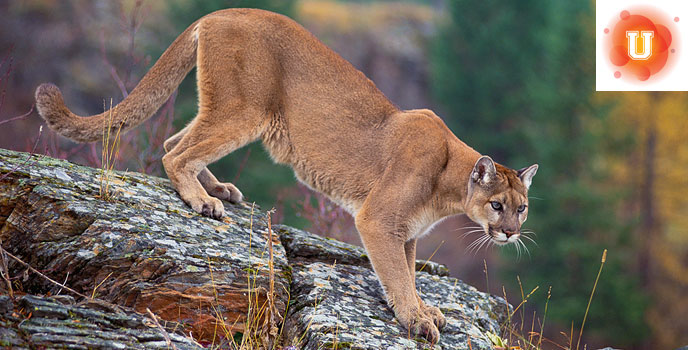
"caption": "Mountain lion",
"description": null,
"title": "ThinkStock",
"credit": "USFS",
"status": "inherit",
"isLoading": false,
"fetchFailed": false
},
"education_346265": {
"type": "attachments",
"id": "education_346265",
"meta": {
"index": "attachments_1716263798",
"site": "education",
"id": "346265",
"found": true
},
"parent": 346166,
"imgSizes": {
"small": {
"file": "https://ww2.kqed.org/app/uploads/sites/38/2016/11/Do-Now-U-Caffeine-520x390.jpg",
"width": 520,
"mimeType": "image/jpeg",
"height": 390
},
"twentyfourteen-full-width": {
"file": "https://ww2.kqed.org/app/uploads/sites/38/2016/11/Do-Now-U-Caffeine-1038x576.jpg",
"width": 1038,
"mimeType": "image/jpeg",
"height": 576
},
"thumbnail": {
"file": "https://ww2.kqed.org/app/uploads/sites/38/2016/11/Do-Now-U-Caffeine-160x120.jpg",
"width": 160,
"mimeType": "image/jpeg",
"height": 120
},
"fd-sm": {
"file": "https://ww2.kqed.org/app/uploads/sites/38/2016/11/Do-Now-U-Caffeine-960x720.jpg",
"width": 960,
"mimeType": "image/jpeg",
"height": 720
},
"post-thumbnail": {
"file": "https://ww2.kqed.org/app/uploads/sites/38/2016/11/Do-Now-U-Caffeine-672x372.jpg",
"width": 672,
"mimeType": "image/jpeg",
"height": 372
},
"xsmall": {
"file": "https://ww2.kqed.org/app/uploads/sites/38/2016/11/Do-Now-U-Caffeine-375x281.jpg",
"width": 375,
"mimeType": "image/jpeg",
"height": 281
},
"kqedFullSize": {
"file": "https://ww2.kqed.org/app/uploads/sites/38/2016/11/Do-Now-U-Caffeine.jpg",
"width": 1920,
"height": 1440
},
"large": {
"file": "https://ww2.kqed.org/app/uploads/sites/38/2016/11/Do-Now-U-Caffeine-1020x765.jpg",
"width": 1020,
"mimeType": "image/jpeg",
"height": 765
},
"xlarge": {
"file": "https://ww2.kqed.org/app/uploads/sites/38/2016/11/Do-Now-U-Caffeine-1180x885.jpg",
"width": 1180,
"mimeType": "image/jpeg",
"height": 885
},
"guest-author-50": {
"file": "https://ww2.kqed.org/app/uploads/sites/38/2016/11/Do-Now-U-Caffeine-50x50.jpg",
"width": 50,
"mimeType": "image/jpeg",
"height": 50
},
"guest-author-96": {
"file": "https://ww2.kqed.org/app/uploads/sites/38/2016/11/Do-Now-U-Caffeine-96x96.jpg",
"width": 96,
"mimeType": "image/jpeg",
"height": 96
},
"medium": {
"file": "https://ww2.kqed.org/app/uploads/sites/38/2016/11/Do-Now-U-Caffeine-800x600.jpg",
"width": 800,
"mimeType": "image/jpeg",
"height": 600
},
"guest-author-64": {
"file": "https://ww2.kqed.org/app/uploads/sites/38/2016/11/Do-Now-U-Caffeine-64x64.jpg",
"width": 64,
"mimeType": "image/jpeg",
"height": 64
},
"guest-author-32": {
"file": "https://ww2.kqed.org/app/uploads/sites/38/2016/11/Do-Now-U-Caffeine-32x32.jpg",
"width": 32,
"mimeType": "image/jpeg",
"height": 32
},
"fd-lrg": {
"file": "https://ww2.kqed.org/app/uploads/sites/38/2016/11/Do-Now-U-Caffeine-1920x1440.jpg",
"width": 1920,
"mimeType": "image/jpeg",
"height": 1440
},
"fd-med": {
"file": "https://ww2.kqed.org/app/uploads/sites/38/2016/11/Do-Now-U-Caffeine-1180x885.jpg",
"width": 1180,
"mimeType": "image/jpeg",
"height": 885
},
"full-width": {
"file": "https://ww2.kqed.org/app/uploads/sites/38/2016/11/Do-Now-U-Caffeine-1920x1440.jpg",
"width": 1920,
"mimeType": "image/jpeg",
"height": 1440
},
"detail": {
"file": "https://ww2.kqed.org/app/uploads/sites/38/2016/11/Do-Now-U-Caffeine-150x150.jpg",
"width": 150,
"mimeType": "image/jpeg",
"height": 150
},
"medium_large": {
"file": "https://ww2.kqed.org/app/uploads/sites/38/2016/11/Do-Now-U-Caffeine-768x576.jpg",
"width": 768,
"mimeType": "image/jpeg",
"height": 576
},
"guest-author-128": {
"file": "https://ww2.kqed.org/app/uploads/sites/38/2016/11/Do-Now-U-Caffeine-128x128.jpg",
"width": 128,
"mimeType": "image/jpeg",
"height": 128
},
"xxsmall": {
"file": "https://ww2.kqed.org/app/uploads/sites/38/2016/11/Do-Now-U-Caffeine-240x180.jpg",
"width": 240,
"mimeType": "image/jpeg",
"height": 180
}
},
"publishDate": 1480386158,
"modified": 1480386174,
"caption": null,
"description": null,
"title": "do-now-u-caffeine",
"credit": "BasiaSoborak/Pixabay",
"status": "inherit",
"isLoading": false,
"fetchFailed": false
},
"education_322966": {
"type": "attachments",
"id": "education_322966",
"meta": {
"index": "attachments_1716263798",
"site": "education",
"id": "322966",
"found": true
},
"parent": 322886,
"imgSizes": {
"small": {
"file": "https://ww2.kqed.org/app/uploads/sites/38/2016/11/Gorilla-520x390.jpg",
"width": 520,
"mimeType": "image/jpeg",
"height": 390
},
"twentyfourteen-full-width": {
"file": "https://ww2.kqed.org/app/uploads/sites/38/2016/11/Gorilla-1038x576.jpg",
"width": 1038,
"mimeType": "image/jpeg",
"height": 576
},
"thumbnail": {
"file": "https://ww2.kqed.org/app/uploads/sites/38/2016/11/Gorilla-160x120.jpg",
"width": 160,
"mimeType": "image/jpeg",
"height": 120
},
"fd-sm": {
"file": "https://ww2.kqed.org/app/uploads/sites/38/2016/11/Gorilla-960x720.jpg",
"width": 960,
"mimeType": "image/jpeg",
"height": 720
},
"post-thumbnail": {
"file": "https://ww2.kqed.org/app/uploads/sites/38/2016/11/Gorilla-672x372.jpg",
"width": 672,
"mimeType": "image/jpeg",
"height": 372
},
"xsmall": {
"file": "https://ww2.kqed.org/app/uploads/sites/38/2016/11/Gorilla-375x281.jpg",
"width": 375,
"mimeType": "image/jpeg",
"height": 281
},
"kqedFullSize": {
"file": "https://ww2.kqed.org/app/uploads/sites/38/2016/11/Gorilla.jpg",
"width": 2048,
"height": 1536
},
"large": {
"file": "https://ww2.kqed.org/app/uploads/sites/38/2016/11/Gorilla-1020x765.jpg",
"width": 1020,
"mimeType": "image/jpeg",
"height": 765
},
"xlarge": {
"file": "https://ww2.kqed.org/app/uploads/sites/38/2016/11/Gorilla-1180x885.jpg",
"width": 1180,
"mimeType": "image/jpeg",
"height": 885
},
"guest-author-50": {
"file": "https://ww2.kqed.org/app/uploads/sites/38/2016/11/Gorilla-50x50.jpg",
"width": 50,
"mimeType": "image/jpeg",
"height": 50
},
"guest-author-96": {
"file": "https://ww2.kqed.org/app/uploads/sites/38/2016/11/Gorilla-96x96.jpg",
"width": 96,
"mimeType": "image/jpeg",
"height": 96
},
"medium": {
"file": "https://ww2.kqed.org/app/uploads/sites/38/2016/11/Gorilla-800x600.jpg",
"width": 800,
"mimeType": "image/jpeg",
"height": 600
},
"guest-author-64": {
"file": "https://ww2.kqed.org/app/uploads/sites/38/2016/11/Gorilla-64x64.jpg",
"width": 64,
"mimeType": "image/jpeg",
"height": 64
},
"guest-author-32": {
"file": "https://ww2.kqed.org/app/uploads/sites/38/2016/11/Gorilla-32x32.jpg",
"width": 32,
"mimeType": "image/jpeg",
"height": 32
},
"fd-lrg": {
"file": "https://ww2.kqed.org/app/uploads/sites/38/2016/11/Gorilla-1920x1440.jpg",
"width": 1920,
"mimeType": "image/jpeg",
"height": 1440
},
"fd-med": {
"file": "https://ww2.kqed.org/app/uploads/sites/38/2016/11/Gorilla-1180x885.jpg",
"width": 1180,
"mimeType": "image/jpeg",
"height": 885
},
"full-width": {
"file": "https://ww2.kqed.org/app/uploads/sites/38/2016/11/Gorilla-1920x1440.jpg",
"width": 1920,
"mimeType": "image/jpeg",
"height": 1440
},
"detail": {
"file": "https://ww2.kqed.org/app/uploads/sites/38/2016/11/Gorilla-150x150.jpg",
"width": 150,
"mimeType": "image/jpeg",
"height": 150
},
"medium_large": {
"file": "https://ww2.kqed.org/app/uploads/sites/38/2016/11/Gorilla-768x576.jpg",
"width": 768,
"mimeType": "image/jpeg",
"height": 576
},
"guest-author-128": {
"file": "https://ww2.kqed.org/app/uploads/sites/38/2016/11/Gorilla-128x128.jpg",
"width": 128,
"mimeType": "image/jpeg",
"height": 128
},
"xxsmall": {
"file": "https://ww2.kqed.org/app/uploads/sites/38/2016/11/Gorilla-240x180.jpg",
"width": 240,
"mimeType": "image/jpeg",
"height": 180
}
},
"publishDate": 1478033677,
"modified": 1478132089,
"caption": null,
"description": "Western lowland gorillas at the National Zoo in Washington, DC.",
"title": "gorilla",
"credit": "U.S. Department of State IIP Photo Archive",
"status": "inherit",
"isLoading": false,
"fetchFailed": false
},
"education_318716": {
"type": "attachments",
"id": "education_318716",
"meta": {
"index": "attachments_1716263798",
"site": "education",
"id": "318716",
"found": true
},
"parent": 318579,
"imgSizes": {
"small": {
"file": "https://ww2.kqed.org/app/uploads/sites/38/2016/10/ReuseU-520x293.jpg",
"width": 520,
"mimeType": "image/jpeg",
"height": 293
},
"twentyfourteen-full-width": {
"file": "https://ww2.kqed.org/app/uploads/sites/38/2016/10/ReuseU-1038x576.jpg",
"width": 1038,
"mimeType": "image/jpeg",
"height": 576
},
"thumbnail": {
"file": "https://ww2.kqed.org/app/uploads/sites/38/2016/10/ReuseU-160x90.jpg",
"width": 160,
"mimeType": "image/jpeg",
"height": 90
},
"fd-sm": {
"file": "https://ww2.kqed.org/app/uploads/sites/38/2016/10/ReuseU-960x540.jpg",
"width": 960,
"mimeType": "image/jpeg",
"height": 540
},
"post-thumbnail": {
"file": "https://ww2.kqed.org/app/uploads/sites/38/2016/10/ReuseU-672x372.jpg",
"width": 672,
"mimeType": "image/jpeg",
"height": 372
},
"xsmall": {
"file": "https://ww2.kqed.org/app/uploads/sites/38/2016/10/ReuseU-375x211.jpg",
"width": 375,
"mimeType": "image/jpeg",
"height": 211
},
"kqedFullSize": {
"file": "https://ww2.kqed.org/app/uploads/sites/38/2016/10/ReuseU.jpg",
"width": 1920,
"height": 1080
},
"large": {
"file": "https://ww2.kqed.org/app/uploads/sites/38/2016/10/ReuseU-1020x574.jpg",
"width": 1020,
"mimeType": "image/jpeg",
"height": 574
},
"xlarge": {
"file": "https://ww2.kqed.org/app/uploads/sites/38/2016/10/ReuseU-1180x664.jpg",
"width": 1180,
"mimeType": "image/jpeg",
"height": 664
},
"guest-author-50": {
"file": "https://ww2.kqed.org/app/uploads/sites/38/2016/10/ReuseU-50x50.jpg",
"width": 50,
"mimeType": "image/jpeg",
"height": 50
},
"guest-author-96": {
"file": "https://ww2.kqed.org/app/uploads/sites/38/2016/10/ReuseU-96x96.jpg",
"width": 96,
"mimeType": "image/jpeg",
"height": 96
},
"medium": {
"file": "https://ww2.kqed.org/app/uploads/sites/38/2016/10/ReuseU-800x450.jpg",
"width": 800,
"mimeType": "image/jpeg",
"height": 450
},
"guest-author-64": {
"file": "https://ww2.kqed.org/app/uploads/sites/38/2016/10/ReuseU-64x64.jpg",
"width": 64,
"mimeType": "image/jpeg",
"height": 64
},
"guest-author-32": {
"file": "https://ww2.kqed.org/app/uploads/sites/38/2016/10/ReuseU-32x32.jpg",
"width": 32,
"mimeType": "image/jpeg",
"height": 32
},
"fd-lrg": {
"file": "https://ww2.kqed.org/app/uploads/sites/38/2016/10/ReuseU-1920x1080.jpg",
"width": 1920,
"mimeType": "image/jpeg",
"height": 1080
},
"fd-med": {
"file": "https://ww2.kqed.org/app/uploads/sites/38/2016/10/ReuseU-1180x664.jpg",
"width": 1180,
"mimeType": "image/jpeg",
"height": 664
},
"full-width": {
"file": "https://ww2.kqed.org/app/uploads/sites/38/2016/10/ReuseU-1920x1080.jpg",
"width": 1920,
"mimeType": "image/jpeg",
"height": 1080
},
"detail": {
"file": "https://ww2.kqed.org/app/uploads/sites/38/2016/10/ReuseU-150x150.jpg",
"width": 150,
"mimeType": "image/jpeg",
"height": 150
},
"medium_large": {
"file": "https://ww2.kqed.org/app/uploads/sites/38/2016/10/ReuseU-768x432.jpg",
"width": 768,
"mimeType": "image/jpeg",
"height": 432
},
"guest-author-128": {
"file": "https://ww2.kqed.org/app/uploads/sites/38/2016/10/ReuseU-128x128.jpg",
"width": 128,
"mimeType": "image/jpeg",
"height": 128
},
"xxsmall": {
"file": "https://ww2.kqed.org/app/uploads/sites/38/2016/10/ReuseU-240x135.jpg",
"width": 240,
"mimeType": "image/jpeg",
"height": 135
}
},
"publishDate": 1477611018,
"modified": 1477611166,
"caption": null,
"description": null,
"title": "ReuseU",
"credit": "California Department of Resources Recycling and Recovery (CalRecycle)",
"status": "inherit",
"isLoading": false,
"fetchFailed": false
},
"education_305402": {
"type": "attachments",
"id": "education_305402",
"meta": {
"index": "attachments_1716263798",
"site": "education",
"id": "305402",
"found": true
},
"parent": 304621,
"imgSizes": {
"twentyfourteen-full-width": {
"file": "https://ww2.kqed.org/app/uploads/sites/38/2016/10/Vegetarian-Meal-1-1038x576.jpg",
"width": 1038,
"mimeType": "image/jpeg",
"height": 576
},
"thumbnail": {
"file": "https://ww2.kqed.org/app/uploads/sites/38/2016/10/Vegetarian-Meal-1-400x267.jpg",
"width": 400,
"mimeType": "image/jpeg",
"height": 267
},
"fd-sm": {
"file": "https://ww2.kqed.org/app/uploads/sites/38/2016/10/Vegetarian-Meal-1-960x640.jpg",
"width": 960,
"mimeType": "image/jpeg",
"height": 640
},
"post-thumbnail": {
"file": "https://ww2.kqed.org/app/uploads/sites/38/2016/10/Vegetarian-Meal-1-672x372.jpg",
"width": 672,
"mimeType": "image/jpeg",
"height": 372
},
"kqedFullSize": {
"file": "https://ww2.kqed.org/app/uploads/sites/38/2016/10/Vegetarian-Meal-1-e1478199206355.jpg",
"width": 1920,
"height": 1280
},
"large": {
"file": "https://ww2.kqed.org/app/uploads/sites/38/2016/10/Vegetarian-Meal-1-1440x960.jpg",
"width": 1440,
"mimeType": "image/jpeg",
"height": 960
},
"guest-author-50": {
"file": "https://ww2.kqed.org/app/uploads/sites/38/2016/10/Vegetarian-Meal-1-50x50.jpg",
"width": 50,
"mimeType": "image/jpeg",
"height": 50
},
"guest-author-96": {
"file": "https://ww2.kqed.org/app/uploads/sites/38/2016/10/Vegetarian-Meal-1-96x96.jpg",
"width": 96,
"mimeType": "image/jpeg",
"height": 96
},
"medium": {
"file": "https://ww2.kqed.org/app/uploads/sites/38/2016/10/Vegetarian-Meal-1-800x533.jpg",
"width": 800,
"mimeType": "image/jpeg",
"height": 533
},
"guest-author-64": {
"file": "https://ww2.kqed.org/app/uploads/sites/38/2016/10/Vegetarian-Meal-1-64x64.jpg",
"width": 64,
"mimeType": "image/jpeg",
"height": 64
},
"guest-author-32": {
"file": "https://ww2.kqed.org/app/uploads/sites/38/2016/10/Vegetarian-Meal-1-32x32.jpg",
"width": 32,
"mimeType": "image/jpeg",
"height": 32
},
"fd-lrg": {
"file": "https://ww2.kqed.org/app/uploads/sites/38/2016/10/Vegetarian-Meal-1-1920x1280.jpg",
"width": 1920,
"mimeType": "image/jpeg",
"height": 1280
},
"fd-med": {
"file": "https://ww2.kqed.org/app/uploads/sites/38/2016/10/Vegetarian-Meal-1-1180x787.jpg",
"width": 1180,
"mimeType": "image/jpeg",
"height": 787
},
"detail": {
"file": "https://ww2.kqed.org/app/uploads/sites/38/2016/10/Vegetarian-Meal-1-150x150.jpg",
"width": 150,
"mimeType": "image/jpeg",
"height": 150
},
"medium_large": {
"file": "https://ww2.kqed.org/app/uploads/sites/38/2016/10/Vegetarian-Meal-1-768x512.jpg",
"width": 768,
"mimeType": "image/jpeg",
"height": 512
},
"guest-author-128": {
"file": "https://ww2.kqed.org/app/uploads/sites/38/2016/10/Vegetarian-Meal-1-128x128.jpg",
"width": 128,
"mimeType": "image/jpeg",
"height": 128
}
},
"publishDate": 1476283650,
"modified": 1476283682,
"caption": "A well-balanced vegetarian meal",
"description": null,
"title": "Vegetarian Meal",
"credit": "Hannah Feiten",
"status": "inherit",
"isLoading": false,
"fetchFailed": false
},
"education_293824": {
"type": "attachments",
"id": "education_293824",
"meta": {
"index": "attachments_1716263798",
"site": "education",
"id": "293824",
"found": true
},
"parent": 293428,
"imgSizes": {
"twentyfourteen-full-width": {
"file": "https://ww2.kqed.org/app/uploads/sites/38/2016/09/Yellowstone-Elk-1038x576.jpg",
"width": 1038,
"mimeType": "image/jpeg",
"height": 576
},
"thumbnail": {
"file": "https://ww2.kqed.org/app/uploads/sites/38/2016/09/Yellowstone-Elk-400x305.jpg",
"width": 400,
"mimeType": "image/jpeg",
"height": 305
},
"fd-sm": {
"file": "https://ww2.kqed.org/app/uploads/sites/38/2016/09/Yellowstone-Elk-960x732.jpg",
"width": 960,
"mimeType": "image/jpeg",
"height": 732
},
"post-thumbnail": {
"file": "https://ww2.kqed.org/app/uploads/sites/38/2016/09/Yellowstone-Elk-672x372.jpg",
"width": 672,
"mimeType": "image/jpeg",
"height": 372
},
"kqedFullSize": {
"file": "https://ww2.kqed.org/app/uploads/sites/38/2016/09/Yellowstone-Elk.jpg",
"width": 3707,
"height": 2828
},
"large": {
"file": "https://ww2.kqed.org/app/uploads/sites/38/2016/09/Yellowstone-Elk-1440x1099.jpg",
"width": 1440,
"mimeType": "image/jpeg",
"height": 1099
},
"guest-author-50": {
"file": "https://ww2.kqed.org/app/uploads/sites/38/2016/09/Yellowstone-Elk-50x50.jpg",
"width": 50,
"mimeType": "image/jpeg",
"height": 50
},
"guest-author-96": {
"file": "https://ww2.kqed.org/app/uploads/sites/38/2016/09/Yellowstone-Elk-96x96.jpg",
"width": 96,
"mimeType": "image/jpeg",
"height": 96
},
"medium": {
"file": "https://ww2.kqed.org/app/uploads/sites/38/2016/09/Yellowstone-Elk-800x610.jpg",
"width": 800,
"mimeType": "image/jpeg",
"height": 610
},
"guest-author-64": {
"file": "https://ww2.kqed.org/app/uploads/sites/38/2016/09/Yellowstone-Elk-64x64.jpg",
"width": 64,
"mimeType": "image/jpeg",
"height": 64
},
"guest-author-32": {
"file": "https://ww2.kqed.org/app/uploads/sites/38/2016/09/Yellowstone-Elk-32x32.jpg",
"width": 32,
"mimeType": "image/jpeg",
"height": 32
},
"fd-lrg": {
"file": "https://ww2.kqed.org/app/uploads/sites/38/2016/09/Yellowstone-Elk-1920x1465.jpg",
"width": 1920,
"mimeType": "image/jpeg",
"height": 1465
},
"fd-med": {
"file": "https://ww2.kqed.org/app/uploads/sites/38/2016/09/Yellowstone-Elk-1180x900.jpg",
"width": 1180,
"mimeType": "image/jpeg",
"height": 900
},
"detail": {
"file": "https://ww2.kqed.org/app/uploads/sites/38/2016/09/Yellowstone-Elk-150x150.jpg",
"width": 150,
"mimeType": "image/jpeg",
"height": 150
},
"medium_large": {
"file": "https://ww2.kqed.org/app/uploads/sites/38/2016/09/Yellowstone-Elk-768x586.jpg",
"width": 768,
"mimeType": "image/jpeg",
"height": 586
},
"guest-author-128": {
"file": "https://ww2.kqed.org/app/uploads/sites/38/2016/09/Yellowstone-Elk-128x128.jpg",
"width": 128,
"mimeType": "image/jpeg",
"height": 128
}
},
"publishDate": 1475121995,
"modified": 1475122109,
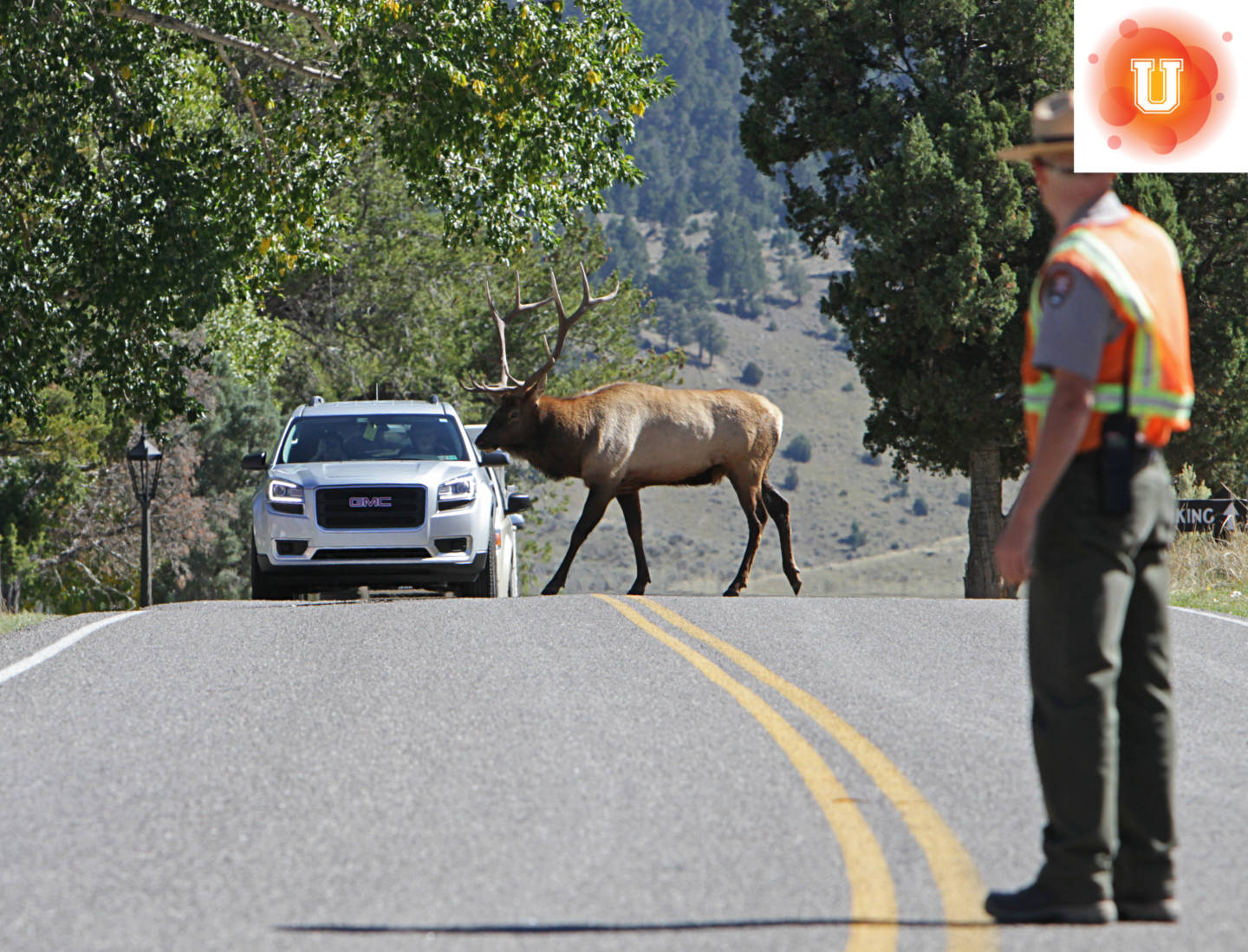
"caption": "Park ranger stopping traffic while bull elk crosses road in Mammoth Hot Springs.",
"description": null,
"title": null,
"credit": "Yellowstone National Park",
"status": "inherit",
"isLoading": false,
"fetchFailed": false
},
"education_278337": {
"type": "attachments",
"id": "education_278337",
"meta": {
"index": "attachments_1716263798",
"site": "education",
"id": "278337",
"found": true
},
"parent": 278271,
"imgSizes": {
"twentyfourteen-full-width": {
"file": "https://ww2.kqed.org/app/uploads/sites/38/2016/09/MQ-9-Reaper-Do-Now-U-1038x576.jpg",
"width": 1038,
"mimeType": "image/jpeg",
"height": 576
},
"thumbnail": {
"file": "https://ww2.kqed.org/app/uploads/sites/38/2016/09/MQ-9-Reaper-Do-Now-U-400x266.jpg",
"width": 400,
"mimeType": "image/jpeg",
"height": 266
},
"fd-sm": {
"file": "https://ww2.kqed.org/app/uploads/sites/38/2016/09/MQ-9-Reaper-Do-Now-U-960x639.jpg",
"width": 960,
"mimeType": "image/jpeg",
"height": 639
},
"post-thumbnail": {
"file": "https://ww2.kqed.org/app/uploads/sites/38/2016/09/MQ-9-Reaper-Do-Now-U-672x372.jpg",
"width": 672,
"mimeType": "image/jpeg",
"height": 372
},
"kqedFullSize": {
"file": "https://ww2.kqed.org/app/uploads/sites/38/2016/09/MQ-9-Reaper-Do-Now-U.jpg",
"width": 4256,
"height": 2832
},
"large": {
"file": "https://ww2.kqed.org/app/uploads/sites/38/2016/09/MQ-9-Reaper-Do-Now-U-1440x958.jpg",
"width": 1440,
"mimeType": "image/jpeg",
"height": 958
},
"guest-author-50": {
"file": "https://ww2.kqed.org/app/uploads/sites/38/2016/09/MQ-9-Reaper-Do-Now-U-50x50.jpg",
"width": 50,
"mimeType": "image/jpeg",
"height": 50
},
"guest-author-96": {
"file": "https://ww2.kqed.org/app/uploads/sites/38/2016/09/MQ-9-Reaper-Do-Now-U-96x96.jpg",
"width": 96,
"mimeType": "image/jpeg",
"height": 96
},
"medium": {
"file": "https://ww2.kqed.org/app/uploads/sites/38/2016/09/MQ-9-Reaper-Do-Now-U-800x532.jpg",
"width": 800,
"mimeType": "image/jpeg",
"height": 532
},
"guest-author-64": {
"file": "https://ww2.kqed.org/app/uploads/sites/38/2016/09/MQ-9-Reaper-Do-Now-U-64x64.jpg",
"width": 64,
"mimeType": "image/jpeg",
"height": 64
},
"guest-author-32": {
"file": "https://ww2.kqed.org/app/uploads/sites/38/2016/09/MQ-9-Reaper-Do-Now-U-32x32.jpg",
"width": 32,
"mimeType": "image/jpeg",
"height": 32
},
"fd-lrg": {
"file": "https://ww2.kqed.org/app/uploads/sites/38/2016/09/MQ-9-Reaper-Do-Now-U-1920x1278.jpg",
"width": 1920,
"mimeType": "image/jpeg",
"height": 1278
},
"fd-med": {
"file": "https://ww2.kqed.org/app/uploads/sites/38/2016/09/MQ-9-Reaper-Do-Now-U-1180x785.jpg",
"width": 1180,
"mimeType": "image/jpeg",
"height": 785
},
"detail": {
"file": "https://ww2.kqed.org/app/uploads/sites/38/2016/09/MQ-9-Reaper-Do-Now-U-150x150.jpg",
"width": 150,
"mimeType": "image/jpeg",
"height": 150
},
"medium_large": {
"file": "https://ww2.kqed.org/app/uploads/sites/38/2016/09/MQ-9-Reaper-Do-Now-U-768x511.jpg",
"width": 768,
"mimeType": "image/jpeg",
"height": 511
},
"guest-author-128": {
"file": "https://ww2.kqed.org/app/uploads/sites/38/2016/09/MQ-9-Reaper-Do-Now-U-128x128.jpg",
"width": 128,
"mimeType": "image/jpeg",
"height": 128
}
},
"publishDate": 1473468456,
"modified": 1473470061,
"caption": "An MQ-9 Reaper during its first air show demonstration May 29, 2016, at Cannon Air Force Base, N.M.",
"description": null,
"title": "MQ-9 Reaper",
"credit": "U.S. Air Force/Master Sgt. Dennis J. Henry Jr.",
"status": "inherit",
"isLoading": false,
"fetchFailed": false
},
"education_199646": {
"type": "attachments",
"id": "education_199646",
"meta": {
"index": "attachments_1716263798",
"site": "education",
"id": "199646",
"found": true
},
"parent": 199245,
"imgSizes": {
"thumbnail": {
"file": "https://ww2.kqed.org/app/uploads/sites/38/2016/06/9261_lores-400x264.jpg",
"width": 400,
"mimeType": "image/jpeg",
"height": 264
},
"post-thumbnail": {
"file": "https://ww2.kqed.org/app/uploads/sites/38/2016/06/9261_lores-672x372.jpg",
"width": 672,
"mimeType": "image/jpeg",
"height": 372
},
"kqedFullSize": {
"file": "https://ww2.kqed.org/app/uploads/sites/38/2016/06/9261_lores.jpg",
"width": 700,
"height": 462
},
"guest-author-50": {
"file": "https://ww2.kqed.org/app/uploads/sites/38/2016/06/9261_lores-50x50.jpg",
"width": 50,
"mimeType": "image/jpeg",
"height": 50
},
"guest-author-96": {
"file": "https://ww2.kqed.org/app/uploads/sites/38/2016/06/9261_lores-96x96.jpg",
"width": 96,
"mimeType": "image/jpeg",
"height": 96
},
"guest-author-64": {
"file": "https://ww2.kqed.org/app/uploads/sites/38/2016/06/9261_lores-64x64.jpg",
"width": 64,
"mimeType": "image/jpeg",
"height": 64
},
"detail": {
"file": "https://ww2.kqed.org/app/uploads/sites/38/2016/06/9261_lores-150x150.jpg",
"width": 150,
"mimeType": "image/jpeg",
"height": 150
},
"guest-author-32": {
"file": "https://ww2.kqed.org/app/uploads/sites/38/2016/06/9261_lores-32x32.jpg",
"width": 32,
"mimeType": "image/jpeg",
"height": 32
},
"guest-author-128": {
"file": "https://ww2.kqed.org/app/uploads/sites/38/2016/06/9261_lores-128x128.jpg",
"width": 128,
"mimeType": "image/jpeg",
"height": 128
}
},
"publishDate": 1464740910,
"modified": 1464741057,
"caption": "This is an Aedes aegypti mosquito, one mosquito species responsible for spreading Zika virus.",
"description": "Image of Aedes aegypti mosquito",
"title": "9261_lores",
"credit": "James Gathany/ CDC",
"status": "inherit",
"isLoading": false,
"fetchFailed": false
},
"education_187959": {
"type": "attachments",
"id": "education_187959",
"meta": {
"index": "attachments_1716263798",
"site": "education",
"id": "187959",
"found": true
},
"parent": 186960,
"imgSizes": {
"twentyfourteen-full-width": {
"file": "https://ww2.kqed.org/app/uploads/sites/38/2016/05/Urban-Coyote-1038x576.jpg",
"width": 1038,
"mimeType": "image/jpeg",
"height": 576
},
"thumbnail": {
"file": "https://ww2.kqed.org/app/uploads/sites/38/2016/05/Urban-Coyote-400x267.jpg",
"width": 400,
"mimeType": "image/jpeg",
"height": 267
},
"fd-sm": {
"file": "https://ww2.kqed.org/app/uploads/sites/38/2016/05/Urban-Coyote-960x640.jpg",
"width": 960,
"mimeType": "image/jpeg",
"height": 640
},
"post-thumbnail": {
"file": "https://ww2.kqed.org/app/uploads/sites/38/2016/05/Urban-Coyote-672x372.jpg",
"width": 672,
"mimeType": "image/jpeg",
"height": 372
},
"kqedFullSize": {
"file": "https://ww2.kqed.org/app/uploads/sites/38/2016/05/Urban-Coyote.jpg",
"width": 3741,
"height": 2494
},
"large": {
"file": "https://ww2.kqed.org/app/uploads/sites/38/2016/05/Urban-Coyote-1440x960.jpg",
"width": 1440,
"mimeType": "image/jpeg",
"height": 960
},
"guest-author-50": {
"file": "https://ww2.kqed.org/app/uploads/sites/38/2016/05/Urban-Coyote-50x50.jpg",
"width": 50,
"mimeType": "image/jpeg",
"height": 50
},
"guest-author-96": {
"file": "https://ww2.kqed.org/app/uploads/sites/38/2016/05/Urban-Coyote-96x96.jpg",
"width": 96,
"mimeType": "image/jpeg",
"height": 96
},
"medium": {
"file": "https://ww2.kqed.org/app/uploads/sites/38/2016/05/Urban-Coyote-800x533.jpg",
"width": 800,
"mimeType": "image/jpeg",
"height": 533
},
"guest-author-64": {
"file": "https://ww2.kqed.org/app/uploads/sites/38/2016/05/Urban-Coyote-64x64.jpg",
"width": 64,
"mimeType": "image/jpeg",
"height": 64
},
"guest-author-32": {
"file": "https://ww2.kqed.org/app/uploads/sites/38/2016/05/Urban-Coyote-32x32.jpg",
"width": 32,
"mimeType": "image/jpeg",
"height": 32
},
"fd-lrg": {
"file": "https://ww2.kqed.org/app/uploads/sites/38/2016/05/Urban-Coyote-1920x1280.jpg",
"width": 1920,
"mimeType": "image/jpeg",
"height": 1280
},
"fd-med": {
"file": "https://ww2.kqed.org/app/uploads/sites/38/2016/05/Urban-Coyote-1180x787.jpg",
"width": 1180,
"mimeType": "image/jpeg",
"height": 787
},
"detail": {
"file": "https://ww2.kqed.org/app/uploads/sites/38/2016/05/Urban-Coyote-150x150.jpg",
"width": 150,
"mimeType": "image/jpeg",
"height": 150
},
"medium_large": {
"file": "https://ww2.kqed.org/app/uploads/sites/38/2016/05/Urban-Coyote-768x512.jpg",
"width": 768,
"mimeType": "image/jpeg",
"height": 512
},
"guest-author-128": {
"file": "https://ww2.kqed.org/app/uploads/sites/38/2016/05/Urban-Coyote-128x128.jpg",
"width": 128,
"mimeType": "image/jpeg",
"height": 128
}
},
"publishDate": 1463533825,
"modified": 1463533852,
"caption": null,
"description": null,
"title": "Urban Coyote",
"credit": "Dru Bloomfield",
"status": "inherit",
"isLoading": false,
"fetchFailed": false
}
},
"audioPlayerReducer": {
"postId": "stream_live",
"isPaused": true,
"isPlaying": false,
"pfsActive": false,
"pledgeModalIsOpen": true,
"playerDrawerIsOpen": false,
"liveAudioPlayStartedAt": 0,
"liveAudioPlayContext": ""
},
"authorsReducer": {
"sencer": {
"type": "authors",
"id": "9628",
"meta": {
"index": "authors_1716337520",
"id": "9628",
"found": true
},
"name": "SENCER",
"firstName": "SENCER",
"lastName": null,
"slug": "sencer",
"email": "scienceed@kqed.org",
"display_author_email": false,
"staff_mastheads": [],
"title": null,
"bio": null,
"avatar": "https://secure.gravatar.com/avatar/b6cc1c0f53a1420c02e9279b9405ec9a?s=600&d=blank&r=g",
"twitter": null,
"facebook": null,
"instagram": null,
"linkedin": null,
"sites": [
{
"site": "education",
"roles": [
"author"
]
}
],
"headData": {
"title": "SENCER | KQED",
"description": null,
"ogImgSrc": "https://secure.gravatar.com/avatar/b6cc1c0f53a1420c02e9279b9405ec9a?s=600&d=blank&r=g",
"twImgSrc": "https://secure.gravatar.com/avatar/b6cc1c0f53a1420c02e9279b9405ec9a?s=600&d=blank&r=g"
},
"isLoading": false,
"link": "/author/sencer"
}
},
"pagesReducer": {
"education_tag_do-now-u": {
"type": "terms",
"id": "education_2516",
"meta": {
"index": "terms_1716263798",
"site": "education",
"id": "2516",
"score": 10.406385
},
"featImg": null,
"name": "Do Now U",
"description": null,
"taxonomy": "tag",
"headData": {
"twImgId": null,
"twTitle": null,
"ogTitle": null,
"ogImgId": null,
"twDescription": null,
"description": null,
"title": "Do Now U | KQED Education",
"ogDescription": null
},
"ttid": 2505,
"slug": "do-now-u",
"isLoading": false,
"title": "Do Now U",
"pageMeta": {
"site": "education",
"WpPageTemplate": "page-topic-company",
"currentPage": 2
},
"blocks": [
{
"blockName": "kqed/post-list",
"attrs": {
"layout": "cardCompany2",
"query": "posts/education?tag=do-now-u",
"seeMore": false,
"paginated": true,
"page": 2
}
},
{
"blockName": "kqed/ad"
}
]
}
},
"pfsSessionReducer": {},
"postsReducer": {
"stream_live": {
"type": "live",
"id": "stream_live",
"audioUrl": "https://hls.kqed.org/hls/kqed_app/playlist.m3u8",
"title": "Live Stream",
"excerpt": "Live Stream information currently unavailable.",
"link": "/radio",
"featImg": "",
"label": {
"name": "KQED Live",
"link": "/"
}
},
"stream_kqedNewscast": {
"type": "posts",
"id": "stream_kqedNewscast",
"audioUrl": "https://www.kqed.org/.stream/anon/radio/RDnews/newscast.mp3?_=1",
"title": "KQED Newscast",
"featImg": "",
"label": {
"name": "88.5 FM",
"link": "/"
}
},
"education_360189": {
"type": "posts",
"id": "education_360189",
"meta": {
"index": "posts_1716263798",
"site": "education",
"id": "360189",
"score": null,
"sort": [
1481775135000
]
},
"parent": 0,
"labelTerm": {},
"blocks": [],
"publishDate": 1481775135,
"format": "standard",
"title": "How Do We Best Coexist with Apex Predators?",
"headTitle": "How Do We Best Coexist with Apex Predators? | KQED",
"content": "\u003cp>\u003cem>This post is part of KQED’s \u003ca href=\"http://ww2.kqed.org/education/tag/do-now-u/\">Do Now U\u003c/a> project. Do Now U is a biweekly activity for students and the public to engage and respond to current issues using social media. Do Now U aims to build civic engagement and digital literacy for learners of all ages. This post was developed by Claire Huebler, Bri Pero, Sara Sandfort and Julia Zamora, students in Steve Bachofer’s “Urban Environmental Issues” class at Saint Mary’s College of California.\u003c/em>\u003c/p>\n\u003cp>\u003c!-- iframe plugin v.4.3 wordpress.org/plugins/iframe/ -->\u003cbr>\n\u003ciframe loading=\"lazy\" width=\"640\" height=\"360\" src=\"https://www.youtube.com/embed/feGM7K-0sJw\" frameborder=\"0\" scrolling=\"yes\" class=\"iframe-class\">\u003c/iframe>\u003c/p>\n\u003cp>\u003cstrong>Featured Media Resource\u003cbr>\nVIDEO: BBC News\u003c/strong>\u003cbr>\n\u003ca href=\"https://www.youtube.com/watch?v=feGM7K-0sJw\">Mountain Lion of Hollywood\u003c/a>\u003cbr>\n\u003cspan style=\"font-weight: 400\">Learn about P-22, Los Angeles’s urban mountain lion, and the journey he took to get to the largest urban park in the United States.\u003c/span>\u003c/p>\n\u003chr>\n\u003ch2>\u003cstrong>Do Now U\u003c/strong>\u003c/h2>\n\u003cp>How\u003cstrong> \u003c/strong>can we best coexist with apex predators? Will we be successful in providing enough space and resources for them long-term? \u003cstrong> #DoNowUPredators\u003c/strong>\u003c/p>\n\u003chr>\n\u003ch2>\u003cstrong>How to Do Now\u003c/strong>\u003c/h2>\n\u003cp>To respond to the Do Now U, you can comment below or post your response on Twitter. \u003cstrong>Just be sure to include \u003cem>#DoNowUPredators\u003c/em> and \u003cem>@KQEDedspace\u003c/em> in your posts.\u003c/strong>\u003c/p>\n\u003chr>\n\u003ch2>Learn More About Apex Predators\u003c/h2>\n\u003cp>\u003cspan style=\"font-weight: 400\">Headlines abound when a mountain lion ventures into an urban or suburban community. Most people are not thrilled to have a mountain lion, wolf or other large predator in their backyard. Communities may push to eliminate these predators in order\u003c/span> \u003cspan style=\"font-weight: 400\">to reduce risk to humans, pets, ranchers and livestock. But these apex predators—animals at the top of the food chain—can also be \u003c/span>\u003ca href=\"http://nationalgeographic.org/encyclopedia/keystone-species/\">\u003cspan style=\"font-weight: 400\">keystone species\u003c/span>\u003c/a>\u003cspan style=\"font-weight: 400\">, species that hold an entire ecosystem together. Protecting and preserving apex predators takes a lot of time, effort and money. How important is it to put resources towards ensuring that they remain part of our ecosystems?\u003c/span>\u003c/p>\n\u003cp>[ad fullwidth]\u003c/p>\n\u003cp>\u003cspan style=\"font-weight: 400\">Bears, mountain lions, wolves and other predators are often depicted in media and the news as dangerous or scary creatures. Bears are known to \u003c/span>\u003ca href=\"https://www.nps.gov/yose/planyourvisit/bearfacts.htm\">\u003cspan style=\"font-weight: 400\">cause issues\u003c/span>\u003c/a>\u003cspan style=\"font-weight: 400\"> in areas of national parks that people visit. They enter campsites, steal food, destroy cars and sometimes–though rarely–attack humans. Mountain lions can prey on \u003c/span>\u003cspan style=\"font-weight: 400\">pets and livestock left exposed and vulnerable at night.\u003c/span>\u003cspan style=\"font-weight: 400\"> Wolves are controversial because of their relationship with ranchers and livestock. \u003c/span>\u003cspan style=\"font-weight: 400\">Wolves attack livestock, and although wolf attacks on humans are very rare, this doesn’t stop people from fearing them\u003c/span>\u003cspan style=\"font-weight: 400\">. However, even though predators can be dangerous, they are essential to ecosystems and many people want to protect them.\u003c/span>\u003c/p>\n\u003cfigure id=\"attachment_360194\" class=\"wp-caption alignright\" style=\"max-width: 400px\">\u003ca href=\"http://ww2.kqed.org/education/wp-content/uploads/sites/38/2016/12/black-bears.jpg\">\u003cimg loading=\"lazy\" decoding=\"async\" class=\"size-medium wp-image-360194\" src=\"http://ww2.kqed.org/education/wp-content/uploads/sites/38/2016/12/black-bears-800x300.jpg\" alt=\"Adult black bear with two cubs\" width=\"400\" height=\"150\" srcset=\"https://cdn.kqed.org/wp-content/uploads/sites/38/2016/12/black-bears-800x300.jpg 800w, https://cdn.kqed.org/wp-content/uploads/sites/38/2016/12/black-bears-160x60.jpg 160w, https://cdn.kqed.org/wp-content/uploads/sites/38/2016/12/black-bears-768x288.jpg 768w, https://cdn.kqed.org/wp-content/uploads/sites/38/2016/12/black-bears.jpg 960w, https://cdn.kqed.org/wp-content/uploads/sites/38/2016/12/black-bears-240x90.jpg 240w, https://cdn.kqed.org/wp-content/uploads/sites/38/2016/12/black-bears-375x141.jpg 375w, https://cdn.kqed.org/wp-content/uploads/sites/38/2016/12/black-bears-520x195.jpg 520w\" sizes=\"(max-width: 400px) 100vw, 400px\">\u003c/a>\u003cfigcaption class=\"wp-caption-text\">Adult black bear with two cubs \u003ccite>(Neal Herbert / NPS)\u003c/cite>\u003c/figcaption>\u003c/figure>\n\u003cp>\u003cspan style=\"font-weight: 400\">Bears play an \u003c/span>\u003ca href=\"http://www.nhm.org/site/explore-exhibits/permanent-exhibits/north-american-mammals/black-bear\">\u003cspan style=\"font-weight: 400\">important role\u003c/span>\u003c/a>\u003cspan style=\"font-weight: 400\"> in forests by dispersing the seeds of the plants they eat. They also eat large amounts of insects.\u003c/span>\u003cspan style=\"font-weight: 400\"> In order to try to limit interactions between bears and humans in \u003c/span>\u003cspan style=\"font-weight: 400\">Yosemite National Park, the park has implemented an \u003c/span>\u003ca href=\"http://www.mercurynews.com/2014/09/13/conflicts-with-yosemite-bears-fall-dramatically-as-people-bears-learn-new-lessons/\">\u003cspan style=\"font-weight: 400\">aggressive management strategy\u003c/span>\u003c/a>\u003cspan style=\"font-weight: 400\">. Rangers use paintball guns loaded with mineral oil paintballs to shoot at the bears, yelling and chasing them away from populated areas. Signs are posted in the park to educate visitors about bears, and videos in visitor centers explain to people how to keep themselves safe. \u003c/span>\u003c/p>\n\u003cp>\u003cspan style=\"font-weight: 400\">Mountain lions play a \u003c/span>\u003ca href=\"http://www.predatordefense.org/docs/ecological_role_species.pdf\">\u003cspan style=\"font-weight: 400\">major role\u003c/span>\u003c/a>\u003cspan style=\"font-weight: 400\"> in our ecosystem by keeping the population of animals such as deer and rabbits in check, which helps prevent the overgrazing of vegetation. Currently, mountain lions with home ranges in urban areas can become isolated in due to freeways and other development. Though very expensive, setting up \u003c/span>\u003ca href=\"https://www.washingtonpost.com/news/animalia/wp/2016/03/01/how-will-l-a-s-mountain-lions-cross-the-road-it-may-take-a-55-million-bridge/?utm_term=.7965bc4c3e8a\">\u003cspan style=\"font-weight: 400\">animal crossings\u003c/span>\u003c/a>\u003cspan style=\"font-weight: 400\"> over urban highways for mountain lions would not only prevent collisions with cars on freeways (as the animals are trying to cross), but would also allow them access to larger areas to find prey, and to breed with other mountain lions, preventing inbreeding.\u003c/span>\u003c/p>\n\u003cfigure id=\"attachment_360193\" class=\"wp-caption alignleft\" style=\"max-width: 251px\">\u003ca href=\"http://ww2.kqed.org/education/wp-content/uploads/sites/38/2016/12/Grey-Wolf-FWS.jpg\">\u003cimg loading=\"lazy\" decoding=\"async\" class=\" wp-image-360193\" src=\"http://ww2.kqed.org/education/wp-content/uploads/sites/38/2016/12/Grey-Wolf-FWS-800x998.jpg\" alt=\"Gray wolf\" width=\"251\" height=\"313\" srcset=\"https://cdn.kqed.org/wp-content/uploads/sites/38/2016/12/Grey-Wolf-FWS-800x998.jpg 800w, https://cdn.kqed.org/wp-content/uploads/sites/38/2016/12/Grey-Wolf-FWS-160x200.jpg 160w, https://cdn.kqed.org/wp-content/uploads/sites/38/2016/12/Grey-Wolf-FWS-768x958.jpg 768w, https://cdn.kqed.org/wp-content/uploads/sites/38/2016/12/Grey-Wolf-FWS-240x299.jpg 240w, https://cdn.kqed.org/wp-content/uploads/sites/38/2016/12/Grey-Wolf-FWS-375x468.jpg 375w, https://cdn.kqed.org/wp-content/uploads/sites/38/2016/12/Grey-Wolf-FWS-520x649.jpg 520w, https://cdn.kqed.org/wp-content/uploads/sites/38/2016/12/Grey-Wolf-FWS.jpg 876w\" sizes=\"(max-width: 251px) 100vw, 251px\">\u003c/a>\u003cfigcaption class=\"wp-caption-text\">Gray wolf \u003ccite>(Gary Kramer / USFWS)\u003c/cite>\u003c/figcaption>\u003c/figure>\n\u003cp>\u003cspan style=\"font-weight: 400\">They grey wolf is a keystone species that controls elk and deer populations, which improves the overall health of the herds and protects areas from being overgrazed. This was \u003c/span>\u003ca href=\"http://www.missionwolf.org/page/trophic-cascade/\">\u003cspan style=\"font-weight: 400\">extensively documented\u003c/span>\u003c/a>\u003cspan style=\"font-weight: 400\"> in Yellowstone\u003c/span>\u003ca href=\"http://www.missionwolf.org/page/trophic-cascade/\">\u003cspan style=\"font-weight: 400\"> National Park\u003c/span>\u003c/a>\u003cspan style=\"font-weight: 400\">, when wolves were reintroduced to the park after having been absent for almost 70 years due to \u003c/span>\u003ca href=\"https://www.nps.gov/yell/learn/nature/wolf-restoration.htm\">\u003cspan style=\"font-weight: 400\">predator control programs\u003c/span>\u003c/a>\u003cspan style=\"font-weight: 400\">. In contrast, at Point Reyes National Seashore, where there are no wolves to control the tule elk population that resides there, more \u003c/span>\u003ca href=\"https://www.nps.gov/pore/planyourvisit/upload/resourcepaper_tuleelk.pdf\">\u003cspan style=\"font-weight: 400\">extensive efforts\u003c/span>\u003c/a>\u003cspan style=\"font-weight: 400\"> have been required to manage the elk, including immunocontraception. In areas where there are wolf and livestock conflicts, some ranchers are trying \u003c/span>\u003ca href=\"http://www.defenders.org/gray-wolf/helping-ranchers-coexist-wolves\">\u003cspan style=\"font-weight: 400\">nonlethal strategies\u003c/span>\u003c/a>\u003cspan style=\"font-weight: 400\"> to protect livestock, including guard dogs, movable fencing, lights and air horns.\u003c/span>\u003c/p>\n\u003cp>\u003cspan style=\"font-weight: 400\">Apex predators perform important ecosystem services naturally. However, as our cities and suburban areas continue to spread out into what were once wild lands, this means coexisting with humans and developing new management strategies. Do you think we can successfully coexist with apex predators? Will we give them enough space and resources?\u003c/span>\u003c/p>\n\u003chr>\n\u003ch2>\u003cstrong>More Resources\u003c/strong>\u003c/h2>\n\u003cp>\u003cb>Article: NOVA Next\u003c/b>\u003cbr>\n\u003ca href=\"http://www.pbs.org/wgbh/nova/next/nature/coexisting-with-carnivores/\">\u003cspan style=\"font-weight: 400\">Coexisting with Carnivores—Why It’s Not a Zero-Sum Game\u003c/span>\u003c/a>\u003cbr>\n\u003cspan style=\"font-weight: 400\">Predators all over the world face similar challenges as their habitat is destroyed and clashes with humans increase. Read about management strategies for lions and Kenya and mountain lions in California.\u003c/span>\u003c/p>\n\u003cp>\u003cb>Audio: NPR\u003c/b>\u003cbr>\n\u003ca href=\"http://www.npr.org/2014/02/08/273577607/montana-ranchers-learn-ways-to-live-with-wolves\">\u003cspan style=\"font-weight: 400\">Montana Ranchers Learn Ways To Live With Wolves\u003c/span>\u003c/a>\u003cbr>\n\u003cspan style=\"font-weight: 400\">Hear about techniques ranchers are using to coexist with gray wolves, and the diverse group of people working together to develop those solutions.\u003c/span>\u003c/p>\n\u003cp>\u003cb>Article: Daily Tribune\u003c/b>\u003cbr>\n\u003ca href=\"http://www.wisconsinrapidstribune.com/story/news/2016/07/13/wolf-pack-kills-sheep-near-rapids/87000646/\">\u003cspan style=\"font-weight: 400\">Despite Sheep Kills, Farmer Not Anti-Wolf\u003c/span>\u003c/a>\u003cbr>\n\u003cspan style=\"font-weight: 400\">Read about one farmer’s view on wolves.\u003c/span>\u003c/p>\n\u003chr>\n\u003cp>Find\u003ca href=\"http://ww2.kqed.org/education/about-do-now/\"> best practices \u003c/a>for using Do Now, using \u003ca href=\"http://ww2.kqed.org/education/how-to-use-twitter-in-your-teaching-practice/\">Twitter for teaching\u003c/a>, and using other \u003ca href=\"http://ww2.kqed.org/education/category/tools/\">digital tools\u003c/a>.\u003c/p>\n\u003chr>\n\u003cp>\u003c/p>\n\u003cp>KQED Do Now U is a biweekly activity in collaboration with \u003ca href=\"http://sencer.net/\" target=\"_blank\" rel=\"noopener noreferrer\">SENCER\u003c/a>. SENCER is a community of transformation that consists of educators and administrators in the higher and informal education sectors. SENCER aims to create an intelligent, educated, and empowered citizenry through advancing knowledge in the STEM fields and beyond. SENCER courses show students the direct connections between subject content and the real world issues they care about, and invite students to use these connections to solve today’s most pressing problems.\u003c/p>\n\n",
"stats": {
"hasVideo": true,
"hasChartOrMap": false,
"hasAudio": false,
"hasPolis": false,
"wordCount": 984,
"hasGoogleForm": false,
"hasGallery": false,
"hasHearkenModule": false,
"iframeSrcs": [],
"paragraphCount": 18
},
"modified": 1704762079,
"excerpt": "As urban and suburban development creeps further into wild lands, an increase in the number of interactions between people and apex predators, like mountain lions and grey wolves, is inevitable. How do you think we can successfully coexist with these animals? ",
"headData": {
"twImgId": "",
"twTitle": "",
"ogTitle": "",
"ogImgId": "",
"twDescription": "",
"description": "As urban and suburban development creeps further into wild lands, an increase in the number of interactions between people and apex predators, like mountain lions and grey wolves, is inevitable. How do you think we can successfully coexist with these animals? ",
"title": "How Do We Best Coexist with Apex Predators? | KQED",
"ogDescription": "",
"schema": {
"@context": "https://schema.org",
"@type": "Article",
"headline": "How Do We Best Coexist with Apex Predators?",
"datePublished": "2016-12-14T20:12:15-08:00",
"dateModified": "2024-01-08T17:01:19-08:00",
"image": "https://cdn.kqed.org/wp-content/uploads/2020/02/KQED-OG-Image@1x.png"
}
},
"guestAuthors": [],
"slug": "how-do-we-best-coexist-with-apex-predators",
"status": "publish",
"sourceUrl": "https://ww2.kqed.org/education/tag/do-now-u/",
"sticky": false,
"source": "Do Now U",
"path": "/education/360189/how-do-we-best-coexist-with-apex-predators",
"audioTrackLength": null,
"parsedContent": [
{
"type": "contentString",
"content": "\u003cdiv class=\"post-body\">\u003cp>\u003cp>\u003cem>This post is part of KQED’s \u003ca href=\"http://ww2.kqed.org/education/tag/do-now-u/\">Do Now U\u003c/a> project. Do Now U is a biweekly activity for students and the public to engage and respond to current issues using social media. Do Now U aims to build civic engagement and digital literacy for learners of all ages. This post was developed by Claire Huebler, Bri Pero, Sara Sandfort and Julia Zamora, students in Steve Bachofer’s “Urban Environmental Issues” class at Saint Mary’s College of California.\u003c/em>\u003c/p>\n\u003cp>\u003c!-- iframe plugin v.4.3 wordpress.org/plugins/iframe/ -->\u003cbr>\n\u003ciframe loading=\"lazy\" width=\"640\" height=\"360\" src=\"https://www.youtube.com/embed/feGM7K-0sJw\" frameborder=\"0\" scrolling=\"yes\" class=\"iframe-class\">\u003c/iframe>\u003c/p>\n\u003cp>\u003cstrong>Featured Media Resource\u003cbr>\nVIDEO: BBC News\u003c/strong>\u003cbr>\n\u003ca href=\"https://www.youtube.com/watch?v=feGM7K-0sJw\">Mountain Lion of Hollywood\u003c/a>\u003cbr>\n\u003cspan style=\"font-weight: 400\">Learn about P-22, Los Angeles’s urban mountain lion, and the journey he took to get to the largest urban park in the United States.\u003c/span>\u003c/p>\n\u003chr>\n\u003ch2>\u003cstrong>Do Now U\u003c/strong>\u003c/h2>\n\u003cp>How\u003cstrong> \u003c/strong>can we best coexist with apex predators? Will we be successful in providing enough space and resources for them long-term? \u003cstrong> #DoNowUPredators\u003c/strong>\u003c/p>\n\u003chr>\n\u003ch2>\u003cstrong>How to Do Now\u003c/strong>\u003c/h2>\n\u003cp>To respond to the Do Now U, you can comment below or post your response on Twitter. \u003cstrong>Just be sure to include \u003cem>#DoNowUPredators\u003c/em> and \u003cem>@KQEDedspace\u003c/em> in your posts.\u003c/strong>\u003c/p>\n\u003chr>\n\u003ch2>Learn More About Apex Predators\u003c/h2>\n\u003cp>\u003cspan style=\"font-weight: 400\">Headlines abound when a mountain lion ventures into an urban or suburban community. Most people are not thrilled to have a mountain lion, wolf or other large predator in their backyard. Communities may push to eliminate these predators in order\u003c/span> \u003cspan style=\"font-weight: 400\">to reduce risk to humans, pets, ranchers and livestock. But these apex predators—animals at the top of the food chain—can also be \u003c/span>\u003ca href=\"http://nationalgeographic.org/encyclopedia/keystone-species/\">\u003cspan style=\"font-weight: 400\">keystone species\u003c/span>\u003c/a>\u003cspan style=\"font-weight: 400\">, species that hold an entire ecosystem together. Protecting and preserving apex predators takes a lot of time, effort and money. How important is it to put resources towards ensuring that they remain part of our ecosystems?\u003c/span>\u003c/p>\n\u003cp>\u003c/p>\u003c/div>",
"attributes": {
"named": {},
"numeric": []
}
},
{
"type": "component",
"content": "",
"name": "ad",
"attributes": {
"named": {
"label": "fullwidth"
},
"numeric": [
"fullwidth"
]
}
},
{
"type": "contentString",
"content": "\u003cdiv class=\"post-body\">\u003cp>\u003c/p>\n\u003cp>\u003cspan style=\"font-weight: 400\">Bears, mountain lions, wolves and other predators are often depicted in media and the news as dangerous or scary creatures. Bears are known to \u003c/span>\u003ca href=\"https://www.nps.gov/yose/planyourvisit/bearfacts.htm\">\u003cspan style=\"font-weight: 400\">cause issues\u003c/span>\u003c/a>\u003cspan style=\"font-weight: 400\"> in areas of national parks that people visit. They enter campsites, steal food, destroy cars and sometimes–though rarely–attack humans. Mountain lions can prey on \u003c/span>\u003cspan style=\"font-weight: 400\">pets and livestock left exposed and vulnerable at night.\u003c/span>\u003cspan style=\"font-weight: 400\"> Wolves are controversial because of their relationship with ranchers and livestock. \u003c/span>\u003cspan style=\"font-weight: 400\">Wolves attack livestock, and although wolf attacks on humans are very rare, this doesn’t stop people from fearing them\u003c/span>\u003cspan style=\"font-weight: 400\">. However, even though predators can be dangerous, they are essential to ecosystems and many people want to protect them.\u003c/span>\u003c/p>\n\u003cfigure id=\"attachment_360194\" class=\"wp-caption alignright\" style=\"max-width: 400px\">\u003ca href=\"http://ww2.kqed.org/education/wp-content/uploads/sites/38/2016/12/black-bears.jpg\">\u003cimg loading=\"lazy\" decoding=\"async\" class=\"size-medium wp-image-360194\" src=\"http://ww2.kqed.org/education/wp-content/uploads/sites/38/2016/12/black-bears-800x300.jpg\" alt=\"Adult black bear with two cubs\" width=\"400\" height=\"150\" srcset=\"https://cdn.kqed.org/wp-content/uploads/sites/38/2016/12/black-bears-800x300.jpg 800w, https://cdn.kqed.org/wp-content/uploads/sites/38/2016/12/black-bears-160x60.jpg 160w, https://cdn.kqed.org/wp-content/uploads/sites/38/2016/12/black-bears-768x288.jpg 768w, https://cdn.kqed.org/wp-content/uploads/sites/38/2016/12/black-bears.jpg 960w, https://cdn.kqed.org/wp-content/uploads/sites/38/2016/12/black-bears-240x90.jpg 240w, https://cdn.kqed.org/wp-content/uploads/sites/38/2016/12/black-bears-375x141.jpg 375w, https://cdn.kqed.org/wp-content/uploads/sites/38/2016/12/black-bears-520x195.jpg 520w\" sizes=\"(max-width: 400px) 100vw, 400px\">\u003c/a>\u003cfigcaption class=\"wp-caption-text\">Adult black bear with two cubs \u003ccite>(Neal Herbert / NPS)\u003c/cite>\u003c/figcaption>\u003c/figure>\n\u003cp>\u003cspan style=\"font-weight: 400\">Bears play an \u003c/span>\u003ca href=\"http://www.nhm.org/site/explore-exhibits/permanent-exhibits/north-american-mammals/black-bear\">\u003cspan style=\"font-weight: 400\">important role\u003c/span>\u003c/a>\u003cspan style=\"font-weight: 400\"> in forests by dispersing the seeds of the plants they eat. They also eat large amounts of insects.\u003c/span>\u003cspan style=\"font-weight: 400\"> In order to try to limit interactions between bears and humans in \u003c/span>\u003cspan style=\"font-weight: 400\">Yosemite National Park, the park has implemented an \u003c/span>\u003ca href=\"http://www.mercurynews.com/2014/09/13/conflicts-with-yosemite-bears-fall-dramatically-as-people-bears-learn-new-lessons/\">\u003cspan style=\"font-weight: 400\">aggressive management strategy\u003c/span>\u003c/a>\u003cspan style=\"font-weight: 400\">. Rangers use paintball guns loaded with mineral oil paintballs to shoot at the bears, yelling and chasing them away from populated areas. Signs are posted in the park to educate visitors about bears, and videos in visitor centers explain to people how to keep themselves safe. \u003c/span>\u003c/p>\n\u003cp>\u003cspan style=\"font-weight: 400\">Mountain lions play a \u003c/span>\u003ca href=\"http://www.predatordefense.org/docs/ecological_role_species.pdf\">\u003cspan style=\"font-weight: 400\">major role\u003c/span>\u003c/a>\u003cspan style=\"font-weight: 400\"> in our ecosystem by keeping the population of animals such as deer and rabbits in check, which helps prevent the overgrazing of vegetation. Currently, mountain lions with home ranges in urban areas can become isolated in due to freeways and other development. Though very expensive, setting up \u003c/span>\u003ca href=\"https://www.washingtonpost.com/news/animalia/wp/2016/03/01/how-will-l-a-s-mountain-lions-cross-the-road-it-may-take-a-55-million-bridge/?utm_term=.7965bc4c3e8a\">\u003cspan style=\"font-weight: 400\">animal crossings\u003c/span>\u003c/a>\u003cspan style=\"font-weight: 400\"> over urban highways for mountain lions would not only prevent collisions with cars on freeways (as the animals are trying to cross), but would also allow them access to larger areas to find prey, and to breed with other mountain lions, preventing inbreeding.\u003c/span>\u003c/p>\n\u003cfigure id=\"attachment_360193\" class=\"wp-caption alignleft\" style=\"max-width: 251px\">\u003ca href=\"http://ww2.kqed.org/education/wp-content/uploads/sites/38/2016/12/Grey-Wolf-FWS.jpg\">\u003cimg loading=\"lazy\" decoding=\"async\" class=\" wp-image-360193\" src=\"http://ww2.kqed.org/education/wp-content/uploads/sites/38/2016/12/Grey-Wolf-FWS-800x998.jpg\" alt=\"Gray wolf\" width=\"251\" height=\"313\" srcset=\"https://cdn.kqed.org/wp-content/uploads/sites/38/2016/12/Grey-Wolf-FWS-800x998.jpg 800w, https://cdn.kqed.org/wp-content/uploads/sites/38/2016/12/Grey-Wolf-FWS-160x200.jpg 160w, https://cdn.kqed.org/wp-content/uploads/sites/38/2016/12/Grey-Wolf-FWS-768x958.jpg 768w, https://cdn.kqed.org/wp-content/uploads/sites/38/2016/12/Grey-Wolf-FWS-240x299.jpg 240w, https://cdn.kqed.org/wp-content/uploads/sites/38/2016/12/Grey-Wolf-FWS-375x468.jpg 375w, https://cdn.kqed.org/wp-content/uploads/sites/38/2016/12/Grey-Wolf-FWS-520x649.jpg 520w, https://cdn.kqed.org/wp-content/uploads/sites/38/2016/12/Grey-Wolf-FWS.jpg 876w\" sizes=\"(max-width: 251px) 100vw, 251px\">\u003c/a>\u003cfigcaption class=\"wp-caption-text\">Gray wolf \u003ccite>(Gary Kramer / USFWS)\u003c/cite>\u003c/figcaption>\u003c/figure>\n\u003cp>\u003cspan style=\"font-weight: 400\">They grey wolf is a keystone species that controls elk and deer populations, which improves the overall health of the herds and protects areas from being overgrazed. This was \u003c/span>\u003ca href=\"http://www.missionwolf.org/page/trophic-cascade/\">\u003cspan style=\"font-weight: 400\">extensively documented\u003c/span>\u003c/a>\u003cspan style=\"font-weight: 400\"> in Yellowstone\u003c/span>\u003ca href=\"http://www.missionwolf.org/page/trophic-cascade/\">\u003cspan style=\"font-weight: 400\"> National Park\u003c/span>\u003c/a>\u003cspan style=\"font-weight: 400\">, when wolves were reintroduced to the park after having been absent for almost 70 years due to \u003c/span>\u003ca href=\"https://www.nps.gov/yell/learn/nature/wolf-restoration.htm\">\u003cspan style=\"font-weight: 400\">predator control programs\u003c/span>\u003c/a>\u003cspan style=\"font-weight: 400\">. In contrast, at Point Reyes National Seashore, where there are no wolves to control the tule elk population that resides there, more \u003c/span>\u003ca href=\"https://www.nps.gov/pore/planyourvisit/upload/resourcepaper_tuleelk.pdf\">\u003cspan style=\"font-weight: 400\">extensive efforts\u003c/span>\u003c/a>\u003cspan style=\"font-weight: 400\"> have been required to manage the elk, including immunocontraception. In areas where there are wolf and livestock conflicts, some ranchers are trying \u003c/span>\u003ca href=\"http://www.defenders.org/gray-wolf/helping-ranchers-coexist-wolves\">\u003cspan style=\"font-weight: 400\">nonlethal strategies\u003c/span>\u003c/a>\u003cspan style=\"font-weight: 400\"> to protect livestock, including guard dogs, movable fencing, lights and air horns.\u003c/span>\u003c/p>\n\u003cp>\u003cspan style=\"font-weight: 400\">Apex predators perform important ecosystem services naturally. However, as our cities and suburban areas continue to spread out into what were once wild lands, this means coexisting with humans and developing new management strategies. Do you think we can successfully coexist with apex predators? Will we give them enough space and resources?\u003c/span>\u003c/p>\n\u003chr>\n\u003ch2>\u003cstrong>More Resources\u003c/strong>\u003c/h2>\n\u003cp>\u003cb>Article: NOVA Next\u003c/b>\u003cbr>\n\u003ca href=\"http://www.pbs.org/wgbh/nova/next/nature/coexisting-with-carnivores/\">\u003cspan style=\"font-weight: 400\">Coexisting with Carnivores—Why It’s Not a Zero-Sum Game\u003c/span>\u003c/a>\u003cbr>\n\u003cspan style=\"font-weight: 400\">Predators all over the world face similar challenges as their habitat is destroyed and clashes with humans increase. Read about management strategies for lions and Kenya and mountain lions in California.\u003c/span>\u003c/p>\n\u003cp>\u003cb>Audio: NPR\u003c/b>\u003cbr>\n\u003ca href=\"http://www.npr.org/2014/02/08/273577607/montana-ranchers-learn-ways-to-live-with-wolves\">\u003cspan style=\"font-weight: 400\">Montana Ranchers Learn Ways To Live With Wolves\u003c/span>\u003c/a>\u003cbr>\n\u003cspan style=\"font-weight: 400\">Hear about techniques ranchers are using to coexist with gray wolves, and the diverse group of people working together to develop those solutions.\u003c/span>\u003c/p>\n\u003cp>\u003cb>Article: Daily Tribune\u003c/b>\u003cbr>\n\u003ca href=\"http://www.wisconsinrapidstribune.com/story/news/2016/07/13/wolf-pack-kills-sheep-near-rapids/87000646/\">\u003cspan style=\"font-weight: 400\">Despite Sheep Kills, Farmer Not Anti-Wolf\u003c/span>\u003c/a>\u003cbr>\n\u003cspan style=\"font-weight: 400\">Read about one farmer’s view on wolves.\u003c/span>\u003c/p>\n\u003chr>\n\u003cp>Find\u003ca href=\"http://ww2.kqed.org/education/about-do-now/\"> best practices \u003c/a>for using Do Now, using \u003ca href=\"http://ww2.kqed.org/education/how-to-use-twitter-in-your-teaching-practice/\">Twitter for teaching\u003c/a>, and using other \u003ca href=\"http://ww2.kqed.org/education/category/tools/\">digital tools\u003c/a>.\u003c/p>\n\u003chr>\n\u003cp>\u003c/p>\n\u003cp>KQED Do Now U is a biweekly activity in collaboration with \u003ca href=\"http://sencer.net/\" target=\"_blank\" rel=\"noopener noreferrer\">SENCER\u003c/a>. SENCER is a community of transformation that consists of educators and administrators in the higher and informal education sectors. SENCER aims to create an intelligent, educated, and empowered citizenry through advancing knowledge in the STEM fields and beyond. SENCER courses show students the direct connections between subject content and the real world issues they care about, and invite students to use these connections to solve today’s most pressing problems.\u003c/p>\n\n\u003c/div>\u003c/p>",
"attributes": {
"named": {},
"numeric": []
}
}
],
"link": "/education/360189/how-do-we-best-coexist-with-apex-predators",
"authors": [
"9628"
],
"series": [
"education_2837"
],
"categories": [
"education_1",
"education_49"
],
"tags": [
"education_2516"
],
"collections": [
"education_2403"
],
"featImg": "education_360198",
"label": "source_education_360189"
},
"education_346166": {
"type": "posts",
"id": "education_346166",
"meta": {
"index": "posts_1716263798",
"site": "education",
"id": "346166",
"score": null,
"sort": [
1480510803000
]
},
"parent": 0,
"labelTerm": {},
"blocks": [],
"publishDate": 1480510803,
"format": "standard",
"title": "Should You Give Up Caffeine?",
"headTitle": "Should You Give Up Caffeine? | KQED",
"content": "\u003cp>\u003cem>This post is part of KQED’s \u003ca href=\"http://ww2.kqed.org/education/tag/do-now-u/\">Do Now U\u003c/a> project. Do Now U is a biweekly activity for students and the public to engage and respond to current issues using social media. Do Now U aims to build civic engagement and digital literacy for learners of all ages. This post was written by Logan Carter and Allison Robinson, students in Kira Hamman’s “Statistical Concepts and Reasoning” class at Pennsylvania State University, Mont Alto.\u003c/em>\u003c/p>\n\u003cp>\u003c!-- iframe plugin v.4.3 wordpress.org/plugins/iframe/ -->\u003cbr>\n\u003ciframe loading=\"lazy\" width=\"640\" height=\"360\" src=\"https://www.youtube.com/embed/YuJOhpNS0IY\" frameborder=\"0\" scrolling=\"yes\" class=\"iframe-class\">\u003c/iframe>\u003c/p>\n\u003cp>\u003cstrong>Featured Media Resource\u003cbr>\nVIDEO: American Chemical Society\u003c/strong>\u003cbr>\n\u003ca href=\"https://youtu.be/DojGPBV4U0w\">The Science of Caffeine: The World’s Most Popular Drug\u003c/a>\u003cbr>\nThis video explains the science behind how caffeine keeps you awake and questions how much is safe to consume.\u003c/p>\n\u003chr>\n\u003ch2>\u003cstrong>Do Now U\u003c/strong>\u003c/h2>\n\u003cp>Do you consume caffeine? How much? Do you think you should you give it up or lessen the amount you use? \u003cstrong>#DoNowUCaffeine\u003c/strong>\u003c/p>\n\u003chr>\n\u003ch2>\u003cstrong>How to Do Now\u003c/strong>\u003c/h2>\n\u003cp>To respond to the Do Now U, you can comment below or post your response on Twitter. \u003cstrong>Just be sure to include \u003cem>#DoNowUCaffeine\u003c/em> and \u003cem>@KQEDedspace\u003c/em> in your posts.\u003c/strong>\u003c/p>\n\u003chr>\n\u003ch2>Learn More About Caffeine\u003c/h2>\n\u003cfigure id=\"attachment_346213\" class=\"wp-caption alignright\" style=\"max-width: 306px\">\u003ca href=\"http://ww2.kqed.org/education/wp-content/uploads/sites/38/2016/11/306px-Caffeine.png\">\u003cimg loading=\"lazy\" decoding=\"async\" class=\"size-full wp-image-346213\" src=\"http://ww2.kqed.org/education/wp-content/uploads/sites/38/2016/11/306px-Caffeine.png\" alt=\"The chemical structure of caffeine\" width=\"306\" height=\"240\" srcset=\"https://cdn.kqed.org/wp-content/uploads/sites/38/2016/11/306px-Caffeine.png 306w, https://cdn.kqed.org/wp-content/uploads/sites/38/2016/11/306px-Caffeine-160x125.png 160w, https://cdn.kqed.org/wp-content/uploads/sites/38/2016/11/306px-Caffeine-240x188.png 240w\" sizes=\"(max-width: 306px) 100vw, 306px\">\u003c/a>\u003cfigcaption class=\"wp-caption-text\">The chemical structure of caffeine \u003ccite>(Icey/Wikipedia)\u003c/cite>\u003c/figcaption>\u003c/figure>\n\u003cp>\u003cspan style=\"font-weight: 400\">Caffeine is found in more than 60 species of plants. The most well-known natural sources are coffee beans, tea leaves, kola nuts and cacao pods. About \u003c/span>\u003ca href=\"http://www.fda.gov/downloads/UCM200805.pdf\">\u003cspan style=\"font-weight: 400\">80 percent\u003c/span>\u003c/a>\u003cspan style=\"font-weight: 400\"> of U.S. adults use caffeine daily. For the coffee lover, caffeine is an \u003c/span>\u003ca href=\"http://as.vanderbilt.edu/clas-resources/media/Coffee%20Timeline.pdf\">\u003cspan style=\"font-weight: 400\">important part of the morning\u003c/span>\u003c/a>\u003cspan style=\"font-weight: 400\">. It helps jump start the day. But to the scientific community, caffeine has a mixed reputation due to the combination of benefits and risks it represents.\u003c/span>\u003c/p>\n\u003cp>[ad fullwidth]\u003c/p>\n\u003cp>\u003cspan style=\"font-weight: 400\">Moderate \u003c/span>\u003ca href=\"http://journals.rcni.com/doi/abs/10.7748/ns2009.11.24.9.41.c7371\">\u003cspan style=\"font-weight: 400\">caffeine consumption\u003c/span>\u003c/a>\u003cspan style=\"font-weight: 400\"> increases alertness and reaction time, improves memory and cognitive skills, and improves mood. In a \u003c/span>\u003ca href=\"http://jn.nutrition.org/content/144/6/890.abstract\">\u003cspan style=\"font-weight: 400\">study\u003c/span>\u003c/a>\u003cspan style=\"font-weight: 400\"> conducted by the National Institute of Aging, part of the U.S. Department of Health and Human Services, participants who were given caffeine before a cognitive test scored higher than those who had no caffeine. Beyond that, \u003c/span>\u003ca href=\"http://msue.anr.msu.edu/news/health_benefits_and_risks_associated_with_caffeine\">\u003cspan style=\"font-weight: 400\">studies\u003c/span>\u003c/a>\u003cspan style=\"font-weight: 400\"> suggest that the benefits of caffeine include helping to prevent Parkinson’s disease, reducing the risk of gallstones, \u003c/span>\u003ca href=\"http://onlinelibrary.wiley.com/doi/10.1038/oby.2005.142/full\">\u003cspan style=\"font-weight: 400\">preventing weight gain\u003c/span>\u003c/a>\u003cspan style=\"font-weight: 400\"> and even \u003c/span>\u003ca href=\"http://www.iscd.it/files/Use-of-a-Cosmetic-Caffeine-Lotion-in-the-Treatment-of-Male-Androgenetic-Alopecia.pdf\">\u003cspan style=\"font-weight: 400\">stimulating hair growth\u003c/span>\u003c/a>\u003cspan style=\"font-weight: 400\">.\u003c/span>\u003c/p>\n\u003cp>\u003cspan style=\"font-weight: 400\">\u003ca href=\"http://www.scopemed.org/fulltextpdf.php?mno=210607\">Long-term caffeine use\u003c/a> has been found to\u003c/span>\u003cspan style=\"font-weight: 400\"> increase the risk of certain kinds of heart disease, such as coronary heart disease and hypertension, but seems to lower the risk of other types of fatal heart diseases. More common risks of caffeine consumption above the \u003c/span>\u003ca href=\"http://coffeeandhealth.org/topic-overview/guidelines-on-caffeine-intake/\">\u003cspan style=\"font-weight: 400\">recommended amounts\u003c/span>\u003c/a>\u003cspan style=\"font-weight: 400\"> include insomnia, a fast heartbeat, restlessness, and muscle tremors. A \u003c/span>\u003ca href=\"http://ps.psychiatryonline.org/doi/full/10.1176/appi.ps.55.5.491\">\u003cspan style=\"font-weight: 400\">2004 study\u003c/span>\u003c/a>\u003cspan style=\"font-weight: 400\"> showed that caffeine increases the effects of nicotine on the body, which means that smokers who consume caffeine may form stronger nicotine addiction.\u003c/span>\u003c/p>\n\u003cp>\u003cspan style=\"font-weight: 400\">Consuming moderate amounts of caffeine does not appear to be harmful, and may even be beneficial, but it’s not without risk. Will you give up caffeine?\u003c/span>\u003c/p>\n\u003chr>\n\u003ch2>\u003cstrong>More Resources\u003c/strong>\u003c/h2>\n\u003cp>\u003cstrong>Video: SciShow\u003c/strong>\u003cbr>\n\u003ca href=\"https://www.youtube.com/watch?v=Xl1XBJLfIDU\">\u003cspan style=\"font-weight: 400\">Caffeine!\u003c/span>\u003c/a>\u003cbr>\nLearn about the effects of caffeine on the body.\u003c/p>\n\u003cp>\u003cstrong>Article: National Academic Press\u003c/strong>\u003cbr>\n\u003ca href=\"https://www.nap.edu/read/18607/chapter/7#95\">\u003cspan style=\"font-weight: 400\">6 Caffeine Effects\u003c/span>\u003c/a>\u003cbr>\nRead about\u003cspan style=\"font-weight: 400\"> the effects of caffeine on various aspects of human behavior.\u003c/span>\u003c/p>\n\u003cp>\u003cstrong>Website: Business Insider\u003c/strong>\u003cbr>\n\u003ca href=\"http://www.businessinsider.com/caffeine-consumption-by-age-2015-4\">\u003cspan style=\"font-weight: 400\">Caffeine Consumption by Age\u003c/span>\u003c/a>\u003cbr>\nSee how caffeine consumption compares by age and source.\u003c/p>\n\u003chr>\n\u003cp>Find\u003ca href=\"http://ww2.kqed.org/education/about-do-now/\"> best practices \u003c/a>for using Do Now, using \u003ca href=\"http://ww2.kqed.org/education/how-to-use-twitter-in-your-teaching-practice/\">Twitter for teaching\u003c/a>, and using other \u003ca href=\"http://ww2.kqed.org/education/category/tools/\">digital tools\u003c/a>.\u003c/p>\n\u003chr>\n\u003cp>\u003c/p>\n\u003cp>KQED Do Now U is a biweekly activity in collaboration with \u003ca href=\"http://sencer.net/\" target=\"_blank\" rel=\"noopener noreferrer\">SENCER\u003c/a>. SENCER is a community of transformation that consists of educators and administrators in the higher and informal education sectors. SENCER aims to create an intelligent, educated, and empowered citizenry through advancing knowledge in the STEM fields and beyond. SENCER courses show students the direct connections between subject content and the real world issues they care about, and invite students to use these connections to solve today’s most pressing problems.\u003c/p>\n\n",
"stats": {
"hasVideo": true,
"hasChartOrMap": false,
"hasAudio": false,
"hasPolis": false,
"wordCount": 617,
"hasGoogleForm": false,
"hasGallery": false,
"hasHearkenModule": false,
"iframeSrcs": [],
"paragraphCount": 16
},
"modified": 1704762125,
"excerpt": "For many people, caffeine jump starts the day. But does it have health benefits or health risks? How much caffeine do you consume? Join the conversation.",
"headData": {
"twImgId": "",
"twTitle": "",
"ogTitle": "",
"ogImgId": "",
"twDescription": "",
"description": "For many people, caffeine jump starts the day. But does it have health benefits or health risks? How much caffeine do you consume? Join the conversation.",
"title": "Should You Give Up Caffeine? | KQED",
"ogDescription": "",
"schema": {
"@context": "https://schema.org",
"@type": "Article",
"headline": "Should You Give Up Caffeine?",
"datePublished": "2016-11-30T05:00:03-08:00",
"dateModified": "2024-01-08T17:02:05-08:00",
"image": "https://cdn.kqed.org/wp-content/uploads/2020/02/KQED-OG-Image@1x.png"
}
},
"guestAuthors": [],
"slug": "should-you-give-up-caffeine",
"status": "publish",
"sourceUrl": "https://ww2.kqed.org/education/tag/do-now-u/",
"videoEmbed": "https://youtu.be/YuJOhpNS0IY",
"sticky": false,
"source": "Do Now U",
"path": "/education/346166/should-you-give-up-caffeine",
"audioTrackLength": null,
"parsedContent": [
{
"type": "contentString",
"content": "\u003cdiv class=\"post-body\">\u003cp>\u003cp>\u003cem>This post is part of KQED’s \u003ca href=\"http://ww2.kqed.org/education/tag/do-now-u/\">Do Now U\u003c/a> project. Do Now U is a biweekly activity for students and the public to engage and respond to current issues using social media. Do Now U aims to build civic engagement and digital literacy for learners of all ages. This post was written by Logan Carter and Allison Robinson, students in Kira Hamman’s “Statistical Concepts and Reasoning” class at Pennsylvania State University, Mont Alto.\u003c/em>\u003c/p>\n\u003cp>\u003c!-- iframe plugin v.4.3 wordpress.org/plugins/iframe/ -->\u003cbr>\n\u003ciframe loading=\"lazy\" width=\"640\" height=\"360\" src=\"https://www.youtube.com/embed/YuJOhpNS0IY\" frameborder=\"0\" scrolling=\"yes\" class=\"iframe-class\">\u003c/iframe>\u003c/p>\n\u003cp>\u003cstrong>Featured Media Resource\u003cbr>\nVIDEO: American Chemical Society\u003c/strong>\u003cbr>\n\u003ca href=\"https://youtu.be/DojGPBV4U0w\">The Science of Caffeine: The World’s Most Popular Drug\u003c/a>\u003cbr>\nThis video explains the science behind how caffeine keeps you awake and questions how much is safe to consume.\u003c/p>\n\u003chr>\n\u003ch2>\u003cstrong>Do Now U\u003c/strong>\u003c/h2>\n\u003cp>Do you consume caffeine? How much? Do you think you should you give it up or lessen the amount you use? \u003cstrong>#DoNowUCaffeine\u003c/strong>\u003c/p>\n\u003chr>\n\u003ch2>\u003cstrong>How to Do Now\u003c/strong>\u003c/h2>\n\u003cp>To respond to the Do Now U, you can comment below or post your response on Twitter. \u003cstrong>Just be sure to include \u003cem>#DoNowUCaffeine\u003c/em> and \u003cem>@KQEDedspace\u003c/em> in your posts.\u003c/strong>\u003c/p>\n\u003chr>\n\u003ch2>Learn More About Caffeine\u003c/h2>\n\u003cfigure id=\"attachment_346213\" class=\"wp-caption alignright\" style=\"max-width: 306px\">\u003ca href=\"http://ww2.kqed.org/education/wp-content/uploads/sites/38/2016/11/306px-Caffeine.png\">\u003cimg loading=\"lazy\" decoding=\"async\" class=\"size-full wp-image-346213\" src=\"http://ww2.kqed.org/education/wp-content/uploads/sites/38/2016/11/306px-Caffeine.png\" alt=\"The chemical structure of caffeine\" width=\"306\" height=\"240\" srcset=\"https://cdn.kqed.org/wp-content/uploads/sites/38/2016/11/306px-Caffeine.png 306w, https://cdn.kqed.org/wp-content/uploads/sites/38/2016/11/306px-Caffeine-160x125.png 160w, https://cdn.kqed.org/wp-content/uploads/sites/38/2016/11/306px-Caffeine-240x188.png 240w\" sizes=\"(max-width: 306px) 100vw, 306px\">\u003c/a>\u003cfigcaption class=\"wp-caption-text\">The chemical structure of caffeine \u003ccite>(Icey/Wikipedia)\u003c/cite>\u003c/figcaption>\u003c/figure>\n\u003cp>\u003cspan style=\"font-weight: 400\">Caffeine is found in more than 60 species of plants. The most well-known natural sources are coffee beans, tea leaves, kola nuts and cacao pods. About \u003c/span>\u003ca href=\"http://www.fda.gov/downloads/UCM200805.pdf\">\u003cspan style=\"font-weight: 400\">80 percent\u003c/span>\u003c/a>\u003cspan style=\"font-weight: 400\"> of U.S. adults use caffeine daily. For the coffee lover, caffeine is an \u003c/span>\u003ca href=\"http://as.vanderbilt.edu/clas-resources/media/Coffee%20Timeline.pdf\">\u003cspan style=\"font-weight: 400\">important part of the morning\u003c/span>\u003c/a>\u003cspan style=\"font-weight: 400\">. It helps jump start the day. But to the scientific community, caffeine has a mixed reputation due to the combination of benefits and risks it represents.\u003c/span>\u003c/p>\n\u003cp>\u003c/p>\u003c/div>",
"attributes": {
"named": {},
"numeric": []
}
},
{
"type": "component",
"content": "",
"name": "ad",
"attributes": {
"named": {
"label": "fullwidth"
},
"numeric": [
"fullwidth"
]
}
},
{
"type": "contentString",
"content": "\u003cdiv class=\"post-body\">\u003cp>\u003c/p>\n\u003cp>\u003cspan style=\"font-weight: 400\">Moderate \u003c/span>\u003ca href=\"http://journals.rcni.com/doi/abs/10.7748/ns2009.11.24.9.41.c7371\">\u003cspan style=\"font-weight: 400\">caffeine consumption\u003c/span>\u003c/a>\u003cspan style=\"font-weight: 400\"> increases alertness and reaction time, improves memory and cognitive skills, and improves mood. In a \u003c/span>\u003ca href=\"http://jn.nutrition.org/content/144/6/890.abstract\">\u003cspan style=\"font-weight: 400\">study\u003c/span>\u003c/a>\u003cspan style=\"font-weight: 400\"> conducted by the National Institute of Aging, part of the U.S. Department of Health and Human Services, participants who were given caffeine before a cognitive test scored higher than those who had no caffeine. Beyond that, \u003c/span>\u003ca href=\"http://msue.anr.msu.edu/news/health_benefits_and_risks_associated_with_caffeine\">\u003cspan style=\"font-weight: 400\">studies\u003c/span>\u003c/a>\u003cspan style=\"font-weight: 400\"> suggest that the benefits of caffeine include helping to prevent Parkinson’s disease, reducing the risk of gallstones, \u003c/span>\u003ca href=\"http://onlinelibrary.wiley.com/doi/10.1038/oby.2005.142/full\">\u003cspan style=\"font-weight: 400\">preventing weight gain\u003c/span>\u003c/a>\u003cspan style=\"font-weight: 400\"> and even \u003c/span>\u003ca href=\"http://www.iscd.it/files/Use-of-a-Cosmetic-Caffeine-Lotion-in-the-Treatment-of-Male-Androgenetic-Alopecia.pdf\">\u003cspan style=\"font-weight: 400\">stimulating hair growth\u003c/span>\u003c/a>\u003cspan style=\"font-weight: 400\">.\u003c/span>\u003c/p>\n\u003cp>\u003cspan style=\"font-weight: 400\">\u003ca href=\"http://www.scopemed.org/fulltextpdf.php?mno=210607\">Long-term caffeine use\u003c/a> has been found to\u003c/span>\u003cspan style=\"font-weight: 400\"> increase the risk of certain kinds of heart disease, such as coronary heart disease and hypertension, but seems to lower the risk of other types of fatal heart diseases. More common risks of caffeine consumption above the \u003c/span>\u003ca href=\"http://coffeeandhealth.org/topic-overview/guidelines-on-caffeine-intake/\">\u003cspan style=\"font-weight: 400\">recommended amounts\u003c/span>\u003c/a>\u003cspan style=\"font-weight: 400\"> include insomnia, a fast heartbeat, restlessness, and muscle tremors. A \u003c/span>\u003ca href=\"http://ps.psychiatryonline.org/doi/full/10.1176/appi.ps.55.5.491\">\u003cspan style=\"font-weight: 400\">2004 study\u003c/span>\u003c/a>\u003cspan style=\"font-weight: 400\"> showed that caffeine increases the effects of nicotine on the body, which means that smokers who consume caffeine may form stronger nicotine addiction.\u003c/span>\u003c/p>\n\u003cp>\u003cspan style=\"font-weight: 400\">Consuming moderate amounts of caffeine does not appear to be harmful, and may even be beneficial, but it’s not without risk. Will you give up caffeine?\u003c/span>\u003c/p>\n\u003chr>\n\u003ch2>\u003cstrong>More Resources\u003c/strong>\u003c/h2>\n\u003cp>\u003cstrong>Video: SciShow\u003c/strong>\u003cbr>\n\u003ca href=\"https://www.youtube.com/watch?v=Xl1XBJLfIDU\">\u003cspan style=\"font-weight: 400\">Caffeine!\u003c/span>\u003c/a>\u003cbr>\nLearn about the effects of caffeine on the body.\u003c/p>\n\u003cp>\u003cstrong>Article: National Academic Press\u003c/strong>\u003cbr>\n\u003ca href=\"https://www.nap.edu/read/18607/chapter/7#95\">\u003cspan style=\"font-weight: 400\">6 Caffeine Effects\u003c/span>\u003c/a>\u003cbr>\nRead about\u003cspan style=\"font-weight: 400\"> the effects of caffeine on various aspects of human behavior.\u003c/span>\u003c/p>\n\u003cp>\u003cstrong>Website: Business Insider\u003c/strong>\u003cbr>\n\u003ca href=\"http://www.businessinsider.com/caffeine-consumption-by-age-2015-4\">\u003cspan style=\"font-weight: 400\">Caffeine Consumption by Age\u003c/span>\u003c/a>\u003cbr>\nSee how caffeine consumption compares by age and source.\u003c/p>\n\u003chr>\n\u003cp>Find\u003ca href=\"http://ww2.kqed.org/education/about-do-now/\"> best practices \u003c/a>for using Do Now, using \u003ca href=\"http://ww2.kqed.org/education/how-to-use-twitter-in-your-teaching-practice/\">Twitter for teaching\u003c/a>, and using other \u003ca href=\"http://ww2.kqed.org/education/category/tools/\">digital tools\u003c/a>.\u003c/p>\n\u003chr>\n\u003cp>\u003c/p>\n\u003cp>KQED Do Now U is a biweekly activity in collaboration with \u003ca href=\"http://sencer.net/\" target=\"_blank\" rel=\"noopener noreferrer\">SENCER\u003c/a>. SENCER is a community of transformation that consists of educators and administrators in the higher and informal education sectors. SENCER aims to create an intelligent, educated, and empowered citizenry through advancing knowledge in the STEM fields and beyond. SENCER courses show students the direct connections between subject content and the real world issues they care about, and invite students to use these connections to solve today’s most pressing problems.\u003c/p>\n\n\u003c/div>\u003c/p>",
"attributes": {
"named": {},
"numeric": []
}
}
],
"link": "/education/346166/should-you-give-up-caffeine",
"authors": [
"9628"
],
"series": [
"education_2837"
],
"categories": [
"education_1",
"education_49"
],
"tags": [
"education_2516",
"education_5"
],
"collections": [
"education_2403"
],
"featImg": "education_346265",
"label": "source_education_346166"
},
"education_322886": {
"type": "posts",
"id": "education_322886",
"meta": {
"index": "posts_1716263798",
"site": "education",
"id": "322886",
"score": null,
"sort": [
1478109635000
]
},
"parent": 0,
"labelTerm": {},
"blocks": [],
"publishDate": 1478109635,
"format": "standard",
"title": "Is It Morally Justifiable to Kill an Endangered Animal if a Human Life Is at Risk?",
"headTitle": "Is It Morally Justifiable to Kill an Endangered Animal if a Human Life Is at Risk? | KQED",
"content": "\u003cp>\u003cem>This post is part of KQED’s \u003ca href=\"http://ww2.kqed.org/education/tag/do-now-u/\">Do Now U\u003c/a> project. Do Now U is a biweekly activity for students and the public to engage and respond to current issues using social media. Do Now U aims to build civic engagement and digital literacy for learners of all ages. This post was written by Ashley Baysinger, Thor Smith and Jasmine Parker, students in Jim Speer’s “Introduction to Environmental Science” class at Indiana State University.\u003c/em>\u003c/p>\n\u003cp>\u003c!-- iframe plugin v.4.3 wordpress.org/plugins/iframe/ -->\u003cbr>\n\u003ciframe loading=\"lazy\" width=\"560\" height=\"315\" src=\"https://www.youtube.com/embed/DojGPBV4U0w\" frameborder=\"0\" scrolling=\"yes\" class=\"iframe-class\">\u003c/iframe>\u003c/p>\n\u003cp>\u003cstrong>Featured Media Resource\u003cbr>\nVIDEO: U.S. Fish and Wildlife Service\u003c/strong>\u003cbr>\n\u003ca href=\"https://youtu.be/DojGPBV4U0w\">The Endangered Species Act: 40 Years at the Forefront of Wildlife Conservation\u003c/a>\u003cbr>\nLearn about the Endangered Species Act of 1973 and various species it has protected.\u003c/p>\n\u003chr>\n\u003ch2>\u003cstrong>Do Now U\u003c/strong>\u003c/h2>\n\u003cp>Is it morally justifiable to kill an endangered animal if a human life is at risk? \u003cstrong>#DoNowULife\u003c/strong>\u003c/p>\n\u003chr>\n\u003ch2>\u003cstrong>How to Do Now\u003c/strong>\u003c/h2>\n\u003cp>To respond to the Do Now U, you can comment below or post your response on Twitter. \u003cstrong>Just be sure to include \u003cem>#DoNowULife\u003c/em> and \u003cem>@KQEDedspace\u003c/em> in your posts.\u003c/strong>\u003c/p>\n\u003chr>\n\u003ch2>Learn More\u003c/h2>\n\u003cp>\u003cspan style=\"font-weight: 400\">On May 28, 2016, a toddler fell into the exhibit of a Western Lowland gorilla named Harambe at the \u003c/span>\u003ca href=\"http://cincinnatizoo.org/blog/2016/05/29/cincinnati-zoo-devastated-by-death-of-beloved-gorilla/\">\u003cspan style=\"font-weight: 400\">Cincinnati Zoo\u003c/span>\u003c/a>\u003cspan style=\"font-weight: 400\">. The gorilla grabbed the child and dragged him. A zoo employee shot the gorilla because he believed that Harambe would have injured or killed the child. This sparked a heated debate over whether killing this gorilla was the ethical thing to do. The Western Lowland gorilla is considered \u003c/span>\u003ca href=\"http://www.iucnredlist.org/details/9406/0\">\u003cspan style=\"font-weight: 400\">critically endangered\u003c/span>\u003c/a>\u003cspan style=\"font-weight: 400\"> due to a variety of factors, including deforestation and infertility. Harambe’s death is not the first time that we have had to question the morality of killing an endangered animal in order to protect a human. Wolves, African painted dogs, Siberian tigers, and polar bears are among some of the endangered animals that have been killed \u003c/span>\u003ca href=\"http://www.ecowatch.com/5-times-animals-have-been-killed-in-zoos-due-to-human-encounters-1891162359.html\">\u003cspan style=\"font-weight: 400\">since 1987\u003c/span>\u003c/a>\u003cspan style=\"font-weight: 400\"> in self-defense situations in zoos or in the wild. Whose life has a higher value, the overpopulated human or the animal at risk of extinction? \u003c/span>\u003c/p>\n\u003cp>[ad fullwidth]\u003c/p>\n\u003cp>\u003cspan style=\"font-weight: 400\">Upon signing the \u003c/span>\u003ca href=\"http://www.ecology.info/endangered-species.htm\">\u003cspan style=\"font-weight: 400\">Endangered Species Act\u003c/span>\u003c/a>\u003cspan style=\"font-weight: 400\">, Richard Nixon stated, “Nothing is more priceless and more worthy of preservation than the rich array of animal life with which our country has been blessed. It is a many-faceted treasure, of value to scholars, scientists, and nature lovers alike, and it forms a vital part of the heritage we all share as Americans.” The Endangered Species Act protects endangered species and their ecosystems through \u003c/span>\u003ca href=\"http://www.nmfs.noaa.gov/pr/laws/esa/\">\u003cspan style=\"font-weight: 400\">federal law\u003c/span>\u003c/a>\u003cspan style=\"font-weight: 400\">. A species is considered \u003c/span>\u003ca href=\"http://dictionary.cambridge.org/us/dictionary/english/endangered\">\u003cspan style=\"font-weight: 400\">endangered \u003c/span>\u003c/a>\u003cspan style=\"font-weight: 400\">when is it dangerously close to extinction. The Western Lowland Gorilla, which is considered critically endangered, has a population of about \u003c/span>\u003ca href=\"http://wwf.panda.org/what_we_do/endangered_species/great_apes/gorillas/western_lowland_gorilla/\">\u003cspan style=\"font-weight: 400\">100,000\u003c/span>\u003c/a>\u003cspan style=\"font-weight: 400\"> individuals. The population has dropped by \u003c/span>\u003ca href=\"http://www.worldwildlife.org/species/western-lowland-gorilla\">\u003cspan style=\"font-weight: 400\">60 percent\u003c/span>\u003c/a>\u003cspan style=\"font-weight: 400\"> in the past 20-25 years. Despite the dwindling population of the gorillas, they are still considered dangerous animals to humans. Where do we draw the line when it comes to a life or death situation for an endangered animal versus a human? \u003c/span>\u003c/p>\n\u003cfigure id=\"attachment_323987\" class=\"wp-caption alignright\" style=\"max-width: 300px\">\u003ca href=\"http://ww2.kqed.org/education/wp-content/uploads/sites/38/2016/11/Gray-Wolf.jpg\">\u003cimg loading=\"lazy\" decoding=\"async\" class=\"wp-image-323987\" src=\"http://ww2.kqed.org/education/wp-content/uploads/sites/38/2016/11/Gray-Wolf-800x998.jpg\" alt=\"Gray wolf\" width=\"300\" height=\"374\" srcset=\"https://cdn.kqed.org/wp-content/uploads/sites/38/2016/11/Gray-Wolf-800x998.jpg 800w, https://cdn.kqed.org/wp-content/uploads/sites/38/2016/11/Gray-Wolf-160x200.jpg 160w, https://cdn.kqed.org/wp-content/uploads/sites/38/2016/11/Gray-Wolf-768x958.jpg 768w, https://cdn.kqed.org/wp-content/uploads/sites/38/2016/11/Gray-Wolf-240x299.jpg 240w, https://cdn.kqed.org/wp-content/uploads/sites/38/2016/11/Gray-Wolf-375x468.jpg 375w, https://cdn.kqed.org/wp-content/uploads/sites/38/2016/11/Gray-Wolf-520x649.jpg 520w, https://cdn.kqed.org/wp-content/uploads/sites/38/2016/11/Gray-Wolf.jpg 876w\" sizes=\"(max-width: 300px) 100vw, 300px\">\u003c/a>\u003cfigcaption class=\"wp-caption-text\">Gray wolf \u003ccite>(Gary Kramer, U.S. Fish and Wildlife Service)\u003c/cite>\u003c/figcaption>\u003c/figure>\n\u003cp>\u003cspan style=\"font-weight: 400\">On the other side, some people are saying that the Endangered Species Act may put humans at a greater risk. Renowned primatologist Dr. Jane Goodall made a \u003c/span>\u003ca href=\"http://www.ifaw.org/united-states/news/jane-goodall-azzedine-downes-together-offer-thoughts-tragic-harambe-killing\">\u003cspan style=\"font-weight: 400\">statement\u003c/span>\u003c/a>\u003cspan style=\"font-weight: 400\"> on the events that took place at the Cincinnati Zoo, saying, “…it takes time for a tranquilizing dart to take effect. It was awful for the child, the parents, Harambe, the zoo, the keepers and the public. But when people come into contact with wild animals, life and death decisions sometimes have to be made.” Many people believe that a human’s life is more valuable than the life of an animal, regardless of whether it is close to extinction or not. \u003c/span>\u003cspan style=\"font-weight: 400\">And, some argue that the Endangered Species Act should be monitored at the state level. In one instance in particular in 2010, \u003c/span>\u003ca href=\"http://gunowners.org/self-defense-versus-the-endangered-species-act.htm\">\u003cspan style=\"font-weight: 400\">two hunters from Montana\u003c/span>\u003c/a>\u003cspan style=\"font-weight: 400\"> were suddenly surrounded by a pack of wolves. The hunters were caught in a life-or-death situation, in which they killed the wolves in self-defense. This happened just after a federal judge \u003ca href=\"https://www.fws.gov/midwest/wolf/archives/2011ProposedDelisting/QAsPropRuleMay2011.html#NRM\">ruled to relist\u003c/a> the gray wolf as endangered after the Bush administration had removed it from the Endangered Species Act. (Note: This population of wolves is \u003ca href=\"https://www.fws.gov/mountain-prairie/es/grayWolf.php\">currently delisted\u003c/a>.) Utah Congressman Rob Bishop \u003c/span>\u003ca href=\"http://gunowners.org/self-defense-versus-the-endangered-species-act.htm\">\u003cspan style=\"font-weight: 400\">stated\u003c/span>\u003c/a>\u003cspan style=\"font-weight: 400\">, “In most instances, state and local officials are better situated and more capable of managing and preserving wildlife than the federal government.” \u003c/span>\u003c/p>\n\u003cp>\u003cspan style=\"font-weight: 400\">What do you think? Should we always side with the protection of a human life or should we value these organisms that we are driving to extinction at a higher level than an individual human life?\u003c/span>\u003c/p>\n\u003chr>\n\u003ch2>\u003cstrong>More Resources\u003c/strong>\u003c/h2>\n\u003cp>\u003cstrong>Video: BBC\u003c/strong>\u003cbr>\n\u003ca href=\"http://www.bbc.com/news/world-us-canada-36414813\" target=\"_blank\" rel=\"noopener noreferrer\">Harambe Gorilla Killing: Zoo Defends Shooting\u003c/a>\u003cbr>\nHear from the director of the Cincinnati Zoo about their decision to shoot Harambe, the gorilla.\u003c/p>\n\u003cp>\u003cstrong>Article: International Fund for Animal Welfare (IFAW)\u003c/strong>\u003cbr>\n\u003ca href=\"http://www.ifaw.org/united-states/news/jane-goodall-azzedine-downes-together-offer-thoughts-tragic-harambe-killing\">Jane Goodall, Azzedine Downes Together Offer Thoughts on Tragic Harambe Killing\u003c/a>\u003cbr>\nRead an interview with Dr. Jane Goodall and Azzedine Downes, President and CEO of IFAW, about their opinions on the killing of Harambe the gorilla.\u003c/p>\n\u003cp>\u003cstrong>Article: The Conversation\u003c/strong>\u003cbr>\n\u003ca href=\"http://theconversation.com/how-do-we-weigh-the-moral-value-of-human-lives-against-animal-ones-60698\">How Do We Weigh the Moral Value of Human Lives Against Animal Ones?\u003c/a>\u003cbr>\nThis article explores human compassion, what we are willing to sacrifice, and the moral rights of humans, other animals and the environment.\u003c/p>\n\u003cp>\u003cstrong>Article: Gun Owners of America\u003cbr>\n\u003c/strong>\u003ca href=\"https://gunowners.org/self-defense-versus-the-endangered-species-act.htm\">Self-Defense Versus the Endangered Species Act\u003c/a>\u003cbr>\nThe Director of Federal Affairs for Gun Owners of America, a grassroots lobbying organization, discusses a situation in which gray wolves, which were federally listed as endangered, were killed by hunters in self-defense.\u003c/p>\n\u003chr>\n\u003cp>Find\u003ca href=\"http://ww2.kqed.org/education/about-do-now/\"> best practices \u003c/a>for using Do Now, using \u003ca href=\"http://ww2.kqed.org/education/how-to-use-twitter-in-your-teaching-practice/\">Twitter for teaching\u003c/a>, and using other \u003ca href=\"http://ww2.kqed.org/education/category/tools/\">digital tools\u003c/a>.\u003c/p>\n\u003chr>\n\u003cp>\u003c/p>\n\u003cp>KQED Do Now U is a biweekly activity in collaboration with \u003ca href=\"http://sencer.net/\" target=\"_blank\" rel=\"noopener noreferrer\">SENCER\u003c/a>. SENCER is a community of transformation that consists of educators and administrators in the higher and informal education sectors. SENCER aims to create an intelligent, educated, and empowered citizenry through advancing knowledge in the STEM fields and beyond. SENCER courses show students the direct connections between subject content and the real world issues they care about, and invite students to use these connections to solve today’s most pressing problems.\u003c/p>\n\n",
"stats": {
"hasVideo": true,
"hasChartOrMap": false,
"hasAudio": false,
"hasPolis": false,
"wordCount": 1024,
"hasGoogleForm": false,
"hasGallery": false,
"hasHearkenModule": false,
"iframeSrcs": [],
"paragraphCount": 17
},
"modified": 1704762197,
"excerpt": "Gorillas and gray wolves are among some of the endangered animals that have been killed by humans in self-defense. Which life has a higher value, the overpopulated human or the animal at risk of extinction?",
"headData": {
"twImgId": "",
"twTitle": "",
"ogTitle": "",
"ogImgId": "",
"twDescription": "",
"description": "Gorillas and gray wolves are among some of the endangered animals that have been killed by humans in self-defense. Which life has a higher value, the overpopulated human or the animal at risk of extinction?",
"title": "Is It Morally Justifiable to Kill an Endangered Animal if a Human Life Is at Risk? | KQED",
"ogDescription": "",
"schema": {
"@context": "https://schema.org",
"@type": "Article",
"headline": "Is It Morally Justifiable to Kill an Endangered Animal if a Human Life Is at Risk?",
"datePublished": "2016-11-02T11:00:35-07:00",
"dateModified": "2024-01-08T17:03:17-08:00",
"image": "https://cdn.kqed.org/wp-content/uploads/2020/02/KQED-OG-Image@1x.png"
}
},
"guestAuthors": [],
"slug": "is-it-morally-justifiable-to-kill-an-endangered-animal-if-a-human-life-is-at-risk",
"status": "publish",
"sourceUrl": "https://ww2.kqed.org/education/tag/do-now-u/",
"sticky": false,
"source": "Do Now U",
"path": "/education/322886/is-it-morally-justifiable-to-kill-an-endangered-animal-if-a-human-life-is-at-risk",
"audioTrackLength": null,
"parsedContent": [
{
"type": "contentString",
"content": "\u003cdiv class=\"post-body\">\u003cp>\u003cp>\u003cem>This post is part of KQED’s \u003ca href=\"http://ww2.kqed.org/education/tag/do-now-u/\">Do Now U\u003c/a> project. Do Now U is a biweekly activity for students and the public to engage and respond to current issues using social media. Do Now U aims to build civic engagement and digital literacy for learners of all ages. This post was written by Ashley Baysinger, Thor Smith and Jasmine Parker, students in Jim Speer’s “Introduction to Environmental Science” class at Indiana State University.\u003c/em>\u003c/p>\n\u003cp>\u003c!-- iframe plugin v.4.3 wordpress.org/plugins/iframe/ -->\u003cbr>\n\u003ciframe loading=\"lazy\" width=\"560\" height=\"315\" src=\"https://www.youtube.com/embed/DojGPBV4U0w\" frameborder=\"0\" scrolling=\"yes\" class=\"iframe-class\">\u003c/iframe>\u003c/p>\n\u003cp>\u003cstrong>Featured Media Resource\u003cbr>\nVIDEO: U.S. Fish and Wildlife Service\u003c/strong>\u003cbr>\n\u003ca href=\"https://youtu.be/DojGPBV4U0w\">The Endangered Species Act: 40 Years at the Forefront of Wildlife Conservation\u003c/a>\u003cbr>\nLearn about the Endangered Species Act of 1973 and various species it has protected.\u003c/p>\n\u003chr>\n\u003ch2>\u003cstrong>Do Now U\u003c/strong>\u003c/h2>\n\u003cp>Is it morally justifiable to kill an endangered animal if a human life is at risk? \u003cstrong>#DoNowULife\u003c/strong>\u003c/p>\n\u003chr>\n\u003ch2>\u003cstrong>How to Do Now\u003c/strong>\u003c/h2>\n\u003cp>To respond to the Do Now U, you can comment below or post your response on Twitter. \u003cstrong>Just be sure to include \u003cem>#DoNowULife\u003c/em> and \u003cem>@KQEDedspace\u003c/em> in your posts.\u003c/strong>\u003c/p>\n\u003chr>\n\u003ch2>Learn More\u003c/h2>\n\u003cp>\u003cspan style=\"font-weight: 400\">On May 28, 2016, a toddler fell into the exhibit of a Western Lowland gorilla named Harambe at the \u003c/span>\u003ca href=\"http://cincinnatizoo.org/blog/2016/05/29/cincinnati-zoo-devastated-by-death-of-beloved-gorilla/\">\u003cspan style=\"font-weight: 400\">Cincinnati Zoo\u003c/span>\u003c/a>\u003cspan style=\"font-weight: 400\">. The gorilla grabbed the child and dragged him. A zoo employee shot the gorilla because he believed that Harambe would have injured or killed the child. This sparked a heated debate over whether killing this gorilla was the ethical thing to do. The Western Lowland gorilla is considered \u003c/span>\u003ca href=\"http://www.iucnredlist.org/details/9406/0\">\u003cspan style=\"font-weight: 400\">critically endangered\u003c/span>\u003c/a>\u003cspan style=\"font-weight: 400\"> due to a variety of factors, including deforestation and infertility. Harambe’s death is not the first time that we have had to question the morality of killing an endangered animal in order to protect a human. Wolves, African painted dogs, Siberian tigers, and polar bears are among some of the endangered animals that have been killed \u003c/span>\u003ca href=\"http://www.ecowatch.com/5-times-animals-have-been-killed-in-zoos-due-to-human-encounters-1891162359.html\">\u003cspan style=\"font-weight: 400\">since 1987\u003c/span>\u003c/a>\u003cspan style=\"font-weight: 400\"> in self-defense situations in zoos or in the wild. Whose life has a higher value, the overpopulated human or the animal at risk of extinction? \u003c/span>\u003c/p>\n\u003cp>\u003c/p>\u003c/div>",
"attributes": {
"named": {},
"numeric": []
}
},
{
"type": "component",
"content": "",
"name": "ad",
"attributes": {
"named": {
"label": "fullwidth"
},
"numeric": [
"fullwidth"
]
}
},
{
"type": "contentString",
"content": "\u003cdiv class=\"post-body\">\u003cp>\u003c/p>\n\u003cp>\u003cspan style=\"font-weight: 400\">Upon signing the \u003c/span>\u003ca href=\"http://www.ecology.info/endangered-species.htm\">\u003cspan style=\"font-weight: 400\">Endangered Species Act\u003c/span>\u003c/a>\u003cspan style=\"font-weight: 400\">, Richard Nixon stated, “Nothing is more priceless and more worthy of preservation than the rich array of animal life with which our country has been blessed. It is a many-faceted treasure, of value to scholars, scientists, and nature lovers alike, and it forms a vital part of the heritage we all share as Americans.” The Endangered Species Act protects endangered species and their ecosystems through \u003c/span>\u003ca href=\"http://www.nmfs.noaa.gov/pr/laws/esa/\">\u003cspan style=\"font-weight: 400\">federal law\u003c/span>\u003c/a>\u003cspan style=\"font-weight: 400\">. A species is considered \u003c/span>\u003ca href=\"http://dictionary.cambridge.org/us/dictionary/english/endangered\">\u003cspan style=\"font-weight: 400\">endangered \u003c/span>\u003c/a>\u003cspan style=\"font-weight: 400\">when is it dangerously close to extinction. The Western Lowland Gorilla, which is considered critically endangered, has a population of about \u003c/span>\u003ca href=\"http://wwf.panda.org/what_we_do/endangered_species/great_apes/gorillas/western_lowland_gorilla/\">\u003cspan style=\"font-weight: 400\">100,000\u003c/span>\u003c/a>\u003cspan style=\"font-weight: 400\"> individuals. The population has dropped by \u003c/span>\u003ca href=\"http://www.worldwildlife.org/species/western-lowland-gorilla\">\u003cspan style=\"font-weight: 400\">60 percent\u003c/span>\u003c/a>\u003cspan style=\"font-weight: 400\"> in the past 20-25 years. Despite the dwindling population of the gorillas, they are still considered dangerous animals to humans. Where do we draw the line when it comes to a life or death situation for an endangered animal versus a human? \u003c/span>\u003c/p>\n\u003cfigure id=\"attachment_323987\" class=\"wp-caption alignright\" style=\"max-width: 300px\">\u003ca href=\"http://ww2.kqed.org/education/wp-content/uploads/sites/38/2016/11/Gray-Wolf.jpg\">\u003cimg loading=\"lazy\" decoding=\"async\" class=\"wp-image-323987\" src=\"http://ww2.kqed.org/education/wp-content/uploads/sites/38/2016/11/Gray-Wolf-800x998.jpg\" alt=\"Gray wolf\" width=\"300\" height=\"374\" srcset=\"https://cdn.kqed.org/wp-content/uploads/sites/38/2016/11/Gray-Wolf-800x998.jpg 800w, https://cdn.kqed.org/wp-content/uploads/sites/38/2016/11/Gray-Wolf-160x200.jpg 160w, https://cdn.kqed.org/wp-content/uploads/sites/38/2016/11/Gray-Wolf-768x958.jpg 768w, https://cdn.kqed.org/wp-content/uploads/sites/38/2016/11/Gray-Wolf-240x299.jpg 240w, https://cdn.kqed.org/wp-content/uploads/sites/38/2016/11/Gray-Wolf-375x468.jpg 375w, https://cdn.kqed.org/wp-content/uploads/sites/38/2016/11/Gray-Wolf-520x649.jpg 520w, https://cdn.kqed.org/wp-content/uploads/sites/38/2016/11/Gray-Wolf.jpg 876w\" sizes=\"(max-width: 300px) 100vw, 300px\">\u003c/a>\u003cfigcaption class=\"wp-caption-text\">Gray wolf \u003ccite>(Gary Kramer, U.S. Fish and Wildlife Service)\u003c/cite>\u003c/figcaption>\u003c/figure>\n\u003cp>\u003cspan style=\"font-weight: 400\">On the other side, some people are saying that the Endangered Species Act may put humans at a greater risk. Renowned primatologist Dr. Jane Goodall made a \u003c/span>\u003ca href=\"http://www.ifaw.org/united-states/news/jane-goodall-azzedine-downes-together-offer-thoughts-tragic-harambe-killing\">\u003cspan style=\"font-weight: 400\">statement\u003c/span>\u003c/a>\u003cspan style=\"font-weight: 400\"> on the events that took place at the Cincinnati Zoo, saying, “…it takes time for a tranquilizing dart to take effect. It was awful for the child, the parents, Harambe, the zoo, the keepers and the public. But when people come into contact with wild animals, life and death decisions sometimes have to be made.” Many people believe that a human’s life is more valuable than the life of an animal, regardless of whether it is close to extinction or not. \u003c/span>\u003cspan style=\"font-weight: 400\">And, some argue that the Endangered Species Act should be monitored at the state level. In one instance in particular in 2010, \u003c/span>\u003ca href=\"http://gunowners.org/self-defense-versus-the-endangered-species-act.htm\">\u003cspan style=\"font-weight: 400\">two hunters from Montana\u003c/span>\u003c/a>\u003cspan style=\"font-weight: 400\"> were suddenly surrounded by a pack of wolves. The hunters were caught in a life-or-death situation, in which they killed the wolves in self-defense. This happened just after a federal judge \u003ca href=\"https://www.fws.gov/midwest/wolf/archives/2011ProposedDelisting/QAsPropRuleMay2011.html#NRM\">ruled to relist\u003c/a> the gray wolf as endangered after the Bush administration had removed it from the Endangered Species Act. (Note: This population of wolves is \u003ca href=\"https://www.fws.gov/mountain-prairie/es/grayWolf.php\">currently delisted\u003c/a>.) Utah Congressman Rob Bishop \u003c/span>\u003ca href=\"http://gunowners.org/self-defense-versus-the-endangered-species-act.htm\">\u003cspan style=\"font-weight: 400\">stated\u003c/span>\u003c/a>\u003cspan style=\"font-weight: 400\">, “In most instances, state and local officials are better situated and more capable of managing and preserving wildlife than the federal government.” \u003c/span>\u003c/p>\n\u003cp>\u003cspan style=\"font-weight: 400\">What do you think? Should we always side with the protection of a human life or should we value these organisms that we are driving to extinction at a higher level than an individual human life?\u003c/span>\u003c/p>\n\u003chr>\n\u003ch2>\u003cstrong>More Resources\u003c/strong>\u003c/h2>\n\u003cp>\u003cstrong>Video: BBC\u003c/strong>\u003cbr>\n\u003ca href=\"http://www.bbc.com/news/world-us-canada-36414813\" target=\"_blank\" rel=\"noopener noreferrer\">Harambe Gorilla Killing: Zoo Defends Shooting\u003c/a>\u003cbr>\nHear from the director of the Cincinnati Zoo about their decision to shoot Harambe, the gorilla.\u003c/p>\n\u003cp>\u003cstrong>Article: International Fund for Animal Welfare (IFAW)\u003c/strong>\u003cbr>\n\u003ca href=\"http://www.ifaw.org/united-states/news/jane-goodall-azzedine-downes-together-offer-thoughts-tragic-harambe-killing\">Jane Goodall, Azzedine Downes Together Offer Thoughts on Tragic Harambe Killing\u003c/a>\u003cbr>\nRead an interview with Dr. Jane Goodall and Azzedine Downes, President and CEO of IFAW, about their opinions on the killing of Harambe the gorilla.\u003c/p>\n\u003cp>\u003cstrong>Article: The Conversation\u003c/strong>\u003cbr>\n\u003ca href=\"http://theconversation.com/how-do-we-weigh-the-moral-value-of-human-lives-against-animal-ones-60698\">How Do We Weigh the Moral Value of Human Lives Against Animal Ones?\u003c/a>\u003cbr>\nThis article explores human compassion, what we are willing to sacrifice, and the moral rights of humans, other animals and the environment.\u003c/p>\n\u003cp>\u003cstrong>Article: Gun Owners of America\u003cbr>\n\u003c/strong>\u003ca href=\"https://gunowners.org/self-defense-versus-the-endangered-species-act.htm\">Self-Defense Versus the Endangered Species Act\u003c/a>\u003cbr>\nThe Director of Federal Affairs for Gun Owners of America, a grassroots lobbying organization, discusses a situation in which gray wolves, which were federally listed as endangered, were killed by hunters in self-defense.\u003c/p>\n\u003chr>\n\u003cp>Find\u003ca href=\"http://ww2.kqed.org/education/about-do-now/\"> best practices \u003c/a>for using Do Now, using \u003ca href=\"http://ww2.kqed.org/education/how-to-use-twitter-in-your-teaching-practice/\">Twitter for teaching\u003c/a>, and using other \u003ca href=\"http://ww2.kqed.org/education/category/tools/\">digital tools\u003c/a>.\u003c/p>\n\u003chr>\n\u003cp>\u003c/p>\n\u003cp>KQED Do Now U is a biweekly activity in collaboration with \u003ca href=\"http://sencer.net/\" target=\"_blank\" rel=\"noopener noreferrer\">SENCER\u003c/a>. SENCER is a community of transformation that consists of educators and administrators in the higher and informal education sectors. SENCER aims to create an intelligent, educated, and empowered citizenry through advancing knowledge in the STEM fields and beyond. SENCER courses show students the direct connections between subject content and the real world issues they care about, and invite students to use these connections to solve today’s most pressing problems.\u003c/p>\n\n\u003c/div>\u003c/p>",
"attributes": {
"named": {},
"numeric": []
}
}
],
"link": "/education/322886/is-it-morally-justifiable-to-kill-an-endangered-animal-if-a-human-life-is-at-risk",
"authors": [
"9628"
],
"series": [
"education_2837"
],
"categories": [
"education_1",
"education_49"
],
"tags": [
"education_2516",
"education_5"
],
"collections": [
"education_2403"
],
"featImg": "education_322966",
"label": "source_education_322886"
},
"education_318579": {
"type": "posts",
"id": "education_318579",
"meta": {
"index": "posts_1716263798",
"site": "education",
"id": "318579",
"score": null,
"sort": [
1477656047000
]
},
"parent": 0,
"labelTerm": {},
"blocks": [],
"publishDate": 1477656047,
"format": "standard",
"title": "Is It More Important to You to Reduce, Reuse or Recycle?",
"headTitle": "Is It More Important to You to Reduce, Reuse or Recycle? | KQED",
"content": "\u003cp>\u003cem>This post is part of KQED’s \u003ca href=\"http://ww2.kqed.org/education/tag/do-now-u/\">Do Now U\u003c/a> project. Do Now U is a biweekly activity for students and the public to engage and respond to current issues using social media. Do Now U aims to build civic engagement and digital literacy for learners of all ages. This post was written by the following students from Bridget Trogden’s “Fall 2016 Honors Program Seminar” class at Mercer University: \u003cspan style=\"font-weight: 400\">Trent Bateman, Anna Dillon, Erica Duncan, Timothy Hood, Jessica Lee, Jessica Lewis, Faith McColl, Winter Overby, Molly Parrish, Emily Robertson, Moriah Roycroft, Nidhi Shashidhara, Bryan Shin, Lindsey Smallwood, David Stokes III, Shannon Tho, Mason Thornton and Katelyn West\u003c/span>.\u003c/em>\u003c/p>\n\u003cp>\u003c!-- iframe plugin v.4.3 wordpress.org/plugins/iframe/ -->\u003cbr>\n\u003ciframe loading=\"lazy\" width=\"560\" height=\"315\" src=\"https://www.youtube.com/embed/55yXRsIX30A\" frameborder=\"0\" scrolling=\"yes\" class=\"iframe-class\">\u003c/iframe>\u003c/p>\n\u003cp>\u003cstrong>Featured Media Resource\u003cbr>\nVIDEO: KQED\u003c/strong>\u003cbr>\n\u003ca href=\"https://youtu.be/55yXRsIX30A\">Where Does Your Recycling Go?\u003c/a>\u003cbr>\nThis video follows the path of recyclable goods after being collected and shows the process of sorting the different kinds of recyclable materials.\u003c/p>\n\u003chr>\n\u003ch2>\u003cstrong>Do Now U\u003c/strong>\u003c/h2>\n\u003cp>Is it more important to you to reduce, reuse or recycle? \u003cstrong>#DoNowU3Rs\u003c/strong>\u003c/p>\n\u003chr>\n\u003ch2>\u003cstrong>How to Do Now\u003c/strong>\u003c/h2>\n\u003cp>To respond to the Do Now U, you can comment below or post your response on Twitter. \u003cstrong>Just be sure to include \u003cem>#DoNowU3Rs\u003c/em> and \u003cem>@KQEDedspace\u003c/em> in your posts.\u003c/strong>\u003c/p>\n\u003chr>\n\u003ch2>Learn More About Reducing, Reusing and Recycling\u003c/h2>\n\u003cp>\u003cspan style=\"font-weight: 400\">In modern culture, the “three R’s”—\u003c/span>\u003ca href=\"https://dnr.mo.gov/env/swmp/pubs-reports/threers.htm\">\u003cspan style=\"font-weight: 400\">reduce, reuse and recycle\u003c/span>\u003c/a>\u003cspan style=\"font-weight: 400\">—are known as key techniques used in attempting to create a sustainable environment. However, in the mid-1950s, single-use items were touted for their convenience, and the era of “\u003c/span>\u003ca href=\"http://www.buschsystems.com/recycling-bin-news/2014/05/a-brief-timeline-of-the-history-of-recycling/\">\u003cspan style=\"font-weight: 400\">throwaway living\u003c/span>\u003c/a>\u003cspan style=\"font-weight: 400\">” began. This lifestyle created a destructive societal model. People began producing excess waste by only using items once, creating a need to curb the amount of waste being produced. Conservation and environmental issues became more prominent, prompting the first national Earth Day on April 22, 1970, new laws and new awareness campaigns. Around this time, the phrase “\u003c/span>\u003ca href=\"https://www.epa.gov/recycle\">\u003cspan style=\"font-weight: 400\">reduce, reuse, recycle\u003c/span>\u003c/a>\u003cspan style=\"font-weight: 400\">” was born. Citizens were encouraged to reduce the amount of items they were consuming, reuse some items and \u003c/span>\u003ca href=\"https://www.epa.gov/recycle/recycling-basics\">\u003cspan style=\"font-weight: 400\">recycle\u003c/span>\u003c/a>\u003cspan style=\"font-weight: 400\"> others. \u003c/span>\u003c/p>\n\u003cp>[ad fullwidth]\u003c/p>\n\u003cp>\u003cspan style=\"font-weight: 400\">Conservationists argue that \u003c/span>\u003ca href=\"http://permaculturenews.org/2016/01/07/why-is-sustainability-important/\">\u003cspan style=\"font-weight: 400\">we cannot maintain our quality of life as human beings with as much waste as we produce, and \u003c/span>\u003c/a>\u003cspan style=\"font-weight: 400\">that \u003c/span>\u003ca href=\"http://permaculturenews.org/2016/01/07/why-is-sustainability-important/\">\u003cspan style=\"font-weight: 400\">embracing sustainability\u003c/span>\u003c/a>\u003cspan style=\"font-weight: 400\"> is the best way to maintain modern culture. Through the conscious reduction of our consumption, we can \u003c/span>\u003ca href=\"http://www.global-sustainability.org/support-global-sustainability.php\">\u003cspan style=\"font-weight: 400\">preserve resources\u003c/span>\u003c/a>\u003cspan style=\"font-weight: 400\"> by taking small steps that add up over time. Drinking water from reusable water bottles reduces use of plastic bottles. Taking shorter showers is one way to reduce consumption of water. Keeping thermostats at more modest levels or utilizing a clothesline for drying clothes are also appropriate ways to save energy. The \u003c/span>\u003ca href=\"http://kids.niehs.nih.gov/topics/reduce/\">\u003cspan style=\"font-weight: 400\">reduce and reuse\u003c/span>\u003c/a>\u003cspan style=\"font-weight: 400\"> strategies are often the neglected parts of the three R’s.\u003c/span>\u003c/p>\n\u003cp>\u003cspan style=\"font-weight: 400\">Although personal choices are important, larger-scale business initiatives often focus on reduction of the use of natural resources as preferable to simple reuse or recycling. Sustainability-based practices in the corporate world save businesses quite a lot of money, and \u003c/span>\u003ca href=\"http://www.everbluetraining.com/blog/10-reasons-corporate-sustainability\">\u003cspan style=\"font-weight: 400\">data shows\u003c/span>\u003c/a>\u003cspan style=\"font-weight: 400\"> that consumers prefer environmentally-friendly businesses. The main way that businesses utilize the three R’s is by reducing the use of resources. This topic also has global ramifications, as production-based countries suffer from \u003c/span>\u003ca href=\"https://www.sciencedaily.com/releases/2016/09/160906213545.htm\">\u003cspan style=\"font-weight: 400\">higher air pollution rates\u003c/span>\u003c/a>\u003cspan style=\"font-weight: 400\"> than consumption-based countries. The \u003c/span>\u003cspan style=\"font-weight: 400\">U.S. Energy Information Administration believes that we\u003c/span>\u003cspan style=\"font-weight: 400\"> have enough liquid fuel to meet our global energy demand \u003c/span>\u003ca href=\"https://www.eia.gov/tools/faqs/faq.cfm?id=38&t=6\">\u003cspan style=\"font-weight: 400\">through 2040\u003c/span>\u003c/a>\u003cspan style=\"font-weight: 400\">, but \u003c/span>\u003cspan style=\"font-weight: 400\">finding new, \u003c/span>\u003ca href=\"https://www.sciencedaily.com/releases/2016/04/160415125641.htm\">\u003cspan style=\"font-weight: 400\">eco-friendly energy sources\u003c/span>\u003c/a>\u003cspan style=\"font-weight: 400\"> and reducing energy usage is crucial for the future. \u003c/span>\u003c/p>\n\u003cp>\u003cspan style=\"font-weight: 400\">There are downsides to reducing, reusing, and recycling. In fact, this could even be a trade-off. Data is not clear that practicing the three R’s is better than consuming new goods. For example, some may think that continuing to drive an older car or buying a used car is a good illustration of reduce and reuse. However, \u003c/span>\u003ca href=\"http://www.strategy-business.com/article/10406?gko=ec603\">\u003cspan style=\"font-weight: 400\">newer models of cars\u003c/span>\u003c/a>\u003cspan style=\"font-weight: 400\"> are more fuel efficient than their predecessors, thus \u003c/span>\u003ca href=\"http://www.npr.org/templates/story/story.php?storyId=112304555\">\u003cspan style=\"font-weight: 400\">buying new cars\u003c/span>\u003c/a>\u003cspan style=\"font-weight: 400\"> helps to reduce fuel usage. On the other hand, newer cars are often bigger and heavier, requiring more resources for their manufacturing and also leading to increased rates of road degradation. Reuse in general seems like a good strategy, but each circumstance is different. Continuous use of some plastic bottles can lead to health risks if they are made with \u003c/span>\u003ca href=\"https://www.qualitylogoproducts.com/lib/different-types-of-plastic.htm\">\u003cspan style=\"font-weight: 400\">cheap plastic \u003c/span>\u003c/a>\u003cspan style=\"font-weight: 400\">or if \u003c/span>\u003ca href=\"http://environment.about.com/od/healthenvironment/a/plastic_bottles.htm\">\u003cspan style=\"font-weight: 400\">harsh chemicals\u003c/span>\u003c/a>\u003cspan style=\"font-weight: 400\"> leach out of those containers with increased use.\u003c/span>\u003c/p>\n\u003cfigure id=\"attachment_318624\" class=\"wp-caption alignright\" style=\"max-width: 640px\">\u003ca href=\"http://ww2.kqed.org/education/wp-content/uploads/sites/38/2016/10/Macon-GA-Recycling-Center.png\">\u003cimg loading=\"lazy\" decoding=\"async\" class=\"size-large wp-image-318624\" src=\"http://ww2.kqed.org/education/wp-content/uploads/sites/38/2016/10/Macon-GA-Recycling-Center-1020x624.png\" alt=\"Recycling center in Macon, GA\" width=\"640\" height=\"392\" srcset=\"https://cdn.kqed.org/wp-content/uploads/sites/38/2016/10/Macon-GA-Recycling-Center-1020x624.png 1020w, https://cdn.kqed.org/wp-content/uploads/sites/38/2016/10/Macon-GA-Recycling-Center-160x98.png 160w, https://cdn.kqed.org/wp-content/uploads/sites/38/2016/10/Macon-GA-Recycling-Center-800x489.png 800w, https://cdn.kqed.org/wp-content/uploads/sites/38/2016/10/Macon-GA-Recycling-Center-768x470.png 768w, https://cdn.kqed.org/wp-content/uploads/sites/38/2016/10/Macon-GA-Recycling-Center-1920x1174.png 1920w, https://cdn.kqed.org/wp-content/uploads/sites/38/2016/10/Macon-GA-Recycling-Center-1180x722.png 1180w, https://cdn.kqed.org/wp-content/uploads/sites/38/2016/10/Macon-GA-Recycling-Center-960x587.png 960w, https://cdn.kqed.org/wp-content/uploads/sites/38/2016/10/Macon-GA-Recycling-Center-240x147.png 240w, https://cdn.kqed.org/wp-content/uploads/sites/38/2016/10/Macon-GA-Recycling-Center-375x229.png 375w, https://cdn.kqed.org/wp-content/uploads/sites/38/2016/10/Macon-GA-Recycling-Center-520x318.png 520w, https://cdn.kqed.org/wp-content/uploads/sites/38/2016/10/Macon-GA-Recycling-Center.png 1972w\" sizes=\"(max-width: 640px) 100vw, 640px\">\u003c/a>\u003cfigcaption class=\"wp-caption-text\">Recycling center in Macon, GA \u003ccite>(Winter Overby)\u003c/cite>\u003c/figcaption>\u003c/figure>\n\u003cp>\u003cspan style=\"font-weight: 400\">The act of recycling is also expensive. The cost of recycling rises and the benefits decrease as cities transition from recycling just paper and metals to the practice of recycling plastic, food waste, and glass as well. Customers prefer \u003c/span>\u003ca href=\"http://www.npr.org/2015/03/31/396319000/with-single-stream-recycling-convenience-comes-at-a-cost\">\u003cspan style=\"font-weight: 400\">single-stream recycling\u003c/span>\u003c/a>\u003cspan style=\"font-weight: 400\">, but about 25% of items in those streams end up going to landfills anyway, cutting the profit margins of any municipalities using these strategies. Prices for recycled materials have plummeted as a result of lower oil prices and a decreased demand for them overseas. This has even caused some \u003c/span>\u003ca href=\"https://www.bloomberg.com/view/articles/2015-07-07/recycling-industry-created-its-own-mess\">\u003cspan style=\"font-weight: 400\">recycling companies\u003c/span>\u003c/a>\u003cspan style=\"font-weight: 400\"> to shut down and cancel plans for new technologies. \u003c/span>\u003c/p>\n\u003cp>\u003cspan style=\"font-weight: 400\">The ways that consumers interact with a myriad of items each day is complex, but increased awareness and analysis of one’s choices is increasingly important for a crowded planet. The following question can guide not only individual choices, but also larger discussions about our attitudes and behavior: Is it more important to you to reduce, reuse, or recycle?\u003c/span>\u003c/p>\n\u003chr>\n\u003ch2>\u003cstrong>More Resources\u003c/strong>\u003c/h2>\n\u003cp>\u003cstrong>Audio: NPR\u003c/strong>\u003cbr>\n\u003ca href=\"http://www.npr.org/2015/07/17/421211023/reduce-reuse-remove-the-cellophane-recycling-demystified\">Reduce, Reuse, Remove the Cellophane: Recycling Demystified\u003c/a>\u003cbr>\nHear answers to some frequently asked questions about recycling, including explanations of certain decisions and debunking of different misconceptions.\u003c/p>\n\u003cp>\u003cstrong>Video: TED Talks\u003cbr>\n\u003c/strong>\u003ca href=\"http://www.ted.com/talks/arthur_potts_dawson_a_vision_for_sustainable_restaurants?language=en\">Arthur Potts Dawson: A Vision for Sustainable Restaurants\u003c/a>\u003cbr>\nA popular chef shares his ideas for a series of restaurants that focus on sustainability.\u003c/p>\n\u003cp>\u003cstrong>Website: BBC\u003cbr>\n\u003c/strong>\u003ca href=\"http://www.bbc.co.uk/schools/gcsebitesize/design/resistantmaterials/designsocialrev9.shtml\">The 6 R’s\u003c/a>\u003cbr>\nSee a list of the traditional three R’s of sustainability: reduce, reuse and recycle; and, learn about three other “R’s” to consider: rethink, refuse and repair.\u003c/p>\n\u003chr>\n\u003cp>Find\u003ca href=\"http://ww2.kqed.org/education/about-do-now/\"> best practices \u003c/a>for using Do Now, using \u003ca href=\"http://ww2.kqed.org/education/how-to-use-twitter-in-your-teaching-practice/\">Twitter for teaching\u003c/a>, and using other \u003ca href=\"http://ww2.kqed.org/education/category/tools/\">digital tools\u003c/a>.\u003c/p>\n\u003chr>\n\u003cp>[ad floatright]\u003c/p>\n\u003cp>KQED Do Now U is a biweekly activity in collaboration with \u003ca href=\"http://sencer.net/\" target=\"_blank\" rel=\"noopener noreferrer\">SENCER\u003c/a>. SENCER is a community of transformation that consists of educators and administrators in the higher and informal education sectors. SENCER aims to create an intelligent, educated, and empowered citizenry through advancing knowledge in the STEM fields and beyond. SENCER courses show students the direct connections between subject content and the real world issues they care about, and invite students to use these connections to solve today’s most pressing problems.\u003c/p>\n\n",
"stats": {
"hasVideo": true,
"hasChartOrMap": false,
"hasAudio": false,
"hasPolis": false,
"wordCount": 1096,
"hasGoogleForm": false,
"hasGallery": false,
"hasHearkenModule": false,
"iframeSrcs": [],
"paragraphCount": 18
},
"modified": 1704762217,
"excerpt": "The “three R’s”—reduce, reuse and recycle—all help decrease the amount of garbage we produce. Which is most important to you? Which do you practice regularly?",
"headData": {
"twImgId": "",
"twTitle": "",
"ogTitle": "",
"ogImgId": "",
"twDescription": "",
"description": "The “three R’s”—reduce, reuse and recycle—all help decrease the amount of garbage we produce. Which is most important to you? Which do you practice regularly?",
"title": "Is It More Important to You to Reduce, Reuse or Recycle? | KQED",
"ogDescription": "",
"schema": {
"@context": "https://schema.org",
"@type": "Article",
"headline": "Is It More Important to You to Reduce, Reuse or Recycle?",
"datePublished": "2016-10-28T05:00:47-07:00",
"dateModified": "2024-01-08T17:03:37-08:00",
"image": "https://cdn.kqed.org/wp-content/uploads/2020/02/KQED-OG-Image@1x.png"
}
},
"guestAuthors": [],
"slug": "is-it-more-important-to-you-to-reduce-reuse-or-recycle",
"status": "publish",
"sourceUrl": "https://ww2.kqed.org/education/tag/do-now-u/",
"videoEmbed": "https://youtu.be/55yXRsIX30A",
"sticky": false,
"source": "Do Now U",
"path": "/education/318579/is-it-more-important-to-you-to-reduce-reuse-or-recycle",
"audioTrackLength": null,
"parsedContent": [
{
"type": "contentString",
"content": "\u003cdiv class=\"post-body\">\u003cp>\u003cp>\u003cem>This post is part of KQED’s \u003ca href=\"http://ww2.kqed.org/education/tag/do-now-u/\">Do Now U\u003c/a> project. Do Now U is a biweekly activity for students and the public to engage and respond to current issues using social media. Do Now U aims to build civic engagement and digital literacy for learners of all ages. This post was written by the following students from Bridget Trogden’s “Fall 2016 Honors Program Seminar” class at Mercer University: \u003cspan style=\"font-weight: 400\">Trent Bateman, Anna Dillon, Erica Duncan, Timothy Hood, Jessica Lee, Jessica Lewis, Faith McColl, Winter Overby, Molly Parrish, Emily Robertson, Moriah Roycroft, Nidhi Shashidhara, Bryan Shin, Lindsey Smallwood, David Stokes III, Shannon Tho, Mason Thornton and Katelyn West\u003c/span>.\u003c/em>\u003c/p>\n\u003cp>\u003c!-- iframe plugin v.4.3 wordpress.org/plugins/iframe/ -->\u003cbr>\n\u003ciframe loading=\"lazy\" width=\"560\" height=\"315\" src=\"https://www.youtube.com/embed/55yXRsIX30A\" frameborder=\"0\" scrolling=\"yes\" class=\"iframe-class\">\u003c/iframe>\u003c/p>\n\u003cp>\u003cstrong>Featured Media Resource\u003cbr>\nVIDEO: KQED\u003c/strong>\u003cbr>\n\u003ca href=\"https://youtu.be/55yXRsIX30A\">Where Does Your Recycling Go?\u003c/a>\u003cbr>\nThis video follows the path of recyclable goods after being collected and shows the process of sorting the different kinds of recyclable materials.\u003c/p>\n\u003chr>\n\u003ch2>\u003cstrong>Do Now U\u003c/strong>\u003c/h2>\n\u003cp>Is it more important to you to reduce, reuse or recycle? \u003cstrong>#DoNowU3Rs\u003c/strong>\u003c/p>\n\u003chr>\n\u003ch2>\u003cstrong>How to Do Now\u003c/strong>\u003c/h2>\n\u003cp>To respond to the Do Now U, you can comment below or post your response on Twitter. \u003cstrong>Just be sure to include \u003cem>#DoNowU3Rs\u003c/em> and \u003cem>@KQEDedspace\u003c/em> in your posts.\u003c/strong>\u003c/p>\n\u003chr>\n\u003ch2>Learn More About Reducing, Reusing and Recycling\u003c/h2>\n\u003cp>\u003cspan style=\"font-weight: 400\">In modern culture, the “three R’s”—\u003c/span>\u003ca href=\"https://dnr.mo.gov/env/swmp/pubs-reports/threers.htm\">\u003cspan style=\"font-weight: 400\">reduce, reuse and recycle\u003c/span>\u003c/a>\u003cspan style=\"font-weight: 400\">—are known as key techniques used in attempting to create a sustainable environment. However, in the mid-1950s, single-use items were touted for their convenience, and the era of “\u003c/span>\u003ca href=\"http://www.buschsystems.com/recycling-bin-news/2014/05/a-brief-timeline-of-the-history-of-recycling/\">\u003cspan style=\"font-weight: 400\">throwaway living\u003c/span>\u003c/a>\u003cspan style=\"font-weight: 400\">” began. This lifestyle created a destructive societal model. People began producing excess waste by only using items once, creating a need to curb the amount of waste being produced. Conservation and environmental issues became more prominent, prompting the first national Earth Day on April 22, 1970, new laws and new awareness campaigns. Around this time, the phrase “\u003c/span>\u003ca href=\"https://www.epa.gov/recycle\">\u003cspan style=\"font-weight: 400\">reduce, reuse, recycle\u003c/span>\u003c/a>\u003cspan style=\"font-weight: 400\">” was born. Citizens were encouraged to reduce the amount of items they were consuming, reuse some items and \u003c/span>\u003ca href=\"https://www.epa.gov/recycle/recycling-basics\">\u003cspan style=\"font-weight: 400\">recycle\u003c/span>\u003c/a>\u003cspan style=\"font-weight: 400\"> others. \u003c/span>\u003c/p>\n\u003cp>\u003c/p>\u003c/div>",
"attributes": {
"named": {},
"numeric": []
}
},
{
"type": "component",
"content": "",
"name": "ad",
"attributes": {
"named": {
"label": "fullwidth"
},
"numeric": [
"fullwidth"
]
}
},
{
"type": "contentString",
"content": "\u003cdiv class=\"post-body\">\u003cp>\u003c/p>\n\u003cp>\u003cspan style=\"font-weight: 400\">Conservationists argue that \u003c/span>\u003ca href=\"http://permaculturenews.org/2016/01/07/why-is-sustainability-important/\">\u003cspan style=\"font-weight: 400\">we cannot maintain our quality of life as human beings with as much waste as we produce, and \u003c/span>\u003c/a>\u003cspan style=\"font-weight: 400\">that \u003c/span>\u003ca href=\"http://permaculturenews.org/2016/01/07/why-is-sustainability-important/\">\u003cspan style=\"font-weight: 400\">embracing sustainability\u003c/span>\u003c/a>\u003cspan style=\"font-weight: 400\"> is the best way to maintain modern culture. Through the conscious reduction of our consumption, we can \u003c/span>\u003ca href=\"http://www.global-sustainability.org/support-global-sustainability.php\">\u003cspan style=\"font-weight: 400\">preserve resources\u003c/span>\u003c/a>\u003cspan style=\"font-weight: 400\"> by taking small steps that add up over time. Drinking water from reusable water bottles reduces use of plastic bottles. Taking shorter showers is one way to reduce consumption of water. Keeping thermostats at more modest levels or utilizing a clothesline for drying clothes are also appropriate ways to save energy. The \u003c/span>\u003ca href=\"http://kids.niehs.nih.gov/topics/reduce/\">\u003cspan style=\"font-weight: 400\">reduce and reuse\u003c/span>\u003c/a>\u003cspan style=\"font-weight: 400\"> strategies are often the neglected parts of the three R’s.\u003c/span>\u003c/p>\n\u003cp>\u003cspan style=\"font-weight: 400\">Although personal choices are important, larger-scale business initiatives often focus on reduction of the use of natural resources as preferable to simple reuse or recycling. Sustainability-based practices in the corporate world save businesses quite a lot of money, and \u003c/span>\u003ca href=\"http://www.everbluetraining.com/blog/10-reasons-corporate-sustainability\">\u003cspan style=\"font-weight: 400\">data shows\u003c/span>\u003c/a>\u003cspan style=\"font-weight: 400\"> that consumers prefer environmentally-friendly businesses. The main way that businesses utilize the three R’s is by reducing the use of resources. This topic also has global ramifications, as production-based countries suffer from \u003c/span>\u003ca href=\"https://www.sciencedaily.com/releases/2016/09/160906213545.htm\">\u003cspan style=\"font-weight: 400\">higher air pollution rates\u003c/span>\u003c/a>\u003cspan style=\"font-weight: 400\"> than consumption-based countries. The \u003c/span>\u003cspan style=\"font-weight: 400\">U.S. Energy Information Administration believes that we\u003c/span>\u003cspan style=\"font-weight: 400\"> have enough liquid fuel to meet our global energy demand \u003c/span>\u003ca href=\"https://www.eia.gov/tools/faqs/faq.cfm?id=38&t=6\">\u003cspan style=\"font-weight: 400\">through 2040\u003c/span>\u003c/a>\u003cspan style=\"font-weight: 400\">, but \u003c/span>\u003cspan style=\"font-weight: 400\">finding new, \u003c/span>\u003ca href=\"https://www.sciencedaily.com/releases/2016/04/160415125641.htm\">\u003cspan style=\"font-weight: 400\">eco-friendly energy sources\u003c/span>\u003c/a>\u003cspan style=\"font-weight: 400\"> and reducing energy usage is crucial for the future. \u003c/span>\u003c/p>\n\u003cp>\u003cspan style=\"font-weight: 400\">There are downsides to reducing, reusing, and recycling. In fact, this could even be a trade-off. Data is not clear that practicing the three R’s is better than consuming new goods. For example, some may think that continuing to drive an older car or buying a used car is a good illustration of reduce and reuse. However, \u003c/span>\u003ca href=\"http://www.strategy-business.com/article/10406?gko=ec603\">\u003cspan style=\"font-weight: 400\">newer models of cars\u003c/span>\u003c/a>\u003cspan style=\"font-weight: 400\"> are more fuel efficient than their predecessors, thus \u003c/span>\u003ca href=\"http://www.npr.org/templates/story/story.php?storyId=112304555\">\u003cspan style=\"font-weight: 400\">buying new cars\u003c/span>\u003c/a>\u003cspan style=\"font-weight: 400\"> helps to reduce fuel usage. On the other hand, newer cars are often bigger and heavier, requiring more resources for their manufacturing and also leading to increased rates of road degradation. Reuse in general seems like a good strategy, but each circumstance is different. Continuous use of some plastic bottles can lead to health risks if they are made with \u003c/span>\u003ca href=\"https://www.qualitylogoproducts.com/lib/different-types-of-plastic.htm\">\u003cspan style=\"font-weight: 400\">cheap plastic \u003c/span>\u003c/a>\u003cspan style=\"font-weight: 400\">or if \u003c/span>\u003ca href=\"http://environment.about.com/od/healthenvironment/a/plastic_bottles.htm\">\u003cspan style=\"font-weight: 400\">harsh chemicals\u003c/span>\u003c/a>\u003cspan style=\"font-weight: 400\"> leach out of those containers with increased use.\u003c/span>\u003c/p>\n\u003cfigure id=\"attachment_318624\" class=\"wp-caption alignright\" style=\"max-width: 640px\">\u003ca href=\"http://ww2.kqed.org/education/wp-content/uploads/sites/38/2016/10/Macon-GA-Recycling-Center.png\">\u003cimg loading=\"lazy\" decoding=\"async\" class=\"size-large wp-image-318624\" src=\"http://ww2.kqed.org/education/wp-content/uploads/sites/38/2016/10/Macon-GA-Recycling-Center-1020x624.png\" alt=\"Recycling center in Macon, GA\" width=\"640\" height=\"392\" srcset=\"https://cdn.kqed.org/wp-content/uploads/sites/38/2016/10/Macon-GA-Recycling-Center-1020x624.png 1020w, https://cdn.kqed.org/wp-content/uploads/sites/38/2016/10/Macon-GA-Recycling-Center-160x98.png 160w, https://cdn.kqed.org/wp-content/uploads/sites/38/2016/10/Macon-GA-Recycling-Center-800x489.png 800w, https://cdn.kqed.org/wp-content/uploads/sites/38/2016/10/Macon-GA-Recycling-Center-768x470.png 768w, https://cdn.kqed.org/wp-content/uploads/sites/38/2016/10/Macon-GA-Recycling-Center-1920x1174.png 1920w, https://cdn.kqed.org/wp-content/uploads/sites/38/2016/10/Macon-GA-Recycling-Center-1180x722.png 1180w, https://cdn.kqed.org/wp-content/uploads/sites/38/2016/10/Macon-GA-Recycling-Center-960x587.png 960w, https://cdn.kqed.org/wp-content/uploads/sites/38/2016/10/Macon-GA-Recycling-Center-240x147.png 240w, https://cdn.kqed.org/wp-content/uploads/sites/38/2016/10/Macon-GA-Recycling-Center-375x229.png 375w, https://cdn.kqed.org/wp-content/uploads/sites/38/2016/10/Macon-GA-Recycling-Center-520x318.png 520w, https://cdn.kqed.org/wp-content/uploads/sites/38/2016/10/Macon-GA-Recycling-Center.png 1972w\" sizes=\"(max-width: 640px) 100vw, 640px\">\u003c/a>\u003cfigcaption class=\"wp-caption-text\">Recycling center in Macon, GA \u003ccite>(Winter Overby)\u003c/cite>\u003c/figcaption>\u003c/figure>\n\u003cp>\u003cspan style=\"font-weight: 400\">The act of recycling is also expensive. The cost of recycling rises and the benefits decrease as cities transition from recycling just paper and metals to the practice of recycling plastic, food waste, and glass as well. Customers prefer \u003c/span>\u003ca href=\"http://www.npr.org/2015/03/31/396319000/with-single-stream-recycling-convenience-comes-at-a-cost\">\u003cspan style=\"font-weight: 400\">single-stream recycling\u003c/span>\u003c/a>\u003cspan style=\"font-weight: 400\">, but about 25% of items in those streams end up going to landfills anyway, cutting the profit margins of any municipalities using these strategies. Prices for recycled materials have plummeted as a result of lower oil prices and a decreased demand for them overseas. This has even caused some \u003c/span>\u003ca href=\"https://www.bloomberg.com/view/articles/2015-07-07/recycling-industry-created-its-own-mess\">\u003cspan style=\"font-weight: 400\">recycling companies\u003c/span>\u003c/a>\u003cspan style=\"font-weight: 400\"> to shut down and cancel plans for new technologies. \u003c/span>\u003c/p>\n\u003cp>\u003cspan style=\"font-weight: 400\">The ways that consumers interact with a myriad of items each day is complex, but increased awareness and analysis of one’s choices is increasingly important for a crowded planet. The following question can guide not only individual choices, but also larger discussions about our attitudes and behavior: Is it more important to you to reduce, reuse, or recycle?\u003c/span>\u003c/p>\n\u003chr>\n\u003ch2>\u003cstrong>More Resources\u003c/strong>\u003c/h2>\n\u003cp>\u003cstrong>Audio: NPR\u003c/strong>\u003cbr>\n\u003ca href=\"http://www.npr.org/2015/07/17/421211023/reduce-reuse-remove-the-cellophane-recycling-demystified\">Reduce, Reuse, Remove the Cellophane: Recycling Demystified\u003c/a>\u003cbr>\nHear answers to some frequently asked questions about recycling, including explanations of certain decisions and debunking of different misconceptions.\u003c/p>\n\u003cp>\u003cstrong>Video: TED Talks\u003cbr>\n\u003c/strong>\u003ca href=\"http://www.ted.com/talks/arthur_potts_dawson_a_vision_for_sustainable_restaurants?language=en\">Arthur Potts Dawson: A Vision for Sustainable Restaurants\u003c/a>\u003cbr>\nA popular chef shares his ideas for a series of restaurants that focus on sustainability.\u003c/p>\n\u003cp>\u003cstrong>Website: BBC\u003cbr>\n\u003c/strong>\u003ca href=\"http://www.bbc.co.uk/schools/gcsebitesize/design/resistantmaterials/designsocialrev9.shtml\">The 6 R’s\u003c/a>\u003cbr>\nSee a list of the traditional three R’s of sustainability: reduce, reuse and recycle; and, learn about three other “R’s” to consider: rethink, refuse and repair.\u003c/p>\n\u003chr>\n\u003cp>Find\u003ca href=\"http://ww2.kqed.org/education/about-do-now/\"> best practices \u003c/a>for using Do Now, using \u003ca href=\"http://ww2.kqed.org/education/how-to-use-twitter-in-your-teaching-practice/\">Twitter for teaching\u003c/a>, and using other \u003ca href=\"http://ww2.kqed.org/education/category/tools/\">digital tools\u003c/a>.\u003c/p>\n\u003chr>\n\u003cp>\u003c/p>\u003c/div>",
"attributes": {
"named": {},
"numeric": []
}
},
{
"type": "component",
"content": "",
"name": "ad",
"attributes": {
"named": {
"label": "floatright"
},
"numeric": [
"floatright"
]
}
},
{
"type": "contentString",
"content": "\u003cdiv class=\"post-body\">\u003cp>\u003c/p>\n\u003cp>KQED Do Now U is a biweekly activity in collaboration with \u003ca href=\"http://sencer.net/\" target=\"_blank\" rel=\"noopener noreferrer\">SENCER\u003c/a>. SENCER is a community of transformation that consists of educators and administrators in the higher and informal education sectors. SENCER aims to create an intelligent, educated, and empowered citizenry through advancing knowledge in the STEM fields and beyond. SENCER courses show students the direct connections between subject content and the real world issues they care about, and invite students to use these connections to solve today’s most pressing problems.\u003c/p>\n\n\u003c/div>\u003c/p>",
"attributes": {
"named": {},
"numeric": []
}
}
],
"link": "/education/318579/is-it-more-important-to-you-to-reduce-reuse-or-recycle",
"authors": [
"9628"
],
"series": [
"education_2837"
],
"categories": [
"education_1",
"education_49"
],
"tags": [
"education_2516",
"education_452",
"education_1108"
],
"collections": [
"education_2403"
],
"featImg": "education_318716",
"label": "source_education_318579"
},
"education_304621": {
"type": "posts",
"id": "education_304621",
"meta": {
"index": "posts_1716263798",
"site": "education",
"id": "304621",
"score": null,
"sort": [
1476273659000
]
},
"parent": 0,
"labelTerm": {
"site": "education",
"term": 2837
},
"blocks": [],
"publishDate": 1476273659,
"format": "standard",
"title": "Is It Healthier to Be a Vegetarian or an Omnivore?",
"headTitle": "Is It Healthier to Be a Vegetarian or an Omnivore? | KQED",
"content": "\u003cblockquote>\u003cp>\u003cstrong>Update: Our award-winning video series Above the Noise took a fresh look at the pros and cons of vegetarianism. Students can \u003ca href=\"https://ca.pbslearningmedia.org/resource/time-to-ditch-meat-and-dairy-video/above-the-noise/\">watch the video\u003c/a> to get a primer on the facts then write their own response.\u003c/strong>\u003c/p>\u003c/blockquote>\n\u003cp>\u003cem>This post is part of KQED’s \u003ca href=\"http://ww2.kqed.org/education/tag/do-now-u/\">Do Now U\u003c/a> project. Do Now U is a biweekly activity for students and the public to engage and respond to current issues using social media. Do Now U aims to build civic engagement and digital literacy for learners of all ages. This post was written by the following students from Autumn Marshall’s “Professional Orientation” course at Lipscomb University: Hannah Feiten, Riya Rana, Courtney Brenner, Erick Ramirez, Alexis Burchfield and Constance Fonseca.\u003c/em>\u003c/p>\n\u003cp>\u003c!-- iframe plugin v.4.3 wordpress.org/plugins/iframe/ -->\u003cbr>\n\u003ciframe loading=\"lazy\" width=\"560\" height=\"315\" src=\"https://www.youtube.com/embed/rrXgElc0Bb8\" frameborder=\"0\" scrolling=\"yes\" class=\"iframe-class\">\u003c/iframe>\u003c/p>\n\u003cp>\u003cstrong>Featured Media Resource\u003cbr>\nVIDEO: Big Think\u003c/strong>\u003cbr>\n\u003ca href=\"https://youtu.be/rrXgElc0Bb8\">How Healthy is Vegetarianism…Really?\u003c/a>\u003cbr>\nDr. Marion Nestle, a nutritionist, discusses diets and their impact on human and environmental health.\u003c/p>\n\u003chr>\n\u003ch2>\u003cstrong>Do Now U\u003c/strong>\u003c/h2>\n\u003cp>Is It Healthier to Be a Vegetarian or an Omnivore? \u003cstrong>#DoNowUOmnivore\u003c/strong>\u003c/p>\n\u003chr>\n\u003ch2>\u003cstrong>How to Do Now\u003c/strong>\u003c/h2>\n\u003cp>To respond to the Do Now U, you can comment below or post your response on Twitter. \u003cstrong>Just be sure to include \u003cem>#DoNowUOmnivore\u003c/em> and \u003cem>@KQEDedspace\u003c/em> in your posts.\u003c/strong>\u003c/p>\n\u003chr>\n\u003ch2>Learn More About Vegetarianism and Omnivorism\u003c/h2>\n\u003cp>\u003cspan style=\"font-weight: 400;\">The vegetarian-omnivore debate has been raging for decades, if not centuries. The world of healthcare continues to debate the health benefits, and the pros and cons of each side. In addition, many public figures, from medical professionals to professional athletes, have weighed in on the subject. To clarify terms, a vegetarian is defined as a person who does not eat any meat of any kind—poultry, game, fish, or shellfish. Some versions of vegetarianism allow some animal foods; for example, \u003c/span>\u003ca href=\"http://www.eatright.org/resource/food/nutrition/vegetarian-and-special-diets/vegetarianism-the-basic-facts\">\u003cspan style=\"font-weight: 400;\">lacto-ovo vegetarians\u003c/span>\u003c/a>\u003cspan style=\"font-weight: 400;\"> eat milk products and eggs, and \u003c/span>\u003ca href=\"http://www.eatright.org/resource/food/nutrition/vegetarian-and-special-diets/vegetarian-lifestyle\">\u003cspan style=\"font-weight: 400;\">flexitarians\u003c/span>\u003c/a>\u003cspan style=\"font-weight: 400;\"> occasionally eat meat, poultry, and fish. Depending on dietary preference, eggs, dairy and fish may not be included at all in this diet (\u003c/span>\u003ca href=\"http://www.eatright.org/resource/food/nutrition/vegetarian-and-special-diets/vegetarian-lifestyle\">\u003cspan style=\"font-weight: 400;\">veganism\u003c/span>\u003c/a>\u003cspan style=\"font-weight: 400;\"> means there are no animal products in the diet). An omnivore, on the other hand, is one who consumes a variety of meat and dairy foods as well as plant food groups, including fruit, vegetables and grains.\u003c/span>\u003c/p>\n\u003cp>[ad fullwidth]\u003c/p>\n\u003cp>\u003cspan style=\"font-weight: 400;\">A leading concern for those who prefer a vegetarian diet is making sure \u003c/span>\u003ca href=\"http://www.eatright.org/resource/food/nutrition/vegetarian-and-special-diets/food-sources-of-important-nutrients-for-vegetarians\">\u003cspan style=\"font-weight: 400;\">adequate nutrients\u003c/span>\u003c/a>\u003cspan style=\"font-weight: 400;\"> are supplied, particularly calories and protein. Due to the fact that meat—a main protein source in most Americans diets—is eliminated, vegetarians have to pursue other avenues to get adequate protein, like legumes, soy and nuts. Without meat in the diet, humans \u003c/span>\u003ca href=\"https://authoritynutrition.com/7-evidence-based-health-reasons-to-eat-meat/\">\u003cspan style=\"font-weight: 400;\">cut out vitamin B12 and limit DHA/EPA\u003c/span>\u003c/a>\u003cspan style=\"font-weight: 400;\"> (active forms of omega-3 fats), nutrients which promote brain health. In contrast, a vegetarian diet is shown to have a \u003c/span>\u003ca href=\"http://www.eatright.org/resource/food/nutrition/vegetarian-and-special-diets/vegetarianism-the-basic-facts\">\u003cspan style=\"font-weight: 400;\">lesser risk of certain diseases\u003c/span>\u003c/a>\u003cspan style=\"font-weight: 400;\">. With the increase in plant-based foods in the diet, more phytochemicals are consumed, thus \u003c/span>\u003ca href=\"http://www.eatright.org/resource/food/nutrition/vegetarian-and-special-diets/vegetarianism-the-basic-facts\">\u003cspan style=\"font-weight: 400;\">reducing risk of chronic diseases\u003c/span>\u003c/a>\u003cspan style=\"font-weight: 400;\"> linked with animal fats, such as overweight, obesity, cardiovascular disease and hypertension. Animal products are often high in cholesterol and saturated fat as well, so vegetarians benefit from reducing these unhealthy fats and thus reducing risk for cardiovascular and cerebrovascular disease.\u003c/span>\u003c/p>\n\u003cfigure id=\"attachment_305049\" class=\"wp-caption alignright\" style=\"max-width: 400px\">\u003ca href=\"http://ww2.kqed.org/education/wp-content/uploads/sites/38/2016/10/Omnivore-Meal.jpg\">\u003cimg loading=\"lazy\" decoding=\"async\" class=\"size-thumbnail wp-image-305049\" src=\"http://ww2.kqed.org/education/wp-content/uploads/sites/38/2016/10/Omnivore-Meal-400x267.jpg\" alt=\"A well-balanced omnivore plate\" width=\"400\" height=\"267\">\u003c/a>\u003cfigcaption class=\"wp-caption-text\">A well-balanced omnivore plate \u003ccite>(Hannah Feiten)\u003c/cite>\u003c/figcaption>\u003c/figure>\n\u003cp>\u003cspan style=\"font-weight: 400;\">On the other hand, studies have shown an \u003c/span>\u003ca href=\"http://www.eatright.org/resource/food/nutrition/vegetarian-and-special-diets/vegetarianism-the-basic-facts\">\u003cspan style=\"font-weight: 400;\">increased incidence of chronic disease among those who eat meat\u003c/span>\u003c/a>\u003cspan style=\"font-weight: 400;\">. Today, meat and poultry are often treated with \u003c/span>\u003ca href=\"http://portal.nifa.usda.gov/web/crisprojectpages/0181934-role-of-growth-hormone-gh-in-growth-and-metabolism-of-domestic-poultry.html\">\u003cspan style=\"font-weight: 400;\">hormones\u003c/span>\u003c/a>\u003cspan style=\"font-weight: 400;\"> to make the animals \u003c/span>\u003ca href=\"http://www.npr.org/templates/story/story.php?storyId=113314725\">\u003cspan style=\"font-weight: 400;\">grow faster and larger\u003c/span>\u003c/a>\u003cspan style=\"font-weight: 400;\">, and \u003c/span>\u003ca href=\"http://www.npr.org/templates/story/story.php?storyId=251330323\">\u003cspan style=\"font-weight: 400;\">antibiotics\u003c/span>\u003c/a>\u003cspan style=\"font-weight: 400;\"> are used not only to treat, but also to prevent, disease. These methods concern for some consumers. And yet, meat products contain creatine and carnosine, which are \u003c/span>\u003ca href=\"https://authoritynutrition.com/7-evidence-based-health-reasons-to-eat-meat/\">\u003cspan style=\"font-weight: 400;\">beneficial to the brain and muscles\u003c/span>\u003c/a>\u003cspan style=\"font-weight: 400;\">. Meat has demonstrated the capacity to improve bone health, which is beneficial as humans grow older. And, Vitamin B12 is essential to prevention of pernicious anemia, which affects the central nervous system; thus an omnivore’s diet helps to \u003c/span>\u003ca href=\"http://www.eatright.org/resource/health/wellness/preventing-illness/eat-right-for-life\">\u003cspan style=\"font-weight: 400;\">protect the brain\u003c/span>\u003c/a>\u003cspan style=\"font-weight: 400;\"> and nerves. The protein found in meat is complete, high biological value protein, which means the proteins are more easily absorbed and utilized by the body. Additionally, \u003c/span>\u003ca href=\"http://www.npr.org/sections/thesalt/2016/09/12/492433069/can-a-vegan-diet-give-you-all-you-need-german-nutritionists-say-nein\">\u003cspan style=\"font-weight: 400;\">omnivores are less likely to be deficient\u003c/span>\u003c/a>\u003cspan style=\"font-weight: 400;\"> in total calories, Vitamin B12, iron and zinc than their vegetarian counterparts.\u003c/span>\u003c/p>\n\u003cp>With pros and cons for each diet, the choice is up to you. What do you think? Is it healthier to be a vegetarian or an omnivore?\u003c/p>\n\u003chr>\n\u003ch2>\u003cstrong>More Resources\u003c/strong>\u003c/h2>\n\u003cp>\u003cstrong>Article: Authority Nutrition\u003c/strong>\u003cbr>\n\u003ca href=\"https://authoritynutrition.com/7-evidence-based-health-reasons-to-eat-meat/\">7 Reasons Not To Avoid Meat\u003c/a>\u003cbr>\nRead a nutrition researcher’s take on why meat is not bad for your diet, but why it’s not necessary either.\u003c/p>\n\u003cp>\u003cstrong>Website: ProCon.org\u003cbr>\n\u003c/strong>\u003ca href=\"http://vegetarian.procon.org/\">Should People Become Vegetarian?\u003c/a>\u003cbr>\nCheck out the top “pro” and “con” arguments for becoming vegetarian.\u003c/p>\n\u003cp>\u003cstrong>Infographic: Culinary Schools.org\u003cbr>\n\u003c/strong>\u003ca href=\"http://www.culinaryschools.org/yum/vegetables/\">Veganism and the Environment: By the Numbers\u003c/a>\u003cbr>\nLearn about how veganism has a reduced impact on environment versus a diet that contains meat.\u003c/p>\n\u003chr>\n\u003cp>Find\u003ca href=\"http://ww2.kqed.org/education/about-do-now/\"> best practices \u003c/a>for using Do Now, using \u003ca href=\"http://ww2.kqed.org/education/how-to-use-twitter-in-your-teaching-practice/\">Twitter for teaching\u003c/a>, and using other \u003ca href=\"http://ww2.kqed.org/education/category/tools/\">digital tools\u003c/a>.\u003c/p>\n\u003chr>\n\u003cp>\u003c/p>\n\u003cp>KQED Do Now U is a biweekly activity in collaboration with \u003ca href=\"http://sencer.net/\" target=\"_blank\" rel=\"noopener noreferrer\">SENCER\u003c/a>. SENCER is a community of transformation that consists of educators and administrators in the higher and informal education sectors. SENCER aims to create an intelligent, educated, and empowered citizenry through advancing knowledge in the STEM fields and beyond. SENCER courses show students the direct connections between subject content and the real world issues they care about, and invite students to use these connections to solve today’s most pressing problems.\u003c/p>\n\n",
"stats": {
"hasVideo": true,
"hasChartOrMap": false,
"hasAudio": false,
"hasPolis": false,
"wordCount": 899,
"hasGoogleForm": false,
"hasGallery": false,
"hasHearkenModule": false,
"iframeSrcs": [],
"paragraphCount": 17
},
"modified": 1704762263,
"excerpt": "The vegetarian-omnivore debate has been raging for decades, if not centuries. Which diet do you think is healthier?",
"headData": {
"twImgId": "",
"twTitle": "",
"ogTitle": "",
"ogImgId": "",
"twDescription": "",
"description": "The vegetarian-omnivore debate has been raging for decades, if not centuries. Which diet do you think is healthier?",
"title": "Is It Healthier to Be a Vegetarian or an Omnivore? | KQED",
"ogDescription": "",
"schema": {
"@context": "https://schema.org",
"@type": "Article",
"headline": "Is It Healthier to Be a Vegetarian or an Omnivore?",
"datePublished": "2016-10-12T05:00:59-07:00",
"dateModified": "2024-01-08T17:04:23-08:00",
"image": "https://cdn.kqed.org/wp-content/uploads/2020/02/KQED-OG-Image@1x.png"
}
},
"guestAuthors": [],
"slug": "is-it-healthier-to-be-a-vegetarian-or-an-omnivore",
"status": "publish",
"excludeFromSiteSearch": "Include",
"sticky": false,
"articleAge": "0",
"path": "/education/304621/is-it-healthier-to-be-a-vegetarian-or-an-omnivore",
"audioTrackLength": null,
"parsedContent": [
{
"type": "contentString",
"content": "\u003cdiv class=\"post-body\">\u003cp>\u003cblockquote>\u003cp>\u003cstrong>Update: Our award-winning video series Above the Noise took a fresh look at the pros and cons of vegetarianism. Students can \u003ca href=\"https://ca.pbslearningmedia.org/resource/time-to-ditch-meat-and-dairy-video/above-the-noise/\">watch the video\u003c/a> to get a primer on the facts then write their own response.\u003c/strong>\u003c/p>\u003c/blockquote>\n\u003cp>\u003cem>This post is part of KQED’s \u003ca href=\"http://ww2.kqed.org/education/tag/do-now-u/\">Do Now U\u003c/a> project. Do Now U is a biweekly activity for students and the public to engage and respond to current issues using social media. Do Now U aims to build civic engagement and digital literacy for learners of all ages. This post was written by the following students from Autumn Marshall’s “Professional Orientation” course at Lipscomb University: Hannah Feiten, Riya Rana, Courtney Brenner, Erick Ramirez, Alexis Burchfield and Constance Fonseca.\u003c/em>\u003c/p>\n\u003cp>\u003c!-- iframe plugin v.4.3 wordpress.org/plugins/iframe/ -->\u003cbr>\n\u003ciframe loading=\"lazy\" width=\"560\" height=\"315\" src=\"https://www.youtube.com/embed/rrXgElc0Bb8\" frameborder=\"0\" scrolling=\"yes\" class=\"iframe-class\">\u003c/iframe>\u003c/p>\n\u003cp>\u003cstrong>Featured Media Resource\u003cbr>\nVIDEO: Big Think\u003c/strong>\u003cbr>\n\u003ca href=\"https://youtu.be/rrXgElc0Bb8\">How Healthy is Vegetarianism…Really?\u003c/a>\u003cbr>\nDr. Marion Nestle, a nutritionist, discusses diets and their impact on human and environmental health.\u003c/p>\n\u003chr>\n\u003ch2>\u003cstrong>Do Now U\u003c/strong>\u003c/h2>\n\u003cp>Is It Healthier to Be a Vegetarian or an Omnivore? \u003cstrong>#DoNowUOmnivore\u003c/strong>\u003c/p>\n\u003chr>\n\u003ch2>\u003cstrong>How to Do Now\u003c/strong>\u003c/h2>\n\u003cp>To respond to the Do Now U, you can comment below or post your response on Twitter. \u003cstrong>Just be sure to include \u003cem>#DoNowUOmnivore\u003c/em> and \u003cem>@KQEDedspace\u003c/em> in your posts.\u003c/strong>\u003c/p>\n\u003chr>\n\u003ch2>Learn More About Vegetarianism and Omnivorism\u003c/h2>\n\u003cp>\u003cspan style=\"font-weight: 400;\">The vegetarian-omnivore debate has been raging for decades, if not centuries. The world of healthcare continues to debate the health benefits, and the pros and cons of each side. In addition, many public figures, from medical professionals to professional athletes, have weighed in on the subject. To clarify terms, a vegetarian is defined as a person who does not eat any meat of any kind—poultry, game, fish, or shellfish. Some versions of vegetarianism allow some animal foods; for example, \u003c/span>\u003ca href=\"http://www.eatright.org/resource/food/nutrition/vegetarian-and-special-diets/vegetarianism-the-basic-facts\">\u003cspan style=\"font-weight: 400;\">lacto-ovo vegetarians\u003c/span>\u003c/a>\u003cspan style=\"font-weight: 400;\"> eat milk products and eggs, and \u003c/span>\u003ca href=\"http://www.eatright.org/resource/food/nutrition/vegetarian-and-special-diets/vegetarian-lifestyle\">\u003cspan style=\"font-weight: 400;\">flexitarians\u003c/span>\u003c/a>\u003cspan style=\"font-weight: 400;\"> occasionally eat meat, poultry, and fish. Depending on dietary preference, eggs, dairy and fish may not be included at all in this diet (\u003c/span>\u003ca href=\"http://www.eatright.org/resource/food/nutrition/vegetarian-and-special-diets/vegetarian-lifestyle\">\u003cspan style=\"font-weight: 400;\">veganism\u003c/span>\u003c/a>\u003cspan style=\"font-weight: 400;\"> means there are no animal products in the diet). An omnivore, on the other hand, is one who consumes a variety of meat and dairy foods as well as plant food groups, including fruit, vegetables and grains.\u003c/span>\u003c/p>\n\u003cp>\u003c/p>\u003c/div>",
"attributes": {
"named": {},
"numeric": []
}
},
{
"type": "component",
"content": "",
"name": "ad",
"attributes": {
"named": {
"label": "fullwidth"
},
"numeric": [
"fullwidth"
]
}
},
{
"type": "contentString",
"content": "\u003cdiv class=\"post-body\">\u003cp>\u003c/p>\n\u003cp>\u003cspan style=\"font-weight: 400;\">A leading concern for those who prefer a vegetarian diet is making sure \u003c/span>\u003ca href=\"http://www.eatright.org/resource/food/nutrition/vegetarian-and-special-diets/food-sources-of-important-nutrients-for-vegetarians\">\u003cspan style=\"font-weight: 400;\">adequate nutrients\u003c/span>\u003c/a>\u003cspan style=\"font-weight: 400;\"> are supplied, particularly calories and protein. Due to the fact that meat—a main protein source in most Americans diets—is eliminated, vegetarians have to pursue other avenues to get adequate protein, like legumes, soy and nuts. Without meat in the diet, humans \u003c/span>\u003ca href=\"https://authoritynutrition.com/7-evidence-based-health-reasons-to-eat-meat/\">\u003cspan style=\"font-weight: 400;\">cut out vitamin B12 and limit DHA/EPA\u003c/span>\u003c/a>\u003cspan style=\"font-weight: 400;\"> (active forms of omega-3 fats), nutrients which promote brain health. In contrast, a vegetarian diet is shown to have a \u003c/span>\u003ca href=\"http://www.eatright.org/resource/food/nutrition/vegetarian-and-special-diets/vegetarianism-the-basic-facts\">\u003cspan style=\"font-weight: 400;\">lesser risk of certain diseases\u003c/span>\u003c/a>\u003cspan style=\"font-weight: 400;\">. With the increase in plant-based foods in the diet, more phytochemicals are consumed, thus \u003c/span>\u003ca href=\"http://www.eatright.org/resource/food/nutrition/vegetarian-and-special-diets/vegetarianism-the-basic-facts\">\u003cspan style=\"font-weight: 400;\">reducing risk of chronic diseases\u003c/span>\u003c/a>\u003cspan style=\"font-weight: 400;\"> linked with animal fats, such as overweight, obesity, cardiovascular disease and hypertension. Animal products are often high in cholesterol and saturated fat as well, so vegetarians benefit from reducing these unhealthy fats and thus reducing risk for cardiovascular and cerebrovascular disease.\u003c/span>\u003c/p>\n\u003cfigure id=\"attachment_305049\" class=\"wp-caption alignright\" style=\"max-width: 400px\">\u003ca href=\"http://ww2.kqed.org/education/wp-content/uploads/sites/38/2016/10/Omnivore-Meal.jpg\">\u003cimg loading=\"lazy\" decoding=\"async\" class=\"size-thumbnail wp-image-305049\" src=\"http://ww2.kqed.org/education/wp-content/uploads/sites/38/2016/10/Omnivore-Meal-400x267.jpg\" alt=\"A well-balanced omnivore plate\" width=\"400\" height=\"267\">\u003c/a>\u003cfigcaption class=\"wp-caption-text\">A well-balanced omnivore plate \u003ccite>(Hannah Feiten)\u003c/cite>\u003c/figcaption>\u003c/figure>\n\u003cp>\u003cspan style=\"font-weight: 400;\">On the other hand, studies have shown an \u003c/span>\u003ca href=\"http://www.eatright.org/resource/food/nutrition/vegetarian-and-special-diets/vegetarianism-the-basic-facts\">\u003cspan style=\"font-weight: 400;\">increased incidence of chronic disease among those who eat meat\u003c/span>\u003c/a>\u003cspan style=\"font-weight: 400;\">. Today, meat and poultry are often treated with \u003c/span>\u003ca href=\"http://portal.nifa.usda.gov/web/crisprojectpages/0181934-role-of-growth-hormone-gh-in-growth-and-metabolism-of-domestic-poultry.html\">\u003cspan style=\"font-weight: 400;\">hormones\u003c/span>\u003c/a>\u003cspan style=\"font-weight: 400;\"> to make the animals \u003c/span>\u003ca href=\"http://www.npr.org/templates/story/story.php?storyId=113314725\">\u003cspan style=\"font-weight: 400;\">grow faster and larger\u003c/span>\u003c/a>\u003cspan style=\"font-weight: 400;\">, and \u003c/span>\u003ca href=\"http://www.npr.org/templates/story/story.php?storyId=251330323\">\u003cspan style=\"font-weight: 400;\">antibiotics\u003c/span>\u003c/a>\u003cspan style=\"font-weight: 400;\"> are used not only to treat, but also to prevent, disease. These methods concern for some consumers. And yet, meat products contain creatine and carnosine, which are \u003c/span>\u003ca href=\"https://authoritynutrition.com/7-evidence-based-health-reasons-to-eat-meat/\">\u003cspan style=\"font-weight: 400;\">beneficial to the brain and muscles\u003c/span>\u003c/a>\u003cspan style=\"font-weight: 400;\">. Meat has demonstrated the capacity to improve bone health, which is beneficial as humans grow older. And, Vitamin B12 is essential to prevention of pernicious anemia, which affects the central nervous system; thus an omnivore’s diet helps to \u003c/span>\u003ca href=\"http://www.eatright.org/resource/health/wellness/preventing-illness/eat-right-for-life\">\u003cspan style=\"font-weight: 400;\">protect the brain\u003c/span>\u003c/a>\u003cspan style=\"font-weight: 400;\"> and nerves. The protein found in meat is complete, high biological value protein, which means the proteins are more easily absorbed and utilized by the body. Additionally, \u003c/span>\u003ca href=\"http://www.npr.org/sections/thesalt/2016/09/12/492433069/can-a-vegan-diet-give-you-all-you-need-german-nutritionists-say-nein\">\u003cspan style=\"font-weight: 400;\">omnivores are less likely to be deficient\u003c/span>\u003c/a>\u003cspan style=\"font-weight: 400;\"> in total calories, Vitamin B12, iron and zinc than their vegetarian counterparts.\u003c/span>\u003c/p>\n\u003cp>With pros and cons for each diet, the choice is up to you. What do you think? Is it healthier to be a vegetarian or an omnivore?\u003c/p>\n\u003chr>\n\u003ch2>\u003cstrong>More Resources\u003c/strong>\u003c/h2>\n\u003cp>\u003cstrong>Article: Authority Nutrition\u003c/strong>\u003cbr>\n\u003ca href=\"https://authoritynutrition.com/7-evidence-based-health-reasons-to-eat-meat/\">7 Reasons Not To Avoid Meat\u003c/a>\u003cbr>\nRead a nutrition researcher’s take on why meat is not bad for your diet, but why it’s not necessary either.\u003c/p>\n\u003cp>\u003cstrong>Website: ProCon.org\u003cbr>\n\u003c/strong>\u003ca href=\"http://vegetarian.procon.org/\">Should People Become Vegetarian?\u003c/a>\u003cbr>\nCheck out the top “pro” and “con” arguments for becoming vegetarian.\u003c/p>\n\u003cp>\u003cstrong>Infographic: Culinary Schools.org\u003cbr>\n\u003c/strong>\u003ca href=\"http://www.culinaryschools.org/yum/vegetables/\">Veganism and the Environment: By the Numbers\u003c/a>\u003cbr>\nLearn about how veganism has a reduced impact on environment versus a diet that contains meat.\u003c/p>\n\u003chr>\n\u003cp>Find\u003ca href=\"http://ww2.kqed.org/education/about-do-now/\"> best practices \u003c/a>for using Do Now, using \u003ca href=\"http://ww2.kqed.org/education/how-to-use-twitter-in-your-teaching-practice/\">Twitter for teaching\u003c/a>, and using other \u003ca href=\"http://ww2.kqed.org/education/category/tools/\">digital tools\u003c/a>.\u003c/p>\n\u003chr>\n\u003cp>\u003c/p>\n\u003cp>KQED Do Now U is a biweekly activity in collaboration with \u003ca href=\"http://sencer.net/\" target=\"_blank\" rel=\"noopener noreferrer\">SENCER\u003c/a>. SENCER is a community of transformation that consists of educators and administrators in the higher and informal education sectors. SENCER aims to create an intelligent, educated, and empowered citizenry through advancing knowledge in the STEM fields and beyond. SENCER courses show students the direct connections between subject content and the real world issues they care about, and invite students to use these connections to solve today’s most pressing problems.\u003c/p>\n\n\u003c/div>\u003c/p>",
"attributes": {
"named": {},
"numeric": []
}
}
],
"link": "/education/304621/is-it-healthier-to-be-a-vegetarian-or-an-omnivore",
"authors": [
"9628"
],
"series": [
"education_2837"
],
"categories": [
"education_1",
"education_49"
],
"tags": [
"education_2516",
"education_5"
],
"collections": [
"education_2403"
],
"featImg": "education_305402",
"label": "education_2837"
},
"education_293428": {
"type": "posts",
"id": "education_293428",
"meta": {
"index": "posts_1716263798",
"site": "education",
"id": "293428",
"score": null,
"sort": [
1475150440000
]
},
"parent": 0,
"labelTerm": {},
"blocks": [],
"publishDate": 1475150440,
"format": "standard",
"title": "Is Ecotourism Helping or Hurting Our National Parks?",
"headTitle": "Is Ecotourism Helping or Hurting Our National Parks? | KQED",
"content": "\u003cp>\u003cem>This post is part of KQED’s \u003ca href=\"http://ww2.kqed.org/education/tag/do-now-u/\">Do Now U\u003c/a> project. Do Now U is a biweekly activity for students and the public to engage and respond to current issues using social media. Do Now U aims to build civic engagement and digital literacy for learners of all ages. This post was written by the following students from Dr. Thomas Wood’s “Mysteries of Migration” course at George Mason University: Caroline Kittle, Elizabeth Rovira, Maria Larios, Clara Ben Ayed, Lauren Murray and Surraya Abbasi.\u003c/em>\u003c/p>\n\u003cp>\u003c!-- iframe plugin v.4.3 wordpress.org/plugins/iframe/ -->\u003cbr>\n\u003ciframe loading=\"lazy\" src=\"https://www.npr.org/player/embed/475631270/475631271\" width=\"100%\" height=\"290\" frameborder=\"0\" scrolling=\"no\" title=\"NPR embedded audio player\" class=\"iframe-class\">\u003c/iframe>\u003c/p>\n\u003cp>\u003cstrong>Featured Media Resource\u003cbr>\nAUDIO: NPR\u003c/strong>\u003cbr>\n\u003ca href=\"http://www.npr.org/2016/04/25/475631270/national-park-service-celebrates-100th-anniversary\">National Park Service Celebrates 100th Anniversary\u003c/a>\u003cbr>\nHear about some challenges facing our national parks 100 years after the creation of the National Park Service.\u003c/p>\n\u003chr>\n\u003ch2>\u003cstrong>Do Now U\u003c/strong>\u003c/h2>\n\u003cp>Is ecotourism helping or hurting our national parks? \u003cstrong>#DoNowUParks\u003c/strong>\u003c/p>\n\u003chr>\n\u003ch2>\u003cstrong>How to Do Now\u003c/strong>\u003c/h2>\n\u003cp>To respond to the Do Now U, you can comment below or post your response on Twitter. \u003cstrong>Just be sure to include \u003cem>#DoNowUParks\u003c/em> and \u003cem>@KQEDedspace\u003c/em> in your posts.\u003c/strong>\u003c/p>\n\u003chr>\n\u003ch2>Learn More About Ecotourism and Our National Parks\u003c/h2>\n\u003cp>\u003cspan style=\"font-weight: 400\">Our national parks have been described as \u003ca href=\"https://www.nps.gov/americasbestidea/\" target=\"_blank\" rel=\"noopener noreferrer\">America’s Best Idea\u003c/a>. They belong to all of us and provide tremendous opportunities, but require us to be responsible stewards as well. In 2015, America’s national parks saw their highest visitation rate yet, topping\u003c/span>\u003ca href=\"https://www.npca.org/articles/1138-visits-to-national-parks-in-2015-top-300-million-for-the-first-time\"> \u003cspan style=\"font-weight: 400\">300 million\u003c/span>\u003c/a>\u003cspan style=\"font-weight: 400\"> for the first time ever, just in time for the centennial of the National Park Service (NPS). The NPS used 2016 and the celebration of their hundred years of service as an opportunity to promote their \u003c/span>\u003ca href=\"https://www.nps.gov/subjects/centennial/findyourpark.htm\">\u003cspan style=\"font-weight: 400\">Find Your Park\u003c/span>\u003c/a>\u003cspan style=\"font-weight: 400\"> campaign, their latest effort to get more people outside to learn about and enjoy nature, as well as visit museums, local parks and historic places. In addition, the NPS launched the \u003c/span>\u003cspan style=\"font-weight: 400\">\u003ca href=\"http://everykidinapark.org/about/\">Every Kid in A Park\u003c/a> \u003c/span>\u003cspan style=\"font-weight: 400\">program, which provides every fourth grader and their family free entry to national parks for one year. Some wonder how increased visitation in recent and upcoming years may negatively and positively affect our wild lands, and how we might curb the negative impacts. \u003c/span>\u003c/p>\n\u003cp>[ad fullwidth]\u003c/p>\n\u003cp>\u003cspan style=\"font-weight: 400\">Ecotourism is an industry that promotes responsible travel to natural areas. It can provide income and promote conservation–rather than exploitation–of natural resources. Sometimes, \u003c/span>\u003ca href=\"https://www.ecotourism.org/what-is-ecotourism\">\u003cspan style=\"font-weight: 400\">ecotourism\u003c/span>\u003c/a>\u003cspan style=\"font-weight: 400\"> is looked at as a solution to a lack of political will or general apathy toward conservation issues. The idea of ecotourism is to enhance the conservation of wild spaces and species in an ecosystem through the promotion of natural resources as a tourist attraction. As an industry, it also has the potential to lead to some unintended consequences associated with bringing too many people to our wild places. Federal government agencies, including the National Park Service and U.S. Forest Service, use a \u003c/span>\u003ca href=\"http://www.fs.fed.us/cdt/carrying_capacity/verphandbook_1997.pdf\">\u003cspan style=\"font-weight: 400\">Visitor Experience Resource Protection (VERP)\u003c/span>\u003c/a>\u003cspan style=\"font-weight: 400\"> framework to help ensure an appropriate balance of visitation and protection, which can be difficult.\u003c/span>\u003c/p>\n\u003cp>\u003cspan style=\"font-weight: 400\">Ecotourism has many benefits. It boosts local economic growth, provides jobs and improves conservation awareness as it stimulates the desire to protect our parks. NPS activities provide \u003c/span>\u003ca href=\"https://www.nps.gov/yose/learn/news/localbenefits13.htm\">\u003cspan style=\"font-weight: 400\">more than 200,000 jobs\u003c/span>\u003c/a>\u003cspan style=\"font-weight: 400\"> and have $30 billion impact on the economy of the U.S. through visitor spending. Getting outside is also good for people’s physical and mental health, helping with everything from reducing stress to improving memory. Companies are recognizing these benefits for employees, and students’ performance can improve after spending time outside. In addition, our national parks provide a unique American experience, bringing people together to learn about our national heritage. Due to all of these benefits, many people support \u003c/span>\u003ca href=\"http://www.debate.org/opinions/does-ecotourism-inspire-more-people-to-vacation-in-areas-that-they-otherwise-would-not-visit\">\u003cspan style=\"font-weight: 400\">sustainable tourism\u003c/span>\u003c/a>\u003cspan style=\"font-weight: 400\">.\u003c/span>\u003c/p>\n\u003cfigure id=\"attachment_293863\" class=\"wp-caption alignright\" style=\"max-width: 400px\">\u003ca href=\"http://ww2.kqed.org/education/wp-content/uploads/sites/38/2016/09/Yellowstone-North-Entrance.jpg\">\u003cimg loading=\"lazy\" decoding=\"async\" class=\"size-thumbnail wp-image-293863\" src=\"http://ww2.kqed.org/education/wp-content/uploads/sites/38/2016/09/Yellowstone-North-Entrance-400x247.jpg\" alt=\"Vehicles lined up at North Entrance\" width=\"400\" height=\"247\" srcset=\"https://cdn.kqed.org/wp-content/uploads/sites/38/2016/09/Yellowstone-North-Entrance-400x247.jpg 400w, https://cdn.kqed.org/wp-content/uploads/sites/38/2016/09/Yellowstone-North-Entrance-800x494.jpg 800w, https://cdn.kqed.org/wp-content/uploads/sites/38/2016/09/Yellowstone-North-Entrance-768x474.jpg 768w, https://cdn.kqed.org/wp-content/uploads/sites/38/2016/09/Yellowstone-North-Entrance-1440x889.jpg 1440w, https://cdn.kqed.org/wp-content/uploads/sites/38/2016/09/Yellowstone-North-Entrance-1920x1186.jpg 1920w, https://cdn.kqed.org/wp-content/uploads/sites/38/2016/09/Yellowstone-North-Entrance-1180x729.jpg 1180w, https://cdn.kqed.org/wp-content/uploads/sites/38/2016/09/Yellowstone-North-Entrance-960x593.jpg 960w, https://cdn.kqed.org/wp-content/uploads/sites/38/2016/09/Yellowstone-North-Entrance.jpg 2048w\" sizes=\"(max-width: 400px) 100vw, 400px\">\u003c/a>\u003cfigcaption class=\"wp-caption-text\">Vehicles lined up at North Entrance \u003ccite>(Yellowstone National Park)\u003c/cite>\u003c/figcaption>\u003c/figure>\n\u003cp>\u003cspan style=\"font-weight: 400\">But let’s not fail to consider the \u003c/span>\u003ca href=\"http://www.gdrc.org/uem/eco-tour/envi/one.html\">\u003cspan style=\"font-weight: 400\">drawbacks\u003c/span>\u003c/a>\u003cspan style=\"font-weight: 400\"> as well. To make an area accessible to visitors, infrastructure has to be built and transportation has to be arranged. The revenue generated for local economies is often seasonal. Areas may start to cater to more tourists, over time changing the landscape that we are trying so hard to protect. There is also the issue of keeping wildlife “wild.” Sometimes increased human interaction with wildlife can be degrading or disruptive to the balance of a natural area’s systems. Wildlife can become \u003c/span>\u003ca href=\"http://www.npr.org/2016/05/11/477693489/wildlife-biologists-manage-bear-interactions-in-americas-national-parks\">\u003cspan style=\"font-weight: 400\">habituated to people\u003c/span>\u003c/a>\u003cspan style=\"font-weight: 400\">, or change their behavior to avoid people, decreasing their use of habitat around trails as more people come along. There is also the potential of impacting wildlife directly on roads or in remote areas. Recently, a bear with cubs \u003c/span>\u003ca href=\"http://www.whsv.com/content/news/Shenandoah-National-Park-closes-trail-after-bear-attack-389206592.html\">\u003cspan style=\"font-weight: 400\">killed a hiker’s dog\u003c/span>\u003c/a>\u003cspan style=\"font-weight: 400\"> in Shenandoah National Park when she encountered the bear near a hiking trail.\u003c/span>\u003c/p>\n\u003cp>\u003ca href=\"http://www.cbsnews.com/news/as-national-parks-mark-milestone-visitor-misbehavior-abounds/\">\u003cspan style=\"font-weight: 400\">Visitors’ poor behavior\u003c/span>\u003c/a>\u003cspan style=\"font-weight: 400\"> has been a growing problem, too. \u003c/span>\u003cspan style=\"font-weight: 400\">especially in national parks.\u003c/span>\u003cspan style=\"font-weight: 400\"> In the past couple of years, the national parks have made headlines several times because of human misbehavior. In 2015, a family interfered with a \u003c/span>\u003ca href=\"http://news.nationalgeographic.com/2016/05/160517-yellowstone-bison-calf-euthanized-danger-in-parks/\">\u003cspan style=\"font-weight: 400\">bison\u003c/span>\u003c/a>\u003cspan style=\"font-weight: 400\"> calf\u003c/span>\u003cspan style=\"font-weight: 400\"> in Yellowstone National Park, which they had presumed was in danger because it was alone in the snow. Bison are physiologically equipped to handle the harsh winters in the midwest. In the end, the family’s misjudgment cost the bison its life after attempts to reunite it with its herd failed. In another, more subtle case, Big Meadows, in Shenandoah National Park, faces a particular chronic human-wildlife conflict that affects meadow ecology with visitors frequently going off trail. This misstep causes a disruption of the plants in \u003c/span>\u003ca href=\"http://www.trailrunproject.com/gem/317\">\u003cspan style=\"font-weight: 400\">the meadow\u003c/span>\u003c/a>\u003cspan style=\"font-weight: 400\">, which is an especially big problem because \u003c/span>\u003ca href=\"http://www.guidetosnp.com/web/Extras/BigMeadows.aspx\">\u003cspan style=\"font-weight: 400\">Big Meadows\u003c/span>\u003c/a>\u003cspan style=\"font-weight: 400\"> is a unique type of wetland and host to the highest concentration of rare plants in Shenandoah National Park. Recently, a woman was sentenced for \u003c/span>\u003ca href=\"https://www.nps.gov/orgs/1563/nocket-sentenced-for-vandalism.htm\">\u003cspan style=\"font-weight: 400\">vandalizing sites in parks\u003c/span>\u003c/a>\u003cspan style=\"font-weight: 400\"> around the country, something that unfortunately has impacted many parks over the years. \u003c/span>\u003c/p>\n\u003cp>\u003cspan style=\"font-weight: 400\">Ecotourism provides benefits to visitors, local economies and our national identity. But it also has drawbacks, impacting wildlife, ecosystems and the historic heritage parks are designed to protect. What do you think? Is ecotourism helping or hurting our national parks?\u003c/span>\u003c/p>\n\u003chr>\n\u003ch2>\u003cstrong>More Resources\u003c/strong>\u003c/h2>\n\u003cp>\u003cstrong>Audio: NPR\u003c/strong>\u003cbr>\n\u003ca href=\"http://www.npr.org/2016/05/11/477693489/wildlife-biologists-manage-bear-interactions-in-americas-national-parks\">Keeping Bears Wild — Or Trying — At National Parks\u003c/a>\u003cbr>\nWith about 1,600 black bears in Great Smoky Mountains National Park and about 10.7 million people visiting every year, wildlife biologists have to balance educating people and protecting the bears.\u003c/p>\n\u003cp>\u003cstrong>Website: National Park Service\u003cbr>\n\u003c/strong>\u003ca href=\"https://www.nps.gov/shen/planyourvisit/leavenotrace.htm\">Leave No Trace\u003c/a>\u003cbr>\nWatch a video and read the seven principles of “Leave No Trace”–how to minimize human impacts on the environment.\u003c/p>\n\u003cp>\u003cstrong>Website: National Park Service and National Park Foundation\u003cbr>\n\u003c/strong>\u003ca href=\"http://findyourpark.com/\">Find Your Park\u003c/a>\u003cbr>\nFind a national park to visit!\u003c/p>\n\u003chr>\n\u003cp>Find\u003ca href=\"http://ww2.kqed.org/education/about-do-now/\"> best practices \u003c/a>for using Do Now, using \u003ca href=\"http://ww2.kqed.org/education/how-to-use-twitter-in-your-teaching-practice/\">Twitter for teaching\u003c/a>, and using other \u003ca href=\"http://ww2.kqed.org/education/category/tools/\">digital tools\u003c/a>.\u003c/p>\n\u003chr>\n\u003cp>[ad floatright]\u003c/p>\n\u003cp>KQED Do Now U is a biweekly activity in collaboration with \u003ca href=\"http://sencer.net/\" target=\"_blank\" rel=\"noopener noreferrer\">SENCER\u003c/a>. SENCER is a community of transformation that consists of educators and administrators in the higher and informal education sectors. SENCER aims to create an intelligent, educated, and empowered citizenry through advancing knowledge in the STEM fields and beyond. SENCER courses show students the direct connections between subject content and the real world issues they care about, and invite students to use these connections to solve today’s most pressing problems.\u003c/p>\n\n",
"stats": {
"hasVideo": false,
"hasChartOrMap": false,
"hasAudio": false,
"hasPolis": false,
"wordCount": 1176,
"hasGoogleForm": false,
"hasGallery": false,
"hasHearkenModule": false,
"iframeSrcs": [],
"paragraphCount": 18
},
"modified": 1704762301,
"excerpt": "Join the conversation: With the national park visitation rate at an all-time high, is this increase in ecotourism a benefit for our parks? ",
"headData": {
"twImgId": "",
"twTitle": "",
"ogTitle": "",
"ogImgId": "",
"twDescription": "",
"description": "Join the conversation: With the national park visitation rate at an all-time high, is this increase in ecotourism a benefit for our parks? ",
"title": "Is Ecotourism Helping or Hurting Our National Parks? | KQED",
"ogDescription": "",
"schema": {
"@context": "https://schema.org",
"@type": "Article",
"headline": "Is Ecotourism Helping or Hurting Our National Parks?",
"datePublished": "2016-09-29T05:00:40-07:00",
"dateModified": "2024-01-08T17:05:01-08:00",
"image": "https://cdn.kqed.org/wp-content/uploads/2020/02/KQED-OG-Image@1x.png"
}
},
"guestAuthors": [],
"slug": "is-ecotourism-helping-or-hurting-our-national-parks",
"status": "publish",
"sourceUrl": "http://ww2.kqed.org/education/tag/do-now-u/",
"sticky": false,
"source": "Do Now U",
"path": "/education/293428/is-ecotourism-helping-or-hurting-our-national-parks",
"audioTrackLength": null,
"parsedContent": [
{
"type": "contentString",
"content": "\u003cdiv class=\"post-body\">\u003cp>\u003cp>\u003cem>This post is part of KQED’s \u003ca href=\"http://ww2.kqed.org/education/tag/do-now-u/\">Do Now U\u003c/a> project. Do Now U is a biweekly activity for students and the public to engage and respond to current issues using social media. Do Now U aims to build civic engagement and digital literacy for learners of all ages. This post was written by the following students from Dr. Thomas Wood’s “Mysteries of Migration” course at George Mason University: Caroline Kittle, Elizabeth Rovira, Maria Larios, Clara Ben Ayed, Lauren Murray and Surraya Abbasi.\u003c/em>\u003c/p>\n\u003cp>\u003c!-- iframe plugin v.4.3 wordpress.org/plugins/iframe/ -->\u003cbr>\n\u003ciframe loading=\"lazy\" src=\"https://www.npr.org/player/embed/475631270/475631271\" width=\"100%\" height=\"290\" frameborder=\"0\" scrolling=\"no\" title=\"NPR embedded audio player\" class=\"iframe-class\">\u003c/iframe>\u003c/p>\n\u003cp>\u003cstrong>Featured Media Resource\u003cbr>\nAUDIO: NPR\u003c/strong>\u003cbr>\n\u003ca href=\"http://www.npr.org/2016/04/25/475631270/national-park-service-celebrates-100th-anniversary\">National Park Service Celebrates 100th Anniversary\u003c/a>\u003cbr>\nHear about some challenges facing our national parks 100 years after the creation of the National Park Service.\u003c/p>\n\u003chr>\n\u003ch2>\u003cstrong>Do Now U\u003c/strong>\u003c/h2>\n\u003cp>Is ecotourism helping or hurting our national parks? \u003cstrong>#DoNowUParks\u003c/strong>\u003c/p>\n\u003chr>\n\u003ch2>\u003cstrong>How to Do Now\u003c/strong>\u003c/h2>\n\u003cp>To respond to the Do Now U, you can comment below or post your response on Twitter. \u003cstrong>Just be sure to include \u003cem>#DoNowUParks\u003c/em> and \u003cem>@KQEDedspace\u003c/em> in your posts.\u003c/strong>\u003c/p>\n\u003chr>\n\u003ch2>Learn More About Ecotourism and Our National Parks\u003c/h2>\n\u003cp>\u003cspan style=\"font-weight: 400\">Our national parks have been described as \u003ca href=\"https://www.nps.gov/americasbestidea/\" target=\"_blank\" rel=\"noopener noreferrer\">America’s Best Idea\u003c/a>. They belong to all of us and provide tremendous opportunities, but require us to be responsible stewards as well. In 2015, America’s national parks saw their highest visitation rate yet, topping\u003c/span>\u003ca href=\"https://www.npca.org/articles/1138-visits-to-national-parks-in-2015-top-300-million-for-the-first-time\"> \u003cspan style=\"font-weight: 400\">300 million\u003c/span>\u003c/a>\u003cspan style=\"font-weight: 400\"> for the first time ever, just in time for the centennial of the National Park Service (NPS). The NPS used 2016 and the celebration of their hundred years of service as an opportunity to promote their \u003c/span>\u003ca href=\"https://www.nps.gov/subjects/centennial/findyourpark.htm\">\u003cspan style=\"font-weight: 400\">Find Your Park\u003c/span>\u003c/a>\u003cspan style=\"font-weight: 400\"> campaign, their latest effort to get more people outside to learn about and enjoy nature, as well as visit museums, local parks and historic places. In addition, the NPS launched the \u003c/span>\u003cspan style=\"font-weight: 400\">\u003ca href=\"http://everykidinapark.org/about/\">Every Kid in A Park\u003c/a> \u003c/span>\u003cspan style=\"font-weight: 400\">program, which provides every fourth grader and their family free entry to national parks for one year. Some wonder how increased visitation in recent and upcoming years may negatively and positively affect our wild lands, and how we might curb the negative impacts. \u003c/span>\u003c/p>\n\u003cp>\u003c/p>\u003c/div>",
"attributes": {
"named": {},
"numeric": []
}
},
{
"type": "component",
"content": "",
"name": "ad",
"attributes": {
"named": {
"label": "fullwidth"
},
"numeric": [
"fullwidth"
]
}
},
{
"type": "contentString",
"content": "\u003cdiv class=\"post-body\">\u003cp>\u003c/p>\n\u003cp>\u003cspan style=\"font-weight: 400\">Ecotourism is an industry that promotes responsible travel to natural areas. It can provide income and promote conservation–rather than exploitation–of natural resources. Sometimes, \u003c/span>\u003ca href=\"https://www.ecotourism.org/what-is-ecotourism\">\u003cspan style=\"font-weight: 400\">ecotourism\u003c/span>\u003c/a>\u003cspan style=\"font-weight: 400\"> is looked at as a solution to a lack of political will or general apathy toward conservation issues. The idea of ecotourism is to enhance the conservation of wild spaces and species in an ecosystem through the promotion of natural resources as a tourist attraction. As an industry, it also has the potential to lead to some unintended consequences associated with bringing too many people to our wild places. Federal government agencies, including the National Park Service and U.S. Forest Service, use a \u003c/span>\u003ca href=\"http://www.fs.fed.us/cdt/carrying_capacity/verphandbook_1997.pdf\">\u003cspan style=\"font-weight: 400\">Visitor Experience Resource Protection (VERP)\u003c/span>\u003c/a>\u003cspan style=\"font-weight: 400\"> framework to help ensure an appropriate balance of visitation and protection, which can be difficult.\u003c/span>\u003c/p>\n\u003cp>\u003cspan style=\"font-weight: 400\">Ecotourism has many benefits. It boosts local economic growth, provides jobs and improves conservation awareness as it stimulates the desire to protect our parks. NPS activities provide \u003c/span>\u003ca href=\"https://www.nps.gov/yose/learn/news/localbenefits13.htm\">\u003cspan style=\"font-weight: 400\">more than 200,000 jobs\u003c/span>\u003c/a>\u003cspan style=\"font-weight: 400\"> and have $30 billion impact on the economy of the U.S. through visitor spending. Getting outside is also good for people’s physical and mental health, helping with everything from reducing stress to improving memory. Companies are recognizing these benefits for employees, and students’ performance can improve after spending time outside. In addition, our national parks provide a unique American experience, bringing people together to learn about our national heritage. Due to all of these benefits, many people support \u003c/span>\u003ca href=\"http://www.debate.org/opinions/does-ecotourism-inspire-more-people-to-vacation-in-areas-that-they-otherwise-would-not-visit\">\u003cspan style=\"font-weight: 400\">sustainable tourism\u003c/span>\u003c/a>\u003cspan style=\"font-weight: 400\">.\u003c/span>\u003c/p>\n\u003cfigure id=\"attachment_293863\" class=\"wp-caption alignright\" style=\"max-width: 400px\">\u003ca href=\"http://ww2.kqed.org/education/wp-content/uploads/sites/38/2016/09/Yellowstone-North-Entrance.jpg\">\u003cimg loading=\"lazy\" decoding=\"async\" class=\"size-thumbnail wp-image-293863\" src=\"http://ww2.kqed.org/education/wp-content/uploads/sites/38/2016/09/Yellowstone-North-Entrance-400x247.jpg\" alt=\"Vehicles lined up at North Entrance\" width=\"400\" height=\"247\" srcset=\"https://cdn.kqed.org/wp-content/uploads/sites/38/2016/09/Yellowstone-North-Entrance-400x247.jpg 400w, https://cdn.kqed.org/wp-content/uploads/sites/38/2016/09/Yellowstone-North-Entrance-800x494.jpg 800w, https://cdn.kqed.org/wp-content/uploads/sites/38/2016/09/Yellowstone-North-Entrance-768x474.jpg 768w, https://cdn.kqed.org/wp-content/uploads/sites/38/2016/09/Yellowstone-North-Entrance-1440x889.jpg 1440w, https://cdn.kqed.org/wp-content/uploads/sites/38/2016/09/Yellowstone-North-Entrance-1920x1186.jpg 1920w, https://cdn.kqed.org/wp-content/uploads/sites/38/2016/09/Yellowstone-North-Entrance-1180x729.jpg 1180w, https://cdn.kqed.org/wp-content/uploads/sites/38/2016/09/Yellowstone-North-Entrance-960x593.jpg 960w, https://cdn.kqed.org/wp-content/uploads/sites/38/2016/09/Yellowstone-North-Entrance.jpg 2048w\" sizes=\"(max-width: 400px) 100vw, 400px\">\u003c/a>\u003cfigcaption class=\"wp-caption-text\">Vehicles lined up at North Entrance \u003ccite>(Yellowstone National Park)\u003c/cite>\u003c/figcaption>\u003c/figure>\n\u003cp>\u003cspan style=\"font-weight: 400\">But let’s not fail to consider the \u003c/span>\u003ca href=\"http://www.gdrc.org/uem/eco-tour/envi/one.html\">\u003cspan style=\"font-weight: 400\">drawbacks\u003c/span>\u003c/a>\u003cspan style=\"font-weight: 400\"> as well. To make an area accessible to visitors, infrastructure has to be built and transportation has to be arranged. The revenue generated for local economies is often seasonal. Areas may start to cater to more tourists, over time changing the landscape that we are trying so hard to protect. There is also the issue of keeping wildlife “wild.” Sometimes increased human interaction with wildlife can be degrading or disruptive to the balance of a natural area’s systems. Wildlife can become \u003c/span>\u003ca href=\"http://www.npr.org/2016/05/11/477693489/wildlife-biologists-manage-bear-interactions-in-americas-national-parks\">\u003cspan style=\"font-weight: 400\">habituated to people\u003c/span>\u003c/a>\u003cspan style=\"font-weight: 400\">, or change their behavior to avoid people, decreasing their use of habitat around trails as more people come along. There is also the potential of impacting wildlife directly on roads or in remote areas. Recently, a bear with cubs \u003c/span>\u003ca href=\"http://www.whsv.com/content/news/Shenandoah-National-Park-closes-trail-after-bear-attack-389206592.html\">\u003cspan style=\"font-weight: 400\">killed a hiker’s dog\u003c/span>\u003c/a>\u003cspan style=\"font-weight: 400\"> in Shenandoah National Park when she encountered the bear near a hiking trail.\u003c/span>\u003c/p>\n\u003cp>\u003ca href=\"http://www.cbsnews.com/news/as-national-parks-mark-milestone-visitor-misbehavior-abounds/\">\u003cspan style=\"font-weight: 400\">Visitors’ poor behavior\u003c/span>\u003c/a>\u003cspan style=\"font-weight: 400\"> has been a growing problem, too. \u003c/span>\u003cspan style=\"font-weight: 400\">especially in national parks.\u003c/span>\u003cspan style=\"font-weight: 400\"> In the past couple of years, the national parks have made headlines several times because of human misbehavior. In 2015, a family interfered with a \u003c/span>\u003ca href=\"http://news.nationalgeographic.com/2016/05/160517-yellowstone-bison-calf-euthanized-danger-in-parks/\">\u003cspan style=\"font-weight: 400\">bison\u003c/span>\u003c/a>\u003cspan style=\"font-weight: 400\"> calf\u003c/span>\u003cspan style=\"font-weight: 400\"> in Yellowstone National Park, which they had presumed was in danger because it was alone in the snow. Bison are physiologically equipped to handle the harsh winters in the midwest. In the end, the family’s misjudgment cost the bison its life after attempts to reunite it with its herd failed. In another, more subtle case, Big Meadows, in Shenandoah National Park, faces a particular chronic human-wildlife conflict that affects meadow ecology with visitors frequently going off trail. This misstep causes a disruption of the plants in \u003c/span>\u003ca href=\"http://www.trailrunproject.com/gem/317\">\u003cspan style=\"font-weight: 400\">the meadow\u003c/span>\u003c/a>\u003cspan style=\"font-weight: 400\">, which is an especially big problem because \u003c/span>\u003ca href=\"http://www.guidetosnp.com/web/Extras/BigMeadows.aspx\">\u003cspan style=\"font-weight: 400\">Big Meadows\u003c/span>\u003c/a>\u003cspan style=\"font-weight: 400\"> is a unique type of wetland and host to the highest concentration of rare plants in Shenandoah National Park. Recently, a woman was sentenced for \u003c/span>\u003ca href=\"https://www.nps.gov/orgs/1563/nocket-sentenced-for-vandalism.htm\">\u003cspan style=\"font-weight: 400\">vandalizing sites in parks\u003c/span>\u003c/a>\u003cspan style=\"font-weight: 400\"> around the country, something that unfortunately has impacted many parks over the years. \u003c/span>\u003c/p>\n\u003cp>\u003cspan style=\"font-weight: 400\">Ecotourism provides benefits to visitors, local economies and our national identity. But it also has drawbacks, impacting wildlife, ecosystems and the historic heritage parks are designed to protect. What do you think? Is ecotourism helping or hurting our national parks?\u003c/span>\u003c/p>\n\u003chr>\n\u003ch2>\u003cstrong>More Resources\u003c/strong>\u003c/h2>\n\u003cp>\u003cstrong>Audio: NPR\u003c/strong>\u003cbr>\n\u003ca href=\"http://www.npr.org/2016/05/11/477693489/wildlife-biologists-manage-bear-interactions-in-americas-national-parks\">Keeping Bears Wild — Or Trying — At National Parks\u003c/a>\u003cbr>\nWith about 1,600 black bears in Great Smoky Mountains National Park and about 10.7 million people visiting every year, wildlife biologists have to balance educating people and protecting the bears.\u003c/p>\n\u003cp>\u003cstrong>Website: National Park Service\u003cbr>\n\u003c/strong>\u003ca href=\"https://www.nps.gov/shen/planyourvisit/leavenotrace.htm\">Leave No Trace\u003c/a>\u003cbr>\nWatch a video and read the seven principles of “Leave No Trace”–how to minimize human impacts on the environment.\u003c/p>\n\u003cp>\u003cstrong>Website: National Park Service and National Park Foundation\u003cbr>\n\u003c/strong>\u003ca href=\"http://findyourpark.com/\">Find Your Park\u003c/a>\u003cbr>\nFind a national park to visit!\u003c/p>\n\u003chr>\n\u003cp>Find\u003ca href=\"http://ww2.kqed.org/education/about-do-now/\"> best practices \u003c/a>for using Do Now, using \u003ca href=\"http://ww2.kqed.org/education/how-to-use-twitter-in-your-teaching-practice/\">Twitter for teaching\u003c/a>, and using other \u003ca href=\"http://ww2.kqed.org/education/category/tools/\">digital tools\u003c/a>.\u003c/p>\n\u003chr>\n\u003cp>\u003c/p>\u003c/div>",
"attributes": {
"named": {},
"numeric": []
}
},
{
"type": "component",
"content": "",
"name": "ad",
"attributes": {
"named": {
"label": "floatright"
},
"numeric": [
"floatright"
]
}
},
{
"type": "contentString",
"content": "\u003cdiv class=\"post-body\">\u003cp>\u003c/p>\n\u003cp>KQED Do Now U is a biweekly activity in collaboration with \u003ca href=\"http://sencer.net/\" target=\"_blank\" rel=\"noopener noreferrer\">SENCER\u003c/a>. SENCER is a community of transformation that consists of educators and administrators in the higher and informal education sectors. SENCER aims to create an intelligent, educated, and empowered citizenry through advancing knowledge in the STEM fields and beyond. SENCER courses show students the direct connections between subject content and the real world issues they care about, and invite students to use these connections to solve today’s most pressing problems.\u003c/p>\n\n\u003c/div>\u003c/p>",
"attributes": {
"named": {},
"numeric": []
}
}
],
"link": "/education/293428/is-ecotourism-helping-or-hurting-our-national-parks",
"authors": [
"9628"
],
"series": [
"education_2837"
],
"categories": [
"education_49"
],
"tags": [
"education_2516",
"education_5"
],
"collections": [
"education_2403"
],
"featImg": "education_293824",
"label": "source_education_293428"
},
"education_278271": {
"type": "posts",
"id": "education_278271",
"meta": {
"index": "posts_1716263798",
"site": "education",
"id": "278271",
"score": null,
"sort": [
1473854413000
]
},
"parent": 0,
"labelTerm": {},
"blocks": [],
"publishDate": 1473854413,
"format": "standard",
"title": "Are Artificially Intelligent Military Systems Worth the Risk?",
"headTitle": "Are Artificially Intelligent Military Systems Worth the Risk? | KQED",
"content": "\u003cp>\u003cem>This post is part of KQED’s \u003ca href=\"http://ww2.kqed.org/education/tag/do-now-u/\">Do Now U\u003c/a> project. Do Now U is a biweekly activity for students and the public to engage and respond to current issues using social media. Do Now U aims to build civic engagement and digital literacy for learners of all ages. This post was written by Thaddeus Ng, who completed his MS in Computer Science at Southern Connecticut State University.\u003c/em>\u003c/p>\n\u003cp>\u003c!-- iframe plugin v.4.3 wordpress.org/plugins/iframe/ -->\u003cbr>\n\u003ciframe loading=\"lazy\" src=\"https://www.npr.org/player/embed/476055707/476060541\" width=\"100%\" height=\"290\" frameborder=\"0\" scrolling=\"no\" title=\"NPR embedded audio player\" class=\"iframe-class\">\u003c/iframe>\u003c/p>\n\u003cp>\u003cstrong>Featured Media Resource\u003cbr>\nAUDIO: NPR\u003c/strong>\u003cbr>\n\u003ca href=\"http://www.npr.org/sections/alltechconsidered/2016/04/28/476055707/weighing-the-good-and-the-bad-of-autonomous-killer-robots-in-battle\">Weighing The Good And The Bad Of Autonomous Killer Robots In Battle\u003c/a>\u003cbr>\nHear about ethical concerns regarding artificial intelligence in military platforms and steps that have been taken to help maintain meaningful control over these systems.\u003c/p>\n\u003chr>\n\u003ch2>\u003cstrong>Do Now U\u003c/strong>\u003c/h2>\n\u003cp>Are artificially intelligent military systems worth the risk? \u003cstrong>#DoNowUAI\u003c/strong>\u003c/p>\n\u003chr>\n\u003ch2>\u003cstrong>How to Do Now\u003c/strong>\u003c/h2>\n\u003cp>To respond to the Do Now U, you can comment below or post your response on Twitter. \u003cstrong>Just be sure to include \u003cem>#DoNowUAI\u003c/em> and \u003cem>@KQEDedspace\u003c/em> in your posts.\u003c/strong>\u003c/p>\n\u003chr>\n\u003ch2>Learn More About the Use of Artificial Intelligence in Military Systems\u003c/h2>\n\u003cp>In the constant race to maintain the military advantage, defense research is often at the forefront of cutting-edge research across a wide variety of fields. This can have longstanding impacts even outside of the armed forces. From radar systems to microwaves, many inventions had their roots in military applications. One field of interest to the military is artificial intelligence (AI), especially in regards to fully autonomous systems.\u003c/p>\n\u003cfigure id=\"attachment_278331\" class=\"wp-caption alignleft\" style=\"max-width: 400px\">\u003ca href=\"http://ww2.kqed.org/education/wp-content/uploads/sites/38/2016/09/MQ-1-Predator.jpg\">\u003cimg loading=\"lazy\" decoding=\"async\" class=\"size-thumbnail wp-image-278331\" src=\"http://ww2.kqed.org/education/wp-content/uploads/sites/38/2016/09/MQ-1-Predator-400x266.jpg\" alt=\"The MQ-1 Predator unmanned aircraft\" width=\"400\" height=\"266\" srcset=\"https://cdn.kqed.org/wp-content/uploads/sites/38/2016/09/MQ-1-Predator-400x266.jpg 400w, https://cdn.kqed.org/wp-content/uploads/sites/38/2016/09/MQ-1-Predator-800x531.jpg 800w, https://cdn.kqed.org/wp-content/uploads/sites/38/2016/09/MQ-1-Predator-768x510.jpg 768w, https://cdn.kqed.org/wp-content/uploads/sites/38/2016/09/MQ-1-Predator-1440x957.jpg 1440w, https://cdn.kqed.org/wp-content/uploads/sites/38/2016/09/MQ-1-Predator-1920x1276.jpg 1920w, https://cdn.kqed.org/wp-content/uploads/sites/38/2016/09/MQ-1-Predator-1180x784.jpg 1180w, https://cdn.kqed.org/wp-content/uploads/sites/38/2016/09/MQ-1-Predator-960x638.jpg 960w\" sizes=\"(max-width: 400px) 100vw, 400px\">\u003c/a>\u003cfigcaption class=\"wp-caption-text\">The MQ-1 Predator unmanned aircraft \u003ccite>(U.S. Air Force/Lt Col Leslie Pratt))\u003c/cite>\u003c/figcaption>\u003c/figure>\n\u003cp>Military technology has utilized autonomous weapons since World War II with \u003ca href=\"http://www.cnas.org/sites/default/files/publications-pdf/Ethical%20Autonomy%20Working%20Paper_021015_v02.pdf\" target=\"_blank\" rel=\"noopener noreferrer\">guided munitions\u003c/a>, however recent developments in technology have brought autonomous systems into the public eye. Drones and remote-controlled vehicles are regularly assigned tasks often considered too mundane or dangerous for humans, such as operating in the aftermath of \u003ca href=\"https://www.uscg.mil/leadership/docs/pdf/ELN/niccoli.pdf\" target=\"_blank\" rel=\"noopener noreferrer\">Hurricane Katrina\u003c/a>, and assessing and repairing the damage caused by the \u003ca href=\"https://www.uscg.mil/leadership/docs/pdf/ELN/niccoli.pdf\" target=\"_blank\" rel=\"noopener noreferrer\">Deepwater Horizon Oil Spill\u003c/a> off the Gulf of Mexico. Military drone systems, such as the \u003ca href=\"https://fas.org/irp/program/collect/predator.htm\" target=\"_blank\" rel=\"noopener noreferrer\">MQ-9 Reaper\u003c/a>, have been in broad operation by the CIA for intelligence gathering since 2000. The same drones were armed for military operations following the September 11 attacks. An armed unmanned \u003ca href=\"https://www.nhbar.org/uploads/pdf/bj-springsummer2013-vol54-no1-pg14.pdf\" target=\"_blank\" rel=\"noopener noreferrer\">Predator drone\u003c/a> performed a targeted killing for the first time on February 4, 2002. Research and usage of unmanned vehicles surged in the early part of this century with the United States military deploying 7,000 unmanned aerial vehicles and 8,000 unmanned ground vehicles \u003ca href=\"https://www.nhbar.org/uploads/pdf/bj-springsummer2013-vol54-no1-pg14.pdf\" target=\"_blank\" rel=\"noopener noreferrer\">by 2012\u003c/a>. While unmanned and capable of autonomous flight, there is a key distinction in that current drone systems operated by the U.S. are not fully autonomous. Drones are capable of independently patrolling routes and performing general information, however, platforms like the MQ-9 Reaper still require human authorization for certain actions such as tracking a suspect beyond the prescribed path or applications of lethal force.\u003c/p>\n\u003cp>[ad fullwidth]\u003c/p>\n\u003cp>Recent trends, however, are moving towards fully autonomous systems that eliminate human involvement. Many nations, in addition to the U.S., have already implemented automated weapons capable of tracking and, if authorized, firing on a target. These include South Korea’s Samsung SGR-A1 “Intelligent Surveillance and Security Guard Robot” deployed for perimeter defense at military installations, and Israel’s \u003ca href=\"http://www.defenseindustrydaily.com/israel-deploying-seeshoot-rws-along-gaza-03354/\" target=\"_blank\" rel=\"noopener noreferrer\">See-Shoot\u003c/a> border defense system capable of establishing a mile-deep kill zone along the Palestinian border.\u003c/p>\n\u003cp>Integrating AI weapon systems into military platforms has a broad range of applications, but numerous concerns, both practical and ethical. Autonomous weapon platforms have the potential to significantly reduce the manpower required to performing a myriad of tasks. This is important given that some of these tasks like patrolling and mine clearing, are exceptionally dirty, dull, or dangerous. Autonomous weapon systems can perform the same task for longer durations more reliably. They lack human limitations such as fatigue, boredom and injury. Furthermore, when placed in a combat situation, an autonomous system would have the ability to rapidly analyze data and react, without human limitations, including panic and injury.\u003c/p>\n\u003cfigure id=\"attachment_278306\" class=\"wp-caption alignright\" style=\"max-width: 300px\">\u003ca href=\"http://ww2.kqed.org/education/wp-content/uploads/sites/38/2016/09/Terminator.jpg\">\u003cimg loading=\"lazy\" decoding=\"async\" class=\"wp-image-278306\" src=\"http://ww2.kqed.org/education/wp-content/uploads/sites/38/2016/09/Terminator-400x533.jpg\" alt=\"The terminator, a popular symbol of unchecked artificial intelligence\" width=\"300\" height=\"400\" srcset=\"https://cdn.kqed.org/wp-content/uploads/sites/38/2016/09/Terminator-400x533.jpg 400w, https://cdn.kqed.org/wp-content/uploads/sites/38/2016/09/Terminator-800x1067.jpg 800w, https://cdn.kqed.org/wp-content/uploads/sites/38/2016/09/Terminator-768x1024.jpg 768w, https://cdn.kqed.org/wp-content/uploads/sites/38/2016/09/Terminator-1440x1920.jpg 1440w, https://cdn.kqed.org/wp-content/uploads/sites/38/2016/09/Terminator-1180x1573.jpg 1180w, https://cdn.kqed.org/wp-content/uploads/sites/38/2016/09/Terminator-960x1280.jpg 960w, https://cdn.kqed.org/wp-content/uploads/sites/38/2016/09/Terminator.jpg 1536w\" sizes=\"(max-width: 300px) 100vw, 300px\">\u003c/a>\u003cfigcaption class=\"wp-caption-text\">The terminator, a popular symbol of unchecked artificial intelligence \u003ccite>(Flickr/Dick Thomas Johnson)\u003c/cite>\u003c/figcaption>\u003c/figure>\n\u003cp>Paradoxically, many of the same benefits can be interpreted as causes of concern. War is financially expensive and imposes a significant human cost upon all parties involved. There are concerns that by using autonomous weapon systems that reduce the human cost of war, war becomes an increasingly more viable option instead of a choice of \u003ca href=\"https://www.theguardian.com/technology/2010/nov/21/military-robots-autonomous-machines\" target=\"_blank\" rel=\"noopener noreferrer\">last resort\u003c/a>. Furthermore, there are concerns about responsibility in the case of an accident. Traditionally, there is a chain of command in which all actions, especially regarding usage of lethal force, are given strict guidelines or are explicitly approved by the person in charge. Failure to adhere to these military laws are punishable by the military justice system. However, AI operates outside of this command structure by design. An artificially controlled weapon analyzes a situation and, based on existing data available to the computer, responds as it best sees fit. If an AI-controlled platform acts disproportionately, there is a lack of oversight, as the platform does not seek external validation for its \u003ca href=\"https://www.theguardian.com/technology/2010/nov/21/military-robots-autonomous-machines\" target=\"_blank\" rel=\"noopener noreferrer\">behavior\u003c/a>. The issue of responsibility is further exacerbated when a fully autonomous weapon platform has jurisdiction over the applications of lethal force. In Iraq, there have been \u003ca href=\"https://www.theguardian.com/technology/2010/nov/21/military-robots-autonomous-machines\" target=\"_blank\" rel=\"noopener noreferrer\">cases\u003c/a> where insurgents crouched in an alleyway were assessed as a threat until closer investigation showed they were either tending to the wounded or the deceased. The distinctions available to define a target as dangerous by AI are not always clear. While a person might realize something was different, which would cause them to hold fire, there are concerns whether a computer would be as discriminating, especially when it comes to lethal force.\u003c/p>\n\u003cp>Artificial intelligence can empower our automated platforms, simultaneously reducing the human costs of operation, and expanding the capabilities and tasks these systems are qualified to perform. However, with the numerous legal and ethical concerns about the impact of AI on warfare, is the military benefit gained from AI worth replacing the human behind the trigger?\u003c/p>\n\u003chr>\n\u003ch2>\u003cstrong>More Resources\u003c/strong>\u003c/h2>\n\u003cp>\u003cstrong>Video: PBS NewsHour\u003c/strong>\u003cbr>\n\u003ca href=\"http://www.pbs.org/newshour/bb/smart-todays-artificial-intelligence/\">How Smart Is Today’s Artificial Intelligence?\u003c/a>\u003cbr>\nArtificial intelligence is already in our everyday lives and continues to push boundaries. How big of a threat is AI currently? And how much of a threat will it be in the future, especially in autonomous weapons?\u003c/p>\n\u003cp>\u003cstrong>Video: Lockheed Martin\u003cbr>\n\u003c/strong>\u003ca href=\"http://www.military.com/video/forces/technologies/the-future-of-artificial-intelligence/2851612356001\">The Future of Artificial Intelligence\u003c/a>\u003cbr>\nHear about future possibilities for research and exploration using robots and artificial intelligence.\u003c/p>\n\u003cp>\u003cstrong>Article: MIT Technology Review\u003cbr>\n\u003c/strong>\u003ca href=\"https://www.technologyreview.com/s/539876/military-robots-armed-but-how-dangerous/\">Military Robots: Armed, but How Dangerous?\u003c/a>\u003cbr>\nAn open letter that calls for a ban on “offensive autonomous weapons beyond meaningful human control” has been signed by thousands of scientists and technologists, but experts are divided on the issue of using AI to control lethal weapons.\u003c/p>\n\u003cp>\u003cstrong>Article: NPR\u003cbr>\n\u003c/strong>\u003ca href=\"http://www.npr.org/sections/thetwo-way/2015/07/28/427189235/researchers-warn-against-autonomous-weapons-arms-race\">Researchers Warn Against ‘Autonomous Weapons’ Arms Race\u003c/a>\u003cbr>\nA broad look at the dangers posed by fully autonomous systems and the positive changes artificial intelligence can bring to our daily lives.\u003c/p>\n\u003chr>\n\u003cp>Find\u003ca href=\"http://ww2.kqed.org/education/about-do-now/\"> best practices \u003c/a>for using Do Now, using \u003ca href=\"http://ww2.kqed.org/education/how-to-use-twitter-in-your-teaching-practice/\">Twitter for teaching\u003c/a>, and using other \u003ca href=\"http://ww2.kqed.org/education/category/tools/\">digital tools\u003c/a>.\u003c/p>\n\u003chr>\n\u003cp>[ad floatright]\u003c/p>\n\u003cp>KQED Do Now U is a biweekly activity in collaboration with \u003ca href=\"http://sencer.net/\" target=\"_blank\" rel=\"noopener noreferrer\">SENCER\u003c/a>. SENCER is a community of transformation that consists of educators and administrators in the higher and informal education sectors. SENCER aims to create an intelligent, educated, and empowered citizenry through advancing knowledge in the STEM fields and beyond. SENCER courses show students the direct connections between subject content and the real world issues they care about, and invite students to use these connections to solve today’s most pressing problems.\u003c/p>\n\n",
"stats": {
"hasVideo": false,
"hasChartOrMap": false,
"hasAudio": false,
"hasPolis": false,
"wordCount": 1261,
"hasGoogleForm": false,
"hasGallery": false,
"hasHearkenModule": false,
"iframeSrcs": [],
"paragraphCount": 19
},
"modified": 1704762348,
"excerpt": "Join the conversation: With legal and ethical concerns over the impact of AI on warfare, is the military benefit gained from AI worth replacing the human behind the trigger?",
"headData": {
"twImgId": "",
"twTitle": "",
"ogTitle": "",
"ogImgId": "",
"twDescription": "",
"description": "Join the conversation: With legal and ethical concerns over the impact of AI on warfare, is the military benefit gained from AI worth replacing the human behind the trigger?",
"title": "Are Artificially Intelligent Military Systems Worth the Risk? | KQED",
"ogDescription": "",
"schema": {
"@context": "https://schema.org",
"@type": "Article",
"headline": "Are Artificially Intelligent Military Systems Worth the Risk?",
"datePublished": "2016-09-14T05:00:13-07:00",
"dateModified": "2024-01-08T17:05:48-08:00",
"image": "https://cdn.kqed.org/wp-content/uploads/2020/02/KQED-OG-Image@1x.png"
}
},
"guestAuthors": [],
"slug": "are-artificially-intelligent-military-systems-worth-the-risk",
"status": "publish",
"sourceUrl": "http://ww2.kqed.org/education/tag/do-now-u/",
"sticky": false,
"source": "Do Now U",
"path": "/education/278271/are-artificially-intelligent-military-systems-worth-the-risk",
"audioTrackLength": null,
"parsedContent": [
{
"type": "contentString",
"content": "\u003cdiv class=\"post-body\">\u003cp>\u003cp>\u003cem>This post is part of KQED’s \u003ca href=\"http://ww2.kqed.org/education/tag/do-now-u/\">Do Now U\u003c/a> project. Do Now U is a biweekly activity for students and the public to engage and respond to current issues using social media. Do Now U aims to build civic engagement and digital literacy for learners of all ages. This post was written by Thaddeus Ng, who completed his MS in Computer Science at Southern Connecticut State University.\u003c/em>\u003c/p>\n\u003cp>\u003c!-- iframe plugin v.4.3 wordpress.org/plugins/iframe/ -->\u003cbr>\n\u003ciframe loading=\"lazy\" src=\"https://www.npr.org/player/embed/476055707/476060541\" width=\"100%\" height=\"290\" frameborder=\"0\" scrolling=\"no\" title=\"NPR embedded audio player\" class=\"iframe-class\">\u003c/iframe>\u003c/p>\n\u003cp>\u003cstrong>Featured Media Resource\u003cbr>\nAUDIO: NPR\u003c/strong>\u003cbr>\n\u003ca href=\"http://www.npr.org/sections/alltechconsidered/2016/04/28/476055707/weighing-the-good-and-the-bad-of-autonomous-killer-robots-in-battle\">Weighing The Good And The Bad Of Autonomous Killer Robots In Battle\u003c/a>\u003cbr>\nHear about ethical concerns regarding artificial intelligence in military platforms and steps that have been taken to help maintain meaningful control over these systems.\u003c/p>\n\u003chr>\n\u003ch2>\u003cstrong>Do Now U\u003c/strong>\u003c/h2>\n\u003cp>Are artificially intelligent military systems worth the risk? \u003cstrong>#DoNowUAI\u003c/strong>\u003c/p>\n\u003chr>\n\u003ch2>\u003cstrong>How to Do Now\u003c/strong>\u003c/h2>\n\u003cp>To respond to the Do Now U, you can comment below or post your response on Twitter. \u003cstrong>Just be sure to include \u003cem>#DoNowUAI\u003c/em> and \u003cem>@KQEDedspace\u003c/em> in your posts.\u003c/strong>\u003c/p>\n\u003chr>\n\u003ch2>Learn More About the Use of Artificial Intelligence in Military Systems\u003c/h2>\n\u003cp>In the constant race to maintain the military advantage, defense research is often at the forefront of cutting-edge research across a wide variety of fields. This can have longstanding impacts even outside of the armed forces. From radar systems to microwaves, many inventions had their roots in military applications. One field of interest to the military is artificial intelligence (AI), especially in regards to fully autonomous systems.\u003c/p>\n\u003cfigure id=\"attachment_278331\" class=\"wp-caption alignleft\" style=\"max-width: 400px\">\u003ca href=\"http://ww2.kqed.org/education/wp-content/uploads/sites/38/2016/09/MQ-1-Predator.jpg\">\u003cimg loading=\"lazy\" decoding=\"async\" class=\"size-thumbnail wp-image-278331\" src=\"http://ww2.kqed.org/education/wp-content/uploads/sites/38/2016/09/MQ-1-Predator-400x266.jpg\" alt=\"The MQ-1 Predator unmanned aircraft\" width=\"400\" height=\"266\" srcset=\"https://cdn.kqed.org/wp-content/uploads/sites/38/2016/09/MQ-1-Predator-400x266.jpg 400w, https://cdn.kqed.org/wp-content/uploads/sites/38/2016/09/MQ-1-Predator-800x531.jpg 800w, https://cdn.kqed.org/wp-content/uploads/sites/38/2016/09/MQ-1-Predator-768x510.jpg 768w, https://cdn.kqed.org/wp-content/uploads/sites/38/2016/09/MQ-1-Predator-1440x957.jpg 1440w, https://cdn.kqed.org/wp-content/uploads/sites/38/2016/09/MQ-1-Predator-1920x1276.jpg 1920w, https://cdn.kqed.org/wp-content/uploads/sites/38/2016/09/MQ-1-Predator-1180x784.jpg 1180w, https://cdn.kqed.org/wp-content/uploads/sites/38/2016/09/MQ-1-Predator-960x638.jpg 960w\" sizes=\"(max-width: 400px) 100vw, 400px\">\u003c/a>\u003cfigcaption class=\"wp-caption-text\">The MQ-1 Predator unmanned aircraft \u003ccite>(U.S. Air Force/Lt Col Leslie Pratt))\u003c/cite>\u003c/figcaption>\u003c/figure>\n\u003cp>Military technology has utilized autonomous weapons since World War II with \u003ca href=\"http://www.cnas.org/sites/default/files/publications-pdf/Ethical%20Autonomy%20Working%20Paper_021015_v02.pdf\" target=\"_blank\" rel=\"noopener noreferrer\">guided munitions\u003c/a>, however recent developments in technology have brought autonomous systems into the public eye. Drones and remote-controlled vehicles are regularly assigned tasks often considered too mundane or dangerous for humans, such as operating in the aftermath of \u003ca href=\"https://www.uscg.mil/leadership/docs/pdf/ELN/niccoli.pdf\" target=\"_blank\" rel=\"noopener noreferrer\">Hurricane Katrina\u003c/a>, and assessing and repairing the damage caused by the \u003ca href=\"https://www.uscg.mil/leadership/docs/pdf/ELN/niccoli.pdf\" target=\"_blank\" rel=\"noopener noreferrer\">Deepwater Horizon Oil Spill\u003c/a> off the Gulf of Mexico. Military drone systems, such as the \u003ca href=\"https://fas.org/irp/program/collect/predator.htm\" target=\"_blank\" rel=\"noopener noreferrer\">MQ-9 Reaper\u003c/a>, have been in broad operation by the CIA for intelligence gathering since 2000. The same drones were armed for military operations following the September 11 attacks. An armed unmanned \u003ca href=\"https://www.nhbar.org/uploads/pdf/bj-springsummer2013-vol54-no1-pg14.pdf\" target=\"_blank\" rel=\"noopener noreferrer\">Predator drone\u003c/a> performed a targeted killing for the first time on February 4, 2002. Research and usage of unmanned vehicles surged in the early part of this century with the United States military deploying 7,000 unmanned aerial vehicles and 8,000 unmanned ground vehicles \u003ca href=\"https://www.nhbar.org/uploads/pdf/bj-springsummer2013-vol54-no1-pg14.pdf\" target=\"_blank\" rel=\"noopener noreferrer\">by 2012\u003c/a>. While unmanned and capable of autonomous flight, there is a key distinction in that current drone systems operated by the U.S. are not fully autonomous. Drones are capable of independently patrolling routes and performing general information, however, platforms like the MQ-9 Reaper still require human authorization for certain actions such as tracking a suspect beyond the prescribed path or applications of lethal force.\u003c/p>\n\u003cp>\u003c/p>\u003c/div>",
"attributes": {
"named": {},
"numeric": []
}
},
{
"type": "component",
"content": "",
"name": "ad",
"attributes": {
"named": {
"label": "fullwidth"
},
"numeric": [
"fullwidth"
]
}
},
{
"type": "contentString",
"content": "\u003cdiv class=\"post-body\">\u003cp>\u003c/p>\n\u003cp>Recent trends, however, are moving towards fully autonomous systems that eliminate human involvement. Many nations, in addition to the U.S., have already implemented automated weapons capable of tracking and, if authorized, firing on a target. These include South Korea’s Samsung SGR-A1 “Intelligent Surveillance and Security Guard Robot” deployed for perimeter defense at military installations, and Israel’s \u003ca href=\"http://www.defenseindustrydaily.com/israel-deploying-seeshoot-rws-along-gaza-03354/\" target=\"_blank\" rel=\"noopener noreferrer\">See-Shoot\u003c/a> border defense system capable of establishing a mile-deep kill zone along the Palestinian border.\u003c/p>\n\u003cp>Integrating AI weapon systems into military platforms has a broad range of applications, but numerous concerns, both practical and ethical. Autonomous weapon platforms have the potential to significantly reduce the manpower required to performing a myriad of tasks. This is important given that some of these tasks like patrolling and mine clearing, are exceptionally dirty, dull, or dangerous. Autonomous weapon systems can perform the same task for longer durations more reliably. They lack human limitations such as fatigue, boredom and injury. Furthermore, when placed in a combat situation, an autonomous system would have the ability to rapidly analyze data and react, without human limitations, including panic and injury.\u003c/p>\n\u003cfigure id=\"attachment_278306\" class=\"wp-caption alignright\" style=\"max-width: 300px\">\u003ca href=\"http://ww2.kqed.org/education/wp-content/uploads/sites/38/2016/09/Terminator.jpg\">\u003cimg loading=\"lazy\" decoding=\"async\" class=\"wp-image-278306\" src=\"http://ww2.kqed.org/education/wp-content/uploads/sites/38/2016/09/Terminator-400x533.jpg\" alt=\"The terminator, a popular symbol of unchecked artificial intelligence\" width=\"300\" height=\"400\" srcset=\"https://cdn.kqed.org/wp-content/uploads/sites/38/2016/09/Terminator-400x533.jpg 400w, https://cdn.kqed.org/wp-content/uploads/sites/38/2016/09/Terminator-800x1067.jpg 800w, https://cdn.kqed.org/wp-content/uploads/sites/38/2016/09/Terminator-768x1024.jpg 768w, https://cdn.kqed.org/wp-content/uploads/sites/38/2016/09/Terminator-1440x1920.jpg 1440w, https://cdn.kqed.org/wp-content/uploads/sites/38/2016/09/Terminator-1180x1573.jpg 1180w, https://cdn.kqed.org/wp-content/uploads/sites/38/2016/09/Terminator-960x1280.jpg 960w, https://cdn.kqed.org/wp-content/uploads/sites/38/2016/09/Terminator.jpg 1536w\" sizes=\"(max-width: 300px) 100vw, 300px\">\u003c/a>\u003cfigcaption class=\"wp-caption-text\">The terminator, a popular symbol of unchecked artificial intelligence \u003ccite>(Flickr/Dick Thomas Johnson)\u003c/cite>\u003c/figcaption>\u003c/figure>\n\u003cp>Paradoxically, many of the same benefits can be interpreted as causes of concern. War is financially expensive and imposes a significant human cost upon all parties involved. There are concerns that by using autonomous weapon systems that reduce the human cost of war, war becomes an increasingly more viable option instead of a choice of \u003ca href=\"https://www.theguardian.com/technology/2010/nov/21/military-robots-autonomous-machines\" target=\"_blank\" rel=\"noopener noreferrer\">last resort\u003c/a>. Furthermore, there are concerns about responsibility in the case of an accident. Traditionally, there is a chain of command in which all actions, especially regarding usage of lethal force, are given strict guidelines or are explicitly approved by the person in charge. Failure to adhere to these military laws are punishable by the military justice system. However, AI operates outside of this command structure by design. An artificially controlled weapon analyzes a situation and, based on existing data available to the computer, responds as it best sees fit. If an AI-controlled platform acts disproportionately, there is a lack of oversight, as the platform does not seek external validation for its \u003ca href=\"https://www.theguardian.com/technology/2010/nov/21/military-robots-autonomous-machines\" target=\"_blank\" rel=\"noopener noreferrer\">behavior\u003c/a>. The issue of responsibility is further exacerbated when a fully autonomous weapon platform has jurisdiction over the applications of lethal force. In Iraq, there have been \u003ca href=\"https://www.theguardian.com/technology/2010/nov/21/military-robots-autonomous-machines\" target=\"_blank\" rel=\"noopener noreferrer\">cases\u003c/a> where insurgents crouched in an alleyway were assessed as a threat until closer investigation showed they were either tending to the wounded or the deceased. The distinctions available to define a target as dangerous by AI are not always clear. While a person might realize something was different, which would cause them to hold fire, there are concerns whether a computer would be as discriminating, especially when it comes to lethal force.\u003c/p>\n\u003cp>Artificial intelligence can empower our automated platforms, simultaneously reducing the human costs of operation, and expanding the capabilities and tasks these systems are qualified to perform. However, with the numerous legal and ethical concerns about the impact of AI on warfare, is the military benefit gained from AI worth replacing the human behind the trigger?\u003c/p>\n\u003chr>\n\u003ch2>\u003cstrong>More Resources\u003c/strong>\u003c/h2>\n\u003cp>\u003cstrong>Video: PBS NewsHour\u003c/strong>\u003cbr>\n\u003ca href=\"http://www.pbs.org/newshour/bb/smart-todays-artificial-intelligence/\">How Smart Is Today’s Artificial Intelligence?\u003c/a>\u003cbr>\nArtificial intelligence is already in our everyday lives and continues to push boundaries. How big of a threat is AI currently? And how much of a threat will it be in the future, especially in autonomous weapons?\u003c/p>\n\u003cp>\u003cstrong>Video: Lockheed Martin\u003cbr>\n\u003c/strong>\u003ca href=\"http://www.military.com/video/forces/technologies/the-future-of-artificial-intelligence/2851612356001\">The Future of Artificial Intelligence\u003c/a>\u003cbr>\nHear about future possibilities for research and exploration using robots and artificial intelligence.\u003c/p>\n\u003cp>\u003cstrong>Article: MIT Technology Review\u003cbr>\n\u003c/strong>\u003ca href=\"https://www.technologyreview.com/s/539876/military-robots-armed-but-how-dangerous/\">Military Robots: Armed, but How Dangerous?\u003c/a>\u003cbr>\nAn open letter that calls for a ban on “offensive autonomous weapons beyond meaningful human control” has been signed by thousands of scientists and technologists, but experts are divided on the issue of using AI to control lethal weapons.\u003c/p>\n\u003cp>\u003cstrong>Article: NPR\u003cbr>\n\u003c/strong>\u003ca href=\"http://www.npr.org/sections/thetwo-way/2015/07/28/427189235/researchers-warn-against-autonomous-weapons-arms-race\">Researchers Warn Against ‘Autonomous Weapons’ Arms Race\u003c/a>\u003cbr>\nA broad look at the dangers posed by fully autonomous systems and the positive changes artificial intelligence can bring to our daily lives.\u003c/p>\n\u003chr>\n\u003cp>Find\u003ca href=\"http://ww2.kqed.org/education/about-do-now/\"> best practices \u003c/a>for using Do Now, using \u003ca href=\"http://ww2.kqed.org/education/how-to-use-twitter-in-your-teaching-practice/\">Twitter for teaching\u003c/a>, and using other \u003ca href=\"http://ww2.kqed.org/education/category/tools/\">digital tools\u003c/a>.\u003c/p>\n\u003chr>\n\u003cp>\u003c/p>\u003c/div>",
"attributes": {
"named": {},
"numeric": []
}
},
{
"type": "component",
"content": "",
"name": "ad",
"attributes": {
"named": {
"label": "floatright"
},
"numeric": [
"floatright"
]
}
},
{
"type": "contentString",
"content": "\u003cdiv class=\"post-body\">\u003cp>\u003c/p>\n\u003cp>KQED Do Now U is a biweekly activity in collaboration with \u003ca href=\"http://sencer.net/\" target=\"_blank\" rel=\"noopener noreferrer\">SENCER\u003c/a>. SENCER is a community of transformation that consists of educators and administrators in the higher and informal education sectors. SENCER aims to create an intelligent, educated, and empowered citizenry through advancing knowledge in the STEM fields and beyond. SENCER courses show students the direct connections between subject content and the real world issues they care about, and invite students to use these connections to solve today’s most pressing problems.\u003c/p>\n\n\u003c/div>\u003c/p>",
"attributes": {
"named": {},
"numeric": []
}
}
],
"link": "/education/278271/are-artificially-intelligent-military-systems-worth-the-risk",
"authors": [
"9628"
],
"series": [
"education_2837"
],
"categories": [
"education_49"
],
"tags": [
"education_2516"
],
"collections": [
"education_2403"
],
"featImg": "education_278337",
"label": "source_education_278271"
},
"education_199245": {
"type": "posts",
"id": "education_199245",
"meta": {
"index": "posts_1716263798",
"site": "education",
"id": "199245",
"score": null,
"sort": [
1464782453000
]
},
"parent": 0,
"labelTerm": {},
"blocks": [],
"publishDate": 1464782453,
"format": "video",
"title": "Should Genetically Modified Mosquitoes Be Used to Stop the Spread of Zika?",
"headTitle": "Should Genetically Modified Mosquitoes Be Used to Stop the Spread of Zika? | KQED",
"content": "\u003cp>\u003cem>This post is part of KQED’s \u003ca href=\"http://ww2.kqed.org/education/tag/do-now-u/\">Do Now U\u003c/a> project. Do Now U is a weekly activity for students and the public to engage and respond to current issues using social media. Do Now U aims to build civic engagement and digital literacy for learners of all ages. This post was developed by Ashley Panton-Lula, a student at Southern Connecticut State University.\u003c/em>\u003c/p>\n\u003cp>\u003cstrong>Featured Media Resource (above)\u003cbr>\nVIDEO: PBS NewsHour\u003c/strong>\u003cbr>\n\u003ca href=\"http://www.pbs.org/newshour/bb/can-mutant-mosquitoes-be-used-to-fight-zika-and-dengue-fever/\">Can Mutant Mosquitoes Be Used to Fight Zika and Dengue Fever?\u003cbr>\n\u003c/a>The latest idea from scientists about how to stop the spread of the Zika virus is by reducing populations of its main vector–the \u003cem>Aedes aegypti\u003c/em> mosquito–using genetic engineering.\u003c/p>\n\u003chr>\n\u003ch2>\u003cstrong>Do Now U\u003c/strong>\u003c/h2>\n\u003cp>Should genetically modified mosquitoes be used to stop the spread of Zika? \u003cstrong>#DoNowUZika\u003c/strong>\u003c/p>\n\u003chr>\n\u003ch2>\u003cstrong>How to Do Now\u003c/strong>\u003c/h2>\n\u003cp>To respond to the Do Now U, you can comment below or post your response on Twitter. \u003cstrong>Just be sure to include \u003cem>#DoNowUZika\u003c/em> and \u003cem>@KQEDedspace\u003c/em> in your posts.\u003c/strong>\u003c/p>\n\u003chr>\n\u003ch2>Learn More about the Zika Virus\u003c/h2>\n\u003cp>Many people think that the \u003ca href=\"http://www.cdc.gov/zika/\">Zika virus\u003c/a> just appeared within the last year. However, the Zika virus was \u003ca href=\"http://www.who.int/emergencies/zika-virus/history/en/\">discovered in 1947\u003c/a> in rhesus macaque monkeys found in Uganda. \u003ca href=\"http://www.sciencemag.org/news/2016/02/zika-s-long-strange-trip-limelight\">It was not until recently\u003c/a>, when outbreaks of the virus started to affect a lot of people, that it received more attention.\u003c/p>\n\u003cfigure id=\"attachment_199610\" class=\"wp-caption alignleft\" style=\"max-width: 880px\">\u003cimg loading=\"lazy\" decoding=\"async\" class=\"size-full wp-image-199610\" src=\"http://ww2.kqed.org/education/wp-content/uploads/sites/38/2016/06/zikamain_051916_880.jpg\" alt=\"Map of Zika virus\" width=\"880\" height=\"550\" srcset=\"https://cdn.kqed.org/wp-content/uploads/sites/38/2016/06/zikamain_051916_880.jpg 880w, https://cdn.kqed.org/wp-content/uploads/sites/38/2016/06/zikamain_051916_880-400x250.jpg 400w, https://cdn.kqed.org/wp-content/uploads/sites/38/2016/06/zikamain_051916_880-800x500.jpg 800w, https://cdn.kqed.org/wp-content/uploads/sites/38/2016/06/zikamain_051916_880-768x480.jpg 768w\" sizes=\"(max-width: 880px) 100vw, 880px\">\u003cfigcaption class=\"wp-caption-text\">A map of all countries and territories with active Zika virus transmission. \u003ccite>(Courtesy of CDC)\u003c/cite>\u003c/figcaption>\u003c/figure>\n\u003cp>The Zika virus is transmitted by \u003ca href=\"http://www.theatlantic.com/health/archive/2016/05/the-other-zika-mosquito-aedes-albopictus-asian-tiger/480828/\">\u003cem>Aedes aegypti and Aedes albopictus\u003c/em> mosquitoes\u003c/a>. These mosquitoes are invasive to North and South America and also transmit \u003ca href=\"http://www.cdc.gov/dengue/\">dengue\u003c/a> and \u003ca href=\"http://www.cdc.gov/Chikungunya/index.html\">chikungunya\u003c/a>. Pregnant women infected with Zika give birth to babies with birth defects, including \u003ca href=\"http://www.cdc.gov/ncbddd/birthdefects/microcephaly.html\">microcephaly\u003c/a>, hearing and vision problems, and other brain deficiencies. However, not all pregnant women who are infected with the Zika virus will have babies with these birth defects.\u003c/p>\n\u003cp>[ad fullwidth]\u003c/p>\n\u003cp>Due to the prevalence of mosquitoes, controlling the spread of Zika has been challenging. Some scientists believe one way to stop the spread of the Zika virus is to use \u003ca href=\"http://www.fda.gov/downloads/AnimalVeterinary/DevelopmentApprovalProcess/GeneticEngineering/GeneticallyEngineeredAnimals/UCM487377.pdf\">genetically modified \u003cem>Aedes aegypti\u003c/em> mosquitoes\u003c/a>. The idea is to release genetically modified male mosquitoes into the wild to mate with infected mosquitoes. The offspring of the genetically modified mosquitoes would inherit a gene that causes them to die. Over several generations, this would result in a reduced population. \u003ca href=\"http://www.who.int/neglected_diseases/news/mosquito_vector_control_response/en/\">The World Health Organization\u003c/a> recommends piloting this approach in combination with other interventions including pesticide spraying, eliminating standing pools of water, using insect repellent and mosquito nets, and educating the public about the dangers of Zika. These controls, however, involve huge coordination between civilians, government agencies and others. Some people think our best hoping for fighting the Zika virus and reducing the mosquito population is with these genetically modified mosquitoes.\u003c/p>\n\u003cp>While the genetically modified mosquitos have been \u003ca href=\"http://www.iflscience.com/plants-and-animals/dengue-fighting-mosquitoes-are-suppressing-wild-populations-brazil\">proven to reduce populations of \u003cem>Aedes aegypti\u003c/em>\u003c/a> in some areas, some people are concerned about the ethical implications of genetically modified animals. Some feel that the genes of animals shouldn’t be manipulated for human gain, and argue that we should be more aggressive in other prevention methods, which include using insecticides and personal protection measures. There is also concern among some opponents that potential negative effects have not been adequately studied. However, \u003ca href=\"http://e360.yale.edu/feature/genetically_modified_mosquito_sparks_a_controversy_in_florida/2883/\">some supporters \u003c/a>for the use of genetically modified mosquitoes to control the spread of Zika argue that using insecticides is less effective and has a greater negative environmental impact than using the genetically modified mosquitoes.\u003c/p>\n\u003cp>Should we use genetically modified mosquitoes to stop the spread of the \u003cem>Aedes aegypti\u003c/em> mosquitoes that carry the Zika virus? What do you think?\u003c/p>\n\u003chr>\n\u003ch2>\u003cstrong>More Resources\u003c/strong>\u003c/h2>\n\u003cp>\u003cstrong>Article: PBS NewsHour\u003cbr>\n\u003c/strong>\u003cspan style=\"font-weight: 400\">\u003ca href=\"http://www.pbs.org/newshour/updates/why-its-so-hard-to-zap-the-zika-mosquito-and-what-we-can-do/\">Why It’s so Hard to Zap the Zika Mosquito and What We Can Do\u003c/a> \u003c/span>\u003cbr>\nThis article provides a quick overview of the Zika virus and mitigation efforts.\u003c/p>\n\u003cp>\u003cstrong>Article: Huffington Post\u003cbr>\n\u003c/strong>\u003ca href=\"http://www.huffingtonpost.com/entry/gmo-mosquitos-to-fight-zika-virus_us_56e2f194e4b0b25c9181b4c6\">Here’s What You Need To Know About ‘GMO Mosquitos’ And Zika Virus\u003c/a>\u003cbr>\nThis quick guide answers some questions about genetically modified mosquitoes and Zika.\u003c/p>\n\u003cp>\u003cstrong>Article: CBS News\u003cbr>\n\u003c/strong>\u003ca href=\"http://www.cbsnews.com/news/can-genetically-modified-mosquitoes-snuff-out-the-zika-virus/\">Can Genetically Modified Mosquitoes Snuff out the Zika Virus?\u003c/a>\u003cbr>\nCBS News covers information about genetically modified mosquitoes that can stop the spread of the \u003cem>Aedes aegypti\u003c/em> mosquitoes.\u003c/p>\n\u003chr>\n\u003cp>Find\u003ca href=\"http://ww2.kqed.org/education/about-do-now/\"> best practices \u003c/a>for using Do Now, using \u003ca href=\"http://ww2.kqed.org/education/how-to-use-twitter-in-your-teaching-practice/\">Twitter for teaching\u003c/a>, and using other \u003ca href=\"http://ww2.kqed.org/education/category/tools/\">digital tools\u003c/a>.\u003c/p>\n\u003chr>\n\u003cp>\u003c/p>\n\u003cp>KQED Do Now U is a bi-weekly activity in collaboration with \u003ca href=\"http://sencer.net/\" target=\"_blank\" rel=\"noopener noreferrer\">SENCER\u003c/a>. SENCER is a community of transformation that consists of educators and administrators in the higher and informal education sectors. SENCER aims to create an intelligent, educated, and empowered citizenry through advancing knowledge in the STEM fields and beyond. SENCER courses show students the direct connections between subject content and the real world issues they care about, and invite students to use these connections to solve today’s most pressing problems.\u003c/p>\n\n",
"stats": {
"hasVideo": false,
"hasChartOrMap": false,
"hasAudio": false,
"hasPolis": false,
"wordCount": 801,
"hasGoogleForm": false,
"hasGallery": false,
"hasHearkenModule": false,
"iframeSrcs": [],
"paragraphCount": 16
},
"modified": 1704762638,
"excerpt": "Should we use genetically modified mosquitoes to stop the spread of the Aedes aegypti mosquitoes that carry the Zika virus?",
"headData": {
"twImgId": "",
"twTitle": "",
"ogTitle": "",
"ogImgId": "",
"twDescription": "",
"description": "Should we use genetically modified mosquitoes to stop the spread of the Aedes aegypti mosquitoes that carry the Zika virus?",
"title": "Should Genetically Modified Mosquitoes Be Used to Stop the Spread of Zika? | KQED",
"ogDescription": "",
"schema": {
"@context": "https://schema.org",
"@type": "Article",
"headline": "Should Genetically Modified Mosquitoes Be Used to Stop the Spread of Zika?",
"datePublished": "2016-06-01T05:00:53-07:00",
"dateModified": "2024-01-08T17:10:38-08:00",
"image": "https://cdn.kqed.org/wp-content/uploads/2020/02/KQED-OG-Image@1x.png"
}
},
"guestAuthors": [],
"slug": "should-genetically-modified-mosquitoes-be-used-to-stop-the-spread-of-zika",
"status": "publish",
"sourceUrl": "http://ww2.kqed.org/education/tag/do-now-u/",
"videoEmbed": "https://www.youtube.com/watch?v=C2BVJ6qOHfU",
"sticky": false,
"source": "Do Now U",
"path": "/education/199245/should-genetically-modified-mosquitoes-be-used-to-stop-the-spread-of-zika",
"audioTrackLength": null,
"parsedContent": [
{
"type": "contentString",
"content": "\u003cdiv class=\"post-body\">\u003cp>\u003cp>\u003cem>This post is part of KQED’s \u003ca href=\"http://ww2.kqed.org/education/tag/do-now-u/\">Do Now U\u003c/a> project. Do Now U is a weekly activity for students and the public to engage and respond to current issues using social media. Do Now U aims to build civic engagement and digital literacy for learners of all ages. This post was developed by Ashley Panton-Lula, a student at Southern Connecticut State University.\u003c/em>\u003c/p>\n\u003cp>\u003cstrong>Featured Media Resource (above)\u003cbr>\nVIDEO: PBS NewsHour\u003c/strong>\u003cbr>\n\u003ca href=\"http://www.pbs.org/newshour/bb/can-mutant-mosquitoes-be-used-to-fight-zika-and-dengue-fever/\">Can Mutant Mosquitoes Be Used to Fight Zika and Dengue Fever?\u003cbr>\n\u003c/a>The latest idea from scientists about how to stop the spread of the Zika virus is by reducing populations of its main vector–the \u003cem>Aedes aegypti\u003c/em> mosquito–using genetic engineering.\u003c/p>\n\u003chr>\n\u003ch2>\u003cstrong>Do Now U\u003c/strong>\u003c/h2>\n\u003cp>Should genetically modified mosquitoes be used to stop the spread of Zika? \u003cstrong>#DoNowUZika\u003c/strong>\u003c/p>\n\u003chr>\n\u003ch2>\u003cstrong>How to Do Now\u003c/strong>\u003c/h2>\n\u003cp>To respond to the Do Now U, you can comment below or post your response on Twitter. \u003cstrong>Just be sure to include \u003cem>#DoNowUZika\u003c/em> and \u003cem>@KQEDedspace\u003c/em> in your posts.\u003c/strong>\u003c/p>\n\u003chr>\n\u003ch2>Learn More about the Zika Virus\u003c/h2>\n\u003cp>Many people think that the \u003ca href=\"http://www.cdc.gov/zika/\">Zika virus\u003c/a> just appeared within the last year. However, the Zika virus was \u003ca href=\"http://www.who.int/emergencies/zika-virus/history/en/\">discovered in 1947\u003c/a> in rhesus macaque monkeys found in Uganda. \u003ca href=\"http://www.sciencemag.org/news/2016/02/zika-s-long-strange-trip-limelight\">It was not until recently\u003c/a>, when outbreaks of the virus started to affect a lot of people, that it received more attention.\u003c/p>\n\u003cfigure id=\"attachment_199610\" class=\"wp-caption alignleft\" style=\"max-width: 880px\">\u003cimg loading=\"lazy\" decoding=\"async\" class=\"size-full wp-image-199610\" src=\"http://ww2.kqed.org/education/wp-content/uploads/sites/38/2016/06/zikamain_051916_880.jpg\" alt=\"Map of Zika virus\" width=\"880\" height=\"550\" srcset=\"https://cdn.kqed.org/wp-content/uploads/sites/38/2016/06/zikamain_051916_880.jpg 880w, https://cdn.kqed.org/wp-content/uploads/sites/38/2016/06/zikamain_051916_880-400x250.jpg 400w, https://cdn.kqed.org/wp-content/uploads/sites/38/2016/06/zikamain_051916_880-800x500.jpg 800w, https://cdn.kqed.org/wp-content/uploads/sites/38/2016/06/zikamain_051916_880-768x480.jpg 768w\" sizes=\"(max-width: 880px) 100vw, 880px\">\u003cfigcaption class=\"wp-caption-text\">A map of all countries and territories with active Zika virus transmission. \u003ccite>(Courtesy of CDC)\u003c/cite>\u003c/figcaption>\u003c/figure>\n\u003cp>The Zika virus is transmitted by \u003ca href=\"http://www.theatlantic.com/health/archive/2016/05/the-other-zika-mosquito-aedes-albopictus-asian-tiger/480828/\">\u003cem>Aedes aegypti and Aedes albopictus\u003c/em> mosquitoes\u003c/a>. These mosquitoes are invasive to North and South America and also transmit \u003ca href=\"http://www.cdc.gov/dengue/\">dengue\u003c/a> and \u003ca href=\"http://www.cdc.gov/Chikungunya/index.html\">chikungunya\u003c/a>. Pregnant women infected with Zika give birth to babies with birth defects, including \u003ca href=\"http://www.cdc.gov/ncbddd/birthdefects/microcephaly.html\">microcephaly\u003c/a>, hearing and vision problems, and other brain deficiencies. However, not all pregnant women who are infected with the Zika virus will have babies with these birth defects.\u003c/p>\n\u003cp>\u003c/p>\u003c/div>",
"attributes": {
"named": {},
"numeric": []
}
},
{
"type": "component",
"content": "",
"name": "ad",
"attributes": {
"named": {
"label": "fullwidth"
},
"numeric": [
"fullwidth"
]
}
},
{
"type": "contentString",
"content": "\u003cdiv class=\"post-body\">\u003cp>\u003c/p>\n\u003cp>Due to the prevalence of mosquitoes, controlling the spread of Zika has been challenging. Some scientists believe one way to stop the spread of the Zika virus is to use \u003ca href=\"http://www.fda.gov/downloads/AnimalVeterinary/DevelopmentApprovalProcess/GeneticEngineering/GeneticallyEngineeredAnimals/UCM487377.pdf\">genetically modified \u003cem>Aedes aegypti\u003c/em> mosquitoes\u003c/a>. The idea is to release genetically modified male mosquitoes into the wild to mate with infected mosquitoes. The offspring of the genetically modified mosquitoes would inherit a gene that causes them to die. Over several generations, this would result in a reduced population. \u003ca href=\"http://www.who.int/neglected_diseases/news/mosquito_vector_control_response/en/\">The World Health Organization\u003c/a> recommends piloting this approach in combination with other interventions including pesticide spraying, eliminating standing pools of water, using insect repellent and mosquito nets, and educating the public about the dangers of Zika. These controls, however, involve huge coordination between civilians, government agencies and others. Some people think our best hoping for fighting the Zika virus and reducing the mosquito population is with these genetically modified mosquitoes.\u003c/p>\n\u003cp>While the genetically modified mosquitos have been \u003ca href=\"http://www.iflscience.com/plants-and-animals/dengue-fighting-mosquitoes-are-suppressing-wild-populations-brazil\">proven to reduce populations of \u003cem>Aedes aegypti\u003c/em>\u003c/a> in some areas, some people are concerned about the ethical implications of genetically modified animals. Some feel that the genes of animals shouldn’t be manipulated for human gain, and argue that we should be more aggressive in other prevention methods, which include using insecticides and personal protection measures. There is also concern among some opponents that potential negative effects have not been adequately studied. However, \u003ca href=\"http://e360.yale.edu/feature/genetically_modified_mosquito_sparks_a_controversy_in_florida/2883/\">some supporters \u003c/a>for the use of genetically modified mosquitoes to control the spread of Zika argue that using insecticides is less effective and has a greater negative environmental impact than using the genetically modified mosquitoes.\u003c/p>\n\u003cp>Should we use genetically modified mosquitoes to stop the spread of the \u003cem>Aedes aegypti\u003c/em> mosquitoes that carry the Zika virus? What do you think?\u003c/p>\n\u003chr>\n\u003ch2>\u003cstrong>More Resources\u003c/strong>\u003c/h2>\n\u003cp>\u003cstrong>Article: PBS NewsHour\u003cbr>\n\u003c/strong>\u003cspan style=\"font-weight: 400\">\u003ca href=\"http://www.pbs.org/newshour/updates/why-its-so-hard-to-zap-the-zika-mosquito-and-what-we-can-do/\">Why It’s so Hard to Zap the Zika Mosquito and What We Can Do\u003c/a> \u003c/span>\u003cbr>\nThis article provides a quick overview of the Zika virus and mitigation efforts.\u003c/p>\n\u003cp>\u003cstrong>Article: Huffington Post\u003cbr>\n\u003c/strong>\u003ca href=\"http://www.huffingtonpost.com/entry/gmo-mosquitos-to-fight-zika-virus_us_56e2f194e4b0b25c9181b4c6\">Here’s What You Need To Know About ‘GMO Mosquitos’ And Zika Virus\u003c/a>\u003cbr>\nThis quick guide answers some questions about genetically modified mosquitoes and Zika.\u003c/p>\n\u003cp>\u003cstrong>Article: CBS News\u003cbr>\n\u003c/strong>\u003ca href=\"http://www.cbsnews.com/news/can-genetically-modified-mosquitoes-snuff-out-the-zika-virus/\">Can Genetically Modified Mosquitoes Snuff out the Zika Virus?\u003c/a>\u003cbr>\nCBS News covers information about genetically modified mosquitoes that can stop the spread of the \u003cem>Aedes aegypti\u003c/em> mosquitoes.\u003c/p>\n\u003chr>\n\u003cp>Find\u003ca href=\"http://ww2.kqed.org/education/about-do-now/\"> best practices \u003c/a>for using Do Now, using \u003ca href=\"http://ww2.kqed.org/education/how-to-use-twitter-in-your-teaching-practice/\">Twitter for teaching\u003c/a>, and using other \u003ca href=\"http://ww2.kqed.org/education/category/tools/\">digital tools\u003c/a>.\u003c/p>\n\u003chr>\n\u003cp>\u003c/p>\n\u003cp>KQED Do Now U is a bi-weekly activity in collaboration with \u003ca href=\"http://sencer.net/\" target=\"_blank\" rel=\"noopener noreferrer\">SENCER\u003c/a>. SENCER is a community of transformation that consists of educators and administrators in the higher and informal education sectors. SENCER aims to create an intelligent, educated, and empowered citizenry through advancing knowledge in the STEM fields and beyond. SENCER courses show students the direct connections between subject content and the real world issues they care about, and invite students to use these connections to solve today’s most pressing problems.\u003c/p>\n\n\u003c/div>\u003c/p>",
"attributes": {
"named": {},
"numeric": []
}
}
],
"link": "/education/199245/should-genetically-modified-mosquitoes-be-used-to-stop-the-spread-of-zika",
"authors": [
"9628"
],
"series": [
"education_2837"
],
"categories": [
"education_1",
"education_49"
],
"tags": [
"education_2516",
"education_5"
],
"collections": [
"education_2403"
],
"featImg": "education_199646",
"label": "source_education_199245"
},
"education_186960": {
"type": "posts",
"id": "education_186960",
"meta": {
"index": "posts_1716263798",
"site": "education",
"id": "186960",
"score": null,
"sort": [
1463572855000
]
},
"parent": 0,
"labelTerm": {},
"blocks": [],
"publishDate": 1463572855,
"format": "video",
"title": "Should We Make Cities More Inviting to Wildlife?",
"headTitle": "Should We Make Cities More Inviting to Wildlife? | KQED",
"content": "\u003cp>\u003cem>This post is part of KQED’s \u003ca href=\"http://ww2.kqed.org/education/tag/do-now-u/\">Do Now U\u003c/a> project. Do Now U is a weekly activity for students and the public to engage and respond to current issues using social media. Do Now U aims to build civic engagement and digital literacy for learners of all ages. This post was written by Melissa Fuest, a student at \u003ca href=\"https://www2.gmu.edu/\">George Mason University\u003c/a>.\u003c/em>\u003c/p>\n\u003cp>\u003cstrong>Featured Media Resource (above)\u003cbr>\nVIDEO: MinuteEarth\u003c/strong>\u003cbr>\n\u003ca href=\"http://Why%20do%20Some%20Species%20Thrive%20in%20Cities?\">Why Do Some Species Thrive in Cities?\u003c/a>\u003cbr>\nLearn about examples of how wildlife has adapted to cityscapes over the course of time.\u003c/p>\n\u003chr>\n\u003ch2>\u003cstrong>Do Now U\u003c/strong>\u003c/h2>\n\u003cp>How important is it to try to make densely populated cities more inviting to wildlife? \u003cstrong>#DoNowUWildlife\u003c/strong>\u003c/p>\n\u003chr>\n\u003ch2>\u003cstrong>How to Do Now\u003c/strong>\u003c/h2>\n\u003cp>To respond to the Do Now U, you can comment below or post your response on Twitter. \u003cstrong>Just be sure to include \u003cem>#DoNowUWildlife\u003c/em> and \u003cem>@KQEDedspace\u003c/em> in your posts.\u003c/strong>\u003c/p>\n\u003chr>\n\u003ch2>Learn More about Wildlife in Urban Areas\u003c/h2>\n\u003cp>\u003cspan style=\"font-weight: 400\">More than 50 percent of the human population now \u003c/span>\u003ca href=\"http://www.un.org/en/development/desa/news/population/world-urbanization-prospects-2014.html\">\u003cspan style=\"font-weight: 400\">lives in cities\u003c/span>\u003c/a>\u003cspan style=\"font-weight: 400\"> and that number is expected to rise to 66 percent by 2050. With our world’s rapidly growing urban areas, our collective ecological footprint increases and \u003c/span>\u003ca href=\"http://millerlab.nres.illinois.edu/pdfs/Conservation%20Where%20People%20Live%20and%20Work.pdf\">\u003cspan style=\"font-weight: 400\">threatens the health and biodiversity\u003c/span>\u003c/a>\u003cspan style=\"font-weight: 400\"> of surrounding ecosystems. How can we offset the negative effects of human expansion? Perhaps one option is to bring conservation of the natural world into our cities. This could mean building wildlife corridors, creating and preserving city green space, or making our built environments safe for animals. In one sense, this creates advantages to both wildlife and humans that would otherwise not exist. However, sharing space with wildlife also causes concerns over human-wildlife conflicts. \u003c/span>\u003c/p>\n\u003cp>[ad fullwidth]\u003c/p>\n\u003cp>\u003cspan style=\"font-weight: 400\">There are a number of justifications for merging human environments with wildlife. For one, many cities are located in biodiversity “hotspots”, or areas of high concentrations of species diversity, so balancing human and wildlife needs could help preserve the unique ecosystems and species found in these areas. Conservation in cities could also bring \u003c/span>\u003ca href=\"http://millerlab.nres.illinois.edu/pdfs/Conservation%20Where%20People%20Live%20and%20Work.pdf\">\u003cspan style=\"font-weight: 400\">opportunities for environmental education\u003c/span>\u003c/a>\u003cspan style=\"font-weight: 400\">, and in turn inspire stewardship actions, to those who would otherwise be excluded from experiences in traditional, remote conservation spaces, such as preserves and wilderness areas. Research has even linked green spaces with \u003c/span>\u003ca href=\"http://rsbl.royalsocietypublishing.org/content/3/4/390\">\u003cspan style=\"font-weight: 400\">higher psychological well-being\u003c/span>\u003c/a>\u003cspan style=\"font-weight: 400\"> in humans. And, some species offer valuable ecosystem services to society; take, for instance, a coyote’s appetite for rodents or a brown bat’s ability to devour large quantities of pesky bugs.\u003c/span>\u003c/p>\n\u003cfigure id=\"attachment_187996\" class=\"wp-caption alignright\" style=\"max-width: 400px\">[media-credit standalone=0 name=\"jude / flickr\" link=\"https://www.flickr.com/photos/jude_the_obscure/2484864770/\" align=\"alignright\" width=\"400\"]\u003ca href=\"http://ww2.kqed.org/education/wp-content/uploads/sites/38/2016/05/Raccoon.jpg\">\u003cimg loading=\"lazy\" decoding=\"async\" class=\"size-thumbnail wp-image-187996\" src=\"http://ww2.kqed.org/education/wp-content/uploads/sites/38/2016/05/Raccoon-400x266.jpg\" alt=\"Raccoons have become very successful in living in urban areas.\" width=\"400\" height=\"266\" srcset=\"https://cdn.kqed.org/wp-content/uploads/sites/38/2016/05/Raccoon-400x266.jpg 400w, https://cdn.kqed.org/wp-content/uploads/sites/38/2016/05/Raccoon-800x532.jpg 800w, https://cdn.kqed.org/wp-content/uploads/sites/38/2016/05/Raccoon-768x511.jpg 768w, https://cdn.kqed.org/wp-content/uploads/sites/38/2016/05/Raccoon-1440x957.jpg 1440w, https://cdn.kqed.org/wp-content/uploads/sites/38/2016/05/Raccoon-1920x1277.jpg 1920w, https://cdn.kqed.org/wp-content/uploads/sites/38/2016/05/Raccoon-1180x785.jpg 1180w, https://cdn.kqed.org/wp-content/uploads/sites/38/2016/05/Raccoon-960x638.jpg 960w\" sizes=\"(max-width: 400px) 100vw, 400px\">\u003c/a>[/media-credit]\u003cfigcaption class=\"wp-caption-text\">Raccoons have become very successful in living in urban areas.\u003c/figcaption>\u003c/figure>\n\u003cp>\u003cspan style=\"font-weight: 400\">While there are many arguments for encouraging wildlife in urban environments, there are just as many concerns. Close quarters with other mammals that may have diseases such as \u003c/span>\u003ca href=\"http://www.cdc.gov/rabies/location/usa/surveillance/wild_animals.html\">\u003cspan style=\"font-weight: 400\">rabies\u003c/span>\u003c/a>\u003cspan style=\"font-weight: 400\"> or Lyme disease is a concern for both humans and pets. One \u003c/span>\u003ca href=\"http://www.bioone.org/doi/abs/10.1603/ME13232?journalCode=ment&\">\u003cspan style=\"font-weight: 400\">recent study\u003c/span>\u003c/a>\u003cspan style=\"font-weight: 400\"> in a small town in Connecticut found that reducing the deer population by 87 percent or more reduced reports of Lyme disease in humans by 80 percent. Some people also worry about negative encounters between wildlife and pets or children, however there is \u003c/span>\u003ca href=\"http://onlinelibrary.wiley.com/doi/10.2193/0022-541X(2004)068%5B0218:BR%5D2.0.CO;2/abstract\">\u003cspan style=\"font-weight: 400\">little research\u003c/span>\u003c/a>\u003cspan style=\"font-weight: 400\"> about attack frequency on humans in the United States. \u003c/span>\u003ca href=\"http://digitalcommons.unl.edu/cgi/viewcontent.cgi?article=2181&context=icwdm_usdanwrc\">\u003cspan style=\"font-weight: 400\">Recent research\u003c/span>\u003c/a>\u003cspan style=\"font-weight: 400\"> that focused on human-coyote interactions in the Denver Metropolitan Area found that of 4,006 coyote reports, about 12 percent were attacks on pets and less than 1 percent were attacks on humans. \u003c/span>\u003ca href=\"http://digitalcommons.usu.edu/cgi/viewcontent.cgi?article=5308&context=etd\">\u003cspan style=\"font-weight: 400\">Related studies\u003c/span>\u003c/a>\u003cspan style=\"font-weight: 400\"> found that there were less likely to be human-coyote conflicts in urban areas if they contained smaller amounts of highly developed areas and large amounts of forested and agricultural areas. Vehicle collisions and resulting injuries or fatalities for both \u003c/span>\u003ca href=\"http://news.nationalgeographic.com/2015/08/150814-mountain-lions-animals-science-california-death/\">\u003cspan style=\"font-weight: 400\">wildlife\u003c/span>\u003c/a>\u003cspan style=\"font-weight: 400\"> and people are also an issue. It’s estimated that there are between \u003c/span>\u003ca href=\"http://www.fhwa.dot.gov/publications/research/safety/08034/exec.cfm\">\u003cspan style=\"font-weight: 400\">one and two million collisions\u003c/span>\u003c/a>\u003cspan style=\"font-weight: 400\"> with big animals and cars every year in the United States. While many of these occur on rural roads, the number of collisions with animals increased 50 percent from 1990 to 2004. Another concern is the health of wildlife in cities as many animals such as raccoons and bears are attracted to–and feed on–trash.\u003c/span>\u003c/p>\n\u003cp>\u003cspan style=\"font-weight: 400\">How important is it to try to make densely populated cities more inviting to wildlife? Should wildlife be encouraged or discouraged to share space with humans?\u003c/span>\u003c/p>\n\u003chr>\n\u003ch2>\u003cstrong>More Resources\u003c/strong>\u003c/h2>\n\u003cp>\u003cstrong>Video: WNET\u003cbr>\n\u003c/strong>\u003cspan style=\"font-weight: 400\">\u003ca href=\"http://www.pbs.org/wnet/nature/meet-the-coywolf-field-video-the-coywolf-and-its-new-york-city-habitat/8640/\">Meet the Coywolf: The Coywolf and Its New York City Habitat\u003c/a> \u003c/span>\u003cbr>\nIn this episode of \u003cem>Nature\u003c/em>, two researchers from a collaborative research group called the Gotham Coyote Project track coywolf activity in New York City.\u003c/p>\n\u003cp>\u003cstrong>Audio: NPR\u003cbr>\n\u003c/strong>\u003ca href=\"http://www.npr.org/templates/story/story.php?storyId=105385196\">Urban Coyotes Have Streetwise Ways\u003c/a>\u003cbr>\nHear first-hand accounts of encounters with urban coyotes, explore the ups and downs of living with these animals, and learn about their cryptic nature.\u003c/p>\n\u003cp>\u003cstrong>Article: The Guardian\u003cbr>\n\u003c/strong>\u003ca href=\"http://www.theguardian.com/cities/2014/apr/14/cities-animals-urban-environment-species\">Should Cities Be for Animals Too?\u003c/a>\u003cbr>\nModern cities become examples of how biodiversity in urban environments can be mutually beneficial to both humans and a variety of other animals.\u003c/p>\n\u003cp>\u003cstrong>Article: National Geographic\u003cbr>\n\u003c/strong>\u003ca href=\"http://news.nationalgeographic.com/2016/04/160418-animals-urban-cities-wildlife-science-coyotes/\">How Wild Animals Are Hacking Live in the City\u003c/a>\u003cbr>\nSee how urban wildlife, like coyotes, raccoons, birds and ants, has adapted to living in cities.\u003c/p>\n\u003chr>\n\u003cp>Find\u003ca href=\"http://ww2.kqed.org/education/about-do-now/\"> best practices \u003c/a>for using Do Now, using \u003ca href=\"http://ww2.kqed.org/education/how-to-use-twitter-in-your-teaching-practice/\">Twitter for teaching\u003c/a>, and using other \u003ca href=\"http://ww2.kqed.org/education/category/tools/\">digital tools\u003c/a>.\u003c/p>\n\u003chr>\n\u003cp>\u003c/p>\n\u003cp>KQED Do Now U is a bi-weekly activity in collaboration with \u003ca href=\"http://sencer.net/\" target=\"_blank\" rel=\"noopener noreferrer\">SENCER\u003c/a>. SENCER is a community of transformation that consists of educators and administrators in the higher and informal education sectors. SENCER aims to create an intelligent, educated, and empowered citizenry through advancing knowledge in the STEM fields and beyond. SENCER courses show students the direct connections between subject content and the real world issues they care about, and invite students to use these connections to solve today’s most pressing problems.\u003c/p>\n\n",
"stats": {
"hasVideo": false,
"hasChartOrMap": false,
"hasAudio": false,
"hasPolis": false,
"wordCount": 951,
"hasGoogleForm": false,
"hasGallery": false,
"hasHearkenModule": false,
"iframeSrcs": [],
"paragraphCount": 16
},
"modified": 1704762693,
"excerpt": "As the world's urban population grows, so does our impact on surrounding ecosystems and wildlife. Should we make urban areas more inviting to wildlife or discourage wild animals from sharing space with humans?\r\n",
"headData": {
"twImgId": "",
"twTitle": "",
"ogTitle": "",
"ogImgId": "",
"twDescription": "",
"description": "As the world's urban population grows, so does our impact on surrounding ecosystems and wildlife. Should we make urban areas more inviting to wildlife or discourage wild animals from sharing space with humans?\r\n",
"title": "Should We Make Cities More Inviting to Wildlife? | KQED",
"ogDescription": "",
"schema": {
"@context": "https://schema.org",
"@type": "Article",
"headline": "Should We Make Cities More Inviting to Wildlife?",
"datePublished": "2016-05-18T05:00:55-07:00",
"dateModified": "2024-01-08T17:11:33-08:00",
"image": "https://cdn.kqed.org/wp-content/uploads/2020/02/KQED-OG-Image@1x.png"
}
},
"guestAuthors": [],
"slug": "should-we-make-cities-more-inviting-to-wildlife",
"status": "publish",
"sourceUrl": "https://ww2.kqed.org/education/tag/do-now-u/",
"videoEmbed": "https://www.youtube.com/watch?v=4LDGzXpei8k",
"sticky": false,
"source": "Do Now U",
"path": "/education/186960/should-we-make-cities-more-inviting-to-wildlife",
"audioTrackLength": null,
"parsedContent": [
{
"type": "contentString",
"content": "\u003cdiv class=\"post-body\">\u003cp>\u003cp>\u003cem>This post is part of KQED’s \u003ca href=\"http://ww2.kqed.org/education/tag/do-now-u/\">Do Now U\u003c/a> project. Do Now U is a weekly activity for students and the public to engage and respond to current issues using social media. Do Now U aims to build civic engagement and digital literacy for learners of all ages. This post was written by Melissa Fuest, a student at \u003ca href=\"https://www2.gmu.edu/\">George Mason University\u003c/a>.\u003c/em>\u003c/p>\n\u003cp>\u003cstrong>Featured Media Resource (above)\u003cbr>\nVIDEO: MinuteEarth\u003c/strong>\u003cbr>\n\u003ca href=\"http://Why%20do%20Some%20Species%20Thrive%20in%20Cities?\">Why Do Some Species Thrive in Cities?\u003c/a>\u003cbr>\nLearn about examples of how wildlife has adapted to cityscapes over the course of time.\u003c/p>\n\u003chr>\n\u003ch2>\u003cstrong>Do Now U\u003c/strong>\u003c/h2>\n\u003cp>How important is it to try to make densely populated cities more inviting to wildlife? \u003cstrong>#DoNowUWildlife\u003c/strong>\u003c/p>\n\u003chr>\n\u003ch2>\u003cstrong>How to Do Now\u003c/strong>\u003c/h2>\n\u003cp>To respond to the Do Now U, you can comment below or post your response on Twitter. \u003cstrong>Just be sure to include \u003cem>#DoNowUWildlife\u003c/em> and \u003cem>@KQEDedspace\u003c/em> in your posts.\u003c/strong>\u003c/p>\n\u003chr>\n\u003ch2>Learn More about Wildlife in Urban Areas\u003c/h2>\n\u003cp>\u003cspan style=\"font-weight: 400\">More than 50 percent of the human population now \u003c/span>\u003ca href=\"http://www.un.org/en/development/desa/news/population/world-urbanization-prospects-2014.html\">\u003cspan style=\"font-weight: 400\">lives in cities\u003c/span>\u003c/a>\u003cspan style=\"font-weight: 400\"> and that number is expected to rise to 66 percent by 2050. With our world’s rapidly growing urban areas, our collective ecological footprint increases and \u003c/span>\u003ca href=\"http://millerlab.nres.illinois.edu/pdfs/Conservation%20Where%20People%20Live%20and%20Work.pdf\">\u003cspan style=\"font-weight: 400\">threatens the health and biodiversity\u003c/span>\u003c/a>\u003cspan style=\"font-weight: 400\"> of surrounding ecosystems. How can we offset the negative effects of human expansion? Perhaps one option is to bring conservation of the natural world into our cities. This could mean building wildlife corridors, creating and preserving city green space, or making our built environments safe for animals. In one sense, this creates advantages to both wildlife and humans that would otherwise not exist. However, sharing space with wildlife also causes concerns over human-wildlife conflicts. \u003c/span>\u003c/p>\n\u003cp>\u003c/p>\u003c/div>",
"attributes": {
"named": {},
"numeric": []
}
},
{
"type": "component",
"content": "",
"name": "ad",
"attributes": {
"named": {
"label": "fullwidth"
},
"numeric": [
"fullwidth"
]
}
},
{
"type": "contentString",
"content": "\u003cdiv class=\"post-body\">\u003cp>\u003c/p>\n\u003cp>\u003cspan style=\"font-weight: 400\">There are a number of justifications for merging human environments with wildlife. For one, many cities are located in biodiversity “hotspots”, or areas of high concentrations of species diversity, so balancing human and wildlife needs could help preserve the unique ecosystems and species found in these areas. Conservation in cities could also bring \u003c/span>\u003ca href=\"http://millerlab.nres.illinois.edu/pdfs/Conservation%20Where%20People%20Live%20and%20Work.pdf\">\u003cspan style=\"font-weight: 400\">opportunities for environmental education\u003c/span>\u003c/a>\u003cspan style=\"font-weight: 400\">, and in turn inspire stewardship actions, to those who would otherwise be excluded from experiences in traditional, remote conservation spaces, such as preserves and wilderness areas. Research has even linked green spaces with \u003c/span>\u003ca href=\"http://rsbl.royalsocietypublishing.org/content/3/4/390\">\u003cspan style=\"font-weight: 400\">higher psychological well-being\u003c/span>\u003c/a>\u003cspan style=\"font-weight: 400\"> in humans. And, some species offer valuable ecosystem services to society; take, for instance, a coyote’s appetite for rodents or a brown bat’s ability to devour large quantities of pesky bugs.\u003c/span>\u003c/p>\n\u003cfigure id=\"attachment_187996\" class=\"wp-caption alignright\" style=\"max-width: 400px\">[media-credit standalone=0 name=\"jude / flickr\" link=\"https://www.flickr.com/photos/jude_the_obscure/2484864770/\" align=\"alignright\" width=\"400\"]\u003ca href=\"http://ww2.kqed.org/education/wp-content/uploads/sites/38/2016/05/Raccoon.jpg\">\u003cimg loading=\"lazy\" decoding=\"async\" class=\"size-thumbnail wp-image-187996\" src=\"http://ww2.kqed.org/education/wp-content/uploads/sites/38/2016/05/Raccoon-400x266.jpg\" alt=\"Raccoons have become very successful in living in urban areas.\" width=\"400\" height=\"266\" srcset=\"https://cdn.kqed.org/wp-content/uploads/sites/38/2016/05/Raccoon-400x266.jpg 400w, https://cdn.kqed.org/wp-content/uploads/sites/38/2016/05/Raccoon-800x532.jpg 800w, https://cdn.kqed.org/wp-content/uploads/sites/38/2016/05/Raccoon-768x511.jpg 768w, https://cdn.kqed.org/wp-content/uploads/sites/38/2016/05/Raccoon-1440x957.jpg 1440w, https://cdn.kqed.org/wp-content/uploads/sites/38/2016/05/Raccoon-1920x1277.jpg 1920w, https://cdn.kqed.org/wp-content/uploads/sites/38/2016/05/Raccoon-1180x785.jpg 1180w, https://cdn.kqed.org/wp-content/uploads/sites/38/2016/05/Raccoon-960x638.jpg 960w\" sizes=\"(max-width: 400px) 100vw, 400px\">\u003c/a>[/media-credit]\u003cfigcaption class=\"wp-caption-text\">Raccoons have become very successful in living in urban areas.\u003c/figcaption>\u003c/figure>\n\u003cp>\u003cspan style=\"font-weight: 400\">While there are many arguments for encouraging wildlife in urban environments, there are just as many concerns. Close quarters with other mammals that may have diseases such as \u003c/span>\u003ca href=\"http://www.cdc.gov/rabies/location/usa/surveillance/wild_animals.html\">\u003cspan style=\"font-weight: 400\">rabies\u003c/span>\u003c/a>\u003cspan style=\"font-weight: 400\"> or Lyme disease is a concern for both humans and pets. One \u003c/span>\u003ca href=\"http://www.bioone.org/doi/abs/10.1603/ME13232?journalCode=ment&\">\u003cspan style=\"font-weight: 400\">recent study\u003c/span>\u003c/a>\u003cspan style=\"font-weight: 400\"> in a small town in Connecticut found that reducing the deer population by 87 percent or more reduced reports of Lyme disease in humans by 80 percent. Some people also worry about negative encounters between wildlife and pets or children, however there is \u003c/span>\u003ca href=\"http://onlinelibrary.wiley.com/doi/10.2193/0022-541X(2004)068%5B0218:BR%5D2.0.CO;2/abstract\">\u003cspan style=\"font-weight: 400\">little research\u003c/span>\u003c/a>\u003cspan style=\"font-weight: 400\"> about attack frequency on humans in the United States. \u003c/span>\u003ca href=\"http://digitalcommons.unl.edu/cgi/viewcontent.cgi?article=2181&context=icwdm_usdanwrc\">\u003cspan style=\"font-weight: 400\">Recent research\u003c/span>\u003c/a>\u003cspan style=\"font-weight: 400\"> that focused on human-coyote interactions in the Denver Metropolitan Area found that of 4,006 coyote reports, about 12 percent were attacks on pets and less than 1 percent were attacks on humans. \u003c/span>\u003ca href=\"http://digitalcommons.usu.edu/cgi/viewcontent.cgi?article=5308&context=etd\">\u003cspan style=\"font-weight: 400\">Related studies\u003c/span>\u003c/a>\u003cspan style=\"font-weight: 400\"> found that there were less likely to be human-coyote conflicts in urban areas if they contained smaller amounts of highly developed areas and large amounts of forested and agricultural areas. Vehicle collisions and resulting injuries or fatalities for both \u003c/span>\u003ca href=\"http://news.nationalgeographic.com/2015/08/150814-mountain-lions-animals-science-california-death/\">\u003cspan style=\"font-weight: 400\">wildlife\u003c/span>\u003c/a>\u003cspan style=\"font-weight: 400\"> and people are also an issue. It’s estimated that there are between \u003c/span>\u003ca href=\"http://www.fhwa.dot.gov/publications/research/safety/08034/exec.cfm\">\u003cspan style=\"font-weight: 400\">one and two million collisions\u003c/span>\u003c/a>\u003cspan style=\"font-weight: 400\"> with big animals and cars every year in the United States. While many of these occur on rural roads, the number of collisions with animals increased 50 percent from 1990 to 2004. Another concern is the health of wildlife in cities as many animals such as raccoons and bears are attracted to–and feed on–trash.\u003c/span>\u003c/p>\n\u003cp>\u003cspan style=\"font-weight: 400\">How important is it to try to make densely populated cities more inviting to wildlife? Should wildlife be encouraged or discouraged to share space with humans?\u003c/span>\u003c/p>\n\u003chr>\n\u003ch2>\u003cstrong>More Resources\u003c/strong>\u003c/h2>\n\u003cp>\u003cstrong>Video: WNET\u003cbr>\n\u003c/strong>\u003cspan style=\"font-weight: 400\">\u003ca href=\"http://www.pbs.org/wnet/nature/meet-the-coywolf-field-video-the-coywolf-and-its-new-york-city-habitat/8640/\">Meet the Coywolf: The Coywolf and Its New York City Habitat\u003c/a> \u003c/span>\u003cbr>\nIn this episode of \u003cem>Nature\u003c/em>, two researchers from a collaborative research group called the Gotham Coyote Project track coywolf activity in New York City.\u003c/p>\n\u003cp>\u003cstrong>Audio: NPR\u003cbr>\n\u003c/strong>\u003ca href=\"http://www.npr.org/templates/story/story.php?storyId=105385196\">Urban Coyotes Have Streetwise Ways\u003c/a>\u003cbr>\nHear first-hand accounts of encounters with urban coyotes, explore the ups and downs of living with these animals, and learn about their cryptic nature.\u003c/p>\n\u003cp>\u003cstrong>Article: The Guardian\u003cbr>\n\u003c/strong>\u003ca href=\"http://www.theguardian.com/cities/2014/apr/14/cities-animals-urban-environment-species\">Should Cities Be for Animals Too?\u003c/a>\u003cbr>\nModern cities become examples of how biodiversity in urban environments can be mutually beneficial to both humans and a variety of other animals.\u003c/p>\n\u003cp>\u003cstrong>Article: National Geographic\u003cbr>\n\u003c/strong>\u003ca href=\"http://news.nationalgeographic.com/2016/04/160418-animals-urban-cities-wildlife-science-coyotes/\">How Wild Animals Are Hacking Live in the City\u003c/a>\u003cbr>\nSee how urban wildlife, like coyotes, raccoons, birds and ants, has adapted to living in cities.\u003c/p>\n\u003chr>\n\u003cp>Find\u003ca href=\"http://ww2.kqed.org/education/about-do-now/\"> best practices \u003c/a>for using Do Now, using \u003ca href=\"http://ww2.kqed.org/education/how-to-use-twitter-in-your-teaching-practice/\">Twitter for teaching\u003c/a>, and using other \u003ca href=\"http://ww2.kqed.org/education/category/tools/\">digital tools\u003c/a>.\u003c/p>\n\u003chr>\n\u003cp>\u003c/p>\n\u003cp>KQED Do Now U is a bi-weekly activity in collaboration with \u003ca href=\"http://sencer.net/\" target=\"_blank\" rel=\"noopener noreferrer\">SENCER\u003c/a>. SENCER is a community of transformation that consists of educators and administrators in the higher and informal education sectors. SENCER aims to create an intelligent, educated, and empowered citizenry through advancing knowledge in the STEM fields and beyond. SENCER courses show students the direct connections between subject content and the real world issues they care about, and invite students to use these connections to solve today’s most pressing problems.\u003c/p>\n\n\u003c/div>\u003c/p>",
"attributes": {
"named": {},
"numeric": []
}
}
],
"link": "/education/186960/should-we-make-cities-more-inviting-to-wildlife",
"authors": [
"9628"
],
"series": [
"education_2837"
],
"categories": [
"education_49"
],
"tags": [
"education_2516",
"education_5"
],
"collections": [
"education_2403"
],
"featImg": "education_187959",
"label": "source_education_186960"
}
},
"podcastsReducer": {
"isFetching": false,
"fetchFailed": false,
"hasFetched": false,
"podcasts": {}
},
"radioProgramsReducer": {
"isFetching": false,
"fetchFailed": false,
"hasFetched": false,
"radioPrograms": {}
},
"radioSearchSegmentsReducer": {},
"programsReducer": {
"all-things-considered": {
"id": "all-things-considered",
"title": "All Things Considered",
"info": "Every weekday, \u003cem>All Things Considered\u003c/em> hosts Robert Siegel, Audie Cornish, Ari Shapiro, and Kelly McEvers present the program's trademark mix of news, interviews, commentaries, reviews, and offbeat features. Michel Martin hosts on the weekends.",
"airtime": "MON-FRI 1pm-2pm, 4:30pm-6:30pm\u003cbr />SAT-SUN 5pm-6pm",
"imageSrc": "https://cdn.kqed.org/wp-content/uploads/2024/04/All-Things-Considered-Podcast-Tile-360x360-1.jpg",
"officialWebsiteLink": "https://www.npr.org/programs/all-things-considered/",
"meta": {
"site": "news",
"source": "npr"
},
"link": "/radio/program/all-things-considered"
},
"american-suburb-podcast": {
"id": "american-suburb-podcast",
"title": "American Suburb: The Podcast",
"tagline": "The flip side of gentrification, told through one town",
"info": "Gentrification is changing cities across America, forcing people from neighborhoods they have long called home. Call them the displaced. Now those priced out of the Bay Area are looking for a better life in an unlikely place. American Suburb follows this migration to one California town along the Delta, 45 miles from San Francisco. But is this once sleepy suburb ready for them?",
"imageSrc": "https://cdn.kqed.org/wp-content/uploads/2024/04/American-Suburb-Podcast-Tile-703x703-1.jpg",
"officialWebsiteLink": "/news/series/american-suburb-podcast",
"meta": {
"site": "news",
"source": "kqed",
"order": 19
},
"link": "/news/series/american-suburb-podcast/",
"subscribe": {
"npr": "https://rpb3r.app.goo.gl/RBrW",
"apple": "https://itunes.apple.com/WebObjects/MZStore.woa/wa/viewPodcast?mt=2&id=1287748328",
"tuneIn": "https://tunein.com/radio/American-Suburb-p1086805/",
"rss": "https://ww2.kqed.org/news/series/american-suburb-podcast/feed/podcast",
"google": "https://podcasts.google.com/feed/aHR0cHM6Ly9mZWVkcy5tZWdhcGhvbmUuZm0vS1FJTkMzMDExODgxNjA5"
}
},
"baycurious": {
"id": "baycurious",
"title": "Bay Curious",
"tagline": "Exploring the Bay Area, one question at a time",
"info": "KQED’s new podcast, Bay Curious, gets to the bottom of the mysteries — both profound and peculiar — that give the Bay Area its unique identity. And we’ll do it with your help! You ask the questions. You decide what Bay Curious investigates. And you join us on the journey to find the answers.",
"imageSrc": "https://cdn.kqed.org/wp-content/uploads/2024/04/Bay-Curious-Podcast-Tile-703x703-1.jpg",
"imageAlt": "KQED Bay Curious",
"officialWebsiteLink": "/news/series/baycurious",
"meta": {
"site": "news",
"source": "kqed",
"order": 3
},
"link": "/podcasts/baycurious",
"subscribe": {
"apple": "https://podcasts.apple.com/us/podcast/bay-curious/id1172473406",
"npr": "https://www.npr.org/podcasts/500557090/bay-curious",
"rss": "https://ww2.kqed.org/news/category/bay-curious-podcast/feed/podcast",
"amazon": "https://music.amazon.com/podcasts/9a90d476-aa04-455d-9a4c-0871ed6216d4/bay-curious",
"stitcher": "https://www.stitcher.com/podcast/kqed/bay-curious",
"spotify": "https://open.spotify.com/show/6O76IdmhixfijmhTZLIJ8k"
}
},
"bbc-world-service": {
"id": "bbc-world-service",
"title": "BBC World Service",
"info": "The day's top stories from BBC News compiled twice daily in the week, once at weekends.",
"airtime": "MON-FRI 9pm-10pm, TUE-FRI 1am-2am",
"imageSrc": "https://cdn.kqed.org/wp-content/uploads/2024/04/BBC-World-Service-Podcast-Tile-360x360-1.jpg",
"officialWebsiteLink": "https://www.bbc.co.uk/sounds/play/live:bbc_world_service",
"meta": {
"site": "news",
"source": "BBC World Service"
},
"link": "/radio/program/bbc-world-service",
"subscribe": {
"apple": "https://itunes.apple.com/us/podcast/global-news-podcast/id135067274?mt=2",
"tuneIn": "https://tunein.com/radio/BBC-World-Service-p455581/",
"rss": "https://podcasts.files.bbci.co.uk/p02nq0gn.rss"
}
},
"californiareport": {
"id": "californiareport",
"title": "The California Report",
"tagline": "California, day by day",
"info": "KQED’s statewide radio news program providing daily coverage of issues, trends and public policy decisions.",
"imageSrc": "https://cdn.kqed.org/wp-content/uploads/2024/04/The-California-Report-Podcast-Tile-703x703-1.jpg",
"imageAlt": "KQED The California Report",
"officialWebsiteLink": "/californiareport",
"meta": {
"site": "news",
"source": "kqed",
"order": 8
},
"link": "/californiareport",
"subscribe": {
"apple": "https://podcasts.apple.com/us/podcast/kqeds-the-california-report/id79681292",
"amazon": "https://music.amazon.com/podcasts/26099305-72af-4542-9dde-ac1807fe36d5/kqed-s-the-california-report",
"npr": "https://www.npr.org/podcasts/432285393/the-california-report",
"stitcher": "https://www.stitcher.com/podcast/kqedfm-kqeds-the-california-report-podcast-8838",
"rss": "https://ww2.kqed.org/news/tag/tcram/feed/podcast"
}
},
"californiareportmagazine": {
"id": "californiareportmagazine",
"title": "The California Report Magazine",
"tagline": "Your state, your stories",
"info": "Every week, The California Report Magazine takes you on a road trip for the ears: to visit the places and meet the people who make California unique. The in-depth storytelling podcast from the California Report.",
"airtime": "FRI 4:30pm-5pm, 6:30pm-7pm, 11pm-11:30pm",
"imageSrc": "https://cdn.kqed.org/wp-content/uploads/2024/04/The-California-Report-Magazine-Podcast-Tile-703x703-1.jpg",
"imageAlt": "KQED The California Report Magazine",
"officialWebsiteLink": "/californiareportmagazine",
"meta": {
"site": "news",
"source": "kqed",
"order": 10
},
"link": "/californiareportmagazine",
"subscribe": {
"apple": "https://podcasts.apple.com/us/podcast/the-california-report-magazine/id1314750545",
"google": "https://podcasts.google.com/feed/aHR0cHM6Ly9mZWVkcy5tZWdhcGhvbmUuZm0vS1FJTkM3NjkwNjk1OTAz",
"npr": "https://www.npr.org/podcasts/564733126/the-california-report-magazine",
"stitcher": "https://www.stitcher.com/podcast/kqed/the-california-report-magazine",
"rss": "https://ww2.kqed.org/news/tag/tcrmag/feed/podcast"
}
},
"city-arts": {
"id": "city-arts",
"title": "City Arts & Lectures",
"info": "A one-hour radio program to hear celebrated writers, artists and thinkers address contemporary ideas and values, often discussing the creative process. Please note: tapes or transcripts are not available",
"imageSrc": "https://ww2.kqed.org/radio/wp-content/uploads/sites/50/2018/05/cityartsandlecture-300x300.jpg",
"officialWebsiteLink": "https://www.cityarts.net/",
"airtime": "SUN 1pm-2pm, TUE 10pm, WED 1am",
"meta": {
"site": "news",
"source": "City Arts & Lectures"
},
"link": "https://www.cityarts.net",
"subscribe": {
"tuneIn": "https://tunein.com/radio/City-Arts-and-Lectures-p692/",
"rss": "https://www.cityarts.net/feed/"
}
},
"closealltabs": {
"id": "closealltabs",
"title": "Close All Tabs",
"tagline": "Your irreverent guide to the trends redefining our world",
"info": "Close All Tabs breaks down how digital culture shapes our world through thoughtful insights and irreverent humor.",
"imageSrc": "https://cdn.kqed.org/wp-content/uploads/2025/02/CAT_2_Tile-scaled.jpg",
"imageAlt": "KQED Close All Tabs",
"officialWebsiteLink": "/podcasts/closealltabs",
"meta": {
"site": "news",
"source": "kqed",
"order": 1
},
"link": "/podcasts/closealltabs",
"subscribe": {
"apple": "https://podcasts.apple.com/us/podcast/close-all-tabs/id214663465",
"rss": "https://feeds.megaphone.fm/KQINC6993880386",
"amazon": "https://music.amazon.com/podcasts/92d9d4ac-67a3-4eed-b10a-fb45d45b1ef2/close-all-tabs",
"spotify": "https://open.spotify.com/show/6LAJFHnGK1pYXYzv6SIol6?si=deb0cae19813417c"
}
},
"code-switch-life-kit": {
"id": "code-switch-life-kit",
"title": "Code Switch / Life Kit",
"info": "\u003cem>Code Switch\u003c/em>, which listeners will hear in the first part of the hour, has fearless and much-needed conversations about race. Hosted by journalists of color, the show tackles the subject of race head-on, exploring how it impacts every part of society — from politics and pop culture to history, sports and more.\u003cbr />\u003cbr />\u003cem>Life Kit\u003c/em>, which will be in the second part of the hour, guides you through spaces and feelings no one prepares you for — from finances to mental health, from workplace microaggressions to imposter syndrome, from relationships to parenting. The show features experts with real world experience and shares their knowledge. Because everyone needs a little help being human.\u003cbr />\u003cbr />\u003ca href=\"https://www.npr.org/podcasts/510312/codeswitch\">\u003cem>Code Switch\u003c/em> offical site and podcast\u003c/a>\u003cbr />\u003ca href=\"https://www.npr.org/lifekit\">\u003cem>Life Kit\u003c/em> offical site and podcast\u003c/a>\u003cbr />",
"airtime": "SUN 9pm-10pm",
"imageSrc": "https://cdn.kqed.org/wp-content/uploads/2024/04/Code-Switch-Life-Kit-Podcast-Tile-360x360-1.jpg",
"meta": {
"site": "radio",
"source": "npr"
},
"link": "/radio/program/code-switch-life-kit",
"subscribe": {
"apple": "https://podcasts.apple.com/podcast/1112190608?mt=2&at=11l79Y&ct=nprdirectory",
"google": "https://podcasts.google.com/feed/aHR0cHM6Ly93d3cubnByLm9yZy9yc3MvcG9kY2FzdC5waHA_aWQ9NTEwMzEy",
"spotify": "https://open.spotify.com/show/3bExJ9JQpkwNhoHvaIIuyV",
"rss": "https://feeds.npr.org/510312/podcast.xml"
}
},
"commonwealth-club": {
"id": "commonwealth-club",
"title": "Commonwealth Club of California Podcast",
"info": "The Commonwealth Club of California is the nation's oldest and largest public affairs forum. As a non-partisan forum, The Club brings to the public airwaves diverse viewpoints on important topics. The Club's weekly radio broadcast - the oldest in the U.S., dating back to 1924 - is carried across the nation on public radio stations and is now podcasting. Our website archive features audio of our recent programs, as well as selected speeches from our long and distinguished history. This podcast feed is usually updated twice a week and is always un-edited.",
"airtime": "THU 10pm, FRI 1am",
"imageSrc": "https://cdn.kqed.org/wp-content/uploads/2024/04/Commonwealth-Club-Podcast-Tile-360x360-1.jpg",
"officialWebsiteLink": "https://www.commonwealthclub.org/podcasts",
"meta": {
"site": "news",
"source": "Commonwealth Club of California"
},
"link": "/radio/program/commonwealth-club",
"subscribe": {
"apple": "https://itunes.apple.com/us/podcast/commonwealth-club-of-california-podcast/id976334034?mt=2",
"google": "https://podcasts.google.com/feed/aHR0cDovL3d3dy5jb21tb253ZWFsdGhjbHViLm9yZy9hdWRpby9wb2RjYXN0L3dlZWtseS54bWw",
"tuneIn": "https://tunein.com/radio/Commonwealth-Club-of-California-p1060/"
}
},
"forum": {
"id": "forum",
"title": "Forum",
"tagline": "The conversation starts here",
"info": "KQED’s live call-in program discussing local, state, national and international issues, as well as in-depth interviews.",
"airtime": "MON-FRI 9am-11am, 10pm-11pm",
"imageSrc": "https://cdn.kqed.org/wp-content/uploads/2024/04/Forum-Podcast-Tile-703x703-1.jpg",
"imageAlt": "KQED Forum with Mina Kim and Alexis Madrigal",
"officialWebsiteLink": "/forum",
"meta": {
"site": "news",
"source": "kqed",
"order": 9
},
"link": "/forum",
"subscribe": {
"apple": "https://podcasts.apple.com/us/podcast/kqeds-forum/id73329719",
"google": "https://podcasts.google.com/feed/aHR0cHM6Ly9mZWVkcy5tZWdhcGhvbmUuZm0vS1FJTkM5NTU3MzgxNjMz",
"npr": "https://www.npr.org/podcasts/432307980/forum",
"stitcher": "https://www.stitcher.com/podcast/kqedfm-kqeds-forum-podcast",
"rss": "https://feeds.megaphone.fm/KQINC9557381633"
}
},
"freakonomics-radio": {
"id": "freakonomics-radio",
"title": "Freakonomics Radio",
"info": "Freakonomics Radio is a one-hour award-winning podcast and public-radio project hosted by Stephen Dubner, with co-author Steve Levitt as a regular guest. It is produced in partnership with WNYC.",
"imageSrc": "https://ww2.kqed.org/news/wp-content/uploads/sites/10/2018/05/freakonomicsRadio.png",
"officialWebsiteLink": "http://freakonomics.com/",
"airtime": "SUN 1am-2am, SAT 3pm-4pm",
"meta": {
"site": "radio",
"source": "WNYC"
},
"link": "/radio/program/freakonomics-radio",
"subscribe": {
"npr": "https://rpb3r.app.goo.gl/4s8b",
"apple": "https://itunes.apple.com/us/podcast/freakonomics-radio/id354668519",
"tuneIn": "https://tunein.com/podcasts/WNYC-Podcasts/Freakonomics-Radio-p272293/",
"rss": "https://feeds.feedburner.com/freakonomicsradio"
}
},
"fresh-air": {
"id": "fresh-air",
"title": "Fresh Air",
"info": "Hosted by Terry Gross, \u003cem>Fresh Air from WHYY\u003c/em> is the Peabody Award-winning weekday magazine of contemporary arts and issues. One of public radio's most popular programs, Fresh Air features intimate conversations with today's biggest luminaries.",
"airtime": "MON-FRI 7pm-8pm",
"imageSrc": "https://cdn.kqed.org/wp-content/uploads/2024/04/Fresh-Air-Podcast-Tile-360x360-1.jpg",
"officialWebsiteLink": "https://www.npr.org/programs/fresh-air/",
"meta": {
"site": "radio",
"source": "npr"
},
"link": "/radio/program/fresh-air",
"subscribe": {
"npr": "https://rpb3r.app.goo.gl/4s8b",
"apple": "https://itunes.apple.com/WebObjects/MZStore.woa/wa/viewPodcast?s=143441&mt=2&id=214089682&at=11l79Y&ct=nprdirectory",
"tuneIn": "https://tunein.com/radio/Fresh-Air-p17/",
"rss": "https://feeds.npr.org/381444908/podcast.xml"
}
},
"here-and-now": {
"id": "here-and-now",
"title": "Here & Now",
"info": "A live production of NPR and WBUR Boston, in collaboration with stations across the country, Here & Now reflects the fluid world of news as it's happening in the middle of the day, with timely, in-depth news, interviews and conversation. Hosted by Robin Young, Jeremy Hobson and Tonya Mosley.",
"airtime": "MON-THU 11am-12pm",
"imageSrc": "https://cdn.kqed.org/wp-content/uploads/2024/04/Here-And-Now-Podcast-Tile-360x360-1.jpg",
"officialWebsiteLink": "http://www.wbur.org/hereandnow",
"meta": {
"site": "news",
"source": "npr"
},
"link": "/radio/program/here-and-now",
"subsdcribe": {
"apple": "https://itunes.apple.com/WebObjects/MZStore.woa/wa/viewPodcast?mt=2&id=426698661",
"tuneIn": "https://tunein.com/radio/Here--Now-p211/",
"rss": "https://feeds.npr.org/510051/podcast.xml"
}
},
"hidden-brain": {
"id": "hidden-brain",
"title": "Hidden Brain",
"info": "Shankar Vedantam uses science and storytelling to reveal the unconscious patterns that drive human behavior, shape our choices and direct our relationships.",
"imageSrc": "https://ww2.kqed.org/radio/wp-content/uploads/sites/50/2018/05/hiddenbrain.jpg",
"officialWebsiteLink": "https://www.npr.org/series/423302056/hidden-brain",
"airtime": "SUN 7pm-8pm",
"meta": {
"site": "news",
"source": "NPR"
},
"link": "/radio/program/hidden-brain",
"subscribe": {
"apple": "https://itunes.apple.com/us/podcast/hidden-brain/id1028908750?mt=2",
"tuneIn": "https://tunein.com/podcasts/Science-Podcasts/Hidden-Brain-p787503/",
"rss": "https://feeds.npr.org/510308/podcast.xml"
}
},
"how-i-built-this": {
"id": "how-i-built-this",
"title": "How I Built This with Guy Raz",
"info": "Guy Raz dives into the stories behind some of the world's best known companies. How I Built This weaves a narrative journey about innovators, entrepreneurs and idealists—and the movements they built.",
"imageSrc": "https://ww2.kqed.org/news/wp-content/uploads/sites/10/2018/05/howIBuiltThis.png",
"officialWebsiteLink": "https://www.npr.org/podcasts/510313/how-i-built-this",
"airtime": "SUN 7:30pm-8pm",
"meta": {
"site": "news",
"source": "npr"
},
"link": "/radio/program/how-i-built-this",
"subscribe": {
"npr": "https://rpb3r.app.goo.gl/3zxy",
"apple": "https://itunes.apple.com/us/podcast/how-i-built-this-with-guy-raz/id1150510297?mt=2",
"tuneIn": "https://tunein.com/podcasts/Arts--Culture-Podcasts/How-I-Built-This-p910896/",
"rss": "https://feeds.npr.org/510313/podcast.xml"
}
},
"hyphenacion": {
"id": "hyphenacion",
"title": "Hyphenación",
"tagline": "Where conversation and cultura meet",
"info": "What kind of no sabo word is Hyphenación? For us, it’s about living within a hyphenation. Like being a third-gen Mexican-American from the Texas border now living that Bay Area Chicano life. Like Xorje! Each week we bring together a couple of hyphenated Latinos to talk all about personal life choices: family, careers, relationships, belonging … everything is on the table. ",
"imageSrc": "https://cdn.kqed.org/wp-content/uploads/2025/03/Hyphenacion_FinalAssets_PodcastTile.png",
"imageAlt": "KQED Hyphenación",
"officialWebsiteLink": "/podcasts/hyphenacion",
"meta": {
"site": "news",
"source": "kqed",
"order": 15
},
"link": "/podcasts/hyphenacion",
"subscribe": {
"apple": "https://podcasts.apple.com/us/podcast/hyphenaci%C3%B3n/id1191591838",
"spotify": "https://open.spotify.com/show/2p3Fifq96nw9BPcmFdIq0o?si=39209f7b25774f38",
"youtube": "https://www.youtube.com/c/kqedarts",
"amazon": "https://music.amazon.com/podcasts/6c3dd23c-93fb-4aab-97ba-1725fa6315f1/hyphenaci%C3%B3n",
"rss": "https://feeds.megaphone.fm/KQINC2275451163"
}
},
"jerrybrown": {
"id": "jerrybrown",
"title": "The Political Mind of Jerry Brown",
"tagline": "Lessons from a lifetime in politics",
"info": "The Political Mind of Jerry Brown brings listeners the wisdom of the former Governor, Mayor, and presidential candidate. Scott Shafer interviewed Brown for more than 40 hours, covering the former governor's life and half-century in the political game – and Brown has some lessons he'd like to share. ",
"imageSrc": "https://cdn.kqed.org/wp-content/uploads/2024/04/The-Political-Mind-of-Jerry-Brown-Podcast-Tile-703x703-1.jpg",
"imageAlt": "KQED The Political Mind of Jerry Brown",
"officialWebsiteLink": "/podcasts/jerrybrown",
"meta": {
"site": "news",
"source": "kqed",
"order": 18
},
"link": "/podcasts/jerrybrown",
"subscribe": {
"npr": "https://www.npr.org/podcasts/790253322/the-political-mind-of-jerry-brown",
"apple": "https://itunes.apple.com/us/podcast/id1492194549",
"rss": "https://ww2.kqed.org/news/series/jerrybrown/feed/podcast/",
"tuneIn": "http://tun.in/pjGcK",
"stitcher": "https://www.stitcher.com/podcast/kqed/the-political-mind-of-jerry-brown",
"spotify": "https://open.spotify.com/show/54C1dmuyFyKMFttY6X2j6r?si=K8SgRCoISNK6ZbjpXrX5-w",
"amazon": "https://music.amazon.com/podcasts/44420f75-3b0e-4301-ab3b-16da6b09e543/the-political-mind-of-jerry-brown"
}
},
"latino-usa": {
"id": "latino-usa",
"title": "Latino USA",
"airtime": "MON 1am-2am, SUN 6pm-7pm",
"info": "Latino USA, the radio journal of news and culture, is the only national, English-language radio program produced from a Latino perspective.",
"imageSrc": "https://ww2.kqed.org/radio/wp-content/uploads/sites/50/2018/04/latinoUsa.jpg",
"officialWebsiteLink": "http://latinousa.org/",
"meta": {
"site": "news",
"source": "npr"
},
"link": "/radio/program/latino-usa",
"subscribe": {
"npr": "https://rpb3r.app.goo.gl/xtTd",
"apple": "https://itunes.apple.com/WebObjects/MZStore.woa/wa/viewPodcast?s=143441&mt=2&id=79681317&at=11l79Y&ct=nprdirectory",
"tuneIn": "https://tunein.com/radio/Latino-USA-p621/",
"rss": "https://feeds.npr.org/510016/podcast.xml"
}
},
"marketplace": {
"id": "marketplace",
"title": "Marketplace",
"info": "Our flagship program, helmed by Kai Ryssdal, examines what the day in money delivered, through stories, conversations, newsworthy numbers and more. Updated Monday through Friday at about 3:30 p.m. PT.",
"airtime": "MON-FRI 4pm-4:30pm, MON-WED 6:30pm-7pm",
"imageSrc": "https://cdn.kqed.org/wp-content/uploads/2024/04/Marketplace-Podcast-Tile-360x360-1.jpg",
"officialWebsiteLink": "https://www.marketplace.org/",
"meta": {
"site": "news",
"source": "American Public Media"
},
"link": "/radio/program/marketplace",
"subscribe": {
"apple": "https://itunes.apple.com/WebObjects/MZStore.woa/wa/viewPodcast?s=143441&mt=2&id=201853034&at=11l79Y&ct=nprdirectory",
"tuneIn": "https://tunein.com/radio/APM-Marketplace-p88/",
"rss": "https://feeds.publicradio.org/public_feeds/marketplace-pm/rss/rss"
}
},
"masters-of-scale": {
"id": "masters-of-scale",
"title": "Masters of Scale",
"info": "Masters of Scale is an original podcast in which LinkedIn co-founder and Greylock Partner Reid Hoffman sets out to describe and prove theories that explain how great entrepreneurs take their companies from zero to a gazillion in ingenious fashion.",
"airtime": "Every other Wednesday June 12 through October 16 at 8pm (repeats Thursdays at 2am)",
"imageSrc": "https://cdn.kqed.org/wp-content/uploads/2024/04/Masters-of-Scale-Podcast-Tile-360x360-1.jpg",
"officialWebsiteLink": "https://mastersofscale.com/",
"meta": {
"site": "radio",
"source": "WaitWhat"
},
"link": "/radio/program/masters-of-scale",
"subscribe": {
"apple": "http://mastersofscale.app.link/",
"rss": "https://rss.art19.com/masters-of-scale"
}
},
"mindshift": {
"id": "mindshift",
"title": "MindShift",
"tagline": "A podcast about the future of learning and how we raise our kids",
"info": "The MindShift podcast explores the innovations in education that are shaping how kids learn. Hosts Ki Sung and Katrina Schwartz introduce listeners to educators, researchers, parents and students who are developing effective ways to improve how kids learn. We cover topics like how fed-up administrators are developing surprising tactics to deal with classroom disruptions; how listening to podcasts are helping kids develop reading skills; the consequences of overparenting; and why interdisciplinary learning can engage students on all ends of the traditional achievement spectrum. This podcast is part of the MindShift education site, a division of KQED News. KQED is an NPR/PBS member station based in San Francisco. You can also visit the MindShift website for episodes and supplemental blog posts or tweet us \u003ca href=\"https://twitter.com/MindShiftKQED\">@MindShiftKQED\u003c/a> or visit us at \u003ca href=\"/mindshift\">MindShift.KQED.org\u003c/a>",
"imageSrc": "https://cdn.kqed.org/wp-content/uploads/2024/04/Mindshift-Podcast-Tile-703x703-1.jpg",
"imageAlt": "KQED MindShift: How We Will Learn",
"officialWebsiteLink": "/mindshift/",
"meta": {
"site": "news",
"source": "kqed",
"order": 12
},
"link": "/podcasts/mindshift",
"subscribe": {
"apple": "https://podcasts.apple.com/us/podcast/mindshift-podcast/id1078765985",
"google": "https://podcasts.google.com/feed/aHR0cHM6Ly9mZWVkcy5tZWdhcGhvbmUuZm0vS1FJTkM1NzY0NjAwNDI5",
"npr": "https://www.npr.org/podcasts/464615685/mind-shift-podcast",
"stitcher": "https://www.stitcher.com/podcast/kqed/stories-teachers-share",
"spotify": "https://open.spotify.com/show/0MxSpNYZKNprFLCl7eEtyx"
}
},
"morning-edition": {
"id": "morning-edition",
"title": "Morning Edition",
"info": "\u003cem>Morning Edition\u003c/em> takes listeners around the country and the world with multi-faceted stories and commentaries every weekday. Hosts Steve Inskeep, David Greene and Rachel Martin bring you the latest breaking news and features to prepare you for the day.",
"airtime": "MON-FRI 3am-9am",
"imageSrc": "https://cdn.kqed.org/wp-content/uploads/2024/04/Morning-Edition-Podcast-Tile-360x360-1.jpg",
"officialWebsiteLink": "https://www.npr.org/programs/morning-edition/",
"meta": {
"site": "news",
"source": "npr"
},
"link": "/radio/program/morning-edition"
},
"onourwatch": {
"id": "onourwatch",
"title": "On Our Watch",
"tagline": "Deeply-reported investigative journalism",
"info": "For decades, the process for how police police themselves has been inconsistent – if not opaque. In some states, like California, these proceedings were completely hidden. After a new police transparency law unsealed scores of internal affairs files, our reporters set out to examine these cases and the shadow world of police discipline. On Our Watch brings listeners into the rooms where officers are questioned and witnesses are interrogated to find out who this system is really protecting. Is it the officers, or the public they've sworn to serve?",
"imageSrc": "https://cdn.kqed.org/wp-content/uploads/2024/04/On-Our-Watch-Podcast-Tile-703x703-1.jpg",
"imageAlt": "On Our Watch from NPR and KQED",
"officialWebsiteLink": "/podcasts/onourwatch",
"meta": {
"site": "news",
"source": "kqed",
"order": 11
},
"link": "/podcasts/onourwatch",
"subscribe": {
"apple": "https://podcasts.apple.com/podcast/id1567098962",
"google": "https://podcasts.google.com/feed/aHR0cHM6Ly9mZWVkcy5ucHIub3JnLzUxMDM2MC9wb2RjYXN0LnhtbD9zYz1nb29nbGVwb2RjYXN0cw",
"npr": "https://rpb3r.app.goo.gl/onourwatch",
"spotify": "https://open.spotify.com/show/0OLWoyizopu6tY1XiuX70x",
"tuneIn": "https://tunein.com/radio/On-Our-Watch-p1436229/",
"stitcher": "https://www.stitcher.com/show/on-our-watch",
"rss": "https://feeds.npr.org/510360/podcast.xml"
}
},
"on-the-media": {
"id": "on-the-media",
"title": "On The Media",
"info": "Our weekly podcast explores how the media 'sausage' is made, casts an incisive eye on fluctuations in the marketplace of ideas, and examines threats to the freedom of information and expression in America and abroad. For one hour a week, the show tries to lift the veil from the process of \"making media,\" especially news media, because it's through that lens that we see the world and the world sees us",
"airtime": "SUN 2pm-3pm, MON 12am-1am",
"imageSrc": "https://ww2.kqed.org/radio/wp-content/uploads/sites/50/2018/04/onTheMedia.png",
"officialWebsiteLink": "https://www.wnycstudios.org/shows/otm",
"meta": {
"site": "news",
"source": "wnyc"
},
"link": "/radio/program/on-the-media",
"subscribe": {
"apple": "https://itunes.apple.com/us/podcast/on-the-media/id73330715?mt=2",
"tuneIn": "https://tunein.com/radio/On-the-Media-p69/",
"rss": "http://feeds.wnyc.org/onthemedia"
}
},
"pbs-newshour": {
"id": "pbs-newshour",
"title": "PBS NewsHour",
"info": "Analysis, background reports and updates from the PBS NewsHour putting today's news in context.",
"airtime": "MON-FRI 3pm-4pm",
"imageSrc": "https://cdn.kqed.org/wp-content/uploads/2024/04/PBS-News-Hour-Podcast-Tile-360x360-1.jpg",
"officialWebsiteLink": "https://www.pbs.org/newshour/",
"meta": {
"site": "news",
"source": "pbs"
},
"link": "/radio/program/pbs-newshour",
"subscribe": {
"apple": "https://itunes.apple.com/us/podcast/pbs-newshour-full-show/id394432287?mt=2",
"tuneIn": "https://tunein.com/radio/PBS-NewsHour---Full-Show-p425698/",
"rss": "https://www.pbs.org/newshour/feeds/rss/podcasts/show"
}
},
"perspectives": {
"id": "perspectives",
"title": "Perspectives",
"tagline": "KQED's series of daily listener commentaries since 1991",
"info": "KQED's series of daily listener commentaries since 1991.",
"imageSrc": "https://cdn.kqed.org/wp-content/uploads/2025/01/Perspectives_Tile_Final.jpg",
"imageAlt": "KQED Perspectives",
"officialWebsiteLink": "/perspectives/",
"meta": {
"site": "radio",
"source": "kqed",
"order": 14
},
"link": "/perspectives",
"subscribe": {
"apple": "https://podcasts.apple.com/us/podcast/id73801135",
"npr": "https://www.npr.org/podcasts/432309616/perspectives",
"rss": "https://ww2.kqed.org/perspectives/category/perspectives/feed/",
"google": "https://podcasts.google.com/feed/aHR0cHM6Ly93dzIua3FlZC5vcmcvcGVyc3BlY3RpdmVzL2NhdGVnb3J5L3BlcnNwZWN0aXZlcy9mZWVkLw"
}
},
"planet-money": {
"id": "planet-money",
"title": "Planet Money",
"info": "The economy explained. Imagine you could call up a friend and say, Meet me at the bar and tell me what's going on with the economy. Now imagine that's actually a fun evening.",
"airtime": "SUN 3pm-4pm",
"imageSrc": "https://ww2.kqed.org/radio/wp-content/uploads/sites/50/2018/04/planetmoney.jpg",
"officialWebsiteLink": "https://www.npr.org/sections/money/",
"meta": {
"site": "news",
"source": "npr"
},
"link": "/radio/program/planet-money",
"subscribe": {
"npr": "https://rpb3r.app.goo.gl/M4f5",
"apple": "https://itunes.apple.com/us/podcast/planet-money/id290783428?mt=2",
"tuneIn": "https://tunein.com/podcasts/Business--Economics-Podcasts/Planet-Money-p164680/",
"rss": "https://feeds.npr.org/510289/podcast.xml"
}
},
"politicalbreakdown": {
"id": "politicalbreakdown",
"title": "Political Breakdown",
"tagline": "Politics from a personal perspective",
"info": "Political Breakdown is a new series that explores the political intersection of California and the nation. Each week hosts Scott Shafer and Marisa Lagos are joined with a new special guest to unpack politics -- with personality — and offer an insider’s glimpse at how politics happens.",
"airtime": "THU 6:30pm-7pm",
"imageSrc": "https://cdn.kqed.org/wp-content/uploads/2024/04/Political-Breakdown-2024-Podcast-Tile-703x703-1.jpg",
"imageAlt": "KQED Political Breakdown",
"officialWebsiteLink": "/podcasts/politicalbreakdown",
"meta": {
"site": "radio",
"source": "kqed",
"order": 5
},
"link": "/podcasts/politicalbreakdown",
"subscribe": {
"apple": "https://podcasts.apple.com/us/podcast/political-breakdown/id1327641087",
"amazon": "https://music.amazon.com/podcasts/e0c2d153-ad36-4c8d-901d-f1da6a724824/political-breakdown",
"npr": "https://www.npr.org/podcasts/572155894/political-breakdown",
"stitcher": "https://www.stitcher.com/podcast/kqed/political-breakdown",
"spotify": "https://open.spotify.com/show/07RVyIjIdk2WDuVehvBMoN",
"rss": "https://ww2.kqed.org/news/tag/political-breakdown/feed/podcast"
}
},
"possible": {
"id": "possible",
"title": "Possible",
"info": "Possible is hosted by entrepreneur Reid Hoffman and writer Aria Finger. Together in Possible, Hoffman and Finger lead enlightening discussions about building a brighter collective future. The show features interviews with visionary guests like Trevor Noah, Sam Altman and Janette Sadik-Khan. Possible paints an optimistic portrait of the world we can create through science, policy, business, art and our shared humanity. It asks: What if everything goes right for once? How can we get there? Each episode also includes a short fiction story generated by advanced AI GPT-4, serving as a thought-provoking springboard to speculate how humanity could leverage technology for good.",
"airtime": "SUN 2pm",
"imageSrc": "https://cdn.kqed.org/wp-content/uploads/2024/04/Possible-Podcast-Tile-360x360-1.jpg",
"officialWebsiteLink": "https://www.possible.fm/",
"meta": {
"site": "news",
"source": "Possible"
},
"link": "/radio/program/possible",
"subscribe": {
"apple": "https://podcasts.apple.com/us/podcast/possible/id1677184070",
"spotify": "https://open.spotify.com/show/730YpdUSNlMyPQwNnyjp4k"
}
},
"pri-the-world": {
"id": "pri-the-world",
"title": "PRI's The World: Latest Edition",
"info": "Each weekday, host Marco Werman and his team of producers bring you the world's most interesting stories in an hour of radio that reminds us just how small our planet really is.",
"airtime": "MON-FRI 2pm-3pm",
"imageSrc": "https://cdn.kqed.org/wp-content/uploads/2024/04/The-World-Podcast-Tile-360x360-1.jpg",
"officialWebsiteLink": "https://www.pri.org/programs/the-world",
"meta": {
"site": "news",
"source": "PRI"
},
"link": "/radio/program/pri-the-world",
"subscribe": {
"apple": "https://itunes.apple.com/us/podcast/pris-the-world-latest-edition/id278196007?mt=2",
"tuneIn": "https://tunein.com/podcasts/News--Politics-Podcasts/PRIs-The-World-p24/",
"rss": "http://feeds.feedburner.com/pri/theworld"
}
},
"radiolab": {
"id": "radiolab",
"title": "Radiolab",
"info": "A two-time Peabody Award-winner, Radiolab is an investigation told through sounds and stories, and centered around one big idea. In the Radiolab world, information sounds like music and science and culture collide. Hosted by Jad Abumrad and Robert Krulwich, the show is designed for listeners who demand skepticism, but appreciate wonder. WNYC Studios is the producer of other leading podcasts including Freakonomics Radio, Death, Sex & Money, On the Media and many more.",
"airtime": "SUN 12am-1am, SAT 2pm-3pm",
"imageSrc": "https://ww2.kqed.org/radio/wp-content/uploads/sites/50/2018/04/radiolab1400.png",
"officialWebsiteLink": "https://www.wnycstudios.org/shows/radiolab/",
"meta": {
"site": "science",
"source": "WNYC"
},
"link": "/radio/program/radiolab",
"subscribe": {
"apple": "https://itunes.apple.com/us/podcast/radiolab/id152249110?mt=2",
"tuneIn": "https://tunein.com/radio/RadioLab-p68032/",
"rss": "https://feeds.wnyc.org/radiolab"
}
},
"reveal": {
"id": "reveal",
"title": "Reveal",
"info": "Created by The Center for Investigative Reporting and PRX, Reveal is public radios first one-hour weekly radio show and podcast dedicated to investigative reporting. Credible, fact based and without a partisan agenda, Reveal combines the power and artistry of driveway moment storytelling with data-rich reporting on critically important issues. The result is stories that inform and inspire, arming our listeners with information to right injustices, hold the powerful accountable and improve lives.Reveal is hosted by Al Letson and showcases the award-winning work of CIR and newsrooms large and small across the nation. In a radio and podcast market crowded with choices, Reveal focuses on important and often surprising stories that illuminate the world for our listeners.",
"airtime": "SAT 4pm-5pm",
"imageSrc": "https://ww2.kqed.org/radio/wp-content/uploads/sites/50/2018/04/reveal300px.png",
"officialWebsiteLink": "https://www.revealnews.org/episodes/",
"meta": {
"site": "news",
"source": "npr"
},
"link": "/radio/program/reveal",
"subscribe": {
"apple": "https://itunes.apple.com/us/podcast/reveal/id886009669",
"tuneIn": "https://tunein.com/radio/Reveal-p679597/",
"rss": "http://feeds.revealradio.org/revealpodcast"
}
},
"rightnowish": {
"id": "rightnowish",
"title": "Rightnowish",
"tagline": "Art is where you find it",
"info": "Rightnowish digs into life in the Bay Area right now… ish. Journalist Pendarvis Harshaw takes us to galleries painted on the sides of liquor stores in West Oakland. We'll dance in warehouses in the Bayview, make smoothies with kids in South Berkeley, and listen to classical music in a 1984 Cutlass Supreme in Richmond. Every week, Pen talks to movers and shakers about how the Bay Area shapes what they create, and how they shape the place we call home.",
"imageSrc": "https://cdn.kqed.org/wp-content/uploads/2024/04/Rightnowish-Podcast-Tile-500x500-1.jpg",
"imageAlt": "KQED Rightnowish with Pendarvis Harshaw",
"officialWebsiteLink": "/podcasts/rightnowish",
"meta": {
"site": "arts",
"source": "kqed",
"order": 16
},
"link": "/podcasts/rightnowish",
"subscribe": {
"npr": "https://www.npr.org/podcasts/721590300/rightnowish",
"rss": "https://ww2.kqed.org/arts/programs/rightnowish/feed/podcast",
"apple": "https://podcasts.apple.com/us/podcast/rightnowish/id1482187648",
"stitcher": "https://www.stitcher.com/podcast/kqed/rightnowish",
"google": "https://podcasts.google.com/feed/aHR0cHM6Ly9mZWVkcy5tZWdhcGhvbmUuZm0vS1FJTkMxMjU5MTY3NDc4",
"spotify": "https://open.spotify.com/show/7kEJuafTzTVan7B78ttz1I"
}
},
"science-friday": {
"id": "science-friday",
"title": "Science Friday",
"info": "Science Friday is a weekly science talk show, broadcast live over public radio stations nationwide. Each week, the show focuses on science topics that are in the news and tries to bring an educated, balanced discussion to bear on the scientific issues at hand. Panels of expert guests join host Ira Flatow, a veteran science journalist, to discuss science and to take questions from listeners during the call-in portion of the program.",
"airtime": "FRI 11am-1pm",
"imageSrc": "https://cdn.kqed.org/wp-content/uploads/2024/04/Science-Friday-Podcast-Tile-360x360-1.jpg",
"officialWebsiteLink": "https://www.wnycstudios.org/shows/science-friday",
"meta": {
"site": "news",
"source": "npr"
},
"link": "/radio/program/science-friday",
"subscribe": {
"apple": "https://itunes.apple.com/WebObjects/MZStore.woa/wa/viewPodcast?s=143441&mt=2&id=73329284&at=11l79Y&ct=nprdirectory",
"tuneIn": "https://tunein.com/radio/Science-Friday-p394/",
"rss": "http://feeds.wnyc.org/science-friday"
}
},
"snap-judgment": {
"id": "snap-judgment",
"title": "Snap Judgment",
"tagline": "Real stories with killer beats",
"info": "The Snap Judgment radio show and podcast mixes real stories with killer beats to produce cinematic, dramatic radio. Snap's musical brand of storytelling dares listeners to see the world through the eyes of another. This is storytelling... with a BEAT!! Snap first aired on public radio stations nationwide in July 2010. Today, Snap Judgment airs on over 450 public radio stations and is brought to the airwaves by KQED & PRX.",
"airtime": "SAT 1pm-2pm, 9pm-10pm",
"imageSrc": "https://cdn.kqed.org/wp-content/uploads/2024/05/Snap-Judgment-Podcast-Tile-703x703-1.jpg",
"imageAlt": "KQED Snap Judgment",
"officialWebsiteLink": "https://snapjudgment.org",
"meta": {
"site": "arts",
"source": "kqed",
"order": 4
},
"link": "https://snapjudgment.org",
"subscribe": {
"apple": "https://podcasts.apple.com/us/podcast/snap-judgment/id283657561",
"npr": "https://www.npr.org/podcasts/449018144/snap-judgment",
"stitcher": "https://www.pandora.com/podcast/snap-judgment/PC:241?source=stitcher-sunset",
"spotify": "https://open.spotify.com/show/3Cct7ZWmxHNAtLgBTqjC5v",
"rss": "https://snap.feed.snapjudgment.org/"
}
},
"soldout": {
"id": "soldout",
"title": "SOLD OUT: Rethinking Housing in America",
"tagline": "A new future for housing",
"info": "Sold Out: Rethinking Housing in America",
"imageSrc": "https://cdn.kqed.org/wp-content/uploads/2024/04/Sold-Out-Podcast-Tile-703x703-1.jpg",
"imageAlt": "KQED Sold Out: Rethinking Housing in America",
"officialWebsiteLink": "/podcasts/soldout",
"meta": {
"site": "news",
"source": "kqed",
"order": 13
},
"link": "/podcasts/soldout",
"subscribe": {
"npr": "https://www.npr.org/podcasts/911586047/s-o-l-d-o-u-t-a-new-future-for-housing",
"apple": "https://podcasts.apple.com/us/podcast/introducing-sold-out-rethinking-housing-in-america/id1531354937",
"rss": "https://feeds.megaphone.fm/soldout",
"spotify": "https://open.spotify.com/show/38dTBSk2ISFoPiyYNoKn1X",
"stitcher": "https://www.stitcher.com/podcast/kqed/sold-out-rethinking-housing-in-america",
"tunein": "https://tunein.com/radio/SOLD-OUT-Rethinking-Housing-in-America-p1365871/"
}
},
"spooked": {
"id": "spooked",
"title": "Spooked",
"tagline": "True-life supernatural stories",
"info": "",
"imageSrc": "https://cdn.kqed.org/wp-content/uploads/2024/10/Spooked-Podcast-Tile-703x703-1.jpg",
"imageAlt": "KQED Spooked",
"officialWebsiteLink": "https://spookedpodcast.org/",
"meta": {
"site": "news",
"source": "kqed",
"order": 7
},
"link": "https://spookedpodcast.org/",
"subscribe": {
"apple": "https://podcasts.apple.com/us/podcast/spooked/id1279361017",
"npr": "https://www.npr.org/podcasts/549547848/snap-judgment-presents-spooked",
"spotify": "https://open.spotify.com/show/76571Rfl3m7PLJQZKQIGCT",
"rss": "https://feeds.simplecast.com/TBotaapn"
}
},
"tech-nation": {
"id": "tech-nation",
"title": "Tech Nation Radio Podcast",
"info": "Tech Nation is a weekly public radio program, hosted by Dr. Moira Gunn. Founded in 1993, it has grown from a simple interview show to a multi-faceted production, featuring conversations with noted technology and science leaders, and a weekly science and technology-related commentary.",
"airtime": "FRI 10pm",
"imageSrc": "https://cdn.kqed.org/wp-content/uploads/2024/04/Tech-Nation-Radio-Podcast-Tile-360x360-1.jpg",
"officialWebsiteLink": "http://technation.podomatic.com/",
"meta": {
"site": "science",
"source": "Tech Nation Media"
},
"link": "/radio/program/tech-nation",
"subscribe": {
"rss": "https://technation.podomatic.com/rss2.xml"
}
},
"ted-radio-hour": {
"id": "ted-radio-hour",
"title": "TED Radio Hour",
"info": "The TED Radio Hour is a journey through fascinating ideas, astonishing inventions, fresh approaches to old problems, and new ways to think and create.",
"airtime": "SUN 3pm-4pm, SAT 10pm-11pm",
"imageSrc": "https://ww2.kqed.org/radio/wp-content/uploads/sites/50/2018/04/tedRadioHour.jpg",
"officialWebsiteLink": "https://www.npr.org/programs/ted-radio-hour/?showDate=2018-06-22",
"meta": {
"site": "news",
"source": "npr"
},
"link": "/radio/program/ted-radio-hour",
"subscribe": {
"npr": "https://rpb3r.app.goo.gl/8vsS",
"apple": "https://itunes.apple.com/WebObjects/MZStore.woa/wa/viewPodcast?s=143441&mt=2&id=523121474&at=11l79Y&ct=nprdirectory",
"tuneIn": "https://tunein.com/radio/TED-Radio-Hour-p418021/",
"rss": "https://feeds.npr.org/510298/podcast.xml"
}
},
"thebay": {
"id": "thebay",
"title": "The Bay",
"tagline": "Local news to keep you rooted",
"info": "Host Devin Katayama walks you through the biggest story of the day with reporters and newsmakers.",
"imageSrc": "https://cdn.kqed.org/wp-content/uploads/2024/04/The-Bay-Podcast-Tile-703x703-1.jpg",
"imageAlt": "KQED The Bay",
"officialWebsiteLink": "/podcasts/thebay",
"meta": {
"site": "radio",
"source": "kqed",
"order": 2
},
"link": "/podcasts/thebay",
"subscribe": {
"apple": "https://podcasts.apple.com/us/podcast/the-bay/id1350043452",
"amazon": "https://music.amazon.com/podcasts/d800ea4c-7a2c-42f2-b861-edaf78a5db0b/the-bay",
"npr": "https://www.npr.org/podcasts/586725995/the-bay",
"stitcher": "https://www.stitcher.com/podcast/kqed/the-bay",
"spotify": "https://open.spotify.com/show/4BIKBKIujizLHlIlBNaAqQ",
"rss": "https://feeds.megaphone.fm/KQINC8259786327"
}
},
"thelatest": {
"id": "thelatest",
"title": "The Latest",
"tagline": "Trusted local news in real time",
"info": "",
"imageSrc": "https://cdn.kqed.org/wp-content/uploads/2025/05/The-Latest-2025-Podcast-Tile-703x703-1.jpg",
"imageAlt": "KQED The Latest",
"officialWebsiteLink": "/thelatest",
"meta": {
"site": "news",
"source": "kqed",
"order": 6
},
"link": "/thelatest",
"subscribe": {
"apple": "https://podcasts.apple.com/us/podcast/the-latest-from-kqed/id1197721799",
"npr": "https://www.npr.org/podcasts/1257949365/the-latest-from-k-q-e-d",
"spotify": "https://open.spotify.com/show/5KIIXMgM9GTi5AepwOYvIZ?si=bd3053fec7244dba",
"rss": "https://feeds.megaphone.fm/KQINC9137121918"
}
},
"theleap": {
"id": "theleap",
"title": "The Leap",
"tagline": "What if you closed your eyes, and jumped?",
"info": "Stories about people making dramatic, risky changes, told by award-winning public radio reporter Judy Campbell.",
"imageSrc": "https://cdn.kqed.org/wp-content/uploads/2024/04/The-Leap-Podcast-Tile-703x703-1.jpg",
"imageAlt": "KQED The Leap",
"officialWebsiteLink": "/podcasts/theleap",
"meta": {
"site": "news",
"source": "kqed",
"order": 17
},
"link": "/podcasts/theleap",
"subscribe": {
"apple": "https://podcasts.apple.com/us/podcast/the-leap/id1046668171",
"npr": "https://www.npr.org/podcasts/447248267/the-leap",
"stitcher": "https://www.stitcher.com/podcast/kqed/the-leap",
"spotify": "https://open.spotify.com/show/3sSlVHHzU0ytLwuGs1SD1U",
"rss": "https://ww2.kqed.org/news/programs/the-leap/feed/podcast"
}
},
"the-moth-radio-hour": {
"id": "the-moth-radio-hour",
"title": "The Moth Radio Hour",
"info": "Since its launch in 1997, The Moth has presented thousands of true stories, told live and without notes, to standing-room-only crowds worldwide. Moth storytellers stand alone, under a spotlight, with only a microphone and a roomful of strangers. The storyteller and the audience embark on a high-wire act of shared experience which is both terrifying and exhilarating. Since 2008, The Moth podcast has featured many of our favorite stories told live on Moth stages around the country. For information on all of our programs and live events, visit themoth.org.",
"airtime": "SAT 8pm-9pm and SUN 11am-12pm",
"imageSrc": "https://ww2.kqed.org/radio/wp-content/uploads/sites/50/2018/04/theMoth.jpg",
"officialWebsiteLink": "https://themoth.org/",
"meta": {
"site": "arts",
"source": "prx"
},
"link": "/radio/program/the-moth-radio-hour",
"subscribe": {
"apple": "https://itunes.apple.com/us/podcast/the-moth-podcast/id275699983?mt=2",
"tuneIn": "https://tunein.com/radio/The-Moth-p273888/",
"rss": "http://feeds.themoth.org/themothpodcast"
}
},
"the-new-yorker-radio-hour": {
"id": "the-new-yorker-radio-hour",
"title": "The New Yorker Radio Hour",
"info": "The New Yorker Radio Hour is a weekly program presented by the magazine's editor, David Remnick, and produced by WNYC Studios and The New Yorker. Each episode features a diverse mix of interviews, profiles, storytelling, and an occasional burst of humor inspired by the magazine, and shaped by its writers, artists, and editors. This isn't a radio version of a magazine, but something all its own, reflecting the rich possibilities of audio storytelling and conversation. Theme music for the show was composed and performed by Merrill Garbus of tUnE-YArDs.",
"airtime": "SAT 10am-11am",
"imageSrc": "https://cdn.kqed.org/wp-content/uploads/2024/04/The-New-Yorker-Podcast-Tile-360x360-1.jpg",
"officialWebsiteLink": "https://www.wnycstudios.org/shows/tnyradiohour",
"meta": {
"site": "arts",
"source": "WNYC"
},
"link": "/radio/program/the-new-yorker-radio-hour",
"subscribe": {
"apple": "https://itunes.apple.com/us/podcast/id1050430296",
"tuneIn": "https://tunein.com/podcasts/WNYC-Podcasts/New-Yorker-Radio-Hour-p803804/",
"rss": "https://feeds.feedburner.com/newyorkerradiohour"
}
},
"the-sam-sanders-show": {
"id": "the-sam-sanders-show",
"title": "The Sam Sanders Show",
"info": "One of public radio's most dynamic voices, Sam Sanders helped launch The NPR Politics Podcast and hosted NPR's hit show It's Been A Minute. Now, the award-winning host returns with something brand new, The Sam Sanders Show. Every week, Sam Sanders and friends dig into the culture that shapes our lives: what's driving the biggest trends, how artists really think, and even the memes you can't stop scrolling past. Sam is beloved for his way of unpacking the world and bringing you up close to fresh currents and engaging conversations. The Sam Sanders Show is smart, funny and always a good time.",
"airtime": "FRI 12-1pm AND SAT 11am-12pm",
"imageSrc": "https://cdn.kqed.org/wp-content/uploads/2025/11/The-Sam-Sanders-Show-Podcast-Tile-400x400-1.jpg",
"officialWebsiteLink": "https://www.kcrw.com/shows/the-sam-sanders-show/latest",
"meta": {
"site": "arts",
"source": "KCRW"
},
"link": "https://www.kcrw.com/shows/the-sam-sanders-show/latest",
"subscribe": {
"rss": "https://feed.cdnstream1.com/zjb/feed/download/ac/28/59/ac28594c-e1d0-4231-8728-61865cdc80e8.xml"
}
},
"the-splendid-table": {
"id": "the-splendid-table",
"title": "The Splendid Table",
"info": "\u003cem>The Splendid Table\u003c/em> hosts our nation's conversations about cooking, sustainability and food culture.",
"imageSrc": "https://cdn.kqed.org/wp-content/uploads/2024/04/The-Splendid-Table-Podcast-Tile-360x360-1.jpg",
"officialWebsiteLink": "https://www.splendidtable.org/",
"airtime": "SUN 10-11 pm",
"meta": {
"site": "radio",
"source": "npr"
},
"link": "/radio/program/the-splendid-table"
},
"this-american-life": {
"id": "this-american-life",
"title": "This American Life",
"info": "This American Life is a weekly public radio show, heard by 2.2 million people on more than 500 stations. Another 2.5 million people download the weekly podcast. It is hosted by Ira Glass, produced in collaboration with Chicago Public Media, delivered to stations by PRX The Public Radio Exchange, and has won all of the major broadcasting awards.",
"airtime": "SAT 12pm-1pm, 7pm-8pm",
"imageSrc": "https://ww2.kqed.org/radio/wp-content/uploads/sites/50/2018/04/thisAmericanLife.png",
"officialWebsiteLink": "https://www.thisamericanlife.org/",
"meta": {
"site": "news",
"source": "wbez"
},
"link": "/radio/program/this-american-life",
"subscribe": {
"apple": "https://itunes.apple.com/WebObjects/MZStore.woa/wa/viewPodcast?s=143441&mt=2&id=201671138&at=11l79Y&ct=nprdirectory",
"rss": "https://www.thisamericanlife.org/podcast/rss.xml"
}
},
"tinydeskradio": {
"id": "tinydeskradio",
"title": "Tiny Desk Radio",
"info": "We're bringing the best of Tiny Desk to the airwaves, only on public radio.",
"airtime": "SUN 8pm and SAT 9pm",
"imageSrc": "https://cdn.kqed.org/wp-content/uploads/2025/04/300x300-For-Member-Station-Logo-Tiny-Desk-Radio-@2x.png",
"officialWebsiteLink": "https://www.npr.org/series/g-s1-52030/tiny-desk-radio",
"meta": {
"site": "news",
"source": "npr"
},
"link": "/radio/program/tinydeskradio",
"subscribe": {
"rss": "https://feeds.npr.org/g-s1-52030/rss.xml"
}
},
"wait-wait-dont-tell-me": {
"id": "wait-wait-dont-tell-me",
"title": "Wait Wait... Don't Tell Me!",
"info": "Peter Sagal and Bill Kurtis host the weekly NPR News quiz show alongside some of the best and brightest news and entertainment personalities.",
"airtime": "SUN 10am-11am, SAT 11am-12pm, SAT 6pm-7pm",
"imageSrc": "https://cdn.kqed.org/wp-content/uploads/2024/04/Wait-Wait-Podcast-Tile-300x300-1.jpg",
"officialWebsiteLink": "https://www.npr.org/programs/wait-wait-dont-tell-me/",
"meta": {
"site": "news",
"source": "npr"
},
"link": "/radio/program/wait-wait-dont-tell-me",
"subscribe": {
"npr": "https://rpb3r.app.goo.gl/Xogv",
"apple": "https://itunes.apple.com/WebObjects/MZStore.woa/wa/viewPodcast?s=143441&mt=2&id=121493804&at=11l79Y&ct=nprdirectory",
"tuneIn": "https://tunein.com/radio/Wait-Wait-Dont-Tell-Me-p46/",
"rss": "https://feeds.npr.org/344098539/podcast.xml"
}
},
"weekend-edition-saturday": {
"id": "weekend-edition-saturday",
"title": "Weekend Edition Saturday",
"info": "Weekend Edition Saturday wraps up the week's news and offers a mix of analysis and features on a wide range of topics, including arts, sports, entertainment, and human interest stories. The two-hour program is hosted by NPR's Peabody Award-winning Scott Simon.",
"airtime": "SAT 5am-10am",
"imageSrc": "https://cdn.kqed.org/wp-content/uploads/2024/04/Weekend-Edition-Podcast-Tile-360x360-1.jpg",
"officialWebsiteLink": "https://www.npr.org/programs/weekend-edition-saturday/",
"meta": {
"site": "news",
"source": "npr"
},
"link": "/radio/program/weekend-edition-saturday"
},
"weekend-edition-sunday": {
"id": "weekend-edition-sunday",
"title": "Weekend Edition Sunday",
"info": "Weekend Edition Sunday features interviews with newsmakers, artists, scientists, politicians, musicians, writers, theologians and historians. The program has covered news events from Nelson Mandela's 1990 release from a South African prison to the capture of Saddam Hussein.",
"airtime": "SUN 5am-10am",
"imageSrc": "https://cdn.kqed.org/wp-content/uploads/2024/04/Weekend-Edition-Podcast-Tile-360x360-1.jpg",
"officialWebsiteLink": "https://www.npr.org/programs/weekend-edition-sunday/",
"meta": {
"site": "news",
"source": "npr"
},
"link": "/radio/program/weekend-edition-sunday"
}
},
"racesReducer": {},
"racesGenElectionReducer": {},
"racesGenElection2026Reducer": {},
"racesGenElection2026PresidentialReducer": {},
"radioSchedulesReducer": {},
"listsReducer": {
"posts/education?tag=do-now-u": {
"isFetching": false,
"latestQuery": {
"from": 9,
"size": 9
},
"vitalsOnly": false,
"totalRequested": 9,
"isLoading": false,
"isLoadingMore": true,
"total": {
"value": 33,
"relation": "eq"
},
"items": [
"education_360189",
"education_346166",
"education_322886",
"education_318579",
"education_304621",
"education_293428",
"education_278271",
"education_199245",
"education_186960"
],
"complete": true
}
},
"recallGuideReducer": {
"intros": {},
"policy": {},
"candidates": {}
},
"savedArticleReducer": {
"articles": [],
"status": {}
},
"newslettersReducer": {
"isFetching": false,
"fetchFailed": false,
"hasFetched": false,
"newsletters": {},
"isSubscribing": false,
"isUnsubscribing": false,
"subscribedNewsletters": {}
},
"termsReducer": {
"about": {
"name": "About",
"type": "terms",
"id": "about",
"slug": "about",
"link": "/about",
"taxonomy": "site"
},
"arts": {
"name": "Arts & Culture",
"grouping": [
"arts",
"pop",
"trulyca"
],
"description": "KQED Arts provides daily in-depth coverage of the Bay Area's music, art, film, performing arts, literature and arts news, as well as cultural commentary and criticism.",
"type": "terms",
"id": "arts",
"slug": "arts",
"link": "/arts",
"taxonomy": "site"
},
"artschool": {
"name": "Art School",
"parent": "arts",
"type": "terms",
"id": "artschool",
"slug": "artschool",
"link": "/artschool",
"taxonomy": "site"
},
"bayareabites": {
"name": "KQED food",
"grouping": [
"food",
"bayareabites",
"checkplease"
],
"parent": "food",
"type": "terms",
"id": "bayareabites",
"slug": "bayareabites",
"link": "/food",
"taxonomy": "site"
},
"bayareahiphop": {
"name": "Bay Area Hiphop",
"type": "terms",
"id": "bayareahiphop",
"slug": "bayareahiphop",
"link": "/bayareahiphop",
"taxonomy": "site"
},
"campaign21": {
"name": "Campaign 21",
"type": "terms",
"id": "campaign21",
"slug": "campaign21",
"link": "/campaign21",
"taxonomy": "site"
},
"careers": {
"name": "Careers",
"type": "terms",
"id": "careers",
"slug": "careers",
"link": "/careers",
"taxonomy": "site"
},
"checkplease": {
"name": "KQED food",
"grouping": [
"food",
"bayareabites",
"checkplease"
],
"parent": "food",
"type": "terms",
"id": "checkplease",
"slug": "checkplease",
"link": "/food",
"taxonomy": "site"
},
"education": {
"name": "Education",
"grouping": [
"education"
],
"type": "terms",
"id": "education",
"slug": "education",
"link": "/education",
"taxonomy": "site"
},
"elections": {
"name": "Elections",
"type": "terms",
"id": "elections",
"slug": "elections",
"link": "/elections",
"taxonomy": "site"
},
"events": {
"name": "Events",
"type": "terms",
"id": "events",
"slug": "events",
"link": "/events",
"taxonomy": "site"
},
"event": {
"name": "Event",
"alias": "events",
"type": "terms",
"id": "event",
"slug": "event",
"link": "/event",
"taxonomy": "site"
},
"filmschoolshorts": {
"name": "Film School Shorts",
"type": "terms",
"id": "filmschoolshorts",
"slug": "filmschoolshorts",
"link": "/filmschoolshorts",
"taxonomy": "site"
},
"food": {
"name": "KQED food",
"grouping": [
"food",
"bayareabites",
"checkplease"
],
"type": "terms",
"id": "food",
"slug": "food",
"link": "/food",
"taxonomy": "site"
},
"forum": {
"name": "Forum",
"relatedContentQuery": "posts/forum?",
"parent": "news",
"type": "terms",
"id": "forum",
"slug": "forum",
"link": "/forum",
"taxonomy": "site"
},
"futureofyou": {
"name": "Future of You",
"grouping": [
"science",
"futureofyou"
],
"parent": "science",
"type": "terms",
"id": "futureofyou",
"slug": "futureofyou",
"link": "/futureofyou",
"taxonomy": "site"
},
"jpepinheart": {
"name": "KQED food",
"relatedContentQuery": "posts/food,bayareabites,checkplease",
"parent": "food",
"type": "terms",
"id": "jpepinheart",
"slug": "jpepinheart",
"link": "/food",
"taxonomy": "site"
},
"liveblog": {
"name": "Live Blog",
"type": "terms",
"id": "liveblog",
"slug": "liveblog",
"link": "/liveblog",
"taxonomy": "site"
},
"livetv": {
"name": "Live TV",
"parent": "tv",
"type": "terms",
"id": "livetv",
"slug": "livetv",
"link": "/livetv",
"taxonomy": "site"
},
"lowdown": {
"name": "The Lowdown",
"relatedContentQuery": "posts/lowdown?",
"parent": "news",
"type": "terms",
"id": "lowdown",
"slug": "lowdown",
"link": "/lowdown",
"taxonomy": "site"
},
"mindshift": {
"name": "Mindshift",
"parent": "news",
"description": "MindShift explores the future of education by highlighting the innovative – and sometimes counterintuitive – ways educators and parents are helping all children succeed.",
"type": "terms",
"id": "mindshift",
"slug": "mindshift",
"link": "/mindshift",
"taxonomy": "site"
},
"news": {
"name": "News",
"grouping": [
"news",
"forum"
],
"type": "terms",
"id": "news",
"slug": "news",
"link": "/news",
"taxonomy": "site"
},
"newsletters": {
"name": "newsletters",
"type": "terms",
"id": "newsletters",
"slug": "newsletters",
"link": "/newsletters",
"taxonomy": "site"
},
"perspectives": {
"name": "Perspectives",
"parent": "radio",
"type": "terms",
"id": "perspectives",
"slug": "perspectives",
"link": "/perspectives",
"taxonomy": "site"
},
"podcasts": {
"name": "Podcasts",
"type": "terms",
"id": "podcasts",
"slug": "podcasts",
"link": "/podcasts",
"taxonomy": "site"
},
"pop": {
"name": "Pop",
"parent": "arts",
"type": "terms",
"id": "pop",
"slug": "pop",
"link": "/pop",
"taxonomy": "site"
},
"pressroom": {
"name": "Pressroom",
"type": "terms",
"id": "pressroom",
"slug": "pressroom",
"link": "/pressroom",
"taxonomy": "site"
},
"quest": {
"name": "Quest",
"parent": "science",
"type": "terms",
"id": "quest",
"slug": "quest",
"link": "/quest",
"taxonomy": "site"
},
"radio": {
"name": "Radio",
"grouping": [
"forum",
"perspectives"
],
"description": "Listen to KQED Public Radio – home of Forum and The California Report – on 88.5 FM in San Francisco, 89.3 FM in Sacramento, 88.3 FM in Santa Rosa and 88.1 FM in Martinez.",
"type": "terms",
"id": "radio",
"slug": "radio",
"link": "/radio",
"taxonomy": "site"
},
"root": {
"name": "KQED",
"image": "https://ww2.kqed.org/app/uploads/2020/02/KQED-OG-Image@1x.png",
"imageWidth": 1200,
"imageHeight": 630,
"headData": {
"title": "KQED | News, Radio, Podcasts, TV | Public Media for Northern California",
"description": "KQED provides public radio, television, and independent reporting on issues that matter to the Bay Area. We’re the NPR and PBS member station for Northern California."
},
"type": "terms",
"id": "root",
"slug": "root",
"link": "/root",
"taxonomy": "site"
},
"science": {
"name": "Science",
"grouping": [
"science",
"futureofyou"
],
"description": "KQED Science brings you award-winning science and environment coverage from the Bay Area and beyond.",
"type": "terms",
"id": "science",
"slug": "science",
"link": "/science",
"taxonomy": "site"
},
"stateofhealth": {
"name": "State of Health",
"parent": "science",
"type": "terms",
"id": "stateofhealth",
"slug": "stateofhealth",
"link": "/stateofhealth",
"taxonomy": "site"
},
"support": {
"name": "Support",
"type": "terms",
"id": "support",
"slug": "support",
"link": "/support",
"taxonomy": "site"
},
"thedolist": {
"name": "The Do List",
"parent": "arts",
"type": "terms",
"id": "thedolist",
"slug": "thedolist",
"link": "/thedolist",
"taxonomy": "site"
},
"trulyca": {
"name": "Truly CA",
"grouping": [
"arts",
"pop",
"trulyca"
],
"parent": "arts",
"type": "terms",
"id": "trulyca",
"slug": "trulyca",
"link": "/trulyca",
"taxonomy": "site"
},
"tv": {
"name": "TV",
"type": "terms",
"id": "tv",
"slug": "tv",
"link": "/tv",
"taxonomy": "site"
},
"voterguide": {
"name": "Voter Guide",
"parent": "elections",
"alias": "elections",
"type": "terms",
"id": "voterguide",
"slug": "voterguide",
"link": "/voterguide",
"taxonomy": "site"
},
"guiaelectoral": {
"name": "Guia Electoral",
"parent": "elections",
"alias": "elections",
"type": "terms",
"id": "guiaelectoral",
"slug": "guiaelectoral",
"link": "/guiaelectoral",
"taxonomy": "site"
},
"education_tag_do-now-u": {
"isLoading": true
},
"education_2516": {
"type": "terms",
"id": "education_2516",
"meta": {
"index": "terms_1716263798",
"site": "education",
"id": "2516",
"found": true
},
"relationships": {},
"featImg": null,
"name": "Do Now U",
"description": null,
"taxonomy": "tag",
"headData": {
"twImgId": null,
"twTitle": null,
"ogTitle": null,
"ogImgId": null,
"twDescription": null,
"description": null,
"title": "Do Now U | KQED Education",
"ogDescription": null
},
"ttid": 2505,
"slug": "do-now-u",
"isLoading": false,
"link": "/education/tag/do-now-u"
},
"source_education_360189": {
"type": "terms",
"id": "source_education_360189",
"meta": {
"override": true
},
"name": "Do Now U",
"link": "https://ww2.kqed.org/education/tag/do-now-u/",
"isLoading": false
},
"source_education_346166": {
"type": "terms",
"id": "source_education_346166",
"meta": {
"override": true
},
"name": "Do Now U",
"link": "https://ww2.kqed.org/education/tag/do-now-u/",
"isLoading": false
},
"source_education_322886": {
"type": "terms",
"id": "source_education_322886",
"meta": {
"override": true
},
"name": "Do Now U",
"link": "https://ww2.kqed.org/education/tag/do-now-u/",
"isLoading": false
},
"source_education_318579": {
"type": "terms",
"id": "source_education_318579",
"meta": {
"override": true
},
"name": "Do Now U",
"link": "https://ww2.kqed.org/education/tag/do-now-u/",
"isLoading": false
},
"source_education_293428": {
"type": "terms",
"id": "source_education_293428",
"meta": {
"override": true
},
"name": "Do Now U",
"link": "http://ww2.kqed.org/education/tag/do-now-u/",
"isLoading": false
},
"source_education_278271": {
"type": "terms",
"id": "source_education_278271",
"meta": {
"override": true
},
"name": "Do Now U",
"link": "http://ww2.kqed.org/education/tag/do-now-u/",
"isLoading": false
},
"source_education_199245": {
"type": "terms",
"id": "source_education_199245",
"meta": {
"override": true
},
"name": "Do Now U",
"link": "http://ww2.kqed.org/education/tag/do-now-u/",
"isLoading": false
},
"source_education_186960": {
"type": "terms",
"id": "source_education_186960",
"meta": {
"override": true
},
"name": "Do Now U",
"link": "https://ww2.kqed.org/education/tag/do-now-u/",
"isLoading": false
},
"education_2837": {
"type": "terms",
"id": "education_2837",
"meta": {
"index": "terms_1716263798",
"site": "education",
"id": "2837",
"found": true
},
"relationships": {},
"featImg": null,
"name": "Lesson Plans",
"description": "Find lesson plans for high school and middle school that encourage critical thinking and are relevant to current events in social studies, science, and arts.",
"taxonomy": "series",
"headData": {
"twImgId": null,
"twTitle": null,
"ogTitle": null,
"ogImgId": null,
"twDescription": null,
"description": "Find lesson plans for high school and middle school that encourage critical thinking and are relevant to current events in social studies, science, and arts.",
"title": "Lesson Plans | KQED Education",
"ogDescription": null
},
"ttid": 2826,
"slug": "lesson-plans",
"isLoading": false,
"link": "/education/series/lesson-plans"
},
"education_1": {
"type": "terms",
"id": "education_1",
"meta": {
"index": "terms_1716263798",
"site": "education",
"id": "1",
"found": true
},
"relationships": {},
"name": "Education Blog",
"slug": "blog",
"taxonomy": "category",
"description": "Sign up for the \u003ca href=\"https://www.kqed.org/newsletters/kqed-education\" target=\"_blank\" rel=\"noopener noreferrer\">KQED Education newsletter\u003c/a>.",
"featImg": null,
"headData": {
"title": "Bay Area Education Insights: Stories & Resources from KQED's Blog",
"description": "Discover insightful articles, captivating stories, and practical resources for educators, parents, and learners of all ages.",
"ogTitle": null,
"ogDescription": null,
"ogImgId": null,
"twTitle": null,
"twDescription": null,
"twImgId": null,
"socialTitle": "Bay Area Education Insights: Stories & Resources from KQED's Blog"
},
"ttid": 1,
"isLoading": false,
"link": "/education/category/blog"
},
"education_49": {
"type": "terms",
"id": "education_49",
"meta": {
"index": "terms_1716263798",
"site": "education",
"id": "49",
"found": true
},
"relationships": {},
"featImg": null,
"name": "Science",
"description": "Find science lesson plans and teaching resources for high school and middle school on topics like engineering, climate change, pollution, and more.",
"taxonomy": "category",
"headData": {
"twImgId": null,
"twTitle": null,
"ogTitle": null,
"ogImgId": null,
"twDescription": null,
"description": "Find science lesson plans and teaching resources for high school and middle school on topics like engineering, climate change, pollution, and more.",
"title": "Science | KQED Education",
"ogDescription": null
},
"ttid": 57,
"slug": "science-education",
"isLoading": false,
"link": "/education/category/science-education"
},
"education_2403": {
"type": "terms",
"id": "education_2403",
"meta": {
"index": "terms_1716263798",
"site": "education",
"id": "2403",
"found": true
},
"relationships": {},
"featImg": "https://ww2.kqed.org/app/uploads/sites/38/2015/11/DoNow.png",
"name": "Do Now",
"description": "As of summer 2017, we are no longer publishing new content for Do Now. If you enjoyed Do Now but want fresh, timely topics, please join us on our new student discussion platform \u003ca href=\"https://learn.kqed.org/\">KQED Learn\u003c/a>, where you'll find bi-weekly prompts and multimedia responses from students across the country.\r\n\r\nIf you need access to a specific Do Now post from our archive, please contact our Youth Media team at \u003ca href=\"mailto:donow@kqed.org\">donow@kqed.org\u003c/a>.\r\n\r\nFor more updates about our resources, sign up for our weekly newsletter using the form in the right column of this page.",
"taxonomy": "collection",
"headData": {
"twImgId": null,
"twTitle": null,
"ogTitle": null,
"ogImgId": null,
"twDescription": null,
"description": "As of summer 2017, we are no longer publishing new content for Do Now. If you enjoyed Do Now but want fresh, timely topics, please join us on our new student discussion platform KQED Learn, where you'll find bi-weekly prompts and multimedia responses from students across the country. If you need access to a specific Do Now post from our archive, please contact our Youth Media team at donow@kqed.org. For more updates about our resources, sign up for our weekly newsletter using the form in the right column of this page.",
"title": "Do Now | KQED Education",
"ogDescription": null
},
"ttid": 2403,
"slug": "do-now",
"isLoading": false,
"link": "/education/collection/do-now"
},
"education_5": {
"type": "terms",
"id": "education_5",
"meta": {
"index": "terms_1716263798",
"site": "education",
"id": "5",
"found": true
},
"relationships": {},
"featImg": null,
"name": "featured",
"description": null,
"taxonomy": "tag",
"headData": {
"twImgId": null,
"twTitle": null,
"ogTitle": null,
"ogImgId": null,
"twDescription": null,
"description": null,
"title": "featured | KQED Education",
"ogDescription": null
},
"ttid": 6,
"slug": "featured",
"isLoading": false,
"link": "/education/tag/featured"
},
"education_452": {
"type": "terms",
"id": "education_452",
"meta": {
"index": "terms_1716263798",
"site": "education",
"id": "452",
"found": true
},
"relationships": {},
"featImg": null,
"name": "environment",
"description": null,
"taxonomy": "tag",
"headData": {
"twImgId": null,
"twTitle": null,
"ogTitle": null,
"ogImgId": null,
"twDescription": null,
"description": null,
"title": "environment | KQED Education",
"ogDescription": null
},
"ttid": 462,
"slug": "environment",
"isLoading": false,
"link": "/education/tag/environment"
},
"education_1108": {
"type": "terms",
"id": "education_1108",
"meta": {
"index": "terms_1716263798",
"site": "education",
"id": "1108",
"found": true
},
"relationships": {},
"featImg": null,
"name": "sustainability",
"description": null,
"taxonomy": "tag",
"headData": {
"twImgId": null,
"twTitle": null,
"ogTitle": null,
"ogImgId": null,
"twDescription": null,
"description": null,
"title": "sustainability | KQED Education",
"ogDescription": null
},
"ttid": 1121,
"slug": "sustainability",
"isLoading": false,
"link": "/education/tag/sustainability"
}
},
"userPermissionsReducer": {
"wpLoggedIn": false
},
"eventsReducer": {},
"fssReducer": {},
"tvDailyScheduleReducer": {},
"tvWeeklyScheduleReducer": {},
"tvPrimetimeScheduleReducer": {},
"tvMonthlyScheduleReducer": {},
"userAccountReducer": {
"user": {
"email": null,
"emailStatus": "EMAIL_UNVALIDATED",
"loggedStatus": "LOGGED_OUT",
"loggingChecked": false,
"articles": [],
"firstName": null,
"lastName": null,
"phoneNumber": null,
"fetchingMembership": false,
"membershipError": false,
"memberships": [
{
"id": null,
"startDate": null,
"firstName": null,
"lastName": null,
"familyNumber": null,
"memberNumber": null,
"memberSince": null,
"expirationDate": null,
"pfsEligible": false,
"isSustaining": false,
"membershipLevel": "Prospect",
"membershipStatus": "Non Member",
"lastGiftDate": null,
"renewalDate": null,
"lastDonationAmount": null
}
]
},
"authModal": {
"isOpen": false,
"view": "LANDING_VIEW"
},
"error": null
},
"youthMediaReducer": {},
"checkPleaseReducer": {
"filterData": {
"region": {
"key": "Restaurant Region",
"filters": [
"Any Region"
]
},
"cuisine": {
"key": "Restaurant Cuisine",
"filters": [
"Any Cuisine"
]
}
},
"restaurantDataById": {},
"restaurantIdsSorted": [],
"error": null
},
"userAgentReducer": {
"userAgent": "Mozilla/5.0 AppleWebKit/537.36 (KHTML, like Gecko; compatible; ClaudeBot/1.0; +claudebot@anthropic.com)",
"isBot": true
},
"requestOutcomesReducer": {
"notFound": []
},
"navPromosReducer": {
"isFetching": false,
"fetchFailed": false,
"hasFetched": true,
"promos": {
"news": {
"name": "2026 Voter Guide",
"link": "/voterguide",
"imageURL": "https://cdn.kqed.org/wp-content/uploads/2026/10/Nav-News-Nov2026ElectionCoverage@2x-7bd4aad4.png",
"description": "Get informed in minutes with our Voter Guide for California’s November 3 election."
},
"podcasts-radio": {},
"video-tv": {},
"events": {},
"support": {}
}
}
}