Find lesson plans for high school and middle school that encourage critical thinking and are relevant to current events in social studies, science, and arts.
window.__IS_SSR__=true
window.__INITIAL_STATE__={
"attachmentsReducer": {
"audio_0": {
"type": "attachments",
"id": "audio_0",
"imgSizes": {
"kqedFullSize": {
"file": "https://ww2.kqed.org/news/wp-content/themes/KQED-unified/img/audio_bgs/background0.jpg"
}
}
},
"audio_1": {
"type": "attachments",
"id": "audio_1",
"imgSizes": {
"kqedFullSize": {
"file": "https://ww2.kqed.org/news/wp-content/themes/KQED-unified/img/audio_bgs/background1.jpg"
}
}
},
"audio_2": {
"type": "attachments",
"id": "audio_2",
"imgSizes": {
"kqedFullSize": {
"file": "https://ww2.kqed.org/news/wp-content/themes/KQED-unified/img/audio_bgs/background2.jpg"
}
}
},
"audio_3": {
"type": "attachments",
"id": "audio_3",
"imgSizes": {
"kqedFullSize": {
"file": "https://ww2.kqed.org/news/wp-content/themes/KQED-unified/img/audio_bgs/background3.jpg"
}
}
},
"audio_4": {
"type": "attachments",
"id": "audio_4",
"imgSizes": {
"kqedFullSize": {
"file": "https://ww2.kqed.org/news/wp-content/themes/KQED-unified/img/audio_bgs/background4.jpg"
}
}
},
"placeholder": {
"type": "attachments",
"id": "placeholder",
"imgSizes": {
"thumbnail": {
"file": "https://cdn.kqed.org/wp-content/uploads/2024/12/KQED-Default-Image-816638274-2000x1333-1-160x107.jpg",
"width": 160,
"height": 107,
"mimeType": "image/jpeg"
},
"medium": {
"file": "https://cdn.kqed.org/wp-content/uploads/2024/12/KQED-Default-Image-816638274-2000x1333-1-800x533.jpg",
"width": 800,
"height": 533,
"mimeType": "image/jpeg"
},
"medium_large": {
"file": "https://cdn.kqed.org/wp-content/uploads/2024/12/KQED-Default-Image-816638274-2000x1333-1-768x512.jpg",
"width": 768,
"height": 512,
"mimeType": "image/jpeg"
},
"large": {
"file": "https://cdn.kqed.org/wp-content/uploads/2024/12/KQED-Default-Image-816638274-2000x1333-1-1020x680.jpg",
"width": 1020,
"height": 680,
"mimeType": "image/jpeg"
},
"1536x1536": {
"file": "https://cdn.kqed.org/wp-content/uploads/2024/12/KQED-Default-Image-816638274-2000x1333-1-1536x1024.jpg",
"width": 1536,
"height": 1024,
"mimeType": "image/jpeg"
},
"fd-lrg": {
"file": "https://cdn.kqed.org/wp-content/uploads/2024/12/KQED-Default-Image-816638274-2000x1333-1-1536x1024.jpg",
"width": 1536,
"height": 1024,
"mimeType": "image/jpeg"
},
"fd-med": {
"file": "https://cdn.kqed.org/wp-content/uploads/2024/12/KQED-Default-Image-816638274-2000x1333-1-1020x680.jpg",
"width": 1020,
"height": 680,
"mimeType": "image/jpeg"
},
"fd-sm": {
"file": "https://cdn.kqed.org/wp-content/uploads/2024/12/KQED-Default-Image-816638274-2000x1333-1-800x533.jpg",
"width": 800,
"height": 533,
"mimeType": "image/jpeg"
},
"post-thumbnail": {
"file": "https://cdn.kqed.org/wp-content/uploads/2024/12/KQED-Default-Image-816638274-2000x1333-1-672x372.jpg",
"width": 672,
"height": 372,
"mimeType": "image/jpeg"
},
"twentyfourteen-full-width": {
"file": "https://cdn.kqed.org/wp-content/uploads/2024/12/KQED-Default-Image-816638274-2000x1333-1-1038x576.jpg",
"width": 1038,
"height": 576,
"mimeType": "image/jpeg"
},
"xxsmall": {
"file": "https://cdn.kqed.org/wp-content/uploads/2024/12/KQED-Default-Image-816638274-2000x1333-1-160x107.jpg",
"width": 160,
"height": 107,
"mimeType": "image/jpeg"
},
"xsmall": {
"file": "https://cdn.kqed.org/wp-content/uploads/2024/12/KQED-Default-Image-816638274-2000x1333-1-672x372.jpg",
"width": 672,
"height": 372,
"mimeType": "image/jpeg"
},
"small": {
"file": "https://cdn.kqed.org/wp-content/uploads/2024/12/KQED-Default-Image-816638274-2000x1333-1-672x372.jpg",
"width": 672,
"height": 372,
"mimeType": "image/jpeg"
},
"xlarge": {
"file": "https://cdn.kqed.org/wp-content/uploads/2024/12/KQED-Default-Image-816638274-2000x1333-1-1020x680.jpg",
"width": 1020,
"height": 680,
"mimeType": "image/jpeg"
},
"full-width": {
"file": "https://cdn.kqed.org/wp-content/uploads/2024/12/KQED-Default-Image-816638274-2000x1333-1-1920x1280.jpg",
"width": 1920,
"height": 1280,
"mimeType": "image/jpeg"
},
"guest-author-32": {
"file": "https://cdn.kqed.org/wp-content/uploads/2025/01/KQED-Default-Image-816638274-1333x1333-1-160x160.jpg",
"width": 32,
"height": 32,
"mimeType": "image/jpeg"
},
"guest-author-50": {
"file": "https://cdn.kqed.org/wp-content/uploads/2025/01/KQED-Default-Image-816638274-1333x1333-1-160x160.jpg",
"width": 50,
"height": 50,
"mimeType": "image/jpeg"
},
"guest-author-64": {
"file": "https://cdn.kqed.org/wp-content/uploads/2025/01/KQED-Default-Image-816638274-1333x1333-1-160x160.jpg",
"width": 64,
"height": 64,
"mimeType": "image/jpeg"
},
"guest-author-96": {
"file": "https://cdn.kqed.org/wp-content/uploads/2025/01/KQED-Default-Image-816638274-1333x1333-1-160x160.jpg",
"width": 96,
"height": 96,
"mimeType": "image/jpeg"
},
"guest-author-128": {
"file": "https://cdn.kqed.org/wp-content/uploads/2025/01/KQED-Default-Image-816638274-1333x1333-1-160x160.jpg",
"width": 128,
"height": 128,
"mimeType": "image/jpeg"
},
"detail": {
"file": "https://cdn.kqed.org/wp-content/uploads/2025/01/KQED-Default-Image-816638274-1333x1333-1-160x160.jpg",
"width": 160,
"height": 160,
"mimeType": "image/jpeg"
},
"kqedFullSize": {
"file": "https://cdn.kqed.org/wp-content/uploads/2024/12/KQED-Default-Image-816638274-2000x1333-1.jpg",
"width": 2000,
"height": 1333
}
}
},
"education_15965": {
"type": "attachments",
"id": "education_15965",
"meta": {
"index": "attachments_1716263798",
"site": "education",
"id": "15965",
"found": true
},
"parent": 15961,
"imgSizes": {
"thumbnail": {
"file": "https://ww2.kqed.org/app/uploads/sites/38/2015/02/teens-400x225.png",
"width": 400,
"mimeType": "image/png",
"height": 225
},
"kqedFullSize": {
"file": "https://ww2.kqed.org/app/uploads/sites/38/2015/02/teens.png",
"width": 640,
"height": 360
},
"guest-author-96": {
"file": "https://ww2.kqed.org/app/uploads/sites/38/2015/02/teens-96x96.png",
"width": 96,
"mimeType": "image/png",
"height": 96
},
"guest-author-64": {
"file": "https://ww2.kqed.org/app/uploads/sites/38/2015/02/teens-64x64.png",
"width": 64,
"mimeType": "image/png",
"height": 64
},
"detail": {
"file": "https://ww2.kqed.org/app/uploads/sites/38/2015/02/teens-75x75.png",
"width": 75,
"mimeType": "image/png",
"height": 75
},
"guest-author-32": {
"file": "https://ww2.kqed.org/app/uploads/sites/38/2015/02/teens-32x32.png",
"width": 32,
"mimeType": "image/png",
"height": 32
},
"guest-author-128": {
"file": "https://ww2.kqed.org/app/uploads/sites/38/2015/02/teens-128x128.png",
"width": 128,
"mimeType": "image/png",
"height": 128
}
},
"publishDate": 1423259945,
"modified": 1423260006,
"caption": "photo by K. Kendall/flickr\n",
"description": null,
"title": "teens",
"credit": null,
"status": "inherit",
"isLoading": false,
"fetchFailed": false
},
"education_17605": {
"type": "attachments",
"id": "education_17605",
"meta": {
"index": "attachments_1716263798",
"site": "education",
"id": "17605",
"found": true
},
"parent": 17424,
"imgSizes": {
"thumbnail": {
"file": "https://ww2.kqed.org/app/uploads/sites/38/2015/05/Foldscope_CU_small_white-400x225.jpg",
"width": 400,
"mimeType": "image/jpeg",
"height": 225
},
"kqedFullSize": {
"file": "https://ww2.kqed.org/app/uploads/sites/38/2015/05/Foldscope_CU_small_white.jpg",
"width": 640,
"height": 360
},
"guest-author-96": {
"file": "https://ww2.kqed.org/app/uploads/sites/38/2015/05/Foldscope_CU_small_white-96x96.jpg",
"width": 96,
"mimeType": "image/jpeg",
"height": 96
},
"guest-author-64": {
"file": "https://ww2.kqed.org/app/uploads/sites/38/2015/05/Foldscope_CU_small_white-64x64.jpg",
"width": 64,
"mimeType": "image/jpeg",
"height": 64
},
"detail": {
"file": "https://ww2.kqed.org/app/uploads/sites/38/2015/05/Foldscope_CU_small_white-75x75.jpg",
"width": 75,
"mimeType": "image/jpeg",
"height": 75
},
"guest-author-32": {
"file": "https://ww2.kqed.org/app/uploads/sites/38/2015/05/Foldscope_CU_small_white-32x32.jpg",
"width": 32,
"mimeType": "image/jpeg",
"height": 32
},
"guest-author-128": {
"file": "https://ww2.kqed.org/app/uploads/sites/38/2015/05/Foldscope_CU_small_white-128x128.jpg",
"width": 128,
"mimeType": "image/jpeg",
"height": 128
}
},
"publishDate": 1433547898,
"modified": 1433547973,
"caption": "The Foldscope, an origami microscope.",
"description": null,
"title": "Foldscope_CU_small_white",
"credit": null,
"status": "inherit",
"isLoading": false,
"fetchFailed": false
},
"education_17140": {
"type": "attachments",
"id": "education_17140",
"meta": {
"index": "attachments_1716263798",
"site": "education",
"id": "17140",
"found": true
},
"parent": 17137,
"imgSizes": {
"thumbnail": {
"file": "https://ww2.kqed.org/app/uploads/sites/38/2015/05/StatueOfLiberty-400x225.jpg",
"width": 400,
"mimeType": "image/jpeg",
"height": 225
},
"kqedFullSize": {
"file": "https://ww2.kqed.org/app/uploads/sites/38/2015/05/StatueOfLiberty.jpg",
"width": 640,
"height": 360
},
"guest-author-96": {
"file": "https://ww2.kqed.org/app/uploads/sites/38/2015/05/StatueOfLiberty-96x96.jpg",
"width": 96,
"mimeType": "image/jpeg",
"height": 96
},
"guest-author-64": {
"file": "https://ww2.kqed.org/app/uploads/sites/38/2015/05/StatueOfLiberty-64x64.jpg",
"width": 64,
"mimeType": "image/jpeg",
"height": 64
},
"detail": {
"file": "https://ww2.kqed.org/app/uploads/sites/38/2015/05/StatueOfLiberty-75x75.jpg",
"width": 75,
"mimeType": "image/jpeg",
"height": 75
},
"guest-author-32": {
"file": "https://ww2.kqed.org/app/uploads/sites/38/2015/05/StatueOfLiberty-32x32.jpg",
"width": 32,
"mimeType": "image/jpeg",
"height": 32
},
"guest-author-128": {
"file": "https://ww2.kqed.org/app/uploads/sites/38/2015/05/StatueOfLiberty-128x128.jpg",
"width": 128,
"mimeType": "image/jpeg",
"height": 128
}
},
"publishDate": 1430511174,
"modified": 1430511174,
"caption": null,
"description": null,
"title": "StatueOfLiberty",
"credit": null,
"status": "inherit",
"isLoading": false,
"fetchFailed": false
},
"education_16704": {
"type": "attachments",
"id": "education_16704",
"meta": {
"index": "attachments_1716263798",
"site": "education",
"id": "16704",
"found": true
},
"parent": 16699,
"imgSizes": {
"thumbnail": {
"file": "https://ww2.kqed.org/app/uploads/sites/38/2015/03/Do-Now-Fish-Chamber-400x225.jpg",
"width": 400,
"mimeType": "image/jpeg",
"height": 225
},
"kqedFullSize": {
"file": "https://ww2.kqed.org/app/uploads/sites/38/2015/03/Do-Now-Fish-Chamber.jpg",
"width": 640,
"height": 360
},
"guest-author-96": {
"file": "https://ww2.kqed.org/app/uploads/sites/38/2015/03/Do-Now-Fish-Chamber-96x96.jpg",
"width": 96,
"mimeType": "image/jpeg",
"height": 96
},
"guest-author-64": {
"file": "https://ww2.kqed.org/app/uploads/sites/38/2015/03/Do-Now-Fish-Chamber-64x64.jpg",
"width": 64,
"mimeType": "image/jpeg",
"height": 64
},
"detail": {
"file": "https://ww2.kqed.org/app/uploads/sites/38/2015/03/Do-Now-Fish-Chamber-75x75.jpg",
"width": 75,
"mimeType": "image/jpeg",
"height": 75
},
"guest-author-32": {
"file": "https://ww2.kqed.org/app/uploads/sites/38/2015/03/Do-Now-Fish-Chamber-32x32.jpg",
"width": 32,
"mimeType": "image/jpeg",
"height": 32
},
"guest-author-128": {
"file": "https://ww2.kqed.org/app/uploads/sites/38/2015/03/Do-Now-Fish-Chamber-128x128.jpg",
"width": 128,
"mimeType": "image/jpeg",
"height": 128
}
},
"publishDate": 1427827197,
"modified": 1427827215,
"caption": "California Academy of Sciences",
"description": null,
"title": "Do Now Fish Chamber",
"credit": null,
"status": "inherit",
"isLoading": false,
"fetchFailed": false
},
"education_16682": {
"type": "attachments",
"id": "education_16682",
"meta": {
"index": "attachments_1716263798",
"site": "education",
"id": "16682",
"found": true
},
"parent": 16680,
"imgSizes": {
"thumbnail": {
"file": "https://ww2.kqed.org/app/uploads/sites/38/2015/03/Carolina-Duke_basketball_2006_1_featured-400x225.jpg",
"width": 400,
"mimeType": "image/jpeg",
"height": 225
},
"kqedFullSize": {
"file": "https://ww2.kqed.org/app/uploads/sites/38/2015/03/Carolina-Duke_basketball_2006_1_featured.jpg",
"width": 640,
"height": 360
},
"guest-author-96": {
"file": "https://ww2.kqed.org/app/uploads/sites/38/2015/03/Carolina-Duke_basketball_2006_1_featured-96x96.jpg",
"width": 96,
"mimeType": "image/jpeg",
"height": 96
},
"guest-author-64": {
"file": "https://ww2.kqed.org/app/uploads/sites/38/2015/03/Carolina-Duke_basketball_2006_1_featured-64x64.jpg",
"width": 64,
"mimeType": "image/jpeg",
"height": 64
},
"detail": {
"file": "https://ww2.kqed.org/app/uploads/sites/38/2015/03/Carolina-Duke_basketball_2006_1_featured-75x75.jpg",
"width": 75,
"mimeType": "image/jpeg",
"height": 75
},
"guest-author-32": {
"file": "https://ww2.kqed.org/app/uploads/sites/38/2015/03/Carolina-Duke_basketball_2006_1_featured-32x32.jpg",
"width": 32,
"mimeType": "image/jpeg",
"height": 32
},
"guest-author-128": {
"file": "https://ww2.kqed.org/app/uploads/sites/38/2015/03/Carolina-Duke_basketball_2006_1_featured-128x128.jpg",
"width": 128,
"mimeType": "image/jpeg",
"height": 128
}
},
"publishDate": 1427492123,
"modified": 1427492123,
"caption": null,
"description": null,
"title": "Carolina-Duke_basketball_2006_1_featured",
"credit": null,
"status": "inherit",
"isLoading": false,
"fetchFailed": false
},
"education_16583": {
"type": "attachments",
"id": "education_16583",
"meta": {
"index": "attachments_1716263798",
"site": "education",
"id": "16583",
"found": true
},
"parent": 16581,
"imgSizes": {
"thumbnail": {
"file": "https://ww2.kqed.org/app/uploads/sites/38/2015/03/handsglobe-400x225.jpg",
"width": 400,
"mimeType": "image/jpeg",
"height": 225
},
"kqedFullSize": {
"file": "https://ww2.kqed.org/app/uploads/sites/38/2015/03/handsglobe.jpg",
"width": 640,
"height": 360
},
"guest-author-96": {
"file": "https://ww2.kqed.org/app/uploads/sites/38/2015/03/handsglobe-96x96.jpg",
"width": 96,
"mimeType": "image/jpeg",
"height": 96
},
"guest-author-64": {
"file": "https://ww2.kqed.org/app/uploads/sites/38/2015/03/handsglobe-64x64.jpg",
"width": 64,
"mimeType": "image/jpeg",
"height": 64
},
"detail": {
"file": "https://ww2.kqed.org/app/uploads/sites/38/2015/03/handsglobe-75x75.jpg",
"width": 75,
"mimeType": "image/jpeg",
"height": 75
},
"guest-author-32": {
"file": "https://ww2.kqed.org/app/uploads/sites/38/2015/03/handsglobe-32x32.jpg",
"width": 32,
"mimeType": "image/jpeg",
"height": 32
},
"guest-author-128": {
"file": "https://ww2.kqed.org/app/uploads/sites/38/2015/03/handsglobe-128x128.jpg",
"width": 128,
"mimeType": "image/jpeg",
"height": 128
}
},
"publishDate": 1426550928,
"modified": 1426551086,
"caption": "J L/Flickr",
"description": "a child holds a globe, computer generated image, mapping image from NASA",
"title": null,
"credit": null,
"status": "inherit",
"isLoading": false,
"fetchFailed": false
},
"education_15576": {
"type": "attachments",
"id": "education_15576",
"meta": {
"index": "attachments_1716263798",
"site": "education",
"id": "15576",
"found": true
},
"parent": 15575,
"imgSizes": {
"thumbnail": {
"file": "https://ww2.kqed.org/app/uploads/sites/38/2015/01/charlie-400x225.png",
"width": 400,
"mimeType": "image/png",
"height": 225
},
"kqedFullSize": {
"file": "https://ww2.kqed.org/app/uploads/sites/38/2015/01/charlie.png",
"width": 640,
"height": 360
},
"guest-author-96": {
"file": "https://ww2.kqed.org/app/uploads/sites/38/2015/01/charlie-96x96.png",
"width": 96,
"mimeType": "image/png",
"height": 96
},
"guest-author-64": {
"file": "https://ww2.kqed.org/app/uploads/sites/38/2015/01/charlie-64x64.png",
"width": 64,
"mimeType": "image/png",
"height": 64
},
"detail": {
"file": "https://ww2.kqed.org/app/uploads/sites/38/2015/01/charlie-75x75.png",
"width": 75,
"mimeType": "image/png",
"height": 75
},
"guest-author-32": {
"file": "https://ww2.kqed.org/app/uploads/sites/38/2015/01/charlie-32x32.png",
"width": 32,
"mimeType": "image/png",
"height": 32
},
"guest-author-128": {
"file": "https://ww2.kqed.org/app/uploads/sites/38/2015/01/charlie-128x128.png",
"width": 128,
"mimeType": "image/png",
"height": 128
}
},
"publishDate": 1421442360,
"modified": 1421442372,
"caption": "photo by Claude TRUONG-NGOC",
"description": null,
"title": "charlie",
"credit": null,
"status": "inherit",
"isLoading": false,
"fetchFailed": false
},
"education_15548": {
"type": "attachments",
"id": "education_15548",
"meta": {
"index": "attachments_1716263798",
"site": "education",
"id": "15548",
"found": true
},
"parent": 15536,
"imgSizes": {
"thumbnail": {
"file": "https://ww2.kqed.org/app/uploads/sites/38/2015/01/superhero_templates-400x225.jpg",
"width": 400,
"mimeType": "image/jpeg",
"height": 225
},
"kqedFullSize": {
"file": "https://ww2.kqed.org/app/uploads/sites/38/2015/01/superhero_templates.jpg",
"width": 640,
"height": 360
},
"guest-author-96": {
"file": "https://ww2.kqed.org/app/uploads/sites/38/2015/01/superhero_templates-96x96.jpg",
"width": 96,
"mimeType": "image/jpeg",
"height": 96
},
"guest-author-64": {
"file": "https://ww2.kqed.org/app/uploads/sites/38/2015/01/superhero_templates-64x64.jpg",
"width": 64,
"mimeType": "image/jpeg",
"height": 64
},
"detail": {
"file": "https://ww2.kqed.org/app/uploads/sites/38/2015/01/superhero_templates-75x75.jpg",
"width": 75,
"mimeType": "image/jpeg",
"height": 75
},
"guest-author-32": {
"file": "https://ww2.kqed.org/app/uploads/sites/38/2015/01/superhero_templates-32x32.jpg",
"width": 32,
"mimeType": "image/jpeg",
"height": 32
},
"guest-author-128": {
"file": "https://ww2.kqed.org/app/uploads/sites/38/2015/01/superhero_templates-128x128.jpg",
"width": 128,
"mimeType": "image/jpeg",
"height": 128
}
},
"publishDate": 1421172218,
"modified": 1421172229,
"caption": "deviantart.com",
"description": "Created PDF",
"title": "05-12-2013 09;47;09AM",
"credit": null,
"status": "inherit",
"isLoading": false,
"fetchFailed": false
},
"education_15175": {
"type": "attachments",
"id": "education_15175",
"meta": {
"index": "attachments_1716263798",
"site": "education",
"id": "15175",
"found": true
},
"parent": 15142,
"imgSizes": {
"thumbnail": {
"file": "https://ww2.kqed.org/app/uploads/sites/38/2014/12/jb_featured-400x228.jpg",
"width": 400,
"mimeType": "image/jpeg",
"height": 228
},
"kqedFullSize": {
"file": "https://ww2.kqed.org/app/uploads/sites/38/2014/12/jb_featured.jpg",
"width": 640,
"height": 364
},
"guest-author-96": {
"file": "https://ww2.kqed.org/app/uploads/sites/38/2014/12/jb_featured-96x96.jpg",
"width": 96,
"mimeType": "image/jpeg",
"height": 96
},
"guest-author-64": {
"file": "https://ww2.kqed.org/app/uploads/sites/38/2014/12/jb_featured-64x64.jpg",
"width": 64,
"mimeType": "image/jpeg",
"height": 64
},
"detail": {
"file": "https://ww2.kqed.org/app/uploads/sites/38/2014/12/jb_featured-75x75.jpg",
"width": 75,
"mimeType": "image/jpeg",
"height": 75
},
"guest-author-32": {
"file": "https://ww2.kqed.org/app/uploads/sites/38/2014/12/jb_featured-32x32.jpg",
"width": 32,
"mimeType": "image/jpeg",
"height": 32
},
"guest-author-128": {
"file": "https://ww2.kqed.org/app/uploads/sites/38/2014/12/jb_featured-128x128.jpg",
"width": 128,
"mimeType": "image/jpeg",
"height": 128
}
},
"publishDate": 1417555679,
"modified": 1417555679,
"caption": null,
"description": null,
"title": "jb_featured",
"credit": null,
"status": "inherit",
"isLoading": false,
"fetchFailed": false
}
},
"audioPlayerReducer": {
"postId": "stream_live",
"isPaused": true,
"isPlaying": false,
"pfsActive": false,
"pledgeModalIsOpen": true,
"playerDrawerIsOpen": false,
"liveAudioPlayStartedAt": 0,
"liveAudioPlayContext": ""
},
"authorsReducer": {
"matthewgreen": {
"type": "authors",
"id": "1263",
"meta": {
"index": "authors_1716337520",
"id": "1263",
"found": true
},
"name": "Matthew Green",
"firstName": "Matthew",
"lastName": "Green",
"slug": "matthewgreen",
"email": "mgreen@kqed.org",
"display_author_email": false,
"staff_mastheads": [],
"title": "KQED Editor/Reporter",
"bio": "Matthew Green is a digital media producer for KQED News. He previously produced \u003ca href=\"http://www.kqed.org/lowdown\">The Lowdown\u003c/a>, KQED’s multimedia news education blog. Matthew's written for numerous Bay Area publications, including the Oakland Tribune and San Francisco Chronicle. He also taught journalism classes at Fremont High School in East Oakland.\r\n\r\nEmail: mgreen@kqed.org; Twitter: @MGreenKQED",
"avatar": "https://secure.gravatar.com/avatar/3bf498d1267ca02c8494f33d8cfc575e?s=600&d=blank&r=g",
"twitter": "MGreenKQED",
"facebook": null,
"instagram": null,
"linkedin": null,
"sites": [
{
"site": "news",
"roles": []
},
{
"site": "lowdown",
"roles": []
},
{
"site": "science",
"roles": []
},
{
"site": "education",
"roles": []
},
{
"site": "quest",
"roles": []
},
{
"site": "liveblog",
"roles": []
}
],
"headData": {
"title": "Matthew Green | KQED",
"description": "KQED Editor/Reporter",
"ogImgSrc": "https://secure.gravatar.com/avatar/3bf498d1267ca02c8494f33d8cfc575e?s=600&d=blank&r=g",
"twImgSrc": "https://secure.gravatar.com/avatar/3bf498d1267ca02c8494f33d8cfc575e?s=600&d=blank&r=g"
},
"isLoading": false,
"link": "/author/matthewgreen"
},
"kristinfarr": {
"type": "authors",
"id": "5254",
"meta": {
"index": "authors_1716337520",
"id": "5254",
"found": true
},
"name": "Kristin Farr",
"firstName": "Kristin",
"lastName": "Farr",
"slug": "kristinfarr",
"email": "kfarr@kqed.org",
"display_author_email": false,
"staff_mastheads": [],
"title": null,
"bio": "Kristin Farr is KQED's Arts Education Manager. She is the creator and producer of the Emmy Award-winning video series, Art School, which brings audiences into artists' studios to learn about contemporary art, and engages learners with ideas for new ways to get creative. She is also an artist and a contributing editor for Juxtapoz Magazine.",
"avatar": "https://secure.gravatar.com/avatar/96aae7842c46004b98e00051e9e0d71f?s=600&d=blank&r=g",
"twitter": "kristinfarr",
"facebook": null,
"instagram": null,
"linkedin": null,
"sites": [
{
"site": "bayareabites",
"roles": [
"contributor"
]
},
{
"site": "education",
"roles": [
"editor"
]
}
],
"headData": {
"title": "Kristin Farr | KQED",
"description": null,
"ogImgSrc": "https://secure.gravatar.com/avatar/96aae7842c46004b98e00051e9e0d71f?s=600&d=blank&r=g",
"twImgSrc": "https://secure.gravatar.com/avatar/96aae7842c46004b98e00051e9e0d71f?s=600&d=blank&r=g"
},
"isLoading": false,
"link": "/author/kristinfarr"
},
"lfarrar": {
"type": "authors",
"id": "6544",
"meta": {
"index": "authors_1716337520",
"id": "6544",
"found": true
},
"name": "Lauren Farrar",
"firstName": "Lauren",
"lastName": "Farrar",
"slug": "lfarrar",
"email": "lfarrar@kqed.org",
"display_author_email": false,
"staff_mastheads": [],
"title": "KQED Contributor",
"bio": "Lauren has a background in biology, education, and filmmaking. She has had the privilege to work on a diverse array of educational endeavors and is currently a producer for KQED Learning's YouTube series \u003cem>Above the Noise\u003c/em>. Lauren's career has taken her to the deepest parts of the ocean to film deep sea hydrothermal vents for classroom webcasts, into the pool to film synchronized swimmers to teach about the pH scale, and on roller coasters to create a video about activation energy. And, she’s done it all for the sake of education. Lauren loves communicating science! Follow her on twitter @LFarrarAtWork",
"avatar": "https://secure.gravatar.com/avatar/580c4ece9fa0756ef42202cdcf4146d1?s=600&d=blank&r=g",
"twitter": null,
"facebook": null,
"instagram": null,
"linkedin": null,
"sites": [
{
"site": "news",
"roles": []
},
{
"site": "lowdown",
"roles": []
},
{
"site": "education",
"roles": []
},
{
"site": "quest",
"roles": []
}
],
"headData": {
"title": "Lauren Farrar | KQED",
"description": "KQED Contributor",
"ogImgSrc": "https://secure.gravatar.com/avatar/580c4ece9fa0756ef42202cdcf4146d1?s=600&d=blank&r=g",
"twImgSrc": "https://secure.gravatar.com/avatar/580c4ece9fa0756ef42202cdcf4146d1?s=600&d=blank&r=g"
},
"isLoading": false,
"link": "/author/lfarrar"
},
"calacademy": {
"type": "authors",
"id": "9491",
"meta": {
"index": "authors_1716337520",
"id": "9491",
"found": true
},
"name": "California Academy of Sciences",
"firstName": "California Academy of",
"lastName": "Sciences",
"slug": "calacademy",
"email": "mwilliams@cinema.usc.edu",
"display_author_email": false,
"staff_mastheads": [],
"title": null,
"bio": "The California Academy of Sciences is a leading scientific and cultural institution based in San Francisco. It is home to an aquarium, planetarium, natural history museum and research and education programs, which engage people of all ages and backgrounds on two of the most important topics of our time: life and its sustainability. Founded in 1853, the Academy’s mission is to explore, explain and sustain life. Visit www.calacademy.org for more information.",
"avatar": "https://secure.gravatar.com/avatar/84691055922dd92b93bba2f42ff476d0?s=600&d=blank&r=g",
"twitter": null,
"facebook": null,
"instagram": null,
"linkedin": null,
"sites": [
{
"site": "education",
"roles": [
"author"
]
}
],
"headData": {
"title": "California Academy of Sciences | KQED",
"description": null,
"ogImgSrc": "https://secure.gravatar.com/avatar/84691055922dd92b93bba2f42ff476d0?s=600&d=blank&r=g",
"twImgSrc": "https://secure.gravatar.com/avatar/84691055922dd92b93bba2f42ff476d0?s=600&d=blank&r=g"
},
"isLoading": false,
"link": "/author/calacademy"
},
"pbsnewshour": {
"type": "authors",
"id": "9533",
"meta": {
"index": "authors_1716337520",
"id": "9533",
"found": true
},
"name": "PBS NewsHour Extra",
"firstName": "PBS NewsHour",
"lastName": "Extra",
"slug": "pbsnewshour",
"email": "newshourextra@gmail.com",
"display_author_email": false,
"staff_mastheads": [],
"title": null,
"bio": "Using the standards and resources of PBS’s NewsHour, \u003ca href=\"http://www.pbs.org/newshour/extra/\">PBS NewsHour Extra\u003c/a> provides students and teachers with quality educational resources based on current issues and events.",
"avatar": "https://secure.gravatar.com/avatar/3c8fe7706df6ee9cca6af3ce2a5403e4?s=600&d=blank&r=g",
"twitter": "@newshourextra",
"facebook": null,
"instagram": null,
"linkedin": null,
"sites": [
{
"site": "education",
"roles": [
"author"
]
}
],
"headData": {
"title": "PBS NewsHour Extra | KQED",
"description": null,
"ogImgSrc": "https://secure.gravatar.com/avatar/3c8fe7706df6ee9cca6af3ce2a5403e4?s=600&d=blank&r=g",
"twImgSrc": "https://secure.gravatar.com/avatar/3c8fe7706df6ee9cca6af3ce2a5403e4?s=600&d=blank&r=g"
},
"isLoading": false,
"link": "/author/pbsnewshour"
},
"asha": {
"type": "authors",
"id": "9546",
"meta": {
"index": "authors_1716337520",
"id": "9546",
"found": true
},
"name": "Youth Radio",
"firstName": "Youth",
"lastName": "Radio",
"slug": "asha",
"email": "asha@youthradio.org",
"display_author_email": false,
"staff_mastheads": [],
"title": null,
"bio": "Youth Radio is the Peabody Award-winning youth-driven production company headquartered in Oakland, California. For more Youth Radio stories and lesson ideas, check out \u003ca href=\"https://www.youthradio.org/\"> www.youthradio.org \u003c/a>.",
"avatar": "https://secure.gravatar.com/avatar/330ce84ff8db1b18c29bcd4343e664a2?s=600&d=blank&r=g",
"twitter": "youthradio",
"facebook": null,
"instagram": null,
"linkedin": null,
"sites": [
{
"site": "education",
"roles": [
"author"
]
}
],
"headData": {
"title": "Youth Radio | KQED",
"description": null,
"ogImgSrc": "https://secure.gravatar.com/avatar/330ce84ff8db1b18c29bcd4343e664a2?s=600&d=blank&r=g",
"twImgSrc": "https://secure.gravatar.com/avatar/330ce84ff8db1b18c29bcd4343e664a2?s=600&d=blank&r=g"
},
"isLoading": false,
"link": "/author/asha"
},
"jaaland": {
"type": "authors",
"id": "9608",
"meta": {
"index": "authors_1716337520",
"id": "9608",
"found": true
},
"name": "SFMOMA Education",
"firstName": "Jessalyn",
"lastName": "Aaland",
"slug": "jaaland",
"email": "jaaland@SFMOMA.org",
"display_author_email": false,
"staff_mastheads": [],
"title": null,
"bio": "Founded in 1935, SFMOMA was the first museum on the West Coast devoted to modern and contemporary art. From the outset, the museum has championed the most innovative and challenging art of its time, and we continue to exhibit and collect work by both modern masters and younger, less-established artists. By embracing the challenge of the new and unexpected, we hope to encourage fresh ways of seeing, thinking, and engaging with the world.\r\n\r\nSupporting teachers with the critical resources to integrate arts education into their classroom is a priority for SFMOMA. The Museum's School Initiatives Division aims to provide teachers with what they need to make art an important and integral part of learning for all students.",
"avatar": "https://secure.gravatar.com/avatar/b5b641894b9a9c80fc97ba5529f7089a?s=600&d=blank&r=g",
"twitter": null,
"facebook": "SFMOMA Teachers",
"instagram": null,
"linkedin": null,
"sites": [
{
"site": "education",
"roles": [
"contributor"
]
}
],
"headData": {
"title": "SFMOMA Education | KQED",
"description": null,
"ogImgSrc": "https://secure.gravatar.com/avatar/b5b641894b9a9c80fc97ba5529f7089a?s=600&d=blank&r=g",
"twImgSrc": "https://secure.gravatar.com/avatar/b5b641894b9a9c80fc97ba5529f7089a?s=600&d=blank&r=g"
},
"isLoading": false,
"link": "/author/jaaland"
},
"jbrown": {
"type": "authors",
"id": "9614",
"meta": {
"index": "authors_1716337520",
"id": "9614",
"found": true
},
"name": "Chabot Space and Science Center",
"firstName": "J",
"lastName": "Brown",
"slug": "jbrown",
"email": "jbrown@chabotspace.org",
"display_author_email": false,
"staff_mastheads": [],
"title": "KQED Contributor",
"bio": "The Galaxy Explorers at Chabot Space & Science Center are a group of youth volunteers who educate, explore, and share science with the public through interactive demos, special projects, and community partnerships.\r\n\r\nChabot’s mission is to inspire and educate visitors about Planet Earth and the Universe through exhibits, telescope viewing, planetarium shows, interactive programs, and engaging experiences to connect visitors with the earth and environment, astronomy and space travel. Chabot’s education programs promote STEM literacy skills needed for a 21st-century society and workforce.",
"avatar": "https://secure.gravatar.com/avatar/3e6459339e35e40da30189906d57dfd8b5894c59ce2b46d0dfc4826a30439890?s=600&d=mm&r=g",
"twitter": null,
"bluesky": null,
"facebook": null,
"instagram": null,
"linkedin": null,
"sites": [
{
"site": "education",
"roles": [
"subscriber"
]
}
],
"headData": {
"title": "Chabot Space and Science Center | KQED",
"description": "KQED Contributor",
"ogImgSrc": "https://secure.gravatar.com/avatar/3e6459339e35e40da30189906d57dfd8b5894c59ce2b46d0dfc4826a30439890?s=600&d=mm&r=g",
"twImgSrc": "https://secure.gravatar.com/avatar/3e6459339e35e40da30189906d57dfd8b5894c59ce2b46d0dfc4826a30439890?s=600&d=mm&r=g"
},
"isLoading": false,
"link": "/author/jbrown"
}
},
"pagesReducer": {
"education_series_lesson-plans": {
"type": "terms",
"id": "education_2837",
"meta": {
"index": "terms_1716263798",
"site": "education",
"id": "2837",
"score": 14.649609
},
"featImg": null,
"name": "Lesson Plans",
"description": "Find lesson plans for high school and middle school that encourage critical thinking and are relevant to current events in social studies, science, and arts.",
"taxonomy": "series",
"headData": {
"twImgId": null,
"twTitle": null,
"ogTitle": null,
"ogImgId": null,
"twDescription": null,
"description": "Find lesson plans for high school and middle school that encourage critical thinking and are relevant to current events in social studies, science, and arts.",
"title": "Lesson Plans | KQED Education",
"ogDescription": null
},
"ttid": 2826,
"slug": "lesson-plans",
"isLoading": false,
"title": "Lesson Plans",
"pageMeta": {
"site": "education",
"WpPageTemplate": "page-topic-company",
"currentPage": 15
},
"blocks": [
{
"blockName": "kqed/company-paragraph",
"content": "Find lesson plans for high school and middle school that encourage critical thinking and are relevant to current events in social studies, science, and arts."
},
{
"blockName": "kqed/post-list",
"attrs": {
"layout": "cardCompany2",
"query": "posts/education?series=lesson-plans",
"seeMore": false,
"paginated": true,
"page": 15
}
},
{
"blockName": "kqed/ad"
}
]
}
},
"pfsSessionReducer": {},
"postsReducer": {
"stream_live": {
"type": "live",
"id": "stream_live",
"audioUrl": "https://streams.kqed.org/kqedradio",
"title": "Live Stream",
"excerpt": "Live Stream information currently unavailable.",
"link": "/radio",
"featImg": "",
"label": {
"name": "KQED Live",
"link": "/"
}
},
"stream_kqedNewscast": {
"type": "posts",
"id": "stream_kqedNewscast",
"audioUrl": "https://www.kqed.org/.stream/anon/radio/RDnews/newscast.mp3?_=1",
"title": "KQED Newscast",
"featImg": "",
"label": {
"name": "88.5 FM",
"link": "/"
}
},
"education_15961": {
"type": "posts",
"id": "education_15961",
"meta": {
"index": "posts_1716263798",
"site": "education",
"id": "15961",
"score": null,
"sort": [
1434754812000
]
},
"parent": 0,
"labelTerm": {
"site": "education",
"term": 2837
},
"blocks": [],
"publishDate": 1434754812,
"format": "standard",
"title": "Are Teens Today More Narcissistic Than Previous Generations?",
"headTitle": "Are Teens Today More Narcissistic Than Previous Generations? | KQED",
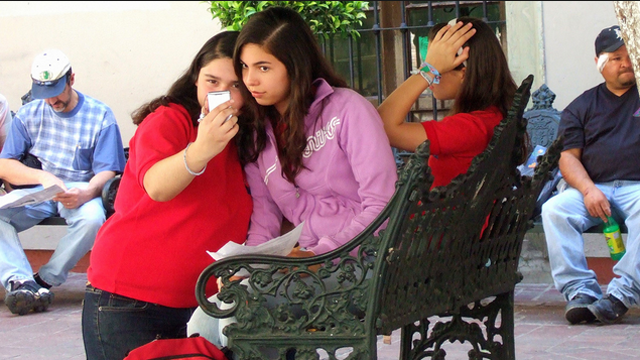
"content": "\u003ch3>\u003cstrong>To respond to the Do Now, you can comment below or tweet your response. Be sure to begin your tweet with \u003cem>@KQEDEdspace\u003c/em> and end it with \u003cem>#DoNowMe\u003c/em>\u003c/strong>\u003c/h3>\n\u003cp>For more info on how to use Twitter, click \u003ca href=\"http://ww2.kqed.org/education/how-to-use-twitter-in-your-teaching-practice/\">here\u003c/a>.\u003c/p>\n\u003chr>\n\u003ch2>\u003cstrong>Do Now\u003c/strong>\u003c/h2>\n\u003cp>Do you think teens today are more narcissistic than previous generations? What is the difference between narcissism and believing in yourself? Given the expectations that come along with social media, is what people used to think of as narcissism just a necessary part of everyday life for today’s teens?\u003c/p>\n\u003ch2>\u003cstrong>Introduction\u003c/strong>\u003c/h2>\n\u003cp>Tell me if you’ve heard this one before: taking selfies and being told you’re “special” has spoiled your poor, young adult brain. There’s a lot of \u003ca href=\"http://www.urbandictionary.com/define.php?term=throw+shade\">media shade being thrown\u003c/a> at millennials — those born between the 1980s and early 2000s — saying things like today’s young people are entitled and hard to manage, that \u003ca href=\"http://time.com/247/millennials-the-me-me-me-generation/\">we’re obsessed\u003c/a> with gadgets and appearances, and that our job skills aren’t up to par with our egos. And while it’s tempting to dismiss the accusations as generational jealousy, recent research seems to indicate there may be some truth to this kind of talk.\u003c/p>\n\u003cp>“Millennials are more narcissistic than boomers and gen Xers were at the same age,” said Jean Twenge, a professor of psychology at San Diego State University and the author of several books on narcissism — a personality type characterized by selfishness, an overblown view of one’s own talents, and a craving for admiration.\u003c/p>\n\u003cp>Twenge told Youth Radio that according to her research, millennials tend to be “tolerant, confident, open-minded, and ambitious but also disengaged, narcissistic, distrustful, and anxious.” In a study of college freshmen published in 2014, Twenge found that millennials were more likely to score themselves as “above average” and have positive self-views compared to previous generations. Millennials also scored higher on a test known as the Narcissism Personality Inventory, which measures factors like vanity, superiority, and self-sufficiency.\u003c/p>\n\u003cp>[ad fullwidth]\u003c/p>\n\u003cp>Assuming for now that teens today might be more narcissistic than they were in the past (which, by the way, \u003ca href=\"http://www.nytimes.com/2013/08/06/science/seeing-narcissists-everywhere.html?pagewanted=all\">not everyone does\u003c/a>), some psychologists say narcissism can be a coping mechanism that actually benefits millennials.\u003c/p>\n\u003cp>“I think of narcissism as an adaptive thing that teenagers use to work on self-image and identity,” University of Notre Dame psychologist Daniel Lapsley told Youth Radio. Given the issues today’s teens have to deal with — fierce competition for college, a tough job market, and, thanks to the Internet, less privacy than any previous generation — he says that teens may need a slightly inflated sense of self in order to successfully overcome the challenges they’ll face.\u003c/p>\n\u003cp>“A certain sense of invulnerability is a good thing,” he said. “There’s going to be occasions in your life where you have to engage in behavior where it’s not certain. Asking someone for a date or applying to college. If it goes the wrong way your self-esteem is at risk.”\u003c/p>\n\u003ch2>\u003cstrong>Resource\u003c/strong>\u003c/h2>\n\u003cp>[soundcloud url=”https://api.soundcloud.com/tracks/189842804″]\u003c/p>\n\u003cp>\u003cstrong>AUDIO: \u003ca href=\"http://www.kqed.org/a/perspectives/R201412040735\">Are Teenagers Today More Narcissistic? \u003c/a> (Youth Radio Podcast)\u003c/strong>\u003cbr>\nAre teens today more narcissistic than ever before? Some psychologists are pointing to a personality test called the Narcissism Personality Inventory, which seems to indicate that millennials have a historically high sense of self-obsession. But not everyone thinks the test is a great tool to use on teens, who may need an inflated sense of self to protect themselves against the natural pitfalls of puberty. In this week’s podcast, Youth Radio’s teen reporters turn the lens on themselves as they investigate their own narcissism scores, and interview an expert on what this trend might mean for the success of the next generation.\u003c/p>\n\u003chr>\n\u003ch3>\u003cstrong>To respond to the Do Now, you can comment below or tweet your response. Be sure to begin your tweet with \u003cem>@KQEDedspace\u003c/em> and end it with \u003cem>#DoNowMe\u003c/em>\u003c/strong>\u003c/h3>\n\u003cp>For more info on how to use Twitter, click \u003ca href=\"http://ww2.kqed.org/education/how-to-use-twitter-in-your-teaching-practice/\">here\u003c/a>.\u003c/p>\n\u003cp>\u003cstrong>We encourage students to reply to other people’s tweets to foster more of a conversation. Also, if students tweet their personal opinions, ask them to support their ideas with links to interesting/credible articles online (adding a nice research component) or retweet other people’s ideas that they agree/disagree/find amusing. We also value student-produced media linked to their tweets. You can visit our \u003ca href=\"http://ww2.kqed.org/education/category/tools/video-tutorials/\">video tutorials\u003c/a> that showcase how to use several web-based production tools. Of course, do as you can… and any contribution is most welcomed.\u003c/strong>\u003c/p>\n\u003cp>\u003cstrong>For inspiration, here is a \u003ca href=\"http://ww2.kqed.org/education/2015/03/06/students-respond-to-the-reported-rise-in-narcissism-today/\">link \u003c/a>to the conversation that \u003cem>#DoNowMe\u003c/em> inspired when it was originally published in February 2015.\u003c/strong>\u003c/p>\n\u003chr>\n\u003ch2>\u003cstrong>More Resources\u003c/strong>\u003c/h2>\n\u003cp>\u003cstrong>ARTICLE: \u003ca href=\"http://www.nytimes.com/2013/08/06/science/seeing-narcissists-everywhere.html?pagewanted=all&_r=0\">Seeing Narcissists Everywhere\u003c/a> (New York Times)\u003c/strong>\u003cbr>\nThis New York Times article explores Dr. Jean M. Twenge’s study of cross-generational narcissism. Using data from the Narcissistic Personality Inventory (NPI), Dr. Twenge concludes that rates of narcissism found by the NPI have risen over time, notably amongst the Millennial generation. Dr. Twenge’s analysis garners criticism from other psychologists, who argue that the NPI test is inherently flawed, and even that Dr. Twenge may be misinterpreting this data. Whereas the NPI may show a rise in characteristics that Dr. Twenge attributes in narcissism, critics claim the test more so reveals findings of qualities such as confidence and self-worth, which cannot always be directly tied to narcissism.\u003c/p>\n\u003cp>\u003cstrong>AUDIO: \u003ca href=\"http://www.npr.org/blogs/alltechconsidered/2014/10/13/338295367/how-millennials-are-reshaping-charity-and-online-giving\">How Millennials Are Reshaping Charity And Online Giving\u003c/a> (NPR)\u003c/strong>\u003cbr>\nThis feature from NPR’s All Tech Considered looks at a counterargument to the idea of growing narcissism in the Millennial era – that Millennials are spending and giving more of their money for social good. Looking at giving patterns, the story claims that Millennials feel more of an obligation to give money to charitable causes, and also care more about investing in causes where the impact of their giving can be directly seen.\u003c/p>\n\u003cp>\u003cstrong>TEST: \u003ca href=\"http://personality-testing.info/tests/NPI.php\">Narcissistic Personality Inventory\u003c/a> (Personality Tests)\u003c/strong>\u003cbr>\nThe Narcissistic Personality Inventory (NPI) is a test designed in 1979 that rates levels of narcissism by asking participants to select what best reflects themselves from a series of paired statements. NPI data has been evaluated over the years by various field experts, including the aforementioned study from Dr. Jean M. Twenge.\u003c/p>\n\u003chr>\n\u003cp>[ad floatright]\u003c/p>\n\u003cp>\u003cem> This KQED Do Now segment was produced in collaboration with Youth Radio, the Peabody Award-winning youth-driven production company headquartered in Oakland, California. This post was written by Teresa Chin at Youth Radio, and was originally published on February, 6, 2015.\u003c/em>\u003c/p>\n\u003chr>\n\n",
"stats": {
"hasVideo": false,
"hasChartOrMap": false,
"hasAudio": false,
"hasPolis": false,
"wordCount": 1115,
"hasGoogleForm": false,
"hasGallery": false,
"hasHearkenModule": false,
"iframeSrcs": [],
"paragraphCount": 19
},
"modified": 1704763614,
"excerpt": "“Millennials are more narcissistic than boomers and gen Xers were at the same age,” said Jean Twenge, a professor of psychology at San Diego State University and the author of several books on narcissism. Do you think teens today are more narcissistic than previous generations? ",
"headData": {
"twImgId": "",
"twTitle": "",
"ogTitle": "",
"ogImgId": "",
"twDescription": "",
"description": "“Millennials are more narcissistic than boomers and gen Xers were at the same age,” said Jean Twenge, a professor of psychology at San Diego State University and the author of several books on narcissism. Do you think teens today are more narcissistic than previous generations? ",
"title": "Are Teens Today More Narcissistic Than Previous Generations? | KQED",
"ogDescription": "",
"schema": {
"@context": "https://schema.org",
"@type": "Article",
"headline": "Are Teens Today More Narcissistic Than Previous Generations?",
"datePublished": "2015-06-19T16:00:12-07:00",
"dateModified": "2024-01-08T17:26:54-08:00",
"image": "https://cdn.kqed.org/wp-content/uploads/2020/02/KQED-OG-Image@1x.png"
}
},
"guestAuthors": [],
"slug": "narcissism-me-generation",
"status": "publish",
"sticky": false,
"path": "/education/15961/narcissism-me-generation",
"audioTrackLength": null,
"parsedContent": [
{
"type": "contentString",
"content": "\u003cdiv class=\"post-body\">\u003cp>\u003ch3>\u003cstrong>To respond to the Do Now, you can comment below or tweet your response. Be sure to begin your tweet with \u003cem>@KQEDEdspace\u003c/em> and end it with \u003cem>#DoNowMe\u003c/em>\u003c/strong>\u003c/h3>\n\u003cp>For more info on how to use Twitter, click \u003ca href=\"http://ww2.kqed.org/education/how-to-use-twitter-in-your-teaching-practice/\">here\u003c/a>.\u003c/p>\n\u003chr>\n\u003ch2>\u003cstrong>Do Now\u003c/strong>\u003c/h2>\n\u003cp>Do you think teens today are more narcissistic than previous generations? What is the difference between narcissism and believing in yourself? Given the expectations that come along with social media, is what people used to think of as narcissism just a necessary part of everyday life for today’s teens?\u003c/p>\n\u003ch2>\u003cstrong>Introduction\u003c/strong>\u003c/h2>\n\u003cp>Tell me if you’ve heard this one before: taking selfies and being told you’re “special” has spoiled your poor, young adult brain. There’s a lot of \u003ca href=\"http://www.urbandictionary.com/define.php?term=throw+shade\">media shade being thrown\u003c/a> at millennials — those born between the 1980s and early 2000s — saying things like today’s young people are entitled and hard to manage, that \u003ca href=\"http://time.com/247/millennials-the-me-me-me-generation/\">we’re obsessed\u003c/a> with gadgets and appearances, and that our job skills aren’t up to par with our egos. And while it’s tempting to dismiss the accusations as generational jealousy, recent research seems to indicate there may be some truth to this kind of talk.\u003c/p>\n\u003cp>“Millennials are more narcissistic than boomers and gen Xers were at the same age,” said Jean Twenge, a professor of psychology at San Diego State University and the author of several books on narcissism — a personality type characterized by selfishness, an overblown view of one’s own talents, and a craving for admiration.\u003c/p>\n\u003cp>Twenge told Youth Radio that according to her research, millennials tend to be “tolerant, confident, open-minded, and ambitious but also disengaged, narcissistic, distrustful, and anxious.” In a study of college freshmen published in 2014, Twenge found that millennials were more likely to score themselves as “above average” and have positive self-views compared to previous generations. Millennials also scored higher on a test known as the Narcissism Personality Inventory, which measures factors like vanity, superiority, and self-sufficiency.\u003c/p>\n\u003cp>\u003c/p>\u003c/div>",
"attributes": {
"named": {},
"numeric": []
}
},
{
"type": "component",
"content": "",
"name": "ad",
"attributes": {
"named": {
"label": "fullwidth"
},
"numeric": [
"fullwidth"
]
}
},
{
"type": "contentString",
"content": "\u003cdiv class=\"post-body\">\u003cp>\u003c/p>\n\u003cp>Assuming for now that teens today might be more narcissistic than they were in the past (which, by the way, \u003ca href=\"http://www.nytimes.com/2013/08/06/science/seeing-narcissists-everywhere.html?pagewanted=all\">not everyone does\u003c/a>), some psychologists say narcissism can be a coping mechanism that actually benefits millennials.\u003c/p>\n\u003cp>“I think of narcissism as an adaptive thing that teenagers use to work on self-image and identity,” University of Notre Dame psychologist Daniel Lapsley told Youth Radio. Given the issues today’s teens have to deal with — fierce competition for college, a tough job market, and, thanks to the Internet, less privacy than any previous generation — he says that teens may need a slightly inflated sense of self in order to successfully overcome the challenges they’ll face.\u003c/p>\n\u003cp>“A certain sense of invulnerability is a good thing,” he said. “There’s going to be occasions in your life where you have to engage in behavior where it’s not certain. Asking someone for a date or applying to college. If it goes the wrong way your self-esteem is at risk.”\u003c/p>\n\u003ch2>\u003cstrong>Resource\u003c/strong>\u003c/h2>\n\u003cp>\u003c/p>\u003cp>\u003cdiv class='utils-parseShortcode-shortcodes-__shortcodes__shortcodeWrapper'>\n \u003ciframe width='undefined' height='undefined'\n scrolling='no' frameborder='no'\n src='https://w.soundcloud.com/player/?url=”https://api.soundcloud.com/tracks/189842804″&visual=true&undefined'\n title='”https://api.soundcloud.com/tracks/189842804″'>\n \u003c/iframe>\n \u003c/div>\u003c/p>\u003cp>\u003c/p>\n\u003cp>\u003cstrong>AUDIO: \u003ca href=\"http://www.kqed.org/a/perspectives/R201412040735\">Are Teenagers Today More Narcissistic? \u003c/a> (Youth Radio Podcast)\u003c/strong>\u003cbr>\nAre teens today more narcissistic than ever before? Some psychologists are pointing to a personality test called the Narcissism Personality Inventory, which seems to indicate that millennials have a historically high sense of self-obsession. But not everyone thinks the test is a great tool to use on teens, who may need an inflated sense of self to protect themselves against the natural pitfalls of puberty. In this week’s podcast, Youth Radio’s teen reporters turn the lens on themselves as they investigate their own narcissism scores, and interview an expert on what this trend might mean for the success of the next generation.\u003c/p>\n\u003chr>\n\u003ch3>\u003cstrong>To respond to the Do Now, you can comment below or tweet your response. Be sure to begin your tweet with \u003cem>@KQEDedspace\u003c/em> and end it with \u003cem>#DoNowMe\u003c/em>\u003c/strong>\u003c/h3>\n\u003cp>For more info on how to use Twitter, click \u003ca href=\"http://ww2.kqed.org/education/how-to-use-twitter-in-your-teaching-practice/\">here\u003c/a>.\u003c/p>\n\u003cp>\u003cstrong>We encourage students to reply to other people’s tweets to foster more of a conversation. Also, if students tweet their personal opinions, ask them to support their ideas with links to interesting/credible articles online (adding a nice research component) or retweet other people’s ideas that they agree/disagree/find amusing. We also value student-produced media linked to their tweets. You can visit our \u003ca href=\"http://ww2.kqed.org/education/category/tools/video-tutorials/\">video tutorials\u003c/a> that showcase how to use several web-based production tools. Of course, do as you can… and any contribution is most welcomed.\u003c/strong>\u003c/p>\n\u003cp>\u003cstrong>For inspiration, here is a \u003ca href=\"http://ww2.kqed.org/education/2015/03/06/students-respond-to-the-reported-rise-in-narcissism-today/\">link \u003c/a>to the conversation that \u003cem>#DoNowMe\u003c/em> inspired when it was originally published in February 2015.\u003c/strong>\u003c/p>\n\u003chr>\n\u003ch2>\u003cstrong>More Resources\u003c/strong>\u003c/h2>\n\u003cp>\u003cstrong>ARTICLE: \u003ca href=\"http://www.nytimes.com/2013/08/06/science/seeing-narcissists-everywhere.html?pagewanted=all&_r=0\">Seeing Narcissists Everywhere\u003c/a> (New York Times)\u003c/strong>\u003cbr>\nThis New York Times article explores Dr. Jean M. Twenge’s study of cross-generational narcissism. Using data from the Narcissistic Personality Inventory (NPI), Dr. Twenge concludes that rates of narcissism found by the NPI have risen over time, notably amongst the Millennial generation. Dr. Twenge’s analysis garners criticism from other psychologists, who argue that the NPI test is inherently flawed, and even that Dr. Twenge may be misinterpreting this data. Whereas the NPI may show a rise in characteristics that Dr. Twenge attributes in narcissism, critics claim the test more so reveals findings of qualities such as confidence and self-worth, which cannot always be directly tied to narcissism.\u003c/p>\n\u003cp>\u003cstrong>AUDIO: \u003ca href=\"http://www.npr.org/blogs/alltechconsidered/2014/10/13/338295367/how-millennials-are-reshaping-charity-and-online-giving\">How Millennials Are Reshaping Charity And Online Giving\u003c/a> (NPR)\u003c/strong>\u003cbr>\nThis feature from NPR’s All Tech Considered looks at a counterargument to the idea of growing narcissism in the Millennial era – that Millennials are spending and giving more of their money for social good. Looking at giving patterns, the story claims that Millennials feel more of an obligation to give money to charitable causes, and also care more about investing in causes where the impact of their giving can be directly seen.\u003c/p>\n\u003cp>\u003cstrong>TEST: \u003ca href=\"http://personality-testing.info/tests/NPI.php\">Narcissistic Personality Inventory\u003c/a> (Personality Tests)\u003c/strong>\u003cbr>\nThe Narcissistic Personality Inventory (NPI) is a test designed in 1979 that rates levels of narcissism by asking participants to select what best reflects themselves from a series of paired statements. NPI data has been evaluated over the years by various field experts, including the aforementioned study from Dr. Jean M. Twenge.\u003c/p>\n\u003chr>\n\u003cp>\u003c/p>\u003c/div>",
"attributes": {
"named": {},
"numeric": []
}
},
{
"type": "component",
"content": "",
"name": "ad",
"attributes": {
"named": {
"label": "floatright"
},
"numeric": [
"floatright"
]
}
},
{
"type": "contentString",
"content": "\u003cdiv class=\"post-body\">\u003cp>\u003c/p>\n\u003cp>\u003cem> This KQED Do Now segment was produced in collaboration with Youth Radio, the Peabody Award-winning youth-driven production company headquartered in Oakland, California. This post was written by Teresa Chin at Youth Radio, and was originally published on February, 6, 2015.\u003c/em>\u003c/p>\n\u003chr>\n\n\u003c/div>\u003c/p>",
"attributes": {
"named": {},
"numeric": []
}
}
],
"link": "/education/15961/narcissism-me-generation",
"authors": [
"9546"
],
"series": [
"education_2837"
],
"categories": [
"education_1",
"education_50"
],
"tags": [
"education_5",
"education_1320",
"education_926",
"education_1129"
],
"collections": [
"education_2403"
],
"featImg": "education_15965",
"label": "education_2837"
},
"education_17424": {
"type": "posts",
"id": "education_17424",
"meta": {
"index": "posts_1716263798",
"site": "education",
"id": "17424",
"score": null,
"sort": [
1432663223000
]
},
"parent": 0,
"labelTerm": {
"site": "education",
"term": 2837
},
"blocks": [],
"publishDate": 1432663223,
"format": "video",
"title": "What Would You Explore with a Foldscope?",
"headTitle": "What Would You Explore with a Foldscope? | KQED",
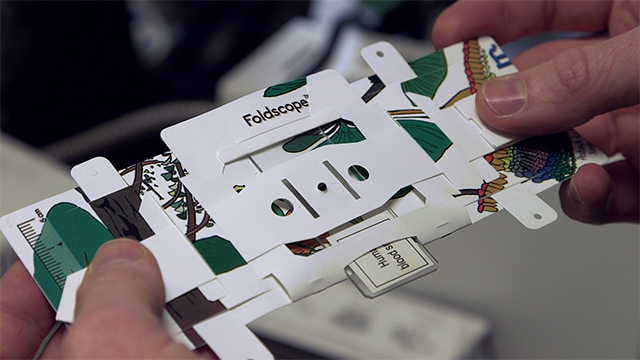
"content": "\u003cp>\u003cem>Manu Prakash, a bioengineer at Stanford has designed an origami paper microscope called a Foldscope. He hopes students and life-long learners throughout the world will use them to explore and answer their own questions.\u003c/em>\u003c/p>\n\u003chr>\n\u003ch2>\u003cstrong>Do Now\u003c/strong>\u003c/h2>\n\u003cp>What would you want to explore with a Foldscope? \u003cstrong>#DoNowMicro\u003c/strong>\u003c/p>\n\u003ch2>\u003cstrong>How to Do Now \u003c/strong>\u003c/h2>\n\u003cp>To respond to the Do Now, you can comment below or post your response on social media platforms such as Twitter, Instagram, Tumblr, Vine, Flickr, Google +, etc. \u003cstrong>Just be sure to include \u003ci>#DoNowMicro \u003c/i>in your posts.\u003c/strong>\u003c/p>\n\u003cp>Go here for\u003ca href=\"http://ww2.kqed.org/education/about-do-now/\"> best practices \u003c/a>for using Do Now, using \u003ca href=\"http://ww2.kqed.org/education/how-to-use-twitter-in-your-teaching-practice/\">Twitter for teaching\u003c/a>, and using other \u003ca href=\"http://ww2.kqed.org/education/category/tools/\">digital tools\u003c/a>.\u003c/p>\n\u003chr>\n\u003ch2>\u003cstrong>Learn More about Foldscopes \u003c/strong>\u003c/h2>\n\u003cp>Have you ever wondered what is in a drop of pond or ocean water? What the inside of a worm looks like? What dust is made of? What pollen looks like? What other questions do you have about the microscopic world?\u003c/p>\n\u003cp>[ad fullwidth]\u003c/p>\n\u003cp>Manu Prakash, a bioengineer at Stanford University, has designed an inexpensive, origami microscope to allow people from around the world to explore, make discoveries and answer questions like these. The microscopes are made out of waterproof paper, assembled by the end-user, lightweight, small enough to fit in your pocket and cost less than $1 to produce. Prakash calls them Foldscopes, and they were born out of a desire to make scientific tools accessible to all.\u003c/p>\n\u003cp>\u003ca href=\"http://ww2.kqed.org/education/wp-content/uploads/sites/38/2015/07/Mau-Prakash.jpg\">\u003cimg loading=\"lazy\" decoding=\"async\" class=\" wp-image-18183\" src=\"http://ww2.kqed.org/education/wp-content/uploads/sites/38/2015/07/Mau-Prakash-640x352.jpg\" alt=\"Manu Prakash shows how to use his Foldscope.\" width=\"353\" height=\"194\">\u003c/a> Manu Prakash shows health care workers in developing countries how to use his Foldscope.\u003c/p>\n\u003cp>In designing the Foldscope, Prakash wanted to create an instrument that could be used both by healthcare workers in developing countries and remote areas, as well as by people who might not otherwise get the opportunity to look at the microscopic world. Foldscopes are currently in trials to be approved as diagnostic tools for diseases like malaria and African sleeping sickness. And, through the \u003ca href=\"http://www.foldscope.com/\">Ten Thousand Microscope project\u003c/a>, Prakash has shipped approximately 50,000 Foldscopes to students and lifelong learners in more than 130 countries who submitted ideas for experiments or questions that they would like to answer using the Foldscopes.\u003c/p>\n\u003cp>\u003ca href=\"http://ww2.kqed.org/education/wp-content/uploads/sites/38/2015/05/10Kmicroscopes-e1438149637808.jpg\">\u003cimg loading=\"lazy\" decoding=\"async\" class=\"wp-image-18169 \" src=\"http://ww2.kqed.org/education/wp-content/uploads/sites/38/2015/05/10Kmicroscopes-479x360.jpg\" alt=\"10K Microscopes: an experiment to crowd-source a biology microscopy manual\" width=\"271\" height=\"204\">\u003c/a> 10K Microscopes: experiment to crowd-source a biology microscopy manual\u003c/p>\n\u003cp>Many recipients are already reporting their findings on Prakash’s \u003ca href=\"http://microcosmos.foldscope.com/\"> website\u003c/a>. He hopes that this will create a network of learners asking questions, sharing experiments and getting inspired by science.\u003c/p>\n\u003cp>At the basic level, the Foldscope requires no external power or light source; you simply insert a sample slide into the Foldscope, hold it up to a light source and look through the tiny, salt grain-size lens. However, the Foldscope can be modified. For example, Prakash’s team has added external watch batteries, lights, filters and different lenses to make different versions of the Foldscope. You can even attach a smartphone to the microscope in order to record images. He hopes that children, hackers and tinkerers around the world will add to the Foldscope and explore new modes of microscopy.\u003c/p>\n\u003ch2>\u003c/h2>\n\u003cp> \u003c/p>\n\u003chr>\n\u003ch2>\u003cstrong>More Resources\u003c/strong>\u003c/h2>\n\u003cp>\u003cstrong>ARTICLE: \u003ca href=\"http://sciencelearn.org.nz/Contexts/Exploring-with-Microscopes/NZ-Research/Exploring-with-Microscopes\">Exploring with Microscopes\u003c/a> (Science Learning)\u003c/strong>\u003cbr>\nThis article provides an overview of how microscopes can be used and includes links to examples of how scientists are using microscopes in their work.\u003c/p>\n\u003cp>\u003cstrong>VIDEO: \u003ca href=\"http://science.kqed.org/quest/video/science-spotlight-bending-light-with-a-new-kind-of-microscope/\">Science Spotlight:Bending Light with a New Kind of Microscope?\u003c/a> (KQED QUEST)\u003c/strong>\u003cbr>\nLearn how microscopes work by using lenses to bend light to magnify objects.\u003c/p>\n\u003cp>\u003cstrong>ARTICLE:\u003ca href=\"http://www.gizmag.com/smartphone-lens-microscope-university-houston/37394/\"> Smartphone Microscope Lens that Costs Just Pennies to Make\u003c/a> (gizmag)\u003c/strong>\u003cbr>\nResearchers at University of Houston have created cheap lenses that attach to your smartphone to turn it into a microscope.\u003c/p>\n\u003cp>\u003cstrong>ARTICLE:\u003ca href=\"http://www.examiner.com/article/50-things-to-look-at-under-a-microscope\"> 50 Things to Look at Under a Microscope \u003c/a> (Examiner.com)\u003c/strong>\u003cbr>\nHere are 50 ideas for things you could look at under a microscope.\u003c/p>\n\u003cp>\u003c/p>\n\u003cp>\u003cstrong>ARTICLE:\u003ca href=\"http://www.hometrainingtools.com/a/microscope-slide-making-ideas\"> Microscope Slide Making Ideas \u003c/a> (Home Science Tools)\u003c/strong>\u003cbr>\nThis article provides tips on making slides and ideas for various objects to view underneath a microscope.\u003c/p>\n\u003chr>\n\n",
"stats": {
"hasVideo": false,
"hasChartOrMap": false,
"hasAudio": false,
"hasPolis": false,
"wordCount": 629,
"hasGoogleForm": false,
"hasGallery": false,
"hasHearkenModule": false,
"iframeSrcs": [],
"paragraphCount": 18
},
"modified": 1704763650,
"excerpt": "A bioengineer at Stanford University has designed an inexpensive, origami microscope--called a Foldscope--to allow people from around the world to make discoveries and answer their own questions. What would you explore with a Foldscope?",
"headData": {
"twImgId": "",
"twTitle": "",
"ogTitle": "",
"ogImgId": "",
"twDescription": "",
"description": "A bioengineer at Stanford University has designed an inexpensive, origami microscope--called a Foldscope--to allow people from around the world to make discoveries and answer their own questions. What would you explore with a Foldscope?",
"title": "What Would You Explore with a Foldscope? | KQED",
"ogDescription": "",
"schema": {
"@context": "https://schema.org",
"@type": "Article",
"headline": "What Would You Explore with a Foldscope?",
"datePublished": "2015-05-26T11:00:23-07:00",
"dateModified": "2024-01-08T17:27:30-08:00",
"image": "https://cdn.kqed.org/wp-content/uploads/2020/02/KQED-OG-Image@1x.png"
}
},
"guestAuthors": [],
"slug": "what-would-you-explore-with-a-foldscope",
"status": "publish",
"videoEmbed": "https://youtu.be/pTZ30O0HP0c",
"sticky": false,
"path": "/education/17424/what-would-you-explore-with-a-foldscope",
"audioTrackLength": null,
"parsedContent": [
{
"type": "contentString",
"content": "\u003cdiv class=\"post-body\">\u003cp>\u003cp>\u003cem>Manu Prakash, a bioengineer at Stanford has designed an origami paper microscope called a Foldscope. He hopes students and life-long learners throughout the world will use them to explore and answer their own questions.\u003c/em>\u003c/p>\n\u003chr>\n\u003ch2>\u003cstrong>Do Now\u003c/strong>\u003c/h2>\n\u003cp>What would you want to explore with a Foldscope? \u003cstrong>#DoNowMicro\u003c/strong>\u003c/p>\n\u003ch2>\u003cstrong>How to Do Now \u003c/strong>\u003c/h2>\n\u003cp>To respond to the Do Now, you can comment below or post your response on social media platforms such as Twitter, Instagram, Tumblr, Vine, Flickr, Google +, etc. \u003cstrong>Just be sure to include \u003ci>#DoNowMicro \u003c/i>in your posts.\u003c/strong>\u003c/p>\n\u003cp>Go here for\u003ca href=\"http://ww2.kqed.org/education/about-do-now/\"> best practices \u003c/a>for using Do Now, using \u003ca href=\"http://ww2.kqed.org/education/how-to-use-twitter-in-your-teaching-practice/\">Twitter for teaching\u003c/a>, and using other \u003ca href=\"http://ww2.kqed.org/education/category/tools/\">digital tools\u003c/a>.\u003c/p>\n\u003chr>\n\u003ch2>\u003cstrong>Learn More about Foldscopes \u003c/strong>\u003c/h2>\n\u003cp>Have you ever wondered what is in a drop of pond or ocean water? What the inside of a worm looks like? What dust is made of? What pollen looks like? What other questions do you have about the microscopic world?\u003c/p>\n\u003cp>\u003c/p>\u003c/div>",
"attributes": {
"named": {},
"numeric": []
}
},
{
"type": "component",
"content": "",
"name": "ad",
"attributes": {
"named": {
"label": "fullwidth"
},
"numeric": [
"fullwidth"
]
}
},
{
"type": "contentString",
"content": "\u003cdiv class=\"post-body\">\u003cp>\u003c/p>\n\u003cp>Manu Prakash, a bioengineer at Stanford University, has designed an inexpensive, origami microscope to allow people from around the world to explore, make discoveries and answer questions like these. The microscopes are made out of waterproof paper, assembled by the end-user, lightweight, small enough to fit in your pocket and cost less than $1 to produce. Prakash calls them Foldscopes, and they were born out of a desire to make scientific tools accessible to all.\u003c/p>\n\u003cp>\u003ca href=\"http://ww2.kqed.org/education/wp-content/uploads/sites/38/2015/07/Mau-Prakash.jpg\">\u003cimg loading=\"lazy\" decoding=\"async\" class=\" wp-image-18183\" src=\"http://ww2.kqed.org/education/wp-content/uploads/sites/38/2015/07/Mau-Prakash-640x352.jpg\" alt=\"Manu Prakash shows how to use his Foldscope.\" width=\"353\" height=\"194\">\u003c/a> Manu Prakash shows health care workers in developing countries how to use his Foldscope.\u003c/p>\n\u003cp>In designing the Foldscope, Prakash wanted to create an instrument that could be used both by healthcare workers in developing countries and remote areas, as well as by people who might not otherwise get the opportunity to look at the microscopic world. Foldscopes are currently in trials to be approved as diagnostic tools for diseases like malaria and African sleeping sickness. And, through the \u003ca href=\"http://www.foldscope.com/\">Ten Thousand Microscope project\u003c/a>, Prakash has shipped approximately 50,000 Foldscopes to students and lifelong learners in more than 130 countries who submitted ideas for experiments or questions that they would like to answer using the Foldscopes.\u003c/p>\n\u003cp>\u003ca href=\"http://ww2.kqed.org/education/wp-content/uploads/sites/38/2015/05/10Kmicroscopes-e1438149637808.jpg\">\u003cimg loading=\"lazy\" decoding=\"async\" class=\"wp-image-18169 \" src=\"http://ww2.kqed.org/education/wp-content/uploads/sites/38/2015/05/10Kmicroscopes-479x360.jpg\" alt=\"10K Microscopes: an experiment to crowd-source a biology microscopy manual\" width=\"271\" height=\"204\">\u003c/a> 10K Microscopes: experiment to crowd-source a biology microscopy manual\u003c/p>\n\u003cp>Many recipients are already reporting their findings on Prakash’s \u003ca href=\"http://microcosmos.foldscope.com/\"> website\u003c/a>. He hopes that this will create a network of learners asking questions, sharing experiments and getting inspired by science.\u003c/p>\n\u003cp>At the basic level, the Foldscope requires no external power or light source; you simply insert a sample slide into the Foldscope, hold it up to a light source and look through the tiny, salt grain-size lens. However, the Foldscope can be modified. For example, Prakash’s team has added external watch batteries, lights, filters and different lenses to make different versions of the Foldscope. You can even attach a smartphone to the microscope in order to record images. He hopes that children, hackers and tinkerers around the world will add to the Foldscope and explore new modes of microscopy.\u003c/p>\n\u003ch2>\u003c/h2>\n\u003cp> \u003c/p>\n\u003chr>\n\u003ch2>\u003cstrong>More Resources\u003c/strong>\u003c/h2>\n\u003cp>\u003cstrong>ARTICLE: \u003ca href=\"http://sciencelearn.org.nz/Contexts/Exploring-with-Microscopes/NZ-Research/Exploring-with-Microscopes\">Exploring with Microscopes\u003c/a> (Science Learning)\u003c/strong>\u003cbr>\nThis article provides an overview of how microscopes can be used and includes links to examples of how scientists are using microscopes in their work.\u003c/p>\n\u003cp>\u003cstrong>VIDEO: \u003ca href=\"http://science.kqed.org/quest/video/science-spotlight-bending-light-with-a-new-kind-of-microscope/\">Science Spotlight:Bending Light with a New Kind of Microscope?\u003c/a> (KQED QUEST)\u003c/strong>\u003cbr>\nLearn how microscopes work by using lenses to bend light to magnify objects.\u003c/p>\n\u003cp>\u003cstrong>ARTICLE:\u003ca href=\"http://www.gizmag.com/smartphone-lens-microscope-university-houston/37394/\"> Smartphone Microscope Lens that Costs Just Pennies to Make\u003c/a> (gizmag)\u003c/strong>\u003cbr>\nResearchers at University of Houston have created cheap lenses that attach to your smartphone to turn it into a microscope.\u003c/p>\n\u003cp>\u003cstrong>ARTICLE:\u003ca href=\"http://www.examiner.com/article/50-things-to-look-at-under-a-microscope\"> 50 Things to Look at Under a Microscope \u003c/a> (Examiner.com)\u003c/strong>\u003cbr>\nHere are 50 ideas for things you could look at under a microscope.\u003c/p>\n\u003cp>\u003c/p>\n\u003cp>\u003cstrong>ARTICLE:\u003ca href=\"http://www.hometrainingtools.com/a/microscope-slide-making-ideas\"> Microscope Slide Making Ideas \u003c/a> (Home Science Tools)\u003c/strong>\u003cbr>\nThis article provides tips on making slides and ideas for various objects to view underneath a microscope.\u003c/p>\n\u003chr>\n\n\u003c/div>\u003c/p>",
"attributes": {
"named": {},
"numeric": []
}
}
],
"link": "/education/17424/what-would-you-explore-with-a-foldscope",
"authors": [
"6544"
],
"series": [
"education_2837"
],
"categories": [
"education_1",
"education_49"
],
"tags": [
"education_2516",
"education_5",
"education_1320"
],
"collections": [
"education_2403"
],
"featImg": "education_17605",
"label": "education_2837"
},
"education_17137": {
"type": "posts",
"id": "education_17137",
"meta": {
"index": "posts_1716263798",
"site": "education",
"id": "17137",
"score": null,
"sort": [
1430523018000
]
},
"parent": 0,
"labelTerm": {
"site": "education",
"term": 2837
},
"blocks": [],
"publishDate": 1430523018,
"format": "standard",
"title": "How Does the American Dream Relate to You?",
"headTitle": "How Does the American Dream Relate to You? | KQED",
"content": "\u003ch3>\u003cstrong>To respond to the Do Now, you can comment below or tweet your response. Be sure to begin your tweet with \u003cem>@KQEDEdspace\u003c/em> and end it with \u003cem>#DoNowAmDream\u003c/em>\u003c/strong>\u003c/h3>\n\u003cp>For more info on how to use Twitter, click \u003ca href=\"http://ww2.kqed.org/education/how-to-use-twitter-in-your-teaching-practice/\">here\u003c/a>.\u003c/p>\n\u003chr>\n\u003ch2>\u003cstrong>Do Now\u003c/strong>\u003c/h2>\n\u003cp>How do you personally define the “American dream?” How do priorities like home ownership and access to higher education compare with your values? What will success look like for your future?\u003c/p>\n\u003ch2>\u003cstrong>Introduction\u003c/strong>\u003c/h2>\n\u003cp>Not too many years ago, the “American dream” seemed to be a pretty uniform vision: landing a well-paying job, owning your own home and filling it with cool stuff, maybe even having a family and sending your kids to good schools and colleges. \u003c/p>\n\u003cp>But for many millennials, their goals don’t necessarily line up with this narrow definition of success. More than previous generations, young people today say \u003ca href=\"http://time.com/5074/millennials-put-their-surprising-stamp-on-the-american-dream/\">they value travel and self-employment\u003c/a> over material things like houses and cars. And while for immigrant families “making it” used to mean assimilating into American culture, many young first and second generation Americans are seeking to preserve their traditions, finding balance between old and new values.\u003c/p>\n\u003cp>Youth Radio reporter Kasey Saeturn is one of those millennials. Her family is from Laos, and is ethically Mien. Unlike her younger siblings, she has made an effort to learn to speak Mien even as she participates in a traditional American education. “I’m trying to pursue higher education, financial aid, and the American Dream,” she says. “And I’m trying to do all that, without losing the Mien ways.”\u003c/p>\n\u003cp>[ad fullwidth]\u003c/p>\n\u003cp>But as evident in another Youth Radio story, this one by Isabella Ordaz, the opportunity to pursue the traditional American Dream can sometimes feel like a cultural trade off. When she was ten, Isabella, who is Mexican-American and now in high school, moved with her family from her diverse neighborhood with a reputation for high crime, to a primarily white suburb with a low crime rate and prestigious local schools. While she had more academic options in her new school, it was a culture shock for her suddenly to be one of the only brown students in her class — especially when her white classmates made insensitive comments about Mexicans. \u003c/p>\n\u003cp>“I felt like a little brown pebble stuck in a glistening pile of white sand,” she said. “And the sand, it didn’t want me there.”\u003c/p>\n\u003ch2>\u003cstrong>Resource\u003c/strong>\u003c/h2>\n\u003cp>\u003cstrong>AUDIO: \u003ca href=\"http://www.kqed.org/a/perspectives/R201504230643\">Keeping Up My Mien Heritage\u003c/a> (KQED/Youth Radio)\u003c/strong>\u003cbr>\nYouth Radio reporter and Mien-American Kasey Saeturn has several siblings, but she is the only one who still speaks any Mien. Her younger siblings have to ask her to translate when they want to talk to their grandmother, who does not speak English. In her KQED perspective, Kasey weighs the value of an American education and traditional Mien skills.\u003c/p>\n\u003chr>\n\u003ch3>\u003cstrong>To respond to the Do Now, you can comment below or tweet your response. Be sure to begin your tweet with \u003cem>@KQEDedspace\u003c/em> and end it with \u003cem>#DoNowAmDream\u003c/em>\u003c/strong>\u003c/h3>\n\u003cp>For more info on how to use Twitter, click \u003ca href=\"http://ww2.kqed.org/education/how-to-use-twitter-in-your-teaching-practice/\">here\u003c/a>.\u003c/p>\n\u003cp>\u003cstrong>We encourage students to reply to other people’s tweets to foster more of a conversation. Also, if students tweet their personal opinions, ask them to support their ideas with links to interesting/credible articles online (adding a nice research component) or retweet other people’s ideas that they agree/disagree/find amusing. We also value student-produced media linked to their tweets. You can visit our \u003ca href=\"http://ww2.kqed.org/education/category/tools/video-tutorials/\">video tutorials\u003c/a> that showcase how to use several web-based production tools. Of course, do as you can… and any contribution is most welcomed.\u003c/strong>\u003c/p>\n\u003chr>\n\u003ch2>\u003cstrong>More Resources\u003c/strong>\u003c/h2>\n\u003cp>\u003cstrong>AUDIO: \u003ca href=\"http://www.kqed.org/a/perspectives/R201502260643\">Whispers of Racism\u003c/a> (Youth Radio/KQED)\u003c/strong>\u003cbr>\nWhen Youth Radio reporter Isabella Ordaz and her family moved from a diverse but higher-crime neighborhood in Antioch, California to a more affluent, gang-free community in Danville, she felt like they had won “the Mexican immigrant lottery.” But the move also came with a new form of culture shock. As one of the only brown kids in her class, Isabella soon found herself missing the acceptance she had in her old neighborhood.\u003c/p>\n\u003cp>\u003cstrong>AUDIO: \u003ca href=\"https://youthradio.org/news/article/youth-radio-podcast-intern-edition-the-american-dream/\">Youth Radio Podcast: The American Dream\u003c/a> (Youth Radio)\u003c/strong>\u003cbr>\nIn this intern edition of the Youth Radio podcast, Onaja Waki “explores the meaning of the American Dream and the relevance it has in today’s society — especially for youth.” The podcast includes interviews with a diverse group of teens as well as Diana Elliott, Research Officer for Economic Mobility for Pew Charitable Trusts.\u003c/p>\n\u003chr>\n\u003cp>\u003c/p>\n\u003cp>\u003cem> This KQED Do Now segment was produced in collaboration with Youth Radio, the Peabody Award-winning youth-driven production company headquartered in Oakland, California. This post was written by Teresa Chin at Youth Radio. \u003c/em>\u003c/p>\n\u003chr>\n\n",
"stats": {
"hasVideo": false,
"hasChartOrMap": false,
"hasAudio": false,
"hasPolis": false,
"wordCount": 801,
"hasGoogleForm": false,
"hasGallery": false,
"hasHearkenModule": false,
"iframeSrcs": [],
"paragraphCount": 15
},
"modified": 1704763694,
"excerpt": "Not too many years ago, the \"American dream” seemed to be a pretty uniform vision: landing a well-paying job, owning your own home and filling it with cool stuff, maybe even having a family and sending your kids to good schools and colleges. How do you personally define the “American dream?”",
"headData": {
"twImgId": "",
"twTitle": "",
"ogTitle": "",
"ogImgId": "",
"twDescription": "",
"description": "Not too many years ago, the "American dream” seemed to be a pretty uniform vision: landing a well-paying job, owning your own home and filling it with cool stuff, maybe even having a family and sending your kids to good schools and colleges. How do you personally define the “American dream?”",
"title": "How Does the American Dream Relate to You? | KQED",
"ogDescription": "",
"schema": {
"@context": "https://schema.org",
"@type": "Article",
"headline": "How Does the American Dream Relate to You?",
"datePublished": "2015-05-01T16:30:18-07:00",
"dateModified": "2024-01-08T17:28:14-08:00",
"image": "https://cdn.kqed.org/wp-content/uploads/2020/02/KQED-OG-Image@1x.png"
}
},
"guestAuthors": [],
"slug": "american-dream",
"status": "publish",
"sticky": false,
"path": "/education/17137/american-dream",
"audioTrackLength": null,
"parsedContent": [
{
"type": "contentString",
"content": "\u003cdiv class=\"post-body\">\u003cp>\u003ch3>\u003cstrong>To respond to the Do Now, you can comment below or tweet your response. Be sure to begin your tweet with \u003cem>@KQEDEdspace\u003c/em> and end it with \u003cem>#DoNowAmDream\u003c/em>\u003c/strong>\u003c/h3>\n\u003cp>For more info on how to use Twitter, click \u003ca href=\"http://ww2.kqed.org/education/how-to-use-twitter-in-your-teaching-practice/\">here\u003c/a>.\u003c/p>\n\u003chr>\n\u003ch2>\u003cstrong>Do Now\u003c/strong>\u003c/h2>\n\u003cp>How do you personally define the “American dream?” How do priorities like home ownership and access to higher education compare with your values? What will success look like for your future?\u003c/p>\n\u003ch2>\u003cstrong>Introduction\u003c/strong>\u003c/h2>\n\u003cp>Not too many years ago, the “American dream” seemed to be a pretty uniform vision: landing a well-paying job, owning your own home and filling it with cool stuff, maybe even having a family and sending your kids to good schools and colleges. \u003c/p>\n\u003cp>But for many millennials, their goals don’t necessarily line up with this narrow definition of success. More than previous generations, young people today say \u003ca href=\"http://time.com/5074/millennials-put-their-surprising-stamp-on-the-american-dream/\">they value travel and self-employment\u003c/a> over material things like houses and cars. And while for immigrant families “making it” used to mean assimilating into American culture, many young first and second generation Americans are seeking to preserve their traditions, finding balance between old and new values.\u003c/p>\n\u003cp>Youth Radio reporter Kasey Saeturn is one of those millennials. Her family is from Laos, and is ethically Mien. Unlike her younger siblings, she has made an effort to learn to speak Mien even as she participates in a traditional American education. “I’m trying to pursue higher education, financial aid, and the American Dream,” she says. “And I’m trying to do all that, without losing the Mien ways.”\u003c/p>\n\u003cp>\u003c/p>\u003c/div>",
"attributes": {
"named": {},
"numeric": []
}
},
{
"type": "component",
"content": "",
"name": "ad",
"attributes": {
"named": {
"label": "fullwidth"
},
"numeric": [
"fullwidth"
]
}
},
{
"type": "contentString",
"content": "\u003cdiv class=\"post-body\">\u003cp>\u003c/p>\n\u003cp>But as evident in another Youth Radio story, this one by Isabella Ordaz, the opportunity to pursue the traditional American Dream can sometimes feel like a cultural trade off. When she was ten, Isabella, who is Mexican-American and now in high school, moved with her family from her diverse neighborhood with a reputation for high crime, to a primarily white suburb with a low crime rate and prestigious local schools. While she had more academic options in her new school, it was a culture shock for her suddenly to be one of the only brown students in her class — especially when her white classmates made insensitive comments about Mexicans. \u003c/p>\n\u003cp>“I felt like a little brown pebble stuck in a glistening pile of white sand,” she said. “And the sand, it didn’t want me there.”\u003c/p>\n\u003ch2>\u003cstrong>Resource\u003c/strong>\u003c/h2>\n\u003cp>\u003cstrong>AUDIO: \u003ca href=\"http://www.kqed.org/a/perspectives/R201504230643\">Keeping Up My Mien Heritage\u003c/a> (KQED/Youth Radio)\u003c/strong>\u003cbr>\nYouth Radio reporter and Mien-American Kasey Saeturn has several siblings, but she is the only one who still speaks any Mien. Her younger siblings have to ask her to translate when they want to talk to their grandmother, who does not speak English. In her KQED perspective, Kasey weighs the value of an American education and traditional Mien skills.\u003c/p>\n\u003chr>\n\u003ch3>\u003cstrong>To respond to the Do Now, you can comment below or tweet your response. Be sure to begin your tweet with \u003cem>@KQEDedspace\u003c/em> and end it with \u003cem>#DoNowAmDream\u003c/em>\u003c/strong>\u003c/h3>\n\u003cp>For more info on how to use Twitter, click \u003ca href=\"http://ww2.kqed.org/education/how-to-use-twitter-in-your-teaching-practice/\">here\u003c/a>.\u003c/p>\n\u003cp>\u003cstrong>We encourage students to reply to other people’s tweets to foster more of a conversation. Also, if students tweet their personal opinions, ask them to support their ideas with links to interesting/credible articles online (adding a nice research component) or retweet other people’s ideas that they agree/disagree/find amusing. We also value student-produced media linked to their tweets. You can visit our \u003ca href=\"http://ww2.kqed.org/education/category/tools/video-tutorials/\">video tutorials\u003c/a> that showcase how to use several web-based production tools. Of course, do as you can… and any contribution is most welcomed.\u003c/strong>\u003c/p>\n\u003chr>\n\u003ch2>\u003cstrong>More Resources\u003c/strong>\u003c/h2>\n\u003cp>\u003cstrong>AUDIO: \u003ca href=\"http://www.kqed.org/a/perspectives/R201502260643\">Whispers of Racism\u003c/a> (Youth Radio/KQED)\u003c/strong>\u003cbr>\nWhen Youth Radio reporter Isabella Ordaz and her family moved from a diverse but higher-crime neighborhood in Antioch, California to a more affluent, gang-free community in Danville, she felt like they had won “the Mexican immigrant lottery.” But the move also came with a new form of culture shock. As one of the only brown kids in her class, Isabella soon found herself missing the acceptance she had in her old neighborhood.\u003c/p>\n\u003cp>\u003cstrong>AUDIO: \u003ca href=\"https://youthradio.org/news/article/youth-radio-podcast-intern-edition-the-american-dream/\">Youth Radio Podcast: The American Dream\u003c/a> (Youth Radio)\u003c/strong>\u003cbr>\nIn this intern edition of the Youth Radio podcast, Onaja Waki “explores the meaning of the American Dream and the relevance it has in today’s society — especially for youth.” The podcast includes interviews with a diverse group of teens as well as Diana Elliott, Research Officer for Economic Mobility for Pew Charitable Trusts.\u003c/p>\n\u003chr>\n\u003cp>\u003c/p>\n\u003cp>\u003cem> This KQED Do Now segment was produced in collaboration with Youth Radio, the Peabody Award-winning youth-driven production company headquartered in Oakland, California. This post was written by Teresa Chin at Youth Radio. \u003c/em>\u003c/p>\n\u003chr>\n\n\u003c/div>\u003c/p>",
"attributes": {
"named": {},
"numeric": []
}
}
],
"link": "/education/17137/american-dream",
"authors": [
"9546"
],
"series": [
"education_2837"
],
"categories": [
"education_1",
"education_50"
],
"tags": [
"education_5",
"education_1320",
"education_608"
],
"collections": [
"education_2403"
],
"featImg": "education_17140",
"label": "education_2837"
},
"education_16699": {
"type": "posts",
"id": "education_16699",
"meta": {
"index": "posts_1716263798",
"site": "education",
"id": "16699",
"score": null,
"sort": [
1427834467000
]
},
"parent": 0,
"labelTerm": {
"site": "education",
"term": 2837
},
"blocks": [],
"publishDate": 1427834467,
"format": "standard",
"title": "To What Extent Should Organisms Be Collected from the Wild?",
"headTitle": "To What Extent Should Organisms Be Collected from the Wild? | KQED",
"content": "\u003ch3>\u003cstrong>To respond to the Do Now, you can comment below or tweet your response. Be sure to begin your tweet with \u003cem>@KQEDEdspace\u003c/em> and end it with \u003cem>#DoNowSpecimen\u003c/em>\u003c/strong>\u003c/h3>\n\u003cp>For more info on how to use Twitter, click \u003ca href=\"http://ww2.kqed.org/education/how-to-use-twitter-in-your-teaching-practice/\">here\u003c/a>.\u003c/p>\n\u003chr>\n\u003ch2>\u003cstrong>Do Now\u003c/strong>\u003c/h2>\n\u003cp>To what extent should museums and aquariums be collecting organisms from the wild?\u003c/p>\n\u003ch2>\u003cstrong>Introduction\u003c/strong>\u003c/h2>\n\u003cp>Imagine walking through a museum’s research collection of many living and nonliving animals and plants. Although you may be amazed by the massive quantity of organisms provided, you may also wonder why there are so many in the collections, and what research purposes they have. Recently, there has been a \u003ca href=\"http://www.sciencemag.org/content/344/6181/260.short\" target=\"_blank\" rel=\"noopener noreferrer\">debate among scientists\u003c/a> about the necessity of collecting specimens from the wild. Many strong arguments have been presented for both sides of this controversial issue. While it is common for museums, aquariums and zoos to collect specimens for observation and research, it has been argued that with recent technological advances there may be several alternative options for studying species.\u003c/p>\n\u003cp>For centuries, museums and scientists have been collecting animals, plants and other organisms from the wild. Several natural history museums in the U.S. with large specimen collections are the \u003ca href=\"http://www.mnh.si.edu\" target=\"_blank\" rel=\"noopener noreferrer\">Smithsonian\u003c/a>, the \u003ca href=\"http://www.amnh.org\" target=\"_blank\" rel=\"noopener noreferrer\">American Museum of Natural History\u003c/a>, the \u003ca href=\"http://www.fieldmuseum.org\" target=\"_blank\" rel=\"noopener noreferrer\">Field Museum\u003c/a> and the \u003ca href=\"http://www.calacademy.org\" target=\"_blank\" rel=\"noopener noreferrer\">California Academy of Sciences\u003c/a>. Museums collect specimens for many reasons. Primarily, they collect in order to provide voucher specimens for crucial scientific research and to display the collected organisms for the public. Non-living museum collections are used by scientists to study internal anatomy, systematics and disease. Living collections are used to study behavior and ecology in organisms where such studies might be difficult or impossible to do in the field. Collecting organisms from the wild has been a popular and controversial subject among scientists in the past couple of years. One reason why people are worried about this issue is because of the staggering amount of living and nonliving organisms in captivity. For example, there are nearly 390 million \u003ca href=\"http://www.calacademy.org/a-specimens-path\" target=\"_blank\" rel=\"noopener noreferrer\">non-living specimens\u003c/a>, which include rocks, plants and animals, in the five largest museums in the world. The California Academy of Sciences has close to 40,000 living animals available for the public to view, some of which are newly described or are previously unstudied species collected from the wild. Some experts say that collecting animals is a requirement in order to expand and answer scientific research questions, while others believe it is unsustainable and now unnecessary because of technological advances. People who support different sides of the issue have come to one compromise, which is requiring scientific collecting permits. This allows those with permits to sustainably collect wild specimens, though there are still questions about the process among the scientific community.\u003c/p>\n\u003cp>Collecting organisms from the wild serves many purposes, primarily in the areas of research and conservation. Some science programs harbor a large collection of many species, which enables researchers to study and learn more about the species first-hand. Collections are shared among museums and universities, with researchers traveling between institutions to study specimens. Collecting allows more data to be gathered than simply observing organisms in the wild. With this data, scientists can discover opportunities to conserve endangered species through understanding more about the behaviors and environmental needs of those species. Many specific traits and qualities of these organisms cannot be found without a physical portrayal of the species. In relation to that, morphological diversity, or the variations among species, can be researched far more efficiently through collecting rather than methods of observation. On a smaller scale, live animals collected can be \u003ca href=\"http://science.kqed.org/quest/video/diving-into-the-twilight-zone/\" target=\"_blank\" rel=\"noopener noreferrer\">displayed for the public\u003c/a> to see and appreciate, as exhibited in the California Academy of Sciences, which gives the public a better connection to endangered species, thus creating a greater incentive to protect and conserve. Although collecting can be invasive, there are international limits on certain species and amount of specimens that may be taken from their environments. One of the major players in this area is \u003ca href=\"http://www.cites.org/\" target=\"_blank\" rel=\"noopener noreferrer\">CITES\u003c/a>, an international treaty that created varying levels of protection to over 30,000 species of both plants and animals. In short, documenting biodiversity in an efficient and humane way gives us a better understanding of the world we live in and in doing so, humans and other species can more effectively coexist.\u003c/p>\n\u003cp>[ad fullwidth]\u003c/p>\n\u003cp>Collecting wildlife does have some negative impacts. Organisms live and thrive in their natural habitats because they have adapted for over thousands of years to live in specific conditions. When humans collect live specimens and move them to a different location, we may be affecting their overall well-being. Collecting may also increase the risk of extinction or endangerment of species that have small populations. Scientist \u003ca href=\"https://sols.asu.edu/people/ben-minteer\" target=\"_blank\" rel=\"noopener noreferrer\">Ben Minteer\u003c/a> found that when an individual of a species thought to be extinct is unexpectedly discovered, some scientists are interested in collecting specimens for data. This could cause what Minteer coined “re-extinction,” when humans have a negative effect on a species’ population. Recently, with newer technology, there are ways to collect data on species that do not involve killing them or removing them from their natural habitat. For example, tagging or video recording animals allows scientists to monitor an animal’s actions and collect data based on their behavior. And, catch-and-release DNA sampling can provide phylogenetic information.\u003c/p>\n\u003cp>What do you think? To what extent should collecting living and nonliving specimens be allowed? Is there a middle ground between collecting organisms for research and observation while sustaining the species’ livelihood in the wild? Is it possible to gain enough information about a species simply by observing them in the wild, or do we need to collect some organisms to be able to learn enough to effectively conserve them?\u003c/p>\n\u003ch2>\u003cstrong>Resource\u003c/strong>\u003c/h2>\n\u003cp>\u003c!-- iframe plugin v.4.3 wordpress.org/plugins/iframe/ -->\u003cbr>\n\u003ciframe loading=\"lazy\" src=\"http://www.npr.org/player/embed/318307574/323166184\" width=\"100%\" height=\"290\" frameborder=\"0\" scrolling=\"no\" title=\"NPR embedded audio player\" class=\"iframe-class\">\u003c/iframe>\u003c/p>\n\u003cp>\u003cstrong>AUDIO: \u003ca href=\"http://www.npr.org/2014/06/18/318307574/is-collecting-animals-for-science-a-noble-mission-or-a-threat\">Is Collecting Animals For Science A Noble Mission Or A Threat?\u003c/a> (NPR)\u003c/strong>\u003cbr>\nScientists collect animals from all over the world for research, whether to document a new species, learn about the evolution of a species, or a number of other reasons, but some in the scientific community wonder if all of the collecting is necessary.\u003c/p>\n\u003chr>\n\u003ch3>\u003cstrong>To respond to the Do Now, you can comment below or tweet your response. Be sure to begin your tweet with \u003cem>@KQEDedspace\u003c/em> and end it with \u003cem>#DoNowSpecimen\u003c/em>\u003c/strong>\u003c/h3>\n\u003cp>For more info on how to use Twitter, click \u003ca href=\"http://ww2.kqed.org/education/how-to-use-twitter-in-your-teaching-practice/\">here\u003c/a>.\u003c/p>\n\u003cp>\u003cstrong>We encourage students to reply to other people’s tweets to foster more of a conversation. Also, if students tweet their personal opinions, ask them to support their ideas with links to interesting/credible articles online (adding a nice research component) or retweet other people’s ideas that they agree/disagree/find amusing. We also value student-produced media linked to their tweets. You can visit our \u003ca href=\"http://ww2.kqed.org/education/category/tools/video-tutorials/\">video tutorials\u003c/a> that showcase how to use several web-based production tools. Of course, do as you can… and any contribution is most welcomed.\u003c/strong>\u003c/p>\n\u003chr>\n\u003ch2>\u003cstrong>More Resources\u003c/strong>\u003c/h2>\n\u003cp>\u003cstrong>VIDEO: \u003ca href=\"http://science.kqed.org/quest/video/diving-into-the-twilight-zone/\">Diving Into the Twilight Zone\u003c/a> (KQED QUEST)\u003c/strong>\u003cbr>\nJoin Steinhart Aquarium director Bart Shepherd on an expedition to explore one of the most mysterious ocean realms: the twilight zone.\u003c/p>\n\u003cp>\u003cstrong>VIDEO: \u003ca href=\"https://youtu.be/nS8suhK-c5I\">Where’d You Get All Those Dead Animals?\u003c/a> (The Field Museum)\u003c/strong>\u003cbr>\nThis video from the Field Museum’s “The Brain Scoop” series discusses where specimens come from in museums, why animals are collected as “voucher specimens” by field biologists and why these specimens are useful.\u003c/p>\n\u003cp>\u003cstrong>ARTICLE:\u003ca href=\"http://www.bbc.com/earth/story/20141230-the-new-species-hiding-in-museums\"> The New Species Hiding in Museums\u003c/a> (BBC)\u003c/strong>\u003cbr>\nThis article identifies new five species of animals that have recently been discovered in museum collections.\u003c/p>\n\u003chr>\n\u003cp>[ad floatright]\u003c/p>\n\u003cp>\u003cem>KQED Education partners with phenomenal organizations to bring you the Science Do Now activities. The Science Do Now is posted every two weeks on Tuesday. This post was written by the following youth from the Science News Team within the California Academy of Sciences’ TechTeens program: Alexander B., Darrah B., Jonathan H., Nora H., Janelle L., Oliver L., Otto L. and Samuel P. The TechTeens are youth leaders who use digital media to develop and communicate science stories for the public.\u003c/em>\u003c/p>\n\n",
"stats": {
"hasVideo": false,
"hasChartOrMap": false,
"hasAudio": false,
"hasPolis": false,
"wordCount": 1333,
"hasGoogleForm": false,
"hasGallery": false,
"hasHearkenModule": false,
"iframeSrcs": [],
"paragraphCount": 17
},
"modified": 1704763755,
"excerpt": "For centuries, museums and scientists have been collecting animals, plants and other organisms from the wild for research purposes. To what extent do you think collecting living and nonliving specimens should be allowed?",
"headData": {
"twImgId": "",
"twTitle": "",
"ogTitle": "",
"ogImgId": "",
"twDescription": "",
"description": "For centuries, museums and scientists have been collecting animals, plants and other organisms from the wild for research purposes. To what extent do you think collecting living and nonliving specimens should be allowed?",
"title": "To What Extent Should Organisms Be Collected from the Wild? | KQED",
"ogDescription": "",
"schema": {
"@context": "https://schema.org",
"@type": "Article",
"headline": "To What Extent Should Organisms Be Collected from the Wild?",
"datePublished": "2015-03-31T13:41:07-07:00",
"dateModified": "2024-01-08T17:29:15-08:00",
"image": "https://cdn.kqed.org/wp-content/uploads/2020/02/KQED-OG-Image@1x.png"
}
},
"guestAuthors": [],
"slug": "to-what-extent-should-organisms-be-collected-from-the-wild",
"status": "publish",
"templateType": "standard",
"featuredImageType": "standard",
"sticky": false,
"path": "/education/16699/to-what-extent-should-organisms-be-collected-from-the-wild",
"audioTrackLength": null,
"parsedContent": [
{
"type": "contentString",
"content": "\u003cdiv class=\"post-body\">\u003cp>\u003ch3>\u003cstrong>To respond to the Do Now, you can comment below or tweet your response. Be sure to begin your tweet with \u003cem>@KQEDEdspace\u003c/em> and end it with \u003cem>#DoNowSpecimen\u003c/em>\u003c/strong>\u003c/h3>\n\u003cp>For more info on how to use Twitter, click \u003ca href=\"http://ww2.kqed.org/education/how-to-use-twitter-in-your-teaching-practice/\">here\u003c/a>.\u003c/p>\n\u003chr>\n\u003ch2>\u003cstrong>Do Now\u003c/strong>\u003c/h2>\n\u003cp>To what extent should museums and aquariums be collecting organisms from the wild?\u003c/p>\n\u003ch2>\u003cstrong>Introduction\u003c/strong>\u003c/h2>\n\u003cp>Imagine walking through a museum’s research collection of many living and nonliving animals and plants. Although you may be amazed by the massive quantity of organisms provided, you may also wonder why there are so many in the collections, and what research purposes they have. Recently, there has been a \u003ca href=\"http://www.sciencemag.org/content/344/6181/260.short\" target=\"_blank\" rel=\"noopener noreferrer\">debate among scientists\u003c/a> about the necessity of collecting specimens from the wild. Many strong arguments have been presented for both sides of this controversial issue. While it is common for museums, aquariums and zoos to collect specimens for observation and research, it has been argued that with recent technological advances there may be several alternative options for studying species.\u003c/p>\n\u003cp>For centuries, museums and scientists have been collecting animals, plants and other organisms from the wild. Several natural history museums in the U.S. with large specimen collections are the \u003ca href=\"http://www.mnh.si.edu\" target=\"_blank\" rel=\"noopener noreferrer\">Smithsonian\u003c/a>, the \u003ca href=\"http://www.amnh.org\" target=\"_blank\" rel=\"noopener noreferrer\">American Museum of Natural History\u003c/a>, the \u003ca href=\"http://www.fieldmuseum.org\" target=\"_blank\" rel=\"noopener noreferrer\">Field Museum\u003c/a> and the \u003ca href=\"http://www.calacademy.org\" target=\"_blank\" rel=\"noopener noreferrer\">California Academy of Sciences\u003c/a>. Museums collect specimens for many reasons. Primarily, they collect in order to provide voucher specimens for crucial scientific research and to display the collected organisms for the public. Non-living museum collections are used by scientists to study internal anatomy, systematics and disease. Living collections are used to study behavior and ecology in organisms where such studies might be difficult or impossible to do in the field. Collecting organisms from the wild has been a popular and controversial subject among scientists in the past couple of years. One reason why people are worried about this issue is because of the staggering amount of living and nonliving organisms in captivity. For example, there are nearly 390 million \u003ca href=\"http://www.calacademy.org/a-specimens-path\" target=\"_blank\" rel=\"noopener noreferrer\">non-living specimens\u003c/a>, which include rocks, plants and animals, in the five largest museums in the world. The California Academy of Sciences has close to 40,000 living animals available for the public to view, some of which are newly described or are previously unstudied species collected from the wild. Some experts say that collecting animals is a requirement in order to expand and answer scientific research questions, while others believe it is unsustainable and now unnecessary because of technological advances. People who support different sides of the issue have come to one compromise, which is requiring scientific collecting permits. This allows those with permits to sustainably collect wild specimens, though there are still questions about the process among the scientific community.\u003c/p>\n\u003cp>Collecting organisms from the wild serves many purposes, primarily in the areas of research and conservation. Some science programs harbor a large collection of many species, which enables researchers to study and learn more about the species first-hand. Collections are shared among museums and universities, with researchers traveling between institutions to study specimens. Collecting allows more data to be gathered than simply observing organisms in the wild. With this data, scientists can discover opportunities to conserve endangered species through understanding more about the behaviors and environmental needs of those species. Many specific traits and qualities of these organisms cannot be found without a physical portrayal of the species. In relation to that, morphological diversity, or the variations among species, can be researched far more efficiently through collecting rather than methods of observation. On a smaller scale, live animals collected can be \u003ca href=\"http://science.kqed.org/quest/video/diving-into-the-twilight-zone/\" target=\"_blank\" rel=\"noopener noreferrer\">displayed for the public\u003c/a> to see and appreciate, as exhibited in the California Academy of Sciences, which gives the public a better connection to endangered species, thus creating a greater incentive to protect and conserve. Although collecting can be invasive, there are international limits on certain species and amount of specimens that may be taken from their environments. One of the major players in this area is \u003ca href=\"http://www.cites.org/\" target=\"_blank\" rel=\"noopener noreferrer\">CITES\u003c/a>, an international treaty that created varying levels of protection to over 30,000 species of both plants and animals. In short, documenting biodiversity in an efficient and humane way gives us a better understanding of the world we live in and in doing so, humans and other species can more effectively coexist.\u003c/p>\n\u003cp>\u003c/p>\u003c/div>",
"attributes": {
"named": {},
"numeric": []
}
},
{
"type": "component",
"content": "",
"name": "ad",
"attributes": {
"named": {
"label": "fullwidth"
},
"numeric": [
"fullwidth"
]
}
},
{
"type": "contentString",
"content": "\u003cdiv class=\"post-body\">\u003cp>\u003c/p>\n\u003cp>Collecting wildlife does have some negative impacts. Organisms live and thrive in their natural habitats because they have adapted for over thousands of years to live in specific conditions. When humans collect live specimens and move them to a different location, we may be affecting their overall well-being. Collecting may also increase the risk of extinction or endangerment of species that have small populations. Scientist \u003ca href=\"https://sols.asu.edu/people/ben-minteer\" target=\"_blank\" rel=\"noopener noreferrer\">Ben Minteer\u003c/a> found that when an individual of a species thought to be extinct is unexpectedly discovered, some scientists are interested in collecting specimens for data. This could cause what Minteer coined “re-extinction,” when humans have a negative effect on a species’ population. Recently, with newer technology, there are ways to collect data on species that do not involve killing them or removing them from their natural habitat. For example, tagging or video recording animals allows scientists to monitor an animal’s actions and collect data based on their behavior. And, catch-and-release DNA sampling can provide phylogenetic information.\u003c/p>\n\u003cp>What do you think? To what extent should collecting living and nonliving specimens be allowed? Is there a middle ground between collecting organisms for research and observation while sustaining the species’ livelihood in the wild? Is it possible to gain enough information about a species simply by observing them in the wild, or do we need to collect some organisms to be able to learn enough to effectively conserve them?\u003c/p>\n\u003ch2>\u003cstrong>Resource\u003c/strong>\u003c/h2>\n\u003cp>\u003c!-- iframe plugin v.4.3 wordpress.org/plugins/iframe/ -->\u003cbr>\n\u003ciframe loading=\"lazy\" src=\"http://www.npr.org/player/embed/318307574/323166184\" width=\"100%\" height=\"290\" frameborder=\"0\" scrolling=\"no\" title=\"NPR embedded audio player\" class=\"iframe-class\">\u003c/iframe>\u003c/p>\n\u003cp>\u003cstrong>AUDIO: \u003ca href=\"http://www.npr.org/2014/06/18/318307574/is-collecting-animals-for-science-a-noble-mission-or-a-threat\">Is Collecting Animals For Science A Noble Mission Or A Threat?\u003c/a> (NPR)\u003c/strong>\u003cbr>\nScientists collect animals from all over the world for research, whether to document a new species, learn about the evolution of a species, or a number of other reasons, but some in the scientific community wonder if all of the collecting is necessary.\u003c/p>\n\u003chr>\n\u003ch3>\u003cstrong>To respond to the Do Now, you can comment below or tweet your response. Be sure to begin your tweet with \u003cem>@KQEDedspace\u003c/em> and end it with \u003cem>#DoNowSpecimen\u003c/em>\u003c/strong>\u003c/h3>\n\u003cp>For more info on how to use Twitter, click \u003ca href=\"http://ww2.kqed.org/education/how-to-use-twitter-in-your-teaching-practice/\">here\u003c/a>.\u003c/p>\n\u003cp>\u003cstrong>We encourage students to reply to other people’s tweets to foster more of a conversation. Also, if students tweet their personal opinions, ask them to support their ideas with links to interesting/credible articles online (adding a nice research component) or retweet other people’s ideas that they agree/disagree/find amusing. We also value student-produced media linked to their tweets. You can visit our \u003ca href=\"http://ww2.kqed.org/education/category/tools/video-tutorials/\">video tutorials\u003c/a> that showcase how to use several web-based production tools. Of course, do as you can… and any contribution is most welcomed.\u003c/strong>\u003c/p>\n\u003chr>\n\u003ch2>\u003cstrong>More Resources\u003c/strong>\u003c/h2>\n\u003cp>\u003cstrong>VIDEO: \u003ca href=\"http://science.kqed.org/quest/video/diving-into-the-twilight-zone/\">Diving Into the Twilight Zone\u003c/a> (KQED QUEST)\u003c/strong>\u003cbr>\nJoin Steinhart Aquarium director Bart Shepherd on an expedition to explore one of the most mysterious ocean realms: the twilight zone.\u003c/p>\n\u003cp>\u003cstrong>VIDEO: \u003ca href=\"https://youtu.be/nS8suhK-c5I\">Where’d You Get All Those Dead Animals?\u003c/a> (The Field Museum)\u003c/strong>\u003cbr>\nThis video from the Field Museum’s “The Brain Scoop” series discusses where specimens come from in museums, why animals are collected as “voucher specimens” by field biologists and why these specimens are useful.\u003c/p>\n\u003cp>\u003cstrong>ARTICLE:\u003ca href=\"http://www.bbc.com/earth/story/20141230-the-new-species-hiding-in-museums\"> The New Species Hiding in Museums\u003c/a> (BBC)\u003c/strong>\u003cbr>\nThis article identifies new five species of animals that have recently been discovered in museum collections.\u003c/p>\n\u003chr>\n\u003cp>\u003c/p>\u003c/div>",
"attributes": {
"named": {},
"numeric": []
}
},
{
"type": "component",
"content": "",
"name": "ad",
"attributes": {
"named": {
"label": "floatright"
},
"numeric": [
"floatright"
]
}
},
{
"type": "contentString",
"content": "\u003cdiv class=\"post-body\">\u003cp>\u003c/p>\n\u003cp>\u003cem>KQED Education partners with phenomenal organizations to bring you the Science Do Now activities. The Science Do Now is posted every two weeks on Tuesday. This post was written by the following youth from the Science News Team within the California Academy of Sciences’ TechTeens program: Alexander B., Darrah B., Jonathan H., Nora H., Janelle L., Oliver L., Otto L. and Samuel P. The TechTeens are youth leaders who use digital media to develop and communicate science stories for the public.\u003c/em>\u003c/p>\n\n\u003c/div>\u003c/p>",
"attributes": {
"named": {},
"numeric": []
}
}
],
"link": "/education/16699/to-what-extent-should-organisms-be-collected-from-the-wild",
"authors": [
"9491"
],
"series": [
"education_2837"
],
"categories": [
"education_1",
"education_49"
],
"tags": [
"education_5",
"education_1320"
],
"collections": [
"education_2403"
],
"featImg": "education_16704",
"label": "education_2837"
},
"education_16680": {
"type": "posts",
"id": "education_16680",
"meta": {
"index": "posts_1716263798",
"site": "education",
"id": "16680",
"score": null,
"sort": [
1427505004000
]
},
"parent": 0,
"labelTerm": {
"site": "education",
"term": 2837
},
"blocks": [],
"publishDate": 1427505004,
"format": "standard",
"title": "Should College Athletes Get Paid?",
"headTitle": "Should College Athletes Get Paid? | KQED",
"content": "\u003ch3>\u003cstrong>To respond to the Do Now, you can comment below or tweet your response. Be sure to begin your tweet with \u003cem>@KQEDEdspace\u003c/em> and end it with \u003cem>#DoNowNCAA\u003c/em>\u003c/strong>\u003c/h3>\n\u003cp>For more info on how to use Twitter, click \u003ca href=\"http://ww2.kqed.org/education/how-to-use-twitter-in-your-teaching-practice/\">here\u003c/a>.\u003c/p>\n\u003chr>\n\u003ch2>\u003cstrong>Do Now\u003c/strong>\u003c/h2>\n\u003cp>Should college athletes get paid or be allowed to receive sponsorship money?\u003c/p>\n\u003ch2>\u003cstrong>Introduction\u003c/strong>\u003c/h2>\n\u003cp>College and basketball programs rake in billions of dollars each year through marketing, broadcast contracts, ticket sales and merchandising. The March Madness basketball tournament alone generates more than $1 billion each year in \u003ca href=\"http://kantarmedia.us/press/march-madness-generated-1-billion-ad-revenue-2013\">ad revenues\u003c/a>, far more than the Superbowl.\u003c/p>\n\u003cp>Schools and the National Collegiate Athletic Association both benefit tremendously from the windfall, as do coaches, many of whom are paid more than a million dollars each year.\u003c/p>\n\u003cp>But the athletes themselves? They don’t get a penny.\u003c/p>\n\u003cp>[ad fullwidth]\u003c/p>\n\u003cp>Officially considered “amateurs” by the NCAA, college athletes are contractually forbidden from receiving any kind of monetary compensation. That means they can not only receive wages, but are also prohibited from accepting sponsorship deals or any other kind of publicity-related payouts. In fact, there have been multiple high-profile instances of well-known players punished for minor infractions of these rules, as in the case of the University of Georgia’s star running back \u003ca href=\"www.usatoday.com/story/sports/ncaaf/2014/10/29/georgias-todd-gurley-suspended-4-games-by-ncaa/18107823/\">Todd Gurley\u003c/a>, who was suspended from play last year after accepting cash for autographed memorabilia.\u003c/p>\n\u003cp>The NCAA remains adamant that student athletes not receive any direct financial compensation for their participation. The group insists that the generous scholarships most top student athletes receive, covering their tuition and most living expenses at some of the best schools in the nation, is ample reward, as is the invaluable media exposure. Furthermore, the NCAA argues, the profits from football and basketball are used to fund less lucrative sports like volleyball or golf.\u003c/p>\n\u003cp>But as profits from college sports continue to surge each year, diminishing the gap between elite college athletics and the pros, a growing number of student advocates argue that college athletes, many of whom practice upwards of 60 hours a week and often accumulate debt even with their scholarships, deserve a share of the profits. It’s their talent, after all, that brings in the billions. Advocates argue that the NCAA is exploiting college athletes by profiting from their skill and celebrity status and not giving them even a small slice of the pie. And, they argue, there is little protection for college athletes who get injured “on the job” and risk losing their scholarships, which are mostly allotted only on a yearly basis..\u003c/p>\n\u003cp>A recent court decision, though, may shake things up. Last August, a federal judge ruled that the NCAA’s s policy of barring payments to college athletes violated antitrust laws. Former UCLA basketball star Ed O’Bannon is the lead plaintiff in the class action suit. Now a car salesman in Las Vegas, O’Bannon discovered years after graduation that his avatar had been included in a video game without his consent, and he was receiving no royalties at all from the profit the game generated. The judge ruled that athletes in top men’s football and basketball programs can receive a small share of licensing revenues, which they can collect at the end of their college sports careers. The decision, though, is currently being appealed by the NCAA.\u003c/p>\n\u003ch2>\u003cstrong>Resource\u003c/strong>\u003c/h2>\n\u003cp>[youtube https://www.youtube.com/watch?v=ZN5w1-7Gh6c&w=640&h=360]\u003c/p>\n\u003cp>\u003cstrong>AUDIO: \u003ca href=\"https://www.youtube.com/watch?v=ZN5w1-7Gh6c&feature=youtu.be\">“Money and March Madness” | Sneak Peek\u003c/a> (PBS FRONTLINE)\u003c/strong>\u003cbr>\nFRONTLINE continues its new monthly magazine program with the lead story “Money and March Madness,” an inside look at the multi-billion dollar business of the NCAA and its brand of amateur college sports. In this investigation, correspondent Lowell Bergman gains access to Sonny Vaccaro, a former marketing executive at Nike, Adidas, and Reebok who helped bring about the rapid commercialization of college basketball. Vaccaro’s success made coaches, administrators, and companies rich. But the players remain at the mercy of the NCAA, which, despite a new $10.8 billion contract for its basketball tournament, has continued to insist that the athletes don’t get paid. Now, Vaccaro has left the business world and he’s spearheading a class-action lawsuit that aims to ensure that players get a piece of the action. See the entire episode on \u003ca href=\"http://video.pbs.org/video/1862426436/\">FRONTLINE\u003c/a>.\u003c/p>\n\u003chr>\n\u003ch3>\u003cstrong>To respond to the Do Now, you can comment below or tweet your response. Be sure to begin your tweet with \u003cem>@KQEDedspace\u003c/em> and end it with \u003cem>#DoNowNCAA\u003c/em>\u003c/strong>\u003c/h3>\n\u003cp>For more info on how to use Twitter, click \u003ca href=\"http://ww2.kqed.org/education/how-to-use-twitter-in-your-teaching-practice/\">here\u003c/a>.\u003c/p>\n\u003cp>We encourage students to reply to other people’s tweets to foster more of a conversation. Also, if students tweet their personal opinions, ask them to support their ideas with links to interesting/credible articles online (adding a nice research component) or retweet other people’s ideas that they agree/disagree/find amusing. We also value student-produced media linked to their tweets. You can visit our \u003ca href=\"http://ww2.kqed.org/education/category/tools/video-tutorials/\">video tutorials\u003c/a> that showcase how to use several web-based production tools. Of course, do as you can… and any contribution is most welcomed.\u003c/p>\n\u003chr>\n\u003ch2>\u003cstrong>More Resources\u003c/strong>\u003c/h2>\n\u003cp>\u003cstrong>ARTICLE: \u003ca href=\"http://blogs.kqed.org/lowdown/2015/03/27/marchmadness\">March Madness by the Dollars\u003c/a> (The Lowdown)\u003c/strong>\u003cbr>\nAlthough college athletes are considered amateurs and are not allowed to collect any pay to play, college basketball and football is big, big business raking in billions of dollars. March Madness alone generates more than a billion dollars a year in ad revenue. Here we look at March Madness by the dollars and cents.\u003c/p>\n\u003cp>\u003cstrong>AUDIO: \u003ca href=\"http://www.npr.org/2015/03/13/392718501/do-ncaa-ban-on-paying-student-athletes-violate-federal-law\">Does NCAA Ban On Paying Student Athletes Violate Federal Law?\u003c/a> (NPR)\u003c/strong>\u003cbr>\nThe top college basketball teams face off this week in the NCAA tournament. And, a panel of judges will hear arguments over whether colleges should be allowed to pay basketball and football players.\u003c/p>\n\u003cp>\u003cstrong>ARTICLE: \u003ca href=\"http://www.nytimes.com/2014/08/09/sports/federal-judge-rules-against-ncaa-in-obannon-case.html\">N.C.A.A. Must Allow Colleges to Pay Athletes, Judge Rules\u003c/a> (New York Times)\u003c/strong>\u003cbr>\nIn a decision that could drastically reshape the world of college sports, a federal judge ruled on Friday that the N.C.A.A.’s decades-old rules barring payments to college athletes were in violation of antitrust laws.\u003c/p>\n\u003cp>[ad floatright]\u003c/p>\n\u003cp>\u003cstrong>VIDEO: \u003ca href=\"http://www.pbs.org/wgbh/pages/frontline/money-and-march-madness/\">Money and March Madness\u003c/a> (PBS FRONTLINE)\u003c/strong>\u003cbr>\nIf everyone else is profiting from the multibillion dollar college sports business, why shouldn’t the athletes? It’s March and the nation has once again gone “mad,” as more than 140 million people have tuned in to watch one of the biggest sporting events on earth — the NCAA men’s basketball tournament. But “March Madness” isn’t just a basketball tournament. It’s become big business, with television rights alone worth $10.8 billion over 14 years.\u003c/p>\n\n",
"stats": {
"hasVideo": true,
"hasChartOrMap": false,
"hasAudio": false,
"hasPolis": false,
"wordCount": 1124,
"hasGoogleForm": false,
"hasGallery": false,
"hasHearkenModule": false,
"iframeSrcs": [],
"paragraphCount": 19
},
"modified": 1704763758,
"excerpt": "College and basketball programs rake in billions of dollars each year through marketing, broadcast contracts, ticket sales and merchandising. Should college athletes get paid or be allowed to receive sponsorship money?",
"headData": {
"twImgId": "",
"twTitle": "",
"ogTitle": "",
"ogImgId": "",
"twDescription": "",
"description": "College and basketball programs rake in billions of dollars each year through marketing, broadcast contracts, ticket sales and merchandising. Should college athletes get paid or be allowed to receive sponsorship money?",
"title": "Should College Athletes Get Paid? | KQED",
"ogDescription": "",
"schema": {
"@context": "https://schema.org",
"@type": "Article",
"headline": "Should College Athletes Get Paid?",
"datePublished": "2015-03-27T18:10:04-07:00",
"dateModified": "2024-01-08T17:29:18-08:00",
"image": "https://cdn.kqed.org/wp-content/uploads/2020/02/KQED-OG-Image@1x.png"
}
},
"guestAuthors": [],
"slug": "college-athletes-get-paid",
"status": "publish",
"sticky": false,
"path": "/education/16680/college-athletes-get-paid",
"audioTrackLength": null,
"parsedContent": [
{
"type": "contentString",
"content": "\u003cdiv class=\"post-body\">\u003cp>\u003ch3>\u003cstrong>To respond to the Do Now, you can comment below or tweet your response. Be sure to begin your tweet with \u003cem>@KQEDEdspace\u003c/em> and end it with \u003cem>#DoNowNCAA\u003c/em>\u003c/strong>\u003c/h3>\n\u003cp>For more info on how to use Twitter, click \u003ca href=\"http://ww2.kqed.org/education/how-to-use-twitter-in-your-teaching-practice/\">here\u003c/a>.\u003c/p>\n\u003chr>\n\u003ch2>\u003cstrong>Do Now\u003c/strong>\u003c/h2>\n\u003cp>Should college athletes get paid or be allowed to receive sponsorship money?\u003c/p>\n\u003ch2>\u003cstrong>Introduction\u003c/strong>\u003c/h2>\n\u003cp>College and basketball programs rake in billions of dollars each year through marketing, broadcast contracts, ticket sales and merchandising. The March Madness basketball tournament alone generates more than $1 billion each year in \u003ca href=\"http://kantarmedia.us/press/march-madness-generated-1-billion-ad-revenue-2013\">ad revenues\u003c/a>, far more than the Superbowl.\u003c/p>\n\u003cp>Schools and the National Collegiate Athletic Association both benefit tremendously from the windfall, as do coaches, many of whom are paid more than a million dollars each year.\u003c/p>\n\u003cp>But the athletes themselves? They don’t get a penny.\u003c/p>\n\u003cp>\u003c/p>\u003c/div>",
"attributes": {
"named": {},
"numeric": []
}
},
{
"type": "component",
"content": "",
"name": "ad",
"attributes": {
"named": {
"label": "fullwidth"
},
"numeric": [
"fullwidth"
]
}
},
{
"type": "contentString",
"content": "\u003cdiv class=\"post-body\">\u003cp>\u003c/p>\n\u003cp>Officially considered “amateurs” by the NCAA, college athletes are contractually forbidden from receiving any kind of monetary compensation. That means they can not only receive wages, but are also prohibited from accepting sponsorship deals or any other kind of publicity-related payouts. In fact, there have been multiple high-profile instances of well-known players punished for minor infractions of these rules, as in the case of the University of Georgia’s star running back \u003ca href=\"www.usatoday.com/story/sports/ncaaf/2014/10/29/georgias-todd-gurley-suspended-4-games-by-ncaa/18107823/\">Todd Gurley\u003c/a>, who was suspended from play last year after accepting cash for autographed memorabilia.\u003c/p>\n\u003cp>The NCAA remains adamant that student athletes not receive any direct financial compensation for their participation. The group insists that the generous scholarships most top student athletes receive, covering their tuition and most living expenses at some of the best schools in the nation, is ample reward, as is the invaluable media exposure. Furthermore, the NCAA argues, the profits from football and basketball are used to fund less lucrative sports like volleyball or golf.\u003c/p>\n\u003cp>But as profits from college sports continue to surge each year, diminishing the gap between elite college athletics and the pros, a growing number of student advocates argue that college athletes, many of whom practice upwards of 60 hours a week and often accumulate debt even with their scholarships, deserve a share of the profits. It’s their talent, after all, that brings in the billions. Advocates argue that the NCAA is exploiting college athletes by profiting from their skill and celebrity status and not giving them even a small slice of the pie. And, they argue, there is little protection for college athletes who get injured “on the job” and risk losing their scholarships, which are mostly allotted only on a yearly basis..\u003c/p>\n\u003cp>A recent court decision, though, may shake things up. Last August, a federal judge ruled that the NCAA’s s policy of barring payments to college athletes violated antitrust laws. Former UCLA basketball star Ed O’Bannon is the lead plaintiff in the class action suit. Now a car salesman in Las Vegas, O’Bannon discovered years after graduation that his avatar had been included in a video game without his consent, and he was receiving no royalties at all from the profit the game generated. The judge ruled that athletes in top men’s football and basketball programs can receive a small share of licensing revenues, which they can collect at the end of their college sports careers. The decision, though, is currently being appealed by the NCAA.\u003c/p>\n\u003ch2>\u003cstrong>Resource\u003c/strong>\u003c/h2>\n\u003cp>\u003c/p>\u003cp>\u003cspan class='utils-parseShortcode-shortcodes-__youtubeShortcode__embedYoutube'>\n \u003cspan class='utils-parseShortcode-shortcodes-__youtubeShortcode__embedYoutubeInside'>\n \u003ciframe\n loading='lazy'\n class='utils-parseShortcode-shortcodes-__youtubeShortcode__youtubePlayer'\n type='text/html'\n src='//www.youtube.com/embed/ZN5w1-7Gh6c'\n title='//www.youtube.com/embed/ZN5w1-7Gh6c'\n allowfullscreen='true'\n style='border:0;'>\u003c/iframe>\n \u003c/span>\n \u003c/span>\u003c/p>\u003cp>\u003c/p>\n\u003cp>\u003cstrong>AUDIO: \u003ca href=\"https://www.youtube.com/watch?v=ZN5w1-7Gh6c&feature=youtu.be\">“Money and March Madness” | Sneak Peek\u003c/a> (PBS FRONTLINE)\u003c/strong>\u003cbr>\nFRONTLINE continues its new monthly magazine program with the lead story “Money and March Madness,” an inside look at the multi-billion dollar business of the NCAA and its brand of amateur college sports. In this investigation, correspondent Lowell Bergman gains access to Sonny Vaccaro, a former marketing executive at Nike, Adidas, and Reebok who helped bring about the rapid commercialization of college basketball. Vaccaro’s success made coaches, administrators, and companies rich. But the players remain at the mercy of the NCAA, which, despite a new $10.8 billion contract for its basketball tournament, has continued to insist that the athletes don’t get paid. Now, Vaccaro has left the business world and he’s spearheading a class-action lawsuit that aims to ensure that players get a piece of the action. See the entire episode on \u003ca href=\"http://video.pbs.org/video/1862426436/\">FRONTLINE\u003c/a>.\u003c/p>\n\u003chr>\n\u003ch3>\u003cstrong>To respond to the Do Now, you can comment below or tweet your response. Be sure to begin your tweet with \u003cem>@KQEDedspace\u003c/em> and end it with \u003cem>#DoNowNCAA\u003c/em>\u003c/strong>\u003c/h3>\n\u003cp>For more info on how to use Twitter, click \u003ca href=\"http://ww2.kqed.org/education/how-to-use-twitter-in-your-teaching-practice/\">here\u003c/a>.\u003c/p>\n\u003cp>We encourage students to reply to other people’s tweets to foster more of a conversation. Also, if students tweet their personal opinions, ask them to support their ideas with links to interesting/credible articles online (adding a nice research component) or retweet other people’s ideas that they agree/disagree/find amusing. We also value student-produced media linked to their tweets. You can visit our \u003ca href=\"http://ww2.kqed.org/education/category/tools/video-tutorials/\">video tutorials\u003c/a> that showcase how to use several web-based production tools. Of course, do as you can… and any contribution is most welcomed.\u003c/p>\n\u003chr>\n\u003ch2>\u003cstrong>More Resources\u003c/strong>\u003c/h2>\n\u003cp>\u003cstrong>ARTICLE: \u003ca href=\"http://blogs.kqed.org/lowdown/2015/03/27/marchmadness\">March Madness by the Dollars\u003c/a> (The Lowdown)\u003c/strong>\u003cbr>\nAlthough college athletes are considered amateurs and are not allowed to collect any pay to play, college basketball and football is big, big business raking in billions of dollars. March Madness alone generates more than a billion dollars a year in ad revenue. Here we look at March Madness by the dollars and cents.\u003c/p>\n\u003cp>\u003cstrong>AUDIO: \u003ca href=\"http://www.npr.org/2015/03/13/392718501/do-ncaa-ban-on-paying-student-athletes-violate-federal-law\">Does NCAA Ban On Paying Student Athletes Violate Federal Law?\u003c/a> (NPR)\u003c/strong>\u003cbr>\nThe top college basketball teams face off this week in the NCAA tournament. And, a panel of judges will hear arguments over whether colleges should be allowed to pay basketball and football players.\u003c/p>\n\u003cp>\u003cstrong>ARTICLE: \u003ca href=\"http://www.nytimes.com/2014/08/09/sports/federal-judge-rules-against-ncaa-in-obannon-case.html\">N.C.A.A. Must Allow Colleges to Pay Athletes, Judge Rules\u003c/a> (New York Times)\u003c/strong>\u003cbr>\nIn a decision that could drastically reshape the world of college sports, a federal judge ruled on Friday that the N.C.A.A.’s decades-old rules barring payments to college athletes were in violation of antitrust laws.\u003c/p>\n\u003cp>\u003c/p>\u003c/div>",
"attributes": {
"named": {},
"numeric": []
}
},
{
"type": "component",
"content": "",
"name": "ad",
"attributes": {
"named": {
"label": "floatright"
},
"numeric": [
"floatright"
]
}
},
{
"type": "contentString",
"content": "\u003cdiv class=\"post-body\">\u003cp>\u003c/p>\n\u003cp>\u003cstrong>VIDEO: \u003ca href=\"http://www.pbs.org/wgbh/pages/frontline/money-and-march-madness/\">Money and March Madness\u003c/a> (PBS FRONTLINE)\u003c/strong>\u003cbr>\nIf everyone else is profiting from the multibillion dollar college sports business, why shouldn’t the athletes? It’s March and the nation has once again gone “mad,” as more than 140 million people have tuned in to watch one of the biggest sporting events on earth — the NCAA men’s basketball tournament. But “March Madness” isn’t just a basketball tournament. It’s become big business, with television rights alone worth $10.8 billion over 14 years.\u003c/p>\n\n\u003c/div>\u003c/p>",
"attributes": {
"named": {},
"numeric": []
}
}
],
"link": "/education/16680/college-athletes-get-paid",
"authors": [
"1263"
],
"series": [
"education_2837"
],
"categories": [
"education_1",
"education_50"
],
"tags": [
"education_1580",
"education_5",
"education_1320"
],
"collections": [
"education_2403"
],
"featImg": "education_16682",
"label": "education_2837"
},
"education_16581": {
"type": "posts",
"id": "education_16581",
"meta": {
"index": "posts_1716263798",
"site": "education",
"id": "16581",
"score": null,
"sort": [
1426607999000
]
},
"parent": 0,
"labelTerm": {
"site": "education",
"term": 2837
},
"blocks": [],
"publishDate": 1426607999,
"format": "standard",
"title": "What’s the Best Path to a Sustainable Future?",
"headTitle": "What’s the Best Path to a Sustainable Future? | KQED",
"content": "\u003ch3>\u003cstrong>To respond to the Do Now, you can comment below or tweet your response. Be sure to begin your tweet with \u003cem>@KQEDEdspace\u003c/em> and end it with \u003cem>#DoNowHabits\u003c/em>\u003c/strong>\u003c/h3>\n\u003cp>For more info on how to use Twitter, click \u003ca href=\"http://ww2.kqed.org/education/how-to-use-twitter-in-your-teaching-practice/\">here\u003c/a>.\u003c/p>\n\u003chr>\n\u003ch2>\u003cstrong>Do Now\u003c/strong>\u003c/h2>\n\u003cp>What’s the best way to create a sustainable future in a changing climate — through government regulation, or through changing people’s habits and attitudes?\u003c/p>\n\u003ch2>\u003cstrong>Introduction\u003c/strong>\u003c/h2>\n\u003cp>As we face the consequences of a changing climate, many people wonder how we can most effectively change the consumptive habits of U.S. citizens. The government has the ability to implement taxes and regulations that put restrictions on carbon emissions, and to provide subsidies to companies in order to make environmentally friendly options cheaper and more lucrative. However, with a gridlocked Congress and slow administrative progress, is it more effective to change people’s behavior and attitudes or affect change through government action?\u003c/p>\n\u003cp>Some say yes. For example, in Japan, social habits have a large impact on resource use and waste produced. According to the \u003ca href=\"http://data.worldbank.org/indicator/EN.ATM.CO2E.PC/countries?display=default\" target=\"_blank\" rel=\"noopener\">World Bank\u003c/a>, Japan emits 9.2 metric tons of carbon dioxide per capita (compared to the United States’ nearly 17.6). With comparable economies, what difference could produce such skewed results? In addition to the small footprint and corresponding energy efficiency of many Japanese homes, some believe that the cooperation, investment and attitude of the people of Japan goes a long way towards explaining the difference. The culture of Japan values land very highly, and limits landfill. According to Jacquie Ottman, the founder of \u003ca href=\"http://www.wehatetowaste.com/japanese-style/\" target=\"_blank\" rel=\"noopener\">People Towels\u003c/a>, she found no paper towel dispensers or electric hand dryers during her travels in Japan — each person carried their own hand towel. Contrast this with the United States, where we value convenience (and have lots of room for landfill!). A \u003ca href=\"http://www.rit.edu/affiliate/nysp2i/sites/rit.edu.affiliate.nysp2i/files/12rdsc15_sustainable_hand_drying_nocvr.pdf\" target=\"_blank\" rel=\"noopener\">study\u003c/a> completed by students at the Rochester Institute of Technology found that by switching to electric hand dryers on a college campus, carbon emissions from hand drying could be reduced by 75% compared to paper towel use. But, when participants were asked which they preferred, 64.6% said paper towels. Informational campaigns have been shown to have little effect on consumer preferences and behavior, so encouraging environmentally habits is more than quoting statistics.\u003c/p>\n\u003cp>With this in mind, climate change activists and advocates are \u003ca href=\"http://www.aaanet.org/cmtes/commissions/CCTF/upload/AAA-Statement-on-Humanity-and-Climate-Change.pdf\" target=\"_blank\" rel=\"noopener\">looking to the social sciences\u003c/a> to understand what will motivate behavior change for consumers and communities, and whether it’s a better route than government mandates. What do you think? Are top-down regulations the best way to reduce greenhouse gas emissions or should we focus our efforts on changing social habits and attitudes? How would you suggest trying trying to change people’s behavior?\u003c/p>\n\u003ch2>\u003cstrong>Resource\u003c/strong>\u003c/h2>\n\u003cp>https://www.youtube.com/watch?v=l5d8GW6GdR0\u003c/p>\n\u003cp>[ad fullwidth]\u003c/p>\n\u003cp>\u003cstrong>VIDEO: \u003ca href=\"https://youtu.be/l5d8GW6GdR0\">Three Myths of Behavior Change\u003c/a> (TEDxCSU)\u003c/strong>\u003cbr>\nA sociologist discusses the information and support that people need to change their behavior. (Suggested segment to watch: 8:03-12:58)\u003c/p>\n\u003chr>\n\u003ch3>\u003cstrong>To respond to the Do Now, you can comment below or tweet your response. Be sure to begin your tweet with \u003cem>@KQEDedspace\u003c/em> and end it with \u003cem>#DoNowHabits\u003c/em>\u003c/strong>\u003c/h3>\n\u003cp>For more info on how to use Twitter, click \u003ca href=\"http://ww2.kqed.org/education/how-to-use-twitter-in-your-teaching-practice/\">here\u003c/a>.\u003c/p>\n\u003cp>\u003cstrong>We encourage students to reply to other people’s tweets to foster more of a conversation. Also, if students tweet their personal opinions, ask them to support their ideas with links to interesting/credible articles online (adding a nice research component) or retweet other people’s ideas that they agree/disagree/find amusing. We also value student-produced media linked to their tweets. You can visit our \u003ca href=\"http://ww2.kqed.org/education/category/tools/video-tutorials/\">video tutorials\u003c/a> that showcase how to use several web-based production tools. Of course, do as you can… and any contribution is most welcomed.\u003c/strong>\u003c/p>\n\u003chr>\n\u003ch2>\u003cstrong>More Resources\u003c/strong>\u003c/h2>\n\u003cp>\u003cstrong>ARTICLE: \u003ca href=\"http://www.theguardian.com/sustainable-business/behavioural-insights/behaviour-change-sustainability-debate\">Ten Things We Learnt About Behaviour Change And Sustainability\u003c/a> (The Guardian)\u003c/strong>\u003cbr>\nThis round-up from a conference in the UK shares information from experts in the field of climate change response and sustainable development.\u003c/p>\n\u003cp>\u003cstrong>VIDEO: \u003ca href=\"http://www.pbs.org/wnet/need-to-know/environment/an-island-without-oil/1328/\">An Island Without Oil\u003c/a> (PBS)\u003c/strong>\u003cbr>\nSwitching this small island entirely to renewable energy was a question of convincing the locals. How did they do it?\u003c/p>\n\u003cp>\u003cstrong>AUDIO:\u003ca href=\"http://www.npr.org/templates/story/story.php?storyId=104803094\"> Using Psychology To Save You From Yourself\u003c/a> (NPR)\u003c/strong>\u003cbr>\nPolicymakers use research about how people make decisions in order to change behavior.\u003c/p>\n\u003chr>\n\u003cp>\u003cem>KQED Education partners with phenomenal organizations to bring you the Science Do Now activities. The Science Do Now is posted every two weeks on Tuesday. This post was contributed by youth volunteers and interns in the \u003ca href=\"http://www.chabotspace.org/ge-about.htm\" target=\"_blank\" rel=\"noopener\">Galaxy Explorers\u003c/a> program at Chabot Space & Science Center. Explorers share science through live public demonstrations, hands-on activities, and outreach events in their schools and communities. Open to all Bay Area teens, the program focuses on providing support and opportunities in the sciences to Oakland youth historically underrepresented in STEM careers.\u003c/em>\u003c/p>\n\u003cp>\u003c/p>\n\u003cp>Chabot’s mission is to inspire and educate visitors about Planet Earth and the Universe through exhibits, telescope viewing, planetarium shows, interactive programs, and engaging experiences to connect visitors with the earth and environment, astronomy and space travel. Chabot’s education programs promote STEM literacy skills needed for a 21st-century society and workforce.\u003cbr>\n\u003c/p>\n\n",
"stats": {
"hasVideo": true,
"hasChartOrMap": false,
"hasAudio": false,
"hasPolis": false,
"wordCount": 852,
"hasGoogleForm": false,
"hasGallery": false,
"hasHearkenModule": false,
"iframeSrcs": [],
"paragraphCount": 15
},
"modified": 1704763783,
"excerpt": "As we face the consequences of a changing climate, many people wonder how we can most effectively change the consumptive habits of U.S. citizens. Is it more effective to change people’s behavior and attitudes or have the government implement regulations?\r\n",
"headData": {
"twImgId": "",
"twTitle": "",
"ogTitle": "",
"ogImgId": "",
"twDescription": "",
"description": "As we face the consequences of a changing climate, many people wonder how we can most effectively change the consumptive habits of U.S. citizens. Is it more effective to change people’s behavior and attitudes or have the government implement regulations?\r\n",
"title": "What’s the Best Path to a Sustainable Future? | KQED",
"ogDescription": "",
"schema": {
"@context": "https://schema.org",
"@type": "Article",
"headline": "What’s the Best Path to a Sustainable Future?",
"datePublished": "2015-03-17T08:59:59-07:00",
"dateModified": "2024-01-08T17:29:43-08:00",
"image": "https://cdn.kqed.org/wp-content/uploads/2020/02/KQED-OG-Image@1x.png"
}
},
"guestAuthors": [],
"slug": "whats-the-best-path-to-a-sustainable-future",
"status": "publish",
"sticky": false,
"path": "/education/16581/whats-the-best-path-to-a-sustainable-future",
"audioTrackLength": null,
"parsedContent": [
{
"type": "contentString",
"content": "\u003cdiv class=\"post-body\">\u003cp>\u003ch3>\u003cstrong>To respond to the Do Now, you can comment below or tweet your response. Be sure to begin your tweet with \u003cem>@KQEDEdspace\u003c/em> and end it with \u003cem>#DoNowHabits\u003c/em>\u003c/strong>\u003c/h3>\n\u003cp>For more info on how to use Twitter, click \u003ca href=\"http://ww2.kqed.org/education/how-to-use-twitter-in-your-teaching-practice/\">here\u003c/a>.\u003c/p>\n\u003chr>\n\u003ch2>\u003cstrong>Do Now\u003c/strong>\u003c/h2>\n\u003cp>What’s the best way to create a sustainable future in a changing climate — through government regulation, or through changing people’s habits and attitudes?\u003c/p>\n\u003ch2>\u003cstrong>Introduction\u003c/strong>\u003c/h2>\n\u003cp>As we face the consequences of a changing climate, many people wonder how we can most effectively change the consumptive habits of U.S. citizens. The government has the ability to implement taxes and regulations that put restrictions on carbon emissions, and to provide subsidies to companies in order to make environmentally friendly options cheaper and more lucrative. However, with a gridlocked Congress and slow administrative progress, is it more effective to change people’s behavior and attitudes or affect change through government action?\u003c/p>\n\u003cp>Some say yes. For example, in Japan, social habits have a large impact on resource use and waste produced. According to the \u003ca href=\"http://data.worldbank.org/indicator/EN.ATM.CO2E.PC/countries?display=default\" target=\"_blank\" rel=\"noopener\">World Bank\u003c/a>, Japan emits 9.2 metric tons of carbon dioxide per capita (compared to the United States’ nearly 17.6). With comparable economies, what difference could produce such skewed results? In addition to the small footprint and corresponding energy efficiency of many Japanese homes, some believe that the cooperation, investment and attitude of the people of Japan goes a long way towards explaining the difference. The culture of Japan values land very highly, and limits landfill. According to Jacquie Ottman, the founder of \u003ca href=\"http://www.wehatetowaste.com/japanese-style/\" target=\"_blank\" rel=\"noopener\">People Towels\u003c/a>, she found no paper towel dispensers or electric hand dryers during her travels in Japan — each person carried their own hand towel. Contrast this with the United States, where we value convenience (and have lots of room for landfill!). A \u003ca href=\"http://www.rit.edu/affiliate/nysp2i/sites/rit.edu.affiliate.nysp2i/files/12rdsc15_sustainable_hand_drying_nocvr.pdf\" target=\"_blank\" rel=\"noopener\">study\u003c/a> completed by students at the Rochester Institute of Technology found that by switching to electric hand dryers on a college campus, carbon emissions from hand drying could be reduced by 75% compared to paper towel use. But, when participants were asked which they preferred, 64.6% said paper towels. Informational campaigns have been shown to have little effect on consumer preferences and behavior, so encouraging environmentally habits is more than quoting statistics.\u003c/p>\n\u003cp>With this in mind, climate change activists and advocates are \u003ca href=\"http://www.aaanet.org/cmtes/commissions/CCTF/upload/AAA-Statement-on-Humanity-and-Climate-Change.pdf\" target=\"_blank\" rel=\"noopener\">looking to the social sciences\u003c/a> to understand what will motivate behavior change for consumers and communities, and whether it’s a better route than government mandates. What do you think? Are top-down regulations the best way to reduce greenhouse gas emissions or should we focus our efforts on changing social habits and attitudes? How would you suggest trying trying to change people’s behavior?\u003c/p>\n\u003ch2>\u003cstrong>Resource\u003c/strong>\u003c/h2>\u003c/p>\u003cp>\u003cspan class='utils-parseShortcode-shortcodes-__youtubeShortcode__embedYoutube'>\n \u003cspan class='utils-parseShortcode-shortcodes-__youtubeShortcode__embedYoutubeInside'>\n \u003ciframe\n loading='lazy'\n class='utils-parseShortcode-shortcodes-__youtubeShortcode__youtubePlayer'\n type='text/html'\n src='//www.youtube.com/embed/l5d8GW6GdR0'\n title='//www.youtube.com/embed/l5d8GW6GdR0'\n allowfullscreen='true'\n style='border:0;'>\u003c/iframe>\n \u003c/span>\n \u003c/span>\u003c/p>\u003cp>\u003cp>\u003c/p>\u003c/div>",
"attributes": {
"named": {},
"numeric": []
}
},
{
"type": "component",
"content": "",
"name": "ad",
"attributes": {
"named": {
"label": "fullwidth"
},
"numeric": [
"fullwidth"
]
}
},
{
"type": "contentString",
"content": "\u003cdiv class=\"post-body\">\u003cp>\u003c/p>\n\u003cp>\u003cstrong>VIDEO: \u003ca href=\"https://youtu.be/l5d8GW6GdR0\">Three Myths of Behavior Change\u003c/a> (TEDxCSU)\u003c/strong>\u003cbr>\nA sociologist discusses the information and support that people need to change their behavior. (Suggested segment to watch: 8:03-12:58)\u003c/p>\n\u003chr>\n\u003ch3>\u003cstrong>To respond to the Do Now, you can comment below or tweet your response. Be sure to begin your tweet with \u003cem>@KQEDedspace\u003c/em> and end it with \u003cem>#DoNowHabits\u003c/em>\u003c/strong>\u003c/h3>\n\u003cp>For more info on how to use Twitter, click \u003ca href=\"http://ww2.kqed.org/education/how-to-use-twitter-in-your-teaching-practice/\">here\u003c/a>.\u003c/p>\n\u003cp>\u003cstrong>We encourage students to reply to other people’s tweets to foster more of a conversation. Also, if students tweet their personal opinions, ask them to support their ideas with links to interesting/credible articles online (adding a nice research component) or retweet other people’s ideas that they agree/disagree/find amusing. We also value student-produced media linked to their tweets. You can visit our \u003ca href=\"http://ww2.kqed.org/education/category/tools/video-tutorials/\">video tutorials\u003c/a> that showcase how to use several web-based production tools. Of course, do as you can… and any contribution is most welcomed.\u003c/strong>\u003c/p>\n\u003chr>\n\u003ch2>\u003cstrong>More Resources\u003c/strong>\u003c/h2>\n\u003cp>\u003cstrong>ARTICLE: \u003ca href=\"http://www.theguardian.com/sustainable-business/behavioural-insights/behaviour-change-sustainability-debate\">Ten Things We Learnt About Behaviour Change And Sustainability\u003c/a> (The Guardian)\u003c/strong>\u003cbr>\nThis round-up from a conference in the UK shares information from experts in the field of climate change response and sustainable development.\u003c/p>\n\u003cp>\u003cstrong>VIDEO: \u003ca href=\"http://www.pbs.org/wnet/need-to-know/environment/an-island-without-oil/1328/\">An Island Without Oil\u003c/a> (PBS)\u003c/strong>\u003cbr>\nSwitching this small island entirely to renewable energy was a question of convincing the locals. How did they do it?\u003c/p>\n\u003cp>\u003cstrong>AUDIO:\u003ca href=\"http://www.npr.org/templates/story/story.php?storyId=104803094\"> Using Psychology To Save You From Yourself\u003c/a> (NPR)\u003c/strong>\u003cbr>\nPolicymakers use research about how people make decisions in order to change behavior.\u003c/p>\n\u003chr>\n\u003cp>\u003cem>KQED Education partners with phenomenal organizations to bring you the Science Do Now activities. The Science Do Now is posted every two weeks on Tuesday. This post was contributed by youth volunteers and interns in the \u003ca href=\"http://www.chabotspace.org/ge-about.htm\" target=\"_blank\" rel=\"noopener\">Galaxy Explorers\u003c/a> program at Chabot Space & Science Center. Explorers share science through live public demonstrations, hands-on activities, and outreach events in their schools and communities. Open to all Bay Area teens, the program focuses on providing support and opportunities in the sciences to Oakland youth historically underrepresented in STEM careers.\u003c/em>\u003c/p>\n\u003cp>\u003c/p>\n\u003cp>Chabot’s mission is to inspire and educate visitors about Planet Earth and the Universe through exhibits, telescope viewing, planetarium shows, interactive programs, and engaging experiences to connect visitors with the earth and environment, astronomy and space travel. Chabot’s education programs promote STEM literacy skills needed for a 21st-century society and workforce.\u003cbr>\n\u003c/p>\n\n\u003c/div>\u003c/p>",
"attributes": {
"named": {},
"numeric": []
}
}
],
"link": "/education/16581/whats-the-best-path-to-a-sustainable-future",
"authors": [
"9614"
],
"series": [
"education_2837"
],
"categories": [
"education_1",
"education_49"
],
"tags": [
"education_186",
"education_284",
"education_5",
"education_1320",
"education_3369",
"education_1108"
],
"collections": [
"education_2403"
],
"featImg": "education_16583",
"label": "education_2837"
},
"education_15575": {
"type": "posts",
"id": "education_15575",
"meta": {
"index": "posts_1716263798",
"site": "education",
"id": "15575",
"score": null,
"sort": [
1421449634000
]
},
"parent": 0,
"labelTerm": {
"site": "education",
"term": 2837
},
"blocks": [],
"publishDate": 1421449634,
"format": "standard",
"title": "When Should Free Speech Be Protected?",
"headTitle": "When Should Free Speech Be Protected? | KQED",
"content": "\u003ch3>\u003cstrong>To respond to the Do Now, you can comment below or tweet your response. Be sure to begin your tweet with \u003cem>@KQEDEdspace\u003c/em> and end it with \u003cem>#DoNowHebdo\u003c/em>\u003c/strong>\u003c/h3>\n\u003cp>For more info on how to use Twitter, click \u003ca href=\"http://ww2.kqed.org/education/how-to-use-twitter-in-your-teaching-practice/\">here\u003c/a>.\u003c/p>\n\u003chr>\n\u003ch2>\u003cstrong>Do Now\u003c/strong>\u003c/h2>\n\u003cp>When should free speech be protected and why?\u003c/p>\n\u003ch2>\u003cstrong>Introduction\u003c/strong>\u003c/h2>\n\u003cp>On Jan. 7, two gunmen entered the offices of French satirical newspaper Charlie Hebdo and opened fire, killing 12 people. Following the attacks, the brothers took a hostage in a town north of Paris, and another man attacked a kosher grocery store and took hostages. All three were killed by French police.\u003c/p>\n\u003cp>Al Qaeda in Yemen took responsibility for the attack, saying that it was in retaliation for images Charlie Hebdo published of the Islamic prophet Mohammed. Muslim teachings state that portraying the prophet is offensive and encourages idol worship.\u003c/p>\n\u003cp>The events spurred demonstrations in support of free expression throughout France and the world; one march in Paris drew between 1.2 and 1.6 million. It also gave rise to the phrase “Je Suis Charlie,” meaning “I Am Charlie,” a message that thousands used in marches and on social media in solidarity.\u003c/p>\n\u003cp>[ad fullwidth]\u003c/p>\n\u003cp>In response to the attacks, the remaining staff of Charlie Hebdo published a new issue Wednesday; the cover featured an image of Mohammed holding a sign that read “Je Suis Charlie” under the message “Tout est pardonné,” meaning “All is forgiven.”\u003c/p>\n\u003cp>Some news outlets covering the story have voiced their support for Charlie Hebdo’s freedom of expression while electing not to publish the cartoons. The New York Times editor Dean Baquet has said that some of the cartoons amounted to “gratuitous insult,” which overrode their news value.\u003c/p>\n\u003cp>NPR stated that some of the cartoons violate their standards of offensive material, and publishing only the images that do not could send a false message that “Charlie Hebdo is only a bit edgier than other satirical publications.” This would skew readers’ perception of the story, NPR wrote.\u003c/p>\n\u003cp>Debates over free expression have taken place in France as well, with many questioning the limits of freedom of speech. French law does not protect defamation or hate speech, nor does it protect speech that is anti-Semitic, racist or homophobic. Since the attacks, French officials have arrested 54 people for hate speech, including a French comedian who prosecutors say voiced support for one of the attackers in a Facebook post.\u003c/p>\n\u003ch2>\u003cstrong>Resource\u003c/strong>\u003c/h2>\n\u003cp>https://www.youtube.com/watch?v=t0fD6Mx10jw\u003c/p>\n\u003cp>\u003cstrong>VIDEO: \u003ca href=\"http://www.pbs.org/newshour/bb/death-cartoonists-paris-draws-passionate-defense-free-expression/\">Death of cartoonists in Paris draws out passionate defense of free expression\u003c/a> (PBS NewsHour)\u003c/strong>\u003cbr>\nPens — weapon of choice of the murdered cartoonists of Charlie Hebdo — were raised in their honor at vigils around the world. Jeffrey Brown talks to two editorial cartoonists, Tom Toles of the Washington Post and Ted Rall of the Los Angeles Times, about the role of satirical cartoonists in society and their declining number in the U.S.\u003c/p>\n\u003chr>\n\u003ch3>\u003cstrong>To respond to the Do Now, you can comment below or tweet your response. Be sure to begin your tweet with \u003cem>@KQEDedspace\u003c/em> and end it with \u003cem>#DoNowHebdo\u003c/em>\u003c/strong>\u003c/h3>\n\u003cp>For more info on how to use Twitter, click \u003ca href=\"http://ww2.kqed.org/education/how-to-use-twitter-in-your-teaching-practice/\">here\u003c/a>.\u003c/p>\n\u003cp>\u003cstrong>We encourage students to reply to other people’s tweets to foster more of a conversation. Also, if students tweet their personal opinions, ask them to support their ideas with links to interesting/credible articles online (adding a nice research component) or retweet other people’s ideas that they agree/disagree/find amusing. We also value student-produced media linked to their tweets. You can visit our \u003ca href=\"http://ww2.kqed.org/education/category/tools/video-tutorials/\">video tutorials\u003c/a> that showcase how to use several web-based production tools. Of course, do as you can… and any contribution is most welcomed.\u003c/strong>\u003c/p>\n\u003chr>\n\u003ch2>\u003cstrong>More Resources\u003c/strong>\u003c/h2>\n\u003cp>\u003cstrong>ARTICLE: \u003ca href=\"http://publiceditor.blogs.nytimes.com/2015/01/08/charlie-hebdo-cartoon-publication-debate/\">A Close Call on Publication of Charlie Hebdo Cartoons\u003c/a> (New York Times)\u003c/strong>\u003cbr>\nWas The Times cowardly and lacking in journalistic solidarity when it decided not to publish the images from the French satirical newspaper Charlie Hebdo that precipitated the execution of French journalists?\u003c/p>\n\u003cp>\u003cstrong>AUDIO: \u003ca href=\"http://www.npr.org/blogs/thetwo-way/2015/01/10/376098073/why-youre-not-seeing-those-charlie-hebdo-cartoons\">Why You’re Not Seeing Those ‘Charlie Hebdo’ Cartoons\u003c/a> (NPR)\u003c/strong>\u003cbr>\nWednesday’s attack at the Paris office of the satirical weekly Charlie Hebdo is thought to have been the work of killers who believe cartoons can be so offensive that they justified the murder of 12 people. But just because offensive images are part of a story does not mean a news organization must publish or post them with its news reports. Listen to this story to learn more.\u003c/p>\n\u003cp>\u003c/p>\n\u003cp>\u003cstrong>ARTICLE: \u003ca href=\"http://www.bbc.com/news/world-europe-30811401<\">Paris attacks: Dieudonne held as France tackles hate speech\u003c/a> (BBC)\u003c/strong>\u003cbr>\nControversial French comedian Dieudonne M’bala M’bala has been detained by police for a Facebook comment appearing to back Paris gunman Amedy Coulibaly.\u003c/p>\n\u003chr>\n\n",
"stats": {
"hasVideo": true,
"hasChartOrMap": false,
"hasAudio": false,
"hasPolis": false,
"wordCount": 798,
"hasGoogleForm": false,
"hasGallery": false,
"hasHearkenModule": false,
"iframeSrcs": [],
"paragraphCount": 17
},
"modified": 1704763927,
"excerpt": "Wednesday's attack at the Paris office of the satirical weekly Charlie Hebdo is thought to have been the work of killers who believe cartoons can be so offensive that they justified the murder of 12 people. When should free speech be protected and why?",
"headData": {
"twImgId": "",
"twTitle": "",
"ogTitle": "",
"ogImgId": "",
"twDescription": "",
"description": "Wednesday's attack at the Paris office of the satirical weekly Charlie Hebdo is thought to have been the work of killers who believe cartoons can be so offensive that they justified the murder of 12 people. When should free speech be protected and why?",
"title": "When Should Free Speech Be Protected? | KQED",
"ogDescription": "",
"schema": {
"@context": "https://schema.org",
"@type": "Article",
"headline": "When Should Free Speech Be Protected?",
"datePublished": "2015-01-16T15:07:14-08:00",
"dateModified": "2024-01-08T17:32:07-08:00",
"image": "https://cdn.kqed.org/wp-content/uploads/2020/02/KQED-OG-Image@1x.png"
}
},
"guestAuthors": [],
"slug": "free-speech-charlie-hebdo",
"status": "publish",
"sticky": false,
"path": "/education/15575/free-speech-charlie-hebdo",
"audioTrackLength": null,
"parsedContent": [
{
"type": "contentString",
"content": "\u003cdiv class=\"post-body\">\u003cp>\u003ch3>\u003cstrong>To respond to the Do Now, you can comment below or tweet your response. Be sure to begin your tweet with \u003cem>@KQEDEdspace\u003c/em> and end it with \u003cem>#DoNowHebdo\u003c/em>\u003c/strong>\u003c/h3>\n\u003cp>For more info on how to use Twitter, click \u003ca href=\"http://ww2.kqed.org/education/how-to-use-twitter-in-your-teaching-practice/\">here\u003c/a>.\u003c/p>\n\u003chr>\n\u003ch2>\u003cstrong>Do Now\u003c/strong>\u003c/h2>\n\u003cp>When should free speech be protected and why?\u003c/p>\n\u003ch2>\u003cstrong>Introduction\u003c/strong>\u003c/h2>\n\u003cp>On Jan. 7, two gunmen entered the offices of French satirical newspaper Charlie Hebdo and opened fire, killing 12 people. Following the attacks, the brothers took a hostage in a town north of Paris, and another man attacked a kosher grocery store and took hostages. All three were killed by French police.\u003c/p>\n\u003cp>Al Qaeda in Yemen took responsibility for the attack, saying that it was in retaliation for images Charlie Hebdo published of the Islamic prophet Mohammed. Muslim teachings state that portraying the prophet is offensive and encourages idol worship.\u003c/p>\n\u003cp>The events spurred demonstrations in support of free expression throughout France and the world; one march in Paris drew between 1.2 and 1.6 million. It also gave rise to the phrase “Je Suis Charlie,” meaning “I Am Charlie,” a message that thousands used in marches and on social media in solidarity.\u003c/p>\n\u003cp>\u003c/p>\u003c/div>",
"attributes": {
"named": {},
"numeric": []
}
},
{
"type": "component",
"content": "",
"name": "ad",
"attributes": {
"named": {
"label": "fullwidth"
},
"numeric": [
"fullwidth"
]
}
},
{
"type": "contentString",
"content": "\u003cdiv class=\"post-body\">\u003cp>\u003c/p>\n\u003cp>In response to the attacks, the remaining staff of Charlie Hebdo published a new issue Wednesday; the cover featured an image of Mohammed holding a sign that read “Je Suis Charlie” under the message “Tout est pardonné,” meaning “All is forgiven.”\u003c/p>\n\u003cp>Some news outlets covering the story have voiced their support for Charlie Hebdo’s freedom of expression while electing not to publish the cartoons. The New York Times editor Dean Baquet has said that some of the cartoons amounted to “gratuitous insult,” which overrode their news value.\u003c/p>\n\u003cp>NPR stated that some of the cartoons violate their standards of offensive material, and publishing only the images that do not could send a false message that “Charlie Hebdo is only a bit edgier than other satirical publications.” This would skew readers’ perception of the story, NPR wrote.\u003c/p>\n\u003cp>Debates over free expression have taken place in France as well, with many questioning the limits of freedom of speech. French law does not protect defamation or hate speech, nor does it protect speech that is anti-Semitic, racist or homophobic. Since the attacks, French officials have arrested 54 people for hate speech, including a French comedian who prosecutors say voiced support for one of the attackers in a Facebook post.\u003c/p>\n\u003ch2>\u003cstrong>Resource\u003c/strong>\u003c/h2>\u003c/p>\u003cp>\u003cspan class='utils-parseShortcode-shortcodes-__youtubeShortcode__embedYoutube'>\n \u003cspan class='utils-parseShortcode-shortcodes-__youtubeShortcode__embedYoutubeInside'>\n \u003ciframe\n loading='lazy'\n class='utils-parseShortcode-shortcodes-__youtubeShortcode__youtubePlayer'\n type='text/html'\n src='//www.youtube.com/embed/t0fD6Mx10jw'\n title='//www.youtube.com/embed/t0fD6Mx10jw'\n allowfullscreen='true'\n style='border:0;'>\u003c/iframe>\n \u003c/span>\n \u003c/span>\u003c/p>\u003cp>\u003cp>\u003cstrong>VIDEO: \u003ca href=\"http://www.pbs.org/newshour/bb/death-cartoonists-paris-draws-passionate-defense-free-expression/\">Death of cartoonists in Paris draws out passionate defense of free expression\u003c/a> (PBS NewsHour)\u003c/strong>\u003cbr>\nPens — weapon of choice of the murdered cartoonists of Charlie Hebdo — were raised in their honor at vigils around the world. Jeffrey Brown talks to two editorial cartoonists, Tom Toles of the Washington Post and Ted Rall of the Los Angeles Times, about the role of satirical cartoonists in society and their declining number in the U.S.\u003c/p>\n\u003chr>\n\u003ch3>\u003cstrong>To respond to the Do Now, you can comment below or tweet your response. Be sure to begin your tweet with \u003cem>@KQEDedspace\u003c/em> and end it with \u003cem>#DoNowHebdo\u003c/em>\u003c/strong>\u003c/h3>\n\u003cp>For more info on how to use Twitter, click \u003ca href=\"http://ww2.kqed.org/education/how-to-use-twitter-in-your-teaching-practice/\">here\u003c/a>.\u003c/p>\n\u003cp>\u003cstrong>We encourage students to reply to other people’s tweets to foster more of a conversation. Also, if students tweet their personal opinions, ask them to support their ideas with links to interesting/credible articles online (adding a nice research component) or retweet other people’s ideas that they agree/disagree/find amusing. We also value student-produced media linked to their tweets. You can visit our \u003ca href=\"http://ww2.kqed.org/education/category/tools/video-tutorials/\">video tutorials\u003c/a> that showcase how to use several web-based production tools. Of course, do as you can… and any contribution is most welcomed.\u003c/strong>\u003c/p>\n\u003chr>\n\u003ch2>\u003cstrong>More Resources\u003c/strong>\u003c/h2>\n\u003cp>\u003cstrong>ARTICLE: \u003ca href=\"http://publiceditor.blogs.nytimes.com/2015/01/08/charlie-hebdo-cartoon-publication-debate/\">A Close Call on Publication of Charlie Hebdo Cartoons\u003c/a> (New York Times)\u003c/strong>\u003cbr>\nWas The Times cowardly and lacking in journalistic solidarity when it decided not to publish the images from the French satirical newspaper Charlie Hebdo that precipitated the execution of French journalists?\u003c/p>\n\u003cp>\u003cstrong>AUDIO: \u003ca href=\"http://www.npr.org/blogs/thetwo-way/2015/01/10/376098073/why-youre-not-seeing-those-charlie-hebdo-cartoons\">Why You’re Not Seeing Those ‘Charlie Hebdo’ Cartoons\u003c/a> (NPR)\u003c/strong>\u003cbr>\nWednesday’s attack at the Paris office of the satirical weekly Charlie Hebdo is thought to have been the work of killers who believe cartoons can be so offensive that they justified the murder of 12 people. But just because offensive images are part of a story does not mean a news organization must publish or post them with its news reports. Listen to this story to learn more.\u003c/p>\n\u003cp>\u003c/p>\n\u003cp>\u003cstrong>ARTICLE: \u003ca href=\"http://www.bbc.com/news/world-europe-30811401<\">Paris attacks: Dieudonne held as France tackles hate speech\u003c/a> (BBC)\u003c/strong>\u003cbr>\nControversial French comedian Dieudonne M’bala M’bala has been detained by police for a Facebook comment appearing to back Paris gunman Amedy Coulibaly.\u003c/p>\n\u003chr>\n\n\u003c/div>\u003c/p>",
"attributes": {
"named": {},
"numeric": []
}
}
],
"link": "/education/15575/free-speech-charlie-hebdo",
"authors": [
"9533"
],
"series": [
"education_2837"
],
"categories": [
"education_1",
"education_50"
],
"tags": [
"education_5",
"education_1320"
],
"collections": [
"education_2403"
],
"featImg": "education_15576",
"label": "education_2837"
},
"education_15536": {
"type": "posts",
"id": "education_15536",
"meta": {
"index": "posts_1716263798",
"site": "education",
"id": "15536",
"score": null,
"sort": [
1421177994000
]
},
"parent": 0,
"labelTerm": {
"site": "education",
"term": 2837
},
"blocks": [],
"publishDate": 1421177994,
"format": "standard",
"title": "What Could a Superhero Do in Your Community?",
"headTitle": "What Could a Superhero Do in Your Community? | KQED",
"content": "\u003ch3>\u003cstrong>To respond to the Do Now, you can comment below or tweet your response. Be sure to begin your tweet with \u003cem>@KQEDEdspace\u003c/em> and end it with \u003cem>#DoNowHero\u003c/em>\u003c/strong>\u003c/h3>\n\u003cp>For more info on how to use Twitter, click \u003ca href=\"http://ww2.kqed.org/education/about-using-twitter/\">here\u003c/a>.\u003c/p>\n\u003chr>\n\u003ch2>\u003cstrong>Do Now\u003c/strong>\u003c/h2>\n\u003cp>What are the real issues in your community that could use a superhero’s help? In collaboration with a superhero team like the Justice League, what kind of action could you take to help your neighbors and classmates, or improve your local landscape? \u003c/p>\n\u003ch2>\u003cstrong>Introduction\u003c/strong>\u003c/h2>\n\u003cp>In modern popular fiction, a superhero is a type of hero character possessing extraordinary talents, supernatural phenomena or superhuman powers and dedicated to protecting the public. \u003c/p>\n\u003cp>Some characters do not possess actual superhuman powers to be deemed superheroes, like Batman or Green Arrow, and are commonly called \u003cem>costumed crime fighters\u003c/em> or \u003cem>masked vigilantes\u003c/em>. They have been referred to as “mystery men” to distinguish them from characters with superpowers. \u003c/p>\n\u003cp>Superheroes usually use their powers to counter day-to-day crime while also combating threats against humanity. \u003c/p>\n\u003cp>[ad fullwidth]\u003c/p>\n\u003cp>In \u003ca href=\"http://www.sfmoma.org/explore/educators/teacher_resources/openstudio_lesson_franceschini\">a project written for SFMOMA’s Open Studio series\u003c/a>, artist \u003ca href=\"http://ww2.kqed.org/artschool/2014/12/06/collaborative-art-with-amy-franceschini/\">Amy Fraceschini\u003c/a> proposes an action: create a superhero identity, costume and symbol. Next, interview people in your school or community about the issues they face. Collaborate with your fellow superheros to get into character and perform a task that addresses this issue or creates a dialogue about it. The parameters of this project are loose, but the main point is to develop an idea or create a collaborative action for the common good that brings a solution or awareness to a community issue. For inspiration, watch this animation of Amy Franceschini and then tell us what you could do to save the day like a true superhero. \u003c/p>\n\u003cp>Franceschini works collaboratively with her fellow “\u003ca href=\"www.futurefarmers.com\">Futurefarmers\u003c/a>,” a group of international artists, bakers, architects and other builders. Together, they learn new things and make art that encourages dialogue and exchange. Her practice spans drawing, sculpture, design, net art, public art, and gardening. She is concerned with notions of community, sustainable environment, and the relations between humans and nature.\u003c/p>\n\u003ch2>\u003cstrong>Resource\u003c/strong>\u003c/h2>\n\u003cp>[youtube=http://www.youtube.com/watch?v=1gjy-CEO2kA]\u003c/p>\n\u003cp>\u003cstrong>VIDEO: \u003ca href=\"https://www.youtube.com/watch?v=1gjy-CEO2kA\">Make Your Own Superhero with Amy Franceschini\u003c/a> (KQED Art School)\u003c/strong>\u003cbr>\nHit the streets as your own, custom-made Superhero and work for the common good of your city! Artist Amy Franceschini has fashioned an inspiring lesson that will help guide you through the entire process from brainstorming logos, mottos and costumes to ensuring that your Superhero works to help solve a community’s needs. \u003c/p>\n\u003chr>\n\u003ch3>\u003cstrong>To respond to the Do Now, you can comment below or tweet your response. Be sure to begin your tweet with \u003cem>@KQEDedspace\u003c/em> and end it with \u003cem>#DoNowShape\u003c/em>\u003c/strong>\u003c/h3>\n\u003cp>For more info on how to use Twitter, click \u003ca href=\"http://ww2.kqed.org/education/about-using-twitter/\">here\u003c/a>.\u003c/p>\n\u003cp>\u003cstrong>We encourage students to reply to other people’s tweets to foster more of a conversation. Also, if students tweet their personal opinions, ask them to support their ideas with links to interesting/credible articles online (adding a nice research component) or retweet other people’s ideas that they agree/disagree/find amusing. We also value student-produced media linked to their tweets. You can visit our \u003ca href=\"http://ww2.kqed.org/education/category/tools/video-tutorials/\">video tutorials\u003c/a> that showcase how to use several web-based production tools. Of course, do as you can… and any contribution is most welcomed.\u003c/strong>\u003c/p>\n\u003chr>\n\u003ch2>\u003cstrong>More Resources\u003c/strong>\u003c/h2>\n\u003cp>\u003cstrong>VIDEO: \u003ca href=\"http://ww2.kqed.org/artschool/2014/12/06/collaborative-art-with-amy-franceschini/\">Collaborative Art with Amy Franceschini\u003c/a> (KQED Art School)\u003c/strong>\u003cbr>\nAmy Franceschini is a San Francisco based artist whose practice spans drawing, sculpture, design, net art, public art, and gardening. She is concerned with notions of community, sustainable environment, and the relations between humans and nature.\u003c/p>\n\u003cp>\u003cstrong>LESSON: \u003ca href=\"http://www.sfmoma.org/explore/educators/teacher_resources/openstudio_lesson_franceschini\">Superhero\u003c/a> (SFMOMA)\u003c/strong>\u003cbr>\nThis assignment uses the structure of the superhero teams Justice League and Super Friends to create individual superheroes who will work together to achieve a common good.\u003c/p>\n\u003cp>\u003cstrong>RESOURCE: \u003ca href=\"www.futurefarmers.com\">Futurefarmers website\u003c/a> (Futurefarmers)\u003c/strong>\u003cbr>\nFuturefarmers is a group of diverse practitioners aligned through an interest in making work that is relevant to the time and place surrounding us.\u003c/p>\n\u003cp>\u003cstrong>VIDEO: \u003ca href=\"https://www.youtube.com/watch?v=9DIPs3T2dQk\">Elements of Art: Form\u003c/a> (KQED Art School)\u003c/strong>\u003cbr>\nStudy up on the different ways visual artists create Form in the third installment of our Elements of Art series. Through the eye-fooling genre of Trompe L’oeil, we look at techniques artists use to transform shapes into form.\u003c/p>\n\u003cp>\u003c/p>\n\u003cp>\u003cstrong>VIDEO: \u003ca href=\"http://www.kqed.org/arts/programs/spark/profile.jsp?essid=4145\">Amy Franceschini\u003c/a> (KQED Spark)\u003c/strong>\u003cbr>\nIn this video, Franceschini discusses a project where a scanner takes an image of a participant’s print, which is then modeled into a virtual, three-dimensional maze and projected onto a wall. The participant can then enter into the labyrinth of his or her own fingerprint as though it were a topiary maze. \u003c/p>\n\u003chr>\n\n",
"stats": {
"hasVideo": true,
"hasChartOrMap": false,
"hasAudio": false,
"hasPolis": false,
"wordCount": 773,
"hasGoogleForm": false,
"hasGallery": false,
"hasHearkenModule": false,
"iframeSrcs": [],
"paragraphCount": 18
},
"modified": 1704763948,
"excerpt": "What are the real issues in your community that could use a superhero's help? In collaboration with a superhero team like the Justice League, what kind of action could you take to help your neighbors and classmates, or improve your local landscape? Explore the art of Amy Franceschini.",
"headData": {
"twImgId": "",
"twTitle": "",
"ogTitle": "",
"ogImgId": "",
"twDescription": "",
"description": "What are the real issues in your community that could use a superhero's help? In collaboration with a superhero team like the Justice League, what kind of action could you take to help your neighbors and classmates, or improve your local landscape? Explore the art of Amy Franceschini.",
"title": "What Could a Superhero Do in Your Community? | KQED",
"ogDescription": "",
"schema": {
"@context": "https://schema.org",
"@type": "Article",
"headline": "What Could a Superhero Do in Your Community?",
"datePublished": "2015-01-13T11:39:54-08:00",
"dateModified": "2024-01-08T17:32:28-08:00",
"image": "https://cdn.kqed.org/wp-content/uploads/2020/02/KQED-OG-Image@1x.png"
}
},
"guestAuthors": [],
"slug": "what-could-a-superhero-do-in-your-community",
"status": "publish",
"sticky": false,
"path": "/education/15536/what-could-a-superhero-do-in-your-community",
"audioTrackLength": null,
"parsedContent": [
{
"type": "contentString",
"content": "\u003cdiv class=\"post-body\">\u003cp>\u003ch3>\u003cstrong>To respond to the Do Now, you can comment below or tweet your response. Be sure to begin your tweet with \u003cem>@KQEDEdspace\u003c/em> and end it with \u003cem>#DoNowHero\u003c/em>\u003c/strong>\u003c/h3>\n\u003cp>For more info on how to use Twitter, click \u003ca href=\"http://ww2.kqed.org/education/about-using-twitter/\">here\u003c/a>.\u003c/p>\n\u003chr>\n\u003ch2>\u003cstrong>Do Now\u003c/strong>\u003c/h2>\n\u003cp>What are the real issues in your community that could use a superhero’s help? In collaboration with a superhero team like the Justice League, what kind of action could you take to help your neighbors and classmates, or improve your local landscape? \u003c/p>\n\u003ch2>\u003cstrong>Introduction\u003c/strong>\u003c/h2>\n\u003cp>In modern popular fiction, a superhero is a type of hero character possessing extraordinary talents, supernatural phenomena or superhuman powers and dedicated to protecting the public. \u003c/p>\n\u003cp>Some characters do not possess actual superhuman powers to be deemed superheroes, like Batman or Green Arrow, and are commonly called \u003cem>costumed crime fighters\u003c/em> or \u003cem>masked vigilantes\u003c/em>. They have been referred to as “mystery men” to distinguish them from characters with superpowers. \u003c/p>\n\u003cp>Superheroes usually use their powers to counter day-to-day crime while also combating threats against humanity. \u003c/p>\n\u003cp>\u003c/p>\u003c/div>",
"attributes": {
"named": {},
"numeric": []
}
},
{
"type": "component",
"content": "",
"name": "ad",
"attributes": {
"named": {
"label": "fullwidth"
},
"numeric": [
"fullwidth"
]
}
},
{
"type": "contentString",
"content": "\u003cdiv class=\"post-body\">\u003cp>\u003c/p>\n\u003cp>In \u003ca href=\"http://www.sfmoma.org/explore/educators/teacher_resources/openstudio_lesson_franceschini\">a project written for SFMOMA’s Open Studio series\u003c/a>, artist \u003ca href=\"http://ww2.kqed.org/artschool/2014/12/06/collaborative-art-with-amy-franceschini/\">Amy Fraceschini\u003c/a> proposes an action: create a superhero identity, costume and symbol. Next, interview people in your school or community about the issues they face. Collaborate with your fellow superheros to get into character and perform a task that addresses this issue or creates a dialogue about it. The parameters of this project are loose, but the main point is to develop an idea or create a collaborative action for the common good that brings a solution or awareness to a community issue. For inspiration, watch this animation of Amy Franceschini and then tell us what you could do to save the day like a true superhero. \u003c/p>\n\u003cp>Franceschini works collaboratively with her fellow “\u003ca href=\"www.futurefarmers.com\">Futurefarmers\u003c/a>,” a group of international artists, bakers, architects and other builders. Together, they learn new things and make art that encourages dialogue and exchange. Her practice spans drawing, sculpture, design, net art, public art, and gardening. She is concerned with notions of community, sustainable environment, and the relations between humans and nature.\u003c/p>\n\u003ch2>\u003cstrong>Resource\u003c/strong>\u003c/h2>\n\u003cp>\u003c/p>\u003cp>\u003cspan class='utils-parseShortcode-shortcodes-__youtubeShortcode__embedYoutube'>\n \u003cspan class='utils-parseShortcode-shortcodes-__youtubeShortcode__embedYoutubeInside'>\n \u003ciframe\n loading='lazy'\n class='utils-parseShortcode-shortcodes-__youtubeShortcode__youtubePlayer'\n type='text/html'\n src='//www.youtube.com/embed/1gjy-CEO2kA'\n title='//www.youtube.com/embed/1gjy-CEO2kA'\n allowfullscreen='true'\n style='border:0;'>\u003c/iframe>\n \u003c/span>\n \u003c/span>\u003c/p>\u003cp>\u003c/p>\n\u003cp>\u003cstrong>VIDEO: \u003ca href=\"https://www.youtube.com/watch?v=1gjy-CEO2kA\">Make Your Own Superhero with Amy Franceschini\u003c/a> (KQED Art School)\u003c/strong>\u003cbr>\nHit the streets as your own, custom-made Superhero and work for the common good of your city! Artist Amy Franceschini has fashioned an inspiring lesson that will help guide you through the entire process from brainstorming logos, mottos and costumes to ensuring that your Superhero works to help solve a community’s needs. \u003c/p>\n\u003chr>\n\u003ch3>\u003cstrong>To respond to the Do Now, you can comment below or tweet your response. Be sure to begin your tweet with \u003cem>@KQEDedspace\u003c/em> and end it with \u003cem>#DoNowShape\u003c/em>\u003c/strong>\u003c/h3>\n\u003cp>For more info on how to use Twitter, click \u003ca href=\"http://ww2.kqed.org/education/about-using-twitter/\">here\u003c/a>.\u003c/p>\n\u003cp>\u003cstrong>We encourage students to reply to other people’s tweets to foster more of a conversation. Also, if students tweet their personal opinions, ask them to support their ideas with links to interesting/credible articles online (adding a nice research component) or retweet other people’s ideas that they agree/disagree/find amusing. We also value student-produced media linked to their tweets. You can visit our \u003ca href=\"http://ww2.kqed.org/education/category/tools/video-tutorials/\">video tutorials\u003c/a> that showcase how to use several web-based production tools. Of course, do as you can… and any contribution is most welcomed.\u003c/strong>\u003c/p>\n\u003chr>\n\u003ch2>\u003cstrong>More Resources\u003c/strong>\u003c/h2>\n\u003cp>\u003cstrong>VIDEO: \u003ca href=\"http://ww2.kqed.org/artschool/2014/12/06/collaborative-art-with-amy-franceschini/\">Collaborative Art with Amy Franceschini\u003c/a> (KQED Art School)\u003c/strong>\u003cbr>\nAmy Franceschini is a San Francisco based artist whose practice spans drawing, sculpture, design, net art, public art, and gardening. She is concerned with notions of community, sustainable environment, and the relations between humans and nature.\u003c/p>\n\u003cp>\u003cstrong>LESSON: \u003ca href=\"http://www.sfmoma.org/explore/educators/teacher_resources/openstudio_lesson_franceschini\">Superhero\u003c/a> (SFMOMA)\u003c/strong>\u003cbr>\nThis assignment uses the structure of the superhero teams Justice League and Super Friends to create individual superheroes who will work together to achieve a common good.\u003c/p>\n\u003cp>\u003cstrong>RESOURCE: \u003ca href=\"www.futurefarmers.com\">Futurefarmers website\u003c/a> (Futurefarmers)\u003c/strong>\u003cbr>\nFuturefarmers is a group of diverse practitioners aligned through an interest in making work that is relevant to the time and place surrounding us.\u003c/p>\n\u003cp>\u003cstrong>VIDEO: \u003ca href=\"https://www.youtube.com/watch?v=9DIPs3T2dQk\">Elements of Art: Form\u003c/a> (KQED Art School)\u003c/strong>\u003cbr>\nStudy up on the different ways visual artists create Form in the third installment of our Elements of Art series. Through the eye-fooling genre of Trompe L’oeil, we look at techniques artists use to transform shapes into form.\u003c/p>\n\u003cp>\u003c/p>\n\u003cp>\u003cstrong>VIDEO: \u003ca href=\"http://www.kqed.org/arts/programs/spark/profile.jsp?essid=4145\">Amy Franceschini\u003c/a> (KQED Spark)\u003c/strong>\u003cbr>\nIn this video, Franceschini discusses a project where a scanner takes an image of a participant’s print, which is then modeled into a virtual, three-dimensional maze and projected onto a wall. The participant can then enter into the labyrinth of his or her own fingerprint as though it were a topiary maze. \u003c/p>\n\u003chr>\n\n\u003c/div>\u003c/p>",
"attributes": {
"named": {},
"numeric": []
}
}
],
"link": "/education/15536/what-could-a-superhero-do-in-your-community",
"authors": [
"5254"
],
"series": [
"education_2837"
],
"categories": [
"education_3",
"education_1"
],
"tags": [
"education_2424",
"education_5",
"education_1320",
"education_657"
],
"collections": [
"education_2403"
],
"featImg": "education_15548",
"label": "education_2837"
},
"education_15142": {
"type": "posts",
"id": "education_15142",
"meta": {
"index": "posts_1716263798",
"site": "education",
"id": "15142",
"score": null,
"sort": [
1417559110000
]
},
"parent": 0,
"labelTerm": {
"site": "education",
"term": 2837
},
"blocks": [],
"publishDate": 1417559110,
"format": "aside",
"title": "Which is More Truthful: Words or Images?",
"headTitle": "Which is More Truthful: Words or Images? | KQED",
"content": "\u003ch3>\u003cstrong>To respond to the Do Now, you can comment below or tweet your response. Be sure to begin your tweet with \u003cem>@KQEDEdspace\u003c/em> and end it with \u003cem>#DoNowPhoto\u003c/em>\u003c/strong>\u003c/h3>\n\u003cp>For more info on how to use Twitter, click \u003ca href=\"http://ww2.kqed.org/education/about-using-twitter/\">here\u003c/a>.\u003c/p>\n\u003chr>\n\u003ch2>\u003cstrong>Do Now\u003c/strong>\u003c/h2>\n\u003cp>How do captions affect the way we “read” photographs? Consider what images convey when shown without captions. What is the effect of words without pictures? Which is more accurate or truthful: words or images?\u003c/p>\n\u003ch2>\u003cstrong>Introduction\u003c/strong>\u003c/h2>\n\u003cp>Consider recent news coverage of the Grand Jury’s decision in the Ferguson case. How does the pairing of pictures and captions in the media convey different points of view? How does the combination of images and words affect our understanding or interpretation of current events and the world around us? And how does the wording of different captions affect the way you perceive an image?\u003c/p>\n\u003cp>Artist John Baldessari has long been interested in combining words and photographs. In an interview with SFMOMA, Baldessari said, “It’s a myth that photography represents the truth. Photographers were manipulating imagery way, way back. If anybody believes a photograph’s telling the truth, they’re in the dark ages.” Take a look at the video below to hear more about Baldessari’s perspective on the relationship between words and images.\u003c/p>\n\u003cp>John Baldessari was born in 1931 in National City, California and lives and works in the Los Angeles area. His artwork, including projects such as artist books, videos, films, billboards, and public works, has been featured in more than 200 solo exhibitions and in over 1,000 group exhibitions in the U.S. and Europe. His awards and honors include memberships in the American Academy of Arts and Letters and the American Academy of Arts and Sciences, the Americans for the Arts Lifetime Achievement Award, the Rolex Mentor and Protégé Arts Initiative, the BACA International 2008, and the Golden Lion for Lifetime Achievement, awarded by La Biennale di Venezia in 2009. Learn more about his work by accessing the resources below.\u003c/p>\n\u003cp>[ad fullwidth]\u003c/p>\n\u003cp>As an extension of this activity, copy or make up random captions. Ask a friend to match photos to your captions. Share one of the pairings with us via Twitter. This activity is adapted from preparatory materials for Baldessari’s Cal Arts Post Studio Art: Class Assignments (optional), 1970.\u003c/p>\n\u003ch2>\u003cstrong>Resource\u003c/strong>\u003c/h2>\n\u003cp>\u003cstrong>VIDEO: \u003ca href=\"http://www.sfmoma.org/explore/multimedia/videos/595\">John Baldessari explains his “strange mind”\u003c/a> (SFMOMA)\u003c/strong>\u003cbr>\nArtist John Baldessari discusses his interest in challenging conventional modes of visual communication. Beginning with his practice of eliminating visually relevant information from a composition, as seen in his paintings in which colorful dots have been strategically placed over human faces, he considers the ways his imagery and text-based paintings engender new ways of looking and engaging with art.\u003c/p>\n\u003chr>\n\u003ch3>\u003cstrong>To respond to the Do Now, you can comment below or tweet your response. Be sure to begin your tweet with \u003cem>@KQEDedspace\u003c/em> and end it with \u003cem>#DoNowPhoto\u003c/em>\u003c/strong>\u003c/h3>\n\u003cp>For more info on how to use Twitter, click \u003ca href=\"http://ww2.kqed.org/education/about-using-twitter/\">here\u003c/a>.\u003c/p>\n\u003cp>\u003cstrong>We encourage students to reply to other people’s tweets to foster more of a conversation. Also, if students tweet their personal opinions, ask them to support their ideas with links to interesting/credible articles online (adding a nice research component) or retweet other people’s ideas that they agree/disagree/find amusing. We also value student-produced media linked to their tweets. You can visit our \u003ca href=\"http://ww2.kqed.org/education/category/tools/video-tutorials/\">video tutorials\u003c/a> that showcase how to use several web-based production tools. Of course, do as you can… and any contribution is most welcomed.\u003c/strong>\u003c/p>\n\u003chr>\n\u003ch2>\u003cstrong>More Resources\u003c/strong>\u003c/h2>\n\u003cp>\u003cstrong>LESSON PLAN: \u003ca href=\"http://www.sfmoma.org/explore/educators/teacher_resources/openstudio_lesson_baldessari\">Open Studio Classroom Lesson by John Baldessari\u003c/a> (SFMOMA)\u003c/strong>\u003cbr>\nJohn Baldessari presents several classroom art-making ideas.\u003c/p>\n\u003cp>\u003cstrong>MULTIMEDIA: \u003ca href=\"http://www.sfmoma.org/explore/collection/artists/46\">John Baldessari Collection\u003c/a> (SFMOMA)\u003c/strong>\u003cbr>\nHere is a list of interactive, video, and audio resources from SFMOMA about the work of John Baldessari.\u003c/p>\n\u003cp>\u003c/p>\n\u003cp>\u003cstrong>VIDEO: \u003ca href=\"http://www.pbs.org/art21/artists/john-baldessari/\">Segment from John Baldessari’s “Systems”\u003c/a> (ART 21)\u003c/strong>\u003cbr>\nSynthesizing photomontage, painting, and language, Baldessari’s deadpan visual juxtapositions equate images with words and illuminate, confound, and challenge meaning. He upends commonly held expectations of how images function, often by drawing the viewer’s attention to minor details, absences, or the spaces between things.\u003c/p>\n\u003chr>\n\n",
"stats": {
"hasVideo": false,
"hasChartOrMap": false,
"hasAudio": false,
"hasPolis": false,
"wordCount": 700,
"hasGoogleForm": false,
"hasGallery": false,
"hasHearkenModule": false,
"iframeSrcs": [],
"paragraphCount": 14
},
"modified": 1704764018,
"excerpt": "Consider recent news coverage of the Grand Jury's decision in the Ferguson case. How does the pairing of pictures and captions in the media convey different points of view? How do captions affect the way we \"read\" photographs?",
"headData": {
"twImgId": "",
"twTitle": "",
"ogTitle": "",
"ogImgId": "",
"twDescription": "",
"description": "Consider recent news coverage of the Grand Jury's decision in the Ferguson case. How does the pairing of pictures and captions in the media convey different points of view? How do captions affect the way we "read" photographs?",
"title": "Which is More Truthful: Words or Images? | KQED",
"ogDescription": "",
"schema": {
"@context": "https://schema.org",
"@type": "Article",
"headline": "Which is More Truthful: Words or Images?",
"datePublished": "2014-12-02T14:25:10-08:00",
"dateModified": "2024-01-08T17:33:38-08:00",
"image": "https://cdn.kqed.org/wp-content/uploads/2020/02/KQED-OG-Image@1x.png"
}
},
"guestAuthors": [],
"slug": "which-is-more-truthful-words-or-images",
"status": "publish",
"sticky": false,
"path": "/education/15142/which-is-more-truthful-words-or-images",
"audioTrackLength": null,
"parsedContent": [
{
"type": "contentString",
"content": "\u003cdiv class=\"post-body\">\u003cp>\u003ch3>\u003cstrong>To respond to the Do Now, you can comment below or tweet your response. Be sure to begin your tweet with \u003cem>@KQEDEdspace\u003c/em> and end it with \u003cem>#DoNowPhoto\u003c/em>\u003c/strong>\u003c/h3>\n\u003cp>For more info on how to use Twitter, click \u003ca href=\"http://ww2.kqed.org/education/about-using-twitter/\">here\u003c/a>.\u003c/p>\n\u003chr>\n\u003ch2>\u003cstrong>Do Now\u003c/strong>\u003c/h2>\n\u003cp>How do captions affect the way we “read” photographs? Consider what images convey when shown without captions. What is the effect of words without pictures? Which is more accurate or truthful: words or images?\u003c/p>\n\u003ch2>\u003cstrong>Introduction\u003c/strong>\u003c/h2>\n\u003cp>Consider recent news coverage of the Grand Jury’s decision in the Ferguson case. How does the pairing of pictures and captions in the media convey different points of view? How does the combination of images and words affect our understanding or interpretation of current events and the world around us? And how does the wording of different captions affect the way you perceive an image?\u003c/p>\n\u003cp>Artist John Baldessari has long been interested in combining words and photographs. In an interview with SFMOMA, Baldessari said, “It’s a myth that photography represents the truth. Photographers were manipulating imagery way, way back. If anybody believes a photograph’s telling the truth, they’re in the dark ages.” Take a look at the video below to hear more about Baldessari’s perspective on the relationship between words and images.\u003c/p>\n\u003cp>John Baldessari was born in 1931 in National City, California and lives and works in the Los Angeles area. His artwork, including projects such as artist books, videos, films, billboards, and public works, has been featured in more than 200 solo exhibitions and in over 1,000 group exhibitions in the U.S. and Europe. His awards and honors include memberships in the American Academy of Arts and Letters and the American Academy of Arts and Sciences, the Americans for the Arts Lifetime Achievement Award, the Rolex Mentor and Protégé Arts Initiative, the BACA International 2008, and the Golden Lion for Lifetime Achievement, awarded by La Biennale di Venezia in 2009. Learn more about his work by accessing the resources below.\u003c/p>\n\u003cp>\u003c/p>\u003c/div>",
"attributes": {
"named": {},
"numeric": []
}
},
{
"type": "component",
"content": "",
"name": "ad",
"attributes": {
"named": {
"label": "fullwidth"
},
"numeric": [
"fullwidth"
]
}
},
{
"type": "contentString",
"content": "\u003cdiv class=\"post-body\">\u003cp>\u003c/p>\n\u003cp>As an extension of this activity, copy or make up random captions. Ask a friend to match photos to your captions. Share one of the pairings with us via Twitter. This activity is adapted from preparatory materials for Baldessari’s Cal Arts Post Studio Art: Class Assignments (optional), 1970.\u003c/p>\n\u003ch2>\u003cstrong>Resource\u003c/strong>\u003c/h2>\n\u003cp>\u003cstrong>VIDEO: \u003ca href=\"http://www.sfmoma.org/explore/multimedia/videos/595\">John Baldessari explains his “strange mind”\u003c/a> (SFMOMA)\u003c/strong>\u003cbr>\nArtist John Baldessari discusses his interest in challenging conventional modes of visual communication. Beginning with his practice of eliminating visually relevant information from a composition, as seen in his paintings in which colorful dots have been strategically placed over human faces, he considers the ways his imagery and text-based paintings engender new ways of looking and engaging with art.\u003c/p>\n\u003chr>\n\u003ch3>\u003cstrong>To respond to the Do Now, you can comment below or tweet your response. Be sure to begin your tweet with \u003cem>@KQEDedspace\u003c/em> and end it with \u003cem>#DoNowPhoto\u003c/em>\u003c/strong>\u003c/h3>\n\u003cp>For more info on how to use Twitter, click \u003ca href=\"http://ww2.kqed.org/education/about-using-twitter/\">here\u003c/a>.\u003c/p>\n\u003cp>\u003cstrong>We encourage students to reply to other people’s tweets to foster more of a conversation. Also, if students tweet their personal opinions, ask them to support their ideas with links to interesting/credible articles online (adding a nice research component) or retweet other people’s ideas that they agree/disagree/find amusing. We also value student-produced media linked to their tweets. You can visit our \u003ca href=\"http://ww2.kqed.org/education/category/tools/video-tutorials/\">video tutorials\u003c/a> that showcase how to use several web-based production tools. Of course, do as you can… and any contribution is most welcomed.\u003c/strong>\u003c/p>\n\u003chr>\n\u003ch2>\u003cstrong>More Resources\u003c/strong>\u003c/h2>\n\u003cp>\u003cstrong>LESSON PLAN: \u003ca href=\"http://www.sfmoma.org/explore/educators/teacher_resources/openstudio_lesson_baldessari\">Open Studio Classroom Lesson by John Baldessari\u003c/a> (SFMOMA)\u003c/strong>\u003cbr>\nJohn Baldessari presents several classroom art-making ideas.\u003c/p>\n\u003cp>\u003cstrong>MULTIMEDIA: \u003ca href=\"http://www.sfmoma.org/explore/collection/artists/46\">John Baldessari Collection\u003c/a> (SFMOMA)\u003c/strong>\u003cbr>\nHere is a list of interactive, video, and audio resources from SFMOMA about the work of John Baldessari.\u003c/p>\n\u003cp>\u003c/p>\n\u003cp>\u003cstrong>VIDEO: \u003ca href=\"http://www.pbs.org/art21/artists/john-baldessari/\">Segment from John Baldessari’s “Systems”\u003c/a> (ART 21)\u003c/strong>\u003cbr>\nSynthesizing photomontage, painting, and language, Baldessari’s deadpan visual juxtapositions equate images with words and illuminate, confound, and challenge meaning. He upends commonly held expectations of how images function, often by drawing the viewer’s attention to minor details, absences, or the spaces between things.\u003c/p>\n\u003chr>\n\n\u003c/div>\u003c/p>",
"attributes": {
"named": {},
"numeric": []
}
}
],
"link": "/education/15142/which-is-more-truthful-words-or-images",
"authors": [
"9608"
],
"series": [
"education_2837"
],
"categories": [
"education_3",
"education_1"
],
"tags": [
"education_5",
"education_1320",
"education_745",
"education_812",
"education_882"
],
"collections": [
"education_2403"
],
"featImg": "education_15175",
"label": "education_2837"
}
},
"podcastsReducer": {
"isFetching": false,
"fetchFailed": false,
"hasFetched": false,
"podcasts": {}
},
"radioProgramsReducer": {
"isFetching": false,
"fetchFailed": false,
"hasFetched": false,
"radioPrograms": {}
},
"radioSearchSegmentsReducer": {},
"programsReducer": {
"all-things-considered": {
"id": "all-things-considered",
"title": "All Things Considered",
"info": "Every weekday, \u003cem>All Things Considered\u003c/em> hosts Robert Siegel, Audie Cornish, Ari Shapiro, and Kelly McEvers present the program's trademark mix of news, interviews, commentaries, reviews, and offbeat features. Michel Martin hosts on the weekends.",
"airtime": "MON-FRI 1pm-2pm, 4:30pm-6:30pm\u003cbr />SAT-SUN 5pm-6pm",
"imageSrc": "https://cdn.kqed.org/wp-content/uploads/2024/04/All-Things-Considered-Podcast-Tile-360x360-1.jpg",
"officialWebsiteLink": "https://www.npr.org/programs/all-things-considered/",
"meta": {
"site": "news",
"source": "npr"
},
"link": "/radio/program/all-things-considered"
},
"american-suburb-podcast": {
"id": "american-suburb-podcast",
"title": "American Suburb: The Podcast",
"tagline": "The flip side of gentrification, told through one town",
"info": "Gentrification is changing cities across America, forcing people from neighborhoods they have long called home. Call them the displaced. Now those priced out of the Bay Area are looking for a better life in an unlikely place. American Suburb follows this migration to one California town along the Delta, 45 miles from San Francisco. But is this once sleepy suburb ready for them?",
"imageSrc": "https://cdn.kqed.org/wp-content/uploads/2024/04/American-Suburb-Podcast-Tile-703x703-1.jpg",
"officialWebsiteLink": "/news/series/american-suburb-podcast",
"meta": {
"site": "news",
"source": "kqed",
"order": 19
},
"link": "/news/series/american-suburb-podcast/",
"subscribe": {
"npr": "https://rpb3r.app.goo.gl/RBrW",
"apple": "https://itunes.apple.com/WebObjects/MZStore.woa/wa/viewPodcast?mt=2&id=1287748328",
"tuneIn": "https://tunein.com/radio/American-Suburb-p1086805/",
"rss": "https://ww2.kqed.org/news/series/american-suburb-podcast/feed/podcast",
"google": "https://podcasts.google.com/feed/aHR0cHM6Ly9mZWVkcy5tZWdhcGhvbmUuZm0vS1FJTkMzMDExODgxNjA5"
}
},
"baycurious": {
"id": "baycurious",
"title": "Bay Curious",
"tagline": "Exploring the Bay Area, one question at a time",
"info": "KQED’s new podcast, Bay Curious, gets to the bottom of the mysteries — both profound and peculiar — that give the Bay Area its unique identity. And we’ll do it with your help! You ask the questions. You decide what Bay Curious investigates. And you join us on the journey to find the answers.",
"imageSrc": "https://cdn.kqed.org/wp-content/uploads/2024/04/Bay-Curious-Podcast-Tile-703x703-1.jpg",
"imageAlt": "KQED Bay Curious",
"officialWebsiteLink": "/news/series/baycurious",
"meta": {
"site": "news",
"source": "kqed",
"order": 3
},
"link": "/podcasts/baycurious",
"subscribe": {
"apple": "https://podcasts.apple.com/us/podcast/bay-curious/id1172473406",
"npr": "https://www.npr.org/podcasts/500557090/bay-curious",
"rss": "https://ww2.kqed.org/news/category/bay-curious-podcast/feed/podcast",
"amazon": "https://music.amazon.com/podcasts/9a90d476-aa04-455d-9a4c-0871ed6216d4/bay-curious",
"stitcher": "https://www.stitcher.com/podcast/kqed/bay-curious",
"spotify": "https://open.spotify.com/show/6O76IdmhixfijmhTZLIJ8k"
}
},
"bbc-world-service": {
"id": "bbc-world-service",
"title": "BBC World Service",
"info": "The day's top stories from BBC News compiled twice daily in the week, once at weekends.",
"airtime": "MON-FRI 9pm-10pm, TUE-FRI 1am-2am",
"imageSrc": "https://cdn.kqed.org/wp-content/uploads/2024/04/BBC-World-Service-Podcast-Tile-360x360-1.jpg",
"officialWebsiteLink": "https://www.bbc.co.uk/sounds/play/live:bbc_world_service",
"meta": {
"site": "news",
"source": "BBC World Service"
},
"link": "/radio/program/bbc-world-service",
"subscribe": {
"apple": "https://itunes.apple.com/us/podcast/global-news-podcast/id135067274?mt=2",
"tuneIn": "https://tunein.com/radio/BBC-World-Service-p455581/",
"rss": "https://podcasts.files.bbci.co.uk/p02nq0gn.rss"
}
},
"californiareport": {
"id": "californiareport",
"title": "The California Report",
"tagline": "California, day by day",
"info": "KQED’s statewide radio news program providing daily coverage of issues, trends and public policy decisions.",
"imageSrc": "https://cdn.kqed.org/wp-content/uploads/2024/04/The-California-Report-Podcast-Tile-703x703-1.jpg",
"imageAlt": "KQED The California Report",
"officialWebsiteLink": "/californiareport",
"meta": {
"site": "news",
"source": "kqed",
"order": 8
},
"link": "/californiareport",
"subscribe": {
"apple": "https://podcasts.apple.com/us/podcast/kqeds-the-california-report/id79681292",
"amazon": "https://music.amazon.com/podcasts/26099305-72af-4542-9dde-ac1807fe36d5/kqed-s-the-california-report",
"npr": "https://www.npr.org/podcasts/432285393/the-california-report",
"stitcher": "https://www.stitcher.com/podcast/kqedfm-kqeds-the-california-report-podcast-8838",
"rss": "https://ww2.kqed.org/news/tag/tcram/feed/podcast"
}
},
"californiareportmagazine": {
"id": "californiareportmagazine",
"title": "The California Report Magazine",
"tagline": "Your state, your stories",
"info": "Every week, The California Report Magazine takes you on a road trip for the ears: to visit the places and meet the people who make California unique. The in-depth storytelling podcast from the California Report.",
"airtime": "FRI 4:30pm-5pm, 6:30pm-7pm, 11pm-11:30pm",
"imageSrc": "https://cdn.kqed.org/wp-content/uploads/2024/04/The-California-Report-Magazine-Podcast-Tile-703x703-1.jpg",
"imageAlt": "KQED The California Report Magazine",
"officialWebsiteLink": "/californiareportmagazine",
"meta": {
"site": "news",
"source": "kqed",
"order": 10
},
"link": "/californiareportmagazine",
"subscribe": {
"apple": "https://podcasts.apple.com/us/podcast/the-california-report-magazine/id1314750545",
"google": "https://podcasts.google.com/feed/aHR0cHM6Ly9mZWVkcy5tZWdhcGhvbmUuZm0vS1FJTkM3NjkwNjk1OTAz",
"npr": "https://www.npr.org/podcasts/564733126/the-california-report-magazine",
"stitcher": "https://www.stitcher.com/podcast/kqed/the-california-report-magazine",
"rss": "https://ww2.kqed.org/news/tag/tcrmag/feed/podcast"
}
},
"city-arts": {
"id": "city-arts",
"title": "City Arts & Lectures",
"info": "A one-hour radio program to hear celebrated writers, artists and thinkers address contemporary ideas and values, often discussing the creative process. Please note: tapes or transcripts are not available",
"imageSrc": "https://ww2.kqed.org/radio/wp-content/uploads/sites/50/2018/05/cityartsandlecture-300x300.jpg",
"officialWebsiteLink": "https://www.cityarts.net/",
"airtime": "SUN 1pm-2pm, TUE 10pm, WED 1am",
"meta": {
"site": "news",
"source": "City Arts & Lectures"
},
"link": "https://www.cityarts.net",
"subscribe": {
"tuneIn": "https://tunein.com/radio/City-Arts-and-Lectures-p692/",
"rss": "https://www.cityarts.net/feed/"
}
},
"closealltabs": {
"id": "closealltabs",
"title": "Close All Tabs",
"tagline": "Your irreverent guide to the trends redefining our world",
"info": "Close All Tabs breaks down how digital culture shapes our world through thoughtful insights and irreverent humor.",
"imageSrc": "https://cdn.kqed.org/wp-content/uploads/2025/02/CAT_2_Tile-scaled.jpg",
"imageAlt": "KQED Close All Tabs",
"officialWebsiteLink": "/podcasts/closealltabs",
"meta": {
"site": "news",
"source": "kqed",
"order": 1
},
"link": "/podcasts/closealltabs",
"subscribe": {
"apple": "https://podcasts.apple.com/us/podcast/close-all-tabs/id214663465",
"rss": "https://feeds.megaphone.fm/KQINC6993880386",
"amazon": "https://music.amazon.com/podcasts/92d9d4ac-67a3-4eed-b10a-fb45d45b1ef2/close-all-tabs",
"spotify": "https://open.spotify.com/show/6LAJFHnGK1pYXYzv6SIol6?si=deb0cae19813417c"
}
},
"code-switch-life-kit": {
"id": "code-switch-life-kit",
"title": "Code Switch / Life Kit",
"info": "\u003cem>Code Switch\u003c/em>, which listeners will hear in the first part of the hour, has fearless and much-needed conversations about race. Hosted by journalists of color, the show tackles the subject of race head-on, exploring how it impacts every part of society — from politics and pop culture to history, sports and more.\u003cbr />\u003cbr />\u003cem>Life Kit\u003c/em>, which will be in the second part of the hour, guides you through spaces and feelings no one prepares you for — from finances to mental health, from workplace microaggressions to imposter syndrome, from relationships to parenting. The show features experts with real world experience and shares their knowledge. Because everyone needs a little help being human.\u003cbr />\u003cbr />\u003ca href=\"https://www.npr.org/podcasts/510312/codeswitch\">\u003cem>Code Switch\u003c/em> offical site and podcast\u003c/a>\u003cbr />\u003ca href=\"https://www.npr.org/lifekit\">\u003cem>Life Kit\u003c/em> offical site and podcast\u003c/a>\u003cbr />",
"airtime": "SUN 9pm-10pm",
"imageSrc": "https://cdn.kqed.org/wp-content/uploads/2024/04/Code-Switch-Life-Kit-Podcast-Tile-360x360-1.jpg",
"meta": {
"site": "radio",
"source": "npr"
},
"link": "/radio/program/code-switch-life-kit",
"subscribe": {
"apple": "https://podcasts.apple.com/podcast/1112190608?mt=2&at=11l79Y&ct=nprdirectory",
"google": "https://podcasts.google.com/feed/aHR0cHM6Ly93d3cubnByLm9yZy9yc3MvcG9kY2FzdC5waHA_aWQ9NTEwMzEy",
"spotify": "https://open.spotify.com/show/3bExJ9JQpkwNhoHvaIIuyV",
"rss": "https://feeds.npr.org/510312/podcast.xml"
}
},
"commonwealth-club": {
"id": "commonwealth-club",
"title": "Commonwealth Club of California Podcast",
"info": "The Commonwealth Club of California is the nation's oldest and largest public affairs forum. As a non-partisan forum, The Club brings to the public airwaves diverse viewpoints on important topics. The Club's weekly radio broadcast - the oldest in the U.S., dating back to 1924 - is carried across the nation on public radio stations and is now podcasting. Our website archive features audio of our recent programs, as well as selected speeches from our long and distinguished history. This podcast feed is usually updated twice a week and is always un-edited.",
"airtime": "THU 10pm, FRI 1am",
"imageSrc": "https://cdn.kqed.org/wp-content/uploads/2024/04/Commonwealth-Club-Podcast-Tile-360x360-1.jpg",
"officialWebsiteLink": "https://www.commonwealthclub.org/podcasts",
"meta": {
"site": "news",
"source": "Commonwealth Club of California"
},
"link": "/radio/program/commonwealth-club",
"subscribe": {
"apple": "https://itunes.apple.com/us/podcast/commonwealth-club-of-california-podcast/id976334034?mt=2",
"google": "https://podcasts.google.com/feed/aHR0cDovL3d3dy5jb21tb253ZWFsdGhjbHViLm9yZy9hdWRpby9wb2RjYXN0L3dlZWtseS54bWw",
"tuneIn": "https://tunein.com/radio/Commonwealth-Club-of-California-p1060/"
}
},
"forum": {
"id": "forum",
"title": "Forum",
"tagline": "The conversation starts here",
"info": "KQED’s live call-in program discussing local, state, national and international issues, as well as in-depth interviews.",
"airtime": "MON-FRI 9am-11am, 10pm-11pm",
"imageSrc": "https://cdn.kqed.org/wp-content/uploads/2024/04/Forum-Podcast-Tile-703x703-1.jpg",
"imageAlt": "KQED Forum with Mina Kim and Alexis Madrigal",
"officialWebsiteLink": "/forum",
"meta": {
"site": "news",
"source": "kqed",
"order": 9
},
"link": "/forum",
"subscribe": {
"apple": "https://podcasts.apple.com/us/podcast/kqeds-forum/id73329719",
"google": "https://podcasts.google.com/feed/aHR0cHM6Ly9mZWVkcy5tZWdhcGhvbmUuZm0vS1FJTkM5NTU3MzgxNjMz",
"npr": "https://www.npr.org/podcasts/432307980/forum",
"stitcher": "https://www.stitcher.com/podcast/kqedfm-kqeds-forum-podcast",
"rss": "https://feeds.megaphone.fm/KQINC9557381633"
}
},
"freakonomics-radio": {
"id": "freakonomics-radio",
"title": "Freakonomics Radio",
"info": "Freakonomics Radio is a one-hour award-winning podcast and public-radio project hosted by Stephen Dubner, with co-author Steve Levitt as a regular guest. It is produced in partnership with WNYC.",
"imageSrc": "https://ww2.kqed.org/news/wp-content/uploads/sites/10/2018/05/freakonomicsRadio.png",
"officialWebsiteLink": "http://freakonomics.com/",
"airtime": "SUN 1am-2am, SAT 3pm-4pm",
"meta": {
"site": "radio",
"source": "WNYC"
},
"link": "/radio/program/freakonomics-radio",
"subscribe": {
"npr": "https://rpb3r.app.goo.gl/4s8b",
"apple": "https://itunes.apple.com/us/podcast/freakonomics-radio/id354668519",
"tuneIn": "https://tunein.com/podcasts/WNYC-Podcasts/Freakonomics-Radio-p272293/",
"rss": "https://feeds.feedburner.com/freakonomicsradio"
}
},
"fresh-air": {
"id": "fresh-air",
"title": "Fresh Air",
"info": "Hosted by Terry Gross, \u003cem>Fresh Air from WHYY\u003c/em> is the Peabody Award-winning weekday magazine of contemporary arts and issues. One of public radio's most popular programs, Fresh Air features intimate conversations with today's biggest luminaries.",
"airtime": "MON-FRI 7pm-8pm",
"imageSrc": "https://cdn.kqed.org/wp-content/uploads/2024/04/Fresh-Air-Podcast-Tile-360x360-1.jpg",
"officialWebsiteLink": "https://www.npr.org/programs/fresh-air/",
"meta": {
"site": "radio",
"source": "npr"
},
"link": "/radio/program/fresh-air",
"subscribe": {
"npr": "https://rpb3r.app.goo.gl/4s8b",
"apple": "https://itunes.apple.com/WebObjects/MZStore.woa/wa/viewPodcast?s=143441&mt=2&id=214089682&at=11l79Y&ct=nprdirectory",
"tuneIn": "https://tunein.com/radio/Fresh-Air-p17/",
"rss": "https://feeds.npr.org/381444908/podcast.xml"
}
},
"here-and-now": {
"id": "here-and-now",
"title": "Here & Now",
"info": "A live production of NPR and WBUR Boston, in collaboration with stations across the country, Here & Now reflects the fluid world of news as it's happening in the middle of the day, with timely, in-depth news, interviews and conversation. Hosted by Robin Young, Jeremy Hobson and Tonya Mosley.",
"airtime": "MON-THU 11am-12pm",
"imageSrc": "https://cdn.kqed.org/wp-content/uploads/2024/04/Here-And-Now-Podcast-Tile-360x360-1.jpg",
"officialWebsiteLink": "http://www.wbur.org/hereandnow",
"meta": {
"site": "news",
"source": "npr"
},
"link": "/radio/program/here-and-now",
"subsdcribe": {
"apple": "https://itunes.apple.com/WebObjects/MZStore.woa/wa/viewPodcast?mt=2&id=426698661",
"tuneIn": "https://tunein.com/radio/Here--Now-p211/",
"rss": "https://feeds.npr.org/510051/podcast.xml"
}
},
"hidden-brain": {
"id": "hidden-brain",
"title": "Hidden Brain",
"info": "Shankar Vedantam uses science and storytelling to reveal the unconscious patterns that drive human behavior, shape our choices and direct our relationships.",
"imageSrc": "https://ww2.kqed.org/radio/wp-content/uploads/sites/50/2018/05/hiddenbrain.jpg",
"officialWebsiteLink": "https://www.npr.org/series/423302056/hidden-brain",
"airtime": "SUN 7pm-8pm",
"meta": {
"site": "news",
"source": "NPR"
},
"link": "/radio/program/hidden-brain",
"subscribe": {
"apple": "https://itunes.apple.com/us/podcast/hidden-brain/id1028908750?mt=2",
"tuneIn": "https://tunein.com/podcasts/Science-Podcasts/Hidden-Brain-p787503/",
"rss": "https://feeds.npr.org/510308/podcast.xml"
}
},
"how-i-built-this": {
"id": "how-i-built-this",
"title": "How I Built This with Guy Raz",
"info": "Guy Raz dives into the stories behind some of the world's best known companies. How I Built This weaves a narrative journey about innovators, entrepreneurs and idealists—and the movements they built.",
"imageSrc": "https://ww2.kqed.org/news/wp-content/uploads/sites/10/2018/05/howIBuiltThis.png",
"officialWebsiteLink": "https://www.npr.org/podcasts/510313/how-i-built-this",
"airtime": "SUN 7:30pm-8pm",
"meta": {
"site": "news",
"source": "npr"
},
"link": "/radio/program/how-i-built-this",
"subscribe": {
"npr": "https://rpb3r.app.goo.gl/3zxy",
"apple": "https://itunes.apple.com/us/podcast/how-i-built-this-with-guy-raz/id1150510297?mt=2",
"tuneIn": "https://tunein.com/podcasts/Arts--Culture-Podcasts/How-I-Built-This-p910896/",
"rss": "https://feeds.npr.org/510313/podcast.xml"
}
},
"hyphenacion": {
"id": "hyphenacion",
"title": "Hyphenación",
"tagline": "Where conversation and cultura meet",
"info": "What kind of no sabo word is Hyphenación? For us, it’s about living within a hyphenation. Like being a third-gen Mexican-American from the Texas border now living that Bay Area Chicano life. Like Xorje! Each week we bring together a couple of hyphenated Latinos to talk all about personal life choices: family, careers, relationships, belonging … everything is on the table. ",
"imageSrc": "https://cdn.kqed.org/wp-content/uploads/2025/03/Hyphenacion_FinalAssets_PodcastTile.png",
"imageAlt": "KQED Hyphenación",
"officialWebsiteLink": "/podcasts/hyphenacion",
"meta": {
"site": "news",
"source": "kqed",
"order": 15
},
"link": "/podcasts/hyphenacion",
"subscribe": {
"apple": "https://podcasts.apple.com/us/podcast/hyphenaci%C3%B3n/id1191591838",
"spotify": "https://open.spotify.com/show/2p3Fifq96nw9BPcmFdIq0o?si=39209f7b25774f38",
"youtube": "https://www.youtube.com/c/kqedarts",
"amazon": "https://music.amazon.com/podcasts/6c3dd23c-93fb-4aab-97ba-1725fa6315f1/hyphenaci%C3%B3n",
"rss": "https://feeds.megaphone.fm/KQINC2275451163"
}
},
"jerrybrown": {
"id": "jerrybrown",
"title": "The Political Mind of Jerry Brown",
"tagline": "Lessons from a lifetime in politics",
"info": "The Political Mind of Jerry Brown brings listeners the wisdom of the former Governor, Mayor, and presidential candidate. Scott Shafer interviewed Brown for more than 40 hours, covering the former governor's life and half-century in the political game – and Brown has some lessons he'd like to share. ",
"imageSrc": "https://cdn.kqed.org/wp-content/uploads/2024/04/The-Political-Mind-of-Jerry-Brown-Podcast-Tile-703x703-1.jpg",
"imageAlt": "KQED The Political Mind of Jerry Brown",
"officialWebsiteLink": "/podcasts/jerrybrown",
"meta": {
"site": "news",
"source": "kqed",
"order": 18
},
"link": "/podcasts/jerrybrown",
"subscribe": {
"npr": "https://www.npr.org/podcasts/790253322/the-political-mind-of-jerry-brown",
"apple": "https://itunes.apple.com/us/podcast/id1492194549",
"rss": "https://ww2.kqed.org/news/series/jerrybrown/feed/podcast/",
"tuneIn": "http://tun.in/pjGcK",
"stitcher": "https://www.stitcher.com/podcast/kqed/the-political-mind-of-jerry-brown",
"spotify": "https://open.spotify.com/show/54C1dmuyFyKMFttY6X2j6r?si=K8SgRCoISNK6ZbjpXrX5-w",
"amazon": "https://music.amazon.com/podcasts/44420f75-3b0e-4301-ab3b-16da6b09e543/the-political-mind-of-jerry-brown"
}
},
"latino-usa": {
"id": "latino-usa",
"title": "Latino USA",
"airtime": "MON 1am-2am, SUN 6pm-7pm",
"info": "Latino USA, the radio journal of news and culture, is the only national, English-language radio program produced from a Latino perspective.",
"imageSrc": "https://ww2.kqed.org/radio/wp-content/uploads/sites/50/2018/04/latinoUsa.jpg",
"officialWebsiteLink": "http://latinousa.org/",
"meta": {
"site": "news",
"source": "npr"
},
"link": "/radio/program/latino-usa",
"subscribe": {
"npr": "https://rpb3r.app.goo.gl/xtTd",
"apple": "https://itunes.apple.com/WebObjects/MZStore.woa/wa/viewPodcast?s=143441&mt=2&id=79681317&at=11l79Y&ct=nprdirectory",
"tuneIn": "https://tunein.com/radio/Latino-USA-p621/",
"rss": "https://feeds.npr.org/510016/podcast.xml"
}
},
"marketplace": {
"id": "marketplace",
"title": "Marketplace",
"info": "Our flagship program, helmed by Kai Ryssdal, examines what the day in money delivered, through stories, conversations, newsworthy numbers and more. Updated Monday through Friday at about 3:30 p.m. PT.",
"airtime": "MON-FRI 4pm-4:30pm, MON-WED 6:30pm-7pm",
"imageSrc": "https://cdn.kqed.org/wp-content/uploads/2024/04/Marketplace-Podcast-Tile-360x360-1.jpg",
"officialWebsiteLink": "https://www.marketplace.org/",
"meta": {
"site": "news",
"source": "American Public Media"
},
"link": "/radio/program/marketplace",
"subscribe": {
"apple": "https://itunes.apple.com/WebObjects/MZStore.woa/wa/viewPodcast?s=143441&mt=2&id=201853034&at=11l79Y&ct=nprdirectory",
"tuneIn": "https://tunein.com/radio/APM-Marketplace-p88/",
"rss": "https://feeds.publicradio.org/public_feeds/marketplace-pm/rss/rss"
}
},
"masters-of-scale": {
"id": "masters-of-scale",
"title": "Masters of Scale",
"info": "Masters of Scale is an original podcast in which LinkedIn co-founder and Greylock Partner Reid Hoffman sets out to describe and prove theories that explain how great entrepreneurs take their companies from zero to a gazillion in ingenious fashion.",
"airtime": "Every other Wednesday June 12 through October 16 at 8pm (repeats Thursdays at 2am)",
"imageSrc": "https://cdn.kqed.org/wp-content/uploads/2024/04/Masters-of-Scale-Podcast-Tile-360x360-1.jpg",
"officialWebsiteLink": "https://mastersofscale.com/",
"meta": {
"site": "radio",
"source": "WaitWhat"
},
"link": "/radio/program/masters-of-scale",
"subscribe": {
"apple": "http://mastersofscale.app.link/",
"rss": "https://rss.art19.com/masters-of-scale"
}
},
"mindshift": {
"id": "mindshift",
"title": "MindShift",
"tagline": "A podcast about the future of learning and how we raise our kids",
"info": "The MindShift podcast explores the innovations in education that are shaping how kids learn. Hosts Ki Sung and Katrina Schwartz introduce listeners to educators, researchers, parents and students who are developing effective ways to improve how kids learn. We cover topics like how fed-up administrators are developing surprising tactics to deal with classroom disruptions; how listening to podcasts are helping kids develop reading skills; the consequences of overparenting; and why interdisciplinary learning can engage students on all ends of the traditional achievement spectrum. This podcast is part of the MindShift education site, a division of KQED News. KQED is an NPR/PBS member station based in San Francisco. You can also visit the MindShift website for episodes and supplemental blog posts or tweet us \u003ca href=\"https://twitter.com/MindShiftKQED\">@MindShiftKQED\u003c/a> or visit us at \u003ca href=\"/mindshift\">MindShift.KQED.org\u003c/a>",
"imageSrc": "https://cdn.kqed.org/wp-content/uploads/2024/04/Mindshift-Podcast-Tile-703x703-1.jpg",
"imageAlt": "KQED MindShift: How We Will Learn",
"officialWebsiteLink": "/mindshift/",
"meta": {
"site": "news",
"source": "kqed",
"order": 12
},
"link": "/podcasts/mindshift",
"subscribe": {
"apple": "https://podcasts.apple.com/us/podcast/mindshift-podcast/id1078765985",
"google": "https://podcasts.google.com/feed/aHR0cHM6Ly9mZWVkcy5tZWdhcGhvbmUuZm0vS1FJTkM1NzY0NjAwNDI5",
"npr": "https://www.npr.org/podcasts/464615685/mind-shift-podcast",
"stitcher": "https://www.stitcher.com/podcast/kqed/stories-teachers-share",
"spotify": "https://open.spotify.com/show/0MxSpNYZKNprFLCl7eEtyx"
}
},
"morning-edition": {
"id": "morning-edition",
"title": "Morning Edition",
"info": "\u003cem>Morning Edition\u003c/em> takes listeners around the country and the world with multi-faceted stories and commentaries every weekday. Hosts Steve Inskeep, David Greene and Rachel Martin bring you the latest breaking news and features to prepare you for the day.",
"airtime": "MON-FRI 3am-9am",
"imageSrc": "https://cdn.kqed.org/wp-content/uploads/2024/04/Morning-Edition-Podcast-Tile-360x360-1.jpg",
"officialWebsiteLink": "https://www.npr.org/programs/morning-edition/",
"meta": {
"site": "news",
"source": "npr"
},
"link": "/radio/program/morning-edition"
},
"onourwatch": {
"id": "onourwatch",
"title": "On Our Watch",
"tagline": "Deeply-reported investigative journalism",
"info": "For decades, the process for how police police themselves has been inconsistent – if not opaque. In some states, like California, these proceedings were completely hidden. After a new police transparency law unsealed scores of internal affairs files, our reporters set out to examine these cases and the shadow world of police discipline. On Our Watch brings listeners into the rooms where officers are questioned and witnesses are interrogated to find out who this system is really protecting. Is it the officers, or the public they've sworn to serve?",
"imageSrc": "https://cdn.kqed.org/wp-content/uploads/2024/04/On-Our-Watch-Podcast-Tile-703x703-1.jpg",
"imageAlt": "On Our Watch from NPR and KQED",
"officialWebsiteLink": "/podcasts/onourwatch",
"meta": {
"site": "news",
"source": "kqed",
"order": 11
},
"link": "/podcasts/onourwatch",
"subscribe": {
"apple": "https://podcasts.apple.com/podcast/id1567098962",
"google": "https://podcasts.google.com/feed/aHR0cHM6Ly9mZWVkcy5ucHIub3JnLzUxMDM2MC9wb2RjYXN0LnhtbD9zYz1nb29nbGVwb2RjYXN0cw",
"npr": "https://rpb3r.app.goo.gl/onourwatch",
"spotify": "https://open.spotify.com/show/0OLWoyizopu6tY1XiuX70x",
"tuneIn": "https://tunein.com/radio/On-Our-Watch-p1436229/",
"stitcher": "https://www.stitcher.com/show/on-our-watch",
"rss": "https://feeds.npr.org/510360/podcast.xml"
}
},
"on-the-media": {
"id": "on-the-media",
"title": "On The Media",
"info": "Our weekly podcast explores how the media 'sausage' is made, casts an incisive eye on fluctuations in the marketplace of ideas, and examines threats to the freedom of information and expression in America and abroad. For one hour a week, the show tries to lift the veil from the process of \"making media,\" especially news media, because it's through that lens that we see the world and the world sees us",
"airtime": "SUN 2pm-3pm, MON 12am-1am",
"imageSrc": "https://ww2.kqed.org/radio/wp-content/uploads/sites/50/2018/04/onTheMedia.png",
"officialWebsiteLink": "https://www.wnycstudios.org/shows/otm",
"meta": {
"site": "news",
"source": "wnyc"
},
"link": "/radio/program/on-the-media",
"subscribe": {
"apple": "https://itunes.apple.com/us/podcast/on-the-media/id73330715?mt=2",
"tuneIn": "https://tunein.com/radio/On-the-Media-p69/",
"rss": "http://feeds.wnyc.org/onthemedia"
}
},
"pbs-newshour": {
"id": "pbs-newshour",
"title": "PBS NewsHour",
"info": "Analysis, background reports and updates from the PBS NewsHour putting today's news in context.",
"airtime": "MON-FRI 3pm-4pm",
"imageSrc": "https://cdn.kqed.org/wp-content/uploads/2024/04/PBS-News-Hour-Podcast-Tile-360x360-1.jpg",
"officialWebsiteLink": "https://www.pbs.org/newshour/",
"meta": {
"site": "news",
"source": "pbs"
},
"link": "/radio/program/pbs-newshour",
"subscribe": {
"apple": "https://itunes.apple.com/us/podcast/pbs-newshour-full-show/id394432287?mt=2",
"tuneIn": "https://tunein.com/radio/PBS-NewsHour---Full-Show-p425698/",
"rss": "https://www.pbs.org/newshour/feeds/rss/podcasts/show"
}
},
"perspectives": {
"id": "perspectives",
"title": "Perspectives",
"tagline": "KQED's series of daily listener commentaries since 1991",
"info": "KQED's series of daily listener commentaries since 1991.",
"imageSrc": "https://cdn.kqed.org/wp-content/uploads/2025/01/Perspectives_Tile_Final.jpg",
"imageAlt": "KQED Perspectives",
"officialWebsiteLink": "/perspectives/",
"meta": {
"site": "radio",
"source": "kqed",
"order": 14
},
"link": "/perspectives",
"subscribe": {
"apple": "https://podcasts.apple.com/us/podcast/id73801135",
"npr": "https://www.npr.org/podcasts/432309616/perspectives",
"rss": "https://ww2.kqed.org/perspectives/category/perspectives/feed/",
"google": "https://podcasts.google.com/feed/aHR0cHM6Ly93dzIua3FlZC5vcmcvcGVyc3BlY3RpdmVzL2NhdGVnb3J5L3BlcnNwZWN0aXZlcy9mZWVkLw"
}
},
"planet-money": {
"id": "planet-money",
"title": "Planet Money",
"info": "The economy explained. Imagine you could call up a friend and say, Meet me at the bar and tell me what's going on with the economy. Now imagine that's actually a fun evening.",
"airtime": "SUN 3pm-4pm",
"imageSrc": "https://ww2.kqed.org/radio/wp-content/uploads/sites/50/2018/04/planetmoney.jpg",
"officialWebsiteLink": "https://www.npr.org/sections/money/",
"meta": {
"site": "news",
"source": "npr"
},
"link": "/radio/program/planet-money",
"subscribe": {
"npr": "https://rpb3r.app.goo.gl/M4f5",
"apple": "https://itunes.apple.com/us/podcast/planet-money/id290783428?mt=2",
"tuneIn": "https://tunein.com/podcasts/Business--Economics-Podcasts/Planet-Money-p164680/",
"rss": "https://feeds.npr.org/510289/podcast.xml"
}
},
"politicalbreakdown": {
"id": "politicalbreakdown",
"title": "Political Breakdown",
"tagline": "Politics from a personal perspective",
"info": "Political Breakdown is a new series that explores the political intersection of California and the nation. Each week hosts Scott Shafer and Marisa Lagos are joined with a new special guest to unpack politics -- with personality — and offer an insider’s glimpse at how politics happens.",
"airtime": "THU 6:30pm-7pm",
"imageSrc": "https://cdn.kqed.org/wp-content/uploads/2024/04/Political-Breakdown-2024-Podcast-Tile-703x703-1.jpg",
"imageAlt": "KQED Political Breakdown",
"officialWebsiteLink": "/podcasts/politicalbreakdown",
"meta": {
"site": "radio",
"source": "kqed",
"order": 5
},
"link": "/podcasts/politicalbreakdown",
"subscribe": {
"apple": "https://podcasts.apple.com/us/podcast/political-breakdown/id1327641087",
"amazon": "https://music.amazon.com/podcasts/e0c2d153-ad36-4c8d-901d-f1da6a724824/political-breakdown",
"npr": "https://www.npr.org/podcasts/572155894/political-breakdown",
"stitcher": "https://www.stitcher.com/podcast/kqed/political-breakdown",
"spotify": "https://open.spotify.com/show/07RVyIjIdk2WDuVehvBMoN",
"rss": "https://ww2.kqed.org/news/tag/political-breakdown/feed/podcast"
}
},
"possible": {
"id": "possible",
"title": "Possible",
"info": "Possible is hosted by entrepreneur Reid Hoffman and writer Aria Finger. Together in Possible, Hoffman and Finger lead enlightening discussions about building a brighter collective future. The show features interviews with visionary guests like Trevor Noah, Sam Altman and Janette Sadik-Khan. Possible paints an optimistic portrait of the world we can create through science, policy, business, art and our shared humanity. It asks: What if everything goes right for once? How can we get there? Each episode also includes a short fiction story generated by advanced AI GPT-4, serving as a thought-provoking springboard to speculate how humanity could leverage technology for good.",
"airtime": "SUN 2pm",
"imageSrc": "https://cdn.kqed.org/wp-content/uploads/2024/04/Possible-Podcast-Tile-360x360-1.jpg",
"officialWebsiteLink": "https://www.possible.fm/",
"meta": {
"site": "news",
"source": "Possible"
},
"link": "/radio/program/possible",
"subscribe": {
"apple": "https://podcasts.apple.com/us/podcast/possible/id1677184070",
"spotify": "https://open.spotify.com/show/730YpdUSNlMyPQwNnyjp4k"
}
},
"pri-the-world": {
"id": "pri-the-world",
"title": "PRI's The World: Latest Edition",
"info": "Each weekday, host Marco Werman and his team of producers bring you the world's most interesting stories in an hour of radio that reminds us just how small our planet really is.",
"airtime": "MON-FRI 2pm-3pm",
"imageSrc": "https://cdn.kqed.org/wp-content/uploads/2024/04/The-World-Podcast-Tile-360x360-1.jpg",
"officialWebsiteLink": "https://www.pri.org/programs/the-world",
"meta": {
"site": "news",
"source": "PRI"
},
"link": "/radio/program/pri-the-world",
"subscribe": {
"apple": "https://itunes.apple.com/us/podcast/pris-the-world-latest-edition/id278196007?mt=2",
"tuneIn": "https://tunein.com/podcasts/News--Politics-Podcasts/PRIs-The-World-p24/",
"rss": "http://feeds.feedburner.com/pri/theworld"
}
},
"radiolab": {
"id": "radiolab",
"title": "Radiolab",
"info": "A two-time Peabody Award-winner, Radiolab is an investigation told through sounds and stories, and centered around one big idea. In the Radiolab world, information sounds like music and science and culture collide. Hosted by Jad Abumrad and Robert Krulwich, the show is designed for listeners who demand skepticism, but appreciate wonder. WNYC Studios is the producer of other leading podcasts including Freakonomics Radio, Death, Sex & Money, On the Media and many more.",
"airtime": "SUN 12am-1am, SAT 2pm-3pm",
"imageSrc": "https://ww2.kqed.org/radio/wp-content/uploads/sites/50/2018/04/radiolab1400.png",
"officialWebsiteLink": "https://www.wnycstudios.org/shows/radiolab/",
"meta": {
"site": "science",
"source": "WNYC"
},
"link": "/radio/program/radiolab",
"subscribe": {
"apple": "https://itunes.apple.com/us/podcast/radiolab/id152249110?mt=2",
"tuneIn": "https://tunein.com/radio/RadioLab-p68032/",
"rss": "https://feeds.wnyc.org/radiolab"
}
},
"reveal": {
"id": "reveal",
"title": "Reveal",
"info": "Created by The Center for Investigative Reporting and PRX, Reveal is public radios first one-hour weekly radio show and podcast dedicated to investigative reporting. Credible, fact based and without a partisan agenda, Reveal combines the power and artistry of driveway moment storytelling with data-rich reporting on critically important issues. The result is stories that inform and inspire, arming our listeners with information to right injustices, hold the powerful accountable and improve lives.Reveal is hosted by Al Letson and showcases the award-winning work of CIR and newsrooms large and small across the nation. In a radio and podcast market crowded with choices, Reveal focuses on important and often surprising stories that illuminate the world for our listeners.",
"airtime": "SAT 4pm-5pm",
"imageSrc": "https://ww2.kqed.org/radio/wp-content/uploads/sites/50/2018/04/reveal300px.png",
"officialWebsiteLink": "https://www.revealnews.org/episodes/",
"meta": {
"site": "news",
"source": "npr"
},
"link": "/radio/program/reveal",
"subscribe": {
"apple": "https://itunes.apple.com/us/podcast/reveal/id886009669",
"tuneIn": "https://tunein.com/radio/Reveal-p679597/",
"rss": "http://feeds.revealradio.org/revealpodcast"
}
},
"rightnowish": {
"id": "rightnowish",
"title": "Rightnowish",
"tagline": "Art is where you find it",
"info": "Rightnowish digs into life in the Bay Area right now… ish. Journalist Pendarvis Harshaw takes us to galleries painted on the sides of liquor stores in West Oakland. We'll dance in warehouses in the Bayview, make smoothies with kids in South Berkeley, and listen to classical music in a 1984 Cutlass Supreme in Richmond. Every week, Pen talks to movers and shakers about how the Bay Area shapes what they create, and how they shape the place we call home.",
"imageSrc": "https://cdn.kqed.org/wp-content/uploads/2024/04/Rightnowish-Podcast-Tile-500x500-1.jpg",
"imageAlt": "KQED Rightnowish with Pendarvis Harshaw",
"officialWebsiteLink": "/podcasts/rightnowish",
"meta": {
"site": "arts",
"source": "kqed",
"order": 16
},
"link": "/podcasts/rightnowish",
"subscribe": {
"npr": "https://www.npr.org/podcasts/721590300/rightnowish",
"rss": "https://ww2.kqed.org/arts/programs/rightnowish/feed/podcast",
"apple": "https://podcasts.apple.com/us/podcast/rightnowish/id1482187648",
"stitcher": "https://www.stitcher.com/podcast/kqed/rightnowish",
"google": "https://podcasts.google.com/feed/aHR0cHM6Ly9mZWVkcy5tZWdhcGhvbmUuZm0vS1FJTkMxMjU5MTY3NDc4",
"spotify": "https://open.spotify.com/show/7kEJuafTzTVan7B78ttz1I"
}
},
"science-friday": {
"id": "science-friday",
"title": "Science Friday",
"info": "Science Friday is a weekly science talk show, broadcast live over public radio stations nationwide. Each week, the show focuses on science topics that are in the news and tries to bring an educated, balanced discussion to bear on the scientific issues at hand. Panels of expert guests join host Ira Flatow, a veteran science journalist, to discuss science and to take questions from listeners during the call-in portion of the program.",
"airtime": "FRI 11am-1pm",
"imageSrc": "https://cdn.kqed.org/wp-content/uploads/2024/04/Science-Friday-Podcast-Tile-360x360-1.jpg",
"officialWebsiteLink": "https://www.wnycstudios.org/shows/science-friday",
"meta": {
"site": "news",
"source": "npr"
},
"link": "/radio/program/science-friday",
"subscribe": {
"apple": "https://itunes.apple.com/WebObjects/MZStore.woa/wa/viewPodcast?s=143441&mt=2&id=73329284&at=11l79Y&ct=nprdirectory",
"tuneIn": "https://tunein.com/radio/Science-Friday-p394/",
"rss": "http://feeds.wnyc.org/science-friday"
}
},
"snap-judgment": {
"id": "snap-judgment",
"title": "Snap Judgment",
"tagline": "Real stories with killer beats",
"info": "The Snap Judgment radio show and podcast mixes real stories with killer beats to produce cinematic, dramatic radio. Snap's musical brand of storytelling dares listeners to see the world through the eyes of another. This is storytelling... with a BEAT!! Snap first aired on public radio stations nationwide in July 2010. Today, Snap Judgment airs on over 450 public radio stations and is brought to the airwaves by KQED & PRX.",
"airtime": "SAT 1pm-2pm, 9pm-10pm",
"imageSrc": "https://cdn.kqed.org/wp-content/uploads/2024/05/Snap-Judgment-Podcast-Tile-703x703-1.jpg",
"imageAlt": "KQED Snap Judgment",
"officialWebsiteLink": "https://snapjudgment.org",
"meta": {
"site": "arts",
"source": "kqed",
"order": 4
},
"link": "https://snapjudgment.org",
"subscribe": {
"apple": "https://podcasts.apple.com/us/podcast/snap-judgment/id283657561",
"npr": "https://www.npr.org/podcasts/449018144/snap-judgment",
"stitcher": "https://www.pandora.com/podcast/snap-judgment/PC:241?source=stitcher-sunset",
"spotify": "https://open.spotify.com/show/3Cct7ZWmxHNAtLgBTqjC5v",
"rss": "https://snap.feed.snapjudgment.org/"
}
},
"soldout": {
"id": "soldout",
"title": "SOLD OUT: Rethinking Housing in America",
"tagline": "A new future for housing",
"info": "Sold Out: Rethinking Housing in America",
"imageSrc": "https://cdn.kqed.org/wp-content/uploads/2024/04/Sold-Out-Podcast-Tile-703x703-1.jpg",
"imageAlt": "KQED Sold Out: Rethinking Housing in America",
"officialWebsiteLink": "/podcasts/soldout",
"meta": {
"site": "news",
"source": "kqed",
"order": 13
},
"link": "/podcasts/soldout",
"subscribe": {
"npr": "https://www.npr.org/podcasts/911586047/s-o-l-d-o-u-t-a-new-future-for-housing",
"apple": "https://podcasts.apple.com/us/podcast/introducing-sold-out-rethinking-housing-in-america/id1531354937",
"rss": "https://feeds.megaphone.fm/soldout",
"spotify": "https://open.spotify.com/show/38dTBSk2ISFoPiyYNoKn1X",
"stitcher": "https://www.stitcher.com/podcast/kqed/sold-out-rethinking-housing-in-america",
"tunein": "https://tunein.com/radio/SOLD-OUT-Rethinking-Housing-in-America-p1365871/"
}
},
"spooked": {
"id": "spooked",
"title": "Spooked",
"tagline": "True-life supernatural stories",
"info": "",
"imageSrc": "https://cdn.kqed.org/wp-content/uploads/2024/10/Spooked-Podcast-Tile-703x703-1.jpg",
"imageAlt": "KQED Spooked",
"officialWebsiteLink": "https://spookedpodcast.org/",
"meta": {
"site": "news",
"source": "kqed",
"order": 7
},
"link": "https://spookedpodcast.org/",
"subscribe": {
"apple": "https://podcasts.apple.com/us/podcast/spooked/id1279361017",
"npr": "https://www.npr.org/podcasts/549547848/snap-judgment-presents-spooked",
"spotify": "https://open.spotify.com/show/76571Rfl3m7PLJQZKQIGCT",
"rss": "https://feeds.simplecast.com/TBotaapn"
}
},
"tech-nation": {
"id": "tech-nation",
"title": "Tech Nation Radio Podcast",
"info": "Tech Nation is a weekly public radio program, hosted by Dr. Moira Gunn. Founded in 1993, it has grown from a simple interview show to a multi-faceted production, featuring conversations with noted technology and science leaders, and a weekly science and technology-related commentary.",
"airtime": "FRI 10pm",
"imageSrc": "https://cdn.kqed.org/wp-content/uploads/2024/04/Tech-Nation-Radio-Podcast-Tile-360x360-1.jpg",
"officialWebsiteLink": "http://technation.podomatic.com/",
"meta": {
"site": "science",
"source": "Tech Nation Media"
},
"link": "/radio/program/tech-nation",
"subscribe": {
"rss": "https://technation.podomatic.com/rss2.xml"
}
},
"ted-radio-hour": {
"id": "ted-radio-hour",
"title": "TED Radio Hour",
"info": "The TED Radio Hour is a journey through fascinating ideas, astonishing inventions, fresh approaches to old problems, and new ways to think and create.",
"airtime": "SUN 3pm-4pm, SAT 10pm-11pm",
"imageSrc": "https://ww2.kqed.org/radio/wp-content/uploads/sites/50/2018/04/tedRadioHour.jpg",
"officialWebsiteLink": "https://www.npr.org/programs/ted-radio-hour/?showDate=2018-06-22",
"meta": {
"site": "news",
"source": "npr"
},
"link": "/radio/program/ted-radio-hour",
"subscribe": {
"npr": "https://rpb3r.app.goo.gl/8vsS",
"apple": "https://itunes.apple.com/WebObjects/MZStore.woa/wa/viewPodcast?s=143441&mt=2&id=523121474&at=11l79Y&ct=nprdirectory",
"tuneIn": "https://tunein.com/radio/TED-Radio-Hour-p418021/",
"rss": "https://feeds.npr.org/510298/podcast.xml"
}
},
"thebay": {
"id": "thebay",
"title": "The Bay",
"tagline": "Local news to keep you rooted",
"info": "Host Devin Katayama walks you through the biggest story of the day with reporters and newsmakers.",
"imageSrc": "https://cdn.kqed.org/wp-content/uploads/2024/04/The-Bay-Podcast-Tile-703x703-1.jpg",
"imageAlt": "KQED The Bay",
"officialWebsiteLink": "/podcasts/thebay",
"meta": {
"site": "radio",
"source": "kqed",
"order": 2
},
"link": "/podcasts/thebay",
"subscribe": {
"apple": "https://podcasts.apple.com/us/podcast/the-bay/id1350043452",
"amazon": "https://music.amazon.com/podcasts/d800ea4c-7a2c-42f2-b861-edaf78a5db0b/the-bay",
"npr": "https://www.npr.org/podcasts/586725995/the-bay",
"stitcher": "https://www.stitcher.com/podcast/kqed/the-bay",
"spotify": "https://open.spotify.com/show/4BIKBKIujizLHlIlBNaAqQ",
"rss": "https://feeds.megaphone.fm/KQINC8259786327"
}
},
"thelatest": {
"id": "thelatest",
"title": "The Latest",
"tagline": "Trusted local news in real time",
"info": "",
"imageSrc": "https://cdn.kqed.org/wp-content/uploads/2025/05/The-Latest-2025-Podcast-Tile-703x703-1.jpg",
"imageAlt": "KQED The Latest",
"officialWebsiteLink": "/thelatest",
"meta": {
"site": "news",
"source": "kqed",
"order": 6
},
"link": "/thelatest",
"subscribe": {
"apple": "https://podcasts.apple.com/us/podcast/the-latest-from-kqed/id1197721799",
"npr": "https://www.npr.org/podcasts/1257949365/the-latest-from-k-q-e-d",
"spotify": "https://open.spotify.com/show/5KIIXMgM9GTi5AepwOYvIZ?si=bd3053fec7244dba",
"rss": "https://feeds.megaphone.fm/KQINC9137121918"
}
},
"theleap": {
"id": "theleap",
"title": "The Leap",
"tagline": "What if you closed your eyes, and jumped?",
"info": "Stories about people making dramatic, risky changes, told by award-winning public radio reporter Judy Campbell.",
"imageSrc": "https://cdn.kqed.org/wp-content/uploads/2024/04/The-Leap-Podcast-Tile-703x703-1.jpg",
"imageAlt": "KQED The Leap",
"officialWebsiteLink": "/podcasts/theleap",
"meta": {
"site": "news",
"source": "kqed",
"order": 17
},
"link": "/podcasts/theleap",
"subscribe": {
"apple": "https://podcasts.apple.com/us/podcast/the-leap/id1046668171",
"npr": "https://www.npr.org/podcasts/447248267/the-leap",
"stitcher": "https://www.stitcher.com/podcast/kqed/the-leap",
"spotify": "https://open.spotify.com/show/3sSlVHHzU0ytLwuGs1SD1U",
"rss": "https://ww2.kqed.org/news/programs/the-leap/feed/podcast"
}
},
"the-moth-radio-hour": {
"id": "the-moth-radio-hour",
"title": "The Moth Radio Hour",
"info": "Since its launch in 1997, The Moth has presented thousands of true stories, told live and without notes, to standing-room-only crowds worldwide. Moth storytellers stand alone, under a spotlight, with only a microphone and a roomful of strangers. The storyteller and the audience embark on a high-wire act of shared experience which is both terrifying and exhilarating. Since 2008, The Moth podcast has featured many of our favorite stories told live on Moth stages around the country. For information on all of our programs and live events, visit themoth.org.",
"airtime": "SAT 8pm-9pm and SUN 11am-12pm",
"imageSrc": "https://ww2.kqed.org/radio/wp-content/uploads/sites/50/2018/04/theMoth.jpg",
"officialWebsiteLink": "https://themoth.org/",
"meta": {
"site": "arts",
"source": "prx"
},
"link": "/radio/program/the-moth-radio-hour",
"subscribe": {
"apple": "https://itunes.apple.com/us/podcast/the-moth-podcast/id275699983?mt=2",
"tuneIn": "https://tunein.com/radio/The-Moth-p273888/",
"rss": "http://feeds.themoth.org/themothpodcast"
}
},
"the-new-yorker-radio-hour": {
"id": "the-new-yorker-radio-hour",
"title": "The New Yorker Radio Hour",
"info": "The New Yorker Radio Hour is a weekly program presented by the magazine's editor, David Remnick, and produced by WNYC Studios and The New Yorker. Each episode features a diverse mix of interviews, profiles, storytelling, and an occasional burst of humor inspired by the magazine, and shaped by its writers, artists, and editors. This isn't a radio version of a magazine, but something all its own, reflecting the rich possibilities of audio storytelling and conversation. Theme music for the show was composed and performed by Merrill Garbus of tUnE-YArDs.",
"airtime": "SAT 10am-11am",
"imageSrc": "https://cdn.kqed.org/wp-content/uploads/2024/04/The-New-Yorker-Podcast-Tile-360x360-1.jpg",
"officialWebsiteLink": "https://www.wnycstudios.org/shows/tnyradiohour",
"meta": {
"site": "arts",
"source": "WNYC"
},
"link": "/radio/program/the-new-yorker-radio-hour",
"subscribe": {
"apple": "https://itunes.apple.com/us/podcast/id1050430296",
"tuneIn": "https://tunein.com/podcasts/WNYC-Podcasts/New-Yorker-Radio-Hour-p803804/",
"rss": "https://feeds.feedburner.com/newyorkerradiohour"
}
},
"the-sam-sanders-show": {
"id": "the-sam-sanders-show",
"title": "The Sam Sanders Show",
"info": "One of public radio's most dynamic voices, Sam Sanders helped launch The NPR Politics Podcast and hosted NPR's hit show It's Been A Minute. Now, the award-winning host returns with something brand new, The Sam Sanders Show. Every week, Sam Sanders and friends dig into the culture that shapes our lives: what's driving the biggest trends, how artists really think, and even the memes you can't stop scrolling past. Sam is beloved for his way of unpacking the world and bringing you up close to fresh currents and engaging conversations. The Sam Sanders Show is smart, funny and always a good time.",
"airtime": "FRI 12-1pm AND SAT 11am-12pm",
"imageSrc": "https://cdn.kqed.org/wp-content/uploads/2025/11/The-Sam-Sanders-Show-Podcast-Tile-400x400-1.jpg",
"officialWebsiteLink": "https://www.kcrw.com/shows/the-sam-sanders-show/latest",
"meta": {
"site": "arts",
"source": "KCRW"
},
"link": "https://www.kcrw.com/shows/the-sam-sanders-show/latest",
"subscribe": {
"rss": "https://feed.cdnstream1.com/zjb/feed/download/ac/28/59/ac28594c-e1d0-4231-8728-61865cdc80e8.xml"
}
},
"the-splendid-table": {
"id": "the-splendid-table",
"title": "The Splendid Table",
"info": "\u003cem>The Splendid Table\u003c/em> hosts our nation's conversations about cooking, sustainability and food culture.",
"imageSrc": "https://cdn.kqed.org/wp-content/uploads/2024/04/The-Splendid-Table-Podcast-Tile-360x360-1.jpg",
"officialWebsiteLink": "https://www.splendidtable.org/",
"airtime": "SUN 10-11 pm",
"meta": {
"site": "radio",
"source": "npr"
},
"link": "/radio/program/the-splendid-table"
},
"this-american-life": {
"id": "this-american-life",
"title": "This American Life",
"info": "This American Life is a weekly public radio show, heard by 2.2 million people on more than 500 stations. Another 2.5 million people download the weekly podcast. It is hosted by Ira Glass, produced in collaboration with Chicago Public Media, delivered to stations by PRX The Public Radio Exchange, and has won all of the major broadcasting awards.",
"airtime": "SAT 12pm-1pm, 7pm-8pm",
"imageSrc": "https://ww2.kqed.org/radio/wp-content/uploads/sites/50/2018/04/thisAmericanLife.png",
"officialWebsiteLink": "https://www.thisamericanlife.org/",
"meta": {
"site": "news",
"source": "wbez"
},
"link": "/radio/program/this-american-life",
"subscribe": {
"apple": "https://itunes.apple.com/WebObjects/MZStore.woa/wa/viewPodcast?s=143441&mt=2&id=201671138&at=11l79Y&ct=nprdirectory",
"rss": "https://www.thisamericanlife.org/podcast/rss.xml"
}
},
"tinydeskradio": {
"id": "tinydeskradio",
"title": "Tiny Desk Radio",
"info": "We're bringing the best of Tiny Desk to the airwaves, only on public radio.",
"airtime": "SUN 8pm and SAT 9pm",
"imageSrc": "https://cdn.kqed.org/wp-content/uploads/2025/04/300x300-For-Member-Station-Logo-Tiny-Desk-Radio-@2x.png",
"officialWebsiteLink": "https://www.npr.org/series/g-s1-52030/tiny-desk-radio",
"meta": {
"site": "news",
"source": "npr"
},
"link": "/radio/program/tinydeskradio",
"subscribe": {
"rss": "https://feeds.npr.org/g-s1-52030/rss.xml"
}
},
"wait-wait-dont-tell-me": {
"id": "wait-wait-dont-tell-me",
"title": "Wait Wait... Don't Tell Me!",
"info": "Peter Sagal and Bill Kurtis host the weekly NPR News quiz show alongside some of the best and brightest news and entertainment personalities.",
"airtime": "SUN 10am-11am, SAT 11am-12pm, SAT 6pm-7pm",
"imageSrc": "https://cdn.kqed.org/wp-content/uploads/2024/04/Wait-Wait-Podcast-Tile-300x300-1.jpg",
"officialWebsiteLink": "https://www.npr.org/programs/wait-wait-dont-tell-me/",
"meta": {
"site": "news",
"source": "npr"
},
"link": "/radio/program/wait-wait-dont-tell-me",
"subscribe": {
"npr": "https://rpb3r.app.goo.gl/Xogv",
"apple": "https://itunes.apple.com/WebObjects/MZStore.woa/wa/viewPodcast?s=143441&mt=2&id=121493804&at=11l79Y&ct=nprdirectory",
"tuneIn": "https://tunein.com/radio/Wait-Wait-Dont-Tell-Me-p46/",
"rss": "https://feeds.npr.org/344098539/podcast.xml"
}
},
"weekend-edition-saturday": {
"id": "weekend-edition-saturday",
"title": "Weekend Edition Saturday",
"info": "Weekend Edition Saturday wraps up the week's news and offers a mix of analysis and features on a wide range of topics, including arts, sports, entertainment, and human interest stories. The two-hour program is hosted by NPR's Peabody Award-winning Scott Simon.",
"airtime": "SAT 5am-10am",
"imageSrc": "https://cdn.kqed.org/wp-content/uploads/2024/04/Weekend-Edition-Podcast-Tile-360x360-1.jpg",
"officialWebsiteLink": "https://www.npr.org/programs/weekend-edition-saturday/",
"meta": {
"site": "news",
"source": "npr"
},
"link": "/radio/program/weekend-edition-saturday"
},
"weekend-edition-sunday": {
"id": "weekend-edition-sunday",
"title": "Weekend Edition Sunday",
"info": "Weekend Edition Sunday features interviews with newsmakers, artists, scientists, politicians, musicians, writers, theologians and historians. The program has covered news events from Nelson Mandela's 1990 release from a South African prison to the capture of Saddam Hussein.",
"airtime": "SUN 5am-10am",
"imageSrc": "https://cdn.kqed.org/wp-content/uploads/2024/04/Weekend-Edition-Podcast-Tile-360x360-1.jpg",
"officialWebsiteLink": "https://www.npr.org/programs/weekend-edition-sunday/",
"meta": {
"site": "news",
"source": "npr"
},
"link": "/radio/program/weekend-edition-sunday"
}
},
"racesReducer": {},
"racesGenElectionReducer": {},
"racesGenElection2026Reducer": {},
"racesGenElection2026PresidentialReducer": {},
"radioSchedulesReducer": {},
"listsReducer": {
"posts/education?series=lesson-plans": {
"isFetching": false,
"latestQuery": {
"from": 126,
"size": 9
},
"vitalsOnly": false,
"totalRequested": 9,
"isLoading": false,
"isLoadingMore": true,
"total": {
"value": 143,
"relation": "eq"
},
"items": [
"education_15961",
"education_17424",
"education_17137",
"education_16699",
"education_16680",
"education_16581",
"education_15575",
"education_15536",
"education_15142"
],
"complete": true
}
},
"recallGuideReducer": {
"intros": {},
"policy": {},
"candidates": {}
},
"savedArticleReducer": {
"articles": [],
"status": {}
},
"newslettersReducer": {
"isFetching": false,
"fetchFailed": false,
"hasFetched": false,
"newsletters": {},
"isSubscribing": false,
"isUnsubscribing": false,
"subscribedNewsletters": {}
},
"termsReducer": {
"about": {
"name": "About",
"type": "terms",
"id": "about",
"slug": "about",
"link": "/about",
"taxonomy": "site"
},
"arts": {
"name": "Arts & Culture",
"grouping": [
"arts",
"pop",
"trulyca"
],
"description": "KQED Arts provides daily in-depth coverage of the Bay Area's music, art, film, performing arts, literature and arts news, as well as cultural commentary and criticism.",
"type": "terms",
"id": "arts",
"slug": "arts",
"link": "/arts",
"taxonomy": "site"
},
"artschool": {
"name": "Art School",
"parent": "arts",
"type": "terms",
"id": "artschool",
"slug": "artschool",
"link": "/artschool",
"taxonomy": "site"
},
"bayareabites": {
"name": "KQED food",
"grouping": [
"food",
"bayareabites",
"checkplease"
],
"parent": "food",
"type": "terms",
"id": "bayareabites",
"slug": "bayareabites",
"link": "/food",
"taxonomy": "site"
},
"bayareahiphop": {
"name": "Bay Area Hiphop",
"type": "terms",
"id": "bayareahiphop",
"slug": "bayareahiphop",
"link": "/bayareahiphop",
"taxonomy": "site"
},
"campaign21": {
"name": "Campaign 21",
"type": "terms",
"id": "campaign21",
"slug": "campaign21",
"link": "/campaign21",
"taxonomy": "site"
},
"careers": {
"name": "Careers",
"type": "terms",
"id": "careers",
"slug": "careers",
"link": "/careers",
"taxonomy": "site"
},
"checkplease": {
"name": "KQED food",
"grouping": [
"food",
"bayareabites",
"checkplease"
],
"parent": "food",
"type": "terms",
"id": "checkplease",
"slug": "checkplease",
"link": "/food",
"taxonomy": "site"
},
"education": {
"name": "Education",
"grouping": [
"education"
],
"type": "terms",
"id": "education",
"slug": "education",
"link": "/education",
"taxonomy": "site"
},
"elections": {
"name": "Elections",
"type": "terms",
"id": "elections",
"slug": "elections",
"link": "/elections",
"taxonomy": "site"
},
"events": {
"name": "Events",
"type": "terms",
"id": "events",
"slug": "events",
"link": "/events",
"taxonomy": "site"
},
"event": {
"name": "Event",
"alias": "events",
"type": "terms",
"id": "event",
"slug": "event",
"link": "/event",
"taxonomy": "site"
},
"filmschoolshorts": {
"name": "Film School Shorts",
"type": "terms",
"id": "filmschoolshorts",
"slug": "filmschoolshorts",
"link": "/filmschoolshorts",
"taxonomy": "site"
},
"food": {
"name": "KQED food",
"grouping": [
"food",
"bayareabites",
"checkplease"
],
"type": "terms",
"id": "food",
"slug": "food",
"link": "/food",
"taxonomy": "site"
},
"forum": {
"name": "Forum",
"relatedContentQuery": "posts/forum?",
"parent": "news",
"type": "terms",
"id": "forum",
"slug": "forum",
"link": "/forum",
"taxonomy": "site"
},
"futureofyou": {
"name": "Future of You",
"grouping": [
"science",
"futureofyou"
],
"parent": "science",
"type": "terms",
"id": "futureofyou",
"slug": "futureofyou",
"link": "/futureofyou",
"taxonomy": "site"
},
"jpepinheart": {
"name": "KQED food",
"relatedContentQuery": "posts/food,bayareabites,checkplease",
"parent": "food",
"type": "terms",
"id": "jpepinheart",
"slug": "jpepinheart",
"link": "/food",
"taxonomy": "site"
},
"liveblog": {
"name": "Live Blog",
"type": "terms",
"id": "liveblog",
"slug": "liveblog",
"link": "/liveblog",
"taxonomy": "site"
},
"livetv": {
"name": "Live TV",
"parent": "tv",
"type": "terms",
"id": "livetv",
"slug": "livetv",
"link": "/livetv",
"taxonomy": "site"
},
"lowdown": {
"name": "The Lowdown",
"relatedContentQuery": "posts/lowdown?",
"parent": "news",
"type": "terms",
"id": "lowdown",
"slug": "lowdown",
"link": "/lowdown",
"taxonomy": "site"
},
"mindshift": {
"name": "Mindshift",
"parent": "news",
"description": "MindShift explores the future of education by highlighting the innovative – and sometimes counterintuitive – ways educators and parents are helping all children succeed.",
"type": "terms",
"id": "mindshift",
"slug": "mindshift",
"link": "/mindshift",
"taxonomy": "site"
},
"news": {
"name": "News",
"grouping": [
"news",
"forum"
],
"type": "terms",
"id": "news",
"slug": "news",
"link": "/news",
"taxonomy": "site"
},
"newsletters": {
"name": "newsletters",
"type": "terms",
"id": "newsletters",
"slug": "newsletters",
"link": "/newsletters",
"taxonomy": "site"
},
"perspectives": {
"name": "Perspectives",
"parent": "radio",
"type": "terms",
"id": "perspectives",
"slug": "perspectives",
"link": "/perspectives",
"taxonomy": "site"
},
"podcasts": {
"name": "Podcasts",
"type": "terms",
"id": "podcasts",
"slug": "podcasts",
"link": "/podcasts",
"taxonomy": "site"
},
"pop": {
"name": "Pop",
"parent": "arts",
"type": "terms",
"id": "pop",
"slug": "pop",
"link": "/pop",
"taxonomy": "site"
},
"pressroom": {
"name": "Pressroom",
"type": "terms",
"id": "pressroom",
"slug": "pressroom",
"link": "/pressroom",
"taxonomy": "site"
},
"quest": {
"name": "Quest",
"parent": "science",
"type": "terms",
"id": "quest",
"slug": "quest",
"link": "/quest",
"taxonomy": "site"
},
"radio": {
"name": "Radio",
"grouping": [
"forum",
"perspectives"
],
"description": "Listen to KQED Public Radio – home of Forum and The California Report – on 88.5 FM in San Francisco, 89.3 FM in Sacramento, 88.3 FM in Santa Rosa and 88.1 FM in Martinez.",
"type": "terms",
"id": "radio",
"slug": "radio",
"link": "/radio",
"taxonomy": "site"
},
"root": {
"name": "KQED",
"image": "https://ww2.kqed.org/app/uploads/2020/02/KQED-OG-Image@1x.png",
"imageWidth": 1200,
"imageHeight": 630,
"headData": {
"title": "KQED | News, Radio, Podcasts, TV | Public Media for Northern California",
"description": "KQED provides public radio, television, and independent reporting on issues that matter to the Bay Area. We’re the NPR and PBS member station for Northern California."
},
"type": "terms",
"id": "root",
"slug": "root",
"link": "/root",
"taxonomy": "site"
},
"science": {
"name": "Science",
"grouping": [
"science",
"futureofyou"
],
"description": "KQED Science brings you award-winning science and environment coverage from the Bay Area and beyond.",
"type": "terms",
"id": "science",
"slug": "science",
"link": "/science",
"taxonomy": "site"
},
"stateofhealth": {
"name": "State of Health",
"parent": "science",
"type": "terms",
"id": "stateofhealth",
"slug": "stateofhealth",
"link": "/stateofhealth",
"taxonomy": "site"
},
"support": {
"name": "Support",
"type": "terms",
"id": "support",
"slug": "support",
"link": "/support",
"taxonomy": "site"
},
"thedolist": {
"name": "The Do List",
"parent": "arts",
"type": "terms",
"id": "thedolist",
"slug": "thedolist",
"link": "/thedolist",
"taxonomy": "site"
},
"trulyca": {
"name": "Truly CA",
"grouping": [
"arts",
"pop",
"trulyca"
],
"parent": "arts",
"type": "terms",
"id": "trulyca",
"slug": "trulyca",
"link": "/trulyca",
"taxonomy": "site"
},
"tv": {
"name": "TV",
"type": "terms",
"id": "tv",
"slug": "tv",
"link": "/tv",
"taxonomy": "site"
},
"voterguide": {
"name": "Voter Guide",
"parent": "elections",
"alias": "elections",
"type": "terms",
"id": "voterguide",
"slug": "voterguide",
"link": "/voterguide",
"taxonomy": "site"
},
"guiaelectoral": {
"name": "Guia Electoral",
"parent": "elections",
"alias": "elections",
"type": "terms",
"id": "guiaelectoral",
"slug": "guiaelectoral",
"link": "/guiaelectoral",
"taxonomy": "site"
},
"education_series_lesson-plans": {
"isLoading": true
},
"education_2837": {
"type": "terms",
"id": "education_2837",
"meta": {
"index": "terms_1716263798",
"site": "education",
"id": "2837",
"found": true
},
"relationships": {},
"featImg": null,
"name": "Lesson Plans",
"description": "Find lesson plans for high school and middle school that encourage critical thinking and are relevant to current events in social studies, science, and arts.",
"taxonomy": "series",
"headData": {
"twImgId": null,
"twTitle": null,
"ogTitle": null,
"ogImgId": null,
"twDescription": null,
"description": "Find lesson plans for high school and middle school that encourage critical thinking and are relevant to current events in social studies, science, and arts.",
"title": "Lesson Plans | KQED Education",
"ogDescription": null
},
"ttid": 2826,
"slug": "lesson-plans",
"isLoading": false,
"link": "/education/series/lesson-plans"
},
"education_1": {
"type": "terms",
"id": "education_1",
"meta": {
"index": "terms_1716263798",
"site": "education",
"id": "1",
"found": true
},
"relationships": {},
"name": "Education Blog",
"slug": "blog",
"taxonomy": "category",
"description": "Sign up for the \u003ca href=\"https://www.kqed.org/newsletters/kqed-education\" target=\"_blank\" rel=\"noopener noreferrer\">KQED Education newsletter\u003c/a>.",
"featImg": null,
"headData": {
"title": "Bay Area Education Insights: Stories & Resources from KQED's Blog",
"description": "Discover insightful articles, captivating stories, and practical resources for educators, parents, and learners of all ages.",
"ogTitle": null,
"ogDescription": null,
"ogImgId": null,
"twTitle": null,
"twDescription": null,
"twImgId": null,
"socialTitle": "Bay Area Education Insights: Stories & Resources from KQED's Blog"
},
"ttid": 1,
"isLoading": false,
"link": "/education/category/blog"
},
"education_50": {
"type": "terms",
"id": "education_50",
"meta": {
"index": "terms_1716263798",
"site": "education",
"id": "50",
"found": true
},
"relationships": {},
"featImg": null,
"name": "News & Civics",
"description": "Find civics lesson plans and teaching resources for high school and middle school, including lesson plan ideas on the latest news topics.",
"taxonomy": "category",
"headData": {
"twImgId": null,
"twTitle": null,
"ogTitle": null,
"ogImgId": null,
"twDescription": null,
"description": "Find civics lesson plans and teaching resources for high school and middle school, including lesson plan ideas on the latest news topics.",
"title": "News & Civics | KQED Education",
"ogDescription": null
},
"ttid": 58,
"slug": "news-and-civics",
"isLoading": false,
"link": "/education/category/news-and-civics"
},
"education_5": {
"type": "terms",
"id": "education_5",
"meta": {
"index": "terms_1716263798",
"site": "education",
"id": "5",
"found": true
},
"relationships": {},
"featImg": null,
"name": "featured",
"description": null,
"taxonomy": "tag",
"headData": {
"twImgId": null,
"twTitle": null,
"ogTitle": null,
"ogImgId": null,
"twDescription": null,
"description": null,
"title": "featured | KQED Education",
"ogDescription": null
},
"ttid": 6,
"slug": "featured",
"isLoading": false,
"link": "/education/tag/featured"
},
"education_1320": {
"type": "terms",
"id": "education_1320",
"meta": {
"index": "terms_1716263798",
"site": "education",
"id": "1320",
"found": true
},
"relationships": {},
"featImg": null,
"name": "full-image",
"description": null,
"taxonomy": "tag",
"headData": {
"twImgId": null,
"twTitle": null,
"ogTitle": null,
"ogImgId": null,
"twDescription": null,
"description": null,
"title": "full-image | KQED Education",
"ogDescription": null
},
"ttid": 1334,
"slug": "full-image",
"isLoading": false,
"link": "/education/tag/full-image"
},
"education_926": {
"type": "terms",
"id": "education_926",
"meta": {
"index": "terms_1716263798",
"site": "education",
"id": "926",
"found": true
},
"relationships": {},
"featImg": null,
"name": "psychology",
"description": null,
"taxonomy": "tag",
"headData": {
"twImgId": null,
"twTitle": null,
"ogTitle": null,
"ogImgId": null,
"twDescription": null,
"description": null,
"title": "psychology | KQED Education",
"ogDescription": null
},
"ttid": 938,
"slug": "psychology",
"isLoading": false,
"link": "/education/tag/psychology"
},
"education_1129": {
"type": "terms",
"id": "education_1129",
"meta": {
"index": "terms_1716263798",
"site": "education",
"id": "1129",
"found": true
},
"relationships": {},
"featImg": null,
"name": "teens",
"description": null,
"taxonomy": "tag",
"headData": {
"twImgId": null,
"twTitle": null,
"ogTitle": null,
"ogImgId": null,
"twDescription": null,
"description": null,
"title": "teens | KQED Education",
"ogDescription": null
},
"ttid": 1142,
"slug": "teens",
"isLoading": false,
"link": "/education/tag/teens"
},
"education_2403": {
"type": "terms",
"id": "education_2403",
"meta": {
"index": "terms_1716263798",
"site": "education",
"id": "2403",
"found": true
},
"relationships": {},
"featImg": "https://ww2.kqed.org/app/uploads/sites/38/2015/11/DoNow.png",
"name": "Do Now",
"description": "As of summer 2017, we are no longer publishing new content for Do Now. If you enjoyed Do Now but want fresh, timely topics, please join us on our new student discussion platform \u003ca href=\"https://learn.kqed.org/\">KQED Learn\u003c/a>, where you'll find bi-weekly prompts and multimedia responses from students across the country.\r\n\r\nIf you need access to a specific Do Now post from our archive, please contact our Youth Media team at \u003ca href=\"mailto:donow@kqed.org\">donow@kqed.org\u003c/a>.\r\n\r\nFor more updates about our resources, sign up for our weekly newsletter using the form in the right column of this page.",
"taxonomy": "collection",
"headData": {
"twImgId": null,
"twTitle": null,
"ogTitle": null,
"ogImgId": null,
"twDescription": null,
"description": "As of summer 2017, we are no longer publishing new content for Do Now. If you enjoyed Do Now but want fresh, timely topics, please join us on our new student discussion platform KQED Learn, where you'll find bi-weekly prompts and multimedia responses from students across the country. If you need access to a specific Do Now post from our archive, please contact our Youth Media team at donow@kqed.org. For more updates about our resources, sign up for our weekly newsletter using the form in the right column of this page.",
"title": "Do Now | KQED Education",
"ogDescription": null
},
"ttid": 2403,
"slug": "do-now",
"isLoading": false,
"link": "/education/collection/do-now"
},
"education_49": {
"type": "terms",
"id": "education_49",
"meta": {
"index": "terms_1716263798",
"site": "education",
"id": "49",
"found": true
},
"relationships": {},
"featImg": null,
"name": "Science",
"description": "Find science lesson plans and teaching resources for high school and middle school on topics like engineering, climate change, pollution, and more.",
"taxonomy": "category",
"headData": {
"twImgId": null,
"twTitle": null,
"ogTitle": null,
"ogImgId": null,
"twDescription": null,
"description": "Find science lesson plans and teaching resources for high school and middle school on topics like engineering, climate change, pollution, and more.",
"title": "Science | KQED Education",
"ogDescription": null
},
"ttid": 57,
"slug": "science-education",
"isLoading": false,
"link": "/education/category/science-education"
},
"education_2516": {
"type": "terms",
"id": "education_2516",
"meta": {
"index": "terms_1716263798",
"site": "education",
"id": "2516",
"found": true
},
"relationships": {},
"featImg": null,
"name": "Do Now U",
"description": null,
"taxonomy": "tag",
"headData": {
"twImgId": null,
"twTitle": null,
"ogTitle": null,
"ogImgId": null,
"twDescription": null,
"description": null,
"title": "Do Now U | KQED Education",
"ogDescription": null
},
"ttid": 2505,
"slug": "do-now-u",
"isLoading": false,
"link": "/education/tag/do-now-u"
},
"education_608": {
"type": "terms",
"id": "education_608",
"meta": {
"index": "terms_1716263798",
"site": "education",
"id": "608",
"found": true
},
"relationships": {},
"featImg": null,
"name": "immigration",
"description": null,
"taxonomy": "tag",
"headData": {
"twImgId": null,
"twTitle": null,
"ogTitle": null,
"ogImgId": null,
"twDescription": null,
"description": null,
"title": "immigration | KQED Education",
"ogDescription": null
},
"ttid": 618,
"slug": "immigration",
"isLoading": false,
"link": "/education/tag/immigration"
},
"education_1580": {
"type": "terms",
"id": "education_1580",
"meta": {
"index": "terms_1716263798",
"site": "education",
"id": "1580",
"found": true
},
"relationships": {},
"featImg": null,
"name": "college",
"description": null,
"taxonomy": "tag",
"headData": {
"twImgId": null,
"twTitle": null,
"ogTitle": null,
"ogImgId": null,
"twDescription": null,
"description": null,
"title": "college | KQED Education",
"ogDescription": null
},
"ttid": 1595,
"slug": "college",
"isLoading": false,
"link": "/education/tag/college"
},
"education_186": {
"type": "terms",
"id": "education_186",
"meta": {
"index": "terms_1716263798",
"site": "education",
"id": "186",
"found": true
},
"relationships": {},
"featImg": null,
"name": "behavior",
"description": null,
"taxonomy": "tag",
"headData": {
"twImgId": null,
"twTitle": null,
"ogTitle": null,
"ogImgId": null,
"twDescription": null,
"description": null,
"metaRobotsNoIndex": "noindex",
"title": "behavior | KQED Education",
"ogDescription": null
},
"ttid": 195,
"slug": "behavior",
"isLoading": false,
"link": "/education/tag/behavior"
},
"education_284": {
"type": "terms",
"id": "education_284",
"meta": {
"index": "terms_1716263798",
"site": "education",
"id": "284",
"found": true
},
"relationships": {},
"featImg": null,
"name": "climate change",
"description": null,
"taxonomy": "tag",
"headData": {
"twImgId": null,
"twTitle": null,
"ogTitle": null,
"ogImgId": null,
"twDescription": null,
"description": null,
"title": "climate change | KQED Education",
"ogDescription": null
},
"ttid": 293,
"slug": "climate-change",
"isLoading": false,
"link": "/education/tag/climate-change"
},
"education_3369": {
"type": "terms",
"id": "education_3369",
"meta": {
"index": "terms_1716263798",
"site": "education",
"id": "3369",
"found": true
},
"relationships": {},
"featImg": null,
"name": "grades 6-12",
"description": null,
"taxonomy": "tag",
"headData": {
"twImgId": null,
"twTitle": null,
"ogTitle": null,
"ogImgId": null,
"twDescription": null,
"description": null,
"title": "grades 6-12 | KQED Education",
"ogDescription": null
},
"ttid": 3358,
"slug": "grades-6-12",
"isLoading": false,
"link": "/education/tag/grades-6-12"
},
"education_1108": {
"type": "terms",
"id": "education_1108",
"meta": {
"index": "terms_1716263798",
"site": "education",
"id": "1108",
"found": true
},
"relationships": {},
"featImg": null,
"name": "sustainability",
"description": null,
"taxonomy": "tag",
"headData": {
"twImgId": null,
"twTitle": null,
"ogTitle": null,
"ogImgId": null,
"twDescription": null,
"description": null,
"title": "sustainability | KQED Education",
"ogDescription": null
},
"ttid": 1121,
"slug": "sustainability",
"isLoading": false,
"link": "/education/tag/sustainability"
},
"education_3": {
"type": "terms",
"id": "education_3",
"meta": {
"index": "terms_1716263798",
"site": "education",
"id": "3",
"found": true
},
"relationships": {},
"featImg": null,
"name": "Arts",
"description": "Find art lesson plans and teaching resources for high school and middle school on subjects including photography, animation, design, and much more.",
"taxonomy": "category",
"headData": {
"twImgId": null,
"twTitle": null,
"ogTitle": null,
"ogImgId": null,
"twDescription": null,
"description": "Find art lesson plans and teaching resources for high school and middle school on subjects including photography, animation, design, and much more.",
"title": "Arts | KQED Education",
"ogDescription": null
},
"ttid": 3,
"slug": "arts-education",
"isLoading": false,
"link": "/education/category/arts-education"
},
"education_2424": {
"type": "terms",
"id": "education_2424",
"meta": {
"index": "terms_1716263798",
"site": "education",
"id": "2424",
"found": true
},
"relationships": {},
"featImg": null,
"name": "Arts",
"description": null,
"taxonomy": "tag",
"headData": {
"twImgId": null,
"twTitle": null,
"ogTitle": null,
"ogImgId": null,
"twDescription": null,
"description": null,
"title": "Arts | KQED Education",
"ogDescription": null
},
"ttid": 37,
"slug": "arts",
"isLoading": false,
"link": "/education/tag/arts"
},
"education_657": {
"type": "terms",
"id": "education_657",
"meta": {
"index": "terms_1716263798",
"site": "education",
"id": "657",
"found": true
},
"relationships": {},
"featImg": null,
"name": "justice",
"description": null,
"taxonomy": "tag",
"headData": {
"twImgId": null,
"twTitle": null,
"ogTitle": null,
"ogImgId": null,
"twDescription": null,
"description": null,
"title": "justice | KQED Education",
"ogDescription": null
},
"ttid": 667,
"slug": "justice",
"isLoading": false,
"link": "/education/tag/justice"
},
"education_745": {
"type": "terms",
"id": "education_745",
"meta": {
"index": "terms_1716263798",
"site": "education",
"id": "745",
"found": true
},
"relationships": {},
"featImg": null,
"name": "media literacy",
"description": null,
"taxonomy": "tag",
"headData": {
"twImgId": null,
"twTitle": null,
"ogTitle": null,
"ogImgId": null,
"twDescription": null,
"description": null,
"title": "media literacy | KQED Education",
"ogDescription": null
},
"ttid": 756,
"slug": "media-literacy",
"isLoading": false,
"link": "/education/tag/media-literacy"
},
"education_812": {
"type": "terms",
"id": "education_812",
"meta": {
"index": "terms_1716263798",
"site": "education",
"id": "812",
"found": true
},
"relationships": {},
"featImg": null,
"name": "news",
"description": null,
"taxonomy": "tag",
"headData": {
"twImgId": null,
"twTitle": null,
"ogTitle": null,
"ogImgId": null,
"twDescription": null,
"description": null,
"title": "news | KQED Education",
"ogDescription": null
},
"ttid": 823,
"slug": "news-2",
"isLoading": false,
"link": "/education/tag/news-2"
},
"education_882": {
"type": "terms",
"id": "education_882",
"meta": {
"index": "terms_1716263798",
"site": "education",
"id": "882",
"found": true
},
"relationships": {},
"featImg": null,
"name": "photography",
"description": null,
"taxonomy": "tag",
"headData": {
"twImgId": null,
"twTitle": null,
"ogTitle": null,
"ogImgId": null,
"twDescription": null,
"description": null,
"title": "photography | KQED Education",
"ogDescription": null
},
"ttid": 894,
"slug": "photography",
"isLoading": false,
"link": "/education/tag/photography"
}
},
"userPermissionsReducer": {
"wpLoggedIn": false
},
"eventsReducer": {},
"fssReducer": {},
"tvDailyScheduleReducer": {},
"tvWeeklyScheduleReducer": {},
"tvPrimetimeScheduleReducer": {},
"tvMonthlyScheduleReducer": {},
"userAccountReducer": {
"user": {
"email": null,
"emailStatus": "EMAIL_UNVALIDATED",
"loggedStatus": "LOGGED_OUT",
"loggingChecked": false,
"articles": [],
"firstName": null,
"lastName": null,
"phoneNumber": null,
"fetchingMembership": false,
"membershipError": false,
"memberships": [
{
"id": null,
"startDate": null,
"firstName": null,
"lastName": null,
"familyNumber": null,
"memberNumber": null,
"memberSince": null,
"expirationDate": null,
"pfsEligible": false,
"isSustaining": false,
"membershipLevel": "Prospect",
"membershipStatus": "Non Member",
"lastGiftDate": null,
"renewalDate": null,
"lastDonationAmount": null
}
]
},
"authModal": {
"isOpen": false,
"view": "LANDING_VIEW"
},
"error": null
},
"youthMediaReducer": {},
"checkPleaseReducer": {
"filterData": {
"region": {
"key": "Restaurant Region",
"filters": [
"Any Region"
]
},
"cuisine": {
"key": "Restaurant Cuisine",
"filters": [
"Any Cuisine"
]
}
},
"restaurantDataById": {},
"restaurantIdsSorted": [],
"error": null
},
"userAgentReducer": {
"userAgent": "Mozilla/5.0 AppleWebKit/537.36 (KHTML, like Gecko; compatible; ClaudeBot/1.0; +claudebot@anthropic.com)",
"isBot": true
},
"requestOutcomesReducer": {
"notFound": []
}
}