window.__IS_SSR__=true
window.__INITIAL_STATE__={
"attachmentsReducer": {
"audio_0": {
"type": "attachments",
"id": "audio_0",
"imgSizes": {
"kqedFullSize": {
"file": "https://ww2.kqed.org/news/wp-content/themes/KQED-unified/img/audio_bgs/background0.jpg"
}
}
},
"audio_1": {
"type": "attachments",
"id": "audio_1",
"imgSizes": {
"kqedFullSize": {
"file": "https://ww2.kqed.org/news/wp-content/themes/KQED-unified/img/audio_bgs/background1.jpg"
}
}
},
"audio_2": {
"type": "attachments",
"id": "audio_2",
"imgSizes": {
"kqedFullSize": {
"file": "https://ww2.kqed.org/news/wp-content/themes/KQED-unified/img/audio_bgs/background2.jpg"
}
}
},
"audio_3": {
"type": "attachments",
"id": "audio_3",
"imgSizes": {
"kqedFullSize": {
"file": "https://ww2.kqed.org/news/wp-content/themes/KQED-unified/img/audio_bgs/background3.jpg"
}
}
},
"audio_4": {
"type": "attachments",
"id": "audio_4",
"imgSizes": {
"kqedFullSize": {
"file": "https://ww2.kqed.org/news/wp-content/themes/KQED-unified/img/audio_bgs/background4.jpg"
}
}
},
"placeholder": {
"type": "attachments",
"id": "placeholder",
"imgSizes": {
"thumbnail": {
"file": "https://cdn.kqed.org/wp-content/uploads/2024/12/KQED-Default-Image-816638274-2000x1333-1-160x107.jpg",
"width": 160,
"height": 107,
"mimeType": "image/jpeg"
},
"medium": {
"file": "https://cdn.kqed.org/wp-content/uploads/2024/12/KQED-Default-Image-816638274-2000x1333-1-800x533.jpg",
"width": 800,
"height": 533,
"mimeType": "image/jpeg"
},
"medium_large": {
"file": "https://cdn.kqed.org/wp-content/uploads/2024/12/KQED-Default-Image-816638274-2000x1333-1-768x512.jpg",
"width": 768,
"height": 512,
"mimeType": "image/jpeg"
},
"large": {
"file": "https://cdn.kqed.org/wp-content/uploads/2024/12/KQED-Default-Image-816638274-2000x1333-1-1020x680.jpg",
"width": 1020,
"height": 680,
"mimeType": "image/jpeg"
},
"1536x1536": {
"file": "https://cdn.kqed.org/wp-content/uploads/2024/12/KQED-Default-Image-816638274-2000x1333-1-1536x1024.jpg",
"width": 1536,
"height": 1024,
"mimeType": "image/jpeg"
},
"fd-lrg": {
"file": "https://cdn.kqed.org/wp-content/uploads/2024/12/KQED-Default-Image-816638274-2000x1333-1-1536x1024.jpg",
"width": 1536,
"height": 1024,
"mimeType": "image/jpeg"
},
"fd-med": {
"file": "https://cdn.kqed.org/wp-content/uploads/2024/12/KQED-Default-Image-816638274-2000x1333-1-1020x680.jpg",
"width": 1020,
"height": 680,
"mimeType": "image/jpeg"
},
"fd-sm": {
"file": "https://cdn.kqed.org/wp-content/uploads/2024/12/KQED-Default-Image-816638274-2000x1333-1-800x533.jpg",
"width": 800,
"height": 533,
"mimeType": "image/jpeg"
},
"post-thumbnail": {
"file": "https://cdn.kqed.org/wp-content/uploads/2024/12/KQED-Default-Image-816638274-2000x1333-1-672x372.jpg",
"width": 672,
"height": 372,
"mimeType": "image/jpeg"
},
"twentyfourteen-full-width": {
"file": "https://cdn.kqed.org/wp-content/uploads/2024/12/KQED-Default-Image-816638274-2000x1333-1-1038x576.jpg",
"width": 1038,
"height": 576,
"mimeType": "image/jpeg"
},
"xxsmall": {
"file": "https://cdn.kqed.org/wp-content/uploads/2024/12/KQED-Default-Image-816638274-2000x1333-1-160x107.jpg",
"width": 160,
"height": 107,
"mimeType": "image/jpeg"
},
"xsmall": {
"file": "https://cdn.kqed.org/wp-content/uploads/2024/12/KQED-Default-Image-816638274-2000x1333-1-672x372.jpg",
"width": 672,
"height": 372,
"mimeType": "image/jpeg"
},
"small": {
"file": "https://cdn.kqed.org/wp-content/uploads/2024/12/KQED-Default-Image-816638274-2000x1333-1-672x372.jpg",
"width": 672,
"height": 372,
"mimeType": "image/jpeg"
},
"xlarge": {
"file": "https://cdn.kqed.org/wp-content/uploads/2024/12/KQED-Default-Image-816638274-2000x1333-1-1020x680.jpg",
"width": 1020,
"height": 680,
"mimeType": "image/jpeg"
},
"full-width": {
"file": "https://cdn.kqed.org/wp-content/uploads/2024/12/KQED-Default-Image-816638274-2000x1333-1-1920x1280.jpg",
"width": 1920,
"height": 1280,
"mimeType": "image/jpeg"
},
"guest-author-32": {
"file": "https://cdn.kqed.org/wp-content/uploads/2025/01/KQED-Default-Image-816638274-1333x1333-1-160x160.jpg",
"width": 32,
"height": 32,
"mimeType": "image/jpeg"
},
"guest-author-50": {
"file": "https://cdn.kqed.org/wp-content/uploads/2025/01/KQED-Default-Image-816638274-1333x1333-1-160x160.jpg",
"width": 50,
"height": 50,
"mimeType": "image/jpeg"
},
"guest-author-64": {
"file": "https://cdn.kqed.org/wp-content/uploads/2025/01/KQED-Default-Image-816638274-1333x1333-1-160x160.jpg",
"width": 64,
"height": 64,
"mimeType": "image/jpeg"
},
"guest-author-96": {
"file": "https://cdn.kqed.org/wp-content/uploads/2025/01/KQED-Default-Image-816638274-1333x1333-1-160x160.jpg",
"width": 96,
"height": 96,
"mimeType": "image/jpeg"
},
"guest-author-128": {
"file": "https://cdn.kqed.org/wp-content/uploads/2025/01/KQED-Default-Image-816638274-1333x1333-1-160x160.jpg",
"width": 128,
"height": 128,
"mimeType": "image/jpeg"
},
"detail": {
"file": "https://cdn.kqed.org/wp-content/uploads/2025/01/KQED-Default-Image-816638274-1333x1333-1-160x160.jpg",
"width": 160,
"height": 160,
"mimeType": "image/jpeg"
},
"kqedFullSize": {
"file": "https://cdn.kqed.org/wp-content/uploads/2024/12/KQED-Default-Image-816638274-2000x1333-1.jpg",
"width": 2000,
"height": 1333
}
}
},
"lowdown_19278": {
"type": "attachments",
"id": "lowdown_19278",
"meta": {
"index": "attachments_1716263798",
"site": "lowdown",
"id": "19278",
"found": true
},
"parent": 19256,
"imgSizes": {
"thumbnail": {
"file": "https://ww2.kqed.org/app/uploads/sites/26/2015/08/earthquake-400x274.jpg",
"width": 400,
"mimeType": "image/jpeg",
"height": 274
},
"post-thumbnail": {
"file": "https://ww2.kqed.org/app/uploads/sites/26/2015/08/earthquake-577x372.jpg",
"width": 577,
"mimeType": "image/jpeg",
"height": 372
},
"kqedFullSize": {
"file": "https://ww2.kqed.org/app/uploads/sites/26/2015/08/earthquake.jpg",
"width": 577,
"height": 395
},
"guest-author-96": {
"file": "https://ww2.kqed.org/app/uploads/sites/26/2015/08/earthquake-96x96.jpg",
"width": 96,
"mimeType": "image/jpeg",
"height": 96
},
"guest-author-64": {
"file": "https://ww2.kqed.org/app/uploads/sites/26/2015/08/earthquake-64x64.jpg",
"width": 64,
"mimeType": "image/jpeg",
"height": 64
},
"detail": {
"file": "https://ww2.kqed.org/app/uploads/sites/26/2015/08/earthquake-75x75.jpg",
"width": 75,
"mimeType": "image/jpeg",
"height": 75
},
"guest-author-32": {
"file": "https://ww2.kqed.org/app/uploads/sites/26/2015/08/earthquake-32x32.jpg",
"width": 32,
"mimeType": "image/jpeg",
"height": 32
},
"guest-author-128": {
"file": "https://ww2.kqed.org/app/uploads/sites/26/2015/08/earthquake-128x128.jpg",
"width": 128,
"mimeType": "image/jpeg",
"height": 128
}
},
"publishDate": 1439852718,
"modified": 1439852718,
"caption": null,
"description": null,
"title": "earthquake",
"credit": null,
"status": "inherit",
"isLoading": false,
"fetchFailed": false
},
"lowdown_19277": {
"type": "attachments",
"id": "lowdown_19277",
"meta": {
"index": "attachments_1716263798",
"site": "lowdown",
"id": "19277",
"found": true
},
"parent": 19102,
"imgSizes": {
"thumbnail": {
"file": "https://ww2.kqed.org/app/uploads/sites/26/2015/07/pluto-e1439852497650-400x254.jpg",
"width": 400,
"mimeType": "image/jpeg",
"height": 254
},
"post-thumbnail": {
"file": "https://ww2.kqed.org/app/uploads/sites/26/2015/07/pluto-e1439852497650-646x372.jpg",
"width": 646,
"mimeType": "image/jpeg",
"height": 372
},
"kqedFullSize": {
"file": "https://ww2.kqed.org/app/uploads/sites/26/2015/07/pluto-e1439852497650.jpg",
"width": 646,
"height": 410
},
"guest-author-96": {
"file": "https://ww2.kqed.org/app/uploads/sites/26/2015/07/pluto-e1439852497650-96x96.jpg",
"width": 96,
"mimeType": "image/jpeg",
"height": 96
},
"guest-author-64": {
"file": "https://ww2.kqed.org/app/uploads/sites/26/2015/07/pluto-e1439852497650-64x64.jpg",
"width": 64,
"mimeType": "image/jpeg",
"height": 64
},
"detail": {
"file": "https://ww2.kqed.org/app/uploads/sites/26/2015/07/pluto-e1439852497650-75x75.jpg",
"width": 75,
"mimeType": "image/jpeg",
"height": 75
},
"guest-author-32": {
"file": "https://ww2.kqed.org/app/uploads/sites/26/2015/07/pluto-e1439852497650-32x32.jpg",
"width": 32,
"mimeType": "image/jpeg",
"height": 32
},
"guest-author-128": {
"file": "https://ww2.kqed.org/app/uploads/sites/26/2015/07/pluto-e1439852497650-128x128.jpg",
"width": 128,
"mimeType": "image/jpeg",
"height": 128
}
},
"publishDate": 1439852350,
"modified": 1439852350,
"caption": null,
"description": null,
"title": "pluto",
"credit": null,
"status": "inherit",
"isLoading": false,
"fetchFailed": false
},
"lowdown_19242": {
"type": "attachments",
"id": "lowdown_19242",
"meta": {
"index": "attachments_1716263798",
"site": "lowdown",
"id": "19242",
"found": true
},
"parent": 19169,
"imgSizes": {
"twentyfourteen-full-width": {
"file": "https://ww2.kqed.org/app/uploads/sites/26/2015/08/4b9145355-130924-reagan-medicare-cover-240p.nbcnews-fp-1200-800-1038x576.jpg",
"width": 1038,
"mimeType": "image/jpeg",
"height": 576
},
"thumbnail": {
"file": "https://ww2.kqed.org/app/uploads/sites/26/2015/08/4b9145355-130924-reagan-medicare-cover-240p.nbcnews-fp-1200-800-400x267.jpg",
"width": 400,
"mimeType": "image/jpeg",
"height": 267
},
"fd-sm": {
"file": "https://ww2.kqed.org/app/uploads/sites/26/2015/08/4b9145355-130924-reagan-medicare-cover-240p.nbcnews-fp-1200-800-960x640.jpg",
"width": 960,
"mimeType": "image/jpeg",
"height": 640
},
"post-thumbnail": {
"file": "https://ww2.kqed.org/app/uploads/sites/26/2015/08/4b9145355-130924-reagan-medicare-cover-240p.nbcnews-fp-1200-800-672x372.jpg",
"width": 672,
"mimeType": "image/jpeg",
"height": 372
},
"kqedFullSize": {
"file": "https://ww2.kqed.org/app/uploads/sites/26/2015/08/4b9145355-130924-reagan-medicare-cover-240p.nbcnews-fp-1200-800.jpg",
"width": 1200,
"height": 800
},
"fd-med": {
"file": "https://ww2.kqed.org/app/uploads/sites/26/2015/08/4b9145355-130924-reagan-medicare-cover-240p.nbcnews-fp-1200-800-1180x787.jpg",
"width": 1180,
"mimeType": "image/jpeg",
"height": 787
},
"guest-author-96": {
"file": "https://ww2.kqed.org/app/uploads/sites/26/2015/08/4b9145355-130924-reagan-medicare-cover-240p.nbcnews-fp-1200-800-96x96.jpg",
"width": 96,
"mimeType": "image/jpeg",
"height": 96
},
"medium": {
"file": "https://ww2.kqed.org/app/uploads/sites/26/2015/08/4b9145355-130924-reagan-medicare-cover-240p.nbcnews-fp-1200-800-800x533.jpg",
"width": 800,
"mimeType": "image/jpeg",
"height": 533
},
"guest-author-64": {
"file": "https://ww2.kqed.org/app/uploads/sites/26/2015/08/4b9145355-130924-reagan-medicare-cover-240p.nbcnews-fp-1200-800-64x64.jpg",
"width": 64,
"mimeType": "image/jpeg",
"height": 64
},
"detail": {
"file": "https://ww2.kqed.org/app/uploads/sites/26/2015/08/4b9145355-130924-reagan-medicare-cover-240p.nbcnews-fp-1200-800-75x75.jpg",
"width": 75,
"mimeType": "image/jpeg",
"height": 75
},
"guest-author-32": {
"file": "https://ww2.kqed.org/app/uploads/sites/26/2015/08/4b9145355-130924-reagan-medicare-cover-240p.nbcnews-fp-1200-800-32x32.jpg",
"width": 32,
"mimeType": "image/jpeg",
"height": 32
},
"guest-author-128": {
"file": "https://ww2.kqed.org/app/uploads/sites/26/2015/08/4b9145355-130924-reagan-medicare-cover-240p.nbcnews-fp-1200-800-128x128.jpg",
"width": 128,
"mimeType": "image/jpeg",
"height": 128
}
},
"publishDate": 1438483939,
"modified": 1490336394,
"caption": null,
"description": "Reagan",
"title": "4b9145355-130924-reagan-medicare-cover-240p.nbcnews-fp-1200-800",
"credit": null,
"status": "inherit",
"isLoading": false,
"fetchFailed": false
},
"lowdown_19139": {
"type": "attachments",
"id": "lowdown_19139",
"meta": {
"index": "attachments_1716263798",
"site": "lowdown",
"id": "19139",
"found": true
},
"parent": 19119,
"imgSizes": {
"twentyfourteen-full-width": {
"file": "https://ww2.kqed.org/app/uploads/sites/26/2015/07/stone-mountain-1038x576.jpg",
"width": 1038,
"mimeType": "image/jpeg",
"height": 576
},
"thumbnail": {
"file": "https://ww2.kqed.org/app/uploads/sites/26/2015/07/stone-mountain-400x300.jpg",
"width": 400,
"mimeType": "image/jpeg",
"height": 300
},
"fd-sm": {
"file": "https://ww2.kqed.org/app/uploads/sites/26/2015/07/stone-mountain-960x720.jpg",
"width": 960,
"mimeType": "image/jpeg",
"height": 720
},
"post-thumbnail": {
"file": "https://ww2.kqed.org/app/uploads/sites/26/2015/07/stone-mountain-672x372.jpg",
"width": 672,
"mimeType": "image/jpeg",
"height": 372
},
"kqedFullSize": {
"file": "https://ww2.kqed.org/app/uploads/sites/26/2015/07/stone-mountain.jpg",
"width": 1600,
"height": 1200
},
"large": {
"file": "https://ww2.kqed.org/app/uploads/sites/26/2015/07/stone-mountain-1440x1080.jpg",
"width": 1440,
"mimeType": "image/jpeg",
"height": 1080
},
"guest-author-96": {
"file": "https://ww2.kqed.org/app/uploads/sites/26/2015/07/stone-mountain-96x96.jpg",
"width": 96,
"mimeType": "image/jpeg",
"height": 96
},
"medium": {
"file": "https://ww2.kqed.org/app/uploads/sites/26/2015/07/stone-mountain-800x600.jpg",
"width": 800,
"mimeType": "image/jpeg",
"height": 600
},
"guest-author-64": {
"file": "https://ww2.kqed.org/app/uploads/sites/26/2015/07/stone-mountain-64x64.jpg",
"width": 64,
"mimeType": "image/jpeg",
"height": 64
},
"guest-author-32": {
"file": "https://ww2.kqed.org/app/uploads/sites/26/2015/07/stone-mountain-32x32.jpg",
"width": 32,
"mimeType": "image/jpeg",
"height": 32
},
"fd-lrg": {
"file": "https://ww2.kqed.org/app/uploads/sites/26/2015/07/stone-mountain-1400x1050.jpg",
"width": 1400,
"mimeType": "image/jpeg",
"height": 1050
},
"fd-med": {
"file": "https://ww2.kqed.org/app/uploads/sites/26/2015/07/stone-mountain-1180x885.jpg",
"width": 1180,
"mimeType": "image/jpeg",
"height": 885
},
"detail": {
"file": "https://ww2.kqed.org/app/uploads/sites/26/2015/07/stone-mountain-75x75.jpg",
"width": 75,
"mimeType": "image/jpeg",
"height": 75
},
"guest-author-128": {
"file": "https://ww2.kqed.org/app/uploads/sites/26/2015/07/stone-mountain-128x128.jpg",
"width": 128,
"mimeType": "image/jpeg",
"height": 128
}
},
"publishDate": 1437772522,
"modified": 1437954259,
"caption": "The massive bas-relief on Stone Mountain commemorating three leaders of the Confederacy.",
"description": null,
"title": "stone mountain",
"credit": "\u003ca href=\"https://en.wikipedia.org/wiki/Stone_Mountain#/media/File:StoneMountain.jpg\" target=\"_blank\">Wikimedia\u003c/a>",
"status": "inherit",
"isLoading": false,
"fetchFailed": false
},
"lowdown_18044": {
"type": "attachments",
"id": "lowdown_18044",
"meta": {
"index": "attachments_1716263798",
"site": "lowdown",
"id": "18044",
"found": true
},
"parent": 3511,
"imgSizes": {
"thumbnail": {
"file": "https://ww2.kqed.org/app/uploads/sites/26/2012/08/ChinoStateInmates-e1432335315381-400x271.jpg",
"width": 400,
"mimeType": "image/jpeg",
"height": 271
},
"kqedFullSize": {
"file": "https://ww2.kqed.org/app/uploads/sites/26/2012/08/ChinoStateInmates-e1432335315381.jpg",
"width": 497,
"height": 337
},
"guest-author-96": {
"file": "https://ww2.kqed.org/app/uploads/sites/26/2012/08/ChinoStateInmates-e1432335315381-96x96.jpg",
"width": 96,
"mimeType": "image/jpeg",
"height": 96
},
"guest-author-64": {
"file": "https://ww2.kqed.org/app/uploads/sites/26/2012/08/ChinoStateInmates-e1432335315381-64x64.jpg",
"width": 64,
"mimeType": "image/jpeg",
"height": 64
},
"detail": {
"file": "https://ww2.kqed.org/app/uploads/sites/26/2012/08/ChinoStateInmates-e1432335315381-75x75.jpg",
"width": 75,
"mimeType": "image/jpeg",
"height": 75
},
"guest-author-32": {
"file": "https://ww2.kqed.org/app/uploads/sites/26/2012/08/ChinoStateInmates-e1432335315381-32x32.jpg",
"width": 32,
"mimeType": "image/jpeg",
"height": 32
},
"guest-author-128": {
"file": "https://ww2.kqed.org/app/uploads/sites/26/2012/08/ChinoStateInmates-e1432335315381-128x128.jpg",
"width": 128,
"mimeType": "image/jpeg",
"height": 128
}
},
"publishDate": 1432333708,
"modified": 1432333726,
"caption": "Chino State Prison inmates.",
"description": null,
"title": "ChinoStateInmates",
"credit": "Kevork Djansezian/Getty Images",
"status": "inherit",
"isLoading": false,
"fetchFailed": false
},
"lowdown_19059": {
"type": "attachments",
"id": "lowdown_19059",
"meta": {
"index": "attachments_1716263798",
"site": "lowdown",
"id": "19059",
"found": true
},
"parent": 19052,
"imgSizes": {
"thumbnail": {
"file": "https://ww2.kqed.org/app/uploads/sites/26/2015/07/4386566455_0980e645af_o-400x277.jpg",
"width": 400,
"mimeType": "image/jpeg",
"height": 277
},
"post-thumbnail": {
"file": "https://ww2.kqed.org/app/uploads/sites/26/2015/07/4386566455_0980e645af_o-563x372.jpg",
"width": 563,
"mimeType": "image/jpeg",
"height": 372
},
"kqedFullSize": {
"file": "https://ww2.kqed.org/app/uploads/sites/26/2015/07/4386566455_0980e645af_o.jpg",
"width": 563,
"height": 390
},
"guest-author-96": {
"file": "https://ww2.kqed.org/app/uploads/sites/26/2015/07/4386566455_0980e645af_o-96x96.jpg",
"width": 96,
"mimeType": "image/jpeg",
"height": 96
},
"guest-author-64": {
"file": "https://ww2.kqed.org/app/uploads/sites/26/2015/07/4386566455_0980e645af_o-64x64.jpg",
"width": 64,
"mimeType": "image/jpeg",
"height": 64
},
"detail": {
"file": "https://ww2.kqed.org/app/uploads/sites/26/2015/07/4386566455_0980e645af_o-75x75.jpg",
"width": 75,
"mimeType": "image/jpeg",
"height": 75
},
"guest-author-32": {
"file": "https://ww2.kqed.org/app/uploads/sites/26/2015/07/4386566455_0980e645af_o-32x32.jpg",
"width": 32,
"mimeType": "image/jpeg",
"height": 32
},
"guest-author-128": {
"file": "https://ww2.kqed.org/app/uploads/sites/26/2015/07/4386566455_0980e645af_o-128x128.jpg",
"width": 128,
"mimeType": "image/jpeg",
"height": 128
}
},
"publishDate": 1437173237,
"modified": 1437173741,
"caption": "Greek police guard a national bank branch.",
"description": null,
"title": "4386566455_0980e645af_o",
"credit": "\u003ca href=\"https://www.flickr.com/photos/0742/4386566455\">underclassrising.net/flickr\u003c/a>",
"status": "inherit",
"isLoading": false,
"fetchFailed": false
},
"lowdown_18612": {
"type": "attachments",
"id": "lowdown_18612",
"meta": {
"index": "attachments_1716263798",
"site": "lowdown",
"id": "18612",
"found": true
},
"parent": 18609,
"imgSizes": {
"twentyfourteen-full-width": {
"file": "https://ww2.kqed.org/app/uploads/sites/26/2015/06/tpp-nations-e1435082928617-1038x576.png",
"width": 1038,
"mimeType": "image/png",
"height": 576
},
"thumbnail": {
"file": "https://ww2.kqed.org/app/uploads/sites/26/2015/06/tpp-nations-e1435082928617-400x246.png",
"width": 400,
"mimeType": "image/png",
"height": 246
},
"fd-sm": {
"file": "https://ww2.kqed.org/app/uploads/sites/26/2015/06/tpp-nations-e1435082928617-960x590.png",
"width": 960,
"mimeType": "image/png",
"height": 590
},
"post-thumbnail": {
"file": "https://ww2.kqed.org/app/uploads/sites/26/2015/06/tpp-nations-e1435082928617-672x372.png",
"width": 672,
"mimeType": "image/png",
"height": 372
},
"kqedFullSize": {
"file": "https://ww2.kqed.org/app/uploads/sites/26/2015/06/tpp-nations-e1435082928617.png",
"width": 1446,
"height": 888
},
"large": {
"file": "https://ww2.kqed.org/app/uploads/sites/26/2015/06/tpp-nations-e1435082928617-1440x884.png",
"width": 1440,
"mimeType": "image/png",
"height": 884
},
"guest-author-96": {
"file": "https://ww2.kqed.org/app/uploads/sites/26/2015/06/tpp-nations-e1435082928617-96x96.png",
"width": 96,
"mimeType": "image/png",
"height": 96
},
"medium": {
"file": "https://ww2.kqed.org/app/uploads/sites/26/2015/06/tpp-nations-e1435082928617-800x491.png",
"width": 800,
"mimeType": "image/png",
"height": 491
},
"guest-author-64": {
"file": "https://ww2.kqed.org/app/uploads/sites/26/2015/06/tpp-nations-e1435082928617-64x64.png",
"width": 64,
"mimeType": "image/png",
"height": 64
},
"guest-author-32": {
"file": "https://ww2.kqed.org/app/uploads/sites/26/2015/06/tpp-nations-e1435082928617-32x32.png",
"width": 32,
"mimeType": "image/png",
"height": 32
},
"fd-med": {
"file": "https://ww2.kqed.org/app/uploads/sites/26/2015/06/tpp-nations-e1435082928617-1180x725.png",
"width": 1180,
"mimeType": "image/png",
"height": 725
},
"detail": {
"file": "https://ww2.kqed.org/app/uploads/sites/26/2015/06/tpp-nations-e1435082928617-75x75.png",
"width": 75,
"mimeType": "image/png",
"height": 75
},
"guest-author-128": {
"file": "https://ww2.kqed.org/app/uploads/sites/26/2015/06/tpp-nations-e1435082928617-128x128.png",
"width": 128,
"mimeType": "image/png",
"height": 128
}
},
"publishDate": 1435018272,
"modified": 1469856817,
"caption": null,
"description": null,
"title": "tpp nations",
"credit": "Congressional Research Service",
"status": "inherit",
"isLoading": false,
"fetchFailed": false
},
"lowdown_18790": {
"type": "attachments",
"id": "lowdown_18790",
"meta": {
"index": "attachments_1716263798",
"site": "lowdown",
"id": "18790",
"found": true
},
"parent": 18747,
"imgSizes": {
"thumbnail": {
"file": "https://ww2.kqed.org/app/uploads/sites/26/2015/07/5_21_15_upton_california_wildfire_720_503_s_c1_c_c-400x279.jpg",
"width": 400,
"mimeType": "image/jpeg",
"height": 279
},
"post-thumbnail": {
"file": "https://ww2.kqed.org/app/uploads/sites/26/2015/07/5_21_15_upton_california_wildfire_720_503_s_c1_c_c-672x372.jpg",
"width": 672,
"mimeType": "image/jpeg",
"height": 372
},
"kqedFullSize": {
"file": "https://ww2.kqed.org/app/uploads/sites/26/2015/07/5_21_15_upton_california_wildfire_720_503_s_c1_c_c.jpg",
"width": 720,
"height": 503
},
"guest-author-96": {
"file": "https://ww2.kqed.org/app/uploads/sites/26/2015/07/5_21_15_upton_california_wildfire_720_503_s_c1_c_c-96x96.jpg",
"width": 96,
"mimeType": "image/jpeg",
"height": 96
},
"guest-author-64": {
"file": "https://ww2.kqed.org/app/uploads/sites/26/2015/07/5_21_15_upton_california_wildfire_720_503_s_c1_c_c-64x64.jpg",
"width": 64,
"mimeType": "image/jpeg",
"height": 64
},
"detail": {
"file": "https://ww2.kqed.org/app/uploads/sites/26/2015/07/5_21_15_upton_california_wildfire_720_503_s_c1_c_c-75x75.jpg",
"width": 75,
"mimeType": "image/jpeg",
"height": 75
},
"guest-author-32": {
"file": "https://ww2.kqed.org/app/uploads/sites/26/2015/07/5_21_15_upton_california_wildfire_720_503_s_c1_c_c-32x32.jpg",
"width": 32,
"mimeType": "image/jpeg",
"height": 32
},
"guest-author-128": {
"file": "https://ww2.kqed.org/app/uploads/sites/26/2015/07/5_21_15_upton_california_wildfire_720_503_s_c1_c_c-128x128.jpg",
"width": 128,
"mimeType": "image/jpeg",
"height": 128
}
},
"publishDate": 1435857479,
"modified": 1435857560,
"caption": "A wildfire in La Crescenta, Calif., 2009.",
"description": null,
"title": "5_21_15_upton_california_wildfire_720_503_s_c1_c_c",
"credit": "Anthony Citrano/flickr",
"status": "inherit",
"isLoading": false,
"fetchFailed": false
},
"lowdown_28663": {
"type": "attachments",
"id": "lowdown_28663",
"meta": {
"index": "attachments_1716263798",
"site": "lowdown",
"id": "28663",
"found": true
},
"parent": 18799,
"imgSizes": {
"small": {
"file": "https://ww2.kqed.org/app/uploads/sites/26/2017/10/SteinleMain-1920x1322-520x358.jpg",
"width": 520,
"mimeType": "image/jpeg",
"height": 358
},
"twentyfourteen-full-width": {
"file": "https://ww2.kqed.org/app/uploads/sites/26/2017/10/SteinleMain-1920x1322-1038x576.jpg",
"width": 1038,
"mimeType": "image/jpeg",
"height": 576
},
"thumbnail": {
"file": "https://ww2.kqed.org/app/uploads/sites/26/2017/10/SteinleMain-1920x1322-160x110.jpg",
"width": 160,
"mimeType": "image/jpeg",
"height": 110
},
"fd-sm": {
"file": "https://ww2.kqed.org/app/uploads/sites/26/2017/10/SteinleMain-1920x1322-960x661.jpg",
"width": 960,
"mimeType": "image/jpeg",
"height": 661
},
"post-thumbnail": {
"file": "https://ww2.kqed.org/app/uploads/sites/26/2017/10/SteinleMain-1920x1322-672x372.jpg",
"width": 672,
"mimeType": "image/jpeg",
"height": 372
},
"xsmall": {
"file": "https://ww2.kqed.org/app/uploads/sites/26/2017/10/SteinleMain-1920x1322-375x258.jpg",
"width": 375,
"mimeType": "image/jpeg",
"height": 258
},
"kqedFullSize": {
"file": "https://ww2.kqed.org/app/uploads/sites/26/2017/10/SteinleMain-1920x1322.jpg",
"width": 1920,
"height": 1322
},
"large": {
"file": "https://ww2.kqed.org/app/uploads/sites/26/2017/10/SteinleMain-1920x1322-1020x702.jpg",
"width": 1020,
"mimeType": "image/jpeg",
"height": 702
},
"xlarge": {
"file": "https://ww2.kqed.org/app/uploads/sites/26/2017/10/SteinleMain-1920x1322-1180x812.jpg",
"width": 1180,
"mimeType": "image/jpeg",
"height": 812
},
"guest-author-50": {
"file": "https://ww2.kqed.org/app/uploads/sites/26/2017/10/SteinleMain-1920x1322-50x50.jpg",
"width": 50,
"mimeType": "image/jpeg",
"height": 50
},
"guest-author-96": {
"file": "https://ww2.kqed.org/app/uploads/sites/26/2017/10/SteinleMain-1920x1322-96x96.jpg",
"width": 96,
"mimeType": "image/jpeg",
"height": 96
},
"medium": {
"file": "https://ww2.kqed.org/app/uploads/sites/26/2017/10/SteinleMain-1920x1322-800x551.jpg",
"width": 800,
"mimeType": "image/jpeg",
"height": 551
},
"guest-author-64": {
"file": "https://ww2.kqed.org/app/uploads/sites/26/2017/10/SteinleMain-1920x1322-64x64.jpg",
"width": 64,
"mimeType": "image/jpeg",
"height": 64
},
"guest-author-32": {
"file": "https://ww2.kqed.org/app/uploads/sites/26/2017/10/SteinleMain-1920x1322-32x32.jpg",
"width": 32,
"mimeType": "image/jpeg",
"height": 32
},
"fd-lrg": {
"file": "https://ww2.kqed.org/app/uploads/sites/26/2017/10/SteinleMain-1920x1322-1920x1322.jpg",
"width": 1920,
"mimeType": "image/jpeg",
"height": 1322
},
"fd-med": {
"file": "https://ww2.kqed.org/app/uploads/sites/26/2017/10/SteinleMain-1920x1322-1180x812.jpg",
"width": 1180,
"mimeType": "image/jpeg",
"height": 812
},
"full-width": {
"file": "https://ww2.kqed.org/app/uploads/sites/26/2017/10/SteinleMain-1920x1322-1920x1322.jpg",
"width": 1920,
"mimeType": "image/jpeg",
"height": 1322
},
"detail": {
"file": "https://ww2.kqed.org/app/uploads/sites/26/2017/10/SteinleMain-1920x1322-150x150.jpg",
"width": 150,
"mimeType": "image/jpeg",
"height": 150
},
"medium_large": {
"file": "https://ww2.kqed.org/app/uploads/sites/26/2017/10/SteinleMain-1920x1322-768x529.jpg",
"width": 768,
"mimeType": "image/jpeg",
"height": 529
},
"guest-author-128": {
"file": "https://ww2.kqed.org/app/uploads/sites/26/2017/10/SteinleMain-1920x1322-128x128.jpg",
"width": 128,
"mimeType": "image/jpeg",
"height": 128
},
"xxsmall": {
"file": "https://ww2.kqed.org/app/uploads/sites/26/2017/10/SteinleMain-1920x1322-240x165.jpg",
"width": 240,
"mimeType": "image/jpeg",
"height": 165
}
},
"publishDate": 1508953191,
"modified": 1508953248,
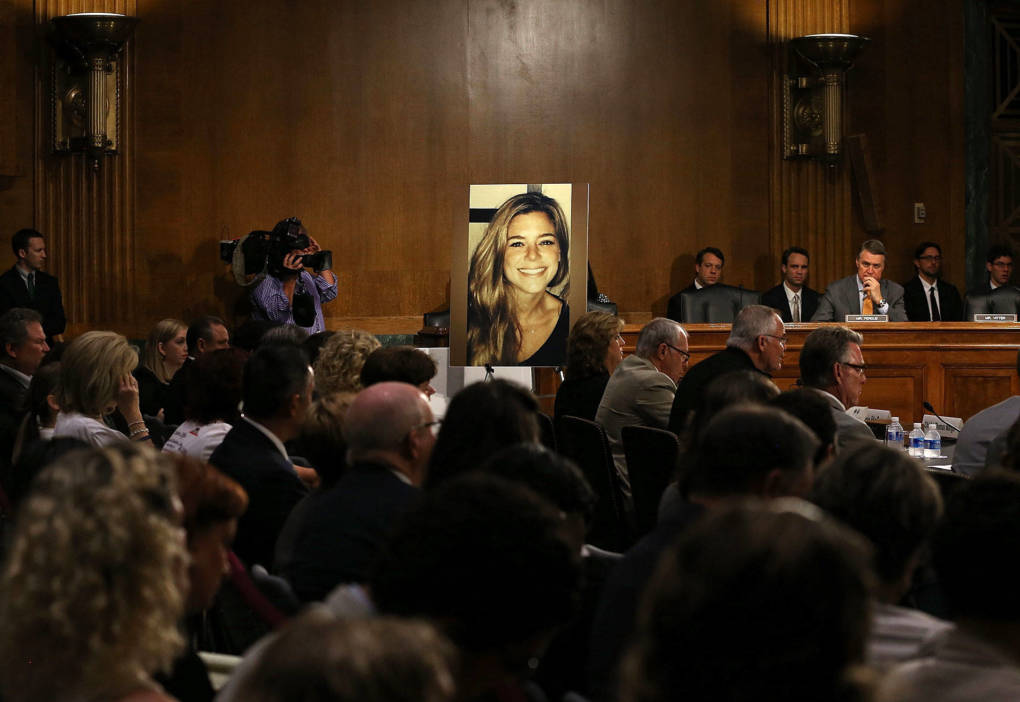
"caption": "A large photo of Kathryn Steinle is shown while her dad, James Steinle, testifies during a Senate Judiciary Committee hearing on Capitol Hill, July 21, 2015, in Washington, D.C. The committee heard testimony from family members who have had loved ones killed by undocumented immigrants. ",
"description": null,
"title": "SteinleMain-1920x1322",
"credit": "Mark Wilson/Getty Images",
"status": "inherit",
"isLoading": false,
"fetchFailed": false
}
},
"audioPlayerReducer": {
"postId": "stream_live",
"isPaused": true,
"isPlaying": false,
"pfsActive": false,
"pledgeModalIsOpen": true,
"playerDrawerIsOpen": false,
"liveAudioPlayStartedAt": 0,
"liveAudioPlayContext": ""
},
"authorsReducer": {
"matthewgreen": {
"type": "authors",
"id": "1263",
"meta": {
"index": "authors_1716337520",
"id": "1263",
"found": true
},
"name": "Matthew Green",
"firstName": "Matthew",
"lastName": "Green",
"slug": "matthewgreen",
"email": "mgreen@kqed.org",
"display_author_email": false,
"staff_mastheads": [],
"title": "KQED Editor/Reporter",
"bio": "Matthew Green is a digital media producer for KQED News. He previously produced \u003ca href=\"http://www.kqed.org/lowdown\">The Lowdown\u003c/a>, KQED’s multimedia news education blog. Matthew's written for numerous Bay Area publications, including the Oakland Tribune and San Francisco Chronicle. He also taught journalism classes at Fremont High School in East Oakland.\r\n\r\nEmail: mgreen@kqed.org; Twitter: @MGreenKQED",
"avatar": "https://secure.gravatar.com/avatar/3bf498d1267ca02c8494f33d8cfc575e?s=600&d=blank&r=g",
"twitter": "MGreenKQED",
"facebook": null,
"instagram": null,
"linkedin": null,
"sites": [
{
"site": "news",
"roles": []
},
{
"site": "lowdown",
"roles": []
},
{
"site": "science",
"roles": []
},
{
"site": "education",
"roles": []
},
{
"site": "quest",
"roles": []
},
{
"site": "liveblog",
"roles": []
}
],
"headData": {
"title": "Matthew Green | KQED",
"description": "KQED Editor/Reporter",
"ogImgSrc": "https://secure.gravatar.com/avatar/3bf498d1267ca02c8494f33d8cfc575e?s=600&d=blank&r=g",
"twImgSrc": "https://secure.gravatar.com/avatar/3bf498d1267ca02c8494f33d8cfc575e?s=600&d=blank&r=g"
},
"isLoading": false,
"link": "/author/matthewgreen"
},
"jessengebretson": {
"type": "authors",
"id": "8628",
"meta": {
"index": "authors_1716337520",
"id": "8628",
"found": true
},
"name": "Jess Engebretson",
"firstName": "Jess",
"lastName": "Engebretson",
"slug": "jessengebretson",
"email": "jess.engebretson@gmail.com",
"display_author_email": false,
"staff_mastheads": [],
"title": null,
"bio": "Jess Engebretson is a radio producer from Virginia.",
"avatar": "https://secure.gravatar.com/avatar/82da81d5865f1a046c91ee925e616266?s=600&d=blank&r=g",
"twitter": null,
"facebook": null,
"instagram": null,
"linkedin": null,
"sites": [
{
"site": "lowdown",
"roles": [
"contributor"
]
}
],
"headData": {
"title": "Jess Engebretson | KQED",
"description": null,
"ogImgSrc": "https://secure.gravatar.com/avatar/82da81d5865f1a046c91ee925e616266?s=600&d=blank&r=g",
"twImgSrc": "https://secure.gravatar.com/avatar/82da81d5865f1a046c91ee925e616266?s=600&d=blank&r=g"
},
"isLoading": false,
"link": "/author/jessengebretson"
},
"glavender": {
"type": "authors",
"id": "8669",
"meta": {
"index": "authors_1716337520",
"id": "8669",
"found": true
},
"name": "George Lavender",
"firstName": "George",
"lastName": "Lavender",
"slug": "glavender",
"email": "georgehblavender@googlemail.com",
"display_author_email": false,
"staff_mastheads": [],
"title": null,
"bio": "George Lavender is an award-winning independent radio and print journalist. His reporting has aired on NPR, WBUR, KQED, KCRW, and Radio France International.",
"avatar": "https://secure.gravatar.com/avatar/664191b201534ba59461c42afe3cb731?s=600&d=blank&r=g",
"twitter": "GeorgeLavender",
"facebook": null,
"instagram": null,
"linkedin": null,
"sites": [
{
"site": "lowdown",
"roles": [
"contributor"
]
}
],
"headData": {
"title": "George Lavender | KQED",
"description": null,
"ogImgSrc": "https://secure.gravatar.com/avatar/664191b201534ba59461c42afe3cb731?s=600&d=blank&r=g",
"twImgSrc": "https://secure.gravatar.com/avatar/664191b201534ba59461c42afe3cb731?s=600&d=blank&r=g"
},
"isLoading": false,
"link": "/author/glavender"
}
},
"pagesReducer": {
"education_category_news-and-civics": {
"type": "terms",
"id": "education_50",
"meta": {
"index": "terms_1716263798",
"site": "education",
"id": "50",
"score": 13.896311
},
"featImg": null,
"name": "News & Civics",
"description": "Find civics lesson plans and teaching resources for high school and middle school, including lesson plan ideas on the latest news topics.",
"taxonomy": "category",
"headData": {
"twImgId": null,
"twTitle": null,
"ogTitle": null,
"ogImgId": null,
"twDescription": null,
"description": "Find civics lesson plans and teaching resources for high school and middle school, including lesson plan ideas on the latest news topics.",
"title": "News & Civics | KQED Education",
"ogDescription": null
},
"ttid": 58,
"slug": "news-and-civics",
"isLoading": false,
"title": "News & Civics",
"pageMeta": {
"site": "education",
"WpPageTemplate": "page-topic-company",
"currentPage": 36
},
"blocks": [
{
"blockName": "kqed/company-paragraph",
"content": "Find civics lesson plans and teaching resources for high school and middle school, including lesson plan ideas on the latest news topics."
},
{
"blockName": "kqed/post-list",
"attrs": {
"layout": "cardCompany2",
"query": "posts/education?category=news-and-civics",
"seeMore": false,
"paginated": true,
"page": 36
}
},
{
"blockName": "kqed/ad"
}
]
}
},
"pfsSessionReducer": {},
"postsReducer": {
"stream_live": {
"type": "live",
"id": "stream_live",
"audioUrl": "https://hls.kqed.org/hls/kqed_app/playlist.m3u8",
"title": "Live Stream",
"excerpt": "Live Stream information currently unavailable.",
"link": "/radio",
"featImg": "",
"label": {
"name": "KQED Live",
"link": "/"
}
},
"stream_kqedNewscast": {
"type": "posts",
"id": "stream_kqedNewscast",
"audioUrl": "https://www.kqed.org/.stream/anon/radio/RDnews/newscast.mp3?_=1",
"title": "KQED Newscast",
"featImg": "",
"label": {
"name": "88.5 FM",
"link": "/"
}
},
"lowdown_19256": {
"type": "posts",
"id": "lowdown_19256",
"meta": {
"index": "posts_1716263798",
"site": "lowdown",
"id": "19256",
"score": null,
"sort": [
1439836239000
]
},
"parent": 0,
"labelTerm": {
"site": "lowdown"
},
"blocks": [],
"publishDate": 1439836239,
"format": "aside",
"disqusTitle": "Interactive Earthquake Map: Get to Know Your Local Faults",
"title": "Interactive Earthquake Map: Get to Know Your Local Faults",
"headTitle": "The Lowdown | KQED News",
"content": "\u003cp>Zoom in and mouseover this interactive USGS map to locate local fault lines and recent earthquakes.\u003c/p>\n\u003cp>\u003c!-- iframe plugin v.4.3 wordpress.org/plugins/iframe/ -->\u003cbr>\n\u003ciframe src=\"http://earthquake.usgs.gov/earthquakes/eventpage/nc72507396#general_map\" width=\"1000\" frameborder=\"0\" allowfullscreen=\"allowfullscreen\" scrolling=\"no\" height=\"500\" class=\"iframe-class\">\u003c/iframe>\u003c/p>\n\u003cp>Call it nature's alarm clock (sans snooze button).\u003c/p>\n\u003cp>A 4.0 earthquake, centered in the Oakland Hills just north of Piedmont, rattled much of the East Bay and other areas of the central Bay Area this morning, jolting thousands of residents out of bed. Located on the Hayward Fault, the quake struck at 6:49 a.m. and was followed by a series of minor aftershocks, according to the \u003ca href=\"http://earthquake.usgs.gov/earthquakes/eventpage/nc72507396#general_summary\" target=\"_blank\">U.S. Geological Survey\u003c/a>. No serious damage was reported.\u003c/p>\n\u003cp>The Hayward Fault runs from San Pablo Bay to Fremont. It passes through parts of Berkeley, Oakland, Hayward and Fremont before branching into a set of surface faults that connect it to the central part of the Calaveras Fault, according to the USGS. Some scientists predict that the Bay Area's the next major quake will occur on this fault.\u003c/p>\n\u003cp>[ad fullwidth]\u003c/p>\n\u003cp>The last major quake on the Hayward Fault hit on Oct. 21, 1868. The estimated 6.8-magnitude quake killed roughly 30 people and caused extensive property damage in a handful of East Bay's nascent cities. At the time, the population of the East Bay was roughly 100 times smaller than it is today.\u003c/p>\n\u003cp>As the \u003ca href=\"http://pubs.usgs.gov/fs/2008/3019/fs2008-3019.pdf\" target=\"_blank\">USGS describes\u003c/a> in its report on the quake:\u003c/p>\n\u003cp>\u003c/p>\n\u003cp>\"Shaking from the 1868 quake was the strongest that the new towns and growing\u003cbr>\ncities of the Bay Area had ever experienced. Until overshadowed by the 1906 earthquake, the 1868 event was known as the “great San\u003cbr>\nFrancisco quake.”\u003c/p>\n\u003cfigure id=\"attachment_19272\" class=\"wp-caption alignnone\" style=\"max-width: 580px\">\u003ca href=\"http://ww2.kqed.org/lowdown/wp-content/uploads/sites/26/2015/08/coverphoto.jpg\">\u003cimg class=\"wp-image-19272 size-full\" src=\"http://ww2.kqed.org/lowdown/wp-content/uploads/sites/26/2015/08/coverphoto.jpg\" alt=\"The second story of the Alameda County Courthouse in San Leandro collapsed during the 1868 quake. The photo insert shows the building prior to the quake. \" width=\"580\" height=\"363\" srcset=\"https://ww2.kqed.org/app/uploads/sites/26/2015/08/coverphoto.jpg 580w, https://ww2.kqed.org/app/uploads/sites/26/2015/08/coverphoto-400x250.jpg 400w\" sizes=\"(max-width: 580px) 100vw, 580px\">\u003c/a>\u003cfigcaption class=\"wp-caption-text\">The second story of the Alameda County Courthouse in San Leandro collapsed during the 1868 quake. The photo insert shows the building prior to the quake. \u003ccite>(Photos courtesy of the Bancroft Library, University of California and the San Leandro Public Library )\u003c/cite>\u003c/figcaption>\u003c/figure>\n\n",
"disqusIdentifier": "19256 http://ww2.kqed.org/lowdown/?p=19256",
"disqusUrl": "https://ww2.kqed.org/lowdown/2015/08/17/interactive-earthquake-map-get-to-know-your-local-faults/",
"stats": {
"hasVideo": false,
"hasChartOrMap": true,
"hasAudio": false,
"hasPolis": false,
"wordCount": 303,
"hasGoogleForm": false,
"hasGallery": false,
"hasHearkenModule": false,
"iframeSrcs": [
"http://earthquake.usgs.gov/earthquakes/eventpage/nc72507396#general_map"
],
"paragraphCount": 10
},
"modified": 1441064476,
"excerpt": "Interactive map of California's earthquakes and fault lines. \r\n",
"headData": {
"twImgId": "",
"twTitle": "",
"ogTitle": "",
"ogImgId": "",
"twDescription": "",
"description": "Interactive map of California's earthquakes and fault lines. \r\n",
"title": "Interactive Earthquake Map: Get to Know Your Local Faults | KQED",
"ogDescription": "",
"schema": {
"@context": "https://schema.org",
"@type": "Article",
"headline": "Interactive Earthquake Map: Get to Know Your Local Faults",
"datePublished": "2015-08-17T11:30:39-07:00",
"dateModified": "2015-08-31T16:41:16-07:00",
"image": "https://cdn.kqed.org/wp-content/uploads/2020/02/KQED-OG-Image@1x.png"
}
},
"guestAuthors": [],
"slug": "interactive-earthquake-map-get-to-know-your-local-faults",
"status": "publish",
"path": "/lowdown/19256/interactive-earthquake-map-get-to-know-your-local-faults",
"audioTrackLength": null,
"parsedContent": [
{
"type": "contentString",
"content": "\u003cdiv class=\"post-body\">\u003cp>\u003cp>Zoom in and mouseover this interactive USGS map to locate local fault lines and recent earthquakes.\u003c/p>\n\u003cp>\u003c!-- iframe plugin v.4.3 wordpress.org/plugins/iframe/ -->\u003cbr>\n\u003ciframe src=\"http://earthquake.usgs.gov/earthquakes/eventpage/nc72507396#general_map\" width=\"1000\" frameborder=\"0\" allowfullscreen=\"allowfullscreen\" scrolling=\"no\" height=\"500\" class=\"iframe-class\">\u003c/iframe>\u003c/p>\n\u003cp>Call it nature's alarm clock (sans snooze button).\u003c/p>\n\u003cp>A 4.0 earthquake, centered in the Oakland Hills just north of Piedmont, rattled much of the East Bay and other areas of the central Bay Area this morning, jolting thousands of residents out of bed. Located on the Hayward Fault, the quake struck at 6:49 a.m. and was followed by a series of minor aftershocks, according to the \u003ca href=\"http://earthquake.usgs.gov/earthquakes/eventpage/nc72507396#general_summary\" target=\"_blank\">U.S. Geological Survey\u003c/a>. No serious damage was reported.\u003c/p>\n\u003cp>The Hayward Fault runs from San Pablo Bay to Fremont. It passes through parts of Berkeley, Oakland, Hayward and Fremont before branching into a set of surface faults that connect it to the central part of the Calaveras Fault, according to the USGS. Some scientists predict that the Bay Area's the next major quake will occur on this fault.\u003c/p>\n\u003cp>\u003c/p>\u003c/div>",
"attributes": {
"named": {},
"numeric": []
}
},
{
"type": "component",
"content": "",
"name": "ad",
"attributes": {
"named": {
"label": "fullwidth"
},
"numeric": [
"fullwidth"
]
}
},
{
"type": "contentString",
"content": "\u003cdiv class=\"post-body\">\u003cp>\u003c/p>\n\u003cp>The last major quake on the Hayward Fault hit on Oct. 21, 1868. The estimated 6.8-magnitude quake killed roughly 30 people and caused extensive property damage in a handful of East Bay's nascent cities. At the time, the population of the East Bay was roughly 100 times smaller than it is today.\u003c/p>\n\u003cp>As the \u003ca href=\"http://pubs.usgs.gov/fs/2008/3019/fs2008-3019.pdf\" target=\"_blank\">USGS describes\u003c/a> in its report on the quake:\u003c/p>\n\u003cp>\u003c/p>\n\u003cp>\"Shaking from the 1868 quake was the strongest that the new towns and growing\u003cbr>\ncities of the Bay Area had ever experienced. Until overshadowed by the 1906 earthquake, the 1868 event was known as the “great San\u003cbr>\nFrancisco quake.”\u003c/p>\n\u003cfigure id=\"attachment_19272\" class=\"wp-caption alignnone\" style=\"max-width: 580px\">\u003ca href=\"http://ww2.kqed.org/lowdown/wp-content/uploads/sites/26/2015/08/coverphoto.jpg\">\u003cimg class=\"wp-image-19272 size-full\" src=\"http://ww2.kqed.org/lowdown/wp-content/uploads/sites/26/2015/08/coverphoto.jpg\" alt=\"The second story of the Alameda County Courthouse in San Leandro collapsed during the 1868 quake. The photo insert shows the building prior to the quake. \" width=\"580\" height=\"363\" srcset=\"https://ww2.kqed.org/app/uploads/sites/26/2015/08/coverphoto.jpg 580w, https://ww2.kqed.org/app/uploads/sites/26/2015/08/coverphoto-400x250.jpg 400w\" sizes=\"(max-width: 580px) 100vw, 580px\">\u003c/a>\u003cfigcaption class=\"wp-caption-text\">The second story of the Alameda County Courthouse in San Leandro collapsed during the 1868 quake. The photo insert shows the building prior to the quake. \u003ccite>(Photos courtesy of the Bancroft Library, University of California and the San Leandro Public Library )\u003c/cite>\u003c/figcaption>\u003c/figure>\n\n\u003c/div>\u003c/p>",
"attributes": {
"named": {},
"numeric": []
}
}
],
"link": "/lowdown/19256/interactive-earthquake-map-get-to-know-your-local-faults",
"authors": [
"1263"
],
"categories": [
"lowdown_2363",
"lowdown_572",
"lowdown_530"
],
"tags": [
"lowdown_518",
"lowdown_2337",
"lowdown_2457"
],
"featImg": "lowdown_19278",
"label": "lowdown"
},
"lowdown_19197": {
"type": "posts",
"id": "lowdown_19197",
"meta": {
"index": "posts_1716263798",
"site": "lowdown",
"id": "19197",
"score": null,
"sort": [
1439211652000
]
},
"parent": 0,
"labelTerm": {
"site": "lowdown"
},
"blocks": [],
"publishDate": 1439211652,
"format": "standard",
"disqusTitle": "What NASA's New Horizons Spacecraft Saw on Its 3 Billion-Mile Journey to Pluto",
"title": "What NASA's New Horizons Spacecraft Saw on Its 3 Billion-Mile Journey to Pluto",
"headTitle": "The Lowdown | KQED News",
"content": "\u003cp>Ok, so we're jumping on the bandwagon a bit late with this one, but whadyagonnado?\u003c/p>\n\u003cp>Unless you spend your days in a Wi-Fi-less cave, you probably heard the hoopla last month about New Horizons, that unmanned NASA spacecraft that traveled for almost a decade, covering three billion miles, all to get a nice, albeit brief, Pluto photo opp. In mid-July the spacecraft beamed those coveted images of the mysterious \"dwarf planet\" back to earth, and, without so much as stopping for a bathroom break, continued on its lonely voyage.\u003c/p>\n\u003cp>If you're still looking for a good opportunity to dork out on New Horizons' path past the outer limits of our solar system, look no more! Stuart Lynn's visualization will guide you thorough the longest road-less trip ever.\u003c/p>\n\u003cdiv>\u003ciframe src=\"http://newhorizon.cartodb.io/\" width=\"100%\" height=\"800\" frameborder=\"0\" scrolling=\"no\" allowfullscreen=\"allowfullscreen\">\u003c/iframe>\u003c/div>\n\u003cp>[ad fullwidth]\u003c/p>\u003cp>\u003c/p>\n",
"disqusIdentifier": "19197 http://ww2.kqed.org/lowdown/?p=19197",
"disqusUrl": "https://ww2.kqed.org/lowdown/2015/08/10/what-nasas-new-horizons-spacecraft-saw-on-its-3-billion-mile-journey-to-pluto/",
"stats": {
"hasVideo": false,
"hasChartOrMap": true,
"hasAudio": false,
"hasPolis": false,
"wordCount": 136,
"hasGoogleForm": false,
"hasGallery": false,
"hasHearkenModule": false,
"iframeSrcs": [
"http://newhorizon.cartodb.io/"
],
"paragraphCount": 5
},
"modified": 1439852504,
"excerpt": null,
"headData": {
"twImgId": "",
"twTitle": "",
"ogTitle": "",
"ogImgId": "",
"twDescription": "",
"description": "Ok, so we're jumping on the bandwagon a bit late with this one, but whadyagonnado? Unless you spend your days in a Wi-Fi-less cave, you probably heard the hoopla last month about New Horizons, that unmanned NASA spacecraft that traveled for almost a decade, covering three billion miles, all to get a nice, albeit brief,",
"title": "What NASA's New Horizons Spacecraft Saw on Its 3 Billion-Mile Journey to Pluto | KQED",
"ogDescription": "",
"schema": {
"@context": "https://schema.org",
"@type": "Article",
"headline": "What NASA's New Horizons Spacecraft Saw on Its 3 Billion-Mile Journey to Pluto",
"datePublished": "2015-08-10T06:00:52-07:00",
"dateModified": "2015-08-17T16:01:44-07:00",
"image": "https://cdn.kqed.org/wp-content/uploads/2020/02/KQED-OG-Image@1x.png"
}
},
"guestAuthors": [],
"slug": "what-nasas-new-horizons-spacecraft-saw-on-its-3-billion-mile-journey-to-pluto",
"status": "publish",
"path": "/lowdown/19197/what-nasas-new-horizons-spacecraft-saw-on-its-3-billion-mile-journey-to-pluto",
"audioTrackLength": null,
"parsedContent": [
{
"type": "contentString",
"content": "\u003cdiv class=\"post-body\">\u003cp>\u003cp>Ok, so we're jumping on the bandwagon a bit late with this one, but whadyagonnado?\u003c/p>\n\u003cp>Unless you spend your days in a Wi-Fi-less cave, you probably heard the hoopla last month about New Horizons, that unmanned NASA spacecraft that traveled for almost a decade, covering three billion miles, all to get a nice, albeit brief, Pluto photo opp. In mid-July the spacecraft beamed those coveted images of the mysterious \"dwarf planet\" back to earth, and, without so much as stopping for a bathroom break, continued on its lonely voyage.\u003c/p>\n\u003cp>If you're still looking for a good opportunity to dork out on New Horizons' path past the outer limits of our solar system, look no more! Stuart Lynn's visualization will guide you thorough the longest road-less trip ever.\u003c/p>\n\u003cdiv>\u003ciframe src=\"http://newhorizon.cartodb.io/\" width=\"100%\" height=\"800\" frameborder=\"0\" scrolling=\"no\" allowfullscreen=\"allowfullscreen\">\u003c/iframe>\u003c/div>\n\u003cp>\u003c/p>\u003c/div>",
"attributes": {
"named": {},
"numeric": []
}
},
{
"type": "component",
"content": "",
"name": "ad",
"attributes": {
"named": {
"label": "fullwidth"
},
"numeric": [
"fullwidth"
]
}
},
{
"type": "contentString",
"content": "\u003cdiv class=\"post-body\">\u003cp>\u003c/p>\u003cp>\u003c/p>\n\u003c/div>\u003c/p>",
"attributes": {
"named": {},
"numeric": []
}
}
],
"link": "/lowdown/19197/what-nasas-new-horizons-spacecraft-saw-on-its-3-billion-mile-journey-to-pluto",
"authors": [
"1263"
],
"categories": [
"lowdown_1"
],
"tags": [
"lowdown_2337",
"lowdown_2453",
"lowdown_2452"
],
"featImg": "lowdown_19277",
"label": "lowdown"
},
"lowdown_19169": {
"type": "posts",
"id": "lowdown_19169",
"meta": {
"index": "posts_1716263798",
"site": "lowdown",
"id": "19169",
"score": null,
"sort": [
1438606851000
]
},
"parent": 0,
"labelTerm": {
"site": "lowdown"
},
"blocks": [],
"publishDate": 1438606851,
"format": "aside",
"disqusTitle": "Back in the Day, Medicare Had Its Haters Too",
"title": "Back in the Day, Medicare Had Its Haters Too",
"headTitle": "The Lowdown | KQED News",
"content": "\u003cp>https://youtu.be/Bejdhs3jGyw\u003c/p>\n\u003cp>\u003cem>\"Write those letters now. Call your friends, and tell them to write. If you don't, this program, I promise you, will pass just as surely as the sun will come up tomorrow. And behind it will come other federal programs that will invade every area of freedom as we have known it in this country. Until, one day ... we will awake to find that we have socialism. And if you don't do this and if I don't do it, one of these days, you and I are going to spend our sunset years telling our children and our children's children what it once was like in America when men were free.\"\u003c/em>\u003c/p>\n\u003cp>Sound familiar? But back then, the target wasn't Obamacare.\u003c/p>\n\u003cp>The 1961 recording of then-actor Ronald Reagan was part of Operation Coffee Cup , an elaborate campaign waged by the American Medical Association to put the fear of god into people and help stave off the spread of \"socialized medicine\" in the United States.\u003c/p>\n\u003cp>The AMA's efforts to prevent Social Security from funding health insurance for the elderly and the poor, though influential (helping to curb President Kennedy's attempts), eventually failed.\u003c/p>\n\u003cp>[ad fullwidth]\u003c/p>\n\u003cp>Fifty years ago -- on July 30, 1965 -- President Lyndon Johnson, as part of his War on Poverty, signed into law the bill that created the Medicare and Medicaid federal health insurance programs. The first was for Americans ages 65 and up, regardless of income (and later expanded to include younger people with permanent disabilities). The second, for low-income people.\u003c/p>\n\u003cp>Like Obama's Affordable Care Act, the programs faced staunch opposition and lofty implementation challenges.\u003c/p>\n\u003cp>Take Medicare: for one, notes the \u003ca href=\"http://www.washingtonpost.com/news/wonkblog/wp/2013/05/17/when-medicare-launched-nobody-had-any-clue-whether-it-would-work/\" target=\"_blank\" rel=\"noopener noreferrer\">Washington Post's Sarah Kliff\u003c/a>, benefits were to go into effect in July 1966, giving the Johnson administration less than a year to reach 19 million seniors, a daunting deadline the New York Times tagged \"M-Day.\"\u003c/p>\n\u003cp>As part of \"Project Medicare Alert,\" the government hired 5,000 workers -- paid $1.25 per hour for 20-week stints -- to enroll seniors across the country. The \"$2 million crash effort,\" The Washington Post reported at the time, was meant to \"inform isolated elderly Americans of the availability of Medicare benefits.\"\u003c/p>\n\u003cp>Social Security Administration Commissioner \u003ca href=\"http://www.socialwelfarehistory.com/recollections/1071/\">Robert Ball\u003c/a> even \"enlisted the U. S. Forest Service to send Forest Rangers out into the woods in search of elderly hermits whom he might be able to enroll.\"\u003c/p>\n\u003cfigure id=\"attachment_19237\" class=\"wp-caption alignright\" style=\"max-width: 204px\">\u003ca href=\"http://ww2.kqed.org/lowdown/wp-content/uploads/sites/26/2015/08/MedicareClip7-414x8001.jpg\">\u003cimg class=\"wp-image-19237\" src=\"http://ww2.kqed.org/lowdown/wp-content/uploads/sites/26/2015/08/MedicareClip7-414x8001-400x773.jpg\" alt=\"MedicareClip7-414x800\" width=\"204\" height=\"394\" srcset=\"https://ww2.kqed.org/app/uploads/sites/26/2015/08/MedicareClip7-414x8001-400x773.jpg 400w, https://ww2.kqed.org/app/uploads/sites/26/2015/08/MedicareClip7-414x8001.jpg 414w\" sizes=\"(max-width: 204px) 100vw, 204px\">\u003c/a>\u003cfigcaption class=\"wp-caption-text\">Washington Post front page article (courtesy of Wonkblog)\u003c/figcaption>\u003c/figure>\n\u003cp>As the start date approached, the program also faced another major hurdle: segregation. The Civil Rights Act, signed the year before, barred federal funding of institutions that discriminated on the basis of race. That, of course, included hospitals, which under Medicare, would be major recipients of federal dollars. A front-page Washington Post story in 1966 reported that Johnson made \"an 11th-hour appeal for hospitals to end discrimination, but he failed to prevent Medicare's start from being marred by segregation.\"\u003c/p>\n\u003cp>But as \u003ca href=\"http://www.npr.org/2015/07/30/427648586/50-years-ago-medicare-helped-to-desegregate-hospitals\" target=\"_blank\" rel=\"noopener noreferrer\">NPR's All Things Considered\u003c/a> recently recounted, the fear of losing federal funds \"became a powerful motivator\" for segregated hospitals to accept black patients. An under-staffed team of government inspectors were supported by hundreds of volunteers who ensured that hospitals complied with the new rules, Temple University professor David Barton Smith told NPR.\u003c/p>\n\u003cp>\"Early on, they were making sure that all of the white and colored signs were removed,\" Barton said. \"But then, they would go back and insist that hospital employees and patients not self-segregate in the waiting rooms. They were pretty fierce about it. And they had an invisible army in the sense of local civil rights groups that would guide them in their inspections, including a lot of black health workers that helped in providing the eyes and ears for making sure that the hospitals were not just trying to cover everything up.\"\u003c/p>\n\u003cp>Within several months, about 2,000 hospitals around the country had been desegregated, according to Barton.\u003c/p>\n\u003cp>Overall, the enrollment effort was incredibly successful, with near to total enrollment of the 19 million eligible seniors by the summer of 1966.\u003c/p>\n\u003cp>Today Medicare accounts for roughly 15 percent of total federal spending. The program covers some 55 million seniors and people with disabilities.\u003c/p>\n\u003cp>Medicaid, which is jointly financed by federal and state governments, today covers one in five Americans -- nearly 70 million people -- including one in three children and two in three nursing home patients, according to the nonpartisan \u003ca href=\"http://kff.org/medicaremedicaid50/\" target=\"_blank\" rel=\"noopener noreferrer\">Kaiser Family Foundation\u003c/a>.\u003c/p>\n\u003cp>Together the two programs provide healthcare to roughly three in 10 Americans.\u003c/p>\n\u003cp>Perhaps most notable is that Medicare -- that harbinger of \"socialism\" and destroyer of freedom, as Reagan warned -- has long been one of the most popular federal programs. A recent KFF poll found that more than three-quarters of those surveyed called it a \"very important\" public program. That, remarkably, includes a solid majority of both Democrats (89%) and Republicans (69%).\u003c/p>\n\u003cp>Support for Medicaid is somewhat more divided, particularly along partisan lines, as evidenced by \u003ca href=\"https://www.whitehouse.gov/share/medicaid-map\" target=\"_blank\" rel=\"noopener noreferrer\">recent state actions\u003c/a> rejecting federal funding for the program's expansion. Still, a full 63 percent of the poll's respondents considered Medicaid to be \"very important,\" which by U.S. political standards, makes it a downright crowd-pleaser.\u003c/p>\n\u003cp>\u003c/p>\n\u003cp>https://www.youtube.com/watch?t=300&v=f9NUCvrrRz4\u003c/p>\n\n",
"disqusIdentifier": "19169 http://ww2.kqed.org/lowdown/?p=19169",
"disqusUrl": "https://ww2.kqed.org/lowdown/2015/08/03/50-years-ago-medicare-had-its-haters-too-and-we-never-did-awake-to-socialism/",
"stats": {
"hasVideo": true,
"hasChartOrMap": false,
"hasAudio": false,
"hasPolis": false,
"wordCount": 891,
"hasGoogleForm": false,
"hasGallery": false,
"hasHearkenModule": false,
"iframeSrcs": [],
"paragraphCount": 21
},
"modified": 1498264931,
"excerpt": null,
"headData": {
"twImgId": "",
"twTitle": "",
"ogTitle": "",
"ogImgId": "",
"twDescription": "",
"description": "https://youtu.be/Bejdhs3jGyw "Write those letters now. Call your friends, and tell them to write. If you don't, this program, I promise you, will pass just as surely as the sun will come up tomorrow. And behind it will come other federal programs that will invade every area of freedom as we have known it in this",
"title": "Back in the Day, Medicare Had Its Haters Too | KQED",
"ogDescription": "",
"schema": {
"@context": "https://schema.org",
"@type": "Article",
"headline": "Back in the Day, Medicare Had Its Haters Too",
"datePublished": "2015-08-03T06:00:51-07:00",
"dateModified": "2017-06-23T17:42:11-07:00",
"image": "https://cdn.kqed.org/wp-content/uploads/2020/02/KQED-OG-Image@1x.png"
}
},
"guestAuthors": [],
"slug": "50-years-ago-medicare-had-its-haters-too-and-we-never-did-awake-to-socialism",
"status": "publish",
"path": "/lowdown/19169/50-years-ago-medicare-had-its-haters-too-and-we-never-did-awake-to-socialism",
"audioTrackLength": null,
"parsedContent": [
{
"type": "contentString",
"content": "\u003cdiv class=\"post-body\">\u003cp>\u003c/p>\u003cp>\u003cspan class='utils-parseShortcode-shortcodes-__youtubeShortcode__embedYoutube'>\n \u003cspan class='utils-parseShortcode-shortcodes-__youtubeShortcode__embedYoutubeInside'>\n \u003ciframe\n loading='lazy'\n class='utils-parseShortcode-shortcodes-__youtubeShortcode__youtubePlayer'\n type='text/html'\n src='//www.youtube.com/embed/Bejdhs3jGyw'\n title='//www.youtube.com/embed/Bejdhs3jGyw'\n allowfullscreen='true'\n style='border:0;'>\u003c/iframe>\n \u003c/span>\n \u003c/span>\u003c/p>\u003cp>\u003cp>\u003cem>\"Write those letters now. Call your friends, and tell them to write. If you don't, this program, I promise you, will pass just as surely as the sun will come up tomorrow. And behind it will come other federal programs that will invade every area of freedom as we have known it in this country. Until, one day ... we will awake to find that we have socialism. And if you don't do this and if I don't do it, one of these days, you and I are going to spend our sunset years telling our children and our children's children what it once was like in America when men were free.\"\u003c/em>\u003c/p>\n\u003cp>Sound familiar? But back then, the target wasn't Obamacare.\u003c/p>\n\u003cp>The 1961 recording of then-actor Ronald Reagan was part of Operation Coffee Cup , an elaborate campaign waged by the American Medical Association to put the fear of god into people and help stave off the spread of \"socialized medicine\" in the United States.\u003c/p>\n\u003cp>The AMA's efforts to prevent Social Security from funding health insurance for the elderly and the poor, though influential (helping to curb President Kennedy's attempts), eventually failed.\u003c/p>\n\u003cp>\u003c/p>\u003c/div>",
"attributes": {
"named": {},
"numeric": []
}
},
{
"type": "component",
"content": "",
"name": "ad",
"attributes": {
"named": {
"label": "fullwidth"
},
"numeric": [
"fullwidth"
]
}
},
{
"type": "contentString",
"content": "\u003cdiv class=\"post-body\">\u003cp>\u003c/p>\n\u003cp>Fifty years ago -- on July 30, 1965 -- President Lyndon Johnson, as part of his War on Poverty, signed into law the bill that created the Medicare and Medicaid federal health insurance programs. The first was for Americans ages 65 and up, regardless of income (and later expanded to include younger people with permanent disabilities). The second, for low-income people.\u003c/p>\n\u003cp>Like Obama's Affordable Care Act, the programs faced staunch opposition and lofty implementation challenges.\u003c/p>\n\u003cp>Take Medicare: for one, notes the \u003ca href=\"http://www.washingtonpost.com/news/wonkblog/wp/2013/05/17/when-medicare-launched-nobody-had-any-clue-whether-it-would-work/\" target=\"_blank\" rel=\"noopener noreferrer\">Washington Post's Sarah Kliff\u003c/a>, benefits were to go into effect in July 1966, giving the Johnson administration less than a year to reach 19 million seniors, a daunting deadline the New York Times tagged \"M-Day.\"\u003c/p>\n\u003cp>As part of \"Project Medicare Alert,\" the government hired 5,000 workers -- paid $1.25 per hour for 20-week stints -- to enroll seniors across the country. The \"$2 million crash effort,\" The Washington Post reported at the time, was meant to \"inform isolated elderly Americans of the availability of Medicare benefits.\"\u003c/p>\n\u003cp>Social Security Administration Commissioner \u003ca href=\"http://www.socialwelfarehistory.com/recollections/1071/\">Robert Ball\u003c/a> even \"enlisted the U. S. Forest Service to send Forest Rangers out into the woods in search of elderly hermits whom he might be able to enroll.\"\u003c/p>\n\u003cfigure id=\"attachment_19237\" class=\"wp-caption alignright\" style=\"max-width: 204px\">\u003ca href=\"http://ww2.kqed.org/lowdown/wp-content/uploads/sites/26/2015/08/MedicareClip7-414x8001.jpg\">\u003cimg class=\"wp-image-19237\" src=\"http://ww2.kqed.org/lowdown/wp-content/uploads/sites/26/2015/08/MedicareClip7-414x8001-400x773.jpg\" alt=\"MedicareClip7-414x800\" width=\"204\" height=\"394\" srcset=\"https://ww2.kqed.org/app/uploads/sites/26/2015/08/MedicareClip7-414x8001-400x773.jpg 400w, https://ww2.kqed.org/app/uploads/sites/26/2015/08/MedicareClip7-414x8001.jpg 414w\" sizes=\"(max-width: 204px) 100vw, 204px\">\u003c/a>\u003cfigcaption class=\"wp-caption-text\">Washington Post front page article (courtesy of Wonkblog)\u003c/figcaption>\u003c/figure>\n\u003cp>As the start date approached, the program also faced another major hurdle: segregation. The Civil Rights Act, signed the year before, barred federal funding of institutions that discriminated on the basis of race. That, of course, included hospitals, which under Medicare, would be major recipients of federal dollars. A front-page Washington Post story in 1966 reported that Johnson made \"an 11th-hour appeal for hospitals to end discrimination, but he failed to prevent Medicare's start from being marred by segregation.\"\u003c/p>\n\u003cp>But as \u003ca href=\"http://www.npr.org/2015/07/30/427648586/50-years-ago-medicare-helped-to-desegregate-hospitals\" target=\"_blank\" rel=\"noopener noreferrer\">NPR's All Things Considered\u003c/a> recently recounted, the fear of losing federal funds \"became a powerful motivator\" for segregated hospitals to accept black patients. An under-staffed team of government inspectors were supported by hundreds of volunteers who ensured that hospitals complied with the new rules, Temple University professor David Barton Smith told NPR.\u003c/p>\n\u003cp>\"Early on, they were making sure that all of the white and colored signs were removed,\" Barton said. \"But then, they would go back and insist that hospital employees and patients not self-segregate in the waiting rooms. They were pretty fierce about it. And they had an invisible army in the sense of local civil rights groups that would guide them in their inspections, including a lot of black health workers that helped in providing the eyes and ears for making sure that the hospitals were not just trying to cover everything up.\"\u003c/p>\n\u003cp>Within several months, about 2,000 hospitals around the country had been desegregated, according to Barton.\u003c/p>\n\u003cp>Overall, the enrollment effort was incredibly successful, with near to total enrollment of the 19 million eligible seniors by the summer of 1966.\u003c/p>\n\u003cp>Today Medicare accounts for roughly 15 percent of total federal spending. The program covers some 55 million seniors and people with disabilities.\u003c/p>\n\u003cp>Medicaid, which is jointly financed by federal and state governments, today covers one in five Americans -- nearly 70 million people -- including one in three children and two in three nursing home patients, according to the nonpartisan \u003ca href=\"http://kff.org/medicaremedicaid50/\" target=\"_blank\" rel=\"noopener noreferrer\">Kaiser Family Foundation\u003c/a>.\u003c/p>\n\u003cp>Together the two programs provide healthcare to roughly three in 10 Americans.\u003c/p>\n\u003cp>Perhaps most notable is that Medicare -- that harbinger of \"socialism\" and destroyer of freedom, as Reagan warned -- has long been one of the most popular federal programs. A recent KFF poll found that more than three-quarters of those surveyed called it a \"very important\" public program. That, remarkably, includes a solid majority of both Democrats (89%) and Republicans (69%).\u003c/p>\n\u003cp>Support for Medicaid is somewhat more divided, particularly along partisan lines, as evidenced by \u003ca href=\"https://www.whitehouse.gov/share/medicaid-map\" target=\"_blank\" rel=\"noopener noreferrer\">recent state actions\u003c/a> rejecting federal funding for the program's expansion. Still, a full 63 percent of the poll's respondents considered Medicaid to be \"very important,\" which by U.S. political standards, makes it a downright crowd-pleaser.\u003c/p>\n\u003cp>\u003c/p>\u003c/p>\u003cp>\u003cspan class='utils-parseShortcode-shortcodes-__youtubeShortcode__embedYoutube'>\n \u003cspan class='utils-parseShortcode-shortcodes-__youtubeShortcode__embedYoutubeInside'>\n \u003ciframe\n loading='lazy'\n class='utils-parseShortcode-shortcodes-__youtubeShortcode__youtubePlayer'\n type='text/html'\n src='//www.youtube.com/embed/f9NUCvrrRz4'\n title='//www.youtube.com/embed/f9NUCvrrRz4'\n allowfullscreen='true'\n style='border:0;'>\u003c/iframe>\n \u003c/span>\n \u003c/span>\u003c/p>\u003cp>\n\u003c/div>\u003c/p>",
"attributes": {
"named": {},
"numeric": []
}
}
],
"link": "/lowdown/19169/50-years-ago-medicare-had-its-haters-too-and-we-never-did-awake-to-socialism",
"authors": [
"1263"
],
"categories": [
"lowdown_2390",
"lowdown_451"
],
"tags": [
"lowdown_2337",
"lowdown_2455",
"lowdown_2454",
"lowdown_2456"
],
"featImg": "lowdown_19242",
"label": "lowdown"
},
"lowdown_19119": {
"type": "posts",
"id": "lowdown_19119",
"meta": {
"index": "posts_1716263798",
"site": "lowdown",
"id": "19119",
"score": null,
"sort": [
1437783007000
]
},
"parent": 0,
"labelTerm": {
"site": "lowdown"
},
"blocks": [],
"publishDate": 1437783007,
"format": "standard",
"disqusTitle": "How the Birthplace of the Modern Ku Klux Klan Became the Site of America's Largest Confederate Monument",
"title": "How the Birthplace of the Modern Ku Klux Klan Became the Site of America's Largest Confederate Monument",
"headTitle": "The Lowdown | KQED News",
"content": "\u003cp>Just outside of Atlanta, an enormous hunk of rock looms over the countryside. Over 800 feet tall and a mile and a half wide, the site draws some 4 million visitors a year. They come in part to see a huge bas-relief covering the northern face of the mountain that depicts three legendary leaders of the Confederacy – Robert E. Lee, Stonewall Jackson and Jefferson Davis -- all astride horses, each holding a hat over his heart.\u003c/p>\n\u003cp>This is Stone Mountain, and it’s become part of a heated national debate about Confederate flags and monuments, an issue that flared anew in June 2015 after Dylann Roof, a young man with suspected white supremacist leanings, murdered nine black churchgoers in Charleston, SC. Authorities later discovered photos of Roof posing with a Confederate flag.\u003c/p>\n\u003cp>The tragedy has prompted communities across the nation to engage in searching discussions about the role and impact that Confederate symbolism has in public life.\u003c/p>\n\u003cp>The issue has spread as far as California, where \u003ca href=\"http://www.sacbee.com/news/politics-government/capitol-alert/article27222211.html\" target=\"_blank\" rel=\"noopener noreferrer\">lawmakers\u003c/a> are currently debating legislation to ban Confederate names on schools and other public property. If successful, the bill would force at least two Southern California public elementary schools named after Robert E. Lee to change their names (the North Coast city of Fort Bragg, named after Braxton Bragg, a U.S. Army officer who served as a Confederate general, would not be forced to change its name).\u003c/p>\n\u003cp>The removal of the Confederate battle flag from South Carolina’s statehouse this month, which lawmakers approved after weeks of heated deliberation, was just one step in a broader critical examination of the Confederate emblems and names still on display in \u003ca href=\"http://www.al.com/news/index.ssf/2015/06/confederate_flag_removed_from.html\">other state capitols\u003c/a> and \u003ca href=\"http://www.pbs.org/newshour/rundown/house-republicans-ax-spending-bill-talks-confederate-flag-amendments/\">cemeteries\u003c/a>, and on \u003ca href=\"http://www.washingtonpost.com/local/virginia-politics/virginias-mcauliffe-plans-to-phase-out-confederate-flag-license-plate/2015/06/23/bb8a1738-19b0-11e5-93b7-5eddc056ad8a_story.html\">license plates\u003c/a>, \u003ca href=\"http://www.washingtonpost.com/local/virginia-politics/a-road-named-for-confederate-leader-comes-under-fire-150-years-after-war/2015/07/10/dc00a05a-2715-11e5-aae2-6c4f59b050aa_story.html\">roads\u003c/a> and \u003ca href=\"http://www.latimes.com/local/politics/la-me-cap-confederacy-20150713-column.html\">schools\u003c/a>.\u003c/p>\n\u003cp>[ad fullwidth]\u003c/p>\n\u003cp>The Atlanta chapter of the National Association for the Advancement of Colored People (NAACP) \u003ca href=\"http://www.latimes.com/entertainment/arts/culture/la-et-cm-stone-mountain-georgia-naacp-20150714-story.html\">is now demanding\u003c/a> that Stone Mountain’s slate be wiped clean -- literally. Calling the image “a glorification of white supremacy,” the group wants it scraped from the mountain’s face.\u003c/p>\n\u003cp>It’s no secret that Confederate leaders during the Civil War \u003ca href=\"http://www.theatlantic.com/politics/archive/2015/06/what-this-cruel-war-was-over/396482/\">explicitly\u003c/a> defined their cause as a defense of slavery and white supremacy. A towering carving of the Confederacy’s most powerful political and military leaders would, therefore, seem a clear glorification of that cause. And the same could be said for other Confederate monuments across the country.\u003c/p>\n\u003cp>But many staunch defenders of the Confederate battle flag argue it’s an important symbol of Southern heritage and culture, and commemorates the hundreds of thousands of soldiers who valiantly fought and died for “the Lost Cause.”\u003c/p>\n\u003cp>Stone Mountain’s role in memorializing this cause, however, is a bit more nuanced. Embedded in this mountain are two stories, only one of which is captured in the bas-relief.\u003c/p>\n\u003cfigure id=\"attachment_19142\" class=\"wp-caption alignright\" style=\"max-width: 226px\">\u003ca href=\"http://ww2.kqed.org/lowdown/wp-content/uploads/sites/26/2015/07/19151128AC_Klan_re-established.jpg\">\u003cimg class=\" wp-image-19142\" src=\"http://ww2.kqed.org/lowdown/wp-content/uploads/sites/26/2015/07/19151128AC_Klan_re-established-400x446.jpg\" alt=\"An Atlanta Constitution clipping from Nov. 28, 1915 describing the Klan re-establishment atop Stone Mountain.\" width=\"226\" height=\"252\" srcset=\"https://ww2.kqed.org/app/uploads/sites/26/2015/07/19151128AC_Klan_re-established-400x446.jpg 400w, https://ww2.kqed.org/app/uploads/sites/26/2015/07/19151128AC_Klan_re-established.jpg 752w\" sizes=\"(max-width: 226px) 100vw, 226px\">\u003c/a>\u003cfigcaption class=\"wp-caption-text\">An Atlanta Constitution clipping from Nov. 28, 1915 describing the Klan re-establishment atop Stone Mountain. \u003ccite>(\u003ca href=\"https://en.wikipedia.org/wiki/Stone_Mountain#/media/File:19151128AC_Klan_re-established.jpg\" target=\"_blank\">Wikimedia\u003c/a>)\u003c/cite>\u003c/figcaption>\u003c/figure>\n\u003cp>Lesser known is that Stone Mountain is the symbolic birthplace of the modern Ku Klux Klan. The original Klan, founded in 1865, had been largely stamped out by the mid-1870s after a period of aggressive federal intervention during Reconstruction. In 1915, William J. Simmons, a former Methodist preacher, launched a campaign to reestablish the group. Purportedly inspired by the film \"The Birth of a Nation,\" a blatantly racist “historical romance” glorifying the original Klan, Simmons led a small group up Stone Mountain one November night in advance of the film’s Atlanta debut. At the summit, they set a cross ablaze.\u003c/p>\n\u003cp>The reestablished Klan's white supremacist ideology -- primarily targeting blacks, but also Jews, Catholics and foreigners -- struck a chord in the South, and the group rapidly expanded. By the mid-1920s, national membership was estimated in the millions, including sizable pockets in some northern states. Minority communities found themselves increasingly terrorized by vigilante gangs of hooded, white-robed men.\u003c/p>\n\u003cp>This historical footnote is, not surprisingly, omitted from the description on Stone Mountain's \u003ca href=\"http://www.stonemountainpark.com/\">corporate website\u003c/a>. But the two histories are inextricably linked.\u003c/p>\n\u003cp>At the time of the Klan’s resurgence, Stone Mountain was owned by aa quarry operator named Samuel Venable. A fan of \"The Birth of a Nation,\" Venable accompanied Simmons on that November night and became an active member of the group, hosting regular Klan ceremonies on the mountain.\u003c/p>\n\u003cp>Venable later leased a portion of the land to a Georgia chapter of the United Daughters of the Confederacy who set out to build a memorial to the Lost Cause. Gutzon Borglum, a Danish-American sculptor and Klan member designed the massive bas-release, proclaiming it would be the “the greatest monument ever built,” comparable to the Egyptian pyramids. Helen Plane, head of the local UDOC chapter, went to great lengths to persuade Borglum to include the Klan in the memorial. She wrote:\u003c/p>\n\u003cp>“I feel it is due to the Klan which saved us from Negro domination and carpetbag rule, that it be immortalized on Stone Mountain. Why not represent a small group of them in their nightly uniform approaching in the distance?”\u003c/p>\n\u003cp>There was strong support for the idea, and it would may have come to pass had the project not run out of funding. Borglum left in a huff, and the effort languished for decades, with only the carving of Lee’s head finished. (Borglum later established his reputation with another monumental project: Mount Rushmore.)\u003c/p>\n\u003cp>The spark that finally spurred Stone Mountain’s completion came from an unexpected place: the Civil Rights Movement.\u003c/p>\n\u003cp>In the run-up to the Supreme Court’s 1954 Brown v. Board of Education decision prohibiting racial segregation, pro-segregationists breathed new life into Confederate symbolism.\u003c/p>\n\u003cp>Strom Thurmond’s breakaway Dixiecrats \u003ca href=\"http://album.atlantahistorycenter.com/store/Products/87703-dixiecrat-convention.aspx\">displayed\u003c/a> the battle flag prominently at their convention in 1948. By 1951, a \u003ca href=\"http://www.newspapers.com/image/3860209/\">newspaper\u003c/a> in Gastonia, North Carolina, was commenting on “the rash of Confederate flags which have broken out on Southern windshields, ties, and other decorative spots.” The same year, \u003ca href=\"http://www.thenation.com/article/the-confederate-flag-doesnt-commemorate-the-souths-lost-cause-its-the-symbol-of-a-cause-won/\">The Nation\u003c/a> reported that “nearly one car out of ten now flies the Stars and Bars [sic] defiantly from its radio aerial.”\u003c/p>\n\u003cp>Soon, the flag made its way into official symbolism. In 1956, Georgia adopted a new state flag with a design incorporating the Confederate flag. And in 1961, \u003ca href=\"http://www.politifact.com/punditfact/statements/2015/jun/22/eugene-robinson/confederate-flag-wasnt-flown-south-carolina-state-/\">South Carolina\u003c/a> raised the Confederate flag over its statehouse to ostensibly commemorate the centennial of the Civil War’s start. Alabama followed suit in 1963, after Gov. George Wallace ordered it raised in advance of a visit by U.S. Attorney General Robert Kennedy to address Wallace's resistance to integration of the University of Alabama.\u003c/p>\n\u003cp>By 1958, the state of Georgia had bought Stone Mountain and pushed ahead with plans for a revised bas-relief design featuring Lee, Jackson, and Davis, sans Klansmen. Work surged forward, and piece by piece the image of the Confederacy was hammered into stone. As the Civil Rights Movement roiled across the country, workers used thermo-jet torches to finalize the details of Jefferson Davis’ eyebrows.\u003c/p>\n\u003cfigure id=\"attachment_19143\" class=\"wp-caption alignnone\" style=\"max-width: 1920px\">\u003ca href=\"http://ww2.kqed.org/lowdown/wp-content/uploads/sites/26/2015/07/1920px-Stone_Mountain_Carving_2.jpg\">\u003cimg class=\"wp-image-19143 size-full\" src=\"http://ww2.kqed.org/lowdown/wp-content/uploads/sites/26/2015/07/1920px-Stone_Mountain_Carving_2.jpg\" alt=\"1920px-Stone_Mountain_Carving_2\" width=\"1920\" height=\"960\" srcset=\"https://ww2.kqed.org/app/uploads/sites/26/2015/07/1920px-Stone_Mountain_Carving_2.jpg 1920w, https://ww2.kqed.org/app/uploads/sites/26/2015/07/1920px-Stone_Mountain_Carving_2-400x200.jpg 400w, https://ww2.kqed.org/app/uploads/sites/26/2015/07/1920px-Stone_Mountain_Carving_2-800x400.jpg 800w, https://ww2.kqed.org/app/uploads/sites/26/2015/07/1920px-Stone_Mountain_Carving_2-1440x720.jpg 1440w, https://ww2.kqed.org/app/uploads/sites/26/2015/07/1920px-Stone_Mountain_Carving_2-1400x700.jpg 1400w, https://ww2.kqed.org/app/uploads/sites/26/2015/07/1920px-Stone_Mountain_Carving_2-1180x590.jpg 1180w, https://ww2.kqed.org/app/uploads/sites/26/2015/07/1920px-Stone_Mountain_Carving_2-960x480.jpg 960w\" sizes=\"(max-width: 1920px) 100vw, 1920px\">\u003c/a>\u003cfigcaption class=\"wp-caption-text\">Bas-relief close up \u003ccite>(Wikimedia)\u003c/cite>\u003c/figcaption>\u003c/figure>\n\u003cp>In the eyes of state leaders, \u003ca href=\"http://www.jstor.org/stable/40583695\">writes\u003c/a> historian Grace Hale, “the carving would demonstrate to the rest of the nation that 'progress' meant not black rights but the maintenance of white supremacy.”\u003c/p>\n\u003cp>After decades of work, the monument was formally dedicated in 1970. Republican Vice President Spiro Agnew, flanked by segregationist Democrats, addressed thousands of attendees who came to witness the unveiling.\u003c/p>\n\u003cp>Today, millions of visitors each year flock to Stone Mountain, now Georgia’s most visited attraction. The park offers hiking, fishing, golf and rides. There's even a laser light show.\u003c/p>\n\u003cp>It also offers visitors a cunningly crafted view of the past, eulogizing the leaders of the Confederacy and celebrating their cause as valiant and noble.\u003c/p>\n\u003cp>It's a mythology that's seeped more deeply into American culture than many realize.\u003c/p>\n\u003cp>This is evident in some history \u003ca href=\"http://www.washingtonpost.com/wp-dyn/content/article/2010/10/19/AR2010101907974.html\">textbooks\u003c/a> claiming that thousands of black Southerners fought for the Confederacy. It's evident in Tennessee’s 2015 commemoration of \u003ca href=\"http://tnsos.net/publications/proclamations/files/823.pdf\">Nathan Bedford Forrest Day\u003c/a>, whose namesake, a Confederate Army general, was also a former slave trader. It's evident in the vitriolic manifesto of alleged Charleston shooter Dylann Roof, who \u003ca href=\"http://lastrhodesian.com/data/documents/rtf88.txt\">claims\u003c/a> to have read hundreds of slave narratives, “almost all of [which] were positive.” It's even evident in Calhoun Street where the church shooting happened: John C. Calhoun, Andrew Jackson's vice president, was perhaps best known for his vehement defense of slavery as a positive good.\u003c/p>\n\u003cp>Roof didn't have go digging through the archives to assemble the white supremacist worldview for motivated. It was all around him, continually repurposed and made visible in monuments and flags.\u003c/p>\n\u003cp>Ironically, it’s the relative restraint of Stone Mountain’s design that’s made it such an effective vector for this line of thinking. While the Klan’s decades of terrorism ultimately relegated it to the proverbial shadows of white America, Stone Mountain never faced such a backlash. One hundred years after the monument was first imagined, most Americans have no idea how closely its history is entangled with the birth of the 20th century Ku Klux Klan.\u003c/p>\n\u003cp>As a result, Stone Mountain endures, its message carved into the American landscape.\u003c/p>\n\u003cp>[ad floatright]\u003c/p>\n\u003cp>\u003cu>Further Reading:\u003c/u>\u003c/p>\n\u003cul>\n\u003cli>Martinez, James Michael et al., eds. \u003ca href=\"https://books.google.com/books?id=ERsyiUOYI4kC&dq=george+wallace+confederate+flag+segregation+forever&source=gbs_navlinks_s\">Confederate Symbols in the Contemporary South\u003c/a>. Gainesville: University of Florida Press. 2000.\u003c/li>\n\u003cli>Bruce Stewart, \"\u003ca href=\"http://www.georgiaencyclopedia.org/articles/geography-environment/stone-mountain\">Stone Mountain\u003c/a>,\" New Georgia Encyclopedia. 07 May 2015.\u003c/li>\n\u003cli>Grace Elizabeth Hale, \"\u003ca href=\"http://www.jstor.org/stable/40583695\">Granite Stopped Time: The Stone Mountain Memorial and the Representation of White Southern Identity\u003c/a>,\" \u003cem>Georgia Historical Quarterly\u003c/em> 82 (spring 1998): 22-44.\u003c/li>\n\u003cli>Carole Blair and Neil Michel, “The Rushmore Effect: Ethos and National Collective Identity.” \u003ca href=\"https://books.google.com/books?id=vJmzeZzz7cMC&q=carpetbaggers#v=onepage&q&f=false\">The Ethos of Rhetoric\u003c/a>. Ed. Michael Hyde 156-184. 2004.\u003c/li>\n\u003c/ul>\n\n",
"disqusIdentifier": "19119 http://ww2.kqed.org/lowdown/?p=19119",
"disqusUrl": "https://ww2.kqed.org/lowdown/2015/07/24/stone-mountains-hidden-history-americas-biggest-confederate-memorial-and-birthplace-of-the-modern-ku-klux-klan/",
"stats": {
"hasVideo": false,
"hasChartOrMap": false,
"hasAudio": false,
"hasPolis": false,
"wordCount": 1642,
"hasGoogleForm": false,
"hasGallery": false,
"hasHearkenModule": false,
"iframeSrcs": [],
"paragraphCount": 33
},
"modified": 1502821234,
"excerpt": null,
"headData": {
"twImgId": "",
"twTitle": "",
"ogTitle": "",
"ogImgId": "",
"twDescription": "",
"description": "Just outside of Atlanta, an enormous hunk of rock looms over the countryside. Over 800 feet tall and a mile and a half wide, the site draws some 4 million visitors a year. They come in part to see a huge bas-relief covering the northern face of the mountain that depicts three legendary leaders of the",
"title": "How the Birthplace of the Modern Ku Klux Klan Became the Site of America's Largest Confederate Monument | KQED",
"ogDescription": "",
"schema": {
"@context": "https://schema.org",
"@type": "Article",
"headline": "How the Birthplace of the Modern Ku Klux Klan Became the Site of America's Largest Confederate Monument",
"datePublished": "2015-07-24T17:10:07-07:00",
"dateModified": "2017-08-15T11:20:34-07:00",
"image": "https://cdn.kqed.org/wp-content/uploads/2020/02/KQED-OG-Image@1x.png"
}
},
"guestAuthors": [],
"slug": "stone-mountains-hidden-history-americas-biggest-confederate-memorial-and-birthplace-of-the-modern-ku-klux-klan",
"status": "publish",
"path": "/lowdown/19119/stone-mountains-hidden-history-americas-biggest-confederate-memorial-and-birthplace-of-the-modern-ku-klux-klan",
"audioTrackLength": null,
"parsedContent": [
{
"type": "contentString",
"content": "\u003cdiv class=\"post-body\">\u003cp>\u003cp>Just outside of Atlanta, an enormous hunk of rock looms over the countryside. Over 800 feet tall and a mile and a half wide, the site draws some 4 million visitors a year. They come in part to see a huge bas-relief covering the northern face of the mountain that depicts three legendary leaders of the Confederacy – Robert E. Lee, Stonewall Jackson and Jefferson Davis -- all astride horses, each holding a hat over his heart.\u003c/p>\n\u003cp>This is Stone Mountain, and it’s become part of a heated national debate about Confederate flags and monuments, an issue that flared anew in June 2015 after Dylann Roof, a young man with suspected white supremacist leanings, murdered nine black churchgoers in Charleston, SC. Authorities later discovered photos of Roof posing with a Confederate flag.\u003c/p>\n\u003cp>The tragedy has prompted communities across the nation to engage in searching discussions about the role and impact that Confederate symbolism has in public life.\u003c/p>\n\u003cp>The issue has spread as far as California, where \u003ca href=\"http://www.sacbee.com/news/politics-government/capitol-alert/article27222211.html\" target=\"_blank\" rel=\"noopener noreferrer\">lawmakers\u003c/a> are currently debating legislation to ban Confederate names on schools and other public property. If successful, the bill would force at least two Southern California public elementary schools named after Robert E. Lee to change their names (the North Coast city of Fort Bragg, named after Braxton Bragg, a U.S. Army officer who served as a Confederate general, would not be forced to change its name).\u003c/p>\n\u003cp>The removal of the Confederate battle flag from South Carolina’s statehouse this month, which lawmakers approved after weeks of heated deliberation, was just one step in a broader critical examination of the Confederate emblems and names still on display in \u003ca href=\"http://www.al.com/news/index.ssf/2015/06/confederate_flag_removed_from.html\">other state capitols\u003c/a> and \u003ca href=\"http://www.pbs.org/newshour/rundown/house-republicans-ax-spending-bill-talks-confederate-flag-amendments/\">cemeteries\u003c/a>, and on \u003ca href=\"http://www.washingtonpost.com/local/virginia-politics/virginias-mcauliffe-plans-to-phase-out-confederate-flag-license-plate/2015/06/23/bb8a1738-19b0-11e5-93b7-5eddc056ad8a_story.html\">license plates\u003c/a>, \u003ca href=\"http://www.washingtonpost.com/local/virginia-politics/a-road-named-for-confederate-leader-comes-under-fire-150-years-after-war/2015/07/10/dc00a05a-2715-11e5-aae2-6c4f59b050aa_story.html\">roads\u003c/a> and \u003ca href=\"http://www.latimes.com/local/politics/la-me-cap-confederacy-20150713-column.html\">schools\u003c/a>.\u003c/p>\n\u003cp>\u003c/p>\u003c/div>",
"attributes": {
"named": {},
"numeric": []
}
},
{
"type": "component",
"content": "",
"name": "ad",
"attributes": {
"named": {
"label": "fullwidth"
},
"numeric": [
"fullwidth"
]
}
},
{
"type": "contentString",
"content": "\u003cdiv class=\"post-body\">\u003cp>\u003c/p>\n\u003cp>The Atlanta chapter of the National Association for the Advancement of Colored People (NAACP) \u003ca href=\"http://www.latimes.com/entertainment/arts/culture/la-et-cm-stone-mountain-georgia-naacp-20150714-story.html\">is now demanding\u003c/a> that Stone Mountain’s slate be wiped clean -- literally. Calling the image “a glorification of white supremacy,” the group wants it scraped from the mountain’s face.\u003c/p>\n\u003cp>It’s no secret that Confederate leaders during the Civil War \u003ca href=\"http://www.theatlantic.com/politics/archive/2015/06/what-this-cruel-war-was-over/396482/\">explicitly\u003c/a> defined their cause as a defense of slavery and white supremacy. A towering carving of the Confederacy’s most powerful political and military leaders would, therefore, seem a clear glorification of that cause. And the same could be said for other Confederate monuments across the country.\u003c/p>\n\u003cp>But many staunch defenders of the Confederate battle flag argue it’s an important symbol of Southern heritage and culture, and commemorates the hundreds of thousands of soldiers who valiantly fought and died for “the Lost Cause.”\u003c/p>\n\u003cp>Stone Mountain’s role in memorializing this cause, however, is a bit more nuanced. Embedded in this mountain are two stories, only one of which is captured in the bas-relief.\u003c/p>\n\u003cfigure id=\"attachment_19142\" class=\"wp-caption alignright\" style=\"max-width: 226px\">\u003ca href=\"http://ww2.kqed.org/lowdown/wp-content/uploads/sites/26/2015/07/19151128AC_Klan_re-established.jpg\">\u003cimg class=\" wp-image-19142\" src=\"http://ww2.kqed.org/lowdown/wp-content/uploads/sites/26/2015/07/19151128AC_Klan_re-established-400x446.jpg\" alt=\"An Atlanta Constitution clipping from Nov. 28, 1915 describing the Klan re-establishment atop Stone Mountain.\" width=\"226\" height=\"252\" srcset=\"https://ww2.kqed.org/app/uploads/sites/26/2015/07/19151128AC_Klan_re-established-400x446.jpg 400w, https://ww2.kqed.org/app/uploads/sites/26/2015/07/19151128AC_Klan_re-established.jpg 752w\" sizes=\"(max-width: 226px) 100vw, 226px\">\u003c/a>\u003cfigcaption class=\"wp-caption-text\">An Atlanta Constitution clipping from Nov. 28, 1915 describing the Klan re-establishment atop Stone Mountain. \u003ccite>(\u003ca href=\"https://en.wikipedia.org/wiki/Stone_Mountain#/media/File:19151128AC_Klan_re-established.jpg\" target=\"_blank\">Wikimedia\u003c/a>)\u003c/cite>\u003c/figcaption>\u003c/figure>\n\u003cp>Lesser known is that Stone Mountain is the symbolic birthplace of the modern Ku Klux Klan. The original Klan, founded in 1865, had been largely stamped out by the mid-1870s after a period of aggressive federal intervention during Reconstruction. In 1915, William J. Simmons, a former Methodist preacher, launched a campaign to reestablish the group. Purportedly inspired by the film \"The Birth of a Nation,\" a blatantly racist “historical romance” glorifying the original Klan, Simmons led a small group up Stone Mountain one November night in advance of the film’s Atlanta debut. At the summit, they set a cross ablaze.\u003c/p>\n\u003cp>The reestablished Klan's white supremacist ideology -- primarily targeting blacks, but also Jews, Catholics and foreigners -- struck a chord in the South, and the group rapidly expanded. By the mid-1920s, national membership was estimated in the millions, including sizable pockets in some northern states. Minority communities found themselves increasingly terrorized by vigilante gangs of hooded, white-robed men.\u003c/p>\n\u003cp>This historical footnote is, not surprisingly, omitted from the description on Stone Mountain's \u003ca href=\"http://www.stonemountainpark.com/\">corporate website\u003c/a>. But the two histories are inextricably linked.\u003c/p>\n\u003cp>At the time of the Klan’s resurgence, Stone Mountain was owned by aa quarry operator named Samuel Venable. A fan of \"The Birth of a Nation,\" Venable accompanied Simmons on that November night and became an active member of the group, hosting regular Klan ceremonies on the mountain.\u003c/p>\n\u003cp>Venable later leased a portion of the land to a Georgia chapter of the United Daughters of the Confederacy who set out to build a memorial to the Lost Cause. Gutzon Borglum, a Danish-American sculptor and Klan member designed the massive bas-release, proclaiming it would be the “the greatest monument ever built,” comparable to the Egyptian pyramids. Helen Plane, head of the local UDOC chapter, went to great lengths to persuade Borglum to include the Klan in the memorial. She wrote:\u003c/p>\n\u003cp>“I feel it is due to the Klan which saved us from Negro domination and carpetbag rule, that it be immortalized on Stone Mountain. Why not represent a small group of them in their nightly uniform approaching in the distance?”\u003c/p>\n\u003cp>There was strong support for the idea, and it would may have come to pass had the project not run out of funding. Borglum left in a huff, and the effort languished for decades, with only the carving of Lee’s head finished. (Borglum later established his reputation with another monumental project: Mount Rushmore.)\u003c/p>\n\u003cp>The spark that finally spurred Stone Mountain’s completion came from an unexpected place: the Civil Rights Movement.\u003c/p>\n\u003cp>In the run-up to the Supreme Court’s 1954 Brown v. Board of Education decision prohibiting racial segregation, pro-segregationists breathed new life into Confederate symbolism.\u003c/p>\n\u003cp>Strom Thurmond’s breakaway Dixiecrats \u003ca href=\"http://album.atlantahistorycenter.com/store/Products/87703-dixiecrat-convention.aspx\">displayed\u003c/a> the battle flag prominently at their convention in 1948. By 1951, a \u003ca href=\"http://www.newspapers.com/image/3860209/\">newspaper\u003c/a> in Gastonia, North Carolina, was commenting on “the rash of Confederate flags which have broken out on Southern windshields, ties, and other decorative spots.” The same year, \u003ca href=\"http://www.thenation.com/article/the-confederate-flag-doesnt-commemorate-the-souths-lost-cause-its-the-symbol-of-a-cause-won/\">The Nation\u003c/a> reported that “nearly one car out of ten now flies the Stars and Bars [sic] defiantly from its radio aerial.”\u003c/p>\n\u003cp>Soon, the flag made its way into official symbolism. In 1956, Georgia adopted a new state flag with a design incorporating the Confederate flag. And in 1961, \u003ca href=\"http://www.politifact.com/punditfact/statements/2015/jun/22/eugene-robinson/confederate-flag-wasnt-flown-south-carolina-state-/\">South Carolina\u003c/a> raised the Confederate flag over its statehouse to ostensibly commemorate the centennial of the Civil War’s start. Alabama followed suit in 1963, after Gov. George Wallace ordered it raised in advance of a visit by U.S. Attorney General Robert Kennedy to address Wallace's resistance to integration of the University of Alabama.\u003c/p>\n\u003cp>By 1958, the state of Georgia had bought Stone Mountain and pushed ahead with plans for a revised bas-relief design featuring Lee, Jackson, and Davis, sans Klansmen. Work surged forward, and piece by piece the image of the Confederacy was hammered into stone. As the Civil Rights Movement roiled across the country, workers used thermo-jet torches to finalize the details of Jefferson Davis’ eyebrows.\u003c/p>\n\u003cfigure id=\"attachment_19143\" class=\"wp-caption alignnone\" style=\"max-width: 1920px\">\u003ca href=\"http://ww2.kqed.org/lowdown/wp-content/uploads/sites/26/2015/07/1920px-Stone_Mountain_Carving_2.jpg\">\u003cimg class=\"wp-image-19143 size-full\" src=\"http://ww2.kqed.org/lowdown/wp-content/uploads/sites/26/2015/07/1920px-Stone_Mountain_Carving_2.jpg\" alt=\"1920px-Stone_Mountain_Carving_2\" width=\"1920\" height=\"960\" srcset=\"https://ww2.kqed.org/app/uploads/sites/26/2015/07/1920px-Stone_Mountain_Carving_2.jpg 1920w, https://ww2.kqed.org/app/uploads/sites/26/2015/07/1920px-Stone_Mountain_Carving_2-400x200.jpg 400w, https://ww2.kqed.org/app/uploads/sites/26/2015/07/1920px-Stone_Mountain_Carving_2-800x400.jpg 800w, https://ww2.kqed.org/app/uploads/sites/26/2015/07/1920px-Stone_Mountain_Carving_2-1440x720.jpg 1440w, https://ww2.kqed.org/app/uploads/sites/26/2015/07/1920px-Stone_Mountain_Carving_2-1400x700.jpg 1400w, https://ww2.kqed.org/app/uploads/sites/26/2015/07/1920px-Stone_Mountain_Carving_2-1180x590.jpg 1180w, https://ww2.kqed.org/app/uploads/sites/26/2015/07/1920px-Stone_Mountain_Carving_2-960x480.jpg 960w\" sizes=\"(max-width: 1920px) 100vw, 1920px\">\u003c/a>\u003cfigcaption class=\"wp-caption-text\">Bas-relief close up \u003ccite>(Wikimedia)\u003c/cite>\u003c/figcaption>\u003c/figure>\n\u003cp>In the eyes of state leaders, \u003ca href=\"http://www.jstor.org/stable/40583695\">writes\u003c/a> historian Grace Hale, “the carving would demonstrate to the rest of the nation that 'progress' meant not black rights but the maintenance of white supremacy.”\u003c/p>\n\u003cp>After decades of work, the monument was formally dedicated in 1970. Republican Vice President Spiro Agnew, flanked by segregationist Democrats, addressed thousands of attendees who came to witness the unveiling.\u003c/p>\n\u003cp>Today, millions of visitors each year flock to Stone Mountain, now Georgia’s most visited attraction. The park offers hiking, fishing, golf and rides. There's even a laser light show.\u003c/p>\n\u003cp>It also offers visitors a cunningly crafted view of the past, eulogizing the leaders of the Confederacy and celebrating their cause as valiant and noble.\u003c/p>\n\u003cp>It's a mythology that's seeped more deeply into American culture than many realize.\u003c/p>\n\u003cp>This is evident in some history \u003ca href=\"http://www.washingtonpost.com/wp-dyn/content/article/2010/10/19/AR2010101907974.html\">textbooks\u003c/a> claiming that thousands of black Southerners fought for the Confederacy. It's evident in Tennessee’s 2015 commemoration of \u003ca href=\"http://tnsos.net/publications/proclamations/files/823.pdf\">Nathan Bedford Forrest Day\u003c/a>, whose namesake, a Confederate Army general, was also a former slave trader. It's evident in the vitriolic manifesto of alleged Charleston shooter Dylann Roof, who \u003ca href=\"http://lastrhodesian.com/data/documents/rtf88.txt\">claims\u003c/a> to have read hundreds of slave narratives, “almost all of [which] were positive.” It's even evident in Calhoun Street where the church shooting happened: John C. Calhoun, Andrew Jackson's vice president, was perhaps best known for his vehement defense of slavery as a positive good.\u003c/p>\n\u003cp>Roof didn't have go digging through the archives to assemble the white supremacist worldview for motivated. It was all around him, continually repurposed and made visible in monuments and flags.\u003c/p>\n\u003cp>Ironically, it’s the relative restraint of Stone Mountain’s design that’s made it such an effective vector for this line of thinking. While the Klan’s decades of terrorism ultimately relegated it to the proverbial shadows of white America, Stone Mountain never faced such a backlash. One hundred years after the monument was first imagined, most Americans have no idea how closely its history is entangled with the birth of the 20th century Ku Klux Klan.\u003c/p>\n\u003cp>As a result, Stone Mountain endures, its message carved into the American landscape.\u003c/p>\n\u003cp>\u003c/p>\u003c/div>",
"attributes": {
"named": {},
"numeric": []
}
},
{
"type": "component",
"content": "",
"name": "ad",
"attributes": {
"named": {
"label": "floatright"
},
"numeric": [
"floatright"
]
}
},
{
"type": "contentString",
"content": "\u003cdiv class=\"post-body\">\u003cp>\u003c/p>\n\u003cp>\u003cu>Further Reading:\u003c/u>\u003c/p>\n\u003cul>\n\u003cli>Martinez, James Michael et al., eds. \u003ca href=\"https://books.google.com/books?id=ERsyiUOYI4kC&dq=george+wallace+confederate+flag+segregation+forever&source=gbs_navlinks_s\">Confederate Symbols in the Contemporary South\u003c/a>. Gainesville: University of Florida Press. 2000.\u003c/li>\n\u003cli>Bruce Stewart, \"\u003ca href=\"http://www.georgiaencyclopedia.org/articles/geography-environment/stone-mountain\">Stone Mountain\u003c/a>,\" New Georgia Encyclopedia. 07 May 2015.\u003c/li>\n\u003cli>Grace Elizabeth Hale, \"\u003ca href=\"http://www.jstor.org/stable/40583695\">Granite Stopped Time: The Stone Mountain Memorial and the Representation of White Southern Identity\u003c/a>,\" \u003cem>Georgia Historical Quarterly\u003c/em> 82 (spring 1998): 22-44.\u003c/li>\n\u003cli>Carole Blair and Neil Michel, “The Rushmore Effect: Ethos and National Collective Identity.” \u003ca href=\"https://books.google.com/books?id=vJmzeZzz7cMC&q=carpetbaggers#v=onepage&q&f=false\">The Ethos of Rhetoric\u003c/a>. Ed. Michael Hyde 156-184. 2004.\u003c/li>\n\u003c/ul>\n\n\u003c/div>\u003c/p>",
"attributes": {
"named": {},
"numeric": []
}
}
],
"link": "/lowdown/19119/stone-mountains-hidden-history-americas-biggest-confederate-memorial-and-birthplace-of-the-modern-ku-klux-klan",
"authors": [
"8628"
],
"categories": [
"lowdown_1"
],
"tags": [
"lowdown_2450",
"lowdown_2337",
"lowdown_2451",
"lowdown_2449"
],
"featImg": "lowdown_19139",
"label": "lowdown"
},
"lowdown_19102": {
"type": "posts",
"id": "lowdown_19102",
"meta": {
"index": "posts_1716263798",
"site": "lowdown",
"id": "19102",
"score": null,
"sort": [
1437599966000
]
},
"parent": 0,
"labelTerm": {
"site": "lowdown"
},
"blocks": [],
"publishDate": 1437599966,
"format": "video",
"disqusTitle": "Presidential Clemency Explained: Why Obama Just Gave 46 Drug Offenders A Ticket Out of Prison",
"title": "Presidential Clemency Explained: Why Obama Just Gave 46 Drug Offenders A Ticket Out of Prison",
"headTitle": "The Lowdown | KQED News",
"content": "\u003cp>Last week, President Obama (July 13) commuted the sentences of 46 inmates in federal prison, all of whom were serving time for non-violent drug offenses related to cocaine trafficking.\u003c!--more-->\u003c/p>\n\u003cp>“These men and women were not hardened criminals,” Obama said in his announcement. “But the overwhelming majority had been sentenced to at least 20 years. Fourteen of them had been sentenced to life for non-violent drug offenses.”\u003c/p>\n\u003cp>All 46 inmates, many of whom still had years left on their sentences, will be released in November.\u003c/p>\n\u003cp>In \u003ca href=\"https://www.whitehouse.gov/the-press-office/2015/07/13/president-obama-grants-commutations\">commuting these sentences\u003c/a> President Obama was using a unique executive authority granted in \u003ca href=\"https://www.law.cornell.edu/constitution/articleii\">Article II of the US Constitution\u003c/a>, which states that the president \"shall have power to grant reprieves and pardons for offenses against the United States, except in cases of impeachment.”\u003c/p>\n\u003cp>Like supporters today, the Founders argued it necessary for the president to provide relief in cases where the law had been excessively harsh.\u003c/p>\n\u003cp>[ad fullwidth]\u003c/p>\n\u003cp>Modern day presidents have primarily used this power, known as executive clemency, for pardons and commutations. Pardons restore a convicted offenders legal rights, like the ability to vote, serve on a jury or own a gun. Commutations, like the 46 made last week, reduce the severity of a punishment (but unlike pardons, don’t sweep criminal records under the rug). Presidents can only grant clemency to those convicted of federal offenses (governors typically hold that power for state-level crimes).\u003c/p>\n\u003cp>Obama has actually been pretty slow to exercise his clemency authority: he didn't issue any during his first three years in office. The recent commutations, though, mark the most granted in a single day since the administration of President Lyndon B. Johnson. Obama has now commuted 89 sentences to date. Most have been for non-violent drug offenses, including 22 commutations in March.\u003c/p>\n\u003cp>That's more commutations than those granted by presidents Ronald Reagan, George H.W. Bush, Bill Clinton and George W. Bush combined. It should be noted, though, how rare these commutations actually are: the 89 granted were out of the more than \u003ca href=\"http://www.justice.gov/pardon/clemency-statistics\">17 thousand Obama has received\u003c/a>, making for a commutation grant rate of about .5%.\u003c/p>\n\u003cp>Obama's pardon record, though, tells a different story. He's only granted 64, one of the lowest rates in presidential history.\u003c/p>\n\u003cp>“There are only eight other presidents who have pardoned fewer people,” according to P.S Ruckman Jr, who teaches political science at Rock Valley College in Illinois. “[And] three of them died in office before they could complete a term.”\u003c/p>\n\u003cp>[\u003ca href=\"http://www.justice.gov/pardon\" target=\"_blank\">Click here\u003c/a> for a complete list of all clemency requests granted and denied during Obama's presidency.]\u003c/p>\n\u003cp>Even with the spike in the prison population, the use of executive clemency, common among many 19\u003csup>th\u003c/sup> Century presidents, has declined dramatically, and most recent presidents have tended to exercise their clemency powers towards the end of their terms. President Bill Clinton, for instance, who had previously made little use of this power, waited until his very last day in office to grant 140 pardons and several commutations.\u003c/p>\n\u003cp>\u003ciframe class=\"highcharts-iframe\" style=\"border: 0; width: 100%; height: 450px;\" src=\"//cloud.highcharts.com/embed/urixas\" width=\"300\" height=\"150\">\u003c/iframe>\u003cbr>\nSource: \u003ca href=\"http://www.justice.gov/pardon/clemency-statistics\" target=\"_blank\">DOJ\u003c/a>\u003c/p>\n\u003cp>In its ramping up of clemency relief, the Obama administration is specifically taking aim at the U.S. criminal system and its recent history of harsh sentencing for non-violent offenses. Last year, the Justice Department announced it would prioritize applications from inmates convicted of non-violent, low-level drug offenses who had already spent more than ten years in prison. The department helped launch the \u003ca href=\"https://www.clemencyproject2014.org/\">Clemency Project\u003c/a>, enlisting more than a thousand volunteer defense attorneys to review clemency applications.\u003c/p>\n\u003cp>The U.S. prison population exploded over the last three decades: in 1980, state and federal prisons held about 300,000 inmates. The current population exceeds \u003ca href=\"http://www.bjs.gov/content/pub/pdf/p13.pdf\">1.5 million\u003c/a>, making it the largest prison system in the world. The federal prison population alone grew from about 24,000 in 1980 to nearly 208,000 today.\u003c/p>\n\u003cp>Much of this growth was the result of the prolonged War on Drugs, which lawmakers waged heavily throughout 1980s and 1990s as a tough-on- crime tactic. Sentences for non-violent drug offenses were often dramatically extended through new state and federal mandatory minimum sentencing laws (wherein people convicted of specific crimes are sentenced to a fixed minimum number of years in prison).\u003c/p>\n\u003cp>\u003cem>Mouseover points below to see offenses and original sentences of the 46 inmates granted clemency and where they're from. (Note: \"cocaine base\" refers to crack cocaine.). All theses inmates will be released in November. Map produced by Jessica Tarlton.\u003c/em>\u003c/p>\n\u003cp>\u003c!-- iframe plugin v.4.3 wordpress.org/plugins/iframe/ -->\u003cbr>\n\u003ciframe width=\"100%\" height=\"520\" frameborder=\"0\" src=\"https://mgreen.cartodb.com/viz/ab3d9a5a-2fd4-11e5-bfcb-0e8dde98a187/embed_map\" scrolling=\"yes\" class=\"iframe-class\">\u003c/iframe>\u003c/p>\n\u003cp>All 46 inmates granted clemency last week had received strikingly harsh sentences for non-violent drug convictions. Many of these drug laws, enacted during the 1980s crack epidemic, made penalties for crack cocaine about a hundred times more severe than for cocaine in its powder form. Disproportionately target African-Americans, these laws swept thousands of non-violent drug offenders into prison.\u003c/p>\n\u003cp>To address this disparity, Congress in 2010 passed the \u003ca href=\"http://www.gpo.gov/fdsys/pkg/BILLS-111s1789enr/pdf/BILLS-111s1789enr.pdf\" target=\"_blank\">Fair Sentencing Act\u003c/a>, which significantly eased the penalties for minor crack possession. However, while some aspects of the new law were made retroactive, thousands of offenders sentenced under earlier guidelines are still behind bars, many years left on their original sentences.\u003c/p>\n\u003cp>Using clemency to “patch up policy problems” is nothing new, says Douglas Berman, a law professor at The Ohio State University. When America went dry during Prohibition, President Woodrow Wilson pardoned hundreds of people convicted of alcohol related crimes, and his successor pardoned all those who remained in prison after the repeal of the 18\u003csup>th\u003c/sup> Amendment. Presidents John F Kennedy and Lyndon Johnson, pardoned hundreds of first-time drug offenders sentenced to mandatory minimums under the Narcotics and Control Act of 1956. And President Jimmy Carter famously used the authority to issue a pardon for Vietnam draft-dodgers.\u003c/p>\n\u003cp>After signing the 46 commutations, Obama reiterated the need for criminal justice reform, noting the rare bipartisan political opportunity at hand.\u003c/p>\n\u003cp>“Their punishments didn’t fit the crimes,” Obama said in a recent \u003ca href=\"https://www.facebook.com/WhiteHouse\">Facebook video\u003c/a>.\u003c/p>\n\u003cp>\u003c/p>\n\u003cp>“We’re at a moment when some good people in both parties, Republicans and Democrats, and folks all across the country are coming together around ideas to make the system work smarter. To make it work better and I’m determined to do my part, wherever I can.”\u003c/p>\n\n",
"disqusIdentifier": "19102 http://ww2.kqed.org/lowdown/?p=19102",
"disqusUrl": "https://ww2.kqed.org/lowdown/2015/07/22/amazing-grace-how-presidential-clemency-works-and-why-obamas-letting-46-drug-offenders-out-of-prison-4/",
"stats": {
"hasVideo": false,
"hasChartOrMap": true,
"hasAudio": false,
"hasPolis": false,
"wordCount": 1058,
"hasGoogleForm": false,
"hasGallery": false,
"hasHearkenModule": false,
"iframeSrcs": [
"//cloud.highcharts.com/embed/urixas",
"https://mgreen.cartodb.com/viz/ab3d9a5a-2fd4-11e5-bfcb-0e8dde98a187/embed_map"
],
"paragraphCount": 26
},
"modified": 1440018892,
"excerpt": null,
"headData": {
"twImgId": "",
"twTitle": "",
"ogTitle": "",
"ogImgId": "",
"twDescription": "",
"description": "Last week, President Obama (July 13) commuted the sentences of 46 inmates in federal prison, all of whom were serving time for non-violent drug offenses related to cocaine trafficking.",
"title": "Presidential Clemency Explained: Why Obama Just Gave 46 Drug Offenders A Ticket Out of Prison | KQED",
"ogDescription": "",
"schema": {
"@context": "https://schema.org",
"@type": "Article",
"headline": "Presidential Clemency Explained: Why Obama Just Gave 46 Drug Offenders A Ticket Out of Prison",
"datePublished": "2015-07-22T14:19:26-07:00",
"dateModified": "2015-08-19T14:14:52-07:00",
"image": "https://cdn.kqed.org/wp-content/uploads/2020/02/KQED-OG-Image@1x.png"
}
},
"guestAuthors": [],
"slug": "amazing-grace-how-presidential-clemency-works-and-why-obamas-letting-46-drug-offenders-out-of-prison-4",
"status": "publish",
"videoEmbed": "https://youtu.be/AhdUv6p-CNU",
"path": "/lowdown/19102/amazing-grace-how-presidential-clemency-works-and-why-obamas-letting-46-drug-offenders-out-of-prison-4",
"audioTrackLength": null,
"parsedContent": [
{
"type": "contentString",
"content": "\u003cdiv class=\"post-body\">\u003cp>\u003cp>Last week, President Obama (July 13) commuted the sentences of 46 inmates in federal prison, all of whom were serving time for non-violent drug offenses related to cocaine trafficking.\u003c!--more-->\u003c/p>\n\u003cp>“These men and women were not hardened criminals,” Obama said in his announcement. “But the overwhelming majority had been sentenced to at least 20 years. Fourteen of them had been sentenced to life for non-violent drug offenses.”\u003c/p>\n\u003cp>All 46 inmates, many of whom still had years left on their sentences, will be released in November.\u003c/p>\n\u003cp>In \u003ca href=\"https://www.whitehouse.gov/the-press-office/2015/07/13/president-obama-grants-commutations\">commuting these sentences\u003c/a> President Obama was using a unique executive authority granted in \u003ca href=\"https://www.law.cornell.edu/constitution/articleii\">Article II of the US Constitution\u003c/a>, which states that the president \"shall have power to grant reprieves and pardons for offenses against the United States, except in cases of impeachment.”\u003c/p>\n\u003cp>Like supporters today, the Founders argued it necessary for the president to provide relief in cases where the law had been excessively harsh.\u003c/p>\n\u003cp>\u003c/p>\u003c/div>",
"attributes": {
"named": {},
"numeric": []
}
},
{
"type": "component",
"content": "",
"name": "ad",
"attributes": {
"named": {
"label": "fullwidth"
},
"numeric": [
"fullwidth"
]
}
},
{
"type": "contentString",
"content": "\u003cdiv class=\"post-body\">\u003cp>\u003c/p>\n\u003cp>Modern day presidents have primarily used this power, known as executive clemency, for pardons and commutations. Pardons restore a convicted offenders legal rights, like the ability to vote, serve on a jury or own a gun. Commutations, like the 46 made last week, reduce the severity of a punishment (but unlike pardons, don’t sweep criminal records under the rug). Presidents can only grant clemency to those convicted of federal offenses (governors typically hold that power for state-level crimes).\u003c/p>\n\u003cp>Obama has actually been pretty slow to exercise his clemency authority: he didn't issue any during his first three years in office. The recent commutations, though, mark the most granted in a single day since the administration of President Lyndon B. Johnson. Obama has now commuted 89 sentences to date. Most have been for non-violent drug offenses, including 22 commutations in March.\u003c/p>\n\u003cp>That's more commutations than those granted by presidents Ronald Reagan, George H.W. Bush, Bill Clinton and George W. Bush combined. It should be noted, though, how rare these commutations actually are: the 89 granted were out of the more than \u003ca href=\"http://www.justice.gov/pardon/clemency-statistics\">17 thousand Obama has received\u003c/a>, making for a commutation grant rate of about .5%.\u003c/p>\n\u003cp>Obama's pardon record, though, tells a different story. He's only granted 64, one of the lowest rates in presidential history.\u003c/p>\n\u003cp>“There are only eight other presidents who have pardoned fewer people,” according to P.S Ruckman Jr, who teaches political science at Rock Valley College in Illinois. “[And] three of them died in office before they could complete a term.”\u003c/p>\n\u003cp>[\u003ca href=\"http://www.justice.gov/pardon\" target=\"_blank\">Click here\u003c/a> for a complete list of all clemency requests granted and denied during Obama's presidency.]\u003c/p>\n\u003cp>Even with the spike in the prison population, the use of executive clemency, common among many 19\u003csup>th\u003c/sup> Century presidents, has declined dramatically, and most recent presidents have tended to exercise their clemency powers towards the end of their terms. President Bill Clinton, for instance, who had previously made little use of this power, waited until his very last day in office to grant 140 pardons and several commutations.\u003c/p>\n\u003cp>\u003ciframe class=\"highcharts-iframe\" style=\"border: 0; width: 100%; height: 450px;\" src=\"//cloud.highcharts.com/embed/urixas\" width=\"300\" height=\"150\">\u003c/iframe>\u003cbr>\nSource: \u003ca href=\"http://www.justice.gov/pardon/clemency-statistics\" target=\"_blank\">DOJ\u003c/a>\u003c/p>\n\u003cp>In its ramping up of clemency relief, the Obama administration is specifically taking aim at the U.S. criminal system and its recent history of harsh sentencing for non-violent offenses. Last year, the Justice Department announced it would prioritize applications from inmates convicted of non-violent, low-level drug offenses who had already spent more than ten years in prison. The department helped launch the \u003ca href=\"https://www.clemencyproject2014.org/\">Clemency Project\u003c/a>, enlisting more than a thousand volunteer defense attorneys to review clemency applications.\u003c/p>\n\u003cp>The U.S. prison population exploded over the last three decades: in 1980, state and federal prisons held about 300,000 inmates. The current population exceeds \u003ca href=\"http://www.bjs.gov/content/pub/pdf/p13.pdf\">1.5 million\u003c/a>, making it the largest prison system in the world. The federal prison population alone grew from about 24,000 in 1980 to nearly 208,000 today.\u003c/p>\n\u003cp>Much of this growth was the result of the prolonged War on Drugs, which lawmakers waged heavily throughout 1980s and 1990s as a tough-on- crime tactic. Sentences for non-violent drug offenses were often dramatically extended through new state and federal mandatory minimum sentencing laws (wherein people convicted of specific crimes are sentenced to a fixed minimum number of years in prison).\u003c/p>\n\u003cp>\u003cem>Mouseover points below to see offenses and original sentences of the 46 inmates granted clemency and where they're from. (Note: \"cocaine base\" refers to crack cocaine.). All theses inmates will be released in November. Map produced by Jessica Tarlton.\u003c/em>\u003c/p>\n\u003cp>\u003c!-- iframe plugin v.4.3 wordpress.org/plugins/iframe/ -->\u003cbr>\n\u003ciframe width=\"100%\" height=\"520\" frameborder=\"0\" src=\"https://mgreen.cartodb.com/viz/ab3d9a5a-2fd4-11e5-bfcb-0e8dde98a187/embed_map\" scrolling=\"yes\" class=\"iframe-class\">\u003c/iframe>\u003c/p>\n\u003cp>All 46 inmates granted clemency last week had received strikingly harsh sentences for non-violent drug convictions. Many of these drug laws, enacted during the 1980s crack epidemic, made penalties for crack cocaine about a hundred times more severe than for cocaine in its powder form. Disproportionately target African-Americans, these laws swept thousands of non-violent drug offenders into prison.\u003c/p>\n\u003cp>To address this disparity, Congress in 2010 passed the \u003ca href=\"http://www.gpo.gov/fdsys/pkg/BILLS-111s1789enr/pdf/BILLS-111s1789enr.pdf\" target=\"_blank\">Fair Sentencing Act\u003c/a>, which significantly eased the penalties for minor crack possession. However, while some aspects of the new law were made retroactive, thousands of offenders sentenced under earlier guidelines are still behind bars, many years left on their original sentences.\u003c/p>\n\u003cp>Using clemency to “patch up policy problems” is nothing new, says Douglas Berman, a law professor at The Ohio State University. When America went dry during Prohibition, President Woodrow Wilson pardoned hundreds of people convicted of alcohol related crimes, and his successor pardoned all those who remained in prison after the repeal of the 18\u003csup>th\u003c/sup> Amendment. Presidents John F Kennedy and Lyndon Johnson, pardoned hundreds of first-time drug offenders sentenced to mandatory minimums under the Narcotics and Control Act of 1956. And President Jimmy Carter famously used the authority to issue a pardon for Vietnam draft-dodgers.\u003c/p>\n\u003cp>After signing the 46 commutations, Obama reiterated the need for criminal justice reform, noting the rare bipartisan political opportunity at hand.\u003c/p>\n\u003cp>“Their punishments didn’t fit the crimes,” Obama said in a recent \u003ca href=\"https://www.facebook.com/WhiteHouse\">Facebook video\u003c/a>.\u003c/p>\n\u003cp>\u003c/p>\n\u003cp>“We’re at a moment when some good people in both parties, Republicans and Democrats, and folks all across the country are coming together around ideas to make the system work smarter. To make it work better and I’m determined to do my part, wherever I can.”\u003c/p>\n\n\u003c/div>\u003c/p>",
"attributes": {
"named": {},
"numeric": []
}
}
],
"link": "/lowdown/19102/amazing-grace-how-presidential-clemency-works-and-why-obamas-letting-46-drug-offenders-out-of-prison-4",
"authors": [
"8669"
],
"categories": [
"lowdown_552",
"lowdown_1",
"lowdown_2372"
],
"tags": [
"lowdown_31",
"lowdown_2445",
"lowdown_2448",
"lowdown_2337"
],
"featImg": "lowdown_18044",
"label": "lowdown"
},
"lowdown_19052": {
"type": "posts",
"id": "lowdown_19052",
"meta": {
"index": "posts_1716263798",
"site": "lowdown",
"id": "19052",
"score": null,
"sort": [
1437173765000
]
},
"parent": 0,
"labelTerm": {
"site": "lowdown"
},
"blocks": [],
"publishDate": 1437173765,
"format": "standard",
"disqusTitle": "The Greek Debt Crisis Explained",
"title": "The Greek Debt Crisis Explained",
"headTitle": "The Lowdown | KQED News",
"content": "\u003cp>You’ve probably heard a whole lot of “Greek” references in the news recently: Greek debt, Greek bailout, Greek politicians, and even some strange new \u003ca href=\"http://www.merriam-webster.com/dictionary/portmanteau\">portmanteaus\u003c/a> like “Grexit” and “Greferendum.”\u003c!--more-->\u003c/p>\n\u003cp>If it’s all just Greek to you (sorry, had to say it just once) and you don’t know the IMF from the ECB, or what the heck austerity is, or how Greece got into this mess in the first place -- fear not, we’re here to help (or at least try).\u003c/p>\n\u003cp>Here’s the skinny:\u003c/p>\n\u003ch4>What exactly is the problem?\u003c/h4>\n\u003cp>In a nutshell, Greece is broke. The country’s in the middle of a debt crisis. Its government owes about 325 billion euros (roughly $350 billion U.S.)-- 180% of its total GDP -- to different creditors: other European countries, the International Monetary Fund and various other banks and investors. The government is running out of cash and doesn’t have enough to pay back what it owes. Last month, it failed to make a 1.7 billion euro repayment to the IMF, and it’s unclear if it’ll be able to pay off other big bills due later this month. It also doesn’t have enough money for other pretty important things too, like say, paying government employees or building roads and schools.\u003c/p>\n\u003cp>https://youtu.be/EifedkdrqWo\u003c/p>\n\u003ch4>How long has this been going on?\u003c/h4>\n\u003cp>The crisis started in 2009. Since then, the European Commission, the European Central Bank and the IMF (the so-called “troika”) have bailed Greece out twice. In 2010 Greece got 110 billion euros and in return committed to making tough reforms to address the root causes of the crisis. Two years later, Greece was still struggling to pay its debts. So the troika offered a second bailout of 130 billion euros -- again, spread over several years, and coupled with austerity measures (more on that in a minute).\u003c/p>\n\u003ch4>How did Greece get into such a mess?\u003c/h4>\n\u003cp>It’s a long, complicated saga. If you’ve got an hour to spare, \u003ca href=\"http://www.thisamericanlife.org/radio-archives/episode/455/continental-breakup\">This American Life\u003c/a> did an excellent backgrounder on the crisis.\u003c/p>\n\u003cp>[ad fullwidth]\u003c/p>\n\u003cp>\u003ciframe src=\"https://w.soundcloud.com/player/?url=https%3A//api.soundcloud.com/tracks/35549669&color=ff5500&auto_play=false&hide_related=false&show_comments=true&show_user=true&show_reposts=false\" width=\"100%\" height=\"166\" frameborder=\"no\" scrolling=\"no\">\u003c/iframe>\u003c/p>\n\u003cp>The trouble began in 2002, when 12 European Union nations ditched their national currencies in exchange for the euro. Collectively known as the “eurozone,” some of these countries, like Germany, had much stronger economies than others, like Greece. But because of shared currency, their economies were (and continue to be) tied together. To keep any one country in the group from jeopardizing the economic strength of the others, they all agreed to meet certain economic criteria.\u003c/p>\n\u003cp>For Greece, this was great. Suddenly, investors were much more willing to lend the country money -- and on better financial terms. Those investors were no longer thinking “I’m lending to Greece,” but rather “I’m lending to a eurozone country, backed up by all the other eurozone countries.”\u003c/p>\n\u003cp>Greece was suddenly able to borrow a lot more money. Its government used it, in part, to hire more service workers, pay out longstanding bonuses and build much needed infrastructure.\u003c/p>\n\u003cp>Then, two bad things happened:\u003c/p>\n\u003cp>One was the 2008 global financial crisis, which hit Greece’s economy particularly hard. The second was the revelation that the Greek government had, for years, lied to other eurozone countries about its economic indicators. Its 2009 deficit -- which, according to eurozone rules, was supposed to be under 3% of its GDP -- was actually 16%. The total government debt was also much higher than had been reported. Greece no longer looked so good in the eyes of its international creditors, and loan offers became to dry up.\u003c/p>\n\u003cp>As Greece’s economy continued to shrink, its bills kept piling up. And, that’s essentially where the country has been since 2009: struggling to pay back the money it borrowed and living under very tight conditions.\u003c/p>\n\u003ch4>If this has been going on for years, why am I hearing so much about it now?\u003c/h4>\n\u003cp>This January (2015), the radical left-wing Syriza party gained a majority in the Greek Parliament, and its leader Alexis Tsipras, became prime minister.\u003c/p>\n\u003cp>Syriza opposes the terms of the second bailout deal, and rose to power on a promise to nix the old deal and renegotiate. And that’s really why Greece starting popping up in the news again this spring: because the new government has been going back and forth with the troika, trying to change the terms of the 2012 deal.\u003c/p>\n\u003ch4>If a bailout deal gives Greece more money, why would it want to renegotiate?\u003c/h4>\n\u003cp>It's true that a bailout gives Greece more money. But in return for loans, the government has had to make some really tough reforms to reduce its deficit. These are called “austerity measures”: reducing government spending and services and/or increasing taxes. Over the past few years, the other eurozone countries (led by Germany) have essentially said to Greece, “Okay, we’ll loan you some money to get you through this crisis, but in return, you’d better make some changes that show us you’re serious about reducing your debt.”\u003c/p>\n\u003cp>So over the past few years, the government has imposed lots of austerity measures, including major cuts in government salaries and positions, pensions, health and defense spending, and the minimum wage. These policies would be a tough sell to voters at the best of times -- but they’re especially painful for a country in the middle of an already mounting economic crisis.\u003c/p>\n\u003ch4>So how bad is this for average Greek folk?\u003c/h4>\n\u003cp>It’s been devastating. Unemployment is more than 25% nationwide, and much higher for young people. Many of those who can leave the country, do. Those who can’t have been pulling their savings out of banks -- to such a degree that the government recently had to temporarily shut them down. Daily ATM withdrawals are limited to 60 euros (about $65), and any businesses will only accept payment in cash. It’s not unreasonable to compare Greece’s current crisis to the Great Depression that almost destroyed America’s economy nearly eight decades ago; the European Union is even considering humanitarian aid for Greece.\u003c/p>\n\u003ch4>What’s the alternative to austerity?\u003c/h4>\n\u003cp>We mentioned that the new Syriza government wanted to renegotiate the last bailout. Long story short, they failed. Greece basically has no leverage at this point—it can’t pressure its creditors to be more flexible. If Greece wants loans from the eurozone, it has to play by their rules. And that means austerity.\u003c/p>\n\u003cp>The alternative is for Greece to walk away from the bailout. In that case, the government will run out of money. That would essentially force Greece to leave the eurozone and return to its old currency, the drachma. It could then print more money to help pay debts and increase tourism and exports -- something that other countries have done in the past to deal with similar crises. (As long as it’s on the euro, it can’t print more money because monetary policy for eurozone countries is controlled by the European Central Bank -- not by the individual countries.) But converting back to the drachma would also introduce a whole new set of issues, including the threat of rampant inflation.\u003c/p>\n\u003ch4>What would happen if Greece ditched the euro?\u003c/h4>\n\u003cp>We really don’t know, because no country has ever left the eurozone. Some people think a “Grexit” would be \u003ca href=\"http://www.ibtimes.com/greece-debt-crisis-2015-whats-so-bad-about-grexit-1814412\">a major blow\u003c/a> to both Greece and the eurozone, while \u003ca href=\"http://www.businessinsider.com/grexit-if-greece-leaves-the-euro-2015-2\">others\u003c/a> \u003ca href=\"http://www.ft.com/intl/cms/s/0/5330b2a8-f00e-11e4-bb88-00144feab7de.html#axzz3ftfi8N6q\">argue\u003c/a> that the effects would be more moderate – possibly even a good thing in the long run. The immediate effects would hit Greece hard, though, which is one reason the government has (so far) agreed to stick with the bailout and austerity option.\u003c/p>\n\u003ch4>What was that referendum I heard about a couple weeks ago?\u003c/h4>\n\u003cp>On June 27, Prime Minister Alexis Tsipras announced that the country would \u003ca href=\"http://www.wsj.com/articles/greek-voters-to-decide-on-convoluted-bailout-question-july-5-1435691134\">hold a referendum\u003c/a> on whether to accept the bailout conditions offered by the troika. Greek citizens dutifully trooped to the polls -- and voted against the bailout conditions in a referendum that demonstrated just how unpopular austerity is.\u003c/p>\n\u003cp>At the time, European leaders warned that a “no” vote could mean a Greek exit from the eurozone. But Prime Minister Tsipras urged voters to oppose it, presumably thinking that a “no” vote would give him leverage with eurozone negotiators, allowing him to strike a deal with fewer austerity measures.\u003c/p>\n\u003cp>Neither of those things happened, though. Instead, negotiators on both sides essentially ignored the referendum. Greece is now on track for a \u003ca href=\"http://money.cnn.com/2015/07/12/news/economy/greece-bailout-europe-conditions/\">third bailout\u003c/a>, and more austerity. Ugh.\u003c/p>\n\u003ch4>What’s the deal with the new bailout?\u003c/h4>\n\u003cp>The details are still being negotiated, but Greece will likely receive a loan of about 86 billion euros. Greece will also get a 7 billion euro “bridge” loan to help it repay its immediate debts. In return, the government will raise taxes, cut pensions, and sell off government assets to pay down existing debt. This Wednesday (July 15), the Greek Parliament passed the first of those new reforms. As a result, longer-term negotiations on the third bailout are set to move forward.\u003c/p>\n\u003cp>So … stay tuned\u003c/p>\n\u003ch4>Further reading\u003c/h4>\n\u003cp>\u003cstrong>Background sources\u003c/strong>\u003c/p>\n\u003cp>\u003ca href=\"http://ec.europa.eu/economy_finance/economic_governance/sgp/index_en.htm\">http://ec.europa.eu/economy_finance/economic_governance/sgp/index_en.htm\u003c/a>\u003c/p>\n\u003cp>\u003ca href=\"http://www.cnn.com/2015/07/13/europe/how-greece-reached-this-point/\">http://www.cnn.com/2015/07/13/europe/how-greece-reached-this-point/\u003c/a>\u003c/p>\n\u003cp>\u003ca href=\"http://www.vox.com/2015/6/30/8867939/greece-economic-crisis\">http://www.vox.com/2015/6/30/8867939/greece-economic-crisis\u003c/a>\u003c/p>\n\u003cp>\u003ca href=\"http://money.cnn.com/2015/07/13/news/economy/greece-deal-full-text/index.html?iid=EL\">http://money.cnn.com/2015/07/13/news/economy/greece-deal-full-text/index.html?iid=EL\u003c/a>\u003c/p>\n\u003cp>\u003ca href=\"http://www.washingtonpost.com/blogs/wonkblog/wp/2015/07/05/as-greece-votes-heres-everything-you-need-to-know-about-the-nations-crisis/\">http://www.washingtonpost.com/blogs/wonkblog/wp/2015/07/05/as-greece-votes-heres-everything-you-need-to-know-about-the-nations-crisis/\u003c/a>\u003c/p>\n\u003cp>\u003ca href=\"http://www.telegraph.co.uk/finance/economics/11705917/Greece-crisis-What-happens-next-And-how-much-money-does-Greece-owe.html\">http://www.telegraph.co.uk/finance/economics/11705917/Greece-crisis-What-happens-next-And-how-much-money-does-Greece-owe.html\u003c/a>\u003c/p>\n\u003cp>\u003ca href=\"http://www.economist.com/blogs/economist-explains/2015/06/economist-explains-5\">http://www.economist.com/blogs/economist-explains/2015/06/economist-explains-5\u003c/a>\u003c/p>\n\u003cp>\u003ca href=\"http://www.thisamericanlife.org/radio-archives/episode/455/continental-breakup\">http://www.thisamericanlife.org/radio-archives/episode/455/continental-breakup\u003c/a>\u003c/p>\n\u003cp>\u003ca href=\"http://www.bbc.com/news/world-europe-33311405\">http://www.bbc.com/news/world-europe-33311405\u003c/a>\u003c/p>\n\u003cp>\u003cstrong>Analysis/Commentary\u003c/strong>\u003c/p>\n\u003cp>\u003ca href=\"http://www.wsj.com/articles/greek-voters-to-decide-on-convoluted-bailout-question-july-5-1435691134\">http://www.wsj.com/articles/greek-voters-to-decide-on-convoluted-bailout-question-july-5-1435691134\u003c/a>\u003c/p>\n\u003cp>\u003ca href=\"http://www.economist.com/blogs/buttonwood/2015/05/fiscal-policy\">http://www.economist.com/blogs/buttonwood/2015/05/fiscal-policy\u003c/a>\u003c/p>\n\u003cp>\u003ca href=\"http://www.forbes.com/sites/timworstall/2015/02/26/the-reason-austerity-in-greece-didnt-work/\">http://www.forbes.com/sites/timworstall/2015/02/26/the-reason-austerity-in-greece-didnt-work/\u003c/a>\u003c/p>\n\u003cp>\u003ca href=\"http://www.nytimes.com/2015/06/29/opinion/paul-krugman-greece-over-the-brink.html\">http://www.nytimes.com/2015/06/29/opinion/paul-krugman-greece-over-the-brink.html\u003c/a>\u003c/p>\n\u003cp>\u003ca href=\"http://www.cepr.net/publications/op-eds-columns/greece-will-likely-begin-recovery-this-year-is-austerity-working\">http://www.cepr.net/publications/op-eds-columns/greece-will-likely-begin-recovery-this-year-is-austerity-working\u003c/a>\u003c/p>\n\u003cp>\u003ca href=\"http://www.vox.com/2015/7/13/8949925/greece-syriza\">http://www.vox.com/2015/7/13/8949925/greece-syriza\u003c/a>\u003c/p>\n\u003cp>\u003ca href=\"http://www.businessinsider.com/grexit-if-greece-leaves-the-euro-2015-2\">http://www.businessinsider.com/grexit-if-greece-leaves-the-euro-2015-2\u003c/a>\u003c/p>\n\u003cp>[ad floatright]\u003c/p>\n\u003cp>\u003ca href=\"http://www.bbc.com/news/business-33327900\">http://www.bbc.com/news/business-33327900\u003c/a>\u003c/p>\n\n",
"disqusIdentifier": "19052 http://ww2.kqed.org/lowdown/?p=19052",
"disqusUrl": "https://ww2.kqed.org/lowdown/2015/07/17/confused-about-the-greek-economic-crisis-heres-whats-going-on/",
"stats": {
"hasVideo": false,
"hasChartOrMap": true,
"hasAudio": true,
"hasPolis": false,
"wordCount": 1806,
"hasGoogleForm": false,
"hasGallery": false,
"hasHearkenModule": false,
"iframeSrcs": [
"https://w.soundcloud.com/player/"
],
"paragraphCount": 30
},
"modified": 1443914781,
"excerpt": "Making sense of the Greek meltdown.",
"headData": {
"twImgId": "",
"twTitle": "",
"ogTitle": "",
"ogImgId": "",
"twDescription": "",
"description": "Making sense of the Greek meltdown.",
"title": "The Greek Debt Crisis Explained | KQED",
"ogDescription": "",
"schema": {
"@context": "https://schema.org",
"@type": "Article",
"headline": "The Greek Debt Crisis Explained",
"datePublished": "2015-07-17T15:56:05-07:00",
"dateModified": "2015-10-03T16:26:21-07:00",
"image": "https://cdn.kqed.org/wp-content/uploads/2020/02/KQED-OG-Image@1x.png"
}
},
"guestAuthors": [],
"slug": "confused-about-the-greek-economic-crisis-heres-whats-going-on",
"status": "publish",
"path": "/lowdown/19052/confused-about-the-greek-economic-crisis-heres-whats-going-on",
"audioTrackLength": null,
"parsedContent": [
{
"type": "contentString",
"content": "\u003cdiv class=\"post-body\">\u003cp>\u003cp>You’ve probably heard a whole lot of “Greek” references in the news recently: Greek debt, Greek bailout, Greek politicians, and even some strange new \u003ca href=\"http://www.merriam-webster.com/dictionary/portmanteau\">portmanteaus\u003c/a> like “Grexit” and “Greferendum.”\u003c!--more-->\u003c/p>\n\u003cp>If it’s all just Greek to you (sorry, had to say it just once) and you don’t know the IMF from the ECB, or what the heck austerity is, or how Greece got into this mess in the first place -- fear not, we’re here to help (or at least try).\u003c/p>\n\u003cp>Here’s the skinny:\u003c/p>\n\u003ch4>What exactly is the problem?\u003c/h4>\n\u003cp>In a nutshell, Greece is broke. The country’s in the middle of a debt crisis. Its government owes about 325 billion euros (roughly $350 billion U.S.)-- 180% of its total GDP -- to different creditors: other European countries, the International Monetary Fund and various other banks and investors. The government is running out of cash and doesn’t have enough to pay back what it owes. Last month, it failed to make a 1.7 billion euro repayment to the IMF, and it’s unclear if it’ll be able to pay off other big bills due later this month. It also doesn’t have enough money for other pretty important things too, like say, paying government employees or building roads and schools.\u003c/p>\u003c/p>\u003cp>\u003cspan class='utils-parseShortcode-shortcodes-__youtubeShortcode__embedYoutube'>\n \u003cspan class='utils-parseShortcode-shortcodes-__youtubeShortcode__embedYoutubeInside'>\n \u003ciframe\n loading='lazy'\n class='utils-parseShortcode-shortcodes-__youtubeShortcode__youtubePlayer'\n type='text/html'\n src='//www.youtube.com/embed/EifedkdrqWo'\n title='//www.youtube.com/embed/EifedkdrqWo'\n allowfullscreen='true'\n style='border:0;'>\u003c/iframe>\n \u003c/span>\n \u003c/span>\u003c/p>\u003cp>\u003ch4>How long has this been going on?\u003c/h4>\n\u003cp>The crisis started in 2009. Since then, the European Commission, the European Central Bank and the IMF (the so-called “troika”) have bailed Greece out twice. In 2010 Greece got 110 billion euros and in return committed to making tough reforms to address the root causes of the crisis. Two years later, Greece was still struggling to pay its debts. So the troika offered a second bailout of 130 billion euros -- again, spread over several years, and coupled with austerity measures (more on that in a minute).\u003c/p>\n\u003ch4>How did Greece get into such a mess?\u003c/h4>\n\u003cp>It’s a long, complicated saga. If you’ve got an hour to spare, \u003ca href=\"http://www.thisamericanlife.org/radio-archives/episode/455/continental-breakup\">This American Life\u003c/a> did an excellent backgrounder on the crisis.\u003c/p>\n\u003cp>\u003c/p>\u003c/div>",
"attributes": {
"named": {},
"numeric": []
}
},
{
"type": "component",
"content": "",
"name": "ad",
"attributes": {
"named": {
"label": "fullwidth"
},
"numeric": [
"fullwidth"
]
}
},
{
"type": "contentString",
"content": "\u003cdiv class=\"post-body\">\u003cp>\u003c/p>\n\u003cp>\u003ciframe src=\"https://w.soundcloud.com/player/?url=https%3A//api.soundcloud.com/tracks/35549669&color=ff5500&auto_play=false&hide_related=false&show_comments=true&show_user=true&show_reposts=false\" width=\"100%\" height=\"166\" frameborder=\"no\" scrolling=\"no\">\u003c/iframe>\u003c/p>\n\u003cp>The trouble began in 2002, when 12 European Union nations ditched their national currencies in exchange for the euro. Collectively known as the “eurozone,” some of these countries, like Germany, had much stronger economies than others, like Greece. But because of shared currency, their economies were (and continue to be) tied together. To keep any one country in the group from jeopardizing the economic strength of the others, they all agreed to meet certain economic criteria.\u003c/p>\n\u003cp>For Greece, this was great. Suddenly, investors were much more willing to lend the country money -- and on better financial terms. Those investors were no longer thinking “I’m lending to Greece,” but rather “I’m lending to a eurozone country, backed up by all the other eurozone countries.”\u003c/p>\n\u003cp>Greece was suddenly able to borrow a lot more money. Its government used it, in part, to hire more service workers, pay out longstanding bonuses and build much needed infrastructure.\u003c/p>\n\u003cp>Then, two bad things happened:\u003c/p>\n\u003cp>One was the 2008 global financial crisis, which hit Greece’s economy particularly hard. The second was the revelation that the Greek government had, for years, lied to other eurozone countries about its economic indicators. Its 2009 deficit -- which, according to eurozone rules, was supposed to be under 3% of its GDP -- was actually 16%. The total government debt was also much higher than had been reported. Greece no longer looked so good in the eyes of its international creditors, and loan offers became to dry up.\u003c/p>\n\u003cp>As Greece’s economy continued to shrink, its bills kept piling up. And, that’s essentially where the country has been since 2009: struggling to pay back the money it borrowed and living under very tight conditions.\u003c/p>\n\u003ch4>If this has been going on for years, why am I hearing so much about it now?\u003c/h4>\n\u003cp>This January (2015), the radical left-wing Syriza party gained a majority in the Greek Parliament, and its leader Alexis Tsipras, became prime minister.\u003c/p>\n\u003cp>Syriza opposes the terms of the second bailout deal, and rose to power on a promise to nix the old deal and renegotiate. And that’s really why Greece starting popping up in the news again this spring: because the new government has been going back and forth with the troika, trying to change the terms of the 2012 deal.\u003c/p>\n\u003ch4>If a bailout deal gives Greece more money, why would it want to renegotiate?\u003c/h4>\n\u003cp>It's true that a bailout gives Greece more money. But in return for loans, the government has had to make some really tough reforms to reduce its deficit. These are called “austerity measures”: reducing government spending and services and/or increasing taxes. Over the past few years, the other eurozone countries (led by Germany) have essentially said to Greece, “Okay, we’ll loan you some money to get you through this crisis, but in return, you’d better make some changes that show us you’re serious about reducing your debt.”\u003c/p>\n\u003cp>So over the past few years, the government has imposed lots of austerity measures, including major cuts in government salaries and positions, pensions, health and defense spending, and the minimum wage. These policies would be a tough sell to voters at the best of times -- but they’re especially painful for a country in the middle of an already mounting economic crisis.\u003c/p>\n\u003ch4>So how bad is this for average Greek folk?\u003c/h4>\n\u003cp>It’s been devastating. Unemployment is more than 25% nationwide, and much higher for young people. Many of those who can leave the country, do. Those who can’t have been pulling their savings out of banks -- to such a degree that the government recently had to temporarily shut them down. Daily ATM withdrawals are limited to 60 euros (about $65), and any businesses will only accept payment in cash. It’s not unreasonable to compare Greece’s current crisis to the Great Depression that almost destroyed America’s economy nearly eight decades ago; the European Union is even considering humanitarian aid for Greece.\u003c/p>\n\u003ch4>What’s the alternative to austerity?\u003c/h4>\n\u003cp>We mentioned that the new Syriza government wanted to renegotiate the last bailout. Long story short, they failed. Greece basically has no leverage at this point—it can’t pressure its creditors to be more flexible. If Greece wants loans from the eurozone, it has to play by their rules. And that means austerity.\u003c/p>\n\u003cp>The alternative is for Greece to walk away from the bailout. In that case, the government will run out of money. That would essentially force Greece to leave the eurozone and return to its old currency, the drachma. It could then print more money to help pay debts and increase tourism and exports -- something that other countries have done in the past to deal with similar crises. (As long as it’s on the euro, it can’t print more money because monetary policy for eurozone countries is controlled by the European Central Bank -- not by the individual countries.) But converting back to the drachma would also introduce a whole new set of issues, including the threat of rampant inflation.\u003c/p>\n\u003ch4>What would happen if Greece ditched the euro?\u003c/h4>\n\u003cp>We really don’t know, because no country has ever left the eurozone. Some people think a “Grexit” would be \u003ca href=\"http://www.ibtimes.com/greece-debt-crisis-2015-whats-so-bad-about-grexit-1814412\">a major blow\u003c/a> to both Greece and the eurozone, while \u003ca href=\"http://www.businessinsider.com/grexit-if-greece-leaves-the-euro-2015-2\">others\u003c/a> \u003ca href=\"http://www.ft.com/intl/cms/s/0/5330b2a8-f00e-11e4-bb88-00144feab7de.html#axzz3ftfi8N6q\">argue\u003c/a> that the effects would be more moderate – possibly even a good thing in the long run. The immediate effects would hit Greece hard, though, which is one reason the government has (so far) agreed to stick with the bailout and austerity option.\u003c/p>\n\u003ch4>What was that referendum I heard about a couple weeks ago?\u003c/h4>\n\u003cp>On June 27, Prime Minister Alexis Tsipras announced that the country would \u003ca href=\"http://www.wsj.com/articles/greek-voters-to-decide-on-convoluted-bailout-question-july-5-1435691134\">hold a referendum\u003c/a> on whether to accept the bailout conditions offered by the troika. Greek citizens dutifully trooped to the polls -- and voted against the bailout conditions in a referendum that demonstrated just how unpopular austerity is.\u003c/p>\n\u003cp>At the time, European leaders warned that a “no” vote could mean a Greek exit from the eurozone. But Prime Minister Tsipras urged voters to oppose it, presumably thinking that a “no” vote would give him leverage with eurozone negotiators, allowing him to strike a deal with fewer austerity measures.\u003c/p>\n\u003cp>Neither of those things happened, though. Instead, negotiators on both sides essentially ignored the referendum. Greece is now on track for a \u003ca href=\"http://money.cnn.com/2015/07/12/news/economy/greece-bailout-europe-conditions/\">third bailout\u003c/a>, and more austerity. Ugh.\u003c/p>\n\u003ch4>What’s the deal with the new bailout?\u003c/h4>\n\u003cp>The details are still being negotiated, but Greece will likely receive a loan of about 86 billion euros. Greece will also get a 7 billion euro “bridge” loan to help it repay its immediate debts. In return, the government will raise taxes, cut pensions, and sell off government assets to pay down existing debt. This Wednesday (July 15), the Greek Parliament passed the first of those new reforms. As a result, longer-term negotiations on the third bailout are set to move forward.\u003c/p>\n\u003cp>So … stay tuned\u003c/p>\n\u003ch4>Further reading\u003c/h4>\n\u003cp>\u003cstrong>Background sources\u003c/strong>\u003c/p>\n\u003cp>\u003ca href=\"http://ec.europa.eu/economy_finance/economic_governance/sgp/index_en.htm\">http://ec.europa.eu/economy_finance/economic_governance/sgp/index_en.htm\u003c/a>\u003c/p>\n\u003cp>\u003ca href=\"http://www.cnn.com/2015/07/13/europe/how-greece-reached-this-point/\">http://www.cnn.com/2015/07/13/europe/how-greece-reached-this-point/\u003c/a>\u003c/p>\n\u003cp>\u003ca href=\"http://www.vox.com/2015/6/30/8867939/greece-economic-crisis\">http://www.vox.com/2015/6/30/8867939/greece-economic-crisis\u003c/a>\u003c/p>\n\u003cp>\u003ca href=\"http://money.cnn.com/2015/07/13/news/economy/greece-deal-full-text/index.html?iid=EL\">http://money.cnn.com/2015/07/13/news/economy/greece-deal-full-text/index.html?iid=EL\u003c/a>\u003c/p>\n\u003cp>\u003ca href=\"http://www.washingtonpost.com/blogs/wonkblog/wp/2015/07/05/as-greece-votes-heres-everything-you-need-to-know-about-the-nations-crisis/\">http://www.washingtonpost.com/blogs/wonkblog/wp/2015/07/05/as-greece-votes-heres-everything-you-need-to-know-about-the-nations-crisis/\u003c/a>\u003c/p>\n\u003cp>\u003ca href=\"http://www.telegraph.co.uk/finance/economics/11705917/Greece-crisis-What-happens-next-And-how-much-money-does-Greece-owe.html\">http://www.telegraph.co.uk/finance/economics/11705917/Greece-crisis-What-happens-next-And-how-much-money-does-Greece-owe.html\u003c/a>\u003c/p>\n\u003cp>\u003ca href=\"http://www.economist.com/blogs/economist-explains/2015/06/economist-explains-5\">http://www.economist.com/blogs/economist-explains/2015/06/economist-explains-5\u003c/a>\u003c/p>\n\u003cp>\u003ca href=\"http://www.thisamericanlife.org/radio-archives/episode/455/continental-breakup\">http://www.thisamericanlife.org/radio-archives/episode/455/continental-breakup\u003c/a>\u003c/p>\n\u003cp>\u003ca href=\"http://www.bbc.com/news/world-europe-33311405\">http://www.bbc.com/news/world-europe-33311405\u003c/a>\u003c/p>\n\u003cp>\u003cstrong>Analysis/Commentary\u003c/strong>\u003c/p>\n\u003cp>\u003ca href=\"http://www.wsj.com/articles/greek-voters-to-decide-on-convoluted-bailout-question-july-5-1435691134\">http://www.wsj.com/articles/greek-voters-to-decide-on-convoluted-bailout-question-july-5-1435691134\u003c/a>\u003c/p>\n\u003cp>\u003ca href=\"http://www.economist.com/blogs/buttonwood/2015/05/fiscal-policy\">http://www.economist.com/blogs/buttonwood/2015/05/fiscal-policy\u003c/a>\u003c/p>\n\u003cp>\u003ca href=\"http://www.forbes.com/sites/timworstall/2015/02/26/the-reason-austerity-in-greece-didnt-work/\">http://www.forbes.com/sites/timworstall/2015/02/26/the-reason-austerity-in-greece-didnt-work/\u003c/a>\u003c/p>\n\u003cp>\u003ca href=\"http://www.nytimes.com/2015/06/29/opinion/paul-krugman-greece-over-the-brink.html\">http://www.nytimes.com/2015/06/29/opinion/paul-krugman-greece-over-the-brink.html\u003c/a>\u003c/p>\n\u003cp>\u003ca href=\"http://www.cepr.net/publications/op-eds-columns/greece-will-likely-begin-recovery-this-year-is-austerity-working\">http://www.cepr.net/publications/op-eds-columns/greece-will-likely-begin-recovery-this-year-is-austerity-working\u003c/a>\u003c/p>\n\u003cp>\u003ca href=\"http://www.vox.com/2015/7/13/8949925/greece-syriza\">http://www.vox.com/2015/7/13/8949925/greece-syriza\u003c/a>\u003c/p>\n\u003cp>\u003ca href=\"http://www.businessinsider.com/grexit-if-greece-leaves-the-euro-2015-2\">http://www.businessinsider.com/grexit-if-greece-leaves-the-euro-2015-2\u003c/a>\u003c/p>\n\u003cp>\u003c/p>\u003c/div>",
"attributes": {
"named": {},
"numeric": []
}
},
{
"type": "component",
"content": "",
"name": "ad",
"attributes": {
"named": {
"label": "floatright"
},
"numeric": [
"floatright"
]
}
},
{
"type": "contentString",
"content": "\u003cdiv class=\"post-body\">\u003cp>\u003c/p>\n\u003cp>\u003ca href=\"http://www.bbc.com/news/business-33327900\">http://www.bbc.com/news/business-33327900\u003c/a>\u003c/p>\n\n\u003c/div>\u003c/p>",
"attributes": {
"named": {},
"numeric": []
}
}
],
"link": "/lowdown/19052/confused-about-the-greek-economic-crisis-heres-whats-going-on",
"authors": [
"8628"
],
"categories": [
"lowdown_509",
"lowdown_2370"
],
"tags": [
"lowdown_2444",
"lowdown_2337",
"lowdown_2443"
],
"featImg": "lowdown_19059",
"label": "lowdown"
},
"lowdown_18609": {
"type": "posts",
"id": "lowdown_18609",
"meta": {
"index": "posts_1716263798",
"site": "lowdown",
"id": "18609",
"score": null,
"sort": [
1469849415000
]
},
"parent": 0,
"labelTerm": {
"site": "lowdown"
},
"blocks": [],
"publishDate": 1469849415,
"format": "aside",
"disqusTitle": "EXPLAINER: What's the Deal with the TPP?",
"title": "EXPLAINER: What's the Deal with the TPP?",
"headTitle": "The Lowdown | KQED News",
"content": "\u003cp>https://youtu.be/y1uZcXsf8fs\u003c/p>\n\u003cp>\u003cstrong>UPDATED July 29, 2016\u003c/strong>\u003c!--more-->\u003c/p>\n\u003cp>If you watched any part of the Democratic National Convention this week, you probably noticed a small but visible group of attendees protesting something called the “TPP.” Some held signs and banners. Some even heckled during various speeches, including President Obama’s address Wednesday night.\u003c/p>\n\u003cp>The focus of discontent is a massive trade deal called the Trans-Pacific Partnership, a plan spearheaded by the Obama Administration that would set new trade rules between the United States and other eleven Pacific Rim nations. It has yet to be approved by Congress, and both major party nominees say they oppose the deal. The issue nevertheless has become a flashpoint in this year’s presidential campaign, particularly among some ardent supporters of former candidate Bernie Sanders, who remain suspicious of Hillary Clinton’s intentions.\u003c/p>\n\u003cp>So why all the drama?\u003c/p>\n\u003cp>[ad fullwidth]\u003c/p>\n\u003cp>To help make some sense of it, we’ve put together a quick guide to the TPP. If you have questions that aren’t answered here, feel free to leave us a comment – we’ll do our best to get back to you.\u003c/p>\n\u003ch4>What is the TPP?\u003c/h4>\n\u003cp>The TPP is a trade agreement between the United States and 11 other Pacific-Rim nations: Australia, Brunei, Canada, Chile, Japan, Malaysia, Mexico, New Zealand, Peru, Singapore and Vietnam. The deal would reduce trade costs between these 12 countries, which are collectively responsible for about 40 percent of global GDP and roughly a third of global trade.\u003c/p>\n\u003cfigure id=\"attachment_18638\" class=\"wp-caption alignright\" style=\"max-width: 641px\">\u003ca href=\"http://ww2.kqed.org/lowdown/wp-content/uploads/sites/26/2015/06/CRB.jpg\">\u003cimg class=\"wp-image-18638 size-full\" src=\"http://ww2.kqed.org/lowdown/wp-content/uploads/sites/26/2015/06/CRB.jpg\" alt=\"Congressional Research Bureau\" width=\"641\" height=\"817\" srcset=\"https://ww2.kqed.org/app/uploads/sites/26/2015/06/CRB.jpg 641w, https://ww2.kqed.org/app/uploads/sites/26/2015/06/CRB-400x510.jpg 400w\" sizes=\"(max-width: 641px) 100vw, 641px\">\u003c/a>\u003cfigcaption class=\"wp-caption-text\">Congressional Research Service\u003c/figcaption>\u003c/figure>\n\u003cp>After five years of negotiations, \u003ca href=\"http://www.reuters.com/article/us-trade-tpp-idUSKCN0VD08S\">the agreement\u003c/a> was agreed to and signed in February by representatives of all 12 member nations. But the deal can't go into effect until at least six of them individually ratify it -- and the U.S. and Japan must be included (because of the size of their economies)\u003cstrong>.\u003c/strong> In other words, if either Japanese or U.S. lawmakers fail to approve it, the TPP is dead in the water.\u003c/p>\n\u003cp>In Japan, lawmakers are \u003ca href=\"http://thediplomat.com/2015/10/what-the-tpp-means-for-japan/\">divided\u003c/a> about the merits of the deal, and unlikely to vote on it before 2017. And in the United States, Congress probably won't take it up until after the election. President Obama has said he's confident about the deal's chances, but a decent number of Democratic lawmakers continue to oppose it -- so ratification is far from assured.\u003c/p>\n\u003cp>Most notably absent from the deal is China, Asia’s largest economy, which already has free trade agreements with many of the TPP countries. It could, though, potentially\u003ca href=\"http://www.nytimes.com/2015/04/29/business/international/once-concerned-china-is-quiet-about-trans-pacific-trade-deal.html?_r=0\"> sign on in the future\u003c/a>.\u003c/p>\n\u003ch4>What’s covered in the TPP?\u003c/h4>\n\u003cp>The deal is literally \u003ca href=\"https://ustr.gov/trade-agreements/free-trade-agreements/trans-pacific-partnership/tpp-full-text\">thousands of pages long\u003c/a>, and leisure reading it ain’t. So unless you’re game to scrutinize the whole thing, here are some key details:\u003c/p>\n\u003cp>\u003cstrong>Tariffs - \u003c/strong>The TPP would reduce or eliminate tariffs (taxes on imports and exports) among signatory countries, making it easier and cheaper for those countries to trade with each other.\u003c/p>\n\u003cp>\u003cstrong>Environmental and labor standards -\u003c/strong> The TPP also addresses a host of issues that are less obviously trade-related, from illegal fishing to climate change to labor rights. For instance, it includes efforts to reduce forced labor, illegally traded plants and animals, and overfishing.\u003c/p>\n\u003cp>\u003cstrong>Intellectual property rights\u003c/strong>. The United States has pushed for stricter international enforcement of intellectual property rights, like patents and trademarks. Right now, U.S. law provides for longer copyright terms (life + 70 years) than most of the other TPP countries. The TPP would require those other countries to lengthen their copyright terms to match the U.S. standard.\u003c/p>\n\u003cp>\u003cstrong>Investor-state dispute settlement. \u003c/strong>These measures would, under certain circumstances, allow a private company to take legal action against the government of another member state. Let’s say, for example, that the Canadian government bans a certain pesticide because of environmental concerns. A U.S, chemical company that manufactures that pesticide could potentially sue the Canadian government to recover financial losses.\u003c/p>\n\u003cp>Read a more detailed rundown of provisions \u003ca href=\"https://www.fas.org/sgp/crs/row/R44278.pdf\">here\u003c/a>, or the full text \u003ca href=\"https://ustr.gov/trade-agreements/free-trade-agreements/trans-pacific-partnership/tpp-full-text\">here\u003c/a>.\u003c/p>\n\u003cp>https://youtu.be/7gBfiQQAuwQ\u003c/p>\n\u003ch4>Who supports the deal?\u003c/h4>\n\u003cp>The Obama Administration has pushed hard for the deal, arguing that it will \u003ca href=\"https://ustr.gov/tpp\">strengthen the U.S. economy\u003c/a> and help increase American exports to fast-growing Asian economies. If it takes effect, the TPP would be a powerful demonstration of the administration’s “pivot to Asia,” and a major foreign policy \u003ca href=\"http://www.nytimes.com/2015/06/15/world/asia/the-trans-pacific-trade-deal-and-a-presidents-legacy.html\">legacy\u003c/a> for the president. Interestingly, many Republican leaders in Congress who don’t usually agree with the president on much of anything also support the TPP. There’s actually more support in Congress from Republicans than from Democrats on this issue.\u003c/p>\n\u003cp>A lot of \u003ca href=\"http://tppcoalition.org/about/\">business leaders\u003c/a> are also pushing for the deal, including many of America’s largest corporations: Exxon Mobil, General Electric, Walmart, Boeing, Coca Cola, Disney, Pfizer, Microsoft, Facebook, and many others. Entertainment and drug companies – like Disney and Pfizer – like the deal’s stringent intellectual property protections, while retailers and manufacturers – like Walmart and Boeing – want to be able to more easily sell their products in Asian markets. The deal could yield $78 billion in annual income gains for the U.S. – and global income gains of $295 billion annually, according to an \u003ca href=\"http://www.iie.com/publications/pb/pb12-16.pdf\">analysis\u003c/a> by the Peterson Institute for International Economics.\u003c/p>\n\u003cp>The more controversial question, however, is how the deal would impact U.S. jobs.\u003c/p>\n\u003cp>A majority of Americans have a generally \u003ca href=\"http://www.gallup.com/opinion/polling-matters/190427/american-public-opinion-foreign-trade.aspx\">positive\u003c/a> view of free trade, according to several recent surveys. But the same polls also show real concern about the impact free trade can have on U.S. jobs. Along those lines, anti-trade rhetoric on the campaign trail often resonates strongly with those struggling to get by.\u003c/p>\n\u003ch4>Who opposes it?\u003c/h4>\n\u003cp>This is one of the few issues that Donald Trump supporters and liberal Democrats actually seem to agree on.\u003c/p>\n\u003cp>Donald Trump and Hillary Clinton both oppose the deal, but with very different levels of fervor. Trump has called it \"\u003ca href=\"https://ballotpedia.org/File:TrumpTPP,_2015-10-05_at_9.50.56_PM.png\">terrible deal\u003c/a>\" that would be a \"\u003ca href=\"http://www.politico.com/story/2016/06/full-transcript-trump-job-plan-speech-224891\">death blow\u003c/a> for American manufacturing.\" For Clinton, the issue is more nuanced. After initially wavering, she announced last fall that the final version of the agreement \u003ca href=\"https://www.washingtonpost.com/news/the-fix/wp/2015/10/13/the-oct-13-democratic-debate-who-said-what-and-what-it-means/\">did not meet her standards\u003c/a>. However, as Secretary of State in the Obama Administration, she \u003ca href=\"http://www.state.gov/secretary/20092013clinton/rm/2012/11/200565.htm\">supported\u003c/a> the initial workings of the deal. And that’s a big reason why some Bernie Sanders supporters don’t trust her on the issue.\u003c/p>\n\u003cp>A number of left-leaning Democratic leaders -- notably Sanders and Elizabeth Warren -- strongly oppose the TPP on economic grounds. One of the main points of contention is that the deal was negotiated secretly; few knew what was on the table until after it had been signed.\u003c/p>\n\u003cp>Labor and environmental groups are also generally skeptical.\u003c/p>\n\u003cp>The \u003ca href=\"http://www.aflcio.org/Issues/Trade/Trans-Pacific-Partnership-Free-Trade-Agreement-TPP\">AFL-CIO\u003c/a> argues that the TPP focuses more on increasing corporate profits than on protecting American jobs and wages, and a \u003ca href=\"http://www.cepr.net/documents/publications/TPP-2013-09.pdf\">report\u003c/a> from the left-leaning Center for Economic and Policy Research makes the case that the TPP could actually increase income inequality. Unions are worried that the deal will make it easier for U.S. companies to move jobs out of the country to places where labor and production costs are much lower.\u003c/p>\n\u003cp>Meanwhile, the \u003ca href=\"http://action.sierraclub.org/site/DocServer/TPP_Enviro_Analysis.pdf?docID=14842\">Sierra Club\u003c/a> and a number of other green groups say that the deal’s environmental regulations are too weak. And other activists have voiced concern that the deal’s stronger intellectual property laws could \u003ca href=\"http://www.msfaccess.org/spotlight-on/trans-pacific-partnership-agreement\">limit access to generic drugs\u003c/a> in developing countries and restrict \u003ca href=\"https://www.eff.org/issues/tpp\">internet freedom\u003c/a>.\u003c/p>\n\u003cp>\u003c!-- iframe plugin v.4.3 wordpress.org/plugins/iframe/ -->\u003cbr>\n\u003ciframe width=\"100%\" height=\"166\" scrolling=\"no\" frameborder=\"no\" src=\"https://w.soundcloud.com/player/?url=https%3A//api.soundcloud.com/tracks/211684101&color=ff5500&auto_play=false&hide_related=false&show_comments=true&show_user=true&show_reposts=false\" class=\"iframe-class\">\u003c/iframe>\u003c/p>\n\u003ch4>How similar is the TPP to NAFTA?\u003c/h4>\n\u003cp>The North American Free Trade Agreement is a trade deal between the U.S., Mexico and Canada that took effect in 1994, under President Bill Clinton. The agreement got rid of most tariffs on goods traded between the three countries. It’s similar to the TPP, but much smaller in scope.\u003c/p>\n\u003cp>Like the TPP, NAFTA was highly contested when it passed, and Americans have \u003ca href=\"http://www.nytimes.com/2012/12/07/us/twenty-years-later-nafta-remains-a-source-of-tension.html\">continued\u003c/a> to disagree about its costs and benefits. Those who believe NAFTA has been good for the United States, argue that the TPP will expand \u003ca href=\"http://blogs.wsj.com/washwire/2013/12/11/qa-explaining-the-trans-pacific-partnership-talks/\">those benefits\u003c/a>; those who think NAFTA’s impact has been detrimental, \u003ca href=\"http://www.thenation.com/article/168627/nafta-steroids\">argue\u003c/a> it'll just make things that much worse.\u003c/p>\n\u003cp>For his part, President Obama has tried to make the case that the TPP is \u003ca href=\"https://www.whitehouse.gov/blog/2015/04/23/chart-week-how-trans-pacific-partnership-improves-nafta\">different and better than NAFTA\u003c/a>.\u003c/p>\n\u003cp>It’s hard to tease out the exact impact that NAFTA's had on the U.S. economy. After it took effect, trade among the three countries did increase, and some U.S. manufacturing moved to Mexico.\u003c/p>\n\u003cp>The nonpartisan Congressional Research Service comes to a muted \u003ca href=\"http://www.fas.org/sgp/crs/row/R42965.pdf\">conclusion\u003c/a>: in the end, NAFTA “did not cause the huge job losses feared by the critics or the large economic gains predicted by supporters.”\u003c/p>\n\u003cfigure id=\"attachment_18634\" class=\"wp-caption alignright\" style=\"max-width: 444px\">\u003cimg class=\" wp-image-18634\" src=\"http://ww2.kqed.org/lowdown/wp-content/uploads/sites/26/2015/06/wto-protest3.jpg\" alt=\"WTO protestors in Seattle, 1999.\" width=\"444\" height=\"286\">\u003cfigcaption class=\"wp-caption-text\">WTO protestors in Seattle, 1999. \u003ccite>(Photo by Al Crespo, courtesy University of Washington)\u003c/cite>\u003c/figcaption>\u003c/figure>\n\u003cp>In the years since NAFTA was passed, trade deals have continued to stir up strong emotions. In 1999, some \u003ca href=\"http://www.seattlepi.com/local/article/WTO-riots-in-Seattle-15-years-ago-5915088.php\">40,000 protestors\u003c/a> set up camp around the World Trade Organization meeting in Seattle. The activists there included many of the groups that opposed NAFTA and that now oppose the TPP – unions, environmental groups, and consumer protection organizations. The event became known as the “Battle in Seattle,” after a series of serious clashes between protestors and police.\u003c/p>\n\u003ch4>And finally ... why should I care about any of this?\u003c/h4>\n\u003cp>Let’s be honest: there’s nothing too sexy about international trade deals.\u003c/p>\n\u003cp>But like it or not, we live in a globalized world. And if you buy stuff on a regular basis, you're probably more affected by international trade agreements than you might realize.\u003c/p>\n\u003cp>The majority of products we purchase -- from cars to clothing, computers to smartphones, even lots of foods -- are manufactured (or grown) through a vast global production process.\u003c/p>\n\u003cp>Trade deals can make it easier or harder for companies to produce things -- impacting jobs, pay, working conditions, and the price tag of products once they hit the store … like that shiny new iPhone you’ve been eyeing.\u003c/p>\n\u003cp>And unlike those painfully dull 19\u003csup>th\u003c/sup> century trade deals you likely snoozed through in history class, modern-day trade agreements address all kinds of controversial political issues that hardly seem connected to trade at all, like climate change, collective bargaining rights, music piracy -- even rules about how your online data is stored.\u003c/p>\n\u003cp>[ad floatright]\u003c/p>\n\u003cp>So stay tuned.\u003c/p>\n\n",
"disqusIdentifier": "18609 http://ww2.kqed.org/lowdown/?p=18609",
"disqusUrl": "https://ww2.kqed.org/lowdown/2016/07/29/the-trans-pacific-partnership-explained/",
"stats": {
"hasVideo": false,
"hasChartOrMap": true,
"hasAudio": true,
"hasPolis": false,
"wordCount": 1747,
"hasGoogleForm": false,
"hasGallery": false,
"hasHearkenModule": false,
"iframeSrcs": [
"https://w.soundcloud.com/player/"
],
"paragraphCount": 40
},
"modified": 1469894633,
"excerpt": null,
"headData": {
"twImgId": "",
"twTitle": "",
"ogTitle": "",
"ogImgId": "",
"twDescription": "",
"description": "https://youtu.be/y1uZcXsf8fs UPDATED July 29, 2016",
"title": "EXPLAINER: What's the Deal with the TPP? | KQED",
"ogDescription": "",
"schema": {
"@context": "https://schema.org",
"@type": "Article",
"headline": "EXPLAINER: What's the Deal with the TPP?",
"datePublished": "2016-07-29T20:30:15-07:00",
"dateModified": "2016-07-30T09:03:53-07:00",
"image": "https://cdn.kqed.org/wp-content/uploads/2020/02/KQED-OG-Image@1x.png"
}
},
"guestAuthors": [],
"slug": "the-trans-pacific-partnership-explained",
"status": "publish",
"audioUrl": "https://soundcloud.com/matthewgreen-4/krishna-interview",
"path": "/lowdown/18609/the-trans-pacific-partnership-explained",
"audioTrackLength": null,
"parsedContent": [
{
"type": "contentString",
"content": "\u003cdiv class=\"post-body\">\u003cp>\u003c/p>\u003cp>\u003cspan class='utils-parseShortcode-shortcodes-__youtubeShortcode__embedYoutube'>\n \u003cspan class='utils-parseShortcode-shortcodes-__youtubeShortcode__embedYoutubeInside'>\n \u003ciframe\n loading='lazy'\n class='utils-parseShortcode-shortcodes-__youtubeShortcode__youtubePlayer'\n type='text/html'\n src='//www.youtube.com/embed/y1uZcXsf8fs'\n title='//www.youtube.com/embed/y1uZcXsf8fs'\n allowfullscreen='true'\n style='border:0;'>\u003c/iframe>\n \u003c/span>\n \u003c/span>\u003c/p>\u003cp>\u003cp>\u003cstrong>UPDATED July 29, 2016\u003c/strong>\u003c!--more-->\u003c/p>\n\u003cp>If you watched any part of the Democratic National Convention this week, you probably noticed a small but visible group of attendees protesting something called the “TPP.” Some held signs and banners. Some even heckled during various speeches, including President Obama’s address Wednesday night.\u003c/p>\n\u003cp>The focus of discontent is a massive trade deal called the Trans-Pacific Partnership, a plan spearheaded by the Obama Administration that would set new trade rules between the United States and other eleven Pacific Rim nations. It has yet to be approved by Congress, and both major party nominees say they oppose the deal. The issue nevertheless has become a flashpoint in this year’s presidential campaign, particularly among some ardent supporters of former candidate Bernie Sanders, who remain suspicious of Hillary Clinton’s intentions.\u003c/p>\n\u003cp>So why all the drama?\u003c/p>\n\u003cp>\u003c/p>\u003c/div>",
"attributes": {
"named": {},
"numeric": []
}
},
{
"type": "component",
"content": "",
"name": "ad",
"attributes": {
"named": {
"label": "fullwidth"
},
"numeric": [
"fullwidth"
]
}
},
{
"type": "contentString",
"content": "\u003cdiv class=\"post-body\">\u003cp>\u003c/p>\n\u003cp>To help make some sense of it, we’ve put together a quick guide to the TPP. If you have questions that aren’t answered here, feel free to leave us a comment – we’ll do our best to get back to you.\u003c/p>\n\u003ch4>What is the TPP?\u003c/h4>\n\u003cp>The TPP is a trade agreement between the United States and 11 other Pacific-Rim nations: Australia, Brunei, Canada, Chile, Japan, Malaysia, Mexico, New Zealand, Peru, Singapore and Vietnam. The deal would reduce trade costs between these 12 countries, which are collectively responsible for about 40 percent of global GDP and roughly a third of global trade.\u003c/p>\n\u003cfigure id=\"attachment_18638\" class=\"wp-caption alignright\" style=\"max-width: 641px\">\u003ca href=\"http://ww2.kqed.org/lowdown/wp-content/uploads/sites/26/2015/06/CRB.jpg\">\u003cimg class=\"wp-image-18638 size-full\" src=\"http://ww2.kqed.org/lowdown/wp-content/uploads/sites/26/2015/06/CRB.jpg\" alt=\"Congressional Research Bureau\" width=\"641\" height=\"817\" srcset=\"https://ww2.kqed.org/app/uploads/sites/26/2015/06/CRB.jpg 641w, https://ww2.kqed.org/app/uploads/sites/26/2015/06/CRB-400x510.jpg 400w\" sizes=\"(max-width: 641px) 100vw, 641px\">\u003c/a>\u003cfigcaption class=\"wp-caption-text\">Congressional Research Service\u003c/figcaption>\u003c/figure>\n\u003cp>After five years of negotiations, \u003ca href=\"http://www.reuters.com/article/us-trade-tpp-idUSKCN0VD08S\">the agreement\u003c/a> was agreed to and signed in February by representatives of all 12 member nations. But the deal can't go into effect until at least six of them individually ratify it -- and the U.S. and Japan must be included (because of the size of their economies)\u003cstrong>.\u003c/strong> In other words, if either Japanese or U.S. lawmakers fail to approve it, the TPP is dead in the water.\u003c/p>\n\u003cp>In Japan, lawmakers are \u003ca href=\"http://thediplomat.com/2015/10/what-the-tpp-means-for-japan/\">divided\u003c/a> about the merits of the deal, and unlikely to vote on it before 2017. And in the United States, Congress probably won't take it up until after the election. President Obama has said he's confident about the deal's chances, but a decent number of Democratic lawmakers continue to oppose it -- so ratification is far from assured.\u003c/p>\n\u003cp>Most notably absent from the deal is China, Asia’s largest economy, which already has free trade agreements with many of the TPP countries. It could, though, potentially\u003ca href=\"http://www.nytimes.com/2015/04/29/business/international/once-concerned-china-is-quiet-about-trans-pacific-trade-deal.html?_r=0\"> sign on in the future\u003c/a>.\u003c/p>\n\u003ch4>What’s covered in the TPP?\u003c/h4>\n\u003cp>The deal is literally \u003ca href=\"https://ustr.gov/trade-agreements/free-trade-agreements/trans-pacific-partnership/tpp-full-text\">thousands of pages long\u003c/a>, and leisure reading it ain’t. So unless you’re game to scrutinize the whole thing, here are some key details:\u003c/p>\n\u003cp>\u003cstrong>Tariffs - \u003c/strong>The TPP would reduce or eliminate tariffs (taxes on imports and exports) among signatory countries, making it easier and cheaper for those countries to trade with each other.\u003c/p>\n\u003cp>\u003cstrong>Environmental and labor standards -\u003c/strong> The TPP also addresses a host of issues that are less obviously trade-related, from illegal fishing to climate change to labor rights. For instance, it includes efforts to reduce forced labor, illegally traded plants and animals, and overfishing.\u003c/p>\n\u003cp>\u003cstrong>Intellectual property rights\u003c/strong>. The United States has pushed for stricter international enforcement of intellectual property rights, like patents and trademarks. Right now, U.S. law provides for longer copyright terms (life + 70 years) than most of the other TPP countries. The TPP would require those other countries to lengthen their copyright terms to match the U.S. standard.\u003c/p>\n\u003cp>\u003cstrong>Investor-state dispute settlement. \u003c/strong>These measures would, under certain circumstances, allow a private company to take legal action against the government of another member state. Let’s say, for example, that the Canadian government bans a certain pesticide because of environmental concerns. A U.S, chemical company that manufactures that pesticide could potentially sue the Canadian government to recover financial losses.\u003c/p>\n\u003cp>Read a more detailed rundown of provisions \u003ca href=\"https://www.fas.org/sgp/crs/row/R44278.pdf\">here\u003c/a>, or the full text \u003ca href=\"https://ustr.gov/trade-agreements/free-trade-agreements/trans-pacific-partnership/tpp-full-text\">here\u003c/a>.\u003c/p>\u003c/p>\u003cp>\u003cspan class='utils-parseShortcode-shortcodes-__youtubeShortcode__embedYoutube'>\n \u003cspan class='utils-parseShortcode-shortcodes-__youtubeShortcode__embedYoutubeInside'>\n \u003ciframe\n loading='lazy'\n class='utils-parseShortcode-shortcodes-__youtubeShortcode__youtubePlayer'\n type='text/html'\n src='//www.youtube.com/embed/7gBfiQQAuwQ'\n title='//www.youtube.com/embed/7gBfiQQAuwQ'\n allowfullscreen='true'\n style='border:0;'>\u003c/iframe>\n \u003c/span>\n \u003c/span>\u003c/p>\u003cp>\u003ch4>Who supports the deal?\u003c/h4>\n\u003cp>The Obama Administration has pushed hard for the deal, arguing that it will \u003ca href=\"https://ustr.gov/tpp\">strengthen the U.S. economy\u003c/a> and help increase American exports to fast-growing Asian economies. If it takes effect, the TPP would be a powerful demonstration of the administration’s “pivot to Asia,” and a major foreign policy \u003ca href=\"http://www.nytimes.com/2015/06/15/world/asia/the-trans-pacific-trade-deal-and-a-presidents-legacy.html\">legacy\u003c/a> for the president. Interestingly, many Republican leaders in Congress who don’t usually agree with the president on much of anything also support the TPP. There’s actually more support in Congress from Republicans than from Democrats on this issue.\u003c/p>\n\u003cp>A lot of \u003ca href=\"http://tppcoalition.org/about/\">business leaders\u003c/a> are also pushing for the deal, including many of America’s largest corporations: Exxon Mobil, General Electric, Walmart, Boeing, Coca Cola, Disney, Pfizer, Microsoft, Facebook, and many others. Entertainment and drug companies – like Disney and Pfizer – like the deal’s stringent intellectual property protections, while retailers and manufacturers – like Walmart and Boeing – want to be able to more easily sell their products in Asian markets. The deal could yield $78 billion in annual income gains for the U.S. – and global income gains of $295 billion annually, according to an \u003ca href=\"http://www.iie.com/publications/pb/pb12-16.pdf\">analysis\u003c/a> by the Peterson Institute for International Economics.\u003c/p>\n\u003cp>The more controversial question, however, is how the deal would impact U.S. jobs.\u003c/p>\n\u003cp>A majority of Americans have a generally \u003ca href=\"http://www.gallup.com/opinion/polling-matters/190427/american-public-opinion-foreign-trade.aspx\">positive\u003c/a> view of free trade, according to several recent surveys. But the same polls also show real concern about the impact free trade can have on U.S. jobs. Along those lines, anti-trade rhetoric on the campaign trail often resonates strongly with those struggling to get by.\u003c/p>\n\u003ch4>Who opposes it?\u003c/h4>\n\u003cp>This is one of the few issues that Donald Trump supporters and liberal Democrats actually seem to agree on.\u003c/p>\n\u003cp>Donald Trump and Hillary Clinton both oppose the deal, but with very different levels of fervor. Trump has called it \"\u003ca href=\"https://ballotpedia.org/File:TrumpTPP,_2015-10-05_at_9.50.56_PM.png\">terrible deal\u003c/a>\" that would be a \"\u003ca href=\"http://www.politico.com/story/2016/06/full-transcript-trump-job-plan-speech-224891\">death blow\u003c/a> for American manufacturing.\" For Clinton, the issue is more nuanced. After initially wavering, she announced last fall that the final version of the agreement \u003ca href=\"https://www.washingtonpost.com/news/the-fix/wp/2015/10/13/the-oct-13-democratic-debate-who-said-what-and-what-it-means/\">did not meet her standards\u003c/a>. However, as Secretary of State in the Obama Administration, she \u003ca href=\"http://www.state.gov/secretary/20092013clinton/rm/2012/11/200565.htm\">supported\u003c/a> the initial workings of the deal. And that’s a big reason why some Bernie Sanders supporters don’t trust her on the issue.\u003c/p>\n\u003cp>A number of left-leaning Democratic leaders -- notably Sanders and Elizabeth Warren -- strongly oppose the TPP on economic grounds. One of the main points of contention is that the deal was negotiated secretly; few knew what was on the table until after it had been signed.\u003c/p>\n\u003cp>Labor and environmental groups are also generally skeptical.\u003c/p>\n\u003cp>The \u003ca href=\"http://www.aflcio.org/Issues/Trade/Trans-Pacific-Partnership-Free-Trade-Agreement-TPP\">AFL-CIO\u003c/a> argues that the TPP focuses more on increasing corporate profits than on protecting American jobs and wages, and a \u003ca href=\"http://www.cepr.net/documents/publications/TPP-2013-09.pdf\">report\u003c/a> from the left-leaning Center for Economic and Policy Research makes the case that the TPP could actually increase income inequality. Unions are worried that the deal will make it easier for U.S. companies to move jobs out of the country to places where labor and production costs are much lower.\u003c/p>\n\u003cp>Meanwhile, the \u003ca href=\"http://action.sierraclub.org/site/DocServer/TPP_Enviro_Analysis.pdf?docID=14842\">Sierra Club\u003c/a> and a number of other green groups say that the deal’s environmental regulations are too weak. And other activists have voiced concern that the deal’s stronger intellectual property laws could \u003ca href=\"http://www.msfaccess.org/spotlight-on/trans-pacific-partnership-agreement\">limit access to generic drugs\u003c/a> in developing countries and restrict \u003ca href=\"https://www.eff.org/issues/tpp\">internet freedom\u003c/a>.\u003c/p>\n\u003cp>\u003c!-- iframe plugin v.4.3 wordpress.org/plugins/iframe/ -->\u003cbr>\n\u003ciframe width=\"100%\" height=\"166\" scrolling=\"no\" frameborder=\"no\" src=\"https://w.soundcloud.com/player/?url=https%3A//api.soundcloud.com/tracks/211684101&color=ff5500&auto_play=false&hide_related=false&show_comments=true&show_user=true&show_reposts=false\" class=\"iframe-class\">\u003c/iframe>\u003c/p>\n\u003ch4>How similar is the TPP to NAFTA?\u003c/h4>\n\u003cp>The North American Free Trade Agreement is a trade deal between the U.S., Mexico and Canada that took effect in 1994, under President Bill Clinton. The agreement got rid of most tariffs on goods traded between the three countries. It’s similar to the TPP, but much smaller in scope.\u003c/p>\n\u003cp>Like the TPP, NAFTA was highly contested when it passed, and Americans have \u003ca href=\"http://www.nytimes.com/2012/12/07/us/twenty-years-later-nafta-remains-a-source-of-tension.html\">continued\u003c/a> to disagree about its costs and benefits. Those who believe NAFTA has been good for the United States, argue that the TPP will expand \u003ca href=\"http://blogs.wsj.com/washwire/2013/12/11/qa-explaining-the-trans-pacific-partnership-talks/\">those benefits\u003c/a>; those who think NAFTA’s impact has been detrimental, \u003ca href=\"http://www.thenation.com/article/168627/nafta-steroids\">argue\u003c/a> it'll just make things that much worse.\u003c/p>\n\u003cp>For his part, President Obama has tried to make the case that the TPP is \u003ca href=\"https://www.whitehouse.gov/blog/2015/04/23/chart-week-how-trans-pacific-partnership-improves-nafta\">different and better than NAFTA\u003c/a>.\u003c/p>\n\u003cp>It’s hard to tease out the exact impact that NAFTA's had on the U.S. economy. After it took effect, trade among the three countries did increase, and some U.S. manufacturing moved to Mexico.\u003c/p>\n\u003cp>The nonpartisan Congressional Research Service comes to a muted \u003ca href=\"http://www.fas.org/sgp/crs/row/R42965.pdf\">conclusion\u003c/a>: in the end, NAFTA “did not cause the huge job losses feared by the critics or the large economic gains predicted by supporters.”\u003c/p>\n\u003cfigure id=\"attachment_18634\" class=\"wp-caption alignright\" style=\"max-width: 444px\">\u003cimg class=\" wp-image-18634\" src=\"http://ww2.kqed.org/lowdown/wp-content/uploads/sites/26/2015/06/wto-protest3.jpg\" alt=\"WTO protestors in Seattle, 1999.\" width=\"444\" height=\"286\">\u003cfigcaption class=\"wp-caption-text\">WTO protestors in Seattle, 1999. \u003ccite>(Photo by Al Crespo, courtesy University of Washington)\u003c/cite>\u003c/figcaption>\u003c/figure>\n\u003cp>In the years since NAFTA was passed, trade deals have continued to stir up strong emotions. In 1999, some \u003ca href=\"http://www.seattlepi.com/local/article/WTO-riots-in-Seattle-15-years-ago-5915088.php\">40,000 protestors\u003c/a> set up camp around the World Trade Organization meeting in Seattle. The activists there included many of the groups that opposed NAFTA and that now oppose the TPP – unions, environmental groups, and consumer protection organizations. The event became known as the “Battle in Seattle,” after a series of serious clashes between protestors and police.\u003c/p>\n\u003ch4>And finally ... why should I care about any of this?\u003c/h4>\n\u003cp>Let’s be honest: there’s nothing too sexy about international trade deals.\u003c/p>\n\u003cp>But like it or not, we live in a globalized world. And if you buy stuff on a regular basis, you're probably more affected by international trade agreements than you might realize.\u003c/p>\n\u003cp>The majority of products we purchase -- from cars to clothing, computers to smartphones, even lots of foods -- are manufactured (or grown) through a vast global production process.\u003c/p>\n\u003cp>Trade deals can make it easier or harder for companies to produce things -- impacting jobs, pay, working conditions, and the price tag of products once they hit the store … like that shiny new iPhone you’ve been eyeing.\u003c/p>\n\u003cp>And unlike those painfully dull 19\u003csup>th\u003c/sup> century trade deals you likely snoozed through in history class, modern-day trade agreements address all kinds of controversial political issues that hardly seem connected to trade at all, like climate change, collective bargaining rights, music piracy -- even rules about how your online data is stored.\u003c/p>\n\u003cp>\u003c/p>\u003c/div>",
"attributes": {
"named": {},
"numeric": []
}
},
{
"type": "component",
"content": "",
"name": "ad",
"attributes": {
"named": {
"label": "floatright"
},
"numeric": [
"floatright"
]
}
},
{
"type": "contentString",
"content": "\u003cdiv class=\"post-body\">\u003cp>\u003c/p>\n\u003cp>So stay tuned.\u003c/p>\n\n\u003c/div>\u003c/p>",
"attributes": {
"named": {},
"numeric": []
}
}
],
"link": "/lowdown/18609/the-trans-pacific-partnership-explained",
"authors": [
"8628"
],
"categories": [
"lowdown_1",
"lowdown_2370",
"lowdown_2397"
],
"tags": [
"lowdown_2337",
"lowdown_2437",
"lowdown_2436"
],
"featImg": "lowdown_18612",
"label": "lowdown"
},
"lowdown_18747": {
"type": "posts",
"id": "lowdown_18747",
"meta": {
"index": "posts_1716263798",
"site": "lowdown",
"id": "18747",
"score": null,
"sort": [
1435802791000
]
},
"parent": 0,
"labelTerm": {
"site": "lowdown"
},
"blocks": [],
"publishDate": 1435802791,
"format": "standard",
"disqusTitle": "Heat Map (Literally): Real-Time Interactive Wildfire Trackers",
"title": "Heat Map (Literally): Real-Time Interactive Wildfire Trackers",
"headTitle": "The Lowdown | KQED News",
"content": "\u003cp>Easy with the fireworks this weekend, folks!\u003c/p>\n\u003cp>\u003c!--more-->\u003c/p>\n\u003cp>Wildfire season is upon us, as California and other bone dry western states brace for what is all but guaranteed to be another flammable summer.\u003c/p>\n\u003cp>[contextly_sidebar id=\"WbJM15GZf1yhbuMjV4ysAyqt5BqzaZAc\"]\u003c/p>\n\u003cp>Below is a map created by \u003ca href=\"http://www.fire.ca.gov/\" target=\"_blank\">CAL FIRE.\u003c/a>, which provides general locations and perimeters of major active fires burning in California. Under that, a map of active fires currently burning throughout the entire West, including a surprisingly large string in Alaska. Created by \u003ca href=\"http://www.climatecentral.org/\" target=\"_blank\">Climate Central\u003c/a>, the map uses real-time data provided by the \u003ca href=\"http://www.geomac.gov/\" target=\"_blank\">US Geological Service's Geospatial Multi-Agency Coordination Group\u003c/a>, a web-based mapping application providing current fire locations and perimeters. Zoom in to see fire perimeters. Other good, continuously updated government wildfire reporting sites include the \u003ca href=\"https://www.nifc.gov/fireInfo/nfn.htm\" target=\"_blank\">National Interagency Fire Center\u003c/a> and the \u003ca href=\"http://inciweb.nwcg.gov/\" target=\"_blank\">InciWeb Incident Information System\u003c/a>.\u003c/p>\n\u003cdiv>\n\u003c!-- iframe plugin v.4.3 wordpress.org/plugins/iframe/ -->\u003cbr>\n\u003ciframe src=\"https://www.google.com/maps/d/embed?mid=zp8nK_5H0MFQ.kzTmU5XK-qJQ&hl=en\" width=\"700\" height=\"650\" scrolling=\"yes\" class=\"iframe-class\" frameborder=\"0\">\u003c/iframe>\n\u003c/div>\n\u003cp> br>\u003c/p>\n\u003cdiv>\n\u003c!-- iframe plugin v.4.3 wordpress.org/plugins/iframe/ -->\u003cbr>\n\u003ciframe height=\"440\" width=\"700\" scrolling=\"NO\" src=\"http://widgets.climatecentral.org/firemap/external_map.html?utm_source=external_KQED&utm_medium=embed&utm_campaign=wildfiremap\" class=\"iframe-class\" frameborder=\"0\">\u003c/iframe>\n\u003c/div>\n\u003cp> \u003c/p>\n\u003cp>[ad fullwidth]\u003c/p>\u003cp>\u003c/p>\n",
"disqusIdentifier": "18747 http://ww2.kqed.org/lowdown/?p=18747",
"disqusUrl": "https://ww2.kqed.org/lowdown/2015/07/01/where-not-to-go-this-weekend-real-time-interactive-wildfire-maps/",
"stats": {
"hasVideo": false,
"hasChartOrMap": true,
"hasAudio": false,
"hasPolis": false,
"wordCount": 140,
"hasGoogleForm": false,
"hasGallery": false,
"hasHearkenModule": false,
"iframeSrcs": [
"https://www.google.com/maps/d/embed",
"http://widgets.climatecentral.org/firemap/external_map.html"
],
"paragraphCount": 8
},
"modified": 1437002547,
"excerpt": "Where the fires are burning in the West.",
"headData": {
"twImgId": "",
"twTitle": "",
"ogTitle": "",
"ogImgId": "",
"twDescription": "",
"description": "Where the fires are burning in the West.",
"title": "Heat Map (Literally): Real-Time Interactive Wildfire Trackers | KQED",
"ogDescription": "",
"schema": {
"@context": "https://schema.org",
"@type": "Article",
"headline": "Heat Map (Literally): Real-Time Interactive Wildfire Trackers",
"datePublished": "2015-07-01T19:06:31-07:00",
"dateModified": "2015-07-15T16:22:27-07:00",
"image": "https://cdn.kqed.org/wp-content/uploads/2020/02/KQED-OG-Image@1x.png"
}
},
"guestAuthors": [],
"slug": "where-not-to-go-this-weekend-real-time-interactive-wildfire-maps",
"status": "publish",
"path": "/lowdown/18747/where-not-to-go-this-weekend-real-time-interactive-wildfire-maps",
"audioTrackLength": null,
"parsedContent": [
{
"type": "contentString",
"content": "\u003cdiv class=\"post-body\">\u003cp>\u003cp>Easy with the fireworks this weekend, folks!\u003c/p>\n\u003cp>\u003c!--more-->\u003c/p>\n\u003cp>Wildfire season is upon us, as California and other bone dry western states brace for what is all but guaranteed to be another flammable summer.\u003c/p>\n\u003cp>\u003c/p>\u003cp>\u003c/p>\u003cp>\u003c/p>\n\u003cp>Below is a map created by \u003ca href=\"http://www.fire.ca.gov/\" target=\"_blank\">CAL FIRE.\u003c/a>, which provides general locations and perimeters of major active fires burning in California. Under that, a map of active fires currently burning throughout the entire West, including a surprisingly large string in Alaska. Created by \u003ca href=\"http://www.climatecentral.org/\" target=\"_blank\">Climate Central\u003c/a>, the map uses real-time data provided by the \u003ca href=\"http://www.geomac.gov/\" target=\"_blank\">US Geological Service's Geospatial Multi-Agency Coordination Group\u003c/a>, a web-based mapping application providing current fire locations and perimeters. Zoom in to see fire perimeters. Other good, continuously updated government wildfire reporting sites include the \u003ca href=\"https://www.nifc.gov/fireInfo/nfn.htm\" target=\"_blank\">National Interagency Fire Center\u003c/a> and the \u003ca href=\"http://inciweb.nwcg.gov/\" target=\"_blank\">InciWeb Incident Information System\u003c/a>.\u003c/p>\n\u003cdiv>\n\u003c!-- iframe plugin v.4.3 wordpress.org/plugins/iframe/ -->\u003cbr>\n\u003ciframe src=\"https://www.google.com/maps/d/embed?mid=zp8nK_5H0MFQ.kzTmU5XK-qJQ&hl=en\" width=\"700\" height=\"650\" scrolling=\"yes\" class=\"iframe-class\" frameborder=\"0\">\u003c/iframe>\n\u003c/div>\n\u003cp> br>\u003c/p>\n\u003cdiv>\n\u003c!-- iframe plugin v.4.3 wordpress.org/plugins/iframe/ -->\u003cbr>\n\u003ciframe height=\"440\" width=\"700\" scrolling=\"NO\" src=\"http://widgets.climatecentral.org/firemap/external_map.html?utm_source=external_KQED&utm_medium=embed&utm_campaign=wildfiremap\" class=\"iframe-class\" frameborder=\"0\">\u003c/iframe>\n\u003c/div>\n\u003cp> \u003c/p>\n\u003cp>\u003c/p>\u003c/div>",
"attributes": {
"named": {},
"numeric": []
}
},
{
"type": "component",
"content": "",
"name": "ad",
"attributes": {
"named": {
"label": "fullwidth"
},
"numeric": [
"fullwidth"
]
}
},
{
"type": "contentString",
"content": "\u003cdiv class=\"post-body\">\u003cp>\u003c/p>\u003cp>\u003c/p>\n\u003c/div>\u003c/p>",
"attributes": {
"named": {},
"numeric": []
}
}
],
"link": "/lowdown/18747/where-not-to-go-this-weekend-real-time-interactive-wildfire-maps",
"authors": [
"1263"
],
"categories": [
"lowdown_2363",
"lowdown_530"
],
"tags": [
"lowdown_2337",
"lowdown_392"
],
"featImg": "lowdown_18790",
"label": "lowdown"
},
"lowdown_18799": {
"type": "posts",
"id": "lowdown_18799",
"meta": {
"index": "posts_1716263798",
"site": "lowdown",
"id": "18799",
"score": null,
"sort": [
1508947225000
]
},
"parent": 0,
"labelTerm": {
"site": "lowdown"
},
"blocks": [],
"publishDate": 1508947225,
"format": "standard",
"disqusTitle": "'Sanctuary Cities' Explained",
"title": "'Sanctuary Cities' Explained",
"headTitle": "The Lowdown | KQED News",
"content": "\u003cp>Sanctuary cities have long been in President Donald Trump's crosshairs. The term refers to the scores of cities and counties across the United States that limit their cooperation with federal immigration authorities by refusing most requests to detain, pursue or report undocumented immigrants (those here illegally) who have had contact with local law enforcement.\u003c/p>\n\u003cdiv>\n\u003caside class=\"alignright\">\n\u003cdiv>\u003cspan style=\"font-size: x-large\">\u003cspan style=\"color: #993300\">Teach with the Lowdown\u003c/span>\u003c/span>\u003c/div>\n\u003cp>\u003cimg class=\"alignnone wp-image-22868\" src=\"http://ww2.kqed.org/lowdown/wp-content/uploads/sites/26/2016/07/hands-e1469568663680-400x143.jpg\" width=\"340\" height=\"122\" srcset=\"https://ww2.kqed.org/app/uploads/sites/26/2016/07/hands-e1469568663680-400x143.jpg 400w, https://ww2.kqed.org/app/uploads/sites/26/2016/07/hands-e1469568663680-800x286.jpg 800w, https://ww2.kqed.org/app/uploads/sites/26/2016/07/hands-e1469568663680-768x274.jpg 768w, https://ww2.kqed.org/app/uploads/sites/26/2016/07/hands-e1469568663680.jpg 957w\" sizes=\"(max-width: 340px) 100vw, 340px\">Suggestions for nonfiction analysis, writing/discussion prompts and multimedia projects. Browse our lesson plan collection \u003ca href=\"https://ww2.kqed.org/lowdown/category/lesson-plans-and-guides/\" target=\"_blank\" rel=\"noopener\">here\u003c/a>.\u003c/p>\n\u003cul>\n\u003cli>\u003ca href=\"https://ww2.kqed.org/lowdown/wp-content/uploads/sites/26/2017/02/Sanctuary-City-lesson-plan.pdf\" target=\"_blank\" rel=\"noopener\">Lesson Plan: Sanctuary Cities (PDF)\u003c/a>\u003c/li>\n\u003c/ul>\n\u003c/aside>\n\u003c/div>\n\u003cp>Just days after taking office, Trump signed a sweeping \u003ca href=\"https://www.whitehouse.gov/the-press-office/2017/01/25/presidential-executive-order-enhancing-public-safety-interior-united\" target=\"_blank\" rel=\"noopener\">executive order\u003c/a> making good on his key campaign pledge to crack down on illegal immigration. In addition to authorizing the construction of a border wall with Mexico and beefing up immigration enforcement, the order also threatens to cut billions of dollars in federal funds from so-called sanctuary cities.\u003c/p>\n\u003cp>\"Sanctuary jurisdictions across the United States willfully violate Federal law in an attempt to shield aliens from removal from the United States,\" the order states. It warns that those jurisdictions that don't comply with federal immigration enforcement efforts will lose federal funding. \"These jurisdictions have caused immeasurable harm to the American people and to the very fabric of our Republic.\"\u003c/p>\n\u003cp>Trump's order instructs federal immigration authorities to target a broader group of immigrants for deportation. It calls for the removal of immigrants \"who have committed acts that constitute a chargeable criminal offense\" or pose a public safety risk.\u003c/p>\n\u003cp>In response to Trump's 2016 election victory, mayors and police chiefs in more than 10 major cities, including San Francisco, Oakland, Los Angeles, New York, Chicago and Washington, D.C., reaffirmed their commitment to upholding sanctuary policies, and have continued to stand by those positions in the face of the recent order.\u003c/p>\n\u003cp>[ad fullwidth]\u003c/p>\n\u003cp>\"We'll proudly stand as a sanctuary city -- protecting our residents from what we deem unjust federal immigration laws -- fight all forms of bigotry and advance our commitment to equity even more passionately,\" Oakland Mayor Libby Schaaf \u003ca href=\"http://www.eastbayexpress.com/oakland/oakland-mayor-libby-schaaf-on-president-trump-move-beyond-anger-to-action/Content?oid=5034459\" target=\"_blank\" rel=\"noopener\">stated \u003c/a>shortly after the election.\u003c/p>\n\u003cp>San Francisco Mayor Ed Lee reiterated that sentiment on Jan. 26 in his \u003ca href=\"https://ww2.kqed.org/news/2017/01/26/mayor-ed-lee-reinforces-sanctuary-city-commitment/\" target=\"_blank\" rel=\"noopener\">State of the City\u003c/a> address: “We are a sanctuary city now, tomorrow, forever.”\u003c/p>\n\u003cp>On Jan. 31, San Francisco became the first city \u003ca href=\"https://ww2.kqed.org/news/2017/01/31/s-f-files-suit-against-trump-saying-punishing-sanctuary-cities-is-illegal/\" target=\"_blank\" rel=\"noopener\">to sue Trump \u003c/a>over his order to defund sanctuary jurisdictions. The lawsuit argues that the order is an unconstitutional overreach of the president's power, in violation of the \u003ca href=\"https://www.law.cornell.edu/constitution/tenth_amendment\" target=\"_blank\" rel=\"noopener\">10th Amendment\u003c/a>, which it says protects the sovereignty of local jurisdictions.\u003c/p>\n\u003cp>“President Trump’s executive order tries to turn city and state employees into federal immigration officers. That is unconstitutional,” San Francisco City Attorney Dennis Herrera said when announcing the suit. “No president can commandeer the local police force and turn it into the deportation arm of the federal government.”\u003c/p>\n\u003cp>San Francisco receives \u003ca href=\"http://www.sfgate.com/politics/article/SF-preparing-in-case-Trump-cuts-federal-funds-10607210.php\" target=\"_blank\" rel=\"noopener\">nearly $500 million a year\u003c/a> in federal funds, which would be at risk if Trump's order survives in court.\u003c/p>\n\u003cp>Although U.S. Immigration and Customs Enforcement (ICE) relies on local authorities to help enforce immigration laws, a 2013 federal appeals court \u003ca href=\"http://www2.ca3.uscourts.gov/opinarch/123991p.pdf#page=13\" target=\"_blank\" rel=\"noopener\">decision\u003c/a> concluded that those local agencies are not legally required to detain undocumented immigrants when requested to do so.\u003c/p>\n\u003cp>An estimated 11 million undocumented immigrants currently reside in the United States.\u003c/p>\n\u003ch4>What are sanctuary cities?\u003c/h4>\n\u003cp>There's no official legal definition, and what it means varies from place to place. Generally speaking, local law enforcement in sanctuary cities or counties don't ask or report the immigration status of people they come into contact with.\u003c/p>\n\u003cp>A sanctuary jurisdiction typically refuses requests from federal immigration authorities to detain undocumented immigrants apprehended for low-level offenses. For example, when someone gets arrested for a DUI, he or she might spend the night in jail, get processed and then released. If this person is undocumented, though, federal immigration authorities would be alerted and may ask local officials to hold this person for longer, and possibly deport them. A city or county with a sanctuary policy would generally deny that request unless legally mandated to do so.\u003c/p>\n\u003ch4>How many sanctuary cities are there?\u003c/h4>\n\u003cp>Depends who you ask.\u003c/p>\n\u003cp>A 2006 \u003ca href=\"http://www.ilw.com/immigrationdaily/news/2006,0912-crs.pdf\" target=\"_blank\" rel=\"noopener\">Congressional Research Service report \u003c/a>listed 32 counties and cities with explicit sanctuary ordinances. A number of cities have adopted similar resolutions since then, including Berkeley, Oakland and East Palo Alto.\u003c/p>\n\u003cp>In an analysis of data from the \u003ca href=\"https://www.ilrc.org/\" target=\"_blank\" rel=\"noopener\">Immigrant Legal Resource Center\u003c/a>, the \u003ca href=\"http://www.nytimes.com/interactive/2016/09/02/us/sanctuary-cities.html\" target=\"_blank\" rel=\"noopener\">New York Times\u003c/a> tallied 39 cities and 364 counties across the country that in some way limit how much local law enforcement can cooperate with federal detention requests. It's unclear, however, how much action some of these jurisdictions have taken, other than officially expressing opposition to what they consider harsh federal or state immigration laws.\u003c/p>\n\u003cp>And organizations in some municipalities even challenge the label. In 2011, for instance, the \u003ca href=\"http://articles.latimes.com/2011/aug/26/opinion/la-ed-sanctuary-20110825\" target=\"_blank\" rel=\"noopener\">Los Angeles Times editorial board\u003c/a> denied that Los Angeles was a sanctuary city, even though in 1979 the city had enacted a \u003ca href=\"http://assets.lapdonline.org/assets/pdf/SO_40.pdf\" target=\"_blank\" rel=\"noopener\">measure \u003c/a>to keep local police from inquiring about the immigration status of those arrested, one of the first cities in the country to do so.\u003c/p>\n\u003cfigure id=\"attachment_10961044\" class=\"wp-caption alignright\" style=\"max-width: 640px\">\u003ca href=\"https://ww2.kqed.org/lowdown/wp-content/uploads/sites/26/2017/02/FT_17.01.31_unauthorizedMetros_map.png\" target=\"_blank\" rel=\"noopener\">\u003cimg class=\"wp-image-10961044 size-thumbnail\" src=\"https://ww2.kqed.org/lowdown/wp-content/uploads/sites/26/2017/02/FT_17.01.31_unauthorizedMetros_map.png\" width=\"640\" height=\"483\">\u003c/a>\u003cfigcaption class=\"wp-caption-text\">Note: not all metro areas shown here are necessarily sanctuary cities.\u003c/figcaption>\u003c/figure>\n\u003cp>Four states --\u003ca href=\"http://www.leginfo.ca.gov/pub/13-14/bill/asm/ab_0001-0050/ab_4_bill_20130916_enrolled.pdf\" target=\"_blank\" rel=\"noopener\"> California\u003c/a>, Rhode Island, Vermont and Connecticut -- have also enacted ordinances in recent years that limit compliance with federal immigration officials.\u003c/p>\n\u003cp>A least \u003ca href=\"http://www.oregonlive.com/pacific-northwest-news/index.ssf/2014/04/federal_ruling_sparks_halt_on.html\" target=\"_blank\" rel=\"noopener\">nine Oregon counties\u003c/a> in 2014 stopped complying with ICE requests to hold undocumented immigrants in jail for the sole purpose of deportation. The change came after a federal judge ruled that one of those counties violated a woman’s Fourth Amendment rights by detaining her without probable cause. Some legal experts say the ruling may spur more local sanctuary policies across the state and possibly nationwide.\u003c/p>\n\u003ch4>Are sanctuary cities more dangerous?\u003c/h4>\n\u003cp>On the campaign trail, and now as president, Trump has consistently \u003ca href=\"https://www.washingtonpost.com/news/fact-checker/wp/2017/02/08/trumps-claim-that-sanctuary-cities-breed-crime/?utm_term=.9f83a4c2d5d1\" target=\"_blank\" rel=\"noopener\">claimed\u003c/a> that sanctuary cities \"breed crime\" and have resulted in \"so many needless deaths,\" with the underlying suggestion that undocumented immigrants are more prone to violent criminal activity.\u003c/p>\n\u003cp>The language in his recent executive order underscores this:\u003c/p>\n\u003cp>\"Many aliens who illegally enter the United States and those who overstay or otherwise violate the terms of their visas present a significant threat to national security and public safety.\"\u003c/p>\n\u003cp>Crime statistics, however, suggest otherwise.\u003c/p>\n\u003cp>A \u003ca href=\"https://www.americanprogress.org/issues/immigration/reports/2017/01/26/297366/the-effects-of-sanctuary-policies-on-crime-and-the-economy/\" target=\"_blank\" rel=\"noopener\">recent analysis\u003c/a> of FBI crime data by UC San Diego political science professor Tom Wong found that most counties considered “sanctuary” jurisdictions have notably lower rates of all types of crime, including homicide, than comparable non-sanctuary counties. In 2015, large metro sanctuary counties had 654 crimes fewer crimes per 100,000 people than large central metro non-sanctuary counties, the report found. That's nearly 15 percent less crime in sanctuary counties.\u003c/p>\n\u003cp>In smaller counties, the discrepancy was similar. The main exception, the report found, was in medium metro areas and counties bordering on large metro areas, where crime rates in sanctuary jurisdictions were slightly higher.\u003c/p>\n\u003cp>The report, it should be noted, was published by the Center for American Progress, a progressive policy organization. And it shows correlation, not causation. In other words, there no definitive proof that sanctuary policies actually \u003cem>cause\u003c/em> lower crime rates (it could just be a coincidence).\u003c/p>\n\u003cp>Another \u003ca href=\"https://www.americanimmigrationcouncil.org/research/criminalization-immigration-united-states\">study\u003c/a> by the American Immigration Council, a pro-immigrant group, analyzed FBI and census data from 1980 through 2010. It found that among men ages 18 to 49, immigrants (both legal and illegal) were far less likely than native-born Americans to engage in criminal behavior or to be incarcerated.\u003c/p>\n\u003cp>Now keep in mind that both of these studies were conducted by left-leaning organizations with progressive agendas. And even though the conclusions are based squarely on federal statistics, skeptics are likely to counter that the authors used selective data to produce desired results.\u003c/p>\n\u003cp>Nevertheless, several national policing associations seem to have embraced these findings. As the Washington Post \u003ca href=\"https://www.washingtonpost.com/news/wonk/wp/2017/01/27/trump-says-sanctuary-cities-are-hotbeds-of-crime-data-say-the-opposite/?utm_term=.76296b4c8be2\" target=\"_blank\" rel=\"noopener\">recently reported\u003c/a>, the Major Cities Chiefs Association, representing the 63 largest urban areas in the nation, \u003ca href=\"https://www.majorcitieschiefs.com/pdf/news/MCC_Position_Statement.pdf\" target=\"_blank\" rel=\"noopener\">stated in a 2006 report,\u003c/a> that “immigration enforcement by local police would likely negatively affect and undermine the level of trust and cooperation between local police and immigrant communities,” which would “would result in increased crime against immigrants and in the broader community, create a class of silent victims and eliminate the potential for assistance from immigrants in solving crimes or preventing future terroristic acts.”\u003c/p>\n\u003cp>The International Association of Chiefs of Police reiterated this position, \u003ca href=\"http://www.theiacp.org/portals/0/pdfs/publications/immigrationenforcementconf.pdf\">writing that \u003c/a>“state and local law enforcement should not be involved in the enforcement of civil immigration laws since such involvement would likely have a chilling effect on both legal and illegal aliens reporting criminal activity or assisting police in criminal investigations.”\u003c/p>\n\u003ch4>Which California cities have \"sanctuary\" policies?\u003c/h4>\n\u003cp>\u003cem>Note: Although some of these cities may not explicitly identify as \"sanctuary cities,\" they've all adopted some type of policy (an ordinance, resolution or law enforcement directive) that limits how much local law enforcement officials can cooperate with federal immigration enforcement efforts. This is not necessarily a complete list - it only includes those cities for which official documentation could be found.\u003c/em>\u003c/p>\n\u003cp>\u003c!-- iframe plugin v.4.3 wordpress.org/plugins/iframe/ -->\u003cbr>\n\u003ciframe width=\"100%\" height=\"600\" frameborder=\"0\" src=\"https://mgreen.cartodb.com/viz/f606fe7c-24fe-11e5-873a-0e853d047bba/embed_map\" scrolling=\"yes\" class=\"iframe-class\">\u003c/iframe>\u003c/p>\n\u003ch4>What's the history?\u003c/h4>\n\u003cp>The roots of the \u003ca href=\"http://www.ilw.com/immigrationdaily/news/2011,0106-crs.pdf\" target=\"_blank\" rel=\"noopener\">modern sanctuary movement\u003c/a> date back to the 1980s. U.S. churches, synagogues and other religious institutions began to provide refuge and services to thousands of undocumented immigrants from Guatemala and El Salvador who had fled civil unrest at home but were denied sanctuary in the U.S., largely due to Cold War politics.\u003c/p>\n\u003cp>The effort became known as the \u003ca href=\"http://www.immigrationpolicy.org/sites/default/files/docs/CommunityPolicingPaper3-09.pdf\" target=\"_blank\" rel=\"noopener\">Sanctuary Movement\u003c/a>, and as it spread, a number of cities throughout the country joined in solidarity, passing resolutions to overlook the immigration status of residents.\u003c/p>\n\u003ch4>What are the arguments for and against these policies?\u003c/h4>\n\u003cp>Supporters argue that cities have bigger public safety priorities and too few resources to handle immigration enforcement. Additionally, many local policymakers and law enforcement agencies argue that immigration enforcement is not their responsibility, and that cracking down on undocumented residents would undermine community relations, disrupt services and dissuade those residents from cooperating with crime prevention effort. They also note that none of their protective policies in any way prevent local police from pursuing immigrants suspected of committing crimes.\u003c/p>\n\u003cp>Trump is among a large number of mostly Republicans opposed to sanctuary policies, arguing that they encourage illegal immigration, undermine federal enforcement efforts and severely compromise public safety, resulting in crimes that could have been avoided through deportation.\u003c/p>\n\u003ch4>What's unique about San Francisco's law?\u003c/h4>\n\u003cp>Although the majority of sanctuary cities don't ask residents about their immigration status and refuse to share information with Immigration and Customs Enforcement (ICE), San Francisco is among a handful of localities that take things a bit further.\u003c/p>\n\u003cp>The \u003ca href=\"http://sfgsa.org/index.aspx?page=1069\" target=\"_blank\" rel=\"noopener\">City and County of Refuge ordinance\u003c/a>, adopted in 1989, prohibits the city from using any \"funds or resources to assist in the enforcement of federal immigration law or to gather or disseminate information regarding the immigration status\" of residents unless explicitly required by federal or state law or court order.\u003c/p>\n\u003cp>The motion was further emphasized by a 2007 \u003ca href=\"http://sf311.org/Modules/ShowDocument.aspx?documentid=426\" target=\"_blank\" rel=\"noopener\">executive directive \u003c/a>prohibiting city employees or agencies from assisting in any ICE investigation, detention or arrest proceeding unless required by federal law. And a section in the city's \u003ca href=\"http://www.sfbos.org/ftp/uploadedfiles/bdsupvrs/bosagendas/materials/bag100113_130764.pdf\" target=\"_blank\" rel=\"noopener\">administrative code \u003c/a>prevents any city law enforcement officer from detaining an individual \"on the basis of a civil immigration detainer after that individual becomes eligible for release from custody.”\u003c/p>\n\u003cp>[ad floatright]\u003c/p>\n\u003cp>Similar to other sanctuary cities, exceptions apply to individuals convicted of violent felonies within the past seven years or in custody for another violent felony.\u003c/p>\n\n",
"disqusIdentifier": "18799 http://ww2.kqed.org/lowdown/?p=18799",
"disqusUrl": "https://ww2.kqed.org/lowdown/2017/10/25/explainer-what-are-sanctuary-cities/",
"stats": {
"hasVideo": false,
"hasChartOrMap": true,
"hasAudio": false,
"hasPolis": false,
"wordCount": 1924,
"hasGoogleForm": false,
"hasGallery": false,
"hasHearkenModule": false,
"iframeSrcs": [
"https://mgreen.cartodb.com/viz/f606fe7c-24fe-11e5-873a-0e853d047bba/embed_map"
],
"paragraphCount": 44
},
"modified": 1555113367,
"excerpt": "The murder of a young women in San Francisco in 2015 sparked a nationwide uproar among hard-line immigration proponents over sanctuary cities.",
"headData": {
"twImgId": "",
"twTitle": "",
"ogTitle": "",
"ogImgId": "",
"twDescription": "",
"description": "The murder of a young women in San Francisco in 2015 sparked a nationwide uproar among hard-line immigration proponents over sanctuary cities.",
"title": "'Sanctuary Cities' Explained | KQED",
"ogDescription": "",
"schema": {
"@context": "https://schema.org",
"@type": "Article",
"headline": "'Sanctuary Cities' Explained",
"datePublished": "2017-10-25T09:00:25-07:00",
"dateModified": "2019-04-12T16:56:07-07:00",
"image": "https://cdn.kqed.org/wp-content/uploads/2020/02/KQED-OG-Image@1x.png"
}
},
"guestAuthors": [],
"slug": "explainer-what-are-sanctuary-cities",
"status": "publish",
"customPermalink": "2015/07/10/explainer-what-are-sanctuary-cities/",
"path": "/lowdown/18799/explainer-what-are-sanctuary-cities",
"audioTrackLength": null,
"parsedContent": [
{
"type": "contentString",
"content": "\u003cdiv class=\"post-body\">\u003cp>\u003cp>Sanctuary cities have long been in President Donald Trump's crosshairs. The term refers to the scores of cities and counties across the United States that limit their cooperation with federal immigration authorities by refusing most requests to detain, pursue or report undocumented immigrants (those here illegally) who have had contact with local law enforcement.\u003c/p>\n\u003cdiv>\n\u003caside class=\"alignright\">\n\u003cdiv>\u003cspan style=\"font-size: x-large\">\u003cspan style=\"color: #993300\">Teach with the Lowdown\u003c/span>\u003c/span>\u003c/div>\n\u003cp>\u003cimg class=\"alignnone wp-image-22868\" src=\"http://ww2.kqed.org/lowdown/wp-content/uploads/sites/26/2016/07/hands-e1469568663680-400x143.jpg\" width=\"340\" height=\"122\" srcset=\"https://ww2.kqed.org/app/uploads/sites/26/2016/07/hands-e1469568663680-400x143.jpg 400w, https://ww2.kqed.org/app/uploads/sites/26/2016/07/hands-e1469568663680-800x286.jpg 800w, https://ww2.kqed.org/app/uploads/sites/26/2016/07/hands-e1469568663680-768x274.jpg 768w, https://ww2.kqed.org/app/uploads/sites/26/2016/07/hands-e1469568663680.jpg 957w\" sizes=\"(max-width: 340px) 100vw, 340px\">Suggestions for nonfiction analysis, writing/discussion prompts and multimedia projects. Browse our lesson plan collection \u003ca href=\"https://ww2.kqed.org/lowdown/category/lesson-plans-and-guides/\" target=\"_blank\" rel=\"noopener\">here\u003c/a>.\u003c/p>\n\u003cul>\n\u003cli>\u003ca href=\"https://ww2.kqed.org/lowdown/wp-content/uploads/sites/26/2017/02/Sanctuary-City-lesson-plan.pdf\" target=\"_blank\" rel=\"noopener\">Lesson Plan: Sanctuary Cities (PDF)\u003c/a>\u003c/li>\n\u003c/ul>\n\u003c/aside>\n\u003c/div>\n\u003cp>Just days after taking office, Trump signed a sweeping \u003ca href=\"https://www.whitehouse.gov/the-press-office/2017/01/25/presidential-executive-order-enhancing-public-safety-interior-united\" target=\"_blank\" rel=\"noopener\">executive order\u003c/a> making good on his key campaign pledge to crack down on illegal immigration. In addition to authorizing the construction of a border wall with Mexico and beefing up immigration enforcement, the order also threatens to cut billions of dollars in federal funds from so-called sanctuary cities.\u003c/p>\n\u003cp>\"Sanctuary jurisdictions across the United States willfully violate Federal law in an attempt to shield aliens from removal from the United States,\" the order states. It warns that those jurisdictions that don't comply with federal immigration enforcement efforts will lose federal funding. \"These jurisdictions have caused immeasurable harm to the American people and to the very fabric of our Republic.\"\u003c/p>\n\u003cp>Trump's order instructs federal immigration authorities to target a broader group of immigrants for deportation. It calls for the removal of immigrants \"who have committed acts that constitute a chargeable criminal offense\" or pose a public safety risk.\u003c/p>\n\u003cp>In response to Trump's 2016 election victory, mayors and police chiefs in more than 10 major cities, including San Francisco, Oakland, Los Angeles, New York, Chicago and Washington, D.C., reaffirmed their commitment to upholding sanctuary policies, and have continued to stand by those positions in the face of the recent order.\u003c/p>\n\u003cp>\u003c/p>\u003c/div>",
"attributes": {
"named": {},
"numeric": []
}
},
{
"type": "component",
"content": "",
"name": "ad",
"attributes": {
"named": {
"label": "fullwidth"
},
"numeric": [
"fullwidth"
]
}
},
{
"type": "contentString",
"content": "\u003cdiv class=\"post-body\">\u003cp>\u003c/p>\n\u003cp>\"We'll proudly stand as a sanctuary city -- protecting our residents from what we deem unjust federal immigration laws -- fight all forms of bigotry and advance our commitment to equity even more passionately,\" Oakland Mayor Libby Schaaf \u003ca href=\"http://www.eastbayexpress.com/oakland/oakland-mayor-libby-schaaf-on-president-trump-move-beyond-anger-to-action/Content?oid=5034459\" target=\"_blank\" rel=\"noopener\">stated \u003c/a>shortly after the election.\u003c/p>\n\u003cp>San Francisco Mayor Ed Lee reiterated that sentiment on Jan. 26 in his \u003ca href=\"https://ww2.kqed.org/news/2017/01/26/mayor-ed-lee-reinforces-sanctuary-city-commitment/\" target=\"_blank\" rel=\"noopener\">State of the City\u003c/a> address: “We are a sanctuary city now, tomorrow, forever.”\u003c/p>\n\u003cp>On Jan. 31, San Francisco became the first city \u003ca href=\"https://ww2.kqed.org/news/2017/01/31/s-f-files-suit-against-trump-saying-punishing-sanctuary-cities-is-illegal/\" target=\"_blank\" rel=\"noopener\">to sue Trump \u003c/a>over his order to defund sanctuary jurisdictions. The lawsuit argues that the order is an unconstitutional overreach of the president's power, in violation of the \u003ca href=\"https://www.law.cornell.edu/constitution/tenth_amendment\" target=\"_blank\" rel=\"noopener\">10th Amendment\u003c/a>, which it says protects the sovereignty of local jurisdictions.\u003c/p>\n\u003cp>“President Trump’s executive order tries to turn city and state employees into federal immigration officers. That is unconstitutional,” San Francisco City Attorney Dennis Herrera said when announcing the suit. “No president can commandeer the local police force and turn it into the deportation arm of the federal government.”\u003c/p>\n\u003cp>San Francisco receives \u003ca href=\"http://www.sfgate.com/politics/article/SF-preparing-in-case-Trump-cuts-federal-funds-10607210.php\" target=\"_blank\" rel=\"noopener\">nearly $500 million a year\u003c/a> in federal funds, which would be at risk if Trump's order survives in court.\u003c/p>\n\u003cp>Although U.S. Immigration and Customs Enforcement (ICE) relies on local authorities to help enforce immigration laws, a 2013 federal appeals court \u003ca href=\"http://www2.ca3.uscourts.gov/opinarch/123991p.pdf#page=13\" target=\"_blank\" rel=\"noopener\">decision\u003c/a> concluded that those local agencies are not legally required to detain undocumented immigrants when requested to do so.\u003c/p>\n\u003cp>An estimated 11 million undocumented immigrants currently reside in the United States.\u003c/p>\n\u003ch4>What are sanctuary cities?\u003c/h4>\n\u003cp>There's no official legal definition, and what it means varies from place to place. Generally speaking, local law enforcement in sanctuary cities or counties don't ask or report the immigration status of people they come into contact with.\u003c/p>\n\u003cp>A sanctuary jurisdiction typically refuses requests from federal immigration authorities to detain undocumented immigrants apprehended for low-level offenses. For example, when someone gets arrested for a DUI, he or she might spend the night in jail, get processed and then released. If this person is undocumented, though, federal immigration authorities would be alerted and may ask local officials to hold this person for longer, and possibly deport them. A city or county with a sanctuary policy would generally deny that request unless legally mandated to do so.\u003c/p>\n\u003ch4>How many sanctuary cities are there?\u003c/h4>\n\u003cp>Depends who you ask.\u003c/p>\n\u003cp>A 2006 \u003ca href=\"http://www.ilw.com/immigrationdaily/news/2006,0912-crs.pdf\" target=\"_blank\" rel=\"noopener\">Congressional Research Service report \u003c/a>listed 32 counties and cities with explicit sanctuary ordinances. A number of cities have adopted similar resolutions since then, including Berkeley, Oakland and East Palo Alto.\u003c/p>\n\u003cp>In an analysis of data from the \u003ca href=\"https://www.ilrc.org/\" target=\"_blank\" rel=\"noopener\">Immigrant Legal Resource Center\u003c/a>, the \u003ca href=\"http://www.nytimes.com/interactive/2016/09/02/us/sanctuary-cities.html\" target=\"_blank\" rel=\"noopener\">New York Times\u003c/a> tallied 39 cities and 364 counties across the country that in some way limit how much local law enforcement can cooperate with federal detention requests. It's unclear, however, how much action some of these jurisdictions have taken, other than officially expressing opposition to what they consider harsh federal or state immigration laws.\u003c/p>\n\u003cp>And organizations in some municipalities even challenge the label. In 2011, for instance, the \u003ca href=\"http://articles.latimes.com/2011/aug/26/opinion/la-ed-sanctuary-20110825\" target=\"_blank\" rel=\"noopener\">Los Angeles Times editorial board\u003c/a> denied that Los Angeles was a sanctuary city, even though in 1979 the city had enacted a \u003ca href=\"http://assets.lapdonline.org/assets/pdf/SO_40.pdf\" target=\"_blank\" rel=\"noopener\">measure \u003c/a>to keep local police from inquiring about the immigration status of those arrested, one of the first cities in the country to do so.\u003c/p>\n\u003cfigure id=\"attachment_10961044\" class=\"wp-caption alignright\" style=\"max-width: 640px\">\u003ca href=\"https://ww2.kqed.org/lowdown/wp-content/uploads/sites/26/2017/02/FT_17.01.31_unauthorizedMetros_map.png\" target=\"_blank\" rel=\"noopener\">\u003cimg class=\"wp-image-10961044 size-thumbnail\" src=\"https://ww2.kqed.org/lowdown/wp-content/uploads/sites/26/2017/02/FT_17.01.31_unauthorizedMetros_map.png\" width=\"640\" height=\"483\">\u003c/a>\u003cfigcaption class=\"wp-caption-text\">Note: not all metro areas shown here are necessarily sanctuary cities.\u003c/figcaption>\u003c/figure>\n\u003cp>Four states --\u003ca href=\"http://www.leginfo.ca.gov/pub/13-14/bill/asm/ab_0001-0050/ab_4_bill_20130916_enrolled.pdf\" target=\"_blank\" rel=\"noopener\"> California\u003c/a>, Rhode Island, Vermont and Connecticut -- have also enacted ordinances in recent years that limit compliance with federal immigration officials.\u003c/p>\n\u003cp>A least \u003ca href=\"http://www.oregonlive.com/pacific-northwest-news/index.ssf/2014/04/federal_ruling_sparks_halt_on.html\" target=\"_blank\" rel=\"noopener\">nine Oregon counties\u003c/a> in 2014 stopped complying with ICE requests to hold undocumented immigrants in jail for the sole purpose of deportation. The change came after a federal judge ruled that one of those counties violated a woman’s Fourth Amendment rights by detaining her without probable cause. Some legal experts say the ruling may spur more local sanctuary policies across the state and possibly nationwide.\u003c/p>\n\u003ch4>Are sanctuary cities more dangerous?\u003c/h4>\n\u003cp>On the campaign trail, and now as president, Trump has consistently \u003ca href=\"https://www.washingtonpost.com/news/fact-checker/wp/2017/02/08/trumps-claim-that-sanctuary-cities-breed-crime/?utm_term=.9f83a4c2d5d1\" target=\"_blank\" rel=\"noopener\">claimed\u003c/a> that sanctuary cities \"breed crime\" and have resulted in \"so many needless deaths,\" with the underlying suggestion that undocumented immigrants are more prone to violent criminal activity.\u003c/p>\n\u003cp>The language in his recent executive order underscores this:\u003c/p>\n\u003cp>\"Many aliens who illegally enter the United States and those who overstay or otherwise violate the terms of their visas present a significant threat to national security and public safety.\"\u003c/p>\n\u003cp>Crime statistics, however, suggest otherwise.\u003c/p>\n\u003cp>A \u003ca href=\"https://www.americanprogress.org/issues/immigration/reports/2017/01/26/297366/the-effects-of-sanctuary-policies-on-crime-and-the-economy/\" target=\"_blank\" rel=\"noopener\">recent analysis\u003c/a> of FBI crime data by UC San Diego political science professor Tom Wong found that most counties considered “sanctuary” jurisdictions have notably lower rates of all types of crime, including homicide, than comparable non-sanctuary counties. In 2015, large metro sanctuary counties had 654 crimes fewer crimes per 100,000 people than large central metro non-sanctuary counties, the report found. That's nearly 15 percent less crime in sanctuary counties.\u003c/p>\n\u003cp>In smaller counties, the discrepancy was similar. The main exception, the report found, was in medium metro areas and counties bordering on large metro areas, where crime rates in sanctuary jurisdictions were slightly higher.\u003c/p>\n\u003cp>The report, it should be noted, was published by the Center for American Progress, a progressive policy organization. And it shows correlation, not causation. In other words, there no definitive proof that sanctuary policies actually \u003cem>cause\u003c/em> lower crime rates (it could just be a coincidence).\u003c/p>\n\u003cp>Another \u003ca href=\"https://www.americanimmigrationcouncil.org/research/criminalization-immigration-united-states\">study\u003c/a> by the American Immigration Council, a pro-immigrant group, analyzed FBI and census data from 1980 through 2010. It found that among men ages 18 to 49, immigrants (both legal and illegal) were far less likely than native-born Americans to engage in criminal behavior or to be incarcerated.\u003c/p>\n\u003cp>Now keep in mind that both of these studies were conducted by left-leaning organizations with progressive agendas. And even though the conclusions are based squarely on federal statistics, skeptics are likely to counter that the authors used selective data to produce desired results.\u003c/p>\n\u003cp>Nevertheless, several national policing associations seem to have embraced these findings. As the Washington Post \u003ca href=\"https://www.washingtonpost.com/news/wonk/wp/2017/01/27/trump-says-sanctuary-cities-are-hotbeds-of-crime-data-say-the-opposite/?utm_term=.76296b4c8be2\" target=\"_blank\" rel=\"noopener\">recently reported\u003c/a>, the Major Cities Chiefs Association, representing the 63 largest urban areas in the nation, \u003ca href=\"https://www.majorcitieschiefs.com/pdf/news/MCC_Position_Statement.pdf\" target=\"_blank\" rel=\"noopener\">stated in a 2006 report,\u003c/a> that “immigration enforcement by local police would likely negatively affect and undermine the level of trust and cooperation between local police and immigrant communities,” which would “would result in increased crime against immigrants and in the broader community, create a class of silent victims and eliminate the potential for assistance from immigrants in solving crimes or preventing future terroristic acts.”\u003c/p>\n\u003cp>The International Association of Chiefs of Police reiterated this position, \u003ca href=\"http://www.theiacp.org/portals/0/pdfs/publications/immigrationenforcementconf.pdf\">writing that \u003c/a>“state and local law enforcement should not be involved in the enforcement of civil immigration laws since such involvement would likely have a chilling effect on both legal and illegal aliens reporting criminal activity or assisting police in criminal investigations.”\u003c/p>\n\u003ch4>Which California cities have \"sanctuary\" policies?\u003c/h4>\n\u003cp>\u003cem>Note: Although some of these cities may not explicitly identify as \"sanctuary cities,\" they've all adopted some type of policy (an ordinance, resolution or law enforcement directive) that limits how much local law enforcement officials can cooperate with federal immigration enforcement efforts. This is not necessarily a complete list - it only includes those cities for which official documentation could be found.\u003c/em>\u003c/p>\n\u003cp>\u003c!-- iframe plugin v.4.3 wordpress.org/plugins/iframe/ -->\u003cbr>\n\u003ciframe width=\"100%\" height=\"600\" frameborder=\"0\" src=\"https://mgreen.cartodb.com/viz/f606fe7c-24fe-11e5-873a-0e853d047bba/embed_map\" scrolling=\"yes\" class=\"iframe-class\">\u003c/iframe>\u003c/p>\n\u003ch4>What's the history?\u003c/h4>\n\u003cp>The roots of the \u003ca href=\"http://www.ilw.com/immigrationdaily/news/2011,0106-crs.pdf\" target=\"_blank\" rel=\"noopener\">modern sanctuary movement\u003c/a> date back to the 1980s. U.S. churches, synagogues and other religious institutions began to provide refuge and services to thousands of undocumented immigrants from Guatemala and El Salvador who had fled civil unrest at home but were denied sanctuary in the U.S., largely due to Cold War politics.\u003c/p>\n\u003cp>The effort became known as the \u003ca href=\"http://www.immigrationpolicy.org/sites/default/files/docs/CommunityPolicingPaper3-09.pdf\" target=\"_blank\" rel=\"noopener\">Sanctuary Movement\u003c/a>, and as it spread, a number of cities throughout the country joined in solidarity, passing resolutions to overlook the immigration status of residents.\u003c/p>\n\u003ch4>What are the arguments for and against these policies?\u003c/h4>\n\u003cp>Supporters argue that cities have bigger public safety priorities and too few resources to handle immigration enforcement. Additionally, many local policymakers and law enforcement agencies argue that immigration enforcement is not their responsibility, and that cracking down on undocumented residents would undermine community relations, disrupt services and dissuade those residents from cooperating with crime prevention effort. They also note that none of their protective policies in any way prevent local police from pursuing immigrants suspected of committing crimes.\u003c/p>\n\u003cp>Trump is among a large number of mostly Republicans opposed to sanctuary policies, arguing that they encourage illegal immigration, undermine federal enforcement efforts and severely compromise public safety, resulting in crimes that could have been avoided through deportation.\u003c/p>\n\u003ch4>What's unique about San Francisco's law?\u003c/h4>\n\u003cp>Although the majority of sanctuary cities don't ask residents about their immigration status and refuse to share information with Immigration and Customs Enforcement (ICE), San Francisco is among a handful of localities that take things a bit further.\u003c/p>\n\u003cp>The \u003ca href=\"http://sfgsa.org/index.aspx?page=1069\" target=\"_blank\" rel=\"noopener\">City and County of Refuge ordinance\u003c/a>, adopted in 1989, prohibits the city from using any \"funds or resources to assist in the enforcement of federal immigration law or to gather or disseminate information regarding the immigration status\" of residents unless explicitly required by federal or state law or court order.\u003c/p>\n\u003cp>The motion was further emphasized by a 2007 \u003ca href=\"http://sf311.org/Modules/ShowDocument.aspx?documentid=426\" target=\"_blank\" rel=\"noopener\">executive directive \u003c/a>prohibiting city employees or agencies from assisting in any ICE investigation, detention or arrest proceeding unless required by federal law. And a section in the city's \u003ca href=\"http://www.sfbos.org/ftp/uploadedfiles/bdsupvrs/bosagendas/materials/bag100113_130764.pdf\" target=\"_blank\" rel=\"noopener\">administrative code \u003c/a>prevents any city law enforcement officer from detaining an individual \"on the basis of a civil immigration detainer after that individual becomes eligible for release from custody.”\u003c/p>\n\u003cp>\u003c/p>\u003c/div>",
"attributes": {
"named": {},
"numeric": []
}
},
{
"type": "component",
"content": "",
"name": "ad",
"attributes": {
"named": {
"label": "floatright"
},
"numeric": [
"floatright"
]
}
},
{
"type": "contentString",
"content": "\u003cdiv class=\"post-body\">\u003cp>\u003c/p>\n\u003cp>Similar to other sanctuary cities, exceptions apply to individuals convicted of violent felonies within the past seven years or in custody for another violent felony.\u003c/p>\n\n\u003c/div>\u003c/p>",
"attributes": {
"named": {},
"numeric": []
}
}
],
"link": "/lowdown/18799/explainer-what-are-sanctuary-cities",
"authors": [
"1263"
],
"categories": [
"lowdown_2362",
"lowdown_2399"
],
"tags": [
"lowdown_2337",
"lowdown_169",
"lowdown_2630",
"lowdown_2440"
],
"featImg": "lowdown_28663",
"label": "lowdown"
}
},
"podcastsReducer": {
"isFetching": false,
"fetchFailed": false,
"hasFetched": false,
"podcasts": {}
},
"radioProgramsReducer": {
"isFetching": false,
"fetchFailed": false,
"hasFetched": false,
"radioPrograms": {}
},
"radioSearchSegmentsReducer": {},
"programsReducer": {
"all-things-considered": {
"id": "all-things-considered",
"title": "All Things Considered",
"info": "Every weekday, \u003cem>All Things Considered\u003c/em> hosts Robert Siegel, Audie Cornish, Ari Shapiro, and Kelly McEvers present the program's trademark mix of news, interviews, commentaries, reviews, and offbeat features. Michel Martin hosts on the weekends.",
"airtime": "MON-FRI 1pm-2pm, 4:30pm-6:30pm\u003cbr />SAT-SUN 5pm-6pm",
"imageSrc": "https://cdn.kqed.org/wp-content/uploads/2024/04/All-Things-Considered-Podcast-Tile-360x360-1.jpg",
"officialWebsiteLink": "https://www.npr.org/programs/all-things-considered/",
"meta": {
"site": "news",
"source": "npr"
},
"link": "/radio/program/all-things-considered"
},
"american-suburb-podcast": {
"id": "american-suburb-podcast",
"title": "American Suburb: The Podcast",
"tagline": "The flip side of gentrification, told through one town",
"info": "Gentrification is changing cities across America, forcing people from neighborhoods they have long called home. Call them the displaced. Now those priced out of the Bay Area are looking for a better life in an unlikely place. American Suburb follows this migration to one California town along the Delta, 45 miles from San Francisco. But is this once sleepy suburb ready for them?",
"imageSrc": "https://cdn.kqed.org/wp-content/uploads/2024/04/American-Suburb-Podcast-Tile-703x703-1.jpg",
"officialWebsiteLink": "/news/series/american-suburb-podcast",
"meta": {
"site": "news",
"source": "kqed",
"order": 19
},
"link": "/news/series/american-suburb-podcast/",
"subscribe": {
"npr": "https://rpb3r.app.goo.gl/RBrW",
"apple": "https://itunes.apple.com/WebObjects/MZStore.woa/wa/viewPodcast?mt=2&id=1287748328",
"tuneIn": "https://tunein.com/radio/American-Suburb-p1086805/",
"rss": "https://ww2.kqed.org/news/series/american-suburb-podcast/feed/podcast",
"google": "https://podcasts.google.com/feed/aHR0cHM6Ly9mZWVkcy5tZWdhcGhvbmUuZm0vS1FJTkMzMDExODgxNjA5"
}
},
"baycurious": {
"id": "baycurious",
"title": "Bay Curious",
"tagline": "Exploring the Bay Area, one question at a time",
"info": "KQED’s new podcast, Bay Curious, gets to the bottom of the mysteries — both profound and peculiar — that give the Bay Area its unique identity. And we’ll do it with your help! You ask the questions. You decide what Bay Curious investigates. And you join us on the journey to find the answers.",
"imageSrc": "https://cdn.kqed.org/wp-content/uploads/2024/04/Bay-Curious-Podcast-Tile-703x703-1.jpg",
"imageAlt": "KQED Bay Curious",
"officialWebsiteLink": "/news/series/baycurious",
"meta": {
"site": "news",
"source": "kqed",
"order": 3
},
"link": "/podcasts/baycurious",
"subscribe": {
"apple": "https://podcasts.apple.com/us/podcast/bay-curious/id1172473406",
"npr": "https://www.npr.org/podcasts/500557090/bay-curious",
"rss": "https://ww2.kqed.org/news/category/bay-curious-podcast/feed/podcast",
"amazon": "https://music.amazon.com/podcasts/9a90d476-aa04-455d-9a4c-0871ed6216d4/bay-curious",
"stitcher": "https://www.stitcher.com/podcast/kqed/bay-curious",
"spotify": "https://open.spotify.com/show/6O76IdmhixfijmhTZLIJ8k"
}
},
"bbc-world-service": {
"id": "bbc-world-service",
"title": "BBC World Service",
"info": "The day's top stories from BBC News compiled twice daily in the week, once at weekends.",
"airtime": "MON-FRI 9pm-10pm, TUE-FRI 1am-2am",
"imageSrc": "https://cdn.kqed.org/wp-content/uploads/2024/04/BBC-World-Service-Podcast-Tile-360x360-1.jpg",
"officialWebsiteLink": "https://www.bbc.co.uk/sounds/play/live:bbc_world_service",
"meta": {
"site": "news",
"source": "BBC World Service"
},
"link": "/radio/program/bbc-world-service",
"subscribe": {
"apple": "https://itunes.apple.com/us/podcast/global-news-podcast/id135067274?mt=2",
"tuneIn": "https://tunein.com/radio/BBC-World-Service-p455581/",
"rss": "https://podcasts.files.bbci.co.uk/p02nq0gn.rss"
}
},
"californiareport": {
"id": "californiareport",
"title": "The California Report",
"tagline": "California, day by day",
"info": "KQED’s statewide radio news program providing daily coverage of issues, trends and public policy decisions.",
"imageSrc": "https://cdn.kqed.org/wp-content/uploads/2024/04/The-California-Report-Podcast-Tile-703x703-1.jpg",
"imageAlt": "KQED The California Report",
"officialWebsiteLink": "/californiareport",
"meta": {
"site": "news",
"source": "kqed",
"order": 8
},
"link": "/californiareport",
"subscribe": {
"apple": "https://podcasts.apple.com/us/podcast/kqeds-the-california-report/id79681292",
"amazon": "https://music.amazon.com/podcasts/26099305-72af-4542-9dde-ac1807fe36d5/kqed-s-the-california-report",
"npr": "https://www.npr.org/podcasts/432285393/the-california-report",
"stitcher": "https://www.stitcher.com/podcast/kqedfm-kqeds-the-california-report-podcast-8838",
"rss": "https://ww2.kqed.org/news/tag/tcram/feed/podcast"
}
},
"californiareportmagazine": {
"id": "californiareportmagazine",
"title": "The California Report Magazine",
"tagline": "Your state, your stories",
"info": "Every week, The California Report Magazine takes you on a road trip for the ears: to visit the places and meet the people who make California unique. The in-depth storytelling podcast from the California Report.",
"airtime": "FRI 4:30pm-5pm, 6:30pm-7pm, 11pm-11:30pm",
"imageSrc": "https://cdn.kqed.org/wp-content/uploads/2024/04/The-California-Report-Magazine-Podcast-Tile-703x703-1.jpg",
"imageAlt": "KQED The California Report Magazine",
"officialWebsiteLink": "/californiareportmagazine",
"meta": {
"site": "news",
"source": "kqed",
"order": 10
},
"link": "/californiareportmagazine",
"subscribe": {
"apple": "https://podcasts.apple.com/us/podcast/the-california-report-magazine/id1314750545",
"google": "https://podcasts.google.com/feed/aHR0cHM6Ly9mZWVkcy5tZWdhcGhvbmUuZm0vS1FJTkM3NjkwNjk1OTAz",
"npr": "https://www.npr.org/podcasts/564733126/the-california-report-magazine",
"stitcher": "https://www.stitcher.com/podcast/kqed/the-california-report-magazine",
"rss": "https://ww2.kqed.org/news/tag/tcrmag/feed/podcast"
}
},
"city-arts": {
"id": "city-arts",
"title": "City Arts & Lectures",
"info": "A one-hour radio program to hear celebrated writers, artists and thinkers address contemporary ideas and values, often discussing the creative process. Please note: tapes or transcripts are not available",
"imageSrc": "https://ww2.kqed.org/radio/wp-content/uploads/sites/50/2018/05/cityartsandlecture-300x300.jpg",
"officialWebsiteLink": "https://www.cityarts.net/",
"airtime": "SUN 1pm-2pm, TUE 10pm, WED 1am",
"meta": {
"site": "news",
"source": "City Arts & Lectures"
},
"link": "https://www.cityarts.net",
"subscribe": {
"tuneIn": "https://tunein.com/radio/City-Arts-and-Lectures-p692/",
"rss": "https://www.cityarts.net/feed/"
}
},
"closealltabs": {
"id": "closealltabs",
"title": "Close All Tabs",
"tagline": "Your irreverent guide to the trends redefining our world",
"info": "Close All Tabs breaks down how digital culture shapes our world through thoughtful insights and irreverent humor.",
"imageSrc": "https://cdn.kqed.org/wp-content/uploads/2025/02/CAT_2_Tile-scaled.jpg",
"imageAlt": "KQED Close All Tabs",
"officialWebsiteLink": "/podcasts/closealltabs",
"meta": {
"site": "news",
"source": "kqed",
"order": 1
},
"link": "/podcasts/closealltabs",
"subscribe": {
"apple": "https://podcasts.apple.com/us/podcast/close-all-tabs/id214663465",
"rss": "https://feeds.megaphone.fm/KQINC6993880386",
"amazon": "https://music.amazon.com/podcasts/92d9d4ac-67a3-4eed-b10a-fb45d45b1ef2/close-all-tabs",
"spotify": "https://open.spotify.com/show/6LAJFHnGK1pYXYzv6SIol6?si=deb0cae19813417c"
}
},
"code-switch-life-kit": {
"id": "code-switch-life-kit",
"title": "Code Switch / Life Kit",
"info": "\u003cem>Code Switch\u003c/em>, which listeners will hear in the first part of the hour, has fearless and much-needed conversations about race. Hosted by journalists of color, the show tackles the subject of race head-on, exploring how it impacts every part of society — from politics and pop culture to history, sports and more.\u003cbr />\u003cbr />\u003cem>Life Kit\u003c/em>, which will be in the second part of the hour, guides you through spaces and feelings no one prepares you for — from finances to mental health, from workplace microaggressions to imposter syndrome, from relationships to parenting. The show features experts with real world experience and shares their knowledge. Because everyone needs a little help being human.\u003cbr />\u003cbr />\u003ca href=\"https://www.npr.org/podcasts/510312/codeswitch\">\u003cem>Code Switch\u003c/em> offical site and podcast\u003c/a>\u003cbr />\u003ca href=\"https://www.npr.org/lifekit\">\u003cem>Life Kit\u003c/em> offical site and podcast\u003c/a>\u003cbr />",
"airtime": "SUN 9pm-10pm",
"imageSrc": "https://cdn.kqed.org/wp-content/uploads/2024/04/Code-Switch-Life-Kit-Podcast-Tile-360x360-1.jpg",
"meta": {
"site": "radio",
"source": "npr"
},
"link": "/radio/program/code-switch-life-kit",
"subscribe": {
"apple": "https://podcasts.apple.com/podcast/1112190608?mt=2&at=11l79Y&ct=nprdirectory",
"google": "https://podcasts.google.com/feed/aHR0cHM6Ly93d3cubnByLm9yZy9yc3MvcG9kY2FzdC5waHA_aWQ9NTEwMzEy",
"spotify": "https://open.spotify.com/show/3bExJ9JQpkwNhoHvaIIuyV",
"rss": "https://feeds.npr.org/510312/podcast.xml"
}
},
"commonwealth-club": {
"id": "commonwealth-club",
"title": "Commonwealth Club of California Podcast",
"info": "The Commonwealth Club of California is the nation's oldest and largest public affairs forum. As a non-partisan forum, The Club brings to the public airwaves diverse viewpoints on important topics. The Club's weekly radio broadcast - the oldest in the U.S., dating back to 1924 - is carried across the nation on public radio stations and is now podcasting. Our website archive features audio of our recent programs, as well as selected speeches from our long and distinguished history. This podcast feed is usually updated twice a week and is always un-edited.",
"airtime": "THU 10pm, FRI 1am",
"imageSrc": "https://cdn.kqed.org/wp-content/uploads/2024/04/Commonwealth-Club-Podcast-Tile-360x360-1.jpg",
"officialWebsiteLink": "https://www.commonwealthclub.org/podcasts",
"meta": {
"site": "news",
"source": "Commonwealth Club of California"
},
"link": "/radio/program/commonwealth-club",
"subscribe": {
"apple": "https://itunes.apple.com/us/podcast/commonwealth-club-of-california-podcast/id976334034?mt=2",
"google": "https://podcasts.google.com/feed/aHR0cDovL3d3dy5jb21tb253ZWFsdGhjbHViLm9yZy9hdWRpby9wb2RjYXN0L3dlZWtseS54bWw",
"tuneIn": "https://tunein.com/radio/Commonwealth-Club-of-California-p1060/"
}
},
"forum": {
"id": "forum",
"title": "Forum",
"tagline": "The conversation starts here",
"info": "KQED’s live call-in program discussing local, state, national and international issues, as well as in-depth interviews.",
"airtime": "MON-FRI 9am-11am, 10pm-11pm",
"imageSrc": "https://cdn.kqed.org/wp-content/uploads/2024/04/Forum-Podcast-Tile-703x703-1.jpg",
"imageAlt": "KQED Forum with Mina Kim and Alexis Madrigal",
"officialWebsiteLink": "/forum",
"meta": {
"site": "news",
"source": "kqed",
"order": 9
},
"link": "/forum",
"subscribe": {
"apple": "https://podcasts.apple.com/us/podcast/kqeds-forum/id73329719",
"google": "https://podcasts.google.com/feed/aHR0cHM6Ly9mZWVkcy5tZWdhcGhvbmUuZm0vS1FJTkM5NTU3MzgxNjMz",
"npr": "https://www.npr.org/podcasts/432307980/forum",
"stitcher": "https://www.stitcher.com/podcast/kqedfm-kqeds-forum-podcast",
"rss": "https://feeds.megaphone.fm/KQINC9557381633"
}
},
"freakonomics-radio": {
"id": "freakonomics-radio",
"title": "Freakonomics Radio",
"info": "Freakonomics Radio is a one-hour award-winning podcast and public-radio project hosted by Stephen Dubner, with co-author Steve Levitt as a regular guest. It is produced in partnership with WNYC.",
"imageSrc": "https://ww2.kqed.org/news/wp-content/uploads/sites/10/2018/05/freakonomicsRadio.png",
"officialWebsiteLink": "http://freakonomics.com/",
"airtime": "SUN 1am-2am, SAT 3pm-4pm",
"meta": {
"site": "radio",
"source": "WNYC"
},
"link": "/radio/program/freakonomics-radio",
"subscribe": {
"npr": "https://rpb3r.app.goo.gl/4s8b",
"apple": "https://itunes.apple.com/us/podcast/freakonomics-radio/id354668519",
"tuneIn": "https://tunein.com/podcasts/WNYC-Podcasts/Freakonomics-Radio-p272293/",
"rss": "https://feeds.feedburner.com/freakonomicsradio"
}
},
"fresh-air": {
"id": "fresh-air",
"title": "Fresh Air",
"info": "Hosted by Terry Gross, \u003cem>Fresh Air from WHYY\u003c/em> is the Peabody Award-winning weekday magazine of contemporary arts and issues. One of public radio's most popular programs, Fresh Air features intimate conversations with today's biggest luminaries.",
"airtime": "MON-FRI 7pm-8pm",
"imageSrc": "https://cdn.kqed.org/wp-content/uploads/2024/04/Fresh-Air-Podcast-Tile-360x360-1.jpg",
"officialWebsiteLink": "https://www.npr.org/programs/fresh-air/",
"meta": {
"site": "radio",
"source": "npr"
},
"link": "/radio/program/fresh-air",
"subscribe": {
"npr": "https://rpb3r.app.goo.gl/4s8b",
"apple": "https://itunes.apple.com/WebObjects/MZStore.woa/wa/viewPodcast?s=143441&mt=2&id=214089682&at=11l79Y&ct=nprdirectory",
"tuneIn": "https://tunein.com/radio/Fresh-Air-p17/",
"rss": "https://feeds.npr.org/381444908/podcast.xml"
}
},
"here-and-now": {
"id": "here-and-now",
"title": "Here & Now",
"info": "A live production of NPR and WBUR Boston, in collaboration with stations across the country, Here & Now reflects the fluid world of news as it's happening in the middle of the day, with timely, in-depth news, interviews and conversation. Hosted by Robin Young, Jeremy Hobson and Tonya Mosley.",
"airtime": "MON-THU 11am-12pm",
"imageSrc": "https://cdn.kqed.org/wp-content/uploads/2024/04/Here-And-Now-Podcast-Tile-360x360-1.jpg",
"officialWebsiteLink": "http://www.wbur.org/hereandnow",
"meta": {
"site": "news",
"source": "npr"
},
"link": "/radio/program/here-and-now",
"subsdcribe": {
"apple": "https://itunes.apple.com/WebObjects/MZStore.woa/wa/viewPodcast?mt=2&id=426698661",
"tuneIn": "https://tunein.com/radio/Here--Now-p211/",
"rss": "https://feeds.npr.org/510051/podcast.xml"
}
},
"hidden-brain": {
"id": "hidden-brain",
"title": "Hidden Brain",
"info": "Shankar Vedantam uses science and storytelling to reveal the unconscious patterns that drive human behavior, shape our choices and direct our relationships.",
"imageSrc": "https://ww2.kqed.org/radio/wp-content/uploads/sites/50/2018/05/hiddenbrain.jpg",
"officialWebsiteLink": "https://www.npr.org/series/423302056/hidden-brain",
"airtime": "SUN 7pm-8pm",
"meta": {
"site": "news",
"source": "NPR"
},
"link": "/radio/program/hidden-brain",
"subscribe": {
"apple": "https://itunes.apple.com/us/podcast/hidden-brain/id1028908750?mt=2",
"tuneIn": "https://tunein.com/podcasts/Science-Podcasts/Hidden-Brain-p787503/",
"rss": "https://feeds.npr.org/510308/podcast.xml"
}
},
"how-i-built-this": {
"id": "how-i-built-this",
"title": "How I Built This with Guy Raz",
"info": "Guy Raz dives into the stories behind some of the world's best known companies. How I Built This weaves a narrative journey about innovators, entrepreneurs and idealists—and the movements they built.",
"imageSrc": "https://ww2.kqed.org/news/wp-content/uploads/sites/10/2018/05/howIBuiltThis.png",
"officialWebsiteLink": "https://www.npr.org/podcasts/510313/how-i-built-this",
"airtime": "SUN 7:30pm-8pm",
"meta": {
"site": "news",
"source": "npr"
},
"link": "/radio/program/how-i-built-this",
"subscribe": {
"npr": "https://rpb3r.app.goo.gl/3zxy",
"apple": "https://itunes.apple.com/us/podcast/how-i-built-this-with-guy-raz/id1150510297?mt=2",
"tuneIn": "https://tunein.com/podcasts/Arts--Culture-Podcasts/How-I-Built-This-p910896/",
"rss": "https://feeds.npr.org/510313/podcast.xml"
}
},
"hyphenacion": {
"id": "hyphenacion",
"title": "Hyphenación",
"tagline": "Where conversation and cultura meet",
"info": "What kind of no sabo word is Hyphenación? For us, it’s about living within a hyphenation. Like being a third-gen Mexican-American from the Texas border now living that Bay Area Chicano life. Like Xorje! Each week we bring together a couple of hyphenated Latinos to talk all about personal life choices: family, careers, relationships, belonging … everything is on the table. ",
"imageSrc": "https://cdn.kqed.org/wp-content/uploads/2025/03/Hyphenacion_FinalAssets_PodcastTile.png",
"imageAlt": "KQED Hyphenación",
"officialWebsiteLink": "/podcasts/hyphenacion",
"meta": {
"site": "news",
"source": "kqed",
"order": 15
},
"link": "/podcasts/hyphenacion",
"subscribe": {
"apple": "https://podcasts.apple.com/us/podcast/hyphenaci%C3%B3n/id1191591838",
"spotify": "https://open.spotify.com/show/2p3Fifq96nw9BPcmFdIq0o?si=39209f7b25774f38",
"youtube": "https://www.youtube.com/c/kqedarts",
"amazon": "https://music.amazon.com/podcasts/6c3dd23c-93fb-4aab-97ba-1725fa6315f1/hyphenaci%C3%B3n",
"rss": "https://feeds.megaphone.fm/KQINC2275451163"
}
},
"jerrybrown": {
"id": "jerrybrown",
"title": "The Political Mind of Jerry Brown",
"tagline": "Lessons from a lifetime in politics",
"info": "The Political Mind of Jerry Brown brings listeners the wisdom of the former Governor, Mayor, and presidential candidate. Scott Shafer interviewed Brown for more than 40 hours, covering the former governor's life and half-century in the political game – and Brown has some lessons he'd like to share. ",
"imageSrc": "https://cdn.kqed.org/wp-content/uploads/2024/04/The-Political-Mind-of-Jerry-Brown-Podcast-Tile-703x703-1.jpg",
"imageAlt": "KQED The Political Mind of Jerry Brown",
"officialWebsiteLink": "/podcasts/jerrybrown",
"meta": {
"site": "news",
"source": "kqed",
"order": 18
},
"link": "/podcasts/jerrybrown",
"subscribe": {
"npr": "https://www.npr.org/podcasts/790253322/the-political-mind-of-jerry-brown",
"apple": "https://itunes.apple.com/us/podcast/id1492194549",
"rss": "https://ww2.kqed.org/news/series/jerrybrown/feed/podcast/",
"tuneIn": "http://tun.in/pjGcK",
"stitcher": "https://www.stitcher.com/podcast/kqed/the-political-mind-of-jerry-brown",
"spotify": "https://open.spotify.com/show/54C1dmuyFyKMFttY6X2j6r?si=K8SgRCoISNK6ZbjpXrX5-w",
"amazon": "https://music.amazon.com/podcasts/44420f75-3b0e-4301-ab3b-16da6b09e543/the-political-mind-of-jerry-brown"
}
},
"latino-usa": {
"id": "latino-usa",
"title": "Latino USA",
"airtime": "MON 1am-2am, SUN 6pm-7pm",
"info": "Latino USA, the radio journal of news and culture, is the only national, English-language radio program produced from a Latino perspective.",
"imageSrc": "https://ww2.kqed.org/radio/wp-content/uploads/sites/50/2018/04/latinoUsa.jpg",
"officialWebsiteLink": "http://latinousa.org/",
"meta": {
"site": "news",
"source": "npr"
},
"link": "/radio/program/latino-usa",
"subscribe": {
"npr": "https://rpb3r.app.goo.gl/xtTd",
"apple": "https://itunes.apple.com/WebObjects/MZStore.woa/wa/viewPodcast?s=143441&mt=2&id=79681317&at=11l79Y&ct=nprdirectory",
"tuneIn": "https://tunein.com/radio/Latino-USA-p621/",
"rss": "https://feeds.npr.org/510016/podcast.xml"
}
},
"marketplace": {
"id": "marketplace",
"title": "Marketplace",
"info": "Our flagship program, helmed by Kai Ryssdal, examines what the day in money delivered, through stories, conversations, newsworthy numbers and more. Updated Monday through Friday at about 3:30 p.m. PT.",
"airtime": "MON-FRI 4pm-4:30pm, MON-WED 6:30pm-7pm",
"imageSrc": "https://cdn.kqed.org/wp-content/uploads/2024/04/Marketplace-Podcast-Tile-360x360-1.jpg",
"officialWebsiteLink": "https://www.marketplace.org/",
"meta": {
"site": "news",
"source": "American Public Media"
},
"link": "/radio/program/marketplace",
"subscribe": {
"apple": "https://itunes.apple.com/WebObjects/MZStore.woa/wa/viewPodcast?s=143441&mt=2&id=201853034&at=11l79Y&ct=nprdirectory",
"tuneIn": "https://tunein.com/radio/APM-Marketplace-p88/",
"rss": "https://feeds.publicradio.org/public_feeds/marketplace-pm/rss/rss"
}
},
"masters-of-scale": {
"id": "masters-of-scale",
"title": "Masters of Scale",
"info": "Masters of Scale is an original podcast in which LinkedIn co-founder and Greylock Partner Reid Hoffman sets out to describe and prove theories that explain how great entrepreneurs take their companies from zero to a gazillion in ingenious fashion.",
"airtime": "Every other Wednesday June 12 through October 16 at 8pm (repeats Thursdays at 2am)",
"imageSrc": "https://cdn.kqed.org/wp-content/uploads/2024/04/Masters-of-Scale-Podcast-Tile-360x360-1.jpg",
"officialWebsiteLink": "https://mastersofscale.com/",
"meta": {
"site": "radio",
"source": "WaitWhat"
},
"link": "/radio/program/masters-of-scale",
"subscribe": {
"apple": "http://mastersofscale.app.link/",
"rss": "https://rss.art19.com/masters-of-scale"
}
},
"mindshift": {
"id": "mindshift",
"title": "MindShift",
"tagline": "A podcast about the future of learning and how we raise our kids",
"info": "The MindShift podcast explores the innovations in education that are shaping how kids learn. Hosts Ki Sung and Katrina Schwartz introduce listeners to educators, researchers, parents and students who are developing effective ways to improve how kids learn. We cover topics like how fed-up administrators are developing surprising tactics to deal with classroom disruptions; how listening to podcasts are helping kids develop reading skills; the consequences of overparenting; and why interdisciplinary learning can engage students on all ends of the traditional achievement spectrum. This podcast is part of the MindShift education site, a division of KQED News. KQED is an NPR/PBS member station based in San Francisco. You can also visit the MindShift website for episodes and supplemental blog posts or tweet us \u003ca href=\"https://twitter.com/MindShiftKQED\">@MindShiftKQED\u003c/a> or visit us at \u003ca href=\"/mindshift\">MindShift.KQED.org\u003c/a>",
"imageSrc": "https://cdn.kqed.org/wp-content/uploads/2024/04/Mindshift-Podcast-Tile-703x703-1.jpg",
"imageAlt": "KQED MindShift: How We Will Learn",
"officialWebsiteLink": "/mindshift/",
"meta": {
"site": "news",
"source": "kqed",
"order": 12
},
"link": "/podcasts/mindshift",
"subscribe": {
"apple": "https://podcasts.apple.com/us/podcast/mindshift-podcast/id1078765985",
"google": "https://podcasts.google.com/feed/aHR0cHM6Ly9mZWVkcy5tZWdhcGhvbmUuZm0vS1FJTkM1NzY0NjAwNDI5",
"npr": "https://www.npr.org/podcasts/464615685/mind-shift-podcast",
"stitcher": "https://www.stitcher.com/podcast/kqed/stories-teachers-share",
"spotify": "https://open.spotify.com/show/0MxSpNYZKNprFLCl7eEtyx"
}
},
"morning-edition": {
"id": "morning-edition",
"title": "Morning Edition",
"info": "\u003cem>Morning Edition\u003c/em> takes listeners around the country and the world with multi-faceted stories and commentaries every weekday. Hosts Steve Inskeep, David Greene and Rachel Martin bring you the latest breaking news and features to prepare you for the day.",
"airtime": "MON-FRI 3am-9am",
"imageSrc": "https://cdn.kqed.org/wp-content/uploads/2024/04/Morning-Edition-Podcast-Tile-360x360-1.jpg",
"officialWebsiteLink": "https://www.npr.org/programs/morning-edition/",
"meta": {
"site": "news",
"source": "npr"
},
"link": "/radio/program/morning-edition"
},
"onourwatch": {
"id": "onourwatch",
"title": "On Our Watch",
"tagline": "Deeply-reported investigative journalism",
"info": "For decades, the process for how police police themselves has been inconsistent – if not opaque. In some states, like California, these proceedings were completely hidden. After a new police transparency law unsealed scores of internal affairs files, our reporters set out to examine these cases and the shadow world of police discipline. On Our Watch brings listeners into the rooms where officers are questioned and witnesses are interrogated to find out who this system is really protecting. Is it the officers, or the public they've sworn to serve?",
"imageSrc": "https://cdn.kqed.org/wp-content/uploads/2024/04/On-Our-Watch-Podcast-Tile-703x703-1.jpg",
"imageAlt": "On Our Watch from NPR and KQED",
"officialWebsiteLink": "/podcasts/onourwatch",
"meta": {
"site": "news",
"source": "kqed",
"order": 11
},
"link": "/podcasts/onourwatch",
"subscribe": {
"apple": "https://podcasts.apple.com/podcast/id1567098962",
"google": "https://podcasts.google.com/feed/aHR0cHM6Ly9mZWVkcy5ucHIub3JnLzUxMDM2MC9wb2RjYXN0LnhtbD9zYz1nb29nbGVwb2RjYXN0cw",
"npr": "https://rpb3r.app.goo.gl/onourwatch",
"spotify": "https://open.spotify.com/show/0OLWoyizopu6tY1XiuX70x",
"tuneIn": "https://tunein.com/radio/On-Our-Watch-p1436229/",
"stitcher": "https://www.stitcher.com/show/on-our-watch",
"rss": "https://feeds.npr.org/510360/podcast.xml"
}
},
"on-the-media": {
"id": "on-the-media",
"title": "On The Media",
"info": "Our weekly podcast explores how the media 'sausage' is made, casts an incisive eye on fluctuations in the marketplace of ideas, and examines threats to the freedom of information and expression in America and abroad. For one hour a week, the show tries to lift the veil from the process of \"making media,\" especially news media, because it's through that lens that we see the world and the world sees us",
"airtime": "SUN 2pm-3pm, MON 12am-1am",
"imageSrc": "https://ww2.kqed.org/radio/wp-content/uploads/sites/50/2018/04/onTheMedia.png",
"officialWebsiteLink": "https://www.wnycstudios.org/shows/otm",
"meta": {
"site": "news",
"source": "wnyc"
},
"link": "/radio/program/on-the-media",
"subscribe": {
"apple": "https://itunes.apple.com/us/podcast/on-the-media/id73330715?mt=2",
"tuneIn": "https://tunein.com/radio/On-the-Media-p69/",
"rss": "http://feeds.wnyc.org/onthemedia"
}
},
"pbs-newshour": {
"id": "pbs-newshour",
"title": "PBS NewsHour",
"info": "Analysis, background reports and updates from the PBS NewsHour putting today's news in context.",
"airtime": "MON-FRI 3pm-4pm",
"imageSrc": "https://cdn.kqed.org/wp-content/uploads/2024/04/PBS-News-Hour-Podcast-Tile-360x360-1.jpg",
"officialWebsiteLink": "https://www.pbs.org/newshour/",
"meta": {
"site": "news",
"source": "pbs"
},
"link": "/radio/program/pbs-newshour",
"subscribe": {
"apple": "https://itunes.apple.com/us/podcast/pbs-newshour-full-show/id394432287?mt=2",
"tuneIn": "https://tunein.com/radio/PBS-NewsHour---Full-Show-p425698/",
"rss": "https://www.pbs.org/newshour/feeds/rss/podcasts/show"
}
},
"perspectives": {
"id": "perspectives",
"title": "Perspectives",
"tagline": "KQED's series of daily listener commentaries since 1991",
"info": "KQED's series of daily listener commentaries since 1991.",
"imageSrc": "https://cdn.kqed.org/wp-content/uploads/2025/01/Perspectives_Tile_Final.jpg",
"imageAlt": "KQED Perspectives",
"officialWebsiteLink": "/perspectives/",
"meta": {
"site": "radio",
"source": "kqed",
"order": 14
},
"link": "/perspectives",
"subscribe": {
"apple": "https://podcasts.apple.com/us/podcast/id73801135",
"npr": "https://www.npr.org/podcasts/432309616/perspectives",
"rss": "https://ww2.kqed.org/perspectives/category/perspectives/feed/",
"google": "https://podcasts.google.com/feed/aHR0cHM6Ly93dzIua3FlZC5vcmcvcGVyc3BlY3RpdmVzL2NhdGVnb3J5L3BlcnNwZWN0aXZlcy9mZWVkLw"
}
},
"planet-money": {
"id": "planet-money",
"title": "Planet Money",
"info": "The economy explained. Imagine you could call up a friend and say, Meet me at the bar and tell me what's going on with the economy. Now imagine that's actually a fun evening.",
"airtime": "SUN 3pm-4pm",
"imageSrc": "https://ww2.kqed.org/radio/wp-content/uploads/sites/50/2018/04/planetmoney.jpg",
"officialWebsiteLink": "https://www.npr.org/sections/money/",
"meta": {
"site": "news",
"source": "npr"
},
"link": "/radio/program/planet-money",
"subscribe": {
"npr": "https://rpb3r.app.goo.gl/M4f5",
"apple": "https://itunes.apple.com/us/podcast/planet-money/id290783428?mt=2",
"tuneIn": "https://tunein.com/podcasts/Business--Economics-Podcasts/Planet-Money-p164680/",
"rss": "https://feeds.npr.org/510289/podcast.xml"
}
},
"politicalbreakdown": {
"id": "politicalbreakdown",
"title": "Political Breakdown",
"tagline": "Politics from a personal perspective",
"info": "Political Breakdown is a new series that explores the political intersection of California and the nation. Each week hosts Scott Shafer and Marisa Lagos are joined with a new special guest to unpack politics -- with personality — and offer an insider’s glimpse at how politics happens.",
"airtime": "THU 6:30pm-7pm",
"imageSrc": "https://cdn.kqed.org/wp-content/uploads/2024/04/Political-Breakdown-2024-Podcast-Tile-703x703-1.jpg",
"imageAlt": "KQED Political Breakdown",
"officialWebsiteLink": "/podcasts/politicalbreakdown",
"meta": {
"site": "radio",
"source": "kqed",
"order": 5
},
"link": "/podcasts/politicalbreakdown",
"subscribe": {
"apple": "https://podcasts.apple.com/us/podcast/political-breakdown/id1327641087",
"amazon": "https://music.amazon.com/podcasts/e0c2d153-ad36-4c8d-901d-f1da6a724824/political-breakdown",
"npr": "https://www.npr.org/podcasts/572155894/political-breakdown",
"stitcher": "https://www.stitcher.com/podcast/kqed/political-breakdown",
"spotify": "https://open.spotify.com/show/07RVyIjIdk2WDuVehvBMoN",
"rss": "https://ww2.kqed.org/news/tag/political-breakdown/feed/podcast"
}
},
"possible": {
"id": "possible",
"title": "Possible",
"info": "Possible is hosted by entrepreneur Reid Hoffman and writer Aria Finger. Together in Possible, Hoffman and Finger lead enlightening discussions about building a brighter collective future. The show features interviews with visionary guests like Trevor Noah, Sam Altman and Janette Sadik-Khan. Possible paints an optimistic portrait of the world we can create through science, policy, business, art and our shared humanity. It asks: What if everything goes right for once? How can we get there? Each episode also includes a short fiction story generated by advanced AI GPT-4, serving as a thought-provoking springboard to speculate how humanity could leverage technology for good.",
"airtime": "SUN 2pm",
"imageSrc": "https://cdn.kqed.org/wp-content/uploads/2024/04/Possible-Podcast-Tile-360x360-1.jpg",
"officialWebsiteLink": "https://www.possible.fm/",
"meta": {
"site": "news",
"source": "Possible"
},
"link": "/radio/program/possible",
"subscribe": {
"apple": "https://podcasts.apple.com/us/podcast/possible/id1677184070",
"spotify": "https://open.spotify.com/show/730YpdUSNlMyPQwNnyjp4k"
}
},
"pri-the-world": {
"id": "pri-the-world",
"title": "PRI's The World: Latest Edition",
"info": "Each weekday, host Marco Werman and his team of producers bring you the world's most interesting stories in an hour of radio that reminds us just how small our planet really is.",
"airtime": "MON-FRI 2pm-3pm",
"imageSrc": "https://cdn.kqed.org/wp-content/uploads/2024/04/The-World-Podcast-Tile-360x360-1.jpg",
"officialWebsiteLink": "https://www.pri.org/programs/the-world",
"meta": {
"site": "news",
"source": "PRI"
},
"link": "/radio/program/pri-the-world",
"subscribe": {
"apple": "https://itunes.apple.com/us/podcast/pris-the-world-latest-edition/id278196007?mt=2",
"tuneIn": "https://tunein.com/podcasts/News--Politics-Podcasts/PRIs-The-World-p24/",
"rss": "http://feeds.feedburner.com/pri/theworld"
}
},
"radiolab": {
"id": "radiolab",
"title": "Radiolab",
"info": "A two-time Peabody Award-winner, Radiolab is an investigation told through sounds and stories, and centered around one big idea. In the Radiolab world, information sounds like music and science and culture collide. Hosted by Jad Abumrad and Robert Krulwich, the show is designed for listeners who demand skepticism, but appreciate wonder. WNYC Studios is the producer of other leading podcasts including Freakonomics Radio, Death, Sex & Money, On the Media and many more.",
"airtime": "SUN 12am-1am, SAT 2pm-3pm",
"imageSrc": "https://ww2.kqed.org/radio/wp-content/uploads/sites/50/2018/04/radiolab1400.png",
"officialWebsiteLink": "https://www.wnycstudios.org/shows/radiolab/",
"meta": {
"site": "science",
"source": "WNYC"
},
"link": "/radio/program/radiolab",
"subscribe": {
"apple": "https://itunes.apple.com/us/podcast/radiolab/id152249110?mt=2",
"tuneIn": "https://tunein.com/radio/RadioLab-p68032/",
"rss": "https://feeds.wnyc.org/radiolab"
}
},
"reveal": {
"id": "reveal",
"title": "Reveal",
"info": "Created by The Center for Investigative Reporting and PRX, Reveal is public radios first one-hour weekly radio show and podcast dedicated to investigative reporting. Credible, fact based and without a partisan agenda, Reveal combines the power and artistry of driveway moment storytelling with data-rich reporting on critically important issues. The result is stories that inform and inspire, arming our listeners with information to right injustices, hold the powerful accountable and improve lives.Reveal is hosted by Al Letson and showcases the award-winning work of CIR and newsrooms large and small across the nation. In a radio and podcast market crowded with choices, Reveal focuses on important and often surprising stories that illuminate the world for our listeners.",
"airtime": "SAT 4pm-5pm",
"imageSrc": "https://ww2.kqed.org/radio/wp-content/uploads/sites/50/2018/04/reveal300px.png",
"officialWebsiteLink": "https://www.revealnews.org/episodes/",
"meta": {
"site": "news",
"source": "npr"
},
"link": "/radio/program/reveal",
"subscribe": {
"apple": "https://itunes.apple.com/us/podcast/reveal/id886009669",
"tuneIn": "https://tunein.com/radio/Reveal-p679597/",
"rss": "http://feeds.revealradio.org/revealpodcast"
}
},
"rightnowish": {
"id": "rightnowish",
"title": "Rightnowish",
"tagline": "Art is where you find it",
"info": "Rightnowish digs into life in the Bay Area right now… ish. Journalist Pendarvis Harshaw takes us to galleries painted on the sides of liquor stores in West Oakland. We'll dance in warehouses in the Bayview, make smoothies with kids in South Berkeley, and listen to classical music in a 1984 Cutlass Supreme in Richmond. Every week, Pen talks to movers and shakers about how the Bay Area shapes what they create, and how they shape the place we call home.",
"imageSrc": "https://cdn.kqed.org/wp-content/uploads/2024/04/Rightnowish-Podcast-Tile-500x500-1.jpg",
"imageAlt": "KQED Rightnowish with Pendarvis Harshaw",
"officialWebsiteLink": "/podcasts/rightnowish",
"meta": {
"site": "arts",
"source": "kqed",
"order": 16
},
"link": "/podcasts/rightnowish",
"subscribe": {
"npr": "https://www.npr.org/podcasts/721590300/rightnowish",
"rss": "https://ww2.kqed.org/arts/programs/rightnowish/feed/podcast",
"apple": "https://podcasts.apple.com/us/podcast/rightnowish/id1482187648",
"stitcher": "https://www.stitcher.com/podcast/kqed/rightnowish",
"google": "https://podcasts.google.com/feed/aHR0cHM6Ly9mZWVkcy5tZWdhcGhvbmUuZm0vS1FJTkMxMjU5MTY3NDc4",
"spotify": "https://open.spotify.com/show/7kEJuafTzTVan7B78ttz1I"
}
},
"science-friday": {
"id": "science-friday",
"title": "Science Friday",
"info": "Science Friday is a weekly science talk show, broadcast live over public radio stations nationwide. Each week, the show focuses on science topics that are in the news and tries to bring an educated, balanced discussion to bear on the scientific issues at hand. Panels of expert guests join host Ira Flatow, a veteran science journalist, to discuss science and to take questions from listeners during the call-in portion of the program.",
"airtime": "FRI 11am-1pm",
"imageSrc": "https://cdn.kqed.org/wp-content/uploads/2024/04/Science-Friday-Podcast-Tile-360x360-1.jpg",
"officialWebsiteLink": "https://www.wnycstudios.org/shows/science-friday",
"meta": {
"site": "news",
"source": "npr"
},
"link": "/radio/program/science-friday",
"subscribe": {
"apple": "https://itunes.apple.com/WebObjects/MZStore.woa/wa/viewPodcast?s=143441&mt=2&id=73329284&at=11l79Y&ct=nprdirectory",
"tuneIn": "https://tunein.com/radio/Science-Friday-p394/",
"rss": "http://feeds.wnyc.org/science-friday"
}
},
"snap-judgment": {
"id": "snap-judgment",
"title": "Snap Judgment",
"tagline": "Real stories with killer beats",
"info": "The Snap Judgment radio show and podcast mixes real stories with killer beats to produce cinematic, dramatic radio. Snap's musical brand of storytelling dares listeners to see the world through the eyes of another. This is storytelling... with a BEAT!! Snap first aired on public radio stations nationwide in July 2010. Today, Snap Judgment airs on over 450 public radio stations and is brought to the airwaves by KQED & PRX.",
"airtime": "SAT 1pm-2pm, 9pm-10pm",
"imageSrc": "https://cdn.kqed.org/wp-content/uploads/2024/05/Snap-Judgment-Podcast-Tile-703x703-1.jpg",
"imageAlt": "KQED Snap Judgment",
"officialWebsiteLink": "https://snapjudgment.org",
"meta": {
"site": "arts",
"source": "kqed",
"order": 4
},
"link": "https://snapjudgment.org",
"subscribe": {
"apple": "https://podcasts.apple.com/us/podcast/snap-judgment/id283657561",
"npr": "https://www.npr.org/podcasts/449018144/snap-judgment",
"stitcher": "https://www.pandora.com/podcast/snap-judgment/PC:241?source=stitcher-sunset",
"spotify": "https://open.spotify.com/show/3Cct7ZWmxHNAtLgBTqjC5v",
"rss": "https://snap.feed.snapjudgment.org/"
}
},
"soldout": {
"id": "soldout",
"title": "SOLD OUT: Rethinking Housing in America",
"tagline": "A new future for housing",
"info": "Sold Out: Rethinking Housing in America",
"imageSrc": "https://cdn.kqed.org/wp-content/uploads/2024/04/Sold-Out-Podcast-Tile-703x703-1.jpg",
"imageAlt": "KQED Sold Out: Rethinking Housing in America",
"officialWebsiteLink": "/podcasts/soldout",
"meta": {
"site": "news",
"source": "kqed",
"order": 13
},
"link": "/podcasts/soldout",
"subscribe": {
"npr": "https://www.npr.org/podcasts/911586047/s-o-l-d-o-u-t-a-new-future-for-housing",
"apple": "https://podcasts.apple.com/us/podcast/introducing-sold-out-rethinking-housing-in-america/id1531354937",
"rss": "https://feeds.megaphone.fm/soldout",
"spotify": "https://open.spotify.com/show/38dTBSk2ISFoPiyYNoKn1X",
"stitcher": "https://www.stitcher.com/podcast/kqed/sold-out-rethinking-housing-in-america",
"tunein": "https://tunein.com/radio/SOLD-OUT-Rethinking-Housing-in-America-p1365871/"
}
},
"spooked": {
"id": "spooked",
"title": "Spooked",
"tagline": "True-life supernatural stories",
"info": "",
"imageSrc": "https://cdn.kqed.org/wp-content/uploads/2024/10/Spooked-Podcast-Tile-703x703-1.jpg",
"imageAlt": "KQED Spooked",
"officialWebsiteLink": "https://spookedpodcast.org/",
"meta": {
"site": "news",
"source": "kqed",
"order": 7
},
"link": "https://spookedpodcast.org/",
"subscribe": {
"apple": "https://podcasts.apple.com/us/podcast/spooked/id1279361017",
"npr": "https://www.npr.org/podcasts/549547848/snap-judgment-presents-spooked",
"spotify": "https://open.spotify.com/show/76571Rfl3m7PLJQZKQIGCT",
"rss": "https://feeds.simplecast.com/TBotaapn"
}
},
"tech-nation": {
"id": "tech-nation",
"title": "Tech Nation Radio Podcast",
"info": "Tech Nation is a weekly public radio program, hosted by Dr. Moira Gunn. Founded in 1993, it has grown from a simple interview show to a multi-faceted production, featuring conversations with noted technology and science leaders, and a weekly science and technology-related commentary.",
"airtime": "FRI 10pm",
"imageSrc": "https://cdn.kqed.org/wp-content/uploads/2024/04/Tech-Nation-Radio-Podcast-Tile-360x360-1.jpg",
"officialWebsiteLink": "http://technation.podomatic.com/",
"meta": {
"site": "science",
"source": "Tech Nation Media"
},
"link": "/radio/program/tech-nation",
"subscribe": {
"rss": "https://technation.podomatic.com/rss2.xml"
}
},
"ted-radio-hour": {
"id": "ted-radio-hour",
"title": "TED Radio Hour",
"info": "The TED Radio Hour is a journey through fascinating ideas, astonishing inventions, fresh approaches to old problems, and new ways to think and create.",
"airtime": "SUN 3pm-4pm, SAT 10pm-11pm",
"imageSrc": "https://ww2.kqed.org/radio/wp-content/uploads/sites/50/2018/04/tedRadioHour.jpg",
"officialWebsiteLink": "https://www.npr.org/programs/ted-radio-hour/?showDate=2018-06-22",
"meta": {
"site": "news",
"source": "npr"
},
"link": "/radio/program/ted-radio-hour",
"subscribe": {
"npr": "https://rpb3r.app.goo.gl/8vsS",
"apple": "https://itunes.apple.com/WebObjects/MZStore.woa/wa/viewPodcast?s=143441&mt=2&id=523121474&at=11l79Y&ct=nprdirectory",
"tuneIn": "https://tunein.com/radio/TED-Radio-Hour-p418021/",
"rss": "https://feeds.npr.org/510298/podcast.xml"
}
},
"thebay": {
"id": "thebay",
"title": "The Bay",
"tagline": "Local news to keep you rooted",
"info": "Host Devin Katayama walks you through the biggest story of the day with reporters and newsmakers.",
"imageSrc": "https://cdn.kqed.org/wp-content/uploads/2024/04/The-Bay-Podcast-Tile-703x703-1.jpg",
"imageAlt": "KQED The Bay",
"officialWebsiteLink": "/podcasts/thebay",
"meta": {
"site": "radio",
"source": "kqed",
"order": 2
},
"link": "/podcasts/thebay",
"subscribe": {
"apple": "https://podcasts.apple.com/us/podcast/the-bay/id1350043452",
"amazon": "https://music.amazon.com/podcasts/d800ea4c-7a2c-42f2-b861-edaf78a5db0b/the-bay",
"npr": "https://www.npr.org/podcasts/586725995/the-bay",
"stitcher": "https://www.stitcher.com/podcast/kqed/the-bay",
"spotify": "https://open.spotify.com/show/4BIKBKIujizLHlIlBNaAqQ",
"rss": "https://feeds.megaphone.fm/KQINC8259786327"
}
},
"thelatest": {
"id": "thelatest",
"title": "The Latest",
"tagline": "Trusted local news in real time",
"info": "",
"imageSrc": "https://cdn.kqed.org/wp-content/uploads/2025/05/The-Latest-2025-Podcast-Tile-703x703-1.jpg",
"imageAlt": "KQED The Latest",
"officialWebsiteLink": "/thelatest",
"meta": {
"site": "news",
"source": "kqed",
"order": 6
},
"link": "/thelatest",
"subscribe": {
"apple": "https://podcasts.apple.com/us/podcast/the-latest-from-kqed/id1197721799",
"npr": "https://www.npr.org/podcasts/1257949365/the-latest-from-k-q-e-d",
"spotify": "https://open.spotify.com/show/5KIIXMgM9GTi5AepwOYvIZ?si=bd3053fec7244dba",
"rss": "https://feeds.megaphone.fm/KQINC9137121918"
}
},
"theleap": {
"id": "theleap",
"title": "The Leap",
"tagline": "What if you closed your eyes, and jumped?",
"info": "Stories about people making dramatic, risky changes, told by award-winning public radio reporter Judy Campbell.",
"imageSrc": "https://cdn.kqed.org/wp-content/uploads/2024/04/The-Leap-Podcast-Tile-703x703-1.jpg",
"imageAlt": "KQED The Leap",
"officialWebsiteLink": "/podcasts/theleap",
"meta": {
"site": "news",
"source": "kqed",
"order": 17
},
"link": "/podcasts/theleap",
"subscribe": {
"apple": "https://podcasts.apple.com/us/podcast/the-leap/id1046668171",
"npr": "https://www.npr.org/podcasts/447248267/the-leap",
"stitcher": "https://www.stitcher.com/podcast/kqed/the-leap",
"spotify": "https://open.spotify.com/show/3sSlVHHzU0ytLwuGs1SD1U",
"rss": "https://ww2.kqed.org/news/programs/the-leap/feed/podcast"
}
},
"the-moth-radio-hour": {
"id": "the-moth-radio-hour",
"title": "The Moth Radio Hour",
"info": "Since its launch in 1997, The Moth has presented thousands of true stories, told live and without notes, to standing-room-only crowds worldwide. Moth storytellers stand alone, under a spotlight, with only a microphone and a roomful of strangers. The storyteller and the audience embark on a high-wire act of shared experience which is both terrifying and exhilarating. Since 2008, The Moth podcast has featured many of our favorite stories told live on Moth stages around the country. For information on all of our programs and live events, visit themoth.org.",
"airtime": "SAT 8pm-9pm and SUN 11am-12pm",
"imageSrc": "https://ww2.kqed.org/radio/wp-content/uploads/sites/50/2018/04/theMoth.jpg",
"officialWebsiteLink": "https://themoth.org/",
"meta": {
"site": "arts",
"source": "prx"
},
"link": "/radio/program/the-moth-radio-hour",
"subscribe": {
"apple": "https://itunes.apple.com/us/podcast/the-moth-podcast/id275699983?mt=2",
"tuneIn": "https://tunein.com/radio/The-Moth-p273888/",
"rss": "http://feeds.themoth.org/themothpodcast"
}
},
"the-new-yorker-radio-hour": {
"id": "the-new-yorker-radio-hour",
"title": "The New Yorker Radio Hour",
"info": "The New Yorker Radio Hour is a weekly program presented by the magazine's editor, David Remnick, and produced by WNYC Studios and The New Yorker. Each episode features a diverse mix of interviews, profiles, storytelling, and an occasional burst of humor inspired by the magazine, and shaped by its writers, artists, and editors. This isn't a radio version of a magazine, but something all its own, reflecting the rich possibilities of audio storytelling and conversation. Theme music for the show was composed and performed by Merrill Garbus of tUnE-YArDs.",
"airtime": "SAT 10am-11am",
"imageSrc": "https://cdn.kqed.org/wp-content/uploads/2024/04/The-New-Yorker-Podcast-Tile-360x360-1.jpg",
"officialWebsiteLink": "https://www.wnycstudios.org/shows/tnyradiohour",
"meta": {
"site": "arts",
"source": "WNYC"
},
"link": "/radio/program/the-new-yorker-radio-hour",
"subscribe": {
"apple": "https://itunes.apple.com/us/podcast/id1050430296",
"tuneIn": "https://tunein.com/podcasts/WNYC-Podcasts/New-Yorker-Radio-Hour-p803804/",
"rss": "https://feeds.feedburner.com/newyorkerradiohour"
}
},
"the-sam-sanders-show": {
"id": "the-sam-sanders-show",
"title": "The Sam Sanders Show",
"info": "One of public radio's most dynamic voices, Sam Sanders helped launch The NPR Politics Podcast and hosted NPR's hit show It's Been A Minute. Now, the award-winning host returns with something brand new, The Sam Sanders Show. Every week, Sam Sanders and friends dig into the culture that shapes our lives: what's driving the biggest trends, how artists really think, and even the memes you can't stop scrolling past. Sam is beloved for his way of unpacking the world and bringing you up close to fresh currents and engaging conversations. The Sam Sanders Show is smart, funny and always a good time.",
"airtime": "FRI 12-1pm AND SAT 11am-12pm",
"imageSrc": "https://cdn.kqed.org/wp-content/uploads/2025/11/The-Sam-Sanders-Show-Podcast-Tile-400x400-1.jpg",
"officialWebsiteLink": "https://www.kcrw.com/shows/the-sam-sanders-show/latest",
"meta": {
"site": "arts",
"source": "KCRW"
},
"link": "https://www.kcrw.com/shows/the-sam-sanders-show/latest",
"subscribe": {
"rss": "https://feed.cdnstream1.com/zjb/feed/download/ac/28/59/ac28594c-e1d0-4231-8728-61865cdc80e8.xml"
}
},
"the-splendid-table": {
"id": "the-splendid-table",
"title": "The Splendid Table",
"info": "\u003cem>The Splendid Table\u003c/em> hosts our nation's conversations about cooking, sustainability and food culture.",
"imageSrc": "https://cdn.kqed.org/wp-content/uploads/2024/04/The-Splendid-Table-Podcast-Tile-360x360-1.jpg",
"officialWebsiteLink": "https://www.splendidtable.org/",
"airtime": "SUN 10-11 pm",
"meta": {
"site": "radio",
"source": "npr"
},
"link": "/radio/program/the-splendid-table"
},
"this-american-life": {
"id": "this-american-life",
"title": "This American Life",
"info": "This American Life is a weekly public radio show, heard by 2.2 million people on more than 500 stations. Another 2.5 million people download the weekly podcast. It is hosted by Ira Glass, produced in collaboration with Chicago Public Media, delivered to stations by PRX The Public Radio Exchange, and has won all of the major broadcasting awards.",
"airtime": "SAT 12pm-1pm, 7pm-8pm",
"imageSrc": "https://ww2.kqed.org/radio/wp-content/uploads/sites/50/2018/04/thisAmericanLife.png",
"officialWebsiteLink": "https://www.thisamericanlife.org/",
"meta": {
"site": "news",
"source": "wbez"
},
"link": "/radio/program/this-american-life",
"subscribe": {
"apple": "https://itunes.apple.com/WebObjects/MZStore.woa/wa/viewPodcast?s=143441&mt=2&id=201671138&at=11l79Y&ct=nprdirectory",
"rss": "https://www.thisamericanlife.org/podcast/rss.xml"
}
},
"tinydeskradio": {
"id": "tinydeskradio",
"title": "Tiny Desk Radio",
"info": "We're bringing the best of Tiny Desk to the airwaves, only on public radio.",
"airtime": "SUN 8pm and SAT 9pm",
"imageSrc": "https://cdn.kqed.org/wp-content/uploads/2025/04/300x300-For-Member-Station-Logo-Tiny-Desk-Radio-@2x.png",
"officialWebsiteLink": "https://www.npr.org/series/g-s1-52030/tiny-desk-radio",
"meta": {
"site": "news",
"source": "npr"
},
"link": "/radio/program/tinydeskradio",
"subscribe": {
"rss": "https://feeds.npr.org/g-s1-52030/rss.xml"
}
},
"wait-wait-dont-tell-me": {
"id": "wait-wait-dont-tell-me",
"title": "Wait Wait... Don't Tell Me!",
"info": "Peter Sagal and Bill Kurtis host the weekly NPR News quiz show alongside some of the best and brightest news and entertainment personalities.",
"airtime": "SUN 10am-11am, SAT 11am-12pm, SAT 6pm-7pm",
"imageSrc": "https://cdn.kqed.org/wp-content/uploads/2024/04/Wait-Wait-Podcast-Tile-300x300-1.jpg",
"officialWebsiteLink": "https://www.npr.org/programs/wait-wait-dont-tell-me/",
"meta": {
"site": "news",
"source": "npr"
},
"link": "/radio/program/wait-wait-dont-tell-me",
"subscribe": {
"npr": "https://rpb3r.app.goo.gl/Xogv",
"apple": "https://itunes.apple.com/WebObjects/MZStore.woa/wa/viewPodcast?s=143441&mt=2&id=121493804&at=11l79Y&ct=nprdirectory",
"tuneIn": "https://tunein.com/radio/Wait-Wait-Dont-Tell-Me-p46/",
"rss": "https://feeds.npr.org/344098539/podcast.xml"
}
},
"weekend-edition-saturday": {
"id": "weekend-edition-saturday",
"title": "Weekend Edition Saturday",
"info": "Weekend Edition Saturday wraps up the week's news and offers a mix of analysis and features on a wide range of topics, including arts, sports, entertainment, and human interest stories. The two-hour program is hosted by NPR's Peabody Award-winning Scott Simon.",
"airtime": "SAT 5am-10am",
"imageSrc": "https://cdn.kqed.org/wp-content/uploads/2024/04/Weekend-Edition-Podcast-Tile-360x360-1.jpg",
"officialWebsiteLink": "https://www.npr.org/programs/weekend-edition-saturday/",
"meta": {
"site": "news",
"source": "npr"
},
"link": "/radio/program/weekend-edition-saturday"
},
"weekend-edition-sunday": {
"id": "weekend-edition-sunday",
"title": "Weekend Edition Sunday",
"info": "Weekend Edition Sunday features interviews with newsmakers, artists, scientists, politicians, musicians, writers, theologians and historians. The program has covered news events from Nelson Mandela's 1990 release from a South African prison to the capture of Saddam Hussein.",
"airtime": "SUN 5am-10am",
"imageSrc": "https://cdn.kqed.org/wp-content/uploads/2024/04/Weekend-Edition-Podcast-Tile-360x360-1.jpg",
"officialWebsiteLink": "https://www.npr.org/programs/weekend-edition-sunday/",
"meta": {
"site": "news",
"source": "npr"
},
"link": "/radio/program/weekend-edition-sunday"
}
},
"racesReducer": {},
"racesGenElectionReducer": {},
"racesGenElection2026Reducer": {},
"racesGenElection2026PresidentialReducer": {},
"radioSchedulesReducer": {},
"listsReducer": {
"posts/education?category=news-and-civics": {
"isFetching": false,
"latestQuery": {
"from": 315,
"size": 9
},
"vitalsOnly": false,
"totalRequested": 9,
"isLoading": false,
"isLoadingMore": true,
"total": {
"value": 511,
"relation": "eq"
},
"items": [
"lowdown_19256",
"lowdown_19197",
"lowdown_19169",
"lowdown_19119",
"lowdown_19102",
"lowdown_19052",
"lowdown_18609",
"lowdown_18747",
"lowdown_18799"
],
"complete": true
}
},
"recallGuideReducer": {
"intros": {},
"policy": {},
"candidates": {}
},
"savedArticleReducer": {
"articles": [],
"status": {}
},
"newslettersReducer": {
"isFetching": false,
"fetchFailed": false,
"hasFetched": false,
"newsletters": {},
"isSubscribing": false,
"isUnsubscribing": false,
"subscribedNewsletters": {}
},
"termsReducer": {
"about": {
"name": "About",
"type": "terms",
"id": "about",
"slug": "about",
"link": "/about",
"taxonomy": "site"
},
"arts": {
"name": "Arts & Culture",
"grouping": [
"arts",
"pop",
"trulyca"
],
"description": "KQED Arts provides daily in-depth coverage of the Bay Area's music, art, film, performing arts, literature and arts news, as well as cultural commentary and criticism.",
"type": "terms",
"id": "arts",
"slug": "arts",
"link": "/arts",
"taxonomy": "site"
},
"artschool": {
"name": "Art School",
"parent": "arts",
"type": "terms",
"id": "artschool",
"slug": "artschool",
"link": "/artschool",
"taxonomy": "site"
},
"bayareabites": {
"name": "KQED food",
"grouping": [
"food",
"bayareabites",
"checkplease"
],
"parent": "food",
"type": "terms",
"id": "bayareabites",
"slug": "bayareabites",
"link": "/food",
"taxonomy": "site"
},
"bayareahiphop": {
"name": "Bay Area Hiphop",
"type": "terms",
"id": "bayareahiphop",
"slug": "bayareahiphop",
"link": "/bayareahiphop",
"taxonomy": "site"
},
"campaign21": {
"name": "Campaign 21",
"type": "terms",
"id": "campaign21",
"slug": "campaign21",
"link": "/campaign21",
"taxonomy": "site"
},
"careers": {
"name": "Careers",
"type": "terms",
"id": "careers",
"slug": "careers",
"link": "/careers",
"taxonomy": "site"
},
"checkplease": {
"name": "KQED food",
"grouping": [
"food",
"bayareabites",
"checkplease"
],
"parent": "food",
"type": "terms",
"id": "checkplease",
"slug": "checkplease",
"link": "/food",
"taxonomy": "site"
},
"education": {
"name": "Education",
"grouping": [
"education"
],
"type": "terms",
"id": "education",
"slug": "education",
"link": "/education",
"taxonomy": "site"
},
"elections": {
"name": "Elections",
"type": "terms",
"id": "elections",
"slug": "elections",
"link": "/elections",
"taxonomy": "site"
},
"events": {
"name": "Events",
"type": "terms",
"id": "events",
"slug": "events",
"link": "/events",
"taxonomy": "site"
},
"event": {
"name": "Event",
"alias": "events",
"type": "terms",
"id": "event",
"slug": "event",
"link": "/event",
"taxonomy": "site"
},
"filmschoolshorts": {
"name": "Film School Shorts",
"type": "terms",
"id": "filmschoolshorts",
"slug": "filmschoolshorts",
"link": "/filmschoolshorts",
"taxonomy": "site"
},
"food": {
"name": "KQED food",
"grouping": [
"food",
"bayareabites",
"checkplease"
],
"type": "terms",
"id": "food",
"slug": "food",
"link": "/food",
"taxonomy": "site"
},
"forum": {
"name": "Forum",
"relatedContentQuery": "posts/forum?",
"parent": "news",
"type": "terms",
"id": "forum",
"slug": "forum",
"link": "/forum",
"taxonomy": "site"
},
"futureofyou": {
"name": "Future of You",
"grouping": [
"science",
"futureofyou"
],
"parent": "science",
"type": "terms",
"id": "futureofyou",
"slug": "futureofyou",
"link": "/futureofyou",
"taxonomy": "site"
},
"jpepinheart": {
"name": "KQED food",
"relatedContentQuery": "posts/food,bayareabites,checkplease",
"parent": "food",
"type": "terms",
"id": "jpepinheart",
"slug": "jpepinheart",
"link": "/food",
"taxonomy": "site"
},
"liveblog": {
"name": "Live Blog",
"type": "terms",
"id": "liveblog",
"slug": "liveblog",
"link": "/liveblog",
"taxonomy": "site"
},
"livetv": {
"name": "Live TV",
"parent": "tv",
"type": "terms",
"id": "livetv",
"slug": "livetv",
"link": "/livetv",
"taxonomy": "site"
},
"lowdown": {
"name": "The Lowdown",
"relatedContentQuery": "posts/lowdown?",
"parent": "news",
"type": "terms",
"id": "lowdown",
"slug": "lowdown",
"link": "/lowdown",
"taxonomy": "site"
},
"mindshift": {
"name": "Mindshift",
"parent": "news",
"description": "MindShift explores the future of education by highlighting the innovative – and sometimes counterintuitive – ways educators and parents are helping all children succeed.",
"type": "terms",
"id": "mindshift",
"slug": "mindshift",
"link": "/mindshift",
"taxonomy": "site"
},
"news": {
"name": "News",
"grouping": [
"news",
"forum"
],
"type": "terms",
"id": "news",
"slug": "news",
"link": "/news",
"taxonomy": "site"
},
"newsletters": {
"name": "newsletters",
"type": "terms",
"id": "newsletters",
"slug": "newsletters",
"link": "/newsletters",
"taxonomy": "site"
},
"perspectives": {
"name": "Perspectives",
"parent": "radio",
"type": "terms",
"id": "perspectives",
"slug": "perspectives",
"link": "/perspectives",
"taxonomy": "site"
},
"podcasts": {
"name": "Podcasts",
"type": "terms",
"id": "podcasts",
"slug": "podcasts",
"link": "/podcasts",
"taxonomy": "site"
},
"pop": {
"name": "Pop",
"parent": "arts",
"type": "terms",
"id": "pop",
"slug": "pop",
"link": "/pop",
"taxonomy": "site"
},
"pressroom": {
"name": "Pressroom",
"type": "terms",
"id": "pressroom",
"slug": "pressroom",
"link": "/pressroom",
"taxonomy": "site"
},
"quest": {
"name": "Quest",
"parent": "science",
"type": "terms",
"id": "quest",
"slug": "quest",
"link": "/quest",
"taxonomy": "site"
},
"radio": {
"name": "Radio",
"grouping": [
"forum",
"perspectives"
],
"description": "Listen to KQED Public Radio – home of Forum and The California Report – on 88.5 FM in San Francisco, 89.3 FM in Sacramento, 88.3 FM in Santa Rosa and 88.1 FM in Martinez.",
"type": "terms",
"id": "radio",
"slug": "radio",
"link": "/radio",
"taxonomy": "site"
},
"root": {
"name": "KQED",
"image": "https://ww2.kqed.org/app/uploads/2020/02/KQED-OG-Image@1x.png",
"imageWidth": 1200,
"imageHeight": 630,
"headData": {
"title": "KQED | News, Radio, Podcasts, TV | Public Media for Northern California",
"description": "KQED provides public radio, television, and independent reporting on issues that matter to the Bay Area. We’re the NPR and PBS member station for Northern California."
},
"type": "terms",
"id": "root",
"slug": "root",
"link": "/root",
"taxonomy": "site"
},
"science": {
"name": "Science",
"grouping": [
"science",
"futureofyou"
],
"description": "KQED Science brings you award-winning science and environment coverage from the Bay Area and beyond.",
"type": "terms",
"id": "science",
"slug": "science",
"link": "/science",
"taxonomy": "site"
},
"stateofhealth": {
"name": "State of Health",
"parent": "science",
"type": "terms",
"id": "stateofhealth",
"slug": "stateofhealth",
"link": "/stateofhealth",
"taxonomy": "site"
},
"support": {
"name": "Support",
"type": "terms",
"id": "support",
"slug": "support",
"link": "/support",
"taxonomy": "site"
},
"thedolist": {
"name": "The Do List",
"parent": "arts",
"type": "terms",
"id": "thedolist",
"slug": "thedolist",
"link": "/thedolist",
"taxonomy": "site"
},
"trulyca": {
"name": "Truly CA",
"grouping": [
"arts",
"pop",
"trulyca"
],
"parent": "arts",
"type": "terms",
"id": "trulyca",
"slug": "trulyca",
"link": "/trulyca",
"taxonomy": "site"
},
"tv": {
"name": "TV",
"type": "terms",
"id": "tv",
"slug": "tv",
"link": "/tv",
"taxonomy": "site"
},
"voterguide": {
"name": "Voter Guide",
"parent": "elections",
"alias": "elections",
"type": "terms",
"id": "voterguide",
"slug": "voterguide",
"link": "/voterguide",
"taxonomy": "site"
},
"guiaelectoral": {
"name": "Guia Electoral",
"parent": "elections",
"alias": "elections",
"type": "terms",
"id": "guiaelectoral",
"slug": "guiaelectoral",
"link": "/guiaelectoral",
"taxonomy": "site"
},
"education_category_news-and-civics": {
"isLoading": true
},
"education_50": {
"type": "terms",
"id": "education_50",
"meta": {
"index": "terms_1716263798",
"site": "education",
"id": "50",
"score": 13.896311
},
"relationships": {},
"featImg": null,
"name": "News & Civics",
"description": "Find civics lesson plans and teaching resources for high school and middle school, including lesson plan ideas on the latest news topics.",
"taxonomy": "category",
"headData": {
"twImgId": null,
"twTitle": null,
"ogTitle": null,
"ogImgId": null,
"twDescription": null,
"description": "Find civics lesson plans and teaching resources for high school and middle school, including lesson plan ideas on the latest news topics.",
"title": "News & Civics | KQED Education",
"ogDescription": null
},
"ttid": 58,
"slug": "news-and-civics",
"isLoading": false,
"link": "/education/category/news-and-civics"
},
"lowdown_2363": {
"type": "terms",
"id": "lowdown_2363",
"meta": {
"index": "terms_1716263798",
"site": "lowdown",
"id": "2363",
"found": true
},
"relationships": {},
"featImg": null,
"name": "Golden State of Mind",
"description": null,
"taxonomy": "category",
"headData": {
"twImgId": null,
"twTitle": null,
"ogTitle": null,
"ogImgId": null,
"twDescription": null,
"description": null,
"title": "Golden State of Mind Archives | KQED Arts",
"ogDescription": null
},
"ttid": 2374,
"slug": "california-dreamin",
"isLoading": false,
"link": "/lowdown/category/california-dreamin"
},
"lowdown_572": {
"type": "terms",
"id": "lowdown_572",
"meta": {
"index": "terms_1716263798",
"site": "lowdown",
"id": "572",
"found": true
},
"relationships": {},
"featImg": null,
"name": "Science and Environment",
"description": null,
"taxonomy": "category",
"headData": {
"twImgId": null,
"twTitle": null,
"ogTitle": null,
"ogImgId": null,
"twDescription": null,
"description": null,
"title": "Science and Environment Archives | KQED Arts",
"ogDescription": null
},
"ttid": 577,
"slug": "climate-change-2",
"isLoading": false,
"link": "/lowdown/category/climate-change-2"
},
"lowdown_530": {
"type": "terms",
"id": "lowdown_530",
"meta": {
"index": "terms_1716263798",
"site": "lowdown",
"id": "530",
"found": true
},
"relationships": {},
"featImg": null,
"name": "Wildfires and Earthquakes",
"description": null,
"taxonomy": "category",
"headData": {
"twImgId": null,
"twTitle": null,
"ogTitle": null,
"ogImgId": null,
"twDescription": null,
"description": null,
"title": "Wildfires and Earthquakes Archives | KQED Arts",
"ogDescription": null
},
"ttid": 535,
"slug": "wildfires-3",
"isLoading": false,
"link": "/lowdown/category/wildfires-3"
},
"lowdown_518": {
"type": "terms",
"id": "lowdown_518",
"meta": {
"index": "terms_1716263798",
"site": "lowdown",
"id": "518",
"found": true
},
"relationships": {},
"featImg": null,
"name": "earthquake",
"description": null,
"taxonomy": "tag",
"headData": {
"twImgId": null,
"twTitle": null,
"ogTitle": null,
"ogImgId": null,
"twDescription": null,
"description": null,
"title": "earthquake Archives | KQED Arts",
"ogDescription": null
},
"ttid": 523,
"slug": "earthquake",
"isLoading": false,
"link": "/lowdown/tag/earthquake"
},
"lowdown_2337": {
"type": "terms",
"id": "lowdown_2337",
"meta": {
"index": "terms_1716263798",
"site": "lowdown",
"id": "2337",
"found": true
},
"relationships": {},
"featImg": null,
"name": "featured",
"description": null,
"taxonomy": "tag",
"headData": {
"twImgId": null,
"twTitle": null,
"ogTitle": null,
"ogImgId": null,
"twDescription": null,
"description": null,
"title": "featured Archives | KQED Arts",
"ogDescription": null
},
"ttid": 2349,
"slug": "featured",
"isLoading": false,
"link": "/lowdown/tag/featured"
},
"lowdown_2457": {
"type": "terms",
"id": "lowdown_2457",
"meta": {
"index": "terms_1716263798",
"site": "lowdown",
"id": "2457",
"found": true
},
"relationships": {},
"featImg": null,
"name": "Hayward Fault",
"description": null,
"taxonomy": "tag",
"headData": {
"twImgId": null,
"twTitle": null,
"ogTitle": null,
"ogImgId": null,
"twDescription": null,
"description": null,
"title": "Hayward Fault Archives | KQED Arts",
"ogDescription": null
},
"ttid": 2467,
"slug": "hayward-fault",
"isLoading": false,
"link": "/lowdown/tag/hayward-fault"
},
"lowdown_1": {
"type": "terms",
"id": "lowdown_1",
"meta": {
"index": "terms_1716263798",
"site": "lowdown",
"id": "1",
"found": true
},
"relationships": {},
"featImg": null,
"name": "Lowdown",
"description": null,
"taxonomy": "category",
"headData": {
"twImgId": null,
"twTitle": null,
"ogTitle": null,
"ogImgId": null,
"twDescription": null,
"description": null,
"title": "Lowdown Archives | KQED Arts",
"ogDescription": null
},
"ttid": 1,
"slug": "lowdown",
"isLoading": false,
"link": "/lowdown/category/lowdown"
},
"lowdown_2453": {
"type": "terms",
"id": "lowdown_2453",
"meta": {
"index": "terms_1716263798",
"site": "lowdown",
"id": "2453",
"found": true
},
"relationships": {},
"featImg": null,
"name": "New Horizons",
"description": null,
"taxonomy": "tag",
"headData": {
"twImgId": null,
"twTitle": null,
"ogTitle": null,
"ogImgId": null,
"twDescription": null,
"description": null,
"title": "New Horizons Archives | KQED Arts",
"ogDescription": null
},
"ttid": 2463,
"slug": "new-horizons",
"isLoading": false,
"link": "/lowdown/tag/new-horizons"
},
"lowdown_2452": {
"type": "terms",
"id": "lowdown_2452",
"meta": {
"index": "terms_1716263798",
"site": "lowdown",
"id": "2452",
"found": true
},
"relationships": {},
"featImg": null,
"name": "Pluto",
"description": null,
"taxonomy": "tag",
"headData": {
"twImgId": null,
"twTitle": null,
"ogTitle": null,
"ogImgId": null,
"twDescription": null,
"description": null,
"title": "Pluto Archives | KQED Arts",
"ogDescription": null
},
"ttid": 2462,
"slug": "pluto",
"isLoading": false,
"link": "/lowdown/tag/pluto"
},
"lowdown_2390": {
"type": "terms",
"id": "lowdown_2390",
"meta": {
"index": "terms_1716263798",
"site": "lowdown",
"id": "2390",
"found": true
},
"relationships": {},
"featImg": null,
"name": "Civil Rights Struggles",
"description": null,
"taxonomy": "category",
"headData": {
"twImgId": null,
"twTitle": null,
"ogTitle": null,
"ogImgId": null,
"twDescription": null,
"description": null,
"title": "Civil Rights Struggles Archives | KQED Arts",
"ogDescription": null
},
"ttid": 2400,
"slug": "civil-rights-struggles",
"isLoading": false,
"link": "/lowdown/category/civil-rights-struggles"
},
"lowdown_451": {
"type": "terms",
"id": "lowdown_451",
"meta": {
"index": "terms_1716263798",
"site": "lowdown",
"id": "451",
"found": true
},
"relationships": {},
"featImg": null,
"name": "Income Inequality",
"description": "Opportunity, inequality and the struggle to make a buck",
"taxonomy": "category",
"headData": {
"twImgId": null,
"twTitle": null,
"ogTitle": null,
"ogImgId": null,
"twDescription": null,
"description": "Opportunity, inequality and the struggle to make a buck",
"title": "Income Inequality Archives | KQED Arts",
"ogDescription": null
},
"ttid": 454,
"slug": "wealth-and-poverty",
"isLoading": false,
"link": "/lowdown/category/wealth-and-poverty"
},
"lowdown_2455": {
"type": "terms",
"id": "lowdown_2455",
"meta": {
"index": "terms_1716263798",
"site": "lowdown",
"id": "2455",
"found": true
},
"relationships": {},
"featImg": null,
"name": "Medicaid",
"description": null,
"taxonomy": "tag",
"headData": {
"twImgId": null,
"twTitle": null,
"ogTitle": null,
"ogImgId": null,
"twDescription": null,
"description": null,
"title": "Medicaid Archives | KQED Arts",
"ogDescription": null
},
"ttid": 2465,
"slug": "medicaid",
"isLoading": false,
"link": "/lowdown/tag/medicaid"
},
"lowdown_2454": {
"type": "terms",
"id": "lowdown_2454",
"meta": {
"index": "terms_1716263798",
"site": "lowdown",
"id": "2454",
"found": true
},
"relationships": {},
"featImg": null,
"name": "Medicare",
"description": null,
"taxonomy": "tag",
"headData": {
"twImgId": null,
"twTitle": null,
"ogTitle": null,
"ogImgId": null,
"twDescription": null,
"description": null,
"title": "Medicare Archives | KQED Arts",
"ogDescription": null
},
"ttid": 2464,
"slug": "medicare",
"isLoading": false,
"link": "/lowdown/tag/medicare"
},
"lowdown_2456": {
"type": "terms",
"id": "lowdown_2456",
"meta": {
"index": "terms_1716263798",
"site": "lowdown",
"id": "2456",
"found": true
},
"relationships": {},
"featImg": null,
"name": "Reagan",
"description": null,
"taxonomy": "tag",
"headData": {
"twImgId": null,
"twTitle": null,
"ogTitle": null,
"ogImgId": null,
"twDescription": null,
"description": null,
"title": "Reagan Archives | KQED Arts",
"ogDescription": null
},
"ttid": 2466,
"slug": "reagan",
"isLoading": false,
"link": "/lowdown/tag/reagan"
},
"lowdown_2450": {
"type": "terms",
"id": "lowdown_2450",
"meta": {
"index": "terms_1716263798",
"site": "lowdown",
"id": "2450",
"found": true
},
"relationships": {},
"featImg": null,
"name": "Confederate flag",
"description": null,
"taxonomy": "tag",
"headData": {
"twImgId": null,
"twTitle": null,
"ogTitle": null,
"ogImgId": null,
"twDescription": null,
"description": null,
"title": "Confederate flag Archives | KQED Arts",
"ogDescription": null
},
"ttid": 2460,
"slug": "confederate-flag",
"isLoading": false,
"link": "/lowdown/tag/confederate-flag"
},
"lowdown_2451": {
"type": "terms",
"id": "lowdown_2451",
"meta": {
"index": "terms_1716263798",
"site": "lowdown",
"id": "2451",
"found": true
},
"relationships": {},
"featImg": null,
"name": "Ku Klux Klan",
"description": null,
"taxonomy": "tag",
"headData": {
"twImgId": null,
"twTitle": null,
"ogTitle": null,
"ogImgId": null,
"twDescription": null,
"description": null,
"title": "Ku Klux Klan Archives | KQED Arts",
"ogDescription": null
},
"ttid": 2461,
"slug": "ku-klux-klan",
"isLoading": false,
"link": "/lowdown/tag/ku-klux-klan"
},
"lowdown_2449": {
"type": "terms",
"id": "lowdown_2449",
"meta": {
"index": "terms_1716263798",
"site": "lowdown",
"id": "2449",
"found": true
},
"relationships": {},
"featImg": null,
"name": "Stone Mountain",
"description": null,
"taxonomy": "tag",
"headData": {
"twImgId": null,
"twTitle": null,
"ogTitle": null,
"ogImgId": null,
"twDescription": null,
"description": null,
"title": "Stone Mountain Archives | KQED Arts",
"ogDescription": null
},
"ttid": 2459,
"slug": "stone-mountain",
"isLoading": false,
"link": "/lowdown/tag/stone-mountain"
},
"lowdown_552": {
"type": "terms",
"id": "lowdown_552",
"meta": {
"index": "terms_1716263798",
"site": "lowdown",
"id": "552",
"found": true
},
"relationships": {},
"featImg": null,
"name": "Crime and Punishment",
"description": "Law enforcement, community and courts in the age of Ferguson.",
"taxonomy": "category",
"headData": {
"twImgId": null,
"twTitle": null,
"ogTitle": null,
"ogImgId": null,
"twDescription": null,
"description": "Law enforcement, community and courts in the age of Ferguson.",
"title": "Crime and Punishment Archives | KQED Arts",
"ogDescription": null
},
"ttid": 557,
"slug": "criminal-justice-2",
"isLoading": false,
"link": "/lowdown/category/criminal-justice-2"
},
"lowdown_2372": {
"type": "terms",
"id": "lowdown_2372",
"meta": {
"index": "terms_1716263798",
"site": "lowdown",
"id": "2372",
"found": true
},
"relationships": {},
"featImg": null,
"name": "Prison and Punishment",
"description": null,
"taxonomy": "category",
"headData": {
"twImgId": null,
"twTitle": null,
"ogTitle": null,
"ogImgId": null,
"twDescription": null,
"description": null,
"title": "Prison and Punishment Archives | KQED Arts",
"ogDescription": null
},
"ttid": 2383,
"slug": "death-penalty",
"isLoading": false,
"link": "/lowdown/category/death-penalty"
},
"lowdown_31": {
"type": "terms",
"id": "lowdown_31",
"meta": {
"index": "terms_1716263798",
"site": "lowdown",
"id": "31",
"found": true
},
"relationships": {},
"featImg": null,
"name": "California's Prison System",
"description": "How the state's prison system got so big so fast, and what's being done to reign it in.",
"taxonomy": "tag",
"headData": {
"twImgId": null,
"twTitle": null,
"ogTitle": null,
"ogImgId": null,
"twDescription": null,
"description": "How the state's prison system got so big so fast, and what's being done to reign it in.",
"title": "California's Prison System Archives | KQED Arts",
"ogDescription": null
},
"ttid": 31,
"slug": "prison",
"isLoading": false,
"link": "/lowdown/tag/prison"
},
"lowdown_2445": {
"type": "terms",
"id": "lowdown_2445",
"meta": {
"index": "terms_1716263798",
"site": "lowdown",
"id": "2445",
"found": true
},
"relationships": {},
"featImg": null,
"name": "clemency",
"description": null,
"taxonomy": "tag",
"headData": {
"twImgId": null,
"twTitle": null,
"ogTitle": null,
"ogImgId": null,
"twDescription": null,
"description": null,
"title": "clemency Archives | KQED Arts",
"ogDescription": null
},
"ttid": 2455,
"slug": "clemency",
"isLoading": false,
"link": "/lowdown/tag/clemency"
},
"lowdown_2448": {
"type": "terms",
"id": "lowdown_2448",
"meta": {
"index": "terms_1716263798",
"site": "lowdown",
"id": "2448",
"found": true
},
"relationships": {},
"featImg": null,
"name": "drug laws",
"description": null,
"taxonomy": "tag",
"headData": {
"twImgId": null,
"twTitle": null,
"ogTitle": null,
"ogImgId": null,
"twDescription": null,
"description": null,
"title": "drug laws Archives | KQED Arts",
"ogDescription": null
},
"ttid": 2458,
"slug": "drug-laws",
"isLoading": false,
"link": "/lowdown/tag/drug-laws"
},
"lowdown_509": {
"type": "terms",
"id": "lowdown_509",
"meta": {
"index": "terms_1716263798",
"site": "lowdown",
"id": "509",
"found": true
},
"relationships": {},
"featImg": null,
"name": "Foreign Affairs",
"description": null,
"taxonomy": "category",
"headData": {
"twImgId": null,
"twTitle": null,
"ogTitle": null,
"ogImgId": null,
"twDescription": null,
"description": null,
"title": "Foreign Affairs Archives | KQED Arts",
"ogDescription": null
},
"ttid": 514,
"slug": "foreign-affairs",
"isLoading": false,
"link": "/lowdown/category/foreign-affairs"
},
"lowdown_2370": {
"type": "terms",
"id": "lowdown_2370",
"meta": {
"index": "terms_1716263798",
"site": "lowdown",
"id": "2370",
"found": true
},
"relationships": {},
"featImg": null,
"name": "Money & Taxes",
"description": null,
"taxonomy": "category",
"headData": {
"twImgId": null,
"twTitle": null,
"ogTitle": null,
"ogImgId": null,
"twDescription": null,
"description": null,
"title": "Money & Taxes Archives | KQED Arts",
"ogDescription": null
},
"ttid": 2381,
"slug": "money-and-taxes",
"isLoading": false,
"link": "/lowdown/category/money-and-taxes"
},
"lowdown_2444": {
"type": "terms",
"id": "lowdown_2444",
"meta": {
"index": "terms_1716263798",
"site": "lowdown",
"id": "2444",
"found": true
},
"relationships": {},
"featImg": null,
"name": "eurozone",
"description": null,
"taxonomy": "tag",
"headData": {
"twImgId": null,
"twTitle": null,
"ogTitle": null,
"ogImgId": null,
"twDescription": null,
"description": null,
"title": "eurozone Archives | KQED Arts",
"ogDescription": null
},
"ttid": 2454,
"slug": "eurozone",
"isLoading": false,
"link": "/lowdown/tag/eurozone"
},
"lowdown_2443": {
"type": "terms",
"id": "lowdown_2443",
"meta": {
"index": "terms_1716263798",
"site": "lowdown",
"id": "2443",
"found": true
},
"relationships": {},
"featImg": null,
"name": "Greek economic crisis",
"description": null,
"taxonomy": "tag",
"headData": {
"twImgId": null,
"twTitle": null,
"ogTitle": null,
"ogImgId": null,
"twDescription": null,
"description": null,
"title": "Greek economic crisis Archives | KQED Arts",
"ogDescription": null
},
"ttid": 2453,
"slug": "greek-economic-crisis",
"isLoading": false,
"link": "/lowdown/tag/greek-economic-crisis"
},
"lowdown_2397": {
"type": "terms",
"id": "lowdown_2397",
"meta": {
"index": "terms_1716263798",
"site": "lowdown",
"id": "2397",
"found": true
},
"relationships": {},
"featImg": null,
"name": "U.S. Foreign Policy",
"description": null,
"taxonomy": "category",
"headData": {
"twImgId": null,
"twTitle": null,
"ogTitle": null,
"ogImgId": null,
"twDescription": null,
"description": null,
"title": "U.S. Foreign Policy Archives | KQED Arts",
"ogDescription": null
},
"ttid": 2407,
"slug": "u-s-foreign-policy",
"isLoading": false,
"link": "/lowdown/category/u-s-foreign-policy"
},
"lowdown_2437": {
"type": "terms",
"id": "lowdown_2437",
"meta": {
"index": "terms_1716263798",
"site": "lowdown",
"id": "2437",
"found": true
},
"relationships": {},
"featImg": null,
"name": "Trade agreements",
"description": null,
"taxonomy": "tag",
"headData": {
"twImgId": null,
"twTitle": null,
"ogTitle": null,
"ogImgId": null,
"twDescription": null,
"description": null,
"title": "Trade agreements Archives | KQED Arts",
"ogDescription": null
},
"ttid": 2447,
"slug": "trade-agreements",
"isLoading": false,
"link": "/lowdown/tag/trade-agreements"
},
"lowdown_2436": {
"type": "terms",
"id": "lowdown_2436",
"meta": {
"index": "terms_1716263798",
"site": "lowdown",
"id": "2436",
"found": true
},
"relationships": {},
"featImg": null,
"name": "Trans-Pacific Partnership",
"description": null,
"taxonomy": "tag",
"headData": {
"twImgId": null,
"twTitle": null,
"ogTitle": null,
"ogImgId": null,
"twDescription": null,
"description": null,
"title": "Trans-Pacific Partnership Archives | KQED Arts",
"ogDescription": null
},
"ttid": 2446,
"slug": "trans-pacific-partnership",
"isLoading": false,
"link": "/lowdown/tag/trans-pacific-partnership"
},
"lowdown_392": {
"type": "terms",
"id": "lowdown_392",
"meta": {
"index": "terms_1716263798",
"site": "lowdown",
"id": "392",
"found": true
},
"relationships": {},
"featImg": null,
"name": "wildfires",
"description": null,
"taxonomy": "tag",
"headData": {
"twImgId": null,
"twTitle": null,
"ogTitle": null,
"ogImgId": null,
"twDescription": null,
"description": null,
"title": "wildfires Archives | KQED Arts",
"ogDescription": null
},
"ttid": 395,
"slug": "wildfires",
"isLoading": false,
"link": "/lowdown/tag/wildfires"
},
"lowdown_2362": {
"type": "terms",
"id": "lowdown_2362",
"meta": {
"index": "terms_1716263798",
"site": "lowdown",
"id": "2362",
"found": true
},
"relationships": {},
"featImg": null,
"name": "Immigration",
"description": "America's complicated, ever-changing relationship with its most recent residents.",
"taxonomy": "category",
"headData": {
"twImgId": null,
"twTitle": null,
"ogTitle": null,
"ogImgId": null,
"twDescription": null,
"description": "America's complicated, ever-changing relationship with its most recent residents.",
"title": "Immigration Archives | KQED Arts",
"ogDescription": null
},
"ttid": 459,
"slug": "immigration",
"isLoading": false,
"link": "/lowdown/category/immigration"
},
"lowdown_2399": {
"type": "terms",
"id": "lowdown_2399",
"meta": {
"index": "terms_1716263798",
"site": "lowdown",
"id": "2399",
"found": true
},
"relationships": {},
"featImg": null,
"name": "Lesson Plans and Educator Guides",
"description": null,
"taxonomy": "category",
"headData": {
"twImgId": null,
"twTitle": null,
"ogTitle": null,
"ogImgId": null,
"twDescription": null,
"description": null,
"title": "Lesson Plans and Educator Guides Archives | KQED Arts",
"ogDescription": null
},
"ttid": 2409,
"slug": "lesson-plans-and-guides",
"isLoading": false,
"link": "/lowdown/category/lesson-plans-and-guides"
},
"lowdown_169": {
"type": "terms",
"id": "lowdown_169",
"meta": {
"index": "terms_1716263798",
"site": "lowdown",
"id": "169",
"found": true
},
"relationships": {},
"featImg": null,
"name": "immigration",
"description": null,
"taxonomy": "tag",
"headData": {
"twImgId": null,
"twTitle": null,
"ogTitle": null,
"ogImgId": null,
"twDescription": null,
"description": null,
"title": "immigration Archives | KQED Arts",
"ogDescription": null
},
"ttid": 171,
"slug": "immigration-2",
"isLoading": false,
"link": "/lowdown/tag/immigration-2"
},
"lowdown_2630": {
"type": "terms",
"id": "lowdown_2630",
"meta": {
"index": "terms_1716263798",
"site": "lowdown",
"id": "2630",
"found": true
},
"relationships": {},
"featImg": null,
"name": "kate steinle",
"description": null,
"taxonomy": "tag",
"headData": {
"twImgId": null,
"twTitle": null,
"ogTitle": null,
"ogImgId": null,
"twDescription": null,
"description": null,
"title": "kate steinle Archives | KQED Arts",
"ogDescription": null
},
"ttid": 2640,
"slug": "kate-steinle",
"isLoading": false,
"link": "/lowdown/tag/kate-steinle"
},
"lowdown_2440": {
"type": "terms",
"id": "lowdown_2440",
"meta": {
"index": "terms_1716263798",
"site": "lowdown",
"id": "2440",
"found": true
},
"relationships": {},
"featImg": null,
"name": "sanctuary cities",
"description": null,
"taxonomy": "tag",
"headData": {
"twImgId": null,
"twTitle": null,
"ogTitle": null,
"ogImgId": null,
"twDescription": null,
"description": null,
"title": "sanctuary cities Archives | KQED Arts",
"ogDescription": null
},
"ttid": 2450,
"slug": "sanctuary-cities",
"isLoading": false,
"link": "/lowdown/tag/sanctuary-cities"
}
},
"userPermissionsReducer": {
"wpLoggedIn": false
},
"eventsReducer": {},
"fssReducer": {},
"tvDailyScheduleReducer": {},
"tvWeeklyScheduleReducer": {},
"tvPrimetimeScheduleReducer": {},
"tvMonthlyScheduleReducer": {},
"userAccountReducer": {
"user": {
"email": null,
"emailStatus": "EMAIL_UNVALIDATED",
"loggedStatus": "LOGGED_OUT",
"loggingChecked": false,
"articles": [],
"firstName": null,
"lastName": null,
"phoneNumber": null,
"fetchingMembership": false,
"membershipError": false,
"memberships": [
{
"id": null,
"startDate": null,
"firstName": null,
"lastName": null,
"familyNumber": null,
"memberNumber": null,
"memberSince": null,
"expirationDate": null,
"pfsEligible": false,
"isSustaining": false,
"membershipLevel": "Prospect",
"membershipStatus": "Non Member",
"lastGiftDate": null,
"renewalDate": null,
"lastDonationAmount": null
}
]
},
"authModal": {
"isOpen": false,
"view": "LANDING_VIEW"
},
"error": null
},
"youthMediaReducer": {},
"checkPleaseReducer": {
"filterData": {
"region": {
"key": "Restaurant Region",
"filters": [
"Any Region"
]
},
"cuisine": {
"key": "Restaurant Cuisine",
"filters": [
"Any Cuisine"
]
}
},
"restaurantDataById": {},
"restaurantIdsSorted": [],
"error": null
},
"userAgentReducer": {
"userAgent": "Mozilla/5.0 AppleWebKit/537.36 (KHTML, like Gecko; compatible; ClaudeBot/1.0; +claudebot@anthropic.com)",
"isBot": true
},
"requestOutcomesReducer": {
"notFound": []
},
"navPromosReducer": {
"isFetching": false,
"fetchFailed": false,
"hasFetched": true,
"promos": {
"news": {
"name": "2026 Voter Guide",
"link": "/voterguide",
"imageURL": "https://cdn.kqed.org/wp-content/uploads/2026/10/Nav-News-Nov2026ElectionCoverage@2x-7bd4aad4.png",
"description": "Get informed in minutes with our Voter Guide for California’s November 3 election."
},
"podcasts-radio": {},
"video-tv": {},
"events": {},
"support": {}
}
}
}