window.__IS_SSR__=true
window.__INITIAL_STATE__={
"attachmentsReducer": {
"audio_0": {
"type": "attachments",
"id": "audio_0",
"imgSizes": {
"kqedFullSize": {
"file": "https://ww2.kqed.org/news/wp-content/themes/KQED-unified/img/audio_bgs/background0.jpg"
}
}
},
"audio_1": {
"type": "attachments",
"id": "audio_1",
"imgSizes": {
"kqedFullSize": {
"file": "https://ww2.kqed.org/news/wp-content/themes/KQED-unified/img/audio_bgs/background1.jpg"
}
}
},
"audio_2": {
"type": "attachments",
"id": "audio_2",
"imgSizes": {
"kqedFullSize": {
"file": "https://ww2.kqed.org/news/wp-content/themes/KQED-unified/img/audio_bgs/background2.jpg"
}
}
},
"audio_3": {
"type": "attachments",
"id": "audio_3",
"imgSizes": {
"kqedFullSize": {
"file": "https://ww2.kqed.org/news/wp-content/themes/KQED-unified/img/audio_bgs/background3.jpg"
}
}
},
"audio_4": {
"type": "attachments",
"id": "audio_4",
"imgSizes": {
"kqedFullSize": {
"file": "https://ww2.kqed.org/news/wp-content/themes/KQED-unified/img/audio_bgs/background4.jpg"
}
}
},
"placeholder": {
"type": "attachments",
"id": "placeholder",
"imgSizes": {
"thumbnail": {
"file": "https://cdn.kqed.org/wp-content/uploads/2024/12/KQED-Default-Image-816638274-2000x1333-1-160x107.jpg",
"width": 160,
"height": 107,
"mimeType": "image/jpeg"
},
"medium": {
"file": "https://cdn.kqed.org/wp-content/uploads/2024/12/KQED-Default-Image-816638274-2000x1333-1-800x533.jpg",
"width": 800,
"height": 533,
"mimeType": "image/jpeg"
},
"medium_large": {
"file": "https://cdn.kqed.org/wp-content/uploads/2024/12/KQED-Default-Image-816638274-2000x1333-1-768x512.jpg",
"width": 768,
"height": 512,
"mimeType": "image/jpeg"
},
"large": {
"file": "https://cdn.kqed.org/wp-content/uploads/2024/12/KQED-Default-Image-816638274-2000x1333-1-1020x680.jpg",
"width": 1020,
"height": 680,
"mimeType": "image/jpeg"
},
"1536x1536": {
"file": "https://cdn.kqed.org/wp-content/uploads/2024/12/KQED-Default-Image-816638274-2000x1333-1-1536x1024.jpg",
"width": 1536,
"height": 1024,
"mimeType": "image/jpeg"
},
"fd-lrg": {
"file": "https://cdn.kqed.org/wp-content/uploads/2024/12/KQED-Default-Image-816638274-2000x1333-1-1536x1024.jpg",
"width": 1536,
"height": 1024,
"mimeType": "image/jpeg"
},
"fd-med": {
"file": "https://cdn.kqed.org/wp-content/uploads/2024/12/KQED-Default-Image-816638274-2000x1333-1-1020x680.jpg",
"width": 1020,
"height": 680,
"mimeType": "image/jpeg"
},
"fd-sm": {
"file": "https://cdn.kqed.org/wp-content/uploads/2024/12/KQED-Default-Image-816638274-2000x1333-1-800x533.jpg",
"width": 800,
"height": 533,
"mimeType": "image/jpeg"
},
"post-thumbnail": {
"file": "https://cdn.kqed.org/wp-content/uploads/2024/12/KQED-Default-Image-816638274-2000x1333-1-672x372.jpg",
"width": 672,
"height": 372,
"mimeType": "image/jpeg"
},
"twentyfourteen-full-width": {
"file": "https://cdn.kqed.org/wp-content/uploads/2024/12/KQED-Default-Image-816638274-2000x1333-1-1038x576.jpg",
"width": 1038,
"height": 576,
"mimeType": "image/jpeg"
},
"xxsmall": {
"file": "https://cdn.kqed.org/wp-content/uploads/2024/12/KQED-Default-Image-816638274-2000x1333-1-160x107.jpg",
"width": 160,
"height": 107,
"mimeType": "image/jpeg"
},
"xsmall": {
"file": "https://cdn.kqed.org/wp-content/uploads/2024/12/KQED-Default-Image-816638274-2000x1333-1-672x372.jpg",
"width": 672,
"height": 372,
"mimeType": "image/jpeg"
},
"small": {
"file": "https://cdn.kqed.org/wp-content/uploads/2024/12/KQED-Default-Image-816638274-2000x1333-1-672x372.jpg",
"width": 672,
"height": 372,
"mimeType": "image/jpeg"
},
"xlarge": {
"file": "https://cdn.kqed.org/wp-content/uploads/2024/12/KQED-Default-Image-816638274-2000x1333-1-1020x680.jpg",
"width": 1020,
"height": 680,
"mimeType": "image/jpeg"
},
"full-width": {
"file": "https://cdn.kqed.org/wp-content/uploads/2024/12/KQED-Default-Image-816638274-2000x1333-1-1920x1280.jpg",
"width": 1920,
"height": 1280,
"mimeType": "image/jpeg"
},
"guest-author-32": {
"file": "https://cdn.kqed.org/wp-content/uploads/2025/01/KQED-Default-Image-816638274-1333x1333-1-160x160.jpg",
"width": 32,
"height": 32,
"mimeType": "image/jpeg"
},
"guest-author-50": {
"file": "https://cdn.kqed.org/wp-content/uploads/2025/01/KQED-Default-Image-816638274-1333x1333-1-160x160.jpg",
"width": 50,
"height": 50,
"mimeType": "image/jpeg"
},
"guest-author-64": {
"file": "https://cdn.kqed.org/wp-content/uploads/2025/01/KQED-Default-Image-816638274-1333x1333-1-160x160.jpg",
"width": 64,
"height": 64,
"mimeType": "image/jpeg"
},
"guest-author-96": {
"file": "https://cdn.kqed.org/wp-content/uploads/2025/01/KQED-Default-Image-816638274-1333x1333-1-160x160.jpg",
"width": 96,
"height": 96,
"mimeType": "image/jpeg"
},
"guest-author-128": {
"file": "https://cdn.kqed.org/wp-content/uploads/2025/01/KQED-Default-Image-816638274-1333x1333-1-160x160.jpg",
"width": 128,
"height": 128,
"mimeType": "image/jpeg"
},
"detail": {
"file": "https://cdn.kqed.org/wp-content/uploads/2025/01/KQED-Default-Image-816638274-1333x1333-1-160x160.jpg",
"width": 160,
"height": 160,
"mimeType": "image/jpeg"
},
"kqedFullSize": {
"file": "https://cdn.kqed.org/wp-content/uploads/2024/12/KQED-Default-Image-816638274-2000x1333-1.jpg",
"width": 2000,
"height": 1333
}
}
},
"bayareabites_130102": {
"type": "attachments",
"id": "bayareabites_130102",
"meta": {
"index": "attachments_1716263798",
"site": "bayareabites",
"id": "130102",
"found": true
},
"parent": 130101,
"imgSizes": {
"small": {
"file": "https://ww2.kqed.org/app/uploads/sites/24/2018/08/img_7767-57c8d46735cdc9d77d51ba57efe87af20ff77ff7-520x390.jpg",
"width": 520,
"mimeType": "image/jpeg",
"height": 390
},
"twentyfourteen-full-width": {
"file": "https://ww2.kqed.org/app/uploads/sites/24/2018/08/img_7767-57c8d46735cdc9d77d51ba57efe87af20ff77ff7-1038x576.jpg",
"width": 1038,
"mimeType": "image/jpeg",
"height": 576
},
"thumbnail": {
"file": "https://ww2.kqed.org/app/uploads/sites/24/2018/08/img_7767-57c8d46735cdc9d77d51ba57efe87af20ff77ff7-160x120.jpg",
"width": 160,
"mimeType": "image/jpeg",
"height": 120
},
"fd-sm": {
"file": "https://ww2.kqed.org/app/uploads/sites/24/2018/08/img_7767-57c8d46735cdc9d77d51ba57efe87af20ff77ff7-960x720.jpg",
"width": 960,
"mimeType": "image/jpeg",
"height": 720
},
"post-thumbnail": {
"file": "https://ww2.kqed.org/app/uploads/sites/24/2018/08/img_7767-57c8d46735cdc9d77d51ba57efe87af20ff77ff7-672x372.jpg",
"width": 672,
"mimeType": "image/jpeg",
"height": 372
},
"xsmall": {
"file": "https://ww2.kqed.org/app/uploads/sites/24/2018/08/img_7767-57c8d46735cdc9d77d51ba57efe87af20ff77ff7-375x281.jpg",
"width": 375,
"mimeType": "image/jpeg",
"height": 281
},
"kqedFullSize": {
"file": "https://ww2.kqed.org/app/uploads/sites/24/2018/08/img_7767-57c8d46735cdc9d77d51ba57efe87af20ff77ff7-e1534547485385.jpg",
"width": 1920,
"height": 1440
},
"large": {
"file": "https://ww2.kqed.org/app/uploads/sites/24/2018/08/img_7767-57c8d46735cdc9d77d51ba57efe87af20ff77ff7-1020x765.jpg",
"width": 1020,
"mimeType": "image/jpeg",
"height": 765
},
"xlarge": {
"file": "https://ww2.kqed.org/app/uploads/sites/24/2018/08/img_7767-57c8d46735cdc9d77d51ba57efe87af20ff77ff7-1180x885.jpg",
"width": 1180,
"mimeType": "image/jpeg",
"height": 885
},
"complete_open_graph": {
"file": "https://ww2.kqed.org/app/uploads/sites/24/2018/08/img_7767-57c8d46735cdc9d77d51ba57efe87af20ff77ff7-1200x900.jpg",
"width": 1200,
"mimeType": "image/jpeg",
"height": 900
},
"guest-author-50": {
"file": "https://ww2.kqed.org/app/uploads/sites/24/2018/08/img_7767-57c8d46735cdc9d77d51ba57efe87af20ff77ff7-50x50.jpg",
"width": 50,
"mimeType": "image/jpeg",
"height": 50
},
"guest-author-96": {
"file": "https://ww2.kqed.org/app/uploads/sites/24/2018/08/img_7767-57c8d46735cdc9d77d51ba57efe87af20ff77ff7-96x96.jpg",
"width": 96,
"mimeType": "image/jpeg",
"height": 96
},
"medium": {
"file": "https://ww2.kqed.org/app/uploads/sites/24/2018/08/img_7767-57c8d46735cdc9d77d51ba57efe87af20ff77ff7-800x600.jpg",
"width": 800,
"mimeType": "image/jpeg",
"height": 600
},
"guest-author-64": {
"file": "https://ww2.kqed.org/app/uploads/sites/24/2018/08/img_7767-57c8d46735cdc9d77d51ba57efe87af20ff77ff7-64x64.jpg",
"width": 64,
"mimeType": "image/jpeg",
"height": 64
},
"guest-author-32": {
"file": "https://ww2.kqed.org/app/uploads/sites/24/2018/08/img_7767-57c8d46735cdc9d77d51ba57efe87af20ff77ff7-32x32.jpg",
"width": 32,
"mimeType": "image/jpeg",
"height": 32
},
"fd-lrg": {
"file": "https://ww2.kqed.org/app/uploads/sites/24/2018/08/img_7767-57c8d46735cdc9d77d51ba57efe87af20ff77ff7-1920x1440.jpg",
"width": 1920,
"mimeType": "image/jpeg",
"height": 1440
},
"fd-med": {
"file": "https://ww2.kqed.org/app/uploads/sites/24/2018/08/img_7767-57c8d46735cdc9d77d51ba57efe87af20ff77ff7-1180x885.jpg",
"width": 1180,
"mimeType": "image/jpeg",
"height": 885
},
"full-width": {
"file": "https://ww2.kqed.org/app/uploads/sites/24/2018/08/img_7767-57c8d46735cdc9d77d51ba57efe87af20ff77ff7-1920x1440.jpg",
"width": 1920,
"mimeType": "image/jpeg",
"height": 1440
},
"detail": {
"file": "https://ww2.kqed.org/app/uploads/sites/24/2018/08/img_7767-57c8d46735cdc9d77d51ba57efe87af20ff77ff7-150x150.jpg",
"width": 150,
"mimeType": "image/jpeg",
"height": 150
},
"medium_large": {
"file": "https://ww2.kqed.org/app/uploads/sites/24/2018/08/img_7767-57c8d46735cdc9d77d51ba57efe87af20ff77ff7-768x576.jpg",
"width": 768,
"mimeType": "image/jpeg",
"height": 576
},
"guest-author-128": {
"file": "https://ww2.kqed.org/app/uploads/sites/24/2018/08/img_7767-57c8d46735cdc9d77d51ba57efe87af20ff77ff7-128x128.jpg",
"width": 128,
"mimeType": "image/jpeg",
"height": 128
},
"xxsmall": {
"file": "https://ww2.kqed.org/app/uploads/sites/24/2018/08/img_7767-57c8d46735cdc9d77d51ba57efe87af20ff77ff7-240x180.jpg",
"width": 240,
"mimeType": "image/jpeg",
"height": 180
}
},
"publishDate": 1534547287,
"modified": 1534547497,
"caption": "Peter Rabbit encourages people not to waste food as he casually chomps on a carrot on posters around town.",
"description": "Peter Rabbit encourages people not to waste food as he casually chomps on a carrot on posters around town.",
"title": "Peter Rabbit encourages people not to waste food as he casually chomps on a carrot on posters around town.",
"credit": "Carolyn Beans for NPR",
"status": "inherit",
"isLoading": false,
"fetchFailed": false
},
"bayareabites_130045": {
"type": "attachments",
"id": "bayareabites_130045",
"meta": {
"index": "attachments_1716263798",
"site": "bayareabites",
"id": "130045",
"found": true
},
"parent": 130043,
"imgSizes": {
"small": {
"file": "https://ww2.kqed.org/app/uploads/sites/24/2018/08/180727-anthony-reyes-top1-520x347.jpg",
"width": 520,
"mimeType": "image/jpeg",
"height": 347
},
"twentyfourteen-full-width": {
"file": "https://ww2.kqed.org/app/uploads/sites/24/2018/08/180727-anthony-reyes-top1-1038x576.jpg",
"width": 1038,
"mimeType": "image/jpeg",
"height": 576
},
"thumbnail": {
"file": "https://ww2.kqed.org/app/uploads/sites/24/2018/08/180727-anthony-reyes-top1-160x107.jpg",
"width": 160,
"mimeType": "image/jpeg",
"height": 107
},
"fd-sm": {
"file": "https://ww2.kqed.org/app/uploads/sites/24/2018/08/180727-anthony-reyes-top1-960x640.jpg",
"width": 960,
"mimeType": "image/jpeg",
"height": 640
},
"post-thumbnail": {
"file": "https://ww2.kqed.org/app/uploads/sites/24/2018/08/180727-anthony-reyes-top1-672x372.jpg",
"width": 672,
"mimeType": "image/jpeg",
"height": 372
},
"xsmall": {
"file": "https://ww2.kqed.org/app/uploads/sites/24/2018/08/180727-anthony-reyes-top1-375x250.jpg",
"width": 375,
"mimeType": "image/jpeg",
"height": 250
},
"kqedFullSize": {
"file": "https://ww2.kqed.org/app/uploads/sites/24/2018/08/180727-anthony-reyes-top1.jpg",
"width": 1200,
"height": 800
},
"large": {
"file": "https://ww2.kqed.org/app/uploads/sites/24/2018/08/180727-anthony-reyes-top1-1020x680.jpg",
"width": 1020,
"mimeType": "image/jpeg",
"height": 680
},
"xlarge": {
"file": "https://ww2.kqed.org/app/uploads/sites/24/2018/08/180727-anthony-reyes-top1-1180x787.jpg",
"width": 1180,
"mimeType": "image/jpeg",
"height": 787
},
"complete_open_graph": {
"file": "https://ww2.kqed.org/app/uploads/sites/24/2018/08/180727-anthony-reyes-top1-1200x800.jpg",
"width": 1200,
"mimeType": "image/jpeg",
"height": 800
},
"guest-author-50": {
"file": "https://ww2.kqed.org/app/uploads/sites/24/2018/08/180727-anthony-reyes-top1-50x50.jpg",
"width": 50,
"mimeType": "image/jpeg",
"height": 50
},
"guest-author-96": {
"file": "https://ww2.kqed.org/app/uploads/sites/24/2018/08/180727-anthony-reyes-top1-96x96.jpg",
"width": 96,
"mimeType": "image/jpeg",
"height": 96
},
"medium": {
"file": "https://ww2.kqed.org/app/uploads/sites/24/2018/08/180727-anthony-reyes-top1-800x533.jpg",
"width": 800,
"mimeType": "image/jpeg",
"height": 533
},
"guest-author-64": {
"file": "https://ww2.kqed.org/app/uploads/sites/24/2018/08/180727-anthony-reyes-top1-64x64.jpg",
"width": 64,
"mimeType": "image/jpeg",
"height": 64
},
"guest-author-32": {
"file": "https://ww2.kqed.org/app/uploads/sites/24/2018/08/180727-anthony-reyes-top1-32x32.jpg",
"width": 32,
"mimeType": "image/jpeg",
"height": 32
},
"fd-med": {
"file": "https://ww2.kqed.org/app/uploads/sites/24/2018/08/180727-anthony-reyes-top1-1180x787.jpg",
"width": 1180,
"mimeType": "image/jpeg",
"height": 787
},
"detail": {
"file": "https://ww2.kqed.org/app/uploads/sites/24/2018/08/180727-anthony-reyes-top1-150x150.jpg",
"width": 150,
"mimeType": "image/jpeg",
"height": 150
},
"medium_large": {
"file": "https://ww2.kqed.org/app/uploads/sites/24/2018/08/180727-anthony-reyes-top1-768x512.jpg",
"width": 768,
"mimeType": "image/jpeg",
"height": 512
},
"guest-author-128": {
"file": "https://ww2.kqed.org/app/uploads/sites/24/2018/08/180727-anthony-reyes-top1-128x128.jpg",
"width": 128,
"mimeType": "image/jpeg",
"height": 128
},
"xxsmall": {
"file": "https://ww2.kqed.org/app/uploads/sites/24/2018/08/180727-anthony-reyes-top1-240x160.jpg",
"width": 240,
"mimeType": "image/jpeg",
"height": 160
}
},
"publishDate": 1533966286,
"modified": 1533966331,
"caption": "Anthony Reyes",
"description": "Anthony Reyes",
"title": "Anthony Reyes",
"credit": "Fabián Aguirre and Maya Pisciotto",
"status": "inherit",
"isLoading": false,
"fetchFailed": false
},
"bayareabites_130033": {
"type": "attachments",
"id": "bayareabites_130033",
"meta": {
"index": "attachments_1716263798",
"site": "bayareabites",
"id": "130033",
"found": true
},
"parent": 130032,
"imgSizes": {
"small": {
"file": "https://ww2.kqed.org/app/uploads/sites/24/2018/08/trainingsessionchicks_wide-86f74c7cc5c796463e27105bf70851965045124c-520x293.jpg",
"width": 520,
"mimeType": "image/jpeg",
"height": 293
},
"twentyfourteen-full-width": {
"file": "https://ww2.kqed.org/app/uploads/sites/24/2018/08/trainingsessionchicks_wide-86f74c7cc5c796463e27105bf70851965045124c-1038x576.jpg",
"width": 1038,
"mimeType": "image/jpeg",
"height": 576
},
"thumbnail": {
"file": "https://ww2.kqed.org/app/uploads/sites/24/2018/08/trainingsessionchicks_wide-86f74c7cc5c796463e27105bf70851965045124c-160x90.jpg",
"width": 160,
"mimeType": "image/jpeg",
"height": 90
},
"fd-sm": {
"file": "https://ww2.kqed.org/app/uploads/sites/24/2018/08/trainingsessionchicks_wide-86f74c7cc5c796463e27105bf70851965045124c-960x540.jpg",
"width": 960,
"mimeType": "image/jpeg",
"height": 540
},
"post-thumbnail": {
"file": "https://ww2.kqed.org/app/uploads/sites/24/2018/08/trainingsessionchicks_wide-86f74c7cc5c796463e27105bf70851965045124c-672x372.jpg",
"width": 672,
"mimeType": "image/jpeg",
"height": 372
},
"xsmall": {
"file": "https://ww2.kqed.org/app/uploads/sites/24/2018/08/trainingsessionchicks_wide-86f74c7cc5c796463e27105bf70851965045124c-375x211.jpg",
"width": 375,
"mimeType": "image/jpeg",
"height": 211
},
"kqedFullSize": {
"file": "https://ww2.kqed.org/app/uploads/sites/24/2018/08/trainingsessionchicks_wide-86f74c7cc5c796463e27105bf70851965045124c-e1533845654508.jpg",
"width": 1920,
"height": 1080
},
"large": {
"file": "https://ww2.kqed.org/app/uploads/sites/24/2018/08/trainingsessionchicks_wide-86f74c7cc5c796463e27105bf70851965045124c-1020x574.jpg",
"width": 1020,
"mimeType": "image/jpeg",
"height": 574
},
"xlarge": {
"file": "https://ww2.kqed.org/app/uploads/sites/24/2018/08/trainingsessionchicks_wide-86f74c7cc5c796463e27105bf70851965045124c-1180x664.jpg",
"width": 1180,
"mimeType": "image/jpeg",
"height": 664
},
"complete_open_graph": {
"file": "https://ww2.kqed.org/app/uploads/sites/24/2018/08/trainingsessionchicks_wide-86f74c7cc5c796463e27105bf70851965045124c-1200x675.jpg",
"width": 1200,
"mimeType": "image/jpeg",
"height": 675
},
"guest-author-50": {
"file": "https://ww2.kqed.org/app/uploads/sites/24/2018/08/trainingsessionchicks_wide-86f74c7cc5c796463e27105bf70851965045124c-50x50.jpg",
"width": 50,
"mimeType": "image/jpeg",
"height": 50
},
"guest-author-96": {
"file": "https://ww2.kqed.org/app/uploads/sites/24/2018/08/trainingsessionchicks_wide-86f74c7cc5c796463e27105bf70851965045124c-96x96.jpg",
"width": 96,
"mimeType": "image/jpeg",
"height": 96
},
"medium": {
"file": "https://ww2.kqed.org/app/uploads/sites/24/2018/08/trainingsessionchicks_wide-86f74c7cc5c796463e27105bf70851965045124c-800x450.jpg",
"width": 800,
"mimeType": "image/jpeg",
"height": 450
},
"guest-author-64": {
"file": "https://ww2.kqed.org/app/uploads/sites/24/2018/08/trainingsessionchicks_wide-86f74c7cc5c796463e27105bf70851965045124c-64x64.jpg",
"width": 64,
"mimeType": "image/jpeg",
"height": 64
},
"guest-author-32": {
"file": "https://ww2.kqed.org/app/uploads/sites/24/2018/08/trainingsessionchicks_wide-86f74c7cc5c796463e27105bf70851965045124c-32x32.jpg",
"width": 32,
"mimeType": "image/jpeg",
"height": 32
},
"fd-lrg": {
"file": "https://ww2.kqed.org/app/uploads/sites/24/2018/08/trainingsessionchicks_wide-86f74c7cc5c796463e27105bf70851965045124c-1920x1080.jpg",
"width": 1920,
"mimeType": "image/jpeg",
"height": 1080
},
"fd-med": {
"file": "https://ww2.kqed.org/app/uploads/sites/24/2018/08/trainingsessionchicks_wide-86f74c7cc5c796463e27105bf70851965045124c-1180x664.jpg",
"width": 1180,
"mimeType": "image/jpeg",
"height": 664
},
"full-width": {
"file": "https://ww2.kqed.org/app/uploads/sites/24/2018/08/trainingsessionchicks_wide-86f74c7cc5c796463e27105bf70851965045124c-1920x1080.jpg",
"width": 1920,
"mimeType": "image/jpeg",
"height": 1080
},
"detail": {
"file": "https://ww2.kqed.org/app/uploads/sites/24/2018/08/trainingsessionchicks_wide-86f74c7cc5c796463e27105bf70851965045124c-150x150.jpg",
"width": 150,
"mimeType": "image/jpeg",
"height": 150
},
"medium_large": {
"file": "https://ww2.kqed.org/app/uploads/sites/24/2018/08/trainingsessionchicks_wide-86f74c7cc5c796463e27105bf70851965045124c-768x432.jpg",
"width": 768,
"mimeType": "image/jpeg",
"height": 432
},
"guest-author-128": {
"file": "https://ww2.kqed.org/app/uploads/sites/24/2018/08/trainingsessionchicks_wide-86f74c7cc5c796463e27105bf70851965045124c-128x128.jpg",
"width": 128,
"mimeType": "image/jpeg",
"height": 128
},
"xxsmall": {
"file": "https://ww2.kqed.org/app/uploads/sites/24/2018/08/trainingsessionchicks_wide-86f74c7cc5c796463e27105bf70851965045124c-240x135.jpg",
"width": 240,
"mimeType": "image/jpeg",
"height": 135
}
},
"publishDate": 1533845528,
"modified": 1533845762,
"caption": "The Feed the Future Tworore Inkoko, Twunguke project hosts a meeting in the Gataraga sector of Rwanda to recruit farmers to grow chickens. If the farmers commit to four days of training and pass a competency test, they are given a backyard coop worth about $625, as well as the means to obtain 100 day-old chicks, vaccines, feed and technical advice.",
"description": "The Feed the Future Tworore Inkoko, Twunguke project hosts a meeting in the Gataraga sector of Rwanda to recruit farmers to grow chickens. If the farmers commit to four days of training and pass a competency test, they are given a backyard coop worth about $625, as well as the means to obtain 100 day-old chicks, vaccines, feed and technical advice.",
"title": "The Feed the Future Tworore Inkoko, Twunguke project hosts a meeting in the Gataraga sector of Rwanda to recruit farmers to grow chickens. If the farmers commit to four days of training and pass a competency test, they are given a backyard coop worth about $625, as well as the means to obtain 100 day-old chicks, vaccines, feed and technical advice.",
"credit": "Emily Urban/NPR",
"status": "inherit",
"isLoading": false,
"fetchFailed": false
},
"bayareabites_129686": {
"type": "attachments",
"id": "bayareabites_129686",
"meta": {
"index": "attachments_1716263798",
"site": "bayareabites",
"id": "129686",
"found": true
},
"parent": 129685,
"imgSizes": {
"small": {
"file": "https://ww2.kqed.org/app/uploads/sites/24/2018/07/camas-davis-c.-cheryl-juetten-color-_wide-dbc5e0fd511fefc1307c945ca6121fefcf6d99a5-520x293.jpg",
"width": 520,
"mimeType": "image/jpeg",
"height": 293
},
"twentyfourteen-full-width": {
"file": "https://ww2.kqed.org/app/uploads/sites/24/2018/07/camas-davis-c.-cheryl-juetten-color-_wide-dbc5e0fd511fefc1307c945ca6121fefcf6d99a5-1038x576.jpg",
"width": 1038,
"mimeType": "image/jpeg",
"height": 576
},
"thumbnail": {
"file": "https://ww2.kqed.org/app/uploads/sites/24/2018/07/camas-davis-c.-cheryl-juetten-color-_wide-dbc5e0fd511fefc1307c945ca6121fefcf6d99a5-160x90.jpg",
"width": 160,
"mimeType": "image/jpeg",
"height": 90
},
"fd-sm": {
"file": "https://ww2.kqed.org/app/uploads/sites/24/2018/07/camas-davis-c.-cheryl-juetten-color-_wide-dbc5e0fd511fefc1307c945ca6121fefcf6d99a5-960x541.jpg",
"width": 960,
"mimeType": "image/jpeg",
"height": 541
},
"post-thumbnail": {
"file": "https://ww2.kqed.org/app/uploads/sites/24/2018/07/camas-davis-c.-cheryl-juetten-color-_wide-dbc5e0fd511fefc1307c945ca6121fefcf6d99a5-672x372.jpg",
"width": 672,
"mimeType": "image/jpeg",
"height": 372
},
"xsmall": {
"file": "https://ww2.kqed.org/app/uploads/sites/24/2018/07/camas-davis-c.-cheryl-juetten-color-_wide-dbc5e0fd511fefc1307c945ca6121fefcf6d99a5-375x211.jpg",
"width": 375,
"mimeType": "image/jpeg",
"height": 211
},
"kqedFullSize": {
"file": "https://ww2.kqed.org/app/uploads/sites/24/2018/07/camas-davis-c.-cheryl-juetten-color-_wide-dbc5e0fd511fefc1307c945ca6121fefcf6d99a5.jpg",
"width": 1779,
"height": 1002
},
"large": {
"file": "https://ww2.kqed.org/app/uploads/sites/24/2018/07/camas-davis-c.-cheryl-juetten-color-_wide-dbc5e0fd511fefc1307c945ca6121fefcf6d99a5-1020x575.jpg",
"width": 1020,
"mimeType": "image/jpeg",
"height": 575
},
"xlarge": {
"file": "https://ww2.kqed.org/app/uploads/sites/24/2018/07/camas-davis-c.-cheryl-juetten-color-_wide-dbc5e0fd511fefc1307c945ca6121fefcf6d99a5-1180x665.jpg",
"width": 1180,
"mimeType": "image/jpeg",
"height": 665
},
"complete_open_graph": {
"file": "https://ww2.kqed.org/app/uploads/sites/24/2018/07/camas-davis-c.-cheryl-juetten-color-_wide-dbc5e0fd511fefc1307c945ca6121fefcf6d99a5-1200x676.jpg",
"width": 1200,
"mimeType": "image/jpeg",
"height": 676
},
"guest-author-50": {
"file": "https://ww2.kqed.org/app/uploads/sites/24/2018/07/camas-davis-c.-cheryl-juetten-color-_wide-dbc5e0fd511fefc1307c945ca6121fefcf6d99a5-50x50.jpg",
"width": 50,
"mimeType": "image/jpeg",
"height": 50
},
"guest-author-96": {
"file": "https://ww2.kqed.org/app/uploads/sites/24/2018/07/camas-davis-c.-cheryl-juetten-color-_wide-dbc5e0fd511fefc1307c945ca6121fefcf6d99a5-96x96.jpg",
"width": 96,
"mimeType": "image/jpeg",
"height": 96
},
"medium": {
"file": "https://ww2.kqed.org/app/uploads/sites/24/2018/07/camas-davis-c.-cheryl-juetten-color-_wide-dbc5e0fd511fefc1307c945ca6121fefcf6d99a5-800x451.jpg",
"width": 800,
"mimeType": "image/jpeg",
"height": 451
},
"guest-author-64": {
"file": "https://ww2.kqed.org/app/uploads/sites/24/2018/07/camas-davis-c.-cheryl-juetten-color-_wide-dbc5e0fd511fefc1307c945ca6121fefcf6d99a5-64x64.jpg",
"width": 64,
"mimeType": "image/jpeg",
"height": 64
},
"guest-author-32": {
"file": "https://ww2.kqed.org/app/uploads/sites/24/2018/07/camas-davis-c.-cheryl-juetten-color-_wide-dbc5e0fd511fefc1307c945ca6121fefcf6d99a5-32x32.jpg",
"width": 32,
"mimeType": "image/jpeg",
"height": 32
},
"fd-med": {
"file": "https://ww2.kqed.org/app/uploads/sites/24/2018/07/camas-davis-c.-cheryl-juetten-color-_wide-dbc5e0fd511fefc1307c945ca6121fefcf6d99a5-1180x665.jpg",
"width": 1180,
"mimeType": "image/jpeg",
"height": 665
},
"detail": {
"file": "https://ww2.kqed.org/app/uploads/sites/24/2018/07/camas-davis-c.-cheryl-juetten-color-_wide-dbc5e0fd511fefc1307c945ca6121fefcf6d99a5-150x150.jpg",
"width": 150,
"mimeType": "image/jpeg",
"height": 150
},
"medium_large": {
"file": "https://ww2.kqed.org/app/uploads/sites/24/2018/07/camas-davis-c.-cheryl-juetten-color-_wide-dbc5e0fd511fefc1307c945ca6121fefcf6d99a5-768x433.jpg",
"width": 768,
"mimeType": "image/jpeg",
"height": 433
},
"guest-author-128": {
"file": "https://ww2.kqed.org/app/uploads/sites/24/2018/07/camas-davis-c.-cheryl-juetten-color-_wide-dbc5e0fd511fefc1307c945ca6121fefcf6d99a5-128x128.jpg",
"width": 128,
"mimeType": "image/jpeg",
"height": 128
},
"xxsmall": {
"file": "https://ww2.kqed.org/app/uploads/sites/24/2018/07/camas-davis-c.-cheryl-juetten-color-_wide-dbc5e0fd511fefc1307c945ca6121fefcf6d99a5-240x135.jpg",
"width": 240,
"mimeType": "image/jpeg",
"height": 135
}
},
"publishDate": 1532530905,
"modified": 1532532294,
"caption": "Camas Davis is the founder of the Portland Meat Collective. \"Because I now am involved in the processes that get that meat to my table, I just understand the value of it,\" she says.",
"description": "Camas Davis is the founder of the Portland Meat Collective. \"Because I now am involved in the processes that get that meat to my table, I just understand the value of it,\" she says.",
"title": "Camas Davis is the founder of the Portland Meat Collective. \"Because I now am involved in the processes that get that meat to my table, I just understand the value of it,\" she says.",
"credit": "Cheryl Juetten/Penguin Random House",
"status": "inherit",
"isLoading": false,
"fetchFailed": false
},
"bayareabites_129471": {
"type": "attachments",
"id": "bayareabites_129471",
"meta": {
"index": "attachments_1716263798",
"site": "bayareabites",
"id": "129471",
"found": true
},
"parent": 129470,
"imgSizes": {
"small": {
"file": "https://ww2.kqed.org/app/uploads/sites/24/2018/07/gettyimages-90896938_wide-a30ca6ffa3e3306414ef8407e8c537504fabcd95-520x292.jpg",
"width": 520,
"mimeType": "image/jpeg",
"height": 292
},
"twentyfourteen-full-width": {
"file": "https://ww2.kqed.org/app/uploads/sites/24/2018/07/gettyimages-90896938_wide-a30ca6ffa3e3306414ef8407e8c537504fabcd95-1038x576.jpg",
"width": 1038,
"mimeType": "image/jpeg",
"height": 576
},
"thumbnail": {
"file": "https://ww2.kqed.org/app/uploads/sites/24/2018/07/gettyimages-90896938_wide-a30ca6ffa3e3306414ef8407e8c537504fabcd95-160x90.jpg",
"width": 160,
"mimeType": "image/jpeg",
"height": 90
},
"fd-sm": {
"file": "https://ww2.kqed.org/app/uploads/sites/24/2018/07/gettyimages-90896938_wide-a30ca6ffa3e3306414ef8407e8c537504fabcd95-960x540.jpg",
"width": 960,
"mimeType": "image/jpeg",
"height": 540
},
"post-thumbnail": {
"file": "https://ww2.kqed.org/app/uploads/sites/24/2018/07/gettyimages-90896938_wide-a30ca6ffa3e3306414ef8407e8c537504fabcd95-672x372.jpg",
"width": 672,
"mimeType": "image/jpeg",
"height": 372
},
"xsmall": {
"file": "https://ww2.kqed.org/app/uploads/sites/24/2018/07/gettyimages-90896938_wide-a30ca6ffa3e3306414ef8407e8c537504fabcd95-375x211.jpg",
"width": 375,
"mimeType": "image/jpeg",
"height": 211
},
"kqedFullSize": {
"file": "https://ww2.kqed.org/app/uploads/sites/24/2018/07/gettyimages-90896938_wide-a30ca6ffa3e3306414ef8407e8c537504fabcd95.jpg",
"width": 2872,
"height": 1615
},
"large": {
"file": "https://ww2.kqed.org/app/uploads/sites/24/2018/07/gettyimages-90896938_wide-a30ca6ffa3e3306414ef8407e8c537504fabcd95-1020x574.jpg",
"width": 1020,
"mimeType": "image/jpeg",
"height": 574
},
"xlarge": {
"file": "https://ww2.kqed.org/app/uploads/sites/24/2018/07/gettyimages-90896938_wide-a30ca6ffa3e3306414ef8407e8c537504fabcd95-1180x664.jpg",
"width": 1180,
"mimeType": "image/jpeg",
"height": 664
},
"complete_open_graph": {
"file": "https://ww2.kqed.org/app/uploads/sites/24/2018/07/gettyimages-90896938_wide-a30ca6ffa3e3306414ef8407e8c537504fabcd95-1200x675.jpg",
"width": 1200,
"mimeType": "image/jpeg",
"height": 675
},
"guest-author-50": {
"file": "https://ww2.kqed.org/app/uploads/sites/24/2018/07/gettyimages-90896938_wide-a30ca6ffa3e3306414ef8407e8c537504fabcd95-50x50.jpg",
"width": 50,
"mimeType": "image/jpeg",
"height": 50
},
"guest-author-96": {
"file": "https://ww2.kqed.org/app/uploads/sites/24/2018/07/gettyimages-90896938_wide-a30ca6ffa3e3306414ef8407e8c537504fabcd95-96x96.jpg",
"width": 96,
"mimeType": "image/jpeg",
"height": 96
},
"medium": {
"file": "https://ww2.kqed.org/app/uploads/sites/24/2018/07/gettyimages-90896938_wide-a30ca6ffa3e3306414ef8407e8c537504fabcd95-800x450.jpg",
"width": 800,
"mimeType": "image/jpeg",
"height": 450
},
"guest-author-64": {
"file": "https://ww2.kqed.org/app/uploads/sites/24/2018/07/gettyimages-90896938_wide-a30ca6ffa3e3306414ef8407e8c537504fabcd95-64x64.jpg",
"width": 64,
"mimeType": "image/jpeg",
"height": 64
},
"guest-author-32": {
"file": "https://ww2.kqed.org/app/uploads/sites/24/2018/07/gettyimages-90896938_wide-a30ca6ffa3e3306414ef8407e8c537504fabcd95-32x32.jpg",
"width": 32,
"mimeType": "image/jpeg",
"height": 32
},
"fd-lrg": {
"file": "https://ww2.kqed.org/app/uploads/sites/24/2018/07/gettyimages-90896938_wide-a30ca6ffa3e3306414ef8407e8c537504fabcd95-1920x1080.jpg",
"width": 1920,
"mimeType": "image/jpeg",
"height": 1080
},
"fd-med": {
"file": "https://ww2.kqed.org/app/uploads/sites/24/2018/07/gettyimages-90896938_wide-a30ca6ffa3e3306414ef8407e8c537504fabcd95-1180x664.jpg",
"width": 1180,
"mimeType": "image/jpeg",
"height": 664
},
"full-width": {
"file": "https://ww2.kqed.org/app/uploads/sites/24/2018/07/gettyimages-90896938_wide-a30ca6ffa3e3306414ef8407e8c537504fabcd95-1920x1080.jpg",
"width": 1920,
"mimeType": "image/jpeg",
"height": 1080
},
"detail": {
"file": "https://ww2.kqed.org/app/uploads/sites/24/2018/07/gettyimages-90896938_wide-a30ca6ffa3e3306414ef8407e8c537504fabcd95-150x150.jpg",
"width": 150,
"mimeType": "image/jpeg",
"height": 150
},
"medium_large": {
"file": "https://ww2.kqed.org/app/uploads/sites/24/2018/07/gettyimages-90896938_wide-a30ca6ffa3e3306414ef8407e8c537504fabcd95-768x432.jpg",
"width": 768,
"mimeType": "image/jpeg",
"height": 432
},
"guest-author-128": {
"file": "https://ww2.kqed.org/app/uploads/sites/24/2018/07/gettyimages-90896938_wide-a30ca6ffa3e3306414ef8407e8c537504fabcd95-128x128.jpg",
"width": 128,
"mimeType": "image/jpeg",
"height": 128
},
"xxsmall": {
"file": "https://ww2.kqed.org/app/uploads/sites/24/2018/07/gettyimages-90896938_wide-a30ca6ffa3e3306414ef8407e8c537504fabcd95-240x135.jpg",
"width": 240,
"mimeType": "image/jpeg",
"height": 135
}
},
"publishDate": 1532102898,
"modified": 1532103051,
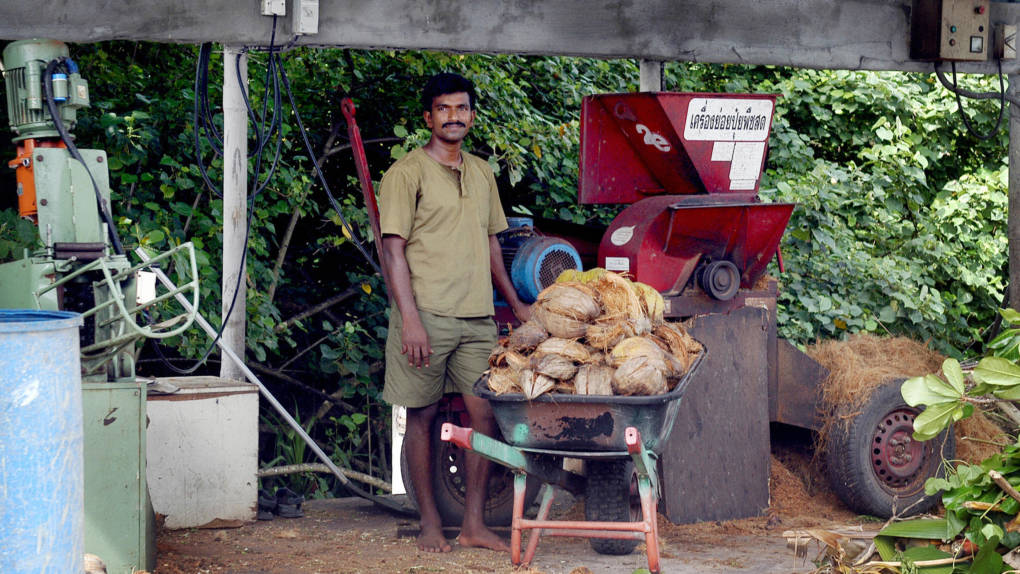
"caption": "A hotel employee prepares coconut husks for recycling into rope at the luxury Soneva Fushi island resort in the Maldives. It's just one of many initiatives the resort is taking to reduce food waste.",
"description": "A hotel employee prepares coconut husks for recycling into rope at the luxury Soneva Fushi island resort in the Maldives. It's just one of many initiatives the resort is taking to reduce food waste.",
"title": "A hotel employee prepares coconut husks for recycling into rope at the luxury Soneva Fushi island resort in the Maldives. It's just one of many initiatives the resort is taking to reduce food waste.",
"credit": "Amal Jayasinghe/AFP/Getty Images",
"status": "inherit",
"isLoading": false,
"fetchFailed": false
},
"bayareabites_129464": {
"type": "attachments",
"id": "bayareabites_129464",
"meta": {
"index": "attachments_1716263798",
"site": "bayareabites",
"id": "129464",
"found": true
},
"parent": 129463,
"imgSizes": {
"small": {
"file": "https://ww2.kqed.org/app/uploads/sites/24/2018/07/gettyimages-932406182-db3ad2e5b465008ac099992638ce546d7e2c4c6a-520x390.jpg",
"width": 520,
"mimeType": "image/jpeg",
"height": 390
},
"twentyfourteen-full-width": {
"file": "https://ww2.kqed.org/app/uploads/sites/24/2018/07/gettyimages-932406182-db3ad2e5b465008ac099992638ce546d7e2c4c6a-1038x576.jpg",
"width": 1038,
"mimeType": "image/jpeg",
"height": 576
},
"thumbnail": {
"file": "https://ww2.kqed.org/app/uploads/sites/24/2018/07/gettyimages-932406182-db3ad2e5b465008ac099992638ce546d7e2c4c6a-160x120.jpg",
"width": 160,
"mimeType": "image/jpeg",
"height": 120
},
"fd-sm": {
"file": "https://ww2.kqed.org/app/uploads/sites/24/2018/07/gettyimages-932406182-db3ad2e5b465008ac099992638ce546d7e2c4c6a-960x720.jpg",
"width": 960,
"mimeType": "image/jpeg",
"height": 720
},
"post-thumbnail": {
"file": "https://ww2.kqed.org/app/uploads/sites/24/2018/07/gettyimages-932406182-db3ad2e5b465008ac099992638ce546d7e2c4c6a-672x372.jpg",
"width": 672,
"mimeType": "image/jpeg",
"height": 372
},
"xsmall": {
"file": "https://ww2.kqed.org/app/uploads/sites/24/2018/07/gettyimages-932406182-db3ad2e5b465008ac099992638ce546d7e2c4c6a-375x281.jpg",
"width": 375,
"mimeType": "image/jpeg",
"height": 281
},
"kqedFullSize": {
"file": "https://ww2.kqed.org/app/uploads/sites/24/2018/07/gettyimages-932406182-db3ad2e5b465008ac099992638ce546d7e2c4c6a.jpg",
"width": 3644,
"height": 2733
},
"large": {
"file": "https://ww2.kqed.org/app/uploads/sites/24/2018/07/gettyimages-932406182-db3ad2e5b465008ac099992638ce546d7e2c4c6a-1020x765.jpg",
"width": 1020,
"mimeType": "image/jpeg",
"height": 765
},
"xlarge": {
"file": "https://ww2.kqed.org/app/uploads/sites/24/2018/07/gettyimages-932406182-db3ad2e5b465008ac099992638ce546d7e2c4c6a-1180x885.jpg",
"width": 1180,
"mimeType": "image/jpeg",
"height": 885
},
"complete_open_graph": {
"file": "https://ww2.kqed.org/app/uploads/sites/24/2018/07/gettyimages-932406182-db3ad2e5b465008ac099992638ce546d7e2c4c6a-1200x900.jpg",
"width": 1200,
"mimeType": "image/jpeg",
"height": 900
},
"guest-author-50": {
"file": "https://ww2.kqed.org/app/uploads/sites/24/2018/07/gettyimages-932406182-db3ad2e5b465008ac099992638ce546d7e2c4c6a-50x50.jpg",
"width": 50,
"mimeType": "image/jpeg",
"height": 50
},
"guest-author-96": {
"file": "https://ww2.kqed.org/app/uploads/sites/24/2018/07/gettyimages-932406182-db3ad2e5b465008ac099992638ce546d7e2c4c6a-96x96.jpg",
"width": 96,
"mimeType": "image/jpeg",
"height": 96
},
"medium": {
"file": "https://ww2.kqed.org/app/uploads/sites/24/2018/07/gettyimages-932406182-db3ad2e5b465008ac099992638ce546d7e2c4c6a-800x600.jpg",
"width": 800,
"mimeType": "image/jpeg",
"height": 600
},
"guest-author-64": {
"file": "https://ww2.kqed.org/app/uploads/sites/24/2018/07/gettyimages-932406182-db3ad2e5b465008ac099992638ce546d7e2c4c6a-64x64.jpg",
"width": 64,
"mimeType": "image/jpeg",
"height": 64
},
"guest-author-32": {
"file": "https://ww2.kqed.org/app/uploads/sites/24/2018/07/gettyimages-932406182-db3ad2e5b465008ac099992638ce546d7e2c4c6a-32x32.jpg",
"width": 32,
"mimeType": "image/jpeg",
"height": 32
},
"fd-lrg": {
"file": "https://ww2.kqed.org/app/uploads/sites/24/2018/07/gettyimages-932406182-db3ad2e5b465008ac099992638ce546d7e2c4c6a-1920x1440.jpg",
"width": 1920,
"mimeType": "image/jpeg",
"height": 1440
},
"fd-med": {
"file": "https://ww2.kqed.org/app/uploads/sites/24/2018/07/gettyimages-932406182-db3ad2e5b465008ac099992638ce546d7e2c4c6a-1180x885.jpg",
"width": 1180,
"mimeType": "image/jpeg",
"height": 885
},
"full-width": {
"file": "https://ww2.kqed.org/app/uploads/sites/24/2018/07/gettyimages-932406182-db3ad2e5b465008ac099992638ce546d7e2c4c6a-1920x1440.jpg",
"width": 1920,
"mimeType": "image/jpeg",
"height": 1440
},
"detail": {
"file": "https://ww2.kqed.org/app/uploads/sites/24/2018/07/gettyimages-932406182-db3ad2e5b465008ac099992638ce546d7e2c4c6a-150x150.jpg",
"width": 150,
"mimeType": "image/jpeg",
"height": 150
},
"medium_large": {
"file": "https://ww2.kqed.org/app/uploads/sites/24/2018/07/gettyimages-932406182-db3ad2e5b465008ac099992638ce546d7e2c4c6a-768x576.jpg",
"width": 768,
"mimeType": "image/jpeg",
"height": 576
},
"guest-author-128": {
"file": "https://ww2.kqed.org/app/uploads/sites/24/2018/07/gettyimages-932406182-db3ad2e5b465008ac099992638ce546d7e2c4c6a-128x128.jpg",
"width": 128,
"mimeType": "image/jpeg",
"height": 128
},
"xxsmall": {
"file": "https://ww2.kqed.org/app/uploads/sites/24/2018/07/gettyimages-932406182-db3ad2e5b465008ac099992638ce546d7e2c4c6a-240x180.jpg",
"width": 240,
"mimeType": "image/jpeg",
"height": 180
}
},
"publishDate": 1532043666,
"modified": 1532043666,
"caption": null,
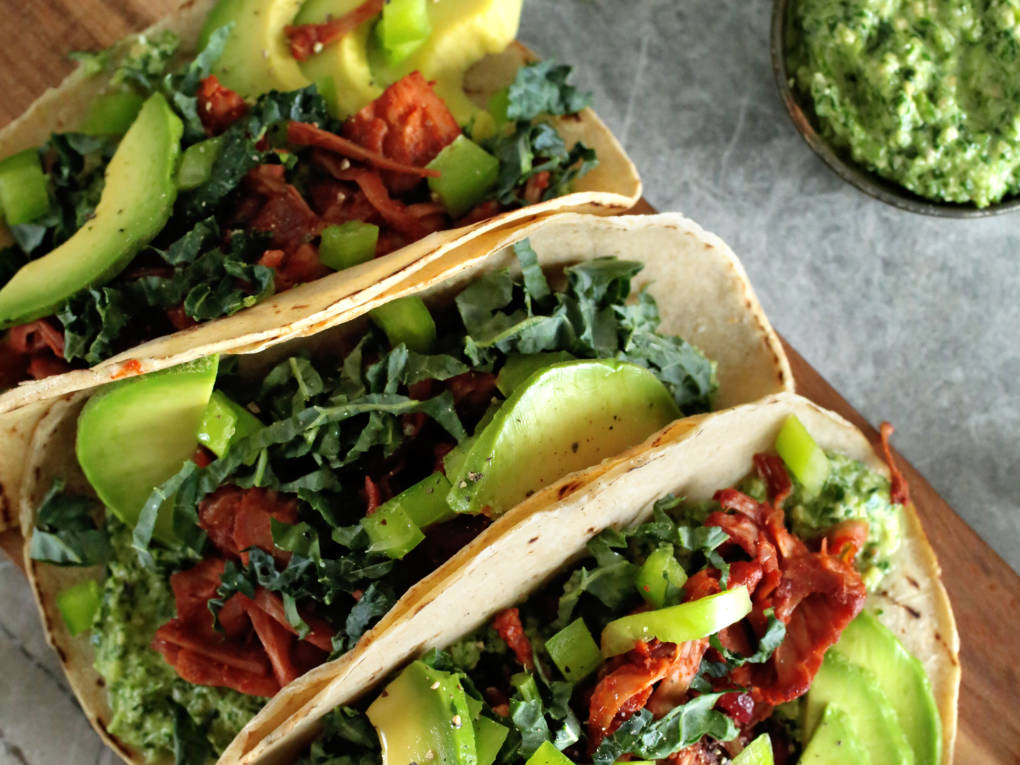
"description": "Pesto and pulled jackfruit tacos. In Southern California, working-class Mexican-American chefs are giving traditionally meaty dishes a vegan spin",
"title": "Pesto and pulled jackfruit tacos. In Southern California, working-class Mexican-American chefs are giving traditionally meaty dishes a vegan spin.",
"credit": null,
"status": "inherit",
"isLoading": false,
"fetchFailed": false
},
"bayareabites_129423": {
"type": "attachments",
"id": "bayareabites_129423",
"meta": {
"index": "attachments_1716263798",
"site": "bayareabites",
"id": "129423",
"found": true
},
"parent": 129422,
"imgSizes": {
"small": {
"file": "https://ww2.kqed.org/app/uploads/sites/24/2018/07/gettyimages-497396938-c0057d75cb37fad8b412cd6413d77744e2063de2-520x390.jpg",
"width": 520,
"mimeType": "image/jpeg",
"height": 390
},
"twentyfourteen-full-width": {
"file": "https://ww2.kqed.org/app/uploads/sites/24/2018/07/gettyimages-497396938-c0057d75cb37fad8b412cd6413d77744e2063de2-1038x576.jpg",
"width": 1038,
"mimeType": "image/jpeg",
"height": 576
},
"thumbnail": {
"file": "https://ww2.kqed.org/app/uploads/sites/24/2018/07/gettyimages-497396938-c0057d75cb37fad8b412cd6413d77744e2063de2-160x120.jpg",
"width": 160,
"mimeType": "image/jpeg",
"height": 120
},
"fd-sm": {
"file": "https://ww2.kqed.org/app/uploads/sites/24/2018/07/gettyimages-497396938-c0057d75cb37fad8b412cd6413d77744e2063de2-960x720.jpg",
"width": 960,
"mimeType": "image/jpeg",
"height": 720
},
"post-thumbnail": {
"file": "https://ww2.kqed.org/app/uploads/sites/24/2018/07/gettyimages-497396938-c0057d75cb37fad8b412cd6413d77744e2063de2-672x372.jpg",
"width": 672,
"mimeType": "image/jpeg",
"height": 372
},
"xsmall": {
"file": "https://ww2.kqed.org/app/uploads/sites/24/2018/07/gettyimages-497396938-c0057d75cb37fad8b412cd6413d77744e2063de2-375x281.jpg",
"width": 375,
"mimeType": "image/jpeg",
"height": 281
},
"kqedFullSize": {
"file": "https://ww2.kqed.org/app/uploads/sites/24/2018/07/gettyimages-497396938-c0057d75cb37fad8b412cd6413d77744e2063de2.jpg",
"width": 2664,
"height": 1998
},
"large": {
"file": "https://ww2.kqed.org/app/uploads/sites/24/2018/07/gettyimages-497396938-c0057d75cb37fad8b412cd6413d77744e2063de2-1020x765.jpg",
"width": 1020,
"mimeType": "image/jpeg",
"height": 765
},
"xlarge": {
"file": "https://ww2.kqed.org/app/uploads/sites/24/2018/07/gettyimages-497396938-c0057d75cb37fad8b412cd6413d77744e2063de2-1180x885.jpg",
"width": 1180,
"mimeType": "image/jpeg",
"height": 885
},
"complete_open_graph": {
"file": "https://ww2.kqed.org/app/uploads/sites/24/2018/07/gettyimages-497396938-c0057d75cb37fad8b412cd6413d77744e2063de2-1200x900.jpg",
"width": 1200,
"mimeType": "image/jpeg",
"height": 900
},
"guest-author-50": {
"file": "https://ww2.kqed.org/app/uploads/sites/24/2018/07/gettyimages-497396938-c0057d75cb37fad8b412cd6413d77744e2063de2-50x50.jpg",
"width": 50,
"mimeType": "image/jpeg",
"height": 50
},
"guest-author-96": {
"file": "https://ww2.kqed.org/app/uploads/sites/24/2018/07/gettyimages-497396938-c0057d75cb37fad8b412cd6413d77744e2063de2-96x96.jpg",
"width": 96,
"mimeType": "image/jpeg",
"height": 96
},
"medium": {
"file": "https://ww2.kqed.org/app/uploads/sites/24/2018/07/gettyimages-497396938-c0057d75cb37fad8b412cd6413d77744e2063de2-800x600.jpg",
"width": 800,
"mimeType": "image/jpeg",
"height": 600
},
"guest-author-64": {
"file": "https://ww2.kqed.org/app/uploads/sites/24/2018/07/gettyimages-497396938-c0057d75cb37fad8b412cd6413d77744e2063de2-64x64.jpg",
"width": 64,
"mimeType": "image/jpeg",
"height": 64
},
"guest-author-32": {
"file": "https://ww2.kqed.org/app/uploads/sites/24/2018/07/gettyimages-497396938-c0057d75cb37fad8b412cd6413d77744e2063de2-32x32.jpg",
"width": 32,
"mimeType": "image/jpeg",
"height": 32
},
"fd-lrg": {
"file": "https://ww2.kqed.org/app/uploads/sites/24/2018/07/gettyimages-497396938-c0057d75cb37fad8b412cd6413d77744e2063de2-1920x1440.jpg",
"width": 1920,
"mimeType": "image/jpeg",
"height": 1440
},
"fd-med": {
"file": "https://ww2.kqed.org/app/uploads/sites/24/2018/07/gettyimages-497396938-c0057d75cb37fad8b412cd6413d77744e2063de2-1180x885.jpg",
"width": 1180,
"mimeType": "image/jpeg",
"height": 885
},
"full-width": {
"file": "https://ww2.kqed.org/app/uploads/sites/24/2018/07/gettyimages-497396938-c0057d75cb37fad8b412cd6413d77744e2063de2-1920x1440.jpg",
"width": 1920,
"mimeType": "image/jpeg",
"height": 1440
},
"detail": {
"file": "https://ww2.kqed.org/app/uploads/sites/24/2018/07/gettyimages-497396938-c0057d75cb37fad8b412cd6413d77744e2063de2-150x150.jpg",
"width": 150,
"mimeType": "image/jpeg",
"height": 150
},
"medium_large": {
"file": "https://ww2.kqed.org/app/uploads/sites/24/2018/07/gettyimages-497396938-c0057d75cb37fad8b412cd6413d77744e2063de2-768x576.jpg",
"width": 768,
"mimeType": "image/jpeg",
"height": 576
},
"guest-author-128": {
"file": "https://ww2.kqed.org/app/uploads/sites/24/2018/07/gettyimages-497396938-c0057d75cb37fad8b412cd6413d77744e2063de2-128x128.jpg",
"width": 128,
"mimeType": "image/jpeg",
"height": 128
},
"xxsmall": {
"file": "https://ww2.kqed.org/app/uploads/sites/24/2018/07/gettyimages-497396938-c0057d75cb37fad8b412cd6413d77744e2063de2-240x180.jpg",
"width": 240,
"mimeType": "image/jpeg",
"height": 180
}
},
"publishDate": 1531930111,
"modified": 1531930234,
"caption": "Marriott International became the latest company to announce it will stop using plastic straws, saying it would remove them from its more than 6,500 properties by next July.",
"description": "Marriott International became the latest company to announce it will stop using plastic straws, saying it would remove them from its more than 6,500 properties by next July.",
"title": "Marriott International became the latest company to announce it will stop using plastic straws, saying it would remove them from its more than 6,500 properties by next July.",
"credit": "Justin Sullivan/Getty Images",
"status": "inherit",
"isLoading": false,
"fetchFailed": false
},
"bayareabites_129384": {
"type": "attachments",
"id": "bayareabites_129384",
"meta": {
"index": "attachments_1716263798",
"site": "bayareabites",
"id": "129384",
"found": true
},
"parent": 129383,
"imgSizes": {
"small": {
"file": "https://ww2.kqed.org/app/uploads/sites/24/2018/07/gettyimages-675605831-5315302713a65b636cc85b7039110b506b2807a8-520x390.jpg",
"width": 520,
"mimeType": "image/jpeg",
"height": 390
},
"twentyfourteen-full-width": {
"file": "https://ww2.kqed.org/app/uploads/sites/24/2018/07/gettyimages-675605831-5315302713a65b636cc85b7039110b506b2807a8-1038x576.jpg",
"width": 1038,
"mimeType": "image/jpeg",
"height": 576
},
"thumbnail": {
"file": "https://ww2.kqed.org/app/uploads/sites/24/2018/07/gettyimages-675605831-5315302713a65b636cc85b7039110b506b2807a8-160x120.jpg",
"width": 160,
"mimeType": "image/jpeg",
"height": 120
},
"fd-sm": {
"file": "https://ww2.kqed.org/app/uploads/sites/24/2018/07/gettyimages-675605831-5315302713a65b636cc85b7039110b506b2807a8-960x720.jpg",
"width": 960,
"mimeType": "image/jpeg",
"height": 720
},
"post-thumbnail": {
"file": "https://ww2.kqed.org/app/uploads/sites/24/2018/07/gettyimages-675605831-5315302713a65b636cc85b7039110b506b2807a8-672x372.jpg",
"width": 672,
"mimeType": "image/jpeg",
"height": 372
},
"xsmall": {
"file": "https://ww2.kqed.org/app/uploads/sites/24/2018/07/gettyimages-675605831-5315302713a65b636cc85b7039110b506b2807a8-375x281.jpg",
"width": 375,
"mimeType": "image/jpeg",
"height": 281
},
"kqedFullSize": {
"file": "https://ww2.kqed.org/app/uploads/sites/24/2018/07/gettyimages-675605831-5315302713a65b636cc85b7039110b506b2807a8.jpg",
"width": 3794,
"height": 2845
},
"large": {
"file": "https://ww2.kqed.org/app/uploads/sites/24/2018/07/gettyimages-675605831-5315302713a65b636cc85b7039110b506b2807a8-1020x765.jpg",
"width": 1020,
"mimeType": "image/jpeg",
"height": 765
},
"xlarge": {
"file": "https://ww2.kqed.org/app/uploads/sites/24/2018/07/gettyimages-675605831-5315302713a65b636cc85b7039110b506b2807a8-1180x885.jpg",
"width": 1180,
"mimeType": "image/jpeg",
"height": 885
},
"complete_open_graph": {
"file": "https://ww2.kqed.org/app/uploads/sites/24/2018/07/gettyimages-675605831-5315302713a65b636cc85b7039110b506b2807a8-1200x900.jpg",
"width": 1200,
"mimeType": "image/jpeg",
"height": 900
},
"guest-author-50": {
"file": "https://ww2.kqed.org/app/uploads/sites/24/2018/07/gettyimages-675605831-5315302713a65b636cc85b7039110b506b2807a8-50x50.jpg",
"width": 50,
"mimeType": "image/jpeg",
"height": 50
},
"guest-author-96": {
"file": "https://ww2.kqed.org/app/uploads/sites/24/2018/07/gettyimages-675605831-5315302713a65b636cc85b7039110b506b2807a8-96x96.jpg",
"width": 96,
"mimeType": "image/jpeg",
"height": 96
},
"medium": {
"file": "https://ww2.kqed.org/app/uploads/sites/24/2018/07/gettyimages-675605831-5315302713a65b636cc85b7039110b506b2807a8-800x600.jpg",
"width": 800,
"mimeType": "image/jpeg",
"height": 600
},
"guest-author-64": {
"file": "https://ww2.kqed.org/app/uploads/sites/24/2018/07/gettyimages-675605831-5315302713a65b636cc85b7039110b506b2807a8-64x64.jpg",
"width": 64,
"mimeType": "image/jpeg",
"height": 64
},
"guest-author-32": {
"file": "https://ww2.kqed.org/app/uploads/sites/24/2018/07/gettyimages-675605831-5315302713a65b636cc85b7039110b506b2807a8-32x32.jpg",
"width": 32,
"mimeType": "image/jpeg",
"height": 32
},
"fd-lrg": {
"file": "https://ww2.kqed.org/app/uploads/sites/24/2018/07/gettyimages-675605831-5315302713a65b636cc85b7039110b506b2807a8-1920x1440.jpg",
"width": 1920,
"mimeType": "image/jpeg",
"height": 1440
},
"fd-med": {
"file": "https://ww2.kqed.org/app/uploads/sites/24/2018/07/gettyimages-675605831-5315302713a65b636cc85b7039110b506b2807a8-1180x885.jpg",
"width": 1180,
"mimeType": "image/jpeg",
"height": 885
},
"full-width": {
"file": "https://ww2.kqed.org/app/uploads/sites/24/2018/07/gettyimages-675605831-5315302713a65b636cc85b7039110b506b2807a8-1920x1440.jpg",
"width": 1920,
"mimeType": "image/jpeg",
"height": 1440
},
"detail": {
"file": "https://ww2.kqed.org/app/uploads/sites/24/2018/07/gettyimages-675605831-5315302713a65b636cc85b7039110b506b2807a8-150x150.jpg",
"width": 150,
"mimeType": "image/jpeg",
"height": 150
},
"medium_large": {
"file": "https://ww2.kqed.org/app/uploads/sites/24/2018/07/gettyimages-675605831-5315302713a65b636cc85b7039110b506b2807a8-768x576.jpg",
"width": 768,
"mimeType": "image/jpeg",
"height": 576
},
"guest-author-128": {
"file": "https://ww2.kqed.org/app/uploads/sites/24/2018/07/gettyimages-675605831-5315302713a65b636cc85b7039110b506b2807a8-128x128.jpg",
"width": 128,
"mimeType": "image/jpeg",
"height": 128
},
"xxsmall": {
"file": "https://ww2.kqed.org/app/uploads/sites/24/2018/07/gettyimages-675605831-5315302713a65b636cc85b7039110b506b2807a8-240x180.jpg",
"width": 240,
"mimeType": "image/jpeg",
"height": 180
}
},
"publishDate": 1531325584,
"modified": 1531325749,
"caption": "As cities and companies — including Starbucks — move to oust straws in a bid to reduce pollution, people with disabilities say they're losing access to a necessary, lifesaving tool.",
"description": "As cities and companies -- including Starbucks -- move to oust straws in a bid to reduce pollution, people with disabilities say they're losing access to a necessary, lifesaving tool.",
"title": "As cities and companies — including Starbucks — move to oust straws in a bid to reduce pollution, people with disabilities say they're losing access to a necessary, lifesaving tool.",
"credit": "Thn Rocn Khosit Rath Phachr Sukh /EyeEm via Getty Images",
"status": "inherit",
"isLoading": false,
"fetchFailed": false
},
"bayareabites_129243": {
"type": "attachments",
"id": "bayareabites_129243",
"meta": {
"index": "attachments_1716263798",
"site": "bayareabites",
"id": "129243",
"found": true
},
"parent": 129238,
"imgSizes": {
"small": {
"file": "https://ww2.kqed.org/app/uploads/sites/24/2018/07/180622-gmo-labeling-top1-520x347.jpg",
"width": 520,
"mimeType": "image/jpeg",
"height": 347
},
"twentyfourteen-full-width": {
"file": "https://ww2.kqed.org/app/uploads/sites/24/2018/07/180622-gmo-labeling-top1-1038x576.jpg",
"width": 1038,
"mimeType": "image/jpeg",
"height": 576
},
"thumbnail": {
"file": "https://ww2.kqed.org/app/uploads/sites/24/2018/07/180622-gmo-labeling-top1-160x107.jpg",
"width": 160,
"mimeType": "image/jpeg",
"height": 107
},
"fd-sm": {
"file": "https://ww2.kqed.org/app/uploads/sites/24/2018/07/180622-gmo-labeling-top1-960x640.jpg",
"width": 960,
"mimeType": "image/jpeg",
"height": 640
},
"post-thumbnail": {
"file": "https://ww2.kqed.org/app/uploads/sites/24/2018/07/180622-gmo-labeling-top1-672x372.jpg",
"width": 672,
"mimeType": "image/jpeg",
"height": 372
},
"xsmall": {
"file": "https://ww2.kqed.org/app/uploads/sites/24/2018/07/180622-gmo-labeling-top1-375x250.jpg",
"width": 375,
"mimeType": "image/jpeg",
"height": 250
},
"kqedFullSize": {
"file": "https://ww2.kqed.org/app/uploads/sites/24/2018/07/180622-gmo-labeling-top1.jpg",
"width": 1200,
"height": 800
},
"large": {
"file": "https://ww2.kqed.org/app/uploads/sites/24/2018/07/180622-gmo-labeling-top1-1020x680.jpg",
"width": 1020,
"mimeType": "image/jpeg",
"height": 680
},
"xlarge": {
"file": "https://ww2.kqed.org/app/uploads/sites/24/2018/07/180622-gmo-labeling-top1-1180x787.jpg",
"width": 1180,
"mimeType": "image/jpeg",
"height": 787
},
"complete_open_graph": {
"file": "https://ww2.kqed.org/app/uploads/sites/24/2018/07/180622-gmo-labeling-top1-1200x800.jpg",
"width": 1200,
"mimeType": "image/jpeg",
"height": 800
},
"guest-author-50": {
"file": "https://ww2.kqed.org/app/uploads/sites/24/2018/07/180622-gmo-labeling-top1-50x50.jpg",
"width": 50,
"mimeType": "image/jpeg",
"height": 50
},
"guest-author-96": {
"file": "https://ww2.kqed.org/app/uploads/sites/24/2018/07/180622-gmo-labeling-top1-96x96.jpg",
"width": 96,
"mimeType": "image/jpeg",
"height": 96
},
"medium": {
"file": "https://ww2.kqed.org/app/uploads/sites/24/2018/07/180622-gmo-labeling-top1-800x533.jpg",
"width": 800,
"mimeType": "image/jpeg",
"height": 533
},
"guest-author-64": {
"file": "https://ww2.kqed.org/app/uploads/sites/24/2018/07/180622-gmo-labeling-top1-64x64.jpg",
"width": 64,
"mimeType": "image/jpeg",
"height": 64
},
"guest-author-32": {
"file": "https://ww2.kqed.org/app/uploads/sites/24/2018/07/180622-gmo-labeling-top1-32x32.jpg",
"width": 32,
"mimeType": "image/jpeg",
"height": 32
},
"fd-med": {
"file": "https://ww2.kqed.org/app/uploads/sites/24/2018/07/180622-gmo-labeling-top1-1180x787.jpg",
"width": 1180,
"mimeType": "image/jpeg",
"height": 787
},
"detail": {
"file": "https://ww2.kqed.org/app/uploads/sites/24/2018/07/180622-gmo-labeling-top1-150x150.jpg",
"width": 150,
"mimeType": "image/jpeg",
"height": 150
},
"medium_large": {
"file": "https://ww2.kqed.org/app/uploads/sites/24/2018/07/180622-gmo-labeling-top1-768x512.jpg",
"width": 768,
"mimeType": "image/jpeg",
"height": 512
},
"guest-author-128": {
"file": "https://ww2.kqed.org/app/uploads/sites/24/2018/07/180622-gmo-labeling-top1-128x128.jpg",
"width": 128,
"mimeType": "image/jpeg",
"height": 128
},
"xxsmall": {
"file": "https://ww2.kqed.org/app/uploads/sites/24/2018/07/180622-gmo-labeling-top1-240x160.jpg",
"width": 240,
"mimeType": "image/jpeg",
"height": 160
}
},
"publishDate": 1530630384,
"modified": 1530630524,
"caption": "GMO Labeling ",
"description": null,
"title": "180622-gmo-labeling-top1",
"credit": "Courtesy of Civil Eats",
"status": "inherit",
"isLoading": false,
"fetchFailed": false
},
"bayareabites_129230": {
"type": "attachments",
"id": "bayareabites_129230",
"meta": {
"index": "attachments_1716263798",
"site": "bayareabites",
"id": "129230",
"found": true
},
"parent": 129229,
"imgSizes": {
"small": {
"file": "https://ww2.kqed.org/app/uploads/sites/24/2018/07/2018-6-30-kpaynter-farm_wide-4fe1f7b181135ef5061ebf24da11bd0c8470659e-520x293.jpg",
"width": 520,
"mimeType": "image/jpeg",
"height": 293
},
"twentyfourteen-full-width": {
"file": "https://ww2.kqed.org/app/uploads/sites/24/2018/07/2018-6-30-kpaynter-farm_wide-4fe1f7b181135ef5061ebf24da11bd0c8470659e-1038x576.jpg",
"width": 1038,
"mimeType": "image/jpeg",
"height": 576
},
"thumbnail": {
"file": "https://ww2.kqed.org/app/uploads/sites/24/2018/07/2018-6-30-kpaynter-farm_wide-4fe1f7b181135ef5061ebf24da11bd0c8470659e-160x90.jpg",
"width": 160,
"mimeType": "image/jpeg",
"height": 90
},
"fd-sm": {
"file": "https://ww2.kqed.org/app/uploads/sites/24/2018/07/2018-6-30-kpaynter-farm_wide-4fe1f7b181135ef5061ebf24da11bd0c8470659e-960x540.jpg",
"width": 960,
"mimeType": "image/jpeg",
"height": 540
},
"post-thumbnail": {
"file": "https://ww2.kqed.org/app/uploads/sites/24/2018/07/2018-6-30-kpaynter-farm_wide-4fe1f7b181135ef5061ebf24da11bd0c8470659e-672x372.jpg",
"width": 672,
"mimeType": "image/jpeg",
"height": 372
},
"xsmall": {
"file": "https://ww2.kqed.org/app/uploads/sites/24/2018/07/2018-6-30-kpaynter-farm_wide-4fe1f7b181135ef5061ebf24da11bd0c8470659e-375x211.jpg",
"width": 375,
"mimeType": "image/jpeg",
"height": 211
},
"kqedFullSize": {
"file": "https://ww2.kqed.org/app/uploads/sites/24/2018/07/2018-6-30-kpaynter-farm_wide-4fe1f7b181135ef5061ebf24da11bd0c8470659e.jpg",
"width": 5184,
"height": 2916
},
"large": {
"file": "https://ww2.kqed.org/app/uploads/sites/24/2018/07/2018-6-30-kpaynter-farm_wide-4fe1f7b181135ef5061ebf24da11bd0c8470659e-1020x574.jpg",
"width": 1020,
"mimeType": "image/jpeg",
"height": 574
},
"xlarge": {
"file": "https://ww2.kqed.org/app/uploads/sites/24/2018/07/2018-6-30-kpaynter-farm_wide-4fe1f7b181135ef5061ebf24da11bd0c8470659e-1180x664.jpg",
"width": 1180,
"mimeType": "image/jpeg",
"height": 664
},
"complete_open_graph": {
"file": "https://ww2.kqed.org/app/uploads/sites/24/2018/07/2018-6-30-kpaynter-farm_wide-4fe1f7b181135ef5061ebf24da11bd0c8470659e-1200x675.jpg",
"width": 1200,
"mimeType": "image/jpeg",
"height": 675
},
"guest-author-50": {
"file": "https://ww2.kqed.org/app/uploads/sites/24/2018/07/2018-6-30-kpaynter-farm_wide-4fe1f7b181135ef5061ebf24da11bd0c8470659e-50x50.jpg",
"width": 50,
"mimeType": "image/jpeg",
"height": 50
},
"guest-author-96": {
"file": "https://ww2.kqed.org/app/uploads/sites/24/2018/07/2018-6-30-kpaynter-farm_wide-4fe1f7b181135ef5061ebf24da11bd0c8470659e-96x96.jpg",
"width": 96,
"mimeType": "image/jpeg",
"height": 96
},
"medium": {
"file": "https://ww2.kqed.org/app/uploads/sites/24/2018/07/2018-6-30-kpaynter-farm_wide-4fe1f7b181135ef5061ebf24da11bd0c8470659e-800x450.jpg",
"width": 800,
"mimeType": "image/jpeg",
"height": 450
},
"guest-author-64": {
"file": "https://ww2.kqed.org/app/uploads/sites/24/2018/07/2018-6-30-kpaynter-farm_wide-4fe1f7b181135ef5061ebf24da11bd0c8470659e-64x64.jpg",
"width": 64,
"mimeType": "image/jpeg",
"height": 64
},
"guest-author-32": {
"file": "https://ww2.kqed.org/app/uploads/sites/24/2018/07/2018-6-30-kpaynter-farm_wide-4fe1f7b181135ef5061ebf24da11bd0c8470659e-32x32.jpg",
"width": 32,
"mimeType": "image/jpeg",
"height": 32
},
"fd-lrg": {
"file": "https://ww2.kqed.org/app/uploads/sites/24/2018/07/2018-6-30-kpaynter-farm_wide-4fe1f7b181135ef5061ebf24da11bd0c8470659e-1920x1080.jpg",
"width": 1920,
"mimeType": "image/jpeg",
"height": 1080
},
"fd-med": {
"file": "https://ww2.kqed.org/app/uploads/sites/24/2018/07/2018-6-30-kpaynter-farm_wide-4fe1f7b181135ef5061ebf24da11bd0c8470659e-1180x664.jpg",
"width": 1180,
"mimeType": "image/jpeg",
"height": 664
},
"full-width": {
"file": "https://ww2.kqed.org/app/uploads/sites/24/2018/07/2018-6-30-kpaynter-farm_wide-4fe1f7b181135ef5061ebf24da11bd0c8470659e-1920x1080.jpg",
"width": 1920,
"mimeType": "image/jpeg",
"height": 1080
},
"detail": {
"file": "https://ww2.kqed.org/app/uploads/sites/24/2018/07/2018-6-30-kpaynter-farm_wide-4fe1f7b181135ef5061ebf24da11bd0c8470659e-150x150.jpg",
"width": 150,
"mimeType": "image/jpeg",
"height": 150
},
"medium_large": {
"file": "https://ww2.kqed.org/app/uploads/sites/24/2018/07/2018-6-30-kpaynter-farm_wide-4fe1f7b181135ef5061ebf24da11bd0c8470659e-768x432.jpg",
"width": 768,
"mimeType": "image/jpeg",
"height": 432
},
"guest-author-128": {
"file": "https://ww2.kqed.org/app/uploads/sites/24/2018/07/2018-6-30-kpaynter-farm_wide-4fe1f7b181135ef5061ebf24da11bd0c8470659e-128x128.jpg",
"width": 128,
"mimeType": "image/jpeg",
"height": 128
},
"xxsmall": {
"file": "https://ww2.kqed.org/app/uploads/sites/24/2018/07/2018-6-30-kpaynter-farm_wide-4fe1f7b181135ef5061ebf24da11bd0c8470659e-240x135.jpg",
"width": 240,
"mimeType": "image/jpeg",
"height": 135
}
},
"publishDate": 1530557341,
"modified": 1530557507,
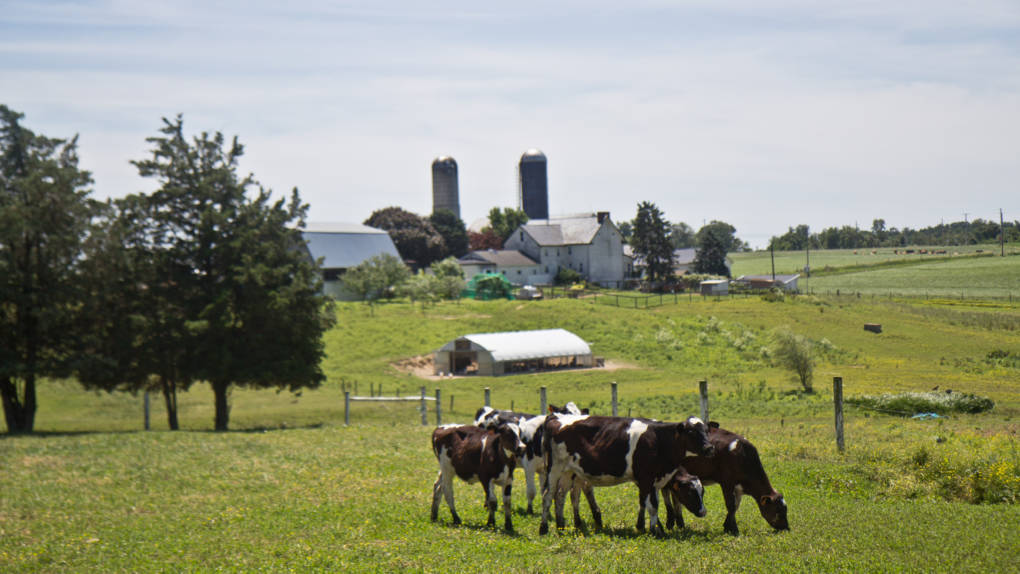
"caption": "Abner Stolztfus owns Cedar Dream dairy farm in Peach Bottom, Pa. Last year, Stolztfus decided to invest almost $200,000 in equipment and learned how to make yogurt from scratch.",
"description": "Abner Stolztfus owns Cedar Dream dairy farm in Peach Bottom, Pa. Last year, Stolztfus decided to invest almost $200,000 in equipment and learned how to make yogurt from scratch.",
"title": "Abner Stolztfus owns Cedar Dream dairy farm in Peach Bottom, Pa. Last year, Stolztfus decided to invest almost $200,000 in equipment and learned how to make yogurt from scratch.",
"credit": "Kimberly Paynter/WHYY",
"status": "inherit",
"isLoading": false,
"fetchFailed": false
},
"bayareabites_129094": {
"type": "attachments",
"id": "bayareabites_129094",
"meta": {
"index": "attachments_1716263798",
"site": "bayareabites",
"id": "129094",
"found": true
},
"parent": 129093,
"imgSizes": {
"small": {
"file": "https://ww2.kqed.org/app/uploads/sites/24/2018/06/rice-co2_custom-4d69bb767f3c381021e20ab9a010d0b7775b0831-520x380.png",
"width": 520,
"mimeType": "image/png",
"height": 380
},
"thumbnail": {
"file": "https://ww2.kqed.org/app/uploads/sites/24/2018/06/rice-co2_custom-4d69bb767f3c381021e20ab9a010d0b7775b0831-160x117.png",
"width": 160,
"mimeType": "image/png",
"height": 117
},
"post-thumbnail": {
"file": "https://ww2.kqed.org/app/uploads/sites/24/2018/06/rice-co2_custom-4d69bb767f3c381021e20ab9a010d0b7775b0831-672x372.png",
"width": 672,
"mimeType": "image/png",
"height": 372
},
"xsmall": {
"file": "https://ww2.kqed.org/app/uploads/sites/24/2018/06/rice-co2_custom-4d69bb767f3c381021e20ab9a010d0b7775b0831-375x274.png",
"width": 375,
"mimeType": "image/png",
"height": 274
},
"kqedFullSize": {
"file": "https://ww2.kqed.org/app/uploads/sites/24/2018/06/rice-co2_custom-4d69bb767f3c381021e20ab9a010d0b7775b0831.png",
"width": 674,
"height": 492
},
"guest-author-50": {
"file": "https://ww2.kqed.org/app/uploads/sites/24/2018/06/rice-co2_custom-4d69bb767f3c381021e20ab9a010d0b7775b0831-50x50.png",
"width": 50,
"mimeType": "image/png",
"height": 50
},
"guest-author-96": {
"file": "https://ww2.kqed.org/app/uploads/sites/24/2018/06/rice-co2_custom-4d69bb767f3c381021e20ab9a010d0b7775b0831-96x96.png",
"width": 96,
"mimeType": "image/png",
"height": 96
},
"guest-author-64": {
"file": "https://ww2.kqed.org/app/uploads/sites/24/2018/06/rice-co2_custom-4d69bb767f3c381021e20ab9a010d0b7775b0831-64x64.png",
"width": 64,
"mimeType": "image/png",
"height": 64
},
"detail": {
"file": "https://ww2.kqed.org/app/uploads/sites/24/2018/06/rice-co2_custom-4d69bb767f3c381021e20ab9a010d0b7775b0831-150x150.png",
"width": 150,
"mimeType": "image/png",
"height": 150
},
"guest-author-32": {
"file": "https://ww2.kqed.org/app/uploads/sites/24/2018/06/rice-co2_custom-4d69bb767f3c381021e20ab9a010d0b7775b0831-32x32.png",
"width": 32,
"mimeType": "image/png",
"height": 32
},
"guest-author-128": {
"file": "https://ww2.kqed.org/app/uploads/sites/24/2018/06/rice-co2_custom-4d69bb767f3c381021e20ab9a010d0b7775b0831-128x128.png",
"width": 128,
"mimeType": "image/png",
"height": 128
},
"xxsmall": {
"file": "https://ww2.kqed.org/app/uploads/sites/24/2018/06/rice-co2_custom-4d69bb767f3c381021e20ab9a010d0b7775b0831-240x175.png",
"width": 240,
"mimeType": "image/png",
"height": 175
}
},
"publishDate": 1529429075,
"modified": 1529429211,
"caption": "Rice within the octagon in this field is part of an experiment to grow rice under different levels of carbon dioxide.",
"description": null,
"title": "Rice within the octagon in this field is part of an experiment to grow rice under different levels of carbon dioxide.",
"credit": "Toshihiro Jasegawa, National Agriculture and Food Research Organization of Japan",
"status": "inherit",
"isLoading": false,
"fetchFailed": false
},
"bayareabites_128778": {
"type": "attachments",
"id": "bayareabites_128778",
"meta": {
"index": "attachments_1716263798",
"site": "bayareabites",
"id": "128778",
"found": true
},
"parent": 128774,
"imgSizes": {
"small": {
"file": "https://ww2.kqed.org/app/uploads/sites/24/2018/06/180525-massa-organics-farmers-top1-520x347.jpg",
"width": 520,
"mimeType": "image/jpeg",
"height": 347
},
"twentyfourteen-full-width": {
"file": "https://ww2.kqed.org/app/uploads/sites/24/2018/06/180525-massa-organics-farmers-top1-1038x576.jpg",
"width": 1038,
"mimeType": "image/jpeg",
"height": 576
},
"thumbnail": {
"file": "https://ww2.kqed.org/app/uploads/sites/24/2018/06/180525-massa-organics-farmers-top1-160x107.jpg",
"width": 160,
"mimeType": "image/jpeg",
"height": 107
},
"fd-sm": {
"file": "https://ww2.kqed.org/app/uploads/sites/24/2018/06/180525-massa-organics-farmers-top1-960x640.jpg",
"width": 960,
"mimeType": "image/jpeg",
"height": 640
},
"post-thumbnail": {
"file": "https://ww2.kqed.org/app/uploads/sites/24/2018/06/180525-massa-organics-farmers-top1-672x372.jpg",
"width": 672,
"mimeType": "image/jpeg",
"height": 372
},
"xsmall": {
"file": "https://ww2.kqed.org/app/uploads/sites/24/2018/06/180525-massa-organics-farmers-top1-375x250.jpg",
"width": 375,
"mimeType": "image/jpeg",
"height": 250
},
"kqedFullSize": {
"file": "https://ww2.kqed.org/app/uploads/sites/24/2018/06/180525-massa-organics-farmers-top1.jpg",
"width": 1200,
"height": 800
},
"large": {
"file": "https://ww2.kqed.org/app/uploads/sites/24/2018/06/180525-massa-organics-farmers-top1-1020x680.jpg",
"width": 1020,
"mimeType": "image/jpeg",
"height": 680
},
"xlarge": {
"file": "https://ww2.kqed.org/app/uploads/sites/24/2018/06/180525-massa-organics-farmers-top1-1180x787.jpg",
"width": 1180,
"mimeType": "image/jpeg",
"height": 787
},
"complete_open_graph": {
"file": "https://ww2.kqed.org/app/uploads/sites/24/2018/06/180525-massa-organics-farmers-top1-1200x800.jpg",
"width": 1200,
"mimeType": "image/jpeg",
"height": 800
},
"guest-author-50": {
"file": "https://ww2.kqed.org/app/uploads/sites/24/2018/06/180525-massa-organics-farmers-top1-50x50.jpg",
"width": 50,
"mimeType": "image/jpeg",
"height": 50
},
"guest-author-96": {
"file": "https://ww2.kqed.org/app/uploads/sites/24/2018/06/180525-massa-organics-farmers-top1-96x96.jpg",
"width": 96,
"mimeType": "image/jpeg",
"height": 96
},
"medium": {
"file": "https://ww2.kqed.org/app/uploads/sites/24/2018/06/180525-massa-organics-farmers-top1-800x533.jpg",
"width": 800,
"mimeType": "image/jpeg",
"height": 533
},
"guest-author-64": {
"file": "https://ww2.kqed.org/app/uploads/sites/24/2018/06/180525-massa-organics-farmers-top1-64x64.jpg",
"width": 64,
"mimeType": "image/jpeg",
"height": 64
},
"guest-author-32": {
"file": "https://ww2.kqed.org/app/uploads/sites/24/2018/06/180525-massa-organics-farmers-top1-32x32.jpg",
"width": 32,
"mimeType": "image/jpeg",
"height": 32
},
"fd-med": {
"file": "https://ww2.kqed.org/app/uploads/sites/24/2018/06/180525-massa-organics-farmers-top1-1180x787.jpg",
"width": 1180,
"mimeType": "image/jpeg",
"height": 787
},
"detail": {
"file": "https://ww2.kqed.org/app/uploads/sites/24/2018/06/180525-massa-organics-farmers-top1-150x150.jpg",
"width": 150,
"mimeType": "image/jpeg",
"height": 150
},
"medium_large": {
"file": "https://ww2.kqed.org/app/uploads/sites/24/2018/06/180525-massa-organics-farmers-top1-768x512.jpg",
"width": 768,
"mimeType": "image/jpeg",
"height": 512
},
"guest-author-128": {
"file": "https://ww2.kqed.org/app/uploads/sites/24/2018/06/180525-massa-organics-farmers-top1-128x128.jpg",
"width": 128,
"mimeType": "image/jpeg",
"height": 128
},
"xxsmall": {
"file": "https://ww2.kqed.org/app/uploads/sites/24/2018/06/180525-massa-organics-farmers-top1-240x160.jpg",
"width": 240,
"mimeType": "image/jpeg",
"height": 160
}
},
"publishDate": 1528232133,
"modified": 1528232253,
"caption": "Greg Massa and Raquel Krach of Massa Organics",
"description": null,
"title": "180525-massa-organics-farmers-top1",
"credit": "Photo courtesy of \u003ca href=\"https://www.instagram.com/massaorganics/\">Massa Organics\u003c/a>.",
"status": "inherit",
"isLoading": false,
"fetchFailed": false
}
},
"audioPlayerReducer": {
"postId": "stream_live",
"isPaused": true,
"isPlaying": false,
"pfsActive": false,
"pledgeModalIsOpen": true,
"playerDrawerIsOpen": false,
"liveAudioPlayStartedAt": 0,
"liveAudioPlayContext": ""
},
"authorsReducer": {
"byline_bayareabites_130101": {
"type": "authors",
"id": "byline_bayareabites_130101",
"meta": {
"override": true
},
"slug": "byline_bayareabites_130101",
"name": "Carolyn Beans, NPR Food",
"isLoading": false
},
"byline_bayareabites_130043": {
"type": "authors",
"id": "byline_bayareabites_130043",
"meta": {
"override": true
},
"slug": "byline_bayareabites_130043",
"name": "\u003ca href=\"https://www.kqed.org/author/sarahhenry\">Sarah Henry\u003c/a>, Civil Eats",
"isLoading": false
},
"byline_bayareabites_130032": {
"type": "authors",
"id": "byline_bayareabites_130032",
"meta": {
"override": true
},
"slug": "byline_bayareabites_130032",
"name": "Marc Gunther, NPR",
"isLoading": false
},
"byline_bayareabites_129685": {
"type": "authors",
"id": "byline_bayareabites_129685",
"meta": {
"override": true
},
"slug": "byline_bayareabites_129685",
"name": "Terry Gross, Fresh Air, NPR",
"isLoading": false
},
"byline_bayareabites_129470": {
"type": "authors",
"id": "byline_bayareabites_129470",
"meta": {
"override": true
},
"slug": "byline_bayareabites_129470",
"name": "Laura Ratliff, NPR Food",
"isLoading": false
},
"byline_bayareabites_129463": {
"type": "authors",
"id": "byline_bayareabites_129463",
"meta": {
"override": true
},
"slug": "byline_bayareabites_129463",
"name": "Gustavo Arellano, NPR Food",
"isLoading": false
},
"byline_bayareabites_129422": {
"type": "authors",
"id": "byline_bayareabites_129422",
"meta": {
"override": true
},
"slug": "byline_bayareabites_129422",
"name": "Avie Schneider, NPR Food",
"isLoading": false
},
"byline_bayareabites_129383": {
"type": "authors",
"id": "byline_bayareabites_129383",
"meta": {
"override": true
},
"slug": "byline_bayareabites_129383",
"name": "Maria Godoy and Tove Danovich, NPR Food",
"isLoading": false
},
"byline_bayareabites_129238": {
"type": "authors",
"id": "byline_bayareabites_129238",
"meta": {
"override": true
},
"slug": "byline_bayareabites_129238",
"name": "\u003ca href=\"https://civileats.com/author/rspector/\">Rebecca Spector\u003c/a>, \u003ca href=\"https://www.kqed.org/author/civileat\">Civil Eats\u003c/a>",
"isLoading": false
},
"byline_bayareabites_129229": {
"type": "authors",
"id": "byline_bayareabites_129229",
"meta": {
"override": true
},
"slug": "byline_bayareabites_129229",
"name": "Catalina Jaramillo, WHYY, NPR Food",
"isLoading": false
},
"byline_bayareabites_129093": {
"type": "authors",
"id": "byline_bayareabites_129093",
"meta": {
"override": true
},
"slug": "byline_bayareabites_129093",
"name": "Merrit Kennedy, NPR Food",
"isLoading": false
},
"byline_bayareabites_128774": {
"type": "authors",
"id": "byline_bayareabites_128774",
"meta": {
"override": true
},
"slug": "byline_bayareabites_128774",
"name": "\u003ca href=\"https://civileats.com/author/dkim/\">Dakota Kim\u003c/a>, \u003ca href=\"https://civileats.com/2018/05/29/growing-california-rice-and-almonds-against-the-grain/\">Civil Eats\u003c/a>",
"isLoading": false
}
},
"pagesReducer": {
"bayareabites_category_sustainability": {
"type": "terms",
"id": "bayareabites_60",
"meta": {
"index": "terms_1716263798",
"site": "bayareabites",
"id": "60",
"score": 12.370327
},
"featImg": null,
"name": "sustainability, environment, climate change",
"description": null,
"taxonomy": "category",
"headData": {
"twImgId": null,
"twTitle": null,
"ogTitle": null,
"ogImgId": null,
"twDescription": null,
"description": null,
"title": "sustainability, environment, climate change Archives | KQED Bay Area Bites",
"ogDescription": null
},
"ttid": 23,
"slug": "sustainability",
"isLoading": false,
"title": "sustainability, environment, climate change",
"pageMeta": {
"site": "bayareabites",
"WpPageTemplate": "page-topic-editorial",
"currentPage": 4
},
"blocks": [
{
"blockName": "kqed/post-list",
"attrs": {
"layout": "cardArticle2",
"query": "posts/bayareabites?category=sustainability",
"seeMore": false,
"paginated": true,
"page": 4
}
},
{
"blockName": "kqed/ad"
}
]
}
},
"pfsSessionReducer": {},
"postsReducer": {
"stream_live": {
"type": "live",
"id": "stream_live",
"audioUrl": "https://streams.kqed.org/kqedradio",
"title": "Live Stream",
"excerpt": "Live Stream information currently unavailable.",
"link": "/radio",
"featImg": "",
"label": {
"name": "KQED Live",
"link": "/"
}
},
"stream_kqedNewscast": {
"type": "posts",
"id": "stream_kqedNewscast",
"audioUrl": "https://www.kqed.org/.stream/anon/radio/RDnews/newscast.mp3?_=1",
"title": "KQED Newscast",
"featImg": "",
"label": {
"name": "88.5 FM",
"link": "/"
}
},
"bayareabites_130101": {
"type": "posts",
"id": "bayareabites_130101",
"meta": {
"index": "posts_1716263798",
"site": "bayareabites",
"id": "130101",
"score": null,
"sort": [
1534547680000
]
},
"parent": 0,
"labelTerm": {
"site": "bayareabites"
},
"blocks": [],
"publishDate": 1534547680,
"format": "standard",
"disqusTitle": "Opinion: How I Learned To Face Food Waste And Plan Smarter",
"title": "Opinion: How I Learned To Face Food Waste And Plan Smarter",
"headTitle": "Bay Area Bites | KQED Food",
"content": "\u003cp>In Washington, D.C., Peter Rabbit regularly challenges me to stop wasting food. On a billboard hovering beyond my local grocery store and on posters on bus stop shelters, he casually chomps on a carrot while leaning on big bold letters: \"Better Ate Than Never.\"\u003c/p>\n\u003cp>Food waste estimates vary, but \u003ca href=\"https://www.nrdc.org/experts/andrea-spacht/report-wasted\">according to the Natural Resources Defense Council\u003c/a>, which runs this national \"\u003ca href=\"http://www.savethefood.com/\">Save the Food\u003c/a>\" campaign with the nonprofit \u003ca href=\"https://www.adcouncil.org/\">Ad Council\u003c/a>, up to 40 percent of food in America is lost each year. Producing this food requires up to about one-fifth of U.S. croplands, fertilizers and agricultural water. Once tossed, food becomes the No. 1 contributor, by weight, to U.S. landfills, where it releases methane, a greenhouse gas, while decaying.\u003c/p>\n\u003cp>Food is wasted across the supply chain — from farms to manufacturers to supermarkets to restaurants. But \u003ca href=\"https://www.refed.com/?sort=economic-value-per-ton\">more than 40 percent\u003c/a> of food loss comes from our own homes. \u003ca href=\"https://www.ers.usda.gov/webdocs/publications/43833/43680_eib121.pdf?v=41817\">According to the USDA\u003c/a>, nearly 300 pounds of food per person goes uneaten in American homes each year, costing a family of four around $1,500.\u003c/p>\n\u003cp>Under Peter Rabbit's watchful gaze, it's getting harder to ignore my four-person family's contribution to this problem. I vow to do better each time I toss rubbery celery or fuzzy jam. But my guilt quickly turns to relief that the offensive food is no longer lurking, and the cycle continues.\u003c/p>\n\u003cp>\"Patterns that contribute to food waste are often bound up in good intentions,\" JoAnne Berkenkamp, a senior advocate with NRDC, says. \"We tend to be aspirational shoppers. We have a big cart. We want to fill it with healthy things. We want to make sure we don't run out.\"\u003c/p>\n\u003cp>[ad fullwidth]\u003c/p>\n\u003cp>To finally face my food waste, I weighed all of the food that my family threw away from May through July. I only weighed food that we intended to eat but didn't, so waste like chicken bones and banana peels didn't count.\u003c/p>\n\u003cp>Factors in my favor: access to NRDC's \u003ca href=\"http://www.savethefood.com/tips\">food saving tips\u003c/a> and a spouse who, abhorring food waste, concocts culinary wonders with lifeless produce. Factors not in my favor: my unfounded fear of venturing beyond \"best by\" dates, a 3-year-old with an unpredictable appetite, and a 1-year-old with a serious food-throwing habit.\u003c/p>\n\u003cp>Through experimentation and experts' advice, here's what I learned during my family's three-month food waste challenge:\u003c/p>\n\u003cp>\u003cstrong>Meal plan (with high hopes and low expectations)\u003c/strong>\u003c/p>\n\u003cp>Planning out meals for the week is one of the most surefire ways to reduce excess food purchases. \"Once you start getting into the rhythm of planning, that well-intentioned purchase of fish or chicken doesn't turn up green in the back of the fridge two weeks later,\" says agricultural economist Brian Roe of Ohio State University.\u003c/p>\n\u003cp>I've been a meal planner for years, but this experiment made me realize that I rarely follow through. Come Thursday, I'm often too tired to cook or too tempted by a dinner invitation to eat Monday night's leftovers. So I've started planning for late-week meals that may not happen. I drop leftovers in the freezer and decide on Wednesday whether they'll make another appearance that week. Or if I intend to cook, I make sure that whatever ingredients I purchase can handle extra fridge time.\u003c/p>\n\u003cp>\u003cstrong>Learn food waste patterns\u003c/strong>\u003c/p>\n\u003cp>\"Once you understand your own patterns, you can get on top of it and change,\" says Berkenkamp. She realized that she often buys too much food before leaving town. I discovered that starchy food is my downfall. I always want more rice, french fries and pasta than I can eat. I started preparing smaller portions. And whenever french fries came with a sandwich at the food trucks by my office, I asked for half the typical serving. I paid the same for less food, but since I likely would have tossed half of the fries anyway, I didn't mind.\u003c/p>\n\u003cp>\u003cstrong>Start toddlers with smaller portions\u003c/strong>\u003c/p>\n\u003cp>I tried to learn which foods my youngest would hurl from his high chair, but one day's favorite was the next day's flying object. The NRDC suggests starting kids off with smaller portions, along with many other \u003ca href=\"https://www.savethefood.com/tips/how-to-waste-less-with-kids\">helpful tips on wasting less food with kids\u003c/a>. I learned to offer a quarter of what I thought he'd eat, and then more when the coast was clear. Mostly this worked well, but 15 percent of our waste was still spoiled milk, largely from his sippy cup.\u003c/p>\n\u003cp>As for my older son, he was more excited to eat when I let him mix batter or pick vegetables from our garden. \"We need to get better at connecting our kids to their food,\" says food waste consultant Jonathan Bloom, author of the book \u003ca href=\"https://www.amazon.com/American-Wasteland-America-Throws-Nearly/dp/0738215287\">American Wasteland\u003c/a>. \"If they have a role in growing, purchasing or even cooking what's on their plate, they'll have more respect for what a beautiful thing food can be.\"\u003c/p>\n\u003cfigure id=\"attachment_130103\" class=\"wp-caption alignright\" style=\"max-width: 1920px\">\u003cimg src=\"https://ww2.kqed.org/bayareabites/wp-content/uploads/sites/24/2018/08/img_7668_vert-3e06fc9e415e884c28f0681144b44450428b2606-e1534547587786.jpg\" alt=\"Starchy foods, such as french fries or pasta — which are often served in large portions — are typical suspects for the waste bin.\" width=\"1920\" height=\"2560\" class=\"size-full wp-image-130103\">\u003cfigcaption class=\"wp-caption-text\">Starchy foods, such as french fries or pasta — which are often served in large portions — are typical suspects for the waste bin. \u003ccite>(Carolyn Beans for NPR)\u003c/cite>\u003c/figcaption>\u003c/figure>\n\u003cp>\u003cstrong>Stray from recipes\u003c/strong>\u003c/p>\n\u003cp>Because of the way fresh herbs are packaged, \u003ca href=\"https://www.npr.org/sections/thesalt/2017/08/18/537307646/waste-of-thyme-why-do-we-have-to-buy-more-herbs-than-recipes-call-for\">we almost always need to buy more than a recipe calls for\u003c/a>. I threw away portions of five packages of herbs during this experiment. By the end, I found myself considering whether that teaspoon of fresh thyme was really necessary or whether I could swap in dried thyme or a sprig of rosemary I had lying around.\u003c/p>\n\u003cp>I also started substituting other ingredients. I planned a \u003ca href=\"https://cooking.nytimes.com/recipes/1016661-stir-fried-beans-with-tofu-and-chiles\">green beans and tofu dish\u003c/a> around tofu that was nearing its \"use by\" date. There were no green beans at our farmers market, so I bought sweet peppers and sliced them long and thin, and julienned carrots that I already had at home.\u003c/p>\n\u003cp>The more adventurous can forgo recipes, letting leftovers lead. My husband can work magic with a partially used can of chipotle peppers in adobo sauce — smoky bean dip, fiery pizza sauce, spicy egg scrambles.\u003c/p>\n\u003cp>\u003cstrong>Know when food is actually spoiled\u003c/strong>\u003c/p>\n\u003cp>Many a good food gets tossed because it's beyond the \"sell by\" date. But as \u003ca href=\"https://www.npr.org/sections/thesalt/2012/12/26/167819082/dont-fear-that-expired-food\">NPR has reported\u003c/a>, those dates have less to do with safety than with the manufacturer's understanding of when the food's flavor becomes less optimal. Instead, give food the sniff test. If it smells funny, don't eat it.\u003c/p>\n\u003cp>Even armed with this information and the \u003ca href=\"https://www.savethefood.com/tips/5-ways-to-revive-food\">NRDC's tips for reviving food\u003c/a>, I've been an adherent to \"sell by\" dates for so long that it was hard to ignore them. But I made progress. I turned mustard, two months past its expiration date, into a honey mustard vinaigrette. And I've pushed produce limits. Turns out that a slightly rubbery cucumber tastes like, well, a cucumber.\u003c/p>\n\u003cp>I've also tried to get better at predicting when opened food products will pass their prime. After I let jarred salsa verde spoil in my refrigerator not once but twice, I decided it was time to adjust my expectation of how long an open jar of salsa should last. I consulted the \u003ca href=\"https://www.foodsafety.gov/keep/foodkeeperapp/index.html\">FoodKeeper App\u003c/a>, which tells you how long a product will stay fresh in a pantry or refrigerator before and after being opened. For an opened jar of salsa in the refrigerator, it's a month. I went a week too long.\u003c/p>\n\u003cp>\u003cstrong>Guilt is not enough for change\u003c/strong>\u003c/p>\n\u003cp>\"People do have general guilt about wasting food,\" says Roe. He and then-graduate student Danyi Qi, now an agricultural economist at Louisiana State University, conducted a \u003ca href=\"http://journals.plos.org/plosone/article/file?id=10.1371/journal.pone.0159250&type=printable\">national survey\u003c/a> that found that over 75 percent of respondents either somewhat or strongly agreed that they feel guilty when throwing away food. But people also tend to think that their own contributions to food waste are no worse than anyone else's. Only about 14 percent of respondents felt that their households wasted more food than households of similar size.\u003c/p>\n\u003cp>While I've long felt guilty about food waste, it wasn't until I studied my food waste habits that I developed steps to change them. But studying personal food waste need not involve a kitchen scale. Berkenkamp simply stops and looks at food before throwing it away. \"I ask myself, 'What am I throwing out? Why?' \" she says. Bloom says composting has helped him. \"In addition to recycling food's nutrients,\" he says, \"it forces you to notice the types and amounts of food you're not using.\"\u003c/p>\n\u003cfigure id=\"attachment_130104\" class=\"wp-caption aligncenter\" style=\"max-width: 1920px\">\u003cimg src=\"https://ww2.kqed.org/bayareabites/wp-content/uploads/sites/24/2018/08/food-waste-chart-1_wide-1555d4cd08921ac073210a08227b9022f2a77d1e-e1534547559436.jpg\" alt=\"My food waste chart shows peaks and valleys.\" width=\"1920\" height=\"1080\" class=\"size-full wp-image-130104\">\u003cfigcaption class=\"wp-caption-text\">My food waste chart shows peaks and valleys. \u003ccite>(Carolyn Beans for NPR)\u003c/cite>\u003c/figcaption>\u003c/figure>\n\u003cp>\u003cstrong>Learn from blunders \u003c/strong>\u003c/p>\n\u003cp>Over three months, my family threw away 10,553 grams of food, or about 23 pounds. I plotted our daily food waste, hoping to see a downward trend. Instead, I saw a series of peaks and valleys. My new goal, although I'm no longer weighing waste, is to push these peaks farther apart. I'll try my best to \u003ca href=\"https://www.youtube.com/watch?time_continue=4&v=WREXBUZBrS8\">get to strawberries before the mold does\u003c/a>. And I'll plan meals better before vacations.\u003c/p>\n\u003cp>I dedicated about 30 minutes each Saturday to meal planning. But my mind also frequently wandered to questions like, \"How am I going to use up that half of a cup of ricotta?\" As the experiment progressed, I spent more time thinking about reducing waste. It became less of a chore than a habit — one that saves money, leads to new recipes, and makes at least some dent in my family's ecological footprint. Plus, when I pass those Peter Rabbit posters, I can now look the bunny in the eye. \u003c/p>\n\u003cp>[ad floatright]\u003c/p>\n\u003cp>\u003cem>Carolyn Beans is a freelance science journalist living in Washington, D.C. She specializes in ecology, evolution and health.\u003c/em>\u003c/p>\n\u003cdiv class=\"fullattribution\">Copyright 2018 NPR. To see more, visit http://www.npr.org/.\u003cimg src=\"https://www.google-analytics.com/__utm.gif?utmac=UA-5828686-4&utmdt=Opinion%3A+How+I+Learned+To+Face+Food+Waste+And+Plan+Smarter&utme=8(APIKey)9(MDAxOTAwOTE4MDEyMTkxMDAzNjczZDljZA004)\">\u003c/div>\n\n",
"disqusIdentifier": "130101 https://ww2.kqed.org/bayareabites/?p=130101",
"disqusUrl": "https://ww2.kqed.org/bayareabites/2018/08/17/opinion-how-i-learned-to-face-food-waste-and-plan-smarter/",
"stats": {
"hasVideo": false,
"hasChartOrMap": false,
"hasAudio": false,
"hasPolis": false,
"wordCount": 1636,
"hasGoogleForm": false,
"hasGallery": false,
"hasHearkenModule": false,
"iframeSrcs": [],
"paragraphCount": 33
},
"modified": 1534547680,
"excerpt": "According to the USDA, nearly 300 pounds of food per person gets thrown out in American homes each year. For three months, here's how one woman tried to cut back on food waste with her family of four.",
"headData": {
"twImgId": "",
"twTitle": "",
"ogTitle": "",
"ogImgId": "",
"twDescription": "",
"description": "According to the USDA, nearly 300 pounds of food per person gets thrown out in American homes each year. For three months, here's how one woman tried to cut back on food waste with her family of four.",
"title": "Opinion: How I Learned To Face Food Waste And Plan Smarter | KQED",
"ogDescription": "",
"schema": {
"@context": "https://schema.org",
"@type": "Article",
"headline": "Opinion: How I Learned To Face Food Waste And Plan Smarter",
"datePublished": "2018-08-17T16:14:40-07:00",
"dateModified": "2018-08-17T16:14:40-07:00",
"image": "https://cdn.kqed.org/wp-content/uploads/2020/02/KQED-OG-Image@1x.png"
}
},
"guestAuthors": [],
"slug": "opinion-how-i-learned-to-face-food-waste-and-plan-smarter",
"status": "publish",
"nprApiLink": "http://api.npr.org/query?id=638518284&apiKey=MDAxOTAwOTE4MDEyMTkxMDAzNjczZDljZA004",
"nprByline": "Carolyn Beans, NPR Food",
"nprStoryDate": "Fri, 17 Aug 2018 09:00:00 -0400",
"nprLastModifiedDate": "Fri, 17 Aug 2018 18:40:32 -0400",
"nprHtmlLink": "https://www.npr.org/sections/thesalt/2018/08/17/638518284/opinion-how-i-learned-to-face-food-waste-and-plan-smarter?ft=nprml&f=638518284",
"nprImageAgency": "Carolyn Beans for NPR",
"nprStoryId": "638518284",
"nprRetrievedStory": "1",
"nprPubDate": "Fri, 17 Aug 2018 18:40:00 -0400",
"path": "/bayareabites/130101/opinion-how-i-learned-to-face-food-waste-and-plan-smarter",
"audioTrackLength": null,
"parsedContent": [
{
"type": "contentString",
"content": "\u003cdiv class=\"post-body\">\u003cp>\u003cp>In Washington, D.C., Peter Rabbit regularly challenges me to stop wasting food. On a billboard hovering beyond my local grocery store and on posters on bus stop shelters, he casually chomps on a carrot while leaning on big bold letters: \"Better Ate Than Never.\"\u003c/p>\n\u003cp>Food waste estimates vary, but \u003ca href=\"https://www.nrdc.org/experts/andrea-spacht/report-wasted\">according to the Natural Resources Defense Council\u003c/a>, which runs this national \"\u003ca href=\"http://www.savethefood.com/\">Save the Food\u003c/a>\" campaign with the nonprofit \u003ca href=\"https://www.adcouncil.org/\">Ad Council\u003c/a>, up to 40 percent of food in America is lost each year. Producing this food requires up to about one-fifth of U.S. croplands, fertilizers and agricultural water. Once tossed, food becomes the No. 1 contributor, by weight, to U.S. landfills, where it releases methane, a greenhouse gas, while decaying.\u003c/p>\n\u003cp>Food is wasted across the supply chain — from farms to manufacturers to supermarkets to restaurants. But \u003ca href=\"https://www.refed.com/?sort=economic-value-per-ton\">more than 40 percent\u003c/a> of food loss comes from our own homes. \u003ca href=\"https://www.ers.usda.gov/webdocs/publications/43833/43680_eib121.pdf?v=41817\">According to the USDA\u003c/a>, nearly 300 pounds of food per person goes uneaten in American homes each year, costing a family of four around $1,500.\u003c/p>\n\u003cp>Under Peter Rabbit's watchful gaze, it's getting harder to ignore my four-person family's contribution to this problem. I vow to do better each time I toss rubbery celery or fuzzy jam. But my guilt quickly turns to relief that the offensive food is no longer lurking, and the cycle continues.\u003c/p>\n\u003cp>\"Patterns that contribute to food waste are often bound up in good intentions,\" JoAnne Berkenkamp, a senior advocate with NRDC, says. \"We tend to be aspirational shoppers. We have a big cart. We want to fill it with healthy things. We want to make sure we don't run out.\"\u003c/p>\n\u003cp>\u003c/p>\u003c/div>",
"attributes": {
"named": {},
"numeric": []
}
},
{
"type": "component",
"content": "",
"name": "ad",
"attributes": {
"named": {
"label": "fullwidth"
},
"numeric": [
"fullwidth"
]
}
},
{
"type": "contentString",
"content": "\u003cdiv class=\"post-body\">\u003cp>\u003c/p>\n\u003cp>To finally face my food waste, I weighed all of the food that my family threw away from May through July. I only weighed food that we intended to eat but didn't, so waste like chicken bones and banana peels didn't count.\u003c/p>\n\u003cp>Factors in my favor: access to NRDC's \u003ca href=\"http://www.savethefood.com/tips\">food saving tips\u003c/a> and a spouse who, abhorring food waste, concocts culinary wonders with lifeless produce. Factors not in my favor: my unfounded fear of venturing beyond \"best by\" dates, a 3-year-old with an unpredictable appetite, and a 1-year-old with a serious food-throwing habit.\u003c/p>\n\u003cp>Through experimentation and experts' advice, here's what I learned during my family's three-month food waste challenge:\u003c/p>\n\u003cp>\u003cstrong>Meal plan (with high hopes and low expectations)\u003c/strong>\u003c/p>\n\u003cp>Planning out meals for the week is one of the most surefire ways to reduce excess food purchases. \"Once you start getting into the rhythm of planning, that well-intentioned purchase of fish or chicken doesn't turn up green in the back of the fridge two weeks later,\" says agricultural economist Brian Roe of Ohio State University.\u003c/p>\n\u003cp>I've been a meal planner for years, but this experiment made me realize that I rarely follow through. Come Thursday, I'm often too tired to cook or too tempted by a dinner invitation to eat Monday night's leftovers. So I've started planning for late-week meals that may not happen. I drop leftovers in the freezer and decide on Wednesday whether they'll make another appearance that week. Or if I intend to cook, I make sure that whatever ingredients I purchase can handle extra fridge time.\u003c/p>\n\u003cp>\u003cstrong>Learn food waste patterns\u003c/strong>\u003c/p>\n\u003cp>\"Once you understand your own patterns, you can get on top of it and change,\" says Berkenkamp. She realized that she often buys too much food before leaving town. I discovered that starchy food is my downfall. I always want more rice, french fries and pasta than I can eat. I started preparing smaller portions. And whenever french fries came with a sandwich at the food trucks by my office, I asked for half the typical serving. I paid the same for less food, but since I likely would have tossed half of the fries anyway, I didn't mind.\u003c/p>\n\u003cp>\u003cstrong>Start toddlers with smaller portions\u003c/strong>\u003c/p>\n\u003cp>I tried to learn which foods my youngest would hurl from his high chair, but one day's favorite was the next day's flying object. The NRDC suggests starting kids off with smaller portions, along with many other \u003ca href=\"https://www.savethefood.com/tips/how-to-waste-less-with-kids\">helpful tips on wasting less food with kids\u003c/a>. I learned to offer a quarter of what I thought he'd eat, and then more when the coast was clear. Mostly this worked well, but 15 percent of our waste was still spoiled milk, largely from his sippy cup.\u003c/p>\n\u003cp>As for my older son, he was more excited to eat when I let him mix batter or pick vegetables from our garden. \"We need to get better at connecting our kids to their food,\" says food waste consultant Jonathan Bloom, author of the book \u003ca href=\"https://www.amazon.com/American-Wasteland-America-Throws-Nearly/dp/0738215287\">American Wasteland\u003c/a>. \"If they have a role in growing, purchasing or even cooking what's on their plate, they'll have more respect for what a beautiful thing food can be.\"\u003c/p>\n\u003cfigure id=\"attachment_130103\" class=\"wp-caption alignright\" style=\"max-width: 1920px\">\u003cimg src=\"https://ww2.kqed.org/bayareabites/wp-content/uploads/sites/24/2018/08/img_7668_vert-3e06fc9e415e884c28f0681144b44450428b2606-e1534547587786.jpg\" alt=\"Starchy foods, such as french fries or pasta — which are often served in large portions — are typical suspects for the waste bin.\" width=\"1920\" height=\"2560\" class=\"size-full wp-image-130103\">\u003cfigcaption class=\"wp-caption-text\">Starchy foods, such as french fries or pasta — which are often served in large portions — are typical suspects for the waste bin. \u003ccite>(Carolyn Beans for NPR)\u003c/cite>\u003c/figcaption>\u003c/figure>\n\u003cp>\u003cstrong>Stray from recipes\u003c/strong>\u003c/p>\n\u003cp>Because of the way fresh herbs are packaged, \u003ca href=\"https://www.npr.org/sections/thesalt/2017/08/18/537307646/waste-of-thyme-why-do-we-have-to-buy-more-herbs-than-recipes-call-for\">we almost always need to buy more than a recipe calls for\u003c/a>. I threw away portions of five packages of herbs during this experiment. By the end, I found myself considering whether that teaspoon of fresh thyme was really necessary or whether I could swap in dried thyme or a sprig of rosemary I had lying around.\u003c/p>\n\u003cp>I also started substituting other ingredients. I planned a \u003ca href=\"https://cooking.nytimes.com/recipes/1016661-stir-fried-beans-with-tofu-and-chiles\">green beans and tofu dish\u003c/a> around tofu that was nearing its \"use by\" date. There were no green beans at our farmers market, so I bought sweet peppers and sliced them long and thin, and julienned carrots that I already had at home.\u003c/p>\n\u003cp>The more adventurous can forgo recipes, letting leftovers lead. My husband can work magic with a partially used can of chipotle peppers in adobo sauce — smoky bean dip, fiery pizza sauce, spicy egg scrambles.\u003c/p>\n\u003cp>\u003cstrong>Know when food is actually spoiled\u003c/strong>\u003c/p>\n\u003cp>Many a good food gets tossed because it's beyond the \"sell by\" date. But as \u003ca href=\"https://www.npr.org/sections/thesalt/2012/12/26/167819082/dont-fear-that-expired-food\">NPR has reported\u003c/a>, those dates have less to do with safety than with the manufacturer's understanding of when the food's flavor becomes less optimal. Instead, give food the sniff test. If it smells funny, don't eat it.\u003c/p>\n\u003cp>Even armed with this information and the \u003ca href=\"https://www.savethefood.com/tips/5-ways-to-revive-food\">NRDC's tips for reviving food\u003c/a>, I've been an adherent to \"sell by\" dates for so long that it was hard to ignore them. But I made progress. I turned mustard, two months past its expiration date, into a honey mustard vinaigrette. And I've pushed produce limits. Turns out that a slightly rubbery cucumber tastes like, well, a cucumber.\u003c/p>\n\u003cp>I've also tried to get better at predicting when opened food products will pass their prime. After I let jarred salsa verde spoil in my refrigerator not once but twice, I decided it was time to adjust my expectation of how long an open jar of salsa should last. I consulted the \u003ca href=\"https://www.foodsafety.gov/keep/foodkeeperapp/index.html\">FoodKeeper App\u003c/a>, which tells you how long a product will stay fresh in a pantry or refrigerator before and after being opened. For an opened jar of salsa in the refrigerator, it's a month. I went a week too long.\u003c/p>\n\u003cp>\u003cstrong>Guilt is not enough for change\u003c/strong>\u003c/p>\n\u003cp>\"People do have general guilt about wasting food,\" says Roe. He and then-graduate student Danyi Qi, now an agricultural economist at Louisiana State University, conducted a \u003ca href=\"http://journals.plos.org/plosone/article/file?id=10.1371/journal.pone.0159250&type=printable\">national survey\u003c/a> that found that over 75 percent of respondents either somewhat or strongly agreed that they feel guilty when throwing away food. But people also tend to think that their own contributions to food waste are no worse than anyone else's. Only about 14 percent of respondents felt that their households wasted more food than households of similar size.\u003c/p>\n\u003cp>While I've long felt guilty about food waste, it wasn't until I studied my food waste habits that I developed steps to change them. But studying personal food waste need not involve a kitchen scale. Berkenkamp simply stops and looks at food before throwing it away. \"I ask myself, 'What am I throwing out? Why?' \" she says. Bloom says composting has helped him. \"In addition to recycling food's nutrients,\" he says, \"it forces you to notice the types and amounts of food you're not using.\"\u003c/p>\n\u003cfigure id=\"attachment_130104\" class=\"wp-caption aligncenter\" style=\"max-width: 1920px\">\u003cimg src=\"https://ww2.kqed.org/bayareabites/wp-content/uploads/sites/24/2018/08/food-waste-chart-1_wide-1555d4cd08921ac073210a08227b9022f2a77d1e-e1534547559436.jpg\" alt=\"My food waste chart shows peaks and valleys.\" width=\"1920\" height=\"1080\" class=\"size-full wp-image-130104\">\u003cfigcaption class=\"wp-caption-text\">My food waste chart shows peaks and valleys. \u003ccite>(Carolyn Beans for NPR)\u003c/cite>\u003c/figcaption>\u003c/figure>\n\u003cp>\u003cstrong>Learn from blunders \u003c/strong>\u003c/p>\n\u003cp>Over three months, my family threw away 10,553 grams of food, or about 23 pounds. I plotted our daily food waste, hoping to see a downward trend. Instead, I saw a series of peaks and valleys. My new goal, although I'm no longer weighing waste, is to push these peaks farther apart. I'll try my best to \u003ca href=\"https://www.youtube.com/watch?time_continue=4&v=WREXBUZBrS8\">get to strawberries before the mold does\u003c/a>. And I'll plan meals better before vacations.\u003c/p>\n\u003cp>I dedicated about 30 minutes each Saturday to meal planning. But my mind also frequently wandered to questions like, \"How am I going to use up that half of a cup of ricotta?\" As the experiment progressed, I spent more time thinking about reducing waste. It became less of a chore than a habit — one that saves money, leads to new recipes, and makes at least some dent in my family's ecological footprint. Plus, when I pass those Peter Rabbit posters, I can now look the bunny in the eye. \u003c/p>\n\u003cp>\u003c/p>\u003c/div>",
"attributes": {
"named": {},
"numeric": []
}
},
{
"type": "component",
"content": "",
"name": "ad",
"attributes": {
"named": {
"label": "floatright"
},
"numeric": [
"floatright"
]
}
},
{
"type": "contentString",
"content": "\u003cdiv class=\"post-body\">\u003cp>\u003c/p>\n\u003cp>\u003cem>Carolyn Beans is a freelance science journalist living in Washington, D.C. She specializes in ecology, evolution and health.\u003c/em>\u003c/p>\n\u003cdiv class=\"fullattribution\">Copyright 2018 NPR. To see more, visit http://www.npr.org/.\u003cimg src=\"https://www.google-analytics.com/__utm.gif?utmac=UA-5828686-4&utmdt=Opinion%3A+How+I+Learned+To+Face+Food+Waste+And+Plan+Smarter&utme=8(APIKey)9(MDAxOTAwOTE4MDEyMTkxMDAzNjczZDljZA004)\">\u003c/div>\n\n\u003c/div>\u003c/p>",
"attributes": {
"named": {},
"numeric": []
}
}
],
"link": "/bayareabites/130101/opinion-how-i-learned-to-face-food-waste-and-plan-smarter",
"authors": [
"byline_bayareabites_130101"
],
"categories": [
"bayareabites_1962",
"bayareabites_1245",
"bayareabites_60"
],
"featImg": "bayareabites_130102",
"label": "bayareabites"
},
"bayareabites_130043": {
"type": "posts",
"id": "bayareabites_130043",
"meta": {
"index": "posts_1716263798",
"site": "bayareabites",
"id": "130043",
"score": null,
"sort": [
1534094626000
]
},
"parent": 0,
"labelTerm": {
"site": "bayareabites"
},
"blocks": [],
"publishDate": 1534094626,
"format": "standard",
"disqusTitle": "Anthony Reyes: Building Dignity for the Homeless Through Farming",
"title": "Anthony Reyes: Building Dignity for the Homeless Through Farming",
"headTitle": "Bay Area Bites | KQED Food",
"content": "\u003cp>Anthony Reyes found his calling working at the intersection of farming and social justice with organizations such as the \u003ca href=\"http://www.seattletilth.org/\">Tilth Alliance\u003c/a> in Seattle, the youth education program \u003ca href=\"http://commonthreadsfarm.org/\">Common Threads Farm\u003c/a> in Bellingham, and now with the \u003ca href=\"http://www.homelessgardenproject.org/\">Homeless Garden Project\u003c/a> in Santa Cruz. Reyes credits his college days at the University of California, Santa Cruz, for his passion for sustainable agriculture with a food justice focus. Reyes, a biracial Millennial with Mexican-American roots, always wanted to return to the area, a hub for farming with a mission. In 2017, he returned to the community where he first learned to grow food and view agricultural systems through a justice lens.\u003c/p>\n\u003cp>In his first year at the \u003ca href=\"http://www.homelessgardenproject.org/\">Homeless Garden Project\u003c/a>, Anthony Reyes says he was asked about every stereotype imaginable when working with this marginalized population. Chief among them: \u003ci>Do homeless people really work?\u003c/i> There’s a lot of stigma associated with this population, he says. “For the record, the crews here are some of the most hardworking people I’ve ever met,” says Reyes of the participants in the non-profit’s year-long employment-training program at Natural Bridges Farm.\u003c/p>\n\u003cp>The project serves people in Santa Cruz County who are homeless or formerly homeless, who have experienced barriers to employment, and who want to maintain a stable productive place in society. “The crew tackles every task seriously with passion and heart.”\u003c/p>\n\u003cp>Reyes spends his days on the farm bouncing between different posts—whether the field, greenhouse, farm stand, or kitchen—helping crews with their tasks on the 3.5-acre farm, which grows row crops and flowers. He’s also in charge of the organization’s three-pronged Community Supported Agriculture program. CSAs, an alternative marketing model that features a direct relationship between farmer and consumer, accounts for about 10 percent of the 25-year-old institution’s income.\u003c/p>\n\u003cp>The program includes a traditional CSA, a U-pick version, and a scholarship fund, where people can donate to a CSA program for 10 local organizations serving the needy. Flowers go to a local hospice program and the program includes a value-added enterprise making and selling jams, dried herbs, and floral wreaths, which are sold at their downtown store, in a new shop in nearby Capitola, and online.\u003c/p>\n\u003cp>[ad fullwidth]\u003c/p>\n\u003cp>Relationships are central to Reyes’s job, he says, and inform every aspect of work on the farm, which is slated to expand to a 9-acre permanent site expected to be fully operational in 2020. The 28-year-old strives to treat each crew member with care, compassion, and respect. He says he learns as much from his 17-member crew as they learn from him. “Every single day they inspire me. The farm itself is such a place of radical inclusivity. Everyone is embraced and welcomed,” he says. “And that is reflected in the pride people take in the work and the collaboration on the farm. It’s really a beautiful thing to witness on a day-to-day basis.”\u003c/p>\n\u003cp>Reyes has farming in his blood: Wisconsin dairy farmers make up his mother’s side of the family. His father is of Mexican heritage and his paternal grandfather ran a “mow and blow” business in Los Angeles. The smell of grass and a four-stroke engine is embedded in childhood memories, he says, and he looked up to his grandfather, a gentle soul. In college, Reyes says his studies helped him begin to see agriculture and outside work though a social justice lens. A key mentor on campus: a UC Santa Cruz lead groundskeeper whom he worked with, Jose Sanchez.\u003c/p>\n\u003cfigure id=\"attachment_130046\" class=\"wp-caption aligncenter\" style=\"max-width: 700px\">\u003cimg src=\"https://ww2.kqed.org/bayareabites/wp-content/uploads/sites/24/2018/08/180727-anthony-reyes-garden-2-700x577.jpg\" alt=\"Anthony in the garden\" width=\"700\" height=\"577\" class=\"size-full wp-image-130046\" srcset=\"https://ww2.kqed.org/app/uploads/sites/24/2018/08/180727-anthony-reyes-garden-2-700x577.jpg 700w, https://ww2.kqed.org/app/uploads/sites/24/2018/08/180727-anthony-reyes-garden-2-700x577-160x132.jpg 160w, https://ww2.kqed.org/app/uploads/sites/24/2018/08/180727-anthony-reyes-garden-2-700x577-240x198.jpg 240w, https://ww2.kqed.org/app/uploads/sites/24/2018/08/180727-anthony-reyes-garden-2-700x577-375x309.jpg 375w, https://ww2.kqed.org/app/uploads/sites/24/2018/08/180727-anthony-reyes-garden-2-700x577-520x429.jpg 520w\" sizes=\"(max-width: 700px) 100vw, 700px\">\u003cfigcaption class=\"wp-caption-text\">Anthony in the garden \u003ccite>(Fabián Aguirre and Maya Pisciotto)\u003c/cite>\u003c/figcaption>\u003c/figure>\n\u003cp>His “juiciest” days, Reyes says, are whenever he can get his hands in the earth. “I make some of the deepest connections with our crew members simply working alongside them,” he says. “Working the soil creates a safe space for people to be seen and heard for who they are.”\u003c/p>\n\u003cp>Reyes has seen first-hand what a difference growing food can make in someone’s life. “There’s something very restorative and transformative about planting a seed and watering it and watching it grow into a flourishing plant that can provide sustenance,” he says. “From a little speck in your hand to the harvest for your lunch: That has a calming, therapeutic effect.”\u003c/p>\n\u003cp>Crew members see the fruits of their labor and the value that it brings. “There are very real, tangible benefits at the end of the day, whether someone has spent it building a bed, weeding, or picking. You can see the difference you’ve made,” says Reyes. “There’s ownership and a sense of accomplishment.”\u003c/p>\n\u003cp>As Reyes points out, homelessness and joblessness go hand in hand. Lack of job skills, a spotty work history, an absent social support network, and low self-esteem can all make the transition out of homelessness more difficult. The Homeless Garden Project’s program is designed to address these concerns, in addition to the challenges that come with substance abuse, mental health issues, physical or developmental disability, and the unique problems faced by veterans—all obstacles that disproportionately impact the homeless community.\u003c/p>\n\u003cp>Housing is one of the most immediate problems. Some of the Homeless Garden Project’s clientele live in shelters, while others camp outside or in cars, or reside in tenuous subsidized housing situations. A team of social work interns help garden crew members find stable employment and housing. The interns also help the crew find resources to address other obstacles like transportation, substance abuse, and mental health problems.\u003c/p>\n\u003cfigure id=\"attachment_130047\" class=\"wp-caption aligncenter\" style=\"max-width: 700px\">\u003cimg src=\"https://ww2.kqed.org/bayareabites/wp-content/uploads/sites/24/2018/08/180727-anthony-reyes-kitchen-1-700x666.jpg\" alt=\"Feeding people at the Homeless Garden Project\" width=\"700\" height=\"666\" class=\"size-full wp-image-130047\" srcset=\"https://ww2.kqed.org/app/uploads/sites/24/2018/08/180727-anthony-reyes-kitchen-1-700x666.jpg 700w, https://ww2.kqed.org/app/uploads/sites/24/2018/08/180727-anthony-reyes-kitchen-1-700x666-160x152.jpg 160w, https://ww2.kqed.org/app/uploads/sites/24/2018/08/180727-anthony-reyes-kitchen-1-700x666-240x228.jpg 240w, https://ww2.kqed.org/app/uploads/sites/24/2018/08/180727-anthony-reyes-kitchen-1-700x666-375x357.jpg 375w, https://ww2.kqed.org/app/uploads/sites/24/2018/08/180727-anthony-reyes-kitchen-1-700x666-520x495.jpg 520w\" sizes=\"(max-width: 700px) 100vw, 700px\">\u003cfigcaption class=\"wp-caption-text\">Feeding people at the Homeless Garden Project \u003ccite>(Fabián Aguirre and Maya Pisciotto)\u003c/cite>\u003c/figcaption>\u003c/figure>\n\u003cp>“Every single person on the crew has personal challenges they’re trying to work through. We very much meet people where they are,” says Reyes. In a region known for exorbitant rents and real estate, Reyes is well aware that many residents of the greater community—including some farm project volunteers—are just a paycheck or two away from homelessness themselves.\u003c/p>\n\u003cp>Measuring success comes in multiple ways. More than 90 percent of participants in the program find stable housing and employment at the end of their garden project tenure. There’s also the less quantifiable personal growth that Reyes observes in his crews over time: “I watch people try new things and come out of their shell.”\u003c/p>\n\u003cp>His own on-the-job goals? “I remind myself constantly to show up, and what it means to be present. I’ve learned so much about myself in this line of work,” he says. “It’s also given me more confidence and allowed me to be okay with, and find strength in, vulnerability. It’s not just me. Every single person who steps onto the farm is changed by it.”\u003c/p>\n\u003cp>\u003ci>Reprinted with permission from \u003ca href=\"https://food.berkeley.edu/resources/changemakers/\">Hungry for Change\u003c/a>, a publication of the \u003ca href=\"https://food.berkeley.edu/\">Berkeley Food Institute\u003c/a>. Read about other California emerging food systems changemakers \u003ca href=\"https://food.berkeley.edu/resources/changemakers/the-changemakers-of-hungry-for-change/\">here\u003c/a>.\u003c/i>\u003c/p>\n\u003cp>\u003ci>Photos: Fabián Aguirre and Maya Pisciotto, \u003ca href=\"http://www.theunderstory.co/\">The Understory\u003c/a>.\u003c/i>\u003c/p>\n\u003cp>[ad floatright]\u003c/p>\n\u003cp>\u003ci>This article originally appeared on \u003ca href=\"https://civileats.com/2018/07/27/anthony-reyes-building-dignity-for-the-homeless-through-farming/\">Civil Eats\u003c/a>.\u003c/i>\u003c/p>\n\n",
"disqusIdentifier": "130043 https://ww2.kqed.org/bayareabites/?p=130043",
"disqusUrl": "https://ww2.kqed.org/bayareabites/2018/08/12/anthony-reyes-building-dignity-for-the-homeless-through-farming/",
"stats": {
"hasVideo": false,
"hasChartOrMap": false,
"hasAudio": false,
"hasPolis": false,
"wordCount": 1231,
"hasGoogleForm": false,
"hasGallery": false,
"hasHearkenModule": false,
"iframeSrcs": [],
"paragraphCount": 20
},
"modified": 1534107728,
"excerpt": "The farm manager at the Homeless Garden Project in Santa Cruz, Reyes approaches agricultural systems from a justice lens.",
"headData": {
"twImgId": "",
"twTitle": "",
"ogTitle": "",
"ogImgId": "",
"twDescription": "",
"description": "The farm manager at the Homeless Garden Project in Santa Cruz, Reyes approaches agricultural systems from a justice lens.",
"title": "Anthony Reyes: Building Dignity for the Homeless Through Farming | KQED",
"ogDescription": "",
"schema": {
"@context": "https://schema.org",
"@type": "Article",
"headline": "Anthony Reyes: Building Dignity for the Homeless Through Farming",
"datePublished": "2018-08-12T10:23:46-07:00",
"dateModified": "2018-08-12T14:02:08-07:00",
"image": "https://cdn.kqed.org/wp-content/uploads/2020/02/KQED-OG-Image@1x.png"
}
},
"guestAuthors": [],
"slug": "anthony-reyes-building-dignity-for-the-homeless-through-farming",
"status": "publish",
"nprByline": "\u003ca href=\"https://www.kqed.org/author/sarahhenry\">Sarah Henry\u003c/a>, Civil Eats",
"path": "/bayareabites/130043/anthony-reyes-building-dignity-for-the-homeless-through-farming",
"audioTrackLength": null,
"parsedContent": [
{
"type": "contentString",
"content": "\u003cdiv class=\"post-body\">\u003cp>\u003cp>Anthony Reyes found his calling working at the intersection of farming and social justice with organizations such as the \u003ca href=\"http://www.seattletilth.org/\">Tilth Alliance\u003c/a> in Seattle, the youth education program \u003ca href=\"http://commonthreadsfarm.org/\">Common Threads Farm\u003c/a> in Bellingham, and now with the \u003ca href=\"http://www.homelessgardenproject.org/\">Homeless Garden Project\u003c/a> in Santa Cruz. Reyes credits his college days at the University of California, Santa Cruz, for his passion for sustainable agriculture with a food justice focus. Reyes, a biracial Millennial with Mexican-American roots, always wanted to return to the area, a hub for farming with a mission. In 2017, he returned to the community where he first learned to grow food and view agricultural systems through a justice lens.\u003c/p>\n\u003cp>In his first year at the \u003ca href=\"http://www.homelessgardenproject.org/\">Homeless Garden Project\u003c/a>, Anthony Reyes says he was asked about every stereotype imaginable when working with this marginalized population. Chief among them: \u003ci>Do homeless people really work?\u003c/i> There’s a lot of stigma associated with this population, he says. “For the record, the crews here are some of the most hardworking people I’ve ever met,” says Reyes of the participants in the non-profit’s year-long employment-training program at Natural Bridges Farm.\u003c/p>\n\u003cp>The project serves people in Santa Cruz County who are homeless or formerly homeless, who have experienced barriers to employment, and who want to maintain a stable productive place in society. “The crew tackles every task seriously with passion and heart.”\u003c/p>\n\u003cp>Reyes spends his days on the farm bouncing between different posts—whether the field, greenhouse, farm stand, or kitchen—helping crews with their tasks on the 3.5-acre farm, which grows row crops and flowers. He’s also in charge of the organization’s three-pronged Community Supported Agriculture program. CSAs, an alternative marketing model that features a direct relationship between farmer and consumer, accounts for about 10 percent of the 25-year-old institution’s income.\u003c/p>\n\u003cp>The program includes a traditional CSA, a U-pick version, and a scholarship fund, where people can donate to a CSA program for 10 local organizations serving the needy. Flowers go to a local hospice program and the program includes a value-added enterprise making and selling jams, dried herbs, and floral wreaths, which are sold at their downtown store, in a new shop in nearby Capitola, and online.\u003c/p>\n\u003cp>\u003c/p>\u003c/div>",
"attributes": {
"named": {},
"numeric": []
}
},
{
"type": "component",
"content": "",
"name": "ad",
"attributes": {
"named": {
"label": "fullwidth"
},
"numeric": [
"fullwidth"
]
}
},
{
"type": "contentString",
"content": "\u003cdiv class=\"post-body\">\u003cp>\u003c/p>\n\u003cp>Relationships are central to Reyes’s job, he says, and inform every aspect of work on the farm, which is slated to expand to a 9-acre permanent site expected to be fully operational in 2020. The 28-year-old strives to treat each crew member with care, compassion, and respect. He says he learns as much from his 17-member crew as they learn from him. “Every single day they inspire me. The farm itself is such a place of radical inclusivity. Everyone is embraced and welcomed,” he says. “And that is reflected in the pride people take in the work and the collaboration on the farm. It’s really a beautiful thing to witness on a day-to-day basis.”\u003c/p>\n\u003cp>Reyes has farming in his blood: Wisconsin dairy farmers make up his mother’s side of the family. His father is of Mexican heritage and his paternal grandfather ran a “mow and blow” business in Los Angeles. The smell of grass and a four-stroke engine is embedded in childhood memories, he says, and he looked up to his grandfather, a gentle soul. In college, Reyes says his studies helped him begin to see agriculture and outside work though a social justice lens. A key mentor on campus: a UC Santa Cruz lead groundskeeper whom he worked with, Jose Sanchez.\u003c/p>\n\u003cfigure id=\"attachment_130046\" class=\"wp-caption aligncenter\" style=\"max-width: 700px\">\u003cimg src=\"https://ww2.kqed.org/bayareabites/wp-content/uploads/sites/24/2018/08/180727-anthony-reyes-garden-2-700x577.jpg\" alt=\"Anthony in the garden\" width=\"700\" height=\"577\" class=\"size-full wp-image-130046\" srcset=\"https://ww2.kqed.org/app/uploads/sites/24/2018/08/180727-anthony-reyes-garden-2-700x577.jpg 700w, https://ww2.kqed.org/app/uploads/sites/24/2018/08/180727-anthony-reyes-garden-2-700x577-160x132.jpg 160w, https://ww2.kqed.org/app/uploads/sites/24/2018/08/180727-anthony-reyes-garden-2-700x577-240x198.jpg 240w, https://ww2.kqed.org/app/uploads/sites/24/2018/08/180727-anthony-reyes-garden-2-700x577-375x309.jpg 375w, https://ww2.kqed.org/app/uploads/sites/24/2018/08/180727-anthony-reyes-garden-2-700x577-520x429.jpg 520w\" sizes=\"(max-width: 700px) 100vw, 700px\">\u003cfigcaption class=\"wp-caption-text\">Anthony in the garden \u003ccite>(Fabián Aguirre and Maya Pisciotto)\u003c/cite>\u003c/figcaption>\u003c/figure>\n\u003cp>His “juiciest” days, Reyes says, are whenever he can get his hands in the earth. “I make some of the deepest connections with our crew members simply working alongside them,” he says. “Working the soil creates a safe space for people to be seen and heard for who they are.”\u003c/p>\n\u003cp>Reyes has seen first-hand what a difference growing food can make in someone’s life. “There’s something very restorative and transformative about planting a seed and watering it and watching it grow into a flourishing plant that can provide sustenance,” he says. “From a little speck in your hand to the harvest for your lunch: That has a calming, therapeutic effect.”\u003c/p>\n\u003cp>Crew members see the fruits of their labor and the value that it brings. “There are very real, tangible benefits at the end of the day, whether someone has spent it building a bed, weeding, or picking. You can see the difference you’ve made,” says Reyes. “There’s ownership and a sense of accomplishment.”\u003c/p>\n\u003cp>As Reyes points out, homelessness and joblessness go hand in hand. Lack of job skills, a spotty work history, an absent social support network, and low self-esteem can all make the transition out of homelessness more difficult. The Homeless Garden Project’s program is designed to address these concerns, in addition to the challenges that come with substance abuse, mental health issues, physical or developmental disability, and the unique problems faced by veterans—all obstacles that disproportionately impact the homeless community.\u003c/p>\n\u003cp>Housing is one of the most immediate problems. Some of the Homeless Garden Project’s clientele live in shelters, while others camp outside or in cars, or reside in tenuous subsidized housing situations. A team of social work interns help garden crew members find stable employment and housing. The interns also help the crew find resources to address other obstacles like transportation, substance abuse, and mental health problems.\u003c/p>\n\u003cfigure id=\"attachment_130047\" class=\"wp-caption aligncenter\" style=\"max-width: 700px\">\u003cimg src=\"https://ww2.kqed.org/bayareabites/wp-content/uploads/sites/24/2018/08/180727-anthony-reyes-kitchen-1-700x666.jpg\" alt=\"Feeding people at the Homeless Garden Project\" width=\"700\" height=\"666\" class=\"size-full wp-image-130047\" srcset=\"https://ww2.kqed.org/app/uploads/sites/24/2018/08/180727-anthony-reyes-kitchen-1-700x666.jpg 700w, https://ww2.kqed.org/app/uploads/sites/24/2018/08/180727-anthony-reyes-kitchen-1-700x666-160x152.jpg 160w, https://ww2.kqed.org/app/uploads/sites/24/2018/08/180727-anthony-reyes-kitchen-1-700x666-240x228.jpg 240w, https://ww2.kqed.org/app/uploads/sites/24/2018/08/180727-anthony-reyes-kitchen-1-700x666-375x357.jpg 375w, https://ww2.kqed.org/app/uploads/sites/24/2018/08/180727-anthony-reyes-kitchen-1-700x666-520x495.jpg 520w\" sizes=\"(max-width: 700px) 100vw, 700px\">\u003cfigcaption class=\"wp-caption-text\">Feeding people at the Homeless Garden Project \u003ccite>(Fabián Aguirre and Maya Pisciotto)\u003c/cite>\u003c/figcaption>\u003c/figure>\n\u003cp>“Every single person on the crew has personal challenges they’re trying to work through. We very much meet people where they are,” says Reyes. In a region known for exorbitant rents and real estate, Reyes is well aware that many residents of the greater community—including some farm project volunteers—are just a paycheck or two away from homelessness themselves.\u003c/p>\n\u003cp>Measuring success comes in multiple ways. More than 90 percent of participants in the program find stable housing and employment at the end of their garden project tenure. There’s also the less quantifiable personal growth that Reyes observes in his crews over time: “I watch people try new things and come out of their shell.”\u003c/p>\n\u003cp>His own on-the-job goals? “I remind myself constantly to show up, and what it means to be present. I’ve learned so much about myself in this line of work,” he says. “It’s also given me more confidence and allowed me to be okay with, and find strength in, vulnerability. It’s not just me. Every single person who steps onto the farm is changed by it.”\u003c/p>\n\u003cp>\u003ci>Reprinted with permission from \u003ca href=\"https://food.berkeley.edu/resources/changemakers/\">Hungry for Change\u003c/a>, a publication of the \u003ca href=\"https://food.berkeley.edu/\">Berkeley Food Institute\u003c/a>. Read about other California emerging food systems changemakers \u003ca href=\"https://food.berkeley.edu/resources/changemakers/the-changemakers-of-hungry-for-change/\">here\u003c/a>.\u003c/i>\u003c/p>\n\u003cp>\u003ci>Photos: Fabián Aguirre and Maya Pisciotto, \u003ca href=\"http://www.theunderstory.co/\">The Understory\u003c/a>.\u003c/i>\u003c/p>\n\u003cp>\u003c/p>\u003c/div>",
"attributes": {
"named": {},
"numeric": []
}
},
{
"type": "component",
"content": "",
"name": "ad",
"attributes": {
"named": {
"label": "floatright"
},
"numeric": [
"floatright"
]
}
},
{
"type": "contentString",
"content": "\u003cdiv class=\"post-body\">\u003cp>\u003c/p>\n\u003cp>\u003ci>This article originally appeared on \u003ca href=\"https://civileats.com/2018/07/27/anthony-reyes-building-dignity-for-the-homeless-through-farming/\">Civil Eats\u003c/a>.\u003c/i>\u003c/p>\n\n\u003c/div>\u003c/p>",
"attributes": {
"named": {},
"numeric": []
}
}
],
"link": "/bayareabites/130043/anthony-reyes-building-dignity-for-the-homeless-through-farming",
"authors": [
"byline_bayareabites_130043"
],
"categories": [
"bayareabites_13718",
"bayareabites_1874",
"bayareabites_3032",
"bayareabites_2554",
"bayareabites_60"
],
"tags": [
"bayareabites_14124",
"bayareabites_16201"
],
"featImg": "bayareabites_130045",
"label": "bayareabites"
},
"bayareabites_130032": {
"type": "posts",
"id": "bayareabites_130032",
"meta": {
"index": "posts_1716263798",
"site": "bayareabites",
"id": "130032",
"score": null,
"sort": [
1533846165000
]
},
"parent": 0,
"labelTerm": {
"site": "bayareabites"
},
"blocks": [],
"publishDate": 1533846165,
"format": "standard",
"disqusTitle": "Former Tyson Foods CEO Brings Chicken Farming To Rwanda — But Can It Last?",
"title": "Former Tyson Foods CEO Brings Chicken Farming To Rwanda — But Can It Last?",
"headTitle": "Bay Area Bites | KQED Food",
"content": "\u003cp>The chicken business has been very, very good to Donnie Smith, the former chief executive of Tyson Foods. Now Smith, 58, wants to share his wealth — and his fervent belief in the power of chickens — with subsistence farmers in Musanze, a poverty-stricken district of Rwanda.\u003c/p>\n\u003cp>With USAID and the University of Tennessee, where he is a trustee, Smith is the driving force behind a $2 million program called \u003ca href=\"https://ag.tennessee.edu/international/Pages/Rwanda.aspx\">Feed the Future Tworore Inkoko, Twunguke\u003c/a>, which means \"Let's raise chickens and make a profit.\" Its immediate goal is to lift the incomes and improve the nutrition of about 750 rural farmers; if all goes according to plan, many thousands of farmers will follow the original cohort.\u003c/p>\n\u003cp>All has not gone according to plan.\u003c/p>\n\u003cp>Instead, the effort is a textbook example of what can go awry when experts arrive in a distant place with good intentions and a solid understanding of what works in the U.S., but without much grounding in a local economy or culture. Rwandan farmers, for example, are more likely to own \u003ca href=\"http://rwanda.opendataforafrica.org/qotbhrf/possession-of-livestock-by-livestock-type\">goats than poultry\u003c/a>, so they had to be taught to raise chickens. (Many had never eaten chicken.) More important, this small, landlocked central African nation lacks the physical and economic infrastructure needed to support a modern chicken industry. So it's hard to see how the farmers will be able to raise chickens for profit once aid money goes away.\u003c/p>\n\u003cp>What's more, the entire undertaking is expensive — it will cost more than $2,300 per farmer, assuming that the target of reaching 750 farm families can be met. Nearly halfway through its three-year lifespan, the project has signed up about 170 farmers.\u003c/p>\n\u003cp>[ad fullwidth]\u003c/p>\n\u003cp>\"At the end of the day, I don't know if this is going to work,\" says Tom Gill, who oversees the project and holds the Smith Chair for International Sustainable Agriculture at the University of Tennessee.\u003c/p>\n\u003cp>\u003cstrong>The Smith family foundation\u003c/strong>\u003c/p>\n\u003cp>Yes, that's the Smith Chair as in Donnie Smith, who with his wife Terry — they're both Tennessee grads — endowed the faculty position with a \u003ca href=\"https://ag.tennessee.edu/news/Pages/NR-2015-02-UTIAapptsGill.aspx\">$3.2 million gift\u003c/a>. Smith spent his entire 30-year career at Tyson, rising to become CEO for more than seven years before retiring in 2016. So strongly does he believe in chickens that he started a family foundation, called the \u003ca href=\"https://sustainableagafrica.org/\">African Sustainable Agriculture Project\u003c/a>, which aims to bring the chicken business to Africa, beginning in Rwanda's northern province.\u003c/p>\n\u003cp>\"I have always had a place in my heart for Africa and for the poor and to see the hungry fed,\" Smith says.\u003c/p>\n\u003cp>His imprint is all over the nascent chicken business in Rwanda. The Smiths' charitable foundation owns and operates a 10,000-hen layer farm in Rwanda that supplies \u003ca href=\"https://www.oneegg.org/\">OneEgg\u003c/a>, a faith-based nonprofit that provides an egg a day to preschool students. Thanks to his ties with Tyson, the company — which, to be clear, does not operate in Rwanda — developed a curriculum to train Rwandan chicken farmers and designed their backyard coops. Tyson also supports OneEgg.\u003c/p>\n\u003cp>At the very least, the Rwanda project will provide new data in a long-running debate about the role of livestock in helping the world's extreme poor. Two years ago, in a blog post headlined \u003ca href=\"https://www.gatesnotes.com/Development/Why-I-Would-Raise-Chickens\">Why I Would Raise Chickens\u003c/a>, Microsoft-founder and philanthropist Bill Gates wrote that \"just about anyone who's living in extreme poverty is better off if they have chickens.\" Through \u003ca href=\"https://www.heifer.org/gift-catalog/animals-nutrition/index.html?msource=KIK1j16GP1004&gclid=CjwKCAjwkYDbBRB6EiwAR0T_-trPkbD6AP3cWMlkws9EZg1O-Tc71FoKqfcwM0xpgQ08aMbYbTf3-RoCWrUQAvD_BwE\">Heifer International\u003c/a>, the best known of many charities that give livestock and training to the poor, Gates gave away 100,000 chickens to poor Africans.\u003c/p>\n\u003cp>Responding \u003ca href=\"https://www.vox.com/the-big-idea/2017/3/14/14914996/bill-gates-chickens-cash-africa-poor-development\">via an essay in Vox\u003c/a>, Chris Blattman, a prominent development economist, cried foul. Blattman argued that distributing livestock is expensive, that \"cash is easier and cheaper to hand out than chickens or skills,\" and that \"the poor make good investment choices\" when they are given money and allowed to decide how to spend it.\u003c/p>\n\u003cfigure id=\"attachment_130034\" class=\"wp-caption aligncenter\" style=\"max-width: 1920px\">\u003cimg src=\"https://ww2.kqed.org/bayareabites/wp-content/uploads/sites/24/2018/08/verticalchicktender_custom-55e045159f654ae3799577a5e41dee0c63e36db9-e1533845712901.jpg\" alt=\"A former Tysons CEO started a program in Rwanda teaching farmers how to raise chickens, but it faces several challenges, including the fact that the country has no infrastructure to support it.\" width=\"1920\" height=\"3430\" class=\"size-full wp-image-130034\">\u003cfigcaption class=\"wp-caption-text\">A former Tysons CEO started a program in Rwanda teaching farmers how to raise chickens, but it faces several challenges, including the fact that the country has no infrastructure to support it. \u003ccite>(David Ader)\u003c/cite>\u003c/figcaption>\u003c/figure>\n\u003cp>The Rwanda chicken project took root in Arkansas, home to Tyson Foods and to Smith's family foundation. There, a handful of well-to-do businessmen, motivated by their Christian faith, have organized \"a significant movement that has been \u003ca href=\"http://www.littlerocksoiree.com/post/92722/how-dale-dawson-left-stephens-inc-to-join-an-arkansas-movement-transforming-rwanda\">building a bridge\u003c/a> from Arkansas to Rwanda,\" according to Dale Dawson, the former head of investment banking at Stevens Inc., a Little Rock-based firm whose clients included Tyson. Dawson is the founder and CEO of a nonprofit called \u003ca href=\"https://www.bridge2rwanda.org/\">Bridge2Rwanda\u003c/a>, which brings Rwandan students to the U.S. to attend college; he persuaded Smith to visit Rwanda in 2012. \"Dale is a great, great conduit and resource for the nation of Rwanda,\" Smith says.\u003c/p>\n\u003cp>Two Bridge2Rwanda students, the husband-and-wife team of Matthew Karugarma and Ritah Nshuti, now oversee the chicken business in Rwanda as the executives in charge of \u003ca href=\"http://www.zamurafeeds.rw/\">Zamura Feeds\u003c/a>, a for-profit animal-feed mill owned by Smith's foundation. Both studied at the University of Arkansas, after which Smith, as Tyson's CEO, set them up with an internship at Tyson designed to teach them how to run a mill.\u003c/p>\n\u003cp>Nshuti oversees the USAID project. The farmers who participate get a good deal. If they commit to four days of training and pass a competency test, they are given a backyard coop worth about $625. They take out a line of credit, worth about $250, to buy a supply of 100 day-old chicks, vaccines and all the feed they need.\u003c/p>\n\u003cp>Technical experts visit the farmers every two weeks, and provide advice via cell phone. Once the chicks have grown to maturity, the farmers sell them back to Zamura, using the proceeds to repay their line of credit. Then the cycle begins again.\u003c/p>\n\u003cp>\u003cstrong>Farmers are reaping profits\u003c/strong>\u003c/p>\n\u003cp>The farmers are doing well, by all accounts. Most learn how to turn day-old chicks into plump broilers in six weeks. They're rewarded with a nice profit that averages between $40 and $55 for each six-week cycle. That's real money for these poor farmers who, before the project began, earned less than $1 a day, a \u003ca href=\"https://drive.google.com/file/d/0Bz9CTBvmTnzTRVZ5R1V6VnJ4M2h4RnR2NG93QUI4aUctR0FN/view?usp=sharing\">survey by USAID\u003c/a> found.\u003c/p>\n\u003cp>Twizerimana Francois, a 47-year-old father of seven, ages 2 to 22, is a typical chicken farmer. His flock provides him with income to pay for his children's school fees and supplies, as well as manure to fertilize his vegetable garden. \"My tomatoes have never flourished like this before,\" he says through an interpreter.\u003c/p>\n\u003cp>Nizeyimana Frosine, another newly minted poultry farmer, is a 34-year-old mother of three and a tailor who works from home. She and her husband have used their earnings from chickens to buy a calf that, she hopes, will grow up to provide milk for her family. \"Our children will always have access to nutritious meals, unlike before,\" she says.\u003c/p>\n\u003cp>Says Donnie Smith: \"It's just been so cool to see how much impact chickens can have.\"\u003c/p>\n\u003cp>This production model is not without controversy. It relies on so-called improved breeds of broilers — specifically, \u003ca href=\"http://www.cobb-vantress.com/products/cobb-500\">the Cobb 500\u003c/a>, or comparable breeds, which have been bred to grow bigger and faster, while consuming less feed. Animal-welfare advocates object, saying fast-growing chickens suffer terribly because their bodies have outgrown the capacity of their bones, joints and muscles to support them.\u003c/p>\n\u003cp>\u003cstrong>Dependence on large producers\u003c/strong>\u003c/p>\n\u003cp>Farmers are dependent on Zamura Feeds, just as most chicken farmers in the U.S., who work as contract farmers for the big producers, depend on giant companies like Tyson, Pilgrim's Pride, Sanderson Farms and Perdue Farms. Zamura provides the chicks, feed and vaccines, even as it has struggled to cobble together the rest of a chicken-industry supply chain.\u003c/p>\n\u003cp>Eggs, for example, must be flown in from Europe because there's no reliable local supply. The only nearby hatchery, where the eggs are then incubated at precise temperatures for 21 days until they hatch, has aging equipment. \"It shut down for two months,\" Nshuti says.\u003c/p>\n\u003cp>Smith says his foundation might have to build a hatchery — at a cost of about $1 million — so that farmers can get a reliable supply of baby chicks. \"We've got to solve this baby chick issue,\" he says. Otherwise, Zamura's institutional customers can't be provided with regular shipments of chicken.\u003c/p>\n\u003cp>Then there's the corn for chicken feed — it costs twice as much in Rwanda as it does in the U.S. because agricultural productivity is low. Meanwhile, the lack of a modern processing facility has forced Zamura to get into the processing business, at least for now.\u003c/p>\n\u003cp>Hardest of all has been selling chickens. \"Our biggest challenge has been building up the market,\" says Tennessee's Gill, an expert in tropical agriculture with a PhD in ecology. \"I don't know how to sell chickens in Rwanda.\" Demand is growing, but as recently as five years ago, few locals ate chicken.\u003c/p>\n\u003cp>\"Rwanda is quite small,\" Nshuti says. \"You don't want to saturate the market.\" She hopes to secure steady customers from hotels and restaurants in the capital, Kigali, which serve expats as well as Rwandans, as well as export some chickens to the Democratic Republic of the Congo.\u003c/p>\n\u003cp>\"Africa's just hard,\" Smith says. It lacks the energy supply, roads, railways, banks and business climate that helped Tyson grow into a $25 billion company on his watch.\u003c/p>\n\u003cp>\u003cstrong>Is it sustainable?\u003c/strong>\u003c/p>\n\u003cp>None of these obstacles should have come as a shock. A 2014 report on family poultry production from the U.N.'s Food and Agriculture Organization says that teaching farmers to grow chickens isn't enough: \"To achieve success and sustainability ... the formation of producer groups needs to be combined with a value chain approach.\"\u003c/p>\n\u003cp>Unclear, for now, is how the program will be sustained or expanded after the USAID grant runs out at the end of 2019. \"That's a big question that we hope to have to have an answer to,\" Gill says. \"We don't know yet.\"\u003c/p>\n\u003cp>Nshuti is optimistic. With its temperate climate and cool breezes, Rwanda is \"a very good environment to grow chickens,\" she says. \"We want these families to stay in the business forever.\"\u003c/p>\n\u003cp>Smith, too, takes the long view. \"I'm going to spend the rest of my life ... developing the chicken business in Africa,\" he says.\u003c/p>\n\u003cp>\u003cem>Marc Gunther writes about philanthropy at \u003ca href=\"http://nonprofitchronicles.com/\" target=\"_blank\">NonprofitChronicles.com\u003c/a>.\u003c/em>\u003c/p>\n\u003cp>[ad floatright]\u003c/p>\n\u003cp>\u003cem>This story was made possible by the Pulitzer Center on Crisis Reporting.\u003c/em> \u003c/p>\n\u003cdiv class=\"fullattribution\">Copyright 2018 NPR. To see more, visit http://www.npr.org/.\u003cimg src=\"https://www.google-analytics.com/__utm.gif?utmac=UA-5828686-4&utmdt=Former+Tyson+Foods+CEO+Brings+Chicken+Farming+To+Rwanda+%E2%80%94+But+Can+It+Last%3F&utme=8(APIKey)9(MDAxOTAwOTE4MDEyMTkxMDAzNjczZDljZA004)\">\u003c/div>\n\n",
"disqusIdentifier": "130032 https://ww2.kqed.org/bayareabites/?p=130032",
"disqusUrl": "https://ww2.kqed.org/bayareabites/2018/08/09/former-tyson-foods-ceo-brings-chicken-farming-to-rwanda-but-can-it-last/",
"stats": {
"hasVideo": false,
"hasChartOrMap": false,
"hasAudio": false,
"hasPolis": false,
"wordCount": 1784,
"hasGoogleForm": false,
"hasGallery": false,
"hasHearkenModule": false,
"iframeSrcs": [],
"paragraphCount": 39
},
"modified": 1533846165,
"excerpt": "The Smith family foundation aims to build a chicken business in Africa, but the extensive project is costly and difficult, and Rwanda cannot yet support a modern poultry industry without aid money.",
"headData": {
"twImgId": "",
"twTitle": "",
"ogTitle": "",
"ogImgId": "",
"twDescription": "",
"description": "The Smith family foundation aims to build a chicken business in Africa, but the extensive project is costly and difficult, and Rwanda cannot yet support a modern poultry industry without aid money.",
"title": "Former Tyson Foods CEO Brings Chicken Farming To Rwanda — But Can It Last? | KQED",
"ogDescription": "",
"schema": {
"@context": "https://schema.org",
"@type": "Article",
"headline": "Former Tyson Foods CEO Brings Chicken Farming To Rwanda — But Can It Last?",
"datePublished": "2018-08-09T13:22:45-07:00",
"dateModified": "2018-08-09T13:22:45-07:00",
"image": "https://cdn.kqed.org/wp-content/uploads/2020/02/KQED-OG-Image@1x.png"
}
},
"guestAuthors": [],
"slug": "former-tyson-foods-ceo-brings-chicken-farming-to-rwanda-but-can-it-last",
"status": "publish",
"nprApiLink": "http://api.npr.org/query?id=634351544&apiKey=MDAxOTAwOTE4MDEyMTkxMDAzNjczZDljZA004",
"nprByline": "Marc Gunther, NPR",
"nprStoryDate": "Thu, 09 Aug 2018 10:47:00 -0400",
"nprLastModifiedDate": "Thu, 09 Aug 2018 10:47:38 -0400",
"nprHtmlLink": "https://www.npr.org/sections/thesalt/2018/08/09/634351544/former-tyson-foods-ceo-brings-chicken-farming-to-rwanda-but-can-it-last?ft=nprml&f=634351544",
"nprImageAgency": "NPR",
"nprImageCredit": "Emily Urban",
"nprStoryId": "634351544",
"nprRetrievedStory": "1",
"nprPubDate": "Thu, 09 Aug 2018 10:47:00 -0400",
"path": "/bayareabites/130032/former-tyson-foods-ceo-brings-chicken-farming-to-rwanda-but-can-it-last",
"audioTrackLength": null,
"parsedContent": [
{
"type": "contentString",
"content": "\u003cdiv class=\"post-body\">\u003cp>\u003cp>The chicken business has been very, very good to Donnie Smith, the former chief executive of Tyson Foods. Now Smith, 58, wants to share his wealth — and his fervent belief in the power of chickens — with subsistence farmers in Musanze, a poverty-stricken district of Rwanda.\u003c/p>\n\u003cp>With USAID and the University of Tennessee, where he is a trustee, Smith is the driving force behind a $2 million program called \u003ca href=\"https://ag.tennessee.edu/international/Pages/Rwanda.aspx\">Feed the Future Tworore Inkoko, Twunguke\u003c/a>, which means \"Let's raise chickens and make a profit.\" Its immediate goal is to lift the incomes and improve the nutrition of about 750 rural farmers; if all goes according to plan, many thousands of farmers will follow the original cohort.\u003c/p>\n\u003cp>All has not gone according to plan.\u003c/p>\n\u003cp>Instead, the effort is a textbook example of what can go awry when experts arrive in a distant place with good intentions and a solid understanding of what works in the U.S., but without much grounding in a local economy or culture. Rwandan farmers, for example, are more likely to own \u003ca href=\"http://rwanda.opendataforafrica.org/qotbhrf/possession-of-livestock-by-livestock-type\">goats than poultry\u003c/a>, so they had to be taught to raise chickens. (Many had never eaten chicken.) More important, this small, landlocked central African nation lacks the physical and economic infrastructure needed to support a modern chicken industry. So it's hard to see how the farmers will be able to raise chickens for profit once aid money goes away.\u003c/p>\n\u003cp>What's more, the entire undertaking is expensive — it will cost more than $2,300 per farmer, assuming that the target of reaching 750 farm families can be met. Nearly halfway through its three-year lifespan, the project has signed up about 170 farmers.\u003c/p>\n\u003cp>\u003c/p>\u003c/div>",
"attributes": {
"named": {},
"numeric": []
}
},
{
"type": "component",
"content": "",
"name": "ad",
"attributes": {
"named": {
"label": "fullwidth"
},
"numeric": [
"fullwidth"
]
}
},
{
"type": "contentString",
"content": "\u003cdiv class=\"post-body\">\u003cp>\u003c/p>\n\u003cp>\"At the end of the day, I don't know if this is going to work,\" says Tom Gill, who oversees the project and holds the Smith Chair for International Sustainable Agriculture at the University of Tennessee.\u003c/p>\n\u003cp>\u003cstrong>The Smith family foundation\u003c/strong>\u003c/p>\n\u003cp>Yes, that's the Smith Chair as in Donnie Smith, who with his wife Terry — they're both Tennessee grads — endowed the faculty position with a \u003ca href=\"https://ag.tennessee.edu/news/Pages/NR-2015-02-UTIAapptsGill.aspx\">$3.2 million gift\u003c/a>. Smith spent his entire 30-year career at Tyson, rising to become CEO for more than seven years before retiring in 2016. So strongly does he believe in chickens that he started a family foundation, called the \u003ca href=\"https://sustainableagafrica.org/\">African Sustainable Agriculture Project\u003c/a>, which aims to bring the chicken business to Africa, beginning in Rwanda's northern province.\u003c/p>\n\u003cp>\"I have always had a place in my heart for Africa and for the poor and to see the hungry fed,\" Smith says.\u003c/p>\n\u003cp>His imprint is all over the nascent chicken business in Rwanda. The Smiths' charitable foundation owns and operates a 10,000-hen layer farm in Rwanda that supplies \u003ca href=\"https://www.oneegg.org/\">OneEgg\u003c/a>, a faith-based nonprofit that provides an egg a day to preschool students. Thanks to his ties with Tyson, the company — which, to be clear, does not operate in Rwanda — developed a curriculum to train Rwandan chicken farmers and designed their backyard coops. Tyson also supports OneEgg.\u003c/p>\n\u003cp>At the very least, the Rwanda project will provide new data in a long-running debate about the role of livestock in helping the world's extreme poor. Two years ago, in a blog post headlined \u003ca href=\"https://www.gatesnotes.com/Development/Why-I-Would-Raise-Chickens\">Why I Would Raise Chickens\u003c/a>, Microsoft-founder and philanthropist Bill Gates wrote that \"just about anyone who's living in extreme poverty is better off if they have chickens.\" Through \u003ca href=\"https://www.heifer.org/gift-catalog/animals-nutrition/index.html?msource=KIK1j16GP1004&gclid=CjwKCAjwkYDbBRB6EiwAR0T_-trPkbD6AP3cWMlkws9EZg1O-Tc71FoKqfcwM0xpgQ08aMbYbTf3-RoCWrUQAvD_BwE\">Heifer International\u003c/a>, the best known of many charities that give livestock and training to the poor, Gates gave away 100,000 chickens to poor Africans.\u003c/p>\n\u003cp>Responding \u003ca href=\"https://www.vox.com/the-big-idea/2017/3/14/14914996/bill-gates-chickens-cash-africa-poor-development\">via an essay in Vox\u003c/a>, Chris Blattman, a prominent development economist, cried foul. Blattman argued that distributing livestock is expensive, that \"cash is easier and cheaper to hand out than chickens or skills,\" and that \"the poor make good investment choices\" when they are given money and allowed to decide how to spend it.\u003c/p>\n\u003cfigure id=\"attachment_130034\" class=\"wp-caption aligncenter\" style=\"max-width: 1920px\">\u003cimg src=\"https://ww2.kqed.org/bayareabites/wp-content/uploads/sites/24/2018/08/verticalchicktender_custom-55e045159f654ae3799577a5e41dee0c63e36db9-e1533845712901.jpg\" alt=\"A former Tysons CEO started a program in Rwanda teaching farmers how to raise chickens, but it faces several challenges, including the fact that the country has no infrastructure to support it.\" width=\"1920\" height=\"3430\" class=\"size-full wp-image-130034\">\u003cfigcaption class=\"wp-caption-text\">A former Tysons CEO started a program in Rwanda teaching farmers how to raise chickens, but it faces several challenges, including the fact that the country has no infrastructure to support it. \u003ccite>(David Ader)\u003c/cite>\u003c/figcaption>\u003c/figure>\n\u003cp>The Rwanda chicken project took root in Arkansas, home to Tyson Foods and to Smith's family foundation. There, a handful of well-to-do businessmen, motivated by their Christian faith, have organized \"a significant movement that has been \u003ca href=\"http://www.littlerocksoiree.com/post/92722/how-dale-dawson-left-stephens-inc-to-join-an-arkansas-movement-transforming-rwanda\">building a bridge\u003c/a> from Arkansas to Rwanda,\" according to Dale Dawson, the former head of investment banking at Stevens Inc., a Little Rock-based firm whose clients included Tyson. Dawson is the founder and CEO of a nonprofit called \u003ca href=\"https://www.bridge2rwanda.org/\">Bridge2Rwanda\u003c/a>, which brings Rwandan students to the U.S. to attend college; he persuaded Smith to visit Rwanda in 2012. \"Dale is a great, great conduit and resource for the nation of Rwanda,\" Smith says.\u003c/p>\n\u003cp>Two Bridge2Rwanda students, the husband-and-wife team of Matthew Karugarma and Ritah Nshuti, now oversee the chicken business in Rwanda as the executives in charge of \u003ca href=\"http://www.zamurafeeds.rw/\">Zamura Feeds\u003c/a>, a for-profit animal-feed mill owned by Smith's foundation. Both studied at the University of Arkansas, after which Smith, as Tyson's CEO, set them up with an internship at Tyson designed to teach them how to run a mill.\u003c/p>\n\u003cp>Nshuti oversees the USAID project. The farmers who participate get a good deal. If they commit to four days of training and pass a competency test, they are given a backyard coop worth about $625. They take out a line of credit, worth about $250, to buy a supply of 100 day-old chicks, vaccines and all the feed they need.\u003c/p>\n\u003cp>Technical experts visit the farmers every two weeks, and provide advice via cell phone. Once the chicks have grown to maturity, the farmers sell them back to Zamura, using the proceeds to repay their line of credit. Then the cycle begins again.\u003c/p>\n\u003cp>\u003cstrong>Farmers are reaping profits\u003c/strong>\u003c/p>\n\u003cp>The farmers are doing well, by all accounts. Most learn how to turn day-old chicks into plump broilers in six weeks. They're rewarded with a nice profit that averages between $40 and $55 for each six-week cycle. That's real money for these poor farmers who, before the project began, earned less than $1 a day, a \u003ca href=\"https://drive.google.com/file/d/0Bz9CTBvmTnzTRVZ5R1V6VnJ4M2h4RnR2NG93QUI4aUctR0FN/view?usp=sharing\">survey by USAID\u003c/a> found.\u003c/p>\n\u003cp>Twizerimana Francois, a 47-year-old father of seven, ages 2 to 22, is a typical chicken farmer. His flock provides him with income to pay for his children's school fees and supplies, as well as manure to fertilize his vegetable garden. \"My tomatoes have never flourished like this before,\" he says through an interpreter.\u003c/p>\n\u003cp>Nizeyimana Frosine, another newly minted poultry farmer, is a 34-year-old mother of three and a tailor who works from home. She and her husband have used their earnings from chickens to buy a calf that, she hopes, will grow up to provide milk for her family. \"Our children will always have access to nutritious meals, unlike before,\" she says.\u003c/p>\n\u003cp>Says Donnie Smith: \"It's just been so cool to see how much impact chickens can have.\"\u003c/p>\n\u003cp>This production model is not without controversy. It relies on so-called improved breeds of broilers — specifically, \u003ca href=\"http://www.cobb-vantress.com/products/cobb-500\">the Cobb 500\u003c/a>, or comparable breeds, which have been bred to grow bigger and faster, while consuming less feed. Animal-welfare advocates object, saying fast-growing chickens suffer terribly because their bodies have outgrown the capacity of their bones, joints and muscles to support them.\u003c/p>\n\u003cp>\u003cstrong>Dependence on large producers\u003c/strong>\u003c/p>\n\u003cp>Farmers are dependent on Zamura Feeds, just as most chicken farmers in the U.S., who work as contract farmers for the big producers, depend on giant companies like Tyson, Pilgrim's Pride, Sanderson Farms and Perdue Farms. Zamura provides the chicks, feed and vaccines, even as it has struggled to cobble together the rest of a chicken-industry supply chain.\u003c/p>\n\u003cp>Eggs, for example, must be flown in from Europe because there's no reliable local supply. The only nearby hatchery, where the eggs are then incubated at precise temperatures for 21 days until they hatch, has aging equipment. \"It shut down for two months,\" Nshuti says.\u003c/p>\n\u003cp>Smith says his foundation might have to build a hatchery — at a cost of about $1 million — so that farmers can get a reliable supply of baby chicks. \"We've got to solve this baby chick issue,\" he says. Otherwise, Zamura's institutional customers can't be provided with regular shipments of chicken.\u003c/p>\n\u003cp>Then there's the corn for chicken feed — it costs twice as much in Rwanda as it does in the U.S. because agricultural productivity is low. Meanwhile, the lack of a modern processing facility has forced Zamura to get into the processing business, at least for now.\u003c/p>\n\u003cp>Hardest of all has been selling chickens. \"Our biggest challenge has been building up the market,\" says Tennessee's Gill, an expert in tropical agriculture with a PhD in ecology. \"I don't know how to sell chickens in Rwanda.\" Demand is growing, but as recently as five years ago, few locals ate chicken.\u003c/p>\n\u003cp>\"Rwanda is quite small,\" Nshuti says. \"You don't want to saturate the market.\" She hopes to secure steady customers from hotels and restaurants in the capital, Kigali, which serve expats as well as Rwandans, as well as export some chickens to the Democratic Republic of the Congo.\u003c/p>\n\u003cp>\"Africa's just hard,\" Smith says. It lacks the energy supply, roads, railways, banks and business climate that helped Tyson grow into a $25 billion company on his watch.\u003c/p>\n\u003cp>\u003cstrong>Is it sustainable?\u003c/strong>\u003c/p>\n\u003cp>None of these obstacles should have come as a shock. A 2014 report on family poultry production from the U.N.'s Food and Agriculture Organization says that teaching farmers to grow chickens isn't enough: \"To achieve success and sustainability ... the formation of producer groups needs to be combined with a value chain approach.\"\u003c/p>\n\u003cp>Unclear, for now, is how the program will be sustained or expanded after the USAID grant runs out at the end of 2019. \"That's a big question that we hope to have to have an answer to,\" Gill says. \"We don't know yet.\"\u003c/p>\n\u003cp>Nshuti is optimistic. With its temperate climate and cool breezes, Rwanda is \"a very good environment to grow chickens,\" she says. \"We want these families to stay in the business forever.\"\u003c/p>\n\u003cp>Smith, too, takes the long view. \"I'm going to spend the rest of my life ... developing the chicken business in Africa,\" he says.\u003c/p>\n\u003cp>\u003cem>Marc Gunther writes about philanthropy at \u003ca href=\"http://nonprofitchronicles.com/\" target=\"_blank\">NonprofitChronicles.com\u003c/a>.\u003c/em>\u003c/p>\n\u003cp>\u003c/p>\u003c/div>",
"attributes": {
"named": {},
"numeric": []
}
},
{
"type": "component",
"content": "",
"name": "ad",
"attributes": {
"named": {
"label": "floatright"
},
"numeric": [
"floatright"
]
}
},
{
"type": "contentString",
"content": "\u003cdiv class=\"post-body\">\u003cp>\u003c/p>\n\u003cp>\u003cem>This story was made possible by the Pulitzer Center on Crisis Reporting.\u003c/em> \u003c/p>\n\u003cdiv class=\"fullattribution\">Copyright 2018 NPR. To see more, visit http://www.npr.org/.\u003cimg src=\"https://www.google-analytics.com/__utm.gif?utmac=UA-5828686-4&utmdt=Former+Tyson+Foods+CEO+Brings+Chicken+Farming+To+Rwanda+%E2%80%94+But+Can+It+Last%3F&utme=8(APIKey)9(MDAxOTAwOTE4MDEyMTkxMDAzNjczZDljZA004)\">\u003c/div>\n\n\u003c/div>\u003c/p>",
"attributes": {
"named": {},
"numeric": []
}
}
],
"link": "/bayareabites/130032/former-tyson-foods-ceo-brings-chicken-farming-to-rwanda-but-can-it-last",
"authors": [
"byline_bayareabites_130032"
],
"categories": [
"bayareabites_1962",
"bayareabites_10028",
"bayareabites_2554",
"bayareabites_10916",
"bayareabites_2035",
"bayareabites_358",
"bayareabites_60"
],
"featImg": "bayareabites_130033",
"label": "bayareabites"
},
"bayareabites_129685": {
"type": "posts",
"id": "bayareabites_129685",
"meta": {
"index": "posts_1716263798",
"site": "bayareabites",
"id": "129685",
"score": null,
"sort": [
1532532407000
]
},
"parent": 0,
"labelTerm": {
"site": "bayareabites"
},
"blocks": [],
"publishDate": 1532532407,
"format": "audio",
"disqusTitle": "Food Writer Becomes A Butcher To Better Understand The Value Of Meat",
"title": "Food Writer Becomes A Butcher To Better Understand The Value Of Meat",
"headTitle": "Bay Area Bites | KQED Food",
"content": "\u003cp>Is it possible to slaughter animals and eat meat in an an ethical way? That's the question food writer Camas Davis set out to answer when she moved to the southwest of France to apprentice as a butcher on a small, family-run farm and slaughterhouse.\u003c/p>\n\u003cp>Being so close to the butchering process took some getting used to — \"I had to really confront my own moments of cringing or turning away or not wanting to see or know,\" she says. But ultimately Davis felt she had the answer to her question.\u003c/p>\n\u003cp>https://ondemand.npr.org/anon.npr-mp3/npr/fa/2018/07/20180724_fa_01.mp3\u003c/p>\n\u003cp>Davis came away from France feeling that \"not all meat is created equal — and subsequently not all animal farming is created equal.\" She says the key to being an ethical carnivore is thinking carefully about how the animals are treated and where the meat is coming from.\u003c/p>\n\u003cp>\"It's my theory — or it's a theory that I've developed over time, through my own education — that the further in we go, the better choices we make, the more agency we have in changing [the] system that brings food to our table,\" she says.\u003c/p>\n\u003cp>[ad fullwidth]\u003c/p>\n\u003cp>Davis is the founder of the Portland Meat Collective, which teaches people about conscientious farming, slaughtering and eating. Her new memoir is \u003cem>Killing It.\u003c/em>\u003c/p>\n\u003chr>\n\u003ch3>\u003cstrong>Interview Highlights\u003c/strong>\u003c/h3>\n\u003cp>\u003cstrong>On what goes into \"ethical meat\" \u003c/strong>\u003c/p>\n\u003cp>I don't think we all sit on the exact same part of what I think of as the \"spectrum\" of meat eating. And so it really depends on where you come from. On a basic level, I'm interested in a couple of things: How land is used to raise the animals that we eat for meat. ... I'm interested in ... pollution practices. I'm interested in resource management. And is the food safe for us? Do the animals have a good life? Do they have a good death? And then, on our end, when we're eating that meat, is it is it safe? Is it nutritious? Is it delicious? So all of those things play into this complicated puzzle that is ethical meat.\u003c/p>\n\u003cp>\u003cstrong>On how electrocution is used in slaughter \u003c/strong>\u003c/p>\n\u003cp>I know that sounds terrible, but essentially the idea behind humanely slaughtering an animal is that you quickly render them senseless to pain, and electric electrocution is one of the ways that they do that. And then once they are rendered unconscious ... then you would bleed them and then they are dead. ... It was all very quick and quiet and surprisingly not violent-looking, which was, I think, the most surprising part of it.\u003c/p>\n\u003cp>If it's done wrong — if the pig is not stunned correctly, and \"stunned\" is the term we usually use in the industry to describe that part of the process — then the animal will feel it, and you'll know pretty immediately. So the whole goal is to keep it pain free.\u003c/p>\n\u003cp>\u003cstrong>On how stress affects the quality of the meat \u003c/strong>\u003c/p>\n\u003cp>The more stressed we are, the more adrenaline we have running through our body, the more lactic acid builds up in our muscles. And all of these things can — if not relieved before or during the death — result in tough meat. It can result in dark meat. It can result in mushy meat. So there are a lot of chemical reactions that can occur based on how that stress happened and when it happened.\u003c/p>\n\u003cp>\u003cstrong>On eating less meat than she used to \u003c/strong>\u003c/p>\n\u003cp>I don't buy it from the grocery store anymore. I fill a freezer that I have in my basement with a side of pig for my family and friends, too, and maybe a quarter of beef, if that, and a few chickens and that's mostly it. Sometimes we do supplement with a visit to the farmer's market or sometimes my husband sneaks in some grocery store meat and we have a little interaction about that.\u003c/p>\n\u003cp>I just eat less of it. It's also more of an accent to my meal; it's not a main course. Because I now am involved in the processes that get that meat to my table, I just understand the value of it. I pay a lot more money for it and therefore can't afford to eat as much as I used to. It's just really a special occasion for me, and an accent, more than anything else.\u003c/p>\n\u003cp>\u003cstrong>On the misleading labels on grocery store meat \u003c/strong>\u003c/p>\n\u003cp>It's a tricky landscape and unfortunately, most of the labels that exist are very vague, vaguely regulated if regulated at all, and can sometimes mean very little. Even in sort of mainstream grocery chains that I go to now, I see signs that say, \"farm to table,\" or \"family farms,\" or \"natural meat,\" and, in fact, the way the regulations are worded, that doesn't have to mean anything whatsoever. So, it's hard. It's very it's very difficult to navigate that landscape. The only thing I say is you have to ask questions.\u003c/p>\n\u003cp>\u003c/p>\n\u003cp>\u003cem>Roberta Shorrock and Mooj Zadie produced and edited the audio of this interview. Bridget Bentz, Molly Seavy-Nesper and Maria Godoy adapted it for the Web.\u003c/em> \u003c/p>\n\u003cdiv class=\"fullattribution\">Copyright 2018 Fresh Air. To see more, visit \u003ca href=\"http://www.npr.org/programs/fresh-air/\">Fresh Air\u003c/a>.\u003cimg src=\"https://www.google-analytics.com/__utm.gif?utmac=UA-5828686-4&utmdt=Food+Writer+Becomes+A+Butcher+To+Better+Understand+The+Value+Of+Meat+&utme=8(APIKey)9(MDAxOTAwOTE4MDEyMTkxMDAzNjczZDljZA004)\">\u003c/div>\n\n",
"disqusIdentifier": "129685 https://ww2.kqed.org/bayareabites/?p=129685",
"disqusUrl": "https://ww2.kqed.org/bayareabites/2018/07/25/food-writer-becomes-a-butcher-to-better-understand-the-value-of-meat/",
"stats": {
"hasVideo": false,
"hasChartOrMap": false,
"hasAudio": false,
"hasPolis": false,
"wordCount": 891,
"hasGoogleForm": false,
"hasGallery": false,
"hasHearkenModule": false,
"iframeSrcs": [],
"paragraphCount": 20
},
"modified": 1532717823,
"excerpt": "Camas Davis wanted to learn about conscientious farming, slaughtering and eating, so she moved to France and became an apprentice at a small, family-run slaughterhouse. Her memoir is \u003cem>Killing it.\u003c/em>",
"headData": {
"twImgId": "",
"twTitle": "",
"ogTitle": "",
"ogImgId": "",
"twDescription": "",
"description": "Camas Davis wanted to learn about conscientious farming, slaughtering and eating, so she moved to France and became an apprentice at a small, family-run slaughterhouse. Her memoir is Killing it.",
"title": "Food Writer Becomes A Butcher To Better Understand The Value Of Meat | KQED",
"ogDescription": "",
"schema": {
"@context": "https://schema.org",
"@type": "Article",
"headline": "Food Writer Becomes A Butcher To Better Understand The Value Of Meat",
"datePublished": "2018-07-25T08:26:47-07:00",
"dateModified": "2018-07-27T11:57:03-07:00",
"image": "https://cdn.kqed.org/wp-content/uploads/2020/02/KQED-OG-Image@1x.png"
}
},
"guestAuthors": [],
"slug": "food-writer-becomes-a-butcher-to-better-understand-the-value-of-meat",
"status": "publish",
"nprApiLink": "http://api.npr.org/query?id=631845582&apiKey=MDAxOTAwOTE4MDEyMTkxMDAzNjczZDljZA004",
"nprStoryDate": "Tue, 24 Jul 2018 14:37:00 -0400",
"nprLastModifiedDate": "Tue, 24 Jul 2018 14:38:11 -0400",
"nprHtmlLink": "https://www.npr.org/sections/thesalt/2018/07/24/631845582/food-writer-becomes-a-butcher-to-better-understand-the-value-of-meat?ft=nprml&f=631845582",
"nprAudio": "https://ondemand.npr.org/anon.npr-mp3/npr/fa/2018/07/20180724_fa_01.mp3?orgId=427869011&topicId=1053&d=1730&p=13&story=631845582&ft=nprml&f=631845582",
"nprImageAgency": "Penguin Random House",
"nprAudioM3u": "http://api.npr.org/m3u/1631929951-e9c68c.m3u?orgId=427869011&topicId=1053&d=1730&p=13&story=631845582&ft=nprml&f=631845582",
"nprStoryId": "631845582",
"nprByline": "Terry Gross, Fresh Air, NPR",
"audioTrackLength": 1730,
"nprImageCredit": "Cheryl Juetten",
"nprRetrievedStory": "1",
"nprPubDate": "Tue, 24 Jul 2018 14:50:00 -0400",
"path": "/bayareabites/129685/food-writer-becomes-a-butcher-to-better-understand-the-value-of-meat",
"audioUrl": "https://ondemand.npr.org/anon.npr-mp3/npr/fa/2018/07/20180724_fa_01.mp3?orgId=427869011&topicId=1053&d=1730&p=13&story=631845582&ft=nprml&f=631845582",
"parsedContent": [
{
"type": "contentString",
"content": "\u003cdiv class=\"post-body\">\u003cp>\u003cp>Is it possible to slaughter animals and eat meat in an an ethical way? That's the question food writer Camas Davis set out to answer when she moved to the southwest of France to apprentice as a butcher on a small, family-run farm and slaughterhouse.\u003c/p>\n\u003cp>Being so close to the butchering process took some getting used to — \"I had to really confront my own moments of cringing or turning away or not wanting to see or know,\" she says. But ultimately Davis felt she had the answer to her question.\u003c/p>\n\u003cp>\u003c/p>\u003c/div>",
"attributes": {
"named": {},
"numeric": []
}
},
{
"type": "component",
"content": "",
"name": "nprOneAudioLink",
"attributes": {
"named": {
"src": "https://ondemand.npr.org/anon.npr-mp3/npr/fa/2018/07/20180724_fa_01.mp3"
},
"numeric": []
}
},
{
"type": "contentString",
"content": "\u003cdiv class=\"post-body\">\u003cp>\u003c/p>\n\u003cp>Davis came away from France feeling that \"not all meat is created equal — and subsequently not all animal farming is created equal.\" She says the key to being an ethical carnivore is thinking carefully about how the animals are treated and where the meat is coming from.\u003c/p>\n\u003cp>\"It's my theory — or it's a theory that I've developed over time, through my own education — that the further in we go, the better choices we make, the more agency we have in changing [the] system that brings food to our table,\" she says.\u003c/p>\n\u003cp>\u003c/p>\u003c/div>",
"attributes": {
"named": {},
"numeric": []
}
},
{
"type": "component",
"content": "",
"name": "ad",
"attributes": {
"named": {
"label": "fullwidth"
},
"numeric": [
"fullwidth"
]
}
},
{
"type": "contentString",
"content": "\u003cdiv class=\"post-body\">\u003cp>\u003c/p>\n\u003cp>Davis is the founder of the Portland Meat Collective, which teaches people about conscientious farming, slaughtering and eating. Her new memoir is \u003cem>Killing It.\u003c/em>\u003c/p>\n\u003chr>\n\u003ch3>\u003cstrong>Interview Highlights\u003c/strong>\u003c/h3>\n\u003cp>\u003cstrong>On what goes into \"ethical meat\" \u003c/strong>\u003c/p>\n\u003cp>I don't think we all sit on the exact same part of what I think of as the \"spectrum\" of meat eating. And so it really depends on where you come from. On a basic level, I'm interested in a couple of things: How land is used to raise the animals that we eat for meat. ... I'm interested in ... pollution practices. I'm interested in resource management. And is the food safe for us? Do the animals have a good life? Do they have a good death? And then, on our end, when we're eating that meat, is it is it safe? Is it nutritious? Is it delicious? So all of those things play into this complicated puzzle that is ethical meat.\u003c/p>\n\u003cp>\u003cstrong>On how electrocution is used in slaughter \u003c/strong>\u003c/p>\n\u003cp>I know that sounds terrible, but essentially the idea behind humanely slaughtering an animal is that you quickly render them senseless to pain, and electric electrocution is one of the ways that they do that. And then once they are rendered unconscious ... then you would bleed them and then they are dead. ... It was all very quick and quiet and surprisingly not violent-looking, which was, I think, the most surprising part of it.\u003c/p>\n\u003cp>If it's done wrong — if the pig is not stunned correctly, and \"stunned\" is the term we usually use in the industry to describe that part of the process — then the animal will feel it, and you'll know pretty immediately. So the whole goal is to keep it pain free.\u003c/p>\n\u003cp>\u003cstrong>On how stress affects the quality of the meat \u003c/strong>\u003c/p>\n\u003cp>The more stressed we are, the more adrenaline we have running through our body, the more lactic acid builds up in our muscles. And all of these things can — if not relieved before or during the death — result in tough meat. It can result in dark meat. It can result in mushy meat. So there are a lot of chemical reactions that can occur based on how that stress happened and when it happened.\u003c/p>\n\u003cp>\u003cstrong>On eating less meat than she used to \u003c/strong>\u003c/p>\n\u003cp>I don't buy it from the grocery store anymore. I fill a freezer that I have in my basement with a side of pig for my family and friends, too, and maybe a quarter of beef, if that, and a few chickens and that's mostly it. Sometimes we do supplement with a visit to the farmer's market or sometimes my husband sneaks in some grocery store meat and we have a little interaction about that.\u003c/p>\n\u003cp>I just eat less of it. It's also more of an accent to my meal; it's not a main course. Because I now am involved in the processes that get that meat to my table, I just understand the value of it. I pay a lot more money for it and therefore can't afford to eat as much as I used to. It's just really a special occasion for me, and an accent, more than anything else.\u003c/p>\n\u003cp>\u003cstrong>On the misleading labels on grocery store meat \u003c/strong>\u003c/p>\n\u003cp>It's a tricky landscape and unfortunately, most of the labels that exist are very vague, vaguely regulated if regulated at all, and can sometimes mean very little. Even in sort of mainstream grocery chains that I go to now, I see signs that say, \"farm to table,\" or \"family farms,\" or \"natural meat,\" and, in fact, the way the regulations are worded, that doesn't have to mean anything whatsoever. So, it's hard. It's very it's very difficult to navigate that landscape. The only thing I say is you have to ask questions.\u003c/p>\n\u003cp>\u003c/p>\n\u003cp>\u003cem>Roberta Shorrock and Mooj Zadie produced and edited the audio of this interview. Bridget Bentz, Molly Seavy-Nesper and Maria Godoy adapted it for the Web.\u003c/em> \u003c/p>\n\u003cdiv class=\"fullattribution\">Copyright 2018 Fresh Air. To see more, visit \u003ca href=\"http://www.npr.org/programs/fresh-air/\">Fresh Air\u003c/a>.\u003cimg src=\"https://www.google-analytics.com/__utm.gif?utmac=UA-5828686-4&utmdt=Food+Writer+Becomes+A+Butcher+To+Better+Understand+The+Value+Of+Meat+&utme=8(APIKey)9(MDAxOTAwOTE4MDEyMTkxMDAzNjczZDljZA004)\">\u003c/div>\n\n\u003c/div>\u003c/p>",
"attributes": {
"named": {},
"numeric": []
}
}
],
"link": "/bayareabites/129685/food-writer-becomes-a-butcher-to-better-understand-the-value-of-meat",
"authors": [
"byline_bayareabites_129685"
],
"categories": [
"bayareabites_11028",
"bayareabites_10028",
"bayareabites_4084",
"bayareabites_2035",
"bayareabites_358",
"bayareabites_60"
],
"tags": [
"bayareabites_13253",
"bayareabites_1596",
"bayareabites_8901",
"bayareabites_243"
],
"featImg": "bayareabites_129686",
"label": "bayareabites"
},
"bayareabites_129470": {
"type": "posts",
"id": "bayareabites_129470",
"meta": {
"index": "posts_1716263798",
"site": "bayareabites",
"id": "129470",
"score": null,
"sort": [
1532103108000
]
},
"parent": 0,
"labelTerm": {
"site": "bayareabites"
},
"blocks": [],
"publishDate": 1532103108,
"format": "standard",
"disqusTitle": "How Luxury Hotels And Restaurants In Developing Countries Fight Food Waste",
"title": "How Luxury Hotels And Restaurants In Developing Countries Fight Food Waste",
"headTitle": "Bay Area Bites | KQED Food",
"content": "\u003cp>If you've never considered what happens to the remnants of the fully loaded plate of enchiladas, chips and salsa you grab from the buffet at an all-inclusive Mexico resort, you might be in for a shock.\u003c/p>\n\u003cp>Mexico's \u003ca href=\"https://www.velasvallarta.com/\">Velas Vallarta\u003c/a> produces a veritable ton of food waste each day, but rather than dumping it into the trash, the Puerto Vallarta resort delivers roughly 700 pounds of it, each morning, to a hog farmer down the road to use as feed.\u003c/p>\n\u003cp>Much of what doesn't go to the pigs is composted on site and then used to fertilize the resort's verdant gardens. Ultimately, the combo of food waste, leaves, and grass trimmings are returned to the soil, while diverting waste from Mexico's overloaded landfills. Compost is also shared with staff, for use at their homes.\u003c/p>\n\u003cp>The U.N. Food and Agriculture Organization estimates that \u003ca href=\"http://www.fao.org/3/a-i4068e.pdf\">nearly a quarter of food purchases\u003c/a> in hotels and restaurants are simply thrown away. While food waste is a hot topic in the U.S., it's a particular challenge in low-income nations where food is sometimes a scarce resource to begin with. Some resorts are doing their part to address it — even when governmental regulations and a general lack of awareness make that difficult.\u003c/p>\n\u003cp>In Brazil, food-safety regulations prevent restaurants from giving away food, yet 52 million Brazilians are still threatened by food insecurity, according to 2014 research by the \u003ca href=\"https://www.ibge.gov.br/\">Brazilian Institute of Geography and Statistics\u003c/a>. Meanwhile, the country produces almost more food waste than any other nation, with 40,000 tons wasted each day, according to research by the Brazilian Company of Agriculture. (That amount of food could feed 19 million people.)\u003c/p>\n\u003cp>[ad fullwidth]\u003c/p>\n\u003cp>But in the booming city of Rio de Janeiro, a luxury hotel has been turning trash into treasure for more than a decade, long before food waste was at the forefront of anyone's mind.\u003c/p>\n\u003cp>The glamorous \u003ca href=\"https://www.belmond.com/hotels/south-america/brazil/rio-de-janeiro/belmond-copacabana-palace/\">Belmond Copacabana Palace\u003c/a> — you know, the place where you might see Madonna or Mick Jagger hanging off the balcony — was among the country's first hotels to implement a restaurant waste-management system in 2008. Today, Copacabana Palace recycles more than 1,800 gallons of cooking oil and composts nearly all of its food waste, but not before crushing it to reduce its volume by 88 percent.\u003c/p>\n\u003cp>For many hotels, simple knowledge of the issue has resulted in greater observance from staff and ultimately, less waste.\u003c/p>\n\u003cp>When \u003ca href=\"https://www.soneva.com/soneva-fushi/\">Soneva Fushi\u003c/a>, a luxury resort in the Maldives, conducted a comprehensive food waste audit in 2016, employees sorted, weighed and recorded waste for a full week, ultimately establishing exactly how much food was wasted per guest down to the gram.\u003c/p>\n\u003cp>\"I think part of the benefit of a detailed audit like this is that it increases everyone's mindfulness about what they are doing with food,\" says Gordon Jackson, the manager of the resort's \"Waste-to-Wealth\" initiative. \"This has really helped everybody throughout the food and beverage team and the organization as a whole just to think about what they are doing.\"\u003c/p>\n\u003cp>Since the audit, the resort has seen a 50 percent reduction in the amount of waste sent to compost.\u003c/p>\n\u003cp>While it's easier for large hotels and resorts to fund audits and enlist comprehensive waste-management systems, smaller properties have found low-cost ways to reduce their environmental footprint, too.\u003c/p>\n\u003cp>When Anita Ritter opened her \u003ca href=\"http://www.theislandhideout.com/\">Island Hideout\u003c/a> resort in Koh Yao Noi, Thailand, a year and a half ago, she was shocked by how challenging waste management was on her small, sleepy island, but a few innovative ideas have brought the resort's food waste to almost zero.\u003c/p>\n\u003cp>Ritter composts much of her property's organic waste to use as fertilizer, but she's found uses for compost byproducts too. \"Compost juice,\" sometimes called \u003cem>bokashi\u003c/em>, gets a new life as a cleaning fluid used at the resort. \"It is a very efficient cleaner for clogged drains, perfect to clean toilets and sinks, and is a very good odor remover,\" she says. Leftover Kaffir limes, used in the property's homemade limeade, are repurposed in cleaning products.\u003c/p>\n\u003cp>\"It helps give other islanders something to think about,\" Ritter explains. \"As we use and reuse things, it gives us some social engagement status.\"\u003c/p>\n\u003cp>In May, I experienced one hotel's efforts firsthand, as I stood on the roof at \u003ca href=\"https://www.itchotels.in/hotels/new-delhi/itcmaurya.html\">ITC Maurya\u003c/a>, a hotel in Delhi. It was more than 100 degrees outside and flies swarmed above vats of leftover \u003cem>naan\u003c/em> and curry from the hotel's five restaurants, including Bukhara, arguably the world's most famous Indian restaurant. Next to the putrid mix stood a stainless steel tank, full of, in a sense, money — all in the form of decaying, rotting food.\u003c/p>\n\u003cp>That pricy leftover food — the hotel produces more than 1,300 pounds of it per day — was in the process of being converted to biogas, a methane and carbon dioxide mix that's a result of decomposing food. Ultimately, the resulting biogas powers the staff cafeteria. The hotel also collects around 100 pounds of waste from the community each day, using the same process to convert it into fuel.\u003c/p>\n\u003cp>ITC Maurya's BioUrja plant was a more significant investment than reusing lime peels and \u003cem>bokashi\u003c/em>. The plant, which consists of a giant digester, a pressure vessel, scrubbers, and an automation panel, was installed in June 2016 and cost around 45 \u003cem>lakh\u003c/em>, or roughly $65,000. Still, the hotel expects the project to break even in about four years.\u003c/p>\n\u003cp>In the meantime, the digester will chug along, reducing waste one bowl of leftover \u003cem>dal\u003c/em> at a time. \u003c/p>\n\u003cp>\u003c/p>\n\u003cp> \u003cem>Copyright 2018 \u003ca href=\"http://www.npr.org/\">NPR\u003c/a>.\u003c/em>\u003c/p>\n\n",
"disqusIdentifier": "129470 https://ww2.kqed.org/bayareabites/?p=129470",
"disqusUrl": "https://ww2.kqed.org/bayareabites/2018/07/20/how-luxury-hotels-and-restaurants-in-developing-countries-fight-food-waste/",
"stats": {
"hasVideo": false,
"hasChartOrMap": false,
"hasAudio": false,
"hasPolis": false,
"wordCount": 948,
"hasGoogleForm": false,
"hasGallery": false,
"hasHearkenModule": false,
"iframeSrcs": [],
"paragraphCount": 22
},
"modified": 1532103145,
"excerpt": "The United Nations says nearly one-fourth of food purchases in hotels and restaurants are thrown away. Luxury properties in Mexico, India, and elsewhere are trying programs to bring that figure down.",
"headData": {
"twImgId": "",
"twTitle": "",
"ogTitle": "",
"ogImgId": "",
"twDescription": "",
"description": "The United Nations says nearly one-fourth of food purchases in hotels and restaurants are thrown away. Luxury properties in Mexico, India, and elsewhere are trying programs to bring that figure down.",
"title": "How Luxury Hotels And Restaurants In Developing Countries Fight Food Waste | KQED",
"ogDescription": "",
"schema": {
"@context": "https://schema.org",
"@type": "Article",
"headline": "How Luxury Hotels And Restaurants In Developing Countries Fight Food Waste",
"datePublished": "2018-07-20T09:11:48-07:00",
"dateModified": "2018-07-20T09:12:25-07:00",
"image": "https://cdn.kqed.org/wp-content/uploads/2020/02/KQED-OG-Image@1x.png"
}
},
"guestAuthors": [],
"slug": "how-luxury-hotels-and-restaurants-in-developing-countries-fight-food-waste",
"status": "publish",
"nprApiLink": "http://api.npr.org/query?id=628206194&apiKey=MDAxOTAwOTE4MDEyMTkxMDAzNjczZDljZA004",
"nprByline": "Laura Ratliff, NPR Food",
"nprStoryDate": "Fri, 20 Jul 2018 08:02:46 -0400",
"nprLastModifiedDate": "Fri, 20 Jul 2018 08:02:46 -0400",
"nprHtmlLink": "https://www.npr.org/sections/thesalt/2018/07/20/628206194/how-luxury-hotels-and-restaurants-in-developing-countries-fight-food-waste?ft=nprml&f=628206194",
"nprImageAgency": "AFP/Getty Images",
"nprImageCredit": "Amal Jayasinghe",
"nprStoryId": "628206194",
"nprRetrievedStory": "1",
"nprPubDate": "Fri, 20 Jul 2018 08:02:00 -0400",
"path": "/bayareabites/129470/how-luxury-hotels-and-restaurants-in-developing-countries-fight-food-waste",
"audioTrackLength": null,
"parsedContent": [
{
"type": "contentString",
"content": "\u003cdiv class=\"post-body\">\u003cp>\u003cp>If you've never considered what happens to the remnants of the fully loaded plate of enchiladas, chips and salsa you grab from the buffet at an all-inclusive Mexico resort, you might be in for a shock.\u003c/p>\n\u003cp>Mexico's \u003ca href=\"https://www.velasvallarta.com/\">Velas Vallarta\u003c/a> produces a veritable ton of food waste each day, but rather than dumping it into the trash, the Puerto Vallarta resort delivers roughly 700 pounds of it, each morning, to a hog farmer down the road to use as feed.\u003c/p>\n\u003cp>Much of what doesn't go to the pigs is composted on site and then used to fertilize the resort's verdant gardens. Ultimately, the combo of food waste, leaves, and grass trimmings are returned to the soil, while diverting waste from Mexico's overloaded landfills. Compost is also shared with staff, for use at their homes.\u003c/p>\n\u003cp>The U.N. Food and Agriculture Organization estimates that \u003ca href=\"http://www.fao.org/3/a-i4068e.pdf\">nearly a quarter of food purchases\u003c/a> in hotels and restaurants are simply thrown away. While food waste is a hot topic in the U.S., it's a particular challenge in low-income nations where food is sometimes a scarce resource to begin with. Some resorts are doing their part to address it — even when governmental regulations and a general lack of awareness make that difficult.\u003c/p>\n\u003cp>In Brazil, food-safety regulations prevent restaurants from giving away food, yet 52 million Brazilians are still threatened by food insecurity, according to 2014 research by the \u003ca href=\"https://www.ibge.gov.br/\">Brazilian Institute of Geography and Statistics\u003c/a>. Meanwhile, the country produces almost more food waste than any other nation, with 40,000 tons wasted each day, according to research by the Brazilian Company of Agriculture. (That amount of food could feed 19 million people.)\u003c/p>\n\u003cp>\u003c/p>\u003c/div>",
"attributes": {
"named": {},
"numeric": []
}
},
{
"type": "component",
"content": "",
"name": "ad",
"attributes": {
"named": {
"label": "fullwidth"
},
"numeric": [
"fullwidth"
]
}
},
{
"type": "contentString",
"content": "\u003cdiv class=\"post-body\">\u003cp>\u003c/p>\n\u003cp>But in the booming city of Rio de Janeiro, a luxury hotel has been turning trash into treasure for more than a decade, long before food waste was at the forefront of anyone's mind.\u003c/p>\n\u003cp>The glamorous \u003ca href=\"https://www.belmond.com/hotels/south-america/brazil/rio-de-janeiro/belmond-copacabana-palace/\">Belmond Copacabana Palace\u003c/a> — you know, the place where you might see Madonna or Mick Jagger hanging off the balcony — was among the country's first hotels to implement a restaurant waste-management system in 2008. Today, Copacabana Palace recycles more than 1,800 gallons of cooking oil and composts nearly all of its food waste, but not before crushing it to reduce its volume by 88 percent.\u003c/p>\n\u003cp>For many hotels, simple knowledge of the issue has resulted in greater observance from staff and ultimately, less waste.\u003c/p>\n\u003cp>When \u003ca href=\"https://www.soneva.com/soneva-fushi/\">Soneva Fushi\u003c/a>, a luxury resort in the Maldives, conducted a comprehensive food waste audit in 2016, employees sorted, weighed and recorded waste for a full week, ultimately establishing exactly how much food was wasted per guest down to the gram.\u003c/p>\n\u003cp>\"I think part of the benefit of a detailed audit like this is that it increases everyone's mindfulness about what they are doing with food,\" says Gordon Jackson, the manager of the resort's \"Waste-to-Wealth\" initiative. \"This has really helped everybody throughout the food and beverage team and the organization as a whole just to think about what they are doing.\"\u003c/p>\n\u003cp>Since the audit, the resort has seen a 50 percent reduction in the amount of waste sent to compost.\u003c/p>\n\u003cp>While it's easier for large hotels and resorts to fund audits and enlist comprehensive waste-management systems, smaller properties have found low-cost ways to reduce their environmental footprint, too.\u003c/p>\n\u003cp>When Anita Ritter opened her \u003ca href=\"http://www.theislandhideout.com/\">Island Hideout\u003c/a> resort in Koh Yao Noi, Thailand, a year and a half ago, she was shocked by how challenging waste management was on her small, sleepy island, but a few innovative ideas have brought the resort's food waste to almost zero.\u003c/p>\n\u003cp>Ritter composts much of her property's organic waste to use as fertilizer, but she's found uses for compost byproducts too. \"Compost juice,\" sometimes called \u003cem>bokashi\u003c/em>, gets a new life as a cleaning fluid used at the resort. \"It is a very efficient cleaner for clogged drains, perfect to clean toilets and sinks, and is a very good odor remover,\" she says. Leftover Kaffir limes, used in the property's homemade limeade, are repurposed in cleaning products.\u003c/p>\n\u003cp>\"It helps give other islanders something to think about,\" Ritter explains. \"As we use and reuse things, it gives us some social engagement status.\"\u003c/p>\n\u003cp>In May, I experienced one hotel's efforts firsthand, as I stood on the roof at \u003ca href=\"https://www.itchotels.in/hotels/new-delhi/itcmaurya.html\">ITC Maurya\u003c/a>, a hotel in Delhi. It was more than 100 degrees outside and flies swarmed above vats of leftover \u003cem>naan\u003c/em> and curry from the hotel's five restaurants, including Bukhara, arguably the world's most famous Indian restaurant. Next to the putrid mix stood a stainless steel tank, full of, in a sense, money — all in the form of decaying, rotting food.\u003c/p>\n\u003cp>That pricy leftover food — the hotel produces more than 1,300 pounds of it per day — was in the process of being converted to biogas, a methane and carbon dioxide mix that's a result of decomposing food. Ultimately, the resulting biogas powers the staff cafeteria. The hotel also collects around 100 pounds of waste from the community each day, using the same process to convert it into fuel.\u003c/p>\n\u003cp>ITC Maurya's BioUrja plant was a more significant investment than reusing lime peels and \u003cem>bokashi\u003c/em>. The plant, which consists of a giant digester, a pressure vessel, scrubbers, and an automation panel, was installed in June 2016 and cost around 45 \u003cem>lakh\u003c/em>, or roughly $65,000. Still, the hotel expects the project to break even in about four years.\u003c/p>\n\u003cp>In the meantime, the digester will chug along, reducing waste one bowl of leftover \u003cem>dal\u003c/em> at a time. \u003c/p>\n\u003cp>\u003c/p>\n\u003cp> \u003cem>Copyright 2018 \u003ca href=\"http://www.npr.org/\">NPR\u003c/a>.\u003c/em>\u003c/p>\n\n\u003c/div>\u003c/p>",
"attributes": {
"named": {},
"numeric": []
}
}
],
"link": "/bayareabites/129470/how-luxury-hotels-and-restaurants-in-developing-countries-fight-food-waste",
"authors": [
"byline_bayareabites_129470"
],
"categories": [
"bayareabites_11028",
"bayareabites_10028",
"bayareabites_4084",
"bayareabites_2035",
"bayareabites_358",
"bayareabites_60",
"bayareabites_61"
],
"tags": [
"bayareabites_3707",
"bayareabites_16210"
],
"featImg": "bayareabites_129471",
"label": "bayareabites"
},
"bayareabites_129463": {
"type": "posts",
"id": "bayareabites_129463",
"meta": {
"index": "posts_1716263798",
"site": "bayareabites",
"id": "129463",
"score": null,
"sort": [
1532044361000
]
},
"parent": 0,
"labelTerm": {
"site": "bayareabites"
},
"blocks": [],
"publishDate": 1532044361,
"format": "standard",
"disqusTitle": "Carne Asada, Hold The Meat: Why Latinos Are Embracing Vegan-Mexican Cuisine",
"title": "Carne Asada, Hold The Meat: Why Latinos Are Embracing Vegan-Mexican Cuisine",
"headTitle": "Bay Area Bites | KQED Food",
"content": "\u003cp>Tall, dreadlocked Josh Scheper knew he was out of place as he surveyed the scene at a Santa Ana, Calif., parking lot on a Sunday morning this past April. And the 46-year-old loved it.\u003c/p>\n\u003cp>Hundreds of people waited in line at stalls for vegan food, but few people looked like the Los Angeles resident. Nearly everyone in the crowd was young and Latino, as were the chefs. The food on sale was Mexican — but not hippie-dippy cafe standbys like cauliflower tacos, or tempeh-stuffed burritos. Instead, chefs reimagined meaty classics that were honest-to-goodness \u003cem>bueno\u003c/em>.\u003c/p>\n\u003cp>\u003ca href=\"https://www.instagram.com/vegatinos\">Vegatinos\u003c/a> offered jackfruit tacos, the fruit cooked so that it tasted like al pastor, the spiced pork-on-a-spit tradition from central Mexico. \u003ca href=\"https://www.instagram.com/veganbyvictorias\">Vegan by Victoria's\u003c/a>, the host of the event, hawked dairy-free Mexican and Salvadoran pan dulce (sweet bread). Another stall blasted ranchera music as a stern-looking millennial wearing a Los Angeles Dodgers hat and a Pendleton jacket ladled vegan pozole (hominy stew usually prepared with pork) into big bowls while he sung its praises to a customer.\u003c/p>\n\u003cp>Scheper stared in awe at it all. \"[I'm] happy to not have white hipster vegans run all the vegan stuff,\" he finally said, tongue only somewhat in cheek.\u003c/p>\n\u003cp>Vegan Latino cuisine has received some mainstream attention this decade, from New York City (where Erick Castro shares his Puerto Rican creations on Instagram at \u003ca href=\"https://www.instagram.com/howtobeveganinthehood/\">How to Be Vegan in the Hood\u003c/a>) to \u003ca href=\"https://www.instagram.com/healthyvoyager\">Colombian-American cookbook author Carolyn Scott-Hamilton\u003c/a> in Miami.\u003c/p>\n\u003cp>[ad fullwidth]\u003c/p>\n\u003cp>But over the past year, pop-up festivals organized around Vegan-Mex vendors in Southern California have become a local sensation. They usually occur in working-class Latino suburbs like Santa Ana, Ontario, Highland Park, and Whittier. Full-time vegans – or white ones, for that matter — are a minority at these events. The majority of customers are young Mexican-Americans who heard about the pop-ups on social media, or through word-of-mouth best summed up the following way: \u003cem>No, seriously, it's good! And it tastes like the real thing!\u003c/em>\u003c/p>\n\u003cp>The movement's hype is such that vegan caterer La Venganza won \u003ca href=\"http://www.lataco.com/your-taco-madness-2018-recap-photos/\">L.A. Taco's annual Taco Madness competition\u003c/a> for best taco in Southern California, beating far-more-established (and non-vegan) competitors. It's a victory that chef-owner Raul Medina quickly downplays.\u003c/p>\n\u003cp>\"I didn't win,\" he said. \"Veganism did.\"\u003c/p>\n\u003cfigure id=\"attachment_129465\" class=\"wp-caption aligncenter\" style=\"max-width: 1920px\">\u003cimg src=\"https://ww2.kqed.org/bayareabites/wp-content/uploads/sites/24/2018/07/vegana_mexicana_family-7ecccab3787805dac706d2b4e23d2b64e8c97b73-e1532044307220.jpg\" alt=\"Loreta Ruiz (center) runs La Vegana Mexicana, a food pop-up based in Southern California, with her children, Loreta Sierra (left) and Luis Sierra.\" width=\"1920\" height=\"1440\" class=\"size-full wp-image-129465\">\u003cfigcaption class=\"wp-caption-text\">Loreta Ruiz (center) runs La Vegana Mexicana, a food pop-up based in Southern California, with her children, Loreta Sierra (left) and Luis Sierra. \u003ccite>(Gustavo Arellano/for NPR)\u003c/cite>\u003c/figcaption>\u003c/figure>\n\u003cp>The fast-talking, wise-cracking 34-year-old Medina is typical of a new generation of Vegan-Mex chefs: He simultaneously rejects \u003cem>and\u003c/em> embraces the meatier side of Mexican food. Medina uses everything from jackfruit to the hardened skim of soy milk to tackle taco classics like carne asada, chicken, and even \u003cem>tripitas \u003c/em>— beef tripe.\u003c/p>\n\u003cp>Medina says a white vegan customer \"once came up and asked, 'Why would you veganize \u003cem>tripitas\u003c/em>?' \" he said with a laugh. \"Because it's culturally nostalgic working-class food. You can't just dismiss that.\"\u003c/p>\n\u003cp>Medina started La Venganza three years ago in Oakland, while working as a paralegal for an immigration attorney. \"I wanted to find a good vegan taco de carnitas,\" he said, \"and I couldn't find an affordable one. They were only at affluent vegan hipster spots.\"\u003c/p>\n\u003cp>He took inspiration from vegan traditions in the East Bay's communities of color, specifically Buddhist temples and \u003ca href=\"http://souleyvegan.com/\">Souley Vegan\u003c/a>, a famous soul food spot. And he also thought about his father, who was dying of complications from diabetes.\u003c/p>\n\u003cp>\"Everyone has a dad like that,\" Medina said, a reference to the fact that \u003ca href=\"https://www.cdc.gov/features/hispanichealth/index.html\">U.S. Latinos\u003c/a> and \u003ca href=\"https://www.nih.gov/news-events/nih-research-matters/factors-contributing-higher-incidence-diabetes-black-americans\">African-Americans\u003c/a> are more likely to develop Type 2 diabetes than whites. There are many factors behind these health disparities, including \u003ca href=\"https://hub.jhu.edu/magazine/2014/spring/racial-food-deserts/\">limited access\u003c/a> to stores that sell fresh, healthy foods in lower-income Latino and African-American communities. Health concerns are one reason why veganism is \u003ca href=\"https://www.nytimes.com/2017/11/28/dining/black-vegan-cooking.html\">growing in popularity\u003c/a> among African-Americans today. \"Blacks .... already had a solution for food deserts,\" Medina said. \"It's called veganism.\"\u003c/p>\n\u003cp>Medina moved down to Southern California last year after his father died and decided to keep La Venganza catering going in memory of his \u003cem>papi\u003c/em>. He offers tacos every Tuesday at \u003ca href=\"https://missionbarsa.com/\">Mission Bar in Santa Ana\u003c/a>; on a recent evening, the line was nearly out the door. Working with pre-cooked ingredients and a hot plate to heat tortillas, Medina cranked out tacos almost as fast as he got orders.\u003c/p>\n\u003cp>\"Limes, bro, you forgot the limes!\" he cracked at an Asian-American customer who had quickly run off with chorizo tacos made from granulated beets. \"It's the worst, nastiest, saltiest, oiliest meat you can find,\" Medina said of the traditional pork sausage. \"Why \u003cem>not\u003c/em> make it vegan? Why are we just giving up that [vegan] market to rich people? We need to take back our ingredients and meals, and make it available to people of color.\"\u003c/p>\n\u003cp>There are no hard numbers on how many Mexican-Americans are vegan, but this way of eating isn't so far off from what their ancestors ate in pre-Columbian times. Before the Conquest, most of Mexico's indigenous natives followed a plant-based diet. Beef, pork, chicken, lamb and goat — the mainstay meats of modern-day Mexican food — all came with the Spaniards.\u003c/p>\n\u003cp>\"Many of our dishes are vegan by nature,\" says Loreta Ruiz, who \u003ca href=\"https://www.laveganamexicana.com/\">runs La Vegana Mexicana\u003c/a> with her two college-age children, Loreta and Luis Sierra. \"But just the word 'vegan' scares [Mexican] people. It's like, 'Our food is so rich and so beautiful, why are you going to alter it?'\"\u003c/p>\n\u003cp>La Vegana specializes in tamales, using a lard-free masa (cornmeal) that Ruiz said took two years to perfect so that her tamales are properly fluffy and moist. She and her children do stage pop-up food tents at community festivals, but their focus is on trying to break into restaurants and supermarkets.\u003c/p>\n\u003cp>Ruiz grew up in Mexico City with a father who was vegan \"before it was a thing.\" But she didn't give veganism a try until her daughter, Loreta, was 8. \"Even at that age,\" Ruiz said, \"she was questioning about why we needed to drink milk, or why we needed to kill animals.\"\u003c/p>\n\u003cp>The family tried to go vegan to support the young Loreta but found that a lot of the vegan food at the time was processed \"and didn't even taste good.\" So Ruiz experimented in her kitchen until friends suggested she sell food to the public. Her job with the Mexican consulate kept her busy, but she finally decided to debut La Vegana last year at a Dia de los Muertos event. The family sold tamales so fast that they couldn't thaw them out quick enough. But customers didn't seem to care – drawn perhaps by the novelty at first, they stayed around for the flavor, Ruiz says.\u003c/p>\n\u003cp>\"I was amazed at how many people wanted to try our tamales,\" Ruiz said. \"One guy came back seven times through the night, because he wanted to try them all!\"\u003c/p>\n\u003cp>Ruiz's daughter, Loreta Sierra, isn't surprised that Latinos of her generation seem more open to going vegan. (A young Salvadoran chef in Los Angeles \u003ca href=\"http://www.lataco.com/meet-the-l-a-chef-who-has-veganized-40-dishes-from-el-salvador-and-is-going-for-more/\">veganized over 40 of her country's meals\u003c/a>). \"Our generation overall is more concerned about environmentalism and environmental racism — the future of our planet,\" says the 22-year-old, who is currently an undergraduate at the University of California, Los Angeles. \"If we want to have a habitable planet, we need to start being more proactive in what we consume.\"\u003c/p>\n\u003cp>Her brother, Luis Sierra, still encounters heavy skepticism from other Mexican-Americans about his Vegan-Mex lifestyle, but he takes it in stride.\u003c/p>\n\u003cp>\"Guys on my crew, they make fun of me all the time,\" says the 19-year-old, who volunteers for the Los Angeles Fire Department. \"'Oh, yeah, that's why you're so skinny!' But then I give them one of my mom's tamales, and they change their mind right away.\"\u003c/p>\n\u003chr>\n\u003cp>\u003cem>Gustavo Arellano is the author of \u003c/em>Taco USA: How Mexican Food Conquered America\u003cem>, and a longtime guest on NPR's \"Barbershop\" segment on \u003c/em>Weekend All Things Considered. \u003c/p>\n\u003cp>[ad floatright]\u003c/p>\n\u003cp>\u003cem>Copyright 2018 \u003ca href=\"http://www.npr.org/\">NPR\u003c/a>.\u003c/em> \u003c/p>\n\n",
"disqusIdentifier": "129463 https://ww2.kqed.org/bayareabites/?p=129463",
"disqusUrl": "https://ww2.kqed.org/bayareabites/2018/07/19/carne-asada-hold-the-meat-why-latinos-are-embracing-vegan-mexican-cuisine/",
"stats": {
"hasVideo": false,
"hasChartOrMap": false,
"hasAudio": false,
"hasPolis": false,
"wordCount": 1398,
"hasGoogleForm": false,
"hasGallery": false,
"hasHearkenModule": false,
"iframeSrcs": [],
"paragraphCount": 28
},
"modified": 1532368407,
"excerpt": "Meat-heavy dishes are a mainstay of Mexican cooking. But spurred by health and environmental concerns, working-class Mexican-American chefs are giving traditional dishes a plant-based makeover.",
"headData": {
"twImgId": "",
"twTitle": "",
"ogTitle": "",
"ogImgId": "",
"twDescription": "",
"description": "Meat-heavy dishes are a mainstay of Mexican cooking. But spurred by health and environmental concerns, working-class Mexican-American chefs are giving traditional dishes a plant-based makeover.",
"title": "Carne Asada, Hold The Meat: Why Latinos Are Embracing Vegan-Mexican Cuisine | KQED",
"ogDescription": "",
"schema": {
"@context": "https://schema.org",
"@type": "Article",
"headline": "Carne Asada, Hold The Meat: Why Latinos Are Embracing Vegan-Mexican Cuisine",
"datePublished": "2018-07-19T16:52:41-07:00",
"dateModified": "2018-07-23T10:53:27-07:00",
"image": "https://cdn.kqed.org/wp-content/uploads/2020/02/KQED-OG-Image@1x.png"
}
},
"guestAuthors": [],
"slug": "carne-asada-hold-the-meat-why-latinos-are-embracing-vegan-mexican-cuisine",
"status": "publish",
"nprApiLink": "http://api.npr.org/query?id=629629261&apiKey=MDAxOTAwOTE4MDEyMTkxMDAzNjczZDljZA004",
"nprByline": "Gustavo Arellano, NPR Food",
"nprStoryDate": "Thu, 19 Jul 2018 13:21:00 -0400",
"nprLastModifiedDate": "Thu, 19 Jul 2018 14:53:36 -0400",
"nprHtmlLink": "https://www.npr.org/sections/thesalt/2018/07/19/629629261/carne-asada-hold-the-meat-why-latinos-are-embracing-vegan-mexican-cuisine?ft=nprml&f=629629261",
"nprImageAgency": "Getty Images",
"nprImageCredit": "Evi Oravecz/Green Evi/Picture Press",
"nprStoryId": "629629261",
"nprRetrievedStory": "1",
"nprPubDate": "Thu, 19 Jul 2018 13:21:00 -0400",
"path": "/bayareabites/129463/carne-asada-hold-the-meat-why-latinos-are-embracing-vegan-mexican-cuisine",
"audioTrackLength": null,
"parsedContent": [
{
"type": "contentString",
"content": "\u003cdiv class=\"post-body\">\u003cp>\u003cp>Tall, dreadlocked Josh Scheper knew he was out of place as he surveyed the scene at a Santa Ana, Calif., parking lot on a Sunday morning this past April. And the 46-year-old loved it.\u003c/p>\n\u003cp>Hundreds of people waited in line at stalls for vegan food, but few people looked like the Los Angeles resident. Nearly everyone in the crowd was young and Latino, as were the chefs. The food on sale was Mexican — but not hippie-dippy cafe standbys like cauliflower tacos, or tempeh-stuffed burritos. Instead, chefs reimagined meaty classics that were honest-to-goodness \u003cem>bueno\u003c/em>.\u003c/p>\n\u003cp>\u003ca href=\"https://www.instagram.com/vegatinos\">Vegatinos\u003c/a> offered jackfruit tacos, the fruit cooked so that it tasted like al pastor, the spiced pork-on-a-spit tradition from central Mexico. \u003ca href=\"https://www.instagram.com/veganbyvictorias\">Vegan by Victoria's\u003c/a>, the host of the event, hawked dairy-free Mexican and Salvadoran pan dulce (sweet bread). Another stall blasted ranchera music as a stern-looking millennial wearing a Los Angeles Dodgers hat and a Pendleton jacket ladled vegan pozole (hominy stew usually prepared with pork) into big bowls while he sung its praises to a customer.\u003c/p>\n\u003cp>Scheper stared in awe at it all. \"[I'm] happy to not have white hipster vegans run all the vegan stuff,\" he finally said, tongue only somewhat in cheek.\u003c/p>\n\u003cp>Vegan Latino cuisine has received some mainstream attention this decade, from New York City (where Erick Castro shares his Puerto Rican creations on Instagram at \u003ca href=\"https://www.instagram.com/howtobeveganinthehood/\">How to Be Vegan in the Hood\u003c/a>) to \u003ca href=\"https://www.instagram.com/healthyvoyager\">Colombian-American cookbook author Carolyn Scott-Hamilton\u003c/a> in Miami.\u003c/p>\n\u003cp>\u003c/p>\u003c/div>",
"attributes": {
"named": {},
"numeric": []
}
},
{
"type": "component",
"content": "",
"name": "ad",
"attributes": {
"named": {
"label": "fullwidth"
},
"numeric": [
"fullwidth"
]
}
},
{
"type": "contentString",
"content": "\u003cdiv class=\"post-body\">\u003cp>\u003c/p>\n\u003cp>But over the past year, pop-up festivals organized around Vegan-Mex vendors in Southern California have become a local sensation. They usually occur in working-class Latino suburbs like Santa Ana, Ontario, Highland Park, and Whittier. Full-time vegans – or white ones, for that matter — are a minority at these events. The majority of customers are young Mexican-Americans who heard about the pop-ups on social media, or through word-of-mouth best summed up the following way: \u003cem>No, seriously, it's good! And it tastes like the real thing!\u003c/em>\u003c/p>\n\u003cp>The movement's hype is such that vegan caterer La Venganza won \u003ca href=\"http://www.lataco.com/your-taco-madness-2018-recap-photos/\">L.A. Taco's annual Taco Madness competition\u003c/a> for best taco in Southern California, beating far-more-established (and non-vegan) competitors. It's a victory that chef-owner Raul Medina quickly downplays.\u003c/p>\n\u003cp>\"I didn't win,\" he said. \"Veganism did.\"\u003c/p>\n\u003cfigure id=\"attachment_129465\" class=\"wp-caption aligncenter\" style=\"max-width: 1920px\">\u003cimg src=\"https://ww2.kqed.org/bayareabites/wp-content/uploads/sites/24/2018/07/vegana_mexicana_family-7ecccab3787805dac706d2b4e23d2b64e8c97b73-e1532044307220.jpg\" alt=\"Loreta Ruiz (center) runs La Vegana Mexicana, a food pop-up based in Southern California, with her children, Loreta Sierra (left) and Luis Sierra.\" width=\"1920\" height=\"1440\" class=\"size-full wp-image-129465\">\u003cfigcaption class=\"wp-caption-text\">Loreta Ruiz (center) runs La Vegana Mexicana, a food pop-up based in Southern California, with her children, Loreta Sierra (left) and Luis Sierra. \u003ccite>(Gustavo Arellano/for NPR)\u003c/cite>\u003c/figcaption>\u003c/figure>\n\u003cp>The fast-talking, wise-cracking 34-year-old Medina is typical of a new generation of Vegan-Mex chefs: He simultaneously rejects \u003cem>and\u003c/em> embraces the meatier side of Mexican food. Medina uses everything from jackfruit to the hardened skim of soy milk to tackle taco classics like carne asada, chicken, and even \u003cem>tripitas \u003c/em>— beef tripe.\u003c/p>\n\u003cp>Medina says a white vegan customer \"once came up and asked, 'Why would you veganize \u003cem>tripitas\u003c/em>?' \" he said with a laugh. \"Because it's culturally nostalgic working-class food. You can't just dismiss that.\"\u003c/p>\n\u003cp>Medina started La Venganza three years ago in Oakland, while working as a paralegal for an immigration attorney. \"I wanted to find a good vegan taco de carnitas,\" he said, \"and I couldn't find an affordable one. They were only at affluent vegan hipster spots.\"\u003c/p>\n\u003cp>He took inspiration from vegan traditions in the East Bay's communities of color, specifically Buddhist temples and \u003ca href=\"http://souleyvegan.com/\">Souley Vegan\u003c/a>, a famous soul food spot. And he also thought about his father, who was dying of complications from diabetes.\u003c/p>\n\u003cp>\"Everyone has a dad like that,\" Medina said, a reference to the fact that \u003ca href=\"https://www.cdc.gov/features/hispanichealth/index.html\">U.S. Latinos\u003c/a> and \u003ca href=\"https://www.nih.gov/news-events/nih-research-matters/factors-contributing-higher-incidence-diabetes-black-americans\">African-Americans\u003c/a> are more likely to develop Type 2 diabetes than whites. There are many factors behind these health disparities, including \u003ca href=\"https://hub.jhu.edu/magazine/2014/spring/racial-food-deserts/\">limited access\u003c/a> to stores that sell fresh, healthy foods in lower-income Latino and African-American communities. Health concerns are one reason why veganism is \u003ca href=\"https://www.nytimes.com/2017/11/28/dining/black-vegan-cooking.html\">growing in popularity\u003c/a> among African-Americans today. \"Blacks .... already had a solution for food deserts,\" Medina said. \"It's called veganism.\"\u003c/p>\n\u003cp>Medina moved down to Southern California last year after his father died and decided to keep La Venganza catering going in memory of his \u003cem>papi\u003c/em>. He offers tacos every Tuesday at \u003ca href=\"https://missionbarsa.com/\">Mission Bar in Santa Ana\u003c/a>; on a recent evening, the line was nearly out the door. Working with pre-cooked ingredients and a hot plate to heat tortillas, Medina cranked out tacos almost as fast as he got orders.\u003c/p>\n\u003cp>\"Limes, bro, you forgot the limes!\" he cracked at an Asian-American customer who had quickly run off with chorizo tacos made from granulated beets. \"It's the worst, nastiest, saltiest, oiliest meat you can find,\" Medina said of the traditional pork sausage. \"Why \u003cem>not\u003c/em> make it vegan? Why are we just giving up that [vegan] market to rich people? We need to take back our ingredients and meals, and make it available to people of color.\"\u003c/p>\n\u003cp>There are no hard numbers on how many Mexican-Americans are vegan, but this way of eating isn't so far off from what their ancestors ate in pre-Columbian times. Before the Conquest, most of Mexico's indigenous natives followed a plant-based diet. Beef, pork, chicken, lamb and goat — the mainstay meats of modern-day Mexican food — all came with the Spaniards.\u003c/p>\n\u003cp>\"Many of our dishes are vegan by nature,\" says Loreta Ruiz, who \u003ca href=\"https://www.laveganamexicana.com/\">runs La Vegana Mexicana\u003c/a> with her two college-age children, Loreta and Luis Sierra. \"But just the word 'vegan' scares [Mexican] people. It's like, 'Our food is so rich and so beautiful, why are you going to alter it?'\"\u003c/p>\n\u003cp>La Vegana specializes in tamales, using a lard-free masa (cornmeal) that Ruiz said took two years to perfect so that her tamales are properly fluffy and moist. She and her children do stage pop-up food tents at community festivals, but their focus is on trying to break into restaurants and supermarkets.\u003c/p>\n\u003cp>Ruiz grew up in Mexico City with a father who was vegan \"before it was a thing.\" But she didn't give veganism a try until her daughter, Loreta, was 8. \"Even at that age,\" Ruiz said, \"she was questioning about why we needed to drink milk, or why we needed to kill animals.\"\u003c/p>\n\u003cp>The family tried to go vegan to support the young Loreta but found that a lot of the vegan food at the time was processed \"and didn't even taste good.\" So Ruiz experimented in her kitchen until friends suggested she sell food to the public. Her job with the Mexican consulate kept her busy, but she finally decided to debut La Vegana last year at a Dia de los Muertos event. The family sold tamales so fast that they couldn't thaw them out quick enough. But customers didn't seem to care – drawn perhaps by the novelty at first, they stayed around for the flavor, Ruiz says.\u003c/p>\n\u003cp>\"I was amazed at how many people wanted to try our tamales,\" Ruiz said. \"One guy came back seven times through the night, because he wanted to try them all!\"\u003c/p>\n\u003cp>Ruiz's daughter, Loreta Sierra, isn't surprised that Latinos of her generation seem more open to going vegan. (A young Salvadoran chef in Los Angeles \u003ca href=\"http://www.lataco.com/meet-the-l-a-chef-who-has-veganized-40-dishes-from-el-salvador-and-is-going-for-more/\">veganized over 40 of her country's meals\u003c/a>). \"Our generation overall is more concerned about environmentalism and environmental racism — the future of our planet,\" says the 22-year-old, who is currently an undergraduate at the University of California, Los Angeles. \"If we want to have a habitable planet, we need to start being more proactive in what we consume.\"\u003c/p>\n\u003cp>Her brother, Luis Sierra, still encounters heavy skepticism from other Mexican-Americans about his Vegan-Mex lifestyle, but he takes it in stride.\u003c/p>\n\u003cp>\"Guys on my crew, they make fun of me all the time,\" says the 19-year-old, who volunteers for the Los Angeles Fire Department. \"'Oh, yeah, that's why you're so skinny!' But then I give them one of my mom's tamales, and they change their mind right away.\"\u003c/p>\n\u003chr>\n\u003cp>\u003cem>Gustavo Arellano is the author of \u003c/em>Taco USA: How Mexican Food Conquered America\u003cem>, and a longtime guest on NPR's \"Barbershop\" segment on \u003c/em>Weekend All Things Considered. \u003c/p>\n\u003cp>\u003c/p>\u003c/div>",
"attributes": {
"named": {},
"numeric": []
}
},
{
"type": "component",
"content": "",
"name": "ad",
"attributes": {
"named": {
"label": "floatright"
},
"numeric": [
"floatright"
]
}
},
{
"type": "contentString",
"content": "\u003cdiv class=\"post-body\">\u003cp>\u003c/p>\n\u003cp>\u003cem>Copyright 2018 \u003ca href=\"http://www.npr.org/\">NPR\u003c/a>.\u003c/em> \u003c/p>\n\n\u003c/div>\u003c/p>",
"attributes": {
"named": {},
"numeric": []
}
}
],
"link": "/bayareabites/129463/carne-asada-hold-the-meat-why-latinos-are-embracing-vegan-mexican-cuisine",
"authors": [
"byline_bayareabites_129463"
],
"categories": [
"bayareabites_11028",
"bayareabites_2090",
"bayareabites_10028",
"bayareabites_4084",
"bayareabites_1245",
"bayareabites_2035",
"bayareabites_358",
"bayareabites_60",
"bayareabites_1873"
],
"tags": [
"bayareabites_758",
"bayareabites_767",
"bayareabites_1871"
],
"featImg": "bayareabites_129464",
"label": "bayareabites"
},
"bayareabites_129422": {
"type": "posts",
"id": "bayareabites_129422",
"meta": {
"index": "posts_1716263798",
"site": "bayareabites",
"id": "129422",
"score": null,
"sort": [
1531930442000
]
},
"parent": 0,
"labelTerm": {
"site": "bayareabites"
},
"blocks": [],
"publishDate": 1531930442,
"format": "standard",
"disqusTitle": "Marriott Follows Starbucks In Dropping Plastic Straws",
"title": "Marriott Follows Starbucks In Dropping Plastic Straws",
"headTitle": "Bay Area Bites | KQED Food",
"content": "\u003cp>The days of plastic straws are drawing shorter. \u003c/p>\n\u003cp>Marriott International on Wednesday became the latest big company to announce it will stop using plastic straws, saying it would remove them from its more than 6,500 properties \u003ca href=\"http://news.marriott.com/2018/07/marriott-international-to-remove-plastic-straws-worldwide-by-july-2019/\">by next July\u003c/a>. The giant hotel chain said it will stop offering plastic stirrers, too. \u003c/p>\n\u003cp>It said the environmentally friendly move could eliminate the use of more than 1 billion plastic straws and about 250 million stirrers per year. Marriott said its hotels will \"offer alternative straws upon request.\"\u003c/p>\n\u003cp>Earlier this month, Starbucks said it would drop plastic straws from its \u003ca href=\"https://www.npr.org/2018/07/09/627220348/starbucks-goodbye-plastic-straws\">28,000 stores\u003c/a> worldwide by 2020. McDonald's is \u003ca href=\"https://www.npr.org/2018/06/15/620367460/mcdonalds-says-its-ditching-plastic-straws-in-u-k-and-ireland\">phasing out plastic straws\u003c/a> at about 1,300 restaurants in the United Kingdom and Ireland. And Alaska Air said in May that it's \u003ca href=\"https://blog.alaskaair.com/alaska-airlines/alaskacares/strawless/\">replacing plastic straws\u003c/a> on its flights with \"sustainable, marine-friendly alternatives.\"\u003c/p>\n\u003cp>As an alternative to plastic straws, Starbucks has said it developed a strawless lid, which some on social media dubbed \u003ca href=\"https://twitter.com/BLawQueen/status/1018567552996462592\">\"an adult sippy cup.\"\u003c/a> And this week, Starbucks and McDonald's said they're working together to develop a \u003ca href=\"http://news.mcdonalds.com/stories/our-people-details/closed-loop-partners-challenge\">recyclable or compostable cup\u003c/a>. \u003c/p>\n\u003cp>[ad fullwidth]\u003c/p>\n\u003cp>https://twitter.com/BLawQueen/status/1018567552996462592\u003c/p>\n\u003cp>The project has a futuristic name — the \u003ca href=\"http://www.closedlooppartners.com/the-center/nextgen-cup-challenge/\">NextGen Cup Consortium and Challenge\u003c/a>. It invites \"innovators, entrepreneurs, industry experts, and recyclers to submit their ideas for the next generation of recyclable and/or compostable cups,\" the companies said.\u003c/p>\n\u003cp>\"McDonald's is committed to using our scale for good to make positive changes that impact our planet and the communities we serve,\" Marion Gross, senior vice president and chief supply chain officer for McDonald's USA, said in a news release.\u003c/p>\n\u003cp>Starbucks said it wants other companies to join the project, which is being coordinated with \u003ca href=\"http://www.closedlooppartners.com/\">Closed Loop Partners\u003c/a> — a group that invests in sustainable consumer goods and advanced recycling technologies. \u003c/p>\n\u003cp>\"A better cup will benefit the entire industry and we invite others to join us as we move these efforts forward,\" said Colleen Chapman, vice president of global social impact for Starbucks.\u003c/p>\n\u003cp>\u003c/p>\n\u003cp>\u003cem>Copyright 2018 \u003ca href=\"http://www.npr.org/\">NPR\u003c/a>.\u003c/em> \u003c/p>\n\n",
"disqusIdentifier": "129422 https://ww2.kqed.org/bayareabites/?p=129422",
"disqusUrl": "https://ww2.kqed.org/bayareabites/2018/07/18/marriott-follows-starbucks-in-dropping-plastic-straws/",
"stats": {
"hasVideo": false,
"hasChartOrMap": false,
"hasAudio": false,
"hasPolis": false,
"wordCount": 339,
"hasGoogleForm": false,
"hasGallery": false,
"hasHearkenModule": false,
"iframeSrcs": [],
"paragraphCount": 12
},
"modified": 1531930527,
"excerpt": "The giant hotel chain became the latest company to announce it will stop using plastic straws, saying it would remove them from its more than 6,500 properties by next July.",
"headData": {
"twImgId": "",
"twTitle": "",
"ogTitle": "",
"ogImgId": "",
"twDescription": "",
"description": "The giant hotel chain became the latest company to announce it will stop using plastic straws, saying it would remove them from its more than 6,500 properties by next July.",
"title": "Marriott Follows Starbucks In Dropping Plastic Straws | KQED",
"ogDescription": "",
"schema": {
"@context": "https://schema.org",
"@type": "Article",
"headline": "Marriott Follows Starbucks In Dropping Plastic Straws",
"datePublished": "2018-07-18T09:14:02-07:00",
"dateModified": "2018-07-18T09:15:27-07:00",
"image": "https://cdn.kqed.org/wp-content/uploads/2020/02/KQED-OG-Image@1x.png"
}
},
"guestAuthors": [],
"slug": "marriott-follows-starbucks-in-dropping-plastic-straws",
"status": "publish",
"nprApiLink": "http://api.npr.org/query?id=630082148&apiKey=MDAxOTAwOTE4MDEyMTkxMDAzNjczZDljZA004",
"nprByline": "Avie Schneider, NPR Food",
"nprStoryDate": "Wed, 18 Jul 2018 11:28:29 -0400",
"nprLastModifiedDate": "Wed, 18 Jul 2018 11:28:29 -0400",
"nprHtmlLink": "https://www.npr.org/2018/07/18/630082148/marriott-follows-starbucks-in-dropping-plastic-straws?ft=nprml&f=630082148",
"nprImageAgency": "Getty Images",
"nprImageCredit": "Justin Sullivan",
"nprStoryId": "630082148",
"nprRetrievedStory": "1",
"nprPubDate": "Wed, 18 Jul 2018 11:28:00 -0400",
"path": "/bayareabites/129422/marriott-follows-starbucks-in-dropping-plastic-straws",
"audioTrackLength": null,
"parsedContent": [
{
"type": "contentString",
"content": "\u003cdiv class=\"post-body\">\u003cp>\u003cp>The days of plastic straws are drawing shorter. \u003c/p>\n\u003cp>Marriott International on Wednesday became the latest big company to announce it will stop using plastic straws, saying it would remove them from its more than 6,500 properties \u003ca href=\"http://news.marriott.com/2018/07/marriott-international-to-remove-plastic-straws-worldwide-by-july-2019/\">by next July\u003c/a>. The giant hotel chain said it will stop offering plastic stirrers, too. \u003c/p>\n\u003cp>It said the environmentally friendly move could eliminate the use of more than 1 billion plastic straws and about 250 million stirrers per year. Marriott said its hotels will \"offer alternative straws upon request.\"\u003c/p>\n\u003cp>Earlier this month, Starbucks said it would drop plastic straws from its \u003ca href=\"https://www.npr.org/2018/07/09/627220348/starbucks-goodbye-plastic-straws\">28,000 stores\u003c/a> worldwide by 2020. McDonald's is \u003ca href=\"https://www.npr.org/2018/06/15/620367460/mcdonalds-says-its-ditching-plastic-straws-in-u-k-and-ireland\">phasing out plastic straws\u003c/a> at about 1,300 restaurants in the United Kingdom and Ireland. And Alaska Air said in May that it's \u003ca href=\"https://blog.alaskaair.com/alaska-airlines/alaskacares/strawless/\">replacing plastic straws\u003c/a> on its flights with \"sustainable, marine-friendly alternatives.\"\u003c/p>\n\u003cp>As an alternative to plastic straws, Starbucks has said it developed a strawless lid, which some on social media dubbed \u003ca href=\"https://twitter.com/BLawQueen/status/1018567552996462592\">\"an adult sippy cup.\"\u003c/a> And this week, Starbucks and McDonald's said they're working together to develop a \u003ca href=\"http://news.mcdonalds.com/stories/our-people-details/closed-loop-partners-challenge\">recyclable or compostable cup\u003c/a>. \u003c/p>\n\u003cp>\u003c/p>\u003c/div>",
"attributes": {
"named": {},
"numeric": []
}
},
{
"type": "component",
"content": "",
"name": "ad",
"attributes": {
"named": {
"label": "fullwidth"
},
"numeric": [
"fullwidth"
]
}
},
{
"type": "contentString",
"content": "\u003cdiv class=\"post-body\">\u003cp>\u003c/p>\u003c/p>\u003c/div>",
"attributes": {
"named": {},
"numeric": []
}
},
{
"type": "component",
"content": "",
"name": "singleTwitterStatus",
"attributes": {
"named": {
"id": "1018567552996462592"
},
"numeric": []
}
},
{
"type": "contentString",
"content": "\u003cdiv class=\"post-body\">\u003cp>\n\u003cp>The project has a futuristic name — the \u003ca href=\"http://www.closedlooppartners.com/the-center/nextgen-cup-challenge/\">NextGen Cup Consortium and Challenge\u003c/a>. It invites \"innovators, entrepreneurs, industry experts, and recyclers to submit their ideas for the next generation of recyclable and/or compostable cups,\" the companies said.\u003c/p>\n\u003cp>\"McDonald's is committed to using our scale for good to make positive changes that impact our planet and the communities we serve,\" Marion Gross, senior vice president and chief supply chain officer for McDonald's USA, said in a news release.\u003c/p>\n\u003cp>Starbucks said it wants other companies to join the project, which is being coordinated with \u003ca href=\"http://www.closedlooppartners.com/\">Closed Loop Partners\u003c/a> — a group that invests in sustainable consumer goods and advanced recycling technologies. \u003c/p>\n\u003cp>\"A better cup will benefit the entire industry and we invite others to join us as we move these efforts forward,\" said Colleen Chapman, vice president of global social impact for Starbucks.\u003c/p>\n\u003cp>\u003c/p>\n\u003cp>\u003cem>Copyright 2018 \u003ca href=\"http://www.npr.org/\">NPR\u003c/a>.\u003c/em> \u003c/p>\n\n\u003c/div>\u003c/p>",
"attributes": {
"named": {},
"numeric": []
}
}
],
"link": "/bayareabites/129422/marriott-follows-starbucks-in-dropping-plastic-straws",
"authors": [
"byline_bayareabites_129422"
],
"categories": [
"bayareabites_11028",
"bayareabites_10028",
"bayareabites_4084",
"bayareabites_2035",
"bayareabites_358",
"bayareabites_60"
],
"tags": [
"bayareabites_16209",
"bayareabites_16206",
"bayareabites_780"
],
"featImg": "bayareabites_129423",
"label": "bayareabites"
},
"bayareabites_129383": {
"type": "posts",
"id": "bayareabites_129383",
"meta": {
"index": "posts_1716263798",
"site": "bayareabites",
"id": "129383",
"score": null,
"sort": [
1531325796000
]
},
"parent": 0,
"labelTerm": {
"site": "bayareabites"
},
"blocks": [],
"publishDate": 1531325796,
"format": "standard",
"disqusTitle": "Why People With Disabilities Want Bans On Plastic Straws To Be More Flexible",
"title": "Why People With Disabilities Want Bans On Plastic Straws To Be More Flexible",
"headTitle": "Bay Area Bites | KQED Food",
"content": "\u003cp>It was a hot day at the zoo when Jordan Carlson's son, who has motor-planning delays, got thirsty. \"We went to the snack bar and found out they had a 'no straw' policy,\" Carlson says. \"It was a hot day and he couldn't drink.\"\u003c/p>\n\u003cp>Their only option was to leave the park and look for a business that sold drinks with a straw. Without one, her son can't drink beverages. At home they use reusable straws and she tries to keep some on hand when they leave the house, but \"I'm human and sometimes I forget,\" Carlson explains. People with disabilities have to be much more conscious of what businesses and communities offer, Carlson says.\u003c/p>\n\u003cp>On social media, many people are ecstatic about the crush of cities and businesses pledging to ban plastic straws once and for all. Ever since a video showing a sea turtle with a straw stuck up its nose went viral, campaigns like #StopSucking for a strawless ocean have gained considerable traction. Seattle this month implemented a \u003ca href=\"http://thehill.com/policy/energy-environment/395118-seattle-plastic-straw-utensil-ban-takes-effect\">citywide ban on plastic straws\u003c/a>, Starbucks announced on Monday that it will phase out the use of plastic straws by 2020,\u003cstrong> \u003c/strong>and many other municipalities and businesses are likely to follow suit. As one Twitter user \u003ca href=\"https://twitter.com/trishalive/status/1013077353629732864\">posted\u003c/a>, \"My waiter asked 'Now, do we want straws OR do we want to save the turtles?' and honestly we all deserve that environmental guilt trip.\"\u003c/p>\n\u003cp>But for many people with disabilities, going without plastic straws isn't a question of how much they care about dolphins or sea turtles; it can be a matter of life or death.\u003c/p>\n\u003cp>There are many alternatives to plastic straws — paper, biodegradable plastics and even reusable straws made from metal or silicone. But paper straws and similar biodegradable options often fall apart too quickly or are easy for people with limited jaw control to bite through. Silicone straws are often not flexible — one of the most important features for people with mobility challenges. Reusable straws need to be washed, which not all people with disabilities can do easily. And metal straws, which conduct heat and cold in addition to being hard and inflexible, can pose a safety risk.\u003c/p>\n\u003cp>[ad fullwidth]\u003c/p>\n\u003cp>\"Disabled people have to find ways to navigate through the world because they know it was not made for us,\" says Lei Wiley-Mydske, an autism activist who has autism herself. \"If someone says, 'This does not work for me,' it's because they've tried everything else.\"\u003c/p>\n\u003cp>\"Also, what if you decide on the spur of the moment to go have a drink with friends after work but forgot your reusable straw that day?\" adds Lawrence Carter-Long, communications director for the national Disability Rights Education & Defense Fund. \"[That] doesn't leave a lot of room for spontaneity — something nondisabled folks get to largely take for granted.\"\u003c/p>\n\u003cp>On social media, many people have responded to claims that people with disabilities need plastic straws by asking what people did before plastic straws were invented. \"They aspirated liquid in their lungs, developed pneumonia and died,\" says\u003cstrong> \u003c/strong>Shaun Bickley, co-chair of the \u003ca href=\"https://www.seattle.gov/commission-for-people-with-disabilities\">Seattle Commission for People with DisAbilities,\u003c/a> a volunteer organization that's supposed to advise the city council or agencies on disabilities issues.\u003c/p>\n\u003cp>How much plastic straw and stirrer pollution is out there? Scientific estimates vary. One report suggests they make up more than \u003ca href=\"https://static1.squarespace.com/static/5522e85be4b0b65a7c78ac96/t/5aa0618a8165f553aa68b8b8/1520631281665/5+Gyres+BAN+List2.pdf\">7 percent\u003c/a> of the plastics found in the U.S. by piece. By comparison, the same report found plastic bottle caps alone accounted for nearly 17 percent. But straws make up a much smaller percentage of pollution \u003ca href=\"https://phys.org/news/2018-04-science-amount-straws-plastic-pollution.html\">by weight.\u003c/a>\u003c/p>\n\u003cp>Environmentalists have latched onto a figure stating that Americans use over 500 million plastic straws every day — a number that was derived from phone calls made by a 9-year-old boy in 2011. Despite its frequent repetition, there's uncertainty over the accuracy of that figure.\u003c/p>\n\u003cp>In a post detailing how the plastic straw became the cause du jour for those who love the oceans, Dune Ives, executive director for the Lonely Whale Foundation, \u003ca href=\"https://www.globalwildlife.org/2017/10/19/the-gateway-plastic/\">wrote\u003c/a>, \"We found plastic water bottles too endemic, plastic bags already somewhat politicized, and no viable alternative for the plastic cup in ALL markets.\" So they chose plastic straws, a \"playful\" alternative and a \"'gateway plastic' to the larger and more serious plastic pollution conversation.\"\u003c/p>\n\u003cp>Most of the plastic in the ocean does come from land, says \u003ca href=\"https://www.nrdc.org/experts/darby-hoover\">Darby Hoover\u003c/a>, senior resource specialist for the Natural Resources Defense Council. She notes that because plastic\u003cstrong> \u003c/strong>breaks up into smaller and smaller particles, it can be hard to tell what it used to be in some cases.\u003c/p>\n\u003cp>\"Straws are maybe not the biggest source of either plastic pollution or disposable plastic we consume, but they're in there,\" Hoover says.\u003c/p>\n\u003cp>And for many people who want to consume less plastic, she says\u003cstrong>, \u003c/strong>straws are low-hanging fruit.\u003c/p>\n\u003cp>Yet in general Hoover says that she's wary of outright bans on things. \"I personally think we as a country use way too many disposable water bottles. That said, there are times when I'm caught somewhere, don't have a reusable bottle, and want the option to have water and not a sugary drink.\"\u003c/p>\n\u003cp>\"They key is breaking habits,\" Hoover says. \"Is something a habit because you truly need it or because you got used to doing it that way?\"\u003c/p>\n\u003cp>Carter-Long says he's sympathetic to environmental concerns about plastic pollution, but any public policy aiming to reduce the use of straws needs to make accommodations for people who might need them. Ideally, he says,\u003cstrong> \u003c/strong>\"each restaurant owner [would] follow their own conscience, maybe keep a stockpile of plastic straws in their store rooms for people to use who need them.\"\u003c/p>\n\u003cp>A spokesman for Seattle Public Utilities confirmed to NPR that the city's new plastic straw ban does include a waiver allowing restaurants to give disposable, flexible plastic straws to customers who need them for physical or medical reasons. But Carter-Long and Bickley say there doesn't seem to be widespread awareness of the exemption.\u003cstrong> \u003c/strong>Bickley says he asked over a dozen Seattle chain restaurants – including McDonald's and Chipotle – \"if they had plastic straws available for people with allergies or need, and they told me no.\"\u003c/p>\n\u003cp>And just because an exemption is written into law doesn't mean businesses will comply, even if they know about it. \"So many businesses try to get around already ignoring things with ADA [the Americans With Disabilities Act] until someone says, 'I need a ramp or wider hallway or ramp in bathroom or Braille menu,' \" says Jordan Carlson. \"Sometimes you need to bring a lawsuit just to have your voice heard.\"\u003c/p>\n\u003cp>Although Bickley serves on a commission that is supposed to advise Seattle's city agencies on disability issues, he says no one consulted the group before passing the plastic straw ban.\u003c/p>\n\u003cp>Dianne Laurine, who lives in Seattle, has cerebral palsy, is quadriplegic\u003cstrong> \u003c/strong>and has no use of her extremities. \"She is old enough to remember a time before plastic and everybody just used rubber straws,\" Laurine's caretaker, Bill Reeves, says on her behalf, since she has a severe speech impediment.\u003c/p>\n\u003cp>\"They ended up being disgusting, hard to clean. The advent of plastic in the 1950s changed her life,\" Reeves says.\u003c/p>\n\u003cp>When asked what it felt like when the straw ban went into effect without consulting those with disabilities, Laurine audibly repeated one word, \"Awful. Awful. Awful.\"\u003c/p>\n\u003cp>\"You're putting this burden on disabled people to come up with a solution. You're not asking companies that manufacture straws to come up with a version that works for us,\" autism activist Wiley-Mydske says. \"You won't even take the bus instead of driving your car somewhere,\" she says, adding, \"How many of you are willing to die for the environment?\"\u003c/p>\n\u003cp>\u003ca href=\"http://www.twitter.com/tkdano\">\u003cem>Tove K. Danovich\u003c/em>\u003c/a>\u003cem> is a journalist based in Portland, Ore. Maria Godoy is a senior editor with NPR and host of The Salt.\u003c/em>\u003c/p>\n\u003cp>\u003cem>NPR Business Desk intern Charlotte Norsworthy contributed to this report.\u003c/em> \u003c/p>\n\u003cp>[ad floatright]\u003c/p>\n\u003cp>\u003cem>Copyright 2018 \u003ca href=\"http://www.npr.org/\">NPR\u003c/a>.\u003c/em> \u003c/p>\n\n",
"disqusIdentifier": "129383 https://ww2.kqed.org/bayareabites/?p=129383",
"disqusUrl": "https://ww2.kqed.org/bayareabites/2018/07/11/why-people-with-disabilities-want-bans-on-plastic-straws-to-be-more-flexible/",
"stats": {
"hasVideo": false,
"hasChartOrMap": false,
"hasAudio": false,
"hasPolis": false,
"wordCount": 1349,
"hasGoogleForm": false,
"hasGallery": false,
"hasHearkenModule": false,
"iframeSrcs": [],
"paragraphCount": 29
},
"modified": 1531325796,
"excerpt": "As cities and companies — including Starbucks — move to oust straws in a bid to reduce pollution, people with disabilities say they're losing access to a necessary, lifesaving tool.",
"headData": {
"twImgId": "",
"twTitle": "",
"ogTitle": "",
"ogImgId": "",
"twDescription": "",
"description": "As cities and companies — including Starbucks — move to oust straws in a bid to reduce pollution, people with disabilities say they're losing access to a necessary, lifesaving tool.",
"title": "Why People With Disabilities Want Bans On Plastic Straws To Be More Flexible | KQED",
"ogDescription": "",
"schema": {
"@context": "https://schema.org",
"@type": "Article",
"headline": "Why People With Disabilities Want Bans On Plastic Straws To Be More Flexible",
"datePublished": "2018-07-11T09:16:36-07:00",
"dateModified": "2018-07-11T09:16:36-07:00",
"image": "https://cdn.kqed.org/wp-content/uploads/2020/02/KQED-OG-Image@1x.png"
}
},
"guestAuthors": [],
"slug": "why-people-with-disabilities-want-bans-on-plastic-straws-to-be-more-flexible",
"status": "publish",
"nprApiLink": "http://api.npr.org/query?id=627773979&apiKey=MDAxOTAwOTE4MDEyMTkxMDAzNjczZDljZA004",
"nprByline": "Maria Godoy and Tove Danovich, NPR Food",
"nprStoryDate": "Wed, 11 Jul 2018 08:02:00 -0400",
"nprLastModifiedDate": "Wed, 11 Jul 2018 11:17:01 -0400",
"nprHtmlLink": "https://www.npr.org/sections/thesalt/2018/07/11/627773979/why-people-with-disabilities-want-bans-on-plastic-straws-to-be-more-flexible?ft=nprml&f=627773979",
"nprImageAgency": "EyeEm via Getty Images",
"nprImageCredit": "Thn Rocn Khosit Rath Phachr Sukh ",
"nprStoryId": "627773979",
"nprRetrievedStory": "1",
"nprPubDate": "Wed, 11 Jul 2018 11:17:00 -0400",
"path": "/bayareabites/129383/why-people-with-disabilities-want-bans-on-plastic-straws-to-be-more-flexible",
"audioTrackLength": null,
"parsedContent": [
{
"type": "contentString",
"content": "\u003cdiv class=\"post-body\">\u003cp>\u003cp>It was a hot day at the zoo when Jordan Carlson's son, who has motor-planning delays, got thirsty. \"We went to the snack bar and found out they had a 'no straw' policy,\" Carlson says. \"It was a hot day and he couldn't drink.\"\u003c/p>\n\u003cp>Their only option was to leave the park and look for a business that sold drinks with a straw. Without one, her son can't drink beverages. At home they use reusable straws and she tries to keep some on hand when they leave the house, but \"I'm human and sometimes I forget,\" Carlson explains. People with disabilities have to be much more conscious of what businesses and communities offer, Carlson says.\u003c/p>\n\u003cp>On social media, many people are ecstatic about the crush of cities and businesses pledging to ban plastic straws once and for all. Ever since a video showing a sea turtle with a straw stuck up its nose went viral, campaigns like #StopSucking for a strawless ocean have gained considerable traction. Seattle this month implemented a \u003ca href=\"http://thehill.com/policy/energy-environment/395118-seattle-plastic-straw-utensil-ban-takes-effect\">citywide ban on plastic straws\u003c/a>, Starbucks announced on Monday that it will phase out the use of plastic straws by 2020,\u003cstrong> \u003c/strong>and many other municipalities and businesses are likely to follow suit. As one Twitter user \u003ca href=\"https://twitter.com/trishalive/status/1013077353629732864\">posted\u003c/a>, \"My waiter asked 'Now, do we want straws OR do we want to save the turtles?' and honestly we all deserve that environmental guilt trip.\"\u003c/p>\n\u003cp>But for many people with disabilities, going without plastic straws isn't a question of how much they care about dolphins or sea turtles; it can be a matter of life or death.\u003c/p>\n\u003cp>There are many alternatives to plastic straws — paper, biodegradable plastics and even reusable straws made from metal or silicone. But paper straws and similar biodegradable options often fall apart too quickly or are easy for people with limited jaw control to bite through. Silicone straws are often not flexible — one of the most important features for people with mobility challenges. Reusable straws need to be washed, which not all people with disabilities can do easily. And metal straws, which conduct heat and cold in addition to being hard and inflexible, can pose a safety risk.\u003c/p>\n\u003cp>\u003c/p>\u003c/div>",
"attributes": {
"named": {},
"numeric": []
}
},
{
"type": "component",
"content": "",
"name": "ad",
"attributes": {
"named": {
"label": "fullwidth"
},
"numeric": [
"fullwidth"
]
}
},
{
"type": "contentString",
"content": "\u003cdiv class=\"post-body\">\u003cp>\u003c/p>\n\u003cp>\"Disabled people have to find ways to navigate through the world because they know it was not made for us,\" says Lei Wiley-Mydske, an autism activist who has autism herself. \"If someone says, 'This does not work for me,' it's because they've tried everything else.\"\u003c/p>\n\u003cp>\"Also, what if you decide on the spur of the moment to go have a drink with friends after work but forgot your reusable straw that day?\" adds Lawrence Carter-Long, communications director for the national Disability Rights Education & Defense Fund. \"[That] doesn't leave a lot of room for spontaneity — something nondisabled folks get to largely take for granted.\"\u003c/p>\n\u003cp>On social media, many people have responded to claims that people with disabilities need plastic straws by asking what people did before plastic straws were invented. \"They aspirated liquid in their lungs, developed pneumonia and died,\" says\u003cstrong> \u003c/strong>Shaun Bickley, co-chair of the \u003ca href=\"https://www.seattle.gov/commission-for-people-with-disabilities\">Seattle Commission for People with DisAbilities,\u003c/a> a volunteer organization that's supposed to advise the city council or agencies on disabilities issues.\u003c/p>\n\u003cp>How much plastic straw and stirrer pollution is out there? Scientific estimates vary. One report suggests they make up more than \u003ca href=\"https://static1.squarespace.com/static/5522e85be4b0b65a7c78ac96/t/5aa0618a8165f553aa68b8b8/1520631281665/5+Gyres+BAN+List2.pdf\">7 percent\u003c/a> of the plastics found in the U.S. by piece. By comparison, the same report found plastic bottle caps alone accounted for nearly 17 percent. But straws make up a much smaller percentage of pollution \u003ca href=\"https://phys.org/news/2018-04-science-amount-straws-plastic-pollution.html\">by weight.\u003c/a>\u003c/p>\n\u003cp>Environmentalists have latched onto a figure stating that Americans use over 500 million plastic straws every day — a number that was derived from phone calls made by a 9-year-old boy in 2011. Despite its frequent repetition, there's uncertainty over the accuracy of that figure.\u003c/p>\n\u003cp>In a post detailing how the plastic straw became the cause du jour for those who love the oceans, Dune Ives, executive director for the Lonely Whale Foundation, \u003ca href=\"https://www.globalwildlife.org/2017/10/19/the-gateway-plastic/\">wrote\u003c/a>, \"We found plastic water bottles too endemic, plastic bags already somewhat politicized, and no viable alternative for the plastic cup in ALL markets.\" So they chose plastic straws, a \"playful\" alternative and a \"'gateway plastic' to the larger and more serious plastic pollution conversation.\"\u003c/p>\n\u003cp>Most of the plastic in the ocean does come from land, says \u003ca href=\"https://www.nrdc.org/experts/darby-hoover\">Darby Hoover\u003c/a>, senior resource specialist for the Natural Resources Defense Council. She notes that because plastic\u003cstrong> \u003c/strong>breaks up into smaller and smaller particles, it can be hard to tell what it used to be in some cases.\u003c/p>\n\u003cp>\"Straws are maybe not the biggest source of either plastic pollution or disposable plastic we consume, but they're in there,\" Hoover says.\u003c/p>\n\u003cp>And for many people who want to consume less plastic, she says\u003cstrong>, \u003c/strong>straws are low-hanging fruit.\u003c/p>\n\u003cp>Yet in general Hoover says that she's wary of outright bans on things. \"I personally think we as a country use way too many disposable water bottles. That said, there are times when I'm caught somewhere, don't have a reusable bottle, and want the option to have water and not a sugary drink.\"\u003c/p>\n\u003cp>\"They key is breaking habits,\" Hoover says. \"Is something a habit because you truly need it or because you got used to doing it that way?\"\u003c/p>\n\u003cp>Carter-Long says he's sympathetic to environmental concerns about plastic pollution, but any public policy aiming to reduce the use of straws needs to make accommodations for people who might need them. Ideally, he says,\u003cstrong> \u003c/strong>\"each restaurant owner [would] follow their own conscience, maybe keep a stockpile of plastic straws in their store rooms for people to use who need them.\"\u003c/p>\n\u003cp>A spokesman for Seattle Public Utilities confirmed to NPR that the city's new plastic straw ban does include a waiver allowing restaurants to give disposable, flexible plastic straws to customers who need them for physical or medical reasons. But Carter-Long and Bickley say there doesn't seem to be widespread awareness of the exemption.\u003cstrong> \u003c/strong>Bickley says he asked over a dozen Seattle chain restaurants – including McDonald's and Chipotle – \"if they had plastic straws available for people with allergies or need, and they told me no.\"\u003c/p>\n\u003cp>And just because an exemption is written into law doesn't mean businesses will comply, even if they know about it. \"So many businesses try to get around already ignoring things with ADA [the Americans With Disabilities Act] until someone says, 'I need a ramp or wider hallway or ramp in bathroom or Braille menu,' \" says Jordan Carlson. \"Sometimes you need to bring a lawsuit just to have your voice heard.\"\u003c/p>\n\u003cp>Although Bickley serves on a commission that is supposed to advise Seattle's city agencies on disability issues, he says no one consulted the group before passing the plastic straw ban.\u003c/p>\n\u003cp>Dianne Laurine, who lives in Seattle, has cerebral palsy, is quadriplegic\u003cstrong> \u003c/strong>and has no use of her extremities. \"She is old enough to remember a time before plastic and everybody just used rubber straws,\" Laurine's caretaker, Bill Reeves, says on her behalf, since she has a severe speech impediment.\u003c/p>\n\u003cp>\"They ended up being disgusting, hard to clean. The advent of plastic in the 1950s changed her life,\" Reeves says.\u003c/p>\n\u003cp>When asked what it felt like when the straw ban went into effect without consulting those with disabilities, Laurine audibly repeated one word, \"Awful. Awful. Awful.\"\u003c/p>\n\u003cp>\"You're putting this burden on disabled people to come up with a solution. You're not asking companies that manufacture straws to come up with a version that works for us,\" autism activist Wiley-Mydske says. \"You won't even take the bus instead of driving your car somewhere,\" she says, adding, \"How many of you are willing to die for the environment?\"\u003c/p>\n\u003cp>\u003ca href=\"http://www.twitter.com/tkdano\">\u003cem>Tove K. Danovich\u003c/em>\u003c/a>\u003cem> is a journalist based in Portland, Ore. Maria Godoy is a senior editor with NPR and host of The Salt.\u003c/em>\u003c/p>\n\u003cp>\u003cem>NPR Business Desk intern Charlotte Norsworthy contributed to this report.\u003c/em> \u003c/p>\n\u003cp>\u003c/p>\u003c/div>",
"attributes": {
"named": {},
"numeric": []
}
},
{
"type": "component",
"content": "",
"name": "ad",
"attributes": {
"named": {
"label": "floatright"
},
"numeric": [
"floatright"
]
}
},
{
"type": "contentString",
"content": "\u003cdiv class=\"post-body\">\u003cp>\u003c/p>\n\u003cp>\u003cem>Copyright 2018 \u003ca href=\"http://www.npr.org/\">NPR\u003c/a>.\u003c/em> \u003c/p>\n\n\u003c/div>\u003c/p>",
"attributes": {
"named": {},
"numeric": []
}
}
],
"link": "/bayareabites/129383/why-people-with-disabilities-want-bans-on-plastic-straws-to-be-more-flexible",
"authors": [
"byline_bayareabites_129383"
],
"categories": [
"bayareabites_11028",
"bayareabites_10028",
"bayareabites_1245",
"bayareabites_2035",
"bayareabites_358",
"bayareabites_60"
],
"tags": [
"bayareabites_14992",
"bayareabites_16206",
"bayareabites_16173"
],
"featImg": "bayareabites_129384",
"label": "bayareabites"
},
"bayareabites_129238": {
"type": "posts",
"id": "bayareabites_129238",
"meta": {
"index": "posts_1716263798",
"site": "bayareabites",
"id": "129238",
"score": null,
"sort": [
1530632832000
]
},
"parent": 0,
"labelTerm": {
"site": "bayareabites"
},
"blocks": [],
"publishDate": 1530632832,
"format": "standard",
"disqusTitle": "3 Reasons to be Concerned about the USDA’s Proposed GMO Labeling Rules",
"title": "3 Reasons to be Concerned about the USDA’s Proposed GMO Labeling Rules",
"headTitle": "Bay Area Bites | KQED Food",
"content": "\u003cp>\u003cem>Advocates say the rules raise a number of red flags, and could end up causing more confusion than clarity.\u003c/em>\u003c/p>\n\u003cp>Food labels help consumers quickly discern whether their food contains gluten, aspartame, high fructose corn syrup, trans-fats, or MSG. This same right to know should be clearly offered for foods that are genetically engineered (“GE” or “GMO”), especially since \u003ca href=\"https://www.centerforfoodsafety.org/issues/976/ge-food-labeling/us-polls-on-ge-food-labeling\">polls consistently show\u003c/a> that Americans overwhelmingly believe they have the right to know if their food is GE, with roughly 90 percent regularly voicing support for mandatory GMO labeling as a result of concerns about health, food safety, and environmental impacts from GE foods.\u003c/p>\n\u003cp>That’s why the U.S. Department of Agriculture’s (USDA) long-awaited proposed regulations for GMO labeling on food are so surprising.\u003c/p>\n\u003cp>Released in May, the regulations come out of a \u003ca href=\"https://www.congress.gov/114/plaws/publ216/PLAW-114publ216.pdf\">2016 law\u003c/a> signed by President Obama prohibiting existing state GE labeling laws, such as \u003ca href=\"https://www.npr.org/sections/thesalt/2016/03/27/471759643/how-little-vermont-got-big-food-companies-to-label-gmos\">Vermont’s\u003c/a>, which required on-package mandatory labeling, and instead created a nationwide standard. Instead of proposing straightforward rules, the 100-page USDA document presents a range of alternatives on a number of key issues, and leaves a handful of questions open for comment, to be decided in the final rule.\u003c/p>\n\u003cp>For many consumers and influencers in the food movement, the federal GE labeling law has offered a ray of hope for transparency about what’s in our food and how it’s produced. After the 2016 law was passed, food journalist \u003ca href=\"https://www.nytimes.com/2016/09/02/opinion/gmo-labeling-law-could-stir-a-revolution.html\">Mark Bittman wrote\u003c/a> that the law “could stir a revolution” of folks wanting to know more about their food, including whether antibiotics or pesticides were used in the production of those foods.\u003c/p>\n\u003cp>[ad fullwidth]\u003c/p>\n\u003cp>However, for those of us advocating for true transparency of foods produced using genetic engineering, the new USDA rules raise a number of big red flags. Here are the three ways the rules could end up causing more confusion than clarity.\u003c/p>\n\u003cp>\u003cstrong>1. They Propose Using “Bioengineered,” and the Acronym BE Instead of “Genetically Engineered” or GMO.\u003c/strong>\u003c/p>\n\u003cp>The term GMO has been used by farmers, food manufacturers, retailers, and the government for over a decade and is widely familiar to many. The National Organic Program, proposed by the USDA in 2000, excluded the use of GMOs in organic production and handling. The \u003ca href=\"https://www.nongmoproject.org/about/history/\">Non-GMO Project\u003c/a>, founded in 2007, tests food products for the presence of GMOs and has certified thousands of food products in the marketplace.\u003c/p>\n\u003cp>The USDA proposes \u003cem>only\u003c/em> allowing the term “bioengineered,” or “BE,” on products produced using genetic engineering, and does not allow other more well-known terms—a scenario that would likely confuse many consumers.\u003c/p>\n\u003cp>Government-mandated speech such as food labeling should be presented in a neutral way. The 2016 law requires that for purposes of the regulations, “a bioengineered food … shall not be treated as safer than, or not as safe as, a non-bioengineered counterpart.” Yet the symbols proposed to be used on packaging include an image of a sun, and another that uses the letters BE to create a smiley-face—both project an image that these foods are healthy and beneficial for the environment.\u003c/p>\n\u003cfigure id=\"attachment_129244\" class=\"wp-caption aligncenter\" style=\"max-width: 700px\">\u003cimg src=\"https://ww2.kqed.org/bayareabites/wp-content/uploads/sites/24/2018/07/180622-gmo-labeling-inline-1.jpg\" alt=\"GMO Labeling -Do these symbols say GMO to you?\" width=\"700\" height=\"324\" class=\"size-full wp-image-129244\" srcset=\"https://ww2.kqed.org/app/uploads/sites/24/2018/07/180622-gmo-labeling-inline-1.jpg 700w, https://ww2.kqed.org/app/uploads/sites/24/2018/07/180622-gmo-labeling-inline-1-160x74.jpg 160w, https://ww2.kqed.org/app/uploads/sites/24/2018/07/180622-gmo-labeling-inline-1-240x111.jpg 240w, https://ww2.kqed.org/app/uploads/sites/24/2018/07/180622-gmo-labeling-inline-1-375x174.jpg 375w, https://ww2.kqed.org/app/uploads/sites/24/2018/07/180622-gmo-labeling-inline-1-520x241.jpg 520w\" sizes=\"(max-width: 700px) 100vw, 700px\">\u003cfigcaption class=\"wp-caption-text\">Do these symbols say GMO to you? \u003ccite>(Courtesy of Civil Eats)\u003c/cite>\u003c/figcaption>\u003c/figure>\n\u003cp>\u003cstrong>2. They Propose the Use of Digital QR Codes Instead of On-Package Text Labeling.\u003c/strong>\u003c/p>\n\u003cp>The agency proposes that QR codes (encoded images on a package that must be scanned with a smartphone) be allowed as a substitute for clear, legible language on the package. In 2017, the Center for Food Safety (CFS) \u003ca href=\"https://www.centerforfoodsafety.org/press-releases/5061/victory-usda-releases-gmo-labeling-study\">forced the public disclosure\u003c/a> of the USDA’s own \u003ca href=\"https://www.ams.usda.gov/sites/default/files/media/USDADeloitteStudyofElectronicorDigitalDisclosure20170801.pdf\">study\u003c/a> on the efficacy of this labeling, which showed it would not provide adequate disclosure to millions of Americans.\u003c/p>\n\u003cp>Among other things, the study concluded that consumers are: unfamiliar with QR codes or do not know that digital links contain food information; may not have equipment capable of scanning digital links on their own; may be unable to connect to broadband, or connect at a speed that is so slow that they cannot load information; and that technological challenges disproportionately impact low-income earners, rural residents, and Americans over the age of 65. By not mandating on-package text labeling, the proposed rule discriminates against more than 100 million Americans who do not have adequate access to this technology.\u003c/p>\n\u003cp>\u003cstrong>3. It Proposes that Highly Refined Foods such as Oils and Candy be Exempt from Labeling.\u003c/strong>\u003c/p>\n\u003cp>Another big question left unanswered in the proposed rules is whether or not genetically engineered foods such as cooking oil, candy, and soda will get labeled. These are ingredients that are typically derived from GE crops, but they’ve been processed in such a way that the GE content may or may not be detectable by a genetic test in the final product. This puts labeling on thousands of GE products in question.\u003c/p>\n\u003cp>In addition to these big three issues, the USDA’s proposal also seeks comments on how to deal with newer forms of genetic engineering—such as \u003ca href=\"https://www.ams.usda.gov/sites/default/files/media/MSExcludedMethodsNOPFall2017.pdf\">synthetic biology\u003c/a>, \u003ca href=\"https://www.fda.gov/Food/IngredientsPackagingLabeling/GEPlants/ucm537109.htm\">gene-editing\u003c/a>, and CRISPR—and whether or not to include foods produced using this technology.\u003c/p>\n\u003cp>The USDA will be \u003ca href=\"https://www.regulations.gov/document?D=AMS_FRDOC_0001-1709\">accepting public comments\u003c/a> on the proposed rule until July 3, 2018.\u003c/p>\n\u003cp>\u003c/p>\n\u003cp>\u003cem>This article was originally published on \u003ca href=\"https://civileats.com/2018/06/22/3-reasons-to-be-concerned-about-the-usdas-proposed-gmo-labeling-rules/\">Civil Eats\u003c/a>.\u003c/em>\u003c/p>\n\n",
"disqusIdentifier": "129238 https://ww2.kqed.org/bayareabites/?p=129238",
"disqusUrl": "https://ww2.kqed.org/bayareabites/2018/07/03/3-reasons-to-be-concerned-about-the-usdas-proposed-gmo-labeling-rules/",
"stats": {
"hasVideo": false,
"hasChartOrMap": false,
"hasAudio": false,
"hasPolis": false,
"wordCount": 911,
"hasGoogleForm": false,
"hasGallery": false,
"hasHearkenModule": false,
"iframeSrcs": [],
"paragraphCount": 20
},
"modified": 1530809243,
"excerpt": "Advocates say the rules raise a number of red flags, and could end up causing more confusion than clarity.",
"headData": {
"twImgId": "",
"twTitle": "",
"ogTitle": "",
"ogImgId": "",
"twDescription": "",
"description": "Advocates say the rules raise a number of red flags, and could end up causing more confusion than clarity.",
"title": "3 Reasons to be Concerned about the USDA’s Proposed GMO Labeling Rules | KQED",
"ogDescription": "",
"schema": {
"@context": "https://schema.org",
"@type": "Article",
"headline": "3 Reasons to be Concerned about the USDA’s Proposed GMO Labeling Rules",
"datePublished": "2018-07-03T08:47:12-07:00",
"dateModified": "2018-07-05T09:47:23-07:00",
"image": "https://cdn.kqed.org/wp-content/uploads/2020/02/KQED-OG-Image@1x.png"
}
},
"guestAuthors": [],
"slug": "3-reasons-to-be-concerned-about-the-usdas-proposed-gmo-labeling-rules",
"status": "publish",
"nprByline": "\u003ca href=\"https://civileats.com/author/rspector/\">Rebecca Spector\u003c/a>, \u003ca href=\"https://www.kqed.org/author/civileat\">Civil Eats\u003c/a>",
"path": "/bayareabites/129238/3-reasons-to-be-concerned-about-the-usdas-proposed-gmo-labeling-rules",
"audioTrackLength": null,
"parsedContent": [
{
"type": "contentString",
"content": "\u003cdiv class=\"post-body\">\u003cp>\u003cp>\u003cem>Advocates say the rules raise a number of red flags, and could end up causing more confusion than clarity.\u003c/em>\u003c/p>\n\u003cp>Food labels help consumers quickly discern whether their food contains gluten, aspartame, high fructose corn syrup, trans-fats, or MSG. This same right to know should be clearly offered for foods that are genetically engineered (“GE” or “GMO”), especially since \u003ca href=\"https://www.centerforfoodsafety.org/issues/976/ge-food-labeling/us-polls-on-ge-food-labeling\">polls consistently show\u003c/a> that Americans overwhelmingly believe they have the right to know if their food is GE, with roughly 90 percent regularly voicing support for mandatory GMO labeling as a result of concerns about health, food safety, and environmental impacts from GE foods.\u003c/p>\n\u003cp>That’s why the U.S. Department of Agriculture’s (USDA) long-awaited proposed regulations for GMO labeling on food are so surprising.\u003c/p>\n\u003cp>Released in May, the regulations come out of a \u003ca href=\"https://www.congress.gov/114/plaws/publ216/PLAW-114publ216.pdf\">2016 law\u003c/a> signed by President Obama prohibiting existing state GE labeling laws, such as \u003ca href=\"https://www.npr.org/sections/thesalt/2016/03/27/471759643/how-little-vermont-got-big-food-companies-to-label-gmos\">Vermont’s\u003c/a>, which required on-package mandatory labeling, and instead created a nationwide standard. Instead of proposing straightforward rules, the 100-page USDA document presents a range of alternatives on a number of key issues, and leaves a handful of questions open for comment, to be decided in the final rule.\u003c/p>\n\u003cp>For many consumers and influencers in the food movement, the federal GE labeling law has offered a ray of hope for transparency about what’s in our food and how it’s produced. After the 2016 law was passed, food journalist \u003ca href=\"https://www.nytimes.com/2016/09/02/opinion/gmo-labeling-law-could-stir-a-revolution.html\">Mark Bittman wrote\u003c/a> that the law “could stir a revolution” of folks wanting to know more about their food, including whether antibiotics or pesticides were used in the production of those foods.\u003c/p>\n\u003cp>\u003c/p>\u003c/div>",
"attributes": {
"named": {},
"numeric": []
}
},
{
"type": "component",
"content": "",
"name": "ad",
"attributes": {
"named": {
"label": "fullwidth"
},
"numeric": [
"fullwidth"
]
}
},
{
"type": "contentString",
"content": "\u003cdiv class=\"post-body\">\u003cp>\u003c/p>\n\u003cp>However, for those of us advocating for true transparency of foods produced using genetic engineering, the new USDA rules raise a number of big red flags. Here are the three ways the rules could end up causing more confusion than clarity.\u003c/p>\n\u003cp>\u003cstrong>1. They Propose Using “Bioengineered,” and the Acronym BE Instead of “Genetically Engineered” or GMO.\u003c/strong>\u003c/p>\n\u003cp>The term GMO has been used by farmers, food manufacturers, retailers, and the government for over a decade and is widely familiar to many. The National Organic Program, proposed by the USDA in 2000, excluded the use of GMOs in organic production and handling. The \u003ca href=\"https://www.nongmoproject.org/about/history/\">Non-GMO Project\u003c/a>, founded in 2007, tests food products for the presence of GMOs and has certified thousands of food products in the marketplace.\u003c/p>\n\u003cp>The USDA proposes \u003cem>only\u003c/em> allowing the term “bioengineered,” or “BE,” on products produced using genetic engineering, and does not allow other more well-known terms—a scenario that would likely confuse many consumers.\u003c/p>\n\u003cp>Government-mandated speech such as food labeling should be presented in a neutral way. The 2016 law requires that for purposes of the regulations, “a bioengineered food … shall not be treated as safer than, or not as safe as, a non-bioengineered counterpart.” Yet the symbols proposed to be used on packaging include an image of a sun, and another that uses the letters BE to create a smiley-face—both project an image that these foods are healthy and beneficial for the environment.\u003c/p>\n\u003cfigure id=\"attachment_129244\" class=\"wp-caption aligncenter\" style=\"max-width: 700px\">\u003cimg src=\"https://ww2.kqed.org/bayareabites/wp-content/uploads/sites/24/2018/07/180622-gmo-labeling-inline-1.jpg\" alt=\"GMO Labeling -Do these symbols say GMO to you?\" width=\"700\" height=\"324\" class=\"size-full wp-image-129244\" srcset=\"https://ww2.kqed.org/app/uploads/sites/24/2018/07/180622-gmo-labeling-inline-1.jpg 700w, https://ww2.kqed.org/app/uploads/sites/24/2018/07/180622-gmo-labeling-inline-1-160x74.jpg 160w, https://ww2.kqed.org/app/uploads/sites/24/2018/07/180622-gmo-labeling-inline-1-240x111.jpg 240w, https://ww2.kqed.org/app/uploads/sites/24/2018/07/180622-gmo-labeling-inline-1-375x174.jpg 375w, https://ww2.kqed.org/app/uploads/sites/24/2018/07/180622-gmo-labeling-inline-1-520x241.jpg 520w\" sizes=\"(max-width: 700px) 100vw, 700px\">\u003cfigcaption class=\"wp-caption-text\">Do these symbols say GMO to you? \u003ccite>(Courtesy of Civil Eats)\u003c/cite>\u003c/figcaption>\u003c/figure>\n\u003cp>\u003cstrong>2. They Propose the Use of Digital QR Codes Instead of On-Package Text Labeling.\u003c/strong>\u003c/p>\n\u003cp>The agency proposes that QR codes (encoded images on a package that must be scanned with a smartphone) be allowed as a substitute for clear, legible language on the package. In 2017, the Center for Food Safety (CFS) \u003ca href=\"https://www.centerforfoodsafety.org/press-releases/5061/victory-usda-releases-gmo-labeling-study\">forced the public disclosure\u003c/a> of the USDA’s own \u003ca href=\"https://www.ams.usda.gov/sites/default/files/media/USDADeloitteStudyofElectronicorDigitalDisclosure20170801.pdf\">study\u003c/a> on the efficacy of this labeling, which showed it would not provide adequate disclosure to millions of Americans.\u003c/p>\n\u003cp>Among other things, the study concluded that consumers are: unfamiliar with QR codes or do not know that digital links contain food information; may not have equipment capable of scanning digital links on their own; may be unable to connect to broadband, or connect at a speed that is so slow that they cannot load information; and that technological challenges disproportionately impact low-income earners, rural residents, and Americans over the age of 65. By not mandating on-package text labeling, the proposed rule discriminates against more than 100 million Americans who do not have adequate access to this technology.\u003c/p>\n\u003cp>\u003cstrong>3. It Proposes that Highly Refined Foods such as Oils and Candy be Exempt from Labeling.\u003c/strong>\u003c/p>\n\u003cp>Another big question left unanswered in the proposed rules is whether or not genetically engineered foods such as cooking oil, candy, and soda will get labeled. These are ingredients that are typically derived from GE crops, but they’ve been processed in such a way that the GE content may or may not be detectable by a genetic test in the final product. This puts labeling on thousands of GE products in question.\u003c/p>\n\u003cp>In addition to these big three issues, the USDA’s proposal also seeks comments on how to deal with newer forms of genetic engineering—such as \u003ca href=\"https://www.ams.usda.gov/sites/default/files/media/MSExcludedMethodsNOPFall2017.pdf\">synthetic biology\u003c/a>, \u003ca href=\"https://www.fda.gov/Food/IngredientsPackagingLabeling/GEPlants/ucm537109.htm\">gene-editing\u003c/a>, and CRISPR—and whether or not to include foods produced using this technology.\u003c/p>\n\u003cp>The USDA will be \u003ca href=\"https://www.regulations.gov/document?D=AMS_FRDOC_0001-1709\">accepting public comments\u003c/a> on the proposed rule until July 3, 2018.\u003c/p>\n\u003cp>\u003c/p>\n\u003cp>\u003cem>This article was originally published on \u003ca href=\"https://civileats.com/2018/06/22/3-reasons-to-be-concerned-about-the-usdas-proposed-gmo-labeling-rules/\">Civil Eats\u003c/a>.\u003c/em>\u003c/p>\n\n\u003c/div>\u003c/p>",
"attributes": {
"named": {},
"numeric": []
}
}
],
"link": "/bayareabites/129238/3-reasons-to-be-concerned-about-the-usdas-proposed-gmo-labeling-rules",
"authors": [
"byline_bayareabites_129238"
],
"categories": [
"bayareabites_11028",
"bayareabites_10028",
"bayareabites_1245",
"bayareabites_12555",
"bayareabites_2035",
"bayareabites_358",
"bayareabites_60"
],
"tags": [
"bayareabites_10771",
"bayareabites_10787"
],
"featImg": "bayareabites_129243",
"label": "bayareabites"
},
"bayareabites_129229": {
"type": "posts",
"id": "bayareabites_129229",
"meta": {
"index": "posts_1716263798",
"site": "bayareabites",
"id": "129229",
"score": null,
"sort": [
1530557633000
]
},
"parent": 0,
"labelTerm": {
"site": "bayareabites"
},
"blocks": [],
"publishDate": 1530557633,
"format": "standard",
"disqusTitle": "Struggling Farmers Turn Excess Milk Into Cheese And Yogurt For The Hungry",
"title": "Struggling Farmers Turn Excess Milk Into Cheese And Yogurt For The Hungry",
"headTitle": "Bay Area Bites | KQED Food",
"content": "\u003cp>On a beautiful sunny day recently in south Lancaster County, Pa., farmer Abner Stolztfus and seven of his eight children were inside, bottling yogurt in a room next to the barn. \"The younger one is only 2 months old, so she's not working out here yet,\" he said, laughing.\u003c/p>\n\u003cp>Stolztfus and his family own Cedar Dream dairy farm in the town of Peach Bottom in southeast Pennsylvania. He and his kids milk 50 cows twice a day — at 5 in the morning and 5 in the afternoon. His family has been farming for generations.\u003c/p>\n\u003cp>\"I learned milking cows before I started going to school,\" he said.\u003c/p>\n\u003cp>But yogurt is a whole new business for him.\u003c/p>\n\u003cp>Dairy farmers like Stolztfus \u003ca href=\"https://whyy.org/segments/pa-dairy-farmers-struggling-to-find-greener-pastures-in-tough-milk-market/\">have been struggling financially\u003c/a> during the past few years. While new technologies have allowed farms to produce more milk, fewer people are consuming it. That's causing milk prices to plummet and creating a surplus that often ends up going to waste. According to the Center for Dairy Excellence, Pennsylvania \u003ca href=\"http://centerfordairyexcellence.org/pennsylvania-dairy-industry-overview/\">lost 120 dairy farms in 2016\u003c/a>. In that same year, dairy farmers across the country \u003ca href=\"https://www.wsj.com/articles/americas-dairy-farmers-dump-43-million-gallons-of-excess-milk-1476284353\">dumped 43 million gallons\u003c/a> of excess milk.\u003c/p>\n\u003cp>[ad fullwidth]\u003c/p>\n\u003cp>So last year, Stolztfus decided to invest almost $200,000 in equipment and learned how to make yogurt from scratch. Today, he produces about 3,000 pounds of milk and yogurt a week. His No. 1 seller is drinkable yogurt, a light but creamy, all-natural yogurt.\u003c/p>\n\u003cp>Things were not easy at the beginning, though. With an upset market, he struggled to find customers until an unlikely client emerged: \u003ca href=\"https://www.philabundance.org/\">Philabundance\u003c/a>, the local nonprofit that turns food waste into donations.\u003c/p>\n\u003cp>Forty percent of all food produced in the United States \u003ca href=\"https://assets.nrdc.org/sites/default/files/wasted-2017-executive-summary.pdf?_ga=2.75669713.598741821.1529609879-1655220776.1529609879\">ends up in landfills\u003c/a>. Yet in Philadelphia, one in five residents doesn't have enough to eat. To combat waste and help feed hungry people, Philabundance is rescuing perfectly good milk that was going to be dumped to make cheese and yogurt for families in need. In the process, it helps farmers like Stolztfus.\u003c/p>\n\u003cp>\"We are testing out a new model with him where we work with another farmer to source excess skim milk from his butter production,\" said Kait Bowdler, director of sustainability at Philabundance. \"Every time you produce butter, there's the whey and the skim that's left over, and a lot of that ends up being thrown out.\"\u003c/p>\n\u003cp>Skim milk can be processed into other products, such as cheese or yogurt. But because dairy farmers are struggling, they are left with no money to pay for that processing and end up dumping it. The same happens with other types of milk.\u003c/p>\n\u003cp>\"Think about it: Cows still produce the same amount of milk no matter what you use it for, and if a co-op says that you can only produce a certain amount or that they can buy a certain amount, you end up having to throw that out,\" Bowdler said.\u003c/p>\n\u003cp>Last year, food banks statewide came up with an idea. Using funding from the Pennsylvania Agricultural Surplus System and donations from the dairy industry, they got 12 tanker loads of surplus milk that a local co-op was going to dump. (Milk-transport trucks can hold anywhere from 5,000 to 8,000 gallons.) They took the rescued milk to local cheesemakers and made thousands of pounds to give away free at food pantries and shelters. For farmers, it meant total revenue of $165,000.\u003c/p>\n\u003cp>Philabundance purchased 27,680 pounds of that cheese for donations, but then took the idea one step further. It bought more milk to make more of the same cheese, this time to sell in fancy food stores in Philadelphia, under the brand Abundantly Good. For every pound of cheese sold, $1 goes back to the farmer to process milk into free cheese for hungry people.\u003c/p>\n\u003cp>Giving people in need food of the same high quality as that sold in gourmet stores is what the whole program is really about, Bowdler said.\u003c/p>\n\u003cp>\"It's rebellious in a way, it's saying that people who are poor don't just need to take whatever you give them — we can give them a better product,\" she said.\u003c/p>\n\u003cp>According to Philabundance, in a year farmers have received $9,000 from retail sales — the equivalent of selling 18,000 half-pound units. That has allowed them to produce 3,500 pounds of cheese for donations. Because the program is a success, the organization is testing out a new product: excess skim-milk yogurt.\u003c/p>\n\u003cp>Stolztfus said leftover skim milk by itself looks and tastes like colored water. But with the right equipment and ingredients, it can be transformed into delicious yogurt.\u003c/p>\n\u003cp>\"We pump the skim milk in there [the pasteurizing tank], we heat it up, to about 108 degrees, and we add the culture. We let it incubate for 12 hours, and we stir it back up, add the flavoring, sugars, and mix it up good, and that creates the yogurt,\" he explained while overseeing bottling of the product.\u003c/p>\n\u003cp>At the end of the day, Stolztfus transforms 4,500 pounds of skim milk that might have become waste into 4,500 pints of drinkable vanilla yogurt for people in need.\u003c/p>\n\u003cp>\"It's a very good way to get people drinking more milk, getting dairy in them...,\" Stolztfus said, \"It's a very good feeling, it makes me feel really good.\"\u003c/p>\n\u003cp>And it helps him pay his bills. For now, Philabundance is paying Stolztfus to process the excess skim milk from butter production into both drinkable and spoonable yogurt. But if the Abundantly Good program grows, the organization will try to sell the yogurt in stores, and have the retail sales pay for food donations.\u003c/p>\n\u003cp>In July, a new retail product will debut: spiced tomato jam. Proceeds from sales of the jam, produced in collaboration with TBJ Gourmet, will go to provide tomato sauce and soup donations for people in need.\u003c/p>\n\u003cp>\u003cem>This story comes to us from member station \u003ca href=\"https://whyy.org/\">WHYY\u003c/a> in Philadelphia.\u003c/em> \u003c/p>\n\u003cp>\u003c/p>\n\u003cp> \u003cem>Copyright 2018 \u003ca href=\"https://whyy.org\">WHYY\u003c/a>.\u003c/em> \u003c/p>\n\n",
"disqusIdentifier": "129229 https://ww2.kqed.org/bayareabites/?p=129229",
"disqusUrl": "https://ww2.kqed.org/bayareabites/2018/07/02/struggling-farmers-turn-excess-milk-into-cheese-and-yogurt-for-the-hungry/",
"stats": {
"hasVideo": false,
"hasChartOrMap": false,
"hasAudio": false,
"hasPolis": false,
"wordCount": 1004,
"hasGoogleForm": false,
"hasGallery": false,
"hasHearkenModule": false,
"iframeSrcs": [],
"paragraphCount": 26
},
"modified": 1530557633,
"excerpt": "Dairies are dumping millions of gallons of surplus milk every year. In Philadelphia, food banks are working with farmers to use that milk to make food that goes to pantries and shelters.",
"headData": {
"twImgId": "",
"twTitle": "",
"ogTitle": "",
"ogImgId": "",
"twDescription": "",
"description": "Dairies are dumping millions of gallons of surplus milk every year. In Philadelphia, food banks are working with farmers to use that milk to make food that goes to pantries and shelters.",
"title": "Struggling Farmers Turn Excess Milk Into Cheese And Yogurt For The Hungry | KQED",
"ogDescription": "",
"schema": {
"@context": "https://schema.org",
"@type": "Article",
"headline": "Struggling Farmers Turn Excess Milk Into Cheese And Yogurt For The Hungry",
"datePublished": "2018-07-02T11:53:53-07:00",
"dateModified": "2018-07-02T11:53:53-07:00",
"image": "https://cdn.kqed.org/wp-content/uploads/2020/02/KQED-OG-Image@1x.png"
}
},
"guestAuthors": [],
"slug": "struggling-farmers-turn-excess-milk-into-cheese-and-yogurt-for-the-hungry",
"status": "publish",
"nprApiLink": "http://api.npr.org/query?id=624267134&apiKey=MDAxOTAwOTE4MDEyMTkxMDAzNjczZDljZA004",
"nprByline": "Catalina Jaramillo, WHYY, NPR Food",
"nprStoryDate": "Mon, 02 Jul 2018 09:00:17 -0400",
"nprLastModifiedDate": "Mon, 02 Jul 2018 09:00:17 -0400",
"nprHtmlLink": "https://www.npr.org/sections/thesalt/2018/07/02/624267134/struggling-farmers-turn-excess-milk-into-cheese-and-yogurt-for-the-hungry?ft=nprml&f=624267134",
"nprImageAgency": "Kimberly Paynter/WHYY",
"nprStoryId": "624267134",
"nprRetrievedStory": "1",
"nprPubDate": "Mon, 02 Jul 2018 09:00:00 -0400",
"path": "/bayareabites/129229/struggling-farmers-turn-excess-milk-into-cheese-and-yogurt-for-the-hungry",
"audioTrackLength": null,
"parsedContent": [
{
"type": "contentString",
"content": "\u003cdiv class=\"post-body\">\u003cp>\u003cp>On a beautiful sunny day recently in south Lancaster County, Pa., farmer Abner Stolztfus and seven of his eight children were inside, bottling yogurt in a room next to the barn. \"The younger one is only 2 months old, so she's not working out here yet,\" he said, laughing.\u003c/p>\n\u003cp>Stolztfus and his family own Cedar Dream dairy farm in the town of Peach Bottom in southeast Pennsylvania. He and his kids milk 50 cows twice a day — at 5 in the morning and 5 in the afternoon. His family has been farming for generations.\u003c/p>\n\u003cp>\"I learned milking cows before I started going to school,\" he said.\u003c/p>\n\u003cp>But yogurt is a whole new business for him.\u003c/p>\n\u003cp>Dairy farmers like Stolztfus \u003ca href=\"https://whyy.org/segments/pa-dairy-farmers-struggling-to-find-greener-pastures-in-tough-milk-market/\">have been struggling financially\u003c/a> during the past few years. While new technologies have allowed farms to produce more milk, fewer people are consuming it. That's causing milk prices to plummet and creating a surplus that often ends up going to waste. According to the Center for Dairy Excellence, Pennsylvania \u003ca href=\"http://centerfordairyexcellence.org/pennsylvania-dairy-industry-overview/\">lost 120 dairy farms in 2016\u003c/a>. In that same year, dairy farmers across the country \u003ca href=\"https://www.wsj.com/articles/americas-dairy-farmers-dump-43-million-gallons-of-excess-milk-1476284353\">dumped 43 million gallons\u003c/a> of excess milk.\u003c/p>\n\u003cp>\u003c/p>\u003c/div>",
"attributes": {
"named": {},
"numeric": []
}
},
{
"type": "component",
"content": "",
"name": "ad",
"attributes": {
"named": {
"label": "fullwidth"
},
"numeric": [
"fullwidth"
]
}
},
{
"type": "contentString",
"content": "\u003cdiv class=\"post-body\">\u003cp>\u003c/p>\n\u003cp>So last year, Stolztfus decided to invest almost $200,000 in equipment and learned how to make yogurt from scratch. Today, he produces about 3,000 pounds of milk and yogurt a week. His No. 1 seller is drinkable yogurt, a light but creamy, all-natural yogurt.\u003c/p>\n\u003cp>Things were not easy at the beginning, though. With an upset market, he struggled to find customers until an unlikely client emerged: \u003ca href=\"https://www.philabundance.org/\">Philabundance\u003c/a>, the local nonprofit that turns food waste into donations.\u003c/p>\n\u003cp>Forty percent of all food produced in the United States \u003ca href=\"https://assets.nrdc.org/sites/default/files/wasted-2017-executive-summary.pdf?_ga=2.75669713.598741821.1529609879-1655220776.1529609879\">ends up in landfills\u003c/a>. Yet in Philadelphia, one in five residents doesn't have enough to eat. To combat waste and help feed hungry people, Philabundance is rescuing perfectly good milk that was going to be dumped to make cheese and yogurt for families in need. In the process, it helps farmers like Stolztfus.\u003c/p>\n\u003cp>\"We are testing out a new model with him where we work with another farmer to source excess skim milk from his butter production,\" said Kait Bowdler, director of sustainability at Philabundance. \"Every time you produce butter, there's the whey and the skim that's left over, and a lot of that ends up being thrown out.\"\u003c/p>\n\u003cp>Skim milk can be processed into other products, such as cheese or yogurt. But because dairy farmers are struggling, they are left with no money to pay for that processing and end up dumping it. The same happens with other types of milk.\u003c/p>\n\u003cp>\"Think about it: Cows still produce the same amount of milk no matter what you use it for, and if a co-op says that you can only produce a certain amount or that they can buy a certain amount, you end up having to throw that out,\" Bowdler said.\u003c/p>\n\u003cp>Last year, food banks statewide came up with an idea. Using funding from the Pennsylvania Agricultural Surplus System and donations from the dairy industry, they got 12 tanker loads of surplus milk that a local co-op was going to dump. (Milk-transport trucks can hold anywhere from 5,000 to 8,000 gallons.) They took the rescued milk to local cheesemakers and made thousands of pounds to give away free at food pantries and shelters. For farmers, it meant total revenue of $165,000.\u003c/p>\n\u003cp>Philabundance purchased 27,680 pounds of that cheese for donations, but then took the idea one step further. It bought more milk to make more of the same cheese, this time to sell in fancy food stores in Philadelphia, under the brand Abundantly Good. For every pound of cheese sold, $1 goes back to the farmer to process milk into free cheese for hungry people.\u003c/p>\n\u003cp>Giving people in need food of the same high quality as that sold in gourmet stores is what the whole program is really about, Bowdler said.\u003c/p>\n\u003cp>\"It's rebellious in a way, it's saying that people who are poor don't just need to take whatever you give them — we can give them a better product,\" she said.\u003c/p>\n\u003cp>According to Philabundance, in a year farmers have received $9,000 from retail sales — the equivalent of selling 18,000 half-pound units. That has allowed them to produce 3,500 pounds of cheese for donations. Because the program is a success, the organization is testing out a new product: excess skim-milk yogurt.\u003c/p>\n\u003cp>Stolztfus said leftover skim milk by itself looks and tastes like colored water. But with the right equipment and ingredients, it can be transformed into delicious yogurt.\u003c/p>\n\u003cp>\"We pump the skim milk in there [the pasteurizing tank], we heat it up, to about 108 degrees, and we add the culture. We let it incubate for 12 hours, and we stir it back up, add the flavoring, sugars, and mix it up good, and that creates the yogurt,\" he explained while overseeing bottling of the product.\u003c/p>\n\u003cp>At the end of the day, Stolztfus transforms 4,500 pounds of skim milk that might have become waste into 4,500 pints of drinkable vanilla yogurt for people in need.\u003c/p>\n\u003cp>\"It's a very good way to get people drinking more milk, getting dairy in them...,\" Stolztfus said, \"It's a very good feeling, it makes me feel really good.\"\u003c/p>\n\u003cp>And it helps him pay his bills. For now, Philabundance is paying Stolztfus to process the excess skim milk from butter production into both drinkable and spoonable yogurt. But if the Abundantly Good program grows, the organization will try to sell the yogurt in stores, and have the retail sales pay for food donations.\u003c/p>\n\u003cp>In July, a new retail product will debut: spiced tomato jam. Proceeds from sales of the jam, produced in collaboration with TBJ Gourmet, will go to provide tomato sauce and soup donations for people in need.\u003c/p>\n\u003cp>\u003cem>This story comes to us from member station \u003ca href=\"https://whyy.org/\">WHYY\u003c/a> in Philadelphia.\u003c/em> \u003c/p>\n\u003cp>\u003c/p>\n\u003cp> \u003cem>Copyright 2018 \u003ca href=\"https://whyy.org\">WHYY\u003c/a>.\u003c/em> \u003c/p>\n\n\u003c/div>\u003c/p>",
"attributes": {
"named": {},
"numeric": []
}
}
],
"link": "/bayareabites/129229/struggling-farmers-turn-excess-milk-into-cheese-and-yogurt-for-the-hungry",
"authors": [
"byline_bayareabites_129229"
],
"categories": [
"bayareabites_1874",
"bayareabites_11028",
"bayareabites_3032",
"bayareabites_10028",
"bayareabites_2035",
"bayareabites_60"
],
"tags": [
"bayareabites_10480",
"bayareabites_1621",
"bayareabites_16198",
"bayareabites_2890"
],
"featImg": "bayareabites_129230",
"label": "bayareabites"
},
"bayareabites_129093": {
"type": "posts",
"id": "bayareabites_129093",
"meta": {
"index": "posts_1716263798",
"site": "bayareabites",
"id": "129093",
"score": null,
"sort": [
1529429253000
]
},
"parent": 0,
"labelTerm": {
"site": "bayareabites"
},
"blocks": [],
"publishDate": 1529429253,
"format": "audio",
"disqusTitle": "As Carbon Dioxide Levels Rise, Major Crops Are Losing Nutrients",
"title": "As Carbon Dioxide Levels Rise, Major Crops Are Losing Nutrients",
"headTitle": "Bay Area Bites | KQED Food",
"content": "\u003cp>Plants need carbon dioxide to live, but its effects on them are complicated.\u003c/p>\n\u003cp>As the level of carbon dioxide in the air continues to rise because of human activity, scientists are trying to pin down how the plants we eat are being affected.\u003c/p>\n\u003cp>Mounting evidence suggests that many key plants lose nutritional value at higher CO\u003csub>2\u003c/sub> levels, and scientists are running experiments all over the world to try to tease out the effects.\u003c/p>\n\u003cp>https://ondemand.npr.org/anon.npr-mp3/npr/me/2018/06/20180619_me_as_carbon_dioxide_levels_rise_major_crops_are_losing_nutrients.mp3\u003c/p>\n\u003cp>Rows of controlled chambers that look kind of like industrial refrigerators are testing how plants react to different levels of CO\u003csub>2\u003c/sub> at the U.S. Department of Agriculture's Adaptive Cropping Systems Laboratory outside of Washington, D.C.\u003c/p>\n\u003cp>[ad fullwidth]\u003c/p>\n\u003cp>On a recent afternoon, \u003ca href=\"https://www.ars.usda.gov/northeast-area/beltsville-md-barc/beltsville-agricultural-research-center/adaptive-cropping-systems-laboratory/people/lewis-ziska/\">Lewis Ziska\u003c/a>, who's a plant physiologist with the U.S. Department of Agriculture, demonstrates an experiment there with a crop important to many of us — coffee.\u003c/p>\n\u003cp>The chamber is really bright to mimic the sun. A few neat rows of green coffee plants are growing. The air that they're absorbing has about the same amount of CO\u003csub>2\u003c/sub> as in the preindustrial age, about 250 years ago.\u003c/p>\n\u003cp>Across the hall, we can see a possible glimpse of the plant's future. Here, there's a chamber with plants growing at CO\u003csub>2\u003c/sub> levels projected for the end of this century.\u003c/p>\n\u003cp>\"Some of the varieties, you ought to see that they're bigger,\" says Ziska. They've all been growing for the same amount of time, but the high CO\u003csub>2\u003c/sub> coffee plants are larger. The extra CO\u003csub>2\u003c/sub> seems to be making them grow faster.\u003c/p>\n\u003cp>Scientists have noticed that in many kinds of plants, higher CO\u003csub>2\u003c/sub> produces bigger crops. That sounds like a good thing.\u003c/p>\n\u003cp>But there's a problem. Bigger doesn't necessarily mean better. And while they're still testing what this means for coffee's quality, scientists have seen that other crops have lost some of their nutritional value under higher CO\u003csub>2\u003c/sub> conditions.\u003c/p>\n\u003cp>One example is rice, a primary food source for more than 2 billion people.\u003c/p>\n\u003cp>Ziska recently teamed up with an international group of scientists to study whether high CO\u003csub>2\u003c/sub> had an effect on the rice's nutrition. \"Was it changing not just how the plant grew, but the quality of the plant?\" he asked.\u003c/p>\n\u003cp>They tested how 18 different kinds of rice responded to CO\u003csub>2\u003c/sub> levels that are projected by the end of the century, based on conservative estimates, Ziska says.\u003c/p>\n\u003cp>The technique they used, called free-air CO\u003csub>2\u003c/sub> enrichment, allowed them to grow the rice and add CO\u003csub>2\u003c/sub> to the air immediately surrounding the plants using a big hoop in the middle of a field, Ziska explains. They did this over multiple years in facilities in Japan and China.\u003c/p>\n\u003cp>And the effect was clear: Higher CO\u003csub>2\u003c/sub> reduced multiple key measures of rice's nutritional value. Across the different types of rice, they observed average decreases of 10 percent in protein, 8 percent in iron and 5 percent in zinc. Four important B vitamins decreased between 13 and 30 percent. The research was recently \u003ca href=\"http://advances.sciencemag.org/content/4/5/eaaq1012\">published in Science Advances\u003c/a>.\u003c/p>\n\u003cp>Higher carbon dioxide is not just affecting rice. There's evidence that the scope of this is much bigger. Harvard's \u003ca href=\"http://environment.harvard.edu/about/faculty/samuel-myers\">Sam Myers\u003c/a>, who studies the impact of climate change on nutrition, has tested CO\u003csub>2\u003c/sub>'s impact on the protein, iron and zinc of \u003ca href=\"https://www.npr.org/sections/thesalt/2014/05/08/310473928/less-nutritious-grains-may-be-in-our-future\">a number of staple crops\u003c/a> using the same free-air CO\u003csub>2\u003c/sub> enrichment technique.\u003c/p>\n\u003cp>\"Most of the food crops that we consume showed these nutrient reductions,\" Myers says.\u003c/p>\n\u003cp>The effects varied somewhat — he says wheat showed declines in protein, iron and zinc, and soybeans and field peas showed declines in iron and zinc. Maize and sorghum were less affected.\u003c/p>\n\u003cp>These studies are enough to raise concerns about the impact on human health, he says.\u003c/p>\n\u003cp>\"Under what circumstances would this be a big problem?\" Most likely, he says, it would be in situations where someone is \"living relatively near a threshold of nutrient insufficiencies, so you're just barely getting enough of that particular nutrient.\" And secondly, it would more harmful when that person gets a meaningful amount of a nutrient from the crop that's losing nutritional value.\u003c/p>\n\u003cp>\"There's quite high global vulnerability to these effects, and we're likely to see really significant health impacts from these nutrient changes,\" he adds.\u003c/p>\n\u003cp>At the same time, the exact health effects of this are still unclear, says \u003ca href=\"https://www.ars.usda.gov/people-locations/person/?person-id=50648\">Naomi Fukagawa\u003c/a>, the director of the USDA's Beltsville Human Nutrition Research Center, who was part of the team researching rice. She says it's hard to know how a person's health will be affected by changes to the nutritional quality of a specific food in a mixed diet. \"We don't quite have all the answers yet,\" she says.\u003c/p>\n\u003cp>But if this is indeed found to negatively impact people's health, she says, \"what we need to then know, is what else do we have that's part of their diet that's culturally sensitive that can make up for those differences?\"\u003c/p>\n\u003cp>Scientists also don't understand what it is about higher CO\u003csub>2\u003c/sub> that causes plants to become less nutritious, Ziska says, though they have some theories.\u003c/p>\n\u003cp>\"We don't have one simple explanation as to what might be happening,\" he says. One possibility is that it could be a simple dilution effect – \"as the plants grow more, they become carbon-rich but nutrient-poor.\"\u003c/p>\n\u003cp>However, Myers notes that if this were the cause, all of the nutrients would be decreasing at approximately the same rate. And that's not necessarily the case. For example, with the recent rice study, most of the minerals and vitamins tested went down, but vitamin E went up.\u003c/p>\n\u003cp>Another theory, Ziska says, is that the rising carbon dioxide levels change how water moves through the plant, which could also affect some of the nutrients.\u003c/p>\n\u003cp>\"There's a lot about this that we don't understand yet,\" he says. \"And the need to understand this in terms of the potential implications for food quality, and of course for human health, are imperative.\" \u003c/p>\n\u003cp>\u003c/p>\n\u003cp>\u003cem>Copyright 2018 \u003ca href=\"http://www.npr.org/\">NPR\u003c/a>.\u003c/em> \u003c/p>\n\n",
"disqusIdentifier": "129093 https://ww2.kqed.org/bayareabites/?p=129093",
"disqusUrl": "https://ww2.kqed.org/bayareabites/2018/06/19/as-carbon-dioxide-levels-rise-major-crops-are-losing-nutrients/",
"stats": {
"hasVideo": false,
"hasChartOrMap": false,
"hasAudio": false,
"hasPolis": false,
"wordCount": 1027,
"hasGoogleForm": false,
"hasGallery": false,
"hasHearkenModule": false,
"iframeSrcs": [],
"paragraphCount": 31
},
"modified": 1529429253,
"excerpt": "As the level of carbon dioxide in the air rises because of human activity, scientists are trying to pin down how plants are affected. There's evidence that it's changing many important plants we eat.",
"headData": {
"twImgId": "",
"twTitle": "",
"ogTitle": "",
"ogImgId": "",
"twDescription": "",
"description": "As the level of carbon dioxide in the air rises because of human activity, scientists are trying to pin down how plants are affected. There's evidence that it's changing many important plants we eat.",
"title": "As Carbon Dioxide Levels Rise, Major Crops Are Losing Nutrients | KQED",
"ogDescription": "",
"schema": {
"@context": "https://schema.org",
"@type": "Article",
"headline": "As Carbon Dioxide Levels Rise, Major Crops Are Losing Nutrients",
"datePublished": "2018-06-19T10:27:33-07:00",
"dateModified": "2018-06-19T10:27:33-07:00",
"image": "https://cdn.kqed.org/wp-content/uploads/2020/02/KQED-OG-Image@1x.png"
}
},
"guestAuthors": [],
"slug": "as-carbon-dioxide-levels-rise-major-crops-are-losing-nutrients",
"status": "publish",
"nprApiLink": "http://api.npr.org/query?id=616098095&apiKey=MDAxOTAwOTE4MDEyMTkxMDAzNjczZDljZA004",
"nprByline": "Merrit Kennedy, NPR Food",
"nprStoryDate": "Tue, 19 Jun 2018 05:02:00 -0400",
"nprLastModifiedDate": "Tue, 19 Jun 2018 11:36:35 -0400",
"nprHtmlLink": "https://www.npr.org/sections/thesalt/2018/06/19/616098095/as-carbon-dioxide-levels-rise-major-crops-are-losing-nutrients?ft=nprml&f=616098095",
"nprAudio": "https://ondemand.npr.org/anon.npr-mp3/npr/me/2018/06/20180619_me_as_carbon_dioxide_levels_rise_major_crops_are_losing_nutrients.mp3?orgId=1&topicId=1007&d=241&p=3&story=616098095&ft=nprml&f=616098095",
"nprImageAgency": "Toshihiro Jasegawa, National Agriculture and Food Research Organization of Japan",
"nprAudioM3u": "http://api.npr.org/m3u/1621269725-6671a7.m3u?orgId=1&topicId=1007&d=241&p=3&story=616098095&ft=nprml&f=616098095",
"nprStoryId": "616098095",
"nprRetrievedStory": "1",
"nprPubDate": "Tue, 19 Jun 2018 11:25:00 -0400",
"path": "/bayareabites/129093/as-carbon-dioxide-levels-rise-major-crops-are-losing-nutrients",
"audioUrl": "https://ondemand.npr.org/anon.npr-mp3/npr/me/2018/06/20180619_me_as_carbon_dioxide_levels_rise_major_crops_are_losing_nutrients.mp3?orgId=1&topicId=1007&d=241&p=3&story=616098095&ft=nprml&f=616098095",
"audioTrackLength": null,
"parsedContent": [
{
"type": "contentString",
"content": "\u003cdiv class=\"post-body\">\u003cp>\u003cp>Plants need carbon dioxide to live, but its effects on them are complicated.\u003c/p>\n\u003cp>As the level of carbon dioxide in the air continues to rise because of human activity, scientists are trying to pin down how the plants we eat are being affected.\u003c/p>\n\u003cp>Mounting evidence suggests that many key plants lose nutritional value at higher CO\u003csub>2\u003c/sub> levels, and scientists are running experiments all over the world to try to tease out the effects.\u003c/p>\n\u003cp>\u003c/p>\u003c/div>",
"attributes": {
"named": {},
"numeric": []
}
},
{
"type": "component",
"content": "",
"name": "nprOneAudioLink",
"attributes": {
"named": {
"src": "https://ondemand.npr.org/anon.npr-mp3/npr/me/2018/06/20180619_me_as_carbon_dioxide_levels_rise_major_crops_are_losing_nutrients.mp3"
},
"numeric": []
}
},
{
"type": "contentString",
"content": "\u003cdiv class=\"post-body\">\u003cp>\u003c/p>\n\u003cp>Rows of controlled chambers that look kind of like industrial refrigerators are testing how plants react to different levels of CO\u003csub>2\u003c/sub> at the U.S. Department of Agriculture's Adaptive Cropping Systems Laboratory outside of Washington, D.C.\u003c/p>\n\u003cp>\u003c/p>\u003c/div>",
"attributes": {
"named": {},
"numeric": []
}
},
{
"type": "component",
"content": "",
"name": "ad",
"attributes": {
"named": {
"label": "fullwidth"
},
"numeric": [
"fullwidth"
]
}
},
{
"type": "contentString",
"content": "\u003cdiv class=\"post-body\">\u003cp>\u003c/p>\n\u003cp>On a recent afternoon, \u003ca href=\"https://www.ars.usda.gov/northeast-area/beltsville-md-barc/beltsville-agricultural-research-center/adaptive-cropping-systems-laboratory/people/lewis-ziska/\">Lewis Ziska\u003c/a>, who's a plant physiologist with the U.S. Department of Agriculture, demonstrates an experiment there with a crop important to many of us — coffee.\u003c/p>\n\u003cp>The chamber is really bright to mimic the sun. A few neat rows of green coffee plants are growing. The air that they're absorbing has about the same amount of CO\u003csub>2\u003c/sub> as in the preindustrial age, about 250 years ago.\u003c/p>\n\u003cp>Across the hall, we can see a possible glimpse of the plant's future. Here, there's a chamber with plants growing at CO\u003csub>2\u003c/sub> levels projected for the end of this century.\u003c/p>\n\u003cp>\"Some of the varieties, you ought to see that they're bigger,\" says Ziska. They've all been growing for the same amount of time, but the high CO\u003csub>2\u003c/sub> coffee plants are larger. The extra CO\u003csub>2\u003c/sub> seems to be making them grow faster.\u003c/p>\n\u003cp>Scientists have noticed that in many kinds of plants, higher CO\u003csub>2\u003c/sub> produces bigger crops. That sounds like a good thing.\u003c/p>\n\u003cp>But there's a problem. Bigger doesn't necessarily mean better. And while they're still testing what this means for coffee's quality, scientists have seen that other crops have lost some of their nutritional value under higher CO\u003csub>2\u003c/sub> conditions.\u003c/p>\n\u003cp>One example is rice, a primary food source for more than 2 billion people.\u003c/p>\n\u003cp>Ziska recently teamed up with an international group of scientists to study whether high CO\u003csub>2\u003c/sub> had an effect on the rice's nutrition. \"Was it changing not just how the plant grew, but the quality of the plant?\" he asked.\u003c/p>\n\u003cp>They tested how 18 different kinds of rice responded to CO\u003csub>2\u003c/sub> levels that are projected by the end of the century, based on conservative estimates, Ziska says.\u003c/p>\n\u003cp>The technique they used, called free-air CO\u003csub>2\u003c/sub> enrichment, allowed them to grow the rice and add CO\u003csub>2\u003c/sub> to the air immediately surrounding the plants using a big hoop in the middle of a field, Ziska explains. They did this over multiple years in facilities in Japan and China.\u003c/p>\n\u003cp>And the effect was clear: Higher CO\u003csub>2\u003c/sub> reduced multiple key measures of rice's nutritional value. Across the different types of rice, they observed average decreases of 10 percent in protein, 8 percent in iron and 5 percent in zinc. Four important B vitamins decreased between 13 and 30 percent. The research was recently \u003ca href=\"http://advances.sciencemag.org/content/4/5/eaaq1012\">published in Science Advances\u003c/a>.\u003c/p>\n\u003cp>Higher carbon dioxide is not just affecting rice. There's evidence that the scope of this is much bigger. Harvard's \u003ca href=\"http://environment.harvard.edu/about/faculty/samuel-myers\">Sam Myers\u003c/a>, who studies the impact of climate change on nutrition, has tested CO\u003csub>2\u003c/sub>'s impact on the protein, iron and zinc of \u003ca href=\"https://www.npr.org/sections/thesalt/2014/05/08/310473928/less-nutritious-grains-may-be-in-our-future\">a number of staple crops\u003c/a> using the same free-air CO\u003csub>2\u003c/sub> enrichment technique.\u003c/p>\n\u003cp>\"Most of the food crops that we consume showed these nutrient reductions,\" Myers says.\u003c/p>\n\u003cp>The effects varied somewhat — he says wheat showed declines in protein, iron and zinc, and soybeans and field peas showed declines in iron and zinc. Maize and sorghum were less affected.\u003c/p>\n\u003cp>These studies are enough to raise concerns about the impact on human health, he says.\u003c/p>\n\u003cp>\"Under what circumstances would this be a big problem?\" Most likely, he says, it would be in situations where someone is \"living relatively near a threshold of nutrient insufficiencies, so you're just barely getting enough of that particular nutrient.\" And secondly, it would more harmful when that person gets a meaningful amount of a nutrient from the crop that's losing nutritional value.\u003c/p>\n\u003cp>\"There's quite high global vulnerability to these effects, and we're likely to see really significant health impacts from these nutrient changes,\" he adds.\u003c/p>\n\u003cp>At the same time, the exact health effects of this are still unclear, says \u003ca href=\"https://www.ars.usda.gov/people-locations/person/?person-id=50648\">Naomi Fukagawa\u003c/a>, the director of the USDA's Beltsville Human Nutrition Research Center, who was part of the team researching rice. She says it's hard to know how a person's health will be affected by changes to the nutritional quality of a specific food in a mixed diet. \"We don't quite have all the answers yet,\" she says.\u003c/p>\n\u003cp>But if this is indeed found to negatively impact people's health, she says, \"what we need to then know, is what else do we have that's part of their diet that's culturally sensitive that can make up for those differences?\"\u003c/p>\n\u003cp>Scientists also don't understand what it is about higher CO\u003csub>2\u003c/sub> that causes plants to become less nutritious, Ziska says, though they have some theories.\u003c/p>\n\u003cp>\"We don't have one simple explanation as to what might be happening,\" he says. One possibility is that it could be a simple dilution effect – \"as the plants grow more, they become carbon-rich but nutrient-poor.\"\u003c/p>\n\u003cp>However, Myers notes that if this were the cause, all of the nutrients would be decreasing at approximately the same rate. And that's not necessarily the case. For example, with the recent rice study, most of the minerals and vitamins tested went down, but vitamin E went up.\u003c/p>\n\u003cp>Another theory, Ziska says, is that the rising carbon dioxide levels change how water moves through the plant, which could also affect some of the nutrients.\u003c/p>\n\u003cp>\"There's a lot about this that we don't understand yet,\" he says. \"And the need to understand this in terms of the potential implications for food quality, and of course for human health, are imperative.\" \u003c/p>\n\u003cp>\u003c/p>\n\u003cp>\u003cem>Copyright 2018 \u003ca href=\"http://www.npr.org/\">NPR\u003c/a>.\u003c/em> \u003c/p>\n\n\u003c/div>\u003c/p>",
"attributes": {
"named": {},
"numeric": []
}
}
],
"link": "/bayareabites/129093/as-carbon-dioxide-levels-rise-major-crops-are-losing-nutrients",
"authors": [
"byline_bayareabites_129093"
],
"categories": [
"bayareabites_1874",
"bayareabites_11028",
"bayareabites_10028",
"bayareabites_1245",
"bayareabites_358",
"bayareabites_60"
],
"featImg": "bayareabites_129094",
"label": "bayareabites"
},
"bayareabites_128774": {
"type": "posts",
"id": "bayareabites_128774",
"meta": {
"index": "posts_1716263798",
"site": "bayareabites",
"id": "128774",
"score": null,
"sort": [
1528306302000
]
},
"parent": 0,
"labelTerm": {},
"blocks": [],
"publishDate": 1528306302,
"format": "standard",
"disqusTitle": "Growing California Rice and Almonds Against the Grain",
"title": "Growing California Rice and Almonds Against the Grain",
"headTitle": "Bay Area Bites | KQED Food",
"content": "\u003cp>\u003cem>These two crops are often treated like commodities in the state, but Greg Massa and Raquel Krach have prioritized a high-functioning ecosystem on their farm while selling direct to customers.\u003c/em>\u003c/p>\n\u003cp>In his now-weathered, century-old diary, Manuel Fonseca penned an entry in Portuguese about the many challenges he faced as a new immigrant trying to grow rice in California’s Sacramento Valley. Fonseca planted his first crop in 1916 and found himself wrestling with an alarming number of weeds in the paddies.\u003c/p>\n\u003cp>Despite the challenges, the farm survived, and three generations and a century later, his great-grandson Greg Massa is still growing rice, along with his wife Raquel Krach. Although Greg’s father, Manuel Massa Jr., opted to use herbicides, Greg has chosen to farm organically, meaning he’s facing the same weeds as his great-grandfather, which are difficult to remove once he floods his fields with nourishing waters.\u003c/p>\n\u003cp>“We farm organically because we think spraying poison on food and on our environment is wrong,” Massa says. But being an organic rice farm has been anything but easy, requiring Massa and Krach to employ an arsenal of farming techniques: crop rotation, cover crops, field preparation, timely planting, and deep water followed by drought stress to restrain weeds.\u003c/p>\n\u003cp>“Rice is difficult to grow organically with modern varieties that were bred for high inputs of nitrogen and herbicides to kill weeds,” Massa explains. “Sometimes it works, sometimes it doesn’t. We’ve tried using goats, mowing, and spraying vinegar with limited success.”\u003c/p>\n\u003cp>[ad fullwidth]\u003c/p>\n\u003cp>Set on 200 verdant acres in Hamilton City, \u003ca href=\"http://massaorganics.com/\">Massa Organics\u003c/a> farms rice, almonds, sheep, and pigs. Sandwiched between two majestic national forests, the Mendocino and the Plumas, with the Sacramento River at its feet, Massa Organics is 15 miles from the university town of Chico.\u003c/p>\n\u003cfigure id=\"attachment_128779\" class=\"wp-caption aligncenter\" style=\"max-width: 1200px\">\u003cimg src=\"https://ww2.kqed.org/bayareabites/wp-content/uploads/sites/24/2018/06/180525-massa-organics-fields-1.jpg\" alt=\"Massa Organics’ rice fields after a winter rain.\" width=\"1200\" height=\"800\" class=\"size-full wp-image-128779\" srcset=\"https://ww2.kqed.org/app/uploads/sites/24/2018/06/180525-massa-organics-fields-1.jpg 1200w, https://ww2.kqed.org/app/uploads/sites/24/2018/06/180525-massa-organics-fields-1-160x107.jpg 160w, https://ww2.kqed.org/app/uploads/sites/24/2018/06/180525-massa-organics-fields-1-800x533.jpg 800w, https://ww2.kqed.org/app/uploads/sites/24/2018/06/180525-massa-organics-fields-1-768x512.jpg 768w, https://ww2.kqed.org/app/uploads/sites/24/2018/06/180525-massa-organics-fields-1-1020x680.jpg 1020w, https://ww2.kqed.org/app/uploads/sites/24/2018/06/180525-massa-organics-fields-1-1180x787.jpg 1180w, https://ww2.kqed.org/app/uploads/sites/24/2018/06/180525-massa-organics-fields-1-960x640.jpg 960w, https://ww2.kqed.org/app/uploads/sites/24/2018/06/180525-massa-organics-fields-1-240x160.jpg 240w, https://ww2.kqed.org/app/uploads/sites/24/2018/06/180525-massa-organics-fields-1-375x250.jpg 375w, https://ww2.kqed.org/app/uploads/sites/24/2018/06/180525-massa-organics-fields-1-520x347.jpg 520w\" sizes=\"(max-width: 1200px) 100vw, 1200px\">\u003cfigcaption class=\"wp-caption-text\">Massa Organics’ rice fields after a winter rain. \u003ccite>(Photo courtesy of \u003ca href=\"https://www.instagram.com/massaorganics/\">Massa Organics\u003c/a>.)\u003c/cite>\u003c/figcaption>\u003c/figure>\n\u003cp>Though rice, which Massa sells to restaurants in town, is its primary selling staple, the farm also sells its grass-fed ground lamb at the Chico farmers’ market and raw nonpareil almonds, jars of almond butter, lamb, and pork to farmers’ markets in the Bay Area.\u003c/p>\n\u003cp>In a rice industry dominated by larger producers like \u003ca href=\"http://www.lundberg.com/\">Lundberg\u003c/a> (which does its own \u003ca href=\"http://www.lundberg.com/about/\">conservation work\u003c/a>), Massa Organics is the rare independent brand selling directly to its customers through markets, CSAs, and small retail stores using social media as a marketing tool. Rarer still is the Massa approach to farming as a means of ecological work. The couple views each crop as part of a \u003ca href=\"http://massaorganics.com/how-we-grow/\">fully functioning ecosystem\u003c/a>—the rice as part of a pond ecosystem and the almonds part of a woodland ecosystem—that relies on biodiversity and natural relationships for crop health.\u003c/p>\n\u003ch4>\u003cstrong>An Ecological Approach to Farming\u003c/strong>\u003c/h4>\n\u003cp>Massa and Krach both have Masters’ degrees in ecology and moved to the farm in 1997 with hopes of re-thinking his family’s approach to conventional commodity farming. Though they could have entered academia, the pair was inspired by Krach’s agroecology research on Costa Rican tropical tree plantations growing right next to rainforests without harming them.\u003c/p>\n\u003cp>“I was doing my research on this actual plantation and thought, ‘This is kind of weird that I’m doing this in a research-based situation when we have a real farm,’” Krach says. Hoping to engage in applied ecology that made an immediate difference, she convinced Massa they could convert his family farm into a living experiment.\u003c/p>\n\u003cp>“We chose organic farming as a means of doing conservation work because our methods promote biodiversity by mimicking natural ecosystems,” Massa says.\u003c/p>\n\u003cfigure id=\"attachment_128780\" class=\"wp-caption aligncenter\" style=\"max-width: 1200px\">\u003cimg src=\"https://ww2.kqed.org/bayareabites/wp-content/uploads/sites/24/2018/06/180525-massa-organics-geese-field.jpg\" alt=\"Snow geese spend a winter morning on the farm in this photo from a drone flying over Massa’s fields.\" width=\"1200\" height=\"800\" class=\"size-full wp-image-128780\" srcset=\"https://ww2.kqed.org/app/uploads/sites/24/2018/06/180525-massa-organics-geese-field.jpg 1200w, https://ww2.kqed.org/app/uploads/sites/24/2018/06/180525-massa-organics-geese-field-160x107.jpg 160w, https://ww2.kqed.org/app/uploads/sites/24/2018/06/180525-massa-organics-geese-field-800x533.jpg 800w, https://ww2.kqed.org/app/uploads/sites/24/2018/06/180525-massa-organics-geese-field-768x512.jpg 768w, https://ww2.kqed.org/app/uploads/sites/24/2018/06/180525-massa-organics-geese-field-1020x680.jpg 1020w, https://ww2.kqed.org/app/uploads/sites/24/2018/06/180525-massa-organics-geese-field-1180x787.jpg 1180w, https://ww2.kqed.org/app/uploads/sites/24/2018/06/180525-massa-organics-geese-field-960x640.jpg 960w, https://ww2.kqed.org/app/uploads/sites/24/2018/06/180525-massa-organics-geese-field-240x160.jpg 240w, https://ww2.kqed.org/app/uploads/sites/24/2018/06/180525-massa-organics-geese-field-375x250.jpg 375w, https://ww2.kqed.org/app/uploads/sites/24/2018/06/180525-massa-organics-geese-field-520x347.jpg 520w\" sizes=\"(max-width: 1200px) 100vw, 1200px\">\u003cfigcaption class=\"wp-caption-text\">Snow geese spend a winter morning on the farm in this photo from a drone flying over Massa’s fields. \u003ccite>(Photo courtesy of \u003ca href=\"https://www.instagram.com/massaorganics/\">Massa Organics\u003c/a>.)\u003c/cite>\u003c/figcaption>\u003c/figure>\n\u003cp>Like Massa’s ancestors, he and Krach chose to farm medium-grain \u003ca href=\"https://healthyliving.azcentral.com/nutrition-of-calrose-rice-12230450.html\">Calrose rice\u003c/a>, a versatile variety bred specifically to flourish in California. The result is a sweet, nutty brown rice high in fiber and taste that Charles Phan, executive chef at the renowned San Francisco restaurant \u003ca href=\"http://www.slanteddoor.com/\">The Slanted Door\u003c/a>, serves and swears by. But its taste isn’t the only reason that Massa and Krach chose Calrose over jasmine and basmati varieties.\u003c/p>\n\u003cp>“Small farmers in Thailand sell a little jasmine rice, and they’re reliant on that for their income,” Massa said. “Many generations of Thai farmers worked to select jasmine rice to make it what it is. We decided early on we were not going to grow jasmine or basmati because it felt too much like stealing their genetic heritage.”\u003c/p>\n\u003cp>Soon after taking over, Massa and Krach began to transition the land to organic, eventually diversifying the operation, adding almonds, wheat, and several heritage breeds of animals to the mix. By 2002, the rice operation was certified, and the rest followed over the course of the next eight years. Today, their whole operation is certified organic.\u003c/p>\n\u003ch4>\u003cstrong>Creating a Natural Woodland Environment\u003c/strong>\u003c/h4>\n\u003cp>Integrating heritage animal breeds—Dorper sheep, Gloucestershire Old Spots pigs, and Berkshire pigs—has been an important way to improve the farm’s ecological footprint as well.\u003c/p>\n\u003cfigure id=\"attachment_128781\" class=\"wp-caption aligncenter\" style=\"max-width: 1200px\">\u003cimg src=\"https://ww2.kqed.org/bayareabites/wp-content/uploads/sites/24/2018/06/180525-massa-organics-piglets-1.jpg\" alt=\"Some of Massa Organics’ piglets.\" width=\"1200\" height=\"1133\" class=\"size-full wp-image-128781\" srcset=\"https://ww2.kqed.org/app/uploads/sites/24/2018/06/180525-massa-organics-piglets-1.jpg 1200w, https://ww2.kqed.org/app/uploads/sites/24/2018/06/180525-massa-organics-piglets-1-160x151.jpg 160w, https://ww2.kqed.org/app/uploads/sites/24/2018/06/180525-massa-organics-piglets-1-800x755.jpg 800w, https://ww2.kqed.org/app/uploads/sites/24/2018/06/180525-massa-organics-piglets-1-768x725.jpg 768w, https://ww2.kqed.org/app/uploads/sites/24/2018/06/180525-massa-organics-piglets-1-1020x963.jpg 1020w, https://ww2.kqed.org/app/uploads/sites/24/2018/06/180525-massa-organics-piglets-1-1180x1114.jpg 1180w, https://ww2.kqed.org/app/uploads/sites/24/2018/06/180525-massa-organics-piglets-1-960x906.jpg 960w, https://ww2.kqed.org/app/uploads/sites/24/2018/06/180525-massa-organics-piglets-1-240x227.jpg 240w, https://ww2.kqed.org/app/uploads/sites/24/2018/06/180525-massa-organics-piglets-1-375x354.jpg 375w, https://ww2.kqed.org/app/uploads/sites/24/2018/06/180525-massa-organics-piglets-1-520x491.jpg 520w\" sizes=\"(max-width: 1200px) 100vw, 1200px\">\u003cfigcaption class=\"wp-caption-text\">Some of Massa Organics’ piglets. \u003ccite>(Photo courtesy of \u003ca href=\"https://www.instagram.com/massaorganics/\">Massa Organics\u003c/a>.)\u003c/cite>\u003c/figcaption>\u003c/figure>\n\u003cp>Krach and Massa have pioneered a natural grazing pattern for their sheep, converting their 30-acre almond orchard into a natural woodland. Every morning, and sometimes in the afternoons, Massa and Krach move an electric fence to cover a different 6,000- to 8,000-square foot area, guiding 100 Dorper sheep and lambs to a new patch of orchard.\u003c/p>\n\u003cp>Mimicking the ancient patterns of pack herbivores like pronghorn antelope, the sheep graze happily on perennials and other grasses. In the process, the herd replicates a natural woodland ecosystem—one that consists of mature trees, understory plants, large mammals, small mammals, birds, and insects all living in symbiosis that serve the crops well.\u003c/p>\n\u003cp>The woodland environment \u003ca href=\"https://civileats.com/2010/05/26/beeline-to-extinction/\">attracts beneficial insects\u003c/a> that protect against pests, and the grazing animals naturally remove weeds, fertilize the almond trees with their waste, and create a richer soil for insects and thus a richer food source for birds.\u003c/p>\n\u003cp>Massa and Krach pasture their 120 pigs as well. In addition to creating natural fertilizer, Krach says the pigs provide a plowing function for the farmers, digging up stubborn weeds, and are mostly fed rice, wheat, safflower, and hay that is grown on the farm. “They’re part of the cycle,” she says. “If they tear up the ground, we can just plow it and move them out.”\u003c/p>\n\u003cp>Agriculture is intricately connected to the larger web of life for the pair. “Everything we do with the animals is totally counter to mass production,” Krach says. “Letting them live like they should is the only way we can imagine.”\u003c/p>\n\u003cp>Spring is a lively time for Krach, as she manages their animal operations. Most of the 45 ewes are pregnant this time of year and hungrily mow down the tall grasses by at least a foot over three or four hours in the field. Krach finds it hard to go inside when she’s standing in three-foot grass watching her ewes and 11 lambs, the babies frolicking in a beautiful pink sunset.\u003c/p>\n\u003cfigure id=\"attachment_128782\" class=\"wp-caption aligncenter\" style=\"max-width: 1200px\">\u003cimg src=\"https://ww2.kqed.org/bayareabites/wp-content/uploads/sites/24/2018/06/180525-massa-organics-sheep-storm-1.jpg\" alt=\"Sheep before an approaching storm.\" width=\"1200\" height=\"1036\" class=\"size-full wp-image-128782\" srcset=\"https://ww2.kqed.org/app/uploads/sites/24/2018/06/180525-massa-organics-sheep-storm-1.jpg 1200w, https://ww2.kqed.org/app/uploads/sites/24/2018/06/180525-massa-organics-sheep-storm-1-160x138.jpg 160w, https://ww2.kqed.org/app/uploads/sites/24/2018/06/180525-massa-organics-sheep-storm-1-800x691.jpg 800w, https://ww2.kqed.org/app/uploads/sites/24/2018/06/180525-massa-organics-sheep-storm-1-768x663.jpg 768w, https://ww2.kqed.org/app/uploads/sites/24/2018/06/180525-massa-organics-sheep-storm-1-1020x881.jpg 1020w, https://ww2.kqed.org/app/uploads/sites/24/2018/06/180525-massa-organics-sheep-storm-1-1180x1019.jpg 1180w, https://ww2.kqed.org/app/uploads/sites/24/2018/06/180525-massa-organics-sheep-storm-1-960x829.jpg 960w, https://ww2.kqed.org/app/uploads/sites/24/2018/06/180525-massa-organics-sheep-storm-1-240x207.jpg 240w, https://ww2.kqed.org/app/uploads/sites/24/2018/06/180525-massa-organics-sheep-storm-1-375x324.jpg 375w, https://ww2.kqed.org/app/uploads/sites/24/2018/06/180525-massa-organics-sheep-storm-1-520x449.jpg 520w\" sizes=\"(max-width: 1200px) 100vw, 1200px\">\u003cfigcaption class=\"wp-caption-text\">Sheep before an approaching storm. \u003ccite>(Photo courtesy of \u003ca href=\"https://www.instagram.com/massaorganics/\">Massa Organics\u003c/a>.)\u003c/cite>\u003c/figcaption>\u003c/figure>\n\u003cp>“It’s pretty idyllic,” Krach says. “It’s hard work, but raising the sheep is fun, and it’s lambing time, so I can’t get enough of them.”\u003c/p>\n\u003cp>Soon, the lambs will go to the farmers’ market to be sold. Krach sees letting the animals go as part of the cycle and hopes to educate omnivores about where their meat comes from. “We hope we can teach people and they can learn about [how we raise animals] by knowing our farm or buying our products,” she says.\u003c/p>\n\u003ch4>\u003cstrong>Water Limitations and an Ecological Lifestyle\u003c/strong>\u003c/h4>\n\u003cp>Almonds, like meat, have often \u003ca href=\"https://www.motherjones.com/environment/2016/09/california-stil-drought-and-almonds-are-still-sucking-lots-water/\">gotten a bad rap\u003c/a> as a water-thirsty crop in drought-ridden California. But as an almond farmer, Massa sees much of that response as scapegoating.\u003c/p>\n\u003cp>“Yes, it takes some water to grow [almonds], but if you look at what you get out of these nuts, [it’s worth it],” he says. “They’re really full of health benefits—they can \u003ca href=\"https://www.healthline.com/health/diabetes/almonds\">regulate your blood sugar\u003c/a> and hold your hunger at bay for several hours. I’d challenge you to find another crop that could do that.”\u003c/p>\n\u003cp>Greg says rice used to have a similarly bad rap. “In terms of water used per serving, rice can be pretty good. Lots of crops use a lot of water, and in most of California, you can’t dry-farm everything.”\u003c/p>\n\u003cfigure id=\"attachment_128777\" class=\"wp-caption aligncenter\" style=\"max-width: 1200px\">\u003cimg src=\"https://ww2.kqed.org/bayareabites/wp-content/uploads/sites/24/2018/06/180525-massa-organics-compost-1.jpg\" alt=\"150 tons of compost to be spread on the Massa almond orchards.\" width=\"1200\" height=\"1199\" class=\"size-full wp-image-128777\" srcset=\"https://ww2.kqed.org/app/uploads/sites/24/2018/06/180525-massa-organics-compost-1.jpg 1200w, https://ww2.kqed.org/app/uploads/sites/24/2018/06/180525-massa-organics-compost-1-160x160.jpg 160w, https://ww2.kqed.org/app/uploads/sites/24/2018/06/180525-massa-organics-compost-1-800x799.jpg 800w, https://ww2.kqed.org/app/uploads/sites/24/2018/06/180525-massa-organics-compost-1-768x767.jpg 768w, https://ww2.kqed.org/app/uploads/sites/24/2018/06/180525-massa-organics-compost-1-1020x1019.jpg 1020w, https://ww2.kqed.org/app/uploads/sites/24/2018/06/180525-massa-organics-compost-1-1180x1179.jpg 1180w, https://ww2.kqed.org/app/uploads/sites/24/2018/06/180525-massa-organics-compost-1-960x959.jpg 960w, https://ww2.kqed.org/app/uploads/sites/24/2018/06/180525-massa-organics-compost-1-240x240.jpg 240w, https://ww2.kqed.org/app/uploads/sites/24/2018/06/180525-massa-organics-compost-1-375x375.jpg 375w, https://ww2.kqed.org/app/uploads/sites/24/2018/06/180525-massa-organics-compost-1-520x520.jpg 520w, https://ww2.kqed.org/app/uploads/sites/24/2018/06/180525-massa-organics-compost-1-32x32.jpg 32w, https://ww2.kqed.org/app/uploads/sites/24/2018/06/180525-massa-organics-compost-1-50x50.jpg 50w, https://ww2.kqed.org/app/uploads/sites/24/2018/06/180525-massa-organics-compost-1-64x64.jpg 64w, https://ww2.kqed.org/app/uploads/sites/24/2018/06/180525-massa-organics-compost-1-96x96.jpg 96w, https://ww2.kqed.org/app/uploads/sites/24/2018/06/180525-massa-organics-compost-1-128x128.jpg 128w, https://ww2.kqed.org/app/uploads/sites/24/2018/06/180525-massa-organics-compost-1-150x150.jpg 150w\" sizes=\"(max-width: 1200px) 100vw, 1200px\">\u003cfigcaption class=\"wp-caption-text\">150 tons of compost to be spread on the Massa almond orchards. \u003ccite>(Photo courtesy of \u003ca href=\"https://www.instagram.com/massaorganics/\">Massa Organics\u003c/a>.)\u003c/cite>\u003c/figcaption>\u003c/figure>\n\u003cp>With two water-intensive crops, Massa Organics is fortunately situated just a few hundred yards from the Sacramento River near its intersection with Stony Creek. Half the land is in an irrigation district with water rights from the river, and the other half of their water comes from what Greg called “very good groundwater,” with minimal sinking of the ground.\u003c/p>\n\u003cp>Massa and Krach’s dedication to ecology and conservation—a view of the bigger picture that goes far beyond profits—has also inspired innovation. They live in a well-insulated, energy-efficient \u003ca href=\"http://massaorganics.com/the-house-that-rice-built\">rice straw-bale farmhouse\u003c/a>, use solar panels to provide approximately 90 percent of the farm’s energy, and use biodiesel made from vegetable oil they recycle from local restaurants to power most of the farm’s vehicles.\u003c/p>\n\u003cp>“Our background in ecology directs everything we do on the land,” Massa says. “We’re always looking to stack enterprises, integrate processes, grow new things, and grow them better.”\u003c/p>\n\u003cp>[ad floatright]\u003c/p>\n\u003cp>\u003cem>This article was originally published on\u003c/em> \u003ca href=\"https://civileats.com/2018/05/29/growing-california-rice-and-almonds-against-the-grain/\">\u003cem>Civil Eats\u003c/em>\u003c/a>.\u003c/p>\n\n",
"disqusIdentifier": "128774 https://ww2.kqed.org/bayareabites/?p=128774",
"disqusUrl": "https://ww2.kqed.org/bayareabites/2018/06/06/growing-california-rice-and-almonds-against-the-grain/",
"stats": {
"hasVideo": false,
"hasChartOrMap": false,
"hasAudio": false,
"hasPolis": false,
"wordCount": 1709,
"hasGoogleForm": false,
"hasGallery": false,
"hasHearkenModule": false,
"iframeSrcs": [],
"paragraphCount": 32
},
"modified": 1528397363,
"excerpt": "These two crops are often treated like commodities in the state, but Greg Massa and Raquel Krach have prioritized a high-functioning ecosystem on their farm while selling direct to customers.\r\n\r\n",
"headData": {
"twImgId": "",
"twTitle": "",
"ogTitle": "",
"ogImgId": "",
"twDescription": "",
"description": "These two crops are often treated like commodities in the state, but Greg Massa and Raquel Krach have prioritized a high-functioning ecosystem on their farm while selling direct to customers.\r\n\r\n",
"title": "Growing California Rice and Almonds Against the Grain | KQED",
"ogDescription": "",
"schema": {
"@context": "https://schema.org",
"@type": "Article",
"headline": "Growing California Rice and Almonds Against the Grain",
"datePublished": "2018-06-06T10:31:42-07:00",
"dateModified": "2018-06-07T11:49:23-07:00",
"image": "https://cdn.kqed.org/wp-content/uploads/2020/02/KQED-OG-Image@1x.png"
}
},
"guestAuthors": [],
"slug": "growing-california-rice-and-almonds-against-the-grain",
"status": "publish",
"sourceUrl": "https://www.kqed.org/bayareabites/category/farmers-farmers-markets",
"nprByline": "\u003ca href=\"https://civileats.com/author/dkim/\">Dakota Kim\u003c/a>, \u003ca href=\"https://civileats.com/2018/05/29/growing-california-rice-and-almonds-against-the-grain/\">Civil Eats\u003c/a>",
"source": "Local Farmers",
"path": "/bayareabites/128774/growing-california-rice-and-almonds-against-the-grain",
"audioTrackLength": null,
"parsedContent": [
{
"type": "contentString",
"content": "\u003cdiv class=\"post-body\">\u003cp>\u003cp>\u003cem>These two crops are often treated like commodities in the state, but Greg Massa and Raquel Krach have prioritized a high-functioning ecosystem on their farm while selling direct to customers.\u003c/em>\u003c/p>\n\u003cp>In his now-weathered, century-old diary, Manuel Fonseca penned an entry in Portuguese about the many challenges he faced as a new immigrant trying to grow rice in California’s Sacramento Valley. Fonseca planted his first crop in 1916 and found himself wrestling with an alarming number of weeds in the paddies.\u003c/p>\n\u003cp>Despite the challenges, the farm survived, and three generations and a century later, his great-grandson Greg Massa is still growing rice, along with his wife Raquel Krach. Although Greg’s father, Manuel Massa Jr., opted to use herbicides, Greg has chosen to farm organically, meaning he’s facing the same weeds as his great-grandfather, which are difficult to remove once he floods his fields with nourishing waters.\u003c/p>\n\u003cp>“We farm organically because we think spraying poison on food and on our environment is wrong,” Massa says. But being an organic rice farm has been anything but easy, requiring Massa and Krach to employ an arsenal of farming techniques: crop rotation, cover crops, field preparation, timely planting, and deep water followed by drought stress to restrain weeds.\u003c/p>\n\u003cp>“Rice is difficult to grow organically with modern varieties that were bred for high inputs of nitrogen and herbicides to kill weeds,” Massa explains. “Sometimes it works, sometimes it doesn’t. We’ve tried using goats, mowing, and spraying vinegar with limited success.”\u003c/p>\n\u003cp>\u003c/p>\u003c/div>",
"attributes": {
"named": {},
"numeric": []
}
},
{
"type": "component",
"content": "",
"name": "ad",
"attributes": {
"named": {
"label": "fullwidth"
},
"numeric": [
"fullwidth"
]
}
},
{
"type": "contentString",
"content": "\u003cdiv class=\"post-body\">\u003cp>\u003c/p>\n\u003cp>Set on 200 verdant acres in Hamilton City, \u003ca href=\"http://massaorganics.com/\">Massa Organics\u003c/a> farms rice, almonds, sheep, and pigs. Sandwiched between two majestic national forests, the Mendocino and the Plumas, with the Sacramento River at its feet, Massa Organics is 15 miles from the university town of Chico.\u003c/p>\n\u003cfigure id=\"attachment_128779\" class=\"wp-caption aligncenter\" style=\"max-width: 1200px\">\u003cimg src=\"https://ww2.kqed.org/bayareabites/wp-content/uploads/sites/24/2018/06/180525-massa-organics-fields-1.jpg\" alt=\"Massa Organics’ rice fields after a winter rain.\" width=\"1200\" height=\"800\" class=\"size-full wp-image-128779\" srcset=\"https://ww2.kqed.org/app/uploads/sites/24/2018/06/180525-massa-organics-fields-1.jpg 1200w, https://ww2.kqed.org/app/uploads/sites/24/2018/06/180525-massa-organics-fields-1-160x107.jpg 160w, https://ww2.kqed.org/app/uploads/sites/24/2018/06/180525-massa-organics-fields-1-800x533.jpg 800w, https://ww2.kqed.org/app/uploads/sites/24/2018/06/180525-massa-organics-fields-1-768x512.jpg 768w, https://ww2.kqed.org/app/uploads/sites/24/2018/06/180525-massa-organics-fields-1-1020x680.jpg 1020w, https://ww2.kqed.org/app/uploads/sites/24/2018/06/180525-massa-organics-fields-1-1180x787.jpg 1180w, https://ww2.kqed.org/app/uploads/sites/24/2018/06/180525-massa-organics-fields-1-960x640.jpg 960w, https://ww2.kqed.org/app/uploads/sites/24/2018/06/180525-massa-organics-fields-1-240x160.jpg 240w, https://ww2.kqed.org/app/uploads/sites/24/2018/06/180525-massa-organics-fields-1-375x250.jpg 375w, https://ww2.kqed.org/app/uploads/sites/24/2018/06/180525-massa-organics-fields-1-520x347.jpg 520w\" sizes=\"(max-width: 1200px) 100vw, 1200px\">\u003cfigcaption class=\"wp-caption-text\">Massa Organics’ rice fields after a winter rain. \u003ccite>(Photo courtesy of \u003ca href=\"https://www.instagram.com/massaorganics/\">Massa Organics\u003c/a>.)\u003c/cite>\u003c/figcaption>\u003c/figure>\n\u003cp>Though rice, which Massa sells to restaurants in town, is its primary selling staple, the farm also sells its grass-fed ground lamb at the Chico farmers’ market and raw nonpareil almonds, jars of almond butter, lamb, and pork to farmers’ markets in the Bay Area.\u003c/p>\n\u003cp>In a rice industry dominated by larger producers like \u003ca href=\"http://www.lundberg.com/\">Lundberg\u003c/a> (which does its own \u003ca href=\"http://www.lundberg.com/about/\">conservation work\u003c/a>), Massa Organics is the rare independent brand selling directly to its customers through markets, CSAs, and small retail stores using social media as a marketing tool. Rarer still is the Massa approach to farming as a means of ecological work. The couple views each crop as part of a \u003ca href=\"http://massaorganics.com/how-we-grow/\">fully functioning ecosystem\u003c/a>—the rice as part of a pond ecosystem and the almonds part of a woodland ecosystem—that relies on biodiversity and natural relationships for crop health.\u003c/p>\n\u003ch4>\u003cstrong>An Ecological Approach to Farming\u003c/strong>\u003c/h4>\n\u003cp>Massa and Krach both have Masters’ degrees in ecology and moved to the farm in 1997 with hopes of re-thinking his family’s approach to conventional commodity farming. Though they could have entered academia, the pair was inspired by Krach’s agroecology research on Costa Rican tropical tree plantations growing right next to rainforests without harming them.\u003c/p>\n\u003cp>“I was doing my research on this actual plantation and thought, ‘This is kind of weird that I’m doing this in a research-based situation when we have a real farm,’” Krach says. Hoping to engage in applied ecology that made an immediate difference, she convinced Massa they could convert his family farm into a living experiment.\u003c/p>\n\u003cp>“We chose organic farming as a means of doing conservation work because our methods promote biodiversity by mimicking natural ecosystems,” Massa says.\u003c/p>\n\u003cfigure id=\"attachment_128780\" class=\"wp-caption aligncenter\" style=\"max-width: 1200px\">\u003cimg src=\"https://ww2.kqed.org/bayareabites/wp-content/uploads/sites/24/2018/06/180525-massa-organics-geese-field.jpg\" alt=\"Snow geese spend a winter morning on the farm in this photo from a drone flying over Massa’s fields.\" width=\"1200\" height=\"800\" class=\"size-full wp-image-128780\" srcset=\"https://ww2.kqed.org/app/uploads/sites/24/2018/06/180525-massa-organics-geese-field.jpg 1200w, https://ww2.kqed.org/app/uploads/sites/24/2018/06/180525-massa-organics-geese-field-160x107.jpg 160w, https://ww2.kqed.org/app/uploads/sites/24/2018/06/180525-massa-organics-geese-field-800x533.jpg 800w, https://ww2.kqed.org/app/uploads/sites/24/2018/06/180525-massa-organics-geese-field-768x512.jpg 768w, https://ww2.kqed.org/app/uploads/sites/24/2018/06/180525-massa-organics-geese-field-1020x680.jpg 1020w, https://ww2.kqed.org/app/uploads/sites/24/2018/06/180525-massa-organics-geese-field-1180x787.jpg 1180w, https://ww2.kqed.org/app/uploads/sites/24/2018/06/180525-massa-organics-geese-field-960x640.jpg 960w, https://ww2.kqed.org/app/uploads/sites/24/2018/06/180525-massa-organics-geese-field-240x160.jpg 240w, https://ww2.kqed.org/app/uploads/sites/24/2018/06/180525-massa-organics-geese-field-375x250.jpg 375w, https://ww2.kqed.org/app/uploads/sites/24/2018/06/180525-massa-organics-geese-field-520x347.jpg 520w\" sizes=\"(max-width: 1200px) 100vw, 1200px\">\u003cfigcaption class=\"wp-caption-text\">Snow geese spend a winter morning on the farm in this photo from a drone flying over Massa’s fields. \u003ccite>(Photo courtesy of \u003ca href=\"https://www.instagram.com/massaorganics/\">Massa Organics\u003c/a>.)\u003c/cite>\u003c/figcaption>\u003c/figure>\n\u003cp>Like Massa’s ancestors, he and Krach chose to farm medium-grain \u003ca href=\"https://healthyliving.azcentral.com/nutrition-of-calrose-rice-12230450.html\">Calrose rice\u003c/a>, a versatile variety bred specifically to flourish in California. The result is a sweet, nutty brown rice high in fiber and taste that Charles Phan, executive chef at the renowned San Francisco restaurant \u003ca href=\"http://www.slanteddoor.com/\">The Slanted Door\u003c/a>, serves and swears by. But its taste isn’t the only reason that Massa and Krach chose Calrose over jasmine and basmati varieties.\u003c/p>\n\u003cp>“Small farmers in Thailand sell a little jasmine rice, and they’re reliant on that for their income,” Massa said. “Many generations of Thai farmers worked to select jasmine rice to make it what it is. We decided early on we were not going to grow jasmine or basmati because it felt too much like stealing their genetic heritage.”\u003c/p>\n\u003cp>Soon after taking over, Massa and Krach began to transition the land to organic, eventually diversifying the operation, adding almonds, wheat, and several heritage breeds of animals to the mix. By 2002, the rice operation was certified, and the rest followed over the course of the next eight years. Today, their whole operation is certified organic.\u003c/p>\n\u003ch4>\u003cstrong>Creating a Natural Woodland Environment\u003c/strong>\u003c/h4>\n\u003cp>Integrating heritage animal breeds—Dorper sheep, Gloucestershire Old Spots pigs, and Berkshire pigs—has been an important way to improve the farm’s ecological footprint as well.\u003c/p>\n\u003cfigure id=\"attachment_128781\" class=\"wp-caption aligncenter\" style=\"max-width: 1200px\">\u003cimg src=\"https://ww2.kqed.org/bayareabites/wp-content/uploads/sites/24/2018/06/180525-massa-organics-piglets-1.jpg\" alt=\"Some of Massa Organics’ piglets.\" width=\"1200\" height=\"1133\" class=\"size-full wp-image-128781\" srcset=\"https://ww2.kqed.org/app/uploads/sites/24/2018/06/180525-massa-organics-piglets-1.jpg 1200w, https://ww2.kqed.org/app/uploads/sites/24/2018/06/180525-massa-organics-piglets-1-160x151.jpg 160w, https://ww2.kqed.org/app/uploads/sites/24/2018/06/180525-massa-organics-piglets-1-800x755.jpg 800w, https://ww2.kqed.org/app/uploads/sites/24/2018/06/180525-massa-organics-piglets-1-768x725.jpg 768w, https://ww2.kqed.org/app/uploads/sites/24/2018/06/180525-massa-organics-piglets-1-1020x963.jpg 1020w, https://ww2.kqed.org/app/uploads/sites/24/2018/06/180525-massa-organics-piglets-1-1180x1114.jpg 1180w, https://ww2.kqed.org/app/uploads/sites/24/2018/06/180525-massa-organics-piglets-1-960x906.jpg 960w, https://ww2.kqed.org/app/uploads/sites/24/2018/06/180525-massa-organics-piglets-1-240x227.jpg 240w, https://ww2.kqed.org/app/uploads/sites/24/2018/06/180525-massa-organics-piglets-1-375x354.jpg 375w, https://ww2.kqed.org/app/uploads/sites/24/2018/06/180525-massa-organics-piglets-1-520x491.jpg 520w\" sizes=\"(max-width: 1200px) 100vw, 1200px\">\u003cfigcaption class=\"wp-caption-text\">Some of Massa Organics’ piglets. \u003ccite>(Photo courtesy of \u003ca href=\"https://www.instagram.com/massaorganics/\">Massa Organics\u003c/a>.)\u003c/cite>\u003c/figcaption>\u003c/figure>\n\u003cp>Krach and Massa have pioneered a natural grazing pattern for their sheep, converting their 30-acre almond orchard into a natural woodland. Every morning, and sometimes in the afternoons, Massa and Krach move an electric fence to cover a different 6,000- to 8,000-square foot area, guiding 100 Dorper sheep and lambs to a new patch of orchard.\u003c/p>\n\u003cp>Mimicking the ancient patterns of pack herbivores like pronghorn antelope, the sheep graze happily on perennials and other grasses. In the process, the herd replicates a natural woodland ecosystem—one that consists of mature trees, understory plants, large mammals, small mammals, birds, and insects all living in symbiosis that serve the crops well.\u003c/p>\n\u003cp>The woodland environment \u003ca href=\"https://civileats.com/2010/05/26/beeline-to-extinction/\">attracts beneficial insects\u003c/a> that protect against pests, and the grazing animals naturally remove weeds, fertilize the almond trees with their waste, and create a richer soil for insects and thus a richer food source for birds.\u003c/p>\n\u003cp>Massa and Krach pasture their 120 pigs as well. In addition to creating natural fertilizer, Krach says the pigs provide a plowing function for the farmers, digging up stubborn weeds, and are mostly fed rice, wheat, safflower, and hay that is grown on the farm. “They’re part of the cycle,” she says. “If they tear up the ground, we can just plow it and move them out.”\u003c/p>\n\u003cp>Agriculture is intricately connected to the larger web of life for the pair. “Everything we do with the animals is totally counter to mass production,” Krach says. “Letting them live like they should is the only way we can imagine.”\u003c/p>\n\u003cp>Spring is a lively time for Krach, as she manages their animal operations. Most of the 45 ewes are pregnant this time of year and hungrily mow down the tall grasses by at least a foot over three or four hours in the field. Krach finds it hard to go inside when she’s standing in three-foot grass watching her ewes and 11 lambs, the babies frolicking in a beautiful pink sunset.\u003c/p>\n\u003cfigure id=\"attachment_128782\" class=\"wp-caption aligncenter\" style=\"max-width: 1200px\">\u003cimg src=\"https://ww2.kqed.org/bayareabites/wp-content/uploads/sites/24/2018/06/180525-massa-organics-sheep-storm-1.jpg\" alt=\"Sheep before an approaching storm.\" width=\"1200\" height=\"1036\" class=\"size-full wp-image-128782\" srcset=\"https://ww2.kqed.org/app/uploads/sites/24/2018/06/180525-massa-organics-sheep-storm-1.jpg 1200w, https://ww2.kqed.org/app/uploads/sites/24/2018/06/180525-massa-organics-sheep-storm-1-160x138.jpg 160w, https://ww2.kqed.org/app/uploads/sites/24/2018/06/180525-massa-organics-sheep-storm-1-800x691.jpg 800w, https://ww2.kqed.org/app/uploads/sites/24/2018/06/180525-massa-organics-sheep-storm-1-768x663.jpg 768w, https://ww2.kqed.org/app/uploads/sites/24/2018/06/180525-massa-organics-sheep-storm-1-1020x881.jpg 1020w, https://ww2.kqed.org/app/uploads/sites/24/2018/06/180525-massa-organics-sheep-storm-1-1180x1019.jpg 1180w, https://ww2.kqed.org/app/uploads/sites/24/2018/06/180525-massa-organics-sheep-storm-1-960x829.jpg 960w, https://ww2.kqed.org/app/uploads/sites/24/2018/06/180525-massa-organics-sheep-storm-1-240x207.jpg 240w, https://ww2.kqed.org/app/uploads/sites/24/2018/06/180525-massa-organics-sheep-storm-1-375x324.jpg 375w, https://ww2.kqed.org/app/uploads/sites/24/2018/06/180525-massa-organics-sheep-storm-1-520x449.jpg 520w\" sizes=\"(max-width: 1200px) 100vw, 1200px\">\u003cfigcaption class=\"wp-caption-text\">Sheep before an approaching storm. \u003ccite>(Photo courtesy of \u003ca href=\"https://www.instagram.com/massaorganics/\">Massa Organics\u003c/a>.)\u003c/cite>\u003c/figcaption>\u003c/figure>\n\u003cp>“It’s pretty idyllic,” Krach says. “It’s hard work, but raising the sheep is fun, and it’s lambing time, so I can’t get enough of them.”\u003c/p>\n\u003cp>Soon, the lambs will go to the farmers’ market to be sold. Krach sees letting the animals go as part of the cycle and hopes to educate omnivores about where their meat comes from. “We hope we can teach people and they can learn about [how we raise animals] by knowing our farm or buying our products,” she says.\u003c/p>\n\u003ch4>\u003cstrong>Water Limitations and an Ecological Lifestyle\u003c/strong>\u003c/h4>\n\u003cp>Almonds, like meat, have often \u003ca href=\"https://www.motherjones.com/environment/2016/09/california-stil-drought-and-almonds-are-still-sucking-lots-water/\">gotten a bad rap\u003c/a> as a water-thirsty crop in drought-ridden California. But as an almond farmer, Massa sees much of that response as scapegoating.\u003c/p>\n\u003cp>“Yes, it takes some water to grow [almonds], but if you look at what you get out of these nuts, [it’s worth it],” he says. “They’re really full of health benefits—they can \u003ca href=\"https://www.healthline.com/health/diabetes/almonds\">regulate your blood sugar\u003c/a> and hold your hunger at bay for several hours. I’d challenge you to find another crop that could do that.”\u003c/p>\n\u003cp>Greg says rice used to have a similarly bad rap. “In terms of water used per serving, rice can be pretty good. Lots of crops use a lot of water, and in most of California, you can’t dry-farm everything.”\u003c/p>\n\u003cfigure id=\"attachment_128777\" class=\"wp-caption aligncenter\" style=\"max-width: 1200px\">\u003cimg src=\"https://ww2.kqed.org/bayareabites/wp-content/uploads/sites/24/2018/06/180525-massa-organics-compost-1.jpg\" alt=\"150 tons of compost to be spread on the Massa almond orchards.\" width=\"1200\" height=\"1199\" class=\"size-full wp-image-128777\" srcset=\"https://ww2.kqed.org/app/uploads/sites/24/2018/06/180525-massa-organics-compost-1.jpg 1200w, https://ww2.kqed.org/app/uploads/sites/24/2018/06/180525-massa-organics-compost-1-160x160.jpg 160w, https://ww2.kqed.org/app/uploads/sites/24/2018/06/180525-massa-organics-compost-1-800x799.jpg 800w, https://ww2.kqed.org/app/uploads/sites/24/2018/06/180525-massa-organics-compost-1-768x767.jpg 768w, https://ww2.kqed.org/app/uploads/sites/24/2018/06/180525-massa-organics-compost-1-1020x1019.jpg 1020w, https://ww2.kqed.org/app/uploads/sites/24/2018/06/180525-massa-organics-compost-1-1180x1179.jpg 1180w, https://ww2.kqed.org/app/uploads/sites/24/2018/06/180525-massa-organics-compost-1-960x959.jpg 960w, https://ww2.kqed.org/app/uploads/sites/24/2018/06/180525-massa-organics-compost-1-240x240.jpg 240w, https://ww2.kqed.org/app/uploads/sites/24/2018/06/180525-massa-organics-compost-1-375x375.jpg 375w, https://ww2.kqed.org/app/uploads/sites/24/2018/06/180525-massa-organics-compost-1-520x520.jpg 520w, https://ww2.kqed.org/app/uploads/sites/24/2018/06/180525-massa-organics-compost-1-32x32.jpg 32w, https://ww2.kqed.org/app/uploads/sites/24/2018/06/180525-massa-organics-compost-1-50x50.jpg 50w, https://ww2.kqed.org/app/uploads/sites/24/2018/06/180525-massa-organics-compost-1-64x64.jpg 64w, https://ww2.kqed.org/app/uploads/sites/24/2018/06/180525-massa-organics-compost-1-96x96.jpg 96w, https://ww2.kqed.org/app/uploads/sites/24/2018/06/180525-massa-organics-compost-1-128x128.jpg 128w, https://ww2.kqed.org/app/uploads/sites/24/2018/06/180525-massa-organics-compost-1-150x150.jpg 150w\" sizes=\"(max-width: 1200px) 100vw, 1200px\">\u003cfigcaption class=\"wp-caption-text\">150 tons of compost to be spread on the Massa almond orchards. \u003ccite>(Photo courtesy of \u003ca href=\"https://www.instagram.com/massaorganics/\">Massa Organics\u003c/a>.)\u003c/cite>\u003c/figcaption>\u003c/figure>\n\u003cp>With two water-intensive crops, Massa Organics is fortunately situated just a few hundred yards from the Sacramento River near its intersection with Stony Creek. Half the land is in an irrigation district with water rights from the river, and the other half of their water comes from what Greg called “very good groundwater,” with minimal sinking of the ground.\u003c/p>\n\u003cp>Massa and Krach’s dedication to ecology and conservation—a view of the bigger picture that goes far beyond profits—has also inspired innovation. They live in a well-insulated, energy-efficient \u003ca href=\"http://massaorganics.com/the-house-that-rice-built\">rice straw-bale farmhouse\u003c/a>, use solar panels to provide approximately 90 percent of the farm’s energy, and use biodiesel made from vegetable oil they recycle from local restaurants to power most of the farm’s vehicles.\u003c/p>\n\u003cp>“Our background in ecology directs everything we do on the land,” Massa says. “We’re always looking to stack enterprises, integrate processes, grow new things, and grow them better.”\u003c/p>\n\u003cp>\u003c/p>\u003c/div>",
"attributes": {
"named": {},
"numeric": []
}
},
{
"type": "component",
"content": "",
"name": "ad",
"attributes": {
"named": {
"label": "floatright"
},
"numeric": [
"floatright"
]
}
},
{
"type": "contentString",
"content": "\u003cdiv class=\"post-body\">\u003cp>\u003c/p>\n\u003cp>\u003cem>This article was originally published on\u003c/em> \u003ca href=\"https://civileats.com/2018/05/29/growing-california-rice-and-almonds-against-the-grain/\">\u003cem>Civil Eats\u003c/em>\u003c/a>.\u003c/p>\n\n\u003c/div>\u003c/p>",
"attributes": {
"named": {},
"numeric": []
}
}
],
"link": "/bayareabites/128774/growing-california-rice-and-almonds-against-the-grain",
"authors": [
"byline_bayareabites_128774"
],
"categories": [
"bayareabites_109",
"bayareabites_1874",
"bayareabites_11028",
"bayareabites_10028",
"bayareabites_4084",
"bayareabites_1875",
"bayareabites_358",
"bayareabites_60"
],
"tags": [
"bayareabites_14357"
],
"featImg": "bayareabites_128778",
"label": "source_bayareabites_128774"
}
},
"podcastsReducer": {
"isFetching": false,
"fetchFailed": false,
"hasFetched": false,
"podcasts": {}
},
"radioProgramsReducer": {
"isFetching": false,
"fetchFailed": false,
"hasFetched": false,
"radioPrograms": {}
},
"radioSearchSegmentsReducer": {},
"programsReducer": {
"all-things-considered": {
"id": "all-things-considered",
"title": "All Things Considered",
"info": "Every weekday, \u003cem>All Things Considered\u003c/em> hosts Robert Siegel, Audie Cornish, Ari Shapiro, and Kelly McEvers present the program's trademark mix of news, interviews, commentaries, reviews, and offbeat features. Michel Martin hosts on the weekends.",
"airtime": "MON-FRI 1pm-2pm, 4:30pm-6:30pm\u003cbr />SAT-SUN 5pm-6pm",
"imageSrc": "https://cdn.kqed.org/wp-content/uploads/2024/04/All-Things-Considered-Podcast-Tile-360x360-1.jpg",
"officialWebsiteLink": "https://www.npr.org/programs/all-things-considered/",
"meta": {
"site": "news",
"source": "npr"
},
"link": "/radio/program/all-things-considered"
},
"american-suburb-podcast": {
"id": "american-suburb-podcast",
"title": "American Suburb: The Podcast",
"tagline": "The flip side of gentrification, told through one town",
"info": "Gentrification is changing cities across America, forcing people from neighborhoods they have long called home. Call them the displaced. Now those priced out of the Bay Area are looking for a better life in an unlikely place. American Suburb follows this migration to one California town along the Delta, 45 miles from San Francisco. But is this once sleepy suburb ready for them?",
"imageSrc": "https://cdn.kqed.org/wp-content/uploads/2024/04/American-Suburb-Podcast-Tile-703x703-1.jpg",
"officialWebsiteLink": "/news/series/american-suburb-podcast",
"meta": {
"site": "news",
"source": "kqed",
"order": 19
},
"link": "/news/series/american-suburb-podcast/",
"subscribe": {
"npr": "https://rpb3r.app.goo.gl/RBrW",
"apple": "https://itunes.apple.com/WebObjects/MZStore.woa/wa/viewPodcast?mt=2&id=1287748328",
"tuneIn": "https://tunein.com/radio/American-Suburb-p1086805/",
"rss": "https://ww2.kqed.org/news/series/american-suburb-podcast/feed/podcast",
"google": "https://podcasts.google.com/feed/aHR0cHM6Ly9mZWVkcy5tZWdhcGhvbmUuZm0vS1FJTkMzMDExODgxNjA5"
}
},
"baycurious": {
"id": "baycurious",
"title": "Bay Curious",
"tagline": "Exploring the Bay Area, one question at a time",
"info": "KQED’s new podcast, Bay Curious, gets to the bottom of the mysteries — both profound and peculiar — that give the Bay Area its unique identity. And we’ll do it with your help! You ask the questions. You decide what Bay Curious investigates. And you join us on the journey to find the answers.",
"imageSrc": "https://cdn.kqed.org/wp-content/uploads/2024/04/Bay-Curious-Podcast-Tile-703x703-1.jpg",
"imageAlt": "KQED Bay Curious",
"officialWebsiteLink": "/news/series/baycurious",
"meta": {
"site": "news",
"source": "kqed",
"order": 3
},
"link": "/podcasts/baycurious",
"subscribe": {
"apple": "https://podcasts.apple.com/us/podcast/bay-curious/id1172473406",
"npr": "https://www.npr.org/podcasts/500557090/bay-curious",
"rss": "https://ww2.kqed.org/news/category/bay-curious-podcast/feed/podcast",
"amazon": "https://music.amazon.com/podcasts/9a90d476-aa04-455d-9a4c-0871ed6216d4/bay-curious",
"stitcher": "https://www.stitcher.com/podcast/kqed/bay-curious",
"spotify": "https://open.spotify.com/show/6O76IdmhixfijmhTZLIJ8k"
}
},
"bbc-world-service": {
"id": "bbc-world-service",
"title": "BBC World Service",
"info": "The day's top stories from BBC News compiled twice daily in the week, once at weekends.",
"airtime": "MON-FRI 9pm-10pm, TUE-FRI 1am-2am",
"imageSrc": "https://cdn.kqed.org/wp-content/uploads/2024/04/BBC-World-Service-Podcast-Tile-360x360-1.jpg",
"officialWebsiteLink": "https://www.bbc.co.uk/sounds/play/live:bbc_world_service",
"meta": {
"site": "news",
"source": "BBC World Service"
},
"link": "/radio/program/bbc-world-service",
"subscribe": {
"apple": "https://itunes.apple.com/us/podcast/global-news-podcast/id135067274?mt=2",
"tuneIn": "https://tunein.com/radio/BBC-World-Service-p455581/",
"rss": "https://podcasts.files.bbci.co.uk/p02nq0gn.rss"
}
},
"californiareport": {
"id": "californiareport",
"title": "The California Report",
"tagline": "California, day by day",
"info": "KQED’s statewide radio news program providing daily coverage of issues, trends and public policy decisions.",
"imageSrc": "https://cdn.kqed.org/wp-content/uploads/2024/04/The-California-Report-Podcast-Tile-703x703-1.jpg",
"imageAlt": "KQED The California Report",
"officialWebsiteLink": "/californiareport",
"meta": {
"site": "news",
"source": "kqed",
"order": 8
},
"link": "/californiareport",
"subscribe": {
"apple": "https://podcasts.apple.com/us/podcast/kqeds-the-california-report/id79681292",
"amazon": "https://music.amazon.com/podcasts/26099305-72af-4542-9dde-ac1807fe36d5/kqed-s-the-california-report",
"npr": "https://www.npr.org/podcasts/432285393/the-california-report",
"stitcher": "https://www.stitcher.com/podcast/kqedfm-kqeds-the-california-report-podcast-8838",
"rss": "https://ww2.kqed.org/news/tag/tcram/feed/podcast"
}
},
"californiareportmagazine": {
"id": "californiareportmagazine",
"title": "The California Report Magazine",
"tagline": "Your state, your stories",
"info": "Every week, The California Report Magazine takes you on a road trip for the ears: to visit the places and meet the people who make California unique. The in-depth storytelling podcast from the California Report.",
"airtime": "FRI 4:30pm-5pm, 6:30pm-7pm, 11pm-11:30pm",
"imageSrc": "https://cdn.kqed.org/wp-content/uploads/2024/04/The-California-Report-Magazine-Podcast-Tile-703x703-1.jpg",
"imageAlt": "KQED The California Report Magazine",
"officialWebsiteLink": "/californiareportmagazine",
"meta": {
"site": "news",
"source": "kqed",
"order": 10
},
"link": "/californiareportmagazine",
"subscribe": {
"apple": "https://podcasts.apple.com/us/podcast/the-california-report-magazine/id1314750545",
"google": "https://podcasts.google.com/feed/aHR0cHM6Ly9mZWVkcy5tZWdhcGhvbmUuZm0vS1FJTkM3NjkwNjk1OTAz",
"npr": "https://www.npr.org/podcasts/564733126/the-california-report-magazine",
"stitcher": "https://www.stitcher.com/podcast/kqed/the-california-report-magazine",
"rss": "https://ww2.kqed.org/news/tag/tcrmag/feed/podcast"
}
},
"city-arts": {
"id": "city-arts",
"title": "City Arts & Lectures",
"info": "A one-hour radio program to hear celebrated writers, artists and thinkers address contemporary ideas and values, often discussing the creative process. Please note: tapes or transcripts are not available",
"imageSrc": "https://ww2.kqed.org/radio/wp-content/uploads/sites/50/2018/05/cityartsandlecture-300x300.jpg",
"officialWebsiteLink": "https://www.cityarts.net/",
"airtime": "SUN 1pm-2pm, TUE 10pm, WED 1am",
"meta": {
"site": "news",
"source": "City Arts & Lectures"
},
"link": "https://www.cityarts.net",
"subscribe": {
"tuneIn": "https://tunein.com/radio/City-Arts-and-Lectures-p692/",
"rss": "https://www.cityarts.net/feed/"
}
},
"closealltabs": {
"id": "closealltabs",
"title": "Close All Tabs",
"tagline": "Your irreverent guide to the trends redefining our world",
"info": "Close All Tabs breaks down how digital culture shapes our world through thoughtful insights and irreverent humor.",
"imageSrc": "https://cdn.kqed.org/wp-content/uploads/2025/02/CAT_2_Tile-scaled.jpg",
"imageAlt": "KQED Close All Tabs",
"officialWebsiteLink": "/podcasts/closealltabs",
"meta": {
"site": "news",
"source": "kqed",
"order": 1
},
"link": "/podcasts/closealltabs",
"subscribe": {
"apple": "https://podcasts.apple.com/us/podcast/close-all-tabs/id214663465",
"rss": "https://feeds.megaphone.fm/KQINC6993880386",
"amazon": "https://music.amazon.com/podcasts/92d9d4ac-67a3-4eed-b10a-fb45d45b1ef2/close-all-tabs",
"spotify": "https://open.spotify.com/show/6LAJFHnGK1pYXYzv6SIol6?si=deb0cae19813417c"
}
},
"code-switch-life-kit": {
"id": "code-switch-life-kit",
"title": "Code Switch / Life Kit",
"info": "\u003cem>Code Switch\u003c/em>, which listeners will hear in the first part of the hour, has fearless and much-needed conversations about race. Hosted by journalists of color, the show tackles the subject of race head-on, exploring how it impacts every part of society — from politics and pop culture to history, sports and more.\u003cbr />\u003cbr />\u003cem>Life Kit\u003c/em>, which will be in the second part of the hour, guides you through spaces and feelings no one prepares you for — from finances to mental health, from workplace microaggressions to imposter syndrome, from relationships to parenting. The show features experts with real world experience and shares their knowledge. Because everyone needs a little help being human.\u003cbr />\u003cbr />\u003ca href=\"https://www.npr.org/podcasts/510312/codeswitch\">\u003cem>Code Switch\u003c/em> offical site and podcast\u003c/a>\u003cbr />\u003ca href=\"https://www.npr.org/lifekit\">\u003cem>Life Kit\u003c/em> offical site and podcast\u003c/a>\u003cbr />",
"airtime": "SUN 9pm-10pm",
"imageSrc": "https://cdn.kqed.org/wp-content/uploads/2024/04/Code-Switch-Life-Kit-Podcast-Tile-360x360-1.jpg",
"meta": {
"site": "radio",
"source": "npr"
},
"link": "/radio/program/code-switch-life-kit",
"subscribe": {
"apple": "https://podcasts.apple.com/podcast/1112190608?mt=2&at=11l79Y&ct=nprdirectory",
"google": "https://podcasts.google.com/feed/aHR0cHM6Ly93d3cubnByLm9yZy9yc3MvcG9kY2FzdC5waHA_aWQ9NTEwMzEy",
"spotify": "https://open.spotify.com/show/3bExJ9JQpkwNhoHvaIIuyV",
"rss": "https://feeds.npr.org/510312/podcast.xml"
}
},
"commonwealth-club": {
"id": "commonwealth-club",
"title": "Commonwealth Club of California Podcast",
"info": "The Commonwealth Club of California is the nation's oldest and largest public affairs forum. As a non-partisan forum, The Club brings to the public airwaves diverse viewpoints on important topics. The Club's weekly radio broadcast - the oldest in the U.S., dating back to 1924 - is carried across the nation on public radio stations and is now podcasting. Our website archive features audio of our recent programs, as well as selected speeches from our long and distinguished history. This podcast feed is usually updated twice a week and is always un-edited.",
"airtime": "THU 10pm, FRI 1am",
"imageSrc": "https://cdn.kqed.org/wp-content/uploads/2024/04/Commonwealth-Club-Podcast-Tile-360x360-1.jpg",
"officialWebsiteLink": "https://www.commonwealthclub.org/podcasts",
"meta": {
"site": "news",
"source": "Commonwealth Club of California"
},
"link": "/radio/program/commonwealth-club",
"subscribe": {
"apple": "https://itunes.apple.com/us/podcast/commonwealth-club-of-california-podcast/id976334034?mt=2",
"google": "https://podcasts.google.com/feed/aHR0cDovL3d3dy5jb21tb253ZWFsdGhjbHViLm9yZy9hdWRpby9wb2RjYXN0L3dlZWtseS54bWw",
"tuneIn": "https://tunein.com/radio/Commonwealth-Club-of-California-p1060/"
}
},
"forum": {
"id": "forum",
"title": "Forum",
"tagline": "The conversation starts here",
"info": "KQED’s live call-in program discussing local, state, national and international issues, as well as in-depth interviews.",
"airtime": "MON-FRI 9am-11am, 10pm-11pm",
"imageSrc": "https://cdn.kqed.org/wp-content/uploads/2024/04/Forum-Podcast-Tile-703x703-1.jpg",
"imageAlt": "KQED Forum with Mina Kim and Alexis Madrigal",
"officialWebsiteLink": "/forum",
"meta": {
"site": "news",
"source": "kqed",
"order": 9
},
"link": "/forum",
"subscribe": {
"apple": "https://podcasts.apple.com/us/podcast/kqeds-forum/id73329719",
"google": "https://podcasts.google.com/feed/aHR0cHM6Ly9mZWVkcy5tZWdhcGhvbmUuZm0vS1FJTkM5NTU3MzgxNjMz",
"npr": "https://www.npr.org/podcasts/432307980/forum",
"stitcher": "https://www.stitcher.com/podcast/kqedfm-kqeds-forum-podcast",
"rss": "https://feeds.megaphone.fm/KQINC9557381633"
}
},
"freakonomics-radio": {
"id": "freakonomics-radio",
"title": "Freakonomics Radio",
"info": "Freakonomics Radio is a one-hour award-winning podcast and public-radio project hosted by Stephen Dubner, with co-author Steve Levitt as a regular guest. It is produced in partnership with WNYC.",
"imageSrc": "https://ww2.kqed.org/news/wp-content/uploads/sites/10/2018/05/freakonomicsRadio.png",
"officialWebsiteLink": "http://freakonomics.com/",
"airtime": "SUN 1am-2am, SAT 3pm-4pm",
"meta": {
"site": "radio",
"source": "WNYC"
},
"link": "/radio/program/freakonomics-radio",
"subscribe": {
"npr": "https://rpb3r.app.goo.gl/4s8b",
"apple": "https://itunes.apple.com/us/podcast/freakonomics-radio/id354668519",
"tuneIn": "https://tunein.com/podcasts/WNYC-Podcasts/Freakonomics-Radio-p272293/",
"rss": "https://feeds.feedburner.com/freakonomicsradio"
}
},
"fresh-air": {
"id": "fresh-air",
"title": "Fresh Air",
"info": "Hosted by Terry Gross, \u003cem>Fresh Air from WHYY\u003c/em> is the Peabody Award-winning weekday magazine of contemporary arts and issues. One of public radio's most popular programs, Fresh Air features intimate conversations with today's biggest luminaries.",
"airtime": "MON-FRI 7pm-8pm",
"imageSrc": "https://cdn.kqed.org/wp-content/uploads/2024/04/Fresh-Air-Podcast-Tile-360x360-1.jpg",
"officialWebsiteLink": "https://www.npr.org/programs/fresh-air/",
"meta": {
"site": "radio",
"source": "npr"
},
"link": "/radio/program/fresh-air",
"subscribe": {
"npr": "https://rpb3r.app.goo.gl/4s8b",
"apple": "https://itunes.apple.com/WebObjects/MZStore.woa/wa/viewPodcast?s=143441&mt=2&id=214089682&at=11l79Y&ct=nprdirectory",
"tuneIn": "https://tunein.com/radio/Fresh-Air-p17/",
"rss": "https://feeds.npr.org/381444908/podcast.xml"
}
},
"here-and-now": {
"id": "here-and-now",
"title": "Here & Now",
"info": "A live production of NPR and WBUR Boston, in collaboration with stations across the country, Here & Now reflects the fluid world of news as it's happening in the middle of the day, with timely, in-depth news, interviews and conversation. Hosted by Robin Young, Jeremy Hobson and Tonya Mosley.",
"airtime": "MON-THU 11am-12pm",
"imageSrc": "https://cdn.kqed.org/wp-content/uploads/2024/04/Here-And-Now-Podcast-Tile-360x360-1.jpg",
"officialWebsiteLink": "http://www.wbur.org/hereandnow",
"meta": {
"site": "news",
"source": "npr"
},
"link": "/radio/program/here-and-now",
"subsdcribe": {
"apple": "https://itunes.apple.com/WebObjects/MZStore.woa/wa/viewPodcast?mt=2&id=426698661",
"tuneIn": "https://tunein.com/radio/Here--Now-p211/",
"rss": "https://feeds.npr.org/510051/podcast.xml"
}
},
"hidden-brain": {
"id": "hidden-brain",
"title": "Hidden Brain",
"info": "Shankar Vedantam uses science and storytelling to reveal the unconscious patterns that drive human behavior, shape our choices and direct our relationships.",
"imageSrc": "https://ww2.kqed.org/radio/wp-content/uploads/sites/50/2018/05/hiddenbrain.jpg",
"officialWebsiteLink": "https://www.npr.org/series/423302056/hidden-brain",
"airtime": "SUN 7pm-8pm",
"meta": {
"site": "news",
"source": "NPR"
},
"link": "/radio/program/hidden-brain",
"subscribe": {
"apple": "https://itunes.apple.com/us/podcast/hidden-brain/id1028908750?mt=2",
"tuneIn": "https://tunein.com/podcasts/Science-Podcasts/Hidden-Brain-p787503/",
"rss": "https://feeds.npr.org/510308/podcast.xml"
}
},
"how-i-built-this": {
"id": "how-i-built-this",
"title": "How I Built This with Guy Raz",
"info": "Guy Raz dives into the stories behind some of the world's best known companies. How I Built This weaves a narrative journey about innovators, entrepreneurs and idealists—and the movements they built.",
"imageSrc": "https://ww2.kqed.org/news/wp-content/uploads/sites/10/2018/05/howIBuiltThis.png",
"officialWebsiteLink": "https://www.npr.org/podcasts/510313/how-i-built-this",
"airtime": "SUN 7:30pm-8pm",
"meta": {
"site": "news",
"source": "npr"
},
"link": "/radio/program/how-i-built-this",
"subscribe": {
"npr": "https://rpb3r.app.goo.gl/3zxy",
"apple": "https://itunes.apple.com/us/podcast/how-i-built-this-with-guy-raz/id1150510297?mt=2",
"tuneIn": "https://tunein.com/podcasts/Arts--Culture-Podcasts/How-I-Built-This-p910896/",
"rss": "https://feeds.npr.org/510313/podcast.xml"
}
},
"hyphenacion": {
"id": "hyphenacion",
"title": "Hyphenación",
"tagline": "Where conversation and cultura meet",
"info": "What kind of no sabo word is Hyphenación? For us, it’s about living within a hyphenation. Like being a third-gen Mexican-American from the Texas border now living that Bay Area Chicano life. Like Xorje! Each week we bring together a couple of hyphenated Latinos to talk all about personal life choices: family, careers, relationships, belonging … everything is on the table. ",
"imageSrc": "https://cdn.kqed.org/wp-content/uploads/2025/03/Hyphenacion_FinalAssets_PodcastTile.png",
"imageAlt": "KQED Hyphenación",
"officialWebsiteLink": "/podcasts/hyphenacion",
"meta": {
"site": "news",
"source": "kqed",
"order": 15
},
"link": "/podcasts/hyphenacion",
"subscribe": {
"apple": "https://podcasts.apple.com/us/podcast/hyphenaci%C3%B3n/id1191591838",
"spotify": "https://open.spotify.com/show/2p3Fifq96nw9BPcmFdIq0o?si=39209f7b25774f38",
"youtube": "https://www.youtube.com/c/kqedarts",
"amazon": "https://music.amazon.com/podcasts/6c3dd23c-93fb-4aab-97ba-1725fa6315f1/hyphenaci%C3%B3n",
"rss": "https://feeds.megaphone.fm/KQINC2275451163"
}
},
"jerrybrown": {
"id": "jerrybrown",
"title": "The Political Mind of Jerry Brown",
"tagline": "Lessons from a lifetime in politics",
"info": "The Political Mind of Jerry Brown brings listeners the wisdom of the former Governor, Mayor, and presidential candidate. Scott Shafer interviewed Brown for more than 40 hours, covering the former governor's life and half-century in the political game – and Brown has some lessons he'd like to share. ",
"imageSrc": "https://cdn.kqed.org/wp-content/uploads/2024/04/The-Political-Mind-of-Jerry-Brown-Podcast-Tile-703x703-1.jpg",
"imageAlt": "KQED The Political Mind of Jerry Brown",
"officialWebsiteLink": "/podcasts/jerrybrown",
"meta": {
"site": "news",
"source": "kqed",
"order": 18
},
"link": "/podcasts/jerrybrown",
"subscribe": {
"npr": "https://www.npr.org/podcasts/790253322/the-political-mind-of-jerry-brown",
"apple": "https://itunes.apple.com/us/podcast/id1492194549",
"rss": "https://ww2.kqed.org/news/series/jerrybrown/feed/podcast/",
"tuneIn": "http://tun.in/pjGcK",
"stitcher": "https://www.stitcher.com/podcast/kqed/the-political-mind-of-jerry-brown",
"spotify": "https://open.spotify.com/show/54C1dmuyFyKMFttY6X2j6r?si=K8SgRCoISNK6ZbjpXrX5-w",
"amazon": "https://music.amazon.com/podcasts/44420f75-3b0e-4301-ab3b-16da6b09e543/the-political-mind-of-jerry-brown"
}
},
"latino-usa": {
"id": "latino-usa",
"title": "Latino USA",
"airtime": "MON 1am-2am, SUN 6pm-7pm",
"info": "Latino USA, the radio journal of news and culture, is the only national, English-language radio program produced from a Latino perspective.",
"imageSrc": "https://ww2.kqed.org/radio/wp-content/uploads/sites/50/2018/04/latinoUsa.jpg",
"officialWebsiteLink": "http://latinousa.org/",
"meta": {
"site": "news",
"source": "npr"
},
"link": "/radio/program/latino-usa",
"subscribe": {
"npr": "https://rpb3r.app.goo.gl/xtTd",
"apple": "https://itunes.apple.com/WebObjects/MZStore.woa/wa/viewPodcast?s=143441&mt=2&id=79681317&at=11l79Y&ct=nprdirectory",
"tuneIn": "https://tunein.com/radio/Latino-USA-p621/",
"rss": "https://feeds.npr.org/510016/podcast.xml"
}
},
"marketplace": {
"id": "marketplace",
"title": "Marketplace",
"info": "Our flagship program, helmed by Kai Ryssdal, examines what the day in money delivered, through stories, conversations, newsworthy numbers and more. Updated Monday through Friday at about 3:30 p.m. PT.",
"airtime": "MON-FRI 4pm-4:30pm, MON-WED 6:30pm-7pm",
"imageSrc": "https://cdn.kqed.org/wp-content/uploads/2024/04/Marketplace-Podcast-Tile-360x360-1.jpg",
"officialWebsiteLink": "https://www.marketplace.org/",
"meta": {
"site": "news",
"source": "American Public Media"
},
"link": "/radio/program/marketplace",
"subscribe": {
"apple": "https://itunes.apple.com/WebObjects/MZStore.woa/wa/viewPodcast?s=143441&mt=2&id=201853034&at=11l79Y&ct=nprdirectory",
"tuneIn": "https://tunein.com/radio/APM-Marketplace-p88/",
"rss": "https://feeds.publicradio.org/public_feeds/marketplace-pm/rss/rss"
}
},
"masters-of-scale": {
"id": "masters-of-scale",
"title": "Masters of Scale",
"info": "Masters of Scale is an original podcast in which LinkedIn co-founder and Greylock Partner Reid Hoffman sets out to describe and prove theories that explain how great entrepreneurs take their companies from zero to a gazillion in ingenious fashion.",
"airtime": "Every other Wednesday June 12 through October 16 at 8pm (repeats Thursdays at 2am)",
"imageSrc": "https://cdn.kqed.org/wp-content/uploads/2024/04/Masters-of-Scale-Podcast-Tile-360x360-1.jpg",
"officialWebsiteLink": "https://mastersofscale.com/",
"meta": {
"site": "radio",
"source": "WaitWhat"
},
"link": "/radio/program/masters-of-scale",
"subscribe": {
"apple": "http://mastersofscale.app.link/",
"rss": "https://rss.art19.com/masters-of-scale"
}
},
"mindshift": {
"id": "mindshift",
"title": "MindShift",
"tagline": "A podcast about the future of learning and how we raise our kids",
"info": "The MindShift podcast explores the innovations in education that are shaping how kids learn. Hosts Ki Sung and Katrina Schwartz introduce listeners to educators, researchers, parents and students who are developing effective ways to improve how kids learn. We cover topics like how fed-up administrators are developing surprising tactics to deal with classroom disruptions; how listening to podcasts are helping kids develop reading skills; the consequences of overparenting; and why interdisciplinary learning can engage students on all ends of the traditional achievement spectrum. This podcast is part of the MindShift education site, a division of KQED News. KQED is an NPR/PBS member station based in San Francisco. You can also visit the MindShift website for episodes and supplemental blog posts or tweet us \u003ca href=\"https://twitter.com/MindShiftKQED\">@MindShiftKQED\u003c/a> or visit us at \u003ca href=\"/mindshift\">MindShift.KQED.org\u003c/a>",
"imageSrc": "https://cdn.kqed.org/wp-content/uploads/2024/04/Mindshift-Podcast-Tile-703x703-1.jpg",
"imageAlt": "KQED MindShift: How We Will Learn",
"officialWebsiteLink": "/mindshift/",
"meta": {
"site": "news",
"source": "kqed",
"order": 12
},
"link": "/podcasts/mindshift",
"subscribe": {
"apple": "https://podcasts.apple.com/us/podcast/mindshift-podcast/id1078765985",
"google": "https://podcasts.google.com/feed/aHR0cHM6Ly9mZWVkcy5tZWdhcGhvbmUuZm0vS1FJTkM1NzY0NjAwNDI5",
"npr": "https://www.npr.org/podcasts/464615685/mind-shift-podcast",
"stitcher": "https://www.stitcher.com/podcast/kqed/stories-teachers-share",
"spotify": "https://open.spotify.com/show/0MxSpNYZKNprFLCl7eEtyx"
}
},
"morning-edition": {
"id": "morning-edition",
"title": "Morning Edition",
"info": "\u003cem>Morning Edition\u003c/em> takes listeners around the country and the world with multi-faceted stories and commentaries every weekday. Hosts Steve Inskeep, David Greene and Rachel Martin bring you the latest breaking news and features to prepare you for the day.",
"airtime": "MON-FRI 3am-9am",
"imageSrc": "https://cdn.kqed.org/wp-content/uploads/2024/04/Morning-Edition-Podcast-Tile-360x360-1.jpg",
"officialWebsiteLink": "https://www.npr.org/programs/morning-edition/",
"meta": {
"site": "news",
"source": "npr"
},
"link": "/radio/program/morning-edition"
},
"onourwatch": {
"id": "onourwatch",
"title": "On Our Watch",
"tagline": "Deeply-reported investigative journalism",
"info": "For decades, the process for how police police themselves has been inconsistent – if not opaque. In some states, like California, these proceedings were completely hidden. After a new police transparency law unsealed scores of internal affairs files, our reporters set out to examine these cases and the shadow world of police discipline. On Our Watch brings listeners into the rooms where officers are questioned and witnesses are interrogated to find out who this system is really protecting. Is it the officers, or the public they've sworn to serve?",
"imageSrc": "https://cdn.kqed.org/wp-content/uploads/2024/04/On-Our-Watch-Podcast-Tile-703x703-1.jpg",
"imageAlt": "On Our Watch from NPR and KQED",
"officialWebsiteLink": "/podcasts/onourwatch",
"meta": {
"site": "news",
"source": "kqed",
"order": 11
},
"link": "/podcasts/onourwatch",
"subscribe": {
"apple": "https://podcasts.apple.com/podcast/id1567098962",
"google": "https://podcasts.google.com/feed/aHR0cHM6Ly9mZWVkcy5ucHIub3JnLzUxMDM2MC9wb2RjYXN0LnhtbD9zYz1nb29nbGVwb2RjYXN0cw",
"npr": "https://rpb3r.app.goo.gl/onourwatch",
"spotify": "https://open.spotify.com/show/0OLWoyizopu6tY1XiuX70x",
"tuneIn": "https://tunein.com/radio/On-Our-Watch-p1436229/",
"stitcher": "https://www.stitcher.com/show/on-our-watch",
"rss": "https://feeds.npr.org/510360/podcast.xml"
}
},
"on-the-media": {
"id": "on-the-media",
"title": "On The Media",
"info": "Our weekly podcast explores how the media 'sausage' is made, casts an incisive eye on fluctuations in the marketplace of ideas, and examines threats to the freedom of information and expression in America and abroad. For one hour a week, the show tries to lift the veil from the process of \"making media,\" especially news media, because it's through that lens that we see the world and the world sees us",
"airtime": "SUN 2pm-3pm, MON 12am-1am",
"imageSrc": "https://ww2.kqed.org/radio/wp-content/uploads/sites/50/2018/04/onTheMedia.png",
"officialWebsiteLink": "https://www.wnycstudios.org/shows/otm",
"meta": {
"site": "news",
"source": "wnyc"
},
"link": "/radio/program/on-the-media",
"subscribe": {
"apple": "https://itunes.apple.com/us/podcast/on-the-media/id73330715?mt=2",
"tuneIn": "https://tunein.com/radio/On-the-Media-p69/",
"rss": "http://feeds.wnyc.org/onthemedia"
}
},
"pbs-newshour": {
"id": "pbs-newshour",
"title": "PBS NewsHour",
"info": "Analysis, background reports and updates from the PBS NewsHour putting today's news in context.",
"airtime": "MON-FRI 3pm-4pm",
"imageSrc": "https://cdn.kqed.org/wp-content/uploads/2024/04/PBS-News-Hour-Podcast-Tile-360x360-1.jpg",
"officialWebsiteLink": "https://www.pbs.org/newshour/",
"meta": {
"site": "news",
"source": "pbs"
},
"link": "/radio/program/pbs-newshour",
"subscribe": {
"apple": "https://itunes.apple.com/us/podcast/pbs-newshour-full-show/id394432287?mt=2",
"tuneIn": "https://tunein.com/radio/PBS-NewsHour---Full-Show-p425698/",
"rss": "https://www.pbs.org/newshour/feeds/rss/podcasts/show"
}
},
"perspectives": {
"id": "perspectives",
"title": "Perspectives",
"tagline": "KQED's series of daily listener commentaries since 1991",
"info": "KQED's series of daily listener commentaries since 1991.",
"imageSrc": "https://cdn.kqed.org/wp-content/uploads/2025/01/Perspectives_Tile_Final.jpg",
"imageAlt": "KQED Perspectives",
"officialWebsiteLink": "/perspectives/",
"meta": {
"site": "radio",
"source": "kqed",
"order": 14
},
"link": "/perspectives",
"subscribe": {
"apple": "https://podcasts.apple.com/us/podcast/id73801135",
"npr": "https://www.npr.org/podcasts/432309616/perspectives",
"rss": "https://ww2.kqed.org/perspectives/category/perspectives/feed/",
"google": "https://podcasts.google.com/feed/aHR0cHM6Ly93dzIua3FlZC5vcmcvcGVyc3BlY3RpdmVzL2NhdGVnb3J5L3BlcnNwZWN0aXZlcy9mZWVkLw"
}
},
"planet-money": {
"id": "planet-money",
"title": "Planet Money",
"info": "The economy explained. Imagine you could call up a friend and say, Meet me at the bar and tell me what's going on with the economy. Now imagine that's actually a fun evening.",
"airtime": "SUN 3pm-4pm",
"imageSrc": "https://ww2.kqed.org/radio/wp-content/uploads/sites/50/2018/04/planetmoney.jpg",
"officialWebsiteLink": "https://www.npr.org/sections/money/",
"meta": {
"site": "news",
"source": "npr"
},
"link": "/radio/program/planet-money",
"subscribe": {
"npr": "https://rpb3r.app.goo.gl/M4f5",
"apple": "https://itunes.apple.com/us/podcast/planet-money/id290783428?mt=2",
"tuneIn": "https://tunein.com/podcasts/Business--Economics-Podcasts/Planet-Money-p164680/",
"rss": "https://feeds.npr.org/510289/podcast.xml"
}
},
"politicalbreakdown": {
"id": "politicalbreakdown",
"title": "Political Breakdown",
"tagline": "Politics from a personal perspective",
"info": "Political Breakdown is a new series that explores the political intersection of California and the nation. Each week hosts Scott Shafer and Marisa Lagos are joined with a new special guest to unpack politics -- with personality — and offer an insider’s glimpse at how politics happens.",
"airtime": "THU 6:30pm-7pm",
"imageSrc": "https://cdn.kqed.org/wp-content/uploads/2024/04/Political-Breakdown-2024-Podcast-Tile-703x703-1.jpg",
"imageAlt": "KQED Political Breakdown",
"officialWebsiteLink": "/podcasts/politicalbreakdown",
"meta": {
"site": "radio",
"source": "kqed",
"order": 5
},
"link": "/podcasts/politicalbreakdown",
"subscribe": {
"apple": "https://podcasts.apple.com/us/podcast/political-breakdown/id1327641087",
"amazon": "https://music.amazon.com/podcasts/e0c2d153-ad36-4c8d-901d-f1da6a724824/political-breakdown",
"npr": "https://www.npr.org/podcasts/572155894/political-breakdown",
"stitcher": "https://www.stitcher.com/podcast/kqed/political-breakdown",
"spotify": "https://open.spotify.com/show/07RVyIjIdk2WDuVehvBMoN",
"rss": "https://ww2.kqed.org/news/tag/political-breakdown/feed/podcast"
}
},
"possible": {
"id": "possible",
"title": "Possible",
"info": "Possible is hosted by entrepreneur Reid Hoffman and writer Aria Finger. Together in Possible, Hoffman and Finger lead enlightening discussions about building a brighter collective future. The show features interviews with visionary guests like Trevor Noah, Sam Altman and Janette Sadik-Khan. Possible paints an optimistic portrait of the world we can create through science, policy, business, art and our shared humanity. It asks: What if everything goes right for once? How can we get there? Each episode also includes a short fiction story generated by advanced AI GPT-4, serving as a thought-provoking springboard to speculate how humanity could leverage technology for good.",
"airtime": "SUN 2pm",
"imageSrc": "https://cdn.kqed.org/wp-content/uploads/2024/04/Possible-Podcast-Tile-360x360-1.jpg",
"officialWebsiteLink": "https://www.possible.fm/",
"meta": {
"site": "news",
"source": "Possible"
},
"link": "/radio/program/possible",
"subscribe": {
"apple": "https://podcasts.apple.com/us/podcast/possible/id1677184070",
"spotify": "https://open.spotify.com/show/730YpdUSNlMyPQwNnyjp4k"
}
},
"pri-the-world": {
"id": "pri-the-world",
"title": "PRI's The World: Latest Edition",
"info": "Each weekday, host Marco Werman and his team of producers bring you the world's most interesting stories in an hour of radio that reminds us just how small our planet really is.",
"airtime": "MON-FRI 2pm-3pm",
"imageSrc": "https://cdn.kqed.org/wp-content/uploads/2024/04/The-World-Podcast-Tile-360x360-1.jpg",
"officialWebsiteLink": "https://www.pri.org/programs/the-world",
"meta": {
"site": "news",
"source": "PRI"
},
"link": "/radio/program/pri-the-world",
"subscribe": {
"apple": "https://itunes.apple.com/us/podcast/pris-the-world-latest-edition/id278196007?mt=2",
"tuneIn": "https://tunein.com/podcasts/News--Politics-Podcasts/PRIs-The-World-p24/",
"rss": "http://feeds.feedburner.com/pri/theworld"
}
},
"radiolab": {
"id": "radiolab",
"title": "Radiolab",
"info": "A two-time Peabody Award-winner, Radiolab is an investigation told through sounds and stories, and centered around one big idea. In the Radiolab world, information sounds like music and science and culture collide. Hosted by Jad Abumrad and Robert Krulwich, the show is designed for listeners who demand skepticism, but appreciate wonder. WNYC Studios is the producer of other leading podcasts including Freakonomics Radio, Death, Sex & Money, On the Media and many more.",
"airtime": "SUN 12am-1am, SAT 2pm-3pm",
"imageSrc": "https://ww2.kqed.org/radio/wp-content/uploads/sites/50/2018/04/radiolab1400.png",
"officialWebsiteLink": "https://www.wnycstudios.org/shows/radiolab/",
"meta": {
"site": "science",
"source": "WNYC"
},
"link": "/radio/program/radiolab",
"subscribe": {
"apple": "https://itunes.apple.com/us/podcast/radiolab/id152249110?mt=2",
"tuneIn": "https://tunein.com/radio/RadioLab-p68032/",
"rss": "https://feeds.wnyc.org/radiolab"
}
},
"reveal": {
"id": "reveal",
"title": "Reveal",
"info": "Created by The Center for Investigative Reporting and PRX, Reveal is public radios first one-hour weekly radio show and podcast dedicated to investigative reporting. Credible, fact based and without a partisan agenda, Reveal combines the power and artistry of driveway moment storytelling with data-rich reporting on critically important issues. The result is stories that inform and inspire, arming our listeners with information to right injustices, hold the powerful accountable and improve lives.Reveal is hosted by Al Letson and showcases the award-winning work of CIR and newsrooms large and small across the nation. In a radio and podcast market crowded with choices, Reveal focuses on important and often surprising stories that illuminate the world for our listeners.",
"airtime": "SAT 4pm-5pm",
"imageSrc": "https://ww2.kqed.org/radio/wp-content/uploads/sites/50/2018/04/reveal300px.png",
"officialWebsiteLink": "https://www.revealnews.org/episodes/",
"meta": {
"site": "news",
"source": "npr"
},
"link": "/radio/program/reveal",
"subscribe": {
"apple": "https://itunes.apple.com/us/podcast/reveal/id886009669",
"tuneIn": "https://tunein.com/radio/Reveal-p679597/",
"rss": "http://feeds.revealradio.org/revealpodcast"
}
},
"rightnowish": {
"id": "rightnowish",
"title": "Rightnowish",
"tagline": "Art is where you find it",
"info": "Rightnowish digs into life in the Bay Area right now… ish. Journalist Pendarvis Harshaw takes us to galleries painted on the sides of liquor stores in West Oakland. We'll dance in warehouses in the Bayview, make smoothies with kids in South Berkeley, and listen to classical music in a 1984 Cutlass Supreme in Richmond. Every week, Pen talks to movers and shakers about how the Bay Area shapes what they create, and how they shape the place we call home.",
"imageSrc": "https://cdn.kqed.org/wp-content/uploads/2024/04/Rightnowish-Podcast-Tile-500x500-1.jpg",
"imageAlt": "KQED Rightnowish with Pendarvis Harshaw",
"officialWebsiteLink": "/podcasts/rightnowish",
"meta": {
"site": "arts",
"source": "kqed",
"order": 16
},
"link": "/podcasts/rightnowish",
"subscribe": {
"npr": "https://www.npr.org/podcasts/721590300/rightnowish",
"rss": "https://ww2.kqed.org/arts/programs/rightnowish/feed/podcast",
"apple": "https://podcasts.apple.com/us/podcast/rightnowish/id1482187648",
"stitcher": "https://www.stitcher.com/podcast/kqed/rightnowish",
"google": "https://podcasts.google.com/feed/aHR0cHM6Ly9mZWVkcy5tZWdhcGhvbmUuZm0vS1FJTkMxMjU5MTY3NDc4",
"spotify": "https://open.spotify.com/show/7kEJuafTzTVan7B78ttz1I"
}
},
"science-friday": {
"id": "science-friday",
"title": "Science Friday",
"info": "Science Friday is a weekly science talk show, broadcast live over public radio stations nationwide. Each week, the show focuses on science topics that are in the news and tries to bring an educated, balanced discussion to bear on the scientific issues at hand. Panels of expert guests join host Ira Flatow, a veteran science journalist, to discuss science and to take questions from listeners during the call-in portion of the program.",
"airtime": "FRI 11am-1pm",
"imageSrc": "https://cdn.kqed.org/wp-content/uploads/2024/04/Science-Friday-Podcast-Tile-360x360-1.jpg",
"officialWebsiteLink": "https://www.wnycstudios.org/shows/science-friday",
"meta": {
"site": "news",
"source": "npr"
},
"link": "/radio/program/science-friday",
"subscribe": {
"apple": "https://itunes.apple.com/WebObjects/MZStore.woa/wa/viewPodcast?s=143441&mt=2&id=73329284&at=11l79Y&ct=nprdirectory",
"tuneIn": "https://tunein.com/radio/Science-Friday-p394/",
"rss": "http://feeds.wnyc.org/science-friday"
}
},
"snap-judgment": {
"id": "snap-judgment",
"title": "Snap Judgment",
"tagline": "Real stories with killer beats",
"info": "The Snap Judgment radio show and podcast mixes real stories with killer beats to produce cinematic, dramatic radio. Snap's musical brand of storytelling dares listeners to see the world through the eyes of another. This is storytelling... with a BEAT!! Snap first aired on public radio stations nationwide in July 2010. Today, Snap Judgment airs on over 450 public radio stations and is brought to the airwaves by KQED & PRX.",
"airtime": "SAT 1pm-2pm, 9pm-10pm",
"imageSrc": "https://cdn.kqed.org/wp-content/uploads/2024/05/Snap-Judgment-Podcast-Tile-703x703-1.jpg",
"imageAlt": "KQED Snap Judgment",
"officialWebsiteLink": "https://snapjudgment.org",
"meta": {
"site": "arts",
"source": "kqed",
"order": 4
},
"link": "https://snapjudgment.org",
"subscribe": {
"apple": "https://podcasts.apple.com/us/podcast/snap-judgment/id283657561",
"npr": "https://www.npr.org/podcasts/449018144/snap-judgment",
"stitcher": "https://www.pandora.com/podcast/snap-judgment/PC:241?source=stitcher-sunset",
"spotify": "https://open.spotify.com/show/3Cct7ZWmxHNAtLgBTqjC5v",
"rss": "https://snap.feed.snapjudgment.org/"
}
},
"soldout": {
"id": "soldout",
"title": "SOLD OUT: Rethinking Housing in America",
"tagline": "A new future for housing",
"info": "Sold Out: Rethinking Housing in America",
"imageSrc": "https://cdn.kqed.org/wp-content/uploads/2024/04/Sold-Out-Podcast-Tile-703x703-1.jpg",
"imageAlt": "KQED Sold Out: Rethinking Housing in America",
"officialWebsiteLink": "/podcasts/soldout",
"meta": {
"site": "news",
"source": "kqed",
"order": 13
},
"link": "/podcasts/soldout",
"subscribe": {
"npr": "https://www.npr.org/podcasts/911586047/s-o-l-d-o-u-t-a-new-future-for-housing",
"apple": "https://podcasts.apple.com/us/podcast/introducing-sold-out-rethinking-housing-in-america/id1531354937",
"rss": "https://feeds.megaphone.fm/soldout",
"spotify": "https://open.spotify.com/show/38dTBSk2ISFoPiyYNoKn1X",
"stitcher": "https://www.stitcher.com/podcast/kqed/sold-out-rethinking-housing-in-america",
"tunein": "https://tunein.com/radio/SOLD-OUT-Rethinking-Housing-in-America-p1365871/"
}
},
"spooked": {
"id": "spooked",
"title": "Spooked",
"tagline": "True-life supernatural stories",
"info": "",
"imageSrc": "https://cdn.kqed.org/wp-content/uploads/2024/10/Spooked-Podcast-Tile-703x703-1.jpg",
"imageAlt": "KQED Spooked",
"officialWebsiteLink": "https://spookedpodcast.org/",
"meta": {
"site": "news",
"source": "kqed",
"order": 7
},
"link": "https://spookedpodcast.org/",
"subscribe": {
"apple": "https://podcasts.apple.com/us/podcast/spooked/id1279361017",
"npr": "https://www.npr.org/podcasts/549547848/snap-judgment-presents-spooked",
"spotify": "https://open.spotify.com/show/76571Rfl3m7PLJQZKQIGCT",
"rss": "https://feeds.simplecast.com/TBotaapn"
}
},
"tech-nation": {
"id": "tech-nation",
"title": "Tech Nation Radio Podcast",
"info": "Tech Nation is a weekly public radio program, hosted by Dr. Moira Gunn. Founded in 1993, it has grown from a simple interview show to a multi-faceted production, featuring conversations with noted technology and science leaders, and a weekly science and technology-related commentary.",
"airtime": "FRI 10pm",
"imageSrc": "https://cdn.kqed.org/wp-content/uploads/2024/04/Tech-Nation-Radio-Podcast-Tile-360x360-1.jpg",
"officialWebsiteLink": "http://technation.podomatic.com/",
"meta": {
"site": "science",
"source": "Tech Nation Media"
},
"link": "/radio/program/tech-nation",
"subscribe": {
"rss": "https://technation.podomatic.com/rss2.xml"
}
},
"ted-radio-hour": {
"id": "ted-radio-hour",
"title": "TED Radio Hour",
"info": "The TED Radio Hour is a journey through fascinating ideas, astonishing inventions, fresh approaches to old problems, and new ways to think and create.",
"airtime": "SUN 3pm-4pm, SAT 10pm-11pm",
"imageSrc": "https://ww2.kqed.org/radio/wp-content/uploads/sites/50/2018/04/tedRadioHour.jpg",
"officialWebsiteLink": "https://www.npr.org/programs/ted-radio-hour/?showDate=2018-06-22",
"meta": {
"site": "news",
"source": "npr"
},
"link": "/radio/program/ted-radio-hour",
"subscribe": {
"npr": "https://rpb3r.app.goo.gl/8vsS",
"apple": "https://itunes.apple.com/WebObjects/MZStore.woa/wa/viewPodcast?s=143441&mt=2&id=523121474&at=11l79Y&ct=nprdirectory",
"tuneIn": "https://tunein.com/radio/TED-Radio-Hour-p418021/",
"rss": "https://feeds.npr.org/510298/podcast.xml"
}
},
"thebay": {
"id": "thebay",
"title": "The Bay",
"tagline": "Local news to keep you rooted",
"info": "Host Devin Katayama walks you through the biggest story of the day with reporters and newsmakers.",
"imageSrc": "https://cdn.kqed.org/wp-content/uploads/2024/04/The-Bay-Podcast-Tile-703x703-1.jpg",
"imageAlt": "KQED The Bay",
"officialWebsiteLink": "/podcasts/thebay",
"meta": {
"site": "radio",
"source": "kqed",
"order": 2
},
"link": "/podcasts/thebay",
"subscribe": {
"apple": "https://podcasts.apple.com/us/podcast/the-bay/id1350043452",
"amazon": "https://music.amazon.com/podcasts/d800ea4c-7a2c-42f2-b861-edaf78a5db0b/the-bay",
"npr": "https://www.npr.org/podcasts/586725995/the-bay",
"stitcher": "https://www.stitcher.com/podcast/kqed/the-bay",
"spotify": "https://open.spotify.com/show/4BIKBKIujizLHlIlBNaAqQ",
"rss": "https://feeds.megaphone.fm/KQINC8259786327"
}
},
"thelatest": {
"id": "thelatest",
"title": "The Latest",
"tagline": "Trusted local news in real time",
"info": "",
"imageSrc": "https://cdn.kqed.org/wp-content/uploads/2025/05/The-Latest-2025-Podcast-Tile-703x703-1.jpg",
"imageAlt": "KQED The Latest",
"officialWebsiteLink": "/thelatest",
"meta": {
"site": "news",
"source": "kqed",
"order": 6
},
"link": "/thelatest",
"subscribe": {
"apple": "https://podcasts.apple.com/us/podcast/the-latest-from-kqed/id1197721799",
"npr": "https://www.npr.org/podcasts/1257949365/the-latest-from-k-q-e-d",
"spotify": "https://open.spotify.com/show/5KIIXMgM9GTi5AepwOYvIZ?si=bd3053fec7244dba",
"rss": "https://feeds.megaphone.fm/KQINC9137121918"
}
},
"theleap": {
"id": "theleap",
"title": "The Leap",
"tagline": "What if you closed your eyes, and jumped?",
"info": "Stories about people making dramatic, risky changes, told by award-winning public radio reporter Judy Campbell.",
"imageSrc": "https://cdn.kqed.org/wp-content/uploads/2024/04/The-Leap-Podcast-Tile-703x703-1.jpg",
"imageAlt": "KQED The Leap",
"officialWebsiteLink": "/podcasts/theleap",
"meta": {
"site": "news",
"source": "kqed",
"order": 17
},
"link": "/podcasts/theleap",
"subscribe": {
"apple": "https://podcasts.apple.com/us/podcast/the-leap/id1046668171",
"npr": "https://www.npr.org/podcasts/447248267/the-leap",
"stitcher": "https://www.stitcher.com/podcast/kqed/the-leap",
"spotify": "https://open.spotify.com/show/3sSlVHHzU0ytLwuGs1SD1U",
"rss": "https://ww2.kqed.org/news/programs/the-leap/feed/podcast"
}
},
"the-moth-radio-hour": {
"id": "the-moth-radio-hour",
"title": "The Moth Radio Hour",
"info": "Since its launch in 1997, The Moth has presented thousands of true stories, told live and without notes, to standing-room-only crowds worldwide. Moth storytellers stand alone, under a spotlight, with only a microphone and a roomful of strangers. The storyteller and the audience embark on a high-wire act of shared experience which is both terrifying and exhilarating. Since 2008, The Moth podcast has featured many of our favorite stories told live on Moth stages around the country. For information on all of our programs and live events, visit themoth.org.",
"airtime": "SAT 8pm-9pm and SUN 11am-12pm",
"imageSrc": "https://ww2.kqed.org/radio/wp-content/uploads/sites/50/2018/04/theMoth.jpg",
"officialWebsiteLink": "https://themoth.org/",
"meta": {
"site": "arts",
"source": "prx"
},
"link": "/radio/program/the-moth-radio-hour",
"subscribe": {
"apple": "https://itunes.apple.com/us/podcast/the-moth-podcast/id275699983?mt=2",
"tuneIn": "https://tunein.com/radio/The-Moth-p273888/",
"rss": "http://feeds.themoth.org/themothpodcast"
}
},
"the-new-yorker-radio-hour": {
"id": "the-new-yorker-radio-hour",
"title": "The New Yorker Radio Hour",
"info": "The New Yorker Radio Hour is a weekly program presented by the magazine's editor, David Remnick, and produced by WNYC Studios and The New Yorker. Each episode features a diverse mix of interviews, profiles, storytelling, and an occasional burst of humor inspired by the magazine, and shaped by its writers, artists, and editors. This isn't a radio version of a magazine, but something all its own, reflecting the rich possibilities of audio storytelling and conversation. Theme music for the show was composed and performed by Merrill Garbus of tUnE-YArDs.",
"airtime": "SAT 10am-11am",
"imageSrc": "https://cdn.kqed.org/wp-content/uploads/2024/04/The-New-Yorker-Podcast-Tile-360x360-1.jpg",
"officialWebsiteLink": "https://www.wnycstudios.org/shows/tnyradiohour",
"meta": {
"site": "arts",
"source": "WNYC"
},
"link": "/radio/program/the-new-yorker-radio-hour",
"subscribe": {
"apple": "https://itunes.apple.com/us/podcast/id1050430296",
"tuneIn": "https://tunein.com/podcasts/WNYC-Podcasts/New-Yorker-Radio-Hour-p803804/",
"rss": "https://feeds.feedburner.com/newyorkerradiohour"
}
},
"the-sam-sanders-show": {
"id": "the-sam-sanders-show",
"title": "The Sam Sanders Show",
"info": "One of public radio's most dynamic voices, Sam Sanders helped launch The NPR Politics Podcast and hosted NPR's hit show It's Been A Minute. Now, the award-winning host returns with something brand new, The Sam Sanders Show. Every week, Sam Sanders and friends dig into the culture that shapes our lives: what's driving the biggest trends, how artists really think, and even the memes you can't stop scrolling past. Sam is beloved for his way of unpacking the world and bringing you up close to fresh currents and engaging conversations. The Sam Sanders Show is smart, funny and always a good time.",
"airtime": "FRI 12-1pm AND SAT 11am-12pm",
"imageSrc": "https://cdn.kqed.org/wp-content/uploads/2025/11/The-Sam-Sanders-Show-Podcast-Tile-400x400-1.jpg",
"officialWebsiteLink": "https://www.kcrw.com/shows/the-sam-sanders-show/latest",
"meta": {
"site": "arts",
"source": "KCRW"
},
"link": "https://www.kcrw.com/shows/the-sam-sanders-show/latest",
"subscribe": {
"rss": "https://feed.cdnstream1.com/zjb/feed/download/ac/28/59/ac28594c-e1d0-4231-8728-61865cdc80e8.xml"
}
},
"the-splendid-table": {
"id": "the-splendid-table",
"title": "The Splendid Table",
"info": "\u003cem>The Splendid Table\u003c/em> hosts our nation's conversations about cooking, sustainability and food culture.",
"imageSrc": "https://cdn.kqed.org/wp-content/uploads/2024/04/The-Splendid-Table-Podcast-Tile-360x360-1.jpg",
"officialWebsiteLink": "https://www.splendidtable.org/",
"airtime": "SUN 10-11 pm",
"meta": {
"site": "radio",
"source": "npr"
},
"link": "/radio/program/the-splendid-table"
},
"this-american-life": {
"id": "this-american-life",
"title": "This American Life",
"info": "This American Life is a weekly public radio show, heard by 2.2 million people on more than 500 stations. Another 2.5 million people download the weekly podcast. It is hosted by Ira Glass, produced in collaboration with Chicago Public Media, delivered to stations by PRX The Public Radio Exchange, and has won all of the major broadcasting awards.",
"airtime": "SAT 12pm-1pm, 7pm-8pm",
"imageSrc": "https://ww2.kqed.org/radio/wp-content/uploads/sites/50/2018/04/thisAmericanLife.png",
"officialWebsiteLink": "https://www.thisamericanlife.org/",
"meta": {
"site": "news",
"source": "wbez"
},
"link": "/radio/program/this-american-life",
"subscribe": {
"apple": "https://itunes.apple.com/WebObjects/MZStore.woa/wa/viewPodcast?s=143441&mt=2&id=201671138&at=11l79Y&ct=nprdirectory",
"rss": "https://www.thisamericanlife.org/podcast/rss.xml"
}
},
"tinydeskradio": {
"id": "tinydeskradio",
"title": "Tiny Desk Radio",
"info": "We're bringing the best of Tiny Desk to the airwaves, only on public radio.",
"airtime": "SUN 8pm and SAT 9pm",
"imageSrc": "https://cdn.kqed.org/wp-content/uploads/2025/04/300x300-For-Member-Station-Logo-Tiny-Desk-Radio-@2x.png",
"officialWebsiteLink": "https://www.npr.org/series/g-s1-52030/tiny-desk-radio",
"meta": {
"site": "news",
"source": "npr"
},
"link": "/radio/program/tinydeskradio",
"subscribe": {
"rss": "https://feeds.npr.org/g-s1-52030/rss.xml"
}
},
"wait-wait-dont-tell-me": {
"id": "wait-wait-dont-tell-me",
"title": "Wait Wait... Don't Tell Me!",
"info": "Peter Sagal and Bill Kurtis host the weekly NPR News quiz show alongside some of the best and brightest news and entertainment personalities.",
"airtime": "SUN 10am-11am, SAT 11am-12pm, SAT 6pm-7pm",
"imageSrc": "https://cdn.kqed.org/wp-content/uploads/2024/04/Wait-Wait-Podcast-Tile-300x300-1.jpg",
"officialWebsiteLink": "https://www.npr.org/programs/wait-wait-dont-tell-me/",
"meta": {
"site": "news",
"source": "npr"
},
"link": "/radio/program/wait-wait-dont-tell-me",
"subscribe": {
"npr": "https://rpb3r.app.goo.gl/Xogv",
"apple": "https://itunes.apple.com/WebObjects/MZStore.woa/wa/viewPodcast?s=143441&mt=2&id=121493804&at=11l79Y&ct=nprdirectory",
"tuneIn": "https://tunein.com/radio/Wait-Wait-Dont-Tell-Me-p46/",
"rss": "https://feeds.npr.org/344098539/podcast.xml"
}
},
"weekend-edition-saturday": {
"id": "weekend-edition-saturday",
"title": "Weekend Edition Saturday",
"info": "Weekend Edition Saturday wraps up the week's news and offers a mix of analysis and features on a wide range of topics, including arts, sports, entertainment, and human interest stories. The two-hour program is hosted by NPR's Peabody Award-winning Scott Simon.",
"airtime": "SAT 5am-10am",
"imageSrc": "https://cdn.kqed.org/wp-content/uploads/2024/04/Weekend-Edition-Podcast-Tile-360x360-1.jpg",
"officialWebsiteLink": "https://www.npr.org/programs/weekend-edition-saturday/",
"meta": {
"site": "news",
"source": "npr"
},
"link": "/radio/program/weekend-edition-saturday"
},
"weekend-edition-sunday": {
"id": "weekend-edition-sunday",
"title": "Weekend Edition Sunday",
"info": "Weekend Edition Sunday features interviews with newsmakers, artists, scientists, politicians, musicians, writers, theologians and historians. The program has covered news events from Nelson Mandela's 1990 release from a South African prison to the capture of Saddam Hussein.",
"airtime": "SUN 5am-10am",
"imageSrc": "https://cdn.kqed.org/wp-content/uploads/2024/04/Weekend-Edition-Podcast-Tile-360x360-1.jpg",
"officialWebsiteLink": "https://www.npr.org/programs/weekend-edition-sunday/",
"meta": {
"site": "news",
"source": "npr"
},
"link": "/radio/program/weekend-edition-sunday"
}
},
"racesReducer": {},
"racesGenElectionReducer": {},
"racesGenElection2026Reducer": {},
"racesGenElection2026PresidentialReducer": {},
"radioSchedulesReducer": {},
"listsReducer": {
"posts/bayareabites?category=sustainability": {
"isFetching": false,
"latestQuery": {
"from": 36,
"size": 12
},
"vitalsOnly": false,
"totalRequested": 12,
"isLoading": false,
"isLoadingMore": true,
"total": {
"value": 513,
"relation": "eq"
},
"items": [
"bayareabites_130101",
"bayareabites_130043",
"bayareabites_130032",
"bayareabites_129685",
"bayareabites_129470",
"bayareabites_129463",
"bayareabites_129422",
"bayareabites_129383",
"bayareabites_129238",
"bayareabites_129229",
"bayareabites_129093",
"bayareabites_128774"
],
"complete": true
}
},
"recallGuideReducer": {
"intros": {},
"policy": {},
"candidates": {}
},
"savedArticleReducer": {
"articles": [],
"status": {}
},
"newslettersReducer": {
"isFetching": false,
"fetchFailed": false,
"hasFetched": false,
"newsletters": {},
"isSubscribing": false,
"isUnsubscribing": false,
"subscribedNewsletters": {}
},
"termsReducer": {
"about": {
"name": "About",
"type": "terms",
"id": "about",
"slug": "about",
"link": "/about",
"taxonomy": "site"
},
"arts": {
"name": "Arts & Culture",
"grouping": [
"arts",
"pop",
"trulyca"
],
"description": "KQED Arts provides daily in-depth coverage of the Bay Area's music, art, film, performing arts, literature and arts news, as well as cultural commentary and criticism.",
"type": "terms",
"id": "arts",
"slug": "arts",
"link": "/arts",
"taxonomy": "site"
},
"artschool": {
"name": "Art School",
"parent": "arts",
"type": "terms",
"id": "artschool",
"slug": "artschool",
"link": "/artschool",
"taxonomy": "site"
},
"bayareabites": {
"name": "KQED food",
"grouping": [
"food",
"bayareabites",
"checkplease"
],
"parent": "food",
"type": "terms",
"id": "bayareabites",
"slug": "bayareabites",
"link": "/food",
"taxonomy": "site"
},
"bayareahiphop": {
"name": "Bay Area Hiphop",
"type": "terms",
"id": "bayareahiphop",
"slug": "bayareahiphop",
"link": "/bayareahiphop",
"taxonomy": "site"
},
"campaign21": {
"name": "Campaign 21",
"type": "terms",
"id": "campaign21",
"slug": "campaign21",
"link": "/campaign21",
"taxonomy": "site"
},
"careers": {
"name": "Careers",
"type": "terms",
"id": "careers",
"slug": "careers",
"link": "/careers",
"taxonomy": "site"
},
"checkplease": {
"name": "KQED food",
"grouping": [
"food",
"bayareabites",
"checkplease"
],
"parent": "food",
"type": "terms",
"id": "checkplease",
"slug": "checkplease",
"link": "/food",
"taxonomy": "site"
},
"education": {
"name": "Education",
"grouping": [
"education"
],
"type": "terms",
"id": "education",
"slug": "education",
"link": "/education",
"taxonomy": "site"
},
"elections": {
"name": "Elections",
"type": "terms",
"id": "elections",
"slug": "elections",
"link": "/elections",
"taxonomy": "site"
},
"events": {
"name": "Events",
"type": "terms",
"id": "events",
"slug": "events",
"link": "/events",
"taxonomy": "site"
},
"event": {
"name": "Event",
"alias": "events",
"type": "terms",
"id": "event",
"slug": "event",
"link": "/event",
"taxonomy": "site"
},
"filmschoolshorts": {
"name": "Film School Shorts",
"type": "terms",
"id": "filmschoolshorts",
"slug": "filmschoolshorts",
"link": "/filmschoolshorts",
"taxonomy": "site"
},
"food": {
"name": "KQED food",
"grouping": [
"food",
"bayareabites",
"checkplease"
],
"type": "terms",
"id": "food",
"slug": "food",
"link": "/food",
"taxonomy": "site"
},
"forum": {
"name": "Forum",
"relatedContentQuery": "posts/forum?",
"parent": "news",
"type": "terms",
"id": "forum",
"slug": "forum",
"link": "/forum",
"taxonomy": "site"
},
"futureofyou": {
"name": "Future of You",
"grouping": [
"science",
"futureofyou"
],
"parent": "science",
"type": "terms",
"id": "futureofyou",
"slug": "futureofyou",
"link": "/futureofyou",
"taxonomy": "site"
},
"jpepinheart": {
"name": "KQED food",
"relatedContentQuery": "posts/food,bayareabites,checkplease",
"parent": "food",
"type": "terms",
"id": "jpepinheart",
"slug": "jpepinheart",
"link": "/food",
"taxonomy": "site"
},
"liveblog": {
"name": "Live Blog",
"type": "terms",
"id": "liveblog",
"slug": "liveblog",
"link": "/liveblog",
"taxonomy": "site"
},
"livetv": {
"name": "Live TV",
"parent": "tv",
"type": "terms",
"id": "livetv",
"slug": "livetv",
"link": "/livetv",
"taxonomy": "site"
},
"lowdown": {
"name": "The Lowdown",
"relatedContentQuery": "posts/lowdown?",
"parent": "news",
"type": "terms",
"id": "lowdown",
"slug": "lowdown",
"link": "/lowdown",
"taxonomy": "site"
},
"mindshift": {
"name": "Mindshift",
"parent": "news",
"description": "MindShift explores the future of education by highlighting the innovative – and sometimes counterintuitive – ways educators and parents are helping all children succeed.",
"type": "terms",
"id": "mindshift",
"slug": "mindshift",
"link": "/mindshift",
"taxonomy": "site"
},
"news": {
"name": "News",
"grouping": [
"news",
"forum"
],
"type": "terms",
"id": "news",
"slug": "news",
"link": "/news",
"taxonomy": "site"
},
"newsletters": {
"name": "newsletters",
"type": "terms",
"id": "newsletters",
"slug": "newsletters",
"link": "/newsletters",
"taxonomy": "site"
},
"perspectives": {
"name": "Perspectives",
"parent": "radio",
"type": "terms",
"id": "perspectives",
"slug": "perspectives",
"link": "/perspectives",
"taxonomy": "site"
},
"podcasts": {
"name": "Podcasts",
"type": "terms",
"id": "podcasts",
"slug": "podcasts",
"link": "/podcasts",
"taxonomy": "site"
},
"pop": {
"name": "Pop",
"parent": "arts",
"type": "terms",
"id": "pop",
"slug": "pop",
"link": "/pop",
"taxonomy": "site"
},
"pressroom": {
"name": "Pressroom",
"type": "terms",
"id": "pressroom",
"slug": "pressroom",
"link": "/pressroom",
"taxonomy": "site"
},
"quest": {
"name": "Quest",
"parent": "science",
"type": "terms",
"id": "quest",
"slug": "quest",
"link": "/quest",
"taxonomy": "site"
},
"radio": {
"name": "Radio",
"grouping": [
"forum",
"perspectives"
],
"description": "Listen to KQED Public Radio – home of Forum and The California Report – on 88.5 FM in San Francisco, 89.3 FM in Sacramento, 88.3 FM in Santa Rosa and 88.1 FM in Martinez.",
"type": "terms",
"id": "radio",
"slug": "radio",
"link": "/radio",
"taxonomy": "site"
},
"root": {
"name": "KQED",
"image": "https://ww2.kqed.org/app/uploads/2020/02/KQED-OG-Image@1x.png",
"imageWidth": 1200,
"imageHeight": 630,
"headData": {
"title": "KQED | News, Radio, Podcasts, TV | Public Media for Northern California",
"description": "KQED provides public radio, television, and independent reporting on issues that matter to the Bay Area. We’re the NPR and PBS member station for Northern California."
},
"type": "terms",
"id": "root",
"slug": "root",
"link": "/root",
"taxonomy": "site"
},
"science": {
"name": "Science",
"grouping": [
"science",
"futureofyou"
],
"description": "KQED Science brings you award-winning science and environment coverage from the Bay Area and beyond.",
"type": "terms",
"id": "science",
"slug": "science",
"link": "/science",
"taxonomy": "site"
},
"stateofhealth": {
"name": "State of Health",
"parent": "science",
"type": "terms",
"id": "stateofhealth",
"slug": "stateofhealth",
"link": "/stateofhealth",
"taxonomy": "site"
},
"support": {
"name": "Support",
"type": "terms",
"id": "support",
"slug": "support",
"link": "/support",
"taxonomy": "site"
},
"thedolist": {
"name": "The Do List",
"parent": "arts",
"type": "terms",
"id": "thedolist",
"slug": "thedolist",
"link": "/thedolist",
"taxonomy": "site"
},
"trulyca": {
"name": "Truly CA",
"grouping": [
"arts",
"pop",
"trulyca"
],
"parent": "arts",
"type": "terms",
"id": "trulyca",
"slug": "trulyca",
"link": "/trulyca",
"taxonomy": "site"
},
"tv": {
"name": "TV",
"type": "terms",
"id": "tv",
"slug": "tv",
"link": "/tv",
"taxonomy": "site"
},
"voterguide": {
"name": "Voter Guide",
"parent": "elections",
"alias": "elections",
"type": "terms",
"id": "voterguide",
"slug": "voterguide",
"link": "/voterguide",
"taxonomy": "site"
},
"guiaelectoral": {
"name": "Guia Electoral",
"parent": "elections",
"alias": "elections",
"type": "terms",
"id": "guiaelectoral",
"slug": "guiaelectoral",
"link": "/guiaelectoral",
"taxonomy": "site"
},
"bayareabites_category_sustainability": {
"isLoading": true
},
"bayareabites_60": {
"type": "terms",
"id": "bayareabites_60",
"meta": {
"index": "terms_1716263798",
"site": "bayareabites",
"id": "60",
"found": true
},
"relationships": {},
"featImg": null,
"name": "sustainability, environment, climate change",
"description": null,
"taxonomy": "category",
"headData": {
"twImgId": null,
"twTitle": null,
"ogTitle": null,
"ogImgId": null,
"twDescription": null,
"description": null,
"title": "sustainability, environment, climate change Archives | KQED Bay Area Bites",
"ogDescription": null
},
"ttid": 23,
"slug": "sustainability",
"isLoading": false,
"link": "/bayareabites/category/sustainability"
},
"source_bayareabites_128774": {
"type": "terms",
"id": "source_bayareabites_128774",
"meta": {
"override": true
},
"name": "Local Farmers",
"link": "https://www.kqed.org/bayareabites/category/farmers-farmers-markets",
"isLoading": false
},
"bayareabites_1962": {
"type": "terms",
"id": "bayareabites_1962",
"meta": {
"index": "terms_1716263798",
"site": "bayareabites",
"id": "1962",
"found": true
},
"relationships": {},
"featImg": null,
"name": "economy and food costs",
"description": null,
"taxonomy": "category",
"headData": {
"twImgId": null,
"twTitle": null,
"ogTitle": null,
"ogImgId": null,
"twDescription": null,
"description": null,
"title": "economy and food costs Archives | KQED Bay Area Bites",
"ogDescription": null
},
"ttid": 1488,
"slug": "economy-and-food-costs",
"isLoading": false,
"link": "/bayareabites/category/economy-and-food-costs"
},
"bayareabites_1245": {
"type": "terms",
"id": "bayareabites_1245",
"meta": {
"index": "terms_1716263798",
"site": "bayareabites",
"id": "1245",
"found": true
},
"relationships": {},
"featImg": null,
"name": "health and nutrition",
"description": null,
"taxonomy": "category",
"headData": {
"twImgId": null,
"twTitle": null,
"ogTitle": null,
"ogImgId": null,
"twDescription": null,
"description": null,
"title": "health and nutrition Archives | KQED Bay Area Bites",
"ogDescription": null
},
"ttid": 1078,
"slug": "health-and-nutrition",
"isLoading": false,
"link": "/bayareabites/category/health-and-nutrition"
},
"bayareabites_13718": {
"type": "terms",
"id": "bayareabites_13718",
"meta": {
"index": "terms_1716263798",
"site": "bayareabites",
"id": "13718",
"found": true
},
"relationships": {},
"featImg": null,
"name": "Civil Eats",
"description": null,
"taxonomy": "category",
"headData": {
"twImgId": null,
"twTitle": null,
"ogTitle": null,
"ogImgId": null,
"twDescription": null,
"description": null,
"title": "Civil Eats Archives | KQED Bay Area Bites",
"ogDescription": null
},
"ttid": 8190,
"slug": "civil-eats",
"isLoading": false,
"link": "/bayareabites/category/civil-eats"
},
"bayareabites_1874": {
"type": "terms",
"id": "bayareabites_1874",
"meta": {
"index": "terms_1716263798",
"site": "bayareabites",
"id": "1874",
"found": true
},
"relationships": {},
"featImg": null,
"name": "farmers and farms",
"description": null,
"taxonomy": "category",
"headData": {
"twImgId": null,
"twTitle": null,
"ogTitle": null,
"ogImgId": null,
"twDescription": null,
"description": null,
"title": "farmers and farms Archives | KQED Bay Area Bites",
"ogDescription": null
},
"ttid": 1452,
"slug": "farmers-farmers-markets",
"isLoading": false,
"link": "/bayareabites/category/farmers-farmers-markets"
},
"bayareabites_3032": {
"type": "terms",
"id": "bayareabites_3032",
"meta": {
"index": "terms_1716263798",
"site": "bayareabites",
"id": "3032",
"found": true
},
"relationships": {},
"featImg": null,
"name": "food banks, hunger, volunteer",
"description": null,
"taxonomy": "category",
"headData": {
"twImgId": null,
"twTitle": null,
"ogTitle": null,
"ogImgId": null,
"twDescription": null,
"description": null,
"title": "food banks, hunger, volunteer Archives | KQED Bay Area Bites",
"ogDescription": null
},
"ttid": 2109,
"slug": "food-banks-hunger-volunteer",
"isLoading": false,
"link": "/bayareabites/category/food-banks-hunger-volunteer"
},
"bayareabites_2554": {
"type": "terms",
"id": "bayareabites_2554",
"meta": {
"index": "terms_1716263798",
"site": "bayareabites",
"id": "2554",
"found": true
},
"relationships": {},
"featImg": null,
"name": "gardening and urban farming",
"description": null,
"taxonomy": "category",
"headData": {
"twImgId": null,
"twTitle": null,
"ogTitle": null,
"ogImgId": null,
"twDescription": null,
"description": null,
"title": "gardening and urban farming Archives | KQED Bay Area Bites",
"ogDescription": null
},
"ttid": 1016,
"slug": "gardening-and-urban-farming",
"isLoading": false,
"link": "/bayareabites/category/gardening-and-urban-farming"
},
"bayareabites_14124": {
"type": "terms",
"id": "bayareabites_14124",
"meta": {
"index": "terms_1716263798",
"site": "bayareabites",
"id": "14124",
"found": true
},
"relationships": {},
"featImg": null,
"name": "Berkeley Food Institute",
"description": null,
"taxonomy": "tag",
"headData": {
"twImgId": null,
"twTitle": null,
"ogTitle": null,
"ogImgId": null,
"twDescription": null,
"description": null,
"title": "Berkeley Food Institute Archives | KQED Bay Area Bites",
"ogDescription": null
},
"ttid": 8600,
"slug": "berkeley-food-institute",
"isLoading": false,
"link": "/bayareabites/tag/berkeley-food-institute"
},
"bayareabites_16201": {
"type": "terms",
"id": "bayareabites_16201",
"meta": {
"index": "terms_1716263798",
"site": "bayareabites",
"id": "16201",
"found": true
},
"relationships": {},
"featImg": null,
"name": "Hungry for Change",
"description": null,
"taxonomy": "tag",
"headData": {
"twImgId": null,
"twTitle": null,
"ogTitle": null,
"ogImgId": null,
"twDescription": null,
"description": null,
"title": "Hungry for Change Archives | KQED Bay Area Bites",
"ogDescription": null
},
"ttid": 100531,
"slug": "hungry-for-change",
"isLoading": false,
"link": "/bayareabites/tag/hungry-for-change"
},
"bayareabites_10028": {
"type": "terms",
"id": "bayareabites_10028",
"meta": {
"index": "terms_1716263798",
"site": "bayareabites",
"id": "10028",
"found": true
},
"relationships": {},
"featImg": null,
"name": "food news",
"description": null,
"taxonomy": "category",
"headData": {
"twImgId": null,
"twTitle": null,
"ogTitle": null,
"ogImgId": null,
"twDescription": null,
"description": null,
"title": "food news Archives | KQED Bay Area Bites",
"ogDescription": null
},
"ttid": 8301,
"slug": "food-news",
"isLoading": false,
"link": "/bayareabites/category/food-news"
},
"bayareabites_10916": {
"type": "terms",
"id": "bayareabites_10916",
"meta": {
"index": "terms_1716263798",
"site": "bayareabites",
"id": "10916",
"found": true
},
"relationships": {},
"featImg": null,
"name": "NPR food",
"description": null,
"taxonomy": "category",
"headData": {
"twImgId": null,
"twTitle": null,
"ogTitle": null,
"ogImgId": null,
"twDescription": null,
"description": null,
"title": "NPR food Archives | KQED Bay Area Bites",
"ogDescription": null
},
"ttid": 5375,
"slug": "npr-food",
"isLoading": false,
"link": "/bayareabites/category/npr-food"
},
"bayareabites_2035": {
"type": "terms",
"id": "bayareabites_2035",
"meta": {
"index": "terms_1716263798",
"site": "bayareabites",
"id": "2035",
"found": true
},
"relationships": {},
"featImg": null,
"name": "politics, activism, food safety",
"description": null,
"taxonomy": "category",
"headData": {
"twImgId": null,
"twTitle": null,
"ogTitle": null,
"ogImgId": null,
"twDescription": null,
"description": null,
"title": "politics, activism, food safety Archives | KQED Bay Area Bites",
"ogDescription": null
},
"ttid": 943,
"slug": "politics-activism-food-safety",
"isLoading": false,
"link": "/bayareabites/category/politics-activism-food-safety"
},
"bayareabites_358": {
"type": "terms",
"id": "bayareabites_358",
"meta": {
"index": "terms_1716263798",
"site": "bayareabites",
"id": "358",
"found": true
},
"relationships": {},
"featImg": null,
"name": "science",
"description": null,
"taxonomy": "category",
"headData": {
"twImgId": null,
"twTitle": null,
"ogTitle": null,
"ogImgId": null,
"twDescription": null,
"description": null,
"title": "science Archives | KQED Bay Area Bites",
"ogDescription": null
},
"ttid": 7943,
"slug": "science",
"isLoading": false,
"link": "/bayareabites/category/science"
},
"bayareabites_11028": {
"type": "terms",
"id": "bayareabites_11028",
"meta": {
"index": "terms_1716263798",
"site": "bayareabites",
"id": "11028",
"found": true
},
"relationships": {},
"featImg": null,
"name": "food art",
"description": null,
"taxonomy": "category",
"headData": {
"twImgId": null,
"twTitle": null,
"ogTitle": null,
"ogImgId": null,
"twDescription": null,
"description": null,
"title": "food art Archives | KQED Bay Area Bites",
"ogDescription": null
},
"ttid": 7736,
"slug": "food-art",
"isLoading": false,
"link": "/bayareabites/category/food-art"
},
"bayareabites_4084": {
"type": "terms",
"id": "bayareabites_4084",
"meta": {
"index": "terms_1716263798",
"site": "bayareabites",
"id": "4084",
"found": true
},
"relationships": {},
"featImg": null,
"name": "food trends and technology",
"description": null,
"taxonomy": "category",
"headData": {
"twImgId": null,
"twTitle": null,
"ogTitle": null,
"ogImgId": null,
"twDescription": null,
"description": null,
"title": "food trends and technology Archives | KQED Bay Area Bites",
"ogDescription": null
},
"ttid": 2573,
"slug": "food-and-technology",
"isLoading": false,
"link": "/bayareabites/category/food-and-technology"
},
"bayareabites_13253": {
"type": "terms",
"id": "bayareabites_13253",
"meta": {
"index": "terms_1716263798",
"site": "bayareabites",
"id": "13253",
"found": true
},
"relationships": {},
"featImg": null,
"name": "animal slaughter",
"description": null,
"taxonomy": "tag",
"headData": {
"twImgId": null,
"twTitle": null,
"ogTitle": null,
"ogImgId": null,
"twDescription": null,
"description": null,
"title": "animal slaughter Archives | KQED Bay Area Bites",
"ogDescription": null
},
"ttid": 7719,
"slug": "animal-slaughter",
"isLoading": false,
"link": "/bayareabites/tag/animal-slaughter"
},
"bayareabites_1596": {
"type": "terms",
"id": "bayareabites_1596",
"meta": {
"index": "terms_1716263798",
"site": "bayareabites",
"id": "1596",
"found": true
},
"relationships": {},
"featImg": null,
"name": "butchery",
"description": null,
"taxonomy": "tag",
"headData": {
"twImgId": null,
"twTitle": null,
"ogTitle": null,
"ogImgId": null,
"twDescription": null,
"description": null,
"title": "butchery Archives | KQED Bay Area Bites",
"ogDescription": null
},
"ttid": 1298,
"slug": "butchery",
"isLoading": false,
"link": "/bayareabites/tag/butchery"
},
"bayareabites_8901": {
"type": "terms",
"id": "bayareabites_8901",
"meta": {
"index": "terms_1716263798",
"site": "bayareabites",
"id": "8901",
"found": true
},
"relationships": {},
"featImg": null,
"name": "humane meat",
"description": null,
"taxonomy": "tag",
"headData": {
"twImgId": null,
"twTitle": null,
"ogTitle": null,
"ogImgId": null,
"twDescription": null,
"description": null,
"title": "humane meat Archives | KQED Bay Area Bites",
"ogDescription": null
},
"ttid": 3354,
"slug": "humane-meat",
"isLoading": false,
"link": "/bayareabites/tag/humane-meat"
},
"bayareabites_243": {
"type": "terms",
"id": "bayareabites_243",
"meta": {
"index": "terms_1716263798",
"site": "bayareabites",
"id": "243",
"found": true
},
"relationships": {},
"featImg": null,
"name": "meat",
"description": null,
"taxonomy": "tag",
"headData": {
"twImgId": null,
"twTitle": null,
"ogTitle": null,
"ogImgId": null,
"twDescription": null,
"description": null,
"title": "meat Archives | KQED Bay Area Bites",
"ogDescription": null
},
"ttid": 208,
"slug": "meat",
"isLoading": false,
"link": "/bayareabites/tag/meat"
},
"bayareabites_61": {
"type": "terms",
"id": "bayareabites_61",
"meta": {
"index": "terms_1716263798",
"site": "bayareabites",
"id": "61",
"found": true
},
"relationships": {},
"featImg": null,
"name": "travel",
"description": null,
"taxonomy": "category",
"headData": {
"twImgId": null,
"twTitle": null,
"ogTitle": null,
"ogImgId": null,
"twDescription": null,
"description": null,
"title": "travel Archives | KQED Bay Area Bites",
"ogDescription": null
},
"ttid": 1216,
"slug": "travel",
"isLoading": false,
"link": "/bayareabites/category/travel"
},
"bayareabites_3707": {
"type": "terms",
"id": "bayareabites_3707",
"meta": {
"index": "terms_1716263798",
"site": "bayareabites",
"id": "3707",
"found": true
},
"relationships": {},
"featImg": null,
"name": "food waste",
"description": null,
"taxonomy": "tag",
"headData": {
"twImgId": null,
"twTitle": null,
"ogTitle": null,
"ogImgId": null,
"twDescription": null,
"description": null,
"title": "food waste Archives | KQED Bay Area Bites",
"ogDescription": null
},
"ttid": 2448,
"slug": "food-waste",
"isLoading": false,
"link": "/bayareabites/tag/food-waste"
},
"bayareabites_16210": {
"type": "terms",
"id": "bayareabites_16210",
"meta": {
"index": "terms_1716263798",
"site": "bayareabites",
"id": "16210",
"found": true
},
"relationships": {},
"featImg": null,
"name": "luxury hotels",
"description": null,
"taxonomy": "tag",
"headData": {
"twImgId": null,
"twTitle": null,
"ogTitle": null,
"ogImgId": null,
"twDescription": null,
"description": null,
"title": "luxury hotels Archives | KQED Bay Area Bites",
"ogDescription": null
},
"ttid": 100540,
"slug": "luxury-hotels",
"isLoading": false,
"link": "/bayareabites/tag/luxury-hotels"
},
"bayareabites_2090": {
"type": "terms",
"id": "bayareabites_2090",
"meta": {
"index": "terms_1716263798",
"site": "bayareabites",
"id": "2090",
"found": true
},
"relationships": {},
"featImg": null,
"name": "food history and celebrities",
"description": null,
"taxonomy": "category",
"headData": {
"twImgId": null,
"twTitle": null,
"ogTitle": null,
"ogImgId": null,
"twDescription": null,
"description": null,
"title": "food history and celebrities Archives | KQED Bay Area Bites",
"ogDescription": null
},
"ttid": 1561,
"slug": "food-history-and-celebrities",
"isLoading": false,
"link": "/bayareabites/category/food-history-and-celebrities"
},
"bayareabites_1873": {
"type": "terms",
"id": "bayareabites_1873",
"meta": {
"index": "terms_1716263798",
"site": "bayareabites",
"id": "1873",
"found": true
},
"relationships": {},
"featImg": null,
"name": "vegetarian and vegan",
"description": null,
"taxonomy": "category",
"headData": {
"twImgId": null,
"twTitle": null,
"ogTitle": null,
"ogImgId": null,
"twDescription": null,
"description": null,
"title": "vegetarian and vegan Archives | KQED Bay Area Bites",
"ogDescription": null
},
"ttid": 1451,
"slug": "vegetarian-and-vegan",
"isLoading": false,
"link": "/bayareabites/category/vegetarian-and-vegan"
},
"bayareabites_758": {
"type": "terms",
"id": "bayareabites_758",
"meta": {
"index": "terms_1716263798",
"site": "bayareabites",
"id": "758",
"found": true
},
"relationships": {},
"featImg": null,
"name": "mexican food",
"description": null,
"taxonomy": "tag",
"headData": {
"twImgId": null,
"twTitle": null,
"ogTitle": null,
"ogImgId": null,
"twDescription": null,
"description": null,
"title": "mexican food Archives | KQED Bay Area Bites",
"ogDescription": null
},
"ttid": 1868,
"slug": "mexican-food",
"isLoading": false,
"link": "/bayareabites/tag/mexican-food"
},
"bayareabites_767": {
"type": "terms",
"id": "bayareabites_767",
"meta": {
"index": "terms_1716263798",
"site": "bayareabites",
"id": "767",
"found": true
},
"relationships": {},
"featImg": null,
"name": "tacos",
"description": null,
"taxonomy": "tag",
"headData": {
"twImgId": null,
"twTitle": null,
"ogTitle": null,
"ogImgId": null,
"twDescription": null,
"description": null,
"title": "tacos Archives | KQED Bay Area Bites",
"ogDescription": null
},
"ttid": 1316,
"slug": "tacos",
"isLoading": false,
"link": "/bayareabites/tag/tacos"
},
"bayareabites_1871": {
"type": "terms",
"id": "bayareabites_1871",
"meta": {
"index": "terms_1716263798",
"site": "bayareabites",
"id": "1871",
"found": true
},
"relationships": {},
"featImg": null,
"name": "vegan",
"description": null,
"taxonomy": "tag",
"headData": {
"twImgId": null,
"twTitle": null,
"ogTitle": null,
"ogImgId": null,
"twDescription": null,
"description": null,
"title": "vegan Archives | KQED Bay Area Bites",
"ogDescription": null
},
"ttid": 1450,
"slug": "vegan",
"isLoading": false,
"link": "/bayareabites/tag/vegan"
},
"bayareabites_16209": {
"type": "terms",
"id": "bayareabites_16209",
"meta": {
"index": "terms_1716263798",
"site": "bayareabites",
"id": "16209",
"found": true
},
"relationships": {},
"featImg": null,
"name": "Marriott",
"description": null,
"taxonomy": "tag",
"headData": {
"twImgId": null,
"twTitle": null,
"ogTitle": null,
"ogImgId": null,
"twDescription": null,
"description": null,
"title": "Marriott Archives | KQED Bay Area Bites",
"ogDescription": null
},
"ttid": 100539,
"slug": "marriott",
"isLoading": false,
"link": "/bayareabites/tag/marriott"
},
"bayareabites_16206": {
"type": "terms",
"id": "bayareabites_16206",
"meta": {
"index": "terms_1716263798",
"site": "bayareabites",
"id": "16206",
"found": true
},
"relationships": {},
"featImg": null,
"name": "plastic straws",
"description": null,
"taxonomy": "tag",
"headData": {
"twImgId": null,
"twTitle": null,
"ogTitle": null,
"ogImgId": null,
"twDescription": null,
"description": null,
"title": "plastic straws Archives | KQED Bay Area Bites",
"ogDescription": null
},
"ttid": 100536,
"slug": "plastic-straws",
"isLoading": false,
"link": "/bayareabites/tag/plastic-straws"
},
"bayareabites_780": {
"type": "terms",
"id": "bayareabites_780",
"meta": {
"index": "terms_1716263798",
"site": "bayareabites",
"id": "780",
"found": true
},
"relationships": {},
"featImg": null,
"name": "starbucks",
"description": null,
"taxonomy": "tag",
"headData": {
"twImgId": null,
"twTitle": null,
"ogTitle": null,
"ogImgId": null,
"twDescription": null,
"description": null,
"title": "starbucks Archives | KQED Bay Area Bites",
"ogDescription": null
},
"ttid": 766,
"slug": "starbucks",
"isLoading": false,
"link": "/bayareabites/tag/starbucks"
},
"bayareabites_14992": {
"type": "terms",
"id": "bayareabites_14992",
"meta": {
"index": "terms_1716263798",
"site": "bayareabites",
"id": "14992",
"found": true
},
"relationships": {},
"featImg": null,
"name": "disabilities",
"description": null,
"taxonomy": "tag",
"headData": {
"twImgId": null,
"twTitle": null,
"ogTitle": null,
"ogImgId": null,
"twDescription": null,
"description": null,
"title": "disabilities Archives | KQED Bay Area Bites",
"ogDescription": null
},
"ttid": 99322,
"slug": "disabilities",
"isLoading": false,
"link": "/bayareabites/tag/disabilities"
},
"bayareabites_16173": {
"type": "terms",
"id": "bayareabites_16173",
"meta": {
"index": "terms_1716263798",
"site": "bayareabites",
"id": "16173",
"found": true
},
"relationships": {},
"featImg": null,
"name": "straws",
"description": null,
"taxonomy": "tag",
"headData": {
"twImgId": null,
"twTitle": null,
"ogTitle": null,
"ogImgId": null,
"twDescription": null,
"description": null,
"title": "straws Archives | KQED Bay Area Bites",
"ogDescription": null
},
"ttid": 100503,
"slug": "straws",
"isLoading": false,
"link": "/bayareabites/tag/straws"
},
"bayareabites_12555": {
"type": "terms",
"id": "bayareabites_12555",
"meta": {
"index": "terms_1716263798",
"site": "bayareabites",
"id": "12555",
"found": true
},
"relationships": {},
"featImg": null,
"name": "marketing, advertising & labeling",
"description": null,
"taxonomy": "category",
"headData": {
"twImgId": null,
"twTitle": null,
"ogTitle": null,
"ogImgId": null,
"twDescription": null,
"description": null,
"title": "marketing, advertising & labeling Archives | KQED Bay Area Bites",
"ogDescription": null
},
"ttid": 7018,
"slug": "marketing-and-advertising",
"isLoading": false,
"link": "/bayareabites/category/marketing-and-advertising"
},
"bayareabites_10771": {
"type": "terms",
"id": "bayareabites_10771",
"meta": {
"index": "terms_1716263798",
"site": "bayareabites",
"id": "10771",
"found": true
},
"relationships": {},
"featImg": null,
"name": "GMO",
"description": null,
"taxonomy": "tag",
"headData": {
"twImgId": null,
"twTitle": null,
"ogTitle": null,
"ogImgId": null,
"twDescription": null,
"description": null,
"title": "GMO Archives | KQED Bay Area Bites",
"ogDescription": null
},
"ttid": 5225,
"slug": "gmo",
"isLoading": false,
"link": "/bayareabites/tag/gmo"
},
"bayareabites_10787": {
"type": "terms",
"id": "bayareabites_10787",
"meta": {
"index": "terms_1716263798",
"site": "bayareabites",
"id": "10787",
"found": true
},
"relationships": {},
"featImg": null,
"name": "GMOs",
"description": null,
"taxonomy": "tag",
"headData": {
"twImgId": null,
"twTitle": null,
"ogTitle": null,
"ogImgId": null,
"twDescription": null,
"description": null,
"title": "GMOs Archives | KQED Bay Area Bites",
"ogDescription": null
},
"ttid": 5241,
"slug": "gmos",
"isLoading": false,
"link": "/bayareabites/tag/gmos"
},
"bayareabites_10480": {
"type": "terms",
"id": "bayareabites_10480",
"meta": {
"index": "terms_1716263798",
"site": "bayareabites",
"id": "10480",
"found": true
},
"relationships": {},
"featImg": null,
"name": "dairy",
"description": null,
"taxonomy": "tag",
"headData": {
"twImgId": null,
"twTitle": null,
"ogTitle": null,
"ogImgId": null,
"twDescription": null,
"description": null,
"title": "dairy Archives | KQED Bay Area Bites",
"ogDescription": null
},
"ttid": 4934,
"slug": "dairy",
"isLoading": false,
"link": "/bayareabites/tag/dairy"
},
"bayareabites_1621": {
"type": "terms",
"id": "bayareabites_1621",
"meta": {
"index": "terms_1716263798",
"site": "bayareabites",
"id": "1621",
"found": true
},
"relationships": {},
"featImg": null,
"name": "milk",
"description": null,
"taxonomy": "tag",
"headData": {
"twImgId": null,
"twTitle": null,
"ogTitle": null,
"ogImgId": null,
"twDescription": null,
"description": null,
"title": "milk Archives | KQED Bay Area Bites",
"ogDescription": null
},
"ttid": 1320,
"slug": "milk",
"isLoading": false,
"link": "/bayareabites/tag/milk"
},
"bayareabites_16198": {
"type": "terms",
"id": "bayareabites_16198",
"meta": {
"index": "terms_1716263798",
"site": "bayareabites",
"id": "16198",
"found": true
},
"relationships": {},
"featImg": null,
"name": "Philabundance",
"description": null,
"taxonomy": "tag",
"headData": {
"twImgId": null,
"twTitle": null,
"ogTitle": null,
"ogImgId": null,
"twDescription": null,
"description": null,
"title": "Philabundance Archives | KQED Bay Area Bites",
"ogDescription": null
},
"ttid": 100528,
"slug": "philabundance",
"isLoading": false,
"link": "/bayareabites/tag/philabundance"
},
"bayareabites_2890": {
"type": "terms",
"id": "bayareabites_2890",
"meta": {
"index": "terms_1716263798",
"site": "bayareabites",
"id": "2890",
"found": true
},
"relationships": {},
"featImg": null,
"name": "yogurt",
"description": null,
"taxonomy": "tag",
"headData": {
"twImgId": null,
"twTitle": null,
"ogTitle": null,
"ogImgId": null,
"twDescription": null,
"description": null,
"title": "yogurt Archives | KQED Bay Area Bites",
"ogDescription": null
},
"ttid": 2019,
"slug": "yogurt",
"isLoading": false,
"link": "/bayareabites/tag/yogurt"
},
"bayareabites_109": {
"type": "terms",
"id": "bayareabites_109",
"meta": {
"index": "terms_1716263798",
"site": "bayareabites",
"id": "109",
"found": true
},
"relationships": {},
"featImg": null,
"name": "bay area",
"description": null,
"taxonomy": "category",
"headData": {
"twImgId": null,
"twTitle": null,
"ogTitle": null,
"ogImgId": null,
"twDescription": null,
"description": null,
"title": "bay area Archives | KQED Bay Area Bites",
"ogDescription": null
},
"ttid": 73,
"slug": "bay-area",
"isLoading": false,
"link": "/bayareabites/category/bay-area"
},
"bayareabites_1875": {
"type": "terms",
"id": "bayareabites_1875",
"meta": {
"index": "terms_1716263798",
"site": "bayareabites",
"id": "1875",
"found": true
},
"relationships": {},
"featImg": null,
"name": "local food businesses",
"description": null,
"taxonomy": "category",
"headData": {
"twImgId": null,
"twTitle": null,
"ogTitle": null,
"ogImgId": null,
"twDescription": null,
"description": null,
"title": "local food businesses Archives | KQED Bay Area Bites",
"ogDescription": null
},
"ttid": 1453,
"slug": "local-food-businesses",
"isLoading": false,
"link": "/bayareabites/category/local-food-businesses"
},
"bayareabites_14357": {
"type": "terms",
"id": "bayareabites_14357",
"meta": {
"index": "terms_1716263798",
"site": "bayareabites",
"id": "14357",
"found": true
},
"relationships": {},
"featImg": null,
"name": "Massa Organics",
"description": null,
"taxonomy": "tag",
"headData": {
"twImgId": null,
"twTitle": null,
"ogTitle": null,
"ogImgId": null,
"twDescription": null,
"description": null,
"title": "Massa Organics Archives | KQED Bay Area Bites",
"ogDescription": null
},
"ttid": 98733,
"slug": "massa-organics",
"isLoading": false,
"link": "/bayareabites/tag/massa-organics"
}
},
"userPermissionsReducer": {
"wpLoggedIn": false
},
"eventsReducer": {},
"fssReducer": {},
"tvDailyScheduleReducer": {},
"tvWeeklyScheduleReducer": {},
"tvPrimetimeScheduleReducer": {},
"tvMonthlyScheduleReducer": {},
"userAccountReducer": {
"user": {
"email": null,
"emailStatus": "EMAIL_UNVALIDATED",
"loggedStatus": "LOGGED_OUT",
"loggingChecked": false,
"articles": [],
"firstName": null,
"lastName": null,
"phoneNumber": null,
"fetchingMembership": false,
"membershipError": false,
"memberships": [
{
"id": null,
"startDate": null,
"firstName": null,
"lastName": null,
"familyNumber": null,
"memberNumber": null,
"memberSince": null,
"expirationDate": null,
"pfsEligible": false,
"isSustaining": false,
"membershipLevel": "Prospect",
"membershipStatus": "Non Member",
"lastGiftDate": null,
"renewalDate": null,
"lastDonationAmount": null
}
]
},
"authModal": {
"isOpen": false,
"view": "LANDING_VIEW"
},
"error": null
},
"youthMediaReducer": {},
"checkPleaseReducer": {
"filterData": {
"region": {
"key": "Restaurant Region",
"filters": [
"Any Region"
]
},
"cuisine": {
"key": "Restaurant Cuisine",
"filters": [
"Any Cuisine"
]
}
},
"restaurantDataById": {},
"restaurantIdsSorted": [],
"error": null
},
"userAgentReducer": {
"userAgent": "Mozilla/5.0 AppleWebKit/537.36 (KHTML, like Gecko; compatible; ClaudeBot/1.0; +claudebot@anthropic.com)",
"isBot": true
},
"requestOutcomesReducer": {
"notFound": []
}
}