window.__IS_SSR__=true
window.__INITIAL_STATE__={
"attachmentsReducer": {
"audio_0": {
"type": "attachments",
"id": "audio_0",
"imgSizes": {
"kqedFullSize": {
"file": "https://ww2.kqed.org/news/wp-content/themes/KQED-unified/img/audio_bgs/background0.jpg"
}
}
},
"audio_1": {
"type": "attachments",
"id": "audio_1",
"imgSizes": {
"kqedFullSize": {
"file": "https://ww2.kqed.org/news/wp-content/themes/KQED-unified/img/audio_bgs/background1.jpg"
}
}
},
"audio_2": {
"type": "attachments",
"id": "audio_2",
"imgSizes": {
"kqedFullSize": {
"file": "https://ww2.kqed.org/news/wp-content/themes/KQED-unified/img/audio_bgs/background2.jpg"
}
}
},
"audio_3": {
"type": "attachments",
"id": "audio_3",
"imgSizes": {
"kqedFullSize": {
"file": "https://ww2.kqed.org/news/wp-content/themes/KQED-unified/img/audio_bgs/background3.jpg"
}
}
},
"audio_4": {
"type": "attachments",
"id": "audio_4",
"imgSizes": {
"kqedFullSize": {
"file": "https://ww2.kqed.org/news/wp-content/themes/KQED-unified/img/audio_bgs/background4.jpg"
}
}
},
"placeholder": {
"type": "attachments",
"id": "placeholder",
"imgSizes": {
"thumbnail": {
"file": "https://cdn.kqed.org/wp-content/uploads/2024/12/KQED-Default-Image-816638274-2000x1333-1-160x107.jpg",
"width": 160,
"height": 107,
"mimeType": "image/jpeg"
},
"medium": {
"file": "https://cdn.kqed.org/wp-content/uploads/2024/12/KQED-Default-Image-816638274-2000x1333-1-800x533.jpg",
"width": 800,
"height": 533,
"mimeType": "image/jpeg"
},
"medium_large": {
"file": "https://cdn.kqed.org/wp-content/uploads/2024/12/KQED-Default-Image-816638274-2000x1333-1-768x512.jpg",
"width": 768,
"height": 512,
"mimeType": "image/jpeg"
},
"large": {
"file": "https://cdn.kqed.org/wp-content/uploads/2024/12/KQED-Default-Image-816638274-2000x1333-1-1020x680.jpg",
"width": 1020,
"height": 680,
"mimeType": "image/jpeg"
},
"1536x1536": {
"file": "https://cdn.kqed.org/wp-content/uploads/2024/12/KQED-Default-Image-816638274-2000x1333-1-1536x1024.jpg",
"width": 1536,
"height": 1024,
"mimeType": "image/jpeg"
},
"fd-lrg": {
"file": "https://cdn.kqed.org/wp-content/uploads/2024/12/KQED-Default-Image-816638274-2000x1333-1-1536x1024.jpg",
"width": 1536,
"height": 1024,
"mimeType": "image/jpeg"
},
"fd-med": {
"file": "https://cdn.kqed.org/wp-content/uploads/2024/12/KQED-Default-Image-816638274-2000x1333-1-1020x680.jpg",
"width": 1020,
"height": 680,
"mimeType": "image/jpeg"
},
"fd-sm": {
"file": "https://cdn.kqed.org/wp-content/uploads/2024/12/KQED-Default-Image-816638274-2000x1333-1-800x533.jpg",
"width": 800,
"height": 533,
"mimeType": "image/jpeg"
},
"post-thumbnail": {
"file": "https://cdn.kqed.org/wp-content/uploads/2024/12/KQED-Default-Image-816638274-2000x1333-1-672x372.jpg",
"width": 672,
"height": 372,
"mimeType": "image/jpeg"
},
"twentyfourteen-full-width": {
"file": "https://cdn.kqed.org/wp-content/uploads/2024/12/KQED-Default-Image-816638274-2000x1333-1-1038x576.jpg",
"width": 1038,
"height": 576,
"mimeType": "image/jpeg"
},
"xxsmall": {
"file": "https://cdn.kqed.org/wp-content/uploads/2024/12/KQED-Default-Image-816638274-2000x1333-1-160x107.jpg",
"width": 160,
"height": 107,
"mimeType": "image/jpeg"
},
"xsmall": {
"file": "https://cdn.kqed.org/wp-content/uploads/2024/12/KQED-Default-Image-816638274-2000x1333-1-672x372.jpg",
"width": 672,
"height": 372,
"mimeType": "image/jpeg"
},
"small": {
"file": "https://cdn.kqed.org/wp-content/uploads/2024/12/KQED-Default-Image-816638274-2000x1333-1-672x372.jpg",
"width": 672,
"height": 372,
"mimeType": "image/jpeg"
},
"xlarge": {
"file": "https://cdn.kqed.org/wp-content/uploads/2024/12/KQED-Default-Image-816638274-2000x1333-1-1020x680.jpg",
"width": 1020,
"height": 680,
"mimeType": "image/jpeg"
},
"full-width": {
"file": "https://cdn.kqed.org/wp-content/uploads/2024/12/KQED-Default-Image-816638274-2000x1333-1-1920x1280.jpg",
"width": 1920,
"height": 1280,
"mimeType": "image/jpeg"
},
"guest-author-32": {
"file": "https://cdn.kqed.org/wp-content/uploads/2025/01/KQED-Default-Image-816638274-1333x1333-1-160x160.jpg",
"width": 32,
"height": 32,
"mimeType": "image/jpeg"
},
"guest-author-50": {
"file": "https://cdn.kqed.org/wp-content/uploads/2025/01/KQED-Default-Image-816638274-1333x1333-1-160x160.jpg",
"width": 50,
"height": 50,
"mimeType": "image/jpeg"
},
"guest-author-64": {
"file": "https://cdn.kqed.org/wp-content/uploads/2025/01/KQED-Default-Image-816638274-1333x1333-1-160x160.jpg",
"width": 64,
"height": 64,
"mimeType": "image/jpeg"
},
"guest-author-96": {
"file": "https://cdn.kqed.org/wp-content/uploads/2025/01/KQED-Default-Image-816638274-1333x1333-1-160x160.jpg",
"width": 96,
"height": 96,
"mimeType": "image/jpeg"
},
"guest-author-128": {
"file": "https://cdn.kqed.org/wp-content/uploads/2025/01/KQED-Default-Image-816638274-1333x1333-1-160x160.jpg",
"width": 128,
"height": 128,
"mimeType": "image/jpeg"
},
"detail": {
"file": "https://cdn.kqed.org/wp-content/uploads/2025/01/KQED-Default-Image-816638274-1333x1333-1-160x160.jpg",
"width": 160,
"height": 160,
"mimeType": "image/jpeg"
},
"kqedFullSize": {
"file": "https://cdn.kqed.org/wp-content/uploads/2024/12/KQED-Default-Image-816638274-2000x1333-1.jpg",
"width": 2000,
"height": 1333
}
}
},
"bayareabites_96057": {
"type": "attachments",
"id": "bayareabites_96057",
"meta": {
"index": "attachments_1716263798",
"site": "bayareabites",
"id": "96057",
"found": true
},
"parent": 96056,
"imgSizes": {
"twentyfourteen-full-width": {
"file": "https://ww2.kqed.org/app/uploads/sites/24/2015/05/177194586_custom-6a8310e21c561ea2c8eaf01935a210350146df16-1038x576.jpg",
"width": 1038,
"mimeType": "image/jpeg",
"height": 576
},
"thumbnail": {
"file": "https://ww2.kqed.org/app/uploads/sites/24/2015/05/177194586_custom-6a8310e21c561ea2c8eaf01935a210350146df16-400x255.jpg",
"width": 400,
"mimeType": "image/jpeg",
"height": 255
},
"fd-sm": {
"file": "https://ww2.kqed.org/app/uploads/sites/24/2015/05/177194586_custom-6a8310e21c561ea2c8eaf01935a210350146df16-960x612.jpg",
"width": 960,
"mimeType": "image/jpeg",
"height": 612
},
"post-thumbnail": {
"file": "https://ww2.kqed.org/app/uploads/sites/24/2015/05/177194586_custom-6a8310e21c561ea2c8eaf01935a210350146df16-672x372.jpg",
"width": 672,
"mimeType": "image/jpeg",
"height": 372
},
"kqedFullSize": {
"file": "https://ww2.kqed.org/app/uploads/sites/24/2015/05/177194586_custom-6a8310e21c561ea2c8eaf01935a210350146df16-e1431454604832.jpg",
"width": 1920,
"height": 1224
},
"large": {
"file": "https://ww2.kqed.org/app/uploads/sites/24/2015/05/177194586_custom-6a8310e21c561ea2c8eaf01935a210350146df16-1440x918.jpg",
"width": 1440,
"mimeType": "image/jpeg",
"height": 918
},
"guest-author-96": {
"file": "https://ww2.kqed.org/app/uploads/sites/24/2015/05/177194586_custom-6a8310e21c561ea2c8eaf01935a210350146df16-96x96.jpg",
"width": 96,
"mimeType": "image/jpeg",
"height": 96
},
"medium": {
"file": "https://ww2.kqed.org/app/uploads/sites/24/2015/05/177194586_custom-6a8310e21c561ea2c8eaf01935a210350146df16-800x510.jpg",
"width": 800,
"mimeType": "image/jpeg",
"height": 510
},
"guest-author-64": {
"file": "https://ww2.kqed.org/app/uploads/sites/24/2015/05/177194586_custom-6a8310e21c561ea2c8eaf01935a210350146df16-64x64.jpg",
"width": 64,
"mimeType": "image/jpeg",
"height": 64
},
"guest-author-32": {
"file": "https://ww2.kqed.org/app/uploads/sites/24/2015/05/177194586_custom-6a8310e21c561ea2c8eaf01935a210350146df16-32x32.jpg",
"width": 32,
"mimeType": "image/jpeg",
"height": 32
},
"cat_post_thumb_sizecategory-posts-2": {
"file": "https://ww2.kqed.org/app/uploads/sites/24/2015/05/177194586_custom-6a8310e21c561ea2c8eaf01935a210350146df16-150x150.jpg",
"width": 150,
"mimeType": "image/jpeg",
"height": 150
},
"fd-med": {
"file": "https://ww2.kqed.org/app/uploads/sites/24/2015/05/177194586_custom-6a8310e21c561ea2c8eaf01935a210350146df16-1180x752.jpg",
"width": 1180,
"mimeType": "image/jpeg",
"height": 752
},
"detail": {
"file": "https://ww2.kqed.org/app/uploads/sites/24/2015/05/177194586_custom-6a8310e21c561ea2c8eaf01935a210350146df16-75x75.jpg",
"width": 75,
"mimeType": "image/jpeg",
"height": 75
},
"guest-author-128": {
"file": "https://ww2.kqed.org/app/uploads/sites/24/2015/05/177194586_custom-6a8310e21c561ea2c8eaf01935a210350146df16-128x128.jpg",
"width": 128,
"mimeType": "image/jpeg",
"height": 128
}
},
"publishDate": 1431454455,
"modified": 1431454598,
"caption": "Coca-Cola cans on a production line at a bottling plant near New Delhi in 2013. The company decided in April 2015 not to build an $81 million bottling plant in southern India because local farmers said it might exhaust groundwater supplies.\n",
"description": "Coca-Cola cans on a production line at a bottling plant near New Delhi in 2013. The company decided in April 2015 not to build an $81 million bottling plant in southern India because local farmers said it might exhaust groundwater supplies.\n",
"title": "Coca-Cola cans on a production line at a bottling plant near New Delhi in 2013. The company decided in April 2015 not to build an $81 million bottling plant in southern India because local farmers said it might exhaust groundwater supplies.",
"credit": "Prakash Singh/AFP/Getty Images",
"status": "inherit",
"isLoading": false,
"fetchFailed": false
},
"bayareabites_95369": {
"type": "attachments",
"id": "bayareabites_95369",
"meta": {
"index": "attachments_1716263798",
"site": "bayareabites",
"id": "95369",
"found": true
},
"parent": 95364,
"imgSizes": {
"thumbnail": {
"file": "https://ww2.kqed.org/app/uploads/sites/24/2015/04/color_food_intro-400x191.jpg",
"width": 400,
"mimeType": "image/jpeg",
"height": 191
},
"kqedFullSize": {
"file": "https://ww2.kqed.org/app/uploads/sites/24/2015/04/color_food_intro.jpg",
"width": 648,
"height": 310
},
"cat_post_thumb_sizecategory-posts-2": {
"file": "https://ww2.kqed.org/app/uploads/sites/24/2015/04/color_food_intro-150x150.jpg",
"width": 150,
"mimeType": "image/jpeg",
"height": 150
},
"guest-author-96": {
"file": "https://ww2.kqed.org/app/uploads/sites/24/2015/04/color_food_intro-96x96.jpg",
"width": 96,
"mimeType": "image/jpeg",
"height": 96
},
"guest-author-64": {
"file": "https://ww2.kqed.org/app/uploads/sites/24/2015/04/color_food_intro-64x64.jpg",
"width": 64,
"mimeType": "image/jpeg",
"height": 64
},
"detail": {
"file": "https://ww2.kqed.org/app/uploads/sites/24/2015/04/color_food_intro-75x75.jpg",
"width": 75,
"mimeType": "image/jpeg",
"height": 75
},
"guest-author-32": {
"file": "https://ww2.kqed.org/app/uploads/sites/24/2015/04/color_food_intro-32x32.jpg",
"width": 32,
"mimeType": "image/jpeg",
"height": 32
},
"guest-author-128": {
"file": "https://ww2.kqed.org/app/uploads/sites/24/2015/04/color_food_intro-128x128.jpg",
"width": 128,
"mimeType": "image/jpeg",
"height": 128
}
},
"publishDate": 1429822304,
"modified": 1429822512,
"caption": "Author Natasha Bowen and The Color of Food cover",
"description": null,
"title": "color_food_intro",
"credit": "Civil Eats",
"status": "inherit",
"isLoading": false,
"fetchFailed": false
},
"bayareabites_95351": {
"type": "attachments",
"id": "bayareabites_95351",
"meta": {
"index": "attachments_1716263798",
"site": "bayareabites",
"id": "95351",
"found": true
},
"parent": 95350,
"imgSizes": {
"twentyfourteen-full-width": {
"file": "https://ww2.kqed.org/app/uploads/sites/24/2015/04/13_apis_mellifera_albinandersson_slide-0b76a21c72a9a13a793cca4eee4bdbeaefea4ab5-1038x576.jpg",
"width": 1038,
"mimeType": "image/jpeg",
"height": 576
},
"thumbnail": {
"file": "https://ww2.kqed.org/app/uploads/sites/24/2015/04/13_apis_mellifera_albinandersson_slide-0b76a21c72a9a13a793cca4eee4bdbeaefea4ab5-400x267.jpg",
"width": 400,
"mimeType": "image/jpeg",
"height": 267
},
"fd-sm": {
"file": "https://ww2.kqed.org/app/uploads/sites/24/2015/04/13_apis_mellifera_albinandersson_slide-0b76a21c72a9a13a793cca4eee4bdbeaefea4ab5-960x640.jpg",
"width": 960,
"mimeType": "image/jpeg",
"height": 640
},
"post-thumbnail": {
"file": "https://ww2.kqed.org/app/uploads/sites/24/2015/04/13_apis_mellifera_albinandersson_slide-0b76a21c72a9a13a793cca4eee4bdbeaefea4ab5-672x372.jpg",
"width": 672,
"mimeType": "image/jpeg",
"height": 372
},
"kqedFullSize": {
"file": "https://ww2.kqed.org/app/uploads/sites/24/2015/04/13_apis_mellifera_albinandersson_slide-0b76a21c72a9a13a793cca4eee4bdbeaefea4ab5-e1429817966451.jpg",
"width": 1920,
"height": 1280
},
"large": {
"file": "https://ww2.kqed.org/app/uploads/sites/24/2015/04/13_apis_mellifera_albinandersson_slide-0b76a21c72a9a13a793cca4eee4bdbeaefea4ab5-1440x960.jpg",
"width": 1440,
"mimeType": "image/jpeg",
"height": 960
},
"guest-author-96": {
"file": "https://ww2.kqed.org/app/uploads/sites/24/2015/04/13_apis_mellifera_albinandersson_slide-0b76a21c72a9a13a793cca4eee4bdbeaefea4ab5-96x96.jpg",
"width": 96,
"mimeType": "image/jpeg",
"height": 96
},
"medium": {
"file": "https://ww2.kqed.org/app/uploads/sites/24/2015/04/13_apis_mellifera_albinandersson_slide-0b76a21c72a9a13a793cca4eee4bdbeaefea4ab5-800x533.jpg",
"width": 800,
"mimeType": "image/jpeg",
"height": 533
},
"guest-author-64": {
"file": "https://ww2.kqed.org/app/uploads/sites/24/2015/04/13_apis_mellifera_albinandersson_slide-0b76a21c72a9a13a793cca4eee4bdbeaefea4ab5-64x64.jpg",
"width": 64,
"mimeType": "image/jpeg",
"height": 64
},
"guest-author-32": {
"file": "https://ww2.kqed.org/app/uploads/sites/24/2015/04/13_apis_mellifera_albinandersson_slide-0b76a21c72a9a13a793cca4eee4bdbeaefea4ab5-32x32.jpg",
"width": 32,
"mimeType": "image/jpeg",
"height": 32
},
"cat_post_thumb_sizecategory-posts-2": {
"file": "https://ww2.kqed.org/app/uploads/sites/24/2015/04/13_apis_mellifera_albinandersson_slide-0b76a21c72a9a13a793cca4eee4bdbeaefea4ab5-150x150.jpg",
"width": 150,
"mimeType": "image/jpeg",
"height": 150
},
"fd-med": {
"file": "https://ww2.kqed.org/app/uploads/sites/24/2015/04/13_apis_mellifera_albinandersson_slide-0b76a21c72a9a13a793cca4eee4bdbeaefea4ab5-1180x787.jpg",
"width": 1180,
"mimeType": "image/jpeg",
"height": 787
},
"detail": {
"file": "https://ww2.kqed.org/app/uploads/sites/24/2015/04/13_apis_mellifera_albinandersson_slide-0b76a21c72a9a13a793cca4eee4bdbeaefea4ab5-75x75.jpg",
"width": 75,
"mimeType": "image/jpeg",
"height": 75
},
"guest-author-128": {
"file": "https://ww2.kqed.org/app/uploads/sites/24/2015/04/13_apis_mellifera_albinandersson_slide-0b76a21c72a9a13a793cca4eee4bdbeaefea4ab5-128x128.jpg",
"width": 128,
"mimeType": "image/jpeg",
"height": 128
}
},
"publishDate": 1429817330,
"modified": 1429818124,
"caption": "A honeybee forages for nectar and pollen from an oilseed rape flower",
"description": "A honeybee forages for nectar and pollen from an oilseed rape flower",
"title": "A honeybee forages for nectar and pollen from an oilseed rape flower.",
"credit": "Albin Andersson/Nature ",
"status": "inherit",
"isLoading": false,
"fetchFailed": false
},
"bayareabites_95218": {
"type": "attachments",
"id": "bayareabites_95218",
"meta": {
"index": "attachments_1716263798",
"site": "bayareabites",
"id": "95218",
"found": true
},
"parent": 95214,
"imgSizes": {
"twentyfourteen-full-width": {
"file": "https://ww2.kqed.org/app/uploads/sites/24/2015/04/adrian-tay-green-tiffin1920a-1038x576.jpg",
"width": 1038,
"mimeType": "image/jpeg",
"height": 576
},
"thumbnail": {
"file": "https://ww2.kqed.org/app/uploads/sites/24/2015/04/adrian-tay-green-tiffin1920a-400x429.jpg",
"width": 400,
"mimeType": "image/jpeg",
"height": 429
},
"fd-sm": {
"file": "https://ww2.kqed.org/app/uploads/sites/24/2015/04/adrian-tay-green-tiffin1920a-320x343.jpg",
"width": 320,
"mimeType": "image/jpeg",
"height": 343
},
"post-thumbnail": {
"file": "https://ww2.kqed.org/app/uploads/sites/24/2015/04/adrian-tay-green-tiffin1920a-672x372.jpg",
"width": 672,
"mimeType": "image/jpeg",
"height": 372
},
"kqedFullSize": {
"file": "https://ww2.kqed.org/app/uploads/sites/24/2015/04/adrian-tay-green-tiffin1920a.jpg",
"width": 1920,
"height": 2059
},
"large": {
"file": "https://ww2.kqed.org/app/uploads/sites/24/2015/04/adrian-tay-green-tiffin1920a-1440x1544.jpg",
"width": 1440,
"mimeType": "image/jpeg",
"height": 1544
},
"guest-author-96": {
"file": "https://ww2.kqed.org/app/uploads/sites/24/2015/04/adrian-tay-green-tiffin1920a-96x96.jpg",
"width": 96,
"mimeType": "image/jpeg",
"height": 96
},
"medium": {
"file": "https://ww2.kqed.org/app/uploads/sites/24/2015/04/adrian-tay-green-tiffin1920a-800x858.jpg",
"width": 800,
"mimeType": "image/jpeg",
"height": 858
},
"guest-author-64": {
"file": "https://ww2.kqed.org/app/uploads/sites/24/2015/04/adrian-tay-green-tiffin1920a-64x64.jpg",
"width": 64,
"mimeType": "image/jpeg",
"height": 64
},
"guest-author-32": {
"file": "https://ww2.kqed.org/app/uploads/sites/24/2015/04/adrian-tay-green-tiffin1920a-32x32.jpg",
"width": 32,
"mimeType": "image/jpeg",
"height": 32
},
"cat_post_thumb_sizecategory-posts-2": {
"file": "https://ww2.kqed.org/app/uploads/sites/24/2015/04/adrian-tay-green-tiffin1920a-150x150.jpg",
"width": 150,
"mimeType": "image/jpeg",
"height": 150
},
"fd-lrg": {
"file": "https://ww2.kqed.org/app/uploads/sites/24/2015/04/adrian-tay-green-tiffin1920a-1180x1265.jpg",
"width": 1180,
"mimeType": "image/jpeg",
"height": 1265
},
"fd-med": {
"file": "https://ww2.kqed.org/app/uploads/sites/24/2015/04/adrian-tay-green-tiffin1920a-768x824.jpg",
"width": 768,
"mimeType": "image/jpeg",
"height": 824
},
"detail": {
"file": "https://ww2.kqed.org/app/uploads/sites/24/2015/04/adrian-tay-green-tiffin1920a-75x75.jpg",
"width": 75,
"mimeType": "image/jpeg",
"height": 75
},
"guest-author-128": {
"file": "https://ww2.kqed.org/app/uploads/sites/24/2015/04/adrian-tay-green-tiffin1920a-128x128.jpg",
"width": 128,
"mimeType": "image/jpeg",
"height": 128
}
},
"publishDate": 1429574183,
"modified": 1429580545,
"caption": "Adrian Tay, founder/owner of Green Tiffin with electric delivery bike and tiffin meal",
"description": null,
"title": "Adrian Tay, founder/owner of Green Tiffin",
"credit": "Wendy Goodfriend",
"status": "inherit",
"isLoading": false,
"fetchFailed": false
},
"bayareabites_95071": {
"type": "attachments",
"id": "bayareabites_95071",
"meta": {
"index": "attachments_1716263798",
"site": "bayareabites",
"id": "95071",
"found": true
},
"parent": 95070,
"imgSizes": {
"twentyfourteen-full-width": {
"file": "https://ww2.kqed.org/app/uploads/sites/24/2015/04/gettyimages-468840872_wide-6ef5050c0366e42c095bdfb1c47df999a0e4f1d0-1038x576.jpg",
"width": 1038,
"mimeType": "image/jpeg",
"height": 576
},
"thumbnail": {
"file": "https://ww2.kqed.org/app/uploads/sites/24/2015/04/gettyimages-468840872_wide-6ef5050c0366e42c095bdfb1c47df999a0e4f1d0-400x225.jpg",
"width": 400,
"mimeType": "image/jpeg",
"height": 225
},
"fd-sm": {
"file": "https://ww2.kqed.org/app/uploads/sites/24/2015/04/gettyimages-468840872_wide-6ef5050c0366e42c095bdfb1c47df999a0e4f1d0-320x180.jpg",
"width": 320,
"mimeType": "image/jpeg",
"height": 180
},
"post-thumbnail": {
"file": "https://ww2.kqed.org/app/uploads/sites/24/2015/04/gettyimages-468840872_wide-6ef5050c0366e42c095bdfb1c47df999a0e4f1d0-672x372.jpg",
"width": 672,
"mimeType": "image/jpeg",
"height": 372
},
"kqedFullSize": {
"file": "https://ww2.kqed.org/app/uploads/sites/24/2015/04/gettyimages-468840872_wide-6ef5050c0366e42c095bdfb1c47df999a0e4f1d0-e1429115004984.jpg",
"width": 1920,
"height": 1080
},
"large": {
"file": "https://ww2.kqed.org/app/uploads/sites/24/2015/04/gettyimages-468840872_wide-6ef5050c0366e42c095bdfb1c47df999a0e4f1d0-1440x810.jpg",
"width": 1440,
"mimeType": "image/jpeg",
"height": 810
},
"guest-author-96": {
"file": "https://ww2.kqed.org/app/uploads/sites/24/2015/04/gettyimages-468840872_wide-6ef5050c0366e42c095bdfb1c47df999a0e4f1d0-96x96.jpg",
"width": 96,
"mimeType": "image/jpeg",
"height": 96
},
"medium": {
"file": "https://ww2.kqed.org/app/uploads/sites/24/2015/04/gettyimages-468840872_wide-6ef5050c0366e42c095bdfb1c47df999a0e4f1d0-800x450.jpg",
"width": 800,
"mimeType": "image/jpeg",
"height": 450
},
"guest-author-64": {
"file": "https://ww2.kqed.org/app/uploads/sites/24/2015/04/gettyimages-468840872_wide-6ef5050c0366e42c095bdfb1c47df999a0e4f1d0-64x64.jpg",
"width": 64,
"mimeType": "image/jpeg",
"height": 64
},
"guest-author-32": {
"file": "https://ww2.kqed.org/app/uploads/sites/24/2015/04/gettyimages-468840872_wide-6ef5050c0366e42c095bdfb1c47df999a0e4f1d0-32x32.jpg",
"width": 32,
"mimeType": "image/jpeg",
"height": 32
},
"cat_post_thumb_sizecategory-posts-2": {
"file": "https://ww2.kqed.org/app/uploads/sites/24/2015/04/gettyimages-468840872_wide-6ef5050c0366e42c095bdfb1c47df999a0e4f1d0-150x150.jpg",
"width": 150,
"mimeType": "image/jpeg",
"height": 150
},
"fd-lrg": {
"file": "https://ww2.kqed.org/app/uploads/sites/24/2015/04/gettyimages-468840872_wide-6ef5050c0366e42c095bdfb1c47df999a0e4f1d0-1180x664.jpg",
"width": 1180,
"mimeType": "image/jpeg",
"height": 664
},
"fd-med": {
"file": "https://ww2.kqed.org/app/uploads/sites/24/2015/04/gettyimages-468840872_wide-6ef5050c0366e42c095bdfb1c47df999a0e4f1d0-768x432.jpg",
"width": 768,
"mimeType": "image/jpeg",
"height": 432
},
"detail": {
"file": "https://ww2.kqed.org/app/uploads/sites/24/2015/04/gettyimages-468840872_wide-6ef5050c0366e42c095bdfb1c47df999a0e4f1d0-75x75.jpg",
"width": 75,
"mimeType": "image/jpeg",
"height": 75
},
"guest-author-128": {
"file": "https://ww2.kqed.org/app/uploads/sites/24/2015/04/gettyimages-468840872_wide-6ef5050c0366e42c095bdfb1c47df999a0e4f1d0-128x128.jpg",
"width": 128,
"mimeType": "image/jpeg",
"height": 128
}
},
"publishDate": 1429114772,
"modified": 1429115059,
"caption": "Workers pick asparagus in early April at Del Bosque Farms in Firebaugh, Calif. This year, some farmers in the state will get water, others won't, based on when their land was first irrigated.",
"description": "Workers pick asparagus in early April at Del Bosque Farms in Firebaugh, Calif. This year, some farmers in the state will get water, others won't, based on when their land was first irrigated.",
"title": "Workers pick asparagus in early April at Del Bosque Farms in Firebaugh, Calif. This year, some farmers in the state will get water, others won't, based on when their land was first irrigated.",
"credit": "David Paul Morris/Bloomberg/Getty Images ",
"status": "inherit",
"isLoading": false,
"fetchFailed": false
},
"bayareabites_95040": {
"type": "attachments",
"id": "bayareabites_95040",
"meta": {
"index": "attachments_1716263798",
"site": "bayareabites",
"id": "95040",
"found": true
},
"parent": 95039,
"imgSizes": {
"twentyfourteen-full-width": {
"file": "https://ww2.kqed.org/app/uploads/sites/24/2015/04/mugs_edit_wide-0f784983c24be3f9bd3ad37f84ad87ffa80aaca9-1038x576.jpg",
"width": 1038,
"mimeType": "image/jpeg",
"height": 576
},
"thumbnail": {
"file": "https://ww2.kqed.org/app/uploads/sites/24/2015/04/mugs_edit_wide-0f784983c24be3f9bd3ad37f84ad87ffa80aaca9-400x225.jpg",
"width": 400,
"mimeType": "image/jpeg",
"height": 225
},
"fd-sm": {
"file": "https://ww2.kqed.org/app/uploads/sites/24/2015/04/mugs_edit_wide-0f784983c24be3f9bd3ad37f84ad87ffa80aaca9-320x180.jpg",
"width": 320,
"mimeType": "image/jpeg",
"height": 180
},
"post-thumbnail": {
"file": "https://ww2.kqed.org/app/uploads/sites/24/2015/04/mugs_edit_wide-0f784983c24be3f9bd3ad37f84ad87ffa80aaca9-672x372.jpg",
"width": 672,
"mimeType": "image/jpeg",
"height": 372
},
"kqedFullSize": {
"file": "https://ww2.kqed.org/app/uploads/sites/24/2015/04/mugs_edit_wide-0f784983c24be3f9bd3ad37f84ad87ffa80aaca9-e1428947528449.jpg",
"width": 1920,
"height": 1080
},
"large": {
"file": "https://ww2.kqed.org/app/uploads/sites/24/2015/04/mugs_edit_wide-0f784983c24be3f9bd3ad37f84ad87ffa80aaca9-1440x810.jpg",
"width": 1440,
"mimeType": "image/jpeg",
"height": 810
},
"guest-author-96": {
"file": "https://ww2.kqed.org/app/uploads/sites/24/2015/04/mugs_edit_wide-0f784983c24be3f9bd3ad37f84ad87ffa80aaca9-96x96.jpg",
"width": 96,
"mimeType": "image/jpeg",
"height": 96
},
"medium": {
"file": "https://ww2.kqed.org/app/uploads/sites/24/2015/04/mugs_edit_wide-0f784983c24be3f9bd3ad37f84ad87ffa80aaca9-800x450.jpg",
"width": 800,
"mimeType": "image/jpeg",
"height": 450
},
"guest-author-64": {
"file": "https://ww2.kqed.org/app/uploads/sites/24/2015/04/mugs_edit_wide-0f784983c24be3f9bd3ad37f84ad87ffa80aaca9-64x64.jpg",
"width": 64,
"mimeType": "image/jpeg",
"height": 64
},
"guest-author-32": {
"file": "https://ww2.kqed.org/app/uploads/sites/24/2015/04/mugs_edit_wide-0f784983c24be3f9bd3ad37f84ad87ffa80aaca9-32x32.jpg",
"width": 32,
"mimeType": "image/jpeg",
"height": 32
},
"cat_post_thumb_sizecategory-posts-2": {
"file": "https://ww2.kqed.org/app/uploads/sites/24/2015/04/mugs_edit_wide-0f784983c24be3f9bd3ad37f84ad87ffa80aaca9-150x150.jpg",
"width": 150,
"mimeType": "image/jpeg",
"height": 150
},
"fd-lrg": {
"file": "https://ww2.kqed.org/app/uploads/sites/24/2015/04/mugs_edit_wide-0f784983c24be3f9bd3ad37f84ad87ffa80aaca9-1180x664.jpg",
"width": 1180,
"mimeType": "image/jpeg",
"height": 664
},
"fd-med": {
"file": "https://ww2.kqed.org/app/uploads/sites/24/2015/04/mugs_edit_wide-0f784983c24be3f9bd3ad37f84ad87ffa80aaca9-768x432.jpg",
"width": 768,
"mimeType": "image/jpeg",
"height": 432
},
"detail": {
"file": "https://ww2.kqed.org/app/uploads/sites/24/2015/04/mugs_edit_wide-0f784983c24be3f9bd3ad37f84ad87ffa80aaca9-75x75.jpg",
"width": 75,
"mimeType": "image/jpeg",
"height": 75
},
"guest-author-128": {
"file": "https://ww2.kqed.org/app/uploads/sites/24/2015/04/mugs_edit_wide-0f784983c24be3f9bd3ad37f84ad87ffa80aaca9-128x128.jpg",
"width": 128,
"mimeType": "image/jpeg",
"height": 128
}
},
"publishDate": 1428947292,
"modified": 1428947586,
"caption": "Almonds, cows, and consumers have all been named as leading culprits in California's water crisis.",
"description": "Almonds, cows, and consumers have all been named as leading culprits in California's water crisis.",
"title": "Almonds, cows, and consumers have all been named as leading culprits in California's water crisis.",
"credit": "Leif Parsons for NPR ",
"status": "inherit",
"isLoading": false,
"fetchFailed": false
},
"bayareabites_94757": {
"type": "attachments",
"id": "bayareabites_94757",
"meta": {
"index": "attachments_1716263798",
"site": "bayareabites",
"id": "94757",
"found": true
},
"parent": 94756,
"imgSizes": {
"twentyfourteen-full-width": {
"file": "https://ww2.kqed.org/app/uploads/sites/24/2015/04/468234878_custom-116a4d3baf7551f32bbf897683d377fbb29f7114-1038x576.jpg",
"width": 1038,
"mimeType": "image/jpeg",
"height": 576
},
"thumbnail": {
"file": "https://ww2.kqed.org/app/uploads/sites/24/2015/04/468234878_custom-116a4d3baf7551f32bbf897683d377fbb29f7114-400x255.jpg",
"width": 400,
"mimeType": "image/jpeg",
"height": 255
},
"fd-sm": {
"file": "https://ww2.kqed.org/app/uploads/sites/24/2015/04/468234878_custom-116a4d3baf7551f32bbf897683d377fbb29f7114-320x204.jpg",
"width": 320,
"mimeType": "image/jpeg",
"height": 204
},
"post-thumbnail": {
"file": "https://ww2.kqed.org/app/uploads/sites/24/2015/04/468234878_custom-116a4d3baf7551f32bbf897683d377fbb29f7114-672x372.jpg",
"width": 672,
"mimeType": "image/jpeg",
"height": 372
},
"kqedFullSize": {
"file": "https://ww2.kqed.org/app/uploads/sites/24/2015/04/468234878_custom-116a4d3baf7551f32bbf897683d377fbb29f7114-e1428451445314.jpg",
"width": 1920,
"height": 1225
},
"large": {
"file": "https://ww2.kqed.org/app/uploads/sites/24/2015/04/468234878_custom-116a4d3baf7551f32bbf897683d377fbb29f7114-1440x919.jpg",
"width": 1440,
"mimeType": "image/jpeg",
"height": 919
},
"guest-author-96": {
"file": "https://ww2.kqed.org/app/uploads/sites/24/2015/04/468234878_custom-116a4d3baf7551f32bbf897683d377fbb29f7114-96x96.jpg",
"width": 96,
"mimeType": "image/jpeg",
"height": 96
},
"medium": {
"file": "https://ww2.kqed.org/app/uploads/sites/24/2015/04/468234878_custom-116a4d3baf7551f32bbf897683d377fbb29f7114-800x510.jpg",
"width": 800,
"mimeType": "image/jpeg",
"height": 510
},
"guest-author-64": {
"file": "https://ww2.kqed.org/app/uploads/sites/24/2015/04/468234878_custom-116a4d3baf7551f32bbf897683d377fbb29f7114-64x64.jpg",
"width": 64,
"mimeType": "image/jpeg",
"height": 64
},
"guest-author-32": {
"file": "https://ww2.kqed.org/app/uploads/sites/24/2015/04/468234878_custom-116a4d3baf7551f32bbf897683d377fbb29f7114-32x32.jpg",
"width": 32,
"mimeType": "image/jpeg",
"height": 32
},
"cat_post_thumb_sizecategory-posts-2": {
"file": "https://ww2.kqed.org/app/uploads/sites/24/2015/04/468234878_custom-116a4d3baf7551f32bbf897683d377fbb29f7114-150x150.jpg",
"width": 150,
"mimeType": "image/jpeg",
"height": 150
},
"fd-lrg": {
"file": "https://ww2.kqed.org/app/uploads/sites/24/2015/04/468234878_custom-116a4d3baf7551f32bbf897683d377fbb29f7114-1180x753.jpg",
"width": 1180,
"mimeType": "image/jpeg",
"height": 753
},
"fd-med": {
"file": "https://ww2.kqed.org/app/uploads/sites/24/2015/04/468234878_custom-116a4d3baf7551f32bbf897683d377fbb29f7114-768x490.jpg",
"width": 768,
"mimeType": "image/jpeg",
"height": 490
},
"detail": {
"file": "https://ww2.kqed.org/app/uploads/sites/24/2015/04/468234878_custom-116a4d3baf7551f32bbf897683d377fbb29f7114-75x75.jpg",
"width": 75,
"mimeType": "image/jpeg",
"height": 75
},
"guest-author-128": {
"file": "https://ww2.kqed.org/app/uploads/sites/24/2015/04/468234878_custom-116a4d3baf7551f32bbf897683d377fbb29f7114-128x128.jpg",
"width": 128,
"mimeType": "image/jpeg",
"height": 128
}
},
"publishDate": 1428451259,
"modified": 1428451437,
"caption": "Fields of carrots are watered March 29, 2015, in Kern County, Calif. Subsidized water flowing in federal and state canals down from the wet north to the arid south helped turn the dry, flat plain of the San Joaquin Valley into one of the world's most important food-growing regions.",
"description": "Fields of carrots are watered March 29, 2015, in Kern County, Calif. Subsidized water flowing in federal and state canals down from the wet north to the arid south helped turn the dry, flat plain of the San Joaquin Valley into one of the world's most important food-growing regions.",
"title": "Fields of carrots are watered March 29, 2015, in Kern County, Calif. Subsidized water flowing in federal and state canals down from the wet north to the arid south helped turn the dry, flat plain of the San Joaquin Valley into one of the world's most important food-growing regions.",
"credit": "Frederic J. Brown/AFP/Getty Images",
"status": "inherit",
"isLoading": false,
"fetchFailed": false
},
"bayareabites_94516": {
"type": "attachments",
"id": "bayareabites_94516",
"meta": {
"index": "attachments_1716263798",
"site": "bayareabites",
"id": "94516",
"found": true
},
"parent": 94515,
"imgSizes": {
"twentyfourteen-full-width": {
"file": "https://ww2.kqed.org/app/uploads/sites/24/2015/04/ca-drought_enl-6df81e5b5c573d1027fccebeac4b46c6968afd11-1038x576.jpg",
"width": 1038,
"mimeType": "image/jpeg",
"height": 576
},
"thumbnail": {
"file": "https://ww2.kqed.org/app/uploads/sites/24/2015/04/ca-drought_enl-6df81e5b5c573d1027fccebeac4b46c6968afd11-400x259.jpg",
"width": 400,
"mimeType": "image/jpeg",
"height": 259
},
"fd-sm": {
"file": "https://ww2.kqed.org/app/uploads/sites/24/2015/04/ca-drought_enl-6df81e5b5c573d1027fccebeac4b46c6968afd11-320x207.jpg",
"width": 320,
"mimeType": "image/jpeg",
"height": 207
},
"post-thumbnail": {
"file": "https://ww2.kqed.org/app/uploads/sites/24/2015/04/ca-drought_enl-6df81e5b5c573d1027fccebeac4b46c6968afd11-672x372.jpg",
"width": 672,
"mimeType": "image/jpeg",
"height": 372
},
"kqedFullSize": {
"file": "https://ww2.kqed.org/app/uploads/sites/24/2015/04/ca-drought_enl-6df81e5b5c573d1027fccebeac4b46c6968afd11.jpg",
"width": 2000,
"height": 1293
},
"large": {
"file": "https://ww2.kqed.org/app/uploads/sites/24/2015/04/ca-drought_enl-6df81e5b5c573d1027fccebeac4b46c6968afd11-1440x931.jpg",
"width": 1440,
"mimeType": "image/jpeg",
"height": 931
},
"guest-author-96": {
"file": "https://ww2.kqed.org/app/uploads/sites/24/2015/04/ca-drought_enl-6df81e5b5c573d1027fccebeac4b46c6968afd11-96x96.jpg",
"width": 96,
"mimeType": "image/jpeg",
"height": 96
},
"medium": {
"file": "https://ww2.kqed.org/app/uploads/sites/24/2015/04/ca-drought_enl-6df81e5b5c573d1027fccebeac4b46c6968afd11-800x517.jpg",
"width": 800,
"mimeType": "image/jpeg",
"height": 517
},
"guest-author-64": {
"file": "https://ww2.kqed.org/app/uploads/sites/24/2015/04/ca-drought_enl-6df81e5b5c573d1027fccebeac4b46c6968afd11-64x64.jpg",
"width": 64,
"mimeType": "image/jpeg",
"height": 64
},
"guest-author-32": {
"file": "https://ww2.kqed.org/app/uploads/sites/24/2015/04/ca-drought_enl-6df81e5b5c573d1027fccebeac4b46c6968afd11-32x32.jpg",
"width": 32,
"mimeType": "image/jpeg",
"height": 32
},
"cat_post_thumb_sizecategory-posts-2": {
"file": "https://ww2.kqed.org/app/uploads/sites/24/2015/04/ca-drought_enl-6df81e5b5c573d1027fccebeac4b46c6968afd11-150x150.jpg",
"width": 150,
"mimeType": "image/jpeg",
"height": 150
},
"fd-lrg": {
"file": "https://ww2.kqed.org/app/uploads/sites/24/2015/04/ca-drought_enl-6df81e5b5c573d1027fccebeac4b46c6968afd11-1180x763.jpg",
"width": 1180,
"mimeType": "image/jpeg",
"height": 763
},
"fd-med": {
"file": "https://ww2.kqed.org/app/uploads/sites/24/2015/04/ca-drought_enl-6df81e5b5c573d1027fccebeac4b46c6968afd11-768x497.jpg",
"width": 768,
"mimeType": "image/jpeg",
"height": 497
},
"detail": {
"file": "https://ww2.kqed.org/app/uploads/sites/24/2015/04/ca-drought_enl-6df81e5b5c573d1027fccebeac4b46c6968afd11-75x75.jpg",
"width": 75,
"mimeType": "image/jpeg",
"height": 75
},
"guest-author-128": {
"file": "https://ww2.kqed.org/app/uploads/sites/24/2015/04/ca-drought_enl-6df81e5b5c573d1027fccebeac4b46c6968afd11-128x128.jpg",
"width": 128,
"mimeType": "image/jpeg",
"height": 128
}
},
"publishDate": 1427927121,
"modified": 1427927121,
"caption": null,
"description": "Dry, cracked earth is visible on a cantaloupe farm near Firebaugh, Calif., last August. Record-low snowpack levels in the Sierra Nevada mean most Central California farmers will face another year without water from the federal Central Valley Project",
"title": "Dry, cracked earth is visible on a cantaloupe farm near Firebaugh, Calif., last August. Record-low snowpack levels in the Sierra Nevada mean most Central California farmers will face another year without water from the federal Central Valley Project.",
"credit": null,
"status": "inherit",
"isLoading": false,
"fetchFailed": false
},
"bayareabites_94272": {
"type": "attachments",
"id": "bayareabites_94272",
"meta": {
"index": "attachments_1716263798",
"site": "bayareabites",
"id": "94272",
"found": true
},
"parent": 94255,
"imgSizes": {
"twentyfourteen-full-width": {
"file": "https://ww2.kqed.org/app/uploads/sites/24/2015/03/TG5-new-800x576.jpg",
"width": 800,
"mimeType": "image/jpeg",
"height": 576
},
"fd-sm": {
"file": "https://ww2.kqed.org/app/uploads/sites/24/2015/03/TG5-new-320x240.jpg",
"width": 320,
"mimeType": "image/jpeg",
"height": 240
},
"post-thumbnail": {
"file": "https://ww2.kqed.org/app/uploads/sites/24/2015/03/TG5-new-672x372.jpg",
"width": 672,
"mimeType": "image/jpeg",
"height": 372
},
"kqedFullSize": {
"file": "https://ww2.kqed.org/app/uploads/sites/24/2015/03/TG5-new.jpg",
"width": 800,
"height": 600
},
"cat_post_thumb_sizecategory-posts-2": {
"file": "https://ww2.kqed.org/app/uploads/sites/24/2015/03/TG5-new-50x50.jpg",
"width": 50,
"mimeType": "image/jpeg",
"height": 50
},
"fd-med": {
"file": "https://ww2.kqed.org/app/uploads/sites/24/2015/03/TG5-new-768x576.jpg",
"width": 768,
"mimeType": "image/jpeg",
"height": 576
},
"guest-author-96": {
"file": "https://ww2.kqed.org/app/uploads/sites/24/2015/03/TG5-new-96x96.jpg",
"width": 96,
"mimeType": "image/jpeg",
"height": 96
},
"medium": {
"file": "https://ww2.kqed.org/app/uploads/sites/24/2015/03/TG5-new-800x600.jpg",
"width": 800,
"mimeType": "image/jpeg",
"height": 600
},
"guest-author-64": {
"file": "https://ww2.kqed.org/app/uploads/sites/24/2015/03/TG5-new-64x64.jpg",
"width": 64,
"mimeType": "image/jpeg",
"height": 64
},
"detail": {
"file": "https://ww2.kqed.org/app/uploads/sites/24/2015/03/TG5-new-75x75.jpg",
"width": 75,
"mimeType": "image/jpeg",
"height": 75
},
"guest-author-32": {
"file": "https://ww2.kqed.org/app/uploads/sites/24/2015/03/TG5-new-32x32.jpg",
"width": 32,
"mimeType": "image/jpeg",
"height": 32
},
"guest-author-128": {
"file": "https://ww2.kqed.org/app/uploads/sites/24/2015/03/TG5-new-128x128.jpg",
"width": 128,
"mimeType": "image/jpeg",
"height": 128
}
},
"publishDate": 1427259154,
"modified": 1427259307,
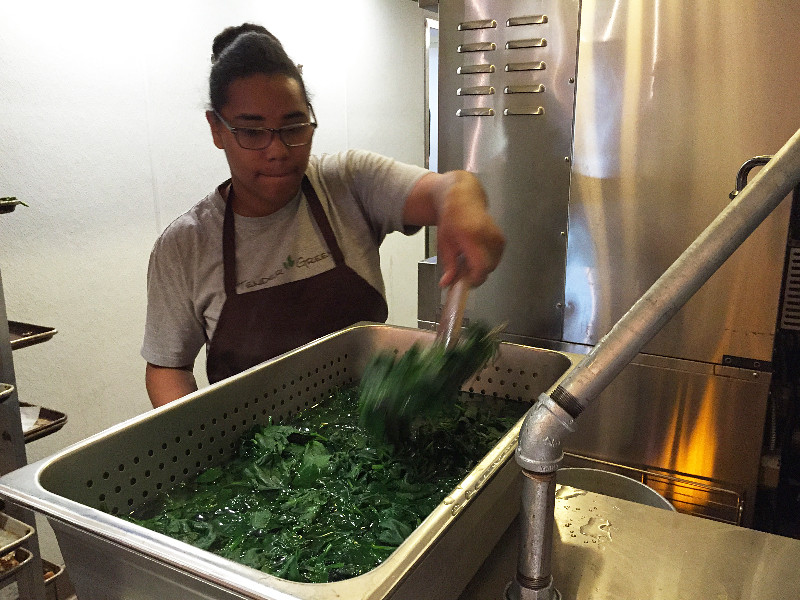
"caption": "Cari Johnson blanches spinach and then puts it in an ice bath to cool before making ravioli. Photo: Alix Wall",
"description": null,
"title": "TG5-new",
"credit": null,
"status": "inherit",
"isLoading": false,
"fetchFailed": false
},
"bayareabites_94287": {
"type": "attachments",
"id": "bayareabites_94287",
"meta": {
"index": "attachments_1716263798",
"site": "bayareabites",
"id": "94287",
"found": true
},
"parent": 94286,
"imgSizes": {
"twentyfourteen-full-width": {
"file": "https://ww2.kqed.org/app/uploads/sites/24/2015/03/5445528297_0abd5e3fdb_o_wide-d464b5b67ee4f334ba4d73bfb7271faac73d2c92-e1427316561790-1038x576.jpg",
"width": 1038,
"mimeType": "image/jpeg",
"height": 576
},
"thumbnail": {
"file": "https://ww2.kqed.org/app/uploads/sites/24/2015/03/5445528297_0abd5e3fdb_o_wide-d464b5b67ee4f334ba4d73bfb7271faac73d2c92-e1427316561790-400x225.jpg",
"width": 400,
"mimeType": "image/jpeg",
"height": 225
},
"fd-sm": {
"file": "https://ww2.kqed.org/app/uploads/sites/24/2015/03/5445528297_0abd5e3fdb_o_wide-d464b5b67ee4f334ba4d73bfb7271faac73d2c92-e1427316561790-320x180.jpg",
"width": 320,
"mimeType": "image/jpeg",
"height": 180
},
"post-thumbnail": {
"file": "https://ww2.kqed.org/app/uploads/sites/24/2015/03/5445528297_0abd5e3fdb_o_wide-d464b5b67ee4f334ba4d73bfb7271faac73d2c92-e1427316561790-672x372.jpg",
"width": 672,
"mimeType": "image/jpeg",
"height": 372
},
"kqedFullSize": {
"file": "https://ww2.kqed.org/app/uploads/sites/24/2015/03/5445528297_0abd5e3fdb_o_wide-d464b5b67ee4f334ba4d73bfb7271faac73d2c92-e1427316561790.jpg",
"width": 1920,
"height": 1080
},
"large": {
"file": "https://ww2.kqed.org/app/uploads/sites/24/2015/03/5445528297_0abd5e3fdb_o_wide-d464b5b67ee4f334ba4d73bfb7271faac73d2c92-e1427316561790-1440x810.jpg",
"width": 1440,
"mimeType": "image/jpeg",
"height": 810
},
"guest-author-96": {
"file": "https://ww2.kqed.org/app/uploads/sites/24/2015/03/5445528297_0abd5e3fdb_o_wide-d464b5b67ee4f334ba4d73bfb7271faac73d2c92-e1427316561790-96x96.jpg",
"width": 96,
"mimeType": "image/jpeg",
"height": 96
},
"medium": {
"file": "https://ww2.kqed.org/app/uploads/sites/24/2015/03/5445528297_0abd5e3fdb_o_wide-d464b5b67ee4f334ba4d73bfb7271faac73d2c92-e1427316561790-800x450.jpg",
"width": 800,
"mimeType": "image/jpeg",
"height": 450
},
"guest-author-64": {
"file": "https://ww2.kqed.org/app/uploads/sites/24/2015/03/5445528297_0abd5e3fdb_o_wide-d464b5b67ee4f334ba4d73bfb7271faac73d2c92-e1427316561790-64x64.jpg",
"width": 64,
"mimeType": "image/jpeg",
"height": 64
},
"guest-author-32": {
"file": "https://ww2.kqed.org/app/uploads/sites/24/2015/03/5445528297_0abd5e3fdb_o_wide-d464b5b67ee4f334ba4d73bfb7271faac73d2c92-e1427316561790-32x32.jpg",
"width": 32,
"mimeType": "image/jpeg",
"height": 32
},
"cat_post_thumb_sizecategory-posts-2": {
"file": "https://ww2.kqed.org/app/uploads/sites/24/2015/03/5445528297_0abd5e3fdb_o_wide-d464b5b67ee4f334ba4d73bfb7271faac73d2c92-e1427316561790-50x50.jpg",
"width": 50,
"mimeType": "image/jpeg",
"height": 50
},
"fd-lrg": {
"file": "https://ww2.kqed.org/app/uploads/sites/24/2015/03/5445528297_0abd5e3fdb_o_wide-d464b5b67ee4f334ba4d73bfb7271faac73d2c92-e1427316561790-1180x664.jpg",
"width": 1180,
"mimeType": "image/jpeg",
"height": 664
},
"fd-med": {
"file": "https://ww2.kqed.org/app/uploads/sites/24/2015/03/5445528297_0abd5e3fdb_o_wide-d464b5b67ee4f334ba4d73bfb7271faac73d2c92-e1427316561790-768x432.jpg",
"width": 768,
"mimeType": "image/jpeg",
"height": 432
},
"detail": {
"file": "https://ww2.kqed.org/app/uploads/sites/24/2015/03/5445528297_0abd5e3fdb_o_wide-d464b5b67ee4f334ba4d73bfb7271faac73d2c92-e1427316561790-75x75.jpg",
"width": 75,
"mimeType": "image/jpeg",
"height": 75
},
"guest-author-128": {
"file": "https://ww2.kqed.org/app/uploads/sites/24/2015/03/5445528297_0abd5e3fdb_o_wide-d464b5b67ee4f334ba4d73bfb7271faac73d2c92-e1427316561790-128x128.jpg",
"width": 128,
"mimeType": "image/jpeg",
"height": 128
}
},
"publishDate": 1427316257,
"modified": 1427316574,
"caption": "These beans, grown on test plots at the International Center for Tropical Agriculture in Colombia, can thrive in temperatures that cripple most conventional beans. Photo: Courtesy of CIAT/Neil Palmer",
"description": "These beans, grown on test plots at the International Center for Tropical Agriculture in Colombia, can thrive in temperatures that cripple most conventional beans.",
"title": "These beans, grown on test plots at the International Center for Tropical Agriculture in Colombia, can thrive in temperatures that cripple most conventional beans.",
"credit": null,
"status": "inherit",
"isLoading": false,
"fetchFailed": false
},
"bayareabites_93645": {
"type": "attachments",
"id": "bayareabites_93645",
"meta": {
"index": "attachments_1716263798",
"site": "bayareabites",
"id": "93645",
"found": true
},
"parent": 93644,
"imgSizes": {
"twentyfourteen-full-width": {
"file": "https://ww2.kqed.org/app/uploads/sites/24/2015/03/shark-soup_enl-e0df97c2c1e717a750b27dbfba09b7dad3198d4a-e1425433136540-1038x576.jpg",
"width": 1038,
"mimeType": "image/jpeg",
"height": 576
},
"thumbnail": {
"file": "https://ww2.kqed.org/app/uploads/sites/24/2015/03/shark-soup_enl-e0df97c2c1e717a750b27dbfba09b7dad3198d4a-e1425433136540-400x258.jpg",
"width": 400,
"mimeType": "image/jpeg",
"height": 258
},
"fd-sm": {
"file": "https://ww2.kqed.org/app/uploads/sites/24/2015/03/shark-soup_enl-e0df97c2c1e717a750b27dbfba09b7dad3198d4a-e1425433136540-320x206.jpg",
"width": 320,
"mimeType": "image/jpeg",
"height": 206
},
"post-thumbnail": {
"file": "https://ww2.kqed.org/app/uploads/sites/24/2015/03/shark-soup_enl-e0df97c2c1e717a750b27dbfba09b7dad3198d4a-e1425433136540-672x372.jpg",
"width": 672,
"mimeType": "image/jpeg",
"height": 372
},
"kqedFullSize": {
"file": "https://ww2.kqed.org/app/uploads/sites/24/2015/03/shark-soup_enl-e0df97c2c1e717a750b27dbfba09b7dad3198d4a-e1425433136540.jpg",
"width": 1920,
"height": 1238
},
"large": {
"file": "https://ww2.kqed.org/app/uploads/sites/24/2015/03/shark-soup_enl-e0df97c2c1e717a750b27dbfba09b7dad3198d4a-e1425433136540-1440x929.jpg",
"width": 1440,
"mimeType": "image/jpeg",
"height": 929
},
"guest-author-96": {
"file": "https://ww2.kqed.org/app/uploads/sites/24/2015/03/shark-soup_enl-e0df97c2c1e717a750b27dbfba09b7dad3198d4a-e1425433136540-96x96.jpg",
"width": 96,
"mimeType": "image/jpeg",
"height": 96
},
"medium": {
"file": "https://ww2.kqed.org/app/uploads/sites/24/2015/03/shark-soup_enl-e0df97c2c1e717a750b27dbfba09b7dad3198d4a-e1425433136540-800x516.jpg",
"width": 800,
"mimeType": "image/jpeg",
"height": 516
},
"guest-author-64": {
"file": "https://ww2.kqed.org/app/uploads/sites/24/2015/03/shark-soup_enl-e0df97c2c1e717a750b27dbfba09b7dad3198d4a-e1425433136540-64x64.jpg",
"width": 64,
"mimeType": "image/jpeg",
"height": 64
},
"guest-author-32": {
"file": "https://ww2.kqed.org/app/uploads/sites/24/2015/03/shark-soup_enl-e0df97c2c1e717a750b27dbfba09b7dad3198d4a-e1425433136540-32x32.jpg",
"width": 32,
"mimeType": "image/jpeg",
"height": 32
},
"cat_post_thumb_sizecategory-posts-2": {
"file": "https://ww2.kqed.org/app/uploads/sites/24/2015/03/shark-soup_enl-e0df97c2c1e717a750b27dbfba09b7dad3198d4a-e1425433136540-50x50.jpg",
"width": 50,
"mimeType": "image/jpeg",
"height": 50
},
"fd-lrg": {
"file": "https://ww2.kqed.org/app/uploads/sites/24/2015/03/shark-soup_enl-e0df97c2c1e717a750b27dbfba09b7dad3198d4a-e1425433136540-1180x761.jpg",
"width": 1180,
"mimeType": "image/jpeg",
"height": 761
},
"fd-med": {
"file": "https://ww2.kqed.org/app/uploads/sites/24/2015/03/shark-soup_enl-e0df97c2c1e717a750b27dbfba09b7dad3198d4a-e1425433136540-768x495.jpg",
"width": 768,
"mimeType": "image/jpeg",
"height": 495
},
"detail": {
"file": "https://ww2.kqed.org/app/uploads/sites/24/2015/03/shark-soup_enl-e0df97c2c1e717a750b27dbfba09b7dad3198d4a-e1425433136540-75x75.jpg",
"width": 75,
"mimeType": "image/jpeg",
"height": 75
},
"guest-author-128": {
"file": "https://ww2.kqed.org/app/uploads/sites/24/2015/03/shark-soup_enl-e0df97c2c1e717a750b27dbfba09b7dad3198d4a-e1425433136540-128x128.jpg",
"width": 128,
"mimeType": "image/jpeg",
"height": 128
}
},
"publishDate": 1425431752,
"modified": 1425433127,
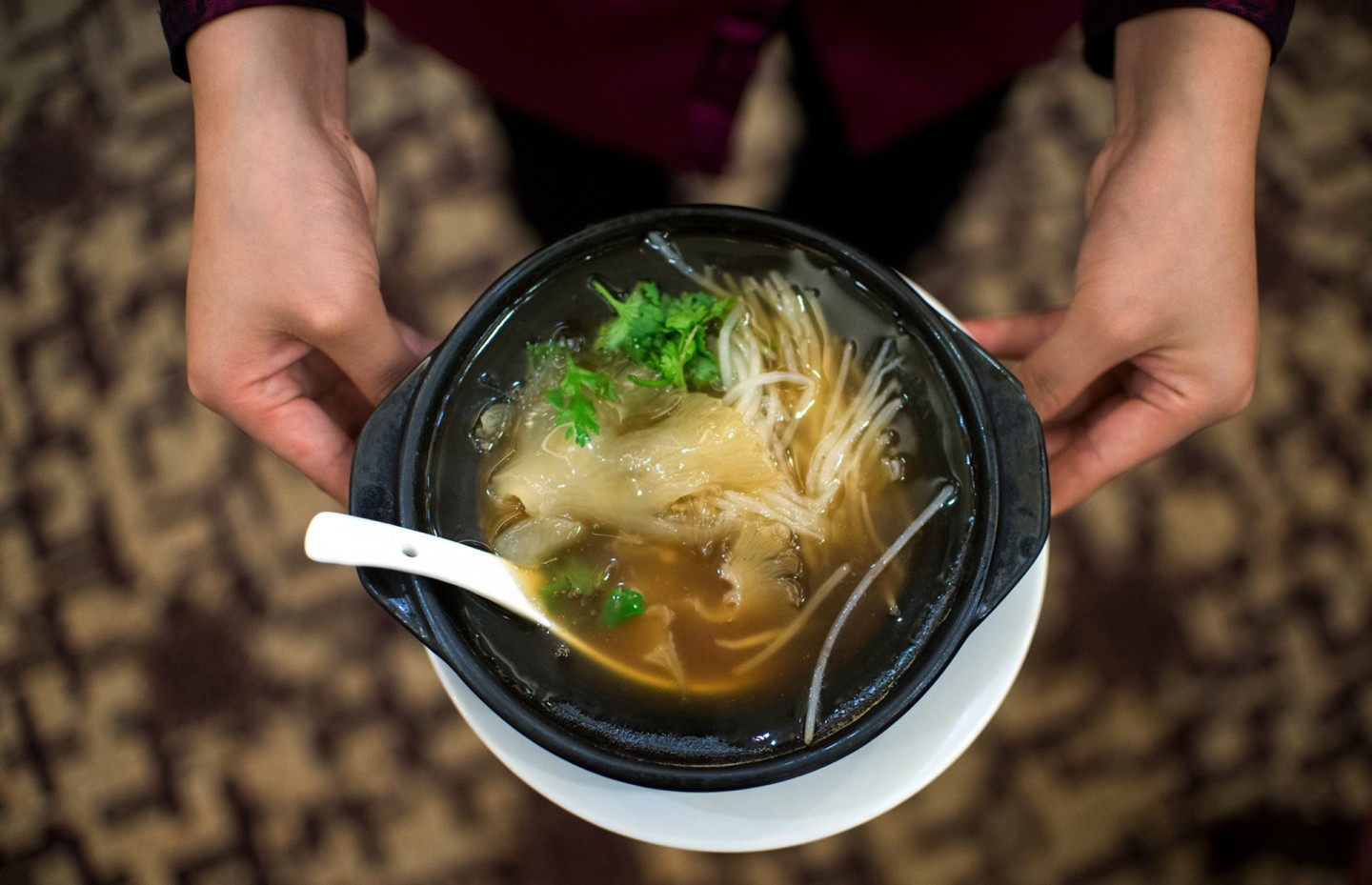
"caption": "A waitress serves shark fin soup in a restaurant in Guangzhou, in southern China's Guangdong province on Aug. 10, 2014. Photo: Johannes Eisele/AFP/Getty Images",
"description": "A waitress serves shark fin soup in a restaurant in Guangzhou, in southern China's Guangdong province on Aug. 10, 201",
"title": "A waitress serves shark fin soup in a restaurant in Guangzhou, in southern China's Guangdong province on Aug. 10, 2014.",
"credit": null,
"status": "inherit",
"isLoading": false,
"fetchFailed": false
},
"bayareabites_93584": {
"type": "attachments",
"id": "bayareabites_93584",
"meta": {
"index": "attachments_1716263798",
"site": "bayareabites",
"id": "93584",
"found": true
},
"parent": 93583,
"imgSizes": {
"twentyfourteen-full-width": {
"file": "https://ww2.kqed.org/app/uploads/sites/24/2015/02/food-waste-1_enl-6a0a590462479a2a9eeac8f3e4f465eef08bc3dc-1038x576.jpg",
"width": 1038,
"mimeType": "image/jpeg",
"height": 576
},
"thumbnail": {
"file": "https://ww2.kqed.org/app/uploads/sites/24/2015/02/food-waste-1_enl-6a0a590462479a2a9eeac8f3e4f465eef08bc3dc-400x269.jpg",
"width": 400,
"mimeType": "image/jpeg",
"height": 269
},
"fd-sm": {
"file": "https://ww2.kqed.org/app/uploads/sites/24/2015/02/food-waste-1_enl-6a0a590462479a2a9eeac8f3e4f465eef08bc3dc-320x216.jpg",
"width": 320,
"mimeType": "image/jpeg",
"height": 216
},
"post-thumbnail": {
"file": "https://ww2.kqed.org/app/uploads/sites/24/2015/02/food-waste-1_enl-6a0a590462479a2a9eeac8f3e4f465eef08bc3dc-672x372.jpg",
"width": 672,
"mimeType": "image/jpeg",
"height": 372
},
"kqedFullSize": {
"file": "https://ww2.kqed.org/app/uploads/sites/24/2015/02/food-waste-1_enl-6a0a590462479a2a9eeac8f3e4f465eef08bc3dc.jpg",
"width": 1783,
"height": 1201
},
"large": {
"file": "https://ww2.kqed.org/app/uploads/sites/24/2015/02/food-waste-1_enl-6a0a590462479a2a9eeac8f3e4f465eef08bc3dc-1440x970.jpg",
"width": 1440,
"mimeType": "image/jpeg",
"height": 970
},
"guest-author-96": {
"file": "https://ww2.kqed.org/app/uploads/sites/24/2015/02/food-waste-1_enl-6a0a590462479a2a9eeac8f3e4f465eef08bc3dc-96x96.jpg",
"width": 96,
"mimeType": "image/jpeg",
"height": 96
},
"medium": {
"file": "https://ww2.kqed.org/app/uploads/sites/24/2015/02/food-waste-1_enl-6a0a590462479a2a9eeac8f3e4f465eef08bc3dc-800x539.jpg",
"width": 800,
"mimeType": "image/jpeg",
"height": 539
},
"guest-author-64": {
"file": "https://ww2.kqed.org/app/uploads/sites/24/2015/02/food-waste-1_enl-6a0a590462479a2a9eeac8f3e4f465eef08bc3dc-64x64.jpg",
"width": 64,
"mimeType": "image/jpeg",
"height": 64
},
"guest-author-32": {
"file": "https://ww2.kqed.org/app/uploads/sites/24/2015/02/food-waste-1_enl-6a0a590462479a2a9eeac8f3e4f465eef08bc3dc-32x32.jpg",
"width": 32,
"mimeType": "image/jpeg",
"height": 32
},
"cat_post_thumb_sizecategory-posts-2": {
"file": "https://ww2.kqed.org/app/uploads/sites/24/2015/02/food-waste-1_enl-6a0a590462479a2a9eeac8f3e4f465eef08bc3dc-50x50.jpg",
"width": 50,
"mimeType": "image/jpeg",
"height": 50
},
"fd-lrg": {
"file": "https://ww2.kqed.org/app/uploads/sites/24/2015/02/food-waste-1_enl-6a0a590462479a2a9eeac8f3e4f465eef08bc3dc-1180x795.jpg",
"width": 1180,
"mimeType": "image/jpeg",
"height": 795
},
"fd-med": {
"file": "https://ww2.kqed.org/app/uploads/sites/24/2015/02/food-waste-1_enl-6a0a590462479a2a9eeac8f3e4f465eef08bc3dc-768x517.jpg",
"width": 768,
"mimeType": "image/jpeg",
"height": 517
},
"detail": {
"file": "https://ww2.kqed.org/app/uploads/sites/24/2015/02/food-waste-1_enl-6a0a590462479a2a9eeac8f3e4f465eef08bc3dc-75x75.jpg",
"width": 75,
"mimeType": "image/jpeg",
"height": 75
},
"guest-author-128": {
"file": "https://ww2.kqed.org/app/uploads/sites/24/2015/02/food-waste-1_enl-6a0a590462479a2a9eeac8f3e4f465eef08bc3dc-128x128.jpg",
"width": 128,
"mimeType": "image/jpeg",
"height": 128
}
},
"publishDate": 1425078187,
"modified": 1425079930,
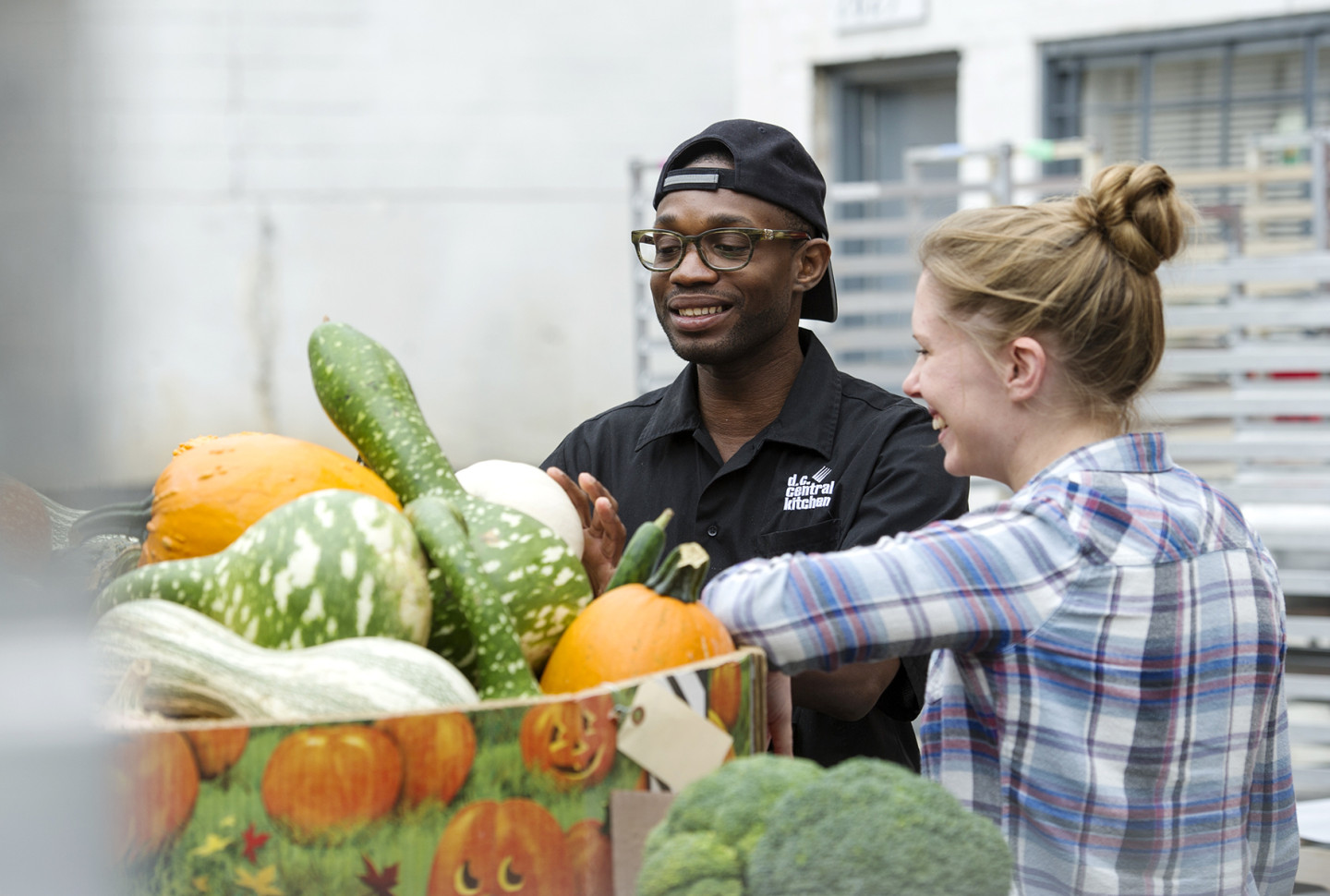
"caption": "Student volunteers with The Campus Kitchens Project evaluate produce. The initiative gets high-school and college students to scavenge food from cafeterias, grocery stores and farmers' markets, cook it and deliver it to organizations serving low-income people in their communities. Photo: Courtesy of DC Central Kitchen ",
"description": "Student volunteers with The Campus Kitchens Project evaluate produce. The initiative gets high-school and college students to scavenge food from cafeterias, grocery stores and farmers' markets, cook it and deliver it to organizations serving low-income people in their communities.",
"title": "Student volunteers with The Campus Kitchens Project evaluate produce. The initiative gets high-school and college students to scavenge food from cafeterias, grocery stores and farmers' markets, cook it and deliver it to organizations serving low-income people in their communities.",
"credit": null,
"status": "inherit",
"isLoading": false,
"fetchFailed": false
}
},
"audioPlayerReducer": {
"postId": "stream_live",
"isPaused": true,
"isPlaying": false,
"pfsActive": false,
"pledgeModalIsOpen": true,
"playerDrawerIsOpen": false,
"liveAudioPlayStartedAt": 0,
"liveAudioPlayContext": ""
},
"authorsReducer": {
"byline_bayareabites_96056": {
"type": "authors",
"id": "byline_bayareabites_96056",
"meta": {
"override": true
},
"slug": "byline_bayareabites_96056",
"name": "Abby Wendle, \u003ca href=\"http://ww2.kqed.org/bayareabites/author/nprfood/\" target=\"_blank\">NPR Food\u003c/a>",
"isLoading": false
},
"byline_bayareabites_95364": {
"type": "authors",
"id": "byline_bayareabites_95364",
"meta": {
"override": true
},
"slug": "byline_bayareabites_95364",
"name": "Natasha Bowens, \u003ca href=\"http://ww2.kqed.org/bayareabites/author/civileat/\">Civil Eats\u003c/a>",
"isLoading": false
},
"byline_bayareabites_95350": {
"type": "authors",
"id": "byline_bayareabites_95350",
"meta": {
"override": true
},
"slug": "byline_bayareabites_95350",
"name": "Allison Aubrey, \u003ca href=\"http://ww2.kqed.org/bayareabites/author/nprfood/\">NPR Food\u003c/a>",
"isLoading": false
},
"byline_bayareabites_95070": {
"type": "authors",
"id": "byline_bayareabites_95070",
"meta": {
"override": true
},
"slug": "byline_bayareabites_95070",
"name": "Dan Charles",
"isLoading": false
},
"byline_bayareabites_95039": {
"type": "authors",
"id": "byline_bayareabites_95039",
"meta": {
"override": true
},
"slug": "byline_bayareabites_95039",
"name": "Dan Charles, \u003ca href=\"http://ww2.kqed.org/bayareabites/author/nprfood/\">NPR Food\u003c/a>",
"isLoading": false
},
"byline_bayareabites_94756": {
"type": "authors",
"id": "byline_bayareabites_94756",
"meta": {
"override": true
},
"slug": "byline_bayareabites_94756",
"name": "Kirk Siegler",
"isLoading": false
},
"byline_bayareabites_94515": {
"type": "authors",
"id": "byline_bayareabites_94515",
"meta": {
"override": true
},
"slug": "byline_bayareabites_94515",
"name": "Nathan Rott",
"isLoading": false
},
"byline_bayareabites_94286": {
"type": "authors",
"id": "byline_bayareabites_94286",
"meta": {
"override": true
},
"slug": "byline_bayareabites_94286",
"name": "Dan Charles",
"isLoading": false
},
"byline_bayareabites_93644": {
"type": "authors",
"id": "byline_bayareabites_93644",
"meta": {
"override": true
},
"slug": "byline_bayareabites_93644",
"name": "Alastair Bland",
"isLoading": false
},
"byline_bayareabites_93583": {
"type": "authors",
"id": "byline_bayareabites_93583",
"meta": {
"override": true
},
"slug": "byline_bayareabites_93583",
"name": "Linda Poon",
"isLoading": false
},
"wendy-goodfriend": {
"type": "authors",
"id": "5014",
"meta": {
"index": "authors_1716337520",
"id": "5014",
"found": true
},
"name": "Wendy Goodfriend",
"firstName": "Wendy",
"lastName": "Goodfriend",
"slug": "wendy-goodfriend",
"email": "wendy@wendygoodfriend.com",
"display_author_email": false,
"staff_mastheads": [],
"title": "KQED Contributor",
"bio": "I was the Senior Digital Producer for KQED Food up until July, 2018. Since 2001, I designed, produced, managed and contributed to mostly food-related websites and blogs for KQED including: KQED.org; KQED Food; Bay Area Bites; Check, Please! Bay Area; Taste This; Celebrity Chefs; seven of Jacques Pepin's TV series websites; and Joanne Weir's Cooking in the City. I initiated the majority of KQED Food's social media feeds and maintained them up until 2017. As far as content creation, photography is my passion and I also shoot video and write stories. My photos have been used in articles for KQED Food, News, Arts, and Science as well as for promotional purposes in print and online. Professional education and training includes: clinical psychology, photography, commercial cooking, web design, information architecture and UX.",
"avatar": "https://secure.gravatar.com/avatar/dfba64372339cc34cf17e446e6f18fa8?s=600&d=blank&r=g",
"twitter": null,
"facebook": "bayareabites",
"instagram": null,
"linkedin": "wendygoodfriend",
"sites": [
{
"site": "jpepinheart",
"roles": []
},
{
"site": "about",
"roles": [
"editor"
]
},
{
"site": "bayareabites",
"roles": [
"subscriber"
]
},
{
"site": "science",
"roles": [
"administrator"
]
},
{
"site": "checkplease",
"roles": [
"subscriber"
]
},
{
"site": "food",
"roles": [
"author"
]
},
{
"site": "essentialpepin",
"roles": [
"administrator"
]
}
],
"headData": {
"title": "Wendy Goodfriend | KQED",
"description": "KQED Contributor",
"ogImgSrc": "https://secure.gravatar.com/avatar/dfba64372339cc34cf17e446e6f18fa8?s=600&d=blank&r=g",
"twImgSrc": "https://secure.gravatar.com/avatar/dfba64372339cc34cf17e446e6f18fa8?s=600&d=blank&r=g"
},
"isLoading": false,
"link": "/author/wendy-goodfriend"
},
"alexandrawall": {
"type": "authors",
"id": "5567",
"meta": {
"index": "authors_1716337520",
"id": "5567",
"found": true
},
"name": "Alix Wall",
"firstName": "Alix",
"lastName": "Wall",
"slug": "alexandrawall",
"email": "alixwall@sbcglobal.net",
"display_author_email": false,
"staff_mastheads": [],
"title": null,
"bio": "Alix Wall appeared in her hometown paper in Riverside, California as “Chef of the Week” when she was 15 years old, and in high school, she founded “The Bon Appetit Club.” After working as a journalist for many years, Alix became a certified natural foods chef from Bauman College in Berkeley. While she cooks part-time healthy, organic meals for busy families, she is also a contributing editor of j. weekly, the Bay Area’s Jewish newspaper, in which she has a monthly food column. Her food writing can also be found on Berkeleyside’s NOSH and in Edible East Bay. In addition to food, she loves writing about how couples met and fell in love, which she does for The San Francisco Chronicle’s Style section and j. weekly. In 2016, she founded The Illuminoshi: The Not-So-Secret Society of Bay Area Jewish Food Professionals. She is also writer/producer for a documentary-in-progress called \u003ca href=\"https://www.lonelychildmovie.com/\">The Lonely Child\u003c/a>. Follow Alix on Twitter \u003ca href=\"https://twitter.com/WallAlix\">@WallAlix\u003c/a>.",
"avatar": "https://secure.gravatar.com/avatar/421a27f26a185be932f8d567b499b1f1?s=600&d=blank&r=g",
"twitter": null,
"facebook": null,
"instagram": null,
"linkedin": null,
"sites": [
{
"site": "bayareabites",
"roles": [
"contributor"
]
},
{
"site": "food",
"roles": [
"contributor"
]
}
],
"headData": {
"title": "Alix Wall | KQED",
"description": null,
"ogImgSrc": "https://secure.gravatar.com/avatar/421a27f26a185be932f8d567b499b1f1?s=600&d=blank&r=g",
"twImgSrc": "https://secure.gravatar.com/avatar/421a27f26a185be932f8d567b499b1f1?s=600&d=blank&r=g"
},
"isLoading": false,
"link": "/author/alexandrawall"
}
},
"pagesReducer": {
"bayareabites_category_sustainability": {
"type": "terms",
"id": "bayareabites_60",
"meta": {
"index": "terms_1716263798",
"site": "bayareabites",
"id": "60",
"score": 12.370369
},
"featImg": null,
"name": "sustainability, environment, climate change",
"description": null,
"taxonomy": "category",
"headData": {
"twImgId": null,
"twTitle": null,
"ogTitle": null,
"ogImgId": null,
"twDescription": null,
"description": null,
"title": "sustainability, environment, climate change Archives | KQED Bay Area Bites",
"ogDescription": null
},
"ttid": 23,
"slug": "sustainability",
"isLoading": false,
"title": "sustainability, environment, climate change",
"pageMeta": {
"site": "bayareabites",
"WpPageTemplate": "page-topic-editorial",
"currentPage": 20
},
"blocks": [
{
"blockName": "kqed/post-list",
"attrs": {
"layout": "cardArticle2",
"query": "posts/bayareabites?category=sustainability",
"seeMore": false,
"paginated": true,
"page": 20
}
},
{
"blockName": "kqed/ad"
}
]
}
},
"pfsSessionReducer": {},
"postsReducer": {
"stream_live": {
"type": "live",
"id": "stream_live",
"audioUrl": "https://streams.kqed.org/kqedradio",
"title": "Live Stream",
"excerpt": "Live Stream information currently unavailable.",
"link": "/radio",
"featImg": "",
"label": {
"name": "KQED Live",
"link": "/"
}
},
"stream_kqedNewscast": {
"type": "posts",
"id": "stream_kqedNewscast",
"audioUrl": "https://www.kqed.org/.stream/anon/radio/RDnews/newscast.mp3?_=1",
"title": "KQED Newscast",
"featImg": "",
"label": {
"name": "88.5 FM",
"link": "/"
}
},
"bayareabites_96056": {
"type": "posts",
"id": "bayareabites_96056",
"meta": {
"index": "posts_1716263798",
"site": "bayareabites",
"id": "96056",
"score": null,
"sort": [
1431454927000
]
},
"parent": 0,
"labelTerm": {
"site": "bayareabites"
},
"blocks": [],
"publishDate": 1431454927,
"format": "standard",
"disqusTitle": "Why Food Companies Should Be More Afraid Of Water Scarcity",
"title": "Why Food Companies Should Be More Afraid Of Water Scarcity",
"headTitle": "Bay Area Bites | KQED Food",
"content": "\u003cp>America's biggest food production companies face a growing threat of water scarcity, according to a \u003ca href=\"http://www.ceres.org/issues/water/water-and-esg-risk\">new report\u003c/a> from Ceres, an environmental sustainability group.\u003c/p>\n\u003cp>Producing food, after all, requires more water than almost any other business on Earth. And the outlook isn't pretty: One-third of food is grown in areas of high or extremely high water stress, while pollution and climate change are further limiting supplies of clean water around the world.\u003c/p>\n\u003cp>And yet two-thirds of the 37 U.S. food companies assessed in the report aren't even engaging farmers on this issue, says \u003ca href=\"http://www.ceres.org/about-us/who-we-are/ceres-staff/brooke-barton\">Brooke Barton\u003c/a>, co-author of the report and leader of Ceres' water program.\u003c/p>\n\u003cp>Farming can be a major contributor to water pollution through runoff from chemicals and manure. Because food companies depend on clean water, they have an incentive to help farmers keep water in mind.\u003c/p>\n\u003cp>\"A lot of the food companies are frankly asleep at the wheel,\" Barton says. \"Many have not even begun to look at the water impacts associated with the farmers, the dairies, and the ranches that they source from.\"\u003c/p>\n\u003cp>[ad fullwidth]\u003c/p>\n\u003cp>Which may be surprising, since water is already having a significant financial impact on many of these food companies. Among the examples cited by the report: Cargill reported a 12 percent drop in 2014 fourth-quarter profits linked to the drought's impact on beef production and Coca-Cola decided in April 2015 not to build an $81 million bottling plant in southern India because local farmers said it might exhaust groundwater supplies.\u003c/p>\n\u003cp>Some companies are working with producers to improve water efficiency and limit pollution, Ceres notes. \u003ca href=\"http://www.unilever.com/\">Unilever\u003c/a>, the producer of Hellmann's mayonnaise, is paying their Iowa soybean farmers ten cents a bushel to adopt sustainable water practices, Barton says.\u003c/p>\n\u003cp>As water supplies risk becoming increasingly depleted and polluted in major agricultural growing regions, traditional risk management approaches — like geographic diversification — are less effective.\u003c/p>\n\u003cp>\"There's not a lot of growing area left and we are pushing up against the limits of available water supply,\" Barton says. \"So, this is a time to invest in the supply chain. To invest in watersheds and in agriculture. Not a time to run and hide.\"\u003c/p>\n\u003cp>The report cites drought, aquifer depletion, and competition from cities as additional reasons for water worries.\u003c/p>\n\u003cp>\u003cem>This \u003ca href=\"http://harvestpublicmedia.org/article/us-ranchers-counting-labels-stand-apart-global-competition\">story\u003c/a> comes to us via\u003c/em> \u003ca href=\"http://www.harvestpublicmedia.org/\">Harvest Public Media\u003cem>,\u003c/em>\u003c/a>\u003cem> a public radio reporting collaboration that focuses on agriculture and food production issues.\u003c/em>\u003c/p>\n\u003cp>\u003c/p>\n\u003cp>Copyright 2015 \u003ca href=\"http://www.npr.org/\" target=\"_blank\" rel=\"noopener\">NPR\u003c/a>.\u003c/p>\n\n",
"disqusIdentifier": "96056 http://ww2.kqed.org/bayareabites/?p=96056",
"disqusUrl": "https://ww2.kqed.org/bayareabites/2015/05/12/why-food-companies-should-be-more-afraid-of-water-scarcity/",
"stats": {
"hasVideo": false,
"hasChartOrMap": false,
"hasAudio": false,
"hasPolis": false,
"wordCount": 411,
"hasGoogleForm": false,
"hasGallery": false,
"hasHearkenModule": false,
"iframeSrcs": [],
"paragraphCount": 14
},
"modified": 1556745619,
"excerpt": "An environmental sustainability group assessed how 37 U.S. food companies are responding to escalating water risks. It found most have a long way to go to improve water efficiency and other practices.",
"headData": {
"twImgId": "",
"twTitle": "",
"ogTitle": "",
"ogImgId": "",
"twDescription": "",
"description": "An environmental sustainability group assessed how 37 U.S. food companies are responding to escalating water risks. It found most have a long way to go to improve water efficiency and other practices.",
"title": "Why Food Companies Should Be More Afraid Of Water Scarcity | KQED",
"ogDescription": "",
"schema": {
"@context": "https://schema.org",
"@type": "Article",
"headline": "Why Food Companies Should Be More Afraid Of Water Scarcity",
"datePublished": "2015-05-12T11:22:07-07:00",
"dateModified": "2019-05-01T14:20:19-07:00",
"image": "https://cdn.kqed.org/wp-content/uploads/2020/02/KQED-OG-Image@1x.png"
}
},
"guestAuthors": [],
"slug": "why-food-companies-should-be-more-afraid-of-water-scarcity",
"status": "publish",
"nprApiLink": "http://api.npr.org/query?id=405946749&apiKey=MDAxOTAwOTE4MDEyMTkxMDAzNjczZDljZA004",
"nprByline": "Abby Wendle, \u003ca href=\"http://ww2.kqed.org/bayareabites/author/nprfood/\" target=\"_blank\">NPR Food\u003c/a>",
"nprStoryDate": "Mon, 11 May 2015 18:10:00 -0400",
"nprLastModifiedDate": "Tue, 12 May 2015 09:50:38 -0400",
"nprHtmlLink": "http://www.npr.org/blogs/thesalt/2015/05/11/405946749/why-food-companies-should-be-more-afraid-of-water-scarcity?ft=nprml&f=405946749",
"nprStoryId": "405946749",
"nprRetrievedStory": "1",
"nprPubDate": "Tue, 12 May 2015 09:50:00 -0400",
"path": "/bayareabites/96056/why-food-companies-should-be-more-afraid-of-water-scarcity",
"audioTrackLength": null,
"parsedContent": [
{
"type": "contentString",
"content": "\u003cdiv class=\"post-body\">\u003cp>\u003cp>America's biggest food production companies face a growing threat of water scarcity, according to a \u003ca href=\"http://www.ceres.org/issues/water/water-and-esg-risk\">new report\u003c/a> from Ceres, an environmental sustainability group.\u003c/p>\n\u003cp>Producing food, after all, requires more water than almost any other business on Earth. And the outlook isn't pretty: One-third of food is grown in areas of high or extremely high water stress, while pollution and climate change are further limiting supplies of clean water around the world.\u003c/p>\n\u003cp>And yet two-thirds of the 37 U.S. food companies assessed in the report aren't even engaging farmers on this issue, says \u003ca href=\"http://www.ceres.org/about-us/who-we-are/ceres-staff/brooke-barton\">Brooke Barton\u003c/a>, co-author of the report and leader of Ceres' water program.\u003c/p>\n\u003cp>Farming can be a major contributor to water pollution through runoff from chemicals and manure. Because food companies depend on clean water, they have an incentive to help farmers keep water in mind.\u003c/p>\n\u003cp>\"A lot of the food companies are frankly asleep at the wheel,\" Barton says. \"Many have not even begun to look at the water impacts associated with the farmers, the dairies, and the ranches that they source from.\"\u003c/p>\n\u003cp>\u003c/p>\u003c/div>",
"attributes": {
"named": {},
"numeric": []
}
},
{
"type": "component",
"content": "",
"name": "ad",
"attributes": {
"named": {
"label": "fullwidth"
},
"numeric": [
"fullwidth"
]
}
},
{
"type": "contentString",
"content": "\u003cdiv class=\"post-body\">\u003cp>\u003c/p>\n\u003cp>Which may be surprising, since water is already having a significant financial impact on many of these food companies. Among the examples cited by the report: Cargill reported a 12 percent drop in 2014 fourth-quarter profits linked to the drought's impact on beef production and Coca-Cola decided in April 2015 not to build an $81 million bottling plant in southern India because local farmers said it might exhaust groundwater supplies.\u003c/p>\n\u003cp>Some companies are working with producers to improve water efficiency and limit pollution, Ceres notes. \u003ca href=\"http://www.unilever.com/\">Unilever\u003c/a>, the producer of Hellmann's mayonnaise, is paying their Iowa soybean farmers ten cents a bushel to adopt sustainable water practices, Barton says.\u003c/p>\n\u003cp>As water supplies risk becoming increasingly depleted and polluted in major agricultural growing regions, traditional risk management approaches — like geographic diversification — are less effective.\u003c/p>\n\u003cp>\"There's not a lot of growing area left and we are pushing up against the limits of available water supply,\" Barton says. \"So, this is a time to invest in the supply chain. To invest in watersheds and in agriculture. Not a time to run and hide.\"\u003c/p>\n\u003cp>The report cites drought, aquifer depletion, and competition from cities as additional reasons for water worries.\u003c/p>\n\u003cp>\u003cem>This \u003ca href=\"http://harvestpublicmedia.org/article/us-ranchers-counting-labels-stand-apart-global-competition\">story\u003c/a> comes to us via\u003c/em> \u003ca href=\"http://www.harvestpublicmedia.org/\">Harvest Public Media\u003cem>,\u003c/em>\u003c/a>\u003cem> a public radio reporting collaboration that focuses on agriculture and food production issues.\u003c/em>\u003c/p>\n\u003cp>\u003c/p>\n\u003cp>Copyright 2015 \u003ca href=\"http://www.npr.org/\" target=\"_blank\" rel=\"noopener\">NPR\u003c/a>.\u003c/p>\n\n\u003c/div>\u003c/p>",
"attributes": {
"named": {},
"numeric": []
}
}
],
"link": "/bayareabites/96056/why-food-companies-should-be-more-afraid-of-water-scarcity",
"authors": [
"byline_bayareabites_96056"
],
"categories": [
"bayareabites_1962",
"bayareabites_1874",
"bayareabites_1245",
"bayareabites_60"
],
"tags": [
"bayareabites_14775",
"bayareabites_11497"
],
"featImg": "bayareabites_96057",
"label": "bayareabites"
},
"bayareabites_95364": {
"type": "posts",
"id": "bayareabites_95364",
"meta": {
"index": "posts_1716263798",
"site": "bayareabites",
"id": "95364",
"score": null,
"sort": [
1429822674000
]
},
"parent": 0,
"labelTerm": {
"site": "bayareabites"
},
"blocks": [],
"publishDate": 1429822674,
"format": "standard",
"disqusTitle": "The Color of Food: America’s Invisible Farmers",
"title": "The Color of Food: America’s Invisible Farmers",
"headTitle": "Bay Area Bites | KQED Food",
"content": "\u003cp>At the height of Black farming in the U.S., a million farmers owned almost 17 million acres of land. Between 1920 and 1996, however, Black land ownership dropped by 70 percent and in 2012, there \u003ca href=\"http://www.agcensus.usda.gov/Publications/2012/Online_Resources/Highlights/Black_Farmers/Highlights_Black_Farmers.pdf\" target=\"_blank\">were only 44,000 Black farmers in the nation\u003c/a>.\u003c/p>\n\u003cp>Thanks to evidence uncovered in a landmark lawsuit \u003ca href=\"http://en.wikipedia.org/wiki/Pigford_v._Glickman\" target=\"_blank\">Pigford v. Glickman\u003c/a>, we now know that the U.S. Department of Agriculture (USDA) denied credit and benefits to Black farmers and gave preferential treatment to White farmers, essentially forcing Black farmers out of agriculture. By 1992, the number of Black farmers in America had declined by 98 percent.\u003c/p>\n\u003cp>But that’s not all. Across the board, people of color are under-represented in today’s agricultural landscape. According to the \u003ca href=\"http://www.ers.usda.gov/topics/farm-economy/beginning-disadvantaged-farmers/socially-disadvantaged-farmers-race,-hispanic-origin,-and-gender.aspx#.VEaDsRax39V\" target=\"_blank\">latest USDA agriculture census\u003c/a>, Latinos make up 3.2 percent of today’s farm owners, American Indians or Alaska natives make up 1.8 percent, Black or African people make up 1.6 percent, and Asians constitute less that 1 percent.\u003c/p>\n\u003cp>These are the kinds of facts that propelled me to write \u003cem>\u003ca href=\"http://thecolorofood.com/order-book/\" target=\"_blank\">The Color of Food: Stories of Race, Resilience, and Farming\u003c/a>\u003c/em>. When I joined the food and agricultural movement as a woman of color, I was immediately struck by the glaring racial disparities that live, not only in the food system regarding food access and health, but in the good food movement itself.\u003c/p>\n\u003cp>I could see that the face of the movement was not representing communities of color, the very same communities most heavily impacted by a broken food system. I felt like these voices were missing in the discussions about organic farming, rural homesteading, and even food justice and the urban farming projects that were sprouting up across the nation. It seemed the role of people of color in food and agriculture was misrepresented and defined solely in statistics about inequity. I knew our story was richer than that and I thought storytelling from farmers and food activists of color was the perfect way to share it.\u003c/p>\n\u003cp>[ad fullwidth]\u003c/p>\n\u003cp>While farming full time on a small CSA farm, I began putting The Color of Food storytelling project together. I spent almost two years reaching out to farmers and food activists and building relationships with people I was meeting at conferences like the Black Farmers and Urban Gardeners Conference or Growing Food and Justice for All’s Annual Gathering. After \u003ca href=\"https://www.indiegogo.com/projects/the-color-of-food\" target=\"_blank\">fundraising on IndieGoGo\u003c/a>, with the support of family, friends, and other farmers and activists nationwide I raised over $10,000 for the book, which allowed me to get on the road and start collecting stories.\u003c/p>\n\u003cp>I interviewed over 75 farmers from the Southeast to the Northwest. When I transcribed these stories after five months on the road, I was instantly transported back to the farms where I might have been sitting in the farmer’s living room looking at old family photos, or riding in a truck listening to a farmer tell me why growing food was so important to them, or kneeling in the sunshine harvesting side by side as they told me the history of the very land we had our hands in.\u003c/p>\n\u003cp>Our conversations would run from family histories to historic discrimination in their communities; land love and loss; barriers to successes; and traditional foodways they are trying to preserve in their communities.\u003c/p>\n\u003cp>So many topics ran out like roots from these conversations, and this was the hardest part of putting the book together. Each story carried its own power and individuality, but many of them centered around land, power, resilience, community, and culture, which was how I decided to organize the book, with an additional section dedicated to women and young farmers.\u003c/p>\n\u003cp>The Color of Food takes you on a journey–a journey that started out on a personal note as I worked to understand my place in the food movement, but ended up being far bigger than that. For people of color, The Color of Food is about reclaiming our agrarian identity.\u003c/p>\n\u003cp>It’s purpose is to remind us of all the less-visible communities that steward the land and the foodways and farming practices we carry. It’s also about digging into the untold stories of the land before we can dig into the soil itself.\u003c/p>\n\u003cp>\u003cem>Civil Eats will share excerpts of The Color of Food throughout the month of April. Read the \u003ca href=\"http://civileats.com/2015/04/14/the-color-of-food-building-autonomy-as-african-american-farmers//\" target=\"_blank\">first one here\u003c/a>.\u003c/em>\u003c/p>\n\u003cp>\u003c/p>\n\u003cp>\u003cstrong>About the Writer\u003c/strong>\u003cbr>\nNatasha is a writer, farmer and food justice activist. She is the author of \u003cem>\u003ca href=\"http://thecolorofood.com/order-book//\" target=\"_blank\">The Color of Food\u003c/a>\u003c/em>, a book that focuses on the intersection of race and food by amplifying the voices of farms and food work led by people of color. Natasha also blogs at \u003ca href=\"http://browngirlfarming.com/\" target=\"_blank\">Brown.Girl.Farming\u003c/a>.\u003c/p>\n\n",
"disqusIdentifier": "95364 http://ww2.kqed.org/bayareabites/?p=95364",
"disqusUrl": "https://ww2.kqed.org/bayareabites/2015/04/23/the-color-of-food-americas-invisible-farmers/",
"stats": {
"hasVideo": false,
"hasChartOrMap": false,
"hasAudio": false,
"hasPolis": false,
"wordCount": 788,
"hasGoogleForm": false,
"hasGallery": false,
"hasHearkenModule": false,
"iframeSrcs": [],
"paragraphCount": 15
},
"modified": 1429822674,
"excerpt": "What one writer learned after interviewing more than 75 farmers of color around the country.",
"headData": {
"twImgId": "",
"twTitle": "",
"ogTitle": "",
"ogImgId": "",
"twDescription": "",
"description": "What one writer learned after interviewing more than 75 farmers of color around the country.",
"title": "The Color of Food: America’s Invisible Farmers | KQED",
"ogDescription": "",
"schema": {
"@context": "https://schema.org",
"@type": "Article",
"headline": "The Color of Food: America’s Invisible Farmers",
"datePublished": "2015-04-23T13:57:54-07:00",
"dateModified": "2015-04-23T13:57:54-07:00",
"image": "https://cdn.kqed.org/wp-content/uploads/2020/02/KQED-OG-Image@1x.png"
}
},
"guestAuthors": [],
"slug": "the-color-of-food-americas-invisible-farmers",
"status": "publish",
"nprByline": "Natasha Bowens, \u003ca href=\"http://ww2.kqed.org/bayareabites/author/civileat/\">Civil Eats\u003c/a>",
"path": "/bayareabites/95364/the-color-of-food-americas-invisible-farmers",
"audioTrackLength": null,
"parsedContent": [
{
"type": "contentString",
"content": "\u003cdiv class=\"post-body\">\u003cp>\u003cp>At the height of Black farming in the U.S., a million farmers owned almost 17 million acres of land. Between 1920 and 1996, however, Black land ownership dropped by 70 percent and in 2012, there \u003ca href=\"http://www.agcensus.usda.gov/Publications/2012/Online_Resources/Highlights/Black_Farmers/Highlights_Black_Farmers.pdf\" target=\"_blank\">were only 44,000 Black farmers in the nation\u003c/a>.\u003c/p>\n\u003cp>Thanks to evidence uncovered in a landmark lawsuit \u003ca href=\"http://en.wikipedia.org/wiki/Pigford_v._Glickman\" target=\"_blank\">Pigford v. Glickman\u003c/a>, we now know that the U.S. Department of Agriculture (USDA) denied credit and benefits to Black farmers and gave preferential treatment to White farmers, essentially forcing Black farmers out of agriculture. By 1992, the number of Black farmers in America had declined by 98 percent.\u003c/p>\n\u003cp>But that’s not all. Across the board, people of color are under-represented in today’s agricultural landscape. According to the \u003ca href=\"http://www.ers.usda.gov/topics/farm-economy/beginning-disadvantaged-farmers/socially-disadvantaged-farmers-race,-hispanic-origin,-and-gender.aspx#.VEaDsRax39V\" target=\"_blank\">latest USDA agriculture census\u003c/a>, Latinos make up 3.2 percent of today’s farm owners, American Indians or Alaska natives make up 1.8 percent, Black or African people make up 1.6 percent, and Asians constitute less that 1 percent.\u003c/p>\n\u003cp>These are the kinds of facts that propelled me to write \u003cem>\u003ca href=\"http://thecolorofood.com/order-book/\" target=\"_blank\">The Color of Food: Stories of Race, Resilience, and Farming\u003c/a>\u003c/em>. When I joined the food and agricultural movement as a woman of color, I was immediately struck by the glaring racial disparities that live, not only in the food system regarding food access and health, but in the good food movement itself.\u003c/p>\n\u003cp>I could see that the face of the movement was not representing communities of color, the very same communities most heavily impacted by a broken food system. I felt like these voices were missing in the discussions about organic farming, rural homesteading, and even food justice and the urban farming projects that were sprouting up across the nation. It seemed the role of people of color in food and agriculture was misrepresented and defined solely in statistics about inequity. I knew our story was richer than that and I thought storytelling from farmers and food activists of color was the perfect way to share it.\u003c/p>\n\u003cp>\u003c/p>\u003c/div>",
"attributes": {
"named": {},
"numeric": []
}
},
{
"type": "component",
"content": "",
"name": "ad",
"attributes": {
"named": {
"label": "fullwidth"
},
"numeric": [
"fullwidth"
]
}
},
{
"type": "contentString",
"content": "\u003cdiv class=\"post-body\">\u003cp>\u003c/p>\n\u003cp>While farming full time on a small CSA farm, I began putting The Color of Food storytelling project together. I spent almost two years reaching out to farmers and food activists and building relationships with people I was meeting at conferences like the Black Farmers and Urban Gardeners Conference or Growing Food and Justice for All’s Annual Gathering. After \u003ca href=\"https://www.indiegogo.com/projects/the-color-of-food\" target=\"_blank\">fundraising on IndieGoGo\u003c/a>, with the support of family, friends, and other farmers and activists nationwide I raised over $10,000 for the book, which allowed me to get on the road and start collecting stories.\u003c/p>\n\u003cp>I interviewed over 75 farmers from the Southeast to the Northwest. When I transcribed these stories after five months on the road, I was instantly transported back to the farms where I might have been sitting in the farmer’s living room looking at old family photos, or riding in a truck listening to a farmer tell me why growing food was so important to them, or kneeling in the sunshine harvesting side by side as they told me the history of the very land we had our hands in.\u003c/p>\n\u003cp>Our conversations would run from family histories to historic discrimination in their communities; land love and loss; barriers to successes; and traditional foodways they are trying to preserve in their communities.\u003c/p>\n\u003cp>So many topics ran out like roots from these conversations, and this was the hardest part of putting the book together. Each story carried its own power and individuality, but many of them centered around land, power, resilience, community, and culture, which was how I decided to organize the book, with an additional section dedicated to women and young farmers.\u003c/p>\n\u003cp>The Color of Food takes you on a journey–a journey that started out on a personal note as I worked to understand my place in the food movement, but ended up being far bigger than that. For people of color, The Color of Food is about reclaiming our agrarian identity.\u003c/p>\n\u003cp>It’s purpose is to remind us of all the less-visible communities that steward the land and the foodways and farming practices we carry. It’s also about digging into the untold stories of the land before we can dig into the soil itself.\u003c/p>\n\u003cp>\u003cem>Civil Eats will share excerpts of The Color of Food throughout the month of April. Read the \u003ca href=\"http://civileats.com/2015/04/14/the-color-of-food-building-autonomy-as-african-american-farmers//\" target=\"_blank\">first one here\u003c/a>.\u003c/em>\u003c/p>\n\u003cp>\u003c/p>\n\u003cp>\u003cstrong>About the Writer\u003c/strong>\u003cbr>\nNatasha is a writer, farmer and food justice activist. She is the author of \u003cem>\u003ca href=\"http://thecolorofood.com/order-book//\" target=\"_blank\">The Color of Food\u003c/a>\u003c/em>, a book that focuses on the intersection of race and food by amplifying the voices of farms and food work led by people of color. Natasha also blogs at \u003ca href=\"http://browngirlfarming.com/\" target=\"_blank\">Brown.Girl.Farming\u003c/a>.\u003c/p>\n\n\u003c/div>\u003c/p>",
"attributes": {
"named": {},
"numeric": []
}
}
],
"link": "/bayareabites/95364/the-color-of-food-americas-invisible-farmers",
"authors": [
"byline_bayareabites_95364"
],
"categories": [
"bayareabites_2254",
"bayareabites_13718",
"bayareabites_1874",
"bayareabites_2090",
"bayareabites_2035",
"bayareabites_60"
],
"tags": [
"bayareabites_2954",
"bayareabites_2143",
"bayareabites_12351",
"bayareabites_12350"
],
"featImg": "bayareabites_95369",
"label": "bayareabites"
},
"bayareabites_95350": {
"type": "posts",
"id": "bayareabites_95350",
"meta": {
"index": "posts_1716263798",
"site": "bayareabites",
"id": "95350",
"score": null,
"sort": [
1429819301000
]
},
"parent": 0,
"labelTerm": {
"site": "bayareabites"
},
"blocks": [],
"publishDate": 1429819301,
"format": "audio",
"disqusTitle": "Buzz Over Bee Health: New Pesticide Studies Rev Up Controversy",
"title": "Buzz Over Bee Health: New Pesticide Studies Rev Up Controversy",
"headTitle": "Bay Area Bites | KQED Food",
"content": "\u003cp>\u003cstrong>Listen to the Story on All Things Considered: \u003c/strong>\u003cbr>\nhttp://pd.npr.org/anon.npr-mp3/npr/atc/2015/04/20150422_atc_bee_colony_collapse_and_insecticides_aubrey_post.mp3\u003c/p>\n\u003cp>It has been about a decade since beekeepers and scientists began documenting a decline in honeybee populations and other important pollinators.\u003c/p>\n\u003cp>Even if you're not a lover of bees or honey, you should know that bees are critically important to our food supply. They help pollinate billions of dollars of crops each year, from apples and carrots to blueberries and almonds.\u003c/p>\n\u003cp>So if bees are threatened, ultimately, the production of these crops will be threatened, too.\u003c/p>\n\u003cp>Scientists have shown that a range of factors — from climate change to viruses to loss of habitat — are contributing to the global decline in bee health.\u003c/p>\n\u003cp>[ad fullwidth]\u003c/p>\n\u003cp>And two new studies published in the journal \u003cem>Nature\u003c/em> add to the evidence that overuse of neonicotinoid pesticides may also be contributing to the decline of bees.\u003c/p>\n\u003cp>Neonics, as they're known for short, have become among the most widely used insecticides in the world. The pesticide is coated onto the seeds that farmers plant to grow their crops. These pretreated seeds are used extensively in corn, soy and canola crops. In fact, it's estimated that treated seeds are used in more than 95 percent of the U.S. corn crop.\u003c/p>\n\u003cp>Part of the appeal for farmers is that neonics are simple to use. Farmers plant the seeds in the spring. \"The neonicotinoid [which is water soluble] is then absorbed as the plant grows ... and protects the tissues,\" explains scientist \u003ca href=\"http://pure.rhul.ac.uk/portal/en/persons/nigel-raine_b25f3a4a-fcda-4f53-874d-b58577f60b83.html\">Nigel Raine\u003c/a>, who authored a \u003ca href=\"http://www.nature.com/articles/nature14391.epdf?referrer_access_token=bflxoBTpQ78aw0ew2EuY-NRgN0jAjWel9jnR3ZoTv0OeZS9B-qNJPtIKWScyD6fOBt_ORnPUst73s12l39VyBG31LTCIVzkOZINOtL7yQ9lZelyyrplUQ9Ao_E8WPA7-Jw8C6Ut7yUJIzkAw2W6gZEsrLlm5Qwnkdtt5Zhc00MlK5nZPYjH7czBEY9N3P4L23t8Ih_2Td_RWBPI5AxSdCA%3D%3D&tracking_referrer=www.nature.com\">News & Views piece\u003c/a> that accompanies the new \u003cem>Nature\u003c/em> studies.\u003c/p>\n\u003cp>This is effective at protecting farmers' crops from pests. But it may be risky for the bees, because \"you get [neonicotinoid] residues in the nectar and pollen, even when the plant is flowering months later, potentially,\" Raine says.\u003c/p>\n\u003cp>And this means that when bees feed on the nectar of these flowering crops, they can be exposed to the pesticide.\u003c/p>\n\u003cfigure id=\"attachment_95352\" class=\"wp-caption aligncenter\" style=\"max-width: 1920px\">\u003cimg src=\"http://ww2.kqed.org/bayareabites/wp-content/uploads/sites/24/2015/04/11_honeybee_frame_majrundlof_custom-4f3c0c4e8d5c6e4bac36ccd8a73745a364014c12-e1429818339617.jpg\" alt=\"Researchers estimate the strength of a honeybee colony filled with busy bees tending their brood and food storage\" width=\"1920\" height=\"1439\" class=\"size-full wp-image-95352\">\u003cfigcaption class=\"wp-caption-text\">Researchers estimate the strength of a honeybee colony filled with busy bees tending their brood and food storage. \u003ccite>(Maj Rundlöf/Nature )\u003c/cite>\u003c/figcaption>\u003c/figure>\n\u003cp>Now, neonicotinoids, as the name suggests, are derived from nicotine and act as a poison to the nervous system. There's been a theory that bees might actually be repelled by it and avoid plants grown from treated seed. But one of the new studies published Wednesday suggests this is not the case.\u003c/p>\n\u003cp>Researchers in the United Kingdom conducted a lab experiment to see which kind of food sources bees are drawn to. They offered bees a choice between a plain, sugary solution and one laced with neonics. They \u003ca href=\"http://www.nature.com/articles/nature14414.epdf?referrer_access_token=RTNAGJ0r7txW1VMgB2OwctRgN0jAjWel9jnR3ZoTv0MduC3nHCOl2J2ECXCmE9hd2x8RlCnEGmk8ywijoGHvRvePt5iOSRTu235EXr9Vo8M8UVsrY8ZiC61C-wfCSm5PlFg-e2VHR9keu0RBYfVXXCZWjcNaB0dIeD8HpIAZLYvwCs_FLBwVTHSFfhh8qQp1V2SImHnv-2MCHZRpm-LH1A%3D%3D&tracking_referrer=www.nature.com\">found\u003c/a> the bees preferred the pesticide solution.\u003c/p>\n\u003cp>\"I think it's a surprising result,\" Raine says, \"because the data suggest that they can't taste the [pesticides], but they are still preferring them.\"\u003c/p>\n\u003cp>It's possible that they're getting a little buzz from the neonics, similar to the way a human may get a buzz from nicotine.\u003c/p>\n\u003cp>\"It might be a similar pathway,\" says Raine. \"They're getting some kind of positive reinforcement.\"\u003c/p>\n\u003cp>And the upshot is that bees could be opting for the food source that may harm them.\u003c/p>\n\u003cp>In a \u003ca href=\"http://www.nature.com/nature/journal/vaop/ncurrent/full/nature14420.html\">second study\u003c/a> published in \u003cem>Nature\u003c/em>, researcher Maj Rundlof and colleagues document the negative effects on the growth and reproduction of commercial bumblebee colonies feeding on flowering canola plants that were grown from seeds coated with neonicotinoids.\u003c/p>\n\u003cp>The study also documents a negative effect on populations of wild bees — both in seed-treated fields and in adjacent meadows.\u003c/p>\n\u003cp>Interestingly, the researchers did not observe a negative effect on honeybee colonies.\u003c/p>\n\u003cp>Scientists for Bayer CropScience, a leading producer of neonics, wrote in a statement emailed to The Salt that the research \"demonstrates yet again there is no effect of neonicotinoids on honeybee colonies in realistic field conditions, consistent with previous published field studies.\" The statement goes on to question the methodology and the \"overall robustness\" of the data on wild bees.\u003c/p>\n\u003cp>But given the accumulating body of evidence on the potential risk of neonics, there's a growing movement to restrict their use.\u003c/p>\n\u003cp>The European Union already has a temporary, partial ban in place restricting the use of some neonics.\u003c/p>\n\u003cp>And the Ontario government in Canada has \u003ca href=\"http://news.ontario.ca/ene/en/2015/03/reducing-neonicotinoid-pesticide-use-by-80-per-cent.html\">proposed a regulation\u003c/a> aimed at reducing the number of acres planted with neonic-treated corn and soybean seed by 80 percent by 2017. The proposal, which is currently open for a public comment period, would take effect in July.\u003c/p>\n\u003cp>In the U.S., the Environmental Protection Agency \u003ca href=\"http://www.epa.gov/oppfead1/cb/csb_page/updates/2015/neonic-outdooruse.html\">announced\u003c/a> this month that it is unlikely to approve new neonicotinoid pesticide uses.\u003c/p>\n\u003cp>\"I definitely think we are overusing neonicotinoids,\" \u003ca href=\"https://ag.purdue.edu/entm/Pages/Profile.aspx?strAlias=ckrupke&intDirDeptID=13The\">Christian Krupke\u003c/a>, an associate professor in the department of entomology at Purdue University, tells us.\u003c/p>\n\u003cp>\"We're simply using too many of these compounds, in such an indiscriminate way,\" he says. He \u003ca href=\"http://www2.epa.gov/sites/production/files/2014-10/documents/benefits_of_neonicotinoid_seed_treatments_to_soybean_production_2.pdf\">points to a recent EPA review\u003c/a> that concludes that using neonic-coated seeds offers little, if any, economic benefit to soybean farmers' economic bottom lines. In other words, some farmers are using pesticide-treated seeds they don't need.\u003c/p>\n\u003cp>And around the globe, there's concern that this may be undermining the health of bees.\u003c/p>\n\u003cp>\u003c/p>\n\u003cp>\u003cem>Copyright 2015 \u003ca href=\"http://www.npr.org/\" target=\"_blank\">NPR\u003c/a>. \u003c/em>\u003c/p>\n\n",
"disqusIdentifier": "95350 http://ww2.kqed.org/bayareabites/?p=95350",
"disqusUrl": "https://ww2.kqed.org/bayareabites/2015/04/23/buzz-over-bee-health-new-pesticide-studies-rev-up-controversy/",
"stats": {
"hasVideo": false,
"hasChartOrMap": false,
"hasAudio": false,
"hasPolis": false,
"wordCount": 871,
"hasGoogleForm": false,
"hasGallery": false,
"hasHearkenModule": false,
"iframeSrcs": [],
"paragraphCount": 30
},
"modified": 1429820277,
"excerpt": "Two new studies published in the journal \u003cem>Nature\u003c/em> point to a connection between a class of insecticides known as neonicotinoids and a decline in bee health. What's bad for bees is bad for crops, too.",
"headData": {
"twImgId": "",
"twTitle": "",
"ogTitle": "",
"ogImgId": "",
"twDescription": "",
"description": "Two new studies published in the journal Nature point to a connection between a class of insecticides known as neonicotinoids and a decline in bee health. What's bad for bees is bad for crops, too.",
"title": "Buzz Over Bee Health: New Pesticide Studies Rev Up Controversy | KQED",
"ogDescription": "",
"schema": {
"@context": "https://schema.org",
"@type": "Article",
"headline": "Buzz Over Bee Health: New Pesticide Studies Rev Up Controversy",
"datePublished": "2015-04-23T13:01:41-07:00",
"dateModified": "2015-04-23T13:17:57-07:00",
"image": "https://cdn.kqed.org/wp-content/uploads/2020/02/KQED-OG-Image@1x.png"
}
},
"guestAuthors": [],
"slug": "buzz-over-bee-health-new-pesticide-studies-rev-up-controversy",
"status": "publish",
"nprApiLink": "http://api.npr.org/query?id=401536105&apiKey=MDAxOTAwOTE4MDEyMTkxMDAzNjczZDljZA004",
"nprByline": "Allison Aubrey, \u003ca href=\"http://ww2.kqed.org/bayareabites/author/nprfood/\">NPR Food\u003c/a>",
"nprStoryDate": "Wed, 22 Apr 2015 18:36:00 -0400",
"nprLastModifiedDate": "Thu, 23 Apr 2015 11:58:36 -0400",
"nprHtmlLink": "http://www.npr.org/blogs/thesalt/2015/04/22/401536105/buzz-over-bee-health-new-pesticide-studies-rev-up-controversy?ft=nprml&f=401536105",
"nprAudio": "http://pd.npr.org/anon.npr-mp3/npr/atc/2015/04/20150422_atc_bee_colony_collapse_and_insecticides_aubrey_post.mp3?orgId=1&topicId=1024&e=401536105&d=227&ft=nprml&f=401536105",
"nprAudioM3u": "http://api.npr.org/m3u/1401540582-7a0a12.m3u?orgId=1&topicId=1024&e=401536105&d=227&ft=nprml&f=401536105",
"nprStoryId": "401536105",
"nprRetrievedStory": "1",
"nprPubDate": "Thu, 23 Apr 2015 11:58:00 -0400",
"path": "/bayareabites/95350/buzz-over-bee-health-new-pesticide-studies-rev-up-controversy",
"audioUrl": "http://pd.npr.org/anon.npr-mp3/npr/atc/2015/04/20150422_atc_bee_colony_collapse_and_insecticides_aubrey_post.mp3?orgId=1&topicId=1024&e=401536105&d=227&ft=nprml&f=401536105",
"audioTrackLength": null,
"parsedContent": [
{
"type": "contentString",
"content": "\u003cdiv class=\"post-body\">\u003cp>\u003cp>\u003cstrong>Listen to the Story on All Things Considered: \u003c/strong>\u003cbr>\nhttp://pd.npr.org/anon.npr-mp3/npr/atc/2015/04/20150422_atc_bee_colony_collapse_and_insecticides_aubrey_post.mp3\u003c/p>\n\u003cp>It has been about a decade since beekeepers and scientists began documenting a decline in honeybee populations and other important pollinators.\u003c/p>\n\u003cp>Even if you're not a lover of bees or honey, you should know that bees are critically important to our food supply. They help pollinate billions of dollars of crops each year, from apples and carrots to blueberries and almonds.\u003c/p>\n\u003cp>So if bees are threatened, ultimately, the production of these crops will be threatened, too.\u003c/p>\n\u003cp>Scientists have shown that a range of factors — from climate change to viruses to loss of habitat — are contributing to the global decline in bee health.\u003c/p>\n\u003cp>\u003c/p>\u003c/div>",
"attributes": {
"named": {},
"numeric": []
}
},
{
"type": "component",
"content": "",
"name": "ad",
"attributes": {
"named": {
"label": "fullwidth"
},
"numeric": [
"fullwidth"
]
}
},
{
"type": "contentString",
"content": "\u003cdiv class=\"post-body\">\u003cp>\u003c/p>\n\u003cp>And two new studies published in the journal \u003cem>Nature\u003c/em> add to the evidence that overuse of neonicotinoid pesticides may also be contributing to the decline of bees.\u003c/p>\n\u003cp>Neonics, as they're known for short, have become among the most widely used insecticides in the world. The pesticide is coated onto the seeds that farmers plant to grow their crops. These pretreated seeds are used extensively in corn, soy and canola crops. In fact, it's estimated that treated seeds are used in more than 95 percent of the U.S. corn crop.\u003c/p>\n\u003cp>Part of the appeal for farmers is that neonics are simple to use. Farmers plant the seeds in the spring. \"The neonicotinoid [which is water soluble] is then absorbed as the plant grows ... and protects the tissues,\" explains scientist \u003ca href=\"http://pure.rhul.ac.uk/portal/en/persons/nigel-raine_b25f3a4a-fcda-4f53-874d-b58577f60b83.html\">Nigel Raine\u003c/a>, who authored a \u003ca href=\"http://www.nature.com/articles/nature14391.epdf?referrer_access_token=bflxoBTpQ78aw0ew2EuY-NRgN0jAjWel9jnR3ZoTv0OeZS9B-qNJPtIKWScyD6fOBt_ORnPUst73s12l39VyBG31LTCIVzkOZINOtL7yQ9lZelyyrplUQ9Ao_E8WPA7-Jw8C6Ut7yUJIzkAw2W6gZEsrLlm5Qwnkdtt5Zhc00MlK5nZPYjH7czBEY9N3P4L23t8Ih_2Td_RWBPI5AxSdCA%3D%3D&tracking_referrer=www.nature.com\">News & Views piece\u003c/a> that accompanies the new \u003cem>Nature\u003c/em> studies.\u003c/p>\n\u003cp>This is effective at protecting farmers' crops from pests. But it may be risky for the bees, because \"you get [neonicotinoid] residues in the nectar and pollen, even when the plant is flowering months later, potentially,\" Raine says.\u003c/p>\n\u003cp>And this means that when bees feed on the nectar of these flowering crops, they can be exposed to the pesticide.\u003c/p>\n\u003cfigure id=\"attachment_95352\" class=\"wp-caption aligncenter\" style=\"max-width: 1920px\">\u003cimg src=\"http://ww2.kqed.org/bayareabites/wp-content/uploads/sites/24/2015/04/11_honeybee_frame_majrundlof_custom-4f3c0c4e8d5c6e4bac36ccd8a73745a364014c12-e1429818339617.jpg\" alt=\"Researchers estimate the strength of a honeybee colony filled with busy bees tending their brood and food storage\" width=\"1920\" height=\"1439\" class=\"size-full wp-image-95352\">\u003cfigcaption class=\"wp-caption-text\">Researchers estimate the strength of a honeybee colony filled with busy bees tending their brood and food storage. \u003ccite>(Maj Rundlöf/Nature )\u003c/cite>\u003c/figcaption>\u003c/figure>\n\u003cp>Now, neonicotinoids, as the name suggests, are derived from nicotine and act as a poison to the nervous system. There's been a theory that bees might actually be repelled by it and avoid plants grown from treated seed. But one of the new studies published Wednesday suggests this is not the case.\u003c/p>\n\u003cp>Researchers in the United Kingdom conducted a lab experiment to see which kind of food sources bees are drawn to. They offered bees a choice between a plain, sugary solution and one laced with neonics. They \u003ca href=\"http://www.nature.com/articles/nature14414.epdf?referrer_access_token=RTNAGJ0r7txW1VMgB2OwctRgN0jAjWel9jnR3ZoTv0MduC3nHCOl2J2ECXCmE9hd2x8RlCnEGmk8ywijoGHvRvePt5iOSRTu235EXr9Vo8M8UVsrY8ZiC61C-wfCSm5PlFg-e2VHR9keu0RBYfVXXCZWjcNaB0dIeD8HpIAZLYvwCs_FLBwVTHSFfhh8qQp1V2SImHnv-2MCHZRpm-LH1A%3D%3D&tracking_referrer=www.nature.com\">found\u003c/a> the bees preferred the pesticide solution.\u003c/p>\n\u003cp>\"I think it's a surprising result,\" Raine says, \"because the data suggest that they can't taste the [pesticides], but they are still preferring them.\"\u003c/p>\n\u003cp>It's possible that they're getting a little buzz from the neonics, similar to the way a human may get a buzz from nicotine.\u003c/p>\n\u003cp>\"It might be a similar pathway,\" says Raine. \"They're getting some kind of positive reinforcement.\"\u003c/p>\n\u003cp>And the upshot is that bees could be opting for the food source that may harm them.\u003c/p>\n\u003cp>In a \u003ca href=\"http://www.nature.com/nature/journal/vaop/ncurrent/full/nature14420.html\">second study\u003c/a> published in \u003cem>Nature\u003c/em>, researcher Maj Rundlof and colleagues document the negative effects on the growth and reproduction of commercial bumblebee colonies feeding on flowering canola plants that were grown from seeds coated with neonicotinoids.\u003c/p>\n\u003cp>The study also documents a negative effect on populations of wild bees — both in seed-treated fields and in adjacent meadows.\u003c/p>\n\u003cp>Interestingly, the researchers did not observe a negative effect on honeybee colonies.\u003c/p>\n\u003cp>Scientists for Bayer CropScience, a leading producer of neonics, wrote in a statement emailed to The Salt that the research \"demonstrates yet again there is no effect of neonicotinoids on honeybee colonies in realistic field conditions, consistent with previous published field studies.\" The statement goes on to question the methodology and the \"overall robustness\" of the data on wild bees.\u003c/p>\n\u003cp>But given the accumulating body of evidence on the potential risk of neonics, there's a growing movement to restrict their use.\u003c/p>\n\u003cp>The European Union already has a temporary, partial ban in place restricting the use of some neonics.\u003c/p>\n\u003cp>And the Ontario government in Canada has \u003ca href=\"http://news.ontario.ca/ene/en/2015/03/reducing-neonicotinoid-pesticide-use-by-80-per-cent.html\">proposed a regulation\u003c/a> aimed at reducing the number of acres planted with neonic-treated corn and soybean seed by 80 percent by 2017. The proposal, which is currently open for a public comment period, would take effect in July.\u003c/p>\n\u003cp>In the U.S., the Environmental Protection Agency \u003ca href=\"http://www.epa.gov/oppfead1/cb/csb_page/updates/2015/neonic-outdooruse.html\">announced\u003c/a> this month that it is unlikely to approve new neonicotinoid pesticide uses.\u003c/p>\n\u003cp>\"I definitely think we are overusing neonicotinoids,\" \u003ca href=\"https://ag.purdue.edu/entm/Pages/Profile.aspx?strAlias=ckrupke&intDirDeptID=13The\">Christian Krupke\u003c/a>, an associate professor in the department of entomology at Purdue University, tells us.\u003c/p>\n\u003cp>\"We're simply using too many of these compounds, in such an indiscriminate way,\" he says. He \u003ca href=\"http://www2.epa.gov/sites/production/files/2014-10/documents/benefits_of_neonicotinoid_seed_treatments_to_soybean_production_2.pdf\">points to a recent EPA review\u003c/a> that concludes that using neonic-coated seeds offers little, if any, economic benefit to soybean farmers' economic bottom lines. In other words, some farmers are using pesticide-treated seeds they don't need.\u003c/p>\n\u003cp>And around the globe, there's concern that this may be undermining the health of bees.\u003c/p>\n\u003cp>\u003c/p>\n\u003cp>\u003cem>Copyright 2015 \u003ca href=\"http://www.npr.org/\" target=\"_blank\">NPR\u003c/a>. \u003c/em>\u003c/p>\n\n\u003c/div>\u003c/p>",
"attributes": {
"named": {},
"numeric": []
}
}
],
"link": "/bayareabites/95350/buzz-over-bee-health-new-pesticide-studies-rev-up-controversy",
"authors": [
"byline_bayareabites_95350"
],
"categories": [
"bayareabites_10028",
"bayareabites_1245",
"bayareabites_10916",
"bayareabites_2035",
"bayareabites_34",
"bayareabites_358",
"bayareabites_60"
],
"tags": [
"bayareabites_875",
"bayareabites_14400",
"bayareabites_11446"
],
"featImg": "bayareabites_95351",
"label": "bayareabites"
},
"bayareabites_95214": {
"type": "posts",
"id": "bayareabites_95214",
"meta": {
"index": "posts_1716263798",
"site": "bayareabites",
"id": "95214",
"score": null,
"sort": [
1429581224000
]
},
"parent": 0,
"labelTerm": {
"site": "bayareabites"
},
"blocks": [],
"publishDate": 1429581224,
"format": "standard",
"disqusTitle": "Green Tiffin Offers San Franciscans a Vegetarian Lunch Option, Delivered",
"title": "Green Tiffin Offers San Franciscans a Vegetarian Lunch Option, Delivered",
"headTitle": "Bay Area Bites | KQED Food",
"content": "\u003cp>When Adrian Tay was growing up, the child of working parents in Malaysia, he’d come home from school to find lunch waiting for him in the form of a tiffin; a hot meal prepared in someone else’s kitchen that was delivered in a reusable metal container.\u003c/p>\n\u003cp>“We ate whatever they were making that day, but it was always good,” said Tay.\u003c/p>\n\u003cp>While the tiffin concept is still very much in use in India, it has spread throughout Southeast Asia as well. Meals are delivered by bike or motorbike, and customers return the empty containers when their next delivery comes.\u003c/p>\n\u003cp>Tay was traveling in India a few years ago, on sabbatical from his corporate career. Seeing tiffins hanging from bicycle handlebars reminded him of the concept once more.\u003c/p>\n\u003cp>“If they can do this in India, why not in San Francisco?” he thought.\u003c/p>\n\u003cp>[ad fullwidth]\u003c/p>\n\u003cp>And he’s given the idea a particular Bay Area spin: \u003ca href=\"https://www.greentiffin.com\" target=\"_blank\">Green Tiffin\u003c/a> has launched this month, offering freshly-cooked healthy vegetarian meals delivered to offices in downtown San Francisco – by electric bike.\u003c/p>\n\u003cp>[gallery type=\"slideshow\" link=\"none\" size=\"full\" ids=\"95220,95221,95222,95223,95255,95230\"]\u003cbr>\n\u003cem>Photo slideshow by \u003ca href=\"http://ww2.kqed.org/bayareabites/author/wendy-goodfriend/\">Wendy Goodfriend\u003c/a>\u003c/em>\u003c/p>\n\u003cp>Tay has years of experience in the corporate world, working for companies such as Mars and Coca-Cola. He was always incredibly ambitious, he said, and finally, a few years ago, while living in Sydney, he had an epiphany.\u003c/p>\n\u003cblockquote>\u003cp>“I was living in one of the most beautiful cities in the world, where I could afford whatever I wanted, but it struck me that the gratification of the job I was doing wasn’t there anymore,” he said. “I began to wonder what the purpose was of selling brown sugar water and candy bars.”\u003c/p>\u003c/blockquote>\n\u003cp>Tay knew his gift was in marketing, but he wanted to put it to use selling something he felt passionate about.\u003c/p>\n\u003cp>He quit his job and went traveling. Interestingly, he became vegetarian while in India, because it was there that he realized he could enjoy a delicious meal just as much there, without missing meat.\u003c/p>\n\u003cp>Since Tay had already lived in San Francisco prior, he returned here and began testing the idea out on friends and family. He then began developing recipes with the help of friends. Tay did not have a professional culinary background. So far, the business is small enough that he personally shops at the Alemany and Civic Center farmers' markets for all the produce they use, with most of it coming from local organic farms.\u003c/p>\n\u003cp>The idea is simple; customers subscribe to the service, paying a $25 refundable deposit for the tiffin itself, which is returned each time a new delivery comes. Customers can order one to two meals a week, for $11 a meal and the price drops to $10 a meal if ordered three times a week or more. Delivery is $2, and Tay is working on having pick-up points where people can walk to get their meals to both get out of the office and save on the delivery charge. The tiffins come in a reusable burlap holder with a bamboo spork, which they keep. The holder is returned with the tiffin inside.\u003c/p>\n\u003cp>Tay spent about nine months working on the concept, developing recipes, branding, and such and now has about 100 regular subscribers. He’s making about 50 meals a day so far, (which is a lot for a few weeks in business, he says).\u003c/p>\n\u003cp>In addition to himself, he’s hired several employees, with two in the kitchen, three making deliveries and two doing promotional work.\u003c/p>\n\u003cp>Tay says he has about 70 items on the menu, so that even if one subscribed five days a week, one would only experience repeated items after about three to four weeks.\u003c/p>\n\u003cp>While vegans and gluten-free eaters can easily be accommodated, it’s much more difficult to accommodate individual preferences, like “I don’t like mushrooms or green peppers.” But because the menu is announced Friday the week before, a subscriber can change their days with enough advance notice, if there’s something they want to avoid.\u003c/p>\n\u003cp>Tay says he thought long and hard whether to offer a meat option, and decided against it.\u003c/p>\n\u003cp>“Most of our customers aren’t vegetarian, but are flexitarians who want to eat healthy,” he said. He doesn’t expect anyone to order from him every day (though he’s fine if they do) and feels people who want meat for lunch can get it elsewhere.\u003c/p>\n\u003cblockquote>\u003cp>“Eating vegetarian just fits better with our model of using less energy and conserving resources,” he said.\u003c/p>\u003c/blockquote>\n\u003cp>So what would a subscriber get on an average day?\u003c/p>\n\u003cfigure id=\"attachment_95234\" class=\"wp-caption aligncenter\" style=\"max-width: 1224px\">\u003cimg src=\"http://ww2.kqed.org/bayareabites/wp-content/uploads/sites/24/2015/04/alix-wall-food-new.jpg\" alt=\"Penang curry with tofu, Japanese eggplant and kabocha squash with marinated mushrooms atop a bed of arugula and spinach is a meal on an average day.\" width=\"1224\" height=\"1632\" class=\"size-full wp-image-95234\" srcset=\"https://ww2.kqed.org/app/uploads/sites/24/2015/04/alix-wall-food-new.jpg 1224w, https://ww2.kqed.org/app/uploads/sites/24/2015/04/alix-wall-food-new-400x533.jpg 400w, https://ww2.kqed.org/app/uploads/sites/24/2015/04/alix-wall-food-new-800x1067.jpg 800w, https://ww2.kqed.org/app/uploads/sites/24/2015/04/alix-wall-food-new-1180x1573.jpg 1180w, https://ww2.kqed.org/app/uploads/sites/24/2015/04/alix-wall-food-new-768x1024.jpg 768w, https://ww2.kqed.org/app/uploads/sites/24/2015/04/alix-wall-food-new-320x427.jpg 320w\" sizes=\"(max-width: 1224px) 100vw, 1224px\">\u003cfigcaption class=\"wp-caption-text\">Penang curry with tofu, Japanese eggplant and kabocha squash with marinated mushrooms atop a bed of arugula and spinach is a meal on an average day. \u003ccite>(Alix Wall)\u003c/cite>\u003c/figcaption>\u003c/figure>\n\u003cp>On the day I sampled Green Tiffin, the upper tier (each tiffin has two tiers) was filled with marinated mushrooms and onions over a bed of baby spinach and arugula, and the bottom tier held a Penang curry with Kabocha squash, snow peas, Japanese eggplant and tofu topped with toasted coconut with a brown and wild rice mix on the side.\u003c/p>\n\u003cp>The mushrooms were especially delicious (they were marinated in a mix of red wine and sherry vinegars overnight, with fresh herbs like parsley and oregano) and while the curry could have been spicier for my liking, it was not at all lacking for flavor. The portion was more than enough for me (though consumers with a larger appetite can specify the “green me up” option for extra).\u003c/p>\n\u003cp>While the meal I got didn’t include any superfoods like hemp or chia seeds or koji berries, those are sometimes in the mix, and every once in awhile a dessert is offered too. Raw foods like zucchini noodles are in rotation as are Asian noodle dishes, veggie burgers made from ingredients such as lentils, beets and nuts, and collard green rolls. Tay is dedicated to the notion of making his customers feel sated but not with an over-the-top food coma that makes returning to work difficult.\u003c/p>\n\u003cp>He’s trying to find that balance where his food is healthy but doesn’t sacrifice anything in terms of having excellent flavor, too. Menus show influences from a wide variety of countries.\u003c/p>\n\u003cp>“Eating something healthy that tastes good shouldn’t be that difficult,” he said.\u003c/p>\n\u003cp>Tay is especially proud of how little waste the company produces (since customers order in advance, he knows exactly how much food to buy) and the tiffin system produces no trash. The electric bikes contribute no fossil fuels to the environment.\u003c/p>\n\u003cfigure id=\"attachment_95228\" class=\"wp-caption aligncenter\" style=\"max-width: 576px\">\u003cimg src=\"http://ww2.kqed.org/bayareabites/wp-content/uploads/sites/24/2015/04/GT-E-Bikes.jpg\" alt=\"If you order from Green Tiffin, your food will be delivered on a bike like this.\" width=\"576\" height=\"413\" class=\"size-full wp-image-95228\" srcset=\"https://ww2.kqed.org/app/uploads/sites/24/2015/04/GT-E-Bikes.jpg 576w, https://ww2.kqed.org/app/uploads/sites/24/2015/04/GT-E-Bikes-400x287.jpg 400w, https://ww2.kqed.org/app/uploads/sites/24/2015/04/GT-E-Bikes-320x229.jpg 320w\" sizes=\"(max-width: 576px) 100vw, 576px\">\u003cfigcaption class=\"wp-caption-text\">If you order from Green Tiffin, your food will be delivered on a bike like this. \u003ccite>(Courtesy of Green Tiffin)\u003c/cite>\u003c/figcaption>\u003c/figure>\n\u003cp>He can cater company lunches up to 20 servings, he said, and his delivery area includes downtown and SOMA to the Civic Center.\u003c/p>\n\u003cp>Tay has funded the venture by himself so far, and is looking into becoming a B Corporation. He is wary of outside investors to scale up because he doesn’t want to compromise his values, and once profitable, he intends to donate a portion of each sale to anti-hunger or nutrition education programs.\u003c/p>\n\u003cblockquote>\u003cp>“It happens in businesses all the time, where the goals of the investors are different from that of the original founder, and certain ideals are compromised, like no longer sourcing food from local farms to cut corners,” he said. “I am committed to not letting that happen.”\u003c/p>\u003c/blockquote>\n\u003cfigure id=\"attachment_95219\" class=\"wp-caption aligncenter\" style=\"max-width: 1920px\">\u003cimg src=\"http://ww2.kqed.org/bayareabites/wp-content/uploads/sites/24/2015/04/adrian-tay-green-tiffin1920b.jpg\" alt=\"Adrian Tay, founder/owner of Green Tiffin\" width=\"1920\" height=\"1826\" class=\"size-full wp-image-95219\" srcset=\"https://ww2.kqed.org/app/uploads/sites/24/2015/04/adrian-tay-green-tiffin1920b.jpg 1920w, https://ww2.kqed.org/app/uploads/sites/24/2015/04/adrian-tay-green-tiffin1920b-400x380.jpg 400w, https://ww2.kqed.org/app/uploads/sites/24/2015/04/adrian-tay-green-tiffin1920b-800x761.jpg 800w, https://ww2.kqed.org/app/uploads/sites/24/2015/04/adrian-tay-green-tiffin1920b-1440x1370.jpg 1440w, https://ww2.kqed.org/app/uploads/sites/24/2015/04/adrian-tay-green-tiffin1920b-1180x1122.jpg 1180w, https://ww2.kqed.org/app/uploads/sites/24/2015/04/adrian-tay-green-tiffin1920b-768x730.jpg 768w, https://ww2.kqed.org/app/uploads/sites/24/2015/04/adrian-tay-green-tiffin1920b-320x304.jpg 320w\" sizes=\"(max-width: 1920px) 100vw, 1920px\">\u003cfigcaption class=\"wp-caption-text\">Adrian Tay, founder/owner of Green Tiffin \u003ccite>(Wendy Goodfriend)\u003c/cite>\u003c/figcaption>\u003c/figure>\n\u003cp>[ad floatright]\u003c/p>\n\u003cp>\u003cstrong>Information:\u003c/strong>\u003cbr>\n\u003ca href=\"https://www.greentiffin.com/\" target=\"_blank\">\u003cstrong>Green Tiffin\u003c/strong>\u003c/a>\u003cbr>\nFacebook: \u003ca href=\"https://www.facebook.com/greentiffin\" target=\"_blank\">Green Tiffin\u003c/a>\u003cbr>\nTwitter: \u003ca href=\"https://twitter.com/greentiffin\" target=\"_blank\">@greentiffin\u003c/a>\u003c/p>\n\n",
"disqusIdentifier": "95214 http://ww2.kqed.org/bayareabites/?p=95214",
"disqusUrl": "https://ww2.kqed.org/bayareabites/2015/04/20/green-tiffin-offers-san-franciscans-a-vegetarian-lunch-option-delivered/",
"stats": {
"hasVideo": false,
"hasChartOrMap": false,
"hasAudio": false,
"hasPolis": false,
"wordCount": 1311,
"hasGoogleForm": false,
"hasGallery": true,
"hasHearkenModule": false,
"iframeSrcs": [],
"paragraphCount": 33
},
"modified": 1470970668,
"excerpt": "Start-up Green Tiffin offers vegetarian lunches in downtown San Francisco in reusable containers, delivered via electric bike.",
"headData": {
"twImgId": "",
"twTitle": "",
"ogTitle": "",
"ogImgId": "",
"twDescription": "",
"description": "Start-up Green Tiffin offers vegetarian lunches in downtown San Francisco in reusable containers, delivered via electric bike.",
"title": "Green Tiffin Offers San Franciscans a Vegetarian Lunch Option, Delivered | KQED",
"ogDescription": "",
"schema": {
"@context": "https://schema.org",
"@type": "Article",
"headline": "Green Tiffin Offers San Franciscans a Vegetarian Lunch Option, Delivered",
"datePublished": "2015-04-20T18:53:44-07:00",
"dateModified": "2016-08-11T19:57:48-07:00",
"image": "https://cdn.kqed.org/wp-content/uploads/2020/02/KQED-OG-Image@1x.png"
}
},
"guestAuthors": [],
"slug": "green-tiffin-offers-san-franciscans-a-vegetarian-lunch-option-delivered",
"status": "publish",
"path": "/bayareabites/95214/green-tiffin-offers-san-franciscans-a-vegetarian-lunch-option-delivered",
"audioTrackLength": null,
"parsedContent": [
{
"type": "contentString",
"content": "\u003cdiv class=\"post-body\">\u003cp>\u003cp>When Adrian Tay was growing up, the child of working parents in Malaysia, he’d come home from school to find lunch waiting for him in the form of a tiffin; a hot meal prepared in someone else’s kitchen that was delivered in a reusable metal container.\u003c/p>\n\u003cp>“We ate whatever they were making that day, but it was always good,” said Tay.\u003c/p>\n\u003cp>While the tiffin concept is still very much in use in India, it has spread throughout Southeast Asia as well. Meals are delivered by bike or motorbike, and customers return the empty containers when their next delivery comes.\u003c/p>\n\u003cp>Tay was traveling in India a few years ago, on sabbatical from his corporate career. Seeing tiffins hanging from bicycle handlebars reminded him of the concept once more.\u003c/p>\n\u003cp>“If they can do this in India, why not in San Francisco?” he thought.\u003c/p>\n\u003cp>\u003c/p>\u003c/div>",
"attributes": {
"named": {},
"numeric": []
}
},
{
"type": "component",
"content": "",
"name": "ad",
"attributes": {
"named": {
"label": "fullwidth"
},
"numeric": [
"fullwidth"
]
}
},
{
"type": "contentString",
"content": "\u003cdiv class=\"post-body\">\u003cp>\u003c/p>\n\u003cp>And he’s given the idea a particular Bay Area spin: \u003ca href=\"https://www.greentiffin.com\" target=\"_blank\">Green Tiffin\u003c/a> has launched this month, offering freshly-cooked healthy vegetarian meals delivered to offices in downtown San Francisco – by electric bike.\u003c/p>\n\u003cp>\u003c/p>\u003c/div>",
"attributes": {
"named": {},
"numeric": []
}
},
{
"type": "component",
"content": "",
"name": "gallery",
"attributes": {
"named": {
"type": "slideshow",
"link": "none",
"size": "full",
"ids": "95220,95221,95222,95223,95255,95230",
"label": ""
},
"numeric": []
}
},
{
"type": "contentString",
"content": "\u003cdiv class=\"post-body\">\u003cp>\u003cbr>\n\u003cem>Photo slideshow by \u003ca href=\"http://ww2.kqed.org/bayareabites/author/wendy-goodfriend/\">Wendy Goodfriend\u003c/a>\u003c/em>\u003c/p>\n\u003cp>Tay has years of experience in the corporate world, working for companies such as Mars and Coca-Cola. He was always incredibly ambitious, he said, and finally, a few years ago, while living in Sydney, he had an epiphany.\u003c/p>\n\u003cblockquote>\u003cp>“I was living in one of the most beautiful cities in the world, where I could afford whatever I wanted, but it struck me that the gratification of the job I was doing wasn’t there anymore,” he said. “I began to wonder what the purpose was of selling brown sugar water and candy bars.”\u003c/p>\u003c/blockquote>\n\u003cp>Tay knew his gift was in marketing, but he wanted to put it to use selling something he felt passionate about.\u003c/p>\n\u003cp>He quit his job and went traveling. Interestingly, he became vegetarian while in India, because it was there that he realized he could enjoy a delicious meal just as much there, without missing meat.\u003c/p>\n\u003cp>Since Tay had already lived in San Francisco prior, he returned here and began testing the idea out on friends and family. He then began developing recipes with the help of friends. Tay did not have a professional culinary background. So far, the business is small enough that he personally shops at the Alemany and Civic Center farmers' markets for all the produce they use, with most of it coming from local organic farms.\u003c/p>\n\u003cp>The idea is simple; customers subscribe to the service, paying a $25 refundable deposit for the tiffin itself, which is returned each time a new delivery comes. Customers can order one to two meals a week, for $11 a meal and the price drops to $10 a meal if ordered three times a week or more. Delivery is $2, and Tay is working on having pick-up points where people can walk to get their meals to both get out of the office and save on the delivery charge. The tiffins come in a reusable burlap holder with a bamboo spork, which they keep. The holder is returned with the tiffin inside.\u003c/p>\n\u003cp>Tay spent about nine months working on the concept, developing recipes, branding, and such and now has about 100 regular subscribers. He’s making about 50 meals a day so far, (which is a lot for a few weeks in business, he says).\u003c/p>\n\u003cp>In addition to himself, he’s hired several employees, with two in the kitchen, three making deliveries and two doing promotional work.\u003c/p>\n\u003cp>Tay says he has about 70 items on the menu, so that even if one subscribed five days a week, one would only experience repeated items after about three to four weeks.\u003c/p>\n\u003cp>While vegans and gluten-free eaters can easily be accommodated, it’s much more difficult to accommodate individual preferences, like “I don’t like mushrooms or green peppers.” But because the menu is announced Friday the week before, a subscriber can change their days with enough advance notice, if there’s something they want to avoid.\u003c/p>\n\u003cp>Tay says he thought long and hard whether to offer a meat option, and decided against it.\u003c/p>\n\u003cp>“Most of our customers aren’t vegetarian, but are flexitarians who want to eat healthy,” he said. He doesn’t expect anyone to order from him every day (though he’s fine if they do) and feels people who want meat for lunch can get it elsewhere.\u003c/p>\n\u003cblockquote>\u003cp>“Eating vegetarian just fits better with our model of using less energy and conserving resources,” he said.\u003c/p>\u003c/blockquote>\n\u003cp>So what would a subscriber get on an average day?\u003c/p>\n\u003cfigure id=\"attachment_95234\" class=\"wp-caption aligncenter\" style=\"max-width: 1224px\">\u003cimg src=\"http://ww2.kqed.org/bayareabites/wp-content/uploads/sites/24/2015/04/alix-wall-food-new.jpg\" alt=\"Penang curry with tofu, Japanese eggplant and kabocha squash with marinated mushrooms atop a bed of arugula and spinach is a meal on an average day.\" width=\"1224\" height=\"1632\" class=\"size-full wp-image-95234\" srcset=\"https://ww2.kqed.org/app/uploads/sites/24/2015/04/alix-wall-food-new.jpg 1224w, https://ww2.kqed.org/app/uploads/sites/24/2015/04/alix-wall-food-new-400x533.jpg 400w, https://ww2.kqed.org/app/uploads/sites/24/2015/04/alix-wall-food-new-800x1067.jpg 800w, https://ww2.kqed.org/app/uploads/sites/24/2015/04/alix-wall-food-new-1180x1573.jpg 1180w, https://ww2.kqed.org/app/uploads/sites/24/2015/04/alix-wall-food-new-768x1024.jpg 768w, https://ww2.kqed.org/app/uploads/sites/24/2015/04/alix-wall-food-new-320x427.jpg 320w\" sizes=\"(max-width: 1224px) 100vw, 1224px\">\u003cfigcaption class=\"wp-caption-text\">Penang curry with tofu, Japanese eggplant and kabocha squash with marinated mushrooms atop a bed of arugula and spinach is a meal on an average day. \u003ccite>(Alix Wall)\u003c/cite>\u003c/figcaption>\u003c/figure>\n\u003cp>On the day I sampled Green Tiffin, the upper tier (each tiffin has two tiers) was filled with marinated mushrooms and onions over a bed of baby spinach and arugula, and the bottom tier held a Penang curry with Kabocha squash, snow peas, Japanese eggplant and tofu topped with toasted coconut with a brown and wild rice mix on the side.\u003c/p>\n\u003cp>The mushrooms were especially delicious (they were marinated in a mix of red wine and sherry vinegars overnight, with fresh herbs like parsley and oregano) and while the curry could have been spicier for my liking, it was not at all lacking for flavor. The portion was more than enough for me (though consumers with a larger appetite can specify the “green me up” option for extra).\u003c/p>\n\u003cp>While the meal I got didn’t include any superfoods like hemp or chia seeds or koji berries, those are sometimes in the mix, and every once in awhile a dessert is offered too. Raw foods like zucchini noodles are in rotation as are Asian noodle dishes, veggie burgers made from ingredients such as lentils, beets and nuts, and collard green rolls. Tay is dedicated to the notion of making his customers feel sated but not with an over-the-top food coma that makes returning to work difficult.\u003c/p>\n\u003cp>He’s trying to find that balance where his food is healthy but doesn’t sacrifice anything in terms of having excellent flavor, too. Menus show influences from a wide variety of countries.\u003c/p>\n\u003cp>“Eating something healthy that tastes good shouldn’t be that difficult,” he said.\u003c/p>\n\u003cp>Tay is especially proud of how little waste the company produces (since customers order in advance, he knows exactly how much food to buy) and the tiffin system produces no trash. The electric bikes contribute no fossil fuels to the environment.\u003c/p>\n\u003cfigure id=\"attachment_95228\" class=\"wp-caption aligncenter\" style=\"max-width: 576px\">\u003cimg src=\"http://ww2.kqed.org/bayareabites/wp-content/uploads/sites/24/2015/04/GT-E-Bikes.jpg\" alt=\"If you order from Green Tiffin, your food will be delivered on a bike like this.\" width=\"576\" height=\"413\" class=\"size-full wp-image-95228\" srcset=\"https://ww2.kqed.org/app/uploads/sites/24/2015/04/GT-E-Bikes.jpg 576w, https://ww2.kqed.org/app/uploads/sites/24/2015/04/GT-E-Bikes-400x287.jpg 400w, https://ww2.kqed.org/app/uploads/sites/24/2015/04/GT-E-Bikes-320x229.jpg 320w\" sizes=\"(max-width: 576px) 100vw, 576px\">\u003cfigcaption class=\"wp-caption-text\">If you order from Green Tiffin, your food will be delivered on a bike like this. \u003ccite>(Courtesy of Green Tiffin)\u003c/cite>\u003c/figcaption>\u003c/figure>\n\u003cp>He can cater company lunches up to 20 servings, he said, and his delivery area includes downtown and SOMA to the Civic Center.\u003c/p>\n\u003cp>Tay has funded the venture by himself so far, and is looking into becoming a B Corporation. He is wary of outside investors to scale up because he doesn’t want to compromise his values, and once profitable, he intends to donate a portion of each sale to anti-hunger or nutrition education programs.\u003c/p>\n\u003cblockquote>\u003cp>“It happens in businesses all the time, where the goals of the investors are different from that of the original founder, and certain ideals are compromised, like no longer sourcing food from local farms to cut corners,” he said. “I am committed to not letting that happen.”\u003c/p>\u003c/blockquote>\n\u003cfigure id=\"attachment_95219\" class=\"wp-caption aligncenter\" style=\"max-width: 1920px\">\u003cimg src=\"http://ww2.kqed.org/bayareabites/wp-content/uploads/sites/24/2015/04/adrian-tay-green-tiffin1920b.jpg\" alt=\"Adrian Tay, founder/owner of Green Tiffin\" width=\"1920\" height=\"1826\" class=\"size-full wp-image-95219\" srcset=\"https://ww2.kqed.org/app/uploads/sites/24/2015/04/adrian-tay-green-tiffin1920b.jpg 1920w, https://ww2.kqed.org/app/uploads/sites/24/2015/04/adrian-tay-green-tiffin1920b-400x380.jpg 400w, https://ww2.kqed.org/app/uploads/sites/24/2015/04/adrian-tay-green-tiffin1920b-800x761.jpg 800w, https://ww2.kqed.org/app/uploads/sites/24/2015/04/adrian-tay-green-tiffin1920b-1440x1370.jpg 1440w, https://ww2.kqed.org/app/uploads/sites/24/2015/04/adrian-tay-green-tiffin1920b-1180x1122.jpg 1180w, https://ww2.kqed.org/app/uploads/sites/24/2015/04/adrian-tay-green-tiffin1920b-768x730.jpg 768w, https://ww2.kqed.org/app/uploads/sites/24/2015/04/adrian-tay-green-tiffin1920b-320x304.jpg 320w\" sizes=\"(max-width: 1920px) 100vw, 1920px\">\u003cfigcaption class=\"wp-caption-text\">Adrian Tay, founder/owner of Green Tiffin \u003ccite>(Wendy Goodfriend)\u003c/cite>\u003c/figcaption>\u003c/figure>\n\u003cp>\u003c/p>\u003c/div>",
"attributes": {
"named": {},
"numeric": []
}
},
{
"type": "component",
"content": "",
"name": "ad",
"attributes": {
"named": {
"label": "floatright"
},
"numeric": [
"floatright"
]
}
},
{
"type": "contentString",
"content": "\u003cdiv class=\"post-body\">\u003cp>\u003c/p>\n\u003cp>\u003cstrong>Information:\u003c/strong>\u003cbr>\n\u003ca href=\"https://www.greentiffin.com/\" target=\"_blank\">\u003cstrong>Green Tiffin\u003c/strong>\u003c/a>\u003cbr>\nFacebook: \u003ca href=\"https://www.facebook.com/greentiffin\" target=\"_blank\">Green Tiffin\u003c/a>\u003cbr>\nTwitter: \u003ca href=\"https://twitter.com/greentiffin\" target=\"_blank\">@greentiffin\u003c/a>\u003c/p>\n\n\u003c/div>\u003c/p>",
"attributes": {
"named": {},
"numeric": []
}
}
],
"link": "/bayareabites/95214/green-tiffin-offers-san-franciscans-a-vegetarian-lunch-option-delivered",
"authors": [
"5567",
"5014"
],
"categories": [
"bayareabites_109",
"bayareabites_4084",
"bayareabites_1875",
"bayareabites_60",
"bayareabites_1873"
],
"tags": [
"bayareabites_14381",
"bayareabites_14380",
"bayareabites_14382",
"bayareabites_14745",
"bayareabites_1871",
"bayareabites_108"
],
"featImg": "bayareabites_95218",
"label": "bayareabites"
},
"bayareabites_95070": {
"type": "posts",
"id": "bayareabites_95070",
"meta": {
"index": "posts_1716263798",
"site": "bayareabites",
"id": "95070",
"score": null,
"sort": [
1429115114000
]
},
"parent": 0,
"labelTerm": {
"site": "bayareabites"
},
"blocks": [],
"publishDate": 1429115114,
"format": "audio",
"disqusTitle": "Redistribute California's Water? Not Without A Fight",
"title": "Redistribute California's Water? Not Without A Fight",
"headTitle": "Bay Area Bites | KQED Food",
"content": "\u003cp>\u003cstrong>Listen to the Story on Morning Edition:\u003c/strong>\u003cbr>\nhttp://pd.npr.org/anon.npr-mp3/npr/me/2015/04/20150415_me_redistribute_californias_water_not_without_a_fight.mp3\u003c/p>\n\u003cp>The state of California is asking a basic question right now that people often fight over: What's a fair way to divide up something that's scarce and valuable? That \"something,\" in this case, is water.\u003c/p>\n\u003cp>There's a lot at stake, including your very own nuts, fruits and vegetables, because most of the water that's up for grabs in California goes to farmers. This year, some farmers will get water, and others will not, simply based on when their land was first irrigated.\u003c/p>\n\u003cp>Consider, for instance, the case of \u003ca href=\"http://westernfarmpress.com/vegetables/cannon-michael-takes-helm-bowles-farming-co\">Cannon Michael\u003c/a>. He grows tomatoes and melons in California's Central Valley. And despite the drought, he'll still grow them this year.\u003c/p>\n\u003cp>He expects to receive about 40 percent of the amount of water that he'd receive from the state's aqueducts in a normal year, which sounds harsh, until you realize that some other farmers will get nothing at all. \"Yeah, we're thankful for being able to have whatever water that we can. We're thankful to be able to continue some employment for our [workers],\" Michael says.\u003c/p>\n\u003cp>[ad fullwidth]\u003c/p>\n\u003cp>That water, if used carefully, should be enough to raise tomatoes and melons on about 80 percent of his land. Each acre will get about a half-million gallons of water, delivered through a system of aqueducts and canals.\u003c/p>\n\u003cp>These fields will receive water, and others in California will not, because of history.\u003c/p>\n\u003cp>Cannon Michael's great-great-great-grandfather was \u003ca href=\"http://www.immigrantentrepreneurship.org/entry.php?rec=153\">Henry Miller\u003c/a>, a legendary figure in California agriculture. Miller arrived in the United States from Germany, worked as a butcher in San Francisco during the Gold Rush, then built one of the great ranching empires of the West, together with his partner Charles Lux. They owned big chunks of land along the San Joaquin River. Henry Miller looked at the river and recognized an opportunity.\u003c/p>\n\u003cp>\"He saw the value of being able to channel some of this water, to grow feed, supply communities, and those kinds of things,\" says Michael.\u003c/p>\n\u003cp>By irrigating that land, he obtained a permanent legal right to use that amount of water on those fields. And because Miller claimed his water before anyone else, this land — a small piece of which is now Cannon Michael's land — has what's called \"senior rights\" to water. When water is scarce, this land has first dibs on water. Land that was irrigated later has to get in line, and take the leftovers.\u003c/p>\n\u003cp>\u003ca href=\"https://woods.stanford.edu/about/woods-faculty/leon-szeptycki\">Leon Szeptycki\u003c/a>, who is executive director of a program called Water in the West at the Stanford Woods Institute for the Environment, says that this first-come, first-served system made sense in the 19th century. \"We wanted people to come, settle the land, cultivate the land, and we wanted them to have secure water rights,\" he says. It promoted agricultural development.\u003c/p>\n\u003cp>But Szeptycki says this system it is not so great when it comes to responding to drought.\u003c/p>\n\u003cp>When water is really scarce, he says, people might say that it should go first to ensure public safety and health, then to irrigate the most valuable crops, like almond orchards.\u003c/p>\n\u003cp>In other parts of the economy, prices do this job. When there's a critical shortage of something, whether it's gasoline or gold, people bid up the price. Then, because it's expensive, people who need it less decide to buy less.\u003c/p>\n\u003cp>But there's not much of a market for irrigation water, Szeptycki says. If you're first in line for water, it's still pretty cheap, \"and so there's no incentive to be particularly efficient with your water. You're a senior water right holder, you get your water even in times of shortage. You kind of do whatever you want with it.\" Some farmers, for instance, are still using that water to grow alfalfa, which demands a lot of water and goes to feed animals, especially dairy cattle.\u003c/p>\n\u003cp>Despite those problems, though, Szeptycki says that government officials are not seriously proposing any fundamental change to the water rules, because for farmers, it would be as shocking and disruptive as reshuffling land, or bank accounts.\u003c/p>\n\u003cp>Vegetable grower \u003ca href=\"http://www.growingproduce.com/uncategorized/2006-grower-achievement-award-winner-teixeira-farms/\">Tom Teixeira\u003c/a>, for example, has already laid out a huge amount of money to ensure a reliable supply of water. \"We've sought out and acquired land that had good water rights,\" he says. \"We paid substantially more for that ground than we would have paid for ground that had lesser water rights.\"\u003c/p>\n\u003cp>Taking that water and dividing it up some other way, he says, would be like taking everyone's paycheck, putting it into a pool, and saying: \"We're going to divide that up evenly. Even though you went to school as a doctor for eight or 10 years, and you're making a lot more money than the guy who's driving a school bus, let's take all the money and divide it up evenly.\"\u003c/p>\n\u003cp>That water is our income, Texeira says. It's also our property.\u003c/p>\n\u003cp>The basic rules governing water in the West are not about to change, says Stanford University's Leon Szeptycki, but the drought is forcing farmers to change how they use it. They're getting so little water these days that they are rationing it, using it only on their most valuable crops. The amount of land devoted to less-valuable crops like alfalfa and corn and cotton has been shrinking. Some farmers are even selling their water to other farmers — or even cities — who need it more.\u003c/p>\n\u003cp>These changes are happening more slowly than he'd like, says Szeptycki, but they are happening. \u003c/p>\n\u003cp>\u003c/p>\n\u003cp>\u003cem>Copyright 2015 \u003ca href=\"http://www.npr.org/\" target=\"_blank\">NPR\u003c/a>.\u003c/em>\u003c/p>\n\n",
"disqusIdentifier": "95070 http://ww2.kqed.org/bayareabites/?p=95070",
"disqusUrl": "https://ww2.kqed.org/bayareabites/2015/04/15/redistribute-californias-water-not-without-a-fight/",
"stats": {
"hasVideo": false,
"hasChartOrMap": false,
"hasAudio": false,
"hasPolis": false,
"wordCount": 963,
"hasGoogleForm": false,
"hasGallery": false,
"hasHearkenModule": false,
"iframeSrcs": [],
"paragraphCount": 24
},
"modified": 1429833078,
"excerpt": "What's a fair way to divide up California's scarce water? The current system relies heavily on history: Some farmers will get water, others won't, based simply on when their land was first irrigated.",
"headData": {
"twImgId": "",
"twTitle": "",
"ogTitle": "",
"ogImgId": "",
"twDescription": "",
"description": "What's a fair way to divide up California's scarce water? The current system relies heavily on history: Some farmers will get water, others won't, based simply on when their land was first irrigated.",
"title": "Redistribute California's Water? Not Without A Fight | KQED",
"ogDescription": "",
"schema": {
"@context": "https://schema.org",
"@type": "Article",
"headline": "Redistribute California's Water? Not Without A Fight",
"datePublished": "2015-04-15T09:25:14-07:00",
"dateModified": "2015-04-23T16:51:18-07:00",
"image": "https://cdn.kqed.org/wp-content/uploads/2020/02/KQED-OG-Image@1x.png"
}
},
"guestAuthors": [],
"slug": "redistribute-californias-water-not-without-a-fight",
"status": "publish",
"nprApiLink": "http://api.npr.org/query?id=398607800&apiKey=MDAxOTAwOTE4MDEyMTkxMDAzNjczZDljZA004",
"nprByline": "Dan Charles",
"nprStoryDate": "Wed, 15 Apr 2015 03:35:00 -0400",
"nprLastModifiedDate": "Wed, 15 Apr 2015 11:09:06 -0400",
"nprHtmlLink": "http://www.npr.org/blogs/thesalt/2015/04/15/398607800/redistribute-californias-water-not-without-a-fight?ft=nprml&f=398607800",
"nprAudio": "http://pd.npr.org/anon.npr-mp3/npr/me/2015/04/20150415_me_redistribute_californias_water_not_without_a_fight.mp3?orgId=1&topicId=1053&e=398607800&d=257&ft=nprml&f=398607800",
"nprAudioM3u": "http://api.npr.org/m3u/1399751548-89e5b7.m3u?orgId=1&topicId=1053&e=398607800&d=257&ft=nprml&f=398607800",
"nprStoryId": "398607800",
"nprRetrievedStory": "1",
"nprPubDate": "Wed, 15 Apr 2015 11:09:00 -0400",
"path": "/bayareabites/95070/redistribute-californias-water-not-without-a-fight",
"audioUrl": "http://pd.npr.org/anon.npr-mp3/npr/me/2015/04/20150415_me_redistribute_californias_water_not_without_a_fight.mp3?orgId=1&topicId=1053&e=398607800&d=257&ft=nprml&f=398607800",
"audioTrackLength": null,
"parsedContent": [
{
"type": "contentString",
"content": "\u003cdiv class=\"post-body\">\u003cp>\u003cp>\u003cstrong>Listen to the Story on Morning Edition:\u003c/strong>\u003cbr>\nhttp://pd.npr.org/anon.npr-mp3/npr/me/2015/04/20150415_me_redistribute_californias_water_not_without_a_fight.mp3\u003c/p>\n\u003cp>The state of California is asking a basic question right now that people often fight over: What's a fair way to divide up something that's scarce and valuable? That \"something,\" in this case, is water.\u003c/p>\n\u003cp>There's a lot at stake, including your very own nuts, fruits and vegetables, because most of the water that's up for grabs in California goes to farmers. This year, some farmers will get water, and others will not, simply based on when their land was first irrigated.\u003c/p>\n\u003cp>Consider, for instance, the case of \u003ca href=\"http://westernfarmpress.com/vegetables/cannon-michael-takes-helm-bowles-farming-co\">Cannon Michael\u003c/a>. He grows tomatoes and melons in California's Central Valley. And despite the drought, he'll still grow them this year.\u003c/p>\n\u003cp>He expects to receive about 40 percent of the amount of water that he'd receive from the state's aqueducts in a normal year, which sounds harsh, until you realize that some other farmers will get nothing at all. \"Yeah, we're thankful for being able to have whatever water that we can. We're thankful to be able to continue some employment for our [workers],\" Michael says.\u003c/p>\n\u003cp>\u003c/p>\u003c/div>",
"attributes": {
"named": {},
"numeric": []
}
},
{
"type": "component",
"content": "",
"name": "ad",
"attributes": {
"named": {
"label": "fullwidth"
},
"numeric": [
"fullwidth"
]
}
},
{
"type": "contentString",
"content": "\u003cdiv class=\"post-body\">\u003cp>\u003c/p>\n\u003cp>That water, if used carefully, should be enough to raise tomatoes and melons on about 80 percent of his land. Each acre will get about a half-million gallons of water, delivered through a system of aqueducts and canals.\u003c/p>\n\u003cp>These fields will receive water, and others in California will not, because of history.\u003c/p>\n\u003cp>Cannon Michael's great-great-great-grandfather was \u003ca href=\"http://www.immigrantentrepreneurship.org/entry.php?rec=153\">Henry Miller\u003c/a>, a legendary figure in California agriculture. Miller arrived in the United States from Germany, worked as a butcher in San Francisco during the Gold Rush, then built one of the great ranching empires of the West, together with his partner Charles Lux. They owned big chunks of land along the San Joaquin River. Henry Miller looked at the river and recognized an opportunity.\u003c/p>\n\u003cp>\"He saw the value of being able to channel some of this water, to grow feed, supply communities, and those kinds of things,\" says Michael.\u003c/p>\n\u003cp>By irrigating that land, he obtained a permanent legal right to use that amount of water on those fields. And because Miller claimed his water before anyone else, this land — a small piece of which is now Cannon Michael's land — has what's called \"senior rights\" to water. When water is scarce, this land has first dibs on water. Land that was irrigated later has to get in line, and take the leftovers.\u003c/p>\n\u003cp>\u003ca href=\"https://woods.stanford.edu/about/woods-faculty/leon-szeptycki\">Leon Szeptycki\u003c/a>, who is executive director of a program called Water in the West at the Stanford Woods Institute for the Environment, says that this first-come, first-served system made sense in the 19th century. \"We wanted people to come, settle the land, cultivate the land, and we wanted them to have secure water rights,\" he says. It promoted agricultural development.\u003c/p>\n\u003cp>But Szeptycki says this system it is not so great when it comes to responding to drought.\u003c/p>\n\u003cp>When water is really scarce, he says, people might say that it should go first to ensure public safety and health, then to irrigate the most valuable crops, like almond orchards.\u003c/p>\n\u003cp>In other parts of the economy, prices do this job. When there's a critical shortage of something, whether it's gasoline or gold, people bid up the price. Then, because it's expensive, people who need it less decide to buy less.\u003c/p>\n\u003cp>But there's not much of a market for irrigation water, Szeptycki says. If you're first in line for water, it's still pretty cheap, \"and so there's no incentive to be particularly efficient with your water. You're a senior water right holder, you get your water even in times of shortage. You kind of do whatever you want with it.\" Some farmers, for instance, are still using that water to grow alfalfa, which demands a lot of water and goes to feed animals, especially dairy cattle.\u003c/p>\n\u003cp>Despite those problems, though, Szeptycki says that government officials are not seriously proposing any fundamental change to the water rules, because for farmers, it would be as shocking and disruptive as reshuffling land, or bank accounts.\u003c/p>\n\u003cp>Vegetable grower \u003ca href=\"http://www.growingproduce.com/uncategorized/2006-grower-achievement-award-winner-teixeira-farms/\">Tom Teixeira\u003c/a>, for example, has already laid out a huge amount of money to ensure a reliable supply of water. \"We've sought out and acquired land that had good water rights,\" he says. \"We paid substantially more for that ground than we would have paid for ground that had lesser water rights.\"\u003c/p>\n\u003cp>Taking that water and dividing it up some other way, he says, would be like taking everyone's paycheck, putting it into a pool, and saying: \"We're going to divide that up evenly. Even though you went to school as a doctor for eight or 10 years, and you're making a lot more money than the guy who's driving a school bus, let's take all the money and divide it up evenly.\"\u003c/p>\n\u003cp>That water is our income, Texeira says. It's also our property.\u003c/p>\n\u003cp>The basic rules governing water in the West are not about to change, says Stanford University's Leon Szeptycki, but the drought is forcing farmers to change how they use it. They're getting so little water these days that they are rationing it, using it only on their most valuable crops. The amount of land devoted to less-valuable crops like alfalfa and corn and cotton has been shrinking. Some farmers are even selling their water to other farmers — or even cities — who need it more.\u003c/p>\n\u003cp>These changes are happening more slowly than he'd like, says Szeptycki, but they are happening. \u003c/p>\n\u003cp>\u003c/p>\n\u003cp>\u003cem>Copyright 2015 \u003ca href=\"http://www.npr.org/\" target=\"_blank\">NPR\u003c/a>.\u003c/em>\u003c/p>\n\n\u003c/div>\u003c/p>",
"attributes": {
"named": {},
"numeric": []
}
}
],
"link": "/bayareabites/95070/redistribute-californias-water-not-without-a-fight",
"authors": [
"byline_bayareabites_95070"
],
"categories": [
"bayareabites_1874",
"bayareabites_10028",
"bayareabites_10916",
"bayareabites_2035",
"bayareabites_34",
"bayareabites_60"
],
"tags": [
"bayareabites_250",
"bayareabites_11813",
"bayareabites_1344"
],
"featImg": "bayareabites_95071",
"label": "bayareabites"
},
"bayareabites_95039": {
"type": "posts",
"id": "bayareabites_95039",
"meta": {
"index": "posts_1716263798",
"site": "bayareabites",
"id": "95039",
"score": null,
"sort": [
1428947731000
]
},
"parent": 0,
"labelTerm": {
"site": "bayareabites"
},
"blocks": [],
"publishDate": 1428947731,
"format": "standard",
"disqusTitle": "Beyond Almonds: A Rogue's Gallery of Guzzlers In California's Drought",
"title": "Beyond Almonds: A Rogue's Gallery of Guzzlers In California's Drought",
"headTitle": "Bay Area Bites | KQED Food",
"content": "\u003cp>\u003cstrong>Listen to the Story on Weekend Edition Sunday:\u003c/strong>\u003cbr>\nhttp://pd.npr.org/anon.npr-mp3/npr/wesun/2015/04/20150412_wesun_beyond_almonds_a_rogues_gallery_of_guzzlers_in_californias_drought.mp3\u003c/p>\n\u003cp>California is parched. Wells are running dry. Vegetable fields have been left fallow and lawns are dying. There must be some villain behind all this, right?\u003c/p>\n\u003cp>Of course there is. In fact, have your pick. As a public service, The Salt is bringing you several of the leading candidates. They have been nominated by widely respected national publications and interest groups.\u003c/p>\n\u003cp>There's just one problem: Not all of these shady characters live up to their nefarious job description. Let us explain.\u003c/p>\n\u003cp>\u003cstrong>1. Almonds\u003c/strong>\u003c/p>\n\u003cp>[ad fullwidth]\u003c/p>\n\u003cp>Both \u003ca href=\"http://www.slate.com/articles/technology/future_tense/2014/05/_10_percent_of_california_s_water_goes_to_almond_farming.html\">Slate\u003c/a> and \u003ca href=\"http://www.motherjones.com/media/2014/12/photos-matt-black-california-drought-almonds\">Mother Jones\u003c/a> have reported that almonds are sucking California dry. Each innocent-looking nut, we learn, robs the land of an entire gallon of water. All told, California's almonds consume three times more water than the entire city of Los Angeles. And their thirst is \u003ca href=\"http://www.motherjones.com/environment/2015/01/california-drought-almonds-water-use\">growing\u003c/a>, year by year. California's farmers continue to convert new swaths of land to almond orchards.\u003c/p>\n\u003cp>Case closed? Maybe not, Grist \u003ca href=\"http://grist.org/food/making-almonds-the-droughts-scapegoat-thats-nuts/?utm_source=syndication&utm_medium=rss&utm_campaign=feed_food\">retorts\u003c/a>. Almonds get a lot of attention because production of them has been booming. And it's true that they do consume more water, per acre, than many other crops (though not all). Vineyards use much less water than almonds, and most vegetables also require less irrigation.\u003c/p>\n\u003cp>But that's only if you calculate water use in gallons per acre or gallons per pound of product. There's a different, and probably better, way to calculate water efficiency. How about water consumption \u003cem>per unit of value created?\u003c/em> Gallons used per dollar of production, say. By that measure, almonds look just great, because they are so valuable.\u003c/p>\n\u003cp>So there's a very good argument that almonds are exactly what California's farmers \u003cem>should\u003c/em> be growing with their precious water.\u003c/p>\n\u003cp>There is one problem with almonds, though. They're trees. They last for years, and they need water every single year, whether it's wet or dry. Farmers who've devoted their land to production of almonds (or walnuts and pistachios) can't easily adapt to water shortages. Letting the trees die would be a catastrophe, so they sometimes pay exorbitant prices or dig ever-deeper wells.\u003c/p>\n\u003cp>Water experts like \u003ca href=\"http://faculty.engineering.ucdavis.edu/lund/\">Jay Lund\u003c/a>, from the University of California, Davis, say that in the future, California should take care to maintain a healthy mix of trees and annual crops like vegetables. In drought years, farmers could then decide not to plant their tomato fields, freeing up water for their trees.\u003c/p>\n\u003cp>\u003cstrong>2. Cows\u003c/strong>\u003c/p>\n\u003cp>If you look at this \u003ca href=\"http://www.arb.ca.gov/fuels/lcfs/workgroups/lcfssustain/hanson.pdf\">presentation\u003c/a> by \u003ca href=\"http://lawr.ucdavis.edu/directory_facultypages.htm?id=40\">Blaine Hanson\u003c/a>, an irrigation expert also of UC-Davis, one thing jumps out. The agricultural product that truly dominates water use in California isn't almonds. It's alfalfa, plus \"other forages,\" such as irrigated pasture and corn that's chopped into a cattle feed called silage. These forage crops consume more water per acre than almonds, and they also cover nearly twice as much land.\u003c/p>\n\u003cp>And where do those products go? Primarily, they feed California's enormous (though shrinking) herd of milk-producing cows.\u003c/p>\n\u003cp>Unlike almonds, forage crops don't bring particularly high prices. And they grow just fine in other places, too, such as the Midwest. So why should California sink its scarce water into such crops? It mainly results from the long tradition of dairy farming in the state.\u003c/p>\n\u003cp>But abandoning milk production would entail considerable economic \u003ca href=\"http://grist.org/food/the-drought-is-destroying-californias-organic-dairy-farms/\">dislocation\u003c/a>. Also, these crops have remained viable because many farmers are guaranteed ample supplies of cheap water. Those in the Imperial Valley, a major alfalfa producer, get water from the Colorado River. Which leads us to ...\u003c/p>\n\u003cp>\u003cstrong>3. Laws and the politicians who make them.\u003c/strong>\u003c/p>\n\u003cp>Where to start? With the founding of the republic, maybe. When Europeans and other outsiders settled this continent, they operated under the basic rule of first-come, first-served. People who settled land got to claim it. And in much of the West, if they built a dam to irrigate their fields, they acquired a permanent legal right to that water. There were very few questions asked about how that water should be used, or what it should cost.\u003c/p>\n\u003cp>That basic idea remains in force, although the system for delivering water has been transformed by large, government-financed networks of aqueducts and canals. And hidden inside this legal framework are several characters that arouse strong suspicions.\u003c/p>\n\u003cp>\u003cstrong>4. Cheap water\u003c/strong>\u003c/p>\n\u003cp>For the most part, farmers don't have to outbid anyone for their water. They get it, or they don't, depending on the priority of their legal claim to it. Typically, they get that water for the cost of delivering it. This means that they don't have a pressing need to conserve that water, for instance, by switching into crops that make better, more economic, use of the water.\u003c/p>\n\u003cp>A limited market for water is now developing, which sets higher prices on water. It's driving farmers to treat their irrigation water more like the precious commodity that it really is.\u003c/p>\n\u003cp>\u003cstrong>5. Free water\u003c/strong>\u003c/p>\n\u003cp>This is the water that farmers pump from wells on their land. It's not exactly free, because it costs money to drill the well and pump the water, but farmers are legally free to use as much as they wish.\u003c/p>\n\u003cp>As a result, farmers have been racing to \u003ca href=\"http://californiawaterblog.com/2014/06/22/modernizing-californias-groundwater-management/\">empty their aquifers\u003c/a>, draining the water in them at an astounding rate. California has now \u003ca href=\"http://californiawaterblog.com/2014/11/04/groundwater-security-for-the-long-term/\">adopted\u003c/a> a plan which is supposed to eventually stop this, but it won't fully take effect for many years.\u003c/p>\n\u003cp>\u003cstrong>6. Fish\u003c/strong>\u003c/p>\n\u003cp>These are the villains of choice in parts of California's agricultural community. California's environmental authorities have stepped into the water allocation game, asserting that the state's endangered wildlife have rights to water that trump the claims even of the earliest settlers. As a result, in drought years, farms are getting less water — much less, in many cases, than state authorities originally promised to deliver. This is why some farmers \u003ca href=\"http://naturalresources.house.gov/issues/issue/?IssueID=5921\">complain\u003c/a>, passionately, about a \"man-made drought.\"\u003c/p>\n\u003cp>\u003cstrong>7. Exports\u003c/strong>\u003c/p>\n\u003cp>According to some \u003ca href=\"http://news.nationalgeographic.com/2015/04/150409-water-agriculture-cattle-dairy-conservation-ngfood/\">reports\u003c/a>, California's farmers are \u003ca href=\"http://www.bbc.com/news/magazine-26124989\">exporting\u003c/a> vast amounts of water to places like China, adding to the state's water shortage. These are not literal water exports, but \"virtual water\" in products like alfalfa or almonds that took a lot of water to produce. Upon closer examination, though, this villain doesn't look quite so guilty. As Lund from UC Davis \u003ca href=\"http://californiawaterblog.com/2014/02/27/virtual-water-vs-real-water-in-california/\">points out\u003c/a>, alfalfa and almonds are the exceptions to the rule. If one counts all agricultural commodities, California imports far more virtual water than it exports. Its imports of corn, meat, lumber and cotton all required huge amounts of water.\u003c/p>\n\u003cp>Okay, time to pick one. Who's your drought-provoking villain of choice?\u003c/p>\n\u003cp>[ad floatright]\u003c/p>\n\u003cp>\u003cem>Copyright 2015 \u003ca href=\"http://www.npr.org/\" target=\"_blank\" rel=\"noopener\">NPR\u003c/a>.\u003c/em>\u003c/p>\n\n",
"disqusIdentifier": "95039 http://ww2.kqed.org/bayareabites/?p=95039",
"disqusUrl": "https://ww2.kqed.org/bayareabites/2015/04/13/beyond-almonds-a-rogues-gallery-of-guzzlers-in-californias-drought/",
"stats": {
"hasVideo": false,
"hasChartOrMap": false,
"hasAudio": false,
"hasPolis": false,
"wordCount": 1132,
"hasGoogleForm": false,
"hasGallery": false,
"hasHearkenModule": false,
"iframeSrcs": [],
"paragraphCount": 33
},
"modified": 1554328593,
"excerpt": "California is parched. Wells are running dry. Vegetable fields have been left fallow and lawns are dying. Who can we blame? From almonds to politicians to cheap water, here are seven candidates.",
"headData": {
"twImgId": "",
"twTitle": "",
"ogTitle": "",
"ogImgId": "",
"twDescription": "",
"description": "California is parched. Wells are running dry. Vegetable fields have been left fallow and lawns are dying. Who can we blame? From almonds to politicians to cheap water, here are seven candidates.",
"title": "Beyond Almonds: A Rogue's Gallery of Guzzlers In California's Drought | KQED",
"ogDescription": "",
"schema": {
"@context": "https://schema.org",
"@type": "Article",
"headline": "Beyond Almonds: A Rogue's Gallery of Guzzlers In California's Drought",
"datePublished": "2015-04-13T10:55:31-07:00",
"dateModified": "2019-04-03T14:56:33-07:00",
"image": "https://cdn.kqed.org/wp-content/uploads/2020/02/KQED-OG-Image@1x.png"
}
},
"guestAuthors": [],
"slug": "beyond-almonds-a-rogues-gallery-of-guzzlers-in-californias-drought",
"status": "publish",
"nprApiLink": "http://api.npr.org/query?id=398757250&apiKey=MDAxOTAwOTE4MDEyMTkxMDAzNjczZDljZA004",
"nprByline": "Dan Charles, \u003ca href=\"http://ww2.kqed.org/bayareabites/author/nprfood/\">NPR Food\u003c/a>",
"nprStoryDate": "Sun, 12 Apr 2015 07:19:00 -0400",
"nprLastModifiedDate": "Sun, 12 Apr 2015 07:54:38 -0400",
"nprHtmlLink": "http://www.npr.org/blogs/thesalt/2015/04/12/398757250/beyond-almonds-a-rogues-gallery-of-guzzlers-in-californias-drought?ft=nprml&f=398757250",
"nprAudio": "http://pd.npr.org/anon.npr-mp3/npr/wesun/2015/04/20150412_wesun_beyond_almonds_a_rogues_gallery_of_guzzlers_in_californias_drought.mp3?orgId=1&topicId=1053&e=398757250&d=265&ft=nprml&f=398757250",
"audioTrackLength": 265,
"nprAudioM3u": "http://api.npr.org/m3u/1399138683-b7d97e.m3u?orgId=1&topicId=1053&e=398757250&d=265&ft=nprml&f=398757250",
"nprStoryId": "398757250",
"nprRetrievedStory": "1",
"nprPubDate": "Sun, 12 Apr 2015 11:01:00 -0400",
"path": "/bayareabites/95039/beyond-almonds-a-rogues-gallery-of-guzzlers-in-californias-drought",
"audioUrl": "http://pd.npr.org/anon.npr-mp3/npr/wesun/2015/04/20150412_wesun_beyond_almonds_a_rogues_gallery_of_guzzlers_in_californias_drought.mp3?orgId=1&topicId=1053&e=398757250&d=265&ft=nprml&f=398757250",
"parsedContent": [
{
"type": "contentString",
"content": "\u003cdiv class=\"post-body\">\u003cp>\u003cp>\u003cstrong>Listen to the Story on Weekend Edition Sunday:\u003c/strong>\u003cbr>\nhttp://pd.npr.org/anon.npr-mp3/npr/wesun/2015/04/20150412_wesun_beyond_almonds_a_rogues_gallery_of_guzzlers_in_californias_drought.mp3\u003c/p>\n\u003cp>California is parched. Wells are running dry. Vegetable fields have been left fallow and lawns are dying. There must be some villain behind all this, right?\u003c/p>\n\u003cp>Of course there is. In fact, have your pick. As a public service, The Salt is bringing you several of the leading candidates. They have been nominated by widely respected national publications and interest groups.\u003c/p>\n\u003cp>There's just one problem: Not all of these shady characters live up to their nefarious job description. Let us explain.\u003c/p>\n\u003cp>\u003cstrong>1. Almonds\u003c/strong>\u003c/p>\n\u003cp>\u003c/p>\u003c/div>",
"attributes": {
"named": {},
"numeric": []
}
},
{
"type": "component",
"content": "",
"name": "ad",
"attributes": {
"named": {
"label": "fullwidth"
},
"numeric": [
"fullwidth"
]
}
},
{
"type": "contentString",
"content": "\u003cdiv class=\"post-body\">\u003cp>\u003c/p>\n\u003cp>Both \u003ca href=\"http://www.slate.com/articles/technology/future_tense/2014/05/_10_percent_of_california_s_water_goes_to_almond_farming.html\">Slate\u003c/a> and \u003ca href=\"http://www.motherjones.com/media/2014/12/photos-matt-black-california-drought-almonds\">Mother Jones\u003c/a> have reported that almonds are sucking California dry. Each innocent-looking nut, we learn, robs the land of an entire gallon of water. All told, California's almonds consume three times more water than the entire city of Los Angeles. And their thirst is \u003ca href=\"http://www.motherjones.com/environment/2015/01/california-drought-almonds-water-use\">growing\u003c/a>, year by year. California's farmers continue to convert new swaths of land to almond orchards.\u003c/p>\n\u003cp>Case closed? Maybe not, Grist \u003ca href=\"http://grist.org/food/making-almonds-the-droughts-scapegoat-thats-nuts/?utm_source=syndication&utm_medium=rss&utm_campaign=feed_food\">retorts\u003c/a>. Almonds get a lot of attention because production of them has been booming. And it's true that they do consume more water, per acre, than many other crops (though not all). Vineyards use much less water than almonds, and most vegetables also require less irrigation.\u003c/p>\n\u003cp>But that's only if you calculate water use in gallons per acre or gallons per pound of product. There's a different, and probably better, way to calculate water efficiency. How about water consumption \u003cem>per unit of value created?\u003c/em> Gallons used per dollar of production, say. By that measure, almonds look just great, because they are so valuable.\u003c/p>\n\u003cp>So there's a very good argument that almonds are exactly what California's farmers \u003cem>should\u003c/em> be growing with their precious water.\u003c/p>\n\u003cp>There is one problem with almonds, though. They're trees. They last for years, and they need water every single year, whether it's wet or dry. Farmers who've devoted their land to production of almonds (or walnuts and pistachios) can't easily adapt to water shortages. Letting the trees die would be a catastrophe, so they sometimes pay exorbitant prices or dig ever-deeper wells.\u003c/p>\n\u003cp>Water experts like \u003ca href=\"http://faculty.engineering.ucdavis.edu/lund/\">Jay Lund\u003c/a>, from the University of California, Davis, say that in the future, California should take care to maintain a healthy mix of trees and annual crops like vegetables. In drought years, farmers could then decide not to plant their tomato fields, freeing up water for their trees.\u003c/p>\n\u003cp>\u003cstrong>2. Cows\u003c/strong>\u003c/p>\n\u003cp>If you look at this \u003ca href=\"http://www.arb.ca.gov/fuels/lcfs/workgroups/lcfssustain/hanson.pdf\">presentation\u003c/a> by \u003ca href=\"http://lawr.ucdavis.edu/directory_facultypages.htm?id=40\">Blaine Hanson\u003c/a>, an irrigation expert also of UC-Davis, one thing jumps out. The agricultural product that truly dominates water use in California isn't almonds. It's alfalfa, plus \"other forages,\" such as irrigated pasture and corn that's chopped into a cattle feed called silage. These forage crops consume more water per acre than almonds, and they also cover nearly twice as much land.\u003c/p>\n\u003cp>And where do those products go? Primarily, they feed California's enormous (though shrinking) herd of milk-producing cows.\u003c/p>\n\u003cp>Unlike almonds, forage crops don't bring particularly high prices. And they grow just fine in other places, too, such as the Midwest. So why should California sink its scarce water into such crops? It mainly results from the long tradition of dairy farming in the state.\u003c/p>\n\u003cp>But abandoning milk production would entail considerable economic \u003ca href=\"http://grist.org/food/the-drought-is-destroying-californias-organic-dairy-farms/\">dislocation\u003c/a>. Also, these crops have remained viable because many farmers are guaranteed ample supplies of cheap water. Those in the Imperial Valley, a major alfalfa producer, get water from the Colorado River. Which leads us to ...\u003c/p>\n\u003cp>\u003cstrong>3. Laws and the politicians who make them.\u003c/strong>\u003c/p>\n\u003cp>Where to start? With the founding of the republic, maybe. When Europeans and other outsiders settled this continent, they operated under the basic rule of first-come, first-served. People who settled land got to claim it. And in much of the West, if they built a dam to irrigate their fields, they acquired a permanent legal right to that water. There were very few questions asked about how that water should be used, or what it should cost.\u003c/p>\n\u003cp>That basic idea remains in force, although the system for delivering water has been transformed by large, government-financed networks of aqueducts and canals. And hidden inside this legal framework are several characters that arouse strong suspicions.\u003c/p>\n\u003cp>\u003cstrong>4. Cheap water\u003c/strong>\u003c/p>\n\u003cp>For the most part, farmers don't have to outbid anyone for their water. They get it, or they don't, depending on the priority of their legal claim to it. Typically, they get that water for the cost of delivering it. This means that they don't have a pressing need to conserve that water, for instance, by switching into crops that make better, more economic, use of the water.\u003c/p>\n\u003cp>A limited market for water is now developing, which sets higher prices on water. It's driving farmers to treat their irrigation water more like the precious commodity that it really is.\u003c/p>\n\u003cp>\u003cstrong>5. Free water\u003c/strong>\u003c/p>\n\u003cp>This is the water that farmers pump from wells on their land. It's not exactly free, because it costs money to drill the well and pump the water, but farmers are legally free to use as much as they wish.\u003c/p>\n\u003cp>As a result, farmers have been racing to \u003ca href=\"http://californiawaterblog.com/2014/06/22/modernizing-californias-groundwater-management/\">empty their aquifers\u003c/a>, draining the water in them at an astounding rate. California has now \u003ca href=\"http://californiawaterblog.com/2014/11/04/groundwater-security-for-the-long-term/\">adopted\u003c/a> a plan which is supposed to eventually stop this, but it won't fully take effect for many years.\u003c/p>\n\u003cp>\u003cstrong>6. Fish\u003c/strong>\u003c/p>\n\u003cp>These are the villains of choice in parts of California's agricultural community. California's environmental authorities have stepped into the water allocation game, asserting that the state's endangered wildlife have rights to water that trump the claims even of the earliest settlers. As a result, in drought years, farms are getting less water — much less, in many cases, than state authorities originally promised to deliver. This is why some farmers \u003ca href=\"http://naturalresources.house.gov/issues/issue/?IssueID=5921\">complain\u003c/a>, passionately, about a \"man-made drought.\"\u003c/p>\n\u003cp>\u003cstrong>7. Exports\u003c/strong>\u003c/p>\n\u003cp>According to some \u003ca href=\"http://news.nationalgeographic.com/2015/04/150409-water-agriculture-cattle-dairy-conservation-ngfood/\">reports\u003c/a>, California's farmers are \u003ca href=\"http://www.bbc.com/news/magazine-26124989\">exporting\u003c/a> vast amounts of water to places like China, adding to the state's water shortage. These are not literal water exports, but \"virtual water\" in products like alfalfa or almonds that took a lot of water to produce. Upon closer examination, though, this villain doesn't look quite so guilty. As Lund from UC Davis \u003ca href=\"http://californiawaterblog.com/2014/02/27/virtual-water-vs-real-water-in-california/\">points out\u003c/a>, alfalfa and almonds are the exceptions to the rule. If one counts all agricultural commodities, California imports far more virtual water than it exports. Its imports of corn, meat, lumber and cotton all required huge amounts of water.\u003c/p>\n\u003cp>Okay, time to pick one. Who's your drought-provoking villain of choice?\u003c/p>\n\u003cp>\u003c/p>\u003c/div>",
"attributes": {
"named": {},
"numeric": []
}
},
{
"type": "component",
"content": "",
"name": "ad",
"attributes": {
"named": {
"label": "floatright"
},
"numeric": [
"floatright"
]
}
},
{
"type": "contentString",
"content": "\u003cdiv class=\"post-body\">\u003cp>\u003c/p>\n\u003cp>\u003cem>Copyright 2015 \u003ca href=\"http://www.npr.org/\" target=\"_blank\" rel=\"noopener\">NPR\u003c/a>.\u003c/em>\u003c/p>\n\n\u003c/div>\u003c/p>",
"attributes": {
"named": {},
"numeric": []
}
}
],
"link": "/bayareabites/95039/beyond-almonds-a-rogues-gallery-of-guzzlers-in-californias-drought",
"authors": [
"byline_bayareabites_95039"
],
"categories": [
"bayareabites_1874",
"bayareabites_10028",
"bayareabites_10916",
"bayareabites_2035",
"bayareabites_34",
"bayareabites_60"
],
"tags": [
"bayareabites_129",
"bayareabites_8624",
"bayareabites_16381",
"bayareabites_11497"
],
"featImg": "bayareabites_95040",
"label": "bayareabites"
},
"bayareabites_94756": {
"type": "posts",
"id": "bayareabites_94756",
"meta": {
"index": "posts_1716263798",
"site": "bayareabites",
"id": "94756",
"score": null,
"sort": [
1428451578000
]
},
"parent": 0,
"labelTerm": {},
"blocks": [],
"publishDate": 1428451578,
"format": "standard",
"disqusTitle": "California Farmers Gulp Most Of State's Water, But Say They've Cut Back",
"title": "California Farmers Gulp Most Of State's Water, But Say They've Cut Back",
"headTitle": "Bay Area Bites | KQED Food",
"content": "\u003cp>\u003cstrong>Listen to the Story on All Things Considered:\u003c/strong>\u003cbr>\nhttp://pd.npr.org/anon.npr-mp3/npr/atc/2015/04/20150407_atc_farmers_drought.mp3\u003c/p>\n\u003cp>When Gov. Jerry Brown \u003ca href=\"http://www.npr.org/2015/04/01/396871398/california-governor-announces-first-ever-mandatory-water-restrictions\">announced the largest mandatory water restrictions in California history\u003c/a> April 1 while standing in a snowless field in the Sierra Nevada, he gave hardly a mention to farms.\u003c/p>\n\u003cp>When reporters asked about farmers later, Brown replied that they already are making sacrifices. After all, this is the second straight year that most will get no federal or state irrigation water because of \u003ca href=\"http://www.npr.org/blogs/thesalt/2015/04/01/396780035/scary-times-for-california-farmers-as-snowpack-hits-record-lows\">paltry Sierra Nevada snowpacks\u003c/a>.\u003c/p>\n\u003cp>\"Agriculture has already suffered major cutbacks,\" Brown added. \"A lot of people are letting their land go fallow, trees are dying — so farmers have been hit very hard.\"\u003c/p>\n\u003cp>California's historic drought is putting the amount of water used by farmers and other industries into sharp focus, especially as urban Californians soon will be required to cut their water use by 25 percent.\u003c/p>\n\u003cp>[ad fullwidth]\u003c/p>\n\u003cp>Each year farms in this state gulp down as much as four times the amount of water consumed by cities and towns. But that \u003ca href=\"http://www.ppic.org/main/publication_show.asp?i=1108\">oft-cited statistic\u003c/a> may not always reflect reality, especially in a year like this, according to farm groups.\u003c/p>\n\u003cp>\"Farmers in the San Joaquin Valley have been the only ones to have their water actually completely cut off,\" said \u003ca href=\"http://www.wga.com/staff/dave-puglia\">Dave Puglia\u003c/a>, senior vice president with the Western Growers Association.\u003c/p>\n\u003cp>Puglia likens the \"zero percent allocations of water\" that most of his growers will get to the ultimate kind of forced water conservation.\u003c/p>\n\u003cp>\"I don't know how you can ask farmers to conserve more than zero,\" he says.\u003c/p>\n\u003cp>In good years, farmers tap relatively cheap, subsidized water flowing in federal and state canals down from the wet north to the arid south. It's what helped turn the dry, flat plain of the San Joaquin Valley into one of the world's most important food-growing regions. Farming wouldn't even be possible in much of California without irrigation — the Mediterranean climate here means that almost all of the state's precipitation falls in the winter.\u003c/p>\n\u003cp>That means the record drought and two years of severe water rationing have put the valley's farm economy in peril, according to Puglia.\u003c/p>\n\u003cp>\"We've seen in the citrus belt — on the east side of the San Joaquin Valley — thousands of acres of citrus ripped out, thousands of acres of almonds ripped out,\" Puglia says.\u003c/p>\n\u003cp>On the one hand agriculture is still a small part of California's $2 trillion economy — roughly 2 percent of the gross state product. And with the drought in its fourth year, there are renewed questions about the viability of growing water-intensive crops — including almonds or alfalfa — especially for export.\u003c/p>\n\u003cp>On the other hand, that 2 percent is still pretty big from a global perspective: California, if set apart from the U.S., would be one of the world's ten biggest economies. Indeed, the industry is quick to point out that California now produces the bulk of the country's fresh food supply, including lettuce, broccoli, tomatoes and, yes, nuts.\u003c/p>\n\u003cp>For people like Dan Macon, who raises sheep near Auburn, Calif., it comes down to the question of what the best use of limited water is. Borrowing a line from the governor this week, Macon said that lawns don't feed people.\u003c/p>\n\u003cp>\"We have to have some hard discussions about what types of water use we're doing,\" Macon added.\u003c/p>\n\u003cp>Macon's sheep ranch is in the foothills of the Sierra Nevada, not far down the mountain from where Gov. Brown announced his water rationing plan on April 1. Macon says the governor's staunch support of agriculture is encouraging.\u003c/p>\n\u003cp>\"We're all trying to find ways that we can do more to make limited water stretch further,\" he says.\u003c/p>\n\u003cp>His livelihood is almost wholly dependent on rainfall that greens up pastures for his sheep. To cope, Macon is experimenting with planting more drought-tolerant grasses. He also has had to reduce his flock size by 60 percent, and has taken a full-time job off the farm.\u003c/p>\n\u003cp>Macon says that the drought may be hitting urban California hard right now, but that it's the fourth bad year in a row for farmers and ranchers.\u003c/p>\n\u003cp>\"It really does feel like we've crossed some sort of threshold this year; it's really, really a scary year,\" Macon says. \"This year is actually worse than last year in my mind.\"\u003c/p>\n\u003cp>\u003c/p>\n\u003cp>\u003cem>Copyright 2015 \u003ca href=\"http://www.npr.org/\" target=\"_blank\" rel=\"noopener\">NPR\u003c/a>.\u003c/em>\u003c/p>\n\n",
"disqusIdentifier": "94756 http://ww2.kqed.org/bayareabites/?p=94756",
"disqusUrl": "https://ww2.kqed.org/bayareabites/2015/04/07/california-farmers-gulp-most-of-states-water-but-say-theyve-cut-back/",
"stats": {
"hasVideo": false,
"hasChartOrMap": false,
"hasAudio": false,
"hasPolis": false,
"wordCount": 753,
"hasGoogleForm": false,
"hasGallery": false,
"hasHearkenModule": false,
"iframeSrcs": [],
"paragraphCount": 24
},
"modified": 1554327484,
"excerpt": "Farms in California use as much as four times the water consumed by cities and towns. Now farmers are on defense after the governor decided to mostly exempt them from new, sweeping water cutbacks.",
"headData": {
"twImgId": "",
"twTitle": "",
"ogTitle": "",
"ogImgId": "",
"twDescription": "",
"description": "Farms in California use as much as four times the water consumed by cities and towns. Now farmers are on defense after the governor decided to mostly exempt them from new, sweeping water cutbacks.",
"title": "California Farmers Gulp Most Of State's Water, But Say They've Cut Back | KQED",
"ogDescription": "",
"schema": {
"@context": "https://schema.org",
"@type": "Article",
"headline": "California Farmers Gulp Most Of State's Water, But Say They've Cut Back",
"datePublished": "2015-04-07T17:06:18-07:00",
"dateModified": "2019-04-03T14:38:04-07:00",
"image": "https://cdn.kqed.org/wp-content/uploads/2020/02/KQED-OG-Image@1x.png"
}
},
"guestAuthors": [],
"slug": "california-farmers-gulp-most-of-states-water-but-say-theyve-cut-back",
"status": "publish",
"nprApiLink": "http://api.npr.org/query?id=398106067&apiKey=MDAxOTAwOTE4MDEyMTkxMDAzNjczZDljZA004",
"nprStoryDate": "Tue, 07 Apr 2015 16:40:00 -0400",
"nprLastModifiedDate": "Tue, 07 Apr 2015 19:26:35 -0400",
"nprHtmlLink": "http://www.npr.org/blogs/thesalt/2015/04/07/398106067/calif-s-farmers-gulp-most-of-states-water-but-say-theyve-cut-back?ft=nprml&f=398106067",
"nprAudio": "http://pd.npr.org/anon.npr-mp3/npr/atc/2015/04/20150407_atc_farmers_drought.mp3?orgId=1&topicId=1053&e=398106067&d=216&ft=nprml&f=398106067",
"source": "NPR Food",
"nprAudioM3u": "http://api.npr.org/m3u/1398123467-3c0d6b.m3u?orgId=1&topicId=1053&e=398106067&d=216&ft=nprml&f=398106067",
"nprStoryId": "398106067",
"sourceUrl": "http://ww2.kqed.org/bayareabites/author/nprfood/",
"nprByline": "Kirk Siegler",
"audioTrackLength": 216,
"nprRetrievedStory": "1",
"nprPubDate": "Tue, 07 Apr 2015 19:54:00 -0400",
"path": "/bayareabites/94756/california-farmers-gulp-most-of-states-water-but-say-theyve-cut-back",
"audioUrl": "http://pd.npr.org/anon.npr-mp3/npr/atc/2015/04/20150407_atc_farmers_drought.mp3?orgId=1&topicId=1053&e=398106067&d=216&ft=nprml&f=398106067",
"parsedContent": [
{
"type": "contentString",
"content": "\u003cdiv class=\"post-body\">\u003cp>\u003cp>\u003cstrong>Listen to the Story on All Things Considered:\u003c/strong>\u003cbr>\nhttp://pd.npr.org/anon.npr-mp3/npr/atc/2015/04/20150407_atc_farmers_drought.mp3\u003c/p>\n\u003cp>When Gov. Jerry Brown \u003ca href=\"http://www.npr.org/2015/04/01/396871398/california-governor-announces-first-ever-mandatory-water-restrictions\">announced the largest mandatory water restrictions in California history\u003c/a> April 1 while standing in a snowless field in the Sierra Nevada, he gave hardly a mention to farms.\u003c/p>\n\u003cp>When reporters asked about farmers later, Brown replied that they already are making sacrifices. After all, this is the second straight year that most will get no federal or state irrigation water because of \u003ca href=\"http://www.npr.org/blogs/thesalt/2015/04/01/396780035/scary-times-for-california-farmers-as-snowpack-hits-record-lows\">paltry Sierra Nevada snowpacks\u003c/a>.\u003c/p>\n\u003cp>\"Agriculture has already suffered major cutbacks,\" Brown added. \"A lot of people are letting their land go fallow, trees are dying — so farmers have been hit very hard.\"\u003c/p>\n\u003cp>California's historic drought is putting the amount of water used by farmers and other industries into sharp focus, especially as urban Californians soon will be required to cut their water use by 25 percent.\u003c/p>\n\u003cp>\u003c/p>\u003c/div>",
"attributes": {
"named": {},
"numeric": []
}
},
{
"type": "component",
"content": "",
"name": "ad",
"attributes": {
"named": {
"label": "fullwidth"
},
"numeric": [
"fullwidth"
]
}
},
{
"type": "contentString",
"content": "\u003cdiv class=\"post-body\">\u003cp>\u003c/p>\n\u003cp>Each year farms in this state gulp down as much as four times the amount of water consumed by cities and towns. But that \u003ca href=\"http://www.ppic.org/main/publication_show.asp?i=1108\">oft-cited statistic\u003c/a> may not always reflect reality, especially in a year like this, according to farm groups.\u003c/p>\n\u003cp>\"Farmers in the San Joaquin Valley have been the only ones to have their water actually completely cut off,\" said \u003ca href=\"http://www.wga.com/staff/dave-puglia\">Dave Puglia\u003c/a>, senior vice president with the Western Growers Association.\u003c/p>\n\u003cp>Puglia likens the \"zero percent allocations of water\" that most of his growers will get to the ultimate kind of forced water conservation.\u003c/p>\n\u003cp>\"I don't know how you can ask farmers to conserve more than zero,\" he says.\u003c/p>\n\u003cp>In good years, farmers tap relatively cheap, subsidized water flowing in federal and state canals down from the wet north to the arid south. It's what helped turn the dry, flat plain of the San Joaquin Valley into one of the world's most important food-growing regions. Farming wouldn't even be possible in much of California without irrigation — the Mediterranean climate here means that almost all of the state's precipitation falls in the winter.\u003c/p>\n\u003cp>That means the record drought and two years of severe water rationing have put the valley's farm economy in peril, according to Puglia.\u003c/p>\n\u003cp>\"We've seen in the citrus belt — on the east side of the San Joaquin Valley — thousands of acres of citrus ripped out, thousands of acres of almonds ripped out,\" Puglia says.\u003c/p>\n\u003cp>On the one hand agriculture is still a small part of California's $2 trillion economy — roughly 2 percent of the gross state product. And with the drought in its fourth year, there are renewed questions about the viability of growing water-intensive crops — including almonds or alfalfa — especially for export.\u003c/p>\n\u003cp>On the other hand, that 2 percent is still pretty big from a global perspective: California, if set apart from the U.S., would be one of the world's ten biggest economies. Indeed, the industry is quick to point out that California now produces the bulk of the country's fresh food supply, including lettuce, broccoli, tomatoes and, yes, nuts.\u003c/p>\n\u003cp>For people like Dan Macon, who raises sheep near Auburn, Calif., it comes down to the question of what the best use of limited water is. Borrowing a line from the governor this week, Macon said that lawns don't feed people.\u003c/p>\n\u003cp>\"We have to have some hard discussions about what types of water use we're doing,\" Macon added.\u003c/p>\n\u003cp>Macon's sheep ranch is in the foothills of the Sierra Nevada, not far down the mountain from where Gov. Brown announced his water rationing plan on April 1. Macon says the governor's staunch support of agriculture is encouraging.\u003c/p>\n\u003cp>\"We're all trying to find ways that we can do more to make limited water stretch further,\" he says.\u003c/p>\n\u003cp>His livelihood is almost wholly dependent on rainfall that greens up pastures for his sheep. To cope, Macon is experimenting with planting more drought-tolerant grasses. He also has had to reduce his flock size by 60 percent, and has taken a full-time job off the farm.\u003c/p>\n\u003cp>Macon says that the drought may be hitting urban California hard right now, but that it's the fourth bad year in a row for farmers and ranchers.\u003c/p>\n\u003cp>\"It really does feel like we've crossed some sort of threshold this year; it's really, really a scary year,\" Macon says. \"This year is actually worse than last year in my mind.\"\u003c/p>\n\u003cp>\u003c/p>\n\u003cp>\u003cem>Copyright 2015 \u003ca href=\"http://www.npr.org/\" target=\"_blank\" rel=\"noopener\">NPR\u003c/a>.\u003c/em>\u003c/p>\n\n\u003c/div>\u003c/p>",
"attributes": {
"named": {},
"numeric": []
}
}
],
"link": "/bayareabites/94756/california-farmers-gulp-most-of-states-water-but-say-theyve-cut-back",
"authors": [
"byline_bayareabites_94756"
],
"categories": [
"bayareabites_1874",
"bayareabites_10028",
"bayareabites_10916",
"bayareabites_2035",
"bayareabites_34",
"bayareabites_60"
],
"tags": [
"bayareabites_129",
"bayareabites_14775",
"bayareabites_11497"
],
"featImg": "bayareabites_94757",
"label": "source_bayareabites_94756"
},
"bayareabites_94515": {
"type": "posts",
"id": "bayareabites_94515",
"meta": {
"index": "posts_1716263798",
"site": "bayareabites",
"id": "94515",
"score": null,
"sort": [
1427927421000
]
},
"parent": 0,
"labelTerm": {
"site": "bayareabites"
},
"blocks": [],
"publishDate": 1427927421,
"format": "standard",
"disqusTitle": "Scary Times For California Farmers As Snowpack Hits Record Lows",
"title": "Scary Times For California Farmers As Snowpack Hits Record Lows",
"headTitle": "Bay Area Bites | KQED Food",
"content": "\u003cp>The water outlook in drought-racked California just got a lot worse: Snowpack levels across the entire Sierra Nevada are now the \u003ca href=\"http://blogs.kqed.org/science/2015/03/31/record-low-sierra-snowpack-will-drive-home-drought-impacts/\">lowest\u003c/a> in recorded history — just 6 percent of the long-term average. That shatters the previous low record on this date of 25 percent, set in 1977 and again last year.\u003c/p>\n\u003cp>And it has huge implications for tens of millions of people who depend on water flowing downstream from melting snow — including the nation's most productive farming region, the California Central Valley.\u003c/p>\n\u003cp>Last year was already a tough year at \u003ca href=\"http://www.lajollafarming.com/\">La Jolla Farming\u003c/a> in Delano, Calif. Or as farm manager Jerry Schlitz puts it, \"Last year was damn near a disaster.\"\u003c/p>\n\u003cp>La Jolla is a vineyard, a thousand-or-so acres of neat lines of grapevines in the southern end of the San Joaquin Valley. It depends on water from two sources: the federal \u003ca href=\"http://www.usbr.gov/mp/cvp/\">Central Valley Project\u003c/a> and wells.\u003c/p>\n\u003cp>Until last year, Schlitz says, wells were used to supplement the federal water.\u003c/p>\n\u003cp>[ad fullwidth]\u003c/p>\n\u003cp>\"Now, we have nothing but wells. Nothing. There's no water other than what's coming out of the ground,\" he says.\u003c/p>\n\u003cp>Last year, one of those wells at La Jolla dried up. The farm lost 160 acres — about a million dollars' worth of produce, plus the wasted labor and other resources.\u003c/p>\n\u003cp>This year, the outlook is no better: The Central Valley Project, which decides where and when to release what water is left in California's reservoirs, has already warned that most farmers downstream won't get any water for the second straight year.\u003c/p>\n\u003cp>As KQED \u003ca href=\"http://blogs.kqed.org/science/2015/03/31/record-low-sierra-snowpack-will-drive-home-drought-impacts/\">reports,\u003c/a> \"More than 400,000 acres of farmland were fallowed last year because of scarce water. Credible sources have estimated that figure could double this year.\"\u003c/p>\n\u003cp>La Jolla is plowing miles of trench in the dry earth to bury water pipes connecting wells to fields and fields to wells. The farm owners want to make sure that they can move water from working wells to the places that need it.\u003c/p>\n\u003cp>\"We're getting prepared in case we lose one, we lost two. We lose three? Watch out, man, I'm going to unemployment,\" says Juvenal Montemayor, the owner and founder of La Jolla. He says this is the best they can do.\u003c/p>\n\u003cp>Now, drilling a new well isn't a short-term option. \"You try to get a well done right now? No way. It's like a two-year waiting time for wells,\" he says.\u003c/p>\n\u003cp>Then there's the cost: a half-million dollars for a single well, he says. \"Now ask me if I want to make a well. No, I don't want to make a well. I don't have a choice,\" he says. \"I don't have a choice.\"\u003c/p>\n\u003cp>That's the tough situation La Jolla and many other farmers in the Central Valley face: They won't be getting any federal water.\u003c/p>\n\u003cp>Groundwater reserves are getting lower and lower as farmers and towns drill deeper and deeper, sucking out more water than there is coming in.\u003c/p>\n\u003cp>It's gotten so bad in the San Joaquin Valley that the ground is actually sinking. Last summer it sank a half-inch each month.\u003c/p>\n\u003cp>Back among the grapevines at La Jolla, Schlitz points to the mountains on the horizon, their tops barely sprinkled with snow.\u003c/p>\n\u003cp>The snow supplies roughly a third of all of California's water, on average. The Sierra Nevada snowpack is supposed to be a storage bank. It holds the snow late into the spring that then melts gradually. The runoff feeds reservoirs that supply water for millions of people — and the Central Valley. This year, California's chief snow surveyor says, there may not even be runoff.\u003c/p>\n\u003cp>\"That's our lifeblood up there,\" Schlitz says. \"Whatever comes out of there, you know, that's our lifeblood.\"\u003c/p>\n\u003cp>Schlitz says it's a scary time.\u003c/p>\n\u003chr>\n\u003cp>\u003cem>With additional reporting by NPR's Kirk Siegler.\u003c/em>\u003c/p>\n\u003cp>\u003c/p>\n\u003cp>\u003cem>Copyright 2015 \u003ca href=\"http://www.npr.org/\" target=\"_blank\" rel=\"noopener\">NPR\u003c/a>.\u003c/em>\u003c/p>\n\n",
"disqusIdentifier": "94515 http://ww2.kqed.org/bayareabites/?p=94515",
"disqusUrl": "https://ww2.kqed.org/bayareabites/2015/04/01/scary-times-for-california-farmers-as-snowpack-hits-record-lows/",
"stats": {
"hasVideo": false,
"hasChartOrMap": false,
"hasAudio": false,
"hasPolis": false,
"wordCount": 659,
"hasGoogleForm": false,
"hasGallery": false,
"hasHearkenModule": false,
"iframeSrcs": [],
"paragraphCount": 24
},
"modified": 1554325592,
"excerpt": "Much of the state depends on that snow for its water. In the Central Valley, the nation's most productive farming region, that means another year of fallow fields and emergency water measures.",
"headData": {
"twImgId": "",
"twTitle": "",
"ogTitle": "",
"ogImgId": "",
"twDescription": "",
"description": "Much of the state depends on that snow for its water. In the Central Valley, the nation's most productive farming region, that means another year of fallow fields and emergency water measures.",
"title": "Scary Times For California Farmers As Snowpack Hits Record Lows | KQED",
"ogDescription": "",
"schema": {
"@context": "https://schema.org",
"@type": "Article",
"headline": "Scary Times For California Farmers As Snowpack Hits Record Lows",
"datePublished": "2015-04-01T15:30:21-07:00",
"dateModified": "2019-04-03T14:06:32-07:00",
"image": "https://cdn.kqed.org/wp-content/uploads/2020/02/KQED-OG-Image@1x.png"
}
},
"guestAuthors": [],
"slug": "scary-times-for-california-farmers-as-snowpack-hits-record-lows",
"status": "publish",
"nprApiLink": "http://api.npr.org/query?id=396780035&apiKey=MDAxOTAwOTE4MDEyMTkxMDAzNjczZDljZA004",
"nprByline": "Nathan Rott",
"nprStoryDate": "Wed, 01 Apr 2015 10:28:00 -0400",
"nprLastModifiedDate": "Wed, 01 Apr 2015 18:23:49 -0400",
"nprHtmlLink": "http://www.npr.org/blogs/thesalt/2015/04/01/396780035/scary-times-for-california-farmers-as-snowpack-hits-record-lows?ft=nprml&f=396780035",
"nprStoryId": "396780035",
"nprRetrievedStory": "1",
"nprPubDate": "Wed, 01 Apr 2015 18:23:00 -0400",
"path": "/bayareabites/94515/scary-times-for-california-farmers-as-snowpack-hits-record-lows",
"audioTrackLength": null,
"parsedContent": [
{
"type": "contentString",
"content": "\u003cdiv class=\"post-body\">\u003cp>\u003cp>The water outlook in drought-racked California just got a lot worse: Snowpack levels across the entire Sierra Nevada are now the \u003ca href=\"http://blogs.kqed.org/science/2015/03/31/record-low-sierra-snowpack-will-drive-home-drought-impacts/\">lowest\u003c/a> in recorded history — just 6 percent of the long-term average. That shatters the previous low record on this date of 25 percent, set in 1977 and again last year.\u003c/p>\n\u003cp>And it has huge implications for tens of millions of people who depend on water flowing downstream from melting snow — including the nation's most productive farming region, the California Central Valley.\u003c/p>\n\u003cp>Last year was already a tough year at \u003ca href=\"http://www.lajollafarming.com/\">La Jolla Farming\u003c/a> in Delano, Calif. Or as farm manager Jerry Schlitz puts it, \"Last year was damn near a disaster.\"\u003c/p>\n\u003cp>La Jolla is a vineyard, a thousand-or-so acres of neat lines of grapevines in the southern end of the San Joaquin Valley. It depends on water from two sources: the federal \u003ca href=\"http://www.usbr.gov/mp/cvp/\">Central Valley Project\u003c/a> and wells.\u003c/p>\n\u003cp>Until last year, Schlitz says, wells were used to supplement the federal water.\u003c/p>\n\u003cp>\u003c/p>\u003c/div>",
"attributes": {
"named": {},
"numeric": []
}
},
{
"type": "component",
"content": "",
"name": "ad",
"attributes": {
"named": {
"label": "fullwidth"
},
"numeric": [
"fullwidth"
]
}
},
{
"type": "contentString",
"content": "\u003cdiv class=\"post-body\">\u003cp>\u003c/p>\n\u003cp>\"Now, we have nothing but wells. Nothing. There's no water other than what's coming out of the ground,\" he says.\u003c/p>\n\u003cp>Last year, one of those wells at La Jolla dried up. The farm lost 160 acres — about a million dollars' worth of produce, plus the wasted labor and other resources.\u003c/p>\n\u003cp>This year, the outlook is no better: The Central Valley Project, which decides where and when to release what water is left in California's reservoirs, has already warned that most farmers downstream won't get any water for the second straight year.\u003c/p>\n\u003cp>As KQED \u003ca href=\"http://blogs.kqed.org/science/2015/03/31/record-low-sierra-snowpack-will-drive-home-drought-impacts/\">reports,\u003c/a> \"More than 400,000 acres of farmland were fallowed last year because of scarce water. Credible sources have estimated that figure could double this year.\"\u003c/p>\n\u003cp>La Jolla is plowing miles of trench in the dry earth to bury water pipes connecting wells to fields and fields to wells. The farm owners want to make sure that they can move water from working wells to the places that need it.\u003c/p>\n\u003cp>\"We're getting prepared in case we lose one, we lost two. We lose three? Watch out, man, I'm going to unemployment,\" says Juvenal Montemayor, the owner and founder of La Jolla. He says this is the best they can do.\u003c/p>\n\u003cp>Now, drilling a new well isn't a short-term option. \"You try to get a well done right now? No way. It's like a two-year waiting time for wells,\" he says.\u003c/p>\n\u003cp>Then there's the cost: a half-million dollars for a single well, he says. \"Now ask me if I want to make a well. No, I don't want to make a well. I don't have a choice,\" he says. \"I don't have a choice.\"\u003c/p>\n\u003cp>That's the tough situation La Jolla and many other farmers in the Central Valley face: They won't be getting any federal water.\u003c/p>\n\u003cp>Groundwater reserves are getting lower and lower as farmers and towns drill deeper and deeper, sucking out more water than there is coming in.\u003c/p>\n\u003cp>It's gotten so bad in the San Joaquin Valley that the ground is actually sinking. Last summer it sank a half-inch each month.\u003c/p>\n\u003cp>Back among the grapevines at La Jolla, Schlitz points to the mountains on the horizon, their tops barely sprinkled with snow.\u003c/p>\n\u003cp>The snow supplies roughly a third of all of California's water, on average. The Sierra Nevada snowpack is supposed to be a storage bank. It holds the snow late into the spring that then melts gradually. The runoff feeds reservoirs that supply water for millions of people — and the Central Valley. This year, California's chief snow surveyor says, there may not even be runoff.\u003c/p>\n\u003cp>\"That's our lifeblood up there,\" Schlitz says. \"Whatever comes out of there, you know, that's our lifeblood.\"\u003c/p>\n\u003cp>Schlitz says it's a scary time.\u003c/p>\n\u003chr>\n\u003cp>\u003cem>With additional reporting by NPR's Kirk Siegler.\u003c/em>\u003c/p>\n\u003cp>\u003c/p>\n\u003cp>\u003cem>Copyright 2015 \u003ca href=\"http://www.npr.org/\" target=\"_blank\" rel=\"noopener\">NPR\u003c/a>.\u003c/em>\u003c/p>\n\n\u003c/div>\u003c/p>",
"attributes": {
"named": {},
"numeric": []
}
}
],
"link": "/bayareabites/94515/scary-times-for-california-farmers-as-snowpack-hits-record-lows",
"authors": [
"byline_bayareabites_94515"
],
"categories": [
"bayareabites_1874",
"bayareabites_10028",
"bayareabites_10916",
"bayareabites_60"
],
"tags": [
"bayareabites_836",
"bayareabites_14775",
"bayareabites_11497"
],
"featImg": "bayareabites_94516",
"label": "bayareabites"
},
"bayareabites_94255": {
"type": "posts",
"id": "bayareabites_94255",
"meta": {
"index": "posts_1716263798",
"site": "bayareabites",
"id": "94255",
"score": null,
"sort": [
1427320374000
]
},
"parent": 0,
"labelTerm": {
"site": "bayareabites"
},
"blocks": [],
"publishDate": 1427320374,
"format": "aside",
"disqusTitle": "Tender Greens' Sustainable Life Project Helps Former Foster Kids Gain Experience in the Culinary Industry",
"title": "Tender Greens' Sustainable Life Project Helps Former Foster Kids Gain Experience in the Culinary Industry",
"headTitle": "Bay Area Bites | KQED Food",
"content": "\u003cfigure id=\"attachment_94268\" class=\"wp-caption aligncenter\" style=\"max-width: 800px\">\u003ca href=\"http://ww2.kqed.org/bayareabites/wp-content/uploads/sites/24/2015/03/TG1-new.jpg\">\u003cimg class=\"size-full wp-image-94268\" src=\"http://ww2.kqed.org/bayareabites/wp-content/uploads/sites/24/2015/03/TG1-new.jpg\" alt=\"Tender Greens in Walnut Creek displays large photos of farmers on its walls; the same farmers who grow much of the food they serve. Photo: Alix Wall\" width=\"800\" height=\"600\" srcset=\"https://ww2.kqed.org/app/uploads/sites/24/2015/03/TG1-new.jpg 800w, https://ww2.kqed.org/app/uploads/sites/24/2015/03/TG1-new-768x576.jpg 768w, https://ww2.kqed.org/app/uploads/sites/24/2015/03/TG1-new-320x240.jpg 320w\" sizes=\"(max-width: 800px) 100vw, 800px\">\u003c/a>\u003cfigcaption class=\"wp-caption-text\">Tender Greens in Walnut Creek displays large photos of farmers on its walls; the same farmers who grow much of the food they serve. Photo: Alix Wall\u003c/figcaption>\u003c/figure>\n\u003cp>To travel to her job at the Walnut Creek casual restaurant \u003ca href=\"http://www.tendergreens.com\" target=\"_blank\" rel=\"noopener\">Tender Greens\u003c/a>, Caridad Johnson commutes by BART and by bus from her Hayward home, an hour and 45 minutes each way.\u003c/p>\n\u003cp>That’s a long way to go for a restaurant job, but there’s a reason that Johnson makes the extra effort. She is part of what’s called the \u003ca href=\"http://www.tendergreens.com/sustainable-life-project\" target=\"_blank\" rel=\"noopener\">Sustainable Life Project\u003c/a>, a program to help former foster kids gain experience and skills in the food service industry.\u003c/p>\n\u003cp>“I grew up in and out of the foster system in the Bay Area,” said Johnson, 19. “And I was getting in trouble.”\u003c/p>\n\u003cp>Instead of getting in trouble on this day, Johnson, who goes by Cari, was blanching spinach to make ravioli filling with English peas, mint and feta. She had already made the dough which was resting. Later she would roll it out and fill it.\u003c/p>\n\u003cfigure id=\"attachment_94269\" class=\"wp-caption aligncenter\" style=\"max-width: 800px\">\u003ca href=\"http://ww2.kqed.org/bayareabites/wp-content/uploads/sites/24/2015/03/TG2-new.jpg\">\u003cimg class=\"size-full wp-image-94269\" src=\"http://ww2.kqed.org/bayareabites/wp-content/uploads/sites/24/2015/03/TG2-new.jpg\" alt=\"Tender Greens executive chef Sean Eastwood supervises Caridad Johnson blanch spinach. Photo: Alix Wall\" width=\"800\" height=\"600\" srcset=\"https://ww2.kqed.org/app/uploads/sites/24/2015/03/TG2-new.jpg 800w, https://ww2.kqed.org/app/uploads/sites/24/2015/03/TG2-new-768x576.jpg 768w, https://ww2.kqed.org/app/uploads/sites/24/2015/03/TG2-new-320x240.jpg 320w\" sizes=\"(max-width: 800px) 100vw, 800px\">\u003c/a>\u003cfigcaption class=\"wp-caption-text\">Tender Greens executive chef Sean Eastwood supervises Caridad Johnson blanch spinach. Photo: Alix Wall\u003c/figcaption>\u003c/figure>\n\u003cp>“This program caught my attention because I had worked with food before,” she said. “My family cooks and it’s in my blood to do it. I grew up cooking whatever was being cooked.”\u003c/p>\n\u003cp>[ad fullwidth]\u003c/p>\n\u003cp>According to Sean Eastwood, executive chef at Walnut Creek’s Tender Greens and Johnson’s boss, there’s a large gap that exists once foster children age out of the system at 18, and before they turn 21.\u003c/p>\n\u003cp>“At age 18 there’s often nothing for these kids to do, they have no structure,” said Eastwood. “Having a place to live is first and foremost and then food.”\u003c/p>\n\u003cp>Having a steady job, of course, helps, especially when one is learning a skill that can help them going forward. “We are providing them with an environment where they can succeed,” said Eastwood, “where they start dishwashing and learn how to show up on time and how to integrate into the systems we have.”\u003c/p>\n\u003cfigure id=\"attachment_94270\" class=\"wp-caption aligncenter\" style=\"max-width: 800px\">\u003ca href=\"http://ww2.kqed.org/bayareabites/wp-content/uploads/sites/24/2015/03/TG3-new.jpg\">\u003cimg class=\"size-full wp-image-94270\" src=\"http://ww2.kqed.org/bayareabites/wp-content/uploads/sites/24/2015/03/TG3-new.jpg\" alt=\"The interior of Tender Greens, Walnut Creek. Photo: Alix Wall\" width=\"800\" height=\"600\" srcset=\"https://ww2.kqed.org/app/uploads/sites/24/2015/03/TG3-new.jpg 800w, https://ww2.kqed.org/app/uploads/sites/24/2015/03/TG3-new-768x576.jpg 768w, https://ww2.kqed.org/app/uploads/sites/24/2015/03/TG3-new-320x240.jpg 320w\" sizes=\"(max-width: 800px) 100vw, 800px\">\u003c/a>\u003cfigcaption class=\"wp-caption-text\">The interior of Tender Greens, Walnut Creek. Photo: Alix Wall\u003c/figcaption>\u003c/figure>\n\u003cp>As a successful restaurant group, the Tender Greens management was often asked to donate to charities, and rather than do that, they developed this program.\u003c/p>\n\u003cp>“They didn’t want to give money to allow charities to do what they wanted to do, they want to engage with people directly, by offering them a vocation and a way of life. Not just simply providing them with funds, but teaching them a skill they can take and use,” said Eastwood.\u003c/p>\n\u003cp>So far, about 30 people like Johnson have gone through the Sustainable Life Project, with a few not completing the program. Eight graduates now have full-time jobs with Tender Greens.\u003c/p>\n\u003cp>Johnson says she hopes to parlay her time at the restaurant into a full-time job, and then perhaps open a café of her own some day.\u003c/p>\n\u003cp>Tender Greens has 23 locations and there are six more in the works, most of them in Southern California, with two new ones in San Francisco, one on King Street and one in the Financial District. Like many of the chefs running Tender Greens restaurants Eastwood has a fine dining background. The native Englishman is classically trained and has worked in such places as Kokkari in San Francisco and the Ritz-Carlton in Half Moon Bay. While working with Chef Laurence Jossel of Nopa, he fell in love with Mediterranean food, and he now brings that influence to Tender Greens.\u003c/p>\n\u003cp>“The cooking of Northern California is synonymous with that style, and it’s found in the identity of Tender Greens,” said Eastwood. “I bring a lot of Mediterranean influence, since that’s my passion.”\u003c/p>\n\u003cp>As for why he gave up fine dining for a restaurant where most entrees are under $12, he said, “I think every single person is entitled and should be exposed to fantastic food at an affordable price.”\u003c/p>\n\u003cp>That’s a mission that he shares with the company’s founders: serving “great food prepared with passion and skill, and great quality ingredients at an affordable price,” he said.\u003c/p>\n\u003cp>The business model works, Eastwood said, because the restaurants are located in high-traffic spots; each one serves up to 600 people a day.\u003c/p>\n\u003cfigure id=\"attachment_94271\" class=\"wp-caption aligncenter\" style=\"max-width: 800px\">\u003ca href=\"http://ww2.kqed.org/bayareabites/wp-content/uploads/sites/24/2015/03/TG4-new.jpg\">\u003cimg class=\"size-full wp-image-94271\" src=\"http://ww2.kqed.org/bayareabites/wp-content/uploads/sites/24/2015/03/TG4-new.jpg\" alt=\"All the meat served at Tender Greens is humanely-raised without hormones or anti-biotics. Photo: Alix Wall\" width=\"800\" height=\"600\" srcset=\"https://ww2.kqed.org/app/uploads/sites/24/2015/03/TG4-new.jpg 800w, https://ww2.kqed.org/app/uploads/sites/24/2015/03/TG4-new-768x576.jpg 768w, https://ww2.kqed.org/app/uploads/sites/24/2015/03/TG4-new-320x240.jpg 320w\" sizes=\"(max-width: 800px) 100vw, 800px\">\u003c/a>\u003cfigcaption class=\"wp-caption-text\">All the meat served at Tender Greens is humanely-raised without hormones or anti-biotics. Photo: Alix Wall\u003c/figcaption>\u003c/figure>\n\u003cp>Tender Greens is a pioneer in the new movement of fast food chains using high quality ingredients. Most of their produce comes from local farms in the Walnut Creek location. Large photographs of farmers who grow the food they serve decorate the walls with short anecdotes from the farmers in their own words – and all the meat is humanely-raised without antibiotics.\u003c/p>\n\u003cfigure id=\"attachment_94272\" class=\"wp-caption aligncenter\" style=\"max-width: 800px\">\u003ca href=\"http://ww2.kqed.org/bayareabites/wp-content/uploads/sites/24/2015/03/TG5-new.jpg\">\u003cimg class=\"size-full wp-image-94272\" src=\"http://ww2.kqed.org/bayareabites/wp-content/uploads/sites/24/2015/03/TG5-new.jpg\" alt=\"Cari Johnson blanches spinach and then puts it in an ice bath to cool before making ravioli. Photo: Alix Wall\" width=\"800\" height=\"600\" srcset=\"https://ww2.kqed.org/app/uploads/sites/24/2015/03/TG5-new.jpg 800w, https://ww2.kqed.org/app/uploads/sites/24/2015/03/TG5-new-768x576.jpg 768w, https://ww2.kqed.org/app/uploads/sites/24/2015/03/TG5-new-320x240.jpg 320w\" sizes=\"(max-width: 800px) 100vw, 800px\">\u003c/a>\u003cfigcaption class=\"wp-caption-text\">Cari Johnson blanches spinach and then puts it in an ice bath to cool before making ravioli. Photo: Alix Wall\u003c/figcaption>\u003c/figure>\n\u003cp>Johnson plans to attend Lainey College in the fall and she also intends to keep working at Tender Greens.\u003c/p>\n\u003cp>In her short time there she has learned about new vegetables like \u003ca href=\"http://en.wikipedia.org/wiki/Romanesco_broccoli\" target=\"_blank\" rel=\"noopener\">Romanesco\u003c/a>. She is also learning about marketing via social networks. The restaurant posts photos of its specials on Instagram and Johnson’s photos are often those that get posted.\u003c/p>\n\u003cp>Eastwood asks employees to research new dishes or specials on the menu and share that information with other employees so everyone will be informed if customers have questions about the dishes.\u003c/p>\n\u003cp>“Cari does a lot of research and tells everyone what it’s about,” said Eastwood. “By educating others about it she’s also educating herself.”\u003c/p>\n\u003cp>\u003c/p>\n\u003cp>\u003cem>Bay Area \u003ca href=\"http://www.tendergreens.com/\" target=\"_blank\" rel=\"noopener\">Tender Greens\u003c/a> are at 1352 Locust Street in Walnut Creek, and at 30 Fremont St., and 266 King St., both in San Francisco.\u003c/em>\u003c/p>\n\n",
"disqusIdentifier": "94255 http://blogs.kqed.org/bayareabites/?p=94255",
"disqusUrl": "https://ww2.kqed.org/bayareabites/2015/03/25/tender-greens-sustainable-life-project-helps-former-foster-kids-gain-experience-in-the-culinary-industry/",
"stats": {
"hasVideo": false,
"hasChartOrMap": false,
"hasAudio": false,
"hasPolis": false,
"wordCount": 1007,
"hasGoogleForm": false,
"hasGallery": false,
"hasHearkenModule": false,
"iframeSrcs": [],
"paragraphCount": 25
},
"modified": 1554323729,
"excerpt": "Foster kids who age out of the system are often at risk of becoming homeless. One restaurant chain is trying to do something about it.",
"headData": {
"twImgId": "",
"twTitle": "",
"ogTitle": "",
"ogImgId": "",
"twDescription": "",
"description": "Foster kids who age out of the system are often at risk of becoming homeless. One restaurant chain is trying to do something about it.",
"title": "Tender Greens' Sustainable Life Project Helps Former Foster Kids Gain Experience in the Culinary Industry | KQED",
"ogDescription": "",
"schema": {
"@context": "https://schema.org",
"@type": "Article",
"headline": "Tender Greens' Sustainable Life Project Helps Former Foster Kids Gain Experience in the Culinary Industry",
"datePublished": "2015-03-25T14:52:54-07:00",
"dateModified": "2019-04-03T13:35:29-07:00",
"image": "https://cdn.kqed.org/wp-content/uploads/2020/02/KQED-OG-Image@1x.png"
}
},
"guestAuthors": [],
"slug": "tender-greens-sustainable-life-project-helps-former-foster-kids-gain-experience-in-the-culinary-industry",
"status": "publish",
"path": "/bayareabites/94255/tender-greens-sustainable-life-project-helps-former-foster-kids-gain-experience-in-the-culinary-industry",
"audioTrackLength": null,
"parsedContent": [
{
"type": "contentString",
"content": "\u003cdiv class=\"post-body\">\u003cp>\u003cfigure id=\"attachment_94268\" class=\"wp-caption aligncenter\" style=\"max-width: 800px\">\u003ca href=\"http://ww2.kqed.org/bayareabites/wp-content/uploads/sites/24/2015/03/TG1-new.jpg\">\u003cimg class=\"size-full wp-image-94268\" src=\"http://ww2.kqed.org/bayareabites/wp-content/uploads/sites/24/2015/03/TG1-new.jpg\" alt=\"Tender Greens in Walnut Creek displays large photos of farmers on its walls; the same farmers who grow much of the food they serve. Photo: Alix Wall\" width=\"800\" height=\"600\" srcset=\"https://ww2.kqed.org/app/uploads/sites/24/2015/03/TG1-new.jpg 800w, https://ww2.kqed.org/app/uploads/sites/24/2015/03/TG1-new-768x576.jpg 768w, https://ww2.kqed.org/app/uploads/sites/24/2015/03/TG1-new-320x240.jpg 320w\" sizes=\"(max-width: 800px) 100vw, 800px\">\u003c/a>\u003cfigcaption class=\"wp-caption-text\">Tender Greens in Walnut Creek displays large photos of farmers on its walls; the same farmers who grow much of the food they serve. Photo: Alix Wall\u003c/figcaption>\u003c/figure>\n\u003cp>To travel to her job at the Walnut Creek casual restaurant \u003ca href=\"http://www.tendergreens.com\" target=\"_blank\" rel=\"noopener\">Tender Greens\u003c/a>, Caridad Johnson commutes by BART and by bus from her Hayward home, an hour and 45 minutes each way.\u003c/p>\n\u003cp>That’s a long way to go for a restaurant job, but there’s a reason that Johnson makes the extra effort. She is part of what’s called the \u003ca href=\"http://www.tendergreens.com/sustainable-life-project\" target=\"_blank\" rel=\"noopener\">Sustainable Life Project\u003c/a>, a program to help former foster kids gain experience and skills in the food service industry.\u003c/p>\n\u003cp>“I grew up in and out of the foster system in the Bay Area,” said Johnson, 19. “And I was getting in trouble.”\u003c/p>\n\u003cp>Instead of getting in trouble on this day, Johnson, who goes by Cari, was blanching spinach to make ravioli filling with English peas, mint and feta. She had already made the dough which was resting. Later she would roll it out and fill it.\u003c/p>\n\u003cfigure id=\"attachment_94269\" class=\"wp-caption aligncenter\" style=\"max-width: 800px\">\u003ca href=\"http://ww2.kqed.org/bayareabites/wp-content/uploads/sites/24/2015/03/TG2-new.jpg\">\u003cimg class=\"size-full wp-image-94269\" src=\"http://ww2.kqed.org/bayareabites/wp-content/uploads/sites/24/2015/03/TG2-new.jpg\" alt=\"Tender Greens executive chef Sean Eastwood supervises Caridad Johnson blanch spinach. Photo: Alix Wall\" width=\"800\" height=\"600\" srcset=\"https://ww2.kqed.org/app/uploads/sites/24/2015/03/TG2-new.jpg 800w, https://ww2.kqed.org/app/uploads/sites/24/2015/03/TG2-new-768x576.jpg 768w, https://ww2.kqed.org/app/uploads/sites/24/2015/03/TG2-new-320x240.jpg 320w\" sizes=\"(max-width: 800px) 100vw, 800px\">\u003c/a>\u003cfigcaption class=\"wp-caption-text\">Tender Greens executive chef Sean Eastwood supervises Caridad Johnson blanch spinach. Photo: Alix Wall\u003c/figcaption>\u003c/figure>\n\u003cp>“This program caught my attention because I had worked with food before,” she said. “My family cooks and it’s in my blood to do it. I grew up cooking whatever was being cooked.”\u003c/p>\n\u003cp>\u003c/p>\u003c/div>",
"attributes": {
"named": {},
"numeric": []
}
},
{
"type": "component",
"content": "",
"name": "ad",
"attributes": {
"named": {
"label": "fullwidth"
},
"numeric": [
"fullwidth"
]
}
},
{
"type": "contentString",
"content": "\u003cdiv class=\"post-body\">\u003cp>\u003c/p>\n\u003cp>According to Sean Eastwood, executive chef at Walnut Creek’s Tender Greens and Johnson’s boss, there’s a large gap that exists once foster children age out of the system at 18, and before they turn 21.\u003c/p>\n\u003cp>“At age 18 there’s often nothing for these kids to do, they have no structure,” said Eastwood. “Having a place to live is first and foremost and then food.”\u003c/p>\n\u003cp>Having a steady job, of course, helps, especially when one is learning a skill that can help them going forward. “We are providing them with an environment where they can succeed,” said Eastwood, “where they start dishwashing and learn how to show up on time and how to integrate into the systems we have.”\u003c/p>\n\u003cfigure id=\"attachment_94270\" class=\"wp-caption aligncenter\" style=\"max-width: 800px\">\u003ca href=\"http://ww2.kqed.org/bayareabites/wp-content/uploads/sites/24/2015/03/TG3-new.jpg\">\u003cimg class=\"size-full wp-image-94270\" src=\"http://ww2.kqed.org/bayareabites/wp-content/uploads/sites/24/2015/03/TG3-new.jpg\" alt=\"The interior of Tender Greens, Walnut Creek. Photo: Alix Wall\" width=\"800\" height=\"600\" srcset=\"https://ww2.kqed.org/app/uploads/sites/24/2015/03/TG3-new.jpg 800w, https://ww2.kqed.org/app/uploads/sites/24/2015/03/TG3-new-768x576.jpg 768w, https://ww2.kqed.org/app/uploads/sites/24/2015/03/TG3-new-320x240.jpg 320w\" sizes=\"(max-width: 800px) 100vw, 800px\">\u003c/a>\u003cfigcaption class=\"wp-caption-text\">The interior of Tender Greens, Walnut Creek. Photo: Alix Wall\u003c/figcaption>\u003c/figure>\n\u003cp>As a successful restaurant group, the Tender Greens management was often asked to donate to charities, and rather than do that, they developed this program.\u003c/p>\n\u003cp>“They didn’t want to give money to allow charities to do what they wanted to do, they want to engage with people directly, by offering them a vocation and a way of life. Not just simply providing them with funds, but teaching them a skill they can take and use,” said Eastwood.\u003c/p>\n\u003cp>So far, about 30 people like Johnson have gone through the Sustainable Life Project, with a few not completing the program. Eight graduates now have full-time jobs with Tender Greens.\u003c/p>\n\u003cp>Johnson says she hopes to parlay her time at the restaurant into a full-time job, and then perhaps open a café of her own some day.\u003c/p>\n\u003cp>Tender Greens has 23 locations and there are six more in the works, most of them in Southern California, with two new ones in San Francisco, one on King Street and one in the Financial District. Like many of the chefs running Tender Greens restaurants Eastwood has a fine dining background. The native Englishman is classically trained and has worked in such places as Kokkari in San Francisco and the Ritz-Carlton in Half Moon Bay. While working with Chef Laurence Jossel of Nopa, he fell in love with Mediterranean food, and he now brings that influence to Tender Greens.\u003c/p>\n\u003cp>“The cooking of Northern California is synonymous with that style, and it’s found in the identity of Tender Greens,” said Eastwood. “I bring a lot of Mediterranean influence, since that’s my passion.”\u003c/p>\n\u003cp>As for why he gave up fine dining for a restaurant where most entrees are under $12, he said, “I think every single person is entitled and should be exposed to fantastic food at an affordable price.”\u003c/p>\n\u003cp>That’s a mission that he shares with the company’s founders: serving “great food prepared with passion and skill, and great quality ingredients at an affordable price,” he said.\u003c/p>\n\u003cp>The business model works, Eastwood said, because the restaurants are located in high-traffic spots; each one serves up to 600 people a day.\u003c/p>\n\u003cfigure id=\"attachment_94271\" class=\"wp-caption aligncenter\" style=\"max-width: 800px\">\u003ca href=\"http://ww2.kqed.org/bayareabites/wp-content/uploads/sites/24/2015/03/TG4-new.jpg\">\u003cimg class=\"size-full wp-image-94271\" src=\"http://ww2.kqed.org/bayareabites/wp-content/uploads/sites/24/2015/03/TG4-new.jpg\" alt=\"All the meat served at Tender Greens is humanely-raised without hormones or anti-biotics. Photo: Alix Wall\" width=\"800\" height=\"600\" srcset=\"https://ww2.kqed.org/app/uploads/sites/24/2015/03/TG4-new.jpg 800w, https://ww2.kqed.org/app/uploads/sites/24/2015/03/TG4-new-768x576.jpg 768w, https://ww2.kqed.org/app/uploads/sites/24/2015/03/TG4-new-320x240.jpg 320w\" sizes=\"(max-width: 800px) 100vw, 800px\">\u003c/a>\u003cfigcaption class=\"wp-caption-text\">All the meat served at Tender Greens is humanely-raised without hormones or anti-biotics. Photo: Alix Wall\u003c/figcaption>\u003c/figure>\n\u003cp>Tender Greens is a pioneer in the new movement of fast food chains using high quality ingredients. Most of their produce comes from local farms in the Walnut Creek location. Large photographs of farmers who grow the food they serve decorate the walls with short anecdotes from the farmers in their own words – and all the meat is humanely-raised without antibiotics.\u003c/p>\n\u003cfigure id=\"attachment_94272\" class=\"wp-caption aligncenter\" style=\"max-width: 800px\">\u003ca href=\"http://ww2.kqed.org/bayareabites/wp-content/uploads/sites/24/2015/03/TG5-new.jpg\">\u003cimg class=\"size-full wp-image-94272\" src=\"http://ww2.kqed.org/bayareabites/wp-content/uploads/sites/24/2015/03/TG5-new.jpg\" alt=\"Cari Johnson blanches spinach and then puts it in an ice bath to cool before making ravioli. Photo: Alix Wall\" width=\"800\" height=\"600\" srcset=\"https://ww2.kqed.org/app/uploads/sites/24/2015/03/TG5-new.jpg 800w, https://ww2.kqed.org/app/uploads/sites/24/2015/03/TG5-new-768x576.jpg 768w, https://ww2.kqed.org/app/uploads/sites/24/2015/03/TG5-new-320x240.jpg 320w\" sizes=\"(max-width: 800px) 100vw, 800px\">\u003c/a>\u003cfigcaption class=\"wp-caption-text\">Cari Johnson blanches spinach and then puts it in an ice bath to cool before making ravioli. Photo: Alix Wall\u003c/figcaption>\u003c/figure>\n\u003cp>Johnson plans to attend Lainey College in the fall and she also intends to keep working at Tender Greens.\u003c/p>\n\u003cp>In her short time there she has learned about new vegetables like \u003ca href=\"http://en.wikipedia.org/wiki/Romanesco_broccoli\" target=\"_blank\" rel=\"noopener\">Romanesco\u003c/a>. She is also learning about marketing via social networks. The restaurant posts photos of its specials on Instagram and Johnson’s photos are often those that get posted.\u003c/p>\n\u003cp>Eastwood asks employees to research new dishes or specials on the menu and share that information with other employees so everyone will be informed if customers have questions about the dishes.\u003c/p>\n\u003cp>“Cari does a lot of research and tells everyone what it’s about,” said Eastwood. “By educating others about it she’s also educating herself.”\u003c/p>\n\u003cp>\u003c/p>\n\u003cp>\u003cem>Bay Area \u003ca href=\"http://www.tendergreens.com/\" target=\"_blank\" rel=\"noopener\">Tender Greens\u003c/a> are at 1352 Locust Street in Walnut Creek, and at 30 Fremont St., and 266 King St., both in San Francisco.\u003c/em>\u003c/p>\n\n\u003c/div>\u003c/p>",
"attributes": {
"named": {},
"numeric": []
}
}
],
"link": "/bayareabites/94255/tender-greens-sustainable-life-project-helps-former-foster-kids-gain-experience-in-the-culinary-industry",
"authors": [
"5567"
],
"categories": [
"bayareabites_109",
"bayareabites_752",
"bayareabites_1875",
"bayareabites_60"
],
"tags": [
"bayareabites_14775",
"bayareabites_14234"
],
"featImg": "bayareabites_94272",
"label": "bayareabites"
},
"bayareabites_94286": {
"type": "posts",
"id": "bayareabites_94286",
"meta": {
"index": "posts_1716263798",
"site": "bayareabites",
"id": "94286",
"score": null,
"sort": [
1427316936000
]
},
"parent": 0,
"labelTerm": {
"site": "bayareabites"
},
"blocks": [],
"publishDate": 1427316936,
"format": "aside",
"disqusTitle": "Meet The Cool Beans Designed To Beat Climate Change",
"title": "Meet The Cool Beans Designed To Beat Climate Change",
"headTitle": "Bay Area Bites | KQED Food",
"content": "\u003cfigure id=\"attachment_94287\" class=\"wp-caption aligncenter\" style=\"max-width: 1920px\">\u003ca href=\"http://ww2.kqed.org/bayareabites/wp-content/uploads/sites/24/2015/03/5445528297_0abd5e3fdb_o_wide-d464b5b67ee4f334ba4d73bfb7271faac73d2c92-e1427316561790.jpg\">\u003cimg class=\"size-full wp-image-94287\" src=\"http://ww2.kqed.org/bayareabites/wp-content/uploads/sites/24/2015/03/5445528297_0abd5e3fdb_o_wide-d464b5b67ee4f334ba4d73bfb7271faac73d2c92-e1427316561790.jpg\" alt=\"These beans, grown on test plots at the International Center for Tropical Agriculture in Colombia, can thrive in temperatures that cripple most conventional beans. Photo: Courtesy of CIAT/Neil Palmer\" width=\"1920\" height=\"1080\" srcset=\"https://ww2.kqed.org/app/uploads/sites/24/2015/03/5445528297_0abd5e3fdb_o_wide-d464b5b67ee4f334ba4d73bfb7271faac73d2c92-e1427316561790.jpg 1920w, https://ww2.kqed.org/app/uploads/sites/24/2015/03/5445528297_0abd5e3fdb_o_wide-d464b5b67ee4f334ba4d73bfb7271faac73d2c92-e1427316561790-400x225.jpg 400w, https://ww2.kqed.org/app/uploads/sites/24/2015/03/5445528297_0abd5e3fdb_o_wide-d464b5b67ee4f334ba4d73bfb7271faac73d2c92-e1427316561790-800x450.jpg 800w, https://ww2.kqed.org/app/uploads/sites/24/2015/03/5445528297_0abd5e3fdb_o_wide-d464b5b67ee4f334ba4d73bfb7271faac73d2c92-e1427316561790-1440x810.jpg 1440w, https://ww2.kqed.org/app/uploads/sites/24/2015/03/5445528297_0abd5e3fdb_o_wide-d464b5b67ee4f334ba4d73bfb7271faac73d2c92-e1427316561790-1180x664.jpg 1180w, https://ww2.kqed.org/app/uploads/sites/24/2015/03/5445528297_0abd5e3fdb_o_wide-d464b5b67ee4f334ba4d73bfb7271faac73d2c92-e1427316561790-768x432.jpg 768w, https://ww2.kqed.org/app/uploads/sites/24/2015/03/5445528297_0abd5e3fdb_o_wide-d464b5b67ee4f334ba4d73bfb7271faac73d2c92-e1427316561790-320x180.jpg 320w\" sizes=\"(max-width: 1920px) 100vw, 1920px\">\u003c/a>\u003cfigcaption class=\"wp-caption-text\">These beans, grown on test plots at the International Center for Tropical Agriculture in Colombia, can thrive in temperatures that cripple most conventional beans. Photo: Courtesy of CIAT/Neil Palmer\u003c/figcaption>\u003c/figure>\n\u003cp>By \u003ca href=\"http://www.npr.org/people/143160021/daniel-charles\" target=\"_blank\" rel=\"noopener\">Dan Charles\u003c/a>, \u003ca href=\"http://www.npr.org/blogs/thesalt/2015/03/25/395096885/meet-the-cool-beans-designed-to-beat-climate-change\" target=\"_blank\" rel=\"noopener\">The Salt at NPR Food\u003c/a> (3/25/15)\u003c/p>\n\u003cp>A planet that is warming at extraordinary speed may require extraordinary new food crops. The latest great agricultural hope is beans that can thrive in temperatures that cripple most conventional beans. They're now growing in test plots of the \u003ca href=\"http://ciat.cgiar.org/\">International Center for Tropical Agriculture\u003c/a>, or CIAT, in Colombia.\u003c/p>\n\u003cp>Many of these \"heat-beater\" beans resulted from a unique marriage, 20 years ago, of tradition and technology. The matchmaker was a Colombian scientist named Alvaro Mejia-Jimenez. But for almost two decades, his innovation sat on the shelf, unused.\u003c/p>\n\u003cfigure id=\"attachment_94289\" class=\"wp-caption aligncenter\" style=\"max-width: 1920px\">\u003ca href=\"http://ww2.kqed.org/bayareabites/wp-content/uploads/sites/24/2015/03/5912179483_089d69b3ce_o_custom-a1bf76128a672df27a077bd15fc17e1802e08483-e1427316636348.jpg\">\u003cimg class=\"size-full wp-image-94289\" src=\"http://ww2.kqed.org/bayareabites/wp-content/uploads/sites/24/2015/03/5912179483_089d69b3ce_o_custom-a1bf76128a672df27a077bd15fc17e1802e08483-e1427316636348.jpg\" alt=\"Steve Beebe, leader of CIAT's Bean Program, in a field of experimental bush beans at CIAT's headquarters in Colombia. Photo: Courtesy of CIAT/Neil Palmer\" width=\"1920\" height=\"1276\" srcset=\"https://ww2.kqed.org/app/uploads/sites/24/2015/03/5912179483_089d69b3ce_o_custom-a1bf76128a672df27a077bd15fc17e1802e08483-e1427316636348.jpg 1920w, https://ww2.kqed.org/app/uploads/sites/24/2015/03/5912179483_089d69b3ce_o_custom-a1bf76128a672df27a077bd15fc17e1802e08483-e1427316636348-400x266.jpg 400w, https://ww2.kqed.org/app/uploads/sites/24/2015/03/5912179483_089d69b3ce_o_custom-a1bf76128a672df27a077bd15fc17e1802e08483-e1427316636348-800x532.jpg 800w, https://ww2.kqed.org/app/uploads/sites/24/2015/03/5912179483_089d69b3ce_o_custom-a1bf76128a672df27a077bd15fc17e1802e08483-e1427316636348-1440x957.jpg 1440w, https://ww2.kqed.org/app/uploads/sites/24/2015/03/5912179483_089d69b3ce_o_custom-a1bf76128a672df27a077bd15fc17e1802e08483-e1427316636348-1180x784.jpg 1180w, https://ww2.kqed.org/app/uploads/sites/24/2015/03/5912179483_089d69b3ce_o_custom-a1bf76128a672df27a077bd15fc17e1802e08483-e1427316636348-768x510.jpg 768w, https://ww2.kqed.org/app/uploads/sites/24/2015/03/5912179483_089d69b3ce_o_custom-a1bf76128a672df27a077bd15fc17e1802e08483-e1427316636348-320x213.jpg 320w\" sizes=\"(max-width: 1920px) 100vw, 1920px\">\u003c/a>\u003cfigcaption class=\"wp-caption-text\">Steve Beebe, leader of CIAT's Bean Program, in a field of experimental bush beans at CIAT's headquarters in Colombia. Photo: Courtesy of CIAT/Neil Palmer\u003c/figcaption>\u003c/figure>\n\u003cp>Mejia-Jimenez was determined to cross-breed two different types of beans that normally are sexually incompatible: the common bean — a species that includes pinto, black and kidney beans — and the tepary bean, a little-known crop traditionally grown by indigenous communities in the American Southwest.\u003c/p>\n\u003cp>The tepary bean is no longer widely planted. The beans are small, and the plant doesn't produce very many of them.\u003c/p>\n\u003cp>[ad fullwidth]\u003c/p>\n\u003cp>\"As a crop, it doesn't have a great future,\" says \u003ca href=\"http://ciat.cgiar.org/?mtt_page=beebe-stephen\">Stephen Beebe\u003c/a>, who leads CIAT's bean breeding program. Beebe spoke to us via Skype from Addis Ababa, Ethiopia.\u003c/p>\n\u003cp>But this bean does have its defenders. Writer, social scientist and food activist \u003ca href=\"http://garynabhan.com/i/\">Gary Nabhan\u003c/a> has \u003ca href=\"http://archive.azcentral.com/arizonarepublic/arizonaliving/articles/2011/10/01/20111001food-archaeologist-storyteller.html\">championed\u003c/a> it as a vital piece of Southwestern cuisine and culture. (Nabhan wrote his master's thesis on the tepary bean way back in 1978.)\u003c/p>\n\u003cp>Mejia-Jimenez, meanwhile, was drawn to the small bean's ability to tolerate harsh conditions, such as heat and drought. He wanted to transfer these genetic traits into the common bean.\u003c/p>\n\u003cp>With persistence and a little help from technology, he \u003ca href=\"http://link.springer.com/article/10.1007/BF00223640#page-1\">succeeded\u003c/a>. First, he used pollen from a tepary bean plant to fertilize the flower of a common bean. An embryo formed. In nature, that hybrid embryo would not survive to form a seed, but Mejia-Jimenez stepped in to rescue it. He carefully cut the immature embryo from the plant and placed it in a laboratory dish filled with nutrients, where it grew into a new plant. After several generations of such cross-breeding, he ended up with viable seeds that combined genetic traits from both the tepary bean and the common bean.\u003c/p>\n\u003cfigure id=\"attachment_94288\" class=\"wp-caption alignright\" style=\"max-width: 250px\">\u003ca href=\"http://ww2.kqed.org/bayareabites/wp-content/uploads/sites/24/2015/03/3887300760_9a54617d5f_o_custom-6d8d5d28990779db3be5f48f0ddb44f70f2397c5.jpg\">\u003cimg class=\"size-full wp-image-94288\" src=\"http://ww2.kqed.org/bayareabites/wp-content/uploads/sites/24/2015/03/3887300760_9a54617d5f_o_custom-6d8d5d28990779db3be5f48f0ddb44f70f2397c5.jpg\" alt=\"Recently harvested beans from experimental CIAT plots in Colombia. Photo: Courtesy of CIAT /Neil Palmer\" width=\"250\" srcset=\"https://ww2.kqed.org/app/uploads/sites/24/2015/03/3887300760_9a54617d5f_o_custom-6d8d5d28990779db3be5f48f0ddb44f70f2397c5.jpg 664w, https://ww2.kqed.org/app/uploads/sites/24/2015/03/3887300760_9a54617d5f_o_custom-6d8d5d28990779db3be5f48f0ddb44f70f2397c5-400x602.jpg 400w, https://ww2.kqed.org/app/uploads/sites/24/2015/03/3887300760_9a54617d5f_o_custom-6d8d5d28990779db3be5f48f0ddb44f70f2397c5-320x482.jpg 320w\" sizes=\"(max-width: 664px) 100vw, 664px\">\u003c/a>\u003cfigcaption class=\"wp-caption-text\">Recently harvested beans from experimental CIAT plots in Colombia. Photo: Courtesy of CIAT /Neil Palmer\u003c/figcaption>\u003c/figure>\n\u003cp>Recently harvested beans from experimental CIAT plots in Colombia. Photo: Courtesy of CIAT /Neil Palmer[/caption]\u003c/p>\n\u003cp>But that, it seemed, was the end of his project. No one saw any particular value in these new genetic combinations until about five years ago, when crop breeders around the world started focusing on the challenge of coping with a changing climate.\u003c/p>\n\u003cp>Beans, for instance, don't do well when the temperature stays above 66 degrees at night.\u003c/p>\n\u003cp>CIAT carried out a study of the potential effect of rising temperatures on bean production, and its experts were shocked. \"It looked like we could lose 50 percent of our cropping area in one generation, by mid-century,\" says Beebe. This could be a disaster for the estimated 400 million people around the world who rely heavily on beans for nourishment.\u003c/p>\n\u003cp>CIAT's breeders went through their storage banks of seeds, looking for beans that might do better under such conditions. It tested 1,000 different samples at special hot-weather \"screening sites.\" Many of the best-performing varieties were the novel beans that Mejia-Jimenez had created years earlier. He had succeeded in incorporating the tepary bean's heat hardiness into common beans.\u003c/p>\n\u003cp>\"Thank heavens that we had this crazy guy, years ago, who was doing this,\" Beebe says.\u003c/p>\n\u003cp>CIAT has identified 30 specific genetic lines that are able to tolerate night-time temperatures above 72 degrees. This is about seven degrees higher than what's usually tolerated by commonly grown beans today.\u003c/p>\n\u003cp>According to Beebe, it has been surprisingly easy to move this genetic trait, via cross-pollination, from one variety of common bean to another.\u003c/p>\n\u003cp>CIAT's researchers discovered that a few of its existing varieties also can tolerate high temperatures. Beebe says in those cases, breeders didn't realize what they had, until they looked. \"Sometimes we don't know what we're doing,\" he says. \"We're mixing genes helter skelter. Something combined to produce that heat tolerance, but I can't explain where it came from.\"\u003c/p>\n\u003cp>Planting those new varieties has revealed that heat already may be seriously cutting into bean production. Farmers in Nicaragua recently started culitvating one of these black bean varieties — and it produced harvests twice as large as other beans that farmers had been planting. Similar results were observed in Costa Rica. \"You put two and two together; they must have some heat stress out there,\" Beebe says.\u003c/p>\n\u003cp>CIAT plans to make additional heat-tolerant bean varieties available to farmers in countries around the world, from Latin America to East Africa. A small red bean is almost ready to go; others will take a few more generations of breeding.\u003c/p>\n\u003cp>\u003c/p>\n\u003cp>\u003cem>Copyright 2015 \u003ca href=\"http://www.npr.org/\" target=\"_blank\" rel=\"noopener\">NPR\u003c/a>.\u003c/em>\u003c/p>\n\n",
"disqusIdentifier": "94286 http://blogs.kqed.org/bayareabites/?p=94286",
"disqusUrl": "https://ww2.kqed.org/bayareabites/2015/03/25/meet-the-cool-beans-designed-to-beat-climate-change/",
"stats": {
"hasVideo": false,
"hasChartOrMap": false,
"hasAudio": false,
"hasPolis": false,
"wordCount": 896,
"hasGoogleForm": false,
"hasGallery": false,
"hasHearkenModule": false,
"iframeSrcs": [],
"paragraphCount": 23
},
"modified": 1554323625,
"excerpt": "Researchers in Colombia have created new types of beans that can withstand high heat. Many of these \"heat-beater\" beans resulted from a unique marriage, 20 years ago, of tradition and technology.",
"headData": {
"twImgId": "",
"twTitle": "",
"ogTitle": "",
"ogImgId": "",
"twDescription": "",
"description": "Researchers in Colombia have created new types of beans that can withstand high heat. Many of these "heat-beater" beans resulted from a unique marriage, 20 years ago, of tradition and technology.",
"title": "Meet The Cool Beans Designed To Beat Climate Change | KQED",
"ogDescription": "",
"schema": {
"@context": "https://schema.org",
"@type": "Article",
"headline": "Meet The Cool Beans Designed To Beat Climate Change",
"datePublished": "2015-03-25T13:55:36-07:00",
"dateModified": "2019-04-03T13:33:45-07:00",
"image": "https://cdn.kqed.org/wp-content/uploads/2020/02/KQED-OG-Image@1x.png"
}
},
"guestAuthors": [],
"slug": "meet-the-cool-beans-designed-to-beat-climate-change",
"status": "publish",
"nprApiLink": "http://api.npr.org/query?id=395096885&apiKey=MDAxOTAwOTE4MDEyMTkxMDAzNjczZDljZA004",
"nprByline": "Dan Charles",
"nprStoryDate": "Wed, 25 Mar 2015 13:04:00 -0400",
"nprLastModifiedDate": "Wed, 25 Mar 2015 14:06:45 -0400",
"nprHtmlLink": "http://www.npr.org/blogs/thesalt/2015/03/25/395096885/meet-the-cool-beans-designed-to-beat-climate-change?ft=nprml&f=395096885",
"nprStoryId": "395096885",
"nprRetrievedStory": "1",
"nprPubDate": "Wed, 25 Mar 2015 14:06:00 -0400",
"path": "/bayareabites/94286/meet-the-cool-beans-designed-to-beat-climate-change",
"audioTrackLength": null,
"parsedContent": [
{
"type": "contentString",
"content": "\u003cdiv class=\"post-body\">\u003cp>\u003cfigure id=\"attachment_94287\" class=\"wp-caption aligncenter\" style=\"max-width: 1920px\">\u003ca href=\"http://ww2.kqed.org/bayareabites/wp-content/uploads/sites/24/2015/03/5445528297_0abd5e3fdb_o_wide-d464b5b67ee4f334ba4d73bfb7271faac73d2c92-e1427316561790.jpg\">\u003cimg class=\"size-full wp-image-94287\" src=\"http://ww2.kqed.org/bayareabites/wp-content/uploads/sites/24/2015/03/5445528297_0abd5e3fdb_o_wide-d464b5b67ee4f334ba4d73bfb7271faac73d2c92-e1427316561790.jpg\" alt=\"These beans, grown on test plots at the International Center for Tropical Agriculture in Colombia, can thrive in temperatures that cripple most conventional beans. Photo: Courtesy of CIAT/Neil Palmer\" width=\"1920\" height=\"1080\" srcset=\"https://ww2.kqed.org/app/uploads/sites/24/2015/03/5445528297_0abd5e3fdb_o_wide-d464b5b67ee4f334ba4d73bfb7271faac73d2c92-e1427316561790.jpg 1920w, https://ww2.kqed.org/app/uploads/sites/24/2015/03/5445528297_0abd5e3fdb_o_wide-d464b5b67ee4f334ba4d73bfb7271faac73d2c92-e1427316561790-400x225.jpg 400w, https://ww2.kqed.org/app/uploads/sites/24/2015/03/5445528297_0abd5e3fdb_o_wide-d464b5b67ee4f334ba4d73bfb7271faac73d2c92-e1427316561790-800x450.jpg 800w, https://ww2.kqed.org/app/uploads/sites/24/2015/03/5445528297_0abd5e3fdb_o_wide-d464b5b67ee4f334ba4d73bfb7271faac73d2c92-e1427316561790-1440x810.jpg 1440w, https://ww2.kqed.org/app/uploads/sites/24/2015/03/5445528297_0abd5e3fdb_o_wide-d464b5b67ee4f334ba4d73bfb7271faac73d2c92-e1427316561790-1180x664.jpg 1180w, https://ww2.kqed.org/app/uploads/sites/24/2015/03/5445528297_0abd5e3fdb_o_wide-d464b5b67ee4f334ba4d73bfb7271faac73d2c92-e1427316561790-768x432.jpg 768w, https://ww2.kqed.org/app/uploads/sites/24/2015/03/5445528297_0abd5e3fdb_o_wide-d464b5b67ee4f334ba4d73bfb7271faac73d2c92-e1427316561790-320x180.jpg 320w\" sizes=\"(max-width: 1920px) 100vw, 1920px\">\u003c/a>\u003cfigcaption class=\"wp-caption-text\">These beans, grown on test plots at the International Center for Tropical Agriculture in Colombia, can thrive in temperatures that cripple most conventional beans. Photo: Courtesy of CIAT/Neil Palmer\u003c/figcaption>\u003c/figure>\n\u003cp>By \u003ca href=\"http://www.npr.org/people/143160021/daniel-charles\" target=\"_blank\" rel=\"noopener\">Dan Charles\u003c/a>, \u003ca href=\"http://www.npr.org/blogs/thesalt/2015/03/25/395096885/meet-the-cool-beans-designed-to-beat-climate-change\" target=\"_blank\" rel=\"noopener\">The Salt at NPR Food\u003c/a> (3/25/15)\u003c/p>\n\u003cp>A planet that is warming at extraordinary speed may require extraordinary new food crops. The latest great agricultural hope is beans that can thrive in temperatures that cripple most conventional beans. They're now growing in test plots of the \u003ca href=\"http://ciat.cgiar.org/\">International Center for Tropical Agriculture\u003c/a>, or CIAT, in Colombia.\u003c/p>\n\u003cp>Many of these \"heat-beater\" beans resulted from a unique marriage, 20 years ago, of tradition and technology. The matchmaker was a Colombian scientist named Alvaro Mejia-Jimenez. But for almost two decades, his innovation sat on the shelf, unused.\u003c/p>\n\u003cfigure id=\"attachment_94289\" class=\"wp-caption aligncenter\" style=\"max-width: 1920px\">\u003ca href=\"http://ww2.kqed.org/bayareabites/wp-content/uploads/sites/24/2015/03/5912179483_089d69b3ce_o_custom-a1bf76128a672df27a077bd15fc17e1802e08483-e1427316636348.jpg\">\u003cimg class=\"size-full wp-image-94289\" src=\"http://ww2.kqed.org/bayareabites/wp-content/uploads/sites/24/2015/03/5912179483_089d69b3ce_o_custom-a1bf76128a672df27a077bd15fc17e1802e08483-e1427316636348.jpg\" alt=\"Steve Beebe, leader of CIAT's Bean Program, in a field of experimental bush beans at CIAT's headquarters in Colombia. Photo: Courtesy of CIAT/Neil Palmer\" width=\"1920\" height=\"1276\" srcset=\"https://ww2.kqed.org/app/uploads/sites/24/2015/03/5912179483_089d69b3ce_o_custom-a1bf76128a672df27a077bd15fc17e1802e08483-e1427316636348.jpg 1920w, https://ww2.kqed.org/app/uploads/sites/24/2015/03/5912179483_089d69b3ce_o_custom-a1bf76128a672df27a077bd15fc17e1802e08483-e1427316636348-400x266.jpg 400w, https://ww2.kqed.org/app/uploads/sites/24/2015/03/5912179483_089d69b3ce_o_custom-a1bf76128a672df27a077bd15fc17e1802e08483-e1427316636348-800x532.jpg 800w, https://ww2.kqed.org/app/uploads/sites/24/2015/03/5912179483_089d69b3ce_o_custom-a1bf76128a672df27a077bd15fc17e1802e08483-e1427316636348-1440x957.jpg 1440w, https://ww2.kqed.org/app/uploads/sites/24/2015/03/5912179483_089d69b3ce_o_custom-a1bf76128a672df27a077bd15fc17e1802e08483-e1427316636348-1180x784.jpg 1180w, https://ww2.kqed.org/app/uploads/sites/24/2015/03/5912179483_089d69b3ce_o_custom-a1bf76128a672df27a077bd15fc17e1802e08483-e1427316636348-768x510.jpg 768w, https://ww2.kqed.org/app/uploads/sites/24/2015/03/5912179483_089d69b3ce_o_custom-a1bf76128a672df27a077bd15fc17e1802e08483-e1427316636348-320x213.jpg 320w\" sizes=\"(max-width: 1920px) 100vw, 1920px\">\u003c/a>\u003cfigcaption class=\"wp-caption-text\">Steve Beebe, leader of CIAT's Bean Program, in a field of experimental bush beans at CIAT's headquarters in Colombia. Photo: Courtesy of CIAT/Neil Palmer\u003c/figcaption>\u003c/figure>\n\u003cp>Mejia-Jimenez was determined to cross-breed two different types of beans that normally are sexually incompatible: the common bean — a species that includes pinto, black and kidney beans — and the tepary bean, a little-known crop traditionally grown by indigenous communities in the American Southwest.\u003c/p>\n\u003cp>The tepary bean is no longer widely planted. The beans are small, and the plant doesn't produce very many of them.\u003c/p>\n\u003cp>\u003c/p>\u003c/div>",
"attributes": {
"named": {},
"numeric": []
}
},
{
"type": "component",
"content": "",
"name": "ad",
"attributes": {
"named": {
"label": "fullwidth"
},
"numeric": [
"fullwidth"
]
}
},
{
"type": "contentString",
"content": "\u003cdiv class=\"post-body\">\u003cp>\u003c/p>\n\u003cp>\"As a crop, it doesn't have a great future,\" says \u003ca href=\"http://ciat.cgiar.org/?mtt_page=beebe-stephen\">Stephen Beebe\u003c/a>, who leads CIAT's bean breeding program. Beebe spoke to us via Skype from Addis Ababa, Ethiopia.\u003c/p>\n\u003cp>But this bean does have its defenders. Writer, social scientist and food activist \u003ca href=\"http://garynabhan.com/i/\">Gary Nabhan\u003c/a> has \u003ca href=\"http://archive.azcentral.com/arizonarepublic/arizonaliving/articles/2011/10/01/20111001food-archaeologist-storyteller.html\">championed\u003c/a> it as a vital piece of Southwestern cuisine and culture. (Nabhan wrote his master's thesis on the tepary bean way back in 1978.)\u003c/p>\n\u003cp>Mejia-Jimenez, meanwhile, was drawn to the small bean's ability to tolerate harsh conditions, such as heat and drought. He wanted to transfer these genetic traits into the common bean.\u003c/p>\n\u003cp>With persistence and a little help from technology, he \u003ca href=\"http://link.springer.com/article/10.1007/BF00223640#page-1\">succeeded\u003c/a>. First, he used pollen from a tepary bean plant to fertilize the flower of a common bean. An embryo formed. In nature, that hybrid embryo would not survive to form a seed, but Mejia-Jimenez stepped in to rescue it. He carefully cut the immature embryo from the plant and placed it in a laboratory dish filled with nutrients, where it grew into a new plant. After several generations of such cross-breeding, he ended up with viable seeds that combined genetic traits from both the tepary bean and the common bean.\u003c/p>\n\u003cfigure id=\"attachment_94288\" class=\"wp-caption alignright\" style=\"max-width: 250px\">\u003ca href=\"http://ww2.kqed.org/bayareabites/wp-content/uploads/sites/24/2015/03/3887300760_9a54617d5f_o_custom-6d8d5d28990779db3be5f48f0ddb44f70f2397c5.jpg\">\u003cimg class=\"size-full wp-image-94288\" src=\"http://ww2.kqed.org/bayareabites/wp-content/uploads/sites/24/2015/03/3887300760_9a54617d5f_o_custom-6d8d5d28990779db3be5f48f0ddb44f70f2397c5.jpg\" alt=\"Recently harvested beans from experimental CIAT plots in Colombia. Photo: Courtesy of CIAT /Neil Palmer\" width=\"250\" srcset=\"https://ww2.kqed.org/app/uploads/sites/24/2015/03/3887300760_9a54617d5f_o_custom-6d8d5d28990779db3be5f48f0ddb44f70f2397c5.jpg 664w, https://ww2.kqed.org/app/uploads/sites/24/2015/03/3887300760_9a54617d5f_o_custom-6d8d5d28990779db3be5f48f0ddb44f70f2397c5-400x602.jpg 400w, https://ww2.kqed.org/app/uploads/sites/24/2015/03/3887300760_9a54617d5f_o_custom-6d8d5d28990779db3be5f48f0ddb44f70f2397c5-320x482.jpg 320w\" sizes=\"(max-width: 664px) 100vw, 664px\">\u003c/a>\u003cfigcaption class=\"wp-caption-text\">Recently harvested beans from experimental CIAT plots in Colombia. Photo: Courtesy of CIAT /Neil Palmer\u003c/figcaption>\u003c/figure>\n\u003cp>Recently harvested beans from experimental CIAT plots in Colombia. Photo: Courtesy of CIAT /Neil Palmer[/caption]\u003c/p>\n\u003cp>But that, it seemed, was the end of his project. No one saw any particular value in these new genetic combinations until about five years ago, when crop breeders around the world started focusing on the challenge of coping with a changing climate.\u003c/p>\n\u003cp>Beans, for instance, don't do well when the temperature stays above 66 degrees at night.\u003c/p>\n\u003cp>CIAT carried out a study of the potential effect of rising temperatures on bean production, and its experts were shocked. \"It looked like we could lose 50 percent of our cropping area in one generation, by mid-century,\" says Beebe. This could be a disaster for the estimated 400 million people around the world who rely heavily on beans for nourishment.\u003c/p>\n\u003cp>CIAT's breeders went through their storage banks of seeds, looking for beans that might do better under such conditions. It tested 1,000 different samples at special hot-weather \"screening sites.\" Many of the best-performing varieties were the novel beans that Mejia-Jimenez had created years earlier. He had succeeded in incorporating the tepary bean's heat hardiness into common beans.\u003c/p>\n\u003cp>\"Thank heavens that we had this crazy guy, years ago, who was doing this,\" Beebe says.\u003c/p>\n\u003cp>CIAT has identified 30 specific genetic lines that are able to tolerate night-time temperatures above 72 degrees. This is about seven degrees higher than what's usually tolerated by commonly grown beans today.\u003c/p>\n\u003cp>According to Beebe, it has been surprisingly easy to move this genetic trait, via cross-pollination, from one variety of common bean to another.\u003c/p>\n\u003cp>CIAT's researchers discovered that a few of its existing varieties also can tolerate high temperatures. Beebe says in those cases, breeders didn't realize what they had, until they looked. \"Sometimes we don't know what we're doing,\" he says. \"We're mixing genes helter skelter. Something combined to produce that heat tolerance, but I can't explain where it came from.\"\u003c/p>\n\u003cp>Planting those new varieties has revealed that heat already may be seriously cutting into bean production. Farmers in Nicaragua recently started culitvating one of these black bean varieties — and it produced harvests twice as large as other beans that farmers had been planting. Similar results were observed in Costa Rica. \"You put two and two together; they must have some heat stress out there,\" Beebe says.\u003c/p>\n\u003cp>CIAT plans to make additional heat-tolerant bean varieties available to farmers in countries around the world, from Latin America to East Africa. A small red bean is almost ready to go; others will take a few more generations of breeding.\u003c/p>\n\u003cp>\u003c/p>\n\u003cp>\u003cem>Copyright 2015 \u003ca href=\"http://www.npr.org/\" target=\"_blank\" rel=\"noopener\">NPR\u003c/a>.\u003c/em>\u003c/p>\n\n\u003c/div>\u003c/p>",
"attributes": {
"named": {},
"numeric": []
}
}
],
"link": "/bayareabites/94286/meet-the-cool-beans-designed-to-beat-climate-change",
"authors": [
"byline_bayareabites_94286"
],
"categories": [
"bayareabites_1874",
"bayareabites_4084",
"bayareabites_10916",
"bayareabites_358",
"bayareabites_60"
],
"tags": [
"bayareabites_1931",
"bayareabites_836",
"bayareabites_14775"
],
"featImg": "bayareabites_94287",
"label": "bayareabites"
},
"bayareabites_93644": {
"type": "posts",
"id": "bayareabites_93644",
"meta": {
"index": "posts_1716263798",
"site": "bayareabites",
"id": "93644",
"score": null,
"sort": [
1425435811000
]
},
"parent": 0,
"labelTerm": {
"site": "bayareabites"
},
"blocks": [],
"publishDate": 1425435811,
"format": "aside",
"disqusTitle": "Why Shark Finning Bans Aren't Keeping Sharks Off The Plate (Yet)",
"title": "Why Shark Finning Bans Aren't Keeping Sharks Off The Plate (Yet)",
"headTitle": "Bay Area Bites | KQED Food",
"content": "\u003cfigure id=\"attachment_93646\" class=\"wp-caption aligncenter\" style=\"max-width: 1920px\">\u003ca href=\"http://ww2.kqed.org/bayareabites/wp-content/uploads/sites/24/2015/03/shark-fin-2_enl-4c88c598b2e42487fae4670d609400bc05af1f8d-e1425432752432.jpg\">\u003cimg src=\"http://ww2.kqed.org/bayareabites/wp-content/uploads/sites/24/2015/03/shark-fin-2_enl-4c88c598b2e42487fae4670d609400bc05af1f8d-e1425432752432.jpg\" alt=\"Shark fins dry in the sun covering the roof of a factory building in Hong Kong on Jan. 2, 2013. Hong Kong is one of the world's biggest markets for shark fins, but imports there have dropped by 29 percent since 2011, according to a new study. Photo: Antony Dickson/AFP/Getty Images\" width=\"1920\" height=\"1185\" class=\"size-full wp-image-93646\" srcset=\"https://ww2.kqed.org/app/uploads/sites/24/2015/03/shark-fin-2_enl-4c88c598b2e42487fae4670d609400bc05af1f8d-e1425432752432.jpg 1920w, https://ww2.kqed.org/app/uploads/sites/24/2015/03/shark-fin-2_enl-4c88c598b2e42487fae4670d609400bc05af1f8d-e1425432752432-400x247.jpg 400w, https://ww2.kqed.org/app/uploads/sites/24/2015/03/shark-fin-2_enl-4c88c598b2e42487fae4670d609400bc05af1f8d-e1425432752432-800x494.jpg 800w, https://ww2.kqed.org/app/uploads/sites/24/2015/03/shark-fin-2_enl-4c88c598b2e42487fae4670d609400bc05af1f8d-e1425432752432-1440x889.jpg 1440w, https://ww2.kqed.org/app/uploads/sites/24/2015/03/shark-fin-2_enl-4c88c598b2e42487fae4670d609400bc05af1f8d-e1425432752432-1180x728.jpg 1180w, https://ww2.kqed.org/app/uploads/sites/24/2015/03/shark-fin-2_enl-4c88c598b2e42487fae4670d609400bc05af1f8d-e1425432752432-768x474.jpg 768w, https://ww2.kqed.org/app/uploads/sites/24/2015/03/shark-fin-2_enl-4c88c598b2e42487fae4670d609400bc05af1f8d-e1425432752432-320x198.jpg 320w\" sizes=\"(max-width: 1920px) 100vw, 1920px\">\u003c/a>\u003cfigcaption class=\"wp-caption-text\">Shark fins dry in the sun covering the roof of a factory building in Hong Kong on Jan. 2, 2013. Hong Kong is one of the world's biggest markets for shark fins, but imports there have dropped by 29 percent since 2011, according to a new study. Photo: Antony Dickson/AFP/Getty Images\u003c/figcaption>\u003c/figure>\n\u003cp>By Alastair Bland, \u003ca href=\"http://www.npr.org/blogs/thesalt/2015/03/03/390449252/why-shark-finning-bans-arent-keeping-sharks-off-the-plate-yet\" target=\"_blank\">The Salt at NPR Food\u003c/a> (3/3/15)\u003c/p>\n\u003cp>For decades, sharks have gotten a raw deal on the high seas, where fishermen have butchered them alive by the hundreds of millions and thrown their carcasses overboard, keeping only the prized fins to sell to Asian markets. This gruesome practice — called finning — has come under fire from conservationists, who say the shark fin trade has decimated species like silky, oceanic whitetip and dusky sharks around the world.\u003c/p>\n\u003cp>Where have all those fins gone? They're a base ingredient in shark fin soup, a traditional Chinese dish that is today both esteemed and, increasingly, scorned as a symbol of wanton waste and cruelty.\u003c/p>\n\u003cp>Now, thanks in part to publicity campaigns condemning the delicacy, imports of shark fins into Hong Kong, historically a major market, have dropped by 29 percent since 2011. That's according to \u003ca href=\"http://www.sciencedirect.com/science/article/pii/S0006320715000397\">new research\u003c/a> published in the journal \u003cem>Biological Conservation\u003c/em>. This dip comes in the wake of new laws around the world that make it illegal to sell shark fins.\u003c/p>\n\u003cp>But it may be a bit early to celebrate. Sharks are still being overfished, according to several researchers who study them. And while the trade in shark fins may be down, the trade in shark meat, it turns out, is going strong.\u003c/p>\n\u003cp>[ad fullwidth]\u003c/p>\n\u003cp>As The Salt \u003ca href=\"http://www.npr.org/blogs/thesalt/2014/08/11/339579328/shark-week-fuels-shark-meat-feeding-frenzy-at-restaurants\">reported\u003c/a> in August, sharks like mako and blacktip were hot menu items in the U.S. during Discovery Channel's hugely popular television series \"Shark Week.\" And according to an analysis by the United Nations' Food and Agriculture Organization, imports of shark meat around the world increased by \u003ca href=\"http://www.spc.int/DigitalLibrary/Doc/FAME/InfoBull/FishNews/145/FishNews145_49_Clarke.pdf\">42 percent\u003c/a> from 2000 to 2011.\u003c/p>\n\u003cp>And the shark finning bans could have something to do with it.\u003c/p>\n\u003cfigure id=\"attachment_93647\" class=\"wp-caption aligncenter\" style=\"max-width: 1920px\">\u003ca href=\"http://ww2.kqed.org/bayareabites/wp-content/uploads/sites/24/2015/03/shark-fin-31_enl-6cb775d1caf5c480e9a1bd581155d9b16cba89a3-e1425433080517.jpg\">\u003cimg src=\"http://ww2.kqed.org/bayareabites/wp-content/uploads/sites/24/2015/03/shark-fin-31_enl-6cb775d1caf5c480e9a1bd581155d9b16cba89a3-e1425433080517.jpg\" alt=\"A shark steak. Despite bans on shark fin, the trade in shark meat is going strong. Photo: iStockphoto\" width=\"1920\" height=\"1275\" class=\"size-full wp-image-93647\" srcset=\"https://ww2.kqed.org/app/uploads/sites/24/2015/03/shark-fin-31_enl-6cb775d1caf5c480e9a1bd581155d9b16cba89a3-e1425433080517.jpg 1920w, https://ww2.kqed.org/app/uploads/sites/24/2015/03/shark-fin-31_enl-6cb775d1caf5c480e9a1bd581155d9b16cba89a3-e1425433080517-400x266.jpg 400w, https://ww2.kqed.org/app/uploads/sites/24/2015/03/shark-fin-31_enl-6cb775d1caf5c480e9a1bd581155d9b16cba89a3-e1425433080517-800x531.jpg 800w, https://ww2.kqed.org/app/uploads/sites/24/2015/03/shark-fin-31_enl-6cb775d1caf5c480e9a1bd581155d9b16cba89a3-e1425433080517-1440x956.jpg 1440w, https://ww2.kqed.org/app/uploads/sites/24/2015/03/shark-fin-31_enl-6cb775d1caf5c480e9a1bd581155d9b16cba89a3-e1425433080517-1180x784.jpg 1180w, https://ww2.kqed.org/app/uploads/sites/24/2015/03/shark-fin-31_enl-6cb775d1caf5c480e9a1bd581155d9b16cba89a3-e1425433080517-768x510.jpg 768w, https://ww2.kqed.org/app/uploads/sites/24/2015/03/shark-fin-31_enl-6cb775d1caf5c480e9a1bd581155d9b16cba89a3-e1425433080517-320x213.jpg 320w\" sizes=\"(max-width: 1920px) 100vw, 1920px\">\u003c/a>\u003cfigcaption class=\"wp-caption-text\">A shark steak. Despite bans on shark fin, the trade in shark meat is going strong. Photo: iStockphoto\u003c/figcaption>\u003c/figure>\n\u003cp>Shelley Clarke, an independent researcher based in Japan and coauthor of the \u003cem>Biological Conservation\u003c/em> study (and a less technical \u003ca href=\"http://www.spc.int/DigitalLibrary/Doc/FAME/InfoBull/FishNews/145/FishNews145_49_Clarke.pdf\">companion paper)\u003c/a>, says bans on finning could actually be driving new markets for shark flesh. That, she speculates, is because in places where sharks were once de-finned and their carcasses dumped at sea, now whole sharks are being delivered to port. While their fins would remain the more valued item, it is likely that fishermen may be selling the meat and creating new appetites for a product that wasn't before utilized – bad news for sharks.\u003c/p>\n\u003cp>In still other places where the meat has long been consumed, including Mexico's Sea of Cortez, demand for it remains the same.\u003c/p>\n\u003cp>In the U.S., conservation campaigns have produced a handful of state-by-state bans on sale of shark fins. And the new fishing regulations have been lauded as effective advances in shark conservation efforts.\u003c/p>\n\u003cp>According to Jonathan Gonzalez, a Santa Barbara sustainability activist who lobbied for the California-wide 2012 ban on selling shark fins, the \u003ca href=\"http://www.leginfo.ca.gov/pub/11-12/bill/asm/ab_0351-0400/ab_376_bill_20111007_chaptered.html\">bill\u003c/a> \"did not save a single shark from our local gillnet fleet. State-by-state fin bans are a feel-good step.\"\u003c/p>\n\u003cfigure id=\"attachment_93645\" class=\"wp-caption aligncenter\" style=\"max-width: 1920px\">\u003ca href=\"http://ww2.kqed.org/bayareabites/wp-content/uploads/sites/24/2015/03/shark-soup_enl-e0df97c2c1e717a750b27dbfba09b7dad3198d4a-e1425433136540.jpg\">\u003cimg src=\"http://ww2.kqed.org/bayareabites/wp-content/uploads/sites/24/2015/03/shark-soup_enl-e0df97c2c1e717a750b27dbfba09b7dad3198d4a-e1425433136540.jpg\" alt=\"A waitress serves shark fin soup in a restaurant in Guangzhou, in southern China's Guangdong province on Aug. 10, 2014. Photo: Johannes Eisele/AFP/Getty Images\" width=\"1920\" height=\"1238\" class=\"size-full wp-image-93645\" srcset=\"https://ww2.kqed.org/app/uploads/sites/24/2015/03/shark-soup_enl-e0df97c2c1e717a750b27dbfba09b7dad3198d4a-e1425433136540.jpg 1920w, https://ww2.kqed.org/app/uploads/sites/24/2015/03/shark-soup_enl-e0df97c2c1e717a750b27dbfba09b7dad3198d4a-e1425433136540-400x258.jpg 400w, https://ww2.kqed.org/app/uploads/sites/24/2015/03/shark-soup_enl-e0df97c2c1e717a750b27dbfba09b7dad3198d4a-e1425433136540-800x516.jpg 800w, https://ww2.kqed.org/app/uploads/sites/24/2015/03/shark-soup_enl-e0df97c2c1e717a750b27dbfba09b7dad3198d4a-e1425433136540-1440x929.jpg 1440w, https://ww2.kqed.org/app/uploads/sites/24/2015/03/shark-soup_enl-e0df97c2c1e717a750b27dbfba09b7dad3198d4a-e1425433136540-1180x761.jpg 1180w, https://ww2.kqed.org/app/uploads/sites/24/2015/03/shark-soup_enl-e0df97c2c1e717a750b27dbfba09b7dad3198d4a-e1425433136540-768x495.jpg 768w, https://ww2.kqed.org/app/uploads/sites/24/2015/03/shark-soup_enl-e0df97c2c1e717a750b27dbfba09b7dad3198d4a-e1425433136540-320x206.jpg 320w\" sizes=\"(max-width: 1920px) 100vw, 1920px\">\u003c/a>\u003cfigcaption class=\"wp-caption-text\">A waitress serves shark fin soup in a restaurant in Guangzhou, in southern China's Guangdong province on Aug. 10, 2014. Photo: Johannes Eisele/AFP/Getty Images\u003c/figcaption>\u003c/figure>\n\u003cp>But Gonzalez's main objective in backing the legislation was to deal a blow to foreign fisheries that sold fins — even fins of widely protected species like the great white — in places like San Francisco's Chinatown. Foreign shark fisheries, he says, can be especially problematic due to their lack of transparency, especially if fins are brought to port detached from the shark. This makes it almost impossible for scientists to track which species are being fished.\u003c/p>\n\u003cp>Gonzalez says that virtually every shark landed in an American port today is sold for its meat, not its fins. And in the Sea of Cortez, shrimp trawlers who accidentally catch sharks have traditionally brought the entire animal ashore, as both the meat and fins have value, according to Maria Johnson, a conservation fellow with \u003ca href=\"http://www.prescott.edu/kino-bay-center/staff/index.html\">Prescott College's Kino Bay\u003c/a> fishery research program. In such fisheries, bans on finning and on the sale of the fins would have no effect.\u003c/p>\n\u003cp>\u003ca href=\"http://www.sharkadvocates.org/sonja_fordham.html\">Sonja Fordham\u003c/a>, president of the The Ocean Foundation's Shark Advocates International project has worked for years on implementing finning bans. She admits that banning finning doesn't necessarily reduce shark mortality.\u003c/p>\n\u003cp>\"It's just a sensible first step [toward shark conservation] to get the ball rolling,\" Fordham tells The Salt. A worldwide ban on killing threatened species of sharks would be more effective, she says.\u003c/p>\n\u003cp>But even such rules will not guarantee that sharks released after capture will survive. Clarke has reported that sharks accidentally caught, then released, face great odds of mortality — as high as 84 percent.\u003c/p>\n\u003cp>While few, if any, shark advocates trivialize the importance of recent shark fin-related restrictions, \u003ca href=\"http://wildaid.org/people/peter-knights\">Peter Knights\u003c/a>, executive director of Wild Aid, says regulations won't help sharks if demand for the animals is not eventually dampened. \"Just like with elephants, tigers, rhinos — if the financial incentive to break the law is too strong, the protective measures will fail,\" Knights says.\u003c/p>\n\u003cp>Fortunately, education campaigns that highlight the environmental consequences of eating certain shark species, as well as health consequences of eating sharks with high mercury content, seem to have had some impact. According to Clarke's research, shark fin sales in Asia have plunged as the increasingly taboo delicacy has become shunned where it was once relished.\u003c/p>\n\u003cp>Gonzalez, who runs a website called \u003ca href=\"http://organiccreativity.com/eatusseafood/category/my-journey/\">Eat U.S. Seafood\u003c/a>, says he thinks that overall there's been progress.\u003c/p>\n\u003cp>\"I'm just happy I can walk into a shop in [San Francisco's] Chinatown now and not see imported fins of great white sharks,\" he says.\u003c/p>\n\u003cp>\u003cem>Alastair Bland is a freelance writer based in San Francisco who covers food, agriculture and the environment.\u003c/em> \u003c/p>\n\u003cp>\u003c/p>\n\u003cp>\u003cem>Copyright 2015 \u003ca href=\"http://www.npr.org/\" target=\"_blank\">NPR\u003c/a>.\u003c/em> \u003c/p>\n\n",
"disqusIdentifier": "93644 http://blogs.kqed.org/bayareabites/?p=93644",
"disqusUrl": "https://ww2.kqed.org/bayareabites/2015/03/03/why-shark-finning-bans-arent-keeping-sharks-off-the-plate-yet/",
"stats": {
"hasVideo": false,
"hasChartOrMap": false,
"hasAudio": false,
"hasPolis": false,
"wordCount": 1030,
"hasGoogleForm": false,
"hasGallery": false,
"hasHearkenModule": false,
"iframeSrcs": [],
"paragraphCount": 24
},
"modified": 1425435811,
"excerpt": "Fewer shark fins are being imported into Hong Kong, the epicenter of shark-fin soup, a culinary delicacy. But while the trade in shark fins may be down, the trade in shark meat is still going strong.",
"headData": {
"twImgId": "",
"twTitle": "",
"ogTitle": "",
"ogImgId": "",
"twDescription": "",
"description": "Fewer shark fins are being imported into Hong Kong, the epicenter of shark-fin soup, a culinary delicacy. But while the trade in shark fins may be down, the trade in shark meat is still going strong.",
"title": "Why Shark Finning Bans Aren't Keeping Sharks Off The Plate (Yet) | KQED",
"ogDescription": "",
"schema": {
"@context": "https://schema.org",
"@type": "Article",
"headline": "Why Shark Finning Bans Aren't Keeping Sharks Off The Plate (Yet)",
"datePublished": "2015-03-03T18:23:31-08:00",
"dateModified": "2015-03-03T18:23:31-08:00",
"image": "https://cdn.kqed.org/wp-content/uploads/2020/02/KQED-OG-Image@1x.png"
}
},
"guestAuthors": [],
"slug": "why-shark-finning-bans-arent-keeping-sharks-off-the-plate-yet",
"status": "publish",
"nprApiLink": "http://api.npr.org/query?id=390449252&apiKey=MDAxOTAwOTE4MDEyMTkxMDAzNjczZDljZA004",
"nprByline": "Alastair Bland",
"nprStoryDate": "Tue, 03 Mar 2015 19:12:00 -0500",
"nprLastModifiedDate": "Tue, 03 Mar 2015 19:26:49 -0500",
"nprHtmlLink": "http://www.npr.org/blogs/thesalt/2015/03/03/390449252/why-shark-finning-bans-arent-keeping-sharks-off-the-plate-yet?ft=nprml&f=390449252",
"nprStoryId": "390449252",
"nprRetrievedStory": "1",
"nprPubDate": "Tue, 03 Mar 2015 19:26:00 -0500",
"path": "/bayareabites/93644/why-shark-finning-bans-arent-keeping-sharks-off-the-plate-yet",
"audioTrackLength": null,
"parsedContent": [
{
"type": "contentString",
"content": "\u003cdiv class=\"post-body\">\u003cp>\u003cfigure id=\"attachment_93646\" class=\"wp-caption aligncenter\" style=\"max-width: 1920px\">\u003ca href=\"http://ww2.kqed.org/bayareabites/wp-content/uploads/sites/24/2015/03/shark-fin-2_enl-4c88c598b2e42487fae4670d609400bc05af1f8d-e1425432752432.jpg\">\u003cimg src=\"http://ww2.kqed.org/bayareabites/wp-content/uploads/sites/24/2015/03/shark-fin-2_enl-4c88c598b2e42487fae4670d609400bc05af1f8d-e1425432752432.jpg\" alt=\"Shark fins dry in the sun covering the roof of a factory building in Hong Kong on Jan. 2, 2013. Hong Kong is one of the world's biggest markets for shark fins, but imports there have dropped by 29 percent since 2011, according to a new study. Photo: Antony Dickson/AFP/Getty Images\" width=\"1920\" height=\"1185\" class=\"size-full wp-image-93646\" srcset=\"https://ww2.kqed.org/app/uploads/sites/24/2015/03/shark-fin-2_enl-4c88c598b2e42487fae4670d609400bc05af1f8d-e1425432752432.jpg 1920w, https://ww2.kqed.org/app/uploads/sites/24/2015/03/shark-fin-2_enl-4c88c598b2e42487fae4670d609400bc05af1f8d-e1425432752432-400x247.jpg 400w, https://ww2.kqed.org/app/uploads/sites/24/2015/03/shark-fin-2_enl-4c88c598b2e42487fae4670d609400bc05af1f8d-e1425432752432-800x494.jpg 800w, https://ww2.kqed.org/app/uploads/sites/24/2015/03/shark-fin-2_enl-4c88c598b2e42487fae4670d609400bc05af1f8d-e1425432752432-1440x889.jpg 1440w, https://ww2.kqed.org/app/uploads/sites/24/2015/03/shark-fin-2_enl-4c88c598b2e42487fae4670d609400bc05af1f8d-e1425432752432-1180x728.jpg 1180w, https://ww2.kqed.org/app/uploads/sites/24/2015/03/shark-fin-2_enl-4c88c598b2e42487fae4670d609400bc05af1f8d-e1425432752432-768x474.jpg 768w, https://ww2.kqed.org/app/uploads/sites/24/2015/03/shark-fin-2_enl-4c88c598b2e42487fae4670d609400bc05af1f8d-e1425432752432-320x198.jpg 320w\" sizes=\"(max-width: 1920px) 100vw, 1920px\">\u003c/a>\u003cfigcaption class=\"wp-caption-text\">Shark fins dry in the sun covering the roof of a factory building in Hong Kong on Jan. 2, 2013. Hong Kong is one of the world's biggest markets for shark fins, but imports there have dropped by 29 percent since 2011, according to a new study. Photo: Antony Dickson/AFP/Getty Images\u003c/figcaption>\u003c/figure>\n\u003cp>By Alastair Bland, \u003ca href=\"http://www.npr.org/blogs/thesalt/2015/03/03/390449252/why-shark-finning-bans-arent-keeping-sharks-off-the-plate-yet\" target=\"_blank\">The Salt at NPR Food\u003c/a> (3/3/15)\u003c/p>\n\u003cp>For decades, sharks have gotten a raw deal on the high seas, where fishermen have butchered them alive by the hundreds of millions and thrown their carcasses overboard, keeping only the prized fins to sell to Asian markets. This gruesome practice — called finning — has come under fire from conservationists, who say the shark fin trade has decimated species like silky, oceanic whitetip and dusky sharks around the world.\u003c/p>\n\u003cp>Where have all those fins gone? They're a base ingredient in shark fin soup, a traditional Chinese dish that is today both esteemed and, increasingly, scorned as a symbol of wanton waste and cruelty.\u003c/p>\n\u003cp>Now, thanks in part to publicity campaigns condemning the delicacy, imports of shark fins into Hong Kong, historically a major market, have dropped by 29 percent since 2011. That's according to \u003ca href=\"http://www.sciencedirect.com/science/article/pii/S0006320715000397\">new research\u003c/a> published in the journal \u003cem>Biological Conservation\u003c/em>. This dip comes in the wake of new laws around the world that make it illegal to sell shark fins.\u003c/p>\n\u003cp>But it may be a bit early to celebrate. Sharks are still being overfished, according to several researchers who study them. And while the trade in shark fins may be down, the trade in shark meat, it turns out, is going strong.\u003c/p>\n\u003cp>\u003c/p>\u003c/div>",
"attributes": {
"named": {},
"numeric": []
}
},
{
"type": "component",
"content": "",
"name": "ad",
"attributes": {
"named": {
"label": "fullwidth"
},
"numeric": [
"fullwidth"
]
}
},
{
"type": "contentString",
"content": "\u003cdiv class=\"post-body\">\u003cp>\u003c/p>\n\u003cp>As The Salt \u003ca href=\"http://www.npr.org/blogs/thesalt/2014/08/11/339579328/shark-week-fuels-shark-meat-feeding-frenzy-at-restaurants\">reported\u003c/a> in August, sharks like mako and blacktip were hot menu items in the U.S. during Discovery Channel's hugely popular television series \"Shark Week.\" And according to an analysis by the United Nations' Food and Agriculture Organization, imports of shark meat around the world increased by \u003ca href=\"http://www.spc.int/DigitalLibrary/Doc/FAME/InfoBull/FishNews/145/FishNews145_49_Clarke.pdf\">42 percent\u003c/a> from 2000 to 2011.\u003c/p>\n\u003cp>And the shark finning bans could have something to do with it.\u003c/p>\n\u003cfigure id=\"attachment_93647\" class=\"wp-caption aligncenter\" style=\"max-width: 1920px\">\u003ca href=\"http://ww2.kqed.org/bayareabites/wp-content/uploads/sites/24/2015/03/shark-fin-31_enl-6cb775d1caf5c480e9a1bd581155d9b16cba89a3-e1425433080517.jpg\">\u003cimg src=\"http://ww2.kqed.org/bayareabites/wp-content/uploads/sites/24/2015/03/shark-fin-31_enl-6cb775d1caf5c480e9a1bd581155d9b16cba89a3-e1425433080517.jpg\" alt=\"A shark steak. Despite bans on shark fin, the trade in shark meat is going strong. Photo: iStockphoto\" width=\"1920\" height=\"1275\" class=\"size-full wp-image-93647\" srcset=\"https://ww2.kqed.org/app/uploads/sites/24/2015/03/shark-fin-31_enl-6cb775d1caf5c480e9a1bd581155d9b16cba89a3-e1425433080517.jpg 1920w, https://ww2.kqed.org/app/uploads/sites/24/2015/03/shark-fin-31_enl-6cb775d1caf5c480e9a1bd581155d9b16cba89a3-e1425433080517-400x266.jpg 400w, https://ww2.kqed.org/app/uploads/sites/24/2015/03/shark-fin-31_enl-6cb775d1caf5c480e9a1bd581155d9b16cba89a3-e1425433080517-800x531.jpg 800w, https://ww2.kqed.org/app/uploads/sites/24/2015/03/shark-fin-31_enl-6cb775d1caf5c480e9a1bd581155d9b16cba89a3-e1425433080517-1440x956.jpg 1440w, https://ww2.kqed.org/app/uploads/sites/24/2015/03/shark-fin-31_enl-6cb775d1caf5c480e9a1bd581155d9b16cba89a3-e1425433080517-1180x784.jpg 1180w, https://ww2.kqed.org/app/uploads/sites/24/2015/03/shark-fin-31_enl-6cb775d1caf5c480e9a1bd581155d9b16cba89a3-e1425433080517-768x510.jpg 768w, https://ww2.kqed.org/app/uploads/sites/24/2015/03/shark-fin-31_enl-6cb775d1caf5c480e9a1bd581155d9b16cba89a3-e1425433080517-320x213.jpg 320w\" sizes=\"(max-width: 1920px) 100vw, 1920px\">\u003c/a>\u003cfigcaption class=\"wp-caption-text\">A shark steak. Despite bans on shark fin, the trade in shark meat is going strong. Photo: iStockphoto\u003c/figcaption>\u003c/figure>\n\u003cp>Shelley Clarke, an independent researcher based in Japan and coauthor of the \u003cem>Biological Conservation\u003c/em> study (and a less technical \u003ca href=\"http://www.spc.int/DigitalLibrary/Doc/FAME/InfoBull/FishNews/145/FishNews145_49_Clarke.pdf\">companion paper)\u003c/a>, says bans on finning could actually be driving new markets for shark flesh. That, she speculates, is because in places where sharks were once de-finned and their carcasses dumped at sea, now whole sharks are being delivered to port. While their fins would remain the more valued item, it is likely that fishermen may be selling the meat and creating new appetites for a product that wasn't before utilized – bad news for sharks.\u003c/p>\n\u003cp>In still other places where the meat has long been consumed, including Mexico's Sea of Cortez, demand for it remains the same.\u003c/p>\n\u003cp>In the U.S., conservation campaigns have produced a handful of state-by-state bans on sale of shark fins. And the new fishing regulations have been lauded as effective advances in shark conservation efforts.\u003c/p>\n\u003cp>According to Jonathan Gonzalez, a Santa Barbara sustainability activist who lobbied for the California-wide 2012 ban on selling shark fins, the \u003ca href=\"http://www.leginfo.ca.gov/pub/11-12/bill/asm/ab_0351-0400/ab_376_bill_20111007_chaptered.html\">bill\u003c/a> \"did not save a single shark from our local gillnet fleet. State-by-state fin bans are a feel-good step.\"\u003c/p>\n\u003cfigure id=\"attachment_93645\" class=\"wp-caption aligncenter\" style=\"max-width: 1920px\">\u003ca href=\"http://ww2.kqed.org/bayareabites/wp-content/uploads/sites/24/2015/03/shark-soup_enl-e0df97c2c1e717a750b27dbfba09b7dad3198d4a-e1425433136540.jpg\">\u003cimg src=\"http://ww2.kqed.org/bayareabites/wp-content/uploads/sites/24/2015/03/shark-soup_enl-e0df97c2c1e717a750b27dbfba09b7dad3198d4a-e1425433136540.jpg\" alt=\"A waitress serves shark fin soup in a restaurant in Guangzhou, in southern China's Guangdong province on Aug. 10, 2014. Photo: Johannes Eisele/AFP/Getty Images\" width=\"1920\" height=\"1238\" class=\"size-full wp-image-93645\" srcset=\"https://ww2.kqed.org/app/uploads/sites/24/2015/03/shark-soup_enl-e0df97c2c1e717a750b27dbfba09b7dad3198d4a-e1425433136540.jpg 1920w, https://ww2.kqed.org/app/uploads/sites/24/2015/03/shark-soup_enl-e0df97c2c1e717a750b27dbfba09b7dad3198d4a-e1425433136540-400x258.jpg 400w, https://ww2.kqed.org/app/uploads/sites/24/2015/03/shark-soup_enl-e0df97c2c1e717a750b27dbfba09b7dad3198d4a-e1425433136540-800x516.jpg 800w, https://ww2.kqed.org/app/uploads/sites/24/2015/03/shark-soup_enl-e0df97c2c1e717a750b27dbfba09b7dad3198d4a-e1425433136540-1440x929.jpg 1440w, https://ww2.kqed.org/app/uploads/sites/24/2015/03/shark-soup_enl-e0df97c2c1e717a750b27dbfba09b7dad3198d4a-e1425433136540-1180x761.jpg 1180w, https://ww2.kqed.org/app/uploads/sites/24/2015/03/shark-soup_enl-e0df97c2c1e717a750b27dbfba09b7dad3198d4a-e1425433136540-768x495.jpg 768w, https://ww2.kqed.org/app/uploads/sites/24/2015/03/shark-soup_enl-e0df97c2c1e717a750b27dbfba09b7dad3198d4a-e1425433136540-320x206.jpg 320w\" sizes=\"(max-width: 1920px) 100vw, 1920px\">\u003c/a>\u003cfigcaption class=\"wp-caption-text\">A waitress serves shark fin soup in a restaurant in Guangzhou, in southern China's Guangdong province on Aug. 10, 2014. Photo: Johannes Eisele/AFP/Getty Images\u003c/figcaption>\u003c/figure>\n\u003cp>But Gonzalez's main objective in backing the legislation was to deal a blow to foreign fisheries that sold fins — even fins of widely protected species like the great white — in places like San Francisco's Chinatown. Foreign shark fisheries, he says, can be especially problematic due to their lack of transparency, especially if fins are brought to port detached from the shark. This makes it almost impossible for scientists to track which species are being fished.\u003c/p>\n\u003cp>Gonzalez says that virtually every shark landed in an American port today is sold for its meat, not its fins. And in the Sea of Cortez, shrimp trawlers who accidentally catch sharks have traditionally brought the entire animal ashore, as both the meat and fins have value, according to Maria Johnson, a conservation fellow with \u003ca href=\"http://www.prescott.edu/kino-bay-center/staff/index.html\">Prescott College's Kino Bay\u003c/a> fishery research program. In such fisheries, bans on finning and on the sale of the fins would have no effect.\u003c/p>\n\u003cp>\u003ca href=\"http://www.sharkadvocates.org/sonja_fordham.html\">Sonja Fordham\u003c/a>, president of the The Ocean Foundation's Shark Advocates International project has worked for years on implementing finning bans. She admits that banning finning doesn't necessarily reduce shark mortality.\u003c/p>\n\u003cp>\"It's just a sensible first step [toward shark conservation] to get the ball rolling,\" Fordham tells The Salt. A worldwide ban on killing threatened species of sharks would be more effective, she says.\u003c/p>\n\u003cp>But even such rules will not guarantee that sharks released after capture will survive. Clarke has reported that sharks accidentally caught, then released, face great odds of mortality — as high as 84 percent.\u003c/p>\n\u003cp>While few, if any, shark advocates trivialize the importance of recent shark fin-related restrictions, \u003ca href=\"http://wildaid.org/people/peter-knights\">Peter Knights\u003c/a>, executive director of Wild Aid, says regulations won't help sharks if demand for the animals is not eventually dampened. \"Just like with elephants, tigers, rhinos — if the financial incentive to break the law is too strong, the protective measures will fail,\" Knights says.\u003c/p>\n\u003cp>Fortunately, education campaigns that highlight the environmental consequences of eating certain shark species, as well as health consequences of eating sharks with high mercury content, seem to have had some impact. According to Clarke's research, shark fin sales in Asia have plunged as the increasingly taboo delicacy has become shunned where it was once relished.\u003c/p>\n\u003cp>Gonzalez, who runs a website called \u003ca href=\"http://organiccreativity.com/eatusseafood/category/my-journey/\">Eat U.S. Seafood\u003c/a>, says he thinks that overall there's been progress.\u003c/p>\n\u003cp>\"I'm just happy I can walk into a shop in [San Francisco's] Chinatown now and not see imported fins of great white sharks,\" he says.\u003c/p>\n\u003cp>\u003cem>Alastair Bland is a freelance writer based in San Francisco who covers food, agriculture and the environment.\u003c/em> \u003c/p>\n\u003cp>\u003c/p>\n\u003cp>\u003cem>Copyright 2015 \u003ca href=\"http://www.npr.org/\" target=\"_blank\">NPR\u003c/a>.\u003c/em> \u003c/p>\n\n\u003c/div>\u003c/p>",
"attributes": {
"named": {},
"numeric": []
}
}
],
"link": "/bayareabites/93644/why-shark-finning-bans-arent-keeping-sharks-off-the-plate-yet",
"authors": [
"byline_bayareabites_93644"
],
"categories": [
"bayareabites_10028",
"bayareabites_10916",
"bayareabites_60"
],
"tags": [
"bayareabites_1362",
"bayareabites_14181",
"bayareabites_8989",
"bayareabites_10921"
],
"featImg": "bayareabites_93645",
"label": "bayareabites"
},
"bayareabites_93583": {
"type": "posts",
"id": "bayareabites_93583",
"meta": {
"index": "posts_1716263798",
"site": "bayareabites",
"id": "93583",
"score": null,
"sort": [
1425080136000
]
},
"parent": 0,
"labelTerm": {
"site": "bayareabites"
},
"blocks": [],
"publishDate": 1425080136,
"format": "aside",
"disqusTitle": "When Food Is Too Good To Waste, College Kids Pick Up The Scraps",
"title": "When Food Is Too Good To Waste, College Kids Pick Up The Scraps",
"headTitle": "Bay Area Bites | KQED Food",
"content": "\u003cfigure id=\"attachment_93584\" class=\"wp-caption aligncenter\" style=\"max-width: 1783px\">\u003ca href=\"http://ww2.kqed.org/bayareabites/wp-content/uploads/sites/24/2015/02/food-waste-1_enl-6a0a590462479a2a9eeac8f3e4f465eef08bc3dc.jpg\">\u003cimg src=\"http://ww2.kqed.org/bayareabites/wp-content/uploads/sites/24/2015/02/food-waste-1_enl-6a0a590462479a2a9eeac8f3e4f465eef08bc3dc.jpg\" alt=\"Student volunteers with The Campus Kitchens Project evaluate produce. The initiative gets high-school and college students to scavenge food from cafeterias, grocery stores and farmers' markets, cook it and deliver it to organizations serving low-income people in their communities. Photo: Courtesy of DC Central Kitchen \" width=\"1783\" height=\"1201\" class=\"size-full wp-image-93584\" srcset=\"https://ww2.kqed.org/app/uploads/sites/24/2015/02/food-waste-1_enl-6a0a590462479a2a9eeac8f3e4f465eef08bc3dc.jpg 1783w, https://ww2.kqed.org/app/uploads/sites/24/2015/02/food-waste-1_enl-6a0a590462479a2a9eeac8f3e4f465eef08bc3dc-400x269.jpg 400w, https://ww2.kqed.org/app/uploads/sites/24/2015/02/food-waste-1_enl-6a0a590462479a2a9eeac8f3e4f465eef08bc3dc-800x539.jpg 800w, https://ww2.kqed.org/app/uploads/sites/24/2015/02/food-waste-1_enl-6a0a590462479a2a9eeac8f3e4f465eef08bc3dc-1440x970.jpg 1440w, https://ww2.kqed.org/app/uploads/sites/24/2015/02/food-waste-1_enl-6a0a590462479a2a9eeac8f3e4f465eef08bc3dc-1180x795.jpg 1180w, https://ww2.kqed.org/app/uploads/sites/24/2015/02/food-waste-1_enl-6a0a590462479a2a9eeac8f3e4f465eef08bc3dc-768x517.jpg 768w, https://ww2.kqed.org/app/uploads/sites/24/2015/02/food-waste-1_enl-6a0a590462479a2a9eeac8f3e4f465eef08bc3dc-320x216.jpg 320w\" sizes=\"(max-width: 1783px) 100vw, 1783px\">\u003c/a>\u003cfigcaption class=\"wp-caption-text\">Student volunteers with The Campus Kitchens Project evaluate produce. The initiative gets high-school and college students to scavenge food from cafeterias, grocery stores and farmers' markets, cook it and deliver it to organizations serving low-income people in their communities. Photo: Courtesy of DC Central Kitchen\u003c/figcaption>\u003c/figure>\n\u003cp>by Linda Poon, \u003ca href=\"http://www.npr.org/blogs/thesalt/2015/02/27/389284061/when-food-is-too-good-to-waste-college-kids-pick-up-the-scraps\" target=\"_blank\">The Salt at NPR Food\u003c/a> (2/27/15)\u003c/p>\n\u003cp>Back in 2011 when I was a student at the University of Maryland in College Park I once noticed a massive pile of trash in front of a dining hall. A closer look revealed that it was mostly food — a half-eaten sandwich, a browning apple and what appeared to be the remains of the day's lunch special.\u003c/p>\n\u003cp>The heap was gross, but intriguing. Turned out it was a stunt to get students thinking about how much food they throw out each day.\u003c/p>\n\u003cp>Nowadays, students are coming face to face with their food waste, and its environmental and social impact, a lot more often. They also have more opportunities do something about it.\u003c/p>\n\u003cp>The conspirator behind the stinky installation at UMD was Ben Simon, 25. Simon founded the \u003ca href=\"http://www.foodrecoverynetwork.org/\">Food Recovery Network\u003c/a> as an undergraduate as a way to get college kids to salvage uneaten food from cafeterias and deliver it to local agencies that feed the needy. He's been so successful with the initiative that he \u003ca href=\"http://www.forbes.com/pictures/emeg45edife/ben-simon-25/\">was recently highlighted\u003c/a> on Forbes' \"30 Under 30\" list of entrepreneurs.\u003c/p>\n\u003cp>[ad fullwidth]\u003c/p>\n\u003cp>The average college student generates 142 pounds of food waste a year, \u003ca href=\"http://www.recyclingworksma.com/food-waste-estimation-guide/#Jump01\">according\u003c/a> to Recycling Works, a program in Massachusetts. And college campuses as a group throw out a total of 22 million pounds of uneaten food each year, the Food Recovery Network has found. It's a small – but significant — piece of the 35 million tons of food discarded by Americans in 2012 alone, \u003ca href=\"http://www.epa.gov/osw/nonhaz/municipal/pubs/2012_msw_fs.pdf\">according\u003c/a> to the latest estimate from the U.S. Environmental Protection Agency. About 40 percent of all food in the U.S. never even makes it to the plate before it's tossed. Yet \u003ca href=\"http://www.feedingamerica.org/hunger-in-america/\">1 in 6\u003c/a> Americans go hungry.\u003c/p>\n\u003cp>Like many institutions with big food service operations, colleges and universities are forced to throw food away because they never know exactly how many people will be dining in their cafeterias every day. Many schools are serving meals buffet-style and can't run the risk of running out of food.\u003c/p>\n\u003cp>Simon says all the waste at the UMD began to resonate with him as a lost opportunity to feed the hungry — he was volunteering at soup kitchens and involved with food drives at the time. He discovered that only a handful of U.S. colleges had some sort of program to repurpose uneaten food. There was \u003ca href=\"http://hunger.stanford.edu/\">SPOON\u003c/a> at Stanford University and the \u003ca href=\"http://www.campuskitchens.org/\">The Campus Kitchens Project\u003c/a>, which had chapters in a few dozen schools.\u003c/p>\n\u003cp>\"It just seemed like everywhere across the country, this surplus food from college campuses was just getting wasted,\" he tells The Salt.\u003c/p>\n\u003cp>So he got to work, initially with a group of 11 people. Soon 200 people from other student organizations on campus came to volunteer. Three years later, the program expanded to more than 100 chapters around the country. To date, students in the network have salvaged nearly 640,000 pounds of food, which they repackage and driven by students in their own cars to local agencies that feed the hungry.\u003c/p>\n\u003cp>Colleges and universities have also been coming up with their own ways to prevent food waste, says \u003ca href=\"http://www.ulsf.org/about_bio_wcalder.html\">Wynn Calder\u003c/a>, a sustainability consultant and the director of the Association of University Leaders for a Sustainable Future. \"A lot of schools have done things like introduce trayless dining,\" he says. \"A study at Loyola University Chicago found that a combination of getting rid of trays and reducing plate sizes makes about a 25 percent reduction in food waste.\"\u003c/p>\n\u003cp>Other tactics include offering fewer food choices and putting unhealthful food further in the back to make students take less at a time.\u003c/p>\n\u003cp>Simon says part of his inspiration came from The Campus Kitchens Project, which was started in 2001 by the nonprofit \u003ca href=\"http://www.dccentralkitchen.org/\">D.C. Central Kitchen\u003c/a> and now has 42 chapters. Whereas Simon's organization rescues food that's already been cooked, The Campus Kitchens Project has high-school and college students scavenging food from cafeterias, grocery stores and farmers' markets, preparing it and delivering it to organizations serving low-income people in their communities.\u003c/p>\n\u003cp>\"It's the students who come up with the recipes, who check the temperature of the food, who are trained in [food] safety and who are running the shifts as a chef would,\" says Jenny Bird, a coordinator for the The Campus Kitchens Project at the St. Louis University chapter.\u003c/p>\n\u003cfigure id=\"attachment_93585\" class=\"wp-caption aligncenter\" style=\"max-width: 1291px\">\u003ca href=\"http://ww2.kqed.org/bayareabites/wp-content/uploads/sites/24/2015/02/composting-1_slide-43aea62eb22ed09ae8812b788dbb54ade0a7f915.jpg\">\u003cimg src=\"http://ww2.kqed.org/bayareabites/wp-content/uploads/sites/24/2015/02/composting-1_slide-43aea62eb22ed09ae8812b788dbb54ade0a7f915.jpg\" alt=\"Former Director Nidhi Solanki of Project Compost uses a tractor and compost turner to turn food waste into compost. Photo: Sequoia Williams \" width=\"1291\" height=\"860\" class=\"size-full wp-image-93585\" srcset=\"https://ww2.kqed.org/app/uploads/sites/24/2015/02/composting-1_slide-43aea62eb22ed09ae8812b788dbb54ade0a7f915.jpg 1291w, https://ww2.kqed.org/app/uploads/sites/24/2015/02/composting-1_slide-43aea62eb22ed09ae8812b788dbb54ade0a7f915-400x266.jpg 400w, https://ww2.kqed.org/app/uploads/sites/24/2015/02/composting-1_slide-43aea62eb22ed09ae8812b788dbb54ade0a7f915-800x533.jpg 800w, https://ww2.kqed.org/app/uploads/sites/24/2015/02/composting-1_slide-43aea62eb22ed09ae8812b788dbb54ade0a7f915-1180x786.jpg 1180w, https://ww2.kqed.org/app/uploads/sites/24/2015/02/composting-1_slide-43aea62eb22ed09ae8812b788dbb54ade0a7f915-768x512.jpg 768w, https://ww2.kqed.org/app/uploads/sites/24/2015/02/composting-1_slide-43aea62eb22ed09ae8812b788dbb54ade0a7f915-320x213.jpg 320w\" sizes=\"(max-width: 1291px) 100vw, 1291px\">\u003c/a>\u003cfigcaption class=\"wp-caption-text\">Former Director Nidhi Solanki of Project Compost uses a tractor and compost turner to turn food waste into compost. Photo: Sequoia Williams\u003c/figcaption>\u003c/figure>\n\u003cp>At University of California, Davis, students are focusing on food waste that can't be eaten but can be composted. Jessica Siegel, 21, is a senior who runs \u003ca href=\"http://projectcompost.ucdavis.edu/\">Project Compost\u003c/a>. The student-led program collects nearly 2,000 pounds a week in carrot peels and coffee grounds from the school's main coffee house and from a plant lab. It all gets composted into a material that's donated to community gardens.\u003c/p>\n\u003cp>\"You just see so much when you're behind the scenes digging at the waste, like how much waste is produced and how much of that can be used to make compost,\" says Siegel.\u003c/p>\n\u003cp>Wynn Calder at Association of University Leaders for a Sustainable Future says he's thrilled that students are getting involved with the food waste issue.\u003c/p>\n\u003cp>\"If you become aware of the importance of not wasting food at the age of 15, 18 or 20, it's a heck of a lot better than figuring that out when you're 50,\" he tells The Salt.\u003c/p>\n\u003cp>If anyone is going to reverse the trend of food waste, it's millennials, says \u003ca href=\"http://www.nrdc.org/about/staff/dana-gunders\">Dana Gunders\u003c/a> at the nonprofit National Resources Defense Council. \"They care, they're just starting to form their food habits and they're opened to new things,\" she says. \"And they're going to be eating food for longer than [older] generations.\u003c/p>\n\u003cp>What's really needed, she says, is a \"paradigm shift in how we value food. And I think millennials are really poised to drive that.\" \u003c/p>\n\u003cp>[ad floatright]\u003c/p>\n\u003cp>\u003cem>Copyright 2015 \u003ca href=\"http://www.npr.org/\" target=\"_blank\">NPR\u003c/a>.\u003c/em>\u003c/p>\n\n",
"disqusIdentifier": "93583 http://blogs.kqed.org/bayareabites/?p=93583",
"disqusUrl": "https://ww2.kqed.org/bayareabites/2015/02/27/when-food-is-too-good-to-waste-college-kids-pick-up-the-scraps/",
"stats": {
"hasVideo": false,
"hasChartOrMap": false,
"hasAudio": false,
"hasPolis": false,
"wordCount": 1066,
"hasGoogleForm": false,
"hasGallery": false,
"hasHearkenModule": false,
"iframeSrcs": [],
"paragraphCount": 23
},
"modified": 1425080136,
"excerpt": "Millions of tons of food are wasted on college campuses around the country, and students are noticing. Some of them are now rescuing food to make tasty meals for the needy and compost for gardens.",
"headData": {
"twImgId": "",
"twTitle": "",
"ogTitle": "",
"ogImgId": "",
"twDescription": "",
"description": "Millions of tons of food are wasted on college campuses around the country, and students are noticing. Some of them are now rescuing food to make tasty meals for the needy and compost for gardens.",
"title": "When Food Is Too Good To Waste, College Kids Pick Up The Scraps | KQED",
"ogDescription": "",
"schema": {
"@context": "https://schema.org",
"@type": "Article",
"headline": "When Food Is Too Good To Waste, College Kids Pick Up The Scraps",
"datePublished": "2015-02-27T15:35:36-08:00",
"dateModified": "2015-02-27T15:35:36-08:00",
"image": "https://cdn.kqed.org/wp-content/uploads/2020/02/KQED-OG-Image@1x.png"
}
},
"guestAuthors": [],
"slug": "when-food-is-too-good-to-waste-college-kids-pick-up-the-scraps",
"status": "publish",
"nprApiLink": "http://api.npr.org/query?id=389284061&apiKey=MDAxOTAwOTE4MDEyMTkxMDAzNjczZDljZA004",
"nprByline": "Linda Poon",
"nprStoryDate": "Fri, 27 Feb 2015 13:51:00 -0500",
"nprLastModifiedDate": "Fri, 27 Feb 2015 16:57:38 -0500",
"nprHtmlLink": "http://www.npr.org/blogs/thesalt/2015/02/27/389284061/when-food-is-too-good-to-waste-college-kids-pick-up-the-scraps?ft=nprml&f=389284061",
"nprStoryId": "389284061",
"nprRetrievedStory": "1",
"nprPubDate": "Fri, 27 Feb 2015 16:57:00 -0500",
"path": "/bayareabites/93583/when-food-is-too-good-to-waste-college-kids-pick-up-the-scraps",
"audioTrackLength": null,
"parsedContent": [
{
"type": "contentString",
"content": "\u003cdiv class=\"post-body\">\u003cp>\u003cfigure id=\"attachment_93584\" class=\"wp-caption aligncenter\" style=\"max-width: 1783px\">\u003ca href=\"http://ww2.kqed.org/bayareabites/wp-content/uploads/sites/24/2015/02/food-waste-1_enl-6a0a590462479a2a9eeac8f3e4f465eef08bc3dc.jpg\">\u003cimg src=\"http://ww2.kqed.org/bayareabites/wp-content/uploads/sites/24/2015/02/food-waste-1_enl-6a0a590462479a2a9eeac8f3e4f465eef08bc3dc.jpg\" alt=\"Student volunteers with The Campus Kitchens Project evaluate produce. The initiative gets high-school and college students to scavenge food from cafeterias, grocery stores and farmers' markets, cook it and deliver it to organizations serving low-income people in their communities. Photo: Courtesy of DC Central Kitchen \" width=\"1783\" height=\"1201\" class=\"size-full wp-image-93584\" srcset=\"https://ww2.kqed.org/app/uploads/sites/24/2015/02/food-waste-1_enl-6a0a590462479a2a9eeac8f3e4f465eef08bc3dc.jpg 1783w, https://ww2.kqed.org/app/uploads/sites/24/2015/02/food-waste-1_enl-6a0a590462479a2a9eeac8f3e4f465eef08bc3dc-400x269.jpg 400w, https://ww2.kqed.org/app/uploads/sites/24/2015/02/food-waste-1_enl-6a0a590462479a2a9eeac8f3e4f465eef08bc3dc-800x539.jpg 800w, https://ww2.kqed.org/app/uploads/sites/24/2015/02/food-waste-1_enl-6a0a590462479a2a9eeac8f3e4f465eef08bc3dc-1440x970.jpg 1440w, https://ww2.kqed.org/app/uploads/sites/24/2015/02/food-waste-1_enl-6a0a590462479a2a9eeac8f3e4f465eef08bc3dc-1180x795.jpg 1180w, https://ww2.kqed.org/app/uploads/sites/24/2015/02/food-waste-1_enl-6a0a590462479a2a9eeac8f3e4f465eef08bc3dc-768x517.jpg 768w, https://ww2.kqed.org/app/uploads/sites/24/2015/02/food-waste-1_enl-6a0a590462479a2a9eeac8f3e4f465eef08bc3dc-320x216.jpg 320w\" sizes=\"(max-width: 1783px) 100vw, 1783px\">\u003c/a>\u003cfigcaption class=\"wp-caption-text\">Student volunteers with The Campus Kitchens Project evaluate produce. The initiative gets high-school and college students to scavenge food from cafeterias, grocery stores and farmers' markets, cook it and deliver it to organizations serving low-income people in their communities. Photo: Courtesy of DC Central Kitchen\u003c/figcaption>\u003c/figure>\n\u003cp>by Linda Poon, \u003ca href=\"http://www.npr.org/blogs/thesalt/2015/02/27/389284061/when-food-is-too-good-to-waste-college-kids-pick-up-the-scraps\" target=\"_blank\">The Salt at NPR Food\u003c/a> (2/27/15)\u003c/p>\n\u003cp>Back in 2011 when I was a student at the University of Maryland in College Park I once noticed a massive pile of trash in front of a dining hall. A closer look revealed that it was mostly food — a half-eaten sandwich, a browning apple and what appeared to be the remains of the day's lunch special.\u003c/p>\n\u003cp>The heap was gross, but intriguing. Turned out it was a stunt to get students thinking about how much food they throw out each day.\u003c/p>\n\u003cp>Nowadays, students are coming face to face with their food waste, and its environmental and social impact, a lot more often. They also have more opportunities do something about it.\u003c/p>\n\u003cp>The conspirator behind the stinky installation at UMD was Ben Simon, 25. Simon founded the \u003ca href=\"http://www.foodrecoverynetwork.org/\">Food Recovery Network\u003c/a> as an undergraduate as a way to get college kids to salvage uneaten food from cafeterias and deliver it to local agencies that feed the needy. He's been so successful with the initiative that he \u003ca href=\"http://www.forbes.com/pictures/emeg45edife/ben-simon-25/\">was recently highlighted\u003c/a> on Forbes' \"30 Under 30\" list of entrepreneurs.\u003c/p>\n\u003cp>\u003c/p>\u003c/div>",
"attributes": {
"named": {},
"numeric": []
}
},
{
"type": "component",
"content": "",
"name": "ad",
"attributes": {
"named": {
"label": "fullwidth"
},
"numeric": [
"fullwidth"
]
}
},
{
"type": "contentString",
"content": "\u003cdiv class=\"post-body\">\u003cp>\u003c/p>\n\u003cp>The average college student generates 142 pounds of food waste a year, \u003ca href=\"http://www.recyclingworksma.com/food-waste-estimation-guide/#Jump01\">according\u003c/a> to Recycling Works, a program in Massachusetts. And college campuses as a group throw out a total of 22 million pounds of uneaten food each year, the Food Recovery Network has found. It's a small – but significant — piece of the 35 million tons of food discarded by Americans in 2012 alone, \u003ca href=\"http://www.epa.gov/osw/nonhaz/municipal/pubs/2012_msw_fs.pdf\">according\u003c/a> to the latest estimate from the U.S. Environmental Protection Agency. About 40 percent of all food in the U.S. never even makes it to the plate before it's tossed. Yet \u003ca href=\"http://www.feedingamerica.org/hunger-in-america/\">1 in 6\u003c/a> Americans go hungry.\u003c/p>\n\u003cp>Like many institutions with big food service operations, colleges and universities are forced to throw food away because they never know exactly how many people will be dining in their cafeterias every day. Many schools are serving meals buffet-style and can't run the risk of running out of food.\u003c/p>\n\u003cp>Simon says all the waste at the UMD began to resonate with him as a lost opportunity to feed the hungry — he was volunteering at soup kitchens and involved with food drives at the time. He discovered that only a handful of U.S. colleges had some sort of program to repurpose uneaten food. There was \u003ca href=\"http://hunger.stanford.edu/\">SPOON\u003c/a> at Stanford University and the \u003ca href=\"http://www.campuskitchens.org/\">The Campus Kitchens Project\u003c/a>, which had chapters in a few dozen schools.\u003c/p>\n\u003cp>\"It just seemed like everywhere across the country, this surplus food from college campuses was just getting wasted,\" he tells The Salt.\u003c/p>\n\u003cp>So he got to work, initially with a group of 11 people. Soon 200 people from other student organizations on campus came to volunteer. Three years later, the program expanded to more than 100 chapters around the country. To date, students in the network have salvaged nearly 640,000 pounds of food, which they repackage and driven by students in their own cars to local agencies that feed the hungry.\u003c/p>\n\u003cp>Colleges and universities have also been coming up with their own ways to prevent food waste, says \u003ca href=\"http://www.ulsf.org/about_bio_wcalder.html\">Wynn Calder\u003c/a>, a sustainability consultant and the director of the Association of University Leaders for a Sustainable Future. \"A lot of schools have done things like introduce trayless dining,\" he says. \"A study at Loyola University Chicago found that a combination of getting rid of trays and reducing plate sizes makes about a 25 percent reduction in food waste.\"\u003c/p>\n\u003cp>Other tactics include offering fewer food choices and putting unhealthful food further in the back to make students take less at a time.\u003c/p>\n\u003cp>Simon says part of his inspiration came from The Campus Kitchens Project, which was started in 2001 by the nonprofit \u003ca href=\"http://www.dccentralkitchen.org/\">D.C. Central Kitchen\u003c/a> and now has 42 chapters. Whereas Simon's organization rescues food that's already been cooked, The Campus Kitchens Project has high-school and college students scavenging food from cafeterias, grocery stores and farmers' markets, preparing it and delivering it to organizations serving low-income people in their communities.\u003c/p>\n\u003cp>\"It's the students who come up with the recipes, who check the temperature of the food, who are trained in [food] safety and who are running the shifts as a chef would,\" says Jenny Bird, a coordinator for the The Campus Kitchens Project at the St. Louis University chapter.\u003c/p>\n\u003cfigure id=\"attachment_93585\" class=\"wp-caption aligncenter\" style=\"max-width: 1291px\">\u003ca href=\"http://ww2.kqed.org/bayareabites/wp-content/uploads/sites/24/2015/02/composting-1_slide-43aea62eb22ed09ae8812b788dbb54ade0a7f915.jpg\">\u003cimg src=\"http://ww2.kqed.org/bayareabites/wp-content/uploads/sites/24/2015/02/composting-1_slide-43aea62eb22ed09ae8812b788dbb54ade0a7f915.jpg\" alt=\"Former Director Nidhi Solanki of Project Compost uses a tractor and compost turner to turn food waste into compost. Photo: Sequoia Williams \" width=\"1291\" height=\"860\" class=\"size-full wp-image-93585\" srcset=\"https://ww2.kqed.org/app/uploads/sites/24/2015/02/composting-1_slide-43aea62eb22ed09ae8812b788dbb54ade0a7f915.jpg 1291w, https://ww2.kqed.org/app/uploads/sites/24/2015/02/composting-1_slide-43aea62eb22ed09ae8812b788dbb54ade0a7f915-400x266.jpg 400w, https://ww2.kqed.org/app/uploads/sites/24/2015/02/composting-1_slide-43aea62eb22ed09ae8812b788dbb54ade0a7f915-800x533.jpg 800w, https://ww2.kqed.org/app/uploads/sites/24/2015/02/composting-1_slide-43aea62eb22ed09ae8812b788dbb54ade0a7f915-1180x786.jpg 1180w, https://ww2.kqed.org/app/uploads/sites/24/2015/02/composting-1_slide-43aea62eb22ed09ae8812b788dbb54ade0a7f915-768x512.jpg 768w, https://ww2.kqed.org/app/uploads/sites/24/2015/02/composting-1_slide-43aea62eb22ed09ae8812b788dbb54ade0a7f915-320x213.jpg 320w\" sizes=\"(max-width: 1291px) 100vw, 1291px\">\u003c/a>\u003cfigcaption class=\"wp-caption-text\">Former Director Nidhi Solanki of Project Compost uses a tractor and compost turner to turn food waste into compost. Photo: Sequoia Williams\u003c/figcaption>\u003c/figure>\n\u003cp>At University of California, Davis, students are focusing on food waste that can't be eaten but can be composted. Jessica Siegel, 21, is a senior who runs \u003ca href=\"http://projectcompost.ucdavis.edu/\">Project Compost\u003c/a>. The student-led program collects nearly 2,000 pounds a week in carrot peels and coffee grounds from the school's main coffee house and from a plant lab. It all gets composted into a material that's donated to community gardens.\u003c/p>\n\u003cp>\"You just see so much when you're behind the scenes digging at the waste, like how much waste is produced and how much of that can be used to make compost,\" says Siegel.\u003c/p>\n\u003cp>Wynn Calder at Association of University Leaders for a Sustainable Future says he's thrilled that students are getting involved with the food waste issue.\u003c/p>\n\u003cp>\"If you become aware of the importance of not wasting food at the age of 15, 18 or 20, it's a heck of a lot better than figuring that out when you're 50,\" he tells The Salt.\u003c/p>\n\u003cp>If anyone is going to reverse the trend of food waste, it's millennials, says \u003ca href=\"http://www.nrdc.org/about/staff/dana-gunders\">Dana Gunders\u003c/a> at the nonprofit National Resources Defense Council. \"They care, they're just starting to form their food habits and they're opened to new things,\" she says. \"And they're going to be eating food for longer than [older] generations.\u003c/p>\n\u003cp>What's really needed, she says, is a \"paradigm shift in how we value food. And I think millennials are really poised to drive that.\" \u003c/p>\n\u003cp>\u003c/p>\u003c/div>",
"attributes": {
"named": {},
"numeric": []
}
},
{
"type": "component",
"content": "",
"name": "ad",
"attributes": {
"named": {
"label": "floatright"
},
"numeric": [
"floatright"
]
}
},
{
"type": "contentString",
"content": "\u003cdiv class=\"post-body\">\u003cp>\u003c/p>\n\u003cp>\u003cem>Copyright 2015 \u003ca href=\"http://www.npr.org/\" target=\"_blank\">NPR\u003c/a>.\u003c/em>\u003c/p>\n\n\u003c/div>\u003c/p>",
"attributes": {
"named": {},
"numeric": []
}
}
],
"link": "/bayareabites/93583/when-food-is-too-good-to-waste-college-kids-pick-up-the-scraps",
"authors": [
"byline_bayareabites_93583"
],
"categories": [
"bayareabites_1962",
"bayareabites_3032",
"bayareabites_4084",
"bayareabites_10916",
"bayareabites_2035",
"bayareabites_60"
],
"tags": [
"bayareabites_14178",
"bayareabites_2524",
"bayareabites_3707",
"bayareabites_248",
"bayareabites_11439",
"bayareabites_10921"
],
"featImg": "bayareabites_93584",
"label": "bayareabites"
}
},
"podcastsReducer": {
"isFetching": false,
"fetchFailed": false,
"hasFetched": false,
"podcasts": {}
},
"radioProgramsReducer": {
"isFetching": false,
"fetchFailed": false,
"hasFetched": false,
"radioPrograms": {}
},
"radioSearchSegmentsReducer": {},
"programsReducer": {
"all-things-considered": {
"id": "all-things-considered",
"title": "All Things Considered",
"info": "Every weekday, \u003cem>All Things Considered\u003c/em> hosts Robert Siegel, Audie Cornish, Ari Shapiro, and Kelly McEvers present the program's trademark mix of news, interviews, commentaries, reviews, and offbeat features. Michel Martin hosts on the weekends.",
"airtime": "MON-FRI 1pm-2pm, 4:30pm-6:30pm\u003cbr />SAT-SUN 5pm-6pm",
"imageSrc": "https://cdn.kqed.org/wp-content/uploads/2024/04/All-Things-Considered-Podcast-Tile-360x360-1.jpg",
"officialWebsiteLink": "https://www.npr.org/programs/all-things-considered/",
"meta": {
"site": "news",
"source": "npr"
},
"link": "/radio/program/all-things-considered"
},
"american-suburb-podcast": {
"id": "american-suburb-podcast",
"title": "American Suburb: The Podcast",
"tagline": "The flip side of gentrification, told through one town",
"info": "Gentrification is changing cities across America, forcing people from neighborhoods they have long called home. Call them the displaced. Now those priced out of the Bay Area are looking for a better life in an unlikely place. American Suburb follows this migration to one California town along the Delta, 45 miles from San Francisco. But is this once sleepy suburb ready for them?",
"imageSrc": "https://cdn.kqed.org/wp-content/uploads/2024/04/American-Suburb-Podcast-Tile-703x703-1.jpg",
"officialWebsiteLink": "/news/series/american-suburb-podcast",
"meta": {
"site": "news",
"source": "kqed",
"order": 19
},
"link": "/news/series/american-suburb-podcast/",
"subscribe": {
"npr": "https://rpb3r.app.goo.gl/RBrW",
"apple": "https://itunes.apple.com/WebObjects/MZStore.woa/wa/viewPodcast?mt=2&id=1287748328",
"tuneIn": "https://tunein.com/radio/American-Suburb-p1086805/",
"rss": "https://ww2.kqed.org/news/series/american-suburb-podcast/feed/podcast",
"google": "https://podcasts.google.com/feed/aHR0cHM6Ly9mZWVkcy5tZWdhcGhvbmUuZm0vS1FJTkMzMDExODgxNjA5"
}
},
"baycurious": {
"id": "baycurious",
"title": "Bay Curious",
"tagline": "Exploring the Bay Area, one question at a time",
"info": "KQED’s new podcast, Bay Curious, gets to the bottom of the mysteries — both profound and peculiar — that give the Bay Area its unique identity. And we’ll do it with your help! You ask the questions. You decide what Bay Curious investigates. And you join us on the journey to find the answers.",
"imageSrc": "https://cdn.kqed.org/wp-content/uploads/2024/04/Bay-Curious-Podcast-Tile-703x703-1.jpg",
"imageAlt": "KQED Bay Curious",
"officialWebsiteLink": "/news/series/baycurious",
"meta": {
"site": "news",
"source": "kqed",
"order": 3
},
"link": "/podcasts/baycurious",
"subscribe": {
"apple": "https://podcasts.apple.com/us/podcast/bay-curious/id1172473406",
"npr": "https://www.npr.org/podcasts/500557090/bay-curious",
"rss": "https://ww2.kqed.org/news/category/bay-curious-podcast/feed/podcast",
"amazon": "https://music.amazon.com/podcasts/9a90d476-aa04-455d-9a4c-0871ed6216d4/bay-curious",
"stitcher": "https://www.stitcher.com/podcast/kqed/bay-curious",
"spotify": "https://open.spotify.com/show/6O76IdmhixfijmhTZLIJ8k"
}
},
"bbc-world-service": {
"id": "bbc-world-service",
"title": "BBC World Service",
"info": "The day's top stories from BBC News compiled twice daily in the week, once at weekends.",
"airtime": "MON-FRI 9pm-10pm, TUE-FRI 1am-2am",
"imageSrc": "https://cdn.kqed.org/wp-content/uploads/2024/04/BBC-World-Service-Podcast-Tile-360x360-1.jpg",
"officialWebsiteLink": "https://www.bbc.co.uk/sounds/play/live:bbc_world_service",
"meta": {
"site": "news",
"source": "BBC World Service"
},
"link": "/radio/program/bbc-world-service",
"subscribe": {
"apple": "https://itunes.apple.com/us/podcast/global-news-podcast/id135067274?mt=2",
"tuneIn": "https://tunein.com/radio/BBC-World-Service-p455581/",
"rss": "https://podcasts.files.bbci.co.uk/p02nq0gn.rss"
}
},
"californiareport": {
"id": "californiareport",
"title": "The California Report",
"tagline": "California, day by day",
"info": "KQED’s statewide radio news program providing daily coverage of issues, trends and public policy decisions.",
"imageSrc": "https://cdn.kqed.org/wp-content/uploads/2024/04/The-California-Report-Podcast-Tile-703x703-1.jpg",
"imageAlt": "KQED The California Report",
"officialWebsiteLink": "/californiareport",
"meta": {
"site": "news",
"source": "kqed",
"order": 8
},
"link": "/californiareport",
"subscribe": {
"apple": "https://podcasts.apple.com/us/podcast/kqeds-the-california-report/id79681292",
"amazon": "https://music.amazon.com/podcasts/26099305-72af-4542-9dde-ac1807fe36d5/kqed-s-the-california-report",
"npr": "https://www.npr.org/podcasts/432285393/the-california-report",
"stitcher": "https://www.stitcher.com/podcast/kqedfm-kqeds-the-california-report-podcast-8838",
"rss": "https://ww2.kqed.org/news/tag/tcram/feed/podcast"
}
},
"californiareportmagazine": {
"id": "californiareportmagazine",
"title": "The California Report Magazine",
"tagline": "Your state, your stories",
"info": "Every week, The California Report Magazine takes you on a road trip for the ears: to visit the places and meet the people who make California unique. The in-depth storytelling podcast from the California Report.",
"airtime": "FRI 4:30pm-5pm, 6:30pm-7pm, 11pm-11:30pm",
"imageSrc": "https://cdn.kqed.org/wp-content/uploads/2024/04/The-California-Report-Magazine-Podcast-Tile-703x703-1.jpg",
"imageAlt": "KQED The California Report Magazine",
"officialWebsiteLink": "/californiareportmagazine",
"meta": {
"site": "news",
"source": "kqed",
"order": 10
},
"link": "/californiareportmagazine",
"subscribe": {
"apple": "https://podcasts.apple.com/us/podcast/the-california-report-magazine/id1314750545",
"google": "https://podcasts.google.com/feed/aHR0cHM6Ly9mZWVkcy5tZWdhcGhvbmUuZm0vS1FJTkM3NjkwNjk1OTAz",
"npr": "https://www.npr.org/podcasts/564733126/the-california-report-magazine",
"stitcher": "https://www.stitcher.com/podcast/kqed/the-california-report-magazine",
"rss": "https://ww2.kqed.org/news/tag/tcrmag/feed/podcast"
}
},
"city-arts": {
"id": "city-arts",
"title": "City Arts & Lectures",
"info": "A one-hour radio program to hear celebrated writers, artists and thinkers address contemporary ideas and values, often discussing the creative process. Please note: tapes or transcripts are not available",
"imageSrc": "https://ww2.kqed.org/radio/wp-content/uploads/sites/50/2018/05/cityartsandlecture-300x300.jpg",
"officialWebsiteLink": "https://www.cityarts.net/",
"airtime": "SUN 1pm-2pm, TUE 10pm, WED 1am",
"meta": {
"site": "news",
"source": "City Arts & Lectures"
},
"link": "https://www.cityarts.net",
"subscribe": {
"tuneIn": "https://tunein.com/radio/City-Arts-and-Lectures-p692/",
"rss": "https://www.cityarts.net/feed/"
}
},
"closealltabs": {
"id": "closealltabs",
"title": "Close All Tabs",
"tagline": "Your irreverent guide to the trends redefining our world",
"info": "Close All Tabs breaks down how digital culture shapes our world through thoughtful insights and irreverent humor.",
"imageSrc": "https://cdn.kqed.org/wp-content/uploads/2025/02/CAT_2_Tile-scaled.jpg",
"imageAlt": "KQED Close All Tabs",
"officialWebsiteLink": "/podcasts/closealltabs",
"meta": {
"site": "news",
"source": "kqed",
"order": 1
},
"link": "/podcasts/closealltabs",
"subscribe": {
"apple": "https://podcasts.apple.com/us/podcast/close-all-tabs/id214663465",
"rss": "https://feeds.megaphone.fm/KQINC6993880386",
"amazon": "https://music.amazon.com/podcasts/92d9d4ac-67a3-4eed-b10a-fb45d45b1ef2/close-all-tabs",
"spotify": "https://open.spotify.com/show/6LAJFHnGK1pYXYzv6SIol6?si=deb0cae19813417c"
}
},
"code-switch-life-kit": {
"id": "code-switch-life-kit",
"title": "Code Switch / Life Kit",
"info": "\u003cem>Code Switch\u003c/em>, which listeners will hear in the first part of the hour, has fearless and much-needed conversations about race. Hosted by journalists of color, the show tackles the subject of race head-on, exploring how it impacts every part of society — from politics and pop culture to history, sports and more.\u003cbr />\u003cbr />\u003cem>Life Kit\u003c/em>, which will be in the second part of the hour, guides you through spaces and feelings no one prepares you for — from finances to mental health, from workplace microaggressions to imposter syndrome, from relationships to parenting. The show features experts with real world experience and shares their knowledge. Because everyone needs a little help being human.\u003cbr />\u003cbr />\u003ca href=\"https://www.npr.org/podcasts/510312/codeswitch\">\u003cem>Code Switch\u003c/em> offical site and podcast\u003c/a>\u003cbr />\u003ca href=\"https://www.npr.org/lifekit\">\u003cem>Life Kit\u003c/em> offical site and podcast\u003c/a>\u003cbr />",
"airtime": "SUN 9pm-10pm",
"imageSrc": "https://cdn.kqed.org/wp-content/uploads/2024/04/Code-Switch-Life-Kit-Podcast-Tile-360x360-1.jpg",
"meta": {
"site": "radio",
"source": "npr"
},
"link": "/radio/program/code-switch-life-kit",
"subscribe": {
"apple": "https://podcasts.apple.com/podcast/1112190608?mt=2&at=11l79Y&ct=nprdirectory",
"google": "https://podcasts.google.com/feed/aHR0cHM6Ly93d3cubnByLm9yZy9yc3MvcG9kY2FzdC5waHA_aWQ9NTEwMzEy",
"spotify": "https://open.spotify.com/show/3bExJ9JQpkwNhoHvaIIuyV",
"rss": "https://feeds.npr.org/510312/podcast.xml"
}
},
"commonwealth-club": {
"id": "commonwealth-club",
"title": "Commonwealth Club of California Podcast",
"info": "The Commonwealth Club of California is the nation's oldest and largest public affairs forum. As a non-partisan forum, The Club brings to the public airwaves diverse viewpoints on important topics. The Club's weekly radio broadcast - the oldest in the U.S., dating back to 1924 - is carried across the nation on public radio stations and is now podcasting. Our website archive features audio of our recent programs, as well as selected speeches from our long and distinguished history. This podcast feed is usually updated twice a week and is always un-edited.",
"airtime": "THU 10pm, FRI 1am",
"imageSrc": "https://cdn.kqed.org/wp-content/uploads/2024/04/Commonwealth-Club-Podcast-Tile-360x360-1.jpg",
"officialWebsiteLink": "https://www.commonwealthclub.org/podcasts",
"meta": {
"site": "news",
"source": "Commonwealth Club of California"
},
"link": "/radio/program/commonwealth-club",
"subscribe": {
"apple": "https://itunes.apple.com/us/podcast/commonwealth-club-of-california-podcast/id976334034?mt=2",
"google": "https://podcasts.google.com/feed/aHR0cDovL3d3dy5jb21tb253ZWFsdGhjbHViLm9yZy9hdWRpby9wb2RjYXN0L3dlZWtseS54bWw",
"tuneIn": "https://tunein.com/radio/Commonwealth-Club-of-California-p1060/"
}
},
"forum": {
"id": "forum",
"title": "Forum",
"tagline": "The conversation starts here",
"info": "KQED’s live call-in program discussing local, state, national and international issues, as well as in-depth interviews.",
"airtime": "MON-FRI 9am-11am, 10pm-11pm",
"imageSrc": "https://cdn.kqed.org/wp-content/uploads/2024/04/Forum-Podcast-Tile-703x703-1.jpg",
"imageAlt": "KQED Forum with Mina Kim and Alexis Madrigal",
"officialWebsiteLink": "/forum",
"meta": {
"site": "news",
"source": "kqed",
"order": 9
},
"link": "/forum",
"subscribe": {
"apple": "https://podcasts.apple.com/us/podcast/kqeds-forum/id73329719",
"google": "https://podcasts.google.com/feed/aHR0cHM6Ly9mZWVkcy5tZWdhcGhvbmUuZm0vS1FJTkM5NTU3MzgxNjMz",
"npr": "https://www.npr.org/podcasts/432307980/forum",
"stitcher": "https://www.stitcher.com/podcast/kqedfm-kqeds-forum-podcast",
"rss": "https://feeds.megaphone.fm/KQINC9557381633"
}
},
"freakonomics-radio": {
"id": "freakonomics-radio",
"title": "Freakonomics Radio",
"info": "Freakonomics Radio is a one-hour award-winning podcast and public-radio project hosted by Stephen Dubner, with co-author Steve Levitt as a regular guest. It is produced in partnership with WNYC.",
"imageSrc": "https://ww2.kqed.org/news/wp-content/uploads/sites/10/2018/05/freakonomicsRadio.png",
"officialWebsiteLink": "http://freakonomics.com/",
"airtime": "SUN 1am-2am, SAT 3pm-4pm",
"meta": {
"site": "radio",
"source": "WNYC"
},
"link": "/radio/program/freakonomics-radio",
"subscribe": {
"npr": "https://rpb3r.app.goo.gl/4s8b",
"apple": "https://itunes.apple.com/us/podcast/freakonomics-radio/id354668519",
"tuneIn": "https://tunein.com/podcasts/WNYC-Podcasts/Freakonomics-Radio-p272293/",
"rss": "https://feeds.feedburner.com/freakonomicsradio"
}
},
"fresh-air": {
"id": "fresh-air",
"title": "Fresh Air",
"info": "Hosted by Terry Gross, \u003cem>Fresh Air from WHYY\u003c/em> is the Peabody Award-winning weekday magazine of contemporary arts and issues. One of public radio's most popular programs, Fresh Air features intimate conversations with today's biggest luminaries.",
"airtime": "MON-FRI 7pm-8pm",
"imageSrc": "https://cdn.kqed.org/wp-content/uploads/2024/04/Fresh-Air-Podcast-Tile-360x360-1.jpg",
"officialWebsiteLink": "https://www.npr.org/programs/fresh-air/",
"meta": {
"site": "radio",
"source": "npr"
},
"link": "/radio/program/fresh-air",
"subscribe": {
"npr": "https://rpb3r.app.goo.gl/4s8b",
"apple": "https://itunes.apple.com/WebObjects/MZStore.woa/wa/viewPodcast?s=143441&mt=2&id=214089682&at=11l79Y&ct=nprdirectory",
"tuneIn": "https://tunein.com/radio/Fresh-Air-p17/",
"rss": "https://feeds.npr.org/381444908/podcast.xml"
}
},
"here-and-now": {
"id": "here-and-now",
"title": "Here & Now",
"info": "A live production of NPR and WBUR Boston, in collaboration with stations across the country, Here & Now reflects the fluid world of news as it's happening in the middle of the day, with timely, in-depth news, interviews and conversation. Hosted by Robin Young, Jeremy Hobson and Tonya Mosley.",
"airtime": "MON-THU 11am-12pm",
"imageSrc": "https://cdn.kqed.org/wp-content/uploads/2024/04/Here-And-Now-Podcast-Tile-360x360-1.jpg",
"officialWebsiteLink": "http://www.wbur.org/hereandnow",
"meta": {
"site": "news",
"source": "npr"
},
"link": "/radio/program/here-and-now",
"subsdcribe": {
"apple": "https://itunes.apple.com/WebObjects/MZStore.woa/wa/viewPodcast?mt=2&id=426698661",
"tuneIn": "https://tunein.com/radio/Here--Now-p211/",
"rss": "https://feeds.npr.org/510051/podcast.xml"
}
},
"hidden-brain": {
"id": "hidden-brain",
"title": "Hidden Brain",
"info": "Shankar Vedantam uses science and storytelling to reveal the unconscious patterns that drive human behavior, shape our choices and direct our relationships.",
"imageSrc": "https://ww2.kqed.org/radio/wp-content/uploads/sites/50/2018/05/hiddenbrain.jpg",
"officialWebsiteLink": "https://www.npr.org/series/423302056/hidden-brain",
"airtime": "SUN 7pm-8pm",
"meta": {
"site": "news",
"source": "NPR"
},
"link": "/radio/program/hidden-brain",
"subscribe": {
"apple": "https://itunes.apple.com/us/podcast/hidden-brain/id1028908750?mt=2",
"tuneIn": "https://tunein.com/podcasts/Science-Podcasts/Hidden-Brain-p787503/",
"rss": "https://feeds.npr.org/510308/podcast.xml"
}
},
"how-i-built-this": {
"id": "how-i-built-this",
"title": "How I Built This with Guy Raz",
"info": "Guy Raz dives into the stories behind some of the world's best known companies. How I Built This weaves a narrative journey about innovators, entrepreneurs and idealists—and the movements they built.",
"imageSrc": "https://ww2.kqed.org/news/wp-content/uploads/sites/10/2018/05/howIBuiltThis.png",
"officialWebsiteLink": "https://www.npr.org/podcasts/510313/how-i-built-this",
"airtime": "SUN 7:30pm-8pm",
"meta": {
"site": "news",
"source": "npr"
},
"link": "/radio/program/how-i-built-this",
"subscribe": {
"npr": "https://rpb3r.app.goo.gl/3zxy",
"apple": "https://itunes.apple.com/us/podcast/how-i-built-this-with-guy-raz/id1150510297?mt=2",
"tuneIn": "https://tunein.com/podcasts/Arts--Culture-Podcasts/How-I-Built-This-p910896/",
"rss": "https://feeds.npr.org/510313/podcast.xml"
}
},
"hyphenacion": {
"id": "hyphenacion",
"title": "Hyphenación",
"tagline": "Where conversation and cultura meet",
"info": "What kind of no sabo word is Hyphenación? For us, it’s about living within a hyphenation. Like being a third-gen Mexican-American from the Texas border now living that Bay Area Chicano life. Like Xorje! Each week we bring together a couple of hyphenated Latinos to talk all about personal life choices: family, careers, relationships, belonging … everything is on the table. ",
"imageSrc": "https://cdn.kqed.org/wp-content/uploads/2025/03/Hyphenacion_FinalAssets_PodcastTile.png",
"imageAlt": "KQED Hyphenación",
"officialWebsiteLink": "/podcasts/hyphenacion",
"meta": {
"site": "news",
"source": "kqed",
"order": 15
},
"link": "/podcasts/hyphenacion",
"subscribe": {
"apple": "https://podcasts.apple.com/us/podcast/hyphenaci%C3%B3n/id1191591838",
"spotify": "https://open.spotify.com/show/2p3Fifq96nw9BPcmFdIq0o?si=39209f7b25774f38",
"youtube": "https://www.youtube.com/c/kqedarts",
"amazon": "https://music.amazon.com/podcasts/6c3dd23c-93fb-4aab-97ba-1725fa6315f1/hyphenaci%C3%B3n",
"rss": "https://feeds.megaphone.fm/KQINC2275451163"
}
},
"jerrybrown": {
"id": "jerrybrown",
"title": "The Political Mind of Jerry Brown",
"tagline": "Lessons from a lifetime in politics",
"info": "The Political Mind of Jerry Brown brings listeners the wisdom of the former Governor, Mayor, and presidential candidate. Scott Shafer interviewed Brown for more than 40 hours, covering the former governor's life and half-century in the political game – and Brown has some lessons he'd like to share. ",
"imageSrc": "https://cdn.kqed.org/wp-content/uploads/2024/04/The-Political-Mind-of-Jerry-Brown-Podcast-Tile-703x703-1.jpg",
"imageAlt": "KQED The Political Mind of Jerry Brown",
"officialWebsiteLink": "/podcasts/jerrybrown",
"meta": {
"site": "news",
"source": "kqed",
"order": 18
},
"link": "/podcasts/jerrybrown",
"subscribe": {
"npr": "https://www.npr.org/podcasts/790253322/the-political-mind-of-jerry-brown",
"apple": "https://itunes.apple.com/us/podcast/id1492194549",
"rss": "https://ww2.kqed.org/news/series/jerrybrown/feed/podcast/",
"tuneIn": "http://tun.in/pjGcK",
"stitcher": "https://www.stitcher.com/podcast/kqed/the-political-mind-of-jerry-brown",
"spotify": "https://open.spotify.com/show/54C1dmuyFyKMFttY6X2j6r?si=K8SgRCoISNK6ZbjpXrX5-w",
"amazon": "https://music.amazon.com/podcasts/44420f75-3b0e-4301-ab3b-16da6b09e543/the-political-mind-of-jerry-brown"
}
},
"latino-usa": {
"id": "latino-usa",
"title": "Latino USA",
"airtime": "MON 1am-2am, SUN 6pm-7pm",
"info": "Latino USA, the radio journal of news and culture, is the only national, English-language radio program produced from a Latino perspective.",
"imageSrc": "https://ww2.kqed.org/radio/wp-content/uploads/sites/50/2018/04/latinoUsa.jpg",
"officialWebsiteLink": "http://latinousa.org/",
"meta": {
"site": "news",
"source": "npr"
},
"link": "/radio/program/latino-usa",
"subscribe": {
"npr": "https://rpb3r.app.goo.gl/xtTd",
"apple": "https://itunes.apple.com/WebObjects/MZStore.woa/wa/viewPodcast?s=143441&mt=2&id=79681317&at=11l79Y&ct=nprdirectory",
"tuneIn": "https://tunein.com/radio/Latino-USA-p621/",
"rss": "https://feeds.npr.org/510016/podcast.xml"
}
},
"marketplace": {
"id": "marketplace",
"title": "Marketplace",
"info": "Our flagship program, helmed by Kai Ryssdal, examines what the day in money delivered, through stories, conversations, newsworthy numbers and more. Updated Monday through Friday at about 3:30 p.m. PT.",
"airtime": "MON-FRI 4pm-4:30pm, MON-WED 6:30pm-7pm",
"imageSrc": "https://cdn.kqed.org/wp-content/uploads/2024/04/Marketplace-Podcast-Tile-360x360-1.jpg",
"officialWebsiteLink": "https://www.marketplace.org/",
"meta": {
"site": "news",
"source": "American Public Media"
},
"link": "/radio/program/marketplace",
"subscribe": {
"apple": "https://itunes.apple.com/WebObjects/MZStore.woa/wa/viewPodcast?s=143441&mt=2&id=201853034&at=11l79Y&ct=nprdirectory",
"tuneIn": "https://tunein.com/radio/APM-Marketplace-p88/",
"rss": "https://feeds.publicradio.org/public_feeds/marketplace-pm/rss/rss"
}
},
"masters-of-scale": {
"id": "masters-of-scale",
"title": "Masters of Scale",
"info": "Masters of Scale is an original podcast in which LinkedIn co-founder and Greylock Partner Reid Hoffman sets out to describe and prove theories that explain how great entrepreneurs take their companies from zero to a gazillion in ingenious fashion.",
"airtime": "Every other Wednesday June 12 through October 16 at 8pm (repeats Thursdays at 2am)",
"imageSrc": "https://cdn.kqed.org/wp-content/uploads/2024/04/Masters-of-Scale-Podcast-Tile-360x360-1.jpg",
"officialWebsiteLink": "https://mastersofscale.com/",
"meta": {
"site": "radio",
"source": "WaitWhat"
},
"link": "/radio/program/masters-of-scale",
"subscribe": {
"apple": "http://mastersofscale.app.link/",
"rss": "https://rss.art19.com/masters-of-scale"
}
},
"mindshift": {
"id": "mindshift",
"title": "MindShift",
"tagline": "A podcast about the future of learning and how we raise our kids",
"info": "The MindShift podcast explores the innovations in education that are shaping how kids learn. Hosts Ki Sung and Katrina Schwartz introduce listeners to educators, researchers, parents and students who are developing effective ways to improve how kids learn. We cover topics like how fed-up administrators are developing surprising tactics to deal with classroom disruptions; how listening to podcasts are helping kids develop reading skills; the consequences of overparenting; and why interdisciplinary learning can engage students on all ends of the traditional achievement spectrum. This podcast is part of the MindShift education site, a division of KQED News. KQED is an NPR/PBS member station based in San Francisco. You can also visit the MindShift website for episodes and supplemental blog posts or tweet us \u003ca href=\"https://twitter.com/MindShiftKQED\">@MindShiftKQED\u003c/a> or visit us at \u003ca href=\"/mindshift\">MindShift.KQED.org\u003c/a>",
"imageSrc": "https://cdn.kqed.org/wp-content/uploads/2024/04/Mindshift-Podcast-Tile-703x703-1.jpg",
"imageAlt": "KQED MindShift: How We Will Learn",
"officialWebsiteLink": "/mindshift/",
"meta": {
"site": "news",
"source": "kqed",
"order": 12
},
"link": "/podcasts/mindshift",
"subscribe": {
"apple": "https://podcasts.apple.com/us/podcast/mindshift-podcast/id1078765985",
"google": "https://podcasts.google.com/feed/aHR0cHM6Ly9mZWVkcy5tZWdhcGhvbmUuZm0vS1FJTkM1NzY0NjAwNDI5",
"npr": "https://www.npr.org/podcasts/464615685/mind-shift-podcast",
"stitcher": "https://www.stitcher.com/podcast/kqed/stories-teachers-share",
"spotify": "https://open.spotify.com/show/0MxSpNYZKNprFLCl7eEtyx"
}
},
"morning-edition": {
"id": "morning-edition",
"title": "Morning Edition",
"info": "\u003cem>Morning Edition\u003c/em> takes listeners around the country and the world with multi-faceted stories and commentaries every weekday. Hosts Steve Inskeep, David Greene and Rachel Martin bring you the latest breaking news and features to prepare you for the day.",
"airtime": "MON-FRI 3am-9am",
"imageSrc": "https://cdn.kqed.org/wp-content/uploads/2024/04/Morning-Edition-Podcast-Tile-360x360-1.jpg",
"officialWebsiteLink": "https://www.npr.org/programs/morning-edition/",
"meta": {
"site": "news",
"source": "npr"
},
"link": "/radio/program/morning-edition"
},
"onourwatch": {
"id": "onourwatch",
"title": "On Our Watch",
"tagline": "Deeply-reported investigative journalism",
"info": "For decades, the process for how police police themselves has been inconsistent – if not opaque. In some states, like California, these proceedings were completely hidden. After a new police transparency law unsealed scores of internal affairs files, our reporters set out to examine these cases and the shadow world of police discipline. On Our Watch brings listeners into the rooms where officers are questioned and witnesses are interrogated to find out who this system is really protecting. Is it the officers, or the public they've sworn to serve?",
"imageSrc": "https://cdn.kqed.org/wp-content/uploads/2024/04/On-Our-Watch-Podcast-Tile-703x703-1.jpg",
"imageAlt": "On Our Watch from NPR and KQED",
"officialWebsiteLink": "/podcasts/onourwatch",
"meta": {
"site": "news",
"source": "kqed",
"order": 11
},
"link": "/podcasts/onourwatch",
"subscribe": {
"apple": "https://podcasts.apple.com/podcast/id1567098962",
"google": "https://podcasts.google.com/feed/aHR0cHM6Ly9mZWVkcy5ucHIub3JnLzUxMDM2MC9wb2RjYXN0LnhtbD9zYz1nb29nbGVwb2RjYXN0cw",
"npr": "https://rpb3r.app.goo.gl/onourwatch",
"spotify": "https://open.spotify.com/show/0OLWoyizopu6tY1XiuX70x",
"tuneIn": "https://tunein.com/radio/On-Our-Watch-p1436229/",
"stitcher": "https://www.stitcher.com/show/on-our-watch",
"rss": "https://feeds.npr.org/510360/podcast.xml"
}
},
"on-the-media": {
"id": "on-the-media",
"title": "On The Media",
"info": "Our weekly podcast explores how the media 'sausage' is made, casts an incisive eye on fluctuations in the marketplace of ideas, and examines threats to the freedom of information and expression in America and abroad. For one hour a week, the show tries to lift the veil from the process of \"making media,\" especially news media, because it's through that lens that we see the world and the world sees us",
"airtime": "SUN 2pm-3pm, MON 12am-1am",
"imageSrc": "https://ww2.kqed.org/radio/wp-content/uploads/sites/50/2018/04/onTheMedia.png",
"officialWebsiteLink": "https://www.wnycstudios.org/shows/otm",
"meta": {
"site": "news",
"source": "wnyc"
},
"link": "/radio/program/on-the-media",
"subscribe": {
"apple": "https://itunes.apple.com/us/podcast/on-the-media/id73330715?mt=2",
"tuneIn": "https://tunein.com/radio/On-the-Media-p69/",
"rss": "http://feeds.wnyc.org/onthemedia"
}
},
"pbs-newshour": {
"id": "pbs-newshour",
"title": "PBS NewsHour",
"info": "Analysis, background reports and updates from the PBS NewsHour putting today's news in context.",
"airtime": "MON-FRI 3pm-4pm",
"imageSrc": "https://cdn.kqed.org/wp-content/uploads/2024/04/PBS-News-Hour-Podcast-Tile-360x360-1.jpg",
"officialWebsiteLink": "https://www.pbs.org/newshour/",
"meta": {
"site": "news",
"source": "pbs"
},
"link": "/radio/program/pbs-newshour",
"subscribe": {
"apple": "https://itunes.apple.com/us/podcast/pbs-newshour-full-show/id394432287?mt=2",
"tuneIn": "https://tunein.com/radio/PBS-NewsHour---Full-Show-p425698/",
"rss": "https://www.pbs.org/newshour/feeds/rss/podcasts/show"
}
},
"perspectives": {
"id": "perspectives",
"title": "Perspectives",
"tagline": "KQED's series of daily listener commentaries since 1991",
"info": "KQED's series of daily listener commentaries since 1991.",
"imageSrc": "https://cdn.kqed.org/wp-content/uploads/2025/01/Perspectives_Tile_Final.jpg",
"imageAlt": "KQED Perspectives",
"officialWebsiteLink": "/perspectives/",
"meta": {
"site": "radio",
"source": "kqed",
"order": 14
},
"link": "/perspectives",
"subscribe": {
"apple": "https://podcasts.apple.com/us/podcast/id73801135",
"npr": "https://www.npr.org/podcasts/432309616/perspectives",
"rss": "https://ww2.kqed.org/perspectives/category/perspectives/feed/",
"google": "https://podcasts.google.com/feed/aHR0cHM6Ly93dzIua3FlZC5vcmcvcGVyc3BlY3RpdmVzL2NhdGVnb3J5L3BlcnNwZWN0aXZlcy9mZWVkLw"
}
},
"planet-money": {
"id": "planet-money",
"title": "Planet Money",
"info": "The economy explained. Imagine you could call up a friend and say, Meet me at the bar and tell me what's going on with the economy. Now imagine that's actually a fun evening.",
"airtime": "SUN 3pm-4pm",
"imageSrc": "https://ww2.kqed.org/radio/wp-content/uploads/sites/50/2018/04/planetmoney.jpg",
"officialWebsiteLink": "https://www.npr.org/sections/money/",
"meta": {
"site": "news",
"source": "npr"
},
"link": "/radio/program/planet-money",
"subscribe": {
"npr": "https://rpb3r.app.goo.gl/M4f5",
"apple": "https://itunes.apple.com/us/podcast/planet-money/id290783428?mt=2",
"tuneIn": "https://tunein.com/podcasts/Business--Economics-Podcasts/Planet-Money-p164680/",
"rss": "https://feeds.npr.org/510289/podcast.xml"
}
},
"politicalbreakdown": {
"id": "politicalbreakdown",
"title": "Political Breakdown",
"tagline": "Politics from a personal perspective",
"info": "Political Breakdown is a new series that explores the political intersection of California and the nation. Each week hosts Scott Shafer and Marisa Lagos are joined with a new special guest to unpack politics -- with personality — and offer an insider’s glimpse at how politics happens.",
"airtime": "THU 6:30pm-7pm",
"imageSrc": "https://cdn.kqed.org/wp-content/uploads/2024/04/Political-Breakdown-2024-Podcast-Tile-703x703-1.jpg",
"imageAlt": "KQED Political Breakdown",
"officialWebsiteLink": "/podcasts/politicalbreakdown",
"meta": {
"site": "radio",
"source": "kqed",
"order": 5
},
"link": "/podcasts/politicalbreakdown",
"subscribe": {
"apple": "https://podcasts.apple.com/us/podcast/political-breakdown/id1327641087",
"amazon": "https://music.amazon.com/podcasts/e0c2d153-ad36-4c8d-901d-f1da6a724824/political-breakdown",
"npr": "https://www.npr.org/podcasts/572155894/political-breakdown",
"stitcher": "https://www.stitcher.com/podcast/kqed/political-breakdown",
"spotify": "https://open.spotify.com/show/07RVyIjIdk2WDuVehvBMoN",
"rss": "https://ww2.kqed.org/news/tag/political-breakdown/feed/podcast"
}
},
"possible": {
"id": "possible",
"title": "Possible",
"info": "Possible is hosted by entrepreneur Reid Hoffman and writer Aria Finger. Together in Possible, Hoffman and Finger lead enlightening discussions about building a brighter collective future. The show features interviews with visionary guests like Trevor Noah, Sam Altman and Janette Sadik-Khan. Possible paints an optimistic portrait of the world we can create through science, policy, business, art and our shared humanity. It asks: What if everything goes right for once? How can we get there? Each episode also includes a short fiction story generated by advanced AI GPT-4, serving as a thought-provoking springboard to speculate how humanity could leverage technology for good.",
"airtime": "SUN 2pm",
"imageSrc": "https://cdn.kqed.org/wp-content/uploads/2024/04/Possible-Podcast-Tile-360x360-1.jpg",
"officialWebsiteLink": "https://www.possible.fm/",
"meta": {
"site": "news",
"source": "Possible"
},
"link": "/radio/program/possible",
"subscribe": {
"apple": "https://podcasts.apple.com/us/podcast/possible/id1677184070",
"spotify": "https://open.spotify.com/show/730YpdUSNlMyPQwNnyjp4k"
}
},
"pri-the-world": {
"id": "pri-the-world",
"title": "PRI's The World: Latest Edition",
"info": "Each weekday, host Marco Werman and his team of producers bring you the world's most interesting stories in an hour of radio that reminds us just how small our planet really is.",
"airtime": "MON-FRI 2pm-3pm",
"imageSrc": "https://cdn.kqed.org/wp-content/uploads/2024/04/The-World-Podcast-Tile-360x360-1.jpg",
"officialWebsiteLink": "https://www.pri.org/programs/the-world",
"meta": {
"site": "news",
"source": "PRI"
},
"link": "/radio/program/pri-the-world",
"subscribe": {
"apple": "https://itunes.apple.com/us/podcast/pris-the-world-latest-edition/id278196007?mt=2",
"tuneIn": "https://tunein.com/podcasts/News--Politics-Podcasts/PRIs-The-World-p24/",
"rss": "http://feeds.feedburner.com/pri/theworld"
}
},
"radiolab": {
"id": "radiolab",
"title": "Radiolab",
"info": "A two-time Peabody Award-winner, Radiolab is an investigation told through sounds and stories, and centered around one big idea. In the Radiolab world, information sounds like music and science and culture collide. Hosted by Jad Abumrad and Robert Krulwich, the show is designed for listeners who demand skepticism, but appreciate wonder. WNYC Studios is the producer of other leading podcasts including Freakonomics Radio, Death, Sex & Money, On the Media and many more.",
"airtime": "SUN 12am-1am, SAT 2pm-3pm",
"imageSrc": "https://ww2.kqed.org/radio/wp-content/uploads/sites/50/2018/04/radiolab1400.png",
"officialWebsiteLink": "https://www.wnycstudios.org/shows/radiolab/",
"meta": {
"site": "science",
"source": "WNYC"
},
"link": "/radio/program/radiolab",
"subscribe": {
"apple": "https://itunes.apple.com/us/podcast/radiolab/id152249110?mt=2",
"tuneIn": "https://tunein.com/radio/RadioLab-p68032/",
"rss": "https://feeds.wnyc.org/radiolab"
}
},
"reveal": {
"id": "reveal",
"title": "Reveal",
"info": "Created by The Center for Investigative Reporting and PRX, Reveal is public radios first one-hour weekly radio show and podcast dedicated to investigative reporting. Credible, fact based and without a partisan agenda, Reveal combines the power and artistry of driveway moment storytelling with data-rich reporting on critically important issues. The result is stories that inform and inspire, arming our listeners with information to right injustices, hold the powerful accountable and improve lives.Reveal is hosted by Al Letson and showcases the award-winning work of CIR and newsrooms large and small across the nation. In a radio and podcast market crowded with choices, Reveal focuses on important and often surprising stories that illuminate the world for our listeners.",
"airtime": "SAT 4pm-5pm",
"imageSrc": "https://ww2.kqed.org/radio/wp-content/uploads/sites/50/2018/04/reveal300px.png",
"officialWebsiteLink": "https://www.revealnews.org/episodes/",
"meta": {
"site": "news",
"source": "npr"
},
"link": "/radio/program/reveal",
"subscribe": {
"apple": "https://itunes.apple.com/us/podcast/reveal/id886009669",
"tuneIn": "https://tunein.com/radio/Reveal-p679597/",
"rss": "http://feeds.revealradio.org/revealpodcast"
}
},
"rightnowish": {
"id": "rightnowish",
"title": "Rightnowish",
"tagline": "Art is where you find it",
"info": "Rightnowish digs into life in the Bay Area right now… ish. Journalist Pendarvis Harshaw takes us to galleries painted on the sides of liquor stores in West Oakland. We'll dance in warehouses in the Bayview, make smoothies with kids in South Berkeley, and listen to classical music in a 1984 Cutlass Supreme in Richmond. Every week, Pen talks to movers and shakers about how the Bay Area shapes what they create, and how they shape the place we call home.",
"imageSrc": "https://cdn.kqed.org/wp-content/uploads/2024/04/Rightnowish-Podcast-Tile-500x500-1.jpg",
"imageAlt": "KQED Rightnowish with Pendarvis Harshaw",
"officialWebsiteLink": "/podcasts/rightnowish",
"meta": {
"site": "arts",
"source": "kqed",
"order": 16
},
"link": "/podcasts/rightnowish",
"subscribe": {
"npr": "https://www.npr.org/podcasts/721590300/rightnowish",
"rss": "https://ww2.kqed.org/arts/programs/rightnowish/feed/podcast",
"apple": "https://podcasts.apple.com/us/podcast/rightnowish/id1482187648",
"stitcher": "https://www.stitcher.com/podcast/kqed/rightnowish",
"google": "https://podcasts.google.com/feed/aHR0cHM6Ly9mZWVkcy5tZWdhcGhvbmUuZm0vS1FJTkMxMjU5MTY3NDc4",
"spotify": "https://open.spotify.com/show/7kEJuafTzTVan7B78ttz1I"
}
},
"science-friday": {
"id": "science-friday",
"title": "Science Friday",
"info": "Science Friday is a weekly science talk show, broadcast live over public radio stations nationwide. Each week, the show focuses on science topics that are in the news and tries to bring an educated, balanced discussion to bear on the scientific issues at hand. Panels of expert guests join host Ira Flatow, a veteran science journalist, to discuss science and to take questions from listeners during the call-in portion of the program.",
"airtime": "FRI 11am-1pm",
"imageSrc": "https://cdn.kqed.org/wp-content/uploads/2024/04/Science-Friday-Podcast-Tile-360x360-1.jpg",
"officialWebsiteLink": "https://www.wnycstudios.org/shows/science-friday",
"meta": {
"site": "news",
"source": "npr"
},
"link": "/radio/program/science-friday",
"subscribe": {
"apple": "https://itunes.apple.com/WebObjects/MZStore.woa/wa/viewPodcast?s=143441&mt=2&id=73329284&at=11l79Y&ct=nprdirectory",
"tuneIn": "https://tunein.com/radio/Science-Friday-p394/",
"rss": "http://feeds.wnyc.org/science-friday"
}
},
"snap-judgment": {
"id": "snap-judgment",
"title": "Snap Judgment",
"tagline": "Real stories with killer beats",
"info": "The Snap Judgment radio show and podcast mixes real stories with killer beats to produce cinematic, dramatic radio. Snap's musical brand of storytelling dares listeners to see the world through the eyes of another. This is storytelling... with a BEAT!! Snap first aired on public radio stations nationwide in July 2010. Today, Snap Judgment airs on over 450 public radio stations and is brought to the airwaves by KQED & PRX.",
"airtime": "SAT 1pm-2pm, 9pm-10pm",
"imageSrc": "https://cdn.kqed.org/wp-content/uploads/2024/05/Snap-Judgment-Podcast-Tile-703x703-1.jpg",
"imageAlt": "KQED Snap Judgment",
"officialWebsiteLink": "https://snapjudgment.org",
"meta": {
"site": "arts",
"source": "kqed",
"order": 4
},
"link": "https://snapjudgment.org",
"subscribe": {
"apple": "https://podcasts.apple.com/us/podcast/snap-judgment/id283657561",
"npr": "https://www.npr.org/podcasts/449018144/snap-judgment",
"stitcher": "https://www.pandora.com/podcast/snap-judgment/PC:241?source=stitcher-sunset",
"spotify": "https://open.spotify.com/show/3Cct7ZWmxHNAtLgBTqjC5v",
"rss": "https://snap.feed.snapjudgment.org/"
}
},
"soldout": {
"id": "soldout",
"title": "SOLD OUT: Rethinking Housing in America",
"tagline": "A new future for housing",
"info": "Sold Out: Rethinking Housing in America",
"imageSrc": "https://cdn.kqed.org/wp-content/uploads/2024/04/Sold-Out-Podcast-Tile-703x703-1.jpg",
"imageAlt": "KQED Sold Out: Rethinking Housing in America",
"officialWebsiteLink": "/podcasts/soldout",
"meta": {
"site": "news",
"source": "kqed",
"order": 13
},
"link": "/podcasts/soldout",
"subscribe": {
"npr": "https://www.npr.org/podcasts/911586047/s-o-l-d-o-u-t-a-new-future-for-housing",
"apple": "https://podcasts.apple.com/us/podcast/introducing-sold-out-rethinking-housing-in-america/id1531354937",
"rss": "https://feeds.megaphone.fm/soldout",
"spotify": "https://open.spotify.com/show/38dTBSk2ISFoPiyYNoKn1X",
"stitcher": "https://www.stitcher.com/podcast/kqed/sold-out-rethinking-housing-in-america",
"tunein": "https://tunein.com/radio/SOLD-OUT-Rethinking-Housing-in-America-p1365871/"
}
},
"spooked": {
"id": "spooked",
"title": "Spooked",
"tagline": "True-life supernatural stories",
"info": "",
"imageSrc": "https://cdn.kqed.org/wp-content/uploads/2024/10/Spooked-Podcast-Tile-703x703-1.jpg",
"imageAlt": "KQED Spooked",
"officialWebsiteLink": "https://spookedpodcast.org/",
"meta": {
"site": "news",
"source": "kqed",
"order": 7
},
"link": "https://spookedpodcast.org/",
"subscribe": {
"apple": "https://podcasts.apple.com/us/podcast/spooked/id1279361017",
"npr": "https://www.npr.org/podcasts/549547848/snap-judgment-presents-spooked",
"spotify": "https://open.spotify.com/show/76571Rfl3m7PLJQZKQIGCT",
"rss": "https://feeds.simplecast.com/TBotaapn"
}
},
"tech-nation": {
"id": "tech-nation",
"title": "Tech Nation Radio Podcast",
"info": "Tech Nation is a weekly public radio program, hosted by Dr. Moira Gunn. Founded in 1993, it has grown from a simple interview show to a multi-faceted production, featuring conversations with noted technology and science leaders, and a weekly science and technology-related commentary.",
"airtime": "FRI 10pm",
"imageSrc": "https://cdn.kqed.org/wp-content/uploads/2024/04/Tech-Nation-Radio-Podcast-Tile-360x360-1.jpg",
"officialWebsiteLink": "http://technation.podomatic.com/",
"meta": {
"site": "science",
"source": "Tech Nation Media"
},
"link": "/radio/program/tech-nation",
"subscribe": {
"rss": "https://technation.podomatic.com/rss2.xml"
}
},
"ted-radio-hour": {
"id": "ted-radio-hour",
"title": "TED Radio Hour",
"info": "The TED Radio Hour is a journey through fascinating ideas, astonishing inventions, fresh approaches to old problems, and new ways to think and create.",
"airtime": "SUN 3pm-4pm, SAT 10pm-11pm",
"imageSrc": "https://ww2.kqed.org/radio/wp-content/uploads/sites/50/2018/04/tedRadioHour.jpg",
"officialWebsiteLink": "https://www.npr.org/programs/ted-radio-hour/?showDate=2018-06-22",
"meta": {
"site": "news",
"source": "npr"
},
"link": "/radio/program/ted-radio-hour",
"subscribe": {
"npr": "https://rpb3r.app.goo.gl/8vsS",
"apple": "https://itunes.apple.com/WebObjects/MZStore.woa/wa/viewPodcast?s=143441&mt=2&id=523121474&at=11l79Y&ct=nprdirectory",
"tuneIn": "https://tunein.com/radio/TED-Radio-Hour-p418021/",
"rss": "https://feeds.npr.org/510298/podcast.xml"
}
},
"thebay": {
"id": "thebay",
"title": "The Bay",
"tagline": "Local news to keep you rooted",
"info": "Host Devin Katayama walks you through the biggest story of the day with reporters and newsmakers.",
"imageSrc": "https://cdn.kqed.org/wp-content/uploads/2024/04/The-Bay-Podcast-Tile-703x703-1.jpg",
"imageAlt": "KQED The Bay",
"officialWebsiteLink": "/podcasts/thebay",
"meta": {
"site": "radio",
"source": "kqed",
"order": 2
},
"link": "/podcasts/thebay",
"subscribe": {
"apple": "https://podcasts.apple.com/us/podcast/the-bay/id1350043452",
"amazon": "https://music.amazon.com/podcasts/d800ea4c-7a2c-42f2-b861-edaf78a5db0b/the-bay",
"npr": "https://www.npr.org/podcasts/586725995/the-bay",
"stitcher": "https://www.stitcher.com/podcast/kqed/the-bay",
"spotify": "https://open.spotify.com/show/4BIKBKIujizLHlIlBNaAqQ",
"rss": "https://feeds.megaphone.fm/KQINC8259786327"
}
},
"thelatest": {
"id": "thelatest",
"title": "The Latest",
"tagline": "Trusted local news in real time",
"info": "",
"imageSrc": "https://cdn.kqed.org/wp-content/uploads/2025/05/The-Latest-2025-Podcast-Tile-703x703-1.jpg",
"imageAlt": "KQED The Latest",
"officialWebsiteLink": "/thelatest",
"meta": {
"site": "news",
"source": "kqed",
"order": 6
},
"link": "/thelatest",
"subscribe": {
"apple": "https://podcasts.apple.com/us/podcast/the-latest-from-kqed/id1197721799",
"npr": "https://www.npr.org/podcasts/1257949365/the-latest-from-k-q-e-d",
"spotify": "https://open.spotify.com/show/5KIIXMgM9GTi5AepwOYvIZ?si=bd3053fec7244dba",
"rss": "https://feeds.megaphone.fm/KQINC9137121918"
}
},
"theleap": {
"id": "theleap",
"title": "The Leap",
"tagline": "What if you closed your eyes, and jumped?",
"info": "Stories about people making dramatic, risky changes, told by award-winning public radio reporter Judy Campbell.",
"imageSrc": "https://cdn.kqed.org/wp-content/uploads/2024/04/The-Leap-Podcast-Tile-703x703-1.jpg",
"imageAlt": "KQED The Leap",
"officialWebsiteLink": "/podcasts/theleap",
"meta": {
"site": "news",
"source": "kqed",
"order": 17
},
"link": "/podcasts/theleap",
"subscribe": {
"apple": "https://podcasts.apple.com/us/podcast/the-leap/id1046668171",
"npr": "https://www.npr.org/podcasts/447248267/the-leap",
"stitcher": "https://www.stitcher.com/podcast/kqed/the-leap",
"spotify": "https://open.spotify.com/show/3sSlVHHzU0ytLwuGs1SD1U",
"rss": "https://ww2.kqed.org/news/programs/the-leap/feed/podcast"
}
},
"the-moth-radio-hour": {
"id": "the-moth-radio-hour",
"title": "The Moth Radio Hour",
"info": "Since its launch in 1997, The Moth has presented thousands of true stories, told live and without notes, to standing-room-only crowds worldwide. Moth storytellers stand alone, under a spotlight, with only a microphone and a roomful of strangers. The storyteller and the audience embark on a high-wire act of shared experience which is both terrifying and exhilarating. Since 2008, The Moth podcast has featured many of our favorite stories told live on Moth stages around the country. For information on all of our programs and live events, visit themoth.org.",
"airtime": "SAT 8pm-9pm and SUN 11am-12pm",
"imageSrc": "https://ww2.kqed.org/radio/wp-content/uploads/sites/50/2018/04/theMoth.jpg",
"officialWebsiteLink": "https://themoth.org/",
"meta": {
"site": "arts",
"source": "prx"
},
"link": "/radio/program/the-moth-radio-hour",
"subscribe": {
"apple": "https://itunes.apple.com/us/podcast/the-moth-podcast/id275699983?mt=2",
"tuneIn": "https://tunein.com/radio/The-Moth-p273888/",
"rss": "http://feeds.themoth.org/themothpodcast"
}
},
"the-new-yorker-radio-hour": {
"id": "the-new-yorker-radio-hour",
"title": "The New Yorker Radio Hour",
"info": "The New Yorker Radio Hour is a weekly program presented by the magazine's editor, David Remnick, and produced by WNYC Studios and The New Yorker. Each episode features a diverse mix of interviews, profiles, storytelling, and an occasional burst of humor inspired by the magazine, and shaped by its writers, artists, and editors. This isn't a radio version of a magazine, but something all its own, reflecting the rich possibilities of audio storytelling and conversation. Theme music for the show was composed and performed by Merrill Garbus of tUnE-YArDs.",
"airtime": "SAT 10am-11am",
"imageSrc": "https://cdn.kqed.org/wp-content/uploads/2024/04/The-New-Yorker-Podcast-Tile-360x360-1.jpg",
"officialWebsiteLink": "https://www.wnycstudios.org/shows/tnyradiohour",
"meta": {
"site": "arts",
"source": "WNYC"
},
"link": "/radio/program/the-new-yorker-radio-hour",
"subscribe": {
"apple": "https://itunes.apple.com/us/podcast/id1050430296",
"tuneIn": "https://tunein.com/podcasts/WNYC-Podcasts/New-Yorker-Radio-Hour-p803804/",
"rss": "https://feeds.feedburner.com/newyorkerradiohour"
}
},
"the-sam-sanders-show": {
"id": "the-sam-sanders-show",
"title": "The Sam Sanders Show",
"info": "One of public radio's most dynamic voices, Sam Sanders helped launch The NPR Politics Podcast and hosted NPR's hit show It's Been A Minute. Now, the award-winning host returns with something brand new, The Sam Sanders Show. Every week, Sam Sanders and friends dig into the culture that shapes our lives: what's driving the biggest trends, how artists really think, and even the memes you can't stop scrolling past. Sam is beloved for his way of unpacking the world and bringing you up close to fresh currents and engaging conversations. The Sam Sanders Show is smart, funny and always a good time.",
"airtime": "FRI 12-1pm AND SAT 11am-12pm",
"imageSrc": "https://cdn.kqed.org/wp-content/uploads/2025/11/The-Sam-Sanders-Show-Podcast-Tile-400x400-1.jpg",
"officialWebsiteLink": "https://www.kcrw.com/shows/the-sam-sanders-show/latest",
"meta": {
"site": "arts",
"source": "KCRW"
},
"link": "https://www.kcrw.com/shows/the-sam-sanders-show/latest",
"subscribe": {
"rss": "https://feed.cdnstream1.com/zjb/feed/download/ac/28/59/ac28594c-e1d0-4231-8728-61865cdc80e8.xml"
}
},
"the-splendid-table": {
"id": "the-splendid-table",
"title": "The Splendid Table",
"info": "\u003cem>The Splendid Table\u003c/em> hosts our nation's conversations about cooking, sustainability and food culture.",
"imageSrc": "https://cdn.kqed.org/wp-content/uploads/2024/04/The-Splendid-Table-Podcast-Tile-360x360-1.jpg",
"officialWebsiteLink": "https://www.splendidtable.org/",
"airtime": "SUN 10-11 pm",
"meta": {
"site": "radio",
"source": "npr"
},
"link": "/radio/program/the-splendid-table"
},
"this-american-life": {
"id": "this-american-life",
"title": "This American Life",
"info": "This American Life is a weekly public radio show, heard by 2.2 million people on more than 500 stations. Another 2.5 million people download the weekly podcast. It is hosted by Ira Glass, produced in collaboration with Chicago Public Media, delivered to stations by PRX The Public Radio Exchange, and has won all of the major broadcasting awards.",
"airtime": "SAT 12pm-1pm, 7pm-8pm",
"imageSrc": "https://ww2.kqed.org/radio/wp-content/uploads/sites/50/2018/04/thisAmericanLife.png",
"officialWebsiteLink": "https://www.thisamericanlife.org/",
"meta": {
"site": "news",
"source": "wbez"
},
"link": "/radio/program/this-american-life",
"subscribe": {
"apple": "https://itunes.apple.com/WebObjects/MZStore.woa/wa/viewPodcast?s=143441&mt=2&id=201671138&at=11l79Y&ct=nprdirectory",
"rss": "https://www.thisamericanlife.org/podcast/rss.xml"
}
},
"tinydeskradio": {
"id": "tinydeskradio",
"title": "Tiny Desk Radio",
"info": "We're bringing the best of Tiny Desk to the airwaves, only on public radio.",
"airtime": "SUN 8pm and SAT 9pm",
"imageSrc": "https://cdn.kqed.org/wp-content/uploads/2025/04/300x300-For-Member-Station-Logo-Tiny-Desk-Radio-@2x.png",
"officialWebsiteLink": "https://www.npr.org/series/g-s1-52030/tiny-desk-radio",
"meta": {
"site": "news",
"source": "npr"
},
"link": "/radio/program/tinydeskradio",
"subscribe": {
"rss": "https://feeds.npr.org/g-s1-52030/rss.xml"
}
},
"wait-wait-dont-tell-me": {
"id": "wait-wait-dont-tell-me",
"title": "Wait Wait... Don't Tell Me!",
"info": "Peter Sagal and Bill Kurtis host the weekly NPR News quiz show alongside some of the best and brightest news and entertainment personalities.",
"airtime": "SUN 10am-11am, SAT 11am-12pm, SAT 6pm-7pm",
"imageSrc": "https://cdn.kqed.org/wp-content/uploads/2024/04/Wait-Wait-Podcast-Tile-300x300-1.jpg",
"officialWebsiteLink": "https://www.npr.org/programs/wait-wait-dont-tell-me/",
"meta": {
"site": "news",
"source": "npr"
},
"link": "/radio/program/wait-wait-dont-tell-me",
"subscribe": {
"npr": "https://rpb3r.app.goo.gl/Xogv",
"apple": "https://itunes.apple.com/WebObjects/MZStore.woa/wa/viewPodcast?s=143441&mt=2&id=121493804&at=11l79Y&ct=nprdirectory",
"tuneIn": "https://tunein.com/radio/Wait-Wait-Dont-Tell-Me-p46/",
"rss": "https://feeds.npr.org/344098539/podcast.xml"
}
},
"weekend-edition-saturday": {
"id": "weekend-edition-saturday",
"title": "Weekend Edition Saturday",
"info": "Weekend Edition Saturday wraps up the week's news and offers a mix of analysis and features on a wide range of topics, including arts, sports, entertainment, and human interest stories. The two-hour program is hosted by NPR's Peabody Award-winning Scott Simon.",
"airtime": "SAT 5am-10am",
"imageSrc": "https://cdn.kqed.org/wp-content/uploads/2024/04/Weekend-Edition-Podcast-Tile-360x360-1.jpg",
"officialWebsiteLink": "https://www.npr.org/programs/weekend-edition-saturday/",
"meta": {
"site": "news",
"source": "npr"
},
"link": "/radio/program/weekend-edition-saturday"
},
"weekend-edition-sunday": {
"id": "weekend-edition-sunday",
"title": "Weekend Edition Sunday",
"info": "Weekend Edition Sunday features interviews with newsmakers, artists, scientists, politicians, musicians, writers, theologians and historians. The program has covered news events from Nelson Mandela's 1990 release from a South African prison to the capture of Saddam Hussein.",
"airtime": "SUN 5am-10am",
"imageSrc": "https://cdn.kqed.org/wp-content/uploads/2024/04/Weekend-Edition-Podcast-Tile-360x360-1.jpg",
"officialWebsiteLink": "https://www.npr.org/programs/weekend-edition-sunday/",
"meta": {
"site": "news",
"source": "npr"
},
"link": "/radio/program/weekend-edition-sunday"
}
},
"racesReducer": {},
"racesGenElectionReducer": {},
"racesGenElection2026Reducer": {},
"racesGenElection2026PresidentialReducer": {},
"radioSchedulesReducer": {},
"listsReducer": {
"posts/bayareabites?category=sustainability": {
"isFetching": false,
"latestQuery": {
"from": 228,
"size": 12
},
"vitalsOnly": false,
"totalRequested": 12,
"isLoading": false,
"isLoadingMore": true,
"total": {
"value": 513,
"relation": "eq"
},
"items": [
"bayareabites_96056",
"bayareabites_95364",
"bayareabites_95350",
"bayareabites_95214",
"bayareabites_95070",
"bayareabites_95039",
"bayareabites_94756",
"bayareabites_94515",
"bayareabites_94255",
"bayareabites_94286",
"bayareabites_93644",
"bayareabites_93583"
],
"complete": true
}
},
"recallGuideReducer": {
"intros": {},
"policy": {},
"candidates": {}
},
"savedArticleReducer": {
"articles": [],
"status": {}
},
"newslettersReducer": {
"isFetching": false,
"fetchFailed": false,
"hasFetched": false,
"newsletters": {},
"isSubscribing": false,
"isUnsubscribing": false,
"subscribedNewsletters": {}
},
"termsReducer": {
"about": {
"name": "About",
"type": "terms",
"id": "about",
"slug": "about",
"link": "/about",
"taxonomy": "site"
},
"arts": {
"name": "Arts & Culture",
"grouping": [
"arts",
"pop",
"trulyca"
],
"description": "KQED Arts provides daily in-depth coverage of the Bay Area's music, art, film, performing arts, literature and arts news, as well as cultural commentary and criticism.",
"type": "terms",
"id": "arts",
"slug": "arts",
"link": "/arts",
"taxonomy": "site"
},
"artschool": {
"name": "Art School",
"parent": "arts",
"type": "terms",
"id": "artschool",
"slug": "artschool",
"link": "/artschool",
"taxonomy": "site"
},
"bayareabites": {
"name": "KQED food",
"grouping": [
"food",
"bayareabites",
"checkplease"
],
"parent": "food",
"type": "terms",
"id": "bayareabites",
"slug": "bayareabites",
"link": "/food",
"taxonomy": "site"
},
"bayareahiphop": {
"name": "Bay Area Hiphop",
"type": "terms",
"id": "bayareahiphop",
"slug": "bayareahiphop",
"link": "/bayareahiphop",
"taxonomy": "site"
},
"campaign21": {
"name": "Campaign 21",
"type": "terms",
"id": "campaign21",
"slug": "campaign21",
"link": "/campaign21",
"taxonomy": "site"
},
"careers": {
"name": "Careers",
"type": "terms",
"id": "careers",
"slug": "careers",
"link": "/careers",
"taxonomy": "site"
},
"checkplease": {
"name": "KQED food",
"grouping": [
"food",
"bayareabites",
"checkplease"
],
"parent": "food",
"type": "terms",
"id": "checkplease",
"slug": "checkplease",
"link": "/food",
"taxonomy": "site"
},
"education": {
"name": "Education",
"grouping": [
"education"
],
"type": "terms",
"id": "education",
"slug": "education",
"link": "/education",
"taxonomy": "site"
},
"elections": {
"name": "Elections",
"type": "terms",
"id": "elections",
"slug": "elections",
"link": "/elections",
"taxonomy": "site"
},
"events": {
"name": "Events",
"type": "terms",
"id": "events",
"slug": "events",
"link": "/events",
"taxonomy": "site"
},
"event": {
"name": "Event",
"alias": "events",
"type": "terms",
"id": "event",
"slug": "event",
"link": "/event",
"taxonomy": "site"
},
"filmschoolshorts": {
"name": "Film School Shorts",
"type": "terms",
"id": "filmschoolshorts",
"slug": "filmschoolshorts",
"link": "/filmschoolshorts",
"taxonomy": "site"
},
"food": {
"name": "KQED food",
"grouping": [
"food",
"bayareabites",
"checkplease"
],
"type": "terms",
"id": "food",
"slug": "food",
"link": "/food",
"taxonomy": "site"
},
"forum": {
"name": "Forum",
"relatedContentQuery": "posts/forum?",
"parent": "news",
"type": "terms",
"id": "forum",
"slug": "forum",
"link": "/forum",
"taxonomy": "site"
},
"futureofyou": {
"name": "Future of You",
"grouping": [
"science",
"futureofyou"
],
"parent": "science",
"type": "terms",
"id": "futureofyou",
"slug": "futureofyou",
"link": "/futureofyou",
"taxonomy": "site"
},
"jpepinheart": {
"name": "KQED food",
"relatedContentQuery": "posts/food,bayareabites,checkplease",
"parent": "food",
"type": "terms",
"id": "jpepinheart",
"slug": "jpepinheart",
"link": "/food",
"taxonomy": "site"
},
"liveblog": {
"name": "Live Blog",
"type": "terms",
"id": "liveblog",
"slug": "liveblog",
"link": "/liveblog",
"taxonomy": "site"
},
"livetv": {
"name": "Live TV",
"parent": "tv",
"type": "terms",
"id": "livetv",
"slug": "livetv",
"link": "/livetv",
"taxonomy": "site"
},
"lowdown": {
"name": "The Lowdown",
"relatedContentQuery": "posts/lowdown?",
"parent": "news",
"type": "terms",
"id": "lowdown",
"slug": "lowdown",
"link": "/lowdown",
"taxonomy": "site"
},
"mindshift": {
"name": "Mindshift",
"parent": "news",
"description": "MindShift explores the future of education by highlighting the innovative – and sometimes counterintuitive – ways educators and parents are helping all children succeed.",
"type": "terms",
"id": "mindshift",
"slug": "mindshift",
"link": "/mindshift",
"taxonomy": "site"
},
"news": {
"name": "News",
"grouping": [
"news",
"forum"
],
"type": "terms",
"id": "news",
"slug": "news",
"link": "/news",
"taxonomy": "site"
},
"newsletters": {
"name": "newsletters",
"type": "terms",
"id": "newsletters",
"slug": "newsletters",
"link": "/newsletters",
"taxonomy": "site"
},
"perspectives": {
"name": "Perspectives",
"parent": "radio",
"type": "terms",
"id": "perspectives",
"slug": "perspectives",
"link": "/perspectives",
"taxonomy": "site"
},
"podcasts": {
"name": "Podcasts",
"type": "terms",
"id": "podcasts",
"slug": "podcasts",
"link": "/podcasts",
"taxonomy": "site"
},
"pop": {
"name": "Pop",
"parent": "arts",
"type": "terms",
"id": "pop",
"slug": "pop",
"link": "/pop",
"taxonomy": "site"
},
"pressroom": {
"name": "Pressroom",
"type": "terms",
"id": "pressroom",
"slug": "pressroom",
"link": "/pressroom",
"taxonomy": "site"
},
"quest": {
"name": "Quest",
"parent": "science",
"type": "terms",
"id": "quest",
"slug": "quest",
"link": "/quest",
"taxonomy": "site"
},
"radio": {
"name": "Radio",
"grouping": [
"forum",
"perspectives"
],
"description": "Listen to KQED Public Radio – home of Forum and The California Report – on 88.5 FM in San Francisco, 89.3 FM in Sacramento, 88.3 FM in Santa Rosa and 88.1 FM in Martinez.",
"type": "terms",
"id": "radio",
"slug": "radio",
"link": "/radio",
"taxonomy": "site"
},
"root": {
"name": "KQED",
"image": "https://ww2.kqed.org/app/uploads/2020/02/KQED-OG-Image@1x.png",
"imageWidth": 1200,
"imageHeight": 630,
"headData": {
"title": "KQED | News, Radio, Podcasts, TV | Public Media for Northern California",
"description": "KQED provides public radio, television, and independent reporting on issues that matter to the Bay Area. We’re the NPR and PBS member station for Northern California."
},
"type": "terms",
"id": "root",
"slug": "root",
"link": "/root",
"taxonomy": "site"
},
"science": {
"name": "Science",
"grouping": [
"science",
"futureofyou"
],
"description": "KQED Science brings you award-winning science and environment coverage from the Bay Area and beyond.",
"type": "terms",
"id": "science",
"slug": "science",
"link": "/science",
"taxonomy": "site"
},
"stateofhealth": {
"name": "State of Health",
"parent": "science",
"type": "terms",
"id": "stateofhealth",
"slug": "stateofhealth",
"link": "/stateofhealth",
"taxonomy": "site"
},
"support": {
"name": "Support",
"type": "terms",
"id": "support",
"slug": "support",
"link": "/support",
"taxonomy": "site"
},
"thedolist": {
"name": "The Do List",
"parent": "arts",
"type": "terms",
"id": "thedolist",
"slug": "thedolist",
"link": "/thedolist",
"taxonomy": "site"
},
"trulyca": {
"name": "Truly CA",
"grouping": [
"arts",
"pop",
"trulyca"
],
"parent": "arts",
"type": "terms",
"id": "trulyca",
"slug": "trulyca",
"link": "/trulyca",
"taxonomy": "site"
},
"tv": {
"name": "TV",
"type": "terms",
"id": "tv",
"slug": "tv",
"link": "/tv",
"taxonomy": "site"
},
"voterguide": {
"name": "Voter Guide",
"parent": "elections",
"alias": "elections",
"type": "terms",
"id": "voterguide",
"slug": "voterguide",
"link": "/voterguide",
"taxonomy": "site"
},
"guiaelectoral": {
"name": "Guia Electoral",
"parent": "elections",
"alias": "elections",
"type": "terms",
"id": "guiaelectoral",
"slug": "guiaelectoral",
"link": "/guiaelectoral",
"taxonomy": "site"
},
"bayareabites_category_sustainability": {
"isLoading": true
},
"bayareabites_60": {
"type": "terms",
"id": "bayareabites_60",
"meta": {
"index": "terms_1716263798",
"site": "bayareabites",
"id": "60",
"found": true
},
"relationships": {},
"featImg": null,
"name": "sustainability, environment, climate change",
"description": null,
"taxonomy": "category",
"headData": {
"twImgId": null,
"twTitle": null,
"ogTitle": null,
"ogImgId": null,
"twDescription": null,
"description": null,
"title": "sustainability, environment, climate change Archives | KQED Bay Area Bites",
"ogDescription": null
},
"ttid": 23,
"slug": "sustainability",
"isLoading": false,
"link": "/bayareabites/category/sustainability"
},
"source_bayareabites_94756": {
"type": "terms",
"id": "source_bayareabites_94756",
"meta": {
"override": true
},
"name": "NPR Food",
"link": "http://ww2.kqed.org/bayareabites/author/nprfood/",
"isLoading": false
},
"bayareabites_1962": {
"type": "terms",
"id": "bayareabites_1962",
"meta": {
"index": "terms_1716263798",
"site": "bayareabites",
"id": "1962",
"found": true
},
"relationships": {},
"featImg": null,
"name": "economy and food costs",
"description": null,
"taxonomy": "category",
"headData": {
"twImgId": null,
"twTitle": null,
"ogTitle": null,
"ogImgId": null,
"twDescription": null,
"description": null,
"title": "economy and food costs Archives | KQED Bay Area Bites",
"ogDescription": null
},
"ttid": 1488,
"slug": "economy-and-food-costs",
"isLoading": false,
"link": "/bayareabites/category/economy-and-food-costs"
},
"bayareabites_1874": {
"type": "terms",
"id": "bayareabites_1874",
"meta": {
"index": "terms_1716263798",
"site": "bayareabites",
"id": "1874",
"found": true
},
"relationships": {},
"featImg": null,
"name": "farmers and farms",
"description": null,
"taxonomy": "category",
"headData": {
"twImgId": null,
"twTitle": null,
"ogTitle": null,
"ogImgId": null,
"twDescription": null,
"description": null,
"title": "farmers and farms Archives | KQED Bay Area Bites",
"ogDescription": null
},
"ttid": 1452,
"slug": "farmers-farmers-markets",
"isLoading": false,
"link": "/bayareabites/category/farmers-farmers-markets"
},
"bayareabites_1245": {
"type": "terms",
"id": "bayareabites_1245",
"meta": {
"index": "terms_1716263798",
"site": "bayareabites",
"id": "1245",
"found": true
},
"relationships": {},
"featImg": null,
"name": "health and nutrition",
"description": null,
"taxonomy": "category",
"headData": {
"twImgId": null,
"twTitle": null,
"ogTitle": null,
"ogImgId": null,
"twDescription": null,
"description": null,
"title": "health and nutrition Archives | KQED Bay Area Bites",
"ogDescription": null
},
"ttid": 1078,
"slug": "health-and-nutrition",
"isLoading": false,
"link": "/bayareabites/category/health-and-nutrition"
},
"bayareabites_14775": {
"type": "terms",
"id": "bayareabites_14775",
"meta": {
"index": "terms_1716263798",
"site": "bayareabites",
"id": "14775",
"found": true
},
"relationships": {},
"featImg": null,
"name": "food news",
"description": null,
"taxonomy": "tag",
"headData": {
"twImgId": null,
"twTitle": null,
"ogTitle": null,
"ogImgId": null,
"twDescription": null,
"description": null,
"title": "food news Archives | KQED Bay Area Bites",
"ogDescription": null
},
"ttid": 4482,
"slug": "food-news",
"isLoading": false,
"link": "/bayareabites/tag/food-news"
},
"bayareabites_11497": {
"type": "terms",
"id": "bayareabites_11497",
"meta": {
"index": "terms_1716263798",
"site": "bayareabites",
"id": "11497",
"found": true
},
"relationships": {},
"featImg": null,
"name": "food policy",
"description": null,
"taxonomy": "tag",
"headData": {
"twImgId": null,
"twTitle": null,
"ogTitle": null,
"ogImgId": null,
"twDescription": null,
"description": null,
"title": "food policy Archives | KQED Bay Area Bites",
"ogDescription": null
},
"ttid": 5958,
"slug": "food-policy",
"isLoading": false,
"link": "/bayareabites/tag/food-policy"
},
"bayareabites_2254": {
"type": "terms",
"id": "bayareabites_2254",
"meta": {
"index": "terms_1716263798",
"site": "bayareabites",
"id": "2254",
"found": true
},
"relationships": {},
"featImg": null,
"name": "books, magazines, newspapers",
"description": null,
"taxonomy": "category",
"headData": {
"twImgId": null,
"twTitle": null,
"ogTitle": null,
"ogImgId": null,
"twDescription": null,
"description": null,
"title": "books, magazines, newspapers Archives | KQED Bay Area Bites",
"ogDescription": null
},
"ttid": 11,
"slug": "books-and-magazines",
"isLoading": false,
"link": "/bayareabites/category/books-and-magazines"
},
"bayareabites_13718": {
"type": "terms",
"id": "bayareabites_13718",
"meta": {
"index": "terms_1716263798",
"site": "bayareabites",
"id": "13718",
"found": true
},
"relationships": {},
"featImg": null,
"name": "Civil Eats",
"description": null,
"taxonomy": "category",
"headData": {
"twImgId": null,
"twTitle": null,
"ogTitle": null,
"ogImgId": null,
"twDescription": null,
"description": null,
"title": "Civil Eats Archives | KQED Bay Area Bites",
"ogDescription": null
},
"ttid": 8190,
"slug": "civil-eats",
"isLoading": false,
"link": "/bayareabites/category/civil-eats"
},
"bayareabites_2090": {
"type": "terms",
"id": "bayareabites_2090",
"meta": {
"index": "terms_1716263798",
"site": "bayareabites",
"id": "2090",
"found": true
},
"relationships": {},
"featImg": null,
"name": "food history and celebrities",
"description": null,
"taxonomy": "category",
"headData": {
"twImgId": null,
"twTitle": null,
"ogTitle": null,
"ogImgId": null,
"twDescription": null,
"description": null,
"title": "food history and celebrities Archives | KQED Bay Area Bites",
"ogDescription": null
},
"ttid": 1561,
"slug": "food-history-and-celebrities",
"isLoading": false,
"link": "/bayareabites/category/food-history-and-celebrities"
},
"bayareabites_2035": {
"type": "terms",
"id": "bayareabites_2035",
"meta": {
"index": "terms_1716263798",
"site": "bayareabites",
"id": "2035",
"found": true
},
"relationships": {},
"featImg": null,
"name": "politics, activism, food safety",
"description": null,
"taxonomy": "category",
"headData": {
"twImgId": null,
"twTitle": null,
"ogTitle": null,
"ogImgId": null,
"twDescription": null,
"description": null,
"title": "politics, activism, food safety Archives | KQED Bay Area Bites",
"ogDescription": null
},
"ttid": 943,
"slug": "politics-activism-food-safety",
"isLoading": false,
"link": "/bayareabites/category/politics-activism-food-safety"
},
"bayareabites_2954": {
"type": "terms",
"id": "bayareabites_2954",
"meta": {
"index": "terms_1716263798",
"site": "bayareabites",
"id": "2954",
"found": true
},
"relationships": {},
"featImg": null,
"name": "book",
"description": null,
"taxonomy": "tag",
"headData": {
"twImgId": null,
"twTitle": null,
"ogTitle": null,
"ogImgId": null,
"twDescription": null,
"description": null,
"title": "book Archives | KQED Bay Area Bites",
"ogDescription": null
},
"ttid": 2062,
"slug": "book",
"isLoading": false,
"link": "/bayareabites/tag/book"
},
"bayareabites_2143": {
"type": "terms",
"id": "bayareabites_2143",
"meta": {
"index": "terms_1716263798",
"site": "bayareabites",
"id": "2143",
"found": true
},
"relationships": {},
"featImg": null,
"name": "farming",
"description": null,
"taxonomy": "tag",
"headData": {
"twImgId": null,
"twTitle": null,
"ogTitle": null,
"ogImgId": null,
"twDescription": null,
"description": null,
"title": "farming Archives | KQED Bay Area Bites",
"ogDescription": null
},
"ttid": 1597,
"slug": "farming",
"isLoading": false,
"link": "/bayareabites/tag/farming"
},
"bayareabites_12351": {
"type": "terms",
"id": "bayareabites_12351",
"meta": {
"index": "terms_1716263798",
"site": "bayareabites",
"id": "12351",
"found": true
},
"relationships": {},
"featImg": null,
"name": "People of Color",
"description": null,
"taxonomy": "tag",
"headData": {
"twImgId": null,
"twTitle": null,
"ogTitle": null,
"ogImgId": null,
"twDescription": null,
"description": null,
"title": "People of Color Archives | KQED Bay Area Bites",
"ogDescription": null
},
"ttid": 6813,
"slug": "people-of-color",
"isLoading": false,
"link": "/bayareabites/tag/people-of-color"
},
"bayareabites_12350": {
"type": "terms",
"id": "bayareabites_12350",
"meta": {
"index": "terms_1716263798",
"site": "bayareabites",
"id": "12350",
"found": true
},
"relationships": {},
"featImg": null,
"name": "POC",
"description": null,
"taxonomy": "tag",
"headData": {
"twImgId": null,
"twTitle": null,
"ogTitle": null,
"ogImgId": null,
"twDescription": null,
"description": null,
"title": "POC Archives | KQED Bay Area Bites",
"ogDescription": null
},
"ttid": 6812,
"slug": "poc",
"isLoading": false,
"link": "/bayareabites/tag/poc"
},
"bayareabites_10028": {
"type": "terms",
"id": "bayareabites_10028",
"meta": {
"index": "terms_1716263798",
"site": "bayareabites",
"id": "10028",
"found": true
},
"relationships": {},
"featImg": null,
"name": "food news",
"description": null,
"taxonomy": "category",
"headData": {
"twImgId": null,
"twTitle": null,
"ogTitle": null,
"ogImgId": null,
"twDescription": null,
"description": null,
"title": "food news Archives | KQED Bay Area Bites",
"ogDescription": null
},
"ttid": 8301,
"slug": "food-news",
"isLoading": false,
"link": "/bayareabites/category/food-news"
},
"bayareabites_10916": {
"type": "terms",
"id": "bayareabites_10916",
"meta": {
"index": "terms_1716263798",
"site": "bayareabites",
"id": "10916",
"found": true
},
"relationships": {},
"featImg": null,
"name": "NPR food",
"description": null,
"taxonomy": "category",
"headData": {
"twImgId": null,
"twTitle": null,
"ogTitle": null,
"ogImgId": null,
"twDescription": null,
"description": null,
"title": "NPR food Archives | KQED Bay Area Bites",
"ogDescription": null
},
"ttid": 5375,
"slug": "npr-food",
"isLoading": false,
"link": "/bayareabites/category/npr-food"
},
"bayareabites_34": {
"type": "terms",
"id": "bayareabites_34",
"meta": {
"index": "terms_1716263798",
"site": "bayareabites",
"id": "34",
"found": true
},
"relationships": {},
"featImg": null,
"name": "radio",
"description": null,
"taxonomy": "category",
"headData": {
"twImgId": null,
"twTitle": null,
"ogTitle": null,
"ogImgId": null,
"twDescription": null,
"description": null,
"title": "radio Archives | KQED Bay Area Bites",
"ogDescription": null
},
"ttid": 1158,
"slug": "radio",
"isLoading": false,
"link": "/bayareabites/category/radio"
},
"bayareabites_358": {
"type": "terms",
"id": "bayareabites_358",
"meta": {
"index": "terms_1716263798",
"site": "bayareabites",
"id": "358",
"found": true
},
"relationships": {},
"featImg": null,
"name": "science",
"description": null,
"taxonomy": "category",
"headData": {
"twImgId": null,
"twTitle": null,
"ogTitle": null,
"ogImgId": null,
"twDescription": null,
"description": null,
"title": "science Archives | KQED Bay Area Bites",
"ogDescription": null
},
"ttid": 7943,
"slug": "science",
"isLoading": false,
"link": "/bayareabites/category/science"
},
"bayareabites_875": {
"type": "terms",
"id": "bayareabites_875",
"meta": {
"index": "terms_1716263798",
"site": "bayareabites",
"id": "875",
"found": true
},
"relationships": {},
"featImg": null,
"name": "bees",
"description": null,
"taxonomy": "tag",
"headData": {
"twImgId": null,
"twTitle": null,
"ogTitle": null,
"ogImgId": null,
"twDescription": null,
"description": null,
"title": "bees Archives | KQED Bay Area Bites",
"ogDescription": null
},
"ttid": 852,
"slug": "bees",
"isLoading": false,
"link": "/bayareabites/tag/bees"
},
"bayareabites_14400": {
"type": "terms",
"id": "bayareabites_14400",
"meta": {
"index": "terms_1716263798",
"site": "bayareabites",
"id": "14400",
"found": true
},
"relationships": {},
"featImg": null,
"name": "insecticides",
"description": null,
"taxonomy": "tag",
"headData": {
"twImgId": null,
"twTitle": null,
"ogTitle": null,
"ogImgId": null,
"twDescription": null,
"description": null,
"title": "insecticides Archives | KQED Bay Area Bites",
"ogDescription": null
},
"ttid": 98776,
"slug": "insecticides",
"isLoading": false,
"link": "/bayareabites/tag/insecticides"
},
"bayareabites_11446": {
"type": "terms",
"id": "bayareabites_11446",
"meta": {
"index": "terms_1716263798",
"site": "bayareabites",
"id": "11446",
"found": true
},
"relationships": {},
"featImg": null,
"name": "neonicotinoids",
"description": null,
"taxonomy": "tag",
"headData": {
"twImgId": null,
"twTitle": null,
"ogTitle": null,
"ogImgId": null,
"twDescription": null,
"description": null,
"title": "neonicotinoids Archives | KQED Bay Area Bites",
"ogDescription": null
},
"ttid": 5906,
"slug": "neonicotinoids",
"isLoading": false,
"link": "/bayareabites/tag/neonicotinoids"
},
"bayareabites_109": {
"type": "terms",
"id": "bayareabites_109",
"meta": {
"index": "terms_1716263798",
"site": "bayareabites",
"id": "109",
"found": true
},
"relationships": {},
"featImg": null,
"name": "bay area",
"description": null,
"taxonomy": "category",
"headData": {
"twImgId": null,
"twTitle": null,
"ogTitle": null,
"ogImgId": null,
"twDescription": null,
"description": null,
"title": "bay area Archives | KQED Bay Area Bites",
"ogDescription": null
},
"ttid": 73,
"slug": "bay-area",
"isLoading": false,
"link": "/bayareabites/category/bay-area"
},
"bayareabites_4084": {
"type": "terms",
"id": "bayareabites_4084",
"meta": {
"index": "terms_1716263798",
"site": "bayareabites",
"id": "4084",
"found": true
},
"relationships": {},
"featImg": null,
"name": "food trends and technology",
"description": null,
"taxonomy": "category",
"headData": {
"twImgId": null,
"twTitle": null,
"ogTitle": null,
"ogImgId": null,
"twDescription": null,
"description": null,
"title": "food trends and technology Archives | KQED Bay Area Bites",
"ogDescription": null
},
"ttid": 2573,
"slug": "food-and-technology",
"isLoading": false,
"link": "/bayareabites/category/food-and-technology"
},
"bayareabites_1875": {
"type": "terms",
"id": "bayareabites_1875",
"meta": {
"index": "terms_1716263798",
"site": "bayareabites",
"id": "1875",
"found": true
},
"relationships": {},
"featImg": null,
"name": "local food businesses",
"description": null,
"taxonomy": "category",
"headData": {
"twImgId": null,
"twTitle": null,
"ogTitle": null,
"ogImgId": null,
"twDescription": null,
"description": null,
"title": "local food businesses Archives | KQED Bay Area Bites",
"ogDescription": null
},
"ttid": 1453,
"slug": "local-food-businesses",
"isLoading": false,
"link": "/bayareabites/category/local-food-businesses"
},
"bayareabites_1873": {
"type": "terms",
"id": "bayareabites_1873",
"meta": {
"index": "terms_1716263798",
"site": "bayareabites",
"id": "1873",
"found": true
},
"relationships": {},
"featImg": null,
"name": "vegetarian and vegan",
"description": null,
"taxonomy": "category",
"headData": {
"twImgId": null,
"twTitle": null,
"ogTitle": null,
"ogImgId": null,
"twDescription": null,
"description": null,
"title": "vegetarian and vegan Archives | KQED Bay Area Bites",
"ogDescription": null
},
"ttid": 1451,
"slug": "vegetarian-and-vegan",
"isLoading": false,
"link": "/bayareabites/category/vegetarian-and-vegan"
},
"bayareabites_14381": {
"type": "terms",
"id": "bayareabites_14381",
"meta": {
"index": "terms_1716263798",
"site": "bayareabites",
"id": "14381",
"found": true
},
"relationships": {},
"featImg": null,
"name": "food delivery",
"description": null,
"taxonomy": "tag",
"headData": {
"twImgId": null,
"twTitle": null,
"ogTitle": null,
"ogImgId": null,
"twDescription": null,
"description": null,
"title": "food delivery Archives | KQED Bay Area Bites",
"ogDescription": null
},
"ttid": 98757,
"slug": "food-delivery",
"isLoading": false,
"link": "/bayareabites/tag/food-delivery"
},
"bayareabites_14380": {
"type": "terms",
"id": "bayareabites_14380",
"meta": {
"index": "terms_1716263798",
"site": "bayareabites",
"id": "14380",
"found": true
},
"relationships": {},
"featImg": null,
"name": "green tiffin",
"description": null,
"taxonomy": "tag",
"headData": {
"twImgId": null,
"twTitle": null,
"ogTitle": null,
"ogImgId": null,
"twDescription": null,
"description": null,
"title": "green tiffin Archives | KQED Bay Area Bites",
"ogDescription": null
},
"ttid": 98756,
"slug": "green-tiffin",
"isLoading": false,
"link": "/bayareabites/tag/green-tiffin"
},
"bayareabites_14382": {
"type": "terms",
"id": "bayareabites_14382",
"meta": {
"index": "terms_1716263798",
"site": "bayareabites",
"id": "14382",
"found": true
},
"relationships": {},
"featImg": null,
"name": "plant-based meals",
"description": null,
"taxonomy": "tag",
"headData": {
"twImgId": null,
"twTitle": null,
"ogTitle": null,
"ogImgId": null,
"twDescription": null,
"description": null,
"title": "plant-based meals Archives | KQED Bay Area Bites",
"ogDescription": null
},
"ttid": 98758,
"slug": "plant-based-meals",
"isLoading": false,
"link": "/bayareabites/tag/plant-based-meals"
},
"bayareabites_14745": {
"type": "terms",
"id": "bayareabites_14745",
"meta": {
"index": "terms_1716263798",
"site": "bayareabites",
"id": "14745",
"found": true
},
"relationships": {},
"featImg": null,
"name": "san francisco",
"description": null,
"taxonomy": "tag",
"headData": {
"twImgId": null,
"twTitle": null,
"ogTitle": null,
"ogImgId": null,
"twDescription": null,
"description": null,
"title": "san francisco Archives | KQED Bay Area Bites",
"ogDescription": null
},
"ttid": 817,
"slug": "san-francisco",
"isLoading": false,
"link": "/bayareabites/tag/san-francisco"
},
"bayareabites_1871": {
"type": "terms",
"id": "bayareabites_1871",
"meta": {
"index": "terms_1716263798",
"site": "bayareabites",
"id": "1871",
"found": true
},
"relationships": {},
"featImg": null,
"name": "vegan",
"description": null,
"taxonomy": "tag",
"headData": {
"twImgId": null,
"twTitle": null,
"ogTitle": null,
"ogImgId": null,
"twDescription": null,
"description": null,
"title": "vegan Archives | KQED Bay Area Bites",
"ogDescription": null
},
"ttid": 1450,
"slug": "vegan",
"isLoading": false,
"link": "/bayareabites/tag/vegan"
},
"bayareabites_108": {
"type": "terms",
"id": "bayareabites_108",
"meta": {
"index": "terms_1716263798",
"site": "bayareabites",
"id": "108",
"found": true
},
"relationships": {},
"featImg": null,
"name": "vegetarian",
"description": null,
"taxonomy": "tag",
"headData": {
"twImgId": null,
"twTitle": null,
"ogTitle": null,
"ogImgId": null,
"twDescription": null,
"description": null,
"title": "vegetarian Archives | KQED Bay Area Bites",
"ogDescription": null
},
"ttid": 72,
"slug": "vegetarian",
"isLoading": false,
"link": "/bayareabites/tag/vegetarian"
},
"bayareabites_250": {
"type": "terms",
"id": "bayareabites_250",
"meta": {
"index": "terms_1716263798",
"site": "bayareabites",
"id": "250",
"found": true
},
"relationships": {},
"featImg": null,
"name": "California",
"description": null,
"taxonomy": "tag",
"headData": {
"twImgId": null,
"twTitle": null,
"ogTitle": null,
"ogImgId": null,
"twDescription": null,
"description": null,
"title": "California Archives | KQED Bay Area Bites",
"ogDescription": null
},
"ttid": 215,
"slug": "california",
"isLoading": false,
"link": "/bayareabites/tag/california"
},
"bayareabites_11813": {
"type": "terms",
"id": "bayareabites_11813",
"meta": {
"index": "terms_1716263798",
"site": "bayareabites",
"id": "11813",
"found": true
},
"relationships": {},
"featImg": null,
"name": "drought",
"description": null,
"taxonomy": "tag",
"headData": {
"twImgId": null,
"twTitle": null,
"ogTitle": null,
"ogImgId": null,
"twDescription": null,
"description": null,
"title": "drought Archives | KQED Bay Area Bites",
"ogDescription": null
},
"ttid": 6275,
"slug": "drought",
"isLoading": false,
"link": "/bayareabites/tag/drought"
},
"bayareabites_1344": {
"type": "terms",
"id": "bayareabites_1344",
"meta": {
"index": "terms_1716263798",
"site": "bayareabites",
"id": "1344",
"found": true
},
"relationships": {},
"featImg": null,
"name": "water",
"description": null,
"taxonomy": "tag",
"headData": {
"twImgId": null,
"twTitle": null,
"ogTitle": null,
"ogImgId": null,
"twDescription": null,
"description": null,
"title": "water Archives | KQED Bay Area Bites",
"ogDescription": null
},
"ttid": 1295,
"slug": "water",
"isLoading": false,
"link": "/bayareabites/tag/water"
},
"bayareabites_129": {
"type": "terms",
"id": "bayareabites_129",
"meta": {
"index": "terms_1716263798",
"site": "bayareabites",
"id": "129",
"found": true
},
"relationships": {},
"featImg": null,
"name": "agriculture",
"description": null,
"taxonomy": "tag",
"headData": {
"twImgId": null,
"twTitle": null,
"ogTitle": null,
"ogImgId": null,
"twDescription": null,
"description": null,
"title": "agriculture Archives | KQED Bay Area Bites",
"ogDescription": null
},
"ttid": 93,
"slug": "agriculture",
"isLoading": false,
"link": "/bayareabites/tag/agriculture"
},
"bayareabites_8624": {
"type": "terms",
"id": "bayareabites_8624",
"meta": {
"index": "terms_1716263798",
"site": "bayareabites",
"id": "8624",
"found": true
},
"relationships": {},
"featImg": null,
"name": "almonds",
"description": null,
"taxonomy": "tag",
"headData": {
"twImgId": null,
"twTitle": null,
"ogTitle": null,
"ogImgId": null,
"twDescription": null,
"description": null,
"title": "almonds Archives | KQED Bay Area Bites",
"ogDescription": null
},
"ttid": 3077,
"slug": "almonds",
"isLoading": false,
"link": "/bayareabites/tag/almonds"
},
"bayareabites_16381": {
"type": "terms",
"id": "bayareabites_16381",
"meta": {
"index": "terms_1716263798",
"site": "bayareabites",
"id": "16381",
"found": true
},
"relationships": {},
"featImg": null,
"name": "food law",
"description": null,
"taxonomy": "tag",
"headData": {
"twImgId": null,
"twTitle": null,
"ogTitle": null,
"ogImgId": null,
"twDescription": null,
"description": null,
"title": "food law Archives | KQED Bay Area Bites",
"ogDescription": null
},
"ttid": 100711,
"slug": "food-law",
"isLoading": false,
"link": "/bayareabites/tag/food-law"
},
"bayareabites_836": {
"type": "terms",
"id": "bayareabites_836",
"meta": {
"index": "terms_1716263798",
"site": "bayareabites",
"id": "836",
"found": true
},
"relationships": {},
"featImg": null,
"name": "climate change",
"description": null,
"taxonomy": "tag",
"headData": {
"twImgId": null,
"twTitle": null,
"ogTitle": null,
"ogImgId": null,
"twDescription": null,
"description": null,
"title": "climate change Archives | KQED Bay Area Bites",
"ogDescription": null
},
"ttid": 834,
"slug": "climate-change",
"isLoading": false,
"link": "/bayareabites/tag/climate-change"
},
"bayareabites_752": {
"type": "terms",
"id": "bayareabites_752",
"meta": {
"index": "terms_1716263798",
"site": "bayareabites",
"id": "752",
"found": true
},
"relationships": {},
"featImg": null,
"name": "Bay Area Bites Food + Drink",
"description": null,
"taxonomy": "category",
"headData": {
"twImgId": null,
"twTitle": null,
"ogTitle": null,
"ogImgId": null,
"twDescription": null,
"description": null,
"title": "Bay Area Bites Food + Drink Archives | KQED Bay Area Bites",
"ogDescription": null
},
"ttid": 1,
"slug": "food-and-drink",
"isLoading": false,
"link": "/bayareabites/category/food-and-drink"
},
"bayareabites_14234": {
"type": "terms",
"id": "bayareabites_14234",
"meta": {
"index": "terms_1716263798",
"site": "bayareabites",
"id": "14234",
"found": true
},
"relationships": {},
"featImg": null,
"name": "Tender Greens",
"description": null,
"taxonomy": "tag",
"headData": {
"twImgId": null,
"twTitle": null,
"ogTitle": null,
"ogImgId": null,
"twDescription": null,
"description": null,
"title": "Tender Greens Archives | KQED Bay Area Bites",
"ogDescription": null
},
"ttid": 8710,
"slug": "tender-greens",
"isLoading": false,
"link": "/bayareabites/tag/tender-greens"
},
"bayareabites_1931": {
"type": "terms",
"id": "bayareabites_1931",
"meta": {
"index": "terms_1716263798",
"site": "bayareabites",
"id": "1931",
"found": true
},
"relationships": {},
"featImg": null,
"name": "beans",
"description": null,
"taxonomy": "tag",
"headData": {
"twImgId": null,
"twTitle": null,
"ogTitle": null,
"ogImgId": null,
"twDescription": null,
"description": null,
"title": "beans Archives | KQED Bay Area Bites",
"ogDescription": null
},
"ttid": 1473,
"slug": "beans",
"isLoading": false,
"link": "/bayareabites/tag/beans"
},
"bayareabites_1362": {
"type": "terms",
"id": "bayareabites_1362",
"meta": {
"index": "terms_1716263798",
"site": "bayareabites",
"id": "1362",
"found": true
},
"relationships": {},
"featImg": null,
"name": "hong kong",
"description": null,
"taxonomy": "tag",
"headData": {
"twImgId": null,
"twTitle": null,
"ogTitle": null,
"ogImgId": null,
"twDescription": null,
"description": null,
"title": "hong kong Archives | KQED Bay Area Bites",
"ogDescription": null
},
"ttid": 1176,
"slug": "hong-kong",
"isLoading": false,
"link": "/bayareabites/tag/hong-kong"
},
"bayareabites_14181": {
"type": "terms",
"id": "bayareabites_14181",
"meta": {
"index": "terms_1716263798",
"site": "bayareabites",
"id": "14181",
"found": true
},
"relationships": {},
"featImg": null,
"name": "shark fin",
"description": null,
"taxonomy": "tag",
"headData": {
"twImgId": null,
"twTitle": null,
"ogTitle": null,
"ogImgId": null,
"twDescription": null,
"description": null,
"title": "shark fin Archives | KQED Bay Area Bites",
"ogDescription": null
},
"ttid": 8657,
"slug": "shark-fin",
"isLoading": false,
"link": "/bayareabites/tag/shark-fin"
},
"bayareabites_8989": {
"type": "terms",
"id": "bayareabites_8989",
"meta": {
"index": "terms_1716263798",
"site": "bayareabites",
"id": "8989",
"found": true
},
"relationships": {},
"featImg": null,
"name": "shark fin soup",
"description": null,
"taxonomy": "tag",
"headData": {
"twImgId": null,
"twTitle": null,
"ogTitle": null,
"ogImgId": null,
"twDescription": null,
"description": null,
"title": "shark fin soup Archives | KQED Bay Area Bites",
"ogDescription": null
},
"ttid": 3442,
"slug": "shark-fin-soup",
"isLoading": false,
"link": "/bayareabites/tag/shark-fin-soup"
},
"bayareabites_10921": {
"type": "terms",
"id": "bayareabites_10921",
"meta": {
"index": "terms_1716263798",
"site": "bayareabites",
"id": "10921",
"found": true
},
"relationships": {},
"featImg": null,
"name": "the salt",
"description": null,
"taxonomy": "tag",
"headData": {
"twImgId": null,
"twTitle": null,
"ogTitle": null,
"ogImgId": null,
"twDescription": null,
"description": null,
"title": "the salt Archives | KQED Bay Area Bites",
"ogDescription": null
},
"ttid": 5380,
"slug": "the-salt",
"isLoading": false,
"link": "/bayareabites/tag/the-salt"
},
"bayareabites_3032": {
"type": "terms",
"id": "bayareabites_3032",
"meta": {
"index": "terms_1716263798",
"site": "bayareabites",
"id": "3032",
"found": true
},
"relationships": {},
"featImg": null,
"name": "food banks, hunger, volunteer",
"description": null,
"taxonomy": "category",
"headData": {
"twImgId": null,
"twTitle": null,
"ogTitle": null,
"ogImgId": null,
"twDescription": null,
"description": null,
"title": "food banks, hunger, volunteer Archives | KQED Bay Area Bites",
"ogDescription": null
},
"ttid": 2109,
"slug": "food-banks-hunger-volunteer",
"isLoading": false,
"link": "/bayareabites/category/food-banks-hunger-volunteer"
},
"bayareabites_14178": {
"type": "terms",
"id": "bayareabites_14178",
"meta": {
"index": "terms_1716263798",
"site": "bayareabites",
"id": "14178",
"found": true
},
"relationships": {},
"featImg": null,
"name": "college",
"description": null,
"taxonomy": "tag",
"headData": {
"twImgId": null,
"twTitle": null,
"ogTitle": null,
"ogImgId": null,
"twDescription": null,
"description": null,
"title": "college Archives | KQED Bay Area Bites",
"ogDescription": null
},
"ttid": 8654,
"slug": "college",
"isLoading": false,
"link": "/bayareabites/tag/college"
},
"bayareabites_2524": {
"type": "terms",
"id": "bayareabites_2524",
"meta": {
"index": "terms_1716263798",
"site": "bayareabites",
"id": "2524",
"found": true
},
"relationships": {},
"featImg": null,
"name": "compost",
"description": null,
"taxonomy": "tag",
"headData": {
"twImgId": null,
"twTitle": null,
"ogTitle": null,
"ogImgId": null,
"twDescription": null,
"description": null,
"title": "compost Archives | KQED Bay Area Bites",
"ogDescription": null
},
"ttid": 1822,
"slug": "compost",
"isLoading": false,
"link": "/bayareabites/tag/compost"
},
"bayareabites_3707": {
"type": "terms",
"id": "bayareabites_3707",
"meta": {
"index": "terms_1716263798",
"site": "bayareabites",
"id": "3707",
"found": true
},
"relationships": {},
"featImg": null,
"name": "food waste",
"description": null,
"taxonomy": "tag",
"headData": {
"twImgId": null,
"twTitle": null,
"ogTitle": null,
"ogImgId": null,
"twDescription": null,
"description": null,
"title": "food waste Archives | KQED Bay Area Bites",
"ogDescription": null
},
"ttid": 2448,
"slug": "food-waste",
"isLoading": false,
"link": "/bayareabites/tag/food-waste"
},
"bayareabites_248": {
"type": "terms",
"id": "bayareabites_248",
"meta": {
"index": "terms_1716263798",
"site": "bayareabites",
"id": "248",
"found": true
},
"relationships": {},
"featImg": null,
"name": "hunger",
"description": null,
"taxonomy": "tag",
"headData": {
"twImgId": null,
"twTitle": null,
"ogTitle": null,
"ogImgId": null,
"twDescription": null,
"description": null,
"title": "hunger Archives | KQED Bay Area Bites",
"ogDescription": null
},
"ttid": 213,
"slug": "hunger",
"isLoading": false,
"link": "/bayareabites/tag/hunger"
},
"bayareabites_11439": {
"type": "terms",
"id": "bayareabites_11439",
"meta": {
"index": "terms_1716263798",
"site": "bayareabites",
"id": "11439",
"found": true
},
"relationships": {},
"featImg": null,
"name": "students",
"description": null,
"taxonomy": "tag",
"headData": {
"twImgId": null,
"twTitle": null,
"ogTitle": null,
"ogImgId": null,
"twDescription": null,
"description": null,
"title": "students Archives | KQED Bay Area Bites",
"ogDescription": null
},
"ttid": 5899,
"slug": "students",
"isLoading": false,
"link": "/bayareabites/tag/students"
}
},
"userPermissionsReducer": {
"wpLoggedIn": false
},
"eventsReducer": {},
"fssReducer": {},
"tvDailyScheduleReducer": {},
"tvWeeklyScheduleReducer": {},
"tvPrimetimeScheduleReducer": {},
"tvMonthlyScheduleReducer": {},
"userAccountReducer": {
"user": {
"email": null,
"emailStatus": "EMAIL_UNVALIDATED",
"loggedStatus": "LOGGED_OUT",
"loggingChecked": false,
"articles": [],
"firstName": null,
"lastName": null,
"phoneNumber": null,
"fetchingMembership": false,
"membershipError": false,
"memberships": [
{
"id": null,
"startDate": null,
"firstName": null,
"lastName": null,
"familyNumber": null,
"memberNumber": null,
"memberSince": null,
"expirationDate": null,
"pfsEligible": false,
"isSustaining": false,
"membershipLevel": "Prospect",
"membershipStatus": "Non Member",
"lastGiftDate": null,
"renewalDate": null,
"lastDonationAmount": null
}
]
},
"authModal": {
"isOpen": false,
"view": "LANDING_VIEW"
},
"error": null
},
"youthMediaReducer": {},
"checkPleaseReducer": {
"filterData": {
"region": {
"key": "Restaurant Region",
"filters": [
"Any Region"
]
},
"cuisine": {
"key": "Restaurant Cuisine",
"filters": [
"Any Cuisine"
]
}
},
"restaurantDataById": {},
"restaurantIdsSorted": [],
"error": null
},
"userAgentReducer": {
"userAgent": "Mozilla/5.0 AppleWebKit/537.36 (KHTML, like Gecko; compatible; ClaudeBot/1.0; +claudebot@anthropic.com)",
"isBot": true
},
"requestOutcomesReducer": {
"notFound": []
}
}