window.__IS_SSR__=true
window.__INITIAL_STATE__={
"attachmentsReducer": {
"audio_0": {
"type": "attachments",
"id": "audio_0",
"imgSizes": {
"kqedFullSize": {
"file": "https://ww2.kqed.org/news/wp-content/themes/KQED-unified/img/audio_bgs/background0.jpg"
}
}
},
"audio_1": {
"type": "attachments",
"id": "audio_1",
"imgSizes": {
"kqedFullSize": {
"file": "https://ww2.kqed.org/news/wp-content/themes/KQED-unified/img/audio_bgs/background1.jpg"
}
}
},
"audio_2": {
"type": "attachments",
"id": "audio_2",
"imgSizes": {
"kqedFullSize": {
"file": "https://ww2.kqed.org/news/wp-content/themes/KQED-unified/img/audio_bgs/background2.jpg"
}
}
},
"audio_3": {
"type": "attachments",
"id": "audio_3",
"imgSizes": {
"kqedFullSize": {
"file": "https://ww2.kqed.org/news/wp-content/themes/KQED-unified/img/audio_bgs/background3.jpg"
}
}
},
"audio_4": {
"type": "attachments",
"id": "audio_4",
"imgSizes": {
"kqedFullSize": {
"file": "https://ww2.kqed.org/news/wp-content/themes/KQED-unified/img/audio_bgs/background4.jpg"
}
}
},
"placeholder": {
"type": "attachments",
"id": "placeholder",
"imgSizes": {
"thumbnail": {
"file": "https://cdn.kqed.org/wp-content/uploads/2024/12/KQED-Default-Image-816638274-2000x1333-1-160x107.jpg",
"width": 160,
"height": 107,
"mimeType": "image/jpeg"
},
"medium": {
"file": "https://cdn.kqed.org/wp-content/uploads/2024/12/KQED-Default-Image-816638274-2000x1333-1-800x533.jpg",
"width": 800,
"height": 533,
"mimeType": "image/jpeg"
},
"medium_large": {
"file": "https://cdn.kqed.org/wp-content/uploads/2024/12/KQED-Default-Image-816638274-2000x1333-1-768x512.jpg",
"width": 768,
"height": 512,
"mimeType": "image/jpeg"
},
"large": {
"file": "https://cdn.kqed.org/wp-content/uploads/2024/12/KQED-Default-Image-816638274-2000x1333-1-1020x680.jpg",
"width": 1020,
"height": 680,
"mimeType": "image/jpeg"
},
"1536x1536": {
"file": "https://cdn.kqed.org/wp-content/uploads/2024/12/KQED-Default-Image-816638274-2000x1333-1-1536x1024.jpg",
"width": 1536,
"height": 1024,
"mimeType": "image/jpeg"
},
"fd-lrg": {
"file": "https://cdn.kqed.org/wp-content/uploads/2024/12/KQED-Default-Image-816638274-2000x1333-1-1536x1024.jpg",
"width": 1536,
"height": 1024,
"mimeType": "image/jpeg"
},
"fd-med": {
"file": "https://cdn.kqed.org/wp-content/uploads/2024/12/KQED-Default-Image-816638274-2000x1333-1-1020x680.jpg",
"width": 1020,
"height": 680,
"mimeType": "image/jpeg"
},
"fd-sm": {
"file": "https://cdn.kqed.org/wp-content/uploads/2024/12/KQED-Default-Image-816638274-2000x1333-1-800x533.jpg",
"width": 800,
"height": 533,
"mimeType": "image/jpeg"
},
"post-thumbnail": {
"file": "https://cdn.kqed.org/wp-content/uploads/2024/12/KQED-Default-Image-816638274-2000x1333-1-672x372.jpg",
"width": 672,
"height": 372,
"mimeType": "image/jpeg"
},
"twentyfourteen-full-width": {
"file": "https://cdn.kqed.org/wp-content/uploads/2024/12/KQED-Default-Image-816638274-2000x1333-1-1038x576.jpg",
"width": 1038,
"height": 576,
"mimeType": "image/jpeg"
},
"xxsmall": {
"file": "https://cdn.kqed.org/wp-content/uploads/2024/12/KQED-Default-Image-816638274-2000x1333-1-160x107.jpg",
"width": 160,
"height": 107,
"mimeType": "image/jpeg"
},
"xsmall": {
"file": "https://cdn.kqed.org/wp-content/uploads/2024/12/KQED-Default-Image-816638274-2000x1333-1-672x372.jpg",
"width": 672,
"height": 372,
"mimeType": "image/jpeg"
},
"small": {
"file": "https://cdn.kqed.org/wp-content/uploads/2024/12/KQED-Default-Image-816638274-2000x1333-1-672x372.jpg",
"width": 672,
"height": 372,
"mimeType": "image/jpeg"
},
"xlarge": {
"file": "https://cdn.kqed.org/wp-content/uploads/2024/12/KQED-Default-Image-816638274-2000x1333-1-1020x680.jpg",
"width": 1020,
"height": 680,
"mimeType": "image/jpeg"
},
"full-width": {
"file": "https://cdn.kqed.org/wp-content/uploads/2024/12/KQED-Default-Image-816638274-2000x1333-1-1920x1280.jpg",
"width": 1920,
"height": 1280,
"mimeType": "image/jpeg"
},
"guest-author-32": {
"file": "https://cdn.kqed.org/wp-content/uploads/2025/01/KQED-Default-Image-816638274-1333x1333-1-160x160.jpg",
"width": 32,
"height": 32,
"mimeType": "image/jpeg"
},
"guest-author-50": {
"file": "https://cdn.kqed.org/wp-content/uploads/2025/01/KQED-Default-Image-816638274-1333x1333-1-160x160.jpg",
"width": 50,
"height": 50,
"mimeType": "image/jpeg"
},
"guest-author-64": {
"file": "https://cdn.kqed.org/wp-content/uploads/2025/01/KQED-Default-Image-816638274-1333x1333-1-160x160.jpg",
"width": 64,
"height": 64,
"mimeType": "image/jpeg"
},
"guest-author-96": {
"file": "https://cdn.kqed.org/wp-content/uploads/2025/01/KQED-Default-Image-816638274-1333x1333-1-160x160.jpg",
"width": 96,
"height": 96,
"mimeType": "image/jpeg"
},
"guest-author-128": {
"file": "https://cdn.kqed.org/wp-content/uploads/2025/01/KQED-Default-Image-816638274-1333x1333-1-160x160.jpg",
"width": 128,
"height": 128,
"mimeType": "image/jpeg"
},
"detail": {
"file": "https://cdn.kqed.org/wp-content/uploads/2025/01/KQED-Default-Image-816638274-1333x1333-1-160x160.jpg",
"width": 160,
"height": 160,
"mimeType": "image/jpeg"
},
"kqedFullSize": {
"file": "https://cdn.kqed.org/wp-content/uploads/2024/12/KQED-Default-Image-816638274-2000x1333-1.jpg",
"width": 2000,
"height": 1333
}
}
},
"bayareabites_93473": {
"type": "attachments",
"id": "bayareabites_93473",
"meta": {
"index": "attachments_1716263798",
"site": "bayareabites",
"id": "93473",
"found": true
},
"parent": 93472,
"imgSizes": {
"twentyfourteen-full-width": {
"file": "https://ww2.kqed.org/app/uploads/sites/24/2015/02/oystermen1_enl-ce5932a8171cbc9b4d464b3eab5376af31858493-e1424796582877-1038x576.jpg",
"width": 1038,
"mimeType": "image/jpeg",
"height": 576
},
"thumbnail": {
"file": "https://ww2.kqed.org/app/uploads/sites/24/2015/02/oystermen1_enl-ce5932a8171cbc9b4d464b3eab5376af31858493-e1424796582877-400x266.jpg",
"width": 400,
"mimeType": "image/jpeg",
"height": 266
},
"fd-sm": {
"file": "https://ww2.kqed.org/app/uploads/sites/24/2015/02/oystermen1_enl-ce5932a8171cbc9b4d464b3eab5376af31858493-e1424796582877-320x213.jpg",
"width": 320,
"mimeType": "image/jpeg",
"height": 213
},
"post-thumbnail": {
"file": "https://ww2.kqed.org/app/uploads/sites/24/2015/02/oystermen1_enl-ce5932a8171cbc9b4d464b3eab5376af31858493-e1424796582877-672x372.jpg",
"width": 672,
"mimeType": "image/jpeg",
"height": 372
},
"kqedFullSize": {
"file": "https://ww2.kqed.org/app/uploads/sites/24/2015/02/oystermen1_enl-ce5932a8171cbc9b4d464b3eab5376af31858493-e1424796582877.jpg",
"width": 1920,
"height": 1279
},
"large": {
"file": "https://ww2.kqed.org/app/uploads/sites/24/2015/02/oystermen1_enl-ce5932a8171cbc9b4d464b3eab5376af31858493-e1424796582877-1440x959.jpg",
"width": 1440,
"mimeType": "image/jpeg",
"height": 959
},
"guest-author-96": {
"file": "https://ww2.kqed.org/app/uploads/sites/24/2015/02/oystermen1_enl-ce5932a8171cbc9b4d464b3eab5376af31858493-e1424796582877-96x96.jpg",
"width": 96,
"mimeType": "image/jpeg",
"height": 96
},
"medium": {
"file": "https://ww2.kqed.org/app/uploads/sites/24/2015/02/oystermen1_enl-ce5932a8171cbc9b4d464b3eab5376af31858493-e1424796582877-800x533.jpg",
"width": 800,
"mimeType": "image/jpeg",
"height": 533
},
"guest-author-64": {
"file": "https://ww2.kqed.org/app/uploads/sites/24/2015/02/oystermen1_enl-ce5932a8171cbc9b4d464b3eab5376af31858493-e1424796582877-64x64.jpg",
"width": 64,
"mimeType": "image/jpeg",
"height": 64
},
"guest-author-32": {
"file": "https://ww2.kqed.org/app/uploads/sites/24/2015/02/oystermen1_enl-ce5932a8171cbc9b4d464b3eab5376af31858493-e1424796582877-32x32.jpg",
"width": 32,
"mimeType": "image/jpeg",
"height": 32
},
"cat_post_thumb_sizecategory-posts-2": {
"file": "https://ww2.kqed.org/app/uploads/sites/24/2015/02/oystermen1_enl-ce5932a8171cbc9b4d464b3eab5376af31858493-e1424796582877-50x50.jpg",
"width": 50,
"mimeType": "image/jpeg",
"height": 50
},
"fd-lrg": {
"file": "https://ww2.kqed.org/app/uploads/sites/24/2015/02/oystermen1_enl-ce5932a8171cbc9b4d464b3eab5376af31858493-e1424796582877-1180x786.jpg",
"width": 1180,
"mimeType": "image/jpeg",
"height": 786
},
"fd-med": {
"file": "https://ww2.kqed.org/app/uploads/sites/24/2015/02/oystermen1_enl-ce5932a8171cbc9b4d464b3eab5376af31858493-e1424796582877-768x512.jpg",
"width": 768,
"mimeType": "image/jpeg",
"height": 512
},
"detail": {
"file": "https://ww2.kqed.org/app/uploads/sites/24/2015/02/oystermen1_enl-ce5932a8171cbc9b4d464b3eab5376af31858493-e1424796582877-75x75.jpg",
"width": 75,
"mimeType": "image/jpeg",
"height": 75
},
"guest-author-128": {
"file": "https://ww2.kqed.org/app/uploads/sites/24/2015/02/oystermen1_enl-ce5932a8171cbc9b4d464b3eab5376af31858493-e1424796582877-128x128.jpg",
"width": 128,
"mimeType": "image/jpeg",
"height": 128
}
},
"publishDate": 1424734563,
"modified": 1424796564,
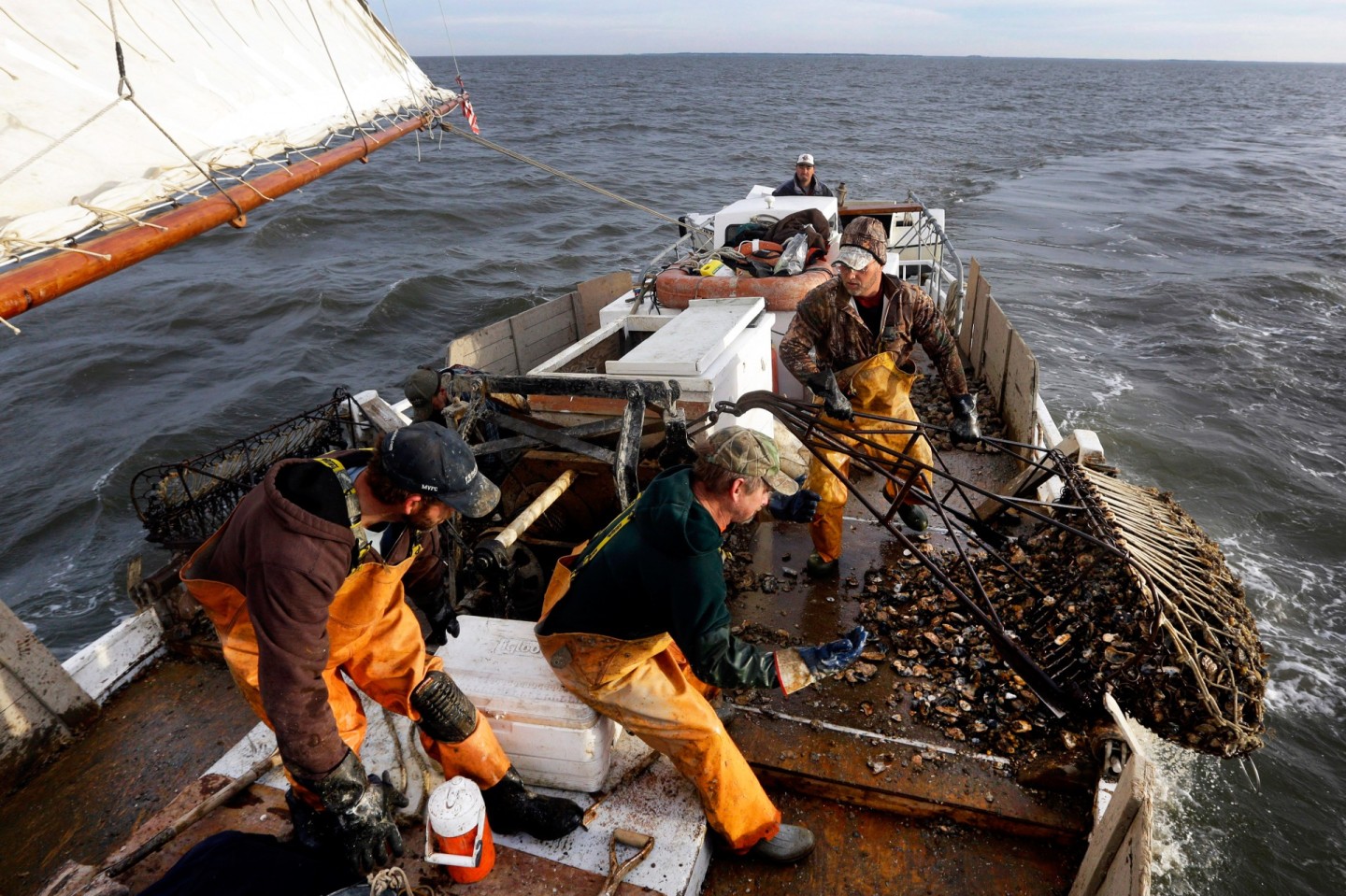
"caption": "Crew members pull an oyster dredge in Tangier Sound of the Chesapeake Bay near Deal Island, Md., in 2013. A study found that the Chesapeake Bay shellfishery is a \"hot zone\" for ocean acidification. Photo: Patrick Semansky/AP ",
"description": "Crew members pull an oyster dredge in Tangier Sound of the Chesapeake Bay near Deal Island, Md., in 2013. A study found that the Chesapeake Bay shellfishery is a \"hot zone\" for ocean acidification.",
"title": "Crew members pull an oyster dredge in Tangier Sound of the Chesapeake Bay near Deal Island, Md., in 2013. A study found that the Chesapeake Bay shellfishery is a \"hot zone\" for ocean acidification.",
"credit": null,
"status": "inherit",
"isLoading": false,
"fetchFailed": false
},
"bayareabites_93231": {
"type": "attachments",
"id": "bayareabites_93231",
"meta": {
"index": "attachments_1716263798",
"site": "bayareabites",
"id": "93231",
"found": true
},
"parent": 93031,
"imgSizes": {
"thumbnail": {
"file": "https://ww2.kqed.org/app/uploads/sites/24/2015/02/bittman-400x230.jpg",
"width": 400,
"mimeType": "image/jpeg",
"height": 230
},
"fd-sm": {
"file": "https://ww2.kqed.org/app/uploads/sites/24/2015/02/bittman-320x184.jpg",
"width": 320,
"mimeType": "image/jpeg",
"height": 184
},
"post-thumbnail": {
"file": "https://ww2.kqed.org/app/uploads/sites/24/2015/02/bittman-672x372.jpg",
"width": 672,
"mimeType": "image/jpeg",
"height": 372
},
"kqedFullSize": {
"file": "https://ww2.kqed.org/app/uploads/sites/24/2015/02/bittman.jpg",
"width": 1000,
"height": 574
},
"cat_post_thumb_sizecategory-posts-2": {
"file": "https://ww2.kqed.org/app/uploads/sites/24/2015/02/bittman-50x50.jpg",
"width": 50,
"mimeType": "image/jpeg",
"height": 50
},
"fd-med": {
"file": "https://ww2.kqed.org/app/uploads/sites/24/2015/02/bittman-768x441.jpg",
"width": 768,
"mimeType": "image/jpeg",
"height": 441
},
"guest-author-96": {
"file": "https://ww2.kqed.org/app/uploads/sites/24/2015/02/bittman-96x96.jpg",
"width": 96,
"mimeType": "image/jpeg",
"height": 96
},
"medium": {
"file": "https://ww2.kqed.org/app/uploads/sites/24/2015/02/bittman-800x459.jpg",
"width": 800,
"mimeType": "image/jpeg",
"height": 459
},
"guest-author-64": {
"file": "https://ww2.kqed.org/app/uploads/sites/24/2015/02/bittman-64x64.jpg",
"width": 64,
"mimeType": "image/jpeg",
"height": 64
},
"detail": {
"file": "https://ww2.kqed.org/app/uploads/sites/24/2015/02/bittman-75x75.jpg",
"width": 75,
"mimeType": "image/jpeg",
"height": 75
},
"guest-author-32": {
"file": "https://ww2.kqed.org/app/uploads/sites/24/2015/02/bittman-32x32.jpg",
"width": 32,
"mimeType": "image/jpeg",
"height": 32
},
"guest-author-128": {
"file": "https://ww2.kqed.org/app/uploads/sites/24/2015/02/bittman-128x128.jpg",
"width": 128,
"mimeType": "image/jpeg",
"height": 128
}
},
"publishDate": 1423852605,
"modified": 1423852612,
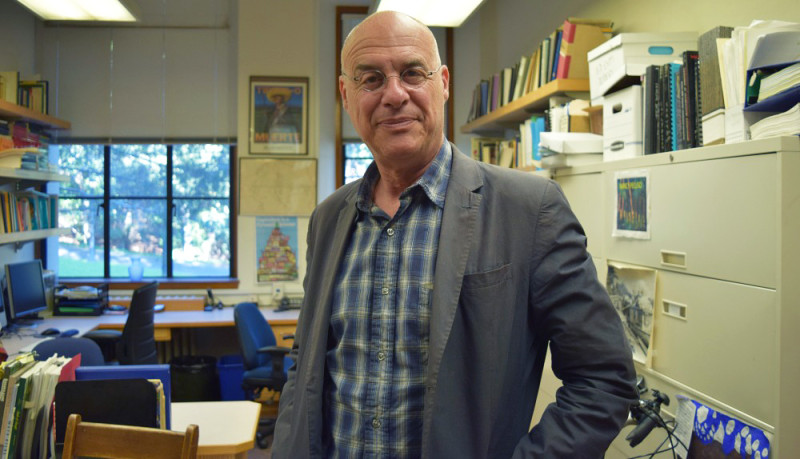
"caption": "Mark Bittman in his new office at UC Berkeley Photo: Shelby Pope",
"description": null,
"title": "bittman",
"credit": null,
"status": "inherit",
"isLoading": false,
"fetchFailed": false
},
"bayareabites_92672": {
"type": "attachments",
"id": "bayareabites_92672",
"meta": {
"index": "attachments_1716263798",
"site": "bayareabites",
"id": "92672",
"found": true
},
"parent": 92668,
"imgSizes": {
"kqedFullSize": {
"file": "https://ww2.kqed.org/app/uploads/sites/24/2015/01/A-sampling-of-findings-from-Stark-and-Carlsons-website-.jpg",
"width": 1000,
"height": 662
}
},
"publishDate": 1422680064,
"modified": 1423011096,
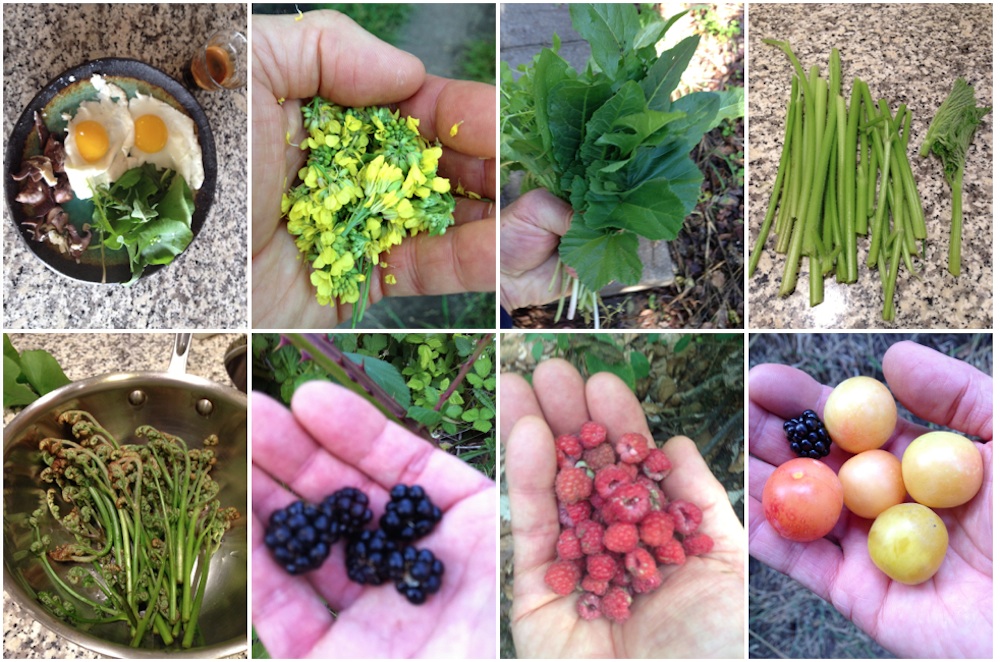
"caption": "A sampling of photos and findings from Stark and Carlson’s project. Photo: Philip Stark",
"description": null,
"title": "A sampling of findings from Stark and Carlson's website",
"credit": null,
"status": "inherit",
"isLoading": false,
"fetchFailed": false
},
"bayareabites_92422": {
"type": "attachments",
"id": "bayareabites_92422",
"meta": {
"index": "attachments_1716263798",
"site": "bayareabites",
"id": "92422",
"found": true
},
"parent": 92421,
"imgSizes": {
"kqedFullSize": {
"file": "https://ww2.kqed.org/app/uploads/sites/24/2015/01/waste-water-1_wide-fcf6d851466799ead85967e11705f2840216144f-e1422476916406.jpg",
"width": 1000,
"height": 562
}
},
"publishDate": 1422476462,
"modified": 1422476910,
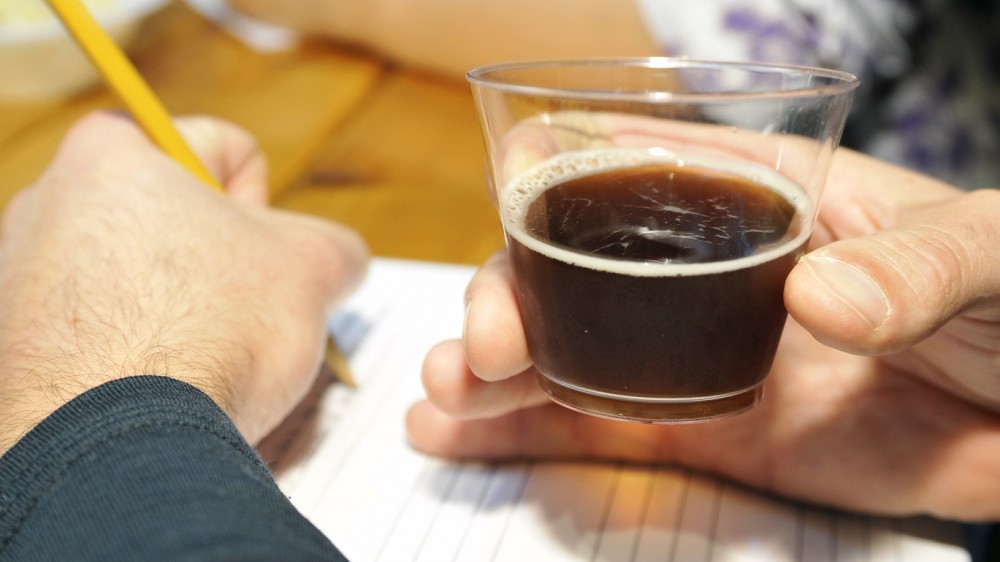
"caption": "Clean Water Services held a brewing competition in Sept. 2014, inviting 13 homebrewers to make beer from its purified wastewater (as well as water from other sources). Now the company is asking the state for permission for brewers to use its wastewater product exclusively to make beer. Photo: Courtesy of Clean Water Services",
"description": "Clean Water Services held a brewing competition in Sept. 2014, inviting 13 homebrewers to make beer from its purified wastewater (as well as water from other sources). Now the company is asking the state for permission for brewers to use its wastewater product exclusively to make beer.",
"title": "Clean Water Services held a brewing competition in Sept. 2014, inviting 13 homebrewers to make beer from its purified wastewater (as well as water from other sources). Now the company is asking the state for permission for brewers to use its wastewater product exclusively to make beer.",
"credit": null,
"status": "inherit",
"isLoading": false,
"fetchFailed": false
},
"bayareabites_92301": {
"type": "attachments",
"id": "bayareabites_92301",
"meta": {
"index": "attachments_1716263798",
"site": "bayareabites",
"id": "92301",
"found": true
},
"parent": 92300,
"imgSizes": {
"kqedFullSize": {
"file": "https://ww2.kqed.org/app/uploads/sites/24/2015/01/fake-fish-1_enl-343634ca9006377c3959be435b37e2e660488d94-e1422085910838.jpg",
"width": 1000,
"height": 667
}
},
"publishDate": 1422085775,
"modified": 1422085904,
"caption": "Chef James Corwell's nigiri sushi rolls made with Tomato Sushi, a plant-based tuna alternative, in San Francisco. Photo: Alastair Bland for NPR ",
"description": "Chef James Corwell's nigiri sushi rolls made with Tomato Sushi, a plant-based tuna alternative, in San Francisco.",
"title": "Chef James Corwell's nigiri sushi rolls made with Tomato Sushi, a plant-based tuna alternative, in San Francisco.",
"credit": null,
"status": "inherit",
"isLoading": false,
"fetchFailed": false
},
"bayareabites_92046": {
"type": "attachments",
"id": "bayareabites_92046",
"meta": {
"index": "attachments_1716263798",
"site": "bayareabites",
"id": "92046",
"found": true
},
"parent": 92041,
"imgSizes": {
"kqedFullSize": {
"file": "https://ww2.kqed.org/app/uploads/sites/24/2015/01/strawberry.jpg",
"width": 680,
"height": 346
}
},
"publishDate": 1421125068,
"modified": 1421125108,
"caption": "Strawberries in the field (Shutterstock)",
"description": null,
"title": "strawberry",
"credit": null,
"status": "inherit",
"isLoading": false,
"fetchFailed": false
},
"bayareabites_91896": {
"type": "attachments",
"id": "bayareabites_91896",
"meta": {
"index": "attachments_1716263798",
"site": "bayareabites",
"id": "91896",
"found": true
},
"parent": 91895,
"imgSizes": {
"kqedFullSize": {
"file": "https://ww2.kqed.org/app/uploads/sites/24/2015/01/bluefin-tuna-2_enl-808feafef2fcb638e46945e81c26827fd39a25d9-e1420664178117.jpg",
"width": 1000,
"height": 667
}
},
"publishDate": 1420662408,
"modified": 1420664194,
"caption": "The IUCN says the Atlantic bluefin tuna is endangered. Its stocks have declined globally between 29 percent and 51 percent over the past 21 to 39 years, according to the conservation group. Photo: Tono Balaguer/iStockphoto",
"description": "The IUCN \u003ca href=\"http://www.iucnredlist.org/details/21860/0\">says\u003c/a> the Atlantic bluefin tuna is endangered. Its stocks have declined globally between 29 percent and 51 percent over the past 21 to 39 years, according to the conservation group.",
"title": "The IUCN says the Atlantic bluefin tuna is endangered. Its stocks have declined globally between 29 percent and 51 percent over the past 21 to 39 years, according to the conservation group.",
"credit": null,
"status": "inherit",
"isLoading": false,
"fetchFailed": false
},
"bayareabites_91872": {
"type": "attachments",
"id": "bayareabites_91872",
"meta": {
"index": "attachments_1716263798",
"site": "bayareabites",
"id": "91872",
"found": true
},
"parent": 91863,
"imgSizes": {
"kqedFullSize": {
"file": "https://ww2.kqed.org/app/uploads/sites/24/2015/01/A-pile-of-colorful-Seedles-before-packaging.jpg",
"width": 1000,
"height": 1333
}
},
"publishDate": 1420583535,
"modified": 1420587031,
"caption": "A pile of colorful Seedles before packaging. Photo: Angela Johnston",
"description": null,
"title": "A pile of colorful Seedles before packaging",
"credit": null,
"status": "inherit",
"isLoading": false,
"fetchFailed": false
},
"bayareabites_89691": {
"type": "attachments",
"id": "bayareabites_89691",
"meta": {
"index": "attachments_1716263798",
"site": "bayareabites",
"id": "89691",
"found": true
},
"parent": 89675,
"imgSizes": {
"kqedFullSize": {
"file": "https://ww2.kqed.org/app/uploads/sites/24/2014/11/Potential-new-zoning-regulations-will-make-it-easier-to-start-an-urban-farm-in-Oakland.jpg",
"width": 1000,
"height": 666
}
},
"publishDate": 1415480845,
"modified": 1415480845,
"caption": "Potential new zoning regulations will make it easier to start an urban farm in Oakland. Photo: Angela Johnston",
"description": null,
"title": "SONY DSC",
"credit": null,
"status": "inherit",
"isLoading": false,
"fetchFailed": false
},
"bayareabites_89367": {
"type": "attachments",
"id": "bayareabites_89367",
"meta": {
"index": "attachments_1716263798",
"site": "bayareabites",
"id": "89367",
"found": true
},
"parent": 89366,
"imgSizes": {
"kqedFullSize": {
"file": "https://ww2.kqed.org/app/uploads/sites/24/2014/10/food_wide-8d844d1b7ff78eb3e68f88afbfc6065d0f06e781-e1414706933570.jpg",
"width": 1000,
"height": 563
}
},
"publishDate": 1414706414,
"modified": 1414706414,
"caption": "Confused about all the different sustainability ratings out there? The simplest option may be to shop at your local farmer's market. iStockphoto",
"description": "Confused about all the different sustainability ratings out there? The simplest option may be to shop at your local farmer's marke",
"title": "Confused about all the different sustainability ratings out there? The simplest option may be to shop at your local farmer's market.",
"credit": null,
"status": "inherit",
"isLoading": false,
"fetchFailed": false
},
"bayareabites_88864": {
"type": "attachments",
"id": "bayareabites_88864",
"meta": {
"index": "attachments_1716263798",
"site": "bayareabites",
"id": "88864",
"found": true
},
"parent": 88863,
"imgSizes": {
"kqedFullSize": {
"file": "https://ww2.kqed.org/app/uploads/sites/24/2014/10/glyphosate-crops_enl-428a3594d783d20539d1da64cade4e31b4b920bb-e1413467600915.jpg",
"width": 1000,
"height": 643
}
},
"publishDate": 1413467487,
"modified": 1413467487,
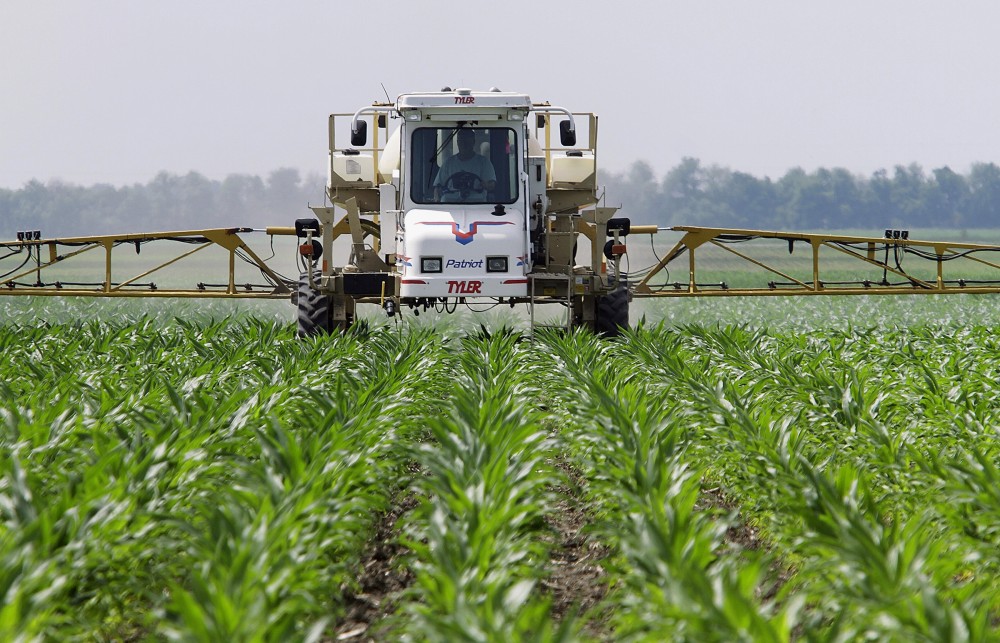
"caption": "Corn farmer Jerry McCulley sprays the weedkiller glyphosate across his cornfield in Auburn, Ill., in 2010. An increasing number of weeds have now evolved resistance to the chemical. Photo: Seth Perlman/AP ",
"description": "Corn farmer Jerry McCulley sprays the weedkiller glyphosate across his cornfield in Auburn, Ill., in 2010. An increasing number of weeds have now evolved resistance to the chemical.",
"title": "Corn farmer Jerry McCulley sprays the weedkiller glyphosate across his cornfield in Auburn, Ill., in 2010. An increasing number of weeds have now evolved resistance to the chemical.",
"credit": null,
"status": "inherit",
"isLoading": false,
"fetchFailed": false
},
"bayareabites_88809": {
"type": "attachments",
"id": "bayareabites_88809",
"meta": {
"index": "attachments_1716263798",
"site": "bayareabites",
"id": "88809",
"found": true
},
"parent": 88805,
"imgSizes": {
"kqedFullSize": {
"file": "https://ww2.kqed.org/app/uploads/sites/24/2014/10/foodwaste1-640x360.jpg",
"width": 640,
"height": 360
}
},
"publishDate": 1413341685,
"modified": 1413341685,
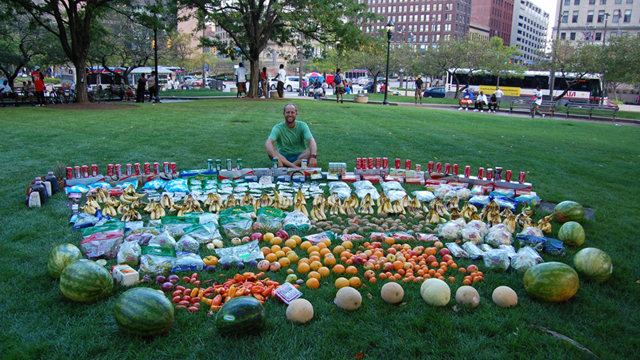
"caption": "Rob Greenfield has ridden his bicycle across the country, dumpster diving in various cities and making public displays of the food he finds to show how much food is regularly thrown out. Here he is shown with one of his displays in Cleveland, Ohio. Photo: Courtesy of Rob Greenfield",
"description": null,
"title": "foodwaste1-640x360",
"credit": null,
"status": "inherit",
"isLoading": false,
"fetchFailed": false
}
},
"audioPlayerReducer": {
"postId": "stream_live",
"isPaused": true,
"isPlaying": false,
"pfsActive": false,
"pledgeModalIsOpen": true,
"playerDrawerIsOpen": false,
"liveAudioPlayStartedAt": 0,
"liveAudioPlayContext": ""
},
"authorsReducer": {
"byline_bayareabites_93472": {
"type": "authors",
"id": "byline_bayareabites_93472",
"meta": {
"override": true
},
"slug": "byline_bayareabites_93472",
"name": "Christopher Joyce",
"isLoading": false
},
"byline_bayareabites_92421": {
"type": "authors",
"id": "byline_bayareabites_92421",
"meta": {
"override": true
},
"slug": "byline_bayareabites_92421",
"name": "Cassandra Profita",
"isLoading": false
},
"byline_bayareabites_92300": {
"type": "authors",
"id": "byline_bayareabites_92300",
"meta": {
"override": true
},
"slug": "byline_bayareabites_92300",
"name": "Alastair Bland",
"isLoading": false
},
"byline_bayareabites_91895": {
"type": "authors",
"id": "byline_bayareabites_91895",
"meta": {
"override": true
},
"slug": "byline_bayareabites_91895",
"name": "Eliza Barclay",
"isLoading": false
},
"byline_bayareabites_89366": {
"type": "authors",
"id": "byline_bayareabites_89366",
"meta": {
"override": true
},
"slug": "byline_bayareabites_89366",
"name": "Alison Bruzek",
"isLoading": false
},
"byline_bayareabites_88863": {
"type": "authors",
"id": "byline_bayareabites_88863",
"meta": {
"override": true
},
"slug": "byline_bayareabites_88863",
"name": "Dan Charles",
"isLoading": false
},
"shelbypope": {
"type": "authors",
"id": "5566",
"meta": {
"index": "authors_1716337520",
"id": "5566",
"found": true
},
"name": "Shelby Pope",
"firstName": "Shelby",
"lastName": "Pope",
"slug": "shelbypope",
"email": "shelbylpope@gmail.com",
"display_author_email": false,
"staff_mastheads": [],
"title": "KQED Contributor",
"bio": "Shelby Pope is a freelance writer living and eating her way through the East Bay. She’s written about food, art and science for publications including the Smithsonian, Lucky Peach, and the Washington Post's pet blog. When she’s not taste testing sourdough bread to find the Bay Area’s best loaf, you can find her on Twitter \u003ca href=\"https://twitter.com/shelbylpope\">@shelbylpope\u003c/a> or at \u003ca href=\"https://shelbypope.com/\">shelbypope.com\u003c/a>",
"avatar": "https://secure.gravatar.com/avatar/df74e904399e45720e48e36c6e1ae7a90c32216eb2c9c82f3b2e1a9641b507d3?s=600&d=blank&r=g",
"twitter": "shelbylpope",
"bluesky": null,
"facebook": null,
"instagram": null,
"linkedin": null,
"sites": [
{
"site": "arts",
"roles": [
"subscriber"
]
},
{
"site": "food",
"roles": [
"subscriber"
]
}
],
"headData": {
"title": "Shelby Pope | KQED",
"description": "KQED Contributor",
"ogImgSrc": "https://secure.gravatar.com/avatar/df74e904399e45720e48e36c6e1ae7a90c32216eb2c9c82f3b2e1a9641b507d3?s=600&d=blank&r=g",
"twImgSrc": "https://secure.gravatar.com/avatar/df74e904399e45720e48e36c6e1ae7a90c32216eb2c9c82f3b2e1a9641b507d3?s=600&d=blank&r=g"
},
"isLoading": false,
"link": "/author/shelbypope"
},
"alexandrawall": {
"type": "authors",
"id": "5567",
"meta": {
"index": "authors_1716337520",
"id": "5567",
"found": true
},
"name": "Alix Wall",
"firstName": "Alix",
"lastName": "Wall",
"slug": "alexandrawall",
"email": "alixwall@sbcglobal.net",
"display_author_email": false,
"staff_mastheads": [],
"title": null,
"bio": "Alix Wall appeared in her hometown paper in Riverside, California as “Chef of the Week” when she was 15 years old, and in high school, she founded “The Bon Appetit Club.” After working as a journalist for many years, Alix became a certified natural foods chef from Bauman College in Berkeley. While she cooks part-time healthy, organic meals for busy families, she is also a contributing editor of j. weekly, the Bay Area’s Jewish newspaper, in which she has a monthly food column. Her food writing can also be found on Berkeleyside’s NOSH and in Edible East Bay. In addition to food, she loves writing about how couples met and fell in love, which she does for The San Francisco Chronicle’s Style section and j. weekly. In 2016, she founded The Illuminoshi: The Not-So-Secret Society of Bay Area Jewish Food Professionals. She is also writer/producer for a documentary-in-progress called \u003ca href=\"https://www.lonelychildmovie.com/\">The Lonely Child\u003c/a>. Follow Alix on Twitter \u003ca href=\"https://twitter.com/WallAlix\">@WallAlix\u003c/a>.",
"avatar": "https://secure.gravatar.com/avatar/421a27f26a185be932f8d567b499b1f1?s=600&d=blank&r=g",
"twitter": null,
"facebook": null,
"instagram": null,
"linkedin": null,
"sites": [
{
"site": "bayareabites",
"roles": [
"contributor"
]
},
{
"site": "food",
"roles": [
"contributor"
]
}
],
"headData": {
"title": "Alix Wall | KQED",
"description": null,
"ogImgSrc": "https://secure.gravatar.com/avatar/421a27f26a185be932f8d567b499b1f1?s=600&d=blank&r=g",
"twImgSrc": "https://secure.gravatar.com/avatar/421a27f26a185be932f8d567b499b1f1?s=600&d=blank&r=g"
},
"isLoading": false,
"link": "/author/alexandrawall"
},
"angelajohnston": {
"type": "authors",
"id": "5568",
"meta": {
"index": "authors_1716337520",
"id": "5568",
"found": true
},
"name": "Angela Johnston",
"firstName": "Angela",
"lastName": "Johnston",
"slug": "angelajohnston",
"email": "anj618@gmail.com",
"display_author_email": false,
"staff_mastheads": [],
"title": null,
"bio": "Angela Johnston is an independent radio reporter and producer who recently moved back home to the Bay Area after spending the past six years on the east coast of Canada. She has a Master’s Degree in broadcast journalism and is currently making radio stories for KALW's daily news magazine, Crosscurrents. When she's not writing and reporting, she's surfing surf small waves on her longboard or perfecting her paella recipe.",
"avatar": "https://secure.gravatar.com/avatar/29104f87db909d4901d06df73b9db604?s=600&d=blank&r=g",
"twitter": "ang_johnston",
"facebook": null,
"instagram": null,
"linkedin": null,
"sites": [
{
"site": "bayareabites",
"roles": [
"contributor"
]
}
],
"headData": {
"title": "Angela Johnston | KQED",
"description": null,
"ogImgSrc": "https://secure.gravatar.com/avatar/29104f87db909d4901d06df73b9db604?s=600&d=blank&r=g",
"twImgSrc": "https://secure.gravatar.com/avatar/29104f87db909d4901d06df73b9db604?s=600&d=blank&r=g"
},
"isLoading": false,
"link": "/author/angelajohnston"
},
"civileat": {
"type": "authors",
"id": "5583",
"meta": {
"index": "authors_1716337520",
"id": "5583",
"found": true
},
"name": "Civil Eats",
"firstName": "Civil",
"lastName": "Eats",
"slug": "civileat",
"email": "twilight@civileats.com",
"display_author_email": false,
"staff_mastheads": [],
"title": null,
"bio": "\u003ca href=\"http://civileats.com/\">Civil Eats\u003c/a> is a daily news source for critical thought about the American food system. We publish stories that shift the conversation around sustainable agriculture in an effort to build economically and socially just communities. Follow Civil Eats on Twitter \u003ca href=\"https://twitter.com/CivilEats\">@civileats\u003c/a> and on \u003ca href=\"https://www.facebook.com/pages/Civil-Eats/56766540637\">Facebook\u003c/a>.",
"avatar": "https://secure.gravatar.com/avatar/8f6f50bfb6403afe7cbc194b66cc1d4d?s=600&d=blank&r=g",
"twitter": "CivilEats",
"facebook": "/pages/Civil-Eats/56766540637?ref=hl",
"instagram": null,
"linkedin": null,
"sites": [
{
"site": "bayareabites",
"roles": [
"contributor"
]
},
{
"site": "food",
"roles": [
"contributor"
]
}
],
"headData": {
"title": "Civil Eats | KQED",
"description": null,
"ogImgSrc": "https://secure.gravatar.com/avatar/8f6f50bfb6403afe7cbc194b66cc1d4d?s=600&d=blank&r=g",
"twImgSrc": "https://secure.gravatar.com/avatar/8f6f50bfb6403afe7cbc194b66cc1d4d?s=600&d=blank&r=g"
},
"isLoading": false,
"link": "/author/civileat"
}
},
"pagesReducer": {
"bayareabites_category_sustainability": {
"type": "terms",
"id": "bayareabites_60",
"meta": {
"index": "terms_1716263798",
"site": "bayareabites",
"id": "60",
"score": 12.370327
},
"featImg": null,
"name": "sustainability, environment, climate change",
"description": null,
"taxonomy": "category",
"headData": {
"twImgId": null,
"twTitle": null,
"ogTitle": null,
"ogImgId": null,
"twDescription": null,
"description": null,
"title": "sustainability, environment, climate change Archives | KQED Bay Area Bites",
"ogDescription": null
},
"ttid": 23,
"slug": "sustainability",
"isLoading": false,
"title": "sustainability, environment, climate change",
"pageMeta": {
"site": "bayareabites",
"WpPageTemplate": "page-topic-editorial",
"currentPage": 21
},
"blocks": [
{
"blockName": "kqed/post-list",
"attrs": {
"layout": "cardArticle2",
"query": "posts/bayareabites?category=sustainability",
"seeMore": false,
"paginated": true,
"page": 21
}
},
{
"blockName": "kqed/ad"
}
]
}
},
"pfsSessionReducer": {},
"postsReducer": {
"stream_live": {
"type": "live",
"id": "stream_live",
"audioUrl": "https://streams.kqed.org/kqedradio",
"title": "Live Stream",
"excerpt": "Live Stream information currently unavailable.",
"link": "/radio",
"featImg": "",
"label": {
"name": "KQED Live",
"link": "/"
}
},
"stream_kqedNewscast": {
"type": "posts",
"id": "stream_kqedNewscast",
"audioUrl": "https://www.kqed.org/.stream/anon/radio/RDnews/newscast.mp3?_=1",
"title": "KQED Newscast",
"featImg": "",
"label": {
"name": "88.5 FM",
"link": "/"
}
},
"bayareabites_93472": {
"type": "posts",
"id": "bayareabites_93472",
"meta": {
"index": "posts_1716263798",
"site": "bayareabites",
"id": "93472",
"score": null,
"sort": [
1424796793000
]
},
"parent": 0,
"labelTerm": {
"site": "bayareabites"
},
"blocks": [],
"publishDate": 1424796793,
"format": "aside",
"disqusTitle": "Acidifying Waters Are Endangering Your Oysters And Mussels",
"title": "Acidifying Waters Are Endangering Your Oysters And Mussels",
"headTitle": "Bay Area Bites | KQED Food",
"content": "\u003cfigure id=\"attachment_93473\" class=\"wp-caption aligncenter\" style=\"max-width: 1920px\">\u003ca href=\"http://ww2.kqed.org/bayareabites/wp-content/uploads/sites/24/2015/02/oystermen1_enl-ce5932a8171cbc9b4d464b3eab5376af31858493-e1424796582877.jpg\">\u003cimg src=\"http://ww2.kqed.org/bayareabites/wp-content/uploads/sites/24/2015/02/oystermen1_enl-ce5932a8171cbc9b4d464b3eab5376af31858493-e1424796582877.jpg\" alt='Crew members pull an oyster dredge in Tangier Sound of the Chesapeake Bay near Deal Island, Md., in 2013. A study found that the Chesapeake Bay shellfishery is a \"hot zone\" for ocean acidification. Photo: Patrick Semansky/AP' width=\"1920\" height=\"1279\" class=\"size-full wp-image-93473\" srcset=\"https://ww2.kqed.org/app/uploads/sites/24/2015/02/oystermen1_enl-ce5932a8171cbc9b4d464b3eab5376af31858493-e1424796582877.jpg 1920w, https://ww2.kqed.org/app/uploads/sites/24/2015/02/oystermen1_enl-ce5932a8171cbc9b4d464b3eab5376af31858493-e1424796582877-400x266.jpg 400w, https://ww2.kqed.org/app/uploads/sites/24/2015/02/oystermen1_enl-ce5932a8171cbc9b4d464b3eab5376af31858493-e1424796582877-800x533.jpg 800w, https://ww2.kqed.org/app/uploads/sites/24/2015/02/oystermen1_enl-ce5932a8171cbc9b4d464b3eab5376af31858493-e1424796582877-1440x959.jpg 1440w, https://ww2.kqed.org/app/uploads/sites/24/2015/02/oystermen1_enl-ce5932a8171cbc9b4d464b3eab5376af31858493-e1424796582877-1180x786.jpg 1180w, https://ww2.kqed.org/app/uploads/sites/24/2015/02/oystermen1_enl-ce5932a8171cbc9b4d464b3eab5376af31858493-e1424796582877-768x512.jpg 768w, https://ww2.kqed.org/app/uploads/sites/24/2015/02/oystermen1_enl-ce5932a8171cbc9b4d464b3eab5376af31858493-e1424796582877-320x213.jpg 320w\" sizes=\"(max-width: 1920px) 100vw, 1920px\">\u003c/a>\u003cfigcaption class=\"wp-caption-text\">Crew members pull an oyster dredge in Tangier Sound of the Chesapeake Bay near Deal Island, Md., in 2013. A study found that the Chesapeake Bay shellfishery is a \"hot zone\" for ocean acidification. Photo: Patrick Semansky/AP\u003c/figcaption>\u003c/figure>\n\u003cp>By Christopher Joyce, \u003ca href=\"http://www.npr.org/blogs/thesalt/2015/02/23/388480482/acidifying-waters-are-endangering-your-oysters-and-mussels\" target=\"_blank\">The Salt at NPR Food\u003c/a> (2/23/15)\u003c/p>\n\u003cp>Bad news for bivalves comes this week from scientists studying ocean acidification.\u003c/p>\n\u003cp>Ocean water in parts of the world is changing. Its chemistry is very slowly becoming more acidic, like lemon juice, and less alkaline, a la baking soda.\u003c/p>\n\u003cp>The change so far is small — you wouldn't notice if you swam in the ocean or even drank it (not recommended, in any case). But numerous scientific studies show that it could get worse. One reason is that as humans produce more carbon dioxide, a lot is absorbed into the oceans. That makes the water more acidic.\u003c/p>\n\u003cfigure id=\"attachment_93474\" class=\"wp-caption alignright\" style=\"max-width: 290px\">\u003ca href=\"http://ww2.kqed.org/bayareabites/wp-content/uploads/sites/24/2015/02/shellfish_enl-16ea4dfedb5196147021c3f62d9f6f5ef994ada8.jpg\">\u003cimg src=\"http://ww2.kqed.org/bayareabites/wp-content/uploads/sites/24/2015/02/shellfish_enl-16ea4dfedb5196147021c3f62d9f6f5ef994ada8-290x193.jpg\" alt=\"Eastern oysters in South Kingston, RI on July 25, 2013. Photo: Rick Friedman/Nature \" width=\"290\" height=\"193\" class=\"size-medium wp-image-93474\">\u003c/a>\u003cfigcaption class=\"wp-caption-text\">Eastern oysters in South Kingston, RI on July 25, 2013. Photo: Rick Friedman/Nature\u003c/figcaption>\u003c/figure>\n\u003cp>So, shellfish. Why is this bad news for them, and the $1 billion industry devoted to them in the U.S.?\u003c/p>\n\u003cp>[ad fullwidth]\u003c/p>\n\u003cp>Well, anything that builds a shell depends on calcium compounds in water. If water gets too acidic, it interferes with the chemistry of shell-building. So oysters, mussels, scallops and lots more will suffer in an increasingly acidic ocean. Crabs and lobsters and \u003ca href=\"http://www.npr.org/2013/04/18/177721483/can-acid-neutralizers-help-coral-reefs-to-bounce-back\">coral reefs\u003c/a> will feel it as well, but mollusks are most vulnerable.\u003c/p>\n\u003cp>According to \u003ca href=\"http://www.nature.com/nclimate/journal/vaop/ncurrent/full/nclimate2508.html\">research\u003c/a> published Monday in the journal \u003cem>Nature Climate Change\u003c/em>, you can already measure the harmful effects on shellfish in places like the Pacific Northwest.\u003c/p>\n\u003cp>The study is billed as the first analysis of how shellfisheries in 15 states in the U.S. are likely to fare as this acidification continues. With 17 authors from 13 academic, government and environmental institutions, it examines not just ocean chemistry but local coastal pollution and how that combines with acidification.\u003c/p>\n\u003cp>And the news for the mollusk industry, as we said, is bad, though not without hope.\u003c/p>\n\u003cfigure id=\"attachment_93480\" class=\"wp-caption aligncenter\" style=\"max-width: 800px\">\u003ca href=\"http://ww2.kqed.org/bayareabites/wp-content/uploads/sites/24/2015/02/noaa-monitoringmap.jpg\">\u003cimg src=\"http://ww2.kqed.org/bayareabites/wp-content/uploads/sites/24/2015/02/noaa-monitoringmap.jpg\" alt=\"NOAA Map: National Oceanic and Atmospheric Administration \" width=\"800\" height=\"600\" class=\"size-full wp-image-93480\" srcset=\"https://ww2.kqed.org/app/uploads/sites/24/2015/02/noaa-monitoringmap.jpg 800w, https://ww2.kqed.org/app/uploads/sites/24/2015/02/noaa-monitoringmap-768x576.jpg 768w, https://ww2.kqed.org/app/uploads/sites/24/2015/02/noaa-monitoringmap-320x240.jpg 320w\" sizes=\"(max-width: 800px) 100vw, 800px\">\u003c/a>\u003cfigcaption class=\"wp-caption-text\">NOAA Map: National Oceanic and Atmospheric Administration\u003c/figcaption>\u003c/figure>\n\u003cp>Some of the coastal areas could see damage from acidification within a few years. Southern Maine and southern Massachusetts are hot spots, as are estuaries along the East Coast, like the Chesapeake Bay and Long Island Sound. The latter are suffering from a lot of nitrogen pollution already from agricultural and sewage runoff. That pollution exacerbates the effects of acidification.\u003c/p>\n\u003cp>The study also points to the Gulf of Mexico as particularly vulnerable, in part because so few species of shellfish are harvested there. The more diverse the species, the study authors argue, the better chance a few will be resistant to the Gulf's changing chemistry.\u003c/p>\n\u003cp>The study also points to coastal communities in New Jersey, Virginia and Louisiana that have relatively less monitoring of ocean acidity under way.\u003c/p>\n\u003cp>The hopeful note in the research is that there are solutions short of stopping the emission of carbon dioxide into the air. Reducing local nitrogen pollution in rivers and bays along the coasts is one. Raising shellfish where the ocean is less affected is another. There may also be strains of oysters that are resistant to acidity.\u003c/p>\n\u003cp>\"There is plenty we can do to help these at-risk communities while protecting the environment,\" Lisa Suatoni, an ecologist at the Natural Resources Defense Council and one of the authors, said in a statement.\u003c/p>\n\u003cp>\u003c/p>\n\u003cp>\u003cem>Copyright 2015 \u003ca href=\"http://www.npr.org/\" target=\"_blank\">NPR\u003c/a>.\u003c/em>\u003c/p>\n\n",
"disqusIdentifier": "93472 http://blogs.kqed.org/bayareabites/?p=93472",
"disqusUrl": "https://ww2.kqed.org/bayareabites/2015/02/24/acidifying-waters-are-endangering-your-oysters-and-mussels/",
"stats": {
"hasVideo": false,
"hasChartOrMap": false,
"hasAudio": false,
"hasPolis": false,
"wordCount": 564,
"hasGoogleForm": false,
"hasGallery": false,
"hasHearkenModule": false,
"iframeSrcs": [],
"paragraphCount": 17
},
"modified": 1427395583,
"excerpt": "Many coastal communities that harvest shellfish could soon be hurt by ocean acidification, a study finds. The Pacific Northwest and New England are hot spots, as are estuaries along the East Coast.",
"headData": {
"twImgId": "",
"twTitle": "",
"ogTitle": "",
"ogImgId": "",
"twDescription": "",
"description": "Many coastal communities that harvest shellfish could soon be hurt by ocean acidification, a study finds. The Pacific Northwest and New England are hot spots, as are estuaries along the East Coast.",
"title": "Acidifying Waters Are Endangering Your Oysters And Mussels | KQED",
"ogDescription": "",
"schema": {
"@context": "https://schema.org",
"@type": "Article",
"headline": "Acidifying Waters Are Endangering Your Oysters And Mussels",
"datePublished": "2015-02-24T08:53:13-08:00",
"dateModified": "2015-03-26T11:46:23-07:00",
"image": "https://cdn.kqed.org/wp-content/uploads/2020/02/KQED-OG-Image@1x.png"
}
},
"guestAuthors": [],
"slug": "acidifying-waters-are-endangering-your-oysters-and-mussels",
"status": "publish",
"nprApiLink": "http://api.npr.org/query?id=388480482&apiKey=MDAxOTAwOTE4MDEyMTkxMDAzNjczZDljZA004",
"nprByline": "Christopher Joyce",
"nprStoryDate": "Mon, 23 Feb 2015 17:46:00 -0500",
"nprLastModifiedDate": "Mon, 23 Feb 2015 17:48:08 -0500",
"nprHtmlLink": "http://www.npr.org/blogs/thesalt/2015/02/23/388480482/acidifying-waters-are-endangering-your-oysters-and-mussels?ft=nprml&f=388480482",
"nprStoryId": "388480482",
"nprRetrievedStory": "1",
"nprPubDate": "Mon, 23 Feb 2015 17:48:00 -0500",
"path": "/bayareabites/93472/acidifying-waters-are-endangering-your-oysters-and-mussels",
"audioTrackLength": null,
"parsedContent": [
{
"type": "contentString",
"content": "\u003cdiv class=\"post-body\">\u003cp>\u003cfigure id=\"attachment_93473\" class=\"wp-caption aligncenter\" style=\"max-width: 1920px\">\u003ca href=\"http://ww2.kqed.org/bayareabites/wp-content/uploads/sites/24/2015/02/oystermen1_enl-ce5932a8171cbc9b4d464b3eab5376af31858493-e1424796582877.jpg\">\u003cimg src=\"http://ww2.kqed.org/bayareabites/wp-content/uploads/sites/24/2015/02/oystermen1_enl-ce5932a8171cbc9b4d464b3eab5376af31858493-e1424796582877.jpg\" alt='Crew members pull an oyster dredge in Tangier Sound of the Chesapeake Bay near Deal Island, Md., in 2013. A study found that the Chesapeake Bay shellfishery is a \"hot zone\" for ocean acidification. Photo: Patrick Semansky/AP' width=\"1920\" height=\"1279\" class=\"size-full wp-image-93473\" srcset=\"https://ww2.kqed.org/app/uploads/sites/24/2015/02/oystermen1_enl-ce5932a8171cbc9b4d464b3eab5376af31858493-e1424796582877.jpg 1920w, https://ww2.kqed.org/app/uploads/sites/24/2015/02/oystermen1_enl-ce5932a8171cbc9b4d464b3eab5376af31858493-e1424796582877-400x266.jpg 400w, https://ww2.kqed.org/app/uploads/sites/24/2015/02/oystermen1_enl-ce5932a8171cbc9b4d464b3eab5376af31858493-e1424796582877-800x533.jpg 800w, https://ww2.kqed.org/app/uploads/sites/24/2015/02/oystermen1_enl-ce5932a8171cbc9b4d464b3eab5376af31858493-e1424796582877-1440x959.jpg 1440w, https://ww2.kqed.org/app/uploads/sites/24/2015/02/oystermen1_enl-ce5932a8171cbc9b4d464b3eab5376af31858493-e1424796582877-1180x786.jpg 1180w, https://ww2.kqed.org/app/uploads/sites/24/2015/02/oystermen1_enl-ce5932a8171cbc9b4d464b3eab5376af31858493-e1424796582877-768x512.jpg 768w, https://ww2.kqed.org/app/uploads/sites/24/2015/02/oystermen1_enl-ce5932a8171cbc9b4d464b3eab5376af31858493-e1424796582877-320x213.jpg 320w\" sizes=\"(max-width: 1920px) 100vw, 1920px\">\u003c/a>\u003cfigcaption class=\"wp-caption-text\">Crew members pull an oyster dredge in Tangier Sound of the Chesapeake Bay near Deal Island, Md., in 2013. A study found that the Chesapeake Bay shellfishery is a \"hot zone\" for ocean acidification. Photo: Patrick Semansky/AP\u003c/figcaption>\u003c/figure>\n\u003cp>By Christopher Joyce, \u003ca href=\"http://www.npr.org/blogs/thesalt/2015/02/23/388480482/acidifying-waters-are-endangering-your-oysters-and-mussels\" target=\"_blank\">The Salt at NPR Food\u003c/a> (2/23/15)\u003c/p>\n\u003cp>Bad news for bivalves comes this week from scientists studying ocean acidification.\u003c/p>\n\u003cp>Ocean water in parts of the world is changing. Its chemistry is very slowly becoming more acidic, like lemon juice, and less alkaline, a la baking soda.\u003c/p>\n\u003cp>The change so far is small — you wouldn't notice if you swam in the ocean or even drank it (not recommended, in any case). But numerous scientific studies show that it could get worse. One reason is that as humans produce more carbon dioxide, a lot is absorbed into the oceans. That makes the water more acidic.\u003c/p>\n\u003cfigure id=\"attachment_93474\" class=\"wp-caption alignright\" style=\"max-width: 290px\">\u003ca href=\"http://ww2.kqed.org/bayareabites/wp-content/uploads/sites/24/2015/02/shellfish_enl-16ea4dfedb5196147021c3f62d9f6f5ef994ada8.jpg\">\u003cimg src=\"http://ww2.kqed.org/bayareabites/wp-content/uploads/sites/24/2015/02/shellfish_enl-16ea4dfedb5196147021c3f62d9f6f5ef994ada8-290x193.jpg\" alt=\"Eastern oysters in South Kingston, RI on July 25, 2013. Photo: Rick Friedman/Nature \" width=\"290\" height=\"193\" class=\"size-medium wp-image-93474\">\u003c/a>\u003cfigcaption class=\"wp-caption-text\">Eastern oysters in South Kingston, RI on July 25, 2013. Photo: Rick Friedman/Nature\u003c/figcaption>\u003c/figure>\n\u003cp>So, shellfish. Why is this bad news for them, and the $1 billion industry devoted to them in the U.S.?\u003c/p>\n\u003cp>\u003c/p>\u003c/div>",
"attributes": {
"named": {},
"numeric": []
}
},
{
"type": "component",
"content": "",
"name": "ad",
"attributes": {
"named": {
"label": "fullwidth"
},
"numeric": [
"fullwidth"
]
}
},
{
"type": "contentString",
"content": "\u003cdiv class=\"post-body\">\u003cp>\u003c/p>\n\u003cp>Well, anything that builds a shell depends on calcium compounds in water. If water gets too acidic, it interferes with the chemistry of shell-building. So oysters, mussels, scallops and lots more will suffer in an increasingly acidic ocean. Crabs and lobsters and \u003ca href=\"http://www.npr.org/2013/04/18/177721483/can-acid-neutralizers-help-coral-reefs-to-bounce-back\">coral reefs\u003c/a> will feel it as well, but mollusks are most vulnerable.\u003c/p>\n\u003cp>According to \u003ca href=\"http://www.nature.com/nclimate/journal/vaop/ncurrent/full/nclimate2508.html\">research\u003c/a> published Monday in the journal \u003cem>Nature Climate Change\u003c/em>, you can already measure the harmful effects on shellfish in places like the Pacific Northwest.\u003c/p>\n\u003cp>The study is billed as the first analysis of how shellfisheries in 15 states in the U.S. are likely to fare as this acidification continues. With 17 authors from 13 academic, government and environmental institutions, it examines not just ocean chemistry but local coastal pollution and how that combines with acidification.\u003c/p>\n\u003cp>And the news for the mollusk industry, as we said, is bad, though not without hope.\u003c/p>\n\u003cfigure id=\"attachment_93480\" class=\"wp-caption aligncenter\" style=\"max-width: 800px\">\u003ca href=\"http://ww2.kqed.org/bayareabites/wp-content/uploads/sites/24/2015/02/noaa-monitoringmap.jpg\">\u003cimg src=\"http://ww2.kqed.org/bayareabites/wp-content/uploads/sites/24/2015/02/noaa-monitoringmap.jpg\" alt=\"NOAA Map: National Oceanic and Atmospheric Administration \" width=\"800\" height=\"600\" class=\"size-full wp-image-93480\" srcset=\"https://ww2.kqed.org/app/uploads/sites/24/2015/02/noaa-monitoringmap.jpg 800w, https://ww2.kqed.org/app/uploads/sites/24/2015/02/noaa-monitoringmap-768x576.jpg 768w, https://ww2.kqed.org/app/uploads/sites/24/2015/02/noaa-monitoringmap-320x240.jpg 320w\" sizes=\"(max-width: 800px) 100vw, 800px\">\u003c/a>\u003cfigcaption class=\"wp-caption-text\">NOAA Map: National Oceanic and Atmospheric Administration\u003c/figcaption>\u003c/figure>\n\u003cp>Some of the coastal areas could see damage from acidification within a few years. Southern Maine and southern Massachusetts are hot spots, as are estuaries along the East Coast, like the Chesapeake Bay and Long Island Sound. The latter are suffering from a lot of nitrogen pollution already from agricultural and sewage runoff. That pollution exacerbates the effects of acidification.\u003c/p>\n\u003cp>The study also points to the Gulf of Mexico as particularly vulnerable, in part because so few species of shellfish are harvested there. The more diverse the species, the study authors argue, the better chance a few will be resistant to the Gulf's changing chemistry.\u003c/p>\n\u003cp>The study also points to coastal communities in New Jersey, Virginia and Louisiana that have relatively less monitoring of ocean acidity under way.\u003c/p>\n\u003cp>The hopeful note in the research is that there are solutions short of stopping the emission of carbon dioxide into the air. Reducing local nitrogen pollution in rivers and bays along the coasts is one. Raising shellfish where the ocean is less affected is another. There may also be strains of oysters that are resistant to acidity.\u003c/p>\n\u003cp>\"There is plenty we can do to help these at-risk communities while protecting the environment,\" Lisa Suatoni, an ecologist at the Natural Resources Defense Council and one of the authors, said in a statement.\u003c/p>\n\u003cp>\u003c/p>\n\u003cp>\u003cem>Copyright 2015 \u003ca href=\"http://www.npr.org/\" target=\"_blank\">NPR\u003c/a>.\u003c/em>\u003c/p>\n\n\u003c/div>\u003c/p>",
"attributes": {
"named": {},
"numeric": []
}
}
],
"link": "/bayareabites/93472/acidifying-waters-are-endangering-your-oysters-and-mussels",
"authors": [
"byline_bayareabites_93472"
],
"categories": [
"bayareabites_10028",
"bayareabites_10916",
"bayareabites_358",
"bayareabites_60"
],
"tags": [
"bayareabites_836",
"bayareabites_14171",
"bayareabites_14170",
"bayareabites_435",
"bayareabites_10921"
],
"featImg": "bayareabites_93473",
"label": "bayareabites"
},
"bayareabites_93031": {
"type": "posts",
"id": "bayareabites_93031",
"meta": {
"index": "posts_1716263798",
"site": "bayareabites",
"id": "93031",
"score": null,
"sort": [
1423852727000
]
},
"parent": 0,
"labelTerm": {
"site": "bayareabites"
},
"blocks": [],
"publishDate": 1423852727,
"format": "aside",
"disqusTitle": "Bittman Does Berkeley: Talking Food Politics With Mark Bittman",
"title": "Bittman Does Berkeley: Talking Food Politics With Mark Bittman",
"headTitle": "Bay Area Bites | KQED Food",
"content": "\u003cfigure id=\"attachment_93231\" class=\"wp-caption aligncenter\" style=\"max-width: 1000px\">\u003ca href=\"http://ww2.kqed.org/bayareabites/wp-content/uploads/sites/24/2015/02/bittman.jpg\">\u003cimg src=\"http://ww2.kqed.org/bayareabites/wp-content/uploads/sites/24/2015/02/bittman.jpg\" alt=\"Mark Bittman in his new office at UC Berkeley Photo: Shelby Pope\" width=\"1000\" height=\"574\" class=\"size-full wp-image-93231\" srcset=\"https://ww2.kqed.org/app/uploads/sites/24/2015/02/bittman.jpg 1000w, https://ww2.kqed.org/app/uploads/sites/24/2015/02/bittman-400x230.jpg 400w, https://ww2.kqed.org/app/uploads/sites/24/2015/02/bittman-800x459.jpg 800w, https://ww2.kqed.org/app/uploads/sites/24/2015/02/bittman-768x441.jpg 768w, https://ww2.kqed.org/app/uploads/sites/24/2015/02/bittman-320x184.jpg 320w\" sizes=\"(max-width: 1000px) 100vw, 1000px\">\u003c/a>\u003cfigcaption class=\"wp-caption-text\">Mark Bittman in his new office at UC Berkeley Photo: Shelby Pope\u003c/figcaption>\u003c/figure>\n\u003cp>The man who taught America \u003ca href=\"http://www.amazon.com/s/ref=nb_sb_noss?url=search-alias%3Daps&field-keywords=how+to+cook+everything\" target=\"_blank\">how to cook everything\u003c/a> has come to UC Berkeley, and he has a lot to say. \u003ca href=\"http://markbittman.com/\" target=\"_blank\">Mark Bittman\u003c/a>, \u003cem>New York Times\u003c/em> \u003ca href=\"http://bittman.blogs.nytimes.com/?_r=0\" target=\"_blank\">columnist \u003c/a>and author of more than a dozen cookbooks, recently arrived on campus to start his semester as a visiting scholar at the \u003ca href=\"http://food.berkeley.edu/\" target=\"_blank\">Berkeley Food Institute\u003c/a>, the interdisciplinary institute founded in 2013 to research and develop more sustainable food systems.\u003c/p>\n\u003cp>Bittman’s just getting settled (a poster advertising the Berkeley Farmers Markets is his sole contribution to his new office) but he’s already juggling an impressively packed schedule: during his few months at Berkeley, he’ll be lecturing at various classes, working on an assortment of smaller projects and co-hosting \u003ca href=\"http://ourenvironment.berkeley.edu/edible-education.html\" target=\"_blank\">Edible Education\u003c/a>, a series of conversations with food icons including Marion Nestle, Eric Schlosser and Michael Pollan, which will be available \u003ca href=\"http://food.berkeley.edu/edible-education-101/\" target=\"_blank\">for streaming\u003c/a>.\u003c/p>\n\u003cfigure id=\"attachment_93087\" class=\"wp-caption aligncenter\" style=\"max-width: 1000px\">\u003ca href=\"http://ww2.kqed.org/bayareabites/wp-content/uploads/sites/24/2015/02/editedd.jpg\">\u003cimg class=\"size-full wp-image-93087\" src=\"http://ww2.kqed.org/bayareabites/wp-content/uploads/sites/24/2015/02/editedd.jpg\" alt=\"Michael Pollan demonstrates how much oil is needed to produce a burger at this semester's first Edible Education class Photo: Robert Durell\" width=\"1000\" height=\"766\" srcset=\"https://ww2.kqed.org/app/uploads/sites/24/2015/02/editedd.jpg 1000w, https://ww2.kqed.org/app/uploads/sites/24/2015/02/editedd-400x306.jpg 400w, https://ww2.kqed.org/app/uploads/sites/24/2015/02/editedd-800x613.jpg 800w, https://ww2.kqed.org/app/uploads/sites/24/2015/02/editedd-768x588.jpg 768w, https://ww2.kqed.org/app/uploads/sites/24/2015/02/editedd-320x245.jpg 320w\" sizes=\"(max-width: 1000px) 100vw, 1000px\">\u003c/a>\u003cfigcaption class=\"wp-caption-text\">Michael Pollan demonstrates how much oil is needed to produce a burger at this semester's first Edible Education class Photo: Robert Durell\u003c/figcaption>\u003c/figure>\n\u003cp>In an interview with Bay Area Bites, Bittman, talked about everything from biking (“The style here is much less aggressive [than NYC]--people stop for lights and all sorts of crazy things”), to what grocery stores he’s excited about (“I’m shopping at \u003ca href=\"http://www.montereymarket.com/\" target=\"_blank\">Monterey Market\u003c/a>, and the farmers' markets. I haven’t shopped outside of Berkeley yet, which I’m proud of”), but he was most eager to talk about the issues of food politics that have composed his opinion columns over the last few years.\u003c/p>\n\u003cp>\u003cstrong>Over the last few years, you started writing more about food issues instead of just recipes for the \u003cem>Times\u003c/em>. What precipitated that--did you have a specific “come to God” realization, or was it more of a gradual shift?\u003c/strong>\u003c/p>\n\u003cp>There wasn't a come to God. I was political when I was in my 20s. My come to God moment was the Vietnam War.\u003c/p>\n\u003cp>[ad fullwidth]\u003c/p>\n\u003cp>Food is attached to the environment, food is attached to health, food is attached to labor, food is attached to social justice, income inequality, it’s all there. Forgive me, but you’re an idiot if you think you can think about food in a vacuum without thinking about those other issues.\u003c/p>\n\u003cp>And then it becomes a political question. Who do you think this country should be run for? I think this country should be run for the benefit of the majority of its people. It’s not being run that way right now. When it is, some of these problems will have taken care of themselves. Sometimes we’re talking about food, and sometimes we’re talking about the bigger picture. Social justice. Democracy. Government. Capitalism.\u003c/p>\n\u003cp>\u003cstrong>You’ve said that we’re focusing on the \u003ca href=\"https://storify.com/DeannaJour231/michael-pollan-mark-bittman-talk-food-policy\" target=\"_blank\">wrong kind of agricultural research\u003c/a>--what should we be looking at instead?\u003c/strong>\u003c/p>\n\u003cp>The focus on ag research for the last 50 or 75 years has all been about yield. We’ve proven that we can grow a lot of corn, and we’ve proven that we can do really amazing things with increasing yield. But that’s not what it’s about. We need to grow food that has minimal impact on the environment--that’s probably not compatible with thinking that yield is the most important thing. We need to grow food that is fair--that may not be compatible with increasing yield. We need to grow food that’s not poisonous--that's probably not compatible with yield. Let’s back up a little bit and ask different questions. Let’s pretend we don’t know as much as we do and say, “If we were starting again, how would we grow food? What would make sense?”\u003c/p>\n\u003cp>\u003cstrong>You touched on this in your recent \u003ca href=\"http://www.washingtonpost.com/opinions/how-a-national-food-policy-could-save-millions-of-american-lives/2014/11/07/89c55e16-637f-11e4-836c-83bc4f26eb67_story.html\" target=\"_blank\">editorial with Michael Pollan\u003c/a> about a national food policy.\u003c/strong>\u003c/p>\n\u003cp>Suppose we started with the notion that food that is sustainable, nutritious, fair and affordable [should be] available to everybody in the United States. It’s not a ridiculous thing to say. It’s actually quite primitive, really. We don’t say that. But if we did say that, how would we then go about fulfilling that mission statement? Suppose we make that our mission statement. I don’t know how we get to that place, but it doesn't mean we shouldn’t be asking those questions.\u003c/p>\n\u003cp>\u003cstrong>What would it take to get there?\u003c/strong>\u003c/p>\n\u003cp>Well, if Obama was a progressive as we thought he was in 2008, and if there had been a cooperative congress all the way through--it might have happened. Maybe he should have pushed it in 2008 when there was a more cooperative congress. I think what it takes is a well-intentioned president, a well-intentioned Congress, a not-stacked Supreme Court. It’s a lot. It may not happen in my lifetime. It may not happen in your lifetime. But that is the goal.\u003c/p>\n\u003cp>We can all make changes in our own lives, we can all eat better. We can shop at farmers' markets, we can talk about this stuff until we’re blue in the face. We can convince all our friends to eat well, blah blah blah--that’s change, that’s for real.\u003c/p>\n\u003cp>But there's some change that’s going to have to come from the top down. You need agencies that don’t have revolving door policies so that you have principled people running agencies. You need to have courts that understand that when an agency makes a decision, it’s a well-intentioned decision and the industry shouldn’t be able to challenge every single thing that affects them and so on down the line. When do those stars align?\u003c/p>\n\u003cp>I feel like in every interview I wind up saying “We're not patient enough.” And the fact is, I have to remind myself that I’m not patient enough. I think change should happen more quickly, but I’ve thought that my whole life, and now I’m 65 years old.\u003c/p>\n\u003cp>Some changes happen quickly. I think it’s a less racist country than it was 40 years ago, it’s a less sexist country than it was 40 years ago, it’s certainly a less homophobic country than it was 40 years ago. Those are amazing changes, right? And if you’re a woman or a black person or a gay person, you might think well, not soon enough. It’s not for me to say, I’m none of those things, but what I can say is that I’ve seen a lot of change, and now we’re seeing change in food.\u003c/p>\n\u003cp>And really, the food thing, this conversation, is only--when was \u003ca href=\"http://michaelpollan.com/books/the-omnivores-dilemma/\" target=\"_blank\">\u003cem>Omnivore’s Dilemma\u003c/em>\u003c/a> published? When was \u003ca href=\"http://www.amazon.com/Fast-Food-Nation-Dark-All-American/dp/0547750331\" target=\"_blank\">\u003cem>Fast Food Nation\u003c/em>\u003c/a> published? This conversation is only 10, 12 years old, and it’s been a broad conversation for only five years.\u003c/p>\n\u003cp>\u003cstrong>What’s stuck out to you as a turning point in this conversation? Has it been a bunch of small changes or one big change?\u003c/strong>\u003c/p>\n\u003cp>Labor has really stuck out for me. The fact that people who cared about food did not talk about labor five years ago and now they do talk about labor, that’s a big deal.\u003c/p>\n\u003cp>\u003cstrong>What do you think caused that change and awareness?\u003c/strong>\u003c/p>\n\u003cp>You can shame people and say “You talk about animals all the time but what about humans?” Even if humans are just animals, why would you care more about the cows than the people in the slaughterhouse? Why would you care more about the lettuce than the farm workers? I think people started to get that. I did write a column, I don’t think it was a very good, but it was an interesting notion: I wrote a column about \u003ca href=\"http://www.nytimes.com/2014/06/25/opinion/mark-bittman-rethinking-the-word-foodie.html\" target=\"_blank\">redefining the word “foodie”\u003c/a> and what people who express an interest in food ought to be interested in, and how that has changed.\u003c/p>\n\u003cp>You didn’t ask me what I had for lunch. You’re not talking to me about how great the food is in Berkeley, have I been to Oakland and eaten at blah blah blah, what my favorite restaurant is in San Francisco or how cool the farmers' market is and all the great stuff you can buy there even though it’s January. We’re not talking about that. We’re talking about the politics of food. That’s incredible. Five years ago, we would not be having this conversation. That’s a big change.\u003c/p>\n\u003cp>\u003cstrong>You talk about all these insurmountable issues--what makes you optimistic?\u003c/strong>\u003c/p>\n\u003cp>Wendell Berry said “Don’t be optimistic, be hopeful.” What’s changed? Many things have changed for the better. \u003ca href=\"http://www.chicagotribune.com/business/breaking/ct-mcdonalds-results-0124-biz-20150123-story.html\" target=\"_blank\">McDonald's lost a ton of money\u003c/a> this year already, farmers' markets are still on the upswing, people talk about food in a way that they didn’t used to talk about it, there’s a lot of changes.\u003c/p>\n\u003cp>\u003cstrong>You've mentioned the new food policies by countries like Greece and Spain and--what, if any, countries are doing it “right?”\u003c/strong>\u003c/p>\n\u003cp>No one’s doing it “right.” Mexico has a national soda and junk food tax, that’s pretty cool. Brazil has a kind of right-to-food statement, that’s pretty cool, but it hasn’t fulfilled it, so that’s disappointing. I’m not aware of anyone who's doing it right.\u003c/p>\n\u003cp>And besides, this is America. It’s unlikely we’re going to mimic anybody. A problem is that we’ve set a bad example in many ways and other countries have followed it. We have shown how bad food can be. We have shown how unhealthy food can be. If you wanted to devise a really bad diet, you couldn’t do a much better job of doing that than we’ve done unintentionally. I think eventually that will change, but it may change other places more quickly than it changes here.\u003c/p>\n\u003cp>[youtube http://www.youtube.com/watch?v=oYkbw0i6oVI&w=560&h=360]\u003c/p>\n\u003cp>\u003cstrong>At the 2014 New York Times Food for Tomorrow Conference, you said that we have enough food to feed the world (\u003ca href=\"https://www.youtube.com/watch?v=JWKa9DWSlz4\" target=\"_blank\">\u003cstrong>view speech\u003c/strong>\u003c/a>). So what should we instead be talking about when addressing hunger and access issues?\u003c/strong>\u003c/p>\n\u003cp>It’s money that’s the problem. It’s not a food issue; it’s a justice issue. You have never seen a hungry rich person and you never will. You’ll probably never be [hungry]. I never will either. Because we’ll have 20 dollars in our pocket. If we’re hungry we’ll go buy something to eat. There is enough food. It’s just a money question.\u003c/p>\n\u003cp>\u003cstrong>The Bay Area has a notable \u003ca href=\"http://www.ers.usda.gov/data-products/food-access-research-atlas/go-to-the-atlas.aspx\" target=\"_blank\">amount of food deserts\u003c/a>--for example, just a few miles away from where we are in Berkeley, with its farmers' markets and numerous grocery stores, there are \u003ca href=\"http://en.wikipedia.org/wiki/Food_desert_in_West_Oakland\" target=\"_blank\">parts of West Oakland\u003c/a> that don’t have access to anything like that. What are some ways to combat those kinds of discrepancies?\u003c/strong>\u003c/p>\n\u003cp>What about using schools as distribution centers for subsidized fruits and vegetables? Many people have children, and they go to schools. If you don’t have a child, you could still go to the school. There’s a school in every neighborhood. Neighborhoods are not school deserts; no one calls them school deserts.\u003c/p>\n\u003cp>I mean if you’re talking about a desperate situation--people can’t get healthy food--we are paying, and I don’t say this begrudgingly, but we are paying for the costs of people eating bad food. We call that health care costs. You get sick when you eat bad food. You’re paying one way or another, so why not pay for prevention instead of cure? Especially since the cures don’t work. And the way to pay for prevention is to guarantee that people can eat decent food.\u003c/p>\n\u003cp>In the short term, some people are going to suffer. Nothing I can say can change that. I can’t come up with some hocus pocus “You can cook a mixture of water and cement and it turns into a good dinner.\"\u003c/p>\n\u003cp>[ad floatright]\u003c/p>\n\u003cp>People are suffering. we need to fix that. but that’s not a cooking problem. if there’s a cooking problem, I can solve it. Cooking is easy. Social justice problems are not so easy.\u003c/p>\n\n",
"disqusIdentifier": "93031 http://blogs.kqed.org/bayareabites/?p=93031",
"disqusUrl": "https://ww2.kqed.org/bayareabites/2015/02/13/bittman-does-berkeley-talking-food-politics-with-mark-bittman/",
"stats": {
"hasVideo": true,
"hasChartOrMap": false,
"hasAudio": false,
"hasPolis": false,
"wordCount": 2174,
"hasGoogleForm": false,
"hasGallery": false,
"hasHearkenModule": false,
"iframeSrcs": [],
"paragraphCount": 38
},
"modified": 1481593599,
"excerpt": "\"People are suffering. We need to fix that, but that’s not a cooking problem. If there’s a cooking problem, I can solve it. Cooking is easy. Social justice problems are not so easy.\"",
"headData": {
"twImgId": "",
"twTitle": "",
"ogTitle": "",
"ogImgId": "",
"twDescription": "",
"description": ""People are suffering. We need to fix that, but that’s not a cooking problem. If there’s a cooking problem, I can solve it. Cooking is easy. Social justice problems are not so easy."",
"title": "Bittman Does Berkeley: Talking Food Politics With Mark Bittman | KQED",
"ogDescription": "",
"schema": {
"@context": "https://schema.org",
"@type": "Article",
"headline": "Bittman Does Berkeley: Talking Food Politics With Mark Bittman",
"datePublished": "2015-02-13T10:38:47-08:00",
"dateModified": "2016-12-12T17:46:39-08:00",
"image": "https://cdn.kqed.org/wp-content/uploads/2020/02/KQED-OG-Image@1x.png"
}
},
"guestAuthors": [],
"slug": "bittman-does-berkeley-talking-food-politics-with-mark-bittman",
"status": "publish",
"path": "/bayareabites/93031/bittman-does-berkeley-talking-food-politics-with-mark-bittman",
"audioTrackLength": null,
"parsedContent": [
{
"type": "contentString",
"content": "\u003cdiv class=\"post-body\">\u003cp>\u003cfigure id=\"attachment_93231\" class=\"wp-caption aligncenter\" style=\"max-width: 1000px\">\u003ca href=\"http://ww2.kqed.org/bayareabites/wp-content/uploads/sites/24/2015/02/bittman.jpg\">\u003cimg src=\"http://ww2.kqed.org/bayareabites/wp-content/uploads/sites/24/2015/02/bittman.jpg\" alt=\"Mark Bittman in his new office at UC Berkeley Photo: Shelby Pope\" width=\"1000\" height=\"574\" class=\"size-full wp-image-93231\" srcset=\"https://ww2.kqed.org/app/uploads/sites/24/2015/02/bittman.jpg 1000w, https://ww2.kqed.org/app/uploads/sites/24/2015/02/bittman-400x230.jpg 400w, https://ww2.kqed.org/app/uploads/sites/24/2015/02/bittman-800x459.jpg 800w, https://ww2.kqed.org/app/uploads/sites/24/2015/02/bittman-768x441.jpg 768w, https://ww2.kqed.org/app/uploads/sites/24/2015/02/bittman-320x184.jpg 320w\" sizes=\"(max-width: 1000px) 100vw, 1000px\">\u003c/a>\u003cfigcaption class=\"wp-caption-text\">Mark Bittman in his new office at UC Berkeley Photo: Shelby Pope\u003c/figcaption>\u003c/figure>\n\u003cp>The man who taught America \u003ca href=\"http://www.amazon.com/s/ref=nb_sb_noss?url=search-alias%3Daps&field-keywords=how+to+cook+everything\" target=\"_blank\">how to cook everything\u003c/a> has come to UC Berkeley, and he has a lot to say. \u003ca href=\"http://markbittman.com/\" target=\"_blank\">Mark Bittman\u003c/a>, \u003cem>New York Times\u003c/em> \u003ca href=\"http://bittman.blogs.nytimes.com/?_r=0\" target=\"_blank\">columnist \u003c/a>and author of more than a dozen cookbooks, recently arrived on campus to start his semester as a visiting scholar at the \u003ca href=\"http://food.berkeley.edu/\" target=\"_blank\">Berkeley Food Institute\u003c/a>, the interdisciplinary institute founded in 2013 to research and develop more sustainable food systems.\u003c/p>\n\u003cp>Bittman’s just getting settled (a poster advertising the Berkeley Farmers Markets is his sole contribution to his new office) but he’s already juggling an impressively packed schedule: during his few months at Berkeley, he’ll be lecturing at various classes, working on an assortment of smaller projects and co-hosting \u003ca href=\"http://ourenvironment.berkeley.edu/edible-education.html\" target=\"_blank\">Edible Education\u003c/a>, a series of conversations with food icons including Marion Nestle, Eric Schlosser and Michael Pollan, which will be available \u003ca href=\"http://food.berkeley.edu/edible-education-101/\" target=\"_blank\">for streaming\u003c/a>.\u003c/p>\n\u003cfigure id=\"attachment_93087\" class=\"wp-caption aligncenter\" style=\"max-width: 1000px\">\u003ca href=\"http://ww2.kqed.org/bayareabites/wp-content/uploads/sites/24/2015/02/editedd.jpg\">\u003cimg class=\"size-full wp-image-93087\" src=\"http://ww2.kqed.org/bayareabites/wp-content/uploads/sites/24/2015/02/editedd.jpg\" alt=\"Michael Pollan demonstrates how much oil is needed to produce a burger at this semester's first Edible Education class Photo: Robert Durell\" width=\"1000\" height=\"766\" srcset=\"https://ww2.kqed.org/app/uploads/sites/24/2015/02/editedd.jpg 1000w, https://ww2.kqed.org/app/uploads/sites/24/2015/02/editedd-400x306.jpg 400w, https://ww2.kqed.org/app/uploads/sites/24/2015/02/editedd-800x613.jpg 800w, https://ww2.kqed.org/app/uploads/sites/24/2015/02/editedd-768x588.jpg 768w, https://ww2.kqed.org/app/uploads/sites/24/2015/02/editedd-320x245.jpg 320w\" sizes=\"(max-width: 1000px) 100vw, 1000px\">\u003c/a>\u003cfigcaption class=\"wp-caption-text\">Michael Pollan demonstrates how much oil is needed to produce a burger at this semester's first Edible Education class Photo: Robert Durell\u003c/figcaption>\u003c/figure>\n\u003cp>In an interview with Bay Area Bites, Bittman, talked about everything from biking (“The style here is much less aggressive [than NYC]--people stop for lights and all sorts of crazy things”), to what grocery stores he’s excited about (“I’m shopping at \u003ca href=\"http://www.montereymarket.com/\" target=\"_blank\">Monterey Market\u003c/a>, and the farmers' markets. I haven’t shopped outside of Berkeley yet, which I’m proud of”), but he was most eager to talk about the issues of food politics that have composed his opinion columns over the last few years.\u003c/p>\n\u003cp>\u003cstrong>Over the last few years, you started writing more about food issues instead of just recipes for the \u003cem>Times\u003c/em>. What precipitated that--did you have a specific “come to God” realization, or was it more of a gradual shift?\u003c/strong>\u003c/p>\n\u003cp>There wasn't a come to God. I was political when I was in my 20s. My come to God moment was the Vietnam War.\u003c/p>\n\u003cp>\u003c/p>\u003c/div>",
"attributes": {
"named": {},
"numeric": []
}
},
{
"type": "component",
"content": "",
"name": "ad",
"attributes": {
"named": {
"label": "fullwidth"
},
"numeric": [
"fullwidth"
]
}
},
{
"type": "contentString",
"content": "\u003cdiv class=\"post-body\">\u003cp>\u003c/p>\n\u003cp>Food is attached to the environment, food is attached to health, food is attached to labor, food is attached to social justice, income inequality, it’s all there. Forgive me, but you’re an idiot if you think you can think about food in a vacuum without thinking about those other issues.\u003c/p>\n\u003cp>And then it becomes a political question. Who do you think this country should be run for? I think this country should be run for the benefit of the majority of its people. It’s not being run that way right now. When it is, some of these problems will have taken care of themselves. Sometimes we’re talking about food, and sometimes we’re talking about the bigger picture. Social justice. Democracy. Government. Capitalism.\u003c/p>\n\u003cp>\u003cstrong>You’ve said that we’re focusing on the \u003ca href=\"https://storify.com/DeannaJour231/michael-pollan-mark-bittman-talk-food-policy\" target=\"_blank\">wrong kind of agricultural research\u003c/a>--what should we be looking at instead?\u003c/strong>\u003c/p>\n\u003cp>The focus on ag research for the last 50 or 75 years has all been about yield. We’ve proven that we can grow a lot of corn, and we’ve proven that we can do really amazing things with increasing yield. But that’s not what it’s about. We need to grow food that has minimal impact on the environment--that’s probably not compatible with thinking that yield is the most important thing. We need to grow food that is fair--that may not be compatible with increasing yield. We need to grow food that’s not poisonous--that's probably not compatible with yield. Let’s back up a little bit and ask different questions. Let’s pretend we don’t know as much as we do and say, “If we were starting again, how would we grow food? What would make sense?”\u003c/p>\n\u003cp>\u003cstrong>You touched on this in your recent \u003ca href=\"http://www.washingtonpost.com/opinions/how-a-national-food-policy-could-save-millions-of-american-lives/2014/11/07/89c55e16-637f-11e4-836c-83bc4f26eb67_story.html\" target=\"_blank\">editorial with Michael Pollan\u003c/a> about a national food policy.\u003c/strong>\u003c/p>\n\u003cp>Suppose we started with the notion that food that is sustainable, nutritious, fair and affordable [should be] available to everybody in the United States. It’s not a ridiculous thing to say. It’s actually quite primitive, really. We don’t say that. But if we did say that, how would we then go about fulfilling that mission statement? Suppose we make that our mission statement. I don’t know how we get to that place, but it doesn't mean we shouldn’t be asking those questions.\u003c/p>\n\u003cp>\u003cstrong>What would it take to get there?\u003c/strong>\u003c/p>\n\u003cp>Well, if Obama was a progressive as we thought he was in 2008, and if there had been a cooperative congress all the way through--it might have happened. Maybe he should have pushed it in 2008 when there was a more cooperative congress. I think what it takes is a well-intentioned president, a well-intentioned Congress, a not-stacked Supreme Court. It’s a lot. It may not happen in my lifetime. It may not happen in your lifetime. But that is the goal.\u003c/p>\n\u003cp>We can all make changes in our own lives, we can all eat better. We can shop at farmers' markets, we can talk about this stuff until we’re blue in the face. We can convince all our friends to eat well, blah blah blah--that’s change, that’s for real.\u003c/p>\n\u003cp>But there's some change that’s going to have to come from the top down. You need agencies that don’t have revolving door policies so that you have principled people running agencies. You need to have courts that understand that when an agency makes a decision, it’s a well-intentioned decision and the industry shouldn’t be able to challenge every single thing that affects them and so on down the line. When do those stars align?\u003c/p>\n\u003cp>I feel like in every interview I wind up saying “We're not patient enough.” And the fact is, I have to remind myself that I’m not patient enough. I think change should happen more quickly, but I’ve thought that my whole life, and now I’m 65 years old.\u003c/p>\n\u003cp>Some changes happen quickly. I think it’s a less racist country than it was 40 years ago, it’s a less sexist country than it was 40 years ago, it’s certainly a less homophobic country than it was 40 years ago. Those are amazing changes, right? And if you’re a woman or a black person or a gay person, you might think well, not soon enough. It’s not for me to say, I’m none of those things, but what I can say is that I’ve seen a lot of change, and now we’re seeing change in food.\u003c/p>\n\u003cp>And really, the food thing, this conversation, is only--when was \u003ca href=\"http://michaelpollan.com/books/the-omnivores-dilemma/\" target=\"_blank\">\u003cem>Omnivore’s Dilemma\u003c/em>\u003c/a> published? When was \u003ca href=\"http://www.amazon.com/Fast-Food-Nation-Dark-All-American/dp/0547750331\" target=\"_blank\">\u003cem>Fast Food Nation\u003c/em>\u003c/a> published? This conversation is only 10, 12 years old, and it’s been a broad conversation for only five years.\u003c/p>\n\u003cp>\u003cstrong>What’s stuck out to you as a turning point in this conversation? Has it been a bunch of small changes or one big change?\u003c/strong>\u003c/p>\n\u003cp>Labor has really stuck out for me. The fact that people who cared about food did not talk about labor five years ago and now they do talk about labor, that’s a big deal.\u003c/p>\n\u003cp>\u003cstrong>What do you think caused that change and awareness?\u003c/strong>\u003c/p>\n\u003cp>You can shame people and say “You talk about animals all the time but what about humans?” Even if humans are just animals, why would you care more about the cows than the people in the slaughterhouse? Why would you care more about the lettuce than the farm workers? I think people started to get that. I did write a column, I don’t think it was a very good, but it was an interesting notion: I wrote a column about \u003ca href=\"http://www.nytimes.com/2014/06/25/opinion/mark-bittman-rethinking-the-word-foodie.html\" target=\"_blank\">redefining the word “foodie”\u003c/a> and what people who express an interest in food ought to be interested in, and how that has changed.\u003c/p>\n\u003cp>You didn’t ask me what I had for lunch. You’re not talking to me about how great the food is in Berkeley, have I been to Oakland and eaten at blah blah blah, what my favorite restaurant is in San Francisco or how cool the farmers' market is and all the great stuff you can buy there even though it’s January. We’re not talking about that. We’re talking about the politics of food. That’s incredible. Five years ago, we would not be having this conversation. That’s a big change.\u003c/p>\n\u003cp>\u003cstrong>You talk about all these insurmountable issues--what makes you optimistic?\u003c/strong>\u003c/p>\n\u003cp>Wendell Berry said “Don’t be optimistic, be hopeful.” What’s changed? Many things have changed for the better. \u003ca href=\"http://www.chicagotribune.com/business/breaking/ct-mcdonalds-results-0124-biz-20150123-story.html\" target=\"_blank\">McDonald's lost a ton of money\u003c/a> this year already, farmers' markets are still on the upswing, people talk about food in a way that they didn’t used to talk about it, there’s a lot of changes.\u003c/p>\n\u003cp>\u003cstrong>You've mentioned the new food policies by countries like Greece and Spain and--what, if any, countries are doing it “right?”\u003c/strong>\u003c/p>\n\u003cp>No one’s doing it “right.” Mexico has a national soda and junk food tax, that’s pretty cool. Brazil has a kind of right-to-food statement, that’s pretty cool, but it hasn’t fulfilled it, so that’s disappointing. I’m not aware of anyone who's doing it right.\u003c/p>\n\u003cp>And besides, this is America. It’s unlikely we’re going to mimic anybody. A problem is that we’ve set a bad example in many ways and other countries have followed it. We have shown how bad food can be. We have shown how unhealthy food can be. If you wanted to devise a really bad diet, you couldn’t do a much better job of doing that than we’ve done unintentionally. I think eventually that will change, but it may change other places more quickly than it changes here.\u003c/p>\n\u003cp>\u003c/p>\u003cp>\u003cspan class='utils-parseShortcode-shortcodes-__youtubeShortcode__embedYoutube'>\n \u003cspan class='utils-parseShortcode-shortcodes-__youtubeShortcode__embedYoutubeInside'>\n \u003ciframe\n loading='lazy'\n class='utils-parseShortcode-shortcodes-__youtubeShortcode__youtubePlayer'\n type='text/html'\n src='//www.youtube.com/embed/oYkbw0i6oVI'\n title='//www.youtube.com/embed/oYkbw0i6oVI'\n allowfullscreen='true'\n style='border:0;'>\u003c/iframe>\n \u003c/span>\n \u003c/span>\u003c/p>\u003cp>\u003c/p>\n\u003cp>\u003cstrong>At the 2014 New York Times Food for Tomorrow Conference, you said that we have enough food to feed the world (\u003ca href=\"https://www.youtube.com/watch?v=JWKa9DWSlz4\" target=\"_blank\">\u003cstrong>view speech\u003c/strong>\u003c/a>). So what should we instead be talking about when addressing hunger and access issues?\u003c/strong>\u003c/p>\n\u003cp>It’s money that’s the problem. It’s not a food issue; it’s a justice issue. You have never seen a hungry rich person and you never will. You’ll probably never be [hungry]. I never will either. Because we’ll have 20 dollars in our pocket. If we’re hungry we’ll go buy something to eat. There is enough food. It’s just a money question.\u003c/p>\n\u003cp>\u003cstrong>The Bay Area has a notable \u003ca href=\"http://www.ers.usda.gov/data-products/food-access-research-atlas/go-to-the-atlas.aspx\" target=\"_blank\">amount of food deserts\u003c/a>--for example, just a few miles away from where we are in Berkeley, with its farmers' markets and numerous grocery stores, there are \u003ca href=\"http://en.wikipedia.org/wiki/Food_desert_in_West_Oakland\" target=\"_blank\">parts of West Oakland\u003c/a> that don’t have access to anything like that. What are some ways to combat those kinds of discrepancies?\u003c/strong>\u003c/p>\n\u003cp>What about using schools as distribution centers for subsidized fruits and vegetables? Many people have children, and they go to schools. If you don’t have a child, you could still go to the school. There’s a school in every neighborhood. Neighborhoods are not school deserts; no one calls them school deserts.\u003c/p>\n\u003cp>I mean if you’re talking about a desperate situation--people can’t get healthy food--we are paying, and I don’t say this begrudgingly, but we are paying for the costs of people eating bad food. We call that health care costs. You get sick when you eat bad food. You’re paying one way or another, so why not pay for prevention instead of cure? Especially since the cures don’t work. And the way to pay for prevention is to guarantee that people can eat decent food.\u003c/p>\n\u003cp>In the short term, some people are going to suffer. Nothing I can say can change that. I can’t come up with some hocus pocus “You can cook a mixture of water and cement and it turns into a good dinner.\"\u003c/p>\n\u003cp>\u003c/p>\u003c/div>",
"attributes": {
"named": {},
"numeric": []
}
},
{
"type": "component",
"content": "",
"name": "ad",
"attributes": {
"named": {
"label": "floatright"
},
"numeric": [
"floatright"
]
}
},
{
"type": "contentString",
"content": "\u003cdiv class=\"post-body\">\u003cp>\u003c/p>\n\u003cp>People are suffering. we need to fix that. but that’s not a cooking problem. if there’s a cooking problem, I can solve it. Cooking is easy. Social justice problems are not so easy.\u003c/p>\n\n\u003c/div>\u003c/p>",
"attributes": {
"named": {},
"numeric": []
}
}
],
"link": "/bayareabites/93031/bittman-does-berkeley-talking-food-politics-with-mark-bittman",
"authors": [
"5566"
],
"categories": [
"bayareabites_109",
"bayareabites_752",
"bayareabites_264",
"bayareabites_1962",
"bayareabites_2035",
"bayareabites_60"
],
"tags": [
"bayareabites_14124",
"bayareabites_9645",
"bayareabites_9531",
"bayareabites_2722",
"bayareabites_11449",
"bayareabites_676",
"bayareabites_97",
"bayareabites_9649"
],
"featImg": "bayareabites_93231",
"label": "bayareabites"
},
"bayareabites_92668": {
"type": "posts",
"id": "bayareabites_92668",
"meta": {
"index": "posts_1716263798",
"site": "bayareabites",
"id": "92668",
"score": null,
"sort": [
1423158115000
]
},
"parent": 0,
"labelTerm": {
"site": "bayareabites"
},
"blocks": [],
"publishDate": 1423158115,
"format": "aside",
"disqusTitle": "Snacking In-Between Sidewalks: Mapping Abundance of Wild Edibles in the Bay Area’s Food Deserts",
"title": "Snacking In-Between Sidewalks: Mapping Abundance of Wild Edibles in the Bay Area’s Food Deserts",
"headTitle": "Bay Area Bites | KQED Food",
"content": "\u003cfigure id=\"attachment_92672\" class=\"wp-caption aligncenter\" style=\"max-width: 1000px\">\u003ca href=\"http://ww2.kqed.org/bayareabites/wp-content/uploads/sites/24/2015/01/A-sampling-of-findings-from-Stark-and-Carlsons-website-.jpg\">\u003cimg src=\"http://ww2.kqed.org/bayareabites/wp-content/uploads/sites/24/2015/01/A-sampling-of-findings-from-Stark-and-Carlsons-website-.jpg\" alt=\"A sampling of photos and findings from Stark and Carlson’s project. Photo: Philip Stark\" width=\"1000\" height=\"662\" class=\"size-full wp-image-92672\">\u003c/a>\u003cfigcaption class=\"wp-caption-text\">A sampling of photos and findings from Stark and Carlson’s project. Photo: \u003ca href=\"http://forage.berkeley.edu/\" target=\"_blank\">Philip Stark\u003c/a>\u003c/figcaption>\u003c/figure>\n\u003cp>UC Berkeley professors Philip Stark and Tom Carlson are self-proclaimed botanical rubberneckers. When both of them walk their daily route to campus, it’s rare that they’ll take a few steps without stopping in their tracks, bending down, and finding some food to snack on. Their wild snacks are what most people would call weeds. \u003c/p>\n\u003cp>Weeds, they say, get a really bad rap. Instead Stark and Carlson want people to think of them as wild edibles, underprivileged plants, or forgotten foods. “They’re just an incredible resource and we're not using them,” Stark says.\u003c/p>\n\u003cp>Carlson and Stark are researchers funded by the \u003ca href=\"http://food.berkeley.edu/\" target=\"_blank\">Berkeley Food Institute\u003c/a> studying the abundance, nutritional value, and potential toxicity of these wild edibles, or weeds, in the \u003ca href=\"http://www.ers.usda.gov/data-products/food-access-research-atlas/go-to-the-atlas.aspx\" target=\"_blank\">East Bay’s food deserts\u003c/a>. A food desert is typically a place in a low-income urban neighborhood at least half a mile from a supermarket. They’re also creating an \u003ca href=\"http://www.inaturalist.org/projects/berkeley-open-source-food\" target=\"_blank\">interactive map\u003c/a>, so the public can log on and see exactly where they’ve identified a patch of edible weeds. Already their project, called “Reaping without Sowing,” has confirmed that there are “mountains” of wild edible plants growing in the Bay Area’s urban food deserts, even at the end of 2014’s record drought.\u003c/p>\n\u003cfigure id=\"attachment_92676\" class=\"wp-caption aligncenter\" style=\"max-width: 1000px\">\u003ca href=\"http://ww2.kqed.org/bayareabites/wp-content/uploads/sites/24/2015/01/Phillip-Stark-and-Tom-Carlson.jpg\">\u003cimg src=\"http://ww2.kqed.org/bayareabites/wp-content/uploads/sites/24/2015/01/Phillip-Stark-and-Tom-Carlson.jpg\" alt=\"Philip Stark and Tom Carlson call themselves botanical rubberneckers. Photo: Angela Johnston\" width=\"1000\" height=\"750\" class=\"size-full wp-image-92676\">\u003c/a>\u003cfigcaption class=\"wp-caption-text\">Philip Stark and Tom Carlson call themselves botanical rubberneckers. Photo: Angela Johnston\u003c/figcaption>\u003c/figure>\n\u003cp>These edibles are actually most abundant in places where grocery stores are not, where fresh produce is difficult to buy, and where people don’t weed. Stark and Carlson explain that because people in wealthier neighborhoods tend to spray their lawns with pesticides and fertilizers, or hire gardeners to trim back any unwanted plants growing in their gardens, there are actually fewer sources of edible food in these places. The food deserts, the places where lower income families live, actually have more food growing between the concrete.\u003c/p>\n\u003cp>Take for example the blocks between \u003ca href=\"http://www.inaturalist.org/observations/project/1659?page=1\" target=\"_blank\">13th and 19th Avenue\u003c/a> in West Oakland. In this small section of the neighborhood, Stark and Carlson identified over 10 different species of edible plants. Zooming in even further, at one \u003ca href=\"http://www.inaturalist.org/observations/1111920\" target=\"_blank\">spot\u003c/a> near the corner of 15th and Campbell in Oakland, Stark notes there are 15-20 servings of dandelion. As well as recording the type of edible plant and its location on the map, Stark, Carlson and their students also identify things like how many people it would serve and how many servings are accessible.\u003c/p>\n\u003cfigure id=\"attachment_92671\" class=\"wp-caption aligncenter\" style=\"max-width: 1000px\">\u003ca href=\"http://ww2.kqed.org/bayareabites/wp-content/uploads/sites/24/2015/01/A-sample-of-the-map-of-wild-edibles-.jpg\">\u003cimg src=\"http://ww2.kqed.org/bayareabites/wp-content/uploads/sites/24/2015/01/A-sample-of-the-map-of-wild-edibles-.jpg\" alt=\"A sample of the map of wild edibles. Photo: Philip Stark\" width=\"1000\" height=\"565\" class=\"size-full wp-image-92671\">\u003c/a>\u003cfigcaption class=\"wp-caption-text\">A sample of the map of wild edibles. Photo: \u003ca href=\"http://forage.berkeley.edu/\" target=\"_blank\">Philip Stark\u003c/a>\u003c/figcaption>\u003c/figure>\n\u003cfigure id=\"attachment_92674\" class=\"wp-caption aligncenter\" style=\"max-width: 1000px\">\u003ca href=\"http://ww2.kqed.org/bayareabites/wp-content/uploads/sites/24/2015/01/Carlson-picks-some-chickweed.jpg\">\u003cimg src=\"http://ww2.kqed.org/bayareabites/wp-content/uploads/sites/24/2015/01/Carlson-picks-some-chickweed.jpg\" alt=\"Carlson picks some chickweed on the side of the road. Photo: Angela Johnston\" width=\"1000\" height=\"750\" class=\"size-full wp-image-92674\">\u003c/a>\u003cfigcaption class=\"wp-caption-text\">Carlson picks some chickweed on the side of the road. Photo: Angela Johnston\u003c/figcaption>\u003c/figure>\n\u003cp>Since they started, Stark and Carlson have identified over 90 different edible species in the East Bay’s food deserts. However, low-income residents in food deserts are less likely to be exposed to urban foraging trends. The challenge, they explain, is changing the perception of eating things from the ground.\u003c/p>\n\u003cp>[ad fullwidth]\u003c/p>\n\u003cp>“Eating anything that comes from the ground, comes from the dirt, gets a bad rap,” Stark says. He says the most common question people ask is, “what about dog pee?” Quite harmless even without a quick rinse, he tells me. After all, organic foods are grown in cow manure. Their project is also testing the \u003ca href=\"http://forage.berkeley.edu/#soil\" target=\"_blank\">soil toxicity\u003c/a> where these plants are growing. So far, they’ve found nothing out of the ordinary.\u003c/p>\n\u003cp>“People respond to eating so-called weeds with a big “ick!,” Stark says. They would much rather buy their dandelion greens from the produce section at Whole Foods, rather than pick them out of sidewalk. \u003c/p>\n\u003cfigure id=\"attachment_92677\" class=\"wp-caption aligncenter\" style=\"max-width: 1000px\">\u003ca href=\"http://ww2.kqed.org/bayareabites/wp-content/uploads/sites/24/2015/01/Stark-and-Carlson-find-some-wild-onions.jpg\">\u003cimg src=\"http://ww2.kqed.org/bayareabites/wp-content/uploads/sites/24/2015/01/Stark-and-Carlson-find-some-wild-onions.jpg\" alt=\"Stark and Carlson find some wild onions on the side of the road. Photo: Angela Johnston\" width=\"1000\" height=\"1333\" class=\"size-full wp-image-92677\">\u003c/a>\u003cfigcaption class=\"wp-caption-text\">Stark and Carlson find some wild onions on the side of the road. Photo: Angela Johnston\u003c/figcaption>\u003c/figure>\n\u003cp>“That’s because we blindly trust the food clergy (grocery stores, food corporations, restaurants) to tell us what is safe to eat or not. But, we know very little about the days-old produce sitting on the shelves. Not only does it also come from the dirt, it’s been sprayed with who knows what, handled by many different processors, and picked over by people looking for the perfect bunch,” Stark says. \u003c/p>\n\u003cp>Even urban farms around the Bay Area are throwing away edible weeds, Stark and Carlson say. 11 of the top 15 “pest” plants identified by urban farmers are actually edible. \u003c/p>\n\u003cp>“These nutritious, delicious, self-propagating, sustainable, and drought tolerant foods are watered, fertilized, picked, and then discarded as “weeds,” Stark and Carlson write in their project proposal.\u003c/p>\n\u003cp>They want to get these weeds on people’s plates by working with the food clergy. They hope to teach urban farmers at places like \u003ca href=\"http://www.sayhayfarms.com/\" target=\"_blank\">Say Hay Farms\u003c/a> in Woodland, CA, and \u003ca href=\"https://gilltractfarm.wordpress.com\" target=\"_blank\">Gill Tract Community Farm\u003c/a> in Albany, to identify these edible weeds and properly harvest them. After they are harvested, Stark and Carlson want to make sure they are sold at farmers markets. Finally, they are partnering with restaurants like \u003ca href=\"http://www.chezpanisse.com/intro.php\" target=\"_blank\">Chez Panisse\u003c/a> and \u003ca href=\"http://cesarberkeley.com/\" target=\"_blank\">César\u003c/a> to develop recipes that highlight and showcase these wild edibles. \u003c/p>\n\u003cfigure id=\"attachment_92673\" class=\"wp-caption aligncenter\" style=\"max-width: 1000px\">\u003ca href=\"http://ww2.kqed.org/bayareabites/wp-content/uploads/sites/24/2015/01/Carlson-displays-baynuts-he-foraged-and-roasted-from-a-nearby-tree.jpg\">\u003cimg src=\"http://ww2.kqed.org/bayareabites/wp-content/uploads/sites/24/2015/01/Carlson-displays-baynuts-he-foraged-and-roasted-from-a-nearby-tree.jpg\" alt=\"Carlson displays bay laurel nuts he foraged and roasted from a nearby tree. Photo: Angela Johnston\" width=\"1000\" height=\"1333\" class=\"size-full wp-image-92673\">\u003c/a>\u003cfigcaption class=\"wp-caption-text\">Carlson displays bay laurel nuts he foraged and roasted from a nearby tree. Photo: Angela Johnston\u003c/figcaption>\u003c/figure>\n\u003cp>Stark and Carlson say if they introduce these plants to people’s palates at high-end restaurants and farmers' markets, their acceptability will trickle down to all different types of communities. \u003c/p>\n\u003cp>“We hope people will go to the farmers' market and say, ‘Oh, there’s that stuff I was served the other day!” Stark says.\u003c/p>\n\u003cp>“All we want is for people to experience the flavors of these foods, and then they can decide for themselves. I think the majority of people when they experience these wild edibles they’re going to think ‘Oh, I like that,’” Carlson adds.\u003c/p>\n\u003cfigure id=\"attachment_92678\" class=\"wp-caption aligncenter\" style=\"max-width: 1000px\">\u003ca href=\"http://ww2.kqed.org/bayareabites/wp-content/uploads/sites/24/2015/01/Stark-holds-a-tasty-leaf-of-a-wild-edible-he-just-picked-from-the-side-of-the-road.jpg\">\u003cimg src=\"http://ww2.kqed.org/bayareabites/wp-content/uploads/sites/24/2015/01/Stark-holds-a-tasty-leaf-of-a-wild-edible-he-just-picked-from-the-side-of-the-road.jpg\" alt=\"Stark holds a tasty leaf of a wild edible he just picked from the side of the road. Photo: Angela Johnston\" width=\"1000\" height=\"1333\" class=\"size-full wp-image-92678\">\u003c/a>\u003cfigcaption class=\"wp-caption-text\">Stark holds a tasty leaf of a wild edible he just picked from the side of the road. Photo: Angela Johnston\u003c/figcaption>\u003c/figure>\n\u003cp>I admit, I was hesitant at first to bite into some of these plants when I met Carlson and Stark on a wild edible tour through their neighborhood. The piece of bristly ox-tongue that Carlson handed me and encouraged me to start eating, felt, and looked, like sandpaper. Its spiny, tongue-shaped leaves are not something you usually find in a salad. But, when I bit into it, it really wasn’t that bad -- juicy, milky, with just enough bitter flavor.\u003c/p>\n\u003cp>My favorite weed of the afternoon is called chickweed. The bright green plant with stemmy leaves is mild, and taste like spinach or mache lettuce.\u003c/p>\n\u003cp>We found “well-known” types of edible weeds, too. Fennel, purple sage, rosemary -- all in a public space. On one small street corner, we found over 10 species of wild edibles.\u003c/p>\n\u003cfigure id=\"attachment_92675\" class=\"wp-caption aligncenter\" style=\"max-width: 1000px\">\u003ca href=\"http://ww2.kqed.org/bayareabites/wp-content/uploads/sites/24/2015/01/One-persons-weeds-another-persons-food.jpg\">\u003cimg src=\"http://ww2.kqed.org/bayareabites/wp-content/uploads/sites/24/2015/01/One-persons-weeds-another-persons-food.jpg\" alt=\"One person's weeds, another person's food. Photo: Angela Johnston\" width=\"1000\" height=\"860\" class=\"size-full wp-image-92675\">\u003c/a>\u003cfigcaption class=\"wp-caption-text\">One person's weeds, another person's food. Photo: Angela Johnston\u003c/figcaption>\u003c/figure>\n\u003cfigure id=\"attachment_92679\" class=\"wp-caption aligncenter\" style=\"max-width: 1000px\">\u003ca href=\"http://ww2.kqed.org/bayareabites/wp-content/uploads/sites/24/2015/01/Tom-Carlson-stands-in-front-of-a-wild-sage-bush-near-Tilden-Park.jpg\">\u003cimg src=\"http://ww2.kqed.org/bayareabites/wp-content/uploads/sites/24/2015/01/Tom-Carlson-stands-in-front-of-a-wild-sage-bush-near-Tilden-Park.jpg\" alt=\"Tom Carlson stands in front of a wild sage bush near Tilden Park. Photo: Angela Johnston\" width=\"1000\" height=\"750\" class=\"size-full wp-image-92679\">\u003c/a>\u003cfigcaption class=\"wp-caption-text\">Tom Carlson stands in front of a wild sage bush near Tilden Park. Photo: Angela Johnston\u003c/figcaption>\u003c/figure>\n\u003cp>Not only are these plant species abundant, they are also healthy, Stark and Carlson say. Tom Carlson works as a pediatrician part-time and says he has seen firsthand the effects “food desert” diets have on people’s bodies. \u003c/p>\n\u003cp>“There's evidence that people on Western diets, the diversity of the gut microbiome is lower than it is in third world countries, substantially lower than hunter gatherer societies, and its hypothesized that it is largely due to the diversity of plants they consume,” Stark adds. He guesses that adding foraged plants to someone’s diet will be much better than just eating domesticated leafy greens. \u003c/p>\n\u003cp>“There’s a lot of mounting evidence that the health of your microbiome determines your general health to a great extent, including your mental health.”\u003c/p>\n\u003cp>An extension of their original project will look at the impact of eating these types of edible weeds on the gut microbiome by scientifically measuring the changes in a sample of about 50 people.\u003c/p>\n\u003cp>Stark, Carlson and their team are also working on a field guide to the top dozen edible plants in the East Bay. They want to include things that are abundant enough to be interesting, but also least likely to be confused with something toxic. The list includes fennel, dandelion, dock, sow thistle, chickweed, oxalis, mallow, plantago, and others. They specifically decided to not include wild berries, which you can find growing wild in almost every season in the area. A record of what and how much they’ve found so far can be found on their \u003ca href=\"http://forage.berkeley.edu/\" target=\"_blank\">website\u003c/a>.\u003c/p>\n\u003cfigure id=\"attachment_92670\" class=\"wp-caption aligncenter\" style=\"max-width: 1000px\">\u003ca href=\"http://ww2.kqed.org/bayareabites/wp-content/uploads/sites/24/2015/01/A-display-of-a-single-walks-picking-on-Starks-kitchen-table.jpg\">\u003cimg src=\"http://ww2.kqed.org/bayareabites/wp-content/uploads/sites/24/2015/01/A-display-of-a-single-walks-picking-on-Starks-kitchen-table.jpg\" alt=\"A display of a single walk's picking on Stark's kitchen counter. Photo: Angela Johnston\" width=\"1000\" height=\"750\" class=\"size-full wp-image-92670\">\u003c/a>\u003cfigcaption class=\"wp-caption-text\">A display of a single walk's picking on Stark's kitchen counter. Photo: Angela Johnston\u003c/figcaption>\u003c/figure>\n\u003cp>Carlson says another future plan is possibly going into some of the local schools in the food deserts and integrating this knowledge into the classroom.\u003c/p>\n\u003cp>They also want to work to change public policy regarding weed maintenance. On their second day in the field in West Oakland near Nelson Mandela Parkway, Stark and Carlson saw two city workers in hazmat suits spraying pesticides in the weeds that would otherwise be food for people living in the area.“I really think we need to let the city know that parks should be habitat or food or both,” Stark says.\u003c/p>\n\u003cp>[ad floatright]\u003c/p>\n\u003cp>“People do everything they can to get rid of them, and they keep coming back. If you can’t beat them why not eat them?”\u003c/p>\n\n",
"disqusIdentifier": "92668 http://blogs.kqed.org/bayareabites/?p=92668",
"disqusUrl": "https://ww2.kqed.org/bayareabites/2015/02/05/snacking-in-between-sidewalks-mapping-abundance-of-wild-edibles-in-the-bay-areas-food-deserts/",
"stats": {
"hasVideo": false,
"hasChartOrMap": false,
"hasAudio": false,
"hasPolis": false,
"wordCount": 1599,
"hasGoogleForm": false,
"hasGallery": false,
"hasHearkenModule": false,
"iframeSrcs": [],
"paragraphCount": 28
},
"modified": 1423272103,
"excerpt": "Two UC Berkeley professors think weeds get a bad rap. In fact, they believe the “mountains” of wild edible plants growing between the Bay Area’s sidewalks can help solve food access problems in food deserts. ",
"headData": {
"twImgId": "",
"twTitle": "",
"ogTitle": "",
"ogImgId": "",
"twDescription": "",
"description": "Two UC Berkeley professors think weeds get a bad rap. In fact, they believe the “mountains” of wild edible plants growing between the Bay Area’s sidewalks can help solve food access problems in food deserts. ",
"title": "Snacking In-Between Sidewalks: Mapping Abundance of Wild Edibles in the Bay Area’s Food Deserts | KQED",
"ogDescription": "",
"schema": {
"@context": "https://schema.org",
"@type": "Article",
"headline": "Snacking In-Between Sidewalks: Mapping Abundance of Wild Edibles in the Bay Area’s Food Deserts",
"datePublished": "2015-02-05T09:41:55-08:00",
"dateModified": "2015-02-06T17:21:43-08:00",
"image": "https://cdn.kqed.org/wp-content/uploads/2020/02/KQED-OG-Image@1x.png"
}
},
"guestAuthors": [],
"slug": "snacking-in-between-sidewalks-mapping-abundance-of-wild-edibles-in-the-bay-areas-food-deserts",
"status": "publish",
"path": "/bayareabites/92668/snacking-in-between-sidewalks-mapping-abundance-of-wild-edibles-in-the-bay-areas-food-deserts",
"audioTrackLength": null,
"parsedContent": [
{
"type": "contentString",
"content": "\u003cdiv class=\"post-body\">\u003cp>\u003cfigure id=\"attachment_92672\" class=\"wp-caption aligncenter\" style=\"max-width: 1000px\">\u003ca href=\"http://ww2.kqed.org/bayareabites/wp-content/uploads/sites/24/2015/01/A-sampling-of-findings-from-Stark-and-Carlsons-website-.jpg\">\u003cimg src=\"http://ww2.kqed.org/bayareabites/wp-content/uploads/sites/24/2015/01/A-sampling-of-findings-from-Stark-and-Carlsons-website-.jpg\" alt=\"A sampling of photos and findings from Stark and Carlson’s project. Photo: Philip Stark\" width=\"1000\" height=\"662\" class=\"size-full wp-image-92672\">\u003c/a>\u003cfigcaption class=\"wp-caption-text\">A sampling of photos and findings from Stark and Carlson’s project. Photo: \u003ca href=\"http://forage.berkeley.edu/\" target=\"_blank\">Philip Stark\u003c/a>\u003c/figcaption>\u003c/figure>\n\u003cp>UC Berkeley professors Philip Stark and Tom Carlson are self-proclaimed botanical rubberneckers. When both of them walk their daily route to campus, it’s rare that they’ll take a few steps without stopping in their tracks, bending down, and finding some food to snack on. Their wild snacks are what most people would call weeds. \u003c/p>\n\u003cp>Weeds, they say, get a really bad rap. Instead Stark and Carlson want people to think of them as wild edibles, underprivileged plants, or forgotten foods. “They’re just an incredible resource and we're not using them,” Stark says.\u003c/p>\n\u003cp>Carlson and Stark are researchers funded by the \u003ca href=\"http://food.berkeley.edu/\" target=\"_blank\">Berkeley Food Institute\u003c/a> studying the abundance, nutritional value, and potential toxicity of these wild edibles, or weeds, in the \u003ca href=\"http://www.ers.usda.gov/data-products/food-access-research-atlas/go-to-the-atlas.aspx\" target=\"_blank\">East Bay’s food deserts\u003c/a>. A food desert is typically a place in a low-income urban neighborhood at least half a mile from a supermarket. They’re also creating an \u003ca href=\"http://www.inaturalist.org/projects/berkeley-open-source-food\" target=\"_blank\">interactive map\u003c/a>, so the public can log on and see exactly where they’ve identified a patch of edible weeds. Already their project, called “Reaping without Sowing,” has confirmed that there are “mountains” of wild edible plants growing in the Bay Area’s urban food deserts, even at the end of 2014’s record drought.\u003c/p>\n\u003cfigure id=\"attachment_92676\" class=\"wp-caption aligncenter\" style=\"max-width: 1000px\">\u003ca href=\"http://ww2.kqed.org/bayareabites/wp-content/uploads/sites/24/2015/01/Phillip-Stark-and-Tom-Carlson.jpg\">\u003cimg src=\"http://ww2.kqed.org/bayareabites/wp-content/uploads/sites/24/2015/01/Phillip-Stark-and-Tom-Carlson.jpg\" alt=\"Philip Stark and Tom Carlson call themselves botanical rubberneckers. Photo: Angela Johnston\" width=\"1000\" height=\"750\" class=\"size-full wp-image-92676\">\u003c/a>\u003cfigcaption class=\"wp-caption-text\">Philip Stark and Tom Carlson call themselves botanical rubberneckers. Photo: Angela Johnston\u003c/figcaption>\u003c/figure>\n\u003cp>These edibles are actually most abundant in places where grocery stores are not, where fresh produce is difficult to buy, and where people don’t weed. Stark and Carlson explain that because people in wealthier neighborhoods tend to spray their lawns with pesticides and fertilizers, or hire gardeners to trim back any unwanted plants growing in their gardens, there are actually fewer sources of edible food in these places. The food deserts, the places where lower income families live, actually have more food growing between the concrete.\u003c/p>\n\u003cp>Take for example the blocks between \u003ca href=\"http://www.inaturalist.org/observations/project/1659?page=1\" target=\"_blank\">13th and 19th Avenue\u003c/a> in West Oakland. In this small section of the neighborhood, Stark and Carlson identified over 10 different species of edible plants. Zooming in even further, at one \u003ca href=\"http://www.inaturalist.org/observations/1111920\" target=\"_blank\">spot\u003c/a> near the corner of 15th and Campbell in Oakland, Stark notes there are 15-20 servings of dandelion. As well as recording the type of edible plant and its location on the map, Stark, Carlson and their students also identify things like how many people it would serve and how many servings are accessible.\u003c/p>\n\u003cfigure id=\"attachment_92671\" class=\"wp-caption aligncenter\" style=\"max-width: 1000px\">\u003ca href=\"http://ww2.kqed.org/bayareabites/wp-content/uploads/sites/24/2015/01/A-sample-of-the-map-of-wild-edibles-.jpg\">\u003cimg src=\"http://ww2.kqed.org/bayareabites/wp-content/uploads/sites/24/2015/01/A-sample-of-the-map-of-wild-edibles-.jpg\" alt=\"A sample of the map of wild edibles. Photo: Philip Stark\" width=\"1000\" height=\"565\" class=\"size-full wp-image-92671\">\u003c/a>\u003cfigcaption class=\"wp-caption-text\">A sample of the map of wild edibles. Photo: \u003ca href=\"http://forage.berkeley.edu/\" target=\"_blank\">Philip Stark\u003c/a>\u003c/figcaption>\u003c/figure>\n\u003cfigure id=\"attachment_92674\" class=\"wp-caption aligncenter\" style=\"max-width: 1000px\">\u003ca href=\"http://ww2.kqed.org/bayareabites/wp-content/uploads/sites/24/2015/01/Carlson-picks-some-chickweed.jpg\">\u003cimg src=\"http://ww2.kqed.org/bayareabites/wp-content/uploads/sites/24/2015/01/Carlson-picks-some-chickweed.jpg\" alt=\"Carlson picks some chickweed on the side of the road. Photo: Angela Johnston\" width=\"1000\" height=\"750\" class=\"size-full wp-image-92674\">\u003c/a>\u003cfigcaption class=\"wp-caption-text\">Carlson picks some chickweed on the side of the road. Photo: Angela Johnston\u003c/figcaption>\u003c/figure>\n\u003cp>Since they started, Stark and Carlson have identified over 90 different edible species in the East Bay’s food deserts. However, low-income residents in food deserts are less likely to be exposed to urban foraging trends. The challenge, they explain, is changing the perception of eating things from the ground.\u003c/p>\n\u003cp>\u003c/p>\u003c/div>",
"attributes": {
"named": {},
"numeric": []
}
},
{
"type": "component",
"content": "",
"name": "ad",
"attributes": {
"named": {
"label": "fullwidth"
},
"numeric": [
"fullwidth"
]
}
},
{
"type": "contentString",
"content": "\u003cdiv class=\"post-body\">\u003cp>\u003c/p>\n\u003cp>“Eating anything that comes from the ground, comes from the dirt, gets a bad rap,” Stark says. He says the most common question people ask is, “what about dog pee?” Quite harmless even without a quick rinse, he tells me. After all, organic foods are grown in cow manure. Their project is also testing the \u003ca href=\"http://forage.berkeley.edu/#soil\" target=\"_blank\">soil toxicity\u003c/a> where these plants are growing. So far, they’ve found nothing out of the ordinary.\u003c/p>\n\u003cp>“People respond to eating so-called weeds with a big “ick!,” Stark says. They would much rather buy their dandelion greens from the produce section at Whole Foods, rather than pick them out of sidewalk. \u003c/p>\n\u003cfigure id=\"attachment_92677\" class=\"wp-caption aligncenter\" style=\"max-width: 1000px\">\u003ca href=\"http://ww2.kqed.org/bayareabites/wp-content/uploads/sites/24/2015/01/Stark-and-Carlson-find-some-wild-onions.jpg\">\u003cimg src=\"http://ww2.kqed.org/bayareabites/wp-content/uploads/sites/24/2015/01/Stark-and-Carlson-find-some-wild-onions.jpg\" alt=\"Stark and Carlson find some wild onions on the side of the road. Photo: Angela Johnston\" width=\"1000\" height=\"1333\" class=\"size-full wp-image-92677\">\u003c/a>\u003cfigcaption class=\"wp-caption-text\">Stark and Carlson find some wild onions on the side of the road. Photo: Angela Johnston\u003c/figcaption>\u003c/figure>\n\u003cp>“That’s because we blindly trust the food clergy (grocery stores, food corporations, restaurants) to tell us what is safe to eat or not. But, we know very little about the days-old produce sitting on the shelves. Not only does it also come from the dirt, it’s been sprayed with who knows what, handled by many different processors, and picked over by people looking for the perfect bunch,” Stark says. \u003c/p>\n\u003cp>Even urban farms around the Bay Area are throwing away edible weeds, Stark and Carlson say. 11 of the top 15 “pest” plants identified by urban farmers are actually edible. \u003c/p>\n\u003cp>“These nutritious, delicious, self-propagating, sustainable, and drought tolerant foods are watered, fertilized, picked, and then discarded as “weeds,” Stark and Carlson write in their project proposal.\u003c/p>\n\u003cp>They want to get these weeds on people’s plates by working with the food clergy. They hope to teach urban farmers at places like \u003ca href=\"http://www.sayhayfarms.com/\" target=\"_blank\">Say Hay Farms\u003c/a> in Woodland, CA, and \u003ca href=\"https://gilltractfarm.wordpress.com\" target=\"_blank\">Gill Tract Community Farm\u003c/a> in Albany, to identify these edible weeds and properly harvest them. After they are harvested, Stark and Carlson want to make sure they are sold at farmers markets. Finally, they are partnering with restaurants like \u003ca href=\"http://www.chezpanisse.com/intro.php\" target=\"_blank\">Chez Panisse\u003c/a> and \u003ca href=\"http://cesarberkeley.com/\" target=\"_blank\">César\u003c/a> to develop recipes that highlight and showcase these wild edibles. \u003c/p>\n\u003cfigure id=\"attachment_92673\" class=\"wp-caption aligncenter\" style=\"max-width: 1000px\">\u003ca href=\"http://ww2.kqed.org/bayareabites/wp-content/uploads/sites/24/2015/01/Carlson-displays-baynuts-he-foraged-and-roasted-from-a-nearby-tree.jpg\">\u003cimg src=\"http://ww2.kqed.org/bayareabites/wp-content/uploads/sites/24/2015/01/Carlson-displays-baynuts-he-foraged-and-roasted-from-a-nearby-tree.jpg\" alt=\"Carlson displays bay laurel nuts he foraged and roasted from a nearby tree. Photo: Angela Johnston\" width=\"1000\" height=\"1333\" class=\"size-full wp-image-92673\">\u003c/a>\u003cfigcaption class=\"wp-caption-text\">Carlson displays bay laurel nuts he foraged and roasted from a nearby tree. Photo: Angela Johnston\u003c/figcaption>\u003c/figure>\n\u003cp>Stark and Carlson say if they introduce these plants to people’s palates at high-end restaurants and farmers' markets, their acceptability will trickle down to all different types of communities. \u003c/p>\n\u003cp>“We hope people will go to the farmers' market and say, ‘Oh, there’s that stuff I was served the other day!” Stark says.\u003c/p>\n\u003cp>“All we want is for people to experience the flavors of these foods, and then they can decide for themselves. I think the majority of people when they experience these wild edibles they’re going to think ‘Oh, I like that,’” Carlson adds.\u003c/p>\n\u003cfigure id=\"attachment_92678\" class=\"wp-caption aligncenter\" style=\"max-width: 1000px\">\u003ca href=\"http://ww2.kqed.org/bayareabites/wp-content/uploads/sites/24/2015/01/Stark-holds-a-tasty-leaf-of-a-wild-edible-he-just-picked-from-the-side-of-the-road.jpg\">\u003cimg src=\"http://ww2.kqed.org/bayareabites/wp-content/uploads/sites/24/2015/01/Stark-holds-a-tasty-leaf-of-a-wild-edible-he-just-picked-from-the-side-of-the-road.jpg\" alt=\"Stark holds a tasty leaf of a wild edible he just picked from the side of the road. Photo: Angela Johnston\" width=\"1000\" height=\"1333\" class=\"size-full wp-image-92678\">\u003c/a>\u003cfigcaption class=\"wp-caption-text\">Stark holds a tasty leaf of a wild edible he just picked from the side of the road. Photo: Angela Johnston\u003c/figcaption>\u003c/figure>\n\u003cp>I admit, I was hesitant at first to bite into some of these plants when I met Carlson and Stark on a wild edible tour through their neighborhood. The piece of bristly ox-tongue that Carlson handed me and encouraged me to start eating, felt, and looked, like sandpaper. Its spiny, tongue-shaped leaves are not something you usually find in a salad. But, when I bit into it, it really wasn’t that bad -- juicy, milky, with just enough bitter flavor.\u003c/p>\n\u003cp>My favorite weed of the afternoon is called chickweed. The bright green plant with stemmy leaves is mild, and taste like spinach or mache lettuce.\u003c/p>\n\u003cp>We found “well-known” types of edible weeds, too. Fennel, purple sage, rosemary -- all in a public space. On one small street corner, we found over 10 species of wild edibles.\u003c/p>\n\u003cfigure id=\"attachment_92675\" class=\"wp-caption aligncenter\" style=\"max-width: 1000px\">\u003ca href=\"http://ww2.kqed.org/bayareabites/wp-content/uploads/sites/24/2015/01/One-persons-weeds-another-persons-food.jpg\">\u003cimg src=\"http://ww2.kqed.org/bayareabites/wp-content/uploads/sites/24/2015/01/One-persons-weeds-another-persons-food.jpg\" alt=\"One person's weeds, another person's food. Photo: Angela Johnston\" width=\"1000\" height=\"860\" class=\"size-full wp-image-92675\">\u003c/a>\u003cfigcaption class=\"wp-caption-text\">One person's weeds, another person's food. Photo: Angela Johnston\u003c/figcaption>\u003c/figure>\n\u003cfigure id=\"attachment_92679\" class=\"wp-caption aligncenter\" style=\"max-width: 1000px\">\u003ca href=\"http://ww2.kqed.org/bayareabites/wp-content/uploads/sites/24/2015/01/Tom-Carlson-stands-in-front-of-a-wild-sage-bush-near-Tilden-Park.jpg\">\u003cimg src=\"http://ww2.kqed.org/bayareabites/wp-content/uploads/sites/24/2015/01/Tom-Carlson-stands-in-front-of-a-wild-sage-bush-near-Tilden-Park.jpg\" alt=\"Tom Carlson stands in front of a wild sage bush near Tilden Park. Photo: Angela Johnston\" width=\"1000\" height=\"750\" class=\"size-full wp-image-92679\">\u003c/a>\u003cfigcaption class=\"wp-caption-text\">Tom Carlson stands in front of a wild sage bush near Tilden Park. Photo: Angela Johnston\u003c/figcaption>\u003c/figure>\n\u003cp>Not only are these plant species abundant, they are also healthy, Stark and Carlson say. Tom Carlson works as a pediatrician part-time and says he has seen firsthand the effects “food desert” diets have on people’s bodies. \u003c/p>\n\u003cp>“There's evidence that people on Western diets, the diversity of the gut microbiome is lower than it is in third world countries, substantially lower than hunter gatherer societies, and its hypothesized that it is largely due to the diversity of plants they consume,” Stark adds. He guesses that adding foraged plants to someone’s diet will be much better than just eating domesticated leafy greens. \u003c/p>\n\u003cp>“There’s a lot of mounting evidence that the health of your microbiome determines your general health to a great extent, including your mental health.”\u003c/p>\n\u003cp>An extension of their original project will look at the impact of eating these types of edible weeds on the gut microbiome by scientifically measuring the changes in a sample of about 50 people.\u003c/p>\n\u003cp>Stark, Carlson and their team are also working on a field guide to the top dozen edible plants in the East Bay. They want to include things that are abundant enough to be interesting, but also least likely to be confused with something toxic. The list includes fennel, dandelion, dock, sow thistle, chickweed, oxalis, mallow, plantago, and others. They specifically decided to not include wild berries, which you can find growing wild in almost every season in the area. A record of what and how much they’ve found so far can be found on their \u003ca href=\"http://forage.berkeley.edu/\" target=\"_blank\">website\u003c/a>.\u003c/p>\n\u003cfigure id=\"attachment_92670\" class=\"wp-caption aligncenter\" style=\"max-width: 1000px\">\u003ca href=\"http://ww2.kqed.org/bayareabites/wp-content/uploads/sites/24/2015/01/A-display-of-a-single-walks-picking-on-Starks-kitchen-table.jpg\">\u003cimg src=\"http://ww2.kqed.org/bayareabites/wp-content/uploads/sites/24/2015/01/A-display-of-a-single-walks-picking-on-Starks-kitchen-table.jpg\" alt=\"A display of a single walk's picking on Stark's kitchen counter. Photo: Angela Johnston\" width=\"1000\" height=\"750\" class=\"size-full wp-image-92670\">\u003c/a>\u003cfigcaption class=\"wp-caption-text\">A display of a single walk's picking on Stark's kitchen counter. Photo: Angela Johnston\u003c/figcaption>\u003c/figure>\n\u003cp>Carlson says another future plan is possibly going into some of the local schools in the food deserts and integrating this knowledge into the classroom.\u003c/p>\n\u003cp>They also want to work to change public policy regarding weed maintenance. On their second day in the field in West Oakland near Nelson Mandela Parkway, Stark and Carlson saw two city workers in hazmat suits spraying pesticides in the weeds that would otherwise be food for people living in the area.“I really think we need to let the city know that parks should be habitat or food or both,” Stark says.\u003c/p>\n\u003cp>\u003c/p>\u003c/div>",
"attributes": {
"named": {},
"numeric": []
}
},
{
"type": "component",
"content": "",
"name": "ad",
"attributes": {
"named": {
"label": "floatright"
},
"numeric": [
"floatright"
]
}
},
{
"type": "contentString",
"content": "\u003cdiv class=\"post-body\">\u003cp>\u003c/p>\n\u003cp>“People do everything they can to get rid of them, and they keep coming back. If you can’t beat them why not eat them?”\u003c/p>\n\n\u003c/div>\u003c/p>",
"attributes": {
"named": {},
"numeric": []
}
}
],
"link": "/bayareabites/92668/snacking-in-between-sidewalks-mapping-abundance-of-wild-edibles-in-the-bay-areas-food-deserts",
"authors": [
"5568"
],
"categories": [
"bayareabites_109",
"bayareabites_752",
"bayareabites_264",
"bayareabites_2638",
"bayareabites_8770",
"bayareabites_4084",
"bayareabites_2554",
"bayareabites_1245",
"bayareabites_60",
"bayareabites_1873"
],
"tags": [
"bayareabites_14124",
"bayareabites_9531",
"bayareabites_13169",
"bayareabites_14128",
"bayareabites_14125",
"bayareabites_14123"
],
"featImg": "bayareabites_92672",
"label": "bayareabites"
},
"bayareabites_92421": {
"type": "posts",
"id": "bayareabites_92421",
"meta": {
"index": "posts_1716263798",
"site": "bayareabites",
"id": "92421",
"score": null,
"sort": [
1422477117000
]
},
"parent": 0,
"labelTerm": {
"site": "bayareabites"
},
"blocks": [],
"publishDate": 1422477117,
"format": "aside",
"disqusTitle": "Why Dump Treated Wastewater When You Could Make Beer With It?",
"title": "Why Dump Treated Wastewater When You Could Make Beer With It?",
"headTitle": "Bay Area Bites | KQED Food",
"content": "\u003cfigure id=\"attachment_92422\" class=\"wp-caption aligncenter\" style=\"max-width: 1000px\">\u003ca href=\"http://ww2.kqed.org/bayareabites/wp-content/uploads/sites/24/2015/01/waste-water-1_wide-fcf6d851466799ead85967e11705f2840216144f-e1422476916406.jpg\">\u003cimg src=\"http://ww2.kqed.org/bayareabites/wp-content/uploads/sites/24/2015/01/waste-water-1_wide-fcf6d851466799ead85967e11705f2840216144f-e1422476916406.jpg\" alt=\"Clean Water Services held a brewing competition in Sept. 2014, inviting 13 homebrewers to make beer from its purified wastewater (as well as water from other sources). Now the company is asking the state for permission for brewers to use its wastewater product exclusively to make beer. Photo: Courtesy of Clean Water Services\" width=\"1000\" height=\"562\" class=\"size-full wp-image-92422\">\u003c/a>\u003cfigcaption class=\"wp-caption-text\">Clean Water Services held a brewing competition in Sept. 2014, inviting 13 homebrewers to make beer from its purified wastewater (as well as water from other sources). Now the company is asking the state for permission for brewers to use its wastewater product exclusively to make beer. Photo: Courtesy of Clean Water Services\u003c/figcaption>\u003c/figure>\n\u003cp>by Cassandra Profita, \u003ca href=\"http://www.opb.org/\" target=\"_blank\">OPB\u003c/a> at \u003ca href=\"http://www.npr.org/blogs/thesalt/2015/01/28/381920192/why-dump-treated-wastewater-when-you-could-make-beer-with-it\" target=\"_blank\">The Salt at NPR Food\u003c/a> (1/28/15)\u003c/p>\n\u003cp>Just when we thought craft beer couldn't get any zanier, we learn that Oregonians want to make it with treated wastewater.\u003c/p>\n\u003cp>Clean Water Services of Hillsboro says it has an advanced treatment process that can turn sewage into drinking water. The company, which runs four wastewater treatment plants in the Portland metro area, wants to show off its \"high-purity\" system by turning recycled wastewater into beer.\u003c/p>\n\u003cp>Clean Water Services has asked the state for permission to give its water to a group of home brewers. The \u003ca href=\"http://www.oregonbrewcrew.org/\">Oregon Brew Crew\u003c/a> would make small batches of beer to be served at events – not sold at a brewery.\u003c/p>\n\u003cp>But as of now, the state of Oregon doesn't technically allow anyone to drink wastewater, no matter how pure it is.\u003c/p>\n\u003cp>[ad fullwidth]\u003c/p>\n\u003cp>The Oregon Health Authority has approved the company's request for the beer project. But the Oregon Environmental Quality Commission will also have to sign off on it before anyone serves a beer made from recycled sewage.\u003c/p>\n\u003cfigure id=\"attachment_92423\" class=\"wp-caption alignright\" style=\"max-width: 300px\">\u003ca href=\"http://ww2.kqed.org/bayareabites/wp-content/uploads/sites/24/2015/01/waste-water-2_enl-5605f75843f91228027b715fbdba6b13e3870baa-e1422476970350.jpg\">\u003cimg src=\"http://ww2.kqed.org/bayareabites/wp-content/uploads/sites/24/2015/01/waste-water-2_enl-5605f75843f91228027b715fbdba6b13e3870baa-e1422476970350.jpg\" alt=\"Dr. Adrienne Menniti, a senior process technologist at Clean Water Services, operates the company's high-purity water system. It uses ultra-filtration, reverse osmosis, enhanced oxidation and disinfection to create high-purity water. Photo: Courtesy of Clean Water Services\" width=\"300\" class=\"size-full wp-image-92423\">\u003c/a>\u003cfigcaption class=\"wp-caption-text\">Dr. Adrienne Menniti, a senior process technologist at Clean Water Services, operates the company's high-purity water system. It uses ultra-filtration, reverse osmosis, enhanced oxidation and disinfection to create high-purity water. Photo: Courtesy of Clean Water Services\u003c/figcaption>\u003c/figure>\n\u003cp>The Oregon Department of Environmental Quality is \u003ca href=\"http://www.oregon.gov/deq/docs/022015drinkable.pdf\">holding a public hearing \u003c/a>on the proposal Feb. 12 in Portland. If it's approved by the commission in April, Clean Water Services will still need additional state approvals for an amended Recycled Water Reuse Plan before the brews are cleared for drinking.\u003c/p>\n\u003cp>Oregon rules allow recycled wastewater to be used for irrigation, industrial processes and groundwater recharge. They require additional approvals for human consumption to make sure all safety concerns are addressed. Avis Newell of DEQ says it's the first time the state has considered allowing people to drink treated wastewater.\u003c/p>\n\u003cp>Clean Water Services spokesman Mark Jockers said his company is the top provider of recycled water in Oregon. Its high-purity water treatment system turns sewage into water that meets or exceeds all drinking water standards.\u003c/p>\n\u003cp>The process includes three different treatment methods: ultra-filtration, which filters the water through very small pores; reverse osmosis, which passes the water through a membrane that blocks chemicals from passing through; and enhanced oxidation, which uses ultra-violet light and an oxidizing chemical to break down contaminants.\u003c/p>\n\u003cp>In September, Clean Water Services organized \u003ca href=\"http://www.opb.org/news/article/purified-sewer-water-is-the-secret-ingredient-in-hillsboro-homebrew-competition/\">a brewing competition\u003c/a> with beer made with about 30 percent purified wastewater. As\u003cem> The Oregonian\u003c/em> \u003ca href=\"http://www.oregonlive.com/hillsboro/index.ssf/2014/09/from_sewage_to_brewage_pure_wa.html\">reported\u003c/a>, some craft brewers said they prefer the high-purity water because it lacks some of the minerals of tap water that they ordinarily have to remove to make beer.\u003c/p>\n\u003cp>Now, the company wants to take the idea to the next level with beer made entirely from treated effluent.\u003c/p>\n\u003cfigure id=\"attachment_92424\" class=\"wp-caption aligncenter\" style=\"max-width: 1000px\">\u003ca href=\"http://ww2.kqed.org/bayareabites/wp-content/uploads/sites/24/2015/01/waste-water-3_enl-1b2050efbbf0dd0b6c5a7b38eed675711ee6640f-e1422477062123.jpg\">\u003cimg src=\"http://ww2.kqed.org/bayareabites/wp-content/uploads/sites/24/2015/01/waste-water-3_enl-1b2050efbbf0dd0b6c5a7b38eed675711ee6640f-e1422477062123.jpg\" alt=\"Water samples at the Clean Water Services brewing competition last year used to compare their high-purity water to other local sources of water. Photo: Courtesy of Clean Water Services\" width=\"1000\" height=\"650\" class=\"size-full wp-image-92424\">\u003c/a>\u003cfigcaption class=\"wp-caption-text\">Water samples at the Clean Water Services brewing competition last year used to compare their high-purity water to other local sources of water. Photo: Courtesy of Clean Water Services\u003c/figcaption>\u003c/figure>\n\u003cp>Jockers said the idea is ultimately to expand the use of recycled water in Oregon, but also to change the way people think about wastewater.\u003c/p>\n\u003cp>\"What we're really trying to do here is start a conversation about the nature of water, and there's no better way to start a conversation than over a beer,\" he said.\u003c/p>\n\u003cp>For now, Jockers said, the company's plan is just a demonstration project to show that it's possible to treat water to very high standards. But he notes that water shortages have already forced other communities to get comfortable with drinking recycled water.\u003c/p>\n\u003cp>\"When people think about it enough it makes sense, although the initial knee-jerk reaction might be 'yuck,'\" he said. \"We want to start having this conversation now before we get into the drought situation that California and Texas and Australia have gotten into, so we can get the rules and safeguards in place that will allow greater use of this resource.\"\u003c/p>\n\u003cp>\u003cem>A \u003ca href=\"http://www.opb.org/news/article/oregon-water-treatment-company-wants-to-turn-sewage-into-beer/\">version \u003c/a>of this story was originally published on the Oregon Public Broadcasting website. \u003c/em>\u003c/p>\n\u003cp>\u003c/p>\n\u003cp>\u003cem>Copyright 2015 Oregon Public Broadcasting. To see more, visit\u003c/em> \u003ca href=\"http://www.opb.org\">http://www.opb.org\u003c/a>.\u003c/p>\n\n",
"disqusIdentifier": "92421 http://blogs.kqed.org/bayareabites/?p=92421",
"disqusUrl": "https://ww2.kqed.org/bayareabites/2015/01/28/why-dump-treated-wastewater-when-you-could-make-beer-with-it/",
"stats": {
"hasVideo": false,
"hasChartOrMap": false,
"hasAudio": false,
"hasPolis": false,
"wordCount": 750,
"hasGoogleForm": false,
"hasGallery": false,
"hasHearkenModule": false,
"iframeSrcs": [],
"paragraphCount": 20
},
"modified": 1422477117,
"excerpt": "An Oregon company has developed a high-tech process for turning sewage into pure drinking water. Now it's asking the state for permission to give its recycled water to a group of home brewers.",
"headData": {
"twImgId": "",
"twTitle": "",
"ogTitle": "",
"ogImgId": "",
"twDescription": "",
"description": "An Oregon company has developed a high-tech process for turning sewage into pure drinking water. Now it's asking the state for permission to give its recycled water to a group of home brewers.",
"title": "Why Dump Treated Wastewater When You Could Make Beer With It? | KQED",
"ogDescription": "",
"schema": {
"@context": "https://schema.org",
"@type": "Article",
"headline": "Why Dump Treated Wastewater When You Could Make Beer With It?",
"datePublished": "2015-01-28T12:31:57-08:00",
"dateModified": "2015-01-28T12:31:57-08:00",
"image": "https://cdn.kqed.org/wp-content/uploads/2020/02/KQED-OG-Image@1x.png"
}
},
"guestAuthors": [],
"slug": "why-dump-treated-wastewater-when-you-could-make-beer-with-it",
"status": "publish",
"nprApiLink": "http://api.npr.org/query?id=381920192&apiKey=MDAxOTAwOTE4MDEyMTkxMDAzNjczZDljZA004",
"nprByline": "Cassandra Profita",
"nprStoryDate": "Wed, 28 Jan 2015 11:06:00 -0500",
"nprLastModifiedDate": "Wed, 28 Jan 2015 11:08:31 -0500",
"nprHtmlLink": "http://www.npr.org/blogs/thesalt/2015/01/28/381920192/why-dump-treated-wastewater-when-you-could-make-beer-with-it?ft=nprml&f=381920192",
"nprStoryId": "381920192",
"nprRetrievedStory": "1",
"nprPubDate": "Wed, 28 Jan 2015 11:08:00 -0500",
"path": "/bayareabites/92421/why-dump-treated-wastewater-when-you-could-make-beer-with-it",
"audioTrackLength": null,
"parsedContent": [
{
"type": "contentString",
"content": "\u003cdiv class=\"post-body\">\u003cp>\u003cfigure id=\"attachment_92422\" class=\"wp-caption aligncenter\" style=\"max-width: 1000px\">\u003ca href=\"http://ww2.kqed.org/bayareabites/wp-content/uploads/sites/24/2015/01/waste-water-1_wide-fcf6d851466799ead85967e11705f2840216144f-e1422476916406.jpg\">\u003cimg src=\"http://ww2.kqed.org/bayareabites/wp-content/uploads/sites/24/2015/01/waste-water-1_wide-fcf6d851466799ead85967e11705f2840216144f-e1422476916406.jpg\" alt=\"Clean Water Services held a brewing competition in Sept. 2014, inviting 13 homebrewers to make beer from its purified wastewater (as well as water from other sources). Now the company is asking the state for permission for brewers to use its wastewater product exclusively to make beer. Photo: Courtesy of Clean Water Services\" width=\"1000\" height=\"562\" class=\"size-full wp-image-92422\">\u003c/a>\u003cfigcaption class=\"wp-caption-text\">Clean Water Services held a brewing competition in Sept. 2014, inviting 13 homebrewers to make beer from its purified wastewater (as well as water from other sources). Now the company is asking the state for permission for brewers to use its wastewater product exclusively to make beer. Photo: Courtesy of Clean Water Services\u003c/figcaption>\u003c/figure>\n\u003cp>by Cassandra Profita, \u003ca href=\"http://www.opb.org/\" target=\"_blank\">OPB\u003c/a> at \u003ca href=\"http://www.npr.org/blogs/thesalt/2015/01/28/381920192/why-dump-treated-wastewater-when-you-could-make-beer-with-it\" target=\"_blank\">The Salt at NPR Food\u003c/a> (1/28/15)\u003c/p>\n\u003cp>Just when we thought craft beer couldn't get any zanier, we learn that Oregonians want to make it with treated wastewater.\u003c/p>\n\u003cp>Clean Water Services of Hillsboro says it has an advanced treatment process that can turn sewage into drinking water. The company, which runs four wastewater treatment plants in the Portland metro area, wants to show off its \"high-purity\" system by turning recycled wastewater into beer.\u003c/p>\n\u003cp>Clean Water Services has asked the state for permission to give its water to a group of home brewers. The \u003ca href=\"http://www.oregonbrewcrew.org/\">Oregon Brew Crew\u003c/a> would make small batches of beer to be served at events – not sold at a brewery.\u003c/p>\n\u003cp>But as of now, the state of Oregon doesn't technically allow anyone to drink wastewater, no matter how pure it is.\u003c/p>\n\u003cp>\u003c/p>\u003c/div>",
"attributes": {
"named": {},
"numeric": []
}
},
{
"type": "component",
"content": "",
"name": "ad",
"attributes": {
"named": {
"label": "fullwidth"
},
"numeric": [
"fullwidth"
]
}
},
{
"type": "contentString",
"content": "\u003cdiv class=\"post-body\">\u003cp>\u003c/p>\n\u003cp>The Oregon Health Authority has approved the company's request for the beer project. But the Oregon Environmental Quality Commission will also have to sign off on it before anyone serves a beer made from recycled sewage.\u003c/p>\n\u003cfigure id=\"attachment_92423\" class=\"wp-caption alignright\" style=\"max-width: 300px\">\u003ca href=\"http://ww2.kqed.org/bayareabites/wp-content/uploads/sites/24/2015/01/waste-water-2_enl-5605f75843f91228027b715fbdba6b13e3870baa-e1422476970350.jpg\">\u003cimg src=\"http://ww2.kqed.org/bayareabites/wp-content/uploads/sites/24/2015/01/waste-water-2_enl-5605f75843f91228027b715fbdba6b13e3870baa-e1422476970350.jpg\" alt=\"Dr. Adrienne Menniti, a senior process technologist at Clean Water Services, operates the company's high-purity water system. It uses ultra-filtration, reverse osmosis, enhanced oxidation and disinfection to create high-purity water. Photo: Courtesy of Clean Water Services\" width=\"300\" class=\"size-full wp-image-92423\">\u003c/a>\u003cfigcaption class=\"wp-caption-text\">Dr. Adrienne Menniti, a senior process technologist at Clean Water Services, operates the company's high-purity water system. It uses ultra-filtration, reverse osmosis, enhanced oxidation and disinfection to create high-purity water. Photo: Courtesy of Clean Water Services\u003c/figcaption>\u003c/figure>\n\u003cp>The Oregon Department of Environmental Quality is \u003ca href=\"http://www.oregon.gov/deq/docs/022015drinkable.pdf\">holding a public hearing \u003c/a>on the proposal Feb. 12 in Portland. If it's approved by the commission in April, Clean Water Services will still need additional state approvals for an amended Recycled Water Reuse Plan before the brews are cleared for drinking.\u003c/p>\n\u003cp>Oregon rules allow recycled wastewater to be used for irrigation, industrial processes and groundwater recharge. They require additional approvals for human consumption to make sure all safety concerns are addressed. Avis Newell of DEQ says it's the first time the state has considered allowing people to drink treated wastewater.\u003c/p>\n\u003cp>Clean Water Services spokesman Mark Jockers said his company is the top provider of recycled water in Oregon. Its high-purity water treatment system turns sewage into water that meets or exceeds all drinking water standards.\u003c/p>\n\u003cp>The process includes three different treatment methods: ultra-filtration, which filters the water through very small pores; reverse osmosis, which passes the water through a membrane that blocks chemicals from passing through; and enhanced oxidation, which uses ultra-violet light and an oxidizing chemical to break down contaminants.\u003c/p>\n\u003cp>In September, Clean Water Services organized \u003ca href=\"http://www.opb.org/news/article/purified-sewer-water-is-the-secret-ingredient-in-hillsboro-homebrew-competition/\">a brewing competition\u003c/a> with beer made with about 30 percent purified wastewater. As\u003cem> The Oregonian\u003c/em> \u003ca href=\"http://www.oregonlive.com/hillsboro/index.ssf/2014/09/from_sewage_to_brewage_pure_wa.html\">reported\u003c/a>, some craft brewers said they prefer the high-purity water because it lacks some of the minerals of tap water that they ordinarily have to remove to make beer.\u003c/p>\n\u003cp>Now, the company wants to take the idea to the next level with beer made entirely from treated effluent.\u003c/p>\n\u003cfigure id=\"attachment_92424\" class=\"wp-caption aligncenter\" style=\"max-width: 1000px\">\u003ca href=\"http://ww2.kqed.org/bayareabites/wp-content/uploads/sites/24/2015/01/waste-water-3_enl-1b2050efbbf0dd0b6c5a7b38eed675711ee6640f-e1422477062123.jpg\">\u003cimg src=\"http://ww2.kqed.org/bayareabites/wp-content/uploads/sites/24/2015/01/waste-water-3_enl-1b2050efbbf0dd0b6c5a7b38eed675711ee6640f-e1422477062123.jpg\" alt=\"Water samples at the Clean Water Services brewing competition last year used to compare their high-purity water to other local sources of water. Photo: Courtesy of Clean Water Services\" width=\"1000\" height=\"650\" class=\"size-full wp-image-92424\">\u003c/a>\u003cfigcaption class=\"wp-caption-text\">Water samples at the Clean Water Services brewing competition last year used to compare their high-purity water to other local sources of water. Photo: Courtesy of Clean Water Services\u003c/figcaption>\u003c/figure>\n\u003cp>Jockers said the idea is ultimately to expand the use of recycled water in Oregon, but also to change the way people think about wastewater.\u003c/p>\n\u003cp>\"What we're really trying to do here is start a conversation about the nature of water, and there's no better way to start a conversation than over a beer,\" he said.\u003c/p>\n\u003cp>For now, Jockers said, the company's plan is just a demonstration project to show that it's possible to treat water to very high standards. But he notes that water shortages have already forced other communities to get comfortable with drinking recycled water.\u003c/p>\n\u003cp>\"When people think about it enough it makes sense, although the initial knee-jerk reaction might be 'yuck,'\" he said. \"We want to start having this conversation now before we get into the drought situation that California and Texas and Australia have gotten into, so we can get the rules and safeguards in place that will allow greater use of this resource.\"\u003c/p>\n\u003cp>\u003cem>A \u003ca href=\"http://www.opb.org/news/article/oregon-water-treatment-company-wants-to-turn-sewage-into-beer/\">version \u003c/a>of this story was originally published on the Oregon Public Broadcasting website. \u003c/em>\u003c/p>\n\u003cp>\u003c/p>\n\u003cp>\u003cem>Copyright 2015 Oregon Public Broadcasting. To see more, visit\u003c/em> \u003ca href=\"http://www.opb.org\">http://www.opb.org\u003c/a>.\u003c/p>\n\n\u003c/div>\u003c/p>",
"attributes": {
"named": {},
"numeric": []
}
}
],
"link": "/bayareabites/92421/why-dump-treated-wastewater-when-you-could-make-beer-with-it",
"authors": [
"byline_bayareabites_92421"
],
"categories": [
"bayareabites_301",
"bayareabites_13306",
"bayareabites_4084",
"bayareabites_10916",
"bayareabites_358",
"bayareabites_60"
],
"tags": [
"bayareabites_11562",
"bayareabites_14110",
"bayareabites_12030",
"bayareabites_14109",
"bayareabites_10921",
"bayareabites_14108",
"bayareabites_1344"
],
"featImg": "bayareabites_92422",
"label": "bayareabites"
},
"bayareabites_92300": {
"type": "posts",
"id": "bayareabites_92300",
"meta": {
"index": "posts_1716263798",
"site": "bayareabites",
"id": "92300",
"score": null,
"sort": [
1422086869000
]
},
"parent": 0,
"labelTerm": {
"site": "bayareabites"
},
"blocks": [],
"publishDate": 1422086869,
"format": "aside",
"disqusTitle": "Will Environmentalists Fall For Faux Fish Made From Plants?",
"title": "Will Environmentalists Fall For Faux Fish Made From Plants?",
"headTitle": "Bay Area Bites | KQED Food",
"content": "\u003cfigure id=\"attachment_92301\" class=\"wp-caption aligncenter\" style=\"max-width: 1000px\">\u003ca href=\"http://ww2.kqed.org/bayareabites/wp-content/uploads/sites/24/2015/01/fake-fish-1_enl-343634ca9006377c3959be435b37e2e660488d94-e1422085910838.jpg\">\u003cimg src=\"http://ww2.kqed.org/bayareabites/wp-content/uploads/sites/24/2015/01/fake-fish-1_enl-343634ca9006377c3959be435b37e2e660488d94-e1422085910838.jpg\" alt=\"Chef James Corwell's nigiri sushi rolls made with Tomato Sushi, a plant-based tuna alternative, in San Francisco. Photo: Alastair Bland for NPR\" width=\"1000\" height=\"667\" class=\"size-full wp-image-92301\">\u003c/a>\u003cfigcaption class=\"wp-caption-text\">Chef James Corwell's nigiri sushi rolls made with Tomato Sushi, a plant-based tuna alternative, in San Francisco. Photo: Alastair Bland for NPR\u003c/figcaption>\u003c/figure>\n\u003cp>by Alastair Bland, \u003ca href=\"http://www.npr.org/blogs/thesalt/2015/01/23/379124798/will-environmentalists-fall-for-faux-fish-made-from-plants\" target=\"_blank\">The Salt at NPR Food\u003c/a> (1/23/15)\u003c/p>\n\u003cp>It's a dead ringer for Ahi tuna sashimi. It cuts into glistening slivers that are firm and juicy. And it's got a savory bite.\u003c/p>\n\u003cp>But this flesh-like food is not fish. It's made of tomato, and it's what San Francisco chef James Corwell hopes could be one small step toward saving \u003ca href=\"http://ww2.kqed.org/bayareabites/2015/01/07/why-some-chefs-just-cant-quit-serving-bluefin-tuna/\">imperiled species of fish, like bluefin tuna\u003c/a>.\u003c/p>\n\u003cp>\"What I want is to create a great sushi experience without the tuna,\" Corwell tells The Salt.\u003c/p>\n\u003cp>To make this \u003ca href=\"http://www.tomatosushi.com/\" target=\"_blank\">Tomato Sushi\u003c/a>, he skins and removes the seeds from fresh Roma tomatoes. Then he vacuum seals them in sturdy plastic bags and cooks them in hot water for about an hour — a technique called \u003cem>sous-vide\u003c/em>.\u003c/p>\n\u003cp>[ad fullwidth]\u003c/p>\n\u003cp>The process firms up the tomatoes and creates a texture similar to tuna. Corwell throws in a few more ingredients (he won't divulge what they are), and slices them up. When eaten with sushi rice, nori, ginger, soy sauce and wasabi, they're delicious.\u003c/p>\n\u003cp>Corwell is not the only entrepreneur experimenting with fish-like alternatives to seafood. (His product is so far available at one retail market in San Francisco and via mail order.) But with issues like overfishing, \u003ca href=\"http://ww2.kqed.org/bayareabites/2014/03/21/why-500-million-u-s-seafood-meals-get-dumped-in-the-sea/\" target=\"_blank\">bycatch\u003c/a> and high mercury levels gaining traction with consumers, it may only be a matter of time before demand kickstarts a faux-fish movement on the heels of the plant-based protein revolution already underway.\u003c/p>\n\u003cp>So far, a handful of sushi chefs and food manufacturers are testing the waters. \u003ca href=\"http://sophieskitchen.net/html/home.html\" target=\"_blank\">Sophie's Kitchen\u003c/a> makes vegan calamari, scallops and fish fillets, with most products breaded and ready to bake or fry. Their VeganToona actually comes in a can; it's made from pea protein, potato starch, seaweed powder and olive oil.\u003c/p>\n\u003cfigure id=\"attachment_92302\" class=\"wp-caption aligncenter\" style=\"max-width: 1000px\">\u003ca href=\"http://ww2.kqed.org/bayareabites/wp-content/uploads/sites/24/2015/01/fake-fish-2_enl-f6131a84cb3fa370b636d91da03aed3c57fe7193-e1422086003468.jpg\">\u003cimg src=\"http://ww2.kqed.org/bayareabites/wp-content/uploads/sites/24/2015/01/fake-fish-2_enl-f6131a84cb3fa370b636d91da03aed3c57fe7193-e1422086003468.jpg\" alt='\"What I want is to create a great sushi experience without the tuna,\" Chef James Corwell says. Photo: Alastair Bland for NPR' width=\"1000\" height=\"667\" class=\"size-full wp-image-92302\">\u003c/a>\u003cfigcaption class=\"wp-caption-text\">\"What I want is to create a great sushi experience without the tuna,\" Chef James Corwell says. Photo: Alastair Bland for NPR\u003c/figcaption>\u003c/figure>\n\u003cp>\u003ca href=\"http://gardein.com/product-type/fishless\" target=\"_blank\">Garden Protein International\u003c/a> uses soybeans and other plant material to make a line of vegan meat substitutes, including a \"Fishless Fillet.\"\u003c/p>\n\u003cp>But in spite of these trailblazers, the alt-seafood market is still a few steps behind plant-based alternatives to meat, egg and dairy products.\u003c/p>\n\u003cp>\u003ca href=\"http://beyondmeat.com/\" target=\"_blank\">Beyond Meat\u003c/a>, a company based in Los Angeles, makes vegan ground beef and chicken strips with soy and pea protein. \"We take [amino acids, fats, carbohydrates and minerals] and, with heat and pressure, stitch them together in the architecture of meat protein,\" he says. \"We do what it takes a cow two years to do in three minutes.\"\u003c/p>\n\u003cp>\u003ca href=\"Impossible%20Foods\">Impossible Foods\u003c/a> is making plant-based beef, complete with bioengineered plant-based blood, and cheese. Hampton Creek Foods makes a \u003ca href=\"http://www.npr.org/blogs/thesalt/2013/06/13/191029875/why-bill-gates-is-investing-in-chicken-less-eggs\" target=\"_blank\">vegan mayonnaise\u003c/a> with pea protein in place of eggs.\u003c/p>\n\u003cp>\u003ca href=\"http://muufri.com/\" target=\"_blank\">Muufri\u003c/a> is a small firm still in the research-and-development stages of creating milk — without the cow. The production process, explains one of the company's \u003ca href=\"http://blog.muufri.com/\" target=\"_blank\">founders\u003c/a>, Isha Datar, involves genetically modified yeast cells, which reassemble amino acids into milk-like form.\u003c/p>\n\u003cp>Datar says that her company is not inventing new versions of dairy products. \"We're just learning new ways to make the same product,\" Datar says.\u003c/p>\n\u003cp>So far, Brown of Beyond Meat, who has been a vegan for about 15 years, has not seriously attempted making vegan fish. But he says he is thinking about it.\u003c/p>\n\u003cp>\"I'm not interested in making [plant protein] behave like meat,\" he says — a reference to tofu burgers, Tofurkey and myriad other meat alternatives made primarily with soybeans and other legumes. He wants to make real fish, and he believes tuna flesh will not be hard to approximate with his meat-making machinery. \"Tuna has a similar architecture to the proteins we're already working on.\"\u003c/p>\n\u003cp>He says he was once approached by a canned tuna distributor interested in an odor-free albacore. But overall, Brown says, the demand for manufactured fish is not great enough yet. He says most vegan food tech is aimed for now at using plants to replicate meat products because of negative media portrayals of factory farming.\u003c/p>\n\u003cp>San Franciscans, it seems, have a few options for vegan alternatives to seafood. Earlier this month, \u003ca href=\"http://www.tatakisushibar.com/#%21services3/c14ii\" target=\"_blank\">restaurateur\u003c/a> and sustainable fisheries advocate Casson Trenor opened a restaurant there called \u003ca href=\"https://www.facebook.com/ShizenSF\" target=\"_blank\">Shizen Vegan Sushi Bar and Izakaya\u003c/a>.\u003c/p>\n\u003cfigure id=\"attachment_92303\" class=\"wp-caption aligncenter\" style=\"max-width: 500px\">\u003ca href=\"http://ww2.kqed.org/bayareabites/wp-content/uploads/sites/24/2015/01/nigiri-dishes_enl-c7880541a4b2e390f1242dcf5b1cc72eb5ad4dbc.jpg\">\u003cimg src=\"http://ww2.kqed.org/bayareabites/wp-content/uploads/sites/24/2015/01/nigiri-dishes_enl-c7880541a4b2e390f1242dcf5b1cc72eb5ad4dbc.jpg\" alt=\"Nigiri dishes from Shizen restaurant in San Francisco, California. Photo: Courtesy of Shizen \" width=\"500\" class=\"size-full wp-image-92303\">\u003c/a>\u003cfigcaption class=\"wp-caption-text\">Nigiri dishes from Shizen restaurant in San Francisco, California. Photo: Courtesy of Shizen\u003c/figcaption>\u003c/figure>\n\u003cp>\"So much of sushi is visual, and using vegetables gives us the opportunity to use so many beautiful colors,\" Trenor says. \"We have some dishes that feature the bright color of tuna meat. Are we trying to mimic maguro? No. Are we trying to put purple and red into the menu? Yes.\"\u003c/p>\n\u003cp>Corwell of Tomato Sushi was first convinced of the need to shift away from eating the bigger tuna species after visiting Tokyo's celebrated Tsukiji fish market in 2007. He was stunned by the hundreds of frozen bluefin carcasses sprawled across the warehouse floor.\u003c/p>\n\u003cp>\"The way I learned to cook with big slabs of meat [and fish] isn't going to be possible in the future, and that's nothing to be scared of,\" Corwell says.\u003c/p>\n\u003cp>Tuna isn't his only focus. Corwell has created an eggplant-based rendition of unagi and a granular seasoning blend meant to taste like dried, salted bonito flakes. Through the use of fermented ingredients and yeast, caramelization and lots of stovetop test runs, Corwell says he hopes to develop many more vegan sushi products.\u003c/p>\n\u003cp>\"[Tomato Sushi] is the just the tip of the iceberg,\" he says.\u003c/p>\n\u003cp>\u003cem>Alastair Bland is a freelance writer based in San Francisco who covers food, agriculture and the environment.\u003c/em> \u003c/p>\n\u003cp>\u003c/p>\n\u003cp>\u003cem>Copyright 2015 \u003ca href=\"http://www.npr.org/\" target=\"_blank\">NPR\u003c/a>.\u003c/em>\u003c/p>\n\n",
"disqusIdentifier": "92300 http://blogs.kqed.org/bayareabites/?p=92300",
"disqusUrl": "https://ww2.kqed.org/bayareabites/2015/01/24/will-environmentalists-fall-for-faux-fish-made-from-plants/",
"stats": {
"hasVideo": false,
"hasChartOrMap": false,
"hasAudio": false,
"hasPolis": false,
"wordCount": 965,
"hasGoogleForm": false,
"hasGallery": false,
"hasHearkenModule": false,
"iframeSrcs": [],
"paragraphCount": 27
},
"modified": 1422086869,
"excerpt": "A handful of chefs and food companies are experimenting with fish-like alternatives to seafood. But the market is still a few steps behind plant-based products for meat and dairy.",
"headData": {
"twImgId": "",
"twTitle": "",
"ogTitle": "",
"ogImgId": "",
"twDescription": "",
"description": "A handful of chefs and food companies are experimenting with fish-like alternatives to seafood. But the market is still a few steps behind plant-based products for meat and dairy.",
"title": "Will Environmentalists Fall For Faux Fish Made From Plants? | KQED",
"ogDescription": "",
"schema": {
"@context": "https://schema.org",
"@type": "Article",
"headline": "Will Environmentalists Fall For Faux Fish Made From Plants?",
"datePublished": "2015-01-24T00:07:49-08:00",
"dateModified": "2015-01-24T00:07:49-08:00",
"image": "https://cdn.kqed.org/wp-content/uploads/2020/02/KQED-OG-Image@1x.png"
}
},
"guestAuthors": [],
"slug": "will-environmentalists-fall-for-faux-fish-made-from-plants",
"status": "publish",
"nprApiLink": "http://api.npr.org/query?id=379124798&apiKey=MDAxOTAwOTE4MDEyMTkxMDAzNjczZDljZA004",
"nprByline": "Alastair Bland",
"nprStoryDate": "Fri, 23 Jan 2015 19:17:00 -0500",
"nprLastModifiedDate": "Fri, 23 Jan 2015 19:39:31 -0500",
"nprHtmlLink": "http://www.npr.org/blogs/thesalt/2015/01/23/379124798/will-environmentalists-fall-for-faux-fish-made-from-plants?ft=3&f=379124798",
"nprStoryId": "379124798",
"nprRetrievedStory": "1",
"nprPubDate": "Fri, 23 Jan 2015 19:39:00 -0500",
"path": "/bayareabites/92300/will-environmentalists-fall-for-faux-fish-made-from-plants",
"audioTrackLength": null,
"parsedContent": [
{
"type": "contentString",
"content": "\u003cdiv class=\"post-body\">\u003cp>\u003cfigure id=\"attachment_92301\" class=\"wp-caption aligncenter\" style=\"max-width: 1000px\">\u003ca href=\"http://ww2.kqed.org/bayareabites/wp-content/uploads/sites/24/2015/01/fake-fish-1_enl-343634ca9006377c3959be435b37e2e660488d94-e1422085910838.jpg\">\u003cimg src=\"http://ww2.kqed.org/bayareabites/wp-content/uploads/sites/24/2015/01/fake-fish-1_enl-343634ca9006377c3959be435b37e2e660488d94-e1422085910838.jpg\" alt=\"Chef James Corwell's nigiri sushi rolls made with Tomato Sushi, a plant-based tuna alternative, in San Francisco. Photo: Alastair Bland for NPR\" width=\"1000\" height=\"667\" class=\"size-full wp-image-92301\">\u003c/a>\u003cfigcaption class=\"wp-caption-text\">Chef James Corwell's nigiri sushi rolls made with Tomato Sushi, a plant-based tuna alternative, in San Francisco. Photo: Alastair Bland for NPR\u003c/figcaption>\u003c/figure>\n\u003cp>by Alastair Bland, \u003ca href=\"http://www.npr.org/blogs/thesalt/2015/01/23/379124798/will-environmentalists-fall-for-faux-fish-made-from-plants\" target=\"_blank\">The Salt at NPR Food\u003c/a> (1/23/15)\u003c/p>\n\u003cp>It's a dead ringer for Ahi tuna sashimi. It cuts into glistening slivers that are firm and juicy. And it's got a savory bite.\u003c/p>\n\u003cp>But this flesh-like food is not fish. It's made of tomato, and it's what San Francisco chef James Corwell hopes could be one small step toward saving \u003ca href=\"http://ww2.kqed.org/bayareabites/2015/01/07/why-some-chefs-just-cant-quit-serving-bluefin-tuna/\">imperiled species of fish, like bluefin tuna\u003c/a>.\u003c/p>\n\u003cp>\"What I want is to create a great sushi experience without the tuna,\" Corwell tells The Salt.\u003c/p>\n\u003cp>To make this \u003ca href=\"http://www.tomatosushi.com/\" target=\"_blank\">Tomato Sushi\u003c/a>, he skins and removes the seeds from fresh Roma tomatoes. Then he vacuum seals them in sturdy plastic bags and cooks them in hot water for about an hour — a technique called \u003cem>sous-vide\u003c/em>.\u003c/p>\n\u003cp>\u003c/p>\u003c/div>",
"attributes": {
"named": {},
"numeric": []
}
},
{
"type": "component",
"content": "",
"name": "ad",
"attributes": {
"named": {
"label": "fullwidth"
},
"numeric": [
"fullwidth"
]
}
},
{
"type": "contentString",
"content": "\u003cdiv class=\"post-body\">\u003cp>\u003c/p>\n\u003cp>The process firms up the tomatoes and creates a texture similar to tuna. Corwell throws in a few more ingredients (he won't divulge what they are), and slices them up. When eaten with sushi rice, nori, ginger, soy sauce and wasabi, they're delicious.\u003c/p>\n\u003cp>Corwell is not the only entrepreneur experimenting with fish-like alternatives to seafood. (His product is so far available at one retail market in San Francisco and via mail order.) But with issues like overfishing, \u003ca href=\"http://ww2.kqed.org/bayareabites/2014/03/21/why-500-million-u-s-seafood-meals-get-dumped-in-the-sea/\" target=\"_blank\">bycatch\u003c/a> and high mercury levels gaining traction with consumers, it may only be a matter of time before demand kickstarts a faux-fish movement on the heels of the plant-based protein revolution already underway.\u003c/p>\n\u003cp>So far, a handful of sushi chefs and food manufacturers are testing the waters. \u003ca href=\"http://sophieskitchen.net/html/home.html\" target=\"_blank\">Sophie's Kitchen\u003c/a> makes vegan calamari, scallops and fish fillets, with most products breaded and ready to bake or fry. Their VeganToona actually comes in a can; it's made from pea protein, potato starch, seaweed powder and olive oil.\u003c/p>\n\u003cfigure id=\"attachment_92302\" class=\"wp-caption aligncenter\" style=\"max-width: 1000px\">\u003ca href=\"http://ww2.kqed.org/bayareabites/wp-content/uploads/sites/24/2015/01/fake-fish-2_enl-f6131a84cb3fa370b636d91da03aed3c57fe7193-e1422086003468.jpg\">\u003cimg src=\"http://ww2.kqed.org/bayareabites/wp-content/uploads/sites/24/2015/01/fake-fish-2_enl-f6131a84cb3fa370b636d91da03aed3c57fe7193-e1422086003468.jpg\" alt='\"What I want is to create a great sushi experience without the tuna,\" Chef James Corwell says. Photo: Alastair Bland for NPR' width=\"1000\" height=\"667\" class=\"size-full wp-image-92302\">\u003c/a>\u003cfigcaption class=\"wp-caption-text\">\"What I want is to create a great sushi experience without the tuna,\" Chef James Corwell says. Photo: Alastair Bland for NPR\u003c/figcaption>\u003c/figure>\n\u003cp>\u003ca href=\"http://gardein.com/product-type/fishless\" target=\"_blank\">Garden Protein International\u003c/a> uses soybeans and other plant material to make a line of vegan meat substitutes, including a \"Fishless Fillet.\"\u003c/p>\n\u003cp>But in spite of these trailblazers, the alt-seafood market is still a few steps behind plant-based alternatives to meat, egg and dairy products.\u003c/p>\n\u003cp>\u003ca href=\"http://beyondmeat.com/\" target=\"_blank\">Beyond Meat\u003c/a>, a company based in Los Angeles, makes vegan ground beef and chicken strips with soy and pea protein. \"We take [amino acids, fats, carbohydrates and minerals] and, with heat and pressure, stitch them together in the architecture of meat protein,\" he says. \"We do what it takes a cow two years to do in three minutes.\"\u003c/p>\n\u003cp>\u003ca href=\"Impossible%20Foods\">Impossible Foods\u003c/a> is making plant-based beef, complete with bioengineered plant-based blood, and cheese. Hampton Creek Foods makes a \u003ca href=\"http://www.npr.org/blogs/thesalt/2013/06/13/191029875/why-bill-gates-is-investing-in-chicken-less-eggs\" target=\"_blank\">vegan mayonnaise\u003c/a> with pea protein in place of eggs.\u003c/p>\n\u003cp>\u003ca href=\"http://muufri.com/\" target=\"_blank\">Muufri\u003c/a> is a small firm still in the research-and-development stages of creating milk — without the cow. The production process, explains one of the company's \u003ca href=\"http://blog.muufri.com/\" target=\"_blank\">founders\u003c/a>, Isha Datar, involves genetically modified yeast cells, which reassemble amino acids into milk-like form.\u003c/p>\n\u003cp>Datar says that her company is not inventing new versions of dairy products. \"We're just learning new ways to make the same product,\" Datar says.\u003c/p>\n\u003cp>So far, Brown of Beyond Meat, who has been a vegan for about 15 years, has not seriously attempted making vegan fish. But he says he is thinking about it.\u003c/p>\n\u003cp>\"I'm not interested in making [plant protein] behave like meat,\" he says — a reference to tofu burgers, Tofurkey and myriad other meat alternatives made primarily with soybeans and other legumes. He wants to make real fish, and he believes tuna flesh will not be hard to approximate with his meat-making machinery. \"Tuna has a similar architecture to the proteins we're already working on.\"\u003c/p>\n\u003cp>He says he was once approached by a canned tuna distributor interested in an odor-free albacore. But overall, Brown says, the demand for manufactured fish is not great enough yet. He says most vegan food tech is aimed for now at using plants to replicate meat products because of negative media portrayals of factory farming.\u003c/p>\n\u003cp>San Franciscans, it seems, have a few options for vegan alternatives to seafood. Earlier this month, \u003ca href=\"http://www.tatakisushibar.com/#%21services3/c14ii\" target=\"_blank\">restaurateur\u003c/a> and sustainable fisheries advocate Casson Trenor opened a restaurant there called \u003ca href=\"https://www.facebook.com/ShizenSF\" target=\"_blank\">Shizen Vegan Sushi Bar and Izakaya\u003c/a>.\u003c/p>\n\u003cfigure id=\"attachment_92303\" class=\"wp-caption aligncenter\" style=\"max-width: 500px\">\u003ca href=\"http://ww2.kqed.org/bayareabites/wp-content/uploads/sites/24/2015/01/nigiri-dishes_enl-c7880541a4b2e390f1242dcf5b1cc72eb5ad4dbc.jpg\">\u003cimg src=\"http://ww2.kqed.org/bayareabites/wp-content/uploads/sites/24/2015/01/nigiri-dishes_enl-c7880541a4b2e390f1242dcf5b1cc72eb5ad4dbc.jpg\" alt=\"Nigiri dishes from Shizen restaurant in San Francisco, California. Photo: Courtesy of Shizen \" width=\"500\" class=\"size-full wp-image-92303\">\u003c/a>\u003cfigcaption class=\"wp-caption-text\">Nigiri dishes from Shizen restaurant in San Francisco, California. Photo: Courtesy of Shizen\u003c/figcaption>\u003c/figure>\n\u003cp>\"So much of sushi is visual, and using vegetables gives us the opportunity to use so many beautiful colors,\" Trenor says. \"We have some dishes that feature the bright color of tuna meat. Are we trying to mimic maguro? No. Are we trying to put purple and red into the menu? Yes.\"\u003c/p>\n\u003cp>Corwell of Tomato Sushi was first convinced of the need to shift away from eating the bigger tuna species after visiting Tokyo's celebrated Tsukiji fish market in 2007. He was stunned by the hundreds of frozen bluefin carcasses sprawled across the warehouse floor.\u003c/p>\n\u003cp>\"The way I learned to cook with big slabs of meat [and fish] isn't going to be possible in the future, and that's nothing to be scared of,\" Corwell says.\u003c/p>\n\u003cp>Tuna isn't his only focus. Corwell has created an eggplant-based rendition of unagi and a granular seasoning blend meant to taste like dried, salted bonito flakes. Through the use of fermented ingredients and yeast, caramelization and lots of stovetop test runs, Corwell says he hopes to develop many more vegan sushi products.\u003c/p>\n\u003cp>\"[Tomato Sushi] is the just the tip of the iceberg,\" he says.\u003c/p>\n\u003cp>\u003cem>Alastair Bland is a freelance writer based in San Francisco who covers food, agriculture and the environment.\u003c/em> \u003c/p>\n\u003cp>\u003c/p>\n\u003cp>\u003cem>Copyright 2015 \u003ca href=\"http://www.npr.org/\" target=\"_blank\">NPR\u003c/a>.\u003c/em>\u003c/p>\n\n\u003c/div>\u003c/p>",
"attributes": {
"named": {},
"numeric": []
}
}
],
"link": "/bayareabites/92300/will-environmentalists-fall-for-faux-fish-made-from-plants",
"authors": [
"byline_bayareabites_92300"
],
"categories": [
"bayareabites_109",
"bayareabites_4084",
"bayareabites_1245",
"bayareabites_1875",
"bayareabites_10916",
"bayareabites_1807",
"bayareabites_90",
"bayareabites_60",
"bayareabites_1873"
],
"tags": [
"bayareabites_14092",
"bayareabites_14091",
"bayareabites_336",
"bayareabites_10921",
"bayareabites_1871"
],
"featImg": "bayareabites_92301",
"label": "bayareabites"
},
"bayareabites_92041": {
"type": "posts",
"id": "bayareabites_92041",
"meta": {
"index": "posts_1716263798",
"site": "bayareabites",
"id": "92041",
"score": null,
"sort": [
1421173132000
]
},
"parent": 0,
"labelTerm": {
"site": "bayareabites"
},
"blocks": [],
"publishDate": 1421173132,
"format": "aside",
"disqusTitle": "The Future Strawberry: Will the Loss of a Major Pesticide Help the Industry to Go Green? ",
"title": "The Future Strawberry: Will the Loss of a Major Pesticide Help the Industry to Go Green? ",
"headTitle": "Bay Area Bites | KQED Food",
"content": "\u003cfigure id=\"attachment_92046\" class=\"wp-caption aligncenter\" style=\"max-width: 680px\">\u003ca href=\"http://ww2.kqed.org/bayareabites/wp-content/uploads/sites/24/2015/01/strawberry.jpg\">\u003cimg src=\"http://ww2.kqed.org/bayareabites/wp-content/uploads/sites/24/2015/01/strawberry.jpg\" alt=\"Strawberries in the field. Photo: Shutterstock\" width=\"680\" height=\"346\" class=\"size-full wp-image-92046\">\u003c/a>\u003cfigcaption class=\"wp-caption-text\">Strawberries in the field. Photo: Shutterstock\u003c/figcaption>\u003c/figure>\n\u003cp>By \u003ca href=\"http://civileats.com/author/jsteinberger/\" target=\"_blank\">Jillian Steinberger\u003c/a>, \u003ca href=\"http://civileats.com/2015/01/12/the-future-strawberry-will-the-loss-of-a-major-pesticide-help-the-industry-to-go-green/\" target=\"_blank\">Civil Eats\u003c/a> (1/12/15)\u003c/p>\n\u003cp>When it comes to growing strawberries, \u003ca href=\"http://www.farmfuelinc.com/\" target=\"_blank\">Farm Fuel, Inc.\u003c/a>, a Watsonville, California-based company, is on the cutting edge.\u003c/p>\n\u003cp>The company grows wild and domesticated mustard and lightly processes the harvest into mustard meal, a soil amendment. They also work with farmers on a technique called \u003ca href=\"http://www.ars.usda.gov/research/projects/projects.htm?accn_no=424327\" target=\"_blank\">Anaerobic Soil Disinfestation (ASD)\u003c/a>. This precise farming technique involves applying a combination of water and carbon-rich material (think rice bran, grape pomace, mustard meal, and molasses), and then wrapping the soil in plastic. Under the plastic, the ingredients combine to create anaerobic conditions.\u003c/p>\n\u003cp>The idea with both of these approaches is to kill the organisms that cause the \u003ca href=\"http://en.wikipedia.org/wiki/List_of_strawberry_diseases\" target=\"_blank\">long list of diseases\u003c/a> that plague strawberry farmers–without pesticides or \u003ca href=\"http://www.panna.org/resources/specific-pesticides/fumigants\" target=\"_blank\">fumigants\u003c/a> (a form of pesticide that treats the soil before anything is even planted). Why the search for alternatives?\u003c/p>\n\u003cp>“As pesticide use becomes more restricted, growers have a greater need for solutions that are effective and affordable,” says Farm Fuel CEO and research director Stefanie Bourcier, who has received sizable grants to work with both organic and conventional farmers on these non-toxic techniques. “Ultimately, ASD and mustard meal offer both organic and conventional growers more options.”\u003c/p>\n\u003cp>[ad fullwidth]\u003c/p>\n\u003cp>The restrictions Bourcier is talking about are no small change. For over 40 years, U.S. strawberry farms–88 percent of which are in California–have relied on methyl bromide, the pesticide that works like a “magic bullet” to control diseases, persistent pests, and weeds. Methyl bromide has made it possible for growers to blanket coastal communities—from Santa Cruz south to Ventura County—with acres of perfect red berries that sell for as little as $2 to $3 a basket.\u003c/p>\n\u003cp>Now, after a very long, gradual phase out, this fumigant–also a \u003ca href=\"http://ehp.niehs.nih.gov/1205682/\" target=\"_blank\">potent neurotoxin\u003c/a>, known for affecting the health of \u003ca href=\"http://www.ewg.org/research/heavy-methyl-bromide-use-near-california-schools/health-effects-methyl-bromide\" target=\"_blank\">populations\u003c/a> living close to strawberry fields and a contributor to the \u003ca href=\"http://www.mnn.com/home-blog/guest-columnist/blogs/can-private-industry-solve-the-dead-sea-disaster-it-created\" target=\"_blank\">disappearance of the Dead Sea\u003c/a>–will no longer be in use by 2017.\u003c/p>\n\u003cp>Methyl bromide sterilizes the soil by killing off virtually all micro-organisms, good and bad. But the chemical also contributes to the thinning of the stratospheric ozone layer when it evaporates during application. For this reason, thanks to the internationally binding \u003ca href=\"http://ozone.unep.org/new_site/en/montreal_protocol.php\" target=\"_blank\">Montreal Protocol\u003c/a>, it has been gradually disappearing from the marketplace since 1993.\u003c/p>\n\u003cp>Now, most conventional growers–many of whom say there are no other reliable methods to eradicate pests and diseases–are scrambling for other options. Farmers and regulators have invested considerable resources into other fumigants, including the highly controversial \u003ca href=\"http://www.pesticidereform.org/article.php?id=392\" target=\"_blank\">methyl iodide\u003c/a>—another known carcinogen and neurotoxin that is considered one of the most toxic chemicals on earth. But after\u003ca href=\"http://ww2.kqed.org/news/2012/11/21/methyl-iodide-manufacturer-to-end-sales-of-controversial-pesticide\" target=\"_blank\"> public uproar\u003c/a>, the manufacturer, Arysta LifeScience Corporation, withdrew it from the market in 2012.\u003c/p>\n\u003cp>And while other chemicals are plentiful in the marketplace, some advocates of alternative farming methods see a positive side to the phase out: New organic and agroecological methods–like the ones Farm Fuel is working on–are on the rise in the 2.6 billion industry.\u003c/p>\n\u003cfigure id=\"attachment_92047\" class=\"wp-caption aligncenter\" style=\"max-width: 1024px\">\u003ca href=\"http://ww2.kqed.org/bayareabites/wp-content/uploads/sites/24/2015/01/UCSC_CASFS_Strawberry_Planting_by_Interns.jpg\">\u003cimg src=\"http://ww2.kqed.org/bayareabites/wp-content/uploads/sites/24/2015/01/UCSC_CASFS_Strawberry_Planting_by_Interns.jpg\" alt=\"Interns plant strawberry starts in an ASD trial field at the Center for Agroecology & Sustainable Food Systems at U.C. Santa Cruz. Photo: Brandon Blackburn \" width=\"1024\" height=\"575\" class=\"size-full wp-image-92047\">\u003c/a>\u003cfigcaption class=\"wp-caption-text\">Interns plant strawberry starts in an ASD trial field at the Center for Agroecology & Sustainable Food Systems at U.C. Santa Cruz. Photo: Brandon Blackburn\u003c/figcaption>\u003c/figure>\n\u003ch3>A Real Sea Change? Or Just Different Pesticides?\u003c/h3>\n\u003cp>While the \u003ca href=\"http://news.agropages.com/News/NewsDetail---6315.htm\" target=\"_blank\">European Union phased out methyl bromide\u003c/a> completely in 2013, the \u003ca href=\"http://www.epa.gov/ozone/mbr/cueinfo.html\" target=\"_blank\">Environmental Protection Agency (EPA) has been granting so-called critical use exemptions (CUEs) since 2005\u003c/a>. These have been granted whenever an industry argues that not using methyl bromide would create “significant market disruptions” and when there are “no technically or economically feasible alternatives or substitutes.” But after 2016, CUEs will no longer be an option.\u003c/p>\n\u003cp>For California growers, this change is worrisome. Today, strawberry farms and nurseries account for nearly all methyl bromide used in agriculture. But they’ve only been granted a CUE for 412 tons this year, enough to treat 8,000 acres, or 20 percent of the 40,000 acres planted in strawberries, according to Carolyn O’Donnell, Communication Director at the \u003ca href=\"http://www.calstrawberry.com/\" target=\"_blank\">California Strawberry Commission\u003c/a> (CSC).\u003c/p>\n\u003cp>In 2016, that number will drop to 255 tons–enough for only around 9 percent of the current strawberry acreage.\u003c/p>\n\u003cp>To help growers make the inevitable transition, University of California and U.S. Department of Agriculture (USDA) researchers have spent several years testing methyl bromide alternatives, both chemical and biological, with well over $5 million in grants.\u003c/p>\n\u003cp>Professor Carol Shennan, an agroecologist at the \u003ca href=\"http://casfs.ucsc.edu/\" target=\"_blank\">University of California, Santa Cruz\u003c/a>, is at the forefront of the research with multiple year grants from the USDA to study Anaerobic Soil Disinfestation at the farm scale. Over 10 years, Dr. Shennan and lead researcher Dr. Joji Muramoto have seen \u003ca href=\"https://www.youtube.com/watch?v=_7phq_p2JQk\" target=\"_blank\">positive results with field tests\u003c/a> on farms around the state. In fact, \u003ca href=\"http://www.epa.gov/ozone/mbr/CUN2015/2015CUNStrawberry.pdf\" target=\"_blank\">a government document\u003c/a> notes that, “These experimental trials have shown good disease suppression and fruit yields comparable to methyl bromide treatments and other chemical fumigants.”\u003c/p>\n\u003cp>Farm Fuel brought ASD to market in 2011, which was its first commercial introduction. In 2013, California’s Department of Pesticide Regulation (DPR) awarded the company a three-year grant to introduce conventional growers to the non-toxic alternative. Currently, the company has 22 trial sites across California and another 28 commercial clients. It estimates that about 25 percent of the new acreage it treated in 2014 was on conventional farms. Farm Fuel also claims that it is cost effective, with a per acre cost of $2,700 compared to $3,900 or more for methyl bromide.\u003c/p>\n\u003cp>Despite these efforts, most conventional growers will begin using other fumigants. In particular, the \u003ca href=\"http://www.epa.gov/ozone/mbr/alts.html\" target=\"_blank\">EPA recommends\u003c/a> as substitutes chloropicrin and 1,3-D, and combinations of the two with other chemicals. Neither is considered as effective as methyl bromide and both have negative \u003ca href=\"http://www.nrdc.org/health/kids/farm/chap1.asp\" target=\"_blank\">health impacts\u003c/a>.\u003c/p>\n\u003cp>After World War I, leftover stockpiles of \u003ca href=\"http://www.cdc.gov/niosh/ershdb/EmergencyResponseCard_29750034.html\" target=\"_blank\">chloropicrin\u003c/a>—a weapon then nicknamed “vomiting gas”—were directed to agricultural use. Although its use is on the rise in the U.S., chloropicrin was \u003ca href=\"http://www.pesticides.gov.uk/guidance/industries/pesticides/topics/pesticide-approvals/eu/eu-reviews/Withdrawal-of-chloropicrin-products-from-the-market\" target=\"_blank\">phased out in Europe\u003c/a> in 2013 due to respiratory health effects. The other go-to fumigant is 1,3-D, a known carcinogen produced by Dow Chemical. The DPR outlawed \u003ca href=\"http://www.ncbi.nlm.nih.gov/pmc/articles/PMC1519572/\" target=\"_blank\">1,3-D\u003c/a> in 1990, but allowed it back on the market in 2004 with restrictions, anticipating its need in light of the phase-out of methyl bromide.\u003c/p>\n\u003cp>\u003ca href=\"http://www.cdpr.ca.gov/dprbios.htm\" target=\"_blank\">DPR Director Brian Leahy\u003c/a> believes that ASD shows promise and he says that the department is actively committed to helping California farmers find less toxic ways to tackle soilborne pests and reduce their use of chemical fumigants. Leahy, a former organic rice farmer, said in a recent email exchange: “It is no secret that the department has and continues to take a long hard look at fumigants to ensure they are used in a protective manner. DPR believes the right to farm does not mean the right to cause harm.”\u003c/p>\n\u003cp>“Slowly but surely the fumigant tools are going away,” says the California Strawberry Commission’s O’Donnell. The Commission also received a grant from DPR to study ASD in 2014.\u003c/p>\n\u003cp>As O’Donnell sees it there is no one-size-fits-all solution to the pests that plague strawberry growers, but adding ASD to the toolbox is good for all farmers. “What is coming out of the research is essentially a cookbook full of recipes,” says O’Donnell. “‘If you have this soil type and these types of disease organisms, then these are the materials and methods you need to use,’ and so on.”\u003c/p>\n\u003cp>O’Donnell says that strawberry farmers are already in the habit of trying out new techniques on small sections of their fields—and that 20 percent of conventional growers also have organic operations. Plus, she says, “Anyone who’s working on strawberries—they’re all talking to each other.” CSC also hosts “field days” to help farmers connect to scientists.\u003c/p>\n\u003cp>However, O’Donnell is hesitant to embrace biological controls because she says it’s unclear whether they’ll be able to perform as consistently as fumigants over the long term.\u003c/p>\n\u003cp>What farmers need—or want—is another magic bullet. O’Donnell, whose organization represents approximately 400 farmers, points to the up-front investment strawberry farmers make, spending up to $20,000 per acre for the land, plants, fertilizer, etc. before they harvest a single berry. “If your crop peters out, you lose your investment—and sometimes your house or your business.” In other words, farmers have to be sure they’ll protect their investment or they won’t adopt new methods.\u003c/p>\n\u003ch3>What About Organic?\u003c/h3>\n\u003cp>Some farmers have been growing strawberries for years without methyl bromide. Take \u003ca href=\"http://library.ucsc.edu/reg-hist/cultiv/cochran\" target=\"_blank\">Jim Cochran\u003c/a>, president of \u003ca href=\"http://www.swantonberryfarm.com/\" target=\"_blank\">Swanton Berry Farm\u003c/a>, a 75-acre farm in Davenport, just north of Santa Cruz. Cochran is also the first farmer to grow organic strawberries in the state. He sits on the board of directors at Farm Fuel and is part of the company’s ASD trials along with seven other strawberry farms, in collaboration with the \u003ca href=\"http://casfs.ucsc.edu/\" target=\"_blank\">Center for Agroecology & Sustainable Food Systems\u003c/a> at U.C. Santa Cruz.\u003c/p>\n\u003cp>Like any strawberry farmer, Cochran is concerned with pests and diseases and he is interested in ASD. However, for over 30 years he has relied on traditional organic practices such as adding compost to his soil and crop rotations. Each field gets planted in strawberries just once every five or six years. During other years the fields are planted with crops like cauliflower or broccoli—which are modestly profitable—or the fields are fallow with cover crops like alfalfa. On the other hand, conventional growers who rely on chemical fumigants grow strawberries in the same field every other year.\u003c/p>\n\u003cp>“The multi-crop organic farm is vastly more complex than the single crop chemical strawberry farm. It requires much more management,” says Cochran. Crop rotation and organic methods are expensive and the yields are generally a little lower. “It’s not easy. What we’re up against is people who use chemicals and produce strawberries at $2.50 a basket and can still be quite profitable,” he says.\u003c/p>\n\u003cp>\u003ca href=\"http://library.ucsc.edu/reg-hist/cultiv/cantisano\" target=\"_blank\">Amigo Cantisano\u003c/a>, a leading organics advisor who helped found the \u003ca href=\"http://eco-farm.org/\" target=\"_blank\">Ecological Farming Association\u003c/a> and \u003ca href=\"http://www.ccof.org/\" target=\"_blank\">California Certified Organic Farmers\u003c/a> (CCOF), says that ASD is “an increasingly viable alternative to methyl bromide, and that’s a good thing.” But he worries that fumigants allow farmers not to “deal with soil biologically in a holistic way.”\u003c/p>\n\u003cp>As Cantisano sees it, controls—whether they are chemical or biological—allow farmers to forego building up the necessary \u003ca href=\"http://www.soilfoodweb.com/\" target=\"_blank\">soil foodweb\u003c/a>. And fungicides wipe out soil flora, which create resistance to the very pathogens methyl bromide is used to kill. “The lack of a long-term \u003ca href=\"http://science.howstuffworks.com/environmental/green-science/organic-farming1.htm\" target=\"_blank\">crop rotation\u003c/a> system eliminates the opportunity for the soil to cleanse itself biologically,” he says.\u003c/p>\n\u003cp>Of course, it’s not just conventional growers who rely on methyl bromide. While organic farmers do not use it in the fields, their \u003ca href=\"http://www.epa.gov/ozone/mbr/CUN2013/2013CUNStrawberryNursery.pdf\" target=\"_blank\">certified pest-free nursery “starts”\u003c/a> (baby plants) are grown in soil sterilized with methyl bromide, just like conventional growers. This is legal for certified organic farms, and the justification is that even one diseased start could ruin an entire crop.\u003c/p>\n\u003cp>According to Lisa Bunin, Organic Policy Director at the \u003ca href=\"http://www.centerforfoodsafety.org/\" target=\"_blank\">Center for Food Safety\u003c/a> (CFS), “Both stages in the strawberry production process use enormous amounts of methyl bromide, and both represent critical junctures in the supply chain that need to figure out alternative production strategies.” According to a \u003ca href=\"https://beta.cironline.org/reports/even-organic-strawberries-are-grown-with-dangerous-pesticides/\" target=\"_blank\">recent in-depth report by the Center for Investigative Reporting\u003c/a>, CFS is leading a project to grow an experimental nursery crop of organic strawberry starts in Central California, and late last year, six organic farms planted those starts in soil for the first time.\u003c/p>\n\u003ch3>What Lies Ahead?\u003c/h3>\n\u003cp>While the DPR will clearly continue to allow—and indeed support—the use of chemical fumigants, Director Leahy is cognizant of the bigger picture. “In order to better understand pest control for any crop, California needs to better understand the soil ecosystem and how pests behave,” he says. “This requires a major public investment and dedicated research.”\u003c/p>\n\u003cp>Meanwhile, it’s likely that companies like \u003ca href=\"http://www.farmfuelinc.com/\" target=\"_blank\">Farm Fuel\u003c/a> will gradually make inroads into the market as they develop relationships with the many curious farmers willing to give ASD and other biological approaches a try.\u003c/p>\n\u003cp>Back in 1996–just a couple years after the Montreal Protocol’s phase-out went into effect–some individuals at the EPA were already talking about non-chemical approaches. In a \u003ca href=\"http://mbao.org/orgsber2.html\" target=\"_blank\">paper they released that year\u003c/a>, the officials wrote: “Organic strawberry production is an effective integrated approach that offers an alternative to methyl bromide use for California strawberries.” Sometimes we have to look back to look forward.\u003c/p>\n\u003cp>[ad floatright]\u003c/p>\n\u003cp>\u003cstrong>About the Writer\u003c/strong>\u003cbr>\nJillian Laurel Steinberger is on the case, always looking for a good story to write about plants, health, and food justice. Recent stories investigate the herbal economy, mushroom culture, Fibershed, drought tolerant edible gardening, and rethinking wheat. Her style is informed by whole systems thinking and pattern literacy à la Permaculture. She is a regular contributor to \u003cem>Edible East Bay\u003c/em> and \u003cem>Edible Monterey Bay\u003c/em>, and her work has appeared in \u003cem>BUST\u003c/em>, \u003cem>Bitch\u003c/em>, the \u003cem>San Francisco Chronicle\u003c/em>, \u003cem>San Jose Mercury News\u003c/em>, and the \u003cem>Huffington Post\u003c/em>. \u003c/p>\n\n",
"disqusIdentifier": "92041 http://blogs.kqed.org/bayareabites/?p=92041",
"disqusUrl": "https://ww2.kqed.org/bayareabites/2015/01/13/the-future-strawberry-will-the-loss-of-a-major-pesticide-help-the-industry-to-go-green/",
"stats": {
"hasVideo": false,
"hasChartOrMap": false,
"hasAudio": false,
"hasPolis": false,
"wordCount": 2284,
"hasGoogleForm": false,
"hasGallery": false,
"hasHearkenModule": false,
"iframeSrcs": [],
"paragraphCount": 37
},
"modified": 1421270449,
"excerpt": "When it comes to growing strawberries, Farm Fuel, Inc., a Watsonville, California-based company, is on the cutting edge.",
"headData": {
"twImgId": "",
"twTitle": "",
"ogTitle": "",
"ogImgId": "",
"twDescription": "",
"description": "When it comes to growing strawberries, Farm Fuel, Inc., a Watsonville, California-based company, is on the cutting edge.",
"title": "The Future Strawberry: Will the Loss of a Major Pesticide Help the Industry to Go Green? | KQED",
"ogDescription": "",
"schema": {
"@context": "https://schema.org",
"@type": "Article",
"headline": "The Future Strawberry: Will the Loss of a Major Pesticide Help the Industry to Go Green? ",
"datePublished": "2015-01-13T10:18:52-08:00",
"dateModified": "2015-01-14T13:20:49-08:00",
"image": "https://cdn.kqed.org/wp-content/uploads/2020/02/KQED-OG-Image@1x.png"
}
},
"guestAuthors": [],
"slug": "the-future-strawberry-will-the-loss-of-a-major-pesticide-help-the-industry-to-go-green",
"status": "publish",
"path": "/bayareabites/92041/the-future-strawberry-will-the-loss-of-a-major-pesticide-help-the-industry-to-go-green",
"audioTrackLength": null,
"parsedContent": [
{
"type": "contentString",
"content": "\u003cdiv class=\"post-body\">\u003cp>\u003cfigure id=\"attachment_92046\" class=\"wp-caption aligncenter\" style=\"max-width: 680px\">\u003ca href=\"http://ww2.kqed.org/bayareabites/wp-content/uploads/sites/24/2015/01/strawberry.jpg\">\u003cimg src=\"http://ww2.kqed.org/bayareabites/wp-content/uploads/sites/24/2015/01/strawberry.jpg\" alt=\"Strawberries in the field. Photo: Shutterstock\" width=\"680\" height=\"346\" class=\"size-full wp-image-92046\">\u003c/a>\u003cfigcaption class=\"wp-caption-text\">Strawberries in the field. Photo: Shutterstock\u003c/figcaption>\u003c/figure>\n\u003cp>By \u003ca href=\"http://civileats.com/author/jsteinberger/\" target=\"_blank\">Jillian Steinberger\u003c/a>, \u003ca href=\"http://civileats.com/2015/01/12/the-future-strawberry-will-the-loss-of-a-major-pesticide-help-the-industry-to-go-green/\" target=\"_blank\">Civil Eats\u003c/a> (1/12/15)\u003c/p>\n\u003cp>When it comes to growing strawberries, \u003ca href=\"http://www.farmfuelinc.com/\" target=\"_blank\">Farm Fuel, Inc.\u003c/a>, a Watsonville, California-based company, is on the cutting edge.\u003c/p>\n\u003cp>The company grows wild and domesticated mustard and lightly processes the harvest into mustard meal, a soil amendment. They also work with farmers on a technique called \u003ca href=\"http://www.ars.usda.gov/research/projects/projects.htm?accn_no=424327\" target=\"_blank\">Anaerobic Soil Disinfestation (ASD)\u003c/a>. This precise farming technique involves applying a combination of water and carbon-rich material (think rice bran, grape pomace, mustard meal, and molasses), and then wrapping the soil in plastic. Under the plastic, the ingredients combine to create anaerobic conditions.\u003c/p>\n\u003cp>The idea with both of these approaches is to kill the organisms that cause the \u003ca href=\"http://en.wikipedia.org/wiki/List_of_strawberry_diseases\" target=\"_blank\">long list of diseases\u003c/a> that plague strawberry farmers–without pesticides or \u003ca href=\"http://www.panna.org/resources/specific-pesticides/fumigants\" target=\"_blank\">fumigants\u003c/a> (a form of pesticide that treats the soil before anything is even planted). Why the search for alternatives?\u003c/p>\n\u003cp>“As pesticide use becomes more restricted, growers have a greater need for solutions that are effective and affordable,” says Farm Fuel CEO and research director Stefanie Bourcier, who has received sizable grants to work with both organic and conventional farmers on these non-toxic techniques. “Ultimately, ASD and mustard meal offer both organic and conventional growers more options.”\u003c/p>\n\u003cp>\u003c/p>\u003c/div>",
"attributes": {
"named": {},
"numeric": []
}
},
{
"type": "component",
"content": "",
"name": "ad",
"attributes": {
"named": {
"label": "fullwidth"
},
"numeric": [
"fullwidth"
]
}
},
{
"type": "contentString",
"content": "\u003cdiv class=\"post-body\">\u003cp>\u003c/p>\n\u003cp>The restrictions Bourcier is talking about are no small change. For over 40 years, U.S. strawberry farms–88 percent of which are in California–have relied on methyl bromide, the pesticide that works like a “magic bullet” to control diseases, persistent pests, and weeds. Methyl bromide has made it possible for growers to blanket coastal communities—from Santa Cruz south to Ventura County—with acres of perfect red berries that sell for as little as $2 to $3 a basket.\u003c/p>\n\u003cp>Now, after a very long, gradual phase out, this fumigant–also a \u003ca href=\"http://ehp.niehs.nih.gov/1205682/\" target=\"_blank\">potent neurotoxin\u003c/a>, known for affecting the health of \u003ca href=\"http://www.ewg.org/research/heavy-methyl-bromide-use-near-california-schools/health-effects-methyl-bromide\" target=\"_blank\">populations\u003c/a> living close to strawberry fields and a contributor to the \u003ca href=\"http://www.mnn.com/home-blog/guest-columnist/blogs/can-private-industry-solve-the-dead-sea-disaster-it-created\" target=\"_blank\">disappearance of the Dead Sea\u003c/a>–will no longer be in use by 2017.\u003c/p>\n\u003cp>Methyl bromide sterilizes the soil by killing off virtually all micro-organisms, good and bad. But the chemical also contributes to the thinning of the stratospheric ozone layer when it evaporates during application. For this reason, thanks to the internationally binding \u003ca href=\"http://ozone.unep.org/new_site/en/montreal_protocol.php\" target=\"_blank\">Montreal Protocol\u003c/a>, it has been gradually disappearing from the marketplace since 1993.\u003c/p>\n\u003cp>Now, most conventional growers–many of whom say there are no other reliable methods to eradicate pests and diseases–are scrambling for other options. Farmers and regulators have invested considerable resources into other fumigants, including the highly controversial \u003ca href=\"http://www.pesticidereform.org/article.php?id=392\" target=\"_blank\">methyl iodide\u003c/a>—another known carcinogen and neurotoxin that is considered one of the most toxic chemicals on earth. But after\u003ca href=\"http://ww2.kqed.org/news/2012/11/21/methyl-iodide-manufacturer-to-end-sales-of-controversial-pesticide\" target=\"_blank\"> public uproar\u003c/a>, the manufacturer, Arysta LifeScience Corporation, withdrew it from the market in 2012.\u003c/p>\n\u003cp>And while other chemicals are plentiful in the marketplace, some advocates of alternative farming methods see a positive side to the phase out: New organic and agroecological methods–like the ones Farm Fuel is working on–are on the rise in the 2.6 billion industry.\u003c/p>\n\u003cfigure id=\"attachment_92047\" class=\"wp-caption aligncenter\" style=\"max-width: 1024px\">\u003ca href=\"http://ww2.kqed.org/bayareabites/wp-content/uploads/sites/24/2015/01/UCSC_CASFS_Strawberry_Planting_by_Interns.jpg\">\u003cimg src=\"http://ww2.kqed.org/bayareabites/wp-content/uploads/sites/24/2015/01/UCSC_CASFS_Strawberry_Planting_by_Interns.jpg\" alt=\"Interns plant strawberry starts in an ASD trial field at the Center for Agroecology & Sustainable Food Systems at U.C. Santa Cruz. Photo: Brandon Blackburn \" width=\"1024\" height=\"575\" class=\"size-full wp-image-92047\">\u003c/a>\u003cfigcaption class=\"wp-caption-text\">Interns plant strawberry starts in an ASD trial field at the Center for Agroecology & Sustainable Food Systems at U.C. Santa Cruz. Photo: Brandon Blackburn\u003c/figcaption>\u003c/figure>\n\u003ch3>A Real Sea Change? Or Just Different Pesticides?\u003c/h3>\n\u003cp>While the \u003ca href=\"http://news.agropages.com/News/NewsDetail---6315.htm\" target=\"_blank\">European Union phased out methyl bromide\u003c/a> completely in 2013, the \u003ca href=\"http://www.epa.gov/ozone/mbr/cueinfo.html\" target=\"_blank\">Environmental Protection Agency (EPA) has been granting so-called critical use exemptions (CUEs) since 2005\u003c/a>. These have been granted whenever an industry argues that not using methyl bromide would create “significant market disruptions” and when there are “no technically or economically feasible alternatives or substitutes.” But after 2016, CUEs will no longer be an option.\u003c/p>\n\u003cp>For California growers, this change is worrisome. Today, strawberry farms and nurseries account for nearly all methyl bromide used in agriculture. But they’ve only been granted a CUE for 412 tons this year, enough to treat 8,000 acres, or 20 percent of the 40,000 acres planted in strawberries, according to Carolyn O’Donnell, Communication Director at the \u003ca href=\"http://www.calstrawberry.com/\" target=\"_blank\">California Strawberry Commission\u003c/a> (CSC).\u003c/p>\n\u003cp>In 2016, that number will drop to 255 tons–enough for only around 9 percent of the current strawberry acreage.\u003c/p>\n\u003cp>To help growers make the inevitable transition, University of California and U.S. Department of Agriculture (USDA) researchers have spent several years testing methyl bromide alternatives, both chemical and biological, with well over $5 million in grants.\u003c/p>\n\u003cp>Professor Carol Shennan, an agroecologist at the \u003ca href=\"http://casfs.ucsc.edu/\" target=\"_blank\">University of California, Santa Cruz\u003c/a>, is at the forefront of the research with multiple year grants from the USDA to study Anaerobic Soil Disinfestation at the farm scale. Over 10 years, Dr. Shennan and lead researcher Dr. Joji Muramoto have seen \u003ca href=\"https://www.youtube.com/watch?v=_7phq_p2JQk\" target=\"_blank\">positive results with field tests\u003c/a> on farms around the state. In fact, \u003ca href=\"http://www.epa.gov/ozone/mbr/CUN2015/2015CUNStrawberry.pdf\" target=\"_blank\">a government document\u003c/a> notes that, “These experimental trials have shown good disease suppression and fruit yields comparable to methyl bromide treatments and other chemical fumigants.”\u003c/p>\n\u003cp>Farm Fuel brought ASD to market in 2011, which was its first commercial introduction. In 2013, California’s Department of Pesticide Regulation (DPR) awarded the company a three-year grant to introduce conventional growers to the non-toxic alternative. Currently, the company has 22 trial sites across California and another 28 commercial clients. It estimates that about 25 percent of the new acreage it treated in 2014 was on conventional farms. Farm Fuel also claims that it is cost effective, with a per acre cost of $2,700 compared to $3,900 or more for methyl bromide.\u003c/p>\n\u003cp>Despite these efforts, most conventional growers will begin using other fumigants. In particular, the \u003ca href=\"http://www.epa.gov/ozone/mbr/alts.html\" target=\"_blank\">EPA recommends\u003c/a> as substitutes chloropicrin and 1,3-D, and combinations of the two with other chemicals. Neither is considered as effective as methyl bromide and both have negative \u003ca href=\"http://www.nrdc.org/health/kids/farm/chap1.asp\" target=\"_blank\">health impacts\u003c/a>.\u003c/p>\n\u003cp>After World War I, leftover stockpiles of \u003ca href=\"http://www.cdc.gov/niosh/ershdb/EmergencyResponseCard_29750034.html\" target=\"_blank\">chloropicrin\u003c/a>—a weapon then nicknamed “vomiting gas”—were directed to agricultural use. Although its use is on the rise in the U.S., chloropicrin was \u003ca href=\"http://www.pesticides.gov.uk/guidance/industries/pesticides/topics/pesticide-approvals/eu/eu-reviews/Withdrawal-of-chloropicrin-products-from-the-market\" target=\"_blank\">phased out in Europe\u003c/a> in 2013 due to respiratory health effects. The other go-to fumigant is 1,3-D, a known carcinogen produced by Dow Chemical. The DPR outlawed \u003ca href=\"http://www.ncbi.nlm.nih.gov/pmc/articles/PMC1519572/\" target=\"_blank\">1,3-D\u003c/a> in 1990, but allowed it back on the market in 2004 with restrictions, anticipating its need in light of the phase-out of methyl bromide.\u003c/p>\n\u003cp>\u003ca href=\"http://www.cdpr.ca.gov/dprbios.htm\" target=\"_blank\">DPR Director Brian Leahy\u003c/a> believes that ASD shows promise and he says that the department is actively committed to helping California farmers find less toxic ways to tackle soilborne pests and reduce their use of chemical fumigants. Leahy, a former organic rice farmer, said in a recent email exchange: “It is no secret that the department has and continues to take a long hard look at fumigants to ensure they are used in a protective manner. DPR believes the right to farm does not mean the right to cause harm.”\u003c/p>\n\u003cp>“Slowly but surely the fumigant tools are going away,” says the California Strawberry Commission’s O’Donnell. The Commission also received a grant from DPR to study ASD in 2014.\u003c/p>\n\u003cp>As O’Donnell sees it there is no one-size-fits-all solution to the pests that plague strawberry growers, but adding ASD to the toolbox is good for all farmers. “What is coming out of the research is essentially a cookbook full of recipes,” says O’Donnell. “‘If you have this soil type and these types of disease organisms, then these are the materials and methods you need to use,’ and so on.”\u003c/p>\n\u003cp>O’Donnell says that strawberry farmers are already in the habit of trying out new techniques on small sections of their fields—and that 20 percent of conventional growers also have organic operations. Plus, she says, “Anyone who’s working on strawberries—they’re all talking to each other.” CSC also hosts “field days” to help farmers connect to scientists.\u003c/p>\n\u003cp>However, O’Donnell is hesitant to embrace biological controls because she says it’s unclear whether they’ll be able to perform as consistently as fumigants over the long term.\u003c/p>\n\u003cp>What farmers need—or want—is another magic bullet. O’Donnell, whose organization represents approximately 400 farmers, points to the up-front investment strawberry farmers make, spending up to $20,000 per acre for the land, plants, fertilizer, etc. before they harvest a single berry. “If your crop peters out, you lose your investment—and sometimes your house or your business.” In other words, farmers have to be sure they’ll protect their investment or they won’t adopt new methods.\u003c/p>\n\u003ch3>What About Organic?\u003c/h3>\n\u003cp>Some farmers have been growing strawberries for years without methyl bromide. Take \u003ca href=\"http://library.ucsc.edu/reg-hist/cultiv/cochran\" target=\"_blank\">Jim Cochran\u003c/a>, president of \u003ca href=\"http://www.swantonberryfarm.com/\" target=\"_blank\">Swanton Berry Farm\u003c/a>, a 75-acre farm in Davenport, just north of Santa Cruz. Cochran is also the first farmer to grow organic strawberries in the state. He sits on the board of directors at Farm Fuel and is part of the company’s ASD trials along with seven other strawberry farms, in collaboration with the \u003ca href=\"http://casfs.ucsc.edu/\" target=\"_blank\">Center for Agroecology & Sustainable Food Systems\u003c/a> at U.C. Santa Cruz.\u003c/p>\n\u003cp>Like any strawberry farmer, Cochran is concerned with pests and diseases and he is interested in ASD. However, for over 30 years he has relied on traditional organic practices such as adding compost to his soil and crop rotations. Each field gets planted in strawberries just once every five or six years. During other years the fields are planted with crops like cauliflower or broccoli—which are modestly profitable—or the fields are fallow with cover crops like alfalfa. On the other hand, conventional growers who rely on chemical fumigants grow strawberries in the same field every other year.\u003c/p>\n\u003cp>“The multi-crop organic farm is vastly more complex than the single crop chemical strawberry farm. It requires much more management,” says Cochran. Crop rotation and organic methods are expensive and the yields are generally a little lower. “It’s not easy. What we’re up against is people who use chemicals and produce strawberries at $2.50 a basket and can still be quite profitable,” he says.\u003c/p>\n\u003cp>\u003ca href=\"http://library.ucsc.edu/reg-hist/cultiv/cantisano\" target=\"_blank\">Amigo Cantisano\u003c/a>, a leading organics advisor who helped found the \u003ca href=\"http://eco-farm.org/\" target=\"_blank\">Ecological Farming Association\u003c/a> and \u003ca href=\"http://www.ccof.org/\" target=\"_blank\">California Certified Organic Farmers\u003c/a> (CCOF), says that ASD is “an increasingly viable alternative to methyl bromide, and that’s a good thing.” But he worries that fumigants allow farmers not to “deal with soil biologically in a holistic way.”\u003c/p>\n\u003cp>As Cantisano sees it, controls—whether they are chemical or biological—allow farmers to forego building up the necessary \u003ca href=\"http://www.soilfoodweb.com/\" target=\"_blank\">soil foodweb\u003c/a>. And fungicides wipe out soil flora, which create resistance to the very pathogens methyl bromide is used to kill. “The lack of a long-term \u003ca href=\"http://science.howstuffworks.com/environmental/green-science/organic-farming1.htm\" target=\"_blank\">crop rotation\u003c/a> system eliminates the opportunity for the soil to cleanse itself biologically,” he says.\u003c/p>\n\u003cp>Of course, it’s not just conventional growers who rely on methyl bromide. While organic farmers do not use it in the fields, their \u003ca href=\"http://www.epa.gov/ozone/mbr/CUN2013/2013CUNStrawberryNursery.pdf\" target=\"_blank\">certified pest-free nursery “starts”\u003c/a> (baby plants) are grown in soil sterilized with methyl bromide, just like conventional growers. This is legal for certified organic farms, and the justification is that even one diseased start could ruin an entire crop.\u003c/p>\n\u003cp>According to Lisa Bunin, Organic Policy Director at the \u003ca href=\"http://www.centerforfoodsafety.org/\" target=\"_blank\">Center for Food Safety\u003c/a> (CFS), “Both stages in the strawberry production process use enormous amounts of methyl bromide, and both represent critical junctures in the supply chain that need to figure out alternative production strategies.” According to a \u003ca href=\"https://beta.cironline.org/reports/even-organic-strawberries-are-grown-with-dangerous-pesticides/\" target=\"_blank\">recent in-depth report by the Center for Investigative Reporting\u003c/a>, CFS is leading a project to grow an experimental nursery crop of organic strawberry starts in Central California, and late last year, six organic farms planted those starts in soil for the first time.\u003c/p>\n\u003ch3>What Lies Ahead?\u003c/h3>\n\u003cp>While the DPR will clearly continue to allow—and indeed support—the use of chemical fumigants, Director Leahy is cognizant of the bigger picture. “In order to better understand pest control for any crop, California needs to better understand the soil ecosystem and how pests behave,” he says. “This requires a major public investment and dedicated research.”\u003c/p>\n\u003cp>Meanwhile, it’s likely that companies like \u003ca href=\"http://www.farmfuelinc.com/\" target=\"_blank\">Farm Fuel\u003c/a> will gradually make inroads into the market as they develop relationships with the many curious farmers willing to give ASD and other biological approaches a try.\u003c/p>\n\u003cp>Back in 1996–just a couple years after the Montreal Protocol’s phase-out went into effect–some individuals at the EPA were already talking about non-chemical approaches. In a \u003ca href=\"http://mbao.org/orgsber2.html\" target=\"_blank\">paper they released that year\u003c/a>, the officials wrote: “Organic strawberry production is an effective integrated approach that offers an alternative to methyl bromide use for California strawberries.” Sometimes we have to look back to look forward.\u003c/p>\n\u003cp>\u003c/p>\u003c/div>",
"attributes": {
"named": {},
"numeric": []
}
},
{
"type": "component",
"content": "",
"name": "ad",
"attributes": {
"named": {
"label": "floatright"
},
"numeric": [
"floatright"
]
}
},
{
"type": "contentString",
"content": "\u003cdiv class=\"post-body\">\u003cp>\u003c/p>\n\u003cp>\u003cstrong>About the Writer\u003c/strong>\u003cbr>\nJillian Laurel Steinberger is on the case, always looking for a good story to write about plants, health, and food justice. Recent stories investigate the herbal economy, mushroom culture, Fibershed, drought tolerant edible gardening, and rethinking wheat. Her style is informed by whole systems thinking and pattern literacy à la Permaculture. She is a regular contributor to \u003cem>Edible East Bay\u003c/em> and \u003cem>Edible Monterey Bay\u003c/em>, and her work has appeared in \u003cem>BUST\u003c/em>, \u003cem>Bitch\u003c/em>, the \u003cem>San Francisco Chronicle\u003c/em>, \u003cem>San Jose Mercury News\u003c/em>, and the \u003cem>Huffington Post\u003c/em>. \u003c/p>\n\n\u003c/div>\u003c/p>",
"attributes": {
"named": {},
"numeric": []
}
}
],
"link": "/bayareabites/92041/the-future-strawberry-will-the-loss-of-a-major-pesticide-help-the-industry-to-go-green",
"authors": [
"5583"
],
"categories": [
"bayareabites_13718",
"bayareabites_1874",
"bayareabites_10028",
"bayareabites_2035",
"bayareabites_358",
"bayareabites_60"
],
"tags": [
"bayareabites_14065",
"bayareabites_11445",
"bayareabites_1012"
],
"featImg": "bayareabites_92046",
"label": "bayareabites"
},
"bayareabites_91895": {
"type": "posts",
"id": "bayareabites_91895",
"meta": {
"index": "posts_1716263798",
"site": "bayareabites",
"id": "91895",
"score": null,
"sort": [
1420664431000
]
},
"parent": 0,
"labelTerm": {
"site": "bayareabites"
},
"blocks": [],
"publishDate": 1420664431,
"format": "aside",
"disqusTitle": "Why Some Chefs Just Can't Quit Serving Bluefin Tuna",
"title": "Why Some Chefs Just Can't Quit Serving Bluefin Tuna",
"headTitle": "Bay Area Bites | KQED Food",
"content": "\u003cfigure id=\"attachment_91897\" class=\"wp-caption aligncenter\" style=\"max-width: 1000px\">\u003ca href=\"http://ww2.kqed.org/bayareabites/wp-content/uploads/sites/24/2015/01/bluefin-tuna-1_enl-4508bc0741d23812a49587be7ea12a6d7cf3bba3-e1420664098474.jpg\">\u003cimg src=\"http://ww2.kqed.org/bayareabites/wp-content/uploads/sites/24/2015/01/bluefin-tuna-1_enl-4508bc0741d23812a49587be7ea12a6d7cf3bba3-e1420664098474.jpg\" alt=\"Hand-rolled bluefin tuna sushi is prepared with green onions at Vegas Uncork'd by Bon Appetit's Grand Tasting event in Las Vegas. Photo: Ethan Miller/Getty Images for Vegas Uncork'd\" width=\"1000\" height=\"667\" class=\"size-full wp-image-91897\">\u003c/a>\u003cfigcaption class=\"wp-caption-text\">Hand-rolled bluefin tuna sushi is prepared with green onions at Vegas Uncork'd by Bon Appetit's Grand Tasting event in Las Vegas. Photo: Ethan Miller/Getty Images for Vegas Uncork'd\u003c/figcaption>\u003c/figure>\n\u003cp>\u003ca href=\"http://www.npr.org/blogs/thesalt/2015/01/07/375366742/why-some-chefs-just-cant-quit-serving-bluefin-tuna\" target=\"_blank\">by \u003c/a>\u003ca href=\"http://www.npr.org/people/348764033/eliza-barclay\" target=\"_blank\">Eliza Barclay\u003c/a>, The Salt at NPR Food (1/7/15)\u003c/p>\n\u003cp>On Monday, a single 380-pound bluefin tuna \u003ca href=\"http://phys.org/news/2015-01-bluefin-tuna-nets-tokyo-year.html\">sold\u003c/a> for about $37,500 in the first auction of the year at the Tsukiji fish market in Tokyo. That's far below the peak price of \u003ca href=\"http://www.npr.org/blogs/thesalt/2013/01/07/168813383/the-1-76-million-tuna-great-for-publicity-bad-for-the-species\">$1.76 million\u003c/a> that a bluefin went for at the same market in 2013, and this year's price isn't a good indicator of the supply, or population status. But it is a reminder of the unrelenting hunger and willingness to pay top dollar for the fatty pink flesh of this swiftly disappearing wild fish.\u003c/p>\n\u003cp>The 2015 inaugural bluefin is bound for a popular restaurant chain in Japan called Sushi-Zanmai, according to \u003ca href=\"http://phys.org/news/2015-01-bluefin-tuna-nets-tokyo-year.html\">wire reports\u003c/a>. Japan consumes 80 percent of the world's bluefin, and international conservation groups say that demand from the Asian sushi and sashimi industry is mainly to blame for the rapid decline in bluefin populations in recent decades.\u003c/p>\n\u003cp>In November, the International Union for Conservation of Nature's Red List \u003ca href=\"http://www.iucnredlist.org/news/global-appetite-for-resources-pushing-new-species-to-the-brink\">moved\u003c/a> Pacific bluefin tuna from \"least concern\" to \"vulnerable,\" which means that the fish is now threatened with extinction. It joins the southern bluefin, which is \"critically endangered\" — the third, and most threatened IUCN designation — and the Atlantic bluefin, which is \"endangered,\" the second level. In all cases, overfishing is making it nearly impossible for the spawning stock to rebuild the population.\u003c/p>\n\u003cp>But, just as many Japanese sushi chefs can't say no to the glistening meat on offer, neither can several American chefs — even though U.S. conservation groups and marine biologists have been badgering them about bluefin for years. The \u003ca href=\"http://www.huffingtonpost.com/samuel-fromartz/nobu-feels-the-heat-about_b_213314.html\">media\u003c/a> and the food cognoscenti made a big stink about it in 2009, and in 2010, the Center for Biological Diversity launched the \u003ca href=\"https://www.facebook.com/pages/Bluefin-Tuna-Boycott-Join-the-Bluefin-Brigade/107330386001726\">Bluefin Boycott\u003c/a>, which has garnered 80,000 signatures from people who've pledged not to eat the fish or serve it. (Among the signatories were owners of big-name restaurants like Blue Hill, Chez Panisse and Tataki Sushi.)\u003c/p>\n\u003cp>[ad fullwidth]\u003c/p>\n\u003cp>But you'll still find tiny morsels of bluefin on tasting menus at glittery sushi restaurants in New York and Los Angeles like Nobu, Morimoto and Masa, and at the Michelin-starred Terra in Napa Valley. It has become a luxury food item — like shark fin or \u003ca href=\"http://www.npr.org/blogs/thesalt/2014/08/03/337162283/taste-for-rare-wild-pangolin-is-driving-the-mammal-to-extinction\">pangolin\u003c/a> in Asia.\u003c/p>\n\u003cfigure id=\"attachment_91896\" class=\"wp-caption aligncenter\" style=\"max-width: 1000px\">\u003ca href=\"http://ww2.kqed.org/bayareabites/wp-content/uploads/sites/24/2015/01/bluefin-tuna-2_enl-808feafef2fcb638e46945e81c26827fd39a25d9-e1420664178117.jpg\">\u003cimg src=\"http://ww2.kqed.org/bayareabites/wp-content/uploads/sites/24/2015/01/bluefin-tuna-2_enl-808feafef2fcb638e46945e81c26827fd39a25d9-e1420664178117.jpg\" alt=\"The IUCN says the Atlantic bluefin tuna is endangered. Its stocks have declined globally between 29 percent and 51 percent over the past 21 to 39 years, according to the conservation group. Photo: Tono Balaguer/iStockphoto\" width=\"1000\" height=\"667\" class=\"size-full wp-image-91896\">\u003c/a>\u003cfigcaption class=\"wp-caption-text\">The IUCN says the Atlantic bluefin tuna is endangered. Its stocks have declined globally between 29 percent and 51 percent over the past 21 to 39 years, according to the conservation group. Photo: Tono Balaguer/iStockphoto\u003c/figcaption>\u003c/figure>\n\u003cp>And we received an invitation in October from Jaleo, one of celebrity chef Jose Andres' Spanish-themed restaurants in Washington, D.C., for a \"Tuna Celebration\" featuring four dishes with bluefin. (The event was postponed; more on it and Andres later.)\u003c/p>\n\u003cp>There's one clear reason why it's still on menus: \"Bluefin tuna belly is one of the most delicious things in the world,\" says \u003ca href=\"http://www.ciachef.edu/bruce-mattel/\">Bruce Mattel\u003c/a>, associate dean of food production at the Culinary Institute of America. But, he says, the decision to serve bluefin is \"largely driven by demographics and customer base\" — in other words, chefs beholden to people spending hundreds of dollars on a meal.\u003c/p>\n\u003cp>Chefs at top restaurants can't really play dumb about how few bluefin are left in the sea, Mattel says.\u003c/p>\n\u003cp>\"I think most [chefs] are aware of the conservation issues,\" Mattel tells us. \"I don't know how you cannot be aware if you have a passion for fish.\"\u003c/p>\n\u003cp>One internationally acclaimed chef who's aware — and gravely concerned — is Japanese sushi master Jiro Ono, subject of the 2011 documentary \u003ca href=\"http://www.npr.org/2012/03/16/148737187/cameras-follow-worlds-greatest-sushi-chef\">Jiro Dreams of Sushi\u003c/a> and the chef \u003ca href=\"http://www.npr.org/blogs/thesalt/2014/04/23/306227740/obama-gets-a-taste-of-jiros-dream-sushi-in-name-of-diplomacy\">who prepared sushi \u003c/a>for President Obama during a visit to Japan in April 2014. In November, Ono told the Foreign Correspondents' Club of Japan: \"I can't imagine at all that sushi in the future will be made of the same materials we use today. I told my young men three years ago sushi materials will totally change in five years. And now, such a trend is becoming a reality little by little.\" \u003ca href=\"http://www.nydailynews.com/life-style/eats/jiro-ono-warns-raw-deal-overfishing-article-1.1998645\">According to\u003c/a> the \u003cem>New York Daily News\u003c/em>, Ono was referring to his troubles getting high-quality Pacific bluefin, and having to rely on Atlantic bluefin instead.\u003c/p>\n\u003cp>Mattel of the CIA says he won't order that species of tuna anymore, whether he's dining or cooking. And he's troubled and perplexed by chefs' continued use of it, when there are so many other delicious fish they could be cooking instead. \"When you think about the diversity of the oceans, it just baffles that we're so dependent on this species,\" says Mattel.\u003c/p>\n\u003cp>We asked the chefs at Nobu and Terra in Napa Valley to explain why they still serve it, but we got no response to our calls and emails.\u003c/p>\n\u003cp>After repeated requests for an interview, Jose Andres finally sat down with us to explain why he included bluefin on the menu for his Tuna Celebration. The event was postponed last fall, but Andres says he may still host it in May. It will be focused around\u003cstrong> \u003c/strong>a \u003cem>ronqueo\u003c/em>, a coastal Spanish tradition of carving a whole bluefin tuna in front of an audience.\u003c/p>\n\u003cp>\"What I wanted to do was celebrate the way of life of the people in the Mediterranean, show the disappearing way of life, the \u003cem>ronqueo\u003c/em>, the \u003cem>almadraba\u003c/em>,\" he says, referring to the \u003ca href=\"https://www.youtube.com/watch?v=XhIqzqpE9D8\">elaborate and ancient system of nets\u003c/a> used in small fishing communities. For the celebration, he hopes to bring over fishermen from Galicia, Spain, who catch the fish this way only once a year.\u003c/p>\n\u003cp>And ultimately, Andres argues, these artisanal fishermen who've been catching Atlantic bluefin their whole lives the same way their grandfathers did, are not to blame for the species' decimation.\u003c/p>\n\u003cp>\"I believe something radical should be done. We should be stopping those [large fishing] fleets following those tunas. If that means also stopping those \u003cem>almadraba\u003c/em> in Spain, Turkey, Italy, I will say so ... but I don't believe those \u003cem>almadraba\u003c/em> catchers are the problem.\" (After our interview, Andres said he might not serve bluefin at the tuna event, after all.)\u003c/p>\n\u003cp>\u003ca href=\"http://www.biologicaldiversity.org/about/staff/\">Catherine Kilduff\u003c/a>, staff attorney for the Center for Biological Diversity, agrees that the agencies charged with regulating fishing of bluefin haven't set low enough limits for fishermen big or small to allow the populations to recover. And, she says, the fishermen who catch bluefin can still make a lot of money from them.\u003c/p>\n\u003cp>\"Unfortunately, this is an environmental issue that's been very responsive in the past to economics,\" she says. \"There are still people who want to buy it; that's why the price is so high. The only way to break that loop is to have people say they're valuable in the oceans.\"\u003c/p>\n\u003cp>But, Kilduff says, eating a tuna caught by an artisanal fisherman in a Mediterranean \u003cem>almadraba\u003c/em> isn't any more defensible than eating one caught by a massive Japanese trawler: \"The argument that there's a way to catch them that makes it sustainable is kind of a red herring.\" (This is why some fishermen have decided instead to try and farm bluefin, as we've \u003ca href=\"http://ww2.kqed.org/bayareabites/2014/07/30/farming-the-bluefin-tuna-tiger-of-the-ocean-is-not-without-a-price/\">reported\u003c/a>.)\u003c/p>\n\u003cp>And while American consumers are not the primary consumers of bluefin, their influence still matters a lot, she says.\u003c/p>\n\u003cp>\"Public demand that these fish not go extinct is the only thing that's going to save them,\" says Kilduff. \"Having people go into restaurants [serving it and telling them not to] is probably the most direct way to vote on those issues.\" \u003c/p>\n\u003cp>[ad floatright]\u003c/p>\n\u003cp>\u003cem>Copyright 2015 \u003ca href=\"http://www.npr.org/\" target=\"_blank\">NPR\u003c/a>.\u003c/em> \u003c/p>\n\n",
"disqusIdentifier": "91895 http://blogs.kqed.org/bayareabites/?p=91895",
"disqusUrl": "https://ww2.kqed.org/bayareabites/2015/01/07/why-some-chefs-just-cant-quit-serving-bluefin-tuna/",
"stats": {
"hasVideo": false,
"hasChartOrMap": false,
"hasAudio": false,
"hasPolis": false,
"wordCount": 1301,
"hasGoogleForm": false,
"hasGallery": false,
"hasHearkenModule": false,
"iframeSrcs": [],
"paragraphCount": 25
},
"modified": 1420664431,
"excerpt": "Japanese sushi chefs often can't resist bluefin tuna on offer. Some American chefs can't either, even though conservation groups and marine biologists have been badgering them about bluefin for years.",
"headData": {
"twImgId": "",
"twTitle": "",
"ogTitle": "",
"ogImgId": "",
"twDescription": "",
"description": "Japanese sushi chefs often can't resist bluefin tuna on offer. Some American chefs can't either, even though conservation groups and marine biologists have been badgering them about bluefin for years.",
"title": "Why Some Chefs Just Can't Quit Serving Bluefin Tuna | KQED",
"ogDescription": "",
"schema": {
"@context": "https://schema.org",
"@type": "Article",
"headline": "Why Some Chefs Just Can't Quit Serving Bluefin Tuna",
"datePublished": "2015-01-07T13:00:31-08:00",
"dateModified": "2015-01-07T13:00:31-08:00",
"image": "https://cdn.kqed.org/wp-content/uploads/2020/02/KQED-OG-Image@1x.png"
}
},
"guestAuthors": [],
"slug": "why-some-chefs-just-cant-quit-serving-bluefin-tuna",
"status": "publish",
"nprApiLink": "http://api.npr.org/query?id=375366742&apiKey=MDAxOTAwOTE4MDEyMTkxMDAzNjczZDljZA004",
"nprByline": "Eliza Barclay",
"nprStoryDate": "Wed, 07 Jan 2015 12:01:00 -0500",
"nprLastModifiedDate": "Wed, 07 Jan 2015 14:27:59 -0500",
"nprHtmlLink": "http://www.npr.org/blogs/thesalt/2015/01/07/375366742/why-some-chefs-just-cant-quit-serving-bluefin-tuna?ft=3&f=375366742",
"nprStoryId": "375366742",
"nprRetrievedStory": "1",
"nprPubDate": "Wed, 07 Jan 2015 14:28:00 -0500",
"path": "/bayareabites/91895/why-some-chefs-just-cant-quit-serving-bluefin-tuna",
"audioTrackLength": null,
"parsedContent": [
{
"type": "contentString",
"content": "\u003cdiv class=\"post-body\">\u003cp>\u003cfigure id=\"attachment_91897\" class=\"wp-caption aligncenter\" style=\"max-width: 1000px\">\u003ca href=\"http://ww2.kqed.org/bayareabites/wp-content/uploads/sites/24/2015/01/bluefin-tuna-1_enl-4508bc0741d23812a49587be7ea12a6d7cf3bba3-e1420664098474.jpg\">\u003cimg src=\"http://ww2.kqed.org/bayareabites/wp-content/uploads/sites/24/2015/01/bluefin-tuna-1_enl-4508bc0741d23812a49587be7ea12a6d7cf3bba3-e1420664098474.jpg\" alt=\"Hand-rolled bluefin tuna sushi is prepared with green onions at Vegas Uncork'd by Bon Appetit's Grand Tasting event in Las Vegas. Photo: Ethan Miller/Getty Images for Vegas Uncork'd\" width=\"1000\" height=\"667\" class=\"size-full wp-image-91897\">\u003c/a>\u003cfigcaption class=\"wp-caption-text\">Hand-rolled bluefin tuna sushi is prepared with green onions at Vegas Uncork'd by Bon Appetit's Grand Tasting event in Las Vegas. Photo: Ethan Miller/Getty Images for Vegas Uncork'd\u003c/figcaption>\u003c/figure>\n\u003cp>\u003ca href=\"http://www.npr.org/blogs/thesalt/2015/01/07/375366742/why-some-chefs-just-cant-quit-serving-bluefin-tuna\" target=\"_blank\">by \u003c/a>\u003ca href=\"http://www.npr.org/people/348764033/eliza-barclay\" target=\"_blank\">Eliza Barclay\u003c/a>, The Salt at NPR Food (1/7/15)\u003c/p>\n\u003cp>On Monday, a single 380-pound bluefin tuna \u003ca href=\"http://phys.org/news/2015-01-bluefin-tuna-nets-tokyo-year.html\">sold\u003c/a> for about $37,500 in the first auction of the year at the Tsukiji fish market in Tokyo. That's far below the peak price of \u003ca href=\"http://www.npr.org/blogs/thesalt/2013/01/07/168813383/the-1-76-million-tuna-great-for-publicity-bad-for-the-species\">$1.76 million\u003c/a> that a bluefin went for at the same market in 2013, and this year's price isn't a good indicator of the supply, or population status. But it is a reminder of the unrelenting hunger and willingness to pay top dollar for the fatty pink flesh of this swiftly disappearing wild fish.\u003c/p>\n\u003cp>The 2015 inaugural bluefin is bound for a popular restaurant chain in Japan called Sushi-Zanmai, according to \u003ca href=\"http://phys.org/news/2015-01-bluefin-tuna-nets-tokyo-year.html\">wire reports\u003c/a>. Japan consumes 80 percent of the world's bluefin, and international conservation groups say that demand from the Asian sushi and sashimi industry is mainly to blame for the rapid decline in bluefin populations in recent decades.\u003c/p>\n\u003cp>In November, the International Union for Conservation of Nature's Red List \u003ca href=\"http://www.iucnredlist.org/news/global-appetite-for-resources-pushing-new-species-to-the-brink\">moved\u003c/a> Pacific bluefin tuna from \"least concern\" to \"vulnerable,\" which means that the fish is now threatened with extinction. It joins the southern bluefin, which is \"critically endangered\" — the third, and most threatened IUCN designation — and the Atlantic bluefin, which is \"endangered,\" the second level. In all cases, overfishing is making it nearly impossible for the spawning stock to rebuild the population.\u003c/p>\n\u003cp>But, just as many Japanese sushi chefs can't say no to the glistening meat on offer, neither can several American chefs — even though U.S. conservation groups and marine biologists have been badgering them about bluefin for years. The \u003ca href=\"http://www.huffingtonpost.com/samuel-fromartz/nobu-feels-the-heat-about_b_213314.html\">media\u003c/a> and the food cognoscenti made a big stink about it in 2009, and in 2010, the Center for Biological Diversity launched the \u003ca href=\"https://www.facebook.com/pages/Bluefin-Tuna-Boycott-Join-the-Bluefin-Brigade/107330386001726\">Bluefin Boycott\u003c/a>, which has garnered 80,000 signatures from people who've pledged not to eat the fish or serve it. (Among the signatories were owners of big-name restaurants like Blue Hill, Chez Panisse and Tataki Sushi.)\u003c/p>\n\u003cp>\u003c/p>\u003c/div>",
"attributes": {
"named": {},
"numeric": []
}
},
{
"type": "component",
"content": "",
"name": "ad",
"attributes": {
"named": {
"label": "fullwidth"
},
"numeric": [
"fullwidth"
]
}
},
{
"type": "contentString",
"content": "\u003cdiv class=\"post-body\">\u003cp>\u003c/p>\n\u003cp>But you'll still find tiny morsels of bluefin on tasting menus at glittery sushi restaurants in New York and Los Angeles like Nobu, Morimoto and Masa, and at the Michelin-starred Terra in Napa Valley. It has become a luxury food item — like shark fin or \u003ca href=\"http://www.npr.org/blogs/thesalt/2014/08/03/337162283/taste-for-rare-wild-pangolin-is-driving-the-mammal-to-extinction\">pangolin\u003c/a> in Asia.\u003c/p>\n\u003cfigure id=\"attachment_91896\" class=\"wp-caption aligncenter\" style=\"max-width: 1000px\">\u003ca href=\"http://ww2.kqed.org/bayareabites/wp-content/uploads/sites/24/2015/01/bluefin-tuna-2_enl-808feafef2fcb638e46945e81c26827fd39a25d9-e1420664178117.jpg\">\u003cimg src=\"http://ww2.kqed.org/bayareabites/wp-content/uploads/sites/24/2015/01/bluefin-tuna-2_enl-808feafef2fcb638e46945e81c26827fd39a25d9-e1420664178117.jpg\" alt=\"The IUCN says the Atlantic bluefin tuna is endangered. Its stocks have declined globally between 29 percent and 51 percent over the past 21 to 39 years, according to the conservation group. Photo: Tono Balaguer/iStockphoto\" width=\"1000\" height=\"667\" class=\"size-full wp-image-91896\">\u003c/a>\u003cfigcaption class=\"wp-caption-text\">The IUCN says the Atlantic bluefin tuna is endangered. Its stocks have declined globally between 29 percent and 51 percent over the past 21 to 39 years, according to the conservation group. Photo: Tono Balaguer/iStockphoto\u003c/figcaption>\u003c/figure>\n\u003cp>And we received an invitation in October from Jaleo, one of celebrity chef Jose Andres' Spanish-themed restaurants in Washington, D.C., for a \"Tuna Celebration\" featuring four dishes with bluefin. (The event was postponed; more on it and Andres later.)\u003c/p>\n\u003cp>There's one clear reason why it's still on menus: \"Bluefin tuna belly is one of the most delicious things in the world,\" says \u003ca href=\"http://www.ciachef.edu/bruce-mattel/\">Bruce Mattel\u003c/a>, associate dean of food production at the Culinary Institute of America. But, he says, the decision to serve bluefin is \"largely driven by demographics and customer base\" — in other words, chefs beholden to people spending hundreds of dollars on a meal.\u003c/p>\n\u003cp>Chefs at top restaurants can't really play dumb about how few bluefin are left in the sea, Mattel says.\u003c/p>\n\u003cp>\"I think most [chefs] are aware of the conservation issues,\" Mattel tells us. \"I don't know how you cannot be aware if you have a passion for fish.\"\u003c/p>\n\u003cp>One internationally acclaimed chef who's aware — and gravely concerned — is Japanese sushi master Jiro Ono, subject of the 2011 documentary \u003ca href=\"http://www.npr.org/2012/03/16/148737187/cameras-follow-worlds-greatest-sushi-chef\">Jiro Dreams of Sushi\u003c/a> and the chef \u003ca href=\"http://www.npr.org/blogs/thesalt/2014/04/23/306227740/obama-gets-a-taste-of-jiros-dream-sushi-in-name-of-diplomacy\">who prepared sushi \u003c/a>for President Obama during a visit to Japan in April 2014. In November, Ono told the Foreign Correspondents' Club of Japan: \"I can't imagine at all that sushi in the future will be made of the same materials we use today. I told my young men three years ago sushi materials will totally change in five years. And now, such a trend is becoming a reality little by little.\" \u003ca href=\"http://www.nydailynews.com/life-style/eats/jiro-ono-warns-raw-deal-overfishing-article-1.1998645\">According to\u003c/a> the \u003cem>New York Daily News\u003c/em>, Ono was referring to his troubles getting high-quality Pacific bluefin, and having to rely on Atlantic bluefin instead.\u003c/p>\n\u003cp>Mattel of the CIA says he won't order that species of tuna anymore, whether he's dining or cooking. And he's troubled and perplexed by chefs' continued use of it, when there are so many other delicious fish they could be cooking instead. \"When you think about the diversity of the oceans, it just baffles that we're so dependent on this species,\" says Mattel.\u003c/p>\n\u003cp>We asked the chefs at Nobu and Terra in Napa Valley to explain why they still serve it, but we got no response to our calls and emails.\u003c/p>\n\u003cp>After repeated requests for an interview, Jose Andres finally sat down with us to explain why he included bluefin on the menu for his Tuna Celebration. The event was postponed last fall, but Andres says he may still host it in May. It will be focused around\u003cstrong> \u003c/strong>a \u003cem>ronqueo\u003c/em>, a coastal Spanish tradition of carving a whole bluefin tuna in front of an audience.\u003c/p>\n\u003cp>\"What I wanted to do was celebrate the way of life of the people in the Mediterranean, show the disappearing way of life, the \u003cem>ronqueo\u003c/em>, the \u003cem>almadraba\u003c/em>,\" he says, referring to the \u003ca href=\"https://www.youtube.com/watch?v=XhIqzqpE9D8\">elaborate and ancient system of nets\u003c/a> used in small fishing communities. For the celebration, he hopes to bring over fishermen from Galicia, Spain, who catch the fish this way only once a year.\u003c/p>\n\u003cp>And ultimately, Andres argues, these artisanal fishermen who've been catching Atlantic bluefin their whole lives the same way their grandfathers did, are not to blame for the species' decimation.\u003c/p>\n\u003cp>\"I believe something radical should be done. We should be stopping those [large fishing] fleets following those tunas. If that means also stopping those \u003cem>almadraba\u003c/em> in Spain, Turkey, Italy, I will say so ... but I don't believe those \u003cem>almadraba\u003c/em> catchers are the problem.\" (After our interview, Andres said he might not serve bluefin at the tuna event, after all.)\u003c/p>\n\u003cp>\u003ca href=\"http://www.biologicaldiversity.org/about/staff/\">Catherine Kilduff\u003c/a>, staff attorney for the Center for Biological Diversity, agrees that the agencies charged with regulating fishing of bluefin haven't set low enough limits for fishermen big or small to allow the populations to recover. And, she says, the fishermen who catch bluefin can still make a lot of money from them.\u003c/p>\n\u003cp>\"Unfortunately, this is an environmental issue that's been very responsive in the past to economics,\" she says. \"There are still people who want to buy it; that's why the price is so high. The only way to break that loop is to have people say they're valuable in the oceans.\"\u003c/p>\n\u003cp>But, Kilduff says, eating a tuna caught by an artisanal fisherman in a Mediterranean \u003cem>almadraba\u003c/em> isn't any more defensible than eating one caught by a massive Japanese trawler: \"The argument that there's a way to catch them that makes it sustainable is kind of a red herring.\" (This is why some fishermen have decided instead to try and farm bluefin, as we've \u003ca href=\"http://ww2.kqed.org/bayareabites/2014/07/30/farming-the-bluefin-tuna-tiger-of-the-ocean-is-not-without-a-price/\">reported\u003c/a>.)\u003c/p>\n\u003cp>And while American consumers are not the primary consumers of bluefin, their influence still matters a lot, she says.\u003c/p>\n\u003cp>\"Public demand that these fish not go extinct is the only thing that's going to save them,\" says Kilduff. \"Having people go into restaurants [serving it and telling them not to] is probably the most direct way to vote on those issues.\" \u003c/p>\n\u003cp>\u003c/p>\u003c/div>",
"attributes": {
"named": {},
"numeric": []
}
},
{
"type": "component",
"content": "",
"name": "ad",
"attributes": {
"named": {
"label": "floatright"
},
"numeric": [
"floatright"
]
}
},
{
"type": "contentString",
"content": "\u003cdiv class=\"post-body\">\u003cp>\u003c/p>\n\u003cp>\u003cem>Copyright 2015 \u003ca href=\"http://www.npr.org/\" target=\"_blank\">NPR\u003c/a>.\u003c/em> \u003c/p>\n\n\u003c/div>\u003c/p>",
"attributes": {
"named": {},
"numeric": []
}
}
],
"link": "/bayareabites/91895/why-some-chefs-just-cant-quit-serving-bluefin-tuna",
"authors": [
"byline_bayareabites_91895"
],
"categories": [
"bayareabites_10916",
"bayareabites_2035",
"bayareabites_60"
],
"tags": [
"bayareabites_13635",
"bayareabites_14055",
"bayareabites_989",
"bayareabites_335",
"bayareabites_336",
"bayareabites_10921",
"bayareabites_1956"
],
"featImg": "bayareabites_91896",
"label": "bayareabites"
},
"bayareabites_91863": {
"type": "posts",
"id": "bayareabites_91863",
"meta": {
"index": "posts_1716263798",
"site": "bayareabites",
"id": "91863",
"score": null,
"sort": [
1420592366000
]
},
"parent": 0,
"labelTerm": {
"site": "bayareabites"
},
"blocks": [],
"publishDate": 1420592366,
"format": "aside",
"disqusTitle": "Bringing Back the Bees: How One Bay Area Company is Using Wildflowers to Create a More Sustainable Food System",
"title": "Bringing Back the Bees: How One Bay Area Company is Using Wildflowers to Create a More Sustainable Food System",
"headTitle": "Bay Area Bites | KQED Food",
"content": "\u003cfigure id=\"attachment_91872\" class=\"wp-caption aligncenter\" style=\"max-width: 500px\">\u003ca href=\"http://ww2.kqed.org/bayareabites/wp-content/uploads/sites/24/2015/01/A-pile-of-colorful-Seedles-before-packaging.jpg\">\u003cimg src=\"http://ww2.kqed.org/bayareabites/wp-content/uploads/sites/24/2015/01/A-pile-of-colorful-Seedles-before-packaging.jpg\" alt=\"A pile of colorful Seedles before packaging. Photo: Angela Johnston\" width=\"500\" class=\"size-full wp-image-91872\">\u003c/a>\u003cfigcaption class=\"wp-caption-text\">A pile of colorful Seedles before packaging. Photo: Angela Johnston\u003c/figcaption>\u003c/figure>\n\u003cp>When Daly City residents Chris Burley and Ei Ei Khin had their first child in 2013, they knew they wanted to do something to make the world a better place for their son. They brainstormed different options on how they could help create a more sustainable food system for their child. Burley and Khin tossed around the idea of starting an organic farm or only eating local. Their final decision, Chris said, was actually the simplest - bringing back the declining bee population.\u003c/p>\n\u003cfigure id=\"attachment_91876\" class=\"wp-caption aligncenter\" style=\"max-width: 1000px\">\u003ca href=\"http://ww2.kqed.org/bayareabites/wp-content/uploads/sites/24/2015/01/Chris-Burley-is-using-Seedles-to-bring-back-the-bees-by-planting-more-wildflowers.jpg\">\u003cimg src=\"http://ww2.kqed.org/bayareabites/wp-content/uploads/sites/24/2015/01/Chris-Burley-is-using-Seedles-to-bring-back-the-bees-by-planting-more-wildflowers.jpg\" alt=\"Chris Burley is using Seedles to bring back the bees by planting more wildflowers. Photo: Angela Johnston\" width=\"1000\" height=\"750\" class=\"size-full wp-image-91876\">\u003c/a>\u003cfigcaption class=\"wp-caption-text\">Chris Burley is using Seedles to bring back the bees by planting more wildflowers. Photo: Angela Johnston\u003c/figcaption>\u003c/figure>\n\u003cp>“We scoured lots of research for the best ways to do this. A lot people say reduce your pesticides, other people say support sustainable farming, others say to plant a bee-friendly habitat in your yard, and we thought that the one that was the easiest and most successful was just planting wildflowers,” Burley says. \u003c/p>\n\u003cp>So, he and his wife developed \u003ca href=\"http://growtherainbow.com\" target=\"_blank\">Seedles\u003c/a> - small colorful seed balls made out of clay, organic compost, and wildflower seeds, coated with natural pigment dyes, that you can throw anywhere. With the help of some rain, the Seedles make their way into the soil and eventually sprout wildflowers that attract bees. \u003c/p>\n\u003cfigure id=\"attachment_91875\" class=\"wp-caption aligncenter\" style=\"max-width: 1000px\">\u003ca href=\"http://ww2.kqed.org/bayareabites/wp-content/uploads/sites/24/2015/01/Chris-Burley-explains-the-homemade-machine-he-uses-to-create-thousands-of-Seedles-each-week.jpg\">\u003cimg src=\"http://ww2.kqed.org/bayareabites/wp-content/uploads/sites/24/2015/01/Chris-Burley-explains-the-homemade-machine-he-uses-to-create-thousands-of-Seedles-each-week.jpg\" alt=\"Chris Burley explains the homemade machine he uses to create thousands of Seedles each week. Photo: Angela Johnston\" width=\"1000\" height=\"1333\" class=\"size-full wp-image-91875\">\u003c/a>\u003cfigcaption class=\"wp-caption-text\">Chris Burley explains the homemade machine he uses to create thousands of Seedles each week. Photo: Angela Johnston\u003c/figcaption>\u003c/figure>\n\u003cfigure id=\"attachment_91879\" class=\"wp-caption aligncenter\" style=\"max-width: 1000px\">\u003ca href=\"http://ww2.kqed.org/bayareabites/wp-content/uploads/sites/24/2015/01/Natural-non-toxic-purple-die-used-to-color-the-Seedles.jpg\">\u003cimg src=\"http://ww2.kqed.org/bayareabites/wp-content/uploads/sites/24/2015/01/Natural-non-toxic-purple-die-used-to-color-the-Seedles.jpg\" alt=\"Natural, non-toxic dyes are used to color the Seedles. Photo: Angela Johnston\" width=\"1000\" height=\"1141\" class=\"size-full wp-image-91879\">\u003c/a>\u003cfigcaption class=\"wp-caption-text\">Natural, non-toxic dyes are used to color the Seedles. Photo: Angela Johnston\u003c/figcaption>\u003c/figure>\n\u003cp>Burley and Khin originally started rolling every single seed ball with their hands, but were challenged when they started to get an increase in orders. So, Burley engineered a machine made out of a rain barrel that spins on its side and rolls the materials into individual balls, allowing him to make 10,000 balls per week in his backyard. After they are rolled, the Seedles dry outside before getting coated in colored powder and shipped all around the United States. Burley has created different wildflower mixes for different parts of the country, so customers can plant flowers native to their region. If you get Seedles’ Southwest wildflower \u003ca href=\"http://growtherainbow.com/collections/products/products/wildflower-seedles\" target=\"_blank\">seed balls\u003c/a> ($13 for a pack of 20 seed balls) you’ll be able to spread Red Maids, California Poppies, Lupines, Bluebells, Prarie Asters, and Purple Tansies. \u003c/p>\n\u003cp>“Our goal is not only to find native plants, but also strong plants that will act as buffets for the bees - plants and flowers that produce a lot of pollen,” Burley says.\u003c/p>\n\u003cfigure id=\"attachment_91877\" class=\"wp-caption aligncenter\" style=\"max-width: 1000px\">\u003ca href=\"http://ww2.kqed.org/bayareabites/wp-content/uploads/sites/24/2015/01/Chris-Burley-shows-off-the-purple-tansy-wildlflower-plants-that-started-growing-in-his-yard-after-he-tossed-a-few-Seedles-in-the-area.jpg\">\u003cimg src=\"http://ww2.kqed.org/bayareabites/wp-content/uploads/sites/24/2015/01/Chris-Burley-shows-off-the-purple-tansy-wildlflower-plants-that-started-growing-in-his-yard-after-he-tossed-a-few-Seedles-in-the-area.jpg\" alt=\"Chris Burley shows off the Purple Tansy wildflowers that started growing in his yard after he tossed a few Seedles in the area. Photo: Angela Johnston\" width=\"1000\" height=\"1333\" class=\"size-full wp-image-91877\">\u003c/a>\u003cfigcaption class=\"wp-caption-text\">Chris Burley shows off the Purple Tansy wildflowers that started growing in his yard after he tossed a few Seedles in the area. Photo: Angela Johnston\u003c/figcaption>\u003c/figure>\n\u003cfigure id=\"attachment_91880\" class=\"wp-caption aligncenter\" style=\"max-width: 1000px\">\u003ca href=\"http://ww2.kqed.org/bayareabites/wp-content/uploads/sites/24/2015/01/Purple-Tansy-sprouts-from-a-seed-ball-in-Burleys-garden.jpg\">\u003cimg src=\"http://ww2.kqed.org/bayareabites/wp-content/uploads/sites/24/2015/01/Purple-Tansy-sprouts-from-a-seed-ball-in-Burleys-garden.jpg\" alt=\"Purple Tansy sprouts from a seed ball in Burley's garden. Photo: Chris Burley\" width=\"1000\" height=\"666\" class=\"size-full wp-image-91880\">\u003c/a>\u003cfigcaption class=\"wp-caption-text\">Purple Tansy sprouts from a seed ball in Burley's garden. Photo: Chris Burley\u003c/figcaption>\u003c/figure>\n\u003cp>Burley tells me that wildflower meadows across the nation are disappearing as the population grows. These flowerless landscapes are one of the \u003ca href=\"http://www.ted.com/talks/marla_spivak_why_bees_are_disappearing?language=en\" target=\"_blank\">many reasons\u003c/a> bee colonies have been collapsing at an increased rate. In the last eight years the annual loss of bees has jumped from five percent annually to \u003ca href=\"http://www.ars.usda.gov/News/docs.htm?docid=15572\" target=\"_blank\">30 percent\u003c/a>.\u003c/p>\n\u003cp>[ad fullwidth]\u003c/p>\n\u003cp>“We used to have a lot more available for bees and other pollinators and my goal is to bring that percentage back,” Burley says. He also hopes a side effect will be beautifying the unkempt, unactivated, and unused plots of earth in urban neighborhoods.\u003c/p>\n\u003cfigure id=\"attachment_91874\" class=\"wp-caption aligncenter\" style=\"max-width: 500px\">\u003ca href=\"http://ww2.kqed.org/bayareabites/wp-content/uploads/sites/24/2015/01/Burley-tests-out-different-varieties-of-wildflowers-to-see-which-ones-are-the-most-resilient-e1420591154434.jpg\">\u003cimg src=\"http://ww2.kqed.org/bayareabites/wp-content/uploads/sites/24/2015/01/Burley-tests-out-different-varieties-of-wildflowers-to-see-which-ones-are-the-most-resilient-e1420591154434.jpg\" alt=\"Burley tests out different varieties of wildflowers to see which ones are the most resilient. Photo: Angela Johnston\" width=\"500\" class=\"size-full wp-image-91874\">\u003c/a>\u003cfigcaption class=\"wp-caption-text\">Burley tests out different varieties of wildflowers to see which ones are the most resilient. Photo: Angela Johnston\u003c/figcaption>\u003c/figure>\n\u003cp>After a successful \u003ca href=\"https://www.kickstarter.com/projects/253186733/seedles-grow-the-rainbow\" target=\"_blank\">Kickstarter\u003c/a> campaign in the spring of 2014, and lot positive feedback, Burley decided to create a goal to encourage kids to plant one billion wildflowers across the United States. \u003c/p>\n\u003cp>“At Seedles our goal is to make creating a more abundant ecosystem through wildflowers more fun, accessible, and easy. That’s really what it boils down to. We are trying to make it as easy as possible to make the world a more colorful, and better place.”\u003c/p>\n\u003cfigure id=\"attachment_91873\" class=\"wp-caption aligncenter\" style=\"max-width: 1000px\">\u003ca href=\"http://ww2.kqed.org/bayareabites/wp-content/uploads/sites/24/2015/01/All-Seedles-need-is-water-sun-and-a-place-to-grow.jpg\">\u003cimg src=\"http://ww2.kqed.org/bayareabites/wp-content/uploads/sites/24/2015/01/All-Seedles-need-is-water-sun-and-a-place-to-grow.jpg\" alt=\"All Seedles need is water, sun, and a place to grow. Photo: Angela Johnston\" width=\"1000\" height=\"1333\" class=\"size-full wp-image-91873\">\u003c/a>\u003cfigcaption class=\"wp-caption-text\">All Seedles need is water, sun, and a place to grow. Photo: Angela Johnston\u003c/figcaption>\u003c/figure>\n\u003cp>Burley wants to make it clear that while he does like bees, and wildflowers, his ultimate end goal is one of the most important - creating a sustainable food system. \u003c/p>\n\u003cp>Honeybees are responsible for pollinating roughly \u003ca href=\"http://www.fflpf.org/saving-the-bees.html\" target=\"_blank\">one third\u003c/a> of the food we eat, Burley explains. We can also thank bees for colorful, fun food like berries, coffee, and watermelons. \u003c/p>\n\u003cp>“I think anyone who cares about enjoying their morning cup of coffee can do something small to help bring back more bees.”\u003c/p>\n\u003cp>In order to make this connection more clear, Seedles is beginning to partner with local food companies who will hand out seed balls with the food they sell. \u003c/p>\n\u003cfigure id=\"attachment_91878\" class=\"wp-caption aligncenter\" style=\"max-width: 1000px\">\u003ca href=\"http://ww2.kqed.org/bayareabites/wp-content/uploads/sites/24/2015/01/Multicolored-Seedles-in-pots-amidst-an-herb-garden.jpg\">\u003cimg src=\"http://ww2.kqed.org/bayareabites/wp-content/uploads/sites/24/2015/01/Multicolored-Seedles-in-pots-amidst-an-herb-garden.jpg\" alt=\"Multicolored Seedles in pots amidst an herb garden. Photo: Chris Burley\" width=\"1000\" height=\"666\" class=\"size-full wp-image-91878\">\u003c/a>\u003cfigcaption class=\"wp-caption-text\">Multicolored Seedles in pots amidst an herb garden. Photo: Chris Burley\u003c/figcaption>\u003c/figure>\n\u003cp>Lori Phillips owns \u003ca href=\"http://www.rockosicecreamtacos.com/\" target=\"_blank\">Rocko’s Ice Cream Tacos\u003c/a> trucks and learned about Seedles from a farm where she gets her wheat and barley flours. “Wildflowers that are free of pesticides support healthy bees, and we need those bees to support the production of all the things we love to eat, including ice cream tacos,” Phillips says. \u003c/p>\n\u003cp>Phillips contacted Burley to see if they could form a partnership. Bees don’t only pollinate the produce we see in the fruit and vegetable section of the supermarket, but also clover and alfalfa fed to \u003ca href=\"http://media.wholefoodsmarket.com/news/give-bees-a-chance-the-dairy-aisle-needs-pollinators-too\" target=\"_blank\">dairy cows\u003c/a>.\u003c/p>\n\u003cp>“I am excited about the idea of giving away Seedles as a way to educate our customers about some of the things that are important to us as a company. We make fun and yummy products that we hope make people happy, but we also hope that our customers think about their food choices and why ingredients matter,” Phillips says. \u003c/p>\n\u003cp>She wants this cross promotion to open up a conversation with her customers, and will soon be handing out Seedles while offering a raw honey drizzle as a new ice cream taco topping.\u003c/p>\n\u003cp>\u003c/p>\n\u003cp>“We want to share why we value our ingredients, the people who make them, and most importantly, the environment that supports us all.”\u003c/p>\n\n",
"disqusIdentifier": "91863 http://blogs.kqed.org/bayareabites/?p=91863",
"disqusUrl": "https://ww2.kqed.org/bayareabites/2015/01/06/bringing-back-the-bees-how-one-bay-area-company-is-using-wildflowers-to-create-a-more-sustainable-food-system/",
"stats": {
"hasVideo": false,
"hasChartOrMap": false,
"hasAudio": false,
"hasPolis": false,
"wordCount": 1012,
"hasGoogleForm": false,
"hasGallery": false,
"hasHearkenModule": false,
"iframeSrcs": [],
"paragraphCount": 20
},
"modified": 1481593884,
"excerpt": "Bay Area based company Seedles wants to strengthen our food system by bringing back the bees. They’ve created gumball-sized seed balls that can be thrown anywhere to plant wildflowers and increase bee pollination. ",
"headData": {
"twImgId": "",
"twTitle": "",
"ogTitle": "",
"ogImgId": "",
"twDescription": "",
"description": "Bay Area based company Seedles wants to strengthen our food system by bringing back the bees. They’ve created gumball-sized seed balls that can be thrown anywhere to plant wildflowers and increase bee pollination. ",
"title": "Bringing Back the Bees: How One Bay Area Company is Using Wildflowers to Create a More Sustainable Food System | KQED",
"ogDescription": "",
"schema": {
"@context": "https://schema.org",
"@type": "Article",
"headline": "Bringing Back the Bees: How One Bay Area Company is Using Wildflowers to Create a More Sustainable Food System",
"datePublished": "2015-01-06T16:59:26-08:00",
"dateModified": "2016-12-12T17:51:24-08:00",
"image": "https://cdn.kqed.org/wp-content/uploads/2020/02/KQED-OG-Image@1x.png"
}
},
"guestAuthors": [],
"slug": "bringing-back-the-bees-how-one-bay-area-company-is-using-wildflowers-to-create-a-more-sustainable-food-system",
"status": "publish",
"path": "/bayareabites/91863/bringing-back-the-bees-how-one-bay-area-company-is-using-wildflowers-to-create-a-more-sustainable-food-system",
"audioTrackLength": null,
"parsedContent": [
{
"type": "contentString",
"content": "\u003cdiv class=\"post-body\">\u003cp>\u003cfigure id=\"attachment_91872\" class=\"wp-caption aligncenter\" style=\"max-width: 500px\">\u003ca href=\"http://ww2.kqed.org/bayareabites/wp-content/uploads/sites/24/2015/01/A-pile-of-colorful-Seedles-before-packaging.jpg\">\u003cimg src=\"http://ww2.kqed.org/bayareabites/wp-content/uploads/sites/24/2015/01/A-pile-of-colorful-Seedles-before-packaging.jpg\" alt=\"A pile of colorful Seedles before packaging. Photo: Angela Johnston\" width=\"500\" class=\"size-full wp-image-91872\">\u003c/a>\u003cfigcaption class=\"wp-caption-text\">A pile of colorful Seedles before packaging. Photo: Angela Johnston\u003c/figcaption>\u003c/figure>\n\u003cp>When Daly City residents Chris Burley and Ei Ei Khin had their first child in 2013, they knew they wanted to do something to make the world a better place for their son. They brainstormed different options on how they could help create a more sustainable food system for their child. Burley and Khin tossed around the idea of starting an organic farm or only eating local. Their final decision, Chris said, was actually the simplest - bringing back the declining bee population.\u003c/p>\n\u003cfigure id=\"attachment_91876\" class=\"wp-caption aligncenter\" style=\"max-width: 1000px\">\u003ca href=\"http://ww2.kqed.org/bayareabites/wp-content/uploads/sites/24/2015/01/Chris-Burley-is-using-Seedles-to-bring-back-the-bees-by-planting-more-wildflowers.jpg\">\u003cimg src=\"http://ww2.kqed.org/bayareabites/wp-content/uploads/sites/24/2015/01/Chris-Burley-is-using-Seedles-to-bring-back-the-bees-by-planting-more-wildflowers.jpg\" alt=\"Chris Burley is using Seedles to bring back the bees by planting more wildflowers. Photo: Angela Johnston\" width=\"1000\" height=\"750\" class=\"size-full wp-image-91876\">\u003c/a>\u003cfigcaption class=\"wp-caption-text\">Chris Burley is using Seedles to bring back the bees by planting more wildflowers. Photo: Angela Johnston\u003c/figcaption>\u003c/figure>\n\u003cp>“We scoured lots of research for the best ways to do this. A lot people say reduce your pesticides, other people say support sustainable farming, others say to plant a bee-friendly habitat in your yard, and we thought that the one that was the easiest and most successful was just planting wildflowers,” Burley says. \u003c/p>\n\u003cp>So, he and his wife developed \u003ca href=\"http://growtherainbow.com\" target=\"_blank\">Seedles\u003c/a> - small colorful seed balls made out of clay, organic compost, and wildflower seeds, coated with natural pigment dyes, that you can throw anywhere. With the help of some rain, the Seedles make their way into the soil and eventually sprout wildflowers that attract bees. \u003c/p>\n\u003cfigure id=\"attachment_91875\" class=\"wp-caption aligncenter\" style=\"max-width: 1000px\">\u003ca href=\"http://ww2.kqed.org/bayareabites/wp-content/uploads/sites/24/2015/01/Chris-Burley-explains-the-homemade-machine-he-uses-to-create-thousands-of-Seedles-each-week.jpg\">\u003cimg src=\"http://ww2.kqed.org/bayareabites/wp-content/uploads/sites/24/2015/01/Chris-Burley-explains-the-homemade-machine-he-uses-to-create-thousands-of-Seedles-each-week.jpg\" alt=\"Chris Burley explains the homemade machine he uses to create thousands of Seedles each week. Photo: Angela Johnston\" width=\"1000\" height=\"1333\" class=\"size-full wp-image-91875\">\u003c/a>\u003cfigcaption class=\"wp-caption-text\">Chris Burley explains the homemade machine he uses to create thousands of Seedles each week. Photo: Angela Johnston\u003c/figcaption>\u003c/figure>\n\u003cfigure id=\"attachment_91879\" class=\"wp-caption aligncenter\" style=\"max-width: 1000px\">\u003ca href=\"http://ww2.kqed.org/bayareabites/wp-content/uploads/sites/24/2015/01/Natural-non-toxic-purple-die-used-to-color-the-Seedles.jpg\">\u003cimg src=\"http://ww2.kqed.org/bayareabites/wp-content/uploads/sites/24/2015/01/Natural-non-toxic-purple-die-used-to-color-the-Seedles.jpg\" alt=\"Natural, non-toxic dyes are used to color the Seedles. Photo: Angela Johnston\" width=\"1000\" height=\"1141\" class=\"size-full wp-image-91879\">\u003c/a>\u003cfigcaption class=\"wp-caption-text\">Natural, non-toxic dyes are used to color the Seedles. Photo: Angela Johnston\u003c/figcaption>\u003c/figure>\n\u003cp>Burley and Khin originally started rolling every single seed ball with their hands, but were challenged when they started to get an increase in orders. So, Burley engineered a machine made out of a rain barrel that spins on its side and rolls the materials into individual balls, allowing him to make 10,000 balls per week in his backyard. After they are rolled, the Seedles dry outside before getting coated in colored powder and shipped all around the United States. Burley has created different wildflower mixes for different parts of the country, so customers can plant flowers native to their region. If you get Seedles’ Southwest wildflower \u003ca href=\"http://growtherainbow.com/collections/products/products/wildflower-seedles\" target=\"_blank\">seed balls\u003c/a> ($13 for a pack of 20 seed balls) you’ll be able to spread Red Maids, California Poppies, Lupines, Bluebells, Prarie Asters, and Purple Tansies. \u003c/p>\n\u003cp>“Our goal is not only to find native plants, but also strong plants that will act as buffets for the bees - plants and flowers that produce a lot of pollen,” Burley says.\u003c/p>\n\u003cfigure id=\"attachment_91877\" class=\"wp-caption aligncenter\" style=\"max-width: 1000px\">\u003ca href=\"http://ww2.kqed.org/bayareabites/wp-content/uploads/sites/24/2015/01/Chris-Burley-shows-off-the-purple-tansy-wildlflower-plants-that-started-growing-in-his-yard-after-he-tossed-a-few-Seedles-in-the-area.jpg\">\u003cimg src=\"http://ww2.kqed.org/bayareabites/wp-content/uploads/sites/24/2015/01/Chris-Burley-shows-off-the-purple-tansy-wildlflower-plants-that-started-growing-in-his-yard-after-he-tossed-a-few-Seedles-in-the-area.jpg\" alt=\"Chris Burley shows off the Purple Tansy wildflowers that started growing in his yard after he tossed a few Seedles in the area. Photo: Angela Johnston\" width=\"1000\" height=\"1333\" class=\"size-full wp-image-91877\">\u003c/a>\u003cfigcaption class=\"wp-caption-text\">Chris Burley shows off the Purple Tansy wildflowers that started growing in his yard after he tossed a few Seedles in the area. Photo: Angela Johnston\u003c/figcaption>\u003c/figure>\n\u003cfigure id=\"attachment_91880\" class=\"wp-caption aligncenter\" style=\"max-width: 1000px\">\u003ca href=\"http://ww2.kqed.org/bayareabites/wp-content/uploads/sites/24/2015/01/Purple-Tansy-sprouts-from-a-seed-ball-in-Burleys-garden.jpg\">\u003cimg src=\"http://ww2.kqed.org/bayareabites/wp-content/uploads/sites/24/2015/01/Purple-Tansy-sprouts-from-a-seed-ball-in-Burleys-garden.jpg\" alt=\"Purple Tansy sprouts from a seed ball in Burley's garden. Photo: Chris Burley\" width=\"1000\" height=\"666\" class=\"size-full wp-image-91880\">\u003c/a>\u003cfigcaption class=\"wp-caption-text\">Purple Tansy sprouts from a seed ball in Burley's garden. Photo: Chris Burley\u003c/figcaption>\u003c/figure>\n\u003cp>Burley tells me that wildflower meadows across the nation are disappearing as the population grows. These flowerless landscapes are one of the \u003ca href=\"http://www.ted.com/talks/marla_spivak_why_bees_are_disappearing?language=en\" target=\"_blank\">many reasons\u003c/a> bee colonies have been collapsing at an increased rate. In the last eight years the annual loss of bees has jumped from five percent annually to \u003ca href=\"http://www.ars.usda.gov/News/docs.htm?docid=15572\" target=\"_blank\">30 percent\u003c/a>.\u003c/p>\n\u003cp>\u003c/p>\u003c/div>",
"attributes": {
"named": {},
"numeric": []
}
},
{
"type": "component",
"content": "",
"name": "ad",
"attributes": {
"named": {
"label": "fullwidth"
},
"numeric": [
"fullwidth"
]
}
},
{
"type": "contentString",
"content": "\u003cdiv class=\"post-body\">\u003cp>\u003c/p>\n\u003cp>“We used to have a lot more available for bees and other pollinators and my goal is to bring that percentage back,” Burley says. He also hopes a side effect will be beautifying the unkempt, unactivated, and unused plots of earth in urban neighborhoods.\u003c/p>\n\u003cfigure id=\"attachment_91874\" class=\"wp-caption aligncenter\" style=\"max-width: 500px\">\u003ca href=\"http://ww2.kqed.org/bayareabites/wp-content/uploads/sites/24/2015/01/Burley-tests-out-different-varieties-of-wildflowers-to-see-which-ones-are-the-most-resilient-e1420591154434.jpg\">\u003cimg src=\"http://ww2.kqed.org/bayareabites/wp-content/uploads/sites/24/2015/01/Burley-tests-out-different-varieties-of-wildflowers-to-see-which-ones-are-the-most-resilient-e1420591154434.jpg\" alt=\"Burley tests out different varieties of wildflowers to see which ones are the most resilient. Photo: Angela Johnston\" width=\"500\" class=\"size-full wp-image-91874\">\u003c/a>\u003cfigcaption class=\"wp-caption-text\">Burley tests out different varieties of wildflowers to see which ones are the most resilient. Photo: Angela Johnston\u003c/figcaption>\u003c/figure>\n\u003cp>After a successful \u003ca href=\"https://www.kickstarter.com/projects/253186733/seedles-grow-the-rainbow\" target=\"_blank\">Kickstarter\u003c/a> campaign in the spring of 2014, and lot positive feedback, Burley decided to create a goal to encourage kids to plant one billion wildflowers across the United States. \u003c/p>\n\u003cp>“At Seedles our goal is to make creating a more abundant ecosystem through wildflowers more fun, accessible, and easy. That’s really what it boils down to. We are trying to make it as easy as possible to make the world a more colorful, and better place.”\u003c/p>\n\u003cfigure id=\"attachment_91873\" class=\"wp-caption aligncenter\" style=\"max-width: 1000px\">\u003ca href=\"http://ww2.kqed.org/bayareabites/wp-content/uploads/sites/24/2015/01/All-Seedles-need-is-water-sun-and-a-place-to-grow.jpg\">\u003cimg src=\"http://ww2.kqed.org/bayareabites/wp-content/uploads/sites/24/2015/01/All-Seedles-need-is-water-sun-and-a-place-to-grow.jpg\" alt=\"All Seedles need is water, sun, and a place to grow. Photo: Angela Johnston\" width=\"1000\" height=\"1333\" class=\"size-full wp-image-91873\">\u003c/a>\u003cfigcaption class=\"wp-caption-text\">All Seedles need is water, sun, and a place to grow. Photo: Angela Johnston\u003c/figcaption>\u003c/figure>\n\u003cp>Burley wants to make it clear that while he does like bees, and wildflowers, his ultimate end goal is one of the most important - creating a sustainable food system. \u003c/p>\n\u003cp>Honeybees are responsible for pollinating roughly \u003ca href=\"http://www.fflpf.org/saving-the-bees.html\" target=\"_blank\">one third\u003c/a> of the food we eat, Burley explains. We can also thank bees for colorful, fun food like berries, coffee, and watermelons. \u003c/p>\n\u003cp>“I think anyone who cares about enjoying their morning cup of coffee can do something small to help bring back more bees.”\u003c/p>\n\u003cp>In order to make this connection more clear, Seedles is beginning to partner with local food companies who will hand out seed balls with the food they sell. \u003c/p>\n\u003cfigure id=\"attachment_91878\" class=\"wp-caption aligncenter\" style=\"max-width: 1000px\">\u003ca href=\"http://ww2.kqed.org/bayareabites/wp-content/uploads/sites/24/2015/01/Multicolored-Seedles-in-pots-amidst-an-herb-garden.jpg\">\u003cimg src=\"http://ww2.kqed.org/bayareabites/wp-content/uploads/sites/24/2015/01/Multicolored-Seedles-in-pots-amidst-an-herb-garden.jpg\" alt=\"Multicolored Seedles in pots amidst an herb garden. Photo: Chris Burley\" width=\"1000\" height=\"666\" class=\"size-full wp-image-91878\">\u003c/a>\u003cfigcaption class=\"wp-caption-text\">Multicolored Seedles in pots amidst an herb garden. Photo: Chris Burley\u003c/figcaption>\u003c/figure>\n\u003cp>Lori Phillips owns \u003ca href=\"http://www.rockosicecreamtacos.com/\" target=\"_blank\">Rocko’s Ice Cream Tacos\u003c/a> trucks and learned about Seedles from a farm where she gets her wheat and barley flours. “Wildflowers that are free of pesticides support healthy bees, and we need those bees to support the production of all the things we love to eat, including ice cream tacos,” Phillips says. \u003c/p>\n\u003cp>Phillips contacted Burley to see if they could form a partnership. Bees don’t only pollinate the produce we see in the fruit and vegetable section of the supermarket, but also clover and alfalfa fed to \u003ca href=\"http://media.wholefoodsmarket.com/news/give-bees-a-chance-the-dairy-aisle-needs-pollinators-too\" target=\"_blank\">dairy cows\u003c/a>.\u003c/p>\n\u003cp>“I am excited about the idea of giving away Seedles as a way to educate our customers about some of the things that are important to us as a company. We make fun and yummy products that we hope make people happy, but we also hope that our customers think about their food choices and why ingredients matter,” Phillips says. \u003c/p>\n\u003cp>She wants this cross promotion to open up a conversation with her customers, and will soon be handing out Seedles while offering a raw honey drizzle as a new ice cream taco topping.\u003c/p>\n\u003cp>\u003c/p>\n\u003cp>“We want to share why we value our ingredients, the people who make them, and most importantly, the environment that supports us all.”\u003c/p>\n\n\u003c/div>\u003c/p>",
"attributes": {
"named": {},
"numeric": []
}
}
],
"link": "/bayareabites/91863/bringing-back-the-bees-how-one-bay-area-company-is-using-wildflowers-to-create-a-more-sustainable-food-system",
"authors": [
"5568"
],
"categories": [
"bayareabites_752",
"bayareabites_4084",
"bayareabites_358",
"bayareabites_60"
],
"tags": [
"bayareabites_875",
"bayareabites_14054",
"bayareabites_11449",
"bayareabites_14053",
"bayareabites_14052"
],
"featImg": "bayareabites_91872",
"label": "bayareabites"
},
"bayareabites_89675": {
"type": "posts",
"id": "bayareabites_89675",
"meta": {
"index": "posts_1716263798",
"site": "bayareabites",
"id": "89675",
"score": null,
"sort": [
1415725969000
]
},
"parent": 0,
"labelTerm": {
"site": "bayareabites"
},
"blocks": [],
"publishDate": 1415725969,
"format": "aside",
"disqusTitle": "New Agriculture Policy Changes May Make it Easier to Start an Urban Farm in Oakland",
"title": "New Agriculture Policy Changes May Make it Easier to Start an Urban Farm in Oakland",
"headTitle": "Bay Area Bites | KQED Food",
"content": "\u003cfigure id=\"attachment_89691\" class=\"wp-caption aligncenter\" style=\"max-width: 1000px\">\u003ca href=\"http://ww2.kqed.org/bayareabites/wp-content/uploads/sites/24/2014/11/Potential-new-zoning-regulations-will-make-it-easier-to-start-an-urban-farm-in-Oakland.jpg\">\u003cimg src=\"http://ww2.kqed.org/bayareabites/wp-content/uploads/sites/24/2014/11/Potential-new-zoning-regulations-will-make-it-easier-to-start-an-urban-farm-in-Oakland.jpg\" alt=\"Potential new zoning regulations will make it easier to start an urban farm in Oakland. Photo: Angela Johnston\" width=\"1000\" height=\"666\" class=\"size-full wp-image-89691\">\u003c/a>\u003cfigcaption class=\"wp-caption-text\">Potential new zoning regulations will make it easier to start an urban farm in Oakland. Photo: Angela Johnston\u003c/figcaption>\u003c/figure>\n\u003cp>It’s a foggy fall day at West Oakland’s \u003ca href=\"http://www.cityslickerfarms.org/\" target=\"_blank\">City Slicker Farms\u003c/a> in Union Plaza Park, but by looking at the lush and green garden boxes full of basil, Swiss chard, and collard greens it’s hard to believe the growing season is almost over. While volunteers are planting root vegetables for the winter and picking the last of the green tomatoes, some food policy advocates are trying to harvest change in Oakland’s City Council. \u003c/p>\n\u003cfigure id=\"attachment_89683\" class=\"wp-caption aligncenter\" style=\"max-width: 1000px\">\u003ca href=\"http://ww2.kqed.org/bayareabites/wp-content/uploads/sites/24/2014/11/A-bountiful-bunch-of-basil-at-City-Slicker-Farms.jpg\">\u003cimg src=\"http://ww2.kqed.org/bayareabites/wp-content/uploads/sites/24/2014/11/A-bountiful-bunch-of-basil-at-City-Slicker-Farms.jpg\" alt=\"A bountiful bunch of basil at City Slicker Farms. Photo: Angela Johnston\" width=\"1000\" height=\"1503\" class=\"size-full wp-image-89683\">\u003c/a>\u003cfigcaption class=\"wp-caption-text\">A bountiful bunch of basil at City Slicker Farms. Photo: Angela Johnston\u003c/figcaption>\u003c/figure>\n\u003cfigure id=\"attachment_89689\" class=\"wp-caption aligncenter\" style=\"max-width: 1000px\">\u003ca href=\"http://ww2.kqed.org/bayareabites/wp-content/uploads/sites/24/2014/11/Joseph-Davis-Ellie-Gertler-and-Haider-Zafar-tend-the-garden-beds-at-City-Slicker-Farms.jpg\">\u003cimg src=\"http://ww2.kqed.org/bayareabites/wp-content/uploads/sites/24/2014/11/Joseph-Davis-Ellie-Gertler-and-Haider-Zafar-tend-the-garden-beds-at-City-Slicker-Farms.jpg\" alt=\"Joseph Davis, Ellie Gertler and Haider Zafar tend the garden beds at City Slicker Farms. Credit: Angela Johnston\" width=\"1000\" height=\"666\" class=\"size-full wp-image-89689\">\u003c/a>\u003cfigcaption class=\"wp-caption-text\">Joseph Davis, Ellie Gertler and Haider Zafar tend the garden beds at City Slicker Farms. Credit: Angela Johnston\u003c/figcaption>\u003c/figure>\n\u003cp>Last week, Oakland City Council first considered \u003ca href=\"http://www2.oaklandnet.com/w/oak049146\" target=\"_blank\">amendments\u003c/a> to the city’s zoning policies that would make it easier and cheaper to start urban farms and gardens in Oakland. The first vote passed unanimously, and on November 18, there will be final vote for these changes at the council meeting. Food policy activists and urban farming supporters are confident this vote will also be successful. \u003c/p>\n\u003cp>With some exceptions, like farms that include chickens or other livestock, these new regulations would remove the expensive and burdensome permit process from community gardens and farms in Oakland. Previously it could cost up to $3,000 to apply for a Conditional Use Permit (CUP), a process that could take several months without the guarantee of approval. The proposed changes would designate agriculture activities like growing and selling fruits, vegetables, and herbs; and keeping up to three beehives, as a right. It would also change the definition of a community garden from land cultivated by “more than one” to “one or more” persons. \u003c/p>\n\u003cblockquote>\u003cp>“If you're just starting a farm, or basically or really just interested in growing your own food, to have that barrier immediately of a permit is such a stopping point,” says Ariel Dekovic, the interim executive director of City Slicker Farms. “ It really says as a city, ‘Oakland doesn't value people’s rights to grow their own food.’ So from our perspective and from our experience this is so important because it really just opens up that right.”\u003c/p>\u003c/blockquote>\n\u003cfigure id=\"attachment_89685\" class=\"wp-caption aligncenter\" style=\"max-width: 1000px\">\u003ca href=\"http://ww2.kqed.org/bayareabites/wp-content/uploads/sites/24/2014/11/Ariel-Dekovic-the-interim-Executive-Director-for-City-Slicker-Farms.jpg\">\u003cimg src=\"http://ww2.kqed.org/bayareabites/wp-content/uploads/sites/24/2014/11/Ariel-Dekovic-the-interim-Executive-Director-for-City-Slicker-Farms.jpg\" alt=\"Ariel Dekovic - the interim executive director for City Slicker Farms. Photo: Angela Johnston\" width=\"1000\" height=\"665\" class=\"size-full wp-image-89685\">\u003c/a>\u003cfigcaption class=\"wp-caption-text\">Ariel Dekovic - the interim executive director for City Slicker Farms. Photo: Angela Johnston\u003c/figcaption>\u003c/figure>\n\u003cp>City Slicker Farms has been around since 2001 and already has CUPs for the 12 chickens they raise on site, but Dekovic says founder Willow Rosenthal probably faced barriers similar to the ones these new amendments are trying to get rid of. \u003c/p>\n\u003cblockquote>\u003cp>“She saw the total lack of access to any kind of healthy fresh food in West Oakland. There just were no grocery stores, no place where you could get affordable healthy food easily,” Dekovic says. “That lack of access combined with a deep history in the neighborhood of residents who either had family members, family knowledge, or interest in growing their own food was the catalyst for City Slicker Farms.”\u003c/p>\u003c/blockquote>\n\u003cfigure id=\"attachment_89686\" class=\"wp-caption aligncenter\" style=\"max-width: 1000px\">\u003ca href=\"http://ww2.kqed.org/bayareabites/wp-content/uploads/sites/24/2014/11/City-Slicker-Farms-in-West-Oakland-is-one-of-the-few-places-in-the-neighborhood-to-get-fresh-healthy-produce.jpg\">\u003cimg src=\"http://ww2.kqed.org/bayareabites/wp-content/uploads/sites/24/2014/11/City-Slicker-Farms-in-West-Oakland-is-one-of-the-few-places-in-the-neighborhood-to-get-fresh-healthy-produce.jpg\" alt=\"City Slicker Farms in West Oakland is one of the few places in the neighborhood to get fresh, healthy produce. Photo: Angela Johnston\" width=\"1000\" height=\"666\" class=\"size-full wp-image-89686\">\u003c/a>\u003cfigcaption class=\"wp-caption-text\">City Slicker Farms in West Oakland is one of the few places in the neighborhood to get fresh, healthy produce. Photo: Angela Johnston\u003c/figcaption>\u003c/figure>\n\u003cp>Aside from the community markets City Slicker Farms holds every Saturday, it still is very difficult to access fresh, healthy food in West Oakland. The nearest supermarket is the Pak N Save in Emeryville, and other local grocery stores can take a 45-minute bus ride to reach. \u003c/p>\n\u003cp>[ad fullwidth]\u003c/p>\n\u003cp>Other organizations have begun responding to this lack of access, and West Oakland is becoming a hub for community farming. For the past few years, an organization called the \u003ca href=\"http://peoplescommunitymarket.com/\" target=\"_blank\">People’s Community Market\u003c/a> has been \u003ca href=\"http://ww2.kqed.org/bayareabites/2013/04/02/coming-soon-a-supermarket-in-west-oakland/\" target=\"_blank\">working to build\u003c/a> a full-service supermarket in West Oakland. The Oakland Unified School district is also working to create a \u003ca href=\"http://www.ousd.k12.ca.us/cms/lib07/CA01001176/Centricity/Domain/118/OUSD_CentralKitchen_ConceptPaper.pdf\" target=\"_blank\">central kitchen\u003c/a> with an attached urban farm and education center.\u003c/p>\n\u003cfigure id=\"attachment_89690\" class=\"wp-caption aligncenter\" style=\"max-width: 1000px\">\u003ca href=\"http://ww2.kqed.org/bayareabites/wp-content/uploads/sites/24/2014/11/Murals-painted-by-the-community-in-response-to-recent-vandalism-at-the-farm.jpg\">\u003cimg src=\"http://ww2.kqed.org/bayareabites/wp-content/uploads/sites/24/2014/11/Murals-painted-by-the-community-in-response-to-recent-vandalism-at-the-farm.jpg\" alt=\"Murals painted by the community in response to recent vandalism at the farm. Photo: Angela Johnston\" width=\"1000\" height=\"666\" class=\"size-full wp-image-89690\">\u003c/a>\u003cfigcaption class=\"wp-caption-text\">Murals painted by the community in response to recent vandalism at the farm. Photo: Angela Johnston\u003c/figcaption>\u003c/figure>\n\u003cp>However, in the meantime Dekovic says it needs to be easy for as many people as possible to start growing their own food.\u003c/p>\n\u003cblockquote>\u003cp>“If you look at the report it mentions a goal that Oakland has about supporting community gardens that are multi-generational, multiethnic and welcoming to all. And this is the first step. If you are making it a right for people to be able to do this, this is really the first step to embracing that truly.”\u003c/p>\u003c/blockquote>\n\u003cp>Esperanza Pallana, the director of the \u003ca href=\"http://oaklandfood.org/\" target=\"_blank\">Oakland Food Policy Council\u003c/a> (OFPC), agrees. \u003c/p>\n\u003cblockquote>\u003cp>\"To acknowledge the right to grow our own food is particularly profound because the United States does not view food as a basic human right. It would be a significant statement for our city to not only view food as a basic right, but that growing it ourselves is a right. I hope Oakland can set an example for national food policy,” she says.\u003c/p>\u003c/blockquote>\n\u003cp>For the past four years Pallana and the OFPC have been working to form changes like the ones that will be decided on November 18. \u003c/p>\n\u003cp>“I think this policy is also important because the rate of hunger in Alameda County is \u003ca href=\"http://www.acgov.org/news/pressreleases/pr2014-05-05CalFreshAwareness.pdf\" target=\"_blank\">higher than ever\u003c/a>, Pallana adds. \"We have a climate than enables year round production of food crops. There is no reason why we can’t be growing our own way out of dependency on a food system than doesn’t serve us.\"\u003c/p>\n\u003cp>Both Dekovic and Pallana agree that if and when these amendments pass, the work of the urban farming and food policy advocate isn’t over, it’s only the first step in an ongoing discussion. Dekovic says she would eventually like to see Oakland make the permitting process easier for urban farmers to raise livestock.\u003c/p>\n\u003cblockquote>\u003cp>“Chickens are a pretty natural part of a produce farm, there’s a lot of beneficial systems going on there and so right now there are barriers to that.”\u003c/p>\u003c/blockquote>\n\u003cp>Land security is another huge issue. Dekovic worries about not being able to control the fate of farm space, which takes a lot of investment.\u003c/p>\n\u003cfigure id=\"attachment_89688\" class=\"wp-caption aligncenter\" style=\"max-width: 500px\">\u003ca href=\"http://ww2.kqed.org/bayareabites/wp-content/uploads/sites/24/2014/11/Fresh-green-beans-on-the-vine-at-City-Slicker-Farms.jpg\">\u003cimg src=\"http://ww2.kqed.org/bayareabites/wp-content/uploads/sites/24/2014/11/Fresh-green-beans-on-the-vine-at-City-Slicker-Farms.jpg\" alt=\"Fresh green beans on the vine at City Slicker Farms. Photo: Angela Johnston\" width=\"500\" class=\"size-full wp-image-89688\">\u003c/a>\u003cfigcaption class=\"wp-caption-text\">Fresh green beans on the vine at City Slicker Farms. Photo: Angela Johnston\u003c/figcaption>\u003c/figure>\n\u003cfigure id=\"attachment_89684\" class=\"wp-caption aligncenter\" style=\"max-width: 500px\">\u003ca href=\"http://ww2.kqed.org/bayareabites/wp-content/uploads/sites/24/2014/11/A-row-of-collard-greens-almost-ready-for-harvest-.jpg\">\u003cimg src=\"http://ww2.kqed.org/bayareabites/wp-content/uploads/sites/24/2014/11/A-row-of-collard-greens-almost-ready-for-harvest-.jpg\" alt=\"A row of collard greens almost ready for harvest. Photo: Angela Johnston\" width=\"500\" class=\"size-full wp-image-89684\">\u003c/a>\u003cfigcaption class=\"wp-caption-text\">A row of collard greens almost ready for harvest. Photo: Angela Johnston\u003c/figcaption>\u003c/figure>\n\u003cp>“How do we protect, enable and empower the residents who want to just have smaller scale community gardens?” One example, she says, is borrowing San Francisco’s idea for giving \u003ca href=\"http://ww2.kqed.org/bayareabites/2014/09/09/tax-breaks-may-turn-san-franciscos-vacant-lots-into-urban-farms/\" target=\"_blank\">tax breaks\u003c/a> to people who open up their land to urban farming.\u003c/p>\n\u003cp>Even more, there’s a larger discussion that needs to take place about the role of urban farms and community gardens in areas where \u003ca href=\"http://www.newyorker.com/business/currency/gentrification-and-the-urban-garden\" target=\"_blank\">gentrification\u003c/a> is changing the character of neighborhoods and creating tension between longtime residents and newcomers.\u003c/p>\n\u003cp>[ad floatright]\u003c/p>\n\u003cp>Urban farming isn't new, Dekovic says. “My grandmother moved to the Richmond District in the 1950s from the Philippines, had a giant backyard and was growing her food there.”\u003c/p>\n\u003cblockquote>\u003cp>“Our mission is really to empower residents of West Oakland typically who have lived here a long time and have been doing this for a long time, but when realtors advertise the urban garden as something that it's not, something hip and fashionable, something designed to sell property and rack up home prices, it raises some interesting questions.”\u003c/p>\u003c/blockquote>\n\u003cfigure id=\"attachment_89687\" class=\"wp-caption aligncenter\" style=\"max-width: 1000px\">\u003ca href=\"http://ww2.kqed.org/bayareabites/wp-content/uploads/sites/24/2014/11/Ellie-Gertler-and-Haider-Zafar-plant-carrot-seeds.jpg\">\u003cimg src=\"http://ww2.kqed.org/bayareabites/wp-content/uploads/sites/24/2014/11/Ellie-Gertler-and-Haider-Zafar-plant-carrot-seeds.jpg\" alt=\"Ellie Gertler and Haider Zafar plant carrot seeds. Photo: Angela Johnston\" width=\"1000\" height=\"666\" class=\"size-full wp-image-89687\">\u003c/a>\u003cfigcaption class=\"wp-caption-text\">Ellie Gertler and Haider Zafar plant carrot seeds. Photo: Angela Johnston\u003c/figcaption>\u003c/figure>\n\n",
"disqusIdentifier": "89675 http://blogs.kqed.org/bayareabites/?p=89675",
"disqusUrl": "https://ww2.kqed.org/bayareabites/2014/11/11/new-agriculture-policy-changes-may-make-it-easier-to-start-an-urban-farm-in-oakland/",
"stats": {
"hasVideo": false,
"hasChartOrMap": false,
"hasAudio": false,
"hasPolis": false,
"wordCount": 1249,
"hasGoogleForm": false,
"hasGallery": false,
"hasHearkenModule": false,
"iframeSrcs": [],
"paragraphCount": 23
},
"modified": 1415725969,
"excerpt": "Growing and selling your own kale and green tomatoes in Oakland may get a lot easier in the next few months. Next week the Oakland City Council will have a final vote on amendments to its agricultural zoning policy that will remove costly barriers to starting an urban farm.",
"headData": {
"twImgId": "",
"twTitle": "",
"ogTitle": "",
"ogImgId": "",
"twDescription": "",
"description": "Growing and selling your own kale and green tomatoes in Oakland may get a lot easier in the next few months. Next week the Oakland City Council will have a final vote on amendments to its agricultural zoning policy that will remove costly barriers to starting an urban farm.",
"title": "New Agriculture Policy Changes May Make it Easier to Start an Urban Farm in Oakland | KQED",
"ogDescription": "",
"schema": {
"@context": "https://schema.org",
"@type": "Article",
"headline": "New Agriculture Policy Changes May Make it Easier to Start an Urban Farm in Oakland",
"datePublished": "2014-11-11T09:12:49-08:00",
"dateModified": "2014-11-11T09:12:49-08:00",
"image": "https://cdn.kqed.org/wp-content/uploads/2020/02/KQED-OG-Image@1x.png"
}
},
"guestAuthors": [],
"slug": "new-agriculture-policy-changes-may-make-it-easier-to-start-an-urban-farm-in-oakland",
"status": "publish",
"path": "/bayareabites/89675/new-agriculture-policy-changes-may-make-it-easier-to-start-an-urban-farm-in-oakland",
"audioTrackLength": null,
"parsedContent": [
{
"type": "contentString",
"content": "\u003cdiv class=\"post-body\">\u003cp>\u003cfigure id=\"attachment_89691\" class=\"wp-caption aligncenter\" style=\"max-width: 1000px\">\u003ca href=\"http://ww2.kqed.org/bayareabites/wp-content/uploads/sites/24/2014/11/Potential-new-zoning-regulations-will-make-it-easier-to-start-an-urban-farm-in-Oakland.jpg\">\u003cimg src=\"http://ww2.kqed.org/bayareabites/wp-content/uploads/sites/24/2014/11/Potential-new-zoning-regulations-will-make-it-easier-to-start-an-urban-farm-in-Oakland.jpg\" alt=\"Potential new zoning regulations will make it easier to start an urban farm in Oakland. Photo: Angela Johnston\" width=\"1000\" height=\"666\" class=\"size-full wp-image-89691\">\u003c/a>\u003cfigcaption class=\"wp-caption-text\">Potential new zoning regulations will make it easier to start an urban farm in Oakland. Photo: Angela Johnston\u003c/figcaption>\u003c/figure>\n\u003cp>It’s a foggy fall day at West Oakland’s \u003ca href=\"http://www.cityslickerfarms.org/\" target=\"_blank\">City Slicker Farms\u003c/a> in Union Plaza Park, but by looking at the lush and green garden boxes full of basil, Swiss chard, and collard greens it’s hard to believe the growing season is almost over. While volunteers are planting root vegetables for the winter and picking the last of the green tomatoes, some food policy advocates are trying to harvest change in Oakland’s City Council. \u003c/p>\n\u003cfigure id=\"attachment_89683\" class=\"wp-caption aligncenter\" style=\"max-width: 1000px\">\u003ca href=\"http://ww2.kqed.org/bayareabites/wp-content/uploads/sites/24/2014/11/A-bountiful-bunch-of-basil-at-City-Slicker-Farms.jpg\">\u003cimg src=\"http://ww2.kqed.org/bayareabites/wp-content/uploads/sites/24/2014/11/A-bountiful-bunch-of-basil-at-City-Slicker-Farms.jpg\" alt=\"A bountiful bunch of basil at City Slicker Farms. Photo: Angela Johnston\" width=\"1000\" height=\"1503\" class=\"size-full wp-image-89683\">\u003c/a>\u003cfigcaption class=\"wp-caption-text\">A bountiful bunch of basil at City Slicker Farms. Photo: Angela Johnston\u003c/figcaption>\u003c/figure>\n\u003cfigure id=\"attachment_89689\" class=\"wp-caption aligncenter\" style=\"max-width: 1000px\">\u003ca href=\"http://ww2.kqed.org/bayareabites/wp-content/uploads/sites/24/2014/11/Joseph-Davis-Ellie-Gertler-and-Haider-Zafar-tend-the-garden-beds-at-City-Slicker-Farms.jpg\">\u003cimg src=\"http://ww2.kqed.org/bayareabites/wp-content/uploads/sites/24/2014/11/Joseph-Davis-Ellie-Gertler-and-Haider-Zafar-tend-the-garden-beds-at-City-Slicker-Farms.jpg\" alt=\"Joseph Davis, Ellie Gertler and Haider Zafar tend the garden beds at City Slicker Farms. Credit: Angela Johnston\" width=\"1000\" height=\"666\" class=\"size-full wp-image-89689\">\u003c/a>\u003cfigcaption class=\"wp-caption-text\">Joseph Davis, Ellie Gertler and Haider Zafar tend the garden beds at City Slicker Farms. Credit: Angela Johnston\u003c/figcaption>\u003c/figure>\n\u003cp>Last week, Oakland City Council first considered \u003ca href=\"http://www2.oaklandnet.com/w/oak049146\" target=\"_blank\">amendments\u003c/a> to the city’s zoning policies that would make it easier and cheaper to start urban farms and gardens in Oakland. The first vote passed unanimously, and on November 18, there will be final vote for these changes at the council meeting. Food policy activists and urban farming supporters are confident this vote will also be successful. \u003c/p>\n\u003cp>With some exceptions, like farms that include chickens or other livestock, these new regulations would remove the expensive and burdensome permit process from community gardens and farms in Oakland. Previously it could cost up to $3,000 to apply for a Conditional Use Permit (CUP), a process that could take several months without the guarantee of approval. The proposed changes would designate agriculture activities like growing and selling fruits, vegetables, and herbs; and keeping up to three beehives, as a right. It would also change the definition of a community garden from land cultivated by “more than one” to “one or more” persons. \u003c/p>\n\u003cblockquote>\u003cp>“If you're just starting a farm, or basically or really just interested in growing your own food, to have that barrier immediately of a permit is such a stopping point,” says Ariel Dekovic, the interim executive director of City Slicker Farms. “ It really says as a city, ‘Oakland doesn't value people’s rights to grow their own food.’ So from our perspective and from our experience this is so important because it really just opens up that right.”\u003c/p>\u003c/blockquote>\n\u003cfigure id=\"attachment_89685\" class=\"wp-caption aligncenter\" style=\"max-width: 1000px\">\u003ca href=\"http://ww2.kqed.org/bayareabites/wp-content/uploads/sites/24/2014/11/Ariel-Dekovic-the-interim-Executive-Director-for-City-Slicker-Farms.jpg\">\u003cimg src=\"http://ww2.kqed.org/bayareabites/wp-content/uploads/sites/24/2014/11/Ariel-Dekovic-the-interim-Executive-Director-for-City-Slicker-Farms.jpg\" alt=\"Ariel Dekovic - the interim executive director for City Slicker Farms. Photo: Angela Johnston\" width=\"1000\" height=\"665\" class=\"size-full wp-image-89685\">\u003c/a>\u003cfigcaption class=\"wp-caption-text\">Ariel Dekovic - the interim executive director for City Slicker Farms. Photo: Angela Johnston\u003c/figcaption>\u003c/figure>\n\u003cp>City Slicker Farms has been around since 2001 and already has CUPs for the 12 chickens they raise on site, but Dekovic says founder Willow Rosenthal probably faced barriers similar to the ones these new amendments are trying to get rid of. \u003c/p>\n\u003cblockquote>\u003cp>“She saw the total lack of access to any kind of healthy fresh food in West Oakland. There just were no grocery stores, no place where you could get affordable healthy food easily,” Dekovic says. “That lack of access combined with a deep history in the neighborhood of residents who either had family members, family knowledge, or interest in growing their own food was the catalyst for City Slicker Farms.”\u003c/p>\u003c/blockquote>\n\u003cfigure id=\"attachment_89686\" class=\"wp-caption aligncenter\" style=\"max-width: 1000px\">\u003ca href=\"http://ww2.kqed.org/bayareabites/wp-content/uploads/sites/24/2014/11/City-Slicker-Farms-in-West-Oakland-is-one-of-the-few-places-in-the-neighborhood-to-get-fresh-healthy-produce.jpg\">\u003cimg src=\"http://ww2.kqed.org/bayareabites/wp-content/uploads/sites/24/2014/11/City-Slicker-Farms-in-West-Oakland-is-one-of-the-few-places-in-the-neighborhood-to-get-fresh-healthy-produce.jpg\" alt=\"City Slicker Farms in West Oakland is one of the few places in the neighborhood to get fresh, healthy produce. Photo: Angela Johnston\" width=\"1000\" height=\"666\" class=\"size-full wp-image-89686\">\u003c/a>\u003cfigcaption class=\"wp-caption-text\">City Slicker Farms in West Oakland is one of the few places in the neighborhood to get fresh, healthy produce. Photo: Angela Johnston\u003c/figcaption>\u003c/figure>\n\u003cp>Aside from the community markets City Slicker Farms holds every Saturday, it still is very difficult to access fresh, healthy food in West Oakland. The nearest supermarket is the Pak N Save in Emeryville, and other local grocery stores can take a 45-minute bus ride to reach. \u003c/p>\n\u003cp>\u003c/p>\u003c/div>",
"attributes": {
"named": {},
"numeric": []
}
},
{
"type": "component",
"content": "",
"name": "ad",
"attributes": {
"named": {
"label": "fullwidth"
},
"numeric": [
"fullwidth"
]
}
},
{
"type": "contentString",
"content": "\u003cdiv class=\"post-body\">\u003cp>\u003c/p>\n\u003cp>Other organizations have begun responding to this lack of access, and West Oakland is becoming a hub for community farming. For the past few years, an organization called the \u003ca href=\"http://peoplescommunitymarket.com/\" target=\"_blank\">People’s Community Market\u003c/a> has been \u003ca href=\"http://ww2.kqed.org/bayareabites/2013/04/02/coming-soon-a-supermarket-in-west-oakland/\" target=\"_blank\">working to build\u003c/a> a full-service supermarket in West Oakland. The Oakland Unified School district is also working to create a \u003ca href=\"http://www.ousd.k12.ca.us/cms/lib07/CA01001176/Centricity/Domain/118/OUSD_CentralKitchen_ConceptPaper.pdf\" target=\"_blank\">central kitchen\u003c/a> with an attached urban farm and education center.\u003c/p>\n\u003cfigure id=\"attachment_89690\" class=\"wp-caption aligncenter\" style=\"max-width: 1000px\">\u003ca href=\"http://ww2.kqed.org/bayareabites/wp-content/uploads/sites/24/2014/11/Murals-painted-by-the-community-in-response-to-recent-vandalism-at-the-farm.jpg\">\u003cimg src=\"http://ww2.kqed.org/bayareabites/wp-content/uploads/sites/24/2014/11/Murals-painted-by-the-community-in-response-to-recent-vandalism-at-the-farm.jpg\" alt=\"Murals painted by the community in response to recent vandalism at the farm. Photo: Angela Johnston\" width=\"1000\" height=\"666\" class=\"size-full wp-image-89690\">\u003c/a>\u003cfigcaption class=\"wp-caption-text\">Murals painted by the community in response to recent vandalism at the farm. Photo: Angela Johnston\u003c/figcaption>\u003c/figure>\n\u003cp>However, in the meantime Dekovic says it needs to be easy for as many people as possible to start growing their own food.\u003c/p>\n\u003cblockquote>\u003cp>“If you look at the report it mentions a goal that Oakland has about supporting community gardens that are multi-generational, multiethnic and welcoming to all. And this is the first step. If you are making it a right for people to be able to do this, this is really the first step to embracing that truly.”\u003c/p>\u003c/blockquote>\n\u003cp>Esperanza Pallana, the director of the \u003ca href=\"http://oaklandfood.org/\" target=\"_blank\">Oakland Food Policy Council\u003c/a> (OFPC), agrees. \u003c/p>\n\u003cblockquote>\u003cp>\"To acknowledge the right to grow our own food is particularly profound because the United States does not view food as a basic human right. It would be a significant statement for our city to not only view food as a basic right, but that growing it ourselves is a right. I hope Oakland can set an example for national food policy,” she says.\u003c/p>\u003c/blockquote>\n\u003cp>For the past four years Pallana and the OFPC have been working to form changes like the ones that will be decided on November 18. \u003c/p>\n\u003cp>“I think this policy is also important because the rate of hunger in Alameda County is \u003ca href=\"http://www.acgov.org/news/pressreleases/pr2014-05-05CalFreshAwareness.pdf\" target=\"_blank\">higher than ever\u003c/a>, Pallana adds. \"We have a climate than enables year round production of food crops. There is no reason why we can’t be growing our own way out of dependency on a food system than doesn’t serve us.\"\u003c/p>\n\u003cp>Both Dekovic and Pallana agree that if and when these amendments pass, the work of the urban farming and food policy advocate isn’t over, it’s only the first step in an ongoing discussion. Dekovic says she would eventually like to see Oakland make the permitting process easier for urban farmers to raise livestock.\u003c/p>\n\u003cblockquote>\u003cp>“Chickens are a pretty natural part of a produce farm, there’s a lot of beneficial systems going on there and so right now there are barriers to that.”\u003c/p>\u003c/blockquote>\n\u003cp>Land security is another huge issue. Dekovic worries about not being able to control the fate of farm space, which takes a lot of investment.\u003c/p>\n\u003cfigure id=\"attachment_89688\" class=\"wp-caption aligncenter\" style=\"max-width: 500px\">\u003ca href=\"http://ww2.kqed.org/bayareabites/wp-content/uploads/sites/24/2014/11/Fresh-green-beans-on-the-vine-at-City-Slicker-Farms.jpg\">\u003cimg src=\"http://ww2.kqed.org/bayareabites/wp-content/uploads/sites/24/2014/11/Fresh-green-beans-on-the-vine-at-City-Slicker-Farms.jpg\" alt=\"Fresh green beans on the vine at City Slicker Farms. Photo: Angela Johnston\" width=\"500\" class=\"size-full wp-image-89688\">\u003c/a>\u003cfigcaption class=\"wp-caption-text\">Fresh green beans on the vine at City Slicker Farms. Photo: Angela Johnston\u003c/figcaption>\u003c/figure>\n\u003cfigure id=\"attachment_89684\" class=\"wp-caption aligncenter\" style=\"max-width: 500px\">\u003ca href=\"http://ww2.kqed.org/bayareabites/wp-content/uploads/sites/24/2014/11/A-row-of-collard-greens-almost-ready-for-harvest-.jpg\">\u003cimg src=\"http://ww2.kqed.org/bayareabites/wp-content/uploads/sites/24/2014/11/A-row-of-collard-greens-almost-ready-for-harvest-.jpg\" alt=\"A row of collard greens almost ready for harvest. Photo: Angela Johnston\" width=\"500\" class=\"size-full wp-image-89684\">\u003c/a>\u003cfigcaption class=\"wp-caption-text\">A row of collard greens almost ready for harvest. Photo: Angela Johnston\u003c/figcaption>\u003c/figure>\n\u003cp>“How do we protect, enable and empower the residents who want to just have smaller scale community gardens?” One example, she says, is borrowing San Francisco’s idea for giving \u003ca href=\"http://ww2.kqed.org/bayareabites/2014/09/09/tax-breaks-may-turn-san-franciscos-vacant-lots-into-urban-farms/\" target=\"_blank\">tax breaks\u003c/a> to people who open up their land to urban farming.\u003c/p>\n\u003cp>Even more, there’s a larger discussion that needs to take place about the role of urban farms and community gardens in areas where \u003ca href=\"http://www.newyorker.com/business/currency/gentrification-and-the-urban-garden\" target=\"_blank\">gentrification\u003c/a> is changing the character of neighborhoods and creating tension between longtime residents and newcomers.\u003c/p>\n\u003cp>\u003c/p>\u003c/div>",
"attributes": {
"named": {},
"numeric": []
}
},
{
"type": "component",
"content": "",
"name": "ad",
"attributes": {
"named": {
"label": "floatright"
},
"numeric": [
"floatright"
]
}
},
{
"type": "contentString",
"content": "\u003cdiv class=\"post-body\">\u003cp>\u003c/p>\n\u003cp>Urban farming isn't new, Dekovic says. “My grandmother moved to the Richmond District in the 1950s from the Philippines, had a giant backyard and was growing her food there.”\u003c/p>\n\u003cblockquote>\u003cp>“Our mission is really to empower residents of West Oakland typically who have lived here a long time and have been doing this for a long time, but when realtors advertise the urban garden as something that it's not, something hip and fashionable, something designed to sell property and rack up home prices, it raises some interesting questions.”\u003c/p>\u003c/blockquote>\n\u003cfigure id=\"attachment_89687\" class=\"wp-caption aligncenter\" style=\"max-width: 1000px\">\u003ca href=\"http://ww2.kqed.org/bayareabites/wp-content/uploads/sites/24/2014/11/Ellie-Gertler-and-Haider-Zafar-plant-carrot-seeds.jpg\">\u003cimg src=\"http://ww2.kqed.org/bayareabites/wp-content/uploads/sites/24/2014/11/Ellie-Gertler-and-Haider-Zafar-plant-carrot-seeds.jpg\" alt=\"Ellie Gertler and Haider Zafar plant carrot seeds. Photo: Angela Johnston\" width=\"1000\" height=\"666\" class=\"size-full wp-image-89687\">\u003c/a>\u003cfigcaption class=\"wp-caption-text\">Ellie Gertler and Haider Zafar plant carrot seeds. Photo: Angela Johnston\u003c/figcaption>\u003c/figure>\n\n\u003c/div>\u003c/p>",
"attributes": {
"named": {},
"numeric": []
}
}
],
"link": "/bayareabites/89675/new-agriculture-policy-changes-may-make-it-easier-to-start-an-urban-farm-in-oakland",
"authors": [
"5568"
],
"categories": [
"bayareabites_109",
"bayareabites_752",
"bayareabites_8770",
"bayareabites_1874",
"bayareabites_4084",
"bayareabites_2554",
"bayareabites_1875",
"bayareabites_366",
"bayareabites_2035",
"bayareabites_60"
],
"tags": [
"bayareabites_13925",
"bayareabites_14757",
"bayareabites_9532",
"bayareabites_9351"
],
"featImg": "bayareabites_89691",
"label": "bayareabites"
},
"bayareabites_89366": {
"type": "posts",
"id": "bayareabites_89366",
"meta": {
"index": "posts_1716263798",
"site": "bayareabites",
"id": "89366",
"score": null,
"sort": [
1414707064000
]
},
"parent": 0,
"labelTerm": {
"site": "bayareabites"
},
"blocks": [],
"publishDate": 1414707064,
"format": "aside",
"disqusTitle": "Apps Aim To Guide You On 'Sustainable Food' (Whatever That Means)",
"title": "Apps Aim To Guide You On 'Sustainable Food' (Whatever That Means)",
"headTitle": "Bay Area Bites | KQED Food",
"content": "\u003cfigure id=\"attachment_89367\" class=\"wp-caption aligncenter\" style=\"max-width: 1000px\">\u003ca href=\"http://ww2.kqed.org/bayareabites/wp-content/uploads/sites/24/2014/10/food_wide-8d844d1b7ff78eb3e68f88afbfc6065d0f06e781-e1414706933570.jpg\">\u003cimg src=\"http://ww2.kqed.org/bayareabites/wp-content/uploads/sites/24/2014/10/food_wide-8d844d1b7ff78eb3e68f88afbfc6065d0f06e781-e1414706933570.jpg\" alt=\"Confused about all the different sustainability ratings out there? The simplest option may be to shop at your local farmer's market. iStockphoto\" width=\"1000\" height=\"563\" class=\"size-full wp-image-89367\">\u003c/a>\u003cfigcaption class=\"wp-caption-text\">Confused about all the different sustainability ratings out there? The simplest option may be to shop at your local farmer's market. iStockphoto\u003c/figcaption>\u003c/figure>\n\u003cp>by Alison Bruzek, \u003ca href=\"http://www.npr.org/blogs/thesalt/2014/10/30/354137536/apps-aim-to-guide-you-on-sustainable-food-whatever-that-means\" target=\"_blank\">The Salt at NPR Food\u003c/a> (10/30/14)\u003c/p>\n\u003cp>If you're reading The Salt, it probably comes as no surprise to you that consumers increasingly want to make food choices based on not just their health, but their ethics. A growing number of groups are coming up with technological solutions to help them.\u003c/p>\n\u003cp>This week, the Environmental Working Group rolled out a food ratings \u003ca href=\"http://www.ewg.org/foodscores\">database\u003c/a> and \u003ca href=\"https://itunes.apple.com/us/app/ewg-food-scores/id930172079?ls=1&mt=8\">app\u003c/a>, which, while focused on nutrition, also rate products on issues like organic certification, animal welfare standards and environmental contaminants. Others in this space include \u003ca href=\"http://howgood.com/p/ratings/\">HowGood\u003c/a>, an app that rates food products on 60 indicators of sustainability, and \u003ca href=\"http://www.goodguide.com/about/ratings\">Good Guide\u003c/a>, a tool that rates food and other products on safety, health and ethics.\u003c/p>\n\u003cp>These all work a little differently. Some use ratings based on numerical scales; others use labels like \"good\" versus \"great.\" But they all must sort through reams of data to get to those ratings.\u003c/p>\n\u003cp>And this is where the biggest challenge lies — not in the technical realm, but in the semantics: How do you define sustainability? Which data do you choose? Sustainability is encompassed by so many data points that it's become a big data project.\u003c/p>\n\u003cp>[ad fullwidth]\u003c/p>\n\u003cp>\"The difficulty is you can never define it,\" says \u003ca href=\"http://csanr.wsu.edu/people/chuck-benbrook/\">Chuck Benbrook\u003c/a>, leader of the Center for Sustaining Agriculture and Natural Resources at Washington State University. That's because our understanding changes as we learn more about the issues that affect food production. Sustainability, he says, is \"a journey, not a destination.\"\u003c/p>\n\u003cp>The word \"sustainability\" also means different things to different companies, depending in part on what customer think is most important. Each of these rating systems includes a mix of natural resource conservation, the health of the farm ecology, labor, public health, nutrition and safety. But not every ratings system includes everything from each of these dimensions.\u003c/p>\n\u003cp>For example, take HowGood, an app that rates more than 100,000 food products based on what the food is and its brand's sustainability. HowGood grabs information from groups including Fair Trade USA, the U.S. Department of Agriculture and the Food and Drug Administration, monitoring business practices, legal cases and the food system where the products come from. The 60 indicators HowGood looks at include a company's behavior, the origins of ingredients, and the manufacturing process. HowGood's team of data analysts then crunches the data in an algorithm so people can fire up the app to find out if the milk they want to buy is Good, Very Good, or Great.\u003c/p>\n\u003cp>\"We are essentially a big data aggregator,\" says \u003ca href=\"https://www.linkedin.com/in/agillett\">Alexander Gillett\u003c/a>, CEO of HowGood. \"What we're doing is we're gathering all the available information that's out there.\"\u003c/p>\n\u003cp>Meanwhile, the new Environmental Working Group database rates foods on a scale of 1 to 10, with 1 being the best product, based on nutrition, ingredients and how processed a food item is. Good Guide also scores products on a scale of 1 to 10 — but with 10 being the best. Good Guide looks at the product's ingredients, its environmental impact and the company's attention to labor rights and helping its community.\u003c/p>\n\u003cp>Of course, grocers are getting into the sustainability ratings game, too. Earlier this month, Whole Foods Market began implementing a new sustainability ratings \u003ca href=\"http://www.wholefoodsmarket.com/responsibly-grown\">program\u003c/a> for its fruits, vegetables and flowers. The program, which affixes \"Responsibly Grown\" labels to products that pass muster, evaluates factors such as how well the farmers are treated, whether pesticides are used, how land and water are conserved and whether waste is properly disposed of.\u003c/p>\n\u003cp>Another potential pitfall: The standards used to assess the sustainability of a big company that produces a given food product, like Coca-Cola or Kraft, can sometimes be too simple, says \u003ca href=\"http://www.coa.edu/faculty_7.htm\">Molly Anderson\u003c/a>, professor of food and sustainable agriculture systems at the College of the Atlantic. Ratings systems may merely look at whether these companies have a vice president of sustainability or a mechanism for laborers to raise a grievance, she says, but those criteria don't say much about how the company actually acts.\u003c/p>\n\u003cp>Oh, and there's one other major hurdle that sustainability ratings apps face: getting consumers to care. Fair Trade USA says according to a study it conducted in 2013, only 16 percent of U.S. households claimed they purchased fair trade products in the past three months.\u003c/p>\n\u003cp>\"I don't think most of these [sustainability] apps are commercially viable,\" says \u003ca href=\"https://www.linkedin.com/pub/bill-pease/0/828/381\">Bill Pease\u003c/a>, chief scientist at GoodGuide. \"We give ours away for free. We do it essentially as a public service.\"\u003c/p>\n\u003cp>But the fact that there's so many apps and standards out there, he says, may leave consumers feeling overwhelmed, and more likely to just give up.\u003c/p>\n\u003cp>There are groups working to make it simpler by creating a universal sustainability standard – one as easy to understand as seeing a USDA-certified organic sticker on an apple.\u003c/p>\n\u003cp>\"One possibility is the government will recognize that [it needs] to be setting those standards,\" says Anderson. \"The other possibility is that the industry will consolidate around standards that they feel work for them and basically impose them on producers.\"\u003c/p>\n\u003cp>On that front, there are panels of experts working on creating across-the-board sustainability standards for companies to follow, like Leonardo Academy's \u003ca href=\"http://www.leonardoacademy.org/images/stories/leo-4000_draft-for-public-comment.pdf\">National Sustainable Agriculture Standard\u003c/a>, published last November. But even if you can get academics and industry to agree on a definition of sustainability, the process is pricey: Anderson guesses it will take a million dollars just to develop and publicize it.\u003c/p>\n\u003cp>In the meantime, what's a consumer to do? For now, the simplest answer may be the best, says Anderson: You don't need an app or a rating if you buy local. \"Know your farmer, know your producer.\"\u003c/p>\n\u003cp>\u003cem>Alison Bruzek is an intern for NPR's science desk.\u003c/em> \u003c/p>\n\u003cp>\u003c/p>\n\u003cp>\u003cem>Copyright 2014 \u003ca href=\"http://www.npr.org/\" target=\"_blank\">NPR\u003c/a>.\u003c/em>\u003c/p>\n\n",
"disqusIdentifier": "89366 http://blogs.kqed.org/bayareabites/?p=89366",
"disqusUrl": "https://ww2.kqed.org/bayareabites/2014/10/30/apps-aim-to-guide-you-on-sustainable-food-whatever-that-means/",
"stats": {
"hasVideo": false,
"hasChartOrMap": false,
"hasAudio": false,
"hasPolis": false,
"wordCount": 999,
"hasGoogleForm": false,
"hasGallery": false,
"hasHearkenModule": false,
"iframeSrcs": [],
"paragraphCount": 23
},
"modified": 1414707064,
"excerpt": "Consumers who care about how their food is produced have a growing number of apps they can turn to at the supermarket. The problem? Nailing down just what sustainability means when it comes to food.",
"headData": {
"twImgId": "",
"twTitle": "",
"ogTitle": "",
"ogImgId": "",
"twDescription": "",
"description": "Consumers who care about how their food is produced have a growing number of apps they can turn to at the supermarket. The problem? Nailing down just what sustainability means when it comes to food.",
"title": "Apps Aim To Guide You On 'Sustainable Food' (Whatever That Means) | KQED",
"ogDescription": "",
"schema": {
"@context": "https://schema.org",
"@type": "Article",
"headline": "Apps Aim To Guide You On 'Sustainable Food' (Whatever That Means)",
"datePublished": "2014-10-30T15:11:04-07:00",
"dateModified": "2014-10-30T15:11:04-07:00",
"image": "https://cdn.kqed.org/wp-content/uploads/2020/02/KQED-OG-Image@1x.png"
}
},
"guestAuthors": [],
"slug": "apps-aim-to-guide-you-on-sustainable-food-whatever-that-means",
"status": "publish",
"nprApiLink": "http://api.npr.org/query?id=354137536&apiKey=MDAxOTAwOTE4MDEyMTkxMDAzNjczZDljZA004",
"nprByline": "Alison Bruzek",
"nprStoryDate": "Thu, 30 Oct 2014 12:04:00 -0400",
"nprLastModifiedDate": "Thu, 30 Oct 2014 12:04:40 -0400",
"nprHtmlLink": "http://www.npr.org/blogs/thesalt/2014/10/30/354137536/apps-aim-to-guide-you-on-sustainable-food-whatever-that-means?ft=3&f=354137536",
"nprStoryId": "354137536",
"nprRetrievedStory": "1",
"nprPubDate": "Thu, 30 Oct 2014 12:04:00 -0400",
"path": "/bayareabites/89366/apps-aim-to-guide-you-on-sustainable-food-whatever-that-means",
"audioTrackLength": null,
"parsedContent": [
{
"type": "contentString",
"content": "\u003cdiv class=\"post-body\">\u003cp>\u003cfigure id=\"attachment_89367\" class=\"wp-caption aligncenter\" style=\"max-width: 1000px\">\u003ca href=\"http://ww2.kqed.org/bayareabites/wp-content/uploads/sites/24/2014/10/food_wide-8d844d1b7ff78eb3e68f88afbfc6065d0f06e781-e1414706933570.jpg\">\u003cimg src=\"http://ww2.kqed.org/bayareabites/wp-content/uploads/sites/24/2014/10/food_wide-8d844d1b7ff78eb3e68f88afbfc6065d0f06e781-e1414706933570.jpg\" alt=\"Confused about all the different sustainability ratings out there? The simplest option may be to shop at your local farmer's market. iStockphoto\" width=\"1000\" height=\"563\" class=\"size-full wp-image-89367\">\u003c/a>\u003cfigcaption class=\"wp-caption-text\">Confused about all the different sustainability ratings out there? The simplest option may be to shop at your local farmer's market. iStockphoto\u003c/figcaption>\u003c/figure>\n\u003cp>by Alison Bruzek, \u003ca href=\"http://www.npr.org/blogs/thesalt/2014/10/30/354137536/apps-aim-to-guide-you-on-sustainable-food-whatever-that-means\" target=\"_blank\">The Salt at NPR Food\u003c/a> (10/30/14)\u003c/p>\n\u003cp>If you're reading The Salt, it probably comes as no surprise to you that consumers increasingly want to make food choices based on not just their health, but their ethics. A growing number of groups are coming up with technological solutions to help them.\u003c/p>\n\u003cp>This week, the Environmental Working Group rolled out a food ratings \u003ca href=\"http://www.ewg.org/foodscores\">database\u003c/a> and \u003ca href=\"https://itunes.apple.com/us/app/ewg-food-scores/id930172079?ls=1&mt=8\">app\u003c/a>, which, while focused on nutrition, also rate products on issues like organic certification, animal welfare standards and environmental contaminants. Others in this space include \u003ca href=\"http://howgood.com/p/ratings/\">HowGood\u003c/a>, an app that rates food products on 60 indicators of sustainability, and \u003ca href=\"http://www.goodguide.com/about/ratings\">Good Guide\u003c/a>, a tool that rates food and other products on safety, health and ethics.\u003c/p>\n\u003cp>These all work a little differently. Some use ratings based on numerical scales; others use labels like \"good\" versus \"great.\" But they all must sort through reams of data to get to those ratings.\u003c/p>\n\u003cp>And this is where the biggest challenge lies — not in the technical realm, but in the semantics: How do you define sustainability? Which data do you choose? Sustainability is encompassed by so many data points that it's become a big data project.\u003c/p>\n\u003cp>\u003c/p>\u003c/div>",
"attributes": {
"named": {},
"numeric": []
}
},
{
"type": "component",
"content": "",
"name": "ad",
"attributes": {
"named": {
"label": "fullwidth"
},
"numeric": [
"fullwidth"
]
}
},
{
"type": "contentString",
"content": "\u003cdiv class=\"post-body\">\u003cp>\u003c/p>\n\u003cp>\"The difficulty is you can never define it,\" says \u003ca href=\"http://csanr.wsu.edu/people/chuck-benbrook/\">Chuck Benbrook\u003c/a>, leader of the Center for Sustaining Agriculture and Natural Resources at Washington State University. That's because our understanding changes as we learn more about the issues that affect food production. Sustainability, he says, is \"a journey, not a destination.\"\u003c/p>\n\u003cp>The word \"sustainability\" also means different things to different companies, depending in part on what customer think is most important. Each of these rating systems includes a mix of natural resource conservation, the health of the farm ecology, labor, public health, nutrition and safety. But not every ratings system includes everything from each of these dimensions.\u003c/p>\n\u003cp>For example, take HowGood, an app that rates more than 100,000 food products based on what the food is and its brand's sustainability. HowGood grabs information from groups including Fair Trade USA, the U.S. Department of Agriculture and the Food and Drug Administration, monitoring business practices, legal cases and the food system where the products come from. The 60 indicators HowGood looks at include a company's behavior, the origins of ingredients, and the manufacturing process. HowGood's team of data analysts then crunches the data in an algorithm so people can fire up the app to find out if the milk they want to buy is Good, Very Good, or Great.\u003c/p>\n\u003cp>\"We are essentially a big data aggregator,\" says \u003ca href=\"https://www.linkedin.com/in/agillett\">Alexander Gillett\u003c/a>, CEO of HowGood. \"What we're doing is we're gathering all the available information that's out there.\"\u003c/p>\n\u003cp>Meanwhile, the new Environmental Working Group database rates foods on a scale of 1 to 10, with 1 being the best product, based on nutrition, ingredients and how processed a food item is. Good Guide also scores products on a scale of 1 to 10 — but with 10 being the best. Good Guide looks at the product's ingredients, its environmental impact and the company's attention to labor rights and helping its community.\u003c/p>\n\u003cp>Of course, grocers are getting into the sustainability ratings game, too. Earlier this month, Whole Foods Market began implementing a new sustainability ratings \u003ca href=\"http://www.wholefoodsmarket.com/responsibly-grown\">program\u003c/a> for its fruits, vegetables and flowers. The program, which affixes \"Responsibly Grown\" labels to products that pass muster, evaluates factors such as how well the farmers are treated, whether pesticides are used, how land and water are conserved and whether waste is properly disposed of.\u003c/p>\n\u003cp>Another potential pitfall: The standards used to assess the sustainability of a big company that produces a given food product, like Coca-Cola or Kraft, can sometimes be too simple, says \u003ca href=\"http://www.coa.edu/faculty_7.htm\">Molly Anderson\u003c/a>, professor of food and sustainable agriculture systems at the College of the Atlantic. Ratings systems may merely look at whether these companies have a vice president of sustainability or a mechanism for laborers to raise a grievance, she says, but those criteria don't say much about how the company actually acts.\u003c/p>\n\u003cp>Oh, and there's one other major hurdle that sustainability ratings apps face: getting consumers to care. Fair Trade USA says according to a study it conducted in 2013, only 16 percent of U.S. households claimed they purchased fair trade products in the past three months.\u003c/p>\n\u003cp>\"I don't think most of these [sustainability] apps are commercially viable,\" says \u003ca href=\"https://www.linkedin.com/pub/bill-pease/0/828/381\">Bill Pease\u003c/a>, chief scientist at GoodGuide. \"We give ours away for free. We do it essentially as a public service.\"\u003c/p>\n\u003cp>But the fact that there's so many apps and standards out there, he says, may leave consumers feeling overwhelmed, and more likely to just give up.\u003c/p>\n\u003cp>There are groups working to make it simpler by creating a universal sustainability standard – one as easy to understand as seeing a USDA-certified organic sticker on an apple.\u003c/p>\n\u003cp>\"One possibility is the government will recognize that [it needs] to be setting those standards,\" says Anderson. \"The other possibility is that the industry will consolidate around standards that they feel work for them and basically impose them on producers.\"\u003c/p>\n\u003cp>On that front, there are panels of experts working on creating across-the-board sustainability standards for companies to follow, like Leonardo Academy's \u003ca href=\"http://www.leonardoacademy.org/images/stories/leo-4000_draft-for-public-comment.pdf\">National Sustainable Agriculture Standard\u003c/a>, published last November. But even if you can get academics and industry to agree on a definition of sustainability, the process is pricey: Anderson guesses it will take a million dollars just to develop and publicize it.\u003c/p>\n\u003cp>In the meantime, what's a consumer to do? For now, the simplest answer may be the best, says Anderson: You don't need an app or a rating if you buy local. \"Know your farmer, know your producer.\"\u003c/p>\n\u003cp>\u003cem>Alison Bruzek is an intern for NPR's science desk.\u003c/em> \u003c/p>\n\u003cp>\u003c/p>\n\u003cp>\u003cem>Copyright 2014 \u003ca href=\"http://www.npr.org/\" target=\"_blank\">NPR\u003c/a>.\u003c/em>\u003c/p>\n\n\u003c/div>\u003c/p>",
"attributes": {
"named": {},
"numeric": []
}
}
],
"link": "/bayareabites/89366/apps-aim-to-guide-you-on-sustainable-food-whatever-that-means",
"authors": [
"byline_bayareabites_89366"
],
"categories": [
"bayareabites_4084",
"bayareabites_10916",
"bayareabites_358",
"bayareabites_60"
],
"tags": [
"bayareabites_12108",
"bayareabites_836",
"bayareabites_8932",
"bayareabites_13905",
"bayareabites_13904",
"bayareabites_14742"
],
"featImg": "bayareabites_89367",
"label": "bayareabites"
},
"bayareabites_88863": {
"type": "posts",
"id": "bayareabites_88863",
"meta": {
"index": "posts_1716263798",
"site": "bayareabites",
"id": "88863",
"score": null,
"sort": [
1413468168000
]
},
"parent": 0,
"labelTerm": {
"site": "bayareabites"
},
"blocks": [],
"publishDate": 1413468168,
"format": "aside",
"disqusTitle": "New GMOs Get A Regulatory Green Light, With A Hint Of Yellow",
"title": "New GMOs Get A Regulatory Green Light, With A Hint Of Yellow",
"headTitle": "Bay Area Bites | KQED Food",
"content": "\u003cfigure id=\"attachment_88864\" class=\"wp-caption aligncenter\" style=\"max-width: 1000px\">\u003ca href=\"http://ww2.kqed.org/bayareabites/wp-content/uploads/sites/24/2014/10/glyphosate-crops_enl-428a3594d783d20539d1da64cade4e31b4b920bb-e1413467600915.jpg\">\u003cimg src=\"http://ww2.kqed.org/bayareabites/wp-content/uploads/sites/24/2014/10/glyphosate-crops_enl-428a3594d783d20539d1da64cade4e31b4b920bb-e1413467600915.jpg\" alt=\"Corn farmer Jerry McCulley sprays the weedkiller glyphosate across his cornfield in Auburn, Ill., in 2010. An increasing number of weeds have now evolved resistance to the chemical. Photo: Seth Perlman/AP\" width=\"1000\" height=\"643\" class=\"size-full wp-image-88864\">\u003c/a>\u003cfigcaption class=\"wp-caption-text\">Corn farmer Jerry McCulley sprays the weedkiller glyphosate across his cornfield in Auburn, Ill., in 2010. An increasing number of weeds have now evolved resistance to the chemical. Photo: Seth Perlman/AP\u003c/figcaption>\u003c/figure>\n\u003cp>by \u003ca href=\"http://www.npr.org/people/143160021/daniel-charles\" target=\"_blank\">Dan Charles\u003c/a>, \u003ca href=\"http://www.npr.org/blogs/thesalt/2014/10/15/356416365/new-gmos-get-a-regulatory-green-light-with-a-hint-of-yellow\" target=\"_blank\">The Salt at NPR Food\u003c/a> (10/15/14)\u003c/p>\n\u003cp>Government regulators have approved a new generation of genetically engineered corn and soybeans. They're the latest weapon in an arms race between farmers and weeds, and the government's green light is provoking angry opposition from environmentalists.\u003c/p>\n\u003cp>The actual \u003ca href=\"http://yosemite.epa.gov/opa/admpress.nsf/bd4379a92ceceeac8525735900400c27/72fde554930f3f6985257d7200591180!OpenDocument\">decision\u003c/a>, at first glance, seems narrow and technical. The Environmental Protection Agency has announced it had \"registered\" a new weedkiller formula that contains two older herbicides: glyphosate (better known as Roundup) and 2, 4-D.\u003c/p>\n\u003cp>Versions of these weedkillers have been around for decades. But farmers in six Midwestern states will be allowed to use the new formula, called Enlist Duo, on their corn and soybeans. And that counts as big news.\u003c/p>\n\u003cfigure id=\"attachment_88868\" class=\"wp-caption alignleft\" style=\"max-width: 300px\">\u003ca href=\"http://ww2.kqed.org/bayareabites/wp-content/uploads/sites/24/2014/10/modified-crops.jpg\">\u003cimg src=\"http://ww2.kqed.org/bayareabites/wp-content/uploads/sites/24/2014/10/modified-crops.jpg\" alt=\"The federal government announced that farmers can now plant soybeans like these ones genetically engineered by the biotech company Dow Agrosciences to tolerate doses of two weedkillers. Photo: Dow AgroSciences/AP \" width=\"300\" class=\"size-full wp-image-88868\">\u003c/a>\u003cfigcaption class=\"wp-caption-text\">The federal government announced that farmers can now plant soybeans like these ones genetically engineered by the biotech company Dow Agrosciences to tolerate doses of two weedkillers. Photo: Dow AgroSciences/AP\u003c/figcaption>\u003c/figure>\n\u003cp>Farmers will now be able to plant new \u003ca href=\"http://content.govdelivery.com/accounts/USDAAPHIS/bulletins/cf9cff\">types\u003c/a> of corn and soybeans that have been genetically engineered by the biotech company Dow Agrosciences to tolerate doses of those two weedkillers. (The beauty of herbicide-resistant crops is that they make the herbicides exquisitely selective: They kill the weeds but not the crop.) So farmers can spray either glyphosate or 2, 4-D (or both) to wipe out weeds without harming their corn or soybeans.\u003c/p>\n\u003cp>[ad fullwidth]\u003c/p>\n\u003cp>And that may actually be one of the most significant developments the world of weedkilling in more than a decade.\u003cstrong> \u003c/strong>\u003c/p>\n\u003cp>Another similar new weedkilling combination of the chemical dicamba and genetically engineered, dicamba-resistant crops is awaiting government approval. Promoters of these new herbicide-crop combinations say they are a big step forward. Critics are calling them a mindless step into ever-increasing dependence on toxic chemicals.\u003c/p>\n\u003cp>There's demand for such technologies because the last great weed-fighting weapon is starting to fail. Over the past two decades, farmers have come to rely, to an extraordinary extent, on glyphosate paired with \"Roundup Ready\" crops. But an increasing number of weeds have now evolved resistance to glyphosate. Farmers have had to resort to weedkilling chemicals that are more costly and often harder to manage. Many of those chemicals can't be sprayed directly on crops because they'd kill them.\u003c/p>\n\u003cp>Environmentalists and critics of genetically engineered crops condemned the EPA's decision Wednesday, arguing that it leads farmers \"further down the futile path of chemical dependency,\" in the words of Andrew Kimbrell from the Center for Food Safety. Mary Ellen Kustin, from the Environmental Working Group, said in a \u003ca href=\"http://www.ewg.org/release/epa-ignores-public-outcry-approves-dangerous-weed-killer\">statement\u003c/a> that \"this continued arms race between chemical companies and superweeds is a threat to sustainable farming and public health. EPA's decision to up the ante of Roundup by approving Enlist Duo is unconscionable.\"\u003c/p>\n\u003cp>In fact, the EPA's green light to Enlist Duo did contain some unusual provisions that the agency could eventually use to restrict its use. The EPA is requiring that Dow monitor the use of the new herbicide, work with farmers to avoid overusing it and come up plans to fight weeds that become resistant to the new weedkiller. In addition, the EPA's approval of Enlist Duo is temporary, and will expire in six years.\u003c/p>\n\u003cp>On the same day that the EPA approved the new herbicide, the U.S. Department of Agriculture \u003ca href=\"http://www.usda.gov/wps/portal/usda/usdahome?contentid=2014/10/0227.xml&contentidonly=true\">announced\u003c/a> a new program aimed at fighting the problem of herbicide-resistant weeds. According to the USDA statement, this problem \"will not be solved solely through the application of new herbicides.\" USDA scientists will carry out research on non-chemical ways to control weeds, such as cover crops, and promote their use among farmers.\u003c/p>\n\u003cp>\u003c/p>\n\u003cp>\u003cem>Copyright 2014 \u003ca href=\"http://www.npr.org/\" target=\"_blank\">NPR\u003c/a>.\u003c/em>\u003c/p>\n\n",
"disqusIdentifier": "88863 http://blogs.kqed.org/bayareabites/?p=88863",
"disqusUrl": "https://ww2.kqed.org/bayareabites/2014/10/16/new-gmos-get-a-regulatory-green-light-with-a-hint-of-yellow/",
"stats": {
"hasVideo": false,
"hasChartOrMap": false,
"hasAudio": false,
"hasPolis": false,
"wordCount": 647,
"hasGoogleForm": false,
"hasGallery": false,
"hasHearkenModule": false,
"iframeSrcs": [],
"paragraphCount": 14
},
"modified": 1413468168,
"excerpt": "Farmers will be able to plant types of corn and soybeans that can tolerate doses of two weedkillers. It may be one of the most significant developments the world of weedkilling in more than a decade.\u003cstrong> \u003c/strong>",
"headData": {
"twImgId": "",
"twTitle": "",
"ogTitle": "",
"ogImgId": "",
"twDescription": "",
"description": "Farmers will be able to plant types of corn and soybeans that can tolerate doses of two weedkillers. It may be one of the most significant developments the world of weedkilling in more than a decade. ",
"title": "New GMOs Get A Regulatory Green Light, With A Hint Of Yellow | KQED",
"ogDescription": "",
"schema": {
"@context": "https://schema.org",
"@type": "Article",
"headline": "New GMOs Get A Regulatory Green Light, With A Hint Of Yellow",
"datePublished": "2014-10-16T07:02:48-07:00",
"dateModified": "2014-10-16T07:02:48-07:00",
"image": "https://cdn.kqed.org/wp-content/uploads/2020/02/KQED-OG-Image@1x.png"
}
},
"guestAuthors": [],
"slug": "new-gmos-get-a-regulatory-green-light-with-a-hint-of-yellow",
"status": "publish",
"nprApiLink": "http://api.npr.org/query?id=356416365&apiKey=MDAxOTAwOTE4MDEyMTkxMDAzNjczZDljZA004",
"nprByline": "Dan Charles",
"nprStoryDate": "Wed, 15 Oct 2014 18:51:00 -0400",
"nprLastModifiedDate": "Wed, 15 Oct 2014 19:01:37 -0400",
"nprHtmlLink": "http://www.npr.org/blogs/thesalt/2014/10/15/356416365/new-gmos-get-a-regulatory-green-light-with-a-hint-of-yellow?ft=3&f=356416365",
"nprStoryId": "356416365",
"nprRetrievedStory": "1",
"nprPubDate": "Wed, 15 Oct 2014 19:01:00 -0400",
"path": "/bayareabites/88863/new-gmos-get-a-regulatory-green-light-with-a-hint-of-yellow",
"audioTrackLength": null,
"parsedContent": [
{
"type": "contentString",
"content": "\u003cdiv class=\"post-body\">\u003cp>\u003cfigure id=\"attachment_88864\" class=\"wp-caption aligncenter\" style=\"max-width: 1000px\">\u003ca href=\"http://ww2.kqed.org/bayareabites/wp-content/uploads/sites/24/2014/10/glyphosate-crops_enl-428a3594d783d20539d1da64cade4e31b4b920bb-e1413467600915.jpg\">\u003cimg src=\"http://ww2.kqed.org/bayareabites/wp-content/uploads/sites/24/2014/10/glyphosate-crops_enl-428a3594d783d20539d1da64cade4e31b4b920bb-e1413467600915.jpg\" alt=\"Corn farmer Jerry McCulley sprays the weedkiller glyphosate across his cornfield in Auburn, Ill., in 2010. An increasing number of weeds have now evolved resistance to the chemical. Photo: Seth Perlman/AP\" width=\"1000\" height=\"643\" class=\"size-full wp-image-88864\">\u003c/a>\u003cfigcaption class=\"wp-caption-text\">Corn farmer Jerry McCulley sprays the weedkiller glyphosate across his cornfield in Auburn, Ill., in 2010. An increasing number of weeds have now evolved resistance to the chemical. Photo: Seth Perlman/AP\u003c/figcaption>\u003c/figure>\n\u003cp>by \u003ca href=\"http://www.npr.org/people/143160021/daniel-charles\" target=\"_blank\">Dan Charles\u003c/a>, \u003ca href=\"http://www.npr.org/blogs/thesalt/2014/10/15/356416365/new-gmos-get-a-regulatory-green-light-with-a-hint-of-yellow\" target=\"_blank\">The Salt at NPR Food\u003c/a> (10/15/14)\u003c/p>\n\u003cp>Government regulators have approved a new generation of genetically engineered corn and soybeans. They're the latest weapon in an arms race between farmers and weeds, and the government's green light is provoking angry opposition from environmentalists.\u003c/p>\n\u003cp>The actual \u003ca href=\"http://yosemite.epa.gov/opa/admpress.nsf/bd4379a92ceceeac8525735900400c27/72fde554930f3f6985257d7200591180!OpenDocument\">decision\u003c/a>, at first glance, seems narrow and technical. The Environmental Protection Agency has announced it had \"registered\" a new weedkiller formula that contains two older herbicides: glyphosate (better known as Roundup) and 2, 4-D.\u003c/p>\n\u003cp>Versions of these weedkillers have been around for decades. But farmers in six Midwestern states will be allowed to use the new formula, called Enlist Duo, on their corn and soybeans. And that counts as big news.\u003c/p>\n\u003cfigure id=\"attachment_88868\" class=\"wp-caption alignleft\" style=\"max-width: 300px\">\u003ca href=\"http://ww2.kqed.org/bayareabites/wp-content/uploads/sites/24/2014/10/modified-crops.jpg\">\u003cimg src=\"http://ww2.kqed.org/bayareabites/wp-content/uploads/sites/24/2014/10/modified-crops.jpg\" alt=\"The federal government announced that farmers can now plant soybeans like these ones genetically engineered by the biotech company Dow Agrosciences to tolerate doses of two weedkillers. Photo: Dow AgroSciences/AP \" width=\"300\" class=\"size-full wp-image-88868\">\u003c/a>\u003cfigcaption class=\"wp-caption-text\">The federal government announced that farmers can now plant soybeans like these ones genetically engineered by the biotech company Dow Agrosciences to tolerate doses of two weedkillers. Photo: Dow AgroSciences/AP\u003c/figcaption>\u003c/figure>\n\u003cp>Farmers will now be able to plant new \u003ca href=\"http://content.govdelivery.com/accounts/USDAAPHIS/bulletins/cf9cff\">types\u003c/a> of corn and soybeans that have been genetically engineered by the biotech company Dow Agrosciences to tolerate doses of those two weedkillers. (The beauty of herbicide-resistant crops is that they make the herbicides exquisitely selective: They kill the weeds but not the crop.) So farmers can spray either glyphosate or 2, 4-D (or both) to wipe out weeds without harming their corn or soybeans.\u003c/p>\n\u003cp>\u003c/p>\u003c/div>",
"attributes": {
"named": {},
"numeric": []
}
},
{
"type": "component",
"content": "",
"name": "ad",
"attributes": {
"named": {
"label": "fullwidth"
},
"numeric": [
"fullwidth"
]
}
},
{
"type": "contentString",
"content": "\u003cdiv class=\"post-body\">\u003cp>\u003c/p>\n\u003cp>And that may actually be one of the most significant developments the world of weedkilling in more than a decade.\u003cstrong> \u003c/strong>\u003c/p>\n\u003cp>Another similar new weedkilling combination of the chemical dicamba and genetically engineered, dicamba-resistant crops is awaiting government approval. Promoters of these new herbicide-crop combinations say they are a big step forward. Critics are calling them a mindless step into ever-increasing dependence on toxic chemicals.\u003c/p>\n\u003cp>There's demand for such technologies because the last great weed-fighting weapon is starting to fail. Over the past two decades, farmers have come to rely, to an extraordinary extent, on glyphosate paired with \"Roundup Ready\" crops. But an increasing number of weeds have now evolved resistance to glyphosate. Farmers have had to resort to weedkilling chemicals that are more costly and often harder to manage. Many of those chemicals can't be sprayed directly on crops because they'd kill them.\u003c/p>\n\u003cp>Environmentalists and critics of genetically engineered crops condemned the EPA's decision Wednesday, arguing that it leads farmers \"further down the futile path of chemical dependency,\" in the words of Andrew Kimbrell from the Center for Food Safety. Mary Ellen Kustin, from the Environmental Working Group, said in a \u003ca href=\"http://www.ewg.org/release/epa-ignores-public-outcry-approves-dangerous-weed-killer\">statement\u003c/a> that \"this continued arms race between chemical companies and superweeds is a threat to sustainable farming and public health. EPA's decision to up the ante of Roundup by approving Enlist Duo is unconscionable.\"\u003c/p>\n\u003cp>In fact, the EPA's green light to Enlist Duo did contain some unusual provisions that the agency could eventually use to restrict its use. The EPA is requiring that Dow monitor the use of the new herbicide, work with farmers to avoid overusing it and come up plans to fight weeds that become resistant to the new weedkiller. In addition, the EPA's approval of Enlist Duo is temporary, and will expire in six years.\u003c/p>\n\u003cp>On the same day that the EPA approved the new herbicide, the U.S. Department of Agriculture \u003ca href=\"http://www.usda.gov/wps/portal/usda/usdahome?contentid=2014/10/0227.xml&contentidonly=true\">announced\u003c/a> a new program aimed at fighting the problem of herbicide-resistant weeds. According to the USDA statement, this problem \"will not be solved solely through the application of new herbicides.\" USDA scientists will carry out research on non-chemical ways to control weeds, such as cover crops, and promote their use among farmers.\u003c/p>\n\u003cp>\u003c/p>\n\u003cp>\u003cem>Copyright 2014 \u003ca href=\"http://www.npr.org/\" target=\"_blank\">NPR\u003c/a>.\u003c/em>\u003c/p>\n\n\u003c/div>\u003c/p>",
"attributes": {
"named": {},
"numeric": []
}
}
],
"link": "/bayareabites/88863/new-gmos-get-a-regulatory-green-light-with-a-hint-of-yellow",
"authors": [
"byline_bayareabites_88863"
],
"categories": [
"bayareabites_1874",
"bayareabites_10028",
"bayareabites_4084",
"bayareabites_10916",
"bayareabites_2035",
"bayareabites_358",
"bayareabites_60"
],
"tags": [
"bayareabites_515",
"bayareabites_11270",
"bayareabites_13892",
"bayareabites_11952",
"bayareabites_10787",
"bayareabites_10773",
"bayareabites_10776",
"bayareabites_3582",
"bayareabites_10921"
],
"featImg": "bayareabites_88864",
"label": "bayareabites"
},
"bayareabites_88805": {
"type": "posts",
"id": "bayareabites_88805",
"meta": {
"index": "posts_1716263798",
"site": "bayareabites",
"id": "88805",
"score": null,
"sort": [
1413378029000
]
},
"parent": 0,
"labelTerm": {
"site": "bayareabites"
},
"blocks": [],
"publishDate": 1413378029,
"format": "aside",
"disqusTitle": "Feeding the 5000 Oakland Event Hopes to 'Fill Tummies Not Trash' ",
"title": "Feeding the 5000 Oakland Event Hopes to 'Fill Tummies Not Trash' ",
"headTitle": "Bay Area Bites | KQED Food",
"content": "\u003cfigure id=\"attachment_88810\" class=\"wp-caption aligncenter\" style=\"max-width: 1000px\">\u003ca href=\"http://ww2.kqed.org/bayareabites/wp-content/uploads/sites/24/2014/10/foodwaste1-1000.jpg\">\u003cimg src=\"http://ww2.kqed.org/bayareabites/wp-content/uploads/sites/24/2014/10/foodwaste1-1000.jpg\" alt=\"Rob Greenfield has ridden his bicycle across the country, dumpster diving in various cities and making public displays of the food he finds to show how much food is regularly thrown out. Here he is shown with one of his displays in Cleveland, Ohio. Photo: Courtesy of Rob Greenfield\" width=\"1000\" height=\"668\" class=\"size-full wp-image-88810\">\u003c/a>\u003cfigcaption class=\"wp-caption-text\">Rob Greenfield has ridden his bicycle across the country, dumpster diving in various cities and making public displays of the food he finds to show how much food is regularly thrown out. Here he is shown with one of his displays in Cleveland, Ohio. Photo: Courtesy of Rob Greenfield\u003c/figcaption>\u003c/figure>\n\u003cp>A meal for 5,000 – cooked with produce that would otherwise have been thrown away – will be served in Oakland’s Frank Ogawa Plaza on Saturday, October 18 to draw attention to the problem of food waste in America.\u003c/p>\n\u003cp>Dubbed “\u003ca href=\"http://www.endfoodwaste.org/events.html\" target=\"_blank\">Feeding the 5000\u003c/a>” after the Biblical story in which Jesus feeds the multitudes with five loaves of bread and two fish, the event began in 2009 in the United Kingdom and has been taking place in European cities ever since. This is the first time it will take place in the United States, with a second event following the Oakland one in Chapel Hill, N. C., a few days later.\u003c/p>\n\u003cp>“The vision behind it is that we can feed everyone on this planet with the amount of food we produce, but so much is thrown away,” said Dana Frasz, executive director of the Oakland based \u003ca href=\"http://foodshift.net/\" target=\"_blank\">Food Shift\u003c/a>, one of the event’s sponsors. Some estimate that 40 percent of food is thrown away in the U.S., while one in six people are food insecure.\u003c/p>\n\u003cp>The meal will come from some 10,000 pounds of food that would not be sold because the potatoes or carrots are “too big or too small or blemished somehow or sunburned,” said Frasz, noting that produce that does not conform to specific standards by grocery stores is often thrown out.\u003c/p>\n\u003cfigure id=\"attachment_88811\" class=\"wp-caption aligncenter\" style=\"max-width: 1000px\">\u003ca href=\"http://ww2.kqed.org/bayareabites/wp-content/uploads/sites/24/2014/10/foodwaste2-1000.jpg\">\u003cimg src=\"http://ww2.kqed.org/bayareabites/wp-content/uploads/sites/24/2014/10/foodwaste2-1000.jpg\" alt=\"Dana Frasz, the executive director of Oakland’s Food Shift, grows kale in her own West Oakland garden. Right now she is helping to organize the Feeding the 5000 event on Sunday. Photo: Jordan Schuster\" width=\"1000\" height=\"667\" class=\"size-full wp-image-88811\">\u003c/a>\u003cfigcaption class=\"wp-caption-text\">Dana Frasz, the executive director of Oakland’s Food Shift, grows kale in her own West Oakland garden. Right now she is helping to organize the Feeding the 5000 event on Sunday. Photo: Jordan Schuster\u003c/figcaption>\u003c/figure>\n\u003cp>While the public is invited to the rally and feeding on Saturday, which goes from noon to 5 p.m., organizers have several days worth of events keeping them busy.\u003c/p>\n\u003cp>[ad fullwidth]\u003c/p>\n\u003cp>On Wednesday, organizers and speakers will spend the day harvesting vegetables from Petaluma’s \u003ca href=\"http://www.bloomfieldorganics.com/\" target=\"_blank\">Bloomfield Organics\u003c/a> to be used in the meal. On Thursday and Friday, a conference on reducing food waste dubbed the \u003ca href=\"http://www.ncrarecycles.org/ZeroFoodWasteForum\" target=\"_blank\">First Zero Food Waste Forum\u003c/a> will take place at UC Berkeley timed to coincide with World Food Day on October 16. Sponsored by the \u003ca href=\"http://www.ncrarecycles.org/\" target=\"_blank\">Northern California Recycling Association\u003c/a>, \u003ca href=\"http://www.nrdc.org/\" target=\"_blank\">National Resources Defense Council\u003c/a> and Food Shift, the conference is expected to draw 300 people, and features many of those who will be speaking at Saturday’s event, but also such locals as Sam Mogannam of \u003ca href=\"http://www.biritemarket.com/\" target=\"_blank\">Bi-Rite Market\u003c/a>, speaking from a grocer’s perspective on food waste, and Cassie Bartholomew of \u003ca href=\"http://www.stopwaste.org/home/index.asp\" target=\"_blank\">Stop Waste\u003c/a>, speaking about how Alameda County is trying to lessen its food waste through prevention and donation.\u003c/p>\n\u003cp>On Friday night, volunteers and organizers will spend their time prepping and chopping in what’s been dubbed “Disco Soup.” Music will be blaring at the commercial kitchen of \u003ca href=\"http://www.svdp-alameda.org/\" target=\"_blank\">St. Vincent de Paul of Alameda County\u003c/a>, where organizers and volunteers will doing much of the prep work for Saturday’s meal.\u003c/p>\n\u003cfigure id=\"attachment_88812\" class=\"wp-caption aligncenter\" style=\"max-width: 1000px\">\u003ca href=\"http://ww2.kqed.org/bayareabites/wp-content/uploads/sites/24/2014/10/foodwaste3-new.jpg\">\u003cimg src=\"http://ww2.kqed.org/bayareabites/wp-content/uploads/sites/24/2014/10/foodwaste3-new.jpg\" alt=\"Dana Frasz, left, and her Food Shift team collect food from the Jack London Square Farmers Market. Photo: Sivashankar Pattamadai\" width=\"1000\" height=\"594\" class=\"size-full wp-image-88812\">\u003c/a>\u003cfigcaption class=\"wp-caption-text\">Dana Frasz, left, and her Food Shift team collect food from the Jack London Square Farmers Market. Photo: Sivashankar Pattamadai\u003c/figcaption>\u003c/figure>\n\u003cp>In addition to the meal on Saturday, 3000 pounds of groceries will be given away. Keynote speakers that day include Tristam Stuart, founder of the first \u003ca href=\"http://feedbackglobal.org/\" target=\"_blank\">Feeding the 5000 in the U.K.\u003c/a>; \u003ca href=\"http://www.nrdc.org/about/staff/dana-gunders\" target=\"_blank\">Dana Gunders\u003c/a> of the NRDC who wrote a widely distributed report called “Wasted: How America is Losing Up to 40 percent of its Food from Farm to Fork to Landfill;” \u003ca href=\"http://www.wastedfood.com/\" target=\"_blank\">Jonathan Bloom\u003c/a>, author of “American Wasteland: How America Throws Away Nearly Half of its Food;” and Robert Egger, founder of \u003ca href=\"http://www.dccentralkitchen.org/\" target=\"_blank\">DC Central Kitchen\u003c/a> and \u003ca href=\"http://www.lakitchen.org/\" target=\"_blank\">LA Kitchen\u003c/a>, both of which train low-income adults for culinary careers, as well as use recycled food. There will also be a special presentation by \u003ca href=\"http://robgreenfield.tv/\" target=\"_blank\">Rob Greenfield\u003c/a>, who rode his bike across the country, stopping in various cities making displays of food he found in dumpsters.\u003c/p>\n\u003cfigure id=\"attachment_88813\" class=\"wp-caption aligncenter\" style=\"max-width: 650px\">\u003ca href=\"http://ww2.kqed.org/bayareabites/wp-content/uploads/sites/24/2014/10/foodwaste4-new.jpg\">\u003cimg src=\"http://ww2.kqed.org/bayareabites/wp-content/uploads/sites/24/2014/10/foodwaste4-new.jpg\" alt=\"Robert Egger, founder of DC Central Kitchen, will be a keynote speaker at Feeding the 5000 on Saturday. Photo: Capitol File Magazine\" width=\"650\" height=\"486\" class=\"size-full wp-image-88813\">\u003c/a>\u003cfigcaption class=\"wp-caption-text\">Robert Egger, founder of DC Central Kitchen, will be a keynote speaker at Feeding the 5000 on Saturday. Photo: Capitol File Magazine\u003c/figcaption>\u003c/figure>\n\u003cp>There will also be cooking demos by chefs showing how to waste less food.\u003c/p>\n\u003cfigure id=\"attachment_88814\" class=\"wp-caption alignleft\" style=\"max-width: 254px\">\u003ca href=\"http://ww2.kqed.org/bayareabites/wp-content/uploads/sites/24/2014/10/jordan-new.jpg\">\u003cimg src=\"http://ww2.kqed.org/bayareabites/wp-content/uploads/sites/24/2014/10/jordan-new.jpg\" alt=\"Jordan Figueiredo\" width=\"254\" height=\"253\" class=\"size-full wp-image-88814\">\u003c/a>\u003cfigcaption class=\"wp-caption-text\">Jordan Figueiredo\u003c/figcaption>\u003c/figure>\n\u003cp>Jordan Figueiredo, whose day job is as a Solid Waste Professional at Castro Valley Sanitary District, but is volunteer event coordinator as well as “coordinator of chaos” for the conference and Saturday event, has been working closely with organizers in London.\u003c/p>\n\u003cp>He noted that one in five residents of Alameda County depend on their local food bank or pantry, which is higher than the national figure. And food waste isn’t just about people going hungry, he said, it’s also taking a major toll on the environment. “Food systems are responsible for 33 percent of our human-made emissions, which, if you extrapolate that out, 14 percent of all of our human-made emissions come from just food waste.”\u003c/p>\n\u003cp>Feeding the 5000 is cosponsored by Feedback, the Natural Resources Defense Council, \u003ca href=\"http://www.sustainableamerica.org/\" target=\"_blank\">Sustainable America\u003c/a>, \u003ca href=\"http://www.gracelinks.org/\" target=\"_blank\">GRACE Communications Foundation\u003c/a>, Food Shift, \u003ca href=\"http://www.peoplesgrocery.org/welcome?splash=1\" target=\"_blank\">People’s Grocery\u003c/a>, \u003ca href=\"http://ecologycenter.org/\" target=\"_blank\">Ecology Center\u003c/a>, \u003ca href=\"http://www.ousd.k12.ca.us/site/default.aspx?PageID=1\" target=\"_blank\">Oakland Unified School District\u003c/a> and St. Vincent de Paul of Alameda County.\u003c/p>\n\u003cp>Keeping food out of the landfill and compost and getting it to hungry people is a mission all of these groups support.\u003c/p>\n\u003cp>\u003c/p>\n\u003cp>“This issue wasn’t really part of the conversation three years ago, but now it’s very much part of it,” said Frasz. “Part of what we’re doing here is encouraging people to think beyond compost. We’re doing a good job of developing a compost system, but we need to cultivate a system in which we capture food before it goes into the trash or compost.”\u003c/p>\n\n",
"disqusIdentifier": "88805 http://blogs.kqed.org/bayareabites/?p=88805",
"disqusUrl": "https://ww2.kqed.org/bayareabites/2014/10/15/feeding-the-5000-oakland-event-hopes-to-fill-tummies-not-trash/",
"stats": {
"hasVideo": false,
"hasChartOrMap": false,
"hasAudio": false,
"hasPolis": false,
"wordCount": 1000,
"hasGoogleForm": false,
"hasGallery": false,
"hasHearkenModule": false,
"iframeSrcs": [],
"paragraphCount": 16
},
"modified": 1413466614,
"excerpt": "A meal with produce that would otherwise be headed for the compost or landfill will feed 5000 this Saturday in Oakland, organizers hope. Meet the groups behind Feeding the 5000 Oakland.",
"headData": {
"twImgId": "",
"twTitle": "",
"ogTitle": "",
"ogImgId": "",
"twDescription": "",
"description": "A meal with produce that would otherwise be headed for the compost or landfill will feed 5000 this Saturday in Oakland, organizers hope. Meet the groups behind Feeding the 5000 Oakland.",
"title": "Feeding the 5000 Oakland Event Hopes to 'Fill Tummies Not Trash' | KQED",
"ogDescription": "",
"schema": {
"@context": "https://schema.org",
"@type": "Article",
"headline": "Feeding the 5000 Oakland Event Hopes to 'Fill Tummies Not Trash' ",
"datePublished": "2014-10-15T06:00:29-07:00",
"dateModified": "2014-10-16T06:36:54-07:00",
"image": "https://cdn.kqed.org/wp-content/uploads/2020/02/KQED-OG-Image@1x.png"
}
},
"guestAuthors": [],
"slug": "feeding-the-5000-oakland-event-hopes-to-fill-tummies-not-trash",
"status": "publish",
"path": "/bayareabites/88805/feeding-the-5000-oakland-event-hopes-to-fill-tummies-not-trash",
"audioTrackLength": null,
"parsedContent": [
{
"type": "contentString",
"content": "\u003cdiv class=\"post-body\">\u003cp>\u003cfigure id=\"attachment_88810\" class=\"wp-caption aligncenter\" style=\"max-width: 1000px\">\u003ca href=\"http://ww2.kqed.org/bayareabites/wp-content/uploads/sites/24/2014/10/foodwaste1-1000.jpg\">\u003cimg src=\"http://ww2.kqed.org/bayareabites/wp-content/uploads/sites/24/2014/10/foodwaste1-1000.jpg\" alt=\"Rob Greenfield has ridden his bicycle across the country, dumpster diving in various cities and making public displays of the food he finds to show how much food is regularly thrown out. Here he is shown with one of his displays in Cleveland, Ohio. Photo: Courtesy of Rob Greenfield\" width=\"1000\" height=\"668\" class=\"size-full wp-image-88810\">\u003c/a>\u003cfigcaption class=\"wp-caption-text\">Rob Greenfield has ridden his bicycle across the country, dumpster diving in various cities and making public displays of the food he finds to show how much food is regularly thrown out. Here he is shown with one of his displays in Cleveland, Ohio. Photo: Courtesy of Rob Greenfield\u003c/figcaption>\u003c/figure>\n\u003cp>A meal for 5,000 – cooked with produce that would otherwise have been thrown away – will be served in Oakland’s Frank Ogawa Plaza on Saturday, October 18 to draw attention to the problem of food waste in America.\u003c/p>\n\u003cp>Dubbed “\u003ca href=\"http://www.endfoodwaste.org/events.html\" target=\"_blank\">Feeding the 5000\u003c/a>” after the Biblical story in which Jesus feeds the multitudes with five loaves of bread and two fish, the event began in 2009 in the United Kingdom and has been taking place in European cities ever since. This is the first time it will take place in the United States, with a second event following the Oakland one in Chapel Hill, N. C., a few days later.\u003c/p>\n\u003cp>“The vision behind it is that we can feed everyone on this planet with the amount of food we produce, but so much is thrown away,” said Dana Frasz, executive director of the Oakland based \u003ca href=\"http://foodshift.net/\" target=\"_blank\">Food Shift\u003c/a>, one of the event’s sponsors. Some estimate that 40 percent of food is thrown away in the U.S., while one in six people are food insecure.\u003c/p>\n\u003cp>The meal will come from some 10,000 pounds of food that would not be sold because the potatoes or carrots are “too big or too small or blemished somehow or sunburned,” said Frasz, noting that produce that does not conform to specific standards by grocery stores is often thrown out.\u003c/p>\n\u003cfigure id=\"attachment_88811\" class=\"wp-caption aligncenter\" style=\"max-width: 1000px\">\u003ca href=\"http://ww2.kqed.org/bayareabites/wp-content/uploads/sites/24/2014/10/foodwaste2-1000.jpg\">\u003cimg src=\"http://ww2.kqed.org/bayareabites/wp-content/uploads/sites/24/2014/10/foodwaste2-1000.jpg\" alt=\"Dana Frasz, the executive director of Oakland’s Food Shift, grows kale in her own West Oakland garden. Right now she is helping to organize the Feeding the 5000 event on Sunday. Photo: Jordan Schuster\" width=\"1000\" height=\"667\" class=\"size-full wp-image-88811\">\u003c/a>\u003cfigcaption class=\"wp-caption-text\">Dana Frasz, the executive director of Oakland’s Food Shift, grows kale in her own West Oakland garden. Right now she is helping to organize the Feeding the 5000 event on Sunday. Photo: Jordan Schuster\u003c/figcaption>\u003c/figure>\n\u003cp>While the public is invited to the rally and feeding on Saturday, which goes from noon to 5 p.m., organizers have several days worth of events keeping them busy.\u003c/p>\n\u003cp>\u003c/p>\u003c/div>",
"attributes": {
"named": {},
"numeric": []
}
},
{
"type": "component",
"content": "",
"name": "ad",
"attributes": {
"named": {
"label": "fullwidth"
},
"numeric": [
"fullwidth"
]
}
},
{
"type": "contentString",
"content": "\u003cdiv class=\"post-body\">\u003cp>\u003c/p>\n\u003cp>On Wednesday, organizers and speakers will spend the day harvesting vegetables from Petaluma’s \u003ca href=\"http://www.bloomfieldorganics.com/\" target=\"_blank\">Bloomfield Organics\u003c/a> to be used in the meal. On Thursday and Friday, a conference on reducing food waste dubbed the \u003ca href=\"http://www.ncrarecycles.org/ZeroFoodWasteForum\" target=\"_blank\">First Zero Food Waste Forum\u003c/a> will take place at UC Berkeley timed to coincide with World Food Day on October 16. Sponsored by the \u003ca href=\"http://www.ncrarecycles.org/\" target=\"_blank\">Northern California Recycling Association\u003c/a>, \u003ca href=\"http://www.nrdc.org/\" target=\"_blank\">National Resources Defense Council\u003c/a> and Food Shift, the conference is expected to draw 300 people, and features many of those who will be speaking at Saturday’s event, but also such locals as Sam Mogannam of \u003ca href=\"http://www.biritemarket.com/\" target=\"_blank\">Bi-Rite Market\u003c/a>, speaking from a grocer’s perspective on food waste, and Cassie Bartholomew of \u003ca href=\"http://www.stopwaste.org/home/index.asp\" target=\"_blank\">Stop Waste\u003c/a>, speaking about how Alameda County is trying to lessen its food waste through prevention and donation.\u003c/p>\n\u003cp>On Friday night, volunteers and organizers will spend their time prepping and chopping in what’s been dubbed “Disco Soup.” Music will be blaring at the commercial kitchen of \u003ca href=\"http://www.svdp-alameda.org/\" target=\"_blank\">St. Vincent de Paul of Alameda County\u003c/a>, where organizers and volunteers will doing much of the prep work for Saturday’s meal.\u003c/p>\n\u003cfigure id=\"attachment_88812\" class=\"wp-caption aligncenter\" style=\"max-width: 1000px\">\u003ca href=\"http://ww2.kqed.org/bayareabites/wp-content/uploads/sites/24/2014/10/foodwaste3-new.jpg\">\u003cimg src=\"http://ww2.kqed.org/bayareabites/wp-content/uploads/sites/24/2014/10/foodwaste3-new.jpg\" alt=\"Dana Frasz, left, and her Food Shift team collect food from the Jack London Square Farmers Market. Photo: Sivashankar Pattamadai\" width=\"1000\" height=\"594\" class=\"size-full wp-image-88812\">\u003c/a>\u003cfigcaption class=\"wp-caption-text\">Dana Frasz, left, and her Food Shift team collect food from the Jack London Square Farmers Market. Photo: Sivashankar Pattamadai\u003c/figcaption>\u003c/figure>\n\u003cp>In addition to the meal on Saturday, 3000 pounds of groceries will be given away. Keynote speakers that day include Tristam Stuart, founder of the first \u003ca href=\"http://feedbackglobal.org/\" target=\"_blank\">Feeding the 5000 in the U.K.\u003c/a>; \u003ca href=\"http://www.nrdc.org/about/staff/dana-gunders\" target=\"_blank\">Dana Gunders\u003c/a> of the NRDC who wrote a widely distributed report called “Wasted: How America is Losing Up to 40 percent of its Food from Farm to Fork to Landfill;” \u003ca href=\"http://www.wastedfood.com/\" target=\"_blank\">Jonathan Bloom\u003c/a>, author of “American Wasteland: How America Throws Away Nearly Half of its Food;” and Robert Egger, founder of \u003ca href=\"http://www.dccentralkitchen.org/\" target=\"_blank\">DC Central Kitchen\u003c/a> and \u003ca href=\"http://www.lakitchen.org/\" target=\"_blank\">LA Kitchen\u003c/a>, both of which train low-income adults for culinary careers, as well as use recycled food. There will also be a special presentation by \u003ca href=\"http://robgreenfield.tv/\" target=\"_blank\">Rob Greenfield\u003c/a>, who rode his bike across the country, stopping in various cities making displays of food he found in dumpsters.\u003c/p>\n\u003cfigure id=\"attachment_88813\" class=\"wp-caption aligncenter\" style=\"max-width: 650px\">\u003ca href=\"http://ww2.kqed.org/bayareabites/wp-content/uploads/sites/24/2014/10/foodwaste4-new.jpg\">\u003cimg src=\"http://ww2.kqed.org/bayareabites/wp-content/uploads/sites/24/2014/10/foodwaste4-new.jpg\" alt=\"Robert Egger, founder of DC Central Kitchen, will be a keynote speaker at Feeding the 5000 on Saturday. Photo: Capitol File Magazine\" width=\"650\" height=\"486\" class=\"size-full wp-image-88813\">\u003c/a>\u003cfigcaption class=\"wp-caption-text\">Robert Egger, founder of DC Central Kitchen, will be a keynote speaker at Feeding the 5000 on Saturday. Photo: Capitol File Magazine\u003c/figcaption>\u003c/figure>\n\u003cp>There will also be cooking demos by chefs showing how to waste less food.\u003c/p>\n\u003cfigure id=\"attachment_88814\" class=\"wp-caption alignleft\" style=\"max-width: 254px\">\u003ca href=\"http://ww2.kqed.org/bayareabites/wp-content/uploads/sites/24/2014/10/jordan-new.jpg\">\u003cimg src=\"http://ww2.kqed.org/bayareabites/wp-content/uploads/sites/24/2014/10/jordan-new.jpg\" alt=\"Jordan Figueiredo\" width=\"254\" height=\"253\" class=\"size-full wp-image-88814\">\u003c/a>\u003cfigcaption class=\"wp-caption-text\">Jordan Figueiredo\u003c/figcaption>\u003c/figure>\n\u003cp>Jordan Figueiredo, whose day job is as a Solid Waste Professional at Castro Valley Sanitary District, but is volunteer event coordinator as well as “coordinator of chaos” for the conference and Saturday event, has been working closely with organizers in London.\u003c/p>\n\u003cp>He noted that one in five residents of Alameda County depend on their local food bank or pantry, which is higher than the national figure. And food waste isn’t just about people going hungry, he said, it’s also taking a major toll on the environment. “Food systems are responsible for 33 percent of our human-made emissions, which, if you extrapolate that out, 14 percent of all of our human-made emissions come from just food waste.”\u003c/p>\n\u003cp>Feeding the 5000 is cosponsored by Feedback, the Natural Resources Defense Council, \u003ca href=\"http://www.sustainableamerica.org/\" target=\"_blank\">Sustainable America\u003c/a>, \u003ca href=\"http://www.gracelinks.org/\" target=\"_blank\">GRACE Communications Foundation\u003c/a>, Food Shift, \u003ca href=\"http://www.peoplesgrocery.org/welcome?splash=1\" target=\"_blank\">People’s Grocery\u003c/a>, \u003ca href=\"http://ecologycenter.org/\" target=\"_blank\">Ecology Center\u003c/a>, \u003ca href=\"http://www.ousd.k12.ca.us/site/default.aspx?PageID=1\" target=\"_blank\">Oakland Unified School District\u003c/a> and St. Vincent de Paul of Alameda County.\u003c/p>\n\u003cp>Keeping food out of the landfill and compost and getting it to hungry people is a mission all of these groups support.\u003c/p>\n\u003cp>\u003c/p>\n\u003cp>“This issue wasn’t really part of the conversation three years ago, but now it’s very much part of it,” said Frasz. “Part of what we’re doing here is encouraging people to think beyond compost. We’re doing a good job of developing a compost system, but we need to cultivate a system in which we capture food before it goes into the trash or compost.”\u003c/p>\n\n\u003c/div>\u003c/p>",
"attributes": {
"named": {},
"numeric": []
}
}
],
"link": "/bayareabites/88805/feeding-the-5000-oakland-event-hopes-to-fill-tummies-not-trash",
"authors": [
"5567"
],
"categories": [
"bayareabites_109",
"bayareabites_752",
"bayareabites_8770",
"bayareabites_50",
"bayareabites_366",
"bayareabites_2035",
"bayareabites_60"
],
"tags": [
"bayareabites_12581",
"bayareabites_3707"
],
"featImg": "bayareabites_88809",
"label": "bayareabites"
}
},
"podcastsReducer": {
"isFetching": false,
"fetchFailed": false,
"hasFetched": false,
"podcasts": {}
},
"radioProgramsReducer": {
"isFetching": false,
"fetchFailed": false,
"hasFetched": false,
"radioPrograms": {}
},
"radioSearchSegmentsReducer": {},
"programsReducer": {
"all-things-considered": {
"id": "all-things-considered",
"title": "All Things Considered",
"info": "Every weekday, \u003cem>All Things Considered\u003c/em> hosts Robert Siegel, Audie Cornish, Ari Shapiro, and Kelly McEvers present the program's trademark mix of news, interviews, commentaries, reviews, and offbeat features. Michel Martin hosts on the weekends.",
"airtime": "MON-FRI 1pm-2pm, 4:30pm-6:30pm\u003cbr />SAT-SUN 5pm-6pm",
"imageSrc": "https://cdn.kqed.org/wp-content/uploads/2024/04/All-Things-Considered-Podcast-Tile-360x360-1.jpg",
"officialWebsiteLink": "https://www.npr.org/programs/all-things-considered/",
"meta": {
"site": "news",
"source": "npr"
},
"link": "/radio/program/all-things-considered"
},
"american-suburb-podcast": {
"id": "american-suburb-podcast",
"title": "American Suburb: The Podcast",
"tagline": "The flip side of gentrification, told through one town",
"info": "Gentrification is changing cities across America, forcing people from neighborhoods they have long called home. Call them the displaced. Now those priced out of the Bay Area are looking for a better life in an unlikely place. American Suburb follows this migration to one California town along the Delta, 45 miles from San Francisco. But is this once sleepy suburb ready for them?",
"imageSrc": "https://cdn.kqed.org/wp-content/uploads/2024/04/American-Suburb-Podcast-Tile-703x703-1.jpg",
"officialWebsiteLink": "/news/series/american-suburb-podcast",
"meta": {
"site": "news",
"source": "kqed",
"order": 19
},
"link": "/news/series/american-suburb-podcast/",
"subscribe": {
"npr": "https://rpb3r.app.goo.gl/RBrW",
"apple": "https://itunes.apple.com/WebObjects/MZStore.woa/wa/viewPodcast?mt=2&id=1287748328",
"tuneIn": "https://tunein.com/radio/American-Suburb-p1086805/",
"rss": "https://ww2.kqed.org/news/series/american-suburb-podcast/feed/podcast",
"google": "https://podcasts.google.com/feed/aHR0cHM6Ly9mZWVkcy5tZWdhcGhvbmUuZm0vS1FJTkMzMDExODgxNjA5"
}
},
"baycurious": {
"id": "baycurious",
"title": "Bay Curious",
"tagline": "Exploring the Bay Area, one question at a time",
"info": "KQED’s new podcast, Bay Curious, gets to the bottom of the mysteries — both profound and peculiar — that give the Bay Area its unique identity. And we’ll do it with your help! You ask the questions. You decide what Bay Curious investigates. And you join us on the journey to find the answers.",
"imageSrc": "https://cdn.kqed.org/wp-content/uploads/2024/04/Bay-Curious-Podcast-Tile-703x703-1.jpg",
"imageAlt": "KQED Bay Curious",
"officialWebsiteLink": "/news/series/baycurious",
"meta": {
"site": "news",
"source": "kqed",
"order": 3
},
"link": "/podcasts/baycurious",
"subscribe": {
"apple": "https://podcasts.apple.com/us/podcast/bay-curious/id1172473406",
"npr": "https://www.npr.org/podcasts/500557090/bay-curious",
"rss": "https://ww2.kqed.org/news/category/bay-curious-podcast/feed/podcast",
"amazon": "https://music.amazon.com/podcasts/9a90d476-aa04-455d-9a4c-0871ed6216d4/bay-curious",
"stitcher": "https://www.stitcher.com/podcast/kqed/bay-curious",
"spotify": "https://open.spotify.com/show/6O76IdmhixfijmhTZLIJ8k"
}
},
"bbc-world-service": {
"id": "bbc-world-service",
"title": "BBC World Service",
"info": "The day's top stories from BBC News compiled twice daily in the week, once at weekends.",
"airtime": "MON-FRI 9pm-10pm, TUE-FRI 1am-2am",
"imageSrc": "https://cdn.kqed.org/wp-content/uploads/2024/04/BBC-World-Service-Podcast-Tile-360x360-1.jpg",
"officialWebsiteLink": "https://www.bbc.co.uk/sounds/play/live:bbc_world_service",
"meta": {
"site": "news",
"source": "BBC World Service"
},
"link": "/radio/program/bbc-world-service",
"subscribe": {
"apple": "https://itunes.apple.com/us/podcast/global-news-podcast/id135067274?mt=2",
"tuneIn": "https://tunein.com/radio/BBC-World-Service-p455581/",
"rss": "https://podcasts.files.bbci.co.uk/p02nq0gn.rss"
}
},
"californiareport": {
"id": "californiareport",
"title": "The California Report",
"tagline": "California, day by day",
"info": "KQED’s statewide radio news program providing daily coverage of issues, trends and public policy decisions.",
"imageSrc": "https://cdn.kqed.org/wp-content/uploads/2024/04/The-California-Report-Podcast-Tile-703x703-1.jpg",
"imageAlt": "KQED The California Report",
"officialWebsiteLink": "/californiareport",
"meta": {
"site": "news",
"source": "kqed",
"order": 8
},
"link": "/californiareport",
"subscribe": {
"apple": "https://podcasts.apple.com/us/podcast/kqeds-the-california-report/id79681292",
"amazon": "https://music.amazon.com/podcasts/26099305-72af-4542-9dde-ac1807fe36d5/kqed-s-the-california-report",
"npr": "https://www.npr.org/podcasts/432285393/the-california-report",
"stitcher": "https://www.stitcher.com/podcast/kqedfm-kqeds-the-california-report-podcast-8838",
"rss": "https://ww2.kqed.org/news/tag/tcram/feed/podcast"
}
},
"californiareportmagazine": {
"id": "californiareportmagazine",
"title": "The California Report Magazine",
"tagline": "Your state, your stories",
"info": "Every week, The California Report Magazine takes you on a road trip for the ears: to visit the places and meet the people who make California unique. The in-depth storytelling podcast from the California Report.",
"airtime": "FRI 4:30pm-5pm, 6:30pm-7pm, 11pm-11:30pm",
"imageSrc": "https://cdn.kqed.org/wp-content/uploads/2024/04/The-California-Report-Magazine-Podcast-Tile-703x703-1.jpg",
"imageAlt": "KQED The California Report Magazine",
"officialWebsiteLink": "/californiareportmagazine",
"meta": {
"site": "news",
"source": "kqed",
"order": 10
},
"link": "/californiareportmagazine",
"subscribe": {
"apple": "https://podcasts.apple.com/us/podcast/the-california-report-magazine/id1314750545",
"google": "https://podcasts.google.com/feed/aHR0cHM6Ly9mZWVkcy5tZWdhcGhvbmUuZm0vS1FJTkM3NjkwNjk1OTAz",
"npr": "https://www.npr.org/podcasts/564733126/the-california-report-magazine",
"stitcher": "https://www.stitcher.com/podcast/kqed/the-california-report-magazine",
"rss": "https://ww2.kqed.org/news/tag/tcrmag/feed/podcast"
}
},
"city-arts": {
"id": "city-arts",
"title": "City Arts & Lectures",
"info": "A one-hour radio program to hear celebrated writers, artists and thinkers address contemporary ideas and values, often discussing the creative process. Please note: tapes or transcripts are not available",
"imageSrc": "https://ww2.kqed.org/radio/wp-content/uploads/sites/50/2018/05/cityartsandlecture-300x300.jpg",
"officialWebsiteLink": "https://www.cityarts.net/",
"airtime": "SUN 1pm-2pm, TUE 10pm, WED 1am",
"meta": {
"site": "news",
"source": "City Arts & Lectures"
},
"link": "https://www.cityarts.net",
"subscribe": {
"tuneIn": "https://tunein.com/radio/City-Arts-and-Lectures-p692/",
"rss": "https://www.cityarts.net/feed/"
}
},
"closealltabs": {
"id": "closealltabs",
"title": "Close All Tabs",
"tagline": "Your irreverent guide to the trends redefining our world",
"info": "Close All Tabs breaks down how digital culture shapes our world through thoughtful insights and irreverent humor.",
"imageSrc": "https://cdn.kqed.org/wp-content/uploads/2025/02/CAT_2_Tile-scaled.jpg",
"imageAlt": "KQED Close All Tabs",
"officialWebsiteLink": "/podcasts/closealltabs",
"meta": {
"site": "news",
"source": "kqed",
"order": 1
},
"link": "/podcasts/closealltabs",
"subscribe": {
"apple": "https://podcasts.apple.com/us/podcast/close-all-tabs/id214663465",
"rss": "https://feeds.megaphone.fm/KQINC6993880386",
"amazon": "https://music.amazon.com/podcasts/92d9d4ac-67a3-4eed-b10a-fb45d45b1ef2/close-all-tabs",
"spotify": "https://open.spotify.com/show/6LAJFHnGK1pYXYzv6SIol6?si=deb0cae19813417c"
}
},
"code-switch-life-kit": {
"id": "code-switch-life-kit",
"title": "Code Switch / Life Kit",
"info": "\u003cem>Code Switch\u003c/em>, which listeners will hear in the first part of the hour, has fearless and much-needed conversations about race. Hosted by journalists of color, the show tackles the subject of race head-on, exploring how it impacts every part of society — from politics and pop culture to history, sports and more.\u003cbr />\u003cbr />\u003cem>Life Kit\u003c/em>, which will be in the second part of the hour, guides you through spaces and feelings no one prepares you for — from finances to mental health, from workplace microaggressions to imposter syndrome, from relationships to parenting. The show features experts with real world experience and shares their knowledge. Because everyone needs a little help being human.\u003cbr />\u003cbr />\u003ca href=\"https://www.npr.org/podcasts/510312/codeswitch\">\u003cem>Code Switch\u003c/em> offical site and podcast\u003c/a>\u003cbr />\u003ca href=\"https://www.npr.org/lifekit\">\u003cem>Life Kit\u003c/em> offical site and podcast\u003c/a>\u003cbr />",
"airtime": "SUN 9pm-10pm",
"imageSrc": "https://cdn.kqed.org/wp-content/uploads/2024/04/Code-Switch-Life-Kit-Podcast-Tile-360x360-1.jpg",
"meta": {
"site": "radio",
"source": "npr"
},
"link": "/radio/program/code-switch-life-kit",
"subscribe": {
"apple": "https://podcasts.apple.com/podcast/1112190608?mt=2&at=11l79Y&ct=nprdirectory",
"google": "https://podcasts.google.com/feed/aHR0cHM6Ly93d3cubnByLm9yZy9yc3MvcG9kY2FzdC5waHA_aWQ9NTEwMzEy",
"spotify": "https://open.spotify.com/show/3bExJ9JQpkwNhoHvaIIuyV",
"rss": "https://feeds.npr.org/510312/podcast.xml"
}
},
"commonwealth-club": {
"id": "commonwealth-club",
"title": "Commonwealth Club of California Podcast",
"info": "The Commonwealth Club of California is the nation's oldest and largest public affairs forum. As a non-partisan forum, The Club brings to the public airwaves diverse viewpoints on important topics. The Club's weekly radio broadcast - the oldest in the U.S., dating back to 1924 - is carried across the nation on public radio stations and is now podcasting. Our website archive features audio of our recent programs, as well as selected speeches from our long and distinguished history. This podcast feed is usually updated twice a week and is always un-edited.",
"airtime": "THU 10pm, FRI 1am",
"imageSrc": "https://cdn.kqed.org/wp-content/uploads/2024/04/Commonwealth-Club-Podcast-Tile-360x360-1.jpg",
"officialWebsiteLink": "https://www.commonwealthclub.org/podcasts",
"meta": {
"site": "news",
"source": "Commonwealth Club of California"
},
"link": "/radio/program/commonwealth-club",
"subscribe": {
"apple": "https://itunes.apple.com/us/podcast/commonwealth-club-of-california-podcast/id976334034?mt=2",
"google": "https://podcasts.google.com/feed/aHR0cDovL3d3dy5jb21tb253ZWFsdGhjbHViLm9yZy9hdWRpby9wb2RjYXN0L3dlZWtseS54bWw",
"tuneIn": "https://tunein.com/radio/Commonwealth-Club-of-California-p1060/"
}
},
"forum": {
"id": "forum",
"title": "Forum",
"tagline": "The conversation starts here",
"info": "KQED’s live call-in program discussing local, state, national and international issues, as well as in-depth interviews.",
"airtime": "MON-FRI 9am-11am, 10pm-11pm",
"imageSrc": "https://cdn.kqed.org/wp-content/uploads/2024/04/Forum-Podcast-Tile-703x703-1.jpg",
"imageAlt": "KQED Forum with Mina Kim and Alexis Madrigal",
"officialWebsiteLink": "/forum",
"meta": {
"site": "news",
"source": "kqed",
"order": 9
},
"link": "/forum",
"subscribe": {
"apple": "https://podcasts.apple.com/us/podcast/kqeds-forum/id73329719",
"google": "https://podcasts.google.com/feed/aHR0cHM6Ly9mZWVkcy5tZWdhcGhvbmUuZm0vS1FJTkM5NTU3MzgxNjMz",
"npr": "https://www.npr.org/podcasts/432307980/forum",
"stitcher": "https://www.stitcher.com/podcast/kqedfm-kqeds-forum-podcast",
"rss": "https://feeds.megaphone.fm/KQINC9557381633"
}
},
"freakonomics-radio": {
"id": "freakonomics-radio",
"title": "Freakonomics Radio",
"info": "Freakonomics Radio is a one-hour award-winning podcast and public-radio project hosted by Stephen Dubner, with co-author Steve Levitt as a regular guest. It is produced in partnership with WNYC.",
"imageSrc": "https://ww2.kqed.org/news/wp-content/uploads/sites/10/2018/05/freakonomicsRadio.png",
"officialWebsiteLink": "http://freakonomics.com/",
"airtime": "SUN 1am-2am, SAT 3pm-4pm",
"meta": {
"site": "radio",
"source": "WNYC"
},
"link": "/radio/program/freakonomics-radio",
"subscribe": {
"npr": "https://rpb3r.app.goo.gl/4s8b",
"apple": "https://itunes.apple.com/us/podcast/freakonomics-radio/id354668519",
"tuneIn": "https://tunein.com/podcasts/WNYC-Podcasts/Freakonomics-Radio-p272293/",
"rss": "https://feeds.feedburner.com/freakonomicsradio"
}
},
"fresh-air": {
"id": "fresh-air",
"title": "Fresh Air",
"info": "Hosted by Terry Gross, \u003cem>Fresh Air from WHYY\u003c/em> is the Peabody Award-winning weekday magazine of contemporary arts and issues. One of public radio's most popular programs, Fresh Air features intimate conversations with today's biggest luminaries.",
"airtime": "MON-FRI 7pm-8pm",
"imageSrc": "https://cdn.kqed.org/wp-content/uploads/2024/04/Fresh-Air-Podcast-Tile-360x360-1.jpg",
"officialWebsiteLink": "https://www.npr.org/programs/fresh-air/",
"meta": {
"site": "radio",
"source": "npr"
},
"link": "/radio/program/fresh-air",
"subscribe": {
"npr": "https://rpb3r.app.goo.gl/4s8b",
"apple": "https://itunes.apple.com/WebObjects/MZStore.woa/wa/viewPodcast?s=143441&mt=2&id=214089682&at=11l79Y&ct=nprdirectory",
"tuneIn": "https://tunein.com/radio/Fresh-Air-p17/",
"rss": "https://feeds.npr.org/381444908/podcast.xml"
}
},
"here-and-now": {
"id": "here-and-now",
"title": "Here & Now",
"info": "A live production of NPR and WBUR Boston, in collaboration with stations across the country, Here & Now reflects the fluid world of news as it's happening in the middle of the day, with timely, in-depth news, interviews and conversation. Hosted by Robin Young, Jeremy Hobson and Tonya Mosley.",
"airtime": "MON-THU 11am-12pm",
"imageSrc": "https://cdn.kqed.org/wp-content/uploads/2024/04/Here-And-Now-Podcast-Tile-360x360-1.jpg",
"officialWebsiteLink": "http://www.wbur.org/hereandnow",
"meta": {
"site": "news",
"source": "npr"
},
"link": "/radio/program/here-and-now",
"subsdcribe": {
"apple": "https://itunes.apple.com/WebObjects/MZStore.woa/wa/viewPodcast?mt=2&id=426698661",
"tuneIn": "https://tunein.com/radio/Here--Now-p211/",
"rss": "https://feeds.npr.org/510051/podcast.xml"
}
},
"hidden-brain": {
"id": "hidden-brain",
"title": "Hidden Brain",
"info": "Shankar Vedantam uses science and storytelling to reveal the unconscious patterns that drive human behavior, shape our choices and direct our relationships.",
"imageSrc": "https://ww2.kqed.org/radio/wp-content/uploads/sites/50/2018/05/hiddenbrain.jpg",
"officialWebsiteLink": "https://www.npr.org/series/423302056/hidden-brain",
"airtime": "SUN 7pm-8pm",
"meta": {
"site": "news",
"source": "NPR"
},
"link": "/radio/program/hidden-brain",
"subscribe": {
"apple": "https://itunes.apple.com/us/podcast/hidden-brain/id1028908750?mt=2",
"tuneIn": "https://tunein.com/podcasts/Science-Podcasts/Hidden-Brain-p787503/",
"rss": "https://feeds.npr.org/510308/podcast.xml"
}
},
"how-i-built-this": {
"id": "how-i-built-this",
"title": "How I Built This with Guy Raz",
"info": "Guy Raz dives into the stories behind some of the world's best known companies. How I Built This weaves a narrative journey about innovators, entrepreneurs and idealists—and the movements they built.",
"imageSrc": "https://ww2.kqed.org/news/wp-content/uploads/sites/10/2018/05/howIBuiltThis.png",
"officialWebsiteLink": "https://www.npr.org/podcasts/510313/how-i-built-this",
"airtime": "SUN 7:30pm-8pm",
"meta": {
"site": "news",
"source": "npr"
},
"link": "/radio/program/how-i-built-this",
"subscribe": {
"npr": "https://rpb3r.app.goo.gl/3zxy",
"apple": "https://itunes.apple.com/us/podcast/how-i-built-this-with-guy-raz/id1150510297?mt=2",
"tuneIn": "https://tunein.com/podcasts/Arts--Culture-Podcasts/How-I-Built-This-p910896/",
"rss": "https://feeds.npr.org/510313/podcast.xml"
}
},
"hyphenacion": {
"id": "hyphenacion",
"title": "Hyphenación",
"tagline": "Where conversation and cultura meet",
"info": "What kind of no sabo word is Hyphenación? For us, it’s about living within a hyphenation. Like being a third-gen Mexican-American from the Texas border now living that Bay Area Chicano life. Like Xorje! Each week we bring together a couple of hyphenated Latinos to talk all about personal life choices: family, careers, relationships, belonging … everything is on the table. ",
"imageSrc": "https://cdn.kqed.org/wp-content/uploads/2025/03/Hyphenacion_FinalAssets_PodcastTile.png",
"imageAlt": "KQED Hyphenación",
"officialWebsiteLink": "/podcasts/hyphenacion",
"meta": {
"site": "news",
"source": "kqed",
"order": 15
},
"link": "/podcasts/hyphenacion",
"subscribe": {
"apple": "https://podcasts.apple.com/us/podcast/hyphenaci%C3%B3n/id1191591838",
"spotify": "https://open.spotify.com/show/2p3Fifq96nw9BPcmFdIq0o?si=39209f7b25774f38",
"youtube": "https://www.youtube.com/c/kqedarts",
"amazon": "https://music.amazon.com/podcasts/6c3dd23c-93fb-4aab-97ba-1725fa6315f1/hyphenaci%C3%B3n",
"rss": "https://feeds.megaphone.fm/KQINC2275451163"
}
},
"jerrybrown": {
"id": "jerrybrown",
"title": "The Political Mind of Jerry Brown",
"tagline": "Lessons from a lifetime in politics",
"info": "The Political Mind of Jerry Brown brings listeners the wisdom of the former Governor, Mayor, and presidential candidate. Scott Shafer interviewed Brown for more than 40 hours, covering the former governor's life and half-century in the political game – and Brown has some lessons he'd like to share. ",
"imageSrc": "https://cdn.kqed.org/wp-content/uploads/2024/04/The-Political-Mind-of-Jerry-Brown-Podcast-Tile-703x703-1.jpg",
"imageAlt": "KQED The Political Mind of Jerry Brown",
"officialWebsiteLink": "/podcasts/jerrybrown",
"meta": {
"site": "news",
"source": "kqed",
"order": 18
},
"link": "/podcasts/jerrybrown",
"subscribe": {
"npr": "https://www.npr.org/podcasts/790253322/the-political-mind-of-jerry-brown",
"apple": "https://itunes.apple.com/us/podcast/id1492194549",
"rss": "https://ww2.kqed.org/news/series/jerrybrown/feed/podcast/",
"tuneIn": "http://tun.in/pjGcK",
"stitcher": "https://www.stitcher.com/podcast/kqed/the-political-mind-of-jerry-brown",
"spotify": "https://open.spotify.com/show/54C1dmuyFyKMFttY6X2j6r?si=K8SgRCoISNK6ZbjpXrX5-w",
"amazon": "https://music.amazon.com/podcasts/44420f75-3b0e-4301-ab3b-16da6b09e543/the-political-mind-of-jerry-brown"
}
},
"latino-usa": {
"id": "latino-usa",
"title": "Latino USA",
"airtime": "MON 1am-2am, SUN 6pm-7pm",
"info": "Latino USA, the radio journal of news and culture, is the only national, English-language radio program produced from a Latino perspective.",
"imageSrc": "https://ww2.kqed.org/radio/wp-content/uploads/sites/50/2018/04/latinoUsa.jpg",
"officialWebsiteLink": "http://latinousa.org/",
"meta": {
"site": "news",
"source": "npr"
},
"link": "/radio/program/latino-usa",
"subscribe": {
"npr": "https://rpb3r.app.goo.gl/xtTd",
"apple": "https://itunes.apple.com/WebObjects/MZStore.woa/wa/viewPodcast?s=143441&mt=2&id=79681317&at=11l79Y&ct=nprdirectory",
"tuneIn": "https://tunein.com/radio/Latino-USA-p621/",
"rss": "https://feeds.npr.org/510016/podcast.xml"
}
},
"marketplace": {
"id": "marketplace",
"title": "Marketplace",
"info": "Our flagship program, helmed by Kai Ryssdal, examines what the day in money delivered, through stories, conversations, newsworthy numbers and more. Updated Monday through Friday at about 3:30 p.m. PT.",
"airtime": "MON-FRI 4pm-4:30pm, MON-WED 6:30pm-7pm",
"imageSrc": "https://cdn.kqed.org/wp-content/uploads/2024/04/Marketplace-Podcast-Tile-360x360-1.jpg",
"officialWebsiteLink": "https://www.marketplace.org/",
"meta": {
"site": "news",
"source": "American Public Media"
},
"link": "/radio/program/marketplace",
"subscribe": {
"apple": "https://itunes.apple.com/WebObjects/MZStore.woa/wa/viewPodcast?s=143441&mt=2&id=201853034&at=11l79Y&ct=nprdirectory",
"tuneIn": "https://tunein.com/radio/APM-Marketplace-p88/",
"rss": "https://feeds.publicradio.org/public_feeds/marketplace-pm/rss/rss"
}
},
"masters-of-scale": {
"id": "masters-of-scale",
"title": "Masters of Scale",
"info": "Masters of Scale is an original podcast in which LinkedIn co-founder and Greylock Partner Reid Hoffman sets out to describe and prove theories that explain how great entrepreneurs take their companies from zero to a gazillion in ingenious fashion.",
"airtime": "Every other Wednesday June 12 through October 16 at 8pm (repeats Thursdays at 2am)",
"imageSrc": "https://cdn.kqed.org/wp-content/uploads/2024/04/Masters-of-Scale-Podcast-Tile-360x360-1.jpg",
"officialWebsiteLink": "https://mastersofscale.com/",
"meta": {
"site": "radio",
"source": "WaitWhat"
},
"link": "/radio/program/masters-of-scale",
"subscribe": {
"apple": "http://mastersofscale.app.link/",
"rss": "https://rss.art19.com/masters-of-scale"
}
},
"mindshift": {
"id": "mindshift",
"title": "MindShift",
"tagline": "A podcast about the future of learning and how we raise our kids",
"info": "The MindShift podcast explores the innovations in education that are shaping how kids learn. Hosts Ki Sung and Katrina Schwartz introduce listeners to educators, researchers, parents and students who are developing effective ways to improve how kids learn. We cover topics like how fed-up administrators are developing surprising tactics to deal with classroom disruptions; how listening to podcasts are helping kids develop reading skills; the consequences of overparenting; and why interdisciplinary learning can engage students on all ends of the traditional achievement spectrum. This podcast is part of the MindShift education site, a division of KQED News. KQED is an NPR/PBS member station based in San Francisco. You can also visit the MindShift website for episodes and supplemental blog posts or tweet us \u003ca href=\"https://twitter.com/MindShiftKQED\">@MindShiftKQED\u003c/a> or visit us at \u003ca href=\"/mindshift\">MindShift.KQED.org\u003c/a>",
"imageSrc": "https://cdn.kqed.org/wp-content/uploads/2024/04/Mindshift-Podcast-Tile-703x703-1.jpg",
"imageAlt": "KQED MindShift: How We Will Learn",
"officialWebsiteLink": "/mindshift/",
"meta": {
"site": "news",
"source": "kqed",
"order": 12
},
"link": "/podcasts/mindshift",
"subscribe": {
"apple": "https://podcasts.apple.com/us/podcast/mindshift-podcast/id1078765985",
"google": "https://podcasts.google.com/feed/aHR0cHM6Ly9mZWVkcy5tZWdhcGhvbmUuZm0vS1FJTkM1NzY0NjAwNDI5",
"npr": "https://www.npr.org/podcasts/464615685/mind-shift-podcast",
"stitcher": "https://www.stitcher.com/podcast/kqed/stories-teachers-share",
"spotify": "https://open.spotify.com/show/0MxSpNYZKNprFLCl7eEtyx"
}
},
"morning-edition": {
"id": "morning-edition",
"title": "Morning Edition",
"info": "\u003cem>Morning Edition\u003c/em> takes listeners around the country and the world with multi-faceted stories and commentaries every weekday. Hosts Steve Inskeep, David Greene and Rachel Martin bring you the latest breaking news and features to prepare you for the day.",
"airtime": "MON-FRI 3am-9am",
"imageSrc": "https://cdn.kqed.org/wp-content/uploads/2024/04/Morning-Edition-Podcast-Tile-360x360-1.jpg",
"officialWebsiteLink": "https://www.npr.org/programs/morning-edition/",
"meta": {
"site": "news",
"source": "npr"
},
"link": "/radio/program/morning-edition"
},
"onourwatch": {
"id": "onourwatch",
"title": "On Our Watch",
"tagline": "Deeply-reported investigative journalism",
"info": "For decades, the process for how police police themselves has been inconsistent – if not opaque. In some states, like California, these proceedings were completely hidden. After a new police transparency law unsealed scores of internal affairs files, our reporters set out to examine these cases and the shadow world of police discipline. On Our Watch brings listeners into the rooms where officers are questioned and witnesses are interrogated to find out who this system is really protecting. Is it the officers, or the public they've sworn to serve?",
"imageSrc": "https://cdn.kqed.org/wp-content/uploads/2024/04/On-Our-Watch-Podcast-Tile-703x703-1.jpg",
"imageAlt": "On Our Watch from NPR and KQED",
"officialWebsiteLink": "/podcasts/onourwatch",
"meta": {
"site": "news",
"source": "kqed",
"order": 11
},
"link": "/podcasts/onourwatch",
"subscribe": {
"apple": "https://podcasts.apple.com/podcast/id1567098962",
"google": "https://podcasts.google.com/feed/aHR0cHM6Ly9mZWVkcy5ucHIub3JnLzUxMDM2MC9wb2RjYXN0LnhtbD9zYz1nb29nbGVwb2RjYXN0cw",
"npr": "https://rpb3r.app.goo.gl/onourwatch",
"spotify": "https://open.spotify.com/show/0OLWoyizopu6tY1XiuX70x",
"tuneIn": "https://tunein.com/radio/On-Our-Watch-p1436229/",
"stitcher": "https://www.stitcher.com/show/on-our-watch",
"rss": "https://feeds.npr.org/510360/podcast.xml"
}
},
"on-the-media": {
"id": "on-the-media",
"title": "On The Media",
"info": "Our weekly podcast explores how the media 'sausage' is made, casts an incisive eye on fluctuations in the marketplace of ideas, and examines threats to the freedom of information and expression in America and abroad. For one hour a week, the show tries to lift the veil from the process of \"making media,\" especially news media, because it's through that lens that we see the world and the world sees us",
"airtime": "SUN 2pm-3pm, MON 12am-1am",
"imageSrc": "https://ww2.kqed.org/radio/wp-content/uploads/sites/50/2018/04/onTheMedia.png",
"officialWebsiteLink": "https://www.wnycstudios.org/shows/otm",
"meta": {
"site": "news",
"source": "wnyc"
},
"link": "/radio/program/on-the-media",
"subscribe": {
"apple": "https://itunes.apple.com/us/podcast/on-the-media/id73330715?mt=2",
"tuneIn": "https://tunein.com/radio/On-the-Media-p69/",
"rss": "http://feeds.wnyc.org/onthemedia"
}
},
"pbs-newshour": {
"id": "pbs-newshour",
"title": "PBS NewsHour",
"info": "Analysis, background reports and updates from the PBS NewsHour putting today's news in context.",
"airtime": "MON-FRI 3pm-4pm",
"imageSrc": "https://cdn.kqed.org/wp-content/uploads/2024/04/PBS-News-Hour-Podcast-Tile-360x360-1.jpg",
"officialWebsiteLink": "https://www.pbs.org/newshour/",
"meta": {
"site": "news",
"source": "pbs"
},
"link": "/radio/program/pbs-newshour",
"subscribe": {
"apple": "https://itunes.apple.com/us/podcast/pbs-newshour-full-show/id394432287?mt=2",
"tuneIn": "https://tunein.com/radio/PBS-NewsHour---Full-Show-p425698/",
"rss": "https://www.pbs.org/newshour/feeds/rss/podcasts/show"
}
},
"perspectives": {
"id": "perspectives",
"title": "Perspectives",
"tagline": "KQED's series of daily listener commentaries since 1991",
"info": "KQED's series of daily listener commentaries since 1991.",
"imageSrc": "https://cdn.kqed.org/wp-content/uploads/2025/01/Perspectives_Tile_Final.jpg",
"imageAlt": "KQED Perspectives",
"officialWebsiteLink": "/perspectives/",
"meta": {
"site": "radio",
"source": "kqed",
"order": 14
},
"link": "/perspectives",
"subscribe": {
"apple": "https://podcasts.apple.com/us/podcast/id73801135",
"npr": "https://www.npr.org/podcasts/432309616/perspectives",
"rss": "https://ww2.kqed.org/perspectives/category/perspectives/feed/",
"google": "https://podcasts.google.com/feed/aHR0cHM6Ly93dzIua3FlZC5vcmcvcGVyc3BlY3RpdmVzL2NhdGVnb3J5L3BlcnNwZWN0aXZlcy9mZWVkLw"
}
},
"planet-money": {
"id": "planet-money",
"title": "Planet Money",
"info": "The economy explained. Imagine you could call up a friend and say, Meet me at the bar and tell me what's going on with the economy. Now imagine that's actually a fun evening.",
"airtime": "SUN 3pm-4pm",
"imageSrc": "https://ww2.kqed.org/radio/wp-content/uploads/sites/50/2018/04/planetmoney.jpg",
"officialWebsiteLink": "https://www.npr.org/sections/money/",
"meta": {
"site": "news",
"source": "npr"
},
"link": "/radio/program/planet-money",
"subscribe": {
"npr": "https://rpb3r.app.goo.gl/M4f5",
"apple": "https://itunes.apple.com/us/podcast/planet-money/id290783428?mt=2",
"tuneIn": "https://tunein.com/podcasts/Business--Economics-Podcasts/Planet-Money-p164680/",
"rss": "https://feeds.npr.org/510289/podcast.xml"
}
},
"politicalbreakdown": {
"id": "politicalbreakdown",
"title": "Political Breakdown",
"tagline": "Politics from a personal perspective",
"info": "Political Breakdown is a new series that explores the political intersection of California and the nation. Each week hosts Scott Shafer and Marisa Lagos are joined with a new special guest to unpack politics -- with personality — and offer an insider’s glimpse at how politics happens.",
"airtime": "THU 6:30pm-7pm",
"imageSrc": "https://cdn.kqed.org/wp-content/uploads/2024/04/Political-Breakdown-2024-Podcast-Tile-703x703-1.jpg",
"imageAlt": "KQED Political Breakdown",
"officialWebsiteLink": "/podcasts/politicalbreakdown",
"meta": {
"site": "radio",
"source": "kqed",
"order": 5
},
"link": "/podcasts/politicalbreakdown",
"subscribe": {
"apple": "https://podcasts.apple.com/us/podcast/political-breakdown/id1327641087",
"amazon": "https://music.amazon.com/podcasts/e0c2d153-ad36-4c8d-901d-f1da6a724824/political-breakdown",
"npr": "https://www.npr.org/podcasts/572155894/political-breakdown",
"stitcher": "https://www.stitcher.com/podcast/kqed/political-breakdown",
"spotify": "https://open.spotify.com/show/07RVyIjIdk2WDuVehvBMoN",
"rss": "https://ww2.kqed.org/news/tag/political-breakdown/feed/podcast"
}
},
"possible": {
"id": "possible",
"title": "Possible",
"info": "Possible is hosted by entrepreneur Reid Hoffman and writer Aria Finger. Together in Possible, Hoffman and Finger lead enlightening discussions about building a brighter collective future. The show features interviews with visionary guests like Trevor Noah, Sam Altman and Janette Sadik-Khan. Possible paints an optimistic portrait of the world we can create through science, policy, business, art and our shared humanity. It asks: What if everything goes right for once? How can we get there? Each episode also includes a short fiction story generated by advanced AI GPT-4, serving as a thought-provoking springboard to speculate how humanity could leverage technology for good.",
"airtime": "SUN 2pm",
"imageSrc": "https://cdn.kqed.org/wp-content/uploads/2024/04/Possible-Podcast-Tile-360x360-1.jpg",
"officialWebsiteLink": "https://www.possible.fm/",
"meta": {
"site": "news",
"source": "Possible"
},
"link": "/radio/program/possible",
"subscribe": {
"apple": "https://podcasts.apple.com/us/podcast/possible/id1677184070",
"spotify": "https://open.spotify.com/show/730YpdUSNlMyPQwNnyjp4k"
}
},
"pri-the-world": {
"id": "pri-the-world",
"title": "PRI's The World: Latest Edition",
"info": "Each weekday, host Marco Werman and his team of producers bring you the world's most interesting stories in an hour of radio that reminds us just how small our planet really is.",
"airtime": "MON-FRI 2pm-3pm",
"imageSrc": "https://cdn.kqed.org/wp-content/uploads/2024/04/The-World-Podcast-Tile-360x360-1.jpg",
"officialWebsiteLink": "https://www.pri.org/programs/the-world",
"meta": {
"site": "news",
"source": "PRI"
},
"link": "/radio/program/pri-the-world",
"subscribe": {
"apple": "https://itunes.apple.com/us/podcast/pris-the-world-latest-edition/id278196007?mt=2",
"tuneIn": "https://tunein.com/podcasts/News--Politics-Podcasts/PRIs-The-World-p24/",
"rss": "http://feeds.feedburner.com/pri/theworld"
}
},
"radiolab": {
"id": "radiolab",
"title": "Radiolab",
"info": "A two-time Peabody Award-winner, Radiolab is an investigation told through sounds and stories, and centered around one big idea. In the Radiolab world, information sounds like music and science and culture collide. Hosted by Jad Abumrad and Robert Krulwich, the show is designed for listeners who demand skepticism, but appreciate wonder. WNYC Studios is the producer of other leading podcasts including Freakonomics Radio, Death, Sex & Money, On the Media and many more.",
"airtime": "SUN 12am-1am, SAT 2pm-3pm",
"imageSrc": "https://ww2.kqed.org/radio/wp-content/uploads/sites/50/2018/04/radiolab1400.png",
"officialWebsiteLink": "https://www.wnycstudios.org/shows/radiolab/",
"meta": {
"site": "science",
"source": "WNYC"
},
"link": "/radio/program/radiolab",
"subscribe": {
"apple": "https://itunes.apple.com/us/podcast/radiolab/id152249110?mt=2",
"tuneIn": "https://tunein.com/radio/RadioLab-p68032/",
"rss": "https://feeds.wnyc.org/radiolab"
}
},
"reveal": {
"id": "reveal",
"title": "Reveal",
"info": "Created by The Center for Investigative Reporting and PRX, Reveal is public radios first one-hour weekly radio show and podcast dedicated to investigative reporting. Credible, fact based and without a partisan agenda, Reveal combines the power and artistry of driveway moment storytelling with data-rich reporting on critically important issues. The result is stories that inform and inspire, arming our listeners with information to right injustices, hold the powerful accountable and improve lives.Reveal is hosted by Al Letson and showcases the award-winning work of CIR and newsrooms large and small across the nation. In a radio and podcast market crowded with choices, Reveal focuses on important and often surprising stories that illuminate the world for our listeners.",
"airtime": "SAT 4pm-5pm",
"imageSrc": "https://ww2.kqed.org/radio/wp-content/uploads/sites/50/2018/04/reveal300px.png",
"officialWebsiteLink": "https://www.revealnews.org/episodes/",
"meta": {
"site": "news",
"source": "npr"
},
"link": "/radio/program/reveal",
"subscribe": {
"apple": "https://itunes.apple.com/us/podcast/reveal/id886009669",
"tuneIn": "https://tunein.com/radio/Reveal-p679597/",
"rss": "http://feeds.revealradio.org/revealpodcast"
}
},
"rightnowish": {
"id": "rightnowish",
"title": "Rightnowish",
"tagline": "Art is where you find it",
"info": "Rightnowish digs into life in the Bay Area right now… ish. Journalist Pendarvis Harshaw takes us to galleries painted on the sides of liquor stores in West Oakland. We'll dance in warehouses in the Bayview, make smoothies with kids in South Berkeley, and listen to classical music in a 1984 Cutlass Supreme in Richmond. Every week, Pen talks to movers and shakers about how the Bay Area shapes what they create, and how they shape the place we call home.",
"imageSrc": "https://cdn.kqed.org/wp-content/uploads/2024/04/Rightnowish-Podcast-Tile-500x500-1.jpg",
"imageAlt": "KQED Rightnowish with Pendarvis Harshaw",
"officialWebsiteLink": "/podcasts/rightnowish",
"meta": {
"site": "arts",
"source": "kqed",
"order": 16
},
"link": "/podcasts/rightnowish",
"subscribe": {
"npr": "https://www.npr.org/podcasts/721590300/rightnowish",
"rss": "https://ww2.kqed.org/arts/programs/rightnowish/feed/podcast",
"apple": "https://podcasts.apple.com/us/podcast/rightnowish/id1482187648",
"stitcher": "https://www.stitcher.com/podcast/kqed/rightnowish",
"google": "https://podcasts.google.com/feed/aHR0cHM6Ly9mZWVkcy5tZWdhcGhvbmUuZm0vS1FJTkMxMjU5MTY3NDc4",
"spotify": "https://open.spotify.com/show/7kEJuafTzTVan7B78ttz1I"
}
},
"science-friday": {
"id": "science-friday",
"title": "Science Friday",
"info": "Science Friday is a weekly science talk show, broadcast live over public radio stations nationwide. Each week, the show focuses on science topics that are in the news and tries to bring an educated, balanced discussion to bear on the scientific issues at hand. Panels of expert guests join host Ira Flatow, a veteran science journalist, to discuss science and to take questions from listeners during the call-in portion of the program.",
"airtime": "FRI 11am-1pm",
"imageSrc": "https://cdn.kqed.org/wp-content/uploads/2024/04/Science-Friday-Podcast-Tile-360x360-1.jpg",
"officialWebsiteLink": "https://www.wnycstudios.org/shows/science-friday",
"meta": {
"site": "news",
"source": "npr"
},
"link": "/radio/program/science-friday",
"subscribe": {
"apple": "https://itunes.apple.com/WebObjects/MZStore.woa/wa/viewPodcast?s=143441&mt=2&id=73329284&at=11l79Y&ct=nprdirectory",
"tuneIn": "https://tunein.com/radio/Science-Friday-p394/",
"rss": "http://feeds.wnyc.org/science-friday"
}
},
"snap-judgment": {
"id": "snap-judgment",
"title": "Snap Judgment",
"tagline": "Real stories with killer beats",
"info": "The Snap Judgment radio show and podcast mixes real stories with killer beats to produce cinematic, dramatic radio. Snap's musical brand of storytelling dares listeners to see the world through the eyes of another. This is storytelling... with a BEAT!! Snap first aired on public radio stations nationwide in July 2010. Today, Snap Judgment airs on over 450 public radio stations and is brought to the airwaves by KQED & PRX.",
"airtime": "SAT 1pm-2pm, 9pm-10pm",
"imageSrc": "https://cdn.kqed.org/wp-content/uploads/2024/05/Snap-Judgment-Podcast-Tile-703x703-1.jpg",
"imageAlt": "KQED Snap Judgment",
"officialWebsiteLink": "https://snapjudgment.org",
"meta": {
"site": "arts",
"source": "kqed",
"order": 4
},
"link": "https://snapjudgment.org",
"subscribe": {
"apple": "https://podcasts.apple.com/us/podcast/snap-judgment/id283657561",
"npr": "https://www.npr.org/podcasts/449018144/snap-judgment",
"stitcher": "https://www.pandora.com/podcast/snap-judgment/PC:241?source=stitcher-sunset",
"spotify": "https://open.spotify.com/show/3Cct7ZWmxHNAtLgBTqjC5v",
"rss": "https://snap.feed.snapjudgment.org/"
}
},
"soldout": {
"id": "soldout",
"title": "SOLD OUT: Rethinking Housing in America",
"tagline": "A new future for housing",
"info": "Sold Out: Rethinking Housing in America",
"imageSrc": "https://cdn.kqed.org/wp-content/uploads/2024/04/Sold-Out-Podcast-Tile-703x703-1.jpg",
"imageAlt": "KQED Sold Out: Rethinking Housing in America",
"officialWebsiteLink": "/podcasts/soldout",
"meta": {
"site": "news",
"source": "kqed",
"order": 13
},
"link": "/podcasts/soldout",
"subscribe": {
"npr": "https://www.npr.org/podcasts/911586047/s-o-l-d-o-u-t-a-new-future-for-housing",
"apple": "https://podcasts.apple.com/us/podcast/introducing-sold-out-rethinking-housing-in-america/id1531354937",
"rss": "https://feeds.megaphone.fm/soldout",
"spotify": "https://open.spotify.com/show/38dTBSk2ISFoPiyYNoKn1X",
"stitcher": "https://www.stitcher.com/podcast/kqed/sold-out-rethinking-housing-in-america",
"tunein": "https://tunein.com/radio/SOLD-OUT-Rethinking-Housing-in-America-p1365871/"
}
},
"spooked": {
"id": "spooked",
"title": "Spooked",
"tagline": "True-life supernatural stories",
"info": "",
"imageSrc": "https://cdn.kqed.org/wp-content/uploads/2024/10/Spooked-Podcast-Tile-703x703-1.jpg",
"imageAlt": "KQED Spooked",
"officialWebsiteLink": "https://spookedpodcast.org/",
"meta": {
"site": "news",
"source": "kqed",
"order": 7
},
"link": "https://spookedpodcast.org/",
"subscribe": {
"apple": "https://podcasts.apple.com/us/podcast/spooked/id1279361017",
"npr": "https://www.npr.org/podcasts/549547848/snap-judgment-presents-spooked",
"spotify": "https://open.spotify.com/show/76571Rfl3m7PLJQZKQIGCT",
"rss": "https://feeds.simplecast.com/TBotaapn"
}
},
"tech-nation": {
"id": "tech-nation",
"title": "Tech Nation Radio Podcast",
"info": "Tech Nation is a weekly public radio program, hosted by Dr. Moira Gunn. Founded in 1993, it has grown from a simple interview show to a multi-faceted production, featuring conversations with noted technology and science leaders, and a weekly science and technology-related commentary.",
"airtime": "FRI 10pm",
"imageSrc": "https://cdn.kqed.org/wp-content/uploads/2024/04/Tech-Nation-Radio-Podcast-Tile-360x360-1.jpg",
"officialWebsiteLink": "http://technation.podomatic.com/",
"meta": {
"site": "science",
"source": "Tech Nation Media"
},
"link": "/radio/program/tech-nation",
"subscribe": {
"rss": "https://technation.podomatic.com/rss2.xml"
}
},
"ted-radio-hour": {
"id": "ted-radio-hour",
"title": "TED Radio Hour",
"info": "The TED Radio Hour is a journey through fascinating ideas, astonishing inventions, fresh approaches to old problems, and new ways to think and create.",
"airtime": "SUN 3pm-4pm, SAT 10pm-11pm",
"imageSrc": "https://ww2.kqed.org/radio/wp-content/uploads/sites/50/2018/04/tedRadioHour.jpg",
"officialWebsiteLink": "https://www.npr.org/programs/ted-radio-hour/?showDate=2018-06-22",
"meta": {
"site": "news",
"source": "npr"
},
"link": "/radio/program/ted-radio-hour",
"subscribe": {
"npr": "https://rpb3r.app.goo.gl/8vsS",
"apple": "https://itunes.apple.com/WebObjects/MZStore.woa/wa/viewPodcast?s=143441&mt=2&id=523121474&at=11l79Y&ct=nprdirectory",
"tuneIn": "https://tunein.com/radio/TED-Radio-Hour-p418021/",
"rss": "https://feeds.npr.org/510298/podcast.xml"
}
},
"thebay": {
"id": "thebay",
"title": "The Bay",
"tagline": "Local news to keep you rooted",
"info": "Host Devin Katayama walks you through the biggest story of the day with reporters and newsmakers.",
"imageSrc": "https://cdn.kqed.org/wp-content/uploads/2024/04/The-Bay-Podcast-Tile-703x703-1.jpg",
"imageAlt": "KQED The Bay",
"officialWebsiteLink": "/podcasts/thebay",
"meta": {
"site": "radio",
"source": "kqed",
"order": 2
},
"link": "/podcasts/thebay",
"subscribe": {
"apple": "https://podcasts.apple.com/us/podcast/the-bay/id1350043452",
"amazon": "https://music.amazon.com/podcasts/d800ea4c-7a2c-42f2-b861-edaf78a5db0b/the-bay",
"npr": "https://www.npr.org/podcasts/586725995/the-bay",
"stitcher": "https://www.stitcher.com/podcast/kqed/the-bay",
"spotify": "https://open.spotify.com/show/4BIKBKIujizLHlIlBNaAqQ",
"rss": "https://feeds.megaphone.fm/KQINC8259786327"
}
},
"thelatest": {
"id": "thelatest",
"title": "The Latest",
"tagline": "Trusted local news in real time",
"info": "",
"imageSrc": "https://cdn.kqed.org/wp-content/uploads/2025/05/The-Latest-2025-Podcast-Tile-703x703-1.jpg",
"imageAlt": "KQED The Latest",
"officialWebsiteLink": "/thelatest",
"meta": {
"site": "news",
"source": "kqed",
"order": 6
},
"link": "/thelatest",
"subscribe": {
"apple": "https://podcasts.apple.com/us/podcast/the-latest-from-kqed/id1197721799",
"npr": "https://www.npr.org/podcasts/1257949365/the-latest-from-k-q-e-d",
"spotify": "https://open.spotify.com/show/5KIIXMgM9GTi5AepwOYvIZ?si=bd3053fec7244dba",
"rss": "https://feeds.megaphone.fm/KQINC9137121918"
}
},
"theleap": {
"id": "theleap",
"title": "The Leap",
"tagline": "What if you closed your eyes, and jumped?",
"info": "Stories about people making dramatic, risky changes, told by award-winning public radio reporter Judy Campbell.",
"imageSrc": "https://cdn.kqed.org/wp-content/uploads/2024/04/The-Leap-Podcast-Tile-703x703-1.jpg",
"imageAlt": "KQED The Leap",
"officialWebsiteLink": "/podcasts/theleap",
"meta": {
"site": "news",
"source": "kqed",
"order": 17
},
"link": "/podcasts/theleap",
"subscribe": {
"apple": "https://podcasts.apple.com/us/podcast/the-leap/id1046668171",
"npr": "https://www.npr.org/podcasts/447248267/the-leap",
"stitcher": "https://www.stitcher.com/podcast/kqed/the-leap",
"spotify": "https://open.spotify.com/show/3sSlVHHzU0ytLwuGs1SD1U",
"rss": "https://ww2.kqed.org/news/programs/the-leap/feed/podcast"
}
},
"the-moth-radio-hour": {
"id": "the-moth-radio-hour",
"title": "The Moth Radio Hour",
"info": "Since its launch in 1997, The Moth has presented thousands of true stories, told live and without notes, to standing-room-only crowds worldwide. Moth storytellers stand alone, under a spotlight, with only a microphone and a roomful of strangers. The storyteller and the audience embark on a high-wire act of shared experience which is both terrifying and exhilarating. Since 2008, The Moth podcast has featured many of our favorite stories told live on Moth stages around the country. For information on all of our programs and live events, visit themoth.org.",
"airtime": "SAT 8pm-9pm and SUN 11am-12pm",
"imageSrc": "https://ww2.kqed.org/radio/wp-content/uploads/sites/50/2018/04/theMoth.jpg",
"officialWebsiteLink": "https://themoth.org/",
"meta": {
"site": "arts",
"source": "prx"
},
"link": "/radio/program/the-moth-radio-hour",
"subscribe": {
"apple": "https://itunes.apple.com/us/podcast/the-moth-podcast/id275699983?mt=2",
"tuneIn": "https://tunein.com/radio/The-Moth-p273888/",
"rss": "http://feeds.themoth.org/themothpodcast"
}
},
"the-new-yorker-radio-hour": {
"id": "the-new-yorker-radio-hour",
"title": "The New Yorker Radio Hour",
"info": "The New Yorker Radio Hour is a weekly program presented by the magazine's editor, David Remnick, and produced by WNYC Studios and The New Yorker. Each episode features a diverse mix of interviews, profiles, storytelling, and an occasional burst of humor inspired by the magazine, and shaped by its writers, artists, and editors. This isn't a radio version of a magazine, but something all its own, reflecting the rich possibilities of audio storytelling and conversation. Theme music for the show was composed and performed by Merrill Garbus of tUnE-YArDs.",
"airtime": "SAT 10am-11am",
"imageSrc": "https://cdn.kqed.org/wp-content/uploads/2024/04/The-New-Yorker-Podcast-Tile-360x360-1.jpg",
"officialWebsiteLink": "https://www.wnycstudios.org/shows/tnyradiohour",
"meta": {
"site": "arts",
"source": "WNYC"
},
"link": "/radio/program/the-new-yorker-radio-hour",
"subscribe": {
"apple": "https://itunes.apple.com/us/podcast/id1050430296",
"tuneIn": "https://tunein.com/podcasts/WNYC-Podcasts/New-Yorker-Radio-Hour-p803804/",
"rss": "https://feeds.feedburner.com/newyorkerradiohour"
}
},
"the-sam-sanders-show": {
"id": "the-sam-sanders-show",
"title": "The Sam Sanders Show",
"info": "One of public radio's most dynamic voices, Sam Sanders helped launch The NPR Politics Podcast and hosted NPR's hit show It's Been A Minute. Now, the award-winning host returns with something brand new, The Sam Sanders Show. Every week, Sam Sanders and friends dig into the culture that shapes our lives: what's driving the biggest trends, how artists really think, and even the memes you can't stop scrolling past. Sam is beloved for his way of unpacking the world and bringing you up close to fresh currents and engaging conversations. The Sam Sanders Show is smart, funny and always a good time.",
"airtime": "FRI 12-1pm AND SAT 11am-12pm",
"imageSrc": "https://cdn.kqed.org/wp-content/uploads/2025/11/The-Sam-Sanders-Show-Podcast-Tile-400x400-1.jpg",
"officialWebsiteLink": "https://www.kcrw.com/shows/the-sam-sanders-show/latest",
"meta": {
"site": "arts",
"source": "KCRW"
},
"link": "https://www.kcrw.com/shows/the-sam-sanders-show/latest",
"subscribe": {
"rss": "https://feed.cdnstream1.com/zjb/feed/download/ac/28/59/ac28594c-e1d0-4231-8728-61865cdc80e8.xml"
}
},
"the-splendid-table": {
"id": "the-splendid-table",
"title": "The Splendid Table",
"info": "\u003cem>The Splendid Table\u003c/em> hosts our nation's conversations about cooking, sustainability and food culture.",
"imageSrc": "https://cdn.kqed.org/wp-content/uploads/2024/04/The-Splendid-Table-Podcast-Tile-360x360-1.jpg",
"officialWebsiteLink": "https://www.splendidtable.org/",
"airtime": "SUN 10-11 pm",
"meta": {
"site": "radio",
"source": "npr"
},
"link": "/radio/program/the-splendid-table"
},
"this-american-life": {
"id": "this-american-life",
"title": "This American Life",
"info": "This American Life is a weekly public radio show, heard by 2.2 million people on more than 500 stations. Another 2.5 million people download the weekly podcast. It is hosted by Ira Glass, produced in collaboration with Chicago Public Media, delivered to stations by PRX The Public Radio Exchange, and has won all of the major broadcasting awards.",
"airtime": "SAT 12pm-1pm, 7pm-8pm",
"imageSrc": "https://ww2.kqed.org/radio/wp-content/uploads/sites/50/2018/04/thisAmericanLife.png",
"officialWebsiteLink": "https://www.thisamericanlife.org/",
"meta": {
"site": "news",
"source": "wbez"
},
"link": "/radio/program/this-american-life",
"subscribe": {
"apple": "https://itunes.apple.com/WebObjects/MZStore.woa/wa/viewPodcast?s=143441&mt=2&id=201671138&at=11l79Y&ct=nprdirectory",
"rss": "https://www.thisamericanlife.org/podcast/rss.xml"
}
},
"tinydeskradio": {
"id": "tinydeskradio",
"title": "Tiny Desk Radio",
"info": "We're bringing the best of Tiny Desk to the airwaves, only on public radio.",
"airtime": "SUN 8pm and SAT 9pm",
"imageSrc": "https://cdn.kqed.org/wp-content/uploads/2025/04/300x300-For-Member-Station-Logo-Tiny-Desk-Radio-@2x.png",
"officialWebsiteLink": "https://www.npr.org/series/g-s1-52030/tiny-desk-radio",
"meta": {
"site": "news",
"source": "npr"
},
"link": "/radio/program/tinydeskradio",
"subscribe": {
"rss": "https://feeds.npr.org/g-s1-52030/rss.xml"
}
},
"wait-wait-dont-tell-me": {
"id": "wait-wait-dont-tell-me",
"title": "Wait Wait... Don't Tell Me!",
"info": "Peter Sagal and Bill Kurtis host the weekly NPR News quiz show alongside some of the best and brightest news and entertainment personalities.",
"airtime": "SUN 10am-11am, SAT 11am-12pm, SAT 6pm-7pm",
"imageSrc": "https://cdn.kqed.org/wp-content/uploads/2024/04/Wait-Wait-Podcast-Tile-300x300-1.jpg",
"officialWebsiteLink": "https://www.npr.org/programs/wait-wait-dont-tell-me/",
"meta": {
"site": "news",
"source": "npr"
},
"link": "/radio/program/wait-wait-dont-tell-me",
"subscribe": {
"npr": "https://rpb3r.app.goo.gl/Xogv",
"apple": "https://itunes.apple.com/WebObjects/MZStore.woa/wa/viewPodcast?s=143441&mt=2&id=121493804&at=11l79Y&ct=nprdirectory",
"tuneIn": "https://tunein.com/radio/Wait-Wait-Dont-Tell-Me-p46/",
"rss": "https://feeds.npr.org/344098539/podcast.xml"
}
},
"weekend-edition-saturday": {
"id": "weekend-edition-saturday",
"title": "Weekend Edition Saturday",
"info": "Weekend Edition Saturday wraps up the week's news and offers a mix of analysis and features on a wide range of topics, including arts, sports, entertainment, and human interest stories. The two-hour program is hosted by NPR's Peabody Award-winning Scott Simon.",
"airtime": "SAT 5am-10am",
"imageSrc": "https://cdn.kqed.org/wp-content/uploads/2024/04/Weekend-Edition-Podcast-Tile-360x360-1.jpg",
"officialWebsiteLink": "https://www.npr.org/programs/weekend-edition-saturday/",
"meta": {
"site": "news",
"source": "npr"
},
"link": "/radio/program/weekend-edition-saturday"
},
"weekend-edition-sunday": {
"id": "weekend-edition-sunday",
"title": "Weekend Edition Sunday",
"info": "Weekend Edition Sunday features interviews with newsmakers, artists, scientists, politicians, musicians, writers, theologians and historians. The program has covered news events from Nelson Mandela's 1990 release from a South African prison to the capture of Saddam Hussein.",
"airtime": "SUN 5am-10am",
"imageSrc": "https://cdn.kqed.org/wp-content/uploads/2024/04/Weekend-Edition-Podcast-Tile-360x360-1.jpg",
"officialWebsiteLink": "https://www.npr.org/programs/weekend-edition-sunday/",
"meta": {
"site": "news",
"source": "npr"
},
"link": "/radio/program/weekend-edition-sunday"
}
},
"racesReducer": {},
"racesGenElectionReducer": {},
"racesGenElection2026Reducer": {},
"racesGenElection2026PresidentialReducer": {},
"radioSchedulesReducer": {},
"listsReducer": {
"posts/bayareabites?category=sustainability": {
"isFetching": false,
"latestQuery": {
"from": 240,
"size": 12
},
"vitalsOnly": false,
"totalRequested": 12,
"isLoading": false,
"isLoadingMore": true,
"total": {
"value": 513,
"relation": "eq"
},
"items": [
"bayareabites_93472",
"bayareabites_93031",
"bayareabites_92668",
"bayareabites_92421",
"bayareabites_92300",
"bayareabites_92041",
"bayareabites_91895",
"bayareabites_91863",
"bayareabites_89675",
"bayareabites_89366",
"bayareabites_88863",
"bayareabites_88805"
],
"complete": true
}
},
"recallGuideReducer": {
"intros": {},
"policy": {},
"candidates": {}
},
"savedArticleReducer": {
"articles": [],
"status": {}
},
"newslettersReducer": {
"isFetching": false,
"fetchFailed": false,
"hasFetched": false,
"newsletters": {},
"isSubscribing": false,
"isUnsubscribing": false,
"subscribedNewsletters": {}
},
"termsReducer": {
"about": {
"name": "About",
"type": "terms",
"id": "about",
"slug": "about",
"link": "/about",
"taxonomy": "site"
},
"arts": {
"name": "Arts & Culture",
"grouping": [
"arts",
"pop",
"trulyca"
],
"description": "KQED Arts provides daily in-depth coverage of the Bay Area's music, art, film, performing arts, literature and arts news, as well as cultural commentary and criticism.",
"type": "terms",
"id": "arts",
"slug": "arts",
"link": "/arts",
"taxonomy": "site"
},
"artschool": {
"name": "Art School",
"parent": "arts",
"type": "terms",
"id": "artschool",
"slug": "artschool",
"link": "/artschool",
"taxonomy": "site"
},
"bayareabites": {
"name": "KQED food",
"grouping": [
"food",
"bayareabites",
"checkplease"
],
"parent": "food",
"type": "terms",
"id": "bayareabites",
"slug": "bayareabites",
"link": "/food",
"taxonomy": "site"
},
"bayareahiphop": {
"name": "Bay Area Hiphop",
"type": "terms",
"id": "bayareahiphop",
"slug": "bayareahiphop",
"link": "/bayareahiphop",
"taxonomy": "site"
},
"campaign21": {
"name": "Campaign 21",
"type": "terms",
"id": "campaign21",
"slug": "campaign21",
"link": "/campaign21",
"taxonomy": "site"
},
"careers": {
"name": "Careers",
"type": "terms",
"id": "careers",
"slug": "careers",
"link": "/careers",
"taxonomy": "site"
},
"checkplease": {
"name": "KQED food",
"grouping": [
"food",
"bayareabites",
"checkplease"
],
"parent": "food",
"type": "terms",
"id": "checkplease",
"slug": "checkplease",
"link": "/food",
"taxonomy": "site"
},
"education": {
"name": "Education",
"grouping": [
"education"
],
"type": "terms",
"id": "education",
"slug": "education",
"link": "/education",
"taxonomy": "site"
},
"elections": {
"name": "Elections",
"type": "terms",
"id": "elections",
"slug": "elections",
"link": "/elections",
"taxonomy": "site"
},
"events": {
"name": "Events",
"type": "terms",
"id": "events",
"slug": "events",
"link": "/events",
"taxonomy": "site"
},
"event": {
"name": "Event",
"alias": "events",
"type": "terms",
"id": "event",
"slug": "event",
"link": "/event",
"taxonomy": "site"
},
"filmschoolshorts": {
"name": "Film School Shorts",
"type": "terms",
"id": "filmschoolshorts",
"slug": "filmschoolshorts",
"link": "/filmschoolshorts",
"taxonomy": "site"
},
"food": {
"name": "KQED food",
"grouping": [
"food",
"bayareabites",
"checkplease"
],
"type": "terms",
"id": "food",
"slug": "food",
"link": "/food",
"taxonomy": "site"
},
"forum": {
"name": "Forum",
"relatedContentQuery": "posts/forum?",
"parent": "news",
"type": "terms",
"id": "forum",
"slug": "forum",
"link": "/forum",
"taxonomy": "site"
},
"futureofyou": {
"name": "Future of You",
"grouping": [
"science",
"futureofyou"
],
"parent": "science",
"type": "terms",
"id": "futureofyou",
"slug": "futureofyou",
"link": "/futureofyou",
"taxonomy": "site"
},
"jpepinheart": {
"name": "KQED food",
"relatedContentQuery": "posts/food,bayareabites,checkplease",
"parent": "food",
"type": "terms",
"id": "jpepinheart",
"slug": "jpepinheart",
"link": "/food",
"taxonomy": "site"
},
"liveblog": {
"name": "Live Blog",
"type": "terms",
"id": "liveblog",
"slug": "liveblog",
"link": "/liveblog",
"taxonomy": "site"
},
"livetv": {
"name": "Live TV",
"parent": "tv",
"type": "terms",
"id": "livetv",
"slug": "livetv",
"link": "/livetv",
"taxonomy": "site"
},
"lowdown": {
"name": "The Lowdown",
"relatedContentQuery": "posts/lowdown?",
"parent": "news",
"type": "terms",
"id": "lowdown",
"slug": "lowdown",
"link": "/lowdown",
"taxonomy": "site"
},
"mindshift": {
"name": "Mindshift",
"parent": "news",
"description": "MindShift explores the future of education by highlighting the innovative – and sometimes counterintuitive – ways educators and parents are helping all children succeed.",
"type": "terms",
"id": "mindshift",
"slug": "mindshift",
"link": "/mindshift",
"taxonomy": "site"
},
"news": {
"name": "News",
"grouping": [
"news",
"forum"
],
"type": "terms",
"id": "news",
"slug": "news",
"link": "/news",
"taxonomy": "site"
},
"newsletters": {
"name": "newsletters",
"type": "terms",
"id": "newsletters",
"slug": "newsletters",
"link": "/newsletters",
"taxonomy": "site"
},
"perspectives": {
"name": "Perspectives",
"parent": "radio",
"type": "terms",
"id": "perspectives",
"slug": "perspectives",
"link": "/perspectives",
"taxonomy": "site"
},
"podcasts": {
"name": "Podcasts",
"type": "terms",
"id": "podcasts",
"slug": "podcasts",
"link": "/podcasts",
"taxonomy": "site"
},
"pop": {
"name": "Pop",
"parent": "arts",
"type": "terms",
"id": "pop",
"slug": "pop",
"link": "/pop",
"taxonomy": "site"
},
"pressroom": {
"name": "Pressroom",
"type": "terms",
"id": "pressroom",
"slug": "pressroom",
"link": "/pressroom",
"taxonomy": "site"
},
"quest": {
"name": "Quest",
"parent": "science",
"type": "terms",
"id": "quest",
"slug": "quest",
"link": "/quest",
"taxonomy": "site"
},
"radio": {
"name": "Radio",
"grouping": [
"forum",
"perspectives"
],
"description": "Listen to KQED Public Radio – home of Forum and The California Report – on 88.5 FM in San Francisco, 89.3 FM in Sacramento, 88.3 FM in Santa Rosa and 88.1 FM in Martinez.",
"type": "terms",
"id": "radio",
"slug": "radio",
"link": "/radio",
"taxonomy": "site"
},
"root": {
"name": "KQED",
"image": "https://ww2.kqed.org/app/uploads/2020/02/KQED-OG-Image@1x.png",
"imageWidth": 1200,
"imageHeight": 630,
"headData": {
"title": "KQED | News, Radio, Podcasts, TV | Public Media for Northern California",
"description": "KQED provides public radio, television, and independent reporting on issues that matter to the Bay Area. We’re the NPR and PBS member station for Northern California."
},
"type": "terms",
"id": "root",
"slug": "root",
"link": "/root",
"taxonomy": "site"
},
"science": {
"name": "Science",
"grouping": [
"science",
"futureofyou"
],
"description": "KQED Science brings you award-winning science and environment coverage from the Bay Area and beyond.",
"type": "terms",
"id": "science",
"slug": "science",
"link": "/science",
"taxonomy": "site"
},
"stateofhealth": {
"name": "State of Health",
"parent": "science",
"type": "terms",
"id": "stateofhealth",
"slug": "stateofhealth",
"link": "/stateofhealth",
"taxonomy": "site"
},
"support": {
"name": "Support",
"type": "terms",
"id": "support",
"slug": "support",
"link": "/support",
"taxonomy": "site"
},
"thedolist": {
"name": "The Do List",
"parent": "arts",
"type": "terms",
"id": "thedolist",
"slug": "thedolist",
"link": "/thedolist",
"taxonomy": "site"
},
"trulyca": {
"name": "Truly CA",
"grouping": [
"arts",
"pop",
"trulyca"
],
"parent": "arts",
"type": "terms",
"id": "trulyca",
"slug": "trulyca",
"link": "/trulyca",
"taxonomy": "site"
},
"tv": {
"name": "TV",
"type": "terms",
"id": "tv",
"slug": "tv",
"link": "/tv",
"taxonomy": "site"
},
"voterguide": {
"name": "Voter Guide",
"parent": "elections",
"alias": "elections",
"type": "terms",
"id": "voterguide",
"slug": "voterguide",
"link": "/voterguide",
"taxonomy": "site"
},
"guiaelectoral": {
"name": "Guia Electoral",
"parent": "elections",
"alias": "elections",
"type": "terms",
"id": "guiaelectoral",
"slug": "guiaelectoral",
"link": "/guiaelectoral",
"taxonomy": "site"
},
"bayareabites_category_sustainability": {
"isLoading": true
},
"bayareabites_60": {
"type": "terms",
"id": "bayareabites_60",
"meta": {
"index": "terms_1716263798",
"site": "bayareabites",
"id": "60",
"found": true
},
"relationships": {},
"featImg": null,
"name": "sustainability, environment, climate change",
"description": null,
"taxonomy": "category",
"headData": {
"twImgId": null,
"twTitle": null,
"ogTitle": null,
"ogImgId": null,
"twDescription": null,
"description": null,
"title": "sustainability, environment, climate change Archives | KQED Bay Area Bites",
"ogDescription": null
},
"ttid": 23,
"slug": "sustainability",
"isLoading": false,
"link": "/bayareabites/category/sustainability"
},
"bayareabites_10028": {
"type": "terms",
"id": "bayareabites_10028",
"meta": {
"index": "terms_1716263798",
"site": "bayareabites",
"id": "10028",
"found": true
},
"relationships": {},
"featImg": null,
"name": "food news",
"description": null,
"taxonomy": "category",
"headData": {
"twImgId": null,
"twTitle": null,
"ogTitle": null,
"ogImgId": null,
"twDescription": null,
"description": null,
"title": "food news Archives | KQED Bay Area Bites",
"ogDescription": null
},
"ttid": 8301,
"slug": "food-news",
"isLoading": false,
"link": "/bayareabites/category/food-news"
},
"bayareabites_10916": {
"type": "terms",
"id": "bayareabites_10916",
"meta": {
"index": "terms_1716263798",
"site": "bayareabites",
"id": "10916",
"found": true
},
"relationships": {},
"featImg": null,
"name": "NPR food",
"description": null,
"taxonomy": "category",
"headData": {
"twImgId": null,
"twTitle": null,
"ogTitle": null,
"ogImgId": null,
"twDescription": null,
"description": null,
"title": "NPR food Archives | KQED Bay Area Bites",
"ogDescription": null
},
"ttid": 5375,
"slug": "npr-food",
"isLoading": false,
"link": "/bayareabites/category/npr-food"
},
"bayareabites_358": {
"type": "terms",
"id": "bayareabites_358",
"meta": {
"index": "terms_1716263798",
"site": "bayareabites",
"id": "358",
"found": true
},
"relationships": {},
"featImg": null,
"name": "science",
"description": null,
"taxonomy": "category",
"headData": {
"twImgId": null,
"twTitle": null,
"ogTitle": null,
"ogImgId": null,
"twDescription": null,
"description": null,
"title": "science Archives | KQED Bay Area Bites",
"ogDescription": null
},
"ttid": 7943,
"slug": "science",
"isLoading": false,
"link": "/bayareabites/category/science"
},
"bayareabites_836": {
"type": "terms",
"id": "bayareabites_836",
"meta": {
"index": "terms_1716263798",
"site": "bayareabites",
"id": "836",
"found": true
},
"relationships": {},
"featImg": null,
"name": "climate change",
"description": null,
"taxonomy": "tag",
"headData": {
"twImgId": null,
"twTitle": null,
"ogTitle": null,
"ogImgId": null,
"twDescription": null,
"description": null,
"title": "climate change Archives | KQED Bay Area Bites",
"ogDescription": null
},
"ttid": 834,
"slug": "climate-change",
"isLoading": false,
"link": "/bayareabites/tag/climate-change"
},
"bayareabites_14171": {
"type": "terms",
"id": "bayareabites_14171",
"meta": {
"index": "terms_1716263798",
"site": "bayareabites",
"id": "14171",
"found": true
},
"relationships": {},
"featImg": null,
"name": "coastal communities",
"description": null,
"taxonomy": "tag",
"headData": {
"twImgId": null,
"twTitle": null,
"ogTitle": null,
"ogImgId": null,
"twDescription": null,
"description": null,
"title": "coastal communities Archives | KQED Bay Area Bites",
"ogDescription": null
},
"ttid": 8647,
"slug": "coastal-communities",
"isLoading": false,
"link": "/bayareabites/tag/coastal-communities"
},
"bayareabites_14170": {
"type": "terms",
"id": "bayareabites_14170",
"meta": {
"index": "terms_1716263798",
"site": "bayareabites",
"id": "14170",
"found": true
},
"relationships": {},
"featImg": null,
"name": "ocean acidification",
"description": null,
"taxonomy": "tag",
"headData": {
"twImgId": null,
"twTitle": null,
"ogTitle": null,
"ogImgId": null,
"twDescription": null,
"description": null,
"title": "ocean acidification Archives | KQED Bay Area Bites",
"ogDescription": null
},
"ttid": 8646,
"slug": "ocean-acidification",
"isLoading": false,
"link": "/bayareabites/tag/ocean-acidification"
},
"bayareabites_435": {
"type": "terms",
"id": "bayareabites_435",
"meta": {
"index": "terms_1716263798",
"site": "bayareabites",
"id": "435",
"found": true
},
"relationships": {},
"featImg": null,
"name": "shellfish",
"description": null,
"taxonomy": "tag",
"headData": {
"twImgId": null,
"twTitle": null,
"ogTitle": null,
"ogImgId": null,
"twDescription": null,
"description": null,
"title": "shellfish Archives | KQED Bay Area Bites",
"ogDescription": null
},
"ttid": 400,
"slug": "shellfish",
"isLoading": false,
"link": "/bayareabites/tag/shellfish"
},
"bayareabites_10921": {
"type": "terms",
"id": "bayareabites_10921",
"meta": {
"index": "terms_1716263798",
"site": "bayareabites",
"id": "10921",
"found": true
},
"relationships": {},
"featImg": null,
"name": "the salt",
"description": null,
"taxonomy": "tag",
"headData": {
"twImgId": null,
"twTitle": null,
"ogTitle": null,
"ogImgId": null,
"twDescription": null,
"description": null,
"title": "the salt Archives | KQED Bay Area Bites",
"ogDescription": null
},
"ttid": 5380,
"slug": "the-salt",
"isLoading": false,
"link": "/bayareabites/tag/the-salt"
},
"bayareabites_109": {
"type": "terms",
"id": "bayareabites_109",
"meta": {
"index": "terms_1716263798",
"site": "bayareabites",
"id": "109",
"found": true
},
"relationships": {},
"featImg": null,
"name": "bay area",
"description": null,
"taxonomy": "category",
"headData": {
"twImgId": null,
"twTitle": null,
"ogTitle": null,
"ogImgId": null,
"twDescription": null,
"description": null,
"title": "bay area Archives | KQED Bay Area Bites",
"ogDescription": null
},
"ttid": 73,
"slug": "bay-area",
"isLoading": false,
"link": "/bayareabites/category/bay-area"
},
"bayareabites_752": {
"type": "terms",
"id": "bayareabites_752",
"meta": {
"index": "terms_1716263798",
"site": "bayareabites",
"id": "752",
"found": true
},
"relationships": {},
"featImg": null,
"name": "Bay Area Bites Food + Drink",
"description": null,
"taxonomy": "category",
"headData": {
"twImgId": null,
"twTitle": null,
"ogTitle": null,
"ogImgId": null,
"twDescription": null,
"description": null,
"title": "Bay Area Bites Food + Drink Archives | KQED Bay Area Bites",
"ogDescription": null
},
"ttid": 1,
"slug": "food-and-drink",
"isLoading": false,
"link": "/bayareabites/category/food-and-drink"
},
"bayareabites_264": {
"type": "terms",
"id": "bayareabites_264",
"meta": {
"index": "terms_1716263798",
"site": "bayareabites",
"id": "264",
"found": true
},
"relationships": {},
"featImg": null,
"name": "berkeley",
"description": null,
"taxonomy": "category",
"headData": {
"twImgId": null,
"twTitle": null,
"ogTitle": null,
"ogImgId": null,
"twDescription": null,
"description": null,
"title": "berkeley Archives | KQED Bay Area Bites",
"ogDescription": null
},
"ttid": 7636,
"slug": "berkeley",
"isLoading": false,
"link": "/bayareabites/category/berkeley"
},
"bayareabites_1962": {
"type": "terms",
"id": "bayareabites_1962",
"meta": {
"index": "terms_1716263798",
"site": "bayareabites",
"id": "1962",
"found": true
},
"relationships": {},
"featImg": null,
"name": "economy and food costs",
"description": null,
"taxonomy": "category",
"headData": {
"twImgId": null,
"twTitle": null,
"ogTitle": null,
"ogImgId": null,
"twDescription": null,
"description": null,
"title": "economy and food costs Archives | KQED Bay Area Bites",
"ogDescription": null
},
"ttid": 1488,
"slug": "economy-and-food-costs",
"isLoading": false,
"link": "/bayareabites/category/economy-and-food-costs"
},
"bayareabites_2035": {
"type": "terms",
"id": "bayareabites_2035",
"meta": {
"index": "terms_1716263798",
"site": "bayareabites",
"id": "2035",
"found": true
},
"relationships": {},
"featImg": null,
"name": "politics, activism, food safety",
"description": null,
"taxonomy": "category",
"headData": {
"twImgId": null,
"twTitle": null,
"ogTitle": null,
"ogImgId": null,
"twDescription": null,
"description": null,
"title": "politics, activism, food safety Archives | KQED Bay Area Bites",
"ogDescription": null
},
"ttid": 943,
"slug": "politics-activism-food-safety",
"isLoading": false,
"link": "/bayareabites/category/politics-activism-food-safety"
},
"bayareabites_14124": {
"type": "terms",
"id": "bayareabites_14124",
"meta": {
"index": "terms_1716263798",
"site": "bayareabites",
"id": "14124",
"found": true
},
"relationships": {},
"featImg": null,
"name": "Berkeley Food Institute",
"description": null,
"taxonomy": "tag",
"headData": {
"twImgId": null,
"twTitle": null,
"ogTitle": null,
"ogImgId": null,
"twDescription": null,
"description": null,
"title": "Berkeley Food Institute Archives | KQED Bay Area Bites",
"ogDescription": null
},
"ttid": 8600,
"slug": "berkeley-food-institute",
"isLoading": false,
"link": "/bayareabites/tag/berkeley-food-institute"
},
"bayareabites_9645": {
"type": "terms",
"id": "bayareabites_9645",
"meta": {
"index": "terms_1716263798",
"site": "bayareabites",
"id": "9645",
"found": true
},
"relationships": {},
"featImg": null,
"name": "edible education",
"description": null,
"taxonomy": "tag",
"headData": {
"twImgId": null,
"twTitle": null,
"ogTitle": null,
"ogImgId": null,
"twDescription": null,
"description": null,
"title": "edible education Archives | KQED Bay Area Bites",
"ogDescription": null
},
"ttid": 4099,
"slug": "edible-education",
"isLoading": false,
"link": "/bayareabites/tag/edible-education"
},
"bayareabites_9531": {
"type": "terms",
"id": "bayareabites_9531",
"meta": {
"index": "terms_1716263798",
"site": "bayareabites",
"id": "9531",
"found": true
},
"relationships": {},
"featImg": null,
"name": "food deserts",
"description": null,
"taxonomy": "tag",
"headData": {
"twImgId": null,
"twTitle": null,
"ogTitle": null,
"ogImgId": null,
"twDescription": null,
"description": null,
"title": "food deserts Archives | KQED Bay Area Bites",
"ogDescription": null
},
"ttid": 3985,
"slug": "food-deserts",
"isLoading": false,
"link": "/bayareabites/tag/food-deserts"
},
"bayareabites_2722": {
"type": "terms",
"id": "bayareabites_2722",
"meta": {
"index": "terms_1716263798",
"site": "bayareabites",
"id": "2722",
"found": true
},
"relationships": {},
"featImg": null,
"name": "food justice",
"description": null,
"taxonomy": "tag",
"headData": {
"twImgId": null,
"twTitle": null,
"ogTitle": null,
"ogImgId": null,
"twDescription": null,
"description": null,
"title": "food justice Archives | KQED Bay Area Bites",
"ogDescription": null
},
"ttid": 1927,
"slug": "food-justice",
"isLoading": false,
"link": "/bayareabites/tag/food-justice"
},
"bayareabites_11449": {
"type": "terms",
"id": "bayareabites_11449",
"meta": {
"index": "terms_1716263798",
"site": "bayareabites",
"id": "11449",
"found": true
},
"relationships": {},
"featImg": null,
"name": "full-image",
"description": null,
"taxonomy": "tag",
"headData": {
"twImgId": null,
"twTitle": null,
"ogTitle": null,
"ogImgId": null,
"twDescription": null,
"description": null,
"title": "full-image Archives | KQED Bay Area Bites",
"ogDescription": null
},
"ttid": 5909,
"slug": "full-image",
"isLoading": false,
"link": "/bayareabites/tag/full-image"
},
"bayareabites_676": {
"type": "terms",
"id": "bayareabites_676",
"meta": {
"index": "terms_1716263798",
"site": "bayareabites",
"id": "676",
"found": true
},
"relationships": {},
"featImg": null,
"name": "mark bittman",
"description": null,
"taxonomy": "tag",
"headData": {
"twImgId": null,
"twTitle": null,
"ogTitle": null,
"ogImgId": null,
"twDescription": null,
"description": null,
"title": "mark bittman Archives | KQED Bay Area Bites",
"ogDescription": null
},
"ttid": 641,
"slug": "mark-bittman",
"isLoading": false,
"link": "/bayareabites/tag/mark-bittman"
},
"bayareabites_97": {
"type": "terms",
"id": "bayareabites_97",
"meta": {
"index": "terms_1716263798",
"site": "bayareabites",
"id": "97",
"found": true
},
"relationships": {},
"featImg": null,
"name": "michael pollan",
"description": null,
"taxonomy": "tag",
"headData": {
"twImgId": null,
"twTitle": null,
"ogTitle": null,
"ogImgId": null,
"twDescription": null,
"description": null,
"title": "michael pollan Archives | KQED Bay Area Bites",
"ogDescription": null
},
"ttid": 61,
"slug": "michael-pollan",
"isLoading": false,
"link": "/bayareabites/tag/michael-pollan"
},
"bayareabites_9649": {
"type": "terms",
"id": "bayareabites_9649",
"meta": {
"index": "terms_1716263798",
"site": "bayareabites",
"id": "9649",
"found": true
},
"relationships": {},
"featImg": null,
"name": "UC Berkeley",
"description": null,
"taxonomy": "tag",
"headData": {
"twImgId": null,
"twTitle": null,
"ogTitle": null,
"ogImgId": null,
"twDescription": null,
"description": null,
"title": "UC Berkeley Archives | KQED Bay Area Bites",
"ogDescription": null
},
"ttid": 4103,
"slug": "uc-berkeley",
"isLoading": false,
"link": "/bayareabites/tag/uc-berkeley"
},
"bayareabites_2638": {
"type": "terms",
"id": "bayareabites_2638",
"meta": {
"index": "terms_1716263798",
"site": "bayareabites",
"id": "2638",
"found": true
},
"relationships": {},
"featImg": null,
"name": "DIY, foraging, urban homesteading",
"description": null,
"taxonomy": "category",
"headData": {
"twImgId": null,
"twTitle": null,
"ogTitle": null,
"ogImgId": null,
"twDescription": null,
"description": null,
"title": "DIY, foraging, urban homesteading Archives | KQED Bay Area Bites",
"ogDescription": null
},
"ttid": 1880,
"slug": "diy-and-urban-homesteading",
"isLoading": false,
"link": "/bayareabites/category/diy-and-urban-homesteading"
},
"bayareabites_8770": {
"type": "terms",
"id": "bayareabites_8770",
"meta": {
"index": "terms_1716263798",
"site": "bayareabites",
"id": "8770",
"found": true
},
"relationships": {},
"featImg": null,
"name": "east bay",
"description": null,
"taxonomy": "category",
"headData": {
"twImgId": null,
"twTitle": null,
"ogTitle": null,
"ogImgId": null,
"twDescription": null,
"description": null,
"title": "east bay Archives | KQED Bay Area Bites",
"ogDescription": null
},
"ttid": 7634,
"slug": "east-bay",
"isLoading": false,
"link": "/bayareabites/category/east-bay"
},
"bayareabites_4084": {
"type": "terms",
"id": "bayareabites_4084",
"meta": {
"index": "terms_1716263798",
"site": "bayareabites",
"id": "4084",
"found": true
},
"relationships": {},
"featImg": null,
"name": "food trends and technology",
"description": null,
"taxonomy": "category",
"headData": {
"twImgId": null,
"twTitle": null,
"ogTitle": null,
"ogImgId": null,
"twDescription": null,
"description": null,
"title": "food trends and technology Archives | KQED Bay Area Bites",
"ogDescription": null
},
"ttid": 2573,
"slug": "food-and-technology",
"isLoading": false,
"link": "/bayareabites/category/food-and-technology"
},
"bayareabites_2554": {
"type": "terms",
"id": "bayareabites_2554",
"meta": {
"index": "terms_1716263798",
"site": "bayareabites",
"id": "2554",
"found": true
},
"relationships": {},
"featImg": null,
"name": "gardening and urban farming",
"description": null,
"taxonomy": "category",
"headData": {
"twImgId": null,
"twTitle": null,
"ogTitle": null,
"ogImgId": null,
"twDescription": null,
"description": null,
"title": "gardening and urban farming Archives | KQED Bay Area Bites",
"ogDescription": null
},
"ttid": 1016,
"slug": "gardening-and-urban-farming",
"isLoading": false,
"link": "/bayareabites/category/gardening-and-urban-farming"
},
"bayareabites_1245": {
"type": "terms",
"id": "bayareabites_1245",
"meta": {
"index": "terms_1716263798",
"site": "bayareabites",
"id": "1245",
"found": true
},
"relationships": {},
"featImg": null,
"name": "health and nutrition",
"description": null,
"taxonomy": "category",
"headData": {
"twImgId": null,
"twTitle": null,
"ogTitle": null,
"ogImgId": null,
"twDescription": null,
"description": null,
"title": "health and nutrition Archives | KQED Bay Area Bites",
"ogDescription": null
},
"ttid": 1078,
"slug": "health-and-nutrition",
"isLoading": false,
"link": "/bayareabites/category/health-and-nutrition"
},
"bayareabites_1873": {
"type": "terms",
"id": "bayareabites_1873",
"meta": {
"index": "terms_1716263798",
"site": "bayareabites",
"id": "1873",
"found": true
},
"relationships": {},
"featImg": null,
"name": "vegetarian and vegan",
"description": null,
"taxonomy": "category",
"headData": {
"twImgId": null,
"twTitle": null,
"ogTitle": null,
"ogImgId": null,
"twDescription": null,
"description": null,
"title": "vegetarian and vegan Archives | KQED Bay Area Bites",
"ogDescription": null
},
"ttid": 1451,
"slug": "vegetarian-and-vegan",
"isLoading": false,
"link": "/bayareabites/category/vegetarian-and-vegan"
},
"bayareabites_13169": {
"type": "terms",
"id": "bayareabites_13169",
"meta": {
"index": "terms_1716263798",
"site": "bayareabites",
"id": "13169",
"found": true
},
"relationships": {},
"featImg": null,
"name": "gut",
"description": null,
"taxonomy": "tag",
"headData": {
"twImgId": null,
"twTitle": null,
"ogTitle": null,
"ogImgId": null,
"twDescription": null,
"description": null,
"title": "gut Archives | KQED Bay Area Bites",
"ogDescription": null
},
"ttid": 7632,
"slug": "gut",
"isLoading": false,
"link": "/bayareabites/tag/gut"
},
"bayareabites_14128": {
"type": "terms",
"id": "bayareabites_14128",
"meta": {
"index": "terms_1716263798",
"site": "bayareabites",
"id": "14128",
"found": true
},
"relationships": {},
"featImg": null,
"name": "microbiome",
"description": null,
"taxonomy": "tag",
"headData": {
"twImgId": null,
"twTitle": null,
"ogTitle": null,
"ogImgId": null,
"twDescription": null,
"description": null,
"title": "microbiome Archives | KQED Bay Area Bites",
"ogDescription": null
},
"ttid": 8604,
"slug": "microbiome",
"isLoading": false,
"link": "/bayareabites/tag/microbiome"
},
"bayareabites_14125": {
"type": "terms",
"id": "bayareabites_14125",
"meta": {
"index": "terms_1716263798",
"site": "bayareabites",
"id": "14125",
"found": true
},
"relationships": {},
"featImg": null,
"name": "weeds",
"description": null,
"taxonomy": "tag",
"headData": {
"twImgId": null,
"twTitle": null,
"ogTitle": null,
"ogImgId": null,
"twDescription": null,
"description": null,
"title": "weeds Archives | KQED Bay Area Bites",
"ogDescription": null
},
"ttid": 8601,
"slug": "weeds",
"isLoading": false,
"link": "/bayareabites/tag/weeds"
},
"bayareabites_14123": {
"type": "terms",
"id": "bayareabites_14123",
"meta": {
"index": "terms_1716263798",
"site": "bayareabites",
"id": "14123",
"found": true
},
"relationships": {},
"featImg": null,
"name": "wild edibles",
"description": null,
"taxonomy": "tag",
"headData": {
"twImgId": null,
"twTitle": null,
"ogTitle": null,
"ogImgId": null,
"twDescription": null,
"description": null,
"title": "wild edibles Archives | KQED Bay Area Bites",
"ogDescription": null
},
"ttid": 8599,
"slug": "wild-edibles",
"isLoading": false,
"link": "/bayareabites/tag/wild-edibles"
},
"bayareabites_301": {
"type": "terms",
"id": "bayareabites_301",
"meta": {
"index": "terms_1716263798",
"site": "bayareabites",
"id": "301",
"found": true
},
"relationships": {},
"featImg": null,
"name": "beer",
"description": "Beer",
"taxonomy": "category",
"headData": {
"twImgId": null,
"twTitle": null,
"ogTitle": null,
"ogImgId": null,
"twDescription": null,
"description": "beer",
"title": "beer Archives | KQED Bay Area Bites",
"ogDescription": null
},
"ttid": 1071,
"slug": "beer",
"isLoading": false,
"link": "/bayareabites/category/beer"
},
"bayareabites_13306": {
"type": "terms",
"id": "bayareabites_13306",
"meta": {
"index": "terms_1716263798",
"site": "bayareabites",
"id": "13306",
"found": true
},
"relationships": {},
"featImg": null,
"name": "beverages",
"description": null,
"taxonomy": "category",
"headData": {
"twImgId": null,
"twTitle": null,
"ogTitle": null,
"ogImgId": null,
"twDescription": null,
"description": null,
"title": "beverages Archives | KQED Bay Area Bites",
"ogDescription": null
},
"ttid": 7773,
"slug": "beverages",
"isLoading": false,
"link": "/bayareabites/category/beverages"
},
"bayareabites_11562": {
"type": "terms",
"id": "bayareabites_11562",
"meta": {
"index": "terms_1716263798",
"site": "bayareabites",
"id": "11562",
"found": true
},
"relationships": {},
"featImg": null,
"name": "Home brewing",
"description": null,
"taxonomy": "tag",
"headData": {
"twImgId": null,
"twTitle": null,
"ogTitle": null,
"ogImgId": null,
"twDescription": null,
"description": null,
"title": "Home brewing Archives | KQED Bay Area Bites",
"ogDescription": null
},
"ttid": 6024,
"slug": "home-brewing",
"isLoading": false,
"link": "/bayareabites/tag/home-brewing"
},
"bayareabites_14110": {
"type": "terms",
"id": "bayareabites_14110",
"meta": {
"index": "terms_1716263798",
"site": "bayareabites",
"id": "14110",
"found": true
},
"relationships": {},
"featImg": null,
"name": "OPB",
"description": null,
"taxonomy": "tag",
"headData": {
"twImgId": null,
"twTitle": null,
"ogTitle": null,
"ogImgId": null,
"twDescription": null,
"description": null,
"title": "OPB Archives | KQED Bay Area Bites",
"ogDescription": null
},
"ttid": 8585,
"slug": "opb",
"isLoading": false,
"link": "/bayareabites/tag/opb"
},
"bayareabites_12030": {
"type": "terms",
"id": "bayareabites_12030",
"meta": {
"index": "terms_1716263798",
"site": "bayareabites",
"id": "12030",
"found": true
},
"relationships": {},
"featImg": null,
"name": "Oregon",
"description": null,
"taxonomy": "tag",
"headData": {
"twImgId": null,
"twTitle": null,
"ogTitle": null,
"ogImgId": null,
"twDescription": null,
"description": null,
"title": "Oregon Archives | KQED Bay Area Bites",
"ogDescription": null
},
"ttid": 6492,
"slug": "oregon",
"isLoading": false,
"link": "/bayareabites/tag/oregon"
},
"bayareabites_14109": {
"type": "terms",
"id": "bayareabites_14109",
"meta": {
"index": "terms_1716263798",
"site": "bayareabites",
"id": "14109",
"found": true
},
"relationships": {},
"featImg": null,
"name": "sewage",
"description": null,
"taxonomy": "tag",
"headData": {
"twImgId": null,
"twTitle": null,
"ogTitle": null,
"ogImgId": null,
"twDescription": null,
"description": null,
"title": "sewage Archives | KQED Bay Area Bites",
"ogDescription": null
},
"ttid": 8584,
"slug": "sewage",
"isLoading": false,
"link": "/bayareabites/tag/sewage"
},
"bayareabites_14108": {
"type": "terms",
"id": "bayareabites_14108",
"meta": {
"index": "terms_1716263798",
"site": "bayareabites",
"id": "14108",
"found": true
},
"relationships": {},
"featImg": null,
"name": "waste water",
"description": null,
"taxonomy": "tag",
"headData": {
"twImgId": null,
"twTitle": null,
"ogTitle": null,
"ogImgId": null,
"twDescription": null,
"description": null,
"title": "waste water Archives | KQED Bay Area Bites",
"ogDescription": null
},
"ttid": 8583,
"slug": "waste-water",
"isLoading": false,
"link": "/bayareabites/tag/waste-water"
},
"bayareabites_1344": {
"type": "terms",
"id": "bayareabites_1344",
"meta": {
"index": "terms_1716263798",
"site": "bayareabites",
"id": "1344",
"found": true
},
"relationships": {},
"featImg": null,
"name": "water",
"description": null,
"taxonomy": "tag",
"headData": {
"twImgId": null,
"twTitle": null,
"ogTitle": null,
"ogImgId": null,
"twDescription": null,
"description": null,
"title": "water Archives | KQED Bay Area Bites",
"ogDescription": null
},
"ttid": 1295,
"slug": "water",
"isLoading": false,
"link": "/bayareabites/tag/water"
},
"bayareabites_1875": {
"type": "terms",
"id": "bayareabites_1875",
"meta": {
"index": "terms_1716263798",
"site": "bayareabites",
"id": "1875",
"found": true
},
"relationships": {},
"featImg": null,
"name": "local food businesses",
"description": null,
"taxonomy": "category",
"headData": {
"twImgId": null,
"twTitle": null,
"ogTitle": null,
"ogImgId": null,
"twDescription": null,
"description": null,
"title": "local food businesses Archives | KQED Bay Area Bites",
"ogDescription": null
},
"ttid": 1453,
"slug": "local-food-businesses",
"isLoading": false,
"link": "/bayareabites/category/local-food-businesses"
},
"bayareabites_1807": {
"type": "terms",
"id": "bayareabites_1807",
"meta": {
"index": "terms_1716263798",
"site": "bayareabites",
"id": "1807",
"found": true
},
"relationships": {},
"featImg": null,
"name": "restaurants, bars, cafes, pop-ups",
"description": null,
"taxonomy": "category",
"headData": {
"twImgId": null,
"twTitle": null,
"ogTitle": null,
"ogImgId": null,
"twDescription": null,
"description": null,
"title": "restaurants, bars, cafes, pop-ups Archives | KQED Bay Area Bites",
"ogDescription": null
},
"ttid": 56,
"slug": "restaurants-and-bars",
"isLoading": false,
"link": "/bayareabites/category/restaurants-and-bars"
},
"bayareabites_90": {
"type": "terms",
"id": "bayareabites_90",
"meta": {
"index": "terms_1716263798",
"site": "bayareabites",
"id": "90",
"found": true
},
"relationships": {},
"featImg": null,
"name": "san francisco",
"description": null,
"taxonomy": "category",
"headData": {
"twImgId": null,
"twTitle": null,
"ogTitle": null,
"ogImgId": null,
"twDescription": null,
"description": null,
"title": "san francisco Archives | KQED Bay Area Bites",
"ogDescription": null
},
"ttid": 54,
"slug": "san-francisco",
"isLoading": false,
"link": "/bayareabites/category/san-francisco"
},
"bayareabites_14092": {
"type": "terms",
"id": "bayareabites_14092",
"meta": {
"index": "terms_1716263798",
"site": "bayareabites",
"id": "14092",
"found": true
},
"relationships": {},
"featImg": null,
"name": "plant-based fish",
"description": null,
"taxonomy": "tag",
"headData": {
"twImgId": null,
"twTitle": null,
"ogTitle": null,
"ogImgId": null,
"twDescription": null,
"description": null,
"title": "plant-based fish Archives | KQED Bay Area Bites",
"ogDescription": null
},
"ttid": 8567,
"slug": "plant-based-fish",
"isLoading": false,
"link": "/bayareabites/tag/plant-based-fish"
},
"bayareabites_14091": {
"type": "terms",
"id": "bayareabites_14091",
"meta": {
"index": "terms_1716263798",
"site": "bayareabites",
"id": "14091",
"found": true
},
"relationships": {},
"featImg": null,
"name": "plant-based meat",
"description": null,
"taxonomy": "tag",
"headData": {
"twImgId": null,
"twTitle": null,
"ogTitle": null,
"ogImgId": null,
"twDescription": null,
"description": null,
"title": "plant-based meat Archives | KQED Bay Area Bites",
"ogDescription": null
},
"ttid": 8566,
"slug": "plant-based-meat",
"isLoading": false,
"link": "/bayareabites/tag/plant-based-meat"
},
"bayareabites_336": {
"type": "terms",
"id": "bayareabites_336",
"meta": {
"index": "terms_1716263798",
"site": "bayareabites",
"id": "336",
"found": true
},
"relationships": {},
"featImg": null,
"name": "sushi",
"description": null,
"taxonomy": "tag",
"headData": {
"twImgId": null,
"twTitle": null,
"ogTitle": null,
"ogImgId": null,
"twDescription": null,
"description": null,
"title": "sushi Archives | KQED Bay Area Bites",
"ogDescription": null
},
"ttid": 301,
"slug": "sushi",
"isLoading": false,
"link": "/bayareabites/tag/sushi"
},
"bayareabites_1871": {
"type": "terms",
"id": "bayareabites_1871",
"meta": {
"index": "terms_1716263798",
"site": "bayareabites",
"id": "1871",
"found": true
},
"relationships": {},
"featImg": null,
"name": "vegan",
"description": null,
"taxonomy": "tag",
"headData": {
"twImgId": null,
"twTitle": null,
"ogTitle": null,
"ogImgId": null,
"twDescription": null,
"description": null,
"title": "vegan Archives | KQED Bay Area Bites",
"ogDescription": null
},
"ttid": 1450,
"slug": "vegan",
"isLoading": false,
"link": "/bayareabites/tag/vegan"
},
"bayareabites_13718": {
"type": "terms",
"id": "bayareabites_13718",
"meta": {
"index": "terms_1716263798",
"site": "bayareabites",
"id": "13718",
"found": true
},
"relationships": {},
"featImg": null,
"name": "Civil Eats",
"description": null,
"taxonomy": "category",
"headData": {
"twImgId": null,
"twTitle": null,
"ogTitle": null,
"ogImgId": null,
"twDescription": null,
"description": null,
"title": "Civil Eats Archives | KQED Bay Area Bites",
"ogDescription": null
},
"ttid": 8190,
"slug": "civil-eats",
"isLoading": false,
"link": "/bayareabites/category/civil-eats"
},
"bayareabites_1874": {
"type": "terms",
"id": "bayareabites_1874",
"meta": {
"index": "terms_1716263798",
"site": "bayareabites",
"id": "1874",
"found": true
},
"relationships": {},
"featImg": null,
"name": "farmers and farms",
"description": null,
"taxonomy": "category",
"headData": {
"twImgId": null,
"twTitle": null,
"ogTitle": null,
"ogImgId": null,
"twDescription": null,
"description": null,
"title": "farmers and farms Archives | KQED Bay Area Bites",
"ogDescription": null
},
"ttid": 1452,
"slug": "farmers-farmers-markets",
"isLoading": false,
"link": "/bayareabites/category/farmers-farmers-markets"
},
"bayareabites_14065": {
"type": "terms",
"id": "bayareabites_14065",
"meta": {
"index": "terms_1716263798",
"site": "bayareabites",
"id": "14065",
"found": true
},
"relationships": {},
"featImg": null,
"name": "foodscience",
"description": null,
"taxonomy": "tag",
"headData": {
"twImgId": null,
"twTitle": null,
"ogTitle": null,
"ogImgId": null,
"twDescription": null,
"description": null,
"title": "foodscience Archives | KQED Bay Area Bites",
"ogDescription": null
},
"ttid": 8540,
"slug": "foodscience",
"isLoading": false,
"link": "/bayareabites/tag/foodscience"
},
"bayareabites_11445": {
"type": "terms",
"id": "bayareabites_11445",
"meta": {
"index": "terms_1716263798",
"site": "bayareabites",
"id": "11445",
"found": true
},
"relationships": {},
"featImg": null,
"name": "pesticides",
"description": null,
"taxonomy": "tag",
"headData": {
"twImgId": null,
"twTitle": null,
"ogTitle": null,
"ogImgId": null,
"twDescription": null,
"description": null,
"title": "pesticides Archives | KQED Bay Area Bites",
"ogDescription": null
},
"ttid": 5905,
"slug": "pesticides",
"isLoading": false,
"link": "/bayareabites/tag/pesticides"
},
"bayareabites_1012": {
"type": "terms",
"id": "bayareabites_1012",
"meta": {
"index": "terms_1716263798",
"site": "bayareabites",
"id": "1012",
"found": true
},
"relationships": {},
"featImg": null,
"name": "strawberries",
"description": null,
"taxonomy": "tag",
"headData": {
"twImgId": null,
"twTitle": null,
"ogTitle": null,
"ogImgId": null,
"twDescription": null,
"description": null,
"title": "strawberries Archives | KQED Bay Area Bites",
"ogDescription": null
},
"ttid": 923,
"slug": "strawberries",
"isLoading": false,
"link": "/bayareabites/tag/strawberries"
},
"bayareabites_13635": {
"type": "terms",
"id": "bayareabites_13635",
"meta": {
"index": "terms_1716263798",
"site": "bayareabites",
"id": "13635",
"found": true
},
"relationships": {},
"featImg": null,
"name": "bluefin tuna",
"description": null,
"taxonomy": "tag",
"headData": {
"twImgId": null,
"twTitle": null,
"ogTitle": null,
"ogImgId": null,
"twDescription": null,
"description": null,
"title": "bluefin tuna Archives | KQED Bay Area Bites",
"ogDescription": null
},
"ttid": 8105,
"slug": "bluefin-tuna",
"isLoading": false,
"link": "/bayareabites/tag/bluefin-tuna"
},
"bayareabites_14055": {
"type": "terms",
"id": "bayareabites_14055",
"meta": {
"index": "terms_1716263798",
"site": "bayareabites",
"id": "14055",
"found": true
},
"relationships": {},
"featImg": null,
"name": "endangered species",
"description": null,
"taxonomy": "tag",
"headData": {
"twImgId": null,
"twTitle": null,
"ogTitle": null,
"ogImgId": null,
"twDescription": null,
"description": null,
"title": "endangered species Archives | KQED Bay Area Bites",
"ogDescription": null
},
"ttid": 8529,
"slug": "endangered-species",
"isLoading": false,
"link": "/bayareabites/tag/endangered-species"
},
"bayareabites_989": {
"type": "terms",
"id": "bayareabites_989",
"meta": {
"index": "terms_1716263798",
"site": "bayareabites",
"id": "989",
"found": true
},
"relationships": {},
"featImg": null,
"name": "japan",
"description": null,
"taxonomy": "tag",
"headData": {
"twImgId": null,
"twTitle": null,
"ogTitle": null,
"ogImgId": null,
"twDescription": null,
"description": null,
"title": "japan Archives | KQED Bay Area Bites",
"ogDescription": null
},
"ttid": 900,
"slug": "japan",
"isLoading": false,
"link": "/bayareabites/tag/japan"
},
"bayareabites_335": {
"type": "terms",
"id": "bayareabites_335",
"meta": {
"index": "terms_1716263798",
"site": "bayareabites",
"id": "335",
"found": true
},
"relationships": {},
"featImg": null,
"name": "Japanese",
"description": null,
"taxonomy": "tag",
"headData": {
"twImgId": null,
"twTitle": null,
"ogTitle": null,
"ogImgId": null,
"twDescription": null,
"description": null,
"title": "Japanese Archives | KQED Bay Area Bites",
"ogDescription": null
},
"ttid": 300,
"slug": "japanese",
"isLoading": false,
"link": "/bayareabites/tag/japanese"
},
"bayareabites_1956": {
"type": "terms",
"id": "bayareabites_1956",
"meta": {
"index": "terms_1716263798",
"site": "bayareabites",
"id": "1956",
"found": true
},
"relationships": {},
"featImg": null,
"name": "tuna",
"description": null,
"taxonomy": "tag",
"headData": {
"twImgId": null,
"twTitle": null,
"ogTitle": null,
"ogImgId": null,
"twDescription": null,
"description": null,
"title": "tuna Archives | KQED Bay Area Bites",
"ogDescription": null
},
"ttid": 2191,
"slug": "tuna",
"isLoading": false,
"link": "/bayareabites/tag/tuna"
},
"bayareabites_875": {
"type": "terms",
"id": "bayareabites_875",
"meta": {
"index": "terms_1716263798",
"site": "bayareabites",
"id": "875",
"found": true
},
"relationships": {},
"featImg": null,
"name": "bees",
"description": null,
"taxonomy": "tag",
"headData": {
"twImgId": null,
"twTitle": null,
"ogTitle": null,
"ogImgId": null,
"twDescription": null,
"description": null,
"title": "bees Archives | KQED Bay Area Bites",
"ogDescription": null
},
"ttid": 852,
"slug": "bees",
"isLoading": false,
"link": "/bayareabites/tag/bees"
},
"bayareabites_14054": {
"type": "terms",
"id": "bayareabites_14054",
"meta": {
"index": "terms_1716263798",
"site": "bayareabites",
"id": "14054",
"found": true
},
"relationships": {},
"featImg": null,
"name": "Chris Burley",
"description": null,
"taxonomy": "tag",
"headData": {
"twImgId": null,
"twTitle": null,
"ogTitle": null,
"ogImgId": null,
"twDescription": null,
"description": null,
"title": "Chris Burley Archives | KQED Bay Area Bites",
"ogDescription": null
},
"ttid": 8528,
"slug": "chris-burley",
"isLoading": false,
"link": "/bayareabites/tag/chris-burley"
},
"bayareabites_14053": {
"type": "terms",
"id": "bayareabites_14053",
"meta": {
"index": "terms_1716263798",
"site": "bayareabites",
"id": "14053",
"found": true
},
"relationships": {},
"featImg": null,
"name": "Seedles",
"description": null,
"taxonomy": "tag",
"headData": {
"twImgId": null,
"twTitle": null,
"ogTitle": null,
"ogImgId": null,
"twDescription": null,
"description": null,
"title": "Seedles Archives | KQED Bay Area Bites",
"ogDescription": null
},
"ttid": 8527,
"slug": "seedles",
"isLoading": false,
"link": "/bayareabites/tag/seedles"
},
"bayareabites_14052": {
"type": "terms",
"id": "bayareabites_14052",
"meta": {
"index": "terms_1716263798",
"site": "bayareabites",
"id": "14052",
"found": true
},
"relationships": {},
"featImg": null,
"name": "wildflowers",
"description": null,
"taxonomy": "tag",
"headData": {
"twImgId": null,
"twTitle": null,
"ogTitle": null,
"ogImgId": null,
"twDescription": null,
"description": null,
"title": "wildflowers Archives | KQED Bay Area Bites",
"ogDescription": null
},
"ttid": 8526,
"slug": "wildflowers",
"isLoading": false,
"link": "/bayareabites/tag/wildflowers"
},
"bayareabites_366": {
"type": "terms",
"id": "bayareabites_366",
"meta": {
"index": "terms_1716263798",
"site": "bayareabites",
"id": "366",
"found": true
},
"relationships": {},
"featImg": null,
"name": "oakland",
"description": null,
"taxonomy": "category",
"headData": {
"twImgId": null,
"twTitle": null,
"ogTitle": null,
"ogImgId": null,
"twDescription": null,
"description": null,
"title": "oakland Archives | KQED Bay Area Bites",
"ogDescription": null
},
"ttid": 7635,
"slug": "oakland",
"isLoading": false,
"link": "/bayareabites/category/oakland"
},
"bayareabites_13925": {
"type": "terms",
"id": "bayareabites_13925",
"meta": {
"index": "terms_1716263798",
"site": "bayareabites",
"id": "13925",
"found": true
},
"relationships": {},
"featImg": null,
"name": "city slickers farm",
"description": null,
"taxonomy": "tag",
"headData": {
"twImgId": null,
"twTitle": null,
"ogTitle": null,
"ogImgId": null,
"twDescription": null,
"description": null,
"title": "city slickers farm Archives | KQED Bay Area Bites",
"ogDescription": null
},
"ttid": 8399,
"slug": "city-slickers-farm",
"isLoading": false,
"link": "/bayareabites/tag/city-slickers-farm"
},
"bayareabites_14757": {
"type": "terms",
"id": "bayareabites_14757",
"meta": {
"index": "terms_1716263798",
"site": "bayareabites",
"id": "14757",
"found": true
},
"relationships": {},
"featImg": null,
"name": "oakland",
"description": null,
"taxonomy": "tag",
"headData": {
"twImgId": null,
"twTitle": null,
"ogTitle": null,
"ogImgId": null,
"twDescription": null,
"description": null,
"title": "oakland Archives | KQED Bay Area Bites",
"ogDescription": null
},
"ttid": 331,
"slug": "oakland",
"isLoading": false,
"link": "/bayareabites/tag/oakland"
},
"bayareabites_9532": {
"type": "terms",
"id": "bayareabites_9532",
"meta": {
"index": "terms_1716263798",
"site": "bayareabites",
"id": "9532",
"found": true
},
"relationships": {},
"featImg": null,
"name": "People's Community Market",
"description": null,
"taxonomy": "tag",
"headData": {
"twImgId": null,
"twTitle": null,
"ogTitle": null,
"ogImgId": null,
"twDescription": null,
"description": null,
"title": "People's Community Market Archives | KQED Bay Area Bites",
"ogDescription": null
},
"ttid": 3986,
"slug": "peoples-community-market",
"isLoading": false,
"link": "/bayareabites/tag/peoples-community-market"
},
"bayareabites_9351": {
"type": "terms",
"id": "bayareabites_9351",
"meta": {
"index": "terms_1716263798",
"site": "bayareabites",
"id": "9351",
"found": true
},
"relationships": {},
"featImg": null,
"name": "urban agriculture",
"description": null,
"taxonomy": "tag",
"headData": {
"twImgId": null,
"twTitle": null,
"ogTitle": null,
"ogImgId": null,
"twDescription": null,
"description": null,
"title": "urban agriculture Archives | KQED Bay Area Bites",
"ogDescription": null
},
"ttid": 3805,
"slug": "urban-agriculture",
"isLoading": false,
"link": "/bayareabites/tag/urban-agriculture"
},
"bayareabites_12108": {
"type": "terms",
"id": "bayareabites_12108",
"meta": {
"index": "terms_1716263798",
"site": "bayareabites",
"id": "12108",
"found": true
},
"relationships": {},
"featImg": null,
"name": "app",
"description": null,
"taxonomy": "tag",
"headData": {
"twImgId": null,
"twTitle": null,
"ogTitle": null,
"ogImgId": null,
"twDescription": null,
"description": null,
"title": "app Archives | KQED Bay Area Bites",
"ogDescription": null
},
"ttid": 6570,
"slug": "app",
"isLoading": false,
"link": "/bayareabites/tag/app"
},
"bayareabites_8932": {
"type": "terms",
"id": "bayareabites_8932",
"meta": {
"index": "terms_1716263798",
"site": "bayareabites",
"id": "8932",
"found": true
},
"relationships": {},
"featImg": null,
"name": "environment",
"description": null,
"taxonomy": "tag",
"headData": {
"twImgId": null,
"twTitle": null,
"ogTitle": null,
"ogImgId": null,
"twDescription": null,
"description": null,
"title": "environment Archives | KQED Bay Area Bites",
"ogDescription": null
},
"ttid": 3385,
"slug": "environment",
"isLoading": false,
"link": "/bayareabites/tag/environment"
},
"bayareabites_13905": {
"type": "terms",
"id": "bayareabites_13905",
"meta": {
"index": "terms_1716263798",
"site": "bayareabites",
"id": "13905",
"found": true
},
"relationships": {},
"featImg": null,
"name": "Environmental Working Group",
"description": null,
"taxonomy": "tag",
"headData": {
"twImgId": null,
"twTitle": null,
"ogTitle": null,
"ogImgId": null,
"twDescription": null,
"description": null,
"title": "Environmental Working Group Archives | KQED Bay Area Bites",
"ogDescription": null
},
"ttid": 8379,
"slug": "environmental-working-group",
"isLoading": false,
"link": "/bayareabites/tag/environmental-working-group"
},
"bayareabites_13904": {
"type": "terms",
"id": "bayareabites_13904",
"meta": {
"index": "terms_1716263798",
"site": "bayareabites",
"id": "13904",
"found": true
},
"relationships": {},
"featImg": null,
"name": "HowGood",
"description": null,
"taxonomy": "tag",
"headData": {
"twImgId": null,
"twTitle": null,
"ogTitle": null,
"ogImgId": null,
"twDescription": null,
"description": null,
"title": "HowGood Archives | KQED Bay Area Bites",
"ogDescription": null
},
"ttid": 8378,
"slug": "howgood",
"isLoading": false,
"link": "/bayareabites/tag/howgood"
},
"bayareabites_14742": {
"type": "terms",
"id": "bayareabites_14742",
"meta": {
"index": "terms_1716263798",
"site": "bayareabites",
"id": "14742",
"found": true
},
"relationships": {},
"featImg": null,
"name": "sustainability, environment, climate change",
"description": null,
"taxonomy": "tag",
"headData": {
"twImgId": null,
"twTitle": null,
"ogTitle": null,
"ogImgId": null,
"twDescription": null,
"description": null,
"title": "sustainability, environment, climate change Archives | KQED Bay Area Bites",
"ogDescription": null
},
"ttid": 818,
"slug": "sustainability",
"isLoading": false,
"link": "/bayareabites/tag/sustainability"
},
"bayareabites_515": {
"type": "terms",
"id": "bayareabites_515",
"meta": {
"index": "terms_1716263798",
"site": "bayareabites",
"id": "515",
"found": true
},
"relationships": {},
"featImg": null,
"name": "corn",
"description": null,
"taxonomy": "tag",
"headData": {
"twImgId": null,
"twTitle": null,
"ogTitle": null,
"ogImgId": null,
"twDescription": null,
"description": null,
"title": "corn Archives | KQED Bay Area Bites",
"ogDescription": null
},
"ttid": 480,
"slug": "corn",
"isLoading": false,
"link": "/bayareabites/tag/corn"
},
"bayareabites_11270": {
"type": "terms",
"id": "bayareabites_11270",
"meta": {
"index": "terms_1716263798",
"site": "bayareabites",
"id": "11270",
"found": true
},
"relationships": {},
"featImg": null,
"name": "dan charles",
"description": null,
"taxonomy": "tag",
"headData": {
"twImgId": null,
"twTitle": null,
"ogTitle": null,
"ogImgId": null,
"twDescription": null,
"description": null,
"title": "dan charles Archives | KQED Bay Area Bites",
"ogDescription": null
},
"ttid": 5729,
"slug": "dan-charles",
"isLoading": false,
"link": "/bayareabites/tag/dan-charles"
},
"bayareabites_13892": {
"type": "terms",
"id": "bayareabites_13892",
"meta": {
"index": "terms_1716263798",
"site": "bayareabites",
"id": "13892",
"found": true
},
"relationships": {},
"featImg": null,
"name": "Enlist Duo",
"description": null,
"taxonomy": "tag",
"headData": {
"twImgId": null,
"twTitle": null,
"ogTitle": null,
"ogImgId": null,
"twDescription": null,
"description": null,
"title": "Enlist Duo Archives | KQED Bay Area Bites",
"ogDescription": null
},
"ttid": 8366,
"slug": "enlist-duo",
"isLoading": false,
"link": "/bayareabites/tag/enlist-duo"
},
"bayareabites_11952": {
"type": "terms",
"id": "bayareabites_11952",
"meta": {
"index": "terms_1716263798",
"site": "bayareabites",
"id": "11952",
"found": true
},
"relationships": {},
"featImg": null,
"name": "EPA",
"description": null,
"taxonomy": "tag",
"headData": {
"twImgId": null,
"twTitle": null,
"ogTitle": null,
"ogImgId": null,
"twDescription": null,
"description": null,
"title": "EPA Archives | KQED Bay Area Bites",
"ogDescription": null
},
"ttid": 6414,
"slug": "epa",
"isLoading": false,
"link": "/bayareabites/tag/epa"
},
"bayareabites_10787": {
"type": "terms",
"id": "bayareabites_10787",
"meta": {
"index": "terms_1716263798",
"site": "bayareabites",
"id": "10787",
"found": true
},
"relationships": {},
"featImg": null,
"name": "GMOs",
"description": null,
"taxonomy": "tag",
"headData": {
"twImgId": null,
"twTitle": null,
"ogTitle": null,
"ogImgId": null,
"twDescription": null,
"description": null,
"title": "GMOs Archives | KQED Bay Area Bites",
"ogDescription": null
},
"ttid": 5241,
"slug": "gmos",
"isLoading": false,
"link": "/bayareabites/tag/gmos"
},
"bayareabites_10773": {
"type": "terms",
"id": "bayareabites_10773",
"meta": {
"index": "terms_1716263798",
"site": "bayareabites",
"id": "10773",
"found": true
},
"relationships": {},
"featImg": null,
"name": "Monsanto",
"description": null,
"taxonomy": "tag",
"headData": {
"twImgId": null,
"twTitle": null,
"ogTitle": null,
"ogImgId": null,
"twDescription": null,
"description": null,
"title": "Monsanto Archives | KQED Bay Area Bites",
"ogDescription": null
},
"ttid": 5227,
"slug": "monsanto",
"isLoading": false,
"link": "/bayareabites/tag/monsanto"
},
"bayareabites_10776": {
"type": "terms",
"id": "bayareabites_10776",
"meta": {
"index": "terms_1716263798",
"site": "bayareabites",
"id": "10776",
"found": true
},
"relationships": {},
"featImg": null,
"name": "Roundup Ready",
"description": null,
"taxonomy": "tag",
"headData": {
"twImgId": null,
"twTitle": null,
"ogTitle": null,
"ogImgId": null,
"twDescription": null,
"description": null,
"title": "Roundup Ready Archives | KQED Bay Area Bites",
"ogDescription": null
},
"ttid": 5230,
"slug": "roundup-ready",
"isLoading": false,
"link": "/bayareabites/tag/roundup-ready"
},
"bayareabites_3582": {
"type": "terms",
"id": "bayareabites_3582",
"meta": {
"index": "terms_1716263798",
"site": "bayareabites",
"id": "3582",
"found": true
},
"relationships": {},
"featImg": null,
"name": "soybeans",
"description": null,
"taxonomy": "tag",
"headData": {
"twImgId": null,
"twTitle": null,
"ogTitle": null,
"ogImgId": null,
"twDescription": null,
"description": null,
"title": "soybeans Archives | KQED Bay Area Bites",
"ogDescription": null
},
"ttid": 2372,
"slug": "soybeans",
"isLoading": false,
"link": "/bayareabites/tag/soybeans"
},
"bayareabites_50": {
"type": "terms",
"id": "bayareabites_50",
"meta": {
"index": "terms_1716263798",
"site": "bayareabites",
"id": "50",
"found": true
},
"relationships": {},
"featImg": null,
"name": "events",
"description": null,
"taxonomy": "category",
"headData": {
"twImgId": null,
"twTitle": null,
"ogTitle": null,
"ogImgId": null,
"twDescription": null,
"description": null,
"title": "events Archives | KQED Bay Area Bites",
"ogDescription": null
},
"ttid": 750,
"slug": "events",
"isLoading": false,
"link": "/bayareabites/category/events"
},
"bayareabites_12581": {
"type": "terms",
"id": "bayareabites_12581",
"meta": {
"index": "terms_1716263798",
"site": "bayareabites",
"id": "12581",
"found": true
},
"relationships": {},
"featImg": null,
"name": "Feeding the 5000",
"description": null,
"taxonomy": "tag",
"headData": {
"twImgId": null,
"twTitle": null,
"ogTitle": null,
"ogImgId": null,
"twDescription": null,
"description": null,
"title": "Feeding the 5000 Archives | KQED Bay Area Bites",
"ogDescription": null
},
"ttid": 7044,
"slug": "feeding-the-5000",
"isLoading": false,
"link": "/bayareabites/tag/feeding-the-5000"
},
"bayareabites_3707": {
"type": "terms",
"id": "bayareabites_3707",
"meta": {
"index": "terms_1716263798",
"site": "bayareabites",
"id": "3707",
"found": true
},
"relationships": {},
"featImg": null,
"name": "food waste",
"description": null,
"taxonomy": "tag",
"headData": {
"twImgId": null,
"twTitle": null,
"ogTitle": null,
"ogImgId": null,
"twDescription": null,
"description": null,
"title": "food waste Archives | KQED Bay Area Bites",
"ogDescription": null
},
"ttid": 2448,
"slug": "food-waste",
"isLoading": false,
"link": "/bayareabites/tag/food-waste"
}
},
"userPermissionsReducer": {
"wpLoggedIn": false
},
"eventsReducer": {},
"fssReducer": {},
"tvDailyScheduleReducer": {},
"tvWeeklyScheduleReducer": {},
"tvPrimetimeScheduleReducer": {},
"tvMonthlyScheduleReducer": {},
"userAccountReducer": {
"user": {
"email": null,
"emailStatus": "EMAIL_UNVALIDATED",
"loggedStatus": "LOGGED_OUT",
"loggingChecked": false,
"articles": [],
"firstName": null,
"lastName": null,
"phoneNumber": null,
"fetchingMembership": false,
"membershipError": false,
"memberships": [
{
"id": null,
"startDate": null,
"firstName": null,
"lastName": null,
"familyNumber": null,
"memberNumber": null,
"memberSince": null,
"expirationDate": null,
"pfsEligible": false,
"isSustaining": false,
"membershipLevel": "Prospect",
"membershipStatus": "Non Member",
"lastGiftDate": null,
"renewalDate": null,
"lastDonationAmount": null
}
]
},
"authModal": {
"isOpen": false,
"view": "LANDING_VIEW"
},
"error": null
},
"youthMediaReducer": {},
"checkPleaseReducer": {
"filterData": {
"region": {
"key": "Restaurant Region",
"filters": [
"Any Region"
]
},
"cuisine": {
"key": "Restaurant Cuisine",
"filters": [
"Any Cuisine"
]
}
},
"restaurantDataById": {},
"restaurantIdsSorted": [],
"error": null
},
"userAgentReducer": {
"userAgent": "Mozilla/5.0 AppleWebKit/537.36 (KHTML, like Gecko; compatible; ClaudeBot/1.0; +claudebot@anthropic.com)",
"isBot": true
},
"requestOutcomesReducer": {
"notFound": []
}
}