window.__IS_SSR__=true
window.__INITIAL_STATE__={
"attachmentsReducer": {
"audio_0": {
"type": "attachments",
"id": "audio_0",
"imgSizes": {
"kqedFullSize": {
"file": "https://ww2.kqed.org/news/wp-content/themes/KQED-unified/img/audio_bgs/background0.jpg"
}
}
},
"audio_1": {
"type": "attachments",
"id": "audio_1",
"imgSizes": {
"kqedFullSize": {
"file": "https://ww2.kqed.org/news/wp-content/themes/KQED-unified/img/audio_bgs/background1.jpg"
}
}
},
"audio_2": {
"type": "attachments",
"id": "audio_2",
"imgSizes": {
"kqedFullSize": {
"file": "https://ww2.kqed.org/news/wp-content/themes/KQED-unified/img/audio_bgs/background2.jpg"
}
}
},
"audio_3": {
"type": "attachments",
"id": "audio_3",
"imgSizes": {
"kqedFullSize": {
"file": "https://ww2.kqed.org/news/wp-content/themes/KQED-unified/img/audio_bgs/background3.jpg"
}
}
},
"audio_4": {
"type": "attachments",
"id": "audio_4",
"imgSizes": {
"kqedFullSize": {
"file": "https://ww2.kqed.org/news/wp-content/themes/KQED-unified/img/audio_bgs/background4.jpg"
}
}
},
"placeholder": {
"type": "attachments",
"id": "placeholder",
"imgSizes": {
"thumbnail": {
"file": "https://cdn.kqed.org/wp-content/uploads/2024/12/KQED-Default-Image-816638274-2000x1333-1-160x107.jpg",
"width": 160,
"height": 107,
"mimeType": "image/jpeg"
},
"medium": {
"file": "https://cdn.kqed.org/wp-content/uploads/2024/12/KQED-Default-Image-816638274-2000x1333-1-800x533.jpg",
"width": 800,
"height": 533,
"mimeType": "image/jpeg"
},
"medium_large": {
"file": "https://cdn.kqed.org/wp-content/uploads/2024/12/KQED-Default-Image-816638274-2000x1333-1-768x512.jpg",
"width": 768,
"height": 512,
"mimeType": "image/jpeg"
},
"large": {
"file": "https://cdn.kqed.org/wp-content/uploads/2024/12/KQED-Default-Image-816638274-2000x1333-1-1020x680.jpg",
"width": 1020,
"height": 680,
"mimeType": "image/jpeg"
},
"1536x1536": {
"file": "https://cdn.kqed.org/wp-content/uploads/2024/12/KQED-Default-Image-816638274-2000x1333-1-1536x1024.jpg",
"width": 1536,
"height": 1024,
"mimeType": "image/jpeg"
},
"fd-lrg": {
"file": "https://cdn.kqed.org/wp-content/uploads/2024/12/KQED-Default-Image-816638274-2000x1333-1-1536x1024.jpg",
"width": 1536,
"height": 1024,
"mimeType": "image/jpeg"
},
"fd-med": {
"file": "https://cdn.kqed.org/wp-content/uploads/2024/12/KQED-Default-Image-816638274-2000x1333-1-1020x680.jpg",
"width": 1020,
"height": 680,
"mimeType": "image/jpeg"
},
"fd-sm": {
"file": "https://cdn.kqed.org/wp-content/uploads/2024/12/KQED-Default-Image-816638274-2000x1333-1-800x533.jpg",
"width": 800,
"height": 533,
"mimeType": "image/jpeg"
},
"post-thumbnail": {
"file": "https://cdn.kqed.org/wp-content/uploads/2024/12/KQED-Default-Image-816638274-2000x1333-1-672x372.jpg",
"width": 672,
"height": 372,
"mimeType": "image/jpeg"
},
"twentyfourteen-full-width": {
"file": "https://cdn.kqed.org/wp-content/uploads/2024/12/KQED-Default-Image-816638274-2000x1333-1-1038x576.jpg",
"width": 1038,
"height": 576,
"mimeType": "image/jpeg"
},
"xxsmall": {
"file": "https://cdn.kqed.org/wp-content/uploads/2024/12/KQED-Default-Image-816638274-2000x1333-1-160x107.jpg",
"width": 160,
"height": 107,
"mimeType": "image/jpeg"
},
"xsmall": {
"file": "https://cdn.kqed.org/wp-content/uploads/2024/12/KQED-Default-Image-816638274-2000x1333-1-672x372.jpg",
"width": 672,
"height": 372,
"mimeType": "image/jpeg"
},
"small": {
"file": "https://cdn.kqed.org/wp-content/uploads/2024/12/KQED-Default-Image-816638274-2000x1333-1-672x372.jpg",
"width": 672,
"height": 372,
"mimeType": "image/jpeg"
},
"xlarge": {
"file": "https://cdn.kqed.org/wp-content/uploads/2024/12/KQED-Default-Image-816638274-2000x1333-1-1020x680.jpg",
"width": 1020,
"height": 680,
"mimeType": "image/jpeg"
},
"full-width": {
"file": "https://cdn.kqed.org/wp-content/uploads/2024/12/KQED-Default-Image-816638274-2000x1333-1-1920x1280.jpg",
"width": 1920,
"height": 1280,
"mimeType": "image/jpeg"
},
"guest-author-32": {
"file": "https://cdn.kqed.org/wp-content/uploads/2025/01/KQED-Default-Image-816638274-1333x1333-1-160x160.jpg",
"width": 32,
"height": 32,
"mimeType": "image/jpeg"
},
"guest-author-50": {
"file": "https://cdn.kqed.org/wp-content/uploads/2025/01/KQED-Default-Image-816638274-1333x1333-1-160x160.jpg",
"width": 50,
"height": 50,
"mimeType": "image/jpeg"
},
"guest-author-64": {
"file": "https://cdn.kqed.org/wp-content/uploads/2025/01/KQED-Default-Image-816638274-1333x1333-1-160x160.jpg",
"width": 64,
"height": 64,
"mimeType": "image/jpeg"
},
"guest-author-96": {
"file": "https://cdn.kqed.org/wp-content/uploads/2025/01/KQED-Default-Image-816638274-1333x1333-1-160x160.jpg",
"width": 96,
"height": 96,
"mimeType": "image/jpeg"
},
"guest-author-128": {
"file": "https://cdn.kqed.org/wp-content/uploads/2025/01/KQED-Default-Image-816638274-1333x1333-1-160x160.jpg",
"width": 128,
"height": 128,
"mimeType": "image/jpeg"
},
"detail": {
"file": "https://cdn.kqed.org/wp-content/uploads/2025/01/KQED-Default-Image-816638274-1333x1333-1-160x160.jpg",
"width": 160,
"height": 160,
"mimeType": "image/jpeg"
},
"kqedFullSize": {
"file": "https://cdn.kqed.org/wp-content/uploads/2024/12/KQED-Default-Image-816638274-2000x1333-1.jpg",
"width": 2000,
"height": 1333
}
}
},
"bayareabites_134202": {
"type": "attachments",
"id": "bayareabites_134202",
"meta": {
"index": "attachments_1716263798",
"site": "bayareabites",
"id": "134202",
"found": true
},
"parent": 134201,
"imgSizes": {
"twentyfourteen-full-width": {
"file": "https://ww2.kqed.org/app/uploads/sites/24/2019/07/gettyimages-688974837_custom-05a1fe7c8ce05a3a307dc7aa2af024713745dfe2-1038x576.jpg",
"width": 1038,
"mimeType": "image/jpeg",
"height": 576
},
"thumbnail": {
"file": "https://ww2.kqed.org/app/uploads/sites/24/2019/07/gettyimages-688974837_custom-05a1fe7c8ce05a3a307dc7aa2af024713745dfe2-160x107.jpg",
"width": 160,
"mimeType": "image/jpeg",
"height": 107
},
"post-thumbnail": {
"file": "https://ww2.kqed.org/app/uploads/sites/24/2019/07/gettyimages-688974837_custom-05a1fe7c8ce05a3a307dc7aa2af024713745dfe2-672x372.jpg",
"width": 672,
"mimeType": "image/jpeg",
"height": 372
},
"kqedFullSize": {
"file": "https://ww2.kqed.org/app/uploads/sites/24/2019/07/gettyimages-688974837_custom-05a1fe7c8ce05a3a307dc7aa2af024713745dfe2-e1563471731586.jpg",
"width": 1920,
"height": 1278
},
"large": {
"file": "https://ww2.kqed.org/app/uploads/sites/24/2019/07/gettyimages-688974837_custom-05a1fe7c8ce05a3a307dc7aa2af024713745dfe2-1020x679.jpg",
"width": 1020,
"mimeType": "image/jpeg",
"height": 679
},
"complete_open_graph": {
"file": "https://ww2.kqed.org/app/uploads/sites/24/2019/07/gettyimages-688974837_custom-05a1fe7c8ce05a3a307dc7aa2af024713745dfe2-1200x799.jpg",
"width": 1200,
"mimeType": "image/jpeg",
"height": 799
},
"full-width": {
"file": "https://ww2.kqed.org/app/uploads/sites/24/2019/07/gettyimages-688974837_custom-05a1fe7c8ce05a3a307dc7aa2af024713745dfe2-1920x1278.jpg",
"width": 1920,
"mimeType": "image/jpeg",
"height": 1278
},
"medium": {
"file": "https://ww2.kqed.org/app/uploads/sites/24/2019/07/gettyimages-688974837_custom-05a1fe7c8ce05a3a307dc7aa2af024713745dfe2-800x533.jpg",
"width": 800,
"mimeType": "image/jpeg",
"height": 533
},
"medium_large": {
"file": "https://ww2.kqed.org/app/uploads/sites/24/2019/07/gettyimages-688974837_custom-05a1fe7c8ce05a3a307dc7aa2af024713745dfe2-768x511.jpg",
"width": 768,
"mimeType": "image/jpeg",
"height": 511
}
},
"publishDate": 1563471293,
"modified": 1563471752,
"caption": "Researchers project that by 2050, an estimated 1.5 billion more people will live in places with insufficient supply of fruits and vegetables to meet their daily intake recommendations – unless challenges such as food waste and improved productivity are solved.",
"description": "Researchers project that by 2050, an estimated 1.5 billion more people will live in places with insufficient supply of fruits and vegetables to meet their daily intake recommendations – unless challenges such as food waste and improved productivity are solve",
"title": "Researchers project that by 2050, an estimated 1.5 billion more people will live in places with insufficient supply of fruits and vegetables to meet their daily intake recommendations – unless challenges such as food waste and improved productivity are solved.",
"credit": "Wanwisa Hernandez/EyeEm/Getty Images",
"status": "inherit",
"isLoading": false,
"fetchFailed": false
},
"bayareabites_134140": {
"type": "attachments",
"id": "bayareabites_134140",
"meta": {
"index": "attachments_1716263798",
"site": "bayareabites",
"id": "134140",
"found": true
},
"parent": 134139,
"imgSizes": {
"twentyfourteen-full-width": {
"file": "https://ww2.kqed.org/app/uploads/sites/24/2019/07/patima-1260x709_custom-d66a609414eaa0e45dd3f097ce21d6cbd59370ad-1038x576.jpg",
"width": 1038,
"mimeType": "image/jpeg",
"height": 576
},
"thumbnail": {
"file": "https://ww2.kqed.org/app/uploads/sites/24/2019/07/patima-1260x709_custom-d66a609414eaa0e45dd3f097ce21d6cbd59370ad-160x90.jpg",
"width": 160,
"mimeType": "image/jpeg",
"height": 90
},
"post-thumbnail": {
"file": "https://ww2.kqed.org/app/uploads/sites/24/2019/07/patima-1260x709_custom-d66a609414eaa0e45dd3f097ce21d6cbd59370ad-672x372.jpg",
"width": 672,
"mimeType": "image/jpeg",
"height": 372
},
"kqedFullSize": {
"file": "https://ww2.kqed.org/app/uploads/sites/24/2019/07/patima-1260x709_custom-d66a609414eaa0e45dd3f097ce21d6cbd59370ad.jpg",
"width": 1259,
"height": 709
},
"large": {
"file": "https://ww2.kqed.org/app/uploads/sites/24/2019/07/patima-1260x709_custom-d66a609414eaa0e45dd3f097ce21d6cbd59370ad-1020x574.jpg",
"width": 1020,
"mimeType": "image/jpeg",
"height": 574
},
"complete_open_graph": {
"file": "https://ww2.kqed.org/app/uploads/sites/24/2019/07/patima-1260x709_custom-d66a609414eaa0e45dd3f097ce21d6cbd59370ad-1200x676.jpg",
"width": 1200,
"mimeType": "image/jpeg",
"height": 676
},
"medium": {
"file": "https://ww2.kqed.org/app/uploads/sites/24/2019/07/patima-1260x709_custom-d66a609414eaa0e45dd3f097ce21d6cbd59370ad-800x451.jpg",
"width": 800,
"mimeType": "image/jpeg",
"height": 451
},
"medium_large": {
"file": "https://ww2.kqed.org/app/uploads/sites/24/2019/07/patima-1260x709_custom-d66a609414eaa0e45dd3f097ce21d6cbd59370ad-768x432.jpg",
"width": 768,
"mimeType": "image/jpeg",
"height": 432
}
},
"publishDate": 1563209813,
"modified": 1563210484,
"caption": "Patima Tungpuchayakul (right), a Thai abolitionist, with members of her team on a trip to free enslaved fishermen.",
"description": "Patima Tungpuchayakul (right), a Thai abolitionist, with members of her team on a trip to free enslaved fishermen.",
"title": "Patima Tungpuchayakul (right), a Thai abolitionist, with members of her team on a trip to free enslaved fishermen.",
"credit": "Courtesy of Ghost Fleet",
"status": "inherit",
"isLoading": false,
"fetchFailed": false
},
"bayareabites_134125": {
"type": "attachments",
"id": "bayareabites_134125",
"meta": {
"index": "attachments_1716263798",
"site": "bayareabites",
"id": "134125",
"found": true
},
"parent": 134124,
"imgSizes": {
"twentyfourteen-full-width": {
"file": "https://ww2.kqed.org/app/uploads/sites/24/2019/07/lilses.springmenu-3-1-_custom-7f2ca1a42c8e96fa85aced3be70aa48006feca37-1038x576.jpg",
"width": 1038,
"mimeType": "image/jpeg",
"height": 576
},
"thumbnail": {
"file": "https://ww2.kqed.org/app/uploads/sites/24/2019/07/lilses.springmenu-3-1-_custom-7f2ca1a42c8e96fa85aced3be70aa48006feca37-160x107.jpg",
"width": 160,
"mimeType": "image/jpeg",
"height": 107
},
"post-thumbnail": {
"file": "https://ww2.kqed.org/app/uploads/sites/24/2019/07/lilses.springmenu-3-1-_custom-7f2ca1a42c8e96fa85aced3be70aa48006feca37-672x372.jpg",
"width": 672,
"mimeType": "image/jpeg",
"height": 372
},
"kqedFullSize": {
"file": "https://ww2.kqed.org/app/uploads/sites/24/2019/07/lilses.springmenu-3-1-_custom-7f2ca1a42c8e96fa85aced3be70aa48006feca37-e1562776061142.jpg",
"width": 1920,
"height": 1281
},
"large": {
"file": "https://ww2.kqed.org/app/uploads/sites/24/2019/07/lilses.springmenu-3-1-_custom-7f2ca1a42c8e96fa85aced3be70aa48006feca37-1020x681.jpg",
"width": 1020,
"mimeType": "image/jpeg",
"height": 681
},
"complete_open_graph": {
"file": "https://ww2.kqed.org/app/uploads/sites/24/2019/07/lilses.springmenu-3-1-_custom-7f2ca1a42c8e96fa85aced3be70aa48006feca37-1200x801.jpg",
"width": 1200,
"mimeType": "image/jpeg",
"height": 801
},
"full-width": {
"file": "https://ww2.kqed.org/app/uploads/sites/24/2019/07/lilses.springmenu-3-1-_custom-7f2ca1a42c8e96fa85aced3be70aa48006feca37-1920x1281.jpg",
"width": 1920,
"mimeType": "image/jpeg",
"height": 1281
},
"medium": {
"file": "https://ww2.kqed.org/app/uploads/sites/24/2019/07/lilses.springmenu-3-1-_custom-7f2ca1a42c8e96fa85aced3be70aa48006feca37-800x534.jpg",
"width": 800,
"mimeType": "image/jpeg",
"height": 534
},
"medium_large": {
"file": "https://ww2.kqed.org/app/uploads/sites/24/2019/07/lilses.springmenu-3-1-_custom-7f2ca1a42c8e96fa85aced3be70aa48006feca37-768x513.jpg",
"width": 768,
"mimeType": "image/jpeg",
"height": 513
}
},
"publishDate": 1562775974,
"modified": 1562776096,
"caption": "High in fiber and protein, chickpeas are playing a starring role on menus at fast-casual chains like Little Sesame in Washington, where hummus bowls abound. Chickpeas also are good for soil health — and growing demand could help restore soils depleted by decades of intensive farming.",
"description": "High in fiber and protein, chickpeas are playing a starring role on menus at fast-casual chains like Little Sesame in Washington, where hummus bowls abound. Chickpeas also are good for soil health — and growing demand could help restore soils depleted by decades of intensive farming.",
"title": "High in fiber and protein, chickpeas are playing a starring role on menus at fast-casual chains like Little Sesame in Washington, where hummus bowls abound. Chickpeas also are good for soil health — and growing demand could help restore soils depleted by decades of intensive farming.",
"credit": "Anna Meyer",
"status": "inherit",
"isLoading": false,
"fetchFailed": false
},
"bayareabites_134000": {
"type": "attachments",
"id": "bayareabites_134000",
"meta": {
"index": "attachments_1716263798",
"site": "bayareabites",
"id": "134000",
"found": true
},
"parent": 133990,
"imgSizes": {
"twentyfourteen-full-width": {
"file": "https://ww2.kqed.org/app/uploads/sites/24/2019/06/19A0702header-1038x576.jpg",
"width": 1038,
"mimeType": "image/jpeg",
"height": 576
},
"thumbnail": {
"file": "https://ww2.kqed.org/app/uploads/sites/24/2019/06/19A0702header-160x105.jpg",
"width": 160,
"mimeType": "image/jpeg",
"height": 105
},
"post-thumbnail": {
"file": "https://ww2.kqed.org/app/uploads/sites/24/2019/06/19A0702header-672x372.jpg",
"width": 672,
"mimeType": "image/jpeg",
"height": 372
},
"kqedFullSize": {
"file": "https://ww2.kqed.org/app/uploads/sites/24/2019/06/19A0702header.jpg",
"width": 1980,
"height": 1300
},
"large": {
"file": "https://ww2.kqed.org/app/uploads/sites/24/2019/06/19A0702header-1020x670.jpg",
"width": 1020,
"mimeType": "image/jpeg",
"height": 670
},
"complete_open_graph": {
"file": "https://ww2.kqed.org/app/uploads/sites/24/2019/06/19A0702header-1200x788.jpg",
"width": 1200,
"mimeType": "image/jpeg",
"height": 788
},
"full-width": {
"file": "https://ww2.kqed.org/app/uploads/sites/24/2019/06/19A0702header-1920x1261.jpg",
"width": 1920,
"mimeType": "image/jpeg",
"height": 1261
},
"medium": {
"file": "https://ww2.kqed.org/app/uploads/sites/24/2019/06/19A0702header-800x525.jpg",
"width": 800,
"mimeType": "image/jpeg",
"height": 525
},
"medium_large": {
"file": "https://ww2.kqed.org/app/uploads/sites/24/2019/06/19A0702header-768x504.jpg",
"width": 768,
"mimeType": "image/jpeg",
"height": 504
}
},
"publishDate": 1560977932,
"modified": 1560977962,
"caption": "The Commissary's Impossible Albondigas. ",
"description": null,
"title": "_19A0702header",
"credit": "Patrick Wong",
"status": "inherit",
"isLoading": false,
"fetchFailed": false
},
"bayareabites_134064": {
"type": "attachments",
"id": "bayareabites_134064",
"meta": {
"index": "attachments_1716263798",
"site": "bayareabites",
"id": "134064",
"found": true
},
"parent": 134057,
"imgSizes": {
"twentyfourteen-full-width": {
"file": "https://ww2.kqed.org/app/uploads/sites/24/2019/06/DSC02057-1038x576.jpg",
"width": 1038,
"mimeType": "image/jpeg",
"height": 576
},
"thumbnail": {
"file": "https://ww2.kqed.org/app/uploads/sites/24/2019/06/DSC02057-160x107.jpg",
"width": 160,
"mimeType": "image/jpeg",
"height": 107
},
"post-thumbnail": {
"file": "https://ww2.kqed.org/app/uploads/sites/24/2019/06/DSC02057-672x372.jpg",
"width": 672,
"mimeType": "image/jpeg",
"height": 372
},
"kqedFullSize": {
"file": "https://ww2.kqed.org/app/uploads/sites/24/2019/06/DSC02057.jpg",
"width": 1920,
"height": 1280
},
"large": {
"file": "https://ww2.kqed.org/app/uploads/sites/24/2019/06/DSC02057-1020x680.jpg",
"width": 1020,
"mimeType": "image/jpeg",
"height": 680
},
"complete_open_graph": {
"file": "https://ww2.kqed.org/app/uploads/sites/24/2019/06/DSC02057-1200x800.jpg",
"width": 1200,
"mimeType": "image/jpeg",
"height": 800
},
"full-width": {
"file": "https://ww2.kqed.org/app/uploads/sites/24/2019/06/DSC02057-1920x1280.jpg",
"width": 1920,
"mimeType": "image/jpeg",
"height": 1280
},
"medium": {
"file": "https://ww2.kqed.org/app/uploads/sites/24/2019/06/DSC02057-800x533.jpg",
"width": 800,
"mimeType": "image/jpeg",
"height": 533
},
"medium_large": {
"file": "https://ww2.kqed.org/app/uploads/sites/24/2019/06/DSC02057-768x512.jpg",
"width": 768,
"mimeType": "image/jpeg",
"height": 512
}
},
"publishDate": 1561567083,
"modified": 1561567584,
"caption": "Palette's MILK, CHOCOLATE, COOKIE dessert on a handpainted dish featuring a cow. Get it?",
"description": "Palette's MILK, CHOCOLATE, COOKIE dessert on a handpainted dish featuring a cow. Get it?",
"title": "palette-milk-cookies",
"credit": "Grace Cheung",
"status": "inherit",
"isLoading": false,
"fetchFailed": false
},
"bayareabites_133934": {
"type": "attachments",
"id": "bayareabites_133934",
"meta": {
"index": "attachments_1716263798",
"site": "bayareabites",
"id": "133934",
"found": true
},
"parent": 133932,
"imgSizes": {
"thumbnail": {
"file": "https://ww2.kqed.org/app/uploads/sites/24/2019/06/gettyimages-593279538-30f4568f0abfb2258fd653112aeaabb22c02579a-s1600-c85-160x120.jpg",
"width": 160,
"mimeType": "image/jpeg",
"height": 120
},
"post-thumbnail": {
"file": "https://ww2.kqed.org/app/uploads/sites/24/2019/06/gettyimages-593279538-30f4568f0abfb2258fd653112aeaabb22c02579a-s1600-c85-672x372.jpg",
"width": 672,
"mimeType": "image/jpeg",
"height": 372
},
"kqedFullSize": {
"file": "https://ww2.kqed.org/app/uploads/sites/24/2019/06/gettyimages-593279538-30f4568f0abfb2258fd653112aeaabb22c02579a-s1600-c85.jpg",
"width": 677,
"height": 508
}
},
"publishDate": 1560197244,
"modified": 1560197280,
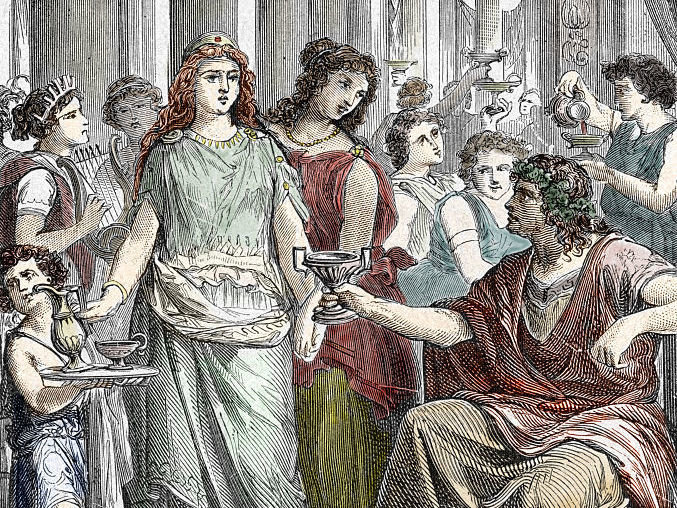
"caption": "An engraving shows Galla Placidia (390-450), daughter of Roman emperor Theodosius I, in captivity. New research shows in some cases, we are drinking almost the exact same wine as Roman emperors — our Pinot Noir and Syrah grapes are \"siblings\" of the ancient Roman varieties.",
"description": "An engraving shows Galla Placidia (390-450), daughter of Roman emperor Theodosius I, in captivity. New research shows in some cases, we are drinking almost the exact same wine as Roman emperors — our Pinot Noir and Syrah grapes are \"siblings\" of the ancient Roman varieties.",
"title": "roman-engraving-pinot-noir",
"credit": "Leemage/Corbis via Getty Images",
"status": "inherit",
"isLoading": false,
"fetchFailed": false
},
"bayareabites_133737": {
"type": "attachments",
"id": "bayareabites_133737",
"meta": {
"index": "attachments_1716263798",
"site": "bayareabites",
"id": "133737",
"found": true
},
"parent": 133734,
"imgSizes": {
"twentyfourteen-full-width": {
"file": "https://ww2.kqed.org/app/uploads/sites/24/2019/05/gettyimages-1091215168_wide-47bc47bed6ed2681a591e42999288ca85a2834b0-s1600-c85-1038x576.jpg",
"width": 1038,
"mimeType": "image/jpeg",
"height": 576
},
"thumbnail": {
"file": "https://ww2.kqed.org/app/uploads/sites/24/2019/05/gettyimages-1091215168_wide-47bc47bed6ed2681a591e42999288ca85a2834b0-s1600-c85-160x90.jpg",
"width": 160,
"mimeType": "image/jpeg",
"height": 90
},
"post-thumbnail": {
"file": "https://ww2.kqed.org/app/uploads/sites/24/2019/05/gettyimages-1091215168_wide-47bc47bed6ed2681a591e42999288ca85a2834b0-s1600-c85-672x372.jpg",
"width": 672,
"mimeType": "image/jpeg",
"height": 372
},
"kqedFullSize": {
"file": "https://ww2.kqed.org/app/uploads/sites/24/2019/05/gettyimages-1091215168_wide-47bc47bed6ed2681a591e42999288ca85a2834b0-s1600-c85.jpg",
"width": 1600,
"height": 899
},
"large": {
"file": "https://ww2.kqed.org/app/uploads/sites/24/2019/05/gettyimages-1091215168_wide-47bc47bed6ed2681a591e42999288ca85a2834b0-s1600-c85-1020x573.jpg",
"width": 1020,
"mimeType": "image/jpeg",
"height": 573
},
"complete_open_graph": {
"file": "https://ww2.kqed.org/app/uploads/sites/24/2019/05/gettyimages-1091215168_wide-47bc47bed6ed2681a591e42999288ca85a2834b0-s1600-c85-1200x674.jpg",
"width": 1200,
"mimeType": "image/jpeg",
"height": 674
},
"medium": {
"file": "https://ww2.kqed.org/app/uploads/sites/24/2019/05/gettyimages-1091215168_wide-47bc47bed6ed2681a591e42999288ca85a2834b0-s1600-c85-800x450.jpg",
"width": 800,
"mimeType": "image/jpeg",
"height": 450
},
"medium_large": {
"file": "https://ww2.kqed.org/app/uploads/sites/24/2019/05/gettyimages-1091215168_wide-47bc47bed6ed2681a591e42999288ca85a2834b0-s1600-c85-768x432.jpg",
"width": 768,
"mimeType": "image/jpeg",
"height": 432
}
},
"publishDate": 1558649846,
"modified": 1558649869,
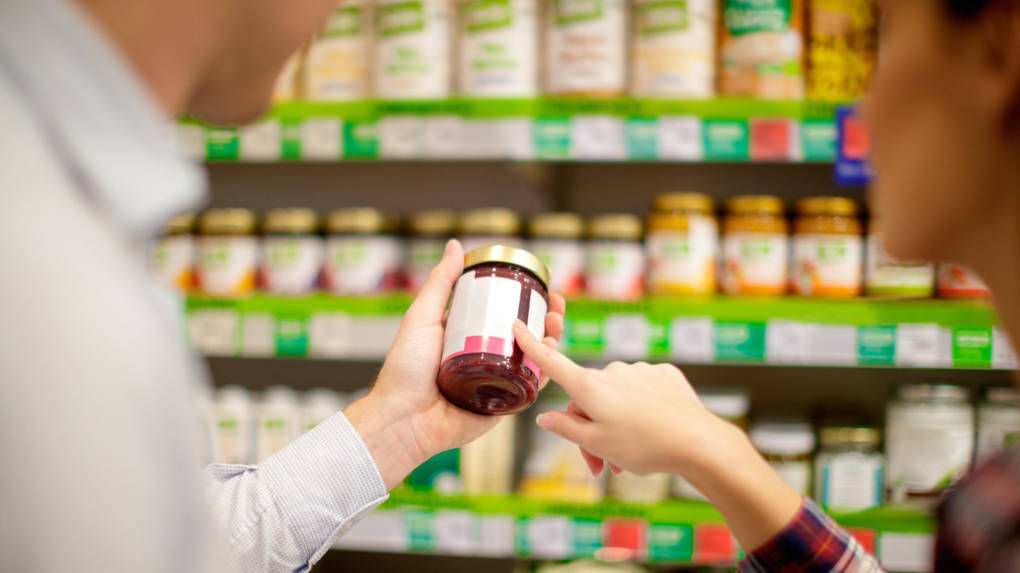
"caption": "Confusion over whether food is still safe to eat after its \"sell by\" or \"use before\" date accounts for about one-fifth of food waste in U.S. homes, the FDA says. The agency is urging the food industry to adopt \"best if used by\" wording on packaged foods.",
"description": "Confusion over whether food is still safe to eat after its \"sell by\" or \"use before\" date accounts for about one-fifth of food waste in U.S. homes, the FDA says. The agency is urging the food industry to adopt \"best if used by\" wording on packaged foods.",
"title": "gettyimages-1091215168_wide-47bc47bed6ed2681a591e42999288ca85a2834b0-s1600-c85",
"credit": "zoranm/Getty Images",
"status": "inherit",
"isLoading": false,
"fetchFailed": false
},
"bayareabites_133594": {
"type": "attachments",
"id": "bayareabites_133594",
"meta": {
"index": "attachments_1716263798",
"site": "bayareabites",
"id": "133594",
"found": true
},
"parent": 133593,
"imgSizes": {
"twentyfourteen-full-width": {
"file": "https://ww2.kqed.org/app/uploads/sites/24/2019/05/bcorp1_wide-ae3b2b4de4701d712226bfdc946167ed8fad868b-1038x576.jpg",
"width": 1038,
"mimeType": "image/jpeg",
"height": 576
},
"thumbnail": {
"file": "https://ww2.kqed.org/app/uploads/sites/24/2019/05/bcorp1_wide-ae3b2b4de4701d712226bfdc946167ed8fad868b-160x90.jpg",
"width": 160,
"mimeType": "image/jpeg",
"height": 90
},
"post-thumbnail": {
"file": "https://ww2.kqed.org/app/uploads/sites/24/2019/05/bcorp1_wide-ae3b2b4de4701d712226bfdc946167ed8fad868b-672x372.jpg",
"width": 672,
"mimeType": "image/jpeg",
"height": 372
},
"kqedFullSize": {
"file": "https://ww2.kqed.org/app/uploads/sites/24/2019/05/bcorp1_wide-ae3b2b4de4701d712226bfdc946167ed8fad868b.jpg",
"width": 1920,
"height": 1080
},
"large": {
"file": "https://ww2.kqed.org/app/uploads/sites/24/2019/05/bcorp1_wide-ae3b2b4de4701d712226bfdc946167ed8fad868b-1020x574.jpg",
"width": 1020,
"mimeType": "image/jpeg",
"height": 574
},
"complete_open_graph": {
"file": "https://ww2.kqed.org/app/uploads/sites/24/2019/05/bcorp1_wide-ae3b2b4de4701d712226bfdc946167ed8fad868b-1200x675.jpg",
"width": 1200,
"mimeType": "image/jpeg",
"height": 675
},
"full-width": {
"file": "https://ww2.kqed.org/app/uploads/sites/24/2019/05/bcorp1_wide-ae3b2b4de4701d712226bfdc946167ed8fad868b-1920x1080.jpg",
"width": 1920,
"mimeType": "image/jpeg",
"height": 1080
},
"medium": {
"file": "https://ww2.kqed.org/app/uploads/sites/24/2019/05/bcorp1_wide-ae3b2b4de4701d712226bfdc946167ed8fad868b-800x450.jpg",
"width": 800,
"mimeType": "image/jpeg",
"height": 450
},
"medium_large": {
"file": "https://ww2.kqed.org/app/uploads/sites/24/2019/05/bcorp1_wide-ae3b2b4de4701d712226bfdc946167ed8fad868b-768x432.jpg",
"width": 768,
"mimeType": "image/jpeg",
"height": 432
}
},
"publishDate": 1557769223,
"modified": 1557769270,
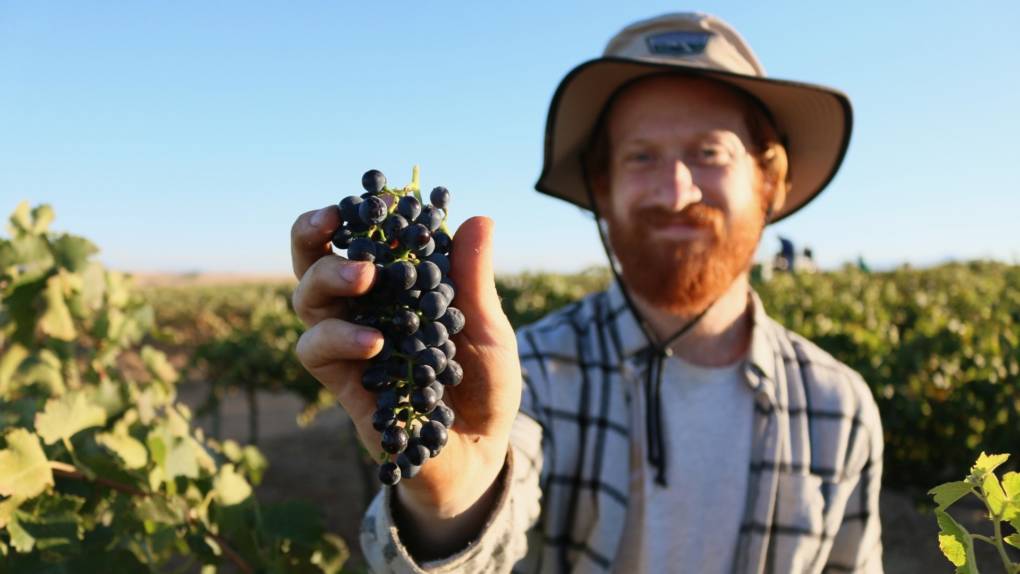
"caption": "Charles Brain helps hand harvest grapes in a Shiraz vineyard in the Swartland wine region of South Africa. Lubanzi Wines, which was started by Brain and his partner, Walker Brown, earned its B Corp certification this year.",
"description": "Charles Brain helps hand harvest grapes in a Shiraz vineyard in the Swartland wine region of South Africa. Lubanzi Wines, which was started by Brain and his partner, Walker Brown, earned its B Corp certification this year.",
"title": "Charles Brain helps hand harvest grapes in a Shiraz vineyard in the Swartland wine region of South Africa. Lubanzi Wines, which was started by Brain and his partner, Walker Brown, earned its B Corp certification this year.",
"credit": "Christopher Grava/Courtesy of Lubanzi Wines",
"status": "inherit",
"isLoading": false,
"fetchFailed": false
},
"bayareabites_133404": {
"type": "attachments",
"id": "bayareabites_133404",
"meta": {
"index": "attachments_1716263798",
"site": "bayareabites",
"id": "133404",
"found": true
},
"parent": 0,
"imgSizes": {
"twentyfourteen-full-width": {
"file": "https://ww2.kqed.org/app/uploads/sites/24/2019/04/lindsey-wagyu-1038x576.jpg",
"width": 1038,
"mimeType": "image/jpeg",
"height": 576
},
"thumbnail": {
"file": "https://ww2.kqed.org/app/uploads/sites/24/2019/04/lindsey-wagyu-160x107.jpg",
"width": 160,
"mimeType": "image/jpeg",
"height": 107
},
"post-thumbnail": {
"file": "https://ww2.kqed.org/app/uploads/sites/24/2019/04/lindsey-wagyu-672x372.jpg",
"width": 672,
"mimeType": "image/jpeg",
"height": 372
},
"kqedFullSize": {
"file": "https://ww2.kqed.org/app/uploads/sites/24/2019/04/lindsey-wagyu.jpg",
"width": 1920,
"height": 1280
},
"large": {
"file": "https://ww2.kqed.org/app/uploads/sites/24/2019/04/lindsey-wagyu-1020x680.jpg",
"width": 1020,
"mimeType": "image/jpeg",
"height": 680
},
"complete_open_graph": {
"file": "https://ww2.kqed.org/app/uploads/sites/24/2019/04/lindsey-wagyu-1200x800.jpg",
"width": 1200,
"mimeType": "image/jpeg",
"height": 800
},
"full-width": {
"file": "https://ww2.kqed.org/app/uploads/sites/24/2019/04/lindsey-wagyu-1920x1280.jpg",
"width": 1920,
"mimeType": "image/jpeg",
"height": 1280
},
"medium": {
"file": "https://ww2.kqed.org/app/uploads/sites/24/2019/04/lindsey-wagyu-800x533.jpg",
"width": 800,
"mimeType": "image/jpeg",
"height": 533
},
"medium_large": {
"file": "https://ww2.kqed.org/app/uploads/sites/24/2019/04/lindsey-wagyu-768x512.jpg",
"width": 768,
"mimeType": "image/jpeg",
"height": 512
}
},
"publishDate": 1556147759,
"modified": 1556147779,
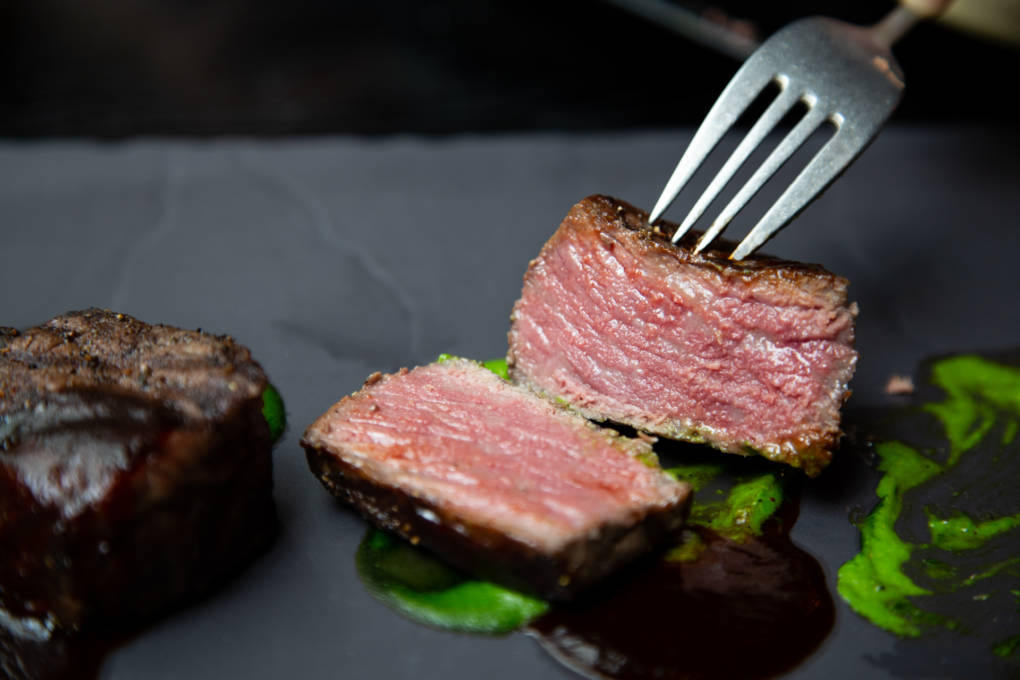
"caption": "50/50 crossbreed American Wagyu from Lindsey Ranch",
"description": "50/50 crossbreed American Wagyu from Lindsey Ranch",
"title": "lindsey-wagyu",
"credit": "Grace Cheung",
"status": "inherit",
"isLoading": false,
"fetchFailed": false
},
"bayareabites_133355": {
"type": "attachments",
"id": "bayareabites_133355",
"meta": {
"index": "attachments_1716263798",
"site": "bayareabites",
"id": "133355",
"found": true
},
"parent": 133354,
"imgSizes": {
"twentyfourteen-full-width": {
"file": "https://ww2.kqed.org/app/uploads/sites/24/2019/04/s_dsc7769_enl-048425938609116d23ffa9356f66cf3ed84a248a-1038x576.jpg",
"width": 1038,
"mimeType": "image/jpeg",
"height": 576
},
"thumbnail": {
"file": "https://ww2.kqed.org/app/uploads/sites/24/2019/04/s_dsc7769_enl-048425938609116d23ffa9356f66cf3ed84a248a-160x107.jpg",
"width": 160,
"mimeType": "image/jpeg",
"height": 107
},
"post-thumbnail": {
"file": "https://ww2.kqed.org/app/uploads/sites/24/2019/04/s_dsc7769_enl-048425938609116d23ffa9356f66cf3ed84a248a-672x372.jpg",
"width": 672,
"mimeType": "image/jpeg",
"height": 372
},
"kqedFullSize": {
"file": "https://ww2.kqed.org/app/uploads/sites/24/2019/04/s_dsc7769_enl-048425938609116d23ffa9356f66cf3ed84a248a-e1555622724502.jpg",
"width": 1920,
"height": 1279
},
"large": {
"file": "https://ww2.kqed.org/app/uploads/sites/24/2019/04/s_dsc7769_enl-048425938609116d23ffa9356f66cf3ed84a248a-1020x679.jpg",
"width": 1020,
"mimeType": "image/jpeg",
"height": 679
},
"complete_open_graph": {
"file": "https://ww2.kqed.org/app/uploads/sites/24/2019/04/s_dsc7769_enl-048425938609116d23ffa9356f66cf3ed84a248a-1200x799.jpg",
"width": 1200,
"mimeType": "image/jpeg",
"height": 799
},
"full-width": {
"file": "https://ww2.kqed.org/app/uploads/sites/24/2019/04/s_dsc7769_enl-048425938609116d23ffa9356f66cf3ed84a248a-1920x1279.jpg",
"width": 1920,
"mimeType": "image/jpeg",
"height": 1279
},
"medium": {
"file": "https://ww2.kqed.org/app/uploads/sites/24/2019/04/s_dsc7769_enl-048425938609116d23ffa9356f66cf3ed84a248a-800x533.jpg",
"width": 800,
"mimeType": "image/jpeg",
"height": 533
},
"medium_large": {
"file": "https://ww2.kqed.org/app/uploads/sites/24/2019/04/s_dsc7769_enl-048425938609116d23ffa9356f66cf3ed84a248a-768x511.jpg",
"width": 768,
"mimeType": "image/jpeg",
"height": 511
}
},
"publishDate": 1555622599,
"modified": 1555622736,
"caption": "A bowl of Honey Toasted Kernza. General Mills made 6,000 boxes of the cereal and is passing them out to spread the word about perennial grains.",
"description": "A bowl of Honey Toasted Kernza. General Mills made 6,000 boxes of the cereal and is passing them out to spread the word about perennial grains.",
"title": "A bowl of Honey Toasted Kernza. General Mills made 6,000 boxes of the cereal and is passing them out to spread the word about perennial grains.",
"credit": "Olivia Sun/NPR",
"status": "inherit",
"isLoading": false,
"fetchFailed": false
},
"bayareabites_133295": {
"type": "attachments",
"id": "bayareabites_133295",
"meta": {
"index": "attachments_1716263798",
"site": "bayareabites",
"id": "133295",
"found": true
},
"parent": 133282,
"imgSizes": {
"twentyfourteen-full-width": {
"file": "https://ww2.kqed.org/app/uploads/sites/24/2019/04/kqed-coverphoto-1038x576.jpg",
"width": 1038,
"mimeType": "image/jpeg",
"height": 576
},
"thumbnail": {
"file": "https://ww2.kqed.org/app/uploads/sites/24/2019/04/kqed-coverphoto-160x107.jpg",
"width": 160,
"mimeType": "image/jpeg",
"height": 107
},
"post-thumbnail": {
"file": "https://ww2.kqed.org/app/uploads/sites/24/2019/04/kqed-coverphoto-672x372.jpg",
"width": 672,
"mimeType": "image/jpeg",
"height": 372
},
"kqedFullSize": {
"file": "https://ww2.kqed.org/app/uploads/sites/24/2019/04/kqed-coverphoto-e1555522333305.jpg",
"width": 1920,
"height": 1280
},
"large": {
"file": "https://ww2.kqed.org/app/uploads/sites/24/2019/04/kqed-coverphoto-1020x680.jpg",
"width": 1020,
"mimeType": "image/jpeg",
"height": 680
},
"complete_open_graph": {
"file": "https://ww2.kqed.org/app/uploads/sites/24/2019/04/kqed-coverphoto-1200x800.jpg",
"width": 1200,
"mimeType": "image/jpeg",
"height": 800
},
"guest-author-50": {
"file": "https://ww2.kqed.org/app/uploads/sites/24/2019/04/kqed-coverphoto-50x50.jpg",
"width": 50,
"mimeType": "image/jpeg",
"height": 50
},
"guest-author-96": {
"file": "https://ww2.kqed.org/app/uploads/sites/24/2019/04/kqed-coverphoto-96x96.jpg",
"width": 96,
"mimeType": "image/jpeg",
"height": 96
},
"medium": {
"file": "https://ww2.kqed.org/app/uploads/sites/24/2019/04/kqed-coverphoto-800x533.jpg",
"width": 800,
"mimeType": "image/jpeg",
"height": 533
},
"guest-author-64": {
"file": "https://ww2.kqed.org/app/uploads/sites/24/2019/04/kqed-coverphoto-64x64.jpg",
"width": 64,
"mimeType": "image/jpeg",
"height": 64
},
"guest-author-32": {
"file": "https://ww2.kqed.org/app/uploads/sites/24/2019/04/kqed-coverphoto-32x32.jpg",
"width": 32,
"mimeType": "image/jpeg",
"height": 32
},
"full-width": {
"file": "https://ww2.kqed.org/app/uploads/sites/24/2019/04/kqed-coverphoto-1920x1280.jpg",
"width": 1920,
"mimeType": "image/jpeg",
"height": 1280
},
"medium_large": {
"file": "https://ww2.kqed.org/app/uploads/sites/24/2019/04/kqed-coverphoto-768x512.jpg",
"width": 768,
"mimeType": "image/jpeg",
"height": 512
},
"guest-author-128": {
"file": "https://ww2.kqed.org/app/uploads/sites/24/2019/04/kqed-coverphoto-128x128.jpg",
"width": 128,
"mimeType": "image/jpeg",
"height": 128
}
},
"publishDate": 1554598795,
"modified": 1554598795,
"caption": null,
"description": null,
"title": "kqed-coverphoto",
"credit": null,
"status": "inherit",
"isLoading": false,
"fetchFailed": false
},
"bayareabites_133311": {
"type": "attachments",
"id": "bayareabites_133311",
"meta": {
"index": "attachments_1716263798",
"site": "bayareabites",
"id": "133311",
"found": true
},
"parent": 133310,
"imgSizes": {
"twentyfourteen-full-width": {
"file": "https://ww2.kqed.org/app/uploads/sites/24/2019/04/gettyimages-971756310-1-206ceb0089cb936d383ba002e9af6525ce254197-1038x576.jpg",
"width": 1038,
"mimeType": "image/jpeg",
"height": 576
},
"thumbnail": {
"file": "https://ww2.kqed.org/app/uploads/sites/24/2019/04/gettyimages-971756310-1-206ceb0089cb936d383ba002e9af6525ce254197-160x120.jpg",
"width": 160,
"mimeType": "image/jpeg",
"height": 120
},
"post-thumbnail": {
"file": "https://ww2.kqed.org/app/uploads/sites/24/2019/04/gettyimages-971756310-1-206ceb0089cb936d383ba002e9af6525ce254197-672x372.jpg",
"width": 672,
"mimeType": "image/jpeg",
"height": 372
},
"kqedFullSize": {
"file": "https://ww2.kqed.org/app/uploads/sites/24/2019/04/gettyimages-971756310-1-206ceb0089cb936d383ba002e9af6525ce254197-e1554826739368.jpg",
"width": 1920,
"height": 1440
},
"large": {
"file": "https://ww2.kqed.org/app/uploads/sites/24/2019/04/gettyimages-971756310-1-206ceb0089cb936d383ba002e9af6525ce254197-1020x765.jpg",
"width": 1020,
"mimeType": "image/jpeg",
"height": 765
},
"complete_open_graph": {
"file": "https://ww2.kqed.org/app/uploads/sites/24/2019/04/gettyimages-971756310-1-206ceb0089cb936d383ba002e9af6525ce254197-1200x900.jpg",
"width": 1200,
"mimeType": "image/jpeg",
"height": 900
},
"guest-author-50": {
"file": "https://ww2.kqed.org/app/uploads/sites/24/2019/04/gettyimages-971756310-1-206ceb0089cb936d383ba002e9af6525ce254197-50x50.jpg",
"width": 50,
"mimeType": "image/jpeg",
"height": 50
},
"guest-author-96": {
"file": "https://ww2.kqed.org/app/uploads/sites/24/2019/04/gettyimages-971756310-1-206ceb0089cb936d383ba002e9af6525ce254197-96x96.jpg",
"width": 96,
"mimeType": "image/jpeg",
"height": 96
},
"medium": {
"file": "https://ww2.kqed.org/app/uploads/sites/24/2019/04/gettyimages-971756310-1-206ceb0089cb936d383ba002e9af6525ce254197-800x600.jpg",
"width": 800,
"mimeType": "image/jpeg",
"height": 600
},
"guest-author-64": {
"file": "https://ww2.kqed.org/app/uploads/sites/24/2019/04/gettyimages-971756310-1-206ceb0089cb936d383ba002e9af6525ce254197-64x64.jpg",
"width": 64,
"mimeType": "image/jpeg",
"height": 64
},
"guest-author-32": {
"file": "https://ww2.kqed.org/app/uploads/sites/24/2019/04/gettyimages-971756310-1-206ceb0089cb936d383ba002e9af6525ce254197-32x32.jpg",
"width": 32,
"mimeType": "image/jpeg",
"height": 32
},
"full-width": {
"file": "https://ww2.kqed.org/app/uploads/sites/24/2019/04/gettyimages-971756310-1-206ceb0089cb936d383ba002e9af6525ce254197-1920x1440.jpg",
"width": 1920,
"mimeType": "image/jpeg",
"height": 1440
},
"medium_large": {
"file": "https://ww2.kqed.org/app/uploads/sites/24/2019/04/gettyimages-971756310-1-206ceb0089cb936d383ba002e9af6525ce254197-768x576.jpg",
"width": 768,
"mimeType": "image/jpeg",
"height": 576
},
"guest-author-128": {
"file": "https://ww2.kqed.org/app/uploads/sites/24/2019/04/gettyimages-971756310-1-206ceb0089cb936d383ba002e9af6525ce254197-128x128.jpg",
"width": 128,
"mimeType": "image/jpeg",
"height": 128
}
},
"publishDate": 1554826717,
"modified": 1554826755,
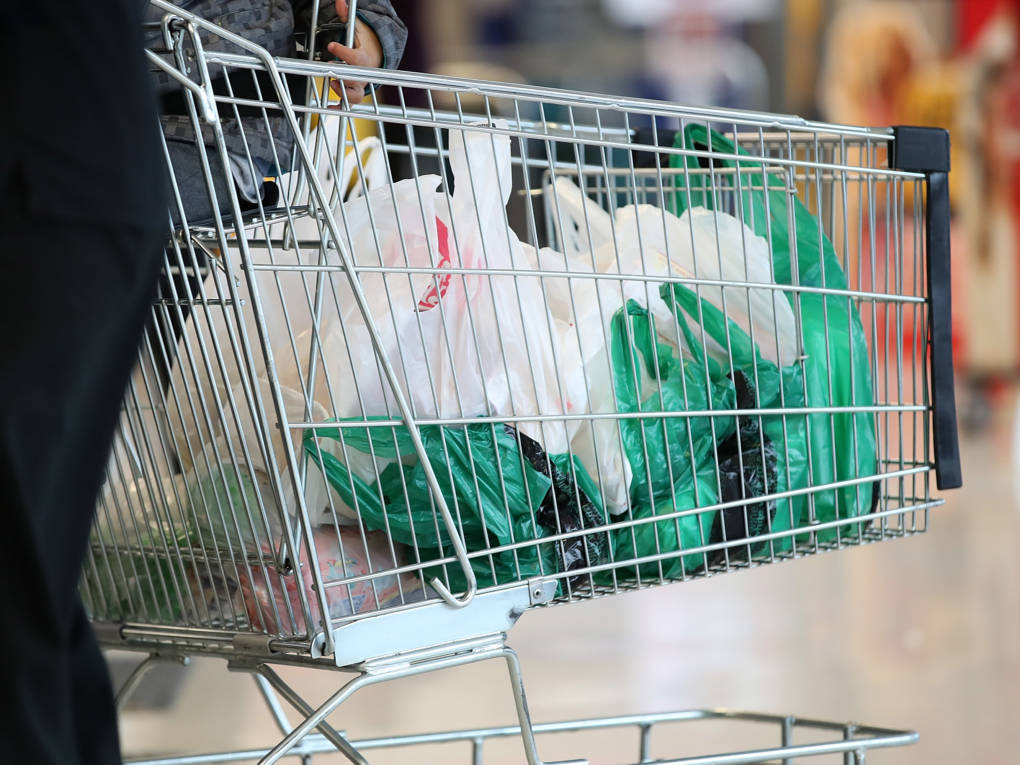
"caption": "Plastic bags in a grocery cart.",
"description": "Plastic bags in a grocery cart.",
"title": "Plastic bags in a grocery cart.",
"credit": "Fiona Goodall/Getty Images",
"status": "inherit",
"isLoading": false,
"fetchFailed": false
}
},
"audioPlayerReducer": {
"postId": "stream_live",
"isPaused": true,
"isPlaying": false,
"pfsActive": false,
"pledgeModalIsOpen": true,
"playerDrawerIsOpen": false,
"liveAudioPlayStartedAt": 0,
"liveAudioPlayContext": ""
},
"authorsReducer": {
"byline_bayareabites_134201": {
"type": "authors",
"id": "byline_bayareabites_134201",
"meta": {
"override": true
},
"slug": "byline_bayareabites_134201",
"name": "Allison Aubrey, NPR Food",
"isLoading": false
},
"byline_bayareabites_134139": {
"type": "authors",
"id": "byline_bayareabites_134139",
"meta": {
"override": true
},
"slug": "byline_bayareabites_134139",
"name": "Samuel Fromartz, Food & Environment Reporting Network",
"isLoading": false
},
"byline_bayareabites_134124": {
"type": "authors",
"id": "byline_bayareabites_134124",
"meta": {
"override": true
},
"slug": "byline_bayareabites_134124",
"name": "Whitney Pipkin",
"isLoading": false
},
"byline_bayareabites_133932": {
"type": "authors",
"id": "byline_bayareabites_133932",
"meta": {
"override": true
},
"slug": "byline_bayareabites_133932",
"name": "Susie Neilson, NPR Food",
"isLoading": false
},
"byline_bayareabites_133734": {
"type": "authors",
"id": "byline_bayareabites_133734",
"meta": {
"override": true
},
"slug": "byline_bayareabites_133734",
"name": "Allison Aubrey, NPR Food",
"isLoading": false
},
"byline_bayareabites_133593": {
"type": "authors",
"id": "byline_bayareabites_133593",
"meta": {
"override": true
},
"slug": "byline_bayareabites_133593",
"name": "Shana Clarke, NPR Food",
"isLoading": false
},
"byline_bayareabites_133354": {
"type": "authors",
"id": "byline_bayareabites_133354",
"meta": {
"override": true
},
"slug": "byline_bayareabites_133354",
"name": "Dan Charles, Weekend Edition Saturday",
"isLoading": false
},
"byline_bayareabites_133310": {
"type": "authors",
"id": "byline_bayareabites_133310",
"meta": {
"override": true
},
"slug": "byline_bayareabites_133310",
"name": "Greg Rosalsky, Planet Money",
"isLoading": false
},
"gcheung": {
"type": "authors",
"id": "11404",
"meta": {
"index": "authors_1716337520",
"id": "11404",
"found": true
},
"name": "Grace Cheung",
"firstName": "Grace",
"lastName": "Cheung",
"slug": "gcheung",
"email": "gcheung@kqed.org",
"display_author_email": false,
"staff_mastheads": [],
"title": "KQED Contributor",
"bio": "Grace was a social media and digital producer at KQED, and her love of food keeps her busy! As an amateur photographer and chef, she documents her recipes, restaurant adventures, and more on her blog, \u003ca href=\"https://put-an-egg-on-it.com/\">Put An Egg On It\u003c/a>. You can mostly follow her eating adventures on Instagram at \u003ca href=\"https://www.instagram.com/gcheung28/\">@gcheung28\u003c/a>.",
"avatar": "https://secure.gravatar.com/avatar/9d5b5595007c3709533a8959e3eda091?s=600&d=blank&r=g",
"twitter": null,
"facebook": null,
"instagram": null,
"linkedin": null,
"sites": [
{
"site": "arts",
"roles": []
},
{
"site": "jpepinheart",
"roles": [
"editor"
]
},
{
"site": "about",
"roles": [
"author"
]
},
{
"site": "bayareabites",
"roles": [
"contributor"
]
},
{
"site": "checkplease",
"roles": [
"subscriber"
]
},
{
"site": "food",
"roles": []
},
{
"site": "essentialpepin",
"roles": [
"administrator"
]
}
],
"headData": {
"title": "Grace Cheung | KQED",
"description": "KQED Contributor",
"ogImgSrc": "https://secure.gravatar.com/avatar/9d5b5595007c3709533a8959e3eda091?s=600&d=blank&r=g",
"twImgSrc": "https://secure.gravatar.com/avatar/9d5b5595007c3709533a8959e3eda091?s=600&d=blank&r=g"
},
"isLoading": false,
"link": "/author/gcheung"
},
"patrickwong": {
"type": "authors",
"id": "11494",
"meta": {
"index": "authors_1716337520",
"id": "11494",
"found": true
},
"name": "Patrick Wong",
"firstName": "Patrick",
"lastName": "Wong",
"slug": "patrickwong",
"email": "patrickkaiwong@gmail.com",
"display_author_email": false,
"staff_mastheads": [],
"title": null,
"bio": "Patrick is a Seattle native who grew up in a very food-centric family. His father owns a restaurant supply company, his two older sisters are former owners of a successful restaurant in Seattle's International District, and Patrick thinks his mother and grandmother are the best cooks in the world.\r\n\r\nAs editor of a food travel magazine in college and eating his way through New York City and Europe, it for some reason took him a long time to realize he wanted to work professionally in food. After trying to make it in television news in the Bay Area, he realized he hated it and ran for the world of food. Since then, Patrick has been able to combine his journalism chops with his love of food, dining, and cooking into lead marketing roles at several Bay Area food start-ups. Currently, he is the Brand Director for Roli Roti and is the video producer for restaurant podcast, Menu Stories and co-founder of food-inspired streetwear line, Mother Sauce. Patrick is also a contributing writer/photographer/videographer for Thrillist SF, Eater SF, SF Gate, and Tastemade.",
"avatar": "https://secure.gravatar.com/avatar/50251a078d2d4cde5a02394138ea501b?s=600&d=blank&r=g",
"twitter": null,
"facebook": null,
"instagram": null,
"linkedin": null,
"sites": [
{
"site": "bayareabites",
"roles": [
"author"
]
},
{
"site": "food",
"roles": [
"contributor"
]
}
],
"headData": {
"title": "Patrick Wong | KQED",
"description": null,
"ogImgSrc": "https://secure.gravatar.com/avatar/50251a078d2d4cde5a02394138ea501b?s=600&d=blank&r=g",
"twImgSrc": "https://secure.gravatar.com/avatar/50251a078d2d4cde5a02394138ea501b?s=600&d=blank&r=g"
},
"isLoading": false,
"link": "/author/patrickwong"
},
"ashleyrodriguez": {
"type": "authors",
"id": "11604",
"meta": {
"index": "authors_1716337520",
"id": "11604",
"found": true
},
"name": "Ashley Rodriguez",
"firstName": "Ashley",
"lastName": "Rodriguez",
"slug": "ashleyrodriguez",
"email": "ashleyisacommonname@gmail.com",
"display_author_email": false,
"staff_mastheads": [],
"title": null,
"bio": "Ashley Rodriguez is a freelance writer and editor for Barista Magazine. She also hosts a coffee podcast called Boss Barista, exploring issues of equity and inclusion within the coffee industry.",
"avatar": "https://secure.gravatar.com/avatar/b5e530458ae6781c587db0f6fefde450?s=600&d=blank&r=g",
"twitter": null,
"facebook": null,
"instagram": null,
"linkedin": null,
"sites": [
{
"site": "bayareabites",
"roles": [
"contributor"
]
}
],
"headData": {
"title": "Ashley Rodriguez | KQED",
"description": null,
"ogImgSrc": "https://secure.gravatar.com/avatar/b5e530458ae6781c587db0f6fefde450?s=600&d=blank&r=g",
"twImgSrc": "https://secure.gravatar.com/avatar/b5e530458ae6781c587db0f6fefde450?s=600&d=blank&r=g"
},
"isLoading": false,
"link": "/author/ashleyrodriguez"
}
},
"pagesReducer": {
"bayareabites_category_sustainability": {
"type": "terms",
"id": "bayareabites_60",
"meta": {
"index": "terms_1716263798",
"site": "bayareabites",
"id": "60",
"score": 12.370369
},
"featImg": null,
"name": "sustainability, environment, climate change",
"description": null,
"taxonomy": "category",
"headData": {
"twImgId": null,
"twTitle": null,
"ogTitle": null,
"ogImgId": null,
"twDescription": null,
"description": null,
"title": "sustainability, environment, climate change Archives | KQED Bay Area Bites",
"ogDescription": null
},
"ttid": 23,
"slug": "sustainability",
"isLoading": false,
"title": "sustainability, environment, climate change",
"pageMeta": {
"site": "bayareabites",
"WpPageTemplate": "page-topic-editorial",
"currentPage": 2
},
"blocks": [
{
"blockName": "kqed/post-list",
"attrs": {
"layout": "cardArticle2",
"query": "posts/bayareabites?category=sustainability",
"seeMore": false,
"paginated": true,
"page": 2
}
},
{
"blockName": "kqed/ad"
}
]
}
},
"pfsSessionReducer": {},
"postsReducer": {
"stream_live": {
"type": "live",
"id": "stream_live",
"audioUrl": "https://streams.kqed.org/kqedradio",
"title": "Live Stream",
"excerpt": "Live Stream information currently unavailable.",
"link": "/radio",
"featImg": "",
"label": {
"name": "KQED Live",
"link": "/"
}
},
"stream_kqedNewscast": {
"type": "posts",
"id": "stream_kqedNewscast",
"audioUrl": "https://www.kqed.org/.stream/anon/radio/RDnews/newscast.mp3?_=1",
"title": "KQED Newscast",
"featImg": "",
"label": {
"name": "88.5 FM",
"link": "/"
}
},
"bayareabites_134201": {
"type": "posts",
"id": "bayareabites_134201",
"meta": {
"index": "posts_1716263798",
"site": "bayareabites",
"id": "134201",
"score": null,
"sort": [
1563471837000
]
},
"parent": 0,
"labelTerm": {
"site": "bayareabites"
},
"blocks": [],
"publishDate": 1563471837,
"format": "standard",
"disqusTitle": "If We All Ate Enough Fruits And Vegetables, There'd Be Big Shortages",
"title": "If We All Ate Enough Fruits And Vegetables, There'd Be Big Shortages",
"headTitle": "Bay Area Bites | KQED Food",
"content": "\u003cp>[aside postID='bayareabites_133954,science_1922099,bayareabites_133521' label='More Food Science News']\u003c/p>\n\u003cp>If everyone around the globe began to eat the recommended amounts of fruits and vegetables, there wouldn't be enough to go around. That's the conclusion of a \u003ca href=\"http://www.thelancet.com/journals/lanplh/article/PIIS2542-5196(19)30095-6/fulltext\">new study published in The Lancet Planetary Health\u003c/a>. \u003c/p>\n\u003cp>Currently, only about 55% of people around the globe live in countries with adequate availability of fruits and vegetables – enough to meet the \u003ca href=\"https://www.who.int/dietphysicalactivity/fruit/en/\">World Health Organization's minimum target of 400 grams per person, per day\u003c/a>. \u003c/p>\n\u003cp>With economic growth, presumably, production will expand. But the researchers project that by 2050, an estimated 1.5 billion more people will live in places with insufficient supply – unless challenges such as food waste and improved productivity are solved.\u003c/p>\n\u003cp>The report comes at a time when poor diets are a leading cause of premature death. In fact, a recent study found\u003ca href=\"https://www.npr.org/sections/thesalt/2019/04/03/709507504/bad-diets-are-responsible-for-more-deaths-than-smoking-global-study-finds\">diets are now responsible for more deaths than smoking\u003c/a> around the globe. And it's become increasingly clear that current dietary patterns are detrimental to the environment, too. Recent studies, including the \u003ca href=\"https://www.npr.org/sections/thesalt/2019/01/27/688765872/this-diet-is-better-for-the-planet-but-is-it-better-for-you-too\">EAT-Lancet study\u003c/a> and the \u003ca href=\"https://globalnutritionreport.org/\">Global Nutrition Report\u003c/a>, have pointed to the need for a radical shift in the food system aimed at nudging people toward more nutritious and sustainable diets.\u003c/p>\n\u003cp>[ad fullwidth]\u003c/p>\n\u003cp>\"Current diets are detrimental to both human and planetary health and shifting towards more balanced, predominantly plant-based diets is seen as crucial to improving both,\" write the authors of the new \u003cem>Lancet Planetary Health\u003c/em> study. \u003c/p>\n\u003cp>Currently, the global supply of calories is more than enough to meet consumption. But many people eat poor-quality diets \"characterized by cheap calories, highly processed foods and overconsumption,\" the study concludes. These factors promote obesity – so we now live in a world where many people are simultaneously overweight and malnourished. The challenge is to promote a food system that moves \"its focus from quantity toward dietary quality and health,\" The authors conclude. The study authors include researchers from the \u003ca href=\"http://www.ifpri.org/\">International Food Policy Research Institute\u003c/a> in Washington, D.C., and the \u003ca href=\"https://www.csiro.au/\">Commonwealth Scientific and Industrial Research Organisation\u003c/a> in Australia.\u003c/p>\n\u003cp>The authors argue that several actions are needed to meet the challenges: increased investments in fruit and vegetable production; increased efforts to educate people about the importance of healthy diets; and – given that about one-third of food produced globally is wasted – new technologies and practices to reduce food waste.\u003c/p>\n\u003cp>The predictions for fruit and vegetable shortfalls are based on modeling. The researchers draw on food production data, but there is uncertainty in their estimates, given factors such as a lack of data on global waste. \u003c/p>\n\u003cp>Nonetheless, they forecast that several countries will make gains in the availability of produce — such as India and Morocco. But Mexico and several countries in Central and South America, sub-Saharan Africa, Asia and the Pacific region will likely fail to have adequate supplies.\u003c/p>\n\u003cp>Another \u003ca href=\"http://www.sustainablefoodfuture.org/executive-summary-synthesis\">new report released Tuesday\u003c/a>, from the World Resources Institute, focuses on ways to reform the food system to improve the health of the planet. It's a deep-dive that's been years in the making by a group of widely respected, science-based analysts. \u003c/p>\n\u003cp>They argue that we need to close three key gaps in order to feed the projected 9.8 billion people that will inhabit the planet by 2050: the food gap, the land gap and the greenhouse gas gap.\u003c/p>\n\u003cp>Consider this: The difference between the amount of food produced in 2010 and the amount we need by 2050 is an estimated \u003cem>7,400 trillion calories\u003c/em>, according to the report. Yes, the number is so big that it's hard to imagine it. But the bottom line is, we need to get more calories from the world's current cropland.\u003c/p>\n\u003cp>One way to do this is through improvements in breeding and technological advancements. The report spells out other fixes, too, including reducing the use of biofuels that divert edible crops to produce energy and reducing food waste. (The group \u003ca href=\"http://www.refed.com/\">ReFED\u003c/a> has laid out these cost-effective strategies to cut food waste). \u003c/p>\n\u003cp>Yet another proposed fix: Nudge people toward a more plant-centered diet. Currently, agriculture uses nearly half of the globe's vegetated land – and at least 30 percent of all cropland is used to grow feed for animals. The resource intensiveness of meat production is a leading cause of deforestation. If current trends continue, the WRI report estimates that we'd need an extra 593 million hectares – an area that is almost twice the size of India — to feed the population in 2050.\u003c/p>\n\u003cp>Currently, agriculture and the land-use changes associated with producing food — such as plowing and clearing vegetation — generate an estimated 25 percent of annual greenhouse gas emissions, according to WRI. If today's consumption trends continue, but agricultural productivity does not increase (beyond 2010 levels), the report concludes that we would have to clear most of the globe's remaining forests to feed the world. And we'd exceed the greenhouse gas emission targets set by the Paris Agreement, which call for holding global warming below 2 degrees Celsius above pre-industrial temperatures.\u003c/p>\n\u003cp>Ruminant livestock (including cattle, sheep and goats) use an estimated two-thirds of all the land dedicated to agriculture and contribute about half of the greenhouse gas emissions linked to agriculture. Demand for meat is growing as more people, in more countries, can afford it. But the report concludes that cutting back on ruminant meat consumption could have a significant impact. \u003c/p>\n\u003cp>The WRI estimates that if people in the U.S. and other heavy meat-eating countries reduced their consumption of beef (and other meat from ruminants) to \u003ca href=\"https://www.wri.org/blog/2019/04/6-pressing-questions-about-beef-and-climate-change-answered\">about 1.5 burgers per person\u003c/a>, per week, it would \"nearly eliminate the need for additional agricultural expansion (and associated deforestation), even in a world with 10 billion people.\" (The Better Buying Lab, an arm of WRI that focuses on getting people to eat more sustainably, has come up with some \u003ca href=\"https://www.npr.org/sections/thesalt/2019/02/10/692114918/how-to-get-meat-eaters-to-eat-more-plant-based-foods-make-their-mouths-water\">clever research-backed marketing ideas\u003c/a> to get people to make the plant-centric switch.)\u003c/p>\n\u003cp>The WRI's new findings are similar to recommendation made earlier this year by the EAT- Lancet study. A meat industry-funded group has responded to calls for cuts in meat consumption with its own analysis that concludes limiting meat and dairy consumption would have negative consequences. In this \u003ca href=\"https://resources.animalagalliance.org/ClimateFoodFacts/\"> analysis\u003c/a>, the Animal Agriculture Alliance concludes that meat and dairy provide \"unmatched nutrition for healthy bodies, brains and bones.\" The analysis also concludes that \"U.S. farmers and ranchers continue to make huge strides in conserving natural resources and protecting the environment.\"\u003c/p>\n\u003cp>As the population continues to grow, the conversations around how to change the food system to promote good health and environmental sustainability will go on. \u003c/p>\n\u003cp>[ad floatright]\u003c/p>\n\u003cp>Copyright 2019 NPR. To see more, visit \u003ca href=\"https://www.npr.org/sections/thesalt/2019/07/17/742670701/if-we-all-ate-enough-fruits-and-vegetables-thered-be-big-shortages\">NPR.org\u003c/a>.\u003c/p>\n\n",
"disqusIdentifier": "134201 https://ww2.kqed.org/bayareabites/?p=134201",
"disqusUrl": "https://ww2.kqed.org/bayareabites/2019/07/18/if-we-all-ate-enough-fruits-and-vegetables-thered-be-big-shortages/",
"stats": {
"hasVideo": false,
"hasChartOrMap": false,
"hasAudio": false,
"hasPolis": false,
"wordCount": 1135,
"hasGoogleForm": false,
"hasGallery": false,
"hasHearkenModule": false,
"iframeSrcs": [],
"paragraphCount": 23
},
"modified": 1563471837,
"excerpt": "Two new studies urge revamping the food system to feed the growing population and protect the planet.",
"headData": {
"twImgId": "",
"twTitle": "",
"ogTitle": "",
"ogImgId": "",
"twDescription": "",
"description": "Two new studies urge revamping the food system to feed the growing population and protect the planet.",
"title": "If We All Ate Enough Fruits And Vegetables, There'd Be Big Shortages | KQED",
"ogDescription": "",
"schema": {
"@context": "https://schema.org",
"@type": "Article",
"headline": "If We All Ate Enough Fruits And Vegetables, There'd Be Big Shortages",
"datePublished": "2019-07-18T10:43:57-07:00",
"dateModified": "2019-07-18T10:43:57-07:00",
"image": "https://cdn.kqed.org/wp-content/uploads/2020/02/KQED-OG-Image@1x.png"
}
},
"guestAuthors": [],
"slug": "if-we-all-ate-enough-fruits-and-vegetables-thered-be-big-shortages",
"status": "publish",
"nprApiLink": "http://api.npr.org/query?id=742670701&apiKey=MDAxOTAwOTE4MDEyMTkxMDAzNjczZDljZA004",
"nprByline": "Allison Aubrey, NPR Food",
"nprStoryDate": "Wed, 17 Jul 2019 18:30:59 -0400",
"nprLastModifiedDate": "Thu, 18 Jul 2019 07:54:21 -0400",
"nprHtmlLink": "https://www.npr.org/sections/thesalt/2019/07/17/742670701/if-we-all-ate-enough-fruits-and-vegetables-thered-be-big-shortages?ft=nprml&f=742670701",
"nprImageAgency": "EyeEm/Getty Images",
"nprImageCredit": "Wanwisa Hernandez",
"nprStoryId": "742670701",
"nprRetrievedStory": "1",
"nprPubDate": "Thu, 18 Jul 2019 07:54:00 -0400",
"path": "/bayareabites/134201/if-we-all-ate-enough-fruits-and-vegetables-thered-be-big-shortages",
"audioTrackLength": null,
"parsedContent": [
{
"type": "contentString",
"content": "\u003cdiv class=\"post-body\">\u003cp>\u003cp>\u003c/p>\u003c/div>",
"attributes": {
"named": {},
"numeric": []
}
},
{
"type": "component",
"content": "",
"name": "aside",
"attributes": {
"named": {
"postid": "bayareabites_133954,science_1922099,bayareabites_133521",
"label": "More Food Science News "
},
"numeric": []
}
},
{
"type": "contentString",
"content": "\u003cdiv class=\"post-body\">\u003cp>\u003c/p>\n\u003cp>If everyone around the globe began to eat the recommended amounts of fruits and vegetables, there wouldn't be enough to go around. That's the conclusion of a \u003ca href=\"http://www.thelancet.com/journals/lanplh/article/PIIS2542-5196(19)30095-6/fulltext\">new study published in The Lancet Planetary Health\u003c/a>. \u003c/p>\n\u003cp>Currently, only about 55% of people around the globe live in countries with adequate availability of fruits and vegetables – enough to meet the \u003ca href=\"https://www.who.int/dietphysicalactivity/fruit/en/\">World Health Organization's minimum target of 400 grams per person, per day\u003c/a>. \u003c/p>\n\u003cp>With economic growth, presumably, production will expand. But the researchers project that by 2050, an estimated 1.5 billion more people will live in places with insufficient supply – unless challenges such as food waste and improved productivity are solved.\u003c/p>\n\u003cp>The report comes at a time when poor diets are a leading cause of premature death. In fact, a recent study found\u003ca href=\"https://www.npr.org/sections/thesalt/2019/04/03/709507504/bad-diets-are-responsible-for-more-deaths-than-smoking-global-study-finds\">diets are now responsible for more deaths than smoking\u003c/a> around the globe. And it's become increasingly clear that current dietary patterns are detrimental to the environment, too. Recent studies, including the \u003ca href=\"https://www.npr.org/sections/thesalt/2019/01/27/688765872/this-diet-is-better-for-the-planet-but-is-it-better-for-you-too\">EAT-Lancet study\u003c/a> and the \u003ca href=\"https://globalnutritionreport.org/\">Global Nutrition Report\u003c/a>, have pointed to the need for a radical shift in the food system aimed at nudging people toward more nutritious and sustainable diets.\u003c/p>\n\u003cp>\u003c/p>\u003c/div>",
"attributes": {
"named": {},
"numeric": []
}
},
{
"type": "component",
"content": "",
"name": "ad",
"attributes": {
"named": {
"label": "fullwidth"
},
"numeric": [
"fullwidth"
]
}
},
{
"type": "contentString",
"content": "\u003cdiv class=\"post-body\">\u003cp>\u003c/p>\n\u003cp>\"Current diets are detrimental to both human and planetary health and shifting towards more balanced, predominantly plant-based diets is seen as crucial to improving both,\" write the authors of the new \u003cem>Lancet Planetary Health\u003c/em> study. \u003c/p>\n\u003cp>Currently, the global supply of calories is more than enough to meet consumption. But many people eat poor-quality diets \"characterized by cheap calories, highly processed foods and overconsumption,\" the study concludes. These factors promote obesity – so we now live in a world where many people are simultaneously overweight and malnourished. The challenge is to promote a food system that moves \"its focus from quantity toward dietary quality and health,\" The authors conclude. The study authors include researchers from the \u003ca href=\"http://www.ifpri.org/\">International Food Policy Research Institute\u003c/a> in Washington, D.C., and the \u003ca href=\"https://www.csiro.au/\">Commonwealth Scientific and Industrial Research Organisation\u003c/a> in Australia.\u003c/p>\n\u003cp>The authors argue that several actions are needed to meet the challenges: increased investments in fruit and vegetable production; increased efforts to educate people about the importance of healthy diets; and – given that about one-third of food produced globally is wasted – new technologies and practices to reduce food waste.\u003c/p>\n\u003cp>The predictions for fruit and vegetable shortfalls are based on modeling. The researchers draw on food production data, but there is uncertainty in their estimates, given factors such as a lack of data on global waste. \u003c/p>\n\u003cp>Nonetheless, they forecast that several countries will make gains in the availability of produce — such as India and Morocco. But Mexico and several countries in Central and South America, sub-Saharan Africa, Asia and the Pacific region will likely fail to have adequate supplies.\u003c/p>\n\u003cp>Another \u003ca href=\"http://www.sustainablefoodfuture.org/executive-summary-synthesis\">new report released Tuesday\u003c/a>, from the World Resources Institute, focuses on ways to reform the food system to improve the health of the planet. It's a deep-dive that's been years in the making by a group of widely respected, science-based analysts. \u003c/p>\n\u003cp>They argue that we need to close three key gaps in order to feed the projected 9.8 billion people that will inhabit the planet by 2050: the food gap, the land gap and the greenhouse gas gap.\u003c/p>\n\u003cp>Consider this: The difference between the amount of food produced in 2010 and the amount we need by 2050 is an estimated \u003cem>7,400 trillion calories\u003c/em>, according to the report. Yes, the number is so big that it's hard to imagine it. But the bottom line is, we need to get more calories from the world's current cropland.\u003c/p>\n\u003cp>One way to do this is through improvements in breeding and technological advancements. The report spells out other fixes, too, including reducing the use of biofuels that divert edible crops to produce energy and reducing food waste. (The group \u003ca href=\"http://www.refed.com/\">ReFED\u003c/a> has laid out these cost-effective strategies to cut food waste). \u003c/p>\n\u003cp>Yet another proposed fix: Nudge people toward a more plant-centered diet. Currently, agriculture uses nearly half of the globe's vegetated land – and at least 30 percent of all cropland is used to grow feed for animals. The resource intensiveness of meat production is a leading cause of deforestation. If current trends continue, the WRI report estimates that we'd need an extra 593 million hectares – an area that is almost twice the size of India — to feed the population in 2050.\u003c/p>\n\u003cp>Currently, agriculture and the land-use changes associated with producing food — such as plowing and clearing vegetation — generate an estimated 25 percent of annual greenhouse gas emissions, according to WRI. If today's consumption trends continue, but agricultural productivity does not increase (beyond 2010 levels), the report concludes that we would have to clear most of the globe's remaining forests to feed the world. And we'd exceed the greenhouse gas emission targets set by the Paris Agreement, which call for holding global warming below 2 degrees Celsius above pre-industrial temperatures.\u003c/p>\n\u003cp>Ruminant livestock (including cattle, sheep and goats) use an estimated two-thirds of all the land dedicated to agriculture and contribute about half of the greenhouse gas emissions linked to agriculture. Demand for meat is growing as more people, in more countries, can afford it. But the report concludes that cutting back on ruminant meat consumption could have a significant impact. \u003c/p>\n\u003cp>The WRI estimates that if people in the U.S. and other heavy meat-eating countries reduced their consumption of beef (and other meat from ruminants) to \u003ca href=\"https://www.wri.org/blog/2019/04/6-pressing-questions-about-beef-and-climate-change-answered\">about 1.5 burgers per person\u003c/a>, per week, it would \"nearly eliminate the need for additional agricultural expansion (and associated deforestation), even in a world with 10 billion people.\" (The Better Buying Lab, an arm of WRI that focuses on getting people to eat more sustainably, has come up with some \u003ca href=\"https://www.npr.org/sections/thesalt/2019/02/10/692114918/how-to-get-meat-eaters-to-eat-more-plant-based-foods-make-their-mouths-water\">clever research-backed marketing ideas\u003c/a> to get people to make the plant-centric switch.)\u003c/p>\n\u003cp>The WRI's new findings are similar to recommendation made earlier this year by the EAT- Lancet study. A meat industry-funded group has responded to calls for cuts in meat consumption with its own analysis that concludes limiting meat and dairy consumption would have negative consequences. In this \u003ca href=\"https://resources.animalagalliance.org/ClimateFoodFacts/\"> analysis\u003c/a>, the Animal Agriculture Alliance concludes that meat and dairy provide \"unmatched nutrition for healthy bodies, brains and bones.\" The analysis also concludes that \"U.S. farmers and ranchers continue to make huge strides in conserving natural resources and protecting the environment.\"\u003c/p>\n\u003cp>As the population continues to grow, the conversations around how to change the food system to promote good health and environmental sustainability will go on. \u003c/p>\n\u003cp>\u003c/p>\u003c/div>",
"attributes": {
"named": {},
"numeric": []
}
},
{
"type": "component",
"content": "",
"name": "ad",
"attributes": {
"named": {
"label": "floatright"
},
"numeric": [
"floatright"
]
}
},
{
"type": "contentString",
"content": "\u003cdiv class=\"post-body\">\u003cp>\u003c/p>\n\u003cp>Copyright 2019 NPR. To see more, visit \u003ca href=\"https://www.npr.org/sections/thesalt/2019/07/17/742670701/if-we-all-ate-enough-fruits-and-vegetables-thered-be-big-shortages\">NPR.org\u003c/a>.\u003c/p>\n\n\u003c/div>\u003c/p>",
"attributes": {
"named": {},
"numeric": []
}
}
],
"link": "/bayareabites/134201/if-we-all-ate-enough-fruits-and-vegetables-thered-be-big-shortages",
"authors": [
"byline_bayareabites_134201"
],
"categories": [
"bayareabites_1874",
"bayareabites_11028",
"bayareabites_10028",
"bayareabites_2554",
"bayareabites_1245",
"bayareabites_10916",
"bayareabites_358",
"bayareabites_60",
"bayareabites_1873"
],
"tags": [
"bayareabites_16272",
"bayareabites_449",
"bayareabites_14756",
"bayareabites_108"
],
"featImg": "bayareabites_134202",
"label": "bayareabites"
},
"bayareabites_134139": {
"type": "posts",
"id": "bayareabites_134139",
"meta": {
"index": "posts_1716263798",
"site": "bayareabites",
"id": "134139",
"score": null,
"sort": [
1563210120000
]
},
"parent": 0,
"labelTerm": {
"site": "bayareabites"
},
"blocks": [],
"publishDate": 1563210120,
"format": "standard",
"disqusTitle": "This Fearless Woman Is Fighting To Keep Slavery Out Of Your Seafood",
"title": "This Fearless Woman Is Fighting To Keep Slavery Out Of Your Seafood",
"headTitle": "Bay Area Bites | KQED Food",
"content": "\u003cp>[aside postID='bayareabites_111409,bayareabites_133521' label='More on Seafood']\u003c/p>\n\u003cp>\u003ca href=\"https://www.vulca\">G\u003cem>host Fleet\u003c/em>\u003c/a> is a gripping new documentary about modern-day slaves in the Thai fishing industry. The film delves into the sordid labor practices of an industry that supplies the United States, Europe and Asia with seafood, but it does so by focusing on the compelling work of Bangkok-based Patima Tungpuchayakul, an abolitionist who has devoted her life to helping \"lost\" men return home.\u003c/p>\n\u003cp>She works with a former slave, Tun Lin, who was kidnapped when he was 14 and forced to fish without pay for 11 years. Together, they visit remote islands in Southeast Asia, where captive men have lived for years — never seeing their families until Tungpuchayakul and her team show up and free them.\u003c/p>\n\u003cp>The documentary grew out of a piece co-director Shannon Service and a colleague \u003ca href=\"https://www.npr.org/2012/06/19/155045295/confined-to-a-thai-fishing-boat-for-three-years\">did for NPR\u003c/a> in 2012 — a story then followed up by \u003cem>The New York Times\u003c/em>, AP, the\u003cem> Guardian\u003c/em>, and others. But the film has an emotional power that's missing from the news reports, captured in the lines etched on the men's faces, in their tears, in the remote tropical locations where the film takes place, and in the strength of the protagonist, Tungpuchayakul.\u003c/p>\n\u003cp>Shannon took time out of her busy screening schedule for the film (\u003ca href=\"https://www.vulcanproductions.com/ghostfleet/thefilm\">which is currently playing in selected theatres in the U.S.\u003c/a>) to talk about the project.\u003c/p>\n\u003cp>[ad fullwidth]\u003c/p>\n\u003cp>https://youtu.be/uws9Pk33gqs\u003c/p>\n\u003cp>\u003cstrong>How did the film come about?\u003c/strong>\u003c/p>\n\u003cp>I've been on this story for seven years. I started with another reporter, Becky Palstrom, and together we spent six months looking into slavery in the Thai fishing industry. We were investigating how it was that tens or hundreds of thousands of men have crossed borders, gone into policed ports, gone out to sea, and disappeared, and nobody was really talking about it. The story took us across Southeast Asia. \u003c/p>\n\u003cp>While we were doing this reporting, it also became obvious that the underbelly of the fishing industry was a crazy, fascinating world. Each one of the men we interviewed could have had a Hollywood film scripted about him. These men left home with the best of intentions to support their family; they were convinced to go into Thailand, or they just walked into a bar and were drugged and woke up on board. \u003c/p>\n\u003cp>They're living in the space of an 18-wheeler, saving each others' lives, keeping each other sane and enduring incredible hardship. Some of them had never seen the ocean before, or swam, and suddenly they're on a boat for many years. If they do see land, they'll grab something that floats, jump into the water to escape, land on an island, and then sleep in trees to avoid snakes. Or they'll marry into an indigenous community, but their actual family thinks they're dead. And they have no hope of getting home. Doing the radio doc, it became clear to me it needed to be a film. And luckily Jeffrey Waldron (co-director) and Greg Kwedar (co-producer) heard the radio piece and contacted me.\u003c/p>\n\u003cfigure id=\"attachment_134150\" class=\"wp-caption aligncenter\" style=\"max-width: 1259px\">\u003cimg src=\"https://ww2.kqed.org/bayareabites/wp-content/uploads/sites/24/2019/07/fishing-boat-1260x709_custom-c3f2ec1e8e35dff56099d8cec58b0a478a26766f-s1600-c85.jpg\" alt=\"View of an Asian fishing vessel, with men asleep on deck.\" width=\"1259\" height=\"709\" class=\"size-full wp-image-134150\" srcset=\"https://ww2.kqed.org/app/uploads/sites/24/2019/07/fishing-boat-1260x709_custom-c3f2ec1e8e35dff56099d8cec58b0a478a26766f-s1600-c85.jpg 1259w, https://ww2.kqed.org/app/uploads/sites/24/2019/07/fishing-boat-1260x709_custom-c3f2ec1e8e35dff56099d8cec58b0a478a26766f-s1600-c85-160x90.jpg 160w, https://ww2.kqed.org/app/uploads/sites/24/2019/07/fishing-boat-1260x709_custom-c3f2ec1e8e35dff56099d8cec58b0a478a26766f-s1600-c85-800x451.jpg 800w, https://ww2.kqed.org/app/uploads/sites/24/2019/07/fishing-boat-1260x709_custom-c3f2ec1e8e35dff56099d8cec58b0a478a26766f-s1600-c85-768x432.jpg 768w, https://ww2.kqed.org/app/uploads/sites/24/2019/07/fishing-boat-1260x709_custom-c3f2ec1e8e35dff56099d8cec58b0a478a26766f-s1600-c85-1020x574.jpg 1020w, https://ww2.kqed.org/app/uploads/sites/24/2019/07/fishing-boat-1260x709_custom-c3f2ec1e8e35dff56099d8cec58b0a478a26766f-s1600-c85-1200x676.jpg 1200w\" sizes=\"(max-width: 1259px) 100vw, 1259px\">\u003cfigcaption class=\"wp-caption-text\">View of an Asian fishing vessel, with men asleep on deck. \u003ccite>(Courtesy of Ghost Fleet)\u003c/cite>\u003c/figcaption>\u003c/figure>\n\u003cp>\u003cstrong>What was the process of making this film over so many years?\u003c/strong>\u003c/p>\n\u003cp>You go shoot a little bit, raise money, shoot more, raise more money. Luckily, there were ocean-focused groups who really saw what we saw: That slavery is the Achilles' heel of overfishing — these boats went further and further from shore and they needed a labor force. So human traffickers stepped into the gap and started selling people. If you have to adhere to good labor standards, decent pay, and get men home to their families, you can't send these boats around the world skirting international and national laws to catch fish. We got a number of oceans organizations and people on board, including the director of \"\u003ca href=\"https://www.youtube.com/watch?v=4KRD8e20fBo\">The Cove\u003c/a>,\" co-producer and \u003ca href=\"https://www.vulcanproductions.com/\">Vulcan Productions\u003c/a>, and they've been absolutely critical. They understood that the film was about the intersection of food, human rights and environmental advocacy.\u003c/p>\n\u003cp>\u003cstrong>Was there pushback because your characters do not speak English — they aren't the white environmentalist saving the world? \u003c/strong>\u003c/p>\n\u003cp>You're right, and it's definitely been a longer and harder road because of that. This is about a woman of color saving men — so it turns the typical Hollywood narrative on its head. We actually had a lot of opportunities to get fully funded if we could \"find a character that the audience can relate to.\" And that's code for white, straight men. There are a lot of Western groups that have been doing amazing work on this issue, but they are not doing the kind of work that Patima and Tun Lin are doing — which is incredibly cinematic, front line, incredibly human, daring work. We heard things like, \"OK, we'll give you the funding as soon as you find the Western hero that speaks English.\" And the message is, these issues are only solved by Western heroes, which is rarely the case. But we stood our ground. I'm very proud of the film for that and proud of our team, but it's definitely been much harder.\u003cbr>\n[aside postID='pop_10684' label='More Documentaries to Watch']\u003cbr>\n\u003cstrong>So what has been the reception for the film?\u003c/strong>\u003c/p>\n\u003cp>It's been extremely strong at film festivals, playing to mostly sold-out rooms. People are very moved. There are a lot of tears. It's a very emotional film and people are really receiving it with a lot of openness. We're getting the same reception from the seafood industry. We didn't do a name-and-shame film where we point out one company, because it's a systemic issue; if that particular company were to shift, people would think the problem was solved when it's not. So it's really opened doors in seafood circles in a reflective way, rather than in a bad-PR way. \u003c/p>\n\u003cp>\u003cstrong>And what's the status of slavery in the seafood industry? You show Patima's dramatic work freeing these workers, but is slavery still the status quo?\u003c/strong>\u003c/p>\n\u003cp>It is, more or less. It's extremely difficult to get solid numbers on it, because it's a black market. The Thai government says this is all in the past, but that is belied by the fact that there are rescues going on all the time. The government is taking admirable steps in the right direction in terms of putting more boots on boats, but they lag way behind in prosecuting captains or owners. And while Thailand is not alone — there are certainly incidents on boats ranging from South Korea to Scotland — Thailand still leads the pack in terms of the scale of this problem.\u003c/p>\n\u003cp>\u003cem>Samuel Fromartz is the editor-in-chief of the Food & Environment Reporting Network and author of \u003c/em>Organic Inc.\u003cem>, and \u003c/em>In Search of the Perfect Loaf.\u003c/p>\n\u003cp>[ad floatright]\u003c/p>\n\u003cp>Copyright 2019 NPR. To see more, visit \u003ca href=\"https://www.npr.org/sections/thesalt/2019/07/15/741138111/this-fearless-woman-is-fighting-to-keep-slavery-out-of-your-seafood\">NPR.org\u003c/a>.\u003c/p>\n\n",
"disqusIdentifier": "134139 https://ww2.kqed.org/bayareabites/?p=134139",
"disqusUrl": "https://ww2.kqed.org/bayareabites/2019/07/15/this-fearless-woman-is-fighting-to-keep-slavery-out-of-your-seafood/",
"stats": {
"hasVideo": false,
"hasChartOrMap": false,
"hasAudio": false,
"hasPolis": false,
"wordCount": 1179,
"hasGoogleForm": false,
"hasGallery": false,
"hasHearkenModule": false,
"iframeSrcs": [],
"paragraphCount": 20
},
"modified": 1563210612,
"excerpt": "Ghost Fleet, a gripping new documentary about modern-day slaves in the global fishing industry, follows Patima Tungpuchayakul, a Thai woman who's devoted her life to freeing men from forced labor.",
"headData": {
"twImgId": "",
"twTitle": "",
"ogTitle": "",
"ogImgId": "",
"twDescription": "",
"description": "Ghost Fleet, a gripping new documentary about modern-day slaves in the global fishing industry, follows Patima Tungpuchayakul, a Thai woman who's devoted her life to freeing men from forced labor.",
"title": "This Fearless Woman Is Fighting To Keep Slavery Out Of Your Seafood | KQED",
"ogDescription": "",
"schema": {
"@context": "https://schema.org",
"@type": "Article",
"headline": "This Fearless Woman Is Fighting To Keep Slavery Out Of Your Seafood",
"datePublished": "2019-07-15T10:02:00-07:00",
"dateModified": "2019-07-15T10:10:12-07:00",
"image": "https://cdn.kqed.org/wp-content/uploads/2020/02/KQED-OG-Image@1x.png"
}
},
"guestAuthors": [],
"slug": "this-fearless-woman-is-fighting-to-keep-slavery-out-of-your-seafood",
"status": "publish",
"nprApiLink": "http://api.npr.org/query?id=741138111&apiKey=MDAxOTAwOTE4MDEyMTkxMDAzNjczZDljZA004",
"nprByline": "Samuel Fromartz, Food & Environment Reporting Network",
"nprStoryDate": "Mon, 15 Jul 2019 07:00:08 -0400",
"nprLastModifiedDate": "Mon, 15 Jul 2019 07:00:08 -0400",
"nprHtmlLink": "https://www.npr.org/sections/thesalt/2019/07/15/741138111/this-fearless-woman-is-fighting-to-keep-slavery-out-of-your-seafood?ft=nprml&f=741138111",
"nprImageAgency": "Courtesy of Ghost Fleet",
"nprStoryId": "741138111",
"nprRetrievedStory": "1",
"nprPubDate": "Mon, 15 Jul 2019 07:00:00 -0400",
"path": "/bayareabites/134139/this-fearless-woman-is-fighting-to-keep-slavery-out-of-your-seafood",
"audioTrackLength": null,
"parsedContent": [
{
"type": "contentString",
"content": "\u003cdiv class=\"post-body\">\u003cp>\u003cp>\u003c/p>\u003c/div>",
"attributes": {
"named": {},
"numeric": []
}
},
{
"type": "component",
"content": "",
"name": "aside",
"attributes": {
"named": {
"postid": "bayareabites_111409,bayareabites_133521",
"label": "More on Seafood "
},
"numeric": []
}
},
{
"type": "contentString",
"content": "\u003cdiv class=\"post-body\">\u003cp>\u003c/p>\n\u003cp>\u003ca href=\"https://www.vulca\">G\u003cem>host Fleet\u003c/em>\u003c/a> is a gripping new documentary about modern-day slaves in the Thai fishing industry. The film delves into the sordid labor practices of an industry that supplies the United States, Europe and Asia with seafood, but it does so by focusing on the compelling work of Bangkok-based Patima Tungpuchayakul, an abolitionist who has devoted her life to helping \"lost\" men return home.\u003c/p>\n\u003cp>She works with a former slave, Tun Lin, who was kidnapped when he was 14 and forced to fish without pay for 11 years. Together, they visit remote islands in Southeast Asia, where captive men have lived for years — never seeing their families until Tungpuchayakul and her team show up and free them.\u003c/p>\n\u003cp>The documentary grew out of a piece co-director Shannon Service and a colleague \u003ca href=\"https://www.npr.org/2012/06/19/155045295/confined-to-a-thai-fishing-boat-for-three-years\">did for NPR\u003c/a> in 2012 — a story then followed up by \u003cem>The New York Times\u003c/em>, AP, the\u003cem> Guardian\u003c/em>, and others. But the film has an emotional power that's missing from the news reports, captured in the lines etched on the men's faces, in their tears, in the remote tropical locations where the film takes place, and in the strength of the protagonist, Tungpuchayakul.\u003c/p>\n\u003cp>Shannon took time out of her busy screening schedule for the film (\u003ca href=\"https://www.vulcanproductions.com/ghostfleet/thefilm\">which is currently playing in selected theatres in the U.S.\u003c/a>) to talk about the project.\u003c/p>\n\u003cp>\u003c/p>\u003c/div>",
"attributes": {
"named": {},
"numeric": []
}
},
{
"type": "component",
"content": "",
"name": "ad",
"attributes": {
"named": {
"label": "fullwidth"
},
"numeric": [
"fullwidth"
]
}
},
{
"type": "contentString",
"content": "\u003cdiv class=\"post-body\">\u003cp>\u003c/p>\u003c/p>\u003cp>\u003cspan class='utils-parseShortcode-shortcodes-__youtubeShortcode__embedYoutube'>\n \u003cspan class='utils-parseShortcode-shortcodes-__youtubeShortcode__embedYoutubeInside'>\n \u003ciframe\n loading='lazy'\n class='utils-parseShortcode-shortcodes-__youtubeShortcode__youtubePlayer'\n type='text/html'\n src='//www.youtube.com/embed/uws9Pk33gqs'\n title='//www.youtube.com/embed/uws9Pk33gqs'\n allowfullscreen='true'\n style='border:0;'>\u003c/iframe>\n \u003c/span>\n \u003c/span>\u003c/p>\u003cp>\u003cp>\u003cstrong>How did the film come about?\u003c/strong>\u003c/p>\n\u003cp>I've been on this story for seven years. I started with another reporter, Becky Palstrom, and together we spent six months looking into slavery in the Thai fishing industry. We were investigating how it was that tens or hundreds of thousands of men have crossed borders, gone into policed ports, gone out to sea, and disappeared, and nobody was really talking about it. The story took us across Southeast Asia. \u003c/p>\n\u003cp>While we were doing this reporting, it also became obvious that the underbelly of the fishing industry was a crazy, fascinating world. Each one of the men we interviewed could have had a Hollywood film scripted about him. These men left home with the best of intentions to support their family; they were convinced to go into Thailand, or they just walked into a bar and were drugged and woke up on board. \u003c/p>\n\u003cp>They're living in the space of an 18-wheeler, saving each others' lives, keeping each other sane and enduring incredible hardship. Some of them had never seen the ocean before, or swam, and suddenly they're on a boat for many years. If they do see land, they'll grab something that floats, jump into the water to escape, land on an island, and then sleep in trees to avoid snakes. Or they'll marry into an indigenous community, but their actual family thinks they're dead. And they have no hope of getting home. Doing the radio doc, it became clear to me it needed to be a film. And luckily Jeffrey Waldron (co-director) and Greg Kwedar (co-producer) heard the radio piece and contacted me.\u003c/p>\n\u003cfigure id=\"attachment_134150\" class=\"wp-caption aligncenter\" style=\"max-width: 1259px\">\u003cimg src=\"https://ww2.kqed.org/bayareabites/wp-content/uploads/sites/24/2019/07/fishing-boat-1260x709_custom-c3f2ec1e8e35dff56099d8cec58b0a478a26766f-s1600-c85.jpg\" alt=\"View of an Asian fishing vessel, with men asleep on deck.\" width=\"1259\" height=\"709\" class=\"size-full wp-image-134150\" srcset=\"https://ww2.kqed.org/app/uploads/sites/24/2019/07/fishing-boat-1260x709_custom-c3f2ec1e8e35dff56099d8cec58b0a478a26766f-s1600-c85.jpg 1259w, https://ww2.kqed.org/app/uploads/sites/24/2019/07/fishing-boat-1260x709_custom-c3f2ec1e8e35dff56099d8cec58b0a478a26766f-s1600-c85-160x90.jpg 160w, https://ww2.kqed.org/app/uploads/sites/24/2019/07/fishing-boat-1260x709_custom-c3f2ec1e8e35dff56099d8cec58b0a478a26766f-s1600-c85-800x451.jpg 800w, https://ww2.kqed.org/app/uploads/sites/24/2019/07/fishing-boat-1260x709_custom-c3f2ec1e8e35dff56099d8cec58b0a478a26766f-s1600-c85-768x432.jpg 768w, https://ww2.kqed.org/app/uploads/sites/24/2019/07/fishing-boat-1260x709_custom-c3f2ec1e8e35dff56099d8cec58b0a478a26766f-s1600-c85-1020x574.jpg 1020w, https://ww2.kqed.org/app/uploads/sites/24/2019/07/fishing-boat-1260x709_custom-c3f2ec1e8e35dff56099d8cec58b0a478a26766f-s1600-c85-1200x676.jpg 1200w\" sizes=\"(max-width: 1259px) 100vw, 1259px\">\u003cfigcaption class=\"wp-caption-text\">View of an Asian fishing vessel, with men asleep on deck. \u003ccite>(Courtesy of Ghost Fleet)\u003c/cite>\u003c/figcaption>\u003c/figure>\n\u003cp>\u003cstrong>What was the process of making this film over so many years?\u003c/strong>\u003c/p>\n\u003cp>You go shoot a little bit, raise money, shoot more, raise more money. Luckily, there were ocean-focused groups who really saw what we saw: That slavery is the Achilles' heel of overfishing — these boats went further and further from shore and they needed a labor force. So human traffickers stepped into the gap and started selling people. If you have to adhere to good labor standards, decent pay, and get men home to their families, you can't send these boats around the world skirting international and national laws to catch fish. We got a number of oceans organizations and people on board, including the director of \"\u003ca href=\"https://www.youtube.com/watch?v=4KRD8e20fBo\">The Cove\u003c/a>,\" co-producer and \u003ca href=\"https://www.vulcanproductions.com/\">Vulcan Productions\u003c/a>, and they've been absolutely critical. They understood that the film was about the intersection of food, human rights and environmental advocacy.\u003c/p>\n\u003cp>\u003cstrong>Was there pushback because your characters do not speak English — they aren't the white environmentalist saving the world? \u003c/strong>\u003c/p>\n\u003cp>You're right, and it's definitely been a longer and harder road because of that. This is about a woman of color saving men — so it turns the typical Hollywood narrative on its head. We actually had a lot of opportunities to get fully funded if we could \"find a character that the audience can relate to.\" And that's code for white, straight men. There are a lot of Western groups that have been doing amazing work on this issue, but they are not doing the kind of work that Patima and Tun Lin are doing — which is incredibly cinematic, front line, incredibly human, daring work. We heard things like, \"OK, we'll give you the funding as soon as you find the Western hero that speaks English.\" And the message is, these issues are only solved by Western heroes, which is rarely the case. But we stood our ground. I'm very proud of the film for that and proud of our team, but it's definitely been much harder.\u003cbr>\n\u003c/p>\u003c/div>",
"attributes": {
"named": {},
"numeric": []
}
},
{
"type": "component",
"content": "",
"name": "aside",
"attributes": {
"named": {
"postid": "pop_10684",
"label": "More Documentaries to Watch "
},
"numeric": []
}
},
{
"type": "contentString",
"content": "\u003cdiv class=\"post-body\">\u003cp>\u003cbr>\n\u003cstrong>So what has been the reception for the film?\u003c/strong>\u003c/p>\n\u003cp>It's been extremely strong at film festivals, playing to mostly sold-out rooms. People are very moved. There are a lot of tears. It's a very emotional film and people are really receiving it with a lot of openness. We're getting the same reception from the seafood industry. We didn't do a name-and-shame film where we point out one company, because it's a systemic issue; if that particular company were to shift, people would think the problem was solved when it's not. So it's really opened doors in seafood circles in a reflective way, rather than in a bad-PR way. \u003c/p>\n\u003cp>\u003cstrong>And what's the status of slavery in the seafood industry? You show Patima's dramatic work freeing these workers, but is slavery still the status quo?\u003c/strong>\u003c/p>\n\u003cp>It is, more or less. It's extremely difficult to get solid numbers on it, because it's a black market. The Thai government says this is all in the past, but that is belied by the fact that there are rescues going on all the time. The government is taking admirable steps in the right direction in terms of putting more boots on boats, but they lag way behind in prosecuting captains or owners. And while Thailand is not alone — there are certainly incidents on boats ranging from South Korea to Scotland — Thailand still leads the pack in terms of the scale of this problem.\u003c/p>\n\u003cp>\u003cem>Samuel Fromartz is the editor-in-chief of the Food & Environment Reporting Network and author of \u003c/em>Organic Inc.\u003cem>, and \u003c/em>In Search of the Perfect Loaf.\u003c/p>\n\u003cp>\u003c/p>\u003c/div>",
"attributes": {
"named": {},
"numeric": []
}
},
{
"type": "component",
"content": "",
"name": "ad",
"attributes": {
"named": {
"label": "floatright"
},
"numeric": [
"floatright"
]
}
},
{
"type": "contentString",
"content": "\u003cdiv class=\"post-body\">\u003cp>\u003c/p>\n\u003cp>Copyright 2019 NPR. To see more, visit \u003ca href=\"https://www.npr.org/sections/thesalt/2019/07/15/741138111/this-fearless-woman-is-fighting-to-keep-slavery-out-of-your-seafood\">NPR.org\u003c/a>.\u003c/p>\n\n\u003c/div>\u003c/p>",
"attributes": {
"named": {},
"numeric": []
}
}
],
"link": "/bayareabites/134139/this-fearless-woman-is-fighting-to-keep-slavery-out-of-your-seafood",
"authors": [
"byline_bayareabites_134139"
],
"categories": [
"bayareabites_11028",
"bayareabites_10028",
"bayareabites_10916",
"bayareabites_2035",
"bayareabites_60",
"bayareabites_1593"
],
"tags": [
"bayareabites_2722",
"bayareabites_16272",
"bayareabites_323"
],
"featImg": "bayareabites_134140",
"label": "bayareabites"
},
"bayareabites_134124": {
"type": "posts",
"id": "bayareabites_134124",
"meta": {
"index": "posts_1716263798",
"site": "bayareabites",
"id": "134124",
"score": null,
"sort": [
1562776531000
]
},
"parent": 0,
"labelTerm": {
"site": "bayareabites"
},
"blocks": [],
"publishDate": 1562776531,
"format": "standard",
"disqusTitle": "Your Hummus Habit Could Be Good For The Earth",
"title": "Your Hummus Habit Could Be Good For The Earth",
"headTitle": "Bay Area Bites | KQED Food",
"content": "\u003cp>[aside postID='bayareabites_55726,bayareabites_96014,bayareabites_131839' label='More on Chickpeas']\u003c/p>\n\u003cp>Hummus is having a heyday with American consumers, and that could be as good for the soil as it is for our health.\u003c/p>\n\u003cp>Formerly relegated to the snack aisle in U.S. grocery stores, the chickpea-based dip has long starred as the smooth centerpiece of Middle Eastern meals and, increasingly, plant-based diets. Occasionally, it even doubles as\u003ca href=\"https://delightedbyhummus.com/\"> dessert\u003c/a>. Last year, Americans spent four times as much money on grocery store hummus as they did a decade before, according to the latest consumer surveys, and a growing number of snacks and fast-casual concepts also feature the fiber- and protein-rich chickpea as their \u003cem>pièce de résistance.\u003c/em>\u003c/p>\n\u003cp>Part of a subcategory of legumes called pulses, chickpeas — along with lentils, dry peas and several varieties of beans — have been a critical crop and foodstuff for centuries in Middle Eastern and Asian countries. The crops are so promising that the United Nations deemed 2016 the \u003ca href=\"https://www.crops.org/iyp\">Year of Pulses\u003c/a> to expand interest in these ancient foods and their potential to help solve dueling modern-day conundrums: hunger and soil depreciation.\u003c/p>\n\u003cp>Some American farmers were already well on their way to embracing pulses, seeing the role they could play in improving soil health and setting the stage for better harvests of cash crops like wheat. Last year, U.S. farmers planted more chickpeas than ever to satisfy growing demand for plant-based protein alternatives — which, in turn, could help restore soils depleted by decades of intensive farming.\u003c/p>\n\u003cp>[ad fullwidth]\u003c/p>\n\u003cp>Unlike corn or wheat, these pulses fix their own nitrogen from the atmosphere, leaving extra stores of the nutrient in the soil for future crops to consume. For this reason, pulses can play a vital role in crop rotations, especially those that don't rely on chemical fertilizers. What's more, if managed well, these crops can be part of a farming system that sequesters carbon from the atmosphere and helps mitigate climate change.\u003c/p>\n\u003cp>\"I see this diversification and these legumes as a way to get away from the use of synthetic nitrogen,\" says Casey Bailey, a farmer in Fort Benton, Mont., who grows organic chickpeas as the linchpin of a rotational planting program. \"They're a tricky crop to grow, but I'm a huge proponent of trying to figure out how to do it.\"\u003c/p>\n\u003cfigure id=\"attachment_134126\" class=\"wp-caption aligncenter\" style=\"max-width: 1412px\">\u003cimg class=\"size-full wp-image-134126\" src=\"https://ww2.kqed.org/bayareabites/wp-content/uploads/sites/24/2019/07/gettyimages-128069826-bbd47af959f13a4937053aa5540bc3ea6de0159e.jpg\" alt=\"Chickpeas are often called by their Spanish name, garbanzos or garbanzo beans, in the United States.\" width=\"1412\" height=\"1059\" srcset=\"https://ww2.kqed.org/app/uploads/sites/24/2019/07/gettyimages-128069826-bbd47af959f13a4937053aa5540bc3ea6de0159e.jpg 1412w, https://ww2.kqed.org/app/uploads/sites/24/2019/07/gettyimages-128069826-bbd47af959f13a4937053aa5540bc3ea6de0159e-160x120.jpg 160w, https://ww2.kqed.org/app/uploads/sites/24/2019/07/gettyimages-128069826-bbd47af959f13a4937053aa5540bc3ea6de0159e-800x600.jpg 800w, https://ww2.kqed.org/app/uploads/sites/24/2019/07/gettyimages-128069826-bbd47af959f13a4937053aa5540bc3ea6de0159e-768x576.jpg 768w, https://ww2.kqed.org/app/uploads/sites/24/2019/07/gettyimages-128069826-bbd47af959f13a4937053aa5540bc3ea6de0159e-1020x765.jpg 1020w, https://ww2.kqed.org/app/uploads/sites/24/2019/07/gettyimages-128069826-bbd47af959f13a4937053aa5540bc3ea6de0159e-1200x900.jpg 1200w\" sizes=\"(max-width: 1412px) 100vw, 1412px\">\u003cfigcaption class=\"wp-caption-text\">Chickpeas are often called by their Spanish name, garbanzos or garbanzo beans, in the United States. \u003ccite>(Inga Spence/Getty Images)\u003c/cite>\u003c/figcaption>\u003c/figure>\n\u003cp>He sells about 2,000 pounds of chickpeas each month to\u003ca href=\"http://eatlittlesesame.com/menu/\"> Little Sesame\u003c/a>, a fast-casual concept serving hummus bowls topped with seasonal vegetables at a pair of locations in the District of Columbia. Chef-owners Nick Wiseman and Israeli-born Ronen Tenne soak the dried chickpeas for hours before cooking and blending them (with tahini, garlic, olive oil and lemon juice) into daily batches to satiate the city's lunch and after-work crowds — often without adding meat.\u003c/p>\n\u003cp>\"We don't say it much, but 80% of the menu is always vegan,\" Wiseman says. \"It's awesome to see people who would probably eat meat every day come in here and be satisfied without it.\"\u003c/p>\n\u003cp>For Wiseman, the cherry on top of opening a second location this year is getting to buy more kabuli chickpeas from Bailey, whom he'll visit this summer during a road trip in\u003ca href=\"https://www.instagram.com/p/ByC8GC-Br7U/\"> Little Sesame's 1978 Volkswagen van\u003c/a>. Creating markets for such legumes — particularly those grown without chemicals such as desiccants used to dry chickpeas in the fields — is a growing interest for Wiseman.\u003c/p>\n\u003cp>\"These (chickpeas) are helping restore the grasslands of the West, which are this huge carbon sink,\" Wiseman says over a bowl of hummus topped with snap peas and Aleppo chili oil at his Chinatown location. \"They're a very powerful plant.\"\u003c/p>\n\u003cp>Bailey planted his first few hundred acres of chickpeas a dozen years ago, after a retailer looking to sell more of the healthful legumes reached out to him on LinkedIn, making him a pioneer in Montana's grain-heavy Golden Triangle region. But word was spreading that the chickpea could pull in more money per pound than other legumes, while reducing the need for chemical inputs compared with crops like wheat.\u003c/p>\n\u003cp>When Tim McGreevy started working in 1994 as the CEO of the\u003ca href=\"https://www.usapulses.org/\"> USA Dry Pea & Lentil Council and the American Pulse Association\u003c/a> — a trade group that trumpets the power of chickpeas, lentils, dry peas and beans — the country was harvesting about 30,000 acres of chickpeas annually, primarily in the hilly Palouse agricultural region of Washington, Idaho and Oregon. By last year, that number had swelled to 859,000 acres.\u003c/p>\n\u003cp>\"That's a pretty big difference in 25 years,\" says McGreevy, who also grows chickpeas on a small farm in Eastern Washington.\u003c/p>\n\u003cp>Last year in particular, Bailey says, \"it seemed like the entire state of Montana was chickpeas.\"\u003c/p>\n\u003cp>While about half of the country's chickpea harvest is still shipped overseas, a growing number of chickpeas are going to domestic markets as demand increases. Trade disputes also are making international markets less reliable. In 2019, U.S. farmers reduced for the first time in years the number of acres they planned to plant in chickpeas, down to 519,000 acres. Volatile trade riffs with countries such as India in 2018 left much of that year's harvest\u003ca href=\"https://www.npr.org/2018/12/31/678416352/chickpeas-sit-in-silos-as-trumps-trade-wars-wage-on\"> sitting in silos\u003c/a>, where an oversupply has continued to depress chickpea prices this year.\u003c/p>\n\u003cp>\"The saving grace — and why I'm still optimistic — is the domestic market continues to grow for all pulse crops,\" McGreevy says. He thinks the lower price could also spur even more innovation of chickpea-based foods. \"Chickpeas have, in particular, shown significant growth in sales over the past decade.\"\u003cbr>\n\u003cimg class=\"aligncenter size-full wp-image-134129\" src=\"https://ww2.kqed.org/bayareabites/wp-content/uploads/sites/24/2019/07/lilses.jan_.8.201914_custom-46c90909511fbe6a0c4e0a911363adfa9a25790f-s1600-c85.jpg\" alt=\"Americans spent nearly $800 million on hummus from retail stores in 2018.\" width=\"1600\" height=\"1065\" srcset=\"https://ww2.kqed.org/app/uploads/sites/24/2019/07/lilses.jan_.8.201914_custom-46c90909511fbe6a0c4e0a911363adfa9a25790f-s1600-c85.jpg 1600w, https://ww2.kqed.org/app/uploads/sites/24/2019/07/lilses.jan_.8.201914_custom-46c90909511fbe6a0c4e0a911363adfa9a25790f-s1600-c85-160x107.jpg 160w, https://ww2.kqed.org/app/uploads/sites/24/2019/07/lilses.jan_.8.201914_custom-46c90909511fbe6a0c4e0a911363adfa9a25790f-s1600-c85-800x533.jpg 800w, https://ww2.kqed.org/app/uploads/sites/24/2019/07/lilses.jan_.8.201914_custom-46c90909511fbe6a0c4e0a911363adfa9a25790f-s1600-c85-768x511.jpg 768w, https://ww2.kqed.org/app/uploads/sites/24/2019/07/lilses.jan_.8.201914_custom-46c90909511fbe6a0c4e0a911363adfa9a25790f-s1600-c85-1020x679.jpg 1020w, https://ww2.kqed.org/app/uploads/sites/24/2019/07/lilses.jan_.8.201914_custom-46c90909511fbe6a0c4e0a911363adfa9a25790f-s1600-c85-1200x799.jpg 1200w\" sizes=\"(max-width: 1600px) 100vw, 1600px\">\u003cbr>\nAmericans spent nearly $800 million on hummus from retail stores in 2018, McGreevy says. That's compared to just under $200 million in hummus sales a decade before and only $5 million in the mid-1990s, placing the popular dip among food retail's fastest-growing sectors.\u003c/p>\n\u003cp>\u003ca href=\"https://sabra.com/\">Sabra\u003c/a>, an Israeli company that's been partnered with PepsiCo since 2008, has led hummus' parade into U.S. markets over the past decade and is still one of the sector's largest players. A Sabra production plant in Chesterfield County, Va., where the company also has encouraged more farmers to grow chickpeas, was\u003ca href=\"https://www.richmond.com/business/sabra-dipping-co-opens-new-plant-expansion/article_7d6d6ea8-34d9-579b-8695-ade53328cfc5.html\"> expanded in 2014\u003c/a> to produce more than 8,000 tons of hummus a month in anticipation of market growth.\u003c/p>\n\u003cp>The chickpea invasion has gone beyond the dip aisle, too, with crunchy roasted versions from companies like\u003ca href=\"http://hippeas.com/?gclid=Cj0KCQjwpPHoBRC3ARIsALfx-_K9pqlJyXt_pIqdVv2rXLeYa26KQIculY4x0jo-ReOwPC4qC3ASamMaAugcEALw_wcB\"> Hippeas\u003c/a> and\u003ca href=\"http://www.thegoodbean.com/\"> The Good Bean\u003c/a> competing with potato chips as a healthful alternative. The U.S. Dietary Guidelines suggest Americans \u003ca href=\"https://health.gov/dietaryguidelines/2015/guidelines/appendix-3/\">eat 1 ½ cups of cooked pulses per week\u003c/a>, McGreevy notes. High in protein, dietary fiber and essential amino acids, pulses can play an even larger role in diets focused on reducing meat consumption.\u003c/p>\n\u003cp>Hummus already looms large on American snack tables, replacing ranch dressing as a healthier, cut-vegetable accompaniment. And, now, it's staging a takeover of the main meal, too. Hummus-based bowls are the centerpiece of chains like New York City's The Hummus & Pita Co., and a staple ingredient at\u003ca href=\"https://www.businessinsider.com/mediterranean-middle-eastern-food-gaining-popularity-2018-6\"> the ballooning number of fast-casual Mediterranean concepts\u003c/a> such as Cava and Roti. Chickpeas\u003ca href=\"https://www.amny.com/eat-and-drink/chickpea-food-trend-1.33295907\"> are cropping up on menus\u003c/a> in Asian noodle dishes, French fries, soft-serve \"ice cream\" and \u003ca href=\"https://www.bonappetit.com/story/delighted-by-dessert-hummus\">dessert-like frostings\u003c/a>.\u003c/p>\n\u003cp>But perhaps the easiest way to wade into the chickpea fray is to find a really good bowl of hummus — which doubles as the Arabic word for chickpea — and shovel it in.\u003c/p>\n\u003cp>\u003cem>Whitney Pipkin is a freelance journalist living just outside Washington. You can find more of her work \u003c/em>\u003ca href=\"http://www.whitneypipkin.com/\">here\u003c/a>.\u003cem> Follow her on Twitter at \u003c/em>\u003ca href=\"https://twitter.com/Whitneypipkin\">@WhitneyPipkin\u003c/a>.\u003c/p>\n\u003cp>[ad floatright]\u003c/p>\n\u003cp>Copyright 2019 NPR. To see more, visit \u003ca href=\"https://www.npr.org/sections/thesalt/2019/07/10/739054484/your-hummus-habit-could-be-good-for-the-earth\">NPR.org\u003c/a>.\u003c/p>\n\n",
"disqusIdentifier": "134124 https://ww2.kqed.org/bayareabites/?p=134124",
"disqusUrl": "https://ww2.kqed.org/bayareabites/2019/07/10/your-hummus-habit-could-be-good-for-the-earth/",
"stats": {
"hasVideo": false,
"hasChartOrMap": false,
"hasAudio": false,
"hasPolis": false,
"wordCount": 1315,
"hasGoogleForm": false,
"hasGallery": false,
"hasHearkenModule": false,
"iframeSrcs": [],
"paragraphCount": 25
},
"modified": 1562776531,
"excerpt": "High in fiber and protein, chickpeas are playing a starring role on menus. They're also good for soil health — and growing demand could help restore soils depleted by decades of intensive farming.",
"headData": {
"twImgId": "",
"twTitle": "",
"ogTitle": "",
"ogImgId": "",
"twDescription": "",
"description": "High in fiber and protein, chickpeas are playing a starring role on menus. They're also good for soil health — and growing demand could help restore soils depleted by decades of intensive farming.",
"title": "Your Hummus Habit Could Be Good For The Earth | KQED",
"ogDescription": "",
"schema": {
"@context": "https://schema.org",
"@type": "Article",
"headline": "Your Hummus Habit Could Be Good For The Earth",
"datePublished": "2019-07-10T09:35:31-07:00",
"dateModified": "2019-07-10T09:35:31-07:00",
"image": "https://cdn.kqed.org/wp-content/uploads/2020/02/KQED-OG-Image@1x.png"
}
},
"guestAuthors": [],
"slug": "your-hummus-habit-could-be-good-for-the-earth",
"status": "publish",
"nprApiLink": "http://api.npr.org/query?id=739054484&apiKey=MDAxOTAwOTE4MDEyMTkxMDAzNjczZDljZA004",
"nprByline": "Whitney Pipkin",
"nprStoryDate": "Wed, 10 Jul 2019 07:00:30 -0400",
"nprLastModifiedDate": "Wed, 10 Jul 2019 10:33:42 -0400",
"nprHtmlLink": "https://www.npr.org/sections/thesalt/2019/07/10/739054484/your-hummus-habit-could-be-good-for-the-earth?ft=nprml&f=739054484",
"nprImageAgency": "Anna Meyer",
"nprStoryId": "739054484",
"nprRetrievedStory": "1",
"nprPubDate": "Wed, 10 Jul 2019 10:33:00 -0400",
"path": "/bayareabites/134124/your-hummus-habit-could-be-good-for-the-earth",
"audioTrackLength": null,
"parsedContent": [
{
"type": "contentString",
"content": "\u003cdiv class=\"post-body\">\u003cp>\u003cp>\u003c/p>\u003c/div>",
"attributes": {
"named": {},
"numeric": []
}
},
{
"type": "component",
"content": "",
"name": "aside",
"attributes": {
"named": {
"postid": "bayareabites_55726,bayareabites_96014,bayareabites_131839",
"label": "More on Chickpeas "
},
"numeric": []
}
},
{
"type": "contentString",
"content": "\u003cdiv class=\"post-body\">\u003cp>\u003c/p>\n\u003cp>Hummus is having a heyday with American consumers, and that could be as good for the soil as it is for our health.\u003c/p>\n\u003cp>Formerly relegated to the snack aisle in U.S. grocery stores, the chickpea-based dip has long starred as the smooth centerpiece of Middle Eastern meals and, increasingly, plant-based diets. Occasionally, it even doubles as\u003ca href=\"https://delightedbyhummus.com/\"> dessert\u003c/a>. Last year, Americans spent four times as much money on grocery store hummus as they did a decade before, according to the latest consumer surveys, and a growing number of snacks and fast-casual concepts also feature the fiber- and protein-rich chickpea as their \u003cem>pièce de résistance.\u003c/em>\u003c/p>\n\u003cp>Part of a subcategory of legumes called pulses, chickpeas — along with lentils, dry peas and several varieties of beans — have been a critical crop and foodstuff for centuries in Middle Eastern and Asian countries. The crops are so promising that the United Nations deemed 2016 the \u003ca href=\"https://www.crops.org/iyp\">Year of Pulses\u003c/a> to expand interest in these ancient foods and their potential to help solve dueling modern-day conundrums: hunger and soil depreciation.\u003c/p>\n\u003cp>Some American farmers were already well on their way to embracing pulses, seeing the role they could play in improving soil health and setting the stage for better harvests of cash crops like wheat. Last year, U.S. farmers planted more chickpeas than ever to satisfy growing demand for plant-based protein alternatives — which, in turn, could help restore soils depleted by decades of intensive farming.\u003c/p>\n\u003cp>\u003c/p>\u003c/div>",
"attributes": {
"named": {},
"numeric": []
}
},
{
"type": "component",
"content": "",
"name": "ad",
"attributes": {
"named": {
"label": "fullwidth"
},
"numeric": [
"fullwidth"
]
}
},
{
"type": "contentString",
"content": "\u003cdiv class=\"post-body\">\u003cp>\u003c/p>\n\u003cp>Unlike corn or wheat, these pulses fix their own nitrogen from the atmosphere, leaving extra stores of the nutrient in the soil for future crops to consume. For this reason, pulses can play a vital role in crop rotations, especially those that don't rely on chemical fertilizers. What's more, if managed well, these crops can be part of a farming system that sequesters carbon from the atmosphere and helps mitigate climate change.\u003c/p>\n\u003cp>\"I see this diversification and these legumes as a way to get away from the use of synthetic nitrogen,\" says Casey Bailey, a farmer in Fort Benton, Mont., who grows organic chickpeas as the linchpin of a rotational planting program. \"They're a tricky crop to grow, but I'm a huge proponent of trying to figure out how to do it.\"\u003c/p>\n\u003cfigure id=\"attachment_134126\" class=\"wp-caption aligncenter\" style=\"max-width: 1412px\">\u003cimg class=\"size-full wp-image-134126\" src=\"https://ww2.kqed.org/bayareabites/wp-content/uploads/sites/24/2019/07/gettyimages-128069826-bbd47af959f13a4937053aa5540bc3ea6de0159e.jpg\" alt=\"Chickpeas are often called by their Spanish name, garbanzos or garbanzo beans, in the United States.\" width=\"1412\" height=\"1059\" srcset=\"https://ww2.kqed.org/app/uploads/sites/24/2019/07/gettyimages-128069826-bbd47af959f13a4937053aa5540bc3ea6de0159e.jpg 1412w, https://ww2.kqed.org/app/uploads/sites/24/2019/07/gettyimages-128069826-bbd47af959f13a4937053aa5540bc3ea6de0159e-160x120.jpg 160w, https://ww2.kqed.org/app/uploads/sites/24/2019/07/gettyimages-128069826-bbd47af959f13a4937053aa5540bc3ea6de0159e-800x600.jpg 800w, https://ww2.kqed.org/app/uploads/sites/24/2019/07/gettyimages-128069826-bbd47af959f13a4937053aa5540bc3ea6de0159e-768x576.jpg 768w, https://ww2.kqed.org/app/uploads/sites/24/2019/07/gettyimages-128069826-bbd47af959f13a4937053aa5540bc3ea6de0159e-1020x765.jpg 1020w, https://ww2.kqed.org/app/uploads/sites/24/2019/07/gettyimages-128069826-bbd47af959f13a4937053aa5540bc3ea6de0159e-1200x900.jpg 1200w\" sizes=\"(max-width: 1412px) 100vw, 1412px\">\u003cfigcaption class=\"wp-caption-text\">Chickpeas are often called by their Spanish name, garbanzos or garbanzo beans, in the United States. \u003ccite>(Inga Spence/Getty Images)\u003c/cite>\u003c/figcaption>\u003c/figure>\n\u003cp>He sells about 2,000 pounds of chickpeas each month to\u003ca href=\"http://eatlittlesesame.com/menu/\"> Little Sesame\u003c/a>, a fast-casual concept serving hummus bowls topped with seasonal vegetables at a pair of locations in the District of Columbia. Chef-owners Nick Wiseman and Israeli-born Ronen Tenne soak the dried chickpeas for hours before cooking and blending them (with tahini, garlic, olive oil and lemon juice) into daily batches to satiate the city's lunch and after-work crowds — often without adding meat.\u003c/p>\n\u003cp>\"We don't say it much, but 80% of the menu is always vegan,\" Wiseman says. \"It's awesome to see people who would probably eat meat every day come in here and be satisfied without it.\"\u003c/p>\n\u003cp>For Wiseman, the cherry on top of opening a second location this year is getting to buy more kabuli chickpeas from Bailey, whom he'll visit this summer during a road trip in\u003ca href=\"https://www.instagram.com/p/ByC8GC-Br7U/\"> Little Sesame's 1978 Volkswagen van\u003c/a>. Creating markets for such legumes — particularly those grown without chemicals such as desiccants used to dry chickpeas in the fields — is a growing interest for Wiseman.\u003c/p>\n\u003cp>\"These (chickpeas) are helping restore the grasslands of the West, which are this huge carbon sink,\" Wiseman says over a bowl of hummus topped with snap peas and Aleppo chili oil at his Chinatown location. \"They're a very powerful plant.\"\u003c/p>\n\u003cp>Bailey planted his first few hundred acres of chickpeas a dozen years ago, after a retailer looking to sell more of the healthful legumes reached out to him on LinkedIn, making him a pioneer in Montana's grain-heavy Golden Triangle region. But word was spreading that the chickpea could pull in more money per pound than other legumes, while reducing the need for chemical inputs compared with crops like wheat.\u003c/p>\n\u003cp>When Tim McGreevy started working in 1994 as the CEO of the\u003ca href=\"https://www.usapulses.org/\"> USA Dry Pea & Lentil Council and the American Pulse Association\u003c/a> — a trade group that trumpets the power of chickpeas, lentils, dry peas and beans — the country was harvesting about 30,000 acres of chickpeas annually, primarily in the hilly Palouse agricultural region of Washington, Idaho and Oregon. By last year, that number had swelled to 859,000 acres.\u003c/p>\n\u003cp>\"That's a pretty big difference in 25 years,\" says McGreevy, who also grows chickpeas on a small farm in Eastern Washington.\u003c/p>\n\u003cp>Last year in particular, Bailey says, \"it seemed like the entire state of Montana was chickpeas.\"\u003c/p>\n\u003cp>While about half of the country's chickpea harvest is still shipped overseas, a growing number of chickpeas are going to domestic markets as demand increases. Trade disputes also are making international markets less reliable. In 2019, U.S. farmers reduced for the first time in years the number of acres they planned to plant in chickpeas, down to 519,000 acres. Volatile trade riffs with countries such as India in 2018 left much of that year's harvest\u003ca href=\"https://www.npr.org/2018/12/31/678416352/chickpeas-sit-in-silos-as-trumps-trade-wars-wage-on\"> sitting in silos\u003c/a>, where an oversupply has continued to depress chickpea prices this year.\u003c/p>\n\u003cp>\"The saving grace — and why I'm still optimistic — is the domestic market continues to grow for all pulse crops,\" McGreevy says. He thinks the lower price could also spur even more innovation of chickpea-based foods. \"Chickpeas have, in particular, shown significant growth in sales over the past decade.\"\u003cbr>\n\u003cimg class=\"aligncenter size-full wp-image-134129\" src=\"https://ww2.kqed.org/bayareabites/wp-content/uploads/sites/24/2019/07/lilses.jan_.8.201914_custom-46c90909511fbe6a0c4e0a911363adfa9a25790f-s1600-c85.jpg\" alt=\"Americans spent nearly $800 million on hummus from retail stores in 2018.\" width=\"1600\" height=\"1065\" srcset=\"https://ww2.kqed.org/app/uploads/sites/24/2019/07/lilses.jan_.8.201914_custom-46c90909511fbe6a0c4e0a911363adfa9a25790f-s1600-c85.jpg 1600w, https://ww2.kqed.org/app/uploads/sites/24/2019/07/lilses.jan_.8.201914_custom-46c90909511fbe6a0c4e0a911363adfa9a25790f-s1600-c85-160x107.jpg 160w, https://ww2.kqed.org/app/uploads/sites/24/2019/07/lilses.jan_.8.201914_custom-46c90909511fbe6a0c4e0a911363adfa9a25790f-s1600-c85-800x533.jpg 800w, https://ww2.kqed.org/app/uploads/sites/24/2019/07/lilses.jan_.8.201914_custom-46c90909511fbe6a0c4e0a911363adfa9a25790f-s1600-c85-768x511.jpg 768w, https://ww2.kqed.org/app/uploads/sites/24/2019/07/lilses.jan_.8.201914_custom-46c90909511fbe6a0c4e0a911363adfa9a25790f-s1600-c85-1020x679.jpg 1020w, https://ww2.kqed.org/app/uploads/sites/24/2019/07/lilses.jan_.8.201914_custom-46c90909511fbe6a0c4e0a911363adfa9a25790f-s1600-c85-1200x799.jpg 1200w\" sizes=\"(max-width: 1600px) 100vw, 1600px\">\u003cbr>\nAmericans spent nearly $800 million on hummus from retail stores in 2018, McGreevy says. That's compared to just under $200 million in hummus sales a decade before and only $5 million in the mid-1990s, placing the popular dip among food retail's fastest-growing sectors.\u003c/p>\n\u003cp>\u003ca href=\"https://sabra.com/\">Sabra\u003c/a>, an Israeli company that's been partnered with PepsiCo since 2008, has led hummus' parade into U.S. markets over the past decade and is still one of the sector's largest players. A Sabra production plant in Chesterfield County, Va., where the company also has encouraged more farmers to grow chickpeas, was\u003ca href=\"https://www.richmond.com/business/sabra-dipping-co-opens-new-plant-expansion/article_7d6d6ea8-34d9-579b-8695-ade53328cfc5.html\"> expanded in 2014\u003c/a> to produce more than 8,000 tons of hummus a month in anticipation of market growth.\u003c/p>\n\u003cp>The chickpea invasion has gone beyond the dip aisle, too, with crunchy roasted versions from companies like\u003ca href=\"http://hippeas.com/?gclid=Cj0KCQjwpPHoBRC3ARIsALfx-_K9pqlJyXt_pIqdVv2rXLeYa26KQIculY4x0jo-ReOwPC4qC3ASamMaAugcEALw_wcB\"> Hippeas\u003c/a> and\u003ca href=\"http://www.thegoodbean.com/\"> The Good Bean\u003c/a> competing with potato chips as a healthful alternative. The U.S. Dietary Guidelines suggest Americans \u003ca href=\"https://health.gov/dietaryguidelines/2015/guidelines/appendix-3/\">eat 1 ½ cups of cooked pulses per week\u003c/a>, McGreevy notes. High in protein, dietary fiber and essential amino acids, pulses can play an even larger role in diets focused on reducing meat consumption.\u003c/p>\n\u003cp>Hummus already looms large on American snack tables, replacing ranch dressing as a healthier, cut-vegetable accompaniment. And, now, it's staging a takeover of the main meal, too. Hummus-based bowls are the centerpiece of chains like New York City's The Hummus & Pita Co., and a staple ingredient at\u003ca href=\"https://www.businessinsider.com/mediterranean-middle-eastern-food-gaining-popularity-2018-6\"> the ballooning number of fast-casual Mediterranean concepts\u003c/a> such as Cava and Roti. Chickpeas\u003ca href=\"https://www.amny.com/eat-and-drink/chickpea-food-trend-1.33295907\"> are cropping up on menus\u003c/a> in Asian noodle dishes, French fries, soft-serve \"ice cream\" and \u003ca href=\"https://www.bonappetit.com/story/delighted-by-dessert-hummus\">dessert-like frostings\u003c/a>.\u003c/p>\n\u003cp>But perhaps the easiest way to wade into the chickpea fray is to find a really good bowl of hummus — which doubles as the Arabic word for chickpea — and shovel it in.\u003c/p>\n\u003cp>\u003cem>Whitney Pipkin is a freelance journalist living just outside Washington. You can find more of her work \u003c/em>\u003ca href=\"http://www.whitneypipkin.com/\">here\u003c/a>.\u003cem> Follow her on Twitter at \u003c/em>\u003ca href=\"https://twitter.com/Whitneypipkin\">@WhitneyPipkin\u003c/a>.\u003c/p>\n\u003cp>\u003c/p>\u003c/div>",
"attributes": {
"named": {},
"numeric": []
}
},
{
"type": "component",
"content": "",
"name": "ad",
"attributes": {
"named": {
"label": "floatright"
},
"numeric": [
"floatright"
]
}
},
{
"type": "contentString",
"content": "\u003cdiv class=\"post-body\">\u003cp>\u003c/p>\n\u003cp>Copyright 2019 NPR. To see more, visit \u003ca href=\"https://www.npr.org/sections/thesalt/2019/07/10/739054484/your-hummus-habit-could-be-good-for-the-earth\">NPR.org\u003c/a>.\u003c/p>\n\n\u003c/div>\u003c/p>",
"attributes": {
"named": {},
"numeric": []
}
}
],
"link": "/bayareabites/134124/your-hummus-habit-could-be-good-for-the-earth",
"authors": [
"byline_bayareabites_134124"
],
"categories": [
"bayareabites_1962",
"bayareabites_10028",
"bayareabites_1245",
"bayareabites_10916",
"bayareabites_358",
"bayareabites_60",
"bayareabites_1873"
],
"tags": [
"bayareabites_11123",
"bayareabites_836",
"bayareabites_8932",
"bayareabites_2658",
"bayareabites_449",
"bayareabites_14742"
],
"featImg": "bayareabites_134125",
"label": "bayareabites"
},
"bayareabites_133990": {
"type": "posts",
"id": "bayareabites_133990",
"meta": {
"index": "posts_1716263798",
"site": "bayareabites",
"id": "133990",
"score": null,
"sort": [
1562608860000
]
},
"parent": 0,
"labelTerm": {
"site": "bayareabites"
},
"blocks": [],
"publishDate": 1562608860,
"format": "standard",
"disqusTitle": "Trying to Go Meatless? Try These 5 SF Restaurants",
"title": "Trying to Go Meatless? Try These 5 SF Restaurants",
"headTitle": "Bay Area Bites | KQED Food",
"content": "\u003cp>\u003cspan style=\"font-weight: 400\">There are a lot of reasons why going vegetarian or vegan has become more and more popular. One of the most obvious is the reported overall health benefits of reducing meat in one's diet (like a lowered risk in developing certain cancers), but perhaps just as important is the sustainability of having a plant-based eating regiment. \u003c/span>\u003cbr>\n[aside tag='vegan' label='More Meatless Alternatives']\u003c/p>\n\u003cp>\u003cspan style=\"font-weight: 400\">As Beyond Meat and Impossible Foods—the two companies arguably leading the American movement towards lower meat consumption—espouse, the environmental implications of raising livestock for an ever-growing meat-hungry world population are many and are dangerous. A quick look at Beyond Meat's website will tell you, a staggering 66 billion animals are killed per year to satisfy the world's diet for animal proteins, which gives way to over half of the global greenhouse gas emissions. \u003c/span>\u003c/p>\n\u003cp>\u003cspan style=\"font-weight: 400\">Both companies have been thrust into the spotlight, given their line of plant-based products that mimic not only the flavor of meat but the texture as well. In the case of Impossible Foods, their product even mimics the bloodiness of animal proteins, thanks to a molecule called \"heme\" which gives blood its red color and is found in animal tissue and plants alike. Their products can now be found in grocery stores and restaurants around the nation, including establishments like White Castle and more recently, Burger King, with their Impossible Whopper. Even KFC has announced plans to have an Impossible chicken sandwich in the United Kingdom.\u003c/span>\u003c/p>\n\u003cp>\u003cspan style=\"font-weight: 400\">With mainstream eateries adopting ready-made plant protein products into their menu mainstays, it is safe to say that both companies have crafted a convincing substitute, even for the most discerning carnivores. In fact, \u003c/span>\u003ca href=\"https://www.latimes.com/business/la-fi-impossible-burger-shortages-20190615-story.html\">\u003cspan style=\"font-weight: 400\">there are reports\u003c/span>\u003c/a>\u003cspan style=\"font-weight: 400\"> that Impossible has had some trouble keeping up with the demand for their product in the aforementioned fast food chains. \u003c/span>\u003c/p>\n\u003cp>\u003cspan style=\"font-weight: 400\">Outside of just cooking up burgers, Bay Area chefs have found their groove, using these plant-protein patties in tasty and creative ways to make missing meat a lot less painful. \u003c/span>\u003c/p>\n\u003ch2>VeganBurg\u003c/h2>\n\u003cp>\u003ca href=\"https://www.google.com/maps/place/VeganBurg+San+Francisco/@37.7702859,-122.4486746,17z/data=!3m1!4b1!4m5!3m4!1s0x808580accd91e783:0xcdbeaf68fb9bc2ae!8m2!3d37.7702859!4d-122.4464859\">\u003cspan style=\"font-weight: 400\">1466 Haight St\u003c/span>\u003cspan style=\"font-weight: 400\">.\u003c/span>\u003c/a>\u003cbr>\nSan Francisco\u003c/p>\n\u003cfigure id=\"attachment_133996\" class=\"wp-caption alignnone\" style=\"max-width: 800px\">\u003cimg class=\"size-medium wp-image-133996\" src=\"https://ww2.kqed.org/bayareabites/wp-content/uploads/sites/24/2019/06/IMG_7304edit-1-800x525.jpg\" alt=\"\" width=\"800\" height=\"525\" srcset=\"https://ww2.kqed.org/app/uploads/sites/24/2019/06/IMG_7304edit-1-800x525.jpg 800w, https://ww2.kqed.org/app/uploads/sites/24/2019/06/IMG_7304edit-1-160x105.jpg 160w, https://ww2.kqed.org/app/uploads/sites/24/2019/06/IMG_7304edit-1-768x504.jpg 768w, https://ww2.kqed.org/app/uploads/sites/24/2019/06/IMG_7304edit-1-1020x670.jpg 1020w, https://ww2.kqed.org/app/uploads/sites/24/2019/06/IMG_7304edit-1-1200x788.jpg 1200w\" sizes=\"(max-width: 800px) 100vw, 800px\">\u003cfigcaption class=\"wp-caption-text\">The Avocado Beetroot and Creamy Shrooms are two of VeganBurg's crowdpleasers. \u003ccite>(Patrick Wong)\u003c/cite>\u003c/figcaption>\u003c/figure>\n\u003cp>\u003cspan style=\"font-weight: 400\">After launching in Singapore in 2010, \u003ca href=\"https://www.veganburg.com/\">VeganBurg\u003c/a> opened its first American outpost in 2015—years before both Impossible and Beyond were publicly available plant-protein options. VeganBurg definitely has its handle on making meat-free burgers, and everything on their menu is vegan (with gluten-free options sprinkled in). Their menu is 95% made in-house, and among that 5% that is not made in-house is the Impossible Burger. \u003c/span>\u003c/p>\n\u003cp>[ad fullwidth]\u003c/p>\n\u003cp>\u003cspan style=\"font-weight: 400\">While VeganBurg's traditional burgers are tasty all on their own, the addition of the Impossible Burger adds another dimension with its \"bleeding\" heme-filled plant-protein product. VeganBurg's patty doesn't claim to be true meat replacement, rather a tasty alternative to the usual beef patty; with the Impossible Burger, diners may get a chance to enjoy a burger that both texturally and in flavor copy that of ground beef. \u003c/span>\u003c/p>\n\u003cp>\u003cspan style=\"font-weight: 400\">Any of the eight burger options (plus the extra seasonal burger) can come with an Impossible Patty instead of VeganBurg's usual vegan patty for a $3 upcharge. Suggested for first-timers are the Avocado Beetroot and the Creamy Shrooms Burgers. And the customization doesn't stop there; highly recommended are the additions of the vegan bacon and adding an order of their seaweed fries or their Chick'n Tenders with Vegan Ranch. \u003c/span>\u003c/p>\n\u003ch2>The Commissary\u003c/h2>\n\u003cp>\u003cspan style=\"font-weight: 400\">\u003ca href=\"https://www.google.com/maps/place/The+Commissary/@37.7999169,-122.4618155,17z/data=!3m1!4b1!4m5!3m4!1s0x808586d8493b6229:0x7a6eae732e2711!8m2!3d37.7999169!4d-122.4596268\">101 Montgomery St. \u003c/a>\u003c/span>\u003cbr>\nSan Francisco\u003c/p>\n\u003cfigure id=\"attachment_133994\" class=\"wp-caption alignnone\" style=\"max-width: 800px\">\u003cimg class=\"size-medium wp-image-133994\" src=\"https://ww2.kqed.org/bayareabites/wp-content/uploads/sites/24/2019/06/19A0706-800x525.jpg\" alt=\"\" width=\"800\" height=\"525\" srcset=\"https://ww2.kqed.org/app/uploads/sites/24/2019/06/19A0706-800x525.jpg 800w, https://ww2.kqed.org/app/uploads/sites/24/2019/06/19A0706-160x105.jpg 160w, https://ww2.kqed.org/app/uploads/sites/24/2019/06/19A0706-768x504.jpg 768w, https://ww2.kqed.org/app/uploads/sites/24/2019/06/19A0706-1020x670.jpg 1020w, https://ww2.kqed.org/app/uploads/sites/24/2019/06/19A0706-1200x788.jpg 1200w\" sizes=\"(max-width: 800px) 100vw, 800px\">\u003cfigcaption class=\"wp-caption-text\">Try to get one of the albondigas, some of the bombas rice, and a spring veggie all in one bite! \u003ccite>(Patrick Wong)\u003c/cite>\u003c/figcaption>\u003c/figure>\n\u003cp>\u003cspan style=\"font-weight: 400\">While Traci Des Jardin's beloved Jardiniere has now closed, \u003ca href=\"http://www.thecommissarysf.com/\">The Commissary\u003c/a> thankfully remains, nestled in the Presidio serving a full menu of Spanish-influenced Californian cuisine. Included in that menu is the Impossible Albondigas. \u003c/span>\u003c/p>\n\u003cp>\u003cspan style=\"font-weight: 400\">Made with the new gluten-free version of the Impossible Foods Burger 2.0 (a recent change in April 2019), the Impossible Albondigas are a convincing alternative to the traditional Spanish, Arab-inspired beef dish. Each serving comes with three of the meatballs, served on a bed of risotto-inspired bomba rice, alongside spring veggies, green garlic, and peas. \u003c/span>\u003c/p>\n\u003cfigure id=\"attachment_133995\" class=\"wp-caption alignnone\" style=\"max-width: 800px\">\u003cimg class=\"size-medium wp-image-133995\" src=\"https://ww2.kqed.org/bayareabites/wp-content/uploads/sites/24/2019/06/19A0712-800x523.jpg\" alt=\"\" width=\"800\" height=\"523\" srcset=\"https://ww2.kqed.org/app/uploads/sites/24/2019/06/19A0712-800x523.jpg 800w, https://ww2.kqed.org/app/uploads/sites/24/2019/06/19A0712-160x105.jpg 160w, https://ww2.kqed.org/app/uploads/sites/24/2019/06/19A0712-768x502.jpg 768w, https://ww2.kqed.org/app/uploads/sites/24/2019/06/19A0712-1020x667.jpg 1020w, https://ww2.kqed.org/app/uploads/sites/24/2019/06/19A0712-1200x784.jpg 1200w\" sizes=\"(max-width: 800px) 100vw, 800px\">\u003cfigcaption class=\"wp-caption-text\">With a buttermilk aioli, the Patatas Bravas aren't vegan, but still vegetarian and still very tasty. \u003ccite>(Patrick Wong)\u003c/cite>\u003c/figcaption>\u003c/figure>\n\u003cp>\u003cspan style=\"font-weight: 400\">They're slightly crisp on the outside and almost unexpectedly moist on the inside. The dish is nicely portioned—it won't leave you feeling heavy or weighed down, and, while there are other tempting meat dishes on the menu, you won't regret ordering this one. If you still have room for more, try the Patatas Bravas. They aren't vegan, but they are vegetarian-friendly and just as delicious as the Albondigas. \u003c/span>\u003c/p>\n\u003ch2>Rosamunde\u003c/h2>\n\u003cp>\u003cspan style=\"font-weight: 400\">\u003ca href=\"https://www.google.com/maps/place/Rosamunde+Sausage+Grill/@37.7516585,-122.4207522,17z/data=!3m1!4b1!4m5!3m4!1s0x808580a6c02ad54d:0xa8dacc04df3a68c8!8m2!3d37.7516585!4d-122.4185635\">3908, 2832 Mission St\u003c/a>\u003cbr>\nSan Francisco (with locations in the Haight and Oakland)\u003c/span>\u003c/p>\n\u003cfigure id=\"attachment_133997\" class=\"wp-caption alignnone\" style=\"max-width: 800px\">\u003cimg class=\"size-medium wp-image-133997\" src=\"https://ww2.kqed.org/bayareabites/wp-content/uploads/sites/24/2019/06/19A0725-800x525.jpg\" alt=\"\" width=\"800\" height=\"525\" srcset=\"https://ww2.kqed.org/app/uploads/sites/24/2019/06/19A0725-800x525.jpg 800w, https://ww2.kqed.org/app/uploads/sites/24/2019/06/19A0725-160x105.jpg 160w, https://ww2.kqed.org/app/uploads/sites/24/2019/06/19A0725-768x504.jpg 768w, https://ww2.kqed.org/app/uploads/sites/24/2019/06/19A0725-1020x670.jpg 1020w, https://ww2.kqed.org/app/uploads/sites/24/2019/06/19A0725-1200x788.jpg 1200w\" sizes=\"(max-width: 800px) 100vw, 800px\">\u003cfigcaption class=\"wp-caption-text\">Top off your vegan Beyond Sausage with your favorite toppings, including sauerkraut and hot peppers. \u003ccite>(Patrick Wong)\u003c/cite>\u003c/figcaption>\u003c/figure>\n\u003cp>\u003cspan style=\"font-weight: 400\">As a destination for sausages and a menu that historically has been heavy on the meat, \u003ca href=\"http://www.rosamundesausagegrill.com/\">Rosamunde\u003c/a> now has a few options for vegetarians and vegans out there. \u003c/span>\u003c/p>\n\u003cp>\u003cspan style=\"font-weight: 400\">Diners can find the Beyond Meat Sausage on their menu, a product that debuted in December of 2017 and claims to be the world's first plant-based sausage—it is also kosher and gluten-free. You'll have two options if you'd like to go for the Beyond Sausage: the Hot Italian and the Original Brat. Depending on what mood you're in, both are fantastic options and you can choose two toppings to accompany your pick.\u003c/span>\u003c/p>\n\u003cp>\u003cspan style=\"font-weight: 400\">The Beyond Sausage cooks and sizzles just like traditional pork sausage, and it has a pretty similar taste and texture. Most meat and sausage connoisseurs will be able to tell the Beyond Sausage apart from its real-meat counterpart, but it's not to say the Beyond Sausage isn't worth trying, especially with all the delectable accoutrements that Rosamunde offers.\u003c/span>\u003c/p>\n\u003ch2>Hell’s Ramen\u003c/h2>\n\u003cp>\u003ca href=\"https://www.google.com/maps/place/Hell's+Ramen/@37.7620526,-122.4213848,17z/data=!3m1!4b1!4m5!3m4!1s0x808f7facad51c29f:0x6ecde0f18360c63b!8m2!3d37.7620526!4d-122.4191961\">\u003cspan style=\"font-weight: 400\">2193 Mission St.\u003c/span>\u003c/a>\u003cbr>\nSan Francisco\u003c/p>\n\u003cfigure id=\"attachment_133998\" class=\"wp-caption alignnone\" style=\"max-width: 800px\">\u003cimg class=\"size-medium wp-image-133998\" src=\"https://ww2.kqed.org/bayareabites/wp-content/uploads/sites/24/2019/06/19A0735-800x525.jpg\" alt=\"\" width=\"800\" height=\"525\" srcset=\"https://ww2.kqed.org/app/uploads/sites/24/2019/06/19A0735-800x525.jpg 800w, https://ww2.kqed.org/app/uploads/sites/24/2019/06/19A0735-160x105.jpg 160w, https://ww2.kqed.org/app/uploads/sites/24/2019/06/19A0735-768x504.jpg 768w, https://ww2.kqed.org/app/uploads/sites/24/2019/06/19A0735-1020x670.jpg 1020w, https://ww2.kqed.org/app/uploads/sites/24/2019/06/19A0735-1200x788.jpg 1200w\" sizes=\"(max-width: 800px) 100vw, 800px\">\u003cfigcaption class=\"wp-caption-text\">The Tokusei Ramen comes with a sizable dollop hot chili paste. Be prepared for some heat! \u003ccite>(Patrick Wong)\u003c/cite>\u003c/figcaption>\u003c/figure>\n\u003cp>\u003cspan style=\"font-weight: 400\">\u003ca href=\"https://hellsramen.com/\">Hell's Ramen\u003c/a>, the sister restaurant to Iza Ramen is Iza's spicier sibling. Its menu clearly listing all of their spiciness ratings and heat agents (chili paste, chili flakes, etc.) that will set your mouth on fire.\u003c/span>\u003c/p>\n\u003cp>\u003cspan style=\"font-weight: 400\">There are two vegan options on their ramen menu: a \"Special Tomato\" and a \"Tokusei Miso.\" Only the Tokusei Miso variety comes with the Impossible Burger that has been thrown into the broth. Traditional ramen broth is usually made using bones, but this broth is fully vegan and uses ingredients like konbu (kelp) and miso (a traditional Japanese seasoning made of fermented soy beans, salt, and koji—a type of fungus). The end result is a super umami broth, especially considering the lack of bones, dried fish, and other traditional ramen ingredients. \u003c/span>\u003c/p>\n\u003cp>\u003cspan style=\"font-weight: 400\">The Tokusei—which as explained by the waitstaff, implies \"being deluxe\"—comes with fried eggplant, sauteed corn, bamboo shoots, and, of course, that Impossible Burger swimming around in your bowl. The Burger is definitely delicious and can break apart a bit too easily in the hot broth, but it's a great protein option for vegetarian or vegan ramen seekers. \u003c/span>\u003c/p>\n\u003ch2>Jolene’s Bar\u003c/h2>\n\u003cp>\u003ca href=\"https://www.google.com/maps/place/Jolene%E2%80%99s+Bar+and+Restaurant/@37.7656245,-122.4155919,17z/data=!3m1!4b1!4m5!3m4!1s0x808f7f6fd5060f41:0x67b2793bc5c17cf5!8m2!3d37.7656245!4d-122.4134032\">\u003cspan style=\"font-weight: 400\">2700 16th St\u003c/span>\u003c/a>\u003cbr>\nSan Francisco\u003c/p>\n\u003cfigure id=\"attachment_133999\" class=\"wp-caption alignnone\" style=\"max-width: 800px\">\u003cimg class=\"size-medium wp-image-133999\" src=\"https://ww2.kqed.org/bayareabites/wp-content/uploads/sites/24/2019/06/IMG_20190615_211557-800x525.jpg\" alt=\"\" width=\"800\" height=\"525\" srcset=\"https://ww2.kqed.org/app/uploads/sites/24/2019/06/IMG_20190615_211557-800x525.jpg 800w, https://ww2.kqed.org/app/uploads/sites/24/2019/06/IMG_20190615_211557-160x105.jpg 160w, https://ww2.kqed.org/app/uploads/sites/24/2019/06/IMG_20190615_211557-768x504.jpg 768w, https://ww2.kqed.org/app/uploads/sites/24/2019/06/IMG_20190615_211557-1020x670.jpg 1020w, https://ww2.kqed.org/app/uploads/sites/24/2019/06/IMG_20190615_211557-1200x788.jpg 1200w\" sizes=\"(max-width: 800px) 100vw, 800px\">\u003cfigcaption class=\"wp-caption-text\">With plenty of seating, Jolene's Bar makes it easy to enjoy your meal with a beer (or two). \u003ccite>(Patrick Wong)\u003c/cite>\u003c/figcaption>\u003c/figure>\n\u003cp>\u003cspan style=\"font-weight: 400\">\u003ca href=\"http://www.Jolenesbarsf.com\">Jolene’s Bar\u003c/a> has become a popular and beloved queer destination watering hole, away from the nearby Castro. With a sizeable food menu, you’ll have plenty of options to line your stomach ahead of a night of drinking, including Jolene’s Impossible! Sliders. \u003c/span>\u003c/p>\n\u003cp>\u003cspan style=\"font-weight: 400\">The sliders sub out the typical beef patty with an Impossible Burger and come two to an order, with a healthy serving of fries and special vegan sauce for dipping. The sliders also come with your typical burger accessories like lettuce, tomatoes, and pickles. Though they look small, they’re quite filling and are truly a great substitute for those looking to skip the meat. \u003c/span>\u003c/p>\n\u003cp>[ad floatright]\u003c/p>\n\u003cp>\u003cspan style=\"font-weight: 400\">The Sliders are available on Jolene’s non-brunch menu only, with their kitchen open until 1am Thursdays to Saturdays, with plenty of open bar and table space to set-up shop and eat. If you’re looking for a similar offering at another queer-friendly space, \u003c/span>\u003ca href=\"https://www.hitopsbar.com/\">\u003cspan style=\"font-weight: 400\">Hi-Tops\u003c/span>\u003c/a>\u003cspan style=\"font-weight: 400\"> in the Castro also offers an Impossible Burger. \u003c/span>\u003cspan style=\"font-weight: 400\">\u003cbr>\n\u003c/span>\u003c/p>\n\n",
"disqusIdentifier": "133990 https://ww2.kqed.org/bayareabites/?p=133990",
"disqusUrl": "https://ww2.kqed.org/bayareabites/2019/07/08/trying-to-go-meatless-try-these-5-sf-restaurants/",
"stats": {
"hasVideo": false,
"hasChartOrMap": false,
"hasAudio": false,
"hasPolis": false,
"wordCount": 1420,
"hasGoogleForm": false,
"hasGallery": false,
"hasHearkenModule": false,
"iframeSrcs": [],
"paragraphCount": 27
},
"modified": 1562608860,
"excerpt": "Thanks to commercially sold, ready-made plant protein products, SF eateries can now craft veg-friendly menu options that will please vegetarians and meat-eaters alike.",
"headData": {
"twImgId": "",
"twTitle": "",
"ogTitle": "",
"ogImgId": "",
"twDescription": "",
"description": "Thanks to commercially sold, ready-made plant protein products, SF eateries can now craft veg-friendly menu options that will please vegetarians and meat-eaters alike.",
"title": "Trying to Go Meatless? Try These 5 SF Restaurants | KQED",
"ogDescription": "",
"schema": {
"@context": "https://schema.org",
"@type": "Article",
"headline": "Trying to Go Meatless? Try These 5 SF Restaurants",
"datePublished": "2019-07-08T11:01:00-07:00",
"dateModified": "2019-07-08T11:01:00-07:00",
"image": "https://cdn.kqed.org/wp-content/uploads/2020/02/KQED-OG-Image@1x.png"
}
},
"guestAuthors": [],
"slug": "trying-to-go-meatless-try-these-5-sf-restaurants",
"status": "publish",
"path": "/bayareabites/133990/trying-to-go-meatless-try-these-5-sf-restaurants",
"audioTrackLength": null,
"parsedContent": [
{
"type": "contentString",
"content": "\u003cdiv class=\"post-body\">\u003cp>\u003cp>\u003cspan style=\"font-weight: 400\">There are a lot of reasons why going vegetarian or vegan has become more and more popular. One of the most obvious is the reported overall health benefits of reducing meat in one's diet (like a lowered risk in developing certain cancers), but perhaps just as important is the sustainability of having a plant-based eating regiment. \u003c/span>\u003cbr>\n\u003c/p>\u003c/div>",
"attributes": {
"named": {},
"numeric": []
}
},
{
"type": "component",
"content": "",
"name": "aside",
"attributes": {
"named": {
"tag": "vegan",
"label": "More Meatless Alternatives "
},
"numeric": []
}
},
{
"type": "contentString",
"content": "\u003cdiv class=\"post-body\">\u003cp>\u003c/p>\n\u003cp>\u003cspan style=\"font-weight: 400\">As Beyond Meat and Impossible Foods—the two companies arguably leading the American movement towards lower meat consumption—espouse, the environmental implications of raising livestock for an ever-growing meat-hungry world population are many and are dangerous. A quick look at Beyond Meat's website will tell you, a staggering 66 billion animals are killed per year to satisfy the world's diet for animal proteins, which gives way to over half of the global greenhouse gas emissions. \u003c/span>\u003c/p>\n\u003cp>\u003cspan style=\"font-weight: 400\">Both companies have been thrust into the spotlight, given their line of plant-based products that mimic not only the flavor of meat but the texture as well. In the case of Impossible Foods, their product even mimics the bloodiness of animal proteins, thanks to a molecule called \"heme\" which gives blood its red color and is found in animal tissue and plants alike. Their products can now be found in grocery stores and restaurants around the nation, including establishments like White Castle and more recently, Burger King, with their Impossible Whopper. Even KFC has announced plans to have an Impossible chicken sandwich in the United Kingdom.\u003c/span>\u003c/p>\n\u003cp>\u003cspan style=\"font-weight: 400\">With mainstream eateries adopting ready-made plant protein products into their menu mainstays, it is safe to say that both companies have crafted a convincing substitute, even for the most discerning carnivores. In fact, \u003c/span>\u003ca href=\"https://www.latimes.com/business/la-fi-impossible-burger-shortages-20190615-story.html\">\u003cspan style=\"font-weight: 400\">there are reports\u003c/span>\u003c/a>\u003cspan style=\"font-weight: 400\"> that Impossible has had some trouble keeping up with the demand for their product in the aforementioned fast food chains. \u003c/span>\u003c/p>\n\u003cp>\u003cspan style=\"font-weight: 400\">Outside of just cooking up burgers, Bay Area chefs have found their groove, using these plant-protein patties in tasty and creative ways to make missing meat a lot less painful. \u003c/span>\u003c/p>\n\u003ch2>VeganBurg\u003c/h2>\n\u003cp>\u003ca href=\"https://www.google.com/maps/place/VeganBurg+San+Francisco/@37.7702859,-122.4486746,17z/data=!3m1!4b1!4m5!3m4!1s0x808580accd91e783:0xcdbeaf68fb9bc2ae!8m2!3d37.7702859!4d-122.4464859\">\u003cspan style=\"font-weight: 400\">1466 Haight St\u003c/span>\u003cspan style=\"font-weight: 400\">.\u003c/span>\u003c/a>\u003cbr>\nSan Francisco\u003c/p>\n\u003cfigure id=\"attachment_133996\" class=\"wp-caption alignnone\" style=\"max-width: 800px\">\u003cimg class=\"size-medium wp-image-133996\" src=\"https://ww2.kqed.org/bayareabites/wp-content/uploads/sites/24/2019/06/IMG_7304edit-1-800x525.jpg\" alt=\"\" width=\"800\" height=\"525\" srcset=\"https://ww2.kqed.org/app/uploads/sites/24/2019/06/IMG_7304edit-1-800x525.jpg 800w, https://ww2.kqed.org/app/uploads/sites/24/2019/06/IMG_7304edit-1-160x105.jpg 160w, https://ww2.kqed.org/app/uploads/sites/24/2019/06/IMG_7304edit-1-768x504.jpg 768w, https://ww2.kqed.org/app/uploads/sites/24/2019/06/IMG_7304edit-1-1020x670.jpg 1020w, https://ww2.kqed.org/app/uploads/sites/24/2019/06/IMG_7304edit-1-1200x788.jpg 1200w\" sizes=\"(max-width: 800px) 100vw, 800px\">\u003cfigcaption class=\"wp-caption-text\">The Avocado Beetroot and Creamy Shrooms are two of VeganBurg's crowdpleasers. \u003ccite>(Patrick Wong)\u003c/cite>\u003c/figcaption>\u003c/figure>\n\u003cp>\u003cspan style=\"font-weight: 400\">After launching in Singapore in 2010, \u003ca href=\"https://www.veganburg.com/\">VeganBurg\u003c/a> opened its first American outpost in 2015—years before both Impossible and Beyond were publicly available plant-protein options. VeganBurg definitely has its handle on making meat-free burgers, and everything on their menu is vegan (with gluten-free options sprinkled in). Their menu is 95% made in-house, and among that 5% that is not made in-house is the Impossible Burger. \u003c/span>\u003c/p>\n\u003cp>\u003c/p>\u003c/div>",
"attributes": {
"named": {},
"numeric": []
}
},
{
"type": "component",
"content": "",
"name": "ad",
"attributes": {
"named": {
"label": "fullwidth"
},
"numeric": [
"fullwidth"
]
}
},
{
"type": "contentString",
"content": "\u003cdiv class=\"post-body\">\u003cp>\u003c/p>\n\u003cp>\u003cspan style=\"font-weight: 400\">While VeganBurg's traditional burgers are tasty all on their own, the addition of the Impossible Burger adds another dimension with its \"bleeding\" heme-filled plant-protein product. VeganBurg's patty doesn't claim to be true meat replacement, rather a tasty alternative to the usual beef patty; with the Impossible Burger, diners may get a chance to enjoy a burger that both texturally and in flavor copy that of ground beef. \u003c/span>\u003c/p>\n\u003cp>\u003cspan style=\"font-weight: 400\">Any of the eight burger options (plus the extra seasonal burger) can come with an Impossible Patty instead of VeganBurg's usual vegan patty for a $3 upcharge. Suggested for first-timers are the Avocado Beetroot and the Creamy Shrooms Burgers. And the customization doesn't stop there; highly recommended are the additions of the vegan bacon and adding an order of their seaweed fries or their Chick'n Tenders with Vegan Ranch. \u003c/span>\u003c/p>\n\u003ch2>The Commissary\u003c/h2>\n\u003cp>\u003cspan style=\"font-weight: 400\">\u003ca href=\"https://www.google.com/maps/place/The+Commissary/@37.7999169,-122.4618155,17z/data=!3m1!4b1!4m5!3m4!1s0x808586d8493b6229:0x7a6eae732e2711!8m2!3d37.7999169!4d-122.4596268\">101 Montgomery St. \u003c/a>\u003c/span>\u003cbr>\nSan Francisco\u003c/p>\n\u003cfigure id=\"attachment_133994\" class=\"wp-caption alignnone\" style=\"max-width: 800px\">\u003cimg class=\"size-medium wp-image-133994\" src=\"https://ww2.kqed.org/bayareabites/wp-content/uploads/sites/24/2019/06/19A0706-800x525.jpg\" alt=\"\" width=\"800\" height=\"525\" srcset=\"https://ww2.kqed.org/app/uploads/sites/24/2019/06/19A0706-800x525.jpg 800w, https://ww2.kqed.org/app/uploads/sites/24/2019/06/19A0706-160x105.jpg 160w, https://ww2.kqed.org/app/uploads/sites/24/2019/06/19A0706-768x504.jpg 768w, https://ww2.kqed.org/app/uploads/sites/24/2019/06/19A0706-1020x670.jpg 1020w, https://ww2.kqed.org/app/uploads/sites/24/2019/06/19A0706-1200x788.jpg 1200w\" sizes=\"(max-width: 800px) 100vw, 800px\">\u003cfigcaption class=\"wp-caption-text\">Try to get one of the albondigas, some of the bombas rice, and a spring veggie all in one bite! \u003ccite>(Patrick Wong)\u003c/cite>\u003c/figcaption>\u003c/figure>\n\u003cp>\u003cspan style=\"font-weight: 400\">While Traci Des Jardin's beloved Jardiniere has now closed, \u003ca href=\"http://www.thecommissarysf.com/\">The Commissary\u003c/a> thankfully remains, nestled in the Presidio serving a full menu of Spanish-influenced Californian cuisine. Included in that menu is the Impossible Albondigas. \u003c/span>\u003c/p>\n\u003cp>\u003cspan style=\"font-weight: 400\">Made with the new gluten-free version of the Impossible Foods Burger 2.0 (a recent change in April 2019), the Impossible Albondigas are a convincing alternative to the traditional Spanish, Arab-inspired beef dish. Each serving comes with three of the meatballs, served on a bed of risotto-inspired bomba rice, alongside spring veggies, green garlic, and peas. \u003c/span>\u003c/p>\n\u003cfigure id=\"attachment_133995\" class=\"wp-caption alignnone\" style=\"max-width: 800px\">\u003cimg class=\"size-medium wp-image-133995\" src=\"https://ww2.kqed.org/bayareabites/wp-content/uploads/sites/24/2019/06/19A0712-800x523.jpg\" alt=\"\" width=\"800\" height=\"523\" srcset=\"https://ww2.kqed.org/app/uploads/sites/24/2019/06/19A0712-800x523.jpg 800w, https://ww2.kqed.org/app/uploads/sites/24/2019/06/19A0712-160x105.jpg 160w, https://ww2.kqed.org/app/uploads/sites/24/2019/06/19A0712-768x502.jpg 768w, https://ww2.kqed.org/app/uploads/sites/24/2019/06/19A0712-1020x667.jpg 1020w, https://ww2.kqed.org/app/uploads/sites/24/2019/06/19A0712-1200x784.jpg 1200w\" sizes=\"(max-width: 800px) 100vw, 800px\">\u003cfigcaption class=\"wp-caption-text\">With a buttermilk aioli, the Patatas Bravas aren't vegan, but still vegetarian and still very tasty. \u003ccite>(Patrick Wong)\u003c/cite>\u003c/figcaption>\u003c/figure>\n\u003cp>\u003cspan style=\"font-weight: 400\">They're slightly crisp on the outside and almost unexpectedly moist on the inside. The dish is nicely portioned—it won't leave you feeling heavy or weighed down, and, while there are other tempting meat dishes on the menu, you won't regret ordering this one. If you still have room for more, try the Patatas Bravas. They aren't vegan, but they are vegetarian-friendly and just as delicious as the Albondigas. \u003c/span>\u003c/p>\n\u003ch2>Rosamunde\u003c/h2>\n\u003cp>\u003cspan style=\"font-weight: 400\">\u003ca href=\"https://www.google.com/maps/place/Rosamunde+Sausage+Grill/@37.7516585,-122.4207522,17z/data=!3m1!4b1!4m5!3m4!1s0x808580a6c02ad54d:0xa8dacc04df3a68c8!8m2!3d37.7516585!4d-122.4185635\">3908, 2832 Mission St\u003c/a>\u003cbr>\nSan Francisco (with locations in the Haight and Oakland)\u003c/span>\u003c/p>\n\u003cfigure id=\"attachment_133997\" class=\"wp-caption alignnone\" style=\"max-width: 800px\">\u003cimg class=\"size-medium wp-image-133997\" src=\"https://ww2.kqed.org/bayareabites/wp-content/uploads/sites/24/2019/06/19A0725-800x525.jpg\" alt=\"\" width=\"800\" height=\"525\" srcset=\"https://ww2.kqed.org/app/uploads/sites/24/2019/06/19A0725-800x525.jpg 800w, https://ww2.kqed.org/app/uploads/sites/24/2019/06/19A0725-160x105.jpg 160w, https://ww2.kqed.org/app/uploads/sites/24/2019/06/19A0725-768x504.jpg 768w, https://ww2.kqed.org/app/uploads/sites/24/2019/06/19A0725-1020x670.jpg 1020w, https://ww2.kqed.org/app/uploads/sites/24/2019/06/19A0725-1200x788.jpg 1200w\" sizes=\"(max-width: 800px) 100vw, 800px\">\u003cfigcaption class=\"wp-caption-text\">Top off your vegan Beyond Sausage with your favorite toppings, including sauerkraut and hot peppers. \u003ccite>(Patrick Wong)\u003c/cite>\u003c/figcaption>\u003c/figure>\n\u003cp>\u003cspan style=\"font-weight: 400\">As a destination for sausages and a menu that historically has been heavy on the meat, \u003ca href=\"http://www.rosamundesausagegrill.com/\">Rosamunde\u003c/a> now has a few options for vegetarians and vegans out there. \u003c/span>\u003c/p>\n\u003cp>\u003cspan style=\"font-weight: 400\">Diners can find the Beyond Meat Sausage on their menu, a product that debuted in December of 2017 and claims to be the world's first plant-based sausage—it is also kosher and gluten-free. You'll have two options if you'd like to go for the Beyond Sausage: the Hot Italian and the Original Brat. Depending on what mood you're in, both are fantastic options and you can choose two toppings to accompany your pick.\u003c/span>\u003c/p>\n\u003cp>\u003cspan style=\"font-weight: 400\">The Beyond Sausage cooks and sizzles just like traditional pork sausage, and it has a pretty similar taste and texture. Most meat and sausage connoisseurs will be able to tell the Beyond Sausage apart from its real-meat counterpart, but it's not to say the Beyond Sausage isn't worth trying, especially with all the delectable accoutrements that Rosamunde offers.\u003c/span>\u003c/p>\n\u003ch2>Hell’s Ramen\u003c/h2>\n\u003cp>\u003ca href=\"https://www.google.com/maps/place/Hell's+Ramen/@37.7620526,-122.4213848,17z/data=!3m1!4b1!4m5!3m4!1s0x808f7facad51c29f:0x6ecde0f18360c63b!8m2!3d37.7620526!4d-122.4191961\">\u003cspan style=\"font-weight: 400\">2193 Mission St.\u003c/span>\u003c/a>\u003cbr>\nSan Francisco\u003c/p>\n\u003cfigure id=\"attachment_133998\" class=\"wp-caption alignnone\" style=\"max-width: 800px\">\u003cimg class=\"size-medium wp-image-133998\" src=\"https://ww2.kqed.org/bayareabites/wp-content/uploads/sites/24/2019/06/19A0735-800x525.jpg\" alt=\"\" width=\"800\" height=\"525\" srcset=\"https://ww2.kqed.org/app/uploads/sites/24/2019/06/19A0735-800x525.jpg 800w, https://ww2.kqed.org/app/uploads/sites/24/2019/06/19A0735-160x105.jpg 160w, https://ww2.kqed.org/app/uploads/sites/24/2019/06/19A0735-768x504.jpg 768w, https://ww2.kqed.org/app/uploads/sites/24/2019/06/19A0735-1020x670.jpg 1020w, https://ww2.kqed.org/app/uploads/sites/24/2019/06/19A0735-1200x788.jpg 1200w\" sizes=\"(max-width: 800px) 100vw, 800px\">\u003cfigcaption class=\"wp-caption-text\">The Tokusei Ramen comes with a sizable dollop hot chili paste. Be prepared for some heat! \u003ccite>(Patrick Wong)\u003c/cite>\u003c/figcaption>\u003c/figure>\n\u003cp>\u003cspan style=\"font-weight: 400\">\u003ca href=\"https://hellsramen.com/\">Hell's Ramen\u003c/a>, the sister restaurant to Iza Ramen is Iza's spicier sibling. Its menu clearly listing all of their spiciness ratings and heat agents (chili paste, chili flakes, etc.) that will set your mouth on fire.\u003c/span>\u003c/p>\n\u003cp>\u003cspan style=\"font-weight: 400\">There are two vegan options on their ramen menu: a \"Special Tomato\" and a \"Tokusei Miso.\" Only the Tokusei Miso variety comes with the Impossible Burger that has been thrown into the broth. Traditional ramen broth is usually made using bones, but this broth is fully vegan and uses ingredients like konbu (kelp) and miso (a traditional Japanese seasoning made of fermented soy beans, salt, and koji—a type of fungus). The end result is a super umami broth, especially considering the lack of bones, dried fish, and other traditional ramen ingredients. \u003c/span>\u003c/p>\n\u003cp>\u003cspan style=\"font-weight: 400\">The Tokusei—which as explained by the waitstaff, implies \"being deluxe\"—comes with fried eggplant, sauteed corn, bamboo shoots, and, of course, that Impossible Burger swimming around in your bowl. The Burger is definitely delicious and can break apart a bit too easily in the hot broth, but it's a great protein option for vegetarian or vegan ramen seekers. \u003c/span>\u003c/p>\n\u003ch2>Jolene’s Bar\u003c/h2>\n\u003cp>\u003ca href=\"https://www.google.com/maps/place/Jolene%E2%80%99s+Bar+and+Restaurant/@37.7656245,-122.4155919,17z/data=!3m1!4b1!4m5!3m4!1s0x808f7f6fd5060f41:0x67b2793bc5c17cf5!8m2!3d37.7656245!4d-122.4134032\">\u003cspan style=\"font-weight: 400\">2700 16th St\u003c/span>\u003c/a>\u003cbr>\nSan Francisco\u003c/p>\n\u003cfigure id=\"attachment_133999\" class=\"wp-caption alignnone\" style=\"max-width: 800px\">\u003cimg class=\"size-medium wp-image-133999\" src=\"https://ww2.kqed.org/bayareabites/wp-content/uploads/sites/24/2019/06/IMG_20190615_211557-800x525.jpg\" alt=\"\" width=\"800\" height=\"525\" srcset=\"https://ww2.kqed.org/app/uploads/sites/24/2019/06/IMG_20190615_211557-800x525.jpg 800w, https://ww2.kqed.org/app/uploads/sites/24/2019/06/IMG_20190615_211557-160x105.jpg 160w, https://ww2.kqed.org/app/uploads/sites/24/2019/06/IMG_20190615_211557-768x504.jpg 768w, https://ww2.kqed.org/app/uploads/sites/24/2019/06/IMG_20190615_211557-1020x670.jpg 1020w, https://ww2.kqed.org/app/uploads/sites/24/2019/06/IMG_20190615_211557-1200x788.jpg 1200w\" sizes=\"(max-width: 800px) 100vw, 800px\">\u003cfigcaption class=\"wp-caption-text\">With plenty of seating, Jolene's Bar makes it easy to enjoy your meal with a beer (or two). \u003ccite>(Patrick Wong)\u003c/cite>\u003c/figcaption>\u003c/figure>\n\u003cp>\u003cspan style=\"font-weight: 400\">\u003ca href=\"http://www.Jolenesbarsf.com\">Jolene’s Bar\u003c/a> has become a popular and beloved queer destination watering hole, away from the nearby Castro. With a sizeable food menu, you’ll have plenty of options to line your stomach ahead of a night of drinking, including Jolene’s Impossible! Sliders. \u003c/span>\u003c/p>\n\u003cp>\u003cspan style=\"font-weight: 400\">The sliders sub out the typical beef patty with an Impossible Burger and come two to an order, with a healthy serving of fries and special vegan sauce for dipping. The sliders also come with your typical burger accessories like lettuce, tomatoes, and pickles. Though they look small, they’re quite filling and are truly a great substitute for those looking to skip the meat. \u003c/span>\u003c/p>\n\u003cp>\u003c/p>\u003c/div>",
"attributes": {
"named": {},
"numeric": []
}
},
{
"type": "component",
"content": "",
"name": "ad",
"attributes": {
"named": {
"label": "floatright"
},
"numeric": [
"floatright"
]
}
},
{
"type": "contentString",
"content": "\u003cdiv class=\"post-body\">\u003cp>\u003c/p>\n\u003cp>\u003cspan style=\"font-weight: 400\">The Sliders are available on Jolene’s non-brunch menu only, with their kitchen open until 1am Thursdays to Saturdays, with plenty of open bar and table space to set-up shop and eat. If you’re looking for a similar offering at another queer-friendly space, \u003c/span>\u003ca href=\"https://www.hitopsbar.com/\">\u003cspan style=\"font-weight: 400\">Hi-Tops\u003c/span>\u003c/a>\u003cspan style=\"font-weight: 400\"> in the Castro also offers an Impossible Burger. \u003c/span>\u003cspan style=\"font-weight: 400\">\u003cbr>\n\u003c/span>\u003c/p>\n\n\u003c/div>\u003c/p>",
"attributes": {
"named": {},
"numeric": []
}
}
],
"link": "/bayareabites/133990/trying-to-go-meatless-try-these-5-sf-restaurants",
"authors": [
"11494"
],
"categories": [
"bayareabites_13036",
"bayareabites_752",
"bayareabites_1245",
"bayareabites_1875",
"bayareabites_1807",
"bayareabites_90",
"bayareabites_60",
"bayareabites_1873"
],
"tags": [
"bayareabites_15764",
"bayareabites_9710",
"bayareabites_15750",
"bayareabites_1871",
"bayareabites_108"
],
"featImg": "bayareabites_134000",
"label": "bayareabites"
},
"bayareabites_134057": {
"type": "posts",
"id": "bayareabites_134057",
"meta": {
"index": "posts_1716263798",
"site": "bayareabites",
"id": "134057",
"score": null,
"sort": [
1561568253000
]
},
"parent": 0,
"labelTerm": {
"site": "bayareabites"
},
"blocks": [],
"publishDate": 1561568253,
"format": "standard",
"disqusTitle": "Food, Art, Community: In a Changing SF, Can SOMA's Palette Serve Up All Three?",
"title": "Food, Art, Community: In a Changing SF, Can SOMA's Palette Serve Up All Three?",
"headTitle": "Bay Area Bites | KQED Food",
"content": "\u003cp>[aside postID='bayareabites_133413,bayareabites_133528,bayareabites_131884' label='Feast Your Eyes on These']\u003c/p>\n\u003cp>Tucked away on Folsom and 4th Street is a combination restaurant, art gallery and artist workshop with one caveat: it was created to be torn down a year later.\u003c/p>\n\u003cp>When asked about \u003ca href=\"https://www.palette-sf.com/\">Palette\u003c/a>, chef and owner \u003ca href=\"https://www.palette-sf.com/chef-bio\">Peter Hemsley\u003c/a> admits, “We repurposed it in a way that I don't think any rational restaurateur would have done.” But when it comes to passion projects, that just seems to be how the chef/artist operates.\u003c/p>\n\u003ch2>Food, Art and a dash of French\u003c/h2>\n\u003cp>Hemsley was a history and political science major in college, but his interest in food and art started when he was just a child living in Minnesota. His mother was a very good, untrained cook who liked to, he says, “experiment with the new, trendy stuff, or stuff that other people were trying.” She always had an eye towards “older, practiced, classic recipes from her parents' heritage.”\u003c/p>\n\u003cfigure id=\"attachment_134059\" class=\"wp-caption aligncenter\" style=\"max-width: 1920px\">\u003cimg class=\"size-full wp-image-134059\" src=\"https://ww2.kqed.org/bayareabites/wp-content/uploads/sites/24/2019/06/chef-peter-portrait-jane-fisher.jpg\" alt=\"Chef and owner Peter Hemsley\" width=\"1920\" height=\"2423\" srcset=\"https://ww2.kqed.org/app/uploads/sites/24/2019/06/chef-peter-portrait-jane-fisher.jpg 1920w, https://ww2.kqed.org/app/uploads/sites/24/2019/06/chef-peter-portrait-jane-fisher-160x202.jpg 160w, https://ww2.kqed.org/app/uploads/sites/24/2019/06/chef-peter-portrait-jane-fisher-800x1010.jpg 800w, https://ww2.kqed.org/app/uploads/sites/24/2019/06/chef-peter-portrait-jane-fisher-768x969.jpg 768w, https://ww2.kqed.org/app/uploads/sites/24/2019/06/chef-peter-portrait-jane-fisher-1020x1287.jpg 1020w, https://ww2.kqed.org/app/uploads/sites/24/2019/06/chef-peter-portrait-jane-fisher-951x1200.jpg 951w\" sizes=\"(max-width: 1920px) 100vw, 1920px\">\u003cfigcaption class=\"wp-caption-text\">Chef and owner Peter Hemsley \u003ccite>(Jane Fisher)\u003c/cite>\u003c/figcaption>\u003c/figure>\n\u003cp>When he had to fend for himself in college without mom’s cooking, Hemsley’s curiosity and interest in food culture grew; he also began working in restaurants during his summers. Working at a French eatery sparked his interest in French culture and the language. Eventually, he would spend four years in France, a lengthy sabbatical during which his enthusiasm for food and art became a joint passion.\u003c/p>\n\u003cp>[ad fullwidth]\u003c/p>\n\u003cp>To learn the language, Hemsley devoured French culinary cookbooks and books about food history. Fascinated by historic recipes, he began illustrating them just for fun. “I think I started doing it to have cool decorations in my apartment,” he says. “Even two, three years later, I still didn't know what I was doing with all this collected collateral stuff, until I started doing ink and watercolor drawings of recipes, and trying different mediums. That's where it really started to click, and say, ‘All right, well I'm doing all this art activity with the materials of the kitchen...’\"\u003c/p>\n\u003cfigure id=\"attachment_134061\" class=\"wp-caption aligncenter\" style=\"max-width: 1920px\">\u003cimg class=\"size-full wp-image-134061\" src=\"https://ww2.kqed.org/bayareabites/wp-content/uploads/sites/24/2019/06/D85_3425.jpg\" alt=\"Some of Hemsley's art is on display at Palette's gallery.\" width=\"1920\" height=\"1280\" srcset=\"https://ww2.kqed.org/app/uploads/sites/24/2019/06/D85_3425.jpg 1920w, https://ww2.kqed.org/app/uploads/sites/24/2019/06/D85_3425-160x107.jpg 160w, https://ww2.kqed.org/app/uploads/sites/24/2019/06/D85_3425-800x533.jpg 800w, https://ww2.kqed.org/app/uploads/sites/24/2019/06/D85_3425-768x512.jpg 768w, https://ww2.kqed.org/app/uploads/sites/24/2019/06/D85_3425-1020x680.jpg 1020w, https://ww2.kqed.org/app/uploads/sites/24/2019/06/D85_3425-1200x800.jpg 1200w\" sizes=\"(max-width: 1920px) 100vw, 1920px\">\u003cfigcaption class=\"wp-caption-text\">Some of Hemsley's art is on display at Palette's gallery. \u003ccite>(Ghost Media)\u003c/cite>\u003c/figcaption>\u003c/figure>\n\u003ch2>A temporary location goes all out\u003c/h2>\n\u003cp>After years in the kitchen as a professional chef (including a period of time at the Michelin-starred Quince), Hemsley dreamed of having both his own studio space and a place to continue his private dining business. He met with artists to learn more about what a studio needed to make it attractive for other artists to work there. During this period, he says, “The notion of a kitchen within a restaurant within an art gallery came out of that. So I was looking for a space that could accommodate all those things.”\u003c/p>\n\u003cp>Finding the warehouse space that would be the perfect vessel for this dream took time. “They're rare, and they're not in the most desired areas of town,” Hemsley says. “But I did find one, and it seemed to accommodate exactly the kind of space that I had the vision to create.”\u003c/p>\n\u003cp>Said space was not the one where I met him in 2019 for this interview—in September 2017 he found a warehouse on 12th Street, let’s call it Palette 1.0.\u003c/p>\n\u003cfigure id=\"attachment_134062\" class=\"wp-caption aligncenter\" style=\"max-width: 1920px\">\u003cimg class=\"size-full wp-image-134062\" src=\"https://ww2.kqed.org/bayareabites/wp-content/uploads/sites/24/2019/06/Palette_Shop_Ghost_Media_Inc-e1561566954517.jpg\" alt=\"At Palette, there is a connected shop where you can buy different commissioned Bay Area pieces.\" width=\"1920\" height=\"1920\">\u003cfigcaption class=\"wp-caption-text\">At Palette, there is a connected shop where you can buy different commissioned Bay Area pieces. \u003ccite>(Ghost Media)\u003c/cite>\u003c/figcaption>\u003c/figure>\n\u003cp>In his grand dreams, Hemsley explains, “That'll be the fully formed Palette.” It will have a restaurant with an evolving salon wall of art, a gallery for exhibitions and arts, and on a mezzanine level, a residency workshop.\u003c/p>\n\u003cp>The Palette where we met for this interview was, in fact, a “swing space”—a test to see how the concept he dreamed of would work on an operational level. Hemsley was at the original warehouse for less than a year when he realized his ambitious construction vision would eliminate all the working space and displace his team. They toyed with different ideas (at one point a mobile Palette was on the table), and he was looking for a rented kitchen space when the Folsom Street location (Palette 2.0) caught his eye.\u003c/p>\n\u003cfigure id=\"attachment_134060\" class=\"wp-caption aligncenter\" style=\"max-width: 1920px\">\u003cimg class=\"size-full wp-image-134060\" src=\"https://ww2.kqed.org/bayareabites/wp-content/uploads/sites/24/2019/06/palette-bar-before-after.jpg\" alt=\"The bar at Palette before and after renovations\" width=\"1920\" height=\"1280\" srcset=\"https://ww2.kqed.org/app/uploads/sites/24/2019/06/palette-bar-before-after.jpg 1920w, https://ww2.kqed.org/app/uploads/sites/24/2019/06/palette-bar-before-after-160x107.jpg 160w, https://ww2.kqed.org/app/uploads/sites/24/2019/06/palette-bar-before-after-800x533.jpg 800w, https://ww2.kqed.org/app/uploads/sites/24/2019/06/palette-bar-before-after-768x512.jpg 768w, https://ww2.kqed.org/app/uploads/sites/24/2019/06/palette-bar-before-after-1020x680.jpg 1020w, https://ww2.kqed.org/app/uploads/sites/24/2019/06/palette-bar-before-after-1200x800.jpg 1200w\" sizes=\"(max-width: 1920px) 100vw, 1920px\">\u003cfigcaption class=\"wp-caption-text\">The bar at Palette before and after renovations \u003ccite>(Joey Campbell/Rob Williamson)\u003c/cite>\u003c/figcaption>\u003c/figure>\n\u003cp>The former automotive building was sitting empty and would have remained empty for another year-and-a-half to two years until demolition and construction for a hotel space began. With a vague end date in mind, the realtor was offering it at a favorable below-market rate, and Hemsley jumped on the chance to “test” his ideas out for Palette.\u003c/p>\n\u003cp>For a test that might only last a year, his team has utterly transformed the empty space.\u003c/p>\n\u003cfigure id=\"attachment_134063\" class=\"wp-caption aligncenter\" style=\"max-width: 1920px\">\u003cimg class=\"size-full wp-image-134063\" src=\"https://ww2.kqed.org/bayareabites/wp-content/uploads/sites/24/2019/06/Palette_Dining_Room_1_Williamson.jpg\" alt=\"The dining room at the Folsom St.’s Palette\" width=\"1920\" height=\"1280\" srcset=\"https://ww2.kqed.org/app/uploads/sites/24/2019/06/Palette_Dining_Room_1_Williamson.jpg 1920w, https://ww2.kqed.org/app/uploads/sites/24/2019/06/Palette_Dining_Room_1_Williamson-160x107.jpg 160w, https://ww2.kqed.org/app/uploads/sites/24/2019/06/Palette_Dining_Room_1_Williamson-800x533.jpg 800w, https://ww2.kqed.org/app/uploads/sites/24/2019/06/Palette_Dining_Room_1_Williamson-768x512.jpg 768w, https://ww2.kqed.org/app/uploads/sites/24/2019/06/Palette_Dining_Room_1_Williamson-1020x680.jpg 1020w, https://ww2.kqed.org/app/uploads/sites/24/2019/06/Palette_Dining_Room_1_Williamson-1200x800.jpg 1200w\" sizes=\"(max-width: 1920px) 100vw, 1920px\">\u003cfigcaption class=\"wp-caption-text\">The dining room at the Folsom St.’s Palette \u003ccite>(Rob Williamson)\u003c/cite>\u003c/figcaption>\u003c/figure>\n\u003ch2>Customized and community-minded\u003c/h2>\n\u003cp>Palette’s every surface is lovely, even the walls. A colorful floral mural by Velia De Luliis blooms next to the kitchen, hand-painted ceramic dishes draw the eye as much as the food, and the white walls of the gallery and boutique provide a nice contrast to the deep teal splashed around the dining room.\u003c/p>\n\u003cfigure id=\"attachment_134070\" class=\"wp-caption aligncenter\" style=\"max-width: 1920px\">\u003cimg class=\"size-full wp-image-134070\" src=\"https://ww2.kqed.org/bayareabites/wp-content/uploads/sites/24/2019/06/DSC02050.jpg\" alt=\"At Palette, the ceramic plates are designed and handpainted with specific dishes in mind.\" width=\"1920\" height=\"1280\" srcset=\"https://ww2.kqed.org/app/uploads/sites/24/2019/06/DSC02050.jpg 1920w, https://ww2.kqed.org/app/uploads/sites/24/2019/06/DSC02050-160x107.jpg 160w, https://ww2.kqed.org/app/uploads/sites/24/2019/06/DSC02050-800x533.jpg 800w, https://ww2.kqed.org/app/uploads/sites/24/2019/06/DSC02050-768x512.jpg 768w, https://ww2.kqed.org/app/uploads/sites/24/2019/06/DSC02050-1020x680.jpg 1020w, https://ww2.kqed.org/app/uploads/sites/24/2019/06/DSC02050-1200x800.jpg 1200w\" sizes=\"(max-width: 1920px) 100vw, 1920px\">\u003cfigcaption class=\"wp-caption-text\">At Palette, the ceramic plates are designed and handpainted with specific dishes in mind. \u003ccite>(Grace Cheung)\u003c/cite>\u003c/figcaption>\u003c/figure>\n\u003cp>“It's important to me that people see in a lot of ways the level of thought, the level of production, the specialness of what we're doing is communicated not only by the objects that we have here but the nature of the space,” Hemsley explains. “There's more we could do here, but I think we did an outstanding job. People are impressed by the level that we have gone to it. I think they're more in shock that it's just a temporary spot.”\u003c/p>\n\u003cp>And what is Palette’s blueprint—the dream that Hemsley is working to build? Just like his own passions cover both food and art, he wants Palette to be a space where food, art and community can thrive.\u003c/p>\n\u003cp>“In a lot of ways, a restaurant is great to be interested in and want to be invested in from a business standpoint, but it could be so much more profoundly impactful for the community if those funds were being directed towards something that actually has a deeper impact on the community,” says Hemsley.\u003c/p>\n\u003cp>“A restaurant space is a great community asset. People can patronize it, love it, can use it as a place for social gathering.”\u003c/p>\n\u003cfigure id=\"attachment_134065\" class=\"wp-caption aligncenter\" style=\"max-width: 853px\">\u003cimg class=\"size-full wp-image-134065\" src=\"https://ww2.kqed.org/bayareabites/wp-content/uploads/sites/24/2019/06/DSC02044.jpg\" alt=\"Even something as simple as fried artichoke gets its own intricately designed, handmade vessel.\" width=\"853\" height=\"1280\" srcset=\"https://ww2.kqed.org/app/uploads/sites/24/2019/06/DSC02044.jpg 853w, https://ww2.kqed.org/app/uploads/sites/24/2019/06/DSC02044-160x240.jpg 160w, https://ww2.kqed.org/app/uploads/sites/24/2019/06/DSC02044-800x1200.jpg 800w, https://ww2.kqed.org/app/uploads/sites/24/2019/06/DSC02044-768x1152.jpg 768w\" sizes=\"(max-width: 853px) 100vw, 853px\">\u003cfigcaption class=\"wp-caption-text\">Even something as simple as fried artichoke gets its own intricately designed, handmade vessel. \u003ccite>(Grace Cheung)\u003c/cite>\u003c/figcaption>\u003c/figure>\n\u003cp>The chairs, the glasses, the menu—every aspect of Palette’s design is intentional, showcasing the talents of \u003ca href=\"https://www.palette-sf.com/art/artisans\">local artists\u003c/a> and Hemsley’s creative culinary mind. A bonus to working with smaller, local artists is that they’re more interested in working on what Hemsley describes as “challenging projects that are typically not in the scope of what you might find commercially.”\u003c/p>\n\u003cp>As for the artists themselves, he thinks of it as “an opportunity for them to start scaling their business and realize a potential in themselves that this could go somewhere bigger than they ever imagined.”\u003c/p>\n\u003cfigure id=\"attachment_134066\" class=\"wp-caption aligncenter\" style=\"max-width: 1920px\">\u003cimg class=\"size-full wp-image-134066\" src=\"https://ww2.kqed.org/bayareabites/wp-content/uploads/sites/24/2019/06/DSC02060.jpg\" alt=\"Palette’s Apple Rosette Tart is served on a glass apple plate.\" width=\"1920\" height=\"1280\" srcset=\"https://ww2.kqed.org/app/uploads/sites/24/2019/06/DSC02060.jpg 1920w, https://ww2.kqed.org/app/uploads/sites/24/2019/06/DSC02060-160x107.jpg 160w, https://ww2.kqed.org/app/uploads/sites/24/2019/06/DSC02060-800x533.jpg 800w, https://ww2.kqed.org/app/uploads/sites/24/2019/06/DSC02060-768x512.jpg 768w, https://ww2.kqed.org/app/uploads/sites/24/2019/06/DSC02060-1020x680.jpg 1020w, https://ww2.kqed.org/app/uploads/sites/24/2019/06/DSC02060-1200x800.jpg 1200w\" sizes=\"(max-width: 1920px) 100vw, 1920px\">\u003cfigcaption class=\"wp-caption-text\">Palette’s Apple Rosette Tart is served on a glass apple plate. \u003ccite>(Grace Cheung)\u003c/cite>\u003c/figcaption>\u003c/figure>\n\u003cp>Palette’s glassblower Sam Schumacher of Rocket Glass Works makes all of the custom glasses for the restaurant with just one assistant to help him. Yes, it costs more, but Hemsley believes it’s worth it, the unique objects become more meaningful for diners.\u003c/p>\n\u003cp>While each item is more expensive to produce, there’s a sustainability angle to partnering with local artisans like Schumacher and Palette’s ceramics artist, Andrew Kontrabecki. In restaurants where breakage is an issue (broken glass or dropped tray of plates), Palette’s team save all the broken pieces to melt or grind down and use the materials again in new tableware. “It's not necessarily the best financial model,” Hemsley admits, “but it's not a wasteful model.”\u003c/p>\n\u003cfigure id=\"attachment_134067\" class=\"wp-caption aligncenter\" style=\"max-width: 1920px\">\u003cimg class=\"size-full wp-image-134067\" src=\"https://ww2.kqed.org/bayareabites/wp-content/uploads/sites/24/2019/06/DSC02046.jpg\" alt=\"Broken glasses or plates are saved and the shards can be reused in the future for new pieces.\" width=\"1920\" height=\"1280\" srcset=\"https://ww2.kqed.org/app/uploads/sites/24/2019/06/DSC02046.jpg 1920w, https://ww2.kqed.org/app/uploads/sites/24/2019/06/DSC02046-160x107.jpg 160w, https://ww2.kqed.org/app/uploads/sites/24/2019/06/DSC02046-800x533.jpg 800w, https://ww2.kqed.org/app/uploads/sites/24/2019/06/DSC02046-768x512.jpg 768w, https://ww2.kqed.org/app/uploads/sites/24/2019/06/DSC02046-1020x680.jpg 1020w, https://ww2.kqed.org/app/uploads/sites/24/2019/06/DSC02046-1200x800.jpg 1200w\" sizes=\"(max-width: 1920px) 100vw, 1920px\">\u003cfigcaption class=\"wp-caption-text\">Broken glasses or plates are saved and the shards can be reused in the future for new pieces. \u003ccite>(Grace Cheung)\u003c/cite>\u003c/figcaption>\u003c/figure>\n\u003cp>And with art as the medium, Hemsley has more freedom with his menu as well, explaining, “What we're trying to do here is influenced by many of the experiences I've had, but much more personal because bringing art into the vein of it, it helps give it a sense of purpose. What is Palette and the food culture here? It can really be anything. It's not tied to a national cuisine type, it's not tied to a certain true cultural or direction orientation.”\u003c/p>\n\u003cp>Palette in its current form has a limited lifespan—according to Joey Campanella, the Director of Operations, “the plans for the eventual development of the Folsom Street building are ever-changing so if and when this location will close is up in the air!”\u003c/p>\n\u003cp>But don’t cry over spilled milk just yet. Their 12th Street location is already undergoing construction, and, once it’s ready and the Folsom Street location has reached the end of its term, elements from the Palette 2.0 version will be implemented into the new and improved Palette Hemsley has dreamed of all this time.\u003c/p>\n\u003cfigure id=\"attachment_134068\" class=\"wp-caption aligncenter\" style=\"max-width: 1920px\">\u003cimg class=\"size-full wp-image-134068\" src=\"https://ww2.kqed.org/bayareabites/wp-content/uploads/sites/24/2019/06/Palette_Gallery_2_Rob_Williamson.jpg\" alt=\"The art gallery at Palette will have rotating displays from Bay Area artists.\" width=\"1920\" height=\"1280\" srcset=\"https://ww2.kqed.org/app/uploads/sites/24/2019/06/Palette_Gallery_2_Rob_Williamson.jpg 1920w, https://ww2.kqed.org/app/uploads/sites/24/2019/06/Palette_Gallery_2_Rob_Williamson-160x107.jpg 160w, https://ww2.kqed.org/app/uploads/sites/24/2019/06/Palette_Gallery_2_Rob_Williamson-800x533.jpg 800w, https://ww2.kqed.org/app/uploads/sites/24/2019/06/Palette_Gallery_2_Rob_Williamson-768x512.jpg 768w, https://ww2.kqed.org/app/uploads/sites/24/2019/06/Palette_Gallery_2_Rob_Williamson-1020x680.jpg 1020w, https://ww2.kqed.org/app/uploads/sites/24/2019/06/Palette_Gallery_2_Rob_Williamson-1200x800.jpg 1200w\" sizes=\"(max-width: 1920px) 100vw, 1920px\">\u003cfigcaption class=\"wp-caption-text\">The art gallery at Palette will have rotating displays from Bay Area artists. \u003ccite>(Rob Williamson)\u003c/cite>\u003c/figcaption>\u003c/figure>\n\u003cp>[ad floatright]\u003c/p>\n\u003cp>\u003cstrong>Palette\u003c/strong>\u003cbr>\n\u003ca href=\"https://goo.gl/maps/9mGaE3zumYkBYSeR9\">816 Folsom St.\u003c/a>\u003cbr>\nSan Francisco\u003cbr>\n\u003ca href=\"https://www.facebook.com/palettesf/\">Facebook\u003c/a>\u003cbr>\n\u003ca href=\"https://www.instagram.com/palette.sf/\">Instagram\u003c/a>\u003c/p>\n\n",
"disqusIdentifier": "134057 https://ww2.kqed.org/bayareabites/?p=134057",
"disqusUrl": "https://ww2.kqed.org/bayareabites/2019/06/26/food-art-community-in-a-changing-sf-can-somas-palette-serve-up-all-three/",
"stats": {
"hasVideo": false,
"hasChartOrMap": false,
"hasAudio": false,
"hasPolis": false,
"wordCount": 1608,
"hasGoogleForm": false,
"hasGallery": false,
"hasHearkenModule": false,
"iframeSrcs": [],
"paragraphCount": 28
},
"modified": 1561568925,
"excerpt": "Tucked away on Folsom and 4th Street is a combination restaurant, art gallery and artist workshop with one caveat: it was created to be torn down a year later.",
"headData": {
"twImgId": "",
"twTitle": "",
"ogTitle": "",
"ogImgId": "",
"twDescription": "",
"description": "Tucked away on Folsom and 4th Street is a combination restaurant, art gallery and artist workshop with one caveat: it was created to be torn down a year later.",
"title": "Food, Art, Community: In a Changing SF, Can SOMA's Palette Serve Up All Three? | KQED",
"ogDescription": "",
"schema": {
"@context": "https://schema.org",
"@type": "Article",
"headline": "Food, Art, Community: In a Changing SF, Can SOMA's Palette Serve Up All Three?",
"datePublished": "2019-06-26T09:57:33-07:00",
"dateModified": "2019-06-26T10:08:45-07:00",
"image": "https://cdn.kqed.org/wp-content/uploads/2020/02/KQED-OG-Image@1x.png"
}
},
"guestAuthors": [],
"slug": "food-art-community-in-a-changing-sf-can-somas-palette-serve-up-all-three",
"status": "publish",
"path": "/bayareabites/134057/food-art-community-in-a-changing-sf-can-somas-palette-serve-up-all-three",
"audioTrackLength": null,
"parsedContent": [
{
"type": "contentString",
"content": "\u003cdiv class=\"post-body\">\u003cp>\u003cp>\u003c/p>\u003c/div>",
"attributes": {
"named": {},
"numeric": []
}
},
{
"type": "component",
"content": "",
"name": "aside",
"attributes": {
"named": {
"postid": "bayareabites_133413,bayareabites_133528,bayareabites_131884",
"label": "Feast Your Eyes on These "
},
"numeric": []
}
},
{
"type": "contentString",
"content": "\u003cdiv class=\"post-body\">\u003cp>\u003c/p>\n\u003cp>Tucked away on Folsom and 4th Street is a combination restaurant, art gallery and artist workshop with one caveat: it was created to be torn down a year later.\u003c/p>\n\u003cp>When asked about \u003ca href=\"https://www.palette-sf.com/\">Palette\u003c/a>, chef and owner \u003ca href=\"https://www.palette-sf.com/chef-bio\">Peter Hemsley\u003c/a> admits, “We repurposed it in a way that I don't think any rational restaurateur would have done.” But when it comes to passion projects, that just seems to be how the chef/artist operates.\u003c/p>\n\u003ch2>Food, Art and a dash of French\u003c/h2>\n\u003cp>Hemsley was a history and political science major in college, but his interest in food and art started when he was just a child living in Minnesota. His mother was a very good, untrained cook who liked to, he says, “experiment with the new, trendy stuff, or stuff that other people were trying.” She always had an eye towards “older, practiced, classic recipes from her parents' heritage.”\u003c/p>\n\u003cfigure id=\"attachment_134059\" class=\"wp-caption aligncenter\" style=\"max-width: 1920px\">\u003cimg class=\"size-full wp-image-134059\" src=\"https://ww2.kqed.org/bayareabites/wp-content/uploads/sites/24/2019/06/chef-peter-portrait-jane-fisher.jpg\" alt=\"Chef and owner Peter Hemsley\" width=\"1920\" height=\"2423\" srcset=\"https://ww2.kqed.org/app/uploads/sites/24/2019/06/chef-peter-portrait-jane-fisher.jpg 1920w, https://ww2.kqed.org/app/uploads/sites/24/2019/06/chef-peter-portrait-jane-fisher-160x202.jpg 160w, https://ww2.kqed.org/app/uploads/sites/24/2019/06/chef-peter-portrait-jane-fisher-800x1010.jpg 800w, https://ww2.kqed.org/app/uploads/sites/24/2019/06/chef-peter-portrait-jane-fisher-768x969.jpg 768w, https://ww2.kqed.org/app/uploads/sites/24/2019/06/chef-peter-portrait-jane-fisher-1020x1287.jpg 1020w, https://ww2.kqed.org/app/uploads/sites/24/2019/06/chef-peter-portrait-jane-fisher-951x1200.jpg 951w\" sizes=\"(max-width: 1920px) 100vw, 1920px\">\u003cfigcaption class=\"wp-caption-text\">Chef and owner Peter Hemsley \u003ccite>(Jane Fisher)\u003c/cite>\u003c/figcaption>\u003c/figure>\n\u003cp>When he had to fend for himself in college without mom’s cooking, Hemsley’s curiosity and interest in food culture grew; he also began working in restaurants during his summers. Working at a French eatery sparked his interest in French culture and the language. Eventually, he would spend four years in France, a lengthy sabbatical during which his enthusiasm for food and art became a joint passion.\u003c/p>\n\u003cp>\u003c/p>\u003c/div>",
"attributes": {
"named": {},
"numeric": []
}
},
{
"type": "component",
"content": "",
"name": "ad",
"attributes": {
"named": {
"label": "fullwidth"
},
"numeric": [
"fullwidth"
]
}
},
{
"type": "contentString",
"content": "\u003cdiv class=\"post-body\">\u003cp>\u003c/p>\n\u003cp>To learn the language, Hemsley devoured French culinary cookbooks and books about food history. Fascinated by historic recipes, he began illustrating them just for fun. “I think I started doing it to have cool decorations in my apartment,” he says. “Even two, three years later, I still didn't know what I was doing with all this collected collateral stuff, until I started doing ink and watercolor drawings of recipes, and trying different mediums. That's where it really started to click, and say, ‘All right, well I'm doing all this art activity with the materials of the kitchen...’\"\u003c/p>\n\u003cfigure id=\"attachment_134061\" class=\"wp-caption aligncenter\" style=\"max-width: 1920px\">\u003cimg class=\"size-full wp-image-134061\" src=\"https://ww2.kqed.org/bayareabites/wp-content/uploads/sites/24/2019/06/D85_3425.jpg\" alt=\"Some of Hemsley's art is on display at Palette's gallery.\" width=\"1920\" height=\"1280\" srcset=\"https://ww2.kqed.org/app/uploads/sites/24/2019/06/D85_3425.jpg 1920w, https://ww2.kqed.org/app/uploads/sites/24/2019/06/D85_3425-160x107.jpg 160w, https://ww2.kqed.org/app/uploads/sites/24/2019/06/D85_3425-800x533.jpg 800w, https://ww2.kqed.org/app/uploads/sites/24/2019/06/D85_3425-768x512.jpg 768w, https://ww2.kqed.org/app/uploads/sites/24/2019/06/D85_3425-1020x680.jpg 1020w, https://ww2.kqed.org/app/uploads/sites/24/2019/06/D85_3425-1200x800.jpg 1200w\" sizes=\"(max-width: 1920px) 100vw, 1920px\">\u003cfigcaption class=\"wp-caption-text\">Some of Hemsley's art is on display at Palette's gallery. \u003ccite>(Ghost Media)\u003c/cite>\u003c/figcaption>\u003c/figure>\n\u003ch2>A temporary location goes all out\u003c/h2>\n\u003cp>After years in the kitchen as a professional chef (including a period of time at the Michelin-starred Quince), Hemsley dreamed of having both his own studio space and a place to continue his private dining business. He met with artists to learn more about what a studio needed to make it attractive for other artists to work there. During this period, he says, “The notion of a kitchen within a restaurant within an art gallery came out of that. So I was looking for a space that could accommodate all those things.”\u003c/p>\n\u003cp>Finding the warehouse space that would be the perfect vessel for this dream took time. “They're rare, and they're not in the most desired areas of town,” Hemsley says. “But I did find one, and it seemed to accommodate exactly the kind of space that I had the vision to create.”\u003c/p>\n\u003cp>Said space was not the one where I met him in 2019 for this interview—in September 2017 he found a warehouse on 12th Street, let’s call it Palette 1.0.\u003c/p>\n\u003cfigure id=\"attachment_134062\" class=\"wp-caption aligncenter\" style=\"max-width: 1920px\">\u003cimg class=\"size-full wp-image-134062\" src=\"https://ww2.kqed.org/bayareabites/wp-content/uploads/sites/24/2019/06/Palette_Shop_Ghost_Media_Inc-e1561566954517.jpg\" alt=\"At Palette, there is a connected shop where you can buy different commissioned Bay Area pieces.\" width=\"1920\" height=\"1920\">\u003cfigcaption class=\"wp-caption-text\">At Palette, there is a connected shop where you can buy different commissioned Bay Area pieces. \u003ccite>(Ghost Media)\u003c/cite>\u003c/figcaption>\u003c/figure>\n\u003cp>In his grand dreams, Hemsley explains, “That'll be the fully formed Palette.” It will have a restaurant with an evolving salon wall of art, a gallery for exhibitions and arts, and on a mezzanine level, a residency workshop.\u003c/p>\n\u003cp>The Palette where we met for this interview was, in fact, a “swing space”—a test to see how the concept he dreamed of would work on an operational level. Hemsley was at the original warehouse for less than a year when he realized his ambitious construction vision would eliminate all the working space and displace his team. They toyed with different ideas (at one point a mobile Palette was on the table), and he was looking for a rented kitchen space when the Folsom Street location (Palette 2.0) caught his eye.\u003c/p>\n\u003cfigure id=\"attachment_134060\" class=\"wp-caption aligncenter\" style=\"max-width: 1920px\">\u003cimg class=\"size-full wp-image-134060\" src=\"https://ww2.kqed.org/bayareabites/wp-content/uploads/sites/24/2019/06/palette-bar-before-after.jpg\" alt=\"The bar at Palette before and after renovations\" width=\"1920\" height=\"1280\" srcset=\"https://ww2.kqed.org/app/uploads/sites/24/2019/06/palette-bar-before-after.jpg 1920w, https://ww2.kqed.org/app/uploads/sites/24/2019/06/palette-bar-before-after-160x107.jpg 160w, https://ww2.kqed.org/app/uploads/sites/24/2019/06/palette-bar-before-after-800x533.jpg 800w, https://ww2.kqed.org/app/uploads/sites/24/2019/06/palette-bar-before-after-768x512.jpg 768w, https://ww2.kqed.org/app/uploads/sites/24/2019/06/palette-bar-before-after-1020x680.jpg 1020w, https://ww2.kqed.org/app/uploads/sites/24/2019/06/palette-bar-before-after-1200x800.jpg 1200w\" sizes=\"(max-width: 1920px) 100vw, 1920px\">\u003cfigcaption class=\"wp-caption-text\">The bar at Palette before and after renovations \u003ccite>(Joey Campbell/Rob Williamson)\u003c/cite>\u003c/figcaption>\u003c/figure>\n\u003cp>The former automotive building was sitting empty and would have remained empty for another year-and-a-half to two years until demolition and construction for a hotel space began. With a vague end date in mind, the realtor was offering it at a favorable below-market rate, and Hemsley jumped on the chance to “test” his ideas out for Palette.\u003c/p>\n\u003cp>For a test that might only last a year, his team has utterly transformed the empty space.\u003c/p>\n\u003cfigure id=\"attachment_134063\" class=\"wp-caption aligncenter\" style=\"max-width: 1920px\">\u003cimg class=\"size-full wp-image-134063\" src=\"https://ww2.kqed.org/bayareabites/wp-content/uploads/sites/24/2019/06/Palette_Dining_Room_1_Williamson.jpg\" alt=\"The dining room at the Folsom St.’s Palette\" width=\"1920\" height=\"1280\" srcset=\"https://ww2.kqed.org/app/uploads/sites/24/2019/06/Palette_Dining_Room_1_Williamson.jpg 1920w, https://ww2.kqed.org/app/uploads/sites/24/2019/06/Palette_Dining_Room_1_Williamson-160x107.jpg 160w, https://ww2.kqed.org/app/uploads/sites/24/2019/06/Palette_Dining_Room_1_Williamson-800x533.jpg 800w, https://ww2.kqed.org/app/uploads/sites/24/2019/06/Palette_Dining_Room_1_Williamson-768x512.jpg 768w, https://ww2.kqed.org/app/uploads/sites/24/2019/06/Palette_Dining_Room_1_Williamson-1020x680.jpg 1020w, https://ww2.kqed.org/app/uploads/sites/24/2019/06/Palette_Dining_Room_1_Williamson-1200x800.jpg 1200w\" sizes=\"(max-width: 1920px) 100vw, 1920px\">\u003cfigcaption class=\"wp-caption-text\">The dining room at the Folsom St.’s Palette \u003ccite>(Rob Williamson)\u003c/cite>\u003c/figcaption>\u003c/figure>\n\u003ch2>Customized and community-minded\u003c/h2>\n\u003cp>Palette’s every surface is lovely, even the walls. A colorful floral mural by Velia De Luliis blooms next to the kitchen, hand-painted ceramic dishes draw the eye as much as the food, and the white walls of the gallery and boutique provide a nice contrast to the deep teal splashed around the dining room.\u003c/p>\n\u003cfigure id=\"attachment_134070\" class=\"wp-caption aligncenter\" style=\"max-width: 1920px\">\u003cimg class=\"size-full wp-image-134070\" src=\"https://ww2.kqed.org/bayareabites/wp-content/uploads/sites/24/2019/06/DSC02050.jpg\" alt=\"At Palette, the ceramic plates are designed and handpainted with specific dishes in mind.\" width=\"1920\" height=\"1280\" srcset=\"https://ww2.kqed.org/app/uploads/sites/24/2019/06/DSC02050.jpg 1920w, https://ww2.kqed.org/app/uploads/sites/24/2019/06/DSC02050-160x107.jpg 160w, https://ww2.kqed.org/app/uploads/sites/24/2019/06/DSC02050-800x533.jpg 800w, https://ww2.kqed.org/app/uploads/sites/24/2019/06/DSC02050-768x512.jpg 768w, https://ww2.kqed.org/app/uploads/sites/24/2019/06/DSC02050-1020x680.jpg 1020w, https://ww2.kqed.org/app/uploads/sites/24/2019/06/DSC02050-1200x800.jpg 1200w\" sizes=\"(max-width: 1920px) 100vw, 1920px\">\u003cfigcaption class=\"wp-caption-text\">At Palette, the ceramic plates are designed and handpainted with specific dishes in mind. \u003ccite>(Grace Cheung)\u003c/cite>\u003c/figcaption>\u003c/figure>\n\u003cp>“It's important to me that people see in a lot of ways the level of thought, the level of production, the specialness of what we're doing is communicated not only by the objects that we have here but the nature of the space,” Hemsley explains. “There's more we could do here, but I think we did an outstanding job. People are impressed by the level that we have gone to it. I think they're more in shock that it's just a temporary spot.”\u003c/p>\n\u003cp>And what is Palette’s blueprint—the dream that Hemsley is working to build? Just like his own passions cover both food and art, he wants Palette to be a space where food, art and community can thrive.\u003c/p>\n\u003cp>“In a lot of ways, a restaurant is great to be interested in and want to be invested in from a business standpoint, but it could be so much more profoundly impactful for the community if those funds were being directed towards something that actually has a deeper impact on the community,” says Hemsley.\u003c/p>\n\u003cp>“A restaurant space is a great community asset. People can patronize it, love it, can use it as a place for social gathering.”\u003c/p>\n\u003cfigure id=\"attachment_134065\" class=\"wp-caption aligncenter\" style=\"max-width: 853px\">\u003cimg class=\"size-full wp-image-134065\" src=\"https://ww2.kqed.org/bayareabites/wp-content/uploads/sites/24/2019/06/DSC02044.jpg\" alt=\"Even something as simple as fried artichoke gets its own intricately designed, handmade vessel.\" width=\"853\" height=\"1280\" srcset=\"https://ww2.kqed.org/app/uploads/sites/24/2019/06/DSC02044.jpg 853w, https://ww2.kqed.org/app/uploads/sites/24/2019/06/DSC02044-160x240.jpg 160w, https://ww2.kqed.org/app/uploads/sites/24/2019/06/DSC02044-800x1200.jpg 800w, https://ww2.kqed.org/app/uploads/sites/24/2019/06/DSC02044-768x1152.jpg 768w\" sizes=\"(max-width: 853px) 100vw, 853px\">\u003cfigcaption class=\"wp-caption-text\">Even something as simple as fried artichoke gets its own intricately designed, handmade vessel. \u003ccite>(Grace Cheung)\u003c/cite>\u003c/figcaption>\u003c/figure>\n\u003cp>The chairs, the glasses, the menu—every aspect of Palette’s design is intentional, showcasing the talents of \u003ca href=\"https://www.palette-sf.com/art/artisans\">local artists\u003c/a> and Hemsley’s creative culinary mind. A bonus to working with smaller, local artists is that they’re more interested in working on what Hemsley describes as “challenging projects that are typically not in the scope of what you might find commercially.”\u003c/p>\n\u003cp>As for the artists themselves, he thinks of it as “an opportunity for them to start scaling their business and realize a potential in themselves that this could go somewhere bigger than they ever imagined.”\u003c/p>\n\u003cfigure id=\"attachment_134066\" class=\"wp-caption aligncenter\" style=\"max-width: 1920px\">\u003cimg class=\"size-full wp-image-134066\" src=\"https://ww2.kqed.org/bayareabites/wp-content/uploads/sites/24/2019/06/DSC02060.jpg\" alt=\"Palette’s Apple Rosette Tart is served on a glass apple plate.\" width=\"1920\" height=\"1280\" srcset=\"https://ww2.kqed.org/app/uploads/sites/24/2019/06/DSC02060.jpg 1920w, https://ww2.kqed.org/app/uploads/sites/24/2019/06/DSC02060-160x107.jpg 160w, https://ww2.kqed.org/app/uploads/sites/24/2019/06/DSC02060-800x533.jpg 800w, https://ww2.kqed.org/app/uploads/sites/24/2019/06/DSC02060-768x512.jpg 768w, https://ww2.kqed.org/app/uploads/sites/24/2019/06/DSC02060-1020x680.jpg 1020w, https://ww2.kqed.org/app/uploads/sites/24/2019/06/DSC02060-1200x800.jpg 1200w\" sizes=\"(max-width: 1920px) 100vw, 1920px\">\u003cfigcaption class=\"wp-caption-text\">Palette’s Apple Rosette Tart is served on a glass apple plate. \u003ccite>(Grace Cheung)\u003c/cite>\u003c/figcaption>\u003c/figure>\n\u003cp>Palette’s glassblower Sam Schumacher of Rocket Glass Works makes all of the custom glasses for the restaurant with just one assistant to help him. Yes, it costs more, but Hemsley believes it’s worth it, the unique objects become more meaningful for diners.\u003c/p>\n\u003cp>While each item is more expensive to produce, there’s a sustainability angle to partnering with local artisans like Schumacher and Palette’s ceramics artist, Andrew Kontrabecki. In restaurants where breakage is an issue (broken glass or dropped tray of plates), Palette’s team save all the broken pieces to melt or grind down and use the materials again in new tableware. “It's not necessarily the best financial model,” Hemsley admits, “but it's not a wasteful model.”\u003c/p>\n\u003cfigure id=\"attachment_134067\" class=\"wp-caption aligncenter\" style=\"max-width: 1920px\">\u003cimg class=\"size-full wp-image-134067\" src=\"https://ww2.kqed.org/bayareabites/wp-content/uploads/sites/24/2019/06/DSC02046.jpg\" alt=\"Broken glasses or plates are saved and the shards can be reused in the future for new pieces.\" width=\"1920\" height=\"1280\" srcset=\"https://ww2.kqed.org/app/uploads/sites/24/2019/06/DSC02046.jpg 1920w, https://ww2.kqed.org/app/uploads/sites/24/2019/06/DSC02046-160x107.jpg 160w, https://ww2.kqed.org/app/uploads/sites/24/2019/06/DSC02046-800x533.jpg 800w, https://ww2.kqed.org/app/uploads/sites/24/2019/06/DSC02046-768x512.jpg 768w, https://ww2.kqed.org/app/uploads/sites/24/2019/06/DSC02046-1020x680.jpg 1020w, https://ww2.kqed.org/app/uploads/sites/24/2019/06/DSC02046-1200x800.jpg 1200w\" sizes=\"(max-width: 1920px) 100vw, 1920px\">\u003cfigcaption class=\"wp-caption-text\">Broken glasses or plates are saved and the shards can be reused in the future for new pieces. \u003ccite>(Grace Cheung)\u003c/cite>\u003c/figcaption>\u003c/figure>\n\u003cp>And with art as the medium, Hemsley has more freedom with his menu as well, explaining, “What we're trying to do here is influenced by many of the experiences I've had, but much more personal because bringing art into the vein of it, it helps give it a sense of purpose. What is Palette and the food culture here? It can really be anything. It's not tied to a national cuisine type, it's not tied to a certain true cultural or direction orientation.”\u003c/p>\n\u003cp>Palette in its current form has a limited lifespan—according to Joey Campanella, the Director of Operations, “the plans for the eventual development of the Folsom Street building are ever-changing so if and when this location will close is up in the air!”\u003c/p>\n\u003cp>But don’t cry over spilled milk just yet. Their 12th Street location is already undergoing construction, and, once it’s ready and the Folsom Street location has reached the end of its term, elements from the Palette 2.0 version will be implemented into the new and improved Palette Hemsley has dreamed of all this time.\u003c/p>\n\u003cfigure id=\"attachment_134068\" class=\"wp-caption aligncenter\" style=\"max-width: 1920px\">\u003cimg class=\"size-full wp-image-134068\" src=\"https://ww2.kqed.org/bayareabites/wp-content/uploads/sites/24/2019/06/Palette_Gallery_2_Rob_Williamson.jpg\" alt=\"The art gallery at Palette will have rotating displays from Bay Area artists.\" width=\"1920\" height=\"1280\" srcset=\"https://ww2.kqed.org/app/uploads/sites/24/2019/06/Palette_Gallery_2_Rob_Williamson.jpg 1920w, https://ww2.kqed.org/app/uploads/sites/24/2019/06/Palette_Gallery_2_Rob_Williamson-160x107.jpg 160w, https://ww2.kqed.org/app/uploads/sites/24/2019/06/Palette_Gallery_2_Rob_Williamson-800x533.jpg 800w, https://ww2.kqed.org/app/uploads/sites/24/2019/06/Palette_Gallery_2_Rob_Williamson-768x512.jpg 768w, https://ww2.kqed.org/app/uploads/sites/24/2019/06/Palette_Gallery_2_Rob_Williamson-1020x680.jpg 1020w, https://ww2.kqed.org/app/uploads/sites/24/2019/06/Palette_Gallery_2_Rob_Williamson-1200x800.jpg 1200w\" sizes=\"(max-width: 1920px) 100vw, 1920px\">\u003cfigcaption class=\"wp-caption-text\">The art gallery at Palette will have rotating displays from Bay Area artists. \u003ccite>(Rob Williamson)\u003c/cite>\u003c/figcaption>\u003c/figure>\n\u003cp>\u003c/p>\u003c/div>",
"attributes": {
"named": {},
"numeric": []
}
},
{
"type": "component",
"content": "",
"name": "ad",
"attributes": {
"named": {
"label": "floatright"
},
"numeric": [
"floatright"
]
}
},
{
"type": "contentString",
"content": "\u003cdiv class=\"post-body\">\u003cp>\u003c/p>\n\u003cp>\u003cstrong>Palette\u003c/strong>\u003cbr>\n\u003ca href=\"https://goo.gl/maps/9mGaE3zumYkBYSeR9\">816 Folsom St.\u003c/a>\u003cbr>\nSan Francisco\u003cbr>\n\u003ca href=\"https://www.facebook.com/palettesf/\">Facebook\u003c/a>\u003cbr>\n\u003ca href=\"https://www.instagram.com/palette.sf/\">Instagram\u003c/a>\u003c/p>\n\n\u003c/div>\u003c/p>",
"attributes": {
"named": {},
"numeric": []
}
}
],
"link": "/bayareabites/134057/food-art-community-in-a-changing-sf-can-somas-palette-serve-up-all-three",
"authors": [
"11404"
],
"categories": [
"bayareabites_63",
"bayareabites_11028",
"bayareabites_10028",
"bayareabites_1807",
"bayareabites_90",
"bayareabites_60"
],
"tags": [
"bayareabites_9710",
"bayareabites_14780",
"bayareabites_16437",
"bayareabites_12438",
"bayareabites_3085",
"bayareabites_14745"
],
"featImg": "bayareabites_134064",
"label": "bayareabites"
},
"bayareabites_133932": {
"type": "posts",
"id": "bayareabites_133932",
"meta": {
"index": "posts_1716263798",
"site": "bayareabites",
"id": "133932",
"score": null,
"sort": [
1560197418000
]
},
"parent": 0,
"labelTerm": {
"site": "bayareabites"
},
"blocks": [],
"publishDate": 1560197418,
"format": "standard",
"disqusTitle": "We Drink Basically The Same Wine As Ancient Romans — And That's Not So Great",
"title": "We Drink Basically The Same Wine As Ancient Romans — And That's Not So Great",
"headTitle": "Bay Area Bites | KQED Food",
"content": "\u003cp>[aside tag='wine' label='More Wine Stories']\u003c/p>\n\u003cp>With wine, older usually means better. Vintage, our word for \"classily aged,\"\u003ca href=\"https://www.etymonline.com/word/vintage\"> comes from the winemaking process\u003c/a>. Wines from decades ago fetch far higher prices than freshly-made ones. Wine itself is woven throughout ancient history, from ancient Judeo-Christian rites (hello, Last Supper!) to Egyptian ceremonies to Roman orgies. And the grape varieties we like tend to have auspicious and lengthy pasts: for instance, Chardonnay grapes from the Champagne region have been made into white wine since the Middle Ages.\u003c/p>\n\u003cp>But until now, nobody knew just how ancient the wines we've been drinking are. According to \u003ca href=\"https://www.nature.com/articles/s41477-019-0437-5\">a new study\u003c/a> in \u003cem>Nature Plants\u003c/em> published Monday, many of the most popular wine varieties sold today are extremely genetically similar to the wines that Ancient Romans drank — and may have existed for thousands of years longer.\u003c/p>\n\u003cp>To determine the genetic lineages of the wines they studied, researchers collected 28 grape seeds from nine ancient sites in France, some sites dating back 2,500 years. They then analyzed the grapes' genes and compared them to modern varietals — something that hasn't been done before, and required a monumental cross-disciplinary effort by ancient DNA researchers, archaeologists and modern grape geneticists.\u003c/p>\n\u003cp>Of the 28 ancient seeds the researchers tested, all were genetically related to grapes grown today. Sixteen of the 28 were within one or two generations of modern varieties. And in at least once case, the researchers found that consumers are drinking wine from the same grapes as Medieval Frenchmen from 900 years ago: the rare savagnin blanc (not to be confused with sauvignon), a light, floral white varietal with rigorous growing standards and a small range of cultivation in eastern France.\u003c/p>\n\u003cp>[ad fullwidth]\u003c/p>\n\u003cp>In other cases, we are drinking almost the exact same wine as Roman emperors—our pinot noir and syrah grapes are \"siblings\" of the Roman varieties.\u003c/p>\n\u003cp>The researchers' findings demonstrate just how enduring wine consumers' tastes can be, and how careful winemakers have been in preserving popular and enduring varietals, according to \u003ca href=\"https://www.york.ac.uk/archaeology/staff/academic-staff/wales/\">Nathan Wales\u003c/a>, a study co-author and lecturer at the University of York specializing in paleogenomics (the study of ancient DNA).\u003c/p>\n\u003cp>\"When we imagined people 1,000 years ago drinking wine ... the question was ... how different was the stuff in that bottle? Now we've got the answer,\" says Wales. \"It's incredibly likely that someone 1,000 years ago was drinking something that's pretty much genetically identical to what we drink today.\"\u003c/p>\n\u003cp>But wait. Living things evolve, right? Not domesticated wine grapes — we've hijacked natural selection to serve our own tastes for thousands of years. It works like this: Instead of letting grapes pollinate each other and go through sexual reproduction, most winemakers essentially clone their plants through a process called \"vegetative propagation.\" This can either involve inserting dormant buds into existing roots, or taking a vine shoot from a mother plant and planting it directly in the earth. The new vine remains genetically identical to its \"parent,\" with all the ineffable qualities that make it produce merlots and pinot grigios.\u003c/p>\n\u003cp>\u003ca href=\"http://www.cultivatingdiversity.org/people.html\">Zoë Migicovsky\u003c/a>, a postdoctoral researcher at\u003ca href=\"https://www.dal.ca/\"> Dalhousie University\u003c/a> in Canada specializing in apple and grape genetics who was not involved in the study, calls the research \"fascinating.\"\u003c/p>\n\u003cp>\"[These grapevines have] been around for hundreds and hundreds of years, but everything around [them] has continued to change,\" she says.\u003c/p>\n\u003cp>But, she says, the research also reveals a deep vulnerability in wine cultivation — our own obsession with pedigree and timelessness.\u003c/p>\n\u003cp>As the environment changes around these wine varietals, they remain the same — genetically frozen in the past. This renders them susceptible to ever-evolving pests, pathogens and extreme weather. \"If these varietals are genetically identical all over the world ... it means they're all susceptible to the same pests and diseases as well,\" Migicovsky says. \"We [will] need to use more chemicals and sprays in growing [them]\" as threats advance.\u003c/p>\n\u003cp>A big part of Migicovsky's research involves the resilience of wine — how to breed sturdier grapes, ones that can withstand the environmental changes we're going through now as a result of climate change. Warming temperatures may increase the strength of \u003ca href=\"https://phys.org/news/2018-08-global-insects-crops.html\">certain pests and pathogens\u003c/a>. And extreme weather events will hit the wine industry hard, she says. For instance, just recently in her home province in Nova Scotia, Canada, a frost \"devastated\" the wine industry. \"We're going to see more and more of that now,\" she says.\u003c/p>\n\u003cp>But this doesn't mean all wines are doomed. \"There is a lot of diversity in grapevines,\" Migicovsky says. \"We can breed varieties that are more tolerant and resistant for our current environment.\" It's mostly a brand name thing: The same forces that have kept pinots nearly identical for 2,000 years are making winemakers vulnerable, clinging to ancient lineages like old aristocrats. Tastes can change and evolve, and new grapes could display a magnificent array of tastes and textures to rival the ones we have now, Migicovsky believes. To keep the wine industry alive, she says it may be up to winemakers and consumers to let go of the savagnins, the pinots, the merlots — and embrace a hardier set of grapes that will survive to titillate and inebriate future generations.\u003c/p>\n\u003cp>\u003c/p>\n\u003cp>\u003ci>Copyright 2019 NPR. To see more, visit \u003ca href=\"https://www.npr.org/sections/thesalt/2019/06/10/731272004/we-drink-basically-the-same-wine-as-ancient-romans-and-thats-not-so-great\">NPR.org\u003c/a>.\u003c/i>\u003c/p>\n\n",
"disqusIdentifier": "133932 https://ww2.kqed.org/bayareabites/?p=133932",
"disqusUrl": "https://ww2.kqed.org/bayareabites/2019/06/10/we-drink-basically-the-same-wine-as-ancient-romans-and-thats-not-so-great/",
"stats": {
"hasVideo": false,
"hasChartOrMap": false,
"hasAudio": false,
"hasPolis": false,
"wordCount": 892,
"hasGoogleForm": false,
"hasGallery": false,
"hasHearkenModule": false,
"iframeSrcs": [],
"paragraphCount": 18
},
"modified": 1560197460,
"excerpt": "Many of today's most popular wine varieties are extremely genetically similar to wines that may have existed for thousands of years, a new study finds. In the face of climate change, that's risky. ",
"headData": {
"twImgId": "",
"twTitle": "",
"ogTitle": "",
"ogImgId": "",
"twDescription": "",
"description": "Many of today's most popular wine varieties are extremely genetically similar to wines that may have existed for thousands of years, a new study finds. In the face of climate change, that's risky. ",
"title": "We Drink Basically The Same Wine As Ancient Romans — And That's Not So Great | KQED",
"ogDescription": "",
"schema": {
"@context": "https://schema.org",
"@type": "Article",
"headline": "We Drink Basically The Same Wine As Ancient Romans — And That's Not So Great",
"datePublished": "2019-06-10T13:10:18-07:00",
"dateModified": "2019-06-10T13:11:00-07:00",
"image": "https://cdn.kqed.org/wp-content/uploads/2020/02/KQED-OG-Image@1x.png"
}
},
"guestAuthors": [],
"slug": "we-drink-basically-the-same-wine-as-ancient-romans-and-thats-not-so-great",
"status": "publish",
"nprApiLink": "http://api.npr.org/query?id=731272004&apiKey=MDAxOTAwOTE4MDEyMTkxMDAzNjczZDljZA004",
"nprByline": "Susie Neilson, NPR Food",
"nprStoryDate": "Mon, 10 Jun 2019 14:51:57 -0400",
"nprLastModifiedDate": "Mon, 10 Jun 2019 14:55:00 -0400",
"nprHtmlLink": "https://www.npr.org/sections/thesalt/2019/06/10/731272004/we-drink-basically-the-same-wine-as-ancient-romans-and-thats-not-so-great?ft=nprml&f=731272004",
"nprStoryId": "731272004",
"nprRetrievedStory": "1",
"nprPubDate": "Mon, 10 Jun 2019 14:54:00 -0400",
"path": "/bayareabites/133932/we-drink-basically-the-same-wine-as-ancient-romans-and-thats-not-so-great",
"audioTrackLength": null,
"parsedContent": [
{
"type": "contentString",
"content": "\u003cdiv class=\"post-body\">\u003cp>\u003cp>\u003c/p>\u003c/div>",
"attributes": {
"named": {},
"numeric": []
}
},
{
"type": "component",
"content": "",
"name": "aside",
"attributes": {
"named": {
"tag": "wine",
"label": "More Wine Stories "
},
"numeric": []
}
},
{
"type": "contentString",
"content": "\u003cdiv class=\"post-body\">\u003cp>\u003c/p>\n\u003cp>With wine, older usually means better. Vintage, our word for \"classily aged,\"\u003ca href=\"https://www.etymonline.com/word/vintage\"> comes from the winemaking process\u003c/a>. Wines from decades ago fetch far higher prices than freshly-made ones. Wine itself is woven throughout ancient history, from ancient Judeo-Christian rites (hello, Last Supper!) to Egyptian ceremonies to Roman orgies. And the grape varieties we like tend to have auspicious and lengthy pasts: for instance, Chardonnay grapes from the Champagne region have been made into white wine since the Middle Ages.\u003c/p>\n\u003cp>But until now, nobody knew just how ancient the wines we've been drinking are. According to \u003ca href=\"https://www.nature.com/articles/s41477-019-0437-5\">a new study\u003c/a> in \u003cem>Nature Plants\u003c/em> published Monday, many of the most popular wine varieties sold today are extremely genetically similar to the wines that Ancient Romans drank — and may have existed for thousands of years longer.\u003c/p>\n\u003cp>To determine the genetic lineages of the wines they studied, researchers collected 28 grape seeds from nine ancient sites in France, some sites dating back 2,500 years. They then analyzed the grapes' genes and compared them to modern varietals — something that hasn't been done before, and required a monumental cross-disciplinary effort by ancient DNA researchers, archaeologists and modern grape geneticists.\u003c/p>\n\u003cp>Of the 28 ancient seeds the researchers tested, all were genetically related to grapes grown today. Sixteen of the 28 were within one or two generations of modern varieties. And in at least once case, the researchers found that consumers are drinking wine from the same grapes as Medieval Frenchmen from 900 years ago: the rare savagnin blanc (not to be confused with sauvignon), a light, floral white varietal with rigorous growing standards and a small range of cultivation in eastern France.\u003c/p>\n\u003cp>\u003c/p>\u003c/div>",
"attributes": {
"named": {},
"numeric": []
}
},
{
"type": "component",
"content": "",
"name": "ad",
"attributes": {
"named": {
"label": "fullwidth"
},
"numeric": [
"fullwidth"
]
}
},
{
"type": "contentString",
"content": "\u003cdiv class=\"post-body\">\u003cp>\u003c/p>\n\u003cp>In other cases, we are drinking almost the exact same wine as Roman emperors—our pinot noir and syrah grapes are \"siblings\" of the Roman varieties.\u003c/p>\n\u003cp>The researchers' findings demonstrate just how enduring wine consumers' tastes can be, and how careful winemakers have been in preserving popular and enduring varietals, according to \u003ca href=\"https://www.york.ac.uk/archaeology/staff/academic-staff/wales/\">Nathan Wales\u003c/a>, a study co-author and lecturer at the University of York specializing in paleogenomics (the study of ancient DNA).\u003c/p>\n\u003cp>\"When we imagined people 1,000 years ago drinking wine ... the question was ... how different was the stuff in that bottle? Now we've got the answer,\" says Wales. \"It's incredibly likely that someone 1,000 years ago was drinking something that's pretty much genetically identical to what we drink today.\"\u003c/p>\n\u003cp>But wait. Living things evolve, right? Not domesticated wine grapes — we've hijacked natural selection to serve our own tastes for thousands of years. It works like this: Instead of letting grapes pollinate each other and go through sexual reproduction, most winemakers essentially clone their plants through a process called \"vegetative propagation.\" This can either involve inserting dormant buds into existing roots, or taking a vine shoot from a mother plant and planting it directly in the earth. The new vine remains genetically identical to its \"parent,\" with all the ineffable qualities that make it produce merlots and pinot grigios.\u003c/p>\n\u003cp>\u003ca href=\"http://www.cultivatingdiversity.org/people.html\">Zoë Migicovsky\u003c/a>, a postdoctoral researcher at\u003ca href=\"https://www.dal.ca/\"> Dalhousie University\u003c/a> in Canada specializing in apple and grape genetics who was not involved in the study, calls the research \"fascinating.\"\u003c/p>\n\u003cp>\"[These grapevines have] been around for hundreds and hundreds of years, but everything around [them] has continued to change,\" she says.\u003c/p>\n\u003cp>But, she says, the research also reveals a deep vulnerability in wine cultivation — our own obsession with pedigree and timelessness.\u003c/p>\n\u003cp>As the environment changes around these wine varietals, they remain the same — genetically frozen in the past. This renders them susceptible to ever-evolving pests, pathogens and extreme weather. \"If these varietals are genetically identical all over the world ... it means they're all susceptible to the same pests and diseases as well,\" Migicovsky says. \"We [will] need to use more chemicals and sprays in growing [them]\" as threats advance.\u003c/p>\n\u003cp>A big part of Migicovsky's research involves the resilience of wine — how to breed sturdier grapes, ones that can withstand the environmental changes we're going through now as a result of climate change. Warming temperatures may increase the strength of \u003ca href=\"https://phys.org/news/2018-08-global-insects-crops.html\">certain pests and pathogens\u003c/a>. And extreme weather events will hit the wine industry hard, she says. For instance, just recently in her home province in Nova Scotia, Canada, a frost \"devastated\" the wine industry. \"We're going to see more and more of that now,\" she says.\u003c/p>\n\u003cp>But this doesn't mean all wines are doomed. \"There is a lot of diversity in grapevines,\" Migicovsky says. \"We can breed varieties that are more tolerant and resistant for our current environment.\" It's mostly a brand name thing: The same forces that have kept pinots nearly identical for 2,000 years are making winemakers vulnerable, clinging to ancient lineages like old aristocrats. Tastes can change and evolve, and new grapes could display a magnificent array of tastes and textures to rival the ones we have now, Migicovsky believes. To keep the wine industry alive, she says it may be up to winemakers and consumers to let go of the savagnins, the pinots, the merlots — and embrace a hardier set of grapes that will survive to titillate and inebriate future generations.\u003c/p>\n\u003cp>\u003c/p>\n\u003cp>\u003ci>Copyright 2019 NPR. To see more, visit \u003ca href=\"https://www.npr.org/sections/thesalt/2019/06/10/731272004/we-drink-basically-the-same-wine-as-ancient-romans-and-thats-not-so-great\">NPR.org\u003c/a>.\u003c/i>\u003c/p>\n\n\u003c/div>\u003c/p>",
"attributes": {
"named": {},
"numeric": []
}
}
],
"link": "/bayareabites/133932/we-drink-basically-the-same-wine-as-ancient-romans-and-thats-not-so-great",
"authors": [
"byline_bayareabites_133932"
],
"categories": [
"bayareabites_11028",
"bayareabites_2090",
"bayareabites_10028",
"bayareabites_10916",
"bayareabites_358",
"bayareabites_60",
"bayareabites_119"
],
"tags": [
"bayareabites_836",
"bayareabites_16272",
"bayareabites_14756",
"bayareabites_14748"
],
"featImg": "bayareabites_133934",
"label": "bayareabites"
},
"bayareabites_133734": {
"type": "posts",
"id": "bayareabites_133734",
"meta": {
"index": "posts_1716263798",
"site": "bayareabites",
"id": "133734",
"score": null,
"sort": [
1558650097000
]
},
"parent": 0,
"labelTerm": {
"site": "bayareabites"
},
"blocks": [],
"publishDate": 1558650097,
"format": "standard",
"disqusTitle": "To Reduce Food Waste, FDA Urges 'Best If Used By' Date Labels",
"title": "To Reduce Food Waste, FDA Urges 'Best If Used By' Date Labels",
"headTitle": "Bay Area Bites | KQED Food",
"content": "\u003cp>[aside tag='food-waste' label='Cutting Back on Food Waste']\u003c/p>\n\u003cp>The Food and Drug Administration sent a \u003ca href=\"https://www.fda.gov/media/125114/download\">letter\u003c/a> to the food industry on Thursday, urging companies to get behind the initiative to standardize the use of the phrase \"best if used by\" on packaged food labels.\u003c/p>\n\u003cp>\"Consumer research has shown that this phrasing helps consumers understand that the date label is about quality, not safety, and that products do not have to be discarded after the date if they are stored properly,\" says \u003ca href=\"https://www.fda.gov/about-fda/fda-organization/frank-yiannas\">Frank Yiannas\u003c/a>, a deputy commissioner at the FDA.\u003c/p>\n\u003cp>Yiannas says \u003ca href=\"https://www.fda.gov/consumers/consumer-updates/confused-date-labels-packaged-foods\">confusion over competing labels\u003c/a> — such as \"sell by\" or \"use before\" — accounts for about 20% of food waste in Americans' homes. And this message comes at a time when Americans toss out about $161 billion worth of food each year. This equates to about one-third of all food produced in the U.S. being wasted or lost.\u003c/p>\n\u003cp>\"Imagine going to the grocery store and buying three bags of groceries, and as you walk out, you throw one of those bags in the garbage can,\" Yiannas says. \"It sounds ridiculous, but in essence that's what's happening every day.\"\u003c/p>\n\u003cp>[ad fullwidth]\u003c/p>\n\u003cp>Leading players in the food industry support the guidance from the FDA. \"We absolutely support the message the FDA is sending out today,\" says Meghan Stasz, vice president of sustainability and packaging at the\u003ca href=\"https://reimagine.gmaonline.org/\"> Grocery Manufacturers Association\u003c/a>.\u003c/p>\n\u003cp>In 2017, the \u003ca href=\"http://www.gmaonline.org/news-events/newsroom/grocery-industry-launches-new-initiative-to-reduce-consumer-confusion-on-pr/\">Grocery Manufacturers Association\u003c/a> and the \u003ca href=\"https://www.fmi.org/newsroom/latest-news/view/2017/02/15/grocery-industry-launches-new-initiative-to-reduce-consumer-confusion-on-product-date-labels\">Food Marketing Institute\u003c/a> introduced a \u003ca href=\"http://www.npr.org/sections/thesalt/2017/02/15/515427797/food-companies-may-say-goodbye-to-sell-by-labels\">voluntary initiative to streamline the date labels\u003c/a> on packaged foods. As we've \u003ca href=\"https://www.npr.org/sections/thesalt/2017/09/20/552116399/global-plan-to-streamline-use-by-food-labels-aims-to-cut-food-waste\">reported\u003c/a>, there's a similar global effort backed by the \u003ca href=\"http://www.theconsumergoodsforum.com/\">Consumer Goods Forum\u003c/a>, a network of big players in the food industry.\u003c/p>\n\u003cp>Stasz says that her industry tested various date label terms with consumers. \"'Best if used by' was a clear winner,\" she says. And she says it means exactly what it says: The product is at its peak — or freshest — if consumed before that date. \"After that date on the package, [the foods] may taste a little stale, but they're still perfectly safe to consume.\"\u003c/p>\n\u003cp>Stasz says food companies that are members of the Grocery Manufacturers Association have already embraced the guidance to use \"best if used by,\" with more than 80% of the products in the portfolios of GMA members using it. \"We've seen great progress towards adoption,\" Stasz says.\u003c/p>\n\u003cp>There's no federal requirement to put date labels on food packages. The only exception is with infant formula. The FDA mandates that infant formulas be labeled with a \"use by\" date. The food industry uses the \"use by\" date in other instances when food safety is a concern. \"'Use by' is basically a discard date,\" Stasz explains. \"So, after that date on the package, the consumer [should] discard that product.\"\u003c/p>\n\u003cp>This labeling guidance applies to shelf-stable, packaged foods. The U.S. Department of Agriculture has similar \u003ca href=\"https://www.fsis.usda.gov/wps/portal/fsis/topics/food-safety-education/get-answers/food-safety-fact-sheets/food-labeling/food-product-dating/food-product-dating\">recommendations\u003c/a> for the voluntary date labels on perishable products that it regulates, such as meat, poultry and eggs.\u003c/p>\n\u003cp>The federal government has established a goal to reduce food waste by 50% by 2030. \"While we don't have a regulatory mandate [on date labels], we do have a responsibility to play a role in trying to reduce food waste, and that's why the FDA is taking this measure,\" Yiannas says.\u003c/p>\n\u003cp>\u003c/p>\n\u003cp>\u003ci>Copyright 2019 NPR. To see more, visit \u003ca href=\"https://www.npr.org/sections/thesalt/2019/05/23/726079350/to-reduce-food-waste-fda-urges-best-if-used-by-date-labels\">NPR.org\u003c/a>.\u003c/i>\u003c/p>\n\n",
"disqusIdentifier": "133734 https://ww2.kqed.org/bayareabites/?p=133734",
"disqusUrl": "https://ww2.kqed.org/bayareabites/2019/05/23/to-reduce-food-waste-fda-urges-best-if-used-by-date-labels/",
"stats": {
"hasVideo": false,
"hasChartOrMap": false,
"hasAudio": false,
"hasPolis": false,
"wordCount": 564,
"hasGoogleForm": false,
"hasGallery": false,
"hasHearkenModule": false,
"iframeSrcs": [],
"paragraphCount": 15
},
"modified": 1558650097,
"excerpt": "Confusion over whether a food is still safe to eat after its \"sell by\" or \"use before\" date accounts for about 20% of food waste in U.S. homes, the FDA says. The new wording aims to clear that up.",
"headData": {
"twImgId": "",
"twTitle": "",
"ogTitle": "",
"ogImgId": "",
"twDescription": "",
"description": "Confusion over whether a food is still safe to eat after its "sell by" or "use before" date accounts for about 20% of food waste in U.S. homes, the FDA says. The new wording aims to clear that up.",
"title": "To Reduce Food Waste, FDA Urges 'Best If Used By' Date Labels | KQED",
"ogDescription": "",
"schema": {
"@context": "https://schema.org",
"@type": "Article",
"headline": "To Reduce Food Waste, FDA Urges 'Best If Used By' Date Labels",
"datePublished": "2019-05-23T15:21:37-07:00",
"dateModified": "2019-05-23T15:21:37-07:00",
"image": "https://cdn.kqed.org/wp-content/uploads/2020/02/KQED-OG-Image@1x.png"
}
},
"guestAuthors": [],
"slug": "to-reduce-food-waste-fda-urges-best-if-used-by-date-labels",
"status": "publish",
"nprApiLink": "http://api.npr.org/query?id=726079350&apiKey=MDAxOTAwOTE4MDEyMTkxMDAzNjczZDljZA004",
"nprByline": "Allison Aubrey, NPR Food",
"nprStoryDate": "Thu, 23 May 2019 13:00:00 -0400",
"nprLastModifiedDate": "Thu, 23 May 2019 16:35:22 -0400",
"nprHtmlLink": "https://www.npr.org/sections/thesalt/2019/05/23/726079350/to-reduce-food-waste-fda-urges-best-if-used-by-date-labels?ft=nprml&f=726079350",
"nprAudio": "https://ondemand.npr.org/anon.npr-mp3/npr/atc/2019/05/20190523_atc_to_reduce_food_waste_fda_urges_best_if_used_by_date_labels.mp3?orgId=1&topicId=1053&d=193&p=2&story=726079350&ft=nprml&f=726079350",
"audioTrackLength": 194,
"nprAudioM3u": "http://api.npr.org/m3u/1726294683-892e39.m3u?orgId=1&topicId=1053&d=193&p=2&story=726079350&ft=nprml&f=726079350",
"nprStoryId": "726079350",
"nprRetrievedStory": "1",
"nprPubDate": "Thu, 23 May 2019 17:50:00 -0400",
"path": "/bayareabites/133734/to-reduce-food-waste-fda-urges-best-if-used-by-date-labels",
"audioUrl": "https://ondemand.npr.org/anon.npr-mp3/npr/atc/2019/05/20190523_atc_to_reduce_food_waste_fda_urges_best_if_used_by_date_labels.mp3?orgId=1&topicId=1053&d=193&p=2&story=726079350&ft=nprml&f=726079350",
"parsedContent": [
{
"type": "contentString",
"content": "\u003cdiv class=\"post-body\">\u003cp>\u003cp>\u003c/p>\u003c/div>",
"attributes": {
"named": {},
"numeric": []
}
},
{
"type": "component",
"content": "",
"name": "aside",
"attributes": {
"named": {
"tag": "food-waste",
"label": "Cutting Back on Food Waste "
},
"numeric": []
}
},
{
"type": "contentString",
"content": "\u003cdiv class=\"post-body\">\u003cp>\u003c/p>\n\u003cp>The Food and Drug Administration sent a \u003ca href=\"https://www.fda.gov/media/125114/download\">letter\u003c/a> to the food industry on Thursday, urging companies to get behind the initiative to standardize the use of the phrase \"best if used by\" on packaged food labels.\u003c/p>\n\u003cp>\"Consumer research has shown that this phrasing helps consumers understand that the date label is about quality, not safety, and that products do not have to be discarded after the date if they are stored properly,\" says \u003ca href=\"https://www.fda.gov/about-fda/fda-organization/frank-yiannas\">Frank Yiannas\u003c/a>, a deputy commissioner at the FDA.\u003c/p>\n\u003cp>Yiannas says \u003ca href=\"https://www.fda.gov/consumers/consumer-updates/confused-date-labels-packaged-foods\">confusion over competing labels\u003c/a> — such as \"sell by\" or \"use before\" — accounts for about 20% of food waste in Americans' homes. And this message comes at a time when Americans toss out about $161 billion worth of food each year. This equates to about one-third of all food produced in the U.S. being wasted or lost.\u003c/p>\n\u003cp>\"Imagine going to the grocery store and buying three bags of groceries, and as you walk out, you throw one of those bags in the garbage can,\" Yiannas says. \"It sounds ridiculous, but in essence that's what's happening every day.\"\u003c/p>\n\u003cp>\u003c/p>\u003c/div>",
"attributes": {
"named": {},
"numeric": []
}
},
{
"type": "component",
"content": "",
"name": "ad",
"attributes": {
"named": {
"label": "fullwidth"
},
"numeric": [
"fullwidth"
]
}
},
{
"type": "contentString",
"content": "\u003cdiv class=\"post-body\">\u003cp>\u003c/p>\n\u003cp>Leading players in the food industry support the guidance from the FDA. \"We absolutely support the message the FDA is sending out today,\" says Meghan Stasz, vice president of sustainability and packaging at the\u003ca href=\"https://reimagine.gmaonline.org/\"> Grocery Manufacturers Association\u003c/a>.\u003c/p>\n\u003cp>In 2017, the \u003ca href=\"http://www.gmaonline.org/news-events/newsroom/grocery-industry-launches-new-initiative-to-reduce-consumer-confusion-on-pr/\">Grocery Manufacturers Association\u003c/a> and the \u003ca href=\"https://www.fmi.org/newsroom/latest-news/view/2017/02/15/grocery-industry-launches-new-initiative-to-reduce-consumer-confusion-on-product-date-labels\">Food Marketing Institute\u003c/a> introduced a \u003ca href=\"http://www.npr.org/sections/thesalt/2017/02/15/515427797/food-companies-may-say-goodbye-to-sell-by-labels\">voluntary initiative to streamline the date labels\u003c/a> on packaged foods. As we've \u003ca href=\"https://www.npr.org/sections/thesalt/2017/09/20/552116399/global-plan-to-streamline-use-by-food-labels-aims-to-cut-food-waste\">reported\u003c/a>, there's a similar global effort backed by the \u003ca href=\"http://www.theconsumergoodsforum.com/\">Consumer Goods Forum\u003c/a>, a network of big players in the food industry.\u003c/p>\n\u003cp>Stasz says that her industry tested various date label terms with consumers. \"'Best if used by' was a clear winner,\" she says. And she says it means exactly what it says: The product is at its peak — or freshest — if consumed before that date. \"After that date on the package, [the foods] may taste a little stale, but they're still perfectly safe to consume.\"\u003c/p>\n\u003cp>Stasz says food companies that are members of the Grocery Manufacturers Association have already embraced the guidance to use \"best if used by,\" with more than 80% of the products in the portfolios of GMA members using it. \"We've seen great progress towards adoption,\" Stasz says.\u003c/p>\n\u003cp>There's no federal requirement to put date labels on food packages. The only exception is with infant formula. The FDA mandates that infant formulas be labeled with a \"use by\" date. The food industry uses the \"use by\" date in other instances when food safety is a concern. \"'Use by' is basically a discard date,\" Stasz explains. \"So, after that date on the package, the consumer [should] discard that product.\"\u003c/p>\n\u003cp>This labeling guidance applies to shelf-stable, packaged foods. The U.S. Department of Agriculture has similar \u003ca href=\"https://www.fsis.usda.gov/wps/portal/fsis/topics/food-safety-education/get-answers/food-safety-fact-sheets/food-labeling/food-product-dating/food-product-dating\">recommendations\u003c/a> for the voluntary date labels on perishable products that it regulates, such as meat, poultry and eggs.\u003c/p>\n\u003cp>The federal government has established a goal to reduce food waste by 50% by 2030. \"While we don't have a regulatory mandate [on date labels], we do have a responsibility to play a role in trying to reduce food waste, and that's why the FDA is taking this measure,\" Yiannas says.\u003c/p>\n\u003cp>\u003c/p>\n\u003cp>\u003ci>Copyright 2019 NPR. To see more, visit \u003ca href=\"https://www.npr.org/sections/thesalt/2019/05/23/726079350/to-reduce-food-waste-fda-urges-best-if-used-by-date-labels\">NPR.org\u003c/a>.\u003c/i>\u003c/p>\n\n\u003c/div>\u003c/p>",
"attributes": {
"named": {},
"numeric": []
}
}
],
"link": "/bayareabites/133734/to-reduce-food-waste-fda-urges-best-if-used-by-date-labels",
"authors": [
"byline_bayareabites_133734"
],
"categories": [
"bayareabites_1962",
"bayareabites_10028",
"bayareabites_1245",
"bayareabites_358",
"bayareabites_60"
],
"tags": [
"bayareabites_2608",
"bayareabites_3707"
],
"featImg": "bayareabites_133737",
"label": "bayareabites"
},
"bayareabites_133593": {
"type": "posts",
"id": "bayareabites_133593",
"meta": {
"index": "posts_1716263798",
"site": "bayareabites",
"id": "133593",
"score": null,
"sort": [
1557769631000
]
},
"parent": 0,
"labelTerm": {
"site": "bayareabites"
},
"blocks": [],
"publishDate": 1557769631,
"format": "standard",
"disqusTitle": "Why Some Wineries Are Becoming 'Certified B Corp' — And What That Means",
"title": "Why Some Wineries Are Becoming 'Certified B Corp' — And What That Means",
"headTitle": "Bay Area Bites | KQED Food",
"content": "\u003cp>[aside postID='bayareabites_116520' label='The Science of Wine Tasting']\u003cbr>\nMany college students studying abroad focus more on soaking in the culture — and the local drinking scene — than on their future careers. But for Charles Brain and Walker Brown, their time as exchange students in South Africa in 2014 sparked something more.\u003c/p>\n\u003cp>They returned to the Western Cape two years later with the goal of developing a wine brand and bringing the cuvées they loved back to the U.S. However, they didn't want to simply start a winery in South Africa; they aimed to empower growers and laborers and, ultimately, create a unique platform that would benefit their partners in a socially responsible manner.\u003c/p>\n\u003cp>Under their label, Lubanzi Wines — which launched a mere three years ago — they set up protocols to ensure the well-being of their workers. As a testament to their commitment, in January, Lubanzi became one of just 25 wineries worldwide — and one of only 2,788 businesses — to become a \u003ca href=\"https://bcorporation.net/\">Certified B Corporation\u003c/a>.\u003c/p>\n\u003cp>While organic or biodynamic certifications are big buzzwords in winemaking today, B Corp calls for full transparency in the way a company conducts business — and not just in the vineyard. B Corp companies strive to be stewards of social change. As conversations around mindful winemaking continue to evolve, more wineries are aspiring to receive this certification.\u003c/p>\n\u003cp>B Corp was launched in 2006 by three friends who left their careers in private equity and business to help mission-driven businesses thrive. Within its first year, 19 businesses opted to get certified. Today, companies such as Toms shoes, Eileen Fisher, and Stumptown Coffee Roasters carry the seal. Its principles are built on what's often referred to as the three P's of sustainability: people, planet and profit. Certified B Corp companies are reevaluated every three years to ensure they maintain the standards of the program, which look at impact on communities, workers, customers and the environment. Every aspect of a business is analyzed, from supply chain to facilities to ingredients.\u003c/p>\n\u003cp>[ad fullwidth]\u003c/p>\n\u003cp>\"There's obviously a certain level of inequality that's pervasive throughout [South Africa], and I think everyone's got a responsibility to some degree to do whatever they can to improve the situation,\" explains Brain. One of Lubanzi's first initiatives was to set up a partnership with the nonprofit organization \u003ca href=\"http://www.pebblesproject.co.za/\">The Pebbles Project\u003c/a>, which focuses on the well-being of farmworkers in South Africa's wine industry. Fifty percent of Lubanzi's net profits help fund medical and dental care, after-school programs and infant development programs through The Pebbles Project. Soon after, the winery also became \u003ca href=\"http://www.fairforlife.org/pmws/indexDOM.php?client_id=fairforlife&page_id=home\">Fair for Life\u003c/a> fair trade certified.\u003c/p>\n\u003cp>\"After several years of making these wines and trying to build a following, we were [looking] for ways to communicate who we are and find our audience,\" says Brain. \"That's what led us to B Corp; it's a collection of companies that really share a set of values.\"\u003c/p>\n\u003cp>While many localized — and wine-specific certifications — with similar missions have formed over the years, such as \u003ca href=\"http://www.sipcertified.org/\">Sustainability in Practice\u003c/a> (SIP) in California's Central Coast and \u003ca href=\"https://napagreen.org/\">Napa Green\u003c/a> in Napa Valley, B Corp is unique in that it works across a global range of industries. Brain considers B Corp to be somewhat of a think tank and says he drew inspiration for Lubanzi's practices from companies such as New Belgium Brewing and Patagonia.\u003c/p>\n\u003cp>Like South Africa, the U.S. has its own history of farmworker inequality. In the 1960s and '70s, Cesar Chavez and \u003ca href=\"https://www.npr.org/sections/thesalt/2017/09/17/551490281/dolores-huerta-the-civil-rights-icon-who-showed-farmworkers-si-se-puede\">Dolores Huerta\u003c/a> fought for workers' rights and galvanized laborers into action through a series of boycotts and strikes, especially in California's grape-growing industry. Today, workers still struggle against wage and hour violations, as well as quality of life issues like affordable housing shortages. Wineries of all sizes and business models are finding ways to support what they call the \"backbone\" of the wine industry.\u003c/p>\n\u003cfigure id=\"attachment_133595\" class=\"wp-caption aligncenter\" style=\"max-width: 1696px\">\u003cimg src=\"https://ww2.kqed.org/bayareabites/wp-content/uploads/sites/24/2019/05/bcorp2-95b8686fd54614c02135005a7aa81fdf96f7c5f5.jpg\" alt=\"The grapes are all harvested using secateurs. Once a bucket is filled, it's poured into a truck. When the truck reaches capacity, it carries the grapes to the cellar.\" width=\"1696\" height=\"1272\" class=\"size-full wp-image-133595\" srcset=\"https://ww2.kqed.org/app/uploads/sites/24/2019/05/bcorp2-95b8686fd54614c02135005a7aa81fdf96f7c5f5.jpg 1696w, https://ww2.kqed.org/app/uploads/sites/24/2019/05/bcorp2-95b8686fd54614c02135005a7aa81fdf96f7c5f5-160x120.jpg 160w, https://ww2.kqed.org/app/uploads/sites/24/2019/05/bcorp2-95b8686fd54614c02135005a7aa81fdf96f7c5f5-800x600.jpg 800w, https://ww2.kqed.org/app/uploads/sites/24/2019/05/bcorp2-95b8686fd54614c02135005a7aa81fdf96f7c5f5-768x576.jpg 768w, https://ww2.kqed.org/app/uploads/sites/24/2019/05/bcorp2-95b8686fd54614c02135005a7aa81fdf96f7c5f5-1020x765.jpg 1020w, https://ww2.kqed.org/app/uploads/sites/24/2019/05/bcorp2-95b8686fd54614c02135005a7aa81fdf96f7c5f5-1200x900.jpg 1200w\" sizes=\"(max-width: 1696px) 100vw, 1696px\">\u003cfigcaption class=\"wp-caption-text\">The grapes are all harvested using secateurs. Once a bucket is filled, it's poured into a truck. When the truck reaches capacity, it carries the grapes to the cellar. \u003ccite>(Christopher Grava/Courtesy of Lubanzi Wines)\u003c/cite>\u003c/figcaption>\u003c/figure>\n\u003cp>A to Z Wineworks in Oregon became the first Certified B Corp winery in the world in 2014. When the winery first learned about certification, \"it just really felt natural to us,\" says Amy Prosenjak, president and CEO of A to Z Wineworks/Rex Hill. \"We were already thinking about the triple-bottom line [people, planet and profit]. We weren't just in it to make money; we wanted to do good things with that money.\"\u003c/p>\n\u003cp>The winery doesn't own vineyards, so it contracts with about 50 growers in the state, \"who then employ hundreds of [farmworkers] throughout the year,\" she explains. \"So we have a real stake in how ... workers are treated and viewed within the industry. [They are] a huge contributor to our success.\"\u003c/p>\n\u003cp>The winery provides financial support to the \u003ca href=\"https://virginiagarcia.org/who-we-are/virginia-garcia-memorial-foundation/the-foundation-board-of-directors/\">Virginia Garcia Memorial Foundation\u003c/a>, which offers health care to farmworkers and their families, as well as to \u003ca href=\"https://causaoregon.org/\">Causa Oregon\u003c/a>, a nonprofit advocacy group for immigrants' rights.\u003c/p>\n\u003cp>Second-generation run, Certified B Corp Sokol Blosser Vineyards in Oregon does own estate vineyards, but most of its labor is contracted out; like A to Z Wineworks, the vineyard supports farmworkers via nonprofit organizations. Sokol Blosser fundraises for ¡Salud!, a project through \u003ca href=\"http://tualityfoundation.org/\">Tuality Healthcare Foundation\u003c/a>, which gives medical and dental services to workers at both brick-and-mortar health centers and mobile health units. Sokol Blosser also hosts a mobile clinic on its property during harvest season.\u003c/p>\n\u003cp>Fetzer Vineyards in California, which received its B Corp certification in 2015, found that \"one of the benefits of the B Corp certification is that going through that assessment process gave us a really great tool to assess how we're doing in different areas of sustainability,\" says Elizabeth Drake, regenerative development manager for the company.\u003c/p>\n\u003cp>The winery, which counts about 35 people in its vineyard department — and about 350 total employees — implemented a number of programs to support workers' quality of life. One of its newest initiatives, the HEAL (Helping Employees Access Loans) Program, created in partnership with the Saving Bank of Mendocino County, provides funds for emergencies such as an unexpected medical surgery. Because the loan is paid back through automatic paycheck deductions, payments are made on time, \"[which] helps build credit, a huge benefit for an employee that might not have a good credit score or creditor experience,\" Drake says.\u003c/p>\n\u003cp>Since the 1990s, Fetzer has offered English as a second language (ESL) classes on its campus. \"[Workers'] schedules are built so they can attend classes during the workday,\" Drake says. An employee-run organic garden distributes fresh produce to all workers, ensuring access to healthy groceries.\u003c/p>\n\u003cp>However, while wineries continue to look into becoming Certified B Corp, Armando Elenes, secretary-treasurer for \u003ca href=\"https://ufw.org/\">United Farm Workers\u003c/a>, is dubious about B Corp's ability to \"move the needle\" in terms of legal and policy changes in regard to farmworkers' rights. \"At this point, it appears to us to be more window dressing,\" he says. \"It goes well with their branding and marketing, but when it comes to real-world workers and what changes they're making, it's not going there.\" He cites organizations such as the \u003ca href=\"https://equitablefood.org/\">Equitable Food Initiative\u003c/a> as a group that's making strides because of its high worker engagement. \"There's a worker leadership team that, along with management, [creates a set of benchmarks] and ensures that those components are being followed and enforced.\"\u003c/p>\n\u003cfigure id=\"attachment_133596\" class=\"wp-caption aligncenter\" style=\"max-width: 1647px\">\u003cimg src=\"https://ww2.kqed.org/bayareabites/wp-content/uploads/sites/24/2019/05/bcorp3-a50e37863bfaf62ac5e5bfd2a38ef18bfad44a85.jpg\" alt=\"Seasonal workers help with the harvest at the Shiraz vineyard. Most come from South Africa or Zimbabwe.\" width=\"1647\" height=\"1235\" class=\"size-full wp-image-133596\" srcset=\"https://ww2.kqed.org/app/uploads/sites/24/2019/05/bcorp3-a50e37863bfaf62ac5e5bfd2a38ef18bfad44a85.jpg 1647w, https://ww2.kqed.org/app/uploads/sites/24/2019/05/bcorp3-a50e37863bfaf62ac5e5bfd2a38ef18bfad44a85-160x120.jpg 160w, https://ww2.kqed.org/app/uploads/sites/24/2019/05/bcorp3-a50e37863bfaf62ac5e5bfd2a38ef18bfad44a85-800x600.jpg 800w, https://ww2.kqed.org/app/uploads/sites/24/2019/05/bcorp3-a50e37863bfaf62ac5e5bfd2a38ef18bfad44a85-768x576.jpg 768w, https://ww2.kqed.org/app/uploads/sites/24/2019/05/bcorp3-a50e37863bfaf62ac5e5bfd2a38ef18bfad44a85-1020x765.jpg 1020w, https://ww2.kqed.org/app/uploads/sites/24/2019/05/bcorp3-a50e37863bfaf62ac5e5bfd2a38ef18bfad44a85-1200x900.jpg 1200w\" sizes=\"(max-width: 1647px) 100vw, 1647px\">\u003cfigcaption class=\"wp-caption-text\">Seasonal workers help with the harvest at the Shiraz vineyard. Most come from South Africa or Zimbabwe. \u003ccite>(Christopher Grava/Courtesy of Lubanzi Wines)\u003c/cite>\u003c/figcaption>\u003c/figure>\n\u003cp>Andy Fyfe, senior manager for business development for B Lab, the organization that certifies and supports B Corporations, responded in an email: \"I would actually agree with his opinion that B Lab is not intended to be, nor should be the expert or the ultimate 'needle mover' for farm workers rights. [However], every Certified B Corporation must meet a legal requirement. They are required to change their legal charter to hold them accountable and consider the impact of their business decisions on \u003cem>all\u003c/em> stakeholders (including farm workers) and not just solely consider the interests of their shareholders (investors).\"\u003c/p>\n\u003cp>Brain, the Lubanzi Wines co-founder, sees B Corp as being a voice for the wine industry. \"There are a lot of wineries out there that are doing great things in terms of how they operate and how their wines are made but are getting lost when they're trying to talk to everyday people,\" he says. \"I think B Corp really offers a way for people like us — and people like A to Z Wineworks and like Sokol Blosser — to actually get through and connect with customers in a way that they understand.\"\u003cstrong> \u003c/strong>\u003c/p>\n\u003cp>\u003cem>Shana Clarke is a freelance wine, sake and cocktail journalist who regularly contributes to \u003c/em>Wine Enthusiast\u003cem>, \u003c/em>HuffPost\u003cem> and \u003c/em>Hemisphere\u003cem>, and is the wine editor for \u003c/em>\u003ca href=\"https://urldefense.proofpoint.com/v2/url?u=http-3A__inside.com_&d=DwMFaQ&c=E2nBno7hEddFhl23N5nD1Q&r=Xtci2Fudeb2mFuRu4fVJZeBvP4ufVbP6taPEukEjs-s&m=LhzkGPSU-pTr5Sk5hqIfKkKsVFfXbjrJrJgcjIIQMSY&s=wtGQUcXKHIZ1hGoOl2HQyfhtplZb4iDVHS_yAr6hi7M&e=\">\u003cem>inside.com\u003c/em>\u003c/a>\u003cem>. Follow her on Twitter and Instagram at \u003c/em>\u003ca href=\"https://urldefense.proofpoint.com/v2/url?u=https-3A__twitter.com_shanaspeakswine-3Flang-3Den&d=DwMFaQ&c=E2nBno7hEddFhl23N5nD1Q&r=Xtci2Fudeb2mFuRu4fVJZeBvP4ufVbP6taPEukEjs-s&m=LhzkGPSU-pTr5Sk5hqIfKkKsVFfXbjrJrJgcjIIQMSY&s=bRrni4v1_fONI2h4gmRLZ6HxPQO3v-XWeoTbCOyZBI8&e=\">\u003cem>@ShanaSpeaksWine\u003c/em>\u003c/a>\u003cem> and see more of her work on \u003c/em>\u003ca href=\"https://urldefense.proofpoint.com/v2/url?u=https-3A__www.shanaspeakswine.com_&d=DwMFaQ&c=E2nBno7hEddFhl23N5nD1Q&r=Xtci2Fudeb2mFuRu4fVJZeBvP4ufVbP6taPEukEjs-s&m=LhzkGPSU-pTr5Sk5hqIfKkKsVFfXbjrJrJgcjIIQMSY&s=DOIRI_qnmfBwbxaBDLIzr20mFgFaC_AgnfsuFEyI7OM&e=\">\u003cem>www.shanaspeakswine.com\u003c/em>\u003c/a>\u003cem>.\u003c/em> \u003c/p>\n\u003cp>[ad floatright]\u003c/p>\n\u003cp>\u003cb>Copyright 2019 NPR. To see more, visit \u003ca href=\"https://www.npr.org/sections/thesalt/2019/05/13/720665348/why-some-wineries-are-becoming-certified-b-corp-and-what-that-means\">NPR.org\u003c/a>.\u003c/b>\u003c/p>\n\n",
"disqusIdentifier": "133593 https://ww2.kqed.org/bayareabites/?p=133593",
"disqusUrl": "https://ww2.kqed.org/bayareabites/2019/05/13/why-some-wineries-are-becoming-certified-b-corp-and-what-that-means/",
"stats": {
"hasVideo": false,
"hasChartOrMap": false,
"hasAudio": false,
"hasPolis": false,
"wordCount": 1546,
"hasGoogleForm": false,
"hasGallery": false,
"hasHearkenModule": false,
"iframeSrcs": [],
"paragraphCount": 23
},
"modified": 1557769631,
"excerpt": "To be certified, a business must operate according to three principles of sustainability: people, planet and profit. B Corp wineries are investing in farmworkers, but some say it's still not enough.",
"headData": {
"twImgId": "",
"twTitle": "",
"ogTitle": "",
"ogImgId": "",
"twDescription": "",
"description": "To be certified, a business must operate according to three principles of sustainability: people, planet and profit. B Corp wineries are investing in farmworkers, but some say it's still not enough.",
"title": "Why Some Wineries Are Becoming 'Certified B Corp' — And What That Means | KQED",
"ogDescription": "",
"schema": {
"@context": "https://schema.org",
"@type": "Article",
"headline": "Why Some Wineries Are Becoming 'Certified B Corp' — And What That Means",
"datePublished": "2019-05-13T10:47:11-07:00",
"dateModified": "2019-05-13T10:47:11-07:00",
"image": "https://cdn.kqed.org/wp-content/uploads/2020/02/KQED-OG-Image@1x.png"
}
},
"guestAuthors": [],
"slug": "why-some-wineries-are-becoming-certified-b-corp-and-what-that-means",
"status": "publish",
"nprApiLink": "http://api.npr.org/query?id=720665348&apiKey=MDAxOTAwOTE4MDEyMTkxMDAzNjczZDljZA004",
"nprByline": "Shana Clarke, NPR Food",
"nprStoryDate": "Mon, 13 May 2019 07:00:00 -0400",
"nprLastModifiedDate": "Mon, 13 May 2019 13:17:34 -0400",
"nprHtmlLink": "https://www.npr.org/sections/thesalt/2019/05/13/720665348/why-some-wineries-are-becoming-certified-b-corp-and-what-that-means?ft=nprml&f=720665348",
"nprImageAgency": "Courtesy of Lubanzi Wines",
"nprImageCredit": "Christopher Grava",
"nprStoryId": "720665348",
"nprRetrievedStory": "1",
"nprPubDate": "Mon, 13 May 2019 13:17:00 -0400",
"path": "/bayareabites/133593/why-some-wineries-are-becoming-certified-b-corp-and-what-that-means",
"audioTrackLength": null,
"parsedContent": [
{
"type": "contentString",
"content": "\u003cdiv class=\"post-body\">\u003cp>\u003cp>\u003c/p>\u003c/div>",
"attributes": {
"named": {},
"numeric": []
}
},
{
"type": "component",
"content": "",
"name": "aside",
"attributes": {
"named": {
"postid": "bayareabites_116520",
"label": "The Science of Wine Tasting "
},
"numeric": []
}
},
{
"type": "contentString",
"content": "\u003cdiv class=\"post-body\">\u003cp>\u003cbr>\nMany college students studying abroad focus more on soaking in the culture — and the local drinking scene — than on their future careers. But for Charles Brain and Walker Brown, their time as exchange students in South Africa in 2014 sparked something more.\u003c/p>\n\u003cp>They returned to the Western Cape two years later with the goal of developing a wine brand and bringing the cuvées they loved back to the U.S. However, they didn't want to simply start a winery in South Africa; they aimed to empower growers and laborers and, ultimately, create a unique platform that would benefit their partners in a socially responsible manner.\u003c/p>\n\u003cp>Under their label, Lubanzi Wines — which launched a mere three years ago — they set up protocols to ensure the well-being of their workers. As a testament to their commitment, in January, Lubanzi became one of just 25 wineries worldwide — and one of only 2,788 businesses — to become a \u003ca href=\"https://bcorporation.net/\">Certified B Corporation\u003c/a>.\u003c/p>\n\u003cp>While organic or biodynamic certifications are big buzzwords in winemaking today, B Corp calls for full transparency in the way a company conducts business — and not just in the vineyard. B Corp companies strive to be stewards of social change. As conversations around mindful winemaking continue to evolve, more wineries are aspiring to receive this certification.\u003c/p>\n\u003cp>B Corp was launched in 2006 by three friends who left their careers in private equity and business to help mission-driven businesses thrive. Within its first year, 19 businesses opted to get certified. Today, companies such as Toms shoes, Eileen Fisher, and Stumptown Coffee Roasters carry the seal. Its principles are built on what's often referred to as the three P's of sustainability: people, planet and profit. Certified B Corp companies are reevaluated every three years to ensure they maintain the standards of the program, which look at impact on communities, workers, customers and the environment. Every aspect of a business is analyzed, from supply chain to facilities to ingredients.\u003c/p>\n\u003cp>\u003c/p>\u003c/div>",
"attributes": {
"named": {},
"numeric": []
}
},
{
"type": "component",
"content": "",
"name": "ad",
"attributes": {
"named": {
"label": "fullwidth"
},
"numeric": [
"fullwidth"
]
}
},
{
"type": "contentString",
"content": "\u003cdiv class=\"post-body\">\u003cp>\u003c/p>\n\u003cp>\"There's obviously a certain level of inequality that's pervasive throughout [South Africa], and I think everyone's got a responsibility to some degree to do whatever they can to improve the situation,\" explains Brain. One of Lubanzi's first initiatives was to set up a partnership with the nonprofit organization \u003ca href=\"http://www.pebblesproject.co.za/\">The Pebbles Project\u003c/a>, which focuses on the well-being of farmworkers in South Africa's wine industry. Fifty percent of Lubanzi's net profits help fund medical and dental care, after-school programs and infant development programs through The Pebbles Project. Soon after, the winery also became \u003ca href=\"http://www.fairforlife.org/pmws/indexDOM.php?client_id=fairforlife&page_id=home\">Fair for Life\u003c/a> fair trade certified.\u003c/p>\n\u003cp>\"After several years of making these wines and trying to build a following, we were [looking] for ways to communicate who we are and find our audience,\" says Brain. \"That's what led us to B Corp; it's a collection of companies that really share a set of values.\"\u003c/p>\n\u003cp>While many localized — and wine-specific certifications — with similar missions have formed over the years, such as \u003ca href=\"http://www.sipcertified.org/\">Sustainability in Practice\u003c/a> (SIP) in California's Central Coast and \u003ca href=\"https://napagreen.org/\">Napa Green\u003c/a> in Napa Valley, B Corp is unique in that it works across a global range of industries. Brain considers B Corp to be somewhat of a think tank and says he drew inspiration for Lubanzi's practices from companies such as New Belgium Brewing and Patagonia.\u003c/p>\n\u003cp>Like South Africa, the U.S. has its own history of farmworker inequality. In the 1960s and '70s, Cesar Chavez and \u003ca href=\"https://www.npr.org/sections/thesalt/2017/09/17/551490281/dolores-huerta-the-civil-rights-icon-who-showed-farmworkers-si-se-puede\">Dolores Huerta\u003c/a> fought for workers' rights and galvanized laborers into action through a series of boycotts and strikes, especially in California's grape-growing industry. Today, workers still struggle against wage and hour violations, as well as quality of life issues like affordable housing shortages. Wineries of all sizes and business models are finding ways to support what they call the \"backbone\" of the wine industry.\u003c/p>\n\u003cfigure id=\"attachment_133595\" class=\"wp-caption aligncenter\" style=\"max-width: 1696px\">\u003cimg src=\"https://ww2.kqed.org/bayareabites/wp-content/uploads/sites/24/2019/05/bcorp2-95b8686fd54614c02135005a7aa81fdf96f7c5f5.jpg\" alt=\"The grapes are all harvested using secateurs. Once a bucket is filled, it's poured into a truck. When the truck reaches capacity, it carries the grapes to the cellar.\" width=\"1696\" height=\"1272\" class=\"size-full wp-image-133595\" srcset=\"https://ww2.kqed.org/app/uploads/sites/24/2019/05/bcorp2-95b8686fd54614c02135005a7aa81fdf96f7c5f5.jpg 1696w, https://ww2.kqed.org/app/uploads/sites/24/2019/05/bcorp2-95b8686fd54614c02135005a7aa81fdf96f7c5f5-160x120.jpg 160w, https://ww2.kqed.org/app/uploads/sites/24/2019/05/bcorp2-95b8686fd54614c02135005a7aa81fdf96f7c5f5-800x600.jpg 800w, https://ww2.kqed.org/app/uploads/sites/24/2019/05/bcorp2-95b8686fd54614c02135005a7aa81fdf96f7c5f5-768x576.jpg 768w, https://ww2.kqed.org/app/uploads/sites/24/2019/05/bcorp2-95b8686fd54614c02135005a7aa81fdf96f7c5f5-1020x765.jpg 1020w, https://ww2.kqed.org/app/uploads/sites/24/2019/05/bcorp2-95b8686fd54614c02135005a7aa81fdf96f7c5f5-1200x900.jpg 1200w\" sizes=\"(max-width: 1696px) 100vw, 1696px\">\u003cfigcaption class=\"wp-caption-text\">The grapes are all harvested using secateurs. Once a bucket is filled, it's poured into a truck. When the truck reaches capacity, it carries the grapes to the cellar. \u003ccite>(Christopher Grava/Courtesy of Lubanzi Wines)\u003c/cite>\u003c/figcaption>\u003c/figure>\n\u003cp>A to Z Wineworks in Oregon became the first Certified B Corp winery in the world in 2014. When the winery first learned about certification, \"it just really felt natural to us,\" says Amy Prosenjak, president and CEO of A to Z Wineworks/Rex Hill. \"We were already thinking about the triple-bottom line [people, planet and profit]. We weren't just in it to make money; we wanted to do good things with that money.\"\u003c/p>\n\u003cp>The winery doesn't own vineyards, so it contracts with about 50 growers in the state, \"who then employ hundreds of [farmworkers] throughout the year,\" she explains. \"So we have a real stake in how ... workers are treated and viewed within the industry. [They are] a huge contributor to our success.\"\u003c/p>\n\u003cp>The winery provides financial support to the \u003ca href=\"https://virginiagarcia.org/who-we-are/virginia-garcia-memorial-foundation/the-foundation-board-of-directors/\">Virginia Garcia Memorial Foundation\u003c/a>, which offers health care to farmworkers and their families, as well as to \u003ca href=\"https://causaoregon.org/\">Causa Oregon\u003c/a>, a nonprofit advocacy group for immigrants' rights.\u003c/p>\n\u003cp>Second-generation run, Certified B Corp Sokol Blosser Vineyards in Oregon does own estate vineyards, but most of its labor is contracted out; like A to Z Wineworks, the vineyard supports farmworkers via nonprofit organizations. Sokol Blosser fundraises for ¡Salud!, a project through \u003ca href=\"http://tualityfoundation.org/\">Tuality Healthcare Foundation\u003c/a>, which gives medical and dental services to workers at both brick-and-mortar health centers and mobile health units. Sokol Blosser also hosts a mobile clinic on its property during harvest season.\u003c/p>\n\u003cp>Fetzer Vineyards in California, which received its B Corp certification in 2015, found that \"one of the benefits of the B Corp certification is that going through that assessment process gave us a really great tool to assess how we're doing in different areas of sustainability,\" says Elizabeth Drake, regenerative development manager for the company.\u003c/p>\n\u003cp>The winery, which counts about 35 people in its vineyard department — and about 350 total employees — implemented a number of programs to support workers' quality of life. One of its newest initiatives, the HEAL (Helping Employees Access Loans) Program, created in partnership with the Saving Bank of Mendocino County, provides funds for emergencies such as an unexpected medical surgery. Because the loan is paid back through automatic paycheck deductions, payments are made on time, \"[which] helps build credit, a huge benefit for an employee that might not have a good credit score or creditor experience,\" Drake says.\u003c/p>\n\u003cp>Since the 1990s, Fetzer has offered English as a second language (ESL) classes on its campus. \"[Workers'] schedules are built so they can attend classes during the workday,\" Drake says. An employee-run organic garden distributes fresh produce to all workers, ensuring access to healthy groceries.\u003c/p>\n\u003cp>However, while wineries continue to look into becoming Certified B Corp, Armando Elenes, secretary-treasurer for \u003ca href=\"https://ufw.org/\">United Farm Workers\u003c/a>, is dubious about B Corp's ability to \"move the needle\" in terms of legal and policy changes in regard to farmworkers' rights. \"At this point, it appears to us to be more window dressing,\" he says. \"It goes well with their branding and marketing, but when it comes to real-world workers and what changes they're making, it's not going there.\" He cites organizations such as the \u003ca href=\"https://equitablefood.org/\">Equitable Food Initiative\u003c/a> as a group that's making strides because of its high worker engagement. \"There's a worker leadership team that, along with management, [creates a set of benchmarks] and ensures that those components are being followed and enforced.\"\u003c/p>\n\u003cfigure id=\"attachment_133596\" class=\"wp-caption aligncenter\" style=\"max-width: 1647px\">\u003cimg src=\"https://ww2.kqed.org/bayareabites/wp-content/uploads/sites/24/2019/05/bcorp3-a50e37863bfaf62ac5e5bfd2a38ef18bfad44a85.jpg\" alt=\"Seasonal workers help with the harvest at the Shiraz vineyard. Most come from South Africa or Zimbabwe.\" width=\"1647\" height=\"1235\" class=\"size-full wp-image-133596\" srcset=\"https://ww2.kqed.org/app/uploads/sites/24/2019/05/bcorp3-a50e37863bfaf62ac5e5bfd2a38ef18bfad44a85.jpg 1647w, https://ww2.kqed.org/app/uploads/sites/24/2019/05/bcorp3-a50e37863bfaf62ac5e5bfd2a38ef18bfad44a85-160x120.jpg 160w, https://ww2.kqed.org/app/uploads/sites/24/2019/05/bcorp3-a50e37863bfaf62ac5e5bfd2a38ef18bfad44a85-800x600.jpg 800w, https://ww2.kqed.org/app/uploads/sites/24/2019/05/bcorp3-a50e37863bfaf62ac5e5bfd2a38ef18bfad44a85-768x576.jpg 768w, https://ww2.kqed.org/app/uploads/sites/24/2019/05/bcorp3-a50e37863bfaf62ac5e5bfd2a38ef18bfad44a85-1020x765.jpg 1020w, https://ww2.kqed.org/app/uploads/sites/24/2019/05/bcorp3-a50e37863bfaf62ac5e5bfd2a38ef18bfad44a85-1200x900.jpg 1200w\" sizes=\"(max-width: 1647px) 100vw, 1647px\">\u003cfigcaption class=\"wp-caption-text\">Seasonal workers help with the harvest at the Shiraz vineyard. Most come from South Africa or Zimbabwe. \u003ccite>(Christopher Grava/Courtesy of Lubanzi Wines)\u003c/cite>\u003c/figcaption>\u003c/figure>\n\u003cp>Andy Fyfe, senior manager for business development for B Lab, the organization that certifies and supports B Corporations, responded in an email: \"I would actually agree with his opinion that B Lab is not intended to be, nor should be the expert or the ultimate 'needle mover' for farm workers rights. [However], every Certified B Corporation must meet a legal requirement. They are required to change their legal charter to hold them accountable and consider the impact of their business decisions on \u003cem>all\u003c/em> stakeholders (including farm workers) and not just solely consider the interests of their shareholders (investors).\"\u003c/p>\n\u003cp>Brain, the Lubanzi Wines co-founder, sees B Corp as being a voice for the wine industry. \"There are a lot of wineries out there that are doing great things in terms of how they operate and how their wines are made but are getting lost when they're trying to talk to everyday people,\" he says. \"I think B Corp really offers a way for people like us — and people like A to Z Wineworks and like Sokol Blosser — to actually get through and connect with customers in a way that they understand.\"\u003cstrong> \u003c/strong>\u003c/p>\n\u003cp>\u003cem>Shana Clarke is a freelance wine, sake and cocktail journalist who regularly contributes to \u003c/em>Wine Enthusiast\u003cem>, \u003c/em>HuffPost\u003cem> and \u003c/em>Hemisphere\u003cem>, and is the wine editor for \u003c/em>\u003ca href=\"https://urldefense.proofpoint.com/v2/url?u=http-3A__inside.com_&d=DwMFaQ&c=E2nBno7hEddFhl23N5nD1Q&r=Xtci2Fudeb2mFuRu4fVJZeBvP4ufVbP6taPEukEjs-s&m=LhzkGPSU-pTr5Sk5hqIfKkKsVFfXbjrJrJgcjIIQMSY&s=wtGQUcXKHIZ1hGoOl2HQyfhtplZb4iDVHS_yAr6hi7M&e=\">\u003cem>inside.com\u003c/em>\u003c/a>\u003cem>. Follow her on Twitter and Instagram at \u003c/em>\u003ca href=\"https://urldefense.proofpoint.com/v2/url?u=https-3A__twitter.com_shanaspeakswine-3Flang-3Den&d=DwMFaQ&c=E2nBno7hEddFhl23N5nD1Q&r=Xtci2Fudeb2mFuRu4fVJZeBvP4ufVbP6taPEukEjs-s&m=LhzkGPSU-pTr5Sk5hqIfKkKsVFfXbjrJrJgcjIIQMSY&s=bRrni4v1_fONI2h4gmRLZ6HxPQO3v-XWeoTbCOyZBI8&e=\">\u003cem>@ShanaSpeaksWine\u003c/em>\u003c/a>\u003cem> and see more of her work on \u003c/em>\u003ca href=\"https://urldefense.proofpoint.com/v2/url?u=https-3A__www.shanaspeakswine.com_&d=DwMFaQ&c=E2nBno7hEddFhl23N5nD1Q&r=Xtci2Fudeb2mFuRu4fVJZeBvP4ufVbP6taPEukEjs-s&m=LhzkGPSU-pTr5Sk5hqIfKkKsVFfXbjrJrJgcjIIQMSY&s=DOIRI_qnmfBwbxaBDLIzr20mFgFaC_AgnfsuFEyI7OM&e=\">\u003cem>www.shanaspeakswine.com\u003c/em>\u003c/a>\u003cem>.\u003c/em> \u003c/p>\n\u003cp>\u003c/p>\u003c/div>",
"attributes": {
"named": {},
"numeric": []
}
},
{
"type": "component",
"content": "",
"name": "ad",
"attributes": {
"named": {
"label": "floatright"
},
"numeric": [
"floatright"
]
}
},
{
"type": "contentString",
"content": "\u003cdiv class=\"post-body\">\u003cp>\u003c/p>\n\u003cp>\u003cb>Copyright 2019 NPR. To see more, visit \u003ca href=\"https://www.npr.org/sections/thesalt/2019/05/13/720665348/why-some-wineries-are-becoming-certified-b-corp-and-what-that-means\">NPR.org\u003c/a>.\u003c/b>\u003c/p>\n\n\u003c/div>\u003c/p>",
"attributes": {
"named": {},
"numeric": []
}
}
],
"link": "/bayareabites/133593/why-some-wineries-are-becoming-certified-b-corp-and-what-that-means",
"authors": [
"byline_bayareabites_133593"
],
"categories": [
"bayareabites_1874",
"bayareabites_11028",
"bayareabites_10028",
"bayareabites_4084",
"bayareabites_2554",
"bayareabites_10916",
"bayareabites_358",
"bayareabites_60",
"bayareabites_119"
],
"tags": [
"bayareabites_16272",
"bayareabites_14748"
],
"featImg": "bayareabites_133594",
"label": "bayareabites"
},
"bayareabites_133383": {
"type": "posts",
"id": "bayareabites_133383",
"meta": {
"index": "posts_1716263798",
"site": "bayareabites",
"id": "133383",
"score": null,
"sort": [
1556141595000
]
},
"parent": 0,
"labelTerm": {
"site": "bayareabites"
},
"blocks": [],
"publishDate": 1556141595,
"format": "standard",
"disqusTitle": "Where's the Wagyu? In This Case, At ALX by Alexander's Steakhouse",
"title": "Where's the Wagyu? In This Case, At ALX by Alexander's Steakhouse",
"headTitle": "Bay Area Bites | KQED Food",
"content": "\u003cp>[aside postID='bayareabites_122476,news_11719669' label='More About Beef']\u003cbr>\n“Your Wagyu is waking up from its nap now.”\u003c/p>\n\u003cp>Turning to the smiling waiter at \u003ca href=\"https://alxsanfrancisco.com/\">ALX\u003c/a>, my initial confusion turned to excitement when I realized the main event was about to start.\u003c/p>\n\u003cp>You’ve probably heard of \u003ca href=\"https://alexanderssteakhouse.com/alexanders-steakhouse/\">Alexander’s Steakhouse Group\u003c/a>, a fine dining establishment providing their interpretation (according to their website) “of the classic American steakhouse with hints of Japanese influence.” They own locations in San Francisco, Cupertino and Pasadena, and they have sister establishments like The Sea and Alexander’s Patisserie.\u003c/p>\n\u003cp>ALX, opened in late 2018, is their first “casual” restaurant, combining local ingredients, classic dishes and contemporary techniques. What do I mean? Their “beer can” chicken, for example, is paired with a lavender honey glaze, red corn polenta and pickled mushrooms — not your classic BBQ in the backyard fare.\u003c/p>\n\u003cfigure id=\"attachment_133386\" class=\"wp-caption aligncenter\" style=\"max-width: 1920px\">\u003cimg class=\"size-full wp-image-133386\" src=\"https://ww2.kqed.org/bayareabites/wp-content/uploads/sites/24/2019/04/Jessie-Lugo-Credit-Lars-Kampmann-e1556134959835.jpg\" alt=\"ALX's Executive Chef Jessie Lugo\" width=\"1920\" height=\"2876\">\u003cfigcaption class=\"wp-caption-text\">ALX's Executive Chef Jessie Lugo \u003ccite>(Lars Kampmann)\u003c/cite>\u003c/figcaption>\u003c/figure>\n\u003cp>Executive Chef Jessie Lugo (her resume includes stints at Acquerello and Alexander’s Steakhouse) leads the team. Along with overseeing the group’s first casual restaurant, Lugo is bringing the American Wagyu movement to the Bay Area.\u003c/p>\n\u003cp>[ad fullwidth]\u003c/p>\n\u003cp>At other restaurants, you might see American Wagyu on the menu, but it is usually limited to only about one to two options. With her program, Lugo has personally cultivated relationships with a wide range of farmers throughout the U.S. to offer a larger menu of intentionally thought out selections than you would find anywhere else.\u003c/p>\n\u003cp>Lugo explains, “I did some research and realized that there are a lot of farms across the country that are building up wagyu programs. It's a very exciting time to be able to work with something that is relatively unknown but shows so much promise for being a quality product that is, \"better\" on multiple levels.”\u003c/p>\n\u003cfigure id=\"attachment_133405\" class=\"wp-caption aligncenter\" style=\"max-width: 1920px\">\u003cimg src=\"https://ww2.kqed.org/bayareabites/wp-content/uploads/sites/24/2019/04/wagyu-flight.jpg\" alt=\"ALX's American Wagyu menu is sourced from farmers all over America.\" width=\"1920\" height=\"1280\" class=\"size-full wp-image-133405\" srcset=\"https://ww2.kqed.org/app/uploads/sites/24/2019/04/wagyu-flight.jpg 1920w, https://ww2.kqed.org/app/uploads/sites/24/2019/04/wagyu-flight-160x107.jpg 160w, https://ww2.kqed.org/app/uploads/sites/24/2019/04/wagyu-flight-800x533.jpg 800w, https://ww2.kqed.org/app/uploads/sites/24/2019/04/wagyu-flight-768x512.jpg 768w, https://ww2.kqed.org/app/uploads/sites/24/2019/04/wagyu-flight-1020x680.jpg 1020w, https://ww2.kqed.org/app/uploads/sites/24/2019/04/wagyu-flight-1200x800.jpg 1200w\" sizes=\"(max-width: 1920px) 100vw, 1920px\">\u003cfigcaption class=\"wp-caption-text\">ALX's American Wagyu menu is sourced from farmers all over America. \u003ccite>(Grace Cheung)\u003c/cite>\u003c/figcaption>\u003c/figure>\n\u003ch2>What’s the deal with Wagyu?\u003c/h2>\n\u003cp>So how is Wagyu better? When you think of the term, you probably think Japanese — in fact, ‘wa’ means Japanese and ‘gyu’ means cattle. Maybe the words ‘expensive’ and ‘delicious’ also pop up. But why is it so desired by chefs around the world?\u003c/p>\n\u003cp>According to the \u003ca href=\"http://wagyu.org/breed-info/what-is-wagyu/\">American Wagyu Association’s website\u003c/a>, Wagyu is “healthy for you” (let’s take that advice with a grain of salt). Apparently, the mono-unsaturated to saturated fat ratio is higher in Wagyu than in other beef — that’s a good thing. And 40% of that saturated fat is what we call stearic acid, “which is regarded as having a minimal impact in raising cholesterol levels.” Basically, although a Wagyu cut might be intimidatingly and heavily marbled, the rich meat is actually filled with (mostly) good fats!\u003c/p>\n\u003cfigure id=\"attachment_133406\" class=\"wp-caption aligncenter\" style=\"max-width: 1920px\">\u003cimg src=\"https://ww2.kqed.org/bayareabites/wp-content/uploads/sites/24/2019/04/GettyImages-wagyu.jpg\" alt=\"This picture taken on October 13, 2018 shows an employee slicing wagyu beef to be served at a restaurant in Takayama. - In a lush field in the heart of the Japanese mountains, a herd of glossy black cows roam happily -- prime examples of the area's Hida brand of wagyu beef.\" width=\"1920\" height=\"1279\" class=\"size-full wp-image-133406\" srcset=\"https://ww2.kqed.org/app/uploads/sites/24/2019/04/GettyImages-wagyu.jpg 1920w, https://ww2.kqed.org/app/uploads/sites/24/2019/04/GettyImages-wagyu-160x107.jpg 160w, https://ww2.kqed.org/app/uploads/sites/24/2019/04/GettyImages-wagyu-800x533.jpg 800w, https://ww2.kqed.org/app/uploads/sites/24/2019/04/GettyImages-wagyu-768x512.jpg 768w, https://ww2.kqed.org/app/uploads/sites/24/2019/04/GettyImages-wagyu-1020x679.jpg 1020w, https://ww2.kqed.org/app/uploads/sites/24/2019/04/GettyImages-wagyu-1200x799.jpg 1200w\" sizes=\"(max-width: 1920px) 100vw, 1920px\">\u003cfigcaption class=\"wp-caption-text\">This picture taken on October 13, 2018 shows an employee slicing wagyu beef to be served at a restaurant in Takayama. - In a lush field in the heart of the Japanese mountains, a herd of glossy black cows roam happily -- prime examples of the area's Hida brand of wagyu beef. \u003ccite>(MARTIN BUREAU/AFP/Getty Images)\u003c/cite>\u003c/figcaption>\u003c/figure>\n\u003cp>“It's a product that has unparalleled flavor, is more sustainable, and is even healthier for you. Wagyu fat breaks down in your body like olive oil and is a healthier fat than in normal Angus meat,” Lugo explains.\u003c/p>\n\u003cp>And now you’re probably wondering how American wagyu exists.\u003c/p>\n\u003cp>Japan imported wagyu cattle to North America in 1975, but imports dwindled (and then stopped) in 2003 when BSE (Bovine Spongiform Encephalopathy aka mad cow disease) was discovered. Exports resumed \u003ca href=\"https://www.crowdcow.com/blog/myths-and-facts-about-wagyu\">in 2012\u003c/a>, but the meat is still heavily regulated today, and you can only buy Japanese Wagyu in the U.S. in extremely limited supply — making it pretty expensive if it’s ‘real’ Wagyu.\u003c/p>\n\u003cp>Thanks to the limited supply of cows that did make it into the U.S. before imports were cut off, farmers could then crossbreed Wagyu cattle with Angus cattle, creating a new breed of American wagyu. There is still a limited supply since Wagyu cattle are bred and raised for quality, not quantity, but this also keeps the breeding practice sustainable for cattle farmers.\u003c/p>\n\u003ch2>Going directly to the source\u003c/h2>\n\u003cfigure id=\"attachment_133389\" class=\"wp-caption aligncenter\" style=\"max-width: 1024px\">\u003cimg src=\"https://ww2.kqed.org/bayareabites/wp-content/uploads/sites/24/2019/04/Chef-Jessie-ALX-Credit-Courtesy-of-ALX-by-Alexanders-Steakhouse.jpg\" alt=\"Chef Jessie breaking down meat in the kitchen.\" width=\"1024\" height=\"1016\" class=\"size-full wp-image-133389\" srcset=\"https://ww2.kqed.org/app/uploads/sites/24/2019/04/Chef-Jessie-ALX-Credit-Courtesy-of-ALX-by-Alexanders-Steakhouse.jpg 1024w, https://ww2.kqed.org/app/uploads/sites/24/2019/04/Chef-Jessie-ALX-Credit-Courtesy-of-ALX-by-Alexanders-Steakhouse-160x159.jpg 160w, https://ww2.kqed.org/app/uploads/sites/24/2019/04/Chef-Jessie-ALX-Credit-Courtesy-of-ALX-by-Alexanders-Steakhouse-800x794.jpg 800w, https://ww2.kqed.org/app/uploads/sites/24/2019/04/Chef-Jessie-ALX-Credit-Courtesy-of-ALX-by-Alexanders-Steakhouse-768x762.jpg 768w, https://ww2.kqed.org/app/uploads/sites/24/2019/04/Chef-Jessie-ALX-Credit-Courtesy-of-ALX-by-Alexanders-Steakhouse-1020x1012.jpg 1020w\" sizes=\"(max-width: 1024px) 100vw, 1024px\">\u003cfigcaption class=\"wp-caption-text\">Chef Jessie breaking down meat in the kitchen. \u003ccite>(ALX by Alexander's Steakhouse)\u003c/cite>\u003c/figcaption>\u003c/figure>\n\u003cp>When she started her program, Lugo made sure she was involved in every step of the process, especially when it came to sourcing the Wagyu. Many American Wagyu farmers don’t even ship outside of their state or even their town. Instead of finding a third party to provide the meat for her program, she researched, sought out and then talked to each and every farmer brought into the program herself, easing their worries by having direct, honest communication and working with them directly every step of the way, from pricing to packaging.\u003c/p>\n\u003cp>Jennifer James from \u003ca href=\"https://stoneranchmontana.com/\">Stone Ranch Farms\u003c/a> in Montana says, “[We were skeptical at first] until we had a phone conversation with her, having a lot of people asking for \"samples\" of our product online, and claiming to be chefs or specialized distributors. Chef Jessie was as genuine in her interest in our product and story as she was in her excitement about the program she was putting together.”\u003c/p>\n\u003cfigure id=\"attachment_133410\" class=\"wp-caption aligncenter\" style=\"max-width: 1920px\">\u003cimg src=\"https://ww2.kqed.org/bayareabites/wp-content/uploads/sites/24/2019/04/stone-ranch.jpg\" alt=\"The Stone Ranch Wagyu is a 50/50 crossbreed but has high marbling almost like a fullblood tajima.\" width=\"1920\" height=\"1280\" class=\"size-full wp-image-133410\" srcset=\"https://ww2.kqed.org/app/uploads/sites/24/2019/04/stone-ranch.jpg 1920w, https://ww2.kqed.org/app/uploads/sites/24/2019/04/stone-ranch-160x107.jpg 160w, https://ww2.kqed.org/app/uploads/sites/24/2019/04/stone-ranch-800x533.jpg 800w, https://ww2.kqed.org/app/uploads/sites/24/2019/04/stone-ranch-768x512.jpg 768w, https://ww2.kqed.org/app/uploads/sites/24/2019/04/stone-ranch-1020x680.jpg 1020w, https://ww2.kqed.org/app/uploads/sites/24/2019/04/stone-ranch-1200x800.jpg 1200w\" sizes=\"(max-width: 1920px) 100vw, 1920px\">\u003cfigcaption class=\"wp-caption-text\">The Stone Ranch Wagyu is a 50/50 crossbreed but has high marbling almost like a fullblood tajima. \u003ccite>(Grace Cheung)\u003c/cite>\u003c/figcaption>\u003c/figure>\n\u003cp>Some farmers took their vetting further and flew out to meet Lugo in person and to make sure she would be treating their product with respect.\u003c/p>\n\u003cp>Building such strong relationships with the farmers is important to Lugo: “You get out what you put in, and it takes time, love, and care to get such a great product. I’ve spoken to so many farmers and they are all so kind and genuinely care about their product.” The care she has for their product shows and some of her providers have even extended a few invitations for her to visit some farms. (She hasn't been able to make those trips yet, but intends to down the road).\u003c/p>\n\u003ch2>Does it live up to the hype?\u003c/h2>\n\u003cp>The program itself offers only four cuts at any given moment, but the meat is intentionally sourced from different regions of the U.S. so diners can taste the way that climate and geography can impart subtle differences in flavor to the beef. ALX’s menu currently offers three-ounce cuts of each Wagyu option but will offer four-ounce cuts soon. Also in the works is a Wagyu flight: two-ounce cuts of all four options for a consolidated price.\u003c/p>\n\u003cp>Jane Chong, a PR rep for ALX, says, “If the farm is large enough, Jessie will request certain cuts, but, for some smaller farms, it's all dependent on availability. Since she has started developing relationships with farmers, some will let her know when they are going to slaughter, and they will actually ask Jessie in advance what she would like to order.”\u003c/p>\n\u003cp>Lugo currently receives roughly 6-8 lbs per farm, and the meat is shipped to her in specific cuts (boneless ribeye roasts, boneless N.Y. strips, or whole tenderloins). With limited quantities, it is possible for a certain ranch to be sold out at any given time depending on popularity.\u003c/p>\n\u003cfigure id=\"attachment_133408\" class=\"wp-caption aligncenter\" style=\"max-width: 1920px\">\u003cimg src=\"https://ww2.kqed.org/bayareabites/wp-content/uploads/sites/24/2019/04/durham-ranch.jpg\" alt=\"The Durham Ranch Wagyu is Texas born and Nebraska raised.\" width=\"1920\" height=\"1279\" class=\"size-full wp-image-133408\" srcset=\"https://ww2.kqed.org/app/uploads/sites/24/2019/04/durham-ranch.jpg 1920w, https://ww2.kqed.org/app/uploads/sites/24/2019/04/durham-ranch-160x107.jpg 160w, https://ww2.kqed.org/app/uploads/sites/24/2019/04/durham-ranch-800x533.jpg 800w, https://ww2.kqed.org/app/uploads/sites/24/2019/04/durham-ranch-768x512.jpg 768w, https://ww2.kqed.org/app/uploads/sites/24/2019/04/durham-ranch-1020x679.jpg 1020w, https://ww2.kqed.org/app/uploads/sites/24/2019/04/durham-ranch-1200x799.jpg 1200w\" sizes=\"(max-width: 1920px) 100vw, 1920px\">\u003cfigcaption class=\"wp-caption-text\">The Durham Ranch Wagyu is Texas born and Nebraska raised. \u003ccite>(Grace Cheung)\u003c/cite>\u003c/figcaption>\u003c/figure>\n\u003cp>At the time I visited, the four options on the menu were from Lindsey Ranch (Oregon), Lone Mountain (New Mexico), Stone Ranch (Montana), and Durham Ranch (Texas-born, Nebraska-raised).\u003c/p>\n\u003cp>ALX also offers a Wagyu of the Day option that will change based on whatever they have available that day. When I visited, it was a flat iron steak. Lugo had taken the steak (normally a more tough cut of meat) and transformed it by removing the tough sinew and rolling it (like a little meat roulade) before cooking to keep all the moisture and flavor inside.\u003c/p>\n\u003cfigure id=\"attachment_133409\" class=\"wp-caption aligncenter\" style=\"max-width: 1920px\">\u003cimg src=\"https://ww2.kqed.org/bayareabites/wp-content/uploads/sites/24/2019/04/flat-iron-wagyu.jpg\" alt=\"ALX provides a Wagyu of the Day option in addition to the 3-ounce wagyu cuts.\" width=\"1920\" height=\"1251\" class=\"size-full wp-image-133409\" srcset=\"https://ww2.kqed.org/app/uploads/sites/24/2019/04/flat-iron-wagyu.jpg 1920w, https://ww2.kqed.org/app/uploads/sites/24/2019/04/flat-iron-wagyu-160x104.jpg 160w, https://ww2.kqed.org/app/uploads/sites/24/2019/04/flat-iron-wagyu-800x521.jpg 800w, https://ww2.kqed.org/app/uploads/sites/24/2019/04/flat-iron-wagyu-768x500.jpg 768w, https://ww2.kqed.org/app/uploads/sites/24/2019/04/flat-iron-wagyu-1020x665.jpg 1020w, https://ww2.kqed.org/app/uploads/sites/24/2019/04/flat-iron-wagyu-1200x782.jpg 1200w\" sizes=\"(max-width: 1920px) 100vw, 1920px\">\u003cfigcaption class=\"wp-caption-text\">ALX provides a Wagyu of the Day option in addition to the 3-ounce wagyu cuts. \u003ccite>(Grace Cheung)\u003c/cite>\u003c/figcaption>\u003c/figure>\n\u003cp>The Wagyu of the Day is definitely a solid option if you’re looking for a full meal (it came with fries). But back to the tasting program!\u003c/p>\n\u003cp>Lone Mountain Wagyu was the only 100% fullblood tajima (\u003ca href=\"https://en.wikipedia.org/wiki/Japanese_Black\">Japanese Black cattle\u003c/a>) on the menu, making it the most expensive cut at $75. For price comparisons, I tried checking other restaurant menus to see how their A5 Wagyu was priced, but I had no luck and had to visit Yelp (so take these numbers with a grain of salt and potential human exaggeration thrown in). One reviewer who visited Niku Steakhouse \u003ca href=\"https://www.yelp.com/biz/niku-steakhouse-san-francisco\">wrote\u003c/a> that the A5 Wagyu was priced at $300 for 8 ounces. \u003ca href=\"https://www.yelp.com/biz/5a5-steak-lounge-san-francisco-4\">Another review\u003c/a> for 5A5 Steak Lounge (see the \u003ca href=\"https://www.kqed.org/checkplease/19887/check-please-bay-area-reviews-tommys-joynt-belotti-ristorante-e-bottega-5a5-steak-lounge\">Check, Please! Bay Area review\u003c/a>) said a 4-ounce cut ran for $150 and up.\u003c/p>\n\u003cp>American Wagyu is expensive but, because it is a domestic product, it is less expensive than Japanese Wagyu due to the latter’s import fees and an extremely limited amount of available product.\u003c/p>\n\u003cp>So, what’s the verdict?\u003c/p>\n\u003cfigure id=\"attachment_133407\" class=\"wp-caption aligncenter\" style=\"max-width: 1920px\">\u003cimg src=\"https://ww2.kqed.org/bayareabites/wp-content/uploads/sites/24/2019/04/lone-mountain.jpg\" alt=\"The Lone Mountain Wagyu from New Mexico is 100% fullblood tajima.\" width=\"1920\" height=\"1280\" class=\"size-full wp-image-133407\" srcset=\"https://ww2.kqed.org/app/uploads/sites/24/2019/04/lone-mountain.jpg 1920w, https://ww2.kqed.org/app/uploads/sites/24/2019/04/lone-mountain-160x107.jpg 160w, https://ww2.kqed.org/app/uploads/sites/24/2019/04/lone-mountain-800x533.jpg 800w, https://ww2.kqed.org/app/uploads/sites/24/2019/04/lone-mountain-768x512.jpg 768w, https://ww2.kqed.org/app/uploads/sites/24/2019/04/lone-mountain-1020x680.jpg 1020w, https://ww2.kqed.org/app/uploads/sites/24/2019/04/lone-mountain-1200x800.jpg 1200w\" sizes=\"(max-width: 1920px) 100vw, 1920px\">\u003cfigcaption class=\"wp-caption-text\">The Lone Mountain Wagyu from New Mexico is 100% fullblood tajima. \u003ccite>(Grace Cheung)\u003c/cite>\u003c/figcaption>\u003c/figure>\n\u003cp>\u003cb>Inserting a disclaimer here:\u003c/b> I am not a meat expert by any means. Luckily, the menu at ALX is smart to provide all the basic information and tasting notes for each cut of Wagyu like it’s a glass of fine wine.\u003c/p>\n\u003cp>I thought each cut was delicious, but the Lone Mountain and Stone Ranch Wagyus were definitely my favorites. Thanks to that high marbling, the knife cut through the meat like butter. A 3-ounce cut, when it’s all said and done, feels like nothing if you’re coming in hungry, but you can also supplement your Wagyu with ALX’s extensive menu of sides and sweets. I recommend getting an order of goat cheese stuffed tots and brussels sprouts.\u003c/p>\n\u003cfigure id=\"attachment_133411\" class=\"wp-caption aligncenter\" style=\"max-width: 1920px\">\u003cimg src=\"https://ww2.kqed.org/bayareabites/wp-content/uploads/sites/24/2019/04/alx-tots.jpg\" alt=\"ALX's housemade tater tots are stuffed with chevre goat cheese.\" width=\"1920\" height=\"1280\" class=\"size-full wp-image-133411\" srcset=\"https://ww2.kqed.org/app/uploads/sites/24/2019/04/alx-tots.jpg 1920w, https://ww2.kqed.org/app/uploads/sites/24/2019/04/alx-tots-160x107.jpg 160w, https://ww2.kqed.org/app/uploads/sites/24/2019/04/alx-tots-800x533.jpg 800w, https://ww2.kqed.org/app/uploads/sites/24/2019/04/alx-tots-768x512.jpg 768w, https://ww2.kqed.org/app/uploads/sites/24/2019/04/alx-tots-1020x680.jpg 1020w, https://ww2.kqed.org/app/uploads/sites/24/2019/04/alx-tots-1200x800.jpg 1200w\" sizes=\"(max-width: 1920px) 100vw, 1920px\">\u003cfigcaption class=\"wp-caption-text\">ALX's housemade tater tots are stuffed with chevre goat cheese. \u003ccite>(Grace Cheung)\u003c/cite>\u003c/figcaption>\u003c/figure>\n\u003cp>Personally, I have never had A5 Wagyu so can’t compare the two versions for you. The cuts of tender beef at ALX were pretty satisfying to me, but you’ll have to try them for yourself. But maybe, instead of asking “is it worth it,” go into ALX’s American Wagyu program with the mindset of supporting American farmers and learning something new! Not many outside of the food industry know about American Wagyu, and Chef Lugo’s unique program serves to educate both diners and peers while putting these hardworking farmers and their beloved product on the pedestal.\u003c/p>\n\u003cp>[ad floatright]\u003c/p>\n\u003cp>It’s a delicious future ahead of us, and farmers like James believe so too: “We’re optimistic that the future looks bright for Wagyu, and if our customers are anything like us – it’s really hard for us to eat any other kind of steak now.”\u003c/p>\n\n",
"disqusIdentifier": "133383 https://ww2.kqed.org/bayareabites/?p=133383",
"disqusUrl": "https://ww2.kqed.org/bayareabites/2019/04/24/wheres-the-wagyu-in-this-case-at-alx-by-alexanders-steakhouse/",
"stats": {
"hasVideo": false,
"hasChartOrMap": false,
"hasAudio": false,
"hasPolis": false,
"wordCount": 1869,
"hasGoogleForm": false,
"hasGallery": false,
"hasHearkenModule": false,
"iframeSrcs": [],
"paragraphCount": 32
},
"modified": 1556148509,
"excerpt": "Make no mis-steak, this Bay Area chef’s innovative American Wagyu program celebrates eating local(ish).",
"headData": {
"twImgId": "",
"twTitle": "",
"ogTitle": "",
"ogImgId": "",
"twDescription": "",
"description": "Make no mis-steak, this Bay Area chef’s innovative American Wagyu program celebrates eating local(ish).",
"title": "Where's the Wagyu? In This Case, At ALX by Alexander's Steakhouse | KQED",
"ogDescription": "",
"schema": {
"@context": "https://schema.org",
"@type": "Article",
"headline": "Where's the Wagyu? In This Case, At ALX by Alexander's Steakhouse",
"datePublished": "2019-04-24T14:33:15-07:00",
"dateModified": "2019-04-24T16:28:29-07:00",
"image": "https://cdn.kqed.org/wp-content/uploads/2020/02/KQED-OG-Image@1x.png"
}
},
"guestAuthors": [],
"slug": "wheres-the-wagyu-in-this-case-at-alx-by-alexanders-steakhouse",
"status": "publish",
"path": "/bayareabites/133383/wheres-the-wagyu-in-this-case-at-alx-by-alexanders-steakhouse",
"audioTrackLength": null,
"parsedContent": [
{
"type": "contentString",
"content": "\u003cdiv class=\"post-body\">\u003cp>\u003cp>\u003c/p>\u003c/div>",
"attributes": {
"named": {},
"numeric": []
}
},
{
"type": "component",
"content": "",
"name": "aside",
"attributes": {
"named": {
"postid": "bayareabites_122476,news_11719669",
"label": "More About Beef "
},
"numeric": []
}
},
{
"type": "contentString",
"content": "\u003cdiv class=\"post-body\">\u003cp>\u003cbr>\n“Your Wagyu is waking up from its nap now.”\u003c/p>\n\u003cp>Turning to the smiling waiter at \u003ca href=\"https://alxsanfrancisco.com/\">ALX\u003c/a>, my initial confusion turned to excitement when I realized the main event was about to start.\u003c/p>\n\u003cp>You’ve probably heard of \u003ca href=\"https://alexanderssteakhouse.com/alexanders-steakhouse/\">Alexander’s Steakhouse Group\u003c/a>, a fine dining establishment providing their interpretation (according to their website) “of the classic American steakhouse with hints of Japanese influence.” They own locations in San Francisco, Cupertino and Pasadena, and they have sister establishments like The Sea and Alexander’s Patisserie.\u003c/p>\n\u003cp>ALX, opened in late 2018, is their first “casual” restaurant, combining local ingredients, classic dishes and contemporary techniques. What do I mean? Their “beer can” chicken, for example, is paired with a lavender honey glaze, red corn polenta and pickled mushrooms — not your classic BBQ in the backyard fare.\u003c/p>\n\u003cfigure id=\"attachment_133386\" class=\"wp-caption aligncenter\" style=\"max-width: 1920px\">\u003cimg class=\"size-full wp-image-133386\" src=\"https://ww2.kqed.org/bayareabites/wp-content/uploads/sites/24/2019/04/Jessie-Lugo-Credit-Lars-Kampmann-e1556134959835.jpg\" alt=\"ALX's Executive Chef Jessie Lugo\" width=\"1920\" height=\"2876\">\u003cfigcaption class=\"wp-caption-text\">ALX's Executive Chef Jessie Lugo \u003ccite>(Lars Kampmann)\u003c/cite>\u003c/figcaption>\u003c/figure>\n\u003cp>Executive Chef Jessie Lugo (her resume includes stints at Acquerello and Alexander’s Steakhouse) leads the team. Along with overseeing the group’s first casual restaurant, Lugo is bringing the American Wagyu movement to the Bay Area.\u003c/p>\n\u003cp>\u003c/p>\u003c/div>",
"attributes": {
"named": {},
"numeric": []
}
},
{
"type": "component",
"content": "",
"name": "ad",
"attributes": {
"named": {
"label": "fullwidth"
},
"numeric": [
"fullwidth"
]
}
},
{
"type": "contentString",
"content": "\u003cdiv class=\"post-body\">\u003cp>\u003c/p>\n\u003cp>At other restaurants, you might see American Wagyu on the menu, but it is usually limited to only about one to two options. With her program, Lugo has personally cultivated relationships with a wide range of farmers throughout the U.S. to offer a larger menu of intentionally thought out selections than you would find anywhere else.\u003c/p>\n\u003cp>Lugo explains, “I did some research and realized that there are a lot of farms across the country that are building up wagyu programs. It's a very exciting time to be able to work with something that is relatively unknown but shows so much promise for being a quality product that is, \"better\" on multiple levels.”\u003c/p>\n\u003cfigure id=\"attachment_133405\" class=\"wp-caption aligncenter\" style=\"max-width: 1920px\">\u003cimg src=\"https://ww2.kqed.org/bayareabites/wp-content/uploads/sites/24/2019/04/wagyu-flight.jpg\" alt=\"ALX's American Wagyu menu is sourced from farmers all over America.\" width=\"1920\" height=\"1280\" class=\"size-full wp-image-133405\" srcset=\"https://ww2.kqed.org/app/uploads/sites/24/2019/04/wagyu-flight.jpg 1920w, https://ww2.kqed.org/app/uploads/sites/24/2019/04/wagyu-flight-160x107.jpg 160w, https://ww2.kqed.org/app/uploads/sites/24/2019/04/wagyu-flight-800x533.jpg 800w, https://ww2.kqed.org/app/uploads/sites/24/2019/04/wagyu-flight-768x512.jpg 768w, https://ww2.kqed.org/app/uploads/sites/24/2019/04/wagyu-flight-1020x680.jpg 1020w, https://ww2.kqed.org/app/uploads/sites/24/2019/04/wagyu-flight-1200x800.jpg 1200w\" sizes=\"(max-width: 1920px) 100vw, 1920px\">\u003cfigcaption class=\"wp-caption-text\">ALX's American Wagyu menu is sourced from farmers all over America. \u003ccite>(Grace Cheung)\u003c/cite>\u003c/figcaption>\u003c/figure>\n\u003ch2>What’s the deal with Wagyu?\u003c/h2>\n\u003cp>So how is Wagyu better? When you think of the term, you probably think Japanese — in fact, ‘wa’ means Japanese and ‘gyu’ means cattle. Maybe the words ‘expensive’ and ‘delicious’ also pop up. But why is it so desired by chefs around the world?\u003c/p>\n\u003cp>According to the \u003ca href=\"http://wagyu.org/breed-info/what-is-wagyu/\">American Wagyu Association’s website\u003c/a>, Wagyu is “healthy for you” (let’s take that advice with a grain of salt). Apparently, the mono-unsaturated to saturated fat ratio is higher in Wagyu than in other beef — that’s a good thing. And 40% of that saturated fat is what we call stearic acid, “which is regarded as having a minimal impact in raising cholesterol levels.” Basically, although a Wagyu cut might be intimidatingly and heavily marbled, the rich meat is actually filled with (mostly) good fats!\u003c/p>\n\u003cfigure id=\"attachment_133406\" class=\"wp-caption aligncenter\" style=\"max-width: 1920px\">\u003cimg src=\"https://ww2.kqed.org/bayareabites/wp-content/uploads/sites/24/2019/04/GettyImages-wagyu.jpg\" alt=\"This picture taken on October 13, 2018 shows an employee slicing wagyu beef to be served at a restaurant in Takayama. - In a lush field in the heart of the Japanese mountains, a herd of glossy black cows roam happily -- prime examples of the area's Hida brand of wagyu beef.\" width=\"1920\" height=\"1279\" class=\"size-full wp-image-133406\" srcset=\"https://ww2.kqed.org/app/uploads/sites/24/2019/04/GettyImages-wagyu.jpg 1920w, https://ww2.kqed.org/app/uploads/sites/24/2019/04/GettyImages-wagyu-160x107.jpg 160w, https://ww2.kqed.org/app/uploads/sites/24/2019/04/GettyImages-wagyu-800x533.jpg 800w, https://ww2.kqed.org/app/uploads/sites/24/2019/04/GettyImages-wagyu-768x512.jpg 768w, https://ww2.kqed.org/app/uploads/sites/24/2019/04/GettyImages-wagyu-1020x679.jpg 1020w, https://ww2.kqed.org/app/uploads/sites/24/2019/04/GettyImages-wagyu-1200x799.jpg 1200w\" sizes=\"(max-width: 1920px) 100vw, 1920px\">\u003cfigcaption class=\"wp-caption-text\">This picture taken on October 13, 2018 shows an employee slicing wagyu beef to be served at a restaurant in Takayama. - In a lush field in the heart of the Japanese mountains, a herd of glossy black cows roam happily -- prime examples of the area's Hida brand of wagyu beef. \u003ccite>(MARTIN BUREAU/AFP/Getty Images)\u003c/cite>\u003c/figcaption>\u003c/figure>\n\u003cp>“It's a product that has unparalleled flavor, is more sustainable, and is even healthier for you. Wagyu fat breaks down in your body like olive oil and is a healthier fat than in normal Angus meat,” Lugo explains.\u003c/p>\n\u003cp>And now you’re probably wondering how American wagyu exists.\u003c/p>\n\u003cp>Japan imported wagyu cattle to North America in 1975, but imports dwindled (and then stopped) in 2003 when BSE (Bovine Spongiform Encephalopathy aka mad cow disease) was discovered. Exports resumed \u003ca href=\"https://www.crowdcow.com/blog/myths-and-facts-about-wagyu\">in 2012\u003c/a>, but the meat is still heavily regulated today, and you can only buy Japanese Wagyu in the U.S. in extremely limited supply — making it pretty expensive if it’s ‘real’ Wagyu.\u003c/p>\n\u003cp>Thanks to the limited supply of cows that did make it into the U.S. before imports were cut off, farmers could then crossbreed Wagyu cattle with Angus cattle, creating a new breed of American wagyu. There is still a limited supply since Wagyu cattle are bred and raised for quality, not quantity, but this also keeps the breeding practice sustainable for cattle farmers.\u003c/p>\n\u003ch2>Going directly to the source\u003c/h2>\n\u003cfigure id=\"attachment_133389\" class=\"wp-caption aligncenter\" style=\"max-width: 1024px\">\u003cimg src=\"https://ww2.kqed.org/bayareabites/wp-content/uploads/sites/24/2019/04/Chef-Jessie-ALX-Credit-Courtesy-of-ALX-by-Alexanders-Steakhouse.jpg\" alt=\"Chef Jessie breaking down meat in the kitchen.\" width=\"1024\" height=\"1016\" class=\"size-full wp-image-133389\" srcset=\"https://ww2.kqed.org/app/uploads/sites/24/2019/04/Chef-Jessie-ALX-Credit-Courtesy-of-ALX-by-Alexanders-Steakhouse.jpg 1024w, https://ww2.kqed.org/app/uploads/sites/24/2019/04/Chef-Jessie-ALX-Credit-Courtesy-of-ALX-by-Alexanders-Steakhouse-160x159.jpg 160w, https://ww2.kqed.org/app/uploads/sites/24/2019/04/Chef-Jessie-ALX-Credit-Courtesy-of-ALX-by-Alexanders-Steakhouse-800x794.jpg 800w, https://ww2.kqed.org/app/uploads/sites/24/2019/04/Chef-Jessie-ALX-Credit-Courtesy-of-ALX-by-Alexanders-Steakhouse-768x762.jpg 768w, https://ww2.kqed.org/app/uploads/sites/24/2019/04/Chef-Jessie-ALX-Credit-Courtesy-of-ALX-by-Alexanders-Steakhouse-1020x1012.jpg 1020w\" sizes=\"(max-width: 1024px) 100vw, 1024px\">\u003cfigcaption class=\"wp-caption-text\">Chef Jessie breaking down meat in the kitchen. \u003ccite>(ALX by Alexander's Steakhouse)\u003c/cite>\u003c/figcaption>\u003c/figure>\n\u003cp>When she started her program, Lugo made sure she was involved in every step of the process, especially when it came to sourcing the Wagyu. Many American Wagyu farmers don’t even ship outside of their state or even their town. Instead of finding a third party to provide the meat for her program, she researched, sought out and then talked to each and every farmer brought into the program herself, easing their worries by having direct, honest communication and working with them directly every step of the way, from pricing to packaging.\u003c/p>\n\u003cp>Jennifer James from \u003ca href=\"https://stoneranchmontana.com/\">Stone Ranch Farms\u003c/a> in Montana says, “[We were skeptical at first] until we had a phone conversation with her, having a lot of people asking for \"samples\" of our product online, and claiming to be chefs or specialized distributors. Chef Jessie was as genuine in her interest in our product and story as she was in her excitement about the program she was putting together.”\u003c/p>\n\u003cfigure id=\"attachment_133410\" class=\"wp-caption aligncenter\" style=\"max-width: 1920px\">\u003cimg src=\"https://ww2.kqed.org/bayareabites/wp-content/uploads/sites/24/2019/04/stone-ranch.jpg\" alt=\"The Stone Ranch Wagyu is a 50/50 crossbreed but has high marbling almost like a fullblood tajima.\" width=\"1920\" height=\"1280\" class=\"size-full wp-image-133410\" srcset=\"https://ww2.kqed.org/app/uploads/sites/24/2019/04/stone-ranch.jpg 1920w, https://ww2.kqed.org/app/uploads/sites/24/2019/04/stone-ranch-160x107.jpg 160w, https://ww2.kqed.org/app/uploads/sites/24/2019/04/stone-ranch-800x533.jpg 800w, https://ww2.kqed.org/app/uploads/sites/24/2019/04/stone-ranch-768x512.jpg 768w, https://ww2.kqed.org/app/uploads/sites/24/2019/04/stone-ranch-1020x680.jpg 1020w, https://ww2.kqed.org/app/uploads/sites/24/2019/04/stone-ranch-1200x800.jpg 1200w\" sizes=\"(max-width: 1920px) 100vw, 1920px\">\u003cfigcaption class=\"wp-caption-text\">The Stone Ranch Wagyu is a 50/50 crossbreed but has high marbling almost like a fullblood tajima. \u003ccite>(Grace Cheung)\u003c/cite>\u003c/figcaption>\u003c/figure>\n\u003cp>Some farmers took their vetting further and flew out to meet Lugo in person and to make sure she would be treating their product with respect.\u003c/p>\n\u003cp>Building such strong relationships with the farmers is important to Lugo: “You get out what you put in, and it takes time, love, and care to get such a great product. I’ve spoken to so many farmers and they are all so kind and genuinely care about their product.” The care she has for their product shows and some of her providers have even extended a few invitations for her to visit some farms. (She hasn't been able to make those trips yet, but intends to down the road).\u003c/p>\n\u003ch2>Does it live up to the hype?\u003c/h2>\n\u003cp>The program itself offers only four cuts at any given moment, but the meat is intentionally sourced from different regions of the U.S. so diners can taste the way that climate and geography can impart subtle differences in flavor to the beef. ALX’s menu currently offers three-ounce cuts of each Wagyu option but will offer four-ounce cuts soon. Also in the works is a Wagyu flight: two-ounce cuts of all four options for a consolidated price.\u003c/p>\n\u003cp>Jane Chong, a PR rep for ALX, says, “If the farm is large enough, Jessie will request certain cuts, but, for some smaller farms, it's all dependent on availability. Since she has started developing relationships with farmers, some will let her know when they are going to slaughter, and they will actually ask Jessie in advance what she would like to order.”\u003c/p>\n\u003cp>Lugo currently receives roughly 6-8 lbs per farm, and the meat is shipped to her in specific cuts (boneless ribeye roasts, boneless N.Y. strips, or whole tenderloins). With limited quantities, it is possible for a certain ranch to be sold out at any given time depending on popularity.\u003c/p>\n\u003cfigure id=\"attachment_133408\" class=\"wp-caption aligncenter\" style=\"max-width: 1920px\">\u003cimg src=\"https://ww2.kqed.org/bayareabites/wp-content/uploads/sites/24/2019/04/durham-ranch.jpg\" alt=\"The Durham Ranch Wagyu is Texas born and Nebraska raised.\" width=\"1920\" height=\"1279\" class=\"size-full wp-image-133408\" srcset=\"https://ww2.kqed.org/app/uploads/sites/24/2019/04/durham-ranch.jpg 1920w, https://ww2.kqed.org/app/uploads/sites/24/2019/04/durham-ranch-160x107.jpg 160w, https://ww2.kqed.org/app/uploads/sites/24/2019/04/durham-ranch-800x533.jpg 800w, https://ww2.kqed.org/app/uploads/sites/24/2019/04/durham-ranch-768x512.jpg 768w, https://ww2.kqed.org/app/uploads/sites/24/2019/04/durham-ranch-1020x679.jpg 1020w, https://ww2.kqed.org/app/uploads/sites/24/2019/04/durham-ranch-1200x799.jpg 1200w\" sizes=\"(max-width: 1920px) 100vw, 1920px\">\u003cfigcaption class=\"wp-caption-text\">The Durham Ranch Wagyu is Texas born and Nebraska raised. \u003ccite>(Grace Cheung)\u003c/cite>\u003c/figcaption>\u003c/figure>\n\u003cp>At the time I visited, the four options on the menu were from Lindsey Ranch (Oregon), Lone Mountain (New Mexico), Stone Ranch (Montana), and Durham Ranch (Texas-born, Nebraska-raised).\u003c/p>\n\u003cp>ALX also offers a Wagyu of the Day option that will change based on whatever they have available that day. When I visited, it was a flat iron steak. Lugo had taken the steak (normally a more tough cut of meat) and transformed it by removing the tough sinew and rolling it (like a little meat roulade) before cooking to keep all the moisture and flavor inside.\u003c/p>\n\u003cfigure id=\"attachment_133409\" class=\"wp-caption aligncenter\" style=\"max-width: 1920px\">\u003cimg src=\"https://ww2.kqed.org/bayareabites/wp-content/uploads/sites/24/2019/04/flat-iron-wagyu.jpg\" alt=\"ALX provides a Wagyu of the Day option in addition to the 3-ounce wagyu cuts.\" width=\"1920\" height=\"1251\" class=\"size-full wp-image-133409\" srcset=\"https://ww2.kqed.org/app/uploads/sites/24/2019/04/flat-iron-wagyu.jpg 1920w, https://ww2.kqed.org/app/uploads/sites/24/2019/04/flat-iron-wagyu-160x104.jpg 160w, https://ww2.kqed.org/app/uploads/sites/24/2019/04/flat-iron-wagyu-800x521.jpg 800w, https://ww2.kqed.org/app/uploads/sites/24/2019/04/flat-iron-wagyu-768x500.jpg 768w, https://ww2.kqed.org/app/uploads/sites/24/2019/04/flat-iron-wagyu-1020x665.jpg 1020w, https://ww2.kqed.org/app/uploads/sites/24/2019/04/flat-iron-wagyu-1200x782.jpg 1200w\" sizes=\"(max-width: 1920px) 100vw, 1920px\">\u003cfigcaption class=\"wp-caption-text\">ALX provides a Wagyu of the Day option in addition to the 3-ounce wagyu cuts. \u003ccite>(Grace Cheung)\u003c/cite>\u003c/figcaption>\u003c/figure>\n\u003cp>The Wagyu of the Day is definitely a solid option if you’re looking for a full meal (it came with fries). But back to the tasting program!\u003c/p>\n\u003cp>Lone Mountain Wagyu was the only 100% fullblood tajima (\u003ca href=\"https://en.wikipedia.org/wiki/Japanese_Black\">Japanese Black cattle\u003c/a>) on the menu, making it the most expensive cut at $75. For price comparisons, I tried checking other restaurant menus to see how their A5 Wagyu was priced, but I had no luck and had to visit Yelp (so take these numbers with a grain of salt and potential human exaggeration thrown in). One reviewer who visited Niku Steakhouse \u003ca href=\"https://www.yelp.com/biz/niku-steakhouse-san-francisco\">wrote\u003c/a> that the A5 Wagyu was priced at $300 for 8 ounces. \u003ca href=\"https://www.yelp.com/biz/5a5-steak-lounge-san-francisco-4\">Another review\u003c/a> for 5A5 Steak Lounge (see the \u003ca href=\"https://www.kqed.org/checkplease/19887/check-please-bay-area-reviews-tommys-joynt-belotti-ristorante-e-bottega-5a5-steak-lounge\">Check, Please! Bay Area review\u003c/a>) said a 4-ounce cut ran for $150 and up.\u003c/p>\n\u003cp>American Wagyu is expensive but, because it is a domestic product, it is less expensive than Japanese Wagyu due to the latter’s import fees and an extremely limited amount of available product.\u003c/p>\n\u003cp>So, what’s the verdict?\u003c/p>\n\u003cfigure id=\"attachment_133407\" class=\"wp-caption aligncenter\" style=\"max-width: 1920px\">\u003cimg src=\"https://ww2.kqed.org/bayareabites/wp-content/uploads/sites/24/2019/04/lone-mountain.jpg\" alt=\"The Lone Mountain Wagyu from New Mexico is 100% fullblood tajima.\" width=\"1920\" height=\"1280\" class=\"size-full wp-image-133407\" srcset=\"https://ww2.kqed.org/app/uploads/sites/24/2019/04/lone-mountain.jpg 1920w, https://ww2.kqed.org/app/uploads/sites/24/2019/04/lone-mountain-160x107.jpg 160w, https://ww2.kqed.org/app/uploads/sites/24/2019/04/lone-mountain-800x533.jpg 800w, https://ww2.kqed.org/app/uploads/sites/24/2019/04/lone-mountain-768x512.jpg 768w, https://ww2.kqed.org/app/uploads/sites/24/2019/04/lone-mountain-1020x680.jpg 1020w, https://ww2.kqed.org/app/uploads/sites/24/2019/04/lone-mountain-1200x800.jpg 1200w\" sizes=\"(max-width: 1920px) 100vw, 1920px\">\u003cfigcaption class=\"wp-caption-text\">The Lone Mountain Wagyu from New Mexico is 100% fullblood tajima. \u003ccite>(Grace Cheung)\u003c/cite>\u003c/figcaption>\u003c/figure>\n\u003cp>\u003cb>Inserting a disclaimer here:\u003c/b> I am not a meat expert by any means. Luckily, the menu at ALX is smart to provide all the basic information and tasting notes for each cut of Wagyu like it’s a glass of fine wine.\u003c/p>\n\u003cp>I thought each cut was delicious, but the Lone Mountain and Stone Ranch Wagyus were definitely my favorites. Thanks to that high marbling, the knife cut through the meat like butter. A 3-ounce cut, when it’s all said and done, feels like nothing if you’re coming in hungry, but you can also supplement your Wagyu with ALX’s extensive menu of sides and sweets. I recommend getting an order of goat cheese stuffed tots and brussels sprouts.\u003c/p>\n\u003cfigure id=\"attachment_133411\" class=\"wp-caption aligncenter\" style=\"max-width: 1920px\">\u003cimg src=\"https://ww2.kqed.org/bayareabites/wp-content/uploads/sites/24/2019/04/alx-tots.jpg\" alt=\"ALX's housemade tater tots are stuffed with chevre goat cheese.\" width=\"1920\" height=\"1280\" class=\"size-full wp-image-133411\" srcset=\"https://ww2.kqed.org/app/uploads/sites/24/2019/04/alx-tots.jpg 1920w, https://ww2.kqed.org/app/uploads/sites/24/2019/04/alx-tots-160x107.jpg 160w, https://ww2.kqed.org/app/uploads/sites/24/2019/04/alx-tots-800x533.jpg 800w, https://ww2.kqed.org/app/uploads/sites/24/2019/04/alx-tots-768x512.jpg 768w, https://ww2.kqed.org/app/uploads/sites/24/2019/04/alx-tots-1020x680.jpg 1020w, https://ww2.kqed.org/app/uploads/sites/24/2019/04/alx-tots-1200x800.jpg 1200w\" sizes=\"(max-width: 1920px) 100vw, 1920px\">\u003cfigcaption class=\"wp-caption-text\">ALX's housemade tater tots are stuffed with chevre goat cheese. \u003ccite>(Grace Cheung)\u003c/cite>\u003c/figcaption>\u003c/figure>\n\u003cp>Personally, I have never had A5 Wagyu so can’t compare the two versions for you. The cuts of tender beef at ALX were pretty satisfying to me, but you’ll have to try them for yourself. But maybe, instead of asking “is it worth it,” go into ALX’s American Wagyu program with the mindset of supporting American farmers and learning something new! Not many outside of the food industry know about American Wagyu, and Chef Lugo’s unique program serves to educate both diners and peers while putting these hardworking farmers and their beloved product on the pedestal.\u003c/p>\n\u003cp>\u003c/p>\u003c/div>",
"attributes": {
"named": {},
"numeric": []
}
},
{
"type": "component",
"content": "",
"name": "ad",
"attributes": {
"named": {
"label": "floatright"
},
"numeric": [
"floatright"
]
}
},
{
"type": "contentString",
"content": "\u003cdiv class=\"post-body\">\u003cp>\u003c/p>\n\u003cp>It’s a delicious future ahead of us, and farmers like James believe so too: “We’re optimistic that the future looks bright for Wagyu, and if our customers are anything like us – it’s really hard for us to eat any other kind of steak now.”\u003c/p>\n\n\u003c/div>\u003c/p>",
"attributes": {
"named": {},
"numeric": []
}
}
],
"link": "/bayareabites/133383/wheres-the-wagyu-in-this-case-at-alx-by-alexanders-steakhouse",
"authors": [
"11404"
],
"categories": [
"bayareabites_63",
"bayareabites_11028",
"bayareabites_10028",
"bayareabites_1807",
"bayareabites_60"
],
"tags": [
"bayareabites_16175",
"bayareabites_16395",
"bayareabites_16394",
"bayareabites_9710",
"bayareabites_13345"
],
"featImg": "bayareabites_133404",
"label": "bayareabites"
},
"bayareabites_133354": {
"type": "posts",
"id": "bayareabites_133354",
"meta": {
"index": "posts_1716263798",
"site": "bayareabites",
"id": "133354",
"score": null,
"sort": [
1555623193000
]
},
"parent": 0,
"labelTerm": {
"site": "bayareabites"
},
"blocks": [],
"publishDate": 1555623193,
"format": "audio",
"disqusTitle": "Can This Breakfast Cereal Help Save The Planet?",
"title": "Can This Breakfast Cereal Help Save The Planet?",
"headTitle": "Bay Area Bites | KQED Food",
"content": "\u003cp>This past week in San Francisco, food writers and environmentalists gathered to taste some breakfast cereal. \u003c/p>\n\u003cp>This particular cereal had an ingredient — the milled seeds of a little-known plant called \u003ca href=\"https://landinstitute.org/our-work/perennial-crops/kernza/\">Kernza\u003c/a> — that's the result of a radical campaign to reinvent agriculture and reverse an environmentally disastrous choice made by our distant ancestors.\u003c/p>\n\u003cp>https://ondemand.npr.org/anon.npr-mp3/npr/wesat/2019/04/20190413_wesat_can_this_breakfast_cereal_help_save_the_planet.mp3\u003cbr>\n[aside postID=\"bayareabites_112980\" label=\"More About Kernza\"]\u003c/p>\n\u003cp>The campaign began 40-some years ago with a scientist-environmentalist named \u003ca href=\"https://landinstitute.org/about-us/staff/wes-jackson/\">Wes Jackson\u003c/a>. He argued that humanity took a wrong turn, thousands of years ago, when it came to rely on crops like wheat and rice for basic sustenance. These \"annual\" crops need replanting each year, \"which means that if you're going to get your seed to germinate, you've got to destroy the vegetation at the surface,\" clearing away anything that might compete with the fragile seedlings, Jackson \u003ca href=\"https://www.youtube.com/watch?v=4hWjj_mQCS0\">said\u003c/a>.\u003c/p>\n\u003cp>As farmers use tillage tools or herbicides to get rid of competing vegetation, they inevitably wipe away habitat for birds and insects. Bare soil washes away and pollutes streams and rivers. Tilling the soil releases vast amounts of carbon dioxide into the atmosphere.\u003c/p>\n\u003cp>[ad fullwidth]\u003c/p>\n\u003cp>Jackson imagined a totally different style of farming. And he founded a small organization called \u003ca href=\"https://landinstitute.org/\">The Land Institute\u003c/a>, in Salina, Kan., to pursue the dream.\u003c/p>\n\u003cp>\u003ca href=\"https://landinstitute.org/about-us/staff/tim-crews/\">Tim Crews\u003c/a>, the institute's director of research, takes me on a little tour of the grounds at The Land Institute, and our first stop is a patch of native prairie. Crews gesture toward the carpet of grass, wildflowers and clover. \"This is the vegetation that actually builds soil. It's what created the rich soils that feed us, across the breadbasket of the Midwest,\" he says.\u003c/p>\n\u003cp>These plants don't require reseeding. Their roots go deep into the earth, live right through the winter, and send up fresh green stems every spring.\u003c/p>\n\u003cp>The Land Institute believes that we should be getting our staple foods from perennial plants like this. And they're feeling pretty excited at the Land Institute these days. They actually have some examples of grain from perennial plants to show off. \u003c/p>\n\u003cfigure id=\"attachment_133362\" class=\"wp-caption aligncenter\" style=\"max-width: 1600px\">\u003cimg src=\"https://ww2.kqed.org/bayareabites/wp-content/uploads/sites/24/2019/04/untitled-1_custom-4f870d54a7ec09eb57a01df1c1263a282feec35d-s1600-c85.jpg\" alt=\"Plant breeder Lee DeHaan in a greenhouse at the Land Institute in Salina, Kan. These plants were created by cross-pollinating intermediate wheatgrass and regular wheat.\" width=\"1600\" height=\"550\" class=\"size-full wp-image-133362\" srcset=\"https://ww2.kqed.org/app/uploads/sites/24/2019/04/untitled-1_custom-4f870d54a7ec09eb57a01df1c1263a282feec35d-s1600-c85.jpg 1600w, https://ww2.kqed.org/app/uploads/sites/24/2019/04/untitled-1_custom-4f870d54a7ec09eb57a01df1c1263a282feec35d-s1600-c85-160x55.jpg 160w, https://ww2.kqed.org/app/uploads/sites/24/2019/04/untitled-1_custom-4f870d54a7ec09eb57a01df1c1263a282feec35d-s1600-c85-800x275.jpg 800w, https://ww2.kqed.org/app/uploads/sites/24/2019/04/untitled-1_custom-4f870d54a7ec09eb57a01df1c1263a282feec35d-s1600-c85-768x264.jpg 768w, https://ww2.kqed.org/app/uploads/sites/24/2019/04/untitled-1_custom-4f870d54a7ec09eb57a01df1c1263a282feec35d-s1600-c85-1020x351.jpg 1020w, https://ww2.kqed.org/app/uploads/sites/24/2019/04/untitled-1_custom-4f870d54a7ec09eb57a01df1c1263a282feec35d-s1600-c85-1200x413.jpg 1200w\" sizes=\"(max-width: 1600px) 100vw, 1600px\">\u003cfigcaption class=\"wp-caption-text\">Plant breeder Lee DeHaan in a greenhouse at the Land Institute in Salina, Kan. These plants were created by cross-pollinating intermediate wheatgrass and regular wheat. \u003ccite>(Dan Charles/NPR)\u003c/cite>\u003c/figcaption>\u003c/figure>\n\u003cp>The first is Kernza. The plant's real name is intermediate wheatgrass, but that struck people as kind of clunky, so they renamed it. It's a distant relative of regular wheat. It's never been grown as a grain crop because it doesn't produce nearly as much seed as wheat. But it is a perennial.\u003c/p>\n\u003cp>For the past 15 years, plant breeder \u003ca href=\"https://landinstitute.org/about-us/staff/lee-dehaan/\">Lee DeHaan\u003c/a> has been cross-pollinating individual Kernza plants. He grows them in greenhouses and in open fields and selects the best offspring, paying particular attention to the size of the seeds they make. Bigger seeds means a bigger harvest to mill into flour.\u003c/p>\n\u003cp>He opens a paper bag to show me some recent results. \"As you can see, the seed is pretty small. It's about one-fifth the size of wheat,\" he says. \u003c/p>\n\u003cp>But he has been making progress. These seeds are twice as large as when the project started. The Land Institute has recruited farmers to grow Kernza in small fields (small for the Midwest, at least) of 40 acres or so. They're harvesting it with standard farm machinery.\u003c/p>\n\u003cp>DeHaan recalls the day, years ago, when he realized that Kernza might be more than a long-term scientific experiment. He was visiting a farmer who'd grown a field of Kernza. The farmer had just finished his wheat harvest, and DeHaan asked if he'd be willing to try to harvest the Kernza field with his combine. \"He was kind of skeptical, but he was willing to give it a shot,\" DeHaan recalls. \"I'm riding with him in the combine, and it's starting to fill up his bin in the back. He was almost giddy; he was starting to giggle about it. He couldn't believe it was working.\" They ended up with almost a full semitrailer load of Kernza grain.\u003c/p>\n\u003cp>Even more remarkable: General Mills, the company that makes Cheerios and Wheaties, now says it \u003ca href=\"https://www.generalmills.com/en/News/NewsReleases/Library/2017/March/kernza-3-7\">wants\u003c/a> to make cereal out of it. \u003c/p>\n\u003cfigure id=\"attachment_133357\" class=\"wp-caption aligncenter\" style=\"max-width: 1920px\">\u003cimg src=\"https://ww2.kqed.org/bayareabites/wp-content/uploads/sites/24/2019/04/img_8512.cr2_enl-ab51cb000fe0265881c100b5a48a2b6b40996849-e1555622794379.jpg\" alt=\"Grain from intermediate wheatgrass, or Kernza. The Land Institute is recruiting farmers to grow larger quantities of the grain for General Mills.\" width=\"1920\" height=\"1182\" class=\"size-full wp-image-133357\">\u003cfigcaption class=\"wp-caption-text\">Grain from intermediate wheatgrass, or Kernza. The Land Institute is recruiting farmers to grow larger quantities of the grain for General Mills. \u003ccite>(Dan Charles/NPR)\u003c/cite>\u003c/figcaption>\u003c/figure>\n\u003cp>\"I think the R&D team saw this lovely grain and thought, 'There is something we can do with it,' \" says Maria Carolina Comings, marketing director for General Mills' organic brand, Cascadian Farm. \u003c/p>\n\u003cp>In recent months, General Mills gathered up all the Kernza grain that it could find, milled it, and made 6,000 small boxes of cereal to hand out as samples — and at events like the one this week in San Francisco.\u003c/p>\n\u003cp>There's actually more regular wheat in this cereal than Kernza, and it looks and tastes kind of like Wheaties. It's pretty sweet. \u003c/p>\n\u003cp>But General Mills wants to market Kernza — eventually, when there's more of it available — as the first grain that grows like grass on the prairie, protecting the soil, taking carbon from the air and storing it in the earth. \u003c/p>\n\u003cp>\"We want to scale this and be able to find it on any grocery store, sitting on the same shelves\" alongside every other cereal put out by General Mills' Cascadian Farm brand, Comings says. \"You can start to be part of the solution to climate change by eating a cereal, which is just so lovely.\" \u003c/p>\n\u003cp>The Land Institute is recruiting farmers to grow larger quantities of Kernza, but they're telling people not to expect too much, too soon. \"Commercial production of Kernza in 2019 is akin to taking a car for a test drive when it's halfway down the assembly line,\" says \u003ca href=\"https://landinstitute.org/about-us/staff/fred-iutzi/\">Fred Iutzi\u003c/a>, the institute's president. For one thing, Kernza produces small harvests right now — perhaps 500 pounds per acre. By comparison, the average U.S. field of wheat yields about 4,000 pounds per acre. \u003c/p>\n\u003cp>But long-term, the Land Institute also has grand ambitions. \"Our goal is not for it to be a small-scale, niche thing,\" says Lee DeHaan. \"We have landscape-scale problems,\" and to make a real impact, perennial grains need to cover the landscape. \u003c/p>\n\u003cp>[ad floatright]\u003c/p>\n\u003cp>\u003cb>Copyright 2019 NPR. To see more, visit \u003ca href=\"https://www.npr.org/sections/thesalt/2019/04/13/711144729/can-this-breakfast-cereal-help-save-the-planet\">NPR.org\u003c/a>.\u003c/b>\u003c/p>\n\n",
"disqusIdentifier": "133354 https://ww2.kqed.org/bayareabites/?p=133354",
"disqusUrl": "https://ww2.kqed.org/bayareabites/2019/04/18/can-this-breakfast-cereal-help-save-the-planet/",
"stats": {
"hasVideo": false,
"hasChartOrMap": false,
"hasAudio": false,
"hasPolis": false,
"wordCount": 1088,
"hasGoogleForm": false,
"hasGallery": false,
"hasHearkenModule": false,
"iframeSrcs": [],
"paragraphCount": 24
},
"modified": 1555624244,
"excerpt": "Some environmentalists say food production needs a fundamental reboot, with crops that stay rooted in the soil for years, like Kernza, a prairie grass. Even General Mills says it likes the idea.",
"headData": {
"twImgId": "",
"twTitle": "",
"ogTitle": "",
"ogImgId": "",
"twDescription": "",
"description": "Some environmentalists say food production needs a fundamental reboot, with crops that stay rooted in the soil for years, like Kernza, a prairie grass. Even General Mills says it likes the idea.",
"title": "Can This Breakfast Cereal Help Save The Planet? | KQED",
"ogDescription": "",
"schema": {
"@context": "https://schema.org",
"@type": "Article",
"headline": "Can This Breakfast Cereal Help Save The Planet?",
"datePublished": "2019-04-18T14:33:13-07:00",
"dateModified": "2019-04-18T14:50:44-07:00",
"image": "https://cdn.kqed.org/wp-content/uploads/2020/02/KQED-OG-Image@1x.png"
}
},
"guestAuthors": [],
"slug": "can-this-breakfast-cereal-help-save-the-planet",
"status": "publish",
"nprApiLink": "http://api.npr.org/query?id=711144729&apiKey=MDAxOTAwOTE4MDEyMTkxMDAzNjczZDljZA004",
"templateType": "standard",
"nprStoryDate": "Sat, 13 Apr 2019 08:16:00 -0400",
"nprLastModifiedDate": "Sun, 14 Apr 2019 03:07:24 -0400",
"featuredImageType": "standard",
"nprHtmlLink": "https://www.npr.org/sections/thesalt/2019/04/13/711144729/can-this-breakfast-cereal-help-save-the-planet?ft=nprml&f=711144729",
"nprAudio": "https://ondemand.npr.org/anon.npr-mp3/npr/wesat/2019/04/20190413_wesat_can_this_breakfast_cereal_help_save_the_planet.mp3?orgId=1&topicId=1025&d=237&p=7&story=711144729&ft=nprml&f=711144729",
"nprImageAgency": "Olivia Sun/NPR",
"nprAudioM3u": "http://api.npr.org/m3u/1712997100-358c17.m3u?orgId=1&topicId=1025&d=237&p=7&story=711144729&ft=nprml&f=711144729",
"nprStoryId": "711144729",
"nprByline": "Dan Charles, Weekend Edition Saturday",
"audioTrackLength": 237,
"nprRetrievedStory": "1",
"nprPubDate": "Sun, 14 Apr 2019 03:07:00 -0400",
"path": "/bayareabites/133354/can-this-breakfast-cereal-help-save-the-planet",
"audioUrl": "https://ondemand.npr.org/anon.npr-mp3/npr/wesat/2019/04/20190413_wesat_can_this_breakfast_cereal_help_save_the_planet.mp3?orgId=1&topicId=1025&d=237&p=7&story=711144729&ft=nprml&f=711144729",
"parsedContent": [
{
"type": "contentString",
"content": "\u003cdiv class=\"post-body\">\u003cp>\u003cp>This past week in San Francisco, food writers and environmentalists gathered to taste some breakfast cereal. \u003c/p>\n\u003cp>This particular cereal had an ingredient — the milled seeds of a little-known plant called \u003ca href=\"https://landinstitute.org/our-work/perennial-crops/kernza/\">Kernza\u003c/a> — that's the result of a radical campaign to reinvent agriculture and reverse an environmentally disastrous choice made by our distant ancestors.\u003c/p>\n\u003cp>\u003c/p>\u003c/div>",
"attributes": {
"named": {},
"numeric": []
}
},
{
"type": "component",
"content": "",
"name": "nprOneAudioLink",
"attributes": {
"named": {
"src": "https://ondemand.npr.org/anon.npr-mp3/npr/wesat/2019/04/20190413_wesat_can_this_breakfast_cereal_help_save_the_planet.mp3"
},
"numeric": []
}
},
{
"type": "contentString",
"content": "\u003cdiv class=\"post-body\">\u003cp>\u003cbr>\n\u003c/p>\u003c/div>",
"attributes": {
"named": {},
"numeric": []
}
},
{
"type": "component",
"content": "",
"name": "aside",
"attributes": {
"named": {
"postid": "bayareabites_112980",
"label": "More About Kernza "
},
"numeric": []
}
},
{
"type": "contentString",
"content": "\u003cdiv class=\"post-body\">\u003cp>\u003c/p>\n\u003cp>The campaign began 40-some years ago with a scientist-environmentalist named \u003ca href=\"https://landinstitute.org/about-us/staff/wes-jackson/\">Wes Jackson\u003c/a>. He argued that humanity took a wrong turn, thousands of years ago, when it came to rely on crops like wheat and rice for basic sustenance. These \"annual\" crops need replanting each year, \"which means that if you're going to get your seed to germinate, you've got to destroy the vegetation at the surface,\" clearing away anything that might compete with the fragile seedlings, Jackson \u003ca href=\"https://www.youtube.com/watch?v=4hWjj_mQCS0\">said\u003c/a>.\u003c/p>\n\u003cp>As farmers use tillage tools or herbicides to get rid of competing vegetation, they inevitably wipe away habitat for birds and insects. Bare soil washes away and pollutes streams and rivers. Tilling the soil releases vast amounts of carbon dioxide into the atmosphere.\u003c/p>\n\u003cp>\u003c/p>\u003c/div>",
"attributes": {
"named": {},
"numeric": []
}
},
{
"type": "component",
"content": "",
"name": "ad",
"attributes": {
"named": {
"label": "fullwidth"
},
"numeric": [
"fullwidth"
]
}
},
{
"type": "contentString",
"content": "\u003cdiv class=\"post-body\">\u003cp>\u003c/p>\n\u003cp>Jackson imagined a totally different style of farming. And he founded a small organization called \u003ca href=\"https://landinstitute.org/\">The Land Institute\u003c/a>, in Salina, Kan., to pursue the dream.\u003c/p>\n\u003cp>\u003ca href=\"https://landinstitute.org/about-us/staff/tim-crews/\">Tim Crews\u003c/a>, the institute's director of research, takes me on a little tour of the grounds at The Land Institute, and our first stop is a patch of native prairie. Crews gesture toward the carpet of grass, wildflowers and clover. \"This is the vegetation that actually builds soil. It's what created the rich soils that feed us, across the breadbasket of the Midwest,\" he says.\u003c/p>\n\u003cp>These plants don't require reseeding. Their roots go deep into the earth, live right through the winter, and send up fresh green stems every spring.\u003c/p>\n\u003cp>The Land Institute believes that we should be getting our staple foods from perennial plants like this. And they're feeling pretty excited at the Land Institute these days. They actually have some examples of grain from perennial plants to show off. \u003c/p>\n\u003cfigure id=\"attachment_133362\" class=\"wp-caption aligncenter\" style=\"max-width: 1600px\">\u003cimg src=\"https://ww2.kqed.org/bayareabites/wp-content/uploads/sites/24/2019/04/untitled-1_custom-4f870d54a7ec09eb57a01df1c1263a282feec35d-s1600-c85.jpg\" alt=\"Plant breeder Lee DeHaan in a greenhouse at the Land Institute in Salina, Kan. These plants were created by cross-pollinating intermediate wheatgrass and regular wheat.\" width=\"1600\" height=\"550\" class=\"size-full wp-image-133362\" srcset=\"https://ww2.kqed.org/app/uploads/sites/24/2019/04/untitled-1_custom-4f870d54a7ec09eb57a01df1c1263a282feec35d-s1600-c85.jpg 1600w, https://ww2.kqed.org/app/uploads/sites/24/2019/04/untitled-1_custom-4f870d54a7ec09eb57a01df1c1263a282feec35d-s1600-c85-160x55.jpg 160w, https://ww2.kqed.org/app/uploads/sites/24/2019/04/untitled-1_custom-4f870d54a7ec09eb57a01df1c1263a282feec35d-s1600-c85-800x275.jpg 800w, https://ww2.kqed.org/app/uploads/sites/24/2019/04/untitled-1_custom-4f870d54a7ec09eb57a01df1c1263a282feec35d-s1600-c85-768x264.jpg 768w, https://ww2.kqed.org/app/uploads/sites/24/2019/04/untitled-1_custom-4f870d54a7ec09eb57a01df1c1263a282feec35d-s1600-c85-1020x351.jpg 1020w, https://ww2.kqed.org/app/uploads/sites/24/2019/04/untitled-1_custom-4f870d54a7ec09eb57a01df1c1263a282feec35d-s1600-c85-1200x413.jpg 1200w\" sizes=\"(max-width: 1600px) 100vw, 1600px\">\u003cfigcaption class=\"wp-caption-text\">Plant breeder Lee DeHaan in a greenhouse at the Land Institute in Salina, Kan. These plants were created by cross-pollinating intermediate wheatgrass and regular wheat. \u003ccite>(Dan Charles/NPR)\u003c/cite>\u003c/figcaption>\u003c/figure>\n\u003cp>The first is Kernza. The plant's real name is intermediate wheatgrass, but that struck people as kind of clunky, so they renamed it. It's a distant relative of regular wheat. It's never been grown as a grain crop because it doesn't produce nearly as much seed as wheat. But it is a perennial.\u003c/p>\n\u003cp>For the past 15 years, plant breeder \u003ca href=\"https://landinstitute.org/about-us/staff/lee-dehaan/\">Lee DeHaan\u003c/a> has been cross-pollinating individual Kernza plants. He grows them in greenhouses and in open fields and selects the best offspring, paying particular attention to the size of the seeds they make. Bigger seeds means a bigger harvest to mill into flour.\u003c/p>\n\u003cp>He opens a paper bag to show me some recent results. \"As you can see, the seed is pretty small. It's about one-fifth the size of wheat,\" he says. \u003c/p>\n\u003cp>But he has been making progress. These seeds are twice as large as when the project started. The Land Institute has recruited farmers to grow Kernza in small fields (small for the Midwest, at least) of 40 acres or so. They're harvesting it with standard farm machinery.\u003c/p>\n\u003cp>DeHaan recalls the day, years ago, when he realized that Kernza might be more than a long-term scientific experiment. He was visiting a farmer who'd grown a field of Kernza. The farmer had just finished his wheat harvest, and DeHaan asked if he'd be willing to try to harvest the Kernza field with his combine. \"He was kind of skeptical, but he was willing to give it a shot,\" DeHaan recalls. \"I'm riding with him in the combine, and it's starting to fill up his bin in the back. He was almost giddy; he was starting to giggle about it. He couldn't believe it was working.\" They ended up with almost a full semitrailer load of Kernza grain.\u003c/p>\n\u003cp>Even more remarkable: General Mills, the company that makes Cheerios and Wheaties, now says it \u003ca href=\"https://www.generalmills.com/en/News/NewsReleases/Library/2017/March/kernza-3-7\">wants\u003c/a> to make cereal out of it. \u003c/p>\n\u003cfigure id=\"attachment_133357\" class=\"wp-caption aligncenter\" style=\"max-width: 1920px\">\u003cimg src=\"https://ww2.kqed.org/bayareabites/wp-content/uploads/sites/24/2019/04/img_8512.cr2_enl-ab51cb000fe0265881c100b5a48a2b6b40996849-e1555622794379.jpg\" alt=\"Grain from intermediate wheatgrass, or Kernza. The Land Institute is recruiting farmers to grow larger quantities of the grain for General Mills.\" width=\"1920\" height=\"1182\" class=\"size-full wp-image-133357\">\u003cfigcaption class=\"wp-caption-text\">Grain from intermediate wheatgrass, or Kernza. The Land Institute is recruiting farmers to grow larger quantities of the grain for General Mills. \u003ccite>(Dan Charles/NPR)\u003c/cite>\u003c/figcaption>\u003c/figure>\n\u003cp>\"I think the R&D team saw this lovely grain and thought, 'There is something we can do with it,' \" says Maria Carolina Comings, marketing director for General Mills' organic brand, Cascadian Farm. \u003c/p>\n\u003cp>In recent months, General Mills gathered up all the Kernza grain that it could find, milled it, and made 6,000 small boxes of cereal to hand out as samples — and at events like the one this week in San Francisco.\u003c/p>\n\u003cp>There's actually more regular wheat in this cereal than Kernza, and it looks and tastes kind of like Wheaties. It's pretty sweet. \u003c/p>\n\u003cp>But General Mills wants to market Kernza — eventually, when there's more of it available — as the first grain that grows like grass on the prairie, protecting the soil, taking carbon from the air and storing it in the earth. \u003c/p>\n\u003cp>\"We want to scale this and be able to find it on any grocery store, sitting on the same shelves\" alongside every other cereal put out by General Mills' Cascadian Farm brand, Comings says. \"You can start to be part of the solution to climate change by eating a cereal, which is just so lovely.\" \u003c/p>\n\u003cp>The Land Institute is recruiting farmers to grow larger quantities of Kernza, but they're telling people not to expect too much, too soon. \"Commercial production of Kernza in 2019 is akin to taking a car for a test drive when it's halfway down the assembly line,\" says \u003ca href=\"https://landinstitute.org/about-us/staff/fred-iutzi/\">Fred Iutzi\u003c/a>, the institute's president. For one thing, Kernza produces small harvests right now — perhaps 500 pounds per acre. By comparison, the average U.S. field of wheat yields about 4,000 pounds per acre. \u003c/p>\n\u003cp>But long-term, the Land Institute also has grand ambitions. \"Our goal is not for it to be a small-scale, niche thing,\" says Lee DeHaan. \"We have landscape-scale problems,\" and to make a real impact, perennial grains need to cover the landscape. \u003c/p>\n\u003cp>\u003c/p>\u003c/div>",
"attributes": {
"named": {},
"numeric": []
}
},
{
"type": "component",
"content": "",
"name": "ad",
"attributes": {
"named": {
"label": "floatright"
},
"numeric": [
"floatright"
]
}
},
{
"type": "contentString",
"content": "\u003cdiv class=\"post-body\">\u003cp>\u003c/p>\n\u003cp>\u003cb>Copyright 2019 NPR. To see more, visit \u003ca href=\"https://www.npr.org/sections/thesalt/2019/04/13/711144729/can-this-breakfast-cereal-help-save-the-planet\">NPR.org\u003c/a>.\u003c/b>\u003c/p>\n\n\u003c/div>\u003c/p>",
"attributes": {
"named": {},
"numeric": []
}
}
],
"link": "/bayareabites/133354/can-this-breakfast-cereal-help-save-the-planet",
"authors": [
"byline_bayareabites_133354"
],
"categories": [
"bayareabites_10028",
"bayareabites_2554",
"bayareabites_1245",
"bayareabites_10916",
"bayareabites_358",
"bayareabites_60"
],
"featImg": "bayareabites_133355",
"label": "bayareabites"
},
"bayareabites_133282": {
"type": "posts",
"id": "bayareabites_133282",
"meta": {
"index": "posts_1716263798",
"site": "bayareabites",
"id": "133282",
"score": null,
"sort": [
1555519408000
]
},
"parent": 0,
"labelTerm": {
"site": "bayareabites"
},
"blocks": [],
"publishDate": 1555519408,
"format": "standard",
"disqusTitle": "What's So Great About Bay Area Coffee, Anyway?",
"title": "What's So Great About Bay Area Coffee, Anyway?",
"headTitle": "Bay Area Bites | KQED Food",
"content": "\u003cp>[aside postID='bayareabites_130682,bayareabites_125102,bayareabites_60709' label='Sip on This']\u003cbr>\n\u003cem>Cover photo by \u003ca href=\"https://unsplash.com/photos/Y3AqmbmtLQI?utm_source=unsplash&utm_medium=referral&utm_content=creditCopyText\">Nathan Dumlao\u003c/a> on \u003ca href=\"https://unsplash.com/?utm_source=unsplash&utm_medium=referral&utm_content=creditCopyText\">Unsplash\u003c/a>\u003c/em>\u003c/p>\n\u003cp>I remember the day I moved to the Bay Area. I had coffee at a small shop in Oakland — the sun was shining, folks from the neighborhood were milling about with their kids, and a woman with a comically small Pomeranian, one that you might expect has its own Instagram account, kept the café crowd entertained by throwing a bouncy ball around the store, prompting the dog to run and chase the ball around the room. It was some sort of magic.\u003c/p>\n\u003cp>Now, after living in and leaving the Bay Area, I keep coming back to the reasons why its coffee community is unlike any other. Although experiences like the one I shared perhaps aren’t unique to any one city, there are a number of factors that make the coffee industry and its people in the Bay Area truly special.\u003c/p>\n\u003ch2>A Place to be a Coffee Professional\u003c/h2>\n\u003cp>The Bay Area is a breeding ground for coffee professionals — not just the baristas who are picking up shifts to fill in gaps in their schoolwork or to supplement a second job, but folks who truly love their craft.\u003c/p>\n\u003cp>“My first day in the Bay Area, I woke up off my friend’s couch in Oakland and hiked over to the \u003ca href=\"https://uvfm.org/temescal-sunday\">Temescal Farmers’ Market,\u003c/a>” shares Evan Gilman, Creative Director for \u003ca href=\"https://royalcoffee.com/\">Royal Coffee\u003c/a>, an importer based in Oakland, and its specialty coffee branch, \u003ca href=\"https://royalcoffee.com/the-crown/\">The Crown\u003c/a>. Eventually, Gilman ended up at \u003ca href=\"https://bluebottlecoffee.com/\">Blue Bottle\u003c/a>, an early tenant of the Temescal Farmers’ Market, and there he connected with a number of folks who started their careers at Blue Bottle and never stopped their journey through coffee.\u003c/p>\n\u003cfigure id=\"attachment_133287\" class=\"wp-caption alignnone\" style=\"max-width: 800px\">\u003cimg class=\"size-medium wp-image-133287\" src=\"https://ww2.kqed.org/bayareabites/wp-content/uploads/sites/24/2019/04/pic5-800x600.jpg\" alt=\"evan gilman pouring coffee beans\" width=\"800\" height=\"600\" srcset=\"https://ww2.kqed.org/app/uploads/sites/24/2019/04/pic5-800x600.jpg 800w, https://ww2.kqed.org/app/uploads/sites/24/2019/04/pic5-160x120.jpg 160w, https://ww2.kqed.org/app/uploads/sites/24/2019/04/pic5-768x576.jpg 768w, https://ww2.kqed.org/app/uploads/sites/24/2019/04/pic5.jpg 960w\" sizes=\"(max-width: 800px) 100vw, 800px\">\u003cfigcaption class=\"wp-caption-text\">Evan Gilman, Creative Director for Royal Coffee, remembers his early days in the coffee industry, and has seen colleagues he started out with advance and create meaningful careers. \u003ccite>(by Hiền Nguyễn)\u003c/cite>\u003c/figcaption>\u003c/figure>\n\u003cp>“The people I met and worked with went on to do admirable, incredible, amazing things. Blue Bottle was chock full of talented coffee people, and really drew the best people into the fold. I was fortunate enough to train some of them,” Gilman says. “James Parrish now has \u003ca href=\"https://rhetoric-coffee.myshopify.com/\">Rhetoric Coffee\u003c/a> and works at the \u003ca href=\"https://www.corocoffee.com/\">CoRo Coffee Room\u003c/a> as the manager. I recently traveled with Alicia Adams, who now works as the Green Buyer for \u003ca href=\"https://www.redbaycoffee.com/\">Red Bay Coffee\u003c/a>. I work with Sandra Loofbourow, Ruthie Knudsen, and Jen Apodaca here at The Crown, and I worked with them all at Blue Bottle.”\u003c/p>\n\u003cp>[ad fullwidth]\u003c/p>\n\u003cp>And he knows that list only scratches the surface: “sorry if I’m forgetting anyone!”\u003c/p>\n\u003cp>Gilman, like many coffee pros who look to expand their careers in the Bay, works for an importer bringing in green coffee, or coffee before it’s roasted, from all over the world. The \u003ca href=\"https://www.portofoakland.com/\">Port of Oakland\u003c/a> is one of the main ports for green coffee, meaning that a number of importers call Oakland home.\u003c/p>\n\u003cfigure id=\"attachment_133288\" class=\"wp-caption alignnone\" style=\"max-width: 800px\">\u003cimg class=\"size-medium wp-image-133288\" src=\"https://ww2.kqed.org/bayareabites/wp-content/uploads/sites/24/2019/04/52E0C7D8-50CD-46C0-9F55-257D07D36D44-800x976.jpeg\" alt=\"rj joseph red fox wall photo\" width=\"800\" height=\"976\" srcset=\"https://ww2.kqed.org/app/uploads/sites/24/2019/04/52E0C7D8-50CD-46C0-9F55-257D07D36D44-800x976.jpeg 800w, https://ww2.kqed.org/app/uploads/sites/24/2019/04/52E0C7D8-50CD-46C0-9F55-257D07D36D44-160x195.jpeg 160w, https://ww2.kqed.org/app/uploads/sites/24/2019/04/52E0C7D8-50CD-46C0-9F55-257D07D36D44-768x937.jpeg 768w, https://ww2.kqed.org/app/uploads/sites/24/2019/04/52E0C7D8-50CD-46C0-9F55-257D07D36D44-1020x1244.jpeg 1020w, https://ww2.kqed.org/app/uploads/sites/24/2019/04/52E0C7D8-50CD-46C0-9F55-257D07D36D44-984x1200.jpeg 984w\" sizes=\"(max-width: 800px) 100vw, 800px\">\u003cfigcaption class=\"wp-caption-text\">RJ Joseph is a lab technician and content writer for Red Fox Coffee Merchants. Her and her wife, Ellan, moved to the Bay Area for better coffee opportunities. \u003ccite>(Jenn Chen)\u003c/cite>\u003c/figcaption>\u003c/figure>\n\u003cp>“What I think makes coffee in the Bay special is the diverse array of coffee professionals and businesses in the region,” says RJ Joseph, Lab Technician for \u003ca href=\"http://www.redfoxcoffeemerchants.com/\">Red Fox Coffee Merchants\u003c/a> and freelance journalist. “Countless studies show that the more diversity teams have, the better they perform, and in the Bay Area, this couldn't be more true.”\u003c/p>\n\u003ch2>Creating Equitable Communities\u003c/h2>\n\u003cp>Along with writing and working for Red Fox, Joseph is also involved with local coffee organizations, and started Queer Cup with her wife, Ellan Kline, to address issues facing the queer coffee community in the Bay Area. “In particular, the community organizers who have taken the time to make the community what it is today are from diverse backgrounds and bring diverse unique perspectives to the table.” Kline says. “Even as the vast majority of coffee workers in the Bay Area (especially in positions of power) are white, the people from marginalized identities work hard to create and grow alternative space and uplift others, and I think that has a cumulative effect of making this a stronger space as a whole.”\u003c/p>\n\u003cp>Folks like Joseph and Kline came to the Bay Area specifically because of the opportunities to learn and expand their coffee careers. Kline is the Head of Retail Training for \u003ca href=\"https://www.ritualroasters.com/\">Ritual Coffee Roasters\u003c/a>, which means she works with new and seasoned baristas to hone their skills over Ritual’s six retail locations.\u003c/p>\n\u003cfigure id=\"attachment_133289\" class=\"wp-caption alignnone\" style=\"max-width: 800px\">\u003cimg class=\"size-medium wp-image-133289\" src=\"https://ww2.kqed.org/bayareabites/wp-content/uploads/sites/24/2019/04/rj-pouring-cupping-photo-800x450.jpg\" alt=\"rj pouring cupping photo\" width=\"800\" height=\"450\" srcset=\"https://ww2.kqed.org/app/uploads/sites/24/2019/04/rj-pouring-cupping-photo-800x450.jpg 800w, https://ww2.kqed.org/app/uploads/sites/24/2019/04/rj-pouring-cupping-photo-160x90.jpg 160w, https://ww2.kqed.org/app/uploads/sites/24/2019/04/rj-pouring-cupping-photo-768x432.jpg 768w, https://ww2.kqed.org/app/uploads/sites/24/2019/04/rj-pouring-cupping-photo-1020x574.jpg 1020w, https://ww2.kqed.org/app/uploads/sites/24/2019/04/rj-pouring-cupping-photo.jpg 1024w\" sizes=\"(max-width: 800px) 100vw, 800px\">\u003cfigcaption class=\"wp-caption-text\">Joseph, pictured here conducting a cupping, or a formal coffee tasting, notes the variety of jobs available to people who want to make their career in coffee. However, she also notes the pitfalls—primarily wages and a lack of diversity. \u003ccite>(Christy Duggan)\u003c/cite>\u003c/figcaption>\u003c/figure>\n\u003cp>“I came to The Bay because, with the concentration of great cafes and roasters, it represented the possibility to create a career in coffee as a barista while still providing opportunities to advance that career,” Kline notes.\u003c/p>\n\u003cp>The diversity of both businesses and individuals in the Bay Area means that the coffee community is robust. “I think having so many different types of companies based here (nonprofits to importers to cafes) offers us a chance to have more nuanced conversations and diverse events,” says Jenn Chen, a \u003ca href=\"https://jennchen.com/\">coffee marketer\u003c/a> based in San Francisco, “We don’t have only baristas on a panel. We’re likely to see an event with a producer in the same month as an event with a co-roasting organization. I love this variety and this constant desire among all of us to learn more about the industry.”\u003c/p>\n\u003cp>While these opportunities are enriching for coffee professionals, folks are starting to extend their hands out to customers as more and more events become available to the general public. “The Royal Crown [Royal Coffee’s retail and education space] just opened up, and they will be hosting a lot of great classes. \u003ca href=\"https://www.sweetmarias.com/\">Sweet Maria’s\u003c/a> also does classes and events in their education space, and of course, there’s a \u003ca href=\"https://counterculturecoffee.com/\">Counter Culture\u003c/a> training center in Emeryville,” notes Umeko Motoyoshi, CEO of \u003ca href=\"https://umeshiso.com/\">umeshiso.com\u003c/a>, which sells coffee gear to coffee pros and enthusiasts alike. Places like Counter Culture and Royal Crown do trainings on things like latte art, how to brew better coffee at home, and often host public coffee tastings open to anyone.\u003c/p>\n\u003cfigure id=\"attachment_133286\" class=\"wp-caption alignnone\" style=\"max-width: 800px\">\u003cimg class=\"size-medium wp-image-133286\" src=\"https://ww2.kqed.org/bayareabites/wp-content/uploads/sites/24/2019/04/pic2-800x600.jpg\" alt=\"cupping with mokhtar\" width=\"800\" height=\"600\" srcset=\"https://ww2.kqed.org/app/uploads/sites/24/2019/04/pic2-800x600.jpg 800w, https://ww2.kqed.org/app/uploads/sites/24/2019/04/pic2-160x120.jpg 160w, https://ww2.kqed.org/app/uploads/sites/24/2019/04/pic2-768x576.jpg 768w, https://ww2.kqed.org/app/uploads/sites/24/2019/04/pic2.jpg 960w\" sizes=\"(max-width: 800px) 100vw, 800px\">\u003cfigcaption class=\"wp-caption-text\">At The Crown, both coffee pros and home brewers can learn about the ins and outs of brewing, and participate in special events, like this cupping with Mokhtar Alkhanshali, a coffee importer from Yemen and subject of the newest Dave Eggers' book, The Monk of Mokha. \u003ccite>(Mokhtar Alkhanshali)\u003c/cite>\u003c/figcaption>\u003c/figure>\n\u003cp>“It’s a really nice thing to see, especially with Oakland being a historic port town. The more coffee education, the better I think — especially since these classes are almost all open to the public. It helps to deepen the public’s understanding of why specialty coffee costs more, which is always a great thing,” says Motoyoshi.\u003c/p>\n\u003ch2>Room To Grow\u003c/h2>\n\u003cp>As knowledge rich as the community is, there are still concerns. Increasing rents threaten the livelihood of most coffee professionals — many who are baristas — and they can’t afford to keep up with the continuing rising cost of living.\u003c/p>\n\u003cp>“Many companies aren't able to pay enough to make ends meet and retain talent, and hardly anyone on the labor side makes a living wage,” Joseph shares.\u003c/p>\n\u003cp>“With the ever-increasing costs of living and operating continually accelerating ahead of wage raises, less and less coffee people are able to make it here for a significant amount of time,” Kline explains.. Many baristas have to work two jobs to make ends meet, but most still find the time to work with and engage in local community events.\u003c/p>\n\u003cp>However, Kline is hopeful that the Bay Area can set an example for how coffee pros can live a balanced life.\u003c/p>\n\u003cp>[ad floatright]\u003c/p>\n\u003cp>“One inspiring thing about that shift is that the sense of community is shifting from folks who are continually hustling, effectively working huge amounts of overtime for no pay in order to build community, towards folks who have stronger, healthier boundaries between work and the rest of their lives.\"\u003c/p>\n\n",
"disqusIdentifier": "133282 https://ww2.kqed.org/bayareabites/?p=133282",
"disqusUrl": "https://ww2.kqed.org/bayareabites/2019/04/17/whats-so-great-about-bay-area-coffee-anyway/",
"stats": {
"hasVideo": false,
"hasChartOrMap": false,
"hasAudio": false,
"hasPolis": false,
"wordCount": 1428,
"hasGoogleForm": false,
"hasGallery": false,
"hasHearkenModule": false,
"iframeSrcs": [],
"paragraphCount": 22
},
"modified": 1562788182,
"excerpt": "Our local coffee scene is famed. A Bay Area coffee lover explains why the hype is justified (think: expertise.)",
"headData": {
"twImgId": "",
"twTitle": "",
"ogTitle": "",
"ogImgId": "",
"twDescription": "",
"description": "Our local coffee scene is famed. A Bay Area coffee lover explains why the hype is justified (think: expertise.)",
"title": "What's So Great About Bay Area Coffee, Anyway? | KQED",
"ogDescription": "",
"schema": {
"@context": "https://schema.org",
"@type": "Article",
"headline": "What's So Great About Bay Area Coffee, Anyway?",
"datePublished": "2019-04-17T09:43:28-07:00",
"dateModified": "2019-07-10T12:49:42-07:00",
"image": "https://cdn.kqed.org/wp-content/uploads/2020/02/KQED-OG-Image@1x.png"
}
},
"guestAuthors": [],
"slug": "whats-so-great-about-bay-area-coffee-anyway",
"status": "publish",
"templateType": "standard",
"featuredImageType": "standard",
"path": "/bayareabites/133282/whats-so-great-about-bay-area-coffee-anyway",
"audioTrackLength": null,
"parsedContent": [
{
"type": "contentString",
"content": "\u003cdiv class=\"post-body\">\u003cp>\u003cp>\u003c/p>\u003c/div>",
"attributes": {
"named": {},
"numeric": []
}
},
{
"type": "component",
"content": "",
"name": "aside",
"attributes": {
"named": {
"postid": "bayareabites_130682,bayareabites_125102,bayareabites_60709",
"label": "Sip on This "
},
"numeric": []
}
},
{
"type": "contentString",
"content": "\u003cdiv class=\"post-body\">\u003cp>\u003cbr>\n\u003cem>Cover photo by \u003ca href=\"https://unsplash.com/photos/Y3AqmbmtLQI?utm_source=unsplash&utm_medium=referral&utm_content=creditCopyText\">Nathan Dumlao\u003c/a> on \u003ca href=\"https://unsplash.com/?utm_source=unsplash&utm_medium=referral&utm_content=creditCopyText\">Unsplash\u003c/a>\u003c/em>\u003c/p>\n\u003cp>I remember the day I moved to the Bay Area. I had coffee at a small shop in Oakland — the sun was shining, folks from the neighborhood were milling about with their kids, and a woman with a comically small Pomeranian, one that you might expect has its own Instagram account, kept the café crowd entertained by throwing a bouncy ball around the store, prompting the dog to run and chase the ball around the room. It was some sort of magic.\u003c/p>\n\u003cp>Now, after living in and leaving the Bay Area, I keep coming back to the reasons why its coffee community is unlike any other. Although experiences like the one I shared perhaps aren’t unique to any one city, there are a number of factors that make the coffee industry and its people in the Bay Area truly special.\u003c/p>\n\u003ch2>A Place to be a Coffee Professional\u003c/h2>\n\u003cp>The Bay Area is a breeding ground for coffee professionals — not just the baristas who are picking up shifts to fill in gaps in their schoolwork or to supplement a second job, but folks who truly love their craft.\u003c/p>\n\u003cp>“My first day in the Bay Area, I woke up off my friend’s couch in Oakland and hiked over to the \u003ca href=\"https://uvfm.org/temescal-sunday\">Temescal Farmers’ Market,\u003c/a>” shares Evan Gilman, Creative Director for \u003ca href=\"https://royalcoffee.com/\">Royal Coffee\u003c/a>, an importer based in Oakland, and its specialty coffee branch, \u003ca href=\"https://royalcoffee.com/the-crown/\">The Crown\u003c/a>. Eventually, Gilman ended up at \u003ca href=\"https://bluebottlecoffee.com/\">Blue Bottle\u003c/a>, an early tenant of the Temescal Farmers’ Market, and there he connected with a number of folks who started their careers at Blue Bottle and never stopped their journey through coffee.\u003c/p>\n\u003cfigure id=\"attachment_133287\" class=\"wp-caption alignnone\" style=\"max-width: 800px\">\u003cimg class=\"size-medium wp-image-133287\" src=\"https://ww2.kqed.org/bayareabites/wp-content/uploads/sites/24/2019/04/pic5-800x600.jpg\" alt=\"evan gilman pouring coffee beans\" width=\"800\" height=\"600\" srcset=\"https://ww2.kqed.org/app/uploads/sites/24/2019/04/pic5-800x600.jpg 800w, https://ww2.kqed.org/app/uploads/sites/24/2019/04/pic5-160x120.jpg 160w, https://ww2.kqed.org/app/uploads/sites/24/2019/04/pic5-768x576.jpg 768w, https://ww2.kqed.org/app/uploads/sites/24/2019/04/pic5.jpg 960w\" sizes=\"(max-width: 800px) 100vw, 800px\">\u003cfigcaption class=\"wp-caption-text\">Evan Gilman, Creative Director for Royal Coffee, remembers his early days in the coffee industry, and has seen colleagues he started out with advance and create meaningful careers. \u003ccite>(by Hiền Nguyễn)\u003c/cite>\u003c/figcaption>\u003c/figure>\n\u003cp>“The people I met and worked with went on to do admirable, incredible, amazing things. Blue Bottle was chock full of talented coffee people, and really drew the best people into the fold. I was fortunate enough to train some of them,” Gilman says. “James Parrish now has \u003ca href=\"https://rhetoric-coffee.myshopify.com/\">Rhetoric Coffee\u003c/a> and works at the \u003ca href=\"https://www.corocoffee.com/\">CoRo Coffee Room\u003c/a> as the manager. I recently traveled with Alicia Adams, who now works as the Green Buyer for \u003ca href=\"https://www.redbaycoffee.com/\">Red Bay Coffee\u003c/a>. I work with Sandra Loofbourow, Ruthie Knudsen, and Jen Apodaca here at The Crown, and I worked with them all at Blue Bottle.”\u003c/p>\n\u003cp>\u003c/p>\u003c/div>",
"attributes": {
"named": {},
"numeric": []
}
},
{
"type": "component",
"content": "",
"name": "ad",
"attributes": {
"named": {
"label": "fullwidth"
},
"numeric": [
"fullwidth"
]
}
},
{
"type": "contentString",
"content": "\u003cdiv class=\"post-body\">\u003cp>\u003c/p>\n\u003cp>And he knows that list only scratches the surface: “sorry if I’m forgetting anyone!”\u003c/p>\n\u003cp>Gilman, like many coffee pros who look to expand their careers in the Bay, works for an importer bringing in green coffee, or coffee before it’s roasted, from all over the world. The \u003ca href=\"https://www.portofoakland.com/\">Port of Oakland\u003c/a> is one of the main ports for green coffee, meaning that a number of importers call Oakland home.\u003c/p>\n\u003cfigure id=\"attachment_133288\" class=\"wp-caption alignnone\" style=\"max-width: 800px\">\u003cimg class=\"size-medium wp-image-133288\" src=\"https://ww2.kqed.org/bayareabites/wp-content/uploads/sites/24/2019/04/52E0C7D8-50CD-46C0-9F55-257D07D36D44-800x976.jpeg\" alt=\"rj joseph red fox wall photo\" width=\"800\" height=\"976\" srcset=\"https://ww2.kqed.org/app/uploads/sites/24/2019/04/52E0C7D8-50CD-46C0-9F55-257D07D36D44-800x976.jpeg 800w, https://ww2.kqed.org/app/uploads/sites/24/2019/04/52E0C7D8-50CD-46C0-9F55-257D07D36D44-160x195.jpeg 160w, https://ww2.kqed.org/app/uploads/sites/24/2019/04/52E0C7D8-50CD-46C0-9F55-257D07D36D44-768x937.jpeg 768w, https://ww2.kqed.org/app/uploads/sites/24/2019/04/52E0C7D8-50CD-46C0-9F55-257D07D36D44-1020x1244.jpeg 1020w, https://ww2.kqed.org/app/uploads/sites/24/2019/04/52E0C7D8-50CD-46C0-9F55-257D07D36D44-984x1200.jpeg 984w\" sizes=\"(max-width: 800px) 100vw, 800px\">\u003cfigcaption class=\"wp-caption-text\">RJ Joseph is a lab technician and content writer for Red Fox Coffee Merchants. Her and her wife, Ellan, moved to the Bay Area for better coffee opportunities. \u003ccite>(Jenn Chen)\u003c/cite>\u003c/figcaption>\u003c/figure>\n\u003cp>“What I think makes coffee in the Bay special is the diverse array of coffee professionals and businesses in the region,” says RJ Joseph, Lab Technician for \u003ca href=\"http://www.redfoxcoffeemerchants.com/\">Red Fox Coffee Merchants\u003c/a> and freelance journalist. “Countless studies show that the more diversity teams have, the better they perform, and in the Bay Area, this couldn't be more true.”\u003c/p>\n\u003ch2>Creating Equitable Communities\u003c/h2>\n\u003cp>Along with writing and working for Red Fox, Joseph is also involved with local coffee organizations, and started Queer Cup with her wife, Ellan Kline, to address issues facing the queer coffee community in the Bay Area. “In particular, the community organizers who have taken the time to make the community what it is today are from diverse backgrounds and bring diverse unique perspectives to the table.” Kline says. “Even as the vast majority of coffee workers in the Bay Area (especially in positions of power) are white, the people from marginalized identities work hard to create and grow alternative space and uplift others, and I think that has a cumulative effect of making this a stronger space as a whole.”\u003c/p>\n\u003cp>Folks like Joseph and Kline came to the Bay Area specifically because of the opportunities to learn and expand their coffee careers. Kline is the Head of Retail Training for \u003ca href=\"https://www.ritualroasters.com/\">Ritual Coffee Roasters\u003c/a>, which means she works with new and seasoned baristas to hone their skills over Ritual’s six retail locations.\u003c/p>\n\u003cfigure id=\"attachment_133289\" class=\"wp-caption alignnone\" style=\"max-width: 800px\">\u003cimg class=\"size-medium wp-image-133289\" src=\"https://ww2.kqed.org/bayareabites/wp-content/uploads/sites/24/2019/04/rj-pouring-cupping-photo-800x450.jpg\" alt=\"rj pouring cupping photo\" width=\"800\" height=\"450\" srcset=\"https://ww2.kqed.org/app/uploads/sites/24/2019/04/rj-pouring-cupping-photo-800x450.jpg 800w, https://ww2.kqed.org/app/uploads/sites/24/2019/04/rj-pouring-cupping-photo-160x90.jpg 160w, https://ww2.kqed.org/app/uploads/sites/24/2019/04/rj-pouring-cupping-photo-768x432.jpg 768w, https://ww2.kqed.org/app/uploads/sites/24/2019/04/rj-pouring-cupping-photo-1020x574.jpg 1020w, https://ww2.kqed.org/app/uploads/sites/24/2019/04/rj-pouring-cupping-photo.jpg 1024w\" sizes=\"(max-width: 800px) 100vw, 800px\">\u003cfigcaption class=\"wp-caption-text\">Joseph, pictured here conducting a cupping, or a formal coffee tasting, notes the variety of jobs available to people who want to make their career in coffee. However, she also notes the pitfalls—primarily wages and a lack of diversity. \u003ccite>(Christy Duggan)\u003c/cite>\u003c/figcaption>\u003c/figure>\n\u003cp>“I came to The Bay because, with the concentration of great cafes and roasters, it represented the possibility to create a career in coffee as a barista while still providing opportunities to advance that career,” Kline notes.\u003c/p>\n\u003cp>The diversity of both businesses and individuals in the Bay Area means that the coffee community is robust. “I think having so many different types of companies based here (nonprofits to importers to cafes) offers us a chance to have more nuanced conversations and diverse events,” says Jenn Chen, a \u003ca href=\"https://jennchen.com/\">coffee marketer\u003c/a> based in San Francisco, “We don’t have only baristas on a panel. We’re likely to see an event with a producer in the same month as an event with a co-roasting organization. I love this variety and this constant desire among all of us to learn more about the industry.”\u003c/p>\n\u003cp>While these opportunities are enriching for coffee professionals, folks are starting to extend their hands out to customers as more and more events become available to the general public. “The Royal Crown [Royal Coffee’s retail and education space] just opened up, and they will be hosting a lot of great classes. \u003ca href=\"https://www.sweetmarias.com/\">Sweet Maria’s\u003c/a> also does classes and events in their education space, and of course, there’s a \u003ca href=\"https://counterculturecoffee.com/\">Counter Culture\u003c/a> training center in Emeryville,” notes Umeko Motoyoshi, CEO of \u003ca href=\"https://umeshiso.com/\">umeshiso.com\u003c/a>, which sells coffee gear to coffee pros and enthusiasts alike. Places like Counter Culture and Royal Crown do trainings on things like latte art, how to brew better coffee at home, and often host public coffee tastings open to anyone.\u003c/p>\n\u003cfigure id=\"attachment_133286\" class=\"wp-caption alignnone\" style=\"max-width: 800px\">\u003cimg class=\"size-medium wp-image-133286\" src=\"https://ww2.kqed.org/bayareabites/wp-content/uploads/sites/24/2019/04/pic2-800x600.jpg\" alt=\"cupping with mokhtar\" width=\"800\" height=\"600\" srcset=\"https://ww2.kqed.org/app/uploads/sites/24/2019/04/pic2-800x600.jpg 800w, https://ww2.kqed.org/app/uploads/sites/24/2019/04/pic2-160x120.jpg 160w, https://ww2.kqed.org/app/uploads/sites/24/2019/04/pic2-768x576.jpg 768w, https://ww2.kqed.org/app/uploads/sites/24/2019/04/pic2.jpg 960w\" sizes=\"(max-width: 800px) 100vw, 800px\">\u003cfigcaption class=\"wp-caption-text\">At The Crown, both coffee pros and home brewers can learn about the ins and outs of brewing, and participate in special events, like this cupping with Mokhtar Alkhanshali, a coffee importer from Yemen and subject of the newest Dave Eggers' book, The Monk of Mokha. \u003ccite>(Mokhtar Alkhanshali)\u003c/cite>\u003c/figcaption>\u003c/figure>\n\u003cp>“It’s a really nice thing to see, especially with Oakland being a historic port town. The more coffee education, the better I think — especially since these classes are almost all open to the public. It helps to deepen the public’s understanding of why specialty coffee costs more, which is always a great thing,” says Motoyoshi.\u003c/p>\n\u003ch2>Room To Grow\u003c/h2>\n\u003cp>As knowledge rich as the community is, there are still concerns. Increasing rents threaten the livelihood of most coffee professionals — many who are baristas — and they can’t afford to keep up with the continuing rising cost of living.\u003c/p>\n\u003cp>“Many companies aren't able to pay enough to make ends meet and retain talent, and hardly anyone on the labor side makes a living wage,” Joseph shares.\u003c/p>\n\u003cp>“With the ever-increasing costs of living and operating continually accelerating ahead of wage raises, less and less coffee people are able to make it here for a significant amount of time,” Kline explains.. Many baristas have to work two jobs to make ends meet, but most still find the time to work with and engage in local community events.\u003c/p>\n\u003cp>However, Kline is hopeful that the Bay Area can set an example for how coffee pros can live a balanced life.\u003c/p>\n\u003cp>\u003c/p>\u003c/div>",
"attributes": {
"named": {},
"numeric": []
}
},
{
"type": "component",
"content": "",
"name": "ad",
"attributes": {
"named": {
"label": "floatright"
},
"numeric": [
"floatright"
]
}
},
{
"type": "contentString",
"content": "\u003cdiv class=\"post-body\">\u003cp>\u003c/p>\n\u003cp>“One inspiring thing about that shift is that the sense of community is shifting from folks who are continually hustling, effectively working huge amounts of overtime for no pay in order to build community, towards folks who have stronger, healthier boundaries between work and the rest of their lives.\"\u003c/p>\n\n\u003c/div>\u003c/p>",
"attributes": {
"named": {},
"numeric": []
}
}
],
"link": "/bayareabites/133282/whats-so-great-about-bay-area-coffee-anyway",
"authors": [
"11604"
],
"categories": [
"bayareabites_13306",
"bayareabites_64",
"bayareabites_8770",
"bayareabites_1962",
"bayareabites_11028",
"bayareabites_10028",
"bayareabites_366",
"bayareabites_60",
"bayareabites_1248"
],
"tags": [
"bayareabites_8472",
"bayareabites_125",
"bayareabites_16387",
"bayareabites_16384",
"bayareabites_14757",
"bayareabites_16388",
"bayareabites_16385",
"bayareabites_16386"
],
"featImg": "bayareabites_133295",
"label": "bayareabites"
},
"bayareabites_133310": {
"type": "posts",
"id": "bayareabites_133310",
"meta": {
"index": "posts_1716263798",
"site": "bayareabites",
"id": "133310",
"score": null,
"sort": [
1554827242000
]
},
"parent": 0,
"labelTerm": {
"site": "bayareabites"
},
"blocks": [],
"publishDate": 1554827242,
"format": "standard",
"disqusTitle": "Are Plastic Bag Bans Garbage?",
"title": "Are Plastic Bag Bans Garbage?",
"headTitle": "Bay Area Bites | KQED Food",
"content": "\u003cp>\u003cstrong>\u003cem>Editor's note:\u003c/em>\u003c/strong>\u003cem> This is an excerpt of Planet Money's newsletter. You can \u003c/em>\u003ca href=\"http://click.et.npr.org/?qs=0f58426c20711c96eb86962aa75f80d116a3dbe482b720309a0cfc7e38ea8c236c54255f4ce3e0281ef7d857a5b06cc77cc907a188052e76\">\u003cem>sign up here\u003c/em>\u003c/a>\u003cem>.\u003c/em>\u003cbr>\n[aside postID=\"lowdown_29456,bayareabites_132936\" label=\"More Info About Plastics\"]\u003cbr>\nIt was only about \u003ca href=\"http://click.et.npr.org/?qs=27fb6bddbcc09595f090eebf6b5b8677328b4160fa6c148256dee3a62fd75f97e141d7e9fdf2bdb9dcd7a701a47e920440c9b9defc150d9f\">40 years ago\u003c/a> that plastic bags became standard at U.S. grocery stores. This also made them standard in sewers, landfills, rivers and \u003ca href=\"http://click.et.npr.org/?qs=27fb6bddbcc095955ff14c30247bc135c72429f9b517947e287896f1eb36fdedbbe319afebc711e5a3a1f3f66cd951c3a2f8b5d915836425\">the Great Pacific Garbage Patch\u003c/a>. They clog drains and cause floods, litter landscapes and kill wildlife. The national movement to get rid of them is gaining steam — with \u003ca href=\"http://click.et.npr.org/?qs=27fb6bddbcc09595d0c737c7dc6c8e81882bfec1511b24d6e8f9ecbbb07fe99934c10907de22053de7b14b6936a0c21039a1380347958161\">more than 240 cities and counties\u003c/a> passing laws that ban or tax them since 2007. \u003ca href=\"http://click.et.npr.org/?qs=27fb6bddbcc09595c037fb4b66cd3cfa972ccadf1bd1040b6d42896c75f5ac763efda9caecd83cdcd01134bd8bc1f797599191683c0774d6\">New York\u003c/a> recently became the second U.S. state to ban them. But these bans may be hurting the environment more than helping it.\u003c/p>\n\u003cp>University of Sydney economist Rebecca Taylor started studying bag regulations because it seemed as though every time she moved for a new job — from Washington, D.C., to California, to Australia — bag restrictions were implemented shortly after. \"Yeah, these policies might be following me,\" she jokes. Taylor \u003ca href=\"http://click.et.npr.org/?qs=27fb6bddbcc0959585a9885c922bffd84687da04c992a51c68ef688dc70d231b0ef7c79b639e77b918c9fec52af5a407b36305c8ae9d9145\">recently published\u003c/a> a study of bag regulations in California. It's a classic tale of unintended consequences.\u003c/p>\n\u003ch3>\u003cstrong>Paper or plastic?\u003c/strong>\u003c/h3>\n\u003cp>Before California banned plastic shopping bags statewide in late 2016, a wave of \u003ca href=\"http://click.et.npr.org/?qs=27fb6bddbcc095958c514da571b7b53f3d2c5c1e4b74ded2c17c1e7d920323852a7d0ca168fcd9faf449bc07f86f58c92142dcae2c8ca4d6\">139 Californian cities and counties\u003c/a> implemented the policy themselves. Taylor and colleagues compared bag use in cities with bans to those without them. For six months, they spent weekends in grocery stores tallying the types of bags people carried out (she admits these weren't her wildest weekends). She also analyzed these stores' sales data.\u003c/p>\n\u003cp>Taylor found these bag bans did what they were supposed to do. People in the cities with the bans used fewer plastic bags, which led to about 40 million fewer pounds of plastic trash per year. But people who used to reuse their shopping bags for other purposes, like picking up dog poop or lining trash bins, still needed bags. \"What I found was that sales of garbage bags actually skyrocketed after plastic grocery bags were banned,\" she says. This was particularly the case for small, 4-gallon bags, which saw a 120 percent increase in sales after bans went into effect.\u003c/p>\n\u003ch2>Trash Bag Sales Jumped After Grocery Bag Bans\u003c/h2>\n\u003cfigure id=\"attachment_133315\" class=\"wp-caption aligncenter\" style=\"max-width: 1920px\">\u003cimg src=\"https://ww2.kqed.org/bayareabites/wp-content/uploads/sites/24/2019/04/Trash-Bag-Sales-Jumped-After-Grocery-Bag-Bans-e1554827044116.png\" alt=\"Source: Taylor, 2019, “Bag leakage: The effect of disposable carryout bag regulations on unregulated bags.” Researcher’s own analyses calculated based in part on data from The Nielsen Co. (US) LLC and marketing databases provided through the Nielsen Datasets at the Kilts Center for Marketing Data Center at The University of Chicago Booth School of Business. The conclusions drawn from the Nielsen data are those of the researcher and do not reflect the views of Nielsen. Nielsen is not responsible for, had no role in, and was not involved in analyzing and preparing the results reported herein.\" width=\"1920\" height=\"1079\" class=\"size-full wp-image-133315\">\u003cfigcaption class=\"wp-caption-text\">Source: Taylor, 2019, “Bag leakage: The effect of disposable carryout bag regulations on unregulated bags.” Researcher’s own analyses calculated based in part on data from The Nielsen Co. (US) LLC and marketing databases provided through the Nielsen Datasets at the Kilts Center for Marketing Data Center at The University of Chicago Booth School of Business. The conclusions drawn from the Nielsen data are those of the researcher and do not reflect the views of Nielsen. Nielsen is not responsible for, had no role in, and was not involved in analyzing and preparing the results reported herein. \u003ccite>(Koko Nakajima and Alyson Hurt/NPR)\u003c/cite>\u003c/figcaption>\u003c/figure>\n\u003cp>\u003ca href=\"https://apps.npr.org/dailygraphics/graphics/pm-plastic-bags-20190405?mode=childlink&utm_source=nprnews&utm_medium=app&utm_campaign=storyredirect\">\u003cem>\u003cstrong>Don't see the graphic above? Click here.\u003c/strong>\u003c/em>\u003c/a>\u003c/p>\n\u003cp>[ad fullwidth]\u003c/p>\n\u003cp>Trash bags are thick and use more plastic than typical shopping bags. \"So about 30 percent of the plastic that was eliminated by the ban comes back in the form of thicker garbage bags,\" Taylor says. On top of that, cities that banned plastic bags saw a surge in the use of paper bags, which she estimates resulted in about 80 million pounds of extra paper trash per year.\u003c/p>\n\u003cp>Plastic haters, it's time to brace yourselves. A \u003ca href=\"http://click.et.npr.org/?qs=27fb6bddbcc0959588e107f0dd2207a44cbbdc612ae8881a1e90f3e3653e87bb42fab1b8d02e71dfb416cbcc2a7fef7b31ad98fab4575785\">bunch\u003c/a> \u003ca href=\"http://click.et.npr.org/?qs=27fb6bddbcc09595b958d40e8bf45ade43c3abeb7a03e6ad5750e3e4a858c1e64d14ea15f6ea80783d4f5e64027b18176e23d30bf26da78a\">of\u003c/a> \u003ca href=\"http://click.et.npr.org/?qs=27fb6bddbcc09595878ccef3b3490cc049ee41812ef5c4aae26ee82a368fd2480d7a85a21fdc1cc4b7db8e0141ae27c1a946e113e74419ea\">studies\u003c/a> find that paper bags are actually worse for the environment. They require cutting down and processing trees, which involves lots of water, toxic chemicals, fuel and heavy machinery. While paper is biodegradable and avoids some of the problems of plastic, Taylor says, the huge increase of paper, together with the uptick in plastic trash bags, means banning plastic shopping bags increases greenhouse gas emissions. That said, these bans do reduce nonbiodegradable litter.\u003c/p>\n\u003ch3>\u003cstrong>Are tote bags killing us?\u003c/strong>\u003c/h3>\n\u003cp>What about reusable cloth bags? We know die-hard public radio fans love them! They've got to be great, right?\u003c/p>\n\u003cp>Nope. They can be even worse.\u003c/p>\n\u003cp>A \u003ca href=\"http://click.et.npr.org/?qs=27fb6bddbcc095959e202c8a5f6b81128b8dc59def3bf06cd51a07ef176319b33119075d17d659c296b95b18fa673641132a8dcd9dfaacc4\">2011 study\u003c/a> by the U.K. government found a person would have to reuse their cotton tote bag 131 times before it was better for climate change than using a plastic grocery bag once. The Danish government recently did \u003ca href=\"http://click.et.npr.org/?qs=27fb6bddbcc09595e0325dd395fd7be3b711c8bb1224a6723ab95153d26abdbd7606758f1b736d8036338ca82f56b0f7c9191544d8bdcb51\">a study\u003c/a> that took into account environmental impacts beyond simply greenhouse gas emissions, including water use, damage to ecosystems and air pollution. These factors make cloth bags even worse. They estimate you would have to use an organic cotton bag \u003cem>20,000 times\u003c/em> more than a plastic grocery bag to make using it better for the environment.\u003c/p>\n\u003cp>That said, the Danish government's estimate doesn't take into account the effects of bags littering land and sea, where plastic is clearly the worst offender.\u003c/p>\n\u003ch3>\u003cstrong>Stop depressing me. What should we do?\u003c/strong>\u003c/h3>\n\u003cp>The most environment-friendly way to carry groceries is to use the same bag over and over again. According to the Danish study, the best reusable ones are made from polyester or plastics like polypropylene. Those still have to be used dozens and dozens of times to be greener than plastic grocery bags, which have \u003ca href=\"http://click.et.npr.org/?qs=27fb6bddbcc095950476b0a8d5dd9b42f48813059c745045465075066f86e6c385be89af362ef0f57317053a3191765a5ecb49c42528925c\">the smallest carbon footprint\u003c/a> for a single use.\u003c/p>\n\u003cp>As for bag policies, Taylor says a fee is smarter than a ban. She has \u003ca href=\"http://click.et.npr.org/?qs=27fb6bddbcc09595ad5ff265b7133522d269b211af71322ab9613e6dbc8429036f6d146e847f31fe437c95125ec810b25aa538dbb68f6fbe\">a second paper\u003c/a> showing a small fee for bags is just as effective as a ban when it comes to encouraging use of reusable bags. But a fee offers flexibility for people who reuse plastic bags for garbage disposal or dog walking.\u003c/p>\n\u003cp>Taylor believes the recent legislation passed in New York is a bad version of the policy. It bans only plastic bags and gives free rein to using paper ones (\u003ca href=\"http://click.et.npr.org/?qs=27fb6bddbcc09595b933a02378175fe2cff042f510b693b5692697e5f185f6679d64063408f84e7d17de604b2074f04ef3709b50f399c7e1\">counties have the option\u003c/a> to impose a 5-cent fee on them). Taylor is concerned this will drive up paper use. The best policy, Taylor says, imposes a fee on both paper and plastic bags and encourages reuse.\u003c/p>\n\u003cp>This bag research makes public radio's love for tote bags awkward, doesn't it? It might be weird though if we started giving out plastic grocery bags.\u003c/p>\n\u003cp>\u003c/p>\n\u003cp>\u003cb>Copyright 2019 NPR. To see more, visit \u003ca href=\"https://www.npr.org/sections/money/2019/04/09/711181385/are-plastic-bag-bans-garbage\">NPR.org\u003c/a>.\u003c/b>\u003c/p>\n\n",
"disqusIdentifier": "133310 https://ww2.kqed.org/bayareabites/?p=133310",
"disqusUrl": "https://ww2.kqed.org/bayareabites/2019/04/09/are-plastic-bag-bans-garbage/",
"stats": {
"hasVideo": false,
"hasChartOrMap": false,
"hasAudio": false,
"hasPolis": false,
"wordCount": 1024,
"hasGoogleForm": false,
"hasGallery": false,
"hasHearkenModule": false,
"iframeSrcs": [],
"paragraphCount": 18
},
"modified": 1554827242,
"excerpt": "A national movement to ban plastic bags is gaining steam, but these restrictions may actually hurt the environment more than help it. Human nature, hard truths, and what kind of bag to use anyway?",
"headData": {
"twImgId": "",
"twTitle": "",
"ogTitle": "",
"ogImgId": "",
"twDescription": "",
"description": "A national movement to ban plastic bags is gaining steam, but these restrictions may actually hurt the environment more than help it. Human nature, hard truths, and what kind of bag to use anyway?",
"title": "Are Plastic Bag Bans Garbage? | KQED",
"ogDescription": "",
"schema": {
"@context": "https://schema.org",
"@type": "Article",
"headline": "Are Plastic Bag Bans Garbage?",
"datePublished": "2019-04-09T09:27:22-07:00",
"dateModified": "2019-04-09T09:27:22-07:00",
"image": "https://cdn.kqed.org/wp-content/uploads/2020/02/KQED-OG-Image@1x.png"
}
},
"guestAuthors": [],
"slug": "are-plastic-bag-bans-garbage",
"status": "publish",
"nprApiLink": "http://api.npr.org/query?id=711181385&apiKey=MDAxOTAwOTE4MDEyMTkxMDAzNjczZDljZA004",
"nprByline": "Greg Rosalsky, Planet Money",
"nprStoryDate": "Tue, 09 Apr 2019 08:04:41 -0400",
"nprLastModifiedDate": "Tue, 09 Apr 2019 10:02:02 -0400",
"nprHtmlLink": "https://www.npr.org/sections/money/2019/04/09/711181385/are-plastic-bag-bans-garbage?ft=nprml&f=711181385",
"nprImageAgency": "Getty Images",
"nprImageCredit": "Fiona Goodall",
"nprStoryId": "711181385",
"nprRetrievedStory": "1",
"nprPubDate": "Tue, 09 Apr 2019 10:01:00 -0400",
"path": "/bayareabites/133310/are-plastic-bag-bans-garbage",
"audioTrackLength": null,
"parsedContent": [
{
"type": "contentString",
"content": "\u003cdiv class=\"post-body\">\u003cp>\u003cp>\u003cstrong>\u003cem>Editor's note:\u003c/em>\u003c/strong>\u003cem> This is an excerpt of Planet Money's newsletter. You can \u003c/em>\u003ca href=\"http://click.et.npr.org/?qs=0f58426c20711c96eb86962aa75f80d116a3dbe482b720309a0cfc7e38ea8c236c54255f4ce3e0281ef7d857a5b06cc77cc907a188052e76\">\u003cem>sign up here\u003c/em>\u003c/a>\u003cem>.\u003c/em>\u003cbr>\n\u003c/p>\u003c/div>",
"attributes": {
"named": {},
"numeric": []
}
},
{
"type": "component",
"content": "",
"name": "aside",
"attributes": {
"named": {
"postid": "lowdown_29456,bayareabites_132936",
"label": "More Info About Plastics "
},
"numeric": []
}
},
{
"type": "contentString",
"content": "\u003cdiv class=\"post-body\">\u003cp>\u003cbr>\nIt was only about \u003ca href=\"http://click.et.npr.org/?qs=27fb6bddbcc09595f090eebf6b5b8677328b4160fa6c148256dee3a62fd75f97e141d7e9fdf2bdb9dcd7a701a47e920440c9b9defc150d9f\">40 years ago\u003c/a> that plastic bags became standard at U.S. grocery stores. This also made them standard in sewers, landfills, rivers and \u003ca href=\"http://click.et.npr.org/?qs=27fb6bddbcc095955ff14c30247bc135c72429f9b517947e287896f1eb36fdedbbe319afebc711e5a3a1f3f66cd951c3a2f8b5d915836425\">the Great Pacific Garbage Patch\u003c/a>. They clog drains and cause floods, litter landscapes and kill wildlife. The national movement to get rid of them is gaining steam — with \u003ca href=\"http://click.et.npr.org/?qs=27fb6bddbcc09595d0c737c7dc6c8e81882bfec1511b24d6e8f9ecbbb07fe99934c10907de22053de7b14b6936a0c21039a1380347958161\">more than 240 cities and counties\u003c/a> passing laws that ban or tax them since 2007. \u003ca href=\"http://click.et.npr.org/?qs=27fb6bddbcc09595c037fb4b66cd3cfa972ccadf1bd1040b6d42896c75f5ac763efda9caecd83cdcd01134bd8bc1f797599191683c0774d6\">New York\u003c/a> recently became the second U.S. state to ban them. But these bans may be hurting the environment more than helping it.\u003c/p>\n\u003cp>University of Sydney economist Rebecca Taylor started studying bag regulations because it seemed as though every time she moved for a new job — from Washington, D.C., to California, to Australia — bag restrictions were implemented shortly after. \"Yeah, these policies might be following me,\" she jokes. Taylor \u003ca href=\"http://click.et.npr.org/?qs=27fb6bddbcc0959585a9885c922bffd84687da04c992a51c68ef688dc70d231b0ef7c79b639e77b918c9fec52af5a407b36305c8ae9d9145\">recently published\u003c/a> a study of bag regulations in California. It's a classic tale of unintended consequences.\u003c/p>\n\u003ch3>\u003cstrong>Paper or plastic?\u003c/strong>\u003c/h3>\n\u003cp>Before California banned plastic shopping bags statewide in late 2016, a wave of \u003ca href=\"http://click.et.npr.org/?qs=27fb6bddbcc095958c514da571b7b53f3d2c5c1e4b74ded2c17c1e7d920323852a7d0ca168fcd9faf449bc07f86f58c92142dcae2c8ca4d6\">139 Californian cities and counties\u003c/a> implemented the policy themselves. Taylor and colleagues compared bag use in cities with bans to those without them. For six months, they spent weekends in grocery stores tallying the types of bags people carried out (she admits these weren't her wildest weekends). She also analyzed these stores' sales data.\u003c/p>\n\u003cp>Taylor found these bag bans did what they were supposed to do. People in the cities with the bans used fewer plastic bags, which led to about 40 million fewer pounds of plastic trash per year. But people who used to reuse their shopping bags for other purposes, like picking up dog poop or lining trash bins, still needed bags. \"What I found was that sales of garbage bags actually skyrocketed after plastic grocery bags were banned,\" she says. This was particularly the case for small, 4-gallon bags, which saw a 120 percent increase in sales after bans went into effect.\u003c/p>\n\u003ch2>Trash Bag Sales Jumped After Grocery Bag Bans\u003c/h2>\n\u003cfigure id=\"attachment_133315\" class=\"wp-caption aligncenter\" style=\"max-width: 1920px\">\u003cimg src=\"https://ww2.kqed.org/bayareabites/wp-content/uploads/sites/24/2019/04/Trash-Bag-Sales-Jumped-After-Grocery-Bag-Bans-e1554827044116.png\" alt=\"Source: Taylor, 2019, “Bag leakage: The effect of disposable carryout bag regulations on unregulated bags.” Researcher’s own analyses calculated based in part on data from The Nielsen Co. (US) LLC and marketing databases provided through the Nielsen Datasets at the Kilts Center for Marketing Data Center at The University of Chicago Booth School of Business. The conclusions drawn from the Nielsen data are those of the researcher and do not reflect the views of Nielsen. Nielsen is not responsible for, had no role in, and was not involved in analyzing and preparing the results reported herein.\" width=\"1920\" height=\"1079\" class=\"size-full wp-image-133315\">\u003cfigcaption class=\"wp-caption-text\">Source: Taylor, 2019, “Bag leakage: The effect of disposable carryout bag regulations on unregulated bags.” Researcher’s own analyses calculated based in part on data from The Nielsen Co. (US) LLC and marketing databases provided through the Nielsen Datasets at the Kilts Center for Marketing Data Center at The University of Chicago Booth School of Business. The conclusions drawn from the Nielsen data are those of the researcher and do not reflect the views of Nielsen. Nielsen is not responsible for, had no role in, and was not involved in analyzing and preparing the results reported herein. \u003ccite>(Koko Nakajima and Alyson Hurt/NPR)\u003c/cite>\u003c/figcaption>\u003c/figure>\n\u003cp>\u003ca href=\"https://apps.npr.org/dailygraphics/graphics/pm-plastic-bags-20190405?mode=childlink&utm_source=nprnews&utm_medium=app&utm_campaign=storyredirect\">\u003cem>\u003cstrong>Don't see the graphic above? Click here.\u003c/strong>\u003c/em>\u003c/a>\u003c/p>\n\u003cp>\u003c/p>\u003c/div>",
"attributes": {
"named": {},
"numeric": []
}
},
{
"type": "component",
"content": "",
"name": "ad",
"attributes": {
"named": {
"label": "fullwidth"
},
"numeric": [
"fullwidth"
]
}
},
{
"type": "contentString",
"content": "\u003cdiv class=\"post-body\">\u003cp>\u003c/p>\n\u003cp>Trash bags are thick and use more plastic than typical shopping bags. \"So about 30 percent of the plastic that was eliminated by the ban comes back in the form of thicker garbage bags,\" Taylor says. On top of that, cities that banned plastic bags saw a surge in the use of paper bags, which she estimates resulted in about 80 million pounds of extra paper trash per year.\u003c/p>\n\u003cp>Plastic haters, it's time to brace yourselves. A \u003ca href=\"http://click.et.npr.org/?qs=27fb6bddbcc0959588e107f0dd2207a44cbbdc612ae8881a1e90f3e3653e87bb42fab1b8d02e71dfb416cbcc2a7fef7b31ad98fab4575785\">bunch\u003c/a> \u003ca href=\"http://click.et.npr.org/?qs=27fb6bddbcc09595b958d40e8bf45ade43c3abeb7a03e6ad5750e3e4a858c1e64d14ea15f6ea80783d4f5e64027b18176e23d30bf26da78a\">of\u003c/a> \u003ca href=\"http://click.et.npr.org/?qs=27fb6bddbcc09595878ccef3b3490cc049ee41812ef5c4aae26ee82a368fd2480d7a85a21fdc1cc4b7db8e0141ae27c1a946e113e74419ea\">studies\u003c/a> find that paper bags are actually worse for the environment. They require cutting down and processing trees, which involves lots of water, toxic chemicals, fuel and heavy machinery. While paper is biodegradable and avoids some of the problems of plastic, Taylor says, the huge increase of paper, together with the uptick in plastic trash bags, means banning plastic shopping bags increases greenhouse gas emissions. That said, these bans do reduce nonbiodegradable litter.\u003c/p>\n\u003ch3>\u003cstrong>Are tote bags killing us?\u003c/strong>\u003c/h3>\n\u003cp>What about reusable cloth bags? We know die-hard public radio fans love them! They've got to be great, right?\u003c/p>\n\u003cp>Nope. They can be even worse.\u003c/p>\n\u003cp>A \u003ca href=\"http://click.et.npr.org/?qs=27fb6bddbcc095959e202c8a5f6b81128b8dc59def3bf06cd51a07ef176319b33119075d17d659c296b95b18fa673641132a8dcd9dfaacc4\">2011 study\u003c/a> by the U.K. government found a person would have to reuse their cotton tote bag 131 times before it was better for climate change than using a plastic grocery bag once. The Danish government recently did \u003ca href=\"http://click.et.npr.org/?qs=27fb6bddbcc09595e0325dd395fd7be3b711c8bb1224a6723ab95153d26abdbd7606758f1b736d8036338ca82f56b0f7c9191544d8bdcb51\">a study\u003c/a> that took into account environmental impacts beyond simply greenhouse gas emissions, including water use, damage to ecosystems and air pollution. These factors make cloth bags even worse. They estimate you would have to use an organic cotton bag \u003cem>20,000 times\u003c/em> more than a plastic grocery bag to make using it better for the environment.\u003c/p>\n\u003cp>That said, the Danish government's estimate doesn't take into account the effects of bags littering land and sea, where plastic is clearly the worst offender.\u003c/p>\n\u003ch3>\u003cstrong>Stop depressing me. What should we do?\u003c/strong>\u003c/h3>\n\u003cp>The most environment-friendly way to carry groceries is to use the same bag over and over again. According to the Danish study, the best reusable ones are made from polyester or plastics like polypropylene. Those still have to be used dozens and dozens of times to be greener than plastic grocery bags, which have \u003ca href=\"http://click.et.npr.org/?qs=27fb6bddbcc095950476b0a8d5dd9b42f48813059c745045465075066f86e6c385be89af362ef0f57317053a3191765a5ecb49c42528925c\">the smallest carbon footprint\u003c/a> for a single use.\u003c/p>\n\u003cp>As for bag policies, Taylor says a fee is smarter than a ban. She has \u003ca href=\"http://click.et.npr.org/?qs=27fb6bddbcc09595ad5ff265b7133522d269b211af71322ab9613e6dbc8429036f6d146e847f31fe437c95125ec810b25aa538dbb68f6fbe\">a second paper\u003c/a> showing a small fee for bags is just as effective as a ban when it comes to encouraging use of reusable bags. But a fee offers flexibility for people who reuse plastic bags for garbage disposal or dog walking.\u003c/p>\n\u003cp>Taylor believes the recent legislation passed in New York is a bad version of the policy. It bans only plastic bags and gives free rein to using paper ones (\u003ca href=\"http://click.et.npr.org/?qs=27fb6bddbcc09595b933a02378175fe2cff042f510b693b5692697e5f185f6679d64063408f84e7d17de604b2074f04ef3709b50f399c7e1\">counties have the option\u003c/a> to impose a 5-cent fee on them). Taylor is concerned this will drive up paper use. The best policy, Taylor says, imposes a fee on both paper and plastic bags and encourages reuse.\u003c/p>\n\u003cp>This bag research makes public radio's love for tote bags awkward, doesn't it? It might be weird though if we started giving out plastic grocery bags.\u003c/p>\n\u003cp>\u003c/p>\n\u003cp>\u003cb>Copyright 2019 NPR. To see more, visit \u003ca href=\"https://www.npr.org/sections/money/2019/04/09/711181385/are-plastic-bag-bans-garbage\">NPR.org\u003c/a>.\u003c/b>\u003c/p>\n\n\u003c/div>\u003c/p>",
"attributes": {
"named": {},
"numeric": []
}
}
],
"link": "/bayareabites/133310/are-plastic-bag-bans-garbage",
"authors": [
"byline_bayareabites_133310"
],
"categories": [
"bayareabites_1962",
"bayareabites_10028",
"bayareabites_4084",
"bayareabites_10916",
"bayareabites_358",
"bayareabites_60"
],
"tags": [
"bayareabites_836",
"bayareabites_8932",
"bayareabites_16272",
"bayareabites_16390",
"bayareabites_14742"
],
"featImg": "bayareabites_133311",
"label": "bayareabites"
}
},
"podcastsReducer": {
"isFetching": false,
"fetchFailed": false,
"hasFetched": false,
"podcasts": {}
},
"radioProgramsReducer": {
"isFetching": false,
"fetchFailed": false,
"hasFetched": false,
"radioPrograms": {}
},
"radioSearchSegmentsReducer": {},
"programsReducer": {
"all-things-considered": {
"id": "all-things-considered",
"title": "All Things Considered",
"info": "Every weekday, \u003cem>All Things Considered\u003c/em> hosts Robert Siegel, Audie Cornish, Ari Shapiro, and Kelly McEvers present the program's trademark mix of news, interviews, commentaries, reviews, and offbeat features. Michel Martin hosts on the weekends.",
"airtime": "MON-FRI 1pm-2pm, 4:30pm-6:30pm\u003cbr />SAT-SUN 5pm-6pm",
"imageSrc": "https://cdn.kqed.org/wp-content/uploads/2024/04/All-Things-Considered-Podcast-Tile-360x360-1.jpg",
"officialWebsiteLink": "https://www.npr.org/programs/all-things-considered/",
"meta": {
"site": "news",
"source": "npr"
},
"link": "/radio/program/all-things-considered"
},
"american-suburb-podcast": {
"id": "american-suburb-podcast",
"title": "American Suburb: The Podcast",
"tagline": "The flip side of gentrification, told through one town",
"info": "Gentrification is changing cities across America, forcing people from neighborhoods they have long called home. Call them the displaced. Now those priced out of the Bay Area are looking for a better life in an unlikely place. American Suburb follows this migration to one California town along the Delta, 45 miles from San Francisco. But is this once sleepy suburb ready for them?",
"imageSrc": "https://cdn.kqed.org/wp-content/uploads/2024/04/American-Suburb-Podcast-Tile-703x703-1.jpg",
"officialWebsiteLink": "/news/series/american-suburb-podcast",
"meta": {
"site": "news",
"source": "kqed",
"order": 19
},
"link": "/news/series/american-suburb-podcast/",
"subscribe": {
"npr": "https://rpb3r.app.goo.gl/RBrW",
"apple": "https://itunes.apple.com/WebObjects/MZStore.woa/wa/viewPodcast?mt=2&id=1287748328",
"tuneIn": "https://tunein.com/radio/American-Suburb-p1086805/",
"rss": "https://ww2.kqed.org/news/series/american-suburb-podcast/feed/podcast",
"google": "https://podcasts.google.com/feed/aHR0cHM6Ly9mZWVkcy5tZWdhcGhvbmUuZm0vS1FJTkMzMDExODgxNjA5"
}
},
"baycurious": {
"id": "baycurious",
"title": "Bay Curious",
"tagline": "Exploring the Bay Area, one question at a time",
"info": "KQED’s new podcast, Bay Curious, gets to the bottom of the mysteries — both profound and peculiar — that give the Bay Area its unique identity. And we’ll do it with your help! You ask the questions. You decide what Bay Curious investigates. And you join us on the journey to find the answers.",
"imageSrc": "https://cdn.kqed.org/wp-content/uploads/2024/04/Bay-Curious-Podcast-Tile-703x703-1.jpg",
"imageAlt": "KQED Bay Curious",
"officialWebsiteLink": "/news/series/baycurious",
"meta": {
"site": "news",
"source": "kqed",
"order": 3
},
"link": "/podcasts/baycurious",
"subscribe": {
"apple": "https://podcasts.apple.com/us/podcast/bay-curious/id1172473406",
"npr": "https://www.npr.org/podcasts/500557090/bay-curious",
"rss": "https://ww2.kqed.org/news/category/bay-curious-podcast/feed/podcast",
"amazon": "https://music.amazon.com/podcasts/9a90d476-aa04-455d-9a4c-0871ed6216d4/bay-curious",
"stitcher": "https://www.stitcher.com/podcast/kqed/bay-curious",
"spotify": "https://open.spotify.com/show/6O76IdmhixfijmhTZLIJ8k"
}
},
"bbc-world-service": {
"id": "bbc-world-service",
"title": "BBC World Service",
"info": "The day's top stories from BBC News compiled twice daily in the week, once at weekends.",
"airtime": "MON-FRI 9pm-10pm, TUE-FRI 1am-2am",
"imageSrc": "https://cdn.kqed.org/wp-content/uploads/2024/04/BBC-World-Service-Podcast-Tile-360x360-1.jpg",
"officialWebsiteLink": "https://www.bbc.co.uk/sounds/play/live:bbc_world_service",
"meta": {
"site": "news",
"source": "BBC World Service"
},
"link": "/radio/program/bbc-world-service",
"subscribe": {
"apple": "https://itunes.apple.com/us/podcast/global-news-podcast/id135067274?mt=2",
"tuneIn": "https://tunein.com/radio/BBC-World-Service-p455581/",
"rss": "https://podcasts.files.bbci.co.uk/p02nq0gn.rss"
}
},
"californiareport": {
"id": "californiareport",
"title": "The California Report",
"tagline": "California, day by day",
"info": "KQED’s statewide radio news program providing daily coverage of issues, trends and public policy decisions.",
"imageSrc": "https://cdn.kqed.org/wp-content/uploads/2024/04/The-California-Report-Podcast-Tile-703x703-1.jpg",
"imageAlt": "KQED The California Report",
"officialWebsiteLink": "/californiareport",
"meta": {
"site": "news",
"source": "kqed",
"order": 8
},
"link": "/californiareport",
"subscribe": {
"apple": "https://podcasts.apple.com/us/podcast/kqeds-the-california-report/id79681292",
"amazon": "https://music.amazon.com/podcasts/26099305-72af-4542-9dde-ac1807fe36d5/kqed-s-the-california-report",
"npr": "https://www.npr.org/podcasts/432285393/the-california-report",
"stitcher": "https://www.stitcher.com/podcast/kqedfm-kqeds-the-california-report-podcast-8838",
"rss": "https://ww2.kqed.org/news/tag/tcram/feed/podcast"
}
},
"californiareportmagazine": {
"id": "californiareportmagazine",
"title": "The California Report Magazine",
"tagline": "Your state, your stories",
"info": "Every week, The California Report Magazine takes you on a road trip for the ears: to visit the places and meet the people who make California unique. The in-depth storytelling podcast from the California Report.",
"airtime": "FRI 4:30pm-5pm, 6:30pm-7pm, 11pm-11:30pm",
"imageSrc": "https://cdn.kqed.org/wp-content/uploads/2024/04/The-California-Report-Magazine-Podcast-Tile-703x703-1.jpg",
"imageAlt": "KQED The California Report Magazine",
"officialWebsiteLink": "/californiareportmagazine",
"meta": {
"site": "news",
"source": "kqed",
"order": 10
},
"link": "/californiareportmagazine",
"subscribe": {
"apple": "https://podcasts.apple.com/us/podcast/the-california-report-magazine/id1314750545",
"google": "https://podcasts.google.com/feed/aHR0cHM6Ly9mZWVkcy5tZWdhcGhvbmUuZm0vS1FJTkM3NjkwNjk1OTAz",
"npr": "https://www.npr.org/podcasts/564733126/the-california-report-magazine",
"stitcher": "https://www.stitcher.com/podcast/kqed/the-california-report-magazine",
"rss": "https://ww2.kqed.org/news/tag/tcrmag/feed/podcast"
}
},
"city-arts": {
"id": "city-arts",
"title": "City Arts & Lectures",
"info": "A one-hour radio program to hear celebrated writers, artists and thinkers address contemporary ideas and values, often discussing the creative process. Please note: tapes or transcripts are not available",
"imageSrc": "https://ww2.kqed.org/radio/wp-content/uploads/sites/50/2018/05/cityartsandlecture-300x300.jpg",
"officialWebsiteLink": "https://www.cityarts.net/",
"airtime": "SUN 1pm-2pm, TUE 10pm, WED 1am",
"meta": {
"site": "news",
"source": "City Arts & Lectures"
},
"link": "https://www.cityarts.net",
"subscribe": {
"tuneIn": "https://tunein.com/radio/City-Arts-and-Lectures-p692/",
"rss": "https://www.cityarts.net/feed/"
}
},
"closealltabs": {
"id": "closealltabs",
"title": "Close All Tabs",
"tagline": "Your irreverent guide to the trends redefining our world",
"info": "Close All Tabs breaks down how digital culture shapes our world through thoughtful insights and irreverent humor.",
"imageSrc": "https://cdn.kqed.org/wp-content/uploads/2025/02/CAT_2_Tile-scaled.jpg",
"imageAlt": "KQED Close All Tabs",
"officialWebsiteLink": "/podcasts/closealltabs",
"meta": {
"site": "news",
"source": "kqed",
"order": 1
},
"link": "/podcasts/closealltabs",
"subscribe": {
"apple": "https://podcasts.apple.com/us/podcast/close-all-tabs/id214663465",
"rss": "https://feeds.megaphone.fm/KQINC6993880386",
"amazon": "https://music.amazon.com/podcasts/92d9d4ac-67a3-4eed-b10a-fb45d45b1ef2/close-all-tabs",
"spotify": "https://open.spotify.com/show/6LAJFHnGK1pYXYzv6SIol6?si=deb0cae19813417c"
}
},
"code-switch-life-kit": {
"id": "code-switch-life-kit",
"title": "Code Switch / Life Kit",
"info": "\u003cem>Code Switch\u003c/em>, which listeners will hear in the first part of the hour, has fearless and much-needed conversations about race. Hosted by journalists of color, the show tackles the subject of race head-on, exploring how it impacts every part of society — from politics and pop culture to history, sports and more.\u003cbr />\u003cbr />\u003cem>Life Kit\u003c/em>, which will be in the second part of the hour, guides you through spaces and feelings no one prepares you for — from finances to mental health, from workplace microaggressions to imposter syndrome, from relationships to parenting. The show features experts with real world experience and shares their knowledge. Because everyone needs a little help being human.\u003cbr />\u003cbr />\u003ca href=\"https://www.npr.org/podcasts/510312/codeswitch\">\u003cem>Code Switch\u003c/em> offical site and podcast\u003c/a>\u003cbr />\u003ca href=\"https://www.npr.org/lifekit\">\u003cem>Life Kit\u003c/em> offical site and podcast\u003c/a>\u003cbr />",
"airtime": "SUN 9pm-10pm",
"imageSrc": "https://cdn.kqed.org/wp-content/uploads/2024/04/Code-Switch-Life-Kit-Podcast-Tile-360x360-1.jpg",
"meta": {
"site": "radio",
"source": "npr"
},
"link": "/radio/program/code-switch-life-kit",
"subscribe": {
"apple": "https://podcasts.apple.com/podcast/1112190608?mt=2&at=11l79Y&ct=nprdirectory",
"google": "https://podcasts.google.com/feed/aHR0cHM6Ly93d3cubnByLm9yZy9yc3MvcG9kY2FzdC5waHA_aWQ9NTEwMzEy",
"spotify": "https://open.spotify.com/show/3bExJ9JQpkwNhoHvaIIuyV",
"rss": "https://feeds.npr.org/510312/podcast.xml"
}
},
"commonwealth-club": {
"id": "commonwealth-club",
"title": "Commonwealth Club of California Podcast",
"info": "The Commonwealth Club of California is the nation's oldest and largest public affairs forum. As a non-partisan forum, The Club brings to the public airwaves diverse viewpoints on important topics. The Club's weekly radio broadcast - the oldest in the U.S., dating back to 1924 - is carried across the nation on public radio stations and is now podcasting. Our website archive features audio of our recent programs, as well as selected speeches from our long and distinguished history. This podcast feed is usually updated twice a week and is always un-edited.",
"airtime": "THU 10pm, FRI 1am",
"imageSrc": "https://cdn.kqed.org/wp-content/uploads/2024/04/Commonwealth-Club-Podcast-Tile-360x360-1.jpg",
"officialWebsiteLink": "https://www.commonwealthclub.org/podcasts",
"meta": {
"site": "news",
"source": "Commonwealth Club of California"
},
"link": "/radio/program/commonwealth-club",
"subscribe": {
"apple": "https://itunes.apple.com/us/podcast/commonwealth-club-of-california-podcast/id976334034?mt=2",
"google": "https://podcasts.google.com/feed/aHR0cDovL3d3dy5jb21tb253ZWFsdGhjbHViLm9yZy9hdWRpby9wb2RjYXN0L3dlZWtseS54bWw",
"tuneIn": "https://tunein.com/radio/Commonwealth-Club-of-California-p1060/"
}
},
"forum": {
"id": "forum",
"title": "Forum",
"tagline": "The conversation starts here",
"info": "KQED’s live call-in program discussing local, state, national and international issues, as well as in-depth interviews.",
"airtime": "MON-FRI 9am-11am, 10pm-11pm",
"imageSrc": "https://cdn.kqed.org/wp-content/uploads/2024/04/Forum-Podcast-Tile-703x703-1.jpg",
"imageAlt": "KQED Forum with Mina Kim and Alexis Madrigal",
"officialWebsiteLink": "/forum",
"meta": {
"site": "news",
"source": "kqed",
"order": 9
},
"link": "/forum",
"subscribe": {
"apple": "https://podcasts.apple.com/us/podcast/kqeds-forum/id73329719",
"google": "https://podcasts.google.com/feed/aHR0cHM6Ly9mZWVkcy5tZWdhcGhvbmUuZm0vS1FJTkM5NTU3MzgxNjMz",
"npr": "https://www.npr.org/podcasts/432307980/forum",
"stitcher": "https://www.stitcher.com/podcast/kqedfm-kqeds-forum-podcast",
"rss": "https://feeds.megaphone.fm/KQINC9557381633"
}
},
"freakonomics-radio": {
"id": "freakonomics-radio",
"title": "Freakonomics Radio",
"info": "Freakonomics Radio is a one-hour award-winning podcast and public-radio project hosted by Stephen Dubner, with co-author Steve Levitt as a regular guest. It is produced in partnership with WNYC.",
"imageSrc": "https://ww2.kqed.org/news/wp-content/uploads/sites/10/2018/05/freakonomicsRadio.png",
"officialWebsiteLink": "http://freakonomics.com/",
"airtime": "SUN 1am-2am, SAT 3pm-4pm",
"meta": {
"site": "radio",
"source": "WNYC"
},
"link": "/radio/program/freakonomics-radio",
"subscribe": {
"npr": "https://rpb3r.app.goo.gl/4s8b",
"apple": "https://itunes.apple.com/us/podcast/freakonomics-radio/id354668519",
"tuneIn": "https://tunein.com/podcasts/WNYC-Podcasts/Freakonomics-Radio-p272293/",
"rss": "https://feeds.feedburner.com/freakonomicsradio"
}
},
"fresh-air": {
"id": "fresh-air",
"title": "Fresh Air",
"info": "Hosted by Terry Gross, \u003cem>Fresh Air from WHYY\u003c/em> is the Peabody Award-winning weekday magazine of contemporary arts and issues. One of public radio's most popular programs, Fresh Air features intimate conversations with today's biggest luminaries.",
"airtime": "MON-FRI 7pm-8pm",
"imageSrc": "https://cdn.kqed.org/wp-content/uploads/2024/04/Fresh-Air-Podcast-Tile-360x360-1.jpg",
"officialWebsiteLink": "https://www.npr.org/programs/fresh-air/",
"meta": {
"site": "radio",
"source": "npr"
},
"link": "/radio/program/fresh-air",
"subscribe": {
"npr": "https://rpb3r.app.goo.gl/4s8b",
"apple": "https://itunes.apple.com/WebObjects/MZStore.woa/wa/viewPodcast?s=143441&mt=2&id=214089682&at=11l79Y&ct=nprdirectory",
"tuneIn": "https://tunein.com/radio/Fresh-Air-p17/",
"rss": "https://feeds.npr.org/381444908/podcast.xml"
}
},
"here-and-now": {
"id": "here-and-now",
"title": "Here & Now",
"info": "A live production of NPR and WBUR Boston, in collaboration with stations across the country, Here & Now reflects the fluid world of news as it's happening in the middle of the day, with timely, in-depth news, interviews and conversation. Hosted by Robin Young, Jeremy Hobson and Tonya Mosley.",
"airtime": "MON-THU 11am-12pm",
"imageSrc": "https://cdn.kqed.org/wp-content/uploads/2024/04/Here-And-Now-Podcast-Tile-360x360-1.jpg",
"officialWebsiteLink": "http://www.wbur.org/hereandnow",
"meta": {
"site": "news",
"source": "npr"
},
"link": "/radio/program/here-and-now",
"subsdcribe": {
"apple": "https://itunes.apple.com/WebObjects/MZStore.woa/wa/viewPodcast?mt=2&id=426698661",
"tuneIn": "https://tunein.com/radio/Here--Now-p211/",
"rss": "https://feeds.npr.org/510051/podcast.xml"
}
},
"hidden-brain": {
"id": "hidden-brain",
"title": "Hidden Brain",
"info": "Shankar Vedantam uses science and storytelling to reveal the unconscious patterns that drive human behavior, shape our choices and direct our relationships.",
"imageSrc": "https://ww2.kqed.org/radio/wp-content/uploads/sites/50/2018/05/hiddenbrain.jpg",
"officialWebsiteLink": "https://www.npr.org/series/423302056/hidden-brain",
"airtime": "SUN 7pm-8pm",
"meta": {
"site": "news",
"source": "NPR"
},
"link": "/radio/program/hidden-brain",
"subscribe": {
"apple": "https://itunes.apple.com/us/podcast/hidden-brain/id1028908750?mt=2",
"tuneIn": "https://tunein.com/podcasts/Science-Podcasts/Hidden-Brain-p787503/",
"rss": "https://feeds.npr.org/510308/podcast.xml"
}
},
"how-i-built-this": {
"id": "how-i-built-this",
"title": "How I Built This with Guy Raz",
"info": "Guy Raz dives into the stories behind some of the world's best known companies. How I Built This weaves a narrative journey about innovators, entrepreneurs and idealists—and the movements they built.",
"imageSrc": "https://ww2.kqed.org/news/wp-content/uploads/sites/10/2018/05/howIBuiltThis.png",
"officialWebsiteLink": "https://www.npr.org/podcasts/510313/how-i-built-this",
"airtime": "SUN 7:30pm-8pm",
"meta": {
"site": "news",
"source": "npr"
},
"link": "/radio/program/how-i-built-this",
"subscribe": {
"npr": "https://rpb3r.app.goo.gl/3zxy",
"apple": "https://itunes.apple.com/us/podcast/how-i-built-this-with-guy-raz/id1150510297?mt=2",
"tuneIn": "https://tunein.com/podcasts/Arts--Culture-Podcasts/How-I-Built-This-p910896/",
"rss": "https://feeds.npr.org/510313/podcast.xml"
}
},
"hyphenacion": {
"id": "hyphenacion",
"title": "Hyphenación",
"tagline": "Where conversation and cultura meet",
"info": "What kind of no sabo word is Hyphenación? For us, it’s about living within a hyphenation. Like being a third-gen Mexican-American from the Texas border now living that Bay Area Chicano life. Like Xorje! Each week we bring together a couple of hyphenated Latinos to talk all about personal life choices: family, careers, relationships, belonging … everything is on the table. ",
"imageSrc": "https://cdn.kqed.org/wp-content/uploads/2025/03/Hyphenacion_FinalAssets_PodcastTile.png",
"imageAlt": "KQED Hyphenación",
"officialWebsiteLink": "/podcasts/hyphenacion",
"meta": {
"site": "news",
"source": "kqed",
"order": 15
},
"link": "/podcasts/hyphenacion",
"subscribe": {
"apple": "https://podcasts.apple.com/us/podcast/hyphenaci%C3%B3n/id1191591838",
"spotify": "https://open.spotify.com/show/2p3Fifq96nw9BPcmFdIq0o?si=39209f7b25774f38",
"youtube": "https://www.youtube.com/c/kqedarts",
"amazon": "https://music.amazon.com/podcasts/6c3dd23c-93fb-4aab-97ba-1725fa6315f1/hyphenaci%C3%B3n",
"rss": "https://feeds.megaphone.fm/KQINC2275451163"
}
},
"jerrybrown": {
"id": "jerrybrown",
"title": "The Political Mind of Jerry Brown",
"tagline": "Lessons from a lifetime in politics",
"info": "The Political Mind of Jerry Brown brings listeners the wisdom of the former Governor, Mayor, and presidential candidate. Scott Shafer interviewed Brown for more than 40 hours, covering the former governor's life and half-century in the political game – and Brown has some lessons he'd like to share. ",
"imageSrc": "https://cdn.kqed.org/wp-content/uploads/2024/04/The-Political-Mind-of-Jerry-Brown-Podcast-Tile-703x703-1.jpg",
"imageAlt": "KQED The Political Mind of Jerry Brown",
"officialWebsiteLink": "/podcasts/jerrybrown",
"meta": {
"site": "news",
"source": "kqed",
"order": 18
},
"link": "/podcasts/jerrybrown",
"subscribe": {
"npr": "https://www.npr.org/podcasts/790253322/the-political-mind-of-jerry-brown",
"apple": "https://itunes.apple.com/us/podcast/id1492194549",
"rss": "https://ww2.kqed.org/news/series/jerrybrown/feed/podcast/",
"tuneIn": "http://tun.in/pjGcK",
"stitcher": "https://www.stitcher.com/podcast/kqed/the-political-mind-of-jerry-brown",
"spotify": "https://open.spotify.com/show/54C1dmuyFyKMFttY6X2j6r?si=K8SgRCoISNK6ZbjpXrX5-w",
"amazon": "https://music.amazon.com/podcasts/44420f75-3b0e-4301-ab3b-16da6b09e543/the-political-mind-of-jerry-brown"
}
},
"latino-usa": {
"id": "latino-usa",
"title": "Latino USA",
"airtime": "MON 1am-2am, SUN 6pm-7pm",
"info": "Latino USA, the radio journal of news and culture, is the only national, English-language radio program produced from a Latino perspective.",
"imageSrc": "https://ww2.kqed.org/radio/wp-content/uploads/sites/50/2018/04/latinoUsa.jpg",
"officialWebsiteLink": "http://latinousa.org/",
"meta": {
"site": "news",
"source": "npr"
},
"link": "/radio/program/latino-usa",
"subscribe": {
"npr": "https://rpb3r.app.goo.gl/xtTd",
"apple": "https://itunes.apple.com/WebObjects/MZStore.woa/wa/viewPodcast?s=143441&mt=2&id=79681317&at=11l79Y&ct=nprdirectory",
"tuneIn": "https://tunein.com/radio/Latino-USA-p621/",
"rss": "https://feeds.npr.org/510016/podcast.xml"
}
},
"marketplace": {
"id": "marketplace",
"title": "Marketplace",
"info": "Our flagship program, helmed by Kai Ryssdal, examines what the day in money delivered, through stories, conversations, newsworthy numbers and more. Updated Monday through Friday at about 3:30 p.m. PT.",
"airtime": "MON-FRI 4pm-4:30pm, MON-WED 6:30pm-7pm",
"imageSrc": "https://cdn.kqed.org/wp-content/uploads/2024/04/Marketplace-Podcast-Tile-360x360-1.jpg",
"officialWebsiteLink": "https://www.marketplace.org/",
"meta": {
"site": "news",
"source": "American Public Media"
},
"link": "/radio/program/marketplace",
"subscribe": {
"apple": "https://itunes.apple.com/WebObjects/MZStore.woa/wa/viewPodcast?s=143441&mt=2&id=201853034&at=11l79Y&ct=nprdirectory",
"tuneIn": "https://tunein.com/radio/APM-Marketplace-p88/",
"rss": "https://feeds.publicradio.org/public_feeds/marketplace-pm/rss/rss"
}
},
"masters-of-scale": {
"id": "masters-of-scale",
"title": "Masters of Scale",
"info": "Masters of Scale is an original podcast in which LinkedIn co-founder and Greylock Partner Reid Hoffman sets out to describe and prove theories that explain how great entrepreneurs take their companies from zero to a gazillion in ingenious fashion.",
"airtime": "Every other Wednesday June 12 through October 16 at 8pm (repeats Thursdays at 2am)",
"imageSrc": "https://cdn.kqed.org/wp-content/uploads/2024/04/Masters-of-Scale-Podcast-Tile-360x360-1.jpg",
"officialWebsiteLink": "https://mastersofscale.com/",
"meta": {
"site": "radio",
"source": "WaitWhat"
},
"link": "/radio/program/masters-of-scale",
"subscribe": {
"apple": "http://mastersofscale.app.link/",
"rss": "https://rss.art19.com/masters-of-scale"
}
},
"mindshift": {
"id": "mindshift",
"title": "MindShift",
"tagline": "A podcast about the future of learning and how we raise our kids",
"info": "The MindShift podcast explores the innovations in education that are shaping how kids learn. Hosts Ki Sung and Katrina Schwartz introduce listeners to educators, researchers, parents and students who are developing effective ways to improve how kids learn. We cover topics like how fed-up administrators are developing surprising tactics to deal with classroom disruptions; how listening to podcasts are helping kids develop reading skills; the consequences of overparenting; and why interdisciplinary learning can engage students on all ends of the traditional achievement spectrum. This podcast is part of the MindShift education site, a division of KQED News. KQED is an NPR/PBS member station based in San Francisco. You can also visit the MindShift website for episodes and supplemental blog posts or tweet us \u003ca href=\"https://twitter.com/MindShiftKQED\">@MindShiftKQED\u003c/a> or visit us at \u003ca href=\"/mindshift\">MindShift.KQED.org\u003c/a>",
"imageSrc": "https://cdn.kqed.org/wp-content/uploads/2024/04/Mindshift-Podcast-Tile-703x703-1.jpg",
"imageAlt": "KQED MindShift: How We Will Learn",
"officialWebsiteLink": "/mindshift/",
"meta": {
"site": "news",
"source": "kqed",
"order": 12
},
"link": "/podcasts/mindshift",
"subscribe": {
"apple": "https://podcasts.apple.com/us/podcast/mindshift-podcast/id1078765985",
"google": "https://podcasts.google.com/feed/aHR0cHM6Ly9mZWVkcy5tZWdhcGhvbmUuZm0vS1FJTkM1NzY0NjAwNDI5",
"npr": "https://www.npr.org/podcasts/464615685/mind-shift-podcast",
"stitcher": "https://www.stitcher.com/podcast/kqed/stories-teachers-share",
"spotify": "https://open.spotify.com/show/0MxSpNYZKNprFLCl7eEtyx"
}
},
"morning-edition": {
"id": "morning-edition",
"title": "Morning Edition",
"info": "\u003cem>Morning Edition\u003c/em> takes listeners around the country and the world with multi-faceted stories and commentaries every weekday. Hosts Steve Inskeep, David Greene and Rachel Martin bring you the latest breaking news and features to prepare you for the day.",
"airtime": "MON-FRI 3am-9am",
"imageSrc": "https://cdn.kqed.org/wp-content/uploads/2024/04/Morning-Edition-Podcast-Tile-360x360-1.jpg",
"officialWebsiteLink": "https://www.npr.org/programs/morning-edition/",
"meta": {
"site": "news",
"source": "npr"
},
"link": "/radio/program/morning-edition"
},
"onourwatch": {
"id": "onourwatch",
"title": "On Our Watch",
"tagline": "Deeply-reported investigative journalism",
"info": "For decades, the process for how police police themselves has been inconsistent – if not opaque. In some states, like California, these proceedings were completely hidden. After a new police transparency law unsealed scores of internal affairs files, our reporters set out to examine these cases and the shadow world of police discipline. On Our Watch brings listeners into the rooms where officers are questioned and witnesses are interrogated to find out who this system is really protecting. Is it the officers, or the public they've sworn to serve?",
"imageSrc": "https://cdn.kqed.org/wp-content/uploads/2024/04/On-Our-Watch-Podcast-Tile-703x703-1.jpg",
"imageAlt": "On Our Watch from NPR and KQED",
"officialWebsiteLink": "/podcasts/onourwatch",
"meta": {
"site": "news",
"source": "kqed",
"order": 11
},
"link": "/podcasts/onourwatch",
"subscribe": {
"apple": "https://podcasts.apple.com/podcast/id1567098962",
"google": "https://podcasts.google.com/feed/aHR0cHM6Ly9mZWVkcy5ucHIub3JnLzUxMDM2MC9wb2RjYXN0LnhtbD9zYz1nb29nbGVwb2RjYXN0cw",
"npr": "https://rpb3r.app.goo.gl/onourwatch",
"spotify": "https://open.spotify.com/show/0OLWoyizopu6tY1XiuX70x",
"tuneIn": "https://tunein.com/radio/On-Our-Watch-p1436229/",
"stitcher": "https://www.stitcher.com/show/on-our-watch",
"rss": "https://feeds.npr.org/510360/podcast.xml"
}
},
"on-the-media": {
"id": "on-the-media",
"title": "On The Media",
"info": "Our weekly podcast explores how the media 'sausage' is made, casts an incisive eye on fluctuations in the marketplace of ideas, and examines threats to the freedom of information and expression in America and abroad. For one hour a week, the show tries to lift the veil from the process of \"making media,\" especially news media, because it's through that lens that we see the world and the world sees us",
"airtime": "SUN 2pm-3pm, MON 12am-1am",
"imageSrc": "https://ww2.kqed.org/radio/wp-content/uploads/sites/50/2018/04/onTheMedia.png",
"officialWebsiteLink": "https://www.wnycstudios.org/shows/otm",
"meta": {
"site": "news",
"source": "wnyc"
},
"link": "/radio/program/on-the-media",
"subscribe": {
"apple": "https://itunes.apple.com/us/podcast/on-the-media/id73330715?mt=2",
"tuneIn": "https://tunein.com/radio/On-the-Media-p69/",
"rss": "http://feeds.wnyc.org/onthemedia"
}
},
"pbs-newshour": {
"id": "pbs-newshour",
"title": "PBS NewsHour",
"info": "Analysis, background reports and updates from the PBS NewsHour putting today's news in context.",
"airtime": "MON-FRI 3pm-4pm",
"imageSrc": "https://cdn.kqed.org/wp-content/uploads/2024/04/PBS-News-Hour-Podcast-Tile-360x360-1.jpg",
"officialWebsiteLink": "https://www.pbs.org/newshour/",
"meta": {
"site": "news",
"source": "pbs"
},
"link": "/radio/program/pbs-newshour",
"subscribe": {
"apple": "https://itunes.apple.com/us/podcast/pbs-newshour-full-show/id394432287?mt=2",
"tuneIn": "https://tunein.com/radio/PBS-NewsHour---Full-Show-p425698/",
"rss": "https://www.pbs.org/newshour/feeds/rss/podcasts/show"
}
},
"perspectives": {
"id": "perspectives",
"title": "Perspectives",
"tagline": "KQED's series of daily listener commentaries since 1991",
"info": "KQED's series of daily listener commentaries since 1991.",
"imageSrc": "https://cdn.kqed.org/wp-content/uploads/2025/01/Perspectives_Tile_Final.jpg",
"imageAlt": "KQED Perspectives",
"officialWebsiteLink": "/perspectives/",
"meta": {
"site": "radio",
"source": "kqed",
"order": 14
},
"link": "/perspectives",
"subscribe": {
"apple": "https://podcasts.apple.com/us/podcast/id73801135",
"npr": "https://www.npr.org/podcasts/432309616/perspectives",
"rss": "https://ww2.kqed.org/perspectives/category/perspectives/feed/",
"google": "https://podcasts.google.com/feed/aHR0cHM6Ly93dzIua3FlZC5vcmcvcGVyc3BlY3RpdmVzL2NhdGVnb3J5L3BlcnNwZWN0aXZlcy9mZWVkLw"
}
},
"planet-money": {
"id": "planet-money",
"title": "Planet Money",
"info": "The economy explained. Imagine you could call up a friend and say, Meet me at the bar and tell me what's going on with the economy. Now imagine that's actually a fun evening.",
"airtime": "SUN 3pm-4pm",
"imageSrc": "https://ww2.kqed.org/radio/wp-content/uploads/sites/50/2018/04/planetmoney.jpg",
"officialWebsiteLink": "https://www.npr.org/sections/money/",
"meta": {
"site": "news",
"source": "npr"
},
"link": "/radio/program/planet-money",
"subscribe": {
"npr": "https://rpb3r.app.goo.gl/M4f5",
"apple": "https://itunes.apple.com/us/podcast/planet-money/id290783428?mt=2",
"tuneIn": "https://tunein.com/podcasts/Business--Economics-Podcasts/Planet-Money-p164680/",
"rss": "https://feeds.npr.org/510289/podcast.xml"
}
},
"politicalbreakdown": {
"id": "politicalbreakdown",
"title": "Political Breakdown",
"tagline": "Politics from a personal perspective",
"info": "Political Breakdown is a new series that explores the political intersection of California and the nation. Each week hosts Scott Shafer and Marisa Lagos are joined with a new special guest to unpack politics -- with personality — and offer an insider’s glimpse at how politics happens.",
"airtime": "THU 6:30pm-7pm",
"imageSrc": "https://cdn.kqed.org/wp-content/uploads/2024/04/Political-Breakdown-2024-Podcast-Tile-703x703-1.jpg",
"imageAlt": "KQED Political Breakdown",
"officialWebsiteLink": "/podcasts/politicalbreakdown",
"meta": {
"site": "radio",
"source": "kqed",
"order": 5
},
"link": "/podcasts/politicalbreakdown",
"subscribe": {
"apple": "https://podcasts.apple.com/us/podcast/political-breakdown/id1327641087",
"amazon": "https://music.amazon.com/podcasts/e0c2d153-ad36-4c8d-901d-f1da6a724824/political-breakdown",
"npr": "https://www.npr.org/podcasts/572155894/political-breakdown",
"stitcher": "https://www.stitcher.com/podcast/kqed/political-breakdown",
"spotify": "https://open.spotify.com/show/07RVyIjIdk2WDuVehvBMoN",
"rss": "https://ww2.kqed.org/news/tag/political-breakdown/feed/podcast"
}
},
"possible": {
"id": "possible",
"title": "Possible",
"info": "Possible is hosted by entrepreneur Reid Hoffman and writer Aria Finger. Together in Possible, Hoffman and Finger lead enlightening discussions about building a brighter collective future. The show features interviews with visionary guests like Trevor Noah, Sam Altman and Janette Sadik-Khan. Possible paints an optimistic portrait of the world we can create through science, policy, business, art and our shared humanity. It asks: What if everything goes right for once? How can we get there? Each episode also includes a short fiction story generated by advanced AI GPT-4, serving as a thought-provoking springboard to speculate how humanity could leverage technology for good.",
"airtime": "SUN 2pm",
"imageSrc": "https://cdn.kqed.org/wp-content/uploads/2024/04/Possible-Podcast-Tile-360x360-1.jpg",
"officialWebsiteLink": "https://www.possible.fm/",
"meta": {
"site": "news",
"source": "Possible"
},
"link": "/radio/program/possible",
"subscribe": {
"apple": "https://podcasts.apple.com/us/podcast/possible/id1677184070",
"spotify": "https://open.spotify.com/show/730YpdUSNlMyPQwNnyjp4k"
}
},
"pri-the-world": {
"id": "pri-the-world",
"title": "PRI's The World: Latest Edition",
"info": "Each weekday, host Marco Werman and his team of producers bring you the world's most interesting stories in an hour of radio that reminds us just how small our planet really is.",
"airtime": "MON-FRI 2pm-3pm",
"imageSrc": "https://cdn.kqed.org/wp-content/uploads/2024/04/The-World-Podcast-Tile-360x360-1.jpg",
"officialWebsiteLink": "https://www.pri.org/programs/the-world",
"meta": {
"site": "news",
"source": "PRI"
},
"link": "/radio/program/pri-the-world",
"subscribe": {
"apple": "https://itunes.apple.com/us/podcast/pris-the-world-latest-edition/id278196007?mt=2",
"tuneIn": "https://tunein.com/podcasts/News--Politics-Podcasts/PRIs-The-World-p24/",
"rss": "http://feeds.feedburner.com/pri/theworld"
}
},
"radiolab": {
"id": "radiolab",
"title": "Radiolab",
"info": "A two-time Peabody Award-winner, Radiolab is an investigation told through sounds and stories, and centered around one big idea. In the Radiolab world, information sounds like music and science and culture collide. Hosted by Jad Abumrad and Robert Krulwich, the show is designed for listeners who demand skepticism, but appreciate wonder. WNYC Studios is the producer of other leading podcasts including Freakonomics Radio, Death, Sex & Money, On the Media and many more.",
"airtime": "SUN 12am-1am, SAT 2pm-3pm",
"imageSrc": "https://ww2.kqed.org/radio/wp-content/uploads/sites/50/2018/04/radiolab1400.png",
"officialWebsiteLink": "https://www.wnycstudios.org/shows/radiolab/",
"meta": {
"site": "science",
"source": "WNYC"
},
"link": "/radio/program/radiolab",
"subscribe": {
"apple": "https://itunes.apple.com/us/podcast/radiolab/id152249110?mt=2",
"tuneIn": "https://tunein.com/radio/RadioLab-p68032/",
"rss": "https://feeds.wnyc.org/radiolab"
}
},
"reveal": {
"id": "reveal",
"title": "Reveal",
"info": "Created by The Center for Investigative Reporting and PRX, Reveal is public radios first one-hour weekly radio show and podcast dedicated to investigative reporting. Credible, fact based and without a partisan agenda, Reveal combines the power and artistry of driveway moment storytelling with data-rich reporting on critically important issues. The result is stories that inform and inspire, arming our listeners with information to right injustices, hold the powerful accountable and improve lives.Reveal is hosted by Al Letson and showcases the award-winning work of CIR and newsrooms large and small across the nation. In a radio and podcast market crowded with choices, Reveal focuses on important and often surprising stories that illuminate the world for our listeners.",
"airtime": "SAT 4pm-5pm",
"imageSrc": "https://ww2.kqed.org/radio/wp-content/uploads/sites/50/2018/04/reveal300px.png",
"officialWebsiteLink": "https://www.revealnews.org/episodes/",
"meta": {
"site": "news",
"source": "npr"
},
"link": "/radio/program/reveal",
"subscribe": {
"apple": "https://itunes.apple.com/us/podcast/reveal/id886009669",
"tuneIn": "https://tunein.com/radio/Reveal-p679597/",
"rss": "http://feeds.revealradio.org/revealpodcast"
}
},
"rightnowish": {
"id": "rightnowish",
"title": "Rightnowish",
"tagline": "Art is where you find it",
"info": "Rightnowish digs into life in the Bay Area right now… ish. Journalist Pendarvis Harshaw takes us to galleries painted on the sides of liquor stores in West Oakland. We'll dance in warehouses in the Bayview, make smoothies with kids in South Berkeley, and listen to classical music in a 1984 Cutlass Supreme in Richmond. Every week, Pen talks to movers and shakers about how the Bay Area shapes what they create, and how they shape the place we call home.",
"imageSrc": "https://cdn.kqed.org/wp-content/uploads/2024/04/Rightnowish-Podcast-Tile-500x500-1.jpg",
"imageAlt": "KQED Rightnowish with Pendarvis Harshaw",
"officialWebsiteLink": "/podcasts/rightnowish",
"meta": {
"site": "arts",
"source": "kqed",
"order": 16
},
"link": "/podcasts/rightnowish",
"subscribe": {
"npr": "https://www.npr.org/podcasts/721590300/rightnowish",
"rss": "https://ww2.kqed.org/arts/programs/rightnowish/feed/podcast",
"apple": "https://podcasts.apple.com/us/podcast/rightnowish/id1482187648",
"stitcher": "https://www.stitcher.com/podcast/kqed/rightnowish",
"google": "https://podcasts.google.com/feed/aHR0cHM6Ly9mZWVkcy5tZWdhcGhvbmUuZm0vS1FJTkMxMjU5MTY3NDc4",
"spotify": "https://open.spotify.com/show/7kEJuafTzTVan7B78ttz1I"
}
},
"science-friday": {
"id": "science-friday",
"title": "Science Friday",
"info": "Science Friday is a weekly science talk show, broadcast live over public radio stations nationwide. Each week, the show focuses on science topics that are in the news and tries to bring an educated, balanced discussion to bear on the scientific issues at hand. Panels of expert guests join host Ira Flatow, a veteran science journalist, to discuss science and to take questions from listeners during the call-in portion of the program.",
"airtime": "FRI 11am-1pm",
"imageSrc": "https://cdn.kqed.org/wp-content/uploads/2024/04/Science-Friday-Podcast-Tile-360x360-1.jpg",
"officialWebsiteLink": "https://www.wnycstudios.org/shows/science-friday",
"meta": {
"site": "news",
"source": "npr"
},
"link": "/radio/program/science-friday",
"subscribe": {
"apple": "https://itunes.apple.com/WebObjects/MZStore.woa/wa/viewPodcast?s=143441&mt=2&id=73329284&at=11l79Y&ct=nprdirectory",
"tuneIn": "https://tunein.com/radio/Science-Friday-p394/",
"rss": "http://feeds.wnyc.org/science-friday"
}
},
"snap-judgment": {
"id": "snap-judgment",
"title": "Snap Judgment",
"tagline": "Real stories with killer beats",
"info": "The Snap Judgment radio show and podcast mixes real stories with killer beats to produce cinematic, dramatic radio. Snap's musical brand of storytelling dares listeners to see the world through the eyes of another. This is storytelling... with a BEAT!! Snap first aired on public radio stations nationwide in July 2010. Today, Snap Judgment airs on over 450 public radio stations and is brought to the airwaves by KQED & PRX.",
"airtime": "SAT 1pm-2pm, 9pm-10pm",
"imageSrc": "https://cdn.kqed.org/wp-content/uploads/2024/05/Snap-Judgment-Podcast-Tile-703x703-1.jpg",
"imageAlt": "KQED Snap Judgment",
"officialWebsiteLink": "https://snapjudgment.org",
"meta": {
"site": "arts",
"source": "kqed",
"order": 4
},
"link": "https://snapjudgment.org",
"subscribe": {
"apple": "https://podcasts.apple.com/us/podcast/snap-judgment/id283657561",
"npr": "https://www.npr.org/podcasts/449018144/snap-judgment",
"stitcher": "https://www.pandora.com/podcast/snap-judgment/PC:241?source=stitcher-sunset",
"spotify": "https://open.spotify.com/show/3Cct7ZWmxHNAtLgBTqjC5v",
"rss": "https://snap.feed.snapjudgment.org/"
}
},
"soldout": {
"id": "soldout",
"title": "SOLD OUT: Rethinking Housing in America",
"tagline": "A new future for housing",
"info": "Sold Out: Rethinking Housing in America",
"imageSrc": "https://cdn.kqed.org/wp-content/uploads/2024/04/Sold-Out-Podcast-Tile-703x703-1.jpg",
"imageAlt": "KQED Sold Out: Rethinking Housing in America",
"officialWebsiteLink": "/podcasts/soldout",
"meta": {
"site": "news",
"source": "kqed",
"order": 13
},
"link": "/podcasts/soldout",
"subscribe": {
"npr": "https://www.npr.org/podcasts/911586047/s-o-l-d-o-u-t-a-new-future-for-housing",
"apple": "https://podcasts.apple.com/us/podcast/introducing-sold-out-rethinking-housing-in-america/id1531354937",
"rss": "https://feeds.megaphone.fm/soldout",
"spotify": "https://open.spotify.com/show/38dTBSk2ISFoPiyYNoKn1X",
"stitcher": "https://www.stitcher.com/podcast/kqed/sold-out-rethinking-housing-in-america",
"tunein": "https://tunein.com/radio/SOLD-OUT-Rethinking-Housing-in-America-p1365871/"
}
},
"spooked": {
"id": "spooked",
"title": "Spooked",
"tagline": "True-life supernatural stories",
"info": "",
"imageSrc": "https://cdn.kqed.org/wp-content/uploads/2024/10/Spooked-Podcast-Tile-703x703-1.jpg",
"imageAlt": "KQED Spooked",
"officialWebsiteLink": "https://spookedpodcast.org/",
"meta": {
"site": "news",
"source": "kqed",
"order": 7
},
"link": "https://spookedpodcast.org/",
"subscribe": {
"apple": "https://podcasts.apple.com/us/podcast/spooked/id1279361017",
"npr": "https://www.npr.org/podcasts/549547848/snap-judgment-presents-spooked",
"spotify": "https://open.spotify.com/show/76571Rfl3m7PLJQZKQIGCT",
"rss": "https://feeds.simplecast.com/TBotaapn"
}
},
"tech-nation": {
"id": "tech-nation",
"title": "Tech Nation Radio Podcast",
"info": "Tech Nation is a weekly public radio program, hosted by Dr. Moira Gunn. Founded in 1993, it has grown from a simple interview show to a multi-faceted production, featuring conversations with noted technology and science leaders, and a weekly science and technology-related commentary.",
"airtime": "FRI 10pm",
"imageSrc": "https://cdn.kqed.org/wp-content/uploads/2024/04/Tech-Nation-Radio-Podcast-Tile-360x360-1.jpg",
"officialWebsiteLink": "http://technation.podomatic.com/",
"meta": {
"site": "science",
"source": "Tech Nation Media"
},
"link": "/radio/program/tech-nation",
"subscribe": {
"rss": "https://technation.podomatic.com/rss2.xml"
}
},
"ted-radio-hour": {
"id": "ted-radio-hour",
"title": "TED Radio Hour",
"info": "The TED Radio Hour is a journey through fascinating ideas, astonishing inventions, fresh approaches to old problems, and new ways to think and create.",
"airtime": "SUN 3pm-4pm, SAT 10pm-11pm",
"imageSrc": "https://ww2.kqed.org/radio/wp-content/uploads/sites/50/2018/04/tedRadioHour.jpg",
"officialWebsiteLink": "https://www.npr.org/programs/ted-radio-hour/?showDate=2018-06-22",
"meta": {
"site": "news",
"source": "npr"
},
"link": "/radio/program/ted-radio-hour",
"subscribe": {
"npr": "https://rpb3r.app.goo.gl/8vsS",
"apple": "https://itunes.apple.com/WebObjects/MZStore.woa/wa/viewPodcast?s=143441&mt=2&id=523121474&at=11l79Y&ct=nprdirectory",
"tuneIn": "https://tunein.com/radio/TED-Radio-Hour-p418021/",
"rss": "https://feeds.npr.org/510298/podcast.xml"
}
},
"thebay": {
"id": "thebay",
"title": "The Bay",
"tagline": "Local news to keep you rooted",
"info": "Host Devin Katayama walks you through the biggest story of the day with reporters and newsmakers.",
"imageSrc": "https://cdn.kqed.org/wp-content/uploads/2024/04/The-Bay-Podcast-Tile-703x703-1.jpg",
"imageAlt": "KQED The Bay",
"officialWebsiteLink": "/podcasts/thebay",
"meta": {
"site": "radio",
"source": "kqed",
"order": 2
},
"link": "/podcasts/thebay",
"subscribe": {
"apple": "https://podcasts.apple.com/us/podcast/the-bay/id1350043452",
"amazon": "https://music.amazon.com/podcasts/d800ea4c-7a2c-42f2-b861-edaf78a5db0b/the-bay",
"npr": "https://www.npr.org/podcasts/586725995/the-bay",
"stitcher": "https://www.stitcher.com/podcast/kqed/the-bay",
"spotify": "https://open.spotify.com/show/4BIKBKIujizLHlIlBNaAqQ",
"rss": "https://feeds.megaphone.fm/KQINC8259786327"
}
},
"thelatest": {
"id": "thelatest",
"title": "The Latest",
"tagline": "Trusted local news in real time",
"info": "",
"imageSrc": "https://cdn.kqed.org/wp-content/uploads/2025/05/The-Latest-2025-Podcast-Tile-703x703-1.jpg",
"imageAlt": "KQED The Latest",
"officialWebsiteLink": "/thelatest",
"meta": {
"site": "news",
"source": "kqed",
"order": 6
},
"link": "/thelatest",
"subscribe": {
"apple": "https://podcasts.apple.com/us/podcast/the-latest-from-kqed/id1197721799",
"npr": "https://www.npr.org/podcasts/1257949365/the-latest-from-k-q-e-d",
"spotify": "https://open.spotify.com/show/5KIIXMgM9GTi5AepwOYvIZ?si=bd3053fec7244dba",
"rss": "https://feeds.megaphone.fm/KQINC9137121918"
}
},
"theleap": {
"id": "theleap",
"title": "The Leap",
"tagline": "What if you closed your eyes, and jumped?",
"info": "Stories about people making dramatic, risky changes, told by award-winning public radio reporter Judy Campbell.",
"imageSrc": "https://cdn.kqed.org/wp-content/uploads/2024/04/The-Leap-Podcast-Tile-703x703-1.jpg",
"imageAlt": "KQED The Leap",
"officialWebsiteLink": "/podcasts/theleap",
"meta": {
"site": "news",
"source": "kqed",
"order": 17
},
"link": "/podcasts/theleap",
"subscribe": {
"apple": "https://podcasts.apple.com/us/podcast/the-leap/id1046668171",
"npr": "https://www.npr.org/podcasts/447248267/the-leap",
"stitcher": "https://www.stitcher.com/podcast/kqed/the-leap",
"spotify": "https://open.spotify.com/show/3sSlVHHzU0ytLwuGs1SD1U",
"rss": "https://ww2.kqed.org/news/programs/the-leap/feed/podcast"
}
},
"the-moth-radio-hour": {
"id": "the-moth-radio-hour",
"title": "The Moth Radio Hour",
"info": "Since its launch in 1997, The Moth has presented thousands of true stories, told live and without notes, to standing-room-only crowds worldwide. Moth storytellers stand alone, under a spotlight, with only a microphone and a roomful of strangers. The storyteller and the audience embark on a high-wire act of shared experience which is both terrifying and exhilarating. Since 2008, The Moth podcast has featured many of our favorite stories told live on Moth stages around the country. For information on all of our programs and live events, visit themoth.org.",
"airtime": "SAT 8pm-9pm and SUN 11am-12pm",
"imageSrc": "https://ww2.kqed.org/radio/wp-content/uploads/sites/50/2018/04/theMoth.jpg",
"officialWebsiteLink": "https://themoth.org/",
"meta": {
"site": "arts",
"source": "prx"
},
"link": "/radio/program/the-moth-radio-hour",
"subscribe": {
"apple": "https://itunes.apple.com/us/podcast/the-moth-podcast/id275699983?mt=2",
"tuneIn": "https://tunein.com/radio/The-Moth-p273888/",
"rss": "http://feeds.themoth.org/themothpodcast"
}
},
"the-new-yorker-radio-hour": {
"id": "the-new-yorker-radio-hour",
"title": "The New Yorker Radio Hour",
"info": "The New Yorker Radio Hour is a weekly program presented by the magazine's editor, David Remnick, and produced by WNYC Studios and The New Yorker. Each episode features a diverse mix of interviews, profiles, storytelling, and an occasional burst of humor inspired by the magazine, and shaped by its writers, artists, and editors. This isn't a radio version of a magazine, but something all its own, reflecting the rich possibilities of audio storytelling and conversation. Theme music for the show was composed and performed by Merrill Garbus of tUnE-YArDs.",
"airtime": "SAT 10am-11am",
"imageSrc": "https://cdn.kqed.org/wp-content/uploads/2024/04/The-New-Yorker-Podcast-Tile-360x360-1.jpg",
"officialWebsiteLink": "https://www.wnycstudios.org/shows/tnyradiohour",
"meta": {
"site": "arts",
"source": "WNYC"
},
"link": "/radio/program/the-new-yorker-radio-hour",
"subscribe": {
"apple": "https://itunes.apple.com/us/podcast/id1050430296",
"tuneIn": "https://tunein.com/podcasts/WNYC-Podcasts/New-Yorker-Radio-Hour-p803804/",
"rss": "https://feeds.feedburner.com/newyorkerradiohour"
}
},
"the-sam-sanders-show": {
"id": "the-sam-sanders-show",
"title": "The Sam Sanders Show",
"info": "One of public radio's most dynamic voices, Sam Sanders helped launch The NPR Politics Podcast and hosted NPR's hit show It's Been A Minute. Now, the award-winning host returns with something brand new, The Sam Sanders Show. Every week, Sam Sanders and friends dig into the culture that shapes our lives: what's driving the biggest trends, how artists really think, and even the memes you can't stop scrolling past. Sam is beloved for his way of unpacking the world and bringing you up close to fresh currents and engaging conversations. The Sam Sanders Show is smart, funny and always a good time.",
"airtime": "FRI 12-1pm AND SAT 11am-12pm",
"imageSrc": "https://cdn.kqed.org/wp-content/uploads/2025/11/The-Sam-Sanders-Show-Podcast-Tile-400x400-1.jpg",
"officialWebsiteLink": "https://www.kcrw.com/shows/the-sam-sanders-show/latest",
"meta": {
"site": "arts",
"source": "KCRW"
},
"link": "https://www.kcrw.com/shows/the-sam-sanders-show/latest",
"subscribe": {
"rss": "https://feed.cdnstream1.com/zjb/feed/download/ac/28/59/ac28594c-e1d0-4231-8728-61865cdc80e8.xml"
}
},
"the-splendid-table": {
"id": "the-splendid-table",
"title": "The Splendid Table",
"info": "\u003cem>The Splendid Table\u003c/em> hosts our nation's conversations about cooking, sustainability and food culture.",
"imageSrc": "https://cdn.kqed.org/wp-content/uploads/2024/04/The-Splendid-Table-Podcast-Tile-360x360-1.jpg",
"officialWebsiteLink": "https://www.splendidtable.org/",
"airtime": "SUN 10-11 pm",
"meta": {
"site": "radio",
"source": "npr"
},
"link": "/radio/program/the-splendid-table"
},
"this-american-life": {
"id": "this-american-life",
"title": "This American Life",
"info": "This American Life is a weekly public radio show, heard by 2.2 million people on more than 500 stations. Another 2.5 million people download the weekly podcast. It is hosted by Ira Glass, produced in collaboration with Chicago Public Media, delivered to stations by PRX The Public Radio Exchange, and has won all of the major broadcasting awards.",
"airtime": "SAT 12pm-1pm, 7pm-8pm",
"imageSrc": "https://ww2.kqed.org/radio/wp-content/uploads/sites/50/2018/04/thisAmericanLife.png",
"officialWebsiteLink": "https://www.thisamericanlife.org/",
"meta": {
"site": "news",
"source": "wbez"
},
"link": "/radio/program/this-american-life",
"subscribe": {
"apple": "https://itunes.apple.com/WebObjects/MZStore.woa/wa/viewPodcast?s=143441&mt=2&id=201671138&at=11l79Y&ct=nprdirectory",
"rss": "https://www.thisamericanlife.org/podcast/rss.xml"
}
},
"tinydeskradio": {
"id": "tinydeskradio",
"title": "Tiny Desk Radio",
"info": "We're bringing the best of Tiny Desk to the airwaves, only on public radio.",
"airtime": "SUN 8pm and SAT 9pm",
"imageSrc": "https://cdn.kqed.org/wp-content/uploads/2025/04/300x300-For-Member-Station-Logo-Tiny-Desk-Radio-@2x.png",
"officialWebsiteLink": "https://www.npr.org/series/g-s1-52030/tiny-desk-radio",
"meta": {
"site": "news",
"source": "npr"
},
"link": "/radio/program/tinydeskradio",
"subscribe": {
"rss": "https://feeds.npr.org/g-s1-52030/rss.xml"
}
},
"wait-wait-dont-tell-me": {
"id": "wait-wait-dont-tell-me",
"title": "Wait Wait... Don't Tell Me!",
"info": "Peter Sagal and Bill Kurtis host the weekly NPR News quiz show alongside some of the best and brightest news and entertainment personalities.",
"airtime": "SUN 10am-11am, SAT 11am-12pm, SAT 6pm-7pm",
"imageSrc": "https://cdn.kqed.org/wp-content/uploads/2024/04/Wait-Wait-Podcast-Tile-300x300-1.jpg",
"officialWebsiteLink": "https://www.npr.org/programs/wait-wait-dont-tell-me/",
"meta": {
"site": "news",
"source": "npr"
},
"link": "/radio/program/wait-wait-dont-tell-me",
"subscribe": {
"npr": "https://rpb3r.app.goo.gl/Xogv",
"apple": "https://itunes.apple.com/WebObjects/MZStore.woa/wa/viewPodcast?s=143441&mt=2&id=121493804&at=11l79Y&ct=nprdirectory",
"tuneIn": "https://tunein.com/radio/Wait-Wait-Dont-Tell-Me-p46/",
"rss": "https://feeds.npr.org/344098539/podcast.xml"
}
},
"weekend-edition-saturday": {
"id": "weekend-edition-saturday",
"title": "Weekend Edition Saturday",
"info": "Weekend Edition Saturday wraps up the week's news and offers a mix of analysis and features on a wide range of topics, including arts, sports, entertainment, and human interest stories. The two-hour program is hosted by NPR's Peabody Award-winning Scott Simon.",
"airtime": "SAT 5am-10am",
"imageSrc": "https://cdn.kqed.org/wp-content/uploads/2024/04/Weekend-Edition-Podcast-Tile-360x360-1.jpg",
"officialWebsiteLink": "https://www.npr.org/programs/weekend-edition-saturday/",
"meta": {
"site": "news",
"source": "npr"
},
"link": "/radio/program/weekend-edition-saturday"
},
"weekend-edition-sunday": {
"id": "weekend-edition-sunday",
"title": "Weekend Edition Sunday",
"info": "Weekend Edition Sunday features interviews with newsmakers, artists, scientists, politicians, musicians, writers, theologians and historians. The program has covered news events from Nelson Mandela's 1990 release from a South African prison to the capture of Saddam Hussein.",
"airtime": "SUN 5am-10am",
"imageSrc": "https://cdn.kqed.org/wp-content/uploads/2024/04/Weekend-Edition-Podcast-Tile-360x360-1.jpg",
"officialWebsiteLink": "https://www.npr.org/programs/weekend-edition-sunday/",
"meta": {
"site": "news",
"source": "npr"
},
"link": "/radio/program/weekend-edition-sunday"
}
},
"racesReducer": {},
"racesGenElectionReducer": {},
"racesGenElection2026Reducer": {},
"racesGenElection2026PresidentialReducer": {},
"radioSchedulesReducer": {},
"listsReducer": {
"posts/bayareabites?category=sustainability": {
"isFetching": false,
"latestQuery": {
"from": 12,
"size": 12
},
"vitalsOnly": false,
"totalRequested": 12,
"isLoading": false,
"isLoadingMore": true,
"total": {
"value": 513,
"relation": "eq"
},
"items": [
"bayareabites_134201",
"bayareabites_134139",
"bayareabites_134124",
"bayareabites_133990",
"bayareabites_134057",
"bayareabites_133932",
"bayareabites_133734",
"bayareabites_133593",
"bayareabites_133383",
"bayareabites_133354",
"bayareabites_133282",
"bayareabites_133310"
],
"complete": true
}
},
"recallGuideReducer": {
"intros": {},
"policy": {},
"candidates": {}
},
"savedArticleReducer": {
"articles": [],
"status": {}
},
"newslettersReducer": {
"isFetching": false,
"fetchFailed": false,
"hasFetched": false,
"newsletters": {},
"isSubscribing": false,
"isUnsubscribing": false,
"subscribedNewsletters": {}
},
"termsReducer": {
"about": {
"name": "About",
"type": "terms",
"id": "about",
"slug": "about",
"link": "/about",
"taxonomy": "site"
},
"arts": {
"name": "Arts & Culture",
"grouping": [
"arts",
"pop",
"trulyca"
],
"description": "KQED Arts provides daily in-depth coverage of the Bay Area's music, art, film, performing arts, literature and arts news, as well as cultural commentary and criticism.",
"type": "terms",
"id": "arts",
"slug": "arts",
"link": "/arts",
"taxonomy": "site"
},
"artschool": {
"name": "Art School",
"parent": "arts",
"type": "terms",
"id": "artschool",
"slug": "artschool",
"link": "/artschool",
"taxonomy": "site"
},
"bayareabites": {
"name": "KQED food",
"grouping": [
"food",
"bayareabites",
"checkplease"
],
"parent": "food",
"type": "terms",
"id": "bayareabites",
"slug": "bayareabites",
"link": "/food",
"taxonomy": "site"
},
"bayareahiphop": {
"name": "Bay Area Hiphop",
"type": "terms",
"id": "bayareahiphop",
"slug": "bayareahiphop",
"link": "/bayareahiphop",
"taxonomy": "site"
},
"campaign21": {
"name": "Campaign 21",
"type": "terms",
"id": "campaign21",
"slug": "campaign21",
"link": "/campaign21",
"taxonomy": "site"
},
"careers": {
"name": "Careers",
"type": "terms",
"id": "careers",
"slug": "careers",
"link": "/careers",
"taxonomy": "site"
},
"checkplease": {
"name": "KQED food",
"grouping": [
"food",
"bayareabites",
"checkplease"
],
"parent": "food",
"type": "terms",
"id": "checkplease",
"slug": "checkplease",
"link": "/food",
"taxonomy": "site"
},
"education": {
"name": "Education",
"grouping": [
"education"
],
"type": "terms",
"id": "education",
"slug": "education",
"link": "/education",
"taxonomy": "site"
},
"elections": {
"name": "Elections",
"type": "terms",
"id": "elections",
"slug": "elections",
"link": "/elections",
"taxonomy": "site"
},
"events": {
"name": "Events",
"type": "terms",
"id": "events",
"slug": "events",
"link": "/events",
"taxonomy": "site"
},
"event": {
"name": "Event",
"alias": "events",
"type": "terms",
"id": "event",
"slug": "event",
"link": "/event",
"taxonomy": "site"
},
"filmschoolshorts": {
"name": "Film School Shorts",
"type": "terms",
"id": "filmschoolshorts",
"slug": "filmschoolshorts",
"link": "/filmschoolshorts",
"taxonomy": "site"
},
"food": {
"name": "KQED food",
"grouping": [
"food",
"bayareabites",
"checkplease"
],
"type": "terms",
"id": "food",
"slug": "food",
"link": "/food",
"taxonomy": "site"
},
"forum": {
"name": "Forum",
"relatedContentQuery": "posts/forum?",
"parent": "news",
"type": "terms",
"id": "forum",
"slug": "forum",
"link": "/forum",
"taxonomy": "site"
},
"futureofyou": {
"name": "Future of You",
"grouping": [
"science",
"futureofyou"
],
"parent": "science",
"type": "terms",
"id": "futureofyou",
"slug": "futureofyou",
"link": "/futureofyou",
"taxonomy": "site"
},
"jpepinheart": {
"name": "KQED food",
"relatedContentQuery": "posts/food,bayareabites,checkplease",
"parent": "food",
"type": "terms",
"id": "jpepinheart",
"slug": "jpepinheart",
"link": "/food",
"taxonomy": "site"
},
"liveblog": {
"name": "Live Blog",
"type": "terms",
"id": "liveblog",
"slug": "liveblog",
"link": "/liveblog",
"taxonomy": "site"
},
"livetv": {
"name": "Live TV",
"parent": "tv",
"type": "terms",
"id": "livetv",
"slug": "livetv",
"link": "/livetv",
"taxonomy": "site"
},
"lowdown": {
"name": "The Lowdown",
"relatedContentQuery": "posts/lowdown?",
"parent": "news",
"type": "terms",
"id": "lowdown",
"slug": "lowdown",
"link": "/lowdown",
"taxonomy": "site"
},
"mindshift": {
"name": "Mindshift",
"parent": "news",
"description": "MindShift explores the future of education by highlighting the innovative – and sometimes counterintuitive – ways educators and parents are helping all children succeed.",
"type": "terms",
"id": "mindshift",
"slug": "mindshift",
"link": "/mindshift",
"taxonomy": "site"
},
"news": {
"name": "News",
"grouping": [
"news",
"forum"
],
"type": "terms",
"id": "news",
"slug": "news",
"link": "/news",
"taxonomy": "site"
},
"newsletters": {
"name": "newsletters",
"type": "terms",
"id": "newsletters",
"slug": "newsletters",
"link": "/newsletters",
"taxonomy": "site"
},
"perspectives": {
"name": "Perspectives",
"parent": "radio",
"type": "terms",
"id": "perspectives",
"slug": "perspectives",
"link": "/perspectives",
"taxonomy": "site"
},
"podcasts": {
"name": "Podcasts",
"type": "terms",
"id": "podcasts",
"slug": "podcasts",
"link": "/podcasts",
"taxonomy": "site"
},
"pop": {
"name": "Pop",
"parent": "arts",
"type": "terms",
"id": "pop",
"slug": "pop",
"link": "/pop",
"taxonomy": "site"
},
"pressroom": {
"name": "Pressroom",
"type": "terms",
"id": "pressroom",
"slug": "pressroom",
"link": "/pressroom",
"taxonomy": "site"
},
"quest": {
"name": "Quest",
"parent": "science",
"type": "terms",
"id": "quest",
"slug": "quest",
"link": "/quest",
"taxonomy": "site"
},
"radio": {
"name": "Radio",
"grouping": [
"forum",
"perspectives"
],
"description": "Listen to KQED Public Radio – home of Forum and The California Report – on 88.5 FM in San Francisco, 89.3 FM in Sacramento, 88.3 FM in Santa Rosa and 88.1 FM in Martinez.",
"type": "terms",
"id": "radio",
"slug": "radio",
"link": "/radio",
"taxonomy": "site"
},
"root": {
"name": "KQED",
"image": "https://ww2.kqed.org/app/uploads/2020/02/KQED-OG-Image@1x.png",
"imageWidth": 1200,
"imageHeight": 630,
"headData": {
"title": "KQED | News, Radio, Podcasts, TV | Public Media for Northern California",
"description": "KQED provides public radio, television, and independent reporting on issues that matter to the Bay Area. We’re the NPR and PBS member station for Northern California."
},
"type": "terms",
"id": "root",
"slug": "root",
"link": "/root",
"taxonomy": "site"
},
"science": {
"name": "Science",
"grouping": [
"science",
"futureofyou"
],
"description": "KQED Science brings you award-winning science and environment coverage from the Bay Area and beyond.",
"type": "terms",
"id": "science",
"slug": "science",
"link": "/science",
"taxonomy": "site"
},
"stateofhealth": {
"name": "State of Health",
"parent": "science",
"type": "terms",
"id": "stateofhealth",
"slug": "stateofhealth",
"link": "/stateofhealth",
"taxonomy": "site"
},
"support": {
"name": "Support",
"type": "terms",
"id": "support",
"slug": "support",
"link": "/support",
"taxonomy": "site"
},
"thedolist": {
"name": "The Do List",
"parent": "arts",
"type": "terms",
"id": "thedolist",
"slug": "thedolist",
"link": "/thedolist",
"taxonomy": "site"
},
"trulyca": {
"name": "Truly CA",
"grouping": [
"arts",
"pop",
"trulyca"
],
"parent": "arts",
"type": "terms",
"id": "trulyca",
"slug": "trulyca",
"link": "/trulyca",
"taxonomy": "site"
},
"tv": {
"name": "TV",
"type": "terms",
"id": "tv",
"slug": "tv",
"link": "/tv",
"taxonomy": "site"
},
"voterguide": {
"name": "Voter Guide",
"parent": "elections",
"alias": "elections",
"type": "terms",
"id": "voterguide",
"slug": "voterguide",
"link": "/voterguide",
"taxonomy": "site"
},
"guiaelectoral": {
"name": "Guia Electoral",
"parent": "elections",
"alias": "elections",
"type": "terms",
"id": "guiaelectoral",
"slug": "guiaelectoral",
"link": "/guiaelectoral",
"taxonomy": "site"
},
"bayareabites_category_sustainability": {
"isLoading": true
},
"bayareabites_60": {
"type": "terms",
"id": "bayareabites_60",
"meta": {
"index": "terms_1716263798",
"site": "bayareabites",
"id": "60",
"found": true
},
"relationships": {},
"featImg": null,
"name": "sustainability, environment, climate change",
"description": null,
"taxonomy": "category",
"headData": {
"twImgId": null,
"twTitle": null,
"ogTitle": null,
"ogImgId": null,
"twDescription": null,
"description": null,
"title": "sustainability, environment, climate change Archives | KQED Bay Area Bites",
"ogDescription": null
},
"ttid": 23,
"slug": "sustainability",
"isLoading": false,
"link": "/bayareabites/category/sustainability"
},
"bayareabites_1874": {
"type": "terms",
"id": "bayareabites_1874",
"meta": {
"index": "terms_1716263798",
"site": "bayareabites",
"id": "1874",
"found": true
},
"relationships": {},
"featImg": null,
"name": "farmers and farms",
"description": null,
"taxonomy": "category",
"headData": {
"twImgId": null,
"twTitle": null,
"ogTitle": null,
"ogImgId": null,
"twDescription": null,
"description": null,
"title": "farmers and farms Archives | KQED Bay Area Bites",
"ogDescription": null
},
"ttid": 1452,
"slug": "farmers-farmers-markets",
"isLoading": false,
"link": "/bayareabites/category/farmers-farmers-markets"
},
"bayareabites_11028": {
"type": "terms",
"id": "bayareabites_11028",
"meta": {
"index": "terms_1716263798",
"site": "bayareabites",
"id": "11028",
"found": true
},
"relationships": {},
"featImg": null,
"name": "food art",
"description": null,
"taxonomy": "category",
"headData": {
"twImgId": null,
"twTitle": null,
"ogTitle": null,
"ogImgId": null,
"twDescription": null,
"description": null,
"title": "food art Archives | KQED Bay Area Bites",
"ogDescription": null
},
"ttid": 7736,
"slug": "food-art",
"isLoading": false,
"link": "/bayareabites/category/food-art"
},
"bayareabites_10028": {
"type": "terms",
"id": "bayareabites_10028",
"meta": {
"index": "terms_1716263798",
"site": "bayareabites",
"id": "10028",
"found": true
},
"relationships": {},
"featImg": null,
"name": "food news",
"description": null,
"taxonomy": "category",
"headData": {
"twImgId": null,
"twTitle": null,
"ogTitle": null,
"ogImgId": null,
"twDescription": null,
"description": null,
"title": "food news Archives | KQED Bay Area Bites",
"ogDescription": null
},
"ttid": 8301,
"slug": "food-news",
"isLoading": false,
"link": "/bayareabites/category/food-news"
},
"bayareabites_2554": {
"type": "terms",
"id": "bayareabites_2554",
"meta": {
"index": "terms_1716263798",
"site": "bayareabites",
"id": "2554",
"found": true
},
"relationships": {},
"featImg": null,
"name": "gardening and urban farming",
"description": null,
"taxonomy": "category",
"headData": {
"twImgId": null,
"twTitle": null,
"ogTitle": null,
"ogImgId": null,
"twDescription": null,
"description": null,
"title": "gardening and urban farming Archives | KQED Bay Area Bites",
"ogDescription": null
},
"ttid": 1016,
"slug": "gardening-and-urban-farming",
"isLoading": false,
"link": "/bayareabites/category/gardening-and-urban-farming"
},
"bayareabites_1245": {
"type": "terms",
"id": "bayareabites_1245",
"meta": {
"index": "terms_1716263798",
"site": "bayareabites",
"id": "1245",
"found": true
},
"relationships": {},
"featImg": null,
"name": "health and nutrition",
"description": null,
"taxonomy": "category",
"headData": {
"twImgId": null,
"twTitle": null,
"ogTitle": null,
"ogImgId": null,
"twDescription": null,
"description": null,
"title": "health and nutrition Archives | KQED Bay Area Bites",
"ogDescription": null
},
"ttid": 1078,
"slug": "health-and-nutrition",
"isLoading": false,
"link": "/bayareabites/category/health-and-nutrition"
},
"bayareabites_10916": {
"type": "terms",
"id": "bayareabites_10916",
"meta": {
"index": "terms_1716263798",
"site": "bayareabites",
"id": "10916",
"found": true
},
"relationships": {},
"featImg": null,
"name": "NPR food",
"description": null,
"taxonomy": "category",
"headData": {
"twImgId": null,
"twTitle": null,
"ogTitle": null,
"ogImgId": null,
"twDescription": null,
"description": null,
"title": "NPR food Archives | KQED Bay Area Bites",
"ogDescription": null
},
"ttid": 5375,
"slug": "npr-food",
"isLoading": false,
"link": "/bayareabites/category/npr-food"
},
"bayareabites_358": {
"type": "terms",
"id": "bayareabites_358",
"meta": {
"index": "terms_1716263798",
"site": "bayareabites",
"id": "358",
"found": true
},
"relationships": {},
"featImg": null,
"name": "science",
"description": null,
"taxonomy": "category",
"headData": {
"twImgId": null,
"twTitle": null,
"ogTitle": null,
"ogImgId": null,
"twDescription": null,
"description": null,
"title": "science Archives | KQED Bay Area Bites",
"ogDescription": null
},
"ttid": 7943,
"slug": "science",
"isLoading": false,
"link": "/bayareabites/category/science"
},
"bayareabites_1873": {
"type": "terms",
"id": "bayareabites_1873",
"meta": {
"index": "terms_1716263798",
"site": "bayareabites",
"id": "1873",
"found": true
},
"relationships": {},
"featImg": null,
"name": "vegetarian and vegan",
"description": null,
"taxonomy": "category",
"headData": {
"twImgId": null,
"twTitle": null,
"ogTitle": null,
"ogImgId": null,
"twDescription": null,
"description": null,
"title": "vegetarian and vegan Archives | KQED Bay Area Bites",
"ogDescription": null
},
"ttid": 1451,
"slug": "vegetarian-and-vegan",
"isLoading": false,
"link": "/bayareabites/category/vegetarian-and-vegan"
},
"bayareabites_16272": {
"type": "terms",
"id": "bayareabites_16272",
"meta": {
"index": "terms_1716263798",
"site": "bayareabites",
"id": "16272",
"found": true
},
"relationships": {},
"featImg": null,
"name": "npr food",
"description": null,
"taxonomy": "tag",
"headData": {
"twImgId": null,
"twTitle": null,
"ogTitle": null,
"ogImgId": null,
"twDescription": null,
"description": null,
"title": "npr food Archives | KQED Bay Area Bites",
"ogDescription": null
},
"ttid": 100602,
"slug": "npr-food",
"isLoading": false,
"link": "/bayareabites/tag/npr-food"
},
"bayareabites_449": {
"type": "terms",
"id": "bayareabites_449",
"meta": {
"index": "terms_1716263798",
"site": "bayareabites",
"id": "449",
"found": true
},
"relationships": {},
"featImg": null,
"name": "nutrition",
"description": null,
"taxonomy": "tag",
"headData": {
"twImgId": null,
"twTitle": null,
"ogTitle": null,
"ogImgId": null,
"twDescription": null,
"description": null,
"title": "nutrition Archives | KQED Bay Area Bites",
"ogDescription": null
},
"ttid": 414,
"slug": "nutrition",
"isLoading": false,
"link": "/bayareabites/tag/nutrition"
},
"bayareabites_14756": {
"type": "terms",
"id": "bayareabites_14756",
"meta": {
"index": "terms_1716263798",
"site": "bayareabites",
"id": "14756",
"found": true
},
"relationships": {},
"featImg": null,
"name": "science",
"description": null,
"taxonomy": "tag",
"headData": {
"twImgId": null,
"twTitle": null,
"ogTitle": null,
"ogImgId": null,
"twDescription": null,
"description": null,
"title": "science Archives | KQED Bay Area Bites",
"ogDescription": null
},
"ttid": 323,
"slug": "science",
"isLoading": false,
"link": "/bayareabites/tag/science"
},
"bayareabites_108": {
"type": "terms",
"id": "bayareabites_108",
"meta": {
"index": "terms_1716263798",
"site": "bayareabites",
"id": "108",
"found": true
},
"relationships": {},
"featImg": null,
"name": "vegetarian",
"description": null,
"taxonomy": "tag",
"headData": {
"twImgId": null,
"twTitle": null,
"ogTitle": null,
"ogImgId": null,
"twDescription": null,
"description": null,
"title": "vegetarian Archives | KQED Bay Area Bites",
"ogDescription": null
},
"ttid": 72,
"slug": "vegetarian",
"isLoading": false,
"link": "/bayareabites/tag/vegetarian"
},
"bayareabites_2035": {
"type": "terms",
"id": "bayareabites_2035",
"meta": {
"index": "terms_1716263798",
"site": "bayareabites",
"id": "2035",
"found": true
},
"relationships": {},
"featImg": null,
"name": "politics, activism, food safety",
"description": null,
"taxonomy": "category",
"headData": {
"twImgId": null,
"twTitle": null,
"ogTitle": null,
"ogImgId": null,
"twDescription": null,
"description": null,
"title": "politics, activism, food safety Archives | KQED Bay Area Bites",
"ogDescription": null
},
"ttid": 943,
"slug": "politics-activism-food-safety",
"isLoading": false,
"link": "/bayareabites/category/politics-activism-food-safety"
},
"bayareabites_1593": {
"type": "terms",
"id": "bayareabites_1593",
"meta": {
"index": "terms_1716263798",
"site": "bayareabites",
"id": "1593",
"found": true
},
"relationships": {},
"featImg": null,
"name": "tv, film, video, photography",
"description": null,
"taxonomy": "category",
"headData": {
"twImgId": null,
"twTitle": null,
"ogTitle": null,
"ogImgId": null,
"twDescription": null,
"description": null,
"title": "tv, film, video, photography Archives | KQED Bay Area Bites",
"ogDescription": null
},
"ttid": 9,
"slug": "tv-film-video",
"isLoading": false,
"link": "/bayareabites/category/tv-film-video"
},
"bayareabites_2722": {
"type": "terms",
"id": "bayareabites_2722",
"meta": {
"index": "terms_1716263798",
"site": "bayareabites",
"id": "2722",
"found": true
},
"relationships": {},
"featImg": null,
"name": "food justice",
"description": null,
"taxonomy": "tag",
"headData": {
"twImgId": null,
"twTitle": null,
"ogTitle": null,
"ogImgId": null,
"twDescription": null,
"description": null,
"title": "food justice Archives | KQED Bay Area Bites",
"ogDescription": null
},
"ttid": 1927,
"slug": "food-justice",
"isLoading": false,
"link": "/bayareabites/tag/food-justice"
},
"bayareabites_323": {
"type": "terms",
"id": "bayareabites_323",
"meta": {
"index": "terms_1716263798",
"site": "bayareabites",
"id": "323",
"found": true
},
"relationships": {},
"featImg": null,
"name": "seafood",
"description": null,
"taxonomy": "tag",
"headData": {
"twImgId": null,
"twTitle": null,
"ogTitle": null,
"ogImgId": null,
"twDescription": null,
"description": null,
"title": "seafood Archives | KQED Bay Area Bites",
"ogDescription": null
},
"ttid": 288,
"slug": "seafood",
"isLoading": false,
"link": "/bayareabites/tag/seafood"
},
"bayareabites_1962": {
"type": "terms",
"id": "bayareabites_1962",
"meta": {
"index": "terms_1716263798",
"site": "bayareabites",
"id": "1962",
"found": true
},
"relationships": {},
"featImg": null,
"name": "economy and food costs",
"description": null,
"taxonomy": "category",
"headData": {
"twImgId": null,
"twTitle": null,
"ogTitle": null,
"ogImgId": null,
"twDescription": null,
"description": null,
"title": "economy and food costs Archives | KQED Bay Area Bites",
"ogDescription": null
},
"ttid": 1488,
"slug": "economy-and-food-costs",
"isLoading": false,
"link": "/bayareabites/category/economy-and-food-costs"
},
"bayareabites_11123": {
"type": "terms",
"id": "bayareabites_11123",
"meta": {
"index": "terms_1716263798",
"site": "bayareabites",
"id": "11123",
"found": true
},
"relationships": {},
"featImg": null,
"name": "chickpeas",
"description": null,
"taxonomy": "tag",
"headData": {
"twImgId": null,
"twTitle": null,
"ogTitle": null,
"ogImgId": null,
"twDescription": null,
"description": null,
"title": "chickpeas Archives | KQED Bay Area Bites",
"ogDescription": null
},
"ttid": 5582,
"slug": "chickpeas",
"isLoading": false,
"link": "/bayareabites/tag/chickpeas"
},
"bayareabites_836": {
"type": "terms",
"id": "bayareabites_836",
"meta": {
"index": "terms_1716263798",
"site": "bayareabites",
"id": "836",
"found": true
},
"relationships": {},
"featImg": null,
"name": "climate change",
"description": null,
"taxonomy": "tag",
"headData": {
"twImgId": null,
"twTitle": null,
"ogTitle": null,
"ogImgId": null,
"twDescription": null,
"description": null,
"title": "climate change Archives | KQED Bay Area Bites",
"ogDescription": null
},
"ttid": 834,
"slug": "climate-change",
"isLoading": false,
"link": "/bayareabites/tag/climate-change"
},
"bayareabites_8932": {
"type": "terms",
"id": "bayareabites_8932",
"meta": {
"index": "terms_1716263798",
"site": "bayareabites",
"id": "8932",
"found": true
},
"relationships": {},
"featImg": null,
"name": "environment",
"description": null,
"taxonomy": "tag",
"headData": {
"twImgId": null,
"twTitle": null,
"ogTitle": null,
"ogImgId": null,
"twDescription": null,
"description": null,
"title": "environment Archives | KQED Bay Area Bites",
"ogDescription": null
},
"ttid": 3385,
"slug": "environment",
"isLoading": false,
"link": "/bayareabites/tag/environment"
},
"bayareabites_2658": {
"type": "terms",
"id": "bayareabites_2658",
"meta": {
"index": "terms_1716263798",
"site": "bayareabites",
"id": "2658",
"found": true
},
"relationships": {},
"featImg": null,
"name": "hummus",
"description": null,
"taxonomy": "tag",
"headData": {
"twImgId": null,
"twTitle": null,
"ogTitle": null,
"ogImgId": null,
"twDescription": null,
"description": null,
"title": "hummus Archives | KQED Bay Area Bites",
"ogDescription": null
},
"ttid": 1886,
"slug": "hummus",
"isLoading": false,
"link": "/bayareabites/tag/hummus"
},
"bayareabites_14742": {
"type": "terms",
"id": "bayareabites_14742",
"meta": {
"index": "terms_1716263798",
"site": "bayareabites",
"id": "14742",
"found": true
},
"relationships": {},
"featImg": null,
"name": "sustainability, environment, climate change",
"description": null,
"taxonomy": "tag",
"headData": {
"twImgId": null,
"twTitle": null,
"ogTitle": null,
"ogImgId": null,
"twDescription": null,
"description": null,
"title": "sustainability, environment, climate change Archives | KQED Bay Area Bites",
"ogDescription": null
},
"ttid": 818,
"slug": "sustainability",
"isLoading": false,
"link": "/bayareabites/tag/sustainability"
},
"bayareabites_13036": {
"type": "terms",
"id": "bayareabites_13036",
"meta": {
"index": "terms_1716263798",
"site": "bayareabites",
"id": "13036",
"found": true
},
"relationships": {},
"featImg": null,
"name": "5 Bites Restaurant Roundups",
"description": null,
"taxonomy": "category",
"headData": {
"twImgId": null,
"twTitle": null,
"ogTitle": null,
"ogImgId": null,
"twDescription": null,
"description": null,
"title": "5 Bites Restaurant Roundups Archives | KQED Bay Area Bites",
"ogDescription": null
},
"ttid": 7499,
"slug": "5-bites-restaurant-roundups",
"isLoading": false,
"link": "/bayareabites/category/5-bites-restaurant-roundups"
},
"bayareabites_752": {
"type": "terms",
"id": "bayareabites_752",
"meta": {
"index": "terms_1716263798",
"site": "bayareabites",
"id": "752",
"found": true
},
"relationships": {},
"featImg": null,
"name": "Bay Area Bites Food + Drink",
"description": null,
"taxonomy": "category",
"headData": {
"twImgId": null,
"twTitle": null,
"ogTitle": null,
"ogImgId": null,
"twDescription": null,
"description": null,
"title": "Bay Area Bites Food + Drink Archives | KQED Bay Area Bites",
"ogDescription": null
},
"ttid": 1,
"slug": "food-and-drink",
"isLoading": false,
"link": "/bayareabites/category/food-and-drink"
},
"bayareabites_1875": {
"type": "terms",
"id": "bayareabites_1875",
"meta": {
"index": "terms_1716263798",
"site": "bayareabites",
"id": "1875",
"found": true
},
"relationships": {},
"featImg": null,
"name": "local food businesses",
"description": null,
"taxonomy": "category",
"headData": {
"twImgId": null,
"twTitle": null,
"ogTitle": null,
"ogImgId": null,
"twDescription": null,
"description": null,
"title": "local food businesses Archives | KQED Bay Area Bites",
"ogDescription": null
},
"ttid": 1453,
"slug": "local-food-businesses",
"isLoading": false,
"link": "/bayareabites/category/local-food-businesses"
},
"bayareabites_1807": {
"type": "terms",
"id": "bayareabites_1807",
"meta": {
"index": "terms_1716263798",
"site": "bayareabites",
"id": "1807",
"found": true
},
"relationships": {},
"featImg": null,
"name": "restaurants, bars, cafes, pop-ups",
"description": null,
"taxonomy": "category",
"headData": {
"twImgId": null,
"twTitle": null,
"ogTitle": null,
"ogImgId": null,
"twDescription": null,
"description": null,
"title": "restaurants, bars, cafes, pop-ups Archives | KQED Bay Area Bites",
"ogDescription": null
},
"ttid": 56,
"slug": "restaurants-and-bars",
"isLoading": false,
"link": "/bayareabites/category/restaurants-and-bars"
},
"bayareabites_90": {
"type": "terms",
"id": "bayareabites_90",
"meta": {
"index": "terms_1716263798",
"site": "bayareabites",
"id": "90",
"found": true
},
"relationships": {},
"featImg": null,
"name": "san francisco",
"description": null,
"taxonomy": "category",
"headData": {
"twImgId": null,
"twTitle": null,
"ogTitle": null,
"ogImgId": null,
"twDescription": null,
"description": null,
"title": "san francisco Archives | KQED Bay Area Bites",
"ogDescription": null
},
"ttid": 54,
"slug": "san-francisco",
"isLoading": false,
"link": "/bayareabites/category/san-francisco"
},
"bayareabites_15764": {
"type": "terms",
"id": "bayareabites_15764",
"meta": {
"index": "terms_1716263798",
"site": "bayareabites",
"id": "15764",
"found": true
},
"relationships": {},
"featImg": null,
"name": "beyond meat",
"description": null,
"taxonomy": "tag",
"headData": {
"twImgId": null,
"twTitle": null,
"ogTitle": null,
"ogImgId": null,
"twDescription": null,
"description": null,
"title": "beyond meat Archives | KQED Bay Area Bites",
"ogDescription": null
},
"ttid": 100094,
"slug": "beyond-meat",
"isLoading": false,
"link": "/bayareabites/tag/beyond-meat"
},
"bayareabites_9710": {
"type": "terms",
"id": "bayareabites_9710",
"meta": {
"index": "terms_1716263798",
"site": "bayareabites",
"id": "9710",
"found": true
},
"relationships": {},
"featImg": null,
"name": "featured",
"description": null,
"taxonomy": "tag",
"headData": {
"twImgId": null,
"twTitle": null,
"ogTitle": null,
"ogImgId": null,
"twDescription": null,
"description": null,
"title": "featured Archives | KQED Bay Area Bites",
"ogDescription": null
},
"ttid": 4164,
"slug": "featured",
"isLoading": false,
"link": "/bayareabites/tag/featured"
},
"bayareabites_15750": {
"type": "terms",
"id": "bayareabites_15750",
"meta": {
"index": "terms_1716263798",
"site": "bayareabites",
"id": "15750",
"found": true
},
"relationships": {},
"featImg": null,
"name": "impossible burger",
"description": null,
"taxonomy": "tag",
"headData": {
"twImgId": null,
"twTitle": null,
"ogTitle": null,
"ogImgId": null,
"twDescription": null,
"description": null,
"title": "impossible burger Archives | KQED Bay Area Bites",
"ogDescription": null
},
"ttid": 100080,
"slug": "impossible-burger",
"isLoading": false,
"link": "/bayareabites/tag/impossible-burger"
},
"bayareabites_1871": {
"type": "terms",
"id": "bayareabites_1871",
"meta": {
"index": "terms_1716263798",
"site": "bayareabites",
"id": "1871",
"found": true
},
"relationships": {},
"featImg": null,
"name": "vegan",
"description": null,
"taxonomy": "tag",
"headData": {
"twImgId": null,
"twTitle": null,
"ogTitle": null,
"ogImgId": null,
"twDescription": null,
"description": null,
"title": "vegan Archives | KQED Bay Area Bites",
"ogDescription": null
},
"ttid": 1450,
"slug": "vegan",
"isLoading": false,
"link": "/bayareabites/tag/vegan"
},
"bayareabites_63": {
"type": "terms",
"id": "bayareabites_63",
"meta": {
"index": "terms_1716263798",
"site": "bayareabites",
"id": "63",
"found": true
},
"relationships": {},
"featImg": null,
"name": "chefs",
"description": null,
"taxonomy": "category",
"headData": {
"twImgId": null,
"twTitle": null,
"ogTitle": null,
"ogImgId": null,
"twDescription": null,
"description": null,
"title": "chefs Archives | KQED Bay Area Bites",
"ogDescription": null
},
"ttid": 27,
"slug": "chefs",
"isLoading": false,
"link": "/bayareabites/category/chefs"
},
"bayareabites_14780": {
"type": "terms",
"id": "bayareabites_14780",
"meta": {
"index": "terms_1716263798",
"site": "bayareabites",
"id": "14780",
"found": true
},
"relationships": {},
"featImg": null,
"name": "food art",
"description": null,
"taxonomy": "tag",
"headData": {
"twImgId": null,
"twTitle": null,
"ogTitle": null,
"ogImgId": null,
"twDescription": null,
"description": null,
"title": "food art Archives | KQED Bay Area Bites",
"ogDescription": null
},
"ttid": 5487,
"slug": "food-art",
"isLoading": false,
"link": "/bayareabites/tag/food-art"
},
"bayareabites_16437": {
"type": "terms",
"id": "bayareabites_16437",
"meta": {
"index": "terms_1716263798",
"site": "bayareabites",
"id": "16437",
"found": true
},
"relationships": {},
"featImg": null,
"name": "palette sf",
"description": null,
"taxonomy": "tag",
"headData": {
"twImgId": null,
"twTitle": null,
"ogTitle": null,
"ogImgId": null,
"twDescription": null,
"description": null,
"title": "palette sf Archives | KQED Bay Area Bites",
"ogDescription": null
},
"ttid": 100767,
"slug": "palette-sf",
"isLoading": false,
"link": "/bayareabites/tag/palette-sf"
},
"bayareabites_12438": {
"type": "terms",
"id": "bayareabites_12438",
"meta": {
"index": "terms_1716263798",
"site": "bayareabites",
"id": "12438",
"found": true
},
"relationships": {},
"featImg": null,
"name": "pop up",
"description": null,
"taxonomy": "tag",
"headData": {
"twImgId": null,
"twTitle": null,
"ogTitle": null,
"ogImgId": null,
"twDescription": null,
"description": null,
"title": "pop up Archives | KQED Bay Area Bites",
"ogDescription": null
},
"ttid": 6900,
"slug": "pop-up",
"isLoading": false,
"link": "/bayareabites/tag/pop-up"
},
"bayareabites_3085": {
"type": "terms",
"id": "bayareabites_3085",
"meta": {
"index": "terms_1716263798",
"site": "bayareabites",
"id": "3085",
"found": true
},
"relationships": {},
"featImg": null,
"name": "quince",
"description": null,
"taxonomy": "tag",
"headData": {
"twImgId": null,
"twTitle": null,
"ogTitle": null,
"ogImgId": null,
"twDescription": null,
"description": null,
"title": "quince Archives | KQED Bay Area Bites",
"ogDescription": null
},
"ttid": 2141,
"slug": "quince",
"isLoading": false,
"link": "/bayareabites/tag/quince"
},
"bayareabites_14745": {
"type": "terms",
"id": "bayareabites_14745",
"meta": {
"index": "terms_1716263798",
"site": "bayareabites",
"id": "14745",
"found": true
},
"relationships": {},
"featImg": null,
"name": "san francisco",
"description": null,
"taxonomy": "tag",
"headData": {
"twImgId": null,
"twTitle": null,
"ogTitle": null,
"ogImgId": null,
"twDescription": null,
"description": null,
"title": "san francisco Archives | KQED Bay Area Bites",
"ogDescription": null
},
"ttid": 817,
"slug": "san-francisco",
"isLoading": false,
"link": "/bayareabites/tag/san-francisco"
},
"bayareabites_2090": {
"type": "terms",
"id": "bayareabites_2090",
"meta": {
"index": "terms_1716263798",
"site": "bayareabites",
"id": "2090",
"found": true
},
"relationships": {},
"featImg": null,
"name": "food history and celebrities",
"description": null,
"taxonomy": "category",
"headData": {
"twImgId": null,
"twTitle": null,
"ogTitle": null,
"ogImgId": null,
"twDescription": null,
"description": null,
"title": "food history and celebrities Archives | KQED Bay Area Bites",
"ogDescription": null
},
"ttid": 1561,
"slug": "food-history-and-celebrities",
"isLoading": false,
"link": "/bayareabites/category/food-history-and-celebrities"
},
"bayareabites_119": {
"type": "terms",
"id": "bayareabites_119",
"meta": {
"index": "terms_1716263798",
"site": "bayareabites",
"id": "119",
"found": true
},
"relationships": {},
"featImg": null,
"name": "wine",
"description": null,
"taxonomy": "category",
"headData": {
"twImgId": null,
"twTitle": null,
"ogTitle": null,
"ogImgId": null,
"twDescription": null,
"description": null,
"title": "wine Archives | KQED Bay Area Bites",
"ogDescription": null
},
"ttid": 83,
"slug": "wine",
"isLoading": false,
"link": "/bayareabites/category/wine"
},
"bayareabites_14748": {
"type": "terms",
"id": "bayareabites_14748",
"meta": {
"index": "terms_1716263798",
"site": "bayareabites",
"id": "14748",
"found": true
},
"relationships": {},
"featImg": null,
"name": "wine",
"description": null,
"taxonomy": "tag",
"headData": {
"twImgId": null,
"twTitle": null,
"ogTitle": null,
"ogImgId": null,
"twDescription": null,
"description": null,
"title": "wine Archives | KQED Bay Area Bites",
"ogDescription": null
},
"ttid": 930,
"slug": "wine",
"isLoading": false,
"link": "/bayareabites/tag/wine"
},
"bayareabites_2608": {
"type": "terms",
"id": "bayareabites_2608",
"meta": {
"index": "terms_1716263798",
"site": "bayareabites",
"id": "2608",
"found": true
},
"relationships": {},
"featImg": null,
"name": "FDA",
"description": null,
"taxonomy": "tag",
"headData": {
"twImgId": null,
"twTitle": null,
"ogTitle": null,
"ogImgId": null,
"twDescription": null,
"description": null,
"title": "FDA Archives | KQED Bay Area Bites",
"ogDescription": null
},
"ttid": 1862,
"slug": "fda",
"isLoading": false,
"link": "/bayareabites/tag/fda"
},
"bayareabites_3707": {
"type": "terms",
"id": "bayareabites_3707",
"meta": {
"index": "terms_1716263798",
"site": "bayareabites",
"id": "3707",
"found": true
},
"relationships": {},
"featImg": null,
"name": "food waste",
"description": null,
"taxonomy": "tag",
"headData": {
"twImgId": null,
"twTitle": null,
"ogTitle": null,
"ogImgId": null,
"twDescription": null,
"description": null,
"title": "food waste Archives | KQED Bay Area Bites",
"ogDescription": null
},
"ttid": 2448,
"slug": "food-waste",
"isLoading": false,
"link": "/bayareabites/tag/food-waste"
},
"bayareabites_4084": {
"type": "terms",
"id": "bayareabites_4084",
"meta": {
"index": "terms_1716263798",
"site": "bayareabites",
"id": "4084",
"found": true
},
"relationships": {},
"featImg": null,
"name": "food trends and technology",
"description": null,
"taxonomy": "category",
"headData": {
"twImgId": null,
"twTitle": null,
"ogTitle": null,
"ogImgId": null,
"twDescription": null,
"description": null,
"title": "food trends and technology Archives | KQED Bay Area Bites",
"ogDescription": null
},
"ttid": 2573,
"slug": "food-and-technology",
"isLoading": false,
"link": "/bayareabites/category/food-and-technology"
},
"bayareabites_16175": {
"type": "terms",
"id": "bayareabites_16175",
"meta": {
"index": "terms_1716263798",
"site": "bayareabites",
"id": "16175",
"found": true
},
"relationships": {},
"featImg": null,
"name": "Alexander's steakhouse",
"description": null,
"taxonomy": "tag",
"headData": {
"twImgId": null,
"twTitle": null,
"ogTitle": null,
"ogImgId": null,
"twDescription": null,
"description": null,
"title": "Alexander's steakhouse Archives | KQED Bay Area Bites",
"ogDescription": null
},
"ttid": 100505,
"slug": "alexanders-steakhouse",
"isLoading": false,
"link": "/bayareabites/tag/alexanders-steakhouse"
},
"bayareabites_16395": {
"type": "terms",
"id": "bayareabites_16395",
"meta": {
"index": "terms_1716263798",
"site": "bayareabites",
"id": "16395",
"found": true
},
"relationships": {},
"featImg": null,
"name": "ALX by Alexander's Steakhouse",
"description": null,
"taxonomy": "tag",
"headData": {
"twImgId": null,
"twTitle": null,
"ogTitle": null,
"ogImgId": null,
"twDescription": null,
"description": null,
"title": "ALX by Alexander's Steakhouse Archives | KQED Bay Area Bites",
"ogDescription": null
},
"ttid": 100725,
"slug": "alx-by-alexanders-steakhouse",
"isLoading": false,
"link": "/bayareabites/tag/alx-by-alexanders-steakhouse"
},
"bayareabites_16394": {
"type": "terms",
"id": "bayareabites_16394",
"meta": {
"index": "terms_1716263798",
"site": "bayareabites",
"id": "16394",
"found": true
},
"relationships": {},
"featImg": null,
"name": "American Wagyu",
"description": null,
"taxonomy": "tag",
"headData": {
"twImgId": null,
"twTitle": null,
"ogTitle": null,
"ogImgId": null,
"twDescription": null,
"description": null,
"title": "American Wagyu Archives | KQED Bay Area Bites",
"ogDescription": null
},
"ttid": 100724,
"slug": "american-wagyu",
"isLoading": false,
"link": "/bayareabites/tag/american-wagyu"
},
"bayareabites_13345": {
"type": "terms",
"id": "bayareabites_13345",
"meta": {
"index": "terms_1716263798",
"site": "bayareabites",
"id": "13345",
"found": true
},
"relationships": {},
"featImg": null,
"name": "steakhouse",
"description": null,
"taxonomy": "tag",
"headData": {
"twImgId": null,
"twTitle": null,
"ogTitle": null,
"ogImgId": null,
"twDescription": null,
"description": null,
"title": "steakhouse Archives | KQED Bay Area Bites",
"ogDescription": null
},
"ttid": 7814,
"slug": "steakhouse",
"isLoading": false,
"link": "/bayareabites/tag/steakhouse"
},
"bayareabites_13306": {
"type": "terms",
"id": "bayareabites_13306",
"meta": {
"index": "terms_1716263798",
"site": "bayareabites",
"id": "13306",
"found": true
},
"relationships": {},
"featImg": null,
"name": "beverages",
"description": null,
"taxonomy": "category",
"headData": {
"twImgId": null,
"twTitle": null,
"ogTitle": null,
"ogImgId": null,
"twDescription": null,
"description": null,
"title": "beverages Archives | KQED Bay Area Bites",
"ogDescription": null
},
"ttid": 7773,
"slug": "beverages",
"isLoading": false,
"link": "/bayareabites/category/beverages"
},
"bayareabites_64": {
"type": "terms",
"id": "bayareabites_64",
"meta": {
"index": "terms_1716263798",
"site": "bayareabites",
"id": "64",
"found": true
},
"relationships": {},
"featImg": null,
"name": "culinary education and classes",
"description": null,
"taxonomy": "category",
"headData": {
"twImgId": null,
"twTitle": null,
"ogTitle": null,
"ogImgId": null,
"twDescription": null,
"description": null,
"title": "culinary education and classes Archives | KQED Bay Area Bites",
"ogDescription": null
},
"ttid": 28,
"slug": "culinary-education",
"isLoading": false,
"link": "/bayareabites/category/culinary-education"
},
"bayareabites_8770": {
"type": "terms",
"id": "bayareabites_8770",
"meta": {
"index": "terms_1716263798",
"site": "bayareabites",
"id": "8770",
"found": true
},
"relationships": {},
"featImg": null,
"name": "east bay",
"description": null,
"taxonomy": "category",
"headData": {
"twImgId": null,
"twTitle": null,
"ogTitle": null,
"ogImgId": null,
"twDescription": null,
"description": null,
"title": "east bay Archives | KQED Bay Area Bites",
"ogDescription": null
},
"ttid": 7634,
"slug": "east-bay",
"isLoading": false,
"link": "/bayareabites/category/east-bay"
},
"bayareabites_366": {
"type": "terms",
"id": "bayareabites_366",
"meta": {
"index": "terms_1716263798",
"site": "bayareabites",
"id": "366",
"found": true
},
"relationships": {},
"featImg": null,
"name": "oakland",
"description": null,
"taxonomy": "category",
"headData": {
"twImgId": null,
"twTitle": null,
"ogTitle": null,
"ogImgId": null,
"twDescription": null,
"description": null,
"title": "oakland Archives | KQED Bay Area Bites",
"ogDescription": null
},
"ttid": 7635,
"slug": "oakland",
"isLoading": false,
"link": "/bayareabites/category/oakland"
},
"bayareabites_1248": {
"type": "terms",
"id": "bayareabites_1248",
"meta": {
"index": "terms_1716263798",
"site": "bayareabites",
"id": "1248",
"found": true
},
"relationships": {},
"featImg": null,
"name": "tea and coffee",
"description": null,
"taxonomy": "category",
"headData": {
"twImgId": null,
"twTitle": null,
"ogTitle": null,
"ogImgId": null,
"twDescription": null,
"description": null,
"title": "tea and coffee Archives | KQED Bay Area Bites",
"ogDescription": null
},
"ttid": 1086,
"slug": "tea-and-coffee",
"isLoading": false,
"link": "/bayareabites/category/tea-and-coffee"
},
"bayareabites_8472": {
"type": "terms",
"id": "bayareabites_8472",
"meta": {
"index": "terms_1716263798",
"site": "bayareabites",
"id": "8472",
"found": true
},
"relationships": {},
"featImg": null,
"name": "blue bottle",
"description": null,
"taxonomy": "tag",
"headData": {
"twImgId": null,
"twTitle": null,
"ogTitle": null,
"ogImgId": null,
"twDescription": null,
"description": null,
"title": "blue bottle Archives | KQED Bay Area Bites",
"ogDescription": null
},
"ttid": 2925,
"slug": "blue-bottle",
"isLoading": false,
"link": "/bayareabites/tag/blue-bottle"
},
"bayareabites_125": {
"type": "terms",
"id": "bayareabites_125",
"meta": {
"index": "terms_1716263798",
"site": "bayareabites",
"id": "125",
"found": true
},
"relationships": {},
"featImg": null,
"name": "coffee",
"description": null,
"taxonomy": "tag",
"headData": {
"twImgId": null,
"twTitle": null,
"ogTitle": null,
"ogImgId": null,
"twDescription": null,
"description": null,
"title": "coffee Archives | KQED Bay Area Bites",
"ogDescription": null
},
"ttid": 89,
"slug": "coffee",
"isLoading": false,
"link": "/bayareabites/tag/coffee"
},
"bayareabites_16387": {
"type": "terms",
"id": "bayareabites_16387",
"meta": {
"index": "terms_1716263798",
"site": "bayareabites",
"id": "16387",
"found": true
},
"relationships": {},
"featImg": null,
"name": "Ellan Kline",
"description": null,
"taxonomy": "tag",
"headData": {
"twImgId": null,
"twTitle": null,
"ogTitle": null,
"ogImgId": null,
"twDescription": null,
"description": null,
"title": "Ellan Kline Archives | KQED Bay Area Bites",
"ogDescription": null
},
"ttid": 100717,
"slug": "ellan-kline",
"isLoading": false,
"link": "/bayareabites/tag/ellan-kline"
},
"bayareabites_16384": {
"type": "terms",
"id": "bayareabites_16384",
"meta": {
"index": "terms_1716263798",
"site": "bayareabites",
"id": "16384",
"found": true
},
"relationships": {},
"featImg": null,
"name": "Evan Gilman",
"description": null,
"taxonomy": "tag",
"headData": {
"twImgId": null,
"twTitle": null,
"ogTitle": null,
"ogImgId": null,
"twDescription": null,
"description": null,
"title": "Evan Gilman Archives | KQED Bay Area Bites",
"ogDescription": null
},
"ttid": 100714,
"slug": "evan-gilman",
"isLoading": false,
"link": "/bayareabites/tag/evan-gilman"
},
"bayareabites_14757": {
"type": "terms",
"id": "bayareabites_14757",
"meta": {
"index": "terms_1716263798",
"site": "bayareabites",
"id": "14757",
"found": true
},
"relationships": {},
"featImg": null,
"name": "oakland",
"description": null,
"taxonomy": "tag",
"headData": {
"twImgId": null,
"twTitle": null,
"ogTitle": null,
"ogImgId": null,
"twDescription": null,
"description": null,
"title": "oakland Archives | KQED Bay Area Bites",
"ogDescription": null
},
"ttid": 331,
"slug": "oakland",
"isLoading": false,
"link": "/bayareabites/tag/oakland"
},
"bayareabites_16388": {
"type": "terms",
"id": "bayareabites_16388",
"meta": {
"index": "terms_1716263798",
"site": "bayareabites",
"id": "16388",
"found": true
},
"relationships": {},
"featImg": null,
"name": "RJ Joseph",
"description": null,
"taxonomy": "tag",
"headData": {
"twImgId": null,
"twTitle": null,
"ogTitle": null,
"ogImgId": null,
"twDescription": null,
"description": null,
"title": "RJ Joseph Archives | KQED Bay Area Bites",
"ogDescription": null
},
"ttid": 100718,
"slug": "rj-joseph",
"isLoading": false,
"link": "/bayareabites/tag/rj-joseph"
},
"bayareabites_16385": {
"type": "terms",
"id": "bayareabites_16385",
"meta": {
"index": "terms_1716263798",
"site": "bayareabites",
"id": "16385",
"found": true
},
"relationships": {},
"featImg": null,
"name": "The Royal Crown",
"description": null,
"taxonomy": "tag",
"headData": {
"twImgId": null,
"twTitle": null,
"ogTitle": null,
"ogImgId": null,
"twDescription": null,
"description": null,
"title": "The Royal Crown Archives | KQED Bay Area Bites",
"ogDescription": null
},
"ttid": 100715,
"slug": "the-royal-crown",
"isLoading": false,
"link": "/bayareabites/tag/the-royal-crown"
},
"bayareabites_16386": {
"type": "terms",
"id": "bayareabites_16386",
"meta": {
"index": "terms_1716263798",
"site": "bayareabites",
"id": "16386",
"found": true
},
"relationships": {},
"featImg": null,
"name": "Umeko Motoyoshi",
"description": null,
"taxonomy": "tag",
"headData": {
"twImgId": null,
"twTitle": null,
"ogTitle": null,
"ogImgId": null,
"twDescription": null,
"description": null,
"title": "Umeko Motoyoshi Archives | KQED Bay Area Bites",
"ogDescription": null
},
"ttid": 100716,
"slug": "umeko-motoyoshi",
"isLoading": false,
"link": "/bayareabites/tag/umeko-motoyoshi"
},
"bayareabites_16390": {
"type": "terms",
"id": "bayareabites_16390",
"meta": {
"index": "terms_1716263798",
"site": "bayareabites",
"id": "16390",
"found": true
},
"relationships": {},
"featImg": null,
"name": "plastics",
"description": null,
"taxonomy": "tag",
"headData": {
"twImgId": null,
"twTitle": null,
"ogTitle": null,
"ogImgId": null,
"twDescription": null,
"description": null,
"title": "plastics Archives | KQED Bay Area Bites",
"ogDescription": null
},
"ttid": 100720,
"slug": "plastics",
"isLoading": false,
"link": "/bayareabites/tag/plastics"
}
},
"userPermissionsReducer": {
"wpLoggedIn": false
},
"eventsReducer": {},
"fssReducer": {},
"tvDailyScheduleReducer": {},
"tvWeeklyScheduleReducer": {},
"tvPrimetimeScheduleReducer": {},
"tvMonthlyScheduleReducer": {},
"userAccountReducer": {
"user": {
"email": null,
"emailStatus": "EMAIL_UNVALIDATED",
"loggedStatus": "LOGGED_OUT",
"loggingChecked": false,
"articles": [],
"firstName": null,
"lastName": null,
"phoneNumber": null,
"fetchingMembership": false,
"membershipError": false,
"memberships": [
{
"id": null,
"startDate": null,
"firstName": null,
"lastName": null,
"familyNumber": null,
"memberNumber": null,
"memberSince": null,
"expirationDate": null,
"pfsEligible": false,
"isSustaining": false,
"membershipLevel": "Prospect",
"membershipStatus": "Non Member",
"lastGiftDate": null,
"renewalDate": null,
"lastDonationAmount": null
}
]
},
"authModal": {
"isOpen": false,
"view": "LANDING_VIEW"
},
"error": null
},
"youthMediaReducer": {},
"checkPleaseReducer": {
"filterData": {
"region": {
"key": "Restaurant Region",
"filters": [
"Any Region"
]
},
"cuisine": {
"key": "Restaurant Cuisine",
"filters": [
"Any Cuisine"
]
}
},
"restaurantDataById": {},
"restaurantIdsSorted": [],
"error": null
},
"userAgentReducer": {
"userAgent": "Mozilla/5.0 AppleWebKit/537.36 (KHTML, like Gecko; compatible; ClaudeBot/1.0; +claudebot@anthropic.com)",
"isBot": true
},
"requestOutcomesReducer": {
"notFound": []
}
}