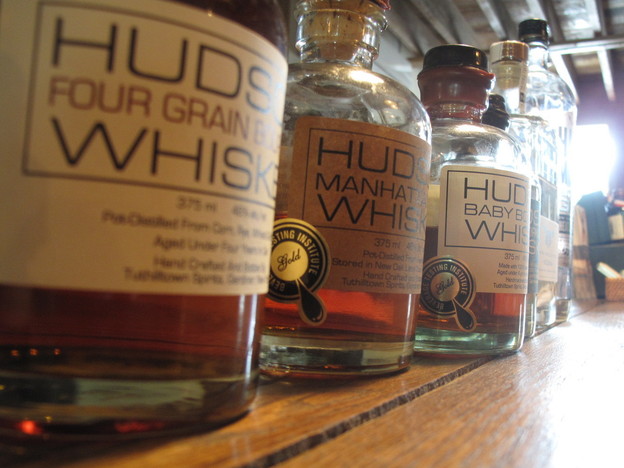
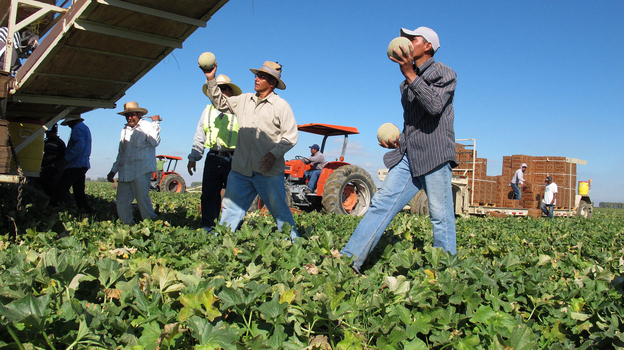
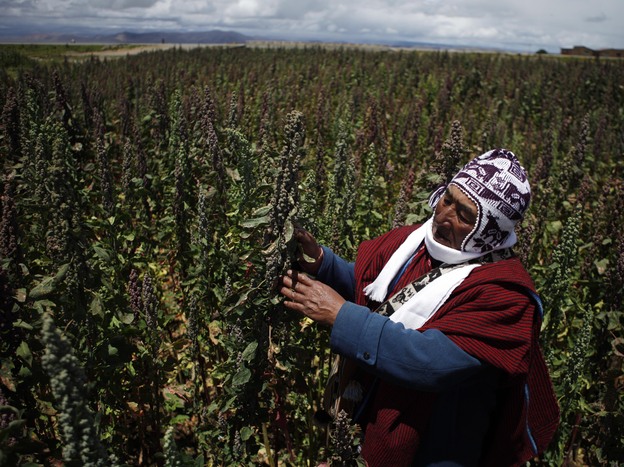
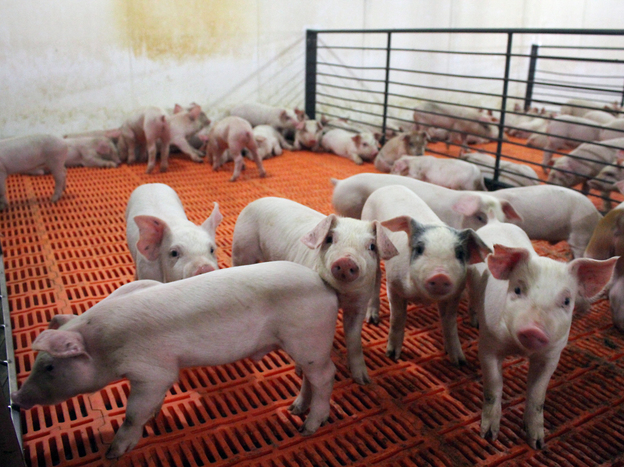
window.__IS_SSR__=true
window.__INITIAL_STATE__={
"attachmentsReducer": {
"audio_0": {
"type": "attachments",
"id": "audio_0",
"imgSizes": {
"kqedFullSize": {
"file": "https://ww2.kqed.org/news/wp-content/themes/KQED-unified/img/audio_bgs/background0.jpg"
}
}
},
"audio_1": {
"type": "attachments",
"id": "audio_1",
"imgSizes": {
"kqedFullSize": {
"file": "https://ww2.kqed.org/news/wp-content/themes/KQED-unified/img/audio_bgs/background1.jpg"
}
}
},
"audio_2": {
"type": "attachments",
"id": "audio_2",
"imgSizes": {
"kqedFullSize": {
"file": "https://ww2.kqed.org/news/wp-content/themes/KQED-unified/img/audio_bgs/background2.jpg"
}
}
},
"audio_3": {
"type": "attachments",
"id": "audio_3",
"imgSizes": {
"kqedFullSize": {
"file": "https://ww2.kqed.org/news/wp-content/themes/KQED-unified/img/audio_bgs/background3.jpg"
}
}
},
"audio_4": {
"type": "attachments",
"id": "audio_4",
"imgSizes": {
"kqedFullSize": {
"file": "https://ww2.kqed.org/news/wp-content/themes/KQED-unified/img/audio_bgs/background4.jpg"
}
}
},
"placeholder": {
"type": "attachments",
"id": "placeholder",
"imgSizes": {
"thumbnail": {
"file": "https://cdn.kqed.org/wp-content/uploads/2024/12/KQED-Default-Image-816638274-2000x1333-1-160x107.jpg",
"width": 160,
"height": 107,
"mimeType": "image/jpeg"
},
"medium": {
"file": "https://cdn.kqed.org/wp-content/uploads/2024/12/KQED-Default-Image-816638274-2000x1333-1-800x533.jpg",
"width": 800,
"height": 533,
"mimeType": "image/jpeg"
},
"medium_large": {
"file": "https://cdn.kqed.org/wp-content/uploads/2024/12/KQED-Default-Image-816638274-2000x1333-1-768x512.jpg",
"width": 768,
"height": 512,
"mimeType": "image/jpeg"
},
"large": {
"file": "https://cdn.kqed.org/wp-content/uploads/2024/12/KQED-Default-Image-816638274-2000x1333-1-1020x680.jpg",
"width": 1020,
"height": 680,
"mimeType": "image/jpeg"
},
"1536x1536": {
"file": "https://cdn.kqed.org/wp-content/uploads/2024/12/KQED-Default-Image-816638274-2000x1333-1-1536x1024.jpg",
"width": 1536,
"height": 1024,
"mimeType": "image/jpeg"
},
"fd-lrg": {
"file": "https://cdn.kqed.org/wp-content/uploads/2024/12/KQED-Default-Image-816638274-2000x1333-1-1536x1024.jpg",
"width": 1536,
"height": 1024,
"mimeType": "image/jpeg"
},
"fd-med": {
"file": "https://cdn.kqed.org/wp-content/uploads/2024/12/KQED-Default-Image-816638274-2000x1333-1-1020x680.jpg",
"width": 1020,
"height": 680,
"mimeType": "image/jpeg"
},
"fd-sm": {
"file": "https://cdn.kqed.org/wp-content/uploads/2024/12/KQED-Default-Image-816638274-2000x1333-1-800x533.jpg",
"width": 800,
"height": 533,
"mimeType": "image/jpeg"
},
"post-thumbnail": {
"file": "https://cdn.kqed.org/wp-content/uploads/2024/12/KQED-Default-Image-816638274-2000x1333-1-672x372.jpg",
"width": 672,
"height": 372,
"mimeType": "image/jpeg"
},
"twentyfourteen-full-width": {
"file": "https://cdn.kqed.org/wp-content/uploads/2024/12/KQED-Default-Image-816638274-2000x1333-1-1038x576.jpg",
"width": 1038,
"height": 576,
"mimeType": "image/jpeg"
},
"xxsmall": {
"file": "https://cdn.kqed.org/wp-content/uploads/2024/12/KQED-Default-Image-816638274-2000x1333-1-160x107.jpg",
"width": 160,
"height": 107,
"mimeType": "image/jpeg"
},
"xsmall": {
"file": "https://cdn.kqed.org/wp-content/uploads/2024/12/KQED-Default-Image-816638274-2000x1333-1-672x372.jpg",
"width": 672,
"height": 372,
"mimeType": "image/jpeg"
},
"small": {
"file": "https://cdn.kqed.org/wp-content/uploads/2024/12/KQED-Default-Image-816638274-2000x1333-1-672x372.jpg",
"width": 672,
"height": 372,
"mimeType": "image/jpeg"
},
"xlarge": {
"file": "https://cdn.kqed.org/wp-content/uploads/2024/12/KQED-Default-Image-816638274-2000x1333-1-1020x680.jpg",
"width": 1020,
"height": 680,
"mimeType": "image/jpeg"
},
"full-width": {
"file": "https://cdn.kqed.org/wp-content/uploads/2024/12/KQED-Default-Image-816638274-2000x1333-1-1920x1280.jpg",
"width": 1920,
"height": 1280,
"mimeType": "image/jpeg"
},
"guest-author-32": {
"file": "https://cdn.kqed.org/wp-content/uploads/2025/01/KQED-Default-Image-816638274-1333x1333-1-160x160.jpg",
"width": 32,
"height": 32,
"mimeType": "image/jpeg"
},
"guest-author-50": {
"file": "https://cdn.kqed.org/wp-content/uploads/2025/01/KQED-Default-Image-816638274-1333x1333-1-160x160.jpg",
"width": 50,
"height": 50,
"mimeType": "image/jpeg"
},
"guest-author-64": {
"file": "https://cdn.kqed.org/wp-content/uploads/2025/01/KQED-Default-Image-816638274-1333x1333-1-160x160.jpg",
"width": 64,
"height": 64,
"mimeType": "image/jpeg"
},
"guest-author-96": {
"file": "https://cdn.kqed.org/wp-content/uploads/2025/01/KQED-Default-Image-816638274-1333x1333-1-160x160.jpg",
"width": 96,
"height": 96,
"mimeType": "image/jpeg"
},
"guest-author-128": {
"file": "https://cdn.kqed.org/wp-content/uploads/2025/01/KQED-Default-Image-816638274-1333x1333-1-160x160.jpg",
"width": 128,
"height": 128,
"mimeType": "image/jpeg"
},
"detail": {
"file": "https://cdn.kqed.org/wp-content/uploads/2025/01/KQED-Default-Image-816638274-1333x1333-1-160x160.jpg",
"width": 160,
"height": 160,
"mimeType": "image/jpeg"
},
"kqedFullSize": {
"file": "https://cdn.kqed.org/wp-content/uploads/2024/12/KQED-Default-Image-816638274-2000x1333-1.jpg",
"width": 2000,
"height": 1333
}
}
},
"bayareabites_66002": {
"type": "attachments",
"id": "bayareabites_66002",
"meta": {
"index": "attachments_1716263798",
"site": "bayareabites",
"id": "66002",
"found": true
},
"parent": 65989,
"imgSizes": {
"kqedFullSize": {
"file": "https://ww2.kqed.org/app/uploads/sites/24/2013/07/distillery-sm1.jpg",
"width": 624,
"height": 468
}
},
"publishDate": 1374511576,
"modified": 1374511576,
"caption": null,
"description": "Tuthilltown Spirits in New York makes a clear corn whiskey, and the first legal aged whiskey in the state since Prohibition, among other products.",
"title": "rosedistilleries_5435",
"credit": null,
"status": "inherit",
"isLoading": false,
"fetchFailed": false
},
"bayareabites_65820": {
"type": "attachments",
"id": "bayareabites_65820",
"meta": {
"index": "attachments_1716263798",
"site": "bayareabites",
"id": "65820",
"found": true
},
"parent": 65813,
"imgSizes": {
"kqedFullSize": {
"file": "https://ww2.kqed.org/app/uploads/sites/24/2013/07/farmworkers-sm.jpg",
"width": 624,
"height": 350
}
},
"publishDate": 1374165532,
"modified": 1374165532,
"caption": null,
"description": "Farmworkers harvest and package cantaloupes near Firebaugh, Calif.",
"title": "ap111012094525",
"credit": null,
"status": "inherit",
"isLoading": false,
"fetchFailed": false
},
"bayareabites_65725": {
"type": "attachments",
"id": "bayareabites_65725",
"meta": {
"index": "attachments_1716263798",
"site": "bayareabites",
"id": "65725",
"found": true
},
"parent": 65709,
"imgSizes": {
"kqedFullSize": {
"file": "https://ww2.kqed.org/app/uploads/sites/24/2013/07/quinoabolovia-sm.jpg",
"width": 624,
"height": 467
}
},
"publishDate": 1374098127,
"modified": 1374098127,
"caption": null,
"description": "Farmer Geronimo Blanco shows his quinoa plants in Patamanta, Bolivia, in February. A burgeoning global demand for quinoa has led to a threefold price increase since 2006.",
"title": "quinoabolovia",
"credit": null,
"status": "inherit",
"isLoading": false,
"fetchFailed": false
},
"bayareabites_65557": {
"type": "attachments",
"id": "bayareabites_65557",
"meta": {
"index": "attachments_1716263798",
"site": "bayareabites",
"id": "65557",
"found": true
},
"parent": 65515,
"imgSizes": {
"kqedFullSize": {
"file": "https://ww2.kqed.org/app/uploads/sites/24/2013/07/featured-image640x360.jpg",
"width": 640,
"height": 360
}
},
"publishDate": 1374018428,
"modified": 1374018428,
"caption": null,
"description": null,
"title": "featured-image640x360",
"credit": null,
"status": "inherit",
"isLoading": false,
"fetchFailed": false
},
"bayareabites_65683": {
"type": "attachments",
"id": "bayareabites_65683",
"meta": {
"index": "attachments_1716263798",
"site": "bayareabites",
"id": "65683",
"found": true
},
"parent": 65674,
"imgSizes": {
"kqedFullSize": {
"file": "https://ww2.kqed.org/app/uploads/sites/24/2013/07/wheat-sm.jpg",
"width": 624,
"height": 400
}
},
"publishDate": 1374080061,
"modified": 1374080061,
"caption": null,
"description": "Wheat grows in a test field at Oregon State University in Corvallis. Some scientists believe that there's a chance that genetically modified wheat found in one farmer's field in May is still in the seed supply.",
"title": "gettyimages_170136202",
"credit": null,
"status": "inherit",
"isLoading": false,
"fetchFailed": false
},
"bayareabites_65257": {
"type": "attachments",
"id": "bayareabites_65257",
"meta": {
"index": "attachments_1716263798",
"site": "bayareabites",
"id": "65257",
"found": true
},
"parent": 65252,
"imgSizes": {
"kqedFullSize": {
"file": "https://ww2.kqed.org/app/uploads/sites/24/2013/07/apples-sm.jpg",
"width": 624,
"height": 480
}
},
"publishDate": 1373656890,
"modified": 1373656890,
"caption": null,
"description": "The FDA's proposal follows concerns raised by consumer groups about levels of inorganic arsenic, a carcinogen, in apple juice.",
"title": "apple-juice-istock_000012313493medium1",
"credit": null,
"status": "inherit",
"isLoading": false,
"fetchFailed": false
},
"bayareabites_65165": {
"type": "attachments",
"id": "bayareabites_65165",
"meta": {
"index": "attachments_1716263798",
"site": "bayareabites",
"id": "65165",
"found": true
},
"parent": 65155,
"imgSizes": {
"kqedFullSize": {
"file": "https://ww2.kqed.org/app/uploads/sites/24/2013/07/antibioticspigs1.jpg",
"width": 624,
"height": 467
}
},
"publishDate": 1373583646,
"modified": 1373583646,
"caption": "These pigs, newly weaned from their mothers, are at their most vulnerable stage of life. They're getting antibiotics in their water to ward off bacterial infection. Photo: Dan Charles/NPR",
"description": "These pigs, newly weaned from their mothers, are at their most vulnerable stage of life. They're getting antibiotics in their water to ward off bacterial infection.",
"title": "antibioticspigs",
"credit": null,
"status": "inherit",
"isLoading": false,
"fetchFailed": false
},
"bayareabites_65148": {
"type": "attachments",
"id": "bayareabites_65148",
"meta": {
"index": "attachments_1716263798",
"site": "bayareabites",
"id": "65148",
"found": true
},
"parent": 65141,
"imgSizes": {
"kqedFullSize": {
"file": "https://ww2.kqed.org/app/uploads/sites/24/2013/07/force-feed-yasiin-bey.jpg",
"width": 624,
"height": 349
}
},
"publishDate": 1373578705,
"modified": 1373578705,
"caption": "Yasiin Bey, the musician and actor formerly known as Mos Def, voluntarily underwent a procedural method of force-feeding similar to the kind administered to prisoners who refuse solid food in political protest while they are held in Guantanamo Bay. Photo: Reprieve/Asif Kapadia",
"description": "Yasiin Bey, the musician and actor formerly known as Mos Def, voluntarily underwent a procedural method of force-feeding similar to the kind administered to prisoners who refuse solid food in political protest while they are held in Guantanamo Bay.",
"title": "yasiin-bey-force-feed-screen-cap",
"credit": null,
"status": "inherit",
"isLoading": false,
"fetchFailed": false
},
"bayareabites_65026": {
"type": "attachments",
"id": "bayareabites_65026",
"meta": {
"index": "attachments_1716263798",
"site": "bayareabites",
"id": "65026",
"found": true
},
"parent": 65020,
"imgSizes": {
"kqedFullSize": {
"file": "https://ww2.kqed.org/app/uploads/sites/24/2013/07/smithfield1-e1373496207536.jpg",
"width": 640,
"height": 391
}
},
"publishDate": 1373495401,
"modified": 1373495401,
"caption": "A Smithfield ham at a grocery store in Richardson, Texas, in 2011. Some senators expressed qualms Wednesday about the intentions of Shuanghui International Holdings, which is buying Smithfield Foods Photo: LM Otero/AP",
"description": "A Smithfield ham at a grocery store in Richardson, Texas, in 2011. Some senators expressed qualms Wednesday about the intentions of Shuanghui International Holdings, which is buying Smithfield Foods",
"title": "ap110906022592",
"credit": null,
"status": "inherit",
"isLoading": false,
"fetchFailed": false
},
"bayareabites_65013": {
"type": "attachments",
"id": "bayareabites_65013",
"meta": {
"index": "attachments_1716263798",
"site": "bayareabites",
"id": "65013",
"found": true
},
"parent": 65007,
"imgSizes": {
"kqedFullSize": {
"file": "https://ww2.kqed.org/app/uploads/sites/24/2013/07/twinkie2-e1373496040748.jpg",
"width": 640,
"height": 479
}
},
"publishDate": 1373489209,
"modified": 1373489209,
"caption": "Unlike the Dodo that sits next to it on an NPR science desk shelf, this year-and-a-half-old Twinkie is still around — but that doesn't mean you want to eat. Photo: Heather Rousseau /NPR",
"description": "Unlike the Dodo that sits next to it on an NPR science desk shelf, this year-and-a-half-old Twinkie is still around — but that doesn't mean you want to eat",
"title": "twinkie2",
"credit": null,
"status": "inherit",
"isLoading": false,
"fetchFailed": false
},
"bayareabites_64880": {
"type": "attachments",
"id": "bayareabites_64880",
"meta": {
"index": "attachments_1716263798",
"site": "bayareabites",
"id": "64880",
"found": true
},
"parent": 64870,
"imgSizes": {
"kqedFullSize": {
"file": "https://ww2.kqed.org/app/uploads/sites/24/2013/07/corn-rootworm.jpg",
"width": 1120,
"height": 747
}
},
"publishDate": 1373386159,
"modified": 1373386159,
"caption": "Crop consultant Dan Steiner inspects a field of corn near Norfolk, Neb. Photo: Dan Charles/NPR",
"description": "Crop consultant Dan Steiner inspects a field of corn near Norfolk, Neb.",
"title": "img_5948",
"credit": null,
"status": "inherit",
"isLoading": false,
"fetchFailed": false
},
"bayareabites_64845": {
"type": "attachments",
"id": "bayareabites_64845",
"meta": {
"index": "attachments_1716263798",
"site": "bayareabites",
"id": "64845",
"found": true
},
"parent": 64840,
"imgSizes": {
"kqedFullSize": {
"file": "https://ww2.kqed.org/app/uploads/sites/24/2013/07/french-restaurants.jpg",
"width": 1120,
"height": 749
}
},
"publishDate": 1373327335,
"modified": 1373327335,
"caption": "We're guessing microwavable, premade meals are \u003cem>not\u003c/em> an issue in this kitchen, at the three-Michelin-star restaurant L'Auberge du Pont de Collonges near Lyon, France. Photo: Laurent Cipriani/AP",
"description": "We're guessing microwavable, premade meals are \u003cem>not\u003c/em> an issue in this kitchen, at the three-Michelin-star restaurant L'Auberge du Pont de Collonges near Lyon, France.",
"title": "ap110324052999",
"credit": null,
"status": "inherit",
"isLoading": false,
"fetchFailed": false
}
},
"audioPlayerReducer": {
"postId": "stream_live",
"isPaused": true,
"isPlaying": false,
"pfsActive": false,
"pledgeModalIsOpen": true,
"playerDrawerIsOpen": false,
"liveAudioPlayStartedAt": 0,
"liveAudioPlayContext": ""
},
"authorsReducer": {
"byline_bayareabites_65989": {
"type": "authors",
"id": "byline_bayareabites_65989",
"meta": {
"override": true
},
"slug": "byline_bayareabites_65989",
"name": "Joel Rose",
"isLoading": false
},
"byline_bayareabites_65813": {
"type": "authors",
"id": "byline_bayareabites_65813",
"meta": {
"override": true
},
"slug": "byline_bayareabites_65813",
"name": "Dan Charles",
"isLoading": false
},
"byline_bayareabites_65709": {
"type": "authors",
"id": "byline_bayareabites_65709",
"meta": {
"override": true
},
"slug": "byline_bayareabites_65709",
"name": "Allison Aubrey",
"isLoading": false
},
"byline_bayareabites_65674": {
"type": "authors",
"id": "byline_bayareabites_65674",
"meta": {
"override": true
},
"slug": "byline_bayareabites_65674",
"name": "Dan Charles",
"isLoading": false
},
"byline_bayareabites_65252": {
"type": "authors",
"id": "byline_bayareabites_65252",
"meta": {
"override": true
},
"slug": "byline_bayareabites_65252",
"name": "Allison Aubrey",
"isLoading": false
},
"byline_bayareabites_65155": {
"type": "authors",
"id": "byline_bayareabites_65155",
"meta": {
"override": true
},
"slug": "byline_bayareabites_65155",
"name": "Dan Charles",
"isLoading": false
},
"byline_bayareabites_65141": {
"type": "authors",
"id": "byline_bayareabites_65141",
"meta": {
"override": true
},
"slug": "byline_bayareabites_65141",
"name": "Eliza Barclay and Jessica Naudziunas",
"isLoading": false
},
"byline_bayareabites_65020": {
"type": "authors",
"id": "byline_bayareabites_65020",
"meta": {
"override": true
},
"slug": "byline_bayareabites_65020",
"name": "Marilyn Geewax",
"isLoading": false
},
"byline_bayareabites_65007": {
"type": "authors",
"id": "byline_bayareabites_65007",
"meta": {
"override": true
},
"slug": "byline_bayareabites_65007",
"name": "Maria Godoy",
"isLoading": false
},
"byline_bayareabites_64870": {
"type": "authors",
"id": "byline_bayareabites_64870",
"meta": {
"override": true
},
"slug": "byline_bayareabites_64870",
"name": "Dan Charles",
"isLoading": false
},
"byline_bayareabites_64840": {
"type": "authors",
"id": "byline_bayareabites_64840",
"meta": {
"override": true
},
"slug": "byline_bayareabites_64840",
"name": "Amy Guttman",
"isLoading": false
},
"laurenbenichou": {
"type": "authors",
"id": "5466",
"meta": {
"index": "authors_1716337520",
"id": "5466",
"found": true
},
"name": "Lo Benichou",
"firstName": "Lo",
"lastName": "Benichou",
"slug": "laurenbenichou",
"email": "laurenbenichou@gmail.com",
"display_author_email": false,
"staff_mastheads": [],
"title": null,
"bio": "My name is Lo. I am a multimedia journalist and interactive web developer. I currently work at WIRED. I like data and stories. I like coding. I tried to do both at once. I occasionally write about food because food is life.",
"avatar": "https://secure.gravatar.com/avatar/20ac556dc8ae6a2669bcc745dd30b24d?s=600&d=blank&r=g",
"twitter": "LoBenichou",
"facebook": null,
"instagram": null,
"linkedin": null,
"sites": [
{
"site": "bayareabites",
"roles": [
"contributor"
]
},
{
"site": "food",
"roles": [
"contributor"
]
}
],
"headData": {
"title": "Lo Benichou | KQED",
"description": null,
"ogImgSrc": "https://secure.gravatar.com/avatar/20ac556dc8ae6a2669bcc745dd30b24d?s=600&d=blank&r=g",
"twImgSrc": "https://secure.gravatar.com/avatar/20ac556dc8ae6a2669bcc745dd30b24d?s=600&d=blank&r=g"
},
"isLoading": false,
"link": "/author/laurenbenichou"
}
},
"pagesReducer": {
"bayareabites_category_politics-activism-food-safety": {
"type": "terms",
"id": "bayareabites_2035",
"meta": {
"index": "terms_1716263798",
"site": "bayareabites",
"id": "2035",
"score": 13.89634
},
"featImg": null,
"name": "politics, activism, food safety",
"description": null,
"taxonomy": "category",
"headData": {
"twImgId": null,
"twTitle": null,
"ogTitle": null,
"ogImgId": null,
"twDescription": null,
"description": null,
"title": "politics, activism, food safety Archives | KQED Bay Area Bites",
"ogDescription": null
},
"ttid": 943,
"slug": "politics-activism-food-safety",
"isLoading": false,
"title": "politics, activism, food safety",
"pageMeta": {
"site": "bayareabites",
"WpPageTemplate": "page-topic-editorial",
"currentPage": 53
},
"blocks": [
{
"blockName": "kqed/post-list",
"attrs": {
"layout": "cardArticle2",
"query": "posts/bayareabites?category=politics-activism-food-safety",
"seeMore": false,
"paginated": true,
"page": 53
}
},
{
"blockName": "kqed/ad"
}
]
}
},
"pfsSessionReducer": {},
"postsReducer": {
"stream_live": {
"type": "live",
"id": "stream_live",
"audioUrl": "https://streams.kqed.org/kqedradio",
"title": "Live Stream",
"excerpt": "Live Stream information currently unavailable.",
"link": "/radio",
"featImg": "",
"label": {
"name": "KQED Live",
"link": "/"
}
},
"stream_kqedNewscast": {
"type": "posts",
"id": "stream_kqedNewscast",
"audioUrl": "https://www.kqed.org/.stream/anon/radio/RDnews/newscast.mp3?_=1",
"title": "KQED Newscast",
"featImg": "",
"label": {
"name": "88.5 FM",
"link": "/"
}
},
"bayareabites_65989": {
"type": "posts",
"id": "bayareabites_65989",
"meta": {
"index": "posts_1716263798",
"site": "bayareabites",
"id": "65989",
"score": null,
"sort": [
1374511783000
]
},
"parent": 0,
"labelTerm": {
"site": "bayareabites"
},
"blocks": [],
"publishDate": 1374511783,
"format": "aside",
"disqusTitle": "New York Toasts Long-Awaited Revival Of Its Distilleries",
"title": "New York Toasts Long-Awaited Revival Of Its Distilleries",
"headTitle": "Bay Area Bites | KQED Food",
"content": "\u003cfigure id=\"attachment_66000\" class=\"wp-caption aligncenter\" style=\"max-width: 1120px\">\u003ca href=\"http://ww2.kqed.org/bayareabites/wp-content/uploads/sites/24/2013/07/distillery1.jpg\">\u003cimg src=\"http://ww2.kqed.org/bayareabites/wp-content/uploads/sites/24/2013/07/distillery1.jpg\" alt=\"Ralph Erenzo, co-founder of Tuthilltown Spirits, transformed an old grain mill in Gardiner, N.Y., into one of the state's first boutique distilleries to open in New York since Prohibition. Photo: Joel Rose/NPR\" width=\"1120\" height=\"840\" class=\"size-full wp-image-66000\">\u003c/a>\u003cfigcaption class=\"wp-caption-text\">Ralph Erenzo, co-founder of Tuthilltown Spirits, transformed an old grain mill in Gardiner, N.Y., into one of the state's first boutique distilleries to open in New York since Prohibition. Photo: Joel Rose/NPR\u003c/figcaption>\u003c/figure>\n\u003cp>\u003cstrong>Listen to the Story\u003c/strong> on \u003ca href=\"http://www.npr.org/blogs/thesalt/2013/07/22/203284519/NY-DISTILLERIES-COMEBACK\">Morning Edition\u003c/a> [audio src=\"http://pd.npr.org/anon.npr-mp3/npr/me/2013/07/20130722_me_08.mp3\"] \u003c/p>\n\u003cp>Post by \u003ca href=\"http://www.npr.org/people/159989569/joel-rose\">Joel Rose\u003c/a>, \u003ca href=\"http://www.npr.org/blogs/thesalt/2013/07/22/203284519/NY-DISTILLERIES-COMEBACK\">The Salt at NPR Food\u003c/a> (7/22/13)\u003c/p>\n\u003cp>A century ago, New York could claim that much of its liquor was local, thanks to distilleries large and small that supplied a lot of the whiskey, gin and rum that kept New York City (and the rest of North America) lubricated. Then Prohibition arrived and the industry largely dried up, before trickling back to life in the 21st century.\u003c/p>\n\u003cp>Now, distillers in New York state are toasting a revival 80 years in the making.\u003c/p>\n\u003cp>\u003ca href=\"http://www.tuthilltown.com/\">Tuthilltown Spirits\u003c/a> is one of the first boutique distilleries to open in New York since Prohibition. It's been 12 years since co-founder Ralph Erenzo bought the property in Gardiner, N.Y., a rustic corner of the Hudson Valley about 75 miles north of Manhattan.\u003c/p>\n\u003cp>[ad fullwidth]\u003c/p>\n\u003cp>In his first career, Erenzo owned a climbing gym in New York City. He was looking for an agricultural product he could make in the Hudson Valley. Then Erenzo found out about a recent change in New York law that cut the licensing fee to open a small distillery dramatically — from $65,000 to just $1,000.\u003c/p>\n\u003cp>\"We knew less than nothing about this business,\" says Erenzo. But today his distillery turns out thousands of bottles a day, many under the brand name Hudson Whiskey.\u003c/p>\n\u003cp>The first spirit he created is a clear, colorless corn whiskey. \"It's clear like this because it doesn't go into an oak barrel,\" he says. \"This is right off the still. Legal moonshine, you might say.\"\u003c/p>\n\u003cp>That corn whiskey may be clear, but it's definitely not weak. The flavor is sweet, grainy and boozy. Hudson also sells something darker, the color of maple syrup. The flavor is more complex, with hints of caramel and vanilla. \"[It] is the first bourbon whiskey ever made in New York,\" says Erenzo. \"And it was the first aged whiskey legally made in New York since Prohibition.\"\u003c/p>\n\u003cfigure id=\"attachment_66001\" class=\"wp-caption aligncenter\" style=\"max-width: 1120px\">\u003ca href=\"http://ww2.kqed.org/bayareabites/wp-content/uploads/sites/24/2013/07/distillery2.jpg\">\u003cimg src=\"http://ww2.kqed.org/bayareabites/wp-content/uploads/sites/24/2013/07/distillery2.jpg\" alt=\"Tuthilltown Spirits in New York makes a clear corn whiskey, and the first legal aged whiskey in the state since Prohibition, among other products. Photo: Joel Rose/NPR\" width=\"1120\" height=\"840\" class=\"size-full wp-image-66001\">\u003c/a>\u003cfigcaption class=\"wp-caption-text\">Tuthilltown Spirits in New York makes a clear corn whiskey, and the first legal aged whiskey in the state since Prohibition, among other products. Photo: Joel Rose/NPR\u003c/figcaption>\u003c/figure>\n\u003cp>Now there are dozens of distilleries operating in New York State, from the Adirondacks to Brooklyn.\u003c/p>\n\u003cp>At the Shanty Bar, attached to the five-year-old \u003ca href=\"nydistilling.com\">New York Distilling Company\u003c/a> in Williamsburg, Brooklyn, co-founder Allen Katz pours a cocktail with the company's Perry's Tot Gin. It's made with juniper and nine other botanicals and spices, including coriander, citrus, star anise and even green cardamom pods.\u003c/p>\n\u003cp>Katz says the landscape of emerging distilleries in New York harkens back to the heyday of the state's liquor industry. \"If you go back to the 1800s, people were making all different types of spirits,\" says Katz: gin, whiskey, rum and apple jack.\u003c/p>\n\u003cp>There was also a widespread appreciation for those spirits in New York's thriving bar culture; then, the 18th Amendment put a stop to legal alcohol production. The distilling industry in New York then either disappeared, or went underground.\u003c/p>\n\u003cp>\"It not only killed the bar culture, but it killed our taste buds,\" says Katz. \"The idea of having quality spirits behind a bar in a consistent nature really became forgotten.\"\u003c/p>\n\u003cp>Prohibition ended in 1933. But it was already too late for small distillers in New York who'd gone out business. Today if you look behind most bars in this country, you're likely to see the same few mega-brands of whiskey, gin and vodka. But that's starting to change as the growing interest in \u003ca href=\"http://www.npr.org/blogs/thesalt/2013/02/07/171409157/who-grew-your-pint-how-craft-brews-boost-local-farmers\">local food, beer and wine\u003c/a> moves into the hard stuff.\u003c/p>\n\u003cp>The rebirth of New York's distilling industry is drawing in entrepreneurs from other lines of work. \"I used to have a desk job that I hated,\" says Brad Estabrooke. When Estabrooke lost that desk job as a bond trader in 2009, he opened \u003ca href=\"brkdistilling.com\">Breuckelen Distilling\u003c/a> in an old warehouse near the Brooklyn waterfront.\u003c/p>\n\u003cp>Estabrooke's operation is basically a higher-tech version of the same thing distillers have been doing for centuries. He starts with local grains and lets them ferment in big tanks. Then he boils the results in a copper still to release the highly alcoholic vapor.\u003c/p>\n\u003cp>\"The idea that we are bringing in ingredients and actually making something — that is the part that makes me feel like we're connecting to this ancient, old activity,\" says Estabrooke. When I ask if he's making as much money as he was in his original career, Estabrooke laughs. \"No, not even close,\" he says. Though Estabrooke adds that the company should turn a profit soon.\u003c/p>\n\u003cp>At Tuthilltown Spirits back in the Hudson Valley, Erenzo has already scaled up to employ 26 people. He says craft distilleries are starting to have a real economic impact in New York, and beyond.\u003c/p>\n\u003cp>\"People are getting hired. Old buildings are being reused,\" says Erenzo. \"A craft is being reestablished in this country that hasn't existed for 70 or 80 years cause of Prohibition. People are building cooperages and malt houses. This is a rebirth of a whole industry.\"\u003c/p>\n\u003cp>But this new spirits industry is not exactly like the old one. Many of the new distillers are less tied to tradition, and \"willing to try just about anything,\" Erenzo says. And that's making it a very interesting time to pour a drink. \u003c/p>\n\u003cp>\u003c/p>\n\u003cp>\u003cem>Copyright 2013 \u003ca href=\"http://www.npr.org/\">NPR\u003c/a>.\u003c/em> \u003c/p>\n\n",
"disqusIdentifier": "65989 http://blogs.kqed.org/bayareabites/?p=65989",
"disqusUrl": "https://ww2.kqed.org/bayareabites/2013/07/22/new-york-toasts-long-awaited-revival-of-its-distilleries/",
"stats": {
"hasVideo": false,
"hasChartOrMap": false,
"hasAudio": true,
"hasPolis": false,
"wordCount": 957,
"hasGoogleForm": false,
"hasGallery": false,
"hasHearkenModule": false,
"iframeSrcs": [],
"paragraphCount": 24
},
"modified": 1374511783,
"excerpt": "In the unregulated heyday before Prohibition, distilleries in New York produced whiskey, gin, rum and other spirits. Then the industry was all but wiped out for the next 80 years. But state laws regulating distilling have been loosened and now dozens of new distilleries have sprung up.",
"headData": {
"twImgId": "",
"twTitle": "",
"ogTitle": "",
"ogImgId": "",
"twDescription": "",
"description": "In the unregulated heyday before Prohibition, distilleries in New York produced whiskey, gin, rum and other spirits. Then the industry was all but wiped out for the next 80 years. But state laws regulating distilling have been loosened and now dozens of new distilleries have sprung up.",
"title": "New York Toasts Long-Awaited Revival Of Its Distilleries | KQED",
"ogDescription": "",
"schema": {
"@context": "https://schema.org",
"@type": "Article",
"headline": "New York Toasts Long-Awaited Revival Of Its Distilleries",
"datePublished": "2013-07-22T09:49:43-07:00",
"dateModified": "2013-07-22T09:49:43-07:00",
"image": "https://cdn.kqed.org/wp-content/uploads/2020/02/KQED-OG-Image@1x.png"
}
},
"guestAuthors": [],
"slug": "new-york-toasts-long-awaited-revival-of-its-distilleries",
"status": "publish",
"nprApiLink": "http://api.npr.org/query?id=203284519&apiKey=MDAxOTAwOTE4MDEyMTkxMDAzNjczZDljZA004",
"nprByline": "Joel Rose",
"nprStoryDate": "Mon, 22 Jul 2013 04:00:00 -0400",
"nprLastModifiedDate": "Mon, 22 Jul 2013 09:07:49 -0400",
"nprHtmlLink": "http://www.npr.org/blogs/thesalt/2013/07/22/203284519/NY-DISTILLERIES-COMEBACK?ft=3&f=203284519",
"nprAudio": "http://pd.npr.org/anon.npr-mp3/npr/me/2013/07/20130722_me_08.mp3?orgId=1&topicId=1053&ft=3&f=203284519",
"nprAudioM3u": "http://api.npr.org/m3u/1204422670-e600f0.m3u?orgId=1&topicId=1053&ft=3&f=203284519",
"nprStoryId": "203284519",
"nprRetrievedStory": "1",
"nprPubDate": "Mon, 22 Jul 2013 09:07:00 -0400",
"path": "/bayareabites/65989/new-york-toasts-long-awaited-revival-of-its-distilleries",
"audioUrl": "http://pd.npr.org/anon.npr-mp3/npr/me/2013/07/20130722_me_08.mp3?orgId=1&topicId=1053&ft=3&f=203284519",
"audioDuration": null,
"audioTrackLength": null,
"parsedContent": [
{
"type": "contentString",
"content": "\u003cdiv class=\"post-body\">\u003cp>\u003cfigure id=\"attachment_66000\" class=\"wp-caption aligncenter\" style=\"max-width: 1120px\">\u003ca href=\"http://ww2.kqed.org/bayareabites/wp-content/uploads/sites/24/2013/07/distillery1.jpg\">\u003cimg src=\"http://ww2.kqed.org/bayareabites/wp-content/uploads/sites/24/2013/07/distillery1.jpg\" alt=\"Ralph Erenzo, co-founder of Tuthilltown Spirits, transformed an old grain mill in Gardiner, N.Y., into one of the state's first boutique distilleries to open in New York since Prohibition. Photo: Joel Rose/NPR\" width=\"1120\" height=\"840\" class=\"size-full wp-image-66000\">\u003c/a>\u003cfigcaption class=\"wp-caption-text\">Ralph Erenzo, co-founder of Tuthilltown Spirits, transformed an old grain mill in Gardiner, N.Y., into one of the state's first boutique distilleries to open in New York since Prohibition. Photo: Joel Rose/NPR\u003c/figcaption>\u003c/figure>\n\u003cp>\u003cstrong>Listen to the Story\u003c/strong> on \u003ca href=\"http://www.npr.org/blogs/thesalt/2013/07/22/203284519/NY-DISTILLERIES-COMEBACK\">Morning Edition\u003c/a> \u003c/p>\u003c/div>",
"attributes": {
"named": {},
"numeric": []
}
},
{
"type": "component",
"content": "",
"name": "audio",
"attributes": {
"named": {
"src": "http://pd.npr.org/anon.npr-mp3/npr/me/2013/07/20130722_me_08.mp3",
"label": ""
},
"numeric": []
}
},
{
"type": "contentString",
"content": "\u003cdiv class=\"post-body\">\u003cp> \u003c/p>\n\u003cp>Post by \u003ca href=\"http://www.npr.org/people/159989569/joel-rose\">Joel Rose\u003c/a>, \u003ca href=\"http://www.npr.org/blogs/thesalt/2013/07/22/203284519/NY-DISTILLERIES-COMEBACK\">The Salt at NPR Food\u003c/a> (7/22/13)\u003c/p>\n\u003cp>A century ago, New York could claim that much of its liquor was local, thanks to distilleries large and small that supplied a lot of the whiskey, gin and rum that kept New York City (and the rest of North America) lubricated. Then Prohibition arrived and the industry largely dried up, before trickling back to life in the 21st century.\u003c/p>\n\u003cp>Now, distillers in New York state are toasting a revival 80 years in the making.\u003c/p>\n\u003cp>\u003ca href=\"http://www.tuthilltown.com/\">Tuthilltown Spirits\u003c/a> is one of the first boutique distilleries to open in New York since Prohibition. It's been 12 years since co-founder Ralph Erenzo bought the property in Gardiner, N.Y., a rustic corner of the Hudson Valley about 75 miles north of Manhattan.\u003c/p>\n\u003cp>\u003c/p>\u003c/div>",
"attributes": {
"named": {},
"numeric": []
}
},
{
"type": "component",
"content": "",
"name": "ad",
"attributes": {
"named": {
"label": "fullwidth"
},
"numeric": [
"fullwidth"
]
}
},
{
"type": "contentString",
"content": "\u003cdiv class=\"post-body\">\u003cp>\u003c/p>\n\u003cp>In his first career, Erenzo owned a climbing gym in New York City. He was looking for an agricultural product he could make in the Hudson Valley. Then Erenzo found out about a recent change in New York law that cut the licensing fee to open a small distillery dramatically — from $65,000 to just $1,000.\u003c/p>\n\u003cp>\"We knew less than nothing about this business,\" says Erenzo. But today his distillery turns out thousands of bottles a day, many under the brand name Hudson Whiskey.\u003c/p>\n\u003cp>The first spirit he created is a clear, colorless corn whiskey. \"It's clear like this because it doesn't go into an oak barrel,\" he says. \"This is right off the still. Legal moonshine, you might say.\"\u003c/p>\n\u003cp>That corn whiskey may be clear, but it's definitely not weak. The flavor is sweet, grainy and boozy. Hudson also sells something darker, the color of maple syrup. The flavor is more complex, with hints of caramel and vanilla. \"[It] is the first bourbon whiskey ever made in New York,\" says Erenzo. \"And it was the first aged whiskey legally made in New York since Prohibition.\"\u003c/p>\n\u003cfigure id=\"attachment_66001\" class=\"wp-caption aligncenter\" style=\"max-width: 1120px\">\u003ca href=\"http://ww2.kqed.org/bayareabites/wp-content/uploads/sites/24/2013/07/distillery2.jpg\">\u003cimg src=\"http://ww2.kqed.org/bayareabites/wp-content/uploads/sites/24/2013/07/distillery2.jpg\" alt=\"Tuthilltown Spirits in New York makes a clear corn whiskey, and the first legal aged whiskey in the state since Prohibition, among other products. Photo: Joel Rose/NPR\" width=\"1120\" height=\"840\" class=\"size-full wp-image-66001\">\u003c/a>\u003cfigcaption class=\"wp-caption-text\">Tuthilltown Spirits in New York makes a clear corn whiskey, and the first legal aged whiskey in the state since Prohibition, among other products. Photo: Joel Rose/NPR\u003c/figcaption>\u003c/figure>\n\u003cp>Now there are dozens of distilleries operating in New York State, from the Adirondacks to Brooklyn.\u003c/p>\n\u003cp>At the Shanty Bar, attached to the five-year-old \u003ca href=\"nydistilling.com\">New York Distilling Company\u003c/a> in Williamsburg, Brooklyn, co-founder Allen Katz pours a cocktail with the company's Perry's Tot Gin. It's made with juniper and nine other botanicals and spices, including coriander, citrus, star anise and even green cardamom pods.\u003c/p>\n\u003cp>Katz says the landscape of emerging distilleries in New York harkens back to the heyday of the state's liquor industry. \"If you go back to the 1800s, people were making all different types of spirits,\" says Katz: gin, whiskey, rum and apple jack.\u003c/p>\n\u003cp>There was also a widespread appreciation for those spirits in New York's thriving bar culture; then, the 18th Amendment put a stop to legal alcohol production. The distilling industry in New York then either disappeared, or went underground.\u003c/p>\n\u003cp>\"It not only killed the bar culture, but it killed our taste buds,\" says Katz. \"The idea of having quality spirits behind a bar in a consistent nature really became forgotten.\"\u003c/p>\n\u003cp>Prohibition ended in 1933. But it was already too late for small distillers in New York who'd gone out business. Today if you look behind most bars in this country, you're likely to see the same few mega-brands of whiskey, gin and vodka. But that's starting to change as the growing interest in \u003ca href=\"http://www.npr.org/blogs/thesalt/2013/02/07/171409157/who-grew-your-pint-how-craft-brews-boost-local-farmers\">local food, beer and wine\u003c/a> moves into the hard stuff.\u003c/p>\n\u003cp>The rebirth of New York's distilling industry is drawing in entrepreneurs from other lines of work. \"I used to have a desk job that I hated,\" says Brad Estabrooke. When Estabrooke lost that desk job as a bond trader in 2009, he opened \u003ca href=\"brkdistilling.com\">Breuckelen Distilling\u003c/a> in an old warehouse near the Brooklyn waterfront.\u003c/p>\n\u003cp>Estabrooke's operation is basically a higher-tech version of the same thing distillers have been doing for centuries. He starts with local grains and lets them ferment in big tanks. Then he boils the results in a copper still to release the highly alcoholic vapor.\u003c/p>\n\u003cp>\"The idea that we are bringing in ingredients and actually making something — that is the part that makes me feel like we're connecting to this ancient, old activity,\" says Estabrooke. When I ask if he's making as much money as he was in his original career, Estabrooke laughs. \"No, not even close,\" he says. Though Estabrooke adds that the company should turn a profit soon.\u003c/p>\n\u003cp>At Tuthilltown Spirits back in the Hudson Valley, Erenzo has already scaled up to employ 26 people. He says craft distilleries are starting to have a real economic impact in New York, and beyond.\u003c/p>\n\u003cp>\"People are getting hired. Old buildings are being reused,\" says Erenzo. \"A craft is being reestablished in this country that hasn't existed for 70 or 80 years cause of Prohibition. People are building cooperages and malt houses. This is a rebirth of a whole industry.\"\u003c/p>\n\u003cp>But this new spirits industry is not exactly like the old one. Many of the new distillers are less tied to tradition, and \"willing to try just about anything,\" Erenzo says. And that's making it a very interesting time to pour a drink. \u003c/p>\n\u003cp>\u003c/p>\n\u003cp>\u003cem>Copyright 2013 \u003ca href=\"http://www.npr.org/\">NPR\u003c/a>.\u003c/em> \u003c/p>\n\n\u003c/div>\u003c/p>",
"attributes": {
"named": {},
"numeric": []
}
}
],
"link": "/bayareabites/65989/new-york-toasts-long-awaited-revival-of-its-distilleries",
"authors": [
"byline_bayareabites_65989"
],
"categories": [
"bayareabites_1244",
"bayareabites_10916",
"bayareabites_2035",
"bayareabites_34"
],
"tags": [
"bayareabites_12061",
"bayareabites_12060",
"bayareabites_2569",
"bayareabites_9732",
"bayareabites_10921"
],
"featImg": "bayareabites_66002",
"label": "bayareabites"
},
"bayareabites_65813": {
"type": "posts",
"id": "bayareabites_65813",
"meta": {
"index": "posts_1716263798",
"site": "bayareabites",
"id": "65813",
"score": null,
"sort": [
1374165715000
]
},
"parent": 0,
"labelTerm": {
"site": "bayareabites"
},
"blocks": [],
"publishDate": 1374165715,
"format": "aside",
"disqusTitle": "How To Better Protect Farm Workers From Pesticides: Spanish",
"title": "How To Better Protect Farm Workers From Pesticides: Spanish",
"headTitle": "Bay Area Bites | KQED Food",
"content": "\u003cfigure id=\"attachment_65821\" class=\"wp-caption aligncenter\" style=\"max-width: 1120px\">\u003ca href=\"http://ww2.kqed.org/bayareabites/wp-content/uploads/sites/24/2013/07/farmworkers-lg.jpg\">\u003cimg src=\"http://ww2.kqed.org/bayareabites/wp-content/uploads/sites/24/2013/07/farmworkers-lg.jpg\" alt=\"Farmworkers harvest and package cantaloupes near Firebaugh, Calif. Photo: Gosia Wozniacka/AP\" width=\"1120\" height=\"629\" class=\"size-full wp-image-65821\">\u003c/a>\u003cfigcaption class=\"wp-caption-text\">Farmworkers harvest and package cantaloupes near Firebaugh, Calif. Photo: Gosia Wozniacka/AP\u003c/figcaption>\u003c/figure>\n\u003cp>Post by \u003ca href=\"http://www.npr.org/people/143160021/daniel-charles\">Dan Charles\u003c/a>, \u003ca href=\"http://www.npr.org/blogs/thesalt/2013/07/17/203015727/how-to-better-protect-farm-workers-from-pesticides-use-spanish\">The Salt at NPR Food\u003c/a> (7/18/13)\u003c/p>\n\u003cp>Advocates for farmworkers, especially those who grow America's leafy greens and fresh vegetables, are \u003ca href=\"http://farmworkerjustice.org/press/new-farmworker-justice-report-profiles-dangers-pesticide-poisoning-offers-recommendations-epa\">pushing\u003c/a> the government to do more to protect those workers from exposure to pesticides.\u003c/p>\n\u003cp>A 20-year-old regulation — the \u003ca href=\"http://www.epa.gov/agriculture/twor.html\">Worker Protection Standard\u003c/a> — is supposed to prevent harmful pesticide exposures on the farm. But activist groups like \u003ca href=\"http://farmworkerjustice.org/\">Farmworker Justice\u003c/a> say it falls short, and the Environmental Protection Agency is currently working on a \u003ca href=\"http://yosemite.epa.gov/opei/rulegate.nsf/byRIN/2070-AJ22\">new version\u003c/a>.\u003c/p>\n\u003cp>A new \u003ca href=\"http://farmworkerjustice.org/sites/default/files/aExposed%20and%20Ignored%20by%20Farmworker%20Justice%20singles%20compressed.pdf\">report\u003c/a> from Farmworker Justice points out that under the current rules, farm workers don't get nearly as much information about hazardous chemicals they may encounter as, say, factory workers. (Industrial workers are covered by different regulations, issued by the Occupational Safety and Health Administration.)\u003c/p>\n\u003cp>And then there's the barrier of language. Pesticides carry warning labels that spell out health risks and how workers should protect themselves — but those labels are usually in English. More than 80 percent of the workers in the \"salad bowls\" of Salinas, California, or Yuma, Arizona, are Hispanic. Many have difficulty communicating in English.\u003c/p>\n\u003cp>[ad fullwidth]\u003c/p>\n\u003cp>Farmworkers \"are frustrated about their lack of knowledge about these chemicals,\" says Virginia Ruiz, director of Occupational and Environmental Health at Farmworker Justice. Her group, along with many others, submitted formal \u003ca href=\"http://www.regulations.gov/contentStreamer?objectId=0900006480eb5cf5&disposition=attachment&contentType=pdf\">comments\u003c/a> to the EPA arguing that \"without bilingual labeling, today's Spanish-speaking agricultural workforce is at great risk for pesticide exposure.\"\u003c/p>\n\u003cp>Pesticide companies appear to be split on the issue. One industry trade association, Responsible Industry for a Sound Environment, has \u003ca href=\"http://www.regulations.gov/#!documentDetail;D=EPA-HQ-OPP-2011-0014-0206\">opposed\u003c/a> bilingual labels, arguing that Spanish translations were unnecessary and would make labels more cumbersome to design. The agricultural chemical company Syngenta, on the other hand, \u003ca href=\"http://www.regulations.gov/#!documentDetail;D=EPA-HQ-OPP-2011-0014-0223\">endorsed\u003c/a> the idea.\u003c/p>\n\u003cp>The proposed regulations face a long road before they'd ever take effect. Once the EPA finishes its draft, the document has to go through a review by the White House before it is even released for public comment. It could be years before the regulations are final.\u003c/p>\n\u003cp>In the meantime, though, some activist groups (including Farmworker Justice and \u003ca href=\"http://www.oxfamamerica.org/\">Oxfam America\u003c/a>) have joined forces with food companies (Costco!) to attack the problem on their own, through a new \u003ca href=\"http://www.equitablefood.net/\">Equitable Food Initiative\u003c/a>. The initiative is based on the idea that giving farmworkers more power, responsibility, and money will lead to better, higher-quality food production.\u003c/p>\n\u003cp>The initiative has drawn up standards that (among many other things) are supposed to reduce the use of pesticides and share information — in any language — about how to handle them safely. On each farm, a worker-manager team is responsible for meeting the standard.\u003c/p>\n\u003cp>\"The whole point is to get the team on-site to own this obligation,\" says Peter O'Driscoll, the initiative's project manager, who works with Oxfam America. \u003c/p>\n\u003cp>\u003c/p>\n\u003cp>\u003cem>Copyright 2013 \u003ca href=\"http://www.npr.org/\">NPR\u003c/a>.\u003c/em> \u003c/p>\n\n",
"disqusIdentifier": "65813 http://blogs.kqed.org/bayareabites/?p=65813",
"disqusUrl": "https://ww2.kqed.org/bayareabites/2013/07/18/how-to-better-protect-farm-workers-from-pesticides-spanish/",
"stats": {
"hasVideo": false,
"hasChartOrMap": false,
"hasAudio": false,
"hasPolis": false,
"wordCount": 484,
"hasGoogleForm": false,
"hasGallery": false,
"hasHearkenModule": false,
"iframeSrcs": [],
"paragraphCount": 14
},
"modified": 1374171173,
"excerpt": "Pesticides carry warning labels that spell out health risks and how workers should protect themselves — but those labels are usually in English. More than 80 percent of the workers in the \"salad bowls\" of Salinas, California, or Yuma, Arizona, are Hispanic. Many have difficulty communicating in English.",
"headData": {
"twImgId": "",
"twTitle": "",
"ogTitle": "",
"ogImgId": "",
"twDescription": "",
"description": "Pesticides carry warning labels that spell out health risks and how workers should protect themselves — but those labels are usually in English. More than 80 percent of the workers in the "salad bowls" of Salinas, California, or Yuma, Arizona, are Hispanic. Many have difficulty communicating in English.",
"title": "How To Better Protect Farm Workers From Pesticides: Spanish | KQED",
"ogDescription": "",
"schema": {
"@context": "https://schema.org",
"@type": "Article",
"headline": "How To Better Protect Farm Workers From Pesticides: Spanish",
"datePublished": "2013-07-18T09:41:55-07:00",
"dateModified": "2013-07-18T11:12:53-07:00",
"image": "https://cdn.kqed.org/wp-content/uploads/2020/02/KQED-OG-Image@1x.png"
}
},
"guestAuthors": [],
"slug": "how-to-better-protect-farm-workers-from-pesticides-spanish",
"status": "publish",
"nprApiLink": "http://api.npr.org/query?id=203015727&apiKey=MDAxOTAwOTE4MDEyMTkxMDAzNjczZDljZA004",
"nprByline": "Dan Charles",
"nprStoryDate": "Thu, 18 Jul 2013 11:51:00 -0400",
"nprLastModifiedDate": "Thu, 18 Jul 2013 12:29:18 -0400",
"nprHtmlLink": "http://www.npr.org/blogs/thesalt/2013/07/17/203015727/how-to-better-protect-farm-workers-from-pesticides-use-spanish?ft=3&f=203015727",
"nprStoryId": "203015727",
"nprRetrievedStory": "1",
"nprPubDate": "Thu, 18 Jul 2013 12:29:00 -0400",
"path": "/bayareabites/65813/how-to-better-protect-farm-workers-from-pesticides-spanish",
"audioTrackLength": null,
"parsedContent": [
{
"type": "contentString",
"content": "\u003cdiv class=\"post-body\">\u003cp>\u003cfigure id=\"attachment_65821\" class=\"wp-caption aligncenter\" style=\"max-width: 1120px\">\u003ca href=\"http://ww2.kqed.org/bayareabites/wp-content/uploads/sites/24/2013/07/farmworkers-lg.jpg\">\u003cimg src=\"http://ww2.kqed.org/bayareabites/wp-content/uploads/sites/24/2013/07/farmworkers-lg.jpg\" alt=\"Farmworkers harvest and package cantaloupes near Firebaugh, Calif. Photo: Gosia Wozniacka/AP\" width=\"1120\" height=\"629\" class=\"size-full wp-image-65821\">\u003c/a>\u003cfigcaption class=\"wp-caption-text\">Farmworkers harvest and package cantaloupes near Firebaugh, Calif. Photo: Gosia Wozniacka/AP\u003c/figcaption>\u003c/figure>\n\u003cp>Post by \u003ca href=\"http://www.npr.org/people/143160021/daniel-charles\">Dan Charles\u003c/a>, \u003ca href=\"http://www.npr.org/blogs/thesalt/2013/07/17/203015727/how-to-better-protect-farm-workers-from-pesticides-use-spanish\">The Salt at NPR Food\u003c/a> (7/18/13)\u003c/p>\n\u003cp>Advocates for farmworkers, especially those who grow America's leafy greens and fresh vegetables, are \u003ca href=\"http://farmworkerjustice.org/press/new-farmworker-justice-report-profiles-dangers-pesticide-poisoning-offers-recommendations-epa\">pushing\u003c/a> the government to do more to protect those workers from exposure to pesticides.\u003c/p>\n\u003cp>A 20-year-old regulation — the \u003ca href=\"http://www.epa.gov/agriculture/twor.html\">Worker Protection Standard\u003c/a> — is supposed to prevent harmful pesticide exposures on the farm. But activist groups like \u003ca href=\"http://farmworkerjustice.org/\">Farmworker Justice\u003c/a> say it falls short, and the Environmental Protection Agency is currently working on a \u003ca href=\"http://yosemite.epa.gov/opei/rulegate.nsf/byRIN/2070-AJ22\">new version\u003c/a>.\u003c/p>\n\u003cp>A new \u003ca href=\"http://farmworkerjustice.org/sites/default/files/aExposed%20and%20Ignored%20by%20Farmworker%20Justice%20singles%20compressed.pdf\">report\u003c/a> from Farmworker Justice points out that under the current rules, farm workers don't get nearly as much information about hazardous chemicals they may encounter as, say, factory workers. (Industrial workers are covered by different regulations, issued by the Occupational Safety and Health Administration.)\u003c/p>\n\u003cp>And then there's the barrier of language. Pesticides carry warning labels that spell out health risks and how workers should protect themselves — but those labels are usually in English. More than 80 percent of the workers in the \"salad bowls\" of Salinas, California, or Yuma, Arizona, are Hispanic. Many have difficulty communicating in English.\u003c/p>\n\u003cp>\u003c/p>\u003c/div>",
"attributes": {
"named": {},
"numeric": []
}
},
{
"type": "component",
"content": "",
"name": "ad",
"attributes": {
"named": {
"label": "fullwidth"
},
"numeric": [
"fullwidth"
]
}
},
{
"type": "contentString",
"content": "\u003cdiv class=\"post-body\">\u003cp>\u003c/p>\n\u003cp>Farmworkers \"are frustrated about their lack of knowledge about these chemicals,\" says Virginia Ruiz, director of Occupational and Environmental Health at Farmworker Justice. Her group, along with many others, submitted formal \u003ca href=\"http://www.regulations.gov/contentStreamer?objectId=0900006480eb5cf5&disposition=attachment&contentType=pdf\">comments\u003c/a> to the EPA arguing that \"without bilingual labeling, today's Spanish-speaking agricultural workforce is at great risk for pesticide exposure.\"\u003c/p>\n\u003cp>Pesticide companies appear to be split on the issue. One industry trade association, Responsible Industry for a Sound Environment, has \u003ca href=\"http://www.regulations.gov/#!documentDetail;D=EPA-HQ-OPP-2011-0014-0206\">opposed\u003c/a> bilingual labels, arguing that Spanish translations were unnecessary and would make labels more cumbersome to design. The agricultural chemical company Syngenta, on the other hand, \u003ca href=\"http://www.regulations.gov/#!documentDetail;D=EPA-HQ-OPP-2011-0014-0223\">endorsed\u003c/a> the idea.\u003c/p>\n\u003cp>The proposed regulations face a long road before they'd ever take effect. Once the EPA finishes its draft, the document has to go through a review by the White House before it is even released for public comment. It could be years before the regulations are final.\u003c/p>\n\u003cp>In the meantime, though, some activist groups (including Farmworker Justice and \u003ca href=\"http://www.oxfamamerica.org/\">Oxfam America\u003c/a>) have joined forces with food companies (Costco!) to attack the problem on their own, through a new \u003ca href=\"http://www.equitablefood.net/\">Equitable Food Initiative\u003c/a>. The initiative is based on the idea that giving farmworkers more power, responsibility, and money will lead to better, higher-quality food production.\u003c/p>\n\u003cp>The initiative has drawn up standards that (among many other things) are supposed to reduce the use of pesticides and share information — in any language — about how to handle them safely. On each farm, a worker-manager team is responsible for meeting the standard.\u003c/p>\n\u003cp>\"The whole point is to get the team on-site to own this obligation,\" says Peter O'Driscoll, the initiative's project manager, who works with Oxfam America. \u003c/p>\n\u003cp>\u003c/p>\n\u003cp>\u003cem>Copyright 2013 \u003ca href=\"http://www.npr.org/\">NPR\u003c/a>.\u003c/em> \u003c/p>\n\n\u003c/div>\u003c/p>",
"attributes": {
"named": {},
"numeric": []
}
}
],
"link": "/bayareabites/65813/how-to-better-protect-farm-workers-from-pesticides-spanish",
"authors": [
"byline_bayareabites_65813"
],
"categories": [
"bayareabites_1874",
"bayareabites_1245",
"bayareabites_10916",
"bayareabites_2035"
],
"tags": [
"bayareabites_11952",
"bayareabites_10503",
"bayareabites_12054",
"bayareabites_10774",
"bayareabites_11445",
"bayareabites_371",
"bayareabites_10921"
],
"featImg": "bayareabites_65820",
"label": "bayareabites"
},
"bayareabites_65709": {
"type": "posts",
"id": "bayareabites_65709",
"meta": {
"index": "posts_1716263798",
"site": "bayareabites",
"id": "65709",
"score": null,
"sort": [
1374099391000
]
},
"parent": 0,
"labelTerm": {
"site": "bayareabites"
},
"blocks": [],
"publishDate": 1374099391,
"format": "aside",
"disqusTitle": "Your Love Of Quinoa Is Good News For Andean Farmers",
"title": "Your Love Of Quinoa Is Good News For Andean Farmers",
"headTitle": "Bay Area Bites | KQED Food",
"content": "\u003cfigure id=\"attachment_65726\" class=\"wp-caption aligncenter\" style=\"max-width: 1120px\">\u003ca href=\"http://ww2.kqed.org/bayareabites/wp-content/uploads/sites/24/2013/07/quinoabolovia1.jpg\">\u003cimg src=\"http://ww2.kqed.org/bayareabites/wp-content/uploads/sites/24/2013/07/quinoabolovia1.jpg\" alt=\"Farmer Geronimo Blanco shows his quinoa plants in Patamanta, Bolivia, in February. A burgeoning global demand for quinoa has led to a threefold price increase since 2006. Photo: Juan Karita/AP\" width=\"1120\" height=\"838\" class=\"size-full wp-image-65726\">\u003c/a>\u003cfigcaption class=\"wp-caption-text\">Farmer Geronimo Blanco shows his quinoa plants in Patamanta, Bolivia, in February. A burgeoning global demand for quinoa has led to a threefold price increase since 2006. Photo: Juan Karita/AP\u003c/figcaption>\u003c/figure>\n\u003cp>Post by Allison Aubrey, \u003ca href=\"http://www.npr.org/blogs/thesalt/2013/07/16/202737139/is-our-love-of-quinoa-hurting-or-helping-farmers-who-grow-it\">The Salt at NPR Food\u003c/a> (7/17/13)\u003c/p>\n\u003cp>Quinoa lovers have been put on a bit of a guilt trip with \u003ca href=\"http://www.nytimes.com/2011/03/20/world/americas/20bolivia.html?_r=0\">stories\u003c/a> suggesting that the increased demand in the U.S. has put the superfood out of reach for those living closest to where it's grown.\u003c/p>\n\u003cp>How can poor Bolivians in La Paz afford to pay three times more for quinoa than they would pay for rice, critics have asked?\u003c/p>\n\u003cp>So some quinoa farmers in Bolivia and distributors are talking back. And what they want us to know is that their incomes are rising. As the price of quinoa has tripled since 2006, and farmers plant more of the crop, they're typically making more money.\u003c/p>\n\u003cfigure id=\"attachment_65727\" class=\"wp-caption alignleft\" style=\"max-width: 290px\">\u003ca href=\"http://ww2.kqed.org/bayareabites/wp-content/uploads/sites/24/2013/07/quinoacombineharverster.jpg\">\u003cimg src=\"http://ww2.kqed.org/bayareabites/wp-content/uploads/sites/24/2013/07/quinoacombineharverster-290x217.jpg\" alt=\"A combine harverster at work in a quinoa field in Pukara, southern Bolivia, in March. Bolivia produces 70 percent of the world's quinoa. Photo: Aizar Raldes/AFP/Getty Images\" width=\"290\" height=\"217\" class=\"size-medium wp-image-65727\">\u003c/a>\u003cfigcaption class=\"wp-caption-text\">A combine harverster at work in a quinoa field in Pukara, southern Bolivia, in March. Bolivia produces 70 percent of the world's quinoa. Photo: Aizar Raldes/AFP/Getty Images\u003c/figcaption>\u003c/figure>\n\u003cp>\"To me, quinoa ... is absolutely changing the lives of our regional community of people,\" German Nina, a quinoa farmer, said during a conference call organized by \u003ca href=\"http://www.alterecofoods.com/\">Alter Eco Foods\u003c/a>, which sells quinoa products that are fair trade certified.\u003c/p>\n\u003cp>[ad fullwidth]\u003c/p>\n\u003cp>Eduoard Rollet of Alter Eco adds that when he visits the farmers that he buys from in Bolivia, he finds that they are typically setting aside a portion of the quinoa they grow so that they can eat it themselves throughout the year.\u003c/p>\n\u003cp>\"The farmers who have been eating quinoa traditionally are still eating quinoa,\" he told me. And since their incomes are up, \"they're able to now afford [foods such as] tomatoes and salads and veggies, and foods that they weren't able to afford before,\" Rollet says.\u003c/p>\n\u003cp>And he's not alone in thinking that the quinoa boom has been good, on balance, for rural communities in Bolivia.\u003c/p>\n\u003cp>It is \"very good news for small, indigenous farmers,\" says Pablo Laguna, an anthropologist who has studied quinoa's influence on local communities in Bolivia. Quinoa's popularity, he says, is bringing more income to the southern highlands, traditionally one of the poorest regions in Bolivia. Laguna has also worked as a consultant to Alter Eco.\u003c/p>\n\u003cp>Laguna acknowledges that \"quinoa prices are definitely higher\" for locals. But among the rural and farm families of southwest Bolivia, \"households have not diminished ... their quinoa consumption,\" he says.\u003c/p>\n\u003cp>In some instances, Laguna says, llama herders in the regions are eating a bit less quinoa because of the price, but they're still eating more than most other households in the world.\u003c/p>\n\u003cp>He says that these families recognize and appreciate quinoa's nutritional value. Nutritionally, it's a superstar, since it contains an ideal blend of essential amino acids that form a complete protein. And quinoa has become a vegan-foodie favorite, known for its nutty taste and satisfying texture.\u003c/p>\n\u003cfigure id=\"attachment_65728\" class=\"wp-caption alignleft\" style=\"max-width: 300px\">\u003ca href=\"http://ww2.kqed.org/bayareabites/wp-content/uploads/sites/24/2013/07/quinoadish.jpg\">\u003cimg src=\"http://ww2.kqed.org/bayareabites/wp-content/uploads/sites/24/2013/07/quinoadish.jpg\" alt=\"A salad of asparagus and quinoa, a superfood prized for its nutty taste, satisfying texture and protein content. Photo: Larry Crowe/AP\" width=\"300\" class=\"size-full wp-image-65728\">\u003c/a>\u003cfigcaption class=\"wp-caption-text\">A salad of asparagus and quinoa, a superfood prized for its nutty taste, satisfying texture and protein content. Photo: Larry Crowe/AP\u003c/figcaption>\u003c/figure>\n\u003cp>So if quinoa farmers are still enjoying this crop, what is the downside of the boom?\u003c/p>\n\u003cp>Some would point to the cities of Bolivia and Peru. I've already mentioned that quinoa is three times more expensive than rice in La Paz markets. And according to an \u003ca href=\"http://www.guardian.co.uk/commentisfree/2013/jan/16/vegans-stomach-unpalatable-truth-quinoa\">article\u003c/a> in \u003cem>The Guardian,\u003c/em> quinoa is more expensive than chicken in markets in Lima.\u003c/p>\n\u003cp>These prices do likely put quinoa out of reach for poorer people. But Laguna notes that while quinoa has been a staple for rural Bolivians, it isn't one for city folks.\u003c/p>\n\u003cp>Bolivian President Evo Morales has weighed in on the issue as well. Though some \u003ca href=\"http://www.nytimes.com/2011/03/20/world/americas/20bolivia.html?_r=0\">press reports from 2011\u003c/a> suggested domestic consumption was down, Morales says otherwise.\u003c/p>\n\u003cp>\"It's not true that due to an increase in the price of quinoa, less and less is being consumed\" in Bolivia, The Associated Press quoted Morales as saying in an \u003ca href=\"http://bigstory.ap.org/article/boom-quinoa-demand-stresses-bolivia-highlands\">article\u003c/a> in February.\u003c/p>\n\u003cp>In fact, Morales pointed to a threefold increase in domestic consumption of quinoa over the past four years. \u003c/p>\n\u003cp>\u003c/p>\n\u003cp>\u003cem>Copyright 2013 \u003ca href=\"http://www.npr.org/\">NPR\u003c/a>.\u003c/em> \u003c/p>\n\n",
"disqusIdentifier": "65709 http://blogs.kqed.org/bayareabites/?p=65709",
"disqusUrl": "https://ww2.kqed.org/bayareabites/2013/07/17/your-love-of-quinoa-is-good-news-for-andean-farmers-2/",
"stats": {
"hasVideo": false,
"hasChartOrMap": false,
"hasAudio": false,
"hasPolis": false,
"wordCount": 695,
"hasGoogleForm": false,
"hasGallery": false,
"hasHearkenModule": false,
"iframeSrcs": [],
"paragraphCount": 21
},
"modified": 1374099728,
"excerpt": "Despite reports to the contrary, the global quinoa boom has not put the superfood out of reach for the people in Bolivia and Peru who grow it — though it has raised prices. And these farmers want consumers to know that overall, the world's love affair with quinoa is raising their standard of living.",
"headData": {
"twImgId": "",
"twTitle": "",
"ogTitle": "",
"ogImgId": "",
"twDescription": "",
"description": "Despite reports to the contrary, the global quinoa boom has not put the superfood out of reach for the people in Bolivia and Peru who grow it — though it has raised prices. And these farmers want consumers to know that overall, the world's love affair with quinoa is raising their standard of living.",
"title": "Your Love Of Quinoa Is Good News For Andean Farmers | KQED",
"ogDescription": "",
"schema": {
"@context": "https://schema.org",
"@type": "Article",
"headline": "Your Love Of Quinoa Is Good News For Andean Farmers",
"datePublished": "2013-07-17T15:16:31-07:00",
"dateModified": "2013-07-17T15:22:08-07:00",
"image": "https://cdn.kqed.org/wp-content/uploads/2020/02/KQED-OG-Image@1x.png"
}
},
"guestAuthors": [],
"slug": "your-love-of-quinoa-is-good-news-for-andean-farmers-2",
"status": "publish",
"nprApiLink": "http://api.npr.org/query?id=202737139&apiKey=MDAxOTAwOTE4MDEyMTkxMDAzNjczZDljZA004",
"nprByline": "Allison Aubrey",
"nprStoryDate": "Wed, 17 Jul 2013 13:25:00 -0400",
"nprLastModifiedDate": "Wed, 17 Jul 2013 13:50:04 -0400",
"nprHtmlLink": "http://www.npr.org/blogs/thesalt/2013/07/16/202737139/is-our-love-of-quinoa-hurting-or-helping-farmers-who-grow-it?ft=3&f=202737139",
"nprStoryId": "202737139",
"nprRetrievedStory": "1",
"nprPubDate": "Wed, 17 Jul 2013 13:50:00 -0400",
"path": "/bayareabites/65709/your-love-of-quinoa-is-good-news-for-andean-farmers-2",
"audioTrackLength": null,
"parsedContent": [
{
"type": "contentString",
"content": "\u003cdiv class=\"post-body\">\u003cp>\u003cfigure id=\"attachment_65726\" class=\"wp-caption aligncenter\" style=\"max-width: 1120px\">\u003ca href=\"http://ww2.kqed.org/bayareabites/wp-content/uploads/sites/24/2013/07/quinoabolovia1.jpg\">\u003cimg src=\"http://ww2.kqed.org/bayareabites/wp-content/uploads/sites/24/2013/07/quinoabolovia1.jpg\" alt=\"Farmer Geronimo Blanco shows his quinoa plants in Patamanta, Bolivia, in February. A burgeoning global demand for quinoa has led to a threefold price increase since 2006. Photo: Juan Karita/AP\" width=\"1120\" height=\"838\" class=\"size-full wp-image-65726\">\u003c/a>\u003cfigcaption class=\"wp-caption-text\">Farmer Geronimo Blanco shows his quinoa plants in Patamanta, Bolivia, in February. A burgeoning global demand for quinoa has led to a threefold price increase since 2006. Photo: Juan Karita/AP\u003c/figcaption>\u003c/figure>\n\u003cp>Post by Allison Aubrey, \u003ca href=\"http://www.npr.org/blogs/thesalt/2013/07/16/202737139/is-our-love-of-quinoa-hurting-or-helping-farmers-who-grow-it\">The Salt at NPR Food\u003c/a> (7/17/13)\u003c/p>\n\u003cp>Quinoa lovers have been put on a bit of a guilt trip with \u003ca href=\"http://www.nytimes.com/2011/03/20/world/americas/20bolivia.html?_r=0\">stories\u003c/a> suggesting that the increased demand in the U.S. has put the superfood out of reach for those living closest to where it's grown.\u003c/p>\n\u003cp>How can poor Bolivians in La Paz afford to pay three times more for quinoa than they would pay for rice, critics have asked?\u003c/p>\n\u003cp>So some quinoa farmers in Bolivia and distributors are talking back. And what they want us to know is that their incomes are rising. As the price of quinoa has tripled since 2006, and farmers plant more of the crop, they're typically making more money.\u003c/p>\n\u003cfigure id=\"attachment_65727\" class=\"wp-caption alignleft\" style=\"max-width: 290px\">\u003ca href=\"http://ww2.kqed.org/bayareabites/wp-content/uploads/sites/24/2013/07/quinoacombineharverster.jpg\">\u003cimg src=\"http://ww2.kqed.org/bayareabites/wp-content/uploads/sites/24/2013/07/quinoacombineharverster-290x217.jpg\" alt=\"A combine harverster at work in a quinoa field in Pukara, southern Bolivia, in March. Bolivia produces 70 percent of the world's quinoa. Photo: Aizar Raldes/AFP/Getty Images\" width=\"290\" height=\"217\" class=\"size-medium wp-image-65727\">\u003c/a>\u003cfigcaption class=\"wp-caption-text\">A combine harverster at work in a quinoa field in Pukara, southern Bolivia, in March. Bolivia produces 70 percent of the world's quinoa. Photo: Aizar Raldes/AFP/Getty Images\u003c/figcaption>\u003c/figure>\n\u003cp>\"To me, quinoa ... is absolutely changing the lives of our regional community of people,\" German Nina, a quinoa farmer, said during a conference call organized by \u003ca href=\"http://www.alterecofoods.com/\">Alter Eco Foods\u003c/a>, which sells quinoa products that are fair trade certified.\u003c/p>\n\u003cp>\u003c/p>\u003c/div>",
"attributes": {
"named": {},
"numeric": []
}
},
{
"type": "component",
"content": "",
"name": "ad",
"attributes": {
"named": {
"label": "fullwidth"
},
"numeric": [
"fullwidth"
]
}
},
{
"type": "contentString",
"content": "\u003cdiv class=\"post-body\">\u003cp>\u003c/p>\n\u003cp>Eduoard Rollet of Alter Eco adds that when he visits the farmers that he buys from in Bolivia, he finds that they are typically setting aside a portion of the quinoa they grow so that they can eat it themselves throughout the year.\u003c/p>\n\u003cp>\"The farmers who have been eating quinoa traditionally are still eating quinoa,\" he told me. And since their incomes are up, \"they're able to now afford [foods such as] tomatoes and salads and veggies, and foods that they weren't able to afford before,\" Rollet says.\u003c/p>\n\u003cp>And he's not alone in thinking that the quinoa boom has been good, on balance, for rural communities in Bolivia.\u003c/p>\n\u003cp>It is \"very good news for small, indigenous farmers,\" says Pablo Laguna, an anthropologist who has studied quinoa's influence on local communities in Bolivia. Quinoa's popularity, he says, is bringing more income to the southern highlands, traditionally one of the poorest regions in Bolivia. Laguna has also worked as a consultant to Alter Eco.\u003c/p>\n\u003cp>Laguna acknowledges that \"quinoa prices are definitely higher\" for locals. But among the rural and farm families of southwest Bolivia, \"households have not diminished ... their quinoa consumption,\" he says.\u003c/p>\n\u003cp>In some instances, Laguna says, llama herders in the regions are eating a bit less quinoa because of the price, but they're still eating more than most other households in the world.\u003c/p>\n\u003cp>He says that these families recognize and appreciate quinoa's nutritional value. Nutritionally, it's a superstar, since it contains an ideal blend of essential amino acids that form a complete protein. And quinoa has become a vegan-foodie favorite, known for its nutty taste and satisfying texture.\u003c/p>\n\u003cfigure id=\"attachment_65728\" class=\"wp-caption alignleft\" style=\"max-width: 300px\">\u003ca href=\"http://ww2.kqed.org/bayareabites/wp-content/uploads/sites/24/2013/07/quinoadish.jpg\">\u003cimg src=\"http://ww2.kqed.org/bayareabites/wp-content/uploads/sites/24/2013/07/quinoadish.jpg\" alt=\"A salad of asparagus and quinoa, a superfood prized for its nutty taste, satisfying texture and protein content. Photo: Larry Crowe/AP\" width=\"300\" class=\"size-full wp-image-65728\">\u003c/a>\u003cfigcaption class=\"wp-caption-text\">A salad of asparagus and quinoa, a superfood prized for its nutty taste, satisfying texture and protein content. Photo: Larry Crowe/AP\u003c/figcaption>\u003c/figure>\n\u003cp>So if quinoa farmers are still enjoying this crop, what is the downside of the boom?\u003c/p>\n\u003cp>Some would point to the cities of Bolivia and Peru. I've already mentioned that quinoa is three times more expensive than rice in La Paz markets. And according to an \u003ca href=\"http://www.guardian.co.uk/commentisfree/2013/jan/16/vegans-stomach-unpalatable-truth-quinoa\">article\u003c/a> in \u003cem>The Guardian,\u003c/em> quinoa is more expensive than chicken in markets in Lima.\u003c/p>\n\u003cp>These prices do likely put quinoa out of reach for poorer people. But Laguna notes that while quinoa has been a staple for rural Bolivians, it isn't one for city folks.\u003c/p>\n\u003cp>Bolivian President Evo Morales has weighed in on the issue as well. Though some \u003ca href=\"http://www.nytimes.com/2011/03/20/world/americas/20bolivia.html?_r=0\">press reports from 2011\u003c/a> suggested domestic consumption was down, Morales says otherwise.\u003c/p>\n\u003cp>\"It's not true that due to an increase in the price of quinoa, less and less is being consumed\" in Bolivia, The Associated Press quoted Morales as saying in an \u003ca href=\"http://bigstory.ap.org/article/boom-quinoa-demand-stresses-bolivia-highlands\">article\u003c/a> in February.\u003c/p>\n\u003cp>In fact, Morales pointed to a threefold increase in domestic consumption of quinoa over the past four years. \u003c/p>\n\u003cp>\u003c/p>\n\u003cp>\u003cem>Copyright 2013 \u003ca href=\"http://www.npr.org/\">NPR\u003c/a>.\u003c/em> \u003c/p>\n\n\u003c/div>\u003c/p>",
"attributes": {
"named": {},
"numeric": []
}
}
],
"link": "/bayareabites/65709/your-love-of-quinoa-is-good-news-for-andean-farmers-2",
"authors": [
"byline_bayareabites_65709"
],
"categories": [
"bayareabites_1962",
"bayareabites_1874",
"bayareabites_4084",
"bayareabites_1245",
"bayareabites_10916",
"bayareabites_2035",
"bayareabites_60"
],
"tags": [
"bayareabites_12033",
"bayareabites_12032",
"bayareabites_12034",
"bayareabites_4207"
],
"featImg": "bayareabites_65725",
"label": "bayareabites"
},
"bayareabites_65515": {
"type": "posts",
"id": "bayareabites_65515",
"meta": {
"index": "posts_1716263798",
"site": "bayareabites",
"id": "65515",
"score": null,
"sort": [
1374080952000
]
},
"parent": 0,
"labelTerm": {
"site": "bayareabites"
},
"blocks": [],
"publishDate": 1374080952,
"format": "aside",
"disqusTitle": "Oakland's Jack London District: A Food Desert For The Wealthy?",
"title": "Oakland's Jack London District: A Food Desert For The Wealthy?",
"headTitle": "Bay Area Bites | KQED Food",
"content": "\u003cfigure id=\"attachment_65545\" class=\"wp-caption aligncenter\" style=\"max-width: 1000px\">\u003ca href=\"http://ww2.kqed.org/bayareabites/wp-content/uploads/sites/24/2013/07/Floor-Plan.jpg\">\u003cimg src=\"http://ww2.kqed.org/bayareabites/wp-content/uploads/sites/24/2013/07/Floor-Plan.jpg\" alt=\"Design for upcoming Portside Community Market. Image courtesy of Portside Community Market\" width=\"1000\" height=\"640\" class=\"size-full wp-image-65545\">\u003c/a>\u003cfigcaption class=\"wp-caption-text\">Design for upcoming Portside Community Market. Image courtesy of Portside Community Market\u003c/figcaption>\u003c/figure>\n\u003cp>The Jack London District might finally get something it's been lacking since its booming development: a real grocery store. \u003c/p>\n\u003cp>After decades of growth and restructuring, a number of notable restaurants like \u003ca href=\"http://ww2.kqed.org/bayareabites/2012/01/10/let-them-cook-for-you-haven/\">Haven\u003c/a>, \u003ca href=\"http://www.theforgepizza.com/\">Forge\u003c/a>, and smaller artisans like \u003ca href=\"https://www.miette.com/\">Miette\u003c/a> opened their doors on Jack London Square's waterfront and within the surrounding residential areas. Even so, the district remains a food desert meaning that access to fresh produce is limited. Aside from a farmers' market, which happens only once a week, the closest grocery store to the Jack London District is in Chinatown.\u003c/p>\n\u003cp>A startup team decided that it was time to shake things up. Tommaso Boggia and La Wanda Knox are co-founders of \u003ca href=\"http://www.portsidemarket.com/\">Portside Community Market\u003c/a>, a soon-to-be cooperative whose mission will be to provide residents in the Jack London District with fresh, local and organic produce. The team plans to build a 5000-square-foot community market. \u003c/p>\n\u003cp>The hip neighborhood has attracted investors, restaurants and festivals but Boggia says this type of business development doesn't necessarily reflect the residents' wishes.\u003c/p>\n\u003cp>\"I have been working with a neighborhood association for over a year, researching how Jack London residents, visitors, employees and business owners would like to see the neighborhood improve,\" Boggia explains. \"Over and over again, the number one concern is having more residential amenities and more specifically, a grocery store.\"\u003c/p>\n\u003cp>[ad fullwidth]\u003c/p>\n\u003cp>Boggia is from Italy. He moved to the U.S. nine years ago and was shocked by the lack of access to fresh food.\u003c/p>\n\u003cp>\"I was not able to walk to a place to get fresh and healthy food,\" he says. \"And I lived in Santa Cruz!”\u003c/p>\n\u003cfigure id=\"attachment_65541\" class=\"wp-caption aligncenter\" style=\"max-width: 1000px\">\u003ca href=\"http://ww2.kqed.org/bayareabites/wp-content/uploads/sites/24/2013/07/TOMMASO_1.jpg\">\u003cimg src=\"http://ww2.kqed.org/bayareabites/wp-content/uploads/sites/24/2013/07/TOMMASO_1.jpg\" alt=\"For over year, Tommaso Boggia conducted research asking residents how they would like to see Jack London Square improve. Photo: Lauren Benichou\" width=\"1000\" height=\"664\" class=\"size-full wp-image-65541\">\u003c/a>\u003cfigcaption class=\"wp-caption-text\">For over year, Tommaso Boggia conducted research asking residents how they would like to see Jack London Square improve. Photo: Lauren Benichou\u003c/figcaption>\u003c/figure>\n\u003cp>Knox is a business developer and the mastermind behind Portside Community Market's business strategy. \u003c/p>\n\u003cp>\"I come from Bayview in San Francisco,\" she says. \"It's what you would call another food desert.\"\u003c/p>\n\u003cp>Knox believes the market is an opportunity to build wealth and support the local economy. It is also an opportunity for her to grow professionally. Her stint as a corporate consultant left her feeling frustrated and she hopes that a cooperative business will offer a better working environment.\u003c/p>\n\u003cp>\"I have worked in the corporate world and it is not friendly to African American women,\" she says. \"I always plateaued.\" \u003c/p>\n\u003cp>Brahm Ahmadi from \u003ca href=\"http://www.peoplesgrocery.org/\">People's Grocery\u003c/a> inspired her. Ahmadi and his team are undertaking a similar venture in West Oakland called the \u003ca href=\"http://peoplescommunitymarket.com/\">People's Community Market\u003c/a>. Ahmadi is currently fundraising for his West Oakland project. After meeting with Ahmadi, she gained a better understanding of the challenges ahead, like the lack of \"real\" support from the City of Oakland. \u003c/p>\n\u003cp>\"The city of Oakland says it supports the concept but at the same time officials haven't put anything behind it,\" she says. \u003c/p>\n\u003cfigure id=\"attachment_65540\" class=\"wp-caption aligncenter\" style=\"max-width: 1000px\">\u003ca href=\"http://ww2.kqed.org/bayareabites/wp-content/uploads/sites/24/2013/07/LaWandaKnox_1.jpg\">\u003cimg src=\"http://ww2.kqed.org/bayareabites/wp-content/uploads/sites/24/2013/07/LaWandaKnox_1.jpg\" alt=\"La Wanda Knox is a business developer and the mastermind behind the business strategy of Portside Community Market. Photo: Lauren Benichou\" width=\"1000\" height=\"664\" class=\"size-full wp-image-65540\">\u003c/a>\u003cfigcaption class=\"wp-caption-text\">La Wanda Knox is a business developer and the mastermind behind the business strategy of Portside Community Market. Photo: Lauren Benichou\u003c/figcaption>\u003c/figure>\n\u003cp>But let's be honest, Jack London Square brings massive revenue to the city of Oakland and residents aren't living in poverty. Jack London's 2000 residents do not have the same \"needs\" as West Oakland's 25,000 residents, \u003ca href=\"http://www.sfgate.com/business/article/West-Oakland-supermarket-shops-for-funds-4292021.php\">half of whom do not own a car\u003c/a>, which makes walking 1.5 miles to the nearest grocery store a real challenge. So, I ask, why Jack London?\u003c/p>\n\u003cp>\"I was not going go to a community of need and impose something on a community that is not my own,\" Boggia says while Knox nods in approval. \"This is the community that I know, that I live in and that's why I wanted to start it here. From the beginning our idea was to create a replicable model whether through franchise or just though creating a way to support a sister cooperative in a community that is more in need but it will be driven from the people of that community,\" he says. \u003c/p>\n\u003ch3>Jack London: A Food Desert and Vacant Buildings\u003c/h3>\n\u003cp>The district of Jack London is home to more than 2000 residents and workers but it is also a harbor of vacant buildings. Since the 1970s, numerous developers attempted to redesign Jack London Square only to leave behind empty spaces. In the 1970s, European-style pathways and storefronts popped up but the project never succeeded in exciting the masses. Barnes and Noble, which open in the 1980s, closed in 2010 and the building has been vacant ever since. That same year, Jack London Square Ventures LLC, a partnership between Ellis LLC and Divco West, envisioned a ferry-building-style market and built a \u003ca href=\"http://www.jacklondonmarket.com/\">six-story glass building\u003c/a> composed of office and retail space. 90 percent of the office space is now leased to restaurants like Haven or Bocanova but the 72,000 square feet of retail space is still market-less. \u003c/p>\n\u003cfigure id=\"attachment_65544\" class=\"wp-caption aligncenter\" style=\"max-width: 1000px\">\u003ca href=\"http://ww2.kqed.org/bayareabites/wp-content/uploads/sites/24/2013/07/vacant4.jpg\">\u003cimg src=\"http://ww2.kqed.org/bayareabites/wp-content/uploads/sites/24/2013/07/vacant4.jpg\" alt=\"Vacant buildings are a common sight in Jack London. Photo: Lauren Benichou\" width=\"1000\" height=\"663\" class=\"size-full wp-image-65544\">\u003c/a>\u003cfigcaption class=\"wp-caption-text\">Vacant buildings are a common sight in Jack London. Photo: Lauren Benichou\u003c/figcaption>\u003c/figure>\n\u003ch3>What's Next?\u003c/h3>\n\u003cp>\"The next step is figuring out our fundraising logistics and as soon as we are incorporated, we can start finalizing the location,\" Boggia says. \u003c/p>\n\u003cp>\"We are looking at visibility, parking, square footage and proximity to residential areas,\" Knox adds. \u003c/p>\n\u003cfigure id=\"attachment_65542\" class=\"wp-caption aligncenter\" style=\"max-width: 1000px\">\u003ca href=\"http://ww2.kqed.org/bayareabites/wp-content/uploads/sites/24/2013/07/vacant1_1.jpg\">\u003cimg src=\"http://ww2.kqed.org/bayareabites/wp-content/uploads/sites/24/2013/07/vacant1_1.jpg\" alt=\"Boggia's favorite location is on Broadway and 4th street. It's been unoccupied for years. Photo: Lauren Benichou\" width=\"1000\" height=\"664\" class=\"size-full wp-image-65542\">\u003c/a>\u003cfigcaption class=\"wp-caption-text\">Boggia's favorite location is on Broadway and 4th street. It's been unoccupied for years. Photo: Lauren Benichou\u003c/figcaption>\u003c/figure>\n\u003cp>But that's easier said than done. Boggia says that some of the major challenges the team faces have been plaguing the district for years: property owners' lack of strategy or unrealistic goals. He says that some of them, like Jack London Partners, are waiting for big box grocery stores like Whole Foods or Trader Joe's, to lease or buy their properties. \u003c/p>\n\u003cp>\"That's never going to happen,\" he says. \"There isn't the residential density for it and even then they keep telling us that they don't want something smaller.\"\u003c/p>\n\u003cfigure id=\"attachment_65543\" class=\"wp-caption aligncenter\" style=\"max-width: 1000px\">\u003ca href=\"http://ww2.kqed.org/bayareabites/wp-content/uploads/sites/24/2013/07/Vacant2_1.jpg\">\u003cimg src=\"http://ww2.kqed.org/bayareabites/wp-content/uploads/sites/24/2013/07/Vacant2_1.jpg\" alt=\"This location on Alice and 3rd is Knox's preference. "It has character," she says. Photo: Lauren Benichou\" width=\"1000\" height=\"664\" class=\"size-full wp-image-65543\">\u003c/a>\u003cfigcaption class=\"wp-caption-text\">This location on Alice and 3rd is Knox's preference. \"It has character,\" she says. Photo: Lauren Benichou\u003c/figcaption>\u003c/figure>\n\u003cp>The team has recently launched a \u003ca href=\"https://www.surveymonkey.com/s/portsidemarket\">\u003cstrong>survey\u003c/strong>\u003c/a> asking what residents would like their grocery store to look like. Boggia is convinced that the Portside Community Market will thrive even with competitors like Whole Foods because the project is truly community-oriented. \u003c/p>\n\u003cp>\"We'll reflect the neighborhood's character, we are adaptable and we are worker-owned,\" he says smiling. \u003c/p>\n\u003ch3>More Information\u003c/h3>\n\u003cp>[ad floatright]\u003c/p>\n\u003cp>\u003ca href=\"http://www.portsidemarket.com/\">Portside Community Market\u003c/a>\u003cbr>\n\u003cstrong>Facebook:\u003c/strong> \u003ca href=\"https://www.facebook.com/PortsideCommunityMarket\">Portside Community Market\u003c/a>\u003c/p>\n\n",
"disqusIdentifier": "65515 http://blogs.kqed.org/bayareabites/?p=65515",
"disqusUrl": "https://ww2.kqed.org/bayareabites/2013/07/17/oaklands-jack-london-district-a-food-desert-for-the-wealthy/",
"stats": {
"hasVideo": false,
"hasChartOrMap": false,
"hasAudio": false,
"hasPolis": false,
"wordCount": 1082,
"hasGoogleForm": false,
"hasGallery": false,
"hasHearkenModule": false,
"iframeSrcs": [],
"paragraphCount": 25
},
"modified": 1374170062,
"excerpt": "The Jack London District might finally get something it's been lacking since its booming development: a real grocery store. ",
"headData": {
"twImgId": "",
"twTitle": "",
"ogTitle": "",
"ogImgId": "",
"twDescription": "",
"description": "The Jack London District might finally get something it's been lacking since its booming development: a real grocery store. ",
"title": "Oakland's Jack London District: A Food Desert For The Wealthy? | KQED",
"ogDescription": "",
"schema": {
"@context": "https://schema.org",
"@type": "Article",
"headline": "Oakland's Jack London District: A Food Desert For The Wealthy?",
"datePublished": "2013-07-17T10:09:12-07:00",
"dateModified": "2013-07-18T10:54:22-07:00",
"image": "https://cdn.kqed.org/wp-content/uploads/2020/02/KQED-OG-Image@1x.png"
}
},
"guestAuthors": [],
"slug": "oaklands-jack-london-district-a-food-desert-for-the-wealthy",
"status": "publish",
"path": "/bayareabites/65515/oaklands-jack-london-district-a-food-desert-for-the-wealthy",
"audioTrackLength": null,
"parsedContent": [
{
"type": "contentString",
"content": "\u003cdiv class=\"post-body\">\u003cp>\u003cfigure id=\"attachment_65545\" class=\"wp-caption aligncenter\" style=\"max-width: 1000px\">\u003ca href=\"http://ww2.kqed.org/bayareabites/wp-content/uploads/sites/24/2013/07/Floor-Plan.jpg\">\u003cimg src=\"http://ww2.kqed.org/bayareabites/wp-content/uploads/sites/24/2013/07/Floor-Plan.jpg\" alt=\"Design for upcoming Portside Community Market. Image courtesy of Portside Community Market\" width=\"1000\" height=\"640\" class=\"size-full wp-image-65545\">\u003c/a>\u003cfigcaption class=\"wp-caption-text\">Design for upcoming Portside Community Market. Image courtesy of Portside Community Market\u003c/figcaption>\u003c/figure>\n\u003cp>The Jack London District might finally get something it's been lacking since its booming development: a real grocery store. \u003c/p>\n\u003cp>After decades of growth and restructuring, a number of notable restaurants like \u003ca href=\"http://ww2.kqed.org/bayareabites/2012/01/10/let-them-cook-for-you-haven/\">Haven\u003c/a>, \u003ca href=\"http://www.theforgepizza.com/\">Forge\u003c/a>, and smaller artisans like \u003ca href=\"https://www.miette.com/\">Miette\u003c/a> opened their doors on Jack London Square's waterfront and within the surrounding residential areas. Even so, the district remains a food desert meaning that access to fresh produce is limited. Aside from a farmers' market, which happens only once a week, the closest grocery store to the Jack London District is in Chinatown.\u003c/p>\n\u003cp>A startup team decided that it was time to shake things up. Tommaso Boggia and La Wanda Knox are co-founders of \u003ca href=\"http://www.portsidemarket.com/\">Portside Community Market\u003c/a>, a soon-to-be cooperative whose mission will be to provide residents in the Jack London District with fresh, local and organic produce. The team plans to build a 5000-square-foot community market. \u003c/p>\n\u003cp>The hip neighborhood has attracted investors, restaurants and festivals but Boggia says this type of business development doesn't necessarily reflect the residents' wishes.\u003c/p>\n\u003cp>\"I have been working with a neighborhood association for over a year, researching how Jack London residents, visitors, employees and business owners would like to see the neighborhood improve,\" Boggia explains. \"Over and over again, the number one concern is having more residential amenities and more specifically, a grocery store.\"\u003c/p>\n\u003cp>\u003c/p>\u003c/div>",
"attributes": {
"named": {},
"numeric": []
}
},
{
"type": "component",
"content": "",
"name": "ad",
"attributes": {
"named": {
"label": "fullwidth"
},
"numeric": [
"fullwidth"
]
}
},
{
"type": "contentString",
"content": "\u003cdiv class=\"post-body\">\u003cp>\u003c/p>\n\u003cp>Boggia is from Italy. He moved to the U.S. nine years ago and was shocked by the lack of access to fresh food.\u003c/p>\n\u003cp>\"I was not able to walk to a place to get fresh and healthy food,\" he says. \"And I lived in Santa Cruz!”\u003c/p>\n\u003cfigure id=\"attachment_65541\" class=\"wp-caption aligncenter\" style=\"max-width: 1000px\">\u003ca href=\"http://ww2.kqed.org/bayareabites/wp-content/uploads/sites/24/2013/07/TOMMASO_1.jpg\">\u003cimg src=\"http://ww2.kqed.org/bayareabites/wp-content/uploads/sites/24/2013/07/TOMMASO_1.jpg\" alt=\"For over year, Tommaso Boggia conducted research asking residents how they would like to see Jack London Square improve. Photo: Lauren Benichou\" width=\"1000\" height=\"664\" class=\"size-full wp-image-65541\">\u003c/a>\u003cfigcaption class=\"wp-caption-text\">For over year, Tommaso Boggia conducted research asking residents how they would like to see Jack London Square improve. Photo: Lauren Benichou\u003c/figcaption>\u003c/figure>\n\u003cp>Knox is a business developer and the mastermind behind Portside Community Market's business strategy. \u003c/p>\n\u003cp>\"I come from Bayview in San Francisco,\" she says. \"It's what you would call another food desert.\"\u003c/p>\n\u003cp>Knox believes the market is an opportunity to build wealth and support the local economy. It is also an opportunity for her to grow professionally. Her stint as a corporate consultant left her feeling frustrated and she hopes that a cooperative business will offer a better working environment.\u003c/p>\n\u003cp>\"I have worked in the corporate world and it is not friendly to African American women,\" she says. \"I always plateaued.\" \u003c/p>\n\u003cp>Brahm Ahmadi from \u003ca href=\"http://www.peoplesgrocery.org/\">People's Grocery\u003c/a> inspired her. Ahmadi and his team are undertaking a similar venture in West Oakland called the \u003ca href=\"http://peoplescommunitymarket.com/\">People's Community Market\u003c/a>. Ahmadi is currently fundraising for his West Oakland project. After meeting with Ahmadi, she gained a better understanding of the challenges ahead, like the lack of \"real\" support from the City of Oakland. \u003c/p>\n\u003cp>\"The city of Oakland says it supports the concept but at the same time officials haven't put anything behind it,\" she says. \u003c/p>\n\u003cfigure id=\"attachment_65540\" class=\"wp-caption aligncenter\" style=\"max-width: 1000px\">\u003ca href=\"http://ww2.kqed.org/bayareabites/wp-content/uploads/sites/24/2013/07/LaWandaKnox_1.jpg\">\u003cimg src=\"http://ww2.kqed.org/bayareabites/wp-content/uploads/sites/24/2013/07/LaWandaKnox_1.jpg\" alt=\"La Wanda Knox is a business developer and the mastermind behind the business strategy of Portside Community Market. Photo: Lauren Benichou\" width=\"1000\" height=\"664\" class=\"size-full wp-image-65540\">\u003c/a>\u003cfigcaption class=\"wp-caption-text\">La Wanda Knox is a business developer and the mastermind behind the business strategy of Portside Community Market. Photo: Lauren Benichou\u003c/figcaption>\u003c/figure>\n\u003cp>But let's be honest, Jack London Square brings massive revenue to the city of Oakland and residents aren't living in poverty. Jack London's 2000 residents do not have the same \"needs\" as West Oakland's 25,000 residents, \u003ca href=\"http://www.sfgate.com/business/article/West-Oakland-supermarket-shops-for-funds-4292021.php\">half of whom do not own a car\u003c/a>, which makes walking 1.5 miles to the nearest grocery store a real challenge. So, I ask, why Jack London?\u003c/p>\n\u003cp>\"I was not going go to a community of need and impose something on a community that is not my own,\" Boggia says while Knox nods in approval. \"This is the community that I know, that I live in and that's why I wanted to start it here. From the beginning our idea was to create a replicable model whether through franchise or just though creating a way to support a sister cooperative in a community that is more in need but it will be driven from the people of that community,\" he says. \u003c/p>\n\u003ch3>Jack London: A Food Desert and Vacant Buildings\u003c/h3>\n\u003cp>The district of Jack London is home to more than 2000 residents and workers but it is also a harbor of vacant buildings. Since the 1970s, numerous developers attempted to redesign Jack London Square only to leave behind empty spaces. In the 1970s, European-style pathways and storefronts popped up but the project never succeeded in exciting the masses. Barnes and Noble, which open in the 1980s, closed in 2010 and the building has been vacant ever since. That same year, Jack London Square Ventures LLC, a partnership between Ellis LLC and Divco West, envisioned a ferry-building-style market and built a \u003ca href=\"http://www.jacklondonmarket.com/\">six-story glass building\u003c/a> composed of office and retail space. 90 percent of the office space is now leased to restaurants like Haven or Bocanova but the 72,000 square feet of retail space is still market-less. \u003c/p>\n\u003cfigure id=\"attachment_65544\" class=\"wp-caption aligncenter\" style=\"max-width: 1000px\">\u003ca href=\"http://ww2.kqed.org/bayareabites/wp-content/uploads/sites/24/2013/07/vacant4.jpg\">\u003cimg src=\"http://ww2.kqed.org/bayareabites/wp-content/uploads/sites/24/2013/07/vacant4.jpg\" alt=\"Vacant buildings are a common sight in Jack London. Photo: Lauren Benichou\" width=\"1000\" height=\"663\" class=\"size-full wp-image-65544\">\u003c/a>\u003cfigcaption class=\"wp-caption-text\">Vacant buildings are a common sight in Jack London. Photo: Lauren Benichou\u003c/figcaption>\u003c/figure>\n\u003ch3>What's Next?\u003c/h3>\n\u003cp>\"The next step is figuring out our fundraising logistics and as soon as we are incorporated, we can start finalizing the location,\" Boggia says. \u003c/p>\n\u003cp>\"We are looking at visibility, parking, square footage and proximity to residential areas,\" Knox adds. \u003c/p>\n\u003cfigure id=\"attachment_65542\" class=\"wp-caption aligncenter\" style=\"max-width: 1000px\">\u003ca href=\"http://ww2.kqed.org/bayareabites/wp-content/uploads/sites/24/2013/07/vacant1_1.jpg\">\u003cimg src=\"http://ww2.kqed.org/bayareabites/wp-content/uploads/sites/24/2013/07/vacant1_1.jpg\" alt=\"Boggia's favorite location is on Broadway and 4th street. It's been unoccupied for years. Photo: Lauren Benichou\" width=\"1000\" height=\"664\" class=\"size-full wp-image-65542\">\u003c/a>\u003cfigcaption class=\"wp-caption-text\">Boggia's favorite location is on Broadway and 4th street. It's been unoccupied for years. Photo: Lauren Benichou\u003c/figcaption>\u003c/figure>\n\u003cp>But that's easier said than done. Boggia says that some of the major challenges the team faces have been plaguing the district for years: property owners' lack of strategy or unrealistic goals. He says that some of them, like Jack London Partners, are waiting for big box grocery stores like Whole Foods or Trader Joe's, to lease or buy their properties. \u003c/p>\n\u003cp>\"That's never going to happen,\" he says. \"There isn't the residential density for it and even then they keep telling us that they don't want something smaller.\"\u003c/p>\n\u003cfigure id=\"attachment_65543\" class=\"wp-caption aligncenter\" style=\"max-width: 1000px\">\u003ca href=\"http://ww2.kqed.org/bayareabites/wp-content/uploads/sites/24/2013/07/Vacant2_1.jpg\">\u003cimg src=\"http://ww2.kqed.org/bayareabites/wp-content/uploads/sites/24/2013/07/Vacant2_1.jpg\" alt=\"This location on Alice and 3rd is Knox's preference. "It has character," she says. Photo: Lauren Benichou\" width=\"1000\" height=\"664\" class=\"size-full wp-image-65543\">\u003c/a>\u003cfigcaption class=\"wp-caption-text\">This location on Alice and 3rd is Knox's preference. \"It has character,\" she says. Photo: Lauren Benichou\u003c/figcaption>\u003c/figure>\n\u003cp>The team has recently launched a \u003ca href=\"https://www.surveymonkey.com/s/portsidemarket\">\u003cstrong>survey\u003c/strong>\u003c/a> asking what residents would like their grocery store to look like. Boggia is convinced that the Portside Community Market will thrive even with competitors like Whole Foods because the project is truly community-oriented. \u003c/p>\n\u003cp>\"We'll reflect the neighborhood's character, we are adaptable and we are worker-owned,\" he says smiling. \u003c/p>\n\u003ch3>More Information\u003c/h3>\n\u003cp>\u003c/p>\u003c/div>",
"attributes": {
"named": {},
"numeric": []
}
},
{
"type": "component",
"content": "",
"name": "ad",
"attributes": {
"named": {
"label": "floatright"
},
"numeric": [
"floatright"
]
}
},
{
"type": "contentString",
"content": "\u003cdiv class=\"post-body\">\u003cp>\u003c/p>\n\u003cp>\u003ca href=\"http://www.portsidemarket.com/\">Portside Community Market\u003c/a>\u003cbr>\n\u003cstrong>Facebook:\u003c/strong> \u003ca href=\"https://www.facebook.com/PortsideCommunityMarket\">Portside Community Market\u003c/a>\u003c/p>\n\n\u003c/div>\u003c/p>",
"attributes": {
"named": {},
"numeric": []
}
}
],
"link": "/bayareabites/65515/oaklands-jack-london-district-a-food-desert-for-the-wealthy",
"authors": [
"5466"
],
"categories": [
"bayareabites_109",
"bayareabites_752",
"bayareabites_1962",
"bayareabites_1245",
"bayareabites_1875",
"bayareabites_2035"
],
"tags": [
"bayareabites_11470",
"bayareabites_12027",
"bayareabites_9531",
"bayareabites_11449",
"bayareabites_10066",
"bayareabites_2643",
"bayareabites_12025",
"bayareabites_12026",
"bayareabites_14757",
"bayareabites_9532",
"bayareabites_9097",
"bayareabites_12023",
"bayareabites_12024"
],
"featImg": "bayareabites_65557",
"label": "bayareabites"
},
"bayareabites_65674": {
"type": "posts",
"id": "bayareabites_65674",
"meta": {
"index": "posts_1716263798",
"site": "bayareabites",
"id": "65674",
"score": null,
"sort": [
1374080186000
]
},
"parent": 0,
"labelTerm": {
"site": "bayareabites"
},
"blocks": [],
"publishDate": 1374080186,
"format": "aside",
"disqusTitle": "In Oregon, The GMO Wheat Mystery Deepens",
"title": "In Oregon, The GMO Wheat Mystery Deepens",
"headTitle": "Bay Area Bites | KQED Food",
"content": "\u003cfigure id=\"attachment_65684\" class=\"wp-caption aligncenter\" style=\"max-width: 1024px\">\u003ca href=\"http://ww2.kqed.org/bayareabites/wp-content/uploads/sites/24/2013/07/wheat-lg.jpg\">\u003cimg src=\"http://ww2.kqed.org/bayareabites/wp-content/uploads/sites/24/2013/07/wheat-lg-1024x656.jpg\" alt=\"Wheat grows in a test field at Oregon State University in Corvallis. Some scientists believe that there's a chance that genetically modified wheat found in one farmer's field in May is still in the seed supply. Photo: Natalie Behring/Bloomberg via Getty Images\" width=\"1024\" height=\"656\" class=\"size-large wp-image-65684\">\u003c/a>\u003cfigcaption class=\"wp-caption-text\">Wheat grows in a test field at Oregon State University in Corvallis. Some scientists believe that there's a chance that genetically modified wheat found in one farmer's field in May is still in the seed supply. Photo: Natalie Behring/Bloomberg via Getty Images\u003c/figcaption>\u003c/figure>\n\u003cp>\u003cstrong>Listen to the Story\u003c/strong> on \u003ca href=\"http://www.npr.org/blogs/thesalt/2013/07/17/202684064/in-oregon-the-gmo-wheat-mystery-deepens\">Morning Edition\u003c/a> [audio src=\"http://pd.npr.org/anon.npr-mp3/npr/me/2013/07/20130717_me_14.mp3\"] \u003c/p>\n\u003cp>Post by \u003ca href=\"http://www.npr.org/people/143160021/daniel-charles\">Dan Charles\u003c/a>, \u003ca href=\"http://www.npr.org/blogs/thesalt/2013/07/17/202684064/in-oregon-the-gmo-wheat-mystery-deepens\">The Salt at NPR Food\u003c/a> (7/17/13)\u003c/p>\n\u003cp>The strange case of genetically engineered wheat on a farm in Oregon remains as mysterious as ever. If anything, it's grown more baffling.\u003c/p>\n\u003cp>As we \u003ca href=\"http://www.npr.org/blogs/thesalt/2013/05/30/187103955/gmo-wheat-found-in-oregon-field-howd-it-get-there\">reported\u003c/a> almost two months ago, the presence of this wheat was revealed earlier this spring when a farmer in eastern Oregon sprayed a field with the weedkiller glyphosate, or Roundup. Most vegetation died, as the farmer intended, but clumps of green wheat stalks kept growing. They apparently had sprouted from grain that was leftover in the field from last year's crop.\u003c/p>\n\u003cp>It was such a strange sight that the farmer wondered if this wheat might be genetically modified to be resistant to glyphosate, just like the popular Roundup Ready versions of corn and soybeans. He called a weed scientist named \u003ca href=\"http://cropandsoil.oregonstate.edu/content/carol-mallory-smith\">Carol Mallory-Smith\u003c/a> at Oregon State University to ask her opinion.\u003c/p>\n\u003cp>[ad fullwidth]\u003c/p>\n\u003cp>\"I said I didn't think so,\" recalls Mallory-Smith. The biotech company Monsanto had developed such wheat years earlier, and carried out field trials of it, but those trials ended at least eight years ago. Monsanto never asked for government approval to sell such wheat, and growing it without a permit from the U.S. Department of Agriculture actually would violate the law.\u003c/p>\n\u003cp>\"So I was pretty skeptical, but I said, 'If you send me some samples, I'll test it,' \" Mallory-Smith says.\u003c/p>\n\u003cp>To her surprise the tests came back positive. She passed the samples on to the USDA, which confirmed her results and \u003ca href=\"http://www.aphis.usda.gov/newsroom/2013/05/ge_wheat_detection.shtml\">launched\u003c/a> an investigation.\u003c/p>\n\u003cp>The USDA is trying to answer two big questions about this wheat. First, where else can it be found? Second, how did it get into this farmer's field?\u003c/p>\n\u003cp>Hundreds of millions of dollars could hang on the answer to the first question. If rogue genes are present in America's wheat harvest, some customers — especially in Japan and Korea — say they won't take it.\u003c/p>\n\u003cp>Fortunately for American wheat farmers, the search so far has come up empty. Korea has been testing shipments of U.S. wheat and the USDA has tested thousands of samples collected from farms and seed companies — including the business where that Oregon farmer bought his seed. They've found no GMOs, anywhere.\u003c/p>\n\u003cp>Blake Rowe, CEO of the \u003ca href=\"http://www.owgl.org/about-us/oregon-wheat-commission/\">Oregon Wheat Commission\u003c/a>, expects Japan, which has suspended its purchases of U.S. wheat, to resuming buying when it's sure the wheat is GMO-free. \"We're confident they will come back to the market, but there's a lot of concern about how quickly that will happen,\" he says.\u003c/p>\n\u003cp>Every test that comes up negative eases the worries of the wheat industry, but it also makes the source of this GMO wheat a bigger mystery. Investigators are finding no trail that leads from the Oregon farm back to Monsanto's research operation.\u003c/p>\n\u003cp>Across the wheat-growing areas of the Pacific Northwest, farmers and wheat dealers now are trading speculative theories about how this might have happened.\u003c/p>\n\u003cp>Monsanto's chief technology officer, \u003ca href=\"http://www.monsanto.com/whoweare/Pages/robert-fraley-bio.aspx\">Robert Fraley\u003c/a>, \u003ca href=\"http://www.monsanto.com/gmwheat/Documents/roundup-ready-wheat-briefing-06-21-13.pdf\">laid out\u003c/a> a particularly attention-grabbing scenario a few weeks ago during in a conference call with reporters. \"The fact pattern indicates the strong possibility that someone intentionally introduced wheat seed containing the CP4 event into his field, sometime after that farmer initially planted it,\" Fraley said, referring to Monsanto's Roundup resistance gene\u003c/p>\n\u003cp>As for a motive, \"there are folks who don't like biotechnology and would use this as an opportunity to create problems,\" Fraley continued. He speculated that anti-biotech activists may have stolen wheat from one of Monsanto's field trials of GMO wheat. They could have stored this grain for a decade, then planted it in a field and waited for a farmer to discover it.\u003c/p>\n\u003cp>Others find Monsanto's theory dubious, or \"a stretch,\" as \u003ca href=\"http://cropandsoil.oregonstate.edu/content/robert-zemetra\">Bob Zemetra\u003c/a>, a wheat breeder at Oregon State, puts it.\u003c/p>\n\u003cp>Zemetra thinks an ordinary mistake is more likely: that somebody involved in Monsanto's GMO wheat trials just happened to misplace a bag of wheat at some point. \"Or you have a bag that gets mislabeled and gets put on the shelf and just sits there,\" he says.\u003c/p>\n\u003cp>In this scenario, somewhere along the way someone picks up that bag and treats it like normal, conventional wheat seed. Some goes to that farm. Maybe the amount of GMO wheat is so small that tests now miss it.\u003c/p>\n\u003cp>Zemetra admits that his scenario isn't exactly convincing, either. But he's heard nothing better.\u003c/p>\n\u003cp>Bernadette Juarez, an official with the USDA's Animal and Plant Health Inspection Service who is in charge of the investigation, says the agency is now analyzing the genetic makeup of the GMO wheat, to figure out exactly which genetic variety of wheat it is. This will be a clue to its source; it should pinpoint, for instance, which of Monsanto's many different field trials involved that variety.\u003c/p>\n\u003cp>Maybe investigators will be able to pick up a trail of rogue wheat leading from one of those trials to the farm in eastern Oregon. If not, the case may remain a mystery. \u003c/p>\n\u003cp>\u003c/p>\n\u003cp>\u003cem>Copyright 2013 \u003ca href=\"http://www.npr.org/\">NPR\u003c/a>.\u003c/em> \u003c/p>\n\n",
"disqusIdentifier": "65674 http://blogs.kqed.org/bayareabites/?p=65674",
"disqusUrl": "https://ww2.kqed.org/bayareabites/2013/07/17/in-oregon-the-gmo-wheat-mystery-deepens/",
"stats": {
"hasVideo": false,
"hasChartOrMap": false,
"hasAudio": true,
"hasPolis": false,
"wordCount": 928,
"hasGoogleForm": false,
"hasGallery": false,
"hasHearkenModule": false,
"iframeSrcs": [],
"paragraphCount": 25
},
"modified": 1374080186,
"excerpt": "Government investigators are trying to solve an agricultural whodunit: How did genetically engineered wheat that was never approved for sale end up in a farmer's field in Oregon? Some are raising the possibility of sabotage; others suspect simple human error.",
"headData": {
"twImgId": "",
"twTitle": "",
"ogTitle": "",
"ogImgId": "",
"twDescription": "",
"description": "Government investigators are trying to solve an agricultural whodunit: How did genetically engineered wheat that was never approved for sale end up in a farmer's field in Oregon? Some are raising the possibility of sabotage; others suspect simple human error.",
"title": "In Oregon, The GMO Wheat Mystery Deepens | KQED",
"ogDescription": "",
"schema": {
"@context": "https://schema.org",
"@type": "Article",
"headline": "In Oregon, The GMO Wheat Mystery Deepens",
"datePublished": "2013-07-17T09:56:26-07:00",
"dateModified": "2013-07-17T09:56:26-07:00",
"image": "https://cdn.kqed.org/wp-content/uploads/2020/02/KQED-OG-Image@1x.png"
}
},
"guestAuthors": [],
"slug": "in-oregon-the-gmo-wheat-mystery-deepens",
"status": "publish",
"nprApiLink": "http://api.npr.org/query?id=202684064&apiKey=MDAxOTAwOTE4MDEyMTkxMDAzNjczZDljZA004",
"nprByline": "Dan Charles",
"nprStoryDate": "Wed, 17 Jul 2013 04:00:00 -0400",
"nprLastModifiedDate": "Wed, 17 Jul 2013 09:32:16 -0400",
"nprHtmlLink": "http://www.npr.org/blogs/thesalt/2013/07/17/202684064/in-oregon-the-gmo-wheat-mystery-deepens?ft=3&f=202684064",
"nprAudio": "http://pd.npr.org/anon.npr-mp3/npr/me/2013/07/20130717_me_14.mp3?orgId=1&topicId=1053&ft=3&f=202684064",
"nprAudioM3u": "http://api.npr.org/m3u/1202875861-630120.m3u?orgId=1&topicId=1053&ft=3&f=202684064",
"nprStoryId": "202684064",
"nprRetrievedStory": "1",
"nprPubDate": "Wed, 17 Jul 2013 05:08:00 -0400",
"path": "/bayareabites/65674/in-oregon-the-gmo-wheat-mystery-deepens",
"audioUrl": "http://pd.npr.org/anon.npr-mp3/npr/me/2013/07/20130717_me_14.mp3?orgId=1&topicId=1053&ft=3&f=202684064",
"audioDuration": null,
"audioTrackLength": null,
"parsedContent": [
{
"type": "contentString",
"content": "\u003cdiv class=\"post-body\">\u003cp>\u003cfigure id=\"attachment_65684\" class=\"wp-caption aligncenter\" style=\"max-width: 1024px\">\u003ca href=\"http://ww2.kqed.org/bayareabites/wp-content/uploads/sites/24/2013/07/wheat-lg.jpg\">\u003cimg src=\"http://ww2.kqed.org/bayareabites/wp-content/uploads/sites/24/2013/07/wheat-lg-1024x656.jpg\" alt=\"Wheat grows in a test field at Oregon State University in Corvallis. Some scientists believe that there's a chance that genetically modified wheat found in one farmer's field in May is still in the seed supply. Photo: Natalie Behring/Bloomberg via Getty Images\" width=\"1024\" height=\"656\" class=\"size-large wp-image-65684\">\u003c/a>\u003cfigcaption class=\"wp-caption-text\">Wheat grows in a test field at Oregon State University in Corvallis. Some scientists believe that there's a chance that genetically modified wheat found in one farmer's field in May is still in the seed supply. Photo: Natalie Behring/Bloomberg via Getty Images\u003c/figcaption>\u003c/figure>\n\u003cp>\u003cstrong>Listen to the Story\u003c/strong> on \u003ca href=\"http://www.npr.org/blogs/thesalt/2013/07/17/202684064/in-oregon-the-gmo-wheat-mystery-deepens\">Morning Edition\u003c/a> \u003c/p>\u003c/div>",
"attributes": {
"named": {},
"numeric": []
}
},
{
"type": "component",
"content": "",
"name": "audio",
"attributes": {
"named": {
"src": "http://pd.npr.org/anon.npr-mp3/npr/me/2013/07/20130717_me_14.mp3",
"label": ""
},
"numeric": []
}
},
{
"type": "contentString",
"content": "\u003cdiv class=\"post-body\">\u003cp> \u003c/p>\n\u003cp>Post by \u003ca href=\"http://www.npr.org/people/143160021/daniel-charles\">Dan Charles\u003c/a>, \u003ca href=\"http://www.npr.org/blogs/thesalt/2013/07/17/202684064/in-oregon-the-gmo-wheat-mystery-deepens\">The Salt at NPR Food\u003c/a> (7/17/13)\u003c/p>\n\u003cp>The strange case of genetically engineered wheat on a farm in Oregon remains as mysterious as ever. If anything, it's grown more baffling.\u003c/p>\n\u003cp>As we \u003ca href=\"http://www.npr.org/blogs/thesalt/2013/05/30/187103955/gmo-wheat-found-in-oregon-field-howd-it-get-there\">reported\u003c/a> almost two months ago, the presence of this wheat was revealed earlier this spring when a farmer in eastern Oregon sprayed a field with the weedkiller glyphosate, or Roundup. Most vegetation died, as the farmer intended, but clumps of green wheat stalks kept growing. They apparently had sprouted from grain that was leftover in the field from last year's crop.\u003c/p>\n\u003cp>It was such a strange sight that the farmer wondered if this wheat might be genetically modified to be resistant to glyphosate, just like the popular Roundup Ready versions of corn and soybeans. He called a weed scientist named \u003ca href=\"http://cropandsoil.oregonstate.edu/content/carol-mallory-smith\">Carol Mallory-Smith\u003c/a> at Oregon State University to ask her opinion.\u003c/p>\n\u003cp>\u003c/p>\u003c/div>",
"attributes": {
"named": {},
"numeric": []
}
},
{
"type": "component",
"content": "",
"name": "ad",
"attributes": {
"named": {
"label": "fullwidth"
},
"numeric": [
"fullwidth"
]
}
},
{
"type": "contentString",
"content": "\u003cdiv class=\"post-body\">\u003cp>\u003c/p>\n\u003cp>\"I said I didn't think so,\" recalls Mallory-Smith. The biotech company Monsanto had developed such wheat years earlier, and carried out field trials of it, but those trials ended at least eight years ago. Monsanto never asked for government approval to sell such wheat, and growing it without a permit from the U.S. Department of Agriculture actually would violate the law.\u003c/p>\n\u003cp>\"So I was pretty skeptical, but I said, 'If you send me some samples, I'll test it,' \" Mallory-Smith says.\u003c/p>\n\u003cp>To her surprise the tests came back positive. She passed the samples on to the USDA, which confirmed her results and \u003ca href=\"http://www.aphis.usda.gov/newsroom/2013/05/ge_wheat_detection.shtml\">launched\u003c/a> an investigation.\u003c/p>\n\u003cp>The USDA is trying to answer two big questions about this wheat. First, where else can it be found? Second, how did it get into this farmer's field?\u003c/p>\n\u003cp>Hundreds of millions of dollars could hang on the answer to the first question. If rogue genes are present in America's wheat harvest, some customers — especially in Japan and Korea — say they won't take it.\u003c/p>\n\u003cp>Fortunately for American wheat farmers, the search so far has come up empty. Korea has been testing shipments of U.S. wheat and the USDA has tested thousands of samples collected from farms and seed companies — including the business where that Oregon farmer bought his seed. They've found no GMOs, anywhere.\u003c/p>\n\u003cp>Blake Rowe, CEO of the \u003ca href=\"http://www.owgl.org/about-us/oregon-wheat-commission/\">Oregon Wheat Commission\u003c/a>, expects Japan, which has suspended its purchases of U.S. wheat, to resuming buying when it's sure the wheat is GMO-free. \"We're confident they will come back to the market, but there's a lot of concern about how quickly that will happen,\" he says.\u003c/p>\n\u003cp>Every test that comes up negative eases the worries of the wheat industry, but it also makes the source of this GMO wheat a bigger mystery. Investigators are finding no trail that leads from the Oregon farm back to Monsanto's research operation.\u003c/p>\n\u003cp>Across the wheat-growing areas of the Pacific Northwest, farmers and wheat dealers now are trading speculative theories about how this might have happened.\u003c/p>\n\u003cp>Monsanto's chief technology officer, \u003ca href=\"http://www.monsanto.com/whoweare/Pages/robert-fraley-bio.aspx\">Robert Fraley\u003c/a>, \u003ca href=\"http://www.monsanto.com/gmwheat/Documents/roundup-ready-wheat-briefing-06-21-13.pdf\">laid out\u003c/a> a particularly attention-grabbing scenario a few weeks ago during in a conference call with reporters. \"The fact pattern indicates the strong possibility that someone intentionally introduced wheat seed containing the CP4 event into his field, sometime after that farmer initially planted it,\" Fraley said, referring to Monsanto's Roundup resistance gene\u003c/p>\n\u003cp>As for a motive, \"there are folks who don't like biotechnology and would use this as an opportunity to create problems,\" Fraley continued. He speculated that anti-biotech activists may have stolen wheat from one of Monsanto's field trials of GMO wheat. They could have stored this grain for a decade, then planted it in a field and waited for a farmer to discover it.\u003c/p>\n\u003cp>Others find Monsanto's theory dubious, or \"a stretch,\" as \u003ca href=\"http://cropandsoil.oregonstate.edu/content/robert-zemetra\">Bob Zemetra\u003c/a>, a wheat breeder at Oregon State, puts it.\u003c/p>\n\u003cp>Zemetra thinks an ordinary mistake is more likely: that somebody involved in Monsanto's GMO wheat trials just happened to misplace a bag of wheat at some point. \"Or you have a bag that gets mislabeled and gets put on the shelf and just sits there,\" he says.\u003c/p>\n\u003cp>In this scenario, somewhere along the way someone picks up that bag and treats it like normal, conventional wheat seed. Some goes to that farm. Maybe the amount of GMO wheat is so small that tests now miss it.\u003c/p>\n\u003cp>Zemetra admits that his scenario isn't exactly convincing, either. But he's heard nothing better.\u003c/p>\n\u003cp>Bernadette Juarez, an official with the USDA's Animal and Plant Health Inspection Service who is in charge of the investigation, says the agency is now analyzing the genetic makeup of the GMO wheat, to figure out exactly which genetic variety of wheat it is. This will be a clue to its source; it should pinpoint, for instance, which of Monsanto's many different field trials involved that variety.\u003c/p>\n\u003cp>Maybe investigators will be able to pick up a trail of rogue wheat leading from one of those trials to the farm in eastern Oregon. If not, the case may remain a mystery. \u003c/p>\n\u003cp>\u003c/p>\n\u003cp>\u003cem>Copyright 2013 \u003ca href=\"http://www.npr.org/\">NPR\u003c/a>.\u003c/em> \u003c/p>\n\n\u003c/div>\u003c/p>",
"attributes": {
"named": {},
"numeric": []
}
}
],
"link": "/bayareabites/65674/in-oregon-the-gmo-wheat-mystery-deepens",
"authors": [
"byline_bayareabites_65674"
],
"categories": [
"bayareabites_1874",
"bayareabites_4084",
"bayareabites_1245",
"bayareabites_10916",
"bayareabites_2035",
"bayareabites_34"
],
"tags": [
"bayareabites_11270",
"bayareabites_12029",
"bayareabites_10771",
"bayareabites_10787",
"bayareabites_10773",
"bayareabites_12030",
"bayareabites_12031",
"bayareabites_10776",
"bayareabites_10921",
"bayareabites_3545"
],
"featImg": "bayareabites_65683",
"label": "bayareabites"
},
"bayareabites_65252": {
"type": "posts",
"id": "bayareabites_65252",
"meta": {
"index": "posts_1716263798",
"site": "bayareabites",
"id": "65252",
"score": null,
"sort": [
1373657246000
]
},
"parent": 0,
"labelTerm": {
"site": "bayareabites"
},
"blocks": [],
"publishDate": 1373657246,
"format": "aside",
"disqusTitle": "How Much Arsenic Is Safe In Apple Juice? FDA Proposes New Rule",
"title": "How Much Arsenic Is Safe In Apple Juice? FDA Proposes New Rule",
"headTitle": "Bay Area Bites | KQED Food",
"content": "\u003cfigure id=\"attachment_65258\" class=\"wp-caption aligncenter\" style=\"max-width: 1024px\">\u003ca href=\"http://ww2.kqed.org/bayareabites/wp-content/uploads/sites/24/2013/07/apples.jpg\">\u003cimg src=\"http://ww2.kqed.org/bayareabites/wp-content/uploads/sites/24/2013/07/apples-1024x788.jpg\" alt=\"The FDA's proposal follows concerns raised by consumer groups about levels of inorganic arsenic, a carcinogen, in apple juice. Photo: iStockphoto.com\" width=\"1024\" height=\"788\" class=\"size-large wp-image-65258\">\u003c/a>\u003cfigcaption class=\"wp-caption-text\">The FDA's proposal follows concerns raised by consumer groups about levels of inorganic arsenic, a carcinogen, in apple juice. Photo: iStockphoto.com\u003c/figcaption>\u003c/figure>\n\u003cp>Post by Allison Aubrey, \u003ca href=\"http://www.npr.org/blogs/thesalt/2013/07/12/201489247/how-much-arsenic-is-safe-in-apple-juice-fda-proposes-new-rule\">The Salt at NPR Food\u003c/a> (7/12/13)\u003c/p>\n\u003cp>Here's some news for parents of the sippy-cup crowd: The Food and Drug Administration has proposed a 10 parts-per-billion threshold for levels of inorganic arsenic in apple juice. This is the same level set by the EPA for arsenic in drinking water. Right now, there is no FDA standard for apple juice.\u003c/p>\n\u003cp>Now, we've told you about the brouhaha over trace levels of arsenic commonly found in apple juice before.\u003c/p>\n\u003cp>Back in 2011, after Dr. Mehmet Oz released the results of an \u003ca href=\"http://www.doctoroz.com/videos/arsenic-apple-juice\">investigation\u003c/a> that found that some of the nation's best-known brands contained arsenic, he was criticized for needlessly worrying parents.\u003c/p>\n\u003cp>As we \u003ca href=\"http://www.npr.org/blogs/health/2011/09/15/140511284/tempest-in-a-lunch-box-arsenic-traces-in-apple-juice\">reported\u003c/a> back then, Dr. Richard Besser, former acting head of the Centers for Disease Control and Prevention, took on Dr. Oz in a \u003ca href=\"http://abcnews.go.com/blogs/health/2011/09/15/dr-besser-vs-dr-oz-apple-juice-showdown-on-gma/\">heated exchange\u003c/a> on \u003cem>Good Morning America\u003c/em>, calling the report \"extremely irresponsible,\" since the study only looked at total levels of arsenic. In other words, the study did not distinguish between organic arsenic, which occurs in nature and passes quickly through the body, and inorganic arsenic, the carcinogenic form.\u003c/p>\n\u003cp>[ad fullwidth]\u003c/p>\n\u003cp>Since arsenic is present naturally in the environment, lots of foods, from rice to chicken, include trace levels. And past use of arsenic-containing pesticides has also led to concentrations of arsenic in soils. Additionally, much of the apple juice sold in the U.S. is made with apples from China.\u003c/p>\n\u003cp>But Oz was not alone in raising alarm bells. A few months after the controversy surrounding Oz's study, Consumer Reports published the \u003ca href=\"http://www.consumerreports.org/cro/magazine/2012/01/arsenic-in-your-juice/index.htm\">results\u003c/a> of its own investigation that found roughly 10 percent of juice samples in its testing had total levels of arsenic that exceeded federal drinking-water standards — and \u003ca href=\"http://www.npr.org/blogs/thesalt/2011/11/30/142961997/tainted-nectar-consumer-group-warns-of-arsenic-in-fruit-juice\">most of that arsenic was the toxic kind\u003c/a>.\u003c/p>\n\u003cp>In proposing the new arsenic threshold, FDA Commissioner Margaret Hamburg said in a release, \"We have been studying this issue comprehensively, and based on the agency's data and analytical work, the FDA is confident in the overall safety of apple juice for children and adults.\"\u003c/p>\n\u003cp>The FDA has been monitoring levels of arsenic in apple juice for 20 years. In its latest analysis, released last year, of 94 samples of apple juice, the agency found that 100 percent of the samples fell below 10 ppb for inorganic arsenic.\u003c/p>\n\u003cp>Concerns have also been raised about the levels of arsenic found in \u003ca href=\"http://www.npr.org/blogs/thesalt/2012/09/19/161403235/fda-weighs-federal-standard-to-limit-exposure-to-arsenic-in-rice\">rice\u003c/a>. An FDA spokesperson told us by email that the administration is following the same process it used with apple juice to assess arsenic levels in rice. \"Once we complete our analysis, we will begin our risk assessment\" and determine the next steps.\u003c/p>\n\u003cp>Consumer Reports was quick to weigh in on the FDA's announcement.\u003c/p>\n\u003cp>\"We are pleased to see the Food and Drug Administration taking this action,\" says \u003ca href=\"http://consumersunion.org/experts/urvashi-rangan/\">Urvashi Rangan\u003c/a>, director of consumer safety and sustainability at Consumer Reports. \"Proposing a 10 ppb guidance for apple juice — the same level set for water — is a reasonable first step in protecting consumers from unnecessary exposure to arsenic.\" \u003c/p>\n\u003cp>\u003c/p>\n\u003cp> \u003cem>Copyright 2013 \u003ca href=\"http://www.npr.org/\">NPR\u003c/a>.\u003c/em> \u003c/p>\n\n",
"disqusIdentifier": "65252 http://blogs.kqed.org/bayareabites/?p=65252",
"disqusUrl": "https://ww2.kqed.org/bayareabites/2013/07/12/how-much-arsenic-is-safe-in-apple-juice-fda-proposes-new-rule/",
"stats": {
"hasVideo": false,
"hasChartOrMap": false,
"hasAudio": false,
"hasPolis": false,
"wordCount": 542,
"hasGoogleForm": false,
"hasGallery": false,
"hasHearkenModule": false,
"iframeSrcs": [],
"paragraphCount": 15
},
"modified": 1373657246,
"excerpt": "The FDA's proposal would set a threshold of 10 parts per billion for inorganic arsenic in apple juice — the same standard used for drinking water. In 2011, a pair of investigations raised alarms about the levels of inorganic arsenic, a carcinogen, in the juice.",
"headData": {
"twImgId": "",
"twTitle": "",
"ogTitle": "",
"ogImgId": "",
"twDescription": "",
"description": "The FDA's proposal would set a threshold of 10 parts per billion for inorganic arsenic in apple juice — the same standard used for drinking water. In 2011, a pair of investigations raised alarms about the levels of inorganic arsenic, a carcinogen, in the juice.",
"title": "How Much Arsenic Is Safe In Apple Juice? FDA Proposes New Rule | KQED",
"ogDescription": "",
"schema": {
"@context": "https://schema.org",
"@type": "Article",
"headline": "How Much Arsenic Is Safe In Apple Juice? FDA Proposes New Rule",
"datePublished": "2013-07-12T12:27:26-07:00",
"dateModified": "2013-07-12T12:27:26-07:00",
"image": "https://cdn.kqed.org/wp-content/uploads/2020/02/KQED-OG-Image@1x.png"
}
},
"guestAuthors": [],
"slug": "how-much-arsenic-is-safe-in-apple-juice-fda-proposes-new-rule",
"status": "publish",
"nprApiLink": "http://api.npr.org/query?id=201489247&apiKey=MDAxOTAwOTE4MDEyMTkxMDAzNjczZDljZA004",
"nprByline": "Allison Aubrey",
"nprStoryDate": "Fri, 12 Jul 2013 14:44:00 -0400",
"nprLastModifiedDate": "Fri, 12 Jul 2013 15:09:00 -0400",
"nprHtmlLink": "http://www.npr.org/blogs/thesalt/2013/07/12/201489247/how-much-arsenic-is-safe-in-apple-juice-fda-proposes-new-rule?ft=3&f=201489247",
"nprStoryId": "201489247",
"nprRetrievedStory": "1",
"nprPubDate": "Fri, 12 Jul 2013 15:09:00 -0400",
"path": "/bayareabites/65252/how-much-arsenic-is-safe-in-apple-juice-fda-proposes-new-rule",
"audioTrackLength": null,
"parsedContent": [
{
"type": "contentString",
"content": "\u003cdiv class=\"post-body\">\u003cp>\u003cfigure id=\"attachment_65258\" class=\"wp-caption aligncenter\" style=\"max-width: 1024px\">\u003ca href=\"http://ww2.kqed.org/bayareabites/wp-content/uploads/sites/24/2013/07/apples.jpg\">\u003cimg src=\"http://ww2.kqed.org/bayareabites/wp-content/uploads/sites/24/2013/07/apples-1024x788.jpg\" alt=\"The FDA's proposal follows concerns raised by consumer groups about levels of inorganic arsenic, a carcinogen, in apple juice. Photo: iStockphoto.com\" width=\"1024\" height=\"788\" class=\"size-large wp-image-65258\">\u003c/a>\u003cfigcaption class=\"wp-caption-text\">The FDA's proposal follows concerns raised by consumer groups about levels of inorganic arsenic, a carcinogen, in apple juice. Photo: iStockphoto.com\u003c/figcaption>\u003c/figure>\n\u003cp>Post by Allison Aubrey, \u003ca href=\"http://www.npr.org/blogs/thesalt/2013/07/12/201489247/how-much-arsenic-is-safe-in-apple-juice-fda-proposes-new-rule\">The Salt at NPR Food\u003c/a> (7/12/13)\u003c/p>\n\u003cp>Here's some news for parents of the sippy-cup crowd: The Food and Drug Administration has proposed a 10 parts-per-billion threshold for levels of inorganic arsenic in apple juice. This is the same level set by the EPA for arsenic in drinking water. Right now, there is no FDA standard for apple juice.\u003c/p>\n\u003cp>Now, we've told you about the brouhaha over trace levels of arsenic commonly found in apple juice before.\u003c/p>\n\u003cp>Back in 2011, after Dr. Mehmet Oz released the results of an \u003ca href=\"http://www.doctoroz.com/videos/arsenic-apple-juice\">investigation\u003c/a> that found that some of the nation's best-known brands contained arsenic, he was criticized for needlessly worrying parents.\u003c/p>\n\u003cp>As we \u003ca href=\"http://www.npr.org/blogs/health/2011/09/15/140511284/tempest-in-a-lunch-box-arsenic-traces-in-apple-juice\">reported\u003c/a> back then, Dr. Richard Besser, former acting head of the Centers for Disease Control and Prevention, took on Dr. Oz in a \u003ca href=\"http://abcnews.go.com/blogs/health/2011/09/15/dr-besser-vs-dr-oz-apple-juice-showdown-on-gma/\">heated exchange\u003c/a> on \u003cem>Good Morning America\u003c/em>, calling the report \"extremely irresponsible,\" since the study only looked at total levels of arsenic. In other words, the study did not distinguish between organic arsenic, which occurs in nature and passes quickly through the body, and inorganic arsenic, the carcinogenic form.\u003c/p>\n\u003cp>\u003c/p>\u003c/div>",
"attributes": {
"named": {},
"numeric": []
}
},
{
"type": "component",
"content": "",
"name": "ad",
"attributes": {
"named": {
"label": "fullwidth"
},
"numeric": [
"fullwidth"
]
}
},
{
"type": "contentString",
"content": "\u003cdiv class=\"post-body\">\u003cp>\u003c/p>\n\u003cp>Since arsenic is present naturally in the environment, lots of foods, from rice to chicken, include trace levels. And past use of arsenic-containing pesticides has also led to concentrations of arsenic in soils. Additionally, much of the apple juice sold in the U.S. is made with apples from China.\u003c/p>\n\u003cp>But Oz was not alone in raising alarm bells. A few months after the controversy surrounding Oz's study, Consumer Reports published the \u003ca href=\"http://www.consumerreports.org/cro/magazine/2012/01/arsenic-in-your-juice/index.htm\">results\u003c/a> of its own investigation that found roughly 10 percent of juice samples in its testing had total levels of arsenic that exceeded federal drinking-water standards — and \u003ca href=\"http://www.npr.org/blogs/thesalt/2011/11/30/142961997/tainted-nectar-consumer-group-warns-of-arsenic-in-fruit-juice\">most of that arsenic was the toxic kind\u003c/a>.\u003c/p>\n\u003cp>In proposing the new arsenic threshold, FDA Commissioner Margaret Hamburg said in a release, \"We have been studying this issue comprehensively, and based on the agency's data and analytical work, the FDA is confident in the overall safety of apple juice for children and adults.\"\u003c/p>\n\u003cp>The FDA has been monitoring levels of arsenic in apple juice for 20 years. In its latest analysis, released last year, of 94 samples of apple juice, the agency found that 100 percent of the samples fell below 10 ppb for inorganic arsenic.\u003c/p>\n\u003cp>Concerns have also been raised about the levels of arsenic found in \u003ca href=\"http://www.npr.org/blogs/thesalt/2012/09/19/161403235/fda-weighs-federal-standard-to-limit-exposure-to-arsenic-in-rice\">rice\u003c/a>. An FDA spokesperson told us by email that the administration is following the same process it used with apple juice to assess arsenic levels in rice. \"Once we complete our analysis, we will begin our risk assessment\" and determine the next steps.\u003c/p>\n\u003cp>Consumer Reports was quick to weigh in on the FDA's announcement.\u003c/p>\n\u003cp>\"We are pleased to see the Food and Drug Administration taking this action,\" says \u003ca href=\"http://consumersunion.org/experts/urvashi-rangan/\">Urvashi Rangan\u003c/a>, director of consumer safety and sustainability at Consumer Reports. \"Proposing a 10 ppb guidance for apple juice — the same level set for water — is a reasonable first step in protecting consumers from unnecessary exposure to arsenic.\" \u003c/p>\n\u003cp>\u003c/p>\n\u003cp> \u003cem>Copyright 2013 \u003ca href=\"http://www.npr.org/\">NPR\u003c/a>.\u003c/em> \u003c/p>\n\n\u003c/div>\u003c/p>",
"attributes": {
"named": {},
"numeric": []
}
}
],
"link": "/bayareabites/65252/how-much-arsenic-is-safe-in-apple-juice-fda-proposes-new-rule",
"authors": [
"byline_bayareabites_65252"
],
"categories": [
"bayareabites_1245",
"bayareabites_10916",
"bayareabites_2035"
],
"tags": [
"bayareabites_11998",
"bayareabites_11520",
"bayareabites_11933",
"bayareabites_2608",
"bayareabites_215",
"bayareabites_10921"
],
"featImg": "bayareabites_65257",
"label": "bayareabites"
},
"bayareabites_65155": {
"type": "posts",
"id": "bayareabites_65155",
"meta": {
"index": "posts_1716263798",
"site": "bayareabites",
"id": "65155",
"score": null,
"sort": [
1373586918000
]
},
"parent": 0,
"labelTerm": {
"site": "bayareabites"
},
"blocks": [],
"publishDate": 1373586918,
"format": "aside",
"disqusTitle": "Are Antibiotics On The Farm Risky Business? ",
"title": "Are Antibiotics On The Farm Risky Business? ",
"headTitle": "Bay Area Bites | KQED Food",
"content": "\u003cfigure id=\"attachment_65164\" class=\"wp-caption aligncenter\" style=\"max-width: 624px\">\u003ca href=\"http://ww2.kqed.org/bayareabites/wp-content/uploads/sites/24/2013/07/antibioticspigs.jpg\">\u003cimg src=\"http://ww2.kqed.org/bayareabites/wp-content/uploads/sites/24/2013/07/antibioticspigs.jpg\" alt=\"Craig Rowles tends to his pigs in a barn near Carroll, Iowa. Photo: Dan Charles/NPR\" width=\"624\" height=\"468\" class=\"size-full wp-image-65164\">\u003c/a>\u003cfigcaption class=\"wp-caption-text\">Craig Rowles tends to his pigs in a barn near Carroll, Iowa. Photo: Dan Charles/NPR\u003c/figcaption>\u003c/figure>\n\u003cp>\u003cstrong>Listen to the Story\u003c/strong> on \u003ca href=\"http://www.npr.org/blogs/thesalt/2013/07/11/200870193/are-antibiotics-on-the-farm-risky-business\">All Things Considered\u003c/a> [audio src=\"http://pd.npr.org/anon.npr-mp3/npr/atc/2013/07/20130711_atc_07.mp3\"] \u003c/p>\n\u003cp>Post by \u003ca href=\"http://www.npr.org/people/143160021/daniel-charles\">Dan Charles\u003c/a>, \u003ca href=\"http://www.npr.org/blogs/thesalt/2013/07/11/200870193/are-antibiotics-on-the-farm-risky-business\">The Salt at NPR Food\u003c/a> (7/12/13)\u003c/p>\n\u003cp>You've probably seen the labels on meat in the store: \"Raised without antibiotics.\" They're a selling point for people who don't like how many drugs are used on chickens, turkey, hogs and beef cattle.\u003c/p>\n\u003cp>\u003ca href=\"http://www.keepantibioticsworking.com/\">Activist groups\u003c/a>, as well as prominent \u003ca href=\"http://www.who.int/mediacentre/news/statements/2011/whd_20110407/en/index.html\">medical organizations\u003c/a>, are calling for stricter rules on how these drugs are used. At the moment, there are few restrictions on agricultural use; farmers can buy most antibiotics for the animals over-the-counter.\u003c/p>\n\u003cp>There's a passionate but often confusing debate about this. Here at The Salt, we've decided to spend some time digging into this issue to provide more clarity. (To be honest, we needed a little clarity ourselves.)\u003c/p>\n\u003cp>[ad fullwidth]\u003c/p>\n\u003cp>Today, we're starting with one very narrow question: What exactly is the danger of antibiotic use on the farm? Also, why do scientists disagree about how big that danger might be?\u003c/p>\n\u003cp>Let's start on the farm: Craig Rowles's hog operation, in Carroll, Iowa.\u003c/p>\n\u003cp>He takes me into a large room, the nursery, filled with 1,000 little pigs. They're a month old, just weaned from their mothers a week earlier. This is when they're most likely to get sick. And Rowles tells me that some are sick with the flu.\u003c/p>\n\u003cp>He won't try to treat the flu directly, but he does try to keep it from leading to more deadly bacterial infections. So he's giving all the pigs in this barn two different antibiotics in their drinking water: tetracycline, which is an older antibiotic; and tylvalosin, a newer drug, part of the class of antibiotics called macrolides, which includes the human drug azithromycin.\u003c/p>\n\u003cp>They'll get those drugs for a seven to ten days - or maybe longer if they still seem in danger. \"When they need it, we treat them. If they don't need it, we don't,\" Rowles says.\u003c/p>\n\u003cp>A couple of months from now, when these pigs leave the nursery, they'll start getting another antibiotic in their feed, even if they're healthy. This drug, virginiamycin, is supposed to help pigs grow faster, or use feed more efficiently.\u003c/p>\n\u003cp>This pattern of antibiotic use is fairly typical. Most chicken farmers, pig farmers, and beef producers use antibiotics to treat disease, prevent disease and promote faster growth. The percentage of antibiotics used for growth promotion is a matter of dispute, because the Food and Drug Administration's annual \u003ca href=\"http://www.fda.gov/downloads/ForIndustry/UserFees/AnimalDrugUserFeeActADUFA/UCM338170.pdf\">report\u003c/a> on antibiotic use in farm animals doesn't provide that data. Some critics have claimed that it makes up most antibiotic use on the farm. A \u003ca href=\"http://www.nppc.org/wp-content/uploads/Swine-in-feed-use-estimates.pdf\">survey\u003c/a> of antibiotic use in the pork industry found that the share was about 20 percent.\u003c/p>\n\u003cp>It all adds up to a statistic that shocks many people, and it's quoted often by critics of antibiotic use on the farm: 80 percent of all the antibiotics in the United States go into farm animals.\u003c/p>\n\u003cp>But this is where the big argument starts. Scientists disagree about whether this is something that we should worry about.\u003c/p>\n\u003cp>The worry is not so much that antibiotics will be in the meat we eat. By the time an animal is slaughtered, those residues are supposed to be gone. According to the Department of Agriculture, almost all of the time, they are.\u003c/p>\n\u003cp>The concern is around a different risk: That using antibiotics on the farm will mean that these drugs won't work when we humans need them because in theory, the more an antibiotic is given to animals, the more quickly bacteria will adapt and become resistant to it.\u003c/p>\n\u003cfigure id=\"attachment_65165\" class=\"wp-caption aligncenter\" style=\"max-width: 624px\">\u003ca href=\"http://ww2.kqed.org/bayareabites/wp-content/uploads/sites/24/2013/07/antibioticspigs1.jpg\">\u003cimg src=\"http://ww2.kqed.org/bayareabites/wp-content/uploads/sites/24/2013/07/antibioticspigs1.jpg\" alt=\"These pigs, newly weaned from their mothers, are at their most vulnerable stage of life. They're getting antibiotics in their water to ward off bacterial infection. Photo: Dan Charles/NPR\" width=\"624\" height=\"467\" class=\"size-full wp-image-65165\">\u003c/a>\u003cfigcaption class=\"wp-caption-text\">These pigs, newly weaned from their mothers, are at their most vulnerable stage of life. They're getting antibiotics in their water to ward off bacterial infection. Photo: Dan Charles/NPR\u003c/figcaption>\u003c/figure>\n\u003cp>Here's an example: A few months ago, a patient was going through chemotherapy at the National Institutes of Health near Washington, D.C. He came down with a terrible case of diarrhea. \"He constantly needed to be rehydrated. We moved him to the ICU for a little bit of monitoring for a while,\" says Elise O'Connell, a physician in training at the NIH, who was caring for the patient.\u003c/p>\n\u003cp>Tests revealed that the man was infected with campylobacter, a bacteria that you usually pick up from contaminated chicken or turkey. This seemed odd, until the physicians realized that this patient's family had brought in some food from home, and that another member of the family who'd eaten that dish also had gotten sick for a couple of days.\u003c/p>\n\u003cp>The choice of treatment seemed obvious. \"We started him on an antibiotic called azithromycin,\" recalls O'Connell.\u003c/p>\n\u003cp>At first the patient got better — and then he got worse again. Azithromycin wasn't working.\u003c/p>\n\u003cp>O'Connell switched to a different antibiotic, and that one did work.\u003c/p>\n\u003cp>So - why didn't azithromycin work?\u003c/p>\n\u003cp>Possibly, because on a farm somewhere, chickens were getting treated with macrolide antibiotics — very similar to azithromycin. Campylobacter in the chicken may have become resistant to these antibiotics, then hitched a ride aboard meat to O'Connell's patient.\u003c/p>\n\u003cp>That's the risk many people working in public health say is very real. But there's passionate disagreement about how worrisome it is, and what we should do about it.\u003c/p>\n\u003cp>On the one hand, we have \u003ca href=\"http://vetmed.iastate.edu/research/labs/food-risk-modeling-and-policy-lab/faculty-and-staff\">Scott Hurd\u003c/a>, a veterinarian at Iowa State University who's generally sympathetic to meat producers. He points out that it's not enough just to show that something can happen. \"In order to make effective, science-based decisions, we have to move beyond the 'cans' to actually calculating the probabilities,\" he says.\u003c/p>\n\u003cp>Think of all the things that have to come together before this actually would happen, he says.\u003c/p>\n\u003cp>First of all, bacteria have to become resistant to an antibiotic that's actually used to treat people. But in fact, around three-quarters of the antibiotics that farmers use on animals are not used at all by humans or are used infrequently, such as tetracyclines or virginiamycin. So only a small portion of farm use could create bacteria that are resistant to drugs that you'll use.\u003c/p>\n\u003cp>\"And then you've got to get those bacteria off the farm. And then someone has to get sick with those bacteria,\" he continues. This also shouldn't happen very often, he says, if people are careful about cooking and handling meat.\u003c/p>\n\u003cp>Finally, you have to get so sick from the contaminated meat that you need antibiotics. That doesn't happen very often, either. O'Connell's patient needed treatment because he was in chemotherapy; his immune system was compromised.\u003c/p>\n\u003cp>The point is, this whole chain of events is rare, Hurd says. It's not a big danger to the public. \"All published, peer-reviewed scientific articles to date have demonstrated negligible risk from on-farm antibiotic use,\" he says.\u003c/p>\n\u003cp>\u003ca href=\"http://www.pewhealth.org/experts/gail-hansen-85899367309\">Gail Hansen\u003c/a>, a veterinarian who is now working with the Pew Health Group and a critic of antibiotic use on the farm, is unimpressed by Hurd's analysis. \"If you just look at - does this antibiotic, given to this animal, make this person sick, so we can't treat them with that same antibiotic — that's such a very narrow piece of this whole interconnected puzzle,\" she says.\u003c/p>\n\u003cp>First of all, this kind of case may not happen often, but it's a big deal if it happens to you, she says.\u003c/p>\n\u003cp>But there are other risks that can't be so easily calculated.\u003c/p>\n\u003cp>For instance, bacteria have the peculiar ability to share genes, including genes that make them resistant to particular antibiotics. So there can be drug-resistant bacteria on meat that don't make us sick. Once in your gut, they could pass along their drug-resistance to bacteria that can make us sick.\u003c/p>\n\u003cp>\"The other thing to remember is that most of the bacteria don't end in our meat,\" Hansen says. \"That's the good news. Most of the bacteria in animals stay in their manure and don't end up on your meat. But that manure ends up somewhere.\"\u003c/p>\n\u003cp>It's spread on fields; it can go into waterways. There's not much research on this, but it probably increases the number of antibiotic-resistant bacteria everywhere.\u003c/p>\n\u003cp>When and how might some of those bacteria make us sick? We don't really know, Hansen says, but it's not a risk we should take. \"If we don't have all the information we need to know for sure whether something is bad or not, let's give the environment and the people and the animals the benefit of the doubt, and not continue to do something that might be harmful,\" she says.\u003c/p>\n\u003cp>So this is where the argument ends up: When risks are uncertain, what do you do?\u003c/p>\n\u003cp>The Food and Drug Administration is working on rules that would stop antibiotics from being used just to help animals grow faster. The rules may also require farmers to get a veterinarian's approval before using most of these drugs.\u003c/p>\n\u003cp>Hansen wants the agency to go further and allow antibiotic use only when animals are sick or clearly in danger of getting sick. Scott Hurd disagrees; he says if farmers can't use antibiotics to prevent disease outbreaks, they'll end up with more sick animals. And that's not good for farmers or consumers.\u003c/p>\n\u003cp>It's a balance between agriculture and human medicine. It's also a balance between capturing the benefits of these \"wonder drugs\" now, and keeping them working in the future. \u003c/p>\n\u003cp>\u003cstrong>View a chart:\u003c/strong> \u003ca href=\"http://www.npr.org/blogs/thesalt/2013/07/11/200870193/are-antibiotics-on-the-farm-risky-business\">Comparing Antibiotics Used In Animals And People\u003c/a> (npr.org)\u003c/p>\n\u003cp>[ad floatright]\u003c/p>\n\u003cp>\u003cem>\u003cbr>\nCopyright 2013 \u003ca href=\"http://www.npr.org/\">NPR\u003c/a>.\u003c/em> \u003c/p>\n\n",
"disqusIdentifier": "65155 http://blogs.kqed.org/bayareabites/?p=65155",
"disqusUrl": "https://ww2.kqed.org/bayareabites/2013/07/11/are-antibiotics-on-the-farm-risky-business/",
"stats": {
"hasVideo": false,
"hasChartOrMap": false,
"hasAudio": true,
"hasPolis": false,
"wordCount": 1661,
"hasGoogleForm": false,
"hasGallery": false,
"hasHearkenModule": false,
"iframeSrcs": [],
"paragraphCount": 45
},
"modified": 1373586918,
"excerpt": "Farmers give antibiotics routinely to pigs, beef cattle and poultry. They say the drugs help keep animals healthy and get them to market faster. Others say this practice practically guarantees that bacteria will develop resistance to these antibiotics more quickly, endangering human lives and the long-term viability of the drugs.",
"headData": {
"twImgId": "",
"twTitle": "",
"ogTitle": "",
"ogImgId": "",
"twDescription": "",
"description": "Farmers give antibiotics routinely to pigs, beef cattle and poultry. They say the drugs help keep animals healthy and get them to market faster. Others say this practice practically guarantees that bacteria will develop resistance to these antibiotics more quickly, endangering human lives and the long-term viability of the drugs.",
"title": "Are Antibiotics On The Farm Risky Business? | KQED",
"ogDescription": "",
"schema": {
"@context": "https://schema.org",
"@type": "Article",
"headline": "Are Antibiotics On The Farm Risky Business? ",
"datePublished": "2013-07-11T16:55:18-07:00",
"dateModified": "2013-07-11T16:55:18-07:00",
"image": "https://cdn.kqed.org/wp-content/uploads/2020/02/KQED-OG-Image@1x.png"
}
},
"guestAuthors": [],
"slug": "are-antibiotics-on-the-farm-risky-business",
"status": "publish",
"nprApiLink": "http://api.npr.org/query?id=200870193&apiKey=MDAxOTAwOTE4MDEyMTkxMDAzNjczZDljZA004",
"nprByline": "Dan Charles",
"nprStoryDate": "Thu, 11 Jul 2013 15:00:00 -0400",
"nprLastModifiedDate": "Thu, 11 Jul 2013 18:01:50 -0400",
"nprHtmlLink": "http://www.npr.org/blogs/thesalt/2013/07/11/200870193/are-antibiotics-on-the-farm-risky-business?ft=3&f=200870193",
"nprAudio": "http://pd.npr.org/anon.npr-mp3/npr/atc/2013/07/20130711_atc_07.mp3?orgId=1&topicId=1053&ft=3&f=200870193",
"nprAudioM3u": "http://api.npr.org/m3u/1201200449-d4bb71.m3u?orgId=1&topicId=1053&ft=3&f=200870193",
"nprStoryId": "200870193",
"nprRetrievedStory": "1",
"nprPubDate": "Thu, 11 Jul 2013 18:01:00 -0400",
"path": "/bayareabites/65155/are-antibiotics-on-the-farm-risky-business",
"audioUrl": "http://pd.npr.org/anon.npr-mp3/npr/atc/2013/07/20130711_atc_07.mp3?orgId=1&topicId=1053&ft=3&f=200870193",
"audioDuration": null,
"audioTrackLength": null,
"parsedContent": [
{
"type": "contentString",
"content": "\u003cdiv class=\"post-body\">\u003cp>\u003cfigure id=\"attachment_65164\" class=\"wp-caption aligncenter\" style=\"max-width: 624px\">\u003ca href=\"http://ww2.kqed.org/bayareabites/wp-content/uploads/sites/24/2013/07/antibioticspigs.jpg\">\u003cimg src=\"http://ww2.kqed.org/bayareabites/wp-content/uploads/sites/24/2013/07/antibioticspigs.jpg\" alt=\"Craig Rowles tends to his pigs in a barn near Carroll, Iowa. Photo: Dan Charles/NPR\" width=\"624\" height=\"468\" class=\"size-full wp-image-65164\">\u003c/a>\u003cfigcaption class=\"wp-caption-text\">Craig Rowles tends to his pigs in a barn near Carroll, Iowa. Photo: Dan Charles/NPR\u003c/figcaption>\u003c/figure>\n\u003cp>\u003cstrong>Listen to the Story\u003c/strong> on \u003ca href=\"http://www.npr.org/blogs/thesalt/2013/07/11/200870193/are-antibiotics-on-the-farm-risky-business\">All Things Considered\u003c/a> \u003c/p>\u003c/div>",
"attributes": {
"named": {},
"numeric": []
}
},
{
"type": "component",
"content": "",
"name": "audio",
"attributes": {
"named": {
"src": "http://pd.npr.org/anon.npr-mp3/npr/atc/2013/07/20130711_atc_07.mp3",
"label": ""
},
"numeric": []
}
},
{
"type": "contentString",
"content": "\u003cdiv class=\"post-body\">\u003cp> \u003c/p>\n\u003cp>Post by \u003ca href=\"http://www.npr.org/people/143160021/daniel-charles\">Dan Charles\u003c/a>, \u003ca href=\"http://www.npr.org/blogs/thesalt/2013/07/11/200870193/are-antibiotics-on-the-farm-risky-business\">The Salt at NPR Food\u003c/a> (7/12/13)\u003c/p>\n\u003cp>You've probably seen the labels on meat in the store: \"Raised without antibiotics.\" They're a selling point for people who don't like how many drugs are used on chickens, turkey, hogs and beef cattle.\u003c/p>\n\u003cp>\u003ca href=\"http://www.keepantibioticsworking.com/\">Activist groups\u003c/a>, as well as prominent \u003ca href=\"http://www.who.int/mediacentre/news/statements/2011/whd_20110407/en/index.html\">medical organizations\u003c/a>, are calling for stricter rules on how these drugs are used. At the moment, there are few restrictions on agricultural use; farmers can buy most antibiotics for the animals over-the-counter.\u003c/p>\n\u003cp>There's a passionate but often confusing debate about this. Here at The Salt, we've decided to spend some time digging into this issue to provide more clarity. (To be honest, we needed a little clarity ourselves.)\u003c/p>\n\u003cp>\u003c/p>\u003c/div>",
"attributes": {
"named": {},
"numeric": []
}
},
{
"type": "component",
"content": "",
"name": "ad",
"attributes": {
"named": {
"label": "fullwidth"
},
"numeric": [
"fullwidth"
]
}
},
{
"type": "contentString",
"content": "\u003cdiv class=\"post-body\">\u003cp>\u003c/p>\n\u003cp>Today, we're starting with one very narrow question: What exactly is the danger of antibiotic use on the farm? Also, why do scientists disagree about how big that danger might be?\u003c/p>\n\u003cp>Let's start on the farm: Craig Rowles's hog operation, in Carroll, Iowa.\u003c/p>\n\u003cp>He takes me into a large room, the nursery, filled with 1,000 little pigs. They're a month old, just weaned from their mothers a week earlier. This is when they're most likely to get sick. And Rowles tells me that some are sick with the flu.\u003c/p>\n\u003cp>He won't try to treat the flu directly, but he does try to keep it from leading to more deadly bacterial infections. So he's giving all the pigs in this barn two different antibiotics in their drinking water: tetracycline, which is an older antibiotic; and tylvalosin, a newer drug, part of the class of antibiotics called macrolides, which includes the human drug azithromycin.\u003c/p>\n\u003cp>They'll get those drugs for a seven to ten days - or maybe longer if they still seem in danger. \"When they need it, we treat them. If they don't need it, we don't,\" Rowles says.\u003c/p>\n\u003cp>A couple of months from now, when these pigs leave the nursery, they'll start getting another antibiotic in their feed, even if they're healthy. This drug, virginiamycin, is supposed to help pigs grow faster, or use feed more efficiently.\u003c/p>\n\u003cp>This pattern of antibiotic use is fairly typical. Most chicken farmers, pig farmers, and beef producers use antibiotics to treat disease, prevent disease and promote faster growth. The percentage of antibiotics used for growth promotion is a matter of dispute, because the Food and Drug Administration's annual \u003ca href=\"http://www.fda.gov/downloads/ForIndustry/UserFees/AnimalDrugUserFeeActADUFA/UCM338170.pdf\">report\u003c/a> on antibiotic use in farm animals doesn't provide that data. Some critics have claimed that it makes up most antibiotic use on the farm. A \u003ca href=\"http://www.nppc.org/wp-content/uploads/Swine-in-feed-use-estimates.pdf\">survey\u003c/a> of antibiotic use in the pork industry found that the share was about 20 percent.\u003c/p>\n\u003cp>It all adds up to a statistic that shocks many people, and it's quoted often by critics of antibiotic use on the farm: 80 percent of all the antibiotics in the United States go into farm animals.\u003c/p>\n\u003cp>But this is where the big argument starts. Scientists disagree about whether this is something that we should worry about.\u003c/p>\n\u003cp>The worry is not so much that antibiotics will be in the meat we eat. By the time an animal is slaughtered, those residues are supposed to be gone. According to the Department of Agriculture, almost all of the time, they are.\u003c/p>\n\u003cp>The concern is around a different risk: That using antibiotics on the farm will mean that these drugs won't work when we humans need them because in theory, the more an antibiotic is given to animals, the more quickly bacteria will adapt and become resistant to it.\u003c/p>\n\u003cfigure id=\"attachment_65165\" class=\"wp-caption aligncenter\" style=\"max-width: 624px\">\u003ca href=\"http://ww2.kqed.org/bayareabites/wp-content/uploads/sites/24/2013/07/antibioticspigs1.jpg\">\u003cimg src=\"http://ww2.kqed.org/bayareabites/wp-content/uploads/sites/24/2013/07/antibioticspigs1.jpg\" alt=\"These pigs, newly weaned from their mothers, are at their most vulnerable stage of life. They're getting antibiotics in their water to ward off bacterial infection. Photo: Dan Charles/NPR\" width=\"624\" height=\"467\" class=\"size-full wp-image-65165\">\u003c/a>\u003cfigcaption class=\"wp-caption-text\">These pigs, newly weaned from their mothers, are at their most vulnerable stage of life. They're getting antibiotics in their water to ward off bacterial infection. Photo: Dan Charles/NPR\u003c/figcaption>\u003c/figure>\n\u003cp>Here's an example: A few months ago, a patient was going through chemotherapy at the National Institutes of Health near Washington, D.C. He came down with a terrible case of diarrhea. \"He constantly needed to be rehydrated. We moved him to the ICU for a little bit of monitoring for a while,\" says Elise O'Connell, a physician in training at the NIH, who was caring for the patient.\u003c/p>\n\u003cp>Tests revealed that the man was infected with campylobacter, a bacteria that you usually pick up from contaminated chicken or turkey. This seemed odd, until the physicians realized that this patient's family had brought in some food from home, and that another member of the family who'd eaten that dish also had gotten sick for a couple of days.\u003c/p>\n\u003cp>The choice of treatment seemed obvious. \"We started him on an antibiotic called azithromycin,\" recalls O'Connell.\u003c/p>\n\u003cp>At first the patient got better — and then he got worse again. Azithromycin wasn't working.\u003c/p>\n\u003cp>O'Connell switched to a different antibiotic, and that one did work.\u003c/p>\n\u003cp>So - why didn't azithromycin work?\u003c/p>\n\u003cp>Possibly, because on a farm somewhere, chickens were getting treated with macrolide antibiotics — very similar to azithromycin. Campylobacter in the chicken may have become resistant to these antibiotics, then hitched a ride aboard meat to O'Connell's patient.\u003c/p>\n\u003cp>That's the risk many people working in public health say is very real. But there's passionate disagreement about how worrisome it is, and what we should do about it.\u003c/p>\n\u003cp>On the one hand, we have \u003ca href=\"http://vetmed.iastate.edu/research/labs/food-risk-modeling-and-policy-lab/faculty-and-staff\">Scott Hurd\u003c/a>, a veterinarian at Iowa State University who's generally sympathetic to meat producers. He points out that it's not enough just to show that something can happen. \"In order to make effective, science-based decisions, we have to move beyond the 'cans' to actually calculating the probabilities,\" he says.\u003c/p>\n\u003cp>Think of all the things that have to come together before this actually would happen, he says.\u003c/p>\n\u003cp>First of all, bacteria have to become resistant to an antibiotic that's actually used to treat people. But in fact, around three-quarters of the antibiotics that farmers use on animals are not used at all by humans or are used infrequently, such as tetracyclines or virginiamycin. So only a small portion of farm use could create bacteria that are resistant to drugs that you'll use.\u003c/p>\n\u003cp>\"And then you've got to get those bacteria off the farm. And then someone has to get sick with those bacteria,\" he continues. This also shouldn't happen very often, he says, if people are careful about cooking and handling meat.\u003c/p>\n\u003cp>Finally, you have to get so sick from the contaminated meat that you need antibiotics. That doesn't happen very often, either. O'Connell's patient needed treatment because he was in chemotherapy; his immune system was compromised.\u003c/p>\n\u003cp>The point is, this whole chain of events is rare, Hurd says. It's not a big danger to the public. \"All published, peer-reviewed scientific articles to date have demonstrated negligible risk from on-farm antibiotic use,\" he says.\u003c/p>\n\u003cp>\u003ca href=\"http://www.pewhealth.org/experts/gail-hansen-85899367309\">Gail Hansen\u003c/a>, a veterinarian who is now working with the Pew Health Group and a critic of antibiotic use on the farm, is unimpressed by Hurd's analysis. \"If you just look at - does this antibiotic, given to this animal, make this person sick, so we can't treat them with that same antibiotic — that's such a very narrow piece of this whole interconnected puzzle,\" she says.\u003c/p>\n\u003cp>First of all, this kind of case may not happen often, but it's a big deal if it happens to you, she says.\u003c/p>\n\u003cp>But there are other risks that can't be so easily calculated.\u003c/p>\n\u003cp>For instance, bacteria have the peculiar ability to share genes, including genes that make them resistant to particular antibiotics. So there can be drug-resistant bacteria on meat that don't make us sick. Once in your gut, they could pass along their drug-resistance to bacteria that can make us sick.\u003c/p>\n\u003cp>\"The other thing to remember is that most of the bacteria don't end in our meat,\" Hansen says. \"That's the good news. Most of the bacteria in animals stay in their manure and don't end up on your meat. But that manure ends up somewhere.\"\u003c/p>\n\u003cp>It's spread on fields; it can go into waterways. There's not much research on this, but it probably increases the number of antibiotic-resistant bacteria everywhere.\u003c/p>\n\u003cp>When and how might some of those bacteria make us sick? We don't really know, Hansen says, but it's not a risk we should take. \"If we don't have all the information we need to know for sure whether something is bad or not, let's give the environment and the people and the animals the benefit of the doubt, and not continue to do something that might be harmful,\" she says.\u003c/p>\n\u003cp>So this is where the argument ends up: When risks are uncertain, what do you do?\u003c/p>\n\u003cp>The Food and Drug Administration is working on rules that would stop antibiotics from being used just to help animals grow faster. The rules may also require farmers to get a veterinarian's approval before using most of these drugs.\u003c/p>\n\u003cp>Hansen wants the agency to go further and allow antibiotic use only when animals are sick or clearly in danger of getting sick. Scott Hurd disagrees; he says if farmers can't use antibiotics to prevent disease outbreaks, they'll end up with more sick animals. And that's not good for farmers or consumers.\u003c/p>\n\u003cp>It's a balance between agriculture and human medicine. It's also a balance between capturing the benefits of these \"wonder drugs\" now, and keeping them working in the future. \u003c/p>\n\u003cp>\u003cstrong>View a chart:\u003c/strong> \u003ca href=\"http://www.npr.org/blogs/thesalt/2013/07/11/200870193/are-antibiotics-on-the-farm-risky-business\">Comparing Antibiotics Used In Animals And People\u003c/a> (npr.org)\u003c/p>\n\u003cp>\u003c/p>\u003c/div>",
"attributes": {
"named": {},
"numeric": []
}
},
{
"type": "component",
"content": "",
"name": "ad",
"attributes": {
"named": {
"label": "floatright"
},
"numeric": [
"floatright"
]
}
},
{
"type": "contentString",
"content": "\u003cdiv class=\"post-body\">\u003cp>\u003c/p>\n\u003cp>\u003cem>\u003cbr>\nCopyright 2013 \u003ca href=\"http://www.npr.org/\">NPR\u003c/a>.\u003c/em> \u003c/p>\n\n\u003c/div>\u003c/p>",
"attributes": {
"named": {},
"numeric": []
}
}
],
"link": "/bayareabites/65155/are-antibiotics-on-the-farm-risky-business",
"authors": [
"byline_bayareabites_65155"
],
"categories": [
"bayareabites_1874",
"bayareabites_4084",
"bayareabites_1245",
"bayareabites_10916",
"bayareabites_2035",
"bayareabites_34"
],
"tags": [
"bayareabites_11521",
"bayareabites_11270",
"bayareabites_11992",
"bayareabites_10774",
"bayareabites_243",
"bayareabites_10921"
],
"featImg": "bayareabites_65165",
"label": "bayareabites"
},
"bayareabites_65141": {
"type": "posts",
"id": "bayareabites_65141",
"meta": {
"index": "posts_1716263798",
"site": "bayareabites",
"id": "65141",
"score": null,
"sort": [
1373579018000
]
},
"parent": 0,
"labelTerm": {
"site": "bayareabites"
},
"blocks": [],
"publishDate": 1373579018,
"format": "aside",
"disqusTitle": "Why Doctors Oppose Force-Feeding Guantanamo Hunger Strikers",
"title": "Why Doctors Oppose Force-Feeding Guantanamo Hunger Strikers",
"headTitle": "Bay Area Bites | KQED Food",
"content": "\u003cfigure id=\"attachment_65148\" class=\"wp-caption aligncenter\" style=\"max-width: 624px\">\u003ca href=\"http://ww2.kqed.org/bayareabites/wp-content/uploads/sites/24/2013/07/force-feed-yasiin-bey.jpg\">\u003cimg src=\"http://ww2.kqed.org/bayareabites/wp-content/uploads/sites/24/2013/07/force-feed-yasiin-bey.jpg\" alt=\"Yasiin Bey, the musician and actor formerly known as Mos Def, voluntarily underwent a procedural method of force-feeding similar to the kind administered to prisoners who refuse solid food in political protest while they are held in Guantanamo Bay. Photo: Reprieve/Asif Kapadia\" width=\"624\" height=\"349\" class=\"size-full wp-image-65148\">\u003c/a>\u003cfigcaption class=\"wp-caption-text\">Yasiin Bey, the musician and actor formerly known as Mos Def, voluntarily underwent a procedural method of force-feeding similar to the kind administered to prisoners who refuse solid food in political protest while they are held in Guantanamo Bay. Photo: Reprieve/Asif Kapadia\u003c/figcaption>\u003c/figure>\n\u003cp>Post by Eliza Barclay and Jessica Naudziunas, \u003ca href=\"http://www.npr.org/blogs/thesalt/2013/07/10/200751527/why-doctors-oppose-force-feeding-guantanamo-hunger-strikers\">The Salt at NPR Food\u003c/a> (7/11/13)\u003c/p>\n\u003cp>For centuries, the act of refusing food has turned human bodies into effective political bargaining chips. And so it's no surprise that the prisoners desperate to leave Guantanamo after, in some cases, nearly a dozen years there, have turned to hunger striking on and off since 2005 to try and win their release.\u003c/p>\n\u003cp>For years, the Pentagon officials who run the detention camp have responded by \u003ca href=\"http://www.miamiherald.com/static/media/projects/gitmo_chart/\">force-feeding\u003c/a> prisoners. Currently, some 45 of the 104 hunger-striking captives are receiving the procedure, as many people learned this week when a graphic video featuring Yasiin Bey, the rapper and actor formerly known as Mos Def, went viral. While Bey's performance may be part publicity stunt, doctors say it does help expose the unethical treatment and some of the pain of the Gitmo detainees subjected to force-feeding.\u003c/p>\n\u003cfigure id=\"attachment_65149\" class=\"wp-caption aligncenter\" style=\"max-width: 1024px\">\u003ca href=\"http://ww2.kqed.org/bayareabites/wp-content/uploads/sites/24/2013/07/guantanamo-bay.jpg\">\u003cimg src=\"http://ww2.kqed.org/bayareabites/wp-content/uploads/sites/24/2013/07/guantanamo-bay-1024x663.jpg\" alt='This image reviewed by the U.S. military shows the front gate of \"Camp Six\" detention facility of the Joint Detention Group at the US Naval Station in Guantanamo Bay, Cuba. Photo: Jim Watson/AFP/Getty Images' width=\"1024\" height=\"663\" class=\"size-large wp-image-65149\">\u003c/a>\u003cfigcaption class=\"wp-caption-text\">This image reviewed by the U.S. military shows the front gate of \"Camp Six\" detention facility of the Joint Detention Group at the US Naval Station in Guantanamo Bay, Cuba. Photo: Jim Watson/AFP/Getty Images\u003c/figcaption>\u003c/figure>\n\u003cp>In the \u003ca href=\"http://www.reprieve.org.uk/press/2013_07_08_guantanamo_force_feeding_yasiin_bey/\">video\u003c/a>, released by the British human rights organization Reprieve on the night before the start of Ramadan, Bey is strapped down while a feeding tube is shoved up his nose, down his esophagus and into his stomach. He resists, whimpers and writhes and eventually calls for it to stop, breaking down into tears. According to Reprieve, Bey's force-feeding followed the Pentagon's Standard Operating Procedure used on the actual detainees.\u003c/p>\n\u003cp>[youtube //www.youtube.com/watch?v=4hQ5xz_5to4]\u003c/p>\n\u003cp>The Pentagon calls force-feeding a \"medical response to [Guantanamo] detainees who hunger strike,\" according to a \u003ca href=\"http://www.aljazeera.com/humanrights/2013/05/201358152317954140.html\">document\u003c/a> detailing the procedure obtained by Al Jazeera. And President Obama \u003ca href=\"http://www.npr.org/2013/05/02/180491232/hunger-striking-detainees-at-guantanamo-are-force-fed\">has said\u003c/a> he supports force-feeding, because he does not want to see anyone die.\u003c/p>\n\u003cp>[ad fullwidth]\u003c/p>\n\u003cp>But the practice is actually at odds with international medical policy on prisoners' right to refuse nourishment.\u003c/p>\n\u003cp>In 2006, the World Medical Association, an organization that represents physicians around the world and promotes the highest possible standards of medical ethics, issued the \u003ca href=\"http://www.wma.net/en/30publications/10policies/c18/\">Declaration of Tokyo\u003c/a>, which states:\u003c/p>\n\u003cblockquote>\n\u003cp>\"Where a prisoner refuses nourishment and is considered by the physician as capable of forming an unimpaired and rational judgment concerning the consequences of such a voluntary refusal of nourishment, he or she shall not be fed artificially.\" The American Medical Association has also \u003ca href=\"http://media.miamiherald.com/smedia/2013/04/30/07/58/FRs25.So.56.pdf\">said\u003c/a> that the practice \"violates core ethical values of the medical profession.\"\u003c/p>\n\u003c/blockquote>\n\u003cp>\u003ca href=\"http://physiciansforhumanrights.org/about/people/staff/vincent-iacopino.html\">Dr. Vince Iacopino\u003c/a>, senior medical adviser for Physicians for Human Rights, tells The Salt that force-feeding the Guantanamo prisoners is particularly degrading and inhumane.\u003c/p>\n\u003cp>\"These hunger strikes represent the protest of people indefinitely detained and not charged,\" says Iacopino, who has examined prisoners at Guantanamo. \"Many have been cleared for repatriation.\" More than half of the 166 prisoners at Guantanamo have been cleared for release, but for a variety of reasons, there's been no way to transfer them.\u003c/p>\n\u003cp>Iacopino notes that in other medical contexts – where, for example, patients need feeding tubes because they can't swallow, and they also don't resist – it would not be a particularly awful or painful procedure. But many of the hunger-striking detainees, he says, \"have ongoing hopelessness over indefinite detention.\"\u003c/p>\n\u003cp>In this context, he says, \"I think the pain of breaking their will with force-feeding would be extraordinary. It's outrageous that there hasn't been more response from the medical community.\"\u003c/p>\n\u003cp>Cori Crider, a civil rights lawyer for Reprieve, which represents 17 prisoners at Guantanamo Bay, says she sees force-feeding as a more general violation of their rights.\u003c/p>\n\u003cp>\"When the military force-feeds these people ... I see it as suppressing what these people have to say,\" she says, \"and withdrawing from them the kind of fundamental thing that makes them human, which is choice.\"\u003c/p>\n\u003cp>Some of the hunger strikers' lawyers, including those representing Jihad Dhiab, a Syrian who was cleared for release in 2009 but remains in captivity, have petitioned the court to stop the force-feeding, particularly during Ramadan.\u003c/p>\n\u003cp>While U.S. District Judge Gladys Kessler said Monday in a \u003ca href=\"http://legaltimes.typepad.com/files/gitmo-order.pdf\" target=\"_blank\">four-page opinion\u003c/a> that \"force-feedings are a painful, humiliating and degrading process,\" she dismissed Dihab's petition because she said her court \"lacks jurisdiction\" over Guantanamo \"and therefore does not have the authority to grant the relief.\"\u003c/p>\n\u003cp>According to the \u003cem>Miami Herald\u003c/em>, the Pentagon \u003ca href=\"http://www.miamiherald.com/2013/07/02/3482179/guantanamo-prison-to-synchronize.html\">says\u003c/a> that during the month-long Ramadan fast, medical personnel will only feed hunger strikers after sunset and before dawn. \u003c/p>\n\u003cp>\u003c/p>\n\u003cp>\u003cem>Copyright 2013 \u003ca href=\"http://www.npr.org/\">NPR\u003c/a>.\u003c/em> \u003c/p>\n\n",
"disqusIdentifier": "65141 http://blogs.kqed.org/bayareabites/?p=65141",
"disqusUrl": "https://ww2.kqed.org/bayareabites/2013/07/11/why-doctors-oppose-force-feeding-guantanamo-hunger-strikers/",
"stats": {
"hasVideo": true,
"hasChartOrMap": false,
"hasAudio": false,
"hasPolis": false,
"wordCount": 807,
"hasGoogleForm": false,
"hasGallery": false,
"hasHearkenModule": false,
"iframeSrcs": [],
"paragraphCount": 21
},
"modified": 1373579018,
"excerpt": "Doctors say a viral video demonstrating force-feeding helps expose the unethical treatment and pain of Guantanamo detainees subjected to the procedure. Force-feeding is unethical, doctors say, because prisoners of sound mind have a right to refuse medical intervention, including nourishment.",
"headData": {
"twImgId": "",
"twTitle": "",
"ogTitle": "",
"ogImgId": "",
"twDescription": "",
"description": "Doctors say a viral video demonstrating force-feeding helps expose the unethical treatment and pain of Guantanamo detainees subjected to the procedure. Force-feeding is unethical, doctors say, because prisoners of sound mind have a right to refuse medical intervention, including nourishment.",
"title": "Why Doctors Oppose Force-Feeding Guantanamo Hunger Strikers | KQED",
"ogDescription": "",
"schema": {
"@context": "https://schema.org",
"@type": "Article",
"headline": "Why Doctors Oppose Force-Feeding Guantanamo Hunger Strikers",
"datePublished": "2013-07-11T14:43:38-07:00",
"dateModified": "2013-07-11T14:43:38-07:00",
"image": "https://cdn.kqed.org/wp-content/uploads/2020/02/KQED-OG-Image@1x.png"
}
},
"guestAuthors": [],
"slug": "why-doctors-oppose-force-feeding-guantanamo-hunger-strikers",
"status": "publish",
"nprApiLink": "http://api.npr.org/query?id=200751527&apiKey=MDAxOTAwOTE4MDEyMTkxMDAzNjczZDljZA004",
"nprByline": "Eliza Barclay and Jessica Naudziunas",
"nprStoryDate": "Thu, 11 Jul 2013 17:27:00 -0400",
"nprLastModifiedDate": "Thu, 11 Jul 2013 17:27:56 -0400",
"nprHtmlLink": "http://www.npr.org/blogs/thesalt/2013/07/10/200751527/why-doctors-oppose-force-feeding-guantanamo-hunger-strikers?ft=3&f=200751527",
"nprStoryId": "200751527",
"nprRetrievedStory": "1",
"nprPubDate": "Thu, 11 Jul 2013 17:27:00 -0400",
"path": "/bayareabites/65141/why-doctors-oppose-force-feeding-guantanamo-hunger-strikers",
"audioTrackLength": null,
"parsedContent": [
{
"type": "contentString",
"content": "\u003cdiv class=\"post-body\">\u003cp>\u003cfigure id=\"attachment_65148\" class=\"wp-caption aligncenter\" style=\"max-width: 624px\">\u003ca href=\"http://ww2.kqed.org/bayareabites/wp-content/uploads/sites/24/2013/07/force-feed-yasiin-bey.jpg\">\u003cimg src=\"http://ww2.kqed.org/bayareabites/wp-content/uploads/sites/24/2013/07/force-feed-yasiin-bey.jpg\" alt=\"Yasiin Bey, the musician and actor formerly known as Mos Def, voluntarily underwent a procedural method of force-feeding similar to the kind administered to prisoners who refuse solid food in political protest while they are held in Guantanamo Bay. Photo: Reprieve/Asif Kapadia\" width=\"624\" height=\"349\" class=\"size-full wp-image-65148\">\u003c/a>\u003cfigcaption class=\"wp-caption-text\">Yasiin Bey, the musician and actor formerly known as Mos Def, voluntarily underwent a procedural method of force-feeding similar to the kind administered to prisoners who refuse solid food in political protest while they are held in Guantanamo Bay. Photo: Reprieve/Asif Kapadia\u003c/figcaption>\u003c/figure>\n\u003cp>Post by Eliza Barclay and Jessica Naudziunas, \u003ca href=\"http://www.npr.org/blogs/thesalt/2013/07/10/200751527/why-doctors-oppose-force-feeding-guantanamo-hunger-strikers\">The Salt at NPR Food\u003c/a> (7/11/13)\u003c/p>\n\u003cp>For centuries, the act of refusing food has turned human bodies into effective political bargaining chips. And so it's no surprise that the prisoners desperate to leave Guantanamo after, in some cases, nearly a dozen years there, have turned to hunger striking on and off since 2005 to try and win their release.\u003c/p>\n\u003cp>For years, the Pentagon officials who run the detention camp have responded by \u003ca href=\"http://www.miamiherald.com/static/media/projects/gitmo_chart/\">force-feeding\u003c/a> prisoners. Currently, some 45 of the 104 hunger-striking captives are receiving the procedure, as many people learned this week when a graphic video featuring Yasiin Bey, the rapper and actor formerly known as Mos Def, went viral. While Bey's performance may be part publicity stunt, doctors say it does help expose the unethical treatment and some of the pain of the Gitmo detainees subjected to force-feeding.\u003c/p>\n\u003cfigure id=\"attachment_65149\" class=\"wp-caption aligncenter\" style=\"max-width: 1024px\">\u003ca href=\"http://ww2.kqed.org/bayareabites/wp-content/uploads/sites/24/2013/07/guantanamo-bay.jpg\">\u003cimg src=\"http://ww2.kqed.org/bayareabites/wp-content/uploads/sites/24/2013/07/guantanamo-bay-1024x663.jpg\" alt='This image reviewed by the U.S. military shows the front gate of \"Camp Six\" detention facility of the Joint Detention Group at the US Naval Station in Guantanamo Bay, Cuba. Photo: Jim Watson/AFP/Getty Images' width=\"1024\" height=\"663\" class=\"size-large wp-image-65149\">\u003c/a>\u003cfigcaption class=\"wp-caption-text\">This image reviewed by the U.S. military shows the front gate of \"Camp Six\" detention facility of the Joint Detention Group at the US Naval Station in Guantanamo Bay, Cuba. Photo: Jim Watson/AFP/Getty Images\u003c/figcaption>\u003c/figure>\n\u003cp>In the \u003ca href=\"http://www.reprieve.org.uk/press/2013_07_08_guantanamo_force_feeding_yasiin_bey/\">video\u003c/a>, released by the British human rights organization Reprieve on the night before the start of Ramadan, Bey is strapped down while a feeding tube is shoved up his nose, down his esophagus and into his stomach. He resists, whimpers and writhes and eventually calls for it to stop, breaking down into tears. According to Reprieve, Bey's force-feeding followed the Pentagon's Standard Operating Procedure used on the actual detainees.\u003c/p>\n\u003cp>\u003c/p>\u003cp>\u003cspan class='utils-parseShortcode-shortcodes-__youtubeShortcode__embedYoutube'>\n \u003cspan class='utils-parseShortcode-shortcodes-__youtubeShortcode__embedYoutubeInside'>\n \u003ciframe\n loading='lazy'\n class='utils-parseShortcode-shortcodes-__youtubeShortcode__youtubePlayer'\n type='text/html'\n src='//www.youtube.com/embed/4hQ5xz_5to4'\n title='//www.youtube.com/embed/4hQ5xz_5to4'\n allowfullscreen='true'\n style='border:0;'>\u003c/iframe>\n \u003c/span>\n \u003c/span>\u003c/p>\u003cp>\u003c/p>\n\u003cp>The Pentagon calls force-feeding a \"medical response to [Guantanamo] detainees who hunger strike,\" according to a \u003ca href=\"http://www.aljazeera.com/humanrights/2013/05/201358152317954140.html\">document\u003c/a> detailing the procedure obtained by Al Jazeera. And President Obama \u003ca href=\"http://www.npr.org/2013/05/02/180491232/hunger-striking-detainees-at-guantanamo-are-force-fed\">has said\u003c/a> he supports force-feeding, because he does not want to see anyone die.\u003c/p>\n\u003cp>\u003c/p>\u003c/div>",
"attributes": {
"named": {},
"numeric": []
}
},
{
"type": "component",
"content": "",
"name": "ad",
"attributes": {
"named": {
"label": "fullwidth"
},
"numeric": [
"fullwidth"
]
}
},
{
"type": "contentString",
"content": "\u003cdiv class=\"post-body\">\u003cp>\u003c/p>\n\u003cp>But the practice is actually at odds with international medical policy on prisoners' right to refuse nourishment.\u003c/p>\n\u003cp>In 2006, the World Medical Association, an organization that represents physicians around the world and promotes the highest possible standards of medical ethics, issued the \u003ca href=\"http://www.wma.net/en/30publications/10policies/c18/\">Declaration of Tokyo\u003c/a>, which states:\u003c/p>\n\u003cblockquote>\n\u003cp>\"Where a prisoner refuses nourishment and is considered by the physician as capable of forming an unimpaired and rational judgment concerning the consequences of such a voluntary refusal of nourishment, he or she shall not be fed artificially.\" The American Medical Association has also \u003ca href=\"http://media.miamiherald.com/smedia/2013/04/30/07/58/FRs25.So.56.pdf\">said\u003c/a> that the practice \"violates core ethical values of the medical profession.\"\u003c/p>\n\u003c/blockquote>\n\u003cp>\u003ca href=\"http://physiciansforhumanrights.org/about/people/staff/vincent-iacopino.html\">Dr. Vince Iacopino\u003c/a>, senior medical adviser for Physicians for Human Rights, tells The Salt that force-feeding the Guantanamo prisoners is particularly degrading and inhumane.\u003c/p>\n\u003cp>\"These hunger strikes represent the protest of people indefinitely detained and not charged,\" says Iacopino, who has examined prisoners at Guantanamo. \"Many have been cleared for repatriation.\" More than half of the 166 prisoners at Guantanamo have been cleared for release, but for a variety of reasons, there's been no way to transfer them.\u003c/p>\n\u003cp>Iacopino notes that in other medical contexts – where, for example, patients need feeding tubes because they can't swallow, and they also don't resist – it would not be a particularly awful or painful procedure. But many of the hunger-striking detainees, he says, \"have ongoing hopelessness over indefinite detention.\"\u003c/p>\n\u003cp>In this context, he says, \"I think the pain of breaking their will with force-feeding would be extraordinary. It's outrageous that there hasn't been more response from the medical community.\"\u003c/p>\n\u003cp>Cori Crider, a civil rights lawyer for Reprieve, which represents 17 prisoners at Guantanamo Bay, says she sees force-feeding as a more general violation of their rights.\u003c/p>\n\u003cp>\"When the military force-feeds these people ... I see it as suppressing what these people have to say,\" she says, \"and withdrawing from them the kind of fundamental thing that makes them human, which is choice.\"\u003c/p>\n\u003cp>Some of the hunger strikers' lawyers, including those representing Jihad Dhiab, a Syrian who was cleared for release in 2009 but remains in captivity, have petitioned the court to stop the force-feeding, particularly during Ramadan.\u003c/p>\n\u003cp>While U.S. District Judge Gladys Kessler said Monday in a \u003ca href=\"http://legaltimes.typepad.com/files/gitmo-order.pdf\" target=\"_blank\">four-page opinion\u003c/a> that \"force-feedings are a painful, humiliating and degrading process,\" she dismissed Dihab's petition because she said her court \"lacks jurisdiction\" over Guantanamo \"and therefore does not have the authority to grant the relief.\"\u003c/p>\n\u003cp>According to the \u003cem>Miami Herald\u003c/em>, the Pentagon \u003ca href=\"http://www.miamiherald.com/2013/07/02/3482179/guantanamo-prison-to-synchronize.html\">says\u003c/a> that during the month-long Ramadan fast, medical personnel will only feed hunger strikers after sunset and before dawn. \u003c/p>\n\u003cp>\u003c/p>\n\u003cp>\u003cem>Copyright 2013 \u003ca href=\"http://www.npr.org/\">NPR\u003c/a>.\u003c/em> \u003c/p>\n\n\u003c/div>\u003c/p>",
"attributes": {
"named": {},
"numeric": []
}
}
],
"link": "/bayareabites/65141/why-doctors-oppose-force-feeding-guantanamo-hunger-strikers",
"authors": [
"byline_bayareabites_65141"
],
"categories": [
"bayareabites_10916",
"bayareabites_2035"
],
"tags": [
"bayareabites_11990",
"bayareabites_11988",
"bayareabites_11986",
"bayareabites_11987",
"bayareabites_11989",
"bayareabites_10921",
"bayareabites_11991"
],
"featImg": "bayareabites_65148",
"label": "bayareabites"
},
"bayareabites_65020": {
"type": "posts",
"id": "bayareabites_65020",
"meta": {
"index": "posts_1716263798",
"site": "bayareabites",
"id": "65020",
"score": null,
"sort": [
1373498456000
]
},
"parent": 0,
"labelTerm": {
"site": "bayareabites"
},
"blocks": [],
"publishDate": 1373498456,
"format": "aside",
"disqusTitle": "Smithfield Says Pork Won't Change, But Some Aren't Buying It",
"title": "Smithfield Says Pork Won't Change, But Some Aren't Buying It",
"headTitle": "Bay Area Bites | KQED Food",
"content": "\u003cfigure id=\"attachment_65026\" class=\"wp-caption aligncenter\" style=\"max-width: 1024px\">\u003ca href=\"http://ww2.kqed.org/bayareabites/wp-content/uploads/sites/24/2013/07/smithfield1.jpg\">\u003cimg src=\"http://ww2.kqed.org/bayareabites/wp-content/uploads/sites/24/2013/07/smithfield1-1024x625.jpg\" alt=\"A Smithfield ham at a grocery store in Richardson, Texas, in 2011. Some senators expressed qualms Wednesday about the intentions of Shuanghui International Holdings, which is buying Smithfield Foods Photo: LM Otero/AP\" width=\"1024\" height=\"625\" class=\"size-large wp-image-65026\">\u003c/a>\u003cfigcaption class=\"wp-caption-text\">A Smithfield ham at a grocery store in Richardson, Texas, in 2011. Some senators expressed qualms Wednesday about the intentions of Shuanghui International Holdings, which is buying Smithfield Foods Photo: LM Otero/AP\u003c/figcaption>\u003c/figure>\n\u003cp>The Senate Agriculture Committee met Wednesday afternoon to hear testimony about the acquisition of Smithfield Foods by a Chinese company. Smithfield CEO Larry Pope tried to defend the proposed deal, but most committee members made their opposition clear.\u003cbr>\nStory by \u003ca href=\"http://www.npr.org/people/2101404/john-ydstie\">John Ydstie\u003c/a> and \u003ca href=\"http://wvtf.drupal.publicbroadcasting.net/people/robert-siegel\">Robert Siegel\u003c/a>.\u003c/p>\n\u003cp>\u003cstrong>Listen to the Story\u003c/strong> on \u003ca href=\"http://www.npr.org/2013/07/10/200823494/lawmakers-express-concern-about-u-s-chinese-pork-deal\">All Things Considered\u003c/a> [audio src=\"http://pd.npr.org/anon.npr-mp3/npr/atc/2013/07/20130710_atc_18.mp3\"] \u003c/p>\n\u003cp>Post by Marilyn Geewax, \u003ca href=\"http://www.npr.org/2013/07/09/200393587/smithfield-says-pork-won-t-change-but-some-aren-t-buying-it\">NPR Food News\u003c/a> (7/10/13)\u003c/p>\n\u003cp>Americans will get the same ham slabs and bacon slices they have enjoyed for generations, even after Smithfield Foods becomes a Chinese subsidiary, Smithfield CEO Larry Pope told Congress on Wednesday.\u003c/p>\n\u003cp>\"It will be the same old Smithfield, only better,\" Pope said in prepared testimony at a \u003ca href=\"http://www.ag.senate.gov/hearings/smithfield-and-beyond_examining-foreign-purchases-of-american-food-companies\">Senate Agriculture Committee hearing\u003c/a>.\u003c/p>\n\u003cp>[ad fullwidth]\u003c/p>\n\u003cp>But several senators weren't buying the bacon-will-be-unbroken story once Hong Kong-based Shuanghui International Holdings owns Smithfield.\u003c/p>\n\u003cp>Worried about the impact on the U.S. consumer, farmer and even the taxpayer, they expressed qualms about Chinese intentions.\u003c/p>\n\u003cp>\"Is Shuanghui focused on acquiring Smithfield's technology, which was developed with considerable assistance by U.S. taxpayers?\" asked Debbie Stabenow, the Michigan Democrat who chairs the Senate committee.\u003c/p>\n\u003cp>\"Can we expect that after the company has adopted Smithfield's technology and practices, they will increase exports to Japan, our largest export market, in competition with U.S. products?\" she asked in her prepared statement.\u003c/p>\n\u003cul>\nStabenow also raised questions about:\n\u003cli>Fairness. \"Can we really expect increased access for our pork products in China?\"\u003c/li>\n\u003cli>Consumers. \"Will we see volatility in prices?\"\u003c/li>\n\u003cli>Precedent. \"One pork company alone might not be enough to affect our national security, but it's our job to be thinking about the big picture.\"\u003c/li>\n\u003c/ul>\n\u003cp>The deal is being reviewed by the \u003ca href=\"http://www.treasury.gov/resource-center/international/foreign-investment/Pages/cfius-overview.aspx\">Committee on Foreign Investment in the United States\u003c/a>, known as CFIUS, which monitors and reviews foreign investments.\u003c/p>\n\u003cp>Pope deflected Stabenow's questions with upbeat assessments. Having Shuanghui purchase Virginia-based Smithfield would \"provide enormous benefits for our two companies,\" he said. \"It is a partnership that is all about growth.\"\u003c/p>\n\u003cp>For one thing, the transaction would generate a windfall for Smithfield shareholders. Pope said Shuanghui is offering $34 per share in cash, a 31 percent premium over the company's closing stock price on May 28, the last trading day before the deal was announced.\u003c/p>\n\u003cp>But one of the witnesses before the panel suggested the deal would be a lousy one for consumers.\u003c/p>\n\u003cp>The transaction will indeed provide \"short-term benefits to Smithfield's managers, shareholders and pension funds,\" said Usha Haley, director of West Virginia University's Robbins Center for Global Business and Strategy. \"However, the medium- and long-term benefits to U.S. consumers, industry and society are highly questionable.\"\u003c/p>\n\u003cp>Haley said in prepared testimony that the Chinese company has a poor reputation for food purity. \"Shuanghui's and China's food-industry culture exudes outrageous food-safety violations and a history of food adulteration,\" she said.\u003c/p>\n\u003cp>\"Shuanghui apologized in March 2011 over illegal additives found in its meat and halted output after a CCTV report that farmers in Henan province fed the additive to their pigs and then sold them to a Shuanghui slaughterhouse,\" Haley said.\u003c/p>\n\u003cp>But Pope said nothing will change in this country. Shuanghui \"is committed to maintaining Smithfield's operation, staff and management,\" he said.\u003c/p>\n\u003cp>Smithfield, founded in 1936, has 46,000 U.S. workers, more than half of whom belong to the United Food and Commercial Workers union.\u003c/p>\n\u003cp>\"Shuanghui will honor the collective bargaining agreements in place with Smithfield's union-represented employees,\" Pope said.\u003c/p>\n\u003cp>He said the transaction would \"drive growth ... for the entire U.S. pork industry\" because China has a rapidly growing middle class.\u003c/p>\n\u003cp>Those wealthier Chinese consumers have a hunger for \"more and better-quality protein in their and their family's diets,\" he said. \"And pork is what is on the menu for Chinese consumers.\"\u003c/p>\n\u003cp>For the Chinese, pork is the No. 1 source of protein, while in this country, it's only No. 3 and \"pork demand in the U.S. has been declining for almost 15 years,\" he said.\u003c/p>\n\u003cp>Stabenow recently led a group of senators in \u003ca href=\"http://www.stabenow.senate.gov/?p=press_release&id=1061\">writing to the White House, \u003c/a>urging the Obama administration to toughen the CFIUS review. Pope said Smithfield volunteered for the CFIUS review. \u003c/p>\n\u003cul>\n\u003cstrong>Related NPR Posts:\u003c/strong>\n\u003cli>\u003ca href=\"http://www.npr.org/blogs/thesalt/2013/05/30/187163300/will-chinese-firm-bring-home-the-bacon-with-smithfield-deal\">Will Chinese Firm Bring Home The Bacon With Smithfield Deal?\u003c/a>\u003c/li>\n\u003cli>\u003ca href=\"http://www.npr.org/2013/05/31/187351539/can-a-huge-hog-deal-pose-a-national-security-risk\">Can A Huge Hog Deal Pose A National Security Risk?\u003c/a>\u003c/li>\n\u003c/ul>\n\u003cp>\u003c/p>\n\u003cp>\u003cem>Copyright 2013 \u003ca href=\"http://www.npr.org/\">NPR\u003c/a>.\u003c/em> \u003c/p>\n\n",
"disqusIdentifier": "65020 http://blogs.kqed.org/bayareabites/?p=65020",
"disqusUrl": "https://ww2.kqed.org/bayareabites/2013/07/10/smithfield-says-pork-wont-change-but-some-arent-buying-it/",
"stats": {
"hasVideo": false,
"hasChartOrMap": false,
"hasAudio": true,
"hasPolis": false,
"wordCount": 777,
"hasGoogleForm": false,
"hasGallery": false,
"hasHearkenModule": false,
"iframeSrcs": [],
"paragraphCount": 26
},
"modified": 1373498456,
"excerpt": "Worried about the impact on U.S. consumers, farmers and even taxpayers, some senators expressed qualms about the intentions of Shuanghui International Holdings, a Chinese firm that is buying Smithfield Foods.",
"headData": {
"twImgId": "",
"twTitle": "",
"ogTitle": "",
"ogImgId": "",
"twDescription": "",
"description": "Worried about the impact on U.S. consumers, farmers and even taxpayers, some senators expressed qualms about the intentions of Shuanghui International Holdings, a Chinese firm that is buying Smithfield Foods.",
"title": "Smithfield Says Pork Won't Change, But Some Aren't Buying It | KQED",
"ogDescription": "",
"schema": {
"@context": "https://schema.org",
"@type": "Article",
"headline": "Smithfield Says Pork Won't Change, But Some Aren't Buying It",
"datePublished": "2013-07-10T16:20:56-07:00",
"dateModified": "2013-07-10T16:20:56-07:00",
"image": "https://cdn.kqed.org/wp-content/uploads/2020/02/KQED-OG-Image@1x.png"
}
},
"guestAuthors": [],
"slug": "smithfield-says-pork-wont-change-but-some-arent-buying-it",
"status": "publish",
"nprApiLink": "http://api.npr.org/query?id=200393587&apiKey=MDAxOTAwOTE4MDEyMTkxMDAzNjczZDljZA004",
"nprByline": "Marilyn Geewax",
"nprStoryDate": "Wed, 10 Jul 2013 14:32:00 -0400",
"nprLastModifiedDate": "Wed, 10 Jul 2013 16:03:27 -0400",
"nprHtmlLink": "http://www.npr.org/2013/07/09/200393587/smithfield-says-pork-won-t-change-but-some-aren-t-buying-it?ft=3&f=200393587",
"nprStoryId": "200393587",
"nprRetrievedStory": "1",
"nprPubDate": "Wed, 10 Jul 2013 16:03:00 -0400",
"path": "/bayareabites/65020/smithfield-says-pork-wont-change-but-some-arent-buying-it",
"audioUrl": "http://pd.npr.org/anon.npr-mp3/npr/atc/2013/07/20130710_atc_18.mp3?orgId=1&topicId=1006&ft=3&f=200823494",
"audioDuration": null,
"audioTrackLength": null,
"parsedContent": [
{
"type": "contentString",
"content": "\u003cdiv class=\"post-body\">\u003cp>\u003cfigure id=\"attachment_65026\" class=\"wp-caption aligncenter\" style=\"max-width: 1024px\">\u003ca href=\"http://ww2.kqed.org/bayareabites/wp-content/uploads/sites/24/2013/07/smithfield1.jpg\">\u003cimg src=\"http://ww2.kqed.org/bayareabites/wp-content/uploads/sites/24/2013/07/smithfield1-1024x625.jpg\" alt=\"A Smithfield ham at a grocery store in Richardson, Texas, in 2011. Some senators expressed qualms Wednesday about the intentions of Shuanghui International Holdings, which is buying Smithfield Foods Photo: LM Otero/AP\" width=\"1024\" height=\"625\" class=\"size-large wp-image-65026\">\u003c/a>\u003cfigcaption class=\"wp-caption-text\">A Smithfield ham at a grocery store in Richardson, Texas, in 2011. Some senators expressed qualms Wednesday about the intentions of Shuanghui International Holdings, which is buying Smithfield Foods Photo: LM Otero/AP\u003c/figcaption>\u003c/figure>\n\u003cp>The Senate Agriculture Committee met Wednesday afternoon to hear testimony about the acquisition of Smithfield Foods by a Chinese company. Smithfield CEO Larry Pope tried to defend the proposed deal, but most committee members made their opposition clear.\u003cbr>\nStory by \u003ca href=\"http://www.npr.org/people/2101404/john-ydstie\">John Ydstie\u003c/a> and \u003ca href=\"http://wvtf.drupal.publicbroadcasting.net/people/robert-siegel\">Robert Siegel\u003c/a>.\u003c/p>\n\u003cp>\u003cstrong>Listen to the Story\u003c/strong> on \u003ca href=\"http://www.npr.org/2013/07/10/200823494/lawmakers-express-concern-about-u-s-chinese-pork-deal\">All Things Considered\u003c/a> \u003c/p>\u003c/div>",
"attributes": {
"named": {},
"numeric": []
}
},
{
"type": "component",
"content": "",
"name": "audio",
"attributes": {
"named": {
"src": "http://pd.npr.org/anon.npr-mp3/npr/atc/2013/07/20130710_atc_18.mp3",
"label": ""
},
"numeric": []
}
},
{
"type": "contentString",
"content": "\u003cdiv class=\"post-body\">\u003cp> \u003c/p>\n\u003cp>Post by Marilyn Geewax, \u003ca href=\"http://www.npr.org/2013/07/09/200393587/smithfield-says-pork-won-t-change-but-some-aren-t-buying-it\">NPR Food News\u003c/a> (7/10/13)\u003c/p>\n\u003cp>Americans will get the same ham slabs and bacon slices they have enjoyed for generations, even after Smithfield Foods becomes a Chinese subsidiary, Smithfield CEO Larry Pope told Congress on Wednesday.\u003c/p>\n\u003cp>\"It will be the same old Smithfield, only better,\" Pope said in prepared testimony at a \u003ca href=\"http://www.ag.senate.gov/hearings/smithfield-and-beyond_examining-foreign-purchases-of-american-food-companies\">Senate Agriculture Committee hearing\u003c/a>.\u003c/p>\n\u003cp>\u003c/p>\u003c/div>",
"attributes": {
"named": {},
"numeric": []
}
},
{
"type": "component",
"content": "",
"name": "ad",
"attributes": {
"named": {
"label": "fullwidth"
},
"numeric": [
"fullwidth"
]
}
},
{
"type": "contentString",
"content": "\u003cdiv class=\"post-body\">\u003cp>\u003c/p>\n\u003cp>But several senators weren't buying the bacon-will-be-unbroken story once Hong Kong-based Shuanghui International Holdings owns Smithfield.\u003c/p>\n\u003cp>Worried about the impact on the U.S. consumer, farmer and even the taxpayer, they expressed qualms about Chinese intentions.\u003c/p>\n\u003cp>\"Is Shuanghui focused on acquiring Smithfield's technology, which was developed with considerable assistance by U.S. taxpayers?\" asked Debbie Stabenow, the Michigan Democrat who chairs the Senate committee.\u003c/p>\n\u003cp>\"Can we expect that after the company has adopted Smithfield's technology and practices, they will increase exports to Japan, our largest export market, in competition with U.S. products?\" she asked in her prepared statement.\u003c/p>\n\u003cul>\nStabenow also raised questions about:\n\u003cli>Fairness. \"Can we really expect increased access for our pork products in China?\"\u003c/li>\n\u003cli>Consumers. \"Will we see volatility in prices?\"\u003c/li>\n\u003cli>Precedent. \"One pork company alone might not be enough to affect our national security, but it's our job to be thinking about the big picture.\"\u003c/li>\n\u003c/ul>\n\u003cp>The deal is being reviewed by the \u003ca href=\"http://www.treasury.gov/resource-center/international/foreign-investment/Pages/cfius-overview.aspx\">Committee on Foreign Investment in the United States\u003c/a>, known as CFIUS, which monitors and reviews foreign investments.\u003c/p>\n\u003cp>Pope deflected Stabenow's questions with upbeat assessments. Having Shuanghui purchase Virginia-based Smithfield would \"provide enormous benefits for our two companies,\" he said. \"It is a partnership that is all about growth.\"\u003c/p>\n\u003cp>For one thing, the transaction would generate a windfall for Smithfield shareholders. Pope said Shuanghui is offering $34 per share in cash, a 31 percent premium over the company's closing stock price on May 28, the last trading day before the deal was announced.\u003c/p>\n\u003cp>But one of the witnesses before the panel suggested the deal would be a lousy one for consumers.\u003c/p>\n\u003cp>The transaction will indeed provide \"short-term benefits to Smithfield's managers, shareholders and pension funds,\" said Usha Haley, director of West Virginia University's Robbins Center for Global Business and Strategy. \"However, the medium- and long-term benefits to U.S. consumers, industry and society are highly questionable.\"\u003c/p>\n\u003cp>Haley said in prepared testimony that the Chinese company has a poor reputation for food purity. \"Shuanghui's and China's food-industry culture exudes outrageous food-safety violations and a history of food adulteration,\" she said.\u003c/p>\n\u003cp>\"Shuanghui apologized in March 2011 over illegal additives found in its meat and halted output after a CCTV report that farmers in Henan province fed the additive to their pigs and then sold them to a Shuanghui slaughterhouse,\" Haley said.\u003c/p>\n\u003cp>But Pope said nothing will change in this country. Shuanghui \"is committed to maintaining Smithfield's operation, staff and management,\" he said.\u003c/p>\n\u003cp>Smithfield, founded in 1936, has 46,000 U.S. workers, more than half of whom belong to the United Food and Commercial Workers union.\u003c/p>\n\u003cp>\"Shuanghui will honor the collective bargaining agreements in place with Smithfield's union-represented employees,\" Pope said.\u003c/p>\n\u003cp>He said the transaction would \"drive growth ... for the entire U.S. pork industry\" because China has a rapidly growing middle class.\u003c/p>\n\u003cp>Those wealthier Chinese consumers have a hunger for \"more and better-quality protein in their and their family's diets,\" he said. \"And pork is what is on the menu for Chinese consumers.\"\u003c/p>\n\u003cp>For the Chinese, pork is the No. 1 source of protein, while in this country, it's only No. 3 and \"pork demand in the U.S. has been declining for almost 15 years,\" he said.\u003c/p>\n\u003cp>Stabenow recently led a group of senators in \u003ca href=\"http://www.stabenow.senate.gov/?p=press_release&id=1061\">writing to the White House, \u003c/a>urging the Obama administration to toughen the CFIUS review. Pope said Smithfield volunteered for the CFIUS review. \u003c/p>\n\u003cul>\n\u003cstrong>Related NPR Posts:\u003c/strong>\n\u003cli>\u003ca href=\"http://www.npr.org/blogs/thesalt/2013/05/30/187163300/will-chinese-firm-bring-home-the-bacon-with-smithfield-deal\">Will Chinese Firm Bring Home The Bacon With Smithfield Deal?\u003c/a>\u003c/li>\n\u003cli>\u003ca href=\"http://www.npr.org/2013/05/31/187351539/can-a-huge-hog-deal-pose-a-national-security-risk\">Can A Huge Hog Deal Pose A National Security Risk?\u003c/a>\u003c/li>\n\u003c/ul>\n\u003cp>\u003c/p>\n\u003cp>\u003cem>Copyright 2013 \u003ca href=\"http://www.npr.org/\">NPR\u003c/a>.\u003c/em> \u003c/p>\n\n\u003c/div>\u003c/p>",
"attributes": {
"named": {},
"numeric": []
}
}
],
"link": "/bayareabites/65020/smithfield-says-pork-wont-change-but-some-arent-buying-it",
"authors": [
"byline_bayareabites_65020"
],
"categories": [
"bayareabites_2998",
"bayareabites_4084",
"bayareabites_1245",
"bayareabites_10916",
"bayareabites_2035",
"bayareabites_34"
],
"tags": [
"bayareabites_272",
"bayareabites_1362",
"bayareabites_616",
"bayareabites_11978",
"bayareabites_11977",
"bayareabites_10921"
],
"featImg": "bayareabites_65026",
"label": "bayareabites"
},
"bayareabites_65007": {
"type": "posts",
"id": "bayareabites_65007",
"meta": {
"index": "posts_1716263798",
"site": "bayareabites",
"id": "65007",
"score": null,
"sort": [
1373489367000
]
},
"parent": 0,
"labelTerm": {
"site": "bayareabites"
},
"blocks": [],
"publishDate": 1373489367,
"format": "aside",
"disqusTitle": "The Science Of Twinkies: How Do They Last So Long?",
"title": "The Science Of Twinkies: How Do They Last So Long?",
"headTitle": "Bay Area Bites | KQED Food",
"content": "\u003cfigure id=\"attachment_65013\" class=\"wp-caption aligncenter\" style=\"max-width: 1024px\">\u003ca href=\"http://ww2.kqed.org/bayareabites/wp-content/uploads/sites/24/2013/07/twinkie2.jpg\">\u003cimg src=\"http://ww2.kqed.org/bayareabites/wp-content/uploads/sites/24/2013/07/twinkie2-1024x767.jpg\" alt=\"Unlike the Dodo that sits next to it on an NPR science desk shelf, this year-and-a-half-old Twinkie is still around — but that doesn't mean you want to eat. Photo: Heather Rousseau /NPR\" width=\"1024\" height=\"767\" class=\"size-large wp-image-65013\">\u003c/a>\u003cfigcaption class=\"wp-caption-text\">Unlike the Dodo that sits next to it on an NPR science desk shelf, this year-and-a-half-old Twinkie is still around — but that doesn't mean you want to eat. Photo: Heather Rousseau /NPR\u003c/figcaption>\u003c/figure>\n\u003cp>Post by Maria Godoy, \u003ca href=\"http://www.npr.org/blogs/thesalt/2013/07/10/200465360/the-science-of-twinkies-how-do-they-last-so-long\">The Salt at NPR Food\u003c/a> (7/10/13)\u003c/p>\n\u003cp>We have to confess: When we heard that Twinkies will have nearly double the shelf life, 45 days, when they return to stores next week, our first reaction was – days? Not years?\u003c/p>\n\u003cp>Urban legend has long deemed Twinkies the cockroaches of the snack food world, a treat that can survive for decades, what humanity would have left to eat come the apocalypse. The true shelf life — which used to be 26 days — seems somewhat less impressive by comparison.\u003c/p>\n\u003cp>While the Twinkie is indeed a highly processed food — its three dozen or so ingredients include polysorbate 60, sodium stearoyl lactylate and others that could only come from a lab — it isn't any more so than thousands of other food products out there.\u003c/p>\n\u003cp>\"It is absolutely typical of all processed foods,\" says Steve Ettlinger, who spent five years tracing the origins of ingredients in many processed foods for his book \u003ca href=\"http://www.twinkiedeconstructed.com/Twinkiewebsite/Welcome.html\">Twinkie, Deconstructed\u003c/a>.\u003c/p>\n\u003cp>[ad fullwidth]\u003c/p>\n\u003cp>\"Perhaps disappointing to foodies, it's mostly flour and sugar,\" he tells The Salt.\u003c/p>\n\u003cp>So why does the Twinkie persist in the popular imagination as a paragon of delicious, unnatural food creations? Perhaps it is the way the snacks seem to override our senses. Unwrapped from their plastic packaging, these sponge cakes appear impossibly soft, their filling so creamy — not rancid, as logic tells us that any milk product left out for days must surely be.\u003c/p>\n\u003cp>Indeed, most of the items on Twinkies' long list of ingredients go into pulling off that hat trick. Normally, you need butter, milk and eggs to give cakes their moisture and tenderness.\u003c/p>\n\u003cp>\u003ca href=\"http://ww2.kqed.org/bayareabites/wp-content/uploads/sites/24/2013/07/twinkie-deconstructed.jpg\">\u003cimg src=\"http://ww2.kqed.org/bayareabites/wp-content/uploads/sites/24/2013/07/twinkie-deconstructed.jpg\" alt=\" My Journey to Discover How the Ingredients Found in Processed Foods Are Grown, Mined (Yes, Mined), and Manipulated into Twinkie, Deconstructed. What into What America Eats\" width=\"300\" height=\"458\" class=\"alignleft size-full wp-image-65012\">\u003c/a>But butter, milk and eggs spoil, so Twinkies needed a way to defy the laws of baked-good longevity. That job is filled by ingredients like monoglycerides and diglycerides, emulsifiers, also found in real milk, that love to bind with oil, and sodium stearoyl lactylate, which likes to bind with water, Ettinger says.\u003c/p>\n\u003cp>The butter flavor comes from diacetyl, the same compound food scientists use in microwave popcorn and \u003ca href=\"http://www.npr.org/blogs/thesalt/2013/06/26/194212435/fruity-with-a-hint-of-bologna-a-slacker-s-guide-to-wine-tasting\">\"buttery\" Chardonnays\u003c/a>.\u003c/p>\n\u003cp>Eggs get a culinary understudy: Polysorbate 60, an emulsifier derived from oil palm trees, corn syrup and ethylene oxide (which, Ettlinger says, is \"derived from an oil well\"). With polysorbate 60, he says, \"you can get this wonderful goo that resembles egg yolk, only more powerful.\" There is the teensiest big of real egg in Twinkies – about 1/500th of an egg in each cake, by Ettlinger's calculations. \"I could never fathom why,\" he says.\u003c/p>\n\u003cp>Interestingly, though all these ingredients help extend the Twinkies' shelf life, the only proper \"preservative\" used is sorbic acid, he says.\u003c/p>\n\u003cp>So yes, there's a lot of food science packed into the yellow baked snack, though the exact proportions of the recipe remain top secret. (Ettlinger says he was once jokingly told by a Twinkie bakery in Maine that \"if I knew the actual recipe for the crème, they would have to kill me.\")\u003c/p>\n\u003cp>And though we're dying to know just what changes Hostess Brands LLC has made to keep Twinkies \"fresh\" nearly twice as long — from 26 days to 45 days — when they return to shelves on July 15, that, too, is likely to remain a mystery. (A spokesperson for Hostess, which is under \u003ca href=\"http://www.npr.org/blogs/thetwo-way/2013/06/24/195232446/twinkies-ho-hos-other-hostess-cakes-to-return-on-july-15\">new ownership\u003c/a>, told the Associated Press that the longer-lasting Twinkies were actually introduced by the old company shortly before it was liquidated.)\u003c/p>\n\u003cp>Of course, we've all heard of people who've kept their Twinkies around for much longer – including a Maine school that's held on to one snack cake for \u003ca href=\"http://bangordailynews.com/2012/11/21/news/hancock/38-year-old-twinkie-worlds-oldest-still-a-sweet-treat-at-blue-hill-school/\">nearly 40 years\u003c/a>, part of a very long-running science experiment. (That Twinkie hasn't crumbled yet, but in photos, it appears a ghastly ash gray.)\u003c/p>\n\u003cp>Heck, at NPR's Science Desk, we even started our own experiment a year-and-a-half ago, after \u003ca href=\"http://www.npr.org/blogs/thesalt/2012/01/11/145068773/10-things-to-do-with-a-twinkie\">hearing of Hostess' financial woes\u003c/a>. Our findings? So far, the subject shows no signs of disintegrating — or of still being edible: It's now hard as a rock. \u003c/p>\n\u003cp>\u003c/p>\n\u003cp>\u003cem>Copyright 2013 \u003ca href=\"http://www.npr.org/\">NPR\u003c/a>.\u003c/em> \u003c/p>\n\n",
"disqusIdentifier": "65007 http://blogs.kqed.org/bayareabites/?p=65007",
"disqusUrl": "https://ww2.kqed.org/bayareabites/2013/07/10/the-science-of-twinkies-how-do-they-last-so-long/",
"stats": {
"hasVideo": false,
"hasChartOrMap": false,
"hasAudio": false,
"hasPolis": false,
"wordCount": 727,
"hasGoogleForm": false,
"hasGallery": false,
"hasHearkenModule": false,
"iframeSrcs": [],
"paragraphCount": 19
},
"modified": 1373495996,
"excerpt": "When Twinkies hit the stores again on July 15, they're shelf life will be nearly twice as long as it used to be: 45 days. (We were surprised it wasn't longer.) There's a whole lot of food science employed to help the creme-filled cake defy the laws of baked-good longevity.",
"headData": {
"twImgId": "",
"twTitle": "",
"ogTitle": "",
"ogImgId": "",
"twDescription": "",
"description": "When Twinkies hit the stores again on July 15, they're shelf life will be nearly twice as long as it used to be: 45 days. (We were surprised it wasn't longer.) There's a whole lot of food science employed to help the creme-filled cake defy the laws of baked-good longevity.",
"title": "The Science Of Twinkies: How Do They Last So Long? | KQED",
"ogDescription": "",
"schema": {
"@context": "https://schema.org",
"@type": "Article",
"headline": "The Science Of Twinkies: How Do They Last So Long?",
"datePublished": "2013-07-10T13:49:27-07:00",
"dateModified": "2013-07-10T15:39:56-07:00",
"image": "https://cdn.kqed.org/wp-content/uploads/2020/02/KQED-OG-Image@1x.png"
}
},
"guestAuthors": [],
"slug": "the-science-of-twinkies-how-do-they-last-so-long",
"status": "publish",
"nprApiLink": "http://api.npr.org/query?id=200465360&apiKey=MDAxOTAwOTE4MDEyMTkxMDAzNjczZDljZA004",
"nprByline": "Maria Godoy",
"nprStoryDate": "Wed, 10 Jul 2013 16:28:00 -0400",
"nprLastModifiedDate": "Wed, 10 Jul 2013 16:28:18 -0400",
"nprHtmlLink": "http://www.npr.org/blogs/thesalt/2013/07/10/200465360/the-science-of-twinkies-how-do-they-last-so-long?ft=3&f=200465360",
"nprStoryId": "200465360",
"nprRetrievedStory": "1",
"nprPubDate": "Wed, 10 Jul 2013 16:28:00 -0400",
"path": "/bayareabites/65007/the-science-of-twinkies-how-do-they-last-so-long",
"audioTrackLength": null,
"parsedContent": [
{
"type": "contentString",
"content": "\u003cdiv class=\"post-body\">\u003cp>\u003cfigure id=\"attachment_65013\" class=\"wp-caption aligncenter\" style=\"max-width: 1024px\">\u003ca href=\"http://ww2.kqed.org/bayareabites/wp-content/uploads/sites/24/2013/07/twinkie2.jpg\">\u003cimg src=\"http://ww2.kqed.org/bayareabites/wp-content/uploads/sites/24/2013/07/twinkie2-1024x767.jpg\" alt=\"Unlike the Dodo that sits next to it on an NPR science desk shelf, this year-and-a-half-old Twinkie is still around — but that doesn't mean you want to eat. Photo: Heather Rousseau /NPR\" width=\"1024\" height=\"767\" class=\"size-large wp-image-65013\">\u003c/a>\u003cfigcaption class=\"wp-caption-text\">Unlike the Dodo that sits next to it on an NPR science desk shelf, this year-and-a-half-old Twinkie is still around — but that doesn't mean you want to eat. Photo: Heather Rousseau /NPR\u003c/figcaption>\u003c/figure>\n\u003cp>Post by Maria Godoy, \u003ca href=\"http://www.npr.org/blogs/thesalt/2013/07/10/200465360/the-science-of-twinkies-how-do-they-last-so-long\">The Salt at NPR Food\u003c/a> (7/10/13)\u003c/p>\n\u003cp>We have to confess: When we heard that Twinkies will have nearly double the shelf life, 45 days, when they return to stores next week, our first reaction was – days? Not years?\u003c/p>\n\u003cp>Urban legend has long deemed Twinkies the cockroaches of the snack food world, a treat that can survive for decades, what humanity would have left to eat come the apocalypse. The true shelf life — which used to be 26 days — seems somewhat less impressive by comparison.\u003c/p>\n\u003cp>While the Twinkie is indeed a highly processed food — its three dozen or so ingredients include polysorbate 60, sodium stearoyl lactylate and others that could only come from a lab — it isn't any more so than thousands of other food products out there.\u003c/p>\n\u003cp>\"It is absolutely typical of all processed foods,\" says Steve Ettlinger, who spent five years tracing the origins of ingredients in many processed foods for his book \u003ca href=\"http://www.twinkiedeconstructed.com/Twinkiewebsite/Welcome.html\">Twinkie, Deconstructed\u003c/a>.\u003c/p>\n\u003cp>\u003c/p>\u003c/div>",
"attributes": {
"named": {},
"numeric": []
}
},
{
"type": "component",
"content": "",
"name": "ad",
"attributes": {
"named": {
"label": "fullwidth"
},
"numeric": [
"fullwidth"
]
}
},
{
"type": "contentString",
"content": "\u003cdiv class=\"post-body\">\u003cp>\u003c/p>\n\u003cp>\"Perhaps disappointing to foodies, it's mostly flour and sugar,\" he tells The Salt.\u003c/p>\n\u003cp>So why does the Twinkie persist in the popular imagination as a paragon of delicious, unnatural food creations? Perhaps it is the way the snacks seem to override our senses. Unwrapped from their plastic packaging, these sponge cakes appear impossibly soft, their filling so creamy — not rancid, as logic tells us that any milk product left out for days must surely be.\u003c/p>\n\u003cp>Indeed, most of the items on Twinkies' long list of ingredients go into pulling off that hat trick. Normally, you need butter, milk and eggs to give cakes their moisture and tenderness.\u003c/p>\n\u003cp>\u003ca href=\"http://ww2.kqed.org/bayareabites/wp-content/uploads/sites/24/2013/07/twinkie-deconstructed.jpg\">\u003cimg src=\"http://ww2.kqed.org/bayareabites/wp-content/uploads/sites/24/2013/07/twinkie-deconstructed.jpg\" alt=\" My Journey to Discover How the Ingredients Found in Processed Foods Are Grown, Mined (Yes, Mined), and Manipulated into Twinkie, Deconstructed. What into What America Eats\" width=\"300\" height=\"458\" class=\"alignleft size-full wp-image-65012\">\u003c/a>But butter, milk and eggs spoil, so Twinkies needed a way to defy the laws of baked-good longevity. That job is filled by ingredients like monoglycerides and diglycerides, emulsifiers, also found in real milk, that love to bind with oil, and sodium stearoyl lactylate, which likes to bind with water, Ettinger says.\u003c/p>\n\u003cp>The butter flavor comes from diacetyl, the same compound food scientists use in microwave popcorn and \u003ca href=\"http://www.npr.org/blogs/thesalt/2013/06/26/194212435/fruity-with-a-hint-of-bologna-a-slacker-s-guide-to-wine-tasting\">\"buttery\" Chardonnays\u003c/a>.\u003c/p>\n\u003cp>Eggs get a culinary understudy: Polysorbate 60, an emulsifier derived from oil palm trees, corn syrup and ethylene oxide (which, Ettlinger says, is \"derived from an oil well\"). With polysorbate 60, he says, \"you can get this wonderful goo that resembles egg yolk, only more powerful.\" There is the teensiest big of real egg in Twinkies – about 1/500th of an egg in each cake, by Ettlinger's calculations. \"I could never fathom why,\" he says.\u003c/p>\n\u003cp>Interestingly, though all these ingredients help extend the Twinkies' shelf life, the only proper \"preservative\" used is sorbic acid, he says.\u003c/p>\n\u003cp>So yes, there's a lot of food science packed into the yellow baked snack, though the exact proportions of the recipe remain top secret. (Ettlinger says he was once jokingly told by a Twinkie bakery in Maine that \"if I knew the actual recipe for the crème, they would have to kill me.\")\u003c/p>\n\u003cp>And though we're dying to know just what changes Hostess Brands LLC has made to keep Twinkies \"fresh\" nearly twice as long — from 26 days to 45 days — when they return to shelves on July 15, that, too, is likely to remain a mystery. (A spokesperson for Hostess, which is under \u003ca href=\"http://www.npr.org/blogs/thetwo-way/2013/06/24/195232446/twinkies-ho-hos-other-hostess-cakes-to-return-on-july-15\">new ownership\u003c/a>, told the Associated Press that the longer-lasting Twinkies were actually introduced by the old company shortly before it was liquidated.)\u003c/p>\n\u003cp>Of course, we've all heard of people who've kept their Twinkies around for much longer – including a Maine school that's held on to one snack cake for \u003ca href=\"http://bangordailynews.com/2012/11/21/news/hancock/38-year-old-twinkie-worlds-oldest-still-a-sweet-treat-at-blue-hill-school/\">nearly 40 years\u003c/a>, part of a very long-running science experiment. (That Twinkie hasn't crumbled yet, but in photos, it appears a ghastly ash gray.)\u003c/p>\n\u003cp>Heck, at NPR's Science Desk, we even started our own experiment a year-and-a-half ago, after \u003ca href=\"http://www.npr.org/blogs/thesalt/2012/01/11/145068773/10-things-to-do-with-a-twinkie\">hearing of Hostess' financial woes\u003c/a>. Our findings? So far, the subject shows no signs of disintegrating — or of still being edible: It's now hard as a rock. \u003c/p>\n\u003cp>\u003c/p>\n\u003cp>\u003cem>Copyright 2013 \u003ca href=\"http://www.npr.org/\">NPR\u003c/a>.\u003c/em> \u003c/p>\n\n\u003c/div>\u003c/p>",
"attributes": {
"named": {},
"numeric": []
}
}
],
"link": "/bayareabites/65007/the-science-of-twinkies-how-do-they-last-so-long",
"authors": [
"byline_bayareabites_65007"
],
"categories": [
"bayareabites_1653",
"bayareabites_2090",
"bayareabites_4084",
"bayareabites_10916",
"bayareabites_2035",
"bayareabites_181"
],
"tags": [
"bayareabites_10980",
"bayareabites_11976",
"bayareabites_11975",
"bayareabites_10921",
"bayareabites_10981"
],
"featImg": "bayareabites_65013",
"label": "bayareabites"
},
"bayareabites_64870": {
"type": "posts",
"id": "bayareabites_64870",
"meta": {
"index": "posts_1716263798",
"site": "bayareabites",
"id": "64870",
"score": null,
"sort": [
1373386544000
]
},
"parent": 0,
"labelTerm": {
"site": "bayareabites"
},
"blocks": [],
"publishDate": 1373386544,
"format": "aside",
"disqusTitle": "As Biotech Seed Falters, Insecticide Use Surges In Corn Belt",
"title": "As Biotech Seed Falters, Insecticide Use Surges In Corn Belt",
"headTitle": "Bay Area Bites | KQED Food",
"content": "\u003cfigure id=\"attachment_64880\" class=\"wp-caption aligncenter\" style=\"max-width: 1024px\">\u003ca href=\"http://ww2.kqed.org/bayareabites/wp-content/uploads/sites/24/2013/07/corn-rootworm.jpg\">\u003cimg src=\"http://ww2.kqed.org/bayareabites/wp-content/uploads/sites/24/2013/07/corn-rootworm-1024x682.jpg\" alt=\"Crop consultant Dan Steiner inspects a field of corn near Norfolk, Neb. Photo: Dan Charles/NPR\" width=\"1024\" height=\"682\" class=\"size-large wp-image-64880\">\u003c/a>\u003cfigcaption class=\"wp-caption-text\">Crop consultant Dan Steiner inspects a field of corn near Norfolk, Neb. Photo: Dan Charles/NPR\u003c/figcaption>\u003c/figure>\n\u003cp>\u003cstrong>Listen to the Story\u003c/strong> on \u003ca href=\"http://www.npr.org/blogs/thesalt/2013/07/09/198051447/as-biotech-seed-falters-insecticide-use-surges-in-corn-belt\">Morning Edition\u003c/a> [audio src=\"http://pd.npr.org/anon.npr-mp3/npr/me/2013/07/20130709_me_07.mp3\"] \u003c/p>\n\u003cp>Post by \u003ca href=\"http://www.npr.org/people/143160021/daniel-charles\">Dan Charles\u003c/a>, \u003ca href=\"http://www.npr.org/blogs/thesalt/2013/07/09/198051447/as-biotech-seed-falters-insecticide-use-surges-in-corn-belt\">The Salt at NPR Food\u003c/a> (7/9/13)\u003c/p>\n\u003cp>Across the Midwestern corn belt, a familiar battle has resumed, hidden in the soil. On one side are tiny, white larvae of the corn rootworm. On the other side are farmers and the insect-killing arsenal of modern agriculture.\u003c/p>\n\u003cp>We've reported on earlier phases of this battle: The \u003ca href=\"http://www.npr.org/blogs/thesalt/2011/12/05/143141300/insects-find-crack-in-biotech-corns-armor\">discovery\u003c/a> of rootworms resistant to one type of genetically engineered corn, and an \u003ca href=\"http://www.npr.org/blogs/thesalt/2012/03/08/148227668/insect-experts-issue-urgent-warning-on-using-biotech-seeds\">appeal\u003c/a> from scientists for the government to limit the use of this new corn to preserve the effectiveness of its protection against rootworm.\u003c/p>\n\u003cp>It appears that farmers have gotten part of the message: Biotechnology alone will not solve their rootworm problems. But instead of shifting away from those corn hybrids, or from corn altogether, many are doubling down on insect-fighting technology, deploying more chemical pesticides than before. Companies like \u003ca href=\"http://www.syngenta-us.com/news_releases/news.aspx?id=172608\">Syngenta\u003c/a> or \u003ca href=\"http://www.amvac-chemical.com/Portals/0/2012AVAnReport.online.2.pdf\">AMVAC Chemical\u003c/a> that sell soil insecticides for use in corn fields are reporting huge increases in sales: 50 or even 100 percent over the past two years.\u003c/p>\n\u003cp>[ad fullwidth]\u003c/p>\n\u003cp>This is a return to the old days, before biotech seeds came along, when farmers relied heavily on pesticides. For Dan Steiner, an independent crop consultant in northeastern Nebraska, it brings back bad memories. \"We used to get sick [from the chemicals],\" he says. \"Because we'd always dig [in the soil] to see how the corn's coming along. We didn't wear the gloves and everything, and we'd kind of puke in the middle of the day. Well, I think we were low-dosing poison on ourselves!\"\u003c/p>\n\u003cp>For a while, biotechnology came to his rescue. Biotech companies such as Monsanto spent many millions of dollars creating and inserting genes that would make corn plants poisonous to the corn rootworm but harmless to other creatures.\u003c/p>\n\u003cp>The first corn hybrids containing such a gene went on sale in 2003. They were hugely popular, especially in places like northeastern Nebraska, where the rootworm has been a major problem. Sales of soil insecticides fell. \"Ever since then, I'm like, hey, we feel good every spring!\" says Steiner.\u003c/p>\n\u003cp>But all along, scientists wondered how long the good times would last. Some argued that these genes — a gift of nature — were being misused. (For a longer explanation, read my \u003ca href=\"http://www.npr.org/blogs/thesalt/2011/12/05/143141300/insects-find-crack-in-biotech-corns-armor\">post\u003c/a> from two years ago.)\u003c/p>\n\u003cp>Those inserted genes, derived from genes in a strain of the bacterial \u003cem>Bacillus thuringiensis\u003c/em>, worked well for a while. In fact, the Bt genes remain a rock-solid defense against one pest, the European corn borer.\u003c/p>\n\u003cp>In parts of Illinois, Iowa, Minnesota and Nebraska, though, farmers are running into increasing problems with corn rootworms.\u003c/p>\n\u003cp>\"You never really know for sure, until that big rain event with the strong wind, and then the next morning the phone starts ringing [and people ask]: 'What's going on out there?' \" says Steiner.\u003c/p>\n\u003cp>Entire hillsides of corn, with no support from their eaten-away roots, may be blown flat.\u003c/p>\n\u003cp>Monsanto has \u003ca href=\"http://www.monsanto.com/products/Pages/cornrootworm-FAQs.aspx\">downplayed\u003c/a> such reports, blaming extraordinary circumstances. But in a half-dozen universities around the Midwest, scientists are now trying to figure out whether, in fact, the Bt genes have lost their power.\u003c/p>\n\u003cfigure id=\"attachment_64881\" class=\"wp-caption alignleft\" style=\"max-width: 290px\">\u003ca href=\"http://ww2.kqed.org/bayareabites/wp-content/uploads/sites/24/2013/07/corn-rootworm2.jpg\">\u003cimg src=\"http://ww2.kqed.org/bayareabites/wp-content/uploads/sites/24/2013/07/corn-rootworm2-290x217.jpg\" alt=\"David Wangila points to a tiny rootworm larva in the soil surrounding the roots of a corn plant in his laboratory. Photo: Dan Charles/NPR\" width=\"290\" height=\"217\" class=\"size-medium wp-image-64881\">\u003c/a>\u003cfigcaption class=\"wp-caption-text\">David Wangila points to a tiny rootworm larva in the soil surrounding the roots of a corn plant in his laboratory. Photo: Dan Charles/NPR\u003c/figcaption>\u003c/figure>\n\u003cp>At the University of Nebraska, entomologist \u003ca href=\"http://entomology.unl.edu/faculty/meinke.shtml\">Lance Meinke\u003c/a> is turning colonies of rootworms loose on potted corn plants that contain different versions of the anti-rootworm gene, to see how well they survive.\u003c/p>\n\u003cp>The larvae get to feed on the corn roots for about two weeks. The soil from each pot then is dumped into a kind of steel container. If the larvae are still alive, a bright light will drive them into little glass jars filled with alcohol. \"They try to escape from the heat,\" says David Wangila, a graduate student who is managing this experiment.\u003c/p>\n\u003cp>If the rootworm-fighting genes in the corn are working well, no larvae should emerge.\u003c/p>\n\u003cp>But some have. Wangila points to one of the little glass jars. Inside, there are three nice plump corn rootworm larvae.\u003c/p>\n\u003cp>This is not good. Those insects, originally collected from a cornfield in Nebraska, were feeding on corn that contained the first rootworm-fighting gene that Monsanto introduced ten years ago. Technically, it's known as the Cry 3Bb gene.\u003c/p>\n\u003cp>Meinke and Wangila will compare the survival rate of these rootworms with others that have never been exposed to Bt. They're looking for signs that rootworms in the corn fields of Nebraska have evolved resistance to genetically engineered crops.\u003c/p>\n\u003cfigure id=\"attachment_64882\" class=\"wp-caption alignleft\" style=\"max-width: 290px\">\u003ca href=\"http://ww2.kqed.org/bayareabites/wp-content/uploads/sites/24/2013/07/corn-rootworm3.jpg\">\u003cimg src=\"http://ww2.kqed.org/bayareabites/wp-content/uploads/sites/24/2013/07/corn-rootworm3-290x217.jpg\" alt=\"The corn rootworm larvae in this glass jar survived on the roots of genetically engineered corn plants that were supposed to kill these insects. Photo: Dan Charles/NPR\" width=\"290\" height=\"217\" class=\"size-medium wp-image-64882\">\u003c/a>\u003cfigcaption class=\"wp-caption-text\">The corn rootworm larvae in this glass jar survived on the roots of genetically engineered corn plants that were supposed to kill these insects. Photo: Dan Charles/NPR\u003c/figcaption>\u003c/figure>\n\u003cp>An identical experiment in Iowa, carried out more than a year ago, found corn rootworms resistant to the Cry 3Bb gene.\u003c/p>\n\u003cp>Nobody knows how widely those insects have spread, but farmers aren't waiting to find out. Some are switching to other versions of biotech corn, containing anti-rootworm genes that do still work. Others are going back to pesticides.\u003c/p>\n\u003cp>Steiner, the Nebraska crop consultant, usually argues for another strategy: Starve the rootworms, he tells his clients. Just switch that field to another crop. \"One rotation can do a lot of good,\" he says. \"Go to beans, wheat, oats. It's the No. 1 right thing to do.\"\u003c/p>\n\u003cp>Insect experts say it's also likely to work better in the long run.\u003c/p>\n\u003cp>Meinke, who's been studying the corn rootworm for decades, tells farmers that if they plant just corn, year after year, rootworms are likely to overwhelm any weapon someday.\u003c/p>\n\u003cp>The problem, Meinke says, is that farmers are thinking about the money they can make today. \"I think economics are driving everything,\" he says. \"Corn prices have been so high the last three years, everybody is trying to protect every kernel. People are just really going for it right now, to be as profitable as they can.\"\u003c/p>\n\u003cp>As a result, they may just keep growing corn, fighting rootworms with insecticides — and there's a possibility that those chemicals will eventually stop working, too.\u003c/p>\n\u003cp>[ad floatright]\u003c/p>\n\u003cp>\u003cem>Copyright 2013 \u003ca href=\"http://www.npr.org/\">NPR\u003c/a>.\u003c/em> \u003c/p>\n\n",
"disqusIdentifier": "64870 http://blogs.kqed.org/bayareabites/?p=64870",
"disqusUrl": "https://ww2.kqed.org/bayareabites/2013/07/09/as-biotech-seed-falters-insecticide-use-surges-in-corn-belt/",
"stats": {
"hasVideo": false,
"hasChartOrMap": false,
"hasAudio": true,
"hasPolis": false,
"wordCount": 1071,
"hasGoogleForm": false,
"hasGallery": false,
"hasHearkenModule": false,
"iframeSrcs": [],
"paragraphCount": 30
},
"modified": 1373386544,
"excerpt": "Across the corn belt, farmers are pulling out all the stops in their war on the corn rootworm. They're returning to chemical pesticides, because the weapons of biotechnology — inserted genes that are supposed to kill the rootworm — aren't working so well anymore.",
"headData": {
"twImgId": "",
"twTitle": "",
"ogTitle": "",
"ogImgId": "",
"twDescription": "",
"description": "Across the corn belt, farmers are pulling out all the stops in their war on the corn rootworm. They're returning to chemical pesticides, because the weapons of biotechnology — inserted genes that are supposed to kill the rootworm — aren't working so well anymore.",
"title": "As Biotech Seed Falters, Insecticide Use Surges In Corn Belt | KQED",
"ogDescription": "",
"schema": {
"@context": "https://schema.org",
"@type": "Article",
"headline": "As Biotech Seed Falters, Insecticide Use Surges In Corn Belt",
"datePublished": "2013-07-09T09:15:44-07:00",
"dateModified": "2013-07-09T09:15:44-07:00",
"image": "https://cdn.kqed.org/wp-content/uploads/2020/02/KQED-OG-Image@1x.png"
}
},
"guestAuthors": [],
"slug": "as-biotech-seed-falters-insecticide-use-surges-in-corn-belt",
"status": "publish",
"nprApiLink": "http://api.npr.org/query?id=198051447&apiKey=MDAxOTAwOTE4MDEyMTkxMDAzNjczZDljZA004",
"nprByline": "Dan Charles",
"nprStoryDate": "Tue, 09 Jul 2013 04:00:00 -0400",
"nprLastModifiedDate": "Tue, 09 Jul 2013 11:10:54 -0400",
"nprHtmlLink": "http://www.npr.org/blogs/thesalt/2013/07/09/198051447/as-biotech-seed-falters-insecticide-use-surges-in-corn-belt?ft=3&f=198051447",
"nprAudio": "http://pd.npr.org/anon.npr-mp3/npr/me/2013/07/20130709_me_07.mp3?orgId=1&topicId=1053&ft=3&f=198051447",
"nprAudioM3u": "http://api.npr.org/m3u/1200285717-b561ae.m3u?orgId=1&topicId=1053&ft=3&f=198051447",
"nprStoryId": "198051447",
"nprRetrievedStory": "1",
"nprPubDate": "Tue, 09 Jul 2013 11:10:00 -0400",
"path": "/bayareabites/64870/as-biotech-seed-falters-insecticide-use-surges-in-corn-belt",
"audioUrl": "http://pd.npr.org/anon.npr-mp3/npr/me/2013/07/20130709_me_07.mp3?orgId=1&topicId=1053&ft=3&f=198051447",
"audioDuration": null,
"audioTrackLength": null,
"parsedContent": [
{
"type": "contentString",
"content": "\u003cdiv class=\"post-body\">\u003cp>\u003cfigure id=\"attachment_64880\" class=\"wp-caption aligncenter\" style=\"max-width: 1024px\">\u003ca href=\"http://ww2.kqed.org/bayareabites/wp-content/uploads/sites/24/2013/07/corn-rootworm.jpg\">\u003cimg src=\"http://ww2.kqed.org/bayareabites/wp-content/uploads/sites/24/2013/07/corn-rootworm-1024x682.jpg\" alt=\"Crop consultant Dan Steiner inspects a field of corn near Norfolk, Neb. Photo: Dan Charles/NPR\" width=\"1024\" height=\"682\" class=\"size-large wp-image-64880\">\u003c/a>\u003cfigcaption class=\"wp-caption-text\">Crop consultant Dan Steiner inspects a field of corn near Norfolk, Neb. Photo: Dan Charles/NPR\u003c/figcaption>\u003c/figure>\n\u003cp>\u003cstrong>Listen to the Story\u003c/strong> on \u003ca href=\"http://www.npr.org/blogs/thesalt/2013/07/09/198051447/as-biotech-seed-falters-insecticide-use-surges-in-corn-belt\">Morning Edition\u003c/a> \u003c/p>\u003c/div>",
"attributes": {
"named": {},
"numeric": []
}
},
{
"type": "component",
"content": "",
"name": "audio",
"attributes": {
"named": {
"src": "http://pd.npr.org/anon.npr-mp3/npr/me/2013/07/20130709_me_07.mp3",
"label": ""
},
"numeric": []
}
},
{
"type": "contentString",
"content": "\u003cdiv class=\"post-body\">\u003cp> \u003c/p>\n\u003cp>Post by \u003ca href=\"http://www.npr.org/people/143160021/daniel-charles\">Dan Charles\u003c/a>, \u003ca href=\"http://www.npr.org/blogs/thesalt/2013/07/09/198051447/as-biotech-seed-falters-insecticide-use-surges-in-corn-belt\">The Salt at NPR Food\u003c/a> (7/9/13)\u003c/p>\n\u003cp>Across the Midwestern corn belt, a familiar battle has resumed, hidden in the soil. On one side are tiny, white larvae of the corn rootworm. On the other side are farmers and the insect-killing arsenal of modern agriculture.\u003c/p>\n\u003cp>We've reported on earlier phases of this battle: The \u003ca href=\"http://www.npr.org/blogs/thesalt/2011/12/05/143141300/insects-find-crack-in-biotech-corns-armor\">discovery\u003c/a> of rootworms resistant to one type of genetically engineered corn, and an \u003ca href=\"http://www.npr.org/blogs/thesalt/2012/03/08/148227668/insect-experts-issue-urgent-warning-on-using-biotech-seeds\">appeal\u003c/a> from scientists for the government to limit the use of this new corn to preserve the effectiveness of its protection against rootworm.\u003c/p>\n\u003cp>It appears that farmers have gotten part of the message: Biotechnology alone will not solve their rootworm problems. But instead of shifting away from those corn hybrids, or from corn altogether, many are doubling down on insect-fighting technology, deploying more chemical pesticides than before. Companies like \u003ca href=\"http://www.syngenta-us.com/news_releases/news.aspx?id=172608\">Syngenta\u003c/a> or \u003ca href=\"http://www.amvac-chemical.com/Portals/0/2012AVAnReport.online.2.pdf\">AMVAC Chemical\u003c/a> that sell soil insecticides for use in corn fields are reporting huge increases in sales: 50 or even 100 percent over the past two years.\u003c/p>\n\u003cp>\u003c/p>\u003c/div>",
"attributes": {
"named": {},
"numeric": []
}
},
{
"type": "component",
"content": "",
"name": "ad",
"attributes": {
"named": {
"label": "fullwidth"
},
"numeric": [
"fullwidth"
]
}
},
{
"type": "contentString",
"content": "\u003cdiv class=\"post-body\">\u003cp>\u003c/p>\n\u003cp>This is a return to the old days, before biotech seeds came along, when farmers relied heavily on pesticides. For Dan Steiner, an independent crop consultant in northeastern Nebraska, it brings back bad memories. \"We used to get sick [from the chemicals],\" he says. \"Because we'd always dig [in the soil] to see how the corn's coming along. We didn't wear the gloves and everything, and we'd kind of puke in the middle of the day. Well, I think we were low-dosing poison on ourselves!\"\u003c/p>\n\u003cp>For a while, biotechnology came to his rescue. Biotech companies such as Monsanto spent many millions of dollars creating and inserting genes that would make corn plants poisonous to the corn rootworm but harmless to other creatures.\u003c/p>\n\u003cp>The first corn hybrids containing such a gene went on sale in 2003. They were hugely popular, especially in places like northeastern Nebraska, where the rootworm has been a major problem. Sales of soil insecticides fell. \"Ever since then, I'm like, hey, we feel good every spring!\" says Steiner.\u003c/p>\n\u003cp>But all along, scientists wondered how long the good times would last. Some argued that these genes — a gift of nature — were being misused. (For a longer explanation, read my \u003ca href=\"http://www.npr.org/blogs/thesalt/2011/12/05/143141300/insects-find-crack-in-biotech-corns-armor\">post\u003c/a> from two years ago.)\u003c/p>\n\u003cp>Those inserted genes, derived from genes in a strain of the bacterial \u003cem>Bacillus thuringiensis\u003c/em>, worked well for a while. In fact, the Bt genes remain a rock-solid defense against one pest, the European corn borer.\u003c/p>\n\u003cp>In parts of Illinois, Iowa, Minnesota and Nebraska, though, farmers are running into increasing problems with corn rootworms.\u003c/p>\n\u003cp>\"You never really know for sure, until that big rain event with the strong wind, and then the next morning the phone starts ringing [and people ask]: 'What's going on out there?' \" says Steiner.\u003c/p>\n\u003cp>Entire hillsides of corn, with no support from their eaten-away roots, may be blown flat.\u003c/p>\n\u003cp>Monsanto has \u003ca href=\"http://www.monsanto.com/products/Pages/cornrootworm-FAQs.aspx\">downplayed\u003c/a> such reports, blaming extraordinary circumstances. But in a half-dozen universities around the Midwest, scientists are now trying to figure out whether, in fact, the Bt genes have lost their power.\u003c/p>\n\u003cfigure id=\"attachment_64881\" class=\"wp-caption alignleft\" style=\"max-width: 290px\">\u003ca href=\"http://ww2.kqed.org/bayareabites/wp-content/uploads/sites/24/2013/07/corn-rootworm2.jpg\">\u003cimg src=\"http://ww2.kqed.org/bayareabites/wp-content/uploads/sites/24/2013/07/corn-rootworm2-290x217.jpg\" alt=\"David Wangila points to a tiny rootworm larva in the soil surrounding the roots of a corn plant in his laboratory. Photo: Dan Charles/NPR\" width=\"290\" height=\"217\" class=\"size-medium wp-image-64881\">\u003c/a>\u003cfigcaption class=\"wp-caption-text\">David Wangila points to a tiny rootworm larva in the soil surrounding the roots of a corn plant in his laboratory. Photo: Dan Charles/NPR\u003c/figcaption>\u003c/figure>\n\u003cp>At the University of Nebraska, entomologist \u003ca href=\"http://entomology.unl.edu/faculty/meinke.shtml\">Lance Meinke\u003c/a> is turning colonies of rootworms loose on potted corn plants that contain different versions of the anti-rootworm gene, to see how well they survive.\u003c/p>\n\u003cp>The larvae get to feed on the corn roots for about two weeks. The soil from each pot then is dumped into a kind of steel container. If the larvae are still alive, a bright light will drive them into little glass jars filled with alcohol. \"They try to escape from the heat,\" says David Wangila, a graduate student who is managing this experiment.\u003c/p>\n\u003cp>If the rootworm-fighting genes in the corn are working well, no larvae should emerge.\u003c/p>\n\u003cp>But some have. Wangila points to one of the little glass jars. Inside, there are three nice plump corn rootworm larvae.\u003c/p>\n\u003cp>This is not good. Those insects, originally collected from a cornfield in Nebraska, were feeding on corn that contained the first rootworm-fighting gene that Monsanto introduced ten years ago. Technically, it's known as the Cry 3Bb gene.\u003c/p>\n\u003cp>Meinke and Wangila will compare the survival rate of these rootworms with others that have never been exposed to Bt. They're looking for signs that rootworms in the corn fields of Nebraska have evolved resistance to genetically engineered crops.\u003c/p>\n\u003cfigure id=\"attachment_64882\" class=\"wp-caption alignleft\" style=\"max-width: 290px\">\u003ca href=\"http://ww2.kqed.org/bayareabites/wp-content/uploads/sites/24/2013/07/corn-rootworm3.jpg\">\u003cimg src=\"http://ww2.kqed.org/bayareabites/wp-content/uploads/sites/24/2013/07/corn-rootworm3-290x217.jpg\" alt=\"The corn rootworm larvae in this glass jar survived on the roots of genetically engineered corn plants that were supposed to kill these insects. Photo: Dan Charles/NPR\" width=\"290\" height=\"217\" class=\"size-medium wp-image-64882\">\u003c/a>\u003cfigcaption class=\"wp-caption-text\">The corn rootworm larvae in this glass jar survived on the roots of genetically engineered corn plants that were supposed to kill these insects. Photo: Dan Charles/NPR\u003c/figcaption>\u003c/figure>\n\u003cp>An identical experiment in Iowa, carried out more than a year ago, found corn rootworms resistant to the Cry 3Bb gene.\u003c/p>\n\u003cp>Nobody knows how widely those insects have spread, but farmers aren't waiting to find out. Some are switching to other versions of biotech corn, containing anti-rootworm genes that do still work. Others are going back to pesticides.\u003c/p>\n\u003cp>Steiner, the Nebraska crop consultant, usually argues for another strategy: Starve the rootworms, he tells his clients. Just switch that field to another crop. \"One rotation can do a lot of good,\" he says. \"Go to beans, wheat, oats. It's the No. 1 right thing to do.\"\u003c/p>\n\u003cp>Insect experts say it's also likely to work better in the long run.\u003c/p>\n\u003cp>Meinke, who's been studying the corn rootworm for decades, tells farmers that if they plant just corn, year after year, rootworms are likely to overwhelm any weapon someday.\u003c/p>\n\u003cp>The problem, Meinke says, is that farmers are thinking about the money they can make today. \"I think economics are driving everything,\" he says. \"Corn prices have been so high the last three years, everybody is trying to protect every kernel. People are just really going for it right now, to be as profitable as they can.\"\u003c/p>\n\u003cp>As a result, they may just keep growing corn, fighting rootworms with insecticides — and there's a possibility that those chemicals will eventually stop working, too.\u003c/p>\n\u003cp>\u003c/p>\u003c/div>",
"attributes": {
"named": {},
"numeric": []
}
},
{
"type": "component",
"content": "",
"name": "ad",
"attributes": {
"named": {
"label": "floatright"
},
"numeric": [
"floatright"
]
}
},
{
"type": "contentString",
"content": "\u003cdiv class=\"post-body\">\u003cp>\u003c/p>\n\u003cp>\u003cem>Copyright 2013 \u003ca href=\"http://www.npr.org/\">NPR\u003c/a>.\u003c/em> \u003c/p>\n\n\u003c/div>\u003c/p>",
"attributes": {
"named": {},
"numeric": []
}
}
],
"link": "/bayareabites/64870/as-biotech-seed-falters-insecticide-use-surges-in-corn-belt",
"authors": [
"byline_bayareabites_64870"
],
"categories": [
"bayareabites_1874",
"bayareabites_4084",
"bayareabites_10916",
"bayareabites_2035",
"bayareabites_34"
],
"tags": [
"bayareabites_515",
"bayareabites_11270",
"bayareabites_10771",
"bayareabites_10787",
"bayareabites_10773",
"bayareabites_11445",
"bayareabites_11961"
],
"featImg": "bayareabites_64880",
"label": "bayareabites"
},
"bayareabites_64840": {
"type": "posts",
"id": "bayareabites_64840",
"meta": {
"index": "posts_1716263798",
"site": "bayareabites",
"id": "64840",
"score": null,
"sort": [
1373327586000
]
},
"parent": 0,
"labelTerm": {
"site": "bayareabites"
},
"blocks": [],
"publishDate": 1373327586,
"format": "aside",
"disqusTitle": "France Battles Scourge Of Ready-To-Eat Meals In Restaurants",
"title": "France Battles Scourge Of Ready-To-Eat Meals In Restaurants",
"headTitle": "Bay Area Bites | KQED Food",
"content": "\u003cfigure id=\"attachment_64845\" class=\"wp-caption aligncenter\" style=\"max-width: 1024px\">\u003ca href=\"http://ww2.kqed.org/bayareabites/wp-content/uploads/sites/24/2013/07/french-restaurants.jpg\">\u003cimg src=\"http://ww2.kqed.org/bayareabites/wp-content/uploads/sites/24/2013/07/french-restaurants-1024x684.jpg\" alt=\"We're guessing microwavable, premade meals are <em>not</em> an issue in this kitchen, at the three-Michelin-star restaurant L'Auberge du Pont de Collonges near Lyon, France. Photo: Laurent Cipriani/AP\" width=\"1024\" height=\"684\" class=\"size-large wp-image-64845\">\u003c/a>\u003cfigcaption class=\"wp-caption-text\">We're guessing microwavable, premade meals are \u003cem>not\u003c/em> an issue in this kitchen, at the three-Michelin-star restaurant L'Auberge du Pont de Collonges near Lyon, France. Photo: Laurent Cipriani/AP\u003c/figcaption>\u003c/figure>\n\u003cp>Post by Amy Guttman, \u003ca href=\"http://www.npr.org/blogs/thesalt/2013/07/08/200106073/france-battles-scourge-of-ready-to-eat-meals-in-restaurants\">The Salt at NPR Food\u003c/a> (7/8/13)\u003c/p>\n\u003cp>France's vaunted culinary culture has been taking it on the chin lately.\u003c/p>\n\u003cp>First came the news, which \u003ca href=\"http://ww2.kqed.org/bayareabites/2013/04/30/mon-dieu-fast-food-now-rules-in-france/\">we told you about\u003c/a> in April, that the majority of France's restaurants are now fast-food joints.\u003c/p>\n\u003cp>And now, another blow. In a \u003ca href=\"http://www.synhorcat.com/syn_page.php?rb=com-promo&srub=&id_article=6114\" target=\"_blank\">recent survey\u003c/a> of French restaurants, more than a third fessed up that they serve industrially prepared, and often frozen, food. Fast-food outlets, mind you, weren't even included in that poll, which was conducted by Synhorcat, a French restaurant trade group.\u003c/p>\n\u003cp>But fear not, foodies: The French National Assembly is taking action. After all, gastronomy is a cornerstone of French culture, and its restaurants are a prime tourist attraction. So France's lower Assembly has \u003ca href=\"http://www.france24.com/en/20130628-france-battles-microwave-food-restaurants-gastronomy-pre-prepared\" target=\"_blank\">approved a bill\u003c/a> that would force restaurants that make their food on site to use the label \"fait-maison\" – or homemade.\u003c/p>\n\u003cp>[ad fullwidth]\u003c/p>\n\u003cp>The bill still needs to pass the Upper Senate to become law. But if it goes through, any restaurant that boasts that \"homemade\" label but uses shortcuts — like buying pre-chopped onions — will be fined.\u003c/p>\n\u003cp>\"Seventy percent of French restaurants rely on companies to deliver ready-made meals that only require the ding of a microwave,\" says Xavier Denamur, who \u003ca href=\"http://www.restoaparis.com/restaurant-paris-par-theme/Xavier-Denamur\" target=\"_blank\">owns five restaurants\u003c/a> in Paris' Le Marais neighborhood.\u003c/p>\n\u003cp>Denamur tells The Salt that French restaurants have long had a dirty little secret: Many of them — from fast-food places to brasseries to high-end restaurants — use \"ready-to-serve\" meals made by industrial food manufacturers. (The website of one such company, Brake France, promotes several of these meals as \"grandmother-style\" recipes.) Often, Denamur and others contend, eateries will mix these premade meals with freshly prepared dishes.\u003c/p>\n\u003cp>Some of France's leading chefs — like \u003ca href=\"http://www.alain-ducasse.com/en\">Alain Ducasse\u003c/a>, Joel Robuchon and others — are calling for the new labeling efforts to go further: They want to limit the use of the term \"restaurant\" to only those eating establishments that make their food in-house from scratch. Under that scenario, \"restaurant\" would become an \"appellation\" — a label that serves as a symbol of quality, similar to those given to particular wines and cheeses.\u003c/p>\n\u003cp>But \u003ca href=\"http://www.umih.fr/fr/Salle-de-presse/press-review/Une-reconnaissance-insuffisante-de-lartisan-restaurateur\" target=\"_blank\">UMIH\u003c/a>, France's main association of restaurant owners, opposes this new \"restaurant\" label, arguing it will create confusion among the public and have \"drastic consequences\" for the industry. Instead, UMIH suggests a new category of \"artisanal\" restaurants for those making everything from scratch.\u003c/p>\n\u003cp>UMIH claims that it's virtually impossible for small-restaurant owners who do make everything by hand to compete economically with those who don't. Denamur counters that the new labels will level the playing field, so that only the best survive. Other restaurateurs maintain they've had to resort to labor-saving techniques to turn a profit on tight margins.\u003c/p>\n\u003cp>If the new \"homemade\" label rules do become law, interpreting them could be a minefield, says London-based catering and restaurant consultant \u003ca href=\"http://www.prestige-purchasing.eu/about-us/\" target=\"_blank\">David Read\u003c/a>. For instance, does \"homemade\" allow restaurants to use deboned fish or premade butter? What about frozen vegetables?\u003c/p>\n\u003cp>\"Sometimes fresh vegetables don't taste as good as vegetables that have been picked exactly when ripe and frozen properly,\" he notes. \"I love fresh vegetables, but you can't run a chain of restaurants like that.\"\u003c/p>\n\u003cp>Restaurants, he notes, will sometimes outsource the \"extras\" they lack the resources or expertise to make. \"Often, a bakery can provide much better bread and pastries than a restaurant can make themselves,\" he says. \"It doesn't make it a bad restaurant.\"\u003c/p>\n\u003cp>Label-proponent Denamur agrees it's important to draw the line.\u003c/p>\n\u003cp>\"Anything that has not been altered by industrial means is acceptable,\" he says. \"A fish freshly filleted has not suffered alteration apart from being cut. Equally, a restaurateur cannot be expected to buy a whole beef to serve a steak.\"\u003c/p>\n\u003cp>\u003c/p>\n\u003cp>For Denamur, the main issue is transparency for the consumer, ensuring diners know what they're getting. The country's gastronomic reputation, he says, \"enables unscrupulous restaurateurs to sell whatever they want. Tourists are probably the first victims.\"\u003cbr>\n\u003cem>\u003cbr>\nCopyright 2013 \u003ca href=\"http://www.npr.org/\">NPR\u003c/a>\u003c/em>. \u003c/p>\n\n",
"disqusIdentifier": "64840 http://blogs.kqed.org/bayareabites/?p=64840",
"disqusUrl": "https://ww2.kqed.org/bayareabites/2013/07/08/france-battles-scourge-of-ready-to-eat-meals-in-restaurants/",
"stats": {
"hasVideo": false,
"hasChartOrMap": false,
"hasAudio": false,
"hasPolis": false,
"wordCount": 719,
"hasGoogleForm": false,
"hasGallery": false,
"hasHearkenModule": false,
"iframeSrcs": [],
"paragraphCount": 19
},
"modified": 1373327586,
"excerpt": "French dining is world famous, but it has a dirty little secret: Many restaurants rely on microwavable, premade meals. A bill that's already cleared one big hurdle in the French National Assembly would force restaurants to label when their food is made in-house from scratch – and penalize those who lie about it.",
"headData": {
"twImgId": "",
"twTitle": "",
"ogTitle": "",
"ogImgId": "",
"twDescription": "",
"description": "French dining is world famous, but it has a dirty little secret: Many restaurants rely on microwavable, premade meals. A bill that's already cleared one big hurdle in the French National Assembly would force restaurants to label when their food is made in-house from scratch – and penalize those who lie about it.",
"title": "France Battles Scourge Of Ready-To-Eat Meals In Restaurants | KQED",
"ogDescription": "",
"schema": {
"@context": "https://schema.org",
"@type": "Article",
"headline": "France Battles Scourge Of Ready-To-Eat Meals In Restaurants",
"datePublished": "2013-07-08T16:53:06-07:00",
"dateModified": "2013-07-08T16:53:06-07:00",
"image": "https://cdn.kqed.org/wp-content/uploads/2020/02/KQED-OG-Image@1x.png"
}
},
"guestAuthors": [],
"slug": "france-battles-scourge-of-ready-to-eat-meals-in-restaurants",
"status": "publish",
"nprApiLink": "http://api.npr.org/query?id=200106073&apiKey=MDAxOTAwOTE4MDEyMTkxMDAzNjczZDljZA004",
"nprByline": "Amy Guttman",
"nprStoryDate": "Mon, 08 Jul 2013 16:33:00 -0400",
"nprLastModifiedDate": "Mon, 08 Jul 2013 18:49:38 -0400",
"nprHtmlLink": "http://www.npr.org/blogs/thesalt/2013/07/08/200106073/france-battles-scourge-of-ready-to-eat-meals-in-restaurants?ft=3&f=200106073",
"nprStoryId": "200106073",
"nprRetrievedStory": "1",
"nprPubDate": "Mon, 08 Jul 2013 18:49:00 -0400",
"path": "/bayareabites/64840/france-battles-scourge-of-ready-to-eat-meals-in-restaurants",
"audioTrackLength": null,
"parsedContent": [
{
"type": "contentString",
"content": "\u003cdiv class=\"post-body\">\u003cp>\u003cfigure id=\"attachment_64845\" class=\"wp-caption aligncenter\" style=\"max-width: 1024px\">\u003ca href=\"http://ww2.kqed.org/bayareabites/wp-content/uploads/sites/24/2013/07/french-restaurants.jpg\">\u003cimg src=\"http://ww2.kqed.org/bayareabites/wp-content/uploads/sites/24/2013/07/french-restaurants-1024x684.jpg\" alt=\"We're guessing microwavable, premade meals are <em>not</em> an issue in this kitchen, at the three-Michelin-star restaurant L'Auberge du Pont de Collonges near Lyon, France. Photo: Laurent Cipriani/AP\" width=\"1024\" height=\"684\" class=\"size-large wp-image-64845\">\u003c/a>\u003cfigcaption class=\"wp-caption-text\">We're guessing microwavable, premade meals are \u003cem>not\u003c/em> an issue in this kitchen, at the three-Michelin-star restaurant L'Auberge du Pont de Collonges near Lyon, France. Photo: Laurent Cipriani/AP\u003c/figcaption>\u003c/figure>\n\u003cp>Post by Amy Guttman, \u003ca href=\"http://www.npr.org/blogs/thesalt/2013/07/08/200106073/france-battles-scourge-of-ready-to-eat-meals-in-restaurants\">The Salt at NPR Food\u003c/a> (7/8/13)\u003c/p>\n\u003cp>France's vaunted culinary culture has been taking it on the chin lately.\u003c/p>\n\u003cp>First came the news, which \u003ca href=\"http://ww2.kqed.org/bayareabites/2013/04/30/mon-dieu-fast-food-now-rules-in-france/\">we told you about\u003c/a> in April, that the majority of France's restaurants are now fast-food joints.\u003c/p>\n\u003cp>And now, another blow. In a \u003ca href=\"http://www.synhorcat.com/syn_page.php?rb=com-promo&srub=&id_article=6114\" target=\"_blank\">recent survey\u003c/a> of French restaurants, more than a third fessed up that they serve industrially prepared, and often frozen, food. Fast-food outlets, mind you, weren't even included in that poll, which was conducted by Synhorcat, a French restaurant trade group.\u003c/p>\n\u003cp>But fear not, foodies: The French National Assembly is taking action. After all, gastronomy is a cornerstone of French culture, and its restaurants are a prime tourist attraction. So France's lower Assembly has \u003ca href=\"http://www.france24.com/en/20130628-france-battles-microwave-food-restaurants-gastronomy-pre-prepared\" target=\"_blank\">approved a bill\u003c/a> that would force restaurants that make their food on site to use the label \"fait-maison\" – or homemade.\u003c/p>\n\u003cp>\u003c/p>\u003c/div>",
"attributes": {
"named": {},
"numeric": []
}
},
{
"type": "component",
"content": "",
"name": "ad",
"attributes": {
"named": {
"label": "fullwidth"
},
"numeric": [
"fullwidth"
]
}
},
{
"type": "contentString",
"content": "\u003cdiv class=\"post-body\">\u003cp>\u003c/p>\n\u003cp>The bill still needs to pass the Upper Senate to become law. But if it goes through, any restaurant that boasts that \"homemade\" label but uses shortcuts — like buying pre-chopped onions — will be fined.\u003c/p>\n\u003cp>\"Seventy percent of French restaurants rely on companies to deliver ready-made meals that only require the ding of a microwave,\" says Xavier Denamur, who \u003ca href=\"http://www.restoaparis.com/restaurant-paris-par-theme/Xavier-Denamur\" target=\"_blank\">owns five restaurants\u003c/a> in Paris' Le Marais neighborhood.\u003c/p>\n\u003cp>Denamur tells The Salt that French restaurants have long had a dirty little secret: Many of them — from fast-food places to brasseries to high-end restaurants — use \"ready-to-serve\" meals made by industrial food manufacturers. (The website of one such company, Brake France, promotes several of these meals as \"grandmother-style\" recipes.) Often, Denamur and others contend, eateries will mix these premade meals with freshly prepared dishes.\u003c/p>\n\u003cp>Some of France's leading chefs — like \u003ca href=\"http://www.alain-ducasse.com/en\">Alain Ducasse\u003c/a>, Joel Robuchon and others — are calling for the new labeling efforts to go further: They want to limit the use of the term \"restaurant\" to only those eating establishments that make their food in-house from scratch. Under that scenario, \"restaurant\" would become an \"appellation\" — a label that serves as a symbol of quality, similar to those given to particular wines and cheeses.\u003c/p>\n\u003cp>But \u003ca href=\"http://www.umih.fr/fr/Salle-de-presse/press-review/Une-reconnaissance-insuffisante-de-lartisan-restaurateur\" target=\"_blank\">UMIH\u003c/a>, France's main association of restaurant owners, opposes this new \"restaurant\" label, arguing it will create confusion among the public and have \"drastic consequences\" for the industry. Instead, UMIH suggests a new category of \"artisanal\" restaurants for those making everything from scratch.\u003c/p>\n\u003cp>UMIH claims that it's virtually impossible for small-restaurant owners who do make everything by hand to compete economically with those who don't. Denamur counters that the new labels will level the playing field, so that only the best survive. Other restaurateurs maintain they've had to resort to labor-saving techniques to turn a profit on tight margins.\u003c/p>\n\u003cp>If the new \"homemade\" label rules do become law, interpreting them could be a minefield, says London-based catering and restaurant consultant \u003ca href=\"http://www.prestige-purchasing.eu/about-us/\" target=\"_blank\">David Read\u003c/a>. For instance, does \"homemade\" allow restaurants to use deboned fish or premade butter? What about frozen vegetables?\u003c/p>\n\u003cp>\"Sometimes fresh vegetables don't taste as good as vegetables that have been picked exactly when ripe and frozen properly,\" he notes. \"I love fresh vegetables, but you can't run a chain of restaurants like that.\"\u003c/p>\n\u003cp>Restaurants, he notes, will sometimes outsource the \"extras\" they lack the resources or expertise to make. \"Often, a bakery can provide much better bread and pastries than a restaurant can make themselves,\" he says. \"It doesn't make it a bad restaurant.\"\u003c/p>\n\u003cp>Label-proponent Denamur agrees it's important to draw the line.\u003c/p>\n\u003cp>\"Anything that has not been altered by industrial means is acceptable,\" he says. \"A fish freshly filleted has not suffered alteration apart from being cut. Equally, a restaurateur cannot be expected to buy a whole beef to serve a steak.\"\u003c/p>\n\u003cp>\u003c/p>\n\u003cp>For Denamur, the main issue is transparency for the consumer, ensuring diners know what they're getting. The country's gastronomic reputation, he says, \"enables unscrupulous restaurateurs to sell whatever they want. Tourists are probably the first victims.\"\u003cbr>\n\u003cem>\u003cbr>\nCopyright 2013 \u003ca href=\"http://www.npr.org/\">NPR\u003c/a>\u003c/em>. \u003c/p>\n\n\u003c/div>\u003c/p>",
"attributes": {
"named": {},
"numeric": []
}
}
],
"link": "/bayareabites/64840/france-battles-scourge-of-ready-to-eat-meals-in-restaurants",
"authors": [
"byline_bayareabites_64840"
],
"categories": [
"bayareabites_4084",
"bayareabites_10916",
"bayareabites_2035",
"bayareabites_1807",
"bayareabites_181",
"bayareabites_61"
],
"tags": [
"bayareabites_1435",
"bayareabites_10802",
"bayareabites_74",
"bayareabites_11959",
"bayareabites_11499",
"bayareabites_10774",
"bayareabites_11960",
"bayareabites_10921"
],
"featImg": "bayareabites_64845",
"label": "bayareabites"
}
},
"podcastsReducer": {
"isFetching": false,
"fetchFailed": false,
"hasFetched": false,
"podcasts": {}
},
"radioProgramsReducer": {
"isFetching": false,
"fetchFailed": false,
"hasFetched": false,
"radioPrograms": {}
},
"radioSearchSegmentsReducer": {},
"programsReducer": {
"all-things-considered": {
"id": "all-things-considered",
"title": "All Things Considered",
"info": "Every weekday, \u003cem>All Things Considered\u003c/em> hosts Robert Siegel, Audie Cornish, Ari Shapiro, and Kelly McEvers present the program's trademark mix of news, interviews, commentaries, reviews, and offbeat features. Michel Martin hosts on the weekends.",
"airtime": "MON-FRI 1pm-2pm, 4:30pm-6:30pm\u003cbr />SAT-SUN 5pm-6pm",
"imageSrc": "https://cdn.kqed.org/wp-content/uploads/2024/04/All-Things-Considered-Podcast-Tile-360x360-1.jpg",
"officialWebsiteLink": "https://www.npr.org/programs/all-things-considered/",
"meta": {
"site": "news",
"source": "npr"
},
"link": "/radio/program/all-things-considered"
},
"american-suburb-podcast": {
"id": "american-suburb-podcast",
"title": "American Suburb: The Podcast",
"tagline": "The flip side of gentrification, told through one town",
"info": "Gentrification is changing cities across America, forcing people from neighborhoods they have long called home. Call them the displaced. Now those priced out of the Bay Area are looking for a better life in an unlikely place. American Suburb follows this migration to one California town along the Delta, 45 miles from San Francisco. But is this once sleepy suburb ready for them?",
"imageSrc": "https://cdn.kqed.org/wp-content/uploads/2024/04/American-Suburb-Podcast-Tile-703x703-1.jpg",
"officialWebsiteLink": "/news/series/american-suburb-podcast",
"meta": {
"site": "news",
"source": "kqed",
"order": 19
},
"link": "/news/series/american-suburb-podcast/",
"subscribe": {
"npr": "https://rpb3r.app.goo.gl/RBrW",
"apple": "https://itunes.apple.com/WebObjects/MZStore.woa/wa/viewPodcast?mt=2&id=1287748328",
"tuneIn": "https://tunein.com/radio/American-Suburb-p1086805/",
"rss": "https://ww2.kqed.org/news/series/american-suburb-podcast/feed/podcast",
"google": "https://podcasts.google.com/feed/aHR0cHM6Ly9mZWVkcy5tZWdhcGhvbmUuZm0vS1FJTkMzMDExODgxNjA5"
}
},
"baycurious": {
"id": "baycurious",
"title": "Bay Curious",
"tagline": "Exploring the Bay Area, one question at a time",
"info": "KQED’s new podcast, Bay Curious, gets to the bottom of the mysteries — both profound and peculiar — that give the Bay Area its unique identity. And we’ll do it with your help! You ask the questions. You decide what Bay Curious investigates. And you join us on the journey to find the answers.",
"imageSrc": "https://cdn.kqed.org/wp-content/uploads/2024/04/Bay-Curious-Podcast-Tile-703x703-1.jpg",
"imageAlt": "KQED Bay Curious",
"officialWebsiteLink": "/news/series/baycurious",
"meta": {
"site": "news",
"source": "kqed",
"order": 3
},
"link": "/podcasts/baycurious",
"subscribe": {
"apple": "https://podcasts.apple.com/us/podcast/bay-curious/id1172473406",
"npr": "https://www.npr.org/podcasts/500557090/bay-curious",
"rss": "https://ww2.kqed.org/news/category/bay-curious-podcast/feed/podcast",
"amazon": "https://music.amazon.com/podcasts/9a90d476-aa04-455d-9a4c-0871ed6216d4/bay-curious",
"stitcher": "https://www.stitcher.com/podcast/kqed/bay-curious",
"spotify": "https://open.spotify.com/show/6O76IdmhixfijmhTZLIJ8k"
}
},
"bbc-world-service": {
"id": "bbc-world-service",
"title": "BBC World Service",
"info": "The day's top stories from BBC News compiled twice daily in the week, once at weekends.",
"airtime": "MON-FRI 9pm-10pm, TUE-FRI 1am-2am",
"imageSrc": "https://cdn.kqed.org/wp-content/uploads/2024/04/BBC-World-Service-Podcast-Tile-360x360-1.jpg",
"officialWebsiteLink": "https://www.bbc.co.uk/sounds/play/live:bbc_world_service",
"meta": {
"site": "news",
"source": "BBC World Service"
},
"link": "/radio/program/bbc-world-service",
"subscribe": {
"apple": "https://itunes.apple.com/us/podcast/global-news-podcast/id135067274?mt=2",
"tuneIn": "https://tunein.com/radio/BBC-World-Service-p455581/",
"rss": "https://podcasts.files.bbci.co.uk/p02nq0gn.rss"
}
},
"californiareport": {
"id": "californiareport",
"title": "The California Report",
"tagline": "California, day by day",
"info": "KQED’s statewide radio news program providing daily coverage of issues, trends and public policy decisions.",
"imageSrc": "https://cdn.kqed.org/wp-content/uploads/2024/04/The-California-Report-Podcast-Tile-703x703-1.jpg",
"imageAlt": "KQED The California Report",
"officialWebsiteLink": "/californiareport",
"meta": {
"site": "news",
"source": "kqed",
"order": 8
},
"link": "/californiareport",
"subscribe": {
"apple": "https://podcasts.apple.com/us/podcast/kqeds-the-california-report/id79681292",
"amazon": "https://music.amazon.com/podcasts/26099305-72af-4542-9dde-ac1807fe36d5/kqed-s-the-california-report",
"npr": "https://www.npr.org/podcasts/432285393/the-california-report",
"stitcher": "https://www.stitcher.com/podcast/kqedfm-kqeds-the-california-report-podcast-8838",
"rss": "https://ww2.kqed.org/news/tag/tcram/feed/podcast"
}
},
"californiareportmagazine": {
"id": "californiareportmagazine",
"title": "The California Report Magazine",
"tagline": "Your state, your stories",
"info": "Every week, The California Report Magazine takes you on a road trip for the ears: to visit the places and meet the people who make California unique. The in-depth storytelling podcast from the California Report.",
"airtime": "FRI 4:30pm-5pm, 6:30pm-7pm, 11pm-11:30pm",
"imageSrc": "https://cdn.kqed.org/wp-content/uploads/2024/04/The-California-Report-Magazine-Podcast-Tile-703x703-1.jpg",
"imageAlt": "KQED The California Report Magazine",
"officialWebsiteLink": "/californiareportmagazine",
"meta": {
"site": "news",
"source": "kqed",
"order": 10
},
"link": "/californiareportmagazine",
"subscribe": {
"apple": "https://podcasts.apple.com/us/podcast/the-california-report-magazine/id1314750545",
"google": "https://podcasts.google.com/feed/aHR0cHM6Ly9mZWVkcy5tZWdhcGhvbmUuZm0vS1FJTkM3NjkwNjk1OTAz",
"npr": "https://www.npr.org/podcasts/564733126/the-california-report-magazine",
"stitcher": "https://www.stitcher.com/podcast/kqed/the-california-report-magazine",
"rss": "https://ww2.kqed.org/news/tag/tcrmag/feed/podcast"
}
},
"city-arts": {
"id": "city-arts",
"title": "City Arts & Lectures",
"info": "A one-hour radio program to hear celebrated writers, artists and thinkers address contemporary ideas and values, often discussing the creative process. Please note: tapes or transcripts are not available",
"imageSrc": "https://ww2.kqed.org/radio/wp-content/uploads/sites/50/2018/05/cityartsandlecture-300x300.jpg",
"officialWebsiteLink": "https://www.cityarts.net/",
"airtime": "SUN 1pm-2pm, TUE 10pm, WED 1am",
"meta": {
"site": "news",
"source": "City Arts & Lectures"
},
"link": "https://www.cityarts.net",
"subscribe": {
"tuneIn": "https://tunein.com/radio/City-Arts-and-Lectures-p692/",
"rss": "https://www.cityarts.net/feed/"
}
},
"closealltabs": {
"id": "closealltabs",
"title": "Close All Tabs",
"tagline": "Your irreverent guide to the trends redefining our world",
"info": "Close All Tabs breaks down how digital culture shapes our world through thoughtful insights and irreverent humor.",
"imageSrc": "https://cdn.kqed.org/wp-content/uploads/2025/02/CAT_2_Tile-scaled.jpg",
"imageAlt": "KQED Close All Tabs",
"officialWebsiteLink": "/podcasts/closealltabs",
"meta": {
"site": "news",
"source": "kqed",
"order": 1
},
"link": "/podcasts/closealltabs",
"subscribe": {
"apple": "https://podcasts.apple.com/us/podcast/close-all-tabs/id214663465",
"rss": "https://feeds.megaphone.fm/KQINC6993880386",
"amazon": "https://music.amazon.com/podcasts/92d9d4ac-67a3-4eed-b10a-fb45d45b1ef2/close-all-tabs",
"spotify": "https://open.spotify.com/show/6LAJFHnGK1pYXYzv6SIol6?si=deb0cae19813417c"
}
},
"code-switch-life-kit": {
"id": "code-switch-life-kit",
"title": "Code Switch / Life Kit",
"info": "\u003cem>Code Switch\u003c/em>, which listeners will hear in the first part of the hour, has fearless and much-needed conversations about race. Hosted by journalists of color, the show tackles the subject of race head-on, exploring how it impacts every part of society — from politics and pop culture to history, sports and more.\u003cbr />\u003cbr />\u003cem>Life Kit\u003c/em>, which will be in the second part of the hour, guides you through spaces and feelings no one prepares you for — from finances to mental health, from workplace microaggressions to imposter syndrome, from relationships to parenting. The show features experts with real world experience and shares their knowledge. Because everyone needs a little help being human.\u003cbr />\u003cbr />\u003ca href=\"https://www.npr.org/podcasts/510312/codeswitch\">\u003cem>Code Switch\u003c/em> offical site and podcast\u003c/a>\u003cbr />\u003ca href=\"https://www.npr.org/lifekit\">\u003cem>Life Kit\u003c/em> offical site and podcast\u003c/a>\u003cbr />",
"airtime": "SUN 9pm-10pm",
"imageSrc": "https://cdn.kqed.org/wp-content/uploads/2024/04/Code-Switch-Life-Kit-Podcast-Tile-360x360-1.jpg",
"meta": {
"site": "radio",
"source": "npr"
},
"link": "/radio/program/code-switch-life-kit",
"subscribe": {
"apple": "https://podcasts.apple.com/podcast/1112190608?mt=2&at=11l79Y&ct=nprdirectory",
"google": "https://podcasts.google.com/feed/aHR0cHM6Ly93d3cubnByLm9yZy9yc3MvcG9kY2FzdC5waHA_aWQ9NTEwMzEy",
"spotify": "https://open.spotify.com/show/3bExJ9JQpkwNhoHvaIIuyV",
"rss": "https://feeds.npr.org/510312/podcast.xml"
}
},
"commonwealth-club": {
"id": "commonwealth-club",
"title": "Commonwealth Club of California Podcast",
"info": "The Commonwealth Club of California is the nation's oldest and largest public affairs forum. As a non-partisan forum, The Club brings to the public airwaves diverse viewpoints on important topics. The Club's weekly radio broadcast - the oldest in the U.S., dating back to 1924 - is carried across the nation on public radio stations and is now podcasting. Our website archive features audio of our recent programs, as well as selected speeches from our long and distinguished history. This podcast feed is usually updated twice a week and is always un-edited.",
"airtime": "THU 10pm, FRI 1am",
"imageSrc": "https://cdn.kqed.org/wp-content/uploads/2024/04/Commonwealth-Club-Podcast-Tile-360x360-1.jpg",
"officialWebsiteLink": "https://www.commonwealthclub.org/podcasts",
"meta": {
"site": "news",
"source": "Commonwealth Club of California"
},
"link": "/radio/program/commonwealth-club",
"subscribe": {
"apple": "https://itunes.apple.com/us/podcast/commonwealth-club-of-california-podcast/id976334034?mt=2",
"google": "https://podcasts.google.com/feed/aHR0cDovL3d3dy5jb21tb253ZWFsdGhjbHViLm9yZy9hdWRpby9wb2RjYXN0L3dlZWtseS54bWw",
"tuneIn": "https://tunein.com/radio/Commonwealth-Club-of-California-p1060/"
}
},
"forum": {
"id": "forum",
"title": "Forum",
"tagline": "The conversation starts here",
"info": "KQED’s live call-in program discussing local, state, national and international issues, as well as in-depth interviews.",
"airtime": "MON-FRI 9am-11am, 10pm-11pm",
"imageSrc": "https://cdn.kqed.org/wp-content/uploads/2024/04/Forum-Podcast-Tile-703x703-1.jpg",
"imageAlt": "KQED Forum with Mina Kim and Alexis Madrigal",
"officialWebsiteLink": "/forum",
"meta": {
"site": "news",
"source": "kqed",
"order": 9
},
"link": "/forum",
"subscribe": {
"apple": "https://podcasts.apple.com/us/podcast/kqeds-forum/id73329719",
"google": "https://podcasts.google.com/feed/aHR0cHM6Ly9mZWVkcy5tZWdhcGhvbmUuZm0vS1FJTkM5NTU3MzgxNjMz",
"npr": "https://www.npr.org/podcasts/432307980/forum",
"stitcher": "https://www.stitcher.com/podcast/kqedfm-kqeds-forum-podcast",
"rss": "https://feeds.megaphone.fm/KQINC9557381633"
}
},
"freakonomics-radio": {
"id": "freakonomics-radio",
"title": "Freakonomics Radio",
"info": "Freakonomics Radio is a one-hour award-winning podcast and public-radio project hosted by Stephen Dubner, with co-author Steve Levitt as a regular guest. It is produced in partnership with WNYC.",
"imageSrc": "https://ww2.kqed.org/news/wp-content/uploads/sites/10/2018/05/freakonomicsRadio.png",
"officialWebsiteLink": "http://freakonomics.com/",
"airtime": "SUN 1am-2am, SAT 3pm-4pm",
"meta": {
"site": "radio",
"source": "WNYC"
},
"link": "/radio/program/freakonomics-radio",
"subscribe": {
"npr": "https://rpb3r.app.goo.gl/4s8b",
"apple": "https://itunes.apple.com/us/podcast/freakonomics-radio/id354668519",
"tuneIn": "https://tunein.com/podcasts/WNYC-Podcasts/Freakonomics-Radio-p272293/",
"rss": "https://feeds.feedburner.com/freakonomicsradio"
}
},
"fresh-air": {
"id": "fresh-air",
"title": "Fresh Air",
"info": "Hosted by Terry Gross, \u003cem>Fresh Air from WHYY\u003c/em> is the Peabody Award-winning weekday magazine of contemporary arts and issues. One of public radio's most popular programs, Fresh Air features intimate conversations with today's biggest luminaries.",
"airtime": "MON-FRI 7pm-8pm",
"imageSrc": "https://cdn.kqed.org/wp-content/uploads/2024/04/Fresh-Air-Podcast-Tile-360x360-1.jpg",
"officialWebsiteLink": "https://www.npr.org/programs/fresh-air/",
"meta": {
"site": "radio",
"source": "npr"
},
"link": "/radio/program/fresh-air",
"subscribe": {
"npr": "https://rpb3r.app.goo.gl/4s8b",
"apple": "https://itunes.apple.com/WebObjects/MZStore.woa/wa/viewPodcast?s=143441&mt=2&id=214089682&at=11l79Y&ct=nprdirectory",
"tuneIn": "https://tunein.com/radio/Fresh-Air-p17/",
"rss": "https://feeds.npr.org/381444908/podcast.xml"
}
},
"here-and-now": {
"id": "here-and-now",
"title": "Here & Now",
"info": "A live production of NPR and WBUR Boston, in collaboration with stations across the country, Here & Now reflects the fluid world of news as it's happening in the middle of the day, with timely, in-depth news, interviews and conversation. Hosted by Robin Young, Jeremy Hobson and Tonya Mosley.",
"airtime": "MON-THU 11am-12pm",
"imageSrc": "https://cdn.kqed.org/wp-content/uploads/2024/04/Here-And-Now-Podcast-Tile-360x360-1.jpg",
"officialWebsiteLink": "http://www.wbur.org/hereandnow",
"meta": {
"site": "news",
"source": "npr"
},
"link": "/radio/program/here-and-now",
"subsdcribe": {
"apple": "https://itunes.apple.com/WebObjects/MZStore.woa/wa/viewPodcast?mt=2&id=426698661",
"tuneIn": "https://tunein.com/radio/Here--Now-p211/",
"rss": "https://feeds.npr.org/510051/podcast.xml"
}
},
"hidden-brain": {
"id": "hidden-brain",
"title": "Hidden Brain",
"info": "Shankar Vedantam uses science and storytelling to reveal the unconscious patterns that drive human behavior, shape our choices and direct our relationships.",
"imageSrc": "https://ww2.kqed.org/radio/wp-content/uploads/sites/50/2018/05/hiddenbrain.jpg",
"officialWebsiteLink": "https://www.npr.org/series/423302056/hidden-brain",
"airtime": "SUN 7pm-8pm",
"meta": {
"site": "news",
"source": "NPR"
},
"link": "/radio/program/hidden-brain",
"subscribe": {
"apple": "https://itunes.apple.com/us/podcast/hidden-brain/id1028908750?mt=2",
"tuneIn": "https://tunein.com/podcasts/Science-Podcasts/Hidden-Brain-p787503/",
"rss": "https://feeds.npr.org/510308/podcast.xml"
}
},
"how-i-built-this": {
"id": "how-i-built-this",
"title": "How I Built This with Guy Raz",
"info": "Guy Raz dives into the stories behind some of the world's best known companies. How I Built This weaves a narrative journey about innovators, entrepreneurs and idealists—and the movements they built.",
"imageSrc": "https://ww2.kqed.org/news/wp-content/uploads/sites/10/2018/05/howIBuiltThis.png",
"officialWebsiteLink": "https://www.npr.org/podcasts/510313/how-i-built-this",
"airtime": "SUN 7:30pm-8pm",
"meta": {
"site": "news",
"source": "npr"
},
"link": "/radio/program/how-i-built-this",
"subscribe": {
"npr": "https://rpb3r.app.goo.gl/3zxy",
"apple": "https://itunes.apple.com/us/podcast/how-i-built-this-with-guy-raz/id1150510297?mt=2",
"tuneIn": "https://tunein.com/podcasts/Arts--Culture-Podcasts/How-I-Built-This-p910896/",
"rss": "https://feeds.npr.org/510313/podcast.xml"
}
},
"hyphenacion": {
"id": "hyphenacion",
"title": "Hyphenación",
"tagline": "Where conversation and cultura meet",
"info": "What kind of no sabo word is Hyphenación? For us, it’s about living within a hyphenation. Like being a third-gen Mexican-American from the Texas border now living that Bay Area Chicano life. Like Xorje! Each week we bring together a couple of hyphenated Latinos to talk all about personal life choices: family, careers, relationships, belonging … everything is on the table. ",
"imageSrc": "https://cdn.kqed.org/wp-content/uploads/2025/03/Hyphenacion_FinalAssets_PodcastTile.png",
"imageAlt": "KQED Hyphenación",
"officialWebsiteLink": "/podcasts/hyphenacion",
"meta": {
"site": "news",
"source": "kqed",
"order": 15
},
"link": "/podcasts/hyphenacion",
"subscribe": {
"apple": "https://podcasts.apple.com/us/podcast/hyphenaci%C3%B3n/id1191591838",
"spotify": "https://open.spotify.com/show/2p3Fifq96nw9BPcmFdIq0o?si=39209f7b25774f38",
"youtube": "https://www.youtube.com/c/kqedarts",
"amazon": "https://music.amazon.com/podcasts/6c3dd23c-93fb-4aab-97ba-1725fa6315f1/hyphenaci%C3%B3n",
"rss": "https://feeds.megaphone.fm/KQINC2275451163"
}
},
"jerrybrown": {
"id": "jerrybrown",
"title": "The Political Mind of Jerry Brown",
"tagline": "Lessons from a lifetime in politics",
"info": "The Political Mind of Jerry Brown brings listeners the wisdom of the former Governor, Mayor, and presidential candidate. Scott Shafer interviewed Brown for more than 40 hours, covering the former governor's life and half-century in the political game – and Brown has some lessons he'd like to share. ",
"imageSrc": "https://cdn.kqed.org/wp-content/uploads/2024/04/The-Political-Mind-of-Jerry-Brown-Podcast-Tile-703x703-1.jpg",
"imageAlt": "KQED The Political Mind of Jerry Brown",
"officialWebsiteLink": "/podcasts/jerrybrown",
"meta": {
"site": "news",
"source": "kqed",
"order": 18
},
"link": "/podcasts/jerrybrown",
"subscribe": {
"npr": "https://www.npr.org/podcasts/790253322/the-political-mind-of-jerry-brown",
"apple": "https://itunes.apple.com/us/podcast/id1492194549",
"rss": "https://ww2.kqed.org/news/series/jerrybrown/feed/podcast/",
"tuneIn": "http://tun.in/pjGcK",
"stitcher": "https://www.stitcher.com/podcast/kqed/the-political-mind-of-jerry-brown",
"spotify": "https://open.spotify.com/show/54C1dmuyFyKMFttY6X2j6r?si=K8SgRCoISNK6ZbjpXrX5-w",
"amazon": "https://music.amazon.com/podcasts/44420f75-3b0e-4301-ab3b-16da6b09e543/the-political-mind-of-jerry-brown"
}
},
"latino-usa": {
"id": "latino-usa",
"title": "Latino USA",
"airtime": "MON 1am-2am, SUN 6pm-7pm",
"info": "Latino USA, the radio journal of news and culture, is the only national, English-language radio program produced from a Latino perspective.",
"imageSrc": "https://ww2.kqed.org/radio/wp-content/uploads/sites/50/2018/04/latinoUsa.jpg",
"officialWebsiteLink": "http://latinousa.org/",
"meta": {
"site": "news",
"source": "npr"
},
"link": "/radio/program/latino-usa",
"subscribe": {
"npr": "https://rpb3r.app.goo.gl/xtTd",
"apple": "https://itunes.apple.com/WebObjects/MZStore.woa/wa/viewPodcast?s=143441&mt=2&id=79681317&at=11l79Y&ct=nprdirectory",
"tuneIn": "https://tunein.com/radio/Latino-USA-p621/",
"rss": "https://feeds.npr.org/510016/podcast.xml"
}
},
"marketplace": {
"id": "marketplace",
"title": "Marketplace",
"info": "Our flagship program, helmed by Kai Ryssdal, examines what the day in money delivered, through stories, conversations, newsworthy numbers and more. Updated Monday through Friday at about 3:30 p.m. PT.",
"airtime": "MON-FRI 4pm-4:30pm, MON-WED 6:30pm-7pm",
"imageSrc": "https://cdn.kqed.org/wp-content/uploads/2024/04/Marketplace-Podcast-Tile-360x360-1.jpg",
"officialWebsiteLink": "https://www.marketplace.org/",
"meta": {
"site": "news",
"source": "American Public Media"
},
"link": "/radio/program/marketplace",
"subscribe": {
"apple": "https://itunes.apple.com/WebObjects/MZStore.woa/wa/viewPodcast?s=143441&mt=2&id=201853034&at=11l79Y&ct=nprdirectory",
"tuneIn": "https://tunein.com/radio/APM-Marketplace-p88/",
"rss": "https://feeds.publicradio.org/public_feeds/marketplace-pm/rss/rss"
}
},
"masters-of-scale": {
"id": "masters-of-scale",
"title": "Masters of Scale",
"info": "Masters of Scale is an original podcast in which LinkedIn co-founder and Greylock Partner Reid Hoffman sets out to describe and prove theories that explain how great entrepreneurs take their companies from zero to a gazillion in ingenious fashion.",
"airtime": "Every other Wednesday June 12 through October 16 at 8pm (repeats Thursdays at 2am)",
"imageSrc": "https://cdn.kqed.org/wp-content/uploads/2024/04/Masters-of-Scale-Podcast-Tile-360x360-1.jpg",
"officialWebsiteLink": "https://mastersofscale.com/",
"meta": {
"site": "radio",
"source": "WaitWhat"
},
"link": "/radio/program/masters-of-scale",
"subscribe": {
"apple": "http://mastersofscale.app.link/",
"rss": "https://rss.art19.com/masters-of-scale"
}
},
"mindshift": {
"id": "mindshift",
"title": "MindShift",
"tagline": "A podcast about the future of learning and how we raise our kids",
"info": "The MindShift podcast explores the innovations in education that are shaping how kids learn. Hosts Ki Sung and Katrina Schwartz introduce listeners to educators, researchers, parents and students who are developing effective ways to improve how kids learn. We cover topics like how fed-up administrators are developing surprising tactics to deal with classroom disruptions; how listening to podcasts are helping kids develop reading skills; the consequences of overparenting; and why interdisciplinary learning can engage students on all ends of the traditional achievement spectrum. This podcast is part of the MindShift education site, a division of KQED News. KQED is an NPR/PBS member station based in San Francisco. You can also visit the MindShift website for episodes and supplemental blog posts or tweet us \u003ca href=\"https://twitter.com/MindShiftKQED\">@MindShiftKQED\u003c/a> or visit us at \u003ca href=\"/mindshift\">MindShift.KQED.org\u003c/a>",
"imageSrc": "https://cdn.kqed.org/wp-content/uploads/2024/04/Mindshift-Podcast-Tile-703x703-1.jpg",
"imageAlt": "KQED MindShift: How We Will Learn",
"officialWebsiteLink": "/mindshift/",
"meta": {
"site": "news",
"source": "kqed",
"order": 12
},
"link": "/podcasts/mindshift",
"subscribe": {
"apple": "https://podcasts.apple.com/us/podcast/mindshift-podcast/id1078765985",
"google": "https://podcasts.google.com/feed/aHR0cHM6Ly9mZWVkcy5tZWdhcGhvbmUuZm0vS1FJTkM1NzY0NjAwNDI5",
"npr": "https://www.npr.org/podcasts/464615685/mind-shift-podcast",
"stitcher": "https://www.stitcher.com/podcast/kqed/stories-teachers-share",
"spotify": "https://open.spotify.com/show/0MxSpNYZKNprFLCl7eEtyx"
}
},
"morning-edition": {
"id": "morning-edition",
"title": "Morning Edition",
"info": "\u003cem>Morning Edition\u003c/em> takes listeners around the country and the world with multi-faceted stories and commentaries every weekday. Hosts Steve Inskeep, David Greene and Rachel Martin bring you the latest breaking news and features to prepare you for the day.",
"airtime": "MON-FRI 3am-9am",
"imageSrc": "https://cdn.kqed.org/wp-content/uploads/2024/04/Morning-Edition-Podcast-Tile-360x360-1.jpg",
"officialWebsiteLink": "https://www.npr.org/programs/morning-edition/",
"meta": {
"site": "news",
"source": "npr"
},
"link": "/radio/program/morning-edition"
},
"onourwatch": {
"id": "onourwatch",
"title": "On Our Watch",
"tagline": "Deeply-reported investigative journalism",
"info": "For decades, the process for how police police themselves has been inconsistent – if not opaque. In some states, like California, these proceedings were completely hidden. After a new police transparency law unsealed scores of internal affairs files, our reporters set out to examine these cases and the shadow world of police discipline. On Our Watch brings listeners into the rooms where officers are questioned and witnesses are interrogated to find out who this system is really protecting. Is it the officers, or the public they've sworn to serve?",
"imageSrc": "https://cdn.kqed.org/wp-content/uploads/2024/04/On-Our-Watch-Podcast-Tile-703x703-1.jpg",
"imageAlt": "On Our Watch from NPR and KQED",
"officialWebsiteLink": "/podcasts/onourwatch",
"meta": {
"site": "news",
"source": "kqed",
"order": 11
},
"link": "/podcasts/onourwatch",
"subscribe": {
"apple": "https://podcasts.apple.com/podcast/id1567098962",
"google": "https://podcasts.google.com/feed/aHR0cHM6Ly9mZWVkcy5ucHIub3JnLzUxMDM2MC9wb2RjYXN0LnhtbD9zYz1nb29nbGVwb2RjYXN0cw",
"npr": "https://rpb3r.app.goo.gl/onourwatch",
"spotify": "https://open.spotify.com/show/0OLWoyizopu6tY1XiuX70x",
"tuneIn": "https://tunein.com/radio/On-Our-Watch-p1436229/",
"stitcher": "https://www.stitcher.com/show/on-our-watch",
"rss": "https://feeds.npr.org/510360/podcast.xml"
}
},
"on-the-media": {
"id": "on-the-media",
"title": "On The Media",
"info": "Our weekly podcast explores how the media 'sausage' is made, casts an incisive eye on fluctuations in the marketplace of ideas, and examines threats to the freedom of information and expression in America and abroad. For one hour a week, the show tries to lift the veil from the process of \"making media,\" especially news media, because it's through that lens that we see the world and the world sees us",
"airtime": "SUN 2pm-3pm, MON 12am-1am",
"imageSrc": "https://ww2.kqed.org/radio/wp-content/uploads/sites/50/2018/04/onTheMedia.png",
"officialWebsiteLink": "https://www.wnycstudios.org/shows/otm",
"meta": {
"site": "news",
"source": "wnyc"
},
"link": "/radio/program/on-the-media",
"subscribe": {
"apple": "https://itunes.apple.com/us/podcast/on-the-media/id73330715?mt=2",
"tuneIn": "https://tunein.com/radio/On-the-Media-p69/",
"rss": "http://feeds.wnyc.org/onthemedia"
}
},
"pbs-newshour": {
"id": "pbs-newshour",
"title": "PBS NewsHour",
"info": "Analysis, background reports and updates from the PBS NewsHour putting today's news in context.",
"airtime": "MON-FRI 3pm-4pm",
"imageSrc": "https://cdn.kqed.org/wp-content/uploads/2024/04/PBS-News-Hour-Podcast-Tile-360x360-1.jpg",
"officialWebsiteLink": "https://www.pbs.org/newshour/",
"meta": {
"site": "news",
"source": "pbs"
},
"link": "/radio/program/pbs-newshour",
"subscribe": {
"apple": "https://itunes.apple.com/us/podcast/pbs-newshour-full-show/id394432287?mt=2",
"tuneIn": "https://tunein.com/radio/PBS-NewsHour---Full-Show-p425698/",
"rss": "https://www.pbs.org/newshour/feeds/rss/podcasts/show"
}
},
"perspectives": {
"id": "perspectives",
"title": "Perspectives",
"tagline": "KQED's series of daily listener commentaries since 1991",
"info": "KQED's series of daily listener commentaries since 1991.",
"imageSrc": "https://cdn.kqed.org/wp-content/uploads/2025/01/Perspectives_Tile_Final.jpg",
"imageAlt": "KQED Perspectives",
"officialWebsiteLink": "/perspectives/",
"meta": {
"site": "radio",
"source": "kqed",
"order": 14
},
"link": "/perspectives",
"subscribe": {
"apple": "https://podcasts.apple.com/us/podcast/id73801135",
"npr": "https://www.npr.org/podcasts/432309616/perspectives",
"rss": "https://ww2.kqed.org/perspectives/category/perspectives/feed/",
"google": "https://podcasts.google.com/feed/aHR0cHM6Ly93dzIua3FlZC5vcmcvcGVyc3BlY3RpdmVzL2NhdGVnb3J5L3BlcnNwZWN0aXZlcy9mZWVkLw"
}
},
"planet-money": {
"id": "planet-money",
"title": "Planet Money",
"info": "The economy explained. Imagine you could call up a friend and say, Meet me at the bar and tell me what's going on with the economy. Now imagine that's actually a fun evening.",
"airtime": "SUN 3pm-4pm",
"imageSrc": "https://ww2.kqed.org/radio/wp-content/uploads/sites/50/2018/04/planetmoney.jpg",
"officialWebsiteLink": "https://www.npr.org/sections/money/",
"meta": {
"site": "news",
"source": "npr"
},
"link": "/radio/program/planet-money",
"subscribe": {
"npr": "https://rpb3r.app.goo.gl/M4f5",
"apple": "https://itunes.apple.com/us/podcast/planet-money/id290783428?mt=2",
"tuneIn": "https://tunein.com/podcasts/Business--Economics-Podcasts/Planet-Money-p164680/",
"rss": "https://feeds.npr.org/510289/podcast.xml"
}
},
"politicalbreakdown": {
"id": "politicalbreakdown",
"title": "Political Breakdown",
"tagline": "Politics from a personal perspective",
"info": "Political Breakdown is a new series that explores the political intersection of California and the nation. Each week hosts Scott Shafer and Marisa Lagos are joined with a new special guest to unpack politics -- with personality — and offer an insider’s glimpse at how politics happens.",
"airtime": "THU 6:30pm-7pm",
"imageSrc": "https://cdn.kqed.org/wp-content/uploads/2024/04/Political-Breakdown-2024-Podcast-Tile-703x703-1.jpg",
"imageAlt": "KQED Political Breakdown",
"officialWebsiteLink": "/podcasts/politicalbreakdown",
"meta": {
"site": "radio",
"source": "kqed",
"order": 5
},
"link": "/podcasts/politicalbreakdown",
"subscribe": {
"apple": "https://podcasts.apple.com/us/podcast/political-breakdown/id1327641087",
"amazon": "https://music.amazon.com/podcasts/e0c2d153-ad36-4c8d-901d-f1da6a724824/political-breakdown",
"npr": "https://www.npr.org/podcasts/572155894/political-breakdown",
"stitcher": "https://www.stitcher.com/podcast/kqed/political-breakdown",
"spotify": "https://open.spotify.com/show/07RVyIjIdk2WDuVehvBMoN",
"rss": "https://ww2.kqed.org/news/tag/political-breakdown/feed/podcast"
}
},
"possible": {
"id": "possible",
"title": "Possible",
"info": "Possible is hosted by entrepreneur Reid Hoffman and writer Aria Finger. Together in Possible, Hoffman and Finger lead enlightening discussions about building a brighter collective future. The show features interviews with visionary guests like Trevor Noah, Sam Altman and Janette Sadik-Khan. Possible paints an optimistic portrait of the world we can create through science, policy, business, art and our shared humanity. It asks: What if everything goes right for once? How can we get there? Each episode also includes a short fiction story generated by advanced AI GPT-4, serving as a thought-provoking springboard to speculate how humanity could leverage technology for good.",
"airtime": "SUN 2pm",
"imageSrc": "https://cdn.kqed.org/wp-content/uploads/2024/04/Possible-Podcast-Tile-360x360-1.jpg",
"officialWebsiteLink": "https://www.possible.fm/",
"meta": {
"site": "news",
"source": "Possible"
},
"link": "/radio/program/possible",
"subscribe": {
"apple": "https://podcasts.apple.com/us/podcast/possible/id1677184070",
"spotify": "https://open.spotify.com/show/730YpdUSNlMyPQwNnyjp4k"
}
},
"pri-the-world": {
"id": "pri-the-world",
"title": "PRI's The World: Latest Edition",
"info": "Each weekday, host Marco Werman and his team of producers bring you the world's most interesting stories in an hour of radio that reminds us just how small our planet really is.",
"airtime": "MON-FRI 2pm-3pm",
"imageSrc": "https://cdn.kqed.org/wp-content/uploads/2024/04/The-World-Podcast-Tile-360x360-1.jpg",
"officialWebsiteLink": "https://www.pri.org/programs/the-world",
"meta": {
"site": "news",
"source": "PRI"
},
"link": "/radio/program/pri-the-world",
"subscribe": {
"apple": "https://itunes.apple.com/us/podcast/pris-the-world-latest-edition/id278196007?mt=2",
"tuneIn": "https://tunein.com/podcasts/News--Politics-Podcasts/PRIs-The-World-p24/",
"rss": "http://feeds.feedburner.com/pri/theworld"
}
},
"radiolab": {
"id": "radiolab",
"title": "Radiolab",
"info": "A two-time Peabody Award-winner, Radiolab is an investigation told through sounds and stories, and centered around one big idea. In the Radiolab world, information sounds like music and science and culture collide. Hosted by Jad Abumrad and Robert Krulwich, the show is designed for listeners who demand skepticism, but appreciate wonder. WNYC Studios is the producer of other leading podcasts including Freakonomics Radio, Death, Sex & Money, On the Media and many more.",
"airtime": "SUN 12am-1am, SAT 2pm-3pm",
"imageSrc": "https://ww2.kqed.org/radio/wp-content/uploads/sites/50/2018/04/radiolab1400.png",
"officialWebsiteLink": "https://www.wnycstudios.org/shows/radiolab/",
"meta": {
"site": "science",
"source": "WNYC"
},
"link": "/radio/program/radiolab",
"subscribe": {
"apple": "https://itunes.apple.com/us/podcast/radiolab/id152249110?mt=2",
"tuneIn": "https://tunein.com/radio/RadioLab-p68032/",
"rss": "https://feeds.wnyc.org/radiolab"
}
},
"reveal": {
"id": "reveal",
"title": "Reveal",
"info": "Created by The Center for Investigative Reporting and PRX, Reveal is public radios first one-hour weekly radio show and podcast dedicated to investigative reporting. Credible, fact based and without a partisan agenda, Reveal combines the power and artistry of driveway moment storytelling with data-rich reporting on critically important issues. The result is stories that inform and inspire, arming our listeners with information to right injustices, hold the powerful accountable and improve lives.Reveal is hosted by Al Letson and showcases the award-winning work of CIR and newsrooms large and small across the nation. In a radio and podcast market crowded with choices, Reveal focuses on important and often surprising stories that illuminate the world for our listeners.",
"airtime": "SAT 4pm-5pm",
"imageSrc": "https://ww2.kqed.org/radio/wp-content/uploads/sites/50/2018/04/reveal300px.png",
"officialWebsiteLink": "https://www.revealnews.org/episodes/",
"meta": {
"site": "news",
"source": "npr"
},
"link": "/radio/program/reveal",
"subscribe": {
"apple": "https://itunes.apple.com/us/podcast/reveal/id886009669",
"tuneIn": "https://tunein.com/radio/Reveal-p679597/",
"rss": "http://feeds.revealradio.org/revealpodcast"
}
},
"rightnowish": {
"id": "rightnowish",
"title": "Rightnowish",
"tagline": "Art is where you find it",
"info": "Rightnowish digs into life in the Bay Area right now… ish. Journalist Pendarvis Harshaw takes us to galleries painted on the sides of liquor stores in West Oakland. We'll dance in warehouses in the Bayview, make smoothies with kids in South Berkeley, and listen to classical music in a 1984 Cutlass Supreme in Richmond. Every week, Pen talks to movers and shakers about how the Bay Area shapes what they create, and how they shape the place we call home.",
"imageSrc": "https://cdn.kqed.org/wp-content/uploads/2024/04/Rightnowish-Podcast-Tile-500x500-1.jpg",
"imageAlt": "KQED Rightnowish with Pendarvis Harshaw",
"officialWebsiteLink": "/podcasts/rightnowish",
"meta": {
"site": "arts",
"source": "kqed",
"order": 16
},
"link": "/podcasts/rightnowish",
"subscribe": {
"npr": "https://www.npr.org/podcasts/721590300/rightnowish",
"rss": "https://ww2.kqed.org/arts/programs/rightnowish/feed/podcast",
"apple": "https://podcasts.apple.com/us/podcast/rightnowish/id1482187648",
"stitcher": "https://www.stitcher.com/podcast/kqed/rightnowish",
"google": "https://podcasts.google.com/feed/aHR0cHM6Ly9mZWVkcy5tZWdhcGhvbmUuZm0vS1FJTkMxMjU5MTY3NDc4",
"spotify": "https://open.spotify.com/show/7kEJuafTzTVan7B78ttz1I"
}
},
"science-friday": {
"id": "science-friday",
"title": "Science Friday",
"info": "Science Friday is a weekly science talk show, broadcast live over public radio stations nationwide. Each week, the show focuses on science topics that are in the news and tries to bring an educated, balanced discussion to bear on the scientific issues at hand. Panels of expert guests join host Ira Flatow, a veteran science journalist, to discuss science and to take questions from listeners during the call-in portion of the program.",
"airtime": "FRI 11am-1pm",
"imageSrc": "https://cdn.kqed.org/wp-content/uploads/2024/04/Science-Friday-Podcast-Tile-360x360-1.jpg",
"officialWebsiteLink": "https://www.wnycstudios.org/shows/science-friday",
"meta": {
"site": "news",
"source": "npr"
},
"link": "/radio/program/science-friday",
"subscribe": {
"apple": "https://itunes.apple.com/WebObjects/MZStore.woa/wa/viewPodcast?s=143441&mt=2&id=73329284&at=11l79Y&ct=nprdirectory",
"tuneIn": "https://tunein.com/radio/Science-Friday-p394/",
"rss": "http://feeds.wnyc.org/science-friday"
}
},
"snap-judgment": {
"id": "snap-judgment",
"title": "Snap Judgment",
"tagline": "Real stories with killer beats",
"info": "The Snap Judgment radio show and podcast mixes real stories with killer beats to produce cinematic, dramatic radio. Snap's musical brand of storytelling dares listeners to see the world through the eyes of another. This is storytelling... with a BEAT!! Snap first aired on public radio stations nationwide in July 2010. Today, Snap Judgment airs on over 450 public radio stations and is brought to the airwaves by KQED & PRX.",
"airtime": "SAT 1pm-2pm, 9pm-10pm",
"imageSrc": "https://cdn.kqed.org/wp-content/uploads/2024/05/Snap-Judgment-Podcast-Tile-703x703-1.jpg",
"imageAlt": "KQED Snap Judgment",
"officialWebsiteLink": "https://snapjudgment.org",
"meta": {
"site": "arts",
"source": "kqed",
"order": 4
},
"link": "https://snapjudgment.org",
"subscribe": {
"apple": "https://podcasts.apple.com/us/podcast/snap-judgment/id283657561",
"npr": "https://www.npr.org/podcasts/449018144/snap-judgment",
"stitcher": "https://www.pandora.com/podcast/snap-judgment/PC:241?source=stitcher-sunset",
"spotify": "https://open.spotify.com/show/3Cct7ZWmxHNAtLgBTqjC5v",
"rss": "https://snap.feed.snapjudgment.org/"
}
},
"soldout": {
"id": "soldout",
"title": "SOLD OUT: Rethinking Housing in America",
"tagline": "A new future for housing",
"info": "Sold Out: Rethinking Housing in America",
"imageSrc": "https://cdn.kqed.org/wp-content/uploads/2024/04/Sold-Out-Podcast-Tile-703x703-1.jpg",
"imageAlt": "KQED Sold Out: Rethinking Housing in America",
"officialWebsiteLink": "/podcasts/soldout",
"meta": {
"site": "news",
"source": "kqed",
"order": 13
},
"link": "/podcasts/soldout",
"subscribe": {
"npr": "https://www.npr.org/podcasts/911586047/s-o-l-d-o-u-t-a-new-future-for-housing",
"apple": "https://podcasts.apple.com/us/podcast/introducing-sold-out-rethinking-housing-in-america/id1531354937",
"rss": "https://feeds.megaphone.fm/soldout",
"spotify": "https://open.spotify.com/show/38dTBSk2ISFoPiyYNoKn1X",
"stitcher": "https://www.stitcher.com/podcast/kqed/sold-out-rethinking-housing-in-america",
"tunein": "https://tunein.com/radio/SOLD-OUT-Rethinking-Housing-in-America-p1365871/"
}
},
"spooked": {
"id": "spooked",
"title": "Spooked",
"tagline": "True-life supernatural stories",
"info": "",
"imageSrc": "https://cdn.kqed.org/wp-content/uploads/2024/10/Spooked-Podcast-Tile-703x703-1.jpg",
"imageAlt": "KQED Spooked",
"officialWebsiteLink": "https://spookedpodcast.org/",
"meta": {
"site": "news",
"source": "kqed",
"order": 7
},
"link": "https://spookedpodcast.org/",
"subscribe": {
"apple": "https://podcasts.apple.com/us/podcast/spooked/id1279361017",
"npr": "https://www.npr.org/podcasts/549547848/snap-judgment-presents-spooked",
"spotify": "https://open.spotify.com/show/76571Rfl3m7PLJQZKQIGCT",
"rss": "https://feeds.simplecast.com/TBotaapn"
}
},
"tech-nation": {
"id": "tech-nation",
"title": "Tech Nation Radio Podcast",
"info": "Tech Nation is a weekly public radio program, hosted by Dr. Moira Gunn. Founded in 1993, it has grown from a simple interview show to a multi-faceted production, featuring conversations with noted technology and science leaders, and a weekly science and technology-related commentary.",
"airtime": "FRI 10pm",
"imageSrc": "https://cdn.kqed.org/wp-content/uploads/2024/04/Tech-Nation-Radio-Podcast-Tile-360x360-1.jpg",
"officialWebsiteLink": "http://technation.podomatic.com/",
"meta": {
"site": "science",
"source": "Tech Nation Media"
},
"link": "/radio/program/tech-nation",
"subscribe": {
"rss": "https://technation.podomatic.com/rss2.xml"
}
},
"ted-radio-hour": {
"id": "ted-radio-hour",
"title": "TED Radio Hour",
"info": "The TED Radio Hour is a journey through fascinating ideas, astonishing inventions, fresh approaches to old problems, and new ways to think and create.",
"airtime": "SUN 3pm-4pm, SAT 10pm-11pm",
"imageSrc": "https://ww2.kqed.org/radio/wp-content/uploads/sites/50/2018/04/tedRadioHour.jpg",
"officialWebsiteLink": "https://www.npr.org/programs/ted-radio-hour/?showDate=2018-06-22",
"meta": {
"site": "news",
"source": "npr"
},
"link": "/radio/program/ted-radio-hour",
"subscribe": {
"npr": "https://rpb3r.app.goo.gl/8vsS",
"apple": "https://itunes.apple.com/WebObjects/MZStore.woa/wa/viewPodcast?s=143441&mt=2&id=523121474&at=11l79Y&ct=nprdirectory",
"tuneIn": "https://tunein.com/radio/TED-Radio-Hour-p418021/",
"rss": "https://feeds.npr.org/510298/podcast.xml"
}
},
"thebay": {
"id": "thebay",
"title": "The Bay",
"tagline": "Local news to keep you rooted",
"info": "Host Devin Katayama walks you through the biggest story of the day with reporters and newsmakers.",
"imageSrc": "https://cdn.kqed.org/wp-content/uploads/2024/04/The-Bay-Podcast-Tile-703x703-1.jpg",
"imageAlt": "KQED The Bay",
"officialWebsiteLink": "/podcasts/thebay",
"meta": {
"site": "radio",
"source": "kqed",
"order": 2
},
"link": "/podcasts/thebay",
"subscribe": {
"apple": "https://podcasts.apple.com/us/podcast/the-bay/id1350043452",
"amazon": "https://music.amazon.com/podcasts/d800ea4c-7a2c-42f2-b861-edaf78a5db0b/the-bay",
"npr": "https://www.npr.org/podcasts/586725995/the-bay",
"stitcher": "https://www.stitcher.com/podcast/kqed/the-bay",
"spotify": "https://open.spotify.com/show/4BIKBKIujizLHlIlBNaAqQ",
"rss": "https://feeds.megaphone.fm/KQINC8259786327"
}
},
"thelatest": {
"id": "thelatest",
"title": "The Latest",
"tagline": "Trusted local news in real time",
"info": "",
"imageSrc": "https://cdn.kqed.org/wp-content/uploads/2025/05/The-Latest-2025-Podcast-Tile-703x703-1.jpg",
"imageAlt": "KQED The Latest",
"officialWebsiteLink": "/thelatest",
"meta": {
"site": "news",
"source": "kqed",
"order": 6
},
"link": "/thelatest",
"subscribe": {
"apple": "https://podcasts.apple.com/us/podcast/the-latest-from-kqed/id1197721799",
"npr": "https://www.npr.org/podcasts/1257949365/the-latest-from-k-q-e-d",
"spotify": "https://open.spotify.com/show/5KIIXMgM9GTi5AepwOYvIZ?si=bd3053fec7244dba",
"rss": "https://feeds.megaphone.fm/KQINC9137121918"
}
},
"theleap": {
"id": "theleap",
"title": "The Leap",
"tagline": "What if you closed your eyes, and jumped?",
"info": "Stories about people making dramatic, risky changes, told by award-winning public radio reporter Judy Campbell.",
"imageSrc": "https://cdn.kqed.org/wp-content/uploads/2024/04/The-Leap-Podcast-Tile-703x703-1.jpg",
"imageAlt": "KQED The Leap",
"officialWebsiteLink": "/podcasts/theleap",
"meta": {
"site": "news",
"source": "kqed",
"order": 17
},
"link": "/podcasts/theleap",
"subscribe": {
"apple": "https://podcasts.apple.com/us/podcast/the-leap/id1046668171",
"npr": "https://www.npr.org/podcasts/447248267/the-leap",
"stitcher": "https://www.stitcher.com/podcast/kqed/the-leap",
"spotify": "https://open.spotify.com/show/3sSlVHHzU0ytLwuGs1SD1U",
"rss": "https://ww2.kqed.org/news/programs/the-leap/feed/podcast"
}
},
"the-moth-radio-hour": {
"id": "the-moth-radio-hour",
"title": "The Moth Radio Hour",
"info": "Since its launch in 1997, The Moth has presented thousands of true stories, told live and without notes, to standing-room-only crowds worldwide. Moth storytellers stand alone, under a spotlight, with only a microphone and a roomful of strangers. The storyteller and the audience embark on a high-wire act of shared experience which is both terrifying and exhilarating. Since 2008, The Moth podcast has featured many of our favorite stories told live on Moth stages around the country. For information on all of our programs and live events, visit themoth.org.",
"airtime": "SAT 8pm-9pm and SUN 11am-12pm",
"imageSrc": "https://ww2.kqed.org/radio/wp-content/uploads/sites/50/2018/04/theMoth.jpg",
"officialWebsiteLink": "https://themoth.org/",
"meta": {
"site": "arts",
"source": "prx"
},
"link": "/radio/program/the-moth-radio-hour",
"subscribe": {
"apple": "https://itunes.apple.com/us/podcast/the-moth-podcast/id275699983?mt=2",
"tuneIn": "https://tunein.com/radio/The-Moth-p273888/",
"rss": "http://feeds.themoth.org/themothpodcast"
}
},
"the-new-yorker-radio-hour": {
"id": "the-new-yorker-radio-hour",
"title": "The New Yorker Radio Hour",
"info": "The New Yorker Radio Hour is a weekly program presented by the magazine's editor, David Remnick, and produced by WNYC Studios and The New Yorker. Each episode features a diverse mix of interviews, profiles, storytelling, and an occasional burst of humor inspired by the magazine, and shaped by its writers, artists, and editors. This isn't a radio version of a magazine, but something all its own, reflecting the rich possibilities of audio storytelling and conversation. Theme music for the show was composed and performed by Merrill Garbus of tUnE-YArDs.",
"airtime": "SAT 10am-11am",
"imageSrc": "https://cdn.kqed.org/wp-content/uploads/2024/04/The-New-Yorker-Podcast-Tile-360x360-1.jpg",
"officialWebsiteLink": "https://www.wnycstudios.org/shows/tnyradiohour",
"meta": {
"site": "arts",
"source": "WNYC"
},
"link": "/radio/program/the-new-yorker-radio-hour",
"subscribe": {
"apple": "https://itunes.apple.com/us/podcast/id1050430296",
"tuneIn": "https://tunein.com/podcasts/WNYC-Podcasts/New-Yorker-Radio-Hour-p803804/",
"rss": "https://feeds.feedburner.com/newyorkerradiohour"
}
},
"the-sam-sanders-show": {
"id": "the-sam-sanders-show",
"title": "The Sam Sanders Show",
"info": "One of public radio's most dynamic voices, Sam Sanders helped launch The NPR Politics Podcast and hosted NPR's hit show It's Been A Minute. Now, the award-winning host returns with something brand new, The Sam Sanders Show. Every week, Sam Sanders and friends dig into the culture that shapes our lives: what's driving the biggest trends, how artists really think, and even the memes you can't stop scrolling past. Sam is beloved for his way of unpacking the world and bringing you up close to fresh currents and engaging conversations. The Sam Sanders Show is smart, funny and always a good time.",
"airtime": "FRI 12-1pm AND SAT 11am-12pm",
"imageSrc": "https://cdn.kqed.org/wp-content/uploads/2025/11/The-Sam-Sanders-Show-Podcast-Tile-400x400-1.jpg",
"officialWebsiteLink": "https://www.kcrw.com/shows/the-sam-sanders-show/latest",
"meta": {
"site": "arts",
"source": "KCRW"
},
"link": "https://www.kcrw.com/shows/the-sam-sanders-show/latest",
"subscribe": {
"rss": "https://feed.cdnstream1.com/zjb/feed/download/ac/28/59/ac28594c-e1d0-4231-8728-61865cdc80e8.xml"
}
},
"the-splendid-table": {
"id": "the-splendid-table",
"title": "The Splendid Table",
"info": "\u003cem>The Splendid Table\u003c/em> hosts our nation's conversations about cooking, sustainability and food culture.",
"imageSrc": "https://cdn.kqed.org/wp-content/uploads/2024/04/The-Splendid-Table-Podcast-Tile-360x360-1.jpg",
"officialWebsiteLink": "https://www.splendidtable.org/",
"airtime": "SUN 10-11 pm",
"meta": {
"site": "radio",
"source": "npr"
},
"link": "/radio/program/the-splendid-table"
},
"this-american-life": {
"id": "this-american-life",
"title": "This American Life",
"info": "This American Life is a weekly public radio show, heard by 2.2 million people on more than 500 stations. Another 2.5 million people download the weekly podcast. It is hosted by Ira Glass, produced in collaboration with Chicago Public Media, delivered to stations by PRX The Public Radio Exchange, and has won all of the major broadcasting awards.",
"airtime": "SAT 12pm-1pm, 7pm-8pm",
"imageSrc": "https://ww2.kqed.org/radio/wp-content/uploads/sites/50/2018/04/thisAmericanLife.png",
"officialWebsiteLink": "https://www.thisamericanlife.org/",
"meta": {
"site": "news",
"source": "wbez"
},
"link": "/radio/program/this-american-life",
"subscribe": {
"apple": "https://itunes.apple.com/WebObjects/MZStore.woa/wa/viewPodcast?s=143441&mt=2&id=201671138&at=11l79Y&ct=nprdirectory",
"rss": "https://www.thisamericanlife.org/podcast/rss.xml"
}
},
"tinydeskradio": {
"id": "tinydeskradio",
"title": "Tiny Desk Radio",
"info": "We're bringing the best of Tiny Desk to the airwaves, only on public radio.",
"airtime": "SUN 8pm and SAT 9pm",
"imageSrc": "https://cdn.kqed.org/wp-content/uploads/2025/04/300x300-For-Member-Station-Logo-Tiny-Desk-Radio-@2x.png",
"officialWebsiteLink": "https://www.npr.org/series/g-s1-52030/tiny-desk-radio",
"meta": {
"site": "news",
"source": "npr"
},
"link": "/radio/program/tinydeskradio",
"subscribe": {
"rss": "https://feeds.npr.org/g-s1-52030/rss.xml"
}
},
"wait-wait-dont-tell-me": {
"id": "wait-wait-dont-tell-me",
"title": "Wait Wait... Don't Tell Me!",
"info": "Peter Sagal and Bill Kurtis host the weekly NPR News quiz show alongside some of the best and brightest news and entertainment personalities.",
"airtime": "SUN 10am-11am, SAT 11am-12pm, SAT 6pm-7pm",
"imageSrc": "https://cdn.kqed.org/wp-content/uploads/2024/04/Wait-Wait-Podcast-Tile-300x300-1.jpg",
"officialWebsiteLink": "https://www.npr.org/programs/wait-wait-dont-tell-me/",
"meta": {
"site": "news",
"source": "npr"
},
"link": "/radio/program/wait-wait-dont-tell-me",
"subscribe": {
"npr": "https://rpb3r.app.goo.gl/Xogv",
"apple": "https://itunes.apple.com/WebObjects/MZStore.woa/wa/viewPodcast?s=143441&mt=2&id=121493804&at=11l79Y&ct=nprdirectory",
"tuneIn": "https://tunein.com/radio/Wait-Wait-Dont-Tell-Me-p46/",
"rss": "https://feeds.npr.org/344098539/podcast.xml"
}
},
"weekend-edition-saturday": {
"id": "weekend-edition-saturday",
"title": "Weekend Edition Saturday",
"info": "Weekend Edition Saturday wraps up the week's news and offers a mix of analysis and features on a wide range of topics, including arts, sports, entertainment, and human interest stories. The two-hour program is hosted by NPR's Peabody Award-winning Scott Simon.",
"airtime": "SAT 5am-10am",
"imageSrc": "https://cdn.kqed.org/wp-content/uploads/2024/04/Weekend-Edition-Podcast-Tile-360x360-1.jpg",
"officialWebsiteLink": "https://www.npr.org/programs/weekend-edition-saturday/",
"meta": {
"site": "news",
"source": "npr"
},
"link": "/radio/program/weekend-edition-saturday"
},
"weekend-edition-sunday": {
"id": "weekend-edition-sunday",
"title": "Weekend Edition Sunday",
"info": "Weekend Edition Sunday features interviews with newsmakers, artists, scientists, politicians, musicians, writers, theologians and historians. The program has covered news events from Nelson Mandela's 1990 release from a South African prison to the capture of Saddam Hussein.",
"airtime": "SUN 5am-10am",
"imageSrc": "https://cdn.kqed.org/wp-content/uploads/2024/04/Weekend-Edition-Podcast-Tile-360x360-1.jpg",
"officialWebsiteLink": "https://www.npr.org/programs/weekend-edition-sunday/",
"meta": {
"site": "news",
"source": "npr"
},
"link": "/radio/program/weekend-edition-sunday"
}
},
"racesReducer": {},
"racesGenElectionReducer": {},
"racesGenElection2026Reducer": {},
"racesGenElection2026PresidentialReducer": {},
"radioSchedulesReducer": {},
"listsReducer": {
"posts/bayareabites?category=politics-activism-food-safety": {
"isFetching": false,
"latestQuery": {
"from": 624,
"size": 12
},
"vitalsOnly": false,
"totalRequested": 12,
"isLoading": false,
"isLoadingMore": true,
"total": {
"value": 832,
"relation": "eq"
},
"items": [
"bayareabites_65989",
"bayareabites_65813",
"bayareabites_65709",
"bayareabites_65515",
"bayareabites_65674",
"bayareabites_65252",
"bayareabites_65155",
"bayareabites_65141",
"bayareabites_65020",
"bayareabites_65007",
"bayareabites_64870",
"bayareabites_64840"
],
"complete": true
}
},
"recallGuideReducer": {
"intros": {},
"policy": {},
"candidates": {}
},
"savedArticleReducer": {
"articles": [],
"status": {}
},
"newslettersReducer": {
"isFetching": false,
"fetchFailed": false,
"hasFetched": false,
"newsletters": {},
"isSubscribing": false,
"isUnsubscribing": false,
"subscribedNewsletters": {}
},
"termsReducer": {
"about": {
"name": "About",
"type": "terms",
"id": "about",
"slug": "about",
"link": "/about",
"taxonomy": "site"
},
"arts": {
"name": "Arts & Culture",
"grouping": [
"arts",
"pop",
"trulyca"
],
"description": "KQED Arts provides daily in-depth coverage of the Bay Area's music, art, film, performing arts, literature and arts news, as well as cultural commentary and criticism.",
"type": "terms",
"id": "arts",
"slug": "arts",
"link": "/arts",
"taxonomy": "site"
},
"artschool": {
"name": "Art School",
"parent": "arts",
"type": "terms",
"id": "artschool",
"slug": "artschool",
"link": "/artschool",
"taxonomy": "site"
},
"bayareabites": {
"name": "KQED food",
"grouping": [
"food",
"bayareabites",
"checkplease"
],
"parent": "food",
"type": "terms",
"id": "bayareabites",
"slug": "bayareabites",
"link": "/food",
"taxonomy": "site"
},
"bayareahiphop": {
"name": "Bay Area Hiphop",
"type": "terms",
"id": "bayareahiphop",
"slug": "bayareahiphop",
"link": "/bayareahiphop",
"taxonomy": "site"
},
"campaign21": {
"name": "Campaign 21",
"type": "terms",
"id": "campaign21",
"slug": "campaign21",
"link": "/campaign21",
"taxonomy": "site"
},
"careers": {
"name": "Careers",
"type": "terms",
"id": "careers",
"slug": "careers",
"link": "/careers",
"taxonomy": "site"
},
"checkplease": {
"name": "KQED food",
"grouping": [
"food",
"bayareabites",
"checkplease"
],
"parent": "food",
"type": "terms",
"id": "checkplease",
"slug": "checkplease",
"link": "/food",
"taxonomy": "site"
},
"education": {
"name": "Education",
"grouping": [
"education"
],
"type": "terms",
"id": "education",
"slug": "education",
"link": "/education",
"taxonomy": "site"
},
"elections": {
"name": "Elections",
"type": "terms",
"id": "elections",
"slug": "elections",
"link": "/elections",
"taxonomy": "site"
},
"events": {
"name": "Events",
"type": "terms",
"id": "events",
"slug": "events",
"link": "/events",
"taxonomy": "site"
},
"event": {
"name": "Event",
"alias": "events",
"type": "terms",
"id": "event",
"slug": "event",
"link": "/event",
"taxonomy": "site"
},
"filmschoolshorts": {
"name": "Film School Shorts",
"type": "terms",
"id": "filmschoolshorts",
"slug": "filmschoolshorts",
"link": "/filmschoolshorts",
"taxonomy": "site"
},
"food": {
"name": "KQED food",
"grouping": [
"food",
"bayareabites",
"checkplease"
],
"type": "terms",
"id": "food",
"slug": "food",
"link": "/food",
"taxonomy": "site"
},
"forum": {
"name": "Forum",
"relatedContentQuery": "posts/forum?",
"parent": "news",
"type": "terms",
"id": "forum",
"slug": "forum",
"link": "/forum",
"taxonomy": "site"
},
"futureofyou": {
"name": "Future of You",
"grouping": [
"science",
"futureofyou"
],
"parent": "science",
"type": "terms",
"id": "futureofyou",
"slug": "futureofyou",
"link": "/futureofyou",
"taxonomy": "site"
},
"jpepinheart": {
"name": "KQED food",
"relatedContentQuery": "posts/food,bayareabites,checkplease",
"parent": "food",
"type": "terms",
"id": "jpepinheart",
"slug": "jpepinheart",
"link": "/food",
"taxonomy": "site"
},
"liveblog": {
"name": "Live Blog",
"type": "terms",
"id": "liveblog",
"slug": "liveblog",
"link": "/liveblog",
"taxonomy": "site"
},
"livetv": {
"name": "Live TV",
"parent": "tv",
"type": "terms",
"id": "livetv",
"slug": "livetv",
"link": "/livetv",
"taxonomy": "site"
},
"lowdown": {
"name": "The Lowdown",
"relatedContentQuery": "posts/lowdown?",
"parent": "news",
"type": "terms",
"id": "lowdown",
"slug": "lowdown",
"link": "/lowdown",
"taxonomy": "site"
},
"mindshift": {
"name": "Mindshift",
"parent": "news",
"description": "MindShift explores the future of education by highlighting the innovative – and sometimes counterintuitive – ways educators and parents are helping all children succeed.",
"type": "terms",
"id": "mindshift",
"slug": "mindshift",
"link": "/mindshift",
"taxonomy": "site"
},
"news": {
"name": "News",
"grouping": [
"news",
"forum"
],
"type": "terms",
"id": "news",
"slug": "news",
"link": "/news",
"taxonomy": "site"
},
"newsletters": {
"name": "newsletters",
"type": "terms",
"id": "newsletters",
"slug": "newsletters",
"link": "/newsletters",
"taxonomy": "site"
},
"perspectives": {
"name": "Perspectives",
"parent": "radio",
"type": "terms",
"id": "perspectives",
"slug": "perspectives",
"link": "/perspectives",
"taxonomy": "site"
},
"podcasts": {
"name": "Podcasts",
"type": "terms",
"id": "podcasts",
"slug": "podcasts",
"link": "/podcasts",
"taxonomy": "site"
},
"pop": {
"name": "Pop",
"parent": "arts",
"type": "terms",
"id": "pop",
"slug": "pop",
"link": "/pop",
"taxonomy": "site"
},
"pressroom": {
"name": "Pressroom",
"type": "terms",
"id": "pressroom",
"slug": "pressroom",
"link": "/pressroom",
"taxonomy": "site"
},
"quest": {
"name": "Quest",
"parent": "science",
"type": "terms",
"id": "quest",
"slug": "quest",
"link": "/quest",
"taxonomy": "site"
},
"radio": {
"name": "Radio",
"grouping": [
"forum",
"perspectives"
],
"description": "Listen to KQED Public Radio – home of Forum and The California Report – on 88.5 FM in San Francisco, 89.3 FM in Sacramento, 88.3 FM in Santa Rosa and 88.1 FM in Martinez.",
"type": "terms",
"id": "radio",
"slug": "radio",
"link": "/radio",
"taxonomy": "site"
},
"root": {
"name": "KQED",
"image": "https://ww2.kqed.org/app/uploads/2020/02/KQED-OG-Image@1x.png",
"imageWidth": 1200,
"imageHeight": 630,
"headData": {
"title": "KQED | News, Radio, Podcasts, TV | Public Media for Northern California",
"description": "KQED provides public radio, television, and independent reporting on issues that matter to the Bay Area. We’re the NPR and PBS member station for Northern California."
},
"type": "terms",
"id": "root",
"slug": "root",
"link": "/root",
"taxonomy": "site"
},
"science": {
"name": "Science",
"grouping": [
"science",
"futureofyou"
],
"description": "KQED Science brings you award-winning science and environment coverage from the Bay Area and beyond.",
"type": "terms",
"id": "science",
"slug": "science",
"link": "/science",
"taxonomy": "site"
},
"stateofhealth": {
"name": "State of Health",
"parent": "science",
"type": "terms",
"id": "stateofhealth",
"slug": "stateofhealth",
"link": "/stateofhealth",
"taxonomy": "site"
},
"support": {
"name": "Support",
"type": "terms",
"id": "support",
"slug": "support",
"link": "/support",
"taxonomy": "site"
},
"thedolist": {
"name": "The Do List",
"parent": "arts",
"type": "terms",
"id": "thedolist",
"slug": "thedolist",
"link": "/thedolist",
"taxonomy": "site"
},
"trulyca": {
"name": "Truly CA",
"grouping": [
"arts",
"pop",
"trulyca"
],
"parent": "arts",
"type": "terms",
"id": "trulyca",
"slug": "trulyca",
"link": "/trulyca",
"taxonomy": "site"
},
"tv": {
"name": "TV",
"type": "terms",
"id": "tv",
"slug": "tv",
"link": "/tv",
"taxonomy": "site"
},
"voterguide": {
"name": "Voter Guide",
"parent": "elections",
"alias": "elections",
"type": "terms",
"id": "voterguide",
"slug": "voterguide",
"link": "/voterguide",
"taxonomy": "site"
},
"guiaelectoral": {
"name": "Guia Electoral",
"parent": "elections",
"alias": "elections",
"type": "terms",
"id": "guiaelectoral",
"slug": "guiaelectoral",
"link": "/guiaelectoral",
"taxonomy": "site"
},
"bayareabites_category_politics-activism-food-safety": {
"isLoading": true
},
"bayareabites_2035": {
"type": "terms",
"id": "bayareabites_2035",
"meta": {
"index": "terms_1716263798",
"site": "bayareabites",
"id": "2035",
"found": true
},
"relationships": {},
"featImg": null,
"name": "politics, activism, food safety",
"description": null,
"taxonomy": "category",
"headData": {
"twImgId": null,
"twTitle": null,
"ogTitle": null,
"ogImgId": null,
"twDescription": null,
"description": null,
"title": "politics, activism, food safety Archives | KQED Bay Area Bites",
"ogDescription": null
},
"ttid": 943,
"slug": "politics-activism-food-safety",
"isLoading": false,
"link": "/bayareabites/category/politics-activism-food-safety"
},
"bayareabites_1244": {
"type": "terms",
"id": "bayareabites_1244",
"meta": {
"index": "terms_1716263798",
"site": "bayareabites",
"id": "1244",
"found": true
},
"relationships": {},
"featImg": null,
"name": "cocktails and spirits",
"description": null,
"taxonomy": "category",
"headData": {
"twImgId": null,
"twTitle": null,
"ogTitle": null,
"ogImgId": null,
"twDescription": null,
"description": null,
"title": "cocktails and spirits Archives | KQED Bay Area Bites",
"ogDescription": null
},
"ttid": 53,
"slug": "cocktails-and-spirits",
"isLoading": false,
"link": "/bayareabites/category/cocktails-and-spirits"
},
"bayareabites_10916": {
"type": "terms",
"id": "bayareabites_10916",
"meta": {
"index": "terms_1716263798",
"site": "bayareabites",
"id": "10916",
"found": true
},
"relationships": {},
"featImg": null,
"name": "NPR food",
"description": null,
"taxonomy": "category",
"headData": {
"twImgId": null,
"twTitle": null,
"ogTitle": null,
"ogImgId": null,
"twDescription": null,
"description": null,
"title": "NPR food Archives | KQED Bay Area Bites",
"ogDescription": null
},
"ttid": 5375,
"slug": "npr-food",
"isLoading": false,
"link": "/bayareabites/category/npr-food"
},
"bayareabites_34": {
"type": "terms",
"id": "bayareabites_34",
"meta": {
"index": "terms_1716263798",
"site": "bayareabites",
"id": "34",
"found": true
},
"relationships": {},
"featImg": null,
"name": "radio",
"description": null,
"taxonomy": "category",
"headData": {
"twImgId": null,
"twTitle": null,
"ogTitle": null,
"ogImgId": null,
"twDescription": null,
"description": null,
"title": "radio Archives | KQED Bay Area Bites",
"ogDescription": null
},
"ttid": 1158,
"slug": "radio",
"isLoading": false,
"link": "/bayareabites/category/radio"
},
"bayareabites_12061": {
"type": "terms",
"id": "bayareabites_12061",
"meta": {
"index": "terms_1716263798",
"site": "bayareabites",
"id": "12061",
"found": true
},
"relationships": {},
"featImg": null,
"name": "boutique distilleries",
"description": null,
"taxonomy": "tag",
"headData": {
"twImgId": null,
"twTitle": null,
"ogTitle": null,
"ogImgId": null,
"twDescription": null,
"description": null,
"title": "boutique distilleries Archives | KQED Bay Area Bites",
"ogDescription": null
},
"ttid": 6523,
"slug": "boutique-distilleries",
"isLoading": false,
"link": "/bayareabites/tag/boutique-distilleries"
},
"bayareabites_12060": {
"type": "terms",
"id": "bayareabites_12060",
"meta": {
"index": "terms_1716263798",
"site": "bayareabites",
"id": "12060",
"found": true
},
"relationships": {},
"featImg": null,
"name": "distilleries",
"description": null,
"taxonomy": "tag",
"headData": {
"twImgId": null,
"twTitle": null,
"ogTitle": null,
"ogImgId": null,
"twDescription": null,
"description": null,
"title": "distilleries Archives | KQED Bay Area Bites",
"ogDescription": null
},
"ttid": 6522,
"slug": "distilleries",
"isLoading": false,
"link": "/bayareabites/tag/distilleries"
},
"bayareabites_2569": {
"type": "terms",
"id": "bayareabites_2569",
"meta": {
"index": "terms_1716263798",
"site": "bayareabites",
"id": "2569",
"found": true
},
"relationships": {},
"featImg": null,
"name": "new york",
"description": null,
"taxonomy": "tag",
"headData": {
"twImgId": null,
"twTitle": null,
"ogTitle": null,
"ogImgId": null,
"twDescription": null,
"description": null,
"title": "new york Archives | KQED Bay Area Bites",
"ogDescription": null
},
"ttid": 1848,
"slug": "new-york",
"isLoading": false,
"link": "/bayareabites/tag/new-york"
},
"bayareabites_9732": {
"type": "terms",
"id": "bayareabites_9732",
"meta": {
"index": "terms_1716263798",
"site": "bayareabites",
"id": "9732",
"found": true
},
"relationships": {},
"featImg": null,
"name": "prohibition",
"description": null,
"taxonomy": "tag",
"headData": {
"twImgId": null,
"twTitle": null,
"ogTitle": null,
"ogImgId": null,
"twDescription": null,
"description": null,
"title": "prohibition Archives | KQED Bay Area Bites",
"ogDescription": null
},
"ttid": 4186,
"slug": "prohibition",
"isLoading": false,
"link": "/bayareabites/tag/prohibition"
},
"bayareabites_10921": {
"type": "terms",
"id": "bayareabites_10921",
"meta": {
"index": "terms_1716263798",
"site": "bayareabites",
"id": "10921",
"found": true
},
"relationships": {},
"featImg": null,
"name": "the salt",
"description": null,
"taxonomy": "tag",
"headData": {
"twImgId": null,
"twTitle": null,
"ogTitle": null,
"ogImgId": null,
"twDescription": null,
"description": null,
"title": "the salt Archives | KQED Bay Area Bites",
"ogDescription": null
},
"ttid": 5380,
"slug": "the-salt",
"isLoading": false,
"link": "/bayareabites/tag/the-salt"
},
"bayareabites_1874": {
"type": "terms",
"id": "bayareabites_1874",
"meta": {
"index": "terms_1716263798",
"site": "bayareabites",
"id": "1874",
"found": true
},
"relationships": {},
"featImg": null,
"name": "farmers and farms",
"description": null,
"taxonomy": "category",
"headData": {
"twImgId": null,
"twTitle": null,
"ogTitle": null,
"ogImgId": null,
"twDescription": null,
"description": null,
"title": "farmers and farms Archives | KQED Bay Area Bites",
"ogDescription": null
},
"ttid": 1452,
"slug": "farmers-farmers-markets",
"isLoading": false,
"link": "/bayareabites/category/farmers-farmers-markets"
},
"bayareabites_1245": {
"type": "terms",
"id": "bayareabites_1245",
"meta": {
"index": "terms_1716263798",
"site": "bayareabites",
"id": "1245",
"found": true
},
"relationships": {},
"featImg": null,
"name": "health and nutrition",
"description": null,
"taxonomy": "category",
"headData": {
"twImgId": null,
"twTitle": null,
"ogTitle": null,
"ogImgId": null,
"twDescription": null,
"description": null,
"title": "health and nutrition Archives | KQED Bay Area Bites",
"ogDescription": null
},
"ttid": 1078,
"slug": "health-and-nutrition",
"isLoading": false,
"link": "/bayareabites/category/health-and-nutrition"
},
"bayareabites_11952": {
"type": "terms",
"id": "bayareabites_11952",
"meta": {
"index": "terms_1716263798",
"site": "bayareabites",
"id": "11952",
"found": true
},
"relationships": {},
"featImg": null,
"name": "EPA",
"description": null,
"taxonomy": "tag",
"headData": {
"twImgId": null,
"twTitle": null,
"ogTitle": null,
"ogImgId": null,
"twDescription": null,
"description": null,
"title": "EPA Archives | KQED Bay Area Bites",
"ogDescription": null
},
"ttid": 6414,
"slug": "epa",
"isLoading": false,
"link": "/bayareabites/tag/epa"
},
"bayareabites_10503": {
"type": "terms",
"id": "bayareabites_10503",
"meta": {
"index": "terms_1716263798",
"site": "bayareabites",
"id": "10503",
"found": true
},
"relationships": {},
"featImg": null,
"name": "farm workers",
"description": null,
"taxonomy": "tag",
"headData": {
"twImgId": null,
"twTitle": null,
"ogTitle": null,
"ogImgId": null,
"twDescription": null,
"description": null,
"title": "farm workers Archives | KQED Bay Area Bites",
"ogDescription": null
},
"ttid": 4957,
"slug": "farm-workers",
"isLoading": false,
"link": "/bayareabites/tag/farm-workers"
},
"bayareabites_12054": {
"type": "terms",
"id": "bayareabites_12054",
"meta": {
"index": "terms_1716263798",
"site": "bayareabites",
"id": "12054",
"found": true
},
"relationships": {},
"featImg": null,
"name": "Farmworker Justice",
"description": null,
"taxonomy": "tag",
"headData": {
"twImgId": null,
"twTitle": null,
"ogTitle": null,
"ogImgId": null,
"twDescription": null,
"description": null,
"title": "Farmworker Justice Archives | KQED Bay Area Bites",
"ogDescription": null
},
"ttid": 6516,
"slug": "farmworker-justice",
"isLoading": false,
"link": "/bayareabites/tag/farmworker-justice"
},
"bayareabites_10774": {
"type": "terms",
"id": "bayareabites_10774",
"meta": {
"index": "terms_1716263798",
"site": "bayareabites",
"id": "10774",
"found": true
},
"relationships": {},
"featImg": null,
"name": "labeling",
"description": null,
"taxonomy": "tag",
"headData": {
"twImgId": null,
"twTitle": null,
"ogTitle": null,
"ogImgId": null,
"twDescription": null,
"description": null,
"title": "labeling Archives | KQED Bay Area Bites",
"ogDescription": null
},
"ttid": 5228,
"slug": "labeling",
"isLoading": false,
"link": "/bayareabites/tag/labeling"
},
"bayareabites_11445": {
"type": "terms",
"id": "bayareabites_11445",
"meta": {
"index": "terms_1716263798",
"site": "bayareabites",
"id": "11445",
"found": true
},
"relationships": {},
"featImg": null,
"name": "pesticides",
"description": null,
"taxonomy": "tag",
"headData": {
"twImgId": null,
"twTitle": null,
"ogTitle": null,
"ogImgId": null,
"twDescription": null,
"description": null,
"title": "pesticides Archives | KQED Bay Area Bites",
"ogDescription": null
},
"ttid": 5905,
"slug": "pesticides",
"isLoading": false,
"link": "/bayareabites/tag/pesticides"
},
"bayareabites_371": {
"type": "terms",
"id": "bayareabites_371",
"meta": {
"index": "terms_1716263798",
"site": "bayareabites",
"id": "371",
"found": true
},
"relationships": {},
"featImg": null,
"name": "Spanish food",
"description": null,
"taxonomy": "tag",
"headData": {
"twImgId": null,
"twTitle": null,
"ogTitle": null,
"ogImgId": null,
"twDescription": null,
"description": null,
"title": "Spanish food Archives | KQED Bay Area Bites",
"ogDescription": null
},
"ttid": 336,
"slug": "spanish-food",
"isLoading": false,
"link": "/bayareabites/tag/spanish-food"
},
"bayareabites_1962": {
"type": "terms",
"id": "bayareabites_1962",
"meta": {
"index": "terms_1716263798",
"site": "bayareabites",
"id": "1962",
"found": true
},
"relationships": {},
"featImg": null,
"name": "economy and food costs",
"description": null,
"taxonomy": "category",
"headData": {
"twImgId": null,
"twTitle": null,
"ogTitle": null,
"ogImgId": null,
"twDescription": null,
"description": null,
"title": "economy and food costs Archives | KQED Bay Area Bites",
"ogDescription": null
},
"ttid": 1488,
"slug": "economy-and-food-costs",
"isLoading": false,
"link": "/bayareabites/category/economy-and-food-costs"
},
"bayareabites_4084": {
"type": "terms",
"id": "bayareabites_4084",
"meta": {
"index": "terms_1716263798",
"site": "bayareabites",
"id": "4084",
"found": true
},
"relationships": {},
"featImg": null,
"name": "food trends and technology",
"description": null,
"taxonomy": "category",
"headData": {
"twImgId": null,
"twTitle": null,
"ogTitle": null,
"ogImgId": null,
"twDescription": null,
"description": null,
"title": "food trends and technology Archives | KQED Bay Area Bites",
"ogDescription": null
},
"ttid": 2573,
"slug": "food-and-technology",
"isLoading": false,
"link": "/bayareabites/category/food-and-technology"
},
"bayareabites_60": {
"type": "terms",
"id": "bayareabites_60",
"meta": {
"index": "terms_1716263798",
"site": "bayareabites",
"id": "60",
"found": true
},
"relationships": {},
"featImg": null,
"name": "sustainability, environment, climate change",
"description": null,
"taxonomy": "category",
"headData": {
"twImgId": null,
"twTitle": null,
"ogTitle": null,
"ogImgId": null,
"twDescription": null,
"description": null,
"title": "sustainability, environment, climate change Archives | KQED Bay Area Bites",
"ogDescription": null
},
"ttid": 23,
"slug": "sustainability",
"isLoading": false,
"link": "/bayareabites/category/sustainability"
},
"bayareabites_12033": {
"type": "terms",
"id": "bayareabites_12033",
"meta": {
"index": "terms_1716263798",
"site": "bayareabites",
"id": "12033",
"found": true
},
"relationships": {},
"featImg": null,
"name": "Alter Eco Foods",
"description": null,
"taxonomy": "tag",
"headData": {
"twImgId": null,
"twTitle": null,
"ogTitle": null,
"ogImgId": null,
"twDescription": null,
"description": null,
"title": "Alter Eco Foods Archives | KQED Bay Area Bites",
"ogDescription": null
},
"ttid": 6495,
"slug": "alter-eco-foods",
"isLoading": false,
"link": "/bayareabites/tag/alter-eco-foods"
},
"bayareabites_12032": {
"type": "terms",
"id": "bayareabites_12032",
"meta": {
"index": "terms_1716263798",
"site": "bayareabites",
"id": "12032",
"found": true
},
"relationships": {},
"featImg": null,
"name": "Bolivia",
"description": null,
"taxonomy": "tag",
"headData": {
"twImgId": null,
"twTitle": null,
"ogTitle": null,
"ogImgId": null,
"twDescription": null,
"description": null,
"title": "Bolivia Archives | KQED Bay Area Bites",
"ogDescription": null
},
"ttid": 6494,
"slug": "bolivia",
"isLoading": false,
"link": "/bayareabites/tag/bolivia"
},
"bayareabites_12034": {
"type": "terms",
"id": "bayareabites_12034",
"meta": {
"index": "terms_1716263798",
"site": "bayareabites",
"id": "12034",
"found": true
},
"relationships": {},
"featImg": null,
"name": "Peru",
"description": null,
"taxonomy": "tag",
"headData": {
"twImgId": null,
"twTitle": null,
"ogTitle": null,
"ogImgId": null,
"twDescription": null,
"description": null,
"title": "Peru Archives | KQED Bay Area Bites",
"ogDescription": null
},
"ttid": 6496,
"slug": "peru",
"isLoading": false,
"link": "/bayareabites/tag/peru"
},
"bayareabites_4207": {
"type": "terms",
"id": "bayareabites_4207",
"meta": {
"index": "terms_1716263798",
"site": "bayareabites",
"id": "4207",
"found": true
},
"relationships": {},
"featImg": null,
"name": "quinoa",
"description": null,
"taxonomy": "tag",
"headData": {
"twImgId": null,
"twTitle": null,
"ogTitle": null,
"ogImgId": null,
"twDescription": null,
"description": null,
"title": "quinoa Archives | KQED Bay Area Bites",
"ogDescription": null
},
"ttid": 2636,
"slug": "quinoa",
"isLoading": false,
"link": "/bayareabites/tag/quinoa"
},
"bayareabites_109": {
"type": "terms",
"id": "bayareabites_109",
"meta": {
"index": "terms_1716263798",
"site": "bayareabites",
"id": "109",
"found": true
},
"relationships": {},
"featImg": null,
"name": "bay area",
"description": null,
"taxonomy": "category",
"headData": {
"twImgId": null,
"twTitle": null,
"ogTitle": null,
"ogImgId": null,
"twDescription": null,
"description": null,
"title": "bay area Archives | KQED Bay Area Bites",
"ogDescription": null
},
"ttid": 73,
"slug": "bay-area",
"isLoading": false,
"link": "/bayareabites/category/bay-area"
},
"bayareabites_752": {
"type": "terms",
"id": "bayareabites_752",
"meta": {
"index": "terms_1716263798",
"site": "bayareabites",
"id": "752",
"found": true
},
"relationships": {},
"featImg": null,
"name": "Bay Area Bites Food + Drink",
"description": null,
"taxonomy": "category",
"headData": {
"twImgId": null,
"twTitle": null,
"ogTitle": null,
"ogImgId": null,
"twDescription": null,
"description": null,
"title": "Bay Area Bites Food + Drink Archives | KQED Bay Area Bites",
"ogDescription": null
},
"ttid": 1,
"slug": "food-and-drink",
"isLoading": false,
"link": "/bayareabites/category/food-and-drink"
},
"bayareabites_1875": {
"type": "terms",
"id": "bayareabites_1875",
"meta": {
"index": "terms_1716263798",
"site": "bayareabites",
"id": "1875",
"found": true
},
"relationships": {},
"featImg": null,
"name": "local food businesses",
"description": null,
"taxonomy": "category",
"headData": {
"twImgId": null,
"twTitle": null,
"ogTitle": null,
"ogImgId": null,
"twDescription": null,
"description": null,
"title": "local food businesses Archives | KQED Bay Area Bites",
"ogDescription": null
},
"ttid": 1453,
"slug": "local-food-businesses",
"isLoading": false,
"link": "/bayareabites/category/local-food-businesses"
},
"bayareabites_11470": {
"type": "terms",
"id": "bayareabites_11470",
"meta": {
"index": "terms_1716263798",
"site": "bayareabites",
"id": "11470",
"found": true
},
"relationships": {},
"featImg": null,
"name": "brahm ahmadi",
"description": null,
"taxonomy": "tag",
"headData": {
"twImgId": null,
"twTitle": null,
"ogTitle": null,
"ogImgId": null,
"twDescription": null,
"description": null,
"title": "brahm ahmadi Archives | KQED Bay Area Bites",
"ogDescription": null
},
"ttid": 5931,
"slug": "brahm-ahmadi",
"isLoading": false,
"link": "/bayareabites/tag/brahm-ahmadi"
},
"bayareabites_12027": {
"type": "terms",
"id": "bayareabites_12027",
"meta": {
"index": "terms_1716263798",
"site": "bayareabites",
"id": "12027",
"found": true
},
"relationships": {},
"featImg": null,
"name": "community market",
"description": null,
"taxonomy": "tag",
"headData": {
"twImgId": null,
"twTitle": null,
"ogTitle": null,
"ogImgId": null,
"twDescription": null,
"description": null,
"title": "community market Archives | KQED Bay Area Bites",
"ogDescription": null
},
"ttid": 6489,
"slug": "community-market",
"isLoading": false,
"link": "/bayareabites/tag/community-market"
},
"bayareabites_9531": {
"type": "terms",
"id": "bayareabites_9531",
"meta": {
"index": "terms_1716263798",
"site": "bayareabites",
"id": "9531",
"found": true
},
"relationships": {},
"featImg": null,
"name": "food deserts",
"description": null,
"taxonomy": "tag",
"headData": {
"twImgId": null,
"twTitle": null,
"ogTitle": null,
"ogImgId": null,
"twDescription": null,
"description": null,
"title": "food deserts Archives | KQED Bay Area Bites",
"ogDescription": null
},
"ttid": 3985,
"slug": "food-deserts",
"isLoading": false,
"link": "/bayareabites/tag/food-deserts"
},
"bayareabites_11449": {
"type": "terms",
"id": "bayareabites_11449",
"meta": {
"index": "terms_1716263798",
"site": "bayareabites",
"id": "11449",
"found": true
},
"relationships": {},
"featImg": null,
"name": "full-image",
"description": null,
"taxonomy": "tag",
"headData": {
"twImgId": null,
"twTitle": null,
"ogTitle": null,
"ogImgId": null,
"twDescription": null,
"description": null,
"title": "full-image Archives | KQED Bay Area Bites",
"ogDescription": null
},
"ttid": 5909,
"slug": "full-image",
"isLoading": false,
"link": "/bayareabites/tag/full-image"
},
"bayareabites_10066": {
"type": "terms",
"id": "bayareabites_10066",
"meta": {
"index": "terms_1716263798",
"site": "bayareabites",
"id": "10066",
"found": true
},
"relationships": {},
"featImg": null,
"name": "haven",
"description": null,
"taxonomy": "tag",
"headData": {
"twImgId": null,
"twTitle": null,
"ogTitle": null,
"ogImgId": null,
"twDescription": null,
"description": null,
"title": "haven Archives | KQED Bay Area Bites",
"ogDescription": null
},
"ttid": 4520,
"slug": "haven",
"isLoading": false,
"link": "/bayareabites/tag/haven"
},
"bayareabites_2643": {
"type": "terms",
"id": "bayareabites_2643",
"meta": {
"index": "terms_1716263798",
"site": "bayareabites",
"id": "2643",
"found": true
},
"relationships": {},
"featImg": null,
"name": "Jack London Square",
"description": null,
"taxonomy": "tag",
"headData": {
"twImgId": null,
"twTitle": null,
"ogTitle": null,
"ogImgId": null,
"twDescription": null,
"description": null,
"title": "Jack London Square Archives | KQED Bay Area Bites",
"ogDescription": null
},
"ttid": 1882,
"slug": "jack-london-square",
"isLoading": false,
"link": "/bayareabites/tag/jack-london-square"
},
"bayareabites_12025": {
"type": "terms",
"id": "bayareabites_12025",
"meta": {
"index": "terms_1716263798",
"site": "bayareabites",
"id": "12025",
"found": true
},
"relationships": {},
"featImg": null,
"name": "La Wanda Knox",
"description": null,
"taxonomy": "tag",
"headData": {
"twImgId": null,
"twTitle": null,
"ogTitle": null,
"ogImgId": null,
"twDescription": null,
"description": null,
"title": "La Wanda Knox Archives | KQED Bay Area Bites",
"ogDescription": null
},
"ttid": 6487,
"slug": "la-wanda-knox",
"isLoading": false,
"link": "/bayareabites/tag/la-wanda-knox"
},
"bayareabites_12026": {
"type": "terms",
"id": "bayareabites_12026",
"meta": {
"index": "terms_1716263798",
"site": "bayareabites",
"id": "12026",
"found": true
},
"relationships": {},
"featImg": null,
"name": "market",
"description": null,
"taxonomy": "tag",
"headData": {
"twImgId": null,
"twTitle": null,
"ogTitle": null,
"ogImgId": null,
"twDescription": null,
"description": null,
"title": "market Archives | KQED Bay Area Bites",
"ogDescription": null
},
"ttid": 6488,
"slug": "market",
"isLoading": false,
"link": "/bayareabites/tag/market"
},
"bayareabites_14757": {
"type": "terms",
"id": "bayareabites_14757",
"meta": {
"index": "terms_1716263798",
"site": "bayareabites",
"id": "14757",
"found": true
},
"relationships": {},
"featImg": null,
"name": "oakland",
"description": null,
"taxonomy": "tag",
"headData": {
"twImgId": null,
"twTitle": null,
"ogTitle": null,
"ogImgId": null,
"twDescription": null,
"description": null,
"title": "oakland Archives | KQED Bay Area Bites",
"ogDescription": null
},
"ttid": 331,
"slug": "oakland",
"isLoading": false,
"link": "/bayareabites/tag/oakland"
},
"bayareabites_9532": {
"type": "terms",
"id": "bayareabites_9532",
"meta": {
"index": "terms_1716263798",
"site": "bayareabites",
"id": "9532",
"found": true
},
"relationships": {},
"featImg": null,
"name": "People's Community Market",
"description": null,
"taxonomy": "tag",
"headData": {
"twImgId": null,
"twTitle": null,
"ogTitle": null,
"ogImgId": null,
"twDescription": null,
"description": null,
"title": "People's Community Market Archives | KQED Bay Area Bites",
"ogDescription": null
},
"ttid": 3986,
"slug": "peoples-community-market",
"isLoading": false,
"link": "/bayareabites/tag/peoples-community-market"
},
"bayareabites_9097": {
"type": "terms",
"id": "bayareabites_9097",
"meta": {
"index": "terms_1716263798",
"site": "bayareabites",
"id": "9097",
"found": true
},
"relationships": {},
"featImg": null,
"name": "people's grocery",
"description": null,
"taxonomy": "tag",
"headData": {
"twImgId": null,
"twTitle": null,
"ogTitle": null,
"ogImgId": null,
"twDescription": null,
"description": null,
"title": "people's grocery Archives | KQED Bay Area Bites",
"ogDescription": null
},
"ttid": 3551,
"slug": "peoples-grocery",
"isLoading": false,
"link": "/bayareabites/tag/peoples-grocery"
},
"bayareabites_12023": {
"type": "terms",
"id": "bayareabites_12023",
"meta": {
"index": "terms_1716263798",
"site": "bayareabites",
"id": "12023",
"found": true
},
"relationships": {},
"featImg": null,
"name": "Portside Community Market",
"description": null,
"taxonomy": "tag",
"headData": {
"twImgId": null,
"twTitle": null,
"ogTitle": null,
"ogImgId": null,
"twDescription": null,
"description": null,
"title": "Portside Community Market Archives | KQED Bay Area Bites",
"ogDescription": null
},
"ttid": 6485,
"slug": "portside-community-market",
"isLoading": false,
"link": "/bayareabites/tag/portside-community-market"
},
"bayareabites_12024": {
"type": "terms",
"id": "bayareabites_12024",
"meta": {
"index": "terms_1716263798",
"site": "bayareabites",
"id": "12024",
"found": true
},
"relationships": {},
"featImg": null,
"name": "Tommaso Boggia",
"description": null,
"taxonomy": "tag",
"headData": {
"twImgId": null,
"twTitle": null,
"ogTitle": null,
"ogImgId": null,
"twDescription": null,
"description": null,
"title": "Tommaso Boggia Archives | KQED Bay Area Bites",
"ogDescription": null
},
"ttid": 6486,
"slug": "tommaso-boggia",
"isLoading": false,
"link": "/bayareabites/tag/tommaso-boggia"
},
"bayareabites_11270": {
"type": "terms",
"id": "bayareabites_11270",
"meta": {
"index": "terms_1716263798",
"site": "bayareabites",
"id": "11270",
"found": true
},
"relationships": {},
"featImg": null,
"name": "dan charles",
"description": null,
"taxonomy": "tag",
"headData": {
"twImgId": null,
"twTitle": null,
"ogTitle": null,
"ogImgId": null,
"twDescription": null,
"description": null,
"title": "dan charles Archives | KQED Bay Area Bites",
"ogDescription": null
},
"ttid": 5729,
"slug": "dan-charles",
"isLoading": false,
"link": "/bayareabites/tag/dan-charles"
},
"bayareabites_12029": {
"type": "terms",
"id": "bayareabites_12029",
"meta": {
"index": "terms_1716263798",
"site": "bayareabites",
"id": "12029",
"found": true
},
"relationships": {},
"featImg": null,
"name": "GE crops",
"description": null,
"taxonomy": "tag",
"headData": {
"twImgId": null,
"twTitle": null,
"ogTitle": null,
"ogImgId": null,
"twDescription": null,
"description": null,
"title": "GE crops Archives | KQED Bay Area Bites",
"ogDescription": null
},
"ttid": 6491,
"slug": "ge-crops",
"isLoading": false,
"link": "/bayareabites/tag/ge-crops"
},
"bayareabites_10771": {
"type": "terms",
"id": "bayareabites_10771",
"meta": {
"index": "terms_1716263798",
"site": "bayareabites",
"id": "10771",
"found": true
},
"relationships": {},
"featImg": null,
"name": "GMO",
"description": null,
"taxonomy": "tag",
"headData": {
"twImgId": null,
"twTitle": null,
"ogTitle": null,
"ogImgId": null,
"twDescription": null,
"description": null,
"title": "GMO Archives | KQED Bay Area Bites",
"ogDescription": null
},
"ttid": 5225,
"slug": "gmo",
"isLoading": false,
"link": "/bayareabites/tag/gmo"
},
"bayareabites_10787": {
"type": "terms",
"id": "bayareabites_10787",
"meta": {
"index": "terms_1716263798",
"site": "bayareabites",
"id": "10787",
"found": true
},
"relationships": {},
"featImg": null,
"name": "GMOs",
"description": null,
"taxonomy": "tag",
"headData": {
"twImgId": null,
"twTitle": null,
"ogTitle": null,
"ogImgId": null,
"twDescription": null,
"description": null,
"title": "GMOs Archives | KQED Bay Area Bites",
"ogDescription": null
},
"ttid": 5241,
"slug": "gmos",
"isLoading": false,
"link": "/bayareabites/tag/gmos"
},
"bayareabites_10773": {
"type": "terms",
"id": "bayareabites_10773",
"meta": {
"index": "terms_1716263798",
"site": "bayareabites",
"id": "10773",
"found": true
},
"relationships": {},
"featImg": null,
"name": "Monsanto",
"description": null,
"taxonomy": "tag",
"headData": {
"twImgId": null,
"twTitle": null,
"ogTitle": null,
"ogImgId": null,
"twDescription": null,
"description": null,
"title": "Monsanto Archives | KQED Bay Area Bites",
"ogDescription": null
},
"ttid": 5227,
"slug": "monsanto",
"isLoading": false,
"link": "/bayareabites/tag/monsanto"
},
"bayareabites_12030": {
"type": "terms",
"id": "bayareabites_12030",
"meta": {
"index": "terms_1716263798",
"site": "bayareabites",
"id": "12030",
"found": true
},
"relationships": {},
"featImg": null,
"name": "Oregon",
"description": null,
"taxonomy": "tag",
"headData": {
"twImgId": null,
"twTitle": null,
"ogTitle": null,
"ogImgId": null,
"twDescription": null,
"description": null,
"title": "Oregon Archives | KQED Bay Area Bites",
"ogDescription": null
},
"ttid": 6492,
"slug": "oregon",
"isLoading": false,
"link": "/bayareabites/tag/oregon"
},
"bayareabites_12031": {
"type": "terms",
"id": "bayareabites_12031",
"meta": {
"index": "terms_1716263798",
"site": "bayareabites",
"id": "12031",
"found": true
},
"relationships": {},
"featImg": null,
"name": "Oregon Wheat Commission",
"description": null,
"taxonomy": "tag",
"headData": {
"twImgId": null,
"twTitle": null,
"ogTitle": null,
"ogImgId": null,
"twDescription": null,
"description": null,
"title": "Oregon Wheat Commission Archives | KQED Bay Area Bites",
"ogDescription": null
},
"ttid": 6493,
"slug": "oregon-wheat-commission",
"isLoading": false,
"link": "/bayareabites/tag/oregon-wheat-commission"
},
"bayareabites_10776": {
"type": "terms",
"id": "bayareabites_10776",
"meta": {
"index": "terms_1716263798",
"site": "bayareabites",
"id": "10776",
"found": true
},
"relationships": {},
"featImg": null,
"name": "Roundup Ready",
"description": null,
"taxonomy": "tag",
"headData": {
"twImgId": null,
"twTitle": null,
"ogTitle": null,
"ogImgId": null,
"twDescription": null,
"description": null,
"title": "Roundup Ready Archives | KQED Bay Area Bites",
"ogDescription": null
},
"ttid": 5230,
"slug": "roundup-ready",
"isLoading": false,
"link": "/bayareabites/tag/roundup-ready"
},
"bayareabites_3545": {
"type": "terms",
"id": "bayareabites_3545",
"meta": {
"index": "terms_1716263798",
"site": "bayareabites",
"id": "3545",
"found": true
},
"relationships": {},
"featImg": null,
"name": "wheat",
"description": null,
"taxonomy": "tag",
"headData": {
"twImgId": null,
"twTitle": null,
"ogTitle": null,
"ogImgId": null,
"twDescription": null,
"description": null,
"title": "wheat Archives | KQED Bay Area Bites",
"ogDescription": null
},
"ttid": 2354,
"slug": "wheat",
"isLoading": false,
"link": "/bayareabites/tag/wheat"
},
"bayareabites_11998": {
"type": "terms",
"id": "bayareabites_11998",
"meta": {
"index": "terms_1716263798",
"site": "bayareabites",
"id": "11998",
"found": true
},
"relationships": {},
"featImg": null,
"name": "apple juice",
"description": null,
"taxonomy": "tag",
"headData": {
"twImgId": null,
"twTitle": null,
"ogTitle": null,
"ogImgId": null,
"twDescription": null,
"description": null,
"title": "apple juice Archives | KQED Bay Area Bites",
"ogDescription": null
},
"ttid": 6460,
"slug": "apple-juice",
"isLoading": false,
"link": "/bayareabites/tag/apple-juice"
},
"bayareabites_11520": {
"type": "terms",
"id": "bayareabites_11520",
"meta": {
"index": "terms_1716263798",
"site": "bayareabites",
"id": "11520",
"found": true
},
"relationships": {},
"featImg": null,
"name": "arsenic",
"description": null,
"taxonomy": "tag",
"headData": {
"twImgId": null,
"twTitle": null,
"ogTitle": null,
"ogImgId": null,
"twDescription": null,
"description": null,
"title": "arsenic Archives | KQED Bay Area Bites",
"ogDescription": null
},
"ttid": 5981,
"slug": "arsenic",
"isLoading": false,
"link": "/bayareabites/tag/arsenic"
},
"bayareabites_11933": {
"type": "terms",
"id": "bayareabites_11933",
"meta": {
"index": "terms_1716263798",
"site": "bayareabites",
"id": "11933",
"found": true
},
"relationships": {},
"featImg": null,
"name": "carcinogen",
"description": null,
"taxonomy": "tag",
"headData": {
"twImgId": null,
"twTitle": null,
"ogTitle": null,
"ogImgId": null,
"twDescription": null,
"description": null,
"title": "carcinogen Archives | KQED Bay Area Bites",
"ogDescription": null
},
"ttid": 6395,
"slug": "carcinogen",
"isLoading": false,
"link": "/bayareabites/tag/carcinogen"
},
"bayareabites_2608": {
"type": "terms",
"id": "bayareabites_2608",
"meta": {
"index": "terms_1716263798",
"site": "bayareabites",
"id": "2608",
"found": true
},
"relationships": {},
"featImg": null,
"name": "FDA",
"description": null,
"taxonomy": "tag",
"headData": {
"twImgId": null,
"twTitle": null,
"ogTitle": null,
"ogImgId": null,
"twDescription": null,
"description": null,
"title": "FDA Archives | KQED Bay Area Bites",
"ogDescription": null
},
"ttid": 1862,
"slug": "fda",
"isLoading": false,
"link": "/bayareabites/tag/fda"
},
"bayareabites_215": {
"type": "terms",
"id": "bayareabites_215",
"meta": {
"index": "terms_1716263798",
"site": "bayareabites",
"id": "215",
"found": true
},
"relationships": {},
"featImg": null,
"name": "rice",
"description": null,
"taxonomy": "tag",
"headData": {
"twImgId": null,
"twTitle": null,
"ogTitle": null,
"ogImgId": null,
"twDescription": null,
"description": null,
"title": "rice Archives | KQED Bay Area Bites",
"ogDescription": null
},
"ttid": 180,
"slug": "rice",
"isLoading": false,
"link": "/bayareabites/tag/rice"
},
"bayareabites_11521": {
"type": "terms",
"id": "bayareabites_11521",
"meta": {
"index": "terms_1716263798",
"site": "bayareabites",
"id": "11521",
"found": true
},
"relationships": {},
"featImg": null,
"name": "antibiotics",
"description": null,
"taxonomy": "tag",
"headData": {
"twImgId": null,
"twTitle": null,
"ogTitle": null,
"ogImgId": null,
"twDescription": null,
"description": null,
"title": "antibiotics Archives | KQED Bay Area Bites",
"ogDescription": null
},
"ttid": 5982,
"slug": "antibiotics",
"isLoading": false,
"link": "/bayareabites/tag/antibiotics"
},
"bayareabites_11992": {
"type": "terms",
"id": "bayareabites_11992",
"meta": {
"index": "terms_1716263798",
"site": "bayareabites",
"id": "11992",
"found": true
},
"relationships": {},
"featImg": null,
"name": "food lableing",
"description": null,
"taxonomy": "tag",
"headData": {
"twImgId": null,
"twTitle": null,
"ogTitle": null,
"ogImgId": null,
"twDescription": null,
"description": null,
"title": "food lableing Archives | KQED Bay Area Bites",
"ogDescription": null
},
"ttid": 6454,
"slug": "food-lableing",
"isLoading": false,
"link": "/bayareabites/tag/food-lableing"
},
"bayareabites_243": {
"type": "terms",
"id": "bayareabites_243",
"meta": {
"index": "terms_1716263798",
"site": "bayareabites",
"id": "243",
"found": true
},
"relationships": {},
"featImg": null,
"name": "meat",
"description": null,
"taxonomy": "tag",
"headData": {
"twImgId": null,
"twTitle": null,
"ogTitle": null,
"ogImgId": null,
"twDescription": null,
"description": null,
"title": "meat Archives | KQED Bay Area Bites",
"ogDescription": null
},
"ttid": 208,
"slug": "meat",
"isLoading": false,
"link": "/bayareabites/tag/meat"
},
"bayareabites_11990": {
"type": "terms",
"id": "bayareabites_11990",
"meta": {
"index": "terms_1716263798",
"site": "bayareabites",
"id": "11990",
"found": true
},
"relationships": {},
"featImg": null,
"name": "detention camp",
"description": null,
"taxonomy": "tag",
"headData": {
"twImgId": null,
"twTitle": null,
"ogTitle": null,
"ogImgId": null,
"twDescription": null,
"description": null,
"title": "detention camp Archives | KQED Bay Area Bites",
"ogDescription": null
},
"ttid": 6452,
"slug": "detention-camp",
"isLoading": false,
"link": "/bayareabites/tag/detention-camp"
},
"bayareabites_11988": {
"type": "terms",
"id": "bayareabites_11988",
"meta": {
"index": "terms_1716263798",
"site": "bayareabites",
"id": "11988",
"found": true
},
"relationships": {},
"featImg": null,
"name": "force-feeding",
"description": null,
"taxonomy": "tag",
"headData": {
"twImgId": null,
"twTitle": null,
"ogTitle": null,
"ogImgId": null,
"twDescription": null,
"description": null,
"title": "force-feeding Archives | KQED Bay Area Bites",
"ogDescription": null
},
"ttid": 6450,
"slug": "force-feeding",
"isLoading": false,
"link": "/bayareabites/tag/force-feeding"
},
"bayareabites_11986": {
"type": "terms",
"id": "bayareabites_11986",
"meta": {
"index": "terms_1716263798",
"site": "bayareabites",
"id": "11986",
"found": true
},
"relationships": {},
"featImg": null,
"name": "Guantanamo",
"description": null,
"taxonomy": "tag",
"headData": {
"twImgId": null,
"twTitle": null,
"ogTitle": null,
"ogImgId": null,
"twDescription": null,
"description": null,
"title": "Guantanamo Archives | KQED Bay Area Bites",
"ogDescription": null
},
"ttid": 6448,
"slug": "guantanamo",
"isLoading": false,
"link": "/bayareabites/tag/guantanamo"
},
"bayareabites_11987": {
"type": "terms",
"id": "bayareabites_11987",
"meta": {
"index": "terms_1716263798",
"site": "bayareabites",
"id": "11987",
"found": true
},
"relationships": {},
"featImg": null,
"name": "hunger strike",
"description": null,
"taxonomy": "tag",
"headData": {
"twImgId": null,
"twTitle": null,
"ogTitle": null,
"ogImgId": null,
"twDescription": null,
"description": null,
"title": "hunger strike Archives | KQED Bay Area Bites",
"ogDescription": null
},
"ttid": 6449,
"slug": "hunger-strike",
"isLoading": false,
"link": "/bayareabites/tag/hunger-strike"
},
"bayareabites_11989": {
"type": "terms",
"id": "bayareabites_11989",
"meta": {
"index": "terms_1716263798",
"site": "bayareabites",
"id": "11989",
"found": true
},
"relationships": {},
"featImg": null,
"name": "prison",
"description": null,
"taxonomy": "tag",
"headData": {
"twImgId": null,
"twTitle": null,
"ogTitle": null,
"ogImgId": null,
"twDescription": null,
"description": null,
"title": "prison Archives | KQED Bay Area Bites",
"ogDescription": null
},
"ttid": 6451,
"slug": "prison",
"isLoading": false,
"link": "/bayareabites/tag/prison"
},
"bayareabites_11991": {
"type": "terms",
"id": "bayareabites_11991",
"meta": {
"index": "terms_1716263798",
"site": "bayareabites",
"id": "11991",
"found": true
},
"relationships": {},
"featImg": null,
"name": "unethical",
"description": null,
"taxonomy": "tag",
"headData": {
"twImgId": null,
"twTitle": null,
"ogTitle": null,
"ogImgId": null,
"twDescription": null,
"description": null,
"title": "unethical Archives | KQED Bay Area Bites",
"ogDescription": null
},
"ttid": 6453,
"slug": "unethical",
"isLoading": false,
"link": "/bayareabites/tag/unethical"
},
"bayareabites_2998": {
"type": "terms",
"id": "bayareabites_2998",
"meta": {
"index": "terms_1716263798",
"site": "bayareabites",
"id": "2998",
"found": true
},
"relationships": {},
"featImg": null,
"name": "asian food and drink",
"description": null,
"taxonomy": "category",
"headData": {
"twImgId": null,
"twTitle": null,
"ogTitle": null,
"ogImgId": null,
"twDescription": null,
"description": null,
"title": "asian food and drink Archives | KQED Bay Area Bites",
"ogDescription": null
},
"ttid": 58,
"slug": "asian-food-and-drink",
"isLoading": false,
"link": "/bayareabites/category/asian-food-and-drink"
},
"bayareabites_272": {
"type": "terms",
"id": "bayareabites_272",
"meta": {
"index": "terms_1716263798",
"site": "bayareabites",
"id": "272",
"found": true
},
"relationships": {},
"featImg": null,
"name": "china",
"description": null,
"taxonomy": "tag",
"headData": {
"twImgId": null,
"twTitle": null,
"ogTitle": null,
"ogImgId": null,
"twDescription": null,
"description": null,
"title": "china Archives | KQED Bay Area Bites",
"ogDescription": null
},
"ttid": 237,
"slug": "china",
"isLoading": false,
"link": "/bayareabites/tag/china"
},
"bayareabites_1362": {
"type": "terms",
"id": "bayareabites_1362",
"meta": {
"index": "terms_1716263798",
"site": "bayareabites",
"id": "1362",
"found": true
},
"relationships": {},
"featImg": null,
"name": "hong kong",
"description": null,
"taxonomy": "tag",
"headData": {
"twImgId": null,
"twTitle": null,
"ogTitle": null,
"ogImgId": null,
"twDescription": null,
"description": null,
"title": "hong kong Archives | KQED Bay Area Bites",
"ogDescription": null
},
"ttid": 1176,
"slug": "hong-kong",
"isLoading": false,
"link": "/bayareabites/tag/hong-kong"
},
"bayareabites_616": {
"type": "terms",
"id": "bayareabites_616",
"meta": {
"index": "terms_1716263798",
"site": "bayareabites",
"id": "616",
"found": true
},
"relationships": {},
"featImg": null,
"name": "pork",
"description": null,
"taxonomy": "tag",
"headData": {
"twImgId": null,
"twTitle": null,
"ogTitle": null,
"ogImgId": null,
"twDescription": null,
"description": null,
"title": "pork Archives | KQED Bay Area Bites",
"ogDescription": null
},
"ttid": 581,
"slug": "pork",
"isLoading": false,
"link": "/bayareabites/tag/pork"
},
"bayareabites_11978": {
"type": "terms",
"id": "bayareabites_11978",
"meta": {
"index": "terms_1716263798",
"site": "bayareabites",
"id": "11978",
"found": true
},
"relationships": {},
"featImg": null,
"name": "shuanghui international holdings",
"description": null,
"taxonomy": "tag",
"headData": {
"twImgId": null,
"twTitle": null,
"ogTitle": null,
"ogImgId": null,
"twDescription": null,
"description": null,
"title": "shuanghui international holdings Archives | KQED Bay Area Bites",
"ogDescription": null
},
"ttid": 6440,
"slug": "shuanghui-international-holdings",
"isLoading": false,
"link": "/bayareabites/tag/shuanghui-international-holdings"
},
"bayareabites_11977": {
"type": "terms",
"id": "bayareabites_11977",
"meta": {
"index": "terms_1716263798",
"site": "bayareabites",
"id": "11977",
"found": true
},
"relationships": {},
"featImg": null,
"name": "smithfield",
"description": null,
"taxonomy": "tag",
"headData": {
"twImgId": null,
"twTitle": null,
"ogTitle": null,
"ogImgId": null,
"twDescription": null,
"description": null,
"title": "smithfield Archives | KQED Bay Area Bites",
"ogDescription": null
},
"ttid": 6439,
"slug": "smithfield",
"isLoading": false,
"link": "/bayareabites/tag/smithfield"
},
"bayareabites_1653": {
"type": "terms",
"id": "bayareabites_1653",
"meta": {
"index": "terms_1716263798",
"site": "bayareabites",
"id": "1653",
"found": true
},
"relationships": {},
"featImg": null,
"name": "dessert and chocolate",
"description": null,
"taxonomy": "category",
"headData": {
"twImgId": null,
"twTitle": null,
"ogTitle": null,
"ogImgId": null,
"twDescription": null,
"description": null,
"title": "dessert and chocolate Archives | KQED Bay Area Bites",
"ogDescription": null
},
"ttid": 12,
"slug": "dessert-and-chocolate",
"isLoading": false,
"link": "/bayareabites/category/dessert-and-chocolate"
},
"bayareabites_2090": {
"type": "terms",
"id": "bayareabites_2090",
"meta": {
"index": "terms_1716263798",
"site": "bayareabites",
"id": "2090",
"found": true
},
"relationships": {},
"featImg": null,
"name": "food history and celebrities",
"description": null,
"taxonomy": "category",
"headData": {
"twImgId": null,
"twTitle": null,
"ogTitle": null,
"ogImgId": null,
"twDescription": null,
"description": null,
"title": "food history and celebrities Archives | KQED Bay Area Bites",
"ogDescription": null
},
"ttid": 1561,
"slug": "food-history-and-celebrities",
"isLoading": false,
"link": "/bayareabites/category/food-history-and-celebrities"
},
"bayareabites_181": {
"type": "terms",
"id": "bayareabites_181",
"meta": {
"index": "terms_1716263798",
"site": "bayareabites",
"id": "181",
"found": true
},
"relationships": {},
"featImg": null,
"name": "street food and fast food",
"description": null,
"taxonomy": "category",
"headData": {
"twImgId": null,
"twTitle": null,
"ogTitle": null,
"ogImgId": null,
"twDescription": null,
"description": null,
"title": "street food and fast food Archives | KQED Bay Area Bites",
"ogDescription": null
},
"ttid": 1872,
"slug": "street-food",
"isLoading": false,
"link": "/bayareabites/category/street-food"
},
"bayareabites_10980": {
"type": "terms",
"id": "bayareabites_10980",
"meta": {
"index": "terms_1716263798",
"site": "bayareabites",
"id": "10980",
"found": true
},
"relationships": {},
"featImg": null,
"name": "Hostess",
"description": null,
"taxonomy": "tag",
"headData": {
"twImgId": null,
"twTitle": null,
"ogTitle": null,
"ogImgId": null,
"twDescription": null,
"description": null,
"title": "Hostess Archives | KQED Bay Area Bites",
"ogDescription": null
},
"ttid": 5439,
"slug": "hostess",
"isLoading": false,
"link": "/bayareabites/tag/hostess"
},
"bayareabites_11976": {
"type": "terms",
"id": "bayareabites_11976",
"meta": {
"index": "terms_1716263798",
"site": "bayareabites",
"id": "11976",
"found": true
},
"relationships": {},
"featImg": null,
"name": "preservatives",
"description": null,
"taxonomy": "tag",
"headData": {
"twImgId": null,
"twTitle": null,
"ogTitle": null,
"ogImgId": null,
"twDescription": null,
"description": null,
"title": "preservatives Archives | KQED Bay Area Bites",
"ogDescription": null
},
"ttid": 6438,
"slug": "preservatives",
"isLoading": false,
"link": "/bayareabites/tag/preservatives"
},
"bayareabites_11975": {
"type": "terms",
"id": "bayareabites_11975",
"meta": {
"index": "terms_1716263798",
"site": "bayareabites",
"id": "11975",
"found": true
},
"relationships": {},
"featImg": null,
"name": "shelf life",
"description": null,
"taxonomy": "tag",
"headData": {
"twImgId": null,
"twTitle": null,
"ogTitle": null,
"ogImgId": null,
"twDescription": null,
"description": null,
"title": "shelf life Archives | KQED Bay Area Bites",
"ogDescription": null
},
"ttid": 6437,
"slug": "shelf-life",
"isLoading": false,
"link": "/bayareabites/tag/shelf-life"
},
"bayareabites_10981": {
"type": "terms",
"id": "bayareabites_10981",
"meta": {
"index": "terms_1716263798",
"site": "bayareabites",
"id": "10981",
"found": true
},
"relationships": {},
"featImg": null,
"name": "Twinkies",
"description": null,
"taxonomy": "tag",
"headData": {
"twImgId": null,
"twTitle": null,
"ogTitle": null,
"ogImgId": null,
"twDescription": null,
"description": null,
"title": "Twinkies Archives | KQED Bay Area Bites",
"ogDescription": null
},
"ttid": 5440,
"slug": "twinkies",
"isLoading": false,
"link": "/bayareabites/tag/twinkies"
},
"bayareabites_515": {
"type": "terms",
"id": "bayareabites_515",
"meta": {
"index": "terms_1716263798",
"site": "bayareabites",
"id": "515",
"found": true
},
"relationships": {},
"featImg": null,
"name": "corn",
"description": null,
"taxonomy": "tag",
"headData": {
"twImgId": null,
"twTitle": null,
"ogTitle": null,
"ogImgId": null,
"twDescription": null,
"description": null,
"title": "corn Archives | KQED Bay Area Bites",
"ogDescription": null
},
"ttid": 480,
"slug": "corn",
"isLoading": false,
"link": "/bayareabites/tag/corn"
},
"bayareabites_11961": {
"type": "terms",
"id": "bayareabites_11961",
"meta": {
"index": "terms_1716263798",
"site": "bayareabites",
"id": "11961",
"found": true
},
"relationships": {},
"featImg": null,
"name": "rootworm",
"description": null,
"taxonomy": "tag",
"headData": {
"twImgId": null,
"twTitle": null,
"ogTitle": null,
"ogImgId": null,
"twDescription": null,
"description": null,
"title": "rootworm Archives | KQED Bay Area Bites",
"ogDescription": null
},
"ttid": 6423,
"slug": "rootworm",
"isLoading": false,
"link": "/bayareabites/tag/rootworm"
},
"bayareabites_1807": {
"type": "terms",
"id": "bayareabites_1807",
"meta": {
"index": "terms_1716263798",
"site": "bayareabites",
"id": "1807",
"found": true
},
"relationships": {},
"featImg": null,
"name": "restaurants, bars, cafes, pop-ups",
"description": null,
"taxonomy": "category",
"headData": {
"twImgId": null,
"twTitle": null,
"ogTitle": null,
"ogImgId": null,
"twDescription": null,
"description": null,
"title": "restaurants, bars, cafes, pop-ups Archives | KQED Bay Area Bites",
"ogDescription": null
},
"ttid": 56,
"slug": "restaurants-and-bars",
"isLoading": false,
"link": "/bayareabites/category/restaurants-and-bars"
},
"bayareabites_61": {
"type": "terms",
"id": "bayareabites_61",
"meta": {
"index": "terms_1716263798",
"site": "bayareabites",
"id": "61",
"found": true
},
"relationships": {},
"featImg": null,
"name": "travel",
"description": null,
"taxonomy": "category",
"headData": {
"twImgId": null,
"twTitle": null,
"ogTitle": null,
"ogImgId": null,
"twDescription": null,
"description": null,
"title": "travel Archives | KQED Bay Area Bites",
"ogDescription": null
},
"ttid": 1216,
"slug": "travel",
"isLoading": false,
"link": "/bayareabites/category/travel"
},
"bayareabites_1435": {
"type": "terms",
"id": "bayareabites_1435",
"meta": {
"index": "terms_1716263798",
"site": "bayareabites",
"id": "1435",
"found": true
},
"relationships": {},
"featImg": null,
"name": "fast food",
"description": null,
"taxonomy": "tag",
"headData": {
"twImgId": null,
"twTitle": null,
"ogTitle": null,
"ogImgId": null,
"twDescription": null,
"description": null,
"title": "fast food Archives | KQED Bay Area Bites",
"ogDescription": null
},
"ttid": 1223,
"slug": "fast-food",
"isLoading": false,
"link": "/bayareabites/tag/fast-food"
},
"bayareabites_10802": {
"type": "terms",
"id": "bayareabites_10802",
"meta": {
"index": "terms_1716263798",
"site": "bayareabites",
"id": "10802",
"found": true
},
"relationships": {},
"featImg": null,
"name": "Food Labeling",
"description": null,
"taxonomy": "tag",
"headData": {
"twImgId": null,
"twTitle": null,
"ogTitle": null,
"ogImgId": null,
"twDescription": null,
"description": null,
"title": "Food Labeling Archives | KQED Bay Area Bites",
"ogDescription": null
},
"ttid": 5256,
"slug": "food-labeling",
"isLoading": false,
"link": "/bayareabites/tag/food-labeling"
},
"bayareabites_74": {
"type": "terms",
"id": "bayareabites_74",
"meta": {
"index": "terms_1716263798",
"site": "bayareabites",
"id": "74",
"found": true
},
"relationships": {},
"featImg": null,
"name": "France",
"description": null,
"taxonomy": "tag",
"headData": {
"twImgId": null,
"twTitle": null,
"ogTitle": null,
"ogImgId": null,
"twDescription": null,
"description": null,
"title": "France Archives | KQED Bay Area Bites",
"ogDescription": null
},
"ttid": 38,
"slug": "france",
"isLoading": false,
"link": "/bayareabites/tag/france"
},
"bayareabites_11959": {
"type": "terms",
"id": "bayareabites_11959",
"meta": {
"index": "terms_1716263798",
"site": "bayareabites",
"id": "11959",
"found": true
},
"relationships": {},
"featImg": null,
"name": "french food",
"description": null,
"taxonomy": "tag",
"headData": {
"twImgId": null,
"twTitle": null,
"ogTitle": null,
"ogImgId": null,
"twDescription": null,
"description": null,
"title": "french food Archives | KQED Bay Area Bites",
"ogDescription": null
},
"ttid": 6421,
"slug": "french-food",
"isLoading": false,
"link": "/bayareabites/tag/french-food"
},
"bayareabites_11499": {
"type": "terms",
"id": "bayareabites_11499",
"meta": {
"index": "terms_1716263798",
"site": "bayareabites",
"id": "11499",
"found": true
},
"relationships": {},
"featImg": null,
"name": "frozen food",
"description": null,
"taxonomy": "tag",
"headData": {
"twImgId": null,
"twTitle": null,
"ogTitle": null,
"ogImgId": null,
"twDescription": null,
"description": null,
"title": "frozen food Archives | KQED Bay Area Bites",
"ogDescription": null
},
"ttid": 5960,
"slug": "frozen-food",
"isLoading": false,
"link": "/bayareabites/tag/frozen-food"
},
"bayareabites_11960": {
"type": "terms",
"id": "bayareabites_11960",
"meta": {
"index": "terms_1716263798",
"site": "bayareabites",
"id": "11960",
"found": true
},
"relationships": {},
"featImg": null,
"name": "microwaved food",
"description": null,
"taxonomy": "tag",
"headData": {
"twImgId": null,
"twTitle": null,
"ogTitle": null,
"ogImgId": null,
"twDescription": null,
"description": null,
"title": "microwaved food Archives | KQED Bay Area Bites",
"ogDescription": null
},
"ttid": 6422,
"slug": "microwaved-food",
"isLoading": false,
"link": "/bayareabites/tag/microwaved-food"
}
},
"userPermissionsReducer": {
"wpLoggedIn": false
},
"eventsReducer": {},
"fssReducer": {},
"tvDailyScheduleReducer": {},
"tvWeeklyScheduleReducer": {},
"tvPrimetimeScheduleReducer": {},
"tvMonthlyScheduleReducer": {},
"userAccountReducer": {
"user": {
"email": null,
"emailStatus": "EMAIL_UNVALIDATED",
"loggedStatus": "LOGGED_OUT",
"loggingChecked": false,
"articles": [],
"firstName": null,
"lastName": null,
"phoneNumber": null,
"fetchingMembership": false,
"membershipError": false,
"memberships": [
{
"id": null,
"startDate": null,
"firstName": null,
"lastName": null,
"familyNumber": null,
"memberNumber": null,
"memberSince": null,
"expirationDate": null,
"pfsEligible": false,
"isSustaining": false,
"membershipLevel": "Prospect",
"membershipStatus": "Non Member",
"lastGiftDate": null,
"renewalDate": null,
"lastDonationAmount": null
}
]
},
"authModal": {
"isOpen": false,
"view": "LANDING_VIEW"
},
"error": null
},
"youthMediaReducer": {},
"checkPleaseReducer": {
"filterData": {
"region": {
"key": "Restaurant Region",
"filters": [
"Any Region"
]
},
"cuisine": {
"key": "Restaurant Cuisine",
"filters": [
"Any Cuisine"
]
}
},
"restaurantDataById": {},
"restaurantIdsSorted": [],
"error": null
},
"userAgentReducer": {
"userAgent": "Mozilla/5.0 AppleWebKit/537.36 (KHTML, like Gecko; compatible; ClaudeBot/1.0; +claudebot@anthropic.com)",
"isBot": true
},
"requestOutcomesReducer": {
"notFound": []
}
}