window.__IS_SSR__=true
window.__INITIAL_STATE__={
"attachmentsReducer": {
"audio_0": {
"type": "attachments",
"id": "audio_0",
"imgSizes": {
"kqedFullSize": {
"file": "https://ww2.kqed.org/news/wp-content/themes/KQED-unified/img/audio_bgs/background0.jpg"
}
}
},
"audio_1": {
"type": "attachments",
"id": "audio_1",
"imgSizes": {
"kqedFullSize": {
"file": "https://ww2.kqed.org/news/wp-content/themes/KQED-unified/img/audio_bgs/background1.jpg"
}
}
},
"audio_2": {
"type": "attachments",
"id": "audio_2",
"imgSizes": {
"kqedFullSize": {
"file": "https://ww2.kqed.org/news/wp-content/themes/KQED-unified/img/audio_bgs/background2.jpg"
}
}
},
"audio_3": {
"type": "attachments",
"id": "audio_3",
"imgSizes": {
"kqedFullSize": {
"file": "https://ww2.kqed.org/news/wp-content/themes/KQED-unified/img/audio_bgs/background3.jpg"
}
}
},
"audio_4": {
"type": "attachments",
"id": "audio_4",
"imgSizes": {
"kqedFullSize": {
"file": "https://ww2.kqed.org/news/wp-content/themes/KQED-unified/img/audio_bgs/background4.jpg"
}
}
},
"placeholder": {
"type": "attachments",
"id": "placeholder",
"imgSizes": {
"thumbnail": {
"file": "https://cdn.kqed.org/wp-content/uploads/2024/12/KQED-Default-Image-816638274-2000x1333-1-160x107.jpg",
"width": 160,
"height": 107,
"mimeType": "image/jpeg"
},
"medium": {
"file": "https://cdn.kqed.org/wp-content/uploads/2024/12/KQED-Default-Image-816638274-2000x1333-1-800x533.jpg",
"width": 800,
"height": 533,
"mimeType": "image/jpeg"
},
"medium_large": {
"file": "https://cdn.kqed.org/wp-content/uploads/2024/12/KQED-Default-Image-816638274-2000x1333-1-768x512.jpg",
"width": 768,
"height": 512,
"mimeType": "image/jpeg"
},
"large": {
"file": "https://cdn.kqed.org/wp-content/uploads/2024/12/KQED-Default-Image-816638274-2000x1333-1-1020x680.jpg",
"width": 1020,
"height": 680,
"mimeType": "image/jpeg"
},
"1536x1536": {
"file": "https://cdn.kqed.org/wp-content/uploads/2024/12/KQED-Default-Image-816638274-2000x1333-1-1536x1024.jpg",
"width": 1536,
"height": 1024,
"mimeType": "image/jpeg"
},
"fd-lrg": {
"file": "https://cdn.kqed.org/wp-content/uploads/2024/12/KQED-Default-Image-816638274-2000x1333-1-1536x1024.jpg",
"width": 1536,
"height": 1024,
"mimeType": "image/jpeg"
},
"fd-med": {
"file": "https://cdn.kqed.org/wp-content/uploads/2024/12/KQED-Default-Image-816638274-2000x1333-1-1020x680.jpg",
"width": 1020,
"height": 680,
"mimeType": "image/jpeg"
},
"fd-sm": {
"file": "https://cdn.kqed.org/wp-content/uploads/2024/12/KQED-Default-Image-816638274-2000x1333-1-800x533.jpg",
"width": 800,
"height": 533,
"mimeType": "image/jpeg"
},
"post-thumbnail": {
"file": "https://cdn.kqed.org/wp-content/uploads/2024/12/KQED-Default-Image-816638274-2000x1333-1-672x372.jpg",
"width": 672,
"height": 372,
"mimeType": "image/jpeg"
},
"twentyfourteen-full-width": {
"file": "https://cdn.kqed.org/wp-content/uploads/2024/12/KQED-Default-Image-816638274-2000x1333-1-1038x576.jpg",
"width": 1038,
"height": 576,
"mimeType": "image/jpeg"
},
"xxsmall": {
"file": "https://cdn.kqed.org/wp-content/uploads/2024/12/KQED-Default-Image-816638274-2000x1333-1-160x107.jpg",
"width": 160,
"height": 107,
"mimeType": "image/jpeg"
},
"xsmall": {
"file": "https://cdn.kqed.org/wp-content/uploads/2024/12/KQED-Default-Image-816638274-2000x1333-1-672x372.jpg",
"width": 672,
"height": 372,
"mimeType": "image/jpeg"
},
"small": {
"file": "https://cdn.kqed.org/wp-content/uploads/2024/12/KQED-Default-Image-816638274-2000x1333-1-672x372.jpg",
"width": 672,
"height": 372,
"mimeType": "image/jpeg"
},
"xlarge": {
"file": "https://cdn.kqed.org/wp-content/uploads/2024/12/KQED-Default-Image-816638274-2000x1333-1-1020x680.jpg",
"width": 1020,
"height": 680,
"mimeType": "image/jpeg"
},
"full-width": {
"file": "https://cdn.kqed.org/wp-content/uploads/2024/12/KQED-Default-Image-816638274-2000x1333-1-1920x1280.jpg",
"width": 1920,
"height": 1280,
"mimeType": "image/jpeg"
},
"guest-author-32": {
"file": "https://cdn.kqed.org/wp-content/uploads/2025/01/KQED-Default-Image-816638274-1333x1333-1-160x160.jpg",
"width": 32,
"height": 32,
"mimeType": "image/jpeg"
},
"guest-author-50": {
"file": "https://cdn.kqed.org/wp-content/uploads/2025/01/KQED-Default-Image-816638274-1333x1333-1-160x160.jpg",
"width": 50,
"height": 50,
"mimeType": "image/jpeg"
},
"guest-author-64": {
"file": "https://cdn.kqed.org/wp-content/uploads/2025/01/KQED-Default-Image-816638274-1333x1333-1-160x160.jpg",
"width": 64,
"height": 64,
"mimeType": "image/jpeg"
},
"guest-author-96": {
"file": "https://cdn.kqed.org/wp-content/uploads/2025/01/KQED-Default-Image-816638274-1333x1333-1-160x160.jpg",
"width": 96,
"height": 96,
"mimeType": "image/jpeg"
},
"guest-author-128": {
"file": "https://cdn.kqed.org/wp-content/uploads/2025/01/KQED-Default-Image-816638274-1333x1333-1-160x160.jpg",
"width": 128,
"height": 128,
"mimeType": "image/jpeg"
},
"detail": {
"file": "https://cdn.kqed.org/wp-content/uploads/2025/01/KQED-Default-Image-816638274-1333x1333-1-160x160.jpg",
"width": 160,
"height": 160,
"mimeType": "image/jpeg"
},
"kqedFullSize": {
"file": "https://cdn.kqed.org/wp-content/uploads/2024/12/KQED-Default-Image-816638274-2000x1333-1.jpg",
"width": 2000,
"height": 1333
}
}
},
"bayareabites_74747": {
"type": "attachments",
"id": "bayareabites_74747",
"meta": {
"index": "attachments_1716263798",
"site": "bayareabites",
"id": "74747",
"found": true
},
"parent": 74746,
"imgSizes": {
"kqedFullSize": {
"file": "https://ww2.kqed.org/app/uploads/sites/24/2013/12/potatochips.jpg",
"width": 640,
"height": 360
}
},
"publishDate": 1386125128,
"modified": 1386125128,
"caption": "Potato chips. Photo: Getty Images",
"description": null,
"title": "potatochips",
"credit": null,
"status": "inherit",
"isLoading": false,
"fetchFailed": false
},
"bayareabites_74838": {
"type": "attachments",
"id": "bayareabites_74838",
"meta": {
"index": "attachments_1716263798",
"site": "bayareabites",
"id": "74838",
"found": true
},
"parent": 74829,
"imgSizes": {
"kqedFullSize": {
"file": "https://ww2.kqed.org/app/uploads/sites/24/2013/12/fastfoodworkerstrike.jpg",
"width": 624,
"height": 350
}
},
"publishDate": 1386271905,
"modified": 1386271905,
"caption": null,
"description": null,
"title": "fastfoodworkerstrike",
"credit": null,
"status": "inherit",
"isLoading": false,
"fetchFailed": false
},
"bayareabites_74828": {
"type": "attachments",
"id": "bayareabites_74828",
"meta": {
"index": "attachments_1716263798",
"site": "bayareabites",
"id": "74828",
"found": true
},
"parent": 74822,
"imgSizes": {
"kqedFullSize": {
"file": "https://ww2.kqed.org/app/uploads/sites/24/2013/12/foodstamps.jpg",
"width": 624,
"height": 467
}
},
"publishDate": 1386271211,
"modified": 1386271211,
"caption": null,
"description": null,
"title": "foodstamps",
"credit": null,
"status": "inherit",
"isLoading": false,
"fetchFailed": false
},
"bayareabites_74760": {
"type": "attachments",
"id": "bayareabites_74760",
"meta": {
"index": "attachments_1716263798",
"site": "bayareabites",
"id": "74760",
"found": true
},
"parent": 74754,
"imgSizes": {
"kqedFullSize": {
"file": "https://ww2.kqed.org/app/uploads/sites/24/2013/12/milkprices.jpg",
"width": 624,
"height": 350
}
},
"publishDate": 1386175682,
"modified": 1386175682,
"caption": null,
"description": null,
"title": "milkprices",
"credit": null,
"status": "inherit",
"isLoading": false,
"fetchFailed": false
},
"bayareabites_74531": {
"type": "attachments",
"id": "bayareabites_74531",
"meta": {
"index": "attachments_1716263798",
"site": "bayareabites",
"id": "74531",
"found": true
},
"parent": 74524,
"imgSizes": {
"kqedFullSize": {
"file": "https://ww2.kqed.org/app/uploads/sites/24/2013/11/algore.jpg",
"width": 624,
"height": 468
}
},
"publishDate": 1385510166,
"modified": 1385510166,
"caption": null,
"description": "Former Vice President Al Gore has reportedly gone vegan.",
"title": "gore",
"credit": null,
"status": "inherit",
"isLoading": false,
"fetchFailed": false
},
"bayareabites_74389": {
"type": "attachments",
"id": "bayareabites_74389",
"meta": {
"index": "attachments_1716263798",
"site": "bayareabites",
"id": "74389",
"found": true
},
"parent": 74381,
"imgSizes": {
"kqedFullSize": {
"file": "https://ww2.kqed.org/app/uploads/sites/24/2013/11/landgrab.jpg",
"width": 624,
"height": 351
}
},
"publishDate": 1385275509,
"modified": 1385275509,
"caption": null,
"description": null,
"title": "landgrab",
"credit": null,
"status": "inherit",
"isLoading": false,
"fetchFailed": false
},
"bayareabites_74258": {
"type": "attachments",
"id": "bayareabites_74258",
"meta": {
"index": "attachments_1716263798",
"site": "bayareabites",
"id": "74258",
"found": true
},
"parent": 74243,
"imgSizes": {
"kqedFullSize": {
"file": "https://ww2.kqed.org/app/uploads/sites/24/2013/11/newmorningfarm640.jpg",
"width": 640,
"height": 359
}
},
"publishDate": 1385165405,
"modified": 1385165405,
"caption": null,
"description": null,
"title": "newmorningfarm640",
"credit": null,
"status": "inherit",
"isLoading": false,
"fetchFailed": false
},
"bayareabites_74105": {
"type": "attachments",
"id": "bayareabites_74105",
"meta": {
"index": "attachments_1716263798",
"site": "bayareabites",
"id": "74105",
"found": true
},
"parent": 74095,
"imgSizes": {
"kqedFullSize": {
"file": "https://ww2.kqed.org/app/uploads/sites/24/2013/11/farmedfish.jpg",
"width": 624,
"height": 415
}
},
"publishDate": 1384969967,
"modified": 1384969967,
"caption": null,
"description": null,
"title": "farmedfish",
"credit": null,
"status": "inherit",
"isLoading": false,
"fetchFailed": false
},
"bayareabites_74044": {
"type": "attachments",
"id": "bayareabites_74044",
"meta": {
"index": "attachments_1716263798",
"site": "bayareabites",
"id": "74044",
"found": true
},
"parent": 74038,
"imgSizes": {
"kqedFullSize": {
"file": "https://ww2.kqed.org/app/uploads/sites/24/2013/11/foodstampmap640.jpg",
"width": 640,
"height": 359
}
},
"publishDate": 1384793736,
"modified": 1384793736,
"caption": null,
"description": null,
"title": "foodstampmap640",
"credit": null,
"status": "inherit",
"isLoading": false,
"fetchFailed": false
},
"bayareabites_74028": {
"type": "attachments",
"id": "bayareabites_74028",
"meta": {
"index": "attachments_1716263798",
"site": "bayareabites",
"id": "74028",
"found": true
},
"parent": 74022,
"imgSizes": {
"kqedFullSize": {
"file": "https://ww2.kqed.org/app/uploads/sites/24/2013/11/usaid.jpg",
"width": 624,
"height": 350
}
},
"publishDate": 1384582293,
"modified": 1384582293,
"caption": "A relief worker looks over boxes of aid provided by the U.S. on November 14, 2013 in Leyte, Philippines. Proponents of food aid reform say it makes more sense for the U.S. to buy food donations locally than ship them across the globe. Photo: Chris McGrath/Getty Images",
"description": null,
"title": "usaid",
"credit": null,
"status": "inherit",
"isLoading": false,
"fetchFailed": false
},
"bayareabites_73985": {
"type": "attachments",
"id": "bayareabites_73985",
"meta": {
"index": "attachments_1716263798",
"site": "bayareabites",
"id": "73985",
"found": true
},
"parent": 73982,
"imgSizes": {
"kqedFullSize": {
"file": "https://ww2.kqed.org/app/uploads/sites/24/2013/11/banana-gmo.jpg",
"width": 624,
"height": 350
}
},
"publishDate": 1384478820,
"modified": 1384478820,
"caption": "GMO Banana Illustration by Daniel Horowitz for NPR",
"description": null,
"title": "banana-gmo",
"credit": null,
"status": "inherit",
"isLoading": false,
"fetchFailed": false
},
"bayareabites_73545": {
"type": "attachments",
"id": "bayareabites_73545",
"meta": {
"index": "attachments_1716263798",
"site": "bayareabites",
"id": "73545",
"found": true
},
"parent": 73540,
"imgSizes": {
"kqedFullSize": {
"file": "https://ww2.kqed.org/app/uploads/sites/24/2013/11/gmocars.jpg",
"width": 624,
"height": 351
}
},
"publishDate": 1383843055,
"modified": 1383843055,
"caption": null,
"description": null,
"title": "gmocars",
"credit": null,
"status": "inherit",
"isLoading": false,
"fetchFailed": false
}
},
"audioPlayerReducer": {
"postId": "stream_live",
"isPaused": true,
"isPlaying": false,
"pfsActive": false,
"pledgeModalIsOpen": true,
"playerDrawerIsOpen": false,
"liveAudioPlayStartedAt": 0,
"liveAudioPlayContext": ""
},
"authorsReducer": {
"byline_bayareabites_74829": {
"type": "authors",
"id": "byline_bayareabites_74829",
"meta": {
"override": true
},
"slug": "byline_bayareabites_74829",
"name": "Allison Aubrey",
"isLoading": false
},
"byline_bayareabites_74822": {
"type": "authors",
"id": "byline_bayareabites_74822",
"meta": {
"override": true
},
"slug": "byline_bayareabites_74822",
"name": "Pam Fessler",
"isLoading": false
},
"byline_bayareabites_74754": {
"type": "authors",
"id": "byline_bayareabites_74754",
"meta": {
"override": true
},
"slug": "byline_bayareabites_74754",
"name": "Tamara Keith",
"isLoading": false
},
"byline_bayareabites_74524": {
"type": "authors",
"id": "byline_bayareabites_74524",
"meta": {
"override": true
},
"slug": "byline_bayareabites_74524",
"name": "Eliza Barclay",
"isLoading": false
},
"byline_bayareabites_74381": {
"type": "authors",
"id": "byline_bayareabites_74381",
"meta": {
"override": true
},
"slug": "byline_bayareabites_74381",
"name": "Dan Charles",
"isLoading": false
},
"byline_bayareabites_74243": {
"type": "authors",
"id": "byline_bayareabites_74243",
"meta": {
"override": true
},
"slug": "byline_bayareabites_74243",
"name": "Dan Charles",
"isLoading": false
},
"byline_bayareabites_74095": {
"type": "authors",
"id": "byline_bayareabites_74095",
"meta": {
"override": true
},
"slug": "byline_bayareabites_74095",
"name": "Alastair Bland",
"isLoading": false
},
"byline_bayareabites_74038": {
"type": "authors",
"id": "byline_bayareabites_74038",
"meta": {
"override": true
},
"slug": "byline_bayareabites_74038",
"name": "Maria Godoy",
"isLoading": false
},
"byline_bayareabites_74022": {
"type": "authors",
"id": "byline_bayareabites_74022",
"meta": {
"override": true
},
"slug": "byline_bayareabites_74022",
"name": "Dan Charles",
"isLoading": false
},
"byline_bayareabites_73982": {
"type": "authors",
"id": "byline_bayareabites_73982",
"meta": {
"override": true
},
"slug": "byline_bayareabites_73982",
"name": "Dan Charles",
"isLoading": false
},
"byline_bayareabites_73540": {
"type": "authors",
"id": "byline_bayareabites_73540",
"meta": {
"override": true
},
"slug": "byline_bayareabites_73540",
"name": "Eliza Barclay and Martin Kaste",
"isLoading": false
},
"wendy-goodfriend": {
"type": "authors",
"id": "5014",
"meta": {
"index": "authors_1716337520",
"id": "5014",
"found": true
},
"name": "Wendy Goodfriend",
"firstName": "Wendy",
"lastName": "Goodfriend",
"slug": "wendy-goodfriend",
"email": "wendy@wendygoodfriend.com",
"display_author_email": false,
"staff_mastheads": [],
"title": "KQED Contributor",
"bio": "I was the Senior Digital Producer for KQED Food up until July, 2018. Since 2001, I designed, produced, managed and contributed to mostly food-related websites and blogs for KQED including: KQED.org; KQED Food; Bay Area Bites; Check, Please! Bay Area; Taste This; Celebrity Chefs; seven of Jacques Pepin's TV series websites; and Joanne Weir's Cooking in the City. I initiated the majority of KQED Food's social media feeds and maintained them up until 2017. As far as content creation, photography is my passion and I also shoot video and write stories. My photos have been used in articles for KQED Food, News, Arts, and Science as well as for promotional purposes in print and online. Professional education and training includes: clinical psychology, photography, commercial cooking, web design, information architecture and UX.",
"avatar": "https://secure.gravatar.com/avatar/dfba64372339cc34cf17e446e6f18fa8?s=600&d=blank&r=g",
"twitter": null,
"facebook": "bayareabites",
"instagram": null,
"linkedin": "wendygoodfriend",
"sites": [
{
"site": "jpepinheart",
"roles": []
},
{
"site": "about",
"roles": [
"editor"
]
},
{
"site": "bayareabites",
"roles": [
"subscriber"
]
},
{
"site": "science",
"roles": [
"administrator"
]
},
{
"site": "checkplease",
"roles": [
"subscriber"
]
},
{
"site": "food",
"roles": [
"author"
]
},
{
"site": "essentialpepin",
"roles": [
"administrator"
]
}
],
"headData": {
"title": "Wendy Goodfriend | KQED",
"description": "KQED Contributor",
"ogImgSrc": "https://secure.gravatar.com/avatar/dfba64372339cc34cf17e446e6f18fa8?s=600&d=blank&r=g",
"twImgSrc": "https://secure.gravatar.com/avatar/dfba64372339cc34cf17e446e6f18fa8?s=600&d=blank&r=g"
},
"isLoading": false,
"link": "/author/wendy-goodfriend"
}
},
"pagesReducer": {
"bayareabites_category_politics-activism-food-safety": {
"type": "terms",
"id": "bayareabites_2035",
"meta": {
"index": "terms_1716263798",
"site": "bayareabites",
"id": "2035",
"score": 13.896381
},
"featImg": null,
"name": "politics, activism, food safety",
"description": null,
"taxonomy": "category",
"headData": {
"twImgId": null,
"twTitle": null,
"ogTitle": null,
"ogImgId": null,
"twDescription": null,
"description": null,
"title": "politics, activism, food safety Archives | KQED Bay Area Bites",
"ogDescription": null
},
"ttid": 943,
"slug": "politics-activism-food-safety",
"isLoading": false,
"title": "politics, activism, food safety",
"pageMeta": {
"site": "bayareabites",
"WpPageTemplate": "page-topic-editorial",
"currentPage": 47
},
"blocks": [
{
"blockName": "kqed/post-list",
"attrs": {
"layout": "cardArticle2",
"query": "posts/bayareabites?category=politics-activism-food-safety",
"seeMore": false,
"paginated": true,
"page": 47
}
},
{
"blockName": "kqed/ad"
}
]
}
},
"pfsSessionReducer": {},
"postsReducer": {
"stream_live": {
"type": "live",
"id": "stream_live",
"audioUrl": "https://streams.kqed.org/kqedradio",
"title": "Live Stream",
"excerpt": "Live Stream information currently unavailable.",
"link": "/radio",
"featImg": "",
"label": {
"name": "KQED Live",
"link": "/"
}
},
"stream_kqedNewscast": {
"type": "posts",
"id": "stream_kqedNewscast",
"audioUrl": "https://www.kqed.org/.stream/anon/radio/RDnews/newscast.mp3?_=1",
"title": "KQED Newscast",
"featImg": "",
"label": {
"name": "88.5 FM",
"link": "/"
}
},
"bayareabites_74746": {
"type": "posts",
"id": "bayareabites_74746",
"meta": {
"index": "posts_1716263798",
"site": "bayareabites",
"id": "74746",
"score": null,
"sort": [
1386622151000
]
},
"parent": 0,
"labelTerm": {
"site": "bayareabites"
},
"blocks": [],
"publishDate": 1386622151,
"format": "aside",
"disqusTitle": "KQED's Forum: Should Food Stamp Users be Blocked from Buying Junk Food?",
"title": "KQED's Forum: Should Food Stamp Users be Blocked from Buying Junk Food?",
"headTitle": "Bay Area Bites | KQED Food",
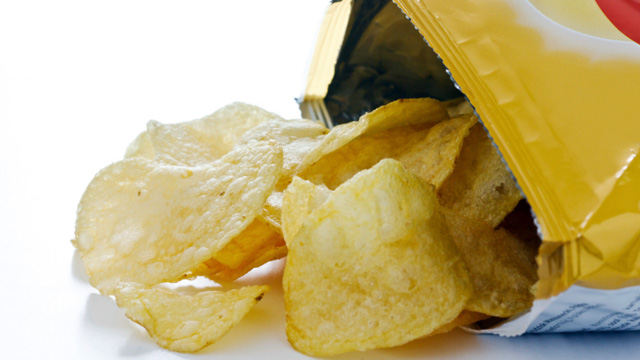
"content": "\u003cfigure id=\"attachment_74747\" class=\"wp-caption aligncenter\" style=\"max-width: 640px\">\u003ca href=\"http://ww2.kqed.org/bayareabites/wp-content/uploads/sites/24/2013/12/potatochips.jpg\">\u003cimg src=\"http://ww2.kqed.org/bayareabites/wp-content/uploads/sites/24/2013/12/potatochips.jpg\" alt=\"Potato chips. Photo: Getty Images\" width=\"640\" height=\"360\" class=\"size-full wp-image-74747\">\u003c/a>\u003cfigcaption class=\"wp-caption-text\">Potato chips. Photo: Getty Images\u003c/figcaption>\u003c/figure>\n\u003cp>\u003cstrong>Listen to KQED's Forum: Should Food Stamp Users be Blocked from Buying Junk Food?\u003c/strong>\u003cbr>\n\u003ca href=\"http://www.kqed.org/a/forum/R201312030900\">Original Broadcast\u003c/a>:\u003cbr>\nTue, Dec 3, 2013 -- 9:00 AM\u003cbr>\n [audio src=\"http://www.kqed.org/.stream/anon/radio/forum/2013/12/20131203aforum.mp3\"]\u003cbr>\nThe federal food stamp program, known as SNAP, supports one in seven Americans at a cost of around $80 billion each year. With almost 70 percent of adult Americans overweight, some nutrition advocates want to prohibit SNAP recipients from using food stamps to purchase junk food such as soda and chips. Opponents say that such restrictions would unfairly target the poor and limit their food options. KQED's Forum discusses the issue.\u003c/p>\n\u003cul>\n\u003cstrong>Host:\u003c/strong> Michael Krasny\n\u003cp>\u003cstrong>Guests:\u003c/strong>\u003c/p>\n\u003cli>Carolyn Lochhead, Washington correspondent for the San Francisco Chronicle\u003c/li>\n\u003cli>Jessica Bartholow, legislative advocate at the Western Center on Law and Poverty\u003c/li>\n\u003cli>Michele Simon, public health lawyer, president of the consulting firm Eat, Drink, Politics, and author of \"Appetite for Profit: How the Food Industry Undermines Our Health and How to Fight Back\"\u003c/li>\n\u003c/ul>\n\u003cul>\n\u003cstrong>More info:\u003c/strong>\n\u003cli>\u003ca href=\"http://dcentric.wamu.org/2011/05/snap-wic-ebt-whats-the-difference/\">SNAP, WIC, EBT -- What's the Difference\u003c/a> : WAMU.org\u003c/li>\n\u003cli>\u003ca href=\"http://www.eatdrinkpolitics.com/wp-content/uploads/FoodStampsFollowtheMoneySimon.pdf\">Food Stamps: Follow the Money - Are Corporations Profiting from Hungry Americans?\u003c/a> : Report by Michele Simon\u003c/li>\n\u003cli>\u003ca href=\"http://www.sfgate.com/default/article/Major-split-over-buying-junk-food-with-federal-aid-5026595.php#page-2\">Major Split Over Buying Junk Food With Federal Aid\u003c/a> : SFGate.com\u003c/li>\n\u003c/ul>\n\u003cp>[ad fullwidth]\u003c/p>\u003cp>\u003c/p>\n",
"disqusIdentifier": "74746 http://blogs.kqed.org/bayareabites/?p=74746",
"disqusUrl": "https://ww2.kqed.org/bayareabites/2013/12/09/kqeds-forum-should-food-stamp-users-be-blocked-from-buying-junk-food/",
"stats": {
"hasVideo": false,
"hasChartOrMap": false,
"hasAudio": true,
"hasPolis": false,
"wordCount": 210,
"hasGoogleForm": false,
"hasGallery": false,
"hasHearkenModule": false,
"iframeSrcs": [],
"paragraphCount": 4
},
"modified": 1386622151,
"excerpt": "The federal food stamp program, known as SNAP, supports one in seven Americans at a cost of around $80 billion each year. With almost 70 percent of adult Americans overweight, some nutrition advocates want to prohibit SNAP recipients from using food stamps to purchase junk food such as soda and chips. Opponents say that such restrictions would unfairly target the poor and limit their food options. KQED's Forum discusses the issue.",
"headData": {
"twImgId": "",
"twTitle": "",
"ogTitle": "",
"ogImgId": "",
"twDescription": "",
"description": "The federal food stamp program, known as SNAP, supports one in seven Americans at a cost of around $80 billion each year. With almost 70 percent of adult Americans overweight, some nutrition advocates want to prohibit SNAP recipients from using food stamps to purchase junk food such as soda and chips. Opponents say that such restrictions would unfairly target the poor and limit their food options. KQED's Forum discusses the issue.",
"title": "KQED's Forum: Should Food Stamp Users be Blocked from Buying Junk Food? | KQED",
"ogDescription": "",
"schema": {
"@context": "https://schema.org",
"@type": "Article",
"headline": "KQED's Forum: Should Food Stamp Users be Blocked from Buying Junk Food?",
"datePublished": "2013-12-09T12:49:11-08:00",
"dateModified": "2013-12-09T12:49:11-08:00",
"image": "https://cdn.kqed.org/wp-content/uploads/2020/02/KQED-OG-Image@1x.png"
}
},
"guestAuthors": [],
"slug": "kqeds-forum-should-food-stamp-users-be-blocked-from-buying-junk-food",
"status": "publish",
"path": "/bayareabites/74746/kqeds-forum-should-food-stamp-users-be-blocked-from-buying-junk-food",
"audioUrl": "http://www.kqed.org/.stream/anon/radio/forum/2013/12/20131203aforum.mp3",
"audioDuration": null,
"audioTrackLength": null,
"parsedContent": [
{
"type": "contentString",
"content": "\u003cdiv class=\"post-body\">\u003cp>\u003cfigure id=\"attachment_74747\" class=\"wp-caption aligncenter\" style=\"max-width: 640px\">\u003ca href=\"http://ww2.kqed.org/bayareabites/wp-content/uploads/sites/24/2013/12/potatochips.jpg\">\u003cimg src=\"http://ww2.kqed.org/bayareabites/wp-content/uploads/sites/24/2013/12/potatochips.jpg\" alt=\"Potato chips. Photo: Getty Images\" width=\"640\" height=\"360\" class=\"size-full wp-image-74747\">\u003c/a>\u003cfigcaption class=\"wp-caption-text\">Potato chips. Photo: Getty Images\u003c/figcaption>\u003c/figure>\n\u003cp>\u003cstrong>Listen to KQED's Forum: Should Food Stamp Users be Blocked from Buying Junk Food?\u003c/strong>\u003cbr>\n\u003ca href=\"http://www.kqed.org/a/forum/R201312030900\">Original Broadcast\u003c/a>:\u003cbr>\nTue, Dec 3, 2013 -- 9:00 AM\u003cbr>\n \u003c/p>\u003c/div>",
"attributes": {
"named": {},
"numeric": []
}
},
{
"type": "component",
"content": "",
"name": "audio",
"attributes": {
"named": {
"src": "http://www.kqed.org/.stream/anon/radio/forum/2013/12/20131203aforum.mp3",
"label": ""
},
"numeric": []
}
},
{
"type": "contentString",
"content": "\u003cdiv class=\"post-body\">\u003cp>\u003cbr>\nThe federal food stamp program, known as SNAP, supports one in seven Americans at a cost of around $80 billion each year. With almost 70 percent of adult Americans overweight, some nutrition advocates want to prohibit SNAP recipients from using food stamps to purchase junk food such as soda and chips. Opponents say that such restrictions would unfairly target the poor and limit their food options. KQED's Forum discusses the issue.\u003c/p>\n\u003cul>\n\u003cstrong>Host:\u003c/strong> Michael Krasny\n\u003cp>\u003cstrong>Guests:\u003c/strong>\u003c/p>\n\u003cli>Carolyn Lochhead, Washington correspondent for the San Francisco Chronicle\u003c/li>\n\u003cli>Jessica Bartholow, legislative advocate at the Western Center on Law and Poverty\u003c/li>\n\u003cli>Michele Simon, public health lawyer, president of the consulting firm Eat, Drink, Politics, and author of \"Appetite for Profit: How the Food Industry Undermines Our Health and How to Fight Back\"\u003c/li>\n\u003c/ul>\n\u003cul>\n\u003cstrong>More info:\u003c/strong>\n\u003cli>\u003ca href=\"http://dcentric.wamu.org/2011/05/snap-wic-ebt-whats-the-difference/\">SNAP, WIC, EBT -- What's the Difference\u003c/a> : WAMU.org\u003c/li>\n\u003cli>\u003ca href=\"http://www.eatdrinkpolitics.com/wp-content/uploads/FoodStampsFollowtheMoneySimon.pdf\">Food Stamps: Follow the Money - Are Corporations Profiting from Hungry Americans?\u003c/a> : Report by Michele Simon\u003c/li>\n\u003cli>\u003ca href=\"http://www.sfgate.com/default/article/Major-split-over-buying-junk-food-with-federal-aid-5026595.php#page-2\">Major Split Over Buying Junk Food With Federal Aid\u003c/a> : SFGate.com\u003c/li>\n\u003c/ul>\n\u003cp>\u003c/p>\u003c/div>",
"attributes": {
"named": {},
"numeric": []
}
},
{
"type": "component",
"content": "",
"name": "ad",
"attributes": {
"named": {
"label": "fullwidth"
},
"numeric": [
"fullwidth"
]
}
},
{
"type": "contentString",
"content": "\u003cdiv class=\"post-body\">\u003cp>\u003c/p>\u003cp>\u003c/p>\n\u003c/div>\u003c/p>",
"attributes": {
"named": {},
"numeric": []
}
}
],
"link": "/bayareabites/74746/kqeds-forum-should-food-stamp-users-be-blocked-from-buying-junk-food",
"authors": [
"5014"
],
"categories": [
"bayareabites_3032",
"bayareabites_45",
"bayareabites_2035",
"bayareabites_34",
"bayareabites_181"
],
"tags": [
"bayareabites_10011",
"bayareabites_1325",
"bayareabites_1002",
"bayareabites_2613",
"bayareabites_11838"
],
"featImg": "bayareabites_74747",
"label": "bayareabites"
},
"bayareabites_74829": {
"type": "posts",
"id": "bayareabites_74829",
"meta": {
"index": "posts_1716263798",
"site": "bayareabites",
"id": "74829",
"score": null,
"sort": [
1386271935000
]
},
"parent": 0,
"labelTerm": {
"site": "bayareabites"
},
"blocks": [],
"publishDate": 1386271935,
"format": "aside",
"disqusTitle": "Fast-Food Workers Cry Poverty Wages As McDonald's Buys Luxury Jet",
"title": "Fast-Food Workers Cry Poverty Wages As McDonald's Buys Luxury Jet",
"headTitle": "Bay Area Bites | KQED Food",
"content": "\u003cfigure id=\"attachment_74830\" class=\"wp-caption aligncenter\" style=\"max-width: 1024px\">\u003ca href=\"http://ww2.kqed.org/bayareabites/wp-content/uploads/sites/24/2013/12/wage-rally-5_wide-472bda5cd09019d454ad6ab8eeb8f91f9dab35f9.jpg\">\u003cimg src=\"http://ww2.kqed.org/bayareabites/wp-content/uploads/sites/24/2013/12/wage-rally-5_wide-472bda5cd09019d454ad6ab8eeb8f91f9dab35f9-1024x575.jpg\" alt=\"Fast-food workers march toward the Smithsonian's National Air and Space Museum in Washington, D.C., on Thursday. Similar rallies occurred in about 100 cities across the U.S. Photo: Morgan Walker/NPR\" width=\"1024\" height=\"575\" class=\"size-large wp-image-74830\">\u003c/a>\u003cfigcaption class=\"wp-caption-text\">Fast-food workers march toward the Smithsonian's National Air and Space Museum in Washington, D.C., on Thursday. Similar rallies occurred in about 100 cities across the U.S. Photo: Morgan Walker/NPR\u003c/figcaption>\u003c/figure>\n\u003cp>Post by Allison Aubrey, \u003ca href=\"http://www.npr.org/blogs/thesalt/2013/12/03/248567592/fast-food-workers-cry-poverty-wages-as-mcdonalds-buys-luxury-jet\">The Salt at NPR Food\u003c/a> (12/5/13)\u003c/p>\n\u003cp>When you're making eight bucks an hour, which is pretty typical in the fast-food industry, it's tough to make ends meet.\u003c/p>\n\u003cp>And increasingly, the working poor are asking this question: Why am I living in poverty, even when I'm working full time?\u003c/p>\n\u003cp>That's the message that thousands of fast-food workers rallying Thursday in about 100 U.S. cities — from Oakland to Memphis to Washington, D.C. — want heard. A \u003ca href=\"http://livingwage.mit.edu/counties/11001\">living wage\u003c/a> in big cities is closer to $14 an hour, and it jumps to about $20 an hour for an adult supporting a child.\u003c/p>\n\u003cp>The protests are part of a growing campaign backed by a coalition of advocacy groups, religious organizations and union organizers aimed at raising fast-food wages to $15 an hour.\u003c/p>\n\u003cp>[ad fullwidth]\u003c/p>\n\u003cp>At at time when the fastest-growing jobs in the U.S. economy are also the lowest-paid, the issue of income inequality is on the lips of leaders worldwide.\u003c/p>\n\u003cfigure id=\"attachment_74831\" class=\"wp-caption alignleft\" style=\"max-width: 290px\">\u003ca href=\"http://ww2.kqed.org/bayareabites/wp-content/uploads/sites/24/2013/12/wage-rally-6-a034999f8db4aa830d1073d5c6915b234f6150b4.jpg\">\u003cimg src=\"http://ww2.kqed.org/bayareabites/wp-content/uploads/sites/24/2013/12/wage-rally-6-a034999f8db4aa830d1073d5c6915b234f6150b4-290x217.jpg\" alt=\"Amal Mimish, an organizer with Good Jobs Nation, registers protesters at the fast-food-workers' rally in Washington, D.C., on Thursday. Photo: Morgan Walker/NPR\" width=\"290\" height=\"217\" class=\"size-medium wp-image-74831\">\u003c/a>\u003cfigcaption class=\"wp-caption-text\">Amal Mimish, an organizer with Good Jobs Nation, registers protesters at the fast-food-workers' rally in Washington, D.C., on Thursday. Photo: Morgan Walker/NPR\u003c/figcaption>\u003c/figure>\n\u003cp>From the \u003ca href=\"http://www.washingtonpost.com/business/economy/pope-francis-denounces-trickle-down-economic-theories-in-critique-of-inequality/2013/11/26/e17ffe4e-56b6-11e3-8304-caf30787c0a9_story.html\">remarks by Pope Francis\u003c/a> a few weeks back to President Obama's \u003ca href=\"http://www.npr.org/blogs/thetwo-way/2013/12/04/248803175/income-inequality-challenge-of-our-time-obama-says\">speech\u003c/a> Wednesday, it's clear that there's growing unease about the divide between the haves and the have-nots.\u003c/p>\n\u003cp>And the image problem for the fast-food industry is exemplified by \u003ca href=\"http://action.ourfuture.org/p/dia/action3/common/public/?action_KEY=249&utm_source=self&utm_Medium=email&utm_Campaign=blst2\">this online petition\u003c/a> urging McDonald's chief executive officer, Donald Thompson, to cancel his order for another corporate jet until he pays all his employees a decent wage.\u003c/p>\n\u003cp>According to the petition, McDonald's \u003ca href=\"http://www.businessinsider.com/mcdonalds-and-starbucks-buy-jets-2013-10\">just bought\u003c/a> a $35 million luxury Bombardier jet for its corporate executives. Yet many of the company's employees make so little that they rely on public assistance to get by.\u003ca href=\"http://www.businessinsider.com/mcdonalds-and-starbucks-buy-jets-2013-10\">\u003c/a>\u003c/p>\n\u003cp>\"It's not right to impoverish your employees while sailing above them at a rate of $2,500 an hour,\" reads the petition started by the \u003ca href=\"http://ourfuture.org/\">Campaign For America's Future\u003c/a>. \"It's immoral to do it with a taxpayer subsidy.\"\u003c/p>\n\u003cp>In a recent \u003ca href=\"http://ww2.kqed.org/bayareabites/2013/10/16/why-u-s-taxpayers-pay-7-billion-a-year-to-help-fast-food-workers/\">study\u003c/a>, economists at the University of California, Berkeley, found that 52 percent of fast-food workers rely on taxpayer-funded public assistance programs, such as food stamps or Medicaid.\u003c/p>\n\u003cp>\"Taxpayers are subsidizing the low-wage model of these employers, who are making record profits in some cases,\" says \u003ca href=\"https://new.sipa.columbia.edu/faculty/dorian-warren\">Dorian Warren\u003c/a>, an associate professor at Columbia University who studies income inequality.\u003c/p>\n\u003cp>McDonald's didn't comment on the new round of protests Thursday. But back in October, a company spokeswoman \u003ca href=\"http://www.npr.org/blogs/thesalt/2013/10/11/232077122/mcdonalds-president-was-caught-off-guard-by-low-wage-single-mom\">told\u003c/a> The Salt that McDonald's history is full of examples of individuals who worked their first job with the company and then went on to have successful careers — both within and outside of McDonald's.\u003c/p>\n\u003cp>As for the push from workers for higher hourly wages, McDonald's \"does not determine wages set by our more than 3,000 U.S. franchises,\" a spokeswoman for the company says.\u003c/p>\n\u003cp>But at the restaurants run by the company — fewer than 10 percent of the roughly 14,000 McDonald's outlets in the U.S. — the spokeswoman explains, \"we pay salaries that begin at minimum wage, but range up from that figure, depending on the job and employee's experience level.\"\u003c/p>\n\u003cp>And according to an analysis by the financial information company \u003ca href=\"https://www.sageworks.com/\">Sageworks\u003c/a>, many franchise operators are seeing significant increases in sales revenue.\u003c/p>\n\u003cp>Over the past four years, privately held fast-food restaurants have seen profit margins nearly double, Sageworks found, while the restaurants' labor costs have remained flat.\u003c/p>\n\u003cp>So what will it take to push up wages? Depends on whom you ask.\u003c/p>\n\u003cp>Increasingly, politicians are under pressure to raise the federal minimum wage. The president made his case Thursday. And already, a patchwork of state and municipal pay hikes have been passed. For instance, New Jersey passed a ballot initiative to \u003ca href=\"http://www.raisetheminimumwage.com/media-center/entry/voters-approve-minimum-wage-increases-in-new-jersey-and-seatac-wa/\">raise its minimum wage\u003c/a> by $1 to $8.25 an hour. And many workers in the city of SeaTac, Wash. — home to the Seattle airport — will get a raise to $15 an hour.\u003c/p>\n\u003cp>\"The federal minimum wage has lagged behind the rising cost of living for the past four decades,\" says \u003ca href=\"http://www.nelp.org/site/about_us/policy_analyst8\">Jack Temple\u003c/a> of the National Employment Law Project.\u003c/p>\n\u003cp>According to \u003ca href=\"http://www.raisetheminimumwage.com/\">Raise The Minimum Wage\u003c/a>, a project of the National Employment Law Project, the minimum wage would be $10.74 if it had kept up with inflation over the past 40 years.\u003c/p>\n\u003cp>\"Workers' backs are against the wall,\" Temple says.\u003c/p>\n\u003cp>But not everyone agrees that raising the federal minimum wage will fix the problem. \"I would oppose raising the minimum wage to $15 an hour,\" says \u003ca href=\"http://www.aei.org/scholar/michael-r-strain/\">Michael Strain\u003c/a> of the American Enterprise Institute.\u003c/p>\n\u003cp>Such a hike in wages would lead to higher prices at the fast-food counter for all of us, Strain says, and employers would hold back on hiring. In addition, fast-food chains might replace people with new automated technology, which could be cheaper over time, he says.\u003c/p>\n\u003cp>Strain favors responses that wouldn't put the onus on business owners, such as an expansion of the \u003ca href=\"http://www.irs.gov/Individuals/EITC-Home-Page--It%E2%80%99s-easier-than-ever-to-find-out-if-you-qualify-for-EITC\">earned income tax credit\u003c/a> or other subsidies.\u003c/p>\n\u003cp>Otherwise, free market economists say, low-skill workers run the risk of being priced out of the job market.\u003c/p>\n\u003cp>It's true that the fast-food industry has given lots of young workers a start in the job market. In fact, the current CEO of McDonald's started behind the counter of a Michigan McDonald's decades ago.\u003c/p>\n\u003cp>But at a time when \u003ca href=\"http://www.cepr.net/index.php/blogs/cepr-blog/slow-progress-for-fast-food-workers\">70 percent\u003c/a> of fast-food workers are in their 20s or older and one-quarter are raising children, the demands for higher wages are growing. \u003c/p>\n\u003cp>\u003c/p>\n\u003cp>\u003cem>Copyright 2013 \u003ca href=\"http://www.npr.org/\">NPR\u003c/a>.\u003c/em> \u003c/p>\n\n",
"disqusIdentifier": "74829 http://blogs.kqed.org/bayareabites/?p=74829",
"disqusUrl": "https://ww2.kqed.org/bayareabites/2013/12/05/fast-food-workers-cry-poverty-wages-as-mcdonalds-buys-luxury-jet/",
"stats": {
"hasVideo": false,
"hasChartOrMap": false,
"hasAudio": false,
"hasPolis": false,
"wordCount": 990,
"hasGoogleForm": false,
"hasGallery": false,
"hasHearkenModule": false,
"iframeSrcs": [],
"paragraphCount": 31
},
"modified": 1386271935,
"excerpt": "Thousands of restaurant workers protested Thursday in cities around the country, calling for an increase in wages to $15 an hour. Many fast-food workers make so little that they rely on public assistance to get by, even as profits at many franchises have nearly doubled in recent years. But not everyone agrees that raising the minimum wage will fix the problem.",
"headData": {
"twImgId": "",
"twTitle": "",
"ogTitle": "",
"ogImgId": "",
"twDescription": "",
"description": "Thousands of restaurant workers protested Thursday in cities around the country, calling for an increase in wages to $15 an hour. Many fast-food workers make so little that they rely on public assistance to get by, even as profits at many franchises have nearly doubled in recent years. But not everyone agrees that raising the minimum wage will fix the problem.",
"title": "Fast-Food Workers Cry Poverty Wages As McDonald's Buys Luxury Jet | KQED",
"ogDescription": "",
"schema": {
"@context": "https://schema.org",
"@type": "Article",
"headline": "Fast-Food Workers Cry Poverty Wages As McDonald's Buys Luxury Jet",
"datePublished": "2013-12-05T11:32:15-08:00",
"dateModified": "2013-12-05T11:32:15-08:00",
"image": "https://cdn.kqed.org/wp-content/uploads/2020/02/KQED-OG-Image@1x.png"
}
},
"guestAuthors": [],
"slug": "fast-food-workers-cry-poverty-wages-as-mcdonalds-buys-luxury-jet",
"status": "publish",
"nprApiLink": "http://api.npr.org/query?id=248567592&apiKey=MDAxOTAwOTE4MDEyMTkxMDAzNjczZDljZA004",
"nprByline": "Allison Aubrey",
"nprStoryDate": "Thu, 05 Dec 2013 13:23:00 -0500",
"nprLastModifiedDate": "Thu, 05 Dec 2013 14:17:52 -0500",
"nprHtmlLink": "http://www.npr.org/blogs/thesalt/2013/12/03/248567592/fast-food-workers-cry-poverty-wages-as-mcdonalds-buys-luxury-jet?ft=3&f=248567592",
"nprStoryId": "248567592",
"nprRetrievedStory": "1",
"nprPubDate": "Thu, 05 Dec 2013 14:17:00 -0500",
"path": "/bayareabites/74829/fast-food-workers-cry-poverty-wages-as-mcdonalds-buys-luxury-jet",
"audioTrackLength": null,
"parsedContent": [
{
"type": "contentString",
"content": "\u003cdiv class=\"post-body\">\u003cp>\u003cfigure id=\"attachment_74830\" class=\"wp-caption aligncenter\" style=\"max-width: 1024px\">\u003ca href=\"http://ww2.kqed.org/bayareabites/wp-content/uploads/sites/24/2013/12/wage-rally-5_wide-472bda5cd09019d454ad6ab8eeb8f91f9dab35f9.jpg\">\u003cimg src=\"http://ww2.kqed.org/bayareabites/wp-content/uploads/sites/24/2013/12/wage-rally-5_wide-472bda5cd09019d454ad6ab8eeb8f91f9dab35f9-1024x575.jpg\" alt=\"Fast-food workers march toward the Smithsonian's National Air and Space Museum in Washington, D.C., on Thursday. Similar rallies occurred in about 100 cities across the U.S. Photo: Morgan Walker/NPR\" width=\"1024\" height=\"575\" class=\"size-large wp-image-74830\">\u003c/a>\u003cfigcaption class=\"wp-caption-text\">Fast-food workers march toward the Smithsonian's National Air and Space Museum in Washington, D.C., on Thursday. Similar rallies occurred in about 100 cities across the U.S. Photo: Morgan Walker/NPR\u003c/figcaption>\u003c/figure>\n\u003cp>Post by Allison Aubrey, \u003ca href=\"http://www.npr.org/blogs/thesalt/2013/12/03/248567592/fast-food-workers-cry-poverty-wages-as-mcdonalds-buys-luxury-jet\">The Salt at NPR Food\u003c/a> (12/5/13)\u003c/p>\n\u003cp>When you're making eight bucks an hour, which is pretty typical in the fast-food industry, it's tough to make ends meet.\u003c/p>\n\u003cp>And increasingly, the working poor are asking this question: Why am I living in poverty, even when I'm working full time?\u003c/p>\n\u003cp>That's the message that thousands of fast-food workers rallying Thursday in about 100 U.S. cities — from Oakland to Memphis to Washington, D.C. — want heard. A \u003ca href=\"http://livingwage.mit.edu/counties/11001\">living wage\u003c/a> in big cities is closer to $14 an hour, and it jumps to about $20 an hour for an adult supporting a child.\u003c/p>\n\u003cp>The protests are part of a growing campaign backed by a coalition of advocacy groups, religious organizations and union organizers aimed at raising fast-food wages to $15 an hour.\u003c/p>\n\u003cp>\u003c/p>\u003c/div>",
"attributes": {
"named": {},
"numeric": []
}
},
{
"type": "component",
"content": "",
"name": "ad",
"attributes": {
"named": {
"label": "fullwidth"
},
"numeric": [
"fullwidth"
]
}
},
{
"type": "contentString",
"content": "\u003cdiv class=\"post-body\">\u003cp>\u003c/p>\n\u003cp>At at time when the fastest-growing jobs in the U.S. economy are also the lowest-paid, the issue of income inequality is on the lips of leaders worldwide.\u003c/p>\n\u003cfigure id=\"attachment_74831\" class=\"wp-caption alignleft\" style=\"max-width: 290px\">\u003ca href=\"http://ww2.kqed.org/bayareabites/wp-content/uploads/sites/24/2013/12/wage-rally-6-a034999f8db4aa830d1073d5c6915b234f6150b4.jpg\">\u003cimg src=\"http://ww2.kqed.org/bayareabites/wp-content/uploads/sites/24/2013/12/wage-rally-6-a034999f8db4aa830d1073d5c6915b234f6150b4-290x217.jpg\" alt=\"Amal Mimish, an organizer with Good Jobs Nation, registers protesters at the fast-food-workers' rally in Washington, D.C., on Thursday. Photo: Morgan Walker/NPR\" width=\"290\" height=\"217\" class=\"size-medium wp-image-74831\">\u003c/a>\u003cfigcaption class=\"wp-caption-text\">Amal Mimish, an organizer with Good Jobs Nation, registers protesters at the fast-food-workers' rally in Washington, D.C., on Thursday. Photo: Morgan Walker/NPR\u003c/figcaption>\u003c/figure>\n\u003cp>From the \u003ca href=\"http://www.washingtonpost.com/business/economy/pope-francis-denounces-trickle-down-economic-theories-in-critique-of-inequality/2013/11/26/e17ffe4e-56b6-11e3-8304-caf30787c0a9_story.html\">remarks by Pope Francis\u003c/a> a few weeks back to President Obama's \u003ca href=\"http://www.npr.org/blogs/thetwo-way/2013/12/04/248803175/income-inequality-challenge-of-our-time-obama-says\">speech\u003c/a> Wednesday, it's clear that there's growing unease about the divide between the haves and the have-nots.\u003c/p>\n\u003cp>And the image problem for the fast-food industry is exemplified by \u003ca href=\"http://action.ourfuture.org/p/dia/action3/common/public/?action_KEY=249&utm_source=self&utm_Medium=email&utm_Campaign=blst2\">this online petition\u003c/a> urging McDonald's chief executive officer, Donald Thompson, to cancel his order for another corporate jet until he pays all his employees a decent wage.\u003c/p>\n\u003cp>According to the petition, McDonald's \u003ca href=\"http://www.businessinsider.com/mcdonalds-and-starbucks-buy-jets-2013-10\">just bought\u003c/a> a $35 million luxury Bombardier jet for its corporate executives. Yet many of the company's employees make so little that they rely on public assistance to get by.\u003ca href=\"http://www.businessinsider.com/mcdonalds-and-starbucks-buy-jets-2013-10\">\u003c/a>\u003c/p>\n\u003cp>\"It's not right to impoverish your employees while sailing above them at a rate of $2,500 an hour,\" reads the petition started by the \u003ca href=\"http://ourfuture.org/\">Campaign For America's Future\u003c/a>. \"It's immoral to do it with a taxpayer subsidy.\"\u003c/p>\n\u003cp>In a recent \u003ca href=\"http://ww2.kqed.org/bayareabites/2013/10/16/why-u-s-taxpayers-pay-7-billion-a-year-to-help-fast-food-workers/\">study\u003c/a>, economists at the University of California, Berkeley, found that 52 percent of fast-food workers rely on taxpayer-funded public assistance programs, such as food stamps or Medicaid.\u003c/p>\n\u003cp>\"Taxpayers are subsidizing the low-wage model of these employers, who are making record profits in some cases,\" says \u003ca href=\"https://new.sipa.columbia.edu/faculty/dorian-warren\">Dorian Warren\u003c/a>, an associate professor at Columbia University who studies income inequality.\u003c/p>\n\u003cp>McDonald's didn't comment on the new round of protests Thursday. But back in October, a company spokeswoman \u003ca href=\"http://www.npr.org/blogs/thesalt/2013/10/11/232077122/mcdonalds-president-was-caught-off-guard-by-low-wage-single-mom\">told\u003c/a> The Salt that McDonald's history is full of examples of individuals who worked their first job with the company and then went on to have successful careers — both within and outside of McDonald's.\u003c/p>\n\u003cp>As for the push from workers for higher hourly wages, McDonald's \"does not determine wages set by our more than 3,000 U.S. franchises,\" a spokeswoman for the company says.\u003c/p>\n\u003cp>But at the restaurants run by the company — fewer than 10 percent of the roughly 14,000 McDonald's outlets in the U.S. — the spokeswoman explains, \"we pay salaries that begin at minimum wage, but range up from that figure, depending on the job and employee's experience level.\"\u003c/p>\n\u003cp>And according to an analysis by the financial information company \u003ca href=\"https://www.sageworks.com/\">Sageworks\u003c/a>, many franchise operators are seeing significant increases in sales revenue.\u003c/p>\n\u003cp>Over the past four years, privately held fast-food restaurants have seen profit margins nearly double, Sageworks found, while the restaurants' labor costs have remained flat.\u003c/p>\n\u003cp>So what will it take to push up wages? Depends on whom you ask.\u003c/p>\n\u003cp>Increasingly, politicians are under pressure to raise the federal minimum wage. The president made his case Thursday. And already, a patchwork of state and municipal pay hikes have been passed. For instance, New Jersey passed a ballot initiative to \u003ca href=\"http://www.raisetheminimumwage.com/media-center/entry/voters-approve-minimum-wage-increases-in-new-jersey-and-seatac-wa/\">raise its minimum wage\u003c/a> by $1 to $8.25 an hour. And many workers in the city of SeaTac, Wash. — home to the Seattle airport — will get a raise to $15 an hour.\u003c/p>\n\u003cp>\"The federal minimum wage has lagged behind the rising cost of living for the past four decades,\" says \u003ca href=\"http://www.nelp.org/site/about_us/policy_analyst8\">Jack Temple\u003c/a> of the National Employment Law Project.\u003c/p>\n\u003cp>According to \u003ca href=\"http://www.raisetheminimumwage.com/\">Raise The Minimum Wage\u003c/a>, a project of the National Employment Law Project, the minimum wage would be $10.74 if it had kept up with inflation over the past 40 years.\u003c/p>\n\u003cp>\"Workers' backs are against the wall,\" Temple says.\u003c/p>\n\u003cp>But not everyone agrees that raising the federal minimum wage will fix the problem. \"I would oppose raising the minimum wage to $15 an hour,\" says \u003ca href=\"http://www.aei.org/scholar/michael-r-strain/\">Michael Strain\u003c/a> of the American Enterprise Institute.\u003c/p>\n\u003cp>Such a hike in wages would lead to higher prices at the fast-food counter for all of us, Strain says, and employers would hold back on hiring. In addition, fast-food chains might replace people with new automated technology, which could be cheaper over time, he says.\u003c/p>\n\u003cp>Strain favors responses that wouldn't put the onus on business owners, such as an expansion of the \u003ca href=\"http://www.irs.gov/Individuals/EITC-Home-Page--It%E2%80%99s-easier-than-ever-to-find-out-if-you-qualify-for-EITC\">earned income tax credit\u003c/a> or other subsidies.\u003c/p>\n\u003cp>Otherwise, free market economists say, low-skill workers run the risk of being priced out of the job market.\u003c/p>\n\u003cp>It's true that the fast-food industry has given lots of young workers a start in the job market. In fact, the current CEO of McDonald's started behind the counter of a Michigan McDonald's decades ago.\u003c/p>\n\u003cp>But at a time when \u003ca href=\"http://www.cepr.net/index.php/blogs/cepr-blog/slow-progress-for-fast-food-workers\">70 percent\u003c/a> of fast-food workers are in their 20s or older and one-quarter are raising children, the demands for higher wages are growing. \u003c/p>\n\u003cp>\u003c/p>\n\u003cp>\u003cem>Copyright 2013 \u003ca href=\"http://www.npr.org/\">NPR\u003c/a>.\u003c/em> \u003c/p>\n\n\u003c/div>\u003c/p>",
"attributes": {
"named": {},
"numeric": []
}
}
],
"link": "/bayareabites/74829/fast-food-workers-cry-poverty-wages-as-mcdonalds-buys-luxury-jet",
"authors": [
"byline_bayareabites_74829"
],
"categories": [
"bayareabites_1962",
"bayareabites_50",
"bayareabites_10916",
"bayareabites_2035",
"bayareabites_181"
],
"tags": [
"bayareabites_12104",
"bayareabites_11502",
"bayareabites_9101",
"bayareabites_11505",
"bayareabites_12284",
"bayareabites_10921"
],
"featImg": "bayareabites_74838",
"label": "bayareabites"
},
"bayareabites_74822": {
"type": "posts",
"id": "bayareabites_74822",
"meta": {
"index": "posts_1716263798",
"site": "bayareabites",
"id": "74822",
"score": null,
"sort": [
1386271366000
]
},
"parent": 0,
"labelTerm": {
"site": "bayareabites"
},
"blocks": [],
"publishDate": 1386271366,
"format": "aside",
"disqusTitle": "Loophole Or Workaround? (Food Stamp Edition)",
"title": "Loophole Or Workaround? (Food Stamp Edition)",
"headTitle": "Bay Area Bites | KQED Food",
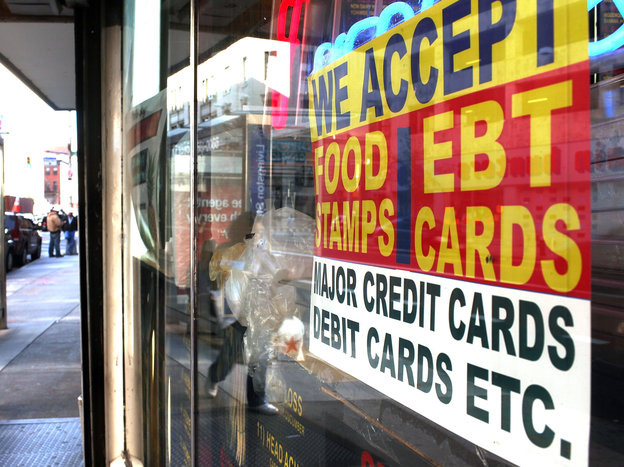
"content": "\u003cfigure id=\"attachment_74823\" class=\"wp-caption aligncenter\" style=\"max-width: 1024px\">\u003ca href=\"http://ww2.kqed.org/bayareabites/wp-content/uploads/sites/24/2013/12/foodstamps_01-76497d286977e9a55d66eada2c9fc3f7d05fdd3e.jpg\">\u003cimg src=\"http://ww2.kqed.org/bayareabites/wp-content/uploads/sites/24/2013/12/foodstamps_01-76497d286977e9a55d66eada2c9fc3f7d05fdd3e-1024x766.jpg\" alt=\"What does it take to qualify for food stamps? Photo: Spencer Platt/Getty Images\" width=\"1024\" height=\"766\" class=\"size-large wp-image-74823\">\u003c/a>\u003cfigcaption class=\"wp-caption-text\">What does it take to qualify for food stamps? Photo: Spencer Platt/Getty Images\u003c/figcaption>\u003c/figure>\n\u003cp>\u003cstrong>Listen to the Story\u003c/strong> on \u003ca href=\"http://www.npr.org/blogs/money/2013/12/04/248718310/loophole-or-workaround-food-stamp-edition\">Morning Edition\u003c/a> [audio src=\"http://pd.npr.org/anon.npr-mp3/npr/me/2013/12/20131204_me_14.mp3\"] \u003c/p>\n\u003cp>Post by \u003ca href=\"http://www.npr.org/people/2100470/pam-fessler\">Pam Fessler\u003c/a>, \u003ca href=\"http://www.npr.org/blogs/money/2013/12/04/248718310/loophole-or-workaround-food-stamp-edition\">Planet Money at NPR\u003c/a> (12/4/13)\u003c/p>\n\u003cp>In the debate over whether to cut the food stamp program, members of Congress are looking at two pretty arcane provisions in the law. People who want to cut food stamps call the provisions loopholes. People who don't want to cut food stamps say they're efficient ways to get benefits to those who need them most.\u003c/p>\n\u003cp>\u003cstrong>1. Categorical Eligibility\u003c/strong>\u003c/p>\n\u003cp>People who qualify for one means-tested program — like welfare — can automatically qualify for other programs — like food stamps. This is called \"categorical eligibility.\"\u003c/p>\n\u003cp>[ad fullwidth]\u003c/p>\n\u003cp>Jessica Shahin, who oversees the food stamp program at the U.S. Department of Agriculture, says this saves states time and money, because they don't have to sign people up twice. \"It simplifies the process for states,\" she says.\u003c/p>\n\u003cp>And besides, says Shahin, people still have to have a very low income — below the poverty line — to actually get the food stamps. (The food stamp program, by the way, is now formally called SNAP.)\u003c/p>\n\u003cp>But Republicans point out that categorical eligibility has allowed states to waive a $2,000 asset limit for food stamps recipients. So someone could have, say, $20,000 in the bank and still get food stamps. They argue that this allows people who don't need benefits to get them.\u003c/p>\n\u003cp>Deborah Carroll, who administers food stamps for 130,000 residents in the District of Columbia, say that's very rare — and it would be prohibitively expensive to verify recipients' assets.\u003c/p>\n\u003cp>\"If we had to do that for everyone, it would cost us two, three, four million dollars more to administer that program for a fraction of the population that may have assets out there that we don't necessarily know about,\" she says.\u003c/p>\n\u003cp>\u003cstrong>2. Heat And Eat\u003c/strong>\u003c/p>\n\u003cp>Low income families who get help paying their utility bills through the federal Low-Income Home Energy Assistance Program (LIHEAP) can automatically qualify for higher food stamp benefits. States have figured out if they give someone just $1 in LIHEAP payments, that person can receive more food stamps — paid for with federal dollars.\u003c/p>\n\u003cp>\"It may be a loophole, but I think it's one that benefits families,\" says Carroll.\u003c/p>\n\u003cp>\u003c/p>\n\u003cp>Lawmakers in both parties want to make this harder for states to do. They say it will save billions of dollars in federal funds.\u003cbr>\n\u003cem>\u003cbr>\n Copyright 2013 \u003ca href=\"http://www.npr.org/\">NPR\u003c/a>.\u003c/em> \u003c/p>\n\n",
"disqusIdentifier": "74822 http://blogs.kqed.org/bayareabites/?p=74822",
"disqusUrl": "https://ww2.kqed.org/bayareabites/2013/12/05/loophole-or-workaround-food-stamp-edition/",
"stats": {
"hasVideo": false,
"hasChartOrMap": false,
"hasAudio": true,
"hasPolis": false,
"wordCount": 439,
"hasGoogleForm": false,
"hasGallery": false,
"hasHearkenModule": false,
"iframeSrcs": [],
"paragraphCount": 16
},
"modified": 1386271366,
"excerpt": "In the debate over whether to cut the food stamp program, members of Congress are looking at two pretty arcane provisions in the law.",
"headData": {
"twImgId": "",
"twTitle": "",
"ogTitle": "",
"ogImgId": "",
"twDescription": "",
"description": "In the debate over whether to cut the food stamp program, members of Congress are looking at two pretty arcane provisions in the law.",
"title": "Loophole Or Workaround? (Food Stamp Edition) | KQED",
"ogDescription": "",
"schema": {
"@context": "https://schema.org",
"@type": "Article",
"headline": "Loophole Or Workaround? (Food Stamp Edition)",
"datePublished": "2013-12-05T11:22:46-08:00",
"dateModified": "2013-12-05T11:22:46-08:00",
"image": "https://cdn.kqed.org/wp-content/uploads/2020/02/KQED-OG-Image@1x.png"
}
},
"guestAuthors": [],
"slug": "loophole-or-workaround-food-stamp-edition",
"status": "publish",
"nprApiLink": "http://api.npr.org/query?id=248718310&apiKey=MDAxOTAwOTE4MDEyMTkxMDAzNjczZDljZA004",
"nprByline": "Pam Fessler",
"nprStoryDate": "Wed, 04 Dec 2013 04:00:00 -0500",
"nprLastModifiedDate": "Wed, 04 Dec 2013 15:40:14 -0500",
"nprHtmlLink": "http://www.npr.org/blogs/money/2013/12/04/248718310/loophole-or-workaround-food-stamp-edition?ft=3&f=248718310",
"nprAudio": "http://pd.npr.org/anon.npr-mp3/npr/me/2013/12/20131204_me_14.mp3?orgId=1&topicId=1014&ft=3&f=248718310",
"nprAudioM3u": "http://api.npr.org/m3u/1248719622-cde034.m3u?orgId=1&topicId=1014&ft=3&f=248718310",
"nprStoryId": "248718310",
"nprRetrievedStory": "1",
"nprPubDate": "Wed, 04 Dec 2013 15:39:00 -0500",
"path": "/bayareabites/74822/loophole-or-workaround-food-stamp-edition",
"audioUrl": "http://pd.npr.org/anon.npr-mp3/npr/me/2013/12/20131204_me_14.mp3?orgId=1&topicId=1014&ft=3&f=248718310",
"audioDuration": null,
"audioTrackLength": null,
"parsedContent": [
{
"type": "contentString",
"content": "\u003cdiv class=\"post-body\">\u003cp>\u003cfigure id=\"attachment_74823\" class=\"wp-caption aligncenter\" style=\"max-width: 1024px\">\u003ca href=\"http://ww2.kqed.org/bayareabites/wp-content/uploads/sites/24/2013/12/foodstamps_01-76497d286977e9a55d66eada2c9fc3f7d05fdd3e.jpg\">\u003cimg src=\"http://ww2.kqed.org/bayareabites/wp-content/uploads/sites/24/2013/12/foodstamps_01-76497d286977e9a55d66eada2c9fc3f7d05fdd3e-1024x766.jpg\" alt=\"What does it take to qualify for food stamps? Photo: Spencer Platt/Getty Images\" width=\"1024\" height=\"766\" class=\"size-large wp-image-74823\">\u003c/a>\u003cfigcaption class=\"wp-caption-text\">What does it take to qualify for food stamps? Photo: Spencer Platt/Getty Images\u003c/figcaption>\u003c/figure>\n\u003cp>\u003cstrong>Listen to the Story\u003c/strong> on \u003ca href=\"http://www.npr.org/blogs/money/2013/12/04/248718310/loophole-or-workaround-food-stamp-edition\">Morning Edition\u003c/a> \u003c/p>\u003c/div>",
"attributes": {
"named": {},
"numeric": []
}
},
{
"type": "component",
"content": "",
"name": "audio",
"attributes": {
"named": {
"src": "http://pd.npr.org/anon.npr-mp3/npr/me/2013/12/20131204_me_14.mp3",
"label": ""
},
"numeric": []
}
},
{
"type": "contentString",
"content": "\u003cdiv class=\"post-body\">\u003cp> \u003c/p>\n\u003cp>Post by \u003ca href=\"http://www.npr.org/people/2100470/pam-fessler\">Pam Fessler\u003c/a>, \u003ca href=\"http://www.npr.org/blogs/money/2013/12/04/248718310/loophole-or-workaround-food-stamp-edition\">Planet Money at NPR\u003c/a> (12/4/13)\u003c/p>\n\u003cp>In the debate over whether to cut the food stamp program, members of Congress are looking at two pretty arcane provisions in the law. People who want to cut food stamps call the provisions loopholes. People who don't want to cut food stamps say they're efficient ways to get benefits to those who need them most.\u003c/p>\n\u003cp>\u003cstrong>1. Categorical Eligibility\u003c/strong>\u003c/p>\n\u003cp>People who qualify for one means-tested program — like welfare — can automatically qualify for other programs — like food stamps. This is called \"categorical eligibility.\"\u003c/p>\n\u003cp>\u003c/p>\u003c/div>",
"attributes": {
"named": {},
"numeric": []
}
},
{
"type": "component",
"content": "",
"name": "ad",
"attributes": {
"named": {
"label": "fullwidth"
},
"numeric": [
"fullwidth"
]
}
},
{
"type": "contentString",
"content": "\u003cdiv class=\"post-body\">\u003cp>\u003c/p>\n\u003cp>Jessica Shahin, who oversees the food stamp program at the U.S. Department of Agriculture, says this saves states time and money, because they don't have to sign people up twice. \"It simplifies the process for states,\" she says.\u003c/p>\n\u003cp>And besides, says Shahin, people still have to have a very low income — below the poverty line — to actually get the food stamps. (The food stamp program, by the way, is now formally called SNAP.)\u003c/p>\n\u003cp>But Republicans point out that categorical eligibility has allowed states to waive a $2,000 asset limit for food stamps recipients. So someone could have, say, $20,000 in the bank and still get food stamps. They argue that this allows people who don't need benefits to get them.\u003c/p>\n\u003cp>Deborah Carroll, who administers food stamps for 130,000 residents in the District of Columbia, say that's very rare — and it would be prohibitively expensive to verify recipients' assets.\u003c/p>\n\u003cp>\"If we had to do that for everyone, it would cost us two, three, four million dollars more to administer that program for a fraction of the population that may have assets out there that we don't necessarily know about,\" she says.\u003c/p>\n\u003cp>\u003cstrong>2. Heat And Eat\u003c/strong>\u003c/p>\n\u003cp>Low income families who get help paying their utility bills through the federal Low-Income Home Energy Assistance Program (LIHEAP) can automatically qualify for higher food stamp benefits. States have figured out if they give someone just $1 in LIHEAP payments, that person can receive more food stamps — paid for with federal dollars.\u003c/p>\n\u003cp>\"It may be a loophole, but I think it's one that benefits families,\" says Carroll.\u003c/p>\n\u003cp>\u003c/p>\n\u003cp>Lawmakers in both parties want to make this harder for states to do. They say it will save billions of dollars in federal funds.\u003cbr>\n\u003cem>\u003cbr>\n Copyright 2013 \u003ca href=\"http://www.npr.org/\">NPR\u003c/a>.\u003c/em> \u003c/p>\n\n\u003c/div>\u003c/p>",
"attributes": {
"named": {},
"numeric": []
}
}
],
"link": "/bayareabites/74822/loophole-or-workaround-food-stamp-edition",
"authors": [
"byline_bayareabites_74822"
],
"categories": [
"bayareabites_1962",
"bayareabites_3032",
"bayareabites_10916",
"bayareabites_2035",
"bayareabites_34"
],
"tags": [
"bayareabites_10011",
"bayareabites_12759",
"bayareabites_11838",
"bayareabites_8913"
],
"featImg": "bayareabites_74828",
"label": "bayareabites"
},
"bayareabites_74754": {
"type": "posts",
"id": "bayareabites_74754",
"meta": {
"index": "posts_1716263798",
"site": "bayareabites",
"id": "74754",
"score": null,
"sort": [
1386175772000
]
},
"parent": 0,
"labelTerm": {
"site": "bayareabites"
},
"blocks": [],
"publishDate": 1386175772,
"format": "aside",
"disqusTitle": "Why $7-Per-Gallon Milk Looms Once Again",
"title": "Why $7-Per-Gallon Milk Looms Once Again",
"headTitle": "Bay Area Bites | KQED Food",
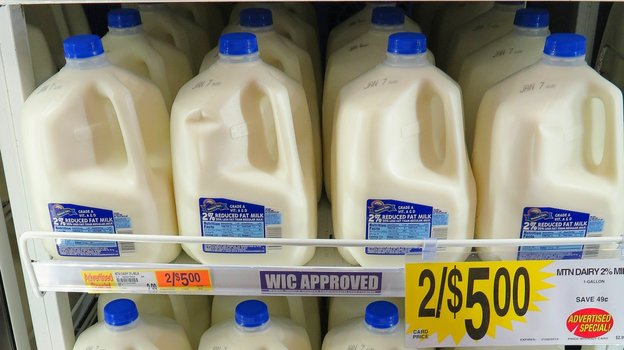
"content": "\u003cfigure id=\"attachment_74755\" class=\"wp-caption aligncenter\" style=\"max-width: 1024px\">\u003ca href=\"http://ww2.kqed.org/bayareabites/wp-content/uploads/sites/24/2013/12/milklandov2_wide-d0c5745374dfab08b0143045455bbae9070a8141.jpg\">\u003cimg src=\"http://ww2.kqed.org/bayareabites/wp-content/uploads/sites/24/2013/12/milklandov2_wide-d0c5745374dfab08b0143045455bbae9070a8141-1024x575.jpg\" alt=\"Sticker shock in the dairy aisle? If the government fails to pass the farm bill, milk prices could spike sometime after the first of the year. Photo: George Frey/Landov\" width=\"1024\" height=\"575\" class=\"size-large wp-image-74755\">\u003c/a>\u003cfigcaption class=\"wp-caption-text\">Sticker shock in the dairy aisle? If the government fails to pass the farm bill, milk prices could spike sometime after the first of the year. Photo: George Frey/Landov\u003c/figcaption>\u003c/figure>\n\u003cp>\u003cstrong>Listen to the Story\u003c/strong> on \u003ca href=\"http://www.npr.org/blogs/thesalt/2013/12/04/248648797/why-7-per-gallon-milk-looms-once-again\">Morning Edition\u003c/a> [audio src=\"http://pd.npr.org/anon.npr-mp3/npr/me/2013/12/20131204_me_13.mp3\"] \u003c/p>\n\u003cp>Post by \u003ca href=\"http://www.npr.org/people/122805042/tamara-keith\">Tamara Keith\u003c/a>, \u003ca href=\"http://www.npr.org/blogs/thesalt/2013/12/04/248648797/why-7-per-gallon-milk-looms-once-again\">The Salt at NPR Food\u003c/a> (12/4/13)\u003c/p>\n\u003cp>The leaders of the House and Senate agriculture committees are meeting Wednesday as they continue to try and work out the differences between their respective farm bills. If they fail, the country faces what's being called the \"dairy cliff\" — with milk prices potentially shooting up to about $7 a gallon sometime after the first of the year.\u003c/p>\n\u003cp>Here's why: The nation's farm policy would be legally required to revert back to what's called permanent law. In the case of dairy, that would be the 1949 farm bill.\u003c/p>\n\u003cp>And if House and Senate negotiators fail to reconcile their farm bills, U.S. Agriculture Secretary Tom Vilsack warns, \"I'm going to be put in a position where I have to invoke and implement permanent law. And I will do my job because that's what I swore an oath to do.\"\u003c/p>\n\u003cp>[ad fullwidth]\u003c/p>\n\u003cp>The problem is that back in 1949, the dairy industry was much smaller and less efficient than the one that exists today, so it received bigger price supports from the federal government. And if U.S. policy reverted to the old law, the government would be forced to go into the marketplace and buy milk, butter and cheese at about double the going rate.\u003c/p>\n\u003cp>Vilsack says this would distort the market: \"So you, as a [milk] producer, would have a choice of selling it to your normal purchaser at $18 or $19 a hundred weight or to USDA at $38 a hundred weight. What do you think producers will do?\"\u003c/p>\n\u003cp>Of course the producers would sell to the government. And that, says Jim Dunn, a professor of agricultural economics at Penn State University, \"would be terrible.\"\u003c/p>\n\u003cp>\"Every refrigerated warehouse in the United States would be full of cheese and butter,\" he says, \"and non-refrigerated milk warehouses would be full of powdered milk.\"\u003c/p>\n\u003cp>And for the rest of us, he says, there would be sticker shock in the dairy aisle.\u003c/p>\n\u003cp>Vilsack says there would be supply issues, too, because the federal government would own the commodities, but there would be shortages in the grocery store. Which is how we'd quickly end up facing milk at $7 a gallon --\"If you can find it,\" notes Vilsack. \"And that is why it is ludicrous for Congress not to get a farm bill done.\"\u003c/p>\n\u003cp>Milk would only be the first commodity affected. Without a farm bill, other commodity prices would spike as well as the year went on, affecting every family in America. Farm policy, often obscure for most consumers, would get personal fast. If this all sounds like illogical and terrible policy — well, that's the point, says Vilsack.\u003c/p>\n\u003cp>\"It's a great lever to compel action,\" he says of the invocation of permanent law that hovers over every farm bill. \"In most cases, it's the reason why we've had fairly routine extensions of the farm bill for the past 50 years.\"\u003c/p>\n\u003cp>Rep. Mike Conaway, a Republican from Texas and a member of the farm bill conference committee, agrees with Vilsack's assessment.\u003c/p>\n\u003cp>\"It's applying pressure to me,\" he notes.\"That's the whole advantage of having permanent law that's as bad as it is: To try to get folks to create the new law that we need for the next five years.\"\u003c/p>\n\u003cp>Now if all this talk about a dairy cliff \u003ca href=\"http://www.npr.org/blogs/thesalt/2012/12/05/166513348/milk-producers-peer-over-the-dairy-cliff\">sounds familiar\u003c/a>, that's because it is: Last year, lawmakers narrowly avoided triggering those 1949 price supports by tucking a \u003ca href=\"http://online.wsj.com/news/articles/SB10001424127887323320404578215652575653978\">temporary extension\u003c/a> of the 2008 farm bill into last-minute legislation that avoided the fiscal cliff.\u003c/p>\n\u003cp>This year, efforts to pass a new five-year farm bill have fallen into some of the same philosophical fights about the role of government that have gummed up the budget process on Capitol Hill — and just about everything else. \u003c/p>\n\u003cp>\u003c/p>\n\u003cp>\u003cem>Copyright 2013 \u003ca href=\"http://www.npr.org/\">NPR\u003c/a>.\u003c/em> \u003c/p>\n\n",
"disqusIdentifier": "74754 http://blogs.kqed.org/bayareabites/?p=74754",
"disqusUrl": "https://ww2.kqed.org/bayareabites/2013/12/04/why-7-per-gallon-milk-looms-once-again/",
"stats": {
"hasVideo": false,
"hasChartOrMap": false,
"hasAudio": true,
"hasPolis": false,
"wordCount": 707,
"hasGoogleForm": false,
"hasGallery": false,
"hasHearkenModule": false,
"iframeSrcs": [],
"paragraphCount": 20
},
"modified": 1386175772,
"excerpt": "House and Senate negotiators are meeting to reconcile their two different versions of a new farm bill. If they don't reach agreement, the nation faces going over \"the dairy cliff\" – a reversion to 1949 farm policy that would cause a big spike in milk prices.",
"headData": {
"twImgId": "",
"twTitle": "",
"ogTitle": "",
"ogImgId": "",
"twDescription": "",
"description": "House and Senate negotiators are meeting to reconcile their two different versions of a new farm bill. If they don't reach agreement, the nation faces going over "the dairy cliff" – a reversion to 1949 farm policy that would cause a big spike in milk prices.",
"title": "Why $7-Per-Gallon Milk Looms Once Again | KQED",
"ogDescription": "",
"schema": {
"@context": "https://schema.org",
"@type": "Article",
"headline": "Why $7-Per-Gallon Milk Looms Once Again",
"datePublished": "2013-12-04T08:49:32-08:00",
"dateModified": "2013-12-04T08:49:32-08:00",
"image": "https://cdn.kqed.org/wp-content/uploads/2020/02/KQED-OG-Image@1x.png"
}
},
"guestAuthors": [],
"slug": "why-7-per-gallon-milk-looms-once-again",
"status": "publish",
"nprApiLink": "http://api.npr.org/query?id=248648797&apiKey=MDAxOTAwOTE4MDEyMTkxMDAzNjczZDljZA004",
"nprByline": "Tamara Keith",
"nprStoryDate": "Wed, 04 Dec 2013 04:00:00 -0500",
"nprLastModifiedDate": "Wed, 04 Dec 2013 10:01:56 -0500",
"nprHtmlLink": "http://www.npr.org/blogs/thesalt/2013/12/04/248648797/why-7-per-gallon-milk-looms-once-again?ft=3&f=248648797",
"nprAudio": "http://pd.npr.org/anon.npr-mp3/npr/me/2013/12/20131204_me_13.mp3?orgId=1&topicId=1053&ft=3&f=248648797",
"nprAudioM3u": "http://api.npr.org/m3u/1248718289-22ea37.m3u?orgId=1&topicId=1053&ft=3&f=248648797",
"nprStoryId": "248648797",
"nprRetrievedStory": "1",
"nprPubDate": "Wed, 04 Dec 2013 10:01:00 -0500",
"path": "/bayareabites/74754/why-7-per-gallon-milk-looms-once-again",
"audioUrl": "http://pd.npr.org/anon.npr-mp3/npr/me/2013/12/20131204_me_13.mp3?orgId=1&topicId=1053&ft=3&f=248648797",
"audioDuration": null,
"audioTrackLength": null,
"parsedContent": [
{
"type": "contentString",
"content": "\u003cdiv class=\"post-body\">\u003cp>\u003cfigure id=\"attachment_74755\" class=\"wp-caption aligncenter\" style=\"max-width: 1024px\">\u003ca href=\"http://ww2.kqed.org/bayareabites/wp-content/uploads/sites/24/2013/12/milklandov2_wide-d0c5745374dfab08b0143045455bbae9070a8141.jpg\">\u003cimg src=\"http://ww2.kqed.org/bayareabites/wp-content/uploads/sites/24/2013/12/milklandov2_wide-d0c5745374dfab08b0143045455bbae9070a8141-1024x575.jpg\" alt=\"Sticker shock in the dairy aisle? If the government fails to pass the farm bill, milk prices could spike sometime after the first of the year. Photo: George Frey/Landov\" width=\"1024\" height=\"575\" class=\"size-large wp-image-74755\">\u003c/a>\u003cfigcaption class=\"wp-caption-text\">Sticker shock in the dairy aisle? If the government fails to pass the farm bill, milk prices could spike sometime after the first of the year. Photo: George Frey/Landov\u003c/figcaption>\u003c/figure>\n\u003cp>\u003cstrong>Listen to the Story\u003c/strong> on \u003ca href=\"http://www.npr.org/blogs/thesalt/2013/12/04/248648797/why-7-per-gallon-milk-looms-once-again\">Morning Edition\u003c/a> \u003c/p>\u003c/div>",
"attributes": {
"named": {},
"numeric": []
}
},
{
"type": "component",
"content": "",
"name": "audio",
"attributes": {
"named": {
"src": "http://pd.npr.org/anon.npr-mp3/npr/me/2013/12/20131204_me_13.mp3",
"label": ""
},
"numeric": []
}
},
{
"type": "contentString",
"content": "\u003cdiv class=\"post-body\">\u003cp> \u003c/p>\n\u003cp>Post by \u003ca href=\"http://www.npr.org/people/122805042/tamara-keith\">Tamara Keith\u003c/a>, \u003ca href=\"http://www.npr.org/blogs/thesalt/2013/12/04/248648797/why-7-per-gallon-milk-looms-once-again\">The Salt at NPR Food\u003c/a> (12/4/13)\u003c/p>\n\u003cp>The leaders of the House and Senate agriculture committees are meeting Wednesday as they continue to try and work out the differences between their respective farm bills. If they fail, the country faces what's being called the \"dairy cliff\" — with milk prices potentially shooting up to about $7 a gallon sometime after the first of the year.\u003c/p>\n\u003cp>Here's why: The nation's farm policy would be legally required to revert back to what's called permanent law. In the case of dairy, that would be the 1949 farm bill.\u003c/p>\n\u003cp>And if House and Senate negotiators fail to reconcile their farm bills, U.S. Agriculture Secretary Tom Vilsack warns, \"I'm going to be put in a position where I have to invoke and implement permanent law. And I will do my job because that's what I swore an oath to do.\"\u003c/p>\n\u003cp>\u003c/p>\u003c/div>",
"attributes": {
"named": {},
"numeric": []
}
},
{
"type": "component",
"content": "",
"name": "ad",
"attributes": {
"named": {
"label": "fullwidth"
},
"numeric": [
"fullwidth"
]
}
},
{
"type": "contentString",
"content": "\u003cdiv class=\"post-body\">\u003cp>\u003c/p>\n\u003cp>The problem is that back in 1949, the dairy industry was much smaller and less efficient than the one that exists today, so it received bigger price supports from the federal government. And if U.S. policy reverted to the old law, the government would be forced to go into the marketplace and buy milk, butter and cheese at about double the going rate.\u003c/p>\n\u003cp>Vilsack says this would distort the market: \"So you, as a [milk] producer, would have a choice of selling it to your normal purchaser at $18 or $19 a hundred weight or to USDA at $38 a hundred weight. What do you think producers will do?\"\u003c/p>\n\u003cp>Of course the producers would sell to the government. And that, says Jim Dunn, a professor of agricultural economics at Penn State University, \"would be terrible.\"\u003c/p>\n\u003cp>\"Every refrigerated warehouse in the United States would be full of cheese and butter,\" he says, \"and non-refrigerated milk warehouses would be full of powdered milk.\"\u003c/p>\n\u003cp>And for the rest of us, he says, there would be sticker shock in the dairy aisle.\u003c/p>\n\u003cp>Vilsack says there would be supply issues, too, because the federal government would own the commodities, but there would be shortages in the grocery store. Which is how we'd quickly end up facing milk at $7 a gallon --\"If you can find it,\" notes Vilsack. \"And that is why it is ludicrous for Congress not to get a farm bill done.\"\u003c/p>\n\u003cp>Milk would only be the first commodity affected. Without a farm bill, other commodity prices would spike as well as the year went on, affecting every family in America. Farm policy, often obscure for most consumers, would get personal fast. If this all sounds like illogical and terrible policy — well, that's the point, says Vilsack.\u003c/p>\n\u003cp>\"It's a great lever to compel action,\" he says of the invocation of permanent law that hovers over every farm bill. \"In most cases, it's the reason why we've had fairly routine extensions of the farm bill for the past 50 years.\"\u003c/p>\n\u003cp>Rep. Mike Conaway, a Republican from Texas and a member of the farm bill conference committee, agrees with Vilsack's assessment.\u003c/p>\n\u003cp>\"It's applying pressure to me,\" he notes.\"That's the whole advantage of having permanent law that's as bad as it is: To try to get folks to create the new law that we need for the next five years.\"\u003c/p>\n\u003cp>Now if all this talk about a dairy cliff \u003ca href=\"http://www.npr.org/blogs/thesalt/2012/12/05/166513348/milk-producers-peer-over-the-dairy-cliff\">sounds familiar\u003c/a>, that's because it is: Last year, lawmakers narrowly avoided triggering those 1949 price supports by tucking a \u003ca href=\"http://online.wsj.com/news/articles/SB10001424127887323320404578215652575653978\">temporary extension\u003c/a> of the 2008 farm bill into last-minute legislation that avoided the fiscal cliff.\u003c/p>\n\u003cp>This year, efforts to pass a new five-year farm bill have fallen into some of the same philosophical fights about the role of government that have gummed up the budget process on Capitol Hill — and just about everything else. \u003c/p>\n\u003cp>\u003c/p>\n\u003cp>\u003cem>Copyright 2013 \u003ca href=\"http://www.npr.org/\">NPR\u003c/a>.\u003c/em> \u003c/p>\n\n\u003c/div>\u003c/p>",
"attributes": {
"named": {},
"numeric": []
}
}
],
"link": "/bayareabites/74754/why-7-per-gallon-milk-looms-once-again",
"authors": [
"byline_bayareabites_74754"
],
"categories": [
"bayareabites_1962",
"bayareabites_1874",
"bayareabites_10916",
"bayareabites_2035",
"bayareabites_34"
],
"tags": [
"bayareabites_10480",
"bayareabites_12745",
"bayareabites_135",
"bayareabites_1621",
"bayareabites_10921"
],
"featImg": "bayareabites_74760",
"label": "bayareabites"
},
"bayareabites_74524": {
"type": "posts",
"id": "bayareabites_74524",
"meta": {
"index": "posts_1716263798",
"site": "bayareabites",
"id": "74524",
"score": null,
"sort": [
1385510461000
]
},
"parent": 0,
"labelTerm": {
"site": "bayareabites"
},
"blocks": [],
"publishDate": 1385510461,
"format": "aside",
"disqusTitle": "Al Gore Goes Vegan, Following In Footsteps Of Bill Clinton",
"title": "Al Gore Goes Vegan, Following In Footsteps Of Bill Clinton",
"headTitle": "Bay Area Bites | KQED Food",
"content": "\u003cp>Post by Eliza Barclay, \u003ca href=\"http://www.npr.org/blogs/thesalt/2013/11/26/247330160/al-gore-goes-vegan-following-in-footsteps-of-bill-clinton\">The Salt at NPR Food\u003c/a> (11/26/13)\u003c/p>\n\u003cfigure id=\"attachment_74525\" class=\"wp-caption alignleft\" style=\"max-width: 290px\">\u003ca href=\"http://ww2.kqed.org/bayareabites/wp-content/uploads/sites/24/2013/11/gore-282bdc167c74912938e41bfa38c92d8c8e3b6aa1.jpg\">\u003cimg src=\"http://ww2.kqed.org/bayareabites/wp-content/uploads/sites/24/2013/11/gore-282bdc167c74912938e41bfa38c92d8c8e3b6aa1-290x217.jpg\" alt=\"Former Vice President Al Gore has reportedly gone vegan. Photo: Mark Lennihan/AP\" width=\"290\" height=\"217\" class=\"size-medium wp-image-74525\">\u003c/a>\u003cfigcaption class=\"wp-caption-text\">Former Vice President Al Gore has reportedly gone vegan. Photo: Mark Lennihan/AP\u003c/figcaption>\u003c/figure>\n\u003cp>The decision to give up entire food groups can be a radical attempt to reform an unhealthy diet, as former President Bill Clinton demonstrated when he revealed in 2011 \u003ca href=\"http://www.npr.org/blogs/health/2011/08/20/139782972/bill-clintons-life-as-a-vegan\">that he'd gone vegan\u003c/a>, after heart bypass surgery.\u003c/p>\n\u003cp>But more often in this day and age, eschewing animal products is political.\u003c/p>\n\u003cp>And so that's why we were interested to read that former Vice President Al Gore, one of the world's most famous environmentalists, had — like his former boss — gone vegan, too.\u003c/p>\n\u003cp>The news appeared as a side note in an \u003ca href=\"http://www.forbes.com/sites/ryanmac/2013/11/23/bill-gates-food-fetish-hampton-creek-foods-looks-to-crack-the-egg-industry/\">article\u003c/a> published in \u003cem>Forbes\u003c/em> about Hampton Creek, a San Francisco company that's trying to hawk its plant-based mayonnaise as a tasty alternative to the ubiquitous condiment typically made with eggs. (You can read our own Allison Aubrey's story on the same company \u003ca href=\"http://ww2.kqed.org/bayareabites/2013/06/13/why-bill-gates-is-investing-in-chicken-less-eggs/\">here\u003c/a>.)\u003c/p>\n\u003cp>[ad fullwidth]\u003c/p>\n\u003cp>As reporter Ryan Mac noted, Hampton Creek has attracted significant investment from venture capital firms, and \"newly turned vegan Al Gore is also circling.\" (We tried to verify the newfound veganism with Gore himself, but his Carthage Group family company did not respond to our request for comment.)\u003c/p>\n\u003cp>Gore is, of course, free to eat whatever his heart desires. But since he has previously said that he has been slowly reducing his meat consumption over the past few years because of his concern about climate change, we can only assume that he's gotten more serious (and perhaps guilt-ridden) about how his purchases of meat and dairy products are hurting the planet.\u003c/p>\n\u003cp>In an \u003ca href=\"http://www.youtube.com/watch?v=4bLb23cPd_4\">interview\u003c/a> in 2009, Gore said:\u003c/p>\n\u003cblockquote>\u003cp>\"It's absolutely correct that the growing meat intensity of diets around the world is one of the issues connected to this global crisis, not only because of the CO2 involved but also because of the water consumed in the process.\"\u003c/p>\u003c/blockquote>\n\u003cp>[youtube //www.youtube.com/watch?v=4bLb23cPd_4]\u003c/p>\n\u003cp>Gore has been beating the drum about climate change for decades, but his concern seems to be growing ever deeper. Earlier this week, the public editor of \u003cem>The\u003c/em> \u003cem>New York Times\u003c/em> \u003ca href=\"http://www.nytimes.com/2013/11/24/public-editor/after-changes-how-green-is-the-times.html?adxnnl=1&pagewanted=all&adxnnlx=1385313034-sGaZ0AlRP6cKkdXiSPkwpA\">quoted\u003c/a> Gore as saying, \"The news media should be making this existential crisis the No. 1 topic they cover.\"\u003c/p>\n\u003cp>While veganism probably seems extreme to bacon-and-cheese lovers, Gore is one of many consumers who are seeing the link between their food choices and the destruction of the planet and taking action. There are indicators everywhere, but we've noticed the Meatless Monday movement \u003ca href=\"http://www.npr.org/blogs/thesalt/2013/10/21/239126655/meatless-monday-movement-gets-more-veggies-on-the-menu\">is getting ever\u003c/a> greater traction in the U.S., and even Germany's Oktoberfest now \u003ca href=\"http://www.npr.org/blogs/thesalt/2013/10/04/229181556/meat-drenched-oktoberfest-warms-to-vegans\">caters\u003c/a> to vegans.\u003c/p>\n\u003cp>\u003c/p>\n\u003cp> \u003cem>Copyright 2013 \u003ca href=\"http://www.npr.org/\">NPR\u003c/a>.\u003c/em> \u003c/p>\n\n",
"disqusIdentifier": "74524 http://blogs.kqed.org/bayareabites/?p=74524",
"disqusUrl": "https://ww2.kqed.org/bayareabites/2013/11/26/al-gore-goes-vegan-following-in-footsteps-of-bill-clinton/",
"stats": {
"hasVideo": true,
"hasChartOrMap": false,
"hasAudio": false,
"hasPolis": false,
"wordCount": 452,
"hasGoogleForm": false,
"hasGallery": false,
"hasHearkenModule": false,
"iframeSrcs": [],
"paragraphCount": 15
},
"modified": 1385510461,
"excerpt": "Bill Clinton went vegan as a radical attempt to reform his health. But Gore has been cutting back on meat since 2009, out of concern about the impacts of animal production on climate change.",
"headData": {
"twImgId": "",
"twTitle": "",
"ogTitle": "",
"ogImgId": "",
"twDescription": "",
"description": "Bill Clinton went vegan as a radical attempt to reform his health. But Gore has been cutting back on meat since 2009, out of concern about the impacts of animal production on climate change.",
"title": "Al Gore Goes Vegan, Following In Footsteps Of Bill Clinton | KQED",
"ogDescription": "",
"schema": {
"@context": "https://schema.org",
"@type": "Article",
"headline": "Al Gore Goes Vegan, Following In Footsteps Of Bill Clinton",
"datePublished": "2013-11-26T16:01:01-08:00",
"dateModified": "2013-11-26T16:01:01-08:00",
"image": "https://cdn.kqed.org/wp-content/uploads/2020/02/KQED-OG-Image@1x.png"
}
},
"guestAuthors": [],
"slug": "al-gore-goes-vegan-following-in-footsteps-of-bill-clinton",
"status": "publish",
"nprApiLink": "http://api.npr.org/query?id=247330160&apiKey=MDAxOTAwOTE4MDEyMTkxMDAzNjczZDljZA004",
"nprByline": "Eliza Barclay",
"nprStoryDate": "Tue, 26 Nov 2013 12:21:00 -0500",
"nprLastModifiedDate": "Tue, 26 Nov 2013 16:13:14 -0500",
"nprHtmlLink": "http://www.npr.org/blogs/thesalt/2013/11/26/247330160/al-gore-goes-vegan-following-in-footsteps-of-bill-clinton?ft=3&f=247330160",
"nprStoryId": "247330160",
"nprRetrievedStory": "1",
"nprPubDate": "Tue, 26 Nov 2013 16:13:00 -0500",
"path": "/bayareabites/74524/al-gore-goes-vegan-following-in-footsteps-of-bill-clinton",
"audioTrackLength": null,
"parsedContent": [
{
"type": "contentString",
"content": "\u003cdiv class=\"post-body\">\u003cp>\u003cp>Post by Eliza Barclay, \u003ca href=\"http://www.npr.org/blogs/thesalt/2013/11/26/247330160/al-gore-goes-vegan-following-in-footsteps-of-bill-clinton\">The Salt at NPR Food\u003c/a> (11/26/13)\u003c/p>\n\u003cfigure id=\"attachment_74525\" class=\"wp-caption alignleft\" style=\"max-width: 290px\">\u003ca href=\"http://ww2.kqed.org/bayareabites/wp-content/uploads/sites/24/2013/11/gore-282bdc167c74912938e41bfa38c92d8c8e3b6aa1.jpg\">\u003cimg src=\"http://ww2.kqed.org/bayareabites/wp-content/uploads/sites/24/2013/11/gore-282bdc167c74912938e41bfa38c92d8c8e3b6aa1-290x217.jpg\" alt=\"Former Vice President Al Gore has reportedly gone vegan. Photo: Mark Lennihan/AP\" width=\"290\" height=\"217\" class=\"size-medium wp-image-74525\">\u003c/a>\u003cfigcaption class=\"wp-caption-text\">Former Vice President Al Gore has reportedly gone vegan. Photo: Mark Lennihan/AP\u003c/figcaption>\u003c/figure>\n\u003cp>The decision to give up entire food groups can be a radical attempt to reform an unhealthy diet, as former President Bill Clinton demonstrated when he revealed in 2011 \u003ca href=\"http://www.npr.org/blogs/health/2011/08/20/139782972/bill-clintons-life-as-a-vegan\">that he'd gone vegan\u003c/a>, after heart bypass surgery.\u003c/p>\n\u003cp>But more often in this day and age, eschewing animal products is political.\u003c/p>\n\u003cp>And so that's why we were interested to read that former Vice President Al Gore, one of the world's most famous environmentalists, had — like his former boss — gone vegan, too.\u003c/p>\n\u003cp>The news appeared as a side note in an \u003ca href=\"http://www.forbes.com/sites/ryanmac/2013/11/23/bill-gates-food-fetish-hampton-creek-foods-looks-to-crack-the-egg-industry/\">article\u003c/a> published in \u003cem>Forbes\u003c/em> about Hampton Creek, a San Francisco company that's trying to hawk its plant-based mayonnaise as a tasty alternative to the ubiquitous condiment typically made with eggs. (You can read our own Allison Aubrey's story on the same company \u003ca href=\"http://ww2.kqed.org/bayareabites/2013/06/13/why-bill-gates-is-investing-in-chicken-less-eggs/\">here\u003c/a>.)\u003c/p>\n\u003cp>\u003c/p>\u003c/div>",
"attributes": {
"named": {},
"numeric": []
}
},
{
"type": "component",
"content": "",
"name": "ad",
"attributes": {
"named": {
"label": "fullwidth"
},
"numeric": [
"fullwidth"
]
}
},
{
"type": "contentString",
"content": "\u003cdiv class=\"post-body\">\u003cp>\u003c/p>\n\u003cp>As reporter Ryan Mac noted, Hampton Creek has attracted significant investment from venture capital firms, and \"newly turned vegan Al Gore is also circling.\" (We tried to verify the newfound veganism with Gore himself, but his Carthage Group family company did not respond to our request for comment.)\u003c/p>\n\u003cp>Gore is, of course, free to eat whatever his heart desires. But since he has previously said that he has been slowly reducing his meat consumption over the past few years because of his concern about climate change, we can only assume that he's gotten more serious (and perhaps guilt-ridden) about how his purchases of meat and dairy products are hurting the planet.\u003c/p>\n\u003cp>In an \u003ca href=\"http://www.youtube.com/watch?v=4bLb23cPd_4\">interview\u003c/a> in 2009, Gore said:\u003c/p>\n\u003cblockquote>\u003cp>\"It's absolutely correct that the growing meat intensity of diets around the world is one of the issues connected to this global crisis, not only because of the CO2 involved but also because of the water consumed in the process.\"\u003c/p>\u003c/blockquote>\n\u003cp>\u003c/p>\u003cp>\u003cspan class='utils-parseShortcode-shortcodes-__youtubeShortcode__embedYoutube'>\n \u003cspan class='utils-parseShortcode-shortcodes-__youtubeShortcode__embedYoutubeInside'>\n \u003ciframe\n loading='lazy'\n class='utils-parseShortcode-shortcodes-__youtubeShortcode__youtubePlayer'\n type='text/html'\n src='//www.youtube.com/embed/4bLb23cPd_4'\n title='//www.youtube.com/embed/4bLb23cPd_4'\n allowfullscreen='true'\n style='border:0;'>\u003c/iframe>\n \u003c/span>\n \u003c/span>\u003c/p>\u003cp>\u003c/p>\n\u003cp>Gore has been beating the drum about climate change for decades, but his concern seems to be growing ever deeper. Earlier this week, the public editor of \u003cem>The\u003c/em> \u003cem>New York Times\u003c/em> \u003ca href=\"http://www.nytimes.com/2013/11/24/public-editor/after-changes-how-green-is-the-times.html?adxnnl=1&pagewanted=all&adxnnlx=1385313034-sGaZ0AlRP6cKkdXiSPkwpA\">quoted\u003c/a> Gore as saying, \"The news media should be making this existential crisis the No. 1 topic they cover.\"\u003c/p>\n\u003cp>While veganism probably seems extreme to bacon-and-cheese lovers, Gore is one of many consumers who are seeing the link between their food choices and the destruction of the planet and taking action. There are indicators everywhere, but we've noticed the Meatless Monday movement \u003ca href=\"http://www.npr.org/blogs/thesalt/2013/10/21/239126655/meatless-monday-movement-gets-more-veggies-on-the-menu\">is getting ever\u003c/a> greater traction in the U.S., and even Germany's Oktoberfest now \u003ca href=\"http://www.npr.org/blogs/thesalt/2013/10/04/229181556/meat-drenched-oktoberfest-warms-to-vegans\">caters\u003c/a> to vegans.\u003c/p>\n\u003cp>\u003c/p>\n\u003cp> \u003cem>Copyright 2013 \u003ca href=\"http://www.npr.org/\">NPR\u003c/a>.\u003c/em> \u003c/p>\n\n\u003c/div>\u003c/p>",
"attributes": {
"named": {},
"numeric": []
}
}
],
"link": "/bayareabites/74524/al-gore-goes-vegan-following-in-footsteps-of-bill-clinton",
"authors": [
"byline_bayareabites_74524"
],
"categories": [
"bayareabites_2090",
"bayareabites_4084",
"bayareabites_1245",
"bayareabites_10916",
"bayareabites_2035",
"bayareabites_60"
],
"tags": [
"bayareabites_12736",
"bayareabites_12737",
"bayareabites_836",
"bayareabites_10921",
"bayareabites_1871"
],
"featImg": "bayareabites_74531",
"label": "bayareabites"
},
"bayareabites_74381": {
"type": "posts",
"id": "bayareabites_74381",
"meta": {
"index": "posts_1716263798",
"site": "bayareabites",
"id": "74381",
"score": null,
"sort": [
1385275928000
]
},
"parent": 0,
"labelTerm": {
"site": "bayareabites"
},
"blocks": [],
"publishDate": 1385275928,
"format": "aside",
"disqusTitle": "Pepsi Pressured To Fight Big Sugar's 'Land Grab'",
"title": "Pepsi Pressured To Fight Big Sugar's 'Land Grab'",
"headTitle": "Bay Area Bites | KQED Food",
"content": "\u003cfigure id=\"attachment_74382\" class=\"wp-caption aligncenter\" style=\"max-width: 1673px\">\u003ca href=\"http://ww2.kqed.org/bayareabites/wp-content/uploads/sites/24/2013/11/81821lpr_wide-7ecad925a36ca5ee3e6d39d88a04322ca100200f.jpg\">\u003cimg src=\"http://ww2.kqed.org/bayareabites/wp-content/uploads/sites/24/2013/11/81821lpr_wide-7ecad925a36ca5ee3e6d39d88a04322ca100200f.jpg\" alt=\"Tractors sit on a sugarcane plantation occupying the land of a Guarani-kaiowá indigenous community in Brazil. Photo: Tatiana Cardeal/Courtesy Oxfam\" width=\"1673\" height=\"941\" class=\"size-full wp-image-74382\">\u003c/a>\u003cfigcaption class=\"wp-caption-text\">Tractors sit on a sugarcane plantation occupying the land of a Guarani-kaiowá indigenous community in Brazil. Photo: Tatiana Cardeal/Courtesy Oxfam\u003c/figcaption>\u003c/figure>\n\u003cp>Post by \u003ca href=\"http://www.npr.org/people/143160021/daniel-charles\">Dan Charles\u003c/a>, \u003ca href=\"http://www.npr.org/blogs/thesalt/2013/11/23/246753281/pepsi-pressured-to-fight-big-sugar-s-land-grab\">The Salt at NPR Food\u003c/a> (11/23/13)\u003c/p>\n\u003cp>The anti-poverty group Oxfam is \u003ca href=\"http://www.oxfam.org/en/grow/pressroom/pressrelease/2013-11-22/oxfam-files-shareholder-resolution-urging-pepsico-address-land-grabs\">asking\u003c/a> Pepsi's shareholders to approve a resolution that, if passed, would force the company to disclose its sugar suppliers and investigate whether those suppliers are implicated in \"land grabs\" that unfairly take land from the poor.\u003c/p>\n\u003cp>Pepsi's arch-rival has already announced its own anti-land grab initiative. Earlier this month, Coca-Cola \u003ca href=\"http://assets.coca-colacompany.com/6b/65/7f0d386040fcb4872fa136f05c5c/proposal-to-oxfam-on-land-tenure-and-sugar.pdf\">announced\u003c/a> a new initiative \"to use our influence to help protect the land rights of local communities.\" The company revealed its top three sugar suppliers and promised to launch an independent review of its operations in Brazil, Colombia, Guatemala, India, Philippines, Thailand and South Africa.\u003c/p>\n\u003cp>It's a major success for a \u003ca href=\"http://www.behindthebrands.org/en-us\">campaign\u003c/a> that Oxfam \u003ca href=\"http://ww2.kqed.org/bayareabites/2013/02/26/oxfam-gives-big-food-companies-bad-behavior-grades/\">launched\u003c/a> earlier this year called \"Behind the Brands.\" The campaign attempts to embarrass, cajole and threaten the world's biggest food companies into protecting the environment and treating workers or local communities more fairly.\u003c/p>\n\u003cp>Oxfam has taken particular aim at the sugar industry, with a \u003ca href=\"http://www.oxfam.org/sites/www.oxfam.org/files/bn-sugar-rush-land-supply-chains-food-beverage-companies-021013-en_1.pdf\">report\u003c/a> on land disputes involving large-scale sugar producers in Brazil and Cambodia. In these cases, impoverished local communities blame large sugar producers for forcing them from their traditional lands.\u003c/p>\n\u003cp>[ad fullwidth]\u003c/p>\n\u003cp>There have been many reports of such \"land grabs\" in recent years, as rising food prices have increased investor interest in land around the world. The problem is especially acute in places where people don't have clear legal rights to the land that they depend on for their livelihoods, including many countries in Africa.\u003c/p>\n\u003cp>According to Oxfam, the three agricultural crops most often implicated in land grabs are sugar, soybeans and palm oil. Of the three, sugar production accounts for the most land — 75 million acres, an area the size of Italy.\u003c/p>\n\u003cp>\u003c/p>\n\u003cp>In the U.S., Pepsi and Coke don't rely heavily on sugar, since corn-derived sweeteners are cheaper. But in the rest of the world, sugar remains the sweetener of choice.\u003cbr>\n\u003cem>\u003cbr>\nCopyright 2013 \u003ca href=\"http://www.npr.org/\">NPR\u003c/a>.\u003c/em> \u003c/p>\n\n",
"disqusIdentifier": "74381 http://blogs.kqed.org/bayareabites/?p=74381",
"disqusUrl": "https://ww2.kqed.org/bayareabites/2013/11/23/pepsi-pressured-to-fight-big-sugars-land-grab/",
"stats": {
"hasVideo": false,
"hasChartOrMap": false,
"hasAudio": false,
"hasPolis": false,
"wordCount": 357,
"hasGoogleForm": false,
"hasGallery": false,
"hasHearkenModule": false,
"iframeSrcs": [],
"paragraphCount": 10
},
"modified": 1385275928,
"excerpt": "The anti-poverty group Oxfam is asking Pepsi's shareholders to approve a resolution that, if passed, would force the company to disclose its sugar suppliers and investigate whether those suppliers are implicated in \"land grabs\" that unfairly take land from the poor.",
"headData": {
"twImgId": "",
"twTitle": "",
"ogTitle": "",
"ogImgId": "",
"twDescription": "",
"description": "The anti-poverty group Oxfam is asking Pepsi's shareholders to approve a resolution that, if passed, would force the company to disclose its sugar suppliers and investigate whether those suppliers are implicated in "land grabs" that unfairly take land from the poor.",
"title": "Pepsi Pressured To Fight Big Sugar's 'Land Grab' | KQED",
"ogDescription": "",
"schema": {
"@context": "https://schema.org",
"@type": "Article",
"headline": "Pepsi Pressured To Fight Big Sugar's 'Land Grab'",
"datePublished": "2013-11-23T22:52:08-08:00",
"dateModified": "2013-11-23T22:52:08-08:00",
"image": "https://cdn.kqed.org/wp-content/uploads/2020/02/KQED-OG-Image@1x.png"
}
},
"guestAuthors": [],
"slug": "pepsi-pressured-to-fight-big-sugars-land-grab",
"status": "publish",
"nprApiLink": "http://api.npr.org/query?id=246753281&apiKey=MDAxOTAwOTE4MDEyMTkxMDAzNjczZDljZA004",
"nprByline": "Dan Charles",
"nprStoryDate": "Sat, 23 Nov 2013 13:46:00 -0500",
"nprLastModifiedDate": "Sat, 23 Nov 2013 13:46:06 -0500",
"nprHtmlLink": "http://www.npr.org/blogs/thesalt/2013/11/23/246753281/pepsi-pressured-to-fight-big-sugar-s-land-grab?ft=3&f=246753281",
"nprStoryId": "246753281",
"nprRetrievedStory": "1",
"nprPubDate": "Sat, 23 Nov 2013 13:46:00 -0500",
"path": "/bayareabites/74381/pepsi-pressured-to-fight-big-sugars-land-grab",
"audioTrackLength": null,
"parsedContent": [
{
"type": "contentString",
"content": "\u003cdiv class=\"post-body\">\u003cp>\u003cfigure id=\"attachment_74382\" class=\"wp-caption aligncenter\" style=\"max-width: 1673px\">\u003ca href=\"http://ww2.kqed.org/bayareabites/wp-content/uploads/sites/24/2013/11/81821lpr_wide-7ecad925a36ca5ee3e6d39d88a04322ca100200f.jpg\">\u003cimg src=\"http://ww2.kqed.org/bayareabites/wp-content/uploads/sites/24/2013/11/81821lpr_wide-7ecad925a36ca5ee3e6d39d88a04322ca100200f.jpg\" alt=\"Tractors sit on a sugarcane plantation occupying the land of a Guarani-kaiowá indigenous community in Brazil. Photo: Tatiana Cardeal/Courtesy Oxfam\" width=\"1673\" height=\"941\" class=\"size-full wp-image-74382\">\u003c/a>\u003cfigcaption class=\"wp-caption-text\">Tractors sit on a sugarcane plantation occupying the land of a Guarani-kaiowá indigenous community in Brazil. Photo: Tatiana Cardeal/Courtesy Oxfam\u003c/figcaption>\u003c/figure>\n\u003cp>Post by \u003ca href=\"http://www.npr.org/people/143160021/daniel-charles\">Dan Charles\u003c/a>, \u003ca href=\"http://www.npr.org/blogs/thesalt/2013/11/23/246753281/pepsi-pressured-to-fight-big-sugar-s-land-grab\">The Salt at NPR Food\u003c/a> (11/23/13)\u003c/p>\n\u003cp>The anti-poverty group Oxfam is \u003ca href=\"http://www.oxfam.org/en/grow/pressroom/pressrelease/2013-11-22/oxfam-files-shareholder-resolution-urging-pepsico-address-land-grabs\">asking\u003c/a> Pepsi's shareholders to approve a resolution that, if passed, would force the company to disclose its sugar suppliers and investigate whether those suppliers are implicated in \"land grabs\" that unfairly take land from the poor.\u003c/p>\n\u003cp>Pepsi's arch-rival has already announced its own anti-land grab initiative. Earlier this month, Coca-Cola \u003ca href=\"http://assets.coca-colacompany.com/6b/65/7f0d386040fcb4872fa136f05c5c/proposal-to-oxfam-on-land-tenure-and-sugar.pdf\">announced\u003c/a> a new initiative \"to use our influence to help protect the land rights of local communities.\" The company revealed its top three sugar suppliers and promised to launch an independent review of its operations in Brazil, Colombia, Guatemala, India, Philippines, Thailand and South Africa.\u003c/p>\n\u003cp>It's a major success for a \u003ca href=\"http://www.behindthebrands.org/en-us\">campaign\u003c/a> that Oxfam \u003ca href=\"http://ww2.kqed.org/bayareabites/2013/02/26/oxfam-gives-big-food-companies-bad-behavior-grades/\">launched\u003c/a> earlier this year called \"Behind the Brands.\" The campaign attempts to embarrass, cajole and threaten the world's biggest food companies into protecting the environment and treating workers or local communities more fairly.\u003c/p>\n\u003cp>Oxfam has taken particular aim at the sugar industry, with a \u003ca href=\"http://www.oxfam.org/sites/www.oxfam.org/files/bn-sugar-rush-land-supply-chains-food-beverage-companies-021013-en_1.pdf\">report\u003c/a> on land disputes involving large-scale sugar producers in Brazil and Cambodia. In these cases, impoverished local communities blame large sugar producers for forcing them from their traditional lands.\u003c/p>\n\u003cp>\u003c/p>\u003c/div>",
"attributes": {
"named": {},
"numeric": []
}
},
{
"type": "component",
"content": "",
"name": "ad",
"attributes": {
"named": {
"label": "fullwidth"
},
"numeric": [
"fullwidth"
]
}
},
{
"type": "contentString",
"content": "\u003cdiv class=\"post-body\">\u003cp>\u003c/p>\n\u003cp>There have been many reports of such \"land grabs\" in recent years, as rising food prices have increased investor interest in land around the world. The problem is especially acute in places where people don't have clear legal rights to the land that they depend on for their livelihoods, including many countries in Africa.\u003c/p>\n\u003cp>According to Oxfam, the three agricultural crops most often implicated in land grabs are sugar, soybeans and palm oil. Of the three, sugar production accounts for the most land — 75 million acres, an area the size of Italy.\u003c/p>\n\u003cp>\u003c/p>\n\u003cp>In the U.S., Pepsi and Coke don't rely heavily on sugar, since corn-derived sweeteners are cheaper. But in the rest of the world, sugar remains the sweetener of choice.\u003cbr>\n\u003cem>\u003cbr>\nCopyright 2013 \u003ca href=\"http://www.npr.org/\">NPR\u003c/a>.\u003c/em> \u003c/p>\n\n\u003c/div>\u003c/p>",
"attributes": {
"named": {},
"numeric": []
}
}
],
"link": "/bayareabites/74381/pepsi-pressured-to-fight-big-sugars-land-grab",
"authors": [
"byline_bayareabites_74381"
],
"categories": [
"bayareabites_1874",
"bayareabites_10916",
"bayareabites_2035"
],
"tags": [
"bayareabites_11107",
"bayareabites_11270",
"bayareabites_12725",
"bayareabites_11269",
"bayareabites_11931",
"bayareabites_511",
"bayareabites_10921"
],
"featImg": "bayareabites_74389",
"label": "bayareabites"
},
"bayareabites_74243": {
"type": "posts",
"id": "bayareabites_74243",
"meta": {
"index": "posts_1716263798",
"site": "bayareabites",
"id": "74243",
"score": null,
"sort": [
1385165504000
]
},
"parent": 0,
"labelTerm": {
"site": "bayareabites"
},
"blocks": [],
"publishDate": 1385165504,
"format": "aside",
"disqusTitle": "Organic Farmers Bash FDA Restrictions On Manure Use",
"title": "Organic Farmers Bash FDA Restrictions On Manure Use",
"headTitle": "Bay Area Bites | KQED Food",
"content": "\u003cfigure id=\"attachment_74246\" class=\"wp-caption aligncenter\" style=\"max-width: 1674px\">\u003ca href=\"http://ww2.kqed.org/bayareabites/wp-content/uploads/sites/24/2013/11/1111-danfarm-129_wide-fd2eb5017878ef33b81f5379aa808c60f69fa16b.jpg\">\u003cimg src=\"http://ww2.kqed.org/bayareabites/wp-content/uploads/sites/24/2013/11/1111-danfarm-129_wide-fd2eb5017878ef33b81f5379aa808c60f69fa16b.jpg\" alt=\"Jim Crawford hauls his vegetables to farmers markets in Washington, D.C. Photo: Dan Charles/NPR\" width=\"1674\" height=\"940\" class=\"size-full wp-image-74246\">\u003c/a>\u003cfigcaption class=\"wp-caption-text\">Jim Crawford hauls his vegetables to farmers markets in Washington, D.C. Photo: Dan Charles/NPR\u003c/figcaption>\u003c/figure>\n\u003cp>\u003cstrong>Listen to the Story\u003c/strong> on \u003ca href=\"http://www.npr.org/blogs/thesalt/2013/11/21/246386290/organic-farmers-bash-fda-restrictions-on-manure-use\">Morning Edition\u003c/a> [audio src=\"http://pd.npr.org/anon.npr-mp3/npr/me/2013/11/20131121_me_05.mp3\"] \u003c/p>\n\u003cp>Post by \u003ca href=\"http://www.npr.org/people/143160021/daniel-charles\">Dan Charles\u003c/a>, \u003ca href=\"http://www.npr.org/blogs/thesalt/2013/11/21/246386290/organic-farmers-bash-fda-restrictions-on-manure-use\">The Salt at NPR Food\u003c/a> (11/21/13)\u003c/p>\n\u003cp>Many organic farmers are hopping mad at the U.S. Food and Drug Administration, and their reason involves perhaps the most underappreciated part of agriculture: plant food, aka fertilizer. Specifically, the FDA, as part of its \u003ca href=\"http://www.npr.org/blogs/thesalt/2013/01/04/168607713/fda-to-release-rules-to-strengthen-safety-of-food-supply\">overhaul\u003c/a> of food safety regulations, wants to limit the use of animal manure.\u003c/p>\n\u003cp>\"We think of it as the best thing in the world,\" says organic farmer Jim Crawford, \"and they think of it as toxic and nasty and disgusting.\"\u003c/p>\n\u003cp>Every highly productive farmer depends on fertilizer. But organic farmers are practically obsessive about it, because they've renounced industrial sources of nutrients.\u003c/p>\n\u003cp>[ad fullwidth]\u003c/p>\n\u003cp>So on this crisp fall morning, Crawford is rhapsodic as he watches his field manager, Pearl Wetherall, spread manure across a field where cabbage grew last summer.\u003c/p>\n\u003cp>\"All that green material — that cover crop and the cabbage — all mixed up with that nice black manure that's just rich and full of good microorganisms, and we're going to get a wonderful fertility situation for next spring here,\" he says.\u003c/p>\n\u003cfigure id=\"attachment_74245\" class=\"wp-caption aligncenter\" style=\"max-width: 1536px\">\u003ca href=\"http://ww2.kqed.org/bayareabites/wp-content/uploads/sites/24/2013/11/1111-danfarm-81_slide-19d42b74a360099c56828befbab34fc2e365b473.jpg\">\u003cimg src=\"http://ww2.kqed.org/bayareabites/wp-content/uploads/sites/24/2013/11/1111-danfarm-81_slide-19d42b74a360099c56828befbab34fc2e365b473.jpg\" alt=\"Crawford has been farming organically in south-central Pennsylvania for 40 years. Photo: Dan Charles/NPR\" width=\"1536\" height=\"1023\" class=\"size-full wp-image-74245\">\u003c/a>\u003cfigcaption class=\"wp-caption-text\">Crawford has been farming organically in south-central Pennsylvania for 40 years. Photo: Dan Charles/NPR\u003c/figcaption>\u003c/figure>\n\u003cp>Crawford, founder of \u003ca href=\"http://www.newmorningfarm.net/\">New Morning Farm\u003c/a> in south-central Pennsylvania, buys hundreds of tons of manure every year from a big turkey farm a few miles away. \"It's really at the heart of our operation for having good, rich soil, and good fertility, so that we have the highest-quality crops.\"\u003c/p>\n\u003cp>It's also part of a natural cycle, and the basis of organic farming. Most crops strip vital nutrients from the soil. But the nutrients don't disappear; if you feed those crops to cattle or turkeys, the nutrients mostly end up in manure. For the turkey farmer, the manure is waste. For Crawford, it's precious. \"Cycling nutrients. That's what it's all about. Cycling organic nutrients.\"\u003c/p>\n\u003cp>This is a typical practice among organic farmers, especially the smaller ones. But they may now have to change.\u003c/p>\n\u003cp>The Food and Drug Administration considers manure a food safety risk. Disease-causing microbes, such as salmonella or toxic forms of\u003cem> E. coli\u003c/em>, are commonly found in animal waste.\u003c/p>\n\u003cp>\u003ca href=\"http://www.ars.usda.gov/pandp/people/people.htm?personid=3880\">Patricia Millner\u003c/a>, a microbiologist with the U.S. Department of Agriculture's research center in Beltsville, Md., says scientists are now trying to figure out exactly how long such bacteria survive in the soil. \"In some cases, salmonella will survive for a few weeks; in other cases, it'll be reported that it survives for 300-plus days,\" she says.\u003c/p>\n\u003cfigure id=\"attachment_74247\" class=\"wp-caption alignleft\" style=\"max-width: 290px\">\u003ca href=\"http://ww2.kqed.org/bayareabites/wp-content/uploads/sites/24/2013/11/1111-danfarm-56_slide-ad5d547209f28712729db6d30ab69f846aafa5b4.jpg\">\u003cimg src=\"http://ww2.kqed.org/bayareabites/wp-content/uploads/sites/24/2013/11/1111-danfarm-56_slide-ad5d547209f28712729db6d30ab69f846aafa5b4-290x193.jpg\" alt=\"Pearl Wetherall, field manager at New Morning Farm, spreads manure. Photo: Dan Charles/NPR\" width=\"290\" height=\"193\" class=\"size-medium wp-image-74247\">\u003c/a>\u003cfigcaption class=\"wp-caption-text\">Pearl Wetherall, field manager at New Morning Farm, spreads manure. Photo: Dan Charles/NPR\u003c/figcaption>\u003c/figure>\n\u003cp>When they survive, microbes do get on food. Carrots or radishes, of course, grow right in the soil. But bacteria also end up on salad greens. Raindrops, for instance, splash soil and microbes onto the plants.\u003c/p>\n\u003cp>There's a lot of uncertainty about exactly how big of a risk this is. But the FDA is saying better safe than sorry.\u003c/p>\n\u003cp>The agency is proposing new national \u003ca href=\"http://www.fda.gov/Food/GuidanceRegulation/FSMA/ucm334114.htm\">food safety rules\u003c/a>. If those rules are enacted, when farmers spread raw manure on a field, they won't be allowed to harvest any crops from that field for the next nine months. (This applies only to crops that people eat raw, such as carrots or lettuce.)\u003c/p>\n\u003cp>The rules don't cover the smallest farms. They apply to farms with more than half a million dollars in annual sales, or which supply food to supermarkets.\u003c/p>\n\u003cp>But that includes Crawford's farm.\u003c/p>\n\u003cp>He already follows the organic rules; he doesn't harvest crops within four months of spreading manure. But having to wait nine months — longer than a growing season — would completely disrupt his operations. \"We wouldn't even be able to function,\" he says.\u003c/p>\n\u003cp>There is an alternative: composted manure. The heat from composting kills disease-causing microbes. But Crawford says compost would cost him anywhere from three to six times more than manure. And he just doesn't see why he should have to switch, because he doesn't believe that what he does now is at all risky.\u003c/p>\n\u003cfigure id=\"attachment_74248\" class=\"wp-caption alignleft\" style=\"max-width: 290px\">\u003ca href=\"http://ww2.kqed.org/bayareabites/wp-content/uploads/sites/24/2013/11/1111-danfarm-25_slide-6bb23c7e2dacd5a0f4144e0309da0164006e8324.jpg\">\u003cimg src=\"http://ww2.kqed.org/bayareabites/wp-content/uploads/sites/24/2013/11/1111-danfarm-25_slide-6bb23c7e2dacd5a0f4144e0309da0164006e8324-290x193.jpg\" alt=\"Feeding the chickens at New Morning Farm. Photo: Dan Charles/NPR\" width=\"290\" height=\"193\" class=\"size-medium wp-image-74248\">\u003c/a>\u003cfigcaption class=\"wp-caption-text\">Feeding the chickens at New Morning Farm. Photo: Dan Charles/NPR\u003c/figcaption>\u003c/figure>\n\u003cp>\"No one's ever been sickened by anything we've grown, in probably millions of transactions between us and our customers over 40 years,\" he says. Crawford sells most of his food at farmers markets in Washington, D.C.\u003c/p>\n\u003cp>Yet organic farmers are not united in their opposition to the FDA regulations. There's a divide between large and small producers.\u003c/p>\n\u003cp>\u003ca href=\"https://www.ebfarm.com/\">Earthbound Farm\u003c/a>, in California, is among the biggest organic producers of salad greens. Will Daniel, the company's chief food integrity officer, says, \"History is not always your greatest ally, unfortunately. We never thought that we would see spinach or other produce involved in outbreaks.\" But in 2006, his company's spinach was \u003ca href=\"http://www.dhs.ca.gov/\">linked\u003c/a> to an outbreak of \u003cem>E. coli\u003c/em> poisoning; 200 people got sick. Three died.\u003c/p>\n\u003cp>Raw manure was not the source of that outbreak. (There's evidence the \u003cem>E. coli\u003c/em> could have come from wild pigs that got into the fields.) But Daniel says using manure does involve risks that his company won't take.\u003c/p>\n\u003cp>Instead, Earthbound Farm uses mostly \"a pelletized, processed chicken manure product\" that's been treated with heat and pressure to kill all microbes.\u003c/p>\n\u003cp>\"We've gone in that direction because we feel that it's very important to assure that we are not spreading these pathogens in our fields, that could lead to contaminated product,\" he says.\u003c/p>\n\u003cp>Daniel supports the FDA's proposed rules on manure. Many smaller organic farmers, meanwhile, are sending the FDA a blizzard of comments, arguing that the environmental benefits of using manure far outweigh the risks.\u003c/p>\n\u003cp>\u003ca href=\"http://www.npr.org/blogs/thesalt/2013/11/21/246386290/organic-farmers-bash-fda-restrictions-on-manure-use\">The comment period ends on Nov. 22\u003c/a>. \u003c/p>\n\u003cp>\u003c/p>\n\u003cp> \u003cem>Copyright 2013 \u003ca href=\"http://www.npr.org/\">NPR\u003c/a>.\u003c/em> \u003c/p>\n\n",
"disqusIdentifier": "74243 http://blogs.kqed.org/bayareabites/?p=74243",
"disqusUrl": "https://ww2.kqed.org/bayareabites/2013/11/22/organic-farmers-bash-fda-restrictions-on-manure-use/",
"stats": {
"hasVideo": false,
"hasChartOrMap": false,
"hasAudio": true,
"hasPolis": false,
"wordCount": 1010,
"hasGoogleForm": false,
"hasGallery": false,
"hasHearkenModule": false,
"iframeSrcs": [],
"paragraphCount": 30
},
"modified": 1385165504,
"excerpt": "Many organic farmers are hopping mad at the U.S. Food and Drug Administration. Their reason? Fertilizer. The FDA, as part of its overhaul of food safety regulations, wants to limit the use of animal manure, which organic farmers call a precious resource and a basis of their farming practices.",
"headData": {
"twImgId": "",
"twTitle": "",
"ogTitle": "",
"ogImgId": "",
"twDescription": "",
"description": "Many organic farmers are hopping mad at the U.S. Food and Drug Administration. Their reason? Fertilizer. The FDA, as part of its overhaul of food safety regulations, wants to limit the use of animal manure, which organic farmers call a precious resource and a basis of their farming practices.",
"title": "Organic Farmers Bash FDA Restrictions On Manure Use | KQED",
"ogDescription": "",
"schema": {
"@context": "https://schema.org",
"@type": "Article",
"headline": "Organic Farmers Bash FDA Restrictions On Manure Use",
"datePublished": "2013-11-22T16:11:44-08:00",
"dateModified": "2013-11-22T16:11:44-08:00",
"image": "https://cdn.kqed.org/wp-content/uploads/2020/02/KQED-OG-Image@1x.png"
}
},
"guestAuthors": [],
"slug": "organic-farmers-bash-fda-restrictions-on-manure-use",
"status": "publish",
"nprApiLink": "http://api.npr.org/query?id=246386290&apiKey=MDAxOTAwOTE4MDEyMTkxMDAzNjczZDljZA004",
"nprByline": "Dan Charles",
"nprStoryDate": "Thu, 21 Nov 2013 04:00:00 -0500",
"nprLastModifiedDate": "Fri, 22 Nov 2013 15:01:53 -0500",
"nprHtmlLink": "http://www.npr.org/blogs/thesalt/2013/11/21/246386290/organic-farmers-bash-fda-restrictions-on-manure-use?ft=3&f=246386290",
"nprAudio": "http://pd.npr.org/anon.npr-mp3/npr/me/2013/11/20131121_me_05.mp3?orgId=1&topicId=1053&ft=3&f=246386290",
"nprAudioM3u": "http://api.npr.org/m3u/1246492043-35fb02.m3u?orgId=1&topicId=1053&ft=3&f=246386290",
"nprStoryId": "246386290",
"nprRetrievedStory": "1",
"nprPubDate": "Fri, 22 Nov 2013 15:01:00 -0500",
"path": "/bayareabites/74243/organic-farmers-bash-fda-restrictions-on-manure-use",
"audioUrl": "http://pd.npr.org/anon.npr-mp3/npr/me/2013/11/20131121_me_05.mp3?orgId=1&topicId=1053&ft=3&f=246386290",
"audioDuration": null,
"audioTrackLength": null,
"parsedContent": [
{
"type": "contentString",
"content": "\u003cdiv class=\"post-body\">\u003cp>\u003cfigure id=\"attachment_74246\" class=\"wp-caption aligncenter\" style=\"max-width: 1674px\">\u003ca href=\"http://ww2.kqed.org/bayareabites/wp-content/uploads/sites/24/2013/11/1111-danfarm-129_wide-fd2eb5017878ef33b81f5379aa808c60f69fa16b.jpg\">\u003cimg src=\"http://ww2.kqed.org/bayareabites/wp-content/uploads/sites/24/2013/11/1111-danfarm-129_wide-fd2eb5017878ef33b81f5379aa808c60f69fa16b.jpg\" alt=\"Jim Crawford hauls his vegetables to farmers markets in Washington, D.C. Photo: Dan Charles/NPR\" width=\"1674\" height=\"940\" class=\"size-full wp-image-74246\">\u003c/a>\u003cfigcaption class=\"wp-caption-text\">Jim Crawford hauls his vegetables to farmers markets in Washington, D.C. Photo: Dan Charles/NPR\u003c/figcaption>\u003c/figure>\n\u003cp>\u003cstrong>Listen to the Story\u003c/strong> on \u003ca href=\"http://www.npr.org/blogs/thesalt/2013/11/21/246386290/organic-farmers-bash-fda-restrictions-on-manure-use\">Morning Edition\u003c/a> \u003c/p>\u003c/div>",
"attributes": {
"named": {},
"numeric": []
}
},
{
"type": "component",
"content": "",
"name": "audio",
"attributes": {
"named": {
"src": "http://pd.npr.org/anon.npr-mp3/npr/me/2013/11/20131121_me_05.mp3",
"label": ""
},
"numeric": []
}
},
{
"type": "contentString",
"content": "\u003cdiv class=\"post-body\">\u003cp> \u003c/p>\n\u003cp>Post by \u003ca href=\"http://www.npr.org/people/143160021/daniel-charles\">Dan Charles\u003c/a>, \u003ca href=\"http://www.npr.org/blogs/thesalt/2013/11/21/246386290/organic-farmers-bash-fda-restrictions-on-manure-use\">The Salt at NPR Food\u003c/a> (11/21/13)\u003c/p>\n\u003cp>Many organic farmers are hopping mad at the U.S. Food and Drug Administration, and their reason involves perhaps the most underappreciated part of agriculture: plant food, aka fertilizer. Specifically, the FDA, as part of its \u003ca href=\"http://www.npr.org/blogs/thesalt/2013/01/04/168607713/fda-to-release-rules-to-strengthen-safety-of-food-supply\">overhaul\u003c/a> of food safety regulations, wants to limit the use of animal manure.\u003c/p>\n\u003cp>\"We think of it as the best thing in the world,\" says organic farmer Jim Crawford, \"and they think of it as toxic and nasty and disgusting.\"\u003c/p>\n\u003cp>Every highly productive farmer depends on fertilizer. But organic farmers are practically obsessive about it, because they've renounced industrial sources of nutrients.\u003c/p>\n\u003cp>\u003c/p>\u003c/div>",
"attributes": {
"named": {},
"numeric": []
}
},
{
"type": "component",
"content": "",
"name": "ad",
"attributes": {
"named": {
"label": "fullwidth"
},
"numeric": [
"fullwidth"
]
}
},
{
"type": "contentString",
"content": "\u003cdiv class=\"post-body\">\u003cp>\u003c/p>\n\u003cp>So on this crisp fall morning, Crawford is rhapsodic as he watches his field manager, Pearl Wetherall, spread manure across a field where cabbage grew last summer.\u003c/p>\n\u003cp>\"All that green material — that cover crop and the cabbage — all mixed up with that nice black manure that's just rich and full of good microorganisms, and we're going to get a wonderful fertility situation for next spring here,\" he says.\u003c/p>\n\u003cfigure id=\"attachment_74245\" class=\"wp-caption aligncenter\" style=\"max-width: 1536px\">\u003ca href=\"http://ww2.kqed.org/bayareabites/wp-content/uploads/sites/24/2013/11/1111-danfarm-81_slide-19d42b74a360099c56828befbab34fc2e365b473.jpg\">\u003cimg src=\"http://ww2.kqed.org/bayareabites/wp-content/uploads/sites/24/2013/11/1111-danfarm-81_slide-19d42b74a360099c56828befbab34fc2e365b473.jpg\" alt=\"Crawford has been farming organically in south-central Pennsylvania for 40 years. Photo: Dan Charles/NPR\" width=\"1536\" height=\"1023\" class=\"size-full wp-image-74245\">\u003c/a>\u003cfigcaption class=\"wp-caption-text\">Crawford has been farming organically in south-central Pennsylvania for 40 years. Photo: Dan Charles/NPR\u003c/figcaption>\u003c/figure>\n\u003cp>Crawford, founder of \u003ca href=\"http://www.newmorningfarm.net/\">New Morning Farm\u003c/a> in south-central Pennsylvania, buys hundreds of tons of manure every year from a big turkey farm a few miles away. \"It's really at the heart of our operation for having good, rich soil, and good fertility, so that we have the highest-quality crops.\"\u003c/p>\n\u003cp>It's also part of a natural cycle, and the basis of organic farming. Most crops strip vital nutrients from the soil. But the nutrients don't disappear; if you feed those crops to cattle or turkeys, the nutrients mostly end up in manure. For the turkey farmer, the manure is waste. For Crawford, it's precious. \"Cycling nutrients. That's what it's all about. Cycling organic nutrients.\"\u003c/p>\n\u003cp>This is a typical practice among organic farmers, especially the smaller ones. But they may now have to change.\u003c/p>\n\u003cp>The Food and Drug Administration considers manure a food safety risk. Disease-causing microbes, such as salmonella or toxic forms of\u003cem> E. coli\u003c/em>, are commonly found in animal waste.\u003c/p>\n\u003cp>\u003ca href=\"http://www.ars.usda.gov/pandp/people/people.htm?personid=3880\">Patricia Millner\u003c/a>, a microbiologist with the U.S. Department of Agriculture's research center in Beltsville, Md., says scientists are now trying to figure out exactly how long such bacteria survive in the soil. \"In some cases, salmonella will survive for a few weeks; in other cases, it'll be reported that it survives for 300-plus days,\" she says.\u003c/p>\n\u003cfigure id=\"attachment_74247\" class=\"wp-caption alignleft\" style=\"max-width: 290px\">\u003ca href=\"http://ww2.kqed.org/bayareabites/wp-content/uploads/sites/24/2013/11/1111-danfarm-56_slide-ad5d547209f28712729db6d30ab69f846aafa5b4.jpg\">\u003cimg src=\"http://ww2.kqed.org/bayareabites/wp-content/uploads/sites/24/2013/11/1111-danfarm-56_slide-ad5d547209f28712729db6d30ab69f846aafa5b4-290x193.jpg\" alt=\"Pearl Wetherall, field manager at New Morning Farm, spreads manure. Photo: Dan Charles/NPR\" width=\"290\" height=\"193\" class=\"size-medium wp-image-74247\">\u003c/a>\u003cfigcaption class=\"wp-caption-text\">Pearl Wetherall, field manager at New Morning Farm, spreads manure. Photo: Dan Charles/NPR\u003c/figcaption>\u003c/figure>\n\u003cp>When they survive, microbes do get on food. Carrots or radishes, of course, grow right in the soil. But bacteria also end up on salad greens. Raindrops, for instance, splash soil and microbes onto the plants.\u003c/p>\n\u003cp>There's a lot of uncertainty about exactly how big of a risk this is. But the FDA is saying better safe than sorry.\u003c/p>\n\u003cp>The agency is proposing new national \u003ca href=\"http://www.fda.gov/Food/GuidanceRegulation/FSMA/ucm334114.htm\">food safety rules\u003c/a>. If those rules are enacted, when farmers spread raw manure on a field, they won't be allowed to harvest any crops from that field for the next nine months. (This applies only to crops that people eat raw, such as carrots or lettuce.)\u003c/p>\n\u003cp>The rules don't cover the smallest farms. They apply to farms with more than half a million dollars in annual sales, or which supply food to supermarkets.\u003c/p>\n\u003cp>But that includes Crawford's farm.\u003c/p>\n\u003cp>He already follows the organic rules; he doesn't harvest crops within four months of spreading manure. But having to wait nine months — longer than a growing season — would completely disrupt his operations. \"We wouldn't even be able to function,\" he says.\u003c/p>\n\u003cp>There is an alternative: composted manure. The heat from composting kills disease-causing microbes. But Crawford says compost would cost him anywhere from three to six times more than manure. And he just doesn't see why he should have to switch, because he doesn't believe that what he does now is at all risky.\u003c/p>\n\u003cfigure id=\"attachment_74248\" class=\"wp-caption alignleft\" style=\"max-width: 290px\">\u003ca href=\"http://ww2.kqed.org/bayareabites/wp-content/uploads/sites/24/2013/11/1111-danfarm-25_slide-6bb23c7e2dacd5a0f4144e0309da0164006e8324.jpg\">\u003cimg src=\"http://ww2.kqed.org/bayareabites/wp-content/uploads/sites/24/2013/11/1111-danfarm-25_slide-6bb23c7e2dacd5a0f4144e0309da0164006e8324-290x193.jpg\" alt=\"Feeding the chickens at New Morning Farm. Photo: Dan Charles/NPR\" width=\"290\" height=\"193\" class=\"size-medium wp-image-74248\">\u003c/a>\u003cfigcaption class=\"wp-caption-text\">Feeding the chickens at New Morning Farm. Photo: Dan Charles/NPR\u003c/figcaption>\u003c/figure>\n\u003cp>\"No one's ever been sickened by anything we've grown, in probably millions of transactions between us and our customers over 40 years,\" he says. Crawford sells most of his food at farmers markets in Washington, D.C.\u003c/p>\n\u003cp>Yet organic farmers are not united in their opposition to the FDA regulations. There's a divide between large and small producers.\u003c/p>\n\u003cp>\u003ca href=\"https://www.ebfarm.com/\">Earthbound Farm\u003c/a>, in California, is among the biggest organic producers of salad greens. Will Daniel, the company's chief food integrity officer, says, \"History is not always your greatest ally, unfortunately. We never thought that we would see spinach or other produce involved in outbreaks.\" But in 2006, his company's spinach was \u003ca href=\"http://www.dhs.ca.gov/\">linked\u003c/a> to an outbreak of \u003cem>E. coli\u003c/em> poisoning; 200 people got sick. Three died.\u003c/p>\n\u003cp>Raw manure was not the source of that outbreak. (There's evidence the \u003cem>E. coli\u003c/em> could have come from wild pigs that got into the fields.) But Daniel says using manure does involve risks that his company won't take.\u003c/p>\n\u003cp>Instead, Earthbound Farm uses mostly \"a pelletized, processed chicken manure product\" that's been treated with heat and pressure to kill all microbes.\u003c/p>\n\u003cp>\"We've gone in that direction because we feel that it's very important to assure that we are not spreading these pathogens in our fields, that could lead to contaminated product,\" he says.\u003c/p>\n\u003cp>Daniel supports the FDA's proposed rules on manure. Many smaller organic farmers, meanwhile, are sending the FDA a blizzard of comments, arguing that the environmental benefits of using manure far outweigh the risks.\u003c/p>\n\u003cp>\u003ca href=\"http://www.npr.org/blogs/thesalt/2013/11/21/246386290/organic-farmers-bash-fda-restrictions-on-manure-use\">The comment period ends on Nov. 22\u003c/a>. \u003c/p>\n\u003cp>\u003c/p>\n\u003cp> \u003cem>Copyright 2013 \u003ca href=\"http://www.npr.org/\">NPR\u003c/a>.\u003c/em> \u003c/p>\n\n\u003c/div>\u003c/p>",
"attributes": {
"named": {},
"numeric": []
}
}
],
"link": "/bayareabites/74243/organic-farmers-bash-fda-restrictions-on-manure-use",
"authors": [
"byline_bayareabites_74243"
],
"categories": [
"bayareabites_1874",
"bayareabites_4084",
"bayareabites_10916",
"bayareabites_2035",
"bayareabites_34"
],
"tags": [
"bayareabites_11270",
"bayareabites_12723",
"bayareabites_2608",
"bayareabites_12722",
"bayareabites_65",
"bayareabites_10921"
],
"featImg": "bayareabites_74258",
"label": "bayareabites"
},
"bayareabites_74095": {
"type": "posts",
"id": "bayareabites_74095",
"meta": {
"index": "posts_1716263798",
"site": "bayareabites",
"id": "74095",
"score": null,
"sort": [
1384970059000
]
},
"parent": 0,
"labelTerm": {
"site": "bayareabites"
},
"blocks": [],
"publishDate": 1384970059,
"format": "aside",
"disqusTitle": "Can A Fish Farm Be Organic? That's Up For Debate",
"title": "Can A Fish Farm Be Organic? That's Up For Debate",
"headTitle": "Bay Area Bites | KQED Food",
"content": "\u003cfigure id=\"attachment_74096\" class=\"wp-caption aligncenter\" style=\"max-width: 1536px\">\u003ca href=\"http://ww2.kqed.org/bayareabites/wp-content/uploads/sites/24/2013/11/2865703_slide-4c258acd8ff550b2c3b8e117d9593ed69606e3c2.jpg\">\u003cimg src=\"http://ww2.kqed.org/bayareabites/wp-content/uploads/sites/24/2013/11/2865703_slide-4c258acd8ff550b2c3b8e117d9593ed69606e3c2.jpg\" alt=\"Employees at Pan Fish USA, a salmon fish farm, unload fish feed in Bainbridge Island, Wash. Photo: Ron Wurzer/Getty Images\" width=\"1536\" height=\"1023\" class=\"size-full wp-image-74096\">\u003c/a>\u003cfigcaption class=\"wp-caption-text\">Employees at Pan Fish USA, a salmon fish farm, unload fish feed in Bainbridge Island, Wash. Photo: Ron Wurzer/Getty Images\u003c/figcaption>\u003c/figure>\n\u003cp>Post by Alastair Bland, \u003ca href=\"http://www.npr.org/blogs/thesalt/2013/11/20/246161040/can-a-fish-farm-be-organic-thats-up-for-debate\">The Salt at NPR Food\u003c/a> (11/20/13)\u003c/p>\n\u003cp>This year, Americans \u003ca href=\"http://www.ers.usda.gov/amber-waves/2013-october/growth-patterns-in-the-us-organic-industry.aspx#.UoePM-LG7Ds\">are expected\u003c/a> to buy more than $30 billion worth of organic grains, produce, coffee, wine and meats.\u003c/p>\n\u003cp>Some producers of farmed fish want the chance to get a cut of those profits, and \u003ca href=\"http://www.aquafeed.com/read-article.php?id=4809\">retailers\u003c/a>, who can charge a premium price for organic farmed fish, are with them. But an organic label for aquaculture is not coming easy.\u003c/p>\n\u003cp>For more than 10 years, the issue has been on the agenda of the U.S. Department of Agriculture's National Organic Program. But a planned meeting to discuss the matter in October was canceled by the federal government shutdown. Now federal officials are saying the final determination on the issue is at least six months away.\u003c/p>\n\u003cp>Among the groups closely eyeing the proceedings are environmentalists, who say fish farms shouldn't quality for an organic label if they rely heavily on feed that can't be verified as organic. And they cite other problems on fish farms, including pollution and \u003ca href=\"http://onlinelibrary.wiley.com/doi/10.1111/j.1420-9101.2012.02474.x/abstract\">disease\u003c/a>, that make them less sustainable than the typical organic farm.\u003c/p>\n\u003cp>[ad fullwidth]\u003c/p>\n\u003cp>\"The problem is, organic rules are based on how you treat the soil. So how do you apply that to things like seafood?\" says Patty Lovera, with Food and Water Watch.\u003c/p>\n\u003cp>To solve the problem of fitting fish farms into the same policy as land-based farms, federal regulators are simply rewriting the rules. The NOP — with help from the National Organic Standards Board, or NOSB, and its own Aquaculture Working Group — is now developing \u003ca href=\"http://www.ams.usda.gov/AMSv1.0/getfile?dDocName=STELPRDC5074508&acct=nosb\">a set of guidelines\u003c/a> that specifically address aquaculture. They would allow up to 25 percent conventionally grown material — specifically fishmeal — in the diets of farmed fish certified as organic. The plan would be to slowly scale this amount down over the years, though critics say they doubt this process would occur.\u003c/p>\n\u003cp>But this seems like too much to some consumer advocates.\u003c/p>\n\u003cp>\"They're totally comprising the current United States standards [on organic certification],\" says \u003ca href=\"http://consumersunion.org/experts/urvashi-rangan/\">Urvashi Rangan\u003c/a>, with the watchdog group Consumers Union.\u003c/p>\n\u003cp>Farmed salmon are typically fed fishmeal, a ground-up paste of anchovies, menhaden and other wild-caught species, some of which come from stocks that are rapidly \u003ca href=\"http://www.npr.org/blogs/thesalt/2011/10/14/141273483/scientists-seek-a-break-in-aquacultures-fish-eat-fish-chain\">declining\u003c/a>. Under existing organic laws in the U.S., there is no way to certify these wild fish as organic.\u003c/p>\n\u003cp>To solve this, the federal government is proposing to allow fish farms to use meal only from \"sustainable\" fish species.\u003c/p>\n\u003cp>So what exactly does that mean? Miles McEvoy, the deputy administrator of the National Organic Program, tells The Salt that for now, the term \"sustainable\" remians undefined and unregulated.\u003c/p>\n\u003cp>The fishmeal question is likely to continue to be contentious for open-ocean fish farms. But inland fish farms could potentially be in a better position to abide by organic laws, says Zeke Grader, of the Pacific Coast Federation of Fishermen's Associations in San Francisco. \"I think it's possible for there to be organically farmed fish, but they would have to be raised in completely closed, re-circulating systems that don't touch the ocean,\" Grader says.\u003c/p>\n\u003cp>That's because some salmon farms with open-ocean pens have been infested with a marine parasite called sea lice, which scientists say have devastated certain wild salmon populations in British Columbia. (Representatives of Canada's salmon farming industry have disputed this claim.)\u003c/p>\n\u003cp>George Lockwood, chairman of the NOP Aquaculture Working Group, says the sea lice issue \"is an unsubstantiated claim\" against salmon farming.\u003c/p>\n\u003cp>Still, Lockwood says his group has recommended to federal regulators that organic salmon farms be required to undergo rigid environmental assessment to earn the USDA organic stamp — a more rigid assessment, he says, than the current standards for organic land-based livestock farms. Lockwood also points out that the European Union \u003ca href=\"http://supermarketnews.com/meat/newswatch\">is already certifying\u003c/a> some farmed salmon from countries like Ireland as organic.\u003c/p>\n\u003cp>Rangan at Consumer Reports sees these moves as watering down the principles of organic agriculture.\u003c/p>\n\u003cp>\"The NOP wants to grow the organic sector, and to do that they're just lowering the standards rather than require that producers meet them.\" \u003c/p>\n\u003cp>\u003c/p>\n\u003cp>\u003cem>Copyright 2013 \u003ca href=\"http://www.npr.org/\">NPR\u003c/a>.\u003c/em> \u003c/p>\n\n",
"disqusIdentifier": "74095 http://blogs.kqed.org/bayareabites/?p=74095",
"disqusUrl": "https://ww2.kqed.org/bayareabites/2013/11/20/can-a-fish-farm-be-organic-thats-up-for-debate/",
"stats": {
"hasVideo": false,
"hasChartOrMap": false,
"hasAudio": false,
"hasPolis": false,
"wordCount": 714,
"hasGoogleForm": false,
"hasGallery": false,
"hasHearkenModule": false,
"iframeSrcs": [],
"paragraphCount": 21
},
"modified": 1384970059,
"excerpt": "The federal government is struggling to figure out how to fit fish farms into the National Organic Program, which regulates organic land-based farms. Environmentalists argue that fish farms shouldn't quality for an organic label if they don't use organic feed.",
"headData": {
"twImgId": "",
"twTitle": "",
"ogTitle": "",
"ogImgId": "",
"twDescription": "",
"description": "The federal government is struggling to figure out how to fit fish farms into the National Organic Program, which regulates organic land-based farms. Environmentalists argue that fish farms shouldn't quality for an organic label if they don't use organic feed.",
"title": "Can A Fish Farm Be Organic? That's Up For Debate | KQED",
"ogDescription": "",
"schema": {
"@context": "https://schema.org",
"@type": "Article",
"headline": "Can A Fish Farm Be Organic? That's Up For Debate",
"datePublished": "2013-11-20T09:54:19-08:00",
"dateModified": "2013-11-20T09:54:19-08:00",
"image": "https://cdn.kqed.org/wp-content/uploads/2020/02/KQED-OG-Image@1x.png"
}
},
"guestAuthors": [],
"slug": "can-a-fish-farm-be-organic-thats-up-for-debate",
"status": "publish",
"nprApiLink": "http://api.npr.org/query?id=246161040&apiKey=MDAxOTAwOTE4MDEyMTkxMDAzNjczZDljZA004",
"nprByline": "Alastair Bland",
"nprStoryDate": "Wed, 20 Nov 2013 11:52:00 -0500",
"nprLastModifiedDate": "Wed, 20 Nov 2013 11:52:48 -0500",
"nprHtmlLink": "http://www.npr.org/blogs/thesalt/2013/11/20/246161040/can-a-fish-farm-be-organic-thats-up-for-debate?ft=3&f=246161040",
"nprStoryId": "246161040",
"nprRetrievedStory": "1",
"nprPubDate": "Wed, 20 Nov 2013 11:52:00 -0500",
"path": "/bayareabites/74095/can-a-fish-farm-be-organic-thats-up-for-debate",
"audioTrackLength": null,
"parsedContent": [
{
"type": "contentString",
"content": "\u003cdiv class=\"post-body\">\u003cp>\u003cfigure id=\"attachment_74096\" class=\"wp-caption aligncenter\" style=\"max-width: 1536px\">\u003ca href=\"http://ww2.kqed.org/bayareabites/wp-content/uploads/sites/24/2013/11/2865703_slide-4c258acd8ff550b2c3b8e117d9593ed69606e3c2.jpg\">\u003cimg src=\"http://ww2.kqed.org/bayareabites/wp-content/uploads/sites/24/2013/11/2865703_slide-4c258acd8ff550b2c3b8e117d9593ed69606e3c2.jpg\" alt=\"Employees at Pan Fish USA, a salmon fish farm, unload fish feed in Bainbridge Island, Wash. Photo: Ron Wurzer/Getty Images\" width=\"1536\" height=\"1023\" class=\"size-full wp-image-74096\">\u003c/a>\u003cfigcaption class=\"wp-caption-text\">Employees at Pan Fish USA, a salmon fish farm, unload fish feed in Bainbridge Island, Wash. Photo: Ron Wurzer/Getty Images\u003c/figcaption>\u003c/figure>\n\u003cp>Post by Alastair Bland, \u003ca href=\"http://www.npr.org/blogs/thesalt/2013/11/20/246161040/can-a-fish-farm-be-organic-thats-up-for-debate\">The Salt at NPR Food\u003c/a> (11/20/13)\u003c/p>\n\u003cp>This year, Americans \u003ca href=\"http://www.ers.usda.gov/amber-waves/2013-october/growth-patterns-in-the-us-organic-industry.aspx#.UoePM-LG7Ds\">are expected\u003c/a> to buy more than $30 billion worth of organic grains, produce, coffee, wine and meats.\u003c/p>\n\u003cp>Some producers of farmed fish want the chance to get a cut of those profits, and \u003ca href=\"http://www.aquafeed.com/read-article.php?id=4809\">retailers\u003c/a>, who can charge a premium price for organic farmed fish, are with them. But an organic label for aquaculture is not coming easy.\u003c/p>\n\u003cp>For more than 10 years, the issue has been on the agenda of the U.S. Department of Agriculture's National Organic Program. But a planned meeting to discuss the matter in October was canceled by the federal government shutdown. Now federal officials are saying the final determination on the issue is at least six months away.\u003c/p>\n\u003cp>Among the groups closely eyeing the proceedings are environmentalists, who say fish farms shouldn't quality for an organic label if they rely heavily on feed that can't be verified as organic. And they cite other problems on fish farms, including pollution and \u003ca href=\"http://onlinelibrary.wiley.com/doi/10.1111/j.1420-9101.2012.02474.x/abstract\">disease\u003c/a>, that make them less sustainable than the typical organic farm.\u003c/p>\n\u003cp>\u003c/p>\u003c/div>",
"attributes": {
"named": {},
"numeric": []
}
},
{
"type": "component",
"content": "",
"name": "ad",
"attributes": {
"named": {
"label": "fullwidth"
},
"numeric": [
"fullwidth"
]
}
},
{
"type": "contentString",
"content": "\u003cdiv class=\"post-body\">\u003cp>\u003c/p>\n\u003cp>\"The problem is, organic rules are based on how you treat the soil. So how do you apply that to things like seafood?\" says Patty Lovera, with Food and Water Watch.\u003c/p>\n\u003cp>To solve the problem of fitting fish farms into the same policy as land-based farms, federal regulators are simply rewriting the rules. The NOP — with help from the National Organic Standards Board, or NOSB, and its own Aquaculture Working Group — is now developing \u003ca href=\"http://www.ams.usda.gov/AMSv1.0/getfile?dDocName=STELPRDC5074508&acct=nosb\">a set of guidelines\u003c/a> that specifically address aquaculture. They would allow up to 25 percent conventionally grown material — specifically fishmeal — in the diets of farmed fish certified as organic. The plan would be to slowly scale this amount down over the years, though critics say they doubt this process would occur.\u003c/p>\n\u003cp>But this seems like too much to some consumer advocates.\u003c/p>\n\u003cp>\"They're totally comprising the current United States standards [on organic certification],\" says \u003ca href=\"http://consumersunion.org/experts/urvashi-rangan/\">Urvashi Rangan\u003c/a>, with the watchdog group Consumers Union.\u003c/p>\n\u003cp>Farmed salmon are typically fed fishmeal, a ground-up paste of anchovies, menhaden and other wild-caught species, some of which come from stocks that are rapidly \u003ca href=\"http://www.npr.org/blogs/thesalt/2011/10/14/141273483/scientists-seek-a-break-in-aquacultures-fish-eat-fish-chain\">declining\u003c/a>. Under existing organic laws in the U.S., there is no way to certify these wild fish as organic.\u003c/p>\n\u003cp>To solve this, the federal government is proposing to allow fish farms to use meal only from \"sustainable\" fish species.\u003c/p>\n\u003cp>So what exactly does that mean? Miles McEvoy, the deputy administrator of the National Organic Program, tells The Salt that for now, the term \"sustainable\" remians undefined and unregulated.\u003c/p>\n\u003cp>The fishmeal question is likely to continue to be contentious for open-ocean fish farms. But inland fish farms could potentially be in a better position to abide by organic laws, says Zeke Grader, of the Pacific Coast Federation of Fishermen's Associations in San Francisco. \"I think it's possible for there to be organically farmed fish, but they would have to be raised in completely closed, re-circulating systems that don't touch the ocean,\" Grader says.\u003c/p>\n\u003cp>That's because some salmon farms with open-ocean pens have been infested with a marine parasite called sea lice, which scientists say have devastated certain wild salmon populations in British Columbia. (Representatives of Canada's salmon farming industry have disputed this claim.)\u003c/p>\n\u003cp>George Lockwood, chairman of the NOP Aquaculture Working Group, says the sea lice issue \"is an unsubstantiated claim\" against salmon farming.\u003c/p>\n\u003cp>Still, Lockwood says his group has recommended to federal regulators that organic salmon farms be required to undergo rigid environmental assessment to earn the USDA organic stamp — a more rigid assessment, he says, than the current standards for organic land-based livestock farms. Lockwood also points out that the European Union \u003ca href=\"http://supermarketnews.com/meat/newswatch\">is already certifying\u003c/a> some farmed salmon from countries like Ireland as organic.\u003c/p>\n\u003cp>Rangan at Consumer Reports sees these moves as watering down the principles of organic agriculture.\u003c/p>\n\u003cp>\"The NOP wants to grow the organic sector, and to do that they're just lowering the standards rather than require that producers meet them.\" \u003c/p>\n\u003cp>\u003c/p>\n\u003cp>\u003cem>Copyright 2013 \u003ca href=\"http://www.npr.org/\">NPR\u003c/a>.\u003c/em> \u003c/p>\n\n\u003c/div>\u003c/p>",
"attributes": {
"named": {},
"numeric": []
}
}
],
"link": "/bayareabites/74095/can-a-fish-farm-be-organic-thats-up-for-debate",
"authors": [
"byline_bayareabites_74095"
],
"categories": [
"bayareabites_10916",
"bayareabites_2035",
"bayareabites_60"
],
"tags": [
"bayareabites_12718",
"bayareabites_12719",
"bayareabites_65",
"bayareabites_10921",
"bayareabites_8913"
],
"featImg": "bayareabites_74105",
"label": "bayareabites"
},
"bayareabites_74038": {
"type": "posts",
"id": "bayareabites_74038",
"meta": {
"index": "posts_1716263798",
"site": "bayareabites",
"id": "74038",
"score": null,
"sort": [
1384793845000
]
},
"parent": 0,
"labelTerm": {
"site": "bayareabites"
},
"blocks": [],
"publishDate": 1384793845,
"format": "aside",
"disqusTitle": "See How Food Stamp Cuts Are Hitting Across The U.S.",
"title": "See How Food Stamp Cuts Are Hitting Across The U.S.",
"headTitle": "Bay Area Bites | KQED Food",
"content": "\u003cfigure id=\"attachment_74039\" class=\"wp-caption aligncenter\" style=\"max-width: 912px\">\u003ca href=\"http://ww2.kqed.org/bayareabites/wp-content/uploads/sites/24/2013/11/map2-16dff1005a0dd1eab5b819b7ff278fbd0e753037.jpg\">\u003cimg src=\"http://ww2.kqed.org/bayareabites/wp-content/uploads/sites/24/2013/11/map2-16dff1005a0dd1eab5b819b7ff278fbd0e753037.jpg\" alt=\"Screen grab of a map that shows hard numbers about who's getting hit by food stamp cuts. Screenshot: Stateline\" width=\"912\" height=\"684\" class=\"size-full wp-image-74039\">\u003c/a>\u003cfigcaption class=\"wp-caption-text\">Screen grab of a map that shows hard numbers about who's getting hit by food stamp cuts. Screenshot: \u003ca href=\"http://public.tableausoftware.com/views/HowwiltheNov_1foodstampcutsaffectyourstate-_0/Dashboard1?:embed=y&:display_count=no\">Stateline\u003c/a>\u003c/figcaption>\u003c/figure>\n\u003cp>Post by Maria Godoy, \u003ca href=\"http://www.npr.org/blogs/thesalt/2013/11/17/245487636/see-how-food-stamp-cuts-are-hitting-across-the-u-s\">The Salt at NPR Food\u003c/a> (11/17/13) \u003c/p>\n\u003cp>When you think of Oregon and food, you probably think organic chicken, kale chips and other signs of a strong local food movement. What probably \u003cem>doesn't\u003c/em> come to mind? Food stamps.\u003c/p>\n\u003cp>And yet, 21 percent of Oregon's population – that's one out of every five residents – relies on food stamps to get by. And like many people across the country, these Oregon families who have come to rely on federal food assistance program for meals are learning to make do with less as of this month.\u003c/p>\n\u003cp>That's one of the surprising statistics brought out by Stateline's interactive \u003ca href=\"http://public.tableausoftware.com/views/HowwiltheNov_1foodstampcutsaffectyourstate-_0/Dashboard1?:embed=y&:display_count=no#1\" target=\"_blank\">food stamps map\u003c/a>, which tracks how each state is being affected by cuts in the Supplemental Nutrition and Assistance Program that \u003ca href=\"http://www.npr.org/blogs/thetwo-way/2013/10/31/242153113/local-charities-gear-up-for-cut-to-food-stamp-benefits\">went into effect\u003c/a> on Nov. 1. The program, which helps feed 47 million Americans, saw $5 billion in reductions when a temporary boost in benefits enacted as part of the federal stimulus package expired.\u003c/p>\n\u003cp>In the past few weeks, media outlets have told compelling, sometimes heartbreaking stories of families who rely on food stamps forced to make even harder choices – \u003ca href=\"http://www.nytimes.com/2013/11/08/us/cut-in-food-stamps-forces-hard-choices-on-poor.html?_r=0&adxnnl=1&adxnnlx=1384556850-LELcSYZxXD2G5cJI3RnZJg\">buying less milk\u003c/a> for the kids, \u003ca href=\"http://www.nytimes.com/2013/11/08/us/cut-in-food-stamps-forces-hard-choices-on-poor.html?_r=0&adxnnl=1&adxnnlx=1384556850-LELcSYZxXD2G5cJI3RnZJg\">eschewing meat purchases\u003c/a> as too pricey.\u003c/p>\n\u003cp>[ad fullwidth]\u003c/p>\n\u003cp>Interestingly, Stateline's map shows how cold, hard numbers can also serve to humanize the problem. For instance, as the map shows, in Oregon, 304,000 kids and 159,000 elderly people and those with disabilities have seen their benefits cut.\u003c/p>\n\u003cp>Another fact that jumps out when looking at the map: While Republicans have led the call to slash the SNAP program in the House, many of the states whose residents are most reliant on food stamps are reliably Republican and located in the GOP's Southern heartland. About 20 percent of the population in Tennessee, Georgia, Louisiana, Mississippi, Kentucky, and South Carolina, for instance, receive benefits from the federal food assistance program.\u003c/p>\n\u003cp>\u003c/p>\n\u003cp> \u003cem>Copyright 2013 \u003ca href=\"http://www.npr.org/\">NPR\u003c/a>.\u003c/em> \u003c/p>\n\n",
"disqusIdentifier": "74038 http://blogs.kqed.org/bayareabites/?p=74038",
"disqusUrl": "https://ww2.kqed.org/bayareabites/2013/11/18/see-how-food-stamp-cuts-are-hitting-across-the-u-s/",
"stats": {
"hasVideo": false,
"hasChartOrMap": false,
"hasAudio": false,
"hasPolis": false,
"wordCount": 347,
"hasGoogleForm": false,
"hasGallery": false,
"hasHearkenModule": false,
"iframeSrcs": [],
"paragraphCount": 10
},
"modified": 1384793845,
"excerpt": "Oregon as a local food movement hub? That's obvious. Less so is the fact that one in five state residents rely on food stamps. That's one of the surprising facts that stand out in an interactive map that tracks how cuts that went into effect on Nov. 1 are affecting the country.",
"headData": {
"twImgId": "",
"twTitle": "",
"ogTitle": "",
"ogImgId": "",
"twDescription": "",
"description": "Oregon as a local food movement hub? That's obvious. Less so is the fact that one in five state residents rely on food stamps. That's one of the surprising facts that stand out in an interactive map that tracks how cuts that went into effect on Nov. 1 are affecting the country.",
"title": "See How Food Stamp Cuts Are Hitting Across The U.S. | KQED",
"ogDescription": "",
"schema": {
"@context": "https://schema.org",
"@type": "Article",
"headline": "See How Food Stamp Cuts Are Hitting Across The U.S.",
"datePublished": "2013-11-18T08:57:25-08:00",
"dateModified": "2013-11-18T08:57:25-08:00",
"image": "https://cdn.kqed.org/wp-content/uploads/2020/02/KQED-OG-Image@1x.png"
}
},
"guestAuthors": [],
"slug": "see-how-food-stamp-cuts-are-hitting-across-the-u-s",
"status": "publish",
"nprApiLink": "http://api.npr.org/query?id=245487636&apiKey=MDAxOTAwOTE4MDEyMTkxMDAzNjczZDljZA004",
"nprByline": "Maria Godoy",
"nprStoryDate": "Sun, 17 Nov 2013 11:29:00 -0500",
"nprLastModifiedDate": "Mon, 18 Nov 2013 09:26:48 -0500",
"nprHtmlLink": "http://www.npr.org/blogs/thesalt/2013/11/17/245487636/see-how-food-stamp-cuts-are-hitting-across-the-u-s?ft=3&f=245487636",
"nprStoryId": "245487636",
"nprRetrievedStory": "1",
"nprPubDate": "Mon, 18 Nov 2013 09:26:00 -0500",
"path": "/bayareabites/74038/see-how-food-stamp-cuts-are-hitting-across-the-u-s",
"audioTrackLength": null,
"parsedContent": [
{
"type": "contentString",
"content": "\u003cdiv class=\"post-body\">\u003cp>\u003cfigure id=\"attachment_74039\" class=\"wp-caption aligncenter\" style=\"max-width: 912px\">\u003ca href=\"http://ww2.kqed.org/bayareabites/wp-content/uploads/sites/24/2013/11/map2-16dff1005a0dd1eab5b819b7ff278fbd0e753037.jpg\">\u003cimg src=\"http://ww2.kqed.org/bayareabites/wp-content/uploads/sites/24/2013/11/map2-16dff1005a0dd1eab5b819b7ff278fbd0e753037.jpg\" alt=\"Screen grab of a map that shows hard numbers about who's getting hit by food stamp cuts. Screenshot: Stateline\" width=\"912\" height=\"684\" class=\"size-full wp-image-74039\">\u003c/a>\u003cfigcaption class=\"wp-caption-text\">Screen grab of a map that shows hard numbers about who's getting hit by food stamp cuts. Screenshot: \u003ca href=\"http://public.tableausoftware.com/views/HowwiltheNov_1foodstampcutsaffectyourstate-_0/Dashboard1?:embed=y&:display_count=no\">Stateline\u003c/a>\u003c/figcaption>\u003c/figure>\n\u003cp>Post by Maria Godoy, \u003ca href=\"http://www.npr.org/blogs/thesalt/2013/11/17/245487636/see-how-food-stamp-cuts-are-hitting-across-the-u-s\">The Salt at NPR Food\u003c/a> (11/17/13) \u003c/p>\n\u003cp>When you think of Oregon and food, you probably think organic chicken, kale chips and other signs of a strong local food movement. What probably \u003cem>doesn't\u003c/em> come to mind? Food stamps.\u003c/p>\n\u003cp>And yet, 21 percent of Oregon's population – that's one out of every five residents – relies on food stamps to get by. And like many people across the country, these Oregon families who have come to rely on federal food assistance program for meals are learning to make do with less as of this month.\u003c/p>\n\u003cp>That's one of the surprising statistics brought out by Stateline's interactive \u003ca href=\"http://public.tableausoftware.com/views/HowwiltheNov_1foodstampcutsaffectyourstate-_0/Dashboard1?:embed=y&:display_count=no#1\" target=\"_blank\">food stamps map\u003c/a>, which tracks how each state is being affected by cuts in the Supplemental Nutrition and Assistance Program that \u003ca href=\"http://www.npr.org/blogs/thetwo-way/2013/10/31/242153113/local-charities-gear-up-for-cut-to-food-stamp-benefits\">went into effect\u003c/a> on Nov. 1. The program, which helps feed 47 million Americans, saw $5 billion in reductions when a temporary boost in benefits enacted as part of the federal stimulus package expired.\u003c/p>\n\u003cp>In the past few weeks, media outlets have told compelling, sometimes heartbreaking stories of families who rely on food stamps forced to make even harder choices – \u003ca href=\"http://www.nytimes.com/2013/11/08/us/cut-in-food-stamps-forces-hard-choices-on-poor.html?_r=0&adxnnl=1&adxnnlx=1384556850-LELcSYZxXD2G5cJI3RnZJg\">buying less milk\u003c/a> for the kids, \u003ca href=\"http://www.nytimes.com/2013/11/08/us/cut-in-food-stamps-forces-hard-choices-on-poor.html?_r=0&adxnnl=1&adxnnlx=1384556850-LELcSYZxXD2G5cJI3RnZJg\">eschewing meat purchases\u003c/a> as too pricey.\u003c/p>\n\u003cp>\u003c/p>\u003c/div>",
"attributes": {
"named": {},
"numeric": []
}
},
{
"type": "component",
"content": "",
"name": "ad",
"attributes": {
"named": {
"label": "fullwidth"
},
"numeric": [
"fullwidth"
]
}
},
{
"type": "contentString",
"content": "\u003cdiv class=\"post-body\">\u003cp>\u003c/p>\n\u003cp>Interestingly, Stateline's map shows how cold, hard numbers can also serve to humanize the problem. For instance, as the map shows, in Oregon, 304,000 kids and 159,000 elderly people and those with disabilities have seen their benefits cut.\u003c/p>\n\u003cp>Another fact that jumps out when looking at the map: While Republicans have led the call to slash the SNAP program in the House, many of the states whose residents are most reliant on food stamps are reliably Republican and located in the GOP's Southern heartland. About 20 percent of the population in Tennessee, Georgia, Louisiana, Mississippi, Kentucky, and South Carolina, for instance, receive benefits from the federal food assistance program.\u003c/p>\n\u003cp>\u003c/p>\n\u003cp> \u003cem>Copyright 2013 \u003ca href=\"http://www.npr.org/\">NPR\u003c/a>.\u003c/em> \u003c/p>\n\n\u003c/div>\u003c/p>",
"attributes": {
"named": {},
"numeric": []
}
}
],
"link": "/bayareabites/74038/see-how-food-stamp-cuts-are-hitting-across-the-u-s",
"authors": [
"byline_bayareabites_74038"
],
"categories": [
"bayareabites_1962",
"bayareabites_3032",
"bayareabites_10916",
"bayareabites_2035"
],
"tags": [
"bayareabites_10011",
"bayareabites_12707",
"bayareabites_11838",
"bayareabites_12706",
"bayareabites_10921"
],
"featImg": "bayareabites_74044",
"label": "bayareabites"
},
"bayareabites_74022": {
"type": "posts",
"id": "bayareabites_74022",
"meta": {
"index": "posts_1716263798",
"site": "bayareabites",
"id": "74022",
"score": null,
"sort": [
1384582894000
]
},
"parent": 0,
"labelTerm": {
"site": "bayareabites"
},
"blocks": [],
"publishDate": 1384582894,
"format": "aside",
"disqusTitle": "Philippines Disaster Rekindles Fight Over Food Aid Rules",
"title": "Philippines Disaster Rekindles Fight Over Food Aid Rules",
"headTitle": "Bay Area Bites | KQED Food",
"content": "\u003cfigure id=\"attachment_74028\" class=\"wp-caption aligncenter\" style=\"max-width: 624px\">\u003ca href=\"http://ww2.kqed.org/bayareabites/wp-content/uploads/sites/24/2013/11/usaid.jpg\">\u003cimg src=\"http://ww2.kqed.org/bayareabites/wp-content/uploads/sites/24/2013/11/usaid.jpg\" alt=\"A relief worker looks over boxes of aid provided by the U.S. on November 14, 2013 in Leyte, Philippines. Proponents of food aid reform say it makes more sense for the U.S. to buy food donations locally than ship them across the globe. Photo: Chris McGrath/Getty Images\" width=\"624\" height=\"350\" class=\"size-full wp-image-74028\">\u003c/a>\u003cfigcaption class=\"wp-caption-text\">A relief worker looks over boxes of aid provided by the U.S. on November 14, 2013 in Leyte, Philippines. Proponents of food aid reform say it makes more sense for the U.S. to buy food donations locally than ship them across the globe. Photo: Chris McGrath/Getty Images\u003c/figcaption>\u003c/figure>\n\u003cp>\u003cstrong>Listen to the Story\u003c/strong> on \u003ca href=\"http://www.npr.org/blogs/thesalt/2013/11/15/245181812/philippines-disaster-rekindles-fight-over-food-aid-reform\">Morning Edition\u003c/a> [audio src=\"http://pd.npr.org/anon.npr-mp3/npr/me/2013/11/20131115_me_03.mp3\"] \u003c/p>\n\u003cp>Post by Dan Charles, \u003ca href=\"http://www.npr.org/blogs/thesalt/2013/11/15/245181812/philippines-disaster-rekindles-fight-over-food-aid-reform\">The Salt at NPR Food\u003c/a> (11/15/13)\u003c/p>\n\u003cp>Emergency aid, including stocks of food, started arriving this week in cyclone-devastated areas of the Philippines; more is on the way.\u003c/p>\n\u003cp>The first wave of aid — \u003ca href=\"http://www.wfp.org/stories/philippines-typhoon-wfp-sends-high-energy-biscuits-survivors\">high-energy biscuits\u003c/a> designed to keep people alive when food is scarce — arrived via airlift. Huge shiploads of rice will be needed in the weeks and months to come. And exactly how the U.S. donates of that rice is a flashpoint in a long-running debate in Washington, D.C., about food aid.\u003c/p>\n\u003cp>The \u003ca href=\"http://www.wfp.org/photos/gallery/typhoon-haiyan-wfp-response-pictures\">World Food Program\u003c/a> has asked international donors for $88 million worth of food in all for the Philippines. The U.S., long the world's biggest source of humanitarian food donations, is expected to provide roughly 25 to 30 percent of that total. The U.S. has \u003ca href=\"http://www.usaid.gov/haiyan/fy14/fs03\">already moved\u003c/a> to provide one chunk, worth $10 million.\u003c/p>\n\u003cp>[ad fullwidth]\u003c/p>\n\u003cp>By coincidence, the cyclone struck just as a final efforts began in Congress to re-write the rules for food aid, and the disaster immediately reignited the conversation about reforming them on Capitol Hill. Advocates of reform called it dramatic evidence that the U.S. should provide more aid in the form of cash, rather than shipping food from American ports.\u003c/p>\n\u003cp>The Philippine disaster is, in fact, exactly the sort of situation where it makes sense to send cash for food. There's plenty of rice for sale elsewhere in the Philippines or in neighboring countries, such as Thailand. Buying it locally saves precious time and money.\u003c/p>\n\u003cp>Of the $10 million U.S. contribution so far, in fact, about $8 million is cash. The rest, $2 million worth of rice, will be shipped from Sri Lanka. That rice was grown in the U.S., then stored in Sri Lanka in anticipation of emergencies in Asia.\u003c/p>\n\u003cp>Traditionally, the U.S. delivered its food aid \"in-kind,\" as grain shipped from American ports. The amount of cash aid has been growing in recent years, but still is limited to about $300 million each year, roughly 20 percent of the total American food aid budget. Last year, much of the cash \u003ca href=\"http://www.csmonitor.com/Commentary/Opinion/2013/0606/Flexibility-in-US-food-aid-to-Syria-should-be-the-rule-not-the-exception\">was used\u003c/a> in Syria. (It's fortunate for the Philippines, in fact, that the U.S. government's fiscal year just started — there's plenty of cash available to spend.)\u003c/p>\n\u003cp>The rules for farm aid are part of the farm bill, an embattled piece of legislation the Congress has been struggling to pass for an eternity. (OK, for almost two years.) The Obama Administration \u003ca href=\"http://ww2.kqed.org/bayareabites/2013/04/10/as-promised-obama-wants-to-overhaul-global-anti-hunger-efforts/\">proposed\u003c/a> a drastic increase in funding for cash aid, but Congress balked, in part due to vigorous opposition from groups with a stake in shipping food abroad, including farmers and shippers.\u003c/p>\n\u003cp>The House, in its version of the farm bill, kept the current limits on cash aid. The Senate voted to increase the amount of cash food aid by about $45 million each year.\u003c/p>\n\u003cp>Right now, a conference committee of members from both houses of Congress is negotiating a final version of the bill. Those who want the U.S. to send more cash abroad, rather than ships filled with grain, are pushing hard in support of the Senate's version. \u003c/p>\n\u003cp>\u003c/p>\n\u003cp>\u003cem>Copyright 2013 \u003ca href=\"http://www.npr.org/\">NPR\u003c/a>.\u003c/em> \u003c/p>\n\n",
"disqusIdentifier": "74022 http://blogs.kqed.org/bayareabites/?p=74022",
"disqusUrl": "https://ww2.kqed.org/bayareabites/2013/11/15/philippines-disaster-rekindles-fight-over-food-aid-rules/",
"stats": {
"hasVideo": false,
"hasChartOrMap": false,
"hasAudio": true,
"hasPolis": false,
"wordCount": 613,
"hasGoogleForm": false,
"hasGallery": false,
"hasHearkenModule": false,
"iframeSrcs": [],
"paragraphCount": 15
},
"modified": 1384582894,
"excerpt": "The Philippine disaster is an example why it increasingly makes sense to buy food close to where its needed rather than ship it across the globe. Most U.S. food aid, though, travels to hotspots from U.S. ports. Critics say that wastes time and money.",
"headData": {
"twImgId": "",
"twTitle": "",
"ogTitle": "",
"ogImgId": "",
"twDescription": "",
"description": "The Philippine disaster is an example why it increasingly makes sense to buy food close to where its needed rather than ship it across the globe. Most U.S. food aid, though, travels to hotspots from U.S. ports. Critics say that wastes time and money.",
"title": "Philippines Disaster Rekindles Fight Over Food Aid Rules | KQED",
"ogDescription": "",
"schema": {
"@context": "https://schema.org",
"@type": "Article",
"headline": "Philippines Disaster Rekindles Fight Over Food Aid Rules",
"datePublished": "2013-11-15T22:21:34-08:00",
"dateModified": "2013-11-15T22:21:34-08:00",
"image": "https://cdn.kqed.org/wp-content/uploads/2020/02/KQED-OG-Image@1x.png"
}
},
"guestAuthors": [],
"slug": "philippines-disaster-rekindles-fight-over-food-aid-rules",
"status": "publish",
"nprApiLink": "http://api.npr.org/query?id=245181812&apiKey=MDAxOTAwOTE4MDEyMTkxMDAzNjczZDljZA004",
"nprByline": "Dan Charles",
"nprStoryDate": "Fri, 15 Nov 2013 04:00:00 -0500",
"nprLastModifiedDate": "Fri, 15 Nov 2013 12:24:15 -0500",
"nprHtmlLink": "http://www.npr.org/blogs/thesalt/2013/11/15/245181812/philippines-disaster-rekindles-fight-over-food-aid-reform?ft=3&f=245181812",
"nprAudio": "http://pd.npr.org/anon.npr-mp3/npr/me/2013/11/20131115_me_03.mp3?orgId=1&topicId=1053&aggIds=244773443&ft=3&f=245181812",
"nprAudioM3u": "http://api.npr.org/m3u/1245358211-190e20.m3u?orgId=1&topicId=1053&aggIds=244773443&ft=3&f=245181812",
"nprStoryId": "245181812",
"nprRetrievedStory": "1",
"nprPubDate": "Fri, 15 Nov 2013 10:49:00 -0500",
"path": "/bayareabites/74022/philippines-disaster-rekindles-fight-over-food-aid-rules",
"audioUrl": "http://pd.npr.org/anon.npr-mp3/npr/me/2013/11/20131115_me_03.mp3?orgId=1&topicId=1053&aggIds=244773443&ft=3&f=245181812",
"audioDuration": null,
"audioTrackLength": null,
"parsedContent": [
{
"type": "contentString",
"content": "\u003cdiv class=\"post-body\">\u003cp>\u003cfigure id=\"attachment_74028\" class=\"wp-caption aligncenter\" style=\"max-width: 624px\">\u003ca href=\"http://ww2.kqed.org/bayareabites/wp-content/uploads/sites/24/2013/11/usaid.jpg\">\u003cimg src=\"http://ww2.kqed.org/bayareabites/wp-content/uploads/sites/24/2013/11/usaid.jpg\" alt=\"A relief worker looks over boxes of aid provided by the U.S. on November 14, 2013 in Leyte, Philippines. Proponents of food aid reform say it makes more sense for the U.S. to buy food donations locally than ship them across the globe. Photo: Chris McGrath/Getty Images\" width=\"624\" height=\"350\" class=\"size-full wp-image-74028\">\u003c/a>\u003cfigcaption class=\"wp-caption-text\">A relief worker looks over boxes of aid provided by the U.S. on November 14, 2013 in Leyte, Philippines. Proponents of food aid reform say it makes more sense for the U.S. to buy food donations locally than ship them across the globe. Photo: Chris McGrath/Getty Images\u003c/figcaption>\u003c/figure>\n\u003cp>\u003cstrong>Listen to the Story\u003c/strong> on \u003ca href=\"http://www.npr.org/blogs/thesalt/2013/11/15/245181812/philippines-disaster-rekindles-fight-over-food-aid-reform\">Morning Edition\u003c/a> \u003c/p>\u003c/div>",
"attributes": {
"named": {},
"numeric": []
}
},
{
"type": "component",
"content": "",
"name": "audio",
"attributes": {
"named": {
"src": "http://pd.npr.org/anon.npr-mp3/npr/me/2013/11/20131115_me_03.mp3",
"label": ""
},
"numeric": []
}
},
{
"type": "contentString",
"content": "\u003cdiv class=\"post-body\">\u003cp> \u003c/p>\n\u003cp>Post by Dan Charles, \u003ca href=\"http://www.npr.org/blogs/thesalt/2013/11/15/245181812/philippines-disaster-rekindles-fight-over-food-aid-reform\">The Salt at NPR Food\u003c/a> (11/15/13)\u003c/p>\n\u003cp>Emergency aid, including stocks of food, started arriving this week in cyclone-devastated areas of the Philippines; more is on the way.\u003c/p>\n\u003cp>The first wave of aid — \u003ca href=\"http://www.wfp.org/stories/philippines-typhoon-wfp-sends-high-energy-biscuits-survivors\">high-energy biscuits\u003c/a> designed to keep people alive when food is scarce — arrived via airlift. Huge shiploads of rice will be needed in the weeks and months to come. And exactly how the U.S. donates of that rice is a flashpoint in a long-running debate in Washington, D.C., about food aid.\u003c/p>\n\u003cp>The \u003ca href=\"http://www.wfp.org/photos/gallery/typhoon-haiyan-wfp-response-pictures\">World Food Program\u003c/a> has asked international donors for $88 million worth of food in all for the Philippines. The U.S., long the world's biggest source of humanitarian food donations, is expected to provide roughly 25 to 30 percent of that total. The U.S. has \u003ca href=\"http://www.usaid.gov/haiyan/fy14/fs03\">already moved\u003c/a> to provide one chunk, worth $10 million.\u003c/p>\n\u003cp>\u003c/p>\u003c/div>",
"attributes": {
"named": {},
"numeric": []
}
},
{
"type": "component",
"content": "",
"name": "ad",
"attributes": {
"named": {
"label": "fullwidth"
},
"numeric": [
"fullwidth"
]
}
},
{
"type": "contentString",
"content": "\u003cdiv class=\"post-body\">\u003cp>\u003c/p>\n\u003cp>By coincidence, the cyclone struck just as a final efforts began in Congress to re-write the rules for food aid, and the disaster immediately reignited the conversation about reforming them on Capitol Hill. Advocates of reform called it dramatic evidence that the U.S. should provide more aid in the form of cash, rather than shipping food from American ports.\u003c/p>\n\u003cp>The Philippine disaster is, in fact, exactly the sort of situation where it makes sense to send cash for food. There's plenty of rice for sale elsewhere in the Philippines or in neighboring countries, such as Thailand. Buying it locally saves precious time and money.\u003c/p>\n\u003cp>Of the $10 million U.S. contribution so far, in fact, about $8 million is cash. The rest, $2 million worth of rice, will be shipped from Sri Lanka. That rice was grown in the U.S., then stored in Sri Lanka in anticipation of emergencies in Asia.\u003c/p>\n\u003cp>Traditionally, the U.S. delivered its food aid \"in-kind,\" as grain shipped from American ports. The amount of cash aid has been growing in recent years, but still is limited to about $300 million each year, roughly 20 percent of the total American food aid budget. Last year, much of the cash \u003ca href=\"http://www.csmonitor.com/Commentary/Opinion/2013/0606/Flexibility-in-US-food-aid-to-Syria-should-be-the-rule-not-the-exception\">was used\u003c/a> in Syria. (It's fortunate for the Philippines, in fact, that the U.S. government's fiscal year just started — there's plenty of cash available to spend.)\u003c/p>\n\u003cp>The rules for farm aid are part of the farm bill, an embattled piece of legislation the Congress has been struggling to pass for an eternity. (OK, for almost two years.) The Obama Administration \u003ca href=\"http://ww2.kqed.org/bayareabites/2013/04/10/as-promised-obama-wants-to-overhaul-global-anti-hunger-efforts/\">proposed\u003c/a> a drastic increase in funding for cash aid, but Congress balked, in part due to vigorous opposition from groups with a stake in shipping food abroad, including farmers and shippers.\u003c/p>\n\u003cp>The House, in its version of the farm bill, kept the current limits on cash aid. The Senate voted to increase the amount of cash food aid by about $45 million each year.\u003c/p>\n\u003cp>Right now, a conference committee of members from both houses of Congress is negotiating a final version of the bill. Those who want the U.S. to send more cash abroad, rather than ships filled with grain, are pushing hard in support of the Senate's version. \u003c/p>\n\u003cp>\u003c/p>\n\u003cp>\u003cem>Copyright 2013 \u003ca href=\"http://www.npr.org/\">NPR\u003c/a>.\u003c/em> \u003c/p>\n\n\u003c/div>\u003c/p>",
"attributes": {
"named": {},
"numeric": []
}
}
],
"link": "/bayareabites/74022/philippines-disaster-rekindles-fight-over-food-aid-rules",
"authors": [
"byline_bayareabites_74022"
],
"categories": [
"bayareabites_3032",
"bayareabites_10916",
"bayareabites_2035",
"bayareabites_34"
],
"tags": [
"bayareabites_11270",
"bayareabites_12703",
"bayareabites_11725",
"bayareabites_12701",
"bayareabites_10921",
"bayareabites_12705",
"bayareabites_12704"
],
"featImg": "bayareabites_74028",
"label": "bayareabites"
},
"bayareabites_73982": {
"type": "posts",
"id": "bayareabites_73982",
"meta": {
"index": "posts_1716263798",
"site": "bayareabites",
"id": "73982",
"score": null,
"sort": [
1384479189000
]
},
"parent": 0,
"labelTerm": {
"site": "bayareabites"
},
"blocks": [],
"publishDate": 1384479189,
"format": "aside",
"disqusTitle": "What's The Most Important Thing Food Labels Should Tell Us?",
"title": "What's The Most Important Thing Food Labels Should Tell Us?",
"headTitle": "Bay Area Bites | KQED Food",
"content": "\u003cfigure id=\"attachment_73985\" class=\"wp-caption aligncenter\" style=\"max-width: 624px\">\u003ca href=\"http://ww2.kqed.org/bayareabites/wp-content/uploads/sites/24/2013/11/banana-gmo.jpg\">\u003cimg src=\"http://ww2.kqed.org/bayareabites/wp-content/uploads/sites/24/2013/11/banana-gmo.jpg\" alt=\"GMO Banana Illustration by Daniel Horowitz for NPR\" width=\"624\" height=\"350\" class=\"size-full wp-image-73985\">\u003c/a>\u003cfigcaption class=\"wp-caption-text\">GMO Banana Illustration by Daniel Horowitz for NPR\u003c/figcaption>\u003c/figure>\n\u003cp>\u003cstrong>Listen to the Story\u003c/strong> on \u003ca href=\"http://www.npr.org/blogs/thesalt/2013/11/14/245225365/whats-the-most-important-thing-food-labels-should-tell-us\">All Things Considered\u003c/a> [audio src=\"http://pd.npr.org/anon.npr-mp3/npr/atc/2013/11/20131114_atc_16.mp3\"] \u003c/p>\n\u003cp>Post by \u003ca href=\"http://www.npr.org/people/143160021/daniel-charles\">Dan Charles\u003c/a>, \u003ca href=\"http://www.npr.org/blogs/thesalt/2013/11/14/245225365/whats-the-most-important-thing-food-labels-should-tell-us\">The Salt at NPR Food\u003c/a> (11/14/13)\u003c/p>\n\u003cp>Food labels have become battlegrounds. Just last week, voters in Washington state narrowly defeated a measure that would have required food manufacturers to reveal whether their products contain genetically modified ingredients.\u003c/p>\n\u003cp>Supporters of the initiative — and similar proposals in other states — say that consumers have a right to know what they're eating.\u003c/p>\n\u003cp>But there are lots of things we might want to know about our food. So what belongs on the label?\u003c/p>\n\u003cp>[ad fullwidth]\u003c/p>\n\u003cp>I went to four deep thinkers about food and asked them what they'd most like to see labeled. What's the most important thing to know about food, if you're trying to be a health-conscious, responsible consumer?\u003c/p>\n\u003cp>I started with \u003ca href=\"http://environment.umn.edu/about/ione_bios/jon_foley.html\">Jonathan Foley\u003c/a>, director of the Institute on the Environment at the University of Minnesota. On Twitter, Foley is \u003ca href=\"https://twitter.com/GlobalEcoGuy\">@GlobalEcoGuy\u003c/a>.\u003c/p>\n\u003cp>Foley was reluctant to give an answer at first; simple labels can be misleading, he said. But eventually he came up with his top three label suggestions.\u003c/p>\n\u003cp>\"First, deforestation, yes or no?\" he said. In other words, did people cut down trees to grow this food? That's been happening in Indonesia and Malaysia to make room for palm oil plantations. According to Foley, he can't think of a \"bigger hammer to the environment\" than deforestation.\u003c/p>\n\u003cp>Second, Foley continued, \"How much water did it take, and from where?\" Farmers around the world have been draining rivers and underground aquifers to water their crops. \"And No. 3, how much fertilizer did it take, and did you manage to keep it from running off?\" Fertilizer runoff from farms has choked lakes and estuaries from China to the Chesapeake Bay.\u003c/p>\n\u003cp>Of course, the state of our environment certainly isn't the only thing to think about with food.\u003c/p>\n\u003cp>\"I just want to know that folks are getting paid a basic living wage,\" says writer \u003ca href=\"http://traciemcmillan.com/\">Tracie McMillan\u003c/a>. For her book, \u003cem>The American Way of Eating,\u003c/em> McMillan went undercover and worked in the vegetable fields of California.\u003c/p>\n\u003cp>There are field workers who don't even earn a minimum wage, she says. Some workers get cheated out of their pay.\u003c/p>\n\u003cp>People have worried about this sort of thing with imported food, she said. It led to Fair Trade coffee and bananas, \"and the presumption was, you didn't need something like that for the U.S., because we had labor laws that were enforced enough that anything in the U.S. would have been produced under [acceptable] labor conditions. And that's unfortunately no longer the case,\" McMillan says.\u003c/p>\n\u003cp>This idea was echoed by \u003ca href=\"http://foodtank.org/danielle-nierenberg\">Danielle Nierenberg\u003c/a>, co-founder of the \u003ca href=\"http://foodtank.org/\">Food Tank\u003c/a> — Nierenberg calls it a food think tank.\u003c/p>\n\u003cp>She'd love to see food get a grade based on how farmworkers were treated, as well as farm animals — \"something that made it clear to consumers that this was a product where we did our best to make it fairly, justly and humanely.\"\u003c/p>\n\u003cp>It's important to keep it simple, she says. If a label is complicated, people just get confused. \"People are so bombarded with information, particularly around food, that they don't know what to choose, and they don't really realize the impact of what they're eating on their personal health,\" Nierenberg says.\u003c/p>\n\u003cp>This is exactly the problem that my last big thinker wants to solve. Michael Jacobson is the grand old man of food labels. He's executive director of the watchdog group \u003ca href=\"http://www.cspinet.org/\">Center for Science in the Public Interest\u003c/a>.\u003c/p>\n\u003cp>\"Twenty years ago, we led the effort to get nutrition facts labels on foods,\" Jacobson says. \"Now they're there. Everybody loves them. But they haven't had much impact on the American diet.\"\u003c/p>\n\u003cp>So Jacobson now believes we don't need more fine print about sodium and sugar. We need something that grabs people's attention. \"A label that would spur them to choose healthier foods.\"\u003c/p>\n\u003cp>Jacobson wants to put some sort of symbol, or number, right on the front of the package, that gives food a grade. You'd give food credit for all the good stuff in it, such as vitamins and minerals. You'd take away points for trans fat, salt, saturated fat, \"and come up with a red dot, or the number 50, or whatever.\"\u003c/p>\n\u003cp>Jacobson says this label should just focus on whether foods are good for you. The other things — worker conditions, environmental impact — may be interesting, \"but I don't think you can turn a food label into an encyclopedia,\" he says.\u003c/p>\n\u003cp>On the other hand, it is possible, with modern technology, to make labels both small and encyclopedic. Foley, the Global Eco Guy, says that his dream would be a bar code that you could scan with your smartphone to get details about everything in that package: all the ingredients, where they were grown, and how.\u003c/p>\n\u003cp>Even if most people didn't bother looking up that information, he says, it still would be powerful. \"If companies had to think about all those details, and really disclose them more, I think you'd see some pretty dramatic shifts in how they operate.\"\u003c/p>\n\u003cp>It could affect everything that our food touches: forests, water, wages and health. \u003c/p>\n\u003cp>\u003c/p>\n\u003cp> \u003cem>Copyright 2013 \u003ca href=\"http://www.npr.org/\">NPR\u003c/a>.\u003c/em> \u003c/p>\n\n",
"disqusIdentifier": "73982 http://blogs.kqed.org/bayareabites/?p=73982",
"disqusUrl": "https://ww2.kqed.org/bayareabites/2013/11/14/whats-the-most-important-thing-food-labels-should-tell-us/",
"stats": {
"hasVideo": false,
"hasChartOrMap": false,
"hasAudio": true,
"hasPolis": false,
"wordCount": 912,
"hasGoogleForm": false,
"hasGallery": false,
"hasHearkenModule": false,
"iframeSrcs": [],
"paragraphCount": 28
},
"modified": 1384479189,
"excerpt": "Food labels have become battlegrounds. Government regulators, companies and food movement activists have been fighting over what belongs on the label. (GMOs? Trans fats? Claims that bran prevents heart disease?) We asked four big thinkers for their dream food label.",
"headData": {
"twImgId": "",
"twTitle": "",
"ogTitle": "",
"ogImgId": "",
"twDescription": "",
"description": "Food labels have become battlegrounds. Government regulators, companies and food movement activists have been fighting over what belongs on the label. (GMOs? Trans fats? Claims that bran prevents heart disease?) We asked four big thinkers for their dream food label.",
"title": "What's The Most Important Thing Food Labels Should Tell Us? | KQED",
"ogDescription": "",
"schema": {
"@context": "https://schema.org",
"@type": "Article",
"headline": "What's The Most Important Thing Food Labels Should Tell Us?",
"datePublished": "2013-11-14T17:33:09-08:00",
"dateModified": "2013-11-14T17:33:09-08:00",
"image": "https://cdn.kqed.org/wp-content/uploads/2020/02/KQED-OG-Image@1x.png"
}
},
"guestAuthors": [],
"slug": "whats-the-most-important-thing-food-labels-should-tell-us",
"status": "publish",
"nprApiLink": "http://api.npr.org/query?id=245225365&apiKey=MDAxOTAwOTE4MDEyMTkxMDAzNjczZDljZA004",
"nprByline": "Dan Charles",
"nprStoryDate": "Thu, 14 Nov 2013 15:00:00 -0500",
"nprLastModifiedDate": "Thu, 14 Nov 2013 19:29:20 -0500",
"nprHtmlLink": "http://www.npr.org/blogs/thesalt/2013/11/14/245225365/whats-the-most-important-thing-food-labels-should-tell-us?ft=3&f=245225365",
"nprAudio": "http://pd.npr.org/anon.npr-mp3/npr/atc/2013/11/20131114_atc_16.mp3?orgId=1&topicId=1053&ft=3&f=245225365",
"nprAudioM3u": "http://api.npr.org/m3u/1245257907-aeb45b.m3u?orgId=1&topicId=1053&ft=3&f=245225365",
"nprStoryId": "245225365",
"nprRetrievedStory": "1",
"nprPubDate": "Thu, 14 Nov 2013 19:29:00 -0500",
"path": "/bayareabites/73982/whats-the-most-important-thing-food-labels-should-tell-us",
"audioUrl": "http://pd.npr.org/anon.npr-mp3/npr/atc/2013/11/20131114_atc_16.mp3?orgId=1&topicId=1053&ft=3&f=245225365",
"audioDuration": null,
"audioTrackLength": null,
"parsedContent": [
{
"type": "contentString",
"content": "\u003cdiv class=\"post-body\">\u003cp>\u003cfigure id=\"attachment_73985\" class=\"wp-caption aligncenter\" style=\"max-width: 624px\">\u003ca href=\"http://ww2.kqed.org/bayareabites/wp-content/uploads/sites/24/2013/11/banana-gmo.jpg\">\u003cimg src=\"http://ww2.kqed.org/bayareabites/wp-content/uploads/sites/24/2013/11/banana-gmo.jpg\" alt=\"GMO Banana Illustration by Daniel Horowitz for NPR\" width=\"624\" height=\"350\" class=\"size-full wp-image-73985\">\u003c/a>\u003cfigcaption class=\"wp-caption-text\">GMO Banana Illustration by Daniel Horowitz for NPR\u003c/figcaption>\u003c/figure>\n\u003cp>\u003cstrong>Listen to the Story\u003c/strong> on \u003ca href=\"http://www.npr.org/blogs/thesalt/2013/11/14/245225365/whats-the-most-important-thing-food-labels-should-tell-us\">All Things Considered\u003c/a> \u003c/p>\u003c/div>",
"attributes": {
"named": {},
"numeric": []
}
},
{
"type": "component",
"content": "",
"name": "audio",
"attributes": {
"named": {
"src": "http://pd.npr.org/anon.npr-mp3/npr/atc/2013/11/20131114_atc_16.mp3",
"label": ""
},
"numeric": []
}
},
{
"type": "contentString",
"content": "\u003cdiv class=\"post-body\">\u003cp> \u003c/p>\n\u003cp>Post by \u003ca href=\"http://www.npr.org/people/143160021/daniel-charles\">Dan Charles\u003c/a>, \u003ca href=\"http://www.npr.org/blogs/thesalt/2013/11/14/245225365/whats-the-most-important-thing-food-labels-should-tell-us\">The Salt at NPR Food\u003c/a> (11/14/13)\u003c/p>\n\u003cp>Food labels have become battlegrounds. Just last week, voters in Washington state narrowly defeated a measure that would have required food manufacturers to reveal whether their products contain genetically modified ingredients.\u003c/p>\n\u003cp>Supporters of the initiative — and similar proposals in other states — say that consumers have a right to know what they're eating.\u003c/p>\n\u003cp>But there are lots of things we might want to know about our food. So what belongs on the label?\u003c/p>\n\u003cp>\u003c/p>\u003c/div>",
"attributes": {
"named": {},
"numeric": []
}
},
{
"type": "component",
"content": "",
"name": "ad",
"attributes": {
"named": {
"label": "fullwidth"
},
"numeric": [
"fullwidth"
]
}
},
{
"type": "contentString",
"content": "\u003cdiv class=\"post-body\">\u003cp>\u003c/p>\n\u003cp>I went to four deep thinkers about food and asked them what they'd most like to see labeled. What's the most important thing to know about food, if you're trying to be a health-conscious, responsible consumer?\u003c/p>\n\u003cp>I started with \u003ca href=\"http://environment.umn.edu/about/ione_bios/jon_foley.html\">Jonathan Foley\u003c/a>, director of the Institute on the Environment at the University of Minnesota. On Twitter, Foley is \u003ca href=\"https://twitter.com/GlobalEcoGuy\">@GlobalEcoGuy\u003c/a>.\u003c/p>\n\u003cp>Foley was reluctant to give an answer at first; simple labels can be misleading, he said. But eventually he came up with his top three label suggestions.\u003c/p>\n\u003cp>\"First, deforestation, yes or no?\" he said. In other words, did people cut down trees to grow this food? That's been happening in Indonesia and Malaysia to make room for palm oil plantations. According to Foley, he can't think of a \"bigger hammer to the environment\" than deforestation.\u003c/p>\n\u003cp>Second, Foley continued, \"How much water did it take, and from where?\" Farmers around the world have been draining rivers and underground aquifers to water their crops. \"And No. 3, how much fertilizer did it take, and did you manage to keep it from running off?\" Fertilizer runoff from farms has choked lakes and estuaries from China to the Chesapeake Bay.\u003c/p>\n\u003cp>Of course, the state of our environment certainly isn't the only thing to think about with food.\u003c/p>\n\u003cp>\"I just want to know that folks are getting paid a basic living wage,\" says writer \u003ca href=\"http://traciemcmillan.com/\">Tracie McMillan\u003c/a>. For her book, \u003cem>The American Way of Eating,\u003c/em> McMillan went undercover and worked in the vegetable fields of California.\u003c/p>\n\u003cp>There are field workers who don't even earn a minimum wage, she says. Some workers get cheated out of their pay.\u003c/p>\n\u003cp>People have worried about this sort of thing with imported food, she said. It led to Fair Trade coffee and bananas, \"and the presumption was, you didn't need something like that for the U.S., because we had labor laws that were enforced enough that anything in the U.S. would have been produced under [acceptable] labor conditions. And that's unfortunately no longer the case,\" McMillan says.\u003c/p>\n\u003cp>This idea was echoed by \u003ca href=\"http://foodtank.org/danielle-nierenberg\">Danielle Nierenberg\u003c/a>, co-founder of the \u003ca href=\"http://foodtank.org/\">Food Tank\u003c/a> — Nierenberg calls it a food think tank.\u003c/p>\n\u003cp>She'd love to see food get a grade based on how farmworkers were treated, as well as farm animals — \"something that made it clear to consumers that this was a product where we did our best to make it fairly, justly and humanely.\"\u003c/p>\n\u003cp>It's important to keep it simple, she says. If a label is complicated, people just get confused. \"People are so bombarded with information, particularly around food, that they don't know what to choose, and they don't really realize the impact of what they're eating on their personal health,\" Nierenberg says.\u003c/p>\n\u003cp>This is exactly the problem that my last big thinker wants to solve. Michael Jacobson is the grand old man of food labels. He's executive director of the watchdog group \u003ca href=\"http://www.cspinet.org/\">Center for Science in the Public Interest\u003c/a>.\u003c/p>\n\u003cp>\"Twenty years ago, we led the effort to get nutrition facts labels on foods,\" Jacobson says. \"Now they're there. Everybody loves them. But they haven't had much impact on the American diet.\"\u003c/p>\n\u003cp>So Jacobson now believes we don't need more fine print about sodium and sugar. We need something that grabs people's attention. \"A label that would spur them to choose healthier foods.\"\u003c/p>\n\u003cp>Jacobson wants to put some sort of symbol, or number, right on the front of the package, that gives food a grade. You'd give food credit for all the good stuff in it, such as vitamins and minerals. You'd take away points for trans fat, salt, saturated fat, \"and come up with a red dot, or the number 50, or whatever.\"\u003c/p>\n\u003cp>Jacobson says this label should just focus on whether foods are good for you. The other things — worker conditions, environmental impact — may be interesting, \"but I don't think you can turn a food label into an encyclopedia,\" he says.\u003c/p>\n\u003cp>On the other hand, it is possible, with modern technology, to make labels both small and encyclopedic. Foley, the Global Eco Guy, says that his dream would be a bar code that you could scan with your smartphone to get details about everything in that package: all the ingredients, where they were grown, and how.\u003c/p>\n\u003cp>Even if most people didn't bother looking up that information, he says, it still would be powerful. \"If companies had to think about all those details, and really disclose them more, I think you'd see some pretty dramatic shifts in how they operate.\"\u003c/p>\n\u003cp>It could affect everything that our food touches: forests, water, wages and health. \u003c/p>\n\u003cp>\u003c/p>\n\u003cp> \u003cem>Copyright 2013 \u003ca href=\"http://www.npr.org/\">NPR\u003c/a>.\u003c/em> \u003c/p>\n\n\u003c/div>\u003c/p>",
"attributes": {
"named": {},
"numeric": []
}
}
],
"link": "/bayareabites/73982/whats-the-most-important-thing-food-labels-should-tell-us",
"authors": [
"byline_bayareabites_73982"
],
"categories": [
"bayareabites_12555",
"bayareabites_10916",
"bayareabites_2035",
"bayareabites_34",
"bayareabites_60"
],
"tags": [
"bayareabites_11270",
"bayareabites_12697",
"bayareabites_12698",
"bayareabites_10787",
"bayareabites_10774",
"bayareabites_10921"
],
"featImg": "bayareabites_73985",
"label": "bayareabites"
},
"bayareabites_73540": {
"type": "posts",
"id": "bayareabites_73540",
"meta": {
"index": "posts_1716263798",
"site": "bayareabites",
"id": "73540",
"score": null,
"sort": [
1383843548000
]
},
"parent": 0,
"labelTerm": {
"site": "bayareabites"
},
"blocks": [],
"publishDate": 1383843548,
"format": "aside",
"disqusTitle": "Washington State Says 'No' To GMO Labels",
"title": "Washington State Says 'No' To GMO Labels",
"headTitle": "Bay Area Bites | KQED Food",
"content": "\u003cfigure id=\"attachment_73544\" class=\"wp-caption aligncenter\" style=\"max-width: 1120px\">\u003ca href=\"http://ww2.kqed.org/bayareabites/wp-content/uploads/sites/24/2013/11/gmocars-lg.jpg\">\u003cimg class=\"size-full wp-image-73544\" src=\"http://ww2.kqed.org/bayareabites/wp-content/uploads/sites/24/2013/11/gmocars-lg.jpg\" alt='Cars in Tacoma, Wash., promoting a \"YES\" vote on I-522 in Washington state in October 2013. The initiative, which appears to have failed, would have required genetically engineered foods to be labeled. Photo: Ted S. Warren/ASSOCIATED PRESS' width=\"1120\" height=\"630\">\u003c/a>\u003cfigcaption class=\"wp-caption-text\">Cars in Tacoma, Wash., promoting a \"YES\" vote on I-522 in Washington state in October 2013. The initiative, which appears to have failed, would have required genetically engineered foods to be labeled. Photo: Ted S. Warren/ASSOCIATED PRESS\u003c/figcaption>\u003c/figure>\n\u003cp>Post by Eliza Barclay and Martin Kaste, \u003ca href=\"http://www.npr.org/blogs/thesalt/2013/11/07/243523116/washington-state-says-no-to-gmo-labels\">The Salt at NPR Food\u003c/a> (11/7/13)\u003c/p>\n\u003cp>Voters appear to have defeated another attempt to require labels on genetically modified foods in Washington state. In early counts, the \"no\" campaign has what appears to be an \u003ca href=\"http://vote.wa.gov/results/current/State-Measures-Initiative-to-the-Legislature-522-Concerns-labeling-of-genetically-engineered-foods.html\">insurmountable lead\u003c/a> with 54 percent of votes.\u003c/p>\n\u003cp>The ballot initiative would require labels on the front of packages for most food products, seeds and commodities like soy or corn if they were produced using genetic engineering.\u003c/p>\n\u003cp>The push to require labeling had strong support in the polls a couple of months ago. But as the TV ad war heated up over the last few weeks, popular opinion swung against the idea of a mandatory GMO label on most groceries.\u003c/p>\n\u003cp>Out-of-state companies such as Monsanto, Coca-Cola, PepsiCo and Nestle poured millions into the campaign against labeling, which argued that adding GMO designations would make food more expensive, and confuse consumers. In ads, they said the labels would increase the price of food for a three-person household by $350 to $400 a year.\u003c/p>\n\u003cp>[ad fullwidth]\u003c/p>\n\u003cp>In October, Consumers Union, the policy and advocacy arm of \u003cem>Consumer Reports\u003c/em>, \u003ca href=\"http://www.consumerreports.org/cro/2013/10/labeling-genetically-engineered-food-washington-initiative-522/index.htm\">said\u003c/a> that estimate was too high.\u003c/p>\n\u003cp>The Yes on 522 campaign raised nearly $7.9 million of its own money, including large contributions from so-called \"natural\" product companies, like Dr. Bronner's Magic Soaps of California.\u003c/p>\n\u003cp>As of Thursday morning, the website of the campaign favoring GMO labels was reporting the vote as \"still too close to call.\" Campaign officials say they won't give up until the thousands of mail-in ballots yet to be counted are tallied. The final result will be certified by the state on Dec. 5.\u003c/p>\n\u003cp>A similar labeling initiative was defeated last year in California. But Maine and Connecticut passed labeling laws this summer (though both include stipulations that they won't take effect unless more states do the same).\u003c/p>\n\u003cp>For more on the debate over GMOs in Washington state, check out Martin's \u003ca href=\"http://www.npr.org/blogs/thesalt/2013/10/16/235525984/so-what-happens-if-the-movement-to-label-gmos-succeeds\">October story\u003c/a>.\u003c/p>\n\u003cp>\u003c/p>\n\u003cp>\u003cem>Copyright 2013 \u003ca href=\"http://www.npr.org/\">NPR\u003c/a>.\u003c/em>\u003c/p>\n\n",
"disqusIdentifier": "73540 http://blogs.kqed.org/bayareabites/?p=73540",
"disqusUrl": "https://ww2.kqed.org/bayareabites/2013/11/07/washington-state-says-no-to-gmo-labels/",
"stats": {
"hasVideo": false,
"hasChartOrMap": false,
"hasAudio": false,
"hasPolis": false,
"wordCount": 378,
"hasGoogleForm": false,
"hasGallery": false,
"hasHearkenModule": false,
"iframeSrcs": [],
"paragraphCount": 13
},
"modified": 1550616574,
"excerpt": "The \"no\" campaign appears to have an insurmountable lead in early counts with 54 percent of votes. The ballot initiative in favor of labeling had strong public support two months ago. But food companies spent millions to persuade voters that the labels would increase the cost of groceries.",
"headData": {
"twImgId": "",
"twTitle": "",
"ogTitle": "",
"ogImgId": "",
"twDescription": "",
"description": "The "no" campaign appears to have an insurmountable lead in early counts with 54 percent of votes. The ballot initiative in favor of labeling had strong public support two months ago. But food companies spent millions to persuade voters that the labels would increase the cost of groceries.",
"title": "Washington State Says 'No' To GMO Labels | KQED",
"ogDescription": "",
"schema": {
"@context": "https://schema.org",
"@type": "Article",
"headline": "Washington State Says 'No' To GMO Labels",
"datePublished": "2013-11-07T08:59:08-08:00",
"dateModified": "2019-02-19T14:49:34-08:00",
"image": "https://cdn.kqed.org/wp-content/uploads/2020/02/KQED-OG-Image@1x.png"
}
},
"guestAuthors": [],
"slug": "washington-state-says-no-to-gmo-labels",
"status": "publish",
"nprApiLink": "http://api.npr.org/query?id=243523116&apiKey=MDAxOTAwOTE4MDEyMTkxMDAzNjczZDljZA004",
"nprByline": "Eliza Barclay and Martin Kaste",
"nprStoryDate": "Thu, 07 Nov 2013 11:41:00 -0500",
"nprLastModifiedDate": "Thu, 07 Nov 2013 11:41:12 -0500",
"nprHtmlLink": "http://www.npr.org/blogs/thesalt/2013/11/07/243523116/washington-state-says-no-to-gmo-labels?ft=3&f=243523116",
"nprStoryId": "243523116",
"nprRetrievedStory": "1",
"nprPubDate": "Thu, 07 Nov 2013 11:41:00 -0500",
"path": "/bayareabites/73540/washington-state-says-no-to-gmo-labels",
"audioTrackLength": null,
"parsedContent": [
{
"type": "contentString",
"content": "\u003cdiv class=\"post-body\">\u003cp>\u003cfigure id=\"attachment_73544\" class=\"wp-caption aligncenter\" style=\"max-width: 1120px\">\u003ca href=\"http://ww2.kqed.org/bayareabites/wp-content/uploads/sites/24/2013/11/gmocars-lg.jpg\">\u003cimg class=\"size-full wp-image-73544\" src=\"http://ww2.kqed.org/bayareabites/wp-content/uploads/sites/24/2013/11/gmocars-lg.jpg\" alt='Cars in Tacoma, Wash., promoting a \"YES\" vote on I-522 in Washington state in October 2013. The initiative, which appears to have failed, would have required genetically engineered foods to be labeled. Photo: Ted S. Warren/ASSOCIATED PRESS' width=\"1120\" height=\"630\">\u003c/a>\u003cfigcaption class=\"wp-caption-text\">Cars in Tacoma, Wash., promoting a \"YES\" vote on I-522 in Washington state in October 2013. The initiative, which appears to have failed, would have required genetically engineered foods to be labeled. Photo: Ted S. Warren/ASSOCIATED PRESS\u003c/figcaption>\u003c/figure>\n\u003cp>Post by Eliza Barclay and Martin Kaste, \u003ca href=\"http://www.npr.org/blogs/thesalt/2013/11/07/243523116/washington-state-says-no-to-gmo-labels\">The Salt at NPR Food\u003c/a> (11/7/13)\u003c/p>\n\u003cp>Voters appear to have defeated another attempt to require labels on genetically modified foods in Washington state. In early counts, the \"no\" campaign has what appears to be an \u003ca href=\"http://vote.wa.gov/results/current/State-Measures-Initiative-to-the-Legislature-522-Concerns-labeling-of-genetically-engineered-foods.html\">insurmountable lead\u003c/a> with 54 percent of votes.\u003c/p>\n\u003cp>The ballot initiative would require labels on the front of packages for most food products, seeds and commodities like soy or corn if they were produced using genetic engineering.\u003c/p>\n\u003cp>The push to require labeling had strong support in the polls a couple of months ago. But as the TV ad war heated up over the last few weeks, popular opinion swung against the idea of a mandatory GMO label on most groceries.\u003c/p>\n\u003cp>Out-of-state companies such as Monsanto, Coca-Cola, PepsiCo and Nestle poured millions into the campaign against labeling, which argued that adding GMO designations would make food more expensive, and confuse consumers. In ads, they said the labels would increase the price of food for a three-person household by $350 to $400 a year.\u003c/p>\n\u003cp>\u003c/p>\u003c/div>",
"attributes": {
"named": {},
"numeric": []
}
},
{
"type": "component",
"content": "",
"name": "ad",
"attributes": {
"named": {
"label": "fullwidth"
},
"numeric": [
"fullwidth"
]
}
},
{
"type": "contentString",
"content": "\u003cdiv class=\"post-body\">\u003cp>\u003c/p>\n\u003cp>In October, Consumers Union, the policy and advocacy arm of \u003cem>Consumer Reports\u003c/em>, \u003ca href=\"http://www.consumerreports.org/cro/2013/10/labeling-genetically-engineered-food-washington-initiative-522/index.htm\">said\u003c/a> that estimate was too high.\u003c/p>\n\u003cp>The Yes on 522 campaign raised nearly $7.9 million of its own money, including large contributions from so-called \"natural\" product companies, like Dr. Bronner's Magic Soaps of California.\u003c/p>\n\u003cp>As of Thursday morning, the website of the campaign favoring GMO labels was reporting the vote as \"still too close to call.\" Campaign officials say they won't give up until the thousands of mail-in ballots yet to be counted are tallied. The final result will be certified by the state on Dec. 5.\u003c/p>\n\u003cp>A similar labeling initiative was defeated last year in California. But Maine and Connecticut passed labeling laws this summer (though both include stipulations that they won't take effect unless more states do the same).\u003c/p>\n\u003cp>For more on the debate over GMOs in Washington state, check out Martin's \u003ca href=\"http://www.npr.org/blogs/thesalt/2013/10/16/235525984/so-what-happens-if-the-movement-to-label-gmos-succeeds\">October story\u003c/a>.\u003c/p>\n\u003cp>\u003c/p>\n\u003cp>\u003cem>Copyright 2013 \u003ca href=\"http://www.npr.org/\">NPR\u003c/a>.\u003c/em>\u003c/p>\n\n\u003c/div>\u003c/p>",
"attributes": {
"named": {},
"numeric": []
}
}
],
"link": "/bayareabites/73540/washington-state-says-no-to-gmo-labels",
"authors": [
"byline_bayareabites_73540"
],
"categories": [
"bayareabites_4084",
"bayareabites_1245",
"bayareabites_10916",
"bayareabites_2035"
],
"tags": [
"bayareabites_12277",
"bayareabites_10787",
"bayareabites_10921",
"bayareabites_12663"
],
"featImg": "bayareabites_73545",
"label": "bayareabites"
}
},
"podcastsReducer": {
"isFetching": false,
"fetchFailed": false,
"hasFetched": false,
"podcasts": {}
},
"radioProgramsReducer": {
"isFetching": false,
"fetchFailed": false,
"hasFetched": false,
"radioPrograms": {}
},
"radioSearchSegmentsReducer": {},
"programsReducer": {
"all-things-considered": {
"id": "all-things-considered",
"title": "All Things Considered",
"info": "Every weekday, \u003cem>All Things Considered\u003c/em> hosts Robert Siegel, Audie Cornish, Ari Shapiro, and Kelly McEvers present the program's trademark mix of news, interviews, commentaries, reviews, and offbeat features. Michel Martin hosts on the weekends.",
"airtime": "MON-FRI 1pm-2pm, 4:30pm-6:30pm\u003cbr />SAT-SUN 5pm-6pm",
"imageSrc": "https://cdn.kqed.org/wp-content/uploads/2024/04/All-Things-Considered-Podcast-Tile-360x360-1.jpg",
"officialWebsiteLink": "https://www.npr.org/programs/all-things-considered/",
"meta": {
"site": "news",
"source": "npr"
},
"link": "/radio/program/all-things-considered"
},
"american-suburb-podcast": {
"id": "american-suburb-podcast",
"title": "American Suburb: The Podcast",
"tagline": "The flip side of gentrification, told through one town",
"info": "Gentrification is changing cities across America, forcing people from neighborhoods they have long called home. Call them the displaced. Now those priced out of the Bay Area are looking for a better life in an unlikely place. American Suburb follows this migration to one California town along the Delta, 45 miles from San Francisco. But is this once sleepy suburb ready for them?",
"imageSrc": "https://cdn.kqed.org/wp-content/uploads/2024/04/American-Suburb-Podcast-Tile-703x703-1.jpg",
"officialWebsiteLink": "/news/series/american-suburb-podcast",
"meta": {
"site": "news",
"source": "kqed",
"order": 19
},
"link": "/news/series/american-suburb-podcast/",
"subscribe": {
"npr": "https://rpb3r.app.goo.gl/RBrW",
"apple": "https://itunes.apple.com/WebObjects/MZStore.woa/wa/viewPodcast?mt=2&id=1287748328",
"tuneIn": "https://tunein.com/radio/American-Suburb-p1086805/",
"rss": "https://ww2.kqed.org/news/series/american-suburb-podcast/feed/podcast",
"google": "https://podcasts.google.com/feed/aHR0cHM6Ly9mZWVkcy5tZWdhcGhvbmUuZm0vS1FJTkMzMDExODgxNjA5"
}
},
"baycurious": {
"id": "baycurious",
"title": "Bay Curious",
"tagline": "Exploring the Bay Area, one question at a time",
"info": "KQED’s new podcast, Bay Curious, gets to the bottom of the mysteries — both profound and peculiar — that give the Bay Area its unique identity. And we’ll do it with your help! You ask the questions. You decide what Bay Curious investigates. And you join us on the journey to find the answers.",
"imageSrc": "https://cdn.kqed.org/wp-content/uploads/2024/04/Bay-Curious-Podcast-Tile-703x703-1.jpg",
"imageAlt": "KQED Bay Curious",
"officialWebsiteLink": "/news/series/baycurious",
"meta": {
"site": "news",
"source": "kqed",
"order": 3
},
"link": "/podcasts/baycurious",
"subscribe": {
"apple": "https://podcasts.apple.com/us/podcast/bay-curious/id1172473406",
"npr": "https://www.npr.org/podcasts/500557090/bay-curious",
"rss": "https://ww2.kqed.org/news/category/bay-curious-podcast/feed/podcast",
"amazon": "https://music.amazon.com/podcasts/9a90d476-aa04-455d-9a4c-0871ed6216d4/bay-curious",
"stitcher": "https://www.stitcher.com/podcast/kqed/bay-curious",
"spotify": "https://open.spotify.com/show/6O76IdmhixfijmhTZLIJ8k"
}
},
"bbc-world-service": {
"id": "bbc-world-service",
"title": "BBC World Service",
"info": "The day's top stories from BBC News compiled twice daily in the week, once at weekends.",
"airtime": "MON-FRI 9pm-10pm, TUE-FRI 1am-2am",
"imageSrc": "https://cdn.kqed.org/wp-content/uploads/2024/04/BBC-World-Service-Podcast-Tile-360x360-1.jpg",
"officialWebsiteLink": "https://www.bbc.co.uk/sounds/play/live:bbc_world_service",
"meta": {
"site": "news",
"source": "BBC World Service"
},
"link": "/radio/program/bbc-world-service",
"subscribe": {
"apple": "https://itunes.apple.com/us/podcast/global-news-podcast/id135067274?mt=2",
"tuneIn": "https://tunein.com/radio/BBC-World-Service-p455581/",
"rss": "https://podcasts.files.bbci.co.uk/p02nq0gn.rss"
}
},
"californiareport": {
"id": "californiareport",
"title": "The California Report",
"tagline": "California, day by day",
"info": "KQED’s statewide radio news program providing daily coverage of issues, trends and public policy decisions.",
"imageSrc": "https://cdn.kqed.org/wp-content/uploads/2024/04/The-California-Report-Podcast-Tile-703x703-1.jpg",
"imageAlt": "KQED The California Report",
"officialWebsiteLink": "/californiareport",
"meta": {
"site": "news",
"source": "kqed",
"order": 8
},
"link": "/californiareport",
"subscribe": {
"apple": "https://podcasts.apple.com/us/podcast/kqeds-the-california-report/id79681292",
"amazon": "https://music.amazon.com/podcasts/26099305-72af-4542-9dde-ac1807fe36d5/kqed-s-the-california-report",
"npr": "https://www.npr.org/podcasts/432285393/the-california-report",
"stitcher": "https://www.stitcher.com/podcast/kqedfm-kqeds-the-california-report-podcast-8838",
"rss": "https://ww2.kqed.org/news/tag/tcram/feed/podcast"
}
},
"californiareportmagazine": {
"id": "californiareportmagazine",
"title": "The California Report Magazine",
"tagline": "Your state, your stories",
"info": "Every week, The California Report Magazine takes you on a road trip for the ears: to visit the places and meet the people who make California unique. The in-depth storytelling podcast from the California Report.",
"airtime": "FRI 4:30pm-5pm, 6:30pm-7pm, 11pm-11:30pm",
"imageSrc": "https://cdn.kqed.org/wp-content/uploads/2024/04/The-California-Report-Magazine-Podcast-Tile-703x703-1.jpg",
"imageAlt": "KQED The California Report Magazine",
"officialWebsiteLink": "/californiareportmagazine",
"meta": {
"site": "news",
"source": "kqed",
"order": 10
},
"link": "/californiareportmagazine",
"subscribe": {
"apple": "https://podcasts.apple.com/us/podcast/the-california-report-magazine/id1314750545",
"google": "https://podcasts.google.com/feed/aHR0cHM6Ly9mZWVkcy5tZWdhcGhvbmUuZm0vS1FJTkM3NjkwNjk1OTAz",
"npr": "https://www.npr.org/podcasts/564733126/the-california-report-magazine",
"stitcher": "https://www.stitcher.com/podcast/kqed/the-california-report-magazine",
"rss": "https://ww2.kqed.org/news/tag/tcrmag/feed/podcast"
}
},
"city-arts": {
"id": "city-arts",
"title": "City Arts & Lectures",
"info": "A one-hour radio program to hear celebrated writers, artists and thinkers address contemporary ideas and values, often discussing the creative process. Please note: tapes or transcripts are not available",
"imageSrc": "https://ww2.kqed.org/radio/wp-content/uploads/sites/50/2018/05/cityartsandlecture-300x300.jpg",
"officialWebsiteLink": "https://www.cityarts.net/",
"airtime": "SUN 1pm-2pm, TUE 10pm, WED 1am",
"meta": {
"site": "news",
"source": "City Arts & Lectures"
},
"link": "https://www.cityarts.net",
"subscribe": {
"tuneIn": "https://tunein.com/radio/City-Arts-and-Lectures-p692/",
"rss": "https://www.cityarts.net/feed/"
}
},
"closealltabs": {
"id": "closealltabs",
"title": "Close All Tabs",
"tagline": "Your irreverent guide to the trends redefining our world",
"info": "Close All Tabs breaks down how digital culture shapes our world through thoughtful insights and irreverent humor.",
"imageSrc": "https://cdn.kqed.org/wp-content/uploads/2025/02/CAT_2_Tile-scaled.jpg",
"imageAlt": "KQED Close All Tabs",
"officialWebsiteLink": "/podcasts/closealltabs",
"meta": {
"site": "news",
"source": "kqed",
"order": 1
},
"link": "/podcasts/closealltabs",
"subscribe": {
"apple": "https://podcasts.apple.com/us/podcast/close-all-tabs/id214663465",
"rss": "https://feeds.megaphone.fm/KQINC6993880386",
"amazon": "https://music.amazon.com/podcasts/92d9d4ac-67a3-4eed-b10a-fb45d45b1ef2/close-all-tabs",
"spotify": "https://open.spotify.com/show/6LAJFHnGK1pYXYzv6SIol6?si=deb0cae19813417c"
}
},
"code-switch-life-kit": {
"id": "code-switch-life-kit",
"title": "Code Switch / Life Kit",
"info": "\u003cem>Code Switch\u003c/em>, which listeners will hear in the first part of the hour, has fearless and much-needed conversations about race. Hosted by journalists of color, the show tackles the subject of race head-on, exploring how it impacts every part of society — from politics and pop culture to history, sports and more.\u003cbr />\u003cbr />\u003cem>Life Kit\u003c/em>, which will be in the second part of the hour, guides you through spaces and feelings no one prepares you for — from finances to mental health, from workplace microaggressions to imposter syndrome, from relationships to parenting. The show features experts with real world experience and shares their knowledge. Because everyone needs a little help being human.\u003cbr />\u003cbr />\u003ca href=\"https://www.npr.org/podcasts/510312/codeswitch\">\u003cem>Code Switch\u003c/em> offical site and podcast\u003c/a>\u003cbr />\u003ca href=\"https://www.npr.org/lifekit\">\u003cem>Life Kit\u003c/em> offical site and podcast\u003c/a>\u003cbr />",
"airtime": "SUN 9pm-10pm",
"imageSrc": "https://cdn.kqed.org/wp-content/uploads/2024/04/Code-Switch-Life-Kit-Podcast-Tile-360x360-1.jpg",
"meta": {
"site": "radio",
"source": "npr"
},
"link": "/radio/program/code-switch-life-kit",
"subscribe": {
"apple": "https://podcasts.apple.com/podcast/1112190608?mt=2&at=11l79Y&ct=nprdirectory",
"google": "https://podcasts.google.com/feed/aHR0cHM6Ly93d3cubnByLm9yZy9yc3MvcG9kY2FzdC5waHA_aWQ9NTEwMzEy",
"spotify": "https://open.spotify.com/show/3bExJ9JQpkwNhoHvaIIuyV",
"rss": "https://feeds.npr.org/510312/podcast.xml"
}
},
"commonwealth-club": {
"id": "commonwealth-club",
"title": "Commonwealth Club of California Podcast",
"info": "The Commonwealth Club of California is the nation's oldest and largest public affairs forum. As a non-partisan forum, The Club brings to the public airwaves diverse viewpoints on important topics. The Club's weekly radio broadcast - the oldest in the U.S., dating back to 1924 - is carried across the nation on public radio stations and is now podcasting. Our website archive features audio of our recent programs, as well as selected speeches from our long and distinguished history. This podcast feed is usually updated twice a week and is always un-edited.",
"airtime": "THU 10pm, FRI 1am",
"imageSrc": "https://cdn.kqed.org/wp-content/uploads/2024/04/Commonwealth-Club-Podcast-Tile-360x360-1.jpg",
"officialWebsiteLink": "https://www.commonwealthclub.org/podcasts",
"meta": {
"site": "news",
"source": "Commonwealth Club of California"
},
"link": "/radio/program/commonwealth-club",
"subscribe": {
"apple": "https://itunes.apple.com/us/podcast/commonwealth-club-of-california-podcast/id976334034?mt=2",
"google": "https://podcasts.google.com/feed/aHR0cDovL3d3dy5jb21tb253ZWFsdGhjbHViLm9yZy9hdWRpby9wb2RjYXN0L3dlZWtseS54bWw",
"tuneIn": "https://tunein.com/radio/Commonwealth-Club-of-California-p1060/"
}
},
"forum": {
"id": "forum",
"title": "Forum",
"tagline": "The conversation starts here",
"info": "KQED’s live call-in program discussing local, state, national and international issues, as well as in-depth interviews.",
"airtime": "MON-FRI 9am-11am, 10pm-11pm",
"imageSrc": "https://cdn.kqed.org/wp-content/uploads/2024/04/Forum-Podcast-Tile-703x703-1.jpg",
"imageAlt": "KQED Forum with Mina Kim and Alexis Madrigal",
"officialWebsiteLink": "/forum",
"meta": {
"site": "news",
"source": "kqed",
"order": 9
},
"link": "/forum",
"subscribe": {
"apple": "https://podcasts.apple.com/us/podcast/kqeds-forum/id73329719",
"google": "https://podcasts.google.com/feed/aHR0cHM6Ly9mZWVkcy5tZWdhcGhvbmUuZm0vS1FJTkM5NTU3MzgxNjMz",
"npr": "https://www.npr.org/podcasts/432307980/forum",
"stitcher": "https://www.stitcher.com/podcast/kqedfm-kqeds-forum-podcast",
"rss": "https://feeds.megaphone.fm/KQINC9557381633"
}
},
"freakonomics-radio": {
"id": "freakonomics-radio",
"title": "Freakonomics Radio",
"info": "Freakonomics Radio is a one-hour award-winning podcast and public-radio project hosted by Stephen Dubner, with co-author Steve Levitt as a regular guest. It is produced in partnership with WNYC.",
"imageSrc": "https://ww2.kqed.org/news/wp-content/uploads/sites/10/2018/05/freakonomicsRadio.png",
"officialWebsiteLink": "http://freakonomics.com/",
"airtime": "SUN 1am-2am, SAT 3pm-4pm",
"meta": {
"site": "radio",
"source": "WNYC"
},
"link": "/radio/program/freakonomics-radio",
"subscribe": {
"npr": "https://rpb3r.app.goo.gl/4s8b",
"apple": "https://itunes.apple.com/us/podcast/freakonomics-radio/id354668519",
"tuneIn": "https://tunein.com/podcasts/WNYC-Podcasts/Freakonomics-Radio-p272293/",
"rss": "https://feeds.feedburner.com/freakonomicsradio"
}
},
"fresh-air": {
"id": "fresh-air",
"title": "Fresh Air",
"info": "Hosted by Terry Gross, \u003cem>Fresh Air from WHYY\u003c/em> is the Peabody Award-winning weekday magazine of contemporary arts and issues. One of public radio's most popular programs, Fresh Air features intimate conversations with today's biggest luminaries.",
"airtime": "MON-FRI 7pm-8pm",
"imageSrc": "https://cdn.kqed.org/wp-content/uploads/2024/04/Fresh-Air-Podcast-Tile-360x360-1.jpg",
"officialWebsiteLink": "https://www.npr.org/programs/fresh-air/",
"meta": {
"site": "radio",
"source": "npr"
},
"link": "/radio/program/fresh-air",
"subscribe": {
"npr": "https://rpb3r.app.goo.gl/4s8b",
"apple": "https://itunes.apple.com/WebObjects/MZStore.woa/wa/viewPodcast?s=143441&mt=2&id=214089682&at=11l79Y&ct=nprdirectory",
"tuneIn": "https://tunein.com/radio/Fresh-Air-p17/",
"rss": "https://feeds.npr.org/381444908/podcast.xml"
}
},
"here-and-now": {
"id": "here-and-now",
"title": "Here & Now",
"info": "A live production of NPR and WBUR Boston, in collaboration with stations across the country, Here & Now reflects the fluid world of news as it's happening in the middle of the day, with timely, in-depth news, interviews and conversation. Hosted by Robin Young, Jeremy Hobson and Tonya Mosley.",
"airtime": "MON-THU 11am-12pm",
"imageSrc": "https://cdn.kqed.org/wp-content/uploads/2024/04/Here-And-Now-Podcast-Tile-360x360-1.jpg",
"officialWebsiteLink": "http://www.wbur.org/hereandnow",
"meta": {
"site": "news",
"source": "npr"
},
"link": "/radio/program/here-and-now",
"subsdcribe": {
"apple": "https://itunes.apple.com/WebObjects/MZStore.woa/wa/viewPodcast?mt=2&id=426698661",
"tuneIn": "https://tunein.com/radio/Here--Now-p211/",
"rss": "https://feeds.npr.org/510051/podcast.xml"
}
},
"hidden-brain": {
"id": "hidden-brain",
"title": "Hidden Brain",
"info": "Shankar Vedantam uses science and storytelling to reveal the unconscious patterns that drive human behavior, shape our choices and direct our relationships.",
"imageSrc": "https://ww2.kqed.org/radio/wp-content/uploads/sites/50/2018/05/hiddenbrain.jpg",
"officialWebsiteLink": "https://www.npr.org/series/423302056/hidden-brain",
"airtime": "SUN 7pm-8pm",
"meta": {
"site": "news",
"source": "NPR"
},
"link": "/radio/program/hidden-brain",
"subscribe": {
"apple": "https://itunes.apple.com/us/podcast/hidden-brain/id1028908750?mt=2",
"tuneIn": "https://tunein.com/podcasts/Science-Podcasts/Hidden-Brain-p787503/",
"rss": "https://feeds.npr.org/510308/podcast.xml"
}
},
"how-i-built-this": {
"id": "how-i-built-this",
"title": "How I Built This with Guy Raz",
"info": "Guy Raz dives into the stories behind some of the world's best known companies. How I Built This weaves a narrative journey about innovators, entrepreneurs and idealists—and the movements they built.",
"imageSrc": "https://ww2.kqed.org/news/wp-content/uploads/sites/10/2018/05/howIBuiltThis.png",
"officialWebsiteLink": "https://www.npr.org/podcasts/510313/how-i-built-this",
"airtime": "SUN 7:30pm-8pm",
"meta": {
"site": "news",
"source": "npr"
},
"link": "/radio/program/how-i-built-this",
"subscribe": {
"npr": "https://rpb3r.app.goo.gl/3zxy",
"apple": "https://itunes.apple.com/us/podcast/how-i-built-this-with-guy-raz/id1150510297?mt=2",
"tuneIn": "https://tunein.com/podcasts/Arts--Culture-Podcasts/How-I-Built-This-p910896/",
"rss": "https://feeds.npr.org/510313/podcast.xml"
}
},
"hyphenacion": {
"id": "hyphenacion",
"title": "Hyphenación",
"tagline": "Where conversation and cultura meet",
"info": "What kind of no sabo word is Hyphenación? For us, it’s about living within a hyphenation. Like being a third-gen Mexican-American from the Texas border now living that Bay Area Chicano life. Like Xorje! Each week we bring together a couple of hyphenated Latinos to talk all about personal life choices: family, careers, relationships, belonging … everything is on the table. ",
"imageSrc": "https://cdn.kqed.org/wp-content/uploads/2025/03/Hyphenacion_FinalAssets_PodcastTile.png",
"imageAlt": "KQED Hyphenación",
"officialWebsiteLink": "/podcasts/hyphenacion",
"meta": {
"site": "news",
"source": "kqed",
"order": 15
},
"link": "/podcasts/hyphenacion",
"subscribe": {
"apple": "https://podcasts.apple.com/us/podcast/hyphenaci%C3%B3n/id1191591838",
"spotify": "https://open.spotify.com/show/2p3Fifq96nw9BPcmFdIq0o?si=39209f7b25774f38",
"youtube": "https://www.youtube.com/c/kqedarts",
"amazon": "https://music.amazon.com/podcasts/6c3dd23c-93fb-4aab-97ba-1725fa6315f1/hyphenaci%C3%B3n",
"rss": "https://feeds.megaphone.fm/KQINC2275451163"
}
},
"jerrybrown": {
"id": "jerrybrown",
"title": "The Political Mind of Jerry Brown",
"tagline": "Lessons from a lifetime in politics",
"info": "The Political Mind of Jerry Brown brings listeners the wisdom of the former Governor, Mayor, and presidential candidate. Scott Shafer interviewed Brown for more than 40 hours, covering the former governor's life and half-century in the political game – and Brown has some lessons he'd like to share. ",
"imageSrc": "https://cdn.kqed.org/wp-content/uploads/2024/04/The-Political-Mind-of-Jerry-Brown-Podcast-Tile-703x703-1.jpg",
"imageAlt": "KQED The Political Mind of Jerry Brown",
"officialWebsiteLink": "/podcasts/jerrybrown",
"meta": {
"site": "news",
"source": "kqed",
"order": 18
},
"link": "/podcasts/jerrybrown",
"subscribe": {
"npr": "https://www.npr.org/podcasts/790253322/the-political-mind-of-jerry-brown",
"apple": "https://itunes.apple.com/us/podcast/id1492194549",
"rss": "https://ww2.kqed.org/news/series/jerrybrown/feed/podcast/",
"tuneIn": "http://tun.in/pjGcK",
"stitcher": "https://www.stitcher.com/podcast/kqed/the-political-mind-of-jerry-brown",
"spotify": "https://open.spotify.com/show/54C1dmuyFyKMFttY6X2j6r?si=K8SgRCoISNK6ZbjpXrX5-w",
"amazon": "https://music.amazon.com/podcasts/44420f75-3b0e-4301-ab3b-16da6b09e543/the-political-mind-of-jerry-brown"
}
},
"latino-usa": {
"id": "latino-usa",
"title": "Latino USA",
"airtime": "MON 1am-2am, SUN 6pm-7pm",
"info": "Latino USA, the radio journal of news and culture, is the only national, English-language radio program produced from a Latino perspective.",
"imageSrc": "https://ww2.kqed.org/radio/wp-content/uploads/sites/50/2018/04/latinoUsa.jpg",
"officialWebsiteLink": "http://latinousa.org/",
"meta": {
"site": "news",
"source": "npr"
},
"link": "/radio/program/latino-usa",
"subscribe": {
"npr": "https://rpb3r.app.goo.gl/xtTd",
"apple": "https://itunes.apple.com/WebObjects/MZStore.woa/wa/viewPodcast?s=143441&mt=2&id=79681317&at=11l79Y&ct=nprdirectory",
"tuneIn": "https://tunein.com/radio/Latino-USA-p621/",
"rss": "https://feeds.npr.org/510016/podcast.xml"
}
},
"marketplace": {
"id": "marketplace",
"title": "Marketplace",
"info": "Our flagship program, helmed by Kai Ryssdal, examines what the day in money delivered, through stories, conversations, newsworthy numbers and more. Updated Monday through Friday at about 3:30 p.m. PT.",
"airtime": "MON-FRI 4pm-4:30pm, MON-WED 6:30pm-7pm",
"imageSrc": "https://cdn.kqed.org/wp-content/uploads/2024/04/Marketplace-Podcast-Tile-360x360-1.jpg",
"officialWebsiteLink": "https://www.marketplace.org/",
"meta": {
"site": "news",
"source": "American Public Media"
},
"link": "/radio/program/marketplace",
"subscribe": {
"apple": "https://itunes.apple.com/WebObjects/MZStore.woa/wa/viewPodcast?s=143441&mt=2&id=201853034&at=11l79Y&ct=nprdirectory",
"tuneIn": "https://tunein.com/radio/APM-Marketplace-p88/",
"rss": "https://feeds.publicradio.org/public_feeds/marketplace-pm/rss/rss"
}
},
"masters-of-scale": {
"id": "masters-of-scale",
"title": "Masters of Scale",
"info": "Masters of Scale is an original podcast in which LinkedIn co-founder and Greylock Partner Reid Hoffman sets out to describe and prove theories that explain how great entrepreneurs take their companies from zero to a gazillion in ingenious fashion.",
"airtime": "Every other Wednesday June 12 through October 16 at 8pm (repeats Thursdays at 2am)",
"imageSrc": "https://cdn.kqed.org/wp-content/uploads/2024/04/Masters-of-Scale-Podcast-Tile-360x360-1.jpg",
"officialWebsiteLink": "https://mastersofscale.com/",
"meta": {
"site": "radio",
"source": "WaitWhat"
},
"link": "/radio/program/masters-of-scale",
"subscribe": {
"apple": "http://mastersofscale.app.link/",
"rss": "https://rss.art19.com/masters-of-scale"
}
},
"mindshift": {
"id": "mindshift",
"title": "MindShift",
"tagline": "A podcast about the future of learning and how we raise our kids",
"info": "The MindShift podcast explores the innovations in education that are shaping how kids learn. Hosts Ki Sung and Katrina Schwartz introduce listeners to educators, researchers, parents and students who are developing effective ways to improve how kids learn. We cover topics like how fed-up administrators are developing surprising tactics to deal with classroom disruptions; how listening to podcasts are helping kids develop reading skills; the consequences of overparenting; and why interdisciplinary learning can engage students on all ends of the traditional achievement spectrum. This podcast is part of the MindShift education site, a division of KQED News. KQED is an NPR/PBS member station based in San Francisco. You can also visit the MindShift website for episodes and supplemental blog posts or tweet us \u003ca href=\"https://twitter.com/MindShiftKQED\">@MindShiftKQED\u003c/a> or visit us at \u003ca href=\"/mindshift\">MindShift.KQED.org\u003c/a>",
"imageSrc": "https://cdn.kqed.org/wp-content/uploads/2024/04/Mindshift-Podcast-Tile-703x703-1.jpg",
"imageAlt": "KQED MindShift: How We Will Learn",
"officialWebsiteLink": "/mindshift/",
"meta": {
"site": "news",
"source": "kqed",
"order": 12
},
"link": "/podcasts/mindshift",
"subscribe": {
"apple": "https://podcasts.apple.com/us/podcast/mindshift-podcast/id1078765985",
"google": "https://podcasts.google.com/feed/aHR0cHM6Ly9mZWVkcy5tZWdhcGhvbmUuZm0vS1FJTkM1NzY0NjAwNDI5",
"npr": "https://www.npr.org/podcasts/464615685/mind-shift-podcast",
"stitcher": "https://www.stitcher.com/podcast/kqed/stories-teachers-share",
"spotify": "https://open.spotify.com/show/0MxSpNYZKNprFLCl7eEtyx"
}
},
"morning-edition": {
"id": "morning-edition",
"title": "Morning Edition",
"info": "\u003cem>Morning Edition\u003c/em> takes listeners around the country and the world with multi-faceted stories and commentaries every weekday. Hosts Steve Inskeep, David Greene and Rachel Martin bring you the latest breaking news and features to prepare you for the day.",
"airtime": "MON-FRI 3am-9am",
"imageSrc": "https://cdn.kqed.org/wp-content/uploads/2024/04/Morning-Edition-Podcast-Tile-360x360-1.jpg",
"officialWebsiteLink": "https://www.npr.org/programs/morning-edition/",
"meta": {
"site": "news",
"source": "npr"
},
"link": "/radio/program/morning-edition"
},
"onourwatch": {
"id": "onourwatch",
"title": "On Our Watch",
"tagline": "Deeply-reported investigative journalism",
"info": "For decades, the process for how police police themselves has been inconsistent – if not opaque. In some states, like California, these proceedings were completely hidden. After a new police transparency law unsealed scores of internal affairs files, our reporters set out to examine these cases and the shadow world of police discipline. On Our Watch brings listeners into the rooms where officers are questioned and witnesses are interrogated to find out who this system is really protecting. Is it the officers, or the public they've sworn to serve?",
"imageSrc": "https://cdn.kqed.org/wp-content/uploads/2024/04/On-Our-Watch-Podcast-Tile-703x703-1.jpg",
"imageAlt": "On Our Watch from NPR and KQED",
"officialWebsiteLink": "/podcasts/onourwatch",
"meta": {
"site": "news",
"source": "kqed",
"order": 11
},
"link": "/podcasts/onourwatch",
"subscribe": {
"apple": "https://podcasts.apple.com/podcast/id1567098962",
"google": "https://podcasts.google.com/feed/aHR0cHM6Ly9mZWVkcy5ucHIub3JnLzUxMDM2MC9wb2RjYXN0LnhtbD9zYz1nb29nbGVwb2RjYXN0cw",
"npr": "https://rpb3r.app.goo.gl/onourwatch",
"spotify": "https://open.spotify.com/show/0OLWoyizopu6tY1XiuX70x",
"tuneIn": "https://tunein.com/radio/On-Our-Watch-p1436229/",
"stitcher": "https://www.stitcher.com/show/on-our-watch",
"rss": "https://feeds.npr.org/510360/podcast.xml"
}
},
"on-the-media": {
"id": "on-the-media",
"title": "On The Media",
"info": "Our weekly podcast explores how the media 'sausage' is made, casts an incisive eye on fluctuations in the marketplace of ideas, and examines threats to the freedom of information and expression in America and abroad. For one hour a week, the show tries to lift the veil from the process of \"making media,\" especially news media, because it's through that lens that we see the world and the world sees us",
"airtime": "SUN 2pm-3pm, MON 12am-1am",
"imageSrc": "https://ww2.kqed.org/radio/wp-content/uploads/sites/50/2018/04/onTheMedia.png",
"officialWebsiteLink": "https://www.wnycstudios.org/shows/otm",
"meta": {
"site": "news",
"source": "wnyc"
},
"link": "/radio/program/on-the-media",
"subscribe": {
"apple": "https://itunes.apple.com/us/podcast/on-the-media/id73330715?mt=2",
"tuneIn": "https://tunein.com/radio/On-the-Media-p69/",
"rss": "http://feeds.wnyc.org/onthemedia"
}
},
"pbs-newshour": {
"id": "pbs-newshour",
"title": "PBS NewsHour",
"info": "Analysis, background reports and updates from the PBS NewsHour putting today's news in context.",
"airtime": "MON-FRI 3pm-4pm",
"imageSrc": "https://cdn.kqed.org/wp-content/uploads/2024/04/PBS-News-Hour-Podcast-Tile-360x360-1.jpg",
"officialWebsiteLink": "https://www.pbs.org/newshour/",
"meta": {
"site": "news",
"source": "pbs"
},
"link": "/radio/program/pbs-newshour",
"subscribe": {
"apple": "https://itunes.apple.com/us/podcast/pbs-newshour-full-show/id394432287?mt=2",
"tuneIn": "https://tunein.com/radio/PBS-NewsHour---Full-Show-p425698/",
"rss": "https://www.pbs.org/newshour/feeds/rss/podcasts/show"
}
},
"perspectives": {
"id": "perspectives",
"title": "Perspectives",
"tagline": "KQED's series of daily listener commentaries since 1991",
"info": "KQED's series of daily listener commentaries since 1991.",
"imageSrc": "https://cdn.kqed.org/wp-content/uploads/2025/01/Perspectives_Tile_Final.jpg",
"imageAlt": "KQED Perspectives",
"officialWebsiteLink": "/perspectives/",
"meta": {
"site": "radio",
"source": "kqed",
"order": 14
},
"link": "/perspectives",
"subscribe": {
"apple": "https://podcasts.apple.com/us/podcast/id73801135",
"npr": "https://www.npr.org/podcasts/432309616/perspectives",
"rss": "https://ww2.kqed.org/perspectives/category/perspectives/feed/",
"google": "https://podcasts.google.com/feed/aHR0cHM6Ly93dzIua3FlZC5vcmcvcGVyc3BlY3RpdmVzL2NhdGVnb3J5L3BlcnNwZWN0aXZlcy9mZWVkLw"
}
},
"planet-money": {
"id": "planet-money",
"title": "Planet Money",
"info": "The economy explained. Imagine you could call up a friend and say, Meet me at the bar and tell me what's going on with the economy. Now imagine that's actually a fun evening.",
"airtime": "SUN 3pm-4pm",
"imageSrc": "https://ww2.kqed.org/radio/wp-content/uploads/sites/50/2018/04/planetmoney.jpg",
"officialWebsiteLink": "https://www.npr.org/sections/money/",
"meta": {
"site": "news",
"source": "npr"
},
"link": "/radio/program/planet-money",
"subscribe": {
"npr": "https://rpb3r.app.goo.gl/M4f5",
"apple": "https://itunes.apple.com/us/podcast/planet-money/id290783428?mt=2",
"tuneIn": "https://tunein.com/podcasts/Business--Economics-Podcasts/Planet-Money-p164680/",
"rss": "https://feeds.npr.org/510289/podcast.xml"
}
},
"politicalbreakdown": {
"id": "politicalbreakdown",
"title": "Political Breakdown",
"tagline": "Politics from a personal perspective",
"info": "Political Breakdown is a new series that explores the political intersection of California and the nation. Each week hosts Scott Shafer and Marisa Lagos are joined with a new special guest to unpack politics -- with personality — and offer an insider’s glimpse at how politics happens.",
"airtime": "THU 6:30pm-7pm",
"imageSrc": "https://cdn.kqed.org/wp-content/uploads/2024/04/Political-Breakdown-2024-Podcast-Tile-703x703-1.jpg",
"imageAlt": "KQED Political Breakdown",
"officialWebsiteLink": "/podcasts/politicalbreakdown",
"meta": {
"site": "radio",
"source": "kqed",
"order": 5
},
"link": "/podcasts/politicalbreakdown",
"subscribe": {
"apple": "https://podcasts.apple.com/us/podcast/political-breakdown/id1327641087",
"amazon": "https://music.amazon.com/podcasts/e0c2d153-ad36-4c8d-901d-f1da6a724824/political-breakdown",
"npr": "https://www.npr.org/podcasts/572155894/political-breakdown",
"stitcher": "https://www.stitcher.com/podcast/kqed/political-breakdown",
"spotify": "https://open.spotify.com/show/07RVyIjIdk2WDuVehvBMoN",
"rss": "https://ww2.kqed.org/news/tag/political-breakdown/feed/podcast"
}
},
"possible": {
"id": "possible",
"title": "Possible",
"info": "Possible is hosted by entrepreneur Reid Hoffman and writer Aria Finger. Together in Possible, Hoffman and Finger lead enlightening discussions about building a brighter collective future. The show features interviews with visionary guests like Trevor Noah, Sam Altman and Janette Sadik-Khan. Possible paints an optimistic portrait of the world we can create through science, policy, business, art and our shared humanity. It asks: What if everything goes right for once? How can we get there? Each episode also includes a short fiction story generated by advanced AI GPT-4, serving as a thought-provoking springboard to speculate how humanity could leverage technology for good.",
"airtime": "SUN 2pm",
"imageSrc": "https://cdn.kqed.org/wp-content/uploads/2024/04/Possible-Podcast-Tile-360x360-1.jpg",
"officialWebsiteLink": "https://www.possible.fm/",
"meta": {
"site": "news",
"source": "Possible"
},
"link": "/radio/program/possible",
"subscribe": {
"apple": "https://podcasts.apple.com/us/podcast/possible/id1677184070",
"spotify": "https://open.spotify.com/show/730YpdUSNlMyPQwNnyjp4k"
}
},
"pri-the-world": {
"id": "pri-the-world",
"title": "PRI's The World: Latest Edition",
"info": "Each weekday, host Marco Werman and his team of producers bring you the world's most interesting stories in an hour of radio that reminds us just how small our planet really is.",
"airtime": "MON-FRI 2pm-3pm",
"imageSrc": "https://cdn.kqed.org/wp-content/uploads/2024/04/The-World-Podcast-Tile-360x360-1.jpg",
"officialWebsiteLink": "https://www.pri.org/programs/the-world",
"meta": {
"site": "news",
"source": "PRI"
},
"link": "/radio/program/pri-the-world",
"subscribe": {
"apple": "https://itunes.apple.com/us/podcast/pris-the-world-latest-edition/id278196007?mt=2",
"tuneIn": "https://tunein.com/podcasts/News--Politics-Podcasts/PRIs-The-World-p24/",
"rss": "http://feeds.feedburner.com/pri/theworld"
}
},
"radiolab": {
"id": "radiolab",
"title": "Radiolab",
"info": "A two-time Peabody Award-winner, Radiolab is an investigation told through sounds and stories, and centered around one big idea. In the Radiolab world, information sounds like music and science and culture collide. Hosted by Jad Abumrad and Robert Krulwich, the show is designed for listeners who demand skepticism, but appreciate wonder. WNYC Studios is the producer of other leading podcasts including Freakonomics Radio, Death, Sex & Money, On the Media and many more.",
"airtime": "SUN 12am-1am, SAT 2pm-3pm",
"imageSrc": "https://ww2.kqed.org/radio/wp-content/uploads/sites/50/2018/04/radiolab1400.png",
"officialWebsiteLink": "https://www.wnycstudios.org/shows/radiolab/",
"meta": {
"site": "science",
"source": "WNYC"
},
"link": "/radio/program/radiolab",
"subscribe": {
"apple": "https://itunes.apple.com/us/podcast/radiolab/id152249110?mt=2",
"tuneIn": "https://tunein.com/radio/RadioLab-p68032/",
"rss": "https://feeds.wnyc.org/radiolab"
}
},
"reveal": {
"id": "reveal",
"title": "Reveal",
"info": "Created by The Center for Investigative Reporting and PRX, Reveal is public radios first one-hour weekly radio show and podcast dedicated to investigative reporting. Credible, fact based and without a partisan agenda, Reveal combines the power and artistry of driveway moment storytelling with data-rich reporting on critically important issues. The result is stories that inform and inspire, arming our listeners with information to right injustices, hold the powerful accountable and improve lives.Reveal is hosted by Al Letson and showcases the award-winning work of CIR and newsrooms large and small across the nation. In a radio and podcast market crowded with choices, Reveal focuses on important and often surprising stories that illuminate the world for our listeners.",
"airtime": "SAT 4pm-5pm",
"imageSrc": "https://ww2.kqed.org/radio/wp-content/uploads/sites/50/2018/04/reveal300px.png",
"officialWebsiteLink": "https://www.revealnews.org/episodes/",
"meta": {
"site": "news",
"source": "npr"
},
"link": "/radio/program/reveal",
"subscribe": {
"apple": "https://itunes.apple.com/us/podcast/reveal/id886009669",
"tuneIn": "https://tunein.com/radio/Reveal-p679597/",
"rss": "http://feeds.revealradio.org/revealpodcast"
}
},
"rightnowish": {
"id": "rightnowish",
"title": "Rightnowish",
"tagline": "Art is where you find it",
"info": "Rightnowish digs into life in the Bay Area right now… ish. Journalist Pendarvis Harshaw takes us to galleries painted on the sides of liquor stores in West Oakland. We'll dance in warehouses in the Bayview, make smoothies with kids in South Berkeley, and listen to classical music in a 1984 Cutlass Supreme in Richmond. Every week, Pen talks to movers and shakers about how the Bay Area shapes what they create, and how they shape the place we call home.",
"imageSrc": "https://cdn.kqed.org/wp-content/uploads/2024/04/Rightnowish-Podcast-Tile-500x500-1.jpg",
"imageAlt": "KQED Rightnowish with Pendarvis Harshaw",
"officialWebsiteLink": "/podcasts/rightnowish",
"meta": {
"site": "arts",
"source": "kqed",
"order": 16
},
"link": "/podcasts/rightnowish",
"subscribe": {
"npr": "https://www.npr.org/podcasts/721590300/rightnowish",
"rss": "https://ww2.kqed.org/arts/programs/rightnowish/feed/podcast",
"apple": "https://podcasts.apple.com/us/podcast/rightnowish/id1482187648",
"stitcher": "https://www.stitcher.com/podcast/kqed/rightnowish",
"google": "https://podcasts.google.com/feed/aHR0cHM6Ly9mZWVkcy5tZWdhcGhvbmUuZm0vS1FJTkMxMjU5MTY3NDc4",
"spotify": "https://open.spotify.com/show/7kEJuafTzTVan7B78ttz1I"
}
},
"science-friday": {
"id": "science-friday",
"title": "Science Friday",
"info": "Science Friday is a weekly science talk show, broadcast live over public radio stations nationwide. Each week, the show focuses on science topics that are in the news and tries to bring an educated, balanced discussion to bear on the scientific issues at hand. Panels of expert guests join host Ira Flatow, a veteran science journalist, to discuss science and to take questions from listeners during the call-in portion of the program.",
"airtime": "FRI 11am-1pm",
"imageSrc": "https://cdn.kqed.org/wp-content/uploads/2024/04/Science-Friday-Podcast-Tile-360x360-1.jpg",
"officialWebsiteLink": "https://www.wnycstudios.org/shows/science-friday",
"meta": {
"site": "news",
"source": "npr"
},
"link": "/radio/program/science-friday",
"subscribe": {
"apple": "https://itunes.apple.com/WebObjects/MZStore.woa/wa/viewPodcast?s=143441&mt=2&id=73329284&at=11l79Y&ct=nprdirectory",
"tuneIn": "https://tunein.com/radio/Science-Friday-p394/",
"rss": "http://feeds.wnyc.org/science-friday"
}
},
"snap-judgment": {
"id": "snap-judgment",
"title": "Snap Judgment",
"tagline": "Real stories with killer beats",
"info": "The Snap Judgment radio show and podcast mixes real stories with killer beats to produce cinematic, dramatic radio. Snap's musical brand of storytelling dares listeners to see the world through the eyes of another. This is storytelling... with a BEAT!! Snap first aired on public radio stations nationwide in July 2010. Today, Snap Judgment airs on over 450 public radio stations and is brought to the airwaves by KQED & PRX.",
"airtime": "SAT 1pm-2pm, 9pm-10pm",
"imageSrc": "https://cdn.kqed.org/wp-content/uploads/2024/05/Snap-Judgment-Podcast-Tile-703x703-1.jpg",
"imageAlt": "KQED Snap Judgment",
"officialWebsiteLink": "https://snapjudgment.org",
"meta": {
"site": "arts",
"source": "kqed",
"order": 4
},
"link": "https://snapjudgment.org",
"subscribe": {
"apple": "https://podcasts.apple.com/us/podcast/snap-judgment/id283657561",
"npr": "https://www.npr.org/podcasts/449018144/snap-judgment",
"stitcher": "https://www.pandora.com/podcast/snap-judgment/PC:241?source=stitcher-sunset",
"spotify": "https://open.spotify.com/show/3Cct7ZWmxHNAtLgBTqjC5v",
"rss": "https://snap.feed.snapjudgment.org/"
}
},
"soldout": {
"id": "soldout",
"title": "SOLD OUT: Rethinking Housing in America",
"tagline": "A new future for housing",
"info": "Sold Out: Rethinking Housing in America",
"imageSrc": "https://cdn.kqed.org/wp-content/uploads/2024/04/Sold-Out-Podcast-Tile-703x703-1.jpg",
"imageAlt": "KQED Sold Out: Rethinking Housing in America",
"officialWebsiteLink": "/podcasts/soldout",
"meta": {
"site": "news",
"source": "kqed",
"order": 13
},
"link": "/podcasts/soldout",
"subscribe": {
"npr": "https://www.npr.org/podcasts/911586047/s-o-l-d-o-u-t-a-new-future-for-housing",
"apple": "https://podcasts.apple.com/us/podcast/introducing-sold-out-rethinking-housing-in-america/id1531354937",
"rss": "https://feeds.megaphone.fm/soldout",
"spotify": "https://open.spotify.com/show/38dTBSk2ISFoPiyYNoKn1X",
"stitcher": "https://www.stitcher.com/podcast/kqed/sold-out-rethinking-housing-in-america",
"tunein": "https://tunein.com/radio/SOLD-OUT-Rethinking-Housing-in-America-p1365871/"
}
},
"spooked": {
"id": "spooked",
"title": "Spooked",
"tagline": "True-life supernatural stories",
"info": "",
"imageSrc": "https://cdn.kqed.org/wp-content/uploads/2024/10/Spooked-Podcast-Tile-703x703-1.jpg",
"imageAlt": "KQED Spooked",
"officialWebsiteLink": "https://spookedpodcast.org/",
"meta": {
"site": "news",
"source": "kqed",
"order": 7
},
"link": "https://spookedpodcast.org/",
"subscribe": {
"apple": "https://podcasts.apple.com/us/podcast/spooked/id1279361017",
"npr": "https://www.npr.org/podcasts/549547848/snap-judgment-presents-spooked",
"spotify": "https://open.spotify.com/show/76571Rfl3m7PLJQZKQIGCT",
"rss": "https://feeds.simplecast.com/TBotaapn"
}
},
"tech-nation": {
"id": "tech-nation",
"title": "Tech Nation Radio Podcast",
"info": "Tech Nation is a weekly public radio program, hosted by Dr. Moira Gunn. Founded in 1993, it has grown from a simple interview show to a multi-faceted production, featuring conversations with noted technology and science leaders, and a weekly science and technology-related commentary.",
"airtime": "FRI 10pm",
"imageSrc": "https://cdn.kqed.org/wp-content/uploads/2024/04/Tech-Nation-Radio-Podcast-Tile-360x360-1.jpg",
"officialWebsiteLink": "http://technation.podomatic.com/",
"meta": {
"site": "science",
"source": "Tech Nation Media"
},
"link": "/radio/program/tech-nation",
"subscribe": {
"rss": "https://technation.podomatic.com/rss2.xml"
}
},
"ted-radio-hour": {
"id": "ted-radio-hour",
"title": "TED Radio Hour",
"info": "The TED Radio Hour is a journey through fascinating ideas, astonishing inventions, fresh approaches to old problems, and new ways to think and create.",
"airtime": "SUN 3pm-4pm, SAT 10pm-11pm",
"imageSrc": "https://ww2.kqed.org/radio/wp-content/uploads/sites/50/2018/04/tedRadioHour.jpg",
"officialWebsiteLink": "https://www.npr.org/programs/ted-radio-hour/?showDate=2018-06-22",
"meta": {
"site": "news",
"source": "npr"
},
"link": "/radio/program/ted-radio-hour",
"subscribe": {
"npr": "https://rpb3r.app.goo.gl/8vsS",
"apple": "https://itunes.apple.com/WebObjects/MZStore.woa/wa/viewPodcast?s=143441&mt=2&id=523121474&at=11l79Y&ct=nprdirectory",
"tuneIn": "https://tunein.com/radio/TED-Radio-Hour-p418021/",
"rss": "https://feeds.npr.org/510298/podcast.xml"
}
},
"thebay": {
"id": "thebay",
"title": "The Bay",
"tagline": "Local news to keep you rooted",
"info": "Host Devin Katayama walks you through the biggest story of the day with reporters and newsmakers.",
"imageSrc": "https://cdn.kqed.org/wp-content/uploads/2024/04/The-Bay-Podcast-Tile-703x703-1.jpg",
"imageAlt": "KQED The Bay",
"officialWebsiteLink": "/podcasts/thebay",
"meta": {
"site": "radio",
"source": "kqed",
"order": 2
},
"link": "/podcasts/thebay",
"subscribe": {
"apple": "https://podcasts.apple.com/us/podcast/the-bay/id1350043452",
"amazon": "https://music.amazon.com/podcasts/d800ea4c-7a2c-42f2-b861-edaf78a5db0b/the-bay",
"npr": "https://www.npr.org/podcasts/586725995/the-bay",
"stitcher": "https://www.stitcher.com/podcast/kqed/the-bay",
"spotify": "https://open.spotify.com/show/4BIKBKIujizLHlIlBNaAqQ",
"rss": "https://feeds.megaphone.fm/KQINC8259786327"
}
},
"thelatest": {
"id": "thelatest",
"title": "The Latest",
"tagline": "Trusted local news in real time",
"info": "",
"imageSrc": "https://cdn.kqed.org/wp-content/uploads/2025/05/The-Latest-2025-Podcast-Tile-703x703-1.jpg",
"imageAlt": "KQED The Latest",
"officialWebsiteLink": "/thelatest",
"meta": {
"site": "news",
"source": "kqed",
"order": 6
},
"link": "/thelatest",
"subscribe": {
"apple": "https://podcasts.apple.com/us/podcast/the-latest-from-kqed/id1197721799",
"npr": "https://www.npr.org/podcasts/1257949365/the-latest-from-k-q-e-d",
"spotify": "https://open.spotify.com/show/5KIIXMgM9GTi5AepwOYvIZ?si=bd3053fec7244dba",
"rss": "https://feeds.megaphone.fm/KQINC9137121918"
}
},
"theleap": {
"id": "theleap",
"title": "The Leap",
"tagline": "What if you closed your eyes, and jumped?",
"info": "Stories about people making dramatic, risky changes, told by award-winning public radio reporter Judy Campbell.",
"imageSrc": "https://cdn.kqed.org/wp-content/uploads/2024/04/The-Leap-Podcast-Tile-703x703-1.jpg",
"imageAlt": "KQED The Leap",
"officialWebsiteLink": "/podcasts/theleap",
"meta": {
"site": "news",
"source": "kqed",
"order": 17
},
"link": "/podcasts/theleap",
"subscribe": {
"apple": "https://podcasts.apple.com/us/podcast/the-leap/id1046668171",
"npr": "https://www.npr.org/podcasts/447248267/the-leap",
"stitcher": "https://www.stitcher.com/podcast/kqed/the-leap",
"spotify": "https://open.spotify.com/show/3sSlVHHzU0ytLwuGs1SD1U",
"rss": "https://ww2.kqed.org/news/programs/the-leap/feed/podcast"
}
},
"the-moth-radio-hour": {
"id": "the-moth-radio-hour",
"title": "The Moth Radio Hour",
"info": "Since its launch in 1997, The Moth has presented thousands of true stories, told live and without notes, to standing-room-only crowds worldwide. Moth storytellers stand alone, under a spotlight, with only a microphone and a roomful of strangers. The storyteller and the audience embark on a high-wire act of shared experience which is both terrifying and exhilarating. Since 2008, The Moth podcast has featured many of our favorite stories told live on Moth stages around the country. For information on all of our programs and live events, visit themoth.org.",
"airtime": "SAT 8pm-9pm and SUN 11am-12pm",
"imageSrc": "https://ww2.kqed.org/radio/wp-content/uploads/sites/50/2018/04/theMoth.jpg",
"officialWebsiteLink": "https://themoth.org/",
"meta": {
"site": "arts",
"source": "prx"
},
"link": "/radio/program/the-moth-radio-hour",
"subscribe": {
"apple": "https://itunes.apple.com/us/podcast/the-moth-podcast/id275699983?mt=2",
"tuneIn": "https://tunein.com/radio/The-Moth-p273888/",
"rss": "http://feeds.themoth.org/themothpodcast"
}
},
"the-new-yorker-radio-hour": {
"id": "the-new-yorker-radio-hour",
"title": "The New Yorker Radio Hour",
"info": "The New Yorker Radio Hour is a weekly program presented by the magazine's editor, David Remnick, and produced by WNYC Studios and The New Yorker. Each episode features a diverse mix of interviews, profiles, storytelling, and an occasional burst of humor inspired by the magazine, and shaped by its writers, artists, and editors. This isn't a radio version of a magazine, but something all its own, reflecting the rich possibilities of audio storytelling and conversation. Theme music for the show was composed and performed by Merrill Garbus of tUnE-YArDs.",
"airtime": "SAT 10am-11am",
"imageSrc": "https://cdn.kqed.org/wp-content/uploads/2024/04/The-New-Yorker-Podcast-Tile-360x360-1.jpg",
"officialWebsiteLink": "https://www.wnycstudios.org/shows/tnyradiohour",
"meta": {
"site": "arts",
"source": "WNYC"
},
"link": "/radio/program/the-new-yorker-radio-hour",
"subscribe": {
"apple": "https://itunes.apple.com/us/podcast/id1050430296",
"tuneIn": "https://tunein.com/podcasts/WNYC-Podcasts/New-Yorker-Radio-Hour-p803804/",
"rss": "https://feeds.feedburner.com/newyorkerradiohour"
}
},
"the-sam-sanders-show": {
"id": "the-sam-sanders-show",
"title": "The Sam Sanders Show",
"info": "One of public radio's most dynamic voices, Sam Sanders helped launch The NPR Politics Podcast and hosted NPR's hit show It's Been A Minute. Now, the award-winning host returns with something brand new, The Sam Sanders Show. Every week, Sam Sanders and friends dig into the culture that shapes our lives: what's driving the biggest trends, how artists really think, and even the memes you can't stop scrolling past. Sam is beloved for his way of unpacking the world and bringing you up close to fresh currents and engaging conversations. The Sam Sanders Show is smart, funny and always a good time.",
"airtime": "FRI 12-1pm AND SAT 11am-12pm",
"imageSrc": "https://cdn.kqed.org/wp-content/uploads/2025/11/The-Sam-Sanders-Show-Podcast-Tile-400x400-1.jpg",
"officialWebsiteLink": "https://www.kcrw.com/shows/the-sam-sanders-show/latest",
"meta": {
"site": "arts",
"source": "KCRW"
},
"link": "https://www.kcrw.com/shows/the-sam-sanders-show/latest",
"subscribe": {
"rss": "https://feed.cdnstream1.com/zjb/feed/download/ac/28/59/ac28594c-e1d0-4231-8728-61865cdc80e8.xml"
}
},
"the-splendid-table": {
"id": "the-splendid-table",
"title": "The Splendid Table",
"info": "\u003cem>The Splendid Table\u003c/em> hosts our nation's conversations about cooking, sustainability and food culture.",
"imageSrc": "https://cdn.kqed.org/wp-content/uploads/2024/04/The-Splendid-Table-Podcast-Tile-360x360-1.jpg",
"officialWebsiteLink": "https://www.splendidtable.org/",
"airtime": "SUN 10-11 pm",
"meta": {
"site": "radio",
"source": "npr"
},
"link": "/radio/program/the-splendid-table"
},
"this-american-life": {
"id": "this-american-life",
"title": "This American Life",
"info": "This American Life is a weekly public radio show, heard by 2.2 million people on more than 500 stations. Another 2.5 million people download the weekly podcast. It is hosted by Ira Glass, produced in collaboration with Chicago Public Media, delivered to stations by PRX The Public Radio Exchange, and has won all of the major broadcasting awards.",
"airtime": "SAT 12pm-1pm, 7pm-8pm",
"imageSrc": "https://ww2.kqed.org/radio/wp-content/uploads/sites/50/2018/04/thisAmericanLife.png",
"officialWebsiteLink": "https://www.thisamericanlife.org/",
"meta": {
"site": "news",
"source": "wbez"
},
"link": "/radio/program/this-american-life",
"subscribe": {
"apple": "https://itunes.apple.com/WebObjects/MZStore.woa/wa/viewPodcast?s=143441&mt=2&id=201671138&at=11l79Y&ct=nprdirectory",
"rss": "https://www.thisamericanlife.org/podcast/rss.xml"
}
},
"tinydeskradio": {
"id": "tinydeskradio",
"title": "Tiny Desk Radio",
"info": "We're bringing the best of Tiny Desk to the airwaves, only on public radio.",
"airtime": "SUN 8pm and SAT 9pm",
"imageSrc": "https://cdn.kqed.org/wp-content/uploads/2025/04/300x300-For-Member-Station-Logo-Tiny-Desk-Radio-@2x.png",
"officialWebsiteLink": "https://www.npr.org/series/g-s1-52030/tiny-desk-radio",
"meta": {
"site": "news",
"source": "npr"
},
"link": "/radio/program/tinydeskradio",
"subscribe": {
"rss": "https://feeds.npr.org/g-s1-52030/rss.xml"
}
},
"wait-wait-dont-tell-me": {
"id": "wait-wait-dont-tell-me",
"title": "Wait Wait... Don't Tell Me!",
"info": "Peter Sagal and Bill Kurtis host the weekly NPR News quiz show alongside some of the best and brightest news and entertainment personalities.",
"airtime": "SUN 10am-11am, SAT 11am-12pm, SAT 6pm-7pm",
"imageSrc": "https://cdn.kqed.org/wp-content/uploads/2024/04/Wait-Wait-Podcast-Tile-300x300-1.jpg",
"officialWebsiteLink": "https://www.npr.org/programs/wait-wait-dont-tell-me/",
"meta": {
"site": "news",
"source": "npr"
},
"link": "/radio/program/wait-wait-dont-tell-me",
"subscribe": {
"npr": "https://rpb3r.app.goo.gl/Xogv",
"apple": "https://itunes.apple.com/WebObjects/MZStore.woa/wa/viewPodcast?s=143441&mt=2&id=121493804&at=11l79Y&ct=nprdirectory",
"tuneIn": "https://tunein.com/radio/Wait-Wait-Dont-Tell-Me-p46/",
"rss": "https://feeds.npr.org/344098539/podcast.xml"
}
},
"weekend-edition-saturday": {
"id": "weekend-edition-saturday",
"title": "Weekend Edition Saturday",
"info": "Weekend Edition Saturday wraps up the week's news and offers a mix of analysis and features on a wide range of topics, including arts, sports, entertainment, and human interest stories. The two-hour program is hosted by NPR's Peabody Award-winning Scott Simon.",
"airtime": "SAT 5am-10am",
"imageSrc": "https://cdn.kqed.org/wp-content/uploads/2024/04/Weekend-Edition-Podcast-Tile-360x360-1.jpg",
"officialWebsiteLink": "https://www.npr.org/programs/weekend-edition-saturday/",
"meta": {
"site": "news",
"source": "npr"
},
"link": "/radio/program/weekend-edition-saturday"
},
"weekend-edition-sunday": {
"id": "weekend-edition-sunday",
"title": "Weekend Edition Sunday",
"info": "Weekend Edition Sunday features interviews with newsmakers, artists, scientists, politicians, musicians, writers, theologians and historians. The program has covered news events from Nelson Mandela's 1990 release from a South African prison to the capture of Saddam Hussein.",
"airtime": "SUN 5am-10am",
"imageSrc": "https://cdn.kqed.org/wp-content/uploads/2024/04/Weekend-Edition-Podcast-Tile-360x360-1.jpg",
"officialWebsiteLink": "https://www.npr.org/programs/weekend-edition-sunday/",
"meta": {
"site": "news",
"source": "npr"
},
"link": "/radio/program/weekend-edition-sunday"
}
},
"racesReducer": {},
"racesGenElectionReducer": {},
"racesGenElection2026Reducer": {},
"racesGenElection2026PresidentialReducer": {},
"radioSchedulesReducer": {},
"listsReducer": {
"posts/bayareabites?category=politics-activism-food-safety": {
"isFetching": false,
"latestQuery": {
"from": 552,
"size": 12
},
"vitalsOnly": false,
"totalRequested": 12,
"isLoading": false,
"isLoadingMore": true,
"total": {
"value": 832,
"relation": "eq"
},
"items": [
"bayareabites_74746",
"bayareabites_74829",
"bayareabites_74822",
"bayareabites_74754",
"bayareabites_74524",
"bayareabites_74381",
"bayareabites_74243",
"bayareabites_74095",
"bayareabites_74038",
"bayareabites_74022",
"bayareabites_73982",
"bayareabites_73540"
],
"complete": true
}
},
"recallGuideReducer": {
"intros": {},
"policy": {},
"candidates": {}
},
"savedArticleReducer": {
"articles": [],
"status": {}
},
"newslettersReducer": {
"isFetching": false,
"fetchFailed": false,
"hasFetched": false,
"newsletters": {},
"isSubscribing": false,
"isUnsubscribing": false,
"subscribedNewsletters": {}
},
"termsReducer": {
"about": {
"name": "About",
"type": "terms",
"id": "about",
"slug": "about",
"link": "/about",
"taxonomy": "site"
},
"arts": {
"name": "Arts & Culture",
"grouping": [
"arts",
"pop",
"trulyca"
],
"description": "KQED Arts provides daily in-depth coverage of the Bay Area's music, art, film, performing arts, literature and arts news, as well as cultural commentary and criticism.",
"type": "terms",
"id": "arts",
"slug": "arts",
"link": "/arts",
"taxonomy": "site"
},
"artschool": {
"name": "Art School",
"parent": "arts",
"type": "terms",
"id": "artschool",
"slug": "artschool",
"link": "/artschool",
"taxonomy": "site"
},
"bayareabites": {
"name": "KQED food",
"grouping": [
"food",
"bayareabites",
"checkplease"
],
"parent": "food",
"type": "terms",
"id": "bayareabites",
"slug": "bayareabites",
"link": "/food",
"taxonomy": "site"
},
"bayareahiphop": {
"name": "Bay Area Hiphop",
"type": "terms",
"id": "bayareahiphop",
"slug": "bayareahiphop",
"link": "/bayareahiphop",
"taxonomy": "site"
},
"campaign21": {
"name": "Campaign 21",
"type": "terms",
"id": "campaign21",
"slug": "campaign21",
"link": "/campaign21",
"taxonomy": "site"
},
"careers": {
"name": "Careers",
"type": "terms",
"id": "careers",
"slug": "careers",
"link": "/careers",
"taxonomy": "site"
},
"checkplease": {
"name": "KQED food",
"grouping": [
"food",
"bayareabites",
"checkplease"
],
"parent": "food",
"type": "terms",
"id": "checkplease",
"slug": "checkplease",
"link": "/food",
"taxonomy": "site"
},
"education": {
"name": "Education",
"grouping": [
"education"
],
"type": "terms",
"id": "education",
"slug": "education",
"link": "/education",
"taxonomy": "site"
},
"elections": {
"name": "Elections",
"type": "terms",
"id": "elections",
"slug": "elections",
"link": "/elections",
"taxonomy": "site"
},
"events": {
"name": "Events",
"type": "terms",
"id": "events",
"slug": "events",
"link": "/events",
"taxonomy": "site"
},
"event": {
"name": "Event",
"alias": "events",
"type": "terms",
"id": "event",
"slug": "event",
"link": "/event",
"taxonomy": "site"
},
"filmschoolshorts": {
"name": "Film School Shorts",
"type": "terms",
"id": "filmschoolshorts",
"slug": "filmschoolshorts",
"link": "/filmschoolshorts",
"taxonomy": "site"
},
"food": {
"name": "KQED food",
"grouping": [
"food",
"bayareabites",
"checkplease"
],
"type": "terms",
"id": "food",
"slug": "food",
"link": "/food",
"taxonomy": "site"
},
"forum": {
"name": "Forum",
"relatedContentQuery": "posts/forum?",
"parent": "news",
"type": "terms",
"id": "forum",
"slug": "forum",
"link": "/forum",
"taxonomy": "site"
},
"futureofyou": {
"name": "Future of You",
"grouping": [
"science",
"futureofyou"
],
"parent": "science",
"type": "terms",
"id": "futureofyou",
"slug": "futureofyou",
"link": "/futureofyou",
"taxonomy": "site"
},
"jpepinheart": {
"name": "KQED food",
"relatedContentQuery": "posts/food,bayareabites,checkplease",
"parent": "food",
"type": "terms",
"id": "jpepinheart",
"slug": "jpepinheart",
"link": "/food",
"taxonomy": "site"
},
"liveblog": {
"name": "Live Blog",
"type": "terms",
"id": "liveblog",
"slug": "liveblog",
"link": "/liveblog",
"taxonomy": "site"
},
"livetv": {
"name": "Live TV",
"parent": "tv",
"type": "terms",
"id": "livetv",
"slug": "livetv",
"link": "/livetv",
"taxonomy": "site"
},
"lowdown": {
"name": "The Lowdown",
"relatedContentQuery": "posts/lowdown?",
"parent": "news",
"type": "terms",
"id": "lowdown",
"slug": "lowdown",
"link": "/lowdown",
"taxonomy": "site"
},
"mindshift": {
"name": "Mindshift",
"parent": "news",
"description": "MindShift explores the future of education by highlighting the innovative – and sometimes counterintuitive – ways educators and parents are helping all children succeed.",
"type": "terms",
"id": "mindshift",
"slug": "mindshift",
"link": "/mindshift",
"taxonomy": "site"
},
"news": {
"name": "News",
"grouping": [
"news",
"forum"
],
"type": "terms",
"id": "news",
"slug": "news",
"link": "/news",
"taxonomy": "site"
},
"newsletters": {
"name": "newsletters",
"type": "terms",
"id": "newsletters",
"slug": "newsletters",
"link": "/newsletters",
"taxonomy": "site"
},
"perspectives": {
"name": "Perspectives",
"parent": "radio",
"type": "terms",
"id": "perspectives",
"slug": "perspectives",
"link": "/perspectives",
"taxonomy": "site"
},
"podcasts": {
"name": "Podcasts",
"type": "terms",
"id": "podcasts",
"slug": "podcasts",
"link": "/podcasts",
"taxonomy": "site"
},
"pop": {
"name": "Pop",
"parent": "arts",
"type": "terms",
"id": "pop",
"slug": "pop",
"link": "/pop",
"taxonomy": "site"
},
"pressroom": {
"name": "Pressroom",
"type": "terms",
"id": "pressroom",
"slug": "pressroom",
"link": "/pressroom",
"taxonomy": "site"
},
"quest": {
"name": "Quest",
"parent": "science",
"type": "terms",
"id": "quest",
"slug": "quest",
"link": "/quest",
"taxonomy": "site"
},
"radio": {
"name": "Radio",
"grouping": [
"forum",
"perspectives"
],
"description": "Listen to KQED Public Radio – home of Forum and The California Report – on 88.5 FM in San Francisco, 89.3 FM in Sacramento, 88.3 FM in Santa Rosa and 88.1 FM in Martinez.",
"type": "terms",
"id": "radio",
"slug": "radio",
"link": "/radio",
"taxonomy": "site"
},
"root": {
"name": "KQED",
"image": "https://ww2.kqed.org/app/uploads/2020/02/KQED-OG-Image@1x.png",
"imageWidth": 1200,
"imageHeight": 630,
"headData": {
"title": "KQED | News, Radio, Podcasts, TV | Public Media for Northern California",
"description": "KQED provides public radio, television, and independent reporting on issues that matter to the Bay Area. We’re the NPR and PBS member station for Northern California."
},
"type": "terms",
"id": "root",
"slug": "root",
"link": "/root",
"taxonomy": "site"
},
"science": {
"name": "Science",
"grouping": [
"science",
"futureofyou"
],
"description": "KQED Science brings you award-winning science and environment coverage from the Bay Area and beyond.",
"type": "terms",
"id": "science",
"slug": "science",
"link": "/science",
"taxonomy": "site"
},
"stateofhealth": {
"name": "State of Health",
"parent": "science",
"type": "terms",
"id": "stateofhealth",
"slug": "stateofhealth",
"link": "/stateofhealth",
"taxonomy": "site"
},
"support": {
"name": "Support",
"type": "terms",
"id": "support",
"slug": "support",
"link": "/support",
"taxonomy": "site"
},
"thedolist": {
"name": "The Do List",
"parent": "arts",
"type": "terms",
"id": "thedolist",
"slug": "thedolist",
"link": "/thedolist",
"taxonomy": "site"
},
"trulyca": {
"name": "Truly CA",
"grouping": [
"arts",
"pop",
"trulyca"
],
"parent": "arts",
"type": "terms",
"id": "trulyca",
"slug": "trulyca",
"link": "/trulyca",
"taxonomy": "site"
},
"tv": {
"name": "TV",
"type": "terms",
"id": "tv",
"slug": "tv",
"link": "/tv",
"taxonomy": "site"
},
"voterguide": {
"name": "Voter Guide",
"parent": "elections",
"alias": "elections",
"type": "terms",
"id": "voterguide",
"slug": "voterguide",
"link": "/voterguide",
"taxonomy": "site"
},
"guiaelectoral": {
"name": "Guia Electoral",
"parent": "elections",
"alias": "elections",
"type": "terms",
"id": "guiaelectoral",
"slug": "guiaelectoral",
"link": "/guiaelectoral",
"taxonomy": "site"
},
"bayareabites_category_politics-activism-food-safety": {
"isLoading": true
},
"bayareabites_2035": {
"type": "terms",
"id": "bayareabites_2035",
"meta": {
"index": "terms_1716263798",
"site": "bayareabites",
"id": "2035",
"found": true
},
"relationships": {},
"featImg": null,
"name": "politics, activism, food safety",
"description": null,
"taxonomy": "category",
"headData": {
"twImgId": null,
"twTitle": null,
"ogTitle": null,
"ogImgId": null,
"twDescription": null,
"description": null,
"title": "politics, activism, food safety Archives | KQED Bay Area Bites",
"ogDescription": null
},
"ttid": 943,
"slug": "politics-activism-food-safety",
"isLoading": false,
"link": "/bayareabites/category/politics-activism-food-safety"
},
"bayareabites_3032": {
"type": "terms",
"id": "bayareabites_3032",
"meta": {
"index": "terms_1716263798",
"site": "bayareabites",
"id": "3032",
"found": true
},
"relationships": {},
"featImg": null,
"name": "food banks, hunger, volunteer",
"description": null,
"taxonomy": "category",
"headData": {
"twImgId": null,
"twTitle": null,
"ogTitle": null,
"ogImgId": null,
"twDescription": null,
"description": null,
"title": "food banks, hunger, volunteer Archives | KQED Bay Area Bites",
"ogDescription": null
},
"ttid": 2109,
"slug": "food-banks-hunger-volunteer",
"isLoading": false,
"link": "/bayareabites/category/food-banks-hunger-volunteer"
},
"bayareabites_45": {
"type": "terms",
"id": "bayareabites_45",
"meta": {
"index": "terms_1716263798",
"site": "bayareabites",
"id": "45",
"found": true
},
"relationships": {},
"featImg": null,
"name": "KQED",
"description": null,
"taxonomy": "category",
"headData": {
"twImgId": null,
"twTitle": null,
"ogTitle": null,
"ogImgId": null,
"twDescription": null,
"description": null,
"title": "KQED Archives | KQED Bay Area Bites",
"ogDescription": null
},
"ttid": 7,
"slug": "kqed",
"isLoading": false,
"link": "/bayareabites/category/kqed"
},
"bayareabites_34": {
"type": "terms",
"id": "bayareabites_34",
"meta": {
"index": "terms_1716263798",
"site": "bayareabites",
"id": "34",
"found": true
},
"relationships": {},
"featImg": null,
"name": "radio",
"description": null,
"taxonomy": "category",
"headData": {
"twImgId": null,
"twTitle": null,
"ogTitle": null,
"ogImgId": null,
"twDescription": null,
"description": null,
"title": "radio Archives | KQED Bay Area Bites",
"ogDescription": null
},
"ttid": 1158,
"slug": "radio",
"isLoading": false,
"link": "/bayareabites/category/radio"
},
"bayareabites_181": {
"type": "terms",
"id": "bayareabites_181",
"meta": {
"index": "terms_1716263798",
"site": "bayareabites",
"id": "181",
"found": true
},
"relationships": {},
"featImg": null,
"name": "street food and fast food",
"description": null,
"taxonomy": "category",
"headData": {
"twImgId": null,
"twTitle": null,
"ogTitle": null,
"ogImgId": null,
"twDescription": null,
"description": null,
"title": "street food and fast food Archives | KQED Bay Area Bites",
"ogDescription": null
},
"ttid": 1872,
"slug": "street-food",
"isLoading": false,
"link": "/bayareabites/category/street-food"
},
"bayareabites_10011": {
"type": "terms",
"id": "bayareabites_10011",
"meta": {
"index": "terms_1716263798",
"site": "bayareabites",
"id": "10011",
"found": true
},
"relationships": {},
"featImg": null,
"name": "food stamps",
"description": null,
"taxonomy": "tag",
"headData": {
"twImgId": null,
"twTitle": null,
"ogTitle": null,
"ogImgId": null,
"twDescription": null,
"description": null,
"title": "food stamps Archives | KQED Bay Area Bites",
"ogDescription": null
},
"ttid": 4465,
"slug": "food-stamps",
"isLoading": false,
"link": "/bayareabites/tag/food-stamps"
},
"bayareabites_1325": {
"type": "terms",
"id": "bayareabites_1325",
"meta": {
"index": "terms_1716263798",
"site": "bayareabites",
"id": "1325",
"found": true
},
"relationships": {},
"featImg": null,
"name": "forum",
"description": null,
"taxonomy": "tag",
"headData": {
"twImgId": null,
"twTitle": null,
"ogTitle": null,
"ogImgId": null,
"twDescription": null,
"description": null,
"title": "forum Archives | KQED Bay Area Bites",
"ogDescription": null
},
"ttid": 1159,
"slug": "forum",
"isLoading": false,
"link": "/bayareabites/tag/forum"
},
"bayareabites_1002": {
"type": "terms",
"id": "bayareabites_1002",
"meta": {
"index": "terms_1716263798",
"site": "bayareabites",
"id": "1002",
"found": true
},
"relationships": {},
"featImg": null,
"name": "junk food",
"description": null,
"taxonomy": "tag",
"headData": {
"twImgId": null,
"twTitle": null,
"ogTitle": null,
"ogImgId": null,
"twDescription": null,
"description": null,
"title": "junk food Archives | KQED Bay Area Bites",
"ogDescription": null
},
"ttid": 913,
"slug": "junk-food",
"isLoading": false,
"link": "/bayareabites/tag/junk-food"
},
"bayareabites_2613": {
"type": "terms",
"id": "bayareabites_2613",
"meta": {
"index": "terms_1716263798",
"site": "bayareabites",
"id": "2613",
"found": true
},
"relationships": {},
"featImg": null,
"name": "obesity",
"description": null,
"taxonomy": "tag",
"headData": {
"twImgId": null,
"twTitle": null,
"ogTitle": null,
"ogImgId": null,
"twDescription": null,
"description": null,
"title": "obesity Archives | KQED Bay Area Bites",
"ogDescription": null
},
"ttid": 1907,
"slug": "obesity",
"isLoading": false,
"link": "/bayareabites/tag/obesity"
},
"bayareabites_11838": {
"type": "terms",
"id": "bayareabites_11838",
"meta": {
"index": "terms_1716263798",
"site": "bayareabites",
"id": "11838",
"found": true
},
"relationships": {},
"featImg": null,
"name": "SNAP",
"description": null,
"taxonomy": "tag",
"headData": {
"twImgId": null,
"twTitle": null,
"ogTitle": null,
"ogImgId": null,
"twDescription": null,
"description": null,
"title": "SNAP Archives | KQED Bay Area Bites",
"ogDescription": null
},
"ttid": 6300,
"slug": "snap",
"isLoading": false,
"link": "/bayareabites/tag/snap"
},
"bayareabites_1962": {
"type": "terms",
"id": "bayareabites_1962",
"meta": {
"index": "terms_1716263798",
"site": "bayareabites",
"id": "1962",
"found": true
},
"relationships": {},
"featImg": null,
"name": "economy and food costs",
"description": null,
"taxonomy": "category",
"headData": {
"twImgId": null,
"twTitle": null,
"ogTitle": null,
"ogImgId": null,
"twDescription": null,
"description": null,
"title": "economy and food costs Archives | KQED Bay Area Bites",
"ogDescription": null
},
"ttid": 1488,
"slug": "economy-and-food-costs",
"isLoading": false,
"link": "/bayareabites/category/economy-and-food-costs"
},
"bayareabites_50": {
"type": "terms",
"id": "bayareabites_50",
"meta": {
"index": "terms_1716263798",
"site": "bayareabites",
"id": "50",
"found": true
},
"relationships": {},
"featImg": null,
"name": "events",
"description": null,
"taxonomy": "category",
"headData": {
"twImgId": null,
"twTitle": null,
"ogTitle": null,
"ogImgId": null,
"twDescription": null,
"description": null,
"title": "events Archives | KQED Bay Area Bites",
"ogDescription": null
},
"ttid": 750,
"slug": "events",
"isLoading": false,
"link": "/bayareabites/category/events"
},
"bayareabites_10916": {
"type": "terms",
"id": "bayareabites_10916",
"meta": {
"index": "terms_1716263798",
"site": "bayareabites",
"id": "10916",
"found": true
},
"relationships": {},
"featImg": null,
"name": "NPR food",
"description": null,
"taxonomy": "category",
"headData": {
"twImgId": null,
"twTitle": null,
"ogTitle": null,
"ogImgId": null,
"twDescription": null,
"description": null,
"title": "NPR food Archives | KQED Bay Area Bites",
"ogDescription": null
},
"ttid": 5375,
"slug": "npr-food",
"isLoading": false,
"link": "/bayareabites/category/npr-food"
},
"bayareabites_12104": {
"type": "terms",
"id": "bayareabites_12104",
"meta": {
"index": "terms_1716263798",
"site": "bayareabites",
"id": "12104",
"found": true
},
"relationships": {},
"featImg": null,
"name": "fast food workers",
"description": null,
"taxonomy": "tag",
"headData": {
"twImgId": null,
"twTitle": null,
"ogTitle": null,
"ogImgId": null,
"twDescription": null,
"description": null,
"title": "fast food workers Archives | KQED Bay Area Bites",
"ogDescription": null
},
"ttid": 6566,
"slug": "fast-food-workers",
"isLoading": false,
"link": "/bayareabites/tag/fast-food-workers"
},
"bayareabites_11502": {
"type": "terms",
"id": "bayareabites_11502",
"meta": {
"index": "terms_1716263798",
"site": "bayareabites",
"id": "11502",
"found": true
},
"relationships": {},
"featImg": null,
"name": "living wage",
"description": null,
"taxonomy": "tag",
"headData": {
"twImgId": null,
"twTitle": null,
"ogTitle": null,
"ogImgId": null,
"twDescription": null,
"description": null,
"title": "living wage Archives | KQED Bay Area Bites",
"ogDescription": null
},
"ttid": 5963,
"slug": "living-wage",
"isLoading": false,
"link": "/bayareabites/tag/living-wage"
},
"bayareabites_9101": {
"type": "terms",
"id": "bayareabites_9101",
"meta": {
"index": "terms_1716263798",
"site": "bayareabites",
"id": "9101",
"found": true
},
"relationships": {},
"featImg": null,
"name": "mcdonald's",
"description": null,
"taxonomy": "tag",
"headData": {
"twImgId": null,
"twTitle": null,
"ogTitle": null,
"ogImgId": null,
"twDescription": null,
"description": null,
"title": "mcdonald's Archives | KQED Bay Area Bites",
"ogDescription": null
},
"ttid": 3555,
"slug": "mcdonalds",
"isLoading": false,
"link": "/bayareabites/tag/mcdonalds"
},
"bayareabites_11505": {
"type": "terms",
"id": "bayareabites_11505",
"meta": {
"index": "terms_1716263798",
"site": "bayareabites",
"id": "11505",
"found": true
},
"relationships": {},
"featImg": null,
"name": "minimum wage",
"description": null,
"taxonomy": "tag",
"headData": {
"twImgId": null,
"twTitle": null,
"ogTitle": null,
"ogImgId": null,
"twDescription": null,
"description": null,
"title": "minimum wage Archives | KQED Bay Area Bites",
"ogDescription": null
},
"ttid": 5966,
"slug": "minimum-wage",
"isLoading": false,
"link": "/bayareabites/tag/minimum-wage"
},
"bayareabites_12284": {
"type": "terms",
"id": "bayareabites_12284",
"meta": {
"index": "terms_1716263798",
"site": "bayareabites",
"id": "12284",
"found": true
},
"relationships": {},
"featImg": null,
"name": "protest",
"description": null,
"taxonomy": "tag",
"headData": {
"twImgId": null,
"twTitle": null,
"ogTitle": null,
"ogImgId": null,
"twDescription": null,
"description": null,
"title": "protest Archives | KQED Bay Area Bites",
"ogDescription": null
},
"ttid": 6746,
"slug": "protest",
"isLoading": false,
"link": "/bayareabites/tag/protest"
},
"bayareabites_10921": {
"type": "terms",
"id": "bayareabites_10921",
"meta": {
"index": "terms_1716263798",
"site": "bayareabites",
"id": "10921",
"found": true
},
"relationships": {},
"featImg": null,
"name": "the salt",
"description": null,
"taxonomy": "tag",
"headData": {
"twImgId": null,
"twTitle": null,
"ogTitle": null,
"ogImgId": null,
"twDescription": null,
"description": null,
"title": "the salt Archives | KQED Bay Area Bites",
"ogDescription": null
},
"ttid": 5380,
"slug": "the-salt",
"isLoading": false,
"link": "/bayareabites/tag/the-salt"
},
"bayareabites_12759": {
"type": "terms",
"id": "bayareabites_12759",
"meta": {
"index": "terms_1716263798",
"site": "bayareabites",
"id": "12759",
"found": true
},
"relationships": {},
"featImg": null,
"name": "planet money",
"description": null,
"taxonomy": "tag",
"headData": {
"twImgId": null,
"twTitle": null,
"ogTitle": null,
"ogImgId": null,
"twDescription": null,
"description": null,
"title": "planet money Archives | KQED Bay Area Bites",
"ogDescription": null
},
"ttid": 7222,
"slug": "planet-money",
"isLoading": false,
"link": "/bayareabites/tag/planet-money"
},
"bayareabites_8913": {
"type": "terms",
"id": "bayareabites_8913",
"meta": {
"index": "terms_1716263798",
"site": "bayareabites",
"id": "8913",
"found": true
},
"relationships": {},
"featImg": null,
"name": "usda",
"description": null,
"taxonomy": "tag",
"headData": {
"twImgId": null,
"twTitle": null,
"ogTitle": null,
"ogImgId": null,
"twDescription": null,
"description": null,
"title": "usda Archives | KQED Bay Area Bites",
"ogDescription": null
},
"ttid": 3366,
"slug": "usda",
"isLoading": false,
"link": "/bayareabites/tag/usda"
},
"bayareabites_1874": {
"type": "terms",
"id": "bayareabites_1874",
"meta": {
"index": "terms_1716263798",
"site": "bayareabites",
"id": "1874",
"found": true
},
"relationships": {},
"featImg": null,
"name": "farmers and farms",
"description": null,
"taxonomy": "category",
"headData": {
"twImgId": null,
"twTitle": null,
"ogTitle": null,
"ogImgId": null,
"twDescription": null,
"description": null,
"title": "farmers and farms Archives | KQED Bay Area Bites",
"ogDescription": null
},
"ttid": 1452,
"slug": "farmers-farmers-markets",
"isLoading": false,
"link": "/bayareabites/category/farmers-farmers-markets"
},
"bayareabites_10480": {
"type": "terms",
"id": "bayareabites_10480",
"meta": {
"index": "terms_1716263798",
"site": "bayareabites",
"id": "10480",
"found": true
},
"relationships": {},
"featImg": null,
"name": "dairy",
"description": null,
"taxonomy": "tag",
"headData": {
"twImgId": null,
"twTitle": null,
"ogTitle": null,
"ogImgId": null,
"twDescription": null,
"description": null,
"title": "dairy Archives | KQED Bay Area Bites",
"ogDescription": null
},
"ttid": 4934,
"slug": "dairy",
"isLoading": false,
"link": "/bayareabites/tag/dairy"
},
"bayareabites_12745": {
"type": "terms",
"id": "bayareabites_12745",
"meta": {
"index": "terms_1716263798",
"site": "bayareabites",
"id": "12745",
"found": true
},
"relationships": {},
"featImg": null,
"name": "dairy cliff",
"description": null,
"taxonomy": "tag",
"headData": {
"twImgId": null,
"twTitle": null,
"ogTitle": null,
"ogImgId": null,
"twDescription": null,
"description": null,
"title": "dairy cliff Archives | KQED Bay Area Bites",
"ogDescription": null
},
"ttid": 7208,
"slug": "dairy-cliff",
"isLoading": false,
"link": "/bayareabites/tag/dairy-cliff"
},
"bayareabites_135": {
"type": "terms",
"id": "bayareabites_135",
"meta": {
"index": "terms_1716263798",
"site": "bayareabites",
"id": "135",
"found": true
},
"relationships": {},
"featImg": null,
"name": "farm bill",
"description": null,
"taxonomy": "tag",
"headData": {
"twImgId": null,
"twTitle": null,
"ogTitle": null,
"ogImgId": null,
"twDescription": null,
"description": null,
"title": "farm bill Archives | KQED Bay Area Bites",
"ogDescription": null
},
"ttid": 100,
"slug": "farm-bill",
"isLoading": false,
"link": "/bayareabites/tag/farm-bill"
},
"bayareabites_1621": {
"type": "terms",
"id": "bayareabites_1621",
"meta": {
"index": "terms_1716263798",
"site": "bayareabites",
"id": "1621",
"found": true
},
"relationships": {},
"featImg": null,
"name": "milk",
"description": null,
"taxonomy": "tag",
"headData": {
"twImgId": null,
"twTitle": null,
"ogTitle": null,
"ogImgId": null,
"twDescription": null,
"description": null,
"title": "milk Archives | KQED Bay Area Bites",
"ogDescription": null
},
"ttid": 1320,
"slug": "milk",
"isLoading": false,
"link": "/bayareabites/tag/milk"
},
"bayareabites_2090": {
"type": "terms",
"id": "bayareabites_2090",
"meta": {
"index": "terms_1716263798",
"site": "bayareabites",
"id": "2090",
"found": true
},
"relationships": {},
"featImg": null,
"name": "food history and celebrities",
"description": null,
"taxonomy": "category",
"headData": {
"twImgId": null,
"twTitle": null,
"ogTitle": null,
"ogImgId": null,
"twDescription": null,
"description": null,
"title": "food history and celebrities Archives | KQED Bay Area Bites",
"ogDescription": null
},
"ttid": 1561,
"slug": "food-history-and-celebrities",
"isLoading": false,
"link": "/bayareabites/category/food-history-and-celebrities"
},
"bayareabites_4084": {
"type": "terms",
"id": "bayareabites_4084",
"meta": {
"index": "terms_1716263798",
"site": "bayareabites",
"id": "4084",
"found": true
},
"relationships": {},
"featImg": null,
"name": "food trends and technology",
"description": null,
"taxonomy": "category",
"headData": {
"twImgId": null,
"twTitle": null,
"ogTitle": null,
"ogImgId": null,
"twDescription": null,
"description": null,
"title": "food trends and technology Archives | KQED Bay Area Bites",
"ogDescription": null
},
"ttid": 2573,
"slug": "food-and-technology",
"isLoading": false,
"link": "/bayareabites/category/food-and-technology"
},
"bayareabites_1245": {
"type": "terms",
"id": "bayareabites_1245",
"meta": {
"index": "terms_1716263798",
"site": "bayareabites",
"id": "1245",
"found": true
},
"relationships": {},
"featImg": null,
"name": "health and nutrition",
"description": null,
"taxonomy": "category",
"headData": {
"twImgId": null,
"twTitle": null,
"ogTitle": null,
"ogImgId": null,
"twDescription": null,
"description": null,
"title": "health and nutrition Archives | KQED Bay Area Bites",
"ogDescription": null
},
"ttid": 1078,
"slug": "health-and-nutrition",
"isLoading": false,
"link": "/bayareabites/category/health-and-nutrition"
},
"bayareabites_60": {
"type": "terms",
"id": "bayareabites_60",
"meta": {
"index": "terms_1716263798",
"site": "bayareabites",
"id": "60",
"found": true
},
"relationships": {},
"featImg": null,
"name": "sustainability, environment, climate change",
"description": null,
"taxonomy": "category",
"headData": {
"twImgId": null,
"twTitle": null,
"ogTitle": null,
"ogImgId": null,
"twDescription": null,
"description": null,
"title": "sustainability, environment, climate change Archives | KQED Bay Area Bites",
"ogDescription": null
},
"ttid": 23,
"slug": "sustainability",
"isLoading": false,
"link": "/bayareabites/category/sustainability"
},
"bayareabites_12736": {
"type": "terms",
"id": "bayareabites_12736",
"meta": {
"index": "terms_1716263798",
"site": "bayareabites",
"id": "12736",
"found": true
},
"relationships": {},
"featImg": null,
"name": "al gore",
"description": null,
"taxonomy": "tag",
"headData": {
"twImgId": null,
"twTitle": null,
"ogTitle": null,
"ogImgId": null,
"twDescription": null,
"description": null,
"title": "al gore Archives | KQED Bay Area Bites",
"ogDescription": null
},
"ttid": 7199,
"slug": "al-gore",
"isLoading": false,
"link": "/bayareabites/tag/al-gore"
},
"bayareabites_12737": {
"type": "terms",
"id": "bayareabites_12737",
"meta": {
"index": "terms_1716263798",
"site": "bayareabites",
"id": "12737",
"found": true
},
"relationships": {},
"featImg": null,
"name": "bill clinton",
"description": null,
"taxonomy": "tag",
"headData": {
"twImgId": null,
"twTitle": null,
"ogTitle": null,
"ogImgId": null,
"twDescription": null,
"description": null,
"title": "bill clinton Archives | KQED Bay Area Bites",
"ogDescription": null
},
"ttid": 7200,
"slug": "bill-clinton",
"isLoading": false,
"link": "/bayareabites/tag/bill-clinton"
},
"bayareabites_836": {
"type": "terms",
"id": "bayareabites_836",
"meta": {
"index": "terms_1716263798",
"site": "bayareabites",
"id": "836",
"found": true
},
"relationships": {},
"featImg": null,
"name": "climate change",
"description": null,
"taxonomy": "tag",
"headData": {
"twImgId": null,
"twTitle": null,
"ogTitle": null,
"ogImgId": null,
"twDescription": null,
"description": null,
"title": "climate change Archives | KQED Bay Area Bites",
"ogDescription": null
},
"ttid": 834,
"slug": "climate-change",
"isLoading": false,
"link": "/bayareabites/tag/climate-change"
},
"bayareabites_1871": {
"type": "terms",
"id": "bayareabites_1871",
"meta": {
"index": "terms_1716263798",
"site": "bayareabites",
"id": "1871",
"found": true
},
"relationships": {},
"featImg": null,
"name": "vegan",
"description": null,
"taxonomy": "tag",
"headData": {
"twImgId": null,
"twTitle": null,
"ogTitle": null,
"ogImgId": null,
"twDescription": null,
"description": null,
"title": "vegan Archives | KQED Bay Area Bites",
"ogDescription": null
},
"ttid": 1450,
"slug": "vegan",
"isLoading": false,
"link": "/bayareabites/tag/vegan"
},
"bayareabites_11107": {
"type": "terms",
"id": "bayareabites_11107",
"meta": {
"index": "terms_1716263798",
"site": "bayareabites",
"id": "11107",
"found": true
},
"relationships": {},
"featImg": null,
"name": "coca-cola",
"description": null,
"taxonomy": "tag",
"headData": {
"twImgId": null,
"twTitle": null,
"ogTitle": null,
"ogImgId": null,
"twDescription": null,
"description": null,
"title": "coca-cola Archives | KQED Bay Area Bites",
"ogDescription": null
},
"ttid": 5566,
"slug": "coca-cola",
"isLoading": false,
"link": "/bayareabites/tag/coca-cola"
},
"bayareabites_11270": {
"type": "terms",
"id": "bayareabites_11270",
"meta": {
"index": "terms_1716263798",
"site": "bayareabites",
"id": "11270",
"found": true
},
"relationships": {},
"featImg": null,
"name": "dan charles",
"description": null,
"taxonomy": "tag",
"headData": {
"twImgId": null,
"twTitle": null,
"ogTitle": null,
"ogImgId": null,
"twDescription": null,
"description": null,
"title": "dan charles Archives | KQED Bay Area Bites",
"ogDescription": null
},
"ttid": 5729,
"slug": "dan-charles",
"isLoading": false,
"link": "/bayareabites/tag/dan-charles"
},
"bayareabites_12725": {
"type": "terms",
"id": "bayareabites_12725",
"meta": {
"index": "terms_1716263798",
"site": "bayareabites",
"id": "12725",
"found": true
},
"relationships": {},
"featImg": null,
"name": "land grab",
"description": null,
"taxonomy": "tag",
"headData": {
"twImgId": null,
"twTitle": null,
"ogTitle": null,
"ogImgId": null,
"twDescription": null,
"description": null,
"title": "land grab Archives | KQED Bay Area Bites",
"ogDescription": null
},
"ttid": 7188,
"slug": "land-grab",
"isLoading": false,
"link": "/bayareabites/tag/land-grab"
},
"bayareabites_11269": {
"type": "terms",
"id": "bayareabites_11269",
"meta": {
"index": "terms_1716263798",
"site": "bayareabites",
"id": "11269",
"found": true
},
"relationships": {},
"featImg": null,
"name": "oxfam",
"description": null,
"taxonomy": "tag",
"headData": {
"twImgId": null,
"twTitle": null,
"ogTitle": null,
"ogImgId": null,
"twDescription": null,
"description": null,
"title": "oxfam Archives | KQED Bay Area Bites",
"ogDescription": null
},
"ttid": 5728,
"slug": "oxfam",
"isLoading": false,
"link": "/bayareabites/tag/oxfam"
},
"bayareabites_11931": {
"type": "terms",
"id": "bayareabites_11931",
"meta": {
"index": "terms_1716263798",
"site": "bayareabites",
"id": "11931",
"found": true
},
"relationships": {},
"featImg": null,
"name": "pepsi",
"description": null,
"taxonomy": "tag",
"headData": {
"twImgId": null,
"twTitle": null,
"ogTitle": null,
"ogImgId": null,
"twDescription": null,
"description": null,
"title": "pepsi Archives | KQED Bay Area Bites",
"ogDescription": null
},
"ttid": 6393,
"slug": "pepsi",
"isLoading": false,
"link": "/bayareabites/tag/pepsi"
},
"bayareabites_511": {
"type": "terms",
"id": "bayareabites_511",
"meta": {
"index": "terms_1716263798",
"site": "bayareabites",
"id": "511",
"found": true
},
"relationships": {},
"featImg": null,
"name": "sugar",
"description": null,
"taxonomy": "tag",
"headData": {
"twImgId": null,
"twTitle": null,
"ogTitle": null,
"ogImgId": null,
"twDescription": null,
"description": null,
"title": "sugar Archives | KQED Bay Area Bites",
"ogDescription": null
},
"ttid": 476,
"slug": "sugar",
"isLoading": false,
"link": "/bayareabites/tag/sugar"
},
"bayareabites_12723": {
"type": "terms",
"id": "bayareabites_12723",
"meta": {
"index": "terms_1716263798",
"site": "bayareabites",
"id": "12723",
"found": true
},
"relationships": {},
"featImg": null,
"name": "Earthbound Farms",
"description": null,
"taxonomy": "tag",
"headData": {
"twImgId": null,
"twTitle": null,
"ogTitle": null,
"ogImgId": null,
"twDescription": null,
"description": null,
"title": "Earthbound Farms Archives | KQED Bay Area Bites",
"ogDescription": null
},
"ttid": 7186,
"slug": "earthbound-farms",
"isLoading": false,
"link": "/bayareabites/tag/earthbound-farms"
},
"bayareabites_2608": {
"type": "terms",
"id": "bayareabites_2608",
"meta": {
"index": "terms_1716263798",
"site": "bayareabites",
"id": "2608",
"found": true
},
"relationships": {},
"featImg": null,
"name": "FDA",
"description": null,
"taxonomy": "tag",
"headData": {
"twImgId": null,
"twTitle": null,
"ogTitle": null,
"ogImgId": null,
"twDescription": null,
"description": null,
"title": "FDA Archives | KQED Bay Area Bites",
"ogDescription": null
},
"ttid": 1862,
"slug": "fda",
"isLoading": false,
"link": "/bayareabites/tag/fda"
},
"bayareabites_12722": {
"type": "terms",
"id": "bayareabites_12722",
"meta": {
"index": "terms_1716263798",
"site": "bayareabites",
"id": "12722",
"found": true
},
"relationships": {},
"featImg": null,
"name": "manure",
"description": null,
"taxonomy": "tag",
"headData": {
"twImgId": null,
"twTitle": null,
"ogTitle": null,
"ogImgId": null,
"twDescription": null,
"description": null,
"title": "manure Archives | KQED Bay Area Bites",
"ogDescription": null
},
"ttid": 7185,
"slug": "manure",
"isLoading": false,
"link": "/bayareabites/tag/manure"
},
"bayareabites_65": {
"type": "terms",
"id": "bayareabites_65",
"meta": {
"index": "terms_1716263798",
"site": "bayareabites",
"id": "65",
"found": true
},
"relationships": {},
"featImg": null,
"name": "organic",
"description": null,
"taxonomy": "tag",
"headData": {
"twImgId": null,
"twTitle": null,
"ogTitle": null,
"ogImgId": null,
"twDescription": null,
"description": null,
"title": "organic Archives | KQED Bay Area Bites",
"ogDescription": null
},
"ttid": 29,
"slug": "organic",
"isLoading": false,
"link": "/bayareabites/tag/organic"
},
"bayareabites_12718": {
"type": "terms",
"id": "bayareabites_12718",
"meta": {
"index": "terms_1716263798",
"site": "bayareabites",
"id": "12718",
"found": true
},
"relationships": {},
"featImg": null,
"name": "farmed fish",
"description": null,
"taxonomy": "tag",
"headData": {
"twImgId": null,
"twTitle": null,
"ogTitle": null,
"ogImgId": null,
"twDescription": null,
"description": null,
"title": "farmed fish Archives | KQED Bay Area Bites",
"ogDescription": null
},
"ttid": 7181,
"slug": "farmed-fish",
"isLoading": false,
"link": "/bayareabites/tag/farmed-fish"
},
"bayareabites_12719": {
"type": "terms",
"id": "bayareabites_12719",
"meta": {
"index": "terms_1716263798",
"site": "bayareabites",
"id": "12719",
"found": true
},
"relationships": {},
"featImg": null,
"name": "National Organic Program",
"description": null,
"taxonomy": "tag",
"headData": {
"twImgId": null,
"twTitle": null,
"ogTitle": null,
"ogImgId": null,
"twDescription": null,
"description": null,
"title": "National Organic Program Archives | KQED Bay Area Bites",
"ogDescription": null
},
"ttid": 7182,
"slug": "national-organic-program",
"isLoading": false,
"link": "/bayareabites/tag/national-organic-program"
},
"bayareabites_12707": {
"type": "terms",
"id": "bayareabites_12707",
"meta": {
"index": "terms_1716263798",
"site": "bayareabites",
"id": "12707",
"found": true
},
"relationships": {},
"featImg": null,
"name": "republicans",
"description": null,
"taxonomy": "tag",
"headData": {
"twImgId": null,
"twTitle": null,
"ogTitle": null,
"ogImgId": null,
"twDescription": null,
"description": null,
"title": "republicans Archives | KQED Bay Area Bites",
"ogDescription": null
},
"ttid": 7170,
"slug": "republicans",
"isLoading": false,
"link": "/bayareabites/tag/republicans"
},
"bayareabites_12706": {
"type": "terms",
"id": "bayareabites_12706",
"meta": {
"index": "terms_1716263798",
"site": "bayareabites",
"id": "12706",
"found": true
},
"relationships": {},
"featImg": null,
"name": "Stateline map",
"description": null,
"taxonomy": "tag",
"headData": {
"twImgId": null,
"twTitle": null,
"ogTitle": null,
"ogImgId": null,
"twDescription": null,
"description": null,
"title": "Stateline map Archives | KQED Bay Area Bites",
"ogDescription": null
},
"ttid": 7169,
"slug": "stateline-map",
"isLoading": false,
"link": "/bayareabites/tag/stateline-map"
},
"bayareabites_12703": {
"type": "terms",
"id": "bayareabites_12703",
"meta": {
"index": "terms_1716263798",
"site": "bayareabites",
"id": "12703",
"found": true
},
"relationships": {},
"featImg": null,
"name": "disaster relief",
"description": null,
"taxonomy": "tag",
"headData": {
"twImgId": null,
"twTitle": null,
"ogTitle": null,
"ogImgId": null,
"twDescription": null,
"description": null,
"title": "disaster relief Archives | KQED Bay Area Bites",
"ogDescription": null
},
"ttid": 7166,
"slug": "disaster-relief",
"isLoading": false,
"link": "/bayareabites/tag/disaster-relief"
},
"bayareabites_11725": {
"type": "terms",
"id": "bayareabites_11725",
"meta": {
"index": "terms_1716263798",
"site": "bayareabites",
"id": "11725",
"found": true
},
"relationships": {},
"featImg": null,
"name": "food aid",
"description": null,
"taxonomy": "tag",
"headData": {
"twImgId": null,
"twTitle": null,
"ogTitle": null,
"ogImgId": null,
"twDescription": null,
"description": null,
"title": "food aid Archives | KQED Bay Area Bites",
"ogDescription": null
},
"ttid": 6187,
"slug": "food-aid",
"isLoading": false,
"link": "/bayareabites/tag/food-aid"
},
"bayareabites_12701": {
"type": "terms",
"id": "bayareabites_12701",
"meta": {
"index": "terms_1716263798",
"site": "bayareabites",
"id": "12701",
"found": true
},
"relationships": {},
"featImg": null,
"name": "philippines",
"description": null,
"taxonomy": "tag",
"headData": {
"twImgId": null,
"twTitle": null,
"ogTitle": null,
"ogImgId": null,
"twDescription": null,
"description": null,
"title": "philippines Archives | KQED Bay Area Bites",
"ogDescription": null
},
"ttid": 7164,
"slug": "philippines",
"isLoading": false,
"link": "/bayareabites/tag/philippines"
},
"bayareabites_12705": {
"type": "terms",
"id": "bayareabites_12705",
"meta": {
"index": "terms_1716263798",
"site": "bayareabites",
"id": "12705",
"found": true
},
"relationships": {},
"featImg": null,
"name": "Typhoon Haiyan",
"description": null,
"taxonomy": "tag",
"headData": {
"twImgId": null,
"twTitle": null,
"ogTitle": null,
"ogImgId": null,
"twDescription": null,
"description": null,
"title": "Typhoon Haiyan Archives | KQED Bay Area Bites",
"ogDescription": null
},
"ttid": 7168,
"slug": "typhoon-haiyan",
"isLoading": false,
"link": "/bayareabites/tag/typhoon-haiyan"
},
"bayareabites_12704": {
"type": "terms",
"id": "bayareabites_12704",
"meta": {
"index": "terms_1716263798",
"site": "bayareabites",
"id": "12704",
"found": true
},
"relationships": {},
"featImg": null,
"name": "World Food Program",
"description": null,
"taxonomy": "tag",
"headData": {
"twImgId": null,
"twTitle": null,
"ogTitle": null,
"ogImgId": null,
"twDescription": null,
"description": null,
"title": "World Food Program Archives | KQED Bay Area Bites",
"ogDescription": null
},
"ttid": 7167,
"slug": "world-food-program",
"isLoading": false,
"link": "/bayareabites/tag/world-food-program"
},
"bayareabites_12555": {
"type": "terms",
"id": "bayareabites_12555",
"meta": {
"index": "terms_1716263798",
"site": "bayareabites",
"id": "12555",
"found": true
},
"relationships": {},
"featImg": null,
"name": "marketing, advertising & labeling",
"description": null,
"taxonomy": "category",
"headData": {
"twImgId": null,
"twTitle": null,
"ogTitle": null,
"ogImgId": null,
"twDescription": null,
"description": null,
"title": "marketing, advertising & labeling Archives | KQED Bay Area Bites",
"ogDescription": null
},
"ttid": 7018,
"slug": "marketing-and-advertising",
"isLoading": false,
"link": "/bayareabites/category/marketing-and-advertising"
},
"bayareabites_12697": {
"type": "terms",
"id": "bayareabites_12697",
"meta": {
"index": "terms_1716263798",
"site": "bayareabites",
"id": "12697",
"found": true
},
"relationships": {},
"featImg": null,
"name": "food labels",
"description": null,
"taxonomy": "tag",
"headData": {
"twImgId": null,
"twTitle": null,
"ogTitle": null,
"ogImgId": null,
"twDescription": null,
"description": null,
"title": "food labels Archives | KQED Bay Area Bites",
"ogDescription": null
},
"ttid": 7160,
"slug": "food-labels",
"isLoading": false,
"link": "/bayareabites/tag/food-labels"
},
"bayareabites_12698": {
"type": "terms",
"id": "bayareabites_12698",
"meta": {
"index": "terms_1716263798",
"site": "bayareabites",
"id": "12698",
"found": true
},
"relationships": {},
"featImg": null,
"name": "Food Tank",
"description": null,
"taxonomy": "tag",
"headData": {
"twImgId": null,
"twTitle": null,
"ogTitle": null,
"ogImgId": null,
"twDescription": null,
"description": null,
"title": "Food Tank Archives | KQED Bay Area Bites",
"ogDescription": null
},
"ttid": 7161,
"slug": "food-tank",
"isLoading": false,
"link": "/bayareabites/tag/food-tank"
},
"bayareabites_10787": {
"type": "terms",
"id": "bayareabites_10787",
"meta": {
"index": "terms_1716263798",
"site": "bayareabites",
"id": "10787",
"found": true
},
"relationships": {},
"featImg": null,
"name": "GMOs",
"description": null,
"taxonomy": "tag",
"headData": {
"twImgId": null,
"twTitle": null,
"ogTitle": null,
"ogImgId": null,
"twDescription": null,
"description": null,
"title": "GMOs Archives | KQED Bay Area Bites",
"ogDescription": null
},
"ttid": 5241,
"slug": "gmos",
"isLoading": false,
"link": "/bayareabites/tag/gmos"
},
"bayareabites_10774": {
"type": "terms",
"id": "bayareabites_10774",
"meta": {
"index": "terms_1716263798",
"site": "bayareabites",
"id": "10774",
"found": true
},
"relationships": {},
"featImg": null,
"name": "labeling",
"description": null,
"taxonomy": "tag",
"headData": {
"twImgId": null,
"twTitle": null,
"ogTitle": null,
"ogImgId": null,
"twDescription": null,
"description": null,
"title": "labeling Archives | KQED Bay Area Bites",
"ogDescription": null
},
"ttid": 5228,
"slug": "labeling",
"isLoading": false,
"link": "/bayareabites/tag/labeling"
},
"bayareabites_12277": {
"type": "terms",
"id": "bayareabites_12277",
"meta": {
"index": "terms_1716263798",
"site": "bayareabites",
"id": "12277",
"found": true
},
"relationships": {},
"featImg": null,
"name": "genetic engineering",
"description": null,
"taxonomy": "tag",
"headData": {
"twImgId": null,
"twTitle": null,
"ogTitle": null,
"ogImgId": null,
"twDescription": null,
"description": null,
"title": "genetic engineering Archives | KQED Bay Area Bites",
"ogDescription": null
},
"ttid": 6739,
"slug": "genetic-engineering",
"isLoading": false,
"link": "/bayareabites/tag/genetic-engineering"
},
"bayareabites_12663": {
"type": "terms",
"id": "bayareabites_12663",
"meta": {
"index": "terms_1716263798",
"site": "bayareabites",
"id": "12663",
"found": true
},
"relationships": {},
"featImg": null,
"name": "Washington state",
"description": null,
"taxonomy": "tag",
"headData": {
"twImgId": null,
"twTitle": null,
"ogTitle": null,
"ogImgId": null,
"twDescription": null,
"description": null,
"title": "Washington state Archives | KQED Bay Area Bites",
"ogDescription": null
},
"ttid": 7126,
"slug": "washington-state",
"isLoading": false,
"link": "/bayareabites/tag/washington-state"
}
},
"userPermissionsReducer": {
"wpLoggedIn": false
},
"eventsReducer": {},
"fssReducer": {},
"tvDailyScheduleReducer": {},
"tvWeeklyScheduleReducer": {},
"tvPrimetimeScheduleReducer": {},
"tvMonthlyScheduleReducer": {},
"userAccountReducer": {
"user": {
"email": null,
"emailStatus": "EMAIL_UNVALIDATED",
"loggedStatus": "LOGGED_OUT",
"loggingChecked": false,
"articles": [],
"firstName": null,
"lastName": null,
"phoneNumber": null,
"fetchingMembership": false,
"membershipError": false,
"memberships": [
{
"id": null,
"startDate": null,
"firstName": null,
"lastName": null,
"familyNumber": null,
"memberNumber": null,
"memberSince": null,
"expirationDate": null,
"pfsEligible": false,
"isSustaining": false,
"membershipLevel": "Prospect",
"membershipStatus": "Non Member",
"lastGiftDate": null,
"renewalDate": null,
"lastDonationAmount": null
}
]
},
"authModal": {
"isOpen": false,
"view": "LANDING_VIEW"
},
"error": null
},
"youthMediaReducer": {},
"checkPleaseReducer": {
"filterData": {
"region": {
"key": "Restaurant Region",
"filters": [
"Any Region"
]
},
"cuisine": {
"key": "Restaurant Cuisine",
"filters": [
"Any Cuisine"
]
}
},
"restaurantDataById": {},
"restaurantIdsSorted": [],
"error": null
},
"userAgentReducer": {
"userAgent": "Mozilla/5.0 AppleWebKit/537.36 (KHTML, like Gecko; compatible; ClaudeBot/1.0; +claudebot@anthropic.com)",
"isBot": true
},
"requestOutcomesReducer": {
"notFound": []
}
}