window.__IS_SSR__=true
window.__INITIAL_STATE__={
"attachmentsReducer": {
"audio_0": {
"type": "attachments",
"id": "audio_0",
"imgSizes": {
"kqedFullSize": {
"file": "https://ww2.kqed.org/news/wp-content/themes/KQED-unified/img/audio_bgs/background0.jpg"
}
}
},
"audio_1": {
"type": "attachments",
"id": "audio_1",
"imgSizes": {
"kqedFullSize": {
"file": "https://ww2.kqed.org/news/wp-content/themes/KQED-unified/img/audio_bgs/background1.jpg"
}
}
},
"audio_2": {
"type": "attachments",
"id": "audio_2",
"imgSizes": {
"kqedFullSize": {
"file": "https://ww2.kqed.org/news/wp-content/themes/KQED-unified/img/audio_bgs/background2.jpg"
}
}
},
"audio_3": {
"type": "attachments",
"id": "audio_3",
"imgSizes": {
"kqedFullSize": {
"file": "https://ww2.kqed.org/news/wp-content/themes/KQED-unified/img/audio_bgs/background3.jpg"
}
}
},
"audio_4": {
"type": "attachments",
"id": "audio_4",
"imgSizes": {
"kqedFullSize": {
"file": "https://ww2.kqed.org/news/wp-content/themes/KQED-unified/img/audio_bgs/background4.jpg"
}
}
},
"placeholder": {
"type": "attachments",
"id": "placeholder",
"imgSizes": {
"thumbnail": {
"file": "https://cdn.kqed.org/wp-content/uploads/2024/12/KQED-Default-Image-816638274-2000x1333-1-160x107.jpg",
"width": 160,
"height": 107,
"mimeType": "image/jpeg"
},
"medium": {
"file": "https://cdn.kqed.org/wp-content/uploads/2024/12/KQED-Default-Image-816638274-2000x1333-1-800x533.jpg",
"width": 800,
"height": 533,
"mimeType": "image/jpeg"
},
"medium_large": {
"file": "https://cdn.kqed.org/wp-content/uploads/2024/12/KQED-Default-Image-816638274-2000x1333-1-768x512.jpg",
"width": 768,
"height": 512,
"mimeType": "image/jpeg"
},
"large": {
"file": "https://cdn.kqed.org/wp-content/uploads/2024/12/KQED-Default-Image-816638274-2000x1333-1-1020x680.jpg",
"width": 1020,
"height": 680,
"mimeType": "image/jpeg"
},
"1536x1536": {
"file": "https://cdn.kqed.org/wp-content/uploads/2024/12/KQED-Default-Image-816638274-2000x1333-1-1536x1024.jpg",
"width": 1536,
"height": 1024,
"mimeType": "image/jpeg"
},
"fd-lrg": {
"file": "https://cdn.kqed.org/wp-content/uploads/2024/12/KQED-Default-Image-816638274-2000x1333-1-1536x1024.jpg",
"width": 1536,
"height": 1024,
"mimeType": "image/jpeg"
},
"fd-med": {
"file": "https://cdn.kqed.org/wp-content/uploads/2024/12/KQED-Default-Image-816638274-2000x1333-1-1020x680.jpg",
"width": 1020,
"height": 680,
"mimeType": "image/jpeg"
},
"fd-sm": {
"file": "https://cdn.kqed.org/wp-content/uploads/2024/12/KQED-Default-Image-816638274-2000x1333-1-800x533.jpg",
"width": 800,
"height": 533,
"mimeType": "image/jpeg"
},
"post-thumbnail": {
"file": "https://cdn.kqed.org/wp-content/uploads/2024/12/KQED-Default-Image-816638274-2000x1333-1-672x372.jpg",
"width": 672,
"height": 372,
"mimeType": "image/jpeg"
},
"twentyfourteen-full-width": {
"file": "https://cdn.kqed.org/wp-content/uploads/2024/12/KQED-Default-Image-816638274-2000x1333-1-1038x576.jpg",
"width": 1038,
"height": 576,
"mimeType": "image/jpeg"
},
"xxsmall": {
"file": "https://cdn.kqed.org/wp-content/uploads/2024/12/KQED-Default-Image-816638274-2000x1333-1-160x107.jpg",
"width": 160,
"height": 107,
"mimeType": "image/jpeg"
},
"xsmall": {
"file": "https://cdn.kqed.org/wp-content/uploads/2024/12/KQED-Default-Image-816638274-2000x1333-1-672x372.jpg",
"width": 672,
"height": 372,
"mimeType": "image/jpeg"
},
"small": {
"file": "https://cdn.kqed.org/wp-content/uploads/2024/12/KQED-Default-Image-816638274-2000x1333-1-672x372.jpg",
"width": 672,
"height": 372,
"mimeType": "image/jpeg"
},
"xlarge": {
"file": "https://cdn.kqed.org/wp-content/uploads/2024/12/KQED-Default-Image-816638274-2000x1333-1-1020x680.jpg",
"width": 1020,
"height": 680,
"mimeType": "image/jpeg"
},
"full-width": {
"file": "https://cdn.kqed.org/wp-content/uploads/2024/12/KQED-Default-Image-816638274-2000x1333-1-1920x1280.jpg",
"width": 1920,
"height": 1280,
"mimeType": "image/jpeg"
},
"guest-author-32": {
"file": "https://cdn.kqed.org/wp-content/uploads/2025/01/KQED-Default-Image-816638274-1333x1333-1-160x160.jpg",
"width": 32,
"height": 32,
"mimeType": "image/jpeg"
},
"guest-author-50": {
"file": "https://cdn.kqed.org/wp-content/uploads/2025/01/KQED-Default-Image-816638274-1333x1333-1-160x160.jpg",
"width": 50,
"height": 50,
"mimeType": "image/jpeg"
},
"guest-author-64": {
"file": "https://cdn.kqed.org/wp-content/uploads/2025/01/KQED-Default-Image-816638274-1333x1333-1-160x160.jpg",
"width": 64,
"height": 64,
"mimeType": "image/jpeg"
},
"guest-author-96": {
"file": "https://cdn.kqed.org/wp-content/uploads/2025/01/KQED-Default-Image-816638274-1333x1333-1-160x160.jpg",
"width": 96,
"height": 96,
"mimeType": "image/jpeg"
},
"guest-author-128": {
"file": "https://cdn.kqed.org/wp-content/uploads/2025/01/KQED-Default-Image-816638274-1333x1333-1-160x160.jpg",
"width": 128,
"height": 128,
"mimeType": "image/jpeg"
},
"detail": {
"file": "https://cdn.kqed.org/wp-content/uploads/2025/01/KQED-Default-Image-816638274-1333x1333-1-160x160.jpg",
"width": 160,
"height": 160,
"mimeType": "image/jpeg"
},
"kqedFullSize": {
"file": "https://cdn.kqed.org/wp-content/uploads/2024/12/KQED-Default-Image-816638274-2000x1333-1.jpg",
"width": 2000,
"height": 1333
}
}
},
"bayareabites_76306": {
"type": "attachments",
"id": "bayareabites_76306",
"meta": {
"index": "attachments_1716263798",
"site": "bayareabites",
"id": "76306",
"found": true
},
"parent": 76301,
"imgSizes": {
"kqedFullSize": {
"file": "https://ww2.kqed.org/app/uploads/sites/24/2014/01/produceNAFTA.jpg",
"width": 624,
"height": 350
}
},
"publishDate": 1389286260,
"modified": 1389286260,
"caption": "A lot of produce Americans buy comes from Mexico, and it's the result of the North American Free Trade Agreement — NAFTA — which took effect 20 years ago this month. Photo: Amy Sussman/AP ",
"description": null,
"title": "produceNAFTA",
"credit": null,
"status": "inherit",
"isLoading": false,
"fetchFailed": false
},
"bayareabites_76187": {
"type": "attachments",
"id": "bayareabites_76187",
"meta": {
"index": "attachments_1716263798",
"site": "bayareabites",
"id": "76187",
"found": true
},
"parent": 76184,
"imgSizes": {
"kqedFullSize": {
"file": "https://ww2.kqed.org/app/uploads/sites/24/2014/01/pig-crate.jpg",
"width": 624,
"height": 351
}
},
"publishDate": 1389147847,
"modified": 1389147847,
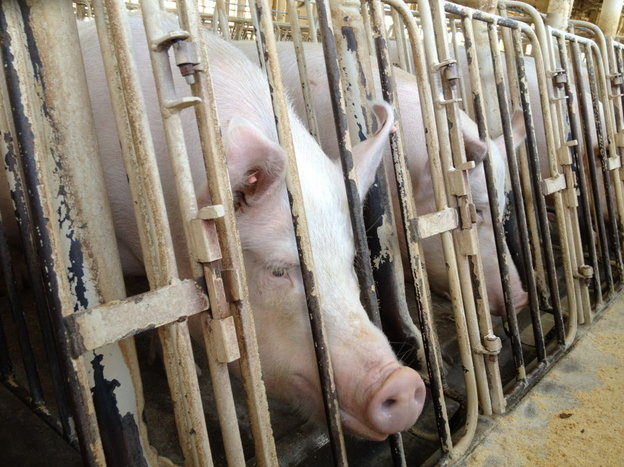
"caption": "Breeding sows in crates at a subsidiary of Smithfield Foods in 2010. The photo was shot by the Humane Society as part of an undercover investigation. Photo: Humane Society/Associated Press",
"description": null,
"title": "pig-crate",
"credit": null,
"status": "inherit",
"isLoading": false,
"fetchFailed": false
},
"bayareabites_75911": {
"type": "attachments",
"id": "bayareabites_75911",
"meta": {
"index": "attachments_1716263798",
"site": "bayareabites",
"id": "75911",
"found": true
},
"parent": 75910,
"imgSizes": {
"kqedFullSize": {
"file": "https://ww2.kqed.org/app/uploads/sites/24/2014/01/carp-water_wide-67798d857f70288e304d7c6a0b07a9eb0bffbe60-e1388696447944.jpg",
"width": 640,
"height": 360
}
},
"publishDate": 1388694509,
"modified": 1388694509,
"caption": "A dead carp floats in water near the shore at Big Creek State Park on Sept. 10 in Polk City, Iowa. Like many agricultural states, Iowa is working with the EPA to enforce clean-water regulations amid degradation from manure spills and farm-field runoff. Photo: Charlie Neibergall/AP",
"description": null,
"title": "A dead carp floats in water near the shore at Big Creek State Park on Sept. 10 in Polk City, Iowa. Like many agricultural states, Iowa is working with the EPA to enforce clean-water regulations amid degradation from manure spills and farm-field runoff.",
"credit": null,
"status": "inherit",
"isLoading": false,
"fetchFailed": false
},
"bayareabites_75909": {
"type": "attachments",
"id": "bayareabites_75909",
"meta": {
"index": "attachments_1716263798",
"site": "bayareabites",
"id": "75909",
"found": true
},
"parent": 75901,
"imgSizes": {
"kqedFullSize": {
"file": "https://ww2.kqed.org/app/uploads/sites/24/2014/01/prisonloaf.jpg",
"width": 640,
"height": 480
}
},
"publishDate": 1388694255,
"modified": 1388694255,
"caption": null,
"description": null,
"title": "prisonloaf",
"credit": null,
"status": "inherit",
"isLoading": false,
"fetchFailed": false
},
"bayareabites_75759": {
"type": "attachments",
"id": "bayareabites_75759",
"meta": {
"index": "attachments_1716263798",
"site": "bayareabites",
"id": "75759",
"found": true
},
"parent": 75751,
"imgSizes": {
"kqedFullSize": {
"file": "https://ww2.kqed.org/app/uploads/sites/24/2013/12/pigs.jpg",
"width": 624,
"height": 467
}
},
"publishDate": 1388164193,
"modified": 1388164193,
"caption": null,
"description": null,
"title": "pigs",
"credit": null,
"status": "inherit",
"isLoading": false,
"fetchFailed": false
},
"bayareabites_75728": {
"type": "attachments",
"id": "bayareabites_75728",
"meta": {
"index": "attachments_1716263798",
"site": "bayareabites",
"id": "75728",
"found": true
},
"parent": 75727,
"imgSizes": {
"kqedFullSize": {
"file": "https://ww2.kqed.org/app/uploads/sites/24/2013/12/geoduck-farming-ddbc86e30f4bc0aa32f4d14a2da776b9b6195388-e1388076062797.jpg",
"width": 640,
"height": 480
}
},
"publishDate": 1388075579,
"modified": 1388075579,
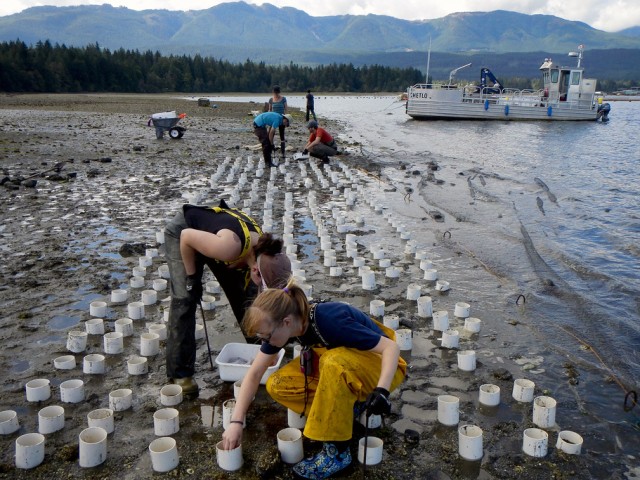
"caption": "A geoduck farm near Totten Inlet, Washington. Photo: KBCS/Bellvue/Seattle/Flickr",
"description": "A geoduck farm near Totten Inlet, Washington.",
"title": "A geoduck farm near Totten Inlet, Washington.",
"credit": null,
"status": "inherit",
"isLoading": false,
"fetchFailed": false
},
"bayareabites_75306": {
"type": "attachments",
"id": "bayareabites_75306",
"meta": {
"index": "attachments_1716263798",
"site": "bayareabites",
"id": "75306",
"found": true
},
"parent": 75227,
"imgSizes": {
"kqedFullSize": {
"file": "https://ww2.kqed.org/app/uploads/sites/24/2013/12/food-brain640x3601.jpg",
"width": 640,
"height": 360
}
},
"publishDate": 1387400493,
"modified": 1387400493,
"caption": null,
"description": null,
"title": "food-brain640x360",
"credit": null,
"status": "inherit",
"isLoading": false,
"fetchFailed": false
},
"bayareabites_75376": {
"type": "attachments",
"id": "bayareabites_75376",
"meta": {
"index": "attachments_1716263798",
"site": "bayareabites",
"id": "75376",
"found": true
},
"parent": 75375,
"imgSizes": {
"kqedFullSize": {
"file": "https://ww2.kqed.org/app/uploads/sites/24/2013/12/hunger_gleaning_019_wide-b53b2523f4f1433b8abb470eef8627d114c478f1-e1387475813686.jpg",
"width": 640,
"height": 360
}
},
"publishDate": 1387475335,
"modified": 1387475335,
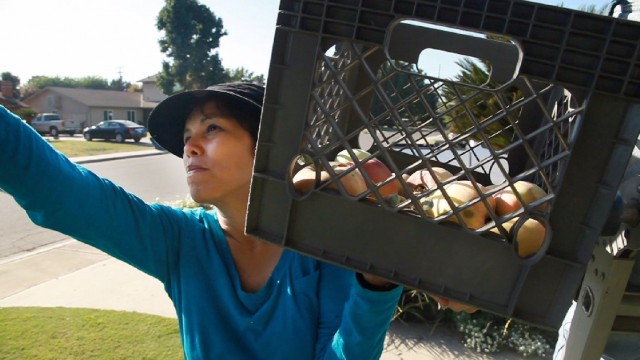
"caption": "Sarah Ramirez runs an organization that brings excess produce to the hungry. Here, she gleans apples from a front yard. Photo: Scott Anger/KQED",
"description": null,
"title": "Sarah Ramirez runs an organization that brings excess produce to the hungry. Here, she gleans apples from a front yard.",
"credit": null,
"status": "inherit",
"isLoading": false,
"fetchFailed": false
},
"bayareabites_75220": {
"type": "attachments",
"id": "bayareabites_75220",
"meta": {
"index": "attachments_1716263798",
"site": "bayareabites",
"id": "75220",
"found": true
},
"parent": 75219,
"imgSizes": {
"kqedFullSize": {
"file": "https://ww2.kqed.org/app/uploads/sites/24/2013/12/kenya-e78018b5d9656a9bf3a772f79d13f965003ca9bf-e1387300166749.jpg",
"width": 640,
"height": 480
}
},
"publishDate": 1387299755,
"modified": 1387299755,
"caption": "Somali refugees lead their herds of goats home for the night outside Dadaab, Kenya. A new study shows that animals in many parts of the developing world require more food — and generate more greenhouse emissions — than animals in wealthy countries. Photo: Rebecca Blackwell/AP",
"description": null,
"title": "Somali refugees lead their herds of goats home for the night outside Dadaab, Kenya. A new study shows that animals in many parts of the developing world require more food — and generate more greenhouse emissions — than animals in wealthy countries.",
"credit": null,
"status": "inherit",
"isLoading": false,
"fetchFailed": false
},
"bayareabites_75044": {
"type": "attachments",
"id": "bayareabites_75044",
"meta": {
"index": "attachments_1716263798",
"site": "bayareabites",
"id": "75044",
"found": true
},
"parent": 75043,
"imgSizes": {
"kqedFullSize": {
"file": "https://ww2.kqed.org/app/uploads/sites/24/2013/12/community-shop-3-e3923b436d383fcb17fba76a5e717db31bc083ae-e1386886696162.jpg",
"width": 640,
"height": 479
}
},
"publishDate": 1386886360,
"modified": 1386886360,
"caption": "A customer scans the shelves at Community Shop, the U.K.'s first \"social supermarket.\" The discount grocery stores are growing in popularity across Europe and are open exclusively to those in need. Photo: Courtesy of Community Shop",
"description": "A customer scans the shelves at Community Shop, the U.K.'s first \"social supermarket.\" The discount grocery stores are growing in popularity across Europe and are open exclusively to those in need.",
"title": "A customer scans the shelves at Community Shop, the U.K.'s first \"social supermarket.\" The discount grocery stores are growing in popularity across Europe and are open exclusively to those in need.",
"credit": null,
"status": "inherit",
"isLoading": false,
"fetchFailed": false
},
"bayareabites_75013": {
"type": "attachments",
"id": "bayareabites_75013",
"meta": {
"index": "attachments_1716263798",
"site": "bayareabites",
"id": "75013",
"found": true
},
"parent": 75012,
"imgSizes": {
"kqedFullSize": {
"file": "https://ww2.kqed.org/app/uploads/sites/24/2013/12/chicken1-374076b43c0c1b307abe88569871d6f9591212ad.jpg",
"width": 638,
"height": 478
}
},
"publishDate": 1386866204,
"modified": 1386866204,
"caption": "Young broilers nibble feed at a chicken farm in Luling, Texas. The Food and Drug Administration has issued new guidance on how drug companies label antibiotics for livestock. Photo: Bob Nichols/\u003ca href=\"http://www.flickr.com/photos/usdagov/9682284804/in/photostream/\">USDA/Flickr\u003c/a>",
"description": "Young broilers nibble feed at a chicken farm in Luling, Texas. The Food and Drug Administration has issued new guidance on how drug companies label antibiotics for livestock.",
"title": "Young broilers nibble feed at a chicken farm in Luling, Texas. The Food and Drug Administration has issued new guidance on how drug companies label antibiotics for livestock.",
"credit": null,
"status": "inherit",
"isLoading": false,
"fetchFailed": false
},
"bayareabites_74936": {
"type": "attachments",
"id": "bayareabites_74936",
"meta": {
"index": "attachments_1716263798",
"site": "bayareabites",
"id": "74936",
"found": true
},
"parent": 74935,
"imgSizes": {
"kqedFullSize": {
"file": "https://ww2.kqed.org/app/uploads/sites/24/2013/12/istock_000014476652large_slide-556191c9ebb27b1f85a01ea15a96d4a162658b1f-e1386639626492.jpg",
"width": 640,
"height": 426
}
},
"publishDate": 1386639317,
"modified": 1386639317,
"caption": "In her new book, historian Maureen Ogle examines the rise of our modern meat industry. She argues that there's a fundamental disconnect in the way many of us view meat. Photo: iStockphoto",
"description": null,
"title": "In her new book, historian Maureen Ogle examines the rise of our modern meat industry. She argues that there's a fundamental disconnect in the way many of us view meat.",
"credit": null,
"status": "inherit",
"isLoading": false,
"fetchFailed": false
}
},
"audioPlayerReducer": {
"postId": "stream_live",
"isPaused": true,
"isPlaying": false,
"pfsActive": false,
"pledgeModalIsOpen": true,
"playerDrawerIsOpen": false,
"liveAudioPlayStartedAt": 0,
"liveAudioPlayContext": ""
},
"authorsReducer": {
"byline_bayareabites_76301": {
"type": "authors",
"id": "byline_bayareabites_76301",
"meta": {
"override": true
},
"slug": "byline_bayareabites_76301",
"name": "Ted Robbins",
"isLoading": false
},
"byline_bayareabites_76184": {
"type": "authors",
"id": "byline_bayareabites_76184",
"meta": {
"override": true
},
"slug": "byline_bayareabites_76184",
"name": "Eliza Barclay",
"isLoading": false
},
"byline_bayareabites_75910": {
"type": "authors",
"id": "byline_bayareabites_75910",
"meta": {
"override": true
},
"slug": "byline_bayareabites_75910",
"name": "Dan Charles",
"isLoading": false
},
"byline_bayareabites_75901": {
"type": "authors",
"id": "byline_bayareabites_75901",
"meta": {
"override": true
},
"slug": "byline_bayareabites_75901",
"name": "Eliza Barclay",
"isLoading": false
},
"byline_bayareabites_75751": {
"type": "authors",
"id": "byline_bayareabites_75751",
"meta": {
"override": true
},
"slug": "byline_bayareabites_75751",
"name": "Eliza Barclay",
"isLoading": false
},
"byline_bayareabites_75727": {
"type": "authors",
"id": "byline_bayareabites_75727",
"meta": {
"override": true
},
"slug": "byline_bayareabites_75727",
"name": "Ashley Ahearn",
"isLoading": false
},
"byline_bayareabites_75219": {
"type": "authors",
"id": "byline_bayareabites_75219",
"meta": {
"override": true
},
"slug": "byline_bayareabites_75219",
"name": "Eliza Barclay",
"isLoading": false
},
"byline_bayareabites_75043": {
"type": "authors",
"id": "byline_bayareabites_75043",
"meta": {
"override": true
},
"slug": "byline_bayareabites_75043",
"name": "Serri Graslie",
"isLoading": false
},
"byline_bayareabites_75012": {
"type": "authors",
"id": "byline_bayareabites_75012",
"meta": {
"override": true
},
"slug": "byline_bayareabites_75012",
"name": "Dan Charles",
"isLoading": false
},
"byline_bayareabites_74935": {
"type": "authors",
"id": "byline_bayareabites_74935",
"meta": {
"override": true
},
"slug": "byline_bayareabites_74935",
"name": "Jeremy Bernfeld",
"isLoading": false
},
"kdomara": {
"type": "authors",
"id": "1459",
"meta": {
"index": "authors_1716337520",
"id": "1459",
"found": true
},
"name": "Kelly O'Mara",
"firstName": "Kelly",
"lastName": "O'Mara",
"slug": "kdomara",
"email": "komara@kqed.org",
"display_author_email": false,
"staff_mastheads": [
"news"
],
"title": "KQED Contributor",
"bio": "Kelly O'Mara is a writer and reporter in the San Francisco Bay Area. She writes about food, health, sports, travel, business and California news. Her work has appeared on KQED, online for Outside Magazine, epsnW, VICE and in Competitor Magazine, among others. Follow Kelly on Twitter \u003ca href=\"https://twitter.com/kellydomara\">@kellydomara\u003c/a>.",
"avatar": "https://secure.gravatar.com/avatar/768fec7412028b72f13bdd0f5f9d8186?s=600&d=blank&r=g",
"twitter": null,
"facebook": null,
"instagram": null,
"linkedin": null,
"sites": [
{
"site": "arts",
"roles": []
},
{
"site": "news",
"roles": []
},
{
"site": "bayareabites",
"roles": []
},
{
"site": "stateofhealth",
"roles": []
},
{
"site": "science",
"roles": []
},
{
"site": "checkplease",
"roles": [
"editor"
]
},
{
"site": "food",
"roles": []
},
{
"site": "forum",
"roles": [
"editor"
]
},
{
"site": "liveblog",
"roles": [
"editor"
]
}
],
"headData": {
"title": "Kelly O'Mara | KQED",
"description": "KQED Contributor",
"ogImgSrc": "https://secure.gravatar.com/avatar/768fec7412028b72f13bdd0f5f9d8186?s=600&d=blank&r=g",
"twImgSrc": "https://secure.gravatar.com/avatar/768fec7412028b72f13bdd0f5f9d8186?s=600&d=blank&r=g"
},
"isLoading": false,
"link": "/author/kdomara"
},
"nprfood": {
"type": "authors",
"id": "5403",
"meta": {
"index": "authors_1716337520",
"id": "5403",
"found": true
},
"name": "NPR Food",
"firstName": "NPR Food",
"lastName": null,
"slug": "nprfood",
"email": "nprfood@kqed.org",
"display_author_email": false,
"staff_mastheads": [],
"title": null,
"bio": "Food and Health-related stories from NPR including NPR Radio; NPR's food blog, \"The Salt\"; NPR's Health News blog, \"Shots\"; NPR's Breaking News blog \"The Two-Way\"; NPR's global stories blog \"Goats and Soda,\" NPR's economy explainer \"Planet Money\"; food-related technology news from NPR's \"All Tech Considered\"; and food series \"Kitchen Window.\"",
"avatar": "https://secure.gravatar.com/avatar/c4b735bb26404fa18ce2447d32e64291?s=600&d=blank&r=g",
"twitter": "nprfood",
"facebook": null,
"instagram": null,
"linkedin": null,
"sites": [
{
"site": "bayareabites",
"roles": [
"contributor"
]
},
{
"site": "food",
"roles": [
"contributor"
]
}
],
"headData": {
"title": "NPR Food | KQED",
"description": null,
"ogImgSrc": "https://secure.gravatar.com/avatar/c4b735bb26404fa18ce2447d32e64291?s=600&d=blank&r=g",
"twImgSrc": "https://secure.gravatar.com/avatar/c4b735bb26404fa18ce2447d32e64291?s=600&d=blank&r=g"
},
"isLoading": false,
"link": "/author/nprfood"
}
},
"pagesReducer": {
"bayareabites_category_politics-activism-food-safety": {
"type": "terms",
"id": "bayareabites_2035",
"meta": {
"index": "terms_1716263798",
"site": "bayareabites",
"id": "2035",
"score": 13.896381
},
"featImg": null,
"name": "politics, activism, food safety",
"description": null,
"taxonomy": "category",
"headData": {
"twImgId": null,
"twTitle": null,
"ogTitle": null,
"ogImgId": null,
"twDescription": null,
"description": null,
"title": "politics, activism, food safety Archives | KQED Bay Area Bites",
"ogDescription": null
},
"ttid": 943,
"slug": "politics-activism-food-safety",
"isLoading": false,
"title": "politics, activism, food safety",
"pageMeta": {
"site": "bayareabites",
"WpPageTemplate": "page-topic-editorial",
"currentPage": 46
},
"blocks": [
{
"blockName": "kqed/post-list",
"attrs": {
"layout": "cardArticle2",
"query": "posts/bayareabites?category=politics-activism-food-safety",
"seeMore": false,
"paginated": true,
"page": 46
}
},
{
"blockName": "kqed/ad"
}
]
}
},
"pfsSessionReducer": {},
"postsReducer": {
"stream_live": {
"type": "live",
"id": "stream_live",
"audioUrl": "https://streams.kqed.org/kqedradio",
"title": "Live Stream",
"excerpt": "Live Stream information currently unavailable.",
"link": "/radio",
"featImg": "",
"label": {
"name": "KQED Live",
"link": "/"
}
},
"stream_kqedNewscast": {
"type": "posts",
"id": "stream_kqedNewscast",
"audioUrl": "https://www.kqed.org/.stream/anon/radio/RDnews/newscast.mp3?_=1",
"title": "KQED Newscast",
"featImg": "",
"label": {
"name": "88.5 FM",
"link": "/"
}
},
"bayareabites_76301": {
"type": "posts",
"id": "bayareabites_76301",
"meta": {
"index": "posts_1716263798",
"site": "bayareabites",
"id": "76301",
"score": null,
"sort": [
1389286460000
]
},
"parent": 0,
"labelTerm": {
"site": "bayareabites"
},
"blocks": [],
"publishDate": 1389286460,
"format": "aside",
"disqusTitle": "The Fruits Of Free Trade: How NAFTA Revamped The American Diet",
"title": "The Fruits Of Free Trade: How NAFTA Revamped The American Diet",
"headTitle": "Bay Area Bites | KQED Food",
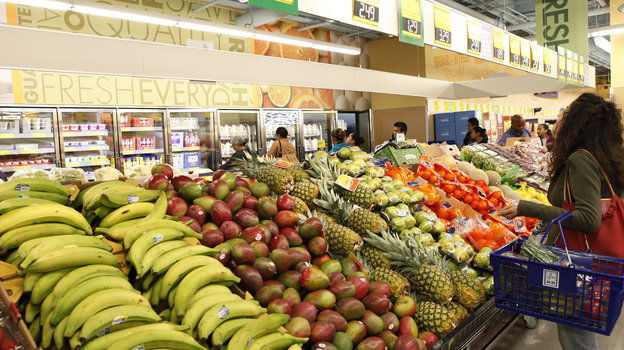
"content": "\u003cfigure id=\"attachment_76306\" class=\"wp-caption aligncenter\" style=\"max-width: 624px\">\u003ca href=\"http://ww2.kqed.org/bayareabites/wp-content/uploads/sites/24/2014/01/produceNAFTA.jpg\">\u003cimg src=\"http://ww2.kqed.org/bayareabites/wp-content/uploads/sites/24/2014/01/produceNAFTA.jpg\" alt=\"A lot of produce Americans buy comes from Mexico, and it's the result of the North American Free Trade Agreement — NAFTA — which took effect 20 years ago this month. Photo: Amy Sussman/AP \" width=\"624\" height=\"350\" class=\"size-full wp-image-76306\">\u003c/a>\u003cfigcaption class=\"wp-caption-text\">A lot of produce Americans buy comes from Mexico, and it's the result of the North American Free Trade Agreement — NAFTA — which took effect 20 years ago this month. Photo: Amy Sussman/AP\u003c/figcaption>\u003c/figure>\n\u003cp>\u003cstrong>Listen to the Story\u003c/strong> on \u003ca href=\"http://www.npr.org/blogs/thesalt/2014/01/09/260790888/the-fruits-of-free-trade-how-nafta-revamped-the-american-diet\">Morning Edition\u003c/a> [audio src=\"http://pd.npr.org/anon.npr-mp3/npr/me/2014/01/20140109_me_nafta_produce.mp3\"] \u003c/p>\n\u003cp>Post by \u003ca href=\"http://www.npr.org/people/4628641/ted-robbins\">Ted Robbins\u003c/a>, \u003ca href=\"http://www.npr.org/blogs/thesalt/2014/01/09/260790888/the-fruits-of-free-trade-how-nafta-revamped-the-american-diet\">The Salt at NPR Food\u003c/a> (1/9/14)\u003c/p>\n\u003cp>Walk through the produce section of your supermarket and you'll see things you'd never have seen years ago — like fresh raspberries or green beans in the dead of winter.\u003c/p>\n\u003cp>Much of that produce comes from Mexico, and it's the result of the North American Free Trade Agreement — NAFTA — which took effect 20 years ago this month.\u003c/p>\n\u003cp>In the years since, NAFTA radically changed the way we get our fruits and vegetables. For starters, the volume of produce from Mexico to the U.S. has tripled since 1994.\u003c/p>\n\u003cp>[ad fullwidth]\u003c/p>\n\u003cp>There are several reasons why, explains Jaime Chamberlain, president of J-C Distributing Inc., a large produce importer and distributorship in Nogales, Ariz.\u003c/p>\n\u003cp>First, NAFTA eliminated tariffs. Cantaloupes, for instance, used to have a 35 percent tax on them when they crossed the border. No tariffs meant lower prices.\u003c/p>\n\u003cp>Second, NAFTA encouraged investment. So companies like Chamberlain's have invested hundreds of millions of dollars in Mexican farms. That has helped create year-round supply and demand for U.S. and Canadian customers.\u003c/p>\n\u003cp>\"Twenty years ago, in tomato items alone, you did not have 365-day distribution from Mexico to the United States,\" he says. \"And now ... every single day of the year, you will find Mexican tomatoes in the U.S. market.\"\u003c/p>\n\u003cp>Availability is what seems to matter to shoppers like Garrett Larriba, whom I encountered at a Tucson, Ariz., Safeway.\u003c/p>\n\u003cp>I asked him if he knows where his produce comes from.\u003c/p>\n\u003cp>\"No, no I don't,\" he said.\u003c/p>\n\u003cp>Does he care? \"No, not really.\"\u003c/p>\n\u003cp>But a number of other people I spoke with at the same Tucson Safeway \u003cem>do\u003c/em> care — including Larribas' companion, Christine Peterson.\u003c/p>\n\u003cp>\"I try to eat local as frequently as possible,\" she told me, \"and I do care where it comes from.\"\u003c/p>\n\u003cp>Peterson said she wants to support local farmers — and justified or not, she worries about food safety.\u003c/p>\n\u003cp>Of course, for consumers fully committed to buying local, that also means buying only what's in season.\u003c/p>\n\u003cp>\"I don't have much fruit in the winter — bluntly,\" says Joan Gussow, a nutritionist and author who has been \u003ca href=\"http://www.nytimes.com/2010/08/19/garden/19garden.html?_r=0\">called\u003c/a> the \"matriarch of the eat-locally-think-globally food movement.\"\u003c/p>\n\u003cp>Gussow eats mostly dried fruit in winter and whatever vegetables grow near her home in New York's Hudson Valley. By selling fruits and vegetables bred to travel long distances, she says, NAFTA has helped train people to value convenience over flavor.\u003c/p>\n\u003cp>\"It's meant that people don't know anything about where their food comes from, and they don't know anything about seasons,\" Gussow says. \"And so they really have settled — as they have with tomatoes — for something that is really like a giant orange golf ball.\"\u003c/p>\n\u003cp>Jaime Chamberlain disagrees. He says the produce industry has made great strides in packaging and shipping more flavorful fruits and vegetables from Mexico. Don't knock availability — celebrate it, he says.\u003c/p>\n\u003cp>\"We should be teaching our children that nowadays, you're able to enjoy strawberries even though you're in the dead of winter in January,\" he says.\u003c/p>\n\u003cp>Enjoy it or not, that's what Americans got from NAFTA. As for getting your children to eat more fruits and vegetables — that's another issue altogether. \u003c/p>\n\u003cp>\u003c/p>\n\u003cp>\u003cem>Copyright 2014 \u003ca href=\"http://www.npr.org/\">NPR\u003c/a>.\u003c/em> \u003c/p>\n\n",
"disqusIdentifier": "76301 http://blogs.kqed.org/bayareabites/?p=76301",
"disqusUrl": "https://ww2.kqed.org/bayareabites/2014/01/09/the-fruits-of-free-trade-how-nafta-revamped-the-american-diet/",
"stats": {
"hasVideo": false,
"hasChartOrMap": false,
"hasAudio": true,
"hasPolis": false,
"wordCount": 622,
"hasGoogleForm": false,
"hasGallery": false,
"hasHearkenModule": false,
"iframeSrcs": [],
"paragraphCount": 26
},
"modified": 1389286460,
"excerpt": "Signed 20 years ago this month, the landmark trade agreement radically altered the way we get our fruits and vegetables, encouraging year-round imports from Mexican farms. That's why it's now no big deal to find, say, raspberries in winter. But critics say it also has trained consumers to value convenience over flavor and has dulled knowledge of where food comes from.",
"headData": {
"twImgId": "",
"twTitle": "",
"ogTitle": "",
"ogImgId": "",
"twDescription": "",
"description": "Signed 20 years ago this month, the landmark trade agreement radically altered the way we get our fruits and vegetables, encouraging year-round imports from Mexican farms. That's why it's now no big deal to find, say, raspberries in winter. But critics say it also has trained consumers to value convenience over flavor and has dulled knowledge of where food comes from.",
"title": "The Fruits Of Free Trade: How NAFTA Revamped The American Diet | KQED",
"ogDescription": "",
"schema": {
"@context": "https://schema.org",
"@type": "Article",
"headline": "The Fruits Of Free Trade: How NAFTA Revamped The American Diet",
"datePublished": "2014-01-09T08:54:20-08:00",
"dateModified": "2014-01-09T08:54:20-08:00",
"image": "https://cdn.kqed.org/wp-content/uploads/2020/02/KQED-OG-Image@1x.png"
}
},
"guestAuthors": [],
"slug": "the-fruits-of-free-trade-how-nafta-revamped-the-american-diet",
"status": "publish",
"nprApiLink": "http://api.npr.org/query?id=260790888&apiKey=MDAxOTAwOTE4MDEyMTkxMDAzNjczZDljZA004",
"nprByline": "Ted Robbins",
"nprStoryDate": "Thu, 09 Jan 2014 00:00:00 -0500",
"nprLastModifiedDate": "Thu, 09 Jan 2014 11:02:14 -0500",
"nprHtmlLink": "http://www.npr.org/blogs/thesalt/2014/01/09/260790888/the-fruits-of-free-trade-how-nafta-revamped-the-american-diet?ft=3&f=260790888",
"nprAudio": "http://pd.npr.org/anon.npr-mp3/npr/me/2014/01/20140109_me_nafta_produce.mp3?orgId=1&topicId=1053&aggIds=249998251&ft=3&f=260790888",
"nprAudioM3u": "http://api.npr.org/m3u/1261025212-d3e066.m3u?orgId=1&topicId=1053&aggIds=249998251&ft=3&f=260790888",
"nprStoryId": "260790888",
"nprRetrievedStory": "1",
"nprPubDate": "Thu, 09 Jan 2014 11:02:00 -0500",
"path": "/bayareabites/76301/the-fruits-of-free-trade-how-nafta-revamped-the-american-diet",
"audioUrl": "http://pd.npr.org/anon.npr-mp3/npr/me/2014/01/20140109_me_nafta_produce.mp3?orgId=1&topicId=1053&aggIds=249998251&ft=3&f=260790888",
"audioDuration": null,
"audioTrackLength": null,
"parsedContent": [
{
"type": "contentString",
"content": "\u003cdiv class=\"post-body\">\u003cp>\u003cfigure id=\"attachment_76306\" class=\"wp-caption aligncenter\" style=\"max-width: 624px\">\u003ca href=\"http://ww2.kqed.org/bayareabites/wp-content/uploads/sites/24/2014/01/produceNAFTA.jpg\">\u003cimg src=\"http://ww2.kqed.org/bayareabites/wp-content/uploads/sites/24/2014/01/produceNAFTA.jpg\" alt=\"A lot of produce Americans buy comes from Mexico, and it's the result of the North American Free Trade Agreement — NAFTA — which took effect 20 years ago this month. Photo: Amy Sussman/AP \" width=\"624\" height=\"350\" class=\"size-full wp-image-76306\">\u003c/a>\u003cfigcaption class=\"wp-caption-text\">A lot of produce Americans buy comes from Mexico, and it's the result of the North American Free Trade Agreement — NAFTA — which took effect 20 years ago this month. Photo: Amy Sussman/AP\u003c/figcaption>\u003c/figure>\n\u003cp>\u003cstrong>Listen to the Story\u003c/strong> on \u003ca href=\"http://www.npr.org/blogs/thesalt/2014/01/09/260790888/the-fruits-of-free-trade-how-nafta-revamped-the-american-diet\">Morning Edition\u003c/a> \u003c/p>\u003c/div>",
"attributes": {
"named": {},
"numeric": []
}
},
{
"type": "component",
"content": "",
"name": "audio",
"attributes": {
"named": {
"src": "http://pd.npr.org/anon.npr-mp3/npr/me/2014/01/20140109_me_nafta_produce.mp3",
"label": ""
},
"numeric": []
}
},
{
"type": "contentString",
"content": "\u003cdiv class=\"post-body\">\u003cp> \u003c/p>\n\u003cp>Post by \u003ca href=\"http://www.npr.org/people/4628641/ted-robbins\">Ted Robbins\u003c/a>, \u003ca href=\"http://www.npr.org/blogs/thesalt/2014/01/09/260790888/the-fruits-of-free-trade-how-nafta-revamped-the-american-diet\">The Salt at NPR Food\u003c/a> (1/9/14)\u003c/p>\n\u003cp>Walk through the produce section of your supermarket and you'll see things you'd never have seen years ago — like fresh raspberries or green beans in the dead of winter.\u003c/p>\n\u003cp>Much of that produce comes from Mexico, and it's the result of the North American Free Trade Agreement — NAFTA — which took effect 20 years ago this month.\u003c/p>\n\u003cp>In the years since, NAFTA radically changed the way we get our fruits and vegetables. For starters, the volume of produce from Mexico to the U.S. has tripled since 1994.\u003c/p>\n\u003cp>\u003c/p>\u003c/div>",
"attributes": {
"named": {},
"numeric": []
}
},
{
"type": "component",
"content": "",
"name": "ad",
"attributes": {
"named": {
"label": "fullwidth"
},
"numeric": [
"fullwidth"
]
}
},
{
"type": "contentString",
"content": "\u003cdiv class=\"post-body\">\u003cp>\u003c/p>\n\u003cp>There are several reasons why, explains Jaime Chamberlain, president of J-C Distributing Inc., a large produce importer and distributorship in Nogales, Ariz.\u003c/p>\n\u003cp>First, NAFTA eliminated tariffs. Cantaloupes, for instance, used to have a 35 percent tax on them when they crossed the border. No tariffs meant lower prices.\u003c/p>\n\u003cp>Second, NAFTA encouraged investment. So companies like Chamberlain's have invested hundreds of millions of dollars in Mexican farms. That has helped create year-round supply and demand for U.S. and Canadian customers.\u003c/p>\n\u003cp>\"Twenty years ago, in tomato items alone, you did not have 365-day distribution from Mexico to the United States,\" he says. \"And now ... every single day of the year, you will find Mexican tomatoes in the U.S. market.\"\u003c/p>\n\u003cp>Availability is what seems to matter to shoppers like Garrett Larriba, whom I encountered at a Tucson, Ariz., Safeway.\u003c/p>\n\u003cp>I asked him if he knows where his produce comes from.\u003c/p>\n\u003cp>\"No, no I don't,\" he said.\u003c/p>\n\u003cp>Does he care? \"No, not really.\"\u003c/p>\n\u003cp>But a number of other people I spoke with at the same Tucson Safeway \u003cem>do\u003c/em> care — including Larribas' companion, Christine Peterson.\u003c/p>\n\u003cp>\"I try to eat local as frequently as possible,\" she told me, \"and I do care where it comes from.\"\u003c/p>\n\u003cp>Peterson said she wants to support local farmers — and justified or not, she worries about food safety.\u003c/p>\n\u003cp>Of course, for consumers fully committed to buying local, that also means buying only what's in season.\u003c/p>\n\u003cp>\"I don't have much fruit in the winter — bluntly,\" says Joan Gussow, a nutritionist and author who has been \u003ca href=\"http://www.nytimes.com/2010/08/19/garden/19garden.html?_r=0\">called\u003c/a> the \"matriarch of the eat-locally-think-globally food movement.\"\u003c/p>\n\u003cp>Gussow eats mostly dried fruit in winter and whatever vegetables grow near her home in New York's Hudson Valley. By selling fruits and vegetables bred to travel long distances, she says, NAFTA has helped train people to value convenience over flavor.\u003c/p>\n\u003cp>\"It's meant that people don't know anything about where their food comes from, and they don't know anything about seasons,\" Gussow says. \"And so they really have settled — as they have with tomatoes — for something that is really like a giant orange golf ball.\"\u003c/p>\n\u003cp>Jaime Chamberlain disagrees. He says the produce industry has made great strides in packaging and shipping more flavorful fruits and vegetables from Mexico. Don't knock availability — celebrate it, he says.\u003c/p>\n\u003cp>\"We should be teaching our children that nowadays, you're able to enjoy strawberries even though you're in the dead of winter in January,\" he says.\u003c/p>\n\u003cp>Enjoy it or not, that's what Americans got from NAFTA. As for getting your children to eat more fruits and vegetables — that's another issue altogether. \u003c/p>\n\u003cp>\u003c/p>\n\u003cp>\u003cem>Copyright 2014 \u003ca href=\"http://www.npr.org/\">NPR\u003c/a>.\u003c/em> \u003c/p>\n\n\u003c/div>\u003c/p>",
"attributes": {
"named": {},
"numeric": []
}
}
],
"link": "/bayareabites/76301/the-fruits-of-free-trade-how-nafta-revamped-the-american-diet",
"authors": [
"byline_bayareabites_76301"
],
"categories": [
"bayareabites_2090",
"bayareabites_10916",
"bayareabites_2035",
"bayareabites_34"
],
"tags": [
"bayareabites_12898",
"bayareabites_667",
"bayareabites_10921"
],
"featImg": "bayareabites_76306",
"label": "bayareabites"
},
"bayareabites_76184": {
"type": "posts",
"id": "bayareabites_76184",
"meta": {
"index": "posts_1716263798",
"site": "bayareabites",
"id": "76184",
"score": null,
"sort": [
1389148323000
]
},
"parent": 0,
"labelTerm": {
"site": "bayareabites"
},
"blocks": [],
"publishDate": 1389148323,
"format": "aside",
"disqusTitle": "Smithfield Prods Its Pork Suppliers To Dump Pig Crates",
"title": "Smithfield Prods Its Pork Suppliers To Dump Pig Crates",
"headTitle": "Bay Area Bites | KQED Food",
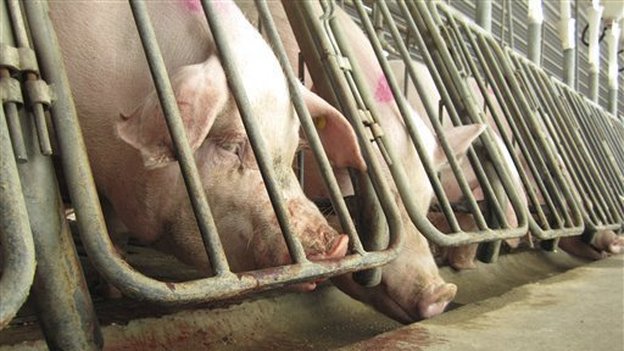
"content": "\u003cfigure id=\"attachment_76187\" class=\"wp-caption aligncenter\" style=\"max-width: 624px\">\u003ca href=\"http://ww2.kqed.org/bayareabites/wp-content/uploads/sites/24/2014/01/pig-crate.jpg\">\u003cimg src=\"http://ww2.kqed.org/bayareabites/wp-content/uploads/sites/24/2014/01/pig-crate.jpg\" alt=\"Breeding sows in crates at a subsidiary of Smithfield Foods in 2010. The photo was shot by the Humane Society as part of an undercover investigation. Photo: Humane Society/Associated Press\" width=\"624\" height=\"351\" class=\"size-full wp-image-76187\">\u003c/a>\u003cfigcaption class=\"wp-caption-text\">Breeding sows in crates at a subsidiary of Smithfield Foods in 2010. The photo was shot by the Humane Society as part of an undercover investigation. Photo: Humane Society/Associated Press\u003c/figcaption>\u003c/figure>\n\u003cp>Post by Eliza Barclay, \u003ca href=\"http://www.npr.org/blogs/thesalt/2014/01/07/260439063/smithfield-prods-its-pork-suppliers-to-dump-pig-crates\">The Salt at NPR Food\u003c/a> (1/7/14)\u003c/p>\n\u003cp>Smithfield, the world's largest hog and pork buyer, announced Tuesday that it's asking the independent farmers with whom it has contracts to get rid of stalls for pregnant sows to improve the animals' living conditions.\u003c/p>\n\u003cp>To nudge these farmers to make the changes to their facilities by 2022, Smithfield is offering to extend their contracts once they've converted their gestational stalls into group houses, which are generally considered more humane.\u003c/p>\n\u003cp>The move is significant because 40 percent of Smithfield sows are raised on farms owned by independent farmers. The company has contracts with 2,100 farms across 12 states.\u003c/p>\n\u003cp>Smithfield, best known for its ham products, says it has already moved 54 percent of pregnant sows on its company-owned farms in the U.S. out of the the narrow stalls, known as gestation crates, and into group housing, per a \u003ca href=\"http://investors.smithfieldfoods.com/releasedetail.cfm?releaseid=295899\">commitment\u003c/a> it made in 2007 to phase out the crates.\u003c/p>\n\u003cp>[ad fullwidth]\u003c/p>\n\u003cp>The hog industry's standard practice for years has been to confine pregnant sows in the 2-foot-wide steel crates for the length of their four-month pregnancies. The idea behind the crates is to keep the sows from squashing their babies, fighting and stealing each others' food.\u003c/p>\n\u003cp>But animal welfare groups have long called the crates cruel and unnecessary, and pressured big producers like Smithfield to end the practice. Advocates argue that the crates restrict the animals' movement too much — the sows can't turn around at all — and are simply devices to pack as many animals into a house as possible. (Smithfield alone used 15.8 million hogs in 2012.) Group houses, by contrast, are bigger, and allow pregnant sows to come and go from their stalls.\u003c/p>\n\u003cp>Smithfield's announcement comes as 60 of the world's largest food retailers – from \u003ca href=\"http://www.npr.org/blogs/thesalt/2012/02/14/146863301/mcdonalds-teams-up-with-humane-society-to-phase-out-pig-crates\">McDonald's\u003c/a> to Safeway, Costco and Oscar Mayer – have said they won't tolerate gestation crates in their supply chains anymore, either.\u003c/p>\n\u003cp>In a \u003ca href=\"http://www.globenewswire.com/news-release/2014/01/07/600779/10063123/en/Smithfield-Foods-Recommends-Its-Contract-Growers-Convert-to-Group-Housing-for-Pregnant-Sows.html\">press release\u003c/a>, Smithfield said that the change it is requesting is not required, but contract extensions \"will be less likely\" for farmers who keep gestation crates.\u003c/p>\n\u003cp>\"We recognize that these projects require a significant investment on the part of our growers,\" C. Larry Pope, president and chief executive officer of Smithfield Foods, said in a statement. \"But a well-planned renovation to a group housing system will help maintain the farms' value for years to come, while at the same time supporting our companywide commitment to animal care.\"\u003c/p>\n\u003cp>The Humane Society of the U.S. says that Smithfield's announcement spells the eventual end of the gestation crate.\u003c/p>\n\u003cp>\"Smithfield's announcement means certain death for the gestation crate in pork production,\" \u003ca href=\"http://www.humanesociety.org/about/leadership/subject_experts/matthew-prescott.html\">Matthew Prescott\u003c/a>, food policy director for HSUS, tells The Salt. \"For the millions of pigs currently locked inside these cruel boxes, that demise will be most welcomed.\" \u003c/p>\n\u003cp>\u003c/p>\n\u003cp>\u003cem>Copyright 2014 \u003ca href=\"http://www.npr.org/\">NPR\u003c/a>.\u003c/em> \u003c/p>\n\n",
"disqusIdentifier": "76184 http://blogs.kqed.org/bayareabites/?p=76184",
"disqusUrl": "https://ww2.kqed.org/bayareabites/2014/01/07/smithfield-prods-its-pork-suppliers-to-dump-pig-crates/",
"stats": {
"hasVideo": false,
"hasChartOrMap": false,
"hasAudio": false,
"hasPolis": false,
"wordCount": 522,
"hasGoogleForm": false,
"hasGallery": false,
"hasHearkenModule": false,
"iframeSrcs": [],
"paragraphCount": 15
},
"modified": 1389148323,
"excerpt": "The world's largest hog and pork buyer wants its contract farmers to move pregnant sows out of constrictive crates and into group houses, generally considered more humane, by 2022. The move is significant because independent farmers supply about 40 percent of the company's sows.",
"headData": {
"twImgId": "",
"twTitle": "",
"ogTitle": "",
"ogImgId": "",
"twDescription": "",
"description": "The world's largest hog and pork buyer wants its contract farmers to move pregnant sows out of constrictive crates and into group houses, generally considered more humane, by 2022. The move is significant because independent farmers supply about 40 percent of the company's sows.",
"title": "Smithfield Prods Its Pork Suppliers To Dump Pig Crates | KQED",
"ogDescription": "",
"schema": {
"@context": "https://schema.org",
"@type": "Article",
"headline": "Smithfield Prods Its Pork Suppliers To Dump Pig Crates",
"datePublished": "2014-01-07T18:32:03-08:00",
"dateModified": "2014-01-07T18:32:03-08:00",
"image": "https://cdn.kqed.org/wp-content/uploads/2020/02/KQED-OG-Image@1x.png"
}
},
"guestAuthors": [],
"slug": "smithfield-prods-its-pork-suppliers-to-dump-pig-crates",
"status": "publish",
"nprApiLink": "http://api.npr.org/query?id=260439063&apiKey=MDAxOTAwOTE4MDEyMTkxMDAzNjczZDljZA004",
"nprByline": "Eliza Barclay",
"nprStoryDate": "Tue, 07 Jan 2014 11:57:00 -0500",
"nprLastModifiedDate": "Tue, 07 Jan 2014 16:55:57 -0500",
"nprHtmlLink": "http://www.npr.org/blogs/thesalt/2014/01/07/260439063/smithfield-prods-its-pork-suppliers-to-dump-pig-crates?ft=3&f=260439063",
"nprStoryId": "260439063",
"nprRetrievedStory": "1",
"nprPubDate": "Tue, 07 Jan 2014 16:55:00 -0500",
"path": "/bayareabites/76184/smithfield-prods-its-pork-suppliers-to-dump-pig-crates",
"audioTrackLength": null,
"parsedContent": [
{
"type": "contentString",
"content": "\u003cdiv class=\"post-body\">\u003cp>\u003cfigure id=\"attachment_76187\" class=\"wp-caption aligncenter\" style=\"max-width: 624px\">\u003ca href=\"http://ww2.kqed.org/bayareabites/wp-content/uploads/sites/24/2014/01/pig-crate.jpg\">\u003cimg src=\"http://ww2.kqed.org/bayareabites/wp-content/uploads/sites/24/2014/01/pig-crate.jpg\" alt=\"Breeding sows in crates at a subsidiary of Smithfield Foods in 2010. The photo was shot by the Humane Society as part of an undercover investigation. Photo: Humane Society/Associated Press\" width=\"624\" height=\"351\" class=\"size-full wp-image-76187\">\u003c/a>\u003cfigcaption class=\"wp-caption-text\">Breeding sows in crates at a subsidiary of Smithfield Foods in 2010. The photo was shot by the Humane Society as part of an undercover investigation. Photo: Humane Society/Associated Press\u003c/figcaption>\u003c/figure>\n\u003cp>Post by Eliza Barclay, \u003ca href=\"http://www.npr.org/blogs/thesalt/2014/01/07/260439063/smithfield-prods-its-pork-suppliers-to-dump-pig-crates\">The Salt at NPR Food\u003c/a> (1/7/14)\u003c/p>\n\u003cp>Smithfield, the world's largest hog and pork buyer, announced Tuesday that it's asking the independent farmers with whom it has contracts to get rid of stalls for pregnant sows to improve the animals' living conditions.\u003c/p>\n\u003cp>To nudge these farmers to make the changes to their facilities by 2022, Smithfield is offering to extend their contracts once they've converted their gestational stalls into group houses, which are generally considered more humane.\u003c/p>\n\u003cp>The move is significant because 40 percent of Smithfield sows are raised on farms owned by independent farmers. The company has contracts with 2,100 farms across 12 states.\u003c/p>\n\u003cp>Smithfield, best known for its ham products, says it has already moved 54 percent of pregnant sows on its company-owned farms in the U.S. out of the the narrow stalls, known as gestation crates, and into group housing, per a \u003ca href=\"http://investors.smithfieldfoods.com/releasedetail.cfm?releaseid=295899\">commitment\u003c/a> it made in 2007 to phase out the crates.\u003c/p>\n\u003cp>\u003c/p>\u003c/div>",
"attributes": {
"named": {},
"numeric": []
}
},
{
"type": "component",
"content": "",
"name": "ad",
"attributes": {
"named": {
"label": "fullwidth"
},
"numeric": [
"fullwidth"
]
}
},
{
"type": "contentString",
"content": "\u003cdiv class=\"post-body\">\u003cp>\u003c/p>\n\u003cp>The hog industry's standard practice for years has been to confine pregnant sows in the 2-foot-wide steel crates for the length of their four-month pregnancies. The idea behind the crates is to keep the sows from squashing their babies, fighting and stealing each others' food.\u003c/p>\n\u003cp>But animal welfare groups have long called the crates cruel and unnecessary, and pressured big producers like Smithfield to end the practice. Advocates argue that the crates restrict the animals' movement too much — the sows can't turn around at all — and are simply devices to pack as many animals into a house as possible. (Smithfield alone used 15.8 million hogs in 2012.) Group houses, by contrast, are bigger, and allow pregnant sows to come and go from their stalls.\u003c/p>\n\u003cp>Smithfield's announcement comes as 60 of the world's largest food retailers – from \u003ca href=\"http://www.npr.org/blogs/thesalt/2012/02/14/146863301/mcdonalds-teams-up-with-humane-society-to-phase-out-pig-crates\">McDonald's\u003c/a> to Safeway, Costco and Oscar Mayer – have said they won't tolerate gestation crates in their supply chains anymore, either.\u003c/p>\n\u003cp>In a \u003ca href=\"http://www.globenewswire.com/news-release/2014/01/07/600779/10063123/en/Smithfield-Foods-Recommends-Its-Contract-Growers-Convert-to-Group-Housing-for-Pregnant-Sows.html\">press release\u003c/a>, Smithfield said that the change it is requesting is not required, but contract extensions \"will be less likely\" for farmers who keep gestation crates.\u003c/p>\n\u003cp>\"We recognize that these projects require a significant investment on the part of our growers,\" C. Larry Pope, president and chief executive officer of Smithfield Foods, said in a statement. \"But a well-planned renovation to a group housing system will help maintain the farms' value for years to come, while at the same time supporting our companywide commitment to animal care.\"\u003c/p>\n\u003cp>The Humane Society of the U.S. says that Smithfield's announcement spells the eventual end of the gestation crate.\u003c/p>\n\u003cp>\"Smithfield's announcement means certain death for the gestation crate in pork production,\" \u003ca href=\"http://www.humanesociety.org/about/leadership/subject_experts/matthew-prescott.html\">Matthew Prescott\u003c/a>, food policy director for HSUS, tells The Salt. \"For the millions of pigs currently locked inside these cruel boxes, that demise will be most welcomed.\" \u003c/p>\n\u003cp>\u003c/p>\n\u003cp>\u003cem>Copyright 2014 \u003ca href=\"http://www.npr.org/\">NPR\u003c/a>.\u003c/em> \u003c/p>\n\n\u003c/div>\u003c/p>",
"attributes": {
"named": {},
"numeric": []
}
}
],
"link": "/bayareabites/76184/smithfield-prods-its-pork-suppliers-to-dump-pig-crates",
"authors": [
"byline_bayareabites_76184"
],
"categories": [
"bayareabites_1874",
"bayareabites_1245",
"bayareabites_10916",
"bayareabites_2035"
],
"tags": [
"bayareabites_11539",
"bayareabites_12603",
"bayareabites_99",
"bayareabites_12887",
"bayareabites_12886",
"bayareabites_11393",
"bayareabites_616",
"bayareabites_11977",
"bayareabites_10921"
],
"featImg": "bayareabites_76187",
"label": "bayareabites"
},
"bayareabites_75910": {
"type": "posts",
"id": "bayareabites_75910",
"meta": {
"index": "posts_1716263798",
"site": "bayareabites",
"id": "75910",
"score": null,
"sort": [
1388696937000
]
},
"parent": 0,
"labelTerm": {
"site": "bayareabites"
},
"blocks": [],
"publishDate": 1388696937,
"format": "aside",
"disqusTitle": "How Mass-Produced Meat Turned Phosphorus Into Pollution",
"title": "How Mass-Produced Meat Turned Phosphorus Into Pollution",
"headTitle": "Bay Area Bites | KQED Food",
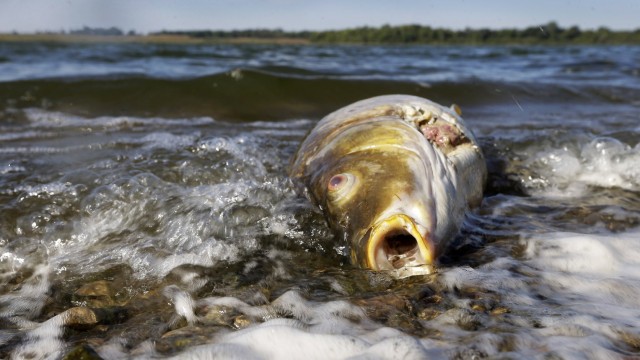
"content": "\u003cfigure id=\"attachment_75911\" class=\"wp-caption aligncenter\" style=\"max-width: 640px\">\u003ca href=\"http://ww2.kqed.org/bayareabites/wp-content/uploads/sites/24/2014/01/carp-water_wide-67798d857f70288e304d7c6a0b07a9eb0bffbe60-e1388696447944.jpg\">\u003cimg src=\"http://ww2.kqed.org/bayareabites/wp-content/uploads/sites/24/2014/01/carp-water_wide-67798d857f70288e304d7c6a0b07a9eb0bffbe60-e1388696447944.jpg\" alt=\"A dead carp floats in water near the shore at Big Creek State Park on Sept. 10 in Polk City, Iowa. Like many agricultural states, Iowa is working with the EPA to enforce clean-water regulations amid degradation from manure spills and farm-field runoff. Photo: Charlie Neibergall/AP\" width=\"640\" height=\"360\" class=\"size-full wp-image-75911\">\u003c/a>\u003cfigcaption class=\"wp-caption-text\">A dead carp floats in water near the shore at Big Creek State Park on Sept. 10 in Polk City, Iowa. Like many agricultural states, Iowa is working with the EPA to enforce clean-water regulations amid degradation from manure spills and farm-field runoff. Photo: Charlie Neibergall/AP\u003c/figcaption>\u003c/figure>\n\u003cp>\u003cstrong>Listen to the Story\u003c/strong> on \u003ca href=\"http://www.npr.org/blogs/thesalt/2014/01/02/257393870/how-mass-produced-meat-turned-phosphorus-into-pollution\">Morning Edition\u003c/a> [audio src=\"http://pd.npr.org/anon.npr-mp3/npr/me/2014/01/20140102_me_phosphorus_piles_up.mp3\"] \u003c/p>\n\u003cp>Post by \u003ca href=\"http://www.npr.org/people/143160021/daniel-charles\">Dan Charles\u003c/a>, \u003ca href=\"http://www.npr.org/blogs/thesalt/2014/01/02/257393870/how-mass-produced-meat-turned-phosphorus-into-pollution\">The Salt at NPR Food\u003c/a> (1/2/14)\u003c/p>\n\u003cp>It's a quandary of food production: The same drive for efficiency that lowers the cost of eating also can damage our soil and water.\u003c/p>\n\u003cp>Take the case of one simple, essential chemical element: phosphorus.\u003c/p>\n\u003cp>Phosphorus is one of the nutrients that plants need to grow, and for most of human history, farmers always needed more of it. \"There was this battle to have enough available phosphorus for optimum crop production,\" says \u003ca href=\"http://www.agnr.umd.edu/directory/Bio.cfm?ID=kstaver\">Kenneth Staver\u003c/a>, a scientist with the University of Maryland's Wye Research and Education Center, which sits between farm fields and the Chesapeake Bay on Maryland's Eastern Shore.\u003c/p>\n\u003cp>[ad fullwidth]\u003c/p>\n\u003cp>That's also the tension in this story: agriculture on one side, and water quality on the other.\u003c/p>\n\u003cp>Traditionally, farmers got phosphorus from animal manure. So if you grew crops like corn or wheat, it was good to have poultry or hogs nearby. Your grain fed the animals, and their manure fed your crops. Everything worked together.\u003c/p>\n\u003cp>Then came industrial fertilizer: big phosphorus mines; factories for making the other important nutrient, nitrogen; and railroads or highways to carry that fertilizer to any farmer who needed it.\u003c/p>\n\u003cp>\"With the development of the inorganic fertilizer industry, it's possible to grow grain without having animals nearby. So you can decouple the animal agriculture from the grain agriculture,\" Staver says.\u003c/p>\n\u003cp>And decouple they did. Farmers concentrated on just one kind of production. So did entire \u003ca href=\"http://www.nationalchickencouncil.org/about-the-industry/statistics/top-broiler-producing-states/\">regions\u003c/a>. Georgia, Arkansas and Alabama, for instance, now produce the largest number of chickens — more than a billion of them every year. But they don't grow much chicken feed. They haul in grain from far away.\u003c/p>\n\u003cp>As that grain flows from fields to chicken houses, or hog farms, so do the nutrients in it, such as phosphorus and nitrogen.\u003c/p>\n\u003cp>Some of it goes into meat that people eat, but a lot goes into animal waste.\u003c/p>\n\u003cp>This is where the problem starts. Farmers near those chicken houses or hog farms often take lots of that manure and spread it on their fields, partly just to get rid of it and partly for its value as fertilizer. Crops, however, need much more nitrogen than phosphorus. When farmers use manure to give their crops an optimal amount of nitrogen, they oversupply phosphorus.\u003c/p>\n\u003cp>\"This is happening everywhere,\" Staver says. \"Where you have large concentrations of animal production, you tend to have a buildup of nutrients — phosphorus is the one that accumulates — in soils around concentrated animal-producing regions.\"\u003c/p>\n\u003cp>Wherever it accumulates, rain washes it into streams, lakes and estuaries, where it's an ecological disaster.\u003c/p>\n\u003cp>\"It drives algae growth, so it ends up clouding the water. You don't get the light penetration to support the rooted aquatic plants that are important in the food chain,\" Staver says. \"You also get these algae blooms, and when they die, they draw oxygen from the water. You get dead zones.\"\u003c/p>\n\u003cp>In many places, environmental regulators are trying to stop this buildup of phosphorus.\u003c/p>\n\u003cp>Until recently, it \u003ca href=\"http://mda.maryland.gov/documents/ag_brief/agbrief_pmt_092013.pdf\">looked like\u003c/a> Maryland was taking the lead. The state has a big poultry industry right beside the Chesapeake Bay, which has been choked with nutrient pollution.\u003c/p>\n\u003cp>Last year, Maryland proposed new rules that would have stopped farmers from putting more phosphorus on any fields that already have too much of it. It required soil tests to determine a key phosphorus index number.\u003c/p>\n\u003cp>Lee Richardson, a farmer in Willards, Md., was worried. \"The word we were getting — if [your fields] were over 150, you weren't going to spread manure,\" he says. Most of his fields are over that level.\u003c/p>\n\u003cp>The manure ban would have hit him two different ways.\u003c/p>\n\u003cp>First, he grows chickens; if their manure couldn't go on his fields, it would have to go somewhere else. \"Chances are, growers were going to have to pay to get it hauled away and taken out of the chicken house,\" he says.\u003c/p>\n\u003cp>Second, his corn fields still need nitrogen. Without manure as a nitrogen source, he'd have to buy the manufactured kind of fertilizer, which is more expensive.\u003c/p>\n\u003cp>Richardson and other farmers protested, arguing that the new rules would inflict huge economic harm, while the environmental benefits are uncertain.\u003c/p>\n\u003cp>In November, the state of Maryland \u003ca href=\"http://news.maryland.gov/mda/press-release/2013/11/15/mda-withdraws-phosphorus-management-tool-regulations-department-to-consider-comments-and-resubmit-regulations/\">backed down\u003c/a>. It promised to study the issue some more. Kenneth Staver, from the University of Maryland, says it's not that hard to imagine a solution to the problem.\u003c/p>\n\u003cp>\"The obvious one is, find a way to redistribute the phosphorus from the animal production facilities back to where the crop production is,\" he says. The manure would have to travel to the vast fields that farmers currently fertilize with fresh, mined phosphorus.\u003c/p>\n\u003cp>Hauling manure such distances would cost money. Staver says it's the price of cleaner, healthier water.\u003c/p>\n\u003cp>If farmers have to pay that cost, growing chickens or hogs will get more expensive.\u003c/p>\n\u003cp>Then we, the consumers, would pay for it, through more expensive meat.\u003c/p>\n\u003cp>\u003c/p>\n\u003cp>\u003cem>Copyright 2014 \u003ca href=\"http://www.npr.org/\">NPR\u003c/a>.\u003c/em> \u003c/p>\n\n",
"disqusIdentifier": "75910 http://blogs.kqed.org/bayareabites/?p=75910",
"disqusUrl": "https://ww2.kqed.org/bayareabites/2014/01/02/how-mass-produced-meat-turned-phosphorus-into-pollution/",
"stats": {
"hasVideo": false,
"hasChartOrMap": false,
"hasAudio": true,
"hasPolis": false,
"wordCount": 909,
"hasGoogleForm": false,
"hasGallery": false,
"hasHearkenModule": false,
"iframeSrcs": [],
"paragraphCount": 32
},
"modified": 1388696971,
"excerpt": "Phosphorus is one of the nutrients that plants need to grow, and for most of human history, farmers always needed more of it. But excess phosphorus, either from manure or manufactured fertilizer, can run off into streams and lakes and become an ecological disaster.",
"headData": {
"twImgId": "",
"twTitle": "",
"ogTitle": "",
"ogImgId": "",
"twDescription": "",
"description": "Phosphorus is one of the nutrients that plants need to grow, and for most of human history, farmers always needed more of it. But excess phosphorus, either from manure or manufactured fertilizer, can run off into streams and lakes and become an ecological disaster.",
"title": "How Mass-Produced Meat Turned Phosphorus Into Pollution | KQED",
"ogDescription": "",
"schema": {
"@context": "https://schema.org",
"@type": "Article",
"headline": "How Mass-Produced Meat Turned Phosphorus Into Pollution",
"datePublished": "2014-01-02T13:08:57-08:00",
"dateModified": "2014-01-02T13:09:31-08:00",
"image": "https://cdn.kqed.org/wp-content/uploads/2020/02/KQED-OG-Image@1x.png"
}
},
"guestAuthors": [],
"slug": "how-mass-produced-meat-turned-phosphorus-into-pollution",
"status": "publish",
"nprApiLink": "http://api.npr.org/query?id=257393870&apiKey=MDAxOTAwOTE4MDEyMTkxMDAzNjczZDljZA004",
"nprByline": "Dan Charles",
"nprStoryDate": "Thu, 02 Jan 2014 00:00:00 -0500",
"nprLastModifiedDate": "Thu, 02 Jan 2014 10:27:17 -0500",
"nprHtmlLink": "http://www.npr.org/blogs/thesalt/2014/01/02/257393870/how-mass-produced-meat-turned-phosphorus-into-pollution?ft=3&f=257393870",
"nprAudio": "http://pd.npr.org/anon.npr-mp3/npr/me/2014/01/20140102_me_phosphorus_piles_up.mp3?orgId=1&topicId=1025&ft=3&f=257393870",
"nprAudioM3u": "http://api.npr.org/m3u/1259088883-0b8492.m3u?orgId=1&topicId=1025&ft=3&f=257393870",
"nprStoryId": "257393870",
"nprRetrievedStory": "1",
"nprPubDate": "Thu, 02 Jan 2014 10:27:00 -0500",
"path": "/bayareabites/75910/how-mass-produced-meat-turned-phosphorus-into-pollution",
"audioUrl": "http://pd.npr.org/anon.npr-mp3/npr/me/2014/01/20140102_me_phosphorus_piles_up.mp3",
"audioDuration": null,
"audioTrackLength": null,
"parsedContent": [
{
"type": "contentString",
"content": "\u003cdiv class=\"post-body\">\u003cp>\u003cfigure id=\"attachment_75911\" class=\"wp-caption aligncenter\" style=\"max-width: 640px\">\u003ca href=\"http://ww2.kqed.org/bayareabites/wp-content/uploads/sites/24/2014/01/carp-water_wide-67798d857f70288e304d7c6a0b07a9eb0bffbe60-e1388696447944.jpg\">\u003cimg src=\"http://ww2.kqed.org/bayareabites/wp-content/uploads/sites/24/2014/01/carp-water_wide-67798d857f70288e304d7c6a0b07a9eb0bffbe60-e1388696447944.jpg\" alt=\"A dead carp floats in water near the shore at Big Creek State Park on Sept. 10 in Polk City, Iowa. Like many agricultural states, Iowa is working with the EPA to enforce clean-water regulations amid degradation from manure spills and farm-field runoff. Photo: Charlie Neibergall/AP\" width=\"640\" height=\"360\" class=\"size-full wp-image-75911\">\u003c/a>\u003cfigcaption class=\"wp-caption-text\">A dead carp floats in water near the shore at Big Creek State Park on Sept. 10 in Polk City, Iowa. Like many agricultural states, Iowa is working with the EPA to enforce clean-water regulations amid degradation from manure spills and farm-field runoff. Photo: Charlie Neibergall/AP\u003c/figcaption>\u003c/figure>\n\u003cp>\u003cstrong>Listen to the Story\u003c/strong> on \u003ca href=\"http://www.npr.org/blogs/thesalt/2014/01/02/257393870/how-mass-produced-meat-turned-phosphorus-into-pollution\">Morning Edition\u003c/a> \u003c/p>\u003c/div>",
"attributes": {
"named": {},
"numeric": []
}
},
{
"type": "component",
"content": "",
"name": "audio",
"attributes": {
"named": {
"src": "http://pd.npr.org/anon.npr-mp3/npr/me/2014/01/20140102_me_phosphorus_piles_up.mp3",
"label": ""
},
"numeric": []
}
},
{
"type": "contentString",
"content": "\u003cdiv class=\"post-body\">\u003cp> \u003c/p>\n\u003cp>Post by \u003ca href=\"http://www.npr.org/people/143160021/daniel-charles\">Dan Charles\u003c/a>, \u003ca href=\"http://www.npr.org/blogs/thesalt/2014/01/02/257393870/how-mass-produced-meat-turned-phosphorus-into-pollution\">The Salt at NPR Food\u003c/a> (1/2/14)\u003c/p>\n\u003cp>It's a quandary of food production: The same drive for efficiency that lowers the cost of eating also can damage our soil and water.\u003c/p>\n\u003cp>Take the case of one simple, essential chemical element: phosphorus.\u003c/p>\n\u003cp>Phosphorus is one of the nutrients that plants need to grow, and for most of human history, farmers always needed more of it. \"There was this battle to have enough available phosphorus for optimum crop production,\" says \u003ca href=\"http://www.agnr.umd.edu/directory/Bio.cfm?ID=kstaver\">Kenneth Staver\u003c/a>, a scientist with the University of Maryland's Wye Research and Education Center, which sits between farm fields and the Chesapeake Bay on Maryland's Eastern Shore.\u003c/p>\n\u003cp>\u003c/p>\u003c/div>",
"attributes": {
"named": {},
"numeric": []
}
},
{
"type": "component",
"content": "",
"name": "ad",
"attributes": {
"named": {
"label": "fullwidth"
},
"numeric": [
"fullwidth"
]
}
},
{
"type": "contentString",
"content": "\u003cdiv class=\"post-body\">\u003cp>\u003c/p>\n\u003cp>That's also the tension in this story: agriculture on one side, and water quality on the other.\u003c/p>\n\u003cp>Traditionally, farmers got phosphorus from animal manure. So if you grew crops like corn or wheat, it was good to have poultry or hogs nearby. Your grain fed the animals, and their manure fed your crops. Everything worked together.\u003c/p>\n\u003cp>Then came industrial fertilizer: big phosphorus mines; factories for making the other important nutrient, nitrogen; and railroads or highways to carry that fertilizer to any farmer who needed it.\u003c/p>\n\u003cp>\"With the development of the inorganic fertilizer industry, it's possible to grow grain without having animals nearby. So you can decouple the animal agriculture from the grain agriculture,\" Staver says.\u003c/p>\n\u003cp>And decouple they did. Farmers concentrated on just one kind of production. So did entire \u003ca href=\"http://www.nationalchickencouncil.org/about-the-industry/statistics/top-broiler-producing-states/\">regions\u003c/a>. Georgia, Arkansas and Alabama, for instance, now produce the largest number of chickens — more than a billion of them every year. But they don't grow much chicken feed. They haul in grain from far away.\u003c/p>\n\u003cp>As that grain flows from fields to chicken houses, or hog farms, so do the nutrients in it, such as phosphorus and nitrogen.\u003c/p>\n\u003cp>Some of it goes into meat that people eat, but a lot goes into animal waste.\u003c/p>\n\u003cp>This is where the problem starts. Farmers near those chicken houses or hog farms often take lots of that manure and spread it on their fields, partly just to get rid of it and partly for its value as fertilizer. Crops, however, need much more nitrogen than phosphorus. When farmers use manure to give their crops an optimal amount of nitrogen, they oversupply phosphorus.\u003c/p>\n\u003cp>\"This is happening everywhere,\" Staver says. \"Where you have large concentrations of animal production, you tend to have a buildup of nutrients — phosphorus is the one that accumulates — in soils around concentrated animal-producing regions.\"\u003c/p>\n\u003cp>Wherever it accumulates, rain washes it into streams, lakes and estuaries, where it's an ecological disaster.\u003c/p>\n\u003cp>\"It drives algae growth, so it ends up clouding the water. You don't get the light penetration to support the rooted aquatic plants that are important in the food chain,\" Staver says. \"You also get these algae blooms, and when they die, they draw oxygen from the water. You get dead zones.\"\u003c/p>\n\u003cp>In many places, environmental regulators are trying to stop this buildup of phosphorus.\u003c/p>\n\u003cp>Until recently, it \u003ca href=\"http://mda.maryland.gov/documents/ag_brief/agbrief_pmt_092013.pdf\">looked like\u003c/a> Maryland was taking the lead. The state has a big poultry industry right beside the Chesapeake Bay, which has been choked with nutrient pollution.\u003c/p>\n\u003cp>Last year, Maryland proposed new rules that would have stopped farmers from putting more phosphorus on any fields that already have too much of it. It required soil tests to determine a key phosphorus index number.\u003c/p>\n\u003cp>Lee Richardson, a farmer in Willards, Md., was worried. \"The word we were getting — if [your fields] were over 150, you weren't going to spread manure,\" he says. Most of his fields are over that level.\u003c/p>\n\u003cp>The manure ban would have hit him two different ways.\u003c/p>\n\u003cp>First, he grows chickens; if their manure couldn't go on his fields, it would have to go somewhere else. \"Chances are, growers were going to have to pay to get it hauled away and taken out of the chicken house,\" he says.\u003c/p>\n\u003cp>Second, his corn fields still need nitrogen. Without manure as a nitrogen source, he'd have to buy the manufactured kind of fertilizer, which is more expensive.\u003c/p>\n\u003cp>Richardson and other farmers protested, arguing that the new rules would inflict huge economic harm, while the environmental benefits are uncertain.\u003c/p>\n\u003cp>In November, the state of Maryland \u003ca href=\"http://news.maryland.gov/mda/press-release/2013/11/15/mda-withdraws-phosphorus-management-tool-regulations-department-to-consider-comments-and-resubmit-regulations/\">backed down\u003c/a>. It promised to study the issue some more. Kenneth Staver, from the University of Maryland, says it's not that hard to imagine a solution to the problem.\u003c/p>\n\u003cp>\"The obvious one is, find a way to redistribute the phosphorus from the animal production facilities back to where the crop production is,\" he says. The manure would have to travel to the vast fields that farmers currently fertilize with fresh, mined phosphorus.\u003c/p>\n\u003cp>Hauling manure such distances would cost money. Staver says it's the price of cleaner, healthier water.\u003c/p>\n\u003cp>If farmers have to pay that cost, growing chickens or hogs will get more expensive.\u003c/p>\n\u003cp>Then we, the consumers, would pay for it, through more expensive meat.\u003c/p>\n\u003cp>\u003c/p>\n\u003cp>\u003cem>Copyright 2014 \u003ca href=\"http://www.npr.org/\">NPR\u003c/a>.\u003c/em> \u003c/p>\n\n\u003c/div>\u003c/p>",
"attributes": {
"named": {},
"numeric": []
}
}
],
"link": "/bayareabites/75910/how-mass-produced-meat-turned-phosphorus-into-pollution",
"authors": [
"byline_bayareabites_75910"
],
"categories": [
"bayareabites_1245",
"bayareabites_10916",
"bayareabites_2035",
"bayareabites_34",
"bayareabites_60"
],
"tags": [
"bayareabites_129",
"bayareabites_11270",
"bayareabites_12866",
"bayareabites_12807",
"bayareabites_12868",
"bayareabites_12865",
"bayareabites_12864",
"bayareabites_12790",
"bayareabites_10921",
"bayareabites_12867"
],
"featImg": "bayareabites_75911",
"label": "bayareabites"
},
"bayareabites_75901": {
"type": "posts",
"id": "bayareabites_75901",
"meta": {
"index": "posts_1716263798",
"site": "bayareabites",
"id": "75901",
"score": null,
"sort": [
1388694346000
]
},
"parent": 0,
"labelTerm": {
"site": "bayareabites"
},
"blocks": [],
"publishDate": 1388694346,
"format": "aside",
"disqusTitle": "Food As Punishment: Giving U.S. Inmates 'The Loaf' Persists",
"title": "Food As Punishment: Giving U.S. Inmates 'The Loaf' Persists",
"headTitle": "Bay Area Bites | KQED Food",
"content": "\u003cfigure id=\"attachment_75902\" class=\"wp-caption aligncenter\" style=\"max-width: 1024px\">\u003ca href=\"http://ww2.kqed.org/bayareabites/wp-content/uploads/sites/24/2014/01/prisonloaf_finalv2-299572ca0cc1049fb7391f1c88b9d879201c69d3.jpe\">\u003cimg src=\"http://ww2.kqed.org/bayareabites/wp-content/uploads/sites/24/2014/01/prisonloaf_finalv2-299572ca0cc1049fb7391f1c88b9d879201c69d3-1024x768.jpe\" alt=\"Illustration of a prison loaf by Lisa Brown for NPR\" width=\"1024\" height=\"768\" class=\"size-large wp-image-75902\">\u003c/a>\u003cfigcaption class=\"wp-caption-text\">Illustration of a prison loaf by Lisa Brown for NPR\u003c/figcaption>\u003c/figure>\n\u003cp>\u003cstrong>Listen to the Story\u003c/strong> on \u003ca href=\"http://www.npr.org/blogs/thesalt/2014/01/02/256605441/punishing-inmates-with-the-loaf-persists-in-the-u-s\">Morning Edition\u003c/a> [audio src=\"http://pd.npr.org/anon.npr-mp3/npr/me/2014/01/20140102_me_punishment_food.mp3\"] \u003c/p>\n\u003cp>Post by Eliza Barclay, \u003ca href=\"http://www.npr.org/blogs/thesalt/2014/01/02/256605441/punishing-inmates-with-the-loaf-persists-in-the-u-s\">The Salt at NPR Food\u003c/a> (1/2/14)\u003c/p>\n\u003cp>In many prisons and jails across the U.S., punishment can come in the form of a bland, brownish lump. Known as nutraloaf, or simply \"the loaf,\" it's fed day after day to inmates who throw food or, in some cases, get violent. Even though it meets nutritional guidelines, civil rights activists urge against the use of the brick-shaped meal.\u003c/p>\n\u003cp>Tasteless food as punishment is nothing new: Back in the 19th century, prisoners were given bread and water until they'd earned with good behavior the right to eat meat and cheese.\u003c/p>\n\u003cp>But the loaf is something above and beyond. Prisons and jails are allowed to come up with their own version, so some resort to grinding up leftovers into a dense mass that's reheated. Other institutions make loaves from scratch out of shredded and mashed vegetables, beans and starches. They're rendered even more unappetizing by being served in a small paper sack, with no seasoning.\u003c/p>\n\u003cp>[ad fullwidth]\u003c/p>\n\u003cp>Prisoners who've had the loaf hate it. Johnnie Walton had to eat it in the Tamms Supermax in Illinois. He describes it as \"bland, like cardboard.\" Aaron Fraser got the loaf while he was serving time from 2004 to 2007 in several different institutions for a counterfeit-check scheme. He loathed it.\u003c/p>\n\u003cp>\"They take a bunch of guck, like whatever they have available, and they put it in some machine,\" Fraser says. \"I would have to be on the point of dizziness when I know I have no choice [to eat it].\"\u003c/p>\n\u003cp>No one knows exactly how many institutions use it, but \u003ca href=\"http://www.acfsa.org/board.php\">Benson Li\u003c/a>, the former president of the Association of Correctional Food Service Affiliates, estimates that the number is over 100. At least 12 states — including California, Texas and New York — serve it in state-run institutions, as do dozens of municipal and county jails across the country.\u003c/p>\n\u003cp>In Pennsylvania state prisons, \"food loaf\" is made with milk, rice, potatoes, carrots, cabbage, oatmeal, beans and margarine. The Clark County Jail in Washington state serves a version with most of those ingredients, plus ground beef or chicken, apples and tomatoes.\u003c/p>\n\u003cp>Law enforcement says the loaf isn't so bad. \"It's a food source; it contains all the vitamins and nutrients and minerals that a human being needs,\" says \u003ca href=\"http://county.milwaukee.gov/MeettheSheriff9152.htm\">Milwaukee County Sheriff David Clarke\u003c/a>, who has used the loaf in his jail for five years. \"It's been approved by the courts. I've had it myself — it's like eating meatloaf. \"\u003c/p>\n\u003cp>But prisoners who misbehave don't just get it once. They have to eat it at every meal, for days or weeks at a time. That's why it works as a deterrent, says Sheriff Clarke.\u003c/p>\n\u003cp>\"If you're up on a first-degree murder charge, or some serious sexual assault of a child, you don't have much to lose in jail,\" says Clarke.\u003c/p>\n\u003cp>\"But when we started to use this in the disciplinary pods, all of a sudden the incidence of fights, disorder, of attacks against our staff started to drop tremendously. The word got around — we knew it would. And we'll often hear from inmates, 'Please, please, I won't do that anymore. Don't put me in the disciplinary pod. I don't want to eat nutraloaf.' \"\u003c/p>\n\u003cp>Scientists say it's the monotony of eating the loaf that's the real punishment. \u003ca href=\"http://www.monell.org/faculty/people/pelchat\">Marcia Pelchat\u003c/a>, a physiological psychologist at the Monell Chemical Senses Center in Philadelphia, says humans have evolved to crave a variety of food.\u003c/p>\n\u003cp>\"Having to eat the loaf over and over again probably makes people miserable. They might be a little nauseated by it, they're craving other foods,\" says Pelchat.\u003c/p>\n\u003cp>And it can sometimes stop prisoners from eating altogether. \"It's very difficult to consume enough calories to keep your weight up if you're on a boring diet,\" says Pelchat.\u003c/p>\n\u003cp>That's why human rights advocates say it's unethical to use food as punishment in this way. \u003c/p>\n\u003cp>\"Given that food is clearly recognized as a basic human need to which prisoners are constitutionally entitled, restrictions on food, taking away food has always been sort of legally right on the line,\" says \u003ca href=\"https://www.aclu.org/blog/author/david-fathi\">David Fathi\u003c/a>, director of the National Prison Project for the American Civil Liberties Union.\u003c/p>\n\u003cp>There's no guidance from the government on using the loaf, but the American Correctional Association, which accredits prisons and sets best practices for the industry, discourages using food as a disciplinary measure.\u003c/p>\n\u003cp>The Federal Bureau of Prisons says it has never used the loaf in its facilities. Still, the loaf persists in other parts of the corrections system, and no agencies or organizations are keeping track of where and how often it's used.\u003c/p>\n\u003cp>So Benson Li, the former president of the Association of Correctional Food Service Affiliates and the food service director at the Los Angeles County Jail, offered to help us find that out.\u003c/p>\n\u003cp>At a recent meeting of the association, Li conducted an informal survey at the request of NPR. About 40 percent of the prisons and jails that responded said their use of the loaf is diminishing, 30 percent said they do not use nutraloaf, and about 20 percent said their use was about the same or slightly growing.\u003c/p>\n\u003cp>Li says that, overall, the results suggest that the loaf is gradually being phased out.\u003c/p>\n\u003cp>\"[Prisons and jails] are using less or some of them are using sparingly — maybe just two to three times in the last year,\" he says.\u003c/p>\n\u003cp>Li says he thinks one of the reasons for this is that prisoners have been challenging the loaf in the courts.\u003c/p>\n\u003cp>\"You have seen a lot of different inmate claims and lawsuits against the Eighth Amendment in different states,\" he says.\u003c/p>\n\u003cp>One of the provisions of the Eighth Amendment is that \"cruel and unusual punishment\" not be inflicted on prisoners. So the prisoners who are filing these suits are hoping the courts will rule that chewing on loaf day after day is unconstitutional. And, believe it or not, there is precedent: In the 1970s, the Supreme Court \u003ca href=\"https://bulk.resource.org/courts.gov/c/US/437/437.US.678.76-1660.html\">ruled\u003c/a> that a potato-y prison paste called grue should be outlawed under the Eighth Amendment.\u003c/p>\n\u003cp>The loaf has held up better than grue. Of the 22 cases brought since the beginning of 2012 alone, none have succeeded. But Li's informal survey suggests that the court cases are making the corrections industry increasingly squeamish about serving it.\u003c/p>\n\u003cp>And Fathi of the ACLU says this is part of a bigger transformation happening in the industry.\u003c/p>\n\u003cp>\"The fading of the use of nutraloaf is part of a larger long-term trend toward professionalization and, in most respects, more humane conditions of confinement,\" he says.\u003c/p>\n\u003cp>[ad floatright]\u003c/p>\n\u003cp>\u003cem>Copyright 2014 \u003ca href=\"http://www.npr.org/\">NPR\u003c/a>.\u003c/em> \u003c/p>\n\n",
"disqusIdentifier": "75901 http://blogs.kqed.org/bayareabites/?p=75901",
"disqusUrl": "https://ww2.kqed.org/bayareabites/2014/01/02/food-as-punishment-giving-u-s-inmates-the-loaf-persists/",
"stats": {
"hasVideo": false,
"hasChartOrMap": false,
"hasAudio": true,
"hasPolis": false,
"wordCount": 1168,
"hasGoogleForm": false,
"hasGallery": false,
"hasHearkenModule": false,
"iframeSrcs": [],
"paragraphCount": 33
},
"modified": 1388694346,
"excerpt": "In many prisons and jails across the U.S., a bland, brownish lump is served to inmates who misbehave. Law enforcement officials say it's not that bad, and it's a very effective deterrent. But the practice is starting to fade as more prisoners argue that the loaf is cruel and unusual punishment.",
"headData": {
"twImgId": "",
"twTitle": "",
"ogTitle": "",
"ogImgId": "",
"twDescription": "",
"description": "In many prisons and jails across the U.S., a bland, brownish lump is served to inmates who misbehave. Law enforcement officials say it's not that bad, and it's a very effective deterrent. But the practice is starting to fade as more prisoners argue that the loaf is cruel and unusual punishment.",
"title": "Food As Punishment: Giving U.S. Inmates 'The Loaf' Persists | KQED",
"ogDescription": "",
"schema": {
"@context": "https://schema.org",
"@type": "Article",
"headline": "Food As Punishment: Giving U.S. Inmates 'The Loaf' Persists",
"datePublished": "2014-01-02T12:25:46-08:00",
"dateModified": "2014-01-02T12:25:46-08:00",
"image": "https://cdn.kqed.org/wp-content/uploads/2020/02/KQED-OG-Image@1x.png"
}
},
"guestAuthors": [],
"slug": "food-as-punishment-giving-u-s-inmates-the-loaf-persists",
"status": "publish",
"nprApiLink": "http://api.npr.org/query?id=256605441&apiKey=MDAxOTAwOTE4MDEyMTkxMDAzNjczZDljZA004",
"nprByline": "Eliza Barclay",
"nprStoryDate": "Thu, 02 Jan 2014 00:00:00 -0500",
"nprLastModifiedDate": "Thu, 02 Jan 2014 14:33:39 -0500",
"nprHtmlLink": "http://www.npr.org/blogs/thesalt/2014/01/02/256605441/punishing-inmates-with-the-loaf-persists-in-the-u-s?ft=3&f=256605441",
"nprAudio": "http://pd.npr.org/anon.npr-mp3/npr/me/2014/01/20140102_me_punishment_food.mp3?orgId=1&topicId=1053&ft=3&f=256605441",
"nprAudioM3u": "http://api.npr.org/m3u/1259088903-0b104b.m3u?orgId=1&topicId=1053&ft=3&f=256605441",
"nprStoryId": "256605441",
"nprRetrievedStory": "1",
"nprPubDate": "Thu, 02 Jan 2014 14:33:00 -0500",
"path": "/bayareabites/75901/food-as-punishment-giving-u-s-inmates-the-loaf-persists",
"audioUrl": "http://pd.npr.org/anon.npr-mp3/npr/me/2014/01/20140102_me_punishment_food.mp3",
"audioDuration": null,
"audioTrackLength": null,
"parsedContent": [
{
"type": "contentString",
"content": "\u003cdiv class=\"post-body\">\u003cp>\u003cfigure id=\"attachment_75902\" class=\"wp-caption aligncenter\" style=\"max-width: 1024px\">\u003ca href=\"http://ww2.kqed.org/bayareabites/wp-content/uploads/sites/24/2014/01/prisonloaf_finalv2-299572ca0cc1049fb7391f1c88b9d879201c69d3.jpe\">\u003cimg src=\"http://ww2.kqed.org/bayareabites/wp-content/uploads/sites/24/2014/01/prisonloaf_finalv2-299572ca0cc1049fb7391f1c88b9d879201c69d3-1024x768.jpe\" alt=\"Illustration of a prison loaf by Lisa Brown for NPR\" width=\"1024\" height=\"768\" class=\"size-large wp-image-75902\">\u003c/a>\u003cfigcaption class=\"wp-caption-text\">Illustration of a prison loaf by Lisa Brown for NPR\u003c/figcaption>\u003c/figure>\n\u003cp>\u003cstrong>Listen to the Story\u003c/strong> on \u003ca href=\"http://www.npr.org/blogs/thesalt/2014/01/02/256605441/punishing-inmates-with-the-loaf-persists-in-the-u-s\">Morning Edition\u003c/a> \u003c/p>\u003c/div>",
"attributes": {
"named": {},
"numeric": []
}
},
{
"type": "component",
"content": "",
"name": "audio",
"attributes": {
"named": {
"src": "http://pd.npr.org/anon.npr-mp3/npr/me/2014/01/20140102_me_punishment_food.mp3",
"label": ""
},
"numeric": []
}
},
{
"type": "contentString",
"content": "\u003cdiv class=\"post-body\">\u003cp> \u003c/p>\n\u003cp>Post by Eliza Barclay, \u003ca href=\"http://www.npr.org/blogs/thesalt/2014/01/02/256605441/punishing-inmates-with-the-loaf-persists-in-the-u-s\">The Salt at NPR Food\u003c/a> (1/2/14)\u003c/p>\n\u003cp>In many prisons and jails across the U.S., punishment can come in the form of a bland, brownish lump. Known as nutraloaf, or simply \"the loaf,\" it's fed day after day to inmates who throw food or, in some cases, get violent. Even though it meets nutritional guidelines, civil rights activists urge against the use of the brick-shaped meal.\u003c/p>\n\u003cp>Tasteless food as punishment is nothing new: Back in the 19th century, prisoners were given bread and water until they'd earned with good behavior the right to eat meat and cheese.\u003c/p>\n\u003cp>But the loaf is something above and beyond. Prisons and jails are allowed to come up with their own version, so some resort to grinding up leftovers into a dense mass that's reheated. Other institutions make loaves from scratch out of shredded and mashed vegetables, beans and starches. They're rendered even more unappetizing by being served in a small paper sack, with no seasoning.\u003c/p>\n\u003cp>\u003c/p>\u003c/div>",
"attributes": {
"named": {},
"numeric": []
}
},
{
"type": "component",
"content": "",
"name": "ad",
"attributes": {
"named": {
"label": "fullwidth"
},
"numeric": [
"fullwidth"
]
}
},
{
"type": "contentString",
"content": "\u003cdiv class=\"post-body\">\u003cp>\u003c/p>\n\u003cp>Prisoners who've had the loaf hate it. Johnnie Walton had to eat it in the Tamms Supermax in Illinois. He describes it as \"bland, like cardboard.\" Aaron Fraser got the loaf while he was serving time from 2004 to 2007 in several different institutions for a counterfeit-check scheme. He loathed it.\u003c/p>\n\u003cp>\"They take a bunch of guck, like whatever they have available, and they put it in some machine,\" Fraser says. \"I would have to be on the point of dizziness when I know I have no choice [to eat it].\"\u003c/p>\n\u003cp>No one knows exactly how many institutions use it, but \u003ca href=\"http://www.acfsa.org/board.php\">Benson Li\u003c/a>, the former president of the Association of Correctional Food Service Affiliates, estimates that the number is over 100. At least 12 states — including California, Texas and New York — serve it in state-run institutions, as do dozens of municipal and county jails across the country.\u003c/p>\n\u003cp>In Pennsylvania state prisons, \"food loaf\" is made with milk, rice, potatoes, carrots, cabbage, oatmeal, beans and margarine. The Clark County Jail in Washington state serves a version with most of those ingredients, plus ground beef or chicken, apples and tomatoes.\u003c/p>\n\u003cp>Law enforcement says the loaf isn't so bad. \"It's a food source; it contains all the vitamins and nutrients and minerals that a human being needs,\" says \u003ca href=\"http://county.milwaukee.gov/MeettheSheriff9152.htm\">Milwaukee County Sheriff David Clarke\u003c/a>, who has used the loaf in his jail for five years. \"It's been approved by the courts. I've had it myself — it's like eating meatloaf. \"\u003c/p>\n\u003cp>But prisoners who misbehave don't just get it once. They have to eat it at every meal, for days or weeks at a time. That's why it works as a deterrent, says Sheriff Clarke.\u003c/p>\n\u003cp>\"If you're up on a first-degree murder charge, or some serious sexual assault of a child, you don't have much to lose in jail,\" says Clarke.\u003c/p>\n\u003cp>\"But when we started to use this in the disciplinary pods, all of a sudden the incidence of fights, disorder, of attacks against our staff started to drop tremendously. The word got around — we knew it would. And we'll often hear from inmates, 'Please, please, I won't do that anymore. Don't put me in the disciplinary pod. I don't want to eat nutraloaf.' \"\u003c/p>\n\u003cp>Scientists say it's the monotony of eating the loaf that's the real punishment. \u003ca href=\"http://www.monell.org/faculty/people/pelchat\">Marcia Pelchat\u003c/a>, a physiological psychologist at the Monell Chemical Senses Center in Philadelphia, says humans have evolved to crave a variety of food.\u003c/p>\n\u003cp>\"Having to eat the loaf over and over again probably makes people miserable. They might be a little nauseated by it, they're craving other foods,\" says Pelchat.\u003c/p>\n\u003cp>And it can sometimes stop prisoners from eating altogether. \"It's very difficult to consume enough calories to keep your weight up if you're on a boring diet,\" says Pelchat.\u003c/p>\n\u003cp>That's why human rights advocates say it's unethical to use food as punishment in this way. \u003c/p>\n\u003cp>\"Given that food is clearly recognized as a basic human need to which prisoners are constitutionally entitled, restrictions on food, taking away food has always been sort of legally right on the line,\" says \u003ca href=\"https://www.aclu.org/blog/author/david-fathi\">David Fathi\u003c/a>, director of the National Prison Project for the American Civil Liberties Union.\u003c/p>\n\u003cp>There's no guidance from the government on using the loaf, but the American Correctional Association, which accredits prisons and sets best practices for the industry, discourages using food as a disciplinary measure.\u003c/p>\n\u003cp>The Federal Bureau of Prisons says it has never used the loaf in its facilities. Still, the loaf persists in other parts of the corrections system, and no agencies or organizations are keeping track of where and how often it's used.\u003c/p>\n\u003cp>So Benson Li, the former president of the Association of Correctional Food Service Affiliates and the food service director at the Los Angeles County Jail, offered to help us find that out.\u003c/p>\n\u003cp>At a recent meeting of the association, Li conducted an informal survey at the request of NPR. About 40 percent of the prisons and jails that responded said their use of the loaf is diminishing, 30 percent said they do not use nutraloaf, and about 20 percent said their use was about the same or slightly growing.\u003c/p>\n\u003cp>Li says that, overall, the results suggest that the loaf is gradually being phased out.\u003c/p>\n\u003cp>\"[Prisons and jails] are using less or some of them are using sparingly — maybe just two to three times in the last year,\" he says.\u003c/p>\n\u003cp>Li says he thinks one of the reasons for this is that prisoners have been challenging the loaf in the courts.\u003c/p>\n\u003cp>\"You have seen a lot of different inmate claims and lawsuits against the Eighth Amendment in different states,\" he says.\u003c/p>\n\u003cp>One of the provisions of the Eighth Amendment is that \"cruel and unusual punishment\" not be inflicted on prisoners. So the prisoners who are filing these suits are hoping the courts will rule that chewing on loaf day after day is unconstitutional. And, believe it or not, there is precedent: In the 1970s, the Supreme Court \u003ca href=\"https://bulk.resource.org/courts.gov/c/US/437/437.US.678.76-1660.html\">ruled\u003c/a> that a potato-y prison paste called grue should be outlawed under the Eighth Amendment.\u003c/p>\n\u003cp>The loaf has held up better than grue. Of the 22 cases brought since the beginning of 2012 alone, none have succeeded. But Li's informal survey suggests that the court cases are making the corrections industry increasingly squeamish about serving it.\u003c/p>\n\u003cp>And Fathi of the ACLU says this is part of a bigger transformation happening in the industry.\u003c/p>\n\u003cp>\"The fading of the use of nutraloaf is part of a larger long-term trend toward professionalization and, in most respects, more humane conditions of confinement,\" he says.\u003c/p>\n\u003cp>\u003c/p>\u003c/div>",
"attributes": {
"named": {},
"numeric": []
}
},
{
"type": "component",
"content": "",
"name": "ad",
"attributes": {
"named": {
"label": "floatright"
},
"numeric": [
"floatright"
]
}
},
{
"type": "contentString",
"content": "\u003cdiv class=\"post-body\">\u003cp>\u003c/p>\n\u003cp>\u003cem>Copyright 2014 \u003ca href=\"http://www.npr.org/\">NPR\u003c/a>.\u003c/em> \u003c/p>\n\n\u003c/div>\u003c/p>",
"attributes": {
"named": {},
"numeric": []
}
}
],
"link": "/bayareabites/75901/food-as-punishment-giving-u-s-inmates-the-loaf-persists",
"authors": [
"byline_bayareabites_75901"
],
"categories": [
"bayareabites_2090",
"bayareabites_10916",
"bayareabites_2035",
"bayareabites_34"
],
"tags": [
"bayareabites_12863",
"bayareabites_12861",
"bayareabites_11989",
"bayareabites_12862",
"bayareabites_10921",
"bayareabites_12860"
],
"featImg": "bayareabites_75909",
"label": "bayareabites"
},
"bayareabites_75751": {
"type": "posts",
"id": "bayareabites_75751",
"meta": {
"index": "posts_1716263798",
"site": "bayareabites",
"id": "75751",
"score": null,
"sort": [
1388164469000
]
},
"parent": 0,
"labelTerm": {
"site": "bayareabites"
},
"blocks": [],
"publishDate": 1388164469,
"format": "aside",
"disqusTitle": "2013 Was The Year Bills To Criminalize Animal Cruelty Videos Failed",
"title": "2013 Was The Year Bills To Criminalize Animal Cruelty Videos Failed",
"headTitle": "Bay Area Bites | KQED Food",
"content": "\u003cfigure id=\"attachment_75752\" class=\"wp-caption aligncenter\" style=\"max-width: 1024px\">\u003ca href=\"http://ww2.kqed.org/bayareabites/wp-content/uploads/sites/24/2013/12/pigs-fffe58b09c339d9d1e979a71f2aa749b25bbf20f.jpg\">\u003cimg src=\"http://ww2.kqed.org/bayareabites/wp-content/uploads/sites/24/2013/12/pigs-fffe58b09c339d9d1e979a71f2aa749b25bbf20f.jpg\" alt=\"A Humane Society investigation of a Wyoming pig breeding facility to the introduction of an ag-gag bill in Wyoming, which eventually failed. Photo: Courtesy of Humane Society of the U.S.\" width=\"1024\" height=\"767\" class=\"size-full wp-image-75752\">\u003c/a>\u003cfigcaption class=\"wp-caption-text\">A Humane Society investigation of a Wyoming pig breeding facility to the introduction of an ag-gag bill in Wyoming, which eventually failed. Photo: Courtesy of Humane Society of the U.S.\u003c/figcaption>\u003c/figure>\n\u003cp>Post by Eliza Barclay, \u003ca href=\"http://www.npr.org/blogs/thesalt/2013/12/19/255549796/2013-was-the-year-every-new-ag-gag-bill-failed\">The Salt at NPR Food\u003c/a> (12/27/13)\u003c/p>\n\u003cp>The past year was a busy one for the animal welfare activists who've turned their hidden cameras on confinement facilities where huge numbers of food animals are raised.\u003c/p>\n\u003cp>Livestock producers — and the policymakers they influence — were just as busy trying to make it illegal for activists to enter these facilities undercover.\u003c/p>\n\u003cp>You see, for the last several years, groups like the Humane Society of the U.S. and Mercy for Animals have caught some workers abusing animals red-handed. The groups say this abuse happens regularly out of view of the public and the law, and to expose it, they have to send in activists posing as ordinary workers, armed with video cameras.\u003c/p>\n\u003cp>The shocking videos made public have rankled animal agriculture groups, and strained their relationships with retailers. They \u003ca href=\"http://nationalhogfarmer.com/blog/when-bad-videos-happen-good-pork-producers\">typically respond\u003c/a> that the videos aren't representative — they merely show one employee, doing the wrong thing at the wrong time. Industry groups, in turn, have pressured legislators in several states to introduce measures intended to protect them from these kinds of incursions into their business.\u003c/p>\n\u003cp>[ad fullwidth]\u003c/p>\n\u003cp>The colloquial term for this legislation is ag-gag. It refers to laws that make it illegal to photograph or shoot videos of internal operations of farms where food animals are being raised. And awareness of such laws is growing: \"Ag gag\" was featured as one of the \u003ca href=\"http://www.nytimes.com/2013/12/22/opinion/sunday/a-wordnado-of-words-in-2013.html\">words of the year\u003c/a> in Sunday's \u003cem>New York Times\u003c/em>.\u003c/p>\n\u003cp>Three states signed ag-gag bill into law in 2011 and 2012, setting new legal precedents. This year, a flurry of legislation — 15 ag-gag bills — was introduced in 11 states, but interestingly, \u003cem>not a single one passed.\u003c/em> (Indeed, in some states, more than one measure was introduced: Tennessee and Arkansas each had two, while Indiana had three.)\u003c/p>\n\u003cp>What explains the failure of these bills, which either didn't get enough votes or were vetoed by governors? For details, we turned to \u003ca href=\"http://www.humanesociety.org/about/leadership/subject_experts/matthew-dominguez.html\">Matt Dominguez\u003c/a>, who spent 2013 traveling around the U.S. fighting various ag-gag bills for the Humane Society of the U.S.\u003c/p>\n\u003cp>According to Dominguez, ag-gag laws failed this year because of a large and broad coalition opposing them that tapped its grass-roots network to hammer legislators with emails, phone calls and online campaigns. The coalition included animal welfare groups, of course, but also environmental groups like Food and Water Watch, and organizations that advocate for a free press, like the National Press Photographers Association, and legal issues, like the American Civil Liberties Union.\u003c/p>\n\u003cp>The coalition also had public opinion on its side. A 2012 nationwide \u003ca href=\"http://www.aspca.org/about-us/press-releases/aspca-research-shows-americans-overwhelmingly-support-investigations-expose\">poll\u003c/a> commissioned by the American Society for the Prevention of Cruelty to Animals showed that 71 percent of Americans support undercover investigative efforts by animal welfare organizations to expose animal abuse on industrial farms, and 64 percent oppose making such efforts illegal.\u003c/p>\n\u003cp>Another advantage was high-profile media coverage from \u003ca href=\"http://www.nytimes.com/2013/04/07/us/taping-of-farm-cruelty-is-becoming-the-crime.html?_r=0\">The New York Times\u003c/a>,\u003ca href=\"http://www.motherjones.com/environment/2013/06/ag-gag-laws-mowmar-farms\"> Mother Jones\u003c/a> and \u003ca href=\"http://www.rollingstone.com/feature/belly-beast-meat-factory-farms-animal-activists?src=longreads\">Rolling Stone\u003c/a>, plus dozens of editorials in newspapers condemning ag-gag, says Dominguez.\u003c/p>\n\u003cp>Despite the vociferous opposition, the trend seems to be towards more bills, not fewer, especially if investigations continue to paint damaging portraits of the industry.\u003c/p>\n\u003cp>\"We do an investigation that shows cruelty, and a legislator introduces one of these bills to criminalize investigations themselves,\" says Dominguez. He cited the example of the 2012 HSUS \u003ca href=\"http://www.humanesociety.org/news/press_releases/2012/05/wyoming_pig_investigation_050812.html#id=album-142&num=content-2668\">investigation\u003c/a> that showed workers throwing piglets at Wyoming Premium Farms, which prompted Wyoming state legislator Sue Wallis to introduce an ag-gag bill in 2013.\u003c/p>\n\u003cp>What's more, says Dominguez, lawmakers are trying to find new ways to keep activists off the farm. The original ag-gag bills made it illegal to take photos and video, but now some states are instead attempting to pass mandatory reporting bills. They would require anyone who witnesses and videotapes abuse on a farm to turn recordings over to the state within 24 to 48 hours.\u003c/p>\n\u003cp>\"It seems like it would be pro-animal, but it means you can't document a series of abuses,\" Dominguez says. \"And then the industry can say, 'This is an isolated incident.' \"\u003c/p>\n\u003cp>As we \u003ca href=\"http://ww2.kqed.org/bayareabites/2013/04/11/a-legal-twist-in-the-effort-to-ban-cameras-from-livestock-plants/\">reported\u003c/a> earlier in the year, California introduced a measure that would have required that anyone who videotapes or records animal abuse turn over a copy of the evidence to police within 48 hours. It failed.\u003c/p>\n\u003cp>So, what might next year hold for animal activists fighting ag-gag laws?\u003c/p>\n\u003cp>Dominguez expects that 2014 will be a lot like 2013, and that 10 to 15 bills will come back in various states, since many legislators work on a two-year cycle.\u003c/p>\n\u003cp>\"They'll likely come back in the states where we've been fighting, and in new states,\" says Dominguez. \"Lawmakers view it that they were beat by animal rights groups. They'll tweak the bills, make them more like animal protection bills to dupe the public.\"\u003c/p>\n\u003cp>\u003c/p>\n\u003cp>\u003cem>Copyright 2013 \u003ca href=\"http://www.npr.org/\">NPR\u003c/a>.\u003c/em>\u003c/p>\n\n",
"disqusIdentifier": "75751 http://blogs.kqed.org/bayareabites/?p=75751",
"disqusUrl": "https://ww2.kqed.org/bayareabites/2013/12/27/2013-was-the-year-bills-to-criminalize-animal-cruelty-videos-failed/",
"stats": {
"hasVideo": false,
"hasChartOrMap": false,
"hasAudio": false,
"hasPolis": false,
"wordCount": 855,
"hasGoogleForm": false,
"hasGallery": false,
"hasHearkenModule": false,
"iframeSrcs": [],
"paragraphCount": 22
},
"modified": 1388164469,
"excerpt": "This year, 15 bills in 11 states attempted to make undercover videos on farms illegal. Not a single one passed. Activists say a broad-based coalition that tapped the grass-roots concern for animal welfare helped defeat the measures.",
"headData": {
"twImgId": "",
"twTitle": "",
"ogTitle": "",
"ogImgId": "",
"twDescription": "",
"description": "This year, 15 bills in 11 states attempted to make undercover videos on farms illegal. Not a single one passed. Activists say a broad-based coalition that tapped the grass-roots concern for animal welfare helped defeat the measures.",
"title": "2013 Was The Year Bills To Criminalize Animal Cruelty Videos Failed | KQED",
"ogDescription": "",
"schema": {
"@context": "https://schema.org",
"@type": "Article",
"headline": "2013 Was The Year Bills To Criminalize Animal Cruelty Videos Failed",
"datePublished": "2013-12-27T09:14:29-08:00",
"dateModified": "2013-12-27T09:14:29-08:00",
"image": "https://cdn.kqed.org/wp-content/uploads/2020/02/KQED-OG-Image@1x.png"
}
},
"guestAuthors": [],
"slug": "2013-was-the-year-bills-to-criminalize-animal-cruelty-videos-failed",
"status": "publish",
"nprApiLink": "http://api.npr.org/query?id=255549796&apiKey=MDAxOTAwOTE4MDEyMTkxMDAzNjczZDljZA004",
"nprByline": "Eliza Barclay",
"nprStoryDate": "Fri, 27 Dec 2013 10:39:00 -0500",
"nprLastModifiedDate": "Fri, 27 Dec 2013 11:52:19 -0500",
"nprHtmlLink": "http://www.npr.org/blogs/thesalt/2013/12/19/255549796/2013-was-the-year-every-new-ag-gag-bill-failed?ft=3&f=255549796",
"nprStoryId": "255549796",
"nprRetrievedStory": "1",
"nprPubDate": "Fri, 27 Dec 2013 11:52:00 -0500",
"path": "/bayareabites/75751/2013-was-the-year-bills-to-criminalize-animal-cruelty-videos-failed",
"audioTrackLength": null,
"parsedContent": [
{
"type": "contentString",
"content": "\u003cdiv class=\"post-body\">\u003cp>\u003cfigure id=\"attachment_75752\" class=\"wp-caption aligncenter\" style=\"max-width: 1024px\">\u003ca href=\"http://ww2.kqed.org/bayareabites/wp-content/uploads/sites/24/2013/12/pigs-fffe58b09c339d9d1e979a71f2aa749b25bbf20f.jpg\">\u003cimg src=\"http://ww2.kqed.org/bayareabites/wp-content/uploads/sites/24/2013/12/pigs-fffe58b09c339d9d1e979a71f2aa749b25bbf20f.jpg\" alt=\"A Humane Society investigation of a Wyoming pig breeding facility to the introduction of an ag-gag bill in Wyoming, which eventually failed. Photo: Courtesy of Humane Society of the U.S.\" width=\"1024\" height=\"767\" class=\"size-full wp-image-75752\">\u003c/a>\u003cfigcaption class=\"wp-caption-text\">A Humane Society investigation of a Wyoming pig breeding facility to the introduction of an ag-gag bill in Wyoming, which eventually failed. Photo: Courtesy of Humane Society of the U.S.\u003c/figcaption>\u003c/figure>\n\u003cp>Post by Eliza Barclay, \u003ca href=\"http://www.npr.org/blogs/thesalt/2013/12/19/255549796/2013-was-the-year-every-new-ag-gag-bill-failed\">The Salt at NPR Food\u003c/a> (12/27/13)\u003c/p>\n\u003cp>The past year was a busy one for the animal welfare activists who've turned their hidden cameras on confinement facilities where huge numbers of food animals are raised.\u003c/p>\n\u003cp>Livestock producers — and the policymakers they influence — were just as busy trying to make it illegal for activists to enter these facilities undercover.\u003c/p>\n\u003cp>You see, for the last several years, groups like the Humane Society of the U.S. and Mercy for Animals have caught some workers abusing animals red-handed. The groups say this abuse happens regularly out of view of the public and the law, and to expose it, they have to send in activists posing as ordinary workers, armed with video cameras.\u003c/p>\n\u003cp>The shocking videos made public have rankled animal agriculture groups, and strained their relationships with retailers. They \u003ca href=\"http://nationalhogfarmer.com/blog/when-bad-videos-happen-good-pork-producers\">typically respond\u003c/a> that the videos aren't representative — they merely show one employee, doing the wrong thing at the wrong time. Industry groups, in turn, have pressured legislators in several states to introduce measures intended to protect them from these kinds of incursions into their business.\u003c/p>\n\u003cp>\u003c/p>\u003c/div>",
"attributes": {
"named": {},
"numeric": []
}
},
{
"type": "component",
"content": "",
"name": "ad",
"attributes": {
"named": {
"label": "fullwidth"
},
"numeric": [
"fullwidth"
]
}
},
{
"type": "contentString",
"content": "\u003cdiv class=\"post-body\">\u003cp>\u003c/p>\n\u003cp>The colloquial term for this legislation is ag-gag. It refers to laws that make it illegal to photograph or shoot videos of internal operations of farms where food animals are being raised. And awareness of such laws is growing: \"Ag gag\" was featured as one of the \u003ca href=\"http://www.nytimes.com/2013/12/22/opinion/sunday/a-wordnado-of-words-in-2013.html\">words of the year\u003c/a> in Sunday's \u003cem>New York Times\u003c/em>.\u003c/p>\n\u003cp>Three states signed ag-gag bill into law in 2011 and 2012, setting new legal precedents. This year, a flurry of legislation — 15 ag-gag bills — was introduced in 11 states, but interestingly, \u003cem>not a single one passed.\u003c/em> (Indeed, in some states, more than one measure was introduced: Tennessee and Arkansas each had two, while Indiana had three.)\u003c/p>\n\u003cp>What explains the failure of these bills, which either didn't get enough votes or were vetoed by governors? For details, we turned to \u003ca href=\"http://www.humanesociety.org/about/leadership/subject_experts/matthew-dominguez.html\">Matt Dominguez\u003c/a>, who spent 2013 traveling around the U.S. fighting various ag-gag bills for the Humane Society of the U.S.\u003c/p>\n\u003cp>According to Dominguez, ag-gag laws failed this year because of a large and broad coalition opposing them that tapped its grass-roots network to hammer legislators with emails, phone calls and online campaigns. The coalition included animal welfare groups, of course, but also environmental groups like Food and Water Watch, and organizations that advocate for a free press, like the National Press Photographers Association, and legal issues, like the American Civil Liberties Union.\u003c/p>\n\u003cp>The coalition also had public opinion on its side. A 2012 nationwide \u003ca href=\"http://www.aspca.org/about-us/press-releases/aspca-research-shows-americans-overwhelmingly-support-investigations-expose\">poll\u003c/a> commissioned by the American Society for the Prevention of Cruelty to Animals showed that 71 percent of Americans support undercover investigative efforts by animal welfare organizations to expose animal abuse on industrial farms, and 64 percent oppose making such efforts illegal.\u003c/p>\n\u003cp>Another advantage was high-profile media coverage from \u003ca href=\"http://www.nytimes.com/2013/04/07/us/taping-of-farm-cruelty-is-becoming-the-crime.html?_r=0\">The New York Times\u003c/a>,\u003ca href=\"http://www.motherjones.com/environment/2013/06/ag-gag-laws-mowmar-farms\"> Mother Jones\u003c/a> and \u003ca href=\"http://www.rollingstone.com/feature/belly-beast-meat-factory-farms-animal-activists?src=longreads\">Rolling Stone\u003c/a>, plus dozens of editorials in newspapers condemning ag-gag, says Dominguez.\u003c/p>\n\u003cp>Despite the vociferous opposition, the trend seems to be towards more bills, not fewer, especially if investigations continue to paint damaging portraits of the industry.\u003c/p>\n\u003cp>\"We do an investigation that shows cruelty, and a legislator introduces one of these bills to criminalize investigations themselves,\" says Dominguez. He cited the example of the 2012 HSUS \u003ca href=\"http://www.humanesociety.org/news/press_releases/2012/05/wyoming_pig_investigation_050812.html#id=album-142&num=content-2668\">investigation\u003c/a> that showed workers throwing piglets at Wyoming Premium Farms, which prompted Wyoming state legislator Sue Wallis to introduce an ag-gag bill in 2013.\u003c/p>\n\u003cp>What's more, says Dominguez, lawmakers are trying to find new ways to keep activists off the farm. The original ag-gag bills made it illegal to take photos and video, but now some states are instead attempting to pass mandatory reporting bills. They would require anyone who witnesses and videotapes abuse on a farm to turn recordings over to the state within 24 to 48 hours.\u003c/p>\n\u003cp>\"It seems like it would be pro-animal, but it means you can't document a series of abuses,\" Dominguez says. \"And then the industry can say, 'This is an isolated incident.' \"\u003c/p>\n\u003cp>As we \u003ca href=\"http://ww2.kqed.org/bayareabites/2013/04/11/a-legal-twist-in-the-effort-to-ban-cameras-from-livestock-plants/\">reported\u003c/a> earlier in the year, California introduced a measure that would have required that anyone who videotapes or records animal abuse turn over a copy of the evidence to police within 48 hours. It failed.\u003c/p>\n\u003cp>So, what might next year hold for animal activists fighting ag-gag laws?\u003c/p>\n\u003cp>Dominguez expects that 2014 will be a lot like 2013, and that 10 to 15 bills will come back in various states, since many legislators work on a two-year cycle.\u003c/p>\n\u003cp>\"They'll likely come back in the states where we've been fighting, and in new states,\" says Dominguez. \"Lawmakers view it that they were beat by animal rights groups. They'll tweak the bills, make them more like animal protection bills to dupe the public.\"\u003c/p>\n\u003cp>\u003c/p>\n\u003cp>\u003cem>Copyright 2013 \u003ca href=\"http://www.npr.org/\">NPR\u003c/a>.\u003c/em>\u003c/p>\n\n\u003c/div>\u003c/p>",
"attributes": {
"named": {},
"numeric": []
}
}
],
"link": "/bayareabites/75751/2013-was-the-year-bills-to-criminalize-animal-cruelty-videos-failed",
"authors": [
"byline_bayareabites_75751"
],
"categories": [
"bayareabites_1874",
"bayareabites_10916",
"bayareabites_2035"
],
"tags": [
"bayareabites_11540",
"bayareabites_11539",
"bayareabites_12575",
"bayareabites_9887",
"bayareabites_99",
"bayareabites_12850",
"bayareabites_8914",
"bayareabites_10921"
],
"featImg": "bayareabites_75759",
"label": "bayareabites"
},
"bayareabites_75727": {
"type": "posts",
"id": "bayareabites_75727",
"meta": {
"index": "posts_1716263798",
"site": "bayareabites",
"id": "75727",
"score": null,
"sort": [
1388076235000
]
},
"parent": 0,
"labelTerm": {
"site": "bayareabites"
},
"blocks": [],
"publishDate": 1388076235,
"format": "aside",
"disqusTitle": "Pacific Northwest Suffers After China Bans Shellfish Imports",
"title": "Pacific Northwest Suffers After China Bans Shellfish Imports",
"headTitle": "Bay Area Bites | KQED Food",
"content": "\u003cfigure id=\"attachment_75728\" class=\"wp-caption aligncenter\" style=\"max-width: 640px\">\u003ca href=\"http://ww2.kqed.org/bayareabites/wp-content/uploads/sites/24/2013/12/geoduck-farming-ddbc86e30f4bc0aa32f4d14a2da776b9b6195388-e1388076062797.jpg\">\u003cimg src=\"http://ww2.kqed.org/bayareabites/wp-content/uploads/sites/24/2013/12/geoduck-farming-ddbc86e30f4bc0aa32f4d14a2da776b9b6195388-e1388076062797.jpg\" alt=\"A geoduck farm near Totten Inlet, Washington. Photo: KBCS/Bellvue/Seattle/Flickr\" width=\"640\" height=\"480\" class=\"size-full wp-image-75728\">\u003c/a>\u003cfigcaption class=\"wp-caption-text\">A geoduck farm near Totten Inlet, Washington. Photo: KBCS/Bellvue/Seattle/Flickr\u003c/figcaption>\u003c/figure>\n\u003cp>\u003cstrong>Listen to the Story\u003c/strong> on \u003ca href=\"http://www.npr.org/blogs/thesalt/2013/12/26/257255752/pacific-northwest-suffers-after-china-bans-shellfish-imports\">Morning Edition\u003c/a> [audio src=\"http://pd.npr.org/anon.npr-mp3/npr/me/2013/12/20131226_me_pacific_northwest_suffers_after_china_bans_shelfish_imports.mp3\"] \u003c/p>\n\u003cp>Post by \u003ca href=\"http://nwpr.drupal.publicbroadcasting.net/people/ashley-ahearn\">Ashley Ahearn\u003c/a>, \u003ca href=\"http://www.npr.org/blogs/thesalt/2013/12/26/257255752/pacific-northwest-suffers-after-china-bans-shellfish-imports\">The Salt at NPR Food\u003c/a> (12/26/13)\u003c/p>\n\u003cp>China has closed its doors to all shellfish imports from an area that stretches from northern California to Alaska. The state of Washington says it's losing as much as $600,000 a week.\u003c/p>\n\u003cp>Among the shellfish not being harvested is the geoduck, a long-necked clam that can fetch up to $150 per pound in China. It's a major export for the Pacific Northwest.\u003c/p>\n\u003cp>The Chinese government instituted the ban earlier this month after finding two bad clams. One from Alaska had high levels of the biotoxin that causes paralytic shellfish poisoning. The other came from Washington's Puget Sound and tested high for inorganic arsenic. Officials in Washington state do not test for arsenic in shellfish. \u003c/p>\n\u003cp>[ad fullwidth]\u003c/p>\n\u003cp>Ninety percent of the geoduck harvested in Washington is sold to China and Hong Kong, and the ban's impact is being felt by members of the Suquamish Tribe near Seattle.\u003c/p>\n\u003cp>\"As you can see, we dive right out here in this area,\" says Lydia Sigo as she stands on a dock on the tribe's reservation. \"That's all just houses, and that's where we get the majority of our pounds is off this tract right here.\"\u003c/p>\n\u003cp>It's quiet on the water, with no boats anywhere to be seen. The tribe is losing $20,000 each day the ban is in place.\u003c/p>\n\u003cp>\"That's been really frustrating because there's about 25 divers in our tribe, and that's 25 families that really need to pay their mortgage or pay their rent,\" Sigo says. \"For me, I can't keep going on like this for very long.\"\u003c/p>\n\u003cp>To make matters worse, Sigo says, 40 percent of the money the tribal divers get from selling their geoducks goes to support tribal elders.\u003c/p>\n\u003cp>\"So this is affecting the entire tribe, and other state divers, geoduck farms, people all over the state — it's a huge industry, and we all spend that money in our local economies,\" Sigo says.\u003c/p>\n\u003cp>The shellfish industry in Washington is worth $270 million annually, and China is the biggest market for exports. This is the broadest shellfish ban the Chinese have ever put in place. But it's not the first time China has banned a major import from the U.S.\u003c/p>\n\u003cp>Beef imports from the U.S. have been banned for the past 10 years over fears related to mad cow disease. More recently, China rejected about a half-million tons of U.S. corn because it was genetically modified.\u003c/p>\n\u003cp>Chinese officials have been slow to reveal details of their shellfish testing methods. That has prompted some to raise concerns about political motivations behind the shellfish ban.\u003c/p>\n\u003cp>\"It is possible that it could be retaliation for something that has happened in the past,\" says Tabitha Mallory, a postdoctoral research fellow at the Princeton-Harvard China and the World Program.\u003c/p>\n\u003cp>In 2010 China banned salmon imports from Norway after the Nobel Peace Prize was awarded to Chinese political activist Liu Xiaobo.\u003c/p>\n\u003cp>Mallory says it's unclear what kind of larger political statement China could be making with the shellfish ban. \"It's good to consider all the possible motivations for this, but I don't think that we should write off the possibility that it is a legitimate accusation.\"\u003c/p>\n\u003cp>The contaminated clam was harvested near the former site of a copper smelter in Tacoma, which had leached arsenic into the surrounding area. Washington state officials have closed the area and are testing shellfish for arsenic. Federal officials have sent a letter to China asking for the ban to be lifted.\u003c/p>\n\u003cp>All of this comes at a particularly bad time. Geoduck is a delicacy in China, with peak demand for the clam around Chinese New Year, which falls on Jan. 31.\u003c/p>\n\u003cp>\u003c/p>\n\u003cp>\u003cem>Copyright 2013 \u003ca href=\"http://www.npr.org/\">NPR\u003c/a>.\u003c/em> \u003c/p>\n\n",
"disqusIdentifier": "75727 http://blogs.kqed.org/bayareabites/?p=75727",
"disqusUrl": "https://ww2.kqed.org/bayareabites/2013/12/26/pacific-northwest-suffers-after-china-bans-shellfish-imports/",
"stats": {
"hasVideo": false,
"hasChartOrMap": false,
"hasAudio": true,
"hasPolis": false,
"wordCount": 676,
"hasGoogleForm": false,
"hasGallery": false,
"hasHearkenModule": false,
"iframeSrcs": [],
"paragraphCount": 22
},
"modified": 1388076235,
"excerpt": "Earlier this month, China imposed a ban on shellfish imports from most of the U.S. West Coast after finding two bad clams. The move is hitting Washington state particularly hard. State agencies estimate businesses there are losing as much as $600,000 a week.",
"headData": {
"twImgId": "",
"twTitle": "",
"ogTitle": "",
"ogImgId": "",
"twDescription": "",
"description": "Earlier this month, China imposed a ban on shellfish imports from most of the U.S. West Coast after finding two bad clams. The move is hitting Washington state particularly hard. State agencies estimate businesses there are losing as much as $600,000 a week.",
"title": "Pacific Northwest Suffers After China Bans Shellfish Imports | KQED",
"ogDescription": "",
"schema": {
"@context": "https://schema.org",
"@type": "Article",
"headline": "Pacific Northwest Suffers After China Bans Shellfish Imports",
"datePublished": "2013-12-26T08:43:55-08:00",
"dateModified": "2013-12-26T08:43:55-08:00",
"image": "https://cdn.kqed.org/wp-content/uploads/2020/02/KQED-OG-Image@1x.png"
}
},
"guestAuthors": [],
"slug": "pacific-northwest-suffers-after-china-bans-shellfish-imports",
"status": "publish",
"nprApiLink": "http://api.npr.org/query?id=257255752&apiKey=MDAxOTAwOTE4MDEyMTkxMDAzNjczZDljZA004",
"nprByline": "Ashley Ahearn",
"nprStoryDate": "Thu, 26 Dec 2013 00:00:00 -0500",
"nprLastModifiedDate": "Thu, 26 Dec 2013 10:23:47 -0500",
"nprHtmlLink": "http://www.npr.org/blogs/thesalt/2013/12/26/257255752/pacific-northwest-suffers-after-china-bans-shellfish-imports?ft=3&f=257255752",
"nprAudio": "http://pd.npr.org/anon.npr-mp3/npr/me/2013/12/20131226_me_pacific_northwest_suffers_after_china_bans_shelfish_imports.mp3?orgId=1&topicId=1006&ft=3&f=257255752",
"nprAudioM3u": "http://api.npr.org/m3u/1257255753-67cff1.m3u?orgId=1&topicId=1006&ft=3&f=257255752",
"nprStoryId": "257255752",
"nprRetrievedStory": "1",
"nprPubDate": "Thu, 26 Dec 2013 10:23:00 -0500",
"path": "/bayareabites/75727/pacific-northwest-suffers-after-china-bans-shellfish-imports",
"audioUrl": "http://pd.npr.org/anon.npr-mp3/npr/me/2013/12/20131226_me_pacific_northwest_suffers_after_china_bans_shelfish_imports.mp3?orgId=1&topicId=1006&ft=3&f=257255752",
"audioDuration": null,
"audioTrackLength": null,
"parsedContent": [
{
"type": "contentString",
"content": "\u003cdiv class=\"post-body\">\u003cp>\u003cfigure id=\"attachment_75728\" class=\"wp-caption aligncenter\" style=\"max-width: 640px\">\u003ca href=\"http://ww2.kqed.org/bayareabites/wp-content/uploads/sites/24/2013/12/geoduck-farming-ddbc86e30f4bc0aa32f4d14a2da776b9b6195388-e1388076062797.jpg\">\u003cimg src=\"http://ww2.kqed.org/bayareabites/wp-content/uploads/sites/24/2013/12/geoduck-farming-ddbc86e30f4bc0aa32f4d14a2da776b9b6195388-e1388076062797.jpg\" alt=\"A geoduck farm near Totten Inlet, Washington. Photo: KBCS/Bellvue/Seattle/Flickr\" width=\"640\" height=\"480\" class=\"size-full wp-image-75728\">\u003c/a>\u003cfigcaption class=\"wp-caption-text\">A geoduck farm near Totten Inlet, Washington. Photo: KBCS/Bellvue/Seattle/Flickr\u003c/figcaption>\u003c/figure>\n\u003cp>\u003cstrong>Listen to the Story\u003c/strong> on \u003ca href=\"http://www.npr.org/blogs/thesalt/2013/12/26/257255752/pacific-northwest-suffers-after-china-bans-shellfish-imports\">Morning Edition\u003c/a> \u003c/p>\u003c/div>",
"attributes": {
"named": {},
"numeric": []
}
},
{
"type": "component",
"content": "",
"name": "audio",
"attributes": {
"named": {
"src": "http://pd.npr.org/anon.npr-mp3/npr/me/2013/12/20131226_me_pacific_northwest_suffers_after_china_bans_shelfish_imports.mp3",
"label": ""
},
"numeric": []
}
},
{
"type": "contentString",
"content": "\u003cdiv class=\"post-body\">\u003cp> \u003c/p>\n\u003cp>Post by \u003ca href=\"http://nwpr.drupal.publicbroadcasting.net/people/ashley-ahearn\">Ashley Ahearn\u003c/a>, \u003ca href=\"http://www.npr.org/blogs/thesalt/2013/12/26/257255752/pacific-northwest-suffers-after-china-bans-shellfish-imports\">The Salt at NPR Food\u003c/a> (12/26/13)\u003c/p>\n\u003cp>China has closed its doors to all shellfish imports from an area that stretches from northern California to Alaska. The state of Washington says it's losing as much as $600,000 a week.\u003c/p>\n\u003cp>Among the shellfish not being harvested is the geoduck, a long-necked clam that can fetch up to $150 per pound in China. It's a major export for the Pacific Northwest.\u003c/p>\n\u003cp>The Chinese government instituted the ban earlier this month after finding two bad clams. One from Alaska had high levels of the biotoxin that causes paralytic shellfish poisoning. The other came from Washington's Puget Sound and tested high for inorganic arsenic. Officials in Washington state do not test for arsenic in shellfish. \u003c/p>\n\u003cp>\u003c/p>\u003c/div>",
"attributes": {
"named": {},
"numeric": []
}
},
{
"type": "component",
"content": "",
"name": "ad",
"attributes": {
"named": {
"label": "fullwidth"
},
"numeric": [
"fullwidth"
]
}
},
{
"type": "contentString",
"content": "\u003cdiv class=\"post-body\">\u003cp>\u003c/p>\n\u003cp>Ninety percent of the geoduck harvested in Washington is sold to China and Hong Kong, and the ban's impact is being felt by members of the Suquamish Tribe near Seattle.\u003c/p>\n\u003cp>\"As you can see, we dive right out here in this area,\" says Lydia Sigo as she stands on a dock on the tribe's reservation. \"That's all just houses, and that's where we get the majority of our pounds is off this tract right here.\"\u003c/p>\n\u003cp>It's quiet on the water, with no boats anywhere to be seen. The tribe is losing $20,000 each day the ban is in place.\u003c/p>\n\u003cp>\"That's been really frustrating because there's about 25 divers in our tribe, and that's 25 families that really need to pay their mortgage or pay their rent,\" Sigo says. \"For me, I can't keep going on like this for very long.\"\u003c/p>\n\u003cp>To make matters worse, Sigo says, 40 percent of the money the tribal divers get from selling their geoducks goes to support tribal elders.\u003c/p>\n\u003cp>\"So this is affecting the entire tribe, and other state divers, geoduck farms, people all over the state — it's a huge industry, and we all spend that money in our local economies,\" Sigo says.\u003c/p>\n\u003cp>The shellfish industry in Washington is worth $270 million annually, and China is the biggest market for exports. This is the broadest shellfish ban the Chinese have ever put in place. But it's not the first time China has banned a major import from the U.S.\u003c/p>\n\u003cp>Beef imports from the U.S. have been banned for the past 10 years over fears related to mad cow disease. More recently, China rejected about a half-million tons of U.S. corn because it was genetically modified.\u003c/p>\n\u003cp>Chinese officials have been slow to reveal details of their shellfish testing methods. That has prompted some to raise concerns about political motivations behind the shellfish ban.\u003c/p>\n\u003cp>\"It is possible that it could be retaliation for something that has happened in the past,\" says Tabitha Mallory, a postdoctoral research fellow at the Princeton-Harvard China and the World Program.\u003c/p>\n\u003cp>In 2010 China banned salmon imports from Norway after the Nobel Peace Prize was awarded to Chinese political activist Liu Xiaobo.\u003c/p>\n\u003cp>Mallory says it's unclear what kind of larger political statement China could be making with the shellfish ban. \"It's good to consider all the possible motivations for this, but I don't think that we should write off the possibility that it is a legitimate accusation.\"\u003c/p>\n\u003cp>The contaminated clam was harvested near the former site of a copper smelter in Tacoma, which had leached arsenic into the surrounding area. Washington state officials have closed the area and are testing shellfish for arsenic. Federal officials have sent a letter to China asking for the ban to be lifted.\u003c/p>\n\u003cp>All of this comes at a particularly bad time. Geoduck is a delicacy in China, with peak demand for the clam around Chinese New Year, which falls on Jan. 31.\u003c/p>\n\u003cp>\u003c/p>\n\u003cp>\u003cem>Copyright 2013 \u003ca href=\"http://www.npr.org/\">NPR\u003c/a>.\u003c/em> \u003c/p>\n\n\u003c/div>\u003c/p>",
"attributes": {
"named": {},
"numeric": []
}
}
],
"link": "/bayareabites/75727/pacific-northwest-suffers-after-china-bans-shellfish-imports",
"authors": [
"byline_bayareabites_75727"
],
"categories": [
"bayareabites_1962",
"bayareabites_1245",
"bayareabites_10916",
"bayareabites_2035",
"bayareabites_34"
],
"tags": [
"bayareabites_11520",
"bayareabites_12844",
"bayareabites_272",
"bayareabites_11696",
"bayareabites_12843",
"bayareabites_436",
"bayareabites_435",
"bayareabites_10921"
],
"featImg": "bayareabites_75728",
"label": "bayareabites"
},
"bayareabites_75227": {
"type": "posts",
"id": "bayareabites_75227",
"meta": {
"index": "posts_1716263798",
"site": "bayareabites",
"id": "75227",
"score": null,
"sort": [
1387483205000
]
},
"parent": 0,
"labelTerm": {
"site": "bayareabites"
},
"blocks": [],
"publishDate": 1387483205,
"format": "aside",
"disqusTitle": "The Top Issues That Consumed the Food World This Year",
"title": "The Top Issues That Consumed the Food World This Year",
"headTitle": "Bay Area Bites | KQED Food",
"content": "\u003cfigure id=\"attachment_75231\" class=\"wp-caption aligncenter\" style=\"max-width: 655px\">\u003ca href=\"http://ww2.kqed.org/bayareabites/wp-content/uploads/sites/24/2013/12/167314167.jpg\">\u003cimg class=\"size-full wp-image-75231\" src=\"http://ww2.kqed.org/bayareabites/wp-content/uploads/sites/24/2013/12/167314167.jpg\" alt=\"These were some of the top stories and issues that rocked the food world in 2013. Photo: Thinkstock\" width=\"655\" height=\"535\">\u003c/a>\u003cfigcaption class=\"wp-caption-text\">These were some of the top stories and issues that rocked the food world in 2013. Photo: Thinkstock\u003c/figcaption>\u003c/figure>\n\u003cp>Everyone loves to eat and this year was no exception. But, with technology changing the way we eat and the economy continuing to affect what we eat, some old trends fell by the wayside in 2013 and new issues rose to the surface. Most importantly, we began to finally act on hot topics like antibiotics in our meat and fast food workers' wages. Here were some of the trends that consumed the food industry this year and what we to expect in 2014.\u003c/p>\n\u003cfigure id=\"attachment_73032\" class=\"wp-caption aligncenter\" style=\"max-width: 437px\">\u003ca href=\"http://ww2.kqed.org/bayareabites/wp-content/uploads/sites/24/2013/10/scentee.jpg\">\u003cimg class=\" wp-image-73032 \" src=\"http://ww2.kqed.org/bayareabites/wp-content/uploads/sites/24/2013/10/scentee.jpg\" alt=\"Simply plug the Scentee device into your iPhone jack and let the scent of grilled meat waft your way.\" width=\"437\" height=\"327\">\u003c/a>\u003cfigcaption class=\"wp-caption-text\">Simply plug the Scentee device into your iPhone jack and let the scent of grilled meat waft your way.\u003c/figcaption>\u003c/figure>\n\u003cp>\u003cstrong>Food Technology\u003c/strong>: Perhaps it's no surprise, here in the heart of our nation's technology capitol, that even our food got a tech-makeover this year. \u003ca href=\"http://ww2.kqed.org/bayareabites/2013/11/18/smell-technologies/\" target=\"_blank\">Smell technologies\u003c/a> -- which recreate the smells of foods through \u003ca href=\"http://pogueman.tumblr.com/post/69837669173/the-worlds-first-smell-enabled-iphone-app\" target=\"_blank\">smart phones\u003c/a>, computers and TVs -- made a big jump forward this year. With smell playing such a large part in our eating experience, scent tech is integral in creating artifical foods that may not be what they appear -- \u003ca href=\"http://gizmodo.com/5608457/meta-cookie-uses-virtual-reality-to-make-a-cookie-taste-like-anything-you-want\" target=\"_blank\">such as a cookie wafer that tastes like steak\u003c/a>.\u003c/p>\n\u003cp>Many of the technologies that came out of Silicon Valley start-ups this year, though, were more mundane than steak cookies. Food is a big business and there's a booming industry in connecting people with that food. \u003ca href=\"http://ww2.kqed.org/bayareabites/2013/12/12/food-delivery-technology/\" target=\"_blank\">New food delivery tech companies\u003c/a> launched around-the-clock this year, each trying to find the best (and most profitable) way to deliver food or get take-out without ever leaving your house. Eating is still the domain of the non-robotic, for now, but virtually everything else can be done via the internet. There are apps to pair you with chefs and apps to find you recipes and apps to bring the food to your front door. In 2014, you may not have to be involved in any part of the food experience: Eating? There's an app for that.\u003c/p>\n\u003cfigure id=\"attachment_72054\" class=\"wp-caption aligncenter\" style=\"max-width: 640px\">\u003ca href=\"http://ww2.kqed.org/bayareabites/wp-content/uploads/sites/24/2013/10/food-waste640.jpg\">\u003cimg class=\"size-full wp-image-72054\" src=\"http://ww2.kqed.org/bayareabites/wp-content/uploads/sites/24/2013/10/food-waste640.jpg\" alt=\"Food Shift has launched ads educating people about how much of the pie is being thrown away. Photo: Food Shift\" width=\"640\" height=\"403\">\u003c/a>\u003cfigcaption class=\"wp-caption-text\">Food Shift has launched ads educating people about how much of the pie is being thrown away. Photo: Food Shift\u003c/figcaption>\u003c/figure>\n\u003cp>\u003cstrong>Food Waste\u003c/strong>: But, as long as we're not robots, we'll still generate waste -- a lot of waste. \u003ca href=\"http://blogs.kqed.org/lowdown/2013/12/13/food-waste\" target=\"_blank\">Nearly 40% of our food is currently being wasted\u003c/a>. This year, \u003ca href=\"http://ww2.kqed.org/bayareabites/2013/10/14/food-waste/\" target=\"_blank\">a number of organizations stepped forward to both reduce that amount of food waste and to re-purpose what is thrown away\u003c/a>. Places like \u003ca href=\"http://foodshift.net/\" target=\"_blank\">Food Shift\u003c/a> and \u003ca href=\"http://www.foodrunners.org/\" target=\"_blank\">Food Runners\u003c/a> are taking leftovers from grocery stores and restaurants to those who need the food. Gleaning, the practice of picking up perfectly good food that's left on the ground after a harvest, \u003ca href=\"http://ww2.kqed.org/news/2013/10/08/getting-harvest-to-the-hungry/\" target=\"_blank\">continued to gain traction around the state and country\u003c/a>, going mainstream in 2013. And, of course, there's an app for that too. \u003ca href=\"http://www.nydailynews.com/life-style/eats/new-app-lets-swap-leftover-food-strangers-article-1.1422837\" target=\"_blank\">The leftover app\u003c/a> lets people swap leftovers instead of simply throwing them out. There's still plenty of leftovers left, though, to tackle in 2014.\u003c/p>\n\u003cfigure id=\"attachment_66825\" class=\"wp-caption aligncenter\" style=\"max-width: 1024px\">\u003ca href=\"http://ww2.kqed.org/bayareabites/wp-content/uploads/sites/24/2013/07/fast-food-strike.jpg\">\u003cimg class=\"size-large wp-image-66825\" src=\"http://ww2.kqed.org/bayareabites/wp-content/uploads/sites/24/2013/07/fast-food-strike-1024x574.jpg\" alt=\"People gathered outside a Wendy's restaurant in New York City on Monday as part of a one-day strike calling for higher wages for fast-food workers. Photo: Justin Lane/EPA/Landov\" width=\"1024\" height=\"574\">\u003c/a>\u003cfigcaption class=\"wp-caption-text\">People gathered outside a Wendy's restaurant in New York City as part of a strike calling for higher wages for fast-food workers. Photo: Justin Lane/EPA/Landov\u003c/figcaption>\u003c/figure>\n\u003cp>\u003cstrong>Minimum Wage, Food Stamps and Poverty\u003c/strong>: The strikes that swept through fast food restaurants this year left many starting to think about the real cost of their cheap food. In April, \u003ca href=\"http://ww2.kqed.org/bayareabites/2013/04/05/nycs-fast-food-workers-strike-demand-living-wages/\" target=\"_blank\">workers staged a strike in New York, where the minimum wage is $7.25\u003c/a>. In July, \u003ca href=\"http://ww2.kqed.org/bayareabites/2013/07/30/fast-food-strikers-demand-a-living-wage/\" target=\"_blank\">more fast food employees joined the picket lines to demand a living wage\u003c/a>. Earlier this month, workers staged one of the biggest protests yet, focused on the fact that McDonald's has bought luxury jets for its executives but can't afford a raise in the minimum wage for its employees. The movement this year brought attention to (and some action focused on) the cost of supporting people who make less than a living wage. Studies found that over 50% of fast food workers are enrolled in public assistance programs, such as food stamps, in order to afford the very food they serve. It turns out that cheap food isn't really as cheap as it seems. \u003ca href=\"http://ww2.kqed.org/bayareabites/2013/10/16/why-u-s-taxpayers-pay-7-billion-a-year-to-help-fast-food-workers/\" target=\"_blank\">Taxpayers pay $7 billion to support those fast food workers\u003c/a>.\u003c/p>\n\u003cp>[ad fullwidth]\u003c/p>\n\u003cp>The people who rely on those programs faced some hits after \u003ca href=\"http://ww2.kqed.org/bayareabites/2013/11/18/see-how-food-stamp-cuts-are-hitting-across-the-u-s/\" target=\"_blank\">a $5 billion cut to food stamps went into effect on Nov. 1\u003c/a>. With more budget cuts being debated, the food stamps program and how poor citizens can afford to feed their families came to the front of the nation's attention. It even raised questions about \u003ca href=\"http://ww2.kqed.org/bayareabites/2013/12/09/kqeds-forum-should-food-stamp-users-be-blocked-from-buying-junk-food/\" target=\"_blank\">what people should be allowed to buy with food stamps\u003c/a> and how they can find fresh produce in \u003ca href=\"http://ww2.kqed.org/bayareabites/2011/12/03/kqed-forum-eating-healthy-in-a-food-desert/\" target=\"_blank\">food deserts\u003c/a> -- questions without answers yet.\u003c/p>\n\u003cfigure id=\"attachment_70290\" class=\"wp-caption aligncenter\" style=\"max-width: 1024px\">\u003ca href=\"http://ww2.kqed.org/bayareabites/wp-content/uploads/sites/24/2013/09/antibioticspigs2.jpg\">\u003cimg class=\"size-large wp-image-70290\" src=\"http://ww2.kqed.org/bayareabites/wp-content/uploads/sites/24/2013/09/antibioticspigs2-1024x767.jpg\" alt=\"These pigs in Iowa, newly weaned from their mothers, get antibiotics in their water to ward off bacterial infection. Photo: Dan Charles/NPR\" width=\"1024\" height=\"767\">\u003c/a>\u003cfigcaption class=\"wp-caption-text\">These pigs in Iowa, newly weaned from their mothers, get antibiotics in their water to ward off bacterial infection. Photo: Dan Charles/NPR\u003c/figcaption>\u003c/figure>\n\u003cp>\u003cstrong>Hormones and Antibiotics\u003c/strong>: The use of animal antibiotics on farms has been around for years -- and, arguably, getting worse most of that time. But, this year was the year that people decided enough was enough. \u003ca href=\"http://ww2.kqed.org/bayareabites/2013/07/11/are-antibiotics-on-the-farm-risky-business/\" target=\"_blank\">There was a rise in awareness of the dangers of too many antibiotics\u003c/a>, both for the animals and for people's health after eating the animals. Too many strong antibiotics have created \u003ca href=\"http://ww2.kqed.org/bayareabites/2013/05/01/antibiotic-resistant-bugs-turn-up-again-in-turkey-meat/\" target=\"_blank\">antibiotic-resistance bacteria\u003c/a> that are increasingly turning up in chickens, turkeys, pigs and cows. Growth-promoting drugs can also balloon up animals, making them full of meat to sell, but unable to walk while they're alive. \u003ca href=\"http://ww2.kqed.org/bayareabites/2013/11/05/why-are-pig-farmers-still-using-growth-promoting-drugs/\" target=\"_blank\">The FDA began putting pressure on drug companies to pull their strongest antibiotics and on farmers to voluntarily stop using certain drugs\u003c/a>. Last week, \u003ca href=\"http://ww2.kqed.org/bayareabites/2013/12/12/drug-companies-accept-fda-plan-to-phase-out-some-animal-antibiotic-uses/\" target=\"_blank\">the two biggest veterinary drug companies agreed to follow FDA advice and phase out some drugs used for growth promotion\u003c/a>.\u003c/p>\n\u003cfigure id=\"attachment_63379\" class=\"wp-caption aligncenter\" style=\"max-width: 1024px\">\u003ca href=\"http://ww2.kqed.org/bayareabites/wp-content/uploads/sites/24/2013/06/gmosoybeans.jpg\">\u003cimg class=\"size-large wp-image-63379\" src=\"http://ww2.kqed.org/bayareabites/wp-content/uploads/sites/24/2013/06/gmosoybeans-1024x767.jpg\" alt=\"A farmer holds Monsanto's Roundup Ready soybean seeds at his family farm in Bunceton, Mo. Photo: Dan Gill/AP\" width=\"1024\" height=\"767\">\u003c/a>\u003cfigcaption class=\"wp-caption-text\">A farmer holds Monsanto's Roundup Ready soybean seeds at his family farm in Bunceton, Mo. Photo: Dan Gill/AP\u003c/figcaption>\u003c/figure>\n\u003cp>\u003cstrong>GMO & Labeling:\u003c/strong> The genetically-modified food debate didn't get resolved this year, but it hit some key points around the country. As more people considered what the labels on their food should say, initiatives to label GMOs went to the voters. In November, \u003ca href=\"http://ww2.kqed.org/bayareabites/2013/11/07/washington-state-says-no-to-gmo-labels/\" target=\"_blank\">Washington voted 'No' on GMO labeling\u003c/a>. A number of other initiatives are expected to be on other state ballots in the next year. Advocates say people have the right to know what's in their food. But, opinions on GMOs are still mixed. \u003ca href=\"http://ww2.kqed.org/bayareabites/2013/05/15/for-supreme-court-monsantos-win-was-more-about-patents-than-seeds/\" target=\"_blank\">A Supreme Court ruling in May sided with seed manufacturer Monsanto\u003c/a>, arguing that farmers who used genetically-modified seeds for multiple plantings violate copyright. As farmers move away from GMO seeds, particularly since the seeds haven't always worked as well as promised and in an effort to disconnect from large companies like Monsanto, \u003ca href=\"http://modernfarmer.com/2013/12/post-gmo-economy/\" target=\"_blank\">they're looking for natural solutions to what GMOs promised\u003c/a>. What will the post-GMO economy look like?\u003c/p>\n\u003cp>But, for the conscientious foodie, GMOs aren't the only thing to worry about in their food. The labels tell consumers lots of information -- where it's from, how much fat it has, how many calories or, potentially, what antibiotics were used. The debate over that information is only getting started. \u003ca href=\"http://ww2.kqed.org/bayareabites/2013/11/14/whats-the-most-important-thing-food-labels-should-tell-us/\" target=\"_blank\">What should our labels tell us\u003c/a>?\u003c/p>\n\u003cfigure id=\"attachment_74841\" class=\"wp-caption aligncenter\" style=\"max-width: 1024px\">\u003ca href=\"http://ww2.kqed.org/bayareabites/wp-content/uploads/sites/24/2013/12/schoollunch-503876b2756a4c46fb21b6d11427e193962a9fee.jpg\">\u003cimg class=\"size-large wp-image-74841\" src=\"http://ww2.kqed.org/bayareabites/wp-content/uploads/sites/24/2013/12/schoollunch-503876b2756a4c46fb21b6d11427e193962a9fee-1024x768.jpg\" alt=\"Students at Lowell High School in Michigan sit down for lunch. Shorter lunch breaks mean that many kids don't get enough time to eat and socialize. Photo: Emily Zoladz/Landov\" width=\"1024\" height=\"768\">\u003c/a>\u003cfigcaption class=\"wp-caption-text\">Students at Lowell High School in Michigan sit down for lunch. Shorter lunch breaks mean that many kids don't get enough time to eat and socialize. Photo: Emily Zoladz/Landov\u003c/figcaption>\u003c/figure>\n\u003cp>\u003cstrong>School Lunches:\u003c/strong> Every parent wants their kids to eat well, so it's no surprise that school lunches remained a hot topic again in 2013. In July, \u003ca href=\"http://blogs.kqed.org/stateofhealth/2013/07/12/drink-up-schools-must-provide-more-water-during-meals/\" target=\"_blank\">a new federal regulation required that schools provide drinking water at breakfast for students\u003c/a>, helping to address growing concern about sugary soft drinks. Traditional worries about nutrition guidelines met with new angst about GMOs, antibiotics and leftovers -- some of the food waste nonprofits are taking leftover food from school lunch programs for re-use. But, now, parents have something else to worry about too: how much time kids have to eat. With school schedules getting condensed and budgets taking a hit, \u003ca href=\"http://ww2.kqed.org/bayareabites/2013/12/06/these-days-school-lunch-hours-are-more-like-15-minutes/\" target=\"_blank\">lunch is getting shorter\u003c/a>. \u003c/p>\n\u003cp>[ad floatright]\u003c/p>\n\u003cp>A popular photo spread showed us \u003ca href=\"http://www.good.is/posts/this-is-what-america-s-school-lunches-really-look-like\" target=\"_blank\">what school lunches really looked like this year\u003c/a>. What will they look like next year?\u003c/p>\n\u003ch3>What were some of the biggest trends this year that we missed?\u003c/h3>\n\n",
"disqusIdentifier": "75227 http://blogs.kqed.org/bayareabites/?p=75227",
"disqusUrl": "https://ww2.kqed.org/bayareabites/2013/12/19/the-top-issues-that-consumed-the-food-world-this-year/",
"stats": {
"hasVideo": false,
"hasChartOrMap": false,
"hasAudio": false,
"hasPolis": false,
"wordCount": 1374,
"hasGoogleForm": false,
"hasGallery": false,
"hasHearkenModule": false,
"iframeSrcs": [],
"paragraphCount": 13
},
"modified": 1546992853,
"excerpt": "From GMOs to apps on your phone, these were some of the biggest food stories and trends in 2013.",
"headData": {
"twImgId": "",
"twTitle": "",
"ogTitle": "",
"ogImgId": "",
"twDescription": "",
"description": "From GMOs to apps on your phone, these were some of the biggest food stories and trends in 2013.",
"title": "The Top Issues That Consumed the Food World This Year | KQED",
"ogDescription": "",
"schema": {
"@context": "https://schema.org",
"@type": "Article",
"headline": "The Top Issues That Consumed the Food World This Year",
"datePublished": "2013-12-19T12:00:05-08:00",
"dateModified": "2019-01-08T16:14:13-08:00",
"image": "https://cdn.kqed.org/wp-content/uploads/2020/02/KQED-OG-Image@1x.png"
}
},
"guestAuthors": [],
"slug": "the-top-issues-that-consumed-the-food-world-this-year",
"status": "publish",
"path": "/bayareabites/75227/the-top-issues-that-consumed-the-food-world-this-year",
"audioTrackLength": null,
"parsedContent": [
{
"type": "contentString",
"content": "\u003cdiv class=\"post-body\">\u003cp>\u003cfigure id=\"attachment_75231\" class=\"wp-caption aligncenter\" style=\"max-width: 655px\">\u003ca href=\"http://ww2.kqed.org/bayareabites/wp-content/uploads/sites/24/2013/12/167314167.jpg\">\u003cimg class=\"size-full wp-image-75231\" src=\"http://ww2.kqed.org/bayareabites/wp-content/uploads/sites/24/2013/12/167314167.jpg\" alt=\"These were some of the top stories and issues that rocked the food world in 2013. Photo: Thinkstock\" width=\"655\" height=\"535\">\u003c/a>\u003cfigcaption class=\"wp-caption-text\">These were some of the top stories and issues that rocked the food world in 2013. Photo: Thinkstock\u003c/figcaption>\u003c/figure>\n\u003cp>Everyone loves to eat and this year was no exception. But, with technology changing the way we eat and the economy continuing to affect what we eat, some old trends fell by the wayside in 2013 and new issues rose to the surface. Most importantly, we began to finally act on hot topics like antibiotics in our meat and fast food workers' wages. Here were some of the trends that consumed the food industry this year and what we to expect in 2014.\u003c/p>\n\u003cfigure id=\"attachment_73032\" class=\"wp-caption aligncenter\" style=\"max-width: 437px\">\u003ca href=\"http://ww2.kqed.org/bayareabites/wp-content/uploads/sites/24/2013/10/scentee.jpg\">\u003cimg class=\" wp-image-73032 \" src=\"http://ww2.kqed.org/bayareabites/wp-content/uploads/sites/24/2013/10/scentee.jpg\" alt=\"Simply plug the Scentee device into your iPhone jack and let the scent of grilled meat waft your way.\" width=\"437\" height=\"327\">\u003c/a>\u003cfigcaption class=\"wp-caption-text\">Simply plug the Scentee device into your iPhone jack and let the scent of grilled meat waft your way.\u003c/figcaption>\u003c/figure>\n\u003cp>\u003cstrong>Food Technology\u003c/strong>: Perhaps it's no surprise, here in the heart of our nation's technology capitol, that even our food got a tech-makeover this year. \u003ca href=\"http://ww2.kqed.org/bayareabites/2013/11/18/smell-technologies/\" target=\"_blank\">Smell technologies\u003c/a> -- which recreate the smells of foods through \u003ca href=\"http://pogueman.tumblr.com/post/69837669173/the-worlds-first-smell-enabled-iphone-app\" target=\"_blank\">smart phones\u003c/a>, computers and TVs -- made a big jump forward this year. With smell playing such a large part in our eating experience, scent tech is integral in creating artifical foods that may not be what they appear -- \u003ca href=\"http://gizmodo.com/5608457/meta-cookie-uses-virtual-reality-to-make-a-cookie-taste-like-anything-you-want\" target=\"_blank\">such as a cookie wafer that tastes like steak\u003c/a>.\u003c/p>\n\u003cp>Many of the technologies that came out of Silicon Valley start-ups this year, though, were more mundane than steak cookies. Food is a big business and there's a booming industry in connecting people with that food. \u003ca href=\"http://ww2.kqed.org/bayareabites/2013/12/12/food-delivery-technology/\" target=\"_blank\">New food delivery tech companies\u003c/a> launched around-the-clock this year, each trying to find the best (and most profitable) way to deliver food or get take-out without ever leaving your house. Eating is still the domain of the non-robotic, for now, but virtually everything else can be done via the internet. There are apps to pair you with chefs and apps to find you recipes and apps to bring the food to your front door. In 2014, you may not have to be involved in any part of the food experience: Eating? There's an app for that.\u003c/p>\n\u003cfigure id=\"attachment_72054\" class=\"wp-caption aligncenter\" style=\"max-width: 640px\">\u003ca href=\"http://ww2.kqed.org/bayareabites/wp-content/uploads/sites/24/2013/10/food-waste640.jpg\">\u003cimg class=\"size-full wp-image-72054\" src=\"http://ww2.kqed.org/bayareabites/wp-content/uploads/sites/24/2013/10/food-waste640.jpg\" alt=\"Food Shift has launched ads educating people about how much of the pie is being thrown away. Photo: Food Shift\" width=\"640\" height=\"403\">\u003c/a>\u003cfigcaption class=\"wp-caption-text\">Food Shift has launched ads educating people about how much of the pie is being thrown away. Photo: Food Shift\u003c/figcaption>\u003c/figure>\n\u003cp>\u003cstrong>Food Waste\u003c/strong>: But, as long as we're not robots, we'll still generate waste -- a lot of waste. \u003ca href=\"http://blogs.kqed.org/lowdown/2013/12/13/food-waste\" target=\"_blank\">Nearly 40% of our food is currently being wasted\u003c/a>. This year, \u003ca href=\"http://ww2.kqed.org/bayareabites/2013/10/14/food-waste/\" target=\"_blank\">a number of organizations stepped forward to both reduce that amount of food waste and to re-purpose what is thrown away\u003c/a>. Places like \u003ca href=\"http://foodshift.net/\" target=\"_blank\">Food Shift\u003c/a> and \u003ca href=\"http://www.foodrunners.org/\" target=\"_blank\">Food Runners\u003c/a> are taking leftovers from grocery stores and restaurants to those who need the food. Gleaning, the practice of picking up perfectly good food that's left on the ground after a harvest, \u003ca href=\"http://ww2.kqed.org/news/2013/10/08/getting-harvest-to-the-hungry/\" target=\"_blank\">continued to gain traction around the state and country\u003c/a>, going mainstream in 2013. And, of course, there's an app for that too. \u003ca href=\"http://www.nydailynews.com/life-style/eats/new-app-lets-swap-leftover-food-strangers-article-1.1422837\" target=\"_blank\">The leftover app\u003c/a> lets people swap leftovers instead of simply throwing them out. There's still plenty of leftovers left, though, to tackle in 2014.\u003c/p>\n\u003cfigure id=\"attachment_66825\" class=\"wp-caption aligncenter\" style=\"max-width: 1024px\">\u003ca href=\"http://ww2.kqed.org/bayareabites/wp-content/uploads/sites/24/2013/07/fast-food-strike.jpg\">\u003cimg class=\"size-large wp-image-66825\" src=\"http://ww2.kqed.org/bayareabites/wp-content/uploads/sites/24/2013/07/fast-food-strike-1024x574.jpg\" alt=\"People gathered outside a Wendy's restaurant in New York City on Monday as part of a one-day strike calling for higher wages for fast-food workers. Photo: Justin Lane/EPA/Landov\" width=\"1024\" height=\"574\">\u003c/a>\u003cfigcaption class=\"wp-caption-text\">People gathered outside a Wendy's restaurant in New York City as part of a strike calling for higher wages for fast-food workers. Photo: Justin Lane/EPA/Landov\u003c/figcaption>\u003c/figure>\n\u003cp>\u003cstrong>Minimum Wage, Food Stamps and Poverty\u003c/strong>: The strikes that swept through fast food restaurants this year left many starting to think about the real cost of their cheap food. In April, \u003ca href=\"http://ww2.kqed.org/bayareabites/2013/04/05/nycs-fast-food-workers-strike-demand-living-wages/\" target=\"_blank\">workers staged a strike in New York, where the minimum wage is $7.25\u003c/a>. In July, \u003ca href=\"http://ww2.kqed.org/bayareabites/2013/07/30/fast-food-strikers-demand-a-living-wage/\" target=\"_blank\">more fast food employees joined the picket lines to demand a living wage\u003c/a>. Earlier this month, workers staged one of the biggest protests yet, focused on the fact that McDonald's has bought luxury jets for its executives but can't afford a raise in the minimum wage for its employees. The movement this year brought attention to (and some action focused on) the cost of supporting people who make less than a living wage. Studies found that over 50% of fast food workers are enrolled in public assistance programs, such as food stamps, in order to afford the very food they serve. It turns out that cheap food isn't really as cheap as it seems. \u003ca href=\"http://ww2.kqed.org/bayareabites/2013/10/16/why-u-s-taxpayers-pay-7-billion-a-year-to-help-fast-food-workers/\" target=\"_blank\">Taxpayers pay $7 billion to support those fast food workers\u003c/a>.\u003c/p>\n\u003cp>\u003c/p>\u003c/div>",
"attributes": {
"named": {},
"numeric": []
}
},
{
"type": "component",
"content": "",
"name": "ad",
"attributes": {
"named": {
"label": "fullwidth"
},
"numeric": [
"fullwidth"
]
}
},
{
"type": "contentString",
"content": "\u003cdiv class=\"post-body\">\u003cp>\u003c/p>\n\u003cp>The people who rely on those programs faced some hits after \u003ca href=\"http://ww2.kqed.org/bayareabites/2013/11/18/see-how-food-stamp-cuts-are-hitting-across-the-u-s/\" target=\"_blank\">a $5 billion cut to food stamps went into effect on Nov. 1\u003c/a>. With more budget cuts being debated, the food stamps program and how poor citizens can afford to feed their families came to the front of the nation's attention. It even raised questions about \u003ca href=\"http://ww2.kqed.org/bayareabites/2013/12/09/kqeds-forum-should-food-stamp-users-be-blocked-from-buying-junk-food/\" target=\"_blank\">what people should be allowed to buy with food stamps\u003c/a> and how they can find fresh produce in \u003ca href=\"http://ww2.kqed.org/bayareabites/2011/12/03/kqed-forum-eating-healthy-in-a-food-desert/\" target=\"_blank\">food deserts\u003c/a> -- questions without answers yet.\u003c/p>\n\u003cfigure id=\"attachment_70290\" class=\"wp-caption aligncenter\" style=\"max-width: 1024px\">\u003ca href=\"http://ww2.kqed.org/bayareabites/wp-content/uploads/sites/24/2013/09/antibioticspigs2.jpg\">\u003cimg class=\"size-large wp-image-70290\" src=\"http://ww2.kqed.org/bayareabites/wp-content/uploads/sites/24/2013/09/antibioticspigs2-1024x767.jpg\" alt=\"These pigs in Iowa, newly weaned from their mothers, get antibiotics in their water to ward off bacterial infection. Photo: Dan Charles/NPR\" width=\"1024\" height=\"767\">\u003c/a>\u003cfigcaption class=\"wp-caption-text\">These pigs in Iowa, newly weaned from their mothers, get antibiotics in their water to ward off bacterial infection. Photo: Dan Charles/NPR\u003c/figcaption>\u003c/figure>\n\u003cp>\u003cstrong>Hormones and Antibiotics\u003c/strong>: The use of animal antibiotics on farms has been around for years -- and, arguably, getting worse most of that time. But, this year was the year that people decided enough was enough. \u003ca href=\"http://ww2.kqed.org/bayareabites/2013/07/11/are-antibiotics-on-the-farm-risky-business/\" target=\"_blank\">There was a rise in awareness of the dangers of too many antibiotics\u003c/a>, both for the animals and for people's health after eating the animals. Too many strong antibiotics have created \u003ca href=\"http://ww2.kqed.org/bayareabites/2013/05/01/antibiotic-resistant-bugs-turn-up-again-in-turkey-meat/\" target=\"_blank\">antibiotic-resistance bacteria\u003c/a> that are increasingly turning up in chickens, turkeys, pigs and cows. Growth-promoting drugs can also balloon up animals, making them full of meat to sell, but unable to walk while they're alive. \u003ca href=\"http://ww2.kqed.org/bayareabites/2013/11/05/why-are-pig-farmers-still-using-growth-promoting-drugs/\" target=\"_blank\">The FDA began putting pressure on drug companies to pull their strongest antibiotics and on farmers to voluntarily stop using certain drugs\u003c/a>. Last week, \u003ca href=\"http://ww2.kqed.org/bayareabites/2013/12/12/drug-companies-accept-fda-plan-to-phase-out-some-animal-antibiotic-uses/\" target=\"_blank\">the two biggest veterinary drug companies agreed to follow FDA advice and phase out some drugs used for growth promotion\u003c/a>.\u003c/p>\n\u003cfigure id=\"attachment_63379\" class=\"wp-caption aligncenter\" style=\"max-width: 1024px\">\u003ca href=\"http://ww2.kqed.org/bayareabites/wp-content/uploads/sites/24/2013/06/gmosoybeans.jpg\">\u003cimg class=\"size-large wp-image-63379\" src=\"http://ww2.kqed.org/bayareabites/wp-content/uploads/sites/24/2013/06/gmosoybeans-1024x767.jpg\" alt=\"A farmer holds Monsanto's Roundup Ready soybean seeds at his family farm in Bunceton, Mo. Photo: Dan Gill/AP\" width=\"1024\" height=\"767\">\u003c/a>\u003cfigcaption class=\"wp-caption-text\">A farmer holds Monsanto's Roundup Ready soybean seeds at his family farm in Bunceton, Mo. Photo: Dan Gill/AP\u003c/figcaption>\u003c/figure>\n\u003cp>\u003cstrong>GMO & Labeling:\u003c/strong> The genetically-modified food debate didn't get resolved this year, but it hit some key points around the country. As more people considered what the labels on their food should say, initiatives to label GMOs went to the voters. In November, \u003ca href=\"http://ww2.kqed.org/bayareabites/2013/11/07/washington-state-says-no-to-gmo-labels/\" target=\"_blank\">Washington voted 'No' on GMO labeling\u003c/a>. A number of other initiatives are expected to be on other state ballots in the next year. Advocates say people have the right to know what's in their food. But, opinions on GMOs are still mixed. \u003ca href=\"http://ww2.kqed.org/bayareabites/2013/05/15/for-supreme-court-monsantos-win-was-more-about-patents-than-seeds/\" target=\"_blank\">A Supreme Court ruling in May sided with seed manufacturer Monsanto\u003c/a>, arguing that farmers who used genetically-modified seeds for multiple plantings violate copyright. As farmers move away from GMO seeds, particularly since the seeds haven't always worked as well as promised and in an effort to disconnect from large companies like Monsanto, \u003ca href=\"http://modernfarmer.com/2013/12/post-gmo-economy/\" target=\"_blank\">they're looking for natural solutions to what GMOs promised\u003c/a>. What will the post-GMO economy look like?\u003c/p>\n\u003cp>But, for the conscientious foodie, GMOs aren't the only thing to worry about in their food. The labels tell consumers lots of information -- where it's from, how much fat it has, how many calories or, potentially, what antibiotics were used. The debate over that information is only getting started. \u003ca href=\"http://ww2.kqed.org/bayareabites/2013/11/14/whats-the-most-important-thing-food-labels-should-tell-us/\" target=\"_blank\">What should our labels tell us\u003c/a>?\u003c/p>\n\u003cfigure id=\"attachment_74841\" class=\"wp-caption aligncenter\" style=\"max-width: 1024px\">\u003ca href=\"http://ww2.kqed.org/bayareabites/wp-content/uploads/sites/24/2013/12/schoollunch-503876b2756a4c46fb21b6d11427e193962a9fee.jpg\">\u003cimg class=\"size-large wp-image-74841\" src=\"http://ww2.kqed.org/bayareabites/wp-content/uploads/sites/24/2013/12/schoollunch-503876b2756a4c46fb21b6d11427e193962a9fee-1024x768.jpg\" alt=\"Students at Lowell High School in Michigan sit down for lunch. Shorter lunch breaks mean that many kids don't get enough time to eat and socialize. Photo: Emily Zoladz/Landov\" width=\"1024\" height=\"768\">\u003c/a>\u003cfigcaption class=\"wp-caption-text\">Students at Lowell High School in Michigan sit down for lunch. Shorter lunch breaks mean that many kids don't get enough time to eat and socialize. Photo: Emily Zoladz/Landov\u003c/figcaption>\u003c/figure>\n\u003cp>\u003cstrong>School Lunches:\u003c/strong> Every parent wants their kids to eat well, so it's no surprise that school lunches remained a hot topic again in 2013. In July, \u003ca href=\"http://blogs.kqed.org/stateofhealth/2013/07/12/drink-up-schools-must-provide-more-water-during-meals/\" target=\"_blank\">a new federal regulation required that schools provide drinking water at breakfast for students\u003c/a>, helping to address growing concern about sugary soft drinks. Traditional worries about nutrition guidelines met with new angst about GMOs, antibiotics and leftovers -- some of the food waste nonprofits are taking leftover food from school lunch programs for re-use. But, now, parents have something else to worry about too: how much time kids have to eat. With school schedules getting condensed and budgets taking a hit, \u003ca href=\"http://ww2.kqed.org/bayareabites/2013/12/06/these-days-school-lunch-hours-are-more-like-15-minutes/\" target=\"_blank\">lunch is getting shorter\u003c/a>. \u003c/p>\n\u003cp>\u003c/p>\u003c/div>",
"attributes": {
"named": {},
"numeric": []
}
},
{
"type": "component",
"content": "",
"name": "ad",
"attributes": {
"named": {
"label": "floatright"
},
"numeric": [
"floatright"
]
}
},
{
"type": "contentString",
"content": "\u003cdiv class=\"post-body\">\u003cp>\u003c/p>\n\u003cp>A popular photo spread showed us \u003ca href=\"http://www.good.is/posts/this-is-what-america-s-school-lunches-really-look-like\" target=\"_blank\">what school lunches really looked like this year\u003c/a>. What will they look like next year?\u003c/p>\n\u003ch3>What were some of the biggest trends this year that we missed?\u003c/h3>\n\n\u003c/div>\u003c/p>",
"attributes": {
"named": {},
"numeric": []
}
}
],
"link": "/bayareabites/75227/the-top-issues-that-consumed-the-food-world-this-year",
"authors": [
"1459"
],
"categories": [
"bayareabites_109",
"bayareabites_752",
"bayareabites_1962",
"bayareabites_4084",
"bayareabites_2035",
"bayareabites_60"
],
"tags": [
"bayareabites_8693",
"bayareabites_2256",
"bayareabites_3707",
"bayareabites_10771",
"bayareabites_12605",
"bayareabites_11505",
"bayareabites_450",
"bayareabites_12625",
"bayareabites_11838"
],
"featImg": "bayareabites_75306",
"label": "bayareabites"
},
"bayareabites_75375": {
"type": "posts",
"id": "bayareabites_75375",
"meta": {
"index": "posts_1716263798",
"site": "bayareabites",
"id": "75375",
"score": null,
"sort": [
1387476389000
]
},
"parent": 0,
"labelTerm": {
"site": "bayareabites"
},
"blocks": [],
"publishDate": 1387476389,
"format": "aside",
"disqusTitle": "This Stanford Ph.D. Became A Fruit Picker To Feed California's Hungry",
"title": "This Stanford Ph.D. Became A Fruit Picker To Feed California's Hungry",
"headTitle": "Bay Area Bites | KQED Food",
"content": "\u003cfigure id=\"attachment_75376\" class=\"wp-caption aligncenter\" style=\"max-width: 640px\">\u003ca href=\"http://ww2.kqed.org/bayareabites/wp-content/uploads/sites/24/2013/12/hunger_gleaning_019_wide-b53b2523f4f1433b8abb470eef8627d114c478f1-e1387475813686.jpg\">\u003cimg src=\"http://ww2.kqed.org/bayareabites/wp-content/uploads/sites/24/2013/12/hunger_gleaning_019_wide-b53b2523f4f1433b8abb470eef8627d114c478f1-e1387475813686.jpg\" alt=\"Sarah Ramirez runs an organization that brings excess produce to the hungry. Here, she gleans apples from a front yard. Photo: Scott Anger/KQED\" width=\"640\" height=\"360\" class=\"size-full wp-image-75376\">\u003c/a>\u003cfigcaption class=\"wp-caption-text\">Sarah Ramirez runs an organization that brings excess produce to the hungry. Here, she gleans apples from a front yard. Photo: Scott Anger/KQED\u003c/figcaption>\u003c/figure>\n\u003cp>\u003cstrong>Listen to the Story\u003c/strong> on \u003ca href=\"http://www.npr.org/blogs/thesalt/2013/12/19/255252581/this-stanford-ph-d-became-a-fruit-picker-to-feed-californias-hungry\">Morning Edition\u003c/a> [audio src=\"http://pd.npr.org/anon.npr-mp3/npr/me/2013/12/20131219_me_farmworker_hunger_2.mp3\"] \u003c/p>\n\u003cp>Story by Sasha Khokha, \u003ca href=\"http://www.kqed.org/news/specialcoverage/hungerinthevalleyofplenty/index.jsp\">KQED News/CIR\u003c/a> at \u003ca href=\"http://www.npr.org/blogs/thesalt/2013/12/19/255252581/this-stanford-ph-d-became-a-fruit-picker-to-feed-californias-hungry\">The Salt at NPR Food\u003c/a> (12/19/13)\u003c/p>\n\u003cp>By some estimates, we Americans throw away about \u003ca href=\"http://www.nrdc.org/food/files/wasted-food-ip.pdf\" target=\"_blank\">40 percent of our food\u003c/a>, from the cabbage that's wilting in our refrigerators, to the fruit that's falling off the orange tree in our neighbor's backyard.\u003c/p>\n\u003cp>In California's Central Valley, one woman has started a grassroots effort to feed hungry people by rescuing some of that produce.\u003c/p>\n\u003cp>At first glance, Sarah Ramirez's decision to leave a bright future as an epidemiologist with a doctorate from Stanford University to become a fruit picker might seem downright crazy. To understand her motivations, you first need to know a little about the economics of California's Central Valley, where Ramirez grew up, the daughter of farmworkers.\u003c/p>\n\u003cp>[ad fullwidth]\u003c/p>\n\u003cp>Many farms in the Central Valley supply fruits and vegetables for major supermarket chains across the country. Farmer Peter Mesias says those stores demand perfect produce to meet consumer's expectations.\u003c/p>\n\u003cp>I visited \u003ca href=\"https://www.facebook.com/pages/Abe-El-Produce-Fruit-Stands/130420460324490\">Mesias' farm\u003c/a> this summer. He walked me through a squash field dense with prickly leaves, picked a zucchini and showed it to me.\u003c/p>\n\u003cp>\"Right off the bat, you can see there's a nick, there's a little bit of a crook,\" he said. \"That couldn't be packed in a box.\"\u003c/p>\n\u003cp>So that means supermarkets won't buy it. They prefer smaller, tender squash.\u003c/p>\n\u003cp>This year, Mesias ended up with acres of excess squash, and he hoped the local food bank would come take some of the imperfect fruit before he plowed it under.\u003c/p>\n\u003cp>[youtube //www.youtube.com/watch?v=5r_3J8MVkX0]\u003c/p>\n\u003cp>Food bank director Sandy Beals says it's not uncommon for food banks to hear from farmers like Mesias.\u003c/p>\n\u003cp>\"And if we can pick it, we can have it. I mean, how tempting is that?, \" Beals says.\u003c/p>\n\u003cp>But Beals says she can't easily send her staff to pick excess crops. The liability is too high.\u003c/p>\n\u003cp>\"Somebody falls off a ladder and gets hurt. One incident like that could very easily put us belly up,\" she says.\u003c/p>\n\u003cp>And that's too bad. The \u003ca href=\"http://www.foodlinktc.org/\">food bank\u003c/a> that Beals helps run in Tulare County, Calif., serves one out of four county residents, many of them farmworkers. She says she's desperate for donations — she sometimes has to beg for an extension on the food bank's electricity bill so that she can keep the freezers running.\u003c/p>\n\u003cp>And that's where Sarah Ramirez comes in.\u003c/p>\n\u003cp>Ramirez has made it her mission to rescue produce from commercial fields and people's backyards. And as an individual, she can sign a liability waiver saying she won't sue if she gets hurt picking crops.\u003c/p>\n\u003cp>Ramirez grew up in Pixley, Calif., a rural town that John Steinbeck described in \u003cem>The Grapes of Wrath\u003c/em>. She went on to earn a Ph.D. at Stanford and become Tulare County's epidemiologist, where she noticed some troubling trends: high rates of diabetes and obesity, paired with widespread food insecurity.\u003c/p>\n\u003cp>Ramirez says she noticed that a lot fruit in the region went unharvested. \"And yet, at the same time, we have hunger and food insecurity,\" she says. \"And it seems like we should be able to put a need with a surplus. Let's put the pieces together.\"\u003c/p>\n\u003cp>Ramirez recently moved back to Pixley to start a grassroots effort called \u003ca href=\"http://www.behealthytulare.com/\">Be Healthy Tulare\u003c/a>, a shoestring operation she and her husband fund themselves and operate out of their home in a trailer park.\u003c/p>\n\u003cp>\"If I think about the overwhelming nature of the problem, it's so much easier not to do anything. And there's a lot of people who say the problem is so big, nothing we can ever do will fix it,\" Ramirez says. \"Well, if we all took that position, nothing would ever get done.\"\u003c/p>\n\u003cp>Ramirez says she wanted to take action. So she decided to give up the prestige of a high-powered career to return to her roots, to the kind of work that her parents, who labored in the fields, tried to make sure she'd never have to do.\u003c/p>\n\u003cp>\"One of our team members says I should be wearing a t-shirt that says, 'I have a Ph.D. and I pick fruit,' \" Ramirez says.\u003c/p>\n\u003cp>Food bank director Sandy Beals says Ramirez's work is making a big difference.\u003c/p>\n\u003cp>\"There is extreme unemployment, very high poverty and not a lot of hope that things will get better,\" Beals says. \"And [Ramirez's] goal is to give people hope. And hope is the most important thing people can have.\"\u003c/p>\n\u003cp>This year, Ramirez and her tiny band of volunteers have gleaned 20,000 pounds of produce from farms and backyards.\u003c/p>\n\u003cp>And Be Healthy Tulare is doing more than just picking fruit. On weekends, Ramirez ties a colorful bandana on her head and gets out her sharp knives to hold \"food labs,\" nutrition classes to teach people how to incorporate more produce into their diets. They whip up delicacies like peach-cucumber gazpacho in the community kitchen of the Pixley trailer park.\u003c/p>\n\u003cp>They've also started a community garden to grow their own produce, and it's equipped with an outdoor propane stove.\u003c/p>\n\u003cp>That's where Maria Arevalo is sautéing some eggplant she's just harvested. She worked in the fields for some 40 years before recently retiring.\u003c/p>\n\u003cp>\"Vegetables used to look kind of tempting to me,\" she explains in Spanish, standing over an outdoor propane stove. \"But I didn't know how to cook them. My mother never cooked them. People here can't afford them. They're a luxury.\"\u003c/p>\n\u003cp>But now Arevalo is eating fruit and vegetables grown in the organic garden. And it's paying off. She says her blood pressure is now under control. And her community's getting healthier, too. \u003c/p>\n\u003cp>\u003c/p>\n\u003cp>\u003cstrong>More Information:\u003c/strong>\u003cbr>\n\u003ca href=\"http://www.kqed.org/news/specialcoverage/hungerinthevalleyofplenty/index.jsp\">\u003cstrong>Hunger in the Valley of Plenty\u003c/strong>\u003c/a> (Collaboration between KQED and \u003ca href=\"http://cironline.org/reports/video-hunger-valley-plenty-5364\">CIR\u003c/a>)\u003c/p>\n\n",
"disqusIdentifier": "75375 http://blogs.kqed.org/bayareabites/?p=75375",
"disqusUrl": "https://ww2.kqed.org/bayareabites/2013/12/19/this-stanford-ph-d-became-a-fruit-picker-to-feed-californias-hungry/",
"stats": {
"hasVideo": true,
"hasChartOrMap": false,
"hasAudio": true,
"hasPolis": false,
"wordCount": 1029,
"hasGoogleForm": false,
"hasGallery": false,
"hasHearkenModule": false,
"iframeSrcs": [],
"paragraphCount": 35
},
"modified": 1387476510,
"excerpt": "Sarah Ramirez left a high-prestige career to bring California's bounty of unsellable fruit to food banks in the state's Central Valley. Her grassroots organization is trying to address a regional conundrum: While many area farms end up with imperfect fruit that can't be sold to supermarkets, local farmworkers struggle to afford fresh produce.",
"headData": {
"twImgId": "",
"twTitle": "",
"ogTitle": "",
"ogImgId": "",
"twDescription": "",
"description": "Sarah Ramirez left a high-prestige career to bring California's bounty of unsellable fruit to food banks in the state's Central Valley. Her grassroots organization is trying to address a regional conundrum: While many area farms end up with imperfect fruit that can't be sold to supermarkets, local farmworkers struggle to afford fresh produce.",
"title": "This Stanford Ph.D. Became A Fruit Picker To Feed California's Hungry | KQED",
"ogDescription": "",
"schema": {
"@context": "https://schema.org",
"@type": "Article",
"headline": "This Stanford Ph.D. Became A Fruit Picker To Feed California's Hungry",
"datePublished": "2013-12-19T10:06:29-08:00",
"dateModified": "2013-12-19T10:08:30-08:00",
"image": "https://cdn.kqed.org/wp-content/uploads/2020/02/KQED-OG-Image@1x.png"
}
},
"guestAuthors": [],
"slug": "this-stanford-ph-d-became-a-fruit-picker-to-feed-californias-hungry",
"status": "publish",
"nprApiLink": "http://api.npr.org/query?id=255252581&apiKey=MDAxOTAwOTE4MDEyMTkxMDAzNjczZDljZA004",
"nprStoryDate": "Thu, 19 Dec 2013 05:00:00 -0500",
"nprLastModifiedDate": "Thu, 19 Dec 2013 07:20:26 -0500",
"nprHtmlLink": "http://www.npr.org/blogs/thesalt/2013/12/19/255252581/this-stanford-ph-d-became-a-fruit-picker-to-feed-californias-hungry?ft=3&f=255252581",
"nprAudio": "http://pd.npr.org/anon.npr-mp3/npr/me/2013/12/20131219_me_farmworker_hunger_2.mp3?orgId=150&topicId=1053&ft=3&f=255252581",
"nprAudioM3u": "http://api.npr.org/m3u/1255422122-a5d4c4.m3u?orgId=150&topicId=1053&ft=3&f=255252581",
"nprStoryId": "255252581",
"nprRetrievedStory": "1",
"nprPubDate": "Thu, 19 Dec 2013 12:08:00 -0500",
"path": "/bayareabites/75375/this-stanford-ph-d-became-a-fruit-picker-to-feed-californias-hungry",
"audioUrl": "http://pd.npr.org/anon.npr-mp3/npr/me/2013/12/20131219_me_farmworker_hunger_2.mp3?orgId=150&topicId=1053&ft=3&f=255252581",
"audioDuration": null,
"audioTrackLength": null,
"parsedContent": [
{
"type": "contentString",
"content": "\u003cdiv class=\"post-body\">\u003cp>\u003cfigure id=\"attachment_75376\" class=\"wp-caption aligncenter\" style=\"max-width: 640px\">\u003ca href=\"http://ww2.kqed.org/bayareabites/wp-content/uploads/sites/24/2013/12/hunger_gleaning_019_wide-b53b2523f4f1433b8abb470eef8627d114c478f1-e1387475813686.jpg\">\u003cimg src=\"http://ww2.kqed.org/bayareabites/wp-content/uploads/sites/24/2013/12/hunger_gleaning_019_wide-b53b2523f4f1433b8abb470eef8627d114c478f1-e1387475813686.jpg\" alt=\"Sarah Ramirez runs an organization that brings excess produce to the hungry. Here, she gleans apples from a front yard. Photo: Scott Anger/KQED\" width=\"640\" height=\"360\" class=\"size-full wp-image-75376\">\u003c/a>\u003cfigcaption class=\"wp-caption-text\">Sarah Ramirez runs an organization that brings excess produce to the hungry. Here, she gleans apples from a front yard. Photo: Scott Anger/KQED\u003c/figcaption>\u003c/figure>\n\u003cp>\u003cstrong>Listen to the Story\u003c/strong> on \u003ca href=\"http://www.npr.org/blogs/thesalt/2013/12/19/255252581/this-stanford-ph-d-became-a-fruit-picker-to-feed-californias-hungry\">Morning Edition\u003c/a> \u003c/p>\u003c/div>",
"attributes": {
"named": {},
"numeric": []
}
},
{
"type": "component",
"content": "",
"name": "audio",
"attributes": {
"named": {
"src": "http://pd.npr.org/anon.npr-mp3/npr/me/2013/12/20131219_me_farmworker_hunger_2.mp3",
"label": ""
},
"numeric": []
}
},
{
"type": "contentString",
"content": "\u003cdiv class=\"post-body\">\u003cp> \u003c/p>\n\u003cp>Story by Sasha Khokha, \u003ca href=\"http://www.kqed.org/news/specialcoverage/hungerinthevalleyofplenty/index.jsp\">KQED News/CIR\u003c/a> at \u003ca href=\"http://www.npr.org/blogs/thesalt/2013/12/19/255252581/this-stanford-ph-d-became-a-fruit-picker-to-feed-californias-hungry\">The Salt at NPR Food\u003c/a> (12/19/13)\u003c/p>\n\u003cp>By some estimates, we Americans throw away about \u003ca href=\"http://www.nrdc.org/food/files/wasted-food-ip.pdf\" target=\"_blank\">40 percent of our food\u003c/a>, from the cabbage that's wilting in our refrigerators, to the fruit that's falling off the orange tree in our neighbor's backyard.\u003c/p>\n\u003cp>In California's Central Valley, one woman has started a grassroots effort to feed hungry people by rescuing some of that produce.\u003c/p>\n\u003cp>At first glance, Sarah Ramirez's decision to leave a bright future as an epidemiologist with a doctorate from Stanford University to become a fruit picker might seem downright crazy. To understand her motivations, you first need to know a little about the economics of California's Central Valley, where Ramirez grew up, the daughter of farmworkers.\u003c/p>\n\u003cp>\u003c/p>\u003c/div>",
"attributes": {
"named": {},
"numeric": []
}
},
{
"type": "component",
"content": "",
"name": "ad",
"attributes": {
"named": {
"label": "fullwidth"
},
"numeric": [
"fullwidth"
]
}
},
{
"type": "contentString",
"content": "\u003cdiv class=\"post-body\">\u003cp>\u003c/p>\n\u003cp>Many farms in the Central Valley supply fruits and vegetables for major supermarket chains across the country. Farmer Peter Mesias says those stores demand perfect produce to meet consumer's expectations.\u003c/p>\n\u003cp>I visited \u003ca href=\"https://www.facebook.com/pages/Abe-El-Produce-Fruit-Stands/130420460324490\">Mesias' farm\u003c/a> this summer. He walked me through a squash field dense with prickly leaves, picked a zucchini and showed it to me.\u003c/p>\n\u003cp>\"Right off the bat, you can see there's a nick, there's a little bit of a crook,\" he said. \"That couldn't be packed in a box.\"\u003c/p>\n\u003cp>So that means supermarkets won't buy it. They prefer smaller, tender squash.\u003c/p>\n\u003cp>This year, Mesias ended up with acres of excess squash, and he hoped the local food bank would come take some of the imperfect fruit before he plowed it under.\u003c/p>\n\u003cp>\u003c/p>\u003cp>\u003cspan class='utils-parseShortcode-shortcodes-__youtubeShortcode__embedYoutube'>\n \u003cspan class='utils-parseShortcode-shortcodes-__youtubeShortcode__embedYoutubeInside'>\n \u003ciframe\n loading='lazy'\n class='utils-parseShortcode-shortcodes-__youtubeShortcode__youtubePlayer'\n type='text/html'\n src='//www.youtube.com/embed/5r_3J8MVkX0'\n title='//www.youtube.com/embed/5r_3J8MVkX0'\n allowfullscreen='true'\n style='border:0;'>\u003c/iframe>\n \u003c/span>\n \u003c/span>\u003c/p>\u003cp>\u003c/p>\n\u003cp>Food bank director Sandy Beals says it's not uncommon for food banks to hear from farmers like Mesias.\u003c/p>\n\u003cp>\"And if we can pick it, we can have it. I mean, how tempting is that?, \" Beals says.\u003c/p>\n\u003cp>But Beals says she can't easily send her staff to pick excess crops. The liability is too high.\u003c/p>\n\u003cp>\"Somebody falls off a ladder and gets hurt. One incident like that could very easily put us belly up,\" she says.\u003c/p>\n\u003cp>And that's too bad. The \u003ca href=\"http://www.foodlinktc.org/\">food bank\u003c/a> that Beals helps run in Tulare County, Calif., serves one out of four county residents, many of them farmworkers. She says she's desperate for donations — she sometimes has to beg for an extension on the food bank's electricity bill so that she can keep the freezers running.\u003c/p>\n\u003cp>And that's where Sarah Ramirez comes in.\u003c/p>\n\u003cp>Ramirez has made it her mission to rescue produce from commercial fields and people's backyards. And as an individual, she can sign a liability waiver saying she won't sue if she gets hurt picking crops.\u003c/p>\n\u003cp>Ramirez grew up in Pixley, Calif., a rural town that John Steinbeck described in \u003cem>The Grapes of Wrath\u003c/em>. She went on to earn a Ph.D. at Stanford and become Tulare County's epidemiologist, where she noticed some troubling trends: high rates of diabetes and obesity, paired with widespread food insecurity.\u003c/p>\n\u003cp>Ramirez says she noticed that a lot fruit in the region went unharvested. \"And yet, at the same time, we have hunger and food insecurity,\" she says. \"And it seems like we should be able to put a need with a surplus. Let's put the pieces together.\"\u003c/p>\n\u003cp>Ramirez recently moved back to Pixley to start a grassroots effort called \u003ca href=\"http://www.behealthytulare.com/\">Be Healthy Tulare\u003c/a>, a shoestring operation she and her husband fund themselves and operate out of their home in a trailer park.\u003c/p>\n\u003cp>\"If I think about the overwhelming nature of the problem, it's so much easier not to do anything. And there's a lot of people who say the problem is so big, nothing we can ever do will fix it,\" Ramirez says. \"Well, if we all took that position, nothing would ever get done.\"\u003c/p>\n\u003cp>Ramirez says she wanted to take action. So she decided to give up the prestige of a high-powered career to return to her roots, to the kind of work that her parents, who labored in the fields, tried to make sure she'd never have to do.\u003c/p>\n\u003cp>\"One of our team members says I should be wearing a t-shirt that says, 'I have a Ph.D. and I pick fruit,' \" Ramirez says.\u003c/p>\n\u003cp>Food bank director Sandy Beals says Ramirez's work is making a big difference.\u003c/p>\n\u003cp>\"There is extreme unemployment, very high poverty and not a lot of hope that things will get better,\" Beals says. \"And [Ramirez's] goal is to give people hope. And hope is the most important thing people can have.\"\u003c/p>\n\u003cp>This year, Ramirez and her tiny band of volunteers have gleaned 20,000 pounds of produce from farms and backyards.\u003c/p>\n\u003cp>And Be Healthy Tulare is doing more than just picking fruit. On weekends, Ramirez ties a colorful bandana on her head and gets out her sharp knives to hold \"food labs,\" nutrition classes to teach people how to incorporate more produce into their diets. They whip up delicacies like peach-cucumber gazpacho in the community kitchen of the Pixley trailer park.\u003c/p>\n\u003cp>They've also started a community garden to grow their own produce, and it's equipped with an outdoor propane stove.\u003c/p>\n\u003cp>That's where Maria Arevalo is sautéing some eggplant she's just harvested. She worked in the fields for some 40 years before recently retiring.\u003c/p>\n\u003cp>\"Vegetables used to look kind of tempting to me,\" she explains in Spanish, standing over an outdoor propane stove. \"But I didn't know how to cook them. My mother never cooked them. People here can't afford them. They're a luxury.\"\u003c/p>\n\u003cp>But now Arevalo is eating fruit and vegetables grown in the organic garden. And it's paying off. She says her blood pressure is now under control. And her community's getting healthier, too. \u003c/p>\n\u003cp>\u003c/p>\n\u003cp>\u003cstrong>More Information:\u003c/strong>\u003cbr>\n\u003ca href=\"http://www.kqed.org/news/specialcoverage/hungerinthevalleyofplenty/index.jsp\">\u003cstrong>Hunger in the Valley of Plenty\u003c/strong>\u003c/a> (Collaboration between KQED and \u003ca href=\"http://cironline.org/reports/video-hunger-valley-plenty-5364\">CIR\u003c/a>)\u003c/p>\n\n\u003c/div>\u003c/p>",
"attributes": {
"named": {},
"numeric": []
}
}
],
"link": "/bayareabites/75375/this-stanford-ph-d-became-a-fruit-picker-to-feed-californias-hungry",
"authors": [
"5403"
],
"categories": [
"bayareabites_1962",
"bayareabites_1874",
"bayareabites_3032",
"bayareabites_4084",
"bayareabites_2554",
"bayareabites_1245",
"bayareabites_45",
"bayareabites_10916",
"bayareabites_2035"
],
"tags": [
"bayareabites_12816",
"bayareabites_12819",
"bayareabites_249",
"bayareabites_12818",
"bayareabites_12815",
"bayareabites_8572",
"bayareabites_248",
"bayareabites_12820",
"bayareabites_12817"
],
"featImg": "bayareabites_75376",
"label": "bayareabites"
},
"bayareabites_75219": {
"type": "posts",
"id": "bayareabites_75219",
"meta": {
"index": "posts_1716263798",
"site": "bayareabites",
"id": "75219",
"score": null,
"sort": [
1387300470000
]
},
"parent": 0,
"labelTerm": {
"site": "bayareabites"
},
"blocks": [],
"publishDate": 1387300470,
"format": "aside",
"disqusTitle": "Industrial Meat Bad, Small Farm Good? It's Not So Simple",
"title": "Industrial Meat Bad, Small Farm Good? It's Not So Simple",
"headTitle": "Bay Area Bites | KQED Food",
"content": "\u003cfigure id=\"attachment_75220\" class=\"wp-caption aligncenter\" style=\"max-width: 640px\">\u003ca href=\"http://ww2.kqed.org/bayareabites/wp-content/uploads/sites/24/2013/12/kenya-e78018b5d9656a9bf3a772f79d13f965003ca9bf-e1387300166749.jpg\">\u003cimg src=\"http://ww2.kqed.org/bayareabites/wp-content/uploads/sites/24/2013/12/kenya-e78018b5d9656a9bf3a772f79d13f965003ca9bf-e1387300166749.jpg\" alt=\"Somali refugees lead their herds of goats home for the night outside Dadaab, Kenya. A new study shows that animals in many parts of the developing world require more food — and generate more greenhouse emissions — than animals in wealthy countries. Photo: Rebecca Blackwell/AP\" width=\"640\" height=\"480\" class=\"size-full wp-image-75220\">\u003c/a>\u003cfigcaption class=\"wp-caption-text\">Somali refugees lead their herds of goats home for the night outside Dadaab, Kenya. A new study shows that animals in many parts of the developing world require more food — and generate more greenhouse emissions — than animals in wealthy countries. Photo: Rebecca Blackwell/AP\u003c/figcaption>\u003c/figure>\n\u003cp>Post by Eliza Barclay, \u003ca href=\"http://www.npr.org/blogs/thesalt/2013/12/16/251611230/big-meat-bad-small-farm-good-it-s-not-so-simple\">The Salt at NPR Food\u003c/a> (12/17/13)\u003c/p>\n\u003cp>To feed all 7 billion of us, address climate change and live longer, we all need to eat less meat. From \u003ca href=\"http://ww2.kqed.org/bayareabites/2013/11/26/al-gore-goes-vegan-following-in-footsteps-of-bill-clinton/\">Al Gore\u003c/a> to the Meatless Monday movement to \u003ca href=\"http://www.npr.org/blogs/thesalt/2012/03/12/148457233/death-by-bacon-study-finds-eating-meat-is-risky\">Harvard epidemiologists\u003c/a>, that's been the resounding advice offered to consumers lately.\u003c/p>\n\u003cp>But hold up a minute, says \u003ca href=\"http://scholar.google.com/citations?user=_vmjCiYAAAAJ&hl=en\">Mario Herrero\u003c/a>, the chief research scientist at Australia's national science agency, the CSIRO. Writing off food animals as greedy, inefficient polluters of land and water, artery cloggers and robbers of food from the mouths of hungry babes is perhaps a bit brash, he says.\u003c/p>\n\u003cp>Instead, it's important to see the global livestock sector as a super diverse system of tiny backyards and massive feedlots that defies generalizations, Herrero tells The Salt. Shifting to this view is becoming more and more important as we plan for a future of 9 billion people on Earth by mid-century.\u003c/p>\n\u003cp>It's also one of the takeaways of a \u003ca href=\"http://www.pnas.org/content/early/2013/12/12/1308149110\">assessment of global livestock systems\u003c/a> by Herrero published Monday in the \u003cem>Proceedings of the National Academy of Sciences. \u003c/em>Inside the vast dataset are new calculations of how livestock use land, how efficiently they convert feed into food for humans and their greenhouse gas emissions.\u003c/p>\n\u003cp>[ad fullwidth]\u003c/p>\n\u003cp>Given the range of human nutritional needs and the different ways of raising livestock, Herrero and co-authors argue, decisions about how to make meat and milk production more sustainable should probably be local ones. In other words, there's no \"one-size-fits-all\" blueprint for sustainability for farmers.\u003c/p>\n\u003cp>That's because when it comes to raising livestock, the contradictions abound, the authors note.\u003c/p>\n\u003cp>One example? While animals provide nutrients for farmers' crops (think \u003ca href=\"http://www.npr.org/blogs/thesalt/2013/11/21/246386290/organic-farmers-bash-fda-restrictions-on-manure-use\">manure\u003c/a>), their waste also pollutes the land and water. While grazing animals can be beneficial to a grassland ecosystem, overgrazing can destroy it. Questions of health can be equally complex: Animal milk and meat are critically important sources of protein and other nutrients for many people – especially the poor – but they also contribute to obesity and chronic disease.\u003c/p>\n\u003cp>What this means is that a cattleman raising 10 cows on cruddy grassland in Zambia and the manager of a major Kansas feedlot have starkly different priorities when it comes to how they manage resources.\u003c/p>\n\u003cp>And the authors say the same goes for consumer choices about animal products in rich countries versus those in poor countries: While most Americans could forgo a third serving of bacon for the week, mothers in Cambodia may very well need to seek out more milk and chicken for their children.\u003c/p>\n\u003cp>But that nuanced global perspective is missing from the conversation about meat production, Hererro says. When we think about the global environmental impacts, we tend to imagine industrial U.S. cattle or hog producers spewing emissions and waste into the environment.\u003c/p>\n\u003cp>But according to the \u003cem>PNAS\u003c/em> paper, smaller producers in the developing world account for the most emissions from livestock, including 75 percent of emissions from cattle and other ruminants (like goats) and 56 percent from poultry and pigs. That's mainly because of the sheer number of animals — millions more than those raised in Europe and the U.S.\u003c/p>\n\u003cp>And when it's harder to feed animals, they also produce more emissions. For example, cattle scrounging for food in arid East Africa might release the equivalent of 1,000 pounds of carbon for every pound of protein they produce. Compare that with many parts of the U.S. and Europe, where a cow might generate about 10 pounds of carbon per pound of protein.\u003c/p>\n\u003cp>The paper also reminds us that India is the world's biggest producer of milk and China, the largest producer of pork. Asia accounts for 55 percent of global pork production, dwarfing Europe (26 percent) and the U.S. (17 percent).\u003c/p>\n\u003cp>\"The developing world is where the demand is growing the most, and it's also where we need to find better solutions for protecting resources,\" Herrero tells The Salt. That's going to mean getting more meat and milk out of each animal, with better feed on better managed land.\u003c/p>\n\u003cp>The study found that everywhere, smaller livestock like pigs and poultry convert feed into protein more efficiently — and have a smaller impact on the climate — than beef and dairy cows.\u003c/p>\n\u003cp>That might suggest that for maximum efficiency (and fewer emissions), we should focus on getting protein mainly from pigs and chickens. But as Herrero argues, there's a big tradeoff there.\u003c/p>\n\u003cp>\"Pigs and poultry may be reservoirs of [diseases that can be transmitted to humans], like the flu, so we really need systems diversity,\" says Herrero.\u003c/p>\n\u003cp>Given all this complexity, what's a conscientious consumer to do?\u003c/p>\n\u003cp>Even though choosing to eat less meat won't dismantle industrial meat or stem the rising number of livestock animals on Earth, it still makes sense for consumers in the developed world, Herrero says.\u003c/p>\n\u003cp>\"If we account for how much we consume in general terms — and the fact that we are responsible for most of the world's carbon dioxide emissions — then we should modify our diets and eat fewer animals products, if we can,\" he says. \"We have a higher responsibility, because we are the ones that can make that choice.\" \u003c/p>\n\u003cp>\u003c/p>\n\u003cp>\u003cem>Copyright 2013 \u003ca href=\"http://www.npr.org/\">NPR\u003c/a>.\u003c/em> \u003c/p>\n\n",
"disqusIdentifier": "75219 http://blogs.kqed.org/bayareabites/?p=75219",
"disqusUrl": "https://ww2.kqed.org/bayareabites/2013/12/17/industrial-meat-bad-small-farm-good-its-not-so-simple/",
"stats": {
"hasVideo": false,
"hasChartOrMap": false,
"hasAudio": false,
"hasPolis": false,
"wordCount": 932,
"hasGoogleForm": false,
"hasGallery": false,
"hasHearkenModule": false,
"iframeSrcs": [],
"paragraphCount": 24
},
"modified": 1387300470,
"excerpt": "When it comes to making livestock agriculture more sustainable, there's no one-size-fits-all approach. That's the conclusion of a study of livestock around the world.",
"headData": {
"twImgId": "",
"twTitle": "",
"ogTitle": "",
"ogImgId": "",
"twDescription": "",
"description": "When it comes to making livestock agriculture more sustainable, there's no one-size-fits-all approach. That's the conclusion of a study of livestock around the world.",
"title": "Industrial Meat Bad, Small Farm Good? It's Not So Simple | KQED",
"ogDescription": "",
"schema": {
"@context": "https://schema.org",
"@type": "Article",
"headline": "Industrial Meat Bad, Small Farm Good? It's Not So Simple",
"datePublished": "2013-12-17T09:14:30-08:00",
"dateModified": "2013-12-17T09:14:30-08:00",
"image": "https://cdn.kqed.org/wp-content/uploads/2020/02/KQED-OG-Image@1x.png"
}
},
"guestAuthors": [],
"slug": "industrial-meat-bad-small-farm-good-its-not-so-simple",
"status": "publish",
"nprApiLink": "http://api.npr.org/query?id=251611230&apiKey=MDAxOTAwOTE4MDEyMTkxMDAzNjczZDljZA004",
"nprByline": "Eliza Barclay",
"nprStoryDate": "Tue, 17 Dec 2013 11:01:00 -0500",
"nprLastModifiedDate": "Tue, 17 Dec 2013 11:03:31 -0500",
"nprHtmlLink": "http://www.npr.org/blogs/thesalt/2013/12/16/251611230/big-meat-bad-small-farm-good-it-s-not-so-simple?ft=3&f=251611230",
"nprStoryId": "251611230",
"nprRetrievedStory": "1",
"nprPubDate": "Tue, 17 Dec 2013 11:53:00 -0500",
"path": "/bayareabites/75219/industrial-meat-bad-small-farm-good-its-not-so-simple",
"audioTrackLength": null,
"parsedContent": [
{
"type": "contentString",
"content": "\u003cdiv class=\"post-body\">\u003cp>\u003cfigure id=\"attachment_75220\" class=\"wp-caption aligncenter\" style=\"max-width: 640px\">\u003ca href=\"http://ww2.kqed.org/bayareabites/wp-content/uploads/sites/24/2013/12/kenya-e78018b5d9656a9bf3a772f79d13f965003ca9bf-e1387300166749.jpg\">\u003cimg src=\"http://ww2.kqed.org/bayareabites/wp-content/uploads/sites/24/2013/12/kenya-e78018b5d9656a9bf3a772f79d13f965003ca9bf-e1387300166749.jpg\" alt=\"Somali refugees lead their herds of goats home for the night outside Dadaab, Kenya. A new study shows that animals in many parts of the developing world require more food — and generate more greenhouse emissions — than animals in wealthy countries. Photo: Rebecca Blackwell/AP\" width=\"640\" height=\"480\" class=\"size-full wp-image-75220\">\u003c/a>\u003cfigcaption class=\"wp-caption-text\">Somali refugees lead their herds of goats home for the night outside Dadaab, Kenya. A new study shows that animals in many parts of the developing world require more food — and generate more greenhouse emissions — than animals in wealthy countries. Photo: Rebecca Blackwell/AP\u003c/figcaption>\u003c/figure>\n\u003cp>Post by Eliza Barclay, \u003ca href=\"http://www.npr.org/blogs/thesalt/2013/12/16/251611230/big-meat-bad-small-farm-good-it-s-not-so-simple\">The Salt at NPR Food\u003c/a> (12/17/13)\u003c/p>\n\u003cp>To feed all 7 billion of us, address climate change and live longer, we all need to eat less meat. From \u003ca href=\"http://ww2.kqed.org/bayareabites/2013/11/26/al-gore-goes-vegan-following-in-footsteps-of-bill-clinton/\">Al Gore\u003c/a> to the Meatless Monday movement to \u003ca href=\"http://www.npr.org/blogs/thesalt/2012/03/12/148457233/death-by-bacon-study-finds-eating-meat-is-risky\">Harvard epidemiologists\u003c/a>, that's been the resounding advice offered to consumers lately.\u003c/p>\n\u003cp>But hold up a minute, says \u003ca href=\"http://scholar.google.com/citations?user=_vmjCiYAAAAJ&hl=en\">Mario Herrero\u003c/a>, the chief research scientist at Australia's national science agency, the CSIRO. Writing off food animals as greedy, inefficient polluters of land and water, artery cloggers and robbers of food from the mouths of hungry babes is perhaps a bit brash, he says.\u003c/p>\n\u003cp>Instead, it's important to see the global livestock sector as a super diverse system of tiny backyards and massive feedlots that defies generalizations, Herrero tells The Salt. Shifting to this view is becoming more and more important as we plan for a future of 9 billion people on Earth by mid-century.\u003c/p>\n\u003cp>It's also one of the takeaways of a \u003ca href=\"http://www.pnas.org/content/early/2013/12/12/1308149110\">assessment of global livestock systems\u003c/a> by Herrero published Monday in the \u003cem>Proceedings of the National Academy of Sciences. \u003c/em>Inside the vast dataset are new calculations of how livestock use land, how efficiently they convert feed into food for humans and their greenhouse gas emissions.\u003c/p>\n\u003cp>\u003c/p>\u003c/div>",
"attributes": {
"named": {},
"numeric": []
}
},
{
"type": "component",
"content": "",
"name": "ad",
"attributes": {
"named": {
"label": "fullwidth"
},
"numeric": [
"fullwidth"
]
}
},
{
"type": "contentString",
"content": "\u003cdiv class=\"post-body\">\u003cp>\u003c/p>\n\u003cp>Given the range of human nutritional needs and the different ways of raising livestock, Herrero and co-authors argue, decisions about how to make meat and milk production more sustainable should probably be local ones. In other words, there's no \"one-size-fits-all\" blueprint for sustainability for farmers.\u003c/p>\n\u003cp>That's because when it comes to raising livestock, the contradictions abound, the authors note.\u003c/p>\n\u003cp>One example? While animals provide nutrients for farmers' crops (think \u003ca href=\"http://www.npr.org/blogs/thesalt/2013/11/21/246386290/organic-farmers-bash-fda-restrictions-on-manure-use\">manure\u003c/a>), their waste also pollutes the land and water. While grazing animals can be beneficial to a grassland ecosystem, overgrazing can destroy it. Questions of health can be equally complex: Animal milk and meat are critically important sources of protein and other nutrients for many people – especially the poor – but they also contribute to obesity and chronic disease.\u003c/p>\n\u003cp>What this means is that a cattleman raising 10 cows on cruddy grassland in Zambia and the manager of a major Kansas feedlot have starkly different priorities when it comes to how they manage resources.\u003c/p>\n\u003cp>And the authors say the same goes for consumer choices about animal products in rich countries versus those in poor countries: While most Americans could forgo a third serving of bacon for the week, mothers in Cambodia may very well need to seek out more milk and chicken for their children.\u003c/p>\n\u003cp>But that nuanced global perspective is missing from the conversation about meat production, Hererro says. When we think about the global environmental impacts, we tend to imagine industrial U.S. cattle or hog producers spewing emissions and waste into the environment.\u003c/p>\n\u003cp>But according to the \u003cem>PNAS\u003c/em> paper, smaller producers in the developing world account for the most emissions from livestock, including 75 percent of emissions from cattle and other ruminants (like goats) and 56 percent from poultry and pigs. That's mainly because of the sheer number of animals — millions more than those raised in Europe and the U.S.\u003c/p>\n\u003cp>And when it's harder to feed animals, they also produce more emissions. For example, cattle scrounging for food in arid East Africa might release the equivalent of 1,000 pounds of carbon for every pound of protein they produce. Compare that with many parts of the U.S. and Europe, where a cow might generate about 10 pounds of carbon per pound of protein.\u003c/p>\n\u003cp>The paper also reminds us that India is the world's biggest producer of milk and China, the largest producer of pork. Asia accounts for 55 percent of global pork production, dwarfing Europe (26 percent) and the U.S. (17 percent).\u003c/p>\n\u003cp>\"The developing world is where the demand is growing the most, and it's also where we need to find better solutions for protecting resources,\" Herrero tells The Salt. That's going to mean getting more meat and milk out of each animal, with better feed on better managed land.\u003c/p>\n\u003cp>The study found that everywhere, smaller livestock like pigs and poultry convert feed into protein more efficiently — and have a smaller impact on the climate — than beef and dairy cows.\u003c/p>\n\u003cp>That might suggest that for maximum efficiency (and fewer emissions), we should focus on getting protein mainly from pigs and chickens. But as Herrero argues, there's a big tradeoff there.\u003c/p>\n\u003cp>\"Pigs and poultry may be reservoirs of [diseases that can be transmitted to humans], like the flu, so we really need systems diversity,\" says Herrero.\u003c/p>\n\u003cp>Given all this complexity, what's a conscientious consumer to do?\u003c/p>\n\u003cp>Even though choosing to eat less meat won't dismantle industrial meat or stem the rising number of livestock animals on Earth, it still makes sense for consumers in the developed world, Herrero says.\u003c/p>\n\u003cp>\"If we account for how much we consume in general terms — and the fact that we are responsible for most of the world's carbon dioxide emissions — then we should modify our diets and eat fewer animals products, if we can,\" he says. \"We have a higher responsibility, because we are the ones that can make that choice.\" \u003c/p>\n\u003cp>\u003c/p>\n\u003cp>\u003cem>Copyright 2013 \u003ca href=\"http://www.npr.org/\">NPR\u003c/a>.\u003c/em> \u003c/p>\n\n\u003c/div>\u003c/p>",
"attributes": {
"named": {},
"numeric": []
}
}
],
"link": "/bayareabites/75219/industrial-meat-bad-small-farm-good-its-not-so-simple",
"authors": [
"byline_bayareabites_75219"
],
"categories": [
"bayareabites_1962",
"bayareabites_1874",
"bayareabites_4084",
"bayareabites_1245",
"bayareabites_10916",
"bayareabites_2035",
"bayareabites_60"
],
"tags": [
"bayareabites_12808",
"bayareabites_836",
"bayareabites_12807",
"bayareabites_8914",
"bayareabites_243",
"bayareabites_2613",
"bayareabites_12790",
"bayareabites_10921"
],
"featImg": "bayareabites_75220",
"label": "bayareabites"
},
"bayareabites_75043": {
"type": "posts",
"id": "bayareabites_75043",
"meta": {
"index": "posts_1716263798",
"site": "bayareabites",
"id": "75043",
"score": null,
"sort": [
1386886853000
]
},
"parent": 0,
"labelTerm": {
"site": "bayareabites"
},
"blocks": [],
"publishDate": 1386886853,
"format": "aside",
"disqusTitle": "Social Supermarkets A 'Win-Win-Win' For Europe's Poor",
"title": "Social Supermarkets A 'Win-Win-Win' For Europe's Poor",
"headTitle": "Bay Area Bites | KQED Food",
"content": "\u003cfigure id=\"attachment_75044\" class=\"wp-caption aligncenter\" style=\"max-width: 640px\">\u003ca href=\"http://ww2.kqed.org/bayareabites/wp-content/uploads/sites/24/2013/12/community-shop-3-e3923b436d383fcb17fba76a5e717db31bc083ae-e1386886696162.jpg\">\u003cimg src=\"http://ww2.kqed.org/bayareabites/wp-content/uploads/sites/24/2013/12/community-shop-3-e3923b436d383fcb17fba76a5e717db31bc083ae-e1386886696162.jpg\" alt=\"A customer scans the shelves at Community Shop, the U.K.'s first "social supermarket." The discount grocery stores are growing in popularity across Europe and are open exclusively to those in need. Photo: Courtesy of Community Shop\" width=\"640\" height=\"479\" class=\"size-full wp-image-75044\">\u003c/a>\u003cfigcaption class=\"wp-caption-text\">A customer scans the shelves at Community Shop, the U.K.'s first \"social supermarket.\" The discount grocery stores are growing in popularity across Europe and are open exclusively to those in need. Photo: Courtesy of Community Shop\u003c/figcaption>\u003c/figure>\n\u003cp>Post by Serri Graslie, \u003ca href=\"http://www.npr.org/blogs/thesalt/2013/12/11/250185245/social-supermarkets-a-win-win-win-for-europes-poor\">The Salt at NPR Food\u003c/a> (12/12/13)\u003c/p>\n\u003cp>Somewhere between a food pantry and a traditional grocery store lays an opportunity to help feed those in need.\u003c/p>\n\u003cp>Enter so-called \"social supermarkets,\" a European model that offers discounted food exclusively to those in poverty. The stores have grown in popularity across the continent and this week, the U.K. opened its first. Dubbed \u003ca href=\"http://community-shop.co.uk/\" target=\"_blank\">Community Shop\u003c/a>, the store is located in an impoverished former mining town in South Yorkshire.\u003c/p>\n\u003cp>Part discount grocer, part social service agency, the supermarkets are for members only. Membership is free, but it is limited to those who can prove they receive some form of welfare benefits. Members can save up to 70 percent on food that has been rejected by grocers because it might be mislabeled, have damaged packaging or be nearing an expiration date. That food is still edible, though, so instead of getting thrown away, it's donated with a waiver of liability.\u003c/p>\n\u003cp>Christina Holweg is a professor \u003ca href=\"http://www.supplychain-forum.com/documents/articles/SCFIJvol11-4-2010-Case%20Study.pdf\" target=\"_blank\">who studies\u003c/a> social supermarkets at the Vienna University of Economics and Business in Austria. Unlike food pantries, she says, the stores are designed for people who might have their own house and a job, but are still struggling to make ends meet.\u003c/p>\n\u003cp>[ad fullwidth]\u003c/p>\n\u003cp>\"We're talking about a target group that really needs it, and a target group that is really proud and eager to stay on their own feet,\" she tells The Salt.\u003c/p>\n\u003cp>She calls the stores a \"win-win-win\" for everyone involved: manufacturers and retailers, customers, and the nonprofits that typically run the social supermarkets. The environment also benefits, since less food ends up in landfills.\u003c/p>\n\u003cp>\"I've never seen any disadvantage if it's implemented the proper way,\" she says. \"It also helps society to reduce its welfare costs.\"\u003c/p>\n\u003cp>The social supermarket model has flourished in Europe since the 2008 economic downturn. Holweg says there are now about 1,000 stores spread across the continent, including France, Austria, Belgium, Luxemborg, Romania and Switzerland. Though it may seem counter-intuitive, Holweg thinks a key reason the model works so well is that the stores don't give away food. Customers have a choice while shopping, even if the prices are symbolic.\u003c/p>\n\u003cp>\"They are still treated as a customer. They can even return or exchange a product if it's not good,\" she says. \"And this, to me, makes a major difference.\"\u003c/p>\n\u003cp>In addition to cutting down their grocery bills, customers can take classes on cooking, budgeting, resume writing and more. Stores periodically review memberships, and Holweg says the goal is to help get customers out of poverty and on their way back to shopping at traditional grocery stores.\u003c/p>\n\u003cp>The social supermarkets themselves are not designed to be one-stop shopping in the first place: Because of how they stock their shelves, selection could differ widely from one visit to another. For example, oil, butter and flour can be hard to come by.\u003c/p>\n\u003cp>The U.K. store — Community Shop — is a subsidiary of the British Company Shop, a commercial firm that redistributes surplus food and goods, and will be stocked with donations from major retailers and manufacturers. Sarah Dunwell, Company Shop's director of environment and social affairs, says the stores are a way to be kind to both people and the environment.\u003c/p>\n\u003cp>\"Industry surplus is hard to avoid, but what Community Shop shows is that if we all work together, we can make sure that surplus food delivers lasting social good,\" Dunwell said in a statement.\u003c/p>\n\u003cp>If the location in South Yorkshire proves successful, Company Shop hopes to replicate the social supermarket model in London and other cities next year. And with \u003ca href=\"http://www.poverty.ac.uk/pse-research/falling-below-minimum-standards\">4 million people\u003c/a> without enough food in the U.K., there may be plenty of opportunity.\u003c/p>\n\u003cp>\u003c/p>\n\u003cp>\u003cem>Copyright 2013 \u003ca href=\"http://www.npr.org/\">NPR\u003c/a>.\u003c/em> \u003c/p>\n\n",
"disqusIdentifier": "75043 http://blogs.kqed.org/bayareabites/?p=75043",
"disqusUrl": "https://ww2.kqed.org/bayareabites/2013/12/12/social-supermarkets-a-win-win-win-for-europes-poor/",
"stats": {
"hasVideo": false,
"hasChartOrMap": false,
"hasAudio": false,
"hasPolis": false,
"wordCount": 673,
"hasGoogleForm": false,
"hasGallery": false,
"hasHearkenModule": false,
"iframeSrcs": [],
"paragraphCount": 18
},
"modified": 1386886853,
"excerpt": "Part discount grocer, part social service agency, the supermarkets limit membership to those who can prove they receive some form of welfare benefits. These stores, which are flourishing in Europe, sell food that's been rejected by grocers but is still perfectly edible and would otherwise end up in landfills.",
"headData": {
"twImgId": "",
"twTitle": "",
"ogTitle": "",
"ogImgId": "",
"twDescription": "",
"description": "Part discount grocer, part social service agency, the supermarkets limit membership to those who can prove they receive some form of welfare benefits. These stores, which are flourishing in Europe, sell food that's been rejected by grocers but is still perfectly edible and would otherwise end up in landfills.",
"title": "Social Supermarkets A 'Win-Win-Win' For Europe's Poor | KQED",
"ogDescription": "",
"schema": {
"@context": "https://schema.org",
"@type": "Article",
"headline": "Social Supermarkets A 'Win-Win-Win' For Europe's Poor",
"datePublished": "2013-12-12T14:20:53-08:00",
"dateModified": "2013-12-12T14:20:53-08:00",
"image": "https://cdn.kqed.org/wp-content/uploads/2020/02/KQED-OG-Image@1x.png"
}
},
"guestAuthors": [],
"slug": "social-supermarkets-a-win-win-win-for-europes-poor",
"status": "publish",
"nprApiLink": "http://api.npr.org/query?id=250185245&apiKey=MDAxOTAwOTE4MDEyMTkxMDAzNjczZDljZA004",
"nprByline": "Serri Graslie",
"nprStoryDate": "Thu, 12 Dec 2013 15:15:00 -0500",
"nprLastModifiedDate": "Thu, 12 Dec 2013 15:26:21 -0500",
"nprHtmlLink": "http://www.npr.org/blogs/thesalt/2013/12/11/250185245/social-supermarkets-a-win-win-win-for-europes-poor?ft=3&f=250185245",
"nprStoryId": "250185245",
"nprRetrievedStory": "1",
"nprPubDate": "Thu, 12 Dec 2013 15:26:00 -0500",
"path": "/bayareabites/75043/social-supermarkets-a-win-win-win-for-europes-poor",
"audioTrackLength": null,
"parsedContent": [
{
"type": "contentString",
"content": "\u003cdiv class=\"post-body\">\u003cp>\u003cfigure id=\"attachment_75044\" class=\"wp-caption aligncenter\" style=\"max-width: 640px\">\u003ca href=\"http://ww2.kqed.org/bayareabites/wp-content/uploads/sites/24/2013/12/community-shop-3-e3923b436d383fcb17fba76a5e717db31bc083ae-e1386886696162.jpg\">\u003cimg src=\"http://ww2.kqed.org/bayareabites/wp-content/uploads/sites/24/2013/12/community-shop-3-e3923b436d383fcb17fba76a5e717db31bc083ae-e1386886696162.jpg\" alt=\"A customer scans the shelves at Community Shop, the U.K.'s first "social supermarket." The discount grocery stores are growing in popularity across Europe and are open exclusively to those in need. Photo: Courtesy of Community Shop\" width=\"640\" height=\"479\" class=\"size-full wp-image-75044\">\u003c/a>\u003cfigcaption class=\"wp-caption-text\">A customer scans the shelves at Community Shop, the U.K.'s first \"social supermarket.\" The discount grocery stores are growing in popularity across Europe and are open exclusively to those in need. Photo: Courtesy of Community Shop\u003c/figcaption>\u003c/figure>\n\u003cp>Post by Serri Graslie, \u003ca href=\"http://www.npr.org/blogs/thesalt/2013/12/11/250185245/social-supermarkets-a-win-win-win-for-europes-poor\">The Salt at NPR Food\u003c/a> (12/12/13)\u003c/p>\n\u003cp>Somewhere between a food pantry and a traditional grocery store lays an opportunity to help feed those in need.\u003c/p>\n\u003cp>Enter so-called \"social supermarkets,\" a European model that offers discounted food exclusively to those in poverty. The stores have grown in popularity across the continent and this week, the U.K. opened its first. Dubbed \u003ca href=\"http://community-shop.co.uk/\" target=\"_blank\">Community Shop\u003c/a>, the store is located in an impoverished former mining town in South Yorkshire.\u003c/p>\n\u003cp>Part discount grocer, part social service agency, the supermarkets are for members only. Membership is free, but it is limited to those who can prove they receive some form of welfare benefits. Members can save up to 70 percent on food that has been rejected by grocers because it might be mislabeled, have damaged packaging or be nearing an expiration date. That food is still edible, though, so instead of getting thrown away, it's donated with a waiver of liability.\u003c/p>\n\u003cp>Christina Holweg is a professor \u003ca href=\"http://www.supplychain-forum.com/documents/articles/SCFIJvol11-4-2010-Case%20Study.pdf\" target=\"_blank\">who studies\u003c/a> social supermarkets at the Vienna University of Economics and Business in Austria. Unlike food pantries, she says, the stores are designed for people who might have their own house and a job, but are still struggling to make ends meet.\u003c/p>\n\u003cp>\u003c/p>\u003c/div>",
"attributes": {
"named": {},
"numeric": []
}
},
{
"type": "component",
"content": "",
"name": "ad",
"attributes": {
"named": {
"label": "fullwidth"
},
"numeric": [
"fullwidth"
]
}
},
{
"type": "contentString",
"content": "\u003cdiv class=\"post-body\">\u003cp>\u003c/p>\n\u003cp>\"We're talking about a target group that really needs it, and a target group that is really proud and eager to stay on their own feet,\" she tells The Salt.\u003c/p>\n\u003cp>She calls the stores a \"win-win-win\" for everyone involved: manufacturers and retailers, customers, and the nonprofits that typically run the social supermarkets. The environment also benefits, since less food ends up in landfills.\u003c/p>\n\u003cp>\"I've never seen any disadvantage if it's implemented the proper way,\" she says. \"It also helps society to reduce its welfare costs.\"\u003c/p>\n\u003cp>The social supermarket model has flourished in Europe since the 2008 economic downturn. Holweg says there are now about 1,000 stores spread across the continent, including France, Austria, Belgium, Luxemborg, Romania and Switzerland. Though it may seem counter-intuitive, Holweg thinks a key reason the model works so well is that the stores don't give away food. Customers have a choice while shopping, even if the prices are symbolic.\u003c/p>\n\u003cp>\"They are still treated as a customer. They can even return or exchange a product if it's not good,\" she says. \"And this, to me, makes a major difference.\"\u003c/p>\n\u003cp>In addition to cutting down their grocery bills, customers can take classes on cooking, budgeting, resume writing and more. Stores periodically review memberships, and Holweg says the goal is to help get customers out of poverty and on their way back to shopping at traditional grocery stores.\u003c/p>\n\u003cp>The social supermarkets themselves are not designed to be one-stop shopping in the first place: Because of how they stock their shelves, selection could differ widely from one visit to another. For example, oil, butter and flour can be hard to come by.\u003c/p>\n\u003cp>The U.K. store — Community Shop — is a subsidiary of the British Company Shop, a commercial firm that redistributes surplus food and goods, and will be stocked with donations from major retailers and manufacturers. Sarah Dunwell, Company Shop's director of environment and social affairs, says the stores are a way to be kind to both people and the environment.\u003c/p>\n\u003cp>\"Industry surplus is hard to avoid, but what Community Shop shows is that if we all work together, we can make sure that surplus food delivers lasting social good,\" Dunwell said in a statement.\u003c/p>\n\u003cp>If the location in South Yorkshire proves successful, Company Shop hopes to replicate the social supermarket model in London and other cities next year. And with \u003ca href=\"http://www.poverty.ac.uk/pse-research/falling-below-minimum-standards\">4 million people\u003c/a> without enough food in the U.K., there may be plenty of opportunity.\u003c/p>\n\u003cp>\u003c/p>\n\u003cp>\u003cem>Copyright 2013 \u003ca href=\"http://www.npr.org/\">NPR\u003c/a>.\u003c/em> \u003c/p>\n\n\u003c/div>\u003c/p>",
"attributes": {
"named": {},
"numeric": []
}
}
],
"link": "/bayareabites/75043/social-supermarkets-a-win-win-win-for-europes-poor",
"authors": [
"byline_bayareabites_75043"
],
"categories": [
"bayareabites_1962",
"bayareabites_3032",
"bayareabites_10916",
"bayareabites_2035"
],
"tags": [
"bayareabites_12786",
"bayareabites_9102",
"bayareabites_10011",
"bayareabites_248",
"bayareabites_12785",
"bayareabites_8832",
"bayareabites_12784"
],
"featImg": "bayareabites_75044",
"label": "bayareabites"
},
"bayareabites_75012": {
"type": "posts",
"id": "bayareabites_75012",
"meta": {
"index": "posts_1716263798",
"site": "bayareabites",
"id": "75012",
"score": null,
"sort": [
1386866662000
]
},
"parent": 0,
"labelTerm": {
"site": "bayareabites"
},
"blocks": [],
"publishDate": 1386866662,
"format": "aside",
"disqusTitle": "Drug Companies Accept FDA Plan To Phase Out Some Animal Antibiotic Uses",
"title": "Drug Companies Accept FDA Plan To Phase Out Some Animal Antibiotic Uses",
"headTitle": "Bay Area Bites | KQED Food",
"content": "\u003cfigure id=\"attachment_75013\" class=\"wp-caption aligncenter\" style=\"max-width: 638px\">\u003ca href=\"http://ww2.kqed.org/bayareabites/wp-content/uploads/sites/24/2013/12/chicken1-374076b43c0c1b307abe88569871d6f9591212ad.jpg\">\u003cimg src=\"http://ww2.kqed.org/bayareabites/wp-content/uploads/sites/24/2013/12/chicken1-374076b43c0c1b307abe88569871d6f9591212ad.jpg\" alt=\"Young broilers nibble feed at a chicken farm in Luling, Texas. The Food and Drug Administration has issued new guidance on how drug companies label antibiotics for livestock. Photo: Bob Nichols/USDA/Flickr\" width=\"638\" height=\"478\" class=\"size-full wp-image-75013\">\u003c/a>\u003cfigcaption class=\"wp-caption-text\">Young broilers nibble feed at a chicken farm in Luling, Texas. The Food and Drug Administration has issued new guidance on how drug companies label antibiotics for livestock. Photo: Bob Nichols/\u003ca href=\"http://www.flickr.com/photos/usdagov/9682284804/in/photostream/\">USDA/Flickr\u003c/a>\u003c/figcaption>\u003c/figure>\n\u003cp>\u003cstrong>Listen to the Story\u003c/strong> on \u003ca href=\"http://www.npr.org/blogs/thesalt/2013/12/11/250239604/drug-companies-accept-fda-plan-to-phase-out-some-animal-antibiotic-uses\">All Things Considered\u003c/a> [audio src=\"http://pd.npr.org/anon.npr-mp3/npr/atc/2013/12/20131211_atc_14.mp3\"] \u003c/p>\n\u003cp>Post by \u003ca href=\"http://www.npr.org/people/143160021/daniel-charles\">Dan Charles\u003c/a>, \u003ca href=\"http://www.npr.org/blogs/thesalt/2013/12/11/250239604/drug-companies-accept-fda-plan-to-phase-out-some-animal-antibiotic-uses\">The Salt at NPR Food\u003c/a> (12/11/13)\u003c/p>\n\u003cp>If drug companies follow \u003ca href=\"http://www.fda.gov/ForConsumers/ConsumerUpdates/ucm378100.htm\">guidance\u003c/a> issued Wednesday by the Food and Drug Administration, within three years it will be illegal to use medically important antibiotics to make farm animals grow faster or use feed more efficiently.\u003c/p>\n\u003cp>The FDA's announcement wasn't a big surprise; a draft version of the strategy was released more than a year ago.\u003c/p>\n\u003cp>The bigger news is that the two biggest veterinary drug companies, \u003ca href=\"http://www.elanco.us/\">Elanco\u003c/a> and \u003ca href=\"http://www.zoetis.com/\">Zoetis\u003c/a>, said Wednesday that they will, in fact, follow the FDA's advice and make it illegal for farmers to use their drugs for growth promotion. The \u003ca href=\"http://www.ahi.org/\">Animal Health Institute\u003c/a>, which represents most of the industry, likewise expressed enthusiastic support for the FDA's move.\u003c/p>\n\u003cp>[ad fullwidth]\u003c/p>\n\u003cp>Wednesday's announcement is the latest step in a long-running, sometimes convoluted effort by the FDA to reduce the use of antibiotics in agriculture. As we've reported in our series \u003ca href=\"http://www.npr.org/templates/archives/archive.php?thingId=243035549\">Pharmed Food\u003c/a>, public health advocates are concerned that livestock producers' widespread use of antibiotics could lead to more drug-resistant bacteria, first in animals and eventually infecting people. They're especially concerned about the industry's practice of giving animals low doses of the drugs when they're not sick to make them put on weight faster. Those low doses are more likely to create resistance than high doses for animals that are sick, they argue.\u003c/p>\n\u003cp>In the newly official guidance, the FDA is hoping to reduce the \"subtherapeutic\" use by revising drug labels, which define the legal uses of each drug. The FDA is asking companies to remove \"growth promotion\" or \"feed efficiency\" as a legal use of any drug that is also used in human medicine. If those uses do not appear on the label, farmers can no longer legally use the drug for them.\u003c/p>\n\u003cp>The label changes are supposed to happen within three years. Companies have 90 days to say whether they intend to do this or not.\u003c/p>\n\u003cp>The FDA's announcement inspired diverse reactions. The Animal Health Institute, which has downplayed the risks of farm antibiotic use, promised to support the FDA's initiative — in part for public relations reasons. The AHI's Richard Carnevale told reporters in a conference call that it could help to dispel the common, but incorrect, belief that growth promotion accounts for most antibiotic use in agriculture. He says that most antibiotics are used to prevent or treat disease.\u003c/p>\n\u003cp>It's impossible to know how many of the antibiotics that farmers use are for growth promotion. The government \u003ca href=\"http://www.npr.org/blogs/thesalt/2013/08/29/216874940/with-no-data-on-antibiotic-use-on-the-farm-are-we-flying-blind\">doesn't collect\u003c/a> that information.\u003c/p>\n\u003cp>Some critics of antibiotic use on the farm condemned the FDA strategy for not going far enough. The \u003ca href=\"http://switchboard.nrdc.org/blogs/akar/fda_announces_finalization_of.html\">Natural Resources Defense Council\u003c/a> called it \"a free pass to industry\" because it relies on voluntary cooperation, rather than binding regulations. The \u003ca href=\"http://www.jhsph.edu/research/centers-and-institutes/johns-hopkins-center-for-a-livable-future/news_events/announcement/2013/FDA-Voluntary-Guidelines-Antibiotics-Fail-Protect-Public-Health.html\">Johns Hopkins Center for a Livable Future\u003c/a> predicted that the relabeling exercise will fail to reduce antibiotic use because farmers may just continue to give animals the drugs at low doses for \"disease prevention\" instead.\u003c/p>\n\u003cp>Other public health advocates were cautiously optimistic. Laura Rogers, who directs the Pew Charitable Trusts' human health and industrial farming \u003ca href=\"http://www.pewhealth.org/projects/pew-campaign-on-human-health-and-industrial-farming-85899367226\">campaign\u003c/a>, called it a promising start.\u003c/p>\n\u003cp>Veterinarians will play a key role in enforcing the new labels and making sure that antibiotics aren't used to promote growth under the guise of disease prevention. They also may be required to sign off on all uses of medically important drugs, if another draft regulation released Wednesday is adopted.\u003c/p>\n\u003cp>Currently, many of these drugs, such as tetracycline, are available over the counter for farm animals. If the FDA caught a veterinarian prescribing these drugs for growth promotion purposes, that veterinarian could lose his or her license. \u003c/p>\n\u003cp>\u003c/p>\n\u003cp>\u003cem>Copyright 2013 \u003ca href=\"http://www.npr.org/\">NPR\u003c/a>.\u003c/em> \u003c/p>\n\n",
"disqusIdentifier": "75012 http://blogs.kqed.org/bayareabites/?p=75012",
"disqusUrl": "https://ww2.kqed.org/bayareabites/2013/12/12/drug-companies-accept-fda-plan-to-phase-out-some-animal-antibiotic-uses/",
"stats": {
"hasVideo": false,
"hasChartOrMap": false,
"hasAudio": true,
"hasPolis": false,
"wordCount": 683,
"hasGoogleForm": false,
"hasGallery": false,
"hasHearkenModule": false,
"iframeSrcs": [],
"paragraphCount": 17
},
"modified": 1386866662,
"excerpt": "The Food and Drug Administration Wednesday advised companies to change the labels on their drugs to make it illegal for livestock producers to use drugs for \"growth promotion\" or \"feed efficiency.\" The announcement is the latest step in a long-running effort by the FDA to reduce the use of antibiotics in agriculture.",
"headData": {
"twImgId": "",
"twTitle": "",
"ogTitle": "",
"ogImgId": "",
"twDescription": "",
"description": "The Food and Drug Administration Wednesday advised companies to change the labels on their drugs to make it illegal for livestock producers to use drugs for "growth promotion" or "feed efficiency." The announcement is the latest step in a long-running effort by the FDA to reduce the use of antibiotics in agriculture.",
"title": "Drug Companies Accept FDA Plan To Phase Out Some Animal Antibiotic Uses | KQED",
"ogDescription": "",
"schema": {
"@context": "https://schema.org",
"@type": "Article",
"headline": "Drug Companies Accept FDA Plan To Phase Out Some Animal Antibiotic Uses",
"datePublished": "2013-12-12T08:44:22-08:00",
"dateModified": "2013-12-12T08:44:22-08:00",
"image": "https://cdn.kqed.org/wp-content/uploads/2020/02/KQED-OG-Image@1x.png"
}
},
"guestAuthors": [],
"slug": "drug-companies-accept-fda-plan-to-phase-out-some-animal-antibiotic-uses",
"status": "publish",
"nprApiLink": "http://api.npr.org/query?id=250239604&apiKey=MDAxOTAwOTE4MDEyMTkxMDAzNjczZDljZA004",
"nprByline": "Dan Charles",
"nprStoryDate": "Wed, 11 Dec 2013 15:00:00 -0500",
"nprLastModifiedDate": "Wed, 11 Dec 2013 19:32:53 -0500",
"nprHtmlLink": "http://www.npr.org/blogs/thesalt/2013/12/11/250239604/drug-companies-accept-fda-plan-to-phase-out-some-animal-antibiotic-uses?ft=3&f=250239604",
"nprAudio": "http://pd.npr.org/anon.npr-mp3/npr/atc/2013/12/20131211_atc_14.mp3?orgId=1&topicId=1053&ft=3&f=250239604",
"nprAudioM3u": "http://api.npr.org/m3u/1250295124-fe35e5.m3u?orgId=1&topicId=1053&ft=3&f=250239604",
"nprStoryId": "250239604",
"nprRetrievedStory": "1",
"nprPubDate": "Wed, 11 Dec 2013 20:07:00 -0500",
"path": "/bayareabites/75012/drug-companies-accept-fda-plan-to-phase-out-some-animal-antibiotic-uses",
"audioUrl": "http://pd.npr.org/anon.npr-mp3/npr/atc/2013/12/20131211_atc_14.mp3?orgId=1&topicId=1053&ft=3&f=250239604",
"audioDuration": null,
"audioTrackLength": null,
"parsedContent": [
{
"type": "contentString",
"content": "\u003cdiv class=\"post-body\">\u003cp>\u003cfigure id=\"attachment_75013\" class=\"wp-caption aligncenter\" style=\"max-width: 638px\">\u003ca href=\"http://ww2.kqed.org/bayareabites/wp-content/uploads/sites/24/2013/12/chicken1-374076b43c0c1b307abe88569871d6f9591212ad.jpg\">\u003cimg src=\"http://ww2.kqed.org/bayareabites/wp-content/uploads/sites/24/2013/12/chicken1-374076b43c0c1b307abe88569871d6f9591212ad.jpg\" alt=\"Young broilers nibble feed at a chicken farm in Luling, Texas. The Food and Drug Administration has issued new guidance on how drug companies label antibiotics for livestock. Photo: Bob Nichols/USDA/Flickr\" width=\"638\" height=\"478\" class=\"size-full wp-image-75013\">\u003c/a>\u003cfigcaption class=\"wp-caption-text\">Young broilers nibble feed at a chicken farm in Luling, Texas. The Food and Drug Administration has issued new guidance on how drug companies label antibiotics for livestock. Photo: Bob Nichols/\u003ca href=\"http://www.flickr.com/photos/usdagov/9682284804/in/photostream/\">USDA/Flickr\u003c/a>\u003c/figcaption>\u003c/figure>\n\u003cp>\u003cstrong>Listen to the Story\u003c/strong> on \u003ca href=\"http://www.npr.org/blogs/thesalt/2013/12/11/250239604/drug-companies-accept-fda-plan-to-phase-out-some-animal-antibiotic-uses\">All Things Considered\u003c/a> \u003c/p>\u003c/div>",
"attributes": {
"named": {},
"numeric": []
}
},
{
"type": "component",
"content": "",
"name": "audio",
"attributes": {
"named": {
"src": "http://pd.npr.org/anon.npr-mp3/npr/atc/2013/12/20131211_atc_14.mp3",
"label": ""
},
"numeric": []
}
},
{
"type": "contentString",
"content": "\u003cdiv class=\"post-body\">\u003cp> \u003c/p>\n\u003cp>Post by \u003ca href=\"http://www.npr.org/people/143160021/daniel-charles\">Dan Charles\u003c/a>, \u003ca href=\"http://www.npr.org/blogs/thesalt/2013/12/11/250239604/drug-companies-accept-fda-plan-to-phase-out-some-animal-antibiotic-uses\">The Salt at NPR Food\u003c/a> (12/11/13)\u003c/p>\n\u003cp>If drug companies follow \u003ca href=\"http://www.fda.gov/ForConsumers/ConsumerUpdates/ucm378100.htm\">guidance\u003c/a> issued Wednesday by the Food and Drug Administration, within three years it will be illegal to use medically important antibiotics to make farm animals grow faster or use feed more efficiently.\u003c/p>\n\u003cp>The FDA's announcement wasn't a big surprise; a draft version of the strategy was released more than a year ago.\u003c/p>\n\u003cp>The bigger news is that the two biggest veterinary drug companies, \u003ca href=\"http://www.elanco.us/\">Elanco\u003c/a> and \u003ca href=\"http://www.zoetis.com/\">Zoetis\u003c/a>, said Wednesday that they will, in fact, follow the FDA's advice and make it illegal for farmers to use their drugs for growth promotion. The \u003ca href=\"http://www.ahi.org/\">Animal Health Institute\u003c/a>, which represents most of the industry, likewise expressed enthusiastic support for the FDA's move.\u003c/p>\n\u003cp>\u003c/p>\u003c/div>",
"attributes": {
"named": {},
"numeric": []
}
},
{
"type": "component",
"content": "",
"name": "ad",
"attributes": {
"named": {
"label": "fullwidth"
},
"numeric": [
"fullwidth"
]
}
},
{
"type": "contentString",
"content": "\u003cdiv class=\"post-body\">\u003cp>\u003c/p>\n\u003cp>Wednesday's announcement is the latest step in a long-running, sometimes convoluted effort by the FDA to reduce the use of antibiotics in agriculture. As we've reported in our series \u003ca href=\"http://www.npr.org/templates/archives/archive.php?thingId=243035549\">Pharmed Food\u003c/a>, public health advocates are concerned that livestock producers' widespread use of antibiotics could lead to more drug-resistant bacteria, first in animals and eventually infecting people. They're especially concerned about the industry's practice of giving animals low doses of the drugs when they're not sick to make them put on weight faster. Those low doses are more likely to create resistance than high doses for animals that are sick, they argue.\u003c/p>\n\u003cp>In the newly official guidance, the FDA is hoping to reduce the \"subtherapeutic\" use by revising drug labels, which define the legal uses of each drug. The FDA is asking companies to remove \"growth promotion\" or \"feed efficiency\" as a legal use of any drug that is also used in human medicine. If those uses do not appear on the label, farmers can no longer legally use the drug for them.\u003c/p>\n\u003cp>The label changes are supposed to happen within three years. Companies have 90 days to say whether they intend to do this or not.\u003c/p>\n\u003cp>The FDA's announcement inspired diverse reactions. The Animal Health Institute, which has downplayed the risks of farm antibiotic use, promised to support the FDA's initiative — in part for public relations reasons. The AHI's Richard Carnevale told reporters in a conference call that it could help to dispel the common, but incorrect, belief that growth promotion accounts for most antibiotic use in agriculture. He says that most antibiotics are used to prevent or treat disease.\u003c/p>\n\u003cp>It's impossible to know how many of the antibiotics that farmers use are for growth promotion. The government \u003ca href=\"http://www.npr.org/blogs/thesalt/2013/08/29/216874940/with-no-data-on-antibiotic-use-on-the-farm-are-we-flying-blind\">doesn't collect\u003c/a> that information.\u003c/p>\n\u003cp>Some critics of antibiotic use on the farm condemned the FDA strategy for not going far enough. The \u003ca href=\"http://switchboard.nrdc.org/blogs/akar/fda_announces_finalization_of.html\">Natural Resources Defense Council\u003c/a> called it \"a free pass to industry\" because it relies on voluntary cooperation, rather than binding regulations. The \u003ca href=\"http://www.jhsph.edu/research/centers-and-institutes/johns-hopkins-center-for-a-livable-future/news_events/announcement/2013/FDA-Voluntary-Guidelines-Antibiotics-Fail-Protect-Public-Health.html\">Johns Hopkins Center for a Livable Future\u003c/a> predicted that the relabeling exercise will fail to reduce antibiotic use because farmers may just continue to give animals the drugs at low doses for \"disease prevention\" instead.\u003c/p>\n\u003cp>Other public health advocates were cautiously optimistic. Laura Rogers, who directs the Pew Charitable Trusts' human health and industrial farming \u003ca href=\"http://www.pewhealth.org/projects/pew-campaign-on-human-health-and-industrial-farming-85899367226\">campaign\u003c/a>, called it a promising start.\u003c/p>\n\u003cp>Veterinarians will play a key role in enforcing the new labels and making sure that antibiotics aren't used to promote growth under the guise of disease prevention. They also may be required to sign off on all uses of medically important drugs, if another draft regulation released Wednesday is adopted.\u003c/p>\n\u003cp>Currently, many of these drugs, such as tetracycline, are available over the counter for farm animals. If the FDA caught a veterinarian prescribing these drugs for growth promotion purposes, that veterinarian could lose his or her license. \u003c/p>\n\u003cp>\u003c/p>\n\u003cp>\u003cem>Copyright 2013 \u003ca href=\"http://www.npr.org/\">NPR\u003c/a>.\u003c/em> \u003c/p>\n\n\u003c/div>\u003c/p>",
"attributes": {
"named": {},
"numeric": []
}
}
],
"link": "/bayareabites/75012/drug-companies-accept-fda-plan-to-phase-out-some-animal-antibiotic-uses",
"authors": [
"byline_bayareabites_75012"
],
"categories": [
"bayareabites_1874",
"bayareabites_1245",
"bayareabites_10916",
"bayareabites_2035",
"bayareabites_34"
],
"tags": [
"bayareabites_129",
"bayareabites_11521",
"bayareabites_11270",
"bayareabites_2608",
"bayareabites_8914",
"bayareabites_10921"
],
"featImg": "bayareabites_75013",
"label": "bayareabites"
},
"bayareabites_74935": {
"type": "posts",
"id": "bayareabites_74935",
"meta": {
"index": "posts_1716263798",
"site": "bayareabites",
"id": "74935",
"score": null,
"sort": [
1386640030000
]
},
"parent": 0,
"labelTerm": {
"site": "bayareabites"
},
"blocks": [],
"publishDate": 1386640030,
"format": "aside",
"disqusTitle": "'In Meat We Trust' Argues We Got The Meat Industry We Asked For",
"title": "'In Meat We Trust' Argues We Got The Meat Industry We Asked For",
"headTitle": "Bay Area Bites | KQED Food",
"content": "\u003cfigure id=\"attachment_74936\" class=\"wp-caption aligncenter\" style=\"max-width: 640px\">\u003ca href=\"http://ww2.kqed.org/bayareabites/wp-content/uploads/sites/24/2013/12/istock_000014476652large_slide-556191c9ebb27b1f85a01ea15a96d4a162658b1f-e1386639626492.jpg\">\u003cimg src=\"http://ww2.kqed.org/bayareabites/wp-content/uploads/sites/24/2013/12/istock_000014476652large_slide-556191c9ebb27b1f85a01ea15a96d4a162658b1f-e1386639626492.jpg\" alt=\"In her new book, historian Maureen Ogle examines the rise of our modern meat industry. She argues that there's a fundamental disconnect in the way many of us view meat. Photo: iStockphoto\" width=\"640\" height=\"426\" class=\"size-full wp-image-74936\">\u003c/a>\u003cfigcaption class=\"wp-caption-text\">In her new book, historian Maureen Ogle examines the rise of our modern meat industry. She argues that there's a fundamental disconnect in the way many of us view meat. Photo: iStockphoto\u003c/figcaption>\u003c/figure>\n\u003cp>Post by \u003ca href=\"http://kcur.org/people/jeremy-bernfeld\">Jeremy Bernfeld\u003c/a>, \u003ca href=\"http://www.npr.org/blogs/thesalt/2013/12/06/249352711/in-meat-we-trust-argues-we-got-the-meat-industry-we-asked-for\">The Salt at NPR Food\u003c/a> (12/8/13)\u003c/p>\n\u003cp>\u003ca href=\"http://www.npr.org/books/titles/249718845/in-meat-we-trust-an-unexpected-history-of-carnivore-america\">\u003cimg src=\"http://ww2.kqed.org/bayareabites/wp-content/uploads/sites/24/2013/12/inmeatwetrust.jpg\" alt=\"In Meat We Trust: An Unexpected History of Carnivore America. Author: Maureen Ogle\" width=\"300\" height=\"450\" class=\"alignleft size-full wp-image-74940\">\u003c/a>The meat on your dinner table probably didn't come from a happy little cow that lived a wondrous life out on rolling green hills. It probably also wasn't produced by a robot animal killer hired by an evil cabal of monocle-wearing industrialists.\u003c/p>\n\u003cp>Truth is, the meat industry is complicated, and it's impossible to understand without a whole lot of context. That's where Maureen Ogle comes in. She's a historian and the author of \u003cem>In Meat We Trust: An Unexpected History of Carnivore America.\u003c/em>\u003c/p>\n\u003cp>Ogle's book examines the pipeline that meat takes today from field to table by trying to understand its roots. She starts all the way back in Colonial America, when settlers found so much available land that they were able to raise livestock they could never have afforded in Europe. Meat, Ogle writes, became a status symbol in early America.\u003c/p>\n\u003cp>Much has been made of the ugly details of the modern meat industry, from Upton Sinclair's \u003cem>The Jungle\u003c/em> to Michael Pollan's \u003cem>Omnivore's Dilemma\u003c/em> to various exposes and \u003ca href=\"http://www.kansascity.com/beef/\">articles on slaughterhouses\u003c/a>. The industry's roots, though, stretch back more than a century, when Americans left their farms for the big cities, leaving a vast urban population with a cash income and a hankering for meat.\u003c/p>\n\u003cp>[ad fullwidth]\u003c/p>\n\u003cp>\"As more people moved to cities, the gap between the amount of livestock and meat that could be produced constantly lagged the demand on the part of consumers,\" \u003ca href=\"http://harvestpublicmedia.org/content/meat-we-trust-author-explainer\">Ogle told me in a recent interview\u003c/a>.\u003c/p>\n\u003cp>Ogle ties the rise of gigantic meat companies and industrial meatpacking facilities not to post-World War II subsidies and corporate takeovers, but to the rise of cities. Those urbanites wanted meat — and they wanted it cheap.\u003c/p>\n\u003cp>\"As a result, farmers, and urban voters, and the USDA and politicians all agreed that farming in the United States needed to be much more efficient and needed to run more like a factory than what many people think a farm should be like,\" Ogle says. All \"in order to reduce farmers' production costs and, therefore, keep the cost of food down.\"\u003c/p>\n\u003cp>The demand for vast quantities of meat at cheap prices led to meat producers pushing for efficiency and squeezing every bit of profit from every animal. That meant the rise of giant feedlots fattening animals on corn feed, and huge meatpackers processing animals at factory speed and scale. The industrial meat system, Ogle argues, is a supply and demand problem.\u003c/p>\n\u003cp>\"As long as the demand is there, we're going to continue to have these very large industrial systems, because that's the only way to satisfy demand,\" Ogle says. \"You're not going to satisfy demand with small farmers.\"\u003c/p>\n\u003cp>It's that kind of thinking that has opened Ogle up to frequent \u003ca href=\"https://twitter.com/tomphilpott/status/394905366602862593\">criticism on social media\u003c/a> since the book was published on Nov. 12. In the introduction to the book, Ogle writes, \"The battles over production and consumption of meat are nearly as ferocious as those over gays, gun control and marriage.\" Now, Ogle is in the middle of vicious debates on the efficacy of the way meat is raised and processed. (Check the comments under recent interviews with WNYC's \u003ca href=\"http://www.thetakeaway.org/story/meat-we-trust-and-americas-historic-relationship-meat/\">The Takeaway\u003c/a> and \u003ca href=\"http://www.salon.com/2013/11/09/maureen_ogle_michael_pollan_doesnt_get_the_beef_business/\">Salon\u003c/a>.)\u003c/p>\n\u003cp>Ogle has been accused of being a shill for big industry and of being anti-small farmer. But the book doesn't shy away from the realities of the modern meatpacking industry and presents it in realistic detail. Ogle says she doesn't want to pick a side, but merely present a nuanced look at an important issue that has been turned into political sound bites.\u003c/p>\n\u003cp>Ultimately, Ogle finds there is a fundamental disconnect in the way many of us view meat. We want it; we want it cheaply; we want it made in a place where we don't have to deal with the sights and sounds of slaughtering animals; and we don't want it to come from factory farms. Something, Ogle says, has to give. \u003c/p>\n\u003cp>\u003c/p>\n\u003cp>\u003cem>Copyright 2013 \u003ca href=\"http://www.npr.org/\">NPR\u003c/a>.\u003c/em>\u003c/p>\n\n",
"disqusIdentifier": "74935 http://blogs.kqed.org/bayareabites/?p=74935",
"disqusUrl": "https://ww2.kqed.org/bayareabites/2013/12/09/in-meat-we-trust-argues-we-got-the-meat-industry-we-asked-for/",
"stats": {
"hasVideo": false,
"hasChartOrMap": false,
"hasAudio": false,
"hasPolis": false,
"wordCount": 715,
"hasGoogleForm": false,
"hasGallery": false,
"hasHearkenModule": false,
"iframeSrcs": [],
"paragraphCount": 16
},
"modified": 1386640030,
"excerpt": "Historian Maureen Ogle's new book examines the rise of our modern industrial meat system by examining its roots — all the way back to Colonial America. There's a fundamental disconnect, she argues, in our demands for both cheap, plentiful meat and an end to factory farms. Something, she says, has to give.",
"headData": {
"twImgId": "",
"twTitle": "",
"ogTitle": "",
"ogImgId": "",
"twDescription": "",
"description": "Historian Maureen Ogle's new book examines the rise of our modern industrial meat system by examining its roots — all the way back to Colonial America. There's a fundamental disconnect, she argues, in our demands for both cheap, plentiful meat and an end to factory farms. Something, she says, has to give.",
"title": "'In Meat We Trust' Argues We Got The Meat Industry We Asked For | KQED",
"ogDescription": "",
"schema": {
"@context": "https://schema.org",
"@type": "Article",
"headline": "'In Meat We Trust' Argues We Got The Meat Industry We Asked For",
"datePublished": "2013-12-09T17:47:10-08:00",
"dateModified": "2013-12-09T17:47:10-08:00",
"image": "https://cdn.kqed.org/wp-content/uploads/2020/02/KQED-OG-Image@1x.png"
}
},
"guestAuthors": [],
"slug": "in-meat-we-trust-argues-we-got-the-meat-industry-we-asked-for",
"status": "publish",
"nprApiLink": "http://api.npr.org/query?id=249352711&apiKey=MDAxOTAwOTE4MDEyMTkxMDAzNjczZDljZA004",
"nprByline": "Jeremy Bernfeld",
"nprStoryDate": "Mon, 09 Dec 2013 12:21:00 -0500",
"nprLastModifiedDate": "Mon, 09 Dec 2013 16:12:43 -0500",
"nprHtmlLink": "http://www.npr.org/blogs/thesalt/2013/12/06/249352711/in-meat-we-trust-argues-we-got-the-meat-industry-we-asked-for?ft=3&f=249352711",
"nprStoryId": "249352711",
"nprRetrievedStory": "1",
"nprPubDate": "Mon, 09 Dec 2013 16:12:00 -0500",
"path": "/bayareabites/74935/in-meat-we-trust-argues-we-got-the-meat-industry-we-asked-for",
"audioTrackLength": null,
"parsedContent": [
{
"type": "contentString",
"content": "\u003cdiv class=\"post-body\">\u003cp>\u003cfigure id=\"attachment_74936\" class=\"wp-caption aligncenter\" style=\"max-width: 640px\">\u003ca href=\"http://ww2.kqed.org/bayareabites/wp-content/uploads/sites/24/2013/12/istock_000014476652large_slide-556191c9ebb27b1f85a01ea15a96d4a162658b1f-e1386639626492.jpg\">\u003cimg src=\"http://ww2.kqed.org/bayareabites/wp-content/uploads/sites/24/2013/12/istock_000014476652large_slide-556191c9ebb27b1f85a01ea15a96d4a162658b1f-e1386639626492.jpg\" alt=\"In her new book, historian Maureen Ogle examines the rise of our modern meat industry. She argues that there's a fundamental disconnect in the way many of us view meat. Photo: iStockphoto\" width=\"640\" height=\"426\" class=\"size-full wp-image-74936\">\u003c/a>\u003cfigcaption class=\"wp-caption-text\">In her new book, historian Maureen Ogle examines the rise of our modern meat industry. She argues that there's a fundamental disconnect in the way many of us view meat. Photo: iStockphoto\u003c/figcaption>\u003c/figure>\n\u003cp>Post by \u003ca href=\"http://kcur.org/people/jeremy-bernfeld\">Jeremy Bernfeld\u003c/a>, \u003ca href=\"http://www.npr.org/blogs/thesalt/2013/12/06/249352711/in-meat-we-trust-argues-we-got-the-meat-industry-we-asked-for\">The Salt at NPR Food\u003c/a> (12/8/13)\u003c/p>\n\u003cp>\u003ca href=\"http://www.npr.org/books/titles/249718845/in-meat-we-trust-an-unexpected-history-of-carnivore-america\">\u003cimg src=\"http://ww2.kqed.org/bayareabites/wp-content/uploads/sites/24/2013/12/inmeatwetrust.jpg\" alt=\"In Meat We Trust: An Unexpected History of Carnivore America. Author: Maureen Ogle\" width=\"300\" height=\"450\" class=\"alignleft size-full wp-image-74940\">\u003c/a>The meat on your dinner table probably didn't come from a happy little cow that lived a wondrous life out on rolling green hills. It probably also wasn't produced by a robot animal killer hired by an evil cabal of monocle-wearing industrialists.\u003c/p>\n\u003cp>Truth is, the meat industry is complicated, and it's impossible to understand without a whole lot of context. That's where Maureen Ogle comes in. She's a historian and the author of \u003cem>In Meat We Trust: An Unexpected History of Carnivore America.\u003c/em>\u003c/p>\n\u003cp>Ogle's book examines the pipeline that meat takes today from field to table by trying to understand its roots. She starts all the way back in Colonial America, when settlers found so much available land that they were able to raise livestock they could never have afforded in Europe. Meat, Ogle writes, became a status symbol in early America.\u003c/p>\n\u003cp>Much has been made of the ugly details of the modern meat industry, from Upton Sinclair's \u003cem>The Jungle\u003c/em> to Michael Pollan's \u003cem>Omnivore's Dilemma\u003c/em> to various exposes and \u003ca href=\"http://www.kansascity.com/beef/\">articles on slaughterhouses\u003c/a>. The industry's roots, though, stretch back more than a century, when Americans left their farms for the big cities, leaving a vast urban population with a cash income and a hankering for meat.\u003c/p>\n\u003cp>\u003c/p>\u003c/div>",
"attributes": {
"named": {},
"numeric": []
}
},
{
"type": "component",
"content": "",
"name": "ad",
"attributes": {
"named": {
"label": "fullwidth"
},
"numeric": [
"fullwidth"
]
}
},
{
"type": "contentString",
"content": "\u003cdiv class=\"post-body\">\u003cp>\u003c/p>\n\u003cp>\"As more people moved to cities, the gap between the amount of livestock and meat that could be produced constantly lagged the demand on the part of consumers,\" \u003ca href=\"http://harvestpublicmedia.org/content/meat-we-trust-author-explainer\">Ogle told me in a recent interview\u003c/a>.\u003c/p>\n\u003cp>Ogle ties the rise of gigantic meat companies and industrial meatpacking facilities not to post-World War II subsidies and corporate takeovers, but to the rise of cities. Those urbanites wanted meat — and they wanted it cheap.\u003c/p>\n\u003cp>\"As a result, farmers, and urban voters, and the USDA and politicians all agreed that farming in the United States needed to be much more efficient and needed to run more like a factory than what many people think a farm should be like,\" Ogle says. All \"in order to reduce farmers' production costs and, therefore, keep the cost of food down.\"\u003c/p>\n\u003cp>The demand for vast quantities of meat at cheap prices led to meat producers pushing for efficiency and squeezing every bit of profit from every animal. That meant the rise of giant feedlots fattening animals on corn feed, and huge meatpackers processing animals at factory speed and scale. The industrial meat system, Ogle argues, is a supply and demand problem.\u003c/p>\n\u003cp>\"As long as the demand is there, we're going to continue to have these very large industrial systems, because that's the only way to satisfy demand,\" Ogle says. \"You're not going to satisfy demand with small farmers.\"\u003c/p>\n\u003cp>It's that kind of thinking that has opened Ogle up to frequent \u003ca href=\"https://twitter.com/tomphilpott/status/394905366602862593\">criticism on social media\u003c/a> since the book was published on Nov. 12. In the introduction to the book, Ogle writes, \"The battles over production and consumption of meat are nearly as ferocious as those over gays, gun control and marriage.\" Now, Ogle is in the middle of vicious debates on the efficacy of the way meat is raised and processed. (Check the comments under recent interviews with WNYC's \u003ca href=\"http://www.thetakeaway.org/story/meat-we-trust-and-americas-historic-relationship-meat/\">The Takeaway\u003c/a> and \u003ca href=\"http://www.salon.com/2013/11/09/maureen_ogle_michael_pollan_doesnt_get_the_beef_business/\">Salon\u003c/a>.)\u003c/p>\n\u003cp>Ogle has been accused of being a shill for big industry and of being anti-small farmer. But the book doesn't shy away from the realities of the modern meatpacking industry and presents it in realistic detail. Ogle says she doesn't want to pick a side, but merely present a nuanced look at an important issue that has been turned into political sound bites.\u003c/p>\n\u003cp>Ultimately, Ogle finds there is a fundamental disconnect in the way many of us view meat. We want it; we want it cheaply; we want it made in a place where we don't have to deal with the sights and sounds of slaughtering animals; and we don't want it to come from factory farms. Something, Ogle says, has to give. \u003c/p>\n\u003cp>\u003c/p>\n\u003cp>\u003cem>Copyright 2013 \u003ca href=\"http://www.npr.org/\">NPR\u003c/a>.\u003c/em>\u003c/p>\n\n\u003c/div>\u003c/p>",
"attributes": {
"named": {},
"numeric": []
}
}
],
"link": "/bayareabites/74935/in-meat-we-trust-argues-we-got-the-meat-industry-we-asked-for",
"authors": [
"byline_bayareabites_74935"
],
"categories": [
"bayareabites_2254",
"bayareabites_1962",
"bayareabites_2090",
"bayareabites_10916",
"bayareabites_2035"
],
"tags": [
"bayareabites_12775",
"bayareabites_12777",
"bayareabites_12774",
"bayareabites_12776",
"bayareabites_243",
"bayareabites_3898",
"bayareabites_10921"
],
"featImg": "bayareabites_74936",
"label": "bayareabites"
}
},
"podcastsReducer": {
"isFetching": false,
"fetchFailed": false,
"hasFetched": false,
"podcasts": {}
},
"radioProgramsReducer": {
"isFetching": false,
"fetchFailed": false,
"hasFetched": false,
"radioPrograms": {}
},
"radioSearchSegmentsReducer": {},
"programsReducer": {
"all-things-considered": {
"id": "all-things-considered",
"title": "All Things Considered",
"info": "Every weekday, \u003cem>All Things Considered\u003c/em> hosts Robert Siegel, Audie Cornish, Ari Shapiro, and Kelly McEvers present the program's trademark mix of news, interviews, commentaries, reviews, and offbeat features. Michel Martin hosts on the weekends.",
"airtime": "MON-FRI 1pm-2pm, 4:30pm-6:30pm\u003cbr />SAT-SUN 5pm-6pm",
"imageSrc": "https://cdn.kqed.org/wp-content/uploads/2024/04/All-Things-Considered-Podcast-Tile-360x360-1.jpg",
"officialWebsiteLink": "https://www.npr.org/programs/all-things-considered/",
"meta": {
"site": "news",
"source": "npr"
},
"link": "/radio/program/all-things-considered"
},
"american-suburb-podcast": {
"id": "american-suburb-podcast",
"title": "American Suburb: The Podcast",
"tagline": "The flip side of gentrification, told through one town",
"info": "Gentrification is changing cities across America, forcing people from neighborhoods they have long called home. Call them the displaced. Now those priced out of the Bay Area are looking for a better life in an unlikely place. American Suburb follows this migration to one California town along the Delta, 45 miles from San Francisco. But is this once sleepy suburb ready for them?",
"imageSrc": "https://cdn.kqed.org/wp-content/uploads/2024/04/American-Suburb-Podcast-Tile-703x703-1.jpg",
"officialWebsiteLink": "/news/series/american-suburb-podcast",
"meta": {
"site": "news",
"source": "kqed",
"order": 19
},
"link": "/news/series/american-suburb-podcast/",
"subscribe": {
"npr": "https://rpb3r.app.goo.gl/RBrW",
"apple": "https://itunes.apple.com/WebObjects/MZStore.woa/wa/viewPodcast?mt=2&id=1287748328",
"tuneIn": "https://tunein.com/radio/American-Suburb-p1086805/",
"rss": "https://ww2.kqed.org/news/series/american-suburb-podcast/feed/podcast",
"google": "https://podcasts.google.com/feed/aHR0cHM6Ly9mZWVkcy5tZWdhcGhvbmUuZm0vS1FJTkMzMDExODgxNjA5"
}
},
"baycurious": {
"id": "baycurious",
"title": "Bay Curious",
"tagline": "Exploring the Bay Area, one question at a time",
"info": "KQED’s new podcast, Bay Curious, gets to the bottom of the mysteries — both profound and peculiar — that give the Bay Area its unique identity. And we’ll do it with your help! You ask the questions. You decide what Bay Curious investigates. And you join us on the journey to find the answers.",
"imageSrc": "https://cdn.kqed.org/wp-content/uploads/2024/04/Bay-Curious-Podcast-Tile-703x703-1.jpg",
"imageAlt": "KQED Bay Curious",
"officialWebsiteLink": "/news/series/baycurious",
"meta": {
"site": "news",
"source": "kqed",
"order": 3
},
"link": "/podcasts/baycurious",
"subscribe": {
"apple": "https://podcasts.apple.com/us/podcast/bay-curious/id1172473406",
"npr": "https://www.npr.org/podcasts/500557090/bay-curious",
"rss": "https://ww2.kqed.org/news/category/bay-curious-podcast/feed/podcast",
"amazon": "https://music.amazon.com/podcasts/9a90d476-aa04-455d-9a4c-0871ed6216d4/bay-curious",
"stitcher": "https://www.stitcher.com/podcast/kqed/bay-curious",
"spotify": "https://open.spotify.com/show/6O76IdmhixfijmhTZLIJ8k"
}
},
"bbc-world-service": {
"id": "bbc-world-service",
"title": "BBC World Service",
"info": "The day's top stories from BBC News compiled twice daily in the week, once at weekends.",
"airtime": "MON-FRI 9pm-10pm, TUE-FRI 1am-2am",
"imageSrc": "https://cdn.kqed.org/wp-content/uploads/2024/04/BBC-World-Service-Podcast-Tile-360x360-1.jpg",
"officialWebsiteLink": "https://www.bbc.co.uk/sounds/play/live:bbc_world_service",
"meta": {
"site": "news",
"source": "BBC World Service"
},
"link": "/radio/program/bbc-world-service",
"subscribe": {
"apple": "https://itunes.apple.com/us/podcast/global-news-podcast/id135067274?mt=2",
"tuneIn": "https://tunein.com/radio/BBC-World-Service-p455581/",
"rss": "https://podcasts.files.bbci.co.uk/p02nq0gn.rss"
}
},
"californiareport": {
"id": "californiareport",
"title": "The California Report",
"tagline": "California, day by day",
"info": "KQED’s statewide radio news program providing daily coverage of issues, trends and public policy decisions.",
"imageSrc": "https://cdn.kqed.org/wp-content/uploads/2024/04/The-California-Report-Podcast-Tile-703x703-1.jpg",
"imageAlt": "KQED The California Report",
"officialWebsiteLink": "/californiareport",
"meta": {
"site": "news",
"source": "kqed",
"order": 8
},
"link": "/californiareport",
"subscribe": {
"apple": "https://podcasts.apple.com/us/podcast/kqeds-the-california-report/id79681292",
"amazon": "https://music.amazon.com/podcasts/26099305-72af-4542-9dde-ac1807fe36d5/kqed-s-the-california-report",
"npr": "https://www.npr.org/podcasts/432285393/the-california-report",
"stitcher": "https://www.stitcher.com/podcast/kqedfm-kqeds-the-california-report-podcast-8838",
"rss": "https://ww2.kqed.org/news/tag/tcram/feed/podcast"
}
},
"californiareportmagazine": {
"id": "californiareportmagazine",
"title": "The California Report Magazine",
"tagline": "Your state, your stories",
"info": "Every week, The California Report Magazine takes you on a road trip for the ears: to visit the places and meet the people who make California unique. The in-depth storytelling podcast from the California Report.",
"airtime": "FRI 4:30pm-5pm, 6:30pm-7pm, 11pm-11:30pm",
"imageSrc": "https://cdn.kqed.org/wp-content/uploads/2024/04/The-California-Report-Magazine-Podcast-Tile-703x703-1.jpg",
"imageAlt": "KQED The California Report Magazine",
"officialWebsiteLink": "/californiareportmagazine",
"meta": {
"site": "news",
"source": "kqed",
"order": 10
},
"link": "/californiareportmagazine",
"subscribe": {
"apple": "https://podcasts.apple.com/us/podcast/the-california-report-magazine/id1314750545",
"google": "https://podcasts.google.com/feed/aHR0cHM6Ly9mZWVkcy5tZWdhcGhvbmUuZm0vS1FJTkM3NjkwNjk1OTAz",
"npr": "https://www.npr.org/podcasts/564733126/the-california-report-magazine",
"stitcher": "https://www.stitcher.com/podcast/kqed/the-california-report-magazine",
"rss": "https://ww2.kqed.org/news/tag/tcrmag/feed/podcast"
}
},
"city-arts": {
"id": "city-arts",
"title": "City Arts & Lectures",
"info": "A one-hour radio program to hear celebrated writers, artists and thinkers address contemporary ideas and values, often discussing the creative process. Please note: tapes or transcripts are not available",
"imageSrc": "https://ww2.kqed.org/radio/wp-content/uploads/sites/50/2018/05/cityartsandlecture-300x300.jpg",
"officialWebsiteLink": "https://www.cityarts.net/",
"airtime": "SUN 1pm-2pm, TUE 10pm, WED 1am",
"meta": {
"site": "news",
"source": "City Arts & Lectures"
},
"link": "https://www.cityarts.net",
"subscribe": {
"tuneIn": "https://tunein.com/radio/City-Arts-and-Lectures-p692/",
"rss": "https://www.cityarts.net/feed/"
}
},
"closealltabs": {
"id": "closealltabs",
"title": "Close All Tabs",
"tagline": "Your irreverent guide to the trends redefining our world",
"info": "Close All Tabs breaks down how digital culture shapes our world through thoughtful insights and irreverent humor.",
"imageSrc": "https://cdn.kqed.org/wp-content/uploads/2025/02/CAT_2_Tile-scaled.jpg",
"imageAlt": "KQED Close All Tabs",
"officialWebsiteLink": "/podcasts/closealltabs",
"meta": {
"site": "news",
"source": "kqed",
"order": 1
},
"link": "/podcasts/closealltabs",
"subscribe": {
"apple": "https://podcasts.apple.com/us/podcast/close-all-tabs/id214663465",
"rss": "https://feeds.megaphone.fm/KQINC6993880386",
"amazon": "https://music.amazon.com/podcasts/92d9d4ac-67a3-4eed-b10a-fb45d45b1ef2/close-all-tabs",
"spotify": "https://open.spotify.com/show/6LAJFHnGK1pYXYzv6SIol6?si=deb0cae19813417c"
}
},
"code-switch-life-kit": {
"id": "code-switch-life-kit",
"title": "Code Switch / Life Kit",
"info": "\u003cem>Code Switch\u003c/em>, which listeners will hear in the first part of the hour, has fearless and much-needed conversations about race. Hosted by journalists of color, the show tackles the subject of race head-on, exploring how it impacts every part of society — from politics and pop culture to history, sports and more.\u003cbr />\u003cbr />\u003cem>Life Kit\u003c/em>, which will be in the second part of the hour, guides you through spaces and feelings no one prepares you for — from finances to mental health, from workplace microaggressions to imposter syndrome, from relationships to parenting. The show features experts with real world experience and shares their knowledge. Because everyone needs a little help being human.\u003cbr />\u003cbr />\u003ca href=\"https://www.npr.org/podcasts/510312/codeswitch\">\u003cem>Code Switch\u003c/em> offical site and podcast\u003c/a>\u003cbr />\u003ca href=\"https://www.npr.org/lifekit\">\u003cem>Life Kit\u003c/em> offical site and podcast\u003c/a>\u003cbr />",
"airtime": "SUN 9pm-10pm",
"imageSrc": "https://cdn.kqed.org/wp-content/uploads/2024/04/Code-Switch-Life-Kit-Podcast-Tile-360x360-1.jpg",
"meta": {
"site": "radio",
"source": "npr"
},
"link": "/radio/program/code-switch-life-kit",
"subscribe": {
"apple": "https://podcasts.apple.com/podcast/1112190608?mt=2&at=11l79Y&ct=nprdirectory",
"google": "https://podcasts.google.com/feed/aHR0cHM6Ly93d3cubnByLm9yZy9yc3MvcG9kY2FzdC5waHA_aWQ9NTEwMzEy",
"spotify": "https://open.spotify.com/show/3bExJ9JQpkwNhoHvaIIuyV",
"rss": "https://feeds.npr.org/510312/podcast.xml"
}
},
"commonwealth-club": {
"id": "commonwealth-club",
"title": "Commonwealth Club of California Podcast",
"info": "The Commonwealth Club of California is the nation's oldest and largest public affairs forum. As a non-partisan forum, The Club brings to the public airwaves diverse viewpoints on important topics. The Club's weekly radio broadcast - the oldest in the U.S., dating back to 1924 - is carried across the nation on public radio stations and is now podcasting. Our website archive features audio of our recent programs, as well as selected speeches from our long and distinguished history. This podcast feed is usually updated twice a week and is always un-edited.",
"airtime": "THU 10pm, FRI 1am",
"imageSrc": "https://cdn.kqed.org/wp-content/uploads/2024/04/Commonwealth-Club-Podcast-Tile-360x360-1.jpg",
"officialWebsiteLink": "https://www.commonwealthclub.org/podcasts",
"meta": {
"site": "news",
"source": "Commonwealth Club of California"
},
"link": "/radio/program/commonwealth-club",
"subscribe": {
"apple": "https://itunes.apple.com/us/podcast/commonwealth-club-of-california-podcast/id976334034?mt=2",
"google": "https://podcasts.google.com/feed/aHR0cDovL3d3dy5jb21tb253ZWFsdGhjbHViLm9yZy9hdWRpby9wb2RjYXN0L3dlZWtseS54bWw",
"tuneIn": "https://tunein.com/radio/Commonwealth-Club-of-California-p1060/"
}
},
"forum": {
"id": "forum",
"title": "Forum",
"tagline": "The conversation starts here",
"info": "KQED’s live call-in program discussing local, state, national and international issues, as well as in-depth interviews.",
"airtime": "MON-FRI 9am-11am, 10pm-11pm",
"imageSrc": "https://cdn.kqed.org/wp-content/uploads/2024/04/Forum-Podcast-Tile-703x703-1.jpg",
"imageAlt": "KQED Forum with Mina Kim and Alexis Madrigal",
"officialWebsiteLink": "/forum",
"meta": {
"site": "news",
"source": "kqed",
"order": 9
},
"link": "/forum",
"subscribe": {
"apple": "https://podcasts.apple.com/us/podcast/kqeds-forum/id73329719",
"google": "https://podcasts.google.com/feed/aHR0cHM6Ly9mZWVkcy5tZWdhcGhvbmUuZm0vS1FJTkM5NTU3MzgxNjMz",
"npr": "https://www.npr.org/podcasts/432307980/forum",
"stitcher": "https://www.stitcher.com/podcast/kqedfm-kqeds-forum-podcast",
"rss": "https://feeds.megaphone.fm/KQINC9557381633"
}
},
"freakonomics-radio": {
"id": "freakonomics-radio",
"title": "Freakonomics Radio",
"info": "Freakonomics Radio is a one-hour award-winning podcast and public-radio project hosted by Stephen Dubner, with co-author Steve Levitt as a regular guest. It is produced in partnership with WNYC.",
"imageSrc": "https://ww2.kqed.org/news/wp-content/uploads/sites/10/2018/05/freakonomicsRadio.png",
"officialWebsiteLink": "http://freakonomics.com/",
"airtime": "SUN 1am-2am, SAT 3pm-4pm",
"meta": {
"site": "radio",
"source": "WNYC"
},
"link": "/radio/program/freakonomics-radio",
"subscribe": {
"npr": "https://rpb3r.app.goo.gl/4s8b",
"apple": "https://itunes.apple.com/us/podcast/freakonomics-radio/id354668519",
"tuneIn": "https://tunein.com/podcasts/WNYC-Podcasts/Freakonomics-Radio-p272293/",
"rss": "https://feeds.feedburner.com/freakonomicsradio"
}
},
"fresh-air": {
"id": "fresh-air",
"title": "Fresh Air",
"info": "Hosted by Terry Gross, \u003cem>Fresh Air from WHYY\u003c/em> is the Peabody Award-winning weekday magazine of contemporary arts and issues. One of public radio's most popular programs, Fresh Air features intimate conversations with today's biggest luminaries.",
"airtime": "MON-FRI 7pm-8pm",
"imageSrc": "https://cdn.kqed.org/wp-content/uploads/2024/04/Fresh-Air-Podcast-Tile-360x360-1.jpg",
"officialWebsiteLink": "https://www.npr.org/programs/fresh-air/",
"meta": {
"site": "radio",
"source": "npr"
},
"link": "/radio/program/fresh-air",
"subscribe": {
"npr": "https://rpb3r.app.goo.gl/4s8b",
"apple": "https://itunes.apple.com/WebObjects/MZStore.woa/wa/viewPodcast?s=143441&mt=2&id=214089682&at=11l79Y&ct=nprdirectory",
"tuneIn": "https://tunein.com/radio/Fresh-Air-p17/",
"rss": "https://feeds.npr.org/381444908/podcast.xml"
}
},
"here-and-now": {
"id": "here-and-now",
"title": "Here & Now",
"info": "A live production of NPR and WBUR Boston, in collaboration with stations across the country, Here & Now reflects the fluid world of news as it's happening in the middle of the day, with timely, in-depth news, interviews and conversation. Hosted by Robin Young, Jeremy Hobson and Tonya Mosley.",
"airtime": "MON-THU 11am-12pm",
"imageSrc": "https://cdn.kqed.org/wp-content/uploads/2024/04/Here-And-Now-Podcast-Tile-360x360-1.jpg",
"officialWebsiteLink": "http://www.wbur.org/hereandnow",
"meta": {
"site": "news",
"source": "npr"
},
"link": "/radio/program/here-and-now",
"subsdcribe": {
"apple": "https://itunes.apple.com/WebObjects/MZStore.woa/wa/viewPodcast?mt=2&id=426698661",
"tuneIn": "https://tunein.com/radio/Here--Now-p211/",
"rss": "https://feeds.npr.org/510051/podcast.xml"
}
},
"hidden-brain": {
"id": "hidden-brain",
"title": "Hidden Brain",
"info": "Shankar Vedantam uses science and storytelling to reveal the unconscious patterns that drive human behavior, shape our choices and direct our relationships.",
"imageSrc": "https://ww2.kqed.org/radio/wp-content/uploads/sites/50/2018/05/hiddenbrain.jpg",
"officialWebsiteLink": "https://www.npr.org/series/423302056/hidden-brain",
"airtime": "SUN 7pm-8pm",
"meta": {
"site": "news",
"source": "NPR"
},
"link": "/radio/program/hidden-brain",
"subscribe": {
"apple": "https://itunes.apple.com/us/podcast/hidden-brain/id1028908750?mt=2",
"tuneIn": "https://tunein.com/podcasts/Science-Podcasts/Hidden-Brain-p787503/",
"rss": "https://feeds.npr.org/510308/podcast.xml"
}
},
"how-i-built-this": {
"id": "how-i-built-this",
"title": "How I Built This with Guy Raz",
"info": "Guy Raz dives into the stories behind some of the world's best known companies. How I Built This weaves a narrative journey about innovators, entrepreneurs and idealists—and the movements they built.",
"imageSrc": "https://ww2.kqed.org/news/wp-content/uploads/sites/10/2018/05/howIBuiltThis.png",
"officialWebsiteLink": "https://www.npr.org/podcasts/510313/how-i-built-this",
"airtime": "SUN 7:30pm-8pm",
"meta": {
"site": "news",
"source": "npr"
},
"link": "/radio/program/how-i-built-this",
"subscribe": {
"npr": "https://rpb3r.app.goo.gl/3zxy",
"apple": "https://itunes.apple.com/us/podcast/how-i-built-this-with-guy-raz/id1150510297?mt=2",
"tuneIn": "https://tunein.com/podcasts/Arts--Culture-Podcasts/How-I-Built-This-p910896/",
"rss": "https://feeds.npr.org/510313/podcast.xml"
}
},
"hyphenacion": {
"id": "hyphenacion",
"title": "Hyphenación",
"tagline": "Where conversation and cultura meet",
"info": "What kind of no sabo word is Hyphenación? For us, it’s about living within a hyphenation. Like being a third-gen Mexican-American from the Texas border now living that Bay Area Chicano life. Like Xorje! Each week we bring together a couple of hyphenated Latinos to talk all about personal life choices: family, careers, relationships, belonging … everything is on the table. ",
"imageSrc": "https://cdn.kqed.org/wp-content/uploads/2025/03/Hyphenacion_FinalAssets_PodcastTile.png",
"imageAlt": "KQED Hyphenación",
"officialWebsiteLink": "/podcasts/hyphenacion",
"meta": {
"site": "news",
"source": "kqed",
"order": 15
},
"link": "/podcasts/hyphenacion",
"subscribe": {
"apple": "https://podcasts.apple.com/us/podcast/hyphenaci%C3%B3n/id1191591838",
"spotify": "https://open.spotify.com/show/2p3Fifq96nw9BPcmFdIq0o?si=39209f7b25774f38",
"youtube": "https://www.youtube.com/c/kqedarts",
"amazon": "https://music.amazon.com/podcasts/6c3dd23c-93fb-4aab-97ba-1725fa6315f1/hyphenaci%C3%B3n",
"rss": "https://feeds.megaphone.fm/KQINC2275451163"
}
},
"jerrybrown": {
"id": "jerrybrown",
"title": "The Political Mind of Jerry Brown",
"tagline": "Lessons from a lifetime in politics",
"info": "The Political Mind of Jerry Brown brings listeners the wisdom of the former Governor, Mayor, and presidential candidate. Scott Shafer interviewed Brown for more than 40 hours, covering the former governor's life and half-century in the political game – and Brown has some lessons he'd like to share. ",
"imageSrc": "https://cdn.kqed.org/wp-content/uploads/2024/04/The-Political-Mind-of-Jerry-Brown-Podcast-Tile-703x703-1.jpg",
"imageAlt": "KQED The Political Mind of Jerry Brown",
"officialWebsiteLink": "/podcasts/jerrybrown",
"meta": {
"site": "news",
"source": "kqed",
"order": 18
},
"link": "/podcasts/jerrybrown",
"subscribe": {
"npr": "https://www.npr.org/podcasts/790253322/the-political-mind-of-jerry-brown",
"apple": "https://itunes.apple.com/us/podcast/id1492194549",
"rss": "https://ww2.kqed.org/news/series/jerrybrown/feed/podcast/",
"tuneIn": "http://tun.in/pjGcK",
"stitcher": "https://www.stitcher.com/podcast/kqed/the-political-mind-of-jerry-brown",
"spotify": "https://open.spotify.com/show/54C1dmuyFyKMFttY6X2j6r?si=K8SgRCoISNK6ZbjpXrX5-w",
"amazon": "https://music.amazon.com/podcasts/44420f75-3b0e-4301-ab3b-16da6b09e543/the-political-mind-of-jerry-brown"
}
},
"latino-usa": {
"id": "latino-usa",
"title": "Latino USA",
"airtime": "MON 1am-2am, SUN 6pm-7pm",
"info": "Latino USA, the radio journal of news and culture, is the only national, English-language radio program produced from a Latino perspective.",
"imageSrc": "https://ww2.kqed.org/radio/wp-content/uploads/sites/50/2018/04/latinoUsa.jpg",
"officialWebsiteLink": "http://latinousa.org/",
"meta": {
"site": "news",
"source": "npr"
},
"link": "/radio/program/latino-usa",
"subscribe": {
"npr": "https://rpb3r.app.goo.gl/xtTd",
"apple": "https://itunes.apple.com/WebObjects/MZStore.woa/wa/viewPodcast?s=143441&mt=2&id=79681317&at=11l79Y&ct=nprdirectory",
"tuneIn": "https://tunein.com/radio/Latino-USA-p621/",
"rss": "https://feeds.npr.org/510016/podcast.xml"
}
},
"marketplace": {
"id": "marketplace",
"title": "Marketplace",
"info": "Our flagship program, helmed by Kai Ryssdal, examines what the day in money delivered, through stories, conversations, newsworthy numbers and more. Updated Monday through Friday at about 3:30 p.m. PT.",
"airtime": "MON-FRI 4pm-4:30pm, MON-WED 6:30pm-7pm",
"imageSrc": "https://cdn.kqed.org/wp-content/uploads/2024/04/Marketplace-Podcast-Tile-360x360-1.jpg",
"officialWebsiteLink": "https://www.marketplace.org/",
"meta": {
"site": "news",
"source": "American Public Media"
},
"link": "/radio/program/marketplace",
"subscribe": {
"apple": "https://itunes.apple.com/WebObjects/MZStore.woa/wa/viewPodcast?s=143441&mt=2&id=201853034&at=11l79Y&ct=nprdirectory",
"tuneIn": "https://tunein.com/radio/APM-Marketplace-p88/",
"rss": "https://feeds.publicradio.org/public_feeds/marketplace-pm/rss/rss"
}
},
"masters-of-scale": {
"id": "masters-of-scale",
"title": "Masters of Scale",
"info": "Masters of Scale is an original podcast in which LinkedIn co-founder and Greylock Partner Reid Hoffman sets out to describe and prove theories that explain how great entrepreneurs take their companies from zero to a gazillion in ingenious fashion.",
"airtime": "Every other Wednesday June 12 through October 16 at 8pm (repeats Thursdays at 2am)",
"imageSrc": "https://cdn.kqed.org/wp-content/uploads/2024/04/Masters-of-Scale-Podcast-Tile-360x360-1.jpg",
"officialWebsiteLink": "https://mastersofscale.com/",
"meta": {
"site": "radio",
"source": "WaitWhat"
},
"link": "/radio/program/masters-of-scale",
"subscribe": {
"apple": "http://mastersofscale.app.link/",
"rss": "https://rss.art19.com/masters-of-scale"
}
},
"mindshift": {
"id": "mindshift",
"title": "MindShift",
"tagline": "A podcast about the future of learning and how we raise our kids",
"info": "The MindShift podcast explores the innovations in education that are shaping how kids learn. Hosts Ki Sung and Katrina Schwartz introduce listeners to educators, researchers, parents and students who are developing effective ways to improve how kids learn. We cover topics like how fed-up administrators are developing surprising tactics to deal with classroom disruptions; how listening to podcasts are helping kids develop reading skills; the consequences of overparenting; and why interdisciplinary learning can engage students on all ends of the traditional achievement spectrum. This podcast is part of the MindShift education site, a division of KQED News. KQED is an NPR/PBS member station based in San Francisco. You can also visit the MindShift website for episodes and supplemental blog posts or tweet us \u003ca href=\"https://twitter.com/MindShiftKQED\">@MindShiftKQED\u003c/a> or visit us at \u003ca href=\"/mindshift\">MindShift.KQED.org\u003c/a>",
"imageSrc": "https://cdn.kqed.org/wp-content/uploads/2024/04/Mindshift-Podcast-Tile-703x703-1.jpg",
"imageAlt": "KQED MindShift: How We Will Learn",
"officialWebsiteLink": "/mindshift/",
"meta": {
"site": "news",
"source": "kqed",
"order": 12
},
"link": "/podcasts/mindshift",
"subscribe": {
"apple": "https://podcasts.apple.com/us/podcast/mindshift-podcast/id1078765985",
"google": "https://podcasts.google.com/feed/aHR0cHM6Ly9mZWVkcy5tZWdhcGhvbmUuZm0vS1FJTkM1NzY0NjAwNDI5",
"npr": "https://www.npr.org/podcasts/464615685/mind-shift-podcast",
"stitcher": "https://www.stitcher.com/podcast/kqed/stories-teachers-share",
"spotify": "https://open.spotify.com/show/0MxSpNYZKNprFLCl7eEtyx"
}
},
"morning-edition": {
"id": "morning-edition",
"title": "Morning Edition",
"info": "\u003cem>Morning Edition\u003c/em> takes listeners around the country and the world with multi-faceted stories and commentaries every weekday. Hosts Steve Inskeep, David Greene and Rachel Martin bring you the latest breaking news and features to prepare you for the day.",
"airtime": "MON-FRI 3am-9am",
"imageSrc": "https://cdn.kqed.org/wp-content/uploads/2024/04/Morning-Edition-Podcast-Tile-360x360-1.jpg",
"officialWebsiteLink": "https://www.npr.org/programs/morning-edition/",
"meta": {
"site": "news",
"source": "npr"
},
"link": "/radio/program/morning-edition"
},
"onourwatch": {
"id": "onourwatch",
"title": "On Our Watch",
"tagline": "Deeply-reported investigative journalism",
"info": "For decades, the process for how police police themselves has been inconsistent – if not opaque. In some states, like California, these proceedings were completely hidden. After a new police transparency law unsealed scores of internal affairs files, our reporters set out to examine these cases and the shadow world of police discipline. On Our Watch brings listeners into the rooms where officers are questioned and witnesses are interrogated to find out who this system is really protecting. Is it the officers, or the public they've sworn to serve?",
"imageSrc": "https://cdn.kqed.org/wp-content/uploads/2024/04/On-Our-Watch-Podcast-Tile-703x703-1.jpg",
"imageAlt": "On Our Watch from NPR and KQED",
"officialWebsiteLink": "/podcasts/onourwatch",
"meta": {
"site": "news",
"source": "kqed",
"order": 11
},
"link": "/podcasts/onourwatch",
"subscribe": {
"apple": "https://podcasts.apple.com/podcast/id1567098962",
"google": "https://podcasts.google.com/feed/aHR0cHM6Ly9mZWVkcy5ucHIub3JnLzUxMDM2MC9wb2RjYXN0LnhtbD9zYz1nb29nbGVwb2RjYXN0cw",
"npr": "https://rpb3r.app.goo.gl/onourwatch",
"spotify": "https://open.spotify.com/show/0OLWoyizopu6tY1XiuX70x",
"tuneIn": "https://tunein.com/radio/On-Our-Watch-p1436229/",
"stitcher": "https://www.stitcher.com/show/on-our-watch",
"rss": "https://feeds.npr.org/510360/podcast.xml"
}
},
"on-the-media": {
"id": "on-the-media",
"title": "On The Media",
"info": "Our weekly podcast explores how the media 'sausage' is made, casts an incisive eye on fluctuations in the marketplace of ideas, and examines threats to the freedom of information and expression in America and abroad. For one hour a week, the show tries to lift the veil from the process of \"making media,\" especially news media, because it's through that lens that we see the world and the world sees us",
"airtime": "SUN 2pm-3pm, MON 12am-1am",
"imageSrc": "https://ww2.kqed.org/radio/wp-content/uploads/sites/50/2018/04/onTheMedia.png",
"officialWebsiteLink": "https://www.wnycstudios.org/shows/otm",
"meta": {
"site": "news",
"source": "wnyc"
},
"link": "/radio/program/on-the-media",
"subscribe": {
"apple": "https://itunes.apple.com/us/podcast/on-the-media/id73330715?mt=2",
"tuneIn": "https://tunein.com/radio/On-the-Media-p69/",
"rss": "http://feeds.wnyc.org/onthemedia"
}
},
"pbs-newshour": {
"id": "pbs-newshour",
"title": "PBS NewsHour",
"info": "Analysis, background reports and updates from the PBS NewsHour putting today's news in context.",
"airtime": "MON-FRI 3pm-4pm",
"imageSrc": "https://cdn.kqed.org/wp-content/uploads/2024/04/PBS-News-Hour-Podcast-Tile-360x360-1.jpg",
"officialWebsiteLink": "https://www.pbs.org/newshour/",
"meta": {
"site": "news",
"source": "pbs"
},
"link": "/radio/program/pbs-newshour",
"subscribe": {
"apple": "https://itunes.apple.com/us/podcast/pbs-newshour-full-show/id394432287?mt=2",
"tuneIn": "https://tunein.com/radio/PBS-NewsHour---Full-Show-p425698/",
"rss": "https://www.pbs.org/newshour/feeds/rss/podcasts/show"
}
},
"perspectives": {
"id": "perspectives",
"title": "Perspectives",
"tagline": "KQED's series of daily listener commentaries since 1991",
"info": "KQED's series of daily listener commentaries since 1991.",
"imageSrc": "https://cdn.kqed.org/wp-content/uploads/2025/01/Perspectives_Tile_Final.jpg",
"imageAlt": "KQED Perspectives",
"officialWebsiteLink": "/perspectives/",
"meta": {
"site": "radio",
"source": "kqed",
"order": 14
},
"link": "/perspectives",
"subscribe": {
"apple": "https://podcasts.apple.com/us/podcast/id73801135",
"npr": "https://www.npr.org/podcasts/432309616/perspectives",
"rss": "https://ww2.kqed.org/perspectives/category/perspectives/feed/",
"google": "https://podcasts.google.com/feed/aHR0cHM6Ly93dzIua3FlZC5vcmcvcGVyc3BlY3RpdmVzL2NhdGVnb3J5L3BlcnNwZWN0aXZlcy9mZWVkLw"
}
},
"planet-money": {
"id": "planet-money",
"title": "Planet Money",
"info": "The economy explained. Imagine you could call up a friend and say, Meet me at the bar and tell me what's going on with the economy. Now imagine that's actually a fun evening.",
"airtime": "SUN 3pm-4pm",
"imageSrc": "https://ww2.kqed.org/radio/wp-content/uploads/sites/50/2018/04/planetmoney.jpg",
"officialWebsiteLink": "https://www.npr.org/sections/money/",
"meta": {
"site": "news",
"source": "npr"
},
"link": "/radio/program/planet-money",
"subscribe": {
"npr": "https://rpb3r.app.goo.gl/M4f5",
"apple": "https://itunes.apple.com/us/podcast/planet-money/id290783428?mt=2",
"tuneIn": "https://tunein.com/podcasts/Business--Economics-Podcasts/Planet-Money-p164680/",
"rss": "https://feeds.npr.org/510289/podcast.xml"
}
},
"politicalbreakdown": {
"id": "politicalbreakdown",
"title": "Political Breakdown",
"tagline": "Politics from a personal perspective",
"info": "Political Breakdown is a new series that explores the political intersection of California and the nation. Each week hosts Scott Shafer and Marisa Lagos are joined with a new special guest to unpack politics -- with personality — and offer an insider’s glimpse at how politics happens.",
"airtime": "THU 6:30pm-7pm",
"imageSrc": "https://cdn.kqed.org/wp-content/uploads/2024/04/Political-Breakdown-2024-Podcast-Tile-703x703-1.jpg",
"imageAlt": "KQED Political Breakdown",
"officialWebsiteLink": "/podcasts/politicalbreakdown",
"meta": {
"site": "radio",
"source": "kqed",
"order": 5
},
"link": "/podcasts/politicalbreakdown",
"subscribe": {
"apple": "https://podcasts.apple.com/us/podcast/political-breakdown/id1327641087",
"amazon": "https://music.amazon.com/podcasts/e0c2d153-ad36-4c8d-901d-f1da6a724824/political-breakdown",
"npr": "https://www.npr.org/podcasts/572155894/political-breakdown",
"stitcher": "https://www.stitcher.com/podcast/kqed/political-breakdown",
"spotify": "https://open.spotify.com/show/07RVyIjIdk2WDuVehvBMoN",
"rss": "https://ww2.kqed.org/news/tag/political-breakdown/feed/podcast"
}
},
"possible": {
"id": "possible",
"title": "Possible",
"info": "Possible is hosted by entrepreneur Reid Hoffman and writer Aria Finger. Together in Possible, Hoffman and Finger lead enlightening discussions about building a brighter collective future. The show features interviews with visionary guests like Trevor Noah, Sam Altman and Janette Sadik-Khan. Possible paints an optimistic portrait of the world we can create through science, policy, business, art and our shared humanity. It asks: What if everything goes right for once? How can we get there? Each episode also includes a short fiction story generated by advanced AI GPT-4, serving as a thought-provoking springboard to speculate how humanity could leverage technology for good.",
"airtime": "SUN 2pm",
"imageSrc": "https://cdn.kqed.org/wp-content/uploads/2024/04/Possible-Podcast-Tile-360x360-1.jpg",
"officialWebsiteLink": "https://www.possible.fm/",
"meta": {
"site": "news",
"source": "Possible"
},
"link": "/radio/program/possible",
"subscribe": {
"apple": "https://podcasts.apple.com/us/podcast/possible/id1677184070",
"spotify": "https://open.spotify.com/show/730YpdUSNlMyPQwNnyjp4k"
}
},
"pri-the-world": {
"id": "pri-the-world",
"title": "PRI's The World: Latest Edition",
"info": "Each weekday, host Marco Werman and his team of producers bring you the world's most interesting stories in an hour of radio that reminds us just how small our planet really is.",
"airtime": "MON-FRI 2pm-3pm",
"imageSrc": "https://cdn.kqed.org/wp-content/uploads/2024/04/The-World-Podcast-Tile-360x360-1.jpg",
"officialWebsiteLink": "https://www.pri.org/programs/the-world",
"meta": {
"site": "news",
"source": "PRI"
},
"link": "/radio/program/pri-the-world",
"subscribe": {
"apple": "https://itunes.apple.com/us/podcast/pris-the-world-latest-edition/id278196007?mt=2",
"tuneIn": "https://tunein.com/podcasts/News--Politics-Podcasts/PRIs-The-World-p24/",
"rss": "http://feeds.feedburner.com/pri/theworld"
}
},
"radiolab": {
"id": "radiolab",
"title": "Radiolab",
"info": "A two-time Peabody Award-winner, Radiolab is an investigation told through sounds and stories, and centered around one big idea. In the Radiolab world, information sounds like music and science and culture collide. Hosted by Jad Abumrad and Robert Krulwich, the show is designed for listeners who demand skepticism, but appreciate wonder. WNYC Studios is the producer of other leading podcasts including Freakonomics Radio, Death, Sex & Money, On the Media and many more.",
"airtime": "SUN 12am-1am, SAT 2pm-3pm",
"imageSrc": "https://ww2.kqed.org/radio/wp-content/uploads/sites/50/2018/04/radiolab1400.png",
"officialWebsiteLink": "https://www.wnycstudios.org/shows/radiolab/",
"meta": {
"site": "science",
"source": "WNYC"
},
"link": "/radio/program/radiolab",
"subscribe": {
"apple": "https://itunes.apple.com/us/podcast/radiolab/id152249110?mt=2",
"tuneIn": "https://tunein.com/radio/RadioLab-p68032/",
"rss": "https://feeds.wnyc.org/radiolab"
}
},
"reveal": {
"id": "reveal",
"title": "Reveal",
"info": "Created by The Center for Investigative Reporting and PRX, Reveal is public radios first one-hour weekly radio show and podcast dedicated to investigative reporting. Credible, fact based and without a partisan agenda, Reveal combines the power and artistry of driveway moment storytelling with data-rich reporting on critically important issues. The result is stories that inform and inspire, arming our listeners with information to right injustices, hold the powerful accountable and improve lives.Reveal is hosted by Al Letson and showcases the award-winning work of CIR and newsrooms large and small across the nation. In a radio and podcast market crowded with choices, Reveal focuses on important and often surprising stories that illuminate the world for our listeners.",
"airtime": "SAT 4pm-5pm",
"imageSrc": "https://ww2.kqed.org/radio/wp-content/uploads/sites/50/2018/04/reveal300px.png",
"officialWebsiteLink": "https://www.revealnews.org/episodes/",
"meta": {
"site": "news",
"source": "npr"
},
"link": "/radio/program/reveal",
"subscribe": {
"apple": "https://itunes.apple.com/us/podcast/reveal/id886009669",
"tuneIn": "https://tunein.com/radio/Reveal-p679597/",
"rss": "http://feeds.revealradio.org/revealpodcast"
}
},
"rightnowish": {
"id": "rightnowish",
"title": "Rightnowish",
"tagline": "Art is where you find it",
"info": "Rightnowish digs into life in the Bay Area right now… ish. Journalist Pendarvis Harshaw takes us to galleries painted on the sides of liquor stores in West Oakland. We'll dance in warehouses in the Bayview, make smoothies with kids in South Berkeley, and listen to classical music in a 1984 Cutlass Supreme in Richmond. Every week, Pen talks to movers and shakers about how the Bay Area shapes what they create, and how they shape the place we call home.",
"imageSrc": "https://cdn.kqed.org/wp-content/uploads/2024/04/Rightnowish-Podcast-Tile-500x500-1.jpg",
"imageAlt": "KQED Rightnowish with Pendarvis Harshaw",
"officialWebsiteLink": "/podcasts/rightnowish",
"meta": {
"site": "arts",
"source": "kqed",
"order": 16
},
"link": "/podcasts/rightnowish",
"subscribe": {
"npr": "https://www.npr.org/podcasts/721590300/rightnowish",
"rss": "https://ww2.kqed.org/arts/programs/rightnowish/feed/podcast",
"apple": "https://podcasts.apple.com/us/podcast/rightnowish/id1482187648",
"stitcher": "https://www.stitcher.com/podcast/kqed/rightnowish",
"google": "https://podcasts.google.com/feed/aHR0cHM6Ly9mZWVkcy5tZWdhcGhvbmUuZm0vS1FJTkMxMjU5MTY3NDc4",
"spotify": "https://open.spotify.com/show/7kEJuafTzTVan7B78ttz1I"
}
},
"science-friday": {
"id": "science-friday",
"title": "Science Friday",
"info": "Science Friday is a weekly science talk show, broadcast live over public radio stations nationwide. Each week, the show focuses on science topics that are in the news and tries to bring an educated, balanced discussion to bear on the scientific issues at hand. Panels of expert guests join host Ira Flatow, a veteran science journalist, to discuss science and to take questions from listeners during the call-in portion of the program.",
"airtime": "FRI 11am-1pm",
"imageSrc": "https://cdn.kqed.org/wp-content/uploads/2024/04/Science-Friday-Podcast-Tile-360x360-1.jpg",
"officialWebsiteLink": "https://www.wnycstudios.org/shows/science-friday",
"meta": {
"site": "news",
"source": "npr"
},
"link": "/radio/program/science-friday",
"subscribe": {
"apple": "https://itunes.apple.com/WebObjects/MZStore.woa/wa/viewPodcast?s=143441&mt=2&id=73329284&at=11l79Y&ct=nprdirectory",
"tuneIn": "https://tunein.com/radio/Science-Friday-p394/",
"rss": "http://feeds.wnyc.org/science-friday"
}
},
"snap-judgment": {
"id": "snap-judgment",
"title": "Snap Judgment",
"tagline": "Real stories with killer beats",
"info": "The Snap Judgment radio show and podcast mixes real stories with killer beats to produce cinematic, dramatic radio. Snap's musical brand of storytelling dares listeners to see the world through the eyes of another. This is storytelling... with a BEAT!! Snap first aired on public radio stations nationwide in July 2010. Today, Snap Judgment airs on over 450 public radio stations and is brought to the airwaves by KQED & PRX.",
"airtime": "SAT 1pm-2pm, 9pm-10pm",
"imageSrc": "https://cdn.kqed.org/wp-content/uploads/2024/05/Snap-Judgment-Podcast-Tile-703x703-1.jpg",
"imageAlt": "KQED Snap Judgment",
"officialWebsiteLink": "https://snapjudgment.org",
"meta": {
"site": "arts",
"source": "kqed",
"order": 4
},
"link": "https://snapjudgment.org",
"subscribe": {
"apple": "https://podcasts.apple.com/us/podcast/snap-judgment/id283657561",
"npr": "https://www.npr.org/podcasts/449018144/snap-judgment",
"stitcher": "https://www.pandora.com/podcast/snap-judgment/PC:241?source=stitcher-sunset",
"spotify": "https://open.spotify.com/show/3Cct7ZWmxHNAtLgBTqjC5v",
"rss": "https://snap.feed.snapjudgment.org/"
}
},
"soldout": {
"id": "soldout",
"title": "SOLD OUT: Rethinking Housing in America",
"tagline": "A new future for housing",
"info": "Sold Out: Rethinking Housing in America",
"imageSrc": "https://cdn.kqed.org/wp-content/uploads/2024/04/Sold-Out-Podcast-Tile-703x703-1.jpg",
"imageAlt": "KQED Sold Out: Rethinking Housing in America",
"officialWebsiteLink": "/podcasts/soldout",
"meta": {
"site": "news",
"source": "kqed",
"order": 13
},
"link": "/podcasts/soldout",
"subscribe": {
"npr": "https://www.npr.org/podcasts/911586047/s-o-l-d-o-u-t-a-new-future-for-housing",
"apple": "https://podcasts.apple.com/us/podcast/introducing-sold-out-rethinking-housing-in-america/id1531354937",
"rss": "https://feeds.megaphone.fm/soldout",
"spotify": "https://open.spotify.com/show/38dTBSk2ISFoPiyYNoKn1X",
"stitcher": "https://www.stitcher.com/podcast/kqed/sold-out-rethinking-housing-in-america",
"tunein": "https://tunein.com/radio/SOLD-OUT-Rethinking-Housing-in-America-p1365871/"
}
},
"spooked": {
"id": "spooked",
"title": "Spooked",
"tagline": "True-life supernatural stories",
"info": "",
"imageSrc": "https://cdn.kqed.org/wp-content/uploads/2024/10/Spooked-Podcast-Tile-703x703-1.jpg",
"imageAlt": "KQED Spooked",
"officialWebsiteLink": "https://spookedpodcast.org/",
"meta": {
"site": "news",
"source": "kqed",
"order": 7
},
"link": "https://spookedpodcast.org/",
"subscribe": {
"apple": "https://podcasts.apple.com/us/podcast/spooked/id1279361017",
"npr": "https://www.npr.org/podcasts/549547848/snap-judgment-presents-spooked",
"spotify": "https://open.spotify.com/show/76571Rfl3m7PLJQZKQIGCT",
"rss": "https://feeds.simplecast.com/TBotaapn"
}
},
"tech-nation": {
"id": "tech-nation",
"title": "Tech Nation Radio Podcast",
"info": "Tech Nation is a weekly public radio program, hosted by Dr. Moira Gunn. Founded in 1993, it has grown from a simple interview show to a multi-faceted production, featuring conversations with noted technology and science leaders, and a weekly science and technology-related commentary.",
"airtime": "FRI 10pm",
"imageSrc": "https://cdn.kqed.org/wp-content/uploads/2024/04/Tech-Nation-Radio-Podcast-Tile-360x360-1.jpg",
"officialWebsiteLink": "http://technation.podomatic.com/",
"meta": {
"site": "science",
"source": "Tech Nation Media"
},
"link": "/radio/program/tech-nation",
"subscribe": {
"rss": "https://technation.podomatic.com/rss2.xml"
}
},
"ted-radio-hour": {
"id": "ted-radio-hour",
"title": "TED Radio Hour",
"info": "The TED Radio Hour is a journey through fascinating ideas, astonishing inventions, fresh approaches to old problems, and new ways to think and create.",
"airtime": "SUN 3pm-4pm, SAT 10pm-11pm",
"imageSrc": "https://ww2.kqed.org/radio/wp-content/uploads/sites/50/2018/04/tedRadioHour.jpg",
"officialWebsiteLink": "https://www.npr.org/programs/ted-radio-hour/?showDate=2018-06-22",
"meta": {
"site": "news",
"source": "npr"
},
"link": "/radio/program/ted-radio-hour",
"subscribe": {
"npr": "https://rpb3r.app.goo.gl/8vsS",
"apple": "https://itunes.apple.com/WebObjects/MZStore.woa/wa/viewPodcast?s=143441&mt=2&id=523121474&at=11l79Y&ct=nprdirectory",
"tuneIn": "https://tunein.com/radio/TED-Radio-Hour-p418021/",
"rss": "https://feeds.npr.org/510298/podcast.xml"
}
},
"thebay": {
"id": "thebay",
"title": "The Bay",
"tagline": "Local news to keep you rooted",
"info": "Host Devin Katayama walks you through the biggest story of the day with reporters and newsmakers.",
"imageSrc": "https://cdn.kqed.org/wp-content/uploads/2024/04/The-Bay-Podcast-Tile-703x703-1.jpg",
"imageAlt": "KQED The Bay",
"officialWebsiteLink": "/podcasts/thebay",
"meta": {
"site": "radio",
"source": "kqed",
"order": 2
},
"link": "/podcasts/thebay",
"subscribe": {
"apple": "https://podcasts.apple.com/us/podcast/the-bay/id1350043452",
"amazon": "https://music.amazon.com/podcasts/d800ea4c-7a2c-42f2-b861-edaf78a5db0b/the-bay",
"npr": "https://www.npr.org/podcasts/586725995/the-bay",
"stitcher": "https://www.stitcher.com/podcast/kqed/the-bay",
"spotify": "https://open.spotify.com/show/4BIKBKIujizLHlIlBNaAqQ",
"rss": "https://feeds.megaphone.fm/KQINC8259786327"
}
},
"thelatest": {
"id": "thelatest",
"title": "The Latest",
"tagline": "Trusted local news in real time",
"info": "",
"imageSrc": "https://cdn.kqed.org/wp-content/uploads/2025/05/The-Latest-2025-Podcast-Tile-703x703-1.jpg",
"imageAlt": "KQED The Latest",
"officialWebsiteLink": "/thelatest",
"meta": {
"site": "news",
"source": "kqed",
"order": 6
},
"link": "/thelatest",
"subscribe": {
"apple": "https://podcasts.apple.com/us/podcast/the-latest-from-kqed/id1197721799",
"npr": "https://www.npr.org/podcasts/1257949365/the-latest-from-k-q-e-d",
"spotify": "https://open.spotify.com/show/5KIIXMgM9GTi5AepwOYvIZ?si=bd3053fec7244dba",
"rss": "https://feeds.megaphone.fm/KQINC9137121918"
}
},
"theleap": {
"id": "theleap",
"title": "The Leap",
"tagline": "What if you closed your eyes, and jumped?",
"info": "Stories about people making dramatic, risky changes, told by award-winning public radio reporter Judy Campbell.",
"imageSrc": "https://cdn.kqed.org/wp-content/uploads/2024/04/The-Leap-Podcast-Tile-703x703-1.jpg",
"imageAlt": "KQED The Leap",
"officialWebsiteLink": "/podcasts/theleap",
"meta": {
"site": "news",
"source": "kqed",
"order": 17
},
"link": "/podcasts/theleap",
"subscribe": {
"apple": "https://podcasts.apple.com/us/podcast/the-leap/id1046668171",
"npr": "https://www.npr.org/podcasts/447248267/the-leap",
"stitcher": "https://www.stitcher.com/podcast/kqed/the-leap",
"spotify": "https://open.spotify.com/show/3sSlVHHzU0ytLwuGs1SD1U",
"rss": "https://ww2.kqed.org/news/programs/the-leap/feed/podcast"
}
},
"the-moth-radio-hour": {
"id": "the-moth-radio-hour",
"title": "The Moth Radio Hour",
"info": "Since its launch in 1997, The Moth has presented thousands of true stories, told live and without notes, to standing-room-only crowds worldwide. Moth storytellers stand alone, under a spotlight, with only a microphone and a roomful of strangers. The storyteller and the audience embark on a high-wire act of shared experience which is both terrifying and exhilarating. Since 2008, The Moth podcast has featured many of our favorite stories told live on Moth stages around the country. For information on all of our programs and live events, visit themoth.org.",
"airtime": "SAT 8pm-9pm and SUN 11am-12pm",
"imageSrc": "https://ww2.kqed.org/radio/wp-content/uploads/sites/50/2018/04/theMoth.jpg",
"officialWebsiteLink": "https://themoth.org/",
"meta": {
"site": "arts",
"source": "prx"
},
"link": "/radio/program/the-moth-radio-hour",
"subscribe": {
"apple": "https://itunes.apple.com/us/podcast/the-moth-podcast/id275699983?mt=2",
"tuneIn": "https://tunein.com/radio/The-Moth-p273888/",
"rss": "http://feeds.themoth.org/themothpodcast"
}
},
"the-new-yorker-radio-hour": {
"id": "the-new-yorker-radio-hour",
"title": "The New Yorker Radio Hour",
"info": "The New Yorker Radio Hour is a weekly program presented by the magazine's editor, David Remnick, and produced by WNYC Studios and The New Yorker. Each episode features a diverse mix of interviews, profiles, storytelling, and an occasional burst of humor inspired by the magazine, and shaped by its writers, artists, and editors. This isn't a radio version of a magazine, but something all its own, reflecting the rich possibilities of audio storytelling and conversation. Theme music for the show was composed and performed by Merrill Garbus of tUnE-YArDs.",
"airtime": "SAT 10am-11am",
"imageSrc": "https://cdn.kqed.org/wp-content/uploads/2024/04/The-New-Yorker-Podcast-Tile-360x360-1.jpg",
"officialWebsiteLink": "https://www.wnycstudios.org/shows/tnyradiohour",
"meta": {
"site": "arts",
"source": "WNYC"
},
"link": "/radio/program/the-new-yorker-radio-hour",
"subscribe": {
"apple": "https://itunes.apple.com/us/podcast/id1050430296",
"tuneIn": "https://tunein.com/podcasts/WNYC-Podcasts/New-Yorker-Radio-Hour-p803804/",
"rss": "https://feeds.feedburner.com/newyorkerradiohour"
}
},
"the-sam-sanders-show": {
"id": "the-sam-sanders-show",
"title": "The Sam Sanders Show",
"info": "One of public radio's most dynamic voices, Sam Sanders helped launch The NPR Politics Podcast and hosted NPR's hit show It's Been A Minute. Now, the award-winning host returns with something brand new, The Sam Sanders Show. Every week, Sam Sanders and friends dig into the culture that shapes our lives: what's driving the biggest trends, how artists really think, and even the memes you can't stop scrolling past. Sam is beloved for his way of unpacking the world and bringing you up close to fresh currents and engaging conversations. The Sam Sanders Show is smart, funny and always a good time.",
"airtime": "FRI 12-1pm AND SAT 11am-12pm",
"imageSrc": "https://cdn.kqed.org/wp-content/uploads/2025/11/The-Sam-Sanders-Show-Podcast-Tile-400x400-1.jpg",
"officialWebsiteLink": "https://www.kcrw.com/shows/the-sam-sanders-show/latest",
"meta": {
"site": "arts",
"source": "KCRW"
},
"link": "https://www.kcrw.com/shows/the-sam-sanders-show/latest",
"subscribe": {
"rss": "https://feed.cdnstream1.com/zjb/feed/download/ac/28/59/ac28594c-e1d0-4231-8728-61865cdc80e8.xml"
}
},
"the-splendid-table": {
"id": "the-splendid-table",
"title": "The Splendid Table",
"info": "\u003cem>The Splendid Table\u003c/em> hosts our nation's conversations about cooking, sustainability and food culture.",
"imageSrc": "https://cdn.kqed.org/wp-content/uploads/2024/04/The-Splendid-Table-Podcast-Tile-360x360-1.jpg",
"officialWebsiteLink": "https://www.splendidtable.org/",
"airtime": "SUN 10-11 pm",
"meta": {
"site": "radio",
"source": "npr"
},
"link": "/radio/program/the-splendid-table"
},
"this-american-life": {
"id": "this-american-life",
"title": "This American Life",
"info": "This American Life is a weekly public radio show, heard by 2.2 million people on more than 500 stations. Another 2.5 million people download the weekly podcast. It is hosted by Ira Glass, produced in collaboration with Chicago Public Media, delivered to stations by PRX The Public Radio Exchange, and has won all of the major broadcasting awards.",
"airtime": "SAT 12pm-1pm, 7pm-8pm",
"imageSrc": "https://ww2.kqed.org/radio/wp-content/uploads/sites/50/2018/04/thisAmericanLife.png",
"officialWebsiteLink": "https://www.thisamericanlife.org/",
"meta": {
"site": "news",
"source": "wbez"
},
"link": "/radio/program/this-american-life",
"subscribe": {
"apple": "https://itunes.apple.com/WebObjects/MZStore.woa/wa/viewPodcast?s=143441&mt=2&id=201671138&at=11l79Y&ct=nprdirectory",
"rss": "https://www.thisamericanlife.org/podcast/rss.xml"
}
},
"tinydeskradio": {
"id": "tinydeskradio",
"title": "Tiny Desk Radio",
"info": "We're bringing the best of Tiny Desk to the airwaves, only on public radio.",
"airtime": "SUN 8pm and SAT 9pm",
"imageSrc": "https://cdn.kqed.org/wp-content/uploads/2025/04/300x300-For-Member-Station-Logo-Tiny-Desk-Radio-@2x.png",
"officialWebsiteLink": "https://www.npr.org/series/g-s1-52030/tiny-desk-radio",
"meta": {
"site": "news",
"source": "npr"
},
"link": "/radio/program/tinydeskradio",
"subscribe": {
"rss": "https://feeds.npr.org/g-s1-52030/rss.xml"
}
},
"wait-wait-dont-tell-me": {
"id": "wait-wait-dont-tell-me",
"title": "Wait Wait... Don't Tell Me!",
"info": "Peter Sagal and Bill Kurtis host the weekly NPR News quiz show alongside some of the best and brightest news and entertainment personalities.",
"airtime": "SUN 10am-11am, SAT 11am-12pm, SAT 6pm-7pm",
"imageSrc": "https://cdn.kqed.org/wp-content/uploads/2024/04/Wait-Wait-Podcast-Tile-300x300-1.jpg",
"officialWebsiteLink": "https://www.npr.org/programs/wait-wait-dont-tell-me/",
"meta": {
"site": "news",
"source": "npr"
},
"link": "/radio/program/wait-wait-dont-tell-me",
"subscribe": {
"npr": "https://rpb3r.app.goo.gl/Xogv",
"apple": "https://itunes.apple.com/WebObjects/MZStore.woa/wa/viewPodcast?s=143441&mt=2&id=121493804&at=11l79Y&ct=nprdirectory",
"tuneIn": "https://tunein.com/radio/Wait-Wait-Dont-Tell-Me-p46/",
"rss": "https://feeds.npr.org/344098539/podcast.xml"
}
},
"weekend-edition-saturday": {
"id": "weekend-edition-saturday",
"title": "Weekend Edition Saturday",
"info": "Weekend Edition Saturday wraps up the week's news and offers a mix of analysis and features on a wide range of topics, including arts, sports, entertainment, and human interest stories. The two-hour program is hosted by NPR's Peabody Award-winning Scott Simon.",
"airtime": "SAT 5am-10am",
"imageSrc": "https://cdn.kqed.org/wp-content/uploads/2024/04/Weekend-Edition-Podcast-Tile-360x360-1.jpg",
"officialWebsiteLink": "https://www.npr.org/programs/weekend-edition-saturday/",
"meta": {
"site": "news",
"source": "npr"
},
"link": "/radio/program/weekend-edition-saturday"
},
"weekend-edition-sunday": {
"id": "weekend-edition-sunday",
"title": "Weekend Edition Sunday",
"info": "Weekend Edition Sunday features interviews with newsmakers, artists, scientists, politicians, musicians, writers, theologians and historians. The program has covered news events from Nelson Mandela's 1990 release from a South African prison to the capture of Saddam Hussein.",
"airtime": "SUN 5am-10am",
"imageSrc": "https://cdn.kqed.org/wp-content/uploads/2024/04/Weekend-Edition-Podcast-Tile-360x360-1.jpg",
"officialWebsiteLink": "https://www.npr.org/programs/weekend-edition-sunday/",
"meta": {
"site": "news",
"source": "npr"
},
"link": "/radio/program/weekend-edition-sunday"
}
},
"racesReducer": {},
"racesGenElectionReducer": {},
"racesGenElection2026Reducer": {},
"racesGenElection2026PresidentialReducer": {},
"radioSchedulesReducer": {},
"listsReducer": {
"posts/bayareabites?category=politics-activism-food-safety": {
"isFetching": false,
"latestQuery": {
"from": 540,
"size": 12
},
"vitalsOnly": false,
"totalRequested": 12,
"isLoading": false,
"isLoadingMore": true,
"total": {
"value": 832,
"relation": "eq"
},
"items": [
"bayareabites_76301",
"bayareabites_76184",
"bayareabites_75910",
"bayareabites_75901",
"bayareabites_75751",
"bayareabites_75727",
"bayareabites_75227",
"bayareabites_75375",
"bayareabites_75219",
"bayareabites_75043",
"bayareabites_75012",
"bayareabites_74935"
],
"complete": true
}
},
"recallGuideReducer": {
"intros": {},
"policy": {},
"candidates": {}
},
"savedArticleReducer": {
"articles": [],
"status": {}
},
"newslettersReducer": {
"isFetching": false,
"fetchFailed": false,
"hasFetched": false,
"newsletters": {},
"isSubscribing": false,
"isUnsubscribing": false,
"subscribedNewsletters": {}
},
"termsReducer": {
"about": {
"name": "About",
"type": "terms",
"id": "about",
"slug": "about",
"link": "/about",
"taxonomy": "site"
},
"arts": {
"name": "Arts & Culture",
"grouping": [
"arts",
"pop",
"trulyca"
],
"description": "KQED Arts provides daily in-depth coverage of the Bay Area's music, art, film, performing arts, literature and arts news, as well as cultural commentary and criticism.",
"type": "terms",
"id": "arts",
"slug": "arts",
"link": "/arts",
"taxonomy": "site"
},
"artschool": {
"name": "Art School",
"parent": "arts",
"type": "terms",
"id": "artschool",
"slug": "artschool",
"link": "/artschool",
"taxonomy": "site"
},
"bayareabites": {
"name": "KQED food",
"grouping": [
"food",
"bayareabites",
"checkplease"
],
"parent": "food",
"type": "terms",
"id": "bayareabites",
"slug": "bayareabites",
"link": "/food",
"taxonomy": "site"
},
"bayareahiphop": {
"name": "Bay Area Hiphop",
"type": "terms",
"id": "bayareahiphop",
"slug": "bayareahiphop",
"link": "/bayareahiphop",
"taxonomy": "site"
},
"campaign21": {
"name": "Campaign 21",
"type": "terms",
"id": "campaign21",
"slug": "campaign21",
"link": "/campaign21",
"taxonomy": "site"
},
"careers": {
"name": "Careers",
"type": "terms",
"id": "careers",
"slug": "careers",
"link": "/careers",
"taxonomy": "site"
},
"checkplease": {
"name": "KQED food",
"grouping": [
"food",
"bayareabites",
"checkplease"
],
"parent": "food",
"type": "terms",
"id": "checkplease",
"slug": "checkplease",
"link": "/food",
"taxonomy": "site"
},
"education": {
"name": "Education",
"grouping": [
"education"
],
"type": "terms",
"id": "education",
"slug": "education",
"link": "/education",
"taxonomy": "site"
},
"elections": {
"name": "Elections",
"type": "terms",
"id": "elections",
"slug": "elections",
"link": "/elections",
"taxonomy": "site"
},
"events": {
"name": "Events",
"type": "terms",
"id": "events",
"slug": "events",
"link": "/events",
"taxonomy": "site"
},
"event": {
"name": "Event",
"alias": "events",
"type": "terms",
"id": "event",
"slug": "event",
"link": "/event",
"taxonomy": "site"
},
"filmschoolshorts": {
"name": "Film School Shorts",
"type": "terms",
"id": "filmschoolshorts",
"slug": "filmschoolshorts",
"link": "/filmschoolshorts",
"taxonomy": "site"
},
"food": {
"name": "KQED food",
"grouping": [
"food",
"bayareabites",
"checkplease"
],
"type": "terms",
"id": "food",
"slug": "food",
"link": "/food",
"taxonomy": "site"
},
"forum": {
"name": "Forum",
"relatedContentQuery": "posts/forum?",
"parent": "news",
"type": "terms",
"id": "forum",
"slug": "forum",
"link": "/forum",
"taxonomy": "site"
},
"futureofyou": {
"name": "Future of You",
"grouping": [
"science",
"futureofyou"
],
"parent": "science",
"type": "terms",
"id": "futureofyou",
"slug": "futureofyou",
"link": "/futureofyou",
"taxonomy": "site"
},
"jpepinheart": {
"name": "KQED food",
"relatedContentQuery": "posts/food,bayareabites,checkplease",
"parent": "food",
"type": "terms",
"id": "jpepinheart",
"slug": "jpepinheart",
"link": "/food",
"taxonomy": "site"
},
"liveblog": {
"name": "Live Blog",
"type": "terms",
"id": "liveblog",
"slug": "liveblog",
"link": "/liveblog",
"taxonomy": "site"
},
"livetv": {
"name": "Live TV",
"parent": "tv",
"type": "terms",
"id": "livetv",
"slug": "livetv",
"link": "/livetv",
"taxonomy": "site"
},
"lowdown": {
"name": "The Lowdown",
"relatedContentQuery": "posts/lowdown?",
"parent": "news",
"type": "terms",
"id": "lowdown",
"slug": "lowdown",
"link": "/lowdown",
"taxonomy": "site"
},
"mindshift": {
"name": "Mindshift",
"parent": "news",
"description": "MindShift explores the future of education by highlighting the innovative – and sometimes counterintuitive – ways educators and parents are helping all children succeed.",
"type": "terms",
"id": "mindshift",
"slug": "mindshift",
"link": "/mindshift",
"taxonomy": "site"
},
"news": {
"name": "News",
"grouping": [
"news",
"forum"
],
"type": "terms",
"id": "news",
"slug": "news",
"link": "/news",
"taxonomy": "site"
},
"newsletters": {
"name": "newsletters",
"type": "terms",
"id": "newsletters",
"slug": "newsletters",
"link": "/newsletters",
"taxonomy": "site"
},
"perspectives": {
"name": "Perspectives",
"parent": "radio",
"type": "terms",
"id": "perspectives",
"slug": "perspectives",
"link": "/perspectives",
"taxonomy": "site"
},
"podcasts": {
"name": "Podcasts",
"type": "terms",
"id": "podcasts",
"slug": "podcasts",
"link": "/podcasts",
"taxonomy": "site"
},
"pop": {
"name": "Pop",
"parent": "arts",
"type": "terms",
"id": "pop",
"slug": "pop",
"link": "/pop",
"taxonomy": "site"
},
"pressroom": {
"name": "Pressroom",
"type": "terms",
"id": "pressroom",
"slug": "pressroom",
"link": "/pressroom",
"taxonomy": "site"
},
"quest": {
"name": "Quest",
"parent": "science",
"type": "terms",
"id": "quest",
"slug": "quest",
"link": "/quest",
"taxonomy": "site"
},
"radio": {
"name": "Radio",
"grouping": [
"forum",
"perspectives"
],
"description": "Listen to KQED Public Radio – home of Forum and The California Report – on 88.5 FM in San Francisco, 89.3 FM in Sacramento, 88.3 FM in Santa Rosa and 88.1 FM in Martinez.",
"type": "terms",
"id": "radio",
"slug": "radio",
"link": "/radio",
"taxonomy": "site"
},
"root": {
"name": "KQED",
"image": "https://ww2.kqed.org/app/uploads/2020/02/KQED-OG-Image@1x.png",
"imageWidth": 1200,
"imageHeight": 630,
"headData": {
"title": "KQED | News, Radio, Podcasts, TV | Public Media for Northern California",
"description": "KQED provides public radio, television, and independent reporting on issues that matter to the Bay Area. We’re the NPR and PBS member station for Northern California."
},
"type": "terms",
"id": "root",
"slug": "root",
"link": "/root",
"taxonomy": "site"
},
"science": {
"name": "Science",
"grouping": [
"science",
"futureofyou"
],
"description": "KQED Science brings you award-winning science and environment coverage from the Bay Area and beyond.",
"type": "terms",
"id": "science",
"slug": "science",
"link": "/science",
"taxonomy": "site"
},
"stateofhealth": {
"name": "State of Health",
"parent": "science",
"type": "terms",
"id": "stateofhealth",
"slug": "stateofhealth",
"link": "/stateofhealth",
"taxonomy": "site"
},
"support": {
"name": "Support",
"type": "terms",
"id": "support",
"slug": "support",
"link": "/support",
"taxonomy": "site"
},
"thedolist": {
"name": "The Do List",
"parent": "arts",
"type": "terms",
"id": "thedolist",
"slug": "thedolist",
"link": "/thedolist",
"taxonomy": "site"
},
"trulyca": {
"name": "Truly CA",
"grouping": [
"arts",
"pop",
"trulyca"
],
"parent": "arts",
"type": "terms",
"id": "trulyca",
"slug": "trulyca",
"link": "/trulyca",
"taxonomy": "site"
},
"tv": {
"name": "TV",
"type": "terms",
"id": "tv",
"slug": "tv",
"link": "/tv",
"taxonomy": "site"
},
"voterguide": {
"name": "Voter Guide",
"parent": "elections",
"alias": "elections",
"type": "terms",
"id": "voterguide",
"slug": "voterguide",
"link": "/voterguide",
"taxonomy": "site"
},
"guiaelectoral": {
"name": "Guia Electoral",
"parent": "elections",
"alias": "elections",
"type": "terms",
"id": "guiaelectoral",
"slug": "guiaelectoral",
"link": "/guiaelectoral",
"taxonomy": "site"
},
"bayareabites_category_politics-activism-food-safety": {
"isLoading": true
},
"bayareabites_2035": {
"type": "terms",
"id": "bayareabites_2035",
"meta": {
"index": "terms_1716263798",
"site": "bayareabites",
"id": "2035",
"found": true
},
"relationships": {},
"featImg": null,
"name": "politics, activism, food safety",
"description": null,
"taxonomy": "category",
"headData": {
"twImgId": null,
"twTitle": null,
"ogTitle": null,
"ogImgId": null,
"twDescription": null,
"description": null,
"title": "politics, activism, food safety Archives | KQED Bay Area Bites",
"ogDescription": null
},
"ttid": 943,
"slug": "politics-activism-food-safety",
"isLoading": false,
"link": "/bayareabites/category/politics-activism-food-safety"
},
"bayareabites_2090": {
"type": "terms",
"id": "bayareabites_2090",
"meta": {
"index": "terms_1716263798",
"site": "bayareabites",
"id": "2090",
"found": true
},
"relationships": {},
"featImg": null,
"name": "food history and celebrities",
"description": null,
"taxonomy": "category",
"headData": {
"twImgId": null,
"twTitle": null,
"ogTitle": null,
"ogImgId": null,
"twDescription": null,
"description": null,
"title": "food history and celebrities Archives | KQED Bay Area Bites",
"ogDescription": null
},
"ttid": 1561,
"slug": "food-history-and-celebrities",
"isLoading": false,
"link": "/bayareabites/category/food-history-and-celebrities"
},
"bayareabites_10916": {
"type": "terms",
"id": "bayareabites_10916",
"meta": {
"index": "terms_1716263798",
"site": "bayareabites",
"id": "10916",
"found": true
},
"relationships": {},
"featImg": null,
"name": "NPR food",
"description": null,
"taxonomy": "category",
"headData": {
"twImgId": null,
"twTitle": null,
"ogTitle": null,
"ogImgId": null,
"twDescription": null,
"description": null,
"title": "NPR food Archives | KQED Bay Area Bites",
"ogDescription": null
},
"ttid": 5375,
"slug": "npr-food",
"isLoading": false,
"link": "/bayareabites/category/npr-food"
},
"bayareabites_34": {
"type": "terms",
"id": "bayareabites_34",
"meta": {
"index": "terms_1716263798",
"site": "bayareabites",
"id": "34",
"found": true
},
"relationships": {},
"featImg": null,
"name": "radio",
"description": null,
"taxonomy": "category",
"headData": {
"twImgId": null,
"twTitle": null,
"ogTitle": null,
"ogImgId": null,
"twDescription": null,
"description": null,
"title": "radio Archives | KQED Bay Area Bites",
"ogDescription": null
},
"ttid": 1158,
"slug": "radio",
"isLoading": false,
"link": "/bayareabites/category/radio"
},
"bayareabites_12898": {
"type": "terms",
"id": "bayareabites_12898",
"meta": {
"index": "terms_1716263798",
"site": "bayareabites",
"id": "12898",
"found": true
},
"relationships": {},
"featImg": null,
"name": "NAFTA",
"description": null,
"taxonomy": "tag",
"headData": {
"twImgId": null,
"twTitle": null,
"ogTitle": null,
"ogImgId": null,
"twDescription": null,
"description": null,
"title": "NAFTA Archives | KQED Bay Area Bites",
"ogDescription": null
},
"ttid": 7361,
"slug": "nafta",
"isLoading": false,
"link": "/bayareabites/tag/nafta"
},
"bayareabites_667": {
"type": "terms",
"id": "bayareabites_667",
"meta": {
"index": "terms_1716263798",
"site": "bayareabites",
"id": "667",
"found": true
},
"relationships": {},
"featImg": null,
"name": "produce",
"description": null,
"taxonomy": "tag",
"headData": {
"twImgId": null,
"twTitle": null,
"ogTitle": null,
"ogImgId": null,
"twDescription": null,
"description": null,
"title": "produce Archives | KQED Bay Area Bites",
"ogDescription": null
},
"ttid": 632,
"slug": "produce",
"isLoading": false,
"link": "/bayareabites/tag/produce"
},
"bayareabites_10921": {
"type": "terms",
"id": "bayareabites_10921",
"meta": {
"index": "terms_1716263798",
"site": "bayareabites",
"id": "10921",
"found": true
},
"relationships": {},
"featImg": null,
"name": "the salt",
"description": null,
"taxonomy": "tag",
"headData": {
"twImgId": null,
"twTitle": null,
"ogTitle": null,
"ogImgId": null,
"twDescription": null,
"description": null,
"title": "the salt Archives | KQED Bay Area Bites",
"ogDescription": null
},
"ttid": 5380,
"slug": "the-salt",
"isLoading": false,
"link": "/bayareabites/tag/the-salt"
},
"bayareabites_1874": {
"type": "terms",
"id": "bayareabites_1874",
"meta": {
"index": "terms_1716263798",
"site": "bayareabites",
"id": "1874",
"found": true
},
"relationships": {},
"featImg": null,
"name": "farmers and farms",
"description": null,
"taxonomy": "category",
"headData": {
"twImgId": null,
"twTitle": null,
"ogTitle": null,
"ogImgId": null,
"twDescription": null,
"description": null,
"title": "farmers and farms Archives | KQED Bay Area Bites",
"ogDescription": null
},
"ttid": 1452,
"slug": "farmers-farmers-markets",
"isLoading": false,
"link": "/bayareabites/category/farmers-farmers-markets"
},
"bayareabites_1245": {
"type": "terms",
"id": "bayareabites_1245",
"meta": {
"index": "terms_1716263798",
"site": "bayareabites",
"id": "1245",
"found": true
},
"relationships": {},
"featImg": null,
"name": "health and nutrition",
"description": null,
"taxonomy": "category",
"headData": {
"twImgId": null,
"twTitle": null,
"ogTitle": null,
"ogImgId": null,
"twDescription": null,
"description": null,
"title": "health and nutrition Archives | KQED Bay Area Bites",
"ogDescription": null
},
"ttid": 1078,
"slug": "health-and-nutrition",
"isLoading": false,
"link": "/bayareabites/category/health-and-nutrition"
},
"bayareabites_11539": {
"type": "terms",
"id": "bayareabites_11539",
"meta": {
"index": "terms_1716263798",
"site": "bayareabites",
"id": "11539",
"found": true
},
"relationships": {},
"featImg": null,
"name": "animal abuse",
"description": null,
"taxonomy": "tag",
"headData": {
"twImgId": null,
"twTitle": null,
"ogTitle": null,
"ogImgId": null,
"twDescription": null,
"description": null,
"title": "animal abuse Archives | KQED Bay Area Bites",
"ogDescription": null
},
"ttid": 6001,
"slug": "animal-abuse",
"isLoading": false,
"link": "/bayareabites/tag/animal-abuse"
},
"bayareabites_12603": {
"type": "terms",
"id": "bayareabites_12603",
"meta": {
"index": "terms_1716263798",
"site": "bayareabites",
"id": "12603",
"found": true
},
"relationships": {},
"featImg": null,
"name": "animal agriculture",
"description": null,
"taxonomy": "tag",
"headData": {
"twImgId": null,
"twTitle": null,
"ogTitle": null,
"ogImgId": null,
"twDescription": null,
"description": null,
"title": "animal agriculture Archives | KQED Bay Area Bites",
"ogDescription": null
},
"ttid": 7066,
"slug": "animal-agriculture",
"isLoading": false,
"link": "/bayareabites/tag/animal-agriculture"
},
"bayareabites_99": {
"type": "terms",
"id": "bayareabites_99",
"meta": {
"index": "terms_1716263798",
"site": "bayareabites",
"id": "99",
"found": true
},
"relationships": {},
"featImg": null,
"name": "animal welfare",
"description": null,
"taxonomy": "tag",
"headData": {
"twImgId": null,
"twTitle": null,
"ogTitle": null,
"ogImgId": null,
"twDescription": null,
"description": null,
"title": "animal welfare Archives | KQED Bay Area Bites",
"ogDescription": null
},
"ttid": 63,
"slug": "animal-welfare",
"isLoading": false,
"link": "/bayareabites/tag/animal-welfare"
},
"bayareabites_12887": {
"type": "terms",
"id": "bayareabites_12887",
"meta": {
"index": "terms_1716263798",
"site": "bayareabites",
"id": "12887",
"found": true
},
"relationships": {},
"featImg": null,
"name": "humane society",
"description": null,
"taxonomy": "tag",
"headData": {
"twImgId": null,
"twTitle": null,
"ogTitle": null,
"ogImgId": null,
"twDescription": null,
"description": null,
"title": "humane society Archives | KQED Bay Area Bites",
"ogDescription": null
},
"ttid": 7350,
"slug": "humane-society",
"isLoading": false,
"link": "/bayareabites/tag/humane-society"
},
"bayareabites_12886": {
"type": "terms",
"id": "bayareabites_12886",
"meta": {
"index": "terms_1716263798",
"site": "bayareabites",
"id": "12886",
"found": true
},
"relationships": {},
"featImg": null,
"name": "pig crates",
"description": null,
"taxonomy": "tag",
"headData": {
"twImgId": null,
"twTitle": null,
"ogTitle": null,
"ogImgId": null,
"twDescription": null,
"description": null,
"title": "pig crates Archives | KQED Bay Area Bites",
"ogDescription": null
},
"ttid": 7349,
"slug": "pig-crates",
"isLoading": false,
"link": "/bayareabites/tag/pig-crates"
},
"bayareabites_11393": {
"type": "terms",
"id": "bayareabites_11393",
"meta": {
"index": "terms_1716263798",
"site": "bayareabites",
"id": "11393",
"found": true
},
"relationships": {},
"featImg": null,
"name": "pigs",
"description": null,
"taxonomy": "tag",
"headData": {
"twImgId": null,
"twTitle": null,
"ogTitle": null,
"ogImgId": null,
"twDescription": null,
"description": null,
"title": "pigs Archives | KQED Bay Area Bites",
"ogDescription": null
},
"ttid": 5853,
"slug": "pigs",
"isLoading": false,
"link": "/bayareabites/tag/pigs"
},
"bayareabites_616": {
"type": "terms",
"id": "bayareabites_616",
"meta": {
"index": "terms_1716263798",
"site": "bayareabites",
"id": "616",
"found": true
},
"relationships": {},
"featImg": null,
"name": "pork",
"description": null,
"taxonomy": "tag",
"headData": {
"twImgId": null,
"twTitle": null,
"ogTitle": null,
"ogImgId": null,
"twDescription": null,
"description": null,
"title": "pork Archives | KQED Bay Area Bites",
"ogDescription": null
},
"ttid": 581,
"slug": "pork",
"isLoading": false,
"link": "/bayareabites/tag/pork"
},
"bayareabites_11977": {
"type": "terms",
"id": "bayareabites_11977",
"meta": {
"index": "terms_1716263798",
"site": "bayareabites",
"id": "11977",
"found": true
},
"relationships": {},
"featImg": null,
"name": "smithfield",
"description": null,
"taxonomy": "tag",
"headData": {
"twImgId": null,
"twTitle": null,
"ogTitle": null,
"ogImgId": null,
"twDescription": null,
"description": null,
"title": "smithfield Archives | KQED Bay Area Bites",
"ogDescription": null
},
"ttid": 6439,
"slug": "smithfield",
"isLoading": false,
"link": "/bayareabites/tag/smithfield"
},
"bayareabites_60": {
"type": "terms",
"id": "bayareabites_60",
"meta": {
"index": "terms_1716263798",
"site": "bayareabites",
"id": "60",
"found": true
},
"relationships": {},
"featImg": null,
"name": "sustainability, environment, climate change",
"description": null,
"taxonomy": "category",
"headData": {
"twImgId": null,
"twTitle": null,
"ogTitle": null,
"ogImgId": null,
"twDescription": null,
"description": null,
"title": "sustainability, environment, climate change Archives | KQED Bay Area Bites",
"ogDescription": null
},
"ttid": 23,
"slug": "sustainability",
"isLoading": false,
"link": "/bayareabites/category/sustainability"
},
"bayareabites_129": {
"type": "terms",
"id": "bayareabites_129",
"meta": {
"index": "terms_1716263798",
"site": "bayareabites",
"id": "129",
"found": true
},
"relationships": {},
"featImg": null,
"name": "agriculture",
"description": null,
"taxonomy": "tag",
"headData": {
"twImgId": null,
"twTitle": null,
"ogTitle": null,
"ogImgId": null,
"twDescription": null,
"description": null,
"title": "agriculture Archives | KQED Bay Area Bites",
"ogDescription": null
},
"ttid": 93,
"slug": "agriculture",
"isLoading": false,
"link": "/bayareabites/tag/agriculture"
},
"bayareabites_11270": {
"type": "terms",
"id": "bayareabites_11270",
"meta": {
"index": "terms_1716263798",
"site": "bayareabites",
"id": "11270",
"found": true
},
"relationships": {},
"featImg": null,
"name": "dan charles",
"description": null,
"taxonomy": "tag",
"headData": {
"twImgId": null,
"twTitle": null,
"ogTitle": null,
"ogImgId": null,
"twDescription": null,
"description": null,
"title": "dan charles Archives | KQED Bay Area Bites",
"ogDescription": null
},
"ttid": 5729,
"slug": "dan-charles",
"isLoading": false,
"link": "/bayareabites/tag/dan-charles"
},
"bayareabites_12866": {
"type": "terms",
"id": "bayareabites_12866",
"meta": {
"index": "terms_1716263798",
"site": "bayareabites",
"id": "12866",
"found": true
},
"relationships": {},
"featImg": null,
"name": "fertilizer",
"description": null,
"taxonomy": "tag",
"headData": {
"twImgId": null,
"twTitle": null,
"ogTitle": null,
"ogImgId": null,
"twDescription": null,
"description": null,
"title": "fertilizer Archives | KQED Bay Area Bites",
"ogDescription": null
},
"ttid": 7329,
"slug": "fertilizer",
"isLoading": false,
"link": "/bayareabites/tag/fertilizer"
},
"bayareabites_12807": {
"type": "terms",
"id": "bayareabites_12807",
"meta": {
"index": "terms_1716263798",
"site": "bayareabites",
"id": "12807",
"found": true
},
"relationships": {},
"featImg": null,
"name": "industrialized meat",
"description": null,
"taxonomy": "tag",
"headData": {
"twImgId": null,
"twTitle": null,
"ogTitle": null,
"ogImgId": null,
"twDescription": null,
"description": null,
"title": "industrialized meat Archives | KQED Bay Area Bites",
"ogDescription": null
},
"ttid": 7270,
"slug": "industrialized-meat",
"isLoading": false,
"link": "/bayareabites/tag/industrialized-meat"
},
"bayareabites_12868": {
"type": "terms",
"id": "bayareabites_12868",
"meta": {
"index": "terms_1716263798",
"site": "bayareabites",
"id": "12868",
"found": true
},
"relationships": {},
"featImg": null,
"name": "Kenneth Staver",
"description": null,
"taxonomy": "tag",
"headData": {
"twImgId": null,
"twTitle": null,
"ogTitle": null,
"ogImgId": null,
"twDescription": null,
"description": null,
"title": "Kenneth Staver Archives | KQED Bay Area Bites",
"ogDescription": null
},
"ttid": 7331,
"slug": "kenneth-staver",
"isLoading": false,
"link": "/bayareabites/tag/kenneth-staver"
},
"bayareabites_12865": {
"type": "terms",
"id": "bayareabites_12865",
"meta": {
"index": "terms_1716263798",
"site": "bayareabites",
"id": "12865",
"found": true
},
"relationships": {},
"featImg": null,
"name": "mass-produced meat",
"description": null,
"taxonomy": "tag",
"headData": {
"twImgId": null,
"twTitle": null,
"ogTitle": null,
"ogImgId": null,
"twDescription": null,
"description": null,
"title": "mass-produced meat Archives | KQED Bay Area Bites",
"ogDescription": null
},
"ttid": 7328,
"slug": "mass-produced-meat",
"isLoading": false,
"link": "/bayareabites/tag/mass-produced-meat"
},
"bayareabites_12864": {
"type": "terms",
"id": "bayareabites_12864",
"meta": {
"index": "terms_1716263798",
"site": "bayareabites",
"id": "12864",
"found": true
},
"relationships": {},
"featImg": null,
"name": "phosphorus",
"description": null,
"taxonomy": "tag",
"headData": {
"twImgId": null,
"twTitle": null,
"ogTitle": null,
"ogImgId": null,
"twDescription": null,
"description": null,
"title": "phosphorus Archives | KQED Bay Area Bites",
"ogDescription": null
},
"ttid": 7327,
"slug": "phosphorus",
"isLoading": false,
"link": "/bayareabites/tag/phosphorus"
},
"bayareabites_12790": {
"type": "terms",
"id": "bayareabites_12790",
"meta": {
"index": "terms_1716263798",
"site": "bayareabites",
"id": "12790",
"found": true
},
"relationships": {},
"featImg": null,
"name": "pollution",
"description": null,
"taxonomy": "tag",
"headData": {
"twImgId": null,
"twTitle": null,
"ogTitle": null,
"ogImgId": null,
"twDescription": null,
"description": null,
"title": "pollution Archives | KQED Bay Area Bites",
"ogDescription": null
},
"ttid": 7253,
"slug": "pollution",
"isLoading": false,
"link": "/bayareabites/tag/pollution"
},
"bayareabites_12867": {
"type": "terms",
"id": "bayareabites_12867",
"meta": {
"index": "terms_1716263798",
"site": "bayareabites",
"id": "12867",
"found": true
},
"relationships": {},
"featImg": null,
"name": "waste",
"description": null,
"taxonomy": "tag",
"headData": {
"twImgId": null,
"twTitle": null,
"ogTitle": null,
"ogImgId": null,
"twDescription": null,
"description": null,
"title": "waste Archives | KQED Bay Area Bites",
"ogDescription": null
},
"ttid": 7330,
"slug": "waste",
"isLoading": false,
"link": "/bayareabites/tag/waste"
},
"bayareabites_12863": {
"type": "terms",
"id": "bayareabites_12863",
"meta": {
"index": "terms_1716263798",
"site": "bayareabites",
"id": "12863",
"found": true
},
"relationships": {},
"featImg": null,
"name": "food as punishment",
"description": null,
"taxonomy": "tag",
"headData": {
"twImgId": null,
"twTitle": null,
"ogTitle": null,
"ogImgId": null,
"twDescription": null,
"description": null,
"title": "food as punishment Archives | KQED Bay Area Bites",
"ogDescription": null
},
"ttid": 7326,
"slug": "food-as-punishment",
"isLoading": false,
"link": "/bayareabites/tag/food-as-punishment"
},
"bayareabites_12861": {
"type": "terms",
"id": "bayareabites_12861",
"meta": {
"index": "terms_1716263798",
"site": "bayareabites",
"id": "12861",
"found": true
},
"relationships": {},
"featImg": null,
"name": "nutraloaf",
"description": null,
"taxonomy": "tag",
"headData": {
"twImgId": null,
"twTitle": null,
"ogTitle": null,
"ogImgId": null,
"twDescription": null,
"description": null,
"title": "nutraloaf Archives | KQED Bay Area Bites",
"ogDescription": null
},
"ttid": 7324,
"slug": "nutraloaf",
"isLoading": false,
"link": "/bayareabites/tag/nutraloaf"
},
"bayareabites_11989": {
"type": "terms",
"id": "bayareabites_11989",
"meta": {
"index": "terms_1716263798",
"site": "bayareabites",
"id": "11989",
"found": true
},
"relationships": {},
"featImg": null,
"name": "prison",
"description": null,
"taxonomy": "tag",
"headData": {
"twImgId": null,
"twTitle": null,
"ogTitle": null,
"ogImgId": null,
"twDescription": null,
"description": null,
"title": "prison Archives | KQED Bay Area Bites",
"ogDescription": null
},
"ttid": 6451,
"slug": "prison",
"isLoading": false,
"link": "/bayareabites/tag/prison"
},
"bayareabites_12862": {
"type": "terms",
"id": "bayareabites_12862",
"meta": {
"index": "terms_1716263798",
"site": "bayareabites",
"id": "12862",
"found": true
},
"relationships": {},
"featImg": null,
"name": "prison food",
"description": null,
"taxonomy": "tag",
"headData": {
"twImgId": null,
"twTitle": null,
"ogTitle": null,
"ogImgId": null,
"twDescription": null,
"description": null,
"title": "prison food Archives | KQED Bay Area Bites",
"ogDescription": null
},
"ttid": 7325,
"slug": "prison-food",
"isLoading": false,
"link": "/bayareabites/tag/prison-food"
},
"bayareabites_12860": {
"type": "terms",
"id": "bayareabites_12860",
"meta": {
"index": "terms_1716263798",
"site": "bayareabites",
"id": "12860",
"found": true
},
"relationships": {},
"featImg": null,
"name": "tthe loaf",
"description": null,
"taxonomy": "tag",
"headData": {
"twImgId": null,
"twTitle": null,
"ogTitle": null,
"ogImgId": null,
"twDescription": null,
"description": null,
"title": "tthe loaf Archives | KQED Bay Area Bites",
"ogDescription": null
},
"ttid": 7323,
"slug": "tthe-loaf",
"isLoading": false,
"link": "/bayareabites/tag/tthe-loaf"
},
"bayareabites_11540": {
"type": "terms",
"id": "bayareabites_11540",
"meta": {
"index": "terms_1716263798",
"site": "bayareabites",
"id": "11540",
"found": true
},
"relationships": {},
"featImg": null,
"name": "ag gag",
"description": null,
"taxonomy": "tag",
"headData": {
"twImgId": null,
"twTitle": null,
"ogTitle": null,
"ogImgId": null,
"twDescription": null,
"description": null,
"title": "ag gag Archives | KQED Bay Area Bites",
"ogDescription": null
},
"ttid": 6002,
"slug": "ag-gag",
"isLoading": false,
"link": "/bayareabites/tag/ag-gag"
},
"bayareabites_12575": {
"type": "terms",
"id": "bayareabites_12575",
"meta": {
"index": "terms_1716263798",
"site": "bayareabites",
"id": "12575",
"found": true
},
"relationships": {},
"featImg": null,
"name": "animal activism",
"description": null,
"taxonomy": "tag",
"headData": {
"twImgId": null,
"twTitle": null,
"ogTitle": null,
"ogImgId": null,
"twDescription": null,
"description": null,
"title": "animal activism Archives | KQED Bay Area Bites",
"ogDescription": null
},
"ttid": 7038,
"slug": "animal-activism",
"isLoading": false,
"link": "/bayareabites/tag/animal-activism"
},
"bayareabites_9887": {
"type": "terms",
"id": "bayareabites_9887",
"meta": {
"index": "terms_1716263798",
"site": "bayareabites",
"id": "9887",
"found": true
},
"relationships": {},
"featImg": null,
"name": "animal rights",
"description": null,
"taxonomy": "tag",
"headData": {
"twImgId": null,
"twTitle": null,
"ogTitle": null,
"ogImgId": null,
"twDescription": null,
"description": null,
"title": "animal rights Archives | KQED Bay Area Bites",
"ogDescription": null
},
"ttid": 4341,
"slug": "animal-rights",
"isLoading": false,
"link": "/bayareabites/tag/animal-rights"
},
"bayareabites_12850": {
"type": "terms",
"id": "bayareabites_12850",
"meta": {
"index": "terms_1716263798",
"site": "bayareabites",
"id": "12850",
"found": true
},
"relationships": {},
"featImg": null,
"name": "big agriculture",
"description": null,
"taxonomy": "tag",
"headData": {
"twImgId": null,
"twTitle": null,
"ogTitle": null,
"ogImgId": null,
"twDescription": null,
"description": null,
"title": "big agriculture Archives | KQED Bay Area Bites",
"ogDescription": null
},
"ttid": 7313,
"slug": "big-agriculture",
"isLoading": false,
"link": "/bayareabites/tag/big-agriculture"
},
"bayareabites_8914": {
"type": "terms",
"id": "bayareabites_8914",
"meta": {
"index": "terms_1716263798",
"site": "bayareabites",
"id": "8914",
"found": true
},
"relationships": {},
"featImg": null,
"name": "livestock",
"description": null,
"taxonomy": "tag",
"headData": {
"twImgId": null,
"twTitle": null,
"ogTitle": null,
"ogImgId": null,
"twDescription": null,
"description": null,
"title": "livestock Archives | KQED Bay Area Bites",
"ogDescription": null
},
"ttid": 3367,
"slug": "livestock",
"isLoading": false,
"link": "/bayareabites/tag/livestock"
},
"bayareabites_1962": {
"type": "terms",
"id": "bayareabites_1962",
"meta": {
"index": "terms_1716263798",
"site": "bayareabites",
"id": "1962",
"found": true
},
"relationships": {},
"featImg": null,
"name": "economy and food costs",
"description": null,
"taxonomy": "category",
"headData": {
"twImgId": null,
"twTitle": null,
"ogTitle": null,
"ogImgId": null,
"twDescription": null,
"description": null,
"title": "economy and food costs Archives | KQED Bay Area Bites",
"ogDescription": null
},
"ttid": 1488,
"slug": "economy-and-food-costs",
"isLoading": false,
"link": "/bayareabites/category/economy-and-food-costs"
},
"bayareabites_11520": {
"type": "terms",
"id": "bayareabites_11520",
"meta": {
"index": "terms_1716263798",
"site": "bayareabites",
"id": "11520",
"found": true
},
"relationships": {},
"featImg": null,
"name": "arsenic",
"description": null,
"taxonomy": "tag",
"headData": {
"twImgId": null,
"twTitle": null,
"ogTitle": null,
"ogImgId": null,
"twDescription": null,
"description": null,
"title": "arsenic Archives | KQED Bay Area Bites",
"ogDescription": null
},
"ttid": 5981,
"slug": "arsenic",
"isLoading": false,
"link": "/bayareabites/tag/arsenic"
},
"bayareabites_12844": {
"type": "terms",
"id": "bayareabites_12844",
"meta": {
"index": "terms_1716263798",
"site": "bayareabites",
"id": "12844",
"found": true
},
"relationships": {},
"featImg": null,
"name": "biotoxin",
"description": null,
"taxonomy": "tag",
"headData": {
"twImgId": null,
"twTitle": null,
"ogTitle": null,
"ogImgId": null,
"twDescription": null,
"description": null,
"title": "biotoxin Archives | KQED Bay Area Bites",
"ogDescription": null
},
"ttid": 7307,
"slug": "biotoxin",
"isLoading": false,
"link": "/bayareabites/tag/biotoxin"
},
"bayareabites_272": {
"type": "terms",
"id": "bayareabites_272",
"meta": {
"index": "terms_1716263798",
"site": "bayareabites",
"id": "272",
"found": true
},
"relationships": {},
"featImg": null,
"name": "china",
"description": null,
"taxonomy": "tag",
"headData": {
"twImgId": null,
"twTitle": null,
"ogTitle": null,
"ogImgId": null,
"twDescription": null,
"description": null,
"title": "china Archives | KQED Bay Area Bites",
"ogDescription": null
},
"ttid": 237,
"slug": "china",
"isLoading": false,
"link": "/bayareabites/tag/china"
},
"bayareabites_11696": {
"type": "terms",
"id": "bayareabites_11696",
"meta": {
"index": "terms_1716263798",
"site": "bayareabites",
"id": "11696",
"found": true
},
"relationships": {},
"featImg": null,
"name": "imports",
"description": null,
"taxonomy": "tag",
"headData": {
"twImgId": null,
"twTitle": null,
"ogTitle": null,
"ogImgId": null,
"twDescription": null,
"description": null,
"title": "imports Archives | KQED Bay Area Bites",
"ogDescription": null
},
"ttid": 6158,
"slug": "imports",
"isLoading": false,
"link": "/bayareabites/tag/imports"
},
"bayareabites_12843": {
"type": "terms",
"id": "bayareabites_12843",
"meta": {
"index": "terms_1716263798",
"site": "bayareabites",
"id": "12843",
"found": true
},
"relationships": {},
"featImg": null,
"name": "long-necked clam",
"description": null,
"taxonomy": "tag",
"headData": {
"twImgId": null,
"twTitle": null,
"ogTitle": null,
"ogImgId": null,
"twDescription": null,
"description": null,
"title": "long-necked clam Archives | KQED Bay Area Bites",
"ogDescription": null
},
"ttid": 7306,
"slug": "long-necked-clam",
"isLoading": false,
"link": "/bayareabites/tag/long-necked-clam"
},
"bayareabites_436": {
"type": "terms",
"id": "bayareabites_436",
"meta": {
"index": "terms_1716263798",
"site": "bayareabites",
"id": "436",
"found": true
},
"relationships": {},
"featImg": null,
"name": "pacific northwest",
"description": null,
"taxonomy": "tag",
"headData": {
"twImgId": null,
"twTitle": null,
"ogTitle": null,
"ogImgId": null,
"twDescription": null,
"description": null,
"title": "pacific northwest Archives | KQED Bay Area Bites",
"ogDescription": null
},
"ttid": 401,
"slug": "pacific-northwest",
"isLoading": false,
"link": "/bayareabites/tag/pacific-northwest"
},
"bayareabites_435": {
"type": "terms",
"id": "bayareabites_435",
"meta": {
"index": "terms_1716263798",
"site": "bayareabites",
"id": "435",
"found": true
},
"relationships": {},
"featImg": null,
"name": "shellfish",
"description": null,
"taxonomy": "tag",
"headData": {
"twImgId": null,
"twTitle": null,
"ogTitle": null,
"ogImgId": null,
"twDescription": null,
"description": null,
"title": "shellfish Archives | KQED Bay Area Bites",
"ogDescription": null
},
"ttid": 400,
"slug": "shellfish",
"isLoading": false,
"link": "/bayareabites/tag/shellfish"
},
"bayareabites_109": {
"type": "terms",
"id": "bayareabites_109",
"meta": {
"index": "terms_1716263798",
"site": "bayareabites",
"id": "109",
"found": true
},
"relationships": {},
"featImg": null,
"name": "bay area",
"description": null,
"taxonomy": "category",
"headData": {
"twImgId": null,
"twTitle": null,
"ogTitle": null,
"ogImgId": null,
"twDescription": null,
"description": null,
"title": "bay area Archives | KQED Bay Area Bites",
"ogDescription": null
},
"ttid": 73,
"slug": "bay-area",
"isLoading": false,
"link": "/bayareabites/category/bay-area"
},
"bayareabites_752": {
"type": "terms",
"id": "bayareabites_752",
"meta": {
"index": "terms_1716263798",
"site": "bayareabites",
"id": "752",
"found": true
},
"relationships": {},
"featImg": null,
"name": "Bay Area Bites Food + Drink",
"description": null,
"taxonomy": "category",
"headData": {
"twImgId": null,
"twTitle": null,
"ogTitle": null,
"ogImgId": null,
"twDescription": null,
"description": null,
"title": "Bay Area Bites Food + Drink Archives | KQED Bay Area Bites",
"ogDescription": null
},
"ttid": 1,
"slug": "food-and-drink",
"isLoading": false,
"link": "/bayareabites/category/food-and-drink"
},
"bayareabites_4084": {
"type": "terms",
"id": "bayareabites_4084",
"meta": {
"index": "terms_1716263798",
"site": "bayareabites",
"id": "4084",
"found": true
},
"relationships": {},
"featImg": null,
"name": "food trends and technology",
"description": null,
"taxonomy": "category",
"headData": {
"twImgId": null,
"twTitle": null,
"ogTitle": null,
"ogImgId": null,
"twDescription": null,
"description": null,
"title": "food trends and technology Archives | KQED Bay Area Bites",
"ogDescription": null
},
"ttid": 2573,
"slug": "food-and-technology",
"isLoading": false,
"link": "/bayareabites/category/food-and-technology"
},
"bayareabites_8693": {
"type": "terms",
"id": "bayareabites_8693",
"meta": {
"index": "terms_1716263798",
"site": "bayareabites",
"id": "8693",
"found": true
},
"relationships": {},
"featImg": null,
"name": "food technology",
"description": null,
"taxonomy": "tag",
"headData": {
"twImgId": null,
"twTitle": null,
"ogTitle": null,
"ogImgId": null,
"twDescription": null,
"description": null,
"title": "food technology Archives | KQED Bay Area Bites",
"ogDescription": null
},
"ttid": 3146,
"slug": "food-technology",
"isLoading": false,
"link": "/bayareabites/tag/food-technology"
},
"bayareabites_2256": {
"type": "terms",
"id": "bayareabites_2256",
"meta": {
"index": "terms_1716263798",
"site": "bayareabites",
"id": "2256",
"found": true
},
"relationships": {},
"featImg": null,
"name": "food trends",
"description": null,
"taxonomy": "tag",
"headData": {
"twImgId": null,
"twTitle": null,
"ogTitle": null,
"ogImgId": null,
"twDescription": null,
"description": null,
"title": "food trends Archives | KQED Bay Area Bites",
"ogDescription": null
},
"ttid": 1679,
"slug": "food-trends",
"isLoading": false,
"link": "/bayareabites/tag/food-trends"
},
"bayareabites_3707": {
"type": "terms",
"id": "bayareabites_3707",
"meta": {
"index": "terms_1716263798",
"site": "bayareabites",
"id": "3707",
"found": true
},
"relationships": {},
"featImg": null,
"name": "food waste",
"description": null,
"taxonomy": "tag",
"headData": {
"twImgId": null,
"twTitle": null,
"ogTitle": null,
"ogImgId": null,
"twDescription": null,
"description": null,
"title": "food waste Archives | KQED Bay Area Bites",
"ogDescription": null
},
"ttid": 2448,
"slug": "food-waste",
"isLoading": false,
"link": "/bayareabites/tag/food-waste"
},
"bayareabites_10771": {
"type": "terms",
"id": "bayareabites_10771",
"meta": {
"index": "terms_1716263798",
"site": "bayareabites",
"id": "10771",
"found": true
},
"relationships": {},
"featImg": null,
"name": "GMO",
"description": null,
"taxonomy": "tag",
"headData": {
"twImgId": null,
"twTitle": null,
"ogTitle": null,
"ogImgId": null,
"twDescription": null,
"description": null,
"title": "GMO Archives | KQED Bay Area Bites",
"ogDescription": null
},
"ttid": 5225,
"slug": "gmo",
"isLoading": false,
"link": "/bayareabites/tag/gmo"
},
"bayareabites_12605": {
"type": "terms",
"id": "bayareabites_12605",
"meta": {
"index": "terms_1716263798",
"site": "bayareabites",
"id": "12605",
"found": true
},
"relationships": {},
"featImg": null,
"name": "growth hormones",
"description": null,
"taxonomy": "tag",
"headData": {
"twImgId": null,
"twTitle": null,
"ogTitle": null,
"ogImgId": null,
"twDescription": null,
"description": null,
"title": "growth hormones Archives | KQED Bay Area Bites",
"ogDescription": null
},
"ttid": 7068,
"slug": "growth-hormones",
"isLoading": false,
"link": "/bayareabites/tag/growth-hormones"
},
"bayareabites_11505": {
"type": "terms",
"id": "bayareabites_11505",
"meta": {
"index": "terms_1716263798",
"site": "bayareabites",
"id": "11505",
"found": true
},
"relationships": {},
"featImg": null,
"name": "minimum wage",
"description": null,
"taxonomy": "tag",
"headData": {
"twImgId": null,
"twTitle": null,
"ogTitle": null,
"ogImgId": null,
"twDescription": null,
"description": null,
"title": "minimum wage Archives | KQED Bay Area Bites",
"ogDescription": null
},
"ttid": 5966,
"slug": "minimum-wage",
"isLoading": false,
"link": "/bayareabites/tag/minimum-wage"
},
"bayareabites_450": {
"type": "terms",
"id": "bayareabites_450",
"meta": {
"index": "terms_1716263798",
"site": "bayareabites",
"id": "450",
"found": true
},
"relationships": {},
"featImg": null,
"name": "school lunch",
"description": null,
"taxonomy": "tag",
"headData": {
"twImgId": null,
"twTitle": null,
"ogTitle": null,
"ogImgId": null,
"twDescription": null,
"description": null,
"title": "school lunch Archives | KQED Bay Area Bites",
"ogDescription": null
},
"ttid": 415,
"slug": "school-lunch",
"isLoading": false,
"link": "/bayareabites/tag/school-lunch"
},
"bayareabites_12625": {
"type": "terms",
"id": "bayareabites_12625",
"meta": {
"index": "terms_1716263798",
"site": "bayareabites",
"id": "12625",
"found": true
},
"relationships": {},
"featImg": null,
"name": "smell technology",
"description": null,
"taxonomy": "tag",
"headData": {
"twImgId": null,
"twTitle": null,
"ogTitle": null,
"ogImgId": null,
"twDescription": null,
"description": null,
"title": "smell technology Archives | KQED Bay Area Bites",
"ogDescription": null
},
"ttid": 7088,
"slug": "smell-technology",
"isLoading": false,
"link": "/bayareabites/tag/smell-technology"
},
"bayareabites_11838": {
"type": "terms",
"id": "bayareabites_11838",
"meta": {
"index": "terms_1716263798",
"site": "bayareabites",
"id": "11838",
"found": true
},
"relationships": {},
"featImg": null,
"name": "SNAP",
"description": null,
"taxonomy": "tag",
"headData": {
"twImgId": null,
"twTitle": null,
"ogTitle": null,
"ogImgId": null,
"twDescription": null,
"description": null,
"title": "SNAP Archives | KQED Bay Area Bites",
"ogDescription": null
},
"ttid": 6300,
"slug": "snap",
"isLoading": false,
"link": "/bayareabites/tag/snap"
},
"bayareabites_3032": {
"type": "terms",
"id": "bayareabites_3032",
"meta": {
"index": "terms_1716263798",
"site": "bayareabites",
"id": "3032",
"found": true
},
"relationships": {},
"featImg": null,
"name": "food banks, hunger, volunteer",
"description": null,
"taxonomy": "category",
"headData": {
"twImgId": null,
"twTitle": null,
"ogTitle": null,
"ogImgId": null,
"twDescription": null,
"description": null,
"title": "food banks, hunger, volunteer Archives | KQED Bay Area Bites",
"ogDescription": null
},
"ttid": 2109,
"slug": "food-banks-hunger-volunteer",
"isLoading": false,
"link": "/bayareabites/category/food-banks-hunger-volunteer"
},
"bayareabites_2554": {
"type": "terms",
"id": "bayareabites_2554",
"meta": {
"index": "terms_1716263798",
"site": "bayareabites",
"id": "2554",
"found": true
},
"relationships": {},
"featImg": null,
"name": "gardening and urban farming",
"description": null,
"taxonomy": "category",
"headData": {
"twImgId": null,
"twTitle": null,
"ogTitle": null,
"ogImgId": null,
"twDescription": null,
"description": null,
"title": "gardening and urban farming Archives | KQED Bay Area Bites",
"ogDescription": null
},
"ttid": 1016,
"slug": "gardening-and-urban-farming",
"isLoading": false,
"link": "/bayareabites/category/gardening-and-urban-farming"
},
"bayareabites_45": {
"type": "terms",
"id": "bayareabites_45",
"meta": {
"index": "terms_1716263798",
"site": "bayareabites",
"id": "45",
"found": true
},
"relationships": {},
"featImg": null,
"name": "KQED",
"description": null,
"taxonomy": "category",
"headData": {
"twImgId": null,
"twTitle": null,
"ogTitle": null,
"ogImgId": null,
"twDescription": null,
"description": null,
"title": "KQED Archives | KQED Bay Area Bites",
"ogDescription": null
},
"ttid": 7,
"slug": "kqed",
"isLoading": false,
"link": "/bayareabites/category/kqed"
},
"bayareabites_12816": {
"type": "terms",
"id": "bayareabites_12816",
"meta": {
"index": "terms_1716263798",
"site": "bayareabites",
"id": "12816",
"found": true
},
"relationships": {},
"featImg": null,
"name": "be healthy tulare",
"description": null,
"taxonomy": "tag",
"headData": {
"twImgId": null,
"twTitle": null,
"ogTitle": null,
"ogImgId": null,
"twDescription": null,
"description": null,
"title": "be healthy tulare Archives | KQED Bay Area Bites",
"ogDescription": null
},
"ttid": 7279,
"slug": "be-healthy-tulare",
"isLoading": false,
"link": "/bayareabites/tag/be-healthy-tulare"
},
"bayareabites_12819": {
"type": "terms",
"id": "bayareabites_12819",
"meta": {
"index": "terms_1716263798",
"site": "bayareabites",
"id": "12819",
"found": true
},
"relationships": {},
"featImg": null,
"name": "CIR",
"description": null,
"taxonomy": "tag",
"headData": {
"twImgId": null,
"twTitle": null,
"ogTitle": null,
"ogImgId": null,
"twDescription": null,
"description": null,
"title": "CIR Archives | KQED Bay Area Bites",
"ogDescription": null
},
"ttid": 7282,
"slug": "cir",
"isLoading": false,
"link": "/bayareabites/tag/cir"
},
"bayareabites_249": {
"type": "terms",
"id": "bayareabites_249",
"meta": {
"index": "terms_1716263798",
"site": "bayareabites",
"id": "249",
"found": true
},
"relationships": {},
"featImg": null,
"name": "food bank",
"description": null,
"taxonomy": "tag",
"headData": {
"twImgId": null,
"twTitle": null,
"ogTitle": null,
"ogImgId": null,
"twDescription": null,
"description": null,
"title": "food bank Archives | KQED Bay Area Bites",
"ogDescription": null
},
"ttid": 214,
"slug": "food-bank",
"isLoading": false,
"link": "/bayareabites/tag/food-bank"
},
"bayareabites_12818": {
"type": "terms",
"id": "bayareabites_12818",
"meta": {
"index": "terms_1716263798",
"site": "bayareabites",
"id": "12818",
"found": true
},
"relationships": {},
"featImg": null,
"name": "fresno",
"description": null,
"taxonomy": "tag",
"headData": {
"twImgId": null,
"twTitle": null,
"ogTitle": null,
"ogImgId": null,
"twDescription": null,
"description": null,
"title": "fresno Archives | KQED Bay Area Bites",
"ogDescription": null
},
"ttid": 7281,
"slug": "fresno",
"isLoading": false,
"link": "/bayareabites/tag/fresno"
},
"bayareabites_12815": {
"type": "terms",
"id": "bayareabites_12815",
"meta": {
"index": "terms_1716263798",
"site": "bayareabites",
"id": "12815",
"found": true
},
"relationships": {},
"featImg": null,
"name": "fruit picker",
"description": null,
"taxonomy": "tag",
"headData": {
"twImgId": null,
"twTitle": null,
"ogTitle": null,
"ogImgId": null,
"twDescription": null,
"description": null,
"title": "fruit picker Archives | KQED Bay Area Bites",
"ogDescription": null
},
"ttid": 7278,
"slug": "fruit-picker",
"isLoading": false,
"link": "/bayareabites/tag/fruit-picker"
},
"bayareabites_8572": {
"type": "terms",
"id": "bayareabites_8572",
"meta": {
"index": "terms_1716263798",
"site": "bayareabites",
"id": "8572",
"found": true
},
"relationships": {},
"featImg": null,
"name": "gleaning",
"description": null,
"taxonomy": "tag",
"headData": {
"twImgId": null,
"twTitle": null,
"ogTitle": null,
"ogImgId": null,
"twDescription": null,
"description": null,
"title": "gleaning Archives | KQED Bay Area Bites",
"ogDescription": null
},
"ttid": 3025,
"slug": "gleaning",
"isLoading": false,
"link": "/bayareabites/tag/gleaning"
},
"bayareabites_248": {
"type": "terms",
"id": "bayareabites_248",
"meta": {
"index": "terms_1716263798",
"site": "bayareabites",
"id": "248",
"found": true
},
"relationships": {},
"featImg": null,
"name": "hunger",
"description": null,
"taxonomy": "tag",
"headData": {
"twImgId": null,
"twTitle": null,
"ogTitle": null,
"ogImgId": null,
"twDescription": null,
"description": null,
"title": "hunger Archives | KQED Bay Area Bites",
"ogDescription": null
},
"ttid": 213,
"slug": "hunger",
"isLoading": false,
"link": "/bayareabites/tag/hunger"
},
"bayareabites_12820": {
"type": "terms",
"id": "bayareabites_12820",
"meta": {
"index": "terms_1716263798",
"site": "bayareabites",
"id": "12820",
"found": true
},
"relationships": {},
"featImg": null,
"name": "hunger in the valley of plenty",
"description": null,
"taxonomy": "tag",
"headData": {
"twImgId": null,
"twTitle": null,
"ogTitle": null,
"ogImgId": null,
"twDescription": null,
"description": null,
"title": "hunger in the valley of plenty Archives | KQED Bay Area Bites",
"ogDescription": null
},
"ttid": 7283,
"slug": "hunger-in-the-valley-of-plenty",
"isLoading": false,
"link": "/bayareabites/tag/hunger-in-the-valley-of-plenty"
},
"bayareabites_12817": {
"type": "terms",
"id": "bayareabites_12817",
"meta": {
"index": "terms_1716263798",
"site": "bayareabites",
"id": "12817",
"found": true
},
"relationships": {},
"featImg": null,
"name": "Sarah Ramirez",
"description": null,
"taxonomy": "tag",
"headData": {
"twImgId": null,
"twTitle": null,
"ogTitle": null,
"ogImgId": null,
"twDescription": null,
"description": null,
"title": "Sarah Ramirez Archives | KQED Bay Area Bites",
"ogDescription": null
},
"ttid": 7280,
"slug": "sarah-ramirez",
"isLoading": false,
"link": "/bayareabites/tag/sarah-ramirez"
},
"bayareabites_12808": {
"type": "terms",
"id": "bayareabites_12808",
"meta": {
"index": "terms_1716263798",
"site": "bayareabites",
"id": "12808",
"found": true
},
"relationships": {},
"featImg": null,
"name": "carbon emissions",
"description": null,
"taxonomy": "tag",
"headData": {
"twImgId": null,
"twTitle": null,
"ogTitle": null,
"ogImgId": null,
"twDescription": null,
"description": null,
"title": "carbon emissions Archives | KQED Bay Area Bites",
"ogDescription": null
},
"ttid": 7271,
"slug": "carbon-emissions",
"isLoading": false,
"link": "/bayareabites/tag/carbon-emissions"
},
"bayareabites_836": {
"type": "terms",
"id": "bayareabites_836",
"meta": {
"index": "terms_1716263798",
"site": "bayareabites",
"id": "836",
"found": true
},
"relationships": {},
"featImg": null,
"name": "climate change",
"description": null,
"taxonomy": "tag",
"headData": {
"twImgId": null,
"twTitle": null,
"ogTitle": null,
"ogImgId": null,
"twDescription": null,
"description": null,
"title": "climate change Archives | KQED Bay Area Bites",
"ogDescription": null
},
"ttid": 834,
"slug": "climate-change",
"isLoading": false,
"link": "/bayareabites/tag/climate-change"
},
"bayareabites_243": {
"type": "terms",
"id": "bayareabites_243",
"meta": {
"index": "terms_1716263798",
"site": "bayareabites",
"id": "243",
"found": true
},
"relationships": {},
"featImg": null,
"name": "meat",
"description": null,
"taxonomy": "tag",
"headData": {
"twImgId": null,
"twTitle": null,
"ogTitle": null,
"ogImgId": null,
"twDescription": null,
"description": null,
"title": "meat Archives | KQED Bay Area Bites",
"ogDescription": null
},
"ttid": 208,
"slug": "meat",
"isLoading": false,
"link": "/bayareabites/tag/meat"
},
"bayareabites_2613": {
"type": "terms",
"id": "bayareabites_2613",
"meta": {
"index": "terms_1716263798",
"site": "bayareabites",
"id": "2613",
"found": true
},
"relationships": {},
"featImg": null,
"name": "obesity",
"description": null,
"taxonomy": "tag",
"headData": {
"twImgId": null,
"twTitle": null,
"ogTitle": null,
"ogImgId": null,
"twDescription": null,
"description": null,
"title": "obesity Archives | KQED Bay Area Bites",
"ogDescription": null
},
"ttid": 1907,
"slug": "obesity",
"isLoading": false,
"link": "/bayareabites/tag/obesity"
},
"bayareabites_12786": {
"type": "terms",
"id": "bayareabites_12786",
"meta": {
"index": "terms_1716263798",
"site": "bayareabites",
"id": "12786",
"found": true
},
"relationships": {},
"featImg": null,
"name": "community shop",
"description": null,
"taxonomy": "tag",
"headData": {
"twImgId": null,
"twTitle": null,
"ogTitle": null,
"ogImgId": null,
"twDescription": null,
"description": null,
"title": "community shop Archives | KQED Bay Area Bites",
"ogDescription": null
},
"ttid": 7249,
"slug": "community-shop",
"isLoading": false,
"link": "/bayareabites/tag/community-shop"
},
"bayareabites_9102": {
"type": "terms",
"id": "bayareabites_9102",
"meta": {
"index": "terms_1716263798",
"site": "bayareabites",
"id": "9102",
"found": true
},
"relationships": {},
"featImg": null,
"name": "europe",
"description": null,
"taxonomy": "tag",
"headData": {
"twImgId": null,
"twTitle": null,
"ogTitle": null,
"ogImgId": null,
"twDescription": null,
"description": null,
"title": "europe Archives | KQED Bay Area Bites",
"ogDescription": null
},
"ttid": 3556,
"slug": "europe",
"isLoading": false,
"link": "/bayareabites/tag/europe"
},
"bayareabites_10011": {
"type": "terms",
"id": "bayareabites_10011",
"meta": {
"index": "terms_1716263798",
"site": "bayareabites",
"id": "10011",
"found": true
},
"relationships": {},
"featImg": null,
"name": "food stamps",
"description": null,
"taxonomy": "tag",
"headData": {
"twImgId": null,
"twTitle": null,
"ogTitle": null,
"ogImgId": null,
"twDescription": null,
"description": null,
"title": "food stamps Archives | KQED Bay Area Bites",
"ogDescription": null
},
"ttid": 4465,
"slug": "food-stamps",
"isLoading": false,
"link": "/bayareabites/tag/food-stamps"
},
"bayareabites_12785": {
"type": "terms",
"id": "bayareabites_12785",
"meta": {
"index": "terms_1716263798",
"site": "bayareabites",
"id": "12785",
"found": true
},
"relationships": {},
"featImg": null,
"name": "poor",
"description": null,
"taxonomy": "tag",
"headData": {
"twImgId": null,
"twTitle": null,
"ogTitle": null,
"ogImgId": null,
"twDescription": null,
"description": null,
"title": "poor Archives | KQED Bay Area Bites",
"ogDescription": null
},
"ttid": 7248,
"slug": "poor",
"isLoading": false,
"link": "/bayareabites/tag/poor"
},
"bayareabites_8832": {
"type": "terms",
"id": "bayareabites_8832",
"meta": {
"index": "terms_1716263798",
"site": "bayareabites",
"id": "8832",
"found": true
},
"relationships": {},
"featImg": null,
"name": "poverty",
"description": null,
"taxonomy": "tag",
"headData": {
"twImgId": null,
"twTitle": null,
"ogTitle": null,
"ogImgId": null,
"twDescription": null,
"description": null,
"title": "poverty Archives | KQED Bay Area Bites",
"ogDescription": null
},
"ttid": 3285,
"slug": "poverty",
"isLoading": false,
"link": "/bayareabites/tag/poverty"
},
"bayareabites_12784": {
"type": "terms",
"id": "bayareabites_12784",
"meta": {
"index": "terms_1716263798",
"site": "bayareabites",
"id": "12784",
"found": true
},
"relationships": {},
"featImg": null,
"name": "social supermarkets",
"description": null,
"taxonomy": "tag",
"headData": {
"twImgId": null,
"twTitle": null,
"ogTitle": null,
"ogImgId": null,
"twDescription": null,
"description": null,
"title": "social supermarkets Archives | KQED Bay Area Bites",
"ogDescription": null
},
"ttid": 7247,
"slug": "social-supermarkets",
"isLoading": false,
"link": "/bayareabites/tag/social-supermarkets"
},
"bayareabites_11521": {
"type": "terms",
"id": "bayareabites_11521",
"meta": {
"index": "terms_1716263798",
"site": "bayareabites",
"id": "11521",
"found": true
},
"relationships": {},
"featImg": null,
"name": "antibiotics",
"description": null,
"taxonomy": "tag",
"headData": {
"twImgId": null,
"twTitle": null,
"ogTitle": null,
"ogImgId": null,
"twDescription": null,
"description": null,
"title": "antibiotics Archives | KQED Bay Area Bites",
"ogDescription": null
},
"ttid": 5982,
"slug": "antibiotics",
"isLoading": false,
"link": "/bayareabites/tag/antibiotics"
},
"bayareabites_2608": {
"type": "terms",
"id": "bayareabites_2608",
"meta": {
"index": "terms_1716263798",
"site": "bayareabites",
"id": "2608",
"found": true
},
"relationships": {},
"featImg": null,
"name": "FDA",
"description": null,
"taxonomy": "tag",
"headData": {
"twImgId": null,
"twTitle": null,
"ogTitle": null,
"ogImgId": null,
"twDescription": null,
"description": null,
"title": "FDA Archives | KQED Bay Area Bites",
"ogDescription": null
},
"ttid": 1862,
"slug": "fda",
"isLoading": false,
"link": "/bayareabites/tag/fda"
},
"bayareabites_2254": {
"type": "terms",
"id": "bayareabites_2254",
"meta": {
"index": "terms_1716263798",
"site": "bayareabites",
"id": "2254",
"found": true
},
"relationships": {},
"featImg": null,
"name": "books, magazines, newspapers",
"description": null,
"taxonomy": "category",
"headData": {
"twImgId": null,
"twTitle": null,
"ogTitle": null,
"ogImgId": null,
"twDescription": null,
"description": null,
"title": "books, magazines, newspapers Archives | KQED Bay Area Bites",
"ogDescription": null
},
"ttid": 11,
"slug": "books-and-magazines",
"isLoading": false,
"link": "/bayareabites/category/books-and-magazines"
},
"bayareabites_12775": {
"type": "terms",
"id": "bayareabites_12775",
"meta": {
"index": "terms_1716263798",
"site": "bayareabites",
"id": "12775",
"found": true
},
"relationships": {},
"featImg": null,
"name": "CFOs",
"description": null,
"taxonomy": "tag",
"headData": {
"twImgId": null,
"twTitle": null,
"ogTitle": null,
"ogImgId": null,
"twDescription": null,
"description": null,
"title": "CFOs Archives | KQED Bay Area Bites",
"ogDescription": null
},
"ttid": 7238,
"slug": "cfos",
"isLoading": false,
"link": "/bayareabites/tag/cfos"
},
"bayareabites_12777": {
"type": "terms",
"id": "bayareabites_12777",
"meta": {
"index": "terms_1716263798",
"site": "bayareabites",
"id": "12777",
"found": true
},
"relationships": {},
"featImg": null,
"name": "In Meat We Trust",
"description": null,
"taxonomy": "tag",
"headData": {
"twImgId": null,
"twTitle": null,
"ogTitle": null,
"ogImgId": null,
"twDescription": null,
"description": null,
"title": "In Meat We Trust Archives | KQED Bay Area Bites",
"ogDescription": null
},
"ttid": 7240,
"slug": "in-meat-we-trust",
"isLoading": false,
"link": "/bayareabites/tag/in-meat-we-trust"
},
"bayareabites_12774": {
"type": "terms",
"id": "bayareabites_12774",
"meta": {
"index": "terms_1716263798",
"site": "bayareabites",
"id": "12774",
"found": true
},
"relationships": {},
"featImg": null,
"name": "Jeremy Bernfeld",
"description": null,
"taxonomy": "tag",
"headData": {
"twImgId": null,
"twTitle": null,
"ogTitle": null,
"ogImgId": null,
"twDescription": null,
"description": null,
"title": "Jeremy Bernfeld Archives | KQED Bay Area Bites",
"ogDescription": null
},
"ttid": 7237,
"slug": "jeremy-bernfeld",
"isLoading": false,
"link": "/bayareabites/tag/jeremy-bernfeld"
},
"bayareabites_12776": {
"type": "terms",
"id": "bayareabites_12776",
"meta": {
"index": "terms_1716263798",
"site": "bayareabites",
"id": "12776",
"found": true
},
"relationships": {},
"featImg": null,
"name": "Maureen Ogle",
"description": null,
"taxonomy": "tag",
"headData": {
"twImgId": null,
"twTitle": null,
"ogTitle": null,
"ogImgId": null,
"twDescription": null,
"description": null,
"title": "Maureen Ogle Archives | KQED Bay Area Bites",
"ogDescription": null
},
"ttid": 7239,
"slug": "maureen-ogle",
"isLoading": false,
"link": "/bayareabites/tag/maureen-ogle"
},
"bayareabites_3898": {
"type": "terms",
"id": "bayareabites_3898",
"meta": {
"index": "terms_1716263798",
"site": "bayareabites",
"id": "3898",
"found": true
},
"relationships": {},
"featImg": null,
"name": "meat industry",
"description": null,
"taxonomy": "tag",
"headData": {
"twImgId": null,
"twTitle": null,
"ogTitle": null,
"ogImgId": null,
"twDescription": null,
"description": null,
"title": "meat industry Archives | KQED Bay Area Bites",
"ogDescription": null
},
"ttid": 2488,
"slug": "meat-industry",
"isLoading": false,
"link": "/bayareabites/tag/meat-industry"
}
},
"userPermissionsReducer": {
"wpLoggedIn": false
},
"eventsReducer": {},
"fssReducer": {},
"tvDailyScheduleReducer": {},
"tvWeeklyScheduleReducer": {},
"tvPrimetimeScheduleReducer": {},
"tvMonthlyScheduleReducer": {},
"userAccountReducer": {
"user": {
"email": null,
"emailStatus": "EMAIL_UNVALIDATED",
"loggedStatus": "LOGGED_OUT",
"loggingChecked": false,
"articles": [],
"firstName": null,
"lastName": null,
"phoneNumber": null,
"fetchingMembership": false,
"membershipError": false,
"memberships": [
{
"id": null,
"startDate": null,
"firstName": null,
"lastName": null,
"familyNumber": null,
"memberNumber": null,
"memberSince": null,
"expirationDate": null,
"pfsEligible": false,
"isSustaining": false,
"membershipLevel": "Prospect",
"membershipStatus": "Non Member",
"lastGiftDate": null,
"renewalDate": null,
"lastDonationAmount": null
}
]
},
"authModal": {
"isOpen": false,
"view": "LANDING_VIEW"
},
"error": null
},
"youthMediaReducer": {},
"checkPleaseReducer": {
"filterData": {
"region": {
"key": "Restaurant Region",
"filters": [
"Any Region"
]
},
"cuisine": {
"key": "Restaurant Cuisine",
"filters": [
"Any Cuisine"
]
}
},
"restaurantDataById": {},
"restaurantIdsSorted": [],
"error": null
},
"userAgentReducer": {
"userAgent": "Mozilla/5.0 AppleWebKit/537.36 (KHTML, like Gecko; compatible; ClaudeBot/1.0; +claudebot@anthropic.com)",
"isBot": true
},
"requestOutcomesReducer": {
"notFound": []
}
}