window.__IS_SSR__=true
window.__INITIAL_STATE__={
"attachmentsReducer": {
"audio_0": {
"type": "attachments",
"id": "audio_0",
"imgSizes": {
"kqedFullSize": {
"file": "https://ww2.kqed.org/news/wp-content/themes/KQED-unified/img/audio_bgs/background0.jpg"
}
}
},
"audio_1": {
"type": "attachments",
"id": "audio_1",
"imgSizes": {
"kqedFullSize": {
"file": "https://ww2.kqed.org/news/wp-content/themes/KQED-unified/img/audio_bgs/background1.jpg"
}
}
},
"audio_2": {
"type": "attachments",
"id": "audio_2",
"imgSizes": {
"kqedFullSize": {
"file": "https://ww2.kqed.org/news/wp-content/themes/KQED-unified/img/audio_bgs/background2.jpg"
}
}
},
"audio_3": {
"type": "attachments",
"id": "audio_3",
"imgSizes": {
"kqedFullSize": {
"file": "https://ww2.kqed.org/news/wp-content/themes/KQED-unified/img/audio_bgs/background3.jpg"
}
}
},
"audio_4": {
"type": "attachments",
"id": "audio_4",
"imgSizes": {
"kqedFullSize": {
"file": "https://ww2.kqed.org/news/wp-content/themes/KQED-unified/img/audio_bgs/background4.jpg"
}
}
},
"placeholder": {
"type": "attachments",
"id": "placeholder",
"imgSizes": {
"thumbnail": {
"file": "https://cdn.kqed.org/wp-content/uploads/2024/12/KQED-Default-Image-816638274-2000x1333-1-160x107.jpg",
"width": 160,
"height": 107,
"mimeType": "image/jpeg"
},
"medium": {
"file": "https://cdn.kqed.org/wp-content/uploads/2024/12/KQED-Default-Image-816638274-2000x1333-1-800x533.jpg",
"width": 800,
"height": 533,
"mimeType": "image/jpeg"
},
"medium_large": {
"file": "https://cdn.kqed.org/wp-content/uploads/2024/12/KQED-Default-Image-816638274-2000x1333-1-768x512.jpg",
"width": 768,
"height": 512,
"mimeType": "image/jpeg"
},
"large": {
"file": "https://cdn.kqed.org/wp-content/uploads/2024/12/KQED-Default-Image-816638274-2000x1333-1-1020x680.jpg",
"width": 1020,
"height": 680,
"mimeType": "image/jpeg"
},
"1536x1536": {
"file": "https://cdn.kqed.org/wp-content/uploads/2024/12/KQED-Default-Image-816638274-2000x1333-1-1536x1024.jpg",
"width": 1536,
"height": 1024,
"mimeType": "image/jpeg"
},
"fd-lrg": {
"file": "https://cdn.kqed.org/wp-content/uploads/2024/12/KQED-Default-Image-816638274-2000x1333-1-1536x1024.jpg",
"width": 1536,
"height": 1024,
"mimeType": "image/jpeg"
},
"fd-med": {
"file": "https://cdn.kqed.org/wp-content/uploads/2024/12/KQED-Default-Image-816638274-2000x1333-1-1020x680.jpg",
"width": 1020,
"height": 680,
"mimeType": "image/jpeg"
},
"fd-sm": {
"file": "https://cdn.kqed.org/wp-content/uploads/2024/12/KQED-Default-Image-816638274-2000x1333-1-800x533.jpg",
"width": 800,
"height": 533,
"mimeType": "image/jpeg"
},
"post-thumbnail": {
"file": "https://cdn.kqed.org/wp-content/uploads/2024/12/KQED-Default-Image-816638274-2000x1333-1-672x372.jpg",
"width": 672,
"height": 372,
"mimeType": "image/jpeg"
},
"twentyfourteen-full-width": {
"file": "https://cdn.kqed.org/wp-content/uploads/2024/12/KQED-Default-Image-816638274-2000x1333-1-1038x576.jpg",
"width": 1038,
"height": 576,
"mimeType": "image/jpeg"
},
"xxsmall": {
"file": "https://cdn.kqed.org/wp-content/uploads/2024/12/KQED-Default-Image-816638274-2000x1333-1-160x107.jpg",
"width": 160,
"height": 107,
"mimeType": "image/jpeg"
},
"xsmall": {
"file": "https://cdn.kqed.org/wp-content/uploads/2024/12/KQED-Default-Image-816638274-2000x1333-1-672x372.jpg",
"width": 672,
"height": 372,
"mimeType": "image/jpeg"
},
"small": {
"file": "https://cdn.kqed.org/wp-content/uploads/2024/12/KQED-Default-Image-816638274-2000x1333-1-672x372.jpg",
"width": 672,
"height": 372,
"mimeType": "image/jpeg"
},
"xlarge": {
"file": "https://cdn.kqed.org/wp-content/uploads/2024/12/KQED-Default-Image-816638274-2000x1333-1-1020x680.jpg",
"width": 1020,
"height": 680,
"mimeType": "image/jpeg"
},
"full-width": {
"file": "https://cdn.kqed.org/wp-content/uploads/2024/12/KQED-Default-Image-816638274-2000x1333-1-1920x1280.jpg",
"width": 1920,
"height": 1280,
"mimeType": "image/jpeg"
},
"guest-author-32": {
"file": "https://cdn.kqed.org/wp-content/uploads/2025/01/KQED-Default-Image-816638274-1333x1333-1-160x160.jpg",
"width": 32,
"height": 32,
"mimeType": "image/jpeg"
},
"guest-author-50": {
"file": "https://cdn.kqed.org/wp-content/uploads/2025/01/KQED-Default-Image-816638274-1333x1333-1-160x160.jpg",
"width": 50,
"height": 50,
"mimeType": "image/jpeg"
},
"guest-author-64": {
"file": "https://cdn.kqed.org/wp-content/uploads/2025/01/KQED-Default-Image-816638274-1333x1333-1-160x160.jpg",
"width": 64,
"height": 64,
"mimeType": "image/jpeg"
},
"guest-author-96": {
"file": "https://cdn.kqed.org/wp-content/uploads/2025/01/KQED-Default-Image-816638274-1333x1333-1-160x160.jpg",
"width": 96,
"height": 96,
"mimeType": "image/jpeg"
},
"guest-author-128": {
"file": "https://cdn.kqed.org/wp-content/uploads/2025/01/KQED-Default-Image-816638274-1333x1333-1-160x160.jpg",
"width": 128,
"height": 128,
"mimeType": "image/jpeg"
},
"detail": {
"file": "https://cdn.kqed.org/wp-content/uploads/2025/01/KQED-Default-Image-816638274-1333x1333-1-160x160.jpg",
"width": 160,
"height": 160,
"mimeType": "image/jpeg"
},
"kqedFullSize": {
"file": "https://cdn.kqed.org/wp-content/uploads/2024/12/KQED-Default-Image-816638274-2000x1333-1.jpg",
"width": 2000,
"height": 1333
}
}
},
"bayareabites_108124": {
"type": "attachments",
"id": "bayareabites_108124",
"meta": {
"index": "attachments_1716263798",
"site": "bayareabites",
"id": "108124",
"found": true
},
"parent": 108123,
"imgSizes": {
"twentyfourteen-full-width": {
"file": "https://ww2.kqed.org/app/uploads/sites/24/2016/03/nn-female-in-grass_edited1_enl-03f893c197728a2694f54b36ff936824c40b5316-1038x576.jpg",
"width": 1038,
"mimeType": "image/jpeg",
"height": 576
},
"thumbnail": {
"file": "https://ww2.kqed.org/app/uploads/sites/24/2016/03/nn-female-in-grass_edited1_enl-03f893c197728a2694f54b36ff936824c40b5316-400x266.jpg",
"width": 400,
"mimeType": "image/jpeg",
"height": 266
},
"fd-sm": {
"file": "https://ww2.kqed.org/app/uploads/sites/24/2016/03/nn-female-in-grass_edited1_enl-03f893c197728a2694f54b36ff936824c40b5316-960x639.jpg",
"width": 960,
"mimeType": "image/jpeg",
"height": 639
},
"post-thumbnail": {
"file": "https://ww2.kqed.org/app/uploads/sites/24/2016/03/nn-female-in-grass_edited1_enl-03f893c197728a2694f54b36ff936824c40b5316-672x372.jpg",
"width": 672,
"mimeType": "image/jpeg",
"height": 372
},
"kqedFullSize": {
"file": "https://ww2.kqed.org/app/uploads/sites/24/2016/03/nn-female-in-grass_edited1_enl-03f893c197728a2694f54b36ff936824c40b5316.jpg",
"width": 1800,
"height": 1198
},
"large": {
"file": "https://ww2.kqed.org/app/uploads/sites/24/2016/03/nn-female-in-grass_edited1_enl-03f893c197728a2694f54b36ff936824c40b5316-1440x958.jpg",
"width": 1440,
"mimeType": "image/jpeg",
"height": 958
},
"guest-author-96": {
"file": "https://ww2.kqed.org/app/uploads/sites/24/2016/03/nn-female-in-grass_edited1_enl-03f893c197728a2694f54b36ff936824c40b5316-96x96.jpg",
"width": 96,
"mimeType": "image/jpeg",
"height": 96
},
"medium": {
"file": "https://ww2.kqed.org/app/uploads/sites/24/2016/03/nn-female-in-grass_edited1_enl-03f893c197728a2694f54b36ff936824c40b5316-800x532.jpg",
"width": 800,
"mimeType": "image/jpeg",
"height": 532
},
"guest-author-64": {
"file": "https://ww2.kqed.org/app/uploads/sites/24/2016/03/nn-female-in-grass_edited1_enl-03f893c197728a2694f54b36ff936824c40b5316-64x64.jpg",
"width": 64,
"mimeType": "image/jpeg",
"height": 64
},
"guest-author-32": {
"file": "https://ww2.kqed.org/app/uploads/sites/24/2016/03/nn-female-in-grass_edited1_enl-03f893c197728a2694f54b36ff936824c40b5316-32x32.jpg",
"width": 32,
"mimeType": "image/jpeg",
"height": 32
},
"cat_post_thumb_sizecategory-posts-2": {
"file": "https://ww2.kqed.org/app/uploads/sites/24/2016/03/nn-female-in-grass_edited1_enl-03f893c197728a2694f54b36ff936824c40b5316-150x150.jpg",
"width": 150,
"mimeType": "image/jpeg",
"height": 150
},
"fd-med": {
"file": "https://ww2.kqed.org/app/uploads/sites/24/2016/03/nn-female-in-grass_edited1_enl-03f893c197728a2694f54b36ff936824c40b5316-1180x785.jpg",
"width": 1180,
"mimeType": "image/jpeg",
"height": 785
},
"detail": {
"file": "https://ww2.kqed.org/app/uploads/sites/24/2016/03/nn-female-in-grass_edited1_enl-03f893c197728a2694f54b36ff936824c40b5316-75x75.jpg",
"width": 75,
"mimeType": "image/jpeg",
"height": 75
},
"medium_large": {
"file": "https://ww2.kqed.org/app/uploads/sites/24/2016/03/nn-female-in-grass_edited1_enl-03f893c197728a2694f54b36ff936824c40b5316-768x511.jpg",
"width": 768,
"mimeType": "image/jpeg",
"height": 511
},
"guest-author-128": {
"file": "https://ww2.kqed.org/app/uploads/sites/24/2016/03/nn-female-in-grass_edited1_enl-03f893c197728a2694f54b36ff936824c40b5316-128x128.jpg",
"width": 128,
"mimeType": "image/jpeg",
"height": 128
}
},
"publishDate": 1459358187,
"modified": 1459358335,
"caption": "The modern broiler, or meat chicken, grows incredibly fast. The bird suffers as a result, and so does its taste. Whole Foods wants all of its suppliers to shift over to slower-growing chicken breeds, like this one, seen at Arkansas-based Crystal Lake Farms.",
"description": "The modern broiler, or meat chicken, grows incredibly fast. The bird suffers as a result, and so does its taste. Whole Foods wants all of its suppliers to shift over to slower-growing chicken breeds, like this one, seen at Arkansas-based Crystal Lake Farms.",
"title": "The modern broiler, or meat chicken, grows incredibly fast. The bird suffers as a result, and so does its taste. Whole Foods wants all of its suppliers to shift over to slower-growing chicken breeds, like this one, seen at Arkansas-based Crystal Lake Farms.",
"credit": "Courtesy of Crystal Lake Farms ",
"status": "inherit",
"isLoading": false,
"fetchFailed": false
},
"bayareabites_108087": {
"type": "attachments",
"id": "bayareabites_108087",
"meta": {
"index": "attachments_1716263798",
"site": "bayareabites",
"id": "108087",
"found": true
},
"parent": 108086,
"imgSizes": {
"twentyfourteen-full-width": {
"file": "https://ww2.kqed.org/app/uploads/sites/24/2016/03/campbellgmo_enl-11cc72f25452b887b2905d3ece22fd65688b1073-1038x576.jpe",
"width": 1038,
"mimeType": "image/jpeg",
"height": 576
},
"thumbnail": {
"file": "https://ww2.kqed.org/app/uploads/sites/24/2016/03/campbellgmo_enl-11cc72f25452b887b2905d3ece22fd65688b1073-400x266.jpe",
"width": 400,
"mimeType": "image/jpeg",
"height": 266
},
"fd-sm": {
"file": "https://ww2.kqed.org/app/uploads/sites/24/2016/03/campbellgmo_enl-11cc72f25452b887b2905d3ece22fd65688b1073-960x639.jpe",
"width": 960,
"mimeType": "image/jpeg",
"height": 639
},
"post-thumbnail": {
"file": "https://ww2.kqed.org/app/uploads/sites/24/2016/03/campbellgmo_enl-11cc72f25452b887b2905d3ece22fd65688b1073-672x372.jpe",
"width": 672,
"mimeType": "image/jpeg",
"height": 372
},
"kqedFullSize": {
"file": "https://ww2.kqed.org/app/uploads/sites/24/2016/03/campbellgmo_enl-11cc72f25452b887b2905d3ece22fd65688b1073.jpe",
"width": 2000,
"height": 1332
},
"large": {
"file": "https://ww2.kqed.org/app/uploads/sites/24/2016/03/campbellgmo_enl-11cc72f25452b887b2905d3ece22fd65688b1073-1440x959.jpe",
"width": 1440,
"mimeType": "image/jpeg",
"height": 959
},
"guest-author-96": {
"file": "https://ww2.kqed.org/app/uploads/sites/24/2016/03/campbellgmo_enl-11cc72f25452b887b2905d3ece22fd65688b1073-96x96.jpe",
"width": 96,
"mimeType": "image/jpeg",
"height": 96
},
"medium": {
"file": "https://ww2.kqed.org/app/uploads/sites/24/2016/03/campbellgmo_enl-11cc72f25452b887b2905d3ece22fd65688b1073-800x533.jpe",
"width": 800,
"mimeType": "image/jpeg",
"height": 533
},
"guest-author-64": {
"file": "https://ww2.kqed.org/app/uploads/sites/24/2016/03/campbellgmo_enl-11cc72f25452b887b2905d3ece22fd65688b1073-64x64.jpe",
"width": 64,
"mimeType": "image/jpeg",
"height": 64
},
"guest-author-32": {
"file": "https://ww2.kqed.org/app/uploads/sites/24/2016/03/campbellgmo_enl-11cc72f25452b887b2905d3ece22fd65688b1073-32x32.jpe",
"width": 32,
"mimeType": "image/jpeg",
"height": 32
},
"cat_post_thumb_sizecategory-posts-2": {
"file": "https://ww2.kqed.org/app/uploads/sites/24/2016/03/campbellgmo_enl-11cc72f25452b887b2905d3ece22fd65688b1073-150x150.jpe",
"width": 150,
"mimeType": "image/jpeg",
"height": 150
},
"fd-lrg": {
"file": "https://ww2.kqed.org/app/uploads/sites/24/2016/03/campbellgmo_enl-11cc72f25452b887b2905d3ece22fd65688b1073-1920x1279.jpe",
"width": 1920,
"mimeType": "image/jpeg",
"height": 1279
},
"fd-med": {
"file": "https://ww2.kqed.org/app/uploads/sites/24/2016/03/campbellgmo_enl-11cc72f25452b887b2905d3ece22fd65688b1073-1180x786.jpe",
"width": 1180,
"mimeType": "image/jpeg",
"height": 786
},
"detail": {
"file": "https://ww2.kqed.org/app/uploads/sites/24/2016/03/campbellgmo_enl-11cc72f25452b887b2905d3ece22fd65688b1073-75x75.jpe",
"width": 75,
"mimeType": "image/jpeg",
"height": 75
},
"medium_large": {
"file": "https://ww2.kqed.org/app/uploads/sites/24/2016/03/campbellgmo_enl-11cc72f25452b887b2905d3ece22fd65688b1073-768x511.jpe",
"width": 768,
"mimeType": "image/jpeg",
"height": 511
},
"guest-author-128": {
"file": "https://ww2.kqed.org/app/uploads/sites/24/2016/03/campbellgmo_enl-11cc72f25452b887b2905d3ece22fd65688b1073-128x128.jpe",
"width": 128,
"mimeType": "image/jpeg",
"height": 128
}
},
"publishDate": 1459187267,
"modified": 1459187467,
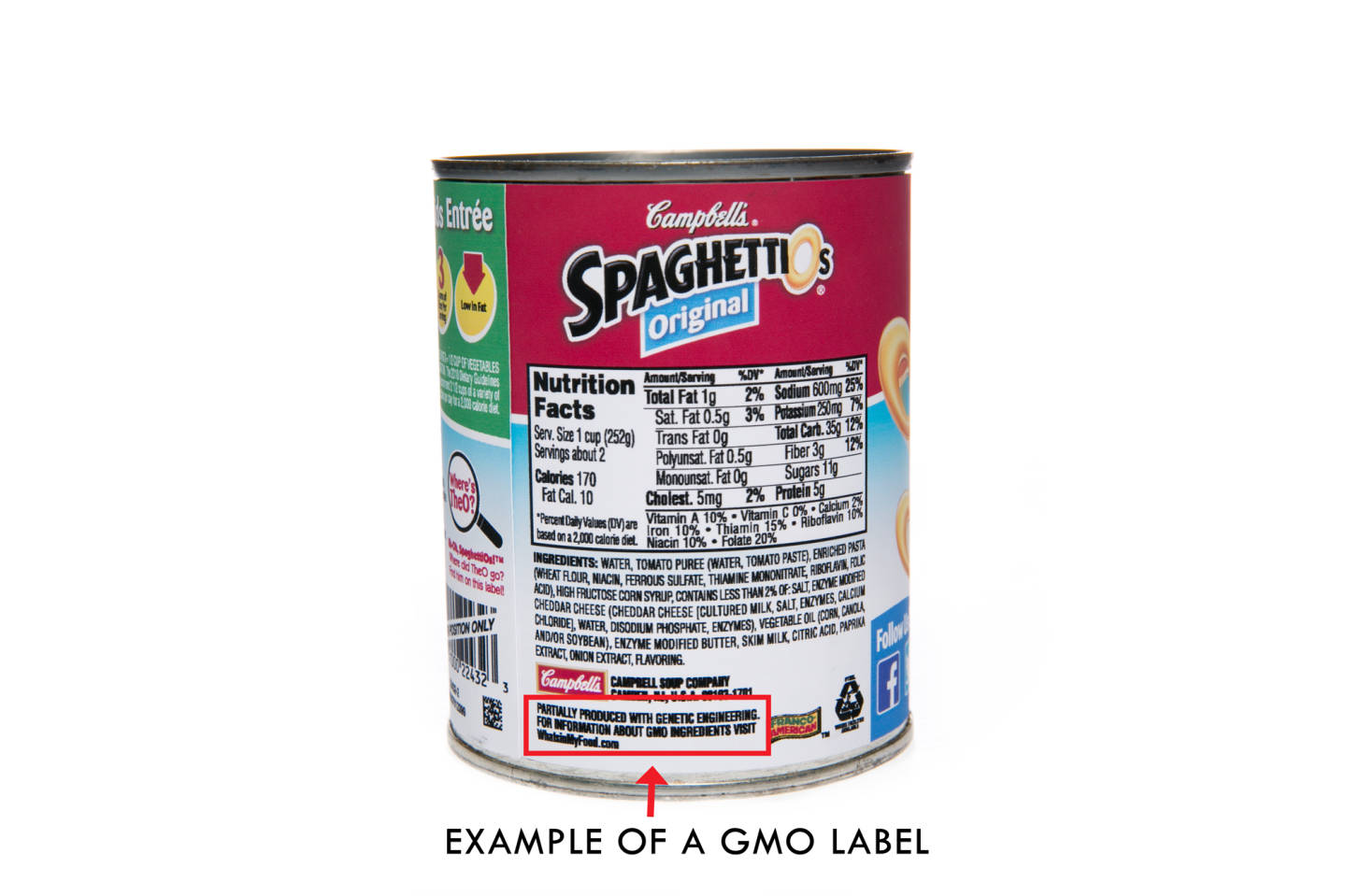
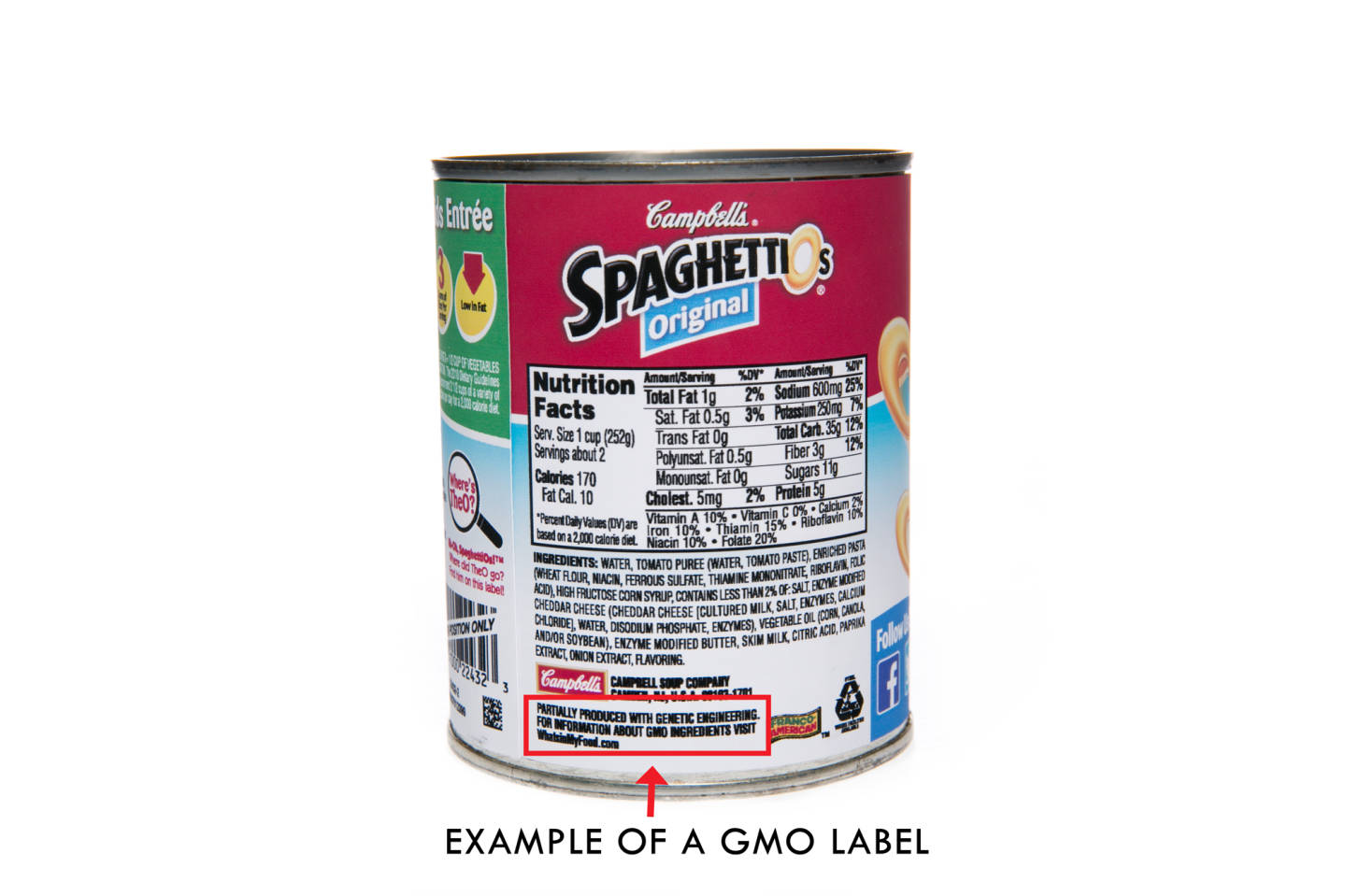
"caption": "A mockup of a possible GMO label on a can of Campbell's Spaghetti-Os, with these words: \"Partially produced with genetic engineering.\" Unless Congress or a federal court intervene, Vermont's new GMO labeling law will go into effect in July. So some companies are scrambling to comply.",
"description": "A mockup of a possible GMO label on a can of Campbell's Spaghetti-Os, with these words: \"Partially produced with genetic engineering.\" Unless Congress or a federal court intervene, Vermont's new GMO labeling law will go into effect in July. So some companies are scrambling to com",
"title": "A mockup of a possible GMO label on a can of Campbell's Spaghetti-Os, with these words: \"Partially produced with genetic engineering.\" Unless Congress or a federal court intervene, Vermont's new GMO labeling law will go into effect in July. So some companies are scrambling to comply.",
"credit": "Courtesy of Campbell Soup Company ",
"status": "inherit",
"isLoading": false,
"fetchFailed": false
},
"bayareabites_107892": {
"type": "attachments",
"id": "bayareabites_107892",
"meta": {
"index": "attachments_1716263798",
"site": "bayareabites",
"id": "107892",
"found": true
},
"parent": 107891,
"imgSizes": {
"twentyfourteen-full-width": {
"file": "https://ww2.kqed.org/app/uploads/sites/24/2016/03/rickbayless_enl-38ac1f56c8d1b2e64fd112505e3195b67aadc914-1038x576.jpg",
"width": 1038,
"mimeType": "image/jpeg",
"height": 576
},
"thumbnail": {
"file": "https://ww2.kqed.org/app/uploads/sites/24/2016/03/rickbayless_enl-38ac1f56c8d1b2e64fd112505e3195b67aadc914-400x266.jpg",
"width": 400,
"mimeType": "image/jpeg",
"height": 266
},
"fd-sm": {
"file": "https://ww2.kqed.org/app/uploads/sites/24/2016/03/rickbayless_enl-38ac1f56c8d1b2e64fd112505e3195b67aadc914-960x639.jpg",
"width": 960,
"mimeType": "image/jpeg",
"height": 639
},
"post-thumbnail": {
"file": "https://ww2.kqed.org/app/uploads/sites/24/2016/03/rickbayless_enl-38ac1f56c8d1b2e64fd112505e3195b67aadc914-672x372.jpg",
"width": 672,
"mimeType": "image/jpeg",
"height": 372
},
"kqedFullSize": {
"file": "https://ww2.kqed.org/app/uploads/sites/24/2016/03/rickbayless_enl-38ac1f56c8d1b2e64fd112505e3195b67aadc914.jpg",
"width": 2000,
"height": 1332
},
"large": {
"file": "https://ww2.kqed.org/app/uploads/sites/24/2016/03/rickbayless_enl-38ac1f56c8d1b2e64fd112505e3195b67aadc914-1440x959.jpg",
"width": 1440,
"mimeType": "image/jpeg",
"height": 959
},
"guest-author-96": {
"file": "https://ww2.kqed.org/app/uploads/sites/24/2016/03/rickbayless_enl-38ac1f56c8d1b2e64fd112505e3195b67aadc914-96x96.jpg",
"width": 96,
"mimeType": "image/jpeg",
"height": 96
},
"medium": {
"file": "https://ww2.kqed.org/app/uploads/sites/24/2016/03/rickbayless_enl-38ac1f56c8d1b2e64fd112505e3195b67aadc914-800x533.jpg",
"width": 800,
"mimeType": "image/jpeg",
"height": 533
},
"guest-author-64": {
"file": "https://ww2.kqed.org/app/uploads/sites/24/2016/03/rickbayless_enl-38ac1f56c8d1b2e64fd112505e3195b67aadc914-64x64.jpg",
"width": 64,
"mimeType": "image/jpeg",
"height": 64
},
"guest-author-32": {
"file": "https://ww2.kqed.org/app/uploads/sites/24/2016/03/rickbayless_enl-38ac1f56c8d1b2e64fd112505e3195b67aadc914-32x32.jpg",
"width": 32,
"mimeType": "image/jpeg",
"height": 32
},
"cat_post_thumb_sizecategory-posts-2": {
"file": "https://ww2.kqed.org/app/uploads/sites/24/2016/03/rickbayless_enl-38ac1f56c8d1b2e64fd112505e3195b67aadc914-150x150.jpg",
"width": 150,
"mimeType": "image/jpeg",
"height": 150
},
"fd-lrg": {
"file": "https://ww2.kqed.org/app/uploads/sites/24/2016/03/rickbayless_enl-38ac1f56c8d1b2e64fd112505e3195b67aadc914-1920x1279.jpg",
"width": 1920,
"mimeType": "image/jpeg",
"height": 1279
},
"fd-med": {
"file": "https://ww2.kqed.org/app/uploads/sites/24/2016/03/rickbayless_enl-38ac1f56c8d1b2e64fd112505e3195b67aadc914-1180x786.jpg",
"width": 1180,
"mimeType": "image/jpeg",
"height": 786
},
"detail": {
"file": "https://ww2.kqed.org/app/uploads/sites/24/2016/03/rickbayless_enl-38ac1f56c8d1b2e64fd112505e3195b67aadc914-75x75.jpg",
"width": 75,
"mimeType": "image/jpeg",
"height": 75
},
"medium_large": {
"file": "https://ww2.kqed.org/app/uploads/sites/24/2016/03/rickbayless_enl-38ac1f56c8d1b2e64fd112505e3195b67aadc914-768x511.jpg",
"width": 768,
"mimeType": "image/jpeg",
"height": 511
},
"guest-author-128": {
"file": "https://ww2.kqed.org/app/uploads/sites/24/2016/03/rickbayless_enl-38ac1f56c8d1b2e64fd112505e3195b67aadc914-128x128.jpg",
"width": 128,
"mimeType": "image/jpeg",
"height": 128
}
},
"publishDate": 1458663274,
"modified": 1458663403,
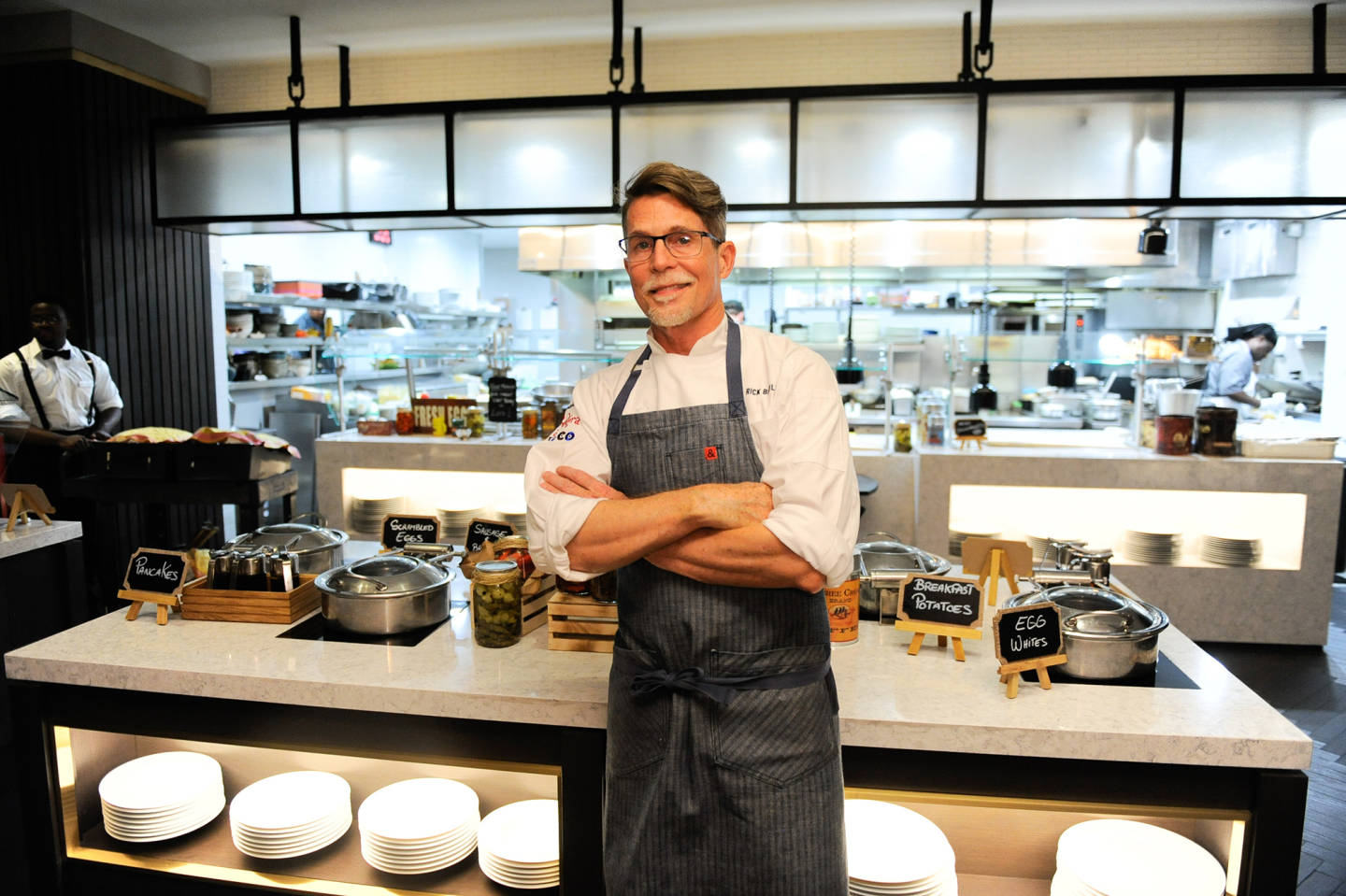
"caption": "Rick Bayless is a master of Mexican cuisine. He's also a white guy from Oklahoma. Over the years, that has made him the target of criticism. Who gets to be the ambassador of a cuisine?",
"description": "Rick Bayless is a master of Mexican cuisine. He's also a white guy from Oklahoma. Over the years, that has made him the target of criticism. Who gets to be the ambassador of a cuisine?",
"title": "Rick Bayless is a master of Mexican cuisine. He's also a white guy from Oklahoma. Over the years, that has made him the target of criticism. Who gets to be the ambassador of a cuisine?",
"credit": "Sergi Alexander/Getty Images ",
"status": "inherit",
"isLoading": false,
"fetchFailed": false
},
"bayareabites_107736": {
"type": "attachments",
"id": "bayareabites_107736",
"meta": {
"index": "attachments_1716263798",
"site": "bayareabites",
"id": "107736",
"found": true
},
"parent": 107735,
"imgSizes": {
"twentyfourteen-full-width": {
"file": "https://ww2.kqed.org/app/uploads/sites/24/2016/03/nogmo_enl-ebded07d03e99792080b5294b88740ef38bf1c18-1038x576.jpg",
"width": 1038,
"mimeType": "image/jpeg",
"height": 576
},
"thumbnail": {
"file": "https://ww2.kqed.org/app/uploads/sites/24/2016/03/nogmo_enl-ebded07d03e99792080b5294b88740ef38bf1c18-400x267.jpg",
"width": 400,
"mimeType": "image/jpeg",
"height": 267
},
"fd-sm": {
"file": "https://ww2.kqed.org/app/uploads/sites/24/2016/03/nogmo_enl-ebded07d03e99792080b5294b88740ef38bf1c18-960x641.jpg",
"width": 960,
"mimeType": "image/jpeg",
"height": 641
},
"post-thumbnail": {
"file": "https://ww2.kqed.org/app/uploads/sites/24/2016/03/nogmo_enl-ebded07d03e99792080b5294b88740ef38bf1c18-672x372.jpg",
"width": 672,
"mimeType": "image/jpeg",
"height": 372
},
"kqedFullSize": {
"file": "https://ww2.kqed.org/app/uploads/sites/24/2016/03/nogmo_enl-ebded07d03e99792080b5294b88740ef38bf1c18.jpg",
"width": 2000,
"height": 1335
},
"large": {
"file": "https://ww2.kqed.org/app/uploads/sites/24/2016/03/nogmo_enl-ebded07d03e99792080b5294b88740ef38bf1c18-1440x961.jpg",
"width": 1440,
"mimeType": "image/jpeg",
"height": 961
},
"guest-author-96": {
"file": "https://ww2.kqed.org/app/uploads/sites/24/2016/03/nogmo_enl-ebded07d03e99792080b5294b88740ef38bf1c18-96x96.jpg",
"width": 96,
"mimeType": "image/jpeg",
"height": 96
},
"medium": {
"file": "https://ww2.kqed.org/app/uploads/sites/24/2016/03/nogmo_enl-ebded07d03e99792080b5294b88740ef38bf1c18-800x534.jpg",
"width": 800,
"mimeType": "image/jpeg",
"height": 534
},
"guest-author-64": {
"file": "https://ww2.kqed.org/app/uploads/sites/24/2016/03/nogmo_enl-ebded07d03e99792080b5294b88740ef38bf1c18-64x64.jpg",
"width": 64,
"mimeType": "image/jpeg",
"height": 64
},
"guest-author-32": {
"file": "https://ww2.kqed.org/app/uploads/sites/24/2016/03/nogmo_enl-ebded07d03e99792080b5294b88740ef38bf1c18-32x32.jpg",
"width": 32,
"mimeType": "image/jpeg",
"height": 32
},
"cat_post_thumb_sizecategory-posts-2": {
"file": "https://ww2.kqed.org/app/uploads/sites/24/2016/03/nogmo_enl-ebded07d03e99792080b5294b88740ef38bf1c18-150x150.jpg",
"width": 150,
"mimeType": "image/jpeg",
"height": 150
},
"fd-lrg": {
"file": "https://ww2.kqed.org/app/uploads/sites/24/2016/03/nogmo_enl-ebded07d03e99792080b5294b88740ef38bf1c18-1920x1282.jpg",
"width": 1920,
"mimeType": "image/jpeg",
"height": 1282
},
"fd-med": {
"file": "https://ww2.kqed.org/app/uploads/sites/24/2016/03/nogmo_enl-ebded07d03e99792080b5294b88740ef38bf1c18-1180x788.jpg",
"width": 1180,
"mimeType": "image/jpeg",
"height": 788
},
"detail": {
"file": "https://ww2.kqed.org/app/uploads/sites/24/2016/03/nogmo_enl-ebded07d03e99792080b5294b88740ef38bf1c18-75x75.jpg",
"width": 75,
"mimeType": "image/jpeg",
"height": 75
},
"medium_large": {
"file": "https://ww2.kqed.org/app/uploads/sites/24/2016/03/nogmo_enl-ebded07d03e99792080b5294b88740ef38bf1c18-768x513.jpg",
"width": 768,
"mimeType": "image/jpeg",
"height": 513
},
"guest-author-128": {
"file": "https://ww2.kqed.org/app/uploads/sites/24/2016/03/nogmo_enl-ebded07d03e99792080b5294b88740ef38bf1c18-128x128.jpg",
"width": 128,
"mimeType": "image/jpeg",
"height": 128
}
},
"publishDate": 1458193228,
"modified": 1458193404,
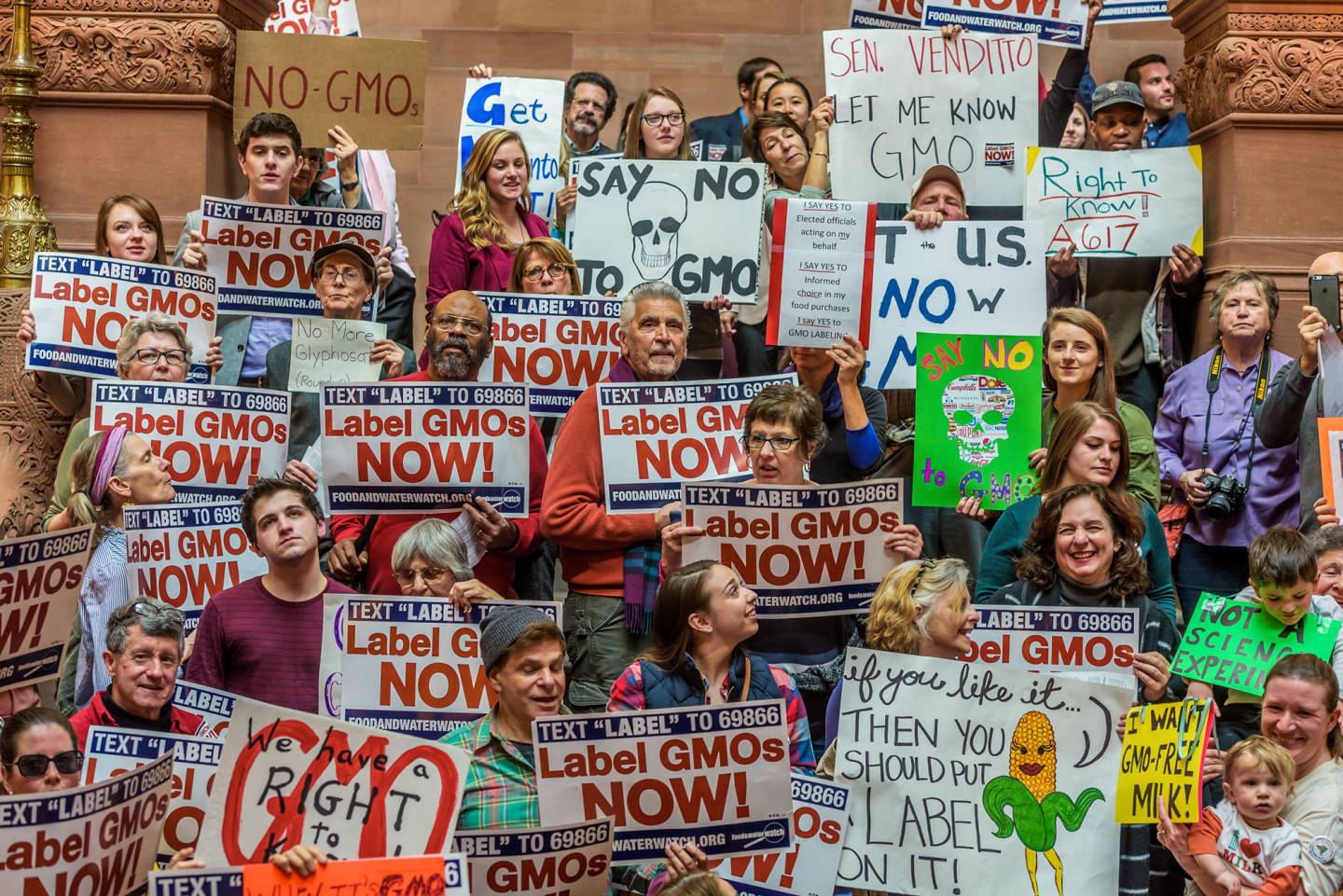
"caption": "Protesters gathered at the New York state Capitol in Albany earlier this month to lobby their legislators to make GMO labels on foods mandatory in the state.",
"description": "Protesters gathered at the New York state Capitol in Albany earlier this month to lobby their legislators to make GMO labels on foods mandatory in the state.",
"title": "Protesters gathered at the New York state Capitol in Albany earlier this month to lobby their legislators to make GMO labels on foods mandatory in the state.",
"credit": "Erik McGregor/Pacific Press/LightRocket via Getty Images ",
"status": "inherit",
"isLoading": false,
"fetchFailed": false
},
"bayareabites_107709": {
"type": "attachments",
"id": "bayareabites_107709",
"meta": {
"index": "attachments_1716263798",
"site": "bayareabites",
"id": "107709",
"found": true
},
"parent": 107708,
"imgSizes": {
"twentyfourteen-full-width": {
"file": "https://ww2.kqed.org/app/uploads/sites/24/2016/03/foodwaste_enl-419d4cfb36e0fc8ed48fe293b8c1d2bb6aba670d-1038x576.jpg",
"width": 1038,
"mimeType": "image/jpeg",
"height": 576
},
"thumbnail": {
"file": "https://ww2.kqed.org/app/uploads/sites/24/2016/03/foodwaste_enl-419d4cfb36e0fc8ed48fe293b8c1d2bb6aba670d-400x271.jpg",
"width": 400,
"mimeType": "image/jpeg",
"height": 271
},
"fd-sm": {
"file": "https://ww2.kqed.org/app/uploads/sites/24/2016/03/foodwaste_enl-419d4cfb36e0fc8ed48fe293b8c1d2bb6aba670d-960x649.jpg",
"width": 960,
"mimeType": "image/jpeg",
"height": 649
},
"post-thumbnail": {
"file": "https://ww2.kqed.org/app/uploads/sites/24/2016/03/foodwaste_enl-419d4cfb36e0fc8ed48fe293b8c1d2bb6aba670d-672x372.jpg",
"width": 672,
"mimeType": "image/jpeg",
"height": 372
},
"kqedFullSize": {
"file": "https://ww2.kqed.org/app/uploads/sites/24/2016/03/foodwaste_enl-419d4cfb36e0fc8ed48fe293b8c1d2bb6aba670d.jpg",
"width": 2000,
"height": 1353
},
"large": {
"file": "https://ww2.kqed.org/app/uploads/sites/24/2016/03/foodwaste_enl-419d4cfb36e0fc8ed48fe293b8c1d2bb6aba670d-1440x974.jpg",
"width": 1440,
"mimeType": "image/jpeg",
"height": 974
},
"guest-author-96": {
"file": "https://ww2.kqed.org/app/uploads/sites/24/2016/03/foodwaste_enl-419d4cfb36e0fc8ed48fe293b8c1d2bb6aba670d-96x96.jpg",
"width": 96,
"mimeType": "image/jpeg",
"height": 96
},
"medium": {
"file": "https://ww2.kqed.org/app/uploads/sites/24/2016/03/foodwaste_enl-419d4cfb36e0fc8ed48fe293b8c1d2bb6aba670d-800x541.jpg",
"width": 800,
"mimeType": "image/jpeg",
"height": 541
},
"guest-author-64": {
"file": "https://ww2.kqed.org/app/uploads/sites/24/2016/03/foodwaste_enl-419d4cfb36e0fc8ed48fe293b8c1d2bb6aba670d-64x64.jpg",
"width": 64,
"mimeType": "image/jpeg",
"height": 64
},
"guest-author-32": {
"file": "https://ww2.kqed.org/app/uploads/sites/24/2016/03/foodwaste_enl-419d4cfb36e0fc8ed48fe293b8c1d2bb6aba670d-32x32.jpg",
"width": 32,
"mimeType": "image/jpeg",
"height": 32
},
"cat_post_thumb_sizecategory-posts-2": {
"file": "https://ww2.kqed.org/app/uploads/sites/24/2016/03/foodwaste_enl-419d4cfb36e0fc8ed48fe293b8c1d2bb6aba670d-150x150.jpg",
"width": 150,
"mimeType": "image/jpeg",
"height": 150
},
"fd-lrg": {
"file": "https://ww2.kqed.org/app/uploads/sites/24/2016/03/foodwaste_enl-419d4cfb36e0fc8ed48fe293b8c1d2bb6aba670d-1920x1299.jpg",
"width": 1920,
"mimeType": "image/jpeg",
"height": 1299
},
"fd-med": {
"file": "https://ww2.kqed.org/app/uploads/sites/24/2016/03/foodwaste_enl-419d4cfb36e0fc8ed48fe293b8c1d2bb6aba670d-1180x798.jpg",
"width": 1180,
"mimeType": "image/jpeg",
"height": 798
},
"detail": {
"file": "https://ww2.kqed.org/app/uploads/sites/24/2016/03/foodwaste_enl-419d4cfb36e0fc8ed48fe293b8c1d2bb6aba670d-75x75.jpg",
"width": 75,
"mimeType": "image/jpeg",
"height": 75
},
"medium_large": {
"file": "https://ww2.kqed.org/app/uploads/sites/24/2016/03/foodwaste_enl-419d4cfb36e0fc8ed48fe293b8c1d2bb6aba670d-768x520.jpg",
"width": 768,
"mimeType": "image/jpeg",
"height": 520
},
"guest-author-128": {
"file": "https://ww2.kqed.org/app/uploads/sites/24/2016/03/foodwaste_enl-419d4cfb36e0fc8ed48fe293b8c1d2bb6aba670d-128x128.jpg",
"width": 128,
"mimeType": "image/jpeg",
"height": 128
}
},
"publishDate": 1458065536,
"modified": 1458066013,
"caption": "Food scraps are seen in a compost bin at a San Francisco restaurant. A new report ranks centralized composting as a top strategy for keeping food waste out of landfills, where it emits methane, a powerful greenhouse gas.",
"description": "Food scraps are seen in a compost bin at a San Francisco restaurant. A new report ranks centralized composting as a top strategy for keeping food waste out of landfills, where it emits methane, a powerful greenhouse gas",
"title": "Food scraps are seen in a compost bin at a San Francisco restaurant. A new report ranks centralized composting as a top strategy for keeping food waste out of landfills, where it emits methane, a powerful greenhouse gas.",
"credit": "Justin Sullivan/Getty Images ",
"status": "inherit",
"isLoading": false,
"fetchFailed": false
},
"bayareabites_107589": {
"type": "attachments",
"id": "bayareabites_107589",
"meta": {
"index": "attachments_1716263798",
"site": "bayareabites",
"id": "107589",
"found": true
},
"parent": 107588,
"imgSizes": {
"twentyfourteen-full-width": {
"file": "https://ww2.kqed.org/app/uploads/sites/24/2016/03/demdebate_enl-d0914e233c54bcbe835145a7b388a6b9faeaf96a-1038x576.jpg",
"width": 1038,
"mimeType": "image/jpeg",
"height": 576
},
"thumbnail": {
"file": "https://ww2.kqed.org/app/uploads/sites/24/2016/03/demdebate_enl-d0914e233c54bcbe835145a7b388a6b9faeaf96a-400x266.jpg",
"width": 400,
"mimeType": "image/jpeg",
"height": 266
},
"fd-sm": {
"file": "https://ww2.kqed.org/app/uploads/sites/24/2016/03/demdebate_enl-d0914e233c54bcbe835145a7b388a6b9faeaf96a-960x639.jpg",
"width": 960,
"mimeType": "image/jpeg",
"height": 639
},
"post-thumbnail": {
"file": "https://ww2.kqed.org/app/uploads/sites/24/2016/03/demdebate_enl-d0914e233c54bcbe835145a7b388a6b9faeaf96a-672x372.jpg",
"width": 672,
"mimeType": "image/jpeg",
"height": 372
},
"kqedFullSize": {
"file": "https://ww2.kqed.org/app/uploads/sites/24/2016/03/demdebate_enl-d0914e233c54bcbe835145a7b388a6b9faeaf96a.jpg",
"width": 2000,
"height": 1332
},
"large": {
"file": "https://ww2.kqed.org/app/uploads/sites/24/2016/03/demdebate_enl-d0914e233c54bcbe835145a7b388a6b9faeaf96a-1440x959.jpg",
"width": 1440,
"mimeType": "image/jpeg",
"height": 959
},
"guest-author-96": {
"file": "https://ww2.kqed.org/app/uploads/sites/24/2016/03/demdebate_enl-d0914e233c54bcbe835145a7b388a6b9faeaf96a-96x96.jpg",
"width": 96,
"mimeType": "image/jpeg",
"height": 96
},
"medium": {
"file": "https://ww2.kqed.org/app/uploads/sites/24/2016/03/demdebate_enl-d0914e233c54bcbe835145a7b388a6b9faeaf96a-800x533.jpg",
"width": 800,
"mimeType": "image/jpeg",
"height": 533
},
"guest-author-64": {
"file": "https://ww2.kqed.org/app/uploads/sites/24/2016/03/demdebate_enl-d0914e233c54bcbe835145a7b388a6b9faeaf96a-64x64.jpg",
"width": 64,
"mimeType": "image/jpeg",
"height": 64
},
"guest-author-32": {
"file": "https://ww2.kqed.org/app/uploads/sites/24/2016/03/demdebate_enl-d0914e233c54bcbe835145a7b388a6b9faeaf96a-32x32.jpg",
"width": 32,
"mimeType": "image/jpeg",
"height": 32
},
"cat_post_thumb_sizecategory-posts-2": {
"file": "https://ww2.kqed.org/app/uploads/sites/24/2016/03/demdebate_enl-d0914e233c54bcbe835145a7b388a6b9faeaf96a-150x150.jpg",
"width": 150,
"mimeType": "image/jpeg",
"height": 150
},
"fd-lrg": {
"file": "https://ww2.kqed.org/app/uploads/sites/24/2016/03/demdebate_enl-d0914e233c54bcbe835145a7b388a6b9faeaf96a-1920x1279.jpg",
"width": 1920,
"mimeType": "image/jpeg",
"height": 1279
},
"fd-med": {
"file": "https://ww2.kqed.org/app/uploads/sites/24/2016/03/demdebate_enl-d0914e233c54bcbe835145a7b388a6b9faeaf96a-1180x786.jpg",
"width": 1180,
"mimeType": "image/jpeg",
"height": 786
},
"detail": {
"file": "https://ww2.kqed.org/app/uploads/sites/24/2016/03/demdebate_enl-d0914e233c54bcbe835145a7b388a6b9faeaf96a-75x75.jpg",
"width": 75,
"mimeType": "image/jpeg",
"height": 75
},
"medium_large": {
"file": "https://ww2.kqed.org/app/uploads/sites/24/2016/03/demdebate_enl-d0914e233c54bcbe835145a7b388a6b9faeaf96a-768x511.jpg",
"width": 768,
"mimeType": "image/jpeg",
"height": 511
},
"guest-author-128": {
"file": "https://ww2.kqed.org/app/uploads/sites/24/2016/03/demdebate_enl-d0914e233c54bcbe835145a7b388a6b9faeaf96a-128x128.jpg",
"width": 128,
"mimeType": "image/jpeg",
"height": 128
}
},
"publishDate": 1457653680,
"modified": 1457653942,
"caption": "Florida tomato pickers' fight for fair wages and better working conditions became a topic at Wednesday night's Democratic debate in Miami between Vermont Sen. Bernie Sanders and Hillary Clinton.",
"description": "Florida tomato pickers' fight for fair wages and better working conditions became a topic at Wednesday night's Democratic debate in Miami between Vermont Sen. Bernie Sanders and Hillary Clinton",
"title": "Florida tomato pickers' fight for fair wages and better working conditions became a topic at Wednesday night's Democratic debate in Miami between Vermont Sen. Bernie Sanders and Hillary Clinton.",
"credit": "Joe Raedle/Getty Images",
"status": "inherit",
"isLoading": false,
"fetchFailed": false
},
"bayareabites_107467": {
"type": "attachments",
"id": "bayareabites_107467",
"meta": {
"index": "attachments_1716263798",
"site": "bayareabites",
"id": "107467",
"found": true
},
"parent": 107466,
"imgSizes": {
"twentyfourteen-full-width": {
"file": "https://ww2.kqed.org/app/uploads/sites/24/2016/03/produce-with-pesonality_edited_enl-2b1cefe42d0050f63069a32b26537a716d884dd4-1038x576.jpg",
"width": 1038,
"mimeType": "image/jpeg",
"height": 576
},
"thumbnail": {
"file": "https://ww2.kqed.org/app/uploads/sites/24/2016/03/produce-with-pesonality_edited_enl-2b1cefe42d0050f63069a32b26537a716d884dd4-400x256.jpg",
"width": 400,
"mimeType": "image/jpeg",
"height": 256
},
"fd-sm": {
"file": "https://ww2.kqed.org/app/uploads/sites/24/2016/03/produce-with-pesonality_edited_enl-2b1cefe42d0050f63069a32b26537a716d884dd4-960x614.jpg",
"width": 960,
"mimeType": "image/jpeg",
"height": 614
},
"post-thumbnail": {
"file": "https://ww2.kqed.org/app/uploads/sites/24/2016/03/produce-with-pesonality_edited_enl-2b1cefe42d0050f63069a32b26537a716d884dd4-672x372.jpg",
"width": 672,
"mimeType": "image/jpeg",
"height": 372
},
"kqedFullSize": {
"file": "https://ww2.kqed.org/app/uploads/sites/24/2016/03/produce-with-pesonality_edited_enl-2b1cefe42d0050f63069a32b26537a716d884dd4.jpg",
"width": 2000,
"height": 1279
},
"large": {
"file": "https://ww2.kqed.org/app/uploads/sites/24/2016/03/produce-with-pesonality_edited_enl-2b1cefe42d0050f63069a32b26537a716d884dd4-1440x921.jpg",
"width": 1440,
"mimeType": "image/jpeg",
"height": 921
},
"guest-author-96": {
"file": "https://ww2.kqed.org/app/uploads/sites/24/2016/03/produce-with-pesonality_edited_enl-2b1cefe42d0050f63069a32b26537a716d884dd4-96x96.jpg",
"width": 96,
"mimeType": "image/jpeg",
"height": 96
},
"medium": {
"file": "https://ww2.kqed.org/app/uploads/sites/24/2016/03/produce-with-pesonality_edited_enl-2b1cefe42d0050f63069a32b26537a716d884dd4-800x512.jpg",
"width": 800,
"mimeType": "image/jpeg",
"height": 512
},
"guest-author-64": {
"file": "https://ww2.kqed.org/app/uploads/sites/24/2016/03/produce-with-pesonality_edited_enl-2b1cefe42d0050f63069a32b26537a716d884dd4-64x64.jpg",
"width": 64,
"mimeType": "image/jpeg",
"height": 64
},
"guest-author-32": {
"file": "https://ww2.kqed.org/app/uploads/sites/24/2016/03/produce-with-pesonality_edited_enl-2b1cefe42d0050f63069a32b26537a716d884dd4-32x32.jpg",
"width": 32,
"mimeType": "image/jpeg",
"height": 32
},
"cat_post_thumb_sizecategory-posts-2": {
"file": "https://ww2.kqed.org/app/uploads/sites/24/2016/03/produce-with-pesonality_edited_enl-2b1cefe42d0050f63069a32b26537a716d884dd4-150x150.jpg",
"width": 150,
"mimeType": "image/jpeg",
"height": 150
},
"fd-lrg": {
"file": "https://ww2.kqed.org/app/uploads/sites/24/2016/03/produce-with-pesonality_edited_enl-2b1cefe42d0050f63069a32b26537a716d884dd4-1920x1228.jpg",
"width": 1920,
"mimeType": "image/jpeg",
"height": 1228
},
"fd-med": {
"file": "https://ww2.kqed.org/app/uploads/sites/24/2016/03/produce-with-pesonality_edited_enl-2b1cefe42d0050f63069a32b26537a716d884dd4-1180x755.jpg",
"width": 1180,
"mimeType": "image/jpeg",
"height": 755
},
"detail": {
"file": "https://ww2.kqed.org/app/uploads/sites/24/2016/03/produce-with-pesonality_edited_enl-2b1cefe42d0050f63069a32b26537a716d884dd4-75x75.jpg",
"width": 75,
"mimeType": "image/jpeg",
"height": 75
},
"medium_large": {
"file": "https://ww2.kqed.org/app/uploads/sites/24/2016/03/produce-with-pesonality_edited_enl-2b1cefe42d0050f63069a32b26537a716d884dd4-768x491.jpg",
"width": 768,
"mimeType": "image/jpeg",
"height": 491
},
"guest-author-128": {
"file": "https://ww2.kqed.org/app/uploads/sites/24/2016/03/produce-with-pesonality_edited_enl-2b1cefe42d0050f63069a32b26537a716d884dd4-128x128.jpg",
"width": 128,
"mimeType": "image/jpeg",
"height": 128
}
},
"publishDate": 1457454979,
"modified": 1457455161,
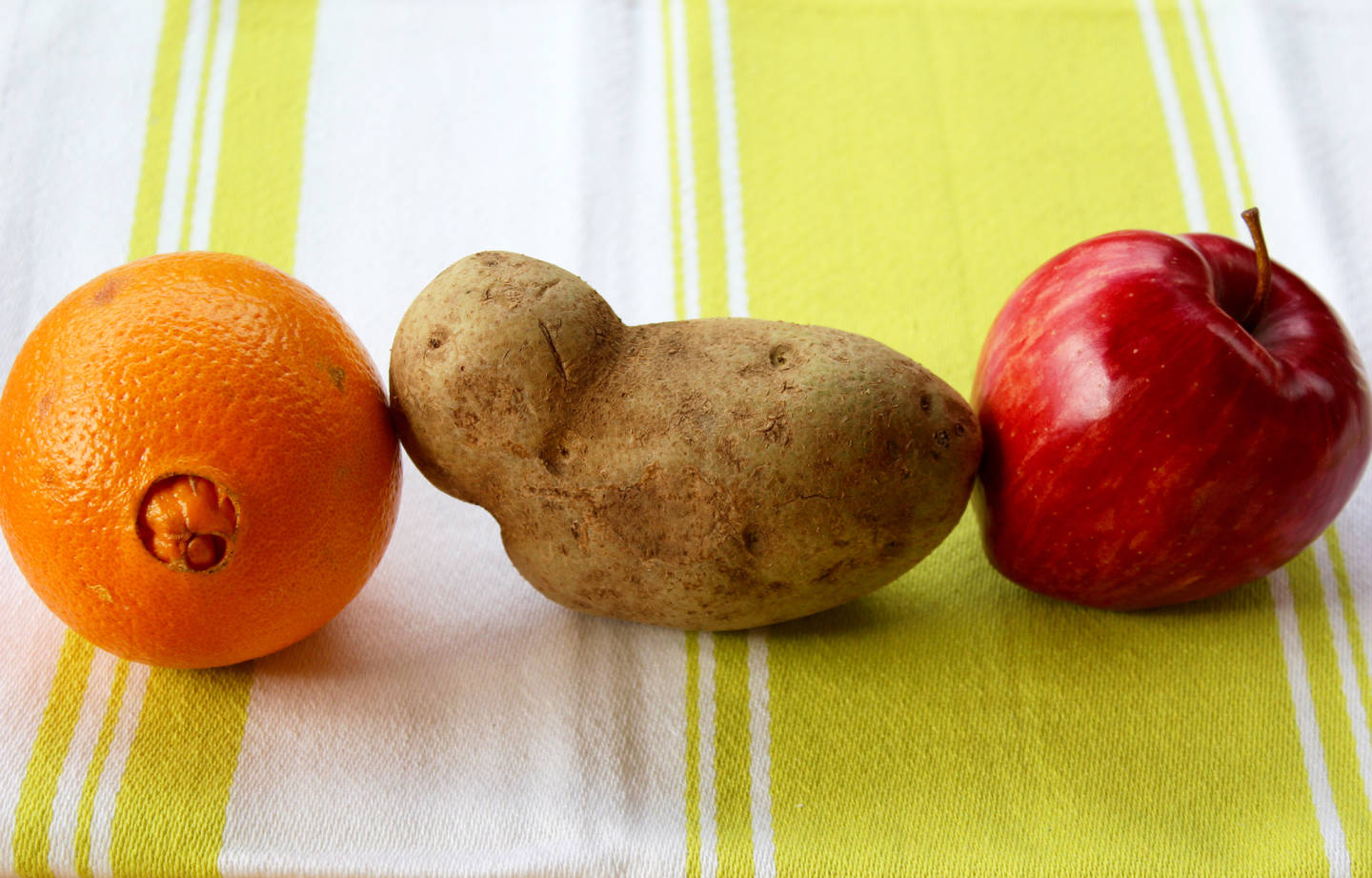
"caption": "Less-than-perfect fruit and vegetables are sold at a discount under the new Produce with Personality program being piloted at five Giant Eagle stores in Pittsburgh.",
"description": "Less-than-perfect fruit and vegetables are sold at a discount under the new Produce with Personality program being piloted at five Giant Eagle stores in Pittsburgh.",
"title": "Less-than-perfect fruit and vegetables are sold at a discount under the new Produce with Personality program being piloted at five Giant Eagle stores in Pittsburgh.",
"credit": "Courtesy of Giant Eagle ",
"status": "inherit",
"isLoading": false,
"fetchFailed": false
},
"bayareabites_107382": {
"type": "attachments",
"id": "bayareabites_107382",
"meta": {
"index": "attachments_1716263798",
"site": "bayareabites",
"id": "107382",
"found": true
},
"parent": 107381,
"imgSizes": {
"twentyfourteen-full-width": {
"file": "https://ww2.kqed.org/app/uploads/sites/24/2016/03/campbellgmo_enl-d86b24ae67a7214ffe096f6721e7098708288e28-1038x576.jpe",
"width": 1038,
"mimeType": "image/jpeg",
"height": 576
},
"thumbnail": {
"file": "https://ww2.kqed.org/app/uploads/sites/24/2016/03/campbellgmo_enl-d86b24ae67a7214ffe096f6721e7098708288e28-400x266.jpe",
"width": 400,
"mimeType": "image/jpeg",
"height": 266
},
"fd-sm": {
"file": "https://ww2.kqed.org/app/uploads/sites/24/2016/03/campbellgmo_enl-d86b24ae67a7214ffe096f6721e7098708288e28-960x639.jpe",
"width": 960,
"mimeType": "image/jpeg",
"height": 639
},
"post-thumbnail": {
"file": "https://ww2.kqed.org/app/uploads/sites/24/2016/03/campbellgmo_enl-d86b24ae67a7214ffe096f6721e7098708288e28-672x372.jpe",
"width": 672,
"mimeType": "image/jpeg",
"height": 372
},
"kqedFullSize": {
"file": "https://ww2.kqed.org/app/uploads/sites/24/2016/03/campbellgmo_enl-d86b24ae67a7214ffe096f6721e7098708288e28.jpe",
"width": 2000,
"height": 1332
},
"large": {
"file": "https://ww2.kqed.org/app/uploads/sites/24/2016/03/campbellgmo_enl-d86b24ae67a7214ffe096f6721e7098708288e28-1440x959.jpe",
"width": 1440,
"mimeType": "image/jpeg",
"height": 959
},
"guest-author-96": {
"file": "https://ww2.kqed.org/app/uploads/sites/24/2016/03/campbellgmo_enl-d86b24ae67a7214ffe096f6721e7098708288e28-96x96.jpe",
"width": 96,
"mimeType": "image/jpeg",
"height": 96
},
"medium": {
"file": "https://ww2.kqed.org/app/uploads/sites/24/2016/03/campbellgmo_enl-d86b24ae67a7214ffe096f6721e7098708288e28-800x533.jpe",
"width": 800,
"mimeType": "image/jpeg",
"height": 533
},
"guest-author-64": {
"file": "https://ww2.kqed.org/app/uploads/sites/24/2016/03/campbellgmo_enl-d86b24ae67a7214ffe096f6721e7098708288e28-64x64.jpe",
"width": 64,
"mimeType": "image/jpeg",
"height": 64
},
"guest-author-32": {
"file": "https://ww2.kqed.org/app/uploads/sites/24/2016/03/campbellgmo_enl-d86b24ae67a7214ffe096f6721e7098708288e28-32x32.jpe",
"width": 32,
"mimeType": "image/jpeg",
"height": 32
},
"cat_post_thumb_sizecategory-posts-2": {
"file": "https://ww2.kqed.org/app/uploads/sites/24/2016/03/campbellgmo_enl-d86b24ae67a7214ffe096f6721e7098708288e28-150x150.jpe",
"width": 150,
"mimeType": "image/jpeg",
"height": 150
},
"fd-lrg": {
"file": "https://ww2.kqed.org/app/uploads/sites/24/2016/03/campbellgmo_enl-d86b24ae67a7214ffe096f6721e7098708288e28-1920x1279.jpe",
"width": 1920,
"mimeType": "image/jpeg",
"height": 1279
},
"fd-med": {
"file": "https://ww2.kqed.org/app/uploads/sites/24/2016/03/campbellgmo_enl-d86b24ae67a7214ffe096f6721e7098708288e28-1180x786.jpe",
"width": 1180,
"mimeType": "image/jpeg",
"height": 786
},
"detail": {
"file": "https://ww2.kqed.org/app/uploads/sites/24/2016/03/campbellgmo_enl-d86b24ae67a7214ffe096f6721e7098708288e28-75x75.jpe",
"width": 75,
"mimeType": "image/jpeg",
"height": 75
},
"medium_large": {
"file": "https://ww2.kqed.org/app/uploads/sites/24/2016/03/campbellgmo_enl-d86b24ae67a7214ffe096f6721e7098708288e28-768x511.jpe",
"width": 768,
"mimeType": "image/jpeg",
"height": 511
},
"guest-author-128": {
"file": "https://ww2.kqed.org/app/uploads/sites/24/2016/03/campbellgmo_enl-d86b24ae67a7214ffe096f6721e7098708288e28-128x128.jpe",
"width": 128,
"mimeType": "image/jpeg",
"height": 128
}
},
"publishDate": 1457161910,
"modified": 1457162055,
"caption": "A mockup of a possible GMO label on a can of Campbell's Spaghetti-Os, with these words: \"Partially produced with genetic engineering.\" Lawmakers are scrambling to piece together a national GMO labeling standard before July 1.",
"description": "A mockup of a possible GMO label on a can of Campbell's Spaghetti-Os, with these words: \"Partially produced with genetic engineering.\" Lawmakers are scrambling to piece together a national GMO labeling standard before July 1",
"title": "A mockup of a possible GMO label on a can of Campbell's Spaghetti-Os, with these words: \"Partially produced with genetic engineering.\" Lawmakers are scrambling to piece together a national GMO labeling standard before July 1.",
"credit": "Courtesy of Campbell Soup Company ",
"status": "inherit",
"isLoading": false,
"fetchFailed": false
},
"bayareabites_107374": {
"type": "attachments",
"id": "bayareabites_107374",
"meta": {
"index": "attachments_1716263798",
"site": "bayareabites",
"id": "107374",
"found": true
},
"parent": 107373,
"imgSizes": {
"twentyfourteen-full-width": {
"file": "https://ww2.kqed.org/app/uploads/sites/24/2016/03/pesticideplane_enl-90a539ba1b4c40cace19b5a5051dd590c24fc6c9-1038x576.jpg",
"width": 1038,
"mimeType": "image/jpeg",
"height": 576
},
"thumbnail": {
"file": "https://ww2.kqed.org/app/uploads/sites/24/2016/03/pesticideplane_enl-90a539ba1b4c40cace19b5a5051dd590c24fc6c9-400x266.jpg",
"width": 400,
"mimeType": "image/jpeg",
"height": 266
},
"fd-sm": {
"file": "https://ww2.kqed.org/app/uploads/sites/24/2016/03/pesticideplane_enl-90a539ba1b4c40cace19b5a5051dd590c24fc6c9-960x639.jpg",
"width": 960,
"mimeType": "image/jpeg",
"height": 639
},
"post-thumbnail": {
"file": "https://ww2.kqed.org/app/uploads/sites/24/2016/03/pesticideplane_enl-90a539ba1b4c40cace19b5a5051dd590c24fc6c9-672x372.jpg",
"width": 672,
"mimeType": "image/jpeg",
"height": 372
},
"kqedFullSize": {
"file": "https://ww2.kqed.org/app/uploads/sites/24/2016/03/pesticideplane_enl-90a539ba1b4c40cace19b5a5051dd590c24fc6c9.jpg",
"width": 2000,
"height": 1332
},
"large": {
"file": "https://ww2.kqed.org/app/uploads/sites/24/2016/03/pesticideplane_enl-90a539ba1b4c40cace19b5a5051dd590c24fc6c9-1440x959.jpg",
"width": 1440,
"mimeType": "image/jpeg",
"height": 959
},
"guest-author-96": {
"file": "https://ww2.kqed.org/app/uploads/sites/24/2016/03/pesticideplane_enl-90a539ba1b4c40cace19b5a5051dd590c24fc6c9-96x96.jpg",
"width": 96,
"mimeType": "image/jpeg",
"height": 96
},
"medium": {
"file": "https://ww2.kqed.org/app/uploads/sites/24/2016/03/pesticideplane_enl-90a539ba1b4c40cace19b5a5051dd590c24fc6c9-800x533.jpg",
"width": 800,
"mimeType": "image/jpeg",
"height": 533
},
"guest-author-64": {
"file": "https://ww2.kqed.org/app/uploads/sites/24/2016/03/pesticideplane_enl-90a539ba1b4c40cace19b5a5051dd590c24fc6c9-64x64.jpg",
"width": 64,
"mimeType": "image/jpeg",
"height": 64
},
"guest-author-32": {
"file": "https://ww2.kqed.org/app/uploads/sites/24/2016/03/pesticideplane_enl-90a539ba1b4c40cace19b5a5051dd590c24fc6c9-32x32.jpg",
"width": 32,
"mimeType": "image/jpeg",
"height": 32
},
"cat_post_thumb_sizecategory-posts-2": {
"file": "https://ww2.kqed.org/app/uploads/sites/24/2016/03/pesticideplane_enl-90a539ba1b4c40cace19b5a5051dd590c24fc6c9-150x150.jpg",
"width": 150,
"mimeType": "image/jpeg",
"height": 150
},
"fd-lrg": {
"file": "https://ww2.kqed.org/app/uploads/sites/24/2016/03/pesticideplane_enl-90a539ba1b4c40cace19b5a5051dd590c24fc6c9-1920x1279.jpg",
"width": 1920,
"mimeType": "image/jpeg",
"height": 1279
},
"fd-med": {
"file": "https://ww2.kqed.org/app/uploads/sites/24/2016/03/pesticideplane_enl-90a539ba1b4c40cace19b5a5051dd590c24fc6c9-1180x786.jpg",
"width": 1180,
"mimeType": "image/jpeg",
"height": 786
},
"detail": {
"file": "https://ww2.kqed.org/app/uploads/sites/24/2016/03/pesticideplane_enl-90a539ba1b4c40cace19b5a5051dd590c24fc6c9-75x75.jpg",
"width": 75,
"mimeType": "image/jpeg",
"height": 75
},
"medium_large": {
"file": "https://ww2.kqed.org/app/uploads/sites/24/2016/03/pesticideplane_enl-90a539ba1b4c40cace19b5a5051dd590c24fc6c9-768x511.jpg",
"width": 768,
"mimeType": "image/jpeg",
"height": 511
},
"guest-author-128": {
"file": "https://ww2.kqed.org/app/uploads/sites/24/2016/03/pesticideplane_enl-90a539ba1b4c40cace19b5a5051dd590c24fc6c9-128x128.jpg",
"width": 128,
"mimeType": "image/jpeg",
"height": 128
}
},
"publishDate": 1457129281,
"modified": 1457129311,
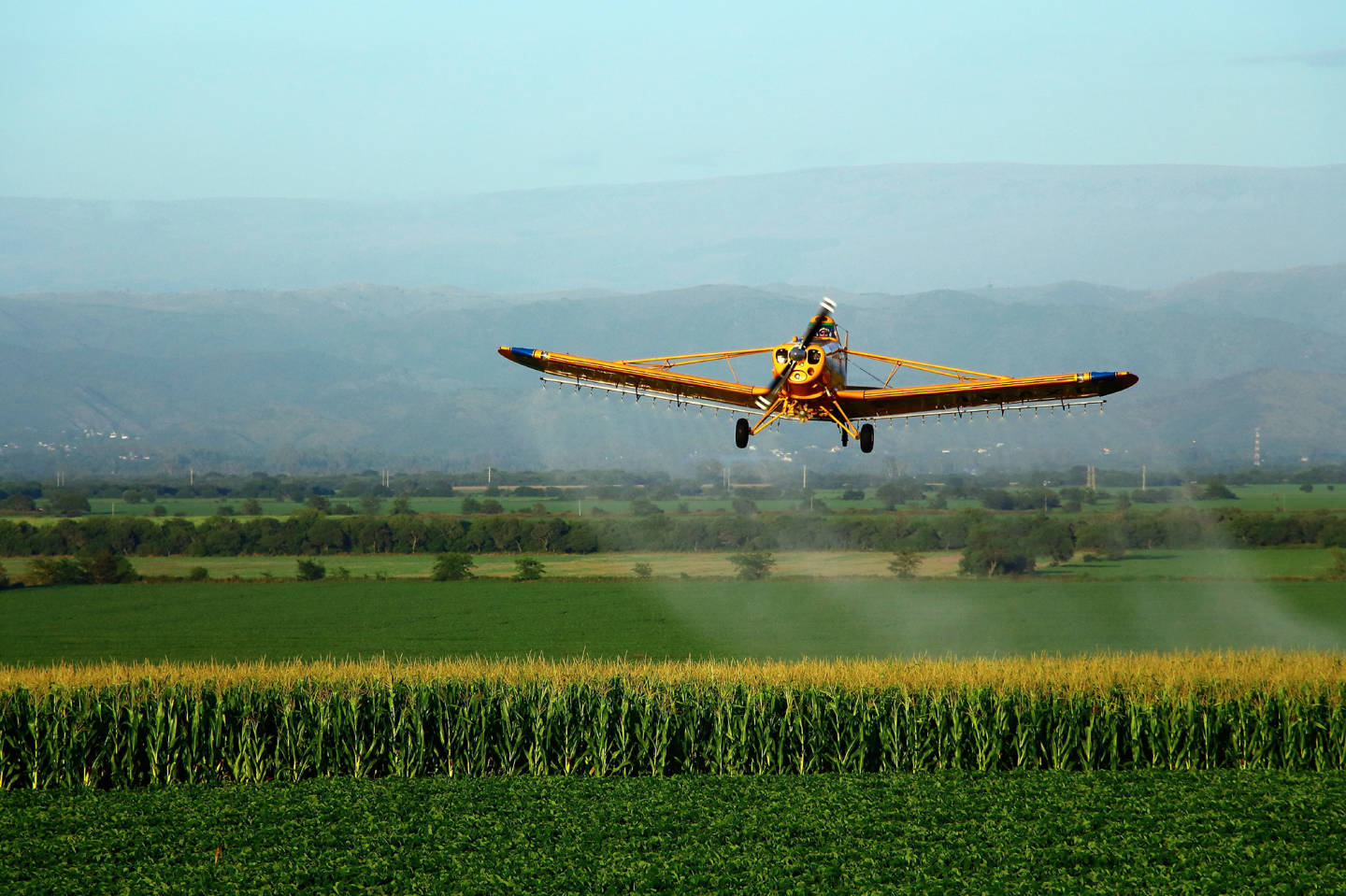
"caption": "A crop duster sprays a field with pesticides. Former USDA scientist Jonathan Lundgren says that he has been persecuted by the agency because his research points out problems with popular pesticides.",
"description": "A crop duster sprays a field with pesticides. Former USDA scientist Jonathan Lundgren says that he has been persecuted by the agency because his research points out problems with popular pesticides.",
"title": "A crop duster sprays a field with pesticides. Former USDA scientist Jonathan Lundgren says that he has been persecuted by the agency because his research points out problems with popular pesticides.",
"credit": "iStockphoto ",
"status": "inherit",
"isLoading": false,
"fetchFailed": false
},
"bayareabites_107312": {
"type": "attachments",
"id": "bayareabites_107312",
"meta": {
"index": "attachments_1716263798",
"site": "bayareabites",
"id": "107312",
"found": true
},
"parent": 107311,
"imgSizes": {
"twentyfourteen-full-width": {
"file": "https://ww2.kqed.org/app/uploads/sites/24/2016/03/watermelons_enl-cb068bcf05cc7f1a22cb19eeba43181dcabde755-1038x576.jpg",
"width": 1038,
"mimeType": "image/jpeg",
"height": 576
},
"thumbnail": {
"file": "https://ww2.kqed.org/app/uploads/sites/24/2016/03/watermelons_enl-cb068bcf05cc7f1a22cb19eeba43181dcabde755-400x267.jpg",
"width": 400,
"mimeType": "image/jpeg",
"height": 267
},
"fd-sm": {
"file": "https://ww2.kqed.org/app/uploads/sites/24/2016/03/watermelons_enl-cb068bcf05cc7f1a22cb19eeba43181dcabde755-960x640.jpg",
"width": 960,
"mimeType": "image/jpeg",
"height": 640
},
"post-thumbnail": {
"file": "https://ww2.kqed.org/app/uploads/sites/24/2016/03/watermelons_enl-cb068bcf05cc7f1a22cb19eeba43181dcabde755-672x372.jpg",
"width": 672,
"mimeType": "image/jpeg",
"height": 372
},
"kqedFullSize": {
"file": "https://ww2.kqed.org/app/uploads/sites/24/2016/03/watermelons_enl-cb068bcf05cc7f1a22cb19eeba43181dcabde755.jpg",
"width": 2000,
"height": 1334
},
"large": {
"file": "https://ww2.kqed.org/app/uploads/sites/24/2016/03/watermelons_enl-cb068bcf05cc7f1a22cb19eeba43181dcabde755-1440x960.jpg",
"width": 1440,
"mimeType": "image/jpeg",
"height": 960
},
"guest-author-96": {
"file": "https://ww2.kqed.org/app/uploads/sites/24/2016/03/watermelons_enl-cb068bcf05cc7f1a22cb19eeba43181dcabde755-96x96.jpg",
"width": 96,
"mimeType": "image/jpeg",
"height": 96
},
"medium": {
"file": "https://ww2.kqed.org/app/uploads/sites/24/2016/03/watermelons_enl-cb068bcf05cc7f1a22cb19eeba43181dcabde755-800x534.jpg",
"width": 800,
"mimeType": "image/jpeg",
"height": 534
},
"guest-author-64": {
"file": "https://ww2.kqed.org/app/uploads/sites/24/2016/03/watermelons_enl-cb068bcf05cc7f1a22cb19eeba43181dcabde755-64x64.jpg",
"width": 64,
"mimeType": "image/jpeg",
"height": 64
},
"guest-author-32": {
"file": "https://ww2.kqed.org/app/uploads/sites/24/2016/03/watermelons_enl-cb068bcf05cc7f1a22cb19eeba43181dcabde755-32x32.jpg",
"width": 32,
"mimeType": "image/jpeg",
"height": 32
},
"cat_post_thumb_sizecategory-posts-2": {
"file": "https://ww2.kqed.org/app/uploads/sites/24/2016/03/watermelons_enl-cb068bcf05cc7f1a22cb19eeba43181dcabde755-150x150.jpg",
"width": 150,
"mimeType": "image/jpeg",
"height": 150
},
"fd-lrg": {
"file": "https://ww2.kqed.org/app/uploads/sites/24/2016/03/watermelons_enl-cb068bcf05cc7f1a22cb19eeba43181dcabde755-1920x1281.jpg",
"width": 1920,
"mimeType": "image/jpeg",
"height": 1281
},
"fd-med": {
"file": "https://ww2.kqed.org/app/uploads/sites/24/2016/03/watermelons_enl-cb068bcf05cc7f1a22cb19eeba43181dcabde755-1180x787.jpg",
"width": 1180,
"mimeType": "image/jpeg",
"height": 787
},
"detail": {
"file": "https://ww2.kqed.org/app/uploads/sites/24/2016/03/watermelons_enl-cb068bcf05cc7f1a22cb19eeba43181dcabde755-75x75.jpg",
"width": 75,
"mimeType": "image/jpeg",
"height": 75
},
"medium_large": {
"file": "https://ww2.kqed.org/app/uploads/sites/24/2016/03/watermelons_enl-cb068bcf05cc7f1a22cb19eeba43181dcabde755-768x512.jpg",
"width": 768,
"mimeType": "image/jpeg",
"height": 512
},
"guest-author-128": {
"file": "https://ww2.kqed.org/app/uploads/sites/24/2016/03/watermelons_enl-cb068bcf05cc7f1a22cb19eeba43181dcabde755-128x128.jpg",
"width": 128,
"mimeType": "image/jpeg",
"height": 128
}
},
"publishDate": 1456887404,
"modified": 1456887513,
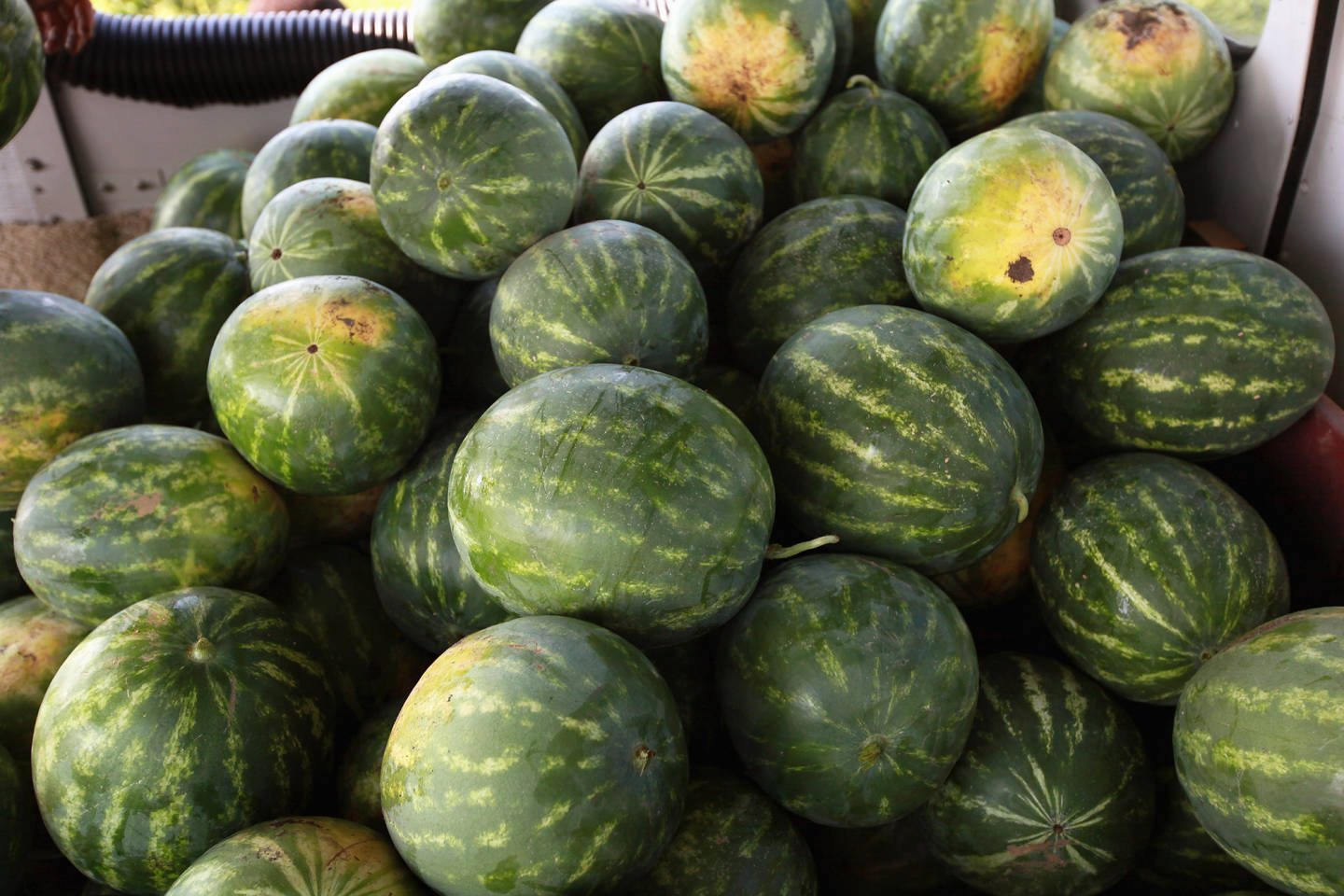
"caption": "In recent years, a pesticide called flubendiamide has been used on about 14 percent of the nation's almonds, peppers and watermelons. Now the FDA wants to revoke the chemical's conditional approval.",
"description": "In recent years, a pesticide called flubendiamide has been used on about 14 percent of the nation's almonds, peppers and watermelons. Now the FDA wants to revoke the chemical's conditional approval",
"title": "In recent years, a pesticide called flubendiamide has been used on about 14 percent of the nation's almonds, peppers and watermelons. Now the FDA wants to revoke the chemical's conditional approval.",
"credit": "Scott Olson/Getty Images",
"status": "inherit",
"isLoading": false,
"fetchFailed": false
},
"bayareabites_107189": {
"type": "attachments",
"id": "bayareabites_107189",
"meta": {
"index": "attachments_1716263798",
"site": "bayareabites",
"id": "107189",
"found": true
},
"parent": 107188,
"imgSizes": {
"twentyfourteen-full-width": {
"file": "https://ww2.kqed.org/app/uploads/sites/24/2016/02/alfalfasprouts_enl-0e3b84fd1b0bdfb72792b0aab958e50ccee30f17-1038x576.jpg",
"width": 1038,
"mimeType": "image/jpeg",
"height": 576
},
"thumbnail": {
"file": "https://ww2.kqed.org/app/uploads/sites/24/2016/02/alfalfasprouts_enl-0e3b84fd1b0bdfb72792b0aab958e50ccee30f17-400x266.jpg",
"width": 400,
"mimeType": "image/jpeg",
"height": 266
},
"fd-sm": {
"file": "https://ww2.kqed.org/app/uploads/sites/24/2016/02/alfalfasprouts_enl-0e3b84fd1b0bdfb72792b0aab958e50ccee30f17-960x639.jpg",
"width": 960,
"mimeType": "image/jpeg",
"height": 639
},
"post-thumbnail": {
"file": "https://ww2.kqed.org/app/uploads/sites/24/2016/02/alfalfasprouts_enl-0e3b84fd1b0bdfb72792b0aab958e50ccee30f17-672x372.jpg",
"width": 672,
"mimeType": "image/jpeg",
"height": 372
},
"kqedFullSize": {
"file": "https://ww2.kqed.org/app/uploads/sites/24/2016/02/alfalfasprouts_enl-0e3b84fd1b0bdfb72792b0aab958e50ccee30f17.jpg",
"width": 2000,
"height": 1332
},
"large": {
"file": "https://ww2.kqed.org/app/uploads/sites/24/2016/02/alfalfasprouts_enl-0e3b84fd1b0bdfb72792b0aab958e50ccee30f17-1440x959.jpg",
"width": 1440,
"mimeType": "image/jpeg",
"height": 959
},
"guest-author-96": {
"file": "https://ww2.kqed.org/app/uploads/sites/24/2016/02/alfalfasprouts_enl-0e3b84fd1b0bdfb72792b0aab958e50ccee30f17-96x96.jpg",
"width": 96,
"mimeType": "image/jpeg",
"height": 96
},
"medium": {
"file": "https://ww2.kqed.org/app/uploads/sites/24/2016/02/alfalfasprouts_enl-0e3b84fd1b0bdfb72792b0aab958e50ccee30f17-800x533.jpg",
"width": 800,
"mimeType": "image/jpeg",
"height": 533
},
"guest-author-64": {
"file": "https://ww2.kqed.org/app/uploads/sites/24/2016/02/alfalfasprouts_enl-0e3b84fd1b0bdfb72792b0aab958e50ccee30f17-64x64.jpg",
"width": 64,
"mimeType": "image/jpeg",
"height": 64
},
"guest-author-32": {
"file": "https://ww2.kqed.org/app/uploads/sites/24/2016/02/alfalfasprouts_enl-0e3b84fd1b0bdfb72792b0aab958e50ccee30f17-32x32.jpg",
"width": 32,
"mimeType": "image/jpeg",
"height": 32
},
"cat_post_thumb_sizecategory-posts-2": {
"file": "https://ww2.kqed.org/app/uploads/sites/24/2016/02/alfalfasprouts_enl-0e3b84fd1b0bdfb72792b0aab958e50ccee30f17-150x150.jpg",
"width": 150,
"mimeType": "image/jpeg",
"height": 150
},
"fd-lrg": {
"file": "https://ww2.kqed.org/app/uploads/sites/24/2016/02/alfalfasprouts_enl-0e3b84fd1b0bdfb72792b0aab958e50ccee30f17-1920x1279.jpg",
"width": 1920,
"mimeType": "image/jpeg",
"height": 1279
},
"fd-med": {
"file": "https://ww2.kqed.org/app/uploads/sites/24/2016/02/alfalfasprouts_enl-0e3b84fd1b0bdfb72792b0aab958e50ccee30f17-1180x786.jpg",
"width": 1180,
"mimeType": "image/jpeg",
"height": 786
},
"detail": {
"file": "https://ww2.kqed.org/app/uploads/sites/24/2016/02/alfalfasprouts_enl-0e3b84fd1b0bdfb72792b0aab958e50ccee30f17-75x75.jpg",
"width": 75,
"mimeType": "image/jpeg",
"height": 75
},
"medium_large": {
"file": "https://ww2.kqed.org/app/uploads/sites/24/2016/02/alfalfasprouts_enl-0e3b84fd1b0bdfb72792b0aab958e50ccee30f17-768x511.jpg",
"width": 768,
"mimeType": "image/jpeg",
"height": 511
},
"guest-author-128": {
"file": "https://ww2.kqed.org/app/uploads/sites/24/2016/02/alfalfasprouts_enl-0e3b84fd1b0bdfb72792b0aab958e50ccee30f17-128x128.jpg",
"width": 128,
"mimeType": "image/jpeg",
"height": 128
}
},
"publishDate": 1456439563,
"modified": 1456439657,
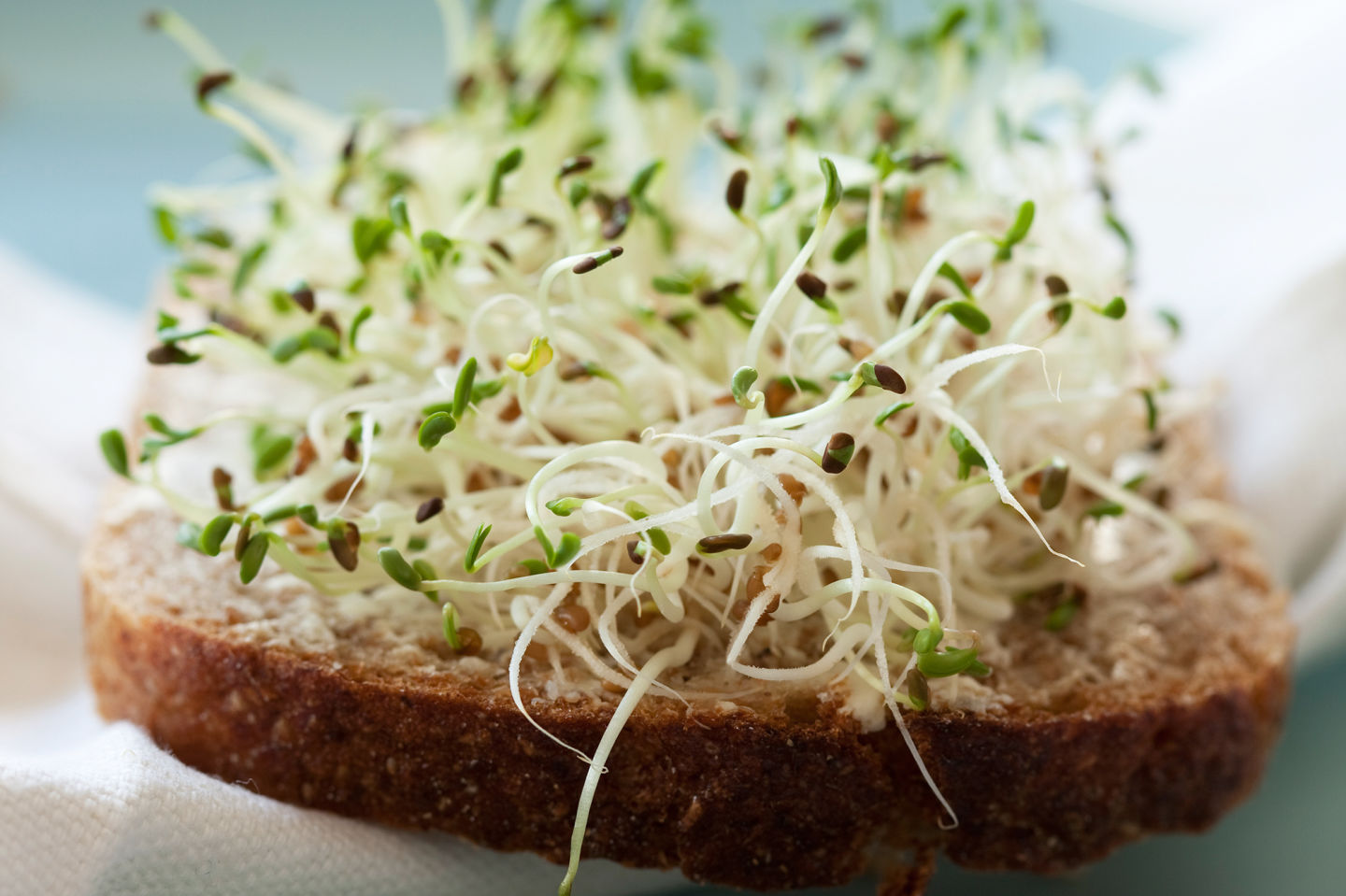
"caption": "For something many deem a \"health food,\" sprouts regularly appear on official outbreak lists.",
"description": "For something many deem a \"health food,\" sprouts regularly appear on official outbreak lists.",
"title": "For something many deem a \"health food,\" sprouts regularly appear on official outbreak lists.",
"credit": "iStockphoto",
"status": "inherit",
"isLoading": false,
"fetchFailed": false
},
"bayareabites_107146": {
"type": "attachments",
"id": "bayareabites_107146",
"meta": {
"index": "attachments_1716263798",
"site": "bayareabites",
"id": "107146",
"found": true
},
"parent": 107141,
"imgSizes": {
"twentyfourteen-full-width": {
"file": "https://ww2.kqed.org/app/uploads/sites/24/2016/02/save_the_wheat_enl-c8c5fd644131d59a7acaab812eb98cd32ed2e622-528x576.jpg",
"width": 528,
"mimeType": "image/jpeg",
"height": 576
},
"thumbnail": {
"file": "https://ww2.kqed.org/app/uploads/sites/24/2016/02/save_the_wheat_enl-c8c5fd644131d59a7acaab812eb98cd32ed2e622-400x606.jpg",
"width": 400,
"mimeType": "image/jpeg",
"height": 606
},
"post-thumbnail": {
"file": "https://ww2.kqed.org/app/uploads/sites/24/2016/02/save_the_wheat_enl-c8c5fd644131d59a7acaab812eb98cd32ed2e622-528x372.jpg",
"width": 528,
"mimeType": "image/jpeg",
"height": 372
},
"kqedFullSize": {
"file": "https://ww2.kqed.org/app/uploads/sites/24/2016/02/save_the_wheat_enl-c8c5fd644131d59a7acaab812eb98cd32ed2e622.jpg",
"width": 528,
"height": 800
},
"cat_post_thumb_sizecategory-posts-2": {
"file": "https://ww2.kqed.org/app/uploads/sites/24/2016/02/save_the_wheat_enl-c8c5fd644131d59a7acaab812eb98cd32ed2e622-150x150.jpg",
"width": 150,
"mimeType": "image/jpeg",
"height": 150
},
"guest-author-96": {
"file": "https://ww2.kqed.org/app/uploads/sites/24/2016/02/save_the_wheat_enl-c8c5fd644131d59a7acaab812eb98cd32ed2e622-96x96.jpg",
"width": 96,
"mimeType": "image/jpeg",
"height": 96
},
"guest-author-64": {
"file": "https://ww2.kqed.org/app/uploads/sites/24/2016/02/save_the_wheat_enl-c8c5fd644131d59a7acaab812eb98cd32ed2e622-64x64.jpg",
"width": 64,
"mimeType": "image/jpeg",
"height": 64
},
"detail": {
"file": "https://ww2.kqed.org/app/uploads/sites/24/2016/02/save_the_wheat_enl-c8c5fd644131d59a7acaab812eb98cd32ed2e622-75x75.jpg",
"width": 75,
"mimeType": "image/jpeg",
"height": 75
},
"guest-author-32": {
"file": "https://ww2.kqed.org/app/uploads/sites/24/2016/02/save_the_wheat_enl-c8c5fd644131d59a7acaab812eb98cd32ed2e622-32x32.jpg",
"width": 32,
"mimeType": "image/jpeg",
"height": 32
},
"guest-author-128": {
"file": "https://ww2.kqed.org/app/uploads/sites/24/2016/02/save_the_wheat_enl-c8c5fd644131d59a7acaab812eb98cd32ed2e622-128x128.jpg",
"width": 128,
"mimeType": "image/jpeg",
"height": 128
}
},
"publishDate": 1456266255,
"modified": 1456267276,
"caption": "During World War I, ships bringing imported food supplies into Britain were extremely vulnerable to German U-boat attack. By 1917, 400 Allied ships a month were being sunk. Although wheat was imported from new sources, and Britain's own harvest reached record levels, the government actively encouraged economy.",
"description": "During World War I, ships bringing imported food supplies into Britain were extremely vulnerable to German U-boat attack. By 1917, 400 Allied ships a month were being sunk. Although wheat was imported from new sources, and Britain's own harvest reached record levels, the government actively encouraged econo",
"title": "During World War I, ships bringing imported food supplies into Britain were extremely vulnerable to German U-boat attack. By 1917, 400 Allied ships a month were being sunk. Although wheat was imported from new sources, and Britain's own harvest reached record levels, the government actively encouraged economy.",
"credit": "Imperial War Museums (Art.IWM PST 4470)",
"status": "inherit",
"isLoading": false,
"fetchFailed": false
}
},
"audioPlayerReducer": {
"postId": "stream_live",
"isPaused": true,
"isPlaying": false,
"pfsActive": false,
"pledgeModalIsOpen": true,
"playerDrawerIsOpen": false,
"liveAudioPlayStartedAt": 0,
"liveAudioPlayContext": ""
},
"authorsReducer": {
"byline_bayareabites_108123": {
"type": "authors",
"id": "byline_bayareabites_108123",
"meta": {
"override": true
},
"slug": "byline_bayareabites_108123",
"name": "Dan Charles, \u003ca href=”https://ww2.kqed.org/bayareabites/author/nprfood/”>NPR Food\u003c/a> ",
"isLoading": false
},
"byline_bayareabites_108086": {
"type": "authors",
"id": "byline_bayareabites_108086",
"meta": {
"override": true
},
"slug": "byline_bayareabites_108086",
"name": "Allison Aubrey, \u003ca href=\"https://ww2.kqed.org/bayareabites/author/nprfood/\">NPR Food\u003c/a>",
"isLoading": false
},
"byline_bayareabites_107891": {
"type": "authors",
"id": "byline_bayareabites_107891",
"meta": {
"override": true
},
"slug": "byline_bayareabites_107891",
"name": "\u003ca href=\"http://www.npr.org/people/177498105/kat-chow\">Kat Chow\u003c/a> and \u003ca href=\"http://www.npr.org/people/348777820/maria-godoy\">Maria Godoy\u003c/a>, \u003ca href=\"https://ww2.kqed.org/bayareabites/author/nprfood/\">NPR Food\u003c/a>",
"isLoading": false
},
"byline_bayareabites_107735": {
"type": "authors",
"id": "byline_bayareabites_107735",
"meta": {
"override": true
},
"slug": "byline_bayareabites_107735",
"name": "Maria Godoy, \u003ca href=\"https://ww2.kqed.org/bayareabites/author/nprfood/\">NPR Food\u003c/a>",
"isLoading": false
},
"byline_bayareabites_107708": {
"type": "authors",
"id": "byline_bayareabites_107708",
"meta": {
"override": true
},
"slug": "byline_bayareabites_107708",
"name": "Allison Aubrey, \u003ca href=\"https://ww2.kqed.org/bayareabites/author/nprfood/\">NPR Food\u003c/a>",
"isLoading": false
},
"byline_bayareabites_107588": {
"type": "authors",
"id": "byline_bayareabites_107588",
"meta": {
"override": true
},
"slug": "byline_bayareabites_107588",
"name": "Maria Godoy, \u003ca href=\"https://ww2.kqed.org/bayareabites/author/nprfood/\">NPR Food\u003c/a>",
"isLoading": false
},
"byline_bayareabites_107466": {
"type": "authors",
"id": "byline_bayareabites_107466",
"meta": {
"override": true
},
"slug": "byline_bayareabites_107466",
"name": "Allison Aubrey, \u003ca href=\"https://ww2.kqed.org/bayareabites/author/nprfood/\">NPR Food\u003c/a>",
"isLoading": false
},
"byline_bayareabites_107381": {
"type": "authors",
"id": "byline_bayareabites_107381",
"meta": {
"override": true
},
"slug": "byline_bayareabites_107381",
"name": "Peggy Lowe, \u003ca href=\"https://ww2.kqed.org/bayareabites/author/nprfood/\">NPR Food\u003c/a>",
"isLoading": false
},
"byline_bayareabites_107373": {
"type": "authors",
"id": "byline_bayareabites_107373",
"meta": {
"override": true
},
"slug": "byline_bayareabites_107373",
"name": "Dan Charles, \u003ca href=\"https://ww2.kqed.org/bayareabites/author/nprfood/\">NPR Food\u003c/a>",
"isLoading": false
},
"byline_bayareabites_107311": {
"type": "authors",
"id": "byline_bayareabites_107311",
"meta": {
"override": true
},
"slug": "byline_bayareabites_107311",
"name": "Dan Charles, \u003ca href=\"https://ww2.kqed.org/bayareabites/author/nprfood/\">NPR Food\u003c/a>",
"isLoading": false
},
"byline_bayareabites_107188": {
"type": "authors",
"id": "byline_bayareabites_107188",
"meta": {
"override": true
},
"slug": "byline_bayareabites_107188",
"name": "Clare Leschin-Hoar, \u003ca href=\"https://ww2.kqed.org/bayareabites/author/nprfood/\">NPR Food\u003c/a>",
"isLoading": false
},
"byline_bayareabites_107141": {
"type": "authors",
"id": "byline_bayareabites_107141",
"meta": {
"override": true
},
"slug": "byline_bayareabites_107141",
"name": "Jessica Leigh Hester, \u003ca href=\"https://ww2.kqed.org/bayareabites/author/nprfood/\">NPR Food\u003c/a>",
"isLoading": false
}
},
"pagesReducer": {
"bayareabites_category_politics-activism-food-safety": {
"type": "terms",
"id": "bayareabites_2035",
"meta": {
"index": "terms_1716263798",
"site": "bayareabites",
"id": "2035",
"score": 13.89634
},
"featImg": null,
"name": "politics, activism, food safety",
"description": null,
"taxonomy": "category",
"headData": {
"twImgId": null,
"twTitle": null,
"ogTitle": null,
"ogImgId": null,
"twDescription": null,
"description": null,
"title": "politics, activism, food safety Archives | KQED Bay Area Bites",
"ogDescription": null
},
"ttid": 943,
"slug": "politics-activism-food-safety",
"isLoading": false,
"title": "politics, activism, food safety",
"pageMeta": {
"site": "bayareabites",
"WpPageTemplate": "page-topic-editorial",
"currentPage": 23
},
"blocks": [
{
"blockName": "kqed/post-list",
"attrs": {
"layout": "cardArticle2",
"query": "posts/bayareabites?category=politics-activism-food-safety",
"seeMore": false,
"paginated": true,
"page": 23
}
},
{
"blockName": "kqed/ad"
}
]
}
},
"pfsSessionReducer": {},
"postsReducer": {
"stream_live": {
"type": "live",
"id": "stream_live",
"audioUrl": "https://streams.kqed.org/kqedradio",
"title": "Live Stream",
"excerpt": "Live Stream information currently unavailable.",
"link": "/radio",
"featImg": "",
"label": {
"name": "KQED Live",
"link": "/"
}
},
"stream_kqedNewscast": {
"type": "posts",
"id": "stream_kqedNewscast",
"audioUrl": "https://www.kqed.org/.stream/anon/radio/RDnews/newscast.mp3?_=1",
"title": "KQED Newscast",
"featImg": "",
"label": {
"name": "88.5 FM",
"link": "/"
}
},
"bayareabites_108123": {
"type": "posts",
"id": "bayareabites_108123",
"meta": {
"index": "posts_1716263798",
"site": "bayareabites",
"id": "108123",
"score": null,
"sort": [
1459339020000
]
},
"parent": 0,
"labelTerm": {
"site": "bayareabites"
},
"blocks": [],
"publishDate": 1459339020,
"format": "audio",
"disqusTitle": "Why Whole Foods Wants A Slower-Growing Chicken",
"title": "Why Whole Foods Wants A Slower-Growing Chicken",
"headTitle": "Bay Area Bites | KQED Food",
"content": "\u003cp>\u003cstrong>Listen to the Story on Morning Edition:\u003c/strong>\u003cbr>\nhttp://pd.npr.org/anon.npr-mp3/npr/me/2016/03/20160330_me_why_whole_foods_wants_a_slower-growing_chicken.mp3\u003c/p>\n\u003cp>A century ago, your typical chicken was really kind of scrawny. It took about four months to grow to a weight of 3 pounds. One result: Americans really didn't eat much chicken.\u003c/p>\n\u003cp>Today, the typical broiler, or meat chicken, turns feed into meat at a mind-boggling pace. Compared with the bird of yesteryear, it grows to twice the size in half the time. But some animal welfare advocates want the poultry industry to turn back the clock. Modern meat chickens are growing so fast, they say, that they are suffering.\u003c/p>\n\u003cp>\u003ca href=\"https://ag.purdue.edu/ansc/Pages/Profile.aspx?strAlias=bmuir\">William Muir\u003c/a>, a poultry geneticist at Purdue University, says this transformation was mainly a triumph of chicken breeding. \"This is what genetics does. We can actually make more from less,\" he says — more chicken meat from less feed, in less time.\u003c/p>\n\u003cfigure id=\"attachment_108127\" class=\"wp-caption aligncenter\" style=\"max-width: 721px\">\u003cimg src=\"http://ww2.kqed.org/bayareabites/wp-content/uploads/sites/24/2016/03/Screen-Shot-2016-03-30-at-10.19.14-AM.png\" alt=\"Source: National Chicken Council\" width=\"721\" height=\"337\" class=\"size-full wp-image-108127\" srcset=\"https://ww2.kqed.org/app/uploads/sites/24/2016/03/Screen-Shot-2016-03-30-at-10.19.14-AM.png 721w, https://ww2.kqed.org/app/uploads/sites/24/2016/03/Screen-Shot-2016-03-30-at-10.19.14-AM-400x187.png 400w\" sizes=\"(max-width: 721px) 100vw, 721px\">\u003cfigcaption class=\"wp-caption-text\">Source: \u003ca href=\"http://www.nationalchickencouncil.org/about-the-industry/statistics/u-s-broiler-performance/\" target=\"_blank\">National Chicken Council\u003c/a> \u003ccite>(Alyson Hurt/NPR)\u003c/cite>\u003c/figcaption>\u003c/figure>\n\u003cp>It wasn't magic or genetic engineering. Muir says poultry breeders simply got their fastest-growing chickens to mate with each other, generation after generation. \"We just breed the best to the best, and you get the best,\" Muir says.\u003c/p>\n\u003cp>[ad fullwidth]\u003c/p>\n\u003cp>The \"best\" chicken, for the past century, has been one that put on muscle quickly. But according to Muir, a trait that was great for the poultry industry turned out to be not so great for the chickens themselves.\u003c/p>\n\u003cp>All that weight, accumulated quickly, can overwhelm a young chicken's bones.\u003c/p>\n\u003cp>\"We're having problems with legs,\" Muir says. \"They can't support the weight. We have problems with splayed legs, joint problems. This is a major well-being concern, if the bird can't walk.\"\u003c/p>\n\u003cp>Studies have observed these problems in anywhere from 15 to 30 percent of chickens grown for their meat, known as broilers.\u003c/p>\n\u003cp>Broiler chickens are slaughtered when they're still young, but others are kept around in order to reproduce. They are the so-called breeder flocks — the source of the billions of chickens that people eat.\u003c/p>\n\u003cp>Because these chickens live longer, Muir says, they have a special problem. \"They're so big and heavy, if we let them keep on eating, they couldn't reproduce. So they have to be on a diet, a severe diet, and they're always hungry.\"\u003c/p>\n\u003cp>For all those reasons, some animal welfare advocates have been calling on poultry companies to turn back the clock and return to slower-growing breeds of chickens.\u003c/p>\n\u003cp>Those breeds still do exist. Poultry producers can order them from the same big chicken-breeding companies that created the fast-growing chicken.\u003c/p>\n\u003cp>There's increasing demand for slower-growing breeds in Europe. In the U.S., they're mainly used by farmers who want to raise their chickens the old-fashioned way, running around outdoors.\u003c/p>\n\u003cp>\u003ca href=\"http://media.wholefoodsmarket.com/experts/subject-experts/theo-weening\">Theo Weening\u003c/a>, the global meat buyer for Whole Foods Market, says his stores do stock small quantities of such pastured poultry. \"Actually, I'm on my way this afternoon to Arkansas, to \u003ca href=\"http://crystallakefarms.com/\">Crystal Lake Farms\u003c/a>, [which] uses a slow-growing chicken,\" he told The Salt.\u003c/p>\n\u003cp>Whole Foods recently \u003ca href=\"http://media.wholefoodsmarket.com/spotlight/whole-foods-market-applauds-global-animal-partnerships-enhanced-animal-welf\">announced\u003c/a> that it wants all of its suppliers, even those raising large numbers of broilers indoors, to shift over to slower-growing breeds of chickens.\u003c/p>\n\u003cp>The shift will take eight years. Whole Foods and the \u003ca href=\"http://www.globalanimalpartnership.org/\">Global Animal Partnership\u003c/a>, an organization that Whole Foods set up to create welfare standards for its suppliers, say that this will apply to 277 million birds annually. That represents about 3 percent of the country's broilers.\u003c/p>\n\u003cp>The slow-growing bird \"is a much better, healthier chicken, and at the same time it's a much [more] flavorful chicken as well,\" Weening says.\u003c/p>\n\u003cp>But he admits that this chicken will come with a cost. Slower-growing breeds consume more feed per pound of meat. According to data on the website of the poultry breeding company \u003ca href=\"http://en.aviagen.com/\">Aviagen\u003c/a>, a slower-growing breed called \u003ca href=\"http://en.aviagen.com/rowan-ranger/\">Rowan Ranger\u003c/a> consumes about 25 percent more feed while growing to a weight of 6 pounds than the \u003ca href=\"http://en.aviagen.com/ross-308/\">Ross 308\u003c/a> breed, which the company says is the \"world's most popular broiler.\"\u003c/p>\n\u003cp>After the Whole Foods announcement, the \u003ca href=\"http://www.nationalchickencouncil.org/\">National Chicken Council\u003c/a>, which represents major poultry producers, released a statement disputing the idea that faster-growing chickens are less healthy or are suffering.\u003c/p>\n\u003cp>The Chicken Council also pointed out the benefits of the industry's push for ever greater efficiency. It has cut the cost of growing chickens, reduced the amount of land required to grow chicken feed, and made chicken the most popular meat in America. \u003c/p>\n\u003cp>\u003c/p>\n\u003cp>\u003cem>Copyright 2016 \u003ca href=\"http://www.npr.org/\" target=\"_blank\">NPR\u003c/a>.\u003c/em> \u003c/p>\n\n",
"disqusIdentifier": "108123 http://ww2.kqed.org/bayareabites/?p=108123",
"disqusUrl": "https://ww2.kqed.org/bayareabites/2016/03/30/why-whole-foods-wants-a-slower-growing-chicken/",
"stats": {
"hasVideo": false,
"hasChartOrMap": false,
"hasAudio": false,
"hasPolis": false,
"wordCount": 768,
"hasGoogleForm": false,
"hasGallery": false,
"hasHearkenModule": false,
"iframeSrcs": [],
"paragraphCount": 24
},
"modified": 1459370008,
"excerpt": "A modern broiler, or meat chicken, grows incredibly fast. The bird suffers as a result, and some critics say its flavor does too. Now Whole Foods wants its suppliers to shift to slower-growing breeds.",
"headData": {
"twImgId": "",
"twTitle": "",
"ogTitle": "",
"ogImgId": "",
"twDescription": "",
"description": "A modern broiler, or meat chicken, grows incredibly fast. The bird suffers as a result, and some critics say its flavor does too. Now Whole Foods wants its suppliers to shift to slower-growing breeds.",
"title": "Why Whole Foods Wants A Slower-Growing Chicken | KQED",
"ogDescription": "",
"schema": {
"@context": "https://schema.org",
"@type": "Article",
"headline": "Why Whole Foods Wants A Slower-Growing Chicken",
"datePublished": "2016-03-30T04:57:00-07:00",
"dateModified": "2016-03-30T13:33:28-07:00",
"image": "https://cdn.kqed.org/wp-content/uploads/2020/02/KQED-OG-Image@1x.png"
}
},
"guestAuthors": [],
"slug": "why-whole-foods-wants-a-slower-growing-chicken",
"status": "publish",
"nprApiLink": "http://api.npr.org/query?id=472167748&apiKey=MDAxOTAwOTE4MDEyMTkxMDAzNjczZDljZA004",
"nprByline": "Dan Charles, \u003ca href=”https://ww2.kqed.org/bayareabites/author/nprfood/”>NPR Food\u003c/a> ",
"nprStoryDate": "Wed, 30 Mar 2016 04:57:00 -0400",
"nprLastModifiedDate": "Wed, 30 Mar 2016 13:54:32 -0400",
"nprHtmlLink": "http://www.npr.org/sections/thesalt/2016/03/30/472167748/why-whole-foods-wants-a-slower-growing-chicken?ft=nprml&f=472167748",
"nprAudio": "http://pd.npr.org/anon.npr-mp3/npr/me/2016/03/20160330_me_why_whole_foods_wants_a_slower-growing_chicken.mp3?orgId=1&topicId=1053&d=229&p=3&story=472167748&t=progseg&e=472359297&seg=7&ft=nprml&f=472167748",
"nprImageAgency": "Courtesy of Crystal Lake Farms",
"nprAudioM3u": "http://api.npr.org/m3u/1472365317-5b07f3.m3u?orgId=1&topicId=1053&d=229&p=3&story=472167748&t=progseg&e=472359297&seg=7&ft=nprml&f=472167748",
"nprStoryId": "472167748",
"nprRetrievedStory": "1",
"nprPubDate": "Wed, 30 Mar 2016 13:54:00 -0400",
"path": "/bayareabites/108123/why-whole-foods-wants-a-slower-growing-chicken",
"audioUrl": "http://pd.npr.org/anon.npr-mp3/npr/me/2016/03/20160330_me_why_whole_foods_wants_a_slower-growing_chicken.mp3",
"audioDuration": null,
"audioTrackLength": null,
"parsedContent": [
{
"type": "contentString",
"content": "\u003cdiv class=\"post-body\">\u003cp>\u003cp>\u003cstrong>Listen to the Story on Morning Edition:\u003c/strong>\u003cbr>\nhttp://pd.npr.org/anon.npr-mp3/npr/me/2016/03/20160330_me_why_whole_foods_wants_a_slower-growing_chicken.mp3\u003c/p>\n\u003cp>A century ago, your typical chicken was really kind of scrawny. It took about four months to grow to a weight of 3 pounds. One result: Americans really didn't eat much chicken.\u003c/p>\n\u003cp>Today, the typical broiler, or meat chicken, turns feed into meat at a mind-boggling pace. Compared with the bird of yesteryear, it grows to twice the size in half the time. But some animal welfare advocates want the poultry industry to turn back the clock. Modern meat chickens are growing so fast, they say, that they are suffering.\u003c/p>\n\u003cp>\u003ca href=\"https://ag.purdue.edu/ansc/Pages/Profile.aspx?strAlias=bmuir\">William Muir\u003c/a>, a poultry geneticist at Purdue University, says this transformation was mainly a triumph of chicken breeding. \"This is what genetics does. We can actually make more from less,\" he says — more chicken meat from less feed, in less time.\u003c/p>\n\u003cfigure id=\"attachment_108127\" class=\"wp-caption aligncenter\" style=\"max-width: 721px\">\u003cimg src=\"http://ww2.kqed.org/bayareabites/wp-content/uploads/sites/24/2016/03/Screen-Shot-2016-03-30-at-10.19.14-AM.png\" alt=\"Source: National Chicken Council\" width=\"721\" height=\"337\" class=\"size-full wp-image-108127\" srcset=\"https://ww2.kqed.org/app/uploads/sites/24/2016/03/Screen-Shot-2016-03-30-at-10.19.14-AM.png 721w, https://ww2.kqed.org/app/uploads/sites/24/2016/03/Screen-Shot-2016-03-30-at-10.19.14-AM-400x187.png 400w\" sizes=\"(max-width: 721px) 100vw, 721px\">\u003cfigcaption class=\"wp-caption-text\">Source: \u003ca href=\"http://www.nationalchickencouncil.org/about-the-industry/statistics/u-s-broiler-performance/\" target=\"_blank\">National Chicken Council\u003c/a> \u003ccite>(Alyson Hurt/NPR)\u003c/cite>\u003c/figcaption>\u003c/figure>\n\u003cp>It wasn't magic or genetic engineering. Muir says poultry breeders simply got their fastest-growing chickens to mate with each other, generation after generation. \"We just breed the best to the best, and you get the best,\" Muir says.\u003c/p>\n\u003cp>\u003c/p>\u003c/div>",
"attributes": {
"named": {},
"numeric": []
}
},
{
"type": "component",
"content": "",
"name": "ad",
"attributes": {
"named": {
"label": "fullwidth"
},
"numeric": [
"fullwidth"
]
}
},
{
"type": "contentString",
"content": "\u003cdiv class=\"post-body\">\u003cp>\u003c/p>\n\u003cp>The \"best\" chicken, for the past century, has been one that put on muscle quickly. But according to Muir, a trait that was great for the poultry industry turned out to be not so great for the chickens themselves.\u003c/p>\n\u003cp>All that weight, accumulated quickly, can overwhelm a young chicken's bones.\u003c/p>\n\u003cp>\"We're having problems with legs,\" Muir says. \"They can't support the weight. We have problems with splayed legs, joint problems. This is a major well-being concern, if the bird can't walk.\"\u003c/p>\n\u003cp>Studies have observed these problems in anywhere from 15 to 30 percent of chickens grown for their meat, known as broilers.\u003c/p>\n\u003cp>Broiler chickens are slaughtered when they're still young, but others are kept around in order to reproduce. They are the so-called breeder flocks — the source of the billions of chickens that people eat.\u003c/p>\n\u003cp>Because these chickens live longer, Muir says, they have a special problem. \"They're so big and heavy, if we let them keep on eating, they couldn't reproduce. So they have to be on a diet, a severe diet, and they're always hungry.\"\u003c/p>\n\u003cp>For all those reasons, some animal welfare advocates have been calling on poultry companies to turn back the clock and return to slower-growing breeds of chickens.\u003c/p>\n\u003cp>Those breeds still do exist. Poultry producers can order them from the same big chicken-breeding companies that created the fast-growing chicken.\u003c/p>\n\u003cp>There's increasing demand for slower-growing breeds in Europe. In the U.S., they're mainly used by farmers who want to raise their chickens the old-fashioned way, running around outdoors.\u003c/p>\n\u003cp>\u003ca href=\"http://media.wholefoodsmarket.com/experts/subject-experts/theo-weening\">Theo Weening\u003c/a>, the global meat buyer for Whole Foods Market, says his stores do stock small quantities of such pastured poultry. \"Actually, I'm on my way this afternoon to Arkansas, to \u003ca href=\"http://crystallakefarms.com/\">Crystal Lake Farms\u003c/a>, [which] uses a slow-growing chicken,\" he told The Salt.\u003c/p>\n\u003cp>Whole Foods recently \u003ca href=\"http://media.wholefoodsmarket.com/spotlight/whole-foods-market-applauds-global-animal-partnerships-enhanced-animal-welf\">announced\u003c/a> that it wants all of its suppliers, even those raising large numbers of broilers indoors, to shift over to slower-growing breeds of chickens.\u003c/p>\n\u003cp>The shift will take eight years. Whole Foods and the \u003ca href=\"http://www.globalanimalpartnership.org/\">Global Animal Partnership\u003c/a>, an organization that Whole Foods set up to create welfare standards for its suppliers, say that this will apply to 277 million birds annually. That represents about 3 percent of the country's broilers.\u003c/p>\n\u003cp>The slow-growing bird \"is a much better, healthier chicken, and at the same time it's a much [more] flavorful chicken as well,\" Weening says.\u003c/p>\n\u003cp>But he admits that this chicken will come with a cost. Slower-growing breeds consume more feed per pound of meat. According to data on the website of the poultry breeding company \u003ca href=\"http://en.aviagen.com/\">Aviagen\u003c/a>, a slower-growing breed called \u003ca href=\"http://en.aviagen.com/rowan-ranger/\">Rowan Ranger\u003c/a> consumes about 25 percent more feed while growing to a weight of 6 pounds than the \u003ca href=\"http://en.aviagen.com/ross-308/\">Ross 308\u003c/a> breed, which the company says is the \"world's most popular broiler.\"\u003c/p>\n\u003cp>After the Whole Foods announcement, the \u003ca href=\"http://www.nationalchickencouncil.org/\">National Chicken Council\u003c/a>, which represents major poultry producers, released a statement disputing the idea that faster-growing chickens are less healthy or are suffering.\u003c/p>\n\u003cp>The Chicken Council also pointed out the benefits of the industry's push for ever greater efficiency. It has cut the cost of growing chickens, reduced the amount of land required to grow chicken feed, and made chicken the most popular meat in America. \u003c/p>\n\u003cp>\u003c/p>\n\u003cp>\u003cem>Copyright 2016 \u003ca href=\"http://www.npr.org/\" target=\"_blank\">NPR\u003c/a>.\u003c/em> \u003c/p>\n\n\u003c/div>\u003c/p>",
"attributes": {
"named": {},
"numeric": []
}
}
],
"link": "/bayareabites/108123/why-whole-foods-wants-a-slower-growing-chicken",
"authors": [
"byline_bayareabites_108123"
],
"categories": [
"bayareabites_1245",
"bayareabites_2035"
],
"tags": [
"bayareabites_621",
"bayareabites_15377",
"bayareabites_3063"
],
"featImg": "bayareabites_108124",
"label": "bayareabites"
},
"bayareabites_108086": {
"type": "posts",
"id": "bayareabites_108086",
"meta": {
"index": "posts_1716263798",
"site": "bayareabites",
"id": "108086",
"score": null,
"sort": [
1459187713000
]
},
"parent": 0,
"labelTerm": {},
"blocks": [],
"publishDate": 1459187713,
"format": "audio",
"disqusTitle": "How Little Vermont Got Big Food Companies To Label GMOs",
"title": "How Little Vermont Got Big Food Companies To Label GMOs",
"headTitle": "Bay Area Bites | KQED Food",
"content": "\u003cp>\u003cstrong>Listen to the Story on Weekend Edition Sunday:\u003c/strong>\u003cbr>\nhttp://pd.npr.org/anon.npr-mp3/npr/wesun/2016/03/20160327_wesun_how_little_vermont_got_big_food_companies_to_label_gmos.mp3\u003c/p>\n\u003cp>You'll soon know whether many of the packaged foods you buy contain ingredients derived from genetically modified plants, such as soybeans and corn.\u003c/p>\n\u003cp>Over the past week or so, big companies including General Mills, Mars and Kellogg have \u003ca href=\"http://www.blog.generalmills.com/2016/03/we-need-a-national-solution-for-gmo-labeling/\">announced\u003c/a> plans to label such products – even though they still don't think it's a good idea.\u003c/p>\n\u003cp>The reason, in a word, is Vermont. The tiny state has boxed big food companies into a corner. Two years ago, the state passed legislation requiring mandatory labeling.\u003c/p>\n\u003cp>The Grocery Manufacturers Association has fought back against the law, both in court and in Congress, but so far it's been unsuccessful.\u003c/p>\n\u003cp>[ad fullwidth]\u003c/p>\n\u003cp>Last week, as \u003ca href=\"http://www.npr.org/sections/thesalt/2016/03/16/470677241/bill-that-would-block-states-from-mandating-gmo-labels-stalls-in-senate\">we reported\u003c/a>, Congress failed to pass an industry-supported measure that would have created a voluntary national standard for labeling — and also would have preempted Vermont's law. Which means for now, food industry giants still face a July 1 deadline to comply with the state's labeling mandate.\u003c/p>\n\u003cp>And since food companies can't create different packaging just for Vermont, it appears that the tiniest of states has created a labeling standard that will go into effect nationwide.\u003c/p>\n\u003cp>This \u003ca href=\"http://www.blog.generalmills.com/2016/03/we-need-a-national-solution-for-gmo-labeling/\">statement\u003c/a>, from General Mills' Jeff Harmening, sums it up:\u003c/p>\n\u003cp>\"Vermont state law requires us to start labeling certain grocery store food packages that contain GMO ingredients or face significant fines,\" Harmening wrote on the General Mills blogs.\u003c/p>\n\u003cp>\"We can't label our products for only one state without significantly driving up costs for our consumers and we simply will not do that,\" explains Harmening.\u003c/p>\n\u003cp>So, as a result: \"Consumers all over the U.S. will soon begin seeing words legislated by the state of Vermont on the labels of many of their favorite General Mills products,\" he concludes.\u003c/p>\n\u003cp>Chocolate giant Mars struck a similar tone in its \u003ca href=\"http://www.mars.com/global/press-center/gmo.aspx\">announcement\u003c/a>: \"To comply with [the Vermont] law, Mars is introducing clear, on-pack labeling on our products that contain GM ingredients nationwide,\" the company statement says.\u003c/p>\n\u003cp>The U.S. Food and Drug Administration does not require such labels because - as this \u003ca href=\"http://www.fda.gov/food/guidanceregulation/guidancedocumentsregulatoryinformation/ucm059098.htm\">guidance document\u003c/a> explains - the agency has determined that the nutritional quality and safety of GMO ingredients, such as corn starch or soybean oil, are no different from the same ingredients derived from conventional crops.\u003c/p>\n\u003cp>According to Mars, \"we firmly believe GM ingredients are safe.\" But consumer expectations are changing. \"We aim to deliver products that match the different tastes, preferences and perceptions of consumers,\" the Mars statement says.\u003c/p>\n\u003cp>According to a 2015 \u003ca href=\"http://www.pbs.org/newshour/rundown/poll-finds-americans-support-gmo-food-labeling/\">poll\u003c/a>, two-thirds of Americans support labeling of foods that contain genetically modified ingredients.\u003c/p>\n\u003cp>\"Consumers are pushing for more transparency,\" food industry analyst Jack Russo \u003ca href=\"http://www.npr.org/2016/03/16/470715871/senate-blocks-bill-to-create-voluntary-national-standards-for-labeling-gmos\">told us\u003c/a>. Earlier this year, the Campbell Soup Co. acknowledged this when it became the first major food company to \u003ca href=\"http://www.npr.org/sections/thesalt/2016/01/08/462422610/campbell-soup-switches-sides-in-the-gmo-labeling-fight\">switch its position\u003c/a> and come out in support of mandatory GMO labels.\u003c/p>\n\u003cp>The food industry overall is still hoping that the federal government will step in.\u003c/p>\n\u003cp>\"We continue to strongly urge Congress to pass a uniform, federal solution for the labeling of GMOs to avoid a confusing patchwork of state-by-state rules,\" wrote Paul Norman, president of Kellogg North America in an emailed statement.\u003c/p>\n\u003cp>But it's clear that companies can no longer wait for this federal action. \"The horse [is] out the barn,\" says attorney David Wallace, of the firm Herbert Smith Freehills, who specializes in food issues. Companies are already preparing new labels to begin hitting store shelves in a few weeks.\u003c/p>\n\u003cp>\"Companies had no choice. ... They've been making plans for this. They had to,\" explains Wallace.\u003c/p>\n\u003cp>As a result, both sides in the debate over GMO labeling now will learn the answer to a question that many have posed over the past 20 years: How will consumers react to a label that says \"produced with genetic engineering?\"\u003c/p>\n\u003cp>Food companies have argued that such a label will scare consumers away, because they'll see it – incorrectly – as a warning. If it has that effect, companies will react by removing genetically modified ingredients from their products. In fact, food companies see the labeling campaign as a veiled attempt to drive genetically engineered crops out of agriculture.\u003c/p>\n\u003cp>Privately, however, many companies are hoping that consumers will disregard those labels and continue to buy the same products as always. Consumers who are motivated to avoid GMOs may be doing that already, by buying organic or non-GMO products.\u003c/p>\n\u003cp>\u003c/p>\n\u003cp>If that's the case, those GMO labels will turn out to be just extra words on the package.\u003cbr>\n\u003cem>\u003cbr>\nCopyright 2016\u003ca href=\"http://www.npr.org/\" target=\"_blank\"> NPR\u003c/a>.\u003c/em>\u003c/p>\n\n",
"disqusIdentifier": "108086 http://ww2.kqed.org/bayareabites/?p=108086",
"disqusUrl": "https://ww2.kqed.org/bayareabites/2016/03/28/how-little-vermont-got-big-food-companies-to-label-gmos/",
"stats": {
"hasVideo": false,
"hasChartOrMap": false,
"hasAudio": false,
"hasPolis": false,
"wordCount": 774,
"hasGoogleForm": false,
"hasGallery": false,
"hasHearkenModule": false,
"iframeSrcs": [],
"paragraphCount": 26
},
"modified": 1459196557,
"excerpt": "In the coming weeks, major brands including General Mills, Kellogg and Mars will start labeling foods produced with genetic engineering. That's all because of a Vermont law set to take effect July 1.",
"headData": {
"twImgId": "",
"twTitle": "",
"ogTitle": "",
"ogImgId": "",
"twDescription": "",
"description": "In the coming weeks, major brands including General Mills, Kellogg and Mars will start labeling foods produced with genetic engineering. That's all because of a Vermont law set to take effect July 1.",
"title": "How Little Vermont Got Big Food Companies To Label GMOs | KQED",
"ogDescription": "",
"schema": {
"@context": "https://schema.org",
"@type": "Article",
"headline": "How Little Vermont Got Big Food Companies To Label GMOs",
"datePublished": "2016-03-28T10:55:13-07:00",
"dateModified": "2016-03-28T13:22:37-07:00",
"image": "https://cdn.kqed.org/wp-content/uploads/2020/02/KQED-OG-Image@1x.png"
}
},
"guestAuthors": [],
"slug": "how-little-vermont-got-big-food-companies-to-label-gmos",
"status": "publish",
"nprApiLink": "http://api.npr.org/query?id=471759643&apiKey=MDAxOTAwOTE4MDEyMTkxMDAzNjczZDljZA004",
"nprStoryDate": "Sun, 27 Mar 2016 08:07:00 -0400",
"nprLastModifiedDate": "Sun, 27 Mar 2016 08:35:54 -0400",
"nprHtmlLink": "http://www.npr.org/sections/thesalt/2016/03/27/471759643/how-little-vermont-got-big-food-companies-to-label-gmos?ft=nprml&f=471759643",
"nprAudio": "http://pd.npr.org/anon.npr-mp3/npr/wesun/2016/03/20160327_wesun_how_little_vermont_got_big_food_companies_to_label_gmos.mp3?orgId=1&topicId=1006&d=208&p=10&story=471759643&t=progseg&e=472035836&seg=3&ft=nprml&f=471759643",
"nprImageAgency": "Courtesy of Campbell Soup Company",
"source": "Politics, Activism & Food Safety",
"nprAudioM3u": "http://api.npr.org/m3u/1472035959-386aa6.m3u?orgId=1&topicId=1006&d=208&p=10&story=471759643&t=progseg&e=472035836&seg=3&ft=nprml&f=471759643",
"nprStoryId": "471759643",
"sourceUrl": "https://ww2.kqed.org/bayareabites/category/politics-activism-food-safety/",
"nprByline": "Allison Aubrey, \u003ca href=\"https://ww2.kqed.org/bayareabites/author/nprfood/\">NPR Food\u003c/a>",
"nprRetrievedStory": "1",
"nprPubDate": "Sun, 27 Mar 2016 08:35:00 -0400",
"path": "/bayareabites/108086/how-little-vermont-got-big-food-companies-to-label-gmos",
"audioUrl": "http://pd.npr.org/anon.npr-mp3/npr/wesun/2016/03/20160327_wesun_how_little_vermont_got_big_food_companies_to_label_gmos.mp3",
"audioDuration": null,
"audioTrackLength": null,
"parsedContent": [
{
"type": "contentString",
"content": "\u003cdiv class=\"post-body\">\u003cp>\u003cp>\u003cstrong>Listen to the Story on Weekend Edition Sunday:\u003c/strong>\u003cbr>\nhttp://pd.npr.org/anon.npr-mp3/npr/wesun/2016/03/20160327_wesun_how_little_vermont_got_big_food_companies_to_label_gmos.mp3\u003c/p>\n\u003cp>You'll soon know whether many of the packaged foods you buy contain ingredients derived from genetically modified plants, such as soybeans and corn.\u003c/p>\n\u003cp>Over the past week or so, big companies including General Mills, Mars and Kellogg have \u003ca href=\"http://www.blog.generalmills.com/2016/03/we-need-a-national-solution-for-gmo-labeling/\">announced\u003c/a> plans to label such products – even though they still don't think it's a good idea.\u003c/p>\n\u003cp>The reason, in a word, is Vermont. The tiny state has boxed big food companies into a corner. Two years ago, the state passed legislation requiring mandatory labeling.\u003c/p>\n\u003cp>The Grocery Manufacturers Association has fought back against the law, both in court and in Congress, but so far it's been unsuccessful.\u003c/p>\n\u003cp>\u003c/p>\u003c/div>",
"attributes": {
"named": {},
"numeric": []
}
},
{
"type": "component",
"content": "",
"name": "ad",
"attributes": {
"named": {
"label": "fullwidth"
},
"numeric": [
"fullwidth"
]
}
},
{
"type": "contentString",
"content": "\u003cdiv class=\"post-body\">\u003cp>\u003c/p>\n\u003cp>Last week, as \u003ca href=\"http://www.npr.org/sections/thesalt/2016/03/16/470677241/bill-that-would-block-states-from-mandating-gmo-labels-stalls-in-senate\">we reported\u003c/a>, Congress failed to pass an industry-supported measure that would have created a voluntary national standard for labeling — and also would have preempted Vermont's law. Which means for now, food industry giants still face a July 1 deadline to comply with the state's labeling mandate.\u003c/p>\n\u003cp>And since food companies can't create different packaging just for Vermont, it appears that the tiniest of states has created a labeling standard that will go into effect nationwide.\u003c/p>\n\u003cp>This \u003ca href=\"http://www.blog.generalmills.com/2016/03/we-need-a-national-solution-for-gmo-labeling/\">statement\u003c/a>, from General Mills' Jeff Harmening, sums it up:\u003c/p>\n\u003cp>\"Vermont state law requires us to start labeling certain grocery store food packages that contain GMO ingredients or face significant fines,\" Harmening wrote on the General Mills blogs.\u003c/p>\n\u003cp>\"We can't label our products for only one state without significantly driving up costs for our consumers and we simply will not do that,\" explains Harmening.\u003c/p>\n\u003cp>So, as a result: \"Consumers all over the U.S. will soon begin seeing words legislated by the state of Vermont on the labels of many of their favorite General Mills products,\" he concludes.\u003c/p>\n\u003cp>Chocolate giant Mars struck a similar tone in its \u003ca href=\"http://www.mars.com/global/press-center/gmo.aspx\">announcement\u003c/a>: \"To comply with [the Vermont] law, Mars is introducing clear, on-pack labeling on our products that contain GM ingredients nationwide,\" the company statement says.\u003c/p>\n\u003cp>The U.S. Food and Drug Administration does not require such labels because - as this \u003ca href=\"http://www.fda.gov/food/guidanceregulation/guidancedocumentsregulatoryinformation/ucm059098.htm\">guidance document\u003c/a> explains - the agency has determined that the nutritional quality and safety of GMO ingredients, such as corn starch or soybean oil, are no different from the same ingredients derived from conventional crops.\u003c/p>\n\u003cp>According to Mars, \"we firmly believe GM ingredients are safe.\" But consumer expectations are changing. \"We aim to deliver products that match the different tastes, preferences and perceptions of consumers,\" the Mars statement says.\u003c/p>\n\u003cp>According to a 2015 \u003ca href=\"http://www.pbs.org/newshour/rundown/poll-finds-americans-support-gmo-food-labeling/\">poll\u003c/a>, two-thirds of Americans support labeling of foods that contain genetically modified ingredients.\u003c/p>\n\u003cp>\"Consumers are pushing for more transparency,\" food industry analyst Jack Russo \u003ca href=\"http://www.npr.org/2016/03/16/470715871/senate-blocks-bill-to-create-voluntary-national-standards-for-labeling-gmos\">told us\u003c/a>. Earlier this year, the Campbell Soup Co. acknowledged this when it became the first major food company to \u003ca href=\"http://www.npr.org/sections/thesalt/2016/01/08/462422610/campbell-soup-switches-sides-in-the-gmo-labeling-fight\">switch its position\u003c/a> and come out in support of mandatory GMO labels.\u003c/p>\n\u003cp>The food industry overall is still hoping that the federal government will step in.\u003c/p>\n\u003cp>\"We continue to strongly urge Congress to pass a uniform, federal solution for the labeling of GMOs to avoid a confusing patchwork of state-by-state rules,\" wrote Paul Norman, president of Kellogg North America in an emailed statement.\u003c/p>\n\u003cp>But it's clear that companies can no longer wait for this federal action. \"The horse [is] out the barn,\" says attorney David Wallace, of the firm Herbert Smith Freehills, who specializes in food issues. Companies are already preparing new labels to begin hitting store shelves in a few weeks.\u003c/p>\n\u003cp>\"Companies had no choice. ... They've been making plans for this. They had to,\" explains Wallace.\u003c/p>\n\u003cp>As a result, both sides in the debate over GMO labeling now will learn the answer to a question that many have posed over the past 20 years: How will consumers react to a label that says \"produced with genetic engineering?\"\u003c/p>\n\u003cp>Food companies have argued that such a label will scare consumers away, because they'll see it – incorrectly – as a warning. If it has that effect, companies will react by removing genetically modified ingredients from their products. In fact, food companies see the labeling campaign as a veiled attempt to drive genetically engineered crops out of agriculture.\u003c/p>\n\u003cp>Privately, however, many companies are hoping that consumers will disregard those labels and continue to buy the same products as always. Consumers who are motivated to avoid GMOs may be doing that already, by buying organic or non-GMO products.\u003c/p>\n\u003cp>\u003c/p>\n\u003cp>If that's the case, those GMO labels will turn out to be just extra words on the package.\u003cbr>\n\u003cem>\u003cbr>\nCopyright 2016\u003ca href=\"http://www.npr.org/\" target=\"_blank\"> NPR\u003c/a>.\u003c/em>\u003c/p>\n\n\u003c/div>\u003c/p>",
"attributes": {
"named": {},
"numeric": []
}
}
],
"link": "/bayareabites/108086/how-little-vermont-got-big-food-companies-to-label-gmos",
"authors": [
"byline_bayareabites_108086"
],
"categories": [
"bayareabites_4084",
"bayareabites_1245",
"bayareabites_12555",
"bayareabites_2035",
"bayareabites_60"
],
"tags": [
"bayareabites_10802",
"bayareabites_11274",
"bayareabites_10787",
"bayareabites_11281",
"bayareabites_10774",
"bayareabites_12187",
"bayareabites_560"
],
"featImg": "bayareabites_108087",
"label": "source_bayareabites_108086"
},
"bayareabites_107891": {
"type": "posts",
"id": "bayareabites_107891",
"meta": {
"index": "posts_1716263798",
"site": "bayareabites",
"id": "107891",
"score": null,
"sort": [
1458664197000
]
},
"parent": 0,
"labelTerm": {
"site": "bayareabites"
},
"blocks": [],
"publishDate": 1458664197,
"format": "standard",
"disqusTitle": "When Chefs Become Famous Cooking Other Cultures' Food",
"title": "When Chefs Become Famous Cooking Other Cultures' Food",
"headTitle": "Bay Area Bites | KQED Food",
"content": "\u003cp>So you walk into the new Korean joint around the corner and discover that (gasp) the head chef is a white guy from Des Moines. What's your gut reaction? Do you want to walk out? Why?\u003c/p>\n\u003cp>The question of who gets to cook other people's food can be squishy — just like the question of who gets to tell other people's stories. (See: The whole controversy over the \u003ca href=\"http://www.theatlantic.com/notes/2016/03/the-appropriation-of-nina-simone/474186/\">casting of the new Nina Simone biopic\u003c/a>.)\u003c/p>\n\u003cp>For some non-white Americans, the idea of eating \"ethnic cuisine\" (and there's a whole other debate about that term) not cooked by someone of that ethnicity can feel like a form of cultural theft. Where does inspiration end? When is riffing off someone's cuisine an homage, and when does it feel like a form of co-opting? And then there's the question of money: If you're financially benefiting from selling the cuisine of others, is that always wrong?\u003c/p>\n\u003cp>Over at the \u003ca href=\"http://www.sporkful.com/\">Sporkful \u003c/a>from WNYC, Dan Pashman and his producer Anne Saini are exploring these questions in a series of thoughtful episodes.\u003c/p>\n\u003cp>The first one released poses these questions directly to a man who has often faced such accusations: Rick Bayless. (Just Google \"Rick Bayless\" and \"appropriation\" and you'll get plenty to feast on. Trust us.)\u003c/p>\n\u003cp>[ad fullwidth]\u003c/p>\n\u003cp>He's considered one of America's premier experts on Mexican food. So much so that, when then-Mexican President Felipe Calderon visited the White House in 2010, \u003ca href=\"http://www.nytimes.com/2010/05/12/dining/12dinner.html\">Bayless got tapped\u003c/a> to whip up the state dinner.\u003c/p>\n\u003cp>He's also a white guy from Oklahoma. And over the years, that has made Bayless the target of criticism. How does he feel about that? Pashman asked Bayless in this exchange — it's worth listening to (it starts around 22 minutes, 13 seconds in):\u003c/p>\n\u003cp>\u003ciframe frameborder=\"0\" src=\"https://www.wnyc.org/widgets/ondemand_player/sporkful/#file=/audio/json/585358/&share=1\" width=\"100%\" height=\"54\">\u003c/iframe>\u003c/p>\n\u003cblockquote>\n\u003cp>Pashman: \"There are also other Mexicans and Mexican-Americans who are like, 'Screw this guy Rick Bayless.' So how do you feel when you get that kind of reaction to your work?\"\u003c/p>\n\u003cp>Bayless: \"Well, usually people who have that opinion of me don't want to have a conversation. Those people that say it are usually very political, and they have a mouthpiece and they just go around saying it. And everybody thinks, 'Oh, lots of people must believe that.' And honestly, I don't think they do. I know that there have been a number of people out there that criticized me only — only — because of my race. Because I'm white, I can't do anything with Mexican food. But we have to stop and say, 'Oh wait, is that plain racism then?' \"\u003c/p>\n\u003c/blockquote>\n\u003cp>Bayless — who is bilingual and spent years traveling through Mexico, studying regional fare — says his devotion to Mexican cuisine runs deep. \"It doesn't come from a shallow understanding, it comes from a deep understanding. I've done everything I can to make it my own,\" Bayless says.\u003c/p>\n\u003cp>That argument holds sway with some of his defenders. (Including this really \u003ca href=\"http://groupthink.kinja.com/im-a-mexican-and-these-are-my-pet-peeves-1572171986\">enthusiastic one\u003c/a> on Kinja's commenting community: \"I'm betting dollars to donuts that Bayless has actually traveled far more extensively throughout Mexico, and speaks better f****** Spanish, than most of the bratty, 3rd, 4th, 5th generation Mexican-American hipsters who talk s*** about him.\")\u003c/p>\n\u003cp>But the question of who gets to be the ambassador of a cuisine comes up again and again. As Francis Lam \u003ca href=\"http://www.nytimes.com/2012/05/30/dining/masters-of-a-cuisine-by-calling-not-roots.html\">explored\u003c/a> in \u003cem>The New York Times\u003c/em> several years ago, there are reasons why chefs with no family roots in a cuisine might succeed in evangelizing that food when immigrants themselves struggle to do so.\u003c/p>\n\u003cp>\"An American-born chef is more likely than an immigrant to have the connections and the means to grab investors or news media attention — even more so if the chef came up through a prestigious restaurant or culinary school or is quick with a witty quote,\" Lam wrote. And, as outsiders, Lam adds, they may be freer to break from tradition and to subvert expectations than the immigrant chef.\u003c/p>\n\u003cp>Of course, American chefs with family ties to other countries are learning this trick as well. Take, for example, Filipino-American chef Dale Talde. Last year, the former \u003cem>Top Chef\u003c/em> contestant and New York restaurateur released a cookbook, \u003ca href=\"http://www.taldebrooklyn.com/cookbook/\">Asian-American\u003c/a>, featuring \"proudly inauthentic\" recipes like kung pao chicken wings and \"\u003ca href=\"http://luckypeach.com/how-to-make-hot-pockets/\">very warm hot pockets\u003c/a>.\"\u003c/p>\n\u003cp>And Deuki Hong, the rising star Korean-American chef, includes a recipe for \u003ca href=\"http://www.theepochtimes.com/n3/epochtaste/1986277-our-mildly-insane-kimchi-bokkeumbap-a-recipe-from-koreatown/\">kimchi fried rice\u003c/a> with bacon — \"quintessential America,\" as he calls it — in his \u003cem>New York Times\u003c/em> best-selling cookbook, \u003ca href=\"http://www.npr.org/sections/thesalt/2016/02/17/466577536/welcome-to-koreatown-a-cookbook-to-tempt-american-tastebuds\">Koreatown\u003c/a>, written with Matt Rodbard.\u003c/p>\n\u003cp>Then there's James Beard winner Jose Garces, an Ecuadorian-American chef. His restaurant empire includes an \u003ca href=\"http://dc.ruralsocietyrestaurant.com/menu\">Argentinian joint\u003c/a> in D.C. and an eatery in Philadelphia serving New American fare like burgers, duck fat fries and chicken and waffles (a dish with its own \u003ca href=\"http://www.npr.org/sections/thesalt/2013/02/14/172019116/fried-chicken-and-waffles-the-dish-the-south-denied-as-its-own\">loaded cultural history\u003c/a>.)\u003c/p>\n\u003cp>So, tell us. When do you think it's OK to cook other people's food? Does it matter to you, as you're sitting there in that new Korean joint, who's running the kitchen? What is lost, if anything, when you eat a cuisine without connecting to the culture behind it?\u003c/p>\n\u003cp>\u003cstrong>Share your thoughts in the comments below or shout out to us on Twitter @NPRFood and @NPRCodeSwitch.\u003c/strong>\u003c/p>\n\u003cp>\u003c/p>\n\u003cp> \u003cem>Copyright 2016 \u003ca href=\"http://www.npr.org/\" target=\"_blank\">NPR\u003c/a>.\u003c/em> \u003c/p>\n\n",
"disqusIdentifier": "107891 http://ww2.kqed.org/bayareabites/?p=107891",
"disqusUrl": "https://ww2.kqed.org/bayareabites/2016/03/22/when-chefs-become-famous-cooking-other-cultures-food/",
"stats": {
"hasVideo": false,
"hasChartOrMap": true,
"hasAudio": false,
"hasPolis": false,
"wordCount": 887,
"hasGoogleForm": false,
"hasGallery": false,
"hasHearkenModule": false,
"iframeSrcs": [
"https://www.wnyc.org/widgets/ondemand_player/sporkful/#file=/audio/json/585358/&share=1"
],
"paragraphCount": 22
},
"modified": 1458665174,
"excerpt": "Rick Bayless is a master of Mexican fare. He's also a white guy from Oklahoma. Over the years, that's made him the target of criticism. Who gets to be the ambassador of a cuisine?",
"headData": {
"twImgId": "",
"twTitle": "",
"ogTitle": "",
"ogImgId": "",
"twDescription": "",
"description": "Rick Bayless is a master of Mexican fare. He's also a white guy from Oklahoma. Over the years, that's made him the target of criticism. Who gets to be the ambassador of a cuisine?",
"title": "When Chefs Become Famous Cooking Other Cultures' Food | KQED",
"ogDescription": "",
"schema": {
"@context": "https://schema.org",
"@type": "Article",
"headline": "When Chefs Become Famous Cooking Other Cultures' Food",
"datePublished": "2016-03-22T09:29:57-07:00",
"dateModified": "2016-03-22T09:46:14-07:00",
"image": "https://cdn.kqed.org/wp-content/uploads/2020/02/KQED-OG-Image@1x.png"
}
},
"guestAuthors": [],
"slug": "when-chefs-become-famous-cooking-other-cultures-food",
"status": "publish",
"nprApiLink": "http://api.npr.org/query?id=471309991&apiKey=MDAxOTAwOTE4MDEyMTkxMDAzNjczZDljZA004",
"nprByline": "\u003ca href=\"http://www.npr.org/people/177498105/kat-chow\">Kat Chow\u003c/a> and \u003ca href=\"http://www.npr.org/people/348777820/maria-godoy\">Maria Godoy\u003c/a>, \u003ca href=\"https://ww2.kqed.org/bayareabites/author/nprfood/\">NPR Food\u003c/a>",
"nprStoryDate": "Tue, 22 Mar 2016 06:30:15 -0400",
"nprLastModifiedDate": "Tue, 22 Mar 2016 06:30:15 -0400",
"nprHtmlLink": "http://www.npr.org/sections/thesalt/2016/03/22/471309991/when-chefs-become-famous-cooking-other-cultures-food?ft=nprml&f=471309991",
"nprImageAgency": "Getty Images",
"nprImageCredit": "Sergi Alexander",
"nprStoryId": "471309991",
"nprRetrievedStory": "1",
"nprPubDate": "Tue, 22 Mar 2016 06:30:00 -0400",
"path": "/bayareabites/107891/when-chefs-become-famous-cooking-other-cultures-food",
"audioTrackLength": null,
"parsedContent": [
{
"type": "contentString",
"content": "\u003cdiv class=\"post-body\">\u003cp>\u003cp>So you walk into the new Korean joint around the corner and discover that (gasp) the head chef is a white guy from Des Moines. What's your gut reaction? Do you want to walk out? Why?\u003c/p>\n\u003cp>The question of who gets to cook other people's food can be squishy — just like the question of who gets to tell other people's stories. (See: The whole controversy over the \u003ca href=\"http://www.theatlantic.com/notes/2016/03/the-appropriation-of-nina-simone/474186/\">casting of the new Nina Simone biopic\u003c/a>.)\u003c/p>\n\u003cp>For some non-white Americans, the idea of eating \"ethnic cuisine\" (and there's a whole other debate about that term) not cooked by someone of that ethnicity can feel like a form of cultural theft. Where does inspiration end? When is riffing off someone's cuisine an homage, and when does it feel like a form of co-opting? And then there's the question of money: If you're financially benefiting from selling the cuisine of others, is that always wrong?\u003c/p>\n\u003cp>Over at the \u003ca href=\"http://www.sporkful.com/\">Sporkful \u003c/a>from WNYC, Dan Pashman and his producer Anne Saini are exploring these questions in a series of thoughtful episodes.\u003c/p>\n\u003cp>The first one released poses these questions directly to a man who has often faced such accusations: Rick Bayless. (Just Google \"Rick Bayless\" and \"appropriation\" and you'll get plenty to feast on. Trust us.)\u003c/p>\n\u003cp>\u003c/p>\u003c/div>",
"attributes": {
"named": {},
"numeric": []
}
},
{
"type": "component",
"content": "",
"name": "ad",
"attributes": {
"named": {
"label": "fullwidth"
},
"numeric": [
"fullwidth"
]
}
},
{
"type": "contentString",
"content": "\u003cdiv class=\"post-body\">\u003cp>\u003c/p>\n\u003cp>He's considered one of America's premier experts on Mexican food. So much so that, when then-Mexican President Felipe Calderon visited the White House in 2010, \u003ca href=\"http://www.nytimes.com/2010/05/12/dining/12dinner.html\">Bayless got tapped\u003c/a> to whip up the state dinner.\u003c/p>\n\u003cp>He's also a white guy from Oklahoma. And over the years, that has made Bayless the target of criticism. How does he feel about that? Pashman asked Bayless in this exchange — it's worth listening to (it starts around 22 minutes, 13 seconds in):\u003c/p>\n\u003cp>\u003ciframe frameborder=\"0\" src=\"https://www.wnyc.org/widgets/ondemand_player/sporkful/#file=/audio/json/585358/&share=1\" width=\"100%\" height=\"54\">\u003c/iframe>\u003c/p>\n\u003cblockquote>\n\u003cp>Pashman: \"There are also other Mexicans and Mexican-Americans who are like, 'Screw this guy Rick Bayless.' So how do you feel when you get that kind of reaction to your work?\"\u003c/p>\n\u003cp>Bayless: \"Well, usually people who have that opinion of me don't want to have a conversation. Those people that say it are usually very political, and they have a mouthpiece and they just go around saying it. And everybody thinks, 'Oh, lots of people must believe that.' And honestly, I don't think they do. I know that there have been a number of people out there that criticized me only — only — because of my race. Because I'm white, I can't do anything with Mexican food. But we have to stop and say, 'Oh wait, is that plain racism then?' \"\u003c/p>\n\u003c/blockquote>\n\u003cp>Bayless — who is bilingual and spent years traveling through Mexico, studying regional fare — says his devotion to Mexican cuisine runs deep. \"It doesn't come from a shallow understanding, it comes from a deep understanding. I've done everything I can to make it my own,\" Bayless says.\u003c/p>\n\u003cp>That argument holds sway with some of his defenders. (Including this really \u003ca href=\"http://groupthink.kinja.com/im-a-mexican-and-these-are-my-pet-peeves-1572171986\">enthusiastic one\u003c/a> on Kinja's commenting community: \"I'm betting dollars to donuts that Bayless has actually traveled far more extensively throughout Mexico, and speaks better f****** Spanish, than most of the bratty, 3rd, 4th, 5th generation Mexican-American hipsters who talk s*** about him.\")\u003c/p>\n\u003cp>But the question of who gets to be the ambassador of a cuisine comes up again and again. As Francis Lam \u003ca href=\"http://www.nytimes.com/2012/05/30/dining/masters-of-a-cuisine-by-calling-not-roots.html\">explored\u003c/a> in \u003cem>The New York Times\u003c/em> several years ago, there are reasons why chefs with no family roots in a cuisine might succeed in evangelizing that food when immigrants themselves struggle to do so.\u003c/p>\n\u003cp>\"An American-born chef is more likely than an immigrant to have the connections and the means to grab investors or news media attention — even more so if the chef came up through a prestigious restaurant or culinary school or is quick with a witty quote,\" Lam wrote. And, as outsiders, Lam adds, they may be freer to break from tradition and to subvert expectations than the immigrant chef.\u003c/p>\n\u003cp>Of course, American chefs with family ties to other countries are learning this trick as well. Take, for example, Filipino-American chef Dale Talde. Last year, the former \u003cem>Top Chef\u003c/em> contestant and New York restaurateur released a cookbook, \u003ca href=\"http://www.taldebrooklyn.com/cookbook/\">Asian-American\u003c/a>, featuring \"proudly inauthentic\" recipes like kung pao chicken wings and \"\u003ca href=\"http://luckypeach.com/how-to-make-hot-pockets/\">very warm hot pockets\u003c/a>.\"\u003c/p>\n\u003cp>And Deuki Hong, the rising star Korean-American chef, includes a recipe for \u003ca href=\"http://www.theepochtimes.com/n3/epochtaste/1986277-our-mildly-insane-kimchi-bokkeumbap-a-recipe-from-koreatown/\">kimchi fried rice\u003c/a> with bacon — \"quintessential America,\" as he calls it — in his \u003cem>New York Times\u003c/em> best-selling cookbook, \u003ca href=\"http://www.npr.org/sections/thesalt/2016/02/17/466577536/welcome-to-koreatown-a-cookbook-to-tempt-american-tastebuds\">Koreatown\u003c/a>, written with Matt Rodbard.\u003c/p>\n\u003cp>Then there's James Beard winner Jose Garces, an Ecuadorian-American chef. His restaurant empire includes an \u003ca href=\"http://dc.ruralsocietyrestaurant.com/menu\">Argentinian joint\u003c/a> in D.C. and an eatery in Philadelphia serving New American fare like burgers, duck fat fries and chicken and waffles (a dish with its own \u003ca href=\"http://www.npr.org/sections/thesalt/2013/02/14/172019116/fried-chicken-and-waffles-the-dish-the-south-denied-as-its-own\">loaded cultural history\u003c/a>.)\u003c/p>\n\u003cp>So, tell us. When do you think it's OK to cook other people's food? Does it matter to you, as you're sitting there in that new Korean joint, who's running the kitchen? What is lost, if anything, when you eat a cuisine without connecting to the culture behind it?\u003c/p>\n\u003cp>\u003cstrong>Share your thoughts in the comments below or shout out to us on Twitter @NPRFood and @NPRCodeSwitch.\u003c/strong>\u003c/p>\n\u003cp>\u003c/p>\n\u003cp> \u003cem>Copyright 2016 \u003ca href=\"http://www.npr.org/\" target=\"_blank\">NPR\u003c/a>.\u003c/em> \u003c/p>\n\n\u003c/div>\u003c/p>",
"attributes": {
"named": {},
"numeric": []
}
}
],
"link": "/bayareabites/107891/when-chefs-become-famous-cooking-other-cultures-food",
"authors": [
"byline_bayareabites_107891"
],
"categories": [
"bayareabites_4084",
"bayareabites_2035"
],
"tags": [
"bayareabites_15363",
"bayareabites_15365",
"bayareabites_15364",
"bayareabites_11875",
"bayareabites_4079"
],
"featImg": "bayareabites_107892",
"label": "bayareabites"
},
"bayareabites_107735": {
"type": "posts",
"id": "bayareabites_107735",
"meta": {
"index": "posts_1716263798",
"site": "bayareabites",
"id": "107735",
"score": null,
"sort": [
1458193522000
]
},
"parent": 0,
"labelTerm": {
"site": "bayareabites"
},
"blocks": [],
"publishDate": 1458193522,
"format": "standard",
"disqusTitle": "Bill Blocking GMO Labels Stalls In Senate, But Battle Is Far From Over",
"title": "Bill Blocking GMO Labels Stalls In Senate, But Battle Is Far From Over",
"headTitle": "Bay Area Bites | KQED Food",
"content": "\u003cp>It's been called \"perhaps the \u003ca href=\"http://www.nytimes.com/2016/03/16/business/senate-to-vote-on-gmo-food-labeling-bill.html?_r=0\">most contentious issue\u003c/a> in the food industry\": Should food products be labeled to indicate they contain genetically modified ingredients?\u003c/p>\n\u003cp>Leading Republicans in the Senate tried to answer that question on Wednesday with a clear \"no,\" but failed. The Senate rejected a bill that would have prevented any state from requiring GMO labels on food. The bill, sponsored by Kansas Republican Sen. Pat Roberts, would have created a \u003cem>voluntary\u003c/em> national labeling standard for foods containing GMOs, but it would have blocked Vermont from implementing its first-in-the-nation \u003cem>mandatory\u003c/em> GMO labeling law, currently set to take effect on July 1.\u003c/p>\n\u003cp>The Roberts bill failed to get the 60 votes needed to move forward. The cloture motion failed 48-49. Now, a compromise will almost certainly have to be crafted.\u003c/p>\n\u003cp>Before the vote, Debbie Stabenow of Michigan, the Senate agriculture committee's ranking Democrat, said negotiations would carry on, and she hoped a deal on a national GMO labeling standard could still be worked out before the end of the week, \u003ca href=\"http://www.agri-pulse.com/GMO-labeling-bill-blocked-in-Senate-03162016.asp#.VumLzCEvkT0.twitter\">according to AgriPulse\u003c/a>.\u003c/p>\n\u003cp>Among those opposing the Roberts measure was Just Label It, a coalition of businesses and organizations supporting mandatory GMO labels on food.\u003c/p>\n\u003cp>[ad fullwidth]\u003c/p>\n\u003cp>\"This is the most hotly debated issue in food right now,\" says \u003ca href=\"http://www.justlabelit.org/\">Scott Faber\u003c/a>, the group's executive director.\u003c/p>\n\u003cp>\"Consumers should have the right to choose,\" Faber says. \"They should have the right to know what's in their food and be trusted to make their own choices.\"\u003cstrong>\u003c/strong>\u003c/p>\n\u003cp>That argument — consumers' right to know — holds sway among many legislators. Earlier this month, during debate on the Roberts bill in the Senate agriculture committee, many lawmakers pointed to \u003ca href=\"http://www.pbs.org/newshour/rundown/poll-finds-americans-support-gmo-food-labeling/\">polls that show\u003c/a> a majority of Americans support labeling genetically modified ingredients in foods. (However, Grist's Nathanael Johnson has \u003ca href=\"http://grist.org/food/senate-looks-like-it-might-block-state-gmo-labeling/\">pointed out\u003c/a> that \"[b]ig majorities of survey respondents also say, nonsensically, \u003ca href=\"http://jaysonlusk.com/blog/2015/1/19/dna-labels\">that they'd like mandatory labels for food containing DNA\u003c/a>.\")\u003c/p>\n\u003cp>On the other side of the debate are those who argue that labels would inherently suggest something is wrong with foods containing GMOs, even though major scientific bodies — from the American Association for the Advancement of Science to the World Health Organization to the American Medical Association — insist genetically modified foods are safe to eat.\u003c/p>\n\u003cp>Opponents say that having to comply with a patchwork of state labeling requirements would be costly, because many food companies would likely reformulate their products to avoid a label, resulting in higher prices. Ultimately, that would raise grocery bills for the average American family by more than $1,000 a year, according to \u003ca href=\"http://corn.org/cost-impact-of-vermonts-gmo-labeling-law-on-consumers-nationwide/\">estimates\u003c/a> released this month by the Corn Refiners Association.\u003c/p>\n\u003cp>Chip Bowling, president of the National Corn Growers Association, said he was \"disappointed\" with the outcome of Wednesday's vote. \"Farmers are committed to creating greater transparency in the food system, but we also need Congress to set clear, commonsense guidelines that are based in science and keep food affordable for American families,\" he said in a statement.\u003c/p>\n\u003cp>Still, reformulating and labeling might ultimately be good business, says \u003ca href=\"https://www.edwardjones.com/about/media/strategists-analysts-companies/analysts/jack-russo.html\">Jack Russo\u003c/a>, a senior analyst of consumer staples industries at Edward Jones. He says that consumers — particularly middle- and high-income ones — increasingly \"want to know what they're putting in their bodies.\" That's true across generations, he says, but it's especially true of millennials.\u003c/p>\n\u003cp>\"I think the food companies really have to pay attention, because their future customers are the millennials,\" he tells us — and costly changes now \"in the long run will pay off for them.\"\u003c/p>\n\u003cp>The labeling battle has made for strange bedfellows, with some Republicans – who usually embrace states' rights – supporting preempting state labeling measures.\u003c/p>\n\u003cp>However, Senate Majority Leader Mitch McConnell, a Kentucky Republican, on Wednesday voted against the measure – a tactic that would allow him to bring the bill back up for a vote later if an agreement is reached.\u003c/p>\n\u003cp>One compromise proposal from Sen. Jeff Merkley, an Oregon Democrat, would give manufacturers a choice of four ways to label GMOs. As The Hill \u003ca href=\"http://thehill.com/regulation/legislation/273065-senate-to-vote-on-fast-track-anti-gmo-labeling-bill\">reports\u003c/a>:\u003c/p>\n\u003cblockquote>\n\u003cp>\"[Manufacturers] could choose to put the words 'genetically engineered' in parentheses next to a relevant ingredient; identify GM ingredients with an asterisk and provide an explanation for the asterisk at the bottom of the ingredients list; apply a catch-all statement at the end of the ingredient list stating the product was 'produced with genetic engineering' ingredients; or use a symbol on the label, designed by the Agriculture Secretary, to disclosure the presence of GMOs.\"\u003c/p>\n\u003c/blockquote>\n\u003cp>But a spokesman for Roberts, who chairs the Senate agriculture committee, tells NPR that the senator would not support the Merkley measure.\u003c/p>\n\u003cp>\u003cem>With additional reporting by NPR's Allison Aubrey and Peggy Lowe of Harvest Public Media.\u003c/em>\u003c/p>\n\u003cp>\u003c/p>\n\u003cp> \u003cem>Copyright 2016 \u003ca href=\"http://www.npr.org/\" target=\"_blank\">NPR\u003c/a>.\u003c/em>\u003c/p>\n\n",
"disqusIdentifier": "107735 http://ww2.kqed.org/bayareabites/?p=107735",
"disqusUrl": "https://ww2.kqed.org/bayareabites/2016/03/16/bill-blocking-gmo-labels-stalls-in-senate-but-battle-is-far-from-over/",
"stats": {
"hasVideo": false,
"hasChartOrMap": false,
"hasAudio": false,
"hasPolis": false,
"wordCount": 794,
"hasGoogleForm": false,
"hasGallery": false,
"hasHearkenModule": false,
"iframeSrcs": [],
"paragraphCount": 22
},
"modified": 1458193522,
"excerpt": "The bill would have created a national \u003cem>voluntary \u003c/em> labeling standard — and prevented Vermont's mandatory labeling law from going into effect July 1. A compromise might yet be reached.",
"headData": {
"twImgId": "",
"twTitle": "",
"ogTitle": "",
"ogImgId": "",
"twDescription": "",
"description": "The bill would have created a national voluntary labeling standard — and prevented Vermont's mandatory labeling law from going into effect July 1. A compromise might yet be reached.",
"title": "Bill Blocking GMO Labels Stalls In Senate, But Battle Is Far From Over | KQED",
"ogDescription": "",
"schema": {
"@context": "https://schema.org",
"@type": "Article",
"headline": "Bill Blocking GMO Labels Stalls In Senate, But Battle Is Far From Over",
"datePublished": "2016-03-16T22:45:22-07:00",
"dateModified": "2016-03-16T22:45:22-07:00",
"image": "https://cdn.kqed.org/wp-content/uploads/2020/02/KQED-OG-Image@1x.png"
}
},
"guestAuthors": [],
"slug": "bill-blocking-gmo-labels-stalls-in-senate-but-battle-is-far-from-over",
"status": "publish",
"nprApiLink": "http://api.npr.org/query?id=470677241&apiKey=MDAxOTAwOTE4MDEyMTkxMDAzNjczZDljZA004",
"nprByline": "Maria Godoy, \u003ca href=\"https://ww2.kqed.org/bayareabites/author/nprfood/\">NPR Food\u003c/a>",
"nprStoryDate": "Wed, 16 Mar 2016 15:11:00 -0400",
"nprLastModifiedDate": "Wed, 16 Mar 2016 18:47:18 -0400",
"nprHtmlLink": "http://www.npr.org/sections/thesalt/2016/03/16/470677241/bill-that-would-block-states-from-mandating-gmo-labels-stalls-in-senate?ft=nprml&f=470677241",
"nprImageAgency": "Pacific Press/LightRocket via Getty Images",
"nprImageCredit": "Erik McGregor",
"nprStoryId": "470677241",
"nprRetrievedStory": "1",
"nprPubDate": "Wed, 16 Mar 2016 18:47:00 -0400",
"path": "/bayareabites/107735/bill-blocking-gmo-labels-stalls-in-senate-but-battle-is-far-from-over",
"audioTrackLength": null,
"parsedContent": [
{
"type": "contentString",
"content": "\u003cdiv class=\"post-body\">\u003cp>\u003cp>It's been called \"perhaps the \u003ca href=\"http://www.nytimes.com/2016/03/16/business/senate-to-vote-on-gmo-food-labeling-bill.html?_r=0\">most contentious issue\u003c/a> in the food industry\": Should food products be labeled to indicate they contain genetically modified ingredients?\u003c/p>\n\u003cp>Leading Republicans in the Senate tried to answer that question on Wednesday with a clear \"no,\" but failed. The Senate rejected a bill that would have prevented any state from requiring GMO labels on food. The bill, sponsored by Kansas Republican Sen. Pat Roberts, would have created a \u003cem>voluntary\u003c/em> national labeling standard for foods containing GMOs, but it would have blocked Vermont from implementing its first-in-the-nation \u003cem>mandatory\u003c/em> GMO labeling law, currently set to take effect on July 1.\u003c/p>\n\u003cp>The Roberts bill failed to get the 60 votes needed to move forward. The cloture motion failed 48-49. Now, a compromise will almost certainly have to be crafted.\u003c/p>\n\u003cp>Before the vote, Debbie Stabenow of Michigan, the Senate agriculture committee's ranking Democrat, said negotiations would carry on, and she hoped a deal on a national GMO labeling standard could still be worked out before the end of the week, \u003ca href=\"http://www.agri-pulse.com/GMO-labeling-bill-blocked-in-Senate-03162016.asp#.VumLzCEvkT0.twitter\">according to AgriPulse\u003c/a>.\u003c/p>\n\u003cp>Among those opposing the Roberts measure was Just Label It, a coalition of businesses and organizations supporting mandatory GMO labels on food.\u003c/p>\n\u003cp>\u003c/p>\u003c/div>",
"attributes": {
"named": {},
"numeric": []
}
},
{
"type": "component",
"content": "",
"name": "ad",
"attributes": {
"named": {
"label": "fullwidth"
},
"numeric": [
"fullwidth"
]
}
},
{
"type": "contentString",
"content": "\u003cdiv class=\"post-body\">\u003cp>\u003c/p>\n\u003cp>\"This is the most hotly debated issue in food right now,\" says \u003ca href=\"http://www.justlabelit.org/\">Scott Faber\u003c/a>, the group's executive director.\u003c/p>\n\u003cp>\"Consumers should have the right to choose,\" Faber says. \"They should have the right to know what's in their food and be trusted to make their own choices.\"\u003cstrong>\u003c/strong>\u003c/p>\n\u003cp>That argument — consumers' right to know — holds sway among many legislators. Earlier this month, during debate on the Roberts bill in the Senate agriculture committee, many lawmakers pointed to \u003ca href=\"http://www.pbs.org/newshour/rundown/poll-finds-americans-support-gmo-food-labeling/\">polls that show\u003c/a> a majority of Americans support labeling genetically modified ingredients in foods. (However, Grist's Nathanael Johnson has \u003ca href=\"http://grist.org/food/senate-looks-like-it-might-block-state-gmo-labeling/\">pointed out\u003c/a> that \"[b]ig majorities of survey respondents also say, nonsensically, \u003ca href=\"http://jaysonlusk.com/blog/2015/1/19/dna-labels\">that they'd like mandatory labels for food containing DNA\u003c/a>.\")\u003c/p>\n\u003cp>On the other side of the debate are those who argue that labels would inherently suggest something is wrong with foods containing GMOs, even though major scientific bodies — from the American Association for the Advancement of Science to the World Health Organization to the American Medical Association — insist genetically modified foods are safe to eat.\u003c/p>\n\u003cp>Opponents say that having to comply with a patchwork of state labeling requirements would be costly, because many food companies would likely reformulate their products to avoid a label, resulting in higher prices. Ultimately, that would raise grocery bills for the average American family by more than $1,000 a year, according to \u003ca href=\"http://corn.org/cost-impact-of-vermonts-gmo-labeling-law-on-consumers-nationwide/\">estimates\u003c/a> released this month by the Corn Refiners Association.\u003c/p>\n\u003cp>Chip Bowling, president of the National Corn Growers Association, said he was \"disappointed\" with the outcome of Wednesday's vote. \"Farmers are committed to creating greater transparency in the food system, but we also need Congress to set clear, commonsense guidelines that are based in science and keep food affordable for American families,\" he said in a statement.\u003c/p>\n\u003cp>Still, reformulating and labeling might ultimately be good business, says \u003ca href=\"https://www.edwardjones.com/about/media/strategists-analysts-companies/analysts/jack-russo.html\">Jack Russo\u003c/a>, a senior analyst of consumer staples industries at Edward Jones. He says that consumers — particularly middle- and high-income ones — increasingly \"want to know what they're putting in their bodies.\" That's true across generations, he says, but it's especially true of millennials.\u003c/p>\n\u003cp>\"I think the food companies really have to pay attention, because their future customers are the millennials,\" he tells us — and costly changes now \"in the long run will pay off for them.\"\u003c/p>\n\u003cp>The labeling battle has made for strange bedfellows, with some Republicans – who usually embrace states' rights – supporting preempting state labeling measures.\u003c/p>\n\u003cp>However, Senate Majority Leader Mitch McConnell, a Kentucky Republican, on Wednesday voted against the measure – a tactic that would allow him to bring the bill back up for a vote later if an agreement is reached.\u003c/p>\n\u003cp>One compromise proposal from Sen. Jeff Merkley, an Oregon Democrat, would give manufacturers a choice of four ways to label GMOs. As The Hill \u003ca href=\"http://thehill.com/regulation/legislation/273065-senate-to-vote-on-fast-track-anti-gmo-labeling-bill\">reports\u003c/a>:\u003c/p>\n\u003cblockquote>\n\u003cp>\"[Manufacturers] could choose to put the words 'genetically engineered' in parentheses next to a relevant ingredient; identify GM ingredients with an asterisk and provide an explanation for the asterisk at the bottom of the ingredients list; apply a catch-all statement at the end of the ingredient list stating the product was 'produced with genetic engineering' ingredients; or use a symbol on the label, designed by the Agriculture Secretary, to disclosure the presence of GMOs.\"\u003c/p>\n\u003c/blockquote>\n\u003cp>But a spokesman for Roberts, who chairs the Senate agriculture committee, tells NPR that the senator would not support the Merkley measure.\u003c/p>\n\u003cp>\u003cem>With additional reporting by NPR's Allison Aubrey and Peggy Lowe of Harvest Public Media.\u003c/em>\u003c/p>\n\u003cp>\u003c/p>\n\u003cp> \u003cem>Copyright 2016 \u003ca href=\"http://www.npr.org/\" target=\"_blank\">NPR\u003c/a>.\u003c/em>\u003c/p>\n\n\u003c/div>\u003c/p>",
"attributes": {
"named": {},
"numeric": []
}
}
],
"link": "/bayareabites/107735/bill-blocking-gmo-labels-stalls-in-senate-but-battle-is-far-from-over",
"authors": [
"byline_bayareabites_107735"
],
"categories": [
"bayareabites_10028",
"bayareabites_2035"
],
"tags": [
"bayareabites_10802",
"bayareabites_10787"
],
"featImg": "bayareabites_107736",
"label": "bayareabites"
},
"bayareabites_107708": {
"type": "posts",
"id": "bayareabites_107708",
"meta": {
"index": "posts_1716263798",
"site": "bayareabites",
"id": "107708",
"score": null,
"sort": [
1458066756000
]
},
"parent": 0,
"labelTerm": {
"site": "bayareabites"
},
"blocks": [],
"publishDate": 1458066756,
"format": "standard",
"disqusTitle": "These 27 Solutions Could Help The U.S. Slash Food Waste",
"title": "These 27 Solutions Could Help The U.S. Slash Food Waste",
"headTitle": "Bay Area Bites | KQED Food",
"content": "\u003cp>By now, you probably know that Americans waste \u003cem>a lot\u003c/em> of food.\u003c/p>\n\u003cp>Each year, an estimated 133 billion pounds of food that farmers grow never makes it to our plates. That's enough to fill 44 skyscrapers. And tons of it ends up in landfills, where it emits methane, a greenhouse gas.\u003c/p>\n\u003cp>The Obama administration has \u003ca href=\"http://www.npr.org/sections/thesalt/2015/09/16/440825159/its-time-to-get-serious-about-reducing-food-waste-feds-say\">set a goal\u003c/a> of reducing food waste by 50 percent by 2030. And, as we've reported, there are lots of efforts underway — from sales of ugly produce to the EPA's \u003ca href=\"https://www.epa.gov/sustainable-management-food/food-recovery-challenge-frc\">Food Recovery Challenge\u003c/a>, aimed at diverting excess food from landfills to hungry mouths and other uses, like composting. \u003ca href=\"http://www.npr.org/sections/thesalt/2016/01/18/463109192/thou-shalt-not-toss-food-enlisting-religious-groups-to-fight-waste\">Even religious groups \u003c/a>are joining the battle against food waste.\u003c/p>\n\u003cp>But, what's been lacking is a comprehensive plan to identify the most cost-effective approaches.\u003c/p>\n\u003cp>Now, a new data-driven \u003ca href=\"http://www.refed.com/downloads/ReFED_Report_2016.pdf?mc_cid=1c10ce6033&mc_eid=56f456c1e3\">road map\u003c/a> to reduce food waste aims to fill the void. The road map is the creation of a big group of collaborators — including food businesses, environmentalists, anti-hunger organizations, policy-makers, and investors.\u003c/p>\n\u003cp>[ad fullwidth]\u003c/p>\n\u003cp>\"Reducing food waste is one of the most tangible ways we can all help contribute to a healthier planet,\" says Sarah Vared, interim director of ReFED, the group that created the road map. \"It [the road map] identifies actions that can be taken today,\" says Vared.\u003c/p>\n\u003cfigure id=\"attachment_107717\" class=\"wp-caption aligncenter\" style=\"max-width: 700px\">\u003cimg src=\"http://ww2.kqed.org/bayareabites/wp-content/uploads/sites/24/2016/03/foodwaste-chart1.png\" alt=\"Financial Benefit: ReFED defines this as a strategy's aggregate financial benefit to society (consumers, businesses, governments, and other stakeholders), minus all investment and costs per ton of food waste diverted. It shows the amount of benefit received per ton of reduction and is calculated as the economic value per ton.\" width=\"700\" height=\"384\" class=\"size-full wp-image-107717\" srcset=\"https://ww2.kqed.org/app/uploads/sites/24/2016/03/foodwaste-chart1.png 700w, https://ww2.kqed.org/app/uploads/sites/24/2016/03/foodwaste-chart1-400x219.png 400w\" sizes=\"(max-width: 700px) 100vw, 700px\">\u003cfigcaption class=\"wp-caption-text\">Financial Benefit: ReFED defines this as a strategy's aggregate financial benefit to society (consumers, businesses, governments, and other stakeholders), minus all investment and costs per ton of food waste diverted. It shows the amount of benefit received per ton of reduction and is calculated as the economic value per ton. \u003ccite>(Courtesy of ReFED )\u003c/cite>\u003c/figcaption>\u003c/figure>\n\u003cp>The road map ranks 27 strategies. On the \u003ca href=\"http://www.refed.com/\">ReFED site\u003c/a>, you can scroll through the tabs of the interactive chart to explore the different metrics you can use to rank the effectiveness of a strategy – from to emissions reduced to water saved to jobs created to economic benefit per ton of waste. (Warning: You can spend some serious time toggling through these graphs!)\u003c/p>\n\u003cp>So, what's at the top of the list for its potential to divert food waste? No. 1 is centralized composting. (Think of a \u003ca href=\"http://www.npr.org/sections/thesalt/2015/01/26/381586856/tossing-out-food-in-the-trash-in-seattle-you-ll-be-fined-for-that\">Seattle-style approach\u003c/a>, where food waste doesn't go into trash, but to composting facilities.)\u003c/p>\n\u003cfigure id=\"attachment_107718\" class=\"wp-caption aligncenter\" style=\"max-width: 700px\">\u003cimg src=\"http://ww2.kqed.org/bayareabites/wp-content/uploads/sites/24/2016/03/foodwaste-chart2.png\" alt=\"You know about backyard composting? Well, creating a centralized version — where all food scraps end up as humus, not trash — could make a big difference, ReFED says. \" width=\"700\" height=\"365\" class=\"size-full wp-image-107718\" srcset=\"https://ww2.kqed.org/app/uploads/sites/24/2016/03/foodwaste-chart2.png 700w, https://ww2.kqed.org/app/uploads/sites/24/2016/03/foodwaste-chart2-400x209.png 400w\" sizes=\"(max-width: 700px) 100vw, 700px\">\u003cfigcaption class=\"wp-caption-text\">You know about backyard composting? Well, creating a centralized version — where all food scraps end up as humus, not trash — could make a big difference, ReFED says. \u003ccite>(Courtesy of ReFED )\u003c/cite>\u003c/figcaption>\u003c/figure>\n\u003cp>\"Food waste recycling solutions like large-scale composting and anaerobic digestion have the potential to divert 9.5 million tons of food scraps from landfills every year,\" says Chris Hunt, who serves on ReFED's advisory council. He's written an \u003ca href=\"http://www.gracelinks.org/blog/6743/how-to-save-the-planet-reduce-hunger-and-generate-100-billi\">analysis\u003c/a> of the road map that explains how reducing food waste can also reduce the environmental impacts.\u003c/p>\n\u003cp>One example: a recycling and composting \u003ca href=\"https://www.assumption.edu/about/sustainability-programs/green-campusinstitutional-commitment\">program at Assumption College\u003c/a> in Massachusetts resulted in a reduction of 90 tons of refuse from landfills, according to Deborah Hecker, vice president at Sodexo, a multinational food services company, which is part of the ReFED collaboration.\u003c/p>\n\u003cp>Another approach that could potentially lower our grocery bills: standardized date labeling on food packages.\u003c/p>\n\u003cp>You know all those sell-by, best-by, and best-before dates stamped on food labels? As we've \u003ca href=\"http://www.npr.org/sections/thesalt/2012/12/26/167819082/dont-fear-that-expired-food\">reported,\u003c/a> those dates indicate when a food tastes best — they have nothing to do with food safety. But many consumers don't know that, and that confusion leads Americans to toss out about $29 billion worth of perfectly good food each year, according to ReFED's estimates.\u003c/p>\n\u003cfigure id=\"attachment_107719\" class=\"wp-caption aligncenter\" style=\"max-width: 700px\">\u003cimg src=\"http://ww2.kqed.org/bayareabites/wp-content/uploads/sites/24/2016/03/foodwaste-chart3.png\" alt=\"Date Labeling: Current date labeling practices on food can confuse consumers about when an item is still safe to eat. Up to 90 percent of Americans occasionally throw out still-fresh food, according to ReFED. \" width=\"700\" height=\"333\" class=\"size-full wp-image-107719\" srcset=\"https://ww2.kqed.org/app/uploads/sites/24/2016/03/foodwaste-chart3.png 700w, https://ww2.kqed.org/app/uploads/sites/24/2016/03/foodwaste-chart3-400x190.png 400w\" sizes=\"(max-width: 700px) 100vw, 700px\">\u003cfigcaption class=\"wp-caption-text\">Date Labeling: Current date labeling practices on food can confuse consumers about when an item is still safe to eat. Up to 90 percent of Americans occasionally throw out still-fresh food, according to ReFED. \u003ccite>(Courtesy of ReFED )\u003c/cite>\u003c/figcaption>\u003c/figure>\n\u003cp>For instance, who knew that eggs are often good for three to five weeks after the date stamped on the box? (There are lots \u003ca href=\"http://www.npr.org/sections/thesalt/2015/09/23/441460163/don-t-toss-that-sour-milk-10-tips-cut-food-waste-in-your-kitchen\">more tips\u003c/a> for consumers here.)\u003c/p>\n\u003cp>\"Giving people ... information to make small changes to waste less can actually add up to make a huge difference,\" says \u003ca href=\"http://www.nrdc.org/about/staff/dana-gunders\">Dana Gunders\u003c/a>, the author of the \u003cem>Waste-Free Kitchen Handbook.\u003c/em>\u003c/p>\n\u003cp>Gunders says there are a lot of efforts underway to address date labels. Wal-Mart has devised its own standardized labeling for private-label products (such as its Great Value house brand). And the Grocery Manufacturers Association and other food industry groups may help create voluntary guidelines for date labels. U.S. Congresswoman Chellie Pingree, a Democrat from Maine, has introduced \u003ca href=\"https://pingree.house.gov/foodwaste\">legislation\u003c/a> aimed at creating a standard date-labeling guideline for food.\u003c/p>\n\u003cp>Entrepreneurs and investors, take note: Some solutions to food waste identified in the road map lend themselves to business innovation and investment, rather than consumer action.\u003c/p>\n\u003cp>For instance, there's modifying food packaging to optimize consumption. One idea: How about creating compostable salad bags, so that \u003ca href=\"http://www.npr.org/sections/thesalt/2015/06/16/414667913/landfill-of-lettuce-what-happens-to-salad-past-its-prime\">plastic bags of lettuce \u003c/a>don't end up in landfills?\u003c/p>\n\u003cp>Another idea: developing value-added processing facilities that turn surplus foods that might otherwise be wasted into products such as soups, sauces and jams. For example, Whole Foods already makes smoothies from ugly and excess fruits, but the ReFED folks can foresee large-scale operations that focus on these efforts.\u003c/p>\n\u003cp>There are a lot of ways to create economic value by thinking anew about these challenges, says \u003ca href=\"http://www.arabellaadvisors.com/about-us/our-people/staff-directory/eric-kessler/\">Eric Kessler\u003c/a>, head of Arabella Advisors' food practice, a consultancy for philanthropists and investors in the food sector.\u003c/p>\n\u003cp>\"From building \u003ca href=\"http://www.npr.org/sections/thesalt/2015/03/26/395160156/think-nobody-wants-to-buy-ugly-fruits-and-veggies-think-again\">demand for ugly produce\u003c/a> to collecting spent brewery grains and selling it as animal feed, solving the food waste crisis should be an economic and employment windfall,\" Kessler tells us.\u003c/p>\n\u003cp>\u003c/p>\n\u003cp>\u003cem>Copyright 2016 \u003ca href=\"http://www.npr.org/\" target=\"_blank\">NPR\u003c/a>.\u003c/em> \u003c/p>\n\n",
"disqusIdentifier": "107708 http://ww2.kqed.org/bayareabites/?p=107708",
"disqusUrl": "https://ww2.kqed.org/bayareabites/2016/03/15/these-27-solutions-could-help-the-u-s-slash-food-waste/",
"stats": {
"hasVideo": false,
"hasChartOrMap": false,
"hasAudio": false,
"hasPolis": false,
"wordCount": 938,
"hasGoogleForm": false,
"hasGallery": false,
"hasHearkenModule": false,
"iframeSrcs": [],
"paragraphCount": 23
},
"modified": 1458081952,
"excerpt": "The U.S. wastes 133 billion pounds of food annually. Cutting that by 50 percent by 2020 is going to take a serious action plan. A new data-driven report ranks approaches that could get the job done.",
"headData": {
"twImgId": "",
"twTitle": "",
"ogTitle": "",
"ogImgId": "",
"twDescription": "",
"description": "The U.S. wastes 133 billion pounds of food annually. Cutting that by 50 percent by 2020 is going to take a serious action plan. A new data-driven report ranks approaches that could get the job done.",
"title": "These 27 Solutions Could Help The U.S. Slash Food Waste | KQED",
"ogDescription": "",
"schema": {
"@context": "https://schema.org",
"@type": "Article",
"headline": "These 27 Solutions Could Help The U.S. Slash Food Waste",
"datePublished": "2016-03-15T11:32:36-07:00",
"dateModified": "2016-03-15T15:45:52-07:00",
"image": "https://cdn.kqed.org/wp-content/uploads/2020/02/KQED-OG-Image@1x.png"
}
},
"guestAuthors": [],
"slug": "these-27-solutions-could-help-the-u-s-slash-food-waste",
"status": "publish",
"nprApiLink": "http://api.npr.org/query?id=470434247&apiKey=MDAxOTAwOTE4MDEyMTkxMDAzNjczZDljZA004",
"nprByline": "Allison Aubrey, \u003ca href=\"https://ww2.kqed.org/bayareabites/author/nprfood/\">NPR Food\u003c/a>",
"nprStoryDate": "Tue, 15 Mar 2016 12:44:04 -0400",
"nprLastModifiedDate": "Tue, 15 Mar 2016 12:44:04 -0400",
"nprHtmlLink": "http://www.npr.org/sections/thesalt/2016/03/15/470434247/these-27-solutions-could-help-the-u-s-slash-food-waste?ft=nprml&f=470434247",
"nprImageAgency": "Getty Images",
"nprImageCredit": "Justin Sullivan",
"nprStoryId": "470434247",
"nprRetrievedStory": "1",
"nprPubDate": "Tue, 15 Mar 2016 12:44:00 -0400",
"path": "/bayareabites/107708/these-27-solutions-could-help-the-u-s-slash-food-waste",
"audioTrackLength": null,
"parsedContent": [
{
"type": "contentString",
"content": "\u003cdiv class=\"post-body\">\u003cp>\u003cp>By now, you probably know that Americans waste \u003cem>a lot\u003c/em> of food.\u003c/p>\n\u003cp>Each year, an estimated 133 billion pounds of food that farmers grow never makes it to our plates. That's enough to fill 44 skyscrapers. And tons of it ends up in landfills, where it emits methane, a greenhouse gas.\u003c/p>\n\u003cp>The Obama administration has \u003ca href=\"http://www.npr.org/sections/thesalt/2015/09/16/440825159/its-time-to-get-serious-about-reducing-food-waste-feds-say\">set a goal\u003c/a> of reducing food waste by 50 percent by 2030. And, as we've reported, there are lots of efforts underway — from sales of ugly produce to the EPA's \u003ca href=\"https://www.epa.gov/sustainable-management-food/food-recovery-challenge-frc\">Food Recovery Challenge\u003c/a>, aimed at diverting excess food from landfills to hungry mouths and other uses, like composting. \u003ca href=\"http://www.npr.org/sections/thesalt/2016/01/18/463109192/thou-shalt-not-toss-food-enlisting-religious-groups-to-fight-waste\">Even religious groups \u003c/a>are joining the battle against food waste.\u003c/p>\n\u003cp>But, what's been lacking is a comprehensive plan to identify the most cost-effective approaches.\u003c/p>\n\u003cp>Now, a new data-driven \u003ca href=\"http://www.refed.com/downloads/ReFED_Report_2016.pdf?mc_cid=1c10ce6033&mc_eid=56f456c1e3\">road map\u003c/a> to reduce food waste aims to fill the void. The road map is the creation of a big group of collaborators — including food businesses, environmentalists, anti-hunger organizations, policy-makers, and investors.\u003c/p>\n\u003cp>\u003c/p>\u003c/div>",
"attributes": {
"named": {},
"numeric": []
}
},
{
"type": "component",
"content": "",
"name": "ad",
"attributes": {
"named": {
"label": "fullwidth"
},
"numeric": [
"fullwidth"
]
}
},
{
"type": "contentString",
"content": "\u003cdiv class=\"post-body\">\u003cp>\u003c/p>\n\u003cp>\"Reducing food waste is one of the most tangible ways we can all help contribute to a healthier planet,\" says Sarah Vared, interim director of ReFED, the group that created the road map. \"It [the road map] identifies actions that can be taken today,\" says Vared.\u003c/p>\n\u003cfigure id=\"attachment_107717\" class=\"wp-caption aligncenter\" style=\"max-width: 700px\">\u003cimg src=\"http://ww2.kqed.org/bayareabites/wp-content/uploads/sites/24/2016/03/foodwaste-chart1.png\" alt=\"Financial Benefit: ReFED defines this as a strategy's aggregate financial benefit to society (consumers, businesses, governments, and other stakeholders), minus all investment and costs per ton of food waste diverted. It shows the amount of benefit received per ton of reduction and is calculated as the economic value per ton.\" width=\"700\" height=\"384\" class=\"size-full wp-image-107717\" srcset=\"https://ww2.kqed.org/app/uploads/sites/24/2016/03/foodwaste-chart1.png 700w, https://ww2.kqed.org/app/uploads/sites/24/2016/03/foodwaste-chart1-400x219.png 400w\" sizes=\"(max-width: 700px) 100vw, 700px\">\u003cfigcaption class=\"wp-caption-text\">Financial Benefit: ReFED defines this as a strategy's aggregate financial benefit to society (consumers, businesses, governments, and other stakeholders), minus all investment and costs per ton of food waste diverted. It shows the amount of benefit received per ton of reduction and is calculated as the economic value per ton. \u003ccite>(Courtesy of ReFED )\u003c/cite>\u003c/figcaption>\u003c/figure>\n\u003cp>The road map ranks 27 strategies. On the \u003ca href=\"http://www.refed.com/\">ReFED site\u003c/a>, you can scroll through the tabs of the interactive chart to explore the different metrics you can use to rank the effectiveness of a strategy – from to emissions reduced to water saved to jobs created to economic benefit per ton of waste. (Warning: You can spend some serious time toggling through these graphs!)\u003c/p>\n\u003cp>So, what's at the top of the list for its potential to divert food waste? No. 1 is centralized composting. (Think of a \u003ca href=\"http://www.npr.org/sections/thesalt/2015/01/26/381586856/tossing-out-food-in-the-trash-in-seattle-you-ll-be-fined-for-that\">Seattle-style approach\u003c/a>, where food waste doesn't go into trash, but to composting facilities.)\u003c/p>\n\u003cfigure id=\"attachment_107718\" class=\"wp-caption aligncenter\" style=\"max-width: 700px\">\u003cimg src=\"http://ww2.kqed.org/bayareabites/wp-content/uploads/sites/24/2016/03/foodwaste-chart2.png\" alt=\"You know about backyard composting? Well, creating a centralized version — where all food scraps end up as humus, not trash — could make a big difference, ReFED says. \" width=\"700\" height=\"365\" class=\"size-full wp-image-107718\" srcset=\"https://ww2.kqed.org/app/uploads/sites/24/2016/03/foodwaste-chart2.png 700w, https://ww2.kqed.org/app/uploads/sites/24/2016/03/foodwaste-chart2-400x209.png 400w\" sizes=\"(max-width: 700px) 100vw, 700px\">\u003cfigcaption class=\"wp-caption-text\">You know about backyard composting? Well, creating a centralized version — where all food scraps end up as humus, not trash — could make a big difference, ReFED says. \u003ccite>(Courtesy of ReFED )\u003c/cite>\u003c/figcaption>\u003c/figure>\n\u003cp>\"Food waste recycling solutions like large-scale composting and anaerobic digestion have the potential to divert 9.5 million tons of food scraps from landfills every year,\" says Chris Hunt, who serves on ReFED's advisory council. He's written an \u003ca href=\"http://www.gracelinks.org/blog/6743/how-to-save-the-planet-reduce-hunger-and-generate-100-billi\">analysis\u003c/a> of the road map that explains how reducing food waste can also reduce the environmental impacts.\u003c/p>\n\u003cp>One example: a recycling and composting \u003ca href=\"https://www.assumption.edu/about/sustainability-programs/green-campusinstitutional-commitment\">program at Assumption College\u003c/a> in Massachusetts resulted in a reduction of 90 tons of refuse from landfills, according to Deborah Hecker, vice president at Sodexo, a multinational food services company, which is part of the ReFED collaboration.\u003c/p>\n\u003cp>Another approach that could potentially lower our grocery bills: standardized date labeling on food packages.\u003c/p>\n\u003cp>You know all those sell-by, best-by, and best-before dates stamped on food labels? As we've \u003ca href=\"http://www.npr.org/sections/thesalt/2012/12/26/167819082/dont-fear-that-expired-food\">reported,\u003c/a> those dates indicate when a food tastes best — they have nothing to do with food safety. But many consumers don't know that, and that confusion leads Americans to toss out about $29 billion worth of perfectly good food each year, according to ReFED's estimates.\u003c/p>\n\u003cfigure id=\"attachment_107719\" class=\"wp-caption aligncenter\" style=\"max-width: 700px\">\u003cimg src=\"http://ww2.kqed.org/bayareabites/wp-content/uploads/sites/24/2016/03/foodwaste-chart3.png\" alt=\"Date Labeling: Current date labeling practices on food can confuse consumers about when an item is still safe to eat. Up to 90 percent of Americans occasionally throw out still-fresh food, according to ReFED. \" width=\"700\" height=\"333\" class=\"size-full wp-image-107719\" srcset=\"https://ww2.kqed.org/app/uploads/sites/24/2016/03/foodwaste-chart3.png 700w, https://ww2.kqed.org/app/uploads/sites/24/2016/03/foodwaste-chart3-400x190.png 400w\" sizes=\"(max-width: 700px) 100vw, 700px\">\u003cfigcaption class=\"wp-caption-text\">Date Labeling: Current date labeling practices on food can confuse consumers about when an item is still safe to eat. Up to 90 percent of Americans occasionally throw out still-fresh food, according to ReFED. \u003ccite>(Courtesy of ReFED )\u003c/cite>\u003c/figcaption>\u003c/figure>\n\u003cp>For instance, who knew that eggs are often good for three to five weeks after the date stamped on the box? (There are lots \u003ca href=\"http://www.npr.org/sections/thesalt/2015/09/23/441460163/don-t-toss-that-sour-milk-10-tips-cut-food-waste-in-your-kitchen\">more tips\u003c/a> for consumers here.)\u003c/p>\n\u003cp>\"Giving people ... information to make small changes to waste less can actually add up to make a huge difference,\" says \u003ca href=\"http://www.nrdc.org/about/staff/dana-gunders\">Dana Gunders\u003c/a>, the author of the \u003cem>Waste-Free Kitchen Handbook.\u003c/em>\u003c/p>\n\u003cp>Gunders says there are a lot of efforts underway to address date labels. Wal-Mart has devised its own standardized labeling for private-label products (such as its Great Value house brand). And the Grocery Manufacturers Association and other food industry groups may help create voluntary guidelines for date labels. U.S. Congresswoman Chellie Pingree, a Democrat from Maine, has introduced \u003ca href=\"https://pingree.house.gov/foodwaste\">legislation\u003c/a> aimed at creating a standard date-labeling guideline for food.\u003c/p>\n\u003cp>Entrepreneurs and investors, take note: Some solutions to food waste identified in the road map lend themselves to business innovation and investment, rather than consumer action.\u003c/p>\n\u003cp>For instance, there's modifying food packaging to optimize consumption. One idea: How about creating compostable salad bags, so that \u003ca href=\"http://www.npr.org/sections/thesalt/2015/06/16/414667913/landfill-of-lettuce-what-happens-to-salad-past-its-prime\">plastic bags of lettuce \u003c/a>don't end up in landfills?\u003c/p>\n\u003cp>Another idea: developing value-added processing facilities that turn surplus foods that might otherwise be wasted into products such as soups, sauces and jams. For example, Whole Foods already makes smoothies from ugly and excess fruits, but the ReFED folks can foresee large-scale operations that focus on these efforts.\u003c/p>\n\u003cp>There are a lot of ways to create economic value by thinking anew about these challenges, says \u003ca href=\"http://www.arabellaadvisors.com/about-us/our-people/staff-directory/eric-kessler/\">Eric Kessler\u003c/a>, head of Arabella Advisors' food practice, a consultancy for philanthropists and investors in the food sector.\u003c/p>\n\u003cp>\"From building \u003ca href=\"http://www.npr.org/sections/thesalt/2015/03/26/395160156/think-nobody-wants-to-buy-ugly-fruits-and-veggies-think-again\">demand for ugly produce\u003c/a> to collecting spent brewery grains and selling it as animal feed, solving the food waste crisis should be an economic and employment windfall,\" Kessler tells us.\u003c/p>\n\u003cp>\u003c/p>\n\u003cp>\u003cem>Copyright 2016 \u003ca href=\"http://www.npr.org/\" target=\"_blank\">NPR\u003c/a>.\u003c/em> \u003c/p>\n\n\u003c/div>\u003c/p>",
"attributes": {
"named": {},
"numeric": []
}
}
],
"link": "/bayareabites/107708/these-27-solutions-could-help-the-u-s-slash-food-waste",
"authors": [
"byline_bayareabites_107708"
],
"categories": [
"bayareabites_3032",
"bayareabites_4084",
"bayareabites_2035",
"bayareabites_358",
"bayareabites_60"
],
"tags": [
"bayareabites_3707",
"bayareabites_15354"
],
"featImg": "bayareabites_107709",
"label": "bayareabites"
},
"bayareabites_107588": {
"type": "posts",
"id": "bayareabites_107588",
"meta": {
"index": "posts_1716263798",
"site": "bayareabites",
"id": "107588",
"score": null,
"sort": [
1457654349000
]
},
"parent": 0,
"labelTerm": {},
"blocks": [],
"publishDate": 1457654349,
"format": "standard",
"disqusTitle": "Florida Tomato Pickers Become Part Of Democratic Debate",
"title": "Florida Tomato Pickers Become Part Of Democratic Debate",
"headTitle": "Bay Area Bites | KQED Food",
"content": "\u003cp>The fight to improve wages for Florida's tomato pickers hit the national stage over the past week, as part of the race for the Democratic presidential nomination.\u003c/p>\n\u003cp>Last Saturday, Vermont Democrat Bernie Sanders' campaign released a five-minute documentary highlighting the struggles – and successes — of tomato pickers in Immokalee, Fla. As \u003ca href=\"http://www.npr.org/sections/thesalt/2011/09/08/140289240/shining-a-light-on-the-hidden-hardships-of-tomato-pickers\">Barry Estabrook documented\u003c/a> in his 2011 book \u003cem>Tomatoland\u003c/em>, these workers faced poverty wages and were subjected to pesticide-laden fields, abusive bosses and slave-like working conditions.\u003c/p>\n\u003cp>https://youtu.be/6XXEHZsAkR0\u003c/p>\n\u003cp>As we've reported, over the past half-decade, conditions have been improving for these workers, thanks to a \u003ca href=\"http://www.npr.org/sections/thesalt/2014/12/12/370338800/fla-tomato-pickers-wins-could-extend-to-dairy-berry-workers\">combination of measures\u003c/a>, including a premium of a penny-per-pound that corporate buyers like Wal-Mart and Whole Foods pay to growers.\u003c/p>\n\u003cp>The video from the Sanders campaign notes that the senator held hearings on the matter back in 2008, before efforts to improve the workers' lot had gained much traction. As the narrator, an unnamed female tomato worker originally from Mexico, says in the video, not many politicians visited Immokalee, but Sanders was there to support their fight.\u003c/p>\n\u003cp>[ad fullwidth]\u003c/p>\n\u003cp>And those hearings became the focus of a testy exchange between Sanders and Hillary Clinton at last night's debate in Miami. Clinton accused Sanders of siding with \"Minute Men\" and Republicans who voted against a \u003ca href=\"http://www.politico.com/story/2015/06/bernie-sanders-and-immigration-its-complicated-119190\">2007 immigration overhaul bill\u003c/a> that, among other things, would have expanded the guest worker visa program.\u003c/p>\n\u003cp>That program would have let foreign workers in for two years at a time, but critics argued that it offered very few protections for workers. Sanders has said he \u003ca href=\"http://www.politico.com/story/2015/06/bernie-sanders-and-immigration-its-complicated-119190\">opposed the bill\u003c/a> because it would have left immigrant workers more vulnerable to exploitation and would have ultimately depressed wages for Americans, too.\u003c/p>\n\u003cp>At the Miami debate, Sanders countered Clinton's criticism by pointing to the 2008 hearings he held on the plight of the Immokalee workers. \"And the result of that hearing,\" Sanders \u003ca href=\"http://www.nytimes.com/2016/03/10/us/politics/transcript-democratic-presidential-debate.html\">said\u003c/a>, \"and the work that many, many people did was to significantly improve the wages and working conditions of those workers.\" \u003c/p>\n\u003cp>\u003c/p>\n\u003cp>\u003cem>Copyright 2016 \u003ca href=\"http://www.npr.org/\" target=\"_blank\">NPR\u003c/a>.\u003c/em>\u003c/p>\n\n",
"disqusIdentifier": "107588 http://ww2.kqed.org/bayareabites/?p=107588",
"disqusUrl": "https://ww2.kqed.org/bayareabites/2016/03/10/florida-tomato-pickers-become-part-of-democratic-debate/",
"stats": {
"hasVideo": false,
"hasChartOrMap": false,
"hasAudio": false,
"hasPolis": false,
"wordCount": 345,
"hasGoogleForm": false,
"hasGallery": false,
"hasHearkenModule": false,
"iframeSrcs": [],
"paragraphCount": 10
},
"modified": 1457654349,
"excerpt": "The fight to improve wages for Florida's tomato pickers hit the national stage over the past week, both in a Bernie Sanders campaign video and last night's debate in Miami.",
"headData": {
"twImgId": "",
"twTitle": "",
"ogTitle": "",
"ogImgId": "",
"twDescription": "",
"description": "The fight to improve wages for Florida's tomato pickers hit the national stage over the past week, both in a Bernie Sanders campaign video and last night's debate in Miami.",
"title": "Florida Tomato Pickers Become Part Of Democratic Debate | KQED",
"ogDescription": "",
"schema": {
"@context": "https://schema.org",
"@type": "Article",
"headline": "Florida Tomato Pickers Become Part Of Democratic Debate",
"datePublished": "2016-03-10T15:59:09-08:00",
"dateModified": "2016-03-10T15:59:09-08:00",
"image": "https://cdn.kqed.org/wp-content/uploads/2020/02/KQED-OG-Image@1x.png"
}
},
"guestAuthors": [],
"slug": "florida-tomato-pickers-become-part-of-democratic-debate",
"status": "publish",
"sourceUrl": "https://ww2.kqed.org/bayareabites/category/politics-activism-food-safety/",
"nprApiLink": "http://api.npr.org/query?id=469960576&apiKey=MDAxOTAwOTE4MDEyMTkxMDAzNjczZDljZA004",
"nprByline": "Maria Godoy, \u003ca href=\"https://ww2.kqed.org/bayareabites/author/nprfood/\">NPR Food\u003c/a>",
"nprStoryDate": "Thu, 10 Mar 2016 15:54:00 -0500",
"nprLastModifiedDate": "Thu, 10 Mar 2016 15:55:23 -0500",
"nprHtmlLink": "http://www.npr.org/sections/thesalt/2016/03/10/469960576/florida-tomato-pickers-become-part-of-democratic-debate?ft=nprml&f=469960576",
"nprImageAgency": "Getty Images",
"nprImageCredit": "Joe Raedle",
"source": "Politics, Activism, Food Safety",
"nprStoryId": "469960576",
"nprRetrievedStory": "1",
"nprPubDate": "Thu, 10 Mar 2016 15:55:00 -0500",
"path": "/bayareabites/107588/florida-tomato-pickers-become-part-of-democratic-debate",
"audioTrackLength": null,
"parsedContent": [
{
"type": "contentString",
"content": "\u003cdiv class=\"post-body\">\u003cp>\u003cp>The fight to improve wages for Florida's tomato pickers hit the national stage over the past week, as part of the race for the Democratic presidential nomination.\u003c/p>\n\u003cp>Last Saturday, Vermont Democrat Bernie Sanders' campaign released a five-minute documentary highlighting the struggles – and successes — of tomato pickers in Immokalee, Fla. As \u003ca href=\"http://www.npr.org/sections/thesalt/2011/09/08/140289240/shining-a-light-on-the-hidden-hardships-of-tomato-pickers\">Barry Estabrook documented\u003c/a> in his 2011 book \u003cem>Tomatoland\u003c/em>, these workers faced poverty wages and were subjected to pesticide-laden fields, abusive bosses and slave-like working conditions.\u003c/p>\u003c/p>\u003cp>\u003cspan class='utils-parseShortcode-shortcodes-__youtubeShortcode__embedYoutube'>\n \u003cspan class='utils-parseShortcode-shortcodes-__youtubeShortcode__embedYoutubeInside'>\n \u003ciframe\n loading='lazy'\n class='utils-parseShortcode-shortcodes-__youtubeShortcode__youtubePlayer'\n type='text/html'\n src='//www.youtube.com/embed/6XXEHZsAkR0'\n title='//www.youtube.com/embed/6XXEHZsAkR0'\n allowfullscreen='true'\n style='border:0;'>\u003c/iframe>\n \u003c/span>\n \u003c/span>\u003c/p>\u003cp>\u003cp>As we've reported, over the past half-decade, conditions have been improving for these workers, thanks to a \u003ca href=\"http://www.npr.org/sections/thesalt/2014/12/12/370338800/fla-tomato-pickers-wins-could-extend-to-dairy-berry-workers\">combination of measures\u003c/a>, including a premium of a penny-per-pound that corporate buyers like Wal-Mart and Whole Foods pay to growers.\u003c/p>\n\u003cp>The video from the Sanders campaign notes that the senator held hearings on the matter back in 2008, before efforts to improve the workers' lot had gained much traction. As the narrator, an unnamed female tomato worker originally from Mexico, says in the video, not many politicians visited Immokalee, but Sanders was there to support their fight.\u003c/p>\n\u003cp>\u003c/p>\u003c/div>",
"attributes": {
"named": {},
"numeric": []
}
},
{
"type": "component",
"content": "",
"name": "ad",
"attributes": {
"named": {
"label": "fullwidth"
},
"numeric": [
"fullwidth"
]
}
},
{
"type": "contentString",
"content": "\u003cdiv class=\"post-body\">\u003cp>\u003c/p>\n\u003cp>And those hearings became the focus of a testy exchange between Sanders and Hillary Clinton at last night's debate in Miami. Clinton accused Sanders of siding with \"Minute Men\" and Republicans who voted against a \u003ca href=\"http://www.politico.com/story/2015/06/bernie-sanders-and-immigration-its-complicated-119190\">2007 immigration overhaul bill\u003c/a> that, among other things, would have expanded the guest worker visa program.\u003c/p>\n\u003cp>That program would have let foreign workers in for two years at a time, but critics argued that it offered very few protections for workers. Sanders has said he \u003ca href=\"http://www.politico.com/story/2015/06/bernie-sanders-and-immigration-its-complicated-119190\">opposed the bill\u003c/a> because it would have left immigrant workers more vulnerable to exploitation and would have ultimately depressed wages for Americans, too.\u003c/p>\n\u003cp>At the Miami debate, Sanders countered Clinton's criticism by pointing to the 2008 hearings he held on the plight of the Immokalee workers. \"And the result of that hearing,\" Sanders \u003ca href=\"http://www.nytimes.com/2016/03/10/us/politics/transcript-democratic-presidential-debate.html\">said\u003c/a>, \"and the work that many, many people did was to significantly improve the wages and working conditions of those workers.\" \u003c/p>\n\u003cp>\u003c/p>\n\u003cp>\u003cem>Copyright 2016 \u003ca href=\"http://www.npr.org/\" target=\"_blank\">NPR\u003c/a>.\u003c/em>\u003c/p>\n\n\u003c/div>\u003c/p>",
"attributes": {
"named": {},
"numeric": []
}
}
],
"link": "/bayareabites/107588/florida-tomato-pickers-become-part-of-democratic-debate",
"authors": [
"byline_bayareabites_107588"
],
"categories": [
"bayareabites_1874",
"bayareabites_10028",
"bayareabites_2035"
],
"tags": [
"bayareabites_15343",
"bayareabites_9882",
"bayareabites_15340",
"bayareabites_10503",
"bayareabites_15341",
"bayareabites_15226",
"bayareabites_9883"
],
"featImg": "bayareabites_107589",
"label": "source_bayareabites_107588"
},
"bayareabites_107466": {
"type": "posts",
"id": "bayareabites_107466",
"meta": {
"index": "posts_1716263798",
"site": "bayareabites",
"id": "107466",
"score": null,
"sort": [
1457455310000
]
},
"parent": 0,
"labelTerm": {
"site": "bayareabites"
},
"blocks": [],
"publishDate": 1457455310,
"format": "standard",
"disqusTitle": "From Ugly To Hip: Misfit Fruits And Veggies Coming To Whole Foods",
"title": "From Ugly To Hip: Misfit Fruits And Veggies Coming To Whole Foods",
"headTitle": "Bay Area Bites | KQED Food",
"content": "\u003cp>You've probably heard of \u003ca href=\"http://www.npr.org/sections/thesalt/2015/03/26/395160156/think-nobody-wants-to-buy-ugly-fruits-and-veggies-think-again\">\u003cem>ugly\u003c/em> fruits and veggies\u003c/a>.\u003c/p>\n\u003cp>They may not be pretty, but they're still perfectly tasty and nutritious. And there are lots of efforts to keep these\u003ca href=\"http://www.npr.org/sections/thesalt/2015/02/28/389511968/silly-saucy-scary-photos-show-the-many-faces-of-ugly-fruit\"> cosmetically challenged\u003c/a> foods (think gnarled carrots, or funky, misshapen apples) from landing in the landfill because they don't meet retailers' beauty standards.\u003c/p>\n\u003cp>As awareness of massive food waste grows (we toss out enough food to fill \u003ca href=\"http://www.npr.org/sections/thesalt/2015/09/16/440825159/its-time-to-get-serious-about-reducing-food-waste-feds-say\">44 skyscrapers\u003c/a> each year), two major retailers now say they're ready to experiment with sales of less-than-perfect produce that may otherwise be wasted.\u003c/p>\n\u003cp>Whole Foods has announced a deal with \u003ca href=\"http://www.imperfectproduce.com/home/\">Imperfect Produce\u003c/a> to test sales of funky fruits and vegetables in a handful of stores in Northern California beginning in April. This announcement comes after a \u003ca href=\"https://www.change.org/p/whole-foods-and-walmart-stop-contributing-to-massive-food-waste-in-the-us-48d63891-457f-4496-98d7-8b6daa1ee125/u/13380448\">Change.org petition\u003c/a> called upon the retailer to take up the\u003ca href=\"http://foodtank.com/news/2016/03/imperfect-teaming-up-with-whole-foods-market-to-sell-ugly-produce\"> ugly banner\u003c/a>.\u003c/p>\n\u003cp>\"We are still in the very early stages of the conversation,\" says a Whole Foods spokesperson. The chain already has an in-store composting program. In addition, Whole Foods currently buys less cosmetically appealing produce for prepared foods, juice and smoothie bars.\u003c/p>\n\u003cp>[ad fullwidth]\u003c/p>\n\u003cp>But this \"potential partnership\" with Imperfect represents a new commitment. \"We continue to explore new ways to move toward zero waste,\" the spokesperson told us.\u003c/p>\n\u003cp>The founders of Imperfect Produce \u003ca href=\"http://www.npr.org/sections/thesalt/2015/06/17/414986650/to-tackle-food-waste-big-grocery-chain-will-sell-produce-rejects\">announced \u003c/a>their first big deal with West Coast food retailer Raley's last year. But this partnership fizzled out. Now, they're playing up the new pilot program with Whole Foods.\u003c/p>\n\u003cp>\"We can't think of a better partner to launch this with,\" Ben Simon of Imperfect told us. \"The ugly produce trend has taken off across the world, and our fingers are crossed that U.S. consumers will be just as excited,\" says Simon.\u003c/p>\n\u003cp>One example: the hugely successful campaign by the French supermarket chain Intermarche, which boosted sales — and buzz — with its \u003ca href=\"http://www.npr.org/sections/thesalt/2014/12/09/369613561/in-europe-ugly-sells-in-the-produce-aisle\">Inglorious fruits and vegetables\u003c/a> campaign.\u003c/p>\n\u003cp>In France, shoppers weren't only drawn to the idea of reducing waste. There's another perk of buying imperfect produce: savings.\u003c/p>\n\u003cp>The discounted pricing may attract the attention of shoppers at Giant Eagle grocery stores. The more than 420-store chain, headquartered in Pennsylvania, has also announced a new initiative for unbeauteous fruit and vegetables packaged under the Produce with Personality label.\u003c/p>\n\u003cp>A 4-pound bag of blemished navel oranges currently costs $2.99 a bag. The conventional version sells for $4.99 a bag.\u003c/p>\n\u003cp>\"Cosmetic imperfections allow us to offer these items to customers at very attractive prices,\" says Giant Eagle spokesperson Daniel Donovan.\u003c/p>\n\u003cp>Giant Eagle launched its initiative a few weeks ago in five of its Pittsburgh-area stores. The chain is not partnering with Imperfect Produce.\u003c/p>\n\u003cp>Instead, \"we are simply using the services of a local firm to help us sort through product received from suppliers,\" explains Donovan. Then, they separate out pieces of produce that are cosmetically imperfect.\u003c/p>\n\u003cp>\"Whether you call them surplus, excess, seconds or just plain ugly, these are fruits and vegetables that may face rejection because they're not considered perfect-looking,\" Donovan says. \"But it's the taste that matters.\"\u003c/p>\n\u003cp>\u003c/p>\n\u003cp> \u003cem>Copyright 2016 \u003ca href=\"http://www.npr.org/\" target=\"_blank\">NPR\u003c/a>.\u003c/em>\u003c/p>\n\n",
"disqusIdentifier": "107466 http://ww2.kqed.org/bayareabites/?p=107466",
"disqusUrl": "https://ww2.kqed.org/bayareabites/2016/03/08/from-ugly-to-hip-misfit-fruits-and-veggies-coming-to-whole-foods/",
"stats": {
"hasVideo": false,
"hasChartOrMap": false,
"hasAudio": false,
"hasPolis": false,
"wordCount": 517,
"hasGoogleForm": false,
"hasGallery": false,
"hasHearkenModule": false,
"iframeSrcs": [],
"paragraphCount": 19
},
"modified": 1457455310,
"excerpt": "Lots of tasty and nutritious produce ends up in landfills because it fails to meet retail beauty standards. Now, Whole Foods and Giant Eagle say they're ready to pilot sales of these wonky edibles.",
"headData": {
"twImgId": "",
"twTitle": "",
"ogTitle": "",
"ogImgId": "",
"twDescription": "",
"description": "Lots of tasty and nutritious produce ends up in landfills because it fails to meet retail beauty standards. Now, Whole Foods and Giant Eagle say they're ready to pilot sales of these wonky edibles.",
"title": "From Ugly To Hip: Misfit Fruits And Veggies Coming To Whole Foods | KQED",
"ogDescription": "",
"schema": {
"@context": "https://schema.org",
"@type": "Article",
"headline": "From Ugly To Hip: Misfit Fruits And Veggies Coming To Whole Foods",
"datePublished": "2016-03-08T08:41:50-08:00",
"dateModified": "2016-03-08T08:41:50-08:00",
"image": "https://cdn.kqed.org/wp-content/uploads/2020/02/KQED-OG-Image@1x.png"
}
},
"guestAuthors": [],
"slug": "from-ugly-to-hip-misfit-fruits-and-veggies-coming-to-whole-foods",
"status": "publish",
"nprApiLink": "http://api.npr.org/query?id=469530045&apiKey=MDAxOTAwOTE4MDEyMTkxMDAzNjczZDljZA004",
"nprByline": "Allison Aubrey, \u003ca href=\"https://ww2.kqed.org/bayareabites/author/nprfood/\">NPR Food\u003c/a>",
"nprStoryDate": "Mon, 07 Mar 2016 17:56:00 -0500",
"nprLastModifiedDate": "Tue, 08 Mar 2016 08:53:32 -0500",
"nprHtmlLink": "http://www.npr.org/sections/thesalt/2016/03/07/469530045/from-ugly-to-hip-misfit-fruits-and-veggies-coming-to-whole-foods?ft=nprml&f=469530045",
"nprImageAgency": "Courtesy of Giant Eagle",
"nprStoryId": "469530045",
"nprRetrievedStory": "1",
"nprPubDate": "Tue, 08 Mar 2016 08:53:00 -0500",
"path": "/bayareabites/107466/from-ugly-to-hip-misfit-fruits-and-veggies-coming-to-whole-foods",
"audioTrackLength": null,
"parsedContent": [
{
"type": "contentString",
"content": "\u003cdiv class=\"post-body\">\u003cp>\u003cp>You've probably heard of \u003ca href=\"http://www.npr.org/sections/thesalt/2015/03/26/395160156/think-nobody-wants-to-buy-ugly-fruits-and-veggies-think-again\">\u003cem>ugly\u003c/em> fruits and veggies\u003c/a>.\u003c/p>\n\u003cp>They may not be pretty, but they're still perfectly tasty and nutritious. And there are lots of efforts to keep these\u003ca href=\"http://www.npr.org/sections/thesalt/2015/02/28/389511968/silly-saucy-scary-photos-show-the-many-faces-of-ugly-fruit\"> cosmetically challenged\u003c/a> foods (think gnarled carrots, or funky, misshapen apples) from landing in the landfill because they don't meet retailers' beauty standards.\u003c/p>\n\u003cp>As awareness of massive food waste grows (we toss out enough food to fill \u003ca href=\"http://www.npr.org/sections/thesalt/2015/09/16/440825159/its-time-to-get-serious-about-reducing-food-waste-feds-say\">44 skyscrapers\u003c/a> each year), two major retailers now say they're ready to experiment with sales of less-than-perfect produce that may otherwise be wasted.\u003c/p>\n\u003cp>Whole Foods has announced a deal with \u003ca href=\"http://www.imperfectproduce.com/home/\">Imperfect Produce\u003c/a> to test sales of funky fruits and vegetables in a handful of stores in Northern California beginning in April. This announcement comes after a \u003ca href=\"https://www.change.org/p/whole-foods-and-walmart-stop-contributing-to-massive-food-waste-in-the-us-48d63891-457f-4496-98d7-8b6daa1ee125/u/13380448\">Change.org petition\u003c/a> called upon the retailer to take up the\u003ca href=\"http://foodtank.com/news/2016/03/imperfect-teaming-up-with-whole-foods-market-to-sell-ugly-produce\"> ugly banner\u003c/a>.\u003c/p>\n\u003cp>\"We are still in the very early stages of the conversation,\" says a Whole Foods spokesperson. The chain already has an in-store composting program. In addition, Whole Foods currently buys less cosmetically appealing produce for prepared foods, juice and smoothie bars.\u003c/p>\n\u003cp>\u003c/p>\u003c/div>",
"attributes": {
"named": {},
"numeric": []
}
},
{
"type": "component",
"content": "",
"name": "ad",
"attributes": {
"named": {
"label": "fullwidth"
},
"numeric": [
"fullwidth"
]
}
},
{
"type": "contentString",
"content": "\u003cdiv class=\"post-body\">\u003cp>\u003c/p>\n\u003cp>But this \"potential partnership\" with Imperfect represents a new commitment. \"We continue to explore new ways to move toward zero waste,\" the spokesperson told us.\u003c/p>\n\u003cp>The founders of Imperfect Produce \u003ca href=\"http://www.npr.org/sections/thesalt/2015/06/17/414986650/to-tackle-food-waste-big-grocery-chain-will-sell-produce-rejects\">announced \u003c/a>their first big deal with West Coast food retailer Raley's last year. But this partnership fizzled out. Now, they're playing up the new pilot program with Whole Foods.\u003c/p>\n\u003cp>\"We can't think of a better partner to launch this with,\" Ben Simon of Imperfect told us. \"The ugly produce trend has taken off across the world, and our fingers are crossed that U.S. consumers will be just as excited,\" says Simon.\u003c/p>\n\u003cp>One example: the hugely successful campaign by the French supermarket chain Intermarche, which boosted sales — and buzz — with its \u003ca href=\"http://www.npr.org/sections/thesalt/2014/12/09/369613561/in-europe-ugly-sells-in-the-produce-aisle\">Inglorious fruits and vegetables\u003c/a> campaign.\u003c/p>\n\u003cp>In France, shoppers weren't only drawn to the idea of reducing waste. There's another perk of buying imperfect produce: savings.\u003c/p>\n\u003cp>The discounted pricing may attract the attention of shoppers at Giant Eagle grocery stores. The more than 420-store chain, headquartered in Pennsylvania, has also announced a new initiative for unbeauteous fruit and vegetables packaged under the Produce with Personality label.\u003c/p>\n\u003cp>A 4-pound bag of blemished navel oranges currently costs $2.99 a bag. The conventional version sells for $4.99 a bag.\u003c/p>\n\u003cp>\"Cosmetic imperfections allow us to offer these items to customers at very attractive prices,\" says Giant Eagle spokesperson Daniel Donovan.\u003c/p>\n\u003cp>Giant Eagle launched its initiative a few weeks ago in five of its Pittsburgh-area stores. The chain is not partnering with Imperfect Produce.\u003c/p>\n\u003cp>Instead, \"we are simply using the services of a local firm to help us sort through product received from suppliers,\" explains Donovan. Then, they separate out pieces of produce that are cosmetically imperfect.\u003c/p>\n\u003cp>\"Whether you call them surplus, excess, seconds or just plain ugly, these are fruits and vegetables that may face rejection because they're not considered perfect-looking,\" Donovan says. \"But it's the taste that matters.\"\u003c/p>\n\u003cp>\u003c/p>\n\u003cp> \u003cem>Copyright 2016 \u003ca href=\"http://www.npr.org/\" target=\"_blank\">NPR\u003c/a>.\u003c/em>\u003c/p>\n\n\u003c/div>\u003c/p>",
"attributes": {
"named": {},
"numeric": []
}
}
],
"link": "/bayareabites/107466/from-ugly-to-hip-misfit-fruits-and-veggies-coming-to-whole-foods",
"authors": [
"byline_bayareabites_107466"
],
"categories": [
"bayareabites_3032",
"bayareabites_10028",
"bayareabites_4084",
"bayareabites_2035",
"bayareabites_60"
],
"tags": [
"bayareabites_3707",
"bayareabites_15336",
"bayareabites_14572",
"bayareabites_14593",
"bayareabites_13980",
"bayareabites_15335",
"bayareabites_3063"
],
"featImg": "bayareabites_107467",
"label": "bayareabites"
},
"bayareabites_107381": {
"type": "posts",
"id": "bayareabites_107381",
"meta": {
"index": "posts_1716263798",
"site": "bayareabites",
"id": "107381",
"score": null,
"sort": [
1457190202000
]
},
"parent": 0,
"labelTerm": {},
"blocks": [],
"publishDate": 1457190202,
"format": "standard",
"disqusTitle": "Action On A National GMO Labeling Measure Heats Up On Capitol Hill",
"title": "Action On A National GMO Labeling Measure Heats Up On Capitol Hill",
"headTitle": "Bay Area Bites | KQED Food",
"content": "\u003cp>With a July 1 deadline looming, Congress was scrambling this week to quickly set a national standard for labeling food products that contain genetically modified ingredients.\u003c/p>\n\u003cp>While most lawmakers mentioned polls showing the \u003ca href=\"http://www.pbs.org/newshour/rundown/poll-finds-americans-support-gmo-food-labeling/\">majority of Americans support GMO\u003c/a> labeling, they differed on whether a national system should be voluntary or mandatory. A \u003ca href=\"http://harvestpublicmedia.org/content/four-reasons-care-about-bill-blocking-state-gmo-laws#.VtnGrOLHl_A\">measure passed in the U.S. House\u003c/a> last summer sets voluntary labeling standards.\u003c/p>\n\u003cp>The first \u003cem>mandatory\u003c/em> GMO labeling law is set to go into effect in Vermont in July – Kansas Republican Sen. Pat Roberts has called it a \"wrecking ball\" headed the food industry's way. Roberts, the chair of the Senate Agriculture, Nutrition and Forestry Committee, won first-round approval on Tuesday for his own GMO labeling bill – which would preempt Vermont's law.\u003c/p>\n\u003cp>Roberts' bill would create a \u003cem>voluntary \u003c/em>USDA labeling standard for GMO foods. Perhaps more importantly, it specifically prevents states from creating their own labeling standards.\u003c/p>\n\u003cp>The labeling issue has created a conundrum for lawmakers. They must weigh the competing interests of activists who want more transparency in the food system, industrial agriculture, and large food companies, while also maneuvering the always-tricky issue of state rights. Pro-GMO forces worry that such labels would inherently imply that something is wrong with these foods.\u003c/p>\n\u003cp>[ad fullwidth]\u003c/p>\n\u003cp>Given the complicated dynamics involved, Sen. Heidi Heitkamp, a North Dakota Democrat, chastised her fellow committee members for passing the Roberts bill \"in a pretty cavalier way.\" Although she, too, voted for the measure, Heitkamp worried that the committee had essentially voted to \"preempt a state law.\" As she put it, lawmakers were telling Americans \"we know better than they do\" about their right to know what's in their food.\u003c/p>\n\u003cp>\"That's a tough sell,\" Heitkamp told her colleagues. \"It's a tough sell in a political environment where people think that Washington, D.C., doesn't listen to them.\"\u003c/p>\n\u003cp>Roberts' bill now moves to the Senate floor, but he doesn't believe he has the 60 votes needed to get it passed, so a compromise will have to be crafted.\u003c/p>\n\u003cp>Earlier this year, U.S. Agriculture Secretary Tom Vilsack oversaw negotiations on labeling rules between organic companies and conventional food manufacturers. But those talks broke down, and \u003ca href=\"http://www.agri-pulse.com/Vilsack-Congress-must-resolve-GMO-labeling-dispute-02112016.asp\">Vilsack said the issue\u003c/a> is now in the hands of Congress.\u003c/p>\n\u003cp>Meanwhile, a competing labeling measure popped up this week: Democratic Sen. Jeff Merkley of Oregon introduced a bill that would make it mandatory for companies to disclose GMO ingredients as part of nutrition facts labels.\u003c/p>\n\u003cp>Campbell Soup Co., which \u003ca href=\"http://www.npr.org/sections/thesalt/2016/01/08/462422610/campbell-soup-switches-sides-in-the-gmo-labeling-fight\">announced in January\u003c/a> that it would begin disclosing GMO ingredients on its products, applauded Merkley's bill \u003ca href=\"https://twitter.com/CampbellSoupCo\">via Twitter\u003c/a>.\u003c/p>\n\u003cblockquote class=\"twitter-tweet\" data-lang=\"en\">\n\u003cp lang=\"en\" dir=\"ltr\">We applaud \u003ca href=\"https://twitter.com/SenJeffMerkley\">@SenJeffMerkley\u003c/a> on intro of \u003ca href=\"https://twitter.com/hashtag/GMO?src=hash\">#GMO\u003c/a> nat'l labeling bill. Provides clear & consistent info consumers seek. \u003ca href=\"https://t.co/MqGJCeqnce\">https://t.co/MqGJCeqnce\u003c/a>\u003c/p>\n\u003cp>— Campbell Soup Co (@CampbellSoupCo) \u003ca href=\"https://twitter.com/CampbellSoupCo/status/705162835253436416\">March 2, 2016\u003c/a>\u003c/p>\u003c/blockquote>\n\u003cp>\u003cscript async src=\"//platform.twitter.com/widgets.js\" charset=\"utf-8\">\u003c/script>\u003c/p>\n\u003cp>\"Provides clear & consistent info consumers seek,\" the Tweet reads.\u003c/p>\n\u003cp>A fourth potential plan, a possible compromise from Sen. Joe Donnelly, an Indiana Democrat, was offered as an amendment during the ag committee meeting this week. It would create a voluntary disclosure program, which could become mandatory in three years if less than 85 percent of companies were listing GMO ingredients.\u003c/p>\n\u003cp>Donnelly characterized his plan as setting \"ambitious goals\" for companies to be more transparent.\u003c/p>\n\u003cp>\"Instead of pitting conventional farmers versus organic [farmers], or concerned parents versus biotech companies, we need to quickly enact legislation that ensures consumers can get the information they want, without sticking misleading labels on every food product,\" he told the committee.\u003c/p>\n\u003cp>This issue wasn't so controversial in the House, where a voluntary labeling measure — sponsored by Kansas Republican Rep. Mike Pompeo — passed easily last July on a bipartisan vote of 275-150.\u003c/p>\n\u003cp>That both bills seeking a voluntary labeling system were sponsored by Republicans based in Midwest farm country shouldn't come as a surprise. The majority of crops grown in the U.S. have been genetically engineered. \u003ca href=\"http://www.centerforfoodsafety.org/issues/311/ge-foods/about-ge-foods\">According to the USDA\u003c/a>, in 2015, 94 percent of soybean acreage and 92 percent of corn acreage are GE seeds.\u003c/p>\n\u003cp>And most of the large farm groups support Roberts' bill, including \u003ca href=\"http://www.ncga.com/news-and-resources/news-stories/article/2016/02/national-corn-growers-association-applauds-introduction-of-proposal-to-avoid-patchwork-of-state-labeling-laws\">the National Corn Growers\u003c/a> and the \u003ca href=\"http://www.oklahomafarmreport.com/wire/news/2016/02/01271_ASAReactsGMOLabeling021916_165536.php#.VsyznOLUXL8\">American Soybean Association\u003c/a>.\u003c/p>\n\u003cp>On the other side of the issue are environmentalists like \u003ca href=\"http://www.foodandwaterwatch.org/insight/case-gmo-labeling\">Food & Water Watch\u003c/a> and a group called Just Label It. They call Roberts' and Pompeo's bills the \"Deny Americans the Right to Know\" or \u003ca href=\"http://www.justlabelit.org/dark-act/\">DARK Act.\u003c/a>\u003c/p>\n\u003chr>\n\u003cp>\u003cem>Peggy Lowe is investigations editor for \u003ca href=\"http://harvestpublicmedia.org/\">Harvest Public Media\u003c/a> and \u003ca href=\"http://kcur.org/#stream/0\">KCUR\u003c/a>. \u003c/em> \u003c/p>\n\u003cp>\u003c/p>\n\u003cp> \u003cem>Copyright 2016 \u003ca href=\"http://www.lcc.edu/radio/\" target=\"_blank\">WLNZ-FM\u003c/a>.\u003c/em> \u003c/p>\n\n",
"disqusIdentifier": "107381 http://ww2.kqed.org/bayareabites/?p=107381",
"disqusUrl": "https://ww2.kqed.org/bayareabites/2016/03/05/action-on-a-national-gmo-labeling-measure-heats-up-on-capitol-hill/",
"stats": {
"hasVideo": false,
"hasChartOrMap": false,
"hasAudio": false,
"hasPolis": false,
"wordCount": 751,
"hasGoogleForm": false,
"hasGallery": false,
"hasHearkenModule": false,
"iframeSrcs": [],
"paragraphCount": 25
},
"modified": 1457193831,
"excerpt": "Congress is scrambling to piece together a national standard for labeling foods that contain genetically modified ingredients before July 1. That's when Vermont's mandatory labeling law kicks in.",
"headData": {
"twImgId": "",
"twTitle": "",
"ogTitle": "",
"ogImgId": "",
"twDescription": "",
"description": "Congress is scrambling to piece together a national standard for labeling foods that contain genetically modified ingredients before July 1. That's when Vermont's mandatory labeling law kicks in.",
"title": "Action On A National GMO Labeling Measure Heats Up On Capitol Hill | KQED",
"ogDescription": "",
"schema": {
"@context": "https://schema.org",
"@type": "Article",
"headline": "Action On A National GMO Labeling Measure Heats Up On Capitol Hill",
"datePublished": "2016-03-05T07:03:22-08:00",
"dateModified": "2016-03-05T08:03:51-08:00",
"image": "https://cdn.kqed.org/wp-content/uploads/2020/02/KQED-OG-Image@1x.png"
}
},
"guestAuthors": [],
"slug": "action-on-a-national-gmo-labeling-measure-heats-up-on-capitol-hill",
"status": "publish",
"sourceUrl": "https://ww2.kqed.org/bayareabites/category/politics-activism-food-safety/",
"nprApiLink": "http://api.npr.org/query?id=469245418&apiKey=MDAxOTAwOTE4MDEyMTkxMDAzNjczZDljZA004",
"nprByline": "Peggy Lowe, \u003ca href=\"https://ww2.kqed.org/bayareabites/author/nprfood/\">NPR Food\u003c/a>",
"nprStoryDate": "Fri, 04 Mar 2016 18:34:00 -0500",
"nprLastModifiedDate": "Fri, 04 Mar 2016 18:35:28 -0500",
"nprHtmlLink": "http://www.npr.org/sections/thesalt/2016/03/04/469245418/action-on-a-national-gmo-labeling-measure-heats-up-on-capitol-hill?ft=nprml&f=469245418",
"nprImageAgency": "Courtesy of Campbell Soup Company",
"source": "Politics, Activism & Food Safety",
"nprStoryId": "469245418",
"nprRetrievedStory": "1",
"nprPubDate": "Fri, 04 Mar 2016 18:34:00 -0500",
"path": "/bayareabites/107381/action-on-a-national-gmo-labeling-measure-heats-up-on-capitol-hill",
"audioTrackLength": null,
"parsedContent": [
{
"type": "contentString",
"content": "\u003cdiv class=\"post-body\">\u003cp>\u003cp>With a July 1 deadline looming, Congress was scrambling this week to quickly set a national standard for labeling food products that contain genetically modified ingredients.\u003c/p>\n\u003cp>While most lawmakers mentioned polls showing the \u003ca href=\"http://www.pbs.org/newshour/rundown/poll-finds-americans-support-gmo-food-labeling/\">majority of Americans support GMO\u003c/a> labeling, they differed on whether a national system should be voluntary or mandatory. A \u003ca href=\"http://harvestpublicmedia.org/content/four-reasons-care-about-bill-blocking-state-gmo-laws#.VtnGrOLHl_A\">measure passed in the U.S. House\u003c/a> last summer sets voluntary labeling standards.\u003c/p>\n\u003cp>The first \u003cem>mandatory\u003c/em> GMO labeling law is set to go into effect in Vermont in July – Kansas Republican Sen. Pat Roberts has called it a \"wrecking ball\" headed the food industry's way. Roberts, the chair of the Senate Agriculture, Nutrition and Forestry Committee, won first-round approval on Tuesday for his own GMO labeling bill – which would preempt Vermont's law.\u003c/p>\n\u003cp>Roberts' bill would create a \u003cem>voluntary \u003c/em>USDA labeling standard for GMO foods. Perhaps more importantly, it specifically prevents states from creating their own labeling standards.\u003c/p>\n\u003cp>The labeling issue has created a conundrum for lawmakers. They must weigh the competing interests of activists who want more transparency in the food system, industrial agriculture, and large food companies, while also maneuvering the always-tricky issue of state rights. Pro-GMO forces worry that such labels would inherently imply that something is wrong with these foods.\u003c/p>\n\u003cp>\u003c/p>\u003c/div>",
"attributes": {
"named": {},
"numeric": []
}
},
{
"type": "component",
"content": "",
"name": "ad",
"attributes": {
"named": {
"label": "fullwidth"
},
"numeric": [
"fullwidth"
]
}
},
{
"type": "contentString",
"content": "\u003cdiv class=\"post-body\">\u003cp>\u003c/p>\n\u003cp>Given the complicated dynamics involved, Sen. Heidi Heitkamp, a North Dakota Democrat, chastised her fellow committee members for passing the Roberts bill \"in a pretty cavalier way.\" Although she, too, voted for the measure, Heitkamp worried that the committee had essentially voted to \"preempt a state law.\" As she put it, lawmakers were telling Americans \"we know better than they do\" about their right to know what's in their food.\u003c/p>\n\u003cp>\"That's a tough sell,\" Heitkamp told her colleagues. \"It's a tough sell in a political environment where people think that Washington, D.C., doesn't listen to them.\"\u003c/p>\n\u003cp>Roberts' bill now moves to the Senate floor, but he doesn't believe he has the 60 votes needed to get it passed, so a compromise will have to be crafted.\u003c/p>\n\u003cp>Earlier this year, U.S. Agriculture Secretary Tom Vilsack oversaw negotiations on labeling rules between organic companies and conventional food manufacturers. But those talks broke down, and \u003ca href=\"http://www.agri-pulse.com/Vilsack-Congress-must-resolve-GMO-labeling-dispute-02112016.asp\">Vilsack said the issue\u003c/a> is now in the hands of Congress.\u003c/p>\n\u003cp>Meanwhile, a competing labeling measure popped up this week: Democratic Sen. Jeff Merkley of Oregon introduced a bill that would make it mandatory for companies to disclose GMO ingredients as part of nutrition facts labels.\u003c/p>\n\u003cp>Campbell Soup Co., which \u003ca href=\"http://www.npr.org/sections/thesalt/2016/01/08/462422610/campbell-soup-switches-sides-in-the-gmo-labeling-fight\">announced in January\u003c/a> that it would begin disclosing GMO ingredients on its products, applauded Merkley's bill \u003ca href=\"https://twitter.com/CampbellSoupCo\">via Twitter\u003c/a>.\u003c/p>\n\u003cblockquote class=\"twitter-tweet\" data-lang=\"en\">\n\u003cp lang=\"en\" dir=\"ltr\">We applaud \u003ca href=\"https://twitter.com/SenJeffMerkley\">@SenJeffMerkley\u003c/a> on intro of \u003ca href=\"https://twitter.com/hashtag/GMO?src=hash\">#GMO\u003c/a> nat'l labeling bill. Provides clear & consistent info consumers seek. \u003ca href=\"https://t.co/MqGJCeqnce\">https://t.co/MqGJCeqnce\u003c/a>\u003c/p>\n\u003cp>— Campbell Soup Co (@CampbellSoupCo) \u003ca href=\"https://twitter.com/CampbellSoupCo/status/705162835253436416\">March 2, 2016\u003c/a>\u003c/p>\u003c/blockquote>\n\u003cp>\u003cscript async src=\"//platform.twitter.com/widgets.js\" charset=\"utf-8\">\u003c/script>\u003c/p>\n\u003cp>\"Provides clear & consistent info consumers seek,\" the Tweet reads.\u003c/p>\n\u003cp>A fourth potential plan, a possible compromise from Sen. Joe Donnelly, an Indiana Democrat, was offered as an amendment during the ag committee meeting this week. It would create a voluntary disclosure program, which could become mandatory in three years if less than 85 percent of companies were listing GMO ingredients.\u003c/p>\n\u003cp>Donnelly characterized his plan as setting \"ambitious goals\" for companies to be more transparent.\u003c/p>\n\u003cp>\"Instead of pitting conventional farmers versus organic [farmers], or concerned parents versus biotech companies, we need to quickly enact legislation that ensures consumers can get the information they want, without sticking misleading labels on every food product,\" he told the committee.\u003c/p>\n\u003cp>This issue wasn't so controversial in the House, where a voluntary labeling measure — sponsored by Kansas Republican Rep. Mike Pompeo — passed easily last July on a bipartisan vote of 275-150.\u003c/p>\n\u003cp>That both bills seeking a voluntary labeling system were sponsored by Republicans based in Midwest farm country shouldn't come as a surprise. The majority of crops grown in the U.S. have been genetically engineered. \u003ca href=\"http://www.centerforfoodsafety.org/issues/311/ge-foods/about-ge-foods\">According to the USDA\u003c/a>, in 2015, 94 percent of soybean acreage and 92 percent of corn acreage are GE seeds.\u003c/p>\n\u003cp>And most of the large farm groups support Roberts' bill, including \u003ca href=\"http://www.ncga.com/news-and-resources/news-stories/article/2016/02/national-corn-growers-association-applauds-introduction-of-proposal-to-avoid-patchwork-of-state-labeling-laws\">the National Corn Growers\u003c/a> and the \u003ca href=\"http://www.oklahomafarmreport.com/wire/news/2016/02/01271_ASAReactsGMOLabeling021916_165536.php#.VsyznOLUXL8\">American Soybean Association\u003c/a>.\u003c/p>\n\u003cp>On the other side of the issue are environmentalists like \u003ca href=\"http://www.foodandwaterwatch.org/insight/case-gmo-labeling\">Food & Water Watch\u003c/a> and a group called Just Label It. They call Roberts' and Pompeo's bills the \"Deny Americans the Right to Know\" or \u003ca href=\"http://www.justlabelit.org/dark-act/\">DARK Act.\u003c/a>\u003c/p>\n\u003chr>\n\u003cp>\u003cem>Peggy Lowe is investigations editor for \u003ca href=\"http://harvestpublicmedia.org/\">Harvest Public Media\u003c/a> and \u003ca href=\"http://kcur.org/#stream/0\">KCUR\u003c/a>. \u003c/em> \u003c/p>\n\u003cp>\u003c/p>\n\u003cp> \u003cem>Copyright 2016 \u003ca href=\"http://www.lcc.edu/radio/\" target=\"_blank\">WLNZ-FM\u003c/a>.\u003c/em> \u003c/p>\n\n\u003c/div>\u003c/p>",
"attributes": {
"named": {},
"numeric": []
}
}
],
"link": "/bayareabites/107381/action-on-a-national-gmo-labeling-measure-heats-up-on-capitol-hill",
"authors": [
"byline_bayareabites_107381"
],
"categories": [
"bayareabites_1245",
"bayareabites_2035",
"bayareabites_60"
],
"tags": [
"bayareabites_10771",
"bayareabites_10787",
"bayareabites_10774"
],
"featImg": "bayareabites_107382",
"label": "source_bayareabites_107381"
},
"bayareabites_107373": {
"type": "posts",
"id": "bayareabites_107373",
"meta": {
"index": "posts_1716263798",
"site": "bayareabites",
"id": "107373",
"score": null,
"sort": [
1457129737000
]
},
"parent": 0,
"labelTerm": {},
"blocks": [],
"publishDate": 1457129737,
"format": "standard",
"disqusTitle": "How Free Are USDA Scientists To Speak Their Mind?",
"title": "How Free Are USDA Scientists To Speak Their Mind?",
"headTitle": "Bay Area Bites | KQED Food",
"content": "\u003cp>For the past several years, a scientist in Brookings, S.D., has been engaged in an escalating struggle with his employer, the USDA's Agricultural Research Service. The scientist, Jonathan Lundgren, says that he has been persecuted because his research points out problems — including \u003ca href=\"http://www.npr.org/sections/thesalt/2015/11/24/457130929/as-beekeepers-lose-more-hives-time-for-new-rules-on-pesticides\">harm to bees\u003c/a> — with a popular class of pesticides called neonicotinoids. The USDA, for its part, accuses the scientist of various professional misdeeds, including insubordination and sexual harassment.\u003c/p>\n\u003cp>It's often difficult to get to the full truth of such whistleblower cases, which is perhaps the reason this one hasn't received more attention. So \u003cem>The Washington Post\u003c/em> and freelance reporter Steve Volk deserve credit for their \u003ca href=\"https://www.washingtonpost.com/lifestyle/magazine/was-a-usda-scientist-muzzled-because-of-his-bee-research/2016/03/02/462720b6-c9fb-11e5-a7b2-5a2f824b02c9_story.html\">investigation\u003c/a> into the case, featured this week in the \u003cem>Post\u003c/em>'s Sunday\u003cem> Magazine.\u003c/em>\u003c/p>\n\u003cp>I won't go through the whole article here; read it yourself. Perhaps the most striking anecdote in it has nothing to do with Lundgren. It describes the experience of the USDA's former head of bee research, Jeff Pettis, while testifying before a congressional committee about the causes of honeybee declines.\u003c/p>\n\u003cp>The hearing, as Pettis describes it, was stacked with witnesses who downplayed the impact of pesticides on bees. Pettis was asked to talk about another cause of the bees' problems, a pest called the varroa mite. Pettis did, however, bring up the dangers of pesticides. When the hearing was over, the committee chairman, Republican Rep. Austin Scott of Georgia, told Pettis that he had not \"followed the script.\" Pettis, who has since been relieved of his management responsibilities, confirmed to The Salt that he was quoted accurately by the \u003cem>Post.\u003c/em>\u003c/p>\n\u003cp>The incident suggests that some members of Congress, at least, expect USDA researchers to follow a script.\u003c/p>\n\u003cp>[ad fullwidth]\u003c/p>\n\u003cp>Lundgren's main offense, it appears, was also in some sense going off-script. He stepped beyond the gathering and publishing of data into the realm of opinion and policy. He talked publicly about the environmental dangers of common agricultural practices and about ways to change what farmers do.\u003c/p>\n\u003cp>Among scientists, ARS researchers have a reputation for being extremely cautious. The Lundgren case, if it helps explain some of the caution, raises an uncomfortable possibility for the USDA: Perhaps this caution is born of fear. \u003c/p>\n\u003cp>\u003c/p>\n\u003cp>\u003cem>Copyright 2016 \u003ca href=\"http://www.npr.org/\" target=\"_blank\">NPR\u003c/a>.\u003c/em> \u003c/p>\n\n",
"disqusIdentifier": "107373 http://ww2.kqed.org/bayareabites/?p=107373",
"disqusUrl": "https://ww2.kqed.org/bayareabites/2016/03/04/how-free-are-usda-scientists-to-speak-their-mind/",
"stats": {
"hasVideo": false,
"hasChartOrMap": false,
"hasAudio": false,
"hasPolis": false,
"wordCount": 375,
"hasGoogleForm": false,
"hasGallery": false,
"hasHearkenModule": false,
"iframeSrcs": [],
"paragraphCount": 10
},
"modified": 1457130297,
"excerpt": "Jonathan Lundgren's research pointed out problems with popular pesticides. He says that message — and the messenger — are unwelcome at the USDA's Agricultural Research Service.",
"headData": {
"twImgId": "",
"twTitle": "",
"ogTitle": "",
"ogImgId": "",
"twDescription": "",
"description": "Jonathan Lundgren's research pointed out problems with popular pesticides. He says that message — and the messenger — are unwelcome at the USDA's Agricultural Research Service.",
"title": "How Free Are USDA Scientists To Speak Their Mind? | KQED",
"ogDescription": "",
"schema": {
"@context": "https://schema.org",
"@type": "Article",
"headline": "How Free Are USDA Scientists To Speak Their Mind?",
"datePublished": "2016-03-04T14:15:37-08:00",
"dateModified": "2016-03-04T14:24:57-08:00",
"image": "https://cdn.kqed.org/wp-content/uploads/2020/02/KQED-OG-Image@1x.png"
}
},
"guestAuthors": [],
"slug": "how-free-are-usda-scientists-to-speak-their-mind",
"status": "publish",
"sourceUrl": "https://ww2.kqed.org/bayareabites/category/politics-activism-food-safety/",
"nprApiLink": "http://api.npr.org/query?id=469186025&apiKey=MDAxOTAwOTE4MDEyMTkxMDAzNjczZDljZA004",
"nprByline": "Dan Charles, \u003ca href=\"https://ww2.kqed.org/bayareabites/author/nprfood/\">NPR Food\u003c/a>",
"nprStoryDate": "Fri, 04 Mar 2016 13:53:00 -0500",
"nprLastModifiedDate": "Fri, 04 Mar 2016 16:44:55 -0500",
"nprHtmlLink": "http://www.npr.org/sections/thesalt/2016/03/04/469186025/how-free-are-usda-scientists-to-speak-their-mind?ft=nprml&f=469186025",
"nprImageAgency": "iStockphoto",
"source": "Politics, Activism & Food Safety",
"nprStoryId": "469186025",
"nprRetrievedStory": "1",
"nprPubDate": "Fri, 04 Mar 2016 16:44:00 -0500",
"path": "/bayareabites/107373/how-free-are-usda-scientists-to-speak-their-mind",
"audioTrackLength": null,
"parsedContent": [
{
"type": "contentString",
"content": "\u003cdiv class=\"post-body\">\u003cp>\u003cp>For the past several years, a scientist in Brookings, S.D., has been engaged in an escalating struggle with his employer, the USDA's Agricultural Research Service. The scientist, Jonathan Lundgren, says that he has been persecuted because his research points out problems — including \u003ca href=\"http://www.npr.org/sections/thesalt/2015/11/24/457130929/as-beekeepers-lose-more-hives-time-for-new-rules-on-pesticides\">harm to bees\u003c/a> — with a popular class of pesticides called neonicotinoids. The USDA, for its part, accuses the scientist of various professional misdeeds, including insubordination and sexual harassment.\u003c/p>\n\u003cp>It's often difficult to get to the full truth of such whistleblower cases, which is perhaps the reason this one hasn't received more attention. So \u003cem>The Washington Post\u003c/em> and freelance reporter Steve Volk deserve credit for their \u003ca href=\"https://www.washingtonpost.com/lifestyle/magazine/was-a-usda-scientist-muzzled-because-of-his-bee-research/2016/03/02/462720b6-c9fb-11e5-a7b2-5a2f824b02c9_story.html\">investigation\u003c/a> into the case, featured this week in the \u003cem>Post\u003c/em>'s Sunday\u003cem> Magazine.\u003c/em>\u003c/p>\n\u003cp>I won't go through the whole article here; read it yourself. Perhaps the most striking anecdote in it has nothing to do with Lundgren. It describes the experience of the USDA's former head of bee research, Jeff Pettis, while testifying before a congressional committee about the causes of honeybee declines.\u003c/p>\n\u003cp>The hearing, as Pettis describes it, was stacked with witnesses who downplayed the impact of pesticides on bees. Pettis was asked to talk about another cause of the bees' problems, a pest called the varroa mite. Pettis did, however, bring up the dangers of pesticides. When the hearing was over, the committee chairman, Republican Rep. Austin Scott of Georgia, told Pettis that he had not \"followed the script.\" Pettis, who has since been relieved of his management responsibilities, confirmed to The Salt that he was quoted accurately by the \u003cem>Post.\u003c/em>\u003c/p>\n\u003cp>The incident suggests that some members of Congress, at least, expect USDA researchers to follow a script.\u003c/p>\n\u003cp>\u003c/p>\u003c/div>",
"attributes": {
"named": {},
"numeric": []
}
},
{
"type": "component",
"content": "",
"name": "ad",
"attributes": {
"named": {
"label": "fullwidth"
},
"numeric": [
"fullwidth"
]
}
},
{
"type": "contentString",
"content": "\u003cdiv class=\"post-body\">\u003cp>\u003c/p>\n\u003cp>Lundgren's main offense, it appears, was also in some sense going off-script. He stepped beyond the gathering and publishing of data into the realm of opinion and policy. He talked publicly about the environmental dangers of common agricultural practices and about ways to change what farmers do.\u003c/p>\n\u003cp>Among scientists, ARS researchers have a reputation for being extremely cautious. The Lundgren case, if it helps explain some of the caution, raises an uncomfortable possibility for the USDA: Perhaps this caution is born of fear. \u003c/p>\n\u003cp>\u003c/p>\n\u003cp>\u003cem>Copyright 2016 \u003ca href=\"http://www.npr.org/\" target=\"_blank\">NPR\u003c/a>.\u003c/em> \u003c/p>\n\n\u003c/div>\u003c/p>",
"attributes": {
"named": {},
"numeric": []
}
}
],
"link": "/bayareabites/107373/how-free-are-usda-scientists-to-speak-their-mind",
"authors": [
"byline_bayareabites_107373"
],
"categories": [
"bayareabites_10028",
"bayareabites_2035",
"bayareabites_358"
],
"tags": [
"bayareabites_875",
"bayareabites_11446",
"bayareabites_11445",
"bayareabites_8913"
],
"featImg": "bayareabites_107374",
"label": "source_bayareabites_107373"
},
"bayareabites_107311": {
"type": "posts",
"id": "bayareabites_107311",
"meta": {
"index": "posts_1716263798",
"site": "bayareabites",
"id": "107311",
"score": null,
"sort": [
1456888275000
]
},
"parent": 0,
"labelTerm": {},
"blocks": [],
"publishDate": 1456888275,
"format": "standard",
"disqusTitle": "In An Unusual Move, The EPA Tries To Pull A Pesticide From Market",
"title": "In An Unusual Move, The EPA Tries To Pull A Pesticide From Market",
"headTitle": "Bay Area Bites | KQED Food",
"content": "\u003cp>Chances are, you've never heard of flubendiamide. It's not among the most toxic insecticides, and it's not among the widely used chemicals, either. In recent years, it has been used on about a quarter of the nation's tobacco and 14 percent of almonds, peppers and watermelons.\u003c/p>\n\u003cp>But flubendiamide is now at the center of a public \u003ca href=\"https://www.epa.gov/ingredients-used-pesticide-products/flubendiamide-notice-intent-cancel-and-other-supporting\">dispute\u003c/a> between the Environmental Protection Agency and the company that sells it, Bayer CropScience. That dispute is arousing fear in the pesticide industry — and hope among activists who are pushing for the EPA to regulate pesticides more tightly.\u003c/p>\n\u003cp>The EPA wants to cancel its approval of this pesticide. The agency says that there is now evidence that this chemical will accumulate in streams and lakes, where it will kill off small, freshwater creatures like snails and crabs that play a crucial role in the entire web of aquatic life.\u003c/p>\n\u003cp>But the real reason that this decision is attracting so much attention is that flubendiamide is just one of thousands of pesticides that the EPA approved on a \"conditional\" basis, pending the results of further studies that were required to assure that agency of the chemicals' safety. The pesticide industry fears — and anti-pesticide groups hope — that many other chemicals, also approved conditionally, soon could face increased EPA scrutiny as well.\u003c/p>\n\u003cp>\"We're really encouraged that the EPA went for cancellation\" of flubendiamide's approval, rather than a lengthy process known as a \"special review,\" says Kristin Schafer, policy director at the Pesticide Action Network, or PAN.\u003c/p>\n\u003cp>[ad fullwidth]\u003c/p>\n\u003cp>Conditional approvals allow the EPA to OK a pesticide when the benefits of using it outweigh any apparent risks — such as in a public health emergency. But pesticide critics such as PAN and the Natural Resources Defense Council have criticized the EPA's heavy reliance on this process. They \u003ca href=\"http://www.nrdc.org/media/2013/130327.asp\">say\u003c/a> it has turned into an easy way for companies to start selling their products without really proving that their products meet legal safety requirements — and that the EPA seldom follows up.\u003c/p>\n\u003cp>In the case of flubendiamide, the EPA was concerned, from the beginning, about the possibility that the chemical would accumulate in water. The agency has now \u003ca href=\"https://www.epa.gov/ingredients-used-pesticide-products/flubendiamide-notice-intent-cancel-and-other-supporting\">concluded\u003c/a> that this is likely.\u003c/p>\n\u003cp>The company that sells the pesticide, Bayer CropScience, is refusing, so far, to stop selling the chemical. The company \u003ca href=\"https://www.cropscience.bayer.us/news/press-releases/2016/02052016-bayer-contests-epas-decision-on-valuable-insecticide-for-farmers\">says\u003c/a> that the EPA is relying on computer models that overstate the environmental risks, rather than observations of flubendiamide in the real world.\u003c/p>\n\u003cp>The company is insisting on a hearing before an administrative law judge at the EPA in order to make its case.\u003c/p>\n\u003cp>\u003c/p>\n\u003cp>\u003cem>Copyright 2016 \u003ca href=\"http://www.npr.org/\" target=\"_blank\">NPR\u003c/a>.\u003c/em> \u003c/p>\n\n",
"disqusIdentifier": "107311 http://ww2.kqed.org/bayareabites/?p=107311",
"disqusUrl": "https://ww2.kqed.org/bayareabites/2016/03/01/in-an-unusual-move-the-epa-tries-to-pull-a-pesticide-from-market/",
"stats": {
"hasVideo": false,
"hasChartOrMap": false,
"hasAudio": false,
"hasPolis": false,
"wordCount": 441,
"hasGoogleForm": false,
"hasGallery": false,
"hasHearkenModule": false,
"iframeSrcs": [],
"paragraphCount": 12
},
"modified": 1456888606,
"excerpt": "The pesticide got \"conditional\" approval eight years ago, but the EPA now says it could poison aquatic life. The move is raising hope among activists who want tighter regulation of pesticides.",
"headData": {
"twImgId": "",
"twTitle": "",
"ogTitle": "",
"ogImgId": "",
"twDescription": "",
"description": "The pesticide got "conditional" approval eight years ago, but the EPA now says it could poison aquatic life. The move is raising hope among activists who want tighter regulation of pesticides.",
"title": "In An Unusual Move, The EPA Tries To Pull A Pesticide From Market | KQED",
"ogDescription": "",
"schema": {
"@context": "https://schema.org",
"@type": "Article",
"headline": "In An Unusual Move, The EPA Tries To Pull A Pesticide From Market",
"datePublished": "2016-03-01T19:11:15-08:00",
"dateModified": "2016-03-01T19:16:46-08:00",
"image": "https://cdn.kqed.org/wp-content/uploads/2020/02/KQED-OG-Image@1x.png"
}
},
"guestAuthors": [],
"slug": "in-an-unusual-move-the-epa-tries-to-pull-a-pesticide-from-market",
"status": "publish",
"sourceUrl": "http://ww2.kqed.org/bayareabites/category/politics-activism-food-safety/",
"nprApiLink": "http://api.npr.org/query?id=468743132&apiKey=MDAxOTAwOTE4MDEyMTkxMDAzNjczZDljZA004",
"nprByline": "Dan Charles, \u003ca href=\"https://ww2.kqed.org/bayareabites/author/nprfood/\">NPR Food\u003c/a>",
"nprStoryDate": "Tue, 01 Mar 2016 17:35:00 -0500",
"nprLastModifiedDate": "Tue, 01 Mar 2016 21:54:50 -0500",
"nprHtmlLink": "http://www.npr.org/sections/thesalt/2016/03/01/468743132/in-an-unusual-move-the-epa-tries-to-pull-pesticide-from-market?ft=nprml&f=468743132",
"nprImageAgency": "Getty Images",
"nprImageCredit": "Scott Olson",
"source": "Politics, Activism, Food Safety",
"nprStoryId": "468743132",
"nprRetrievedStory": "1",
"nprPubDate": "Tue, 01 Mar 2016 21:54:00 -0500",
"path": "/bayareabites/107311/in-an-unusual-move-the-epa-tries-to-pull-a-pesticide-from-market",
"audioTrackLength": null,
"parsedContent": [
{
"type": "contentString",
"content": "\u003cdiv class=\"post-body\">\u003cp>\u003cp>Chances are, you've never heard of flubendiamide. It's not among the most toxic insecticides, and it's not among the widely used chemicals, either. In recent years, it has been used on about a quarter of the nation's tobacco and 14 percent of almonds, peppers and watermelons.\u003c/p>\n\u003cp>But flubendiamide is now at the center of a public \u003ca href=\"https://www.epa.gov/ingredients-used-pesticide-products/flubendiamide-notice-intent-cancel-and-other-supporting\">dispute\u003c/a> between the Environmental Protection Agency and the company that sells it, Bayer CropScience. That dispute is arousing fear in the pesticide industry — and hope among activists who are pushing for the EPA to regulate pesticides more tightly.\u003c/p>\n\u003cp>The EPA wants to cancel its approval of this pesticide. The agency says that there is now evidence that this chemical will accumulate in streams and lakes, where it will kill off small, freshwater creatures like snails and crabs that play a crucial role in the entire web of aquatic life.\u003c/p>\n\u003cp>But the real reason that this decision is attracting so much attention is that flubendiamide is just one of thousands of pesticides that the EPA approved on a \"conditional\" basis, pending the results of further studies that were required to assure that agency of the chemicals' safety. The pesticide industry fears — and anti-pesticide groups hope — that many other chemicals, also approved conditionally, soon could face increased EPA scrutiny as well.\u003c/p>\n\u003cp>\"We're really encouraged that the EPA went for cancellation\" of flubendiamide's approval, rather than a lengthy process known as a \"special review,\" says Kristin Schafer, policy director at the Pesticide Action Network, or PAN.\u003c/p>\n\u003cp>\u003c/p>\u003c/div>",
"attributes": {
"named": {},
"numeric": []
}
},
{
"type": "component",
"content": "",
"name": "ad",
"attributes": {
"named": {
"label": "fullwidth"
},
"numeric": [
"fullwidth"
]
}
},
{
"type": "contentString",
"content": "\u003cdiv class=\"post-body\">\u003cp>\u003c/p>\n\u003cp>Conditional approvals allow the EPA to OK a pesticide when the benefits of using it outweigh any apparent risks — such as in a public health emergency. But pesticide critics such as PAN and the Natural Resources Defense Council have criticized the EPA's heavy reliance on this process. They \u003ca href=\"http://www.nrdc.org/media/2013/130327.asp\">say\u003c/a> it has turned into an easy way for companies to start selling their products without really proving that their products meet legal safety requirements — and that the EPA seldom follows up.\u003c/p>\n\u003cp>In the case of flubendiamide, the EPA was concerned, from the beginning, about the possibility that the chemical would accumulate in water. The agency has now \u003ca href=\"https://www.epa.gov/ingredients-used-pesticide-products/flubendiamide-notice-intent-cancel-and-other-supporting\">concluded\u003c/a> that this is likely.\u003c/p>\n\u003cp>The company that sells the pesticide, Bayer CropScience, is refusing, so far, to stop selling the chemical. The company \u003ca href=\"https://www.cropscience.bayer.us/news/press-releases/2016/02052016-bayer-contests-epas-decision-on-valuable-insecticide-for-farmers\">says\u003c/a> that the EPA is relying on computer models that overstate the environmental risks, rather than observations of flubendiamide in the real world.\u003c/p>\n\u003cp>The company is insisting on a hearing before an administrative law judge at the EPA in order to make its case.\u003c/p>\n\u003cp>\u003c/p>\n\u003cp>\u003cem>Copyright 2016 \u003ca href=\"http://www.npr.org/\" target=\"_blank\">NPR\u003c/a>.\u003c/em> \u003c/p>\n\n\u003c/div>\u003c/p>",
"attributes": {
"named": {},
"numeric": []
}
}
],
"link": "/bayareabites/107311/in-an-unusual-move-the-epa-tries-to-pull-a-pesticide-from-market",
"authors": [
"byline_bayareabites_107311"
],
"categories": [
"bayareabites_1245",
"bayareabites_2035",
"bayareabites_358"
],
"tags": [
"bayareabites_11952",
"bayareabites_15327",
"bayareabites_15326",
"bayareabites_2355"
],
"featImg": "bayareabites_107312",
"label": "source_bayareabites_107311"
},
"bayareabites_107188": {
"type": "posts",
"id": "bayareabites_107188",
"meta": {
"index": "posts_1716263798",
"site": "bayareabites",
"id": "107188",
"score": null,
"sort": [
1456439803000
]
},
"parent": 0,
"labelTerm": {
"site": "bayareabites"
},
"blocks": [],
"publishDate": 1456439803,
"format": "standard",
"disqusTitle": "Should Sprouts Come With A Warning Label?",
"title": "Should Sprouts Come With A Warning Label?",
"headTitle": "Bay Area Bites | KQED Food",
"content": "\u003cp>You will never catch prominent food-safety attorney Bill Marler eating sprouts. Not on a heaping deli sandwich. Not on a freshly tossed salad. He puts them in the same category as raw milk — a food item he says is not worth the risk it carries. Unfortunately, 13 people sickened across four states have discovered that risk the hard way.\u003c/p>\n\u003cp>On Monday, the Food and Drug Administration and Centers for Disease Control and Prevention announced they're investigating a\u003ca href=\"http://www.fda.gov/Food/RecallsOutbreaksEmergencies/Outbreaks/ucm487329.htm\"> multi-state outbreak\u003c/a> of Salmonella Muenchen linked to alfalfa sprouts produced by Sweetwater Farms LLC in Inman, Kan. Both irrigation water and alfalfa sprout samples have tested positive for salmonella, prompting the company to issue a voluntarily recall of sprouts from lot 042016. States affected include Kansas, Oklahoma, Missouri and Pennsylvania.\u003c/p>\n\u003cp>And Wednesday, news broke of \u003ca href=\"http://www.startribune.com/e-coli-outbreak-linked-to-alfalfa-sprouts/370023111/\">another outbreak\u003c/a> linked to alfalfa sprouts. Nine people in Minnesota and Wisconsin have been sickened so far by E. coli-tainted sprouts. Health officials are warning consumers, retailers and restaurants to avoid sprouts grown by Jack & The Green Sprouts in River Falls, Wis.\u003c/p>\n\u003cp>For something many deem a \"health food,\" sprouts regularly appear on official outbreak lists. Since 1998 there have been at least 49 foodborne outbreaks, including 24 multi-state outbreaks and 1,737 illnesses tied to sprouts, according to \u003ca href=\"http://fsi.colostate.edu/sprouts/\">a tally\u003c/a> kept by Colorado State University.\u003c/p>\n\u003cp>Sandwich chain Jimmy John's experienced\u003ca href=\"http://www.foodpoisonjournal.com/foodborne-illness-outbreaks/salmonella-and-e-coli-outbreaks-why-does-jimmy-johns-serve-sprouts/#.Vs38opMrJok\"> multiple outbreaks\u003c/a> linked to sprouts in 2008, 2009, 2010 and 2012. Sprouts are still on the menu, but place your order online, and a less than appetizing warning pops up: \"The consumption of raw sprouts may result in an increased risk of foodborne illness and poses a health risk to everyone. Click 'Yes' if you understand the potential risks, or 'Cancel' if you'd like to continue without adding sprouts.\"\u003c/p>\n\u003cp>[ad fullwidth]\u003c/p>\n\u003cp>Jimmy John's may feel comfortable behind their warning label, but offering sprouts is a risk that Kroger and Wal-Mart no longer take — both grocery retailers have deemed sprouts\u003ca href=\"http://www.thepacker.com/fruit-vegetable-news/Too-dangerous-Kroger-pulls-all-sprouts-175152081.html\"> too dangerous to sell\u003c/a>. In announcing its decision in 2012, Kroger said it was based on a \"thorough, science-based\" review.\u003c/p>\n\u003cp>Sprout seeds need warmth and humidity to grow — which also happen to be ideal conditions for pathogens to flourish. Because of the number of outbreaks associated with sprouts, the FDA developed \u003ca href=\"http://www.iit.edu/ifsh/sprout_safety/pdf/final_rule_produce_safety_sprouters.pdf\">special requirements\u003c/a> for sprout growers within the Food Modernization and Safety Act that is just going into effect. A few years ago, the agency also helped launch the \u003ca href=\"http://www.iit.edu/ifsh/sprout_safety/\">Sprout Safety Alliance\u003c/a>, with the Institute for Food Safety and Health at the Illinois Institute of Technology.\u003c/p>\n\u003cp>\u003ca href=\"http://foodscience.ucdavis.edu/people/faculty/harris.html\">Linda Harris\u003c/a>, a microbiologist at University of California, Davis, says sprouts continue to be a problem because they're challenging. Whether they're alfalfa, mung bean, red clover or radish sprouts, they're grown in warm environments and usually eaten raw.\u003c/p>\n\u003cp>\"Efforts to reduce risk include testing seed, testing seed water. Soaking seed in sanitizers is another — none of which are foolproof,\" says Harris. \"It reduces risk, but the fact is, we still see outbreaks on a regular basis.\"\u003c/p>\n\u003cp>Continued outbreaks are one reason Marler has been \u003ca href=\"http://www.foodsafetynews.com/2014/06/publishers-platform-time-for-sprout-warning-label/#.Vs3mq5MrJol\">crusading for a warning label\u003c/a> similar to the one adopted by Jimmy John's. At least, until a magic bullet emerges to fix the problem. Harris says that hasn't happened yet.\u003c/p>\n\u003cp>\"I think there's been an effort to find some solution, but honestly, as a microbiologist, I think [sprouts are] always going to be a higher-risk product, at least under current technology,\" says Harris.\u003c/p>\n\u003cp>Foodborne illness outbreaks are serious stuff. Roughly 1 in 6 Americans (or 48 million people) get sick, 128,000 are hospitalized, and 3,000 die of foodborne diseases each year, according to the CDC. For now, the investigations into these outbreaks are ongoing, and health officials are warning consumers not to eat sprouts from Sweetwater Farms or Jack & The Green Sprouts.\u003c/p>\n\u003chr>\n\u003cp>\u003cem>\u003ca href=\"http://www.leschin-hoar.com/\">Clare Leschin-Hoar\u003c/a> is a journalist based in San Diego who covers food policy and sustainability issues.\u003c/em> \u003c/p>\n\u003cp>\u003c/p>\n\u003cp>\u003cem>Copyright 2016 \u003ca href=\"http://www.npr.org/\" target=\"_blank\">NPR\u003c/a>.\u003c/em> \u003c/p>\n\n",
"disqusIdentifier": "107188 http://ww2.kqed.org/bayareabites/?p=107188",
"disqusUrl": "https://ww2.kqed.org/bayareabites/2016/02/25/should-sprouts-come-with-a-warning-label/",
"stats": {
"hasVideo": false,
"hasChartOrMap": false,
"hasAudio": false,
"hasPolis": false,
"wordCount": 669,
"hasGoogleForm": false,
"hasGallery": false,
"hasHearkenModule": false,
"iframeSrcs": [],
"paragraphCount": 16
},
"modified": 1456439803,
"excerpt": "Over 20 people have been sickened in two new outbreaks of foodborne illness linked to alfalfa sprouts. For something many deem a \"health food,\" sprouts continue to be a vexing food-safety challenge.",
"headData": {
"twImgId": "",
"twTitle": "",
"ogTitle": "",
"ogImgId": "",
"twDescription": "",
"description": "Over 20 people have been sickened in two new outbreaks of foodborne illness linked to alfalfa sprouts. For something many deem a "health food," sprouts continue to be a vexing food-safety challenge.",
"title": "Should Sprouts Come With A Warning Label? | KQED",
"ogDescription": "",
"schema": {
"@context": "https://schema.org",
"@type": "Article",
"headline": "Should Sprouts Come With A Warning Label?",
"datePublished": "2016-02-25T14:36:43-08:00",
"dateModified": "2016-02-25T14:36:43-08:00",
"image": "https://cdn.kqed.org/wp-content/uploads/2020/02/KQED-OG-Image@1x.png"
}
},
"guestAuthors": [],
"slug": "should-sprouts-come-with-a-warning-label",
"status": "publish",
"nprApiLink": "http://api.npr.org/query?id=468032778&apiKey=MDAxOTAwOTE4MDEyMTkxMDAzNjczZDljZA004",
"nprByline": "Clare Leschin-Hoar, \u003ca href=\"https://ww2.kqed.org/bayareabites/author/nprfood/\">NPR Food\u003c/a>",
"nprStoryDate": "Thu, 25 Feb 2016 11:19:00 -0500",
"nprLastModifiedDate": "Thu, 25 Feb 2016 14:36:22 -0500",
"nprHtmlLink": "http://www.npr.org/sections/thesalt/2016/02/25/468032778/should-sprouts-come-with-a-warning-label?ft=nprml&f=468032778",
"nprImageAgency": "iStockphoto",
"nprStoryId": "468032778",
"nprRetrievedStory": "1",
"nprPubDate": "Thu, 25 Feb 2016 14:36:00 -0500",
"path": "/bayareabites/107188/should-sprouts-come-with-a-warning-label",
"audioTrackLength": null,
"parsedContent": [
{
"type": "contentString",
"content": "\u003cdiv class=\"post-body\">\u003cp>\u003cp>You will never catch prominent food-safety attorney Bill Marler eating sprouts. Not on a heaping deli sandwich. Not on a freshly tossed salad. He puts them in the same category as raw milk — a food item he says is not worth the risk it carries. Unfortunately, 13 people sickened across four states have discovered that risk the hard way.\u003c/p>\n\u003cp>On Monday, the Food and Drug Administration and Centers for Disease Control and Prevention announced they're investigating a\u003ca href=\"http://www.fda.gov/Food/RecallsOutbreaksEmergencies/Outbreaks/ucm487329.htm\"> multi-state outbreak\u003c/a> of Salmonella Muenchen linked to alfalfa sprouts produced by Sweetwater Farms LLC in Inman, Kan. Both irrigation water and alfalfa sprout samples have tested positive for salmonella, prompting the company to issue a voluntarily recall of sprouts from lot 042016. States affected include Kansas, Oklahoma, Missouri and Pennsylvania.\u003c/p>\n\u003cp>And Wednesday, news broke of \u003ca href=\"http://www.startribune.com/e-coli-outbreak-linked-to-alfalfa-sprouts/370023111/\">another outbreak\u003c/a> linked to alfalfa sprouts. Nine people in Minnesota and Wisconsin have been sickened so far by E. coli-tainted sprouts. Health officials are warning consumers, retailers and restaurants to avoid sprouts grown by Jack & The Green Sprouts in River Falls, Wis.\u003c/p>\n\u003cp>For something many deem a \"health food,\" sprouts regularly appear on official outbreak lists. Since 1998 there have been at least 49 foodborne outbreaks, including 24 multi-state outbreaks and 1,737 illnesses tied to sprouts, according to \u003ca href=\"http://fsi.colostate.edu/sprouts/\">a tally\u003c/a> kept by Colorado State University.\u003c/p>\n\u003cp>Sandwich chain Jimmy John's experienced\u003ca href=\"http://www.foodpoisonjournal.com/foodborne-illness-outbreaks/salmonella-and-e-coli-outbreaks-why-does-jimmy-johns-serve-sprouts/#.Vs38opMrJok\"> multiple outbreaks\u003c/a> linked to sprouts in 2008, 2009, 2010 and 2012. Sprouts are still on the menu, but place your order online, and a less than appetizing warning pops up: \"The consumption of raw sprouts may result in an increased risk of foodborne illness and poses a health risk to everyone. Click 'Yes' if you understand the potential risks, or 'Cancel' if you'd like to continue without adding sprouts.\"\u003c/p>\n\u003cp>\u003c/p>\u003c/div>",
"attributes": {
"named": {},
"numeric": []
}
},
{
"type": "component",
"content": "",
"name": "ad",
"attributes": {
"named": {
"label": "fullwidth"
},
"numeric": [
"fullwidth"
]
}
},
{
"type": "contentString",
"content": "\u003cdiv class=\"post-body\">\u003cp>\u003c/p>\n\u003cp>Jimmy John's may feel comfortable behind their warning label, but offering sprouts is a risk that Kroger and Wal-Mart no longer take — both grocery retailers have deemed sprouts\u003ca href=\"http://www.thepacker.com/fruit-vegetable-news/Too-dangerous-Kroger-pulls-all-sprouts-175152081.html\"> too dangerous to sell\u003c/a>. In announcing its decision in 2012, Kroger said it was based on a \"thorough, science-based\" review.\u003c/p>\n\u003cp>Sprout seeds need warmth and humidity to grow — which also happen to be ideal conditions for pathogens to flourish. Because of the number of outbreaks associated with sprouts, the FDA developed \u003ca href=\"http://www.iit.edu/ifsh/sprout_safety/pdf/final_rule_produce_safety_sprouters.pdf\">special requirements\u003c/a> for sprout growers within the Food Modernization and Safety Act that is just going into effect. A few years ago, the agency also helped launch the \u003ca href=\"http://www.iit.edu/ifsh/sprout_safety/\">Sprout Safety Alliance\u003c/a>, with the Institute for Food Safety and Health at the Illinois Institute of Technology.\u003c/p>\n\u003cp>\u003ca href=\"http://foodscience.ucdavis.edu/people/faculty/harris.html\">Linda Harris\u003c/a>, a microbiologist at University of California, Davis, says sprouts continue to be a problem because they're challenging. Whether they're alfalfa, mung bean, red clover or radish sprouts, they're grown in warm environments and usually eaten raw.\u003c/p>\n\u003cp>\"Efforts to reduce risk include testing seed, testing seed water. Soaking seed in sanitizers is another — none of which are foolproof,\" says Harris. \"It reduces risk, but the fact is, we still see outbreaks on a regular basis.\"\u003c/p>\n\u003cp>Continued outbreaks are one reason Marler has been \u003ca href=\"http://www.foodsafetynews.com/2014/06/publishers-platform-time-for-sprout-warning-label/#.Vs3mq5MrJol\">crusading for a warning label\u003c/a> similar to the one adopted by Jimmy John's. At least, until a magic bullet emerges to fix the problem. Harris says that hasn't happened yet.\u003c/p>\n\u003cp>\"I think there's been an effort to find some solution, but honestly, as a microbiologist, I think [sprouts are] always going to be a higher-risk product, at least under current technology,\" says Harris.\u003c/p>\n\u003cp>Foodborne illness outbreaks are serious stuff. Roughly 1 in 6 Americans (or 48 million people) get sick, 128,000 are hospitalized, and 3,000 die of foodborne diseases each year, according to the CDC. For now, the investigations into these outbreaks are ongoing, and health officials are warning consumers not to eat sprouts from Sweetwater Farms or Jack & The Green Sprouts.\u003c/p>\n\u003chr>\n\u003cp>\u003cem>\u003ca href=\"http://www.leschin-hoar.com/\">Clare Leschin-Hoar\u003c/a> is a journalist based in San Diego who covers food policy and sustainability issues.\u003c/em> \u003c/p>\n\u003cp>\u003c/p>\n\u003cp>\u003cem>Copyright 2016 \u003ca href=\"http://www.npr.org/\" target=\"_blank\">NPR\u003c/a>.\u003c/em> \u003c/p>\n\n\u003c/div>\u003c/p>",
"attributes": {
"named": {},
"numeric": []
}
}
],
"link": "/bayareabites/107188/should-sprouts-come-with-a-warning-label",
"authors": [
"byline_bayareabites_107188"
],
"categories": [
"bayareabites_2035"
],
"tags": [
"bayareabites_15305",
"bayareabites_2608",
"bayareabites_8539",
"bayareabites_13078",
"bayareabites_10774",
"bayareabites_14592"
],
"featImg": "bayareabites_107189",
"label": "bayareabites"
},
"bayareabites_107141": {
"type": "posts",
"id": "bayareabites_107141",
"meta": {
"index": "posts_1716263798",
"site": "bayareabites",
"id": "107141",
"score": null,
"sort": [
1456267436000
]
},
"parent": 0,
"labelTerm": {
"site": "bayareabites"
},
"blocks": [],
"publishDate": 1456267436,
"format": "aside",
"disqusTitle": "'Save The Fleet, Eat Less Wheat': The Patriotic History Of Ditching Bread",
"title": "'Save The Fleet, Eat Less Wheat': The Patriotic History Of Ditching Bread",
"headTitle": "Bay Area Bites | KQED Food",
"content": "\u003cfigure id=\"attachment_107143\" class=\"wp-caption aligncenter\" style=\"max-width: 760px\">\u003cimg src=\"http://ww2.kqed.org/bayareabites/wp-content/uploads/sites/24/2016/02/army-bakery_enl-66b09909b507fb4d30cf826ba8034119cb2e6ddb.jpg\" alt=\"U.S. soldiers sack bread ready for shipment, shortly after the end of World War I.\" width=\"760\" height=\"581\" class=\"size-full wp-image-107143\" srcset=\"https://ww2.kqed.org/app/uploads/sites/24/2016/02/army-bakery_enl-66b09909b507fb4d30cf826ba8034119cb2e6ddb.jpg 760w, https://ww2.kqed.org/app/uploads/sites/24/2016/02/army-bakery_enl-66b09909b507fb4d30cf826ba8034119cb2e6ddb-400x306.jpg 400w\" sizes=\"(max-width: 760px) 100vw, 760px\">\u003cfigcaption class=\"wp-caption-text\">U.S. soldiers sack bread ready for shipment, shortly after the end of World War I. \u003ccite>(The Miriam and Ira D. Wallach Division of Art, Prints and Photographs: Photography Collection/The New York Public Library)\u003c/cite>\u003c/figcaption>\u003c/figure>\n\u003cp>Finding bread alternatives may seem like a thoroughly modern obsession. (Can someone pass the chia-millet rolls?) But the widespread search for substitutes to white flour, in particular, dates back at least a century, to World War I, when Allied forces aggressively urged consumers to change their starchy habits for nationalistic reasons.\u003c/p>\n\u003cp>On one hand, bread was symbolically important: It conjured ideas of comfort that were especially welcome during a time of fear and turmoil. The act of sharing a loaf — literally breaking bread together — carried psychological weight.\u003c/p>\n\u003cp>\"If you had bread, you were OK,\" says \u003ca href=\"http://www.joannelambhayes.com/\" target=\"_blank\">Joanne Lamb Hayes\u003c/a>, author of the book \u003cem>Grandma's Wartime Kitchen\u003c/em>.\u003c/p>\n\u003cp>Problem was, diners on both sides of the ocean had a taste for white bread, which only made use of part of the wheat crop, and wasted the rest. Plus, Britain, an island nation, imported much of its food, including its grain – a task made harder with German submarines prowling the waters. In this atmosphere, indulging in white flour was viewed as wastefulness akin to aiding and abetting the enemy. At the same time, Allied forces called on the U.S. to donate some of its wheat crop to feed troops and civilians overseas. So, in the U.S. and U.K., government campaigns encouraged patriots to give up refined white bread in favor of heartier whole wheat, or to add other ingredients as fillers.\u003c/p>\n\u003cfigure id=\"attachment_107144\" class=\"wp-caption aligncenter\" style=\"max-width: 1024px\">\u003cimg src=\"http://ww2.kqed.org/bayareabites/wp-content/uploads/sites/24/2016/02/sendthemwheat_custom-925dc146ed4355c20a735491676a771d63c9a9cb.jpg\" alt=\"A poster produced by the U.S. Food Administration during World War I. "There was a feeling that the troops deserved white bread, and the rest of us could add cornmeal or rye flour," says Joanne Lamb Hayes, author of Grandma's Wartime Kitchen.\" width=\"1024\" height=\"817\" class=\"size-full wp-image-107144\" srcset=\"https://ww2.kqed.org/app/uploads/sites/24/2016/02/sendthemwheat_custom-925dc146ed4355c20a735491676a771d63c9a9cb.jpg 1024w, https://ww2.kqed.org/app/uploads/sites/24/2016/02/sendthemwheat_custom-925dc146ed4355c20a735491676a771d63c9a9cb-400x319.jpg 400w, https://ww2.kqed.org/app/uploads/sites/24/2016/02/sendthemwheat_custom-925dc146ed4355c20a735491676a771d63c9a9cb-800x638.jpg 800w, https://ww2.kqed.org/app/uploads/sites/24/2016/02/sendthemwheat_custom-925dc146ed4355c20a735491676a771d63c9a9cb-768x613.jpg 768w, https://ww2.kqed.org/app/uploads/sites/24/2016/02/sendthemwheat_custom-925dc146ed4355c20a735491676a771d63c9a9cb-960x766.jpg 960w\" sizes=\"(max-width: 1024px) 100vw, 1024px\">\u003cfigcaption class=\"wp-caption-text\">A poster produced by the U.S. Food Administration during World War I. \"There was a feeling that the troops deserved white bread, and the rest of us could add cornmeal or rye flour,\" says Joanne Lamb Hayes, author of Grandma's Wartime Kitchen. \u003ccite>(Harvey Dunn/U.S. Food Administration/Library of Congress)\u003c/cite>\u003c/figcaption>\u003c/figure>\n\u003cp>\"There was a feeling that the troops deserved white bread, and the rest of us could add cornmeal or rye flour,\" says Hayes.\u003c/p>\n\u003cp>[ad fullwidth]\u003c/p>\n\u003cp>In the U.S. during World War I, the federal Food Administration encouraged substituting ground oats, cornmeal, rice, barley, potato and buckwheat in place of wheat flour. (Yep — the same kinds of ingredients you'll find in today's frozen gluten-free waffles.)\u003c/p>\n\u003cp>In Oregon, for instance, the loaf locally called \"war bread\" contained 40 percent wheat substitutes, such as corn, barley, or rice flour; another type, known as \"victory bread,\" contained 25 percent substitutes. Those who munched on war bread, readers of the Oregon \u003cem>E\u003c/em>\u003cem>vening Herald \u003c/em>\u003ca href=\"http://chroniclingamerica.loc.gov/lccn/sn99063812/1918-05-10/ed-1/seq-1/#date1=1836&index=12&rows=20&words=BREAD+bread+Bread+War+WAR+war&searchType=basic&sequence=0&state=&date2=1922&proxtext=war+bread&y=0&x=0&dateFilterType=yearRange&page=1\">were told\u003c/a>, were \"15 per cent more patriotic than the one who eats victory bread.\"\u003c/p>\n\u003cfigure id=\"attachment_107145\" class=\"wp-caption alignright\" style=\"max-width: 400px\">\u003cimg src=\"http://ww2.kqed.org/bayareabites/wp-content/uploads/sites/24/2016/02/eat-less-bread_enl-9d7d60f7415cd2e14ac3813fcddaf28db31ec84d-400x599.jpg\" alt='A British propaganda poster from World War I reminds consumers that \"The Kitchen is the Key to Victory. Eat Less Bread.\"' width=\"400\" height=\"599\" class=\"size-thumbnail wp-image-107145\" srcset=\"https://ww2.kqed.org/app/uploads/sites/24/2016/02/eat-less-bread_enl-9d7d60f7415cd2e14ac3813fcddaf28db31ec84d-400x599.jpg 400w, https://ww2.kqed.org/app/uploads/sites/24/2016/02/eat-less-bread_enl-9d7d60f7415cd2e14ac3813fcddaf28db31ec84d.jpg 668w\" sizes=\"(max-width: 400px) 100vw, 400px\">\u003cfigcaption class=\"wp-caption-text\">A British propaganda poster from World War I reminds consumers that \"The Kitchen is the Key to Victory. Eat Less Bread.\" \u003ccite>(Special Collections, USDA National Agricultural Library)\u003c/cite>\u003c/figcaption>\u003c/figure>\n\u003cp>One 1918 pamphlet described these alternative breads as \"foods that will win the war.\" One wheatless meal per family per day, the pamphlet estimated, \"would mean a saving of 90,000,000 bushels of wheat, which totals 5,400,000,000 lbs.\"\u003c/p>\n\u003cp>American home bakers were also encouraged to mash up potatoes in their breads, because, as Hayes explains, \"people could grow some sort of potato in their victory garden.\" Whereas \"with wheat, you really needed a farm.\" Some newspapers even ran daily potato recipes, such as one for \u003ca href=\"https://bklyn.newspapers.com/image/55292406/?terms=war%2Bbread\" target=\"_blank\">mashed potato biscuits\u003c/a>.\u003c/p>\n\u003cp>Ditching white bread for the good of the nation was also a theme during World War II, though American eaters weren't psyched about it. As Aaron Bobow-Strain explains in the book \u003cem>White Bread: A Social History of the Store-Bought Loaf,\u003c/em> \"during the 1930s and '40s, Americans got more calories from white bread than from any other food,\" and glared at attempts to tweak the recipe.\u003c/p>\n\u003cp>Still, newspapers under the Hearst umbrella dutifully \u003ca href=\"http://www.wrvmuseum.org/journal/journal_ftbr_0404.htm\" target=\"_blank\">compiled recipes\u003c/a> by the pseudonymous \"Prudence Penny,\" who doled out patriotic calls to arms softened by singsong rhymes. The resulting cookbook, \u003cem>Prudence Penny's Coupon Cookery,\u003c/em> included ditties like this, an ode to whole grain flour as an alternative to white:\u003c/p>\n\u003cblockquote>\u003cp>The cook who bakes her bread and rolls is everybody's pal\u003c/p>\n\u003cp>Just that tantalizing fragrance will help to build morale\u003c/p>\n\u003cp>America is rich in grain, and grain is rich in health\u003c/p>\n\u003cp>Whole-grain bread and cereals may prove our nation's wealth\n\u003c/p>\u003c/blockquote>\n\u003cp>Wartime ingredient swaps were common in the U.K., too, during both world wars,\u003cstrong> \u003c/strong>says \u003ca href=\"http://www.iwm.org.uk/authors/amanda-mason\" target=\"_blank\">Amanda Mason\u003c/a>, a historian at the Imperial War Museum in London. Dried eggs — more widely available than fresh ones — became baking staples. Sausage meatloaf molded into the shape of a turkey or duck masqueraded as festive holiday fare. Parsnips were cast as fake bananas.\u003c/p>\n\u003cfigure id=\"attachment_107142\" class=\"wp-caption aligncenter\" style=\"max-width: 800px\">\u003cimg src=\"http://ww2.kqed.org/bayareabites/wp-content/uploads/sites/24/2016/02/potato-pete_enl-ea0a6d914d36b2e6a9170ffbfc3994cf4823a95c.jpg\" alt=\"During World War II, Potato Pete, a dapper cartoon spud with a jaunty cap and spats, instructed U.K. consumers on the humble tuber's many uses – not just in standards like scalloped potatoes and savory pies, but also in more surprising options, like potato scones and waffles.\" width=\"800\" height=\"601\" class=\"size-full wp-image-107142\" srcset=\"https://ww2.kqed.org/app/uploads/sites/24/2016/02/potato-pete_enl-ea0a6d914d36b2e6a9170ffbfc3994cf4823a95c.jpg 800w, https://ww2.kqed.org/app/uploads/sites/24/2016/02/potato-pete_enl-ea0a6d914d36b2e6a9170ffbfc3994cf4823a95c-400x301.jpg 400w, https://ww2.kqed.org/app/uploads/sites/24/2016/02/potato-pete_enl-ea0a6d914d36b2e6a9170ffbfc3994cf4823a95c-768x577.jpg 768w\" sizes=\"(max-width: 800px) 100vw, 800px\">\u003cfigcaption class=\"wp-caption-text\">During World War II, Potato Pete, a dapper cartoon spud with a jaunty cap and spats, instructed U.K. consumers on the humble tuber's many uses – not just in standards like scalloped potatoes and savory pies, but also in more surprising options, like potato scones and waffles. \u003ccite>(Imperial War Museums (Art.IWM PST 6080))\u003c/cite>\u003c/figcaption>\u003c/figure>\n\u003cp>And, during World War II, U.K. consumers were introduced to Potato Pete, a dapper cartoon spud with a jaunty cap and spats, who \u003ca href=\"http://www.kingscollections.org/exhibitions/archives/food/ww2/pete#Gallery\">instructed them\u003c/a> on the humble tuber's many uses – not just in standards like scalloped potatoes and savory pies, but also in more surprising options, like potato scones and waffles.\u003c/p>\n\u003cp>Indeed, Mason says the only bakery-made bread for sale in Britain during much of World War II was something called the National Loaf.\u003cstrong> \u003c/strong>This was a coarse, wholemeal bread that used as much grain as possible, including the husks — and which, Mason admits, was \"generally unpopular with the average shopper.\"\u003c/p>\n\u003cfigure id=\"attachment_107146\" class=\"wp-caption alignright\" style=\"max-width: 400px\">\u003cimg src=\"http://ww2.kqed.org/bayareabites/wp-content/uploads/sites/24/2016/02/save_the_wheat_enl-c8c5fd644131d59a7acaab812eb98cd32ed2e622-400x606.jpg\" alt=\"During World War I, ships bringing imported food supplies into Britain were extremely vulnerable to German U-boat attack. By 1917, 400 Allied ships a month were being sunk. Although wheat was imported from new sources, and Britain's own harvest reached record levels, the government actively encouraged economy.\" width=\"400\" height=\"606\" class=\"size-thumbnail wp-image-107146\" srcset=\"https://ww2.kqed.org/app/uploads/sites/24/2016/02/save_the_wheat_enl-c8c5fd644131d59a7acaab812eb98cd32ed2e622-400x606.jpg 400w, https://ww2.kqed.org/app/uploads/sites/24/2016/02/save_the_wheat_enl-c8c5fd644131d59a7acaab812eb98cd32ed2e622.jpg 528w\" sizes=\"(max-width: 400px) 100vw, 400px\">\u003cfigcaption class=\"wp-caption-text\">During World War I, ships bringing imported food supplies into Britain were extremely vulnerable to German U-boat attack. By 1917, 400 Allied ships a month were being sunk. Although wheat was imported from new sources, and Britain's own harvest reached record levels, the government actively encouraged economy. \u003ccite>(Imperial War Museums (Art.IWM PST 4470))\u003c/cite>\u003c/figcaption>\u003c/figure>\n\u003cp>American consumers weren't drooling over the taste of war bread, either. The writer of a 1918 \u003ca href=\"https://bklyn.newspapers.com/image/55299179/?terms=war%2Bbread\" target=\"_blank\">story\u003c/a> in the \u003cem>Brooklyn Daily Eagle\u003c/em> glumly reported that the texture and flavor of war-time bread \"are suggestive of saw dust,\" and noted that \"it doesn't tempt appetite.\"\u003c/p>\n\u003cp>Still, writers were quick to add that war breads were a patriotic duty: As the \u003cem>Daily Eagle \u003c/em>noted, \"Of course, we are resigned — we are even glad — to eat them.\"\u003c/p>\n\u003cp>And the government and media outlets made sure people didn't forget that duty. A \u003ca href=\"http://chroniclingamerica.loc.gov/lccn/sn88085187/1917-04-24/ed-1/seq-1/#date1=1836&index=15&rows=20&words=bread+war&searchType=basic&sequence=0&state=&date2=1922&proxtext=war+bread&y=0&x=0&dateFilterType=yearRange&page=1\" target=\"_blank\">front-page story\u003c/a> in an April 1917 issue of Washington state's \u003cem>Tacoma Times \u003c/em>newspaper featured a drawing of Uncle Sam admonishing readers to \"avoid wastefulness and shun white-flour bread.\" That same month, Chicago's \u003cem>Day Book\u003c/em> chided consumers who ate white bread, reminding them that \"war bread is more essential than bullets.\"\u003c/p>\n\u003cp>Agencies in the U.K. also laid on the guilt trip to keep consumers away from white bread. \u003ca href=\"http://www.iwm.org.uk/history/8-handy-tips-from-the-ministry-of-food#entry8\">Short propaganda films\u003c/a> produced by the British Ministry of Food during World War II urged citizens to \"make the most of every crumb,\" because \"bread is worth more than dough.\" Posters echoed this sentiment, trumpeting, \"Save the Wheat and Help the Fleet,\" and \"The Kitchen Is the Key to Victory: Eat Less Bread.\"\u003c/p>\n\u003chr>\n\u003cp>\u003cem>Jessica Leigh Hester writes about urbanism and history. She lives in Brooklyn. \u003c/em> \u003c/p>\n\u003cp>[ad floatright]\u003c/p>\n\u003cp>\u003cem>Copyright 2016 \u003ca href=\"http://www.npr.org/\" target=\"_blank\">NPR\u003c/a>.\u003c/em>\u003c/p>\n\n",
"disqusIdentifier": "107141 http://ww2.kqed.org/bayareabites/?p=107141",
"disqusUrl": "https://ww2.kqed.org/bayareabites/2016/02/23/save-the-fleet-eat-less-wheat-the-patriotic-history-of-ditching-bread/",
"stats": {
"hasVideo": false,
"hasChartOrMap": false,
"hasAudio": false,
"hasPolis": false,
"wordCount": 1245,
"hasGoogleForm": false,
"hasGallery": false,
"hasHearkenModule": false,
"iframeSrcs": [],
"paragraphCount": 26
},
"modified": 1456267436,
"excerpt": "Finding bread alternatives may seem like a thoroughly modern obsession. But, during both world wars, consumers were urged to give up their white bread habit for the national good.",
"headData": {
"twImgId": "",
"twTitle": "",
"ogTitle": "",
"ogImgId": "",
"twDescription": "",
"description": "Finding bread alternatives may seem like a thoroughly modern obsession. But, during both world wars, consumers were urged to give up their white bread habit for the national good.",
"title": "'Save The Fleet, Eat Less Wheat': The Patriotic History Of Ditching Bread | KQED",
"ogDescription": "",
"schema": {
"@context": "https://schema.org",
"@type": "Article",
"headline": "'Save The Fleet, Eat Less Wheat': The Patriotic History Of Ditching Bread",
"datePublished": "2016-02-23T14:43:56-08:00",
"dateModified": "2016-02-23T14:43:56-08:00",
"image": "https://cdn.kqed.org/wp-content/uploads/2020/02/KQED-OG-Image@1x.png"
}
},
"guestAuthors": [],
"slug": "save-the-fleet-eat-less-wheat-the-patriotic-history-of-ditching-bread",
"status": "publish",
"nprApiLink": "http://api.npr.org/query?id=466956650&apiKey=MDAxOTAwOTE4MDEyMTkxMDAzNjczZDljZA004",
"nprByline": "Jessica Leigh Hester, \u003ca href=\"https://ww2.kqed.org/bayareabites/author/nprfood/\">NPR Food\u003c/a>",
"nprStoryDate": "Tue, 23 Feb 2016 13:40:00 -0500",
"nprLastModifiedDate": "Tue, 23 Feb 2016 13:41:33 -0500",
"nprHtmlLink": "http://www.npr.org/sections/thesalt/2016/02/23/466956650/save-the-fleet-eat-less-wheat-the-patriotic-history-of-ditching-bread?ft=nprml&f=466956650",
"nprImageAgency": "Imperial War Museums (Art.IWM PST 6080)",
"nprStoryId": "466956650",
"nprRetrievedStory": "1",
"nprPubDate": "Tue, 23 Feb 2016 13:41:00 -0500",
"path": "/bayareabites/107141/save-the-fleet-eat-less-wheat-the-patriotic-history-of-ditching-bread",
"audioTrackLength": null,
"parsedContent": [
{
"type": "contentString",
"content": "\u003cdiv class=\"post-body\">\u003cp>\u003cfigure id=\"attachment_107143\" class=\"wp-caption aligncenter\" style=\"max-width: 760px\">\u003cimg src=\"http://ww2.kqed.org/bayareabites/wp-content/uploads/sites/24/2016/02/army-bakery_enl-66b09909b507fb4d30cf826ba8034119cb2e6ddb.jpg\" alt=\"U.S. soldiers sack bread ready for shipment, shortly after the end of World War I.\" width=\"760\" height=\"581\" class=\"size-full wp-image-107143\" srcset=\"https://ww2.kqed.org/app/uploads/sites/24/2016/02/army-bakery_enl-66b09909b507fb4d30cf826ba8034119cb2e6ddb.jpg 760w, https://ww2.kqed.org/app/uploads/sites/24/2016/02/army-bakery_enl-66b09909b507fb4d30cf826ba8034119cb2e6ddb-400x306.jpg 400w\" sizes=\"(max-width: 760px) 100vw, 760px\">\u003cfigcaption class=\"wp-caption-text\">U.S. soldiers sack bread ready for shipment, shortly after the end of World War I. \u003ccite>(The Miriam and Ira D. Wallach Division of Art, Prints and Photographs: Photography Collection/The New York Public Library)\u003c/cite>\u003c/figcaption>\u003c/figure>\n\u003cp>Finding bread alternatives may seem like a thoroughly modern obsession. (Can someone pass the chia-millet rolls?) But the widespread search for substitutes to white flour, in particular, dates back at least a century, to World War I, when Allied forces aggressively urged consumers to change their starchy habits for nationalistic reasons.\u003c/p>\n\u003cp>On one hand, bread was symbolically important: It conjured ideas of comfort that were especially welcome during a time of fear and turmoil. The act of sharing a loaf — literally breaking bread together — carried psychological weight.\u003c/p>\n\u003cp>\"If you had bread, you were OK,\" says \u003ca href=\"http://www.joannelambhayes.com/\" target=\"_blank\">Joanne Lamb Hayes\u003c/a>, author of the book \u003cem>Grandma's Wartime Kitchen\u003c/em>.\u003c/p>\n\u003cp>Problem was, diners on both sides of the ocean had a taste for white bread, which only made use of part of the wheat crop, and wasted the rest. Plus, Britain, an island nation, imported much of its food, including its grain – a task made harder with German submarines prowling the waters. In this atmosphere, indulging in white flour was viewed as wastefulness akin to aiding and abetting the enemy. At the same time, Allied forces called on the U.S. to donate some of its wheat crop to feed troops and civilians overseas. So, in the U.S. and U.K., government campaigns encouraged patriots to give up refined white bread in favor of heartier whole wheat, or to add other ingredients as fillers.\u003c/p>\n\u003cfigure id=\"attachment_107144\" class=\"wp-caption aligncenter\" style=\"max-width: 1024px\">\u003cimg src=\"http://ww2.kqed.org/bayareabites/wp-content/uploads/sites/24/2016/02/sendthemwheat_custom-925dc146ed4355c20a735491676a771d63c9a9cb.jpg\" alt=\"A poster produced by the U.S. Food Administration during World War I. "There was a feeling that the troops deserved white bread, and the rest of us could add cornmeal or rye flour," says Joanne Lamb Hayes, author of Grandma's Wartime Kitchen.\" width=\"1024\" height=\"817\" class=\"size-full wp-image-107144\" srcset=\"https://ww2.kqed.org/app/uploads/sites/24/2016/02/sendthemwheat_custom-925dc146ed4355c20a735491676a771d63c9a9cb.jpg 1024w, https://ww2.kqed.org/app/uploads/sites/24/2016/02/sendthemwheat_custom-925dc146ed4355c20a735491676a771d63c9a9cb-400x319.jpg 400w, https://ww2.kqed.org/app/uploads/sites/24/2016/02/sendthemwheat_custom-925dc146ed4355c20a735491676a771d63c9a9cb-800x638.jpg 800w, https://ww2.kqed.org/app/uploads/sites/24/2016/02/sendthemwheat_custom-925dc146ed4355c20a735491676a771d63c9a9cb-768x613.jpg 768w, https://ww2.kqed.org/app/uploads/sites/24/2016/02/sendthemwheat_custom-925dc146ed4355c20a735491676a771d63c9a9cb-960x766.jpg 960w\" sizes=\"(max-width: 1024px) 100vw, 1024px\">\u003cfigcaption class=\"wp-caption-text\">A poster produced by the U.S. Food Administration during World War I. \"There was a feeling that the troops deserved white bread, and the rest of us could add cornmeal or rye flour,\" says Joanne Lamb Hayes, author of Grandma's Wartime Kitchen. \u003ccite>(Harvey Dunn/U.S. Food Administration/Library of Congress)\u003c/cite>\u003c/figcaption>\u003c/figure>\n\u003cp>\"There was a feeling that the troops deserved white bread, and the rest of us could add cornmeal or rye flour,\" says Hayes.\u003c/p>\n\u003cp>\u003c/p>\u003c/div>",
"attributes": {
"named": {},
"numeric": []
}
},
{
"type": "component",
"content": "",
"name": "ad",
"attributes": {
"named": {
"label": "fullwidth"
},
"numeric": [
"fullwidth"
]
}
},
{
"type": "contentString",
"content": "\u003cdiv class=\"post-body\">\u003cp>\u003c/p>\n\u003cp>In the U.S. during World War I, the federal Food Administration encouraged substituting ground oats, cornmeal, rice, barley, potato and buckwheat in place of wheat flour. (Yep — the same kinds of ingredients you'll find in today's frozen gluten-free waffles.)\u003c/p>\n\u003cp>In Oregon, for instance, the loaf locally called \"war bread\" contained 40 percent wheat substitutes, such as corn, barley, or rice flour; another type, known as \"victory bread,\" contained 25 percent substitutes. Those who munched on war bread, readers of the Oregon \u003cem>E\u003c/em>\u003cem>vening Herald \u003c/em>\u003ca href=\"http://chroniclingamerica.loc.gov/lccn/sn99063812/1918-05-10/ed-1/seq-1/#date1=1836&index=12&rows=20&words=BREAD+bread+Bread+War+WAR+war&searchType=basic&sequence=0&state=&date2=1922&proxtext=war+bread&y=0&x=0&dateFilterType=yearRange&page=1\">were told\u003c/a>, were \"15 per cent more patriotic than the one who eats victory bread.\"\u003c/p>\n\u003cfigure id=\"attachment_107145\" class=\"wp-caption alignright\" style=\"max-width: 400px\">\u003cimg src=\"http://ww2.kqed.org/bayareabites/wp-content/uploads/sites/24/2016/02/eat-less-bread_enl-9d7d60f7415cd2e14ac3813fcddaf28db31ec84d-400x599.jpg\" alt='A British propaganda poster from World War I reminds consumers that \"The Kitchen is the Key to Victory. Eat Less Bread.\"' width=\"400\" height=\"599\" class=\"size-thumbnail wp-image-107145\" srcset=\"https://ww2.kqed.org/app/uploads/sites/24/2016/02/eat-less-bread_enl-9d7d60f7415cd2e14ac3813fcddaf28db31ec84d-400x599.jpg 400w, https://ww2.kqed.org/app/uploads/sites/24/2016/02/eat-less-bread_enl-9d7d60f7415cd2e14ac3813fcddaf28db31ec84d.jpg 668w\" sizes=\"(max-width: 400px) 100vw, 400px\">\u003cfigcaption class=\"wp-caption-text\">A British propaganda poster from World War I reminds consumers that \"The Kitchen is the Key to Victory. Eat Less Bread.\" \u003ccite>(Special Collections, USDA National Agricultural Library)\u003c/cite>\u003c/figcaption>\u003c/figure>\n\u003cp>One 1918 pamphlet described these alternative breads as \"foods that will win the war.\" One wheatless meal per family per day, the pamphlet estimated, \"would mean a saving of 90,000,000 bushels of wheat, which totals 5,400,000,000 lbs.\"\u003c/p>\n\u003cp>American home bakers were also encouraged to mash up potatoes in their breads, because, as Hayes explains, \"people could grow some sort of potato in their victory garden.\" Whereas \"with wheat, you really needed a farm.\" Some newspapers even ran daily potato recipes, such as one for \u003ca href=\"https://bklyn.newspapers.com/image/55292406/?terms=war%2Bbread\" target=\"_blank\">mashed potato biscuits\u003c/a>.\u003c/p>\n\u003cp>Ditching white bread for the good of the nation was also a theme during World War II, though American eaters weren't psyched about it. As Aaron Bobow-Strain explains in the book \u003cem>White Bread: A Social History of the Store-Bought Loaf,\u003c/em> \"during the 1930s and '40s, Americans got more calories from white bread than from any other food,\" and glared at attempts to tweak the recipe.\u003c/p>\n\u003cp>Still, newspapers under the Hearst umbrella dutifully \u003ca href=\"http://www.wrvmuseum.org/journal/journal_ftbr_0404.htm\" target=\"_blank\">compiled recipes\u003c/a> by the pseudonymous \"Prudence Penny,\" who doled out patriotic calls to arms softened by singsong rhymes. The resulting cookbook, \u003cem>Prudence Penny's Coupon Cookery,\u003c/em> included ditties like this, an ode to whole grain flour as an alternative to white:\u003c/p>\n\u003cblockquote>\u003cp>The cook who bakes her bread and rolls is everybody's pal\u003c/p>\n\u003cp>Just that tantalizing fragrance will help to build morale\u003c/p>\n\u003cp>America is rich in grain, and grain is rich in health\u003c/p>\n\u003cp>Whole-grain bread and cereals may prove our nation's wealth\n\u003c/p>\u003c/blockquote>\n\u003cp>Wartime ingredient swaps were common in the U.K., too, during both world wars,\u003cstrong> \u003c/strong>says \u003ca href=\"http://www.iwm.org.uk/authors/amanda-mason\" target=\"_blank\">Amanda Mason\u003c/a>, a historian at the Imperial War Museum in London. Dried eggs — more widely available than fresh ones — became baking staples. Sausage meatloaf molded into the shape of a turkey or duck masqueraded as festive holiday fare. Parsnips were cast as fake bananas.\u003c/p>\n\u003cfigure id=\"attachment_107142\" class=\"wp-caption aligncenter\" style=\"max-width: 800px\">\u003cimg src=\"http://ww2.kqed.org/bayareabites/wp-content/uploads/sites/24/2016/02/potato-pete_enl-ea0a6d914d36b2e6a9170ffbfc3994cf4823a95c.jpg\" alt=\"During World War II, Potato Pete, a dapper cartoon spud with a jaunty cap and spats, instructed U.K. consumers on the humble tuber's many uses – not just in standards like scalloped potatoes and savory pies, but also in more surprising options, like potato scones and waffles.\" width=\"800\" height=\"601\" class=\"size-full wp-image-107142\" srcset=\"https://ww2.kqed.org/app/uploads/sites/24/2016/02/potato-pete_enl-ea0a6d914d36b2e6a9170ffbfc3994cf4823a95c.jpg 800w, https://ww2.kqed.org/app/uploads/sites/24/2016/02/potato-pete_enl-ea0a6d914d36b2e6a9170ffbfc3994cf4823a95c-400x301.jpg 400w, https://ww2.kqed.org/app/uploads/sites/24/2016/02/potato-pete_enl-ea0a6d914d36b2e6a9170ffbfc3994cf4823a95c-768x577.jpg 768w\" sizes=\"(max-width: 800px) 100vw, 800px\">\u003cfigcaption class=\"wp-caption-text\">During World War II, Potato Pete, a dapper cartoon spud with a jaunty cap and spats, instructed U.K. consumers on the humble tuber's many uses – not just in standards like scalloped potatoes and savory pies, but also in more surprising options, like potato scones and waffles. \u003ccite>(Imperial War Museums (Art.IWM PST 6080))\u003c/cite>\u003c/figcaption>\u003c/figure>\n\u003cp>And, during World War II, U.K. consumers were introduced to Potato Pete, a dapper cartoon spud with a jaunty cap and spats, who \u003ca href=\"http://www.kingscollections.org/exhibitions/archives/food/ww2/pete#Gallery\">instructed them\u003c/a> on the humble tuber's many uses – not just in standards like scalloped potatoes and savory pies, but also in more surprising options, like potato scones and waffles.\u003c/p>\n\u003cp>Indeed, Mason says the only bakery-made bread for sale in Britain during much of World War II was something called the National Loaf.\u003cstrong> \u003c/strong>This was a coarse, wholemeal bread that used as much grain as possible, including the husks — and which, Mason admits, was \"generally unpopular with the average shopper.\"\u003c/p>\n\u003cfigure id=\"attachment_107146\" class=\"wp-caption alignright\" style=\"max-width: 400px\">\u003cimg src=\"http://ww2.kqed.org/bayareabites/wp-content/uploads/sites/24/2016/02/save_the_wheat_enl-c8c5fd644131d59a7acaab812eb98cd32ed2e622-400x606.jpg\" alt=\"During World War I, ships bringing imported food supplies into Britain were extremely vulnerable to German U-boat attack. By 1917, 400 Allied ships a month were being sunk. Although wheat was imported from new sources, and Britain's own harvest reached record levels, the government actively encouraged economy.\" width=\"400\" height=\"606\" class=\"size-thumbnail wp-image-107146\" srcset=\"https://ww2.kqed.org/app/uploads/sites/24/2016/02/save_the_wheat_enl-c8c5fd644131d59a7acaab812eb98cd32ed2e622-400x606.jpg 400w, https://ww2.kqed.org/app/uploads/sites/24/2016/02/save_the_wheat_enl-c8c5fd644131d59a7acaab812eb98cd32ed2e622.jpg 528w\" sizes=\"(max-width: 400px) 100vw, 400px\">\u003cfigcaption class=\"wp-caption-text\">During World War I, ships bringing imported food supplies into Britain were extremely vulnerable to German U-boat attack. By 1917, 400 Allied ships a month were being sunk. Although wheat was imported from new sources, and Britain's own harvest reached record levels, the government actively encouraged economy. \u003ccite>(Imperial War Museums (Art.IWM PST 4470))\u003c/cite>\u003c/figcaption>\u003c/figure>\n\u003cp>American consumers weren't drooling over the taste of war bread, either. The writer of a 1918 \u003ca href=\"https://bklyn.newspapers.com/image/55299179/?terms=war%2Bbread\" target=\"_blank\">story\u003c/a> in the \u003cem>Brooklyn Daily Eagle\u003c/em> glumly reported that the texture and flavor of war-time bread \"are suggestive of saw dust,\" and noted that \"it doesn't tempt appetite.\"\u003c/p>\n\u003cp>Still, writers were quick to add that war breads were a patriotic duty: As the \u003cem>Daily Eagle \u003c/em>noted, \"Of course, we are resigned — we are even glad — to eat them.\"\u003c/p>\n\u003cp>And the government and media outlets made sure people didn't forget that duty. A \u003ca href=\"http://chroniclingamerica.loc.gov/lccn/sn88085187/1917-04-24/ed-1/seq-1/#date1=1836&index=15&rows=20&words=bread+war&searchType=basic&sequence=0&state=&date2=1922&proxtext=war+bread&y=0&x=0&dateFilterType=yearRange&page=1\" target=\"_blank\">front-page story\u003c/a> in an April 1917 issue of Washington state's \u003cem>Tacoma Times \u003c/em>newspaper featured a drawing of Uncle Sam admonishing readers to \"avoid wastefulness and shun white-flour bread.\" That same month, Chicago's \u003cem>Day Book\u003c/em> chided consumers who ate white bread, reminding them that \"war bread is more essential than bullets.\"\u003c/p>\n\u003cp>Agencies in the U.K. also laid on the guilt trip to keep consumers away from white bread. \u003ca href=\"http://www.iwm.org.uk/history/8-handy-tips-from-the-ministry-of-food#entry8\">Short propaganda films\u003c/a> produced by the British Ministry of Food during World War II urged citizens to \"make the most of every crumb,\" because \"bread is worth more than dough.\" Posters echoed this sentiment, trumpeting, \"Save the Wheat and Help the Fleet,\" and \"The Kitchen Is the Key to Victory: Eat Less Bread.\"\u003c/p>\n\u003chr>\n\u003cp>\u003cem>Jessica Leigh Hester writes about urbanism and history. She lives in Brooklyn. \u003c/em> \u003c/p>\n\u003cp>\u003c/p>\u003c/div>",
"attributes": {
"named": {},
"numeric": []
}
},
{
"type": "component",
"content": "",
"name": "ad",
"attributes": {
"named": {
"label": "floatright"
},
"numeric": [
"floatright"
]
}
},
{
"type": "contentString",
"content": "\u003cdiv class=\"post-body\">\u003cp>\u003c/p>\n\u003cp>\u003cem>Copyright 2016 \u003ca href=\"http://www.npr.org/\" target=\"_blank\">NPR\u003c/a>.\u003c/em>\u003c/p>\n\n\u003c/div>\u003c/p>",
"attributes": {
"named": {},
"numeric": []
}
}
],
"link": "/bayareabites/107141/save-the-fleet-eat-less-wheat-the-patriotic-history-of-ditching-bread",
"authors": [
"byline_bayareabites_107141"
],
"categories": [
"bayareabites_2090",
"bayareabites_2035"
],
"tags": [
"bayareabites_59",
"bayareabites_15304",
"bayareabites_3545",
"bayareabites_15303"
],
"featImg": "bayareabites_107146",
"label": "bayareabites"
}
},
"podcastsReducer": {
"isFetching": false,
"fetchFailed": false,
"hasFetched": false,
"podcasts": {}
},
"radioProgramsReducer": {
"isFetching": false,
"fetchFailed": false,
"hasFetched": false,
"radioPrograms": {}
},
"radioSearchSegmentsReducer": {},
"programsReducer": {
"all-things-considered": {
"id": "all-things-considered",
"title": "All Things Considered",
"info": "Every weekday, \u003cem>All Things Considered\u003c/em> hosts Robert Siegel, Audie Cornish, Ari Shapiro, and Kelly McEvers present the program's trademark mix of news, interviews, commentaries, reviews, and offbeat features. Michel Martin hosts on the weekends.",
"airtime": "MON-FRI 1pm-2pm, 4:30pm-6:30pm\u003cbr />SAT-SUN 5pm-6pm",
"imageSrc": "https://cdn.kqed.org/wp-content/uploads/2024/04/All-Things-Considered-Podcast-Tile-360x360-1.jpg",
"officialWebsiteLink": "https://www.npr.org/programs/all-things-considered/",
"meta": {
"site": "news",
"source": "npr"
},
"link": "/radio/program/all-things-considered"
},
"american-suburb-podcast": {
"id": "american-suburb-podcast",
"title": "American Suburb: The Podcast",
"tagline": "The flip side of gentrification, told through one town",
"info": "Gentrification is changing cities across America, forcing people from neighborhoods they have long called home. Call them the displaced. Now those priced out of the Bay Area are looking for a better life in an unlikely place. American Suburb follows this migration to one California town along the Delta, 45 miles from San Francisco. But is this once sleepy suburb ready for them?",
"imageSrc": "https://cdn.kqed.org/wp-content/uploads/2024/04/American-Suburb-Podcast-Tile-703x703-1.jpg",
"officialWebsiteLink": "/news/series/american-suburb-podcast",
"meta": {
"site": "news",
"source": "kqed",
"order": 19
},
"link": "/news/series/american-suburb-podcast/",
"subscribe": {
"npr": "https://rpb3r.app.goo.gl/RBrW",
"apple": "https://itunes.apple.com/WebObjects/MZStore.woa/wa/viewPodcast?mt=2&id=1287748328",
"tuneIn": "https://tunein.com/radio/American-Suburb-p1086805/",
"rss": "https://ww2.kqed.org/news/series/american-suburb-podcast/feed/podcast",
"google": "https://podcasts.google.com/feed/aHR0cHM6Ly9mZWVkcy5tZWdhcGhvbmUuZm0vS1FJTkMzMDExODgxNjA5"
}
},
"baycurious": {
"id": "baycurious",
"title": "Bay Curious",
"tagline": "Exploring the Bay Area, one question at a time",
"info": "KQED’s new podcast, Bay Curious, gets to the bottom of the mysteries — both profound and peculiar — that give the Bay Area its unique identity. And we’ll do it with your help! You ask the questions. You decide what Bay Curious investigates. And you join us on the journey to find the answers.",
"imageSrc": "https://cdn.kqed.org/wp-content/uploads/2024/04/Bay-Curious-Podcast-Tile-703x703-1.jpg",
"imageAlt": "KQED Bay Curious",
"officialWebsiteLink": "/news/series/baycurious",
"meta": {
"site": "news",
"source": "kqed",
"order": 3
},
"link": "/podcasts/baycurious",
"subscribe": {
"apple": "https://podcasts.apple.com/us/podcast/bay-curious/id1172473406",
"npr": "https://www.npr.org/podcasts/500557090/bay-curious",
"rss": "https://ww2.kqed.org/news/category/bay-curious-podcast/feed/podcast",
"amazon": "https://music.amazon.com/podcasts/9a90d476-aa04-455d-9a4c-0871ed6216d4/bay-curious",
"stitcher": "https://www.stitcher.com/podcast/kqed/bay-curious",
"spotify": "https://open.spotify.com/show/6O76IdmhixfijmhTZLIJ8k"
}
},
"bbc-world-service": {
"id": "bbc-world-service",
"title": "BBC World Service",
"info": "The day's top stories from BBC News compiled twice daily in the week, once at weekends.",
"airtime": "MON-FRI 9pm-10pm, TUE-FRI 1am-2am",
"imageSrc": "https://cdn.kqed.org/wp-content/uploads/2024/04/BBC-World-Service-Podcast-Tile-360x360-1.jpg",
"officialWebsiteLink": "https://www.bbc.co.uk/sounds/play/live:bbc_world_service",
"meta": {
"site": "news",
"source": "BBC World Service"
},
"link": "/radio/program/bbc-world-service",
"subscribe": {
"apple": "https://itunes.apple.com/us/podcast/global-news-podcast/id135067274?mt=2",
"tuneIn": "https://tunein.com/radio/BBC-World-Service-p455581/",
"rss": "https://podcasts.files.bbci.co.uk/p02nq0gn.rss"
}
},
"californiareport": {
"id": "californiareport",
"title": "The California Report",
"tagline": "California, day by day",
"info": "KQED’s statewide radio news program providing daily coverage of issues, trends and public policy decisions.",
"imageSrc": "https://cdn.kqed.org/wp-content/uploads/2024/04/The-California-Report-Podcast-Tile-703x703-1.jpg",
"imageAlt": "KQED The California Report",
"officialWebsiteLink": "/californiareport",
"meta": {
"site": "news",
"source": "kqed",
"order": 8
},
"link": "/californiareport",
"subscribe": {
"apple": "https://podcasts.apple.com/us/podcast/kqeds-the-california-report/id79681292",
"amazon": "https://music.amazon.com/podcasts/26099305-72af-4542-9dde-ac1807fe36d5/kqed-s-the-california-report",
"npr": "https://www.npr.org/podcasts/432285393/the-california-report",
"stitcher": "https://www.stitcher.com/podcast/kqedfm-kqeds-the-california-report-podcast-8838",
"rss": "https://ww2.kqed.org/news/tag/tcram/feed/podcast"
}
},
"californiareportmagazine": {
"id": "californiareportmagazine",
"title": "The California Report Magazine",
"tagline": "Your state, your stories",
"info": "Every week, The California Report Magazine takes you on a road trip for the ears: to visit the places and meet the people who make California unique. The in-depth storytelling podcast from the California Report.",
"airtime": "FRI 4:30pm-5pm, 6:30pm-7pm, 11pm-11:30pm",
"imageSrc": "https://cdn.kqed.org/wp-content/uploads/2024/04/The-California-Report-Magazine-Podcast-Tile-703x703-1.jpg",
"imageAlt": "KQED The California Report Magazine",
"officialWebsiteLink": "/californiareportmagazine",
"meta": {
"site": "news",
"source": "kqed",
"order": 10
},
"link": "/californiareportmagazine",
"subscribe": {
"apple": "https://podcasts.apple.com/us/podcast/the-california-report-magazine/id1314750545",
"google": "https://podcasts.google.com/feed/aHR0cHM6Ly9mZWVkcy5tZWdhcGhvbmUuZm0vS1FJTkM3NjkwNjk1OTAz",
"npr": "https://www.npr.org/podcasts/564733126/the-california-report-magazine",
"stitcher": "https://www.stitcher.com/podcast/kqed/the-california-report-magazine",
"rss": "https://ww2.kqed.org/news/tag/tcrmag/feed/podcast"
}
},
"city-arts": {
"id": "city-arts",
"title": "City Arts & Lectures",
"info": "A one-hour radio program to hear celebrated writers, artists and thinkers address contemporary ideas and values, often discussing the creative process. Please note: tapes or transcripts are not available",
"imageSrc": "https://ww2.kqed.org/radio/wp-content/uploads/sites/50/2018/05/cityartsandlecture-300x300.jpg",
"officialWebsiteLink": "https://www.cityarts.net/",
"airtime": "SUN 1pm-2pm, TUE 10pm, WED 1am",
"meta": {
"site": "news",
"source": "City Arts & Lectures"
},
"link": "https://www.cityarts.net",
"subscribe": {
"tuneIn": "https://tunein.com/radio/City-Arts-and-Lectures-p692/",
"rss": "https://www.cityarts.net/feed/"
}
},
"closealltabs": {
"id": "closealltabs",
"title": "Close All Tabs",
"tagline": "Your irreverent guide to the trends redefining our world",
"info": "Close All Tabs breaks down how digital culture shapes our world through thoughtful insights and irreverent humor.",
"imageSrc": "https://cdn.kqed.org/wp-content/uploads/2025/02/CAT_2_Tile-scaled.jpg",
"imageAlt": "KQED Close All Tabs",
"officialWebsiteLink": "/podcasts/closealltabs",
"meta": {
"site": "news",
"source": "kqed",
"order": 1
},
"link": "/podcasts/closealltabs",
"subscribe": {
"apple": "https://podcasts.apple.com/us/podcast/close-all-tabs/id214663465",
"rss": "https://feeds.megaphone.fm/KQINC6993880386",
"amazon": "https://music.amazon.com/podcasts/92d9d4ac-67a3-4eed-b10a-fb45d45b1ef2/close-all-tabs",
"spotify": "https://open.spotify.com/show/6LAJFHnGK1pYXYzv6SIol6?si=deb0cae19813417c"
}
},
"code-switch-life-kit": {
"id": "code-switch-life-kit",
"title": "Code Switch / Life Kit",
"info": "\u003cem>Code Switch\u003c/em>, which listeners will hear in the first part of the hour, has fearless and much-needed conversations about race. Hosted by journalists of color, the show tackles the subject of race head-on, exploring how it impacts every part of society — from politics and pop culture to history, sports and more.\u003cbr />\u003cbr />\u003cem>Life Kit\u003c/em>, which will be in the second part of the hour, guides you through spaces and feelings no one prepares you for — from finances to mental health, from workplace microaggressions to imposter syndrome, from relationships to parenting. The show features experts with real world experience and shares their knowledge. Because everyone needs a little help being human.\u003cbr />\u003cbr />\u003ca href=\"https://www.npr.org/podcasts/510312/codeswitch\">\u003cem>Code Switch\u003c/em> offical site and podcast\u003c/a>\u003cbr />\u003ca href=\"https://www.npr.org/lifekit\">\u003cem>Life Kit\u003c/em> offical site and podcast\u003c/a>\u003cbr />",
"airtime": "SUN 9pm-10pm",
"imageSrc": "https://cdn.kqed.org/wp-content/uploads/2024/04/Code-Switch-Life-Kit-Podcast-Tile-360x360-1.jpg",
"meta": {
"site": "radio",
"source": "npr"
},
"link": "/radio/program/code-switch-life-kit",
"subscribe": {
"apple": "https://podcasts.apple.com/podcast/1112190608?mt=2&at=11l79Y&ct=nprdirectory",
"google": "https://podcasts.google.com/feed/aHR0cHM6Ly93d3cubnByLm9yZy9yc3MvcG9kY2FzdC5waHA_aWQ9NTEwMzEy",
"spotify": "https://open.spotify.com/show/3bExJ9JQpkwNhoHvaIIuyV",
"rss": "https://feeds.npr.org/510312/podcast.xml"
}
},
"commonwealth-club": {
"id": "commonwealth-club",
"title": "Commonwealth Club of California Podcast",
"info": "The Commonwealth Club of California is the nation's oldest and largest public affairs forum. As a non-partisan forum, The Club brings to the public airwaves diverse viewpoints on important topics. The Club's weekly radio broadcast - the oldest in the U.S., dating back to 1924 - is carried across the nation on public radio stations and is now podcasting. Our website archive features audio of our recent programs, as well as selected speeches from our long and distinguished history. This podcast feed is usually updated twice a week and is always un-edited.",
"airtime": "THU 10pm, FRI 1am",
"imageSrc": "https://cdn.kqed.org/wp-content/uploads/2024/04/Commonwealth-Club-Podcast-Tile-360x360-1.jpg",
"officialWebsiteLink": "https://www.commonwealthclub.org/podcasts",
"meta": {
"site": "news",
"source": "Commonwealth Club of California"
},
"link": "/radio/program/commonwealth-club",
"subscribe": {
"apple": "https://itunes.apple.com/us/podcast/commonwealth-club-of-california-podcast/id976334034?mt=2",
"google": "https://podcasts.google.com/feed/aHR0cDovL3d3dy5jb21tb253ZWFsdGhjbHViLm9yZy9hdWRpby9wb2RjYXN0L3dlZWtseS54bWw",
"tuneIn": "https://tunein.com/radio/Commonwealth-Club-of-California-p1060/"
}
},
"forum": {
"id": "forum",
"title": "Forum",
"tagline": "The conversation starts here",
"info": "KQED’s live call-in program discussing local, state, national and international issues, as well as in-depth interviews.",
"airtime": "MON-FRI 9am-11am, 10pm-11pm",
"imageSrc": "https://cdn.kqed.org/wp-content/uploads/2024/04/Forum-Podcast-Tile-703x703-1.jpg",
"imageAlt": "KQED Forum with Mina Kim and Alexis Madrigal",
"officialWebsiteLink": "/forum",
"meta": {
"site": "news",
"source": "kqed",
"order": 9
},
"link": "/forum",
"subscribe": {
"apple": "https://podcasts.apple.com/us/podcast/kqeds-forum/id73329719",
"google": "https://podcasts.google.com/feed/aHR0cHM6Ly9mZWVkcy5tZWdhcGhvbmUuZm0vS1FJTkM5NTU3MzgxNjMz",
"npr": "https://www.npr.org/podcasts/432307980/forum",
"stitcher": "https://www.stitcher.com/podcast/kqedfm-kqeds-forum-podcast",
"rss": "https://feeds.megaphone.fm/KQINC9557381633"
}
},
"freakonomics-radio": {
"id": "freakonomics-radio",
"title": "Freakonomics Radio",
"info": "Freakonomics Radio is a one-hour award-winning podcast and public-radio project hosted by Stephen Dubner, with co-author Steve Levitt as a regular guest. It is produced in partnership with WNYC.",
"imageSrc": "https://ww2.kqed.org/news/wp-content/uploads/sites/10/2018/05/freakonomicsRadio.png",
"officialWebsiteLink": "http://freakonomics.com/",
"airtime": "SUN 1am-2am, SAT 3pm-4pm",
"meta": {
"site": "radio",
"source": "WNYC"
},
"link": "/radio/program/freakonomics-radio",
"subscribe": {
"npr": "https://rpb3r.app.goo.gl/4s8b",
"apple": "https://itunes.apple.com/us/podcast/freakonomics-radio/id354668519",
"tuneIn": "https://tunein.com/podcasts/WNYC-Podcasts/Freakonomics-Radio-p272293/",
"rss": "https://feeds.feedburner.com/freakonomicsradio"
}
},
"fresh-air": {
"id": "fresh-air",
"title": "Fresh Air",
"info": "Hosted by Terry Gross, \u003cem>Fresh Air from WHYY\u003c/em> is the Peabody Award-winning weekday magazine of contemporary arts and issues. One of public radio's most popular programs, Fresh Air features intimate conversations with today's biggest luminaries.",
"airtime": "MON-FRI 7pm-8pm",
"imageSrc": "https://cdn.kqed.org/wp-content/uploads/2024/04/Fresh-Air-Podcast-Tile-360x360-1.jpg",
"officialWebsiteLink": "https://www.npr.org/programs/fresh-air/",
"meta": {
"site": "radio",
"source": "npr"
},
"link": "/radio/program/fresh-air",
"subscribe": {
"npr": "https://rpb3r.app.goo.gl/4s8b",
"apple": "https://itunes.apple.com/WebObjects/MZStore.woa/wa/viewPodcast?s=143441&mt=2&id=214089682&at=11l79Y&ct=nprdirectory",
"tuneIn": "https://tunein.com/radio/Fresh-Air-p17/",
"rss": "https://feeds.npr.org/381444908/podcast.xml"
}
},
"here-and-now": {
"id": "here-and-now",
"title": "Here & Now",
"info": "A live production of NPR and WBUR Boston, in collaboration with stations across the country, Here & Now reflects the fluid world of news as it's happening in the middle of the day, with timely, in-depth news, interviews and conversation. Hosted by Robin Young, Jeremy Hobson and Tonya Mosley.",
"airtime": "MON-THU 11am-12pm",
"imageSrc": "https://cdn.kqed.org/wp-content/uploads/2024/04/Here-And-Now-Podcast-Tile-360x360-1.jpg",
"officialWebsiteLink": "http://www.wbur.org/hereandnow",
"meta": {
"site": "news",
"source": "npr"
},
"link": "/radio/program/here-and-now",
"subsdcribe": {
"apple": "https://itunes.apple.com/WebObjects/MZStore.woa/wa/viewPodcast?mt=2&id=426698661",
"tuneIn": "https://tunein.com/radio/Here--Now-p211/",
"rss": "https://feeds.npr.org/510051/podcast.xml"
}
},
"hidden-brain": {
"id": "hidden-brain",
"title": "Hidden Brain",
"info": "Shankar Vedantam uses science and storytelling to reveal the unconscious patterns that drive human behavior, shape our choices and direct our relationships.",
"imageSrc": "https://ww2.kqed.org/radio/wp-content/uploads/sites/50/2018/05/hiddenbrain.jpg",
"officialWebsiteLink": "https://www.npr.org/series/423302056/hidden-brain",
"airtime": "SUN 7pm-8pm",
"meta": {
"site": "news",
"source": "NPR"
},
"link": "/radio/program/hidden-brain",
"subscribe": {
"apple": "https://itunes.apple.com/us/podcast/hidden-brain/id1028908750?mt=2",
"tuneIn": "https://tunein.com/podcasts/Science-Podcasts/Hidden-Brain-p787503/",
"rss": "https://feeds.npr.org/510308/podcast.xml"
}
},
"how-i-built-this": {
"id": "how-i-built-this",
"title": "How I Built This with Guy Raz",
"info": "Guy Raz dives into the stories behind some of the world's best known companies. How I Built This weaves a narrative journey about innovators, entrepreneurs and idealists—and the movements they built.",
"imageSrc": "https://ww2.kqed.org/news/wp-content/uploads/sites/10/2018/05/howIBuiltThis.png",
"officialWebsiteLink": "https://www.npr.org/podcasts/510313/how-i-built-this",
"airtime": "SUN 7:30pm-8pm",
"meta": {
"site": "news",
"source": "npr"
},
"link": "/radio/program/how-i-built-this",
"subscribe": {
"npr": "https://rpb3r.app.goo.gl/3zxy",
"apple": "https://itunes.apple.com/us/podcast/how-i-built-this-with-guy-raz/id1150510297?mt=2",
"tuneIn": "https://tunein.com/podcasts/Arts--Culture-Podcasts/How-I-Built-This-p910896/",
"rss": "https://feeds.npr.org/510313/podcast.xml"
}
},
"hyphenacion": {
"id": "hyphenacion",
"title": "Hyphenación",
"tagline": "Where conversation and cultura meet",
"info": "What kind of no sabo word is Hyphenación? For us, it’s about living within a hyphenation. Like being a third-gen Mexican-American from the Texas border now living that Bay Area Chicano life. Like Xorje! Each week we bring together a couple of hyphenated Latinos to talk all about personal life choices: family, careers, relationships, belonging … everything is on the table. ",
"imageSrc": "https://cdn.kqed.org/wp-content/uploads/2025/03/Hyphenacion_FinalAssets_PodcastTile.png",
"imageAlt": "KQED Hyphenación",
"officialWebsiteLink": "/podcasts/hyphenacion",
"meta": {
"site": "news",
"source": "kqed",
"order": 15
},
"link": "/podcasts/hyphenacion",
"subscribe": {
"apple": "https://podcasts.apple.com/us/podcast/hyphenaci%C3%B3n/id1191591838",
"spotify": "https://open.spotify.com/show/2p3Fifq96nw9BPcmFdIq0o?si=39209f7b25774f38",
"youtube": "https://www.youtube.com/c/kqedarts",
"amazon": "https://music.amazon.com/podcasts/6c3dd23c-93fb-4aab-97ba-1725fa6315f1/hyphenaci%C3%B3n",
"rss": "https://feeds.megaphone.fm/KQINC2275451163"
}
},
"jerrybrown": {
"id": "jerrybrown",
"title": "The Political Mind of Jerry Brown",
"tagline": "Lessons from a lifetime in politics",
"info": "The Political Mind of Jerry Brown brings listeners the wisdom of the former Governor, Mayor, and presidential candidate. Scott Shafer interviewed Brown for more than 40 hours, covering the former governor's life and half-century in the political game – and Brown has some lessons he'd like to share. ",
"imageSrc": "https://cdn.kqed.org/wp-content/uploads/2024/04/The-Political-Mind-of-Jerry-Brown-Podcast-Tile-703x703-1.jpg",
"imageAlt": "KQED The Political Mind of Jerry Brown",
"officialWebsiteLink": "/podcasts/jerrybrown",
"meta": {
"site": "news",
"source": "kqed",
"order": 18
},
"link": "/podcasts/jerrybrown",
"subscribe": {
"npr": "https://www.npr.org/podcasts/790253322/the-political-mind-of-jerry-brown",
"apple": "https://itunes.apple.com/us/podcast/id1492194549",
"rss": "https://ww2.kqed.org/news/series/jerrybrown/feed/podcast/",
"tuneIn": "http://tun.in/pjGcK",
"stitcher": "https://www.stitcher.com/podcast/kqed/the-political-mind-of-jerry-brown",
"spotify": "https://open.spotify.com/show/54C1dmuyFyKMFttY6X2j6r?si=K8SgRCoISNK6ZbjpXrX5-w",
"amazon": "https://music.amazon.com/podcasts/44420f75-3b0e-4301-ab3b-16da6b09e543/the-political-mind-of-jerry-brown"
}
},
"latino-usa": {
"id": "latino-usa",
"title": "Latino USA",
"airtime": "MON 1am-2am, SUN 6pm-7pm",
"info": "Latino USA, the radio journal of news and culture, is the only national, English-language radio program produced from a Latino perspective.",
"imageSrc": "https://ww2.kqed.org/radio/wp-content/uploads/sites/50/2018/04/latinoUsa.jpg",
"officialWebsiteLink": "http://latinousa.org/",
"meta": {
"site": "news",
"source": "npr"
},
"link": "/radio/program/latino-usa",
"subscribe": {
"npr": "https://rpb3r.app.goo.gl/xtTd",
"apple": "https://itunes.apple.com/WebObjects/MZStore.woa/wa/viewPodcast?s=143441&mt=2&id=79681317&at=11l79Y&ct=nprdirectory",
"tuneIn": "https://tunein.com/radio/Latino-USA-p621/",
"rss": "https://feeds.npr.org/510016/podcast.xml"
}
},
"marketplace": {
"id": "marketplace",
"title": "Marketplace",
"info": "Our flagship program, helmed by Kai Ryssdal, examines what the day in money delivered, through stories, conversations, newsworthy numbers and more. Updated Monday through Friday at about 3:30 p.m. PT.",
"airtime": "MON-FRI 4pm-4:30pm, MON-WED 6:30pm-7pm",
"imageSrc": "https://cdn.kqed.org/wp-content/uploads/2024/04/Marketplace-Podcast-Tile-360x360-1.jpg",
"officialWebsiteLink": "https://www.marketplace.org/",
"meta": {
"site": "news",
"source": "American Public Media"
},
"link": "/radio/program/marketplace",
"subscribe": {
"apple": "https://itunes.apple.com/WebObjects/MZStore.woa/wa/viewPodcast?s=143441&mt=2&id=201853034&at=11l79Y&ct=nprdirectory",
"tuneIn": "https://tunein.com/radio/APM-Marketplace-p88/",
"rss": "https://feeds.publicradio.org/public_feeds/marketplace-pm/rss/rss"
}
},
"masters-of-scale": {
"id": "masters-of-scale",
"title": "Masters of Scale",
"info": "Masters of Scale is an original podcast in which LinkedIn co-founder and Greylock Partner Reid Hoffman sets out to describe and prove theories that explain how great entrepreneurs take their companies from zero to a gazillion in ingenious fashion.",
"airtime": "Every other Wednesday June 12 through October 16 at 8pm (repeats Thursdays at 2am)",
"imageSrc": "https://cdn.kqed.org/wp-content/uploads/2024/04/Masters-of-Scale-Podcast-Tile-360x360-1.jpg",
"officialWebsiteLink": "https://mastersofscale.com/",
"meta": {
"site": "radio",
"source": "WaitWhat"
},
"link": "/radio/program/masters-of-scale",
"subscribe": {
"apple": "http://mastersofscale.app.link/",
"rss": "https://rss.art19.com/masters-of-scale"
}
},
"mindshift": {
"id": "mindshift",
"title": "MindShift",
"tagline": "A podcast about the future of learning and how we raise our kids",
"info": "The MindShift podcast explores the innovations in education that are shaping how kids learn. Hosts Ki Sung and Katrina Schwartz introduce listeners to educators, researchers, parents and students who are developing effective ways to improve how kids learn. We cover topics like how fed-up administrators are developing surprising tactics to deal with classroom disruptions; how listening to podcasts are helping kids develop reading skills; the consequences of overparenting; and why interdisciplinary learning can engage students on all ends of the traditional achievement spectrum. This podcast is part of the MindShift education site, a division of KQED News. KQED is an NPR/PBS member station based in San Francisco. You can also visit the MindShift website for episodes and supplemental blog posts or tweet us \u003ca href=\"https://twitter.com/MindShiftKQED\">@MindShiftKQED\u003c/a> or visit us at \u003ca href=\"/mindshift\">MindShift.KQED.org\u003c/a>",
"imageSrc": "https://cdn.kqed.org/wp-content/uploads/2024/04/Mindshift-Podcast-Tile-703x703-1.jpg",
"imageAlt": "KQED MindShift: How We Will Learn",
"officialWebsiteLink": "/mindshift/",
"meta": {
"site": "news",
"source": "kqed",
"order": 12
},
"link": "/podcasts/mindshift",
"subscribe": {
"apple": "https://podcasts.apple.com/us/podcast/mindshift-podcast/id1078765985",
"google": "https://podcasts.google.com/feed/aHR0cHM6Ly9mZWVkcy5tZWdhcGhvbmUuZm0vS1FJTkM1NzY0NjAwNDI5",
"npr": "https://www.npr.org/podcasts/464615685/mind-shift-podcast",
"stitcher": "https://www.stitcher.com/podcast/kqed/stories-teachers-share",
"spotify": "https://open.spotify.com/show/0MxSpNYZKNprFLCl7eEtyx"
}
},
"morning-edition": {
"id": "morning-edition",
"title": "Morning Edition",
"info": "\u003cem>Morning Edition\u003c/em> takes listeners around the country and the world with multi-faceted stories and commentaries every weekday. Hosts Steve Inskeep, David Greene and Rachel Martin bring you the latest breaking news and features to prepare you for the day.",
"airtime": "MON-FRI 3am-9am",
"imageSrc": "https://cdn.kqed.org/wp-content/uploads/2024/04/Morning-Edition-Podcast-Tile-360x360-1.jpg",
"officialWebsiteLink": "https://www.npr.org/programs/morning-edition/",
"meta": {
"site": "news",
"source": "npr"
},
"link": "/radio/program/morning-edition"
},
"onourwatch": {
"id": "onourwatch",
"title": "On Our Watch",
"tagline": "Deeply-reported investigative journalism",
"info": "For decades, the process for how police police themselves has been inconsistent – if not opaque. In some states, like California, these proceedings were completely hidden. After a new police transparency law unsealed scores of internal affairs files, our reporters set out to examine these cases and the shadow world of police discipline. On Our Watch brings listeners into the rooms where officers are questioned and witnesses are interrogated to find out who this system is really protecting. Is it the officers, or the public they've sworn to serve?",
"imageSrc": "https://cdn.kqed.org/wp-content/uploads/2024/04/On-Our-Watch-Podcast-Tile-703x703-1.jpg",
"imageAlt": "On Our Watch from NPR and KQED",
"officialWebsiteLink": "/podcasts/onourwatch",
"meta": {
"site": "news",
"source": "kqed",
"order": 11
},
"link": "/podcasts/onourwatch",
"subscribe": {
"apple": "https://podcasts.apple.com/podcast/id1567098962",
"google": "https://podcasts.google.com/feed/aHR0cHM6Ly9mZWVkcy5ucHIub3JnLzUxMDM2MC9wb2RjYXN0LnhtbD9zYz1nb29nbGVwb2RjYXN0cw",
"npr": "https://rpb3r.app.goo.gl/onourwatch",
"spotify": "https://open.spotify.com/show/0OLWoyizopu6tY1XiuX70x",
"tuneIn": "https://tunein.com/radio/On-Our-Watch-p1436229/",
"stitcher": "https://www.stitcher.com/show/on-our-watch",
"rss": "https://feeds.npr.org/510360/podcast.xml"
}
},
"on-the-media": {
"id": "on-the-media",
"title": "On The Media",
"info": "Our weekly podcast explores how the media 'sausage' is made, casts an incisive eye on fluctuations in the marketplace of ideas, and examines threats to the freedom of information and expression in America and abroad. For one hour a week, the show tries to lift the veil from the process of \"making media,\" especially news media, because it's through that lens that we see the world and the world sees us",
"airtime": "SUN 2pm-3pm, MON 12am-1am",
"imageSrc": "https://ww2.kqed.org/radio/wp-content/uploads/sites/50/2018/04/onTheMedia.png",
"officialWebsiteLink": "https://www.wnycstudios.org/shows/otm",
"meta": {
"site": "news",
"source": "wnyc"
},
"link": "/radio/program/on-the-media",
"subscribe": {
"apple": "https://itunes.apple.com/us/podcast/on-the-media/id73330715?mt=2",
"tuneIn": "https://tunein.com/radio/On-the-Media-p69/",
"rss": "http://feeds.wnyc.org/onthemedia"
}
},
"pbs-newshour": {
"id": "pbs-newshour",
"title": "PBS NewsHour",
"info": "Analysis, background reports and updates from the PBS NewsHour putting today's news in context.",
"airtime": "MON-FRI 3pm-4pm",
"imageSrc": "https://cdn.kqed.org/wp-content/uploads/2024/04/PBS-News-Hour-Podcast-Tile-360x360-1.jpg",
"officialWebsiteLink": "https://www.pbs.org/newshour/",
"meta": {
"site": "news",
"source": "pbs"
},
"link": "/radio/program/pbs-newshour",
"subscribe": {
"apple": "https://itunes.apple.com/us/podcast/pbs-newshour-full-show/id394432287?mt=2",
"tuneIn": "https://tunein.com/radio/PBS-NewsHour---Full-Show-p425698/",
"rss": "https://www.pbs.org/newshour/feeds/rss/podcasts/show"
}
},
"perspectives": {
"id": "perspectives",
"title": "Perspectives",
"tagline": "KQED's series of daily listener commentaries since 1991",
"info": "KQED's series of daily listener commentaries since 1991.",
"imageSrc": "https://cdn.kqed.org/wp-content/uploads/2025/01/Perspectives_Tile_Final.jpg",
"imageAlt": "KQED Perspectives",
"officialWebsiteLink": "/perspectives/",
"meta": {
"site": "radio",
"source": "kqed",
"order": 14
},
"link": "/perspectives",
"subscribe": {
"apple": "https://podcasts.apple.com/us/podcast/id73801135",
"npr": "https://www.npr.org/podcasts/432309616/perspectives",
"rss": "https://ww2.kqed.org/perspectives/category/perspectives/feed/",
"google": "https://podcasts.google.com/feed/aHR0cHM6Ly93dzIua3FlZC5vcmcvcGVyc3BlY3RpdmVzL2NhdGVnb3J5L3BlcnNwZWN0aXZlcy9mZWVkLw"
}
},
"planet-money": {
"id": "planet-money",
"title": "Planet Money",
"info": "The economy explained. Imagine you could call up a friend and say, Meet me at the bar and tell me what's going on with the economy. Now imagine that's actually a fun evening.",
"airtime": "SUN 3pm-4pm",
"imageSrc": "https://ww2.kqed.org/radio/wp-content/uploads/sites/50/2018/04/planetmoney.jpg",
"officialWebsiteLink": "https://www.npr.org/sections/money/",
"meta": {
"site": "news",
"source": "npr"
},
"link": "/radio/program/planet-money",
"subscribe": {
"npr": "https://rpb3r.app.goo.gl/M4f5",
"apple": "https://itunes.apple.com/us/podcast/planet-money/id290783428?mt=2",
"tuneIn": "https://tunein.com/podcasts/Business--Economics-Podcasts/Planet-Money-p164680/",
"rss": "https://feeds.npr.org/510289/podcast.xml"
}
},
"politicalbreakdown": {
"id": "politicalbreakdown",
"title": "Political Breakdown",
"tagline": "Politics from a personal perspective",
"info": "Political Breakdown is a new series that explores the political intersection of California and the nation. Each week hosts Scott Shafer and Marisa Lagos are joined with a new special guest to unpack politics -- with personality — and offer an insider’s glimpse at how politics happens.",
"airtime": "THU 6:30pm-7pm",
"imageSrc": "https://cdn.kqed.org/wp-content/uploads/2024/04/Political-Breakdown-2024-Podcast-Tile-703x703-1.jpg",
"imageAlt": "KQED Political Breakdown",
"officialWebsiteLink": "/podcasts/politicalbreakdown",
"meta": {
"site": "radio",
"source": "kqed",
"order": 5
},
"link": "/podcasts/politicalbreakdown",
"subscribe": {
"apple": "https://podcasts.apple.com/us/podcast/political-breakdown/id1327641087",
"amazon": "https://music.amazon.com/podcasts/e0c2d153-ad36-4c8d-901d-f1da6a724824/political-breakdown",
"npr": "https://www.npr.org/podcasts/572155894/political-breakdown",
"stitcher": "https://www.stitcher.com/podcast/kqed/political-breakdown",
"spotify": "https://open.spotify.com/show/07RVyIjIdk2WDuVehvBMoN",
"rss": "https://ww2.kqed.org/news/tag/political-breakdown/feed/podcast"
}
},
"possible": {
"id": "possible",
"title": "Possible",
"info": "Possible is hosted by entrepreneur Reid Hoffman and writer Aria Finger. Together in Possible, Hoffman and Finger lead enlightening discussions about building a brighter collective future. The show features interviews with visionary guests like Trevor Noah, Sam Altman and Janette Sadik-Khan. Possible paints an optimistic portrait of the world we can create through science, policy, business, art and our shared humanity. It asks: What if everything goes right for once? How can we get there? Each episode also includes a short fiction story generated by advanced AI GPT-4, serving as a thought-provoking springboard to speculate how humanity could leverage technology for good.",
"airtime": "SUN 2pm",
"imageSrc": "https://cdn.kqed.org/wp-content/uploads/2024/04/Possible-Podcast-Tile-360x360-1.jpg",
"officialWebsiteLink": "https://www.possible.fm/",
"meta": {
"site": "news",
"source": "Possible"
},
"link": "/radio/program/possible",
"subscribe": {
"apple": "https://podcasts.apple.com/us/podcast/possible/id1677184070",
"spotify": "https://open.spotify.com/show/730YpdUSNlMyPQwNnyjp4k"
}
},
"pri-the-world": {
"id": "pri-the-world",
"title": "PRI's The World: Latest Edition",
"info": "Each weekday, host Marco Werman and his team of producers bring you the world's most interesting stories in an hour of radio that reminds us just how small our planet really is.",
"airtime": "MON-FRI 2pm-3pm",
"imageSrc": "https://cdn.kqed.org/wp-content/uploads/2024/04/The-World-Podcast-Tile-360x360-1.jpg",
"officialWebsiteLink": "https://www.pri.org/programs/the-world",
"meta": {
"site": "news",
"source": "PRI"
},
"link": "/radio/program/pri-the-world",
"subscribe": {
"apple": "https://itunes.apple.com/us/podcast/pris-the-world-latest-edition/id278196007?mt=2",
"tuneIn": "https://tunein.com/podcasts/News--Politics-Podcasts/PRIs-The-World-p24/",
"rss": "http://feeds.feedburner.com/pri/theworld"
}
},
"radiolab": {
"id": "radiolab",
"title": "Radiolab",
"info": "A two-time Peabody Award-winner, Radiolab is an investigation told through sounds and stories, and centered around one big idea. In the Radiolab world, information sounds like music and science and culture collide. Hosted by Jad Abumrad and Robert Krulwich, the show is designed for listeners who demand skepticism, but appreciate wonder. WNYC Studios is the producer of other leading podcasts including Freakonomics Radio, Death, Sex & Money, On the Media and many more.",
"airtime": "SUN 12am-1am, SAT 2pm-3pm",
"imageSrc": "https://ww2.kqed.org/radio/wp-content/uploads/sites/50/2018/04/radiolab1400.png",
"officialWebsiteLink": "https://www.wnycstudios.org/shows/radiolab/",
"meta": {
"site": "science",
"source": "WNYC"
},
"link": "/radio/program/radiolab",
"subscribe": {
"apple": "https://itunes.apple.com/us/podcast/radiolab/id152249110?mt=2",
"tuneIn": "https://tunein.com/radio/RadioLab-p68032/",
"rss": "https://feeds.wnyc.org/radiolab"
}
},
"reveal": {
"id": "reveal",
"title": "Reveal",
"info": "Created by The Center for Investigative Reporting and PRX, Reveal is public radios first one-hour weekly radio show and podcast dedicated to investigative reporting. Credible, fact based and without a partisan agenda, Reveal combines the power and artistry of driveway moment storytelling with data-rich reporting on critically important issues. The result is stories that inform and inspire, arming our listeners with information to right injustices, hold the powerful accountable and improve lives.Reveal is hosted by Al Letson and showcases the award-winning work of CIR and newsrooms large and small across the nation. In a radio and podcast market crowded with choices, Reveal focuses on important and often surprising stories that illuminate the world for our listeners.",
"airtime": "SAT 4pm-5pm",
"imageSrc": "https://ww2.kqed.org/radio/wp-content/uploads/sites/50/2018/04/reveal300px.png",
"officialWebsiteLink": "https://www.revealnews.org/episodes/",
"meta": {
"site": "news",
"source": "npr"
},
"link": "/radio/program/reveal",
"subscribe": {
"apple": "https://itunes.apple.com/us/podcast/reveal/id886009669",
"tuneIn": "https://tunein.com/radio/Reveal-p679597/",
"rss": "http://feeds.revealradio.org/revealpodcast"
}
},
"rightnowish": {
"id": "rightnowish",
"title": "Rightnowish",
"tagline": "Art is where you find it",
"info": "Rightnowish digs into life in the Bay Area right now… ish. Journalist Pendarvis Harshaw takes us to galleries painted on the sides of liquor stores in West Oakland. We'll dance in warehouses in the Bayview, make smoothies with kids in South Berkeley, and listen to classical music in a 1984 Cutlass Supreme in Richmond. Every week, Pen talks to movers and shakers about how the Bay Area shapes what they create, and how they shape the place we call home.",
"imageSrc": "https://cdn.kqed.org/wp-content/uploads/2024/04/Rightnowish-Podcast-Tile-500x500-1.jpg",
"imageAlt": "KQED Rightnowish with Pendarvis Harshaw",
"officialWebsiteLink": "/podcasts/rightnowish",
"meta": {
"site": "arts",
"source": "kqed",
"order": 16
},
"link": "/podcasts/rightnowish",
"subscribe": {
"npr": "https://www.npr.org/podcasts/721590300/rightnowish",
"rss": "https://ww2.kqed.org/arts/programs/rightnowish/feed/podcast",
"apple": "https://podcasts.apple.com/us/podcast/rightnowish/id1482187648",
"stitcher": "https://www.stitcher.com/podcast/kqed/rightnowish",
"google": "https://podcasts.google.com/feed/aHR0cHM6Ly9mZWVkcy5tZWdhcGhvbmUuZm0vS1FJTkMxMjU5MTY3NDc4",
"spotify": "https://open.spotify.com/show/7kEJuafTzTVan7B78ttz1I"
}
},
"science-friday": {
"id": "science-friday",
"title": "Science Friday",
"info": "Science Friday is a weekly science talk show, broadcast live over public radio stations nationwide. Each week, the show focuses on science topics that are in the news and tries to bring an educated, balanced discussion to bear on the scientific issues at hand. Panels of expert guests join host Ira Flatow, a veteran science journalist, to discuss science and to take questions from listeners during the call-in portion of the program.",
"airtime": "FRI 11am-1pm",
"imageSrc": "https://cdn.kqed.org/wp-content/uploads/2024/04/Science-Friday-Podcast-Tile-360x360-1.jpg",
"officialWebsiteLink": "https://www.wnycstudios.org/shows/science-friday",
"meta": {
"site": "news",
"source": "npr"
},
"link": "/radio/program/science-friday",
"subscribe": {
"apple": "https://itunes.apple.com/WebObjects/MZStore.woa/wa/viewPodcast?s=143441&mt=2&id=73329284&at=11l79Y&ct=nprdirectory",
"tuneIn": "https://tunein.com/radio/Science-Friday-p394/",
"rss": "http://feeds.wnyc.org/science-friday"
}
},
"snap-judgment": {
"id": "snap-judgment",
"title": "Snap Judgment",
"tagline": "Real stories with killer beats",
"info": "The Snap Judgment radio show and podcast mixes real stories with killer beats to produce cinematic, dramatic radio. Snap's musical brand of storytelling dares listeners to see the world through the eyes of another. This is storytelling... with a BEAT!! Snap first aired on public radio stations nationwide in July 2010. Today, Snap Judgment airs on over 450 public radio stations and is brought to the airwaves by KQED & PRX.",
"airtime": "SAT 1pm-2pm, 9pm-10pm",
"imageSrc": "https://cdn.kqed.org/wp-content/uploads/2024/05/Snap-Judgment-Podcast-Tile-703x703-1.jpg",
"imageAlt": "KQED Snap Judgment",
"officialWebsiteLink": "https://snapjudgment.org",
"meta": {
"site": "arts",
"source": "kqed",
"order": 4
},
"link": "https://snapjudgment.org",
"subscribe": {
"apple": "https://podcasts.apple.com/us/podcast/snap-judgment/id283657561",
"npr": "https://www.npr.org/podcasts/449018144/snap-judgment",
"stitcher": "https://www.pandora.com/podcast/snap-judgment/PC:241?source=stitcher-sunset",
"spotify": "https://open.spotify.com/show/3Cct7ZWmxHNAtLgBTqjC5v",
"rss": "https://snap.feed.snapjudgment.org/"
}
},
"soldout": {
"id": "soldout",
"title": "SOLD OUT: Rethinking Housing in America",
"tagline": "A new future for housing",
"info": "Sold Out: Rethinking Housing in America",
"imageSrc": "https://cdn.kqed.org/wp-content/uploads/2024/04/Sold-Out-Podcast-Tile-703x703-1.jpg",
"imageAlt": "KQED Sold Out: Rethinking Housing in America",
"officialWebsiteLink": "/podcasts/soldout",
"meta": {
"site": "news",
"source": "kqed",
"order": 13
},
"link": "/podcasts/soldout",
"subscribe": {
"npr": "https://www.npr.org/podcasts/911586047/s-o-l-d-o-u-t-a-new-future-for-housing",
"apple": "https://podcasts.apple.com/us/podcast/introducing-sold-out-rethinking-housing-in-america/id1531354937",
"rss": "https://feeds.megaphone.fm/soldout",
"spotify": "https://open.spotify.com/show/38dTBSk2ISFoPiyYNoKn1X",
"stitcher": "https://www.stitcher.com/podcast/kqed/sold-out-rethinking-housing-in-america",
"tunein": "https://tunein.com/radio/SOLD-OUT-Rethinking-Housing-in-America-p1365871/"
}
},
"spooked": {
"id": "spooked",
"title": "Spooked",
"tagline": "True-life supernatural stories",
"info": "",
"imageSrc": "https://cdn.kqed.org/wp-content/uploads/2024/10/Spooked-Podcast-Tile-703x703-1.jpg",
"imageAlt": "KQED Spooked",
"officialWebsiteLink": "https://spookedpodcast.org/",
"meta": {
"site": "news",
"source": "kqed",
"order": 7
},
"link": "https://spookedpodcast.org/",
"subscribe": {
"apple": "https://podcasts.apple.com/us/podcast/spooked/id1279361017",
"npr": "https://www.npr.org/podcasts/549547848/snap-judgment-presents-spooked",
"spotify": "https://open.spotify.com/show/76571Rfl3m7PLJQZKQIGCT",
"rss": "https://feeds.simplecast.com/TBotaapn"
}
},
"tech-nation": {
"id": "tech-nation",
"title": "Tech Nation Radio Podcast",
"info": "Tech Nation is a weekly public radio program, hosted by Dr. Moira Gunn. Founded in 1993, it has grown from a simple interview show to a multi-faceted production, featuring conversations with noted technology and science leaders, and a weekly science and technology-related commentary.",
"airtime": "FRI 10pm",
"imageSrc": "https://cdn.kqed.org/wp-content/uploads/2024/04/Tech-Nation-Radio-Podcast-Tile-360x360-1.jpg",
"officialWebsiteLink": "http://technation.podomatic.com/",
"meta": {
"site": "science",
"source": "Tech Nation Media"
},
"link": "/radio/program/tech-nation",
"subscribe": {
"rss": "https://technation.podomatic.com/rss2.xml"
}
},
"ted-radio-hour": {
"id": "ted-radio-hour",
"title": "TED Radio Hour",
"info": "The TED Radio Hour is a journey through fascinating ideas, astonishing inventions, fresh approaches to old problems, and new ways to think and create.",
"airtime": "SUN 3pm-4pm, SAT 10pm-11pm",
"imageSrc": "https://ww2.kqed.org/radio/wp-content/uploads/sites/50/2018/04/tedRadioHour.jpg",
"officialWebsiteLink": "https://www.npr.org/programs/ted-radio-hour/?showDate=2018-06-22",
"meta": {
"site": "news",
"source": "npr"
},
"link": "/radio/program/ted-radio-hour",
"subscribe": {
"npr": "https://rpb3r.app.goo.gl/8vsS",
"apple": "https://itunes.apple.com/WebObjects/MZStore.woa/wa/viewPodcast?s=143441&mt=2&id=523121474&at=11l79Y&ct=nprdirectory",
"tuneIn": "https://tunein.com/radio/TED-Radio-Hour-p418021/",
"rss": "https://feeds.npr.org/510298/podcast.xml"
}
},
"thebay": {
"id": "thebay",
"title": "The Bay",
"tagline": "Local news to keep you rooted",
"info": "Host Devin Katayama walks you through the biggest story of the day with reporters and newsmakers.",
"imageSrc": "https://cdn.kqed.org/wp-content/uploads/2024/04/The-Bay-Podcast-Tile-703x703-1.jpg",
"imageAlt": "KQED The Bay",
"officialWebsiteLink": "/podcasts/thebay",
"meta": {
"site": "radio",
"source": "kqed",
"order": 2
},
"link": "/podcasts/thebay",
"subscribe": {
"apple": "https://podcasts.apple.com/us/podcast/the-bay/id1350043452",
"amazon": "https://music.amazon.com/podcasts/d800ea4c-7a2c-42f2-b861-edaf78a5db0b/the-bay",
"npr": "https://www.npr.org/podcasts/586725995/the-bay",
"stitcher": "https://www.stitcher.com/podcast/kqed/the-bay",
"spotify": "https://open.spotify.com/show/4BIKBKIujizLHlIlBNaAqQ",
"rss": "https://feeds.megaphone.fm/KQINC8259786327"
}
},
"thelatest": {
"id": "thelatest",
"title": "The Latest",
"tagline": "Trusted local news in real time",
"info": "",
"imageSrc": "https://cdn.kqed.org/wp-content/uploads/2025/05/The-Latest-2025-Podcast-Tile-703x703-1.jpg",
"imageAlt": "KQED The Latest",
"officialWebsiteLink": "/thelatest",
"meta": {
"site": "news",
"source": "kqed",
"order": 6
},
"link": "/thelatest",
"subscribe": {
"apple": "https://podcasts.apple.com/us/podcast/the-latest-from-kqed/id1197721799",
"npr": "https://www.npr.org/podcasts/1257949365/the-latest-from-k-q-e-d",
"spotify": "https://open.spotify.com/show/5KIIXMgM9GTi5AepwOYvIZ?si=bd3053fec7244dba",
"rss": "https://feeds.megaphone.fm/KQINC9137121918"
}
},
"theleap": {
"id": "theleap",
"title": "The Leap",
"tagline": "What if you closed your eyes, and jumped?",
"info": "Stories about people making dramatic, risky changes, told by award-winning public radio reporter Judy Campbell.",
"imageSrc": "https://cdn.kqed.org/wp-content/uploads/2024/04/The-Leap-Podcast-Tile-703x703-1.jpg",
"imageAlt": "KQED The Leap",
"officialWebsiteLink": "/podcasts/theleap",
"meta": {
"site": "news",
"source": "kqed",
"order": 17
},
"link": "/podcasts/theleap",
"subscribe": {
"apple": "https://podcasts.apple.com/us/podcast/the-leap/id1046668171",
"npr": "https://www.npr.org/podcasts/447248267/the-leap",
"stitcher": "https://www.stitcher.com/podcast/kqed/the-leap",
"spotify": "https://open.spotify.com/show/3sSlVHHzU0ytLwuGs1SD1U",
"rss": "https://ww2.kqed.org/news/programs/the-leap/feed/podcast"
}
},
"the-moth-radio-hour": {
"id": "the-moth-radio-hour",
"title": "The Moth Radio Hour",
"info": "Since its launch in 1997, The Moth has presented thousands of true stories, told live and without notes, to standing-room-only crowds worldwide. Moth storytellers stand alone, under a spotlight, with only a microphone and a roomful of strangers. The storyteller and the audience embark on a high-wire act of shared experience which is both terrifying and exhilarating. Since 2008, The Moth podcast has featured many of our favorite stories told live on Moth stages around the country. For information on all of our programs and live events, visit themoth.org.",
"airtime": "SAT 8pm-9pm and SUN 11am-12pm",
"imageSrc": "https://ww2.kqed.org/radio/wp-content/uploads/sites/50/2018/04/theMoth.jpg",
"officialWebsiteLink": "https://themoth.org/",
"meta": {
"site": "arts",
"source": "prx"
},
"link": "/radio/program/the-moth-radio-hour",
"subscribe": {
"apple": "https://itunes.apple.com/us/podcast/the-moth-podcast/id275699983?mt=2",
"tuneIn": "https://tunein.com/radio/The-Moth-p273888/",
"rss": "http://feeds.themoth.org/themothpodcast"
}
},
"the-new-yorker-radio-hour": {
"id": "the-new-yorker-radio-hour",
"title": "The New Yorker Radio Hour",
"info": "The New Yorker Radio Hour is a weekly program presented by the magazine's editor, David Remnick, and produced by WNYC Studios and The New Yorker. Each episode features a diverse mix of interviews, profiles, storytelling, and an occasional burst of humor inspired by the magazine, and shaped by its writers, artists, and editors. This isn't a radio version of a magazine, but something all its own, reflecting the rich possibilities of audio storytelling and conversation. Theme music for the show was composed and performed by Merrill Garbus of tUnE-YArDs.",
"airtime": "SAT 10am-11am",
"imageSrc": "https://cdn.kqed.org/wp-content/uploads/2024/04/The-New-Yorker-Podcast-Tile-360x360-1.jpg",
"officialWebsiteLink": "https://www.wnycstudios.org/shows/tnyradiohour",
"meta": {
"site": "arts",
"source": "WNYC"
},
"link": "/radio/program/the-new-yorker-radio-hour",
"subscribe": {
"apple": "https://itunes.apple.com/us/podcast/id1050430296",
"tuneIn": "https://tunein.com/podcasts/WNYC-Podcasts/New-Yorker-Radio-Hour-p803804/",
"rss": "https://feeds.feedburner.com/newyorkerradiohour"
}
},
"the-sam-sanders-show": {
"id": "the-sam-sanders-show",
"title": "The Sam Sanders Show",
"info": "One of public radio's most dynamic voices, Sam Sanders helped launch The NPR Politics Podcast and hosted NPR's hit show It's Been A Minute. Now, the award-winning host returns with something brand new, The Sam Sanders Show. Every week, Sam Sanders and friends dig into the culture that shapes our lives: what's driving the biggest trends, how artists really think, and even the memes you can't stop scrolling past. Sam is beloved for his way of unpacking the world and bringing you up close to fresh currents and engaging conversations. The Sam Sanders Show is smart, funny and always a good time.",
"airtime": "FRI 12-1pm AND SAT 11am-12pm",
"imageSrc": "https://cdn.kqed.org/wp-content/uploads/2025/11/The-Sam-Sanders-Show-Podcast-Tile-400x400-1.jpg",
"officialWebsiteLink": "https://www.kcrw.com/shows/the-sam-sanders-show/latest",
"meta": {
"site": "arts",
"source": "KCRW"
},
"link": "https://www.kcrw.com/shows/the-sam-sanders-show/latest",
"subscribe": {
"rss": "https://feed.cdnstream1.com/zjb/feed/download/ac/28/59/ac28594c-e1d0-4231-8728-61865cdc80e8.xml"
}
},
"the-splendid-table": {
"id": "the-splendid-table",
"title": "The Splendid Table",
"info": "\u003cem>The Splendid Table\u003c/em> hosts our nation's conversations about cooking, sustainability and food culture.",
"imageSrc": "https://cdn.kqed.org/wp-content/uploads/2024/04/The-Splendid-Table-Podcast-Tile-360x360-1.jpg",
"officialWebsiteLink": "https://www.splendidtable.org/",
"airtime": "SUN 10-11 pm",
"meta": {
"site": "radio",
"source": "npr"
},
"link": "/radio/program/the-splendid-table"
},
"this-american-life": {
"id": "this-american-life",
"title": "This American Life",
"info": "This American Life is a weekly public radio show, heard by 2.2 million people on more than 500 stations. Another 2.5 million people download the weekly podcast. It is hosted by Ira Glass, produced in collaboration with Chicago Public Media, delivered to stations by PRX The Public Radio Exchange, and has won all of the major broadcasting awards.",
"airtime": "SAT 12pm-1pm, 7pm-8pm",
"imageSrc": "https://ww2.kqed.org/radio/wp-content/uploads/sites/50/2018/04/thisAmericanLife.png",
"officialWebsiteLink": "https://www.thisamericanlife.org/",
"meta": {
"site": "news",
"source": "wbez"
},
"link": "/radio/program/this-american-life",
"subscribe": {
"apple": "https://itunes.apple.com/WebObjects/MZStore.woa/wa/viewPodcast?s=143441&mt=2&id=201671138&at=11l79Y&ct=nprdirectory",
"rss": "https://www.thisamericanlife.org/podcast/rss.xml"
}
},
"tinydeskradio": {
"id": "tinydeskradio",
"title": "Tiny Desk Radio",
"info": "We're bringing the best of Tiny Desk to the airwaves, only on public radio.",
"airtime": "SUN 8pm and SAT 9pm",
"imageSrc": "https://cdn.kqed.org/wp-content/uploads/2025/04/300x300-For-Member-Station-Logo-Tiny-Desk-Radio-@2x.png",
"officialWebsiteLink": "https://www.npr.org/series/g-s1-52030/tiny-desk-radio",
"meta": {
"site": "news",
"source": "npr"
},
"link": "/radio/program/tinydeskradio",
"subscribe": {
"rss": "https://feeds.npr.org/g-s1-52030/rss.xml"
}
},
"wait-wait-dont-tell-me": {
"id": "wait-wait-dont-tell-me",
"title": "Wait Wait... Don't Tell Me!",
"info": "Peter Sagal and Bill Kurtis host the weekly NPR News quiz show alongside some of the best and brightest news and entertainment personalities.",
"airtime": "SUN 10am-11am, SAT 11am-12pm, SAT 6pm-7pm",
"imageSrc": "https://cdn.kqed.org/wp-content/uploads/2024/04/Wait-Wait-Podcast-Tile-300x300-1.jpg",
"officialWebsiteLink": "https://www.npr.org/programs/wait-wait-dont-tell-me/",
"meta": {
"site": "news",
"source": "npr"
},
"link": "/radio/program/wait-wait-dont-tell-me",
"subscribe": {
"npr": "https://rpb3r.app.goo.gl/Xogv",
"apple": "https://itunes.apple.com/WebObjects/MZStore.woa/wa/viewPodcast?s=143441&mt=2&id=121493804&at=11l79Y&ct=nprdirectory",
"tuneIn": "https://tunein.com/radio/Wait-Wait-Dont-Tell-Me-p46/",
"rss": "https://feeds.npr.org/344098539/podcast.xml"
}
},
"weekend-edition-saturday": {
"id": "weekend-edition-saturday",
"title": "Weekend Edition Saturday",
"info": "Weekend Edition Saturday wraps up the week's news and offers a mix of analysis and features on a wide range of topics, including arts, sports, entertainment, and human interest stories. The two-hour program is hosted by NPR's Peabody Award-winning Scott Simon.",
"airtime": "SAT 5am-10am",
"imageSrc": "https://cdn.kqed.org/wp-content/uploads/2024/04/Weekend-Edition-Podcast-Tile-360x360-1.jpg",
"officialWebsiteLink": "https://www.npr.org/programs/weekend-edition-saturday/",
"meta": {
"site": "news",
"source": "npr"
},
"link": "/radio/program/weekend-edition-saturday"
},
"weekend-edition-sunday": {
"id": "weekend-edition-sunday",
"title": "Weekend Edition Sunday",
"info": "Weekend Edition Sunday features interviews with newsmakers, artists, scientists, politicians, musicians, writers, theologians and historians. The program has covered news events from Nelson Mandela's 1990 release from a South African prison to the capture of Saddam Hussein.",
"airtime": "SUN 5am-10am",
"imageSrc": "https://cdn.kqed.org/wp-content/uploads/2024/04/Weekend-Edition-Podcast-Tile-360x360-1.jpg",
"officialWebsiteLink": "https://www.npr.org/programs/weekend-edition-sunday/",
"meta": {
"site": "news",
"source": "npr"
},
"link": "/radio/program/weekend-edition-sunday"
}
},
"racesReducer": {},
"racesGenElectionReducer": {},
"racesGenElection2026Reducer": {},
"racesGenElection2026PresidentialReducer": {},
"radioSchedulesReducer": {},
"listsReducer": {
"posts/bayareabites?category=politics-activism-food-safety": {
"isFetching": false,
"latestQuery": {
"from": 264,
"size": 12
},
"vitalsOnly": false,
"totalRequested": 12,
"isLoading": false,
"isLoadingMore": true,
"total": {
"value": 832,
"relation": "eq"
},
"items": [
"bayareabites_108123",
"bayareabites_108086",
"bayareabites_107891",
"bayareabites_107735",
"bayareabites_107708",
"bayareabites_107588",
"bayareabites_107466",
"bayareabites_107381",
"bayareabites_107373",
"bayareabites_107311",
"bayareabites_107188",
"bayareabites_107141"
],
"complete": true
}
},
"recallGuideReducer": {
"intros": {},
"policy": {},
"candidates": {}
},
"savedArticleReducer": {
"articles": [],
"status": {}
},
"newslettersReducer": {
"isFetching": false,
"fetchFailed": false,
"hasFetched": false,
"newsletters": {},
"isSubscribing": false,
"isUnsubscribing": false,
"subscribedNewsletters": {}
},
"termsReducer": {
"about": {
"name": "About",
"type": "terms",
"id": "about",
"slug": "about",
"link": "/about",
"taxonomy": "site"
},
"arts": {
"name": "Arts & Culture",
"grouping": [
"arts",
"pop",
"trulyca"
],
"description": "KQED Arts provides daily in-depth coverage of the Bay Area's music, art, film, performing arts, literature and arts news, as well as cultural commentary and criticism.",
"type": "terms",
"id": "arts",
"slug": "arts",
"link": "/arts",
"taxonomy": "site"
},
"artschool": {
"name": "Art School",
"parent": "arts",
"type": "terms",
"id": "artschool",
"slug": "artschool",
"link": "/artschool",
"taxonomy": "site"
},
"bayareabites": {
"name": "KQED food",
"grouping": [
"food",
"bayareabites",
"checkplease"
],
"parent": "food",
"type": "terms",
"id": "bayareabites",
"slug": "bayareabites",
"link": "/food",
"taxonomy": "site"
},
"bayareahiphop": {
"name": "Bay Area Hiphop",
"type": "terms",
"id": "bayareahiphop",
"slug": "bayareahiphop",
"link": "/bayareahiphop",
"taxonomy": "site"
},
"campaign21": {
"name": "Campaign 21",
"type": "terms",
"id": "campaign21",
"slug": "campaign21",
"link": "/campaign21",
"taxonomy": "site"
},
"careers": {
"name": "Careers",
"type": "terms",
"id": "careers",
"slug": "careers",
"link": "/careers",
"taxonomy": "site"
},
"checkplease": {
"name": "KQED food",
"grouping": [
"food",
"bayareabites",
"checkplease"
],
"parent": "food",
"type": "terms",
"id": "checkplease",
"slug": "checkplease",
"link": "/food",
"taxonomy": "site"
},
"education": {
"name": "Education",
"grouping": [
"education"
],
"type": "terms",
"id": "education",
"slug": "education",
"link": "/education",
"taxonomy": "site"
},
"elections": {
"name": "Elections",
"type": "terms",
"id": "elections",
"slug": "elections",
"link": "/elections",
"taxonomy": "site"
},
"events": {
"name": "Events",
"type": "terms",
"id": "events",
"slug": "events",
"link": "/events",
"taxonomy": "site"
},
"event": {
"name": "Event",
"alias": "events",
"type": "terms",
"id": "event",
"slug": "event",
"link": "/event",
"taxonomy": "site"
},
"filmschoolshorts": {
"name": "Film School Shorts",
"type": "terms",
"id": "filmschoolshorts",
"slug": "filmschoolshorts",
"link": "/filmschoolshorts",
"taxonomy": "site"
},
"food": {
"name": "KQED food",
"grouping": [
"food",
"bayareabites",
"checkplease"
],
"type": "terms",
"id": "food",
"slug": "food",
"link": "/food",
"taxonomy": "site"
},
"forum": {
"name": "Forum",
"relatedContentQuery": "posts/forum?",
"parent": "news",
"type": "terms",
"id": "forum",
"slug": "forum",
"link": "/forum",
"taxonomy": "site"
},
"futureofyou": {
"name": "Future of You",
"grouping": [
"science",
"futureofyou"
],
"parent": "science",
"type": "terms",
"id": "futureofyou",
"slug": "futureofyou",
"link": "/futureofyou",
"taxonomy": "site"
},
"jpepinheart": {
"name": "KQED food",
"relatedContentQuery": "posts/food,bayareabites,checkplease",
"parent": "food",
"type": "terms",
"id": "jpepinheart",
"slug": "jpepinheart",
"link": "/food",
"taxonomy": "site"
},
"liveblog": {
"name": "Live Blog",
"type": "terms",
"id": "liveblog",
"slug": "liveblog",
"link": "/liveblog",
"taxonomy": "site"
},
"livetv": {
"name": "Live TV",
"parent": "tv",
"type": "terms",
"id": "livetv",
"slug": "livetv",
"link": "/livetv",
"taxonomy": "site"
},
"lowdown": {
"name": "The Lowdown",
"relatedContentQuery": "posts/lowdown?",
"parent": "news",
"type": "terms",
"id": "lowdown",
"slug": "lowdown",
"link": "/lowdown",
"taxonomy": "site"
},
"mindshift": {
"name": "Mindshift",
"parent": "news",
"description": "MindShift explores the future of education by highlighting the innovative – and sometimes counterintuitive – ways educators and parents are helping all children succeed.",
"type": "terms",
"id": "mindshift",
"slug": "mindshift",
"link": "/mindshift",
"taxonomy": "site"
},
"news": {
"name": "News",
"grouping": [
"news",
"forum"
],
"type": "terms",
"id": "news",
"slug": "news",
"link": "/news",
"taxonomy": "site"
},
"newsletters": {
"name": "newsletters",
"type": "terms",
"id": "newsletters",
"slug": "newsletters",
"link": "/newsletters",
"taxonomy": "site"
},
"perspectives": {
"name": "Perspectives",
"parent": "radio",
"type": "terms",
"id": "perspectives",
"slug": "perspectives",
"link": "/perspectives",
"taxonomy": "site"
},
"podcasts": {
"name": "Podcasts",
"type": "terms",
"id": "podcasts",
"slug": "podcasts",
"link": "/podcasts",
"taxonomy": "site"
},
"pop": {
"name": "Pop",
"parent": "arts",
"type": "terms",
"id": "pop",
"slug": "pop",
"link": "/pop",
"taxonomy": "site"
},
"pressroom": {
"name": "Pressroom",
"type": "terms",
"id": "pressroom",
"slug": "pressroom",
"link": "/pressroom",
"taxonomy": "site"
},
"quest": {
"name": "Quest",
"parent": "science",
"type": "terms",
"id": "quest",
"slug": "quest",
"link": "/quest",
"taxonomy": "site"
},
"radio": {
"name": "Radio",
"grouping": [
"forum",
"perspectives"
],
"description": "Listen to KQED Public Radio – home of Forum and The California Report – on 88.5 FM in San Francisco, 89.3 FM in Sacramento, 88.3 FM in Santa Rosa and 88.1 FM in Martinez.",
"type": "terms",
"id": "radio",
"slug": "radio",
"link": "/radio",
"taxonomy": "site"
},
"root": {
"name": "KQED",
"image": "https://ww2.kqed.org/app/uploads/2020/02/KQED-OG-Image@1x.png",
"imageWidth": 1200,
"imageHeight": 630,
"headData": {
"title": "KQED | News, Radio, Podcasts, TV | Public Media for Northern California",
"description": "KQED provides public radio, television, and independent reporting on issues that matter to the Bay Area. We’re the NPR and PBS member station for Northern California."
},
"type": "terms",
"id": "root",
"slug": "root",
"link": "/root",
"taxonomy": "site"
},
"science": {
"name": "Science",
"grouping": [
"science",
"futureofyou"
],
"description": "KQED Science brings you award-winning science and environment coverage from the Bay Area and beyond.",
"type": "terms",
"id": "science",
"slug": "science",
"link": "/science",
"taxonomy": "site"
},
"stateofhealth": {
"name": "State of Health",
"parent": "science",
"type": "terms",
"id": "stateofhealth",
"slug": "stateofhealth",
"link": "/stateofhealth",
"taxonomy": "site"
},
"support": {
"name": "Support",
"type": "terms",
"id": "support",
"slug": "support",
"link": "/support",
"taxonomy": "site"
},
"thedolist": {
"name": "The Do List",
"parent": "arts",
"type": "terms",
"id": "thedolist",
"slug": "thedolist",
"link": "/thedolist",
"taxonomy": "site"
},
"trulyca": {
"name": "Truly CA",
"grouping": [
"arts",
"pop",
"trulyca"
],
"parent": "arts",
"type": "terms",
"id": "trulyca",
"slug": "trulyca",
"link": "/trulyca",
"taxonomy": "site"
},
"tv": {
"name": "TV",
"type": "terms",
"id": "tv",
"slug": "tv",
"link": "/tv",
"taxonomy": "site"
},
"voterguide": {
"name": "Voter Guide",
"parent": "elections",
"alias": "elections",
"type": "terms",
"id": "voterguide",
"slug": "voterguide",
"link": "/voterguide",
"taxonomy": "site"
},
"guiaelectoral": {
"name": "Guia Electoral",
"parent": "elections",
"alias": "elections",
"type": "terms",
"id": "guiaelectoral",
"slug": "guiaelectoral",
"link": "/guiaelectoral",
"taxonomy": "site"
},
"bayareabites_category_politics-activism-food-safety": {
"isLoading": true
},
"bayareabites_2035": {
"type": "terms",
"id": "bayareabites_2035",
"meta": {
"index": "terms_1716263798",
"site": "bayareabites",
"id": "2035",
"found": true
},
"relationships": {},
"featImg": null,
"name": "politics, activism, food safety",
"description": null,
"taxonomy": "category",
"headData": {
"twImgId": null,
"twTitle": null,
"ogTitle": null,
"ogImgId": null,
"twDescription": null,
"description": null,
"title": "politics, activism, food safety Archives | KQED Bay Area Bites",
"ogDescription": null
},
"ttid": 943,
"slug": "politics-activism-food-safety",
"isLoading": false,
"link": "/bayareabites/category/politics-activism-food-safety"
},
"source_bayareabites_108086": {
"type": "terms",
"id": "source_bayareabites_108086",
"meta": {
"override": true
},
"name": "Politics, Activism & Food Safety",
"link": "https://ww2.kqed.org/bayareabites/category/politics-activism-food-safety/",
"isLoading": false
},
"source_bayareabites_107588": {
"type": "terms",
"id": "source_bayareabites_107588",
"meta": {
"override": true
},
"name": "Politics, Activism, Food Safety",
"link": "https://ww2.kqed.org/bayareabites/category/politics-activism-food-safety/",
"isLoading": false
},
"source_bayareabites_107381": {
"type": "terms",
"id": "source_bayareabites_107381",
"meta": {
"override": true
},
"name": "Politics, Activism & Food Safety",
"link": "https://ww2.kqed.org/bayareabites/category/politics-activism-food-safety/",
"isLoading": false
},
"source_bayareabites_107373": {
"type": "terms",
"id": "source_bayareabites_107373",
"meta": {
"override": true
},
"name": "Politics, Activism & Food Safety",
"link": "https://ww2.kqed.org/bayareabites/category/politics-activism-food-safety/",
"isLoading": false
},
"source_bayareabites_107311": {
"type": "terms",
"id": "source_bayareabites_107311",
"meta": {
"override": true
},
"name": "Politics, Activism, Food Safety",
"link": "http://ww2.kqed.org/bayareabites/category/politics-activism-food-safety/",
"isLoading": false
},
"bayareabites_1245": {
"type": "terms",
"id": "bayareabites_1245",
"meta": {
"index": "terms_1716263798",
"site": "bayareabites",
"id": "1245",
"found": true
},
"relationships": {},
"featImg": null,
"name": "health and nutrition",
"description": null,
"taxonomy": "category",
"headData": {
"twImgId": null,
"twTitle": null,
"ogTitle": null,
"ogImgId": null,
"twDescription": null,
"description": null,
"title": "health and nutrition Archives | KQED Bay Area Bites",
"ogDescription": null
},
"ttid": 1078,
"slug": "health-and-nutrition",
"isLoading": false,
"link": "/bayareabites/category/health-and-nutrition"
},
"bayareabites_621": {
"type": "terms",
"id": "bayareabites_621",
"meta": {
"index": "terms_1716263798",
"site": "bayareabites",
"id": "621",
"found": true
},
"relationships": {},
"featImg": null,
"name": "chicken",
"description": null,
"taxonomy": "tag",
"headData": {
"twImgId": null,
"twTitle": null,
"ogTitle": null,
"ogImgId": null,
"twDescription": null,
"description": null,
"title": "chicken Archives | KQED Bay Area Bites",
"ogDescription": null
},
"ttid": 586,
"slug": "chicken",
"isLoading": false,
"link": "/bayareabites/tag/chicken"
},
"bayareabites_15377": {
"type": "terms",
"id": "bayareabites_15377",
"meta": {
"index": "terms_1716263798",
"site": "bayareabites",
"id": "15377",
"found": true
},
"relationships": {},
"featImg": null,
"name": "The Chicken Council",
"description": null,
"taxonomy": "tag",
"headData": {
"twImgId": null,
"twTitle": null,
"ogTitle": null,
"ogImgId": null,
"twDescription": null,
"description": null,
"title": "The Chicken Council Archives | KQED Bay Area Bites",
"ogDescription": null
},
"ttid": 99707,
"slug": "the-chicken-council",
"isLoading": false,
"link": "/bayareabites/tag/the-chicken-council"
},
"bayareabites_3063": {
"type": "terms",
"id": "bayareabites_3063",
"meta": {
"index": "terms_1716263798",
"site": "bayareabites",
"id": "3063",
"found": true
},
"relationships": {},
"featImg": null,
"name": "Whole Foods",
"description": null,
"taxonomy": "tag",
"headData": {
"twImgId": null,
"twTitle": null,
"ogTitle": null,
"ogImgId": null,
"twDescription": null,
"description": null,
"title": "Whole Foods Archives | KQED Bay Area Bites",
"ogDescription": null
},
"ttid": 2130,
"slug": "whole-foods",
"isLoading": false,
"link": "/bayareabites/tag/whole-foods"
},
"bayareabites_4084": {
"type": "terms",
"id": "bayareabites_4084",
"meta": {
"index": "terms_1716263798",
"site": "bayareabites",
"id": "4084",
"found": true
},
"relationships": {},
"featImg": null,
"name": "food trends and technology",
"description": null,
"taxonomy": "category",
"headData": {
"twImgId": null,
"twTitle": null,
"ogTitle": null,
"ogImgId": null,
"twDescription": null,
"description": null,
"title": "food trends and technology Archives | KQED Bay Area Bites",
"ogDescription": null
},
"ttid": 2573,
"slug": "food-and-technology",
"isLoading": false,
"link": "/bayareabites/category/food-and-technology"
},
"bayareabites_12555": {
"type": "terms",
"id": "bayareabites_12555",
"meta": {
"index": "terms_1716263798",
"site": "bayareabites",
"id": "12555",
"found": true
},
"relationships": {},
"featImg": null,
"name": "marketing, advertising & labeling",
"description": null,
"taxonomy": "category",
"headData": {
"twImgId": null,
"twTitle": null,
"ogTitle": null,
"ogImgId": null,
"twDescription": null,
"description": null,
"title": "marketing, advertising & labeling Archives | KQED Bay Area Bites",
"ogDescription": null
},
"ttid": 7018,
"slug": "marketing-and-advertising",
"isLoading": false,
"link": "/bayareabites/category/marketing-and-advertising"
},
"bayareabites_60": {
"type": "terms",
"id": "bayareabites_60",
"meta": {
"index": "terms_1716263798",
"site": "bayareabites",
"id": "60",
"found": true
},
"relationships": {},
"featImg": null,
"name": "sustainability, environment, climate change",
"description": null,
"taxonomy": "category",
"headData": {
"twImgId": null,
"twTitle": null,
"ogTitle": null,
"ogImgId": null,
"twDescription": null,
"description": null,
"title": "sustainability, environment, climate change Archives | KQED Bay Area Bites",
"ogDescription": null
},
"ttid": 23,
"slug": "sustainability",
"isLoading": false,
"link": "/bayareabites/category/sustainability"
},
"bayareabites_10802": {
"type": "terms",
"id": "bayareabites_10802",
"meta": {
"index": "terms_1716263798",
"site": "bayareabites",
"id": "10802",
"found": true
},
"relationships": {},
"featImg": null,
"name": "Food Labeling",
"description": null,
"taxonomy": "tag",
"headData": {
"twImgId": null,
"twTitle": null,
"ogTitle": null,
"ogImgId": null,
"twDescription": null,
"description": null,
"title": "Food Labeling Archives | KQED Bay Area Bites",
"ogDescription": null
},
"ttid": 5256,
"slug": "food-labeling",
"isLoading": false,
"link": "/bayareabites/tag/food-labeling"
},
"bayareabites_11274": {
"type": "terms",
"id": "bayareabites_11274",
"meta": {
"index": "terms_1716263798",
"site": "bayareabites",
"id": "11274",
"found": true
},
"relationships": {},
"featImg": null,
"name": "general mills",
"description": null,
"taxonomy": "tag",
"headData": {
"twImgId": null,
"twTitle": null,
"ogTitle": null,
"ogImgId": null,
"twDescription": null,
"description": null,
"title": "general mills Archives | KQED Bay Area Bites",
"ogDescription": null
},
"ttid": 5733,
"slug": "general-mills",
"isLoading": false,
"link": "/bayareabites/tag/general-mills"
},
"bayareabites_10787": {
"type": "terms",
"id": "bayareabites_10787",
"meta": {
"index": "terms_1716263798",
"site": "bayareabites",
"id": "10787",
"found": true
},
"relationships": {},
"featImg": null,
"name": "GMOs",
"description": null,
"taxonomy": "tag",
"headData": {
"twImgId": null,
"twTitle": null,
"ogTitle": null,
"ogImgId": null,
"twDescription": null,
"description": null,
"title": "GMOs Archives | KQED Bay Area Bites",
"ogDescription": null
},
"ttid": 5241,
"slug": "gmos",
"isLoading": false,
"link": "/bayareabites/tag/gmos"
},
"bayareabites_11281": {
"type": "terms",
"id": "bayareabites_11281",
"meta": {
"index": "terms_1716263798",
"site": "bayareabites",
"id": "11281",
"found": true
},
"relationships": {},
"featImg": null,
"name": "Kellogg",
"description": null,
"taxonomy": "tag",
"headData": {
"twImgId": null,
"twTitle": null,
"ogTitle": null,
"ogImgId": null,
"twDescription": null,
"description": null,
"title": "Kellogg Archives | KQED Bay Area Bites",
"ogDescription": null
},
"ttid": 5740,
"slug": "kellogg",
"isLoading": false,
"link": "/bayareabites/tag/kellogg"
},
"bayareabites_10774": {
"type": "terms",
"id": "bayareabites_10774",
"meta": {
"index": "terms_1716263798",
"site": "bayareabites",
"id": "10774",
"found": true
},
"relationships": {},
"featImg": null,
"name": "labeling",
"description": null,
"taxonomy": "tag",
"headData": {
"twImgId": null,
"twTitle": null,
"ogTitle": null,
"ogImgId": null,
"twDescription": null,
"description": null,
"title": "labeling Archives | KQED Bay Area Bites",
"ogDescription": null
},
"ttid": 5228,
"slug": "labeling",
"isLoading": false,
"link": "/bayareabites/tag/labeling"
},
"bayareabites_12187": {
"type": "terms",
"id": "bayareabites_12187",
"meta": {
"index": "terms_1716263798",
"site": "bayareabites",
"id": "12187",
"found": true
},
"relationships": {},
"featImg": null,
"name": "Mars",
"description": null,
"taxonomy": "tag",
"headData": {
"twImgId": null,
"twTitle": null,
"ogTitle": null,
"ogImgId": null,
"twDescription": null,
"description": null,
"title": "Mars Archives | KQED Bay Area Bites",
"ogDescription": null
},
"ttid": 6649,
"slug": "mars",
"isLoading": false,
"link": "/bayareabites/tag/mars"
},
"bayareabites_560": {
"type": "terms",
"id": "bayareabites_560",
"meta": {
"index": "terms_1716263798",
"site": "bayareabites",
"id": "560",
"found": true
},
"relationships": {},
"featImg": null,
"name": "vermont",
"description": null,
"taxonomy": "tag",
"headData": {
"twImgId": null,
"twTitle": null,
"ogTitle": null,
"ogImgId": null,
"twDescription": null,
"description": null,
"title": "vermont Archives | KQED Bay Area Bites",
"ogDescription": null
},
"ttid": 525,
"slug": "vermont",
"isLoading": false,
"link": "/bayareabites/tag/vermont"
},
"bayareabites_15363": {
"type": "terms",
"id": "bayareabites_15363",
"meta": {
"index": "terms_1716263798",
"site": "bayareabites",
"id": "15363",
"found": true
},
"relationships": {},
"featImg": null,
"name": "appropriation",
"description": null,
"taxonomy": "tag",
"headData": {
"twImgId": null,
"twTitle": null,
"ogTitle": null,
"ogImgId": null,
"twDescription": null,
"description": null,
"title": "appropriation Archives | KQED Bay Area Bites",
"ogDescription": null
},
"ttid": 99693,
"slug": "appropriation",
"isLoading": false,
"link": "/bayareabites/tag/appropriation"
},
"bayareabites_15365": {
"type": "terms",
"id": "bayareabites_15365",
"meta": {
"index": "terms_1716263798",
"site": "bayareabites",
"id": "15365",
"found": true
},
"relationships": {},
"featImg": null,
"name": "cultural appropriation",
"description": null,
"taxonomy": "tag",
"headData": {
"twImgId": null,
"twTitle": null,
"ogTitle": null,
"ogImgId": null,
"twDescription": null,
"description": null,
"title": "cultural appropriation Archives | KQED Bay Area Bites",
"ogDescription": null
},
"ttid": 99695,
"slug": "cultural-appropriation",
"isLoading": false,
"link": "/bayareabites/tag/cultural-appropriation"
},
"bayareabites_15364": {
"type": "terms",
"id": "bayareabites_15364",
"meta": {
"index": "terms_1716263798",
"site": "bayareabites",
"id": "15364",
"found": true
},
"relationships": {},
"featImg": null,
"name": "ethnic cuisine",
"description": null,
"taxonomy": "tag",
"headData": {
"twImgId": null,
"twTitle": null,
"ogTitle": null,
"ogImgId": null,
"twDescription": null,
"description": null,
"title": "ethnic cuisine Archives | KQED Bay Area Bites",
"ogDescription": null
},
"ttid": 99694,
"slug": "ethnic-cuisine",
"isLoading": false,
"link": "/bayareabites/tag/ethnic-cuisine"
},
"bayareabites_11875": {
"type": "terms",
"id": "bayareabites_11875",
"meta": {
"index": "terms_1716263798",
"site": "bayareabites",
"id": "11875",
"found": true
},
"relationships": {},
"featImg": null,
"name": "racism",
"description": null,
"taxonomy": "tag",
"headData": {
"twImgId": null,
"twTitle": null,
"ogTitle": null,
"ogImgId": null,
"twDescription": null,
"description": null,
"title": "racism Archives | KQED Bay Area Bites",
"ogDescription": null
},
"ttid": 6337,
"slug": "racism",
"isLoading": false,
"link": "/bayareabites/tag/racism"
},
"bayareabites_4079": {
"type": "terms",
"id": "bayareabites_4079",
"meta": {
"index": "terms_1716263798",
"site": "bayareabites",
"id": "4079",
"found": true
},
"relationships": {},
"featImg": null,
"name": "rick bayless",
"description": null,
"taxonomy": "tag",
"headData": {
"twImgId": null,
"twTitle": null,
"ogTitle": null,
"ogImgId": null,
"twDescription": null,
"description": null,
"title": "rick bayless Archives | KQED Bay Area Bites",
"ogDescription": null
},
"ttid": 2569,
"slug": "rick-bayless",
"isLoading": false,
"link": "/bayareabites/tag/rick-bayless"
},
"bayareabites_10028": {
"type": "terms",
"id": "bayareabites_10028",
"meta": {
"index": "terms_1716263798",
"site": "bayareabites",
"id": "10028",
"found": true
},
"relationships": {},
"featImg": null,
"name": "food news",
"description": null,
"taxonomy": "category",
"headData": {
"twImgId": null,
"twTitle": null,
"ogTitle": null,
"ogImgId": null,
"twDescription": null,
"description": null,
"title": "food news Archives | KQED Bay Area Bites",
"ogDescription": null
},
"ttid": 8301,
"slug": "food-news",
"isLoading": false,
"link": "/bayareabites/category/food-news"
},
"bayareabites_3032": {
"type": "terms",
"id": "bayareabites_3032",
"meta": {
"index": "terms_1716263798",
"site": "bayareabites",
"id": "3032",
"found": true
},
"relationships": {},
"featImg": null,
"name": "food banks, hunger, volunteer",
"description": null,
"taxonomy": "category",
"headData": {
"twImgId": null,
"twTitle": null,
"ogTitle": null,
"ogImgId": null,
"twDescription": null,
"description": null,
"title": "food banks, hunger, volunteer Archives | KQED Bay Area Bites",
"ogDescription": null
},
"ttid": 2109,
"slug": "food-banks-hunger-volunteer",
"isLoading": false,
"link": "/bayareabites/category/food-banks-hunger-volunteer"
},
"bayareabites_358": {
"type": "terms",
"id": "bayareabites_358",
"meta": {
"index": "terms_1716263798",
"site": "bayareabites",
"id": "358",
"found": true
},
"relationships": {},
"featImg": null,
"name": "science",
"description": null,
"taxonomy": "category",
"headData": {
"twImgId": null,
"twTitle": null,
"ogTitle": null,
"ogImgId": null,
"twDescription": null,
"description": null,
"title": "science Archives | KQED Bay Area Bites",
"ogDescription": null
},
"ttid": 7943,
"slug": "science",
"isLoading": false,
"link": "/bayareabites/category/science"
},
"bayareabites_3707": {
"type": "terms",
"id": "bayareabites_3707",
"meta": {
"index": "terms_1716263798",
"site": "bayareabites",
"id": "3707",
"found": true
},
"relationships": {},
"featImg": null,
"name": "food waste",
"description": null,
"taxonomy": "tag",
"headData": {
"twImgId": null,
"twTitle": null,
"ogTitle": null,
"ogImgId": null,
"twDescription": null,
"description": null,
"title": "food waste Archives | KQED Bay Area Bites",
"ogDescription": null
},
"ttid": 2448,
"slug": "food-waste",
"isLoading": false,
"link": "/bayareabites/tag/food-waste"
},
"bayareabites_15354": {
"type": "terms",
"id": "bayareabites_15354",
"meta": {
"index": "terms_1716263798",
"site": "bayareabites",
"id": "15354",
"found": true
},
"relationships": {},
"featImg": null,
"name": "ReFED",
"description": null,
"taxonomy": "tag",
"headData": {
"twImgId": null,
"twTitle": null,
"ogTitle": null,
"ogImgId": null,
"twDescription": null,
"description": null,
"title": "ReFED Archives | KQED Bay Area Bites",
"ogDescription": null
},
"ttid": 99684,
"slug": "refed",
"isLoading": false,
"link": "/bayareabites/tag/refed"
},
"bayareabites_1874": {
"type": "terms",
"id": "bayareabites_1874",
"meta": {
"index": "terms_1716263798",
"site": "bayareabites",
"id": "1874",
"found": true
},
"relationships": {},
"featImg": null,
"name": "farmers and farms",
"description": null,
"taxonomy": "category",
"headData": {
"twImgId": null,
"twTitle": null,
"ogTitle": null,
"ogImgId": null,
"twDescription": null,
"description": null,
"title": "farmers and farms Archives | KQED Bay Area Bites",
"ogDescription": null
},
"ttid": 1452,
"slug": "farmers-farmers-markets",
"isLoading": false,
"link": "/bayareabites/category/farmers-farmers-markets"
},
"bayareabites_15343": {
"type": "terms",
"id": "bayareabites_15343",
"meta": {
"index": "terms_1716263798",
"site": "bayareabites",
"id": "15343",
"found": true
},
"relationships": {},
"featImg": null,
"name": "Bernie Sanders",
"description": null,
"taxonomy": "tag",
"headData": {
"twImgId": null,
"twTitle": null,
"ogTitle": null,
"ogImgId": null,
"twDescription": null,
"description": null,
"title": "Bernie Sanders Archives | KQED Bay Area Bites",
"ogDescription": null
},
"ttid": 99673,
"slug": "bernie-sanders",
"isLoading": false,
"link": "/bayareabites/tag/bernie-sanders"
},
"bayareabites_9882": {
"type": "terms",
"id": "bayareabites_9882",
"meta": {
"index": "terms_1716263798",
"site": "bayareabites",
"id": "9882",
"found": true
},
"relationships": {},
"featImg": null,
"name": "Coalition of Immokalee Workers",
"description": null,
"taxonomy": "tag",
"headData": {
"twImgId": null,
"twTitle": null,
"ogTitle": null,
"ogImgId": null,
"twDescription": null,
"description": null,
"title": "Coalition of Immokalee Workers Archives | KQED Bay Area Bites",
"ogDescription": null
},
"ttid": 4336,
"slug": "coalition-of-immokalee-workers",
"isLoading": false,
"link": "/bayareabites/tag/coalition-of-immokalee-workers"
},
"bayareabites_15340": {
"type": "terms",
"id": "bayareabites_15340",
"meta": {
"index": "terms_1716263798",
"site": "bayareabites",
"id": "15340",
"found": true
},
"relationships": {},
"featImg": null,
"name": "Democratic Debate",
"description": null,
"taxonomy": "tag",
"headData": {
"twImgId": null,
"twTitle": null,
"ogTitle": null,
"ogImgId": null,
"twDescription": null,
"description": null,
"title": "Democratic Debate Archives | KQED Bay Area Bites",
"ogDescription": null
},
"ttid": 99670,
"slug": "democratic-debate",
"isLoading": false,
"link": "/bayareabites/tag/democratic-debate"
},
"bayareabites_10503": {
"type": "terms",
"id": "bayareabites_10503",
"meta": {
"index": "terms_1716263798",
"site": "bayareabites",
"id": "10503",
"found": true
},
"relationships": {},
"featImg": null,
"name": "farm workers",
"description": null,
"taxonomy": "tag",
"headData": {
"twImgId": null,
"twTitle": null,
"ogTitle": null,
"ogImgId": null,
"twDescription": null,
"description": null,
"title": "farm workers Archives | KQED Bay Area Bites",
"ogDescription": null
},
"ttid": 4957,
"slug": "farm-workers",
"isLoading": false,
"link": "/bayareabites/tag/farm-workers"
},
"bayareabites_15341": {
"type": "terms",
"id": "bayareabites_15341",
"meta": {
"index": "terms_1716263798",
"site": "bayareabites",
"id": "15341",
"found": true
},
"relationships": {},
"featImg": null,
"name": "Florida Tomato Pickers",
"description": null,
"taxonomy": "tag",
"headData": {
"twImgId": null,
"twTitle": null,
"ogTitle": null,
"ogImgId": null,
"twDescription": null,
"description": null,
"title": "Florida Tomato Pickers Archives | KQED Bay Area Bites",
"ogDescription": null
},
"ttid": 99671,
"slug": "florida-tomato-pickers",
"isLoading": false,
"link": "/bayareabites/tag/florida-tomato-pickers"
},
"bayareabites_15226": {
"type": "terms",
"id": "bayareabites_15226",
"meta": {
"index": "terms_1716263798",
"site": "bayareabites",
"id": "15226",
"found": true
},
"relationships": {},
"featImg": null,
"name": "Hillary Clinton",
"description": null,
"taxonomy": "tag",
"headData": {
"twImgId": null,
"twTitle": null,
"ogTitle": null,
"ogImgId": null,
"twDescription": null,
"description": null,
"title": "Hillary Clinton Archives | KQED Bay Area Bites",
"ogDescription": null
},
"ttid": 99556,
"slug": "hillary-clinton",
"isLoading": false,
"link": "/bayareabites/tag/hillary-clinton"
},
"bayareabites_9883": {
"type": "terms",
"id": "bayareabites_9883",
"meta": {
"index": "terms_1716263798",
"site": "bayareabites",
"id": "9883",
"found": true
},
"relationships": {},
"featImg": null,
"name": "tomatoland",
"description": null,
"taxonomy": "tag",
"headData": {
"twImgId": null,
"twTitle": null,
"ogTitle": null,
"ogImgId": null,
"twDescription": null,
"description": null,
"title": "tomatoland Archives | KQED Bay Area Bites",
"ogDescription": null
},
"ttid": 4337,
"slug": "tomatoland",
"isLoading": false,
"link": "/bayareabites/tag/tomatoland"
},
"bayareabites_15336": {
"type": "terms",
"id": "bayareabites_15336",
"meta": {
"index": "terms_1716263798",
"site": "bayareabites",
"id": "15336",
"found": true
},
"relationships": {},
"featImg": null,
"name": "Giant Eagle",
"description": null,
"taxonomy": "tag",
"headData": {
"twImgId": null,
"twTitle": null,
"ogTitle": null,
"ogImgId": null,
"twDescription": null,
"description": null,
"title": "Giant Eagle Archives | KQED Bay Area Bites",
"ogDescription": null
},
"ttid": 99666,
"slug": "giant-eagle",
"isLoading": false,
"link": "/bayareabites/tag/giant-eagle"
},
"bayareabites_14572": {
"type": "terms",
"id": "bayareabites_14572",
"meta": {
"index": "terms_1716263798",
"site": "bayareabites",
"id": "14572",
"found": true
},
"relationships": {},
"featImg": null,
"name": "Imperfect Produce",
"description": null,
"taxonomy": "tag",
"headData": {
"twImgId": null,
"twTitle": null,
"ogTitle": null,
"ogImgId": null,
"twDescription": null,
"description": null,
"title": "Imperfect Produce Archives | KQED Bay Area Bites",
"ogDescription": null
},
"ttid": 98948,
"slug": "imperfect-produce",
"isLoading": false,
"link": "/bayareabites/tag/imperfect-produce"
},
"bayareabites_14593": {
"type": "terms",
"id": "bayareabites_14593",
"meta": {
"index": "terms_1716263798",
"site": "bayareabites",
"id": "14593",
"found": true
},
"relationships": {},
"featImg": null,
"name": "ugly fruit",
"description": null,
"taxonomy": "tag",
"headData": {
"twImgId": null,
"twTitle": null,
"ogTitle": null,
"ogImgId": null,
"twDescription": null,
"description": null,
"title": "ugly fruit Archives | KQED Bay Area Bites",
"ogDescription": null
},
"ttid": 98969,
"slug": "ugly-fruit",
"isLoading": false,
"link": "/bayareabites/tag/ugly-fruit"
},
"bayareabites_13980": {
"type": "terms",
"id": "bayareabites_13980",
"meta": {
"index": "terms_1716263798",
"site": "bayareabites",
"id": "13980",
"found": true
},
"relationships": {},
"featImg": null,
"name": "ugly produce",
"description": null,
"taxonomy": "tag",
"headData": {
"twImgId": null,
"twTitle": null,
"ogTitle": null,
"ogImgId": null,
"twDescription": null,
"description": null,
"title": "ugly produce Archives | KQED Bay Area Bites",
"ogDescription": null
},
"ttid": 8454,
"slug": "ugly-produce",
"isLoading": false,
"link": "/bayareabites/tag/ugly-produce"
},
"bayareabites_15335": {
"type": "terms",
"id": "bayareabites_15335",
"meta": {
"index": "terms_1716263798",
"site": "bayareabites",
"id": "15335",
"found": true
},
"relationships": {},
"featImg": null,
"name": "ugly vegetables",
"description": null,
"taxonomy": "tag",
"headData": {
"twImgId": null,
"twTitle": null,
"ogTitle": null,
"ogImgId": null,
"twDescription": null,
"description": null,
"title": "ugly vegetables Archives | KQED Bay Area Bites",
"ogDescription": null
},
"ttid": 99665,
"slug": "ugly-vegetables",
"isLoading": false,
"link": "/bayareabites/tag/ugly-vegetables"
},
"bayareabites_10771": {
"type": "terms",
"id": "bayareabites_10771",
"meta": {
"index": "terms_1716263798",
"site": "bayareabites",
"id": "10771",
"found": true
},
"relationships": {},
"featImg": null,
"name": "GMO",
"description": null,
"taxonomy": "tag",
"headData": {
"twImgId": null,
"twTitle": null,
"ogTitle": null,
"ogImgId": null,
"twDescription": null,
"description": null,
"title": "GMO Archives | KQED Bay Area Bites",
"ogDescription": null
},
"ttid": 5225,
"slug": "gmo",
"isLoading": false,
"link": "/bayareabites/tag/gmo"
},
"bayareabites_875": {
"type": "terms",
"id": "bayareabites_875",
"meta": {
"index": "terms_1716263798",
"site": "bayareabites",
"id": "875",
"found": true
},
"relationships": {},
"featImg": null,
"name": "bees",
"description": null,
"taxonomy": "tag",
"headData": {
"twImgId": null,
"twTitle": null,
"ogTitle": null,
"ogImgId": null,
"twDescription": null,
"description": null,
"title": "bees Archives | KQED Bay Area Bites",
"ogDescription": null
},
"ttid": 852,
"slug": "bees",
"isLoading": false,
"link": "/bayareabites/tag/bees"
},
"bayareabites_11446": {
"type": "terms",
"id": "bayareabites_11446",
"meta": {
"index": "terms_1716263798",
"site": "bayareabites",
"id": "11446",
"found": true
},
"relationships": {},
"featImg": null,
"name": "neonicotinoids",
"description": null,
"taxonomy": "tag",
"headData": {
"twImgId": null,
"twTitle": null,
"ogTitle": null,
"ogImgId": null,
"twDescription": null,
"description": null,
"title": "neonicotinoids Archives | KQED Bay Area Bites",
"ogDescription": null
},
"ttid": 5906,
"slug": "neonicotinoids",
"isLoading": false,
"link": "/bayareabites/tag/neonicotinoids"
},
"bayareabites_11445": {
"type": "terms",
"id": "bayareabites_11445",
"meta": {
"index": "terms_1716263798",
"site": "bayareabites",
"id": "11445",
"found": true
},
"relationships": {},
"featImg": null,
"name": "pesticides",
"description": null,
"taxonomy": "tag",
"headData": {
"twImgId": null,
"twTitle": null,
"ogTitle": null,
"ogImgId": null,
"twDescription": null,
"description": null,
"title": "pesticides Archives | KQED Bay Area Bites",
"ogDescription": null
},
"ttid": 5905,
"slug": "pesticides",
"isLoading": false,
"link": "/bayareabites/tag/pesticides"
},
"bayareabites_8913": {
"type": "terms",
"id": "bayareabites_8913",
"meta": {
"index": "terms_1716263798",
"site": "bayareabites",
"id": "8913",
"found": true
},
"relationships": {},
"featImg": null,
"name": "usda",
"description": null,
"taxonomy": "tag",
"headData": {
"twImgId": null,
"twTitle": null,
"ogTitle": null,
"ogImgId": null,
"twDescription": null,
"description": null,
"title": "usda Archives | KQED Bay Area Bites",
"ogDescription": null
},
"ttid": 3366,
"slug": "usda",
"isLoading": false,
"link": "/bayareabites/tag/usda"
},
"bayareabites_11952": {
"type": "terms",
"id": "bayareabites_11952",
"meta": {
"index": "terms_1716263798",
"site": "bayareabites",
"id": "11952",
"found": true
},
"relationships": {},
"featImg": null,
"name": "EPA",
"description": null,
"taxonomy": "tag",
"headData": {
"twImgId": null,
"twTitle": null,
"ogTitle": null,
"ogImgId": null,
"twDescription": null,
"description": null,
"title": "EPA Archives | KQED Bay Area Bites",
"ogDescription": null
},
"ttid": 6414,
"slug": "epa",
"isLoading": false,
"link": "/bayareabites/tag/epa"
},
"bayareabites_15327": {
"type": "terms",
"id": "bayareabites_15327",
"meta": {
"index": "terms_1716263798",
"site": "bayareabites",
"id": "15327",
"found": true
},
"relationships": {},
"featImg": null,
"name": "flubendiamide",
"description": null,
"taxonomy": "tag",
"headData": {
"twImgId": null,
"twTitle": null,
"ogTitle": null,
"ogImgId": null,
"twDescription": null,
"description": null,
"title": "flubendiamide Archives | KQED Bay Area Bites",
"ogDescription": null
},
"ttid": 99657,
"slug": "flubendiamide",
"isLoading": false,
"link": "/bayareabites/tag/flubendiamide"
},
"bayareabites_15326": {
"type": "terms",
"id": "bayareabites_15326",
"meta": {
"index": "terms_1716263798",
"site": "bayareabites",
"id": "15326",
"found": true
},
"relationships": {},
"featImg": null,
"name": "pesticide",
"description": null,
"taxonomy": "tag",
"headData": {
"twImgId": null,
"twTitle": null,
"ogTitle": null,
"ogImgId": null,
"twDescription": null,
"description": null,
"title": "pesticide Archives | KQED Bay Area Bites",
"ogDescription": null
},
"ttid": 99656,
"slug": "pesticide",
"isLoading": false,
"link": "/bayareabites/tag/pesticide"
},
"bayareabites_2355": {
"type": "terms",
"id": "bayareabites_2355",
"meta": {
"index": "terms_1716263798",
"site": "bayareabites",
"id": "2355",
"found": true
},
"relationships": {},
"featImg": null,
"name": "watermelon",
"description": null,
"taxonomy": "tag",
"headData": {
"twImgId": null,
"twTitle": null,
"ogTitle": null,
"ogImgId": null,
"twDescription": null,
"description": null,
"title": "watermelon Archives | KQED Bay Area Bites",
"ogDescription": null
},
"ttid": 1751,
"slug": "watermelon",
"isLoading": false,
"link": "/bayareabites/tag/watermelon"
},
"bayareabites_15305": {
"type": "terms",
"id": "bayareabites_15305",
"meta": {
"index": "terms_1716263798",
"site": "bayareabites",
"id": "15305",
"found": true
},
"relationships": {},
"featImg": null,
"name": "alfalfa sprouts",
"description": null,
"taxonomy": "tag",
"headData": {
"twImgId": null,
"twTitle": null,
"ogTitle": null,
"ogImgId": null,
"twDescription": null,
"description": null,
"title": "alfalfa sprouts Archives | KQED Bay Area Bites",
"ogDescription": null
},
"ttid": 99635,
"slug": "alfalfa-sprouts",
"isLoading": false,
"link": "/bayareabites/tag/alfalfa-sprouts"
},
"bayareabites_2608": {
"type": "terms",
"id": "bayareabites_2608",
"meta": {
"index": "terms_1716263798",
"site": "bayareabites",
"id": "2608",
"found": true
},
"relationships": {},
"featImg": null,
"name": "FDA",
"description": null,
"taxonomy": "tag",
"headData": {
"twImgId": null,
"twTitle": null,
"ogTitle": null,
"ogImgId": null,
"twDescription": null,
"description": null,
"title": "FDA Archives | KQED Bay Area Bites",
"ogDescription": null
},
"ttid": 1862,
"slug": "fda",
"isLoading": false,
"link": "/bayareabites/tag/fda"
},
"bayareabites_8539": {
"type": "terms",
"id": "bayareabites_8539",
"meta": {
"index": "terms_1716263798",
"site": "bayareabites",
"id": "8539",
"found": true
},
"relationships": {},
"featImg": null,
"name": "food borne illness",
"description": null,
"taxonomy": "tag",
"headData": {
"twImgId": null,
"twTitle": null,
"ogTitle": null,
"ogImgId": null,
"twDescription": null,
"description": null,
"title": "food borne illness Archives | KQED Bay Area Bites",
"ogDescription": null
},
"ttid": 2992,
"slug": "food-borne-illness",
"isLoading": false,
"link": "/bayareabites/tag/food-borne-illness"
},
"bayareabites_13078": {
"type": "terms",
"id": "bayareabites_13078",
"meta": {
"index": "terms_1716263798",
"site": "bayareabites",
"id": "13078",
"found": true
},
"relationships": {},
"featImg": null,
"name": "food poisoning",
"description": null,
"taxonomy": "tag",
"headData": {
"twImgId": null,
"twTitle": null,
"ogTitle": null,
"ogImgId": null,
"twDescription": null,
"description": null,
"title": "food poisoning Archives | KQED Bay Area Bites",
"ogDescription": null
},
"ttid": 7541,
"slug": "food-poisoning",
"isLoading": false,
"link": "/bayareabites/tag/food-poisoning"
},
"bayareabites_14592": {
"type": "terms",
"id": "bayareabites_14592",
"meta": {
"index": "terms_1716263798",
"site": "bayareabites",
"id": "14592",
"found": true
},
"relationships": {},
"featImg": null,
"name": "Sprouts",
"description": null,
"taxonomy": "tag",
"headData": {
"twImgId": null,
"twTitle": null,
"ogTitle": null,
"ogImgId": null,
"twDescription": null,
"description": null,
"title": "Sprouts Archives | KQED Bay Area Bites",
"ogDescription": null
},
"ttid": 98968,
"slug": "sprouts",
"isLoading": false,
"link": "/bayareabites/tag/sprouts"
},
"bayareabites_2090": {
"type": "terms",
"id": "bayareabites_2090",
"meta": {
"index": "terms_1716263798",
"site": "bayareabites",
"id": "2090",
"found": true
},
"relationships": {},
"featImg": null,
"name": "food history and celebrities",
"description": null,
"taxonomy": "category",
"headData": {
"twImgId": null,
"twTitle": null,
"ogTitle": null,
"ogImgId": null,
"twDescription": null,
"description": null,
"title": "food history and celebrities Archives | KQED Bay Area Bites",
"ogDescription": null
},
"ttid": 1561,
"slug": "food-history-and-celebrities",
"isLoading": false,
"link": "/bayareabites/category/food-history-and-celebrities"
},
"bayareabites_59": {
"type": "terms",
"id": "bayareabites_59",
"meta": {
"index": "terms_1716263798",
"site": "bayareabites",
"id": "59",
"found": true
},
"relationships": {},
"featImg": null,
"name": "bread",
"description": null,
"taxonomy": "tag",
"headData": {
"twImgId": null,
"twTitle": null,
"ogTitle": null,
"ogImgId": null,
"twDescription": null,
"description": null,
"title": "bread Archives | KQED Bay Area Bites",
"ogDescription": null
},
"ttid": 22,
"slug": "bread",
"isLoading": false,
"link": "/bayareabites/tag/bread"
},
"bayareabites_15304": {
"type": "terms",
"id": "bayareabites_15304",
"meta": {
"index": "terms_1716263798",
"site": "bayareabites",
"id": "15304",
"found": true
},
"relationships": {},
"featImg": null,
"name": "wartime",
"description": null,
"taxonomy": "tag",
"headData": {
"twImgId": null,
"twTitle": null,
"ogTitle": null,
"ogImgId": null,
"twDescription": null,
"description": null,
"title": "wartime Archives | KQED Bay Area Bites",
"ogDescription": null
},
"ttid": 99634,
"slug": "wartime",
"isLoading": false,
"link": "/bayareabites/tag/wartime"
},
"bayareabites_3545": {
"type": "terms",
"id": "bayareabites_3545",
"meta": {
"index": "terms_1716263798",
"site": "bayareabites",
"id": "3545",
"found": true
},
"relationships": {},
"featImg": null,
"name": "wheat",
"description": null,
"taxonomy": "tag",
"headData": {
"twImgId": null,
"twTitle": null,
"ogTitle": null,
"ogImgId": null,
"twDescription": null,
"description": null,
"title": "wheat Archives | KQED Bay Area Bites",
"ogDescription": null
},
"ttid": 2354,
"slug": "wheat",
"isLoading": false,
"link": "/bayareabites/tag/wheat"
},
"bayareabites_15303": {
"type": "terms",
"id": "bayareabites_15303",
"meta": {
"index": "terms_1716263798",
"site": "bayareabites",
"id": "15303",
"found": true
},
"relationships": {},
"featImg": null,
"name": "World War I",
"description": null,
"taxonomy": "tag",
"headData": {
"twImgId": null,
"twTitle": null,
"ogTitle": null,
"ogImgId": null,
"twDescription": null,
"description": null,
"title": "World War I Archives | KQED Bay Area Bites",
"ogDescription": null
},
"ttid": 99633,
"slug": "world-war-i",
"isLoading": false,
"link": "/bayareabites/tag/world-war-i"
}
},
"userPermissionsReducer": {
"wpLoggedIn": false
},
"eventsReducer": {},
"fssReducer": {},
"tvDailyScheduleReducer": {},
"tvWeeklyScheduleReducer": {},
"tvPrimetimeScheduleReducer": {},
"tvMonthlyScheduleReducer": {},
"userAccountReducer": {
"user": {
"email": null,
"emailStatus": "EMAIL_UNVALIDATED",
"loggedStatus": "LOGGED_OUT",
"loggingChecked": false,
"articles": [],
"firstName": null,
"lastName": null,
"phoneNumber": null,
"fetchingMembership": false,
"membershipError": false,
"memberships": [
{
"id": null,
"startDate": null,
"firstName": null,
"lastName": null,
"familyNumber": null,
"memberNumber": null,
"memberSince": null,
"expirationDate": null,
"pfsEligible": false,
"isSustaining": false,
"membershipLevel": "Prospect",
"membershipStatus": "Non Member",
"lastGiftDate": null,
"renewalDate": null,
"lastDonationAmount": null
}
]
},
"authModal": {
"isOpen": false,
"view": "LANDING_VIEW"
},
"error": null
},
"youthMediaReducer": {},
"checkPleaseReducer": {
"filterData": {
"region": {
"key": "Restaurant Region",
"filters": [
"Any Region"
]
},
"cuisine": {
"key": "Restaurant Cuisine",
"filters": [
"Any Cuisine"
]
}
},
"restaurantDataById": {},
"restaurantIdsSorted": [],
"error": null
},
"userAgentReducer": {
"userAgent": "Mozilla/5.0 AppleWebKit/537.36 (KHTML, like Gecko; compatible; ClaudeBot/1.0; +claudebot@anthropic.com)",
"isBot": true
},
"requestOutcomesReducer": {
"notFound": []
}
}