window.__IS_SSR__=true
window.__INITIAL_STATE__={
"attachmentsReducer": {
"audio_0": {
"type": "attachments",
"id": "audio_0",
"imgSizes": {
"kqedFullSize": {
"file": "https://ww2.kqed.org/news/wp-content/themes/KQED-unified/img/audio_bgs/background0.jpg"
}
}
},
"audio_1": {
"type": "attachments",
"id": "audio_1",
"imgSizes": {
"kqedFullSize": {
"file": "https://ww2.kqed.org/news/wp-content/themes/KQED-unified/img/audio_bgs/background1.jpg"
}
}
},
"audio_2": {
"type": "attachments",
"id": "audio_2",
"imgSizes": {
"kqedFullSize": {
"file": "https://ww2.kqed.org/news/wp-content/themes/KQED-unified/img/audio_bgs/background2.jpg"
}
}
},
"audio_3": {
"type": "attachments",
"id": "audio_3",
"imgSizes": {
"kqedFullSize": {
"file": "https://ww2.kqed.org/news/wp-content/themes/KQED-unified/img/audio_bgs/background3.jpg"
}
}
},
"audio_4": {
"type": "attachments",
"id": "audio_4",
"imgSizes": {
"kqedFullSize": {
"file": "https://ww2.kqed.org/news/wp-content/themes/KQED-unified/img/audio_bgs/background4.jpg"
}
}
},
"placeholder": {
"type": "attachments",
"id": "placeholder",
"imgSizes": {
"thumbnail": {
"file": "https://cdn.kqed.org/wp-content/uploads/2024/12/KQED-Default-Image-816638274-2000x1333-1-160x107.jpg",
"width": 160,
"height": 107,
"mimeType": "image/jpeg"
},
"medium": {
"file": "https://cdn.kqed.org/wp-content/uploads/2024/12/KQED-Default-Image-816638274-2000x1333-1-800x533.jpg",
"width": 800,
"height": 533,
"mimeType": "image/jpeg"
},
"medium_large": {
"file": "https://cdn.kqed.org/wp-content/uploads/2024/12/KQED-Default-Image-816638274-2000x1333-1-768x512.jpg",
"width": 768,
"height": 512,
"mimeType": "image/jpeg"
},
"large": {
"file": "https://cdn.kqed.org/wp-content/uploads/2024/12/KQED-Default-Image-816638274-2000x1333-1-1020x680.jpg",
"width": 1020,
"height": 680,
"mimeType": "image/jpeg"
},
"1536x1536": {
"file": "https://cdn.kqed.org/wp-content/uploads/2024/12/KQED-Default-Image-816638274-2000x1333-1-1536x1024.jpg",
"width": 1536,
"height": 1024,
"mimeType": "image/jpeg"
},
"fd-lrg": {
"file": "https://cdn.kqed.org/wp-content/uploads/2024/12/KQED-Default-Image-816638274-2000x1333-1-1536x1024.jpg",
"width": 1536,
"height": 1024,
"mimeType": "image/jpeg"
},
"fd-med": {
"file": "https://cdn.kqed.org/wp-content/uploads/2024/12/KQED-Default-Image-816638274-2000x1333-1-1020x680.jpg",
"width": 1020,
"height": 680,
"mimeType": "image/jpeg"
},
"fd-sm": {
"file": "https://cdn.kqed.org/wp-content/uploads/2024/12/KQED-Default-Image-816638274-2000x1333-1-800x533.jpg",
"width": 800,
"height": 533,
"mimeType": "image/jpeg"
},
"post-thumbnail": {
"file": "https://cdn.kqed.org/wp-content/uploads/2024/12/KQED-Default-Image-816638274-2000x1333-1-672x372.jpg",
"width": 672,
"height": 372,
"mimeType": "image/jpeg"
},
"twentyfourteen-full-width": {
"file": "https://cdn.kqed.org/wp-content/uploads/2024/12/KQED-Default-Image-816638274-2000x1333-1-1038x576.jpg",
"width": 1038,
"height": 576,
"mimeType": "image/jpeg"
},
"xxsmall": {
"file": "https://cdn.kqed.org/wp-content/uploads/2024/12/KQED-Default-Image-816638274-2000x1333-1-160x107.jpg",
"width": 160,
"height": 107,
"mimeType": "image/jpeg"
},
"xsmall": {
"file": "https://cdn.kqed.org/wp-content/uploads/2024/12/KQED-Default-Image-816638274-2000x1333-1-672x372.jpg",
"width": 672,
"height": 372,
"mimeType": "image/jpeg"
},
"small": {
"file": "https://cdn.kqed.org/wp-content/uploads/2024/12/KQED-Default-Image-816638274-2000x1333-1-672x372.jpg",
"width": 672,
"height": 372,
"mimeType": "image/jpeg"
},
"xlarge": {
"file": "https://cdn.kqed.org/wp-content/uploads/2024/12/KQED-Default-Image-816638274-2000x1333-1-1020x680.jpg",
"width": 1020,
"height": 680,
"mimeType": "image/jpeg"
},
"full-width": {
"file": "https://cdn.kqed.org/wp-content/uploads/2024/12/KQED-Default-Image-816638274-2000x1333-1-1920x1280.jpg",
"width": 1920,
"height": 1280,
"mimeType": "image/jpeg"
},
"guest-author-32": {
"file": "https://cdn.kqed.org/wp-content/uploads/2025/01/KQED-Default-Image-816638274-1333x1333-1-160x160.jpg",
"width": 32,
"height": 32,
"mimeType": "image/jpeg"
},
"guest-author-50": {
"file": "https://cdn.kqed.org/wp-content/uploads/2025/01/KQED-Default-Image-816638274-1333x1333-1-160x160.jpg",
"width": 50,
"height": 50,
"mimeType": "image/jpeg"
},
"guest-author-64": {
"file": "https://cdn.kqed.org/wp-content/uploads/2025/01/KQED-Default-Image-816638274-1333x1333-1-160x160.jpg",
"width": 64,
"height": 64,
"mimeType": "image/jpeg"
},
"guest-author-96": {
"file": "https://cdn.kqed.org/wp-content/uploads/2025/01/KQED-Default-Image-816638274-1333x1333-1-160x160.jpg",
"width": 96,
"height": 96,
"mimeType": "image/jpeg"
},
"guest-author-128": {
"file": "https://cdn.kqed.org/wp-content/uploads/2025/01/KQED-Default-Image-816638274-1333x1333-1-160x160.jpg",
"width": 128,
"height": 128,
"mimeType": "image/jpeg"
},
"detail": {
"file": "https://cdn.kqed.org/wp-content/uploads/2025/01/KQED-Default-Image-816638274-1333x1333-1-160x160.jpg",
"width": 160,
"height": 160,
"mimeType": "image/jpeg"
},
"kqedFullSize": {
"file": "https://cdn.kqed.org/wp-content/uploads/2024/12/KQED-Default-Image-816638274-2000x1333-1.jpg",
"width": 2000,
"height": 1333
}
}
},
"bayareabites_56323": {
"type": "attachments",
"id": "bayareabites_56323",
"meta": {
"index": "attachments_1716263798",
"site": "bayareabites",
"id": "56323",
"found": true
},
"parent": 56322,
"imgSizes": {
"kqedFullSize": {
"file": "https://ww2.kqed.org/app/uploads/sites/24/2013/02/82181816-04dfbc1914a09a2461241bbccf30ca9f7b1635d8.jpg",
"width": 200,
"height": 150
}
},
"publishDate": 1360367842,
"modified": 1360367842,
"caption": null,
"description": "Yeast affects several aspects of beer including the foam, or head, that forms on the of the glass. If fermentation is too vigorous, too many of the foam-stabilizing proteins may be lost.",
"title": "Yeast affects several aspects of beer including the foam, or head, that forms on the of the glass. If fermentation is too vigorous, too many of the foam-stabilizing proteins may be lost.",
"credit": null,
"status": "inherit",
"isLoading": false,
"fetchFailed": false
},
"bayareabites_56185": {
"type": "attachments",
"id": "bayareabites_56185",
"meta": {
"index": "attachments_1716263798",
"site": "bayareabites",
"id": "56185",
"found": true
},
"parent": 56184,
"imgSizes": {
"kqedFullSize": {
"file": "https://ww2.kqed.org/app/uploads/sites/24/2013/02/istock_000000378399small-bf61157d1d6f63b1a7f38c53fc882fc0769e43b5.jpg",
"width": 200,
"height": 149
}
},
"publishDate": 1360261215,
"modified": 1360261215,
"caption": null,
"description": "Ordering the small fries? You're part of a trend.",
"title": "Ordering the small fries? You're part of a trend.",
"credit": null,
"status": "inherit",
"isLoading": false,
"fetchFailed": false
},
"bayareabites_56099": {
"type": "attachments",
"id": "bayareabites_56099",
"meta": {
"index": "attachments_1716263798",
"site": "bayareabites",
"id": "56099",
"found": true
},
"parent": 56098,
"imgSizes": {
"kqedFullSize": {
"file": "https://ww2.kqed.org/app/uploads/sites/24/2013/02/3nicole_carrier_and-2be7984-6b27fad12e618b5ede0ad47a2cd57e8dad9b010b.jpg",
"width": 200,
"height": 149
}
},
"publishDate": 1360188455,
"modified": 1360188455,
"caption": null,
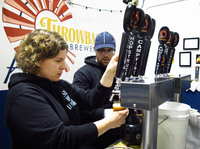
"description": "Throwback Brewery co-owner Nicole Carrier and assistant brewer Chris Naro pour beer for customers at their North Hampton, N.H., taproom.",
"title": "Throwback Brewery co-owner Nicole Carrier and assistant brewer Chris Naro pour beer for customers at their North Hampton, N.H., taproom.",
"credit": null,
"status": "inherit",
"isLoading": false,
"fetchFailed": false
},
"bayareabites_56062": {
"type": "attachments",
"id": "bayareabites_56062",
"meta": {
"index": "attachments_1716263798",
"site": "bayareabites",
"id": "56062",
"found": true
},
"parent": 56061,
"imgSizes": {
"kqedFullSize": {
"file": "https://ww2.kqed.org/app/uploads/sites/24/2013/02/istock_000000479077small-6ef198204996ac04366b0404291b99c741c14fd3.jpg",
"width": 200,
"height": 149
}
},
"publishDate": 1360106453,
"modified": 1360106453,
"caption": null,
"description": "The rum in that Cuba libre will hit your bloodstream faster if it's mixed with diet cola.",
"title": "The rum in that Cuba libre will hit your bloodstream faster if it's mixed with diet cola.",
"credit": null,
"status": "inherit",
"isLoading": false,
"fetchFailed": false
},
"bayareabites_56035": {
"type": "attachments",
"id": "bayareabites_56035",
"meta": {
"index": "attachments_1716263798",
"site": "bayareabites",
"id": "56035",
"found": true
},
"parent": 56034,
"imgSizes": {
"kqedFullSize": {
"file": "https://ww2.kqed.org/app/uploads/sites/24/2013/02/chocolatebeef-97198fe9e2f41eb71dcc3832bb92d75c5745de62.jpg",
"width": 200,
"height": 149
}
},
"publishDate": 1360101088,
"modified": 1360101088,
"caption": null,
"description": "Chocolate- And Red Wine-Braised Short Ribs",
"title": "Chocolate- And Red Wine-Braised Short Ribs",
"credit": null,
"status": "inherit",
"isLoading": false,
"fetchFailed": false
},
"bayareabites_56017": {
"type": "attachments",
"id": "bayareabites_56017",
"meta": {
"index": "attachments_1716263798",
"site": "bayareabites",
"id": "56017",
"found": true
},
"parent": 56016,
"imgSizes": {
"kqedFullSize": {
"file": "https://ww2.kqed.org/app/uploads/sites/24/2013/02/img_1029-dave-fde5c86bfadd31b43f37dc76e0a324293de2f5d1.jpg",
"width": 200,
"height": 150
}
},
"publishDate": 1360091338,
"modified": 1360091338,
"caption": "Toronto-based 3-D jewelry company Hot Pop Factory created personalized Pez dispenser heads for the employees of an architecture firm.",
"description": "Toronto-based 3-D jewelry company Hot Pop Factory created personalized Pez dispenser heads for the employees of an architecture firm.",
"title": "Toronto-based 3-D jewelry company Hot Pop Factory created personalized Pez dispenser heads for the employees of an architecture firm.",
"credit": null,
"status": "inherit",
"isLoading": false,
"fetchFailed": false
},
"bayareabites_55932": {
"type": "attachments",
"id": "bayareabites_55932",
"meta": {
"index": "attachments_1716263798",
"site": "bayareabites",
"id": "55932",
"found": true
},
"parent": 55931,
"imgSizes": {
"kqedFullSize": {
"file": "https://ww2.kqed.org/app/uploads/sites/24/2013/02/swanson_walmart_2_wide-c46f59b3412c1f951503d0965825b009ad1eafc6.jpg",
"width": 200,
"height": 112
}
},
"publishDate": 1360025278,
"modified": 1360025278,
"caption": null,
"description": "Wal-Mart claims that 11 percent of the produce in its stores now comes from local farms.",
"title": "Wal-Mart claims that 11 percent of the produce in its stores now comes from local farms.",
"credit": null,
"status": "inherit",
"isLoading": false,
"fetchFailed": false
},
"bayareabites_55882": {
"type": "attachments",
"id": "bayareabites_55882",
"meta": {
"index": "attachments_1716263798",
"site": "bayareabites",
"id": "55882",
"found": true
},
"parent": 55881,
"imgSizes": {
"kqedFullSize": {
"file": "https://ww2.kqed.org/app/uploads/sites/24/2013/02/gluten_bottles_brick-2dae0e5dacd7f161ad95eec96e88d54422b02d49.jpg",
"width": 200,
"height": 91
}
},
"publishDate": 1359963237,
"modified": 1359963237,
"caption": null,
"description": "More and more gluten-free beers are entering the marketplace. We asked a librarian with celiac disease for her list of favorites.",
"title": "More and more gluten-free beers are entering the marketplace. We asked a librarian with celiac disease for her list of favorites.",
"credit": null,
"status": "inherit",
"isLoading": false,
"fetchFailed": false
},
"bayareabites_55702": {
"type": "attachments",
"id": "bayareabites_55702",
"meta": {
"index": "attachments_1716263798",
"site": "bayareabites",
"id": "55702",
"found": true
},
"parent": 55701,
"imgSizes": {
"kqedFullSize": {
"file": "https://ww2.kqed.org/app/uploads/sites/24/2013/01/sproutmain_wide-25793b2400192fa289fe6a3cdb21baebf2e97e27.jpg",
"width": 200,
"height": 112
}
},
"publishDate": 1359604333,
"modified": 1359604333,
"caption": null,
"description": "Brussels sprouts",
"title": "Brussels sprouts",
"credit": null,
"status": "inherit",
"isLoading": false,
"fetchFailed": false
},
"bayareabites_55683": {
"type": "attachments",
"id": "bayareabites_55683",
"meta": {
"index": "attachments_1716263798",
"site": "bayareabites",
"id": "55683",
"found": true
},
"parent": 55682,
"imgSizes": {
"kqedFullSize": {
"file": "https://ww2.kqed.org/app/uploads/sites/24/2013/01/empanadas_custom-da1aa10c6238e27d04f01939abe0478247e9a8a4.jpg",
"width": 200,
"height": 250
}
},
"publishDate": 1359601700,
"modified": 1359601700,
"caption": null,
"description": "For chef and restaurateur Jose Garces, watching football on television as a boy also meant snacking on his mother's homemade empanadas.",
"title": "For chef and restaurateur Jose Garces, watching football on television as a boy also meant snacking on his mother's homemade empanadas.",
"credit": null,
"status": "inherit",
"isLoading": false,
"fetchFailed": false
},
"bayareabites_55514": {
"type": "attachments",
"id": "bayareabites_55514",
"meta": {
"index": "attachments_1716263798",
"site": "bayareabites",
"id": "55514",
"found": true
},
"parent": 55504,
"imgSizes": {
"kqedFullSize": {
"file": "https://ww2.kqed.org/app/uploads/sites/24/2013/01/cocacola-galakospeculoos1890s.jpg",
"width": 624,
"height": 462
}
},
"publishDate": 1359440100,
"modified": 1359440100,
"caption": "(1890s) Galakospeculoos",
"description": "(1890s) Galakospeculoos",
"title": "(1890s) Galakospeculoos",
"credit": null,
"status": "inherit",
"isLoading": false,
"fetchFailed": false
}
},
"audioPlayerReducer": {
"postId": "stream_live",
"isPaused": true,
"isPlaying": false,
"pfsActive": false,
"pledgeModalIsOpen": true,
"playerDrawerIsOpen": false,
"liveAudioPlayStartedAt": 0,
"liveAudioPlayContext": ""
},
"authorsReducer": {
"byline_bayareabites_56322": {
"type": "authors",
"id": "byline_bayareabites_56322",
"meta": {
"override": true
},
"slug": "byline_bayareabites_56322",
"name": "Lydia Zuraw",
"isLoading": false
},
"byline_bayareabites_56184": {
"type": "authors",
"id": "byline_bayareabites_56184",
"meta": {
"override": true
},
"slug": "byline_bayareabites_56184",
"name": "Nancy Shute",
"isLoading": false
},
"byline_bayareabites_56098": {
"type": "authors",
"id": "byline_bayareabites_56098",
"meta": {
"override": true
},
"slug": "byline_bayareabites_56098",
"name": "Emily Corwin",
"isLoading": false
},
"byline_bayareabites_56061": {
"type": "authors",
"id": "byline_bayareabites_56061",
"meta": {
"override": true
},
"slug": "byline_bayareabites_56061",
"name": "Allison Aubrey",
"isLoading": false
},
"byline_bayareabites_56034": {
"type": "authors",
"id": "byline_bayareabites_56034",
"meta": {
"override": true
},
"slug": "byline_bayareabites_56034",
"name": "Peter Ogburn",
"isLoading": false
},
"byline_bayareabites_56016": {
"type": "authors",
"id": "byline_bayareabites_56016",
"meta": {
"override": true
},
"slug": "byline_bayareabites_56016",
"name": "Lydia Zuraw",
"isLoading": false
},
"byline_bayareabites_55931": {
"type": "authors",
"id": "byline_bayareabites_55931",
"meta": {
"override": true
},
"slug": "byline_bayareabites_55931",
"name": "Abbie Fentress Swanson",
"isLoading": false
},
"byline_bayareabites_55881": {
"type": "authors",
"id": "byline_bayareabites_55881",
"meta": {
"override": true
},
"slug": "byline_bayareabites_55881",
"name": "Bill Chappell",
"isLoading": false
},
"byline_bayareabites_55803": {
"type": "authors",
"id": "byline_bayareabites_55803",
"meta": {
"override": true
},
"slug": "byline_bayareabites_55803",
"name": "Vicki Barker",
"isLoading": false
},
"byline_bayareabites_55701": {
"type": "authors",
"id": "byline_bayareabites_55701",
"meta": {
"override": true
},
"slug": "byline_bayareabites_55701",
"name": "T. Susan Chang",
"isLoading": false
},
"byline_bayareabites_55682": {
"type": "authors",
"id": "byline_bayareabites_55682",
"meta": {
"override": true
},
"slug": "byline_bayareabites_55682",
"name": "NPR Staff",
"isLoading": false
},
"byline_bayareabites_55504": {
"type": "authors",
"id": "byline_bayareabites_55504",
"meta": {
"override": true
},
"slug": "byline_bayareabites_55504",
"name": "Audrey Carlsen",
"isLoading": false
}
},
"pagesReducer": {
"bayareabites_category_npr-food": {
"type": "terms",
"id": "bayareabites_10916",
"meta": {
"index": "terms_1716263798",
"site": "bayareabites",
"id": "10916",
"score": 13.894455
},
"featImg": null,
"name": "NPR food",
"description": null,
"taxonomy": "category",
"headData": {
"twImgId": null,
"twTitle": null,
"ogTitle": null,
"ogImgId": null,
"twDescription": null,
"description": null,
"title": "NPR food Archives | KQED Bay Area Bites",
"ogDescription": null
},
"ttid": 5375,
"slug": "npr-food",
"isLoading": false,
"title": "NPR food",
"pageMeta": {
"site": "bayareabites",
"WpPageTemplate": "page-topic-editorial",
"currentPage": 90
},
"blocks": [
{
"blockName": "kqed/post-list",
"attrs": {
"layout": "cardArticle2",
"query": "posts/bayareabites?category=npr-food",
"seeMore": false,
"paginated": true,
"page": 90
}
},
{
"blockName": "kqed/ad"
}
]
}
},
"pfsSessionReducer": {},
"postsReducer": {
"stream_live": {
"type": "live",
"id": "stream_live",
"audioUrl": "https://hls.kqed.org/hls/kqed_app/playlist.m3u8",
"title": "Live Stream",
"excerpt": "Live Stream information currently unavailable.",
"link": "/radio",
"featImg": "",
"label": {
"name": "KQED Live",
"link": "/"
}
},
"stream_kqedNewscast": {
"type": "posts",
"id": "stream_kqedNewscast",
"audioUrl": "https://www.kqed.org/.stream/anon/radio/RDnews/newscast.mp3?_=1",
"title": "KQED Newscast",
"featImg": "",
"label": {
"name": "88.5 FM",
"link": "/"
}
},
"bayareabites_56322": {
"type": "posts",
"id": "bayareabites_56322",
"meta": {
"index": "posts_1716263798",
"site": "bayareabites",
"id": "56322",
"score": null,
"sort": [
1360375843000
]
},
"parent": 0,
"labelTerm": {
"site": "bayareabites"
},
"blocks": [],
"publishDate": 1360375843,
"format": "aside",
"disqusTitle": "When The Microbes Are Happy, The Brewer Is Happy",
"title": "When The Microbes Are Happy, The Brewer Is Happy",
"headTitle": "Bay Area Bites | KQED Food",
"content": "\u003cfigure id=\"attachment_56329\" class=\"wp-caption aligncenter\" style=\"max-width: 666px\">\u003ca href=\"http://ww2.kqed.org/bayareabites/wp-content/uploads/sites/24/2013/02/beer.jpg\">\u003cimg src=\"http://ww2.kqed.org/bayareabites/wp-content/uploads/sites/24/2013/02/beer.jpg\" alt=\"Yeast affects several aspects of beer including the foam, or head, that forms on the of the glass. If fermentation is too vigorous, too many of the foam-stabilizing proteins may be lost. Photo: Cate Gillon/Getty Images\" width=\"666\" height=\"500\" class=\"size-full wp-image-56329\">\u003c/a>\u003cfigcaption class=\"wp-caption-text\">Yeast affects several aspects of beer including the foam, or head, that forms on the of the glass. If fermentation is too vigorous, too many of the foam-stabilizing proteins may be lost. Photo: Cate Gillon/Getty Images\u003c/figcaption>\u003c/figure>\n\u003cp>Post by Lydia Zuraw, \u003ca href=\"http://www.npr.org/blogs/thesalt/2013/02/08/171384920/when-the-microbes-are-happy-the-brewer-is-happy\">The Salt at NPR Food\u003c/a>\u003c/p>\n\u003cp>Yeast can be pretty demanding little buggers, despite being unicellular microscopic organisms. Brewers know they must appease them to get the beer they want.\u003c/p>\n\u003cp>\"It's yeast-strain dependent, it's environment, it's temperature, oxygen levels,\" says Matt Brophy, brewmaster of \u003ca href=\"http://flyingdogales.com/\">Flying Dog Brewery\u003c/a> in Frederick, Md. \"There's a lot of variables that you need to have a high level of control over.\"\u003c/p>\n\u003cp>Yeast produces hundreds of chemical compounds that can affect the beer's ultimate flavor, appearance and stability. Over the centuries, humans have domesticated yeast strains with the best characteristics for brewing, so that the ones brewers use today are much more effective than wild yeast. It's kind of like going with a pedigreed Best In Show at Westminster, rather than a coyote.\u003c/p>\n\u003cp>\"We deal with cultured yeast — very specific strains that give us flavor profiles that we desire in our beers,\" Brophy says.\u003c/p>\n\u003cp>[ad fullwidth]\u003c/p>\n\u003cp>Then they have to pamper the yeast with the right conditions.\u003c/p>\n\u003cp>It gets fed wort, a sugary liquid made by steeping, roasting, and mashing barley or other grains. The wort is cooled to just the right temperature, and stirred to oxygenate it so that the yeast can grow and reproduce.\u003c/p>\n\u003cp>After all those demands have been met, the yeast starts converting simple sugars to alcohol and carbon dioxide.\u003c/p>\n\u003cp>Or, as a new \u003ca href=\"http://bit.ly/asmbeerfaq\">report\u003c/a> from the American Academy of Microbiology says, \"If the Yeast Ain't Happy, Ain't Nobody Happy.\"\u003c/p>\n\u003cp>So does this mean that brewers are basically microbiologists?\u003c/p>\n\u003cp>\"Yes, absolutely,\" Brophy says. \"Not only do you need to learn and know about yeast health, viability, vitality, and all the variability that affect fermentation, but there's also the buggers that you don't want.\"\u003c/p>\n\u003cp>Ann Reid, director of the microbiology academy, says that even she was struck by \"the degree to which the whole beer-making process really is an effort to produce something that the yeast will be really happy, with so they'll make you the beer that you want to drink.\"\u003c/p>\n\u003cp>In addition to describing the brewing process in depth and outlining the ways in which yeast affects beer's flavor, the report explores the history of brewing and differences in types of yeast.\u003c/p>\n\u003cp>Some highlights:\u003c/p>\n\u003cul>\n\u003cli>Yeast probably evolved the ability to produce alcohol because other microbes can't survive in it. It kills off the competition. But this also explains why fermented drinks were popular before the development of water sanitation systems — beer was safer to drink than the local water supply.\u003c/li>\n\u003cli>The two major brewer's yeasts are ale and lager yeasts. Ale yeasts prefer warm temperatures for fermentation. Lager yeasts grow well at low temperatures, an important quality for brewers in Northern Europe.\u003c/li>\n\u003cli>Too little yeast, and fermentation will take too long to get started, allowing bacteria to outcompete it. Too much, and the beer will lack complex flavor and aroma.\u003c/li>\n\u003c/ul>\n\u003cp>This is the latest of the Academy's reports on microbes in our world. \"We get the sense when people think of microbes, they think of things that make you sick and they think of microbiologists as people who work in the clinical laboratory at the hospital,\" Reid says. \"It's a lot more varied than that.\"\u003c/p>\n\u003cp>Previous \u003ca href=\"http://academy.asm.org/index.php/colloquium-program/faq-series\">FAQ reports\u003c/a> have queried microbiologists on oil spills, \u003cem>E. coli\u003c/em> and adult vaccines.\u003c/p>\n\u003cp>For the yeast report, the academy had to turn to Europe for about half of their brewing experts. \"There's not a lot of it going on in our universities,\" Reid says. \"In Europe there are actual professors of fermentation who specialize in beer.\"\u003c/p>\n\u003cp>But regardless of where the experts come from, Reid says, \"beer microbiologists are among the most fun of a pretty fun profession.\" \u003c/p>\n\u003cp>\u003c/p>\n\u003cp> \u003cem>Copyright 2013 \u003ca href=\"http://www.npr.org/\">NPR\u003c/a>.\u003c/em> \u003c/p>\n\n",
"disqusIdentifier": "56322 http://blogs.kqed.org/bayareabites/?p=56322",
"disqusUrl": "https://ww2.kqed.org/bayareabites/2013/02/08/when-the-microbes-are-happy-the-brewer-is-happy/",
"stats": {
"hasVideo": false,
"hasChartOrMap": false,
"hasAudio": false,
"hasPolis": false,
"wordCount": 668,
"hasGoogleForm": false,
"hasGallery": false,
"hasHearkenModule": false,
"iframeSrcs": [],
"paragraphCount": 21
},
"modified": 1360375843,
"excerpt": "Yeast are demanding little critters. To make good-tasting beer, brewers have to pamper them like pedigreed pets. A new report says it's all about the microbiology. Brewers say they use science to keep their charges happy.",
"headData": {
"twImgId": "",
"twTitle": "",
"ogTitle": "",
"ogImgId": "",
"twDescription": "",
"description": "Yeast are demanding little critters. To make good-tasting beer, brewers have to pamper them like pedigreed pets. A new report says it's all about the microbiology. Brewers say they use science to keep their charges happy.",
"title": "When The Microbes Are Happy, The Brewer Is Happy | KQED",
"ogDescription": "",
"schema": {
"@context": "https://schema.org",
"@type": "Article",
"headline": "When The Microbes Are Happy, The Brewer Is Happy",
"datePublished": "2013-02-08T18:10:43-08:00",
"dateModified": "2013-02-08T18:10:43-08:00",
"image": "https://cdn.kqed.org/wp-content/uploads/2020/02/KQED-OG-Image@1x.png"
}
},
"guestAuthors": [],
"slug": "when-the-microbes-are-happy-the-brewer-is-happy",
"status": "publish",
"nprApiLink": "http://api.npr.org/query?id=171384920&apiKey=MDAxOTAwOTE4MDEyMTkxMDAzNjczZDljZA004",
"nprByline": "Lydia Zuraw",
"nprStoryDate": "Fri, 08 Feb 2013 15:38:00 -0500",
"nprLastModifiedDate": "Fri, 08 Feb 2013 15:37:59 -0500",
"nprHtmlLink": "http://www.npr.org/blogs/thesalt/2013/02/08/171384920/when-the-microbes-are-happy-the-brewer-is-happy?ft=3&f=171384920",
"nprStoryId": "171384920",
"nprRetrievedStory": "1",
"nprPubDate": "Fri, 08 Feb 2013 15:38:00 -0500",
"path": "/bayareabites/56322/when-the-microbes-are-happy-the-brewer-is-happy",
"audioTrackLength": null,
"parsedContent": [
{
"type": "contentString",
"content": "\u003cdiv class=\"post-body\">\u003cp>\u003cfigure id=\"attachment_56329\" class=\"wp-caption aligncenter\" style=\"max-width: 666px\">\u003ca href=\"http://ww2.kqed.org/bayareabites/wp-content/uploads/sites/24/2013/02/beer.jpg\">\u003cimg src=\"http://ww2.kqed.org/bayareabites/wp-content/uploads/sites/24/2013/02/beer.jpg\" alt=\"Yeast affects several aspects of beer including the foam, or head, that forms on the of the glass. If fermentation is too vigorous, too many of the foam-stabilizing proteins may be lost. Photo: Cate Gillon/Getty Images\" width=\"666\" height=\"500\" class=\"size-full wp-image-56329\">\u003c/a>\u003cfigcaption class=\"wp-caption-text\">Yeast affects several aspects of beer including the foam, or head, that forms on the of the glass. If fermentation is too vigorous, too many of the foam-stabilizing proteins may be lost. Photo: Cate Gillon/Getty Images\u003c/figcaption>\u003c/figure>\n\u003cp>Post by Lydia Zuraw, \u003ca href=\"http://www.npr.org/blogs/thesalt/2013/02/08/171384920/when-the-microbes-are-happy-the-brewer-is-happy\">The Salt at NPR Food\u003c/a>\u003c/p>\n\u003cp>Yeast can be pretty demanding little buggers, despite being unicellular microscopic organisms. Brewers know they must appease them to get the beer they want.\u003c/p>\n\u003cp>\"It's yeast-strain dependent, it's environment, it's temperature, oxygen levels,\" says Matt Brophy, brewmaster of \u003ca href=\"http://flyingdogales.com/\">Flying Dog Brewery\u003c/a> in Frederick, Md. \"There's a lot of variables that you need to have a high level of control over.\"\u003c/p>\n\u003cp>Yeast produces hundreds of chemical compounds that can affect the beer's ultimate flavor, appearance and stability. Over the centuries, humans have domesticated yeast strains with the best characteristics for brewing, so that the ones brewers use today are much more effective than wild yeast. It's kind of like going with a pedigreed Best In Show at Westminster, rather than a coyote.\u003c/p>\n\u003cp>\"We deal with cultured yeast — very specific strains that give us flavor profiles that we desire in our beers,\" Brophy says.\u003c/p>\n\u003cp>\u003c/p>\u003c/div>",
"attributes": {
"named": {},
"numeric": []
}
},
{
"type": "component",
"content": "",
"name": "ad",
"attributes": {
"named": {
"label": "fullwidth"
},
"numeric": [
"fullwidth"
]
}
},
{
"type": "contentString",
"content": "\u003cdiv class=\"post-body\">\u003cp>\u003c/p>\n\u003cp>Then they have to pamper the yeast with the right conditions.\u003c/p>\n\u003cp>It gets fed wort, a sugary liquid made by steeping, roasting, and mashing barley or other grains. The wort is cooled to just the right temperature, and stirred to oxygenate it so that the yeast can grow and reproduce.\u003c/p>\n\u003cp>After all those demands have been met, the yeast starts converting simple sugars to alcohol and carbon dioxide.\u003c/p>\n\u003cp>Or, as a new \u003ca href=\"http://bit.ly/asmbeerfaq\">report\u003c/a> from the American Academy of Microbiology says, \"If the Yeast Ain't Happy, Ain't Nobody Happy.\"\u003c/p>\n\u003cp>So does this mean that brewers are basically microbiologists?\u003c/p>\n\u003cp>\"Yes, absolutely,\" Brophy says. \"Not only do you need to learn and know about yeast health, viability, vitality, and all the variability that affect fermentation, but there's also the buggers that you don't want.\"\u003c/p>\n\u003cp>Ann Reid, director of the microbiology academy, says that even she was struck by \"the degree to which the whole beer-making process really is an effort to produce something that the yeast will be really happy, with so they'll make you the beer that you want to drink.\"\u003c/p>\n\u003cp>In addition to describing the brewing process in depth and outlining the ways in which yeast affects beer's flavor, the report explores the history of brewing and differences in types of yeast.\u003c/p>\n\u003cp>Some highlights:\u003c/p>\n\u003cul>\n\u003cli>Yeast probably evolved the ability to produce alcohol because other microbes can't survive in it. It kills off the competition. But this also explains why fermented drinks were popular before the development of water sanitation systems — beer was safer to drink than the local water supply.\u003c/li>\n\u003cli>The two major brewer's yeasts are ale and lager yeasts. Ale yeasts prefer warm temperatures for fermentation. Lager yeasts grow well at low temperatures, an important quality for brewers in Northern Europe.\u003c/li>\n\u003cli>Too little yeast, and fermentation will take too long to get started, allowing bacteria to outcompete it. Too much, and the beer will lack complex flavor and aroma.\u003c/li>\n\u003c/ul>\n\u003cp>This is the latest of the Academy's reports on microbes in our world. \"We get the sense when people think of microbes, they think of things that make you sick and they think of microbiologists as people who work in the clinical laboratory at the hospital,\" Reid says. \"It's a lot more varied than that.\"\u003c/p>\n\u003cp>Previous \u003ca href=\"http://academy.asm.org/index.php/colloquium-program/faq-series\">FAQ reports\u003c/a> have queried microbiologists on oil spills, \u003cem>E. coli\u003c/em> and adult vaccines.\u003c/p>\n\u003cp>For the yeast report, the academy had to turn to Europe for about half of their brewing experts. \"There's not a lot of it going on in our universities,\" Reid says. \"In Europe there are actual professors of fermentation who specialize in beer.\"\u003c/p>\n\u003cp>But regardless of where the experts come from, Reid says, \"beer microbiologists are among the most fun of a pretty fun profession.\" \u003c/p>\n\u003cp>\u003c/p>\n\u003cp> \u003cem>Copyright 2013 \u003ca href=\"http://www.npr.org/\">NPR\u003c/a>.\u003c/em> \u003c/p>\n\n\u003c/div>\u003c/p>",
"attributes": {
"named": {},
"numeric": []
}
}
],
"link": "/bayareabites/56322/when-the-microbes-are-happy-the-brewer-is-happy",
"authors": [
"byline_bayareabites_56322"
],
"categories": [
"bayareabites_301",
"bayareabites_10916"
],
"tags": [
"bayareabites_14753",
"bayareabites_11161",
"bayareabites_11176",
"bayareabites_3251"
],
"featImg": "bayareabites_56323",
"label": "bayareabites"
},
"bayareabites_56184": {
"type": "posts",
"id": "bayareabites_56184",
"meta": {
"index": "posts_1716263798",
"site": "bayareabites",
"id": "56184",
"score": null,
"sort": [
1360261731000
]
},
"parent": 0,
"labelTerm": {
"site": "bayareabites"
},
"blocks": [],
"publishDate": 1360261731,
"format": "aside",
"disqusTitle": "Chain Restaurants Boost Sales With Lower-Calorie Foods",
"title": "Chain Restaurants Boost Sales With Lower-Calorie Foods",
"headTitle": "Bay Area Bites | KQED Food",
"content": "\u003cp>Post by Nancy Shute, \u003ca href=\"http://www.npr.org/blogs/thesalt/2013/02/07/171371691/lower-calories-feed-higher-profits-at-chain-restaurants\">The Salt at NPR Food\u003c/a> (2/7/13)\u003c/p>\n\u003cfigure id=\"attachment_56191\" class=\"wp-caption alignleft\" style=\"max-width: 300px\">\u003ca href=\"http://ww2.kqed.org/bayareabites/wp-content/uploads/sites/24/2013/02/frenchfries-istock.jpg\">\u003cimg src=\"http://ww2.kqed.org/bayareabites/wp-content/uploads/sites/24/2013/02/frenchfries-istock-300x225.jpg\" alt=\"Ordering the small fries? You're part of a trend.\" width=\"300\" height=\"225\" class=\"size-medium wp-image-56191\">\u003c/a>\u003cfigcaption class=\"wp-caption-text\">Ordering the small fries? You're part of a trend. Photo: iStockphoto.com\u003c/figcaption>\u003c/figure>\n\u003cp>Lower-calorie foods are driving growth and profits for chain restaurants, according to fresh research, suggesting that people are making smarter choices when it comes to burgers and fries.\u003c/p>\n\u003cp>We're still ordering the burger and fries, mind you. But we're going for smaller portions and shunning sugary drinks. French fry sales dropped about 2 percent from 2006 to 2011, while sales of lower-calorie beverages rose 10 percent, the study found.\u003c/p>\n\u003cp>That should make for happy restaurant chains, which have argued that Americans really don't want salads and other healthy offerings pushed by public health officials.\u003c/p>\n\u003cp>The \u003ca href=\"http://www.hudson.org/files/publications/lower_calorie_foods.pdf\">\u003cstrong>report, from the Hudson Institute\u003c/strong>\u003c/a>, analyzed sales at 21 restaurant chains, including McDonald's, Applebee's, Burger King, Cracker Barrel, IHOP, Panera Bread and KFC.\u003c/p>\n\u003cp>[ad fullwidth]\u003c/p>\n\u003cp>Restaurants that offered more lower-calorie services saw a 9 percent increase in food and beverage sales from 2006 to 2011, while restaurants that didn't saw sales drop by 16 percent.\u003c/p>\n\u003cp>The researchers defined lower calorie as a main item with fewer than 500 calories, a side dish with fewer than 150 calories, and a beverage below 50 calories for an eight-ounce serving.\u003c/p>\n\u003cp>\"You go to McDonald's and get a plain old burger, and you don't get many calories,\" says \u003ca href=\"http://www.hudson.org/cardello\">Hank Cardello\u003c/a>, a senior fellow at the Hudson Institute and author of the report. It was funded by the Robert Wood Johnson Foundation.\u003c/p>\n\u003cp>A former food industry executive at companies like Coca-Cola and General Mills, Cardello is of the belief that badgering people about eating healthy isn't necessarily the only way — or the best way — to solve the nation's obesity crisis.\u003c/p>\n\u003cp>\"We found some good performance in restaurants that were selling smaller-portion chicken sandwiches,\" Cardello says. Even if that's a fried chicken sandwich, he notes, smaller means fewer calories. And for the restaurants, \"You don't give up profits by doing that.\"\u003c/p>\n\u003cp>New federal regulations requiring chain restaurants to post calorie counts will take effect next year, but some, including McDonald's, already provide that information. Earlier studies have found that posted calorie counts \u003ca href=\"http://www.npr.org/blogs/health/2011/02/15/133772527/prominent-calorie-counts-dont-budge-fast-food-choices\">don't drive\u003c/a> people to make better choices, and that they can actually be so \u003ca href=\"http://www.npr.org/blogs/thesalt/2012/02/24/147360505/menu-math-when-counting-fast-food-calories-requires-a-calculator\">confusing\u003c/a> as to be useless. But this study suggests that people are starting to pay attention.\u003c/p>\n\u003cp>Cardello hopes the dollar figures will get restaurateurs to pay attention, too.\u003c/p>\n\u003cp>\"The restaurant industry as a whole is a very show-me industry; show me why I should change.\" He knows he's not going to convert the chains to being public-health advocates. but now, the chains will know that they should \"get with the program, or you leave money on the table.\"\u003c/p>\n\u003cp>\u003cem>Editor's Note: The Robert Wood Johnson Foundation also funds coverage of health care on NPR.\u003c/em> \u003c/p>\n\u003cp>\u003c/p>\n\u003cp>\u003cem>Copyright 2013 \u003ca href=\"http://www.npr.org/\">NPR\u003c/a>.\u003c/em> \u003c/p>\n\n",
"disqusIdentifier": "56184 http://blogs.kqed.org/bayareabites/?p=56184",
"disqusUrl": "https://ww2.kqed.org/bayareabites/2013/02/07/chain-restaurants-boost-sales-with-lower-calorie-foods/",
"stats": {
"hasVideo": false,
"hasChartOrMap": false,
"hasAudio": false,
"hasPolis": false,
"wordCount": 492,
"hasGoogleForm": false,
"hasGallery": false,
"hasHearkenModule": false,
"iframeSrcs": [],
"paragraphCount": 17
},
"modified": 1360261731,
"excerpt": "Who says healthy doesn't sell? McDonald's, Panera Bread and other restaurant chains that offered more lower-calorie food choices saw a 9 percent jump in food and beverage sales from 2006 to 2011, a new report finds. Restaurants without these options saw sales drop.",
"headData": {
"twImgId": "",
"twTitle": "",
"ogTitle": "",
"ogImgId": "",
"twDescription": "",
"description": "Who says healthy doesn't sell? McDonald's, Panera Bread and other restaurant chains that offered more lower-calorie food choices saw a 9 percent jump in food and beverage sales from 2006 to 2011, a new report finds. Restaurants without these options saw sales drop.",
"title": "Chain Restaurants Boost Sales With Lower-Calorie Foods | KQED",
"ogDescription": "",
"schema": {
"@context": "https://schema.org",
"@type": "Article",
"headline": "Chain Restaurants Boost Sales With Lower-Calorie Foods",
"datePublished": "2013-02-07T10:28:51-08:00",
"dateModified": "2013-02-07T10:28:51-08:00",
"image": "https://cdn.kqed.org/wp-content/uploads/2020/02/KQED-OG-Image@1x.png"
}
},
"guestAuthors": [],
"slug": "chain-restaurants-boost-sales-with-lower-calorie-foods",
"status": "publish",
"nprApiLink": "http://api.npr.org/query?id=171371691&apiKey=MDAxOTAwOTE4MDEyMTkxMDAzNjczZDljZA004",
"nprByline": "Nancy Shute",
"nprStoryDate": "Thu, 07 Feb 2013 12:09:00 -0500",
"nprLastModifiedDate": "Thu, 07 Feb 2013 12:09:18 -0500",
"nprHtmlLink": "http://www.npr.org/blogs/thesalt/2013/02/07/171371691/lower-calories-feed-higher-profits-at-chain-restaurants?ft=3&f=171371691",
"nprStoryId": "171371691",
"nprRetrievedStory": "1",
"nprPubDate": "Thu, 07 Feb 2013 12:09:00 -0500",
"path": "/bayareabites/56184/chain-restaurants-boost-sales-with-lower-calorie-foods",
"audioTrackLength": null,
"parsedContent": [
{
"type": "contentString",
"content": "\u003cdiv class=\"post-body\">\u003cp>\u003cp>Post by Nancy Shute, \u003ca href=\"http://www.npr.org/blogs/thesalt/2013/02/07/171371691/lower-calories-feed-higher-profits-at-chain-restaurants\">The Salt at NPR Food\u003c/a> (2/7/13)\u003c/p>\n\u003cfigure id=\"attachment_56191\" class=\"wp-caption alignleft\" style=\"max-width: 300px\">\u003ca href=\"http://ww2.kqed.org/bayareabites/wp-content/uploads/sites/24/2013/02/frenchfries-istock.jpg\">\u003cimg src=\"http://ww2.kqed.org/bayareabites/wp-content/uploads/sites/24/2013/02/frenchfries-istock-300x225.jpg\" alt=\"Ordering the small fries? You're part of a trend.\" width=\"300\" height=\"225\" class=\"size-medium wp-image-56191\">\u003c/a>\u003cfigcaption class=\"wp-caption-text\">Ordering the small fries? You're part of a trend. Photo: iStockphoto.com\u003c/figcaption>\u003c/figure>\n\u003cp>Lower-calorie foods are driving growth and profits for chain restaurants, according to fresh research, suggesting that people are making smarter choices when it comes to burgers and fries.\u003c/p>\n\u003cp>We're still ordering the burger and fries, mind you. But we're going for smaller portions and shunning sugary drinks. French fry sales dropped about 2 percent from 2006 to 2011, while sales of lower-calorie beverages rose 10 percent, the study found.\u003c/p>\n\u003cp>That should make for happy restaurant chains, which have argued that Americans really don't want salads and other healthy offerings pushed by public health officials.\u003c/p>\n\u003cp>The \u003ca href=\"http://www.hudson.org/files/publications/lower_calorie_foods.pdf\">\u003cstrong>report, from the Hudson Institute\u003c/strong>\u003c/a>, analyzed sales at 21 restaurant chains, including McDonald's, Applebee's, Burger King, Cracker Barrel, IHOP, Panera Bread and KFC.\u003c/p>\n\u003cp>\u003c/p>\u003c/div>",
"attributes": {
"named": {},
"numeric": []
}
},
{
"type": "component",
"content": "",
"name": "ad",
"attributes": {
"named": {
"label": "fullwidth"
},
"numeric": [
"fullwidth"
]
}
},
{
"type": "contentString",
"content": "\u003cdiv class=\"post-body\">\u003cp>\u003c/p>\n\u003cp>Restaurants that offered more lower-calorie services saw a 9 percent increase in food and beverage sales from 2006 to 2011, while restaurants that didn't saw sales drop by 16 percent.\u003c/p>\n\u003cp>The researchers defined lower calorie as a main item with fewer than 500 calories, a side dish with fewer than 150 calories, and a beverage below 50 calories for an eight-ounce serving.\u003c/p>\n\u003cp>\"You go to McDonald's and get a plain old burger, and you don't get many calories,\" says \u003ca href=\"http://www.hudson.org/cardello\">Hank Cardello\u003c/a>, a senior fellow at the Hudson Institute and author of the report. It was funded by the Robert Wood Johnson Foundation.\u003c/p>\n\u003cp>A former food industry executive at companies like Coca-Cola and General Mills, Cardello is of the belief that badgering people about eating healthy isn't necessarily the only way — or the best way — to solve the nation's obesity crisis.\u003c/p>\n\u003cp>\"We found some good performance in restaurants that were selling smaller-portion chicken sandwiches,\" Cardello says. Even if that's a fried chicken sandwich, he notes, smaller means fewer calories. And for the restaurants, \"You don't give up profits by doing that.\"\u003c/p>\n\u003cp>New federal regulations requiring chain restaurants to post calorie counts will take effect next year, but some, including McDonald's, already provide that information. Earlier studies have found that posted calorie counts \u003ca href=\"http://www.npr.org/blogs/health/2011/02/15/133772527/prominent-calorie-counts-dont-budge-fast-food-choices\">don't drive\u003c/a> people to make better choices, and that they can actually be so \u003ca href=\"http://www.npr.org/blogs/thesalt/2012/02/24/147360505/menu-math-when-counting-fast-food-calories-requires-a-calculator\">confusing\u003c/a> as to be useless. But this study suggests that people are starting to pay attention.\u003c/p>\n\u003cp>Cardello hopes the dollar figures will get restaurateurs to pay attention, too.\u003c/p>\n\u003cp>\"The restaurant industry as a whole is a very show-me industry; show me why I should change.\" He knows he's not going to convert the chains to being public-health advocates. but now, the chains will know that they should \"get with the program, or you leave money on the table.\"\u003c/p>\n\u003cp>\u003cem>Editor's Note: The Robert Wood Johnson Foundation also funds coverage of health care on NPR.\u003c/em> \u003c/p>\n\u003cp>\u003c/p>\n\u003cp>\u003cem>Copyright 2013 \u003ca href=\"http://www.npr.org/\">NPR\u003c/a>.\u003c/em> \u003c/p>\n\n\u003c/div>\u003c/p>",
"attributes": {
"named": {},
"numeric": []
}
}
],
"link": "/bayareabites/56184/chain-restaurants-boost-sales-with-lower-calorie-foods",
"authors": [
"byline_bayareabites_56184"
],
"categories": [
"bayareabites_1962",
"bayareabites_4084",
"bayareabites_10916",
"bayareabites_181"
],
"tags": [
"bayareabites_11168",
"bayareabites_9103",
"bayareabites_11173",
"bayareabites_11169",
"bayareabites_1435",
"bayareabites_11170",
"bayareabites_11172",
"bayareabites_9101",
"bayareabites_11171",
"bayareabites_10921"
],
"featImg": "bayareabites_56185",
"label": "bayareabites"
},
"bayareabites_56098": {
"type": "posts",
"id": "bayareabites_56098",
"meta": {
"index": "posts_1716263798",
"site": "bayareabites",
"id": "56098",
"score": null,
"sort": [
1360189714000
]
},
"parent": 0,
"labelTerm": {
"site": "bayareabites"
},
"blocks": [],
"publishDate": 1360189714,
"format": "aside",
"disqusTitle": "New Hampshire Cuts Red Tape To Put Nanobreweries On Tap ",
"title": "New Hampshire Cuts Red Tape To Put Nanobreweries On Tap ",
"headTitle": "Bay Area Bites | KQED Food",
"content": "\u003cp>Listen to the Story on \u003ca href=\"http://www.npr.org/blogs/thesalt/2013/02/06/170479311/new-hampshire-cuts-red-tape-to-put-nanobreweries-on-tap\">Morning Edition:\u003c/a>\u003cbr>\n [audio src=\"http://pd.npr.org/anon.npr-mp3/npr/atc/2013/01/20130130_atc_15.mp3\"] \u003c/p>\n\u003cfigure id=\"attachment_56106\" class=\"wp-caption aligncenter\" style=\"max-width: 624px\">\u003ca href=\"http://ww2.kqed.org/bayareabites/wp-content/uploads/sites/24/2013/02/beer-nicole_carrier.jpg\">\u003cimg src=\"http://ww2.kqed.org/bayareabites/wp-content/uploads/sites/24/2013/02/beer-nicole_carrier.jpg\" alt=\"Throwback Brewery co-owner Nicole Carrier and assistant brewer Chris Naro pour beer for customers at their North Hampton, N.H., taproom. Photo: Emily Corwin/NHPR\" width=\"624\" height=\"467\" class=\"size-full wp-image-56106\">\u003c/a>\u003cfigcaption class=\"wp-caption-text\">Throwback Brewery co-owner Nicole Carrier and assistant brewer Chris Naro pour beer for customers at their North Hampton, N.H., taproom. Photo: Emily Corwin/NHPR\u003c/figcaption>\u003c/figure>\n\u003cp>Post by Emily Corwin, from \u003ca href=\"http://www.nhpr.org/\">NHPR\u003c/a> on The Salt at NPR Food (2/6/13)\u003c/p>\n\u003cp>As beer drinkers demand increasingly obscure beers with ingredients like jalapenos or rhubarb, smaller and smaller breweries are stepping up to the plate. New Hampshire is one state helping these brewery startups get off the ground, with new laws that make it easier for small-scale breweries to obtain licenses and distribute their craft beers.\u003c/p>\n\u003cp>Among those benefiting: Nicole Carrier and her partner, Annette Lee, of North Hampton, N.H. A year and half ago, they were just enthusiastic home brewers. Now, they spend much of their time rinsing equipment and mixing ingredients at their brewery, \u003ca href=\"http://throwbackbrewery.com/\">Throwback\u003c/a>. As in, a throwback to the days when communities were smaller, and all food was local food.\u003c/p>\n\u003cp>Carrier still works for IBM, while Lee left her job as an engineer to start the brewery. With two full-time employees, Carrier and Lee produce 360 gallons of beer a week. That's about what bigger craft breweries \u003cem>throw away.\u003c/em>\u003c/p>\n\u003cp>[ad fullwidth]\u003c/p>\n\u003cp>\"Annette is an engineer by her background, and we call it a 'Frankenbrewery' because we've found different pieces and she sort of engineered them together,\" Carrier says.\u003c/p>\n\u003cp>About 100 of these so-called \u003ca href=\"http://hessbrewing.blogspot.com/2009/11/nanobreweries-in-usa.html\">nanobreweries\u003c/a> have sprouted up across the country. But in many places, starting one can involve a lot of red tape, thanks in part to Prohibition-era liquor laws. New Hampshire is the first state to try to change that.\u003c/p>\n\u003cp>Despite pushback from \u003ca href=\"http://www.npr.org/blogs/thesalt/2012/12/22/166493220/the-bitter-tale-of-the-budweiser-family\">big beverage manufacturers like Anheuser-Busch\u003c/a>, the state has begun lowering the barrier to entry for people like Carrier and Lee. Today, seven nanobreweries are open in New Hampshire.\u003c/p>\n\u003cp>These tiny breweries are proliferating, but they may be hard to sustain.\u003c/p>\n\u003cp>\"The thing about nanobreweries that's always a challenge is they run out of products,\" says Tom Brock Jr., who buys beer for an upscale national grocery franchise and stocks Throwback at his New Hampshire stores. He finds small breweries unreliable and worries the novelty that makes them trendy may ultimately make them unsustainable.\u003c/p>\n\u003cp>\"A lot of folks will look at nanobreweries, and they're like, 'Well, I had all their lineup, and I'm going to go on to something new,' \" Brock says.\u003c/p>\n\u003cp>If they're going stick around, he says, good nanobreweries may not stay \"nano\" for long.\u003c/p>\n\u003cp>And it's true that Carrier and Lee at Throwback will be moving to a bigger facility soon. But selling as much beer as possible to as many people as possible? That's just not their style. Carrier and Lee buy most of their ingredients within a 200-mile radius of coastal New Hampshire, and they want to limit their sales to within that radius, too.\u003c/p>\n\u003cp>\"So if a lot of people around here are that thirsty, we'll get past a nanobrewery, but no, you won't find us in California, or even New York,\" Carrier says.\u003c/p>\n\u003cp>Throwback Brewery is in a warehouse park, far from any downtown. That doesn't stop five or six people from coming in to try a Chipotle Porter or Fennel Flower Stout on a Tuesday evening.\u003c/p>\n\u003cp> \"It is really neat to be able to support the local farmers and keep business in New Hampshire, or local, within a couple states here,\" says customer John Straw, who buys a glass of beer and a jug to go every week.\u003c/p>\n\u003cp>Carrier says that while the \u003ca href=\"http://www.pbs.org/now/shows/344/locavore.html\">locavore\u003c/a> mission is probably good for business, she hopes the beer will speak for itself.\u003c/p>\n\u003cp>And next on the docket for Carrier and Lee? Opening a \"Beer and Breakfast\" on their farm across the street.\u003c/p>\n\u003cp>\u003ca href=\"http://stateimpact.npr.org/new-hampshire/author/ecorwin/\">Emily Corwin\u003c/a>\u003cem> is a reporter for \u003c/em>\u003ca href=\"http://stateimpact.npr.org/new-hampshire/\">StateImpact New Hampshire\u003c/a>.\u003cem> StateImpact is a collaboration between NPR and member stations examining the effect of state policy on people's lives.\u003c/em>\u003c/p>\n\u003cp>\u003c/p>\n\u003cp>\u003cem>Copyright 2013 \u003ca href=\"http://www.nhpr.org/\">New Hampshire Public Radio\u003c/a>.\u003c/em> \u003c/p>\n\n",
"disqusIdentifier": "56098 http://blogs.kqed.org/bayareabites/?p=56098",
"disqusUrl": "https://ww2.kqed.org/bayareabites/2013/02/06/new-hampshire-cuts-red-tape-to-put-nanobreweries-on-tap/",
"stats": {
"hasVideo": false,
"hasChartOrMap": false,
"hasAudio": true,
"hasPolis": false,
"wordCount": 686,
"hasGoogleForm": false,
"hasGallery": false,
"hasHearkenModule": false,
"iframeSrcs": [],
"paragraphCount": 22
},
"modified": 1360189714,
"excerpt": "Small, local breweries are trendy, but in many places, starting one can involve a lot of red tape, thanks in part to Prohibition-era liquor laws. New Hampshire is the first state to try to change that. But is the \"nano\" model really sustainable?",
"headData": {
"twImgId": "",
"twTitle": "",
"ogTitle": "",
"ogImgId": "",
"twDescription": "",
"description": "Small, local breweries are trendy, but in many places, starting one can involve a lot of red tape, thanks in part to Prohibition-era liquor laws. New Hampshire is the first state to try to change that. But is the "nano" model really sustainable?",
"title": "New Hampshire Cuts Red Tape To Put Nanobreweries On Tap | KQED",
"ogDescription": "",
"schema": {
"@context": "https://schema.org",
"@type": "Article",
"headline": "New Hampshire Cuts Red Tape To Put Nanobreweries On Tap ",
"datePublished": "2013-02-06T14:28:34-08:00",
"dateModified": "2013-02-06T14:28:34-08:00",
"image": "https://cdn.kqed.org/wp-content/uploads/2020/02/KQED-OG-Image@1x.png"
}
},
"guestAuthors": [],
"slug": "new-hampshire-cuts-red-tape-to-put-nanobreweries-on-tap",
"status": "publish",
"nprApiLink": "http://api.npr.org/query?id=170479311&apiKey=MDAxOTAwOTE4MDEyMTkxMDAzNjczZDljZA004",
"nprByline": "Emily Corwin",
"nprStoryDate": "Wed, 06 Feb 2013 04:00:00 -0500",
"nprLastModifiedDate": "Wed, 06 Feb 2013 12:03:53 -0500",
"nprHtmlLink": "http://www.npr.org/blogs/thesalt/2013/02/06/170479311/new-hampshire-cuts-red-tape-to-put-nanobreweries-on-tap?ft=3&f=170479311",
"nprAudio": "http://pd.npr.org/anon.npr-mp3/npr/me/2013/02/20130206_me_17.mp3?orgId=375&topicId=1053&ft=3&f=170479311",
"nprAudioM3u": "http://api.npr.org/m3u/1171257731-7f76e1.m3u?orgId=375&topicId=1053&ft=3&f=170479311",
"nprStoryId": "170479311",
"nprRetrievedStory": "1",
"nprPubDate": "Wed, 06 Feb 2013 10:51:00 -0500",
"path": "/bayareabites/56098/new-hampshire-cuts-red-tape-to-put-nanobreweries-on-tap",
"audioUrl": "http://pd.npr.org/anon.npr-mp3/npr/atc/2013/01/20130130_atc_15.mp3?orgId=1&topicId=1053&ft=3&f=170668788",
"audioDuration": null,
"audioTrackLength": null,
"parsedContent": [
{
"type": "contentString",
"content": "\u003cdiv class=\"post-body\">\u003cp>\u003cp>Listen to the Story on \u003ca href=\"http://www.npr.org/blogs/thesalt/2013/02/06/170479311/new-hampshire-cuts-red-tape-to-put-nanobreweries-on-tap\">Morning Edition:\u003c/a>\u003cbr>\n \u003c/p>\u003c/div>",
"attributes": {
"named": {},
"numeric": []
}
},
{
"type": "component",
"content": "",
"name": "audio",
"attributes": {
"named": {
"src": "http://pd.npr.org/anon.npr-mp3/npr/atc/2013/01/20130130_atc_15.mp3",
"label": ""
},
"numeric": []
}
},
{
"type": "contentString",
"content": "\u003cdiv class=\"post-body\">\u003cp> \u003c/p>\n\u003cfigure id=\"attachment_56106\" class=\"wp-caption aligncenter\" style=\"max-width: 624px\">\u003ca href=\"http://ww2.kqed.org/bayareabites/wp-content/uploads/sites/24/2013/02/beer-nicole_carrier.jpg\">\u003cimg src=\"http://ww2.kqed.org/bayareabites/wp-content/uploads/sites/24/2013/02/beer-nicole_carrier.jpg\" alt=\"Throwback Brewery co-owner Nicole Carrier and assistant brewer Chris Naro pour beer for customers at their North Hampton, N.H., taproom. Photo: Emily Corwin/NHPR\" width=\"624\" height=\"467\" class=\"size-full wp-image-56106\">\u003c/a>\u003cfigcaption class=\"wp-caption-text\">Throwback Brewery co-owner Nicole Carrier and assistant brewer Chris Naro pour beer for customers at their North Hampton, N.H., taproom. Photo: Emily Corwin/NHPR\u003c/figcaption>\u003c/figure>\n\u003cp>Post by Emily Corwin, from \u003ca href=\"http://www.nhpr.org/\">NHPR\u003c/a> on The Salt at NPR Food (2/6/13)\u003c/p>\n\u003cp>As beer drinkers demand increasingly obscure beers with ingredients like jalapenos or rhubarb, smaller and smaller breweries are stepping up to the plate. New Hampshire is one state helping these brewery startups get off the ground, with new laws that make it easier for small-scale breweries to obtain licenses and distribute their craft beers.\u003c/p>\n\u003cp>Among those benefiting: Nicole Carrier and her partner, Annette Lee, of North Hampton, N.H. A year and half ago, they were just enthusiastic home brewers. Now, they spend much of their time rinsing equipment and mixing ingredients at their brewery, \u003ca href=\"http://throwbackbrewery.com/\">Throwback\u003c/a>. As in, a throwback to the days when communities were smaller, and all food was local food.\u003c/p>\n\u003cp>Carrier still works for IBM, while Lee left her job as an engineer to start the brewery. With two full-time employees, Carrier and Lee produce 360 gallons of beer a week. That's about what bigger craft breweries \u003cem>throw away.\u003c/em>\u003c/p>\n\u003cp>\u003c/p>\u003c/div>",
"attributes": {
"named": {},
"numeric": []
}
},
{
"type": "component",
"content": "",
"name": "ad",
"attributes": {
"named": {
"label": "fullwidth"
},
"numeric": [
"fullwidth"
]
}
},
{
"type": "contentString",
"content": "\u003cdiv class=\"post-body\">\u003cp>\u003c/p>\n\u003cp>\"Annette is an engineer by her background, and we call it a 'Frankenbrewery' because we've found different pieces and she sort of engineered them together,\" Carrier says.\u003c/p>\n\u003cp>About 100 of these so-called \u003ca href=\"http://hessbrewing.blogspot.com/2009/11/nanobreweries-in-usa.html\">nanobreweries\u003c/a> have sprouted up across the country. But in many places, starting one can involve a lot of red tape, thanks in part to Prohibition-era liquor laws. New Hampshire is the first state to try to change that.\u003c/p>\n\u003cp>Despite pushback from \u003ca href=\"http://www.npr.org/blogs/thesalt/2012/12/22/166493220/the-bitter-tale-of-the-budweiser-family\">big beverage manufacturers like Anheuser-Busch\u003c/a>, the state has begun lowering the barrier to entry for people like Carrier and Lee. Today, seven nanobreweries are open in New Hampshire.\u003c/p>\n\u003cp>These tiny breweries are proliferating, but they may be hard to sustain.\u003c/p>\n\u003cp>\"The thing about nanobreweries that's always a challenge is they run out of products,\" says Tom Brock Jr., who buys beer for an upscale national grocery franchise and stocks Throwback at his New Hampshire stores. He finds small breweries unreliable and worries the novelty that makes them trendy may ultimately make them unsustainable.\u003c/p>\n\u003cp>\"A lot of folks will look at nanobreweries, and they're like, 'Well, I had all their lineup, and I'm going to go on to something new,' \" Brock says.\u003c/p>\n\u003cp>If they're going stick around, he says, good nanobreweries may not stay \"nano\" for long.\u003c/p>\n\u003cp>And it's true that Carrier and Lee at Throwback will be moving to a bigger facility soon. But selling as much beer as possible to as many people as possible? That's just not their style. Carrier and Lee buy most of their ingredients within a 200-mile radius of coastal New Hampshire, and they want to limit their sales to within that radius, too.\u003c/p>\n\u003cp>\"So if a lot of people around here are that thirsty, we'll get past a nanobrewery, but no, you won't find us in California, or even New York,\" Carrier says.\u003c/p>\n\u003cp>Throwback Brewery is in a warehouse park, far from any downtown. That doesn't stop five or six people from coming in to try a Chipotle Porter or Fennel Flower Stout on a Tuesday evening.\u003c/p>\n\u003cp> \"It is really neat to be able to support the local farmers and keep business in New Hampshire, or local, within a couple states here,\" says customer John Straw, who buys a glass of beer and a jug to go every week.\u003c/p>\n\u003cp>Carrier says that while the \u003ca href=\"http://www.pbs.org/now/shows/344/locavore.html\">locavore\u003c/a> mission is probably good for business, she hopes the beer will speak for itself.\u003c/p>\n\u003cp>And next on the docket for Carrier and Lee? Opening a \"Beer and Breakfast\" on their farm across the street.\u003c/p>\n\u003cp>\u003ca href=\"http://stateimpact.npr.org/new-hampshire/author/ecorwin/\">Emily Corwin\u003c/a>\u003cem> is a reporter for \u003c/em>\u003ca href=\"http://stateimpact.npr.org/new-hampshire/\">StateImpact New Hampshire\u003c/a>.\u003cem> StateImpact is a collaboration between NPR and member stations examining the effect of state policy on people's lives.\u003c/em>\u003c/p>\n\u003cp>\u003c/p>\n\u003cp>\u003cem>Copyright 2013 \u003ca href=\"http://www.nhpr.org/\">New Hampshire Public Radio\u003c/a>.\u003c/em> \u003c/p>\n\n\u003c/div>\u003c/p>",
"attributes": {
"named": {},
"numeric": []
}
}
],
"link": "/bayareabites/56098/new-hampshire-cuts-red-tape-to-put-nanobreweries-on-tap",
"authors": [
"byline_bayareabites_56098"
],
"categories": [
"bayareabites_301",
"bayareabites_4084",
"bayareabites_10916",
"bayareabites_34"
],
"tags": [
"bayareabites_11160",
"bayareabites_10957",
"bayareabites_11162",
"bayareabites_11163",
"bayareabites_11164",
"bayareabites_9732",
"bayareabites_10921",
"bayareabites_11165"
],
"featImg": "bayareabites_56099",
"label": "bayareabites"
},
"bayareabites_56061": {
"type": "posts",
"id": "bayareabites_56061",
"meta": {
"index": "posts_1716263798",
"site": "bayareabites",
"id": "56061",
"score": null,
"sort": [
1360107014000
]
},
"parent": 0,
"labelTerm": {
"site": "bayareabites"
},
"blocks": [],
"publishDate": 1360107014,
"format": "aside",
"disqusTitle": "Mixing Alcohol With Diet Soda May Make You Drunker ",
"title": "Mixing Alcohol With Diet Soda May Make You Drunker ",
"headTitle": "Bay Area Bites | KQED Food",
"content": "\u003cp>Post by Allison Aubrey, \u003ca href=\"http://www.npr.org/blogs/thesalt/2013/01/31/170748045/why-mixing-alcohol-with-diet-soda-may-make-you-drunker\">The Salt at NPR Food\u003c/a> (1/5/13)\u003c/p>\n\u003cfigure id=\"attachment_56064\" class=\"wp-caption alignleft\" style=\"max-width: 300px\">\u003ca href=\"http://ww2.kqed.org/bayareabites/wp-content/uploads/sites/24/2013/02/rum-drink.jpg\">\u003cimg src=\"http://ww2.kqed.org/bayareabites/wp-content/uploads/sites/24/2013/02/rum-drink-300x225.jpg\" alt=\"The rum in that Cuba libre will hit your bloodstream faster if it's mixed with diet cola. Photo: iStockphoto\" width=\"300\" height=\"225\" class=\"size-medium wp-image-56064\">\u003c/a>\u003cfigcaption class=\"wp-caption-text\">The rum in that Cuba libre will hit your bloodstream faster if it's mixed with diet cola. Photo: iStockphoto\u003c/figcaption>\u003c/figure>\n\u003cp>Looking to cut back on the calories in your cocktail by mixing, say, diet soda and rum? Well, get ready for the buzz.\u003c/p>\n\u003cp>According to the results of a new study, this combination will leave you drunker than if you'd mixed the liquor with a sugary, caloric mixer.\u003c/p>\n\u003cp>\"Alcohol, consumed with a diet mixer, results in higher (BrAC) Breath Alcohol Concentrations as compared to the same amount of alcohol consumed with a sugar-sweetened mixer,\" says \u003ca href=\"http://artscience.nku.edu/departments/psychology/facstaff/ft-faculty/marczinski.html\">Cecile Marczinski\u003c/a>, a cognitive psychologist who authored the new study.\u003c/p>\n\u003cp>Why? Turns out that sugar slows down the absorption of alcohol from the stomach to the bloodstream.\u003c/p>\n\u003cp>[ad fullwidth]\u003c/p>\n\u003cp>\"In other words, it is not that diet soda accelerates intoxication. Rather, the sugar in regular soda slows down the rate of alcohol absorption,\" explains \u003ca href=\"https://profile.hsc.unt.edu/profilesystem/viewprofile.php?pid=10793140&onlyview=1\">Dennis Thombs\u003c/a>, a professor at the University of North Texas Health Science Center in Fort Worth. He published a paper with similar findings.\u003c/p>\n\u003cp>So what was the motivation for the new study? \"I wanted to know if the choice of a mixer could be \u003cem>the\u003c/em> factor that puts a person above or below the legal limit,\" writes Marczinski, who's a professor at Northern Kentucky University.\u003c/p>\n\u003cp>And it turns out, diet soda might just push you past that tipping point. Marczinski's study found that the average BrAC was .091 (at its peak) when subjects drank alcohol mixed with a diet drink. By comparison, BrAC was .077 when the same subjects consumed the same amount of alcohol but with a sugary soda. \u003cstrong>\u003c/strong>\u003c/p>\n\u003cp>\"I was a little surprised by the findings, since the 18% increase in BrAC was a fairly large difference,\" Marczinski tells The Salt via email.\u003c/p>\n\u003cp>Marczinski says she also wanted to determine if the volunteers in her study (eight women, eight men) would notice any differences between the two mixers. Not so much, it turns out.\u003c/p>\n\u003cp>The subjects didn't report feeling more impaired or intoxicated after drinking the diet soda mixer, compared to the sugary soda. Experts say this may put them at an increased risk of drinking and driving.\u003c/p>\n\u003cp>The study is being published in the April issue of the \u003ca href=\"http://onlinelibrary.wiley.com/journal/10.1111/(ISSN)1530-0277\">journal\u003c/a> \u003cem>Alcoholism: Clinical & Experimental Research.\u003c/em> \u003c/p>\n\u003cp>\u003c/p>\n\u003cp>Copyright 2013 \u003ca href=\"http://www.npr.org/\">NPR\u003c/a>. \u003c/p>\n\n",
"disqusIdentifier": "56061 http://blogs.kqed.org/bayareabites/?p=56061",
"disqusUrl": "https://ww2.kqed.org/bayareabites/2013/02/05/mixing-alcohol-with-diet-soda-may-make-you-drunker/",
"stats": {
"hasVideo": false,
"hasChartOrMap": false,
"hasAudio": false,
"hasPolis": false,
"wordCount": 396,
"hasGoogleForm": false,
"hasGallery": false,
"hasHearkenModule": false,
"iframeSrcs": [],
"paragraphCount": 15
},
"modified": 1360107014,
"excerpt": "Turns out, the sugar in regular soda helps slow down your body's absorption of the alcohol in cocktails. So switching to diet in your rum and cola will save you calories but may leave you spinning.",
"headData": {
"twImgId": "",
"twTitle": "",
"ogTitle": "",
"ogImgId": "",
"twDescription": "",
"description": "Turns out, the sugar in regular soda helps slow down your body's absorption of the alcohol in cocktails. So switching to diet in your rum and cola will save you calories but may leave you spinning.",
"title": "Mixing Alcohol With Diet Soda May Make You Drunker | KQED",
"ogDescription": "",
"schema": {
"@context": "https://schema.org",
"@type": "Article",
"headline": "Mixing Alcohol With Diet Soda May Make You Drunker ",
"datePublished": "2013-02-05T15:30:14-08:00",
"dateModified": "2013-02-05T15:30:14-08:00",
"image": "https://cdn.kqed.org/wp-content/uploads/2020/02/KQED-OG-Image@1x.png"
}
},
"guestAuthors": [],
"slug": "mixing-alcohol-with-diet-soda-may-make-you-drunker",
"status": "publish",
"nprApiLink": "http://api.npr.org/query?id=170748045&apiKey=MDAxOTAwOTE4MDEyMTkxMDAzNjczZDljZA004",
"nprByline": "Allison Aubrey",
"nprStoryDate": "Tue, 05 Feb 2013 16:11:00 -0500",
"nprLastModifiedDate": "Tue, 05 Feb 2013 16:19:33 -0500",
"nprHtmlLink": "http://www.npr.org/blogs/thesalt/2013/01/31/170748045/why-mixing-alcohol-with-diet-soda-may-make-you-drunker?ft=3&f=170748045",
"nprStoryId": "170748045",
"nprRetrievedStory": "1",
"nprPubDate": "Tue, 05 Feb 2013 16:19:00 -0500",
"path": "/bayareabites/56061/mixing-alcohol-with-diet-soda-may-make-you-drunker",
"audioTrackLength": null,
"parsedContent": [
{
"type": "contentString",
"content": "\u003cdiv class=\"post-body\">\u003cp>\u003cp>Post by Allison Aubrey, \u003ca href=\"http://www.npr.org/blogs/thesalt/2013/01/31/170748045/why-mixing-alcohol-with-diet-soda-may-make-you-drunker\">The Salt at NPR Food\u003c/a> (1/5/13)\u003c/p>\n\u003cfigure id=\"attachment_56064\" class=\"wp-caption alignleft\" style=\"max-width: 300px\">\u003ca href=\"http://ww2.kqed.org/bayareabites/wp-content/uploads/sites/24/2013/02/rum-drink.jpg\">\u003cimg src=\"http://ww2.kqed.org/bayareabites/wp-content/uploads/sites/24/2013/02/rum-drink-300x225.jpg\" alt=\"The rum in that Cuba libre will hit your bloodstream faster if it's mixed with diet cola. Photo: iStockphoto\" width=\"300\" height=\"225\" class=\"size-medium wp-image-56064\">\u003c/a>\u003cfigcaption class=\"wp-caption-text\">The rum in that Cuba libre will hit your bloodstream faster if it's mixed with diet cola. Photo: iStockphoto\u003c/figcaption>\u003c/figure>\n\u003cp>Looking to cut back on the calories in your cocktail by mixing, say, diet soda and rum? Well, get ready for the buzz.\u003c/p>\n\u003cp>According to the results of a new study, this combination will leave you drunker than if you'd mixed the liquor with a sugary, caloric mixer.\u003c/p>\n\u003cp>\"Alcohol, consumed with a diet mixer, results in higher (BrAC) Breath Alcohol Concentrations as compared to the same amount of alcohol consumed with a sugar-sweetened mixer,\" says \u003ca href=\"http://artscience.nku.edu/departments/psychology/facstaff/ft-faculty/marczinski.html\">Cecile Marczinski\u003c/a>, a cognitive psychologist who authored the new study.\u003c/p>\n\u003cp>Why? Turns out that sugar slows down the absorption of alcohol from the stomach to the bloodstream.\u003c/p>\n\u003cp>\u003c/p>\u003c/div>",
"attributes": {
"named": {},
"numeric": []
}
},
{
"type": "component",
"content": "",
"name": "ad",
"attributes": {
"named": {
"label": "fullwidth"
},
"numeric": [
"fullwidth"
]
}
},
{
"type": "contentString",
"content": "\u003cdiv class=\"post-body\">\u003cp>\u003c/p>\n\u003cp>\"In other words, it is not that diet soda accelerates intoxication. Rather, the sugar in regular soda slows down the rate of alcohol absorption,\" explains \u003ca href=\"https://profile.hsc.unt.edu/profilesystem/viewprofile.php?pid=10793140&onlyview=1\">Dennis Thombs\u003c/a>, a professor at the University of North Texas Health Science Center in Fort Worth. He published a paper with similar findings.\u003c/p>\n\u003cp>So what was the motivation for the new study? \"I wanted to know if the choice of a mixer could be \u003cem>the\u003c/em> factor that puts a person above or below the legal limit,\" writes Marczinski, who's a professor at Northern Kentucky University.\u003c/p>\n\u003cp>And it turns out, diet soda might just push you past that tipping point. Marczinski's study found that the average BrAC was .091 (at its peak) when subjects drank alcohol mixed with a diet drink. By comparison, BrAC was .077 when the same subjects consumed the same amount of alcohol but with a sugary soda. \u003cstrong>\u003c/strong>\u003c/p>\n\u003cp>\"I was a little surprised by the findings, since the 18% increase in BrAC was a fairly large difference,\" Marczinski tells The Salt via email.\u003c/p>\n\u003cp>Marczinski says she also wanted to determine if the volunteers in her study (eight women, eight men) would notice any differences between the two mixers. Not so much, it turns out.\u003c/p>\n\u003cp>The subjects didn't report feeling more impaired or intoxicated after drinking the diet soda mixer, compared to the sugary soda. Experts say this may put them at an increased risk of drinking and driving.\u003c/p>\n\u003cp>The study is being published in the April issue of the \u003ca href=\"http://onlinelibrary.wiley.com/journal/10.1111/(ISSN)1530-0277\">journal\u003c/a> \u003cem>Alcoholism: Clinical & Experimental Research.\u003c/em> \u003c/p>\n\u003cp>\u003c/p>\n\u003cp>Copyright 2013 \u003ca href=\"http://www.npr.org/\">NPR\u003c/a>. \u003c/p>\n\n\u003c/div>\u003c/p>",
"attributes": {
"named": {},
"numeric": []
}
}
],
"link": "/bayareabites/56061/mixing-alcohol-with-diet-soda-may-make-you-drunker",
"authors": [
"byline_bayareabites_56061"
],
"categories": [
"bayareabites_1244",
"bayareabites_1245",
"bayareabites_10916"
],
"tags": [
"bayareabites_8359",
"bayareabites_11016",
"bayareabites_11150",
"bayareabites_11149",
"bayareabites_511"
],
"featImg": "bayareabites_56062",
"label": "bayareabites"
},
"bayareabites_56034": {
"type": "posts",
"id": "bayareabites_56034",
"meta": {
"index": "posts_1716263798",
"site": "bayareabites",
"id": "56034",
"score": null,
"sort": [
1360105823000
]
},
"parent": 0,
"labelTerm": {
"site": "bayareabites"
},
"blocks": [],
"publishDate": 1360105823,
"format": "aside",
"disqusTitle": "Chocolate: Out Of The Box, Into The Frying Pan",
"title": "Chocolate: Out Of The Box, Into The Frying Pan",
"headTitle": "Bay Area Bites | KQED Food",
"content": "\u003cfigure id=\"attachment_56043\" class=\"wp-caption aligncenter\" style=\"max-width: 890px\">\u003ca href=\"http://ww2.kqed.org/bayareabites/wp-content/uploads/sites/24/2013/02/chocolate-savory.jpg\">\u003cimg src=\"http://ww2.kqed.org/bayareabites/wp-content/uploads/sites/24/2013/02/chocolate-savory.jpg\" alt=\"Mole is a complex sauce that marries chocolate with chilies, onion, garlic, spices, nuts and seeds and dried fruits. But it's just one of many ways to break chocolate out of the candy box. Photo: Peter Ogburn for NPR\" width=\"890\" height=\"500\" class=\"size-full wp-image-56043\">\u003c/a>\u003cfigcaption class=\"wp-caption-text\">Mole is a complex sauce that marries chocolate with chilies, onion, garlic, spices, nuts and seeds and dried fruits. But it's just one of many ways to break chocolate out of the candy box. Photo: Peter Ogburn for NPR\u003c/figcaption>\u003c/figure>\n\u003cp>Post by Peter Ogburn, \u003ca href=\"http://www.npr.org/2013/02/05/171152283/chocolate-out-of-the-box-into-the-frying-pan\">Kitchen Window\u003c/a>, NPR Food (2/5/13)\u003c/p>\n\u003cp>Get recipes for \u003ca href=\"#beef\">Chocolate- And Red Wine-Braised Short Ribs\u003c/a>, \u003ca href=\"#pork\">Cocoa-Jerk-Rubbed Pork Loin\u003c/a>, \u003ca href=\"#chili\">Cincinnati Chili\u003c/a> and \u003ca href=\"#mole\">Chocolate Mole\u003c/a>.\u003c/p>\n\u003cp>Chocolate is like sex or pizza: Even when it's bad, it's still pretty good. There are those who prefer light, refreshing desserts after a big meal, but I think those people are crazy. I always gravitate to the most decadent dessert on the menu, which is usually laden with chocolate. And while I love the stuff, there is nothing sadder than giving or receiving a box of boring chocolates on Valentine's Day. Each year, men and women shamefully duck into grocery stores and pharmacies to grab a box of assorted chocolates. Because nothing says \"I love you\" quite like chocolate from a gas station.\u003c/p>\n\u003cp>I'm not going to suggest cutting chocolate out of Valentine's Day, but what about combining two things that will impress your significant other more than anything else: chocolate and a home-cooked meal? Over the years, I've learned that going out to dinner on Valentine's Day can be quite an ordeal. Long wait times, overpriced specials and servers who would rather be spending Valentine's Day with their own significant other than waiting on you. The solution? Make dinner yourself. She/he will love you for it.\u003c/p>\n\u003cp>Which brings us back to chocolate. Put it in the main course rather than a box. \u003c/p>\n\u003cblockquote>\u003cp>If you've tasted a piece of extremely dark chocolate, you know that it has the potential for much more than just dessert. It has an earthy, bitter taste that may be tough to enjoy on its own. But that depth of flavor works quite well in savory dishes.\u003c/p>\u003c/blockquote>\n\u003cp>Keep in mind, this is dark, unsweetened chocolate, not wrapped pieces of sugary candy.\u003c/p>\n\u003cp>[ad fullwidth]\u003c/p>\n\u003cp>While the Olmec Indians are credited with being the first to grow cacao beans as a crop, the beans' popularity soared after Hernan Cortes brought them back to Spain along with the equipment and knowledge he obtained after conquering Mexico in 1519. From there, chocolate spread throughout Europe. And you can imagine what it did for chocolate sales in 1624 when Johan Franciscus Rauch of Vienna declared chocolate to be a food from the devil that drove humans to be consumed with passion.\u003c/p>\n\u003cp>The most common savory dish that uses chocolate is Mexican mole. As with any good legend, there are varying stories on why people started using chocolate in mole. The most common is that a group of panicked nuns in Puebla threw together a dish for a visiting archbishop with the few ingredients they had on hand. This included chilies, nuts, bread, spices and, of course, chocolate.\u003c/p>\n\u003cp>I was introduced to the use of chocolate in savory dishes by my wife, who, by her own admission, does not cook. But she grew up outside Cincinnati, where she learned about a chili you don't see every day. While she may not cook it, she likes to eat it. So I learned how. Cincinnati chili contains beef and tomatoes. Beyond that, though, it's unlike what most of us think of as chili. It's filled with cinnamon, allspice, cloves ... and dark chocolate. The chocolate imparts a depth that brings out all of the unusual flavors in this dish.\u003c/p>\n\u003cp>If chili isn't your idea of a romantic night, try the short ribs or the pork loin, both of which make an elegant presentation. If nothing else, these playful dishes will help start a fun conversation that will lead to a memorable Valentine's Day. Just make sure to leave room for dessert.\u003c/p>\n\u003chr>\n\u003ch3>\u003ca name=\"beef\">\u003c/a>Chocolate- And Red Wine-Braised Short Ribs\u003c/h3>\n\u003cp>\u003cem>When you think about the earthiness of dark chocolate, it makes sense that it would pair very well with a classic piece of red wine-braised meat. If you want to make this hearty dish for your valentine, make sure to get a head start on the cooking. It requires a lengthy braise. You can even make the dish a day or two before, but don't add the chocolate to the sauce until you intend to serve.\u003c/em>\u003c/p>\n\u003cfigure id=\"attachment_56044\" class=\"wp-caption aligncenter\" style=\"max-width: 667px\">\u003ca href=\"http://ww2.kqed.org/bayareabites/wp-content/uploads/sites/24/2013/02/chocolatebeef.jpg\">\u003cimg src=\"http://ww2.kqed.org/bayareabites/wp-content/uploads/sites/24/2013/02/chocolatebeef.jpg\" alt=\"Chocolate- And Red Wine-Braised Short Ribs. Photo: Peter Ogburn for NPR\" width=\"667\" height=\"500\" class=\"size-full wp-image-56044\">\u003c/a>\u003cfigcaption class=\"wp-caption-text\">Chocolate- And Red Wine-Braised Short Ribs. Photo: Peter Ogburn for NPR\u003c/figcaption>\u003c/figure>\n\u003cp>\u003cem>Makes 6 to 8 servings\u003c/em>\u003c/p>\n\u003cp>6 pounds bone-in short ribs\u003c/p>\n\u003cp>Salt and pepper\u003c/p>\n\u003cp>2 tablespoons vegetable oil\u003c/p>\n\u003cp>1 1/2 cups finely chopped onions\u003c/p>\n\u003cp>1/4 cup finely chopped celery\u003c/p>\n\u003cp>1/4 cup finely chopped carrots\u003c/p>\n\u003cp>3 garlic cloves, minced\u003c/p>\n\u003cp>2 cups dry red wine\u003c/p>\n\u003cp>3 cups low-salt chicken broth\u003c/p>\n\u003cp>1 fresh thyme sprig\u003c/p>\n\u003cp>1 bay leaf\u003c/p>\n\u003cp>3 tablespoons shaved or grated bittersweet chocolate\u003c/p>\n\u003cp>2 tablespoons unsweetened cocoa powder\u003c/p>\n\u003cp>Pat ribs dry with paper towels and season with salt and pepper on all sides.\u003c/p>\n\u003cp>In a large Dutch oven, heat oil over medium-high heat. Add ribs and brown on all sides.\u003c/p>\n\u003cp>Transfer ribs to a plate, then to the pot add onions, celery and carrots, and stir until softened but not brown, 6 to 8 minutes. Add garlic and stir for 1 minute. Carefully pour in the wine, bring to a boil and cook until reduced to about 1 cup. Add stock, thyme, bay leaf, ribs and any juices they have released back to the pot. Reduce the heat to low, partially cover the pot and let simmer for about an hour and a half. Uncover the pot, and let ribs continue to simmer for another hour and a half, or until meat is extremely tender.\u003c/p>\n\u003cp>Remove ribs from the pot. If you wish, you can strain the sauce, but it's not necessary. Strain the fat and raise heat to medium. Add chocolate and cocoa powder into the sauce and stir to incorporate. When chocolate is melted, sauce is ready. Either spoon sauce onto ribs or put the ribs back in the pot to warm up in sauce.\u003c/p>\n\u003chr>\n\u003ch3>\u003ca name=\"pork\">\u003c/a>Recipe: Cocoa-Jerk-Rubbed Pork Loin\u003c/h3>\n\u003cp>\u003cem>The fruity, spicy mix of jerk seasoning is a perfect foil for the cocoa powder in this recipe. While you can use this jerk seasoning on many different cuts of meat, a pork loin stands up to the intense flavors of the rub. \u003c/em>\u003c/p>\n\u003cfigure id=\"attachment_56051\" class=\"wp-caption aligncenter\" style=\"max-width: 1000px\">\u003ca href=\"http://ww2.kqed.org/bayareabites/wp-content/uploads/sites/24/2013/02/chocolatepork-new.jpg\">\u003cimg src=\"http://ww2.kqed.org/bayareabites/wp-content/uploads/sites/24/2013/02/chocolatepork-new.jpg\" alt=\"Cocoa-Jerk-Rubbed Pork Loin. Photo: Peter Ogburn for NPR\" width=\"1000\" height=\"485\" class=\"size-full wp-image-56051\">\u003c/a>\u003cfigcaption class=\"wp-caption-text\">Cocoa-Jerk-Rubbed Pork Loin. Photo: Peter Ogburn for NPR\u003c/figcaption>\u003c/figure>\n\u003cp>\u003cem>Makes 4 to 6 servings\u003c/em>\u003c/p>\n\u003cp>\u003cstrong>Jerk Seasoning\u003c/strong>\u003c/p>\n\u003cp>2 tablespoons kosher salt\u003c/p>\n\u003cp>2 tablespoons unsweetened cocoa powder\u003c/p>\n\u003cp>2 teaspoons brown sugar\u003c/p>\n\u003cp>2 teaspoons garlic powder\u003c/p>\n\u003cp>2 teaspoons onion powder\u003c/p>\n\u003cp>2 teaspoons ground allspice\u003c/p>\n\u003cp>1 teaspoon crushed red pepper\u003c/p>\n\u003cp>1 teaspoon paprika\u003c/p>\n\u003cp>1 teaspoon ground black pepper\u003c/p>\n\u003cp>1 teaspoon ground nutmeg\u003c/p>\n\u003cp>1 teaspoon ground ginger\u003c/p>\n\u003cp>1/2 teaspoon dried thyme\u003c/p>\n\u003cp>1/2 teaspoon ground cinnamon\u003c/p>\n\u003cp>1/2 teaspoon ground cloves\u003c/p>\n\u003cp>\u003cstrong>Pork Loin\u003c/strong>\u003c/p>\n\u003cp>2 tablespoons vegetable oil\u003c/p>\n\u003cp>Jerk seasoning\u003c/p>\n\u003cp>1 2 1/2-pound boneless pork loin roast, well-trimmed\u003c/p>\n\u003cp>For the jerk seasoning, combine all the ingredients and mix well. If not using right away (or if you have leftovers) store in an airtight container.\u003c/p>\n\u003cp>Preheat oven to 400 degrees.\u003c/p>\n\u003cp>In a large, ovenproof pan, heat oil over high heat. Thoroughly rub jerk seasoning all over the pork loin. Brown the loin on all sides and transfer to the oven. Roast until the pork's internal temperature reaches 155 degrees, which should take about an hour.\u003c/p>\n\u003cp>Remove from the oven and let pork rest for 10 minutes. Transfer to a cutting board and slice to desired thickness.\u003c/p>\n\u003chr>\n\u003ch3>\u003ca name=\"chili\">\u003c/a>Recipe: Cincinnati Chili\u003c/h3>\n\u003cp>\u003cem>My wife lived near Cincinnati for many years when she was growing up. She introduced me to this unusual style of chili that seems unrelated to the spicy bowl of red many think of as chili. It's filled with an interesting mix of spices. Further distancing itself from other chili, it's typically served over spaghetti with a mound of finely shredded cheese, diced onions and a side of oyster crackers. While this might not be the prettiest dish to serve on Valentine's Day, it's a fun way to use chocolate where you wouldn't expect it.\u003c/em>\u003c/p>\n\u003cfigure id=\"attachment_56045\" class=\"wp-caption aligncenter\" style=\"max-width: 667px\">\u003ca href=\"http://ww2.kqed.org/bayareabites/wp-content/uploads/sites/24/2013/02/chocolatepasta-new.jpg\">\u003cimg src=\"http://ww2.kqed.org/bayareabites/wp-content/uploads/sites/24/2013/02/chocolatepasta-new.jpg\" alt=\"Cincinnati Chili. Photo: Peter Ogburn for NPR\" width=\"667\" height=\"500\" class=\"size-full wp-image-56045\">\u003c/a>\u003cfigcaption class=\"wp-caption-text\">Cincinnati Chili. Photo: Peter Ogburn for NPR\u003c/figcaption>\u003c/figure>\n\u003cp>\u003cem>Makes 8 servings\u003c/em>\u003c/p>\n\u003cp>2 tablespoons vegetable oil\u003c/p>\n\u003cp>2 cloves garlic, minced\u003c/p>\n\u003cp>2 yellow onions, finely chopped\u003c/p>\n\u003cp>2 tablespoons chili powder\u003c/p>\n\u003cp>2 tablespoons sweet paprika\u003c/p>\n\u003cp>2 teaspoons ground cumin\u003c/p>\n\u003cp>1 teaspoon ground allspice\u003c/p>\n\u003cp>1/2 teaspoon ground coriander\u003c/p>\n\u003cp>2 teaspoons ground cinnamon\u003c/p>\n\u003cp>1/2 teaspoon cayenne pepper\u003c/p>\n\u003cp>1/4 teaspoon ground cloves\u003c/p>\n\u003cp>1 1/2 pounds ground beef chuck\u003c/p>\n\u003cp>Salt and pepper\u003c/p>\n\u003cp>1 15-ounce can crushed tomatoes\u003c/p>\n\u003cp>1 bay leaf\u003c/p>\n\u003cp>1 cup water\u003c/p>\n\u003cp>2 tablespoons chopped unsweetened chocolate\u003c/p>\n\u003cp>1 tablespoon cider vinegar\u003c/p>\n\u003cp>2 tablespoons Worcestershire sauce\u003c/p>\n\u003cp>Freshly ground pepper\u003c/p>\n\u003cp>12 ounces cooked spaghetti\u003c/p>\n\u003cp>1 pound grated cheddar cheese\u003c/p>\n\u003cp>Oyster crackers\u003c/p>\n\u003cp>In a medium Dutch oven or heavy pot, heat oil over medium heat. Add the garlic and half the chopped onions and cook until soft, stirring, about 5 minutes. Add chili powder, paprika, cumin, allspice, coriander, cinnamon, cayenne and cloves. Cook, stirring, until fragrant. Add beef and cook mixture, stirring, until beef is no longer pink, about 5 minutes. Season with salt and pepper.\u003c/p>\n\u003cp>Add crushed tomatoes, bay leaf and water, and simmer, uncovered, stirring occasionally, until slightly thickened. Add chocolate, cider vinegar and Worcestershire and cook until mixture is thickened but still soupy, about 15 more minutes. Remove bay leaf.\u003c/p>\n\u003cp>Divide the spaghetti among 8 bowls and top with chili, remaining onion and cheddar. Serve with oyster crackers.\u003c/p>\n\u003chr>\n\u003ch3>\u003ca name=\"mole\">\u003c/a>Recipe: Chocolate Mole\u003c/h3>\n\u003cp>\u003cem>This recipe is adapted from \u003c/em>The Sweet Life in Paris\u003cem> (Broadway Books, 2009) by David Leibovitz. The sauce is complicated, but for your trouble, you'll be rewarded with a deep, complex flavor. I like to put this on grilled chicken, though it works well on a variety of entrees.\u003c/em>\u003c/p>\n\u003cfigure id=\"attachment_56054\" class=\"wp-caption aligncenter\" style=\"max-width: 376px\">\u003ca href=\"http://ww2.kqed.org/bayareabites/wp-content/uploads/sites/24/2013/02/chocolate-mole.jpg\">\u003cimg src=\"http://ww2.kqed.org/bayareabites/wp-content/uploads/sites/24/2013/02/chocolate-mole.jpg\" alt=\"Here, Chocolate Mole is served over grilled chicken. But it's also commonly paired with pork. Photo: Peter Ogburn for NPR\" width=\"376\" height=\"500\" class=\"size-full wp-image-56054\">\u003c/a>\u003cfigcaption class=\"wp-caption-text\">Here, Chocolate Mole is served over grilled chicken. But it's also commonly paired with pork. Photo: Peter Ogburn for NPR\u003c/figcaption>\u003c/figure>\n\u003cp>\u003cem>Makes enough to smother a cooked chicken or a pork shoulder\u003c/em>\u003c/p>\n\u003cp>5 dried ancho chilies\u003c/p>\n\u003cp>1 small onion, chopped\u003c/p>\n\u003cp>2 tablespoons vegetable oil\u003c/p>\n\u003cp>1 clove garlic, chopped\u003c/p>\n\u003cp>1/4 teaspoon each: cinnamon, ground cloves, dried oregano, powdered cumin, ground coriander, ground anise seeds\u003c/p>\n\u003cp>1/3 cup sliced almonds\u003c/p>\n\u003cp>1-2 tomatoes, peeled, seeded and chopped\u003c/p>\n\u003cp>1/4 cup raisins or diced prunes\u003c/p>\n\u003cp>1 tablespoon toasted sesame seeds\u003c/p>\n\u003cp>3/4 teaspoon salt, or to taste\u003c/p>\n\u003cp>Freshly ground pepper\u003c/p>\n\u003cp>1 cup water (or more, as needed)\u003c/p>\n\u003cp>1 ounce unsweetened chocolate, melted\u003c/p>\n\u003cp>Soak chilies in very hot water until soft, about 30 minutes. (Make sure they're submerged by setting a lightweight bowl on top of the chilies.)\u003c/p>\n\u003cp>In a small skillet, saute onion in vegetable oil until soft and translucent. Add garlic and saute another minute. Add dried spices and herbs and cook, stirring constantly, about 30 seconds, being careful not to let them burn.\u003c/p>\n\u003cp>In a blender, grind together the almonds, cooked onions, tomatoes, spices, raisins or prunes, sesame seeds, salt, pepper and water. Puree until smooth.\u003c/p>\n\u003cp>Remove seeds and stems from the chilies and puree very fine, passing the chilies through a food mill. (If you don't have a food mill, press the puree through a mesh strainer to remove any skins. Some people just puree them, but they can be tough.) Blend the chili paste into the mole along with the melted chocolate and add additional water, as necessary, until the consistency is smooth and slightly pourable.\u003c/p>\n\u003cp>Store in the refrigerator until ready to use. \u003c/p>\n\u003chr>\n\u003cp>\u003cstrong>About The Author\u003c/strong>\u003cbr>\nPeter Ogburn is a radio and television producer who loves food and cooking for his family. Originally from South Carolina, he has a soft spot for a good biscuit, pork products and his mama. He will go to great lengths to find out why we eat the things we eat. He also enjoys daring his two young sons to eat things they might otherwise find gross. He lives in suburban Maryland with his wife, boys and giant dog.\u003c/p>\n\u003cp>[ad floatright]\u003c/p>\n\u003cp>\u003cem>Copyright 2013 \u003ca href=\"http://www.npr.org/\">NPR\u003c/a>.\u003c/em> \u003c/p>\n\n",
"disqusIdentifier": "56034 http://blogs.kqed.org/bayareabites/?p=56034",
"disqusUrl": "https://ww2.kqed.org/bayareabites/2013/02/05/chocolate-out-of-the-box-into-the-frying-pan/",
"stats": {
"hasVideo": false,
"hasChartOrMap": false,
"hasAudio": false,
"hasPolis": false,
"wordCount": 2013,
"hasGoogleForm": false,
"hasGallery": false,
"hasHearkenModule": false,
"iframeSrcs": [],
"paragraphCount": 107
},
"modified": 1360105823,
"excerpt": "There is nothing sadder than giving or receiving a box of boring chocolates on Valentine's Day. Instead, combine two things that will impress your significant other more than anything else: chocolate and a home-cooked meal — like beef short ribs braised in chocolate and wine.",
"headData": {
"twImgId": "",
"twTitle": "",
"ogTitle": "",
"ogImgId": "",
"twDescription": "",
"description": "There is nothing sadder than giving or receiving a box of boring chocolates on Valentine's Day. Instead, combine two things that will impress your significant other more than anything else: chocolate and a home-cooked meal — like beef short ribs braised in chocolate and wine.",
"title": "Chocolate: Out Of The Box, Into The Frying Pan | KQED",
"ogDescription": "",
"schema": {
"@context": "https://schema.org",
"@type": "Article",
"headline": "Chocolate: Out Of The Box, Into The Frying Pan",
"datePublished": "2013-02-05T15:10:23-08:00",
"dateModified": "2013-02-05T15:10:23-08:00",
"image": "https://cdn.kqed.org/wp-content/uploads/2020/02/KQED-OG-Image@1x.png"
}
},
"guestAuthors": [],
"slug": "chocolate-out-of-the-box-into-the-frying-pan",
"status": "publish",
"nprApiLink": "http://api.npr.org/query?id=171152283&apiKey=MDAxOTAwOTE4MDEyMTkxMDAzNjczZDljZA004",
"nprByline": "Peter Ogburn",
"nprStoryDate": "Tue, 05 Feb 2013 15:55:00 -0500",
"nprLastModifiedDate": "Tue, 05 Feb 2013 15:56:25 -0500",
"nprHtmlLink": "http://www.npr.org/2013/02/05/171152283/chocolate-out-of-the-box-into-the-frying-pan?ft=3&f=171152283",
"nprStoryId": "171152283",
"nprRetrievedStory": "1",
"nprPubDate": "Tue, 05 Feb 2013 15:56:00 -0500",
"path": "/bayareabites/56034/chocolate-out-of-the-box-into-the-frying-pan",
"audioTrackLength": null,
"parsedContent": [
{
"type": "contentString",
"content": "\u003cdiv class=\"post-body\">\u003cp>\u003cfigure id=\"attachment_56043\" class=\"wp-caption aligncenter\" style=\"max-width: 890px\">\u003ca href=\"http://ww2.kqed.org/bayareabites/wp-content/uploads/sites/24/2013/02/chocolate-savory.jpg\">\u003cimg src=\"http://ww2.kqed.org/bayareabites/wp-content/uploads/sites/24/2013/02/chocolate-savory.jpg\" alt=\"Mole is a complex sauce that marries chocolate with chilies, onion, garlic, spices, nuts and seeds and dried fruits. But it's just one of many ways to break chocolate out of the candy box. Photo: Peter Ogburn for NPR\" width=\"890\" height=\"500\" class=\"size-full wp-image-56043\">\u003c/a>\u003cfigcaption class=\"wp-caption-text\">Mole is a complex sauce that marries chocolate with chilies, onion, garlic, spices, nuts and seeds and dried fruits. But it's just one of many ways to break chocolate out of the candy box. Photo: Peter Ogburn for NPR\u003c/figcaption>\u003c/figure>\n\u003cp>Post by Peter Ogburn, \u003ca href=\"http://www.npr.org/2013/02/05/171152283/chocolate-out-of-the-box-into-the-frying-pan\">Kitchen Window\u003c/a>, NPR Food (2/5/13)\u003c/p>\n\u003cp>Get recipes for \u003ca href=\"#beef\">Chocolate- And Red Wine-Braised Short Ribs\u003c/a>, \u003ca href=\"#pork\">Cocoa-Jerk-Rubbed Pork Loin\u003c/a>, \u003ca href=\"#chili\">Cincinnati Chili\u003c/a> and \u003ca href=\"#mole\">Chocolate Mole\u003c/a>.\u003c/p>\n\u003cp>Chocolate is like sex or pizza: Even when it's bad, it's still pretty good. There are those who prefer light, refreshing desserts after a big meal, but I think those people are crazy. I always gravitate to the most decadent dessert on the menu, which is usually laden with chocolate. And while I love the stuff, there is nothing sadder than giving or receiving a box of boring chocolates on Valentine's Day. Each year, men and women shamefully duck into grocery stores and pharmacies to grab a box of assorted chocolates. Because nothing says \"I love you\" quite like chocolate from a gas station.\u003c/p>\n\u003cp>I'm not going to suggest cutting chocolate out of Valentine's Day, but what about combining two things that will impress your significant other more than anything else: chocolate and a home-cooked meal? Over the years, I've learned that going out to dinner on Valentine's Day can be quite an ordeal. Long wait times, overpriced specials and servers who would rather be spending Valentine's Day with their own significant other than waiting on you. The solution? Make dinner yourself. She/he will love you for it.\u003c/p>\n\u003cp>Which brings us back to chocolate. Put it in the main course rather than a box. \u003c/p>\n\u003cblockquote>\u003cp>If you've tasted a piece of extremely dark chocolate, you know that it has the potential for much more than just dessert. It has an earthy, bitter taste that may be tough to enjoy on its own. But that depth of flavor works quite well in savory dishes.\u003c/p>\u003c/blockquote>\n\u003cp>Keep in mind, this is dark, unsweetened chocolate, not wrapped pieces of sugary candy.\u003c/p>\n\u003cp>\u003c/p>\u003c/div>",
"attributes": {
"named": {},
"numeric": []
}
},
{
"type": "component",
"content": "",
"name": "ad",
"attributes": {
"named": {
"label": "fullwidth"
},
"numeric": [
"fullwidth"
]
}
},
{
"type": "contentString",
"content": "\u003cdiv class=\"post-body\">\u003cp>\u003c/p>\n\u003cp>While the Olmec Indians are credited with being the first to grow cacao beans as a crop, the beans' popularity soared after Hernan Cortes brought them back to Spain along with the equipment and knowledge he obtained after conquering Mexico in 1519. From there, chocolate spread throughout Europe. And you can imagine what it did for chocolate sales in 1624 when Johan Franciscus Rauch of Vienna declared chocolate to be a food from the devil that drove humans to be consumed with passion.\u003c/p>\n\u003cp>The most common savory dish that uses chocolate is Mexican mole. As with any good legend, there are varying stories on why people started using chocolate in mole. The most common is that a group of panicked nuns in Puebla threw together a dish for a visiting archbishop with the few ingredients they had on hand. This included chilies, nuts, bread, spices and, of course, chocolate.\u003c/p>\n\u003cp>I was introduced to the use of chocolate in savory dishes by my wife, who, by her own admission, does not cook. But she grew up outside Cincinnati, where she learned about a chili you don't see every day. While she may not cook it, she likes to eat it. So I learned how. Cincinnati chili contains beef and tomatoes. Beyond that, though, it's unlike what most of us think of as chili. It's filled with cinnamon, allspice, cloves ... and dark chocolate. The chocolate imparts a depth that brings out all of the unusual flavors in this dish.\u003c/p>\n\u003cp>If chili isn't your idea of a romantic night, try the short ribs or the pork loin, both of which make an elegant presentation. If nothing else, these playful dishes will help start a fun conversation that will lead to a memorable Valentine's Day. Just make sure to leave room for dessert.\u003c/p>\n\u003chr>\n\u003ch3>\u003ca name=\"beef\">\u003c/a>Chocolate- And Red Wine-Braised Short Ribs\u003c/h3>\n\u003cp>\u003cem>When you think about the earthiness of dark chocolate, it makes sense that it would pair very well with a classic piece of red wine-braised meat. If you want to make this hearty dish for your valentine, make sure to get a head start on the cooking. It requires a lengthy braise. You can even make the dish a day or two before, but don't add the chocolate to the sauce until you intend to serve.\u003c/em>\u003c/p>\n\u003cfigure id=\"attachment_56044\" class=\"wp-caption aligncenter\" style=\"max-width: 667px\">\u003ca href=\"http://ww2.kqed.org/bayareabites/wp-content/uploads/sites/24/2013/02/chocolatebeef.jpg\">\u003cimg src=\"http://ww2.kqed.org/bayareabites/wp-content/uploads/sites/24/2013/02/chocolatebeef.jpg\" alt=\"Chocolate- And Red Wine-Braised Short Ribs. Photo: Peter Ogburn for NPR\" width=\"667\" height=\"500\" class=\"size-full wp-image-56044\">\u003c/a>\u003cfigcaption class=\"wp-caption-text\">Chocolate- And Red Wine-Braised Short Ribs. Photo: Peter Ogburn for NPR\u003c/figcaption>\u003c/figure>\n\u003cp>\u003cem>Makes 6 to 8 servings\u003c/em>\u003c/p>\n\u003cp>6 pounds bone-in short ribs\u003c/p>\n\u003cp>Salt and pepper\u003c/p>\n\u003cp>2 tablespoons vegetable oil\u003c/p>\n\u003cp>1 1/2 cups finely chopped onions\u003c/p>\n\u003cp>1/4 cup finely chopped celery\u003c/p>\n\u003cp>1/4 cup finely chopped carrots\u003c/p>\n\u003cp>3 garlic cloves, minced\u003c/p>\n\u003cp>2 cups dry red wine\u003c/p>\n\u003cp>3 cups low-salt chicken broth\u003c/p>\n\u003cp>1 fresh thyme sprig\u003c/p>\n\u003cp>1 bay leaf\u003c/p>\n\u003cp>3 tablespoons shaved or grated bittersweet chocolate\u003c/p>\n\u003cp>2 tablespoons unsweetened cocoa powder\u003c/p>\n\u003cp>Pat ribs dry with paper towels and season with salt and pepper on all sides.\u003c/p>\n\u003cp>In a large Dutch oven, heat oil over medium-high heat. Add ribs and brown on all sides.\u003c/p>\n\u003cp>Transfer ribs to a plate, then to the pot add onions, celery and carrots, and stir until softened but not brown, 6 to 8 minutes. Add garlic and stir for 1 minute. Carefully pour in the wine, bring to a boil and cook until reduced to about 1 cup. Add stock, thyme, bay leaf, ribs and any juices they have released back to the pot. Reduce the heat to low, partially cover the pot and let simmer for about an hour and a half. Uncover the pot, and let ribs continue to simmer for another hour and a half, or until meat is extremely tender.\u003c/p>\n\u003cp>Remove ribs from the pot. If you wish, you can strain the sauce, but it's not necessary. Strain the fat and raise heat to medium. Add chocolate and cocoa powder into the sauce and stir to incorporate. When chocolate is melted, sauce is ready. Either spoon sauce onto ribs or put the ribs back in the pot to warm up in sauce.\u003c/p>\n\u003chr>\n\u003ch3>\u003ca name=\"pork\">\u003c/a>Recipe: Cocoa-Jerk-Rubbed Pork Loin\u003c/h3>\n\u003cp>\u003cem>The fruity, spicy mix of jerk seasoning is a perfect foil for the cocoa powder in this recipe. While you can use this jerk seasoning on many different cuts of meat, a pork loin stands up to the intense flavors of the rub. \u003c/em>\u003c/p>\n\u003cfigure id=\"attachment_56051\" class=\"wp-caption aligncenter\" style=\"max-width: 1000px\">\u003ca href=\"http://ww2.kqed.org/bayareabites/wp-content/uploads/sites/24/2013/02/chocolatepork-new.jpg\">\u003cimg src=\"http://ww2.kqed.org/bayareabites/wp-content/uploads/sites/24/2013/02/chocolatepork-new.jpg\" alt=\"Cocoa-Jerk-Rubbed Pork Loin. Photo: Peter Ogburn for NPR\" width=\"1000\" height=\"485\" class=\"size-full wp-image-56051\">\u003c/a>\u003cfigcaption class=\"wp-caption-text\">Cocoa-Jerk-Rubbed Pork Loin. Photo: Peter Ogburn for NPR\u003c/figcaption>\u003c/figure>\n\u003cp>\u003cem>Makes 4 to 6 servings\u003c/em>\u003c/p>\n\u003cp>\u003cstrong>Jerk Seasoning\u003c/strong>\u003c/p>\n\u003cp>2 tablespoons kosher salt\u003c/p>\n\u003cp>2 tablespoons unsweetened cocoa powder\u003c/p>\n\u003cp>2 teaspoons brown sugar\u003c/p>\n\u003cp>2 teaspoons garlic powder\u003c/p>\n\u003cp>2 teaspoons onion powder\u003c/p>\n\u003cp>2 teaspoons ground allspice\u003c/p>\n\u003cp>1 teaspoon crushed red pepper\u003c/p>\n\u003cp>1 teaspoon paprika\u003c/p>\n\u003cp>1 teaspoon ground black pepper\u003c/p>\n\u003cp>1 teaspoon ground nutmeg\u003c/p>\n\u003cp>1 teaspoon ground ginger\u003c/p>\n\u003cp>1/2 teaspoon dried thyme\u003c/p>\n\u003cp>1/2 teaspoon ground cinnamon\u003c/p>\n\u003cp>1/2 teaspoon ground cloves\u003c/p>\n\u003cp>\u003cstrong>Pork Loin\u003c/strong>\u003c/p>\n\u003cp>2 tablespoons vegetable oil\u003c/p>\n\u003cp>Jerk seasoning\u003c/p>\n\u003cp>1 2 1/2-pound boneless pork loin roast, well-trimmed\u003c/p>\n\u003cp>For the jerk seasoning, combine all the ingredients and mix well. If not using right away (or if you have leftovers) store in an airtight container.\u003c/p>\n\u003cp>Preheat oven to 400 degrees.\u003c/p>\n\u003cp>In a large, ovenproof pan, heat oil over high heat. Thoroughly rub jerk seasoning all over the pork loin. Brown the loin on all sides and transfer to the oven. Roast until the pork's internal temperature reaches 155 degrees, which should take about an hour.\u003c/p>\n\u003cp>Remove from the oven and let pork rest for 10 minutes. Transfer to a cutting board and slice to desired thickness.\u003c/p>\n\u003chr>\n\u003ch3>\u003ca name=\"chili\">\u003c/a>Recipe: Cincinnati Chili\u003c/h3>\n\u003cp>\u003cem>My wife lived near Cincinnati for many years when she was growing up. She introduced me to this unusual style of chili that seems unrelated to the spicy bowl of red many think of as chili. It's filled with an interesting mix of spices. Further distancing itself from other chili, it's typically served over spaghetti with a mound of finely shredded cheese, diced onions and a side of oyster crackers. While this might not be the prettiest dish to serve on Valentine's Day, it's a fun way to use chocolate where you wouldn't expect it.\u003c/em>\u003c/p>\n\u003cfigure id=\"attachment_56045\" class=\"wp-caption aligncenter\" style=\"max-width: 667px\">\u003ca href=\"http://ww2.kqed.org/bayareabites/wp-content/uploads/sites/24/2013/02/chocolatepasta-new.jpg\">\u003cimg src=\"http://ww2.kqed.org/bayareabites/wp-content/uploads/sites/24/2013/02/chocolatepasta-new.jpg\" alt=\"Cincinnati Chili. Photo: Peter Ogburn for NPR\" width=\"667\" height=\"500\" class=\"size-full wp-image-56045\">\u003c/a>\u003cfigcaption class=\"wp-caption-text\">Cincinnati Chili. Photo: Peter Ogburn for NPR\u003c/figcaption>\u003c/figure>\n\u003cp>\u003cem>Makes 8 servings\u003c/em>\u003c/p>\n\u003cp>2 tablespoons vegetable oil\u003c/p>\n\u003cp>2 cloves garlic, minced\u003c/p>\n\u003cp>2 yellow onions, finely chopped\u003c/p>\n\u003cp>2 tablespoons chili powder\u003c/p>\n\u003cp>2 tablespoons sweet paprika\u003c/p>\n\u003cp>2 teaspoons ground cumin\u003c/p>\n\u003cp>1 teaspoon ground allspice\u003c/p>\n\u003cp>1/2 teaspoon ground coriander\u003c/p>\n\u003cp>2 teaspoons ground cinnamon\u003c/p>\n\u003cp>1/2 teaspoon cayenne pepper\u003c/p>\n\u003cp>1/4 teaspoon ground cloves\u003c/p>\n\u003cp>1 1/2 pounds ground beef chuck\u003c/p>\n\u003cp>Salt and pepper\u003c/p>\n\u003cp>1 15-ounce can crushed tomatoes\u003c/p>\n\u003cp>1 bay leaf\u003c/p>\n\u003cp>1 cup water\u003c/p>\n\u003cp>2 tablespoons chopped unsweetened chocolate\u003c/p>\n\u003cp>1 tablespoon cider vinegar\u003c/p>\n\u003cp>2 tablespoons Worcestershire sauce\u003c/p>\n\u003cp>Freshly ground pepper\u003c/p>\n\u003cp>12 ounces cooked spaghetti\u003c/p>\n\u003cp>1 pound grated cheddar cheese\u003c/p>\n\u003cp>Oyster crackers\u003c/p>\n\u003cp>In a medium Dutch oven or heavy pot, heat oil over medium heat. Add the garlic and half the chopped onions and cook until soft, stirring, about 5 minutes. Add chili powder, paprika, cumin, allspice, coriander, cinnamon, cayenne and cloves. Cook, stirring, until fragrant. Add beef and cook mixture, stirring, until beef is no longer pink, about 5 minutes. Season with salt and pepper.\u003c/p>\n\u003cp>Add crushed tomatoes, bay leaf and water, and simmer, uncovered, stirring occasionally, until slightly thickened. Add chocolate, cider vinegar and Worcestershire and cook until mixture is thickened but still soupy, about 15 more minutes. Remove bay leaf.\u003c/p>\n\u003cp>Divide the spaghetti among 8 bowls and top with chili, remaining onion and cheddar. Serve with oyster crackers.\u003c/p>\n\u003chr>\n\u003ch3>\u003ca name=\"mole\">\u003c/a>Recipe: Chocolate Mole\u003c/h3>\n\u003cp>\u003cem>This recipe is adapted from \u003c/em>The Sweet Life in Paris\u003cem> (Broadway Books, 2009) by David Leibovitz. The sauce is complicated, but for your trouble, you'll be rewarded with a deep, complex flavor. I like to put this on grilled chicken, though it works well on a variety of entrees.\u003c/em>\u003c/p>\n\u003cfigure id=\"attachment_56054\" class=\"wp-caption aligncenter\" style=\"max-width: 376px\">\u003ca href=\"http://ww2.kqed.org/bayareabites/wp-content/uploads/sites/24/2013/02/chocolate-mole.jpg\">\u003cimg src=\"http://ww2.kqed.org/bayareabites/wp-content/uploads/sites/24/2013/02/chocolate-mole.jpg\" alt=\"Here, Chocolate Mole is served over grilled chicken. But it's also commonly paired with pork. Photo: Peter Ogburn for NPR\" width=\"376\" height=\"500\" class=\"size-full wp-image-56054\">\u003c/a>\u003cfigcaption class=\"wp-caption-text\">Here, Chocolate Mole is served over grilled chicken. But it's also commonly paired with pork. Photo: Peter Ogburn for NPR\u003c/figcaption>\u003c/figure>\n\u003cp>\u003cem>Makes enough to smother a cooked chicken or a pork shoulder\u003c/em>\u003c/p>\n\u003cp>5 dried ancho chilies\u003c/p>\n\u003cp>1 small onion, chopped\u003c/p>\n\u003cp>2 tablespoons vegetable oil\u003c/p>\n\u003cp>1 clove garlic, chopped\u003c/p>\n\u003cp>1/4 teaspoon each: cinnamon, ground cloves, dried oregano, powdered cumin, ground coriander, ground anise seeds\u003c/p>\n\u003cp>1/3 cup sliced almonds\u003c/p>\n\u003cp>1-2 tomatoes, peeled, seeded and chopped\u003c/p>\n\u003cp>1/4 cup raisins or diced prunes\u003c/p>\n\u003cp>1 tablespoon toasted sesame seeds\u003c/p>\n\u003cp>3/4 teaspoon salt, or to taste\u003c/p>\n\u003cp>Freshly ground pepper\u003c/p>\n\u003cp>1 cup water (or more, as needed)\u003c/p>\n\u003cp>1 ounce unsweetened chocolate, melted\u003c/p>\n\u003cp>Soak chilies in very hot water until soft, about 30 minutes. (Make sure they're submerged by setting a lightweight bowl on top of the chilies.)\u003c/p>\n\u003cp>In a small skillet, saute onion in vegetable oil until soft and translucent. Add garlic and saute another minute. Add dried spices and herbs and cook, stirring constantly, about 30 seconds, being careful not to let them burn.\u003c/p>\n\u003cp>In a blender, grind together the almonds, cooked onions, tomatoes, spices, raisins or prunes, sesame seeds, salt, pepper and water. Puree until smooth.\u003c/p>\n\u003cp>Remove seeds and stems from the chilies and puree very fine, passing the chilies through a food mill. (If you don't have a food mill, press the puree through a mesh strainer to remove any skins. Some people just puree them, but they can be tough.) Blend the chili paste into the mole along with the melted chocolate and add additional water, as necessary, until the consistency is smooth and slightly pourable.\u003c/p>\n\u003cp>Store in the refrigerator until ready to use. \u003c/p>\n\u003chr>\n\u003cp>\u003cstrong>About The Author\u003c/strong>\u003cbr>\nPeter Ogburn is a radio and television producer who loves food and cooking for his family. Originally from South Carolina, he has a soft spot for a good biscuit, pork products and his mama. He will go to great lengths to find out why we eat the things we eat. He also enjoys daring his two young sons to eat things they might otherwise find gross. He lives in suburban Maryland with his wife, boys and giant dog.\u003c/p>\n\u003cp>\u003c/p>\u003c/div>",
"attributes": {
"named": {},
"numeric": []
}
},
{
"type": "component",
"content": "",
"name": "ad",
"attributes": {
"named": {
"label": "floatright"
},
"numeric": [
"floatright"
]
}
},
{
"type": "contentString",
"content": "\u003cdiv class=\"post-body\">\u003cp>\u003c/p>\n\u003cp>\u003cem>Copyright 2013 \u003ca href=\"http://www.npr.org/\">NPR\u003c/a>.\u003c/em> \u003c/p>\n\n\u003c/div>\u003c/p>",
"attributes": {
"named": {},
"numeric": []
}
}
],
"link": "/bayareabites/56034/chocolate-out-of-the-box-into-the-frying-pan",
"authors": [
"byline_bayareabites_56034"
],
"categories": [
"bayareabites_1653",
"bayareabites_1763",
"bayareabites_10916",
"bayareabites_12"
],
"tags": [
"bayareabites_147",
"bayareabites_11147",
"bayareabites_11148",
"bayareabites_11086",
"bayareabites_81"
],
"featImg": "bayareabites_56035",
"label": "bayareabites"
},
"bayareabites_56016": {
"type": "posts",
"id": "bayareabites_56016",
"meta": {
"index": "posts_1716263798",
"site": "bayareabites",
"id": "56016",
"score": null,
"sort": [
1360092216000
]
},
"parent": 0,
"labelTerm": {
"site": "bayareabites"
},
"blocks": [],
"publishDate": 1360092216,
"format": "aside",
"disqusTitle": "First, Personalized Pez Dispensers. Next, Printed Food?",
"title": "First, Personalized Pez Dispensers. Next, Printed Food?",
"headTitle": "Bay Area Bites | KQED Food",
"content": "\u003cfigure id=\"attachment_56023\" class=\"wp-caption aligncenter\" style=\"max-width: 624px\">\u003ca href=\"http://ww2.kqed.org/bayareabites/wp-content/uploads/sites/24/2013/02/pez-heads.jpg\">\u003cimg src=\"http://ww2.kqed.org/bayareabites/wp-content/uploads/sites/24/2013/02/pez-heads.jpg\" alt=\"Toronto-based 3-D jewelry company Hot Pop Factory created personalized Pez dispenser heads for the employees of an architecture firm. Photo: Hot Pop Factory\" width=\"624\" height=\"468\" class=\"size-full wp-image-56023\">\u003c/a>\u003cfigcaption class=\"wp-caption-text\">Toronto-based 3-D jewelry company Hot Pop Factory created personalized Pez dispenser heads for the employees of an architecture firm. Photo: Hot Pop Factory\u003c/figcaption>\u003c/figure>\n\u003cp>Post by Lydia Zuraw, \u003ca href=\"http://www.npr.org/blogs/thesalt/2013/02/05/170862498/first-personalized-pez-dispensers-next-printed-food\">The Salt at NPR Food\u003c/a> (2/5/13)\u003c/p>\n\u003cp>The Pez dispenser is a cultural icon that has withstood the test of time, with Mickey Mouse, Yoda, even \u003ca href=\"http://www.theatlantic.com/politics/archive/2012/07/is-pez-trying-to-sugarcoat-american-history/259222/\">George Washington\u003c/a> doling out little candy bricks through their plastic necks.\u003c/p>\n\u003cp>So applying the hot new technology of \u003ca href=\"http://youtu.be/8_vloWVgf0o?t=24s\">3-D printing\u003c/a> to make personalized Pez dispensers makes sense, in a weird way. It's just one of a growing number of efforts under way to print customized food products.\u003c/p>\n\u003cp>When Matt Compeau and Bi-Ying Mao founded the small Toronto jewelry company \u003ca href=\"http://www.hotpopfactory.com/\">Hot Pop Factory\u003c/a> last year, they were already familiar with 3-D printing, thanks to their backgrounds in architecture — a field where the technology is frequently used to build prototypes.\u003c/p>\n\u003cp>Compeau says that when they bought their own printer as a creative outlet, they realized \"that the technology didn't really need to be relegated to making prototypes, but that you could actually make products with it.\"\u003c/p>\n\u003cp>[ad fullwidth]\u003c/p>\n\u003cp>So when an architecture firm was looking for a novel holiday gift to give to all of its employees, the duo offered to create candy dispenser heads in the likeness of each staff member.\u003c/p>\n\u003cp>They didn't want to blow the surprise, but they had to get 3-D scans of the staff. So they convinced the subjects that it was for some kind of a research project.\u003c/p>\n\u003cp>From there, the process was fairly straightforward: Scan your human model, use some software to create and touch up the 3-D model, print the plastic heads and assemble. And voila! Your head on a Pez.\u003c/p>\n\u003cfigure id=\"attachment_56024\" class=\"wp-caption aligncenter\" style=\"max-width: 624px\">\u003ca href=\"http://ww2.kqed.org/bayareabites/wp-content/uploads/sites/24/2013/02/pez-3-d-printing.jpg\">\u003cimg src=\"http://ww2.kqed.org/bayareabites/wp-content/uploads/sites/24/2013/02/pez-3-d-printing.jpg\" alt=\"It's slow going printing in 3-D: Each head took about an hour to print. Photo: Hot Pop Factory\" width=\"624\" height=\"832\" class=\"size-full wp-image-56024\">\u003c/a>\u003cfigcaption class=\"wp-caption-text\">It's slow going printing in 3-D: Each head took about an hour to print. Photo: Hot Pop Factory\u003c/figcaption>\u003c/figure>\n\u003cp>Despite the \u003ca href=\"http://www.hotpopfactory.com/blog/2013/01/22/3d-scanning-and-pez-hacking/#comments\">enthusiastic response\u003c/a> to the project, Compeau and Miao don't plan to produce personalized Pez heads for the general public. Compeau says, \"We did it for the entertainment value\" — and not as part of any deal with the folks at Pez.\u003c/p>\n\u003cp>While the Hot Pop folks printed food packaging, other groups are experimenting with printing actual food.\u003c/p>\n\u003cp>There's the intern at Swansea University's Welsh Centre for Printing and Coating, in the U.K., who used a printer designed for tissue engineering to \u003ca href=\"http://youtu.be/aez2sYy3hYY\">print chocolate\u003c/a>. And a company called Modern Meadow is trying to \u003ca href=\"http://www.bbc.co.uk/news/technology-20972018\">bioengineer meat that can be printed\u003c/a> without having to raise livestock.\u003c/p>\n\u003cp>But printed food is probably not coming to a supermarket near you anytime soon. Pioneers in the field say it may make more sense to print food at home.\u003c/p>\n\u003cp>\"It is very slow, and that's true of all 3-D printing in general,\" says \u003ca href=\"http://web.mae.cornell.edu/lipson/\">Hod Lipson\u003c/a>, an engineering professor at Cornell who co-authored \u003cem>Fabricated: The New World of 3D Printing, \u003c/em>which comes out this month. \"For example, printing a cookie might take five minutes. But the point is that you don't need to print 1,000, because you have it in your home.\"\u003c/p>\n\u003cp>Lipson is the co-director of a collaboration called the \u003ca href=\"http://www.fabathome.org/?q=node/1\">Fab@Home\u003c/a> Project, which is developing consumer-scale food printers. \"There's nothing really technologically holding this idea back,\" he says. \"It's more of a question of whether people would use it and whether people would like it, or whether they would cringe at the thought.\"\u003c/p>\n\u003cp>It's going to take time to develop the right business model to get these onto the market, Lipson says, but he envisions food printers in everyone's kitchens, with food cartridges in grocery stores and recipes available for download.\u003c/p>\n\u003cp>\"There are lots of things that you and I cannot even imagine yet,\" he says. \"It's not just about replicating conventional things, but it's really about making new kinds of foods that you just cannot make any other way – that are either too complicated to make or just nobody has thought of.\"\u003c/p>\n\u003cp>So maybe a few years from now, we'll be printing out food with personalized recipes, with nutritional value based on each person's daily activities and medications. Maybe we'll be sharing a birthday cake with someone on the other side of the world by printing half here and half there. Or maybe we'll just print out some Pez candy for our customized dispenser. \u003c/p>\n\u003cp>\u003c/p>\n\u003cp>\u003cem>Copyright 2013 \u003ca href=\"http://www.npr.org/\">NPR\u003c/a>. \u003c/em>\u003c/p>\n\n",
"disqusIdentifier": "56016 http://blogs.kqed.org/bayareabites/?p=56016",
"disqusUrl": "https://ww2.kqed.org/bayareabites/2013/02/05/first-personalized-pez-dispensers-next-printed-food/",
"stats": {
"hasVideo": false,
"hasChartOrMap": false,
"hasAudio": false,
"hasPolis": false,
"wordCount": 738,
"hasGoogleForm": false,
"hasGallery": false,
"hasHearkenModule": false,
"iframeSrcs": [],
"paragraphCount": 20
},
"modified": 1360098861,
"excerpt": "Making a candy dispenser head that looks just like you is pretty cool in its own right. But some people are taking 3-D printers much further, using the new technology to spit out actual food, like chocolate — and maybe one day, raw meat.",
"headData": {
"twImgId": "",
"twTitle": "",
"ogTitle": "",
"ogImgId": "",
"twDescription": "",
"description": "Making a candy dispenser head that looks just like you is pretty cool in its own right. But some people are taking 3-D printers much further, using the new technology to spit out actual food, like chocolate — and maybe one day, raw meat.",
"title": "First, Personalized Pez Dispensers. Next, Printed Food? | KQED",
"ogDescription": "",
"schema": {
"@context": "https://schema.org",
"@type": "Article",
"headline": "First, Personalized Pez Dispensers. Next, Printed Food?",
"datePublished": "2013-02-05T11:23:36-08:00",
"dateModified": "2013-02-05T13:14:21-08:00",
"image": "https://cdn.kqed.org/wp-content/uploads/2020/02/KQED-OG-Image@1x.png"
}
},
"guestAuthors": [],
"slug": "first-personalized-pez-dispensers-next-printed-food",
"status": "publish",
"nprApiLink": "http://api.npr.org/query?id=170862498&apiKey=MDAxOTAwOTE4MDEyMTkxMDAzNjczZDljZA004",
"nprByline": "Lydia Zuraw",
"nprStoryDate": "Tue, 05 Feb 2013 13:23:00 -0500",
"nprLastModifiedDate": "Tue, 05 Feb 2013 13:23:11 -0500",
"nprHtmlLink": "http://www.npr.org/blogs/thesalt/2013/02/05/170862498/first-personalized-pez-dispensers-next-printed-food?ft=3&f=170862498",
"nprStoryId": "170862498",
"nprRetrievedStory": "1",
"nprPubDate": "Tue, 05 Feb 2013 13:23:00 -0500",
"path": "/bayareabites/56016/first-personalized-pez-dispensers-next-printed-food",
"audioTrackLength": null,
"parsedContent": [
{
"type": "contentString",
"content": "\u003cdiv class=\"post-body\">\u003cp>\u003cfigure id=\"attachment_56023\" class=\"wp-caption aligncenter\" style=\"max-width: 624px\">\u003ca href=\"http://ww2.kqed.org/bayareabites/wp-content/uploads/sites/24/2013/02/pez-heads.jpg\">\u003cimg src=\"http://ww2.kqed.org/bayareabites/wp-content/uploads/sites/24/2013/02/pez-heads.jpg\" alt=\"Toronto-based 3-D jewelry company Hot Pop Factory created personalized Pez dispenser heads for the employees of an architecture firm. Photo: Hot Pop Factory\" width=\"624\" height=\"468\" class=\"size-full wp-image-56023\">\u003c/a>\u003cfigcaption class=\"wp-caption-text\">Toronto-based 3-D jewelry company Hot Pop Factory created personalized Pez dispenser heads for the employees of an architecture firm. Photo: Hot Pop Factory\u003c/figcaption>\u003c/figure>\n\u003cp>Post by Lydia Zuraw, \u003ca href=\"http://www.npr.org/blogs/thesalt/2013/02/05/170862498/first-personalized-pez-dispensers-next-printed-food\">The Salt at NPR Food\u003c/a> (2/5/13)\u003c/p>\n\u003cp>The Pez dispenser is a cultural icon that has withstood the test of time, with Mickey Mouse, Yoda, even \u003ca href=\"http://www.theatlantic.com/politics/archive/2012/07/is-pez-trying-to-sugarcoat-american-history/259222/\">George Washington\u003c/a> doling out little candy bricks through their plastic necks.\u003c/p>\n\u003cp>So applying the hot new technology of \u003ca href=\"http://youtu.be/8_vloWVgf0o?t=24s\">3-D printing\u003c/a> to make personalized Pez dispensers makes sense, in a weird way. It's just one of a growing number of efforts under way to print customized food products.\u003c/p>\n\u003cp>When Matt Compeau and Bi-Ying Mao founded the small Toronto jewelry company \u003ca href=\"http://www.hotpopfactory.com/\">Hot Pop Factory\u003c/a> last year, they were already familiar with 3-D printing, thanks to their backgrounds in architecture — a field where the technology is frequently used to build prototypes.\u003c/p>\n\u003cp>Compeau says that when they bought their own printer as a creative outlet, they realized \"that the technology didn't really need to be relegated to making prototypes, but that you could actually make products with it.\"\u003c/p>\n\u003cp>\u003c/p>\u003c/div>",
"attributes": {
"named": {},
"numeric": []
}
},
{
"type": "component",
"content": "",
"name": "ad",
"attributes": {
"named": {
"label": "fullwidth"
},
"numeric": [
"fullwidth"
]
}
},
{
"type": "contentString",
"content": "\u003cdiv class=\"post-body\">\u003cp>\u003c/p>\n\u003cp>So when an architecture firm was looking for a novel holiday gift to give to all of its employees, the duo offered to create candy dispenser heads in the likeness of each staff member.\u003c/p>\n\u003cp>They didn't want to blow the surprise, but they had to get 3-D scans of the staff. So they convinced the subjects that it was for some kind of a research project.\u003c/p>\n\u003cp>From there, the process was fairly straightforward: Scan your human model, use some software to create and touch up the 3-D model, print the plastic heads and assemble. And voila! Your head on a Pez.\u003c/p>\n\u003cfigure id=\"attachment_56024\" class=\"wp-caption aligncenter\" style=\"max-width: 624px\">\u003ca href=\"http://ww2.kqed.org/bayareabites/wp-content/uploads/sites/24/2013/02/pez-3-d-printing.jpg\">\u003cimg src=\"http://ww2.kqed.org/bayareabites/wp-content/uploads/sites/24/2013/02/pez-3-d-printing.jpg\" alt=\"It's slow going printing in 3-D: Each head took about an hour to print. Photo: Hot Pop Factory\" width=\"624\" height=\"832\" class=\"size-full wp-image-56024\">\u003c/a>\u003cfigcaption class=\"wp-caption-text\">It's slow going printing in 3-D: Each head took about an hour to print. Photo: Hot Pop Factory\u003c/figcaption>\u003c/figure>\n\u003cp>Despite the \u003ca href=\"http://www.hotpopfactory.com/blog/2013/01/22/3d-scanning-and-pez-hacking/#comments\">enthusiastic response\u003c/a> to the project, Compeau and Miao don't plan to produce personalized Pez heads for the general public. Compeau says, \"We did it for the entertainment value\" — and not as part of any deal with the folks at Pez.\u003c/p>\n\u003cp>While the Hot Pop folks printed food packaging, other groups are experimenting with printing actual food.\u003c/p>\n\u003cp>There's the intern at Swansea University's Welsh Centre for Printing and Coating, in the U.K., who used a printer designed for tissue engineering to \u003ca href=\"http://youtu.be/aez2sYy3hYY\">print chocolate\u003c/a>. And a company called Modern Meadow is trying to \u003ca href=\"http://www.bbc.co.uk/news/technology-20972018\">bioengineer meat that can be printed\u003c/a> without having to raise livestock.\u003c/p>\n\u003cp>But printed food is probably not coming to a supermarket near you anytime soon. Pioneers in the field say it may make more sense to print food at home.\u003c/p>\n\u003cp>\"It is very slow, and that's true of all 3-D printing in general,\" says \u003ca href=\"http://web.mae.cornell.edu/lipson/\">Hod Lipson\u003c/a>, an engineering professor at Cornell who co-authored \u003cem>Fabricated: The New World of 3D Printing, \u003c/em>which comes out this month. \"For example, printing a cookie might take five minutes. But the point is that you don't need to print 1,000, because you have it in your home.\"\u003c/p>\n\u003cp>Lipson is the co-director of a collaboration called the \u003ca href=\"http://www.fabathome.org/?q=node/1\">Fab@Home\u003c/a> Project, which is developing consumer-scale food printers. \"There's nothing really technologically holding this idea back,\" he says. \"It's more of a question of whether people would use it and whether people would like it, or whether they would cringe at the thought.\"\u003c/p>\n\u003cp>It's going to take time to develop the right business model to get these onto the market, Lipson says, but he envisions food printers in everyone's kitchens, with food cartridges in grocery stores and recipes available for download.\u003c/p>\n\u003cp>\"There are lots of things that you and I cannot even imagine yet,\" he says. \"It's not just about replicating conventional things, but it's really about making new kinds of foods that you just cannot make any other way – that are either too complicated to make or just nobody has thought of.\"\u003c/p>\n\u003cp>So maybe a few years from now, we'll be printing out food with personalized recipes, with nutritional value based on each person's daily activities and medications. Maybe we'll be sharing a birthday cake with someone on the other side of the world by printing half here and half there. Or maybe we'll just print out some Pez candy for our customized dispenser. \u003c/p>\n\u003cp>\u003c/p>\n\u003cp>\u003cem>Copyright 2013 \u003ca href=\"http://www.npr.org/\">NPR\u003c/a>. \u003c/em>\u003c/p>\n\n\u003c/div>\u003c/p>",
"attributes": {
"named": {},
"numeric": []
}
}
],
"link": "/bayareabites/56016/first-personalized-pez-dispensers-next-printed-food",
"authors": [
"byline_bayareabites_56016"
],
"categories": [
"bayareabites_4084",
"bayareabites_10916"
],
"tags": [
"bayareabites_416",
"bayareabites_11146",
"bayareabites_11144",
"bayareabites_11145",
"bayareabites_10921"
],
"featImg": "bayareabites_56017",
"label": "bayareabites"
},
"bayareabites_55931": {
"type": "posts",
"id": "bayareabites_55931",
"meta": {
"index": "posts_1716263798",
"site": "bayareabites",
"id": "55931",
"score": null,
"sort": [
1360025931000
]
},
"parent": 0,
"labelTerm": {
"site": "bayareabites"
},
"blocks": [],
"publishDate": 1360025931,
"format": "aside",
"disqusTitle": "Small Farmers Aren't Cashing In With Wal-Mart",
"title": "Small Farmers Aren't Cashing In With Wal-Mart",
"headTitle": "Bay Area Bites | KQED Food",
"content": "\u003cfigure id=\"attachment_55938\" class=\"wp-caption aligncenter\" style=\"max-width: 624px\">\u003ca href=\"http://ww2.kqed.org/bayareabites/wp-content/uploads/sites/24/2013/02/swanson_walmart.jpg\">\u003cimg src=\"http://ww2.kqed.org/bayareabites/wp-content/uploads/sites/24/2013/02/swanson_walmart.jpg\" alt=\"Wal-Mart claims that 11 percent of the produce in its stores now comes from local farms.\" width=\"624\" height=\"350\" class=\"size-full wp-image-55938\">\u003c/a>\u003cfigcaption class=\"wp-caption-text\">Wal-Mart claims that 11 percent of the produce in its stores now comes from local farms.\u003cbr>Photo: Abbie Fentress Swanson/Harvest Public Media\u003c/figcaption>\u003c/figure>\n\u003cp>Post by \u003ca href=\"http://www.kbia.org/people/abbie-fentress-swanson\">Abbie Fentress Swanson\u003c/a>, \u003ca href=\"http://www.npr.org/blogs/thesalt/2013/02/04/171051906/can-small-farms-benefit-from-wal-mart-s-push-into-local-foods\">The Salt at NPR Food\u003c/a> (1/4/13)\u003c/p>\n\u003cp>When Wal-Mart calls, Herman Farris always finds whatever the retailer wants, even if it's yucca root in the dead of winter. Farris is a produce broker in Columbia, Mo., who has been buying for Wal-Mart from auctions and farms since the company began carrying fruits and vegetables in the early 1990s.\u003c/p>\n\u003cp>During the summer and fall, nearly everything Farris delivers is grown in Missouri. That's Wal-Mart's definition of \"local\" — produce grown and sold in the same state. In winter, it's a bit tougher to source locally.\u003c/p>\n\u003cp>In 2010, Wal-Mart pledged to double its local produce sales from 4 to 9 percent by 2015, as part of a new sustainability program and a commitment to support small businesses. While the chain has exceeded that goal – it says 11 percent of its produce sold nationwide comes from local farms — there's little evidence of small farmers benefiting, at least in the Midwest.\u003c/p>\n\u003cp>Organic vegetable grower Jim Thomas, who grows organic vegetables and sells them at the Columbia farmers market, doesn't know anyone who has sold successfully to Wal-Mart.\u003c/p>\n\u003cp>[ad fullwidth]\u003c/p>\n\u003cp>\"They tend to try to force people into lower prices than feasible,\" he says. \"My only concern is that they're willing to pay the price to get the quality that they get from local produce.\"\u003c/p>\n\u003cp>Wal-Mart says they try to be as price competitive as possible, and that their local buyers draw up contracts with farmers a year out, laying out fixed prices for set amounts of crops. Ron McCormick, senior director of sustainable agriculture for Wal-Mart's U.S. division, says that the number of small farms supplying the company has grown since 2010. But there are challenges – like keeping track of growers, uncertainty about small farms delivering during bad-weather years, and the high costs of strict food safety audits, which are required to supply Wal-Mart.\u003c/p>\n\u003cp>\"There are ways to help the farmer with those costs ... but it's a matter of doing that 100 times over if you're working with small farmers,\" McCormick said.\u003c/p>\n\u003cfigure id=\"attachment_55939\" class=\"wp-caption alignleft\" style=\"max-width: 300px\">\u003ca href=\"http://ww2.kqed.org/bayareabites/wp-content/uploads/sites/24/2013/02/herman-farris-walmart.jpg\">\u003cimg src=\"http://ww2.kqed.org/bayareabites/wp-content/uploads/sites/24/2013/02/herman-farris-walmart-300x224.jpg\" alt=\"Produce broker Herman Farris, outside a Wal-Mart in Columbia, Mo., was heading to St. Louis to pick up a shipment of bananas for Wal-Mart.\" width=\"300\" height=\"224\" class=\"size-medium wp-image-55939\">\u003c/a>\u003cfigcaption class=\"wp-caption-text\">Produce broker Herman Farris, outside a Wal-Mart in Columbia, Mo., was heading to St. Louis to pick up a shipment of bananas for Wal-Mart. Photo: Abbie Fentress Swanson/Harvest Public Media\u003c/figcaption>\u003c/figure>\n\u003cp>Wal-Mart claims its \u003ca href=\"http://www.ag.senate.gov/hearings/healthy-food-initiatives-local-production-and-nutrition\">emphasis on local\u003c/a> has saved customers over $1 billion while helping farmers. But Wyatt Fraas, of the \u003ca href=\"http://www.cfra.org/\">Center for Rural Affairs\u003c/a> in Lyon, Neb., would like to see those benefits and cost savings broken down.\u003c/p>\n\u003cp>\"Unfortunately, there's so little definition and transparency about how that happens that we don't really know if that happens or how that happens,\" he said.\u003c/p>\n\u003cp>Of the eight farms highlighted on Wal-Mart's \u003ca href=\"http://instoresnow.walmart.com/food-center-locally-grown-farmers-market.aspx\">locally grown web site\u003c/a>, five are very large farms by the U.S. Department of Agriculture's definition, with annual sales in the millions of dollars.\u003c/p>\n\u003cp>And then there's the question of volume. The University of Missouri Extension's \u003ca href=\"http://extension.missouri.edu/directory/people.aspx?C=1837\">Jennifer Schutter\u003c/a>, who helps farmers sell produce to retailers, says many small farmers in Missouri simply can't grow enough.\u003c/p>\n\u003cp>\"They only have produce for four months out of the year,\" she says. \"Wal-Mart wants produce consistently from the same distributor pretty much all year long.\"\u003c/p>\n\u003cp>A few small operations in the Midwest have had success working with Wal-Mart, including Divine Gardens, a tomato grower in western Kansas, and \u003ca href=\"http://www.missouriveg.com/\">Missouri Vegetable Farm,\u003c/a> a 200-acre farm 70 miles south of St. Louis.\u003c/p>\n\u003cp>Missouri Vegetable Farm was created in 2010 specifically to supply Wal-Mart by the Proffer family, which also owns Proffer Wholesale Produce. Proffer Produce has been a middleman for Wal-Mart since the 1990s, and delivers produce to distribution centers in 13 states. Overall, the company has sales of nearly $60 million a year.\u003c/p>\n\u003cp>In its shipping facility, as workers in hairnets separated green peppers by quality, size and weight, food safety director Jason Landers said farms, regardless of their size, must adapt their business models to compete in the growing local foods market.\u003c/p>\n\u003cp>\"If they want to continue to succeed, they have to modify their operations,\" he said.\u003c/p>\n\u003cp>But \u003ca href=\"http://www.iatp.org/about/staff/ladonna-redmond\">LaDonna Redmond\u003c/a>, a senior policy associate with the Institute of Agriculture and Trade Policy in Minneapolis, says it's a slippery slope.\u003c/p>\n\u003cp>\"That's the question: Will it actually benefit [farmers], or will the situation turn out to be one where the benefit really is transferred to Wal-Mart?\" Redmond says.\u003c/p>\n\u003cp>She adds that until Wal-Mart builds the cost of producing local food into its prices, few small farms will truly benefit from the retailer's push to source more local food.\u003c/p>\n\u003cp>\u003c/p>\n\u003cp>\u003cem>Abbie Fentress Swanson reports from Missouri for Harvest Public Media, an agriculture-reporting project involving nine NPR member stations in the Midwest. For more stories about farm and food, check out\u003c/em> \u003ca href=\"http://harvestpublicmedia.org/\">Harvest Public Media\u003c/a>.\u003cbr>\n\u003cem>\u003cbr>\nCopyright 2013 \u003ca href=\"http://www.npr.org/\">NPR\u003c/a>.\u003c/em> \u003c/p>\n\n",
"disqusIdentifier": "55931 http://blogs.kqed.org/bayareabites/?p=55931",
"disqusUrl": "https://ww2.kqed.org/bayareabites/2013/02/04/small-farmers-arent-cashing-in-with-wal-mart/",
"stats": {
"hasVideo": false,
"hasChartOrMap": false,
"hasAudio": false,
"hasPolis": false,
"wordCount": 853,
"hasGoogleForm": false,
"hasGallery": false,
"hasHearkenModule": false,
"iframeSrcs": [],
"paragraphCount": 23
},
"modified": 1360025931,
"excerpt": "The world's largest retailer says its investing in one of the fastest growing segments of American agriculture: local food. But small farmers say they aren't necessarily seeing the benefits.",
"headData": {
"twImgId": "",
"twTitle": "",
"ogTitle": "",
"ogImgId": "",
"twDescription": "",
"description": "The world's largest retailer says its investing in one of the fastest growing segments of American agriculture: local food. But small farmers say they aren't necessarily seeing the benefits.",
"title": "Small Farmers Aren't Cashing In With Wal-Mart | KQED",
"ogDescription": "",
"schema": {
"@context": "https://schema.org",
"@type": "Article",
"headline": "Small Farmers Aren't Cashing In With Wal-Mart",
"datePublished": "2013-02-04T16:58:51-08:00",
"dateModified": "2013-02-04T16:58:51-08:00",
"image": "https://cdn.kqed.org/wp-content/uploads/2020/02/KQED-OG-Image@1x.png"
}
},
"guestAuthors": [],
"slug": "small-farmers-arent-cashing-in-with-wal-mart",
"status": "publish",
"nprApiLink": "http://api.npr.org/query?id=171051906&apiKey=MDAxOTAwOTE4MDEyMTkxMDAzNjczZDljZA004",
"nprByline": "Abbie Fentress Swanson",
"nprStoryDate": "Mon, 04 Feb 2013 11:27:00 -0500",
"nprLastModifiedDate": "Mon, 04 Feb 2013 16:38:20 -0500",
"nprHtmlLink": "http://www.npr.org/blogs/thesalt/2013/02/04/171051906/can-small-farms-benefit-from-wal-mart-s-push-into-local-foods?ft=3&f=171051906",
"nprStoryId": "171051906",
"nprRetrievedStory": "1",
"nprPubDate": "Mon, 04 Feb 2013 16:38:00 -0500",
"path": "/bayareabites/55931/small-farmers-arent-cashing-in-with-wal-mart",
"audioTrackLength": null,
"parsedContent": [
{
"type": "contentString",
"content": "\u003cdiv class=\"post-body\">\u003cp>\u003cfigure id=\"attachment_55938\" class=\"wp-caption aligncenter\" style=\"max-width: 624px\">\u003ca href=\"http://ww2.kqed.org/bayareabites/wp-content/uploads/sites/24/2013/02/swanson_walmart.jpg\">\u003cimg src=\"http://ww2.kqed.org/bayareabites/wp-content/uploads/sites/24/2013/02/swanson_walmart.jpg\" alt=\"Wal-Mart claims that 11 percent of the produce in its stores now comes from local farms.\" width=\"624\" height=\"350\" class=\"size-full wp-image-55938\">\u003c/a>\u003cfigcaption class=\"wp-caption-text\">Wal-Mart claims that 11 percent of the produce in its stores now comes from local farms.\u003cbr>Photo: Abbie Fentress Swanson/Harvest Public Media\u003c/figcaption>\u003c/figure>\n\u003cp>Post by \u003ca href=\"http://www.kbia.org/people/abbie-fentress-swanson\">Abbie Fentress Swanson\u003c/a>, \u003ca href=\"http://www.npr.org/blogs/thesalt/2013/02/04/171051906/can-small-farms-benefit-from-wal-mart-s-push-into-local-foods\">The Salt at NPR Food\u003c/a> (1/4/13)\u003c/p>\n\u003cp>When Wal-Mart calls, Herman Farris always finds whatever the retailer wants, even if it's yucca root in the dead of winter. Farris is a produce broker in Columbia, Mo., who has been buying for Wal-Mart from auctions and farms since the company began carrying fruits and vegetables in the early 1990s.\u003c/p>\n\u003cp>During the summer and fall, nearly everything Farris delivers is grown in Missouri. That's Wal-Mart's definition of \"local\" — produce grown and sold in the same state. In winter, it's a bit tougher to source locally.\u003c/p>\n\u003cp>In 2010, Wal-Mart pledged to double its local produce sales from 4 to 9 percent by 2015, as part of a new sustainability program and a commitment to support small businesses. While the chain has exceeded that goal – it says 11 percent of its produce sold nationwide comes from local farms — there's little evidence of small farmers benefiting, at least in the Midwest.\u003c/p>\n\u003cp>Organic vegetable grower Jim Thomas, who grows organic vegetables and sells them at the Columbia farmers market, doesn't know anyone who has sold successfully to Wal-Mart.\u003c/p>\n\u003cp>\u003c/p>\u003c/div>",
"attributes": {
"named": {},
"numeric": []
}
},
{
"type": "component",
"content": "",
"name": "ad",
"attributes": {
"named": {
"label": "fullwidth"
},
"numeric": [
"fullwidth"
]
}
},
{
"type": "contentString",
"content": "\u003cdiv class=\"post-body\">\u003cp>\u003c/p>\n\u003cp>\"They tend to try to force people into lower prices than feasible,\" he says. \"My only concern is that they're willing to pay the price to get the quality that they get from local produce.\"\u003c/p>\n\u003cp>Wal-Mart says they try to be as price competitive as possible, and that their local buyers draw up contracts with farmers a year out, laying out fixed prices for set amounts of crops. Ron McCormick, senior director of sustainable agriculture for Wal-Mart's U.S. division, says that the number of small farms supplying the company has grown since 2010. But there are challenges – like keeping track of growers, uncertainty about small farms delivering during bad-weather years, and the high costs of strict food safety audits, which are required to supply Wal-Mart.\u003c/p>\n\u003cp>\"There are ways to help the farmer with those costs ... but it's a matter of doing that 100 times over if you're working with small farmers,\" McCormick said.\u003c/p>\n\u003cfigure id=\"attachment_55939\" class=\"wp-caption alignleft\" style=\"max-width: 300px\">\u003ca href=\"http://ww2.kqed.org/bayareabites/wp-content/uploads/sites/24/2013/02/herman-farris-walmart.jpg\">\u003cimg src=\"http://ww2.kqed.org/bayareabites/wp-content/uploads/sites/24/2013/02/herman-farris-walmart-300x224.jpg\" alt=\"Produce broker Herman Farris, outside a Wal-Mart in Columbia, Mo., was heading to St. Louis to pick up a shipment of bananas for Wal-Mart.\" width=\"300\" height=\"224\" class=\"size-medium wp-image-55939\">\u003c/a>\u003cfigcaption class=\"wp-caption-text\">Produce broker Herman Farris, outside a Wal-Mart in Columbia, Mo., was heading to St. Louis to pick up a shipment of bananas for Wal-Mart. Photo: Abbie Fentress Swanson/Harvest Public Media\u003c/figcaption>\u003c/figure>\n\u003cp>Wal-Mart claims its \u003ca href=\"http://www.ag.senate.gov/hearings/healthy-food-initiatives-local-production-and-nutrition\">emphasis on local\u003c/a> has saved customers over $1 billion while helping farmers. But Wyatt Fraas, of the \u003ca href=\"http://www.cfra.org/\">Center for Rural Affairs\u003c/a> in Lyon, Neb., would like to see those benefits and cost savings broken down.\u003c/p>\n\u003cp>\"Unfortunately, there's so little definition and transparency about how that happens that we don't really know if that happens or how that happens,\" he said.\u003c/p>\n\u003cp>Of the eight farms highlighted on Wal-Mart's \u003ca href=\"http://instoresnow.walmart.com/food-center-locally-grown-farmers-market.aspx\">locally grown web site\u003c/a>, five are very large farms by the U.S. Department of Agriculture's definition, with annual sales in the millions of dollars.\u003c/p>\n\u003cp>And then there's the question of volume. The University of Missouri Extension's \u003ca href=\"http://extension.missouri.edu/directory/people.aspx?C=1837\">Jennifer Schutter\u003c/a>, who helps farmers sell produce to retailers, says many small farmers in Missouri simply can't grow enough.\u003c/p>\n\u003cp>\"They only have produce for four months out of the year,\" she says. \"Wal-Mart wants produce consistently from the same distributor pretty much all year long.\"\u003c/p>\n\u003cp>A few small operations in the Midwest have had success working with Wal-Mart, including Divine Gardens, a tomato grower in western Kansas, and \u003ca href=\"http://www.missouriveg.com/\">Missouri Vegetable Farm,\u003c/a> a 200-acre farm 70 miles south of St. Louis.\u003c/p>\n\u003cp>Missouri Vegetable Farm was created in 2010 specifically to supply Wal-Mart by the Proffer family, which also owns Proffer Wholesale Produce. Proffer Produce has been a middleman for Wal-Mart since the 1990s, and delivers produce to distribution centers in 13 states. Overall, the company has sales of nearly $60 million a year.\u003c/p>\n\u003cp>In its shipping facility, as workers in hairnets separated green peppers by quality, size and weight, food safety director Jason Landers said farms, regardless of their size, must adapt their business models to compete in the growing local foods market.\u003c/p>\n\u003cp>\"If they want to continue to succeed, they have to modify their operations,\" he said.\u003c/p>\n\u003cp>But \u003ca href=\"http://www.iatp.org/about/staff/ladonna-redmond\">LaDonna Redmond\u003c/a>, a senior policy associate with the Institute of Agriculture and Trade Policy in Minneapolis, says it's a slippery slope.\u003c/p>\n\u003cp>\"That's the question: Will it actually benefit [farmers], or will the situation turn out to be one where the benefit really is transferred to Wal-Mart?\" Redmond says.\u003c/p>\n\u003cp>She adds that until Wal-Mart builds the cost of producing local food into its prices, few small farms will truly benefit from the retailer's push to source more local food.\u003c/p>\n\u003cp>\u003c/p>\n\u003cp>\u003cem>Abbie Fentress Swanson reports from Missouri for Harvest Public Media, an agriculture-reporting project involving nine NPR member stations in the Midwest. For more stories about farm and food, check out\u003c/em> \u003ca href=\"http://harvestpublicmedia.org/\">Harvest Public Media\u003c/a>.\u003cbr>\n\u003cem>\u003cbr>\nCopyright 2013 \u003ca href=\"http://www.npr.org/\">NPR\u003c/a>.\u003c/em> \u003c/p>\n\n\u003c/div>\u003c/p>",
"attributes": {
"named": {},
"numeric": []
}
}
],
"link": "/bayareabites/55931/small-farmers-arent-cashing-in-with-wal-mart",
"authors": [
"byline_bayareabites_55931"
],
"categories": [
"bayareabites_1874",
"bayareabites_4084",
"bayareabites_10916",
"bayareabites_2035",
"bayareabites_60"
],
"tags": [
"bayareabites_134",
"bayareabites_10921",
"bayareabites_11141"
],
"featImg": "bayareabites_55932",
"label": "bayareabites"
},
"bayareabites_55881": {
"type": "posts",
"id": "bayareabites_55881",
"meta": {
"index": "posts_1716263798",
"site": "bayareabites",
"id": "55881",
"score": null,
"sort": [
1359963993000
]
},
"parent": 0,
"labelTerm": {
"site": "bayareabites"
},
"blocks": [],
"publishDate": 1359963993,
"format": "aside",
"disqusTitle": "A Quest For Real Beer, Without The Gluten",
"title": "A Quest For Real Beer, Without The Gluten",
"headTitle": "Bay Area Bites | KQED Food",
"content": "\u003cfigure id=\"attachment_55888\" class=\"wp-caption aligncenter\" style=\"max-width: 624px\">\u003ca href=\"http://ww2.kqed.org/bayareabites/wp-content/uploads/sites/24/2013/02/gluten-free-beer.jpg\">\u003cimg src=\"http://ww2.kqed.org/bayareabites/wp-content/uploads/sites/24/2013/02/gluten-free-beer.jpg\" alt=\"More and more gluten-free beers are entering the marketplace.\" width=\"624\" height=\"286\" class=\"size-full wp-image-55888\">\u003c/a>\u003cfigcaption class=\"wp-caption-text\">More and more gluten-free beers are entering the marketplace. We asked a librarian with celiac disease for her list of favorites. Photo: Bill Chappell/NPR\u003c/figcaption>\u003c/figure>\n\u003cp>Post by \u003ca href=\"http://www.npr.org/people/14562108/bill-chappell\">Bill Chappell\u003c/a>, \u003ca href=\"http://www.npr.org/blogs/thesalt/2013/01/25/170259193/a-quest-for-real-beer-without-the-gluten\">The Salt at NPR Food\u003c/a> (2/1/13)\u003c/p>\n\u003cp>Anyone who gives up gluten, either by choice or medical necessity, will inevitably feel a twinge of regret bidding adieu to bread, pasta or pastries. But for some, the greatest hardship may be saying no to beer — especially at times like Super Bowl Sunday, when having a cold one in hand is part of many people's game day tradition.\u003c/p>\n\u003cp>So it's no small thing that a growing number of brewers are offering gluten-free beers that are both tasty and satisfying.\u003c/p>\n\u003cp>They're joining other food and beverage producers who've discovered that gluten-free is now a \u003ca href=\"http://articles.latimes.com/2012/oct/24/business/la-fi-gluten-free-20121024\">$4.2 billion market\u003c/a>, as the ranks of people with \u003ca href=\"http://www.npr.org/blogs/health/2010/09/27/130160161/adults-can-develop-celiac-disease-later-in-life-study-finds\">celiac disease\u003c/a> and gluten sensitivity grow.\u003c/p>\n\u003cp>While many gluten-free beer drinkers complain of the lack of quality or variety, the choices have grown steadily. Consider that in 2007, when the \u003ca href=\"http://www.greatamericanbeerfestival.com/the-competition/winners/\">Great American Beer Festival\u003c/a> officially added a gluten-free category to its competition, only eight beers were entered. At last year's festival, the category drew 20 entries.\u003c/p>\n\u003cp>[ad fullwidth]\u003c/p>\n\u003cp>When I tell Abbey Potter, a librarian at the Library of Congress who was diagnosed with celiac disease five years ago, that several brewers are now focused only on making good beer without gluten, her answer is immediate: \"God bless them.\"\u003c/p>\n\u003cp>Potter learned to appreciate craft beer during her college years in Kalamazoo, Mich. She eventually took up home brewing, buying equipment that later sat unused. For her, the treat of drinking Kalamazoo-made Bell's beers in Washington, D.C., was short-lived; she was diagnosed with celiac not long after Bell's hit local shelves.\u003c/p>\n\u003cp>So I invited Abbey to join me in a tasting of gluten-free beers. I was a bit dubious of the quality we'd find, knowing that malted wheat or barley, which are responsible for the gluten in most beers, also add a lot of flavor and heft. But Abbey had recently said she'd found options that taste like \"real\" beer, and I had tracked down a couple I wanted to try, as well.\u003c/p>\n\u003cfigure id=\"attachment_55887\" class=\"wp-caption alignleft\" style=\"max-width: 225px\">\u003ca href=\"http://ww2.kqed.org/bayareabites/wp-content/uploads/sites/24/2013/02/gluten-free-beer-abbey-potter.jpg\">\u003cimg src=\"http://ww2.kqed.org/bayareabites/wp-content/uploads/sites/24/2013/02/gluten-free-beer-abbey-potter.jpg\" alt='\"God bless them,\" Abbey Potter says of craft brewers who are making gluten-free beer. Potter was diagnosed with celiac disease several years ago. Photo: Bill Chappell/NPR' width=\"225\" class=\"size-full wp-image-55887\">\u003c/a>\u003cfigcaption class=\"wp-caption-text\">\"God bless them,\" Abbey Potter says of craft brewers who are making gluten-free beer. Potter was diagnosed with celiac disease several years ago. Photo: Bill Chappell/NPR\u003c/figcaption>\u003c/figure>\n\u003cp>Most brewers use one of two strategies for making beer without gluten. Some avoid cereals like wheat, barley and rye, substituting sorghum, rice or fruit. Others brew with barley and then extract gluten from the beer. Drinkers who are highly sensitive to gluten often avoid these beers. But the process removes enough of the protein to be deemed gluten-free according to international standards. And Abbey says she hasn't had a problem with them.\u003c/p>\n\u003cp>\"They're trying to give you the real experience,\" she says. \"Because that's what you miss the most when you have to drink gluten-free beer: feeling like you're having a beer.\"\u003c/p>\n\u003cp>Some of the following selections are widely available; some are more limited, owing to seasonal releases or distribution deals.\u003c/p>\n\u003cp>\u003cstrong>\u003ca href=\"http://www.newplanetbeer.com/gluten-free-beer/pale-ale/\">New Planet Pale Ale\u003c/a> \u003c/strong>(5 percent alcohol by volume)\u003c/p>\n\u003cp>This beer, from a brewery whose owner is gluten-intolerant, replaces malted grains with sorghum and brown rice extract. Like a traditional pale ale, it has a floral bitterness that brings craft beer to mind.\u003c/p>\n\u003cp>\"It has that little bitterness to it, which is nice,\" Abbey says. \"Because sorghum can be kind of sweet.\"\u003c/p>\n\u003cp>\u003cstrong>\u003ca href=\"http://www.dogfish.com/brews-spirits/the-brews/seasonal-brews/tweasonale.htm\">Dogfish Head Tweason'Ale\u003c/a> \u003c/strong>(6 percent ABV)\u003c/p>\n\u003cp>Featuring strawberries and sorghum along with hops, this crisp ale is a nod to the sweet and sour flavors of a Belgian lambic. The fruit adds a little complexity without taking over — \"it smells like beer,\" Abbey says.\u003c/p>\n\u003cp>\"It would definitely work for me in a ballpark, picnic situation — and I would not feel like a weird outcast,\" she says. \"I think they have a good recipe.\"\u003c/p>\n\u003cp>Still, she notes, \"It's not as carbonated as 'real beer.' \"\u003c/p>\n\u003cp>\u003cstrong>\u003ca href=\"http://omissionbeer.com/about-the-beers/\">Omission Pale Ale\u003c/a> \u003c/strong>(5.8 percent ABV)\u003cstrong> \u003c/strong>\u003c/p>\n\u003cp>Omission comes from Craft Brew Alliance, which also produces Widmer Brothers and other malted beers. To reduce the gluten content, the brewer uses low-protein barley and adds an enzyme called Brewers Clarex, which breaks down gluten. The end product \u003ca href=\"http://www.businesswire.com/portal/site/home/permalink/?ndmViewId=news_view&newsLang=en&newsId=20120502006347&div=1704724486\">isn't 100 percent gluten-free\u003c/a>, though, and Abbey could feel the effects of it after drinking it.\u003c/p>\n\u003cp>But she enjoyed the flavor enough to keep at it, anyway.\u003c/p>\n\u003cp>\"That tastes more like beer to me,\" Potter says. \"It tastes malty. Which is hard\" when you're making beer without gluten.\u003c/p>\n\u003cp>\u003cstrong>\u003ca href=\"https://www.glutenfreebeers.co.uk/\">Green's 'Quest' Tripel Blonde Ale\u003c/a> \u003c/strong>(8.5 percent ABV)\u003c/p>\n\u003cp>This Belgian beer pours with a rich, full head. Like some of our other selections, hops and a relatively high alcohol content help it avoid the sweet and watery qualities of other gluten-free beers.\u003c/p>\n\u003cp>\"This has that refreshingness — you drink it, it makes you go, 'Aah,' \" Abbey says.\u003c/p>\n\u003cp>Made with millet, buckwheat and rice, Quest has a full body that's made more complex by Belgian yeast.\u003c/p>\n\u003cp>\"You can see there's something in there,\" Abbey says. \"It looks like a craft beer; it's not clear. It has a nice bitterness to it, too ... it's like an orange coriander beer.\"\u003c/p>\n\u003cp>Indeed, gluten-free beers have come a long way since 2007, when two sorghum-based beers — Anheuser-Busch's \u003ca href=\"http://www.redbridgebeer.com/\">RedBridge\u003c/a> and Lakefront Brewing's \u003ca href=\"http://www.lakefrontbrewery.com/beer/organic/new-grist\">New Grist\u003c/a> — took the Great American Beer Festival's top two spots for gluten-free beer. Since then, the winners have included \u003ca href=\"http://www.strangebrewingco.com/\">Strange Brewing Co.'s\u003c/a> Gluten-Free Lemon Pale and \u003ca href=\"http://www.alchemistbeer.com/\">The Alchemist's\u003c/a> Celia Pale Ale. Another contender is \u003ca href=\"http://www.harvesterbrewing.com/where-to-buy\">Harvester Brewing\u003c/a>, a Portland company that uses gluten-free oats and chestnuts from Oregon.\u003c/p>\n\u003cp>And the trading of gluten-free home-brewing tips online, along with gluten-reducing enzymes like Clarex, means that celiac beer-lovers can tinker with their own recipes, as well.\u003c/p>\n\u003cp>In fact, Abbey says, she and a friend recently used her brewing kit to make a batch of gluten-free beer. After considering roasted millet and malted buckwheat, they settled on sorghum extract — and a large dose of hops.\u003c/p>\n\u003cp>\"It was delicious,\" she says. \"It made me think that beer was possible again.\" \u003c/p>\n\u003cp>\u003c/p>\n\u003cp>\u003cem>Copyright 2013 \u003ca href=\"http://www.npr.org/\">NPR\u003c/a>.\u003c/em> \u003c/p>\n\n",
"disqusIdentifier": "55881 http://blogs.kqed.org/bayareabites/?p=55881",
"disqusUrl": "https://ww2.kqed.org/bayareabites/2013/02/03/a-quest-for-real-beer-without-the-gluten/",
"stats": {
"hasVideo": false,
"hasChartOrMap": false,
"hasAudio": false,
"hasPolis": false,
"wordCount": 1067,
"hasGoogleForm": false,
"hasGallery": false,
"hasHearkenModule": false,
"iframeSrcs": [],
"paragraphCount": 34
},
"modified": 1359964018,
"excerpt": "Malted wheat and barley add flavor and heft to most beers, but they also contain gluten, making beer off limits for people with celiac disease and gluten sensitivity. For those looking for gluten-free options for Super Bowl Sunday and beyond, good news: There are more choices than ever before for flavorful, full-bodied gluten-free beer.",
"headData": {
"twImgId": "",
"twTitle": "",
"ogTitle": "",
"ogImgId": "",
"twDescription": "",
"description": "Malted wheat and barley add flavor and heft to most beers, but they also contain gluten, making beer off limits for people with celiac disease and gluten sensitivity. For those looking for gluten-free options for Super Bowl Sunday and beyond, good news: There are more choices than ever before for flavorful, full-bodied gluten-free beer.",
"title": "A Quest For Real Beer, Without The Gluten | KQED",
"ogDescription": "",
"schema": {
"@context": "https://schema.org",
"@type": "Article",
"headline": "A Quest For Real Beer, Without The Gluten",
"datePublished": "2013-02-03T23:46:33-08:00",
"dateModified": "2013-02-03T23:46:58-08:00",
"image": "https://cdn.kqed.org/wp-content/uploads/2020/02/KQED-OG-Image@1x.png"
}
},
"guestAuthors": [],
"slug": "a-quest-for-real-beer-without-the-gluten",
"status": "publish",
"nprApiLink": "http://api.npr.org/query?id=170259193&apiKey=MDAxOTAwOTE4MDEyMTkxMDAzNjczZDljZA004",
"nprByline": "Bill Chappell",
"nprStoryDate": "Fri, 01 Feb 2013 10:10:00 -0500",
"nprLastModifiedDate": "Fri, 01 Feb 2013 13:39:22 -0500",
"nprHtmlLink": "http://www.npr.org/blogs/thesalt/2013/01/25/170259193/a-quest-for-real-beer-without-the-gluten?ft=3&f=170259193",
"nprStoryId": "170259193",
"nprRetrievedStory": "1",
"nprPubDate": "Fri, 01 Feb 2013 13:39:00 -0500",
"path": "/bayareabites/55881/a-quest-for-real-beer-without-the-gluten",
"audioTrackLength": null,
"parsedContent": [
{
"type": "contentString",
"content": "\u003cdiv class=\"post-body\">\u003cp>\u003cfigure id=\"attachment_55888\" class=\"wp-caption aligncenter\" style=\"max-width: 624px\">\u003ca href=\"http://ww2.kqed.org/bayareabites/wp-content/uploads/sites/24/2013/02/gluten-free-beer.jpg\">\u003cimg src=\"http://ww2.kqed.org/bayareabites/wp-content/uploads/sites/24/2013/02/gluten-free-beer.jpg\" alt=\"More and more gluten-free beers are entering the marketplace.\" width=\"624\" height=\"286\" class=\"size-full wp-image-55888\">\u003c/a>\u003cfigcaption class=\"wp-caption-text\">More and more gluten-free beers are entering the marketplace. We asked a librarian with celiac disease for her list of favorites. Photo: Bill Chappell/NPR\u003c/figcaption>\u003c/figure>\n\u003cp>Post by \u003ca href=\"http://www.npr.org/people/14562108/bill-chappell\">Bill Chappell\u003c/a>, \u003ca href=\"http://www.npr.org/blogs/thesalt/2013/01/25/170259193/a-quest-for-real-beer-without-the-gluten\">The Salt at NPR Food\u003c/a> (2/1/13)\u003c/p>\n\u003cp>Anyone who gives up gluten, either by choice or medical necessity, will inevitably feel a twinge of regret bidding adieu to bread, pasta or pastries. But for some, the greatest hardship may be saying no to beer — especially at times like Super Bowl Sunday, when having a cold one in hand is part of many people's game day tradition.\u003c/p>\n\u003cp>So it's no small thing that a growing number of brewers are offering gluten-free beers that are both tasty and satisfying.\u003c/p>\n\u003cp>They're joining other food and beverage producers who've discovered that gluten-free is now a \u003ca href=\"http://articles.latimes.com/2012/oct/24/business/la-fi-gluten-free-20121024\">$4.2 billion market\u003c/a>, as the ranks of people with \u003ca href=\"http://www.npr.org/blogs/health/2010/09/27/130160161/adults-can-develop-celiac-disease-later-in-life-study-finds\">celiac disease\u003c/a> and gluten sensitivity grow.\u003c/p>\n\u003cp>While many gluten-free beer drinkers complain of the lack of quality or variety, the choices have grown steadily. Consider that in 2007, when the \u003ca href=\"http://www.greatamericanbeerfestival.com/the-competition/winners/\">Great American Beer Festival\u003c/a> officially added a gluten-free category to its competition, only eight beers were entered. At last year's festival, the category drew 20 entries.\u003c/p>\n\u003cp>\u003c/p>\u003c/div>",
"attributes": {
"named": {},
"numeric": []
}
},
{
"type": "component",
"content": "",
"name": "ad",
"attributes": {
"named": {
"label": "fullwidth"
},
"numeric": [
"fullwidth"
]
}
},
{
"type": "contentString",
"content": "\u003cdiv class=\"post-body\">\u003cp>\u003c/p>\n\u003cp>When I tell Abbey Potter, a librarian at the Library of Congress who was diagnosed with celiac disease five years ago, that several brewers are now focused only on making good beer without gluten, her answer is immediate: \"God bless them.\"\u003c/p>\n\u003cp>Potter learned to appreciate craft beer during her college years in Kalamazoo, Mich. She eventually took up home brewing, buying equipment that later sat unused. For her, the treat of drinking Kalamazoo-made Bell's beers in Washington, D.C., was short-lived; she was diagnosed with celiac not long after Bell's hit local shelves.\u003c/p>\n\u003cp>So I invited Abbey to join me in a tasting of gluten-free beers. I was a bit dubious of the quality we'd find, knowing that malted wheat or barley, which are responsible for the gluten in most beers, also add a lot of flavor and heft. But Abbey had recently said she'd found options that taste like \"real\" beer, and I had tracked down a couple I wanted to try, as well.\u003c/p>\n\u003cfigure id=\"attachment_55887\" class=\"wp-caption alignleft\" style=\"max-width: 225px\">\u003ca href=\"http://ww2.kqed.org/bayareabites/wp-content/uploads/sites/24/2013/02/gluten-free-beer-abbey-potter.jpg\">\u003cimg src=\"http://ww2.kqed.org/bayareabites/wp-content/uploads/sites/24/2013/02/gluten-free-beer-abbey-potter.jpg\" alt='\"God bless them,\" Abbey Potter says of craft brewers who are making gluten-free beer. Potter was diagnosed with celiac disease several years ago. Photo: Bill Chappell/NPR' width=\"225\" class=\"size-full wp-image-55887\">\u003c/a>\u003cfigcaption class=\"wp-caption-text\">\"God bless them,\" Abbey Potter says of craft brewers who are making gluten-free beer. Potter was diagnosed with celiac disease several years ago. Photo: Bill Chappell/NPR\u003c/figcaption>\u003c/figure>\n\u003cp>Most brewers use one of two strategies for making beer without gluten. Some avoid cereals like wheat, barley and rye, substituting sorghum, rice or fruit. Others brew with barley and then extract gluten from the beer. Drinkers who are highly sensitive to gluten often avoid these beers. But the process removes enough of the protein to be deemed gluten-free according to international standards. And Abbey says she hasn't had a problem with them.\u003c/p>\n\u003cp>\"They're trying to give you the real experience,\" she says. \"Because that's what you miss the most when you have to drink gluten-free beer: feeling like you're having a beer.\"\u003c/p>\n\u003cp>Some of the following selections are widely available; some are more limited, owing to seasonal releases or distribution deals.\u003c/p>\n\u003cp>\u003cstrong>\u003ca href=\"http://www.newplanetbeer.com/gluten-free-beer/pale-ale/\">New Planet Pale Ale\u003c/a> \u003c/strong>(5 percent alcohol by volume)\u003c/p>\n\u003cp>This beer, from a brewery whose owner is gluten-intolerant, replaces malted grains with sorghum and brown rice extract. Like a traditional pale ale, it has a floral bitterness that brings craft beer to mind.\u003c/p>\n\u003cp>\"It has that little bitterness to it, which is nice,\" Abbey says. \"Because sorghum can be kind of sweet.\"\u003c/p>\n\u003cp>\u003cstrong>\u003ca href=\"http://www.dogfish.com/brews-spirits/the-brews/seasonal-brews/tweasonale.htm\">Dogfish Head Tweason'Ale\u003c/a> \u003c/strong>(6 percent ABV)\u003c/p>\n\u003cp>Featuring strawberries and sorghum along with hops, this crisp ale is a nod to the sweet and sour flavors of a Belgian lambic. The fruit adds a little complexity without taking over — \"it smells like beer,\" Abbey says.\u003c/p>\n\u003cp>\"It would definitely work for me in a ballpark, picnic situation — and I would not feel like a weird outcast,\" she says. \"I think they have a good recipe.\"\u003c/p>\n\u003cp>Still, she notes, \"It's not as carbonated as 'real beer.' \"\u003c/p>\n\u003cp>\u003cstrong>\u003ca href=\"http://omissionbeer.com/about-the-beers/\">Omission Pale Ale\u003c/a> \u003c/strong>(5.8 percent ABV)\u003cstrong> \u003c/strong>\u003c/p>\n\u003cp>Omission comes from Craft Brew Alliance, which also produces Widmer Brothers and other malted beers. To reduce the gluten content, the brewer uses low-protein barley and adds an enzyme called Brewers Clarex, which breaks down gluten. The end product \u003ca href=\"http://www.businesswire.com/portal/site/home/permalink/?ndmViewId=news_view&newsLang=en&newsId=20120502006347&div=1704724486\">isn't 100 percent gluten-free\u003c/a>, though, and Abbey could feel the effects of it after drinking it.\u003c/p>\n\u003cp>But she enjoyed the flavor enough to keep at it, anyway.\u003c/p>\n\u003cp>\"That tastes more like beer to me,\" Potter says. \"It tastes malty. Which is hard\" when you're making beer without gluten.\u003c/p>\n\u003cp>\u003cstrong>\u003ca href=\"https://www.glutenfreebeers.co.uk/\">Green's 'Quest' Tripel Blonde Ale\u003c/a> \u003c/strong>(8.5 percent ABV)\u003c/p>\n\u003cp>This Belgian beer pours with a rich, full head. Like some of our other selections, hops and a relatively high alcohol content help it avoid the sweet and watery qualities of other gluten-free beers.\u003c/p>\n\u003cp>\"This has that refreshingness — you drink it, it makes you go, 'Aah,' \" Abbey says.\u003c/p>\n\u003cp>Made with millet, buckwheat and rice, Quest has a full body that's made more complex by Belgian yeast.\u003c/p>\n\u003cp>\"You can see there's something in there,\" Abbey says. \"It looks like a craft beer; it's not clear. It has a nice bitterness to it, too ... it's like an orange coriander beer.\"\u003c/p>\n\u003cp>Indeed, gluten-free beers have come a long way since 2007, when two sorghum-based beers — Anheuser-Busch's \u003ca href=\"http://www.redbridgebeer.com/\">RedBridge\u003c/a> and Lakefront Brewing's \u003ca href=\"http://www.lakefrontbrewery.com/beer/organic/new-grist\">New Grist\u003c/a> — took the Great American Beer Festival's top two spots for gluten-free beer. Since then, the winners have included \u003ca href=\"http://www.strangebrewingco.com/\">Strange Brewing Co.'s\u003c/a> Gluten-Free Lemon Pale and \u003ca href=\"http://www.alchemistbeer.com/\">The Alchemist's\u003c/a> Celia Pale Ale. Another contender is \u003ca href=\"http://www.harvesterbrewing.com/where-to-buy\">Harvester Brewing\u003c/a>, a Portland company that uses gluten-free oats and chestnuts from Oregon.\u003c/p>\n\u003cp>And the trading of gluten-free home-brewing tips online, along with gluten-reducing enzymes like Clarex, means that celiac beer-lovers can tinker with their own recipes, as well.\u003c/p>\n\u003cp>In fact, Abbey says, she and a friend recently used her brewing kit to make a batch of gluten-free beer. After considering roasted millet and malted buckwheat, they settled on sorghum extract — and a large dose of hops.\u003c/p>\n\u003cp>\"It was delicious,\" she says. \"It made me think that beer was possible again.\" \u003c/p>\n\u003cp>\u003c/p>\n\u003cp>\u003cem>Copyright 2013 \u003ca href=\"http://www.npr.org/\">NPR\u003c/a>.\u003c/em> \u003c/p>\n\n\u003c/div>\u003c/p>",
"attributes": {
"named": {},
"numeric": []
}
}
],
"link": "/bayareabites/55881/a-quest-for-real-beer-without-the-gluten",
"authors": [
"byline_bayareabites_55881"
],
"categories": [
"bayareabites_301",
"bayareabites_1245",
"bayareabites_10916"
],
"tags": [
"bayareabites_14753",
"bayareabites_1859",
"bayareabites_11132",
"bayareabites_138",
"bayareabites_10921"
],
"featImg": "bayareabites_55882",
"label": "bayareabites"
},
"bayareabites_55803": {
"type": "posts",
"id": "bayareabites_55803",
"meta": {
"index": "posts_1716263798",
"site": "bayareabites",
"id": "55803",
"score": null,
"sort": [
1359772327000
]
},
"parent": 0,
"labelTerm": {
"site": "bayareabites"
},
"blocks": [],
"publishDate": 1359772327,
"format": "aside",
"disqusTitle": "Where's The Beef? Burger King Finds Horsemeat In Its U.K. Patties",
"title": "Where's The Beef? Burger King Finds Horsemeat In Its U.K. Patties",
"headTitle": "Bay Area Bites | KQED Food",
"content": "\u003cfigure id=\"attachment_55817\" class=\"wp-caption aligncenter\" style=\"max-width: 666px\">\u003ca href=\"http://ww2.kqed.org/bayareabites/wp-content/uploads/sites/24/2013/02/burgerking-london.jpg\">\u003cimg src=\"http://ww2.kqed.org/bayareabites/wp-content/uploads/sites/24/2013/02/burgerking-london.jpg\" alt=\"Signs point to tourist destinations outside a Burger King in London. Photo: michaelpickard/Flickr\" width=\"666\" height=\"500\" class=\"size-full wp-image-55817\">\u003c/a>\u003cfigcaption class=\"wp-caption-text\">Signs point to tourist destinations outside a Burger King in London. Photo: michaelpickard/Flickr\u003c/figcaption>\u003c/figure>\n\u003cp>\u003cstrong>Listen to the Story on All Things Considered:\u003c/strong>\u003cbr>\nhttp://pd.npr.org/anon.npr-mp3/npr/atc/2013/02/20130201_atc_14.mp3\u003c/p>\n\u003cp>\u003cstrong>Post by Vicki Barker,\u003c/strong> \u003ca href=\"http://www.npr.org/blogs/thesalt/2013/02/01/170873657/wheres-the-beef-burger-king-finds-horsemeat-in-its-patties\">\u003cstrong>The Salt at NPR Food\u003c/strong>\u003c/a> (2/1/13)\u003c/p>\n\u003cp>Burger King has acknowledged this week that some of its burgers in Britain and Ireland included horsemeat, the latest development in an ongoing scandal.\u003c/p>\n\u003cp>Horsemeat actually contains just as much protein and f\u003ca href=\"http://www.ncbi.nlm.nih.gov/pmc/articles/PMC2882581/\">ar less fat\u003c/a> than beef, according to nutritionists.\u003c/p>\n\u003cp>Burger King says it found trace levels of horse DNA in four samples from its Irish meat supplier, Silvercrest, but \"this product was never sold to our restaurants,\" the company said in a \u003ca href=\"http://prnewswire.netpr.pl/en/pr/233561/burger-king-worldwide-concludes-investigation-of-silvercrest-foods\">statement\u003c/a>. Nevertheless, Burger King's admission has prompted a Twitter campaign and \u003ca href=\"http://www.guardian.co.uk/money/2013/feb/01/horsemeat-scandal-burger-king\">threats of a boycott\u003c/a>.\u003c/p>\n\u003cp>[ad fullwidth]\u003c/p>\n\u003cp>The horsemeat controversy is Britain's worst food scandal since mad cow disease in the 1990s. But this time around, the potential danger isn't to Britons' physical health, but their emotional well-being.\u003c/p>\n\u003cp>For as long as a year, British consumers who thought they were buying beef products may have been unknowingly eating pork and horse, as well.\u003c/p>\n\u003cp>Irish food safety officials broke the news in mid-January, when they said 23 out of 27 beef burgers sampled were found to contain pig DNA, and 10 also contained horse DNA. The meat had been marketed across the British Isles.\u003c/p>\n\u003cp>One beef patty, sold by the British grocery giant, Tesco, was 29 percent horsemeat.\u003c/p>\n\u003cp>Outside a Tesco supermarket in West London, Alicia Rodrigues, a Muslim, loads a cart with bags of groceries. She's seen the reports, and says, \"It's horrible. I feel like, wow, it's horrible, horrible, horrible.\"\u003c/p>\n\u003cp>Jewish and Muslim leaders in Britain have said there's no evidence that any of the pork-contaminated beef was mislabeled as halal or kosher.\u003c/p>\n\u003cp>But the greatest expressions of revulsion, here in the U.K., haven't been religious. And they haven't been about pork, but horse.\u003c/p>\n\u003cp>Another Tesco customer, who only gave his first name, Johnny, says he's stopped buying beef burgers altogether.\u003c/p>\n\u003cp>\"I'm not eating them any more! Poor old horses, I feel sorry for them, that's all. France and all them countries eat the horsemeat — we don't,\" he said.\u003c/p>\n\u003cp>Horsemeat is commonly eaten in France and other parts of Europe and the world. But in the U.S. and \u003ca href=\"http://www.guardian.co.uk/lifeandstyle/wordofmouth/2013/jan/16/would-you-eat-horsemeat\">United Kingdom\u003c/a>, horses are more often seen as companions. Indeed, to the average animal-loving, horse-mad Brit, the concept of eating Mr. Ed is abhorrent and positively un-English.\u003c/p>\n\u003cp>Henry Harris, the chef at \u003ca href=\"http://racine-restaurant.com/\">Racine\u003c/a>, a French restaurant in London, said: \"There's misconception that we shouldn't be eating horse, because — the whole pet connotations and companionship that horses give people. And it \u003ca href=\"http://www.npr.org/blogs/thesalt/2011/12/01/143017558/to-kill-or-not-to-kill-horses-that-others-may-eat\">puts them off\u003c/a>. Whereas you go over to the Continent, they don't have quite the same connection. And they appreciate it more for its culinary, rather than its companion, qualities.\"\u003c/p>\n\u003cp>Most of the adulterated beef has been traced to a single Irish supplier called Silvercrest. Silvercrest seems to have acquired the suspect meat from an unapproved Polish firm.\u003c/p>\n\u003cp>Food critic \u003ca href=\"http://www.roseprince.co.uk/\">Rose Prince\u003c/a> says the Polish operation probably used horse for two reasons: its cheaper price and its deep red color.\u003c/p>\n\u003cp>\"Adding it to the meat, you would certainly make it look leaner,\" she said. \"You'd look like you're getting more, and less sort of fatty mince.\"\u003c/p>\n\u003cp>\u003c/p>\n\u003cp> \u003cem>Copyright 2013 \u003ca href=\"http://www.npr.org/\">NPR\u003c/a>.\u003c/em> \u003c/p>\n\n",
"disqusIdentifier": "55803 http://blogs.kqed.org/bayareabites/?p=55803",
"disqusUrl": "https://ww2.kqed.org/bayareabites/2013/02/01/wheres-the-beef-burger-king-finds-horsemeat-in-its-u-k-patties/",
"stats": {
"hasVideo": false,
"hasChartOrMap": false,
"hasAudio": false,
"hasPolis": false,
"wordCount": 586,
"hasGoogleForm": false,
"hasGallery": false,
"hasHearkenModule": false,
"iframeSrcs": [],
"paragraphCount": 22
},
"modified": 1411582807,
"excerpt": "The fast food giant said this week that some of its burgers in Britain and Ireland were found to contain horsemeat. That's prompted a Twitter campaign and threats of a boycott.",
"headData": {
"twImgId": "",
"twTitle": "",
"ogTitle": "",
"ogImgId": "",
"twDescription": "",
"description": "The fast food giant said this week that some of its burgers in Britain and Ireland were found to contain horsemeat. That's prompted a Twitter campaign and threats of a boycott.",
"title": "Where's The Beef? Burger King Finds Horsemeat In Its U.K. Patties | KQED",
"ogDescription": "",
"schema": {
"@context": "https://schema.org",
"@type": "Article",
"headline": "Where's The Beef? Burger King Finds Horsemeat In Its U.K. Patties",
"datePublished": "2013-02-01T18:32:07-08:00",
"dateModified": "2014-09-24T11:20:07-07:00",
"image": "https://cdn.kqed.org/wp-content/uploads/2020/02/KQED-OG-Image@1x.png"
}
},
"guestAuthors": [],
"slug": "wheres-the-beef-burger-king-finds-horsemeat-in-its-u-k-patties",
"status": "publish",
"nprApiLink": "http://api.npr.org/query?id=170873657&apiKey=MDAxOTAwOTE4MDEyMTkxMDAzNjczZDljZA004",
"nprByline": "Vicki Barker",
"nprStoryDate": "Fri, 01 Feb 2013 15:00:00 -0500",
"nprLastModifiedDate": "Fri, 01 Feb 2013 20:21:23 -0500",
"nprHtmlLink": "http://www.npr.org/blogs/thesalt/2013/02/01/170873657/wheres-the-beef-burger-king-finds-horsemeat-in-its-patties?ft=3&f=170873657",
"nprAudio": "http://pd.npr.org/anon.npr-mp3/npr/atc/2013/02/20130201_atc_14.mp3?orgId=1&topicId=1053&ft=3&f=170873657",
"nprAudioM3u": "http://api.npr.org/m3u/1170886215-87b083.m3u?orgId=1&topicId=1053&ft=3&f=170873657",
"nprStoryId": "170873657",
"nprRetrievedStory": "1",
"nprPubDate": "Fri, 01 Feb 2013 20:21:00 -0500",
"path": "/bayareabites/55803/wheres-the-beef-burger-king-finds-horsemeat-in-its-u-k-patties",
"audioUrl": "http://pd.npr.org/anon.npr-mp3/npr/atc/2013/02/20130201_atc_14.mp3",
"audioDuration": null,
"audioTrackLength": null,
"parsedContent": [
{
"type": "contentString",
"content": "\u003cdiv class=\"post-body\">\u003cp>\u003cfigure id=\"attachment_55817\" class=\"wp-caption aligncenter\" style=\"max-width: 666px\">\u003ca href=\"http://ww2.kqed.org/bayareabites/wp-content/uploads/sites/24/2013/02/burgerking-london.jpg\">\u003cimg src=\"http://ww2.kqed.org/bayareabites/wp-content/uploads/sites/24/2013/02/burgerking-london.jpg\" alt=\"Signs point to tourist destinations outside a Burger King in London. Photo: michaelpickard/Flickr\" width=\"666\" height=\"500\" class=\"size-full wp-image-55817\">\u003c/a>\u003cfigcaption class=\"wp-caption-text\">Signs point to tourist destinations outside a Burger King in London. Photo: michaelpickard/Flickr\u003c/figcaption>\u003c/figure>\n\u003cp>\u003cstrong>Listen to the Story on All Things Considered:\u003c/strong>\u003cbr>\nhttp://pd.npr.org/anon.npr-mp3/npr/atc/2013/02/20130201_atc_14.mp3\u003c/p>\n\u003cp>\u003cstrong>Post by Vicki Barker,\u003c/strong> \u003ca href=\"http://www.npr.org/blogs/thesalt/2013/02/01/170873657/wheres-the-beef-burger-king-finds-horsemeat-in-its-patties\">\u003cstrong>The Salt at NPR Food\u003c/strong>\u003c/a> (2/1/13)\u003c/p>\n\u003cp>Burger King has acknowledged this week that some of its burgers in Britain and Ireland included horsemeat, the latest development in an ongoing scandal.\u003c/p>\n\u003cp>Horsemeat actually contains just as much protein and f\u003ca href=\"http://www.ncbi.nlm.nih.gov/pmc/articles/PMC2882581/\">ar less fat\u003c/a> than beef, according to nutritionists.\u003c/p>\n\u003cp>Burger King says it found trace levels of horse DNA in four samples from its Irish meat supplier, Silvercrest, but \"this product was never sold to our restaurants,\" the company said in a \u003ca href=\"http://prnewswire.netpr.pl/en/pr/233561/burger-king-worldwide-concludes-investigation-of-silvercrest-foods\">statement\u003c/a>. Nevertheless, Burger King's admission has prompted a Twitter campaign and \u003ca href=\"http://www.guardian.co.uk/money/2013/feb/01/horsemeat-scandal-burger-king\">threats of a boycott\u003c/a>.\u003c/p>\n\u003cp>\u003c/p>\u003c/div>",
"attributes": {
"named": {},
"numeric": []
}
},
{
"type": "component",
"content": "",
"name": "ad",
"attributes": {
"named": {
"label": "fullwidth"
},
"numeric": [
"fullwidth"
]
}
},
{
"type": "contentString",
"content": "\u003cdiv class=\"post-body\">\u003cp>\u003c/p>\n\u003cp>The horsemeat controversy is Britain's worst food scandal since mad cow disease in the 1990s. But this time around, the potential danger isn't to Britons' physical health, but their emotional well-being.\u003c/p>\n\u003cp>For as long as a year, British consumers who thought they were buying beef products may have been unknowingly eating pork and horse, as well.\u003c/p>\n\u003cp>Irish food safety officials broke the news in mid-January, when they said 23 out of 27 beef burgers sampled were found to contain pig DNA, and 10 also contained horse DNA. The meat had been marketed across the British Isles.\u003c/p>\n\u003cp>One beef patty, sold by the British grocery giant, Tesco, was 29 percent horsemeat.\u003c/p>\n\u003cp>Outside a Tesco supermarket in West London, Alicia Rodrigues, a Muslim, loads a cart with bags of groceries. She's seen the reports, and says, \"It's horrible. I feel like, wow, it's horrible, horrible, horrible.\"\u003c/p>\n\u003cp>Jewish and Muslim leaders in Britain have said there's no evidence that any of the pork-contaminated beef was mislabeled as halal or kosher.\u003c/p>\n\u003cp>But the greatest expressions of revulsion, here in the U.K., haven't been religious. And they haven't been about pork, but horse.\u003c/p>\n\u003cp>Another Tesco customer, who only gave his first name, Johnny, says he's stopped buying beef burgers altogether.\u003c/p>\n\u003cp>\"I'm not eating them any more! Poor old horses, I feel sorry for them, that's all. France and all them countries eat the horsemeat — we don't,\" he said.\u003c/p>\n\u003cp>Horsemeat is commonly eaten in France and other parts of Europe and the world. But in the U.S. and \u003ca href=\"http://www.guardian.co.uk/lifeandstyle/wordofmouth/2013/jan/16/would-you-eat-horsemeat\">United Kingdom\u003c/a>, horses are more often seen as companions. Indeed, to the average animal-loving, horse-mad Brit, the concept of eating Mr. Ed is abhorrent and positively un-English.\u003c/p>\n\u003cp>Henry Harris, the chef at \u003ca href=\"http://racine-restaurant.com/\">Racine\u003c/a>, a French restaurant in London, said: \"There's misconception that we shouldn't be eating horse, because — the whole pet connotations and companionship that horses give people. And it \u003ca href=\"http://www.npr.org/blogs/thesalt/2011/12/01/143017558/to-kill-or-not-to-kill-horses-that-others-may-eat\">puts them off\u003c/a>. Whereas you go over to the Continent, they don't have quite the same connection. And they appreciate it more for its culinary, rather than its companion, qualities.\"\u003c/p>\n\u003cp>Most of the adulterated beef has been traced to a single Irish supplier called Silvercrest. Silvercrest seems to have acquired the suspect meat from an unapproved Polish firm.\u003c/p>\n\u003cp>Food critic \u003ca href=\"http://www.roseprince.co.uk/\">Rose Prince\u003c/a> says the Polish operation probably used horse for two reasons: its cheaper price and its deep red color.\u003c/p>\n\u003cp>\"Adding it to the meat, you would certainly make it look leaner,\" she said. \"You'd look like you're getting more, and less sort of fatty mince.\"\u003c/p>\n\u003cp>\u003c/p>\n\u003cp> \u003cem>Copyright 2013 \u003ca href=\"http://www.npr.org/\">NPR\u003c/a>.\u003c/em> \u003c/p>\n\n\u003c/div>\u003c/p>",
"attributes": {
"named": {},
"numeric": []
}
}
],
"link": "/bayareabites/55803/wheres-the-beef-burger-king-finds-horsemeat-in-its-u-k-patties",
"authors": [
"byline_bayareabites_55803"
],
"categories": [
"bayareabites_10916",
"bayareabites_2035",
"bayareabites_34",
"bayareabites_181"
],
"tags": [
"bayareabites_11128",
"bayareabites_9103",
"bayareabites_11127",
"bayareabites_11129",
"bayareabites_10921"
],
"label": "bayareabites"
},
"bayareabites_55701": {
"type": "posts",
"id": "bayareabites_55701",
"meta": {
"index": "posts_1716263798",
"site": "bayareabites",
"id": "55701",
"score": null,
"sort": [
1359606950000
]
},
"parent": 0,
"labelTerm": {
"site": "bayareabites"
},
"blocks": [],
"publishDate": 1359606950,
"format": "aside",
"disqusTitle": "Understanding The Brussels Sprout",
"title": "Understanding The Brussels Sprout",
"headTitle": "Bay Area Bites | KQED Food",
"content": "\u003cp>Post by \u003ca href=\"http://www.npr.org/people/10593559/t-susan-chang\">T. Susan Chang\u003c/a>, \u003ca href=\"http://www.npr.org/2013/01/30/170570081/understanding-the-brussels-sprout\">Kitchen Window\u003c/a>, NPR Food (1/30/13)\u003c/p>\n\u003cfigure id=\"attachment_55715\" class=\"wp-caption aligncenter\" style=\"max-width: 624px\">\u003ca href=\"http://ww2.kqed.org/bayareabites/wp-content/uploads/sites/24/2013/01/brussels-sprouts.jpg\">\u003cimg src=\"http://ww2.kqed.org/bayareabites/wp-content/uploads/sites/24/2013/01/brussels-sprouts.jpg\" alt=\"Brussels sprouts. Photo: T. Susan Chang for NPR\" width=\"624\" height=\"350\" class=\"size-full wp-image-55715\">\u003c/a>\u003cfigcaption class=\"wp-caption-text\">Brussels sprouts. Photo: T. Susan Chang for NPR\u003c/figcaption>\u003c/figure>\n\u003cp>Get recipes for \u003ca href=\"#saute\">Brussels Leaf And Baby Spinach Saute\u003c/a>, \u003ca href=\"#roasted\">Roasted Brussels Sprouts With Balsamic Vinegar\u003c/a> and \u003ca href=\"#braised\">Creamy Braised Brussels Sprouts\u003c/a>.\u003c/p>\n\u003cp>\"What are \u003cem>those\u003c/em>?\" I asked my mom, suspiciously eyeing the little cardboard tub with its cellophane cover. It held a heap of pale, miniature cabbages. \"They're Brussels sprouts,\" she said. \"They're supposed to be good for you,\" she added, sealing my doom.\u003c/p>\n\u003cp>At dinnertime, the mystery vegetable reappeared, steaming hot and greenish-yellow but otherwise unaltered. It gave off a sulfurous stench. I recoiled, but I knew my job. I took a bite.\u003c/p>\n\u003cp>Later, when my plate was clean except for the Brussels sprouts — now cold and, if possible, more repulsive than before — I was made to understand that they were now part of our routine, and I would have to learn to live with them. So I developed a strategy, which was to select the smallest piece I could and swallow it whole, as if it were a particularly large multivitamin, and I a Burmese python. Then I'd chase it with a swig of milk, which would effectively bury the fumes before I inhaled again.\u003c/p>\n\u003cp>[ad fullwidth]\u003c/p>\n\u003cp>It's a miracle I made it to adulthood without anyone having to perform the Heimlich maneuver. When I became a parent, I resolved that no child of mine would ever suffer the same fate. But like my mom before me, I was seduced by the Brussels sprouts' impeccable nutritional profile. The New England winter is long, just as it is in Belgium, where the sprouts were first cultivated 800 years ago (hence the name). You cannot eat kale every night, though you can try. Brussels sprouts were available, not to mention attractively priced. And so Brussels sprouts we would have.\u003c/p>\n\u003cp>Fortunately, being a cookbook reviewer in the era of Michelle Obama and the First Garden, I had more resources than my mom had. \u003c/p>\n\u003cblockquote>\u003cp>\"And, we are living through a Brussels sprouts renaissance. Suddenly, whole fresh stalks of sprouts, looking like green light sabers covered in pompoms, are appearing at your local supermarket. Brussels sprouts recipes — accompanied by fervent conversion narratives — festoon every greenmarket cookbook.\"\u003c/p>\u003c/blockquote>\n\u003cp>To unlock the brilliance of the Brussels sprout, cooks have had to overcome a booby trap hidden within the vegetable itself. After prolonged exposure to heat, cabbage (or \u003cem>brassica\u003c/em>) family members start to stink of hydrogen sulfide, as heat-activated enzymes go to work on the sprouts' nutritious sulfur compounds, or glucosinolates.\u003c/p>\n\u003cp>Good things come in small packages, but so do glucosinolates. Because they are young and tender, Brussels sprouts contain more than their older cabbage cousins do. So cooking them is like raiding a spell-fortified Pharaonic tomb, or opening a bank vault protected by a time bomb. Once the heat is on, you have to work quickly and retain your presence of mind. If you do, a magnificent, nutritious payload can be yours for the taking.\u003c/p>\n\u003cp>There are a number of ways to accomplish this. If you have the patience and dexterity, you can separate the little leaves so you can saute them in a flash. Or you can julienne the sprouts with a knife and then saute them. You also can set the time bomb on pause by roasting. The dry heat of roasting slows down the transfer of heat just enough to unlock the natural nutty sweetness in halves or quarters of Brussels sprouts, without triggering the odoriferous reaction. Or you can caramelize the sprouts and braise them in cream, which decadently emphasizes their sweetness while masking any sulfur effusions.\u003c/p>\n\u003cp>Perhaps the worst way to cook Brussels sprouts is to Boil Till Dead, as if they were a lobster. This was the technique employed by my mother, an otherwise excellent cook. If you simply cannot stop yourself from boiling a brassica, you should strictly observe the seven-minute rule: never exceed seven minutes when immersing anything green in boiling water.\u003c/p>\n\u003cp>If things go well, you may hear a story like this: Somebody at my kids' lunchroom mentioned they hated Brussels sprouts. So said my 11-year-old, who has never had a boiled Brussels sprout in his life and knows nothing of my own haunted history. He paused, fork halfway to his mouth, and crinkled his brow. \"Why would anyone not like Brussels sprouts?\"\u003c/p>\n\u003chr>\n\u003ch3>\u003ca name=\"saute\">\u003c/a>Recipe: Brussels Leaf And Baby Spinach Saute\u003c/h3>\n\u003cp>\u003cem>This terrific recipe adapted from \u003c/em>The Sprouted Kitchen\u003cem> (10 Speed Press, 2012) by Sara Forte, helped convince me to include it in NPR's \u003c/em>\u003ca href=\"http://www.npr.org/2012/12/04/166068848/recipe-rebellion-a-year-of-contrarian-cookbooks\">Best Cookbooks of 2012 list\u003c/a>\u003cem>. You can get more leaves off the sprouts by coring the heart with the tip of a paring knife. And you don't need to discard the core. Just throw it in with everything else. It's delicious.\u003c/em>\u003c/p>\n\u003cfigure id=\"attachment_55714\" class=\"wp-caption aligncenter\" style=\"max-width: 750px\">\u003ca href=\"http://ww2.kqed.org/bayareabites/wp-content/uploads/sites/24/2013/01/brussels-sprouts-marcona.jpg\">\u003cimg src=\"http://ww2.kqed.org/bayareabites/wp-content/uploads/sites/24/2013/01/brussels-sprouts-marcona.jpg\" alt=\"Brussels Leaf And Baby Spinach Saute\" width=\"750\" height=\"500\" class=\"size-full wp-image-55714\">\u003c/a>\u003cfigcaption class=\"wp-caption-text\">Brussels Leaf And Baby Spinach Saute. Photo: T. Susan Chang for NPR\u003c/figcaption>\u003c/figure>\n\u003cp>\u003cem>Makes 4 servings\u003c/em>\u003c/p>\n\u003cp>1 pound Brussels sprouts\u003c/p>\n\u003cp>2 tablespoons extra-virgin olive oil\u003c/p>\n\u003cp>1 tablespoon white wine or champagne vinegar\u003c/p>\n\u003cp>1 tablespoon maple syrup\u003c/p>\n\u003cp>4 cups baby spinach\u003c/p>\n\u003cp>2 generous pinches sea salt\u003c/p>\n\u003cp>1/2 cup Marcona almonds\u003c/p>\n\u003cp>Working with one Brussels sprout at a time, peel each individual leaf, starting from the outside and working toward the middle. Continue to peel until you get to the tough core where it is just too tight to pull any more leaves. Discard the core and put the leaves in a big bowl. Repeat with the remaining Brussels sprouts.\u003c/p>\n\u003cp>In a large frying pan, warm the olive oil over medium heat. Add all of the sprout leaves and saute for about 30 seconds. Add the vinegar and maple syrup, and toss to coat. Add the spinach to the pan and toss until it is just barely wilted. It is better just slightly underdone in this case, as it will continue to cook in its own heat.\u003c/p>\n\u003cp>Sprinkle with the salt and Marcona almonds, and serve immediately.\u003c/p>\n\u003chr>\n\u003ch3>\u003ca name=\"roasted\">\u003c/a>Recipe: Roasted Brussels Sprouts With Balsamic Vinegar\u003c/h3>\n\u003cp>\u003cem>Covering the sprouts during part of the roasting prevents them from shrinking and drying too fast, and the balsamic vinegar complements their natural sweetness.\u003c/em>\u003c/p>\n\u003cfigure id=\"attachment_55713\" class=\"wp-caption aligncenter\" style=\"max-width: 666px\">\u003ca href=\"http://ww2.kqed.org/bayareabites/wp-content/uploads/sites/24/2013/01/brussels-sprouts-balsamic.jpg\">\u003cimg src=\"http://ww2.kqed.org/bayareabites/wp-content/uploads/sites/24/2013/01/brussels-sprouts-balsamic.jpg\" alt=\"Roasted Brussels Sprouts With Balsamic Vinegar\" width=\"666\" height=\"500\" class=\"size-full wp-image-55713\">\u003c/a>\u003cfigcaption class=\"wp-caption-text\">Roasted Brussels Sprouts With Balsamic Vinegar\u003c/figcaption>\u003c/figure>\n\u003cp>\u003cem>Makes 4 servings\u003c/em>\u003c/p>\n\u003cp>1 pound Brussels sprouts, small to medium size\u003c/p>\n\u003cp>Olive oil\u003c/p>\n\u003cp>Salt\u003c/p>\n\u003cp>2 to 3 tablespoons balsamic vinegar\u003c/p>\n\u003cp>Freshly ground black pepper\u003c/p>\n\u003cp>Preheat oven to 475 degrees and line a baking sheet with foil (this helps with the cleanup).\u003c/p>\n\u003cp>Trim the stalk end of the Brussels sprouts. Depending on their size, cut them into halves, thirds or quarters (for thirds, simply halve the sprout unequally, and then halve the larger piece again). Toss them thoroughly in a large bowl with enough olive oil to make them glisten, but not so much it pools in the bottom of the bowl. Salt to taste.\u003c/p>\n\u003cp>Dump the sprouts onto the baking sheet, spread or shake into a single layer, and cover tightly with another layer of aluminum foil. Roast 10 to 15 minutes (closer to 10 if they're about the size of an almond, closer to 15 if they're the size of a big olive). Remove the foil — the sprouts should be green on the outside, yellow-green in the middle and just starting to turn tender.\u003c/p>\n\u003cp>Drizzle with the balsamic vinegar. Return to the oven and roast for 10 to 20 more minutes, checking in on them once or twice to stir and look for browning. When you see plenty of spots of golden-brown but none of the sprouts are completely brown, that's the time to pull them out.\u003c/p>\n\u003cp>Grind plenty of fresh pepper over the sprouts. Serve immediately.\u003c/p>\n\u003chr>\n\u003ch3>\u003ca name=\"braised\">\u003c/a>Recipe: Creamy Braised Brussels Sprouts\u003c/h3>\n\u003cp>\u003cem>This recipe (adapted from \u003c/em>All About Braising\u003cem> by Molly Stevens, Norton, 2004), while perhaps not the most photogenic (it yields a creamy beige-and-brown mass that has to be tasted to be believed), has made converts of many. I asked Stevens why she thought it was that the sprouts remained sweet, nutty and un-cabbagey despite the longer braise, and she posited a number of factors: the fat in the cream, the halving (or quartering), the initial browning. Whichever it is, they're irresistible.\u003c/em>\u003c/p>\n\u003cfigure id=\"attachment_55716\" class=\"wp-caption aligncenter\" style=\"max-width: 332px\">\u003ca href=\"http://ww2.kqed.org/bayareabites/wp-content/uploads/sites/24/2013/01/brusselssprouts-braised.jpg\">\u003cimg src=\"http://ww2.kqed.org/bayareabites/wp-content/uploads/sites/24/2013/01/brusselssprouts-braised.jpg\" alt=\"Creamy Braised Brussels Sprouts. Photo: T. Susan Chang for NPR\" width=\"332\" height=\"500\" class=\"size-full wp-image-55716\">\u003c/a>\u003cfigcaption class=\"wp-caption-text\">Creamy Braised Brussels Sprouts. Photo: T. Susan Chang for NPR\u003c/figcaption>\u003c/figure>\n\u003cp>\u003cem>Makes 4 servings as a side dish\u003c/em>\u003c/p>\n\u003cp>1 pound Brussels sprouts\u003c/p>\n\u003cp>3 tablespoons unsalted butter\u003c/p>\n\u003cp>1 cup heavy cream\u003c/p>\n\u003cp>Salt and pepper\u003c/p>\n\u003cp>1/2 lemon\u003c/p>\n\u003cp>With a paring knife, trim the base of each sprout. Cut the sprout in half lengthwise and remove any loose outer leaves. You can cut the halves into halves again if you want or just leave them.\u003c/p>\n\u003cp>Melt the butter in a large skillet that you can later cover. Brown the Brussels sprouts over medium-high heat for about 5 minutes.\u003c/p>\n\u003cp>Add the cream, some salt and pepper and stir.\u003c/p>\n\u003cp>Reduce heat until mixture is slowly simmering. You want some bubbles in the cream, but don't let it boil too rapidly.\u003c/p>\n\u003cp>Cover the pot and braise for about 30 minutes, or until sprouts are very tender. The cream should now be a pale brown color.\u003c/p>\n\u003cp>Remove the cover, add the lemon juice and stir. Cook for another 2 to 3 minutes and serve. \u003c/p>\n\u003cp>\u003cstrong>About The Author\u003c/strong>\u003cbr>\nT. Susan Chang regularly reviews cookbooks for \u003cem>The Boston Globe\u003c/em>, NPR.org and the cookbook-indexing website \u003ca href=\"http://www.eatyourbooks.com/\">Eat Your Books\u003c/a>. She's the author of \u003ca href=\"http://www.amazon.com/Spoonful-Promises-Stories-Recipes-Well-Tempered/dp/0762772506/ref=sr_1_1?ie=UTF8&s=books&qid=1303827445&sr=8-1\">A Spoonful of Promises: Recipes and Stories From a Well-Tempered Table\u003c/a>. For more information, visit her blog, \u003ca href=\"http://tsusanchang.wordpress.com/\">Cookbooks for Dinner\u003c/a>.\u003c/p>\n\u003cp>[ad floatright]\u003c/p>\n\u003cp>\u003cem>Copyright 2013 \u003ca href=\"http://www.npr.org/\">NPR\u003c/a>.\u003c/em> \u003c/p>\n\n",
"disqusIdentifier": "55701 http://blogs.kqed.org/bayareabites/?p=55701",
"disqusUrl": "https://ww2.kqed.org/bayareabites/2013/01/30/understanding-the-brussels-sprout/",
"stats": {
"hasVideo": false,
"hasChartOrMap": false,
"hasAudio": false,
"hasPolis": false,
"wordCount": 1592,
"hasGoogleForm": false,
"hasGallery": false,
"hasHearkenModule": false,
"iframeSrcs": [],
"paragraphCount": 54
},
"modified": 1359606950,
"excerpt": "This humble cabbage relative is undergoing a renaissance. Cookbooks are full of conversion stories and recipes. Food writer T. Susan Chang shares hers: The delectable versions she now enjoys bear no resemblance to the boiled, greenish-yellow sprouts of her youth.",
"headData": {
"twImgId": "",
"twTitle": "",
"ogTitle": "",
"ogImgId": "",
"twDescription": "",
"description": "This humble cabbage relative is undergoing a renaissance. Cookbooks are full of conversion stories and recipes. Food writer T. Susan Chang shares hers: The delectable versions she now enjoys bear no resemblance to the boiled, greenish-yellow sprouts of her youth.",
"title": "Understanding The Brussels Sprout | KQED",
"ogDescription": "",
"schema": {
"@context": "https://schema.org",
"@type": "Article",
"headline": "Understanding The Brussels Sprout",
"datePublished": "2013-01-30T20:35:50-08:00",
"dateModified": "2013-01-30T20:35:50-08:00",
"image": "https://cdn.kqed.org/wp-content/uploads/2020/02/KQED-OG-Image@1x.png"
}
},
"guestAuthors": [],
"slug": "understanding-the-brussels-sprout",
"status": "publish",
"nprApiLink": "http://api.npr.org/query?id=170570081&apiKey=MDAxOTAwOTE4MDEyMTkxMDAzNjczZDljZA004",
"nprByline": "T. Susan Chang",
"nprStoryDate": "Wed, 30 Jan 2013 01:47:00 -0500",
"nprLastModifiedDate": "Wed, 30 Jan 2013 01:47:33 -0500",
"nprHtmlLink": "http://www.npr.org/2013/01/30/170570081/understanding-the-brussels-sprout?ft=3&f=170570081",
"nprStoryId": "170570081",
"nprRetrievedStory": "1",
"nprPubDate": "Wed, 30 Jan 2013 01:47:00 -0500",
"path": "/bayareabites/55701/understanding-the-brussels-sprout",
"audioTrackLength": null,
"parsedContent": [
{
"type": "contentString",
"content": "\u003cdiv class=\"post-body\">\u003cp>\u003cp>Post by \u003ca href=\"http://www.npr.org/people/10593559/t-susan-chang\">T. Susan Chang\u003c/a>, \u003ca href=\"http://www.npr.org/2013/01/30/170570081/understanding-the-brussels-sprout\">Kitchen Window\u003c/a>, NPR Food (1/30/13)\u003c/p>\n\u003cfigure id=\"attachment_55715\" class=\"wp-caption aligncenter\" style=\"max-width: 624px\">\u003ca href=\"http://ww2.kqed.org/bayareabites/wp-content/uploads/sites/24/2013/01/brussels-sprouts.jpg\">\u003cimg src=\"http://ww2.kqed.org/bayareabites/wp-content/uploads/sites/24/2013/01/brussels-sprouts.jpg\" alt=\"Brussels sprouts. Photo: T. Susan Chang for NPR\" width=\"624\" height=\"350\" class=\"size-full wp-image-55715\">\u003c/a>\u003cfigcaption class=\"wp-caption-text\">Brussels sprouts. Photo: T. Susan Chang for NPR\u003c/figcaption>\u003c/figure>\n\u003cp>Get recipes for \u003ca href=\"#saute\">Brussels Leaf And Baby Spinach Saute\u003c/a>, \u003ca href=\"#roasted\">Roasted Brussels Sprouts With Balsamic Vinegar\u003c/a> and \u003ca href=\"#braised\">Creamy Braised Brussels Sprouts\u003c/a>.\u003c/p>\n\u003cp>\"What are \u003cem>those\u003c/em>?\" I asked my mom, suspiciously eyeing the little cardboard tub with its cellophane cover. It held a heap of pale, miniature cabbages. \"They're Brussels sprouts,\" she said. \"They're supposed to be good for you,\" she added, sealing my doom.\u003c/p>\n\u003cp>At dinnertime, the mystery vegetable reappeared, steaming hot and greenish-yellow but otherwise unaltered. It gave off a sulfurous stench. I recoiled, but I knew my job. I took a bite.\u003c/p>\n\u003cp>Later, when my plate was clean except for the Brussels sprouts — now cold and, if possible, more repulsive than before — I was made to understand that they were now part of our routine, and I would have to learn to live with them. So I developed a strategy, which was to select the smallest piece I could and swallow it whole, as if it were a particularly large multivitamin, and I a Burmese python. Then I'd chase it with a swig of milk, which would effectively bury the fumes before I inhaled again.\u003c/p>\n\u003cp>\u003c/p>\u003c/div>",
"attributes": {
"named": {},
"numeric": []
}
},
{
"type": "component",
"content": "",
"name": "ad",
"attributes": {
"named": {
"label": "fullwidth"
},
"numeric": [
"fullwidth"
]
}
},
{
"type": "contentString",
"content": "\u003cdiv class=\"post-body\">\u003cp>\u003c/p>\n\u003cp>It's a miracle I made it to adulthood without anyone having to perform the Heimlich maneuver. When I became a parent, I resolved that no child of mine would ever suffer the same fate. But like my mom before me, I was seduced by the Brussels sprouts' impeccable nutritional profile. The New England winter is long, just as it is in Belgium, where the sprouts were first cultivated 800 years ago (hence the name). You cannot eat kale every night, though you can try. Brussels sprouts were available, not to mention attractively priced. And so Brussels sprouts we would have.\u003c/p>\n\u003cp>Fortunately, being a cookbook reviewer in the era of Michelle Obama and the First Garden, I had more resources than my mom had. \u003c/p>\n\u003cblockquote>\u003cp>\"And, we are living through a Brussels sprouts renaissance. Suddenly, whole fresh stalks of sprouts, looking like green light sabers covered in pompoms, are appearing at your local supermarket. Brussels sprouts recipes — accompanied by fervent conversion narratives — festoon every greenmarket cookbook.\"\u003c/p>\u003c/blockquote>\n\u003cp>To unlock the brilliance of the Brussels sprout, cooks have had to overcome a booby trap hidden within the vegetable itself. After prolonged exposure to heat, cabbage (or \u003cem>brassica\u003c/em>) family members start to stink of hydrogen sulfide, as heat-activated enzymes go to work on the sprouts' nutritious sulfur compounds, or glucosinolates.\u003c/p>\n\u003cp>Good things come in small packages, but so do glucosinolates. Because they are young and tender, Brussels sprouts contain more than their older cabbage cousins do. So cooking them is like raiding a spell-fortified Pharaonic tomb, or opening a bank vault protected by a time bomb. Once the heat is on, you have to work quickly and retain your presence of mind. If you do, a magnificent, nutritious payload can be yours for the taking.\u003c/p>\n\u003cp>There are a number of ways to accomplish this. If you have the patience and dexterity, you can separate the little leaves so you can saute them in a flash. Or you can julienne the sprouts with a knife and then saute them. You also can set the time bomb on pause by roasting. The dry heat of roasting slows down the transfer of heat just enough to unlock the natural nutty sweetness in halves or quarters of Brussels sprouts, without triggering the odoriferous reaction. Or you can caramelize the sprouts and braise them in cream, which decadently emphasizes their sweetness while masking any sulfur effusions.\u003c/p>\n\u003cp>Perhaps the worst way to cook Brussels sprouts is to Boil Till Dead, as if they were a lobster. This was the technique employed by my mother, an otherwise excellent cook. If you simply cannot stop yourself from boiling a brassica, you should strictly observe the seven-minute rule: never exceed seven minutes when immersing anything green in boiling water.\u003c/p>\n\u003cp>If things go well, you may hear a story like this: Somebody at my kids' lunchroom mentioned they hated Brussels sprouts. So said my 11-year-old, who has never had a boiled Brussels sprout in his life and knows nothing of my own haunted history. He paused, fork halfway to his mouth, and crinkled his brow. \"Why would anyone not like Brussels sprouts?\"\u003c/p>\n\u003chr>\n\u003ch3>\u003ca name=\"saute\">\u003c/a>Recipe: Brussels Leaf And Baby Spinach Saute\u003c/h3>\n\u003cp>\u003cem>This terrific recipe adapted from \u003c/em>The Sprouted Kitchen\u003cem> (10 Speed Press, 2012) by Sara Forte, helped convince me to include it in NPR's \u003c/em>\u003ca href=\"http://www.npr.org/2012/12/04/166068848/recipe-rebellion-a-year-of-contrarian-cookbooks\">Best Cookbooks of 2012 list\u003c/a>\u003cem>. You can get more leaves off the sprouts by coring the heart with the tip of a paring knife. And you don't need to discard the core. Just throw it in with everything else. It's delicious.\u003c/em>\u003c/p>\n\u003cfigure id=\"attachment_55714\" class=\"wp-caption aligncenter\" style=\"max-width: 750px\">\u003ca href=\"http://ww2.kqed.org/bayareabites/wp-content/uploads/sites/24/2013/01/brussels-sprouts-marcona.jpg\">\u003cimg src=\"http://ww2.kqed.org/bayareabites/wp-content/uploads/sites/24/2013/01/brussels-sprouts-marcona.jpg\" alt=\"Brussels Leaf And Baby Spinach Saute\" width=\"750\" height=\"500\" class=\"size-full wp-image-55714\">\u003c/a>\u003cfigcaption class=\"wp-caption-text\">Brussels Leaf And Baby Spinach Saute. Photo: T. Susan Chang for NPR\u003c/figcaption>\u003c/figure>\n\u003cp>\u003cem>Makes 4 servings\u003c/em>\u003c/p>\n\u003cp>1 pound Brussels sprouts\u003c/p>\n\u003cp>2 tablespoons extra-virgin olive oil\u003c/p>\n\u003cp>1 tablespoon white wine or champagne vinegar\u003c/p>\n\u003cp>1 tablespoon maple syrup\u003c/p>\n\u003cp>4 cups baby spinach\u003c/p>\n\u003cp>2 generous pinches sea salt\u003c/p>\n\u003cp>1/2 cup Marcona almonds\u003c/p>\n\u003cp>Working with one Brussels sprout at a time, peel each individual leaf, starting from the outside and working toward the middle. Continue to peel until you get to the tough core where it is just too tight to pull any more leaves. Discard the core and put the leaves in a big bowl. Repeat with the remaining Brussels sprouts.\u003c/p>\n\u003cp>In a large frying pan, warm the olive oil over medium heat. Add all of the sprout leaves and saute for about 30 seconds. Add the vinegar and maple syrup, and toss to coat. Add the spinach to the pan and toss until it is just barely wilted. It is better just slightly underdone in this case, as it will continue to cook in its own heat.\u003c/p>\n\u003cp>Sprinkle with the salt and Marcona almonds, and serve immediately.\u003c/p>\n\u003chr>\n\u003ch3>\u003ca name=\"roasted\">\u003c/a>Recipe: Roasted Brussels Sprouts With Balsamic Vinegar\u003c/h3>\n\u003cp>\u003cem>Covering the sprouts during part of the roasting prevents them from shrinking and drying too fast, and the balsamic vinegar complements their natural sweetness.\u003c/em>\u003c/p>\n\u003cfigure id=\"attachment_55713\" class=\"wp-caption aligncenter\" style=\"max-width: 666px\">\u003ca href=\"http://ww2.kqed.org/bayareabites/wp-content/uploads/sites/24/2013/01/brussels-sprouts-balsamic.jpg\">\u003cimg src=\"http://ww2.kqed.org/bayareabites/wp-content/uploads/sites/24/2013/01/brussels-sprouts-balsamic.jpg\" alt=\"Roasted Brussels Sprouts With Balsamic Vinegar\" width=\"666\" height=\"500\" class=\"size-full wp-image-55713\">\u003c/a>\u003cfigcaption class=\"wp-caption-text\">Roasted Brussels Sprouts With Balsamic Vinegar\u003c/figcaption>\u003c/figure>\n\u003cp>\u003cem>Makes 4 servings\u003c/em>\u003c/p>\n\u003cp>1 pound Brussels sprouts, small to medium size\u003c/p>\n\u003cp>Olive oil\u003c/p>\n\u003cp>Salt\u003c/p>\n\u003cp>2 to 3 tablespoons balsamic vinegar\u003c/p>\n\u003cp>Freshly ground black pepper\u003c/p>\n\u003cp>Preheat oven to 475 degrees and line a baking sheet with foil (this helps with the cleanup).\u003c/p>\n\u003cp>Trim the stalk end of the Brussels sprouts. Depending on their size, cut them into halves, thirds or quarters (for thirds, simply halve the sprout unequally, and then halve the larger piece again). Toss them thoroughly in a large bowl with enough olive oil to make them glisten, but not so much it pools in the bottom of the bowl. Salt to taste.\u003c/p>\n\u003cp>Dump the sprouts onto the baking sheet, spread or shake into a single layer, and cover tightly with another layer of aluminum foil. Roast 10 to 15 minutes (closer to 10 if they're about the size of an almond, closer to 15 if they're the size of a big olive). Remove the foil — the sprouts should be green on the outside, yellow-green in the middle and just starting to turn tender.\u003c/p>\n\u003cp>Drizzle with the balsamic vinegar. Return to the oven and roast for 10 to 20 more minutes, checking in on them once or twice to stir and look for browning. When you see plenty of spots of golden-brown but none of the sprouts are completely brown, that's the time to pull them out.\u003c/p>\n\u003cp>Grind plenty of fresh pepper over the sprouts. Serve immediately.\u003c/p>\n\u003chr>\n\u003ch3>\u003ca name=\"braised\">\u003c/a>Recipe: Creamy Braised Brussels Sprouts\u003c/h3>\n\u003cp>\u003cem>This recipe (adapted from \u003c/em>All About Braising\u003cem> by Molly Stevens, Norton, 2004), while perhaps not the most photogenic (it yields a creamy beige-and-brown mass that has to be tasted to be believed), has made converts of many. I asked Stevens why she thought it was that the sprouts remained sweet, nutty and un-cabbagey despite the longer braise, and she posited a number of factors: the fat in the cream, the halving (or quartering), the initial browning. Whichever it is, they're irresistible.\u003c/em>\u003c/p>\n\u003cfigure id=\"attachment_55716\" class=\"wp-caption aligncenter\" style=\"max-width: 332px\">\u003ca href=\"http://ww2.kqed.org/bayareabites/wp-content/uploads/sites/24/2013/01/brusselssprouts-braised.jpg\">\u003cimg src=\"http://ww2.kqed.org/bayareabites/wp-content/uploads/sites/24/2013/01/brusselssprouts-braised.jpg\" alt=\"Creamy Braised Brussels Sprouts. Photo: T. Susan Chang for NPR\" width=\"332\" height=\"500\" class=\"size-full wp-image-55716\">\u003c/a>\u003cfigcaption class=\"wp-caption-text\">Creamy Braised Brussels Sprouts. Photo: T. Susan Chang for NPR\u003c/figcaption>\u003c/figure>\n\u003cp>\u003cem>Makes 4 servings as a side dish\u003c/em>\u003c/p>\n\u003cp>1 pound Brussels sprouts\u003c/p>\n\u003cp>3 tablespoons unsalted butter\u003c/p>\n\u003cp>1 cup heavy cream\u003c/p>\n\u003cp>Salt and pepper\u003c/p>\n\u003cp>1/2 lemon\u003c/p>\n\u003cp>With a paring knife, trim the base of each sprout. Cut the sprout in half lengthwise and remove any loose outer leaves. You can cut the halves into halves again if you want or just leave them.\u003c/p>\n\u003cp>Melt the butter in a large skillet that you can later cover. Brown the Brussels sprouts over medium-high heat for about 5 minutes.\u003c/p>\n\u003cp>Add the cream, some salt and pepper and stir.\u003c/p>\n\u003cp>Reduce heat until mixture is slowly simmering. You want some bubbles in the cream, but don't let it boil too rapidly.\u003c/p>\n\u003cp>Cover the pot and braise for about 30 minutes, or until sprouts are very tender. The cream should now be a pale brown color.\u003c/p>\n\u003cp>Remove the cover, add the lemon juice and stir. Cook for another 2 to 3 minutes and serve. \u003c/p>\n\u003cp>\u003cstrong>About The Author\u003c/strong>\u003cbr>\nT. Susan Chang regularly reviews cookbooks for \u003cem>The Boston Globe\u003c/em>, NPR.org and the cookbook-indexing website \u003ca href=\"http://www.eatyourbooks.com/\">Eat Your Books\u003c/a>. She's the author of \u003ca href=\"http://www.amazon.com/Spoonful-Promises-Stories-Recipes-Well-Tempered/dp/0762772506/ref=sr_1_1?ie=UTF8&s=books&qid=1303827445&sr=8-1\">A Spoonful of Promises: Recipes and Stories From a Well-Tempered Table\u003c/a>. For more information, visit her blog, \u003ca href=\"http://tsusanchang.wordpress.com/\">Cookbooks for Dinner\u003c/a>.\u003c/p>\n\u003cp>\u003c/p>\u003c/div>",
"attributes": {
"named": {},
"numeric": []
}
},
{
"type": "component",
"content": "",
"name": "ad",
"attributes": {
"named": {
"label": "floatright"
},
"numeric": [
"floatright"
]
}
},
{
"type": "contentString",
"content": "\u003cdiv class=\"post-body\">\u003cp>\u003c/p>\n\u003cp>\u003cem>Copyright 2013 \u003ca href=\"http://www.npr.org/\">NPR\u003c/a>.\u003c/em> \u003c/p>\n\n\u003c/div>\u003c/p>",
"attributes": {
"named": {},
"numeric": []
}
}
],
"link": "/bayareabites/55701/understanding-the-brussels-sprout",
"authors": [
"byline_bayareabites_55701"
],
"categories": [
"bayareabites_10916",
"bayareabites_12"
],
"tags": [
"bayareabites_2898",
"bayareabites_11086",
"bayareabites_11121"
],
"featImg": "bayareabites_55702",
"label": "bayareabites"
},
"bayareabites_55682": {
"type": "posts",
"id": "bayareabites_55682",
"meta": {
"index": "posts_1716263798",
"site": "bayareabites",
"id": "55682",
"score": null,
"sort": [
1359603819000
]
},
"parent": 0,
"labelTerm": {
"site": "bayareabites"
},
"blocks": [],
"publishDate": 1359603819,
"format": "aside",
"disqusTitle": "Folding Empanadas Into Your Super Bowl Spread",
"title": "Folding Empanadas Into Your Super Bowl Spread",
"headTitle": "Bay Area Bites | KQED Food",
"content": "\u003cfigure id=\"attachment_55689\" class=\"wp-caption aligncenter\" style=\"max-width: 400px\">\u003ca href=\"http://ww2.kqed.org/bayareabites/wp-content/uploads/sites/24/2013/01/empanadas.jpg\">\u003cimg src=\"http://ww2.kqed.org/bayareabites/wp-content/uploads/sites/24/2013/01/empanadas.jpg\" alt=\"For chef and restaurateur Jose Garces, watching football on television as a boy also meant snacking on his mother's homemade empanadas.\" width=\"400\" height=\"500\" class=\"size-full wp-image-55689\">\u003c/a>\u003cfigcaption class=\"wp-caption-text\">For chef and restaurateur Jose Garces, watching football on television as a boy also meant snacking on his mother's homemade empanadas. Photo: Jason Varney\u003c/figcaption>\u003c/figure>\n\u003cp>Listen to the Story on \u003ca href=\"http://www.npr.org/2013/01/30/170668788/folding-empanadas-into-your-super-bowl-spread\">All Things Considered:\u003c/a>\u003cbr>\n [audio src=\"http://pd.npr.org/anon.npr-mp3/npr/atc/2013/01/20130130_atc_15.mp3\"] \u003c/p>\n\u003cp>Post by NPR Staff, The Salt at NPR Food (1/30/13)\u003c/p>\n\u003cp>Say \"Super Bowl\" to Philadelphia chef and restaurateur \u003ca href=\"http://ww2.kqed.org/bayareabites/2012/10/24/qa-with-iron-chef-jose-garces/\">Jose Garces\u003c/a>, and he instantly recalls winter Sundays growing up in Chicago. \"While my dad and two brothers and I were watching a Bears football game, empanadas would just appear in front of my lap,\" he tells \u003cem>All Things Considered\u003c/em> host Melissa Block.\u003c/p>\n\u003cp>Every Latin American country boasts its own empanadas — baked or fried pockets of dough stuffed with cheese, meat or some other filling. The empanadas Garces ate as a child reflected his family's Ecuadorean roots.\u003c/p>\n\u003cp>The chef has shared two empanada recipes with NPR: his mother's \u003ca href=\"http://www.npr.org/2012/10/04/162306167/chef-jose-garces-follows-his-latin-road-home\" target=\"_blank\">Empanadas de Viento\u003c/a>, made with \u003cem>queso fresco,\u003c/em> and (below) his grandmother's Empanadas de Verde con Pollo.\u003c/p>\n\u003chr>\n\u003ch3>\u003cstrong>Recipe: Empanadas de Verde con Pollo\u003c/strong>\u003cbr>\u003cstrong>(Green Plantain Empanadas with Braised Chicken)\u003c/strong>\u003c/h3>\n\u003cp>\u003cem>Makes 12 empanadas\u003c/em>\u003c/p>\n\u003cp>[ad fullwidth]\u003c/p>\n\u003cp>The plantains must be squeezed through a ricer twice to create a smooth dough and develop the starches. The small dough rounds can be refrigerated for a few hours if covered tightly with plastic wrap; same goes for the formed empanadas. But don't push the timing — the dough will begin to dry out and crack after 3 hours. Any leftover chicken filling is excellent in tacos or on a salad. \u003c/p>\n\u003cp>\u003cstrong>Dough\u003c/strong>\u003c/p>\n\u003cp>2 green plantains (about 1 pound)\u003cbr>Kosher salt\u003c/p>\n\u003cp>\u003cstrong>Chicken Filling\u003c/strong>\u003c/p>\n\u003cp>2 tablespoons unsalted butter\u003cbr> 1 tablespoon extra virgin olive oil\u003cbr> 1/4 pound boneless, skinless chicken thighs, coarsely cut into 1/2-inch pieces\u003cbr> 1/4 pound boneless, skinless chicken breast, coarsely cut into 1/2-inch pieces\u003cbr> 1/2 Spanish onion, diced small\u003cbr> 1 tablespoon minced garlic (3 to 4 cloves)\u003cbr> 1 teaspoon Spanish smoked sweet paprika\u003cbr> 1 tablespoon achiote paste \u003cbr> 2 tablespoons tomato paste\u003cbr>1 teaspoon whole cumin seeds, toasted and ground\u003cbr> 1 cup chicken stock \u003cbr> 1 small Yukon gold potato, peeled, diced small, and blanched \u003cbr> 1/2 pound fresh English peas, shelled and blanched \u003cbr> 1/4 cup minced fresh cilantro\u003cbr> 2 tablespoons minced fresh flat-leaf parsley\u003cbr> 2 scallions (white and green parts), minced\u003c/p>\n\u003cp>Kosher salt and freshly ground black pepper\u003cbr>1 1/2 quarts vegetable oil, for frying\u003cbr>\u003cem>Aji costeno,\u003c/em> for serving\u003c/p>\n\u003cp>To peel the plantains, split the skins lengthwise with a sharp knife and soak in warm water until the skins are easily removed, about 30 minutes.\u003c/p>\n\u003cp>To make the dough, bring a large saucepan of lightly salted water to a boil and cook the plantains until they are soft, about 30 minutes. Remove from the heat and allow the plantains to rest in the water until they are cool to the touch.\u003c/p>\n\u003cp>Pass the cooked plantains through a ricer into a bowl. Rice the plantains a second time. Knead the resulting dough until it is very smooth, about 5 minutes. Allow the dough to rest at room temperature, covered with a damp towel, for 1 hour before making the empanadas.\u003c/p>\n\u003cp>To make the filling, heat the butter and olive oil in a cast-iron skillet over medium-high heat. Add the chicken, onion and garlic and cook until lightly browned, 8 to 10 minutes. Add the paprika, achiote paste, tomato paste, and cumin and cook for 2 to 3 minutes more. Add the stock, potato, peas, cilantro, parsley and scallions and season to taste with salt and pepper. Let the mixture cool to room temperature. Lift out the chicken meat, shred it and mix it back into the filling.\u003c/p>\n\u003cp>To assemble the empanadas, divide the dough into a dozen 1-inch balls. Using a manual tortilla press, a rolling pin or the heel of your hand, press each dough ball into a circle about 6 inches in diameter. Mound 2 tablespoons of the filling in the center of each round and fold over to form a half-moon shape. Use a dinner fork to crimp the outer edge. Alternatively, use a plastic empanada press from a Latin market.\u003c/p>\n\u003cp>To cook the empanadas, heat the vegetable oil to 350 degrees in a stockpot, using a candy or deep-fry thermometer to monitor the temperature. Line a baking sheet with parchment paper.\u003c/p>\n\u003cp>Fry the empanadas in batches until golden brown and crispy, 3 to 4 minutes each, turning once in the oil. Drain them on the baking sheet. Season to taste with salt before serving with aji.\u003c/p>\n\u003cp>\u003cem>Recipe from\u003c/em> The Latin Road Home \u003cem>by Jose Garces. Copyright 2012 by Jose Garces. Excerpted by permission of Lake Isle Press.\u003c/em>\u003c/p>\n\u003cp>\u003c/p>\n\u003cp>\u003cem>Copyright 2013 \u003ca href=\"http://www.npr.org/\">NPR\u003c/a>.\u003c/em> \u003c/p>\n\n",
"disqusIdentifier": "55682 http://blogs.kqed.org/bayareabites/?p=55682",
"disqusUrl": "https://ww2.kqed.org/bayareabites/2013/01/30/folding-empanadas-into-your-super-bowl-spread/",
"stats": {
"hasVideo": false,
"hasChartOrMap": false,
"hasAudio": true,
"hasPolis": false,
"wordCount": 788,
"hasGoogleForm": false,
"hasGallery": false,
"hasHearkenModule": false,
"iframeSrcs": [],
"paragraphCount": 23
},
"modified": 1547246450,
"excerpt": "The Super Bowl isn't just about football — it's also about food. For chef and restaurateur Jose Garces, watching football as a boy meant enjoying homemade empanadas with his brothers in front of the television on Sunday afternoons.",
"headData": {
"twImgId": "",
"twTitle": "",
"ogTitle": "",
"ogImgId": "",
"twDescription": "",
"description": "The Super Bowl isn't just about football — it's also about food. For chef and restaurateur Jose Garces, watching football as a boy meant enjoying homemade empanadas with his brothers in front of the television on Sunday afternoons.",
"title": "Folding Empanadas Into Your Super Bowl Spread | KQED",
"ogDescription": "",
"schema": {
"@context": "https://schema.org",
"@type": "Article",
"headline": "Folding Empanadas Into Your Super Bowl Spread",
"datePublished": "2013-01-30T19:43:39-08:00",
"dateModified": "2019-01-11T14:40:50-08:00",
"image": "https://cdn.kqed.org/wp-content/uploads/2020/02/KQED-OG-Image@1x.png"
}
},
"guestAuthors": [],
"slug": "folding-empanadas-into-your-super-bowl-spread",
"status": "publish",
"nprApiLink": "http://api.npr.org/query?id=170668788&apiKey=MDAxOTAwOTE4MDEyMTkxMDAzNjczZDljZA004",
"nprByline": "NPR Staff",
"nprStoryDate": "Wed, 30 Jan 2013 15:00:00 -0500",
"nprLastModifiedDate": "Wed, 30 Jan 2013 18:37:35 -0500",
"nprHtmlLink": "http://www.npr.org/2013/01/30/170668788/folding-empanadas-into-your-super-bowl-spread?ft=3&f=170668788",
"nprAudio": "http://pd.npr.org/anon.npr-mp3/npr/atc/2013/01/20130130_atc_15.mp3?orgId=1&topicId=1053&ft=3&f=170668788",
"audioTrackLength": 217,
"nprAudioM3u": "http://api.npr.org/m3u/1170692357-02c120.m3u?orgId=1&topicId=1053&ft=3&f=170668788",
"nprStoryId": "170668788",
"nprRetrievedStory": "1",
"nprPubDate": "Wed, 30 Jan 2013 18:37:00 -0500",
"path": "/bayareabites/55682/folding-empanadas-into-your-super-bowl-spread",
"audioUrl": "http://pd.npr.org/anon.npr-mp3/npr/atc/2013/01/20130130_atc_15.mp3?orgId=1&topicId=1053&ft=3&f=170668788",
"audioDuration": null,
"parsedContent": [
{
"type": "contentString",
"content": "\u003cdiv class=\"post-body\">\u003cp>\u003cfigure id=\"attachment_55689\" class=\"wp-caption aligncenter\" style=\"max-width: 400px\">\u003ca href=\"http://ww2.kqed.org/bayareabites/wp-content/uploads/sites/24/2013/01/empanadas.jpg\">\u003cimg src=\"http://ww2.kqed.org/bayareabites/wp-content/uploads/sites/24/2013/01/empanadas.jpg\" alt=\"For chef and restaurateur Jose Garces, watching football on television as a boy also meant snacking on his mother's homemade empanadas.\" width=\"400\" height=\"500\" class=\"size-full wp-image-55689\">\u003c/a>\u003cfigcaption class=\"wp-caption-text\">For chef and restaurateur Jose Garces, watching football on television as a boy also meant snacking on his mother's homemade empanadas. Photo: Jason Varney\u003c/figcaption>\u003c/figure>\n\u003cp>Listen to the Story on \u003ca href=\"http://www.npr.org/2013/01/30/170668788/folding-empanadas-into-your-super-bowl-spread\">All Things Considered:\u003c/a>\u003cbr>\n \u003c/p>\u003c/div>",
"attributes": {
"named": {},
"numeric": []
}
},
{
"type": "component",
"content": "",
"name": "audio",
"attributes": {
"named": {
"src": "http://pd.npr.org/anon.npr-mp3/npr/atc/2013/01/20130130_atc_15.mp3",
"label": ""
},
"numeric": []
}
},
{
"type": "contentString",
"content": "\u003cdiv class=\"post-body\">\u003cp> \u003c/p>\n\u003cp>Post by NPR Staff, The Salt at NPR Food (1/30/13)\u003c/p>\n\u003cp>Say \"Super Bowl\" to Philadelphia chef and restaurateur \u003ca href=\"http://ww2.kqed.org/bayareabites/2012/10/24/qa-with-iron-chef-jose-garces/\">Jose Garces\u003c/a>, and he instantly recalls winter Sundays growing up in Chicago. \"While my dad and two brothers and I were watching a Bears football game, empanadas would just appear in front of my lap,\" he tells \u003cem>All Things Considered\u003c/em> host Melissa Block.\u003c/p>\n\u003cp>Every Latin American country boasts its own empanadas — baked or fried pockets of dough stuffed with cheese, meat or some other filling. The empanadas Garces ate as a child reflected his family's Ecuadorean roots.\u003c/p>\n\u003cp>The chef has shared two empanada recipes with NPR: his mother's \u003ca href=\"http://www.npr.org/2012/10/04/162306167/chef-jose-garces-follows-his-latin-road-home\" target=\"_blank\">Empanadas de Viento\u003c/a>, made with \u003cem>queso fresco,\u003c/em> and (below) his grandmother's Empanadas de Verde con Pollo.\u003c/p>\n\u003chr>\n\u003ch3>\u003cstrong>Recipe: Empanadas de Verde con Pollo\u003c/strong>\u003cbr>\u003cstrong>(Green Plantain Empanadas with Braised Chicken)\u003c/strong>\u003c/h3>\n\u003cp>\u003cem>Makes 12 empanadas\u003c/em>\u003c/p>\n\u003cp>\u003c/p>\u003c/div>",
"attributes": {
"named": {},
"numeric": []
}
},
{
"type": "component",
"content": "",
"name": "ad",
"attributes": {
"named": {
"label": "fullwidth"
},
"numeric": [
"fullwidth"
]
}
},
{
"type": "contentString",
"content": "\u003cdiv class=\"post-body\">\u003cp>\u003c/p>\n\u003cp>The plantains must be squeezed through a ricer twice to create a smooth dough and develop the starches. The small dough rounds can be refrigerated for a few hours if covered tightly with plastic wrap; same goes for the formed empanadas. But don't push the timing — the dough will begin to dry out and crack after 3 hours. Any leftover chicken filling is excellent in tacos or on a salad. \u003c/p>\n\u003cp>\u003cstrong>Dough\u003c/strong>\u003c/p>\n\u003cp>2 green plantains (about 1 pound)\u003cbr>Kosher salt\u003c/p>\n\u003cp>\u003cstrong>Chicken Filling\u003c/strong>\u003c/p>\n\u003cp>2 tablespoons unsalted butter\u003cbr> 1 tablespoon extra virgin olive oil\u003cbr> 1/4 pound boneless, skinless chicken thighs, coarsely cut into 1/2-inch pieces\u003cbr> 1/4 pound boneless, skinless chicken breast, coarsely cut into 1/2-inch pieces\u003cbr> 1/2 Spanish onion, diced small\u003cbr> 1 tablespoon minced garlic (3 to 4 cloves)\u003cbr> 1 teaspoon Spanish smoked sweet paprika\u003cbr> 1 tablespoon achiote paste \u003cbr> 2 tablespoons tomato paste\u003cbr>1 teaspoon whole cumin seeds, toasted and ground\u003cbr> 1 cup chicken stock \u003cbr> 1 small Yukon gold potato, peeled, diced small, and blanched \u003cbr> 1/2 pound fresh English peas, shelled and blanched \u003cbr> 1/4 cup minced fresh cilantro\u003cbr> 2 tablespoons minced fresh flat-leaf parsley\u003cbr> 2 scallions (white and green parts), minced\u003c/p>\n\u003cp>Kosher salt and freshly ground black pepper\u003cbr>1 1/2 quarts vegetable oil, for frying\u003cbr>\u003cem>Aji costeno,\u003c/em> for serving\u003c/p>\n\u003cp>To peel the plantains, split the skins lengthwise with a sharp knife and soak in warm water until the skins are easily removed, about 30 minutes.\u003c/p>\n\u003cp>To make the dough, bring a large saucepan of lightly salted water to a boil and cook the plantains until they are soft, about 30 minutes. Remove from the heat and allow the plantains to rest in the water until they are cool to the touch.\u003c/p>\n\u003cp>Pass the cooked plantains through a ricer into a bowl. Rice the plantains a second time. Knead the resulting dough until it is very smooth, about 5 minutes. Allow the dough to rest at room temperature, covered with a damp towel, for 1 hour before making the empanadas.\u003c/p>\n\u003cp>To make the filling, heat the butter and olive oil in a cast-iron skillet over medium-high heat. Add the chicken, onion and garlic and cook until lightly browned, 8 to 10 minutes. Add the paprika, achiote paste, tomato paste, and cumin and cook for 2 to 3 minutes more. Add the stock, potato, peas, cilantro, parsley and scallions and season to taste with salt and pepper. Let the mixture cool to room temperature. Lift out the chicken meat, shred it and mix it back into the filling.\u003c/p>\n\u003cp>To assemble the empanadas, divide the dough into a dozen 1-inch balls. Using a manual tortilla press, a rolling pin or the heel of your hand, press each dough ball into a circle about 6 inches in diameter. Mound 2 tablespoons of the filling in the center of each round and fold over to form a half-moon shape. Use a dinner fork to crimp the outer edge. Alternatively, use a plastic empanada press from a Latin market.\u003c/p>\n\u003cp>To cook the empanadas, heat the vegetable oil to 350 degrees in a stockpot, using a candy or deep-fry thermometer to monitor the temperature. Line a baking sheet with parchment paper.\u003c/p>\n\u003cp>Fry the empanadas in batches until golden brown and crispy, 3 to 4 minutes each, turning once in the oil. Drain them on the baking sheet. Season to taste with salt before serving with aji.\u003c/p>\n\u003cp>\u003cem>Recipe from\u003c/em> The Latin Road Home \u003cem>by Jose Garces. Copyright 2012 by Jose Garces. Excerpted by permission of Lake Isle Press.\u003c/em>\u003c/p>\n\u003cp>\u003c/p>\n\u003cp>\u003cem>Copyright 2013 \u003ca href=\"http://www.npr.org/\">NPR\u003c/a>.\u003c/em> \u003c/p>\n\n\u003c/div>\u003c/p>",
"attributes": {
"named": {},
"numeric": []
}
}
],
"link": "/bayareabites/55682/folding-empanadas-into-your-super-bowl-spread",
"authors": [
"byline_bayareabites_55682"
],
"categories": [
"bayareabites_588",
"bayareabites_50",
"bayareabites_1763",
"bayareabites_10916",
"bayareabites_34",
"bayareabites_12"
],
"tags": [
"bayareabites_11120",
"bayareabites_10832",
"bayareabites_10834",
"bayareabites_758",
"bayareabites_16272",
"bayareabites_14738",
"bayareabites_3381"
],
"featImg": "bayareabites_55683",
"label": "bayareabites"
},
"bayareabites_55504": {
"type": "posts",
"id": "bayareabites_55504",
"meta": {
"index": "posts_1716263798",
"site": "bayareabites",
"id": "55504",
"score": null,
"sort": [
1359441830000
]
},
"parent": 0,
"labelTerm": {
"site": "bayareabites"
},
"blocks": [],
"publishDate": 1359441830,
"format": "aside",
"disqusTitle": "Vigor, Brain Power And Other Health Claims From Coke's Advertising Past",
"title": "Vigor, Brain Power And Other Health Claims From Coke's Advertising Past",
"headTitle": "Bay Area Bites | KQED Food",
"content": "\u003cp>Post by Audrey Carlsen, \u003ca href=\"http://www.npr.org/blogs/thesalt/2013/01/26/169708088/well-you-don-t-see-these-health-claims-in-coke-ads-anymore\">The Salt at NPR Food\u003c/a> (1/26/13)\u003c/p>\n\u003cp>Coca-Cola is taking a lot of flak for its new television ad campaign addressing America's obesity epidemic – an epidemic in which sugary sodas are widely fingered as a key culprit.\u003c/p>\n\u003cp>Launched last week, the ads discuss the beverage giant's efforts to combat obesity, while also insisting that Coke products can be part of a healthy lifestyle. Those claims have been met with widespread skepticism and ridicule from \u003ca href=\"http://www.usatoday.com/story/money/business/2013/01/14/coca-cola-obesity/1832555/\">public health advocates\u003c/a> and the \u003ca href=\"http://www.adweek.com/news/advertising-branding/ad-day-coca-cola-146573\">advertising world\u003c/a> alike, with words like \"shameless\" and \"chutzpah\" bandied about. As one satirical parody \u003ca href=\"http://www.youtube.com/watch?v=bHhCP5ad-zM&feature=player_embedded\">video\u003c/a> of one of the new ads put it bluntly: \"Don't drink Coke – it's killing you, and your family.\"\u003c/p>\n\u003cp>All this \u003ca href=\"http://www.foodpolitics.com/2013/01/coca-cola-fights-obesity-oh-please/\">debate over the truthiness\u003c/a> of Coca-Cola's new anti-obesity message reminded us that, more than a century ago, the company actually branded itself a maker of \"medicinal tonic.\" Let's go back in time for a moment, shall we?\u003c/p>\n\u003cfigure id=\"attachment_55515\" class=\"wp-caption aligncenter\" style=\"max-width: 624px\">\u003ca href=\"http://ww2.kqed.org/bayareabites/wp-content/uploads/sites/24/2013/01/cocacola-mark-pendergrast1907.jpg\">\u003cimg src=\"http://ww2.kqed.org/bayareabites/wp-content/uploads/sites/24/2013/01/cocacola-mark-pendergrast1907.jpg\" alt=\"(1907) Courtesy of Mark Pendergrast\" width=\"624\" height=\"467\" class=\"size-full wp-image-55515\">\u003c/a>\u003cfigcaption class=\"wp-caption-text\">(1907) Courtesy of Mark Pendergrast\u003c/figcaption>\u003c/figure>\n\u003cp>This 1907 magazine ad states that Coke \"relieves fatigue without undue stimulation [and] aids digestion. Its use after exercise is especially healthful.\"\u003c/p>\n\u003cp>[ad fullwidth]\u003c/p>\n\u003cp>... And \u003cem>during\u003c/em> exercise, too, apparently. (Golf, anyone?)\u003c/p>\n\u003cfigure id=\"attachment_55517\" class=\"wp-caption aligncenter\" style=\"max-width: 624px\">\u003ca href=\"http://ww2.kqed.org/bayareabites/wp-content/uploads/sites/24/2013/01/cocacola-tom-bates1906.jpg\">\u003cimg src=\"http://ww2.kqed.org/bayareabites/wp-content/uploads/sites/24/2013/01/cocacola-tom-bates1906.jpg\" alt=\"(1906) Courtesy of Tom Bates\" width=\"624\" height=\"467\" class=\"size-full wp-image-55517\">\u003c/a>\u003cfigcaption class=\"wp-caption-text\">(1906) Courtesy of Tom Bates\u003c/figcaption>\u003c/figure>\n\u003cp>Other ads promised Coca-Cola would have the power to revitalize both the mind and body.\u003c/p>\n\u003cfigure id=\"attachment_55514\" class=\"wp-caption aligncenter\" style=\"max-width: 624px\">\u003ca href=\"http://ww2.kqed.org/bayareabites/wp-content/uploads/sites/24/2013/01/cocacola-galakospeculoos1890s.jpg\">\u003cimg src=\"http://ww2.kqed.org/bayareabites/wp-content/uploads/sites/24/2013/01/cocacola-galakospeculoos1890s.jpg\" alt=\"(1890s) Galakospeculoos\" width=\"624\" height=\"462\" class=\"size-full wp-image-55514\">\u003c/a>\u003cfigcaption class=\"wp-caption-text\">(1890s) Galakospeculoos\u003c/figcaption>\u003c/figure>\n\u003cp>Studying? Shopping? Sight-seeing? Coke offered to \"revive and refresh\" and relieve your fatigue.\u003c/p>\n\u003cfigure id=\"attachment_55516\" class=\"wp-caption aligncenter\" style=\"max-width: 624px\">\u003ca href=\"http://ww2.kqed.org/bayareabites/wp-content/uploads/sites/24/2013/01/cocacola-tom-bates1905.jpg\">\u003cimg src=\"http://ww2.kqed.org/bayareabites/wp-content/uploads/sites/24/2013/01/cocacola-tom-bates1905.jpg\" alt=\"(1905, 1905, 1906) Courtesy of Tom Bates\" width=\"624\" height=\"284\" class=\"size-full wp-image-55516\">\u003c/a>\u003cfigcaption class=\"wp-caption-text\">(1905, 1905, 1906) Courtesy of Tom Bates\u003c/figcaption>\u003c/figure>\n\u003cp>But perhaps the most disturbing claim, at least to our modern minds, comes from this vintage ad not for Coca-Cola but its forebear, Vin Mariani – a Bordeaux wine containing six milligrams of cocaine per fluid ounce. (That's one way to get a baby to sleep through the night.)\u003c/p>\n\u003cfigure id=\"attachment_55513\" class=\"wp-caption aligncenter\" style=\"max-width: 624px\">\u003ca href=\"http://ww2.kqed.org/bayareabites/wp-content/uploads/sites/24/2013/01/coke-baby.jpg\">\u003cimg src=\"http://ww2.kqed.org/bayareabites/wp-content/uploads/sites/24/2013/01/coke-baby.jpg\" alt=\"Courtesy of Mark Pendergrast\" width=\"624\" height=\"468\" class=\"size-full wp-image-55513\">\u003c/a>\u003cfigcaption class=\"wp-caption-text\">Courtesy of Mark Pendergrast\u003c/figcaption>\u003c/figure>\n\u003cp>In his unauthorized history of the company,\u003cem> For God, Country and Coca-Cola,\u003c/em> author \u003ca href=\"http://markpendergrast.com/coca-cola\">Mark Pendergras\u003cem>\u003c/em>t\u003c/a> recounts that Coca-Cola inventor John Pemberton released his famous drink in 1886 as a nonalcoholic beverage inspired by this coca wine.\u003c/p>\n\u003cp>In comparison to these old ads, the health claims in Coca-Cola's new anti-obesity ad campaign seem almost harmless. (OK, plenty of food advocates would\u003ca href=\"http://opinionator.blogs.nytimes.com/2013/01/22/coke-blinks/\"> beg to differ\u003c/a>.)\u003c/p>\n\u003cp>One of the new \u003ca href=\"https://www.youtube.com/watch?v=zybnaPqzJ6s\">advertisements\u003c/a> focuses on outlining the ways in which Coca-Cola is helping people consume in moderation, including creating \"portion control\"-sized cans and adding easy-to-find calorie labels.\u003c/p>\n\u003cp>But Coca-Cola advertising hasn't completely lost its sense of the ridiculous, as evidenced in this second \u003ca href=\"http://www.youtube.com/watch?v=HhpK--XElhU\">new ad\u003c/a>, which presents viewers with fun, easy ways to burn off the 140 \"happy\" calories in a can of Coke. Among the suggestions? Laugh out loud! Do a victory dance!\u003c/p>\n\u003cp>I did the \u003ca href=\"http://www.livestrong.com/article/308619-how-many-calories-do-you-burn-each-time-you-laugh/\">math\u003c/a>, and by my calculations, you'd have to laugh for about two hours to burn off one can of Coke. So better get chuckling! Excuse me while I go cue up that \u003ca href=\"http://gawker.com/5978955/oh-my-gah-a-scottie-puppy-pinwheel?fb_action_ids=10151200724011175&fb_action_types=og.likes&fb_source=other_multiline&action_object_map=%7B%2210151200724011175%22%3A536341666389620%7D&action_type_map=%7B%2210151200724011175%22%3A%22og.likes%22%7D&action_ref_map=%5B%5D\">Scottie pinwheel\u003c/a> video. \u003c/p>\n\u003cp>\u003c/p>\n\u003cp>\u003cem>Copyright 2013 \u003ca href=\"http://www.npr.org/\">NPR\u003c/a>.\u003c/em> \u003c/p>\n\n",
"disqusIdentifier": "55504 http://blogs.kqed.org/bayareabites/?p=55504",
"disqusUrl": "https://ww2.kqed.org/bayareabites/2013/01/28/vigor-brain-power-and-other-health-claims-from-cokes-advertising-past/",
"stats": {
"hasVideo": false,
"hasChartOrMap": false,
"hasAudio": false,
"hasPolis": false,
"wordCount": 495,
"hasGoogleForm": false,
"hasGallery": false,
"hasHearkenModule": false,
"iframeSrcs": [],
"paragraphCount": 17
},
"modified": 1359441830,
"excerpt": "The current debate over the truthiness of Coca-Cola's new anti-obesity message reminded us that, more than a century ago, the company actually branded itself a maker of \"medicinal tonic.\" Let's take a trip through Coke's early advertising history.",
"headData": {
"twImgId": "",
"twTitle": "",
"ogTitle": "",
"ogImgId": "",
"twDescription": "",
"description": "The current debate over the truthiness of Coca-Cola's new anti-obesity message reminded us that, more than a century ago, the company actually branded itself a maker of "medicinal tonic." Let's take a trip through Coke's early advertising history.",
"title": "Vigor, Brain Power And Other Health Claims From Coke's Advertising Past | KQED",
"ogDescription": "",
"schema": {
"@context": "https://schema.org",
"@type": "Article",
"headline": "Vigor, Brain Power And Other Health Claims From Coke's Advertising Past",
"datePublished": "2013-01-28T22:43:50-08:00",
"dateModified": "2013-01-28T22:43:50-08:00",
"image": "https://cdn.kqed.org/wp-content/uploads/2020/02/KQED-OG-Image@1x.png"
}
},
"guestAuthors": [],
"slug": "vigor-brain-power-and-other-health-claims-from-cokes-advertising-past",
"status": "publish",
"nprApiLink": "http://api.npr.org/query?id=169708088&apiKey=MDAxOTAwOTE4MDEyMTkxMDAzNjczZDljZA004",
"nprByline": "Audrey Carlsen",
"nprStoryDate": "Sat, 26 Jan 2013 06:07:00 -0500",
"nprLastModifiedDate": "Sat, 26 Jan 2013 06:12:41 -0500",
"nprHtmlLink": "http://www.npr.org/blogs/thesalt/2013/01/26/169708088/well-you-don-t-see-these-health-claims-in-coke-ads-anymore?ft=3&f=169708088",
"nprStoryId": "169708088",
"nprRetrievedStory": "1",
"nprPubDate": "Sat, 26 Jan 2013 06:12:00 -0500",
"path": "/bayareabites/55504/vigor-brain-power-and-other-health-claims-from-cokes-advertising-past",
"audioTrackLength": null,
"parsedContent": [
{
"type": "contentString",
"content": "\u003cdiv class=\"post-body\">\u003cp>\u003cp>Post by Audrey Carlsen, \u003ca href=\"http://www.npr.org/blogs/thesalt/2013/01/26/169708088/well-you-don-t-see-these-health-claims-in-coke-ads-anymore\">The Salt at NPR Food\u003c/a> (1/26/13)\u003c/p>\n\u003cp>Coca-Cola is taking a lot of flak for its new television ad campaign addressing America's obesity epidemic – an epidemic in which sugary sodas are widely fingered as a key culprit.\u003c/p>\n\u003cp>Launched last week, the ads discuss the beverage giant's efforts to combat obesity, while also insisting that Coke products can be part of a healthy lifestyle. Those claims have been met with widespread skepticism and ridicule from \u003ca href=\"http://www.usatoday.com/story/money/business/2013/01/14/coca-cola-obesity/1832555/\">public health advocates\u003c/a> and the \u003ca href=\"http://www.adweek.com/news/advertising-branding/ad-day-coca-cola-146573\">advertising world\u003c/a> alike, with words like \"shameless\" and \"chutzpah\" bandied about. As one satirical parody \u003ca href=\"http://www.youtube.com/watch?v=bHhCP5ad-zM&feature=player_embedded\">video\u003c/a> of one of the new ads put it bluntly: \"Don't drink Coke – it's killing you, and your family.\"\u003c/p>\n\u003cp>All this \u003ca href=\"http://www.foodpolitics.com/2013/01/coca-cola-fights-obesity-oh-please/\">debate over the truthiness\u003c/a> of Coca-Cola's new anti-obesity message reminded us that, more than a century ago, the company actually branded itself a maker of \"medicinal tonic.\" Let's go back in time for a moment, shall we?\u003c/p>\n\u003cfigure id=\"attachment_55515\" class=\"wp-caption aligncenter\" style=\"max-width: 624px\">\u003ca href=\"http://ww2.kqed.org/bayareabites/wp-content/uploads/sites/24/2013/01/cocacola-mark-pendergrast1907.jpg\">\u003cimg src=\"http://ww2.kqed.org/bayareabites/wp-content/uploads/sites/24/2013/01/cocacola-mark-pendergrast1907.jpg\" alt=\"(1907) Courtesy of Mark Pendergrast\" width=\"624\" height=\"467\" class=\"size-full wp-image-55515\">\u003c/a>\u003cfigcaption class=\"wp-caption-text\">(1907) Courtesy of Mark Pendergrast\u003c/figcaption>\u003c/figure>\n\u003cp>This 1907 magazine ad states that Coke \"relieves fatigue without undue stimulation [and] aids digestion. Its use after exercise is especially healthful.\"\u003c/p>\n\u003cp>\u003c/p>\u003c/div>",
"attributes": {
"named": {},
"numeric": []
}
},
{
"type": "component",
"content": "",
"name": "ad",
"attributes": {
"named": {
"label": "fullwidth"
},
"numeric": [
"fullwidth"
]
}
},
{
"type": "contentString",
"content": "\u003cdiv class=\"post-body\">\u003cp>\u003c/p>\n\u003cp>... And \u003cem>during\u003c/em> exercise, too, apparently. (Golf, anyone?)\u003c/p>\n\u003cfigure id=\"attachment_55517\" class=\"wp-caption aligncenter\" style=\"max-width: 624px\">\u003ca href=\"http://ww2.kqed.org/bayareabites/wp-content/uploads/sites/24/2013/01/cocacola-tom-bates1906.jpg\">\u003cimg src=\"http://ww2.kqed.org/bayareabites/wp-content/uploads/sites/24/2013/01/cocacola-tom-bates1906.jpg\" alt=\"(1906) Courtesy of Tom Bates\" width=\"624\" height=\"467\" class=\"size-full wp-image-55517\">\u003c/a>\u003cfigcaption class=\"wp-caption-text\">(1906) Courtesy of Tom Bates\u003c/figcaption>\u003c/figure>\n\u003cp>Other ads promised Coca-Cola would have the power to revitalize both the mind and body.\u003c/p>\n\u003cfigure id=\"attachment_55514\" class=\"wp-caption aligncenter\" style=\"max-width: 624px\">\u003ca href=\"http://ww2.kqed.org/bayareabites/wp-content/uploads/sites/24/2013/01/cocacola-galakospeculoos1890s.jpg\">\u003cimg src=\"http://ww2.kqed.org/bayareabites/wp-content/uploads/sites/24/2013/01/cocacola-galakospeculoos1890s.jpg\" alt=\"(1890s) Galakospeculoos\" width=\"624\" height=\"462\" class=\"size-full wp-image-55514\">\u003c/a>\u003cfigcaption class=\"wp-caption-text\">(1890s) Galakospeculoos\u003c/figcaption>\u003c/figure>\n\u003cp>Studying? Shopping? Sight-seeing? Coke offered to \"revive and refresh\" and relieve your fatigue.\u003c/p>\n\u003cfigure id=\"attachment_55516\" class=\"wp-caption aligncenter\" style=\"max-width: 624px\">\u003ca href=\"http://ww2.kqed.org/bayareabites/wp-content/uploads/sites/24/2013/01/cocacola-tom-bates1905.jpg\">\u003cimg src=\"http://ww2.kqed.org/bayareabites/wp-content/uploads/sites/24/2013/01/cocacola-tom-bates1905.jpg\" alt=\"(1905, 1905, 1906) Courtesy of Tom Bates\" width=\"624\" height=\"284\" class=\"size-full wp-image-55516\">\u003c/a>\u003cfigcaption class=\"wp-caption-text\">(1905, 1905, 1906) Courtesy of Tom Bates\u003c/figcaption>\u003c/figure>\n\u003cp>But perhaps the most disturbing claim, at least to our modern minds, comes from this vintage ad not for Coca-Cola but its forebear, Vin Mariani – a Bordeaux wine containing six milligrams of cocaine per fluid ounce. (That's one way to get a baby to sleep through the night.)\u003c/p>\n\u003cfigure id=\"attachment_55513\" class=\"wp-caption aligncenter\" style=\"max-width: 624px\">\u003ca href=\"http://ww2.kqed.org/bayareabites/wp-content/uploads/sites/24/2013/01/coke-baby.jpg\">\u003cimg src=\"http://ww2.kqed.org/bayareabites/wp-content/uploads/sites/24/2013/01/coke-baby.jpg\" alt=\"Courtesy of Mark Pendergrast\" width=\"624\" height=\"468\" class=\"size-full wp-image-55513\">\u003c/a>\u003cfigcaption class=\"wp-caption-text\">Courtesy of Mark Pendergrast\u003c/figcaption>\u003c/figure>\n\u003cp>In his unauthorized history of the company,\u003cem> For God, Country and Coca-Cola,\u003c/em> author \u003ca href=\"http://markpendergrast.com/coca-cola\">Mark Pendergras\u003cem>\u003c/em>t\u003c/a> recounts that Coca-Cola inventor John Pemberton released his famous drink in 1886 as a nonalcoholic beverage inspired by this coca wine.\u003c/p>\n\u003cp>In comparison to these old ads, the health claims in Coca-Cola's new anti-obesity ad campaign seem almost harmless. (OK, plenty of food advocates would\u003ca href=\"http://opinionator.blogs.nytimes.com/2013/01/22/coke-blinks/\"> beg to differ\u003c/a>.)\u003c/p>\n\u003cp>One of the new \u003ca href=\"https://www.youtube.com/watch?v=zybnaPqzJ6s\">advertisements\u003c/a> focuses on outlining the ways in which Coca-Cola is helping people consume in moderation, including creating \"portion control\"-sized cans and adding easy-to-find calorie labels.\u003c/p>\n\u003cp>But Coca-Cola advertising hasn't completely lost its sense of the ridiculous, as evidenced in this second \u003ca href=\"http://www.youtube.com/watch?v=HhpK--XElhU\">new ad\u003c/a>, which presents viewers with fun, easy ways to burn off the 140 \"happy\" calories in a can of Coke. Among the suggestions? Laugh out loud! Do a victory dance!\u003c/p>\n\u003cp>I did the \u003ca href=\"http://www.livestrong.com/article/308619-how-many-calories-do-you-burn-each-time-you-laugh/\">math\u003c/a>, and by my calculations, you'd have to laugh for about two hours to burn off one can of Coke. So better get chuckling! Excuse me while I go cue up that \u003ca href=\"http://gawker.com/5978955/oh-my-gah-a-scottie-puppy-pinwheel?fb_action_ids=10151200724011175&fb_action_types=og.likes&fb_source=other_multiline&action_object_map=%7B%2210151200724011175%22%3A536341666389620%7D&action_type_map=%7B%2210151200724011175%22%3A%22og.likes%22%7D&action_ref_map=%5B%5D\">Scottie pinwheel\u003c/a> video. \u003c/p>\n\u003cp>\u003c/p>\n\u003cp>\u003cem>Copyright 2013 \u003ca href=\"http://www.npr.org/\">NPR\u003c/a>.\u003c/em> \u003c/p>\n\n\u003c/div>\u003c/p>",
"attributes": {
"named": {},
"numeric": []
}
}
],
"link": "/bayareabites/55504/vigor-brain-power-and-other-health-claims-from-cokes-advertising-past",
"authors": [
"byline_bayareabites_55504"
],
"categories": [
"bayareabites_2090",
"bayareabites_1245",
"bayareabites_10916",
"bayareabites_2035"
],
"tags": [
"bayareabites_11108",
"bayareabites_11109",
"bayareabites_11107",
"bayareabites_2613",
"bayareabites_14781",
"bayareabites_511",
"bayareabites_10921"
],
"featImg": "bayareabites_55514",
"label": "bayareabites"
}
},
"podcastsReducer": {
"isFetching": false,
"fetchFailed": false,
"hasFetched": false,
"podcasts": {}
},
"radioProgramsReducer": {
"isFetching": false,
"fetchFailed": false,
"hasFetched": false,
"radioPrograms": {}
},
"radioSearchSegmentsReducer": {},
"programsReducer": {
"all-things-considered": {
"id": "all-things-considered",
"title": "All Things Considered",
"info": "Every weekday, \u003cem>All Things Considered\u003c/em> hosts Robert Siegel, Audie Cornish, Ari Shapiro, and Kelly McEvers present the program's trademark mix of news, interviews, commentaries, reviews, and offbeat features. Michel Martin hosts on the weekends.",
"airtime": "MON-FRI 1pm-2pm, 4:30pm-6:30pm\u003cbr />SAT-SUN 5pm-6pm",
"imageSrc": "https://cdn.kqed.org/wp-content/uploads/2024/04/All-Things-Considered-Podcast-Tile-360x360-1.jpg",
"officialWebsiteLink": "https://www.npr.org/programs/all-things-considered/",
"meta": {
"site": "news",
"source": "npr"
},
"link": "/radio/program/all-things-considered"
},
"american-suburb-podcast": {
"id": "american-suburb-podcast",
"title": "American Suburb: The Podcast",
"tagline": "The flip side of gentrification, told through one town",
"info": "Gentrification is changing cities across America, forcing people from neighborhoods they have long called home. Call them the displaced. Now those priced out of the Bay Area are looking for a better life in an unlikely place. American Suburb follows this migration to one California town along the Delta, 45 miles from San Francisco. But is this once sleepy suburb ready for them?",
"imageSrc": "https://cdn.kqed.org/wp-content/uploads/2024/04/American-Suburb-Podcast-Tile-703x703-1.jpg",
"officialWebsiteLink": "/news/series/american-suburb-podcast",
"meta": {
"site": "news",
"source": "kqed",
"order": 19
},
"link": "/news/series/american-suburb-podcast/",
"subscribe": {
"npr": "https://rpb3r.app.goo.gl/RBrW",
"apple": "https://itunes.apple.com/WebObjects/MZStore.woa/wa/viewPodcast?mt=2&id=1287748328",
"tuneIn": "https://tunein.com/radio/American-Suburb-p1086805/",
"rss": "https://ww2.kqed.org/news/series/american-suburb-podcast/feed/podcast",
"google": "https://podcasts.google.com/feed/aHR0cHM6Ly9mZWVkcy5tZWdhcGhvbmUuZm0vS1FJTkMzMDExODgxNjA5"
}
},
"baycurious": {
"id": "baycurious",
"title": "Bay Curious",
"tagline": "Exploring the Bay Area, one question at a time",
"info": "KQED’s new podcast, Bay Curious, gets to the bottom of the mysteries — both profound and peculiar — that give the Bay Area its unique identity. And we’ll do it with your help! You ask the questions. You decide what Bay Curious investigates. And you join us on the journey to find the answers.",
"imageSrc": "https://cdn.kqed.org/wp-content/uploads/2024/04/Bay-Curious-Podcast-Tile-703x703-1.jpg",
"imageAlt": "KQED Bay Curious",
"officialWebsiteLink": "/news/series/baycurious",
"meta": {
"site": "news",
"source": "kqed",
"order": 3
},
"link": "/podcasts/baycurious",
"subscribe": {
"apple": "https://podcasts.apple.com/us/podcast/bay-curious/id1172473406",
"npr": "https://www.npr.org/podcasts/500557090/bay-curious",
"rss": "https://ww2.kqed.org/news/category/bay-curious-podcast/feed/podcast",
"amazon": "https://music.amazon.com/podcasts/9a90d476-aa04-455d-9a4c-0871ed6216d4/bay-curious",
"stitcher": "https://www.stitcher.com/podcast/kqed/bay-curious",
"spotify": "https://open.spotify.com/show/6O76IdmhixfijmhTZLIJ8k"
}
},
"bbc-world-service": {
"id": "bbc-world-service",
"title": "BBC World Service",
"info": "The day's top stories from BBC News compiled twice daily in the week, once at weekends.",
"airtime": "MON-FRI 9pm-10pm, TUE-FRI 1am-2am",
"imageSrc": "https://cdn.kqed.org/wp-content/uploads/2024/04/BBC-World-Service-Podcast-Tile-360x360-1.jpg",
"officialWebsiteLink": "https://www.bbc.co.uk/sounds/play/live:bbc_world_service",
"meta": {
"site": "news",
"source": "BBC World Service"
},
"link": "/radio/program/bbc-world-service",
"subscribe": {
"apple": "https://itunes.apple.com/us/podcast/global-news-podcast/id135067274?mt=2",
"tuneIn": "https://tunein.com/radio/BBC-World-Service-p455581/",
"rss": "https://podcasts.files.bbci.co.uk/p02nq0gn.rss"
}
},
"californiareport": {
"id": "californiareport",
"title": "The California Report",
"tagline": "California, day by day",
"info": "KQED’s statewide radio news program providing daily coverage of issues, trends and public policy decisions.",
"imageSrc": "https://cdn.kqed.org/wp-content/uploads/2024/04/The-California-Report-Podcast-Tile-703x703-1.jpg",
"imageAlt": "KQED The California Report",
"officialWebsiteLink": "/californiareport",
"meta": {
"site": "news",
"source": "kqed",
"order": 8
},
"link": "/californiareport",
"subscribe": {
"apple": "https://podcasts.apple.com/us/podcast/kqeds-the-california-report/id79681292",
"amazon": "https://music.amazon.com/podcasts/26099305-72af-4542-9dde-ac1807fe36d5/kqed-s-the-california-report",
"npr": "https://www.npr.org/podcasts/432285393/the-california-report",
"stitcher": "https://www.stitcher.com/podcast/kqedfm-kqeds-the-california-report-podcast-8838",
"rss": "https://ww2.kqed.org/news/tag/tcram/feed/podcast"
}
},
"californiareportmagazine": {
"id": "californiareportmagazine",
"title": "The California Report Magazine",
"tagline": "Your state, your stories",
"info": "Every week, The California Report Magazine takes you on a road trip for the ears: to visit the places and meet the people who make California unique. The in-depth storytelling podcast from the California Report.",
"airtime": "FRI 4:30pm-5pm, 6:30pm-7pm, 11pm-11:30pm",
"imageSrc": "https://cdn.kqed.org/wp-content/uploads/2024/04/The-California-Report-Magazine-Podcast-Tile-703x703-1.jpg",
"imageAlt": "KQED The California Report Magazine",
"officialWebsiteLink": "/californiareportmagazine",
"meta": {
"site": "news",
"source": "kqed",
"order": 10
},
"link": "/californiareportmagazine",
"subscribe": {
"apple": "https://podcasts.apple.com/us/podcast/the-california-report-magazine/id1314750545",
"google": "https://podcasts.google.com/feed/aHR0cHM6Ly9mZWVkcy5tZWdhcGhvbmUuZm0vS1FJTkM3NjkwNjk1OTAz",
"npr": "https://www.npr.org/podcasts/564733126/the-california-report-magazine",
"stitcher": "https://www.stitcher.com/podcast/kqed/the-california-report-magazine",
"rss": "https://ww2.kqed.org/news/tag/tcrmag/feed/podcast"
}
},
"city-arts": {
"id": "city-arts",
"title": "City Arts & Lectures",
"info": "A one-hour radio program to hear celebrated writers, artists and thinkers address contemporary ideas and values, often discussing the creative process. Please note: tapes or transcripts are not available",
"imageSrc": "https://ww2.kqed.org/radio/wp-content/uploads/sites/50/2018/05/cityartsandlecture-300x300.jpg",
"officialWebsiteLink": "https://www.cityarts.net/",
"airtime": "SUN 1pm-2pm, TUE 10pm, WED 1am",
"meta": {
"site": "news",
"source": "City Arts & Lectures"
},
"link": "https://www.cityarts.net",
"subscribe": {
"tuneIn": "https://tunein.com/radio/City-Arts-and-Lectures-p692/",
"rss": "https://www.cityarts.net/feed/"
}
},
"closealltabs": {
"id": "closealltabs",
"title": "Close All Tabs",
"tagline": "Your irreverent guide to the trends redefining our world",
"info": "Close All Tabs breaks down how digital culture shapes our world through thoughtful insights and irreverent humor.",
"imageSrc": "https://cdn.kqed.org/wp-content/uploads/2025/02/CAT_2_Tile-scaled.jpg",
"imageAlt": "KQED Close All Tabs",
"officialWebsiteLink": "/podcasts/closealltabs",
"meta": {
"site": "news",
"source": "kqed",
"order": 1
},
"link": "/podcasts/closealltabs",
"subscribe": {
"apple": "https://podcasts.apple.com/us/podcast/close-all-tabs/id214663465",
"rss": "https://feeds.megaphone.fm/KQINC6993880386",
"amazon": "https://music.amazon.com/podcasts/92d9d4ac-67a3-4eed-b10a-fb45d45b1ef2/close-all-tabs",
"spotify": "https://open.spotify.com/show/6LAJFHnGK1pYXYzv6SIol6?si=deb0cae19813417c"
}
},
"code-switch-life-kit": {
"id": "code-switch-life-kit",
"title": "Code Switch / Life Kit",
"info": "\u003cem>Code Switch\u003c/em>, which listeners will hear in the first part of the hour, has fearless and much-needed conversations about race. Hosted by journalists of color, the show tackles the subject of race head-on, exploring how it impacts every part of society — from politics and pop culture to history, sports and more.\u003cbr />\u003cbr />\u003cem>Life Kit\u003c/em>, which will be in the second part of the hour, guides you through spaces and feelings no one prepares you for — from finances to mental health, from workplace microaggressions to imposter syndrome, from relationships to parenting. The show features experts with real world experience and shares their knowledge. Because everyone needs a little help being human.\u003cbr />\u003cbr />\u003ca href=\"https://www.npr.org/podcasts/510312/codeswitch\">\u003cem>Code Switch\u003c/em> offical site and podcast\u003c/a>\u003cbr />\u003ca href=\"https://www.npr.org/lifekit\">\u003cem>Life Kit\u003c/em> offical site and podcast\u003c/a>\u003cbr />",
"airtime": "SUN 9pm-10pm",
"imageSrc": "https://cdn.kqed.org/wp-content/uploads/2024/04/Code-Switch-Life-Kit-Podcast-Tile-360x360-1.jpg",
"meta": {
"site": "radio",
"source": "npr"
},
"link": "/radio/program/code-switch-life-kit",
"subscribe": {
"apple": "https://podcasts.apple.com/podcast/1112190608?mt=2&at=11l79Y&ct=nprdirectory",
"google": "https://podcasts.google.com/feed/aHR0cHM6Ly93d3cubnByLm9yZy9yc3MvcG9kY2FzdC5waHA_aWQ9NTEwMzEy",
"spotify": "https://open.spotify.com/show/3bExJ9JQpkwNhoHvaIIuyV",
"rss": "https://feeds.npr.org/510312/podcast.xml"
}
},
"commonwealth-club": {
"id": "commonwealth-club",
"title": "Commonwealth Club of California Podcast",
"info": "The Commonwealth Club of California is the nation's oldest and largest public affairs forum. As a non-partisan forum, The Club brings to the public airwaves diverse viewpoints on important topics. The Club's weekly radio broadcast - the oldest in the U.S., dating back to 1924 - is carried across the nation on public radio stations and is now podcasting. Our website archive features audio of our recent programs, as well as selected speeches from our long and distinguished history. This podcast feed is usually updated twice a week and is always un-edited.",
"airtime": "THU 10pm, FRI 1am",
"imageSrc": "https://cdn.kqed.org/wp-content/uploads/2024/04/Commonwealth-Club-Podcast-Tile-360x360-1.jpg",
"officialWebsiteLink": "https://www.commonwealthclub.org/podcasts",
"meta": {
"site": "news",
"source": "Commonwealth Club of California"
},
"link": "/radio/program/commonwealth-club",
"subscribe": {
"apple": "https://itunes.apple.com/us/podcast/commonwealth-club-of-california-podcast/id976334034?mt=2",
"google": "https://podcasts.google.com/feed/aHR0cDovL3d3dy5jb21tb253ZWFsdGhjbHViLm9yZy9hdWRpby9wb2RjYXN0L3dlZWtseS54bWw",
"tuneIn": "https://tunein.com/radio/Commonwealth-Club-of-California-p1060/"
}
},
"forum": {
"id": "forum",
"title": "Forum",
"tagline": "The conversation starts here",
"info": "KQED’s live call-in program discussing local, state, national and international issues, as well as in-depth interviews.",
"airtime": "MON-FRI 9am-11am, 10pm-11pm",
"imageSrc": "https://cdn.kqed.org/wp-content/uploads/2024/04/Forum-Podcast-Tile-703x703-1.jpg",
"imageAlt": "KQED Forum with Mina Kim and Alexis Madrigal",
"officialWebsiteLink": "/forum",
"meta": {
"site": "news",
"source": "kqed",
"order": 9
},
"link": "/forum",
"subscribe": {
"apple": "https://podcasts.apple.com/us/podcast/kqeds-forum/id73329719",
"google": "https://podcasts.google.com/feed/aHR0cHM6Ly9mZWVkcy5tZWdhcGhvbmUuZm0vS1FJTkM5NTU3MzgxNjMz",
"npr": "https://www.npr.org/podcasts/432307980/forum",
"stitcher": "https://www.stitcher.com/podcast/kqedfm-kqeds-forum-podcast",
"rss": "https://feeds.megaphone.fm/KQINC9557381633"
}
},
"freakonomics-radio": {
"id": "freakonomics-radio",
"title": "Freakonomics Radio",
"info": "Freakonomics Radio is a one-hour award-winning podcast and public-radio project hosted by Stephen Dubner, with co-author Steve Levitt as a regular guest. It is produced in partnership with WNYC.",
"imageSrc": "https://ww2.kqed.org/news/wp-content/uploads/sites/10/2018/05/freakonomicsRadio.png",
"officialWebsiteLink": "http://freakonomics.com/",
"airtime": "SUN 1am-2am, SAT 3pm-4pm",
"meta": {
"site": "radio",
"source": "WNYC"
},
"link": "/radio/program/freakonomics-radio",
"subscribe": {
"npr": "https://rpb3r.app.goo.gl/4s8b",
"apple": "https://itunes.apple.com/us/podcast/freakonomics-radio/id354668519",
"tuneIn": "https://tunein.com/podcasts/WNYC-Podcasts/Freakonomics-Radio-p272293/",
"rss": "https://feeds.feedburner.com/freakonomicsradio"
}
},
"fresh-air": {
"id": "fresh-air",
"title": "Fresh Air",
"info": "Hosted by Terry Gross, \u003cem>Fresh Air from WHYY\u003c/em> is the Peabody Award-winning weekday magazine of contemporary arts and issues. One of public radio's most popular programs, Fresh Air features intimate conversations with today's biggest luminaries.",
"airtime": "MON-FRI 7pm-8pm",
"imageSrc": "https://cdn.kqed.org/wp-content/uploads/2024/04/Fresh-Air-Podcast-Tile-360x360-1.jpg",
"officialWebsiteLink": "https://www.npr.org/programs/fresh-air/",
"meta": {
"site": "radio",
"source": "npr"
},
"link": "/radio/program/fresh-air",
"subscribe": {
"npr": "https://rpb3r.app.goo.gl/4s8b",
"apple": "https://itunes.apple.com/WebObjects/MZStore.woa/wa/viewPodcast?s=143441&mt=2&id=214089682&at=11l79Y&ct=nprdirectory",
"tuneIn": "https://tunein.com/radio/Fresh-Air-p17/",
"rss": "https://feeds.npr.org/381444908/podcast.xml"
}
},
"here-and-now": {
"id": "here-and-now",
"title": "Here & Now",
"info": "A live production of NPR and WBUR Boston, in collaboration with stations across the country, Here & Now reflects the fluid world of news as it's happening in the middle of the day, with timely, in-depth news, interviews and conversation. Hosted by Robin Young, Jeremy Hobson and Tonya Mosley.",
"airtime": "MON-THU 11am-12pm",
"imageSrc": "https://cdn.kqed.org/wp-content/uploads/2024/04/Here-And-Now-Podcast-Tile-360x360-1.jpg",
"officialWebsiteLink": "http://www.wbur.org/hereandnow",
"meta": {
"site": "news",
"source": "npr"
},
"link": "/radio/program/here-and-now",
"subsdcribe": {
"apple": "https://itunes.apple.com/WebObjects/MZStore.woa/wa/viewPodcast?mt=2&id=426698661",
"tuneIn": "https://tunein.com/radio/Here--Now-p211/",
"rss": "https://feeds.npr.org/510051/podcast.xml"
}
},
"hidden-brain": {
"id": "hidden-brain",
"title": "Hidden Brain",
"info": "Shankar Vedantam uses science and storytelling to reveal the unconscious patterns that drive human behavior, shape our choices and direct our relationships.",
"imageSrc": "https://ww2.kqed.org/radio/wp-content/uploads/sites/50/2018/05/hiddenbrain.jpg",
"officialWebsiteLink": "https://www.npr.org/series/423302056/hidden-brain",
"airtime": "SUN 7pm-8pm",
"meta": {
"site": "news",
"source": "NPR"
},
"link": "/radio/program/hidden-brain",
"subscribe": {
"apple": "https://itunes.apple.com/us/podcast/hidden-brain/id1028908750?mt=2",
"tuneIn": "https://tunein.com/podcasts/Science-Podcasts/Hidden-Brain-p787503/",
"rss": "https://feeds.npr.org/510308/podcast.xml"
}
},
"how-i-built-this": {
"id": "how-i-built-this",
"title": "How I Built This with Guy Raz",
"info": "Guy Raz dives into the stories behind some of the world's best known companies. How I Built This weaves a narrative journey about innovators, entrepreneurs and idealists—and the movements they built.",
"imageSrc": "https://ww2.kqed.org/news/wp-content/uploads/sites/10/2018/05/howIBuiltThis.png",
"officialWebsiteLink": "https://www.npr.org/podcasts/510313/how-i-built-this",
"airtime": "SUN 7:30pm-8pm",
"meta": {
"site": "news",
"source": "npr"
},
"link": "/radio/program/how-i-built-this",
"subscribe": {
"npr": "https://rpb3r.app.goo.gl/3zxy",
"apple": "https://itunes.apple.com/us/podcast/how-i-built-this-with-guy-raz/id1150510297?mt=2",
"tuneIn": "https://tunein.com/podcasts/Arts--Culture-Podcasts/How-I-Built-This-p910896/",
"rss": "https://feeds.npr.org/510313/podcast.xml"
}
},
"hyphenacion": {
"id": "hyphenacion",
"title": "Hyphenación",
"tagline": "Where conversation and cultura meet",
"info": "What kind of no sabo word is Hyphenación? For us, it’s about living within a hyphenation. Like being a third-gen Mexican-American from the Texas border now living that Bay Area Chicano life. Like Xorje! Each week we bring together a couple of hyphenated Latinos to talk all about personal life choices: family, careers, relationships, belonging … everything is on the table. ",
"imageSrc": "https://cdn.kqed.org/wp-content/uploads/2025/03/Hyphenacion_FinalAssets_PodcastTile.png",
"imageAlt": "KQED Hyphenación",
"officialWebsiteLink": "/podcasts/hyphenacion",
"meta": {
"site": "news",
"source": "kqed",
"order": 15
},
"link": "/podcasts/hyphenacion",
"subscribe": {
"apple": "https://podcasts.apple.com/us/podcast/hyphenaci%C3%B3n/id1191591838",
"spotify": "https://open.spotify.com/show/2p3Fifq96nw9BPcmFdIq0o?si=39209f7b25774f38",
"youtube": "https://www.youtube.com/c/kqedarts",
"amazon": "https://music.amazon.com/podcasts/6c3dd23c-93fb-4aab-97ba-1725fa6315f1/hyphenaci%C3%B3n",
"rss": "https://feeds.megaphone.fm/KQINC2275451163"
}
},
"jerrybrown": {
"id": "jerrybrown",
"title": "The Political Mind of Jerry Brown",
"tagline": "Lessons from a lifetime in politics",
"info": "The Political Mind of Jerry Brown brings listeners the wisdom of the former Governor, Mayor, and presidential candidate. Scott Shafer interviewed Brown for more than 40 hours, covering the former governor's life and half-century in the political game – and Brown has some lessons he'd like to share. ",
"imageSrc": "https://cdn.kqed.org/wp-content/uploads/2024/04/The-Political-Mind-of-Jerry-Brown-Podcast-Tile-703x703-1.jpg",
"imageAlt": "KQED The Political Mind of Jerry Brown",
"officialWebsiteLink": "/podcasts/jerrybrown",
"meta": {
"site": "news",
"source": "kqed",
"order": 18
},
"link": "/podcasts/jerrybrown",
"subscribe": {
"npr": "https://www.npr.org/podcasts/790253322/the-political-mind-of-jerry-brown",
"apple": "https://itunes.apple.com/us/podcast/id1492194549",
"rss": "https://ww2.kqed.org/news/series/jerrybrown/feed/podcast/",
"tuneIn": "http://tun.in/pjGcK",
"stitcher": "https://www.stitcher.com/podcast/kqed/the-political-mind-of-jerry-brown",
"spotify": "https://open.spotify.com/show/54C1dmuyFyKMFttY6X2j6r?si=K8SgRCoISNK6ZbjpXrX5-w",
"amazon": "https://music.amazon.com/podcasts/44420f75-3b0e-4301-ab3b-16da6b09e543/the-political-mind-of-jerry-brown"
}
},
"latino-usa": {
"id": "latino-usa",
"title": "Latino USA",
"airtime": "MON 1am-2am, SUN 6pm-7pm",
"info": "Latino USA, the radio journal of news and culture, is the only national, English-language radio program produced from a Latino perspective.",
"imageSrc": "https://ww2.kqed.org/radio/wp-content/uploads/sites/50/2018/04/latinoUsa.jpg",
"officialWebsiteLink": "http://latinousa.org/",
"meta": {
"site": "news",
"source": "npr"
},
"link": "/radio/program/latino-usa",
"subscribe": {
"npr": "https://rpb3r.app.goo.gl/xtTd",
"apple": "https://itunes.apple.com/WebObjects/MZStore.woa/wa/viewPodcast?s=143441&mt=2&id=79681317&at=11l79Y&ct=nprdirectory",
"tuneIn": "https://tunein.com/radio/Latino-USA-p621/",
"rss": "https://feeds.npr.org/510016/podcast.xml"
}
},
"marketplace": {
"id": "marketplace",
"title": "Marketplace",
"info": "Our flagship program, helmed by Kai Ryssdal, examines what the day in money delivered, through stories, conversations, newsworthy numbers and more. Updated Monday through Friday at about 3:30 p.m. PT.",
"airtime": "MON-FRI 4pm-4:30pm, MON-WED 6:30pm-7pm",
"imageSrc": "https://cdn.kqed.org/wp-content/uploads/2024/04/Marketplace-Podcast-Tile-360x360-1.jpg",
"officialWebsiteLink": "https://www.marketplace.org/",
"meta": {
"site": "news",
"source": "American Public Media"
},
"link": "/radio/program/marketplace",
"subscribe": {
"apple": "https://itunes.apple.com/WebObjects/MZStore.woa/wa/viewPodcast?s=143441&mt=2&id=201853034&at=11l79Y&ct=nprdirectory",
"tuneIn": "https://tunein.com/radio/APM-Marketplace-p88/",
"rss": "https://feeds.publicradio.org/public_feeds/marketplace-pm/rss/rss"
}
},
"masters-of-scale": {
"id": "masters-of-scale",
"title": "Masters of Scale",
"info": "Masters of Scale is an original podcast in which LinkedIn co-founder and Greylock Partner Reid Hoffman sets out to describe and prove theories that explain how great entrepreneurs take their companies from zero to a gazillion in ingenious fashion.",
"airtime": "Every other Wednesday June 12 through October 16 at 8pm (repeats Thursdays at 2am)",
"imageSrc": "https://cdn.kqed.org/wp-content/uploads/2024/04/Masters-of-Scale-Podcast-Tile-360x360-1.jpg",
"officialWebsiteLink": "https://mastersofscale.com/",
"meta": {
"site": "radio",
"source": "WaitWhat"
},
"link": "/radio/program/masters-of-scale",
"subscribe": {
"apple": "http://mastersofscale.app.link/",
"rss": "https://rss.art19.com/masters-of-scale"
}
},
"mindshift": {
"id": "mindshift",
"title": "MindShift",
"tagline": "A podcast about the future of learning and how we raise our kids",
"info": "The MindShift podcast explores the innovations in education that are shaping how kids learn. Hosts Ki Sung and Katrina Schwartz introduce listeners to educators, researchers, parents and students who are developing effective ways to improve how kids learn. We cover topics like how fed-up administrators are developing surprising tactics to deal with classroom disruptions; how listening to podcasts are helping kids develop reading skills; the consequences of overparenting; and why interdisciplinary learning can engage students on all ends of the traditional achievement spectrum. This podcast is part of the MindShift education site, a division of KQED News. KQED is an NPR/PBS member station based in San Francisco. You can also visit the MindShift website for episodes and supplemental blog posts or tweet us \u003ca href=\"https://twitter.com/MindShiftKQED\">@MindShiftKQED\u003c/a> or visit us at \u003ca href=\"/mindshift\">MindShift.KQED.org\u003c/a>",
"imageSrc": "https://cdn.kqed.org/wp-content/uploads/2024/04/Mindshift-Podcast-Tile-703x703-1.jpg",
"imageAlt": "KQED MindShift: How We Will Learn",
"officialWebsiteLink": "/mindshift/",
"meta": {
"site": "news",
"source": "kqed",
"order": 12
},
"link": "/podcasts/mindshift",
"subscribe": {
"apple": "https://podcasts.apple.com/us/podcast/mindshift-podcast/id1078765985",
"google": "https://podcasts.google.com/feed/aHR0cHM6Ly9mZWVkcy5tZWdhcGhvbmUuZm0vS1FJTkM1NzY0NjAwNDI5",
"npr": "https://www.npr.org/podcasts/464615685/mind-shift-podcast",
"stitcher": "https://www.stitcher.com/podcast/kqed/stories-teachers-share",
"spotify": "https://open.spotify.com/show/0MxSpNYZKNprFLCl7eEtyx"
}
},
"morning-edition": {
"id": "morning-edition",
"title": "Morning Edition",
"info": "\u003cem>Morning Edition\u003c/em> takes listeners around the country and the world with multi-faceted stories and commentaries every weekday. Hosts Steve Inskeep, David Greene and Rachel Martin bring you the latest breaking news and features to prepare you for the day.",
"airtime": "MON-FRI 3am-9am",
"imageSrc": "https://cdn.kqed.org/wp-content/uploads/2024/04/Morning-Edition-Podcast-Tile-360x360-1.jpg",
"officialWebsiteLink": "https://www.npr.org/programs/morning-edition/",
"meta": {
"site": "news",
"source": "npr"
},
"link": "/radio/program/morning-edition"
},
"onourwatch": {
"id": "onourwatch",
"title": "On Our Watch",
"tagline": "Deeply-reported investigative journalism",
"info": "For decades, the process for how police police themselves has been inconsistent – if not opaque. In some states, like California, these proceedings were completely hidden. After a new police transparency law unsealed scores of internal affairs files, our reporters set out to examine these cases and the shadow world of police discipline. On Our Watch brings listeners into the rooms where officers are questioned and witnesses are interrogated to find out who this system is really protecting. Is it the officers, or the public they've sworn to serve?",
"imageSrc": "https://cdn.kqed.org/wp-content/uploads/2024/04/On-Our-Watch-Podcast-Tile-703x703-1.jpg",
"imageAlt": "On Our Watch from NPR and KQED",
"officialWebsiteLink": "/podcasts/onourwatch",
"meta": {
"site": "news",
"source": "kqed",
"order": 11
},
"link": "/podcasts/onourwatch",
"subscribe": {
"apple": "https://podcasts.apple.com/podcast/id1567098962",
"google": "https://podcasts.google.com/feed/aHR0cHM6Ly9mZWVkcy5ucHIub3JnLzUxMDM2MC9wb2RjYXN0LnhtbD9zYz1nb29nbGVwb2RjYXN0cw",
"npr": "https://rpb3r.app.goo.gl/onourwatch",
"spotify": "https://open.spotify.com/show/0OLWoyizopu6tY1XiuX70x",
"tuneIn": "https://tunein.com/radio/On-Our-Watch-p1436229/",
"stitcher": "https://www.stitcher.com/show/on-our-watch",
"rss": "https://feeds.npr.org/510360/podcast.xml"
}
},
"on-the-media": {
"id": "on-the-media",
"title": "On The Media",
"info": "Our weekly podcast explores how the media 'sausage' is made, casts an incisive eye on fluctuations in the marketplace of ideas, and examines threats to the freedom of information and expression in America and abroad. For one hour a week, the show tries to lift the veil from the process of \"making media,\" especially news media, because it's through that lens that we see the world and the world sees us",
"airtime": "SUN 2pm-3pm, MON 12am-1am",
"imageSrc": "https://ww2.kqed.org/radio/wp-content/uploads/sites/50/2018/04/onTheMedia.png",
"officialWebsiteLink": "https://www.wnycstudios.org/shows/otm",
"meta": {
"site": "news",
"source": "wnyc"
},
"link": "/radio/program/on-the-media",
"subscribe": {
"apple": "https://itunes.apple.com/us/podcast/on-the-media/id73330715?mt=2",
"tuneIn": "https://tunein.com/radio/On-the-Media-p69/",
"rss": "http://feeds.wnyc.org/onthemedia"
}
},
"pbs-newshour": {
"id": "pbs-newshour",
"title": "PBS NewsHour",
"info": "Analysis, background reports and updates from the PBS NewsHour putting today's news in context.",
"airtime": "MON-FRI 3pm-4pm",
"imageSrc": "https://cdn.kqed.org/wp-content/uploads/2024/04/PBS-News-Hour-Podcast-Tile-360x360-1.jpg",
"officialWebsiteLink": "https://www.pbs.org/newshour/",
"meta": {
"site": "news",
"source": "pbs"
},
"link": "/radio/program/pbs-newshour",
"subscribe": {
"apple": "https://itunes.apple.com/us/podcast/pbs-newshour-full-show/id394432287?mt=2",
"tuneIn": "https://tunein.com/radio/PBS-NewsHour---Full-Show-p425698/",
"rss": "https://www.pbs.org/newshour/feeds/rss/podcasts/show"
}
},
"perspectives": {
"id": "perspectives",
"title": "Perspectives",
"tagline": "KQED's series of daily listener commentaries since 1991",
"info": "KQED's series of daily listener commentaries since 1991.",
"imageSrc": "https://cdn.kqed.org/wp-content/uploads/2025/01/Perspectives_Tile_Final.jpg",
"imageAlt": "KQED Perspectives",
"officialWebsiteLink": "/perspectives/",
"meta": {
"site": "radio",
"source": "kqed",
"order": 14
},
"link": "/perspectives",
"subscribe": {
"apple": "https://podcasts.apple.com/us/podcast/id73801135",
"npr": "https://www.npr.org/podcasts/432309616/perspectives",
"rss": "https://ww2.kqed.org/perspectives/category/perspectives/feed/",
"google": "https://podcasts.google.com/feed/aHR0cHM6Ly93dzIua3FlZC5vcmcvcGVyc3BlY3RpdmVzL2NhdGVnb3J5L3BlcnNwZWN0aXZlcy9mZWVkLw"
}
},
"planet-money": {
"id": "planet-money",
"title": "Planet Money",
"info": "The economy explained. Imagine you could call up a friend and say, Meet me at the bar and tell me what's going on with the economy. Now imagine that's actually a fun evening.",
"airtime": "SUN 3pm-4pm",
"imageSrc": "https://ww2.kqed.org/radio/wp-content/uploads/sites/50/2018/04/planetmoney.jpg",
"officialWebsiteLink": "https://www.npr.org/sections/money/",
"meta": {
"site": "news",
"source": "npr"
},
"link": "/radio/program/planet-money",
"subscribe": {
"npr": "https://rpb3r.app.goo.gl/M4f5",
"apple": "https://itunes.apple.com/us/podcast/planet-money/id290783428?mt=2",
"tuneIn": "https://tunein.com/podcasts/Business--Economics-Podcasts/Planet-Money-p164680/",
"rss": "https://feeds.npr.org/510289/podcast.xml"
}
},
"politicalbreakdown": {
"id": "politicalbreakdown",
"title": "Political Breakdown",
"tagline": "Politics from a personal perspective",
"info": "Political Breakdown is a new series that explores the political intersection of California and the nation. Each week hosts Scott Shafer and Marisa Lagos are joined with a new special guest to unpack politics -- with personality — and offer an insider’s glimpse at how politics happens.",
"airtime": "THU 6:30pm-7pm",
"imageSrc": "https://cdn.kqed.org/wp-content/uploads/2024/04/Political-Breakdown-2024-Podcast-Tile-703x703-1.jpg",
"imageAlt": "KQED Political Breakdown",
"officialWebsiteLink": "/podcasts/politicalbreakdown",
"meta": {
"site": "radio",
"source": "kqed",
"order": 5
},
"link": "/podcasts/politicalbreakdown",
"subscribe": {
"apple": "https://podcasts.apple.com/us/podcast/political-breakdown/id1327641087",
"amazon": "https://music.amazon.com/podcasts/e0c2d153-ad36-4c8d-901d-f1da6a724824/political-breakdown",
"npr": "https://www.npr.org/podcasts/572155894/political-breakdown",
"stitcher": "https://www.stitcher.com/podcast/kqed/political-breakdown",
"spotify": "https://open.spotify.com/show/07RVyIjIdk2WDuVehvBMoN",
"rss": "https://ww2.kqed.org/news/tag/political-breakdown/feed/podcast"
}
},
"possible": {
"id": "possible",
"title": "Possible",
"info": "Possible is hosted by entrepreneur Reid Hoffman and writer Aria Finger. Together in Possible, Hoffman and Finger lead enlightening discussions about building a brighter collective future. The show features interviews with visionary guests like Trevor Noah, Sam Altman and Janette Sadik-Khan. Possible paints an optimistic portrait of the world we can create through science, policy, business, art and our shared humanity. It asks: What if everything goes right for once? How can we get there? Each episode also includes a short fiction story generated by advanced AI GPT-4, serving as a thought-provoking springboard to speculate how humanity could leverage technology for good.",
"airtime": "SUN 2pm",
"imageSrc": "https://cdn.kqed.org/wp-content/uploads/2024/04/Possible-Podcast-Tile-360x360-1.jpg",
"officialWebsiteLink": "https://www.possible.fm/",
"meta": {
"site": "news",
"source": "Possible"
},
"link": "/radio/program/possible",
"subscribe": {
"apple": "https://podcasts.apple.com/us/podcast/possible/id1677184070",
"spotify": "https://open.spotify.com/show/730YpdUSNlMyPQwNnyjp4k"
}
},
"pri-the-world": {
"id": "pri-the-world",
"title": "PRI's The World: Latest Edition",
"info": "Each weekday, host Marco Werman and his team of producers bring you the world's most interesting stories in an hour of radio that reminds us just how small our planet really is.",
"airtime": "MON-FRI 2pm-3pm",
"imageSrc": "https://cdn.kqed.org/wp-content/uploads/2024/04/The-World-Podcast-Tile-360x360-1.jpg",
"officialWebsiteLink": "https://www.pri.org/programs/the-world",
"meta": {
"site": "news",
"source": "PRI"
},
"link": "/radio/program/pri-the-world",
"subscribe": {
"apple": "https://itunes.apple.com/us/podcast/pris-the-world-latest-edition/id278196007?mt=2",
"tuneIn": "https://tunein.com/podcasts/News--Politics-Podcasts/PRIs-The-World-p24/",
"rss": "http://feeds.feedburner.com/pri/theworld"
}
},
"radiolab": {
"id": "radiolab",
"title": "Radiolab",
"info": "A two-time Peabody Award-winner, Radiolab is an investigation told through sounds and stories, and centered around one big idea. In the Radiolab world, information sounds like music and science and culture collide. Hosted by Jad Abumrad and Robert Krulwich, the show is designed for listeners who demand skepticism, but appreciate wonder. WNYC Studios is the producer of other leading podcasts including Freakonomics Radio, Death, Sex & Money, On the Media and many more.",
"airtime": "SUN 12am-1am, SAT 2pm-3pm",
"imageSrc": "https://ww2.kqed.org/radio/wp-content/uploads/sites/50/2018/04/radiolab1400.png",
"officialWebsiteLink": "https://www.wnycstudios.org/shows/radiolab/",
"meta": {
"site": "science",
"source": "WNYC"
},
"link": "/radio/program/radiolab",
"subscribe": {
"apple": "https://itunes.apple.com/us/podcast/radiolab/id152249110?mt=2",
"tuneIn": "https://tunein.com/radio/RadioLab-p68032/",
"rss": "https://feeds.wnyc.org/radiolab"
}
},
"reveal": {
"id": "reveal",
"title": "Reveal",
"info": "Created by The Center for Investigative Reporting and PRX, Reveal is public radios first one-hour weekly radio show and podcast dedicated to investigative reporting. Credible, fact based and without a partisan agenda, Reveal combines the power and artistry of driveway moment storytelling with data-rich reporting on critically important issues. The result is stories that inform and inspire, arming our listeners with information to right injustices, hold the powerful accountable and improve lives.Reveal is hosted by Al Letson and showcases the award-winning work of CIR and newsrooms large and small across the nation. In a radio and podcast market crowded with choices, Reveal focuses on important and often surprising stories that illuminate the world for our listeners.",
"airtime": "SAT 4pm-5pm",
"imageSrc": "https://ww2.kqed.org/radio/wp-content/uploads/sites/50/2018/04/reveal300px.png",
"officialWebsiteLink": "https://www.revealnews.org/episodes/",
"meta": {
"site": "news",
"source": "npr"
},
"link": "/radio/program/reveal",
"subscribe": {
"apple": "https://itunes.apple.com/us/podcast/reveal/id886009669",
"tuneIn": "https://tunein.com/radio/Reveal-p679597/",
"rss": "http://feeds.revealradio.org/revealpodcast"
}
},
"rightnowish": {
"id": "rightnowish",
"title": "Rightnowish",
"tagline": "Art is where you find it",
"info": "Rightnowish digs into life in the Bay Area right now… ish. Journalist Pendarvis Harshaw takes us to galleries painted on the sides of liquor stores in West Oakland. We'll dance in warehouses in the Bayview, make smoothies with kids in South Berkeley, and listen to classical music in a 1984 Cutlass Supreme in Richmond. Every week, Pen talks to movers and shakers about how the Bay Area shapes what they create, and how they shape the place we call home.",
"imageSrc": "https://cdn.kqed.org/wp-content/uploads/2024/04/Rightnowish-Podcast-Tile-500x500-1.jpg",
"imageAlt": "KQED Rightnowish with Pendarvis Harshaw",
"officialWebsiteLink": "/podcasts/rightnowish",
"meta": {
"site": "arts",
"source": "kqed",
"order": 16
},
"link": "/podcasts/rightnowish",
"subscribe": {
"npr": "https://www.npr.org/podcasts/721590300/rightnowish",
"rss": "https://ww2.kqed.org/arts/programs/rightnowish/feed/podcast",
"apple": "https://podcasts.apple.com/us/podcast/rightnowish/id1482187648",
"stitcher": "https://www.stitcher.com/podcast/kqed/rightnowish",
"google": "https://podcasts.google.com/feed/aHR0cHM6Ly9mZWVkcy5tZWdhcGhvbmUuZm0vS1FJTkMxMjU5MTY3NDc4",
"spotify": "https://open.spotify.com/show/7kEJuafTzTVan7B78ttz1I"
}
},
"science-friday": {
"id": "science-friday",
"title": "Science Friday",
"info": "Science Friday is a weekly science talk show, broadcast live over public radio stations nationwide. Each week, the show focuses on science topics that are in the news and tries to bring an educated, balanced discussion to bear on the scientific issues at hand. Panels of expert guests join host Ira Flatow, a veteran science journalist, to discuss science and to take questions from listeners during the call-in portion of the program.",
"airtime": "FRI 11am-1pm",
"imageSrc": "https://cdn.kqed.org/wp-content/uploads/2024/04/Science-Friday-Podcast-Tile-360x360-1.jpg",
"officialWebsiteLink": "https://www.wnycstudios.org/shows/science-friday",
"meta": {
"site": "news",
"source": "npr"
},
"link": "/radio/program/science-friday",
"subscribe": {
"apple": "https://itunes.apple.com/WebObjects/MZStore.woa/wa/viewPodcast?s=143441&mt=2&id=73329284&at=11l79Y&ct=nprdirectory",
"tuneIn": "https://tunein.com/radio/Science-Friday-p394/",
"rss": "http://feeds.wnyc.org/science-friday"
}
},
"snap-judgment": {
"id": "snap-judgment",
"title": "Snap Judgment",
"tagline": "Real stories with killer beats",
"info": "The Snap Judgment radio show and podcast mixes real stories with killer beats to produce cinematic, dramatic radio. Snap's musical brand of storytelling dares listeners to see the world through the eyes of another. This is storytelling... with a BEAT!! Snap first aired on public radio stations nationwide in July 2010. Today, Snap Judgment airs on over 450 public radio stations and is brought to the airwaves by KQED & PRX.",
"airtime": "SAT 1pm-2pm, 9pm-10pm",
"imageSrc": "https://cdn.kqed.org/wp-content/uploads/2024/05/Snap-Judgment-Podcast-Tile-703x703-1.jpg",
"imageAlt": "KQED Snap Judgment",
"officialWebsiteLink": "https://snapjudgment.org",
"meta": {
"site": "arts",
"source": "kqed",
"order": 4
},
"link": "https://snapjudgment.org",
"subscribe": {
"apple": "https://podcasts.apple.com/us/podcast/snap-judgment/id283657561",
"npr": "https://www.npr.org/podcasts/449018144/snap-judgment",
"stitcher": "https://www.pandora.com/podcast/snap-judgment/PC:241?source=stitcher-sunset",
"spotify": "https://open.spotify.com/show/3Cct7ZWmxHNAtLgBTqjC5v",
"rss": "https://snap.feed.snapjudgment.org/"
}
},
"soldout": {
"id": "soldout",
"title": "SOLD OUT: Rethinking Housing in America",
"tagline": "A new future for housing",
"info": "Sold Out: Rethinking Housing in America",
"imageSrc": "https://cdn.kqed.org/wp-content/uploads/2024/04/Sold-Out-Podcast-Tile-703x703-1.jpg",
"imageAlt": "KQED Sold Out: Rethinking Housing in America",
"officialWebsiteLink": "/podcasts/soldout",
"meta": {
"site": "news",
"source": "kqed",
"order": 13
},
"link": "/podcasts/soldout",
"subscribe": {
"npr": "https://www.npr.org/podcasts/911586047/s-o-l-d-o-u-t-a-new-future-for-housing",
"apple": "https://podcasts.apple.com/us/podcast/introducing-sold-out-rethinking-housing-in-america/id1531354937",
"rss": "https://feeds.megaphone.fm/soldout",
"spotify": "https://open.spotify.com/show/38dTBSk2ISFoPiyYNoKn1X",
"stitcher": "https://www.stitcher.com/podcast/kqed/sold-out-rethinking-housing-in-america",
"tunein": "https://tunein.com/radio/SOLD-OUT-Rethinking-Housing-in-America-p1365871/"
}
},
"spooked": {
"id": "spooked",
"title": "Spooked",
"tagline": "True-life supernatural stories",
"info": "",
"imageSrc": "https://cdn.kqed.org/wp-content/uploads/2024/10/Spooked-Podcast-Tile-703x703-1.jpg",
"imageAlt": "KQED Spooked",
"officialWebsiteLink": "https://spookedpodcast.org/",
"meta": {
"site": "news",
"source": "kqed",
"order": 7
},
"link": "https://spookedpodcast.org/",
"subscribe": {
"apple": "https://podcasts.apple.com/us/podcast/spooked/id1279361017",
"npr": "https://www.npr.org/podcasts/549547848/snap-judgment-presents-spooked",
"spotify": "https://open.spotify.com/show/76571Rfl3m7PLJQZKQIGCT",
"rss": "https://feeds.simplecast.com/TBotaapn"
}
},
"tech-nation": {
"id": "tech-nation",
"title": "Tech Nation Radio Podcast",
"info": "Tech Nation is a weekly public radio program, hosted by Dr. Moira Gunn. Founded in 1993, it has grown from a simple interview show to a multi-faceted production, featuring conversations with noted technology and science leaders, and a weekly science and technology-related commentary.",
"airtime": "FRI 10pm",
"imageSrc": "https://cdn.kqed.org/wp-content/uploads/2024/04/Tech-Nation-Radio-Podcast-Tile-360x360-1.jpg",
"officialWebsiteLink": "http://technation.podomatic.com/",
"meta": {
"site": "science",
"source": "Tech Nation Media"
},
"link": "/radio/program/tech-nation",
"subscribe": {
"rss": "https://technation.podomatic.com/rss2.xml"
}
},
"ted-radio-hour": {
"id": "ted-radio-hour",
"title": "TED Radio Hour",
"info": "The TED Radio Hour is a journey through fascinating ideas, astonishing inventions, fresh approaches to old problems, and new ways to think and create.",
"airtime": "SUN 3pm-4pm, SAT 10pm-11pm",
"imageSrc": "https://ww2.kqed.org/radio/wp-content/uploads/sites/50/2018/04/tedRadioHour.jpg",
"officialWebsiteLink": "https://www.npr.org/programs/ted-radio-hour/?showDate=2018-06-22",
"meta": {
"site": "news",
"source": "npr"
},
"link": "/radio/program/ted-radio-hour",
"subscribe": {
"npr": "https://rpb3r.app.goo.gl/8vsS",
"apple": "https://itunes.apple.com/WebObjects/MZStore.woa/wa/viewPodcast?s=143441&mt=2&id=523121474&at=11l79Y&ct=nprdirectory",
"tuneIn": "https://tunein.com/radio/TED-Radio-Hour-p418021/",
"rss": "https://feeds.npr.org/510298/podcast.xml"
}
},
"thebay": {
"id": "thebay",
"title": "The Bay",
"tagline": "Local news to keep you rooted",
"info": "Host Devin Katayama walks you through the biggest story of the day with reporters and newsmakers.",
"imageSrc": "https://cdn.kqed.org/wp-content/uploads/2024/04/The-Bay-Podcast-Tile-703x703-1.jpg",
"imageAlt": "KQED The Bay",
"officialWebsiteLink": "/podcasts/thebay",
"meta": {
"site": "radio",
"source": "kqed",
"order": 2
},
"link": "/podcasts/thebay",
"subscribe": {
"apple": "https://podcasts.apple.com/us/podcast/the-bay/id1350043452",
"amazon": "https://music.amazon.com/podcasts/d800ea4c-7a2c-42f2-b861-edaf78a5db0b/the-bay",
"npr": "https://www.npr.org/podcasts/586725995/the-bay",
"stitcher": "https://www.stitcher.com/podcast/kqed/the-bay",
"spotify": "https://open.spotify.com/show/4BIKBKIujizLHlIlBNaAqQ",
"rss": "https://feeds.megaphone.fm/KQINC8259786327"
}
},
"thelatest": {
"id": "thelatest",
"title": "The Latest",
"tagline": "Trusted local news in real time",
"info": "",
"imageSrc": "https://cdn.kqed.org/wp-content/uploads/2025/05/The-Latest-2025-Podcast-Tile-703x703-1.jpg",
"imageAlt": "KQED The Latest",
"officialWebsiteLink": "/thelatest",
"meta": {
"site": "news",
"source": "kqed",
"order": 6
},
"link": "/thelatest",
"subscribe": {
"apple": "https://podcasts.apple.com/us/podcast/the-latest-from-kqed/id1197721799",
"npr": "https://www.npr.org/podcasts/1257949365/the-latest-from-k-q-e-d",
"spotify": "https://open.spotify.com/show/5KIIXMgM9GTi5AepwOYvIZ?si=bd3053fec7244dba",
"rss": "https://feeds.megaphone.fm/KQINC9137121918"
}
},
"theleap": {
"id": "theleap",
"title": "The Leap",
"tagline": "What if you closed your eyes, and jumped?",
"info": "Stories about people making dramatic, risky changes, told by award-winning public radio reporter Judy Campbell.",
"imageSrc": "https://cdn.kqed.org/wp-content/uploads/2024/04/The-Leap-Podcast-Tile-703x703-1.jpg",
"imageAlt": "KQED The Leap",
"officialWebsiteLink": "/podcasts/theleap",
"meta": {
"site": "news",
"source": "kqed",
"order": 17
},
"link": "/podcasts/theleap",
"subscribe": {
"apple": "https://podcasts.apple.com/us/podcast/the-leap/id1046668171",
"npr": "https://www.npr.org/podcasts/447248267/the-leap",
"stitcher": "https://www.stitcher.com/podcast/kqed/the-leap",
"spotify": "https://open.spotify.com/show/3sSlVHHzU0ytLwuGs1SD1U",
"rss": "https://ww2.kqed.org/news/programs/the-leap/feed/podcast"
}
},
"the-moth-radio-hour": {
"id": "the-moth-radio-hour",
"title": "The Moth Radio Hour",
"info": "Since its launch in 1997, The Moth has presented thousands of true stories, told live and without notes, to standing-room-only crowds worldwide. Moth storytellers stand alone, under a spotlight, with only a microphone and a roomful of strangers. The storyteller and the audience embark on a high-wire act of shared experience which is both terrifying and exhilarating. Since 2008, The Moth podcast has featured many of our favorite stories told live on Moth stages around the country. For information on all of our programs and live events, visit themoth.org.",
"airtime": "SAT 8pm-9pm and SUN 11am-12pm",
"imageSrc": "https://ww2.kqed.org/radio/wp-content/uploads/sites/50/2018/04/theMoth.jpg",
"officialWebsiteLink": "https://themoth.org/",
"meta": {
"site": "arts",
"source": "prx"
},
"link": "/radio/program/the-moth-radio-hour",
"subscribe": {
"apple": "https://itunes.apple.com/us/podcast/the-moth-podcast/id275699983?mt=2",
"tuneIn": "https://tunein.com/radio/The-Moth-p273888/",
"rss": "http://feeds.themoth.org/themothpodcast"
}
},
"the-new-yorker-radio-hour": {
"id": "the-new-yorker-radio-hour",
"title": "The New Yorker Radio Hour",
"info": "The New Yorker Radio Hour is a weekly program presented by the magazine's editor, David Remnick, and produced by WNYC Studios and The New Yorker. Each episode features a diverse mix of interviews, profiles, storytelling, and an occasional burst of humor inspired by the magazine, and shaped by its writers, artists, and editors. This isn't a radio version of a magazine, but something all its own, reflecting the rich possibilities of audio storytelling and conversation. Theme music for the show was composed and performed by Merrill Garbus of tUnE-YArDs.",
"airtime": "SAT 10am-11am",
"imageSrc": "https://cdn.kqed.org/wp-content/uploads/2024/04/The-New-Yorker-Podcast-Tile-360x360-1.jpg",
"officialWebsiteLink": "https://www.wnycstudios.org/shows/tnyradiohour",
"meta": {
"site": "arts",
"source": "WNYC"
},
"link": "/radio/program/the-new-yorker-radio-hour",
"subscribe": {
"apple": "https://itunes.apple.com/us/podcast/id1050430296",
"tuneIn": "https://tunein.com/podcasts/WNYC-Podcasts/New-Yorker-Radio-Hour-p803804/",
"rss": "https://feeds.feedburner.com/newyorkerradiohour"
}
},
"the-sam-sanders-show": {
"id": "the-sam-sanders-show",
"title": "The Sam Sanders Show",
"info": "One of public radio's most dynamic voices, Sam Sanders helped launch The NPR Politics Podcast and hosted NPR's hit show It's Been A Minute. Now, the award-winning host returns with something brand new, The Sam Sanders Show. Every week, Sam Sanders and friends dig into the culture that shapes our lives: what's driving the biggest trends, how artists really think, and even the memes you can't stop scrolling past. Sam is beloved for his way of unpacking the world and bringing you up close to fresh currents and engaging conversations. The Sam Sanders Show is smart, funny and always a good time.",
"airtime": "FRI 12-1pm AND SAT 11am-12pm",
"imageSrc": "https://cdn.kqed.org/wp-content/uploads/2025/11/The-Sam-Sanders-Show-Podcast-Tile-400x400-1.jpg",
"officialWebsiteLink": "https://www.kcrw.com/shows/the-sam-sanders-show/latest",
"meta": {
"site": "arts",
"source": "KCRW"
},
"link": "https://www.kcrw.com/shows/the-sam-sanders-show/latest",
"subscribe": {
"rss": "https://feed.cdnstream1.com/zjb/feed/download/ac/28/59/ac28594c-e1d0-4231-8728-61865cdc80e8.xml"
}
},
"the-splendid-table": {
"id": "the-splendid-table",
"title": "The Splendid Table",
"info": "\u003cem>The Splendid Table\u003c/em> hosts our nation's conversations about cooking, sustainability and food culture.",
"imageSrc": "https://cdn.kqed.org/wp-content/uploads/2024/04/The-Splendid-Table-Podcast-Tile-360x360-1.jpg",
"officialWebsiteLink": "https://www.splendidtable.org/",
"airtime": "SUN 10-11 pm",
"meta": {
"site": "radio",
"source": "npr"
},
"link": "/radio/program/the-splendid-table"
},
"this-american-life": {
"id": "this-american-life",
"title": "This American Life",
"info": "This American Life is a weekly public radio show, heard by 2.2 million people on more than 500 stations. Another 2.5 million people download the weekly podcast. It is hosted by Ira Glass, produced in collaboration with Chicago Public Media, delivered to stations by PRX The Public Radio Exchange, and has won all of the major broadcasting awards.",
"airtime": "SAT 12pm-1pm, 7pm-8pm",
"imageSrc": "https://ww2.kqed.org/radio/wp-content/uploads/sites/50/2018/04/thisAmericanLife.png",
"officialWebsiteLink": "https://www.thisamericanlife.org/",
"meta": {
"site": "news",
"source": "wbez"
},
"link": "/radio/program/this-american-life",
"subscribe": {
"apple": "https://itunes.apple.com/WebObjects/MZStore.woa/wa/viewPodcast?s=143441&mt=2&id=201671138&at=11l79Y&ct=nprdirectory",
"rss": "https://www.thisamericanlife.org/podcast/rss.xml"
}
},
"tinydeskradio": {
"id": "tinydeskradio",
"title": "Tiny Desk Radio",
"info": "We're bringing the best of Tiny Desk to the airwaves, only on public radio.",
"airtime": "SUN 8pm and SAT 9pm",
"imageSrc": "https://cdn.kqed.org/wp-content/uploads/2025/04/300x300-For-Member-Station-Logo-Tiny-Desk-Radio-@2x.png",
"officialWebsiteLink": "https://www.npr.org/series/g-s1-52030/tiny-desk-radio",
"meta": {
"site": "news",
"source": "npr"
},
"link": "/radio/program/tinydeskradio",
"subscribe": {
"rss": "https://feeds.npr.org/g-s1-52030/rss.xml"
}
},
"wait-wait-dont-tell-me": {
"id": "wait-wait-dont-tell-me",
"title": "Wait Wait... Don't Tell Me!",
"info": "Peter Sagal and Bill Kurtis host the weekly NPR News quiz show alongside some of the best and brightest news and entertainment personalities.",
"airtime": "SUN 10am-11am, SAT 11am-12pm, SAT 6pm-7pm",
"imageSrc": "https://cdn.kqed.org/wp-content/uploads/2024/04/Wait-Wait-Podcast-Tile-300x300-1.jpg",
"officialWebsiteLink": "https://www.npr.org/programs/wait-wait-dont-tell-me/",
"meta": {
"site": "news",
"source": "npr"
},
"link": "/radio/program/wait-wait-dont-tell-me",
"subscribe": {
"npr": "https://rpb3r.app.goo.gl/Xogv",
"apple": "https://itunes.apple.com/WebObjects/MZStore.woa/wa/viewPodcast?s=143441&mt=2&id=121493804&at=11l79Y&ct=nprdirectory",
"tuneIn": "https://tunein.com/radio/Wait-Wait-Dont-Tell-Me-p46/",
"rss": "https://feeds.npr.org/344098539/podcast.xml"
}
},
"weekend-edition-saturday": {
"id": "weekend-edition-saturday",
"title": "Weekend Edition Saturday",
"info": "Weekend Edition Saturday wraps up the week's news and offers a mix of analysis and features on a wide range of topics, including arts, sports, entertainment, and human interest stories. The two-hour program is hosted by NPR's Peabody Award-winning Scott Simon.",
"airtime": "SAT 5am-10am",
"imageSrc": "https://cdn.kqed.org/wp-content/uploads/2024/04/Weekend-Edition-Podcast-Tile-360x360-1.jpg",
"officialWebsiteLink": "https://www.npr.org/programs/weekend-edition-saturday/",
"meta": {
"site": "news",
"source": "npr"
},
"link": "/radio/program/weekend-edition-saturday"
},
"weekend-edition-sunday": {
"id": "weekend-edition-sunday",
"title": "Weekend Edition Sunday",
"info": "Weekend Edition Sunday features interviews with newsmakers, artists, scientists, politicians, musicians, writers, theologians and historians. The program has covered news events from Nelson Mandela's 1990 release from a South African prison to the capture of Saddam Hussein.",
"airtime": "SUN 5am-10am",
"imageSrc": "https://cdn.kqed.org/wp-content/uploads/2024/04/Weekend-Edition-Podcast-Tile-360x360-1.jpg",
"officialWebsiteLink": "https://www.npr.org/programs/weekend-edition-sunday/",
"meta": {
"site": "news",
"source": "npr"
},
"link": "/radio/program/weekend-edition-sunday"
}
},
"racesReducer": {},
"racesGenElectionReducer": {},
"racesGenElection2026Reducer": {},
"racesGenElection2026PresidentialReducer": {},
"radioSchedulesReducer": {},
"listsReducer": {
"posts/bayareabites?category=npr-food": {
"isFetching": false,
"latestQuery": {
"from": 1068,
"size": 12
},
"vitalsOnly": false,
"totalRequested": 12,
"isLoading": false,
"isLoadingMore": true,
"total": {
"value": 1108,
"relation": "eq"
},
"items": [
"bayareabites_56322",
"bayareabites_56184",
"bayareabites_56098",
"bayareabites_56061",
"bayareabites_56034",
"bayareabites_56016",
"bayareabites_55931",
"bayareabites_55881",
"bayareabites_55803",
"bayareabites_55701",
"bayareabites_55682",
"bayareabites_55504"
],
"complete": true
}
},
"recallGuideReducer": {
"intros": {},
"policy": {},
"candidates": {}
},
"savedArticleReducer": {
"articles": [],
"status": {}
},
"newslettersReducer": {
"isFetching": false,
"fetchFailed": false,
"hasFetched": false,
"newsletters": {},
"isSubscribing": false,
"isUnsubscribing": false,
"subscribedNewsletters": {}
},
"termsReducer": {
"about": {
"name": "About",
"type": "terms",
"id": "about",
"slug": "about",
"link": "/about",
"taxonomy": "site"
},
"arts": {
"name": "Arts & Culture",
"grouping": [
"arts",
"pop",
"trulyca"
],
"description": "KQED Arts provides daily in-depth coverage of the Bay Area's music, art, film, performing arts, literature and arts news, as well as cultural commentary and criticism.",
"type": "terms",
"id": "arts",
"slug": "arts",
"link": "/arts",
"taxonomy": "site"
},
"artschool": {
"name": "Art School",
"parent": "arts",
"type": "terms",
"id": "artschool",
"slug": "artschool",
"link": "/artschool",
"taxonomy": "site"
},
"bayareabites": {
"name": "KQED food",
"grouping": [
"food",
"bayareabites",
"checkplease"
],
"parent": "food",
"type": "terms",
"id": "bayareabites",
"slug": "bayareabites",
"link": "/food",
"taxonomy": "site"
},
"bayareahiphop": {
"name": "Bay Area Hiphop",
"type": "terms",
"id": "bayareahiphop",
"slug": "bayareahiphop",
"link": "/bayareahiphop",
"taxonomy": "site"
},
"campaign21": {
"name": "Campaign 21",
"type": "terms",
"id": "campaign21",
"slug": "campaign21",
"link": "/campaign21",
"taxonomy": "site"
},
"careers": {
"name": "Careers",
"type": "terms",
"id": "careers",
"slug": "careers",
"link": "/careers",
"taxonomy": "site"
},
"checkplease": {
"name": "KQED food",
"grouping": [
"food",
"bayareabites",
"checkplease"
],
"parent": "food",
"type": "terms",
"id": "checkplease",
"slug": "checkplease",
"link": "/food",
"taxonomy": "site"
},
"education": {
"name": "Education",
"grouping": [
"education"
],
"type": "terms",
"id": "education",
"slug": "education",
"link": "/education",
"taxonomy": "site"
},
"elections": {
"name": "Elections",
"type": "terms",
"id": "elections",
"slug": "elections",
"link": "/elections",
"taxonomy": "site"
},
"events": {
"name": "Events",
"type": "terms",
"id": "events",
"slug": "events",
"link": "/events",
"taxonomy": "site"
},
"event": {
"name": "Event",
"alias": "events",
"type": "terms",
"id": "event",
"slug": "event",
"link": "/event",
"taxonomy": "site"
},
"filmschoolshorts": {
"name": "Film School Shorts",
"type": "terms",
"id": "filmschoolshorts",
"slug": "filmschoolshorts",
"link": "/filmschoolshorts",
"taxonomy": "site"
},
"food": {
"name": "KQED food",
"grouping": [
"food",
"bayareabites",
"checkplease"
],
"type": "terms",
"id": "food",
"slug": "food",
"link": "/food",
"taxonomy": "site"
},
"forum": {
"name": "Forum",
"relatedContentQuery": "posts/forum?",
"parent": "news",
"type": "terms",
"id": "forum",
"slug": "forum",
"link": "/forum",
"taxonomy": "site"
},
"futureofyou": {
"name": "Future of You",
"grouping": [
"science",
"futureofyou"
],
"parent": "science",
"type": "terms",
"id": "futureofyou",
"slug": "futureofyou",
"link": "/futureofyou",
"taxonomy": "site"
},
"jpepinheart": {
"name": "KQED food",
"relatedContentQuery": "posts/food,bayareabites,checkplease",
"parent": "food",
"type": "terms",
"id": "jpepinheart",
"slug": "jpepinheart",
"link": "/food",
"taxonomy": "site"
},
"liveblog": {
"name": "Live Blog",
"type": "terms",
"id": "liveblog",
"slug": "liveblog",
"link": "/liveblog",
"taxonomy": "site"
},
"livetv": {
"name": "Live TV",
"parent": "tv",
"type": "terms",
"id": "livetv",
"slug": "livetv",
"link": "/livetv",
"taxonomy": "site"
},
"lowdown": {
"name": "The Lowdown",
"relatedContentQuery": "posts/lowdown?",
"parent": "news",
"type": "terms",
"id": "lowdown",
"slug": "lowdown",
"link": "/lowdown",
"taxonomy": "site"
},
"mindshift": {
"name": "Mindshift",
"parent": "news",
"description": "MindShift explores the future of education by highlighting the innovative – and sometimes counterintuitive – ways educators and parents are helping all children succeed.",
"type": "terms",
"id": "mindshift",
"slug": "mindshift",
"link": "/mindshift",
"taxonomy": "site"
},
"news": {
"name": "News",
"grouping": [
"news",
"forum"
],
"type": "terms",
"id": "news",
"slug": "news",
"link": "/news",
"taxonomy": "site"
},
"newsletters": {
"name": "newsletters",
"type": "terms",
"id": "newsletters",
"slug": "newsletters",
"link": "/newsletters",
"taxonomy": "site"
},
"perspectives": {
"name": "Perspectives",
"parent": "radio",
"type": "terms",
"id": "perspectives",
"slug": "perspectives",
"link": "/perspectives",
"taxonomy": "site"
},
"podcasts": {
"name": "Podcasts",
"type": "terms",
"id": "podcasts",
"slug": "podcasts",
"link": "/podcasts",
"taxonomy": "site"
},
"pop": {
"name": "Pop",
"parent": "arts",
"type": "terms",
"id": "pop",
"slug": "pop",
"link": "/pop",
"taxonomy": "site"
},
"pressroom": {
"name": "Pressroom",
"type": "terms",
"id": "pressroom",
"slug": "pressroom",
"link": "/pressroom",
"taxonomy": "site"
},
"quest": {
"name": "Quest",
"parent": "science",
"type": "terms",
"id": "quest",
"slug": "quest",
"link": "/quest",
"taxonomy": "site"
},
"radio": {
"name": "Radio",
"grouping": [
"forum",
"perspectives"
],
"description": "Listen to KQED Public Radio – home of Forum and The California Report – on 88.5 FM in San Francisco, 89.3 FM in Sacramento, 88.3 FM in Santa Rosa and 88.1 FM in Martinez.",
"type": "terms",
"id": "radio",
"slug": "radio",
"link": "/radio",
"taxonomy": "site"
},
"root": {
"name": "KQED",
"image": "https://ww2.kqed.org/app/uploads/2020/02/KQED-OG-Image@1x.png",
"imageWidth": 1200,
"imageHeight": 630,
"headData": {
"title": "KQED | News, Radio, Podcasts, TV | Public Media for Northern California",
"description": "KQED provides public radio, television, and independent reporting on issues that matter to the Bay Area. We’re the NPR and PBS member station for Northern California."
},
"type": "terms",
"id": "root",
"slug": "root",
"link": "/root",
"taxonomy": "site"
},
"science": {
"name": "Science",
"grouping": [
"science",
"futureofyou"
],
"description": "KQED Science brings you award-winning science and environment coverage from the Bay Area and beyond.",
"type": "terms",
"id": "science",
"slug": "science",
"link": "/science",
"taxonomy": "site"
},
"stateofhealth": {
"name": "State of Health",
"parent": "science",
"type": "terms",
"id": "stateofhealth",
"slug": "stateofhealth",
"link": "/stateofhealth",
"taxonomy": "site"
},
"support": {
"name": "Support",
"type": "terms",
"id": "support",
"slug": "support",
"link": "/support",
"taxonomy": "site"
},
"thedolist": {
"name": "The Do List",
"parent": "arts",
"type": "terms",
"id": "thedolist",
"slug": "thedolist",
"link": "/thedolist",
"taxonomy": "site"
},
"trulyca": {
"name": "Truly CA",
"grouping": [
"arts",
"pop",
"trulyca"
],
"parent": "arts",
"type": "terms",
"id": "trulyca",
"slug": "trulyca",
"link": "/trulyca",
"taxonomy": "site"
},
"tv": {
"name": "TV",
"type": "terms",
"id": "tv",
"slug": "tv",
"link": "/tv",
"taxonomy": "site"
},
"voterguide": {
"name": "Voter Guide",
"parent": "elections",
"alias": "elections",
"type": "terms",
"id": "voterguide",
"slug": "voterguide",
"link": "/voterguide",
"taxonomy": "site"
},
"guiaelectoral": {
"name": "Guia Electoral",
"parent": "elections",
"alias": "elections",
"type": "terms",
"id": "guiaelectoral",
"slug": "guiaelectoral",
"link": "/guiaelectoral",
"taxonomy": "site"
},
"bayareabites_category_npr-food": {
"isLoading": true
},
"bayareabites_10916": {
"type": "terms",
"id": "bayareabites_10916",
"meta": {
"index": "terms_1716263798",
"site": "bayareabites",
"id": "10916",
"found": true
},
"relationships": {},
"featImg": null,
"name": "NPR food",
"description": null,
"taxonomy": "category",
"headData": {
"twImgId": null,
"twTitle": null,
"ogTitle": null,
"ogImgId": null,
"twDescription": null,
"description": null,
"title": "NPR food Archives | KQED Bay Area Bites",
"ogDescription": null
},
"ttid": 5375,
"slug": "npr-food",
"isLoading": false,
"link": "/bayareabites/category/npr-food"
},
"bayareabites_301": {
"type": "terms",
"id": "bayareabites_301",
"meta": {
"index": "terms_1716263798",
"site": "bayareabites",
"id": "301",
"found": true
},
"relationships": {},
"featImg": null,
"name": "beer",
"description": "Beer",
"taxonomy": "category",
"headData": {
"twImgId": null,
"twTitle": null,
"ogTitle": null,
"ogImgId": null,
"twDescription": null,
"description": "beer",
"title": "beer Archives | KQED Bay Area Bites",
"ogDescription": null
},
"ttid": 1071,
"slug": "beer",
"isLoading": false,
"link": "/bayareabites/category/beer"
},
"bayareabites_14753": {
"type": "terms",
"id": "bayareabites_14753",
"meta": {
"index": "terms_1716263798",
"site": "bayareabites",
"id": "14753",
"found": true
},
"relationships": {},
"featImg": null,
"name": "beer",
"description": null,
"taxonomy": "tag",
"headData": {
"twImgId": null,
"twTitle": null,
"ogTitle": null,
"ogImgId": null,
"twDescription": null,
"description": null,
"title": "beer Archives | KQED Bay Area Bites",
"ogDescription": null
},
"ttid": 266,
"slug": "beer",
"isLoading": false,
"link": "/bayareabites/tag/beer"
},
"bayareabites_11161": {
"type": "terms",
"id": "bayareabites_11161",
"meta": {
"index": "terms_1716263798",
"site": "bayareabites",
"id": "11161",
"found": true
},
"relationships": {},
"featImg": null,
"name": "homebrewing",
"description": null,
"taxonomy": "tag",
"headData": {
"twImgId": null,
"twTitle": null,
"ogTitle": null,
"ogImgId": null,
"twDescription": null,
"description": null,
"title": "homebrewing Archives | KQED Bay Area Bites",
"ogDescription": null
},
"ttid": 5620,
"slug": "homebrewing",
"isLoading": false,
"link": "/bayareabites/tag/homebrewing"
},
"bayareabites_11176": {
"type": "terms",
"id": "bayareabites_11176",
"meta": {
"index": "terms_1716263798",
"site": "bayareabites",
"id": "11176",
"found": true
},
"relationships": {},
"featImg": null,
"name": "microbes",
"description": null,
"taxonomy": "tag",
"headData": {
"twImgId": null,
"twTitle": null,
"ogTitle": null,
"ogImgId": null,
"twDescription": null,
"description": null,
"title": "microbes Archives | KQED Bay Area Bites",
"ogDescription": null
},
"ttid": 5635,
"slug": "microbes",
"isLoading": false,
"link": "/bayareabites/tag/microbes"
},
"bayareabites_3251": {
"type": "terms",
"id": "bayareabites_3251",
"meta": {
"index": "terms_1716263798",
"site": "bayareabites",
"id": "3251",
"found": true
},
"relationships": {},
"featImg": null,
"name": "yeast",
"description": null,
"taxonomy": "tag",
"headData": {
"twImgId": null,
"twTitle": null,
"ogTitle": null,
"ogImgId": null,
"twDescription": null,
"description": null,
"title": "yeast Archives | KQED Bay Area Bites",
"ogDescription": null
},
"ttid": 2225,
"slug": "yeast",
"isLoading": false,
"link": "/bayareabites/tag/yeast"
},
"bayareabites_1962": {
"type": "terms",
"id": "bayareabites_1962",
"meta": {
"index": "terms_1716263798",
"site": "bayareabites",
"id": "1962",
"found": true
},
"relationships": {},
"featImg": null,
"name": "economy and food costs",
"description": null,
"taxonomy": "category",
"headData": {
"twImgId": null,
"twTitle": null,
"ogTitle": null,
"ogImgId": null,
"twDescription": null,
"description": null,
"title": "economy and food costs Archives | KQED Bay Area Bites",
"ogDescription": null
},
"ttid": 1488,
"slug": "economy-and-food-costs",
"isLoading": false,
"link": "/bayareabites/category/economy-and-food-costs"
},
"bayareabites_4084": {
"type": "terms",
"id": "bayareabites_4084",
"meta": {
"index": "terms_1716263798",
"site": "bayareabites",
"id": "4084",
"found": true
},
"relationships": {},
"featImg": null,
"name": "food trends and technology",
"description": null,
"taxonomy": "category",
"headData": {
"twImgId": null,
"twTitle": null,
"ogTitle": null,
"ogImgId": null,
"twDescription": null,
"description": null,
"title": "food trends and technology Archives | KQED Bay Area Bites",
"ogDescription": null
},
"ttid": 2573,
"slug": "food-and-technology",
"isLoading": false,
"link": "/bayareabites/category/food-and-technology"
},
"bayareabites_181": {
"type": "terms",
"id": "bayareabites_181",
"meta": {
"index": "terms_1716263798",
"site": "bayareabites",
"id": "181",
"found": true
},
"relationships": {},
"featImg": null,
"name": "street food and fast food",
"description": null,
"taxonomy": "category",
"headData": {
"twImgId": null,
"twTitle": null,
"ogTitle": null,
"ogImgId": null,
"twDescription": null,
"description": null,
"title": "street food and fast food Archives | KQED Bay Area Bites",
"ogDescription": null
},
"ttid": 1872,
"slug": "street-food",
"isLoading": false,
"link": "/bayareabites/category/street-food"
},
"bayareabites_11168": {
"type": "terms",
"id": "bayareabites_11168",
"meta": {
"index": "terms_1716263798",
"site": "bayareabites",
"id": "11168",
"found": true
},
"relationships": {},
"featImg": null,
"name": "Applebee's",
"description": null,
"taxonomy": "tag",
"headData": {
"twImgId": null,
"twTitle": null,
"ogTitle": null,
"ogImgId": null,
"twDescription": null,
"description": null,
"title": "Applebee's Archives | KQED Bay Area Bites",
"ogDescription": null
},
"ttid": 5627,
"slug": "applebees",
"isLoading": false,
"link": "/bayareabites/tag/applebees"
},
"bayareabites_9103": {
"type": "terms",
"id": "bayareabites_9103",
"meta": {
"index": "terms_1716263798",
"site": "bayareabites",
"id": "9103",
"found": true
},
"relationships": {},
"featImg": null,
"name": "burger king",
"description": null,
"taxonomy": "tag",
"headData": {
"twImgId": null,
"twTitle": null,
"ogTitle": null,
"ogImgId": null,
"twDescription": null,
"description": null,
"title": "burger king Archives | KQED Bay Area Bites",
"ogDescription": null
},
"ttid": 3557,
"slug": "burger-king",
"isLoading": false,
"link": "/bayareabites/tag/burger-king"
},
"bayareabites_11173": {
"type": "terms",
"id": "bayareabites_11173",
"meta": {
"index": "terms_1716263798",
"site": "bayareabites",
"id": "11173",
"found": true
},
"relationships": {},
"featImg": null,
"name": "chain restaurants",
"description": null,
"taxonomy": "tag",
"headData": {
"twImgId": null,
"twTitle": null,
"ogTitle": null,
"ogImgId": null,
"twDescription": null,
"description": null,
"title": "chain restaurants Archives | KQED Bay Area Bites",
"ogDescription": null
},
"ttid": 5632,
"slug": "chain-restaurants",
"isLoading": false,
"link": "/bayareabites/tag/chain-restaurants"
},
"bayareabites_11169": {
"type": "terms",
"id": "bayareabites_11169",
"meta": {
"index": "terms_1716263798",
"site": "bayareabites",
"id": "11169",
"found": true
},
"relationships": {},
"featImg": null,
"name": "Cracker Barrel",
"description": null,
"taxonomy": "tag",
"headData": {
"twImgId": null,
"twTitle": null,
"ogTitle": null,
"ogImgId": null,
"twDescription": null,
"description": null,
"title": "Cracker Barrel Archives | KQED Bay Area Bites",
"ogDescription": null
},
"ttid": 5628,
"slug": "cracker-barrel",
"isLoading": false,
"link": "/bayareabites/tag/cracker-barrel"
},
"bayareabites_1435": {
"type": "terms",
"id": "bayareabites_1435",
"meta": {
"index": "terms_1716263798",
"site": "bayareabites",
"id": "1435",
"found": true
},
"relationships": {},
"featImg": null,
"name": "fast food",
"description": null,
"taxonomy": "tag",
"headData": {
"twImgId": null,
"twTitle": null,
"ogTitle": null,
"ogImgId": null,
"twDescription": null,
"description": null,
"title": "fast food Archives | KQED Bay Area Bites",
"ogDescription": null
},
"ttid": 1223,
"slug": "fast-food",
"isLoading": false,
"link": "/bayareabites/tag/fast-food"
},
"bayareabites_11170": {
"type": "terms",
"id": "bayareabites_11170",
"meta": {
"index": "terms_1716263798",
"site": "bayareabites",
"id": "11170",
"found": true
},
"relationships": {},
"featImg": null,
"name": "IHOP",
"description": null,
"taxonomy": "tag",
"headData": {
"twImgId": null,
"twTitle": null,
"ogTitle": null,
"ogImgId": null,
"twDescription": null,
"description": null,
"title": "IHOP Archives | KQED Bay Area Bites",
"ogDescription": null
},
"ttid": 5629,
"slug": "ihop",
"isLoading": false,
"link": "/bayareabites/tag/ihop"
},
"bayareabites_11172": {
"type": "terms",
"id": "bayareabites_11172",
"meta": {
"index": "terms_1716263798",
"site": "bayareabites",
"id": "11172",
"found": true
},
"relationships": {},
"featImg": null,
"name": "KCF",
"description": null,
"taxonomy": "tag",
"headData": {
"twImgId": null,
"twTitle": null,
"ogTitle": null,
"ogImgId": null,
"twDescription": null,
"description": null,
"title": "KCF Archives | KQED Bay Area Bites",
"ogDescription": null
},
"ttid": 5631,
"slug": "kcf",
"isLoading": false,
"link": "/bayareabites/tag/kcf"
},
"bayareabites_9101": {
"type": "terms",
"id": "bayareabites_9101",
"meta": {
"index": "terms_1716263798",
"site": "bayareabites",
"id": "9101",
"found": true
},
"relationships": {},
"featImg": null,
"name": "mcdonald's",
"description": null,
"taxonomy": "tag",
"headData": {
"twImgId": null,
"twTitle": null,
"ogTitle": null,
"ogImgId": null,
"twDescription": null,
"description": null,
"title": "mcdonald's Archives | KQED Bay Area Bites",
"ogDescription": null
},
"ttid": 3555,
"slug": "mcdonalds",
"isLoading": false,
"link": "/bayareabites/tag/mcdonalds"
},
"bayareabites_11171": {
"type": "terms",
"id": "bayareabites_11171",
"meta": {
"index": "terms_1716263798",
"site": "bayareabites",
"id": "11171",
"found": true
},
"relationships": {},
"featImg": null,
"name": "Panera Bread",
"description": null,
"taxonomy": "tag",
"headData": {
"twImgId": null,
"twTitle": null,
"ogTitle": null,
"ogImgId": null,
"twDescription": null,
"description": null,
"title": "Panera Bread Archives | KQED Bay Area Bites",
"ogDescription": null
},
"ttid": 5630,
"slug": "panera-bread",
"isLoading": false,
"link": "/bayareabites/tag/panera-bread"
},
"bayareabites_10921": {
"type": "terms",
"id": "bayareabites_10921",
"meta": {
"index": "terms_1716263798",
"site": "bayareabites",
"id": "10921",
"found": true
},
"relationships": {},
"featImg": null,
"name": "the salt",
"description": null,
"taxonomy": "tag",
"headData": {
"twImgId": null,
"twTitle": null,
"ogTitle": null,
"ogImgId": null,
"twDescription": null,
"description": null,
"title": "the salt Archives | KQED Bay Area Bites",
"ogDescription": null
},
"ttid": 5380,
"slug": "the-salt",
"isLoading": false,
"link": "/bayareabites/tag/the-salt"
},
"bayareabites_34": {
"type": "terms",
"id": "bayareabites_34",
"meta": {
"index": "terms_1716263798",
"site": "bayareabites",
"id": "34",
"found": true
},
"relationships": {},
"featImg": null,
"name": "radio",
"description": null,
"taxonomy": "category",
"headData": {
"twImgId": null,
"twTitle": null,
"ogTitle": null,
"ogImgId": null,
"twDescription": null,
"description": null,
"title": "radio Archives | KQED Bay Area Bites",
"ogDescription": null
},
"ttid": 1158,
"slug": "radio",
"isLoading": false,
"link": "/bayareabites/category/radio"
},
"bayareabites_11160": {
"type": "terms",
"id": "bayareabites_11160",
"meta": {
"index": "terms_1716263798",
"site": "bayareabites",
"id": "11160",
"found": true
},
"relationships": {},
"featImg": null,
"name": "craft beer",
"description": null,
"taxonomy": "tag",
"headData": {
"twImgId": null,
"twTitle": null,
"ogTitle": null,
"ogImgId": null,
"twDescription": null,
"description": null,
"title": "craft beer Archives | KQED Bay Area Bites",
"ogDescription": null
},
"ttid": 5619,
"slug": "craft-beer",
"isLoading": false,
"link": "/bayareabites/tag/craft-beer"
},
"bayareabites_10957": {
"type": "terms",
"id": "bayareabites_10957",
"meta": {
"index": "terms_1716263798",
"site": "bayareabites",
"id": "10957",
"found": true
},
"relationships": {},
"featImg": null,
"name": "morning edition",
"description": null,
"taxonomy": "tag",
"headData": {
"twImgId": null,
"twTitle": null,
"ogTitle": null,
"ogImgId": null,
"twDescription": null,
"description": null,
"title": "morning edition Archives | KQED Bay Area Bites",
"ogDescription": null
},
"ttid": 5416,
"slug": "morning-edition",
"isLoading": false,
"link": "/bayareabites/tag/morning-edition"
},
"bayareabites_11162": {
"type": "terms",
"id": "bayareabites_11162",
"meta": {
"index": "terms_1716263798",
"site": "bayareabites",
"id": "11162",
"found": true
},
"relationships": {},
"featImg": null,
"name": "nanobreweries",
"description": null,
"taxonomy": "tag",
"headData": {
"twImgId": null,
"twTitle": null,
"ogTitle": null,
"ogImgId": null,
"twDescription": null,
"description": null,
"title": "nanobreweries Archives | KQED Bay Area Bites",
"ogDescription": null
},
"ttid": 5621,
"slug": "nanobreweries",
"isLoading": false,
"link": "/bayareabites/tag/nanobreweries"
},
"bayareabites_11163": {
"type": "terms",
"id": "bayareabites_11163",
"meta": {
"index": "terms_1716263798",
"site": "bayareabites",
"id": "11163",
"found": true
},
"relationships": {},
"featImg": null,
"name": "new hampshire",
"description": null,
"taxonomy": "tag",
"headData": {
"twImgId": null,
"twTitle": null,
"ogTitle": null,
"ogImgId": null,
"twDescription": null,
"description": null,
"title": "new hampshire Archives | KQED Bay Area Bites",
"ogDescription": null
},
"ttid": 5622,
"slug": "new-hampshire",
"isLoading": false,
"link": "/bayareabites/tag/new-hampshire"
},
"bayareabites_11164": {
"type": "terms",
"id": "bayareabites_11164",
"meta": {
"index": "terms_1716263798",
"site": "bayareabites",
"id": "11164",
"found": true
},
"relationships": {},
"featImg": null,
"name": "NHPR",
"description": null,
"taxonomy": "tag",
"headData": {
"twImgId": null,
"twTitle": null,
"ogTitle": null,
"ogImgId": null,
"twDescription": null,
"description": null,
"title": "NHPR Archives | KQED Bay Area Bites",
"ogDescription": null
},
"ttid": 5623,
"slug": "nhpr",
"isLoading": false,
"link": "/bayareabites/tag/nhpr"
},
"bayareabites_9732": {
"type": "terms",
"id": "bayareabites_9732",
"meta": {
"index": "terms_1716263798",
"site": "bayareabites",
"id": "9732",
"found": true
},
"relationships": {},
"featImg": null,
"name": "prohibition",
"description": null,
"taxonomy": "tag",
"headData": {
"twImgId": null,
"twTitle": null,
"ogTitle": null,
"ogImgId": null,
"twDescription": null,
"description": null,
"title": "prohibition Archives | KQED Bay Area Bites",
"ogDescription": null
},
"ttid": 4186,
"slug": "prohibition",
"isLoading": false,
"link": "/bayareabites/tag/prohibition"
},
"bayareabites_11165": {
"type": "terms",
"id": "bayareabites_11165",
"meta": {
"index": "terms_1716263798",
"site": "bayareabites",
"id": "11165",
"found": true
},
"relationships": {},
"featImg": null,
"name": "Throwback brewery",
"description": null,
"taxonomy": "tag",
"headData": {
"twImgId": null,
"twTitle": null,
"ogTitle": null,
"ogImgId": null,
"twDescription": null,
"description": null,
"title": "Throwback brewery Archives | KQED Bay Area Bites",
"ogDescription": null
},
"ttid": 5624,
"slug": "throwback-brewery",
"isLoading": false,
"link": "/bayareabites/tag/throwback-brewery"
},
"bayareabites_1244": {
"type": "terms",
"id": "bayareabites_1244",
"meta": {
"index": "terms_1716263798",
"site": "bayareabites",
"id": "1244",
"found": true
},
"relationships": {},
"featImg": null,
"name": "cocktails and spirits",
"description": null,
"taxonomy": "category",
"headData": {
"twImgId": null,
"twTitle": null,
"ogTitle": null,
"ogImgId": null,
"twDescription": null,
"description": null,
"title": "cocktails and spirits Archives | KQED Bay Area Bites",
"ogDescription": null
},
"ttid": 53,
"slug": "cocktails-and-spirits",
"isLoading": false,
"link": "/bayareabites/category/cocktails-and-spirits"
},
"bayareabites_1245": {
"type": "terms",
"id": "bayareabites_1245",
"meta": {
"index": "terms_1716263798",
"site": "bayareabites",
"id": "1245",
"found": true
},
"relationships": {},
"featImg": null,
"name": "health and nutrition",
"description": null,
"taxonomy": "category",
"headData": {
"twImgId": null,
"twTitle": null,
"ogTitle": null,
"ogImgId": null,
"twDescription": null,
"description": null,
"title": "health and nutrition Archives | KQED Bay Area Bites",
"ogDescription": null
},
"ttid": 1078,
"slug": "health-and-nutrition",
"isLoading": false,
"link": "/bayareabites/category/health-and-nutrition"
},
"bayareabites_8359": {
"type": "terms",
"id": "bayareabites_8359",
"meta": {
"index": "terms_1716263798",
"site": "bayareabites",
"id": "8359",
"found": true
},
"relationships": {},
"featImg": null,
"name": "alcohol",
"description": null,
"taxonomy": "tag",
"headData": {
"twImgId": null,
"twTitle": null,
"ogTitle": null,
"ogImgId": null,
"twDescription": null,
"description": null,
"title": "alcohol Archives | KQED Bay Area Bites",
"ogDescription": null
},
"ttid": 2812,
"slug": "alcohol",
"isLoading": false,
"link": "/bayareabites/tag/alcohol"
},
"bayareabites_11016": {
"type": "terms",
"id": "bayareabites_11016",
"meta": {
"index": "terms_1716263798",
"site": "bayareabites",
"id": "11016",
"found": true
},
"relationships": {},
"featImg": null,
"name": "binge drinking",
"description": null,
"taxonomy": "tag",
"headData": {
"twImgId": null,
"twTitle": null,
"ogTitle": null,
"ogImgId": null,
"twDescription": null,
"description": null,
"title": "binge drinking Archives | KQED Bay Area Bites",
"ogDescription": null
},
"ttid": 5475,
"slug": "binge-drinking",
"isLoading": false,
"link": "/bayareabites/tag/binge-drinking"
},
"bayareabites_11150": {
"type": "terms",
"id": "bayareabites_11150",
"meta": {
"index": "terms_1716263798",
"site": "bayareabites",
"id": "11150",
"found": true
},
"relationships": {},
"featImg": null,
"name": "BrAC",
"description": null,
"taxonomy": "tag",
"headData": {
"twImgId": null,
"twTitle": null,
"ogTitle": null,
"ogImgId": null,
"twDescription": null,
"description": null,
"title": "BrAC Archives | KQED Bay Area Bites",
"ogDescription": null
},
"ttid": 5609,
"slug": "brac",
"isLoading": false,
"link": "/bayareabites/tag/brac"
},
"bayareabites_11149": {
"type": "terms",
"id": "bayareabites_11149",
"meta": {
"index": "terms_1716263798",
"site": "bayareabites",
"id": "11149",
"found": true
},
"relationships": {},
"featImg": null,
"name": "diet soda",
"description": null,
"taxonomy": "tag",
"headData": {
"twImgId": null,
"twTitle": null,
"ogTitle": null,
"ogImgId": null,
"twDescription": null,
"description": null,
"title": "diet soda Archives | KQED Bay Area Bites",
"ogDescription": null
},
"ttid": 5608,
"slug": "diet-soda",
"isLoading": false,
"link": "/bayareabites/tag/diet-soda"
},
"bayareabites_511": {
"type": "terms",
"id": "bayareabites_511",
"meta": {
"index": "terms_1716263798",
"site": "bayareabites",
"id": "511",
"found": true
},
"relationships": {},
"featImg": null,
"name": "sugar",
"description": null,
"taxonomy": "tag",
"headData": {
"twImgId": null,
"twTitle": null,
"ogTitle": null,
"ogImgId": null,
"twDescription": null,
"description": null,
"title": "sugar Archives | KQED Bay Area Bites",
"ogDescription": null
},
"ttid": 476,
"slug": "sugar",
"isLoading": false,
"link": "/bayareabites/tag/sugar"
},
"bayareabites_1653": {
"type": "terms",
"id": "bayareabites_1653",
"meta": {
"index": "terms_1716263798",
"site": "bayareabites",
"id": "1653",
"found": true
},
"relationships": {},
"featImg": null,
"name": "dessert and chocolate",
"description": null,
"taxonomy": "category",
"headData": {
"twImgId": null,
"twTitle": null,
"ogTitle": null,
"ogImgId": null,
"twDescription": null,
"description": null,
"title": "dessert and chocolate Archives | KQED Bay Area Bites",
"ogDescription": null
},
"ttid": 12,
"slug": "dessert-and-chocolate",
"isLoading": false,
"link": "/bayareabites/category/dessert-and-chocolate"
},
"bayareabites_1763": {
"type": "terms",
"id": "bayareabites_1763",
"meta": {
"index": "terms_1716263798",
"site": "bayareabites",
"id": "1763",
"found": true
},
"relationships": {},
"featImg": null,
"name": "holidays and traditions",
"description": null,
"taxonomy": "category",
"headData": {
"twImgId": null,
"twTitle": null,
"ogTitle": null,
"ogImgId": null,
"twDescription": null,
"description": null,
"title": "holidays and traditions Archives | KQED Bay Area Bites",
"ogDescription": null
},
"ttid": 1254,
"slug": "holidays-and-traditions",
"isLoading": false,
"link": "/bayareabites/category/holidays-and-traditions"
},
"bayareabites_12": {
"type": "terms",
"id": "bayareabites_12",
"meta": {
"index": "terms_1716263798",
"site": "bayareabites",
"id": "12",
"found": true
},
"relationships": {},
"featImg": null,
"name": "recipes",
"description": null,
"taxonomy": "category",
"headData": {
"twImgId": null,
"twTitle": null,
"ogTitle": null,
"ogImgId": null,
"twDescription": null,
"description": null,
"title": "recipes Archives | KQED Bay Area Bites",
"ogDescription": null
},
"ttid": 10,
"slug": "recipes",
"isLoading": false,
"link": "/bayareabites/category/recipes"
},
"bayareabites_147": {
"type": "terms",
"id": "bayareabites_147",
"meta": {
"index": "terms_1716263798",
"site": "bayareabites",
"id": "147",
"found": true
},
"relationships": {},
"featImg": null,
"name": "chocolate",
"description": null,
"taxonomy": "tag",
"headData": {
"twImgId": null,
"twTitle": null,
"ogTitle": null,
"ogImgId": null,
"twDescription": null,
"description": null,
"title": "chocolate Archives | KQED Bay Area Bites",
"ogDescription": null
},
"ttid": 112,
"slug": "chocolate",
"isLoading": false,
"link": "/bayareabites/tag/chocolate"
},
"bayareabites_11147": {
"type": "terms",
"id": "bayareabites_11147",
"meta": {
"index": "terms_1716263798",
"site": "bayareabites",
"id": "11147",
"found": true
},
"relationships": {},
"featImg": null,
"name": "Chocolate Mole",
"description": null,
"taxonomy": "tag",
"headData": {
"twImgId": null,
"twTitle": null,
"ogTitle": null,
"ogImgId": null,
"twDescription": null,
"description": null,
"title": "Chocolate Mole Archives | KQED Bay Area Bites",
"ogDescription": null
},
"ttid": 5606,
"slug": "chocolate-mole",
"isLoading": false,
"link": "/bayareabites/tag/chocolate-mole"
},
"bayareabites_11148": {
"type": "terms",
"id": "bayareabites_11148",
"meta": {
"index": "terms_1716263798",
"site": "bayareabites",
"id": "11148",
"found": true
},
"relationships": {},
"featImg": null,
"name": "David Leibovitz",
"description": null,
"taxonomy": "tag",
"headData": {
"twImgId": null,
"twTitle": null,
"ogTitle": null,
"ogImgId": null,
"twDescription": null,
"description": null,
"title": "David Leibovitz Archives | KQED Bay Area Bites",
"ogDescription": null
},
"ttid": 5607,
"slug": "david-leibovitz",
"isLoading": false,
"link": "/bayareabites/tag/david-leibovitz"
},
"bayareabites_11086": {
"type": "terms",
"id": "bayareabites_11086",
"meta": {
"index": "terms_1716263798",
"site": "bayareabites",
"id": "11086",
"found": true
},
"relationships": {},
"featImg": null,
"name": "kitchen window",
"description": null,
"taxonomy": "tag",
"headData": {
"twImgId": null,
"twTitle": null,
"ogTitle": null,
"ogImgId": null,
"twDescription": null,
"description": null,
"title": "kitchen window Archives | KQED Bay Area Bites",
"ogDescription": null
},
"ttid": 5545,
"slug": "kitchen-window",
"isLoading": false,
"link": "/bayareabites/tag/kitchen-window"
},
"bayareabites_81": {
"type": "terms",
"id": "bayareabites_81",
"meta": {
"index": "terms_1716263798",
"site": "bayareabites",
"id": "81",
"found": true
},
"relationships": {},
"featImg": null,
"name": "Valentine's Day",
"description": null,
"taxonomy": "tag",
"headData": {
"twImgId": null,
"twTitle": null,
"ogTitle": null,
"ogImgId": null,
"twDescription": null,
"description": null,
"title": "Valentine's Day Archives | KQED Bay Area Bites",
"ogDescription": null
},
"ttid": 45,
"slug": "valentines-day",
"isLoading": false,
"link": "/bayareabites/tag/valentines-day"
},
"bayareabites_416": {
"type": "terms",
"id": "bayareabites_416",
"meta": {
"index": "terms_1716263798",
"site": "bayareabites",
"id": "416",
"found": true
},
"relationships": {},
"featImg": null,
"name": "candy",
"description": null,
"taxonomy": "tag",
"headData": {
"twImgId": null,
"twTitle": null,
"ogTitle": null,
"ogImgId": null,
"twDescription": null,
"description": null,
"title": "candy Archives | KQED Bay Area Bites",
"ogDescription": null
},
"ttid": 381,
"slug": "candy",
"isLoading": false,
"link": "/bayareabites/tag/candy"
},
"bayareabites_11146": {
"type": "terms",
"id": "bayareabites_11146",
"meta": {
"index": "terms_1716263798",
"site": "bayareabites",
"id": "11146",
"found": true
},
"relationships": {},
"featImg": null,
"name": "Hot Pop Factory",
"description": null,
"taxonomy": "tag",
"headData": {
"twImgId": null,
"twTitle": null,
"ogTitle": null,
"ogImgId": null,
"twDescription": null,
"description": null,
"title": "Hot Pop Factory Archives | KQED Bay Area Bites",
"ogDescription": null
},
"ttid": 5605,
"slug": "hot-pop-factory",
"isLoading": false,
"link": "/bayareabites/tag/hot-pop-factory"
},
"bayareabites_11144": {
"type": "terms",
"id": "bayareabites_11144",
"meta": {
"index": "terms_1716263798",
"site": "bayareabites",
"id": "11144",
"found": true
},
"relationships": {},
"featImg": null,
"name": "pez",
"description": null,
"taxonomy": "tag",
"headData": {
"twImgId": null,
"twTitle": null,
"ogTitle": null,
"ogImgId": null,
"twDescription": null,
"description": null,
"title": "pez Archives | KQED Bay Area Bites",
"ogDescription": null
},
"ttid": 5603,
"slug": "pez",
"isLoading": false,
"link": "/bayareabites/tag/pez"
},
"bayareabites_11145": {
"type": "terms",
"id": "bayareabites_11145",
"meta": {
"index": "terms_1716263798",
"site": "bayareabites",
"id": "11145",
"found": true
},
"relationships": {},
"featImg": null,
"name": "printed food",
"description": null,
"taxonomy": "tag",
"headData": {
"twImgId": null,
"twTitle": null,
"ogTitle": null,
"ogImgId": null,
"twDescription": null,
"description": null,
"title": "printed food Archives | KQED Bay Area Bites",
"ogDescription": null
},
"ttid": 5604,
"slug": "printed-food",
"isLoading": false,
"link": "/bayareabites/tag/printed-food"
},
"bayareabites_1874": {
"type": "terms",
"id": "bayareabites_1874",
"meta": {
"index": "terms_1716263798",
"site": "bayareabites",
"id": "1874",
"found": true
},
"relationships": {},
"featImg": null,
"name": "farmers and farms",
"description": null,
"taxonomy": "category",
"headData": {
"twImgId": null,
"twTitle": null,
"ogTitle": null,
"ogImgId": null,
"twDescription": null,
"description": null,
"title": "farmers and farms Archives | KQED Bay Area Bites",
"ogDescription": null
},
"ttid": 1452,
"slug": "farmers-farmers-markets",
"isLoading": false,
"link": "/bayareabites/category/farmers-farmers-markets"
},
"bayareabites_2035": {
"type": "terms",
"id": "bayareabites_2035",
"meta": {
"index": "terms_1716263798",
"site": "bayareabites",
"id": "2035",
"found": true
},
"relationships": {},
"featImg": null,
"name": "politics, activism, food safety",
"description": null,
"taxonomy": "category",
"headData": {
"twImgId": null,
"twTitle": null,
"ogTitle": null,
"ogImgId": null,
"twDescription": null,
"description": null,
"title": "politics, activism, food safety Archives | KQED Bay Area Bites",
"ogDescription": null
},
"ttid": 943,
"slug": "politics-activism-food-safety",
"isLoading": false,
"link": "/bayareabites/category/politics-activism-food-safety"
},
"bayareabites_60": {
"type": "terms",
"id": "bayareabites_60",
"meta": {
"index": "terms_1716263798",
"site": "bayareabites",
"id": "60",
"found": true
},
"relationships": {},
"featImg": null,
"name": "sustainability, environment, climate change",
"description": null,
"taxonomy": "category",
"headData": {
"twImgId": null,
"twTitle": null,
"ogTitle": null,
"ogImgId": null,
"twDescription": null,
"description": null,
"title": "sustainability, environment, climate change Archives | KQED Bay Area Bites",
"ogDescription": null
},
"ttid": 23,
"slug": "sustainability",
"isLoading": false,
"link": "/bayareabites/category/sustainability"
},
"bayareabites_134": {
"type": "terms",
"id": "bayareabites_134",
"meta": {
"index": "terms_1716263798",
"site": "bayareabites",
"id": "134",
"found": true
},
"relationships": {},
"featImg": null,
"name": "farmers",
"description": null,
"taxonomy": "tag",
"headData": {
"twImgId": null,
"twTitle": null,
"ogTitle": null,
"ogImgId": null,
"twDescription": null,
"description": null,
"title": "farmers Archives | KQED Bay Area Bites",
"ogDescription": null
},
"ttid": 99,
"slug": "farmers",
"isLoading": false,
"link": "/bayareabites/tag/farmers"
},
"bayareabites_11141": {
"type": "terms",
"id": "bayareabites_11141",
"meta": {
"index": "terms_1716263798",
"site": "bayareabites",
"id": "11141",
"found": true
},
"relationships": {},
"featImg": null,
"name": "Wal-Mart",
"description": null,
"taxonomy": "tag",
"headData": {
"twImgId": null,
"twTitle": null,
"ogTitle": null,
"ogImgId": null,
"twDescription": null,
"description": null,
"title": "Wal-Mart Archives | KQED Bay Area Bites",
"ogDescription": null
},
"ttid": 5600,
"slug": "wal-mart",
"isLoading": false,
"link": "/bayareabites/tag/wal-mart"
},
"bayareabites_1859": {
"type": "terms",
"id": "bayareabites_1859",
"meta": {
"index": "terms_1716263798",
"site": "bayareabites",
"id": "1859",
"found": true
},
"relationships": {},
"featImg": null,
"name": "celiac",
"description": null,
"taxonomy": "tag",
"headData": {
"twImgId": null,
"twTitle": null,
"ogTitle": null,
"ogImgId": null,
"twDescription": null,
"description": null,
"title": "celiac Archives | KQED Bay Area Bites",
"ogDescription": null
},
"ttid": 1445,
"slug": "celiac",
"isLoading": false,
"link": "/bayareabites/tag/celiac"
},
"bayareabites_11132": {
"type": "terms",
"id": "bayareabites_11132",
"meta": {
"index": "terms_1716263798",
"site": "bayareabites",
"id": "11132",
"found": true
},
"relationships": {},
"featImg": null,
"name": "gluten",
"description": null,
"taxonomy": "tag",
"headData": {
"twImgId": null,
"twTitle": null,
"ogTitle": null,
"ogImgId": null,
"twDescription": null,
"description": null,
"title": "gluten Archives | KQED Bay Area Bites",
"ogDescription": null
},
"ttid": 5591,
"slug": "gluten",
"isLoading": false,
"link": "/bayareabites/tag/gluten"
},
"bayareabites_138": {
"type": "terms",
"id": "bayareabites_138",
"meta": {
"index": "terms_1716263798",
"site": "bayareabites",
"id": "138",
"found": true
},
"relationships": {},
"featImg": null,
"name": "gluten-free",
"description": null,
"taxonomy": "tag",
"headData": {
"twImgId": null,
"twTitle": null,
"ogTitle": null,
"ogImgId": null,
"twDescription": null,
"description": null,
"title": "gluten-free Archives | KQED Bay Area Bites",
"ogDescription": null
},
"ttid": 103,
"slug": "gluten-free",
"isLoading": false,
"link": "/bayareabites/tag/gluten-free"
},
"bayareabites_11128": {
"type": "terms",
"id": "bayareabites_11128",
"meta": {
"index": "terms_1716263798",
"site": "bayareabites",
"id": "11128",
"found": true
},
"relationships": {},
"featImg": null,
"name": "Britain",
"description": null,
"taxonomy": "tag",
"headData": {
"twImgId": null,
"twTitle": null,
"ogTitle": null,
"ogImgId": null,
"twDescription": null,
"description": null,
"title": "Britain Archives | KQED Bay Area Bites",
"ogDescription": null
},
"ttid": 5587,
"slug": "britain",
"isLoading": false,
"link": "/bayareabites/tag/britain"
},
"bayareabites_11127": {
"type": "terms",
"id": "bayareabites_11127",
"meta": {
"index": "terms_1716263798",
"site": "bayareabites",
"id": "11127",
"found": true
},
"relationships": {},
"featImg": null,
"name": "horsemeat",
"description": null,
"taxonomy": "tag",
"headData": {
"twImgId": null,
"twTitle": null,
"ogTitle": null,
"ogImgId": null,
"twDescription": null,
"description": null,
"title": "horsemeat Archives | KQED Bay Area Bites",
"ogDescription": null
},
"ttid": 5586,
"slug": "horsemeat",
"isLoading": false,
"link": "/bayareabites/tag/horsemeat"
},
"bayareabites_11129": {
"type": "terms",
"id": "bayareabites_11129",
"meta": {
"index": "terms_1716263798",
"site": "bayareabites",
"id": "11129",
"found": true
},
"relationships": {},
"featImg": null,
"name": "Ireland",
"description": null,
"taxonomy": "tag",
"headData": {
"twImgId": null,
"twTitle": null,
"ogTitle": null,
"ogImgId": null,
"twDescription": null,
"description": null,
"title": "Ireland Archives | KQED Bay Area Bites",
"ogDescription": null
},
"ttid": 5588,
"slug": "ireland",
"isLoading": false,
"link": "/bayareabites/tag/ireland"
},
"bayareabites_2898": {
"type": "terms",
"id": "bayareabites_2898",
"meta": {
"index": "terms_1716263798",
"site": "bayareabites",
"id": "2898",
"found": true
},
"relationships": {},
"featImg": null,
"name": "brussels sprouts",
"description": null,
"taxonomy": "tag",
"headData": {
"twImgId": null,
"twTitle": null,
"ogTitle": null,
"ogImgId": null,
"twDescription": null,
"description": null,
"title": "brussels sprouts Archives | KQED Bay Area Bites",
"ogDescription": null
},
"ttid": 2028,
"slug": "brussels-sprouts",
"isLoading": false,
"link": "/bayareabites/tag/brussels-sprouts"
},
"bayareabites_11121": {
"type": "terms",
"id": "bayareabites_11121",
"meta": {
"index": "terms_1716263798",
"site": "bayareabites",
"id": "11121",
"found": true
},
"relationships": {},
"featImg": null,
"name": "T. Susan Chang",
"description": null,
"taxonomy": "tag",
"headData": {
"twImgId": null,
"twTitle": null,
"ogTitle": null,
"ogImgId": null,
"twDescription": null,
"description": null,
"title": "T. Susan Chang Archives | KQED Bay Area Bites",
"ogDescription": null
},
"ttid": 5580,
"slug": "t-susan-chang",
"isLoading": false,
"link": "/bayareabites/tag/t-susan-chang"
},
"bayareabites_588": {
"type": "terms",
"id": "bayareabites_588",
"meta": {
"index": "terms_1716263798",
"site": "bayareabites",
"id": "588",
"found": true
},
"relationships": {},
"featImg": null,
"name": "cookbooks",
"description": null,
"taxonomy": "category",
"headData": {
"twImgId": null,
"twTitle": null,
"ogTitle": null,
"ogImgId": null,
"twDescription": null,
"description": null,
"title": "cookbooks Archives | KQED Bay Area Bites",
"ogDescription": null
},
"ttid": 76,
"slug": "cookbooks",
"isLoading": false,
"link": "/bayareabites/category/cookbooks"
},
"bayareabites_50": {
"type": "terms",
"id": "bayareabites_50",
"meta": {
"index": "terms_1716263798",
"site": "bayareabites",
"id": "50",
"found": true
},
"relationships": {},
"featImg": null,
"name": "events",
"description": null,
"taxonomy": "category",
"headData": {
"twImgId": null,
"twTitle": null,
"ogTitle": null,
"ogImgId": null,
"twDescription": null,
"description": null,
"title": "events Archives | KQED Bay Area Bites",
"ogDescription": null
},
"ttid": 750,
"slug": "events",
"isLoading": false,
"link": "/bayareabites/category/events"
},
"bayareabites_11120": {
"type": "terms",
"id": "bayareabites_11120",
"meta": {
"index": "terms_1716263798",
"site": "bayareabites",
"id": "11120",
"found": true
},
"relationships": {},
"featImg": null,
"name": "empanadas",
"description": null,
"taxonomy": "tag",
"headData": {
"twImgId": null,
"twTitle": null,
"ogTitle": null,
"ogImgId": null,
"twDescription": null,
"description": null,
"title": "empanadas Archives | KQED Bay Area Bites",
"ogDescription": null
},
"ttid": 5579,
"slug": "empanadas",
"isLoading": false,
"link": "/bayareabites/tag/empanadas"
},
"bayareabites_10832": {
"type": "terms",
"id": "bayareabites_10832",
"meta": {
"index": "terms_1716263798",
"site": "bayareabites",
"id": "10832",
"found": true
},
"relationships": {},
"featImg": null,
"name": "jose garces",
"description": null,
"taxonomy": "tag",
"headData": {
"twImgId": null,
"twTitle": null,
"ogTitle": null,
"ogImgId": null,
"twDescription": null,
"description": null,
"title": "jose garces Archives | KQED Bay Area Bites",
"ogDescription": null
},
"ttid": 5286,
"slug": "jose-garces",
"isLoading": false,
"link": "/bayareabites/tag/jose-garces"
},
"bayareabites_10834": {
"type": "terms",
"id": "bayareabites_10834",
"meta": {
"index": "terms_1716263798",
"site": "bayareabites",
"id": "10834",
"found": true
},
"relationships": {},
"featImg": null,
"name": "Latin Road Home",
"description": null,
"taxonomy": "tag",
"headData": {
"twImgId": null,
"twTitle": null,
"ogTitle": null,
"ogImgId": null,
"twDescription": null,
"description": null,
"title": "Latin Road Home Archives | KQED Bay Area Bites",
"ogDescription": null
},
"ttid": 5288,
"slug": "latin-road-home",
"isLoading": false,
"link": "/bayareabites/tag/latin-road-home"
},
"bayareabites_758": {
"type": "terms",
"id": "bayareabites_758",
"meta": {
"index": "terms_1716263798",
"site": "bayareabites",
"id": "758",
"found": true
},
"relationships": {},
"featImg": null,
"name": "mexican food",
"description": null,
"taxonomy": "tag",
"headData": {
"twImgId": null,
"twTitle": null,
"ogTitle": null,
"ogImgId": null,
"twDescription": null,
"description": null,
"title": "mexican food Archives | KQED Bay Area Bites",
"ogDescription": null
},
"ttid": 1868,
"slug": "mexican-food",
"isLoading": false,
"link": "/bayareabites/tag/mexican-food"
},
"bayareabites_16272": {
"type": "terms",
"id": "bayareabites_16272",
"meta": {
"index": "terms_1716263798",
"site": "bayareabites",
"id": "16272",
"found": true
},
"relationships": {},
"featImg": null,
"name": "npr food",
"description": null,
"taxonomy": "tag",
"headData": {
"twImgId": null,
"twTitle": null,
"ogTitle": null,
"ogImgId": null,
"twDescription": null,
"description": null,
"title": "npr food Archives | KQED Bay Area Bites",
"ogDescription": null
},
"ttid": 100602,
"slug": "npr-food",
"isLoading": false,
"link": "/bayareabites/tag/npr-food"
},
"bayareabites_14738": {
"type": "terms",
"id": "bayareabites_14738",
"meta": {
"index": "terms_1716263798",
"site": "bayareabites",
"id": "14738",
"found": true
},
"relationships": {},
"featImg": null,
"name": "recipes",
"description": null,
"taxonomy": "tag",
"headData": {
"twImgId": null,
"twTitle": null,
"ogTitle": null,
"ogImgId": null,
"twDescription": null,
"description": null,
"title": "recipes Archives | KQED Bay Area Bites",
"ogDescription": null
},
"ttid": 831,
"slug": "recipes",
"isLoading": false,
"link": "/bayareabites/tag/recipes"
},
"bayareabites_3381": {
"type": "terms",
"id": "bayareabites_3381",
"meta": {
"index": "terms_1716263798",
"site": "bayareabites",
"id": "3381",
"found": true
},
"relationships": {},
"featImg": null,
"name": "super bowl",
"description": null,
"taxonomy": "tag",
"headData": {
"twImgId": null,
"twTitle": null,
"ogTitle": null,
"ogImgId": null,
"twDescription": null,
"description": null,
"title": "super bowl Archives | KQED Bay Area Bites",
"ogDescription": null
},
"ttid": 2271,
"slug": "super-bowl",
"isLoading": false,
"link": "/bayareabites/tag/super-bowl"
},
"bayareabites_2090": {
"type": "terms",
"id": "bayareabites_2090",
"meta": {
"index": "terms_1716263798",
"site": "bayareabites",
"id": "2090",
"found": true
},
"relationships": {},
"featImg": null,
"name": "food history and celebrities",
"description": null,
"taxonomy": "category",
"headData": {
"twImgId": null,
"twTitle": null,
"ogTitle": null,
"ogImgId": null,
"twDescription": null,
"description": null,
"title": "food history and celebrities Archives | KQED Bay Area Bites",
"ogDescription": null
},
"ttid": 1561,
"slug": "food-history-and-celebrities",
"isLoading": false,
"link": "/bayareabites/category/food-history-and-celebrities"
},
"bayareabites_11108": {
"type": "terms",
"id": "bayareabites_11108",
"meta": {
"index": "terms_1716263798",
"site": "bayareabites",
"id": "11108",
"found": true
},
"relationships": {},
"featImg": null,
"name": "advertising",
"description": null,
"taxonomy": "tag",
"headData": {
"twImgId": null,
"twTitle": null,
"ogTitle": null,
"ogImgId": null,
"twDescription": null,
"description": null,
"title": "advertising Archives | KQED Bay Area Bites",
"ogDescription": null
},
"ttid": 5567,
"slug": "advertising",
"isLoading": false,
"link": "/bayareabites/tag/advertising"
},
"bayareabites_11109": {
"type": "terms",
"id": "bayareabites_11109",
"meta": {
"index": "terms_1716263798",
"site": "bayareabites",
"id": "11109",
"found": true
},
"relationships": {},
"featImg": null,
"name": "anti-obesity",
"description": null,
"taxonomy": "tag",
"headData": {
"twImgId": null,
"twTitle": null,
"ogTitle": null,
"ogImgId": null,
"twDescription": null,
"description": null,
"title": "anti-obesity Archives | KQED Bay Area Bites",
"ogDescription": null
},
"ttid": 5568,
"slug": "anti-obesity",
"isLoading": false,
"link": "/bayareabites/tag/anti-obesity"
},
"bayareabites_11107": {
"type": "terms",
"id": "bayareabites_11107",
"meta": {
"index": "terms_1716263798",
"site": "bayareabites",
"id": "11107",
"found": true
},
"relationships": {},
"featImg": null,
"name": "coca-cola",
"description": null,
"taxonomy": "tag",
"headData": {
"twImgId": null,
"twTitle": null,
"ogTitle": null,
"ogImgId": null,
"twDescription": null,
"description": null,
"title": "coca-cola Archives | KQED Bay Area Bites",
"ogDescription": null
},
"ttid": 5566,
"slug": "coca-cola",
"isLoading": false,
"link": "/bayareabites/tag/coca-cola"
},
"bayareabites_2613": {
"type": "terms",
"id": "bayareabites_2613",
"meta": {
"index": "terms_1716263798",
"site": "bayareabites",
"id": "2613",
"found": true
},
"relationships": {},
"featImg": null,
"name": "obesity",
"description": null,
"taxonomy": "tag",
"headData": {
"twImgId": null,
"twTitle": null,
"ogTitle": null,
"ogImgId": null,
"twDescription": null,
"description": null,
"title": "obesity Archives | KQED Bay Area Bites",
"ogDescription": null
},
"ttid": 1907,
"slug": "obesity",
"isLoading": false,
"link": "/bayareabites/tag/obesity"
},
"bayareabites_14781": {
"type": "terms",
"id": "bayareabites_14781",
"meta": {
"index": "terms_1716263798",
"site": "bayareabites",
"id": "14781",
"found": true
},
"relationships": {},
"featImg": null,
"name": "soda",
"description": null,
"taxonomy": "tag",
"headData": {
"twImgId": null,
"twTitle": null,
"ogTitle": null,
"ogImgId": null,
"twDescription": null,
"description": null,
"title": "soda Archives | KQED Bay Area Bites",
"ogDescription": null
},
"ttid": 5529,
"slug": "soda",
"isLoading": false,
"link": "/bayareabites/tag/soda"
}
},
"userPermissionsReducer": {
"wpLoggedIn": false
},
"eventsReducer": {},
"fssReducer": {},
"tvDailyScheduleReducer": {},
"tvWeeklyScheduleReducer": {},
"tvPrimetimeScheduleReducer": {},
"tvMonthlyScheduleReducer": {},
"userAccountReducer": {
"user": {
"email": null,
"emailStatus": "EMAIL_UNVALIDATED",
"loggedStatus": "LOGGED_OUT",
"loggingChecked": false,
"articles": [],
"firstName": null,
"lastName": null,
"phoneNumber": null,
"fetchingMembership": false,
"membershipError": false,
"memberships": [
{
"id": null,
"startDate": null,
"firstName": null,
"lastName": null,
"familyNumber": null,
"memberNumber": null,
"memberSince": null,
"expirationDate": null,
"pfsEligible": false,
"isSustaining": false,
"membershipLevel": "Prospect",
"membershipStatus": "Non Member",
"lastGiftDate": null,
"renewalDate": null,
"lastDonationAmount": null
}
]
},
"authModal": {
"isOpen": false,
"view": "LANDING_VIEW"
},
"error": null
},
"youthMediaReducer": {},
"checkPleaseReducer": {
"filterData": {
"region": {
"key": "Restaurant Region",
"filters": [
"Any Region"
]
},
"cuisine": {
"key": "Restaurant Cuisine",
"filters": [
"Any Cuisine"
]
}
},
"restaurantDataById": {},
"restaurantIdsSorted": [],
"error": null
},
"userAgentReducer": {
"userAgent": "Mozilla/5.0 AppleWebKit/537.36 (KHTML, like Gecko; compatible; ClaudeBot/1.0; +claudebot@anthropic.com)",
"isBot": true
},
"requestOutcomesReducer": {
"notFound": []
},
"navPromosReducer": {
"isFetching": false,
"fetchFailed": false,
"hasFetched": true,
"promos": {
"news": {
"name": "2026 Voter Guide",
"link": "/voterguide",
"imageURL": "https://cdn.kqed.org/wp-content/uploads/2026/10/Nav-News-Nov2026ElectionCoverage@2x-7bd4aad4.png",
"description": "Get informed in minutes with our Voter Guide for California’s November 3 election."
},
"podcasts-radio": {},
"video-tv": {},
"events": {},
"support": {}
}
}
}