window.__IS_SSR__=true
window.__INITIAL_STATE__={
"attachmentsReducer": {
"audio_0": {
"type": "attachments",
"id": "audio_0",
"imgSizes": {
"kqedFullSize": {
"file": "https://ww2.kqed.org/news/wp-content/themes/KQED-unified/img/audio_bgs/background0.jpg"
}
}
},
"audio_1": {
"type": "attachments",
"id": "audio_1",
"imgSizes": {
"kqedFullSize": {
"file": "https://ww2.kqed.org/news/wp-content/themes/KQED-unified/img/audio_bgs/background1.jpg"
}
}
},
"audio_2": {
"type": "attachments",
"id": "audio_2",
"imgSizes": {
"kqedFullSize": {
"file": "https://ww2.kqed.org/news/wp-content/themes/KQED-unified/img/audio_bgs/background2.jpg"
}
}
},
"audio_3": {
"type": "attachments",
"id": "audio_3",
"imgSizes": {
"kqedFullSize": {
"file": "https://ww2.kqed.org/news/wp-content/themes/KQED-unified/img/audio_bgs/background3.jpg"
}
}
},
"audio_4": {
"type": "attachments",
"id": "audio_4",
"imgSizes": {
"kqedFullSize": {
"file": "https://ww2.kqed.org/news/wp-content/themes/KQED-unified/img/audio_bgs/background4.jpg"
}
}
},
"placeholder": {
"type": "attachments",
"id": "placeholder",
"imgSizes": {
"thumbnail": {
"file": "https://cdn.kqed.org/wp-content/uploads/2024/12/KQED-Default-Image-816638274-2000x1333-1-160x107.jpg",
"width": 160,
"height": 107,
"mimeType": "image/jpeg"
},
"medium": {
"file": "https://cdn.kqed.org/wp-content/uploads/2024/12/KQED-Default-Image-816638274-2000x1333-1-800x533.jpg",
"width": 800,
"height": 533,
"mimeType": "image/jpeg"
},
"medium_large": {
"file": "https://cdn.kqed.org/wp-content/uploads/2024/12/KQED-Default-Image-816638274-2000x1333-1-768x512.jpg",
"width": 768,
"height": 512,
"mimeType": "image/jpeg"
},
"large": {
"file": "https://cdn.kqed.org/wp-content/uploads/2024/12/KQED-Default-Image-816638274-2000x1333-1-1020x680.jpg",
"width": 1020,
"height": 680,
"mimeType": "image/jpeg"
},
"1536x1536": {
"file": "https://cdn.kqed.org/wp-content/uploads/2024/12/KQED-Default-Image-816638274-2000x1333-1-1536x1024.jpg",
"width": 1536,
"height": 1024,
"mimeType": "image/jpeg"
},
"fd-lrg": {
"file": "https://cdn.kqed.org/wp-content/uploads/2024/12/KQED-Default-Image-816638274-2000x1333-1-1536x1024.jpg",
"width": 1536,
"height": 1024,
"mimeType": "image/jpeg"
},
"fd-med": {
"file": "https://cdn.kqed.org/wp-content/uploads/2024/12/KQED-Default-Image-816638274-2000x1333-1-1020x680.jpg",
"width": 1020,
"height": 680,
"mimeType": "image/jpeg"
},
"fd-sm": {
"file": "https://cdn.kqed.org/wp-content/uploads/2024/12/KQED-Default-Image-816638274-2000x1333-1-800x533.jpg",
"width": 800,
"height": 533,
"mimeType": "image/jpeg"
},
"post-thumbnail": {
"file": "https://cdn.kqed.org/wp-content/uploads/2024/12/KQED-Default-Image-816638274-2000x1333-1-672x372.jpg",
"width": 672,
"height": 372,
"mimeType": "image/jpeg"
},
"twentyfourteen-full-width": {
"file": "https://cdn.kqed.org/wp-content/uploads/2024/12/KQED-Default-Image-816638274-2000x1333-1-1038x576.jpg",
"width": 1038,
"height": 576,
"mimeType": "image/jpeg"
},
"xxsmall": {
"file": "https://cdn.kqed.org/wp-content/uploads/2024/12/KQED-Default-Image-816638274-2000x1333-1-160x107.jpg",
"width": 160,
"height": 107,
"mimeType": "image/jpeg"
},
"xsmall": {
"file": "https://cdn.kqed.org/wp-content/uploads/2024/12/KQED-Default-Image-816638274-2000x1333-1-672x372.jpg",
"width": 672,
"height": 372,
"mimeType": "image/jpeg"
},
"small": {
"file": "https://cdn.kqed.org/wp-content/uploads/2024/12/KQED-Default-Image-816638274-2000x1333-1-672x372.jpg",
"width": 672,
"height": 372,
"mimeType": "image/jpeg"
},
"xlarge": {
"file": "https://cdn.kqed.org/wp-content/uploads/2024/12/KQED-Default-Image-816638274-2000x1333-1-1020x680.jpg",
"width": 1020,
"height": 680,
"mimeType": "image/jpeg"
},
"full-width": {
"file": "https://cdn.kqed.org/wp-content/uploads/2024/12/KQED-Default-Image-816638274-2000x1333-1-1920x1280.jpg",
"width": 1920,
"height": 1280,
"mimeType": "image/jpeg"
},
"guest-author-32": {
"file": "https://cdn.kqed.org/wp-content/uploads/2025/01/KQED-Default-Image-816638274-1333x1333-1-160x160.jpg",
"width": 32,
"height": 32,
"mimeType": "image/jpeg"
},
"guest-author-50": {
"file": "https://cdn.kqed.org/wp-content/uploads/2025/01/KQED-Default-Image-816638274-1333x1333-1-160x160.jpg",
"width": 50,
"height": 50,
"mimeType": "image/jpeg"
},
"guest-author-64": {
"file": "https://cdn.kqed.org/wp-content/uploads/2025/01/KQED-Default-Image-816638274-1333x1333-1-160x160.jpg",
"width": 64,
"height": 64,
"mimeType": "image/jpeg"
},
"guest-author-96": {
"file": "https://cdn.kqed.org/wp-content/uploads/2025/01/KQED-Default-Image-816638274-1333x1333-1-160x160.jpg",
"width": 96,
"height": 96,
"mimeType": "image/jpeg"
},
"guest-author-128": {
"file": "https://cdn.kqed.org/wp-content/uploads/2025/01/KQED-Default-Image-816638274-1333x1333-1-160x160.jpg",
"width": 128,
"height": 128,
"mimeType": "image/jpeg"
},
"detail": {
"file": "https://cdn.kqed.org/wp-content/uploads/2025/01/KQED-Default-Image-816638274-1333x1333-1-160x160.jpg",
"width": 160,
"height": 160,
"mimeType": "image/jpeg"
},
"kqedFullSize": {
"file": "https://cdn.kqed.org/wp-content/uploads/2024/12/KQED-Default-Image-816638274-2000x1333-1.jpg",
"width": 2000,
"height": 1333
}
}
},
"bayareabites_63226": {
"type": "attachments",
"id": "bayareabites_63226",
"meta": {
"index": "attachments_1716263798",
"site": "bayareabites",
"id": "63226",
"found": true
},
"parent": 63221,
"imgSizes": {
"kqedFullSize": {
"file": "https://ww2.kqed.org/app/uploads/sites/24/2013/06/asparagus.jpg",
"width": 624,
"height": 467
}
},
"publishDate": 1370824276,
"modified": 1370824276,
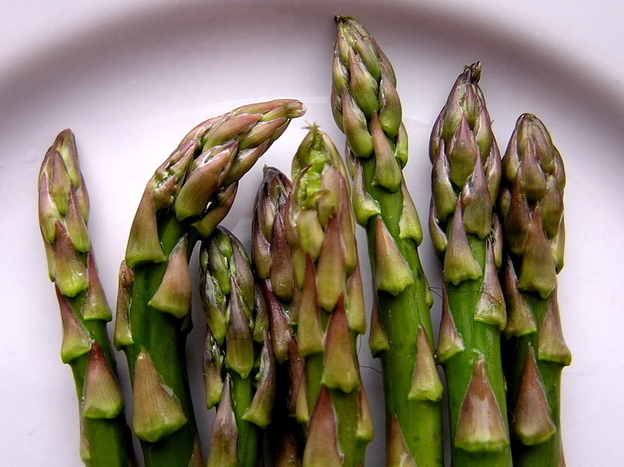
"caption": "In a recent study, rats that munched on asparagus saw their blood pressure drop. Photo: \u003ca href=\"http://www.flickr.com/photos/calliope/6251277/\">Muffet/Flickr\u003c/a>",
"description": "In a recent study, rats that munched on asparagus saw their blood pressure drop.",
"title": "6251277_3b3f7bc899_o",
"credit": null,
"status": "inherit",
"isLoading": false,
"fetchFailed": false
},
"bayareabites_63106": {
"type": "attachments",
"id": "bayareabites_63106",
"meta": {
"index": "attachments_1716263798",
"site": "bayareabites",
"id": "63106",
"found": true
},
"parent": 63102,
"imgSizes": {
"kqedFullSize": {
"file": "https://ww2.kqed.org/app/uploads/sites/24/2013/06/doughnut_dollies_1918.jpg",
"width": 363,
"height": 500
}
},
"publishDate": 1370641207,
"modified": 1370641207,
"caption": "The cover of the Salvation Army's \u003cem>War Cry\u003c/em> magazine from 1918 commemorates the \"Doughnut Girl.\" Photo: Wikimedia Commons",
"description": "The cover of the Salvation Army's \u003cem>War Cry\u003c/em> magazine from 1918 commemorates the \"Doughnut Girl.\"",
"title": "doughnut_dollies_1918_france",
"credit": null,
"status": "inherit",
"isLoading": false,
"fetchFailed": false
},
"bayareabites_63088": {
"type": "attachments",
"id": "bayareabites_63088",
"meta": {
"index": "attachments_1716263798",
"site": "bayareabites",
"id": "63088",
"found": true
},
"parent": 63082,
"imgSizes": {
"kqedFullSize": {
"file": "https://ww2.kqed.org/app/uploads/sites/24/2013/06/istanbul_drinking.jpg",
"width": 624,
"height": 467
}
},
"publishDate": 1370614911,
"modified": 1370614911,
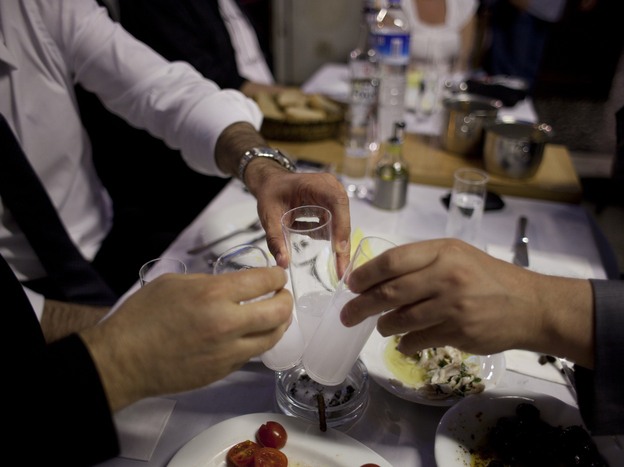
"caption": "Diners drinking raki, a traditional Turkish alcoholic drink flavored with anise, at a restaurant in Istanbul. Photo: Jodi Hilton for NPR",
"description": "Diners drinking raki, a traditional Turkish alcoholic drink flavored with anise, at a restaurant in Istanbul.",
"title": "istanbul_drinking_02",
"credit": null,
"status": "inherit",
"isLoading": false,
"fetchFailed": false
},
"bayareabites_63044": {
"type": "attachments",
"id": "bayareabites_63044",
"meta": {
"index": "attachments_1716263798",
"site": "bayareabites",
"id": "63044",
"found": true
},
"parent": 63033,
"imgSizes": {
"kqedFullSize": {
"file": "https://ww2.kqed.org/app/uploads/sites/24/2013/06/fishfarm1.jpg",
"width": 624,
"height": 406
}
},
"publishDate": 1370561889,
"modified": 1370561889,
"caption": "Thierry Chopin from the University of New Brunswick examines a raft that holds strings of seaweed. The seaweed grows around pens of farmed salmon and soaks up some of the nutrients that would otherwise pollute the Bay of Fundy. Photo: Richard Harris/NPR",
"description": "Thierry Chopin from the University of New Brunswick examines a raft that holds strings of seaweed. The seaweed grows around pens of farmed salmon and soaks up some of the nutrients that would otherwise pollute the Bay of Fundy.",
"title": "img_2987",
"credit": null,
"status": "inherit",
"isLoading": false,
"fetchFailed": false
},
"bayareabites_63021": {
"type": "attachments",
"id": "bayareabites_63021",
"meta": {
"index": "attachments_1716263798",
"site": "bayareabites",
"id": "63021",
"found": true
},
"parent": 63020,
"imgSizes": {
"kqedFullSize": {
"file": "https://ww2.kqed.org/app/uploads/sites/24/2013/06/food-dump-aefe847f655e7d3c3f62f9500e6002d09a041cbf.jpg",
"width": 200,
"height": 149
}
},
"publishDate": 1370551647,
"modified": 1370551647,
"caption": null,
"description": "A worker dumps a bucket of tomatoes into a trailer in Florida City, Fla. Much of the lost and wasted weight in fruits and vegetables is water, according to a report by the World Resources Institute.",
"title": "A worker dumps a bucket of tomatoes into a trailer in Florida City, Fla. Much of the lost and wasted weight in fruits and vegetables is water, according to a report by the World Resources Institute.",
"credit": null,
"status": "inherit",
"isLoading": false,
"fetchFailed": false
},
"bayareabites_63016": {
"type": "attachments",
"id": "bayareabites_63016",
"meta": {
"index": "attachments_1716263798",
"site": "bayareabites",
"id": "63016",
"found": true
},
"parent": 63000,
"imgSizes": {
"kqedFullSize": {
"file": "https://ww2.kqed.org/app/uploads/sites/24/2013/06/depressionicecream.jpg",
"width": 1120,
"height": 840
}
},
"publishDate": 1370551027,
"modified": 1370551027,
"caption": "Feeling down? It could be messing with your ability to taste the fat in that carton of ice cream. Photo: Heather Rousseau/NPR",
"description": "Feeling down? It could be messing with your ability to taste the fat in that carton of ice cream.",
"title": "depressionicecream",
"credit": null,
"status": "inherit",
"isLoading": false,
"fetchFailed": false
},
"bayareabites_62954": {
"type": "attachments",
"id": "bayareabites_62954",
"meta": {
"index": "attachments_1716263798",
"site": "bayareabites",
"id": "62954",
"found": true
},
"parent": 62949,
"imgSizes": {
"kqedFullSize": {
"file": "https://ww2.kqed.org/app/uploads/sites/24/2013/06/amazonfresh-e1370469334356.jpg",
"width": 640,
"height": 479
}
},
"publishDate": 1370467957,
"modified": 1370467957,
"caption": "Amazon has been testing its AmazonFresh delivery service in the Seattle area since 2007. Photo: Joe Nicholson/AP",
"description": "Amazon has been testing its AmazonFresh delivery service in the Seattle area since 2007.",
"title": "ap070805030106",
"credit": null,
"status": "inherit",
"isLoading": false,
"fetchFailed": false
},
"bayareabites_62942": {
"type": "attachments",
"id": "bayareabites_62942",
"meta": {
"index": "attachments_1716263798",
"site": "bayareabites",
"id": "62942",
"found": true
},
"parent": 62938,
"imgSizes": {
"kqedFullSize": {
"file": "https://ww2.kqed.org/app/uploads/sites/24/2013/06/frozen-berries.jpg",
"width": 624,
"height": 468
}
},
"publishDate": 1370466964,
"modified": 1370466964,
"caption": "Frozen berries have been implicated in a hepatitis A outbreak. Photo: iStockphoto.com",
"description": "Frozen berries have been implicated in a hepatitis A outbreak.",
"title": "istock_000019329595large",
"credit": null,
"status": "inherit",
"isLoading": false,
"fetchFailed": false
},
"bayareabites_62922": {
"type": "attachments",
"id": "bayareabites_62922",
"meta": {
"index": "attachments_1716263798",
"site": "bayareabites",
"id": "62922",
"found": true
},
"parent": 62904,
"imgSizes": {
"kqedFullSize": {
"file": "https://ww2.kqed.org/app/uploads/sites/24/2013/06/icecreamraspberry.jpg",
"width": 624,
"height": 467
}
},
"publishDate": 1370460572,
"modified": 1370460572,
"caption": "Raspberry Frozen Yogurt. Photo: Michele Kayal for NPR",
"description": "Raspberry Frozen Yogurt",
"title": "icraspberry",
"credit": null,
"status": "inherit",
"isLoading": false,
"fetchFailed": false
},
"bayareabites_62898": {
"type": "attachments",
"id": "bayareabites_62898",
"meta": {
"index": "attachments_1716263798",
"site": "bayareabites",
"id": "62898",
"found": true
},
"parent": 62896,
"imgSizes": {
"kqedFullSize": {
"file": "https://ww2.kqed.org/app/uploads/sites/24/2013/06/dominos.jpg",
"width": 637,
"height": 348
}
},
"publishDate": 1370452220,
"modified": 1370452220,
"caption": "Introducing the Domino's DomiCopter!",
"description": null,
"title": "dominos",
"credit": null,
"status": "inherit",
"isLoading": false,
"fetchFailed": false
},
"bayareabites_62861": {
"type": "attachments",
"id": "bayareabites_62861",
"meta": {
"index": "attachments_1716263798",
"site": "bayareabites",
"id": "62861",
"found": true
},
"parent": 62855,
"imgSizes": {
"kqedFullSize": {
"file": "https://ww2.kqed.org/app/uploads/sites/24/2013/06/peta.jpg",
"width": 624,
"height": 467
}
},
"publishDate": 1370385526,
"modified": 1370385526,
"caption": "PETA members hold placards on the street in Johannesburg, South Africa. Photo: Themba Hadebe/AP",
"description": "PETA members hold placards on the street in Johannesburg, South Africa",
"title": "ap110628127299",
"credit": null,
"status": "inherit",
"isLoading": false,
"fetchFailed": false
},
"bayareabites_62839": {
"type": "attachments",
"id": "bayareabites_62839",
"meta": {
"index": "attachments_1716263798",
"site": "bayareabites",
"id": "62839",
"found": true
},
"parent": 62836,
"imgSizes": {
"kqedFullSize": {
"file": "https://ww2.kqed.org/app/uploads/sites/24/2013/06/walmart.jpg",
"width": 1120,
"height": 839
}
},
"publishDate": 1370304241,
"modified": 1370304241,
"caption": "A shopper selects produce at a Wal-Mart in Deptford, N.J. Photo: Matt Rourke/AP",
"description": "A shopper selects produce at a Wal-Mart in Deptford, N.J.",
"title": "ap0911100100265",
"credit": null,
"status": "inherit",
"isLoading": false,
"fetchFailed": false
}
},
"audioPlayerReducer": {
"postId": "stream_live",
"isPaused": true,
"isPlaying": false,
"pfsActive": false,
"pledgeModalIsOpen": true,
"playerDrawerIsOpen": false,
"liveAudioPlayStartedAt": 0,
"liveAudioPlayContext": ""
},
"authorsReducer": {
"byline_bayareabites_63221": {
"type": "authors",
"id": "byline_bayareabites_63221",
"meta": {
"override": true
},
"slug": "byline_bayareabites_63221",
"name": "Joe Palca",
"isLoading": false
},
"byline_bayareabites_63102": {
"type": "authors",
"id": "byline_bayareabites_63102",
"meta": {
"override": true
},
"slug": "byline_bayareabites_63102",
"name": "Maria Godoy",
"isLoading": false
},
"byline_bayareabites_63082": {
"type": "authors",
"id": "byline_bayareabites_63082",
"meta": {
"override": true
},
"slug": "byline_bayareabites_63082",
"name": "Peter Kenyon",
"isLoading": false
},
"byline_bayareabites_63033": {
"type": "authors",
"id": "byline_bayareabites_63033",
"meta": {
"override": true
},
"slug": "byline_bayareabites_63033",
"name": "Richard Harris",
"isLoading": false
},
"byline_bayareabites_63020": {
"type": "authors",
"id": "byline_bayareabites_63020",
"meta": {
"override": true
},
"slug": "byline_bayareabites_63020",
"name": "Eliza Barclay",
"isLoading": false
},
"byline_bayareabites_63000": {
"type": "authors",
"id": "byline_bayareabites_63000",
"meta": {
"override": true
},
"slug": "byline_bayareabites_63000",
"name": "Allison Aubrey",
"isLoading": false
},
"byline_bayareabites_62949": {
"type": "authors",
"id": "byline_bayareabites_62949",
"meta": {
"override": true
},
"slug": "byline_bayareabites_62949",
"name": "Maria Godoy",
"isLoading": false
},
"byline_bayareabites_62938": {
"type": "authors",
"id": "byline_bayareabites_62938",
"meta": {
"override": true
},
"slug": "byline_bayareabites_62938",
"name": "Nancy Shute",
"isLoading": false
},
"byline_bayareabites_62904": {
"type": "authors",
"id": "byline_bayareabites_62904",
"meta": {
"override": true
},
"slug": "byline_bayareabites_62904",
"name": "Michele Kayal",
"isLoading": false
},
"byline_bayareabites_62855": {
"type": "authors",
"id": "byline_bayareabites_62855",
"meta": {
"override": true
},
"slug": "byline_bayareabites_62855",
"name": "Allison Aubrey",
"isLoading": false
},
"byline_bayareabites_62836": {
"type": "authors",
"id": "byline_bayareabites_62836",
"meta": {
"override": true
},
"slug": "byline_bayareabites_62836",
"name": "Allison Aubrey",
"isLoading": false
},
"nprfood": {
"type": "authors",
"id": "5403",
"meta": {
"index": "authors_1716337520",
"id": "5403",
"found": true
},
"name": "NPR Food",
"firstName": "NPR Food",
"lastName": null,
"slug": "nprfood",
"email": "nprfood@kqed.org",
"display_author_email": false,
"staff_mastheads": [],
"title": null,
"bio": "Food and Health-related stories from NPR including NPR Radio; NPR's food blog, \"The Salt\"; NPR's Health News blog, \"Shots\"; NPR's Breaking News blog \"The Two-Way\"; NPR's global stories blog \"Goats and Soda,\" NPR's economy explainer \"Planet Money\"; food-related technology news from NPR's \"All Tech Considered\"; and food series \"Kitchen Window.\"",
"avatar": "https://secure.gravatar.com/avatar/c4b735bb26404fa18ce2447d32e64291?s=600&d=blank&r=g",
"twitter": "nprfood",
"facebook": null,
"instagram": null,
"linkedin": null,
"sites": [
{
"site": "bayareabites",
"roles": [
"contributor"
]
},
{
"site": "food",
"roles": [
"contributor"
]
}
],
"headData": {
"title": "NPR Food | KQED",
"description": null,
"ogImgSrc": "https://secure.gravatar.com/avatar/c4b735bb26404fa18ce2447d32e64291?s=600&d=blank&r=g",
"twImgSrc": "https://secure.gravatar.com/avatar/c4b735bb26404fa18ce2447d32e64291?s=600&d=blank&r=g"
},
"isLoading": false,
"link": "/author/nprfood"
}
},
"pagesReducer": {
"bayareabites_category_npr-food": {
"type": "terms",
"id": "bayareabites_10916",
"meta": {
"index": "terms_1716263798",
"site": "bayareabites",
"id": "10916",
"score": 13.894667
},
"featImg": null,
"name": "NPR food",
"description": null,
"taxonomy": "category",
"headData": {
"twImgId": null,
"twTitle": null,
"ogTitle": null,
"ogImgId": null,
"twDescription": null,
"description": null,
"title": "NPR food Archives | KQED Bay Area Bites",
"ogDescription": null
},
"ttid": 5375,
"slug": "npr-food",
"isLoading": false,
"title": "NPR food",
"pageMeta": {
"site": "bayareabites",
"WpPageTemplate": "page-topic-editorial",
"currentPage": 79
},
"blocks": [
{
"blockName": "kqed/post-list",
"attrs": {
"layout": "cardArticle2",
"query": "posts/bayareabites?category=npr-food",
"seeMore": false,
"paginated": true,
"page": 79
}
},
{
"blockName": "kqed/ad"
}
]
}
},
"pfsSessionReducer": {},
"postsReducer": {
"stream_live": {
"type": "live",
"id": "stream_live",
"audioUrl": "https://hls.kqed.org/hls/kqed_app/playlist.m3u8",
"title": "Live Stream",
"excerpt": "Live Stream information currently unavailable.",
"link": "/radio",
"featImg": "",
"label": {
"name": "KQED Live",
"link": "/"
}
},
"stream_kqedNewscast": {
"type": "posts",
"id": "stream_kqedNewscast",
"audioUrl": "https://www.kqed.org/.stream/anon/radio/RDnews/newscast.mp3?_=1",
"title": "KQED Newscast",
"featImg": "",
"label": {
"name": "88.5 FM",
"link": "/"
}
},
"bayareabites_63221": {
"type": "posts",
"id": "bayareabites_63221",
"meta": {
"index": "posts_1716263798",
"site": "bayareabites",
"id": "63221",
"score": null,
"sort": [
1370824601000
]
},
"parent": 0,
"labelTerm": {
"site": "bayareabites"
},
"blocks": [],
"publishDate": 1370824601,
"format": "aside",
"disqusTitle": "Asparagus Helps Lower Blood Pressure (At Least In Rats)",
"title": "Asparagus Helps Lower Blood Pressure (At Least In Rats)",
"headTitle": "Bay Area Bites | KQED Food",
"content": "\u003cfigure id=\"attachment_63226\" class=\"wp-caption aligncenter\" style=\"max-width: 624px\">\u003ca href=\"http://ww2.kqed.org/bayareabites/wp-content/uploads/sites/24/2013/06/asparagus.jpg\">\u003cimg src=\"http://ww2.kqed.org/bayareabites/wp-content/uploads/sites/24/2013/06/asparagus.jpg\" alt=\"In a recent study, rats that munched on asparagus saw their blood pressure drop. Photo: Muffet/Flickr\" width=\"624\" height=\"467\" class=\"size-full wp-image-63226\">\u003c/a>\u003cfigcaption class=\"wp-caption-text\">In a recent study, rats that munched on asparagus saw their blood pressure drop. Photo: \u003ca href=\"http://www.flickr.com/photos/calliope/6251277/\">Muffet/Flickr\u003c/a>\u003c/figcaption>\u003c/figure>\n\u003cp>Post by \u003ca href=\"http://www.npr.org/people/2101004/joe-palca\">Joe Palca\u003c/a>, \u003ca href=\"http://www.npr.org/blogs/thesalt/2013/06/08/189597443/asparagus-helps-lower-blood-pressure-at-least-in-rats\">The Salt at NPR Food\u003c/a> (6/8/13)\u003c/p>\n\u003cp>Here's another reason to eat asparagus, in case you were looking for one.\u003c/p>\n\u003cp>Researchers at the \u003ca href=\"http://www.eiyo.ac.jp/english/e_index.html\">Kagawa Nutrition University\u003c/a> in Japan fed a diet consisting of 5 percent asparagus to rats with high blood pressure. As they \u003ca href=\"http://www.ncbi.nlm.nih.gov/pubmed/23647085\">report\u003c/a> in the \u003ca href=\"http://pubs.acs.org/journal/jafcau\">Journal of Agricultural and Food Chemistry\u003c/a>, published online on May 30, after 10 weeks, the rats on the asparagus diet had lower blood pressure than the ones fed a standard rat diet without asparagus.\u003c/p>\n\u003cp>The rats on the asparagus diet also had less protein in their urine, a sign of a healthier kidney. And they had less activity of ACE, or angiotensin-converting enzyme. \u003ca href=\"http://www.mayoclinic.com/health/ace-inhibitors/HI00060\">Drugs\u003c/a> that reduce the activity of ACE are used to treat hypertension in humans.\u003c/p>\n\u003cp>The Japanese researchers think a compound found in asparagus called 2\"-hydroxynicotianamine is responsible for inhibiting ACE activity in the rats. There's not a lot of literature on hydroxynicotianamine. It seems to be found in \u003ca href=\"http://www.ncbi.nlm.nih.gov/pubmed/21897039\">buckwheat sprouts\u003c/a>, \u003ca href=\"http://www.ncbi.nlm.nih.gov/pubmed/19090759\">buckwheat leaves\u003c/a> and \u003ca href=\"http://www.ncbi.nlm.nih.gov/pubmed/16458941\">buckwheat\u003c/a>, where it also seems to be an ACE inhibitor.\u003c/p>\n\u003cp>[ad fullwidth]\u003c/p>\n\u003cp>Of course, it's far too soon to known whether 2\"-hydroxynicotianamine has a similar effect on humans. But if it does, perhaps this could open new vistas in the treatment of hypertension. In fact, for the treatment of high blood pressure, this could be the dawning of the age of asparagus.\u003c/p>\n\u003cp>\u003c/p>\n\u003cp>\u003cem>Copyright 2013 \u003ca href=\"http://www.npr.org/\">NPR\u003c/a>.\u003c/em> \u003c/p>\n\n",
"disqusIdentifier": "63221 http://blogs.kqed.org/bayareabites/?p=63221",
"disqusUrl": "https://ww2.kqed.org/bayareabites/2013/06/09/asparagus-helps-lower-blood-pressure-at-least-in-rats/",
"stats": {
"hasVideo": false,
"hasChartOrMap": false,
"hasAudio": false,
"hasPolis": false,
"wordCount": 256,
"hasGoogleForm": false,
"hasGallery": false,
"hasHearkenModule": false,
"iframeSrcs": [],
"paragraphCount": 9
},
"modified": 1370824601,
"excerpt": "After 10 weeks, hypertensive rats fed a diet consisting of 5 percent asparagus had lower blood pressure than their counterparts fed a standard rat diet.",
"headData": {
"twImgId": "",
"twTitle": "",
"ogTitle": "",
"ogImgId": "",
"twDescription": "",
"description": "After 10 weeks, hypertensive rats fed a diet consisting of 5 percent asparagus had lower blood pressure than their counterparts fed a standard rat diet.",
"title": "Asparagus Helps Lower Blood Pressure (At Least In Rats) | KQED",
"ogDescription": "",
"schema": {
"@context": "https://schema.org",
"@type": "Article",
"headline": "Asparagus Helps Lower Blood Pressure (At Least In Rats)",
"datePublished": "2013-06-09T17:36:41-07:00",
"dateModified": "2013-06-09T17:36:41-07:00",
"image": "https://cdn.kqed.org/wp-content/uploads/2020/02/KQED-OG-Image@1x.png"
}
},
"guestAuthors": [],
"slug": "asparagus-helps-lower-blood-pressure-at-least-in-rats",
"status": "publish",
"nprApiLink": "http://api.npr.org/query?id=189597443&apiKey=MDAxOTAwOTE4MDEyMTkxMDAzNjczZDljZA004",
"nprByline": "Joe Palca",
"nprStoryDate": "Sat, 08 Jun 2013 08:35:00 -0400",
"nprLastModifiedDate": "Sat, 08 Jun 2013 08:35:55 -0400",
"nprHtmlLink": "http://www.npr.org/blogs/thesalt/2013/06/08/189597443/asparagus-helps-lower-blood-pressure-at-least-in-rats?ft=3&f=189597443",
"nprStoryId": "189597443",
"nprRetrievedStory": "1",
"nprPubDate": "Sat, 08 Jun 2013 08:35:00 -0400",
"path": "/bayareabites/63221/asparagus-helps-lower-blood-pressure-at-least-in-rats",
"audioTrackLength": null,
"parsedContent": [
{
"type": "contentString",
"content": "\u003cdiv class=\"post-body\">\u003cp>\u003cfigure id=\"attachment_63226\" class=\"wp-caption aligncenter\" style=\"max-width: 624px\">\u003ca href=\"http://ww2.kqed.org/bayareabites/wp-content/uploads/sites/24/2013/06/asparagus.jpg\">\u003cimg src=\"http://ww2.kqed.org/bayareabites/wp-content/uploads/sites/24/2013/06/asparagus.jpg\" alt=\"In a recent study, rats that munched on asparagus saw their blood pressure drop. Photo: Muffet/Flickr\" width=\"624\" height=\"467\" class=\"size-full wp-image-63226\">\u003c/a>\u003cfigcaption class=\"wp-caption-text\">In a recent study, rats that munched on asparagus saw their blood pressure drop. Photo: \u003ca href=\"http://www.flickr.com/photos/calliope/6251277/\">Muffet/Flickr\u003c/a>\u003c/figcaption>\u003c/figure>\n\u003cp>Post by \u003ca href=\"http://www.npr.org/people/2101004/joe-palca\">Joe Palca\u003c/a>, \u003ca href=\"http://www.npr.org/blogs/thesalt/2013/06/08/189597443/asparagus-helps-lower-blood-pressure-at-least-in-rats\">The Salt at NPR Food\u003c/a> (6/8/13)\u003c/p>\n\u003cp>Here's another reason to eat asparagus, in case you were looking for one.\u003c/p>\n\u003cp>Researchers at the \u003ca href=\"http://www.eiyo.ac.jp/english/e_index.html\">Kagawa Nutrition University\u003c/a> in Japan fed a diet consisting of 5 percent asparagus to rats with high blood pressure. As they \u003ca href=\"http://www.ncbi.nlm.nih.gov/pubmed/23647085\">report\u003c/a> in the \u003ca href=\"http://pubs.acs.org/journal/jafcau\">Journal of Agricultural and Food Chemistry\u003c/a>, published online on May 30, after 10 weeks, the rats on the asparagus diet had lower blood pressure than the ones fed a standard rat diet without asparagus.\u003c/p>\n\u003cp>The rats on the asparagus diet also had less protein in their urine, a sign of a healthier kidney. And they had less activity of ACE, or angiotensin-converting enzyme. \u003ca href=\"http://www.mayoclinic.com/health/ace-inhibitors/HI00060\">Drugs\u003c/a> that reduce the activity of ACE are used to treat hypertension in humans.\u003c/p>\n\u003cp>The Japanese researchers think a compound found in asparagus called 2\"-hydroxynicotianamine is responsible for inhibiting ACE activity in the rats. There's not a lot of literature on hydroxynicotianamine. It seems to be found in \u003ca href=\"http://www.ncbi.nlm.nih.gov/pubmed/21897039\">buckwheat sprouts\u003c/a>, \u003ca href=\"http://www.ncbi.nlm.nih.gov/pubmed/19090759\">buckwheat leaves\u003c/a> and \u003ca href=\"http://www.ncbi.nlm.nih.gov/pubmed/16458941\">buckwheat\u003c/a>, where it also seems to be an ACE inhibitor.\u003c/p>\n\u003cp>\u003c/p>\u003c/div>",
"attributes": {
"named": {},
"numeric": []
}
},
{
"type": "component",
"content": "",
"name": "ad",
"attributes": {
"named": {
"label": "fullwidth"
},
"numeric": [
"fullwidth"
]
}
},
{
"type": "contentString",
"content": "\u003cdiv class=\"post-body\">\u003cp>\u003c/p>\n\u003cp>Of course, it's far too soon to known whether 2\"-hydroxynicotianamine has a similar effect on humans. But if it does, perhaps this could open new vistas in the treatment of hypertension. In fact, for the treatment of high blood pressure, this could be the dawning of the age of asparagus.\u003c/p>\n\u003cp>\u003c/p>\n\u003cp>\u003cem>Copyright 2013 \u003ca href=\"http://www.npr.org/\">NPR\u003c/a>.\u003c/em> \u003c/p>\n\n\u003c/div>\u003c/p>",
"attributes": {
"named": {},
"numeric": []
}
}
],
"link": "/bayareabites/63221/asparagus-helps-lower-blood-pressure-at-least-in-rats",
"authors": [
"byline_bayareabites_63221"
],
"categories": [
"bayareabites_1245",
"bayareabites_10916"
],
"tags": [
"bayareabites_828",
"bayareabites_11800",
"bayareabites_11799",
"bayareabites_10921"
],
"featImg": "bayareabites_63226",
"label": "bayareabites"
},
"bayareabites_63102": {
"type": "posts",
"id": "bayareabites_63102",
"meta": {
"index": "posts_1716263798",
"site": "bayareabites",
"id": "63102",
"score": null,
"sort": [
1370641412000
]
},
"parent": 0,
"labelTerm": {
"site": "bayareabites"
},
"blocks": [],
"publishDate": 1370641412,
"format": "aside",
"disqusTitle": "On National Doughnut Day, Free Food And Feel-Good History",
"title": "On National Doughnut Day, Free Food And Feel-Good History",
"headTitle": "Bay Area Bites | KQED Food",
"content": "\u003cfigure id=\"attachment_63106\" class=\"wp-caption aligncenter\" style=\"max-width: 363px\">\u003ca href=\"http://ww2.kqed.org/bayareabites/wp-content/uploads/sites/24/2013/06/doughnut_dollies_1918.jpg\">\u003cimg src=\"http://ww2.kqed.org/bayareabites/wp-content/uploads/sites/24/2013/06/doughnut_dollies_1918.jpg\" alt=\"The cover of the Salvation Army's <em>War Cry</em> magazine from 1918 commemorates the "Doughnut Girl." Photo: Wikimedia Commons\" width=\"363\" height=\"500\" class=\"size-full wp-image-63106\">\u003c/a>\u003cfigcaption class=\"wp-caption-text\">The cover of the Salvation Army's \u003cem>War Cry\u003c/em> magazine from 1918 commemorates the \"Doughnut Girl.\" Photo: \u003ca href=\"http://en.wikipedia.org/wiki/File:Doughnut_Dollies_1918_France.jpg\">Wikimedia Commons\u003c/a>\u003c/figcaption>\u003c/figure>\n\u003cp>Post by Maria Godoy, \u003ca href=\"http://www.npr.org/blogs/thesalt/2013/06/07/189514005/on-national-doughnut-day-free-food-and-feel-good-history\">The Salt at NPR Food\u003c/a> (6/7/13)\u003c/p>\n\u003cp>We here at The Salt tend to look at themed food holidays with a heavy dose of skepticism. Most of these days sound \u003ca href=\"http://www.npr.org/blogs/thesalt/2012/07/30/157495061/fun-and-olympic-games-on-national-cheesecake-day\">more like marketing schemes\u003c/a> than true reasons for a national day of remembrance.\u003c/p>\n\u003cp>So we were pleasantly surprised to learn that there is a\u003cem> bona fide\u003c/em> historical reason to chow down on a deep-fried pastry today to mark National Doughnut Day.\u003c/p>\n\u003cp>Turns out, during World War I, women volunteers with the \u003ca href=\"http://www.salvationarmyusa.org/donut\">Salvation Army\u003c/a> would fry up and hand out doughnuts as a form of comfort food to American GIs serving overseas. To honor these women's service and raise funds during the Great Depression, in 1938 the the Salvation Army's Chicago branch declared the first Friday in June to be National Doughnut Day. These \"dough girls\" or \"dough lassies,\" as they were called, continued the tradition during World War II.\u003c/p>\n\u003cp>Doughnuts held a special place in American servicemen's hearts during the Vietnam War as well. Angie Williams, wife of former Vietnam POW Orson Swindle, \u003ca href=\"http://blog.usni.org/2009/11/10/today-is-national-donut-day-a-funny-pow-story\">told the U.S. Naval Institute's blog\u003c/a> that her husband invented his own version of National Doughnut Day during the six years he was held captive at \u003ca href=\"http://en.wikipedia.org/wiki/Son_Tay_prison_camp\">Son Tay\u003c/a> prison camp. Apparently, \u003ca href=\"http://projects.militarytimes.com/citations-medals-awards/recipient.php?recipientid=23938\">Swindle\u003c/a> — who had dropped more than 50 pounds during his captivity — convinced his jailers that Nov. 10 was National Doughnut Day, which he described as a big national holiday for Americans. As Williams recounts in the blog:\u003c/p>\n\u003cblockquote>\n\u003cp>\"A few weeks went by, and to everyone's great surprise, on November 10 the prisoners at Son Tay prison — known for being one of the worst —and also for the \u003ca href=\"http://www.airforcemag.com/MagazineArchive/Pages/1995/November%201995/1195raid.aspx\">failed rescue attempt\u003c/a> — were served sticky buns and — Orson was the hero of the day!\"\u003c/p>\n\u003c/blockquote>\n\u003cp>These days, doughnuts are a \u003ca href=\"http://www.ibisworld.com/industry/doughnut-stores.html\">$12 billion industry\u003c/a>. And corporate vendors will be more than happy to use Friday's occasion to push their sugary treats on consumers.\u003c/p>\n\u003cp>[ad fullwidth]\u003c/p>\n\u003cp>Many of them are offering doughnuts for free. (But good luck trying to score a cronut — free or otherwise. Lines for this \u003ca href=\"http://www.huffingtonpost.com/2013/06/05/whos-buying-cronuts_n_3389694.html\">croissant-doughnut\u003c/a> hybrid reportedly start forming at 6 a.m. outside a New York bakery.)\u003c/p>\n\u003cp>You'll have better luck at Krispy Kreme, where customers can get a free doughnut of any variety (\u003ca href=\"http://nationaldoughnutday2013.com/\">get the details\u003c/a>). At \u003ca href=\"https://www.facebook.com/events/116314318409365/\">Dunkin' Donuts\u003c/a>, the free doughnut comes with the purchase of a beverage.\u003c/p>\n\u003cp>While you're there, you can also check out the company's new \u003ca href=\"http://www.npr.org/blogs/thesalt/2013/06/03/188341217/sandwich-monday-dunkin-donuts-glazed-donut-breakfast-sandwich\">Glazed Donut Breakfast Sandwich\u003c/a>, a bacon, egg, cheese and pastry concoction. Of course, after a meal like that, it will probably comfort you to know that this is also \u003ca href=\"http://american.redcross.org/site/PageServer?pagename=gen_cpraed\">National CPR/AED Awareness Week\u003c/a>, designed to make sure Americans know how to use an automated external defibrillator. Hope you brushed up on your resuscitation skills, folks.\u003c/p>\n\u003cp>\u003c/p>\n\u003cp>\u003cem>Copyright 2013 \u003ca href=\"http://www.npr.org/\">NPR\u003c/a>.\u003c/em> \u003c/p>\n\n",
"disqusIdentifier": "63102 http://blogs.kqed.org/bayareabites/?p=63102",
"disqusUrl": "https://ww2.kqed.org/bayareabites/2013/06/07/on-national-doughnut-day-free-food-and-feel-good-history/",
"stats": {
"hasVideo": false,
"hasChartOrMap": false,
"hasAudio": false,
"hasPolis": false,
"wordCount": 497,
"hasGoogleForm": false,
"hasGallery": false,
"hasHearkenModule": false,
"iframeSrcs": [],
"paragraphCount": 13
},
"modified": 1370641890,
"excerpt": "Friday's holiday wasn't the brain child of doughnut vendors trying to push their sugary, deep-fried treats (though some will give them to you for free). The holiday stems from the wartime volunteer service of \"dough girls\" — and even helped to lighten the dark days of Vietnam POWs.",
"headData": {
"twImgId": "",
"twTitle": "",
"ogTitle": "",
"ogImgId": "",
"twDescription": "",
"description": "Friday's holiday wasn't the brain child of doughnut vendors trying to push their sugary, deep-fried treats (though some will give them to you for free). The holiday stems from the wartime volunteer service of "dough girls" — and even helped to lighten the dark days of Vietnam POWs.",
"title": "On National Doughnut Day, Free Food And Feel-Good History | KQED",
"ogDescription": "",
"schema": {
"@context": "https://schema.org",
"@type": "Article",
"headline": "On National Doughnut Day, Free Food And Feel-Good History",
"datePublished": "2013-06-07T14:43:32-07:00",
"dateModified": "2013-06-07T14:51:30-07:00",
"image": "https://cdn.kqed.org/wp-content/uploads/2020/02/KQED-OG-Image@1x.png"
}
},
"guestAuthors": [],
"slug": "on-national-doughnut-day-free-food-and-feel-good-history",
"status": "publish",
"nprApiLink": "http://api.npr.org/query?id=189514005&apiKey=MDAxOTAwOTE4MDEyMTkxMDAzNjczZDljZA004",
"nprByline": "Maria Godoy",
"nprStoryDate": "Fri, 07 Jun 2013 12:48:00 -0400",
"nprLastModifiedDate": "Fri, 07 Jun 2013 15:47:40 -0400",
"nprHtmlLink": "http://www.npr.org/blogs/thesalt/2013/06/07/189514005/on-national-doughnut-day-free-food-and-feel-good-history?ft=3&f=189514005",
"nprStoryId": "189514005",
"nprRetrievedStory": "1",
"nprPubDate": "Fri, 07 Jun 2013 15:47:00 -0400",
"path": "/bayareabites/63102/on-national-doughnut-day-free-food-and-feel-good-history",
"audioTrackLength": null,
"parsedContent": [
{
"type": "contentString",
"content": "\u003cdiv class=\"post-body\">\u003cp>\u003cfigure id=\"attachment_63106\" class=\"wp-caption aligncenter\" style=\"max-width: 363px\">\u003ca href=\"http://ww2.kqed.org/bayareabites/wp-content/uploads/sites/24/2013/06/doughnut_dollies_1918.jpg\">\u003cimg src=\"http://ww2.kqed.org/bayareabites/wp-content/uploads/sites/24/2013/06/doughnut_dollies_1918.jpg\" alt=\"The cover of the Salvation Army's <em>War Cry</em> magazine from 1918 commemorates the "Doughnut Girl." Photo: Wikimedia Commons\" width=\"363\" height=\"500\" class=\"size-full wp-image-63106\">\u003c/a>\u003cfigcaption class=\"wp-caption-text\">The cover of the Salvation Army's \u003cem>War Cry\u003c/em> magazine from 1918 commemorates the \"Doughnut Girl.\" Photo: \u003ca href=\"http://en.wikipedia.org/wiki/File:Doughnut_Dollies_1918_France.jpg\">Wikimedia Commons\u003c/a>\u003c/figcaption>\u003c/figure>\n\u003cp>Post by Maria Godoy, \u003ca href=\"http://www.npr.org/blogs/thesalt/2013/06/07/189514005/on-national-doughnut-day-free-food-and-feel-good-history\">The Salt at NPR Food\u003c/a> (6/7/13)\u003c/p>\n\u003cp>We here at The Salt tend to look at themed food holidays with a heavy dose of skepticism. Most of these days sound \u003ca href=\"http://www.npr.org/blogs/thesalt/2012/07/30/157495061/fun-and-olympic-games-on-national-cheesecake-day\">more like marketing schemes\u003c/a> than true reasons for a national day of remembrance.\u003c/p>\n\u003cp>So we were pleasantly surprised to learn that there is a\u003cem> bona fide\u003c/em> historical reason to chow down on a deep-fried pastry today to mark National Doughnut Day.\u003c/p>\n\u003cp>Turns out, during World War I, women volunteers with the \u003ca href=\"http://www.salvationarmyusa.org/donut\">Salvation Army\u003c/a> would fry up and hand out doughnuts as a form of comfort food to American GIs serving overseas. To honor these women's service and raise funds during the Great Depression, in 1938 the the Salvation Army's Chicago branch declared the first Friday in June to be National Doughnut Day. These \"dough girls\" or \"dough lassies,\" as they were called, continued the tradition during World War II.\u003c/p>\n\u003cp>Doughnuts held a special place in American servicemen's hearts during the Vietnam War as well. Angie Williams, wife of former Vietnam POW Orson Swindle, \u003ca href=\"http://blog.usni.org/2009/11/10/today-is-national-donut-day-a-funny-pow-story\">told the U.S. Naval Institute's blog\u003c/a> that her husband invented his own version of National Doughnut Day during the six years he was held captive at \u003ca href=\"http://en.wikipedia.org/wiki/Son_Tay_prison_camp\">Son Tay\u003c/a> prison camp. Apparently, \u003ca href=\"http://projects.militarytimes.com/citations-medals-awards/recipient.php?recipientid=23938\">Swindle\u003c/a> — who had dropped more than 50 pounds during his captivity — convinced his jailers that Nov. 10 was National Doughnut Day, which he described as a big national holiday for Americans. As Williams recounts in the blog:\u003c/p>\n\u003cblockquote>\n\u003cp>\"A few weeks went by, and to everyone's great surprise, on November 10 the prisoners at Son Tay prison — known for being one of the worst —and also for the \u003ca href=\"http://www.airforcemag.com/MagazineArchive/Pages/1995/November%201995/1195raid.aspx\">failed rescue attempt\u003c/a> — were served sticky buns and — Orson was the hero of the day!\"\u003c/p>\n\u003c/blockquote>\n\u003cp>These days, doughnuts are a \u003ca href=\"http://www.ibisworld.com/industry/doughnut-stores.html\">$12 billion industry\u003c/a>. And corporate vendors will be more than happy to use Friday's occasion to push their sugary treats on consumers.\u003c/p>\n\u003cp>\u003c/p>\u003c/div>",
"attributes": {
"named": {},
"numeric": []
}
},
{
"type": "component",
"content": "",
"name": "ad",
"attributes": {
"named": {
"label": "fullwidth"
},
"numeric": [
"fullwidth"
]
}
},
{
"type": "contentString",
"content": "\u003cdiv class=\"post-body\">\u003cp>\u003c/p>\n\u003cp>Many of them are offering doughnuts for free. (But good luck trying to score a cronut — free or otherwise. Lines for this \u003ca href=\"http://www.huffingtonpost.com/2013/06/05/whos-buying-cronuts_n_3389694.html\">croissant-doughnut\u003c/a> hybrid reportedly start forming at 6 a.m. outside a New York bakery.)\u003c/p>\n\u003cp>You'll have better luck at Krispy Kreme, where customers can get a free doughnut of any variety (\u003ca href=\"http://nationaldoughnutday2013.com/\">get the details\u003c/a>). At \u003ca href=\"https://www.facebook.com/events/116314318409365/\">Dunkin' Donuts\u003c/a>, the free doughnut comes with the purchase of a beverage.\u003c/p>\n\u003cp>While you're there, you can also check out the company's new \u003ca href=\"http://www.npr.org/blogs/thesalt/2013/06/03/188341217/sandwich-monday-dunkin-donuts-glazed-donut-breakfast-sandwich\">Glazed Donut Breakfast Sandwich\u003c/a>, a bacon, egg, cheese and pastry concoction. Of course, after a meal like that, it will probably comfort you to know that this is also \u003ca href=\"http://american.redcross.org/site/PageServer?pagename=gen_cpraed\">National CPR/AED Awareness Week\u003c/a>, designed to make sure Americans know how to use an automated external defibrillator. Hope you brushed up on your resuscitation skills, folks.\u003c/p>\n\u003cp>\u003c/p>\n\u003cp>\u003cem>Copyright 2013 \u003ca href=\"http://www.npr.org/\">NPR\u003c/a>.\u003c/em> \u003c/p>\n\n\u003c/div>\u003c/p>",
"attributes": {
"named": {},
"numeric": []
}
}
],
"link": "/bayareabites/63102/on-national-doughnut-day-free-food-and-feel-good-history",
"authors": [
"byline_bayareabites_63102"
],
"categories": [
"bayareabites_1653",
"bayareabites_2090",
"bayareabites_10916"
],
"tags": [
"bayareabites_2889",
"bayareabites_11795",
"bayareabites_11796",
"bayareabites_10921"
],
"featImg": "bayareabites_63106",
"label": "bayareabites"
},
"bayareabites_63082": {
"type": "posts",
"id": "bayareabites_63082",
"meta": {
"index": "posts_1716263798",
"site": "bayareabites",
"id": "63082",
"score": null,
"sort": [
1370615233000
]
},
"parent": 0,
"labelTerm": {
"site": "bayareabites"
},
"blocks": [],
"publishDate": 1370615233,
"format": "aside",
"disqusTitle": "Not Everyone Cheers Turkey's Move To Tighten Alcohol Rules",
"title": "Not Everyone Cheers Turkey's Move To Tighten Alcohol Rules",
"headTitle": "Bay Area Bites | KQED Food",
"content": "\u003cfigure id=\"attachment_63088\" class=\"wp-caption aligncenter\" style=\"max-width: 624px\">\u003ca href=\"http://ww2.kqed.org/bayareabites/wp-content/uploads/sites/24/2013/06/istanbul_drinking.jpg\">\u003cimg src=\"http://ww2.kqed.org/bayareabites/wp-content/uploads/sites/24/2013/06/istanbul_drinking.jpg\" alt=\"Diners drinking raki, a traditional Turkish alcoholic drink flavored with anise, at a restaurant in Istanbul. Photo: Jodi Hilton for NPR\" width=\"624\" height=\"467\" class=\"size-full wp-image-63088\">\u003c/a>\u003cfigcaption class=\"wp-caption-text\">Diners drinking raki, a traditional Turkish alcoholic drink flavored with anise, at a restaurant in Istanbul.\u003cbr>Photo: Jodi Hilton for NPR\u003c/figcaption>\u003c/figure>\n\u003cp>\u003cstrong>Listen to the Story\u003c/strong> on \u003ca href=\"http://www.npr.org/blogs/thesalt/2013/06/07/187334924/not-everyone-cheers-turkeys-move-to-tighten-alcohol-rules\">Morning Edition\u003c/a> [audio src=\"http://pd.npr.org/anon.npr-mp3/npr/me/2013/06/20130607_me_04.mp3\"] \u003c/p>\n\u003cp>Post by \u003ca href=\"http://www.npr.org/people/2100740/peter-kenyon\">Peter Kenyon\u003c/a>, \u003ca href=\"http://www.npr.org/blogs/thesalt/2013/06/07/187334924/not-everyone-cheers-turkeys-move-to-tighten-alcohol-rules\">The Salt at NPR Food\u003c/a> (6/7/13)\u003c/p>\n\u003cp>The ongoing anti-government \u003ca href=\"http://www.npr.org/blogs/parallels/2013/06/05/188935332/in-turkey-protesters-proudly-call-themselves-looters\">protests\u003c/a> in Turkey are about a lot of things — including a recent law to restrict the advertising and sale of alcohol. The limits aren't any more onerous than those in some other Western countries, but secular Turks see them as another step in a push by the ruling party to impose conservative social values on the population\u003c/p>\n\u003cp>Turkey has long tolerated and, in some quarters, embraced the Bacchanalian fruit of grape and grain. The modern republic's revered founder, \u003ca href=\"http://www.bbc.co.uk/history/historic_figures/ataturk_kemal.shtml\">Mustafa Kemal Ataturk\u003c/a>, set a strong example — so strong that when he died in 1938 of cirrhosis of the liver, many Turks assumed it was from what one biographer discreetly termed \"his strenuous lifestyle.\"\u003c/p>\n\u003cp>It's a crime in Turkey to insult Ataturk, so eyebrows were raised when the country's new dominant leader, conservative Muslim Prime Minister Recep Tayyip Erdogan, appeared to intentionally slight both Ataturk and his successor Ismet Inonu, though he didn't name them while defending the new alcohol restrictions in a speech to ruling AK Party members.\u003c/p>\n\u003cp>[ad fullwidth]\u003c/p>\n\u003cp>\"How come a law that was made by two drunks,\" thundered Erdogan, \"has been recognized while one that follows the values of faith is unacceptable and must be rejected?\"\u003c/p>\n\u003cp>Some people were shocked by Erdogan's language, but even Turkey's tipplers have to admit that he has a point. The restrictions in this law – no television advertising, no alcohol sales within about 100 yards of a school or place of worship – are the kind of limits already in place in some Western democracies. Furthermore, establishments with tourism licenses are exempt from the law's ban on sales after 10 p.m.\u003c/p>\n\u003cp>But that exemption doesn't apply to the numerous small convenience stores, called \"tekels,\" that dot Turkish streets. In Beyoglu, arguably Istanbul's most Westernized district, one tekel owner would give only his first name, Ramazan. He says the new rules are an economic nightmare for him, unless his customers radically adjust their schedules.\u003c/p>\n\u003cp>\"We sell most of our alcohol after 10,\" he says, adding \"What do they expect, people to start drinking at 5 so they can be done by 10? Most shops like this will wind up closing, I think.\"\u003c/p>\n\u003cp>Around the corner at the Urban Cafe, young Turks and visitors are enjoying their libation of choice in a setting that might be found in any Western city: premium spirits behind the bar, a lounge cover of Nirvana on the sound system, and cigarette smokers mingling out on the sidewalk, happy for the warm spring night.\u003c/p>\n\u003cp>Manager Cem Gul — with a shaved head, Dead Kennedys T-shirt and earring — says these seemingly modest restrictions are alarming secular Turks, because they're just the latest move by the AK Party to slowly reshape the country into a more conservative Muslim state. And the problem is, he's not sure anyone can do much to stop it.\u003c/p>\n\u003cp>\"Of course everyone's talking about this interference in their personal lives. But there's too much going on,\" Gul says. \"A bomb goes off here and then there's an alcohol law. People don't have time to respond. What I'm really worried about is if this party wins another election, there'd be no one who can stop them.\"\u003c/p>\n\u003cp>He pauses and then shrugs philosophically, \"Me for example, I'm an atheist. They can ban me from drinking, but they can't make me pray.\"\u003c/p>\n\u003cp>Gul's smile suggests that while he respects those who follow the straight and narrow, he's more of a follower of what the late W.C. Fields is reputed to have said: \"Everyone has to believe in something. I believe I'll have another drink.\" \u003c/p>\n\u003cp>\u003c/p>\n\u003cp>\u003cem>Copyright 2013 \u003ca href=\"http://www.npr.org/\">NPR\u003c/a>.\u003c/em> \u003c/p>\n\n",
"disqusIdentifier": "63082 http://blogs.kqed.org/bayareabites/?p=63082",
"disqusUrl": "https://ww2.kqed.org/bayareabites/2013/06/07/not-everyone-cheers-turkeys-move-to-tighten-alcohol-rules/",
"stats": {
"hasVideo": false,
"hasChartOrMap": false,
"hasAudio": true,
"hasPolis": false,
"wordCount": 685,
"hasGoogleForm": false,
"hasGallery": false,
"hasHearkenModule": false,
"iframeSrcs": [],
"paragraphCount": 17
},
"modified": 1370615609,
"excerpt": "Among the many reasons for ongoing riots in Turkey: A recent law restricting the advertising and sale of alcohol. Secular Turks see the new rules as the latest effort by the ruling AK Party to impose religious values on the population.",
"headData": {
"twImgId": "",
"twTitle": "",
"ogTitle": "",
"ogImgId": "",
"twDescription": "",
"description": "Among the many reasons for ongoing riots in Turkey: A recent law restricting the advertising and sale of alcohol. Secular Turks see the new rules as the latest effort by the ruling AK Party to impose religious values on the population.",
"title": "Not Everyone Cheers Turkey's Move To Tighten Alcohol Rules | KQED",
"ogDescription": "",
"schema": {
"@context": "https://schema.org",
"@type": "Article",
"headline": "Not Everyone Cheers Turkey's Move To Tighten Alcohol Rules",
"datePublished": "2013-06-07T07:27:13-07:00",
"dateModified": "2013-06-07T07:33:29-07:00",
"image": "https://cdn.kqed.org/wp-content/uploads/2020/02/KQED-OG-Image@1x.png"
}
},
"guestAuthors": [],
"slug": "not-everyone-cheers-turkeys-move-to-tighten-alcohol-rules",
"status": "publish",
"nprApiLink": "http://api.npr.org/query?id=187334924&apiKey=MDAxOTAwOTE4MDEyMTkxMDAzNjczZDljZA004",
"nprByline": "Peter Kenyon",
"nprStoryDate": "Fri, 07 Jun 2013 04:00:00 -0400",
"nprLastModifiedDate": "Fri, 07 Jun 2013 07:23:40 -0400",
"nprHtmlLink": "http://www.npr.org/blogs/thesalt/2013/06/07/187334924/not-everyone-cheers-turkeys-move-to-tighten-alcohol-rules?ft=3&f=187334924",
"nprAudio": "http://pd.npr.org/anon.npr-mp3/npr/me/2013/06/20130607_me_04.mp3?orgId=1&topicId=1053&ft=3&f=187334924",
"nprAudioM3u": "http://api.npr.org/m3u/1189430546-9f3fe7.m3u?orgId=1&topicId=1053&ft=3&f=187334924",
"nprStoryId": "187334924",
"nprRetrievedStory": "1",
"nprPubDate": "Fri, 07 Jun 2013 04:46:00 -0400",
"path": "/bayareabites/63082/not-everyone-cheers-turkeys-move-to-tighten-alcohol-rules",
"audioUrl": "http://pd.npr.org/anon.npr-mp3/npr/me/2013/06/20130607_me_04.mp3?orgId=1&topicId=1053&ft=3&f=187334924",
"audioDuration": null,
"audioTrackLength": null,
"parsedContent": [
{
"type": "contentString",
"content": "\u003cdiv class=\"post-body\">\u003cp>\u003cfigure id=\"attachment_63088\" class=\"wp-caption aligncenter\" style=\"max-width: 624px\">\u003ca href=\"http://ww2.kqed.org/bayareabites/wp-content/uploads/sites/24/2013/06/istanbul_drinking.jpg\">\u003cimg src=\"http://ww2.kqed.org/bayareabites/wp-content/uploads/sites/24/2013/06/istanbul_drinking.jpg\" alt=\"Diners drinking raki, a traditional Turkish alcoholic drink flavored with anise, at a restaurant in Istanbul. Photo: Jodi Hilton for NPR\" width=\"624\" height=\"467\" class=\"size-full wp-image-63088\">\u003c/a>\u003cfigcaption class=\"wp-caption-text\">Diners drinking raki, a traditional Turkish alcoholic drink flavored with anise, at a restaurant in Istanbul.\u003cbr>Photo: Jodi Hilton for NPR\u003c/figcaption>\u003c/figure>\n\u003cp>\u003cstrong>Listen to the Story\u003c/strong> on \u003ca href=\"http://www.npr.org/blogs/thesalt/2013/06/07/187334924/not-everyone-cheers-turkeys-move-to-tighten-alcohol-rules\">Morning Edition\u003c/a> \u003c/p>\u003c/div>",
"attributes": {
"named": {},
"numeric": []
}
},
{
"type": "component",
"content": "",
"name": "audio",
"attributes": {
"named": {
"src": "http://pd.npr.org/anon.npr-mp3/npr/me/2013/06/20130607_me_04.mp3",
"label": ""
},
"numeric": []
}
},
{
"type": "contentString",
"content": "\u003cdiv class=\"post-body\">\u003cp> \u003c/p>\n\u003cp>Post by \u003ca href=\"http://www.npr.org/people/2100740/peter-kenyon\">Peter Kenyon\u003c/a>, \u003ca href=\"http://www.npr.org/blogs/thesalt/2013/06/07/187334924/not-everyone-cheers-turkeys-move-to-tighten-alcohol-rules\">The Salt at NPR Food\u003c/a> (6/7/13)\u003c/p>\n\u003cp>The ongoing anti-government \u003ca href=\"http://www.npr.org/blogs/parallels/2013/06/05/188935332/in-turkey-protesters-proudly-call-themselves-looters\">protests\u003c/a> in Turkey are about a lot of things — including a recent law to restrict the advertising and sale of alcohol. The limits aren't any more onerous than those in some other Western countries, but secular Turks see them as another step in a push by the ruling party to impose conservative social values on the population\u003c/p>\n\u003cp>Turkey has long tolerated and, in some quarters, embraced the Bacchanalian fruit of grape and grain. The modern republic's revered founder, \u003ca href=\"http://www.bbc.co.uk/history/historic_figures/ataturk_kemal.shtml\">Mustafa Kemal Ataturk\u003c/a>, set a strong example — so strong that when he died in 1938 of cirrhosis of the liver, many Turks assumed it was from what one biographer discreetly termed \"his strenuous lifestyle.\"\u003c/p>\n\u003cp>It's a crime in Turkey to insult Ataturk, so eyebrows were raised when the country's new dominant leader, conservative Muslim Prime Minister Recep Tayyip Erdogan, appeared to intentionally slight both Ataturk and his successor Ismet Inonu, though he didn't name them while defending the new alcohol restrictions in a speech to ruling AK Party members.\u003c/p>\n\u003cp>\u003c/p>\u003c/div>",
"attributes": {
"named": {},
"numeric": []
}
},
{
"type": "component",
"content": "",
"name": "ad",
"attributes": {
"named": {
"label": "fullwidth"
},
"numeric": [
"fullwidth"
]
}
},
{
"type": "contentString",
"content": "\u003cdiv class=\"post-body\">\u003cp>\u003c/p>\n\u003cp>\"How come a law that was made by two drunks,\" thundered Erdogan, \"has been recognized while one that follows the values of faith is unacceptable and must be rejected?\"\u003c/p>\n\u003cp>Some people were shocked by Erdogan's language, but even Turkey's tipplers have to admit that he has a point. The restrictions in this law – no television advertising, no alcohol sales within about 100 yards of a school or place of worship – are the kind of limits already in place in some Western democracies. Furthermore, establishments with tourism licenses are exempt from the law's ban on sales after 10 p.m.\u003c/p>\n\u003cp>But that exemption doesn't apply to the numerous small convenience stores, called \"tekels,\" that dot Turkish streets. In Beyoglu, arguably Istanbul's most Westernized district, one tekel owner would give only his first name, Ramazan. He says the new rules are an economic nightmare for him, unless his customers radically adjust their schedules.\u003c/p>\n\u003cp>\"We sell most of our alcohol after 10,\" he says, adding \"What do they expect, people to start drinking at 5 so they can be done by 10? Most shops like this will wind up closing, I think.\"\u003c/p>\n\u003cp>Around the corner at the Urban Cafe, young Turks and visitors are enjoying their libation of choice in a setting that might be found in any Western city: premium spirits behind the bar, a lounge cover of Nirvana on the sound system, and cigarette smokers mingling out on the sidewalk, happy for the warm spring night.\u003c/p>\n\u003cp>Manager Cem Gul — with a shaved head, Dead Kennedys T-shirt and earring — says these seemingly modest restrictions are alarming secular Turks, because they're just the latest move by the AK Party to slowly reshape the country into a more conservative Muslim state. And the problem is, he's not sure anyone can do much to stop it.\u003c/p>\n\u003cp>\"Of course everyone's talking about this interference in their personal lives. But there's too much going on,\" Gul says. \"A bomb goes off here and then there's an alcohol law. People don't have time to respond. What I'm really worried about is if this party wins another election, there'd be no one who can stop them.\"\u003c/p>\n\u003cp>He pauses and then shrugs philosophically, \"Me for example, I'm an atheist. They can ban me from drinking, but they can't make me pray.\"\u003c/p>\n\u003cp>Gul's smile suggests that while he respects those who follow the straight and narrow, he's more of a follower of what the late W.C. Fields is reputed to have said: \"Everyone has to believe in something. I believe I'll have another drink.\" \u003c/p>\n\u003cp>\u003c/p>\n\u003cp>\u003cem>Copyright 2013 \u003ca href=\"http://www.npr.org/\">NPR\u003c/a>.\u003c/em> \u003c/p>\n\n\u003c/div>\u003c/p>",
"attributes": {
"named": {},
"numeric": []
}
}
],
"link": "/bayareabites/63082/not-everyone-cheers-turkeys-move-to-tighten-alcohol-rules",
"authors": [
"byline_bayareabites_63082"
],
"categories": [
"bayareabites_301",
"bayareabites_1244",
"bayareabites_10916",
"bayareabites_2035",
"bayareabites_34",
"bayareabites_119"
],
"tags": [
"bayareabites_8359",
"bayareabites_11794",
"bayareabites_10921",
"bayareabites_543"
],
"featImg": "bayareabites_63088",
"label": "bayareabites"
},
"bayareabites_63033": {
"type": "posts",
"id": "bayareabites_63033",
"meta": {
"index": "posts_1716263798",
"site": "bayareabites",
"id": "63033",
"score": null,
"sort": [
1370565861000
]
},
"parent": 0,
"labelTerm": {
"site": "bayareabites"
},
"blocks": [],
"publishDate": 1370565861,
"format": "aside",
"disqusTitle": "How To Clean Up Fish Farms And Raise More Seafood At The Same Time",
"title": "How To Clean Up Fish Farms And Raise More Seafood At The Same Time",
"headTitle": "Bay Area Bites | KQED Food",
"content": "\u003cfigure id=\"attachment_63044\" class=\"wp-caption aligncenter\" style=\"max-width: 624px\">\u003ca href=\"http://ww2.kqed.org/bayareabites/wp-content/uploads/sites/24/2013/06/fishfarm1.jpg\">\u003cimg src=\"http://ww2.kqed.org/bayareabites/wp-content/uploads/sites/24/2013/06/fishfarm1.jpg\" alt=\"Thierry Chopin from the University of New Brunswick examines a raft that holds strings of seaweed. The seaweed grows around pens of farmed salmon and soaks up some of the nutrients that would otherwise pollute the Bay of Fundy. Photo: Richard Harris/NPR\" width=\"624\" height=\"406\" class=\"size-full wp-image-63044\">\u003c/a>\u003cfigcaption class=\"wp-caption-text\">Thierry Chopin from the University of New Brunswick examines a raft that holds strings of seaweed. The seaweed grows around pens of farmed salmon and soaks up some of the nutrients that would otherwise pollute the Bay of Fundy. Photo: Richard Harris/NPR\u003c/figcaption>\u003c/figure>\n\u003cp>\u003cstrong>Listen to the Story\u003c/strong> on \u003ca href=\"http://www.npr.org/blogs/thesalt/2013/06/06/188431577/how-to-clean-up-fish-farms-and-raise-more-seafood-at-the-same-time\">All Things Considered\u003c/a> [audio src=\"http://pd.npr.org/anon.npr-mp3/npr/atc/2013/06/20130606_atc_04.mp3\"] \u003c/p>\n\u003cp>Post by \u003ca href=\"http://www.npr.org/people/2100631/richard-harris\">Richard Harris\u003c/a>, \u003ca href=\"http://www.npr.org/blogs/thesalt/2013/06/06/188431577/how-to-clean-up-fish-farms-and-raise-more-seafood-at-the-same-time\">The Salt at NPR Food\u003c/a> (6/6/13)\u003c/p>\n\u003cp>Last month, we told you about companies that are \u003ca href=\"http://www.npr.org/blogs/thesalt/2013/05/02/180596020/can-salmon-farming-be-sustainable-maybe-if-you-head-inland\">growing salmon on dry land\u003c/a>. That's an effective — but expensive — way to reduce water pollution caused by fish farms. After all, marine aquaculture provides about half of the seafood we eat.\u003c/p>\n\u003cp>So a Canadian researcher named \u003ca href=\"http://www.unbsj.ca/sase/biology/chopinlab/\">Thierry Chopin\u003c/a> is pushing to develop a less expensive technology that could be used to clean up the many fish farms that are already operating in coastal waters. His approach involves creating a whole ecosystem around a fish farm, so the waste generated by the salmon gets taken up by other valuable seafood commodities, like shellfish and kelp.\u003c/p>\n\u003cfigure id=\"attachment_63045\" class=\"wp-caption alignleft\" style=\"max-width: 250px\">\u003ca href=\"http://ww2.kqed.org/bayareabites/wp-content/uploads/sites/24/2013/06/fishfarm2.jpg\">\u003cimg src=\"http://ww2.kqed.org/bayareabites/wp-content/uploads/sites/24/2013/06/fishfarm2.jpg\" alt=\"Mussels thrive on particles that come from fish waste. The mussels help clear the water and reduce the environmental impact of fish farms. Canada’s federal food agency has certified them as safe for human consumption. Photo: Richard Harris/NPR\" width=\"250\" class=\"size-full wp-image-63045\">\u003c/a>\u003cfigcaption class=\"wp-caption-text\">Mussels thrive on particles that come from fish waste. The mussels help clear the water and reduce the environmental impact of fish farms. Canada’s federal food agency has certified them as safe for human consumption. Photo: Richard Harris/NPR\u003c/figcaption>\u003c/figure>\n\u003cp>We caught up with Chopin, a marine biologist at the University of New Brunswick, in St. George, New Brunswick, a town on Canada's Bay of Fundy. The bay is famous for its huge tides — which are 30 feet here at St. George — and for its salmon farms. Chopin has been working with a company called \u003ca href=\"http://cookeaqua.com/%20\">Cooke Aquaculture\u003c/a> to reduce the fish waste that washes into the bay.\u003c/p>\n\u003cp>[ad fullwidth]\u003c/p>\n\u003cp>We take a skiff out to the fish farm. The salmon have already been harvested, but there are rafts made of black PVC piping, sticking out of the water like catwalks. They are home to cultivated seaweeds and mussels — species that thrive on fish waste.\u003c/p>\n\u003cp>\"What we are doing is nothing more than recycling the nutrients,\" Chopin explains. \"Instead of looking at them as waste, we look at them as nutrients for the next species.\"\u003c/p>\n\u003cp>The seaweed soaks up excess nitrogen and phosphorus from the fish waste, while the mussels thrive on the small organic particles. \"For the bigger particles that settle more to the bottom, you need also invertebrates. So we are developing now sea urchins, sea cucumbers, maybe sea worms,\" Chopin says.\u003c/p>\n\u003cp>The idea here is not only to reduce the impact of fish farming but to produce more foods and ingredients that the salmon company can sell.\u003c/p>\n\u003cp>Chopin hasn't done a formal study as yet, but he thinks this system will reduce water pollution from the fish farm by 10 to 50 percent.\u003c/p>\n\u003cp>He notes that this integrated approach to aquaculture is nothing new — it's been practiced in Asia for centuries. He's simply bringing it to modern, industrial aquaculture. He calls it Integrated Multi-Trophic Aquaculture.\u003c/p>\n\u003cfigure id=\"attachment_63046\" class=\"wp-caption alignleft\" style=\"max-width: 250px\">\u003ca href=\"http://ww2.kqed.org/bayareabites/wp-content/uploads/sites/24/2013/06/fishfarm3.jpg\">\u003cimg src=\"http://ww2.kqed.org/bayareabites/wp-content/uploads/sites/24/2013/06/fishfarm3.jpg\" alt=\"Thierry Chopin examines two type of seaweed being grown around Cooke Aquaculture's salmon farm. The company sells the seaweed as a specialty food and to a cosmetic company, which extracts natural compounds from it. Chopin is also experimenting with seaweed as a protein supplement for fish meal. Photo: Richard Harris/NPR\" width=\"250\" class=\"size-full wp-image-63046\">\u003c/a>\u003cfigcaption class=\"wp-caption-text\">Thierry Chopin examines two type of seaweed being grown around Cooke Aquaculture's salmon farm. The company sells the seaweed as a specialty food and to a cosmetic company, which extracts natural compounds from it. Chopin is also experimenting with seaweed as a protein supplement for fish meal. Photo: Richard Harris/NPR\u003c/figcaption>\u003c/figure>\n\u003cp>To give me a closer look, Chopin and Lenny Totten from Cooke Aquaculture pull up a string of seaweed growing on a rope underwater so that we can taste the new product. One variety is called sugar kelp.\u003c/p>\n\u003cp>\"You see, it's crispy a little, but it's a sweet taste, and there's no aftertaste,\" Choping says. \"And it's sugary.\" Then we nibble on a frond from another species, golden kelp. It's chewier and bland. It's sold to a company in Monaco, which extracts natural compounds from it to be used in cosmetics.\u003c/p>\n\u003cp>The mussels they grow here are a much easier sell.\u003c/p>\n\u003cp>Totten says his company was at first a bit reluctant to try this venture, but the results have been good. \"You can see the difference just in the water around farms,\" he says. \"The water's a lot clearer.\"\u003c/p>\n\u003cp>\u003ca href=\"http://www.pewtrusts.org/experts_profile.aspx?id=56704\">Chris Mann\u003c/a>, who has spent years working on marine conservation issues at the Pew Charitable Trusts, says this integrated growing approach is worthwhile, but hardly a panacea. It addresses the mostly localized problem of water pollution, but it doesn't address other problems with aquaculture: the spread of \u003ca href=\"http://www.npr.org/templates/story/story.php?storyId=17222536\">fish parasites\u003c/a>, the \u003ca href=\"http://green.blogs.nytimes.com/2012/01/25/runaway-salmon-stir-conservation-worries/\">escape of caged salmon\u003c/a> or — worst of all — the need to harvest wild fish to feed the salmon. That's a big problem for inland aquaculture as well.\u003c/p>\n\u003cp>\"The [fish] feeds have tended to use a large amount of wild-caught ingredients, wild fish,\" Mann says. \"That's putting pressure on already strained wild stocks of fish.\"\u003c/p>\n\u003cfigure id=\"attachment_63047\" class=\"wp-caption alignleft\" style=\"max-width: 250px\">\u003ca href=\"http://ww2.kqed.org/bayareabites/wp-content/uploads/sites/24/2013/06/fishfarm4.jpg\">\u003cimg src=\"http://ww2.kqed.org/bayareabites/wp-content/uploads/sites/24/2013/06/fishfarm4.jpg\" alt=\"Lenny Totten of Cooke Aquaculture examines a circular raft that holds up hundreds of heavy strings of mussels, which are cultivated for human consumption. Photo: Richard Harris/NPR\" width=\"250\" class=\"size-full wp-image-63047\">\u003c/a>\u003cfigcaption class=\"wp-caption-text\">Lenny Totten of Cooke Aquaculture examines a circular raft that holds up hundreds of heavy strings of mussels, which are cultivated for human consumption. Photo: Richard Harris/NPR\u003c/figcaption>\u003c/figure>\n\u003cp>The fish used to feed farmed salmon — species like anchovies and sardines — are also critical food sources for wild salmon, tuna, swordfish and so on. So you'd think that a marine conservationist would be dead set against fish farms. But if your goal is to conserve the world's resources and reduce the carbon footprint of protein, the answer isn't so simple.\u003c/p>\n\u003cp>\"In a lot of ways farmed seafood, across the spectrum, is a better, less harmful source of protein than most of our terrestrial livestock,\" Mann says.\u003c/p>\n\u003cp>Eating less animal protein is one way to get at this problem. But for a world that has a taste for it, Chopin's approach at least makes a dent in the environmental impact of farmed fish. And he's trying to address at least a small piece of the fish-meal problem by developing a protein supplement for fish, made from seaweed.\u003c/p>\n\u003cp>\"It's not the only solution, but it's one of them,\" Chopin says. Slowly but surely, he says, aquaculture practices are changing. \u003c/p>\n\u003cp>\u003c/p>\n\u003cp>\u003cem>Copyright 2013 \u003ca href=\"http://www.npr.org/\">NPR\u003c/a>.\u003c/em> \u003c/p>\n\n",
"disqusIdentifier": "63033 http://blogs.kqed.org/bayareabites/?p=63033",
"disqusUrl": "https://ww2.kqed.org/bayareabites/2013/06/06/how-to-clean-up-fish-farms-and-raise-more-seafood-at-the-same-time/",
"stats": {
"hasVideo": false,
"hasChartOrMap": false,
"hasAudio": true,
"hasPolis": false,
"wordCount": 1028,
"hasGoogleForm": false,
"hasGallery": false,
"hasHearkenModule": false,
"iframeSrcs": [],
"paragraphCount": 24
},
"modified": 1370565861,
"excerpt": "Coastal fish farms are a major source of the seafood we eat, but all the fish waste they generate takes a toll on the environment. So a researcher in Canada is trying to clean up fish farms by creating an ecosystem where fish waste gets taken up by other valuable seafood commodities, like shellfish and kelp.",
"headData": {
"twImgId": "",
"twTitle": "",
"ogTitle": "",
"ogImgId": "",
"twDescription": "",
"description": "Coastal fish farms are a major source of the seafood we eat, but all the fish waste they generate takes a toll on the environment. So a researcher in Canada is trying to clean up fish farms by creating an ecosystem where fish waste gets taken up by other valuable seafood commodities, like shellfish and kelp.",
"title": "How To Clean Up Fish Farms And Raise More Seafood At The Same Time | KQED",
"ogDescription": "",
"schema": {
"@context": "https://schema.org",
"@type": "Article",
"headline": "How To Clean Up Fish Farms And Raise More Seafood At The Same Time",
"datePublished": "2013-06-06T17:44:21-07:00",
"dateModified": "2013-06-06T17:44:21-07:00",
"image": "https://cdn.kqed.org/wp-content/uploads/2020/02/KQED-OG-Image@1x.png"
}
},
"guestAuthors": [],
"slug": "how-to-clean-up-fish-farms-and-raise-more-seafood-at-the-same-time",
"status": "publish",
"nprApiLink": "http://api.npr.org/query?id=188431577&apiKey=MDAxOTAwOTE4MDEyMTkxMDAzNjczZDljZA004",
"nprByline": "Richard Harris",
"nprStoryDate": "Thu, 06 Jun 2013 15:00:00 -0400",
"nprLastModifiedDate": "Thu, 06 Jun 2013 18:03:43 -0400",
"nprHtmlLink": "http://www.npr.org/blogs/thesalt/2013/06/06/188431577/how-to-clean-up-fish-farms-and-raise-more-seafood-at-the-same-time?ft=3&f=188431577",
"nprAudio": "http://pd.npr.org/anon.npr-mp3/npr/atc/2013/06/20130606_atc_04.mp3?orgId=1&topicId=1053&ft=3&f=188431577",
"nprAudioM3u": "http://api.npr.org/m3u/1189270765-4c440b.m3u?orgId=1&topicId=1053&ft=3&f=188431577",
"nprStoryId": "188431577",
"nprRetrievedStory": "1",
"nprPubDate": "Thu, 06 Jun 2013 18:03:00 -0400",
"path": "/bayareabites/63033/how-to-clean-up-fish-farms-and-raise-more-seafood-at-the-same-time",
"audioUrl": "http://pd.npr.org/anon.npr-mp3/npr/atc/2013/06/20130606_atc_04.mp3?orgId=1&topicId=1053&ft=3&f=188431577",
"audioDuration": null,
"audioTrackLength": null,
"parsedContent": [
{
"type": "contentString",
"content": "\u003cdiv class=\"post-body\">\u003cp>\u003cfigure id=\"attachment_63044\" class=\"wp-caption aligncenter\" style=\"max-width: 624px\">\u003ca href=\"http://ww2.kqed.org/bayareabites/wp-content/uploads/sites/24/2013/06/fishfarm1.jpg\">\u003cimg src=\"http://ww2.kqed.org/bayareabites/wp-content/uploads/sites/24/2013/06/fishfarm1.jpg\" alt=\"Thierry Chopin from the University of New Brunswick examines a raft that holds strings of seaweed. The seaweed grows around pens of farmed salmon and soaks up some of the nutrients that would otherwise pollute the Bay of Fundy. Photo: Richard Harris/NPR\" width=\"624\" height=\"406\" class=\"size-full wp-image-63044\">\u003c/a>\u003cfigcaption class=\"wp-caption-text\">Thierry Chopin from the University of New Brunswick examines a raft that holds strings of seaweed. The seaweed grows around pens of farmed salmon and soaks up some of the nutrients that would otherwise pollute the Bay of Fundy. Photo: Richard Harris/NPR\u003c/figcaption>\u003c/figure>\n\u003cp>\u003cstrong>Listen to the Story\u003c/strong> on \u003ca href=\"http://www.npr.org/blogs/thesalt/2013/06/06/188431577/how-to-clean-up-fish-farms-and-raise-more-seafood-at-the-same-time\">All Things Considered\u003c/a> \u003c/p>\u003c/div>",
"attributes": {
"named": {},
"numeric": []
}
},
{
"type": "component",
"content": "",
"name": "audio",
"attributes": {
"named": {
"src": "http://pd.npr.org/anon.npr-mp3/npr/atc/2013/06/20130606_atc_04.mp3",
"label": ""
},
"numeric": []
}
},
{
"type": "contentString",
"content": "\u003cdiv class=\"post-body\">\u003cp> \u003c/p>\n\u003cp>Post by \u003ca href=\"http://www.npr.org/people/2100631/richard-harris\">Richard Harris\u003c/a>, \u003ca href=\"http://www.npr.org/blogs/thesalt/2013/06/06/188431577/how-to-clean-up-fish-farms-and-raise-more-seafood-at-the-same-time\">The Salt at NPR Food\u003c/a> (6/6/13)\u003c/p>\n\u003cp>Last month, we told you about companies that are \u003ca href=\"http://www.npr.org/blogs/thesalt/2013/05/02/180596020/can-salmon-farming-be-sustainable-maybe-if-you-head-inland\">growing salmon on dry land\u003c/a>. That's an effective — but expensive — way to reduce water pollution caused by fish farms. After all, marine aquaculture provides about half of the seafood we eat.\u003c/p>\n\u003cp>So a Canadian researcher named \u003ca href=\"http://www.unbsj.ca/sase/biology/chopinlab/\">Thierry Chopin\u003c/a> is pushing to develop a less expensive technology that could be used to clean up the many fish farms that are already operating in coastal waters. His approach involves creating a whole ecosystem around a fish farm, so the waste generated by the salmon gets taken up by other valuable seafood commodities, like shellfish and kelp.\u003c/p>\n\u003cfigure id=\"attachment_63045\" class=\"wp-caption alignleft\" style=\"max-width: 250px\">\u003ca href=\"http://ww2.kqed.org/bayareabites/wp-content/uploads/sites/24/2013/06/fishfarm2.jpg\">\u003cimg src=\"http://ww2.kqed.org/bayareabites/wp-content/uploads/sites/24/2013/06/fishfarm2.jpg\" alt=\"Mussels thrive on particles that come from fish waste. The mussels help clear the water and reduce the environmental impact of fish farms. Canada’s federal food agency has certified them as safe for human consumption. Photo: Richard Harris/NPR\" width=\"250\" class=\"size-full wp-image-63045\">\u003c/a>\u003cfigcaption class=\"wp-caption-text\">Mussels thrive on particles that come from fish waste. The mussels help clear the water and reduce the environmental impact of fish farms. Canada’s federal food agency has certified them as safe for human consumption. Photo: Richard Harris/NPR\u003c/figcaption>\u003c/figure>\n\u003cp>We caught up with Chopin, a marine biologist at the University of New Brunswick, in St. George, New Brunswick, a town on Canada's Bay of Fundy. The bay is famous for its huge tides — which are 30 feet here at St. George — and for its salmon farms. Chopin has been working with a company called \u003ca href=\"http://cookeaqua.com/%20\">Cooke Aquaculture\u003c/a> to reduce the fish waste that washes into the bay.\u003c/p>\n\u003cp>\u003c/p>\u003c/div>",
"attributes": {
"named": {},
"numeric": []
}
},
{
"type": "component",
"content": "",
"name": "ad",
"attributes": {
"named": {
"label": "fullwidth"
},
"numeric": [
"fullwidth"
]
}
},
{
"type": "contentString",
"content": "\u003cdiv class=\"post-body\">\u003cp>\u003c/p>\n\u003cp>We take a skiff out to the fish farm. The salmon have already been harvested, but there are rafts made of black PVC piping, sticking out of the water like catwalks. They are home to cultivated seaweeds and mussels — species that thrive on fish waste.\u003c/p>\n\u003cp>\"What we are doing is nothing more than recycling the nutrients,\" Chopin explains. \"Instead of looking at them as waste, we look at them as nutrients for the next species.\"\u003c/p>\n\u003cp>The seaweed soaks up excess nitrogen and phosphorus from the fish waste, while the mussels thrive on the small organic particles. \"For the bigger particles that settle more to the bottom, you need also invertebrates. So we are developing now sea urchins, sea cucumbers, maybe sea worms,\" Chopin says.\u003c/p>\n\u003cp>The idea here is not only to reduce the impact of fish farming but to produce more foods and ingredients that the salmon company can sell.\u003c/p>\n\u003cp>Chopin hasn't done a formal study as yet, but he thinks this system will reduce water pollution from the fish farm by 10 to 50 percent.\u003c/p>\n\u003cp>He notes that this integrated approach to aquaculture is nothing new — it's been practiced in Asia for centuries. He's simply bringing it to modern, industrial aquaculture. He calls it Integrated Multi-Trophic Aquaculture.\u003c/p>\n\u003cfigure id=\"attachment_63046\" class=\"wp-caption alignleft\" style=\"max-width: 250px\">\u003ca href=\"http://ww2.kqed.org/bayareabites/wp-content/uploads/sites/24/2013/06/fishfarm3.jpg\">\u003cimg src=\"http://ww2.kqed.org/bayareabites/wp-content/uploads/sites/24/2013/06/fishfarm3.jpg\" alt=\"Thierry Chopin examines two type of seaweed being grown around Cooke Aquaculture's salmon farm. The company sells the seaweed as a specialty food and to a cosmetic company, which extracts natural compounds from it. Chopin is also experimenting with seaweed as a protein supplement for fish meal. Photo: Richard Harris/NPR\" width=\"250\" class=\"size-full wp-image-63046\">\u003c/a>\u003cfigcaption class=\"wp-caption-text\">Thierry Chopin examines two type of seaweed being grown around Cooke Aquaculture's salmon farm. The company sells the seaweed as a specialty food and to a cosmetic company, which extracts natural compounds from it. Chopin is also experimenting with seaweed as a protein supplement for fish meal. Photo: Richard Harris/NPR\u003c/figcaption>\u003c/figure>\n\u003cp>To give me a closer look, Chopin and Lenny Totten from Cooke Aquaculture pull up a string of seaweed growing on a rope underwater so that we can taste the new product. One variety is called sugar kelp.\u003c/p>\n\u003cp>\"You see, it's crispy a little, but it's a sweet taste, and there's no aftertaste,\" Choping says. \"And it's sugary.\" Then we nibble on a frond from another species, golden kelp. It's chewier and bland. It's sold to a company in Monaco, which extracts natural compounds from it to be used in cosmetics.\u003c/p>\n\u003cp>The mussels they grow here are a much easier sell.\u003c/p>\n\u003cp>Totten says his company was at first a bit reluctant to try this venture, but the results have been good. \"You can see the difference just in the water around farms,\" he says. \"The water's a lot clearer.\"\u003c/p>\n\u003cp>\u003ca href=\"http://www.pewtrusts.org/experts_profile.aspx?id=56704\">Chris Mann\u003c/a>, who has spent years working on marine conservation issues at the Pew Charitable Trusts, says this integrated growing approach is worthwhile, but hardly a panacea. It addresses the mostly localized problem of water pollution, but it doesn't address other problems with aquaculture: the spread of \u003ca href=\"http://www.npr.org/templates/story/story.php?storyId=17222536\">fish parasites\u003c/a>, the \u003ca href=\"http://green.blogs.nytimes.com/2012/01/25/runaway-salmon-stir-conservation-worries/\">escape of caged salmon\u003c/a> or — worst of all — the need to harvest wild fish to feed the salmon. That's a big problem for inland aquaculture as well.\u003c/p>\n\u003cp>\"The [fish] feeds have tended to use a large amount of wild-caught ingredients, wild fish,\" Mann says. \"That's putting pressure on already strained wild stocks of fish.\"\u003c/p>\n\u003cfigure id=\"attachment_63047\" class=\"wp-caption alignleft\" style=\"max-width: 250px\">\u003ca href=\"http://ww2.kqed.org/bayareabites/wp-content/uploads/sites/24/2013/06/fishfarm4.jpg\">\u003cimg src=\"http://ww2.kqed.org/bayareabites/wp-content/uploads/sites/24/2013/06/fishfarm4.jpg\" alt=\"Lenny Totten of Cooke Aquaculture examines a circular raft that holds up hundreds of heavy strings of mussels, which are cultivated for human consumption. Photo: Richard Harris/NPR\" width=\"250\" class=\"size-full wp-image-63047\">\u003c/a>\u003cfigcaption class=\"wp-caption-text\">Lenny Totten of Cooke Aquaculture examines a circular raft that holds up hundreds of heavy strings of mussels, which are cultivated for human consumption. Photo: Richard Harris/NPR\u003c/figcaption>\u003c/figure>\n\u003cp>The fish used to feed farmed salmon — species like anchovies and sardines — are also critical food sources for wild salmon, tuna, swordfish and so on. So you'd think that a marine conservationist would be dead set against fish farms. But if your goal is to conserve the world's resources and reduce the carbon footprint of protein, the answer isn't so simple.\u003c/p>\n\u003cp>\"In a lot of ways farmed seafood, across the spectrum, is a better, less harmful source of protein than most of our terrestrial livestock,\" Mann says.\u003c/p>\n\u003cp>Eating less animal protein is one way to get at this problem. But for a world that has a taste for it, Chopin's approach at least makes a dent in the environmental impact of farmed fish. And he's trying to address at least a small piece of the fish-meal problem by developing a protein supplement for fish, made from seaweed.\u003c/p>\n\u003cp>\"It's not the only solution, but it's one of them,\" Chopin says. Slowly but surely, he says, aquaculture practices are changing. \u003c/p>\n\u003cp>\u003c/p>\n\u003cp>\u003cem>Copyright 2013 \u003ca href=\"http://www.npr.org/\">NPR\u003c/a>.\u003c/em> \u003c/p>\n\n\u003c/div>\u003c/p>",
"attributes": {
"named": {},
"numeric": []
}
}
],
"link": "/bayareabites/63033/how-to-clean-up-fish-farms-and-raise-more-seafood-at-the-same-time",
"authors": [
"byline_bayareabites_63033"
],
"categories": [
"bayareabites_10916",
"bayareabites_34",
"bayareabites_60"
],
"tags": [
"bayareabites_376",
"bayareabites_11790",
"bayareabites_80",
"bayareabites_323",
"bayareabites_10921"
],
"featImg": "bayareabites_63044",
"label": "bayareabites"
},
"bayareabites_63020": {
"type": "posts",
"id": "bayareabites_63020",
"meta": {
"index": "posts_1716263798",
"site": "bayareabites",
"id": "63020",
"score": null,
"sort": [
1370553543000
]
},
"parent": 0,
"labelTerm": {
"site": "bayareabites"
},
"blocks": [],
"publishDate": 1370553543,
"format": "aside",
"disqusTitle": "When You Waste Food, You're Wasting Tons Of Water, Too",
"title": "When You Waste Food, You're Wasting Tons Of Water, Too",
"headTitle": "Bay Area Bites | KQED Food",
"content": "\u003cfigure id=\"attachment_63023\" class=\"wp-caption aligncenter\" style=\"max-width: 1024px\">\u003ca href=\"http://ww2.kqed.org/bayareabites/wp-content/uploads/sites/24/2013/06/food-dump.jpg\">\u003cimg src=\"http://ww2.kqed.org/bayareabites/wp-content/uploads/sites/24/2013/06/food-dump-1024x767.jpg\" alt=\"A worker dumps a bucket of tomatoes into a trailer in Florida City, Fla. Much of the lost and wasted weight in fruits and vegetables is water, according to a report by the World Resources Institute. Photo: Joe Raedle/Getty Images\" width=\"1024\" height=\"767\" class=\"size-large wp-image-63023\">\u003c/a>\u003cfigcaption class=\"wp-caption-text\">A worker dumps a bucket of tomatoes into a trailer in Florida City, Fla. Much of the lost and wasted weight in fruits and vegetables is water, according to a report by the World Resources Institute. Photo: Joe Raedle/Getty Images\u003c/figcaption>\u003c/figure>\n\u003cp>Post by Eliza Barclay, \u003ca href=\"http://www.npr.org/blogs/thesalt/2013/06/06/189192870/when-you-waste-food-youre-wasting-tons-of-water-too\">The Salt at NPR Food\u003c/a> (6/6/13)\u003c/p>\n\u003cp>Tossing out food is clearly a waste of money. And maybe even immoral, according to Pope Francis, who on Wednesday \u003ca href=\"http://www.washingtonpost.com/national/on-faith/pope-francis-wasting-food-is-like-stealing-from-the-poor/2013/06/05/d4dc167c-ce13-11e2-8573-3baeea6a2647_story.html\">likened\u003c/a> food waste to \"stealing from the table of those who are poor and hungry.\" And as \u003ca href=\"http://www.npr.org/blogs/thesalt/2011/10/07/141123243/how-that-food-you-throw-out-is-linked-to-global-warming\">we've reported\u003c/a>, you also may be creating extra greenhouse gas emissions by sending food to a landfill.\u003c/p>\n\u003cp>Now comes yet another reason not to waste food: It also wastes a heck of a lot of water, a new report says.\u003c/p>\n\u003cp>According to the World Resources Institute, an environmental think tank, inside the 1.3 billion tons of food wasted every year worldwide is 45 trillion gallons of water. This represents a staggering \u003cem>24 percent of all water used for agriculture.\u003c/em>\u003c/p>\n\u003cp>And agriculture is already the world's biggest user of freshwater: The sector accounts for 70 percent of all use around the world, \u003ca href=\"http://www.unwater.org/statistics_use.html\">according to\u003c/a> the World Water Assessment Program. Those freshwater resources are diminishing fast, just as demand for them rises from millions of hungry and thirsty people joining the global population.\u003c/p>\n\u003cp>[ad fullwidth]\u003c/p>\n\u003cp>However, when it comes to water, not all food products are created equal. As WRI notes in its new \u003ca href=\"http://www.wri.org/publication/reducing-food-loss-and-waste\">working paper\u003c/a> on food waste, a pound of wheat flour on average contains 12 percent water and 1,639 calories, whereas a pound of apples, on average, contains 81 percent water and 766 calories. Fruits and vegetables are the largest source of loss and waste on a weight basis — in part, because they contain more water than other foods.\u003c/p>\n\u003cp>Meat, of course, requires more water in its production than any other food, because animals devour \u003ca href=\"so%20much%20feed\">so much feed\u003c/a> that in turn has to be grown with water. Meat production requires between 8 and 10 times more water than grain production, according to the WWAP. Fortunately, we're better about eating the meat we produce. It represents only 4 percent of the total food wasted by weight, and 7 percent of the calories wasted, according to WRI.\u003c/p>\n\u003cp>If you'd like to know how your favorite foods stack up in terms of how much water they require, \u003ca href=\"http://www.waterfootprint.org/?page=files/Animal-products\">this chart\u003c/a> from the Water Footprint Network is pretty handy.\u003c/p>\n\u003cp>As for all the water in wasted food, we wondered where it goes.\u003c/p>\n\u003cp>\"It depends on where people dispose of the lost or wasted food,\" says \u003ca href=\"http://www.wri.org/profile/craig-hanson\">Craig Hansen\u003c/a>, director of WRI's People & Ecosystems program and a co-author of the report, in an email to The Salt.\u003c/p>\n\u003cp>\"For instance,\" he says, \"the moisture in food lost immediately post-harvest or during open storage will likely evaporate.\"\u003c/p>\n\u003cp>In other words, that water ends up back in the atmosphere. But that doesn't mean it'll return to the place from whence it came. Now that food is crisscrossing the globe, the water-stressed regions that produce fruits and vegetables aren't necessarily going to get their water back.\u003c/p>\n\u003cp>As for food that goes to a dump, the water could be locked in – so it's not available — if the dump is closed, Hansen says, or it could evaporate over time if the dump is open.\u003c/p>\n\u003cp>As Brian Lipinski, the lead author of the WRI report, notes, in arid North and West Africa and Central Asia, more than half of the fruits and vegetables in the food supply end up being lost or wasted. It works out to about 63 pounds of produce per capita in these regions, he writes.\u003c/p>\n\u003cp>In the developing world, farmers struggle with food loss long before it gets to the consumer. But greater access to simple equipment, like silos for airtight food storage and crates for delicate fruits and vegetables, would help a lot, WRI says.\u003c/p>\n\u003cp>In rich countries, by contrast, most food waste happens further along the food distribution chain — in homes and restaurants, for example. We need to do a better job of redistributing food we can't eat, and serving and ordering smaller portions, according to the report. \u003c/p>\n\u003cp>\u003c/p>\n\u003cp>\u003cem>Copyright 2013 \u003ca href=\"http://www.npr.org/\">NPR\u003c/a>.\u003c/em> \u003c/p>\n\n",
"disqusIdentifier": "63020 http://blogs.kqed.org/bayareabites/?p=63020",
"disqusUrl": "https://ww2.kqed.org/bayareabites/2013/06/06/food-waste-water-world-resources-institute-agriculture/",
"stats": {
"hasVideo": false,
"hasChartOrMap": false,
"hasAudio": false,
"hasPolis": false,
"wordCount": 714,
"hasGoogleForm": false,
"hasGallery": false,
"hasHearkenModule": false,
"iframeSrcs": [],
"paragraphCount": 19
},
"modified": 1370553543,
"excerpt": "Some 45 trillion gallons of water are lost each year with all of the food that's thrown out around the world, according to a report from the World Resources Institute. This represents a staggering 24 percent of all water used for agriculture.",
"headData": {
"twImgId": "",
"twTitle": "",
"ogTitle": "",
"ogImgId": "",
"twDescription": "",
"description": "Some 45 trillion gallons of water are lost each year with all of the food that's thrown out around the world, according to a report from the World Resources Institute. This represents a staggering 24 percent of all water used for agriculture.",
"title": "When You Waste Food, You're Wasting Tons Of Water, Too | KQED",
"ogDescription": "",
"schema": {
"@context": "https://schema.org",
"@type": "Article",
"headline": "When You Waste Food, You're Wasting Tons Of Water, Too",
"datePublished": "2013-06-06T14:19:03-07:00",
"dateModified": "2013-06-06T14:19:03-07:00",
"image": "https://cdn.kqed.org/wp-content/uploads/2020/02/KQED-OG-Image@1x.png"
}
},
"guestAuthors": [],
"slug": "food-waste-water-world-resources-institute-agriculture",
"status": "publish",
"nprApiLink": "http://api.npr.org/query?id=189192870&apiKey=MDAxOTAwOTE4MDEyMTkxMDAzNjczZDljZA004",
"nprByline": "Eliza Barclay",
"nprStoryDate": "Thu, 06 Jun 2013 16:15:00 -0400",
"nprLastModifiedDate": "Thu, 06 Jun 2013 16:15:54 -0400",
"nprHtmlLink": "http://www.npr.org/blogs/thesalt/2013/06/06/189192870/when-you-waste-food-youre-wasting-tons-of-water-too?ft=3&f=189192870",
"nprStoryId": "189192870",
"nprRetrievedStory": "1",
"nprPubDate": "Thu, 06 Jun 2013 16:15:00 -0400",
"path": "/bayareabites/63020/food-waste-water-world-resources-institute-agriculture",
"audioTrackLength": null,
"parsedContent": [
{
"type": "contentString",
"content": "\u003cdiv class=\"post-body\">\u003cp>\u003cfigure id=\"attachment_63023\" class=\"wp-caption aligncenter\" style=\"max-width: 1024px\">\u003ca href=\"http://ww2.kqed.org/bayareabites/wp-content/uploads/sites/24/2013/06/food-dump.jpg\">\u003cimg src=\"http://ww2.kqed.org/bayareabites/wp-content/uploads/sites/24/2013/06/food-dump-1024x767.jpg\" alt=\"A worker dumps a bucket of tomatoes into a trailer in Florida City, Fla. Much of the lost and wasted weight in fruits and vegetables is water, according to a report by the World Resources Institute. Photo: Joe Raedle/Getty Images\" width=\"1024\" height=\"767\" class=\"size-large wp-image-63023\">\u003c/a>\u003cfigcaption class=\"wp-caption-text\">A worker dumps a bucket of tomatoes into a trailer in Florida City, Fla. Much of the lost and wasted weight in fruits and vegetables is water, according to a report by the World Resources Institute. Photo: Joe Raedle/Getty Images\u003c/figcaption>\u003c/figure>\n\u003cp>Post by Eliza Barclay, \u003ca href=\"http://www.npr.org/blogs/thesalt/2013/06/06/189192870/when-you-waste-food-youre-wasting-tons-of-water-too\">The Salt at NPR Food\u003c/a> (6/6/13)\u003c/p>\n\u003cp>Tossing out food is clearly a waste of money. And maybe even immoral, according to Pope Francis, who on Wednesday \u003ca href=\"http://www.washingtonpost.com/national/on-faith/pope-francis-wasting-food-is-like-stealing-from-the-poor/2013/06/05/d4dc167c-ce13-11e2-8573-3baeea6a2647_story.html\">likened\u003c/a> food waste to \"stealing from the table of those who are poor and hungry.\" And as \u003ca href=\"http://www.npr.org/blogs/thesalt/2011/10/07/141123243/how-that-food-you-throw-out-is-linked-to-global-warming\">we've reported\u003c/a>, you also may be creating extra greenhouse gas emissions by sending food to a landfill.\u003c/p>\n\u003cp>Now comes yet another reason not to waste food: It also wastes a heck of a lot of water, a new report says.\u003c/p>\n\u003cp>According to the World Resources Institute, an environmental think tank, inside the 1.3 billion tons of food wasted every year worldwide is 45 trillion gallons of water. This represents a staggering \u003cem>24 percent of all water used for agriculture.\u003c/em>\u003c/p>\n\u003cp>And agriculture is already the world's biggest user of freshwater: The sector accounts for 70 percent of all use around the world, \u003ca href=\"http://www.unwater.org/statistics_use.html\">according to\u003c/a> the World Water Assessment Program. Those freshwater resources are diminishing fast, just as demand for them rises from millions of hungry and thirsty people joining the global population.\u003c/p>\n\u003cp>\u003c/p>\u003c/div>",
"attributes": {
"named": {},
"numeric": []
}
},
{
"type": "component",
"content": "",
"name": "ad",
"attributes": {
"named": {
"label": "fullwidth"
},
"numeric": [
"fullwidth"
]
}
},
{
"type": "contentString",
"content": "\u003cdiv class=\"post-body\">\u003cp>\u003c/p>\n\u003cp>However, when it comes to water, not all food products are created equal. As WRI notes in its new \u003ca href=\"http://www.wri.org/publication/reducing-food-loss-and-waste\">working paper\u003c/a> on food waste, a pound of wheat flour on average contains 12 percent water and 1,639 calories, whereas a pound of apples, on average, contains 81 percent water and 766 calories. Fruits and vegetables are the largest source of loss and waste on a weight basis — in part, because they contain more water than other foods.\u003c/p>\n\u003cp>Meat, of course, requires more water in its production than any other food, because animals devour \u003ca href=\"so%20much%20feed\">so much feed\u003c/a> that in turn has to be grown with water. Meat production requires between 8 and 10 times more water than grain production, according to the WWAP. Fortunately, we're better about eating the meat we produce. It represents only 4 percent of the total food wasted by weight, and 7 percent of the calories wasted, according to WRI.\u003c/p>\n\u003cp>If you'd like to know how your favorite foods stack up in terms of how much water they require, \u003ca href=\"http://www.waterfootprint.org/?page=files/Animal-products\">this chart\u003c/a> from the Water Footprint Network is pretty handy.\u003c/p>\n\u003cp>As for all the water in wasted food, we wondered where it goes.\u003c/p>\n\u003cp>\"It depends on where people dispose of the lost or wasted food,\" says \u003ca href=\"http://www.wri.org/profile/craig-hanson\">Craig Hansen\u003c/a>, director of WRI's People & Ecosystems program and a co-author of the report, in an email to The Salt.\u003c/p>\n\u003cp>\"For instance,\" he says, \"the moisture in food lost immediately post-harvest or during open storage will likely evaporate.\"\u003c/p>\n\u003cp>In other words, that water ends up back in the atmosphere. But that doesn't mean it'll return to the place from whence it came. Now that food is crisscrossing the globe, the water-stressed regions that produce fruits and vegetables aren't necessarily going to get their water back.\u003c/p>\n\u003cp>As for food that goes to a dump, the water could be locked in – so it's not available — if the dump is closed, Hansen says, or it could evaporate over time if the dump is open.\u003c/p>\n\u003cp>As Brian Lipinski, the lead author of the WRI report, notes, in arid North and West Africa and Central Asia, more than half of the fruits and vegetables in the food supply end up being lost or wasted. It works out to about 63 pounds of produce per capita in these regions, he writes.\u003c/p>\n\u003cp>In the developing world, farmers struggle with food loss long before it gets to the consumer. But greater access to simple equipment, like silos for airtight food storage and crates for delicate fruits and vegetables, would help a lot, WRI says.\u003c/p>\n\u003cp>In rich countries, by contrast, most food waste happens further along the food distribution chain — in homes and restaurants, for example. We need to do a better job of redistributing food we can't eat, and serving and ordering smaller portions, according to the report. \u003c/p>\n\u003cp>\u003c/p>\n\u003cp>\u003cem>Copyright 2013 \u003ca href=\"http://www.npr.org/\">NPR\u003c/a>.\u003c/em> \u003c/p>\n\n\u003c/div>\u003c/p>",
"attributes": {
"named": {},
"numeric": []
}
}
],
"link": "/bayareabites/63020/food-waste-water-world-resources-institute-agriculture",
"authors": [
"byline_bayareabites_63020"
],
"categories": [
"bayareabites_1874",
"bayareabites_4084",
"bayareabites_10916",
"bayareabites_60"
],
"tags": [
"bayareabites_129",
"bayareabites_3707",
"bayareabites_10921",
"bayareabites_1344",
"bayareabites_11788",
"bayareabites_11789"
],
"featImg": "bayareabites_63021",
"label": "bayareabites"
},
"bayareabites_63000": {
"type": "posts",
"id": "bayareabites_63000",
"meta": {
"index": "posts_1716263798",
"site": "bayareabites",
"id": "63000",
"score": null,
"sort": [
1370545180000
]
},
"parent": 0,
"labelTerm": {
"site": "bayareabites"
},
"blocks": [],
"publishDate": 1370545180,
"format": "aside",
"disqusTitle": "Feeling A Little Blue May Mask Our Ability To Taste Fat",
"title": "Feeling A Little Blue May Mask Our Ability To Taste Fat",
"headTitle": "Bay Area Bites | KQED Food",
"content": "\u003cp>Post by Allison Aubrey, \u003ca href=\"http://www.npr.org/blogs/thesalt/2013/06/04/188706043/feeling-a-little-blue-may-mask-our-ability-to-taste-fat\">The Salt at NPR Food\u003c/a> (6/6/13)\u003c/p>\n\u003cfigure id=\"attachment_63016\" class=\"wp-caption alignleft\" style=\"max-width: 250px\">\u003ca href=\"http://ww2.kqed.org/bayareabites/wp-content/uploads/sites/24/2013/06/depressionicecream.jpg\">\u003cimg src=\"http://ww2.kqed.org/bayareabites/wp-content/uploads/sites/24/2013/06/depressionicecream.jpg\" alt=\"Feeling down? It could be messing with your ability to taste the fat in that carton of ice cream. Photo: Heather Rousseau/NPR\" width=\"250\" class=\"size-full wp-image-63016\">\u003c/a>\u003cfigcaption class=\"wp-caption-text\">Feeling down? It could be messing with your ability to taste the fat in that carton of ice cream. Photo: Heather Rousseau/NPR\u003c/figcaption>\u003c/figure>\n\u003cp>So, here's the scenario: You're feeling a little blue, then you watch an emotional movie and dig into a bowl of ice cream.\u003c/p>\n\u003cp>Are you aware of how fattening your comfort food is? Likely not. Especially in the moment.\u003c/p>\n\u003cp>A new \u003ca href=\"http://dx.plos.org/10.1371/journal.pone.0065006\">study\u003c/a> finds that temporary, strong emotions, like the sadness we experience from a weepy movie, can significantly decrease our ability to taste — or perceive — the amount of fat we're eating.\u003c/p>\n\u003cp>\"Strong emotions can confuse our fragile sense of taste perception,\" \u003ca href=\"http://psych.ucsf.edu/faculty.aspx?id=616\">Elissa Epel\u003c/a>, a health psychologist at the University of California, San Francisco, told The Salt by email. She was not involved in this study, but her research looks at how stress influences us.\u003c/p>\n\u003cp>[ad fullwidth]\u003c/p>\n\u003cp>\"Stress signals danger and should make us detect [tastes like] bitter more strongly,\" Epel says. And this is exactly what happened in the study.\u003c/p>\n\u003cp>Participants in the study experienced a stronger sensitivity to bitter, sweet and sour tastes after watching emotional videos with storylines that were both happy and sad. In fact, their sensitivities to these tastes were heightened by about 15 percent.\u003c/p>\n\u003cp>But, at the same time, participants' ability to distinguish levels of fat \"got much worse,\" according to researcher \u003ca href=\"http://nutrition.rutgers.edu/faculty/breslin.html\">Paul Breslin\u003c/a> of the Department of Nutritional Sciences at Rutgers University, who co-authored the study.\u003c/p>\n\u003cp>\"It was a surprise,\" Breslin says, that perceptions of fat moved in the opposite direction.\u003c/p>\n\u003cp>It turns out, Breslin says, that his findings fit with a body of evidence that suggests that people who are mildly depressed and who have elevated body weight may have lower sensitivity to fat.\u003c/p>\n\u003cp>So, it's possible that if \"they don't know the fat is there, and eat it, they may be inadvertently eating more fat,\" says Breslin. \"That's sort of the concern here.\"\u003c/p>\n\u003cp>The research was carried out in Germany at the University of Wurzburg. Lead author \u003ca href=\"http://www.i1.psychologie.uni-wuerzburg.de/en/klin/staff/platte_petra/pd_dr_rer_nat_petra_platte/\">Petra Platte\u003c/a>, a psychologist by training, recruited participants to taste samples of a creamy drink that contained varying levels of fat.\u003c/p>\n\u003cp>At the start of the study, the participants were all feeling a little blue or anxious. Researchers were able to assess the emotional status of the participants by having them complete a 21-question survey, called the \u003ca href=\"http://en.wikipedia.org/wiki/Beck_Depression_Inventory\">Beck Depression Inventory\u003c/a>.\u003c/p>\n\u003cp>Then, the participants were asked to watch video clips. There was a feel-good, happy video of a man bringing flowers to a woman. There was also a sad clip in which a son watches his father die. Both of the videos were designed to elicit an emotional response.\u003c/p>\n\u003cp>In addition, there was a third video — a boring, unemotional workplace training clip. The participants who watched this unemotional clip did not lose the ability to gauge levels of fat.\u003c/p>\n\u003cp>So, it seems to be that it's an emotional reaction, when folks are \u003cem>already\u003c/em> a little blue, that causes people to lose the ability to tell high fat from low. The study is published in the journal \u003ca href=\"http://www.plosone.org/\">PLOS One\u003c/a>. \u003c/p>\n\u003cp>\u003c/p>\n\u003cp>\u003cem>Copyright 2013 \u003ca href=\"http://www.npr.org/\">NPR\u003c/a>.\u003c/em> \u003c/p>\n\n",
"disqusIdentifier": "63000 http://blogs.kqed.org/bayareabites/?p=63000",
"disqusUrl": "https://ww2.kqed.org/bayareabites/2013/06/06/feeling-a-little-blue-may-mask-our-ability-to-taste-fat/",
"stats": {
"hasVideo": false,
"hasChartOrMap": false,
"hasAudio": false,
"hasPolis": false,
"wordCount": 533,
"hasGoogleForm": false,
"hasGallery": false,
"hasHearkenModule": false,
"iframeSrcs": [],
"paragraphCount": 19
},
"modified": 1370551200,
"excerpt": "Temporary, strong emotions, when we're already feeling down, can significantly reduce our ability to perceive the fat in our food, researchers say. It's the latest finding to show how strong emotions can confuse our sense of taste.",
"headData": {
"twImgId": "",
"twTitle": "",
"ogTitle": "",
"ogImgId": "",
"twDescription": "",
"description": "Temporary, strong emotions, when we're already feeling down, can significantly reduce our ability to perceive the fat in our food, researchers say. It's the latest finding to show how strong emotions can confuse our sense of taste.",
"title": "Feeling A Little Blue May Mask Our Ability To Taste Fat | KQED",
"ogDescription": "",
"schema": {
"@context": "https://schema.org",
"@type": "Article",
"headline": "Feeling A Little Blue May Mask Our Ability To Taste Fat",
"datePublished": "2013-06-06T11:59:40-07:00",
"dateModified": "2013-06-06T13:40:00-07:00",
"image": "https://cdn.kqed.org/wp-content/uploads/2020/02/KQED-OG-Image@1x.png"
}
},
"guestAuthors": [],
"slug": "feeling-a-little-blue-may-mask-our-ability-to-taste-fat",
"status": "publish",
"nprApiLink": "http://api.npr.org/query?id=188706043&apiKey=MDAxOTAwOTE4MDEyMTkxMDAzNjczZDljZA004",
"nprByline": "Allison Aubrey",
"nprStoryDate": "Thu, 06 Jun 2013 11:55:00 -0400",
"nprLastModifiedDate": "Thu, 06 Jun 2013 13:29:46 -0400",
"nprHtmlLink": "http://www.npr.org/blogs/thesalt/2013/06/04/188706043/feeling-a-little-blue-may-mask-our-ability-to-taste-fat?ft=3&f=188706043",
"nprStoryId": "188706043",
"nprRetrievedStory": "1",
"nprPubDate": "Thu, 06 Jun 2013 13:29:00 -0400",
"path": "/bayareabites/63000/feeling-a-little-blue-may-mask-our-ability-to-taste-fat",
"audioTrackLength": null,
"parsedContent": [
{
"type": "contentString",
"content": "\u003cdiv class=\"post-body\">\u003cp>\u003cp>Post by Allison Aubrey, \u003ca href=\"http://www.npr.org/blogs/thesalt/2013/06/04/188706043/feeling-a-little-blue-may-mask-our-ability-to-taste-fat\">The Salt at NPR Food\u003c/a> (6/6/13)\u003c/p>\n\u003cfigure id=\"attachment_63016\" class=\"wp-caption alignleft\" style=\"max-width: 250px\">\u003ca href=\"http://ww2.kqed.org/bayareabites/wp-content/uploads/sites/24/2013/06/depressionicecream.jpg\">\u003cimg src=\"http://ww2.kqed.org/bayareabites/wp-content/uploads/sites/24/2013/06/depressionicecream.jpg\" alt=\"Feeling down? It could be messing with your ability to taste the fat in that carton of ice cream. Photo: Heather Rousseau/NPR\" width=\"250\" class=\"size-full wp-image-63016\">\u003c/a>\u003cfigcaption class=\"wp-caption-text\">Feeling down? It could be messing with your ability to taste the fat in that carton of ice cream. Photo: Heather Rousseau/NPR\u003c/figcaption>\u003c/figure>\n\u003cp>So, here's the scenario: You're feeling a little blue, then you watch an emotional movie and dig into a bowl of ice cream.\u003c/p>\n\u003cp>Are you aware of how fattening your comfort food is? Likely not. Especially in the moment.\u003c/p>\n\u003cp>A new \u003ca href=\"http://dx.plos.org/10.1371/journal.pone.0065006\">study\u003c/a> finds that temporary, strong emotions, like the sadness we experience from a weepy movie, can significantly decrease our ability to taste — or perceive — the amount of fat we're eating.\u003c/p>\n\u003cp>\"Strong emotions can confuse our fragile sense of taste perception,\" \u003ca href=\"http://psych.ucsf.edu/faculty.aspx?id=616\">Elissa Epel\u003c/a>, a health psychologist at the University of California, San Francisco, told The Salt by email. She was not involved in this study, but her research looks at how stress influences us.\u003c/p>\n\u003cp>\u003c/p>\u003c/div>",
"attributes": {
"named": {},
"numeric": []
}
},
{
"type": "component",
"content": "",
"name": "ad",
"attributes": {
"named": {
"label": "fullwidth"
},
"numeric": [
"fullwidth"
]
}
},
{
"type": "contentString",
"content": "\u003cdiv class=\"post-body\">\u003cp>\u003c/p>\n\u003cp>\"Stress signals danger and should make us detect [tastes like] bitter more strongly,\" Epel says. And this is exactly what happened in the study.\u003c/p>\n\u003cp>Participants in the study experienced a stronger sensitivity to bitter, sweet and sour tastes after watching emotional videos with storylines that were both happy and sad. In fact, their sensitivities to these tastes were heightened by about 15 percent.\u003c/p>\n\u003cp>But, at the same time, participants' ability to distinguish levels of fat \"got much worse,\" according to researcher \u003ca href=\"http://nutrition.rutgers.edu/faculty/breslin.html\">Paul Breslin\u003c/a> of the Department of Nutritional Sciences at Rutgers University, who co-authored the study.\u003c/p>\n\u003cp>\"It was a surprise,\" Breslin says, that perceptions of fat moved in the opposite direction.\u003c/p>\n\u003cp>It turns out, Breslin says, that his findings fit with a body of evidence that suggests that people who are mildly depressed and who have elevated body weight may have lower sensitivity to fat.\u003c/p>\n\u003cp>So, it's possible that if \"they don't know the fat is there, and eat it, they may be inadvertently eating more fat,\" says Breslin. \"That's sort of the concern here.\"\u003c/p>\n\u003cp>The research was carried out in Germany at the University of Wurzburg. Lead author \u003ca href=\"http://www.i1.psychologie.uni-wuerzburg.de/en/klin/staff/platte_petra/pd_dr_rer_nat_petra_platte/\">Petra Platte\u003c/a>, a psychologist by training, recruited participants to taste samples of a creamy drink that contained varying levels of fat.\u003c/p>\n\u003cp>At the start of the study, the participants were all feeling a little blue or anxious. Researchers were able to assess the emotional status of the participants by having them complete a 21-question survey, called the \u003ca href=\"http://en.wikipedia.org/wiki/Beck_Depression_Inventory\">Beck Depression Inventory\u003c/a>.\u003c/p>\n\u003cp>Then, the participants were asked to watch video clips. There was a feel-good, happy video of a man bringing flowers to a woman. There was also a sad clip in which a son watches his father die. Both of the videos were designed to elicit an emotional response.\u003c/p>\n\u003cp>In addition, there was a third video — a boring, unemotional workplace training clip. The participants who watched this unemotional clip did not lose the ability to gauge levels of fat.\u003c/p>\n\u003cp>So, it seems to be that it's an emotional reaction, when folks are \u003cem>already\u003c/em> a little blue, that causes people to lose the ability to tell high fat from low. The study is published in the journal \u003ca href=\"http://www.plosone.org/\">PLOS One\u003c/a>. \u003c/p>\n\u003cp>\u003c/p>\n\u003cp>\u003cem>Copyright 2013 \u003ca href=\"http://www.npr.org/\">NPR\u003c/a>.\u003c/em> \u003c/p>\n\n\u003c/div>\u003c/p>",
"attributes": {
"named": {},
"numeric": []
}
}
],
"link": "/bayareabites/63000/feeling-a-little-blue-may-mask-our-ability-to-taste-fat",
"authors": [
"byline_bayareabites_63000"
],
"categories": [
"bayareabites_1245",
"bayareabites_10916"
],
"tags": [
"bayareabites_791",
"bayareabites_11787",
"bayareabites_11518",
"bayareabites_11786",
"bayareabites_3972",
"bayareabites_10921"
],
"featImg": "bayareabites_63016",
"label": "bayareabites"
},
"bayareabites_62949": {
"type": "posts",
"id": "bayareabites_62949",
"meta": {
"index": "posts_1716263798",
"site": "bayareabites",
"id": "62949",
"score": null,
"sort": [
1370468236000
]
},
"parent": 0,
"labelTerm": {
"site": "bayareabites"
},
"blocks": [],
"publishDate": 1370468236,
"format": "aside",
"disqusTitle": "Amazon's Grocery Delivery: A Trojan Horse To Get In Your Door",
"title": "Amazon's Grocery Delivery: A Trojan Horse To Get In Your Door",
"headTitle": "Bay Area Bites | KQED Food",
"content": "\u003cfigure id=\"attachment_62954\" class=\"wp-caption aligncenter\" style=\"max-width: 1024px\">\u003ca href=\"http://ww2.kqed.org/bayareabites/wp-content/uploads/sites/24/2013/06/amazonfresh.jpg\">\u003cimg src=\"http://ww2.kqed.org/bayareabites/wp-content/uploads/sites/24/2013/06/amazonfresh-1024x767.jpg\" alt=\"Amazon has been testing its AmazonFresh delivery service in the Seattle area since 2007. Photo: Joe Nicholson/AP\" width=\"1024\" height=\"767\" class=\"size-large wp-image-62954\">\u003c/a>\u003cfigcaption class=\"wp-caption-text\">Amazon has been testing its AmazonFresh delivery service in the Seattle area since 2007. Photo: Joe Nicholson/AP\u003c/figcaption>\u003c/figure>\n\u003cp>Post by Maria Godoy, \u003ca href=\"http://www.npr.org/blogs/thesalt/2013/06/05/188959969/amazon-s-grocery-delivery-a-trojan-horse-to-get-into-your-door\">The Salt at NPR Food\u003c/a> (6/5/13)\u003c/p>\n\u003cp>Amazon already delivers everything from toothpaste to televisions to your doorstep. Now, it wants to bring your berries and beer, too.\u003c/p>\n\u003cp>The online retailing behemoth is planning a major expansion of \u003ca href=\"http://fresh.amazon.com/\">AmazonFresh\u003c/a>, the home delivery service of meat, dairy and other fresh and frozen foods that it has been field-testing in Seattle since 2007. The service could launch in Los Angeles as early as this week, and delivery in San Francisco is on the horizon for later this year, according to \u003ca href=\"http://www.reuters.com/article/2013/06/04/amazon-grocery-idUSL1N0EG1JH20130604\">Reuters\u003c/a>. By 2014, the company could expand grocery delivery to as many as 40 major urban areas.\u003c/p>\n\u003cp>So why would a heavyweight like Amazon bother diving into the grocery business, with its notoriously razor-thin profit margins? After all, the online grocery business has been a tough nut to crack — becoming a sort of Bermuda Triangle for many companies, including \u003ca href=\"http://en.wikipedia.org/wiki/Webvan\">Webvan\u003c/a>, one of the most spectacular failures of the dot-com era at the turn of the 21st century.\u003c/p>\n\u003cp>But home grocery delivery could prove to be a Trojan horse for Amazon to get inside your home more frequently, says \u003ca href=\"http://www.retailnetgroup.com/analysts/profile.aspx?id=22\">Justin Bomberowitz\u003c/a>, a senior analyst with RetailNet Group, which released a research note on AmazonFresh in April. (The firm shared the note, which is behind a pay wall, with The Salt.)\u003c/p>\n\u003cp>[ad fullwidth]\u003c/p>\n\u003cp>\"What this does is give Amazon the opportunity to connect with customers on a more frequent basis,\" he tells The Salt.\u003c/p>\n\u003cp>Right now, Bomberowitz says, most Amazon customers tend to make small purchases, one or two items at a time. But if Amazon can bundle your bananas with your books and batteries, it can make that stop at your door all the more profitable.\u003c/p>\n\u003cp>As for the grocery biz itself, it doesn't need to be a cash cow for Amazon right away. So can Amazon afford to lose money on grocery delivery?\u003c/p>\n\u003cp>\"Absolutely,\" Bomberowitz says.\u003c/p>\n\u003cp>For now, analysts say the goal is really to break even with grocery delivery while also using the service to grow Amazon's same-day-delivery service.\u003c/p>\n\u003cp>In the past, distribution logistics have been one of the major stumbling blocks for online grocers, says industry analyst Bill Bishop of the consulting group Brick Meets Click. \"Grocery products are heavy, large and bulky and expensive to distribute, but there isn't much money in the cost to cover that distribution,\" he says.\u003c/p>\n\u003cp>But Amazon, Bishop notes, has been busy building smaller distribution centers in more populated areas to stock items for same-day delivery. Amazon hopes that grocery delivery will get its trucks in these denser neighborhoods on a daily basis, RetailNet Group's report notes.\u003c/p>\n\u003cp>Same-day service, says RetailNet Group's Bomberowitz, \"has proven popular enough in Seattle that Amazon is expanding it.\"\u003c/p>\n\u003cp>Indeed, part of the reason Amazon spent so many years testing the AmazonFresh concept in Seattle is that it wanted to get the model right, analysts say.\u003c/p>\n\u003cp>The service, says Bomberowitz, is designed to deliver \"ultimate convenience\" and includes features like no minimum order, pre-dawn delivery (the most popular option) and the ability to choose the time when your food shows up. You can also opt to have your groceries dropped off in a chilled tote bag. (And as we've previously \u003ca href=\"http://www.npr.org/blogs/thesalt/2013/05/01/180330444/grocery-home-delivery-may-be-greener-than-schlepping-to-the-store\">reported\u003c/a>, there's also the benefit that such services can be more environmentally friendly than schlepping to the store yourself.)\u003c/p>\n\u003cp>In Seattle, at least, the service also includes delivery of goods from a select group of \"favorite\" \u003ca href=\"http://fresh.amazon.com/Category?cat=seattle\">local vendors\u003c/a>, from artisan breads and doughnuts to craft beers from the famous Pike's Place Market, plus delivery of meal components from local restaurants. RetailNet Group analyst \u003ca href=\"http://www.retailnetgroup.com/analysts/profile.aspx?id=24\">Logan Gallogly\u003c/a> says she expects AmazonFresh to offer a similar local component as it expands into Los Angeles and San Francisco.\u003c/p>\n\u003cp>So who are the likely shoppers for this service? This is not for the people who find joy in squeezing avocados to find the best one in the bin. But it is for busy, moneyed professionals who will happily delegate that task to someone else, Bishop says.\u003c/p>\n\u003cp>\u003c/p>\n\u003cp>\u003cem>Copyright 2013 \u003ca href=\"http://www.npr.org/\">NPR\u003c/a>.\u003c/em> \u003c/p>\n\n",
"disqusIdentifier": "62949 http://blogs.kqed.org/bayareabites/?p=62949",
"disqusUrl": "https://ww2.kqed.org/bayareabites/2013/06/05/amazons-grocery-delivery-a-trojan-horse-to-get-in-your-door/",
"stats": {
"hasVideo": false,
"hasChartOrMap": false,
"hasAudio": false,
"hasPolis": false,
"wordCount": 705,
"hasGoogleForm": false,
"hasGallery": false,
"hasHearkenModule": false,
"iframeSrcs": [],
"paragraphCount": 20
},
"modified": 1370468236,
"excerpt": "Yes, the Web is littered with the corpses of failed online grocers. But AmazonFresh doesn't have to be a cash cow for the retail giant, because Amazon can also drop off books with your bananas. And for consumers, it could mean convenience, no minimum fees, predawn drop-off and maybe even delivery of local, artisanal goods.",
"headData": {
"twImgId": "",
"twTitle": "",
"ogTitle": "",
"ogImgId": "",
"twDescription": "",
"description": "Yes, the Web is littered with the corpses of failed online grocers. But AmazonFresh doesn't have to be a cash cow for the retail giant, because Amazon can also drop off books with your bananas. And for consumers, it could mean convenience, no minimum fees, predawn drop-off and maybe even delivery of local, artisanal goods.",
"title": "Amazon's Grocery Delivery: A Trojan Horse To Get In Your Door | KQED",
"ogDescription": "",
"schema": {
"@context": "https://schema.org",
"@type": "Article",
"headline": "Amazon's Grocery Delivery: A Trojan Horse To Get In Your Door",
"datePublished": "2013-06-05T14:37:16-07:00",
"dateModified": "2013-06-05T14:37:16-07:00",
"image": "https://cdn.kqed.org/wp-content/uploads/2020/02/KQED-OG-Image@1x.png"
}
},
"guestAuthors": [],
"slug": "amazons-grocery-delivery-a-trojan-horse-to-get-in-your-door",
"status": "publish",
"nprApiLink": "http://api.npr.org/query?id=188959969&apiKey=MDAxOTAwOTE4MDEyMTkxMDAzNjczZDljZA004",
"nprByline": "Maria Godoy",
"nprStoryDate": "Wed, 05 Jun 2013 17:08:00 -0400",
"nprLastModifiedDate": "Wed, 05 Jun 2013 17:25:30 -0400",
"nprHtmlLink": "http://www.npr.org/blogs/thesalt/2013/06/05/188959969/amazon-s-grocery-delivery-a-trojan-horse-to-get-into-your-door?ft=3&f=188959969",
"nprStoryId": "188959969",
"nprRetrievedStory": "1",
"nprPubDate": "Wed, 05 Jun 2013 17:25:00 -0400",
"path": "/bayareabites/62949/amazons-grocery-delivery-a-trojan-horse-to-get-in-your-door",
"audioTrackLength": null,
"parsedContent": [
{
"type": "contentString",
"content": "\u003cdiv class=\"post-body\">\u003cp>\u003cfigure id=\"attachment_62954\" class=\"wp-caption aligncenter\" style=\"max-width: 1024px\">\u003ca href=\"http://ww2.kqed.org/bayareabites/wp-content/uploads/sites/24/2013/06/amazonfresh.jpg\">\u003cimg src=\"http://ww2.kqed.org/bayareabites/wp-content/uploads/sites/24/2013/06/amazonfresh-1024x767.jpg\" alt=\"Amazon has been testing its AmazonFresh delivery service in the Seattle area since 2007. Photo: Joe Nicholson/AP\" width=\"1024\" height=\"767\" class=\"size-large wp-image-62954\">\u003c/a>\u003cfigcaption class=\"wp-caption-text\">Amazon has been testing its AmazonFresh delivery service in the Seattle area since 2007. Photo: Joe Nicholson/AP\u003c/figcaption>\u003c/figure>\n\u003cp>Post by Maria Godoy, \u003ca href=\"http://www.npr.org/blogs/thesalt/2013/06/05/188959969/amazon-s-grocery-delivery-a-trojan-horse-to-get-into-your-door\">The Salt at NPR Food\u003c/a> (6/5/13)\u003c/p>\n\u003cp>Amazon already delivers everything from toothpaste to televisions to your doorstep. Now, it wants to bring your berries and beer, too.\u003c/p>\n\u003cp>The online retailing behemoth is planning a major expansion of \u003ca href=\"http://fresh.amazon.com/\">AmazonFresh\u003c/a>, the home delivery service of meat, dairy and other fresh and frozen foods that it has been field-testing in Seattle since 2007. The service could launch in Los Angeles as early as this week, and delivery in San Francisco is on the horizon for later this year, according to \u003ca href=\"http://www.reuters.com/article/2013/06/04/amazon-grocery-idUSL1N0EG1JH20130604\">Reuters\u003c/a>. By 2014, the company could expand grocery delivery to as many as 40 major urban areas.\u003c/p>\n\u003cp>So why would a heavyweight like Amazon bother diving into the grocery business, with its notoriously razor-thin profit margins? After all, the online grocery business has been a tough nut to crack — becoming a sort of Bermuda Triangle for many companies, including \u003ca href=\"http://en.wikipedia.org/wiki/Webvan\">Webvan\u003c/a>, one of the most spectacular failures of the dot-com era at the turn of the 21st century.\u003c/p>\n\u003cp>But home grocery delivery could prove to be a Trojan horse for Amazon to get inside your home more frequently, says \u003ca href=\"http://www.retailnetgroup.com/analysts/profile.aspx?id=22\">Justin Bomberowitz\u003c/a>, a senior analyst with RetailNet Group, which released a research note on AmazonFresh in April. (The firm shared the note, which is behind a pay wall, with The Salt.)\u003c/p>\n\u003cp>\u003c/p>\u003c/div>",
"attributes": {
"named": {},
"numeric": []
}
},
{
"type": "component",
"content": "",
"name": "ad",
"attributes": {
"named": {
"label": "fullwidth"
},
"numeric": [
"fullwidth"
]
}
},
{
"type": "contentString",
"content": "\u003cdiv class=\"post-body\">\u003cp>\u003c/p>\n\u003cp>\"What this does is give Amazon the opportunity to connect with customers on a more frequent basis,\" he tells The Salt.\u003c/p>\n\u003cp>Right now, Bomberowitz says, most Amazon customers tend to make small purchases, one or two items at a time. But if Amazon can bundle your bananas with your books and batteries, it can make that stop at your door all the more profitable.\u003c/p>\n\u003cp>As for the grocery biz itself, it doesn't need to be a cash cow for Amazon right away. So can Amazon afford to lose money on grocery delivery?\u003c/p>\n\u003cp>\"Absolutely,\" Bomberowitz says.\u003c/p>\n\u003cp>For now, analysts say the goal is really to break even with grocery delivery while also using the service to grow Amazon's same-day-delivery service.\u003c/p>\n\u003cp>In the past, distribution logistics have been one of the major stumbling blocks for online grocers, says industry analyst Bill Bishop of the consulting group Brick Meets Click. \"Grocery products are heavy, large and bulky and expensive to distribute, but there isn't much money in the cost to cover that distribution,\" he says.\u003c/p>\n\u003cp>But Amazon, Bishop notes, has been busy building smaller distribution centers in more populated areas to stock items for same-day delivery. Amazon hopes that grocery delivery will get its trucks in these denser neighborhoods on a daily basis, RetailNet Group's report notes.\u003c/p>\n\u003cp>Same-day service, says RetailNet Group's Bomberowitz, \"has proven popular enough in Seattle that Amazon is expanding it.\"\u003c/p>\n\u003cp>Indeed, part of the reason Amazon spent so many years testing the AmazonFresh concept in Seattle is that it wanted to get the model right, analysts say.\u003c/p>\n\u003cp>The service, says Bomberowitz, is designed to deliver \"ultimate convenience\" and includes features like no minimum order, pre-dawn delivery (the most popular option) and the ability to choose the time when your food shows up. You can also opt to have your groceries dropped off in a chilled tote bag. (And as we've previously \u003ca href=\"http://www.npr.org/blogs/thesalt/2013/05/01/180330444/grocery-home-delivery-may-be-greener-than-schlepping-to-the-store\">reported\u003c/a>, there's also the benefit that such services can be more environmentally friendly than schlepping to the store yourself.)\u003c/p>\n\u003cp>In Seattle, at least, the service also includes delivery of goods from a select group of \"favorite\" \u003ca href=\"http://fresh.amazon.com/Category?cat=seattle\">local vendors\u003c/a>, from artisan breads and doughnuts to craft beers from the famous Pike's Place Market, plus delivery of meal components from local restaurants. RetailNet Group analyst \u003ca href=\"http://www.retailnetgroup.com/analysts/profile.aspx?id=24\">Logan Gallogly\u003c/a> says she expects AmazonFresh to offer a similar local component as it expands into Los Angeles and San Francisco.\u003c/p>\n\u003cp>So who are the likely shoppers for this service? This is not for the people who find joy in squeezing avocados to find the best one in the bin. But it is for busy, moneyed professionals who will happily delegate that task to someone else, Bishop says.\u003c/p>\n\u003cp>\u003c/p>\n\u003cp>\u003cem>Copyright 2013 \u003ca href=\"http://www.npr.org/\">NPR\u003c/a>.\u003c/em> \u003c/p>\n\n\u003c/div>\u003c/p>",
"attributes": {
"named": {},
"numeric": []
}
}
],
"link": "/bayareabites/62949/amazons-grocery-delivery-a-trojan-horse-to-get-in-your-door",
"authors": [
"byline_bayareabites_62949"
],
"categories": [
"bayareabites_1962",
"bayareabites_4084",
"bayareabites_10916",
"bayareabites_1927"
],
"tags": [
"bayareabites_11781",
"bayareabites_11782",
"bayareabites_11783",
"bayareabites_11349",
"bayareabites_10921"
],
"featImg": "bayareabites_62954",
"label": "bayareabites"
},
"bayareabites_62938": {
"type": "posts",
"id": "bayareabites_62938",
"meta": {
"index": "posts_1716263798",
"site": "bayareabites",
"id": "62938",
"score": null,
"sort": [
1370467327000
]
},
"parent": 0,
"labelTerm": {
"site": "bayareabites"
},
"blocks": [],
"publishDate": 1370467327,
"format": "aside",
"disqusTitle": "Keeping Hepatitis A Out Of Frozen Berries Starts At The Farm",
"title": "Keeping Hepatitis A Out Of Frozen Berries Starts At The Farm",
"headTitle": "Bay Area Bites | KQED Food",
"content": "\u003cp>Post by Nancy Shute, \u003ca href=\"http://www.npr.org/blogs/thesalt/2013/06/04/188706460/keeping-hepatitis-a-out-of-frozen-berries-starts-at-the-farm\">The Salt at NPR Food\u003c/a> (6/5/13)\u003c/p>\n\u003cfigure id=\"attachment_62942\" class=\"wp-caption alignleft\" style=\"max-width: 290px\">\u003ca href=\"http://ww2.kqed.org/bayareabites/wp-content/uploads/sites/24/2013/06/frozen-berries.jpg\">\u003cimg src=\"http://ww2.kqed.org/bayareabites/wp-content/uploads/sites/24/2013/06/frozen-berries-290x217.jpg\" alt=\"Frozen berries have been implicated in a hepatitis A outbreak. Photo: iStockphoto.com\" width=\"290\" height=\"217\" class=\"size-medium wp-image-62942\">\u003c/a>\u003cfigcaption class=\"wp-caption-text\">Frozen berries have been implicated in a hepatitis A outbreak. Photo: iStockphoto.com\u003c/figcaption>\u003c/figure>\n\u003cp>The \u003ca href=\"http://www.cdc.gov/hepatitis/Outbreaks/2013/A1b-03-31/index.html\">news\u003c/a> from the Centers for Disease Control and Prevention that at least 49 people in seven states have gotten hepatitis A from eating organic frozen berries has given our smoothie-making some pause.\u003c/p>\n\u003cp>Frozen berries are full of health-promoting compounds; plus, they're convenient and delicious. So we wondered: Is there a way to keep all those positives, and hold the virus? We checked with food safety experts to find out.\u003c/p>\n\u003cp>It turns out that hepatitis A in frozen berries is not a new problem — though most recorded outbreaks have been small. Way back in the 1980s people got the same virus from \u003ca href=\"http://www.ncbi.nlm.nih.gov/pmc/articles/PMC2235287/\">frozen raspberries\u003c/a> used to make mousse in Scotland. A 2003 \u003ca href=\"http://www.ncbi.nlm.nih.gov/pmc/articles/PMC2870016/\">outbreak\u003c/a> in New Zealand was traced to a single blueberry farm. Finland banned serving uncooked berries in institutional settings after multiple outbreaks in the late 1990s.\u003c/p>\n\u003cp>Canada also has a hepatitis A outbreak caused by frozen berries. One last year in British Columbia came from a frozen berry blend with pomegranate seeds from Egypt.\u003c/p>\n\u003cp>[ad fullwidth]\u003c/p>\n\u003cp>Pomegranate seeds are also in the berry blend fingered in the new outbreak. According to the label, the berries were a cosmopolitan bunch — from the U.S., Argentina, Chile and Turkey. The manufacturer, Townsend Farms Inc. of Fairview, Ore., issued a \u003ca href=\"http://www.fda.gov/Safety/Recalls/ucm355166.htm\">recall notice\u003c/a> yesterday.The berries were sold through Costco and Harris Teeter stores.\u003c/p>\n\u003cp>Hepatitis A, which can cause \u003ca href=\"http://www.cdc.gov/hepatitis/ChooseA.htm\">jaundice and liver damage\u003c/a>, spreads through contact with infected person's feces. The berries almost certainly became tainted because someone picking or processing berries had hepatitis A and wasn't diligent about handwashing or wearing gloves after going to the bathroom.\u003c/p>\n\u003cp>Growers and processors should be \u003ca href=\"http://www.handwashingforlife.com/resources/integrated-solutions/operate/employee-screening-hep\">screening workers\u003c/a> for symptoms of hepatitis A, says \u003ca href=\"http://www.fsnhp.msstate.edu/faculty/detail.php?faculty=js\">Juan Silva\u003c/a>, a professor of food technology at Mississippi State University. He says they also should be requiring good hygiene either through hand-washing or wearing gloves.\u003c/p>\n\u003cp>\"You need constant training and awareness for supervisors and employees that they can cause this kind of problem,\" Silva says. \"Try to make them realize that they are responsible for the safety of people who eat the food.\"\u003c/p>\n\u003cp>Cooking or pasteurizing food is one of the only reliable ways to kill the hepatitis A virus, Silva says. So you'll probably be safe if you're planning to make pie or cobbler.\u003c/p>\n\u003cp>But antimicrobial rinses \u003ca href=\"http://www.npr.org/templates/story/story.php?storyId=14540742\">haven't proven\u003c/a> to kill enough germs on fresh fruit to be worth their while. Irradiation kills bacteria, but it's much harder to zap viruses, so that's not a sure bet, either. And \u003ca href=\"http://www.npr.org/blogs/thesalt/2013/04/04/176242166/freezing-food-doesnt-kill-e-coli-and-other-germs\">freezing food \u003c/a>doesn't kill the germs, alas. That's how scientists keep the bacteria they study frisky.\u003c/p>\n\u003cp>\"There's no post-harvest intervention as of now that's capable of eliminating the virus,\" Silva told The Salt. \"That's why prevention is key.\"\u003c/p>\n\u003cp>So what's a smoothie lover to do?\u003c/p>\n\u003cp>Outbreaks in fruit are rare enough that people aren't taking that big a risk, Silva says. \"For the most part this type of fruit and vegetable products are safe.\"\u003c/p>\n\u003cp>There's a vaccine for hepatitis A, which is also used to treat people within two weeks of exposure in an outbreak. Children are usually routinely vaccinated at age 1. No one's suggesting getting vaccinated just to make smoothies, but as more and more people gain protection from the vaccine, outbreaks like these will pose less of a risk. \u003c/p>\n\u003cp>\u003c/p>\n\u003cp>\u003cem>Copyright 2013 \u003ca href=\"http://www.npr.org/\">NPR\u003c/a>.\u003c/em> \u003c/p>\n\n",
"disqusIdentifier": "62938 http://blogs.kqed.org/bayareabites/?p=62938",
"disqusUrl": "https://ww2.kqed.org/bayareabites/2013/06/05/keeping-hepatitis-a-out-of-frozen-berries-starts-at-the-farm/",
"stats": {
"hasVideo": false,
"hasChartOrMap": false,
"hasAudio": false,
"hasPolis": false,
"wordCount": 593,
"hasGoogleForm": false,
"hasGallery": false,
"hasHearkenModule": false,
"iframeSrcs": [],
"paragraphCount": 18
},
"modified": 1370467327,
"excerpt": "Consumers don't have good tools for getting the hepatitis A out of frozen berries, aside from cooking them. Good hygiene by pickers and processors remains the best protection.",
"headData": {
"twImgId": "",
"twTitle": "",
"ogTitle": "",
"ogImgId": "",
"twDescription": "",
"description": "Consumers don't have good tools for getting the hepatitis A out of frozen berries, aside from cooking them. Good hygiene by pickers and processors remains the best protection.",
"title": "Keeping Hepatitis A Out Of Frozen Berries Starts At The Farm | KQED",
"ogDescription": "",
"schema": {
"@context": "https://schema.org",
"@type": "Article",
"headline": "Keeping Hepatitis A Out Of Frozen Berries Starts At The Farm",
"datePublished": "2013-06-05T14:22:07-07:00",
"dateModified": "2013-06-05T14:22:07-07:00",
"image": "https://cdn.kqed.org/wp-content/uploads/2020/02/KQED-OG-Image@1x.png"
}
},
"guestAuthors": [],
"slug": "keeping-hepatitis-a-out-of-frozen-berries-starts-at-the-farm",
"status": "publish",
"nprApiLink": "http://api.npr.org/query?id=188706460&apiKey=MDAxOTAwOTE4MDEyMTkxMDAzNjczZDljZA004",
"nprByline": "Nancy Shute",
"nprStoryDate": "Wed, 05 Jun 2013 14:25:00 -0400",
"nprLastModifiedDate": "Wed, 05 Jun 2013 14:29:04 -0400",
"nprHtmlLink": "http://www.npr.org/blogs/thesalt/2013/06/04/188706460/keeping-hepatitis-a-out-of-frozen-berries-starts-at-the-farm?ft=3&f=188706460",
"nprStoryId": "188706460",
"nprRetrievedStory": "1",
"nprPubDate": "Wed, 05 Jun 2013 14:29:00 -0400",
"path": "/bayareabites/62938/keeping-hepatitis-a-out-of-frozen-berries-starts-at-the-farm",
"audioTrackLength": null,
"parsedContent": [
{
"type": "contentString",
"content": "\u003cdiv class=\"post-body\">\u003cp>\u003cp>Post by Nancy Shute, \u003ca href=\"http://www.npr.org/blogs/thesalt/2013/06/04/188706460/keeping-hepatitis-a-out-of-frozen-berries-starts-at-the-farm\">The Salt at NPR Food\u003c/a> (6/5/13)\u003c/p>\n\u003cfigure id=\"attachment_62942\" class=\"wp-caption alignleft\" style=\"max-width: 290px\">\u003ca href=\"http://ww2.kqed.org/bayareabites/wp-content/uploads/sites/24/2013/06/frozen-berries.jpg\">\u003cimg src=\"http://ww2.kqed.org/bayareabites/wp-content/uploads/sites/24/2013/06/frozen-berries-290x217.jpg\" alt=\"Frozen berries have been implicated in a hepatitis A outbreak. Photo: iStockphoto.com\" width=\"290\" height=\"217\" class=\"size-medium wp-image-62942\">\u003c/a>\u003cfigcaption class=\"wp-caption-text\">Frozen berries have been implicated in a hepatitis A outbreak. Photo: iStockphoto.com\u003c/figcaption>\u003c/figure>\n\u003cp>The \u003ca href=\"http://www.cdc.gov/hepatitis/Outbreaks/2013/A1b-03-31/index.html\">news\u003c/a> from the Centers for Disease Control and Prevention that at least 49 people in seven states have gotten hepatitis A from eating organic frozen berries has given our smoothie-making some pause.\u003c/p>\n\u003cp>Frozen berries are full of health-promoting compounds; plus, they're convenient and delicious. So we wondered: Is there a way to keep all those positives, and hold the virus? We checked with food safety experts to find out.\u003c/p>\n\u003cp>It turns out that hepatitis A in frozen berries is not a new problem — though most recorded outbreaks have been small. Way back in the 1980s people got the same virus from \u003ca href=\"http://www.ncbi.nlm.nih.gov/pmc/articles/PMC2235287/\">frozen raspberries\u003c/a> used to make mousse in Scotland. A 2003 \u003ca href=\"http://www.ncbi.nlm.nih.gov/pmc/articles/PMC2870016/\">outbreak\u003c/a> in New Zealand was traced to a single blueberry farm. Finland banned serving uncooked berries in institutional settings after multiple outbreaks in the late 1990s.\u003c/p>\n\u003cp>Canada also has a hepatitis A outbreak caused by frozen berries. One last year in British Columbia came from a frozen berry blend with pomegranate seeds from Egypt.\u003c/p>\n\u003cp>\u003c/p>\u003c/div>",
"attributes": {
"named": {},
"numeric": []
}
},
{
"type": "component",
"content": "",
"name": "ad",
"attributes": {
"named": {
"label": "fullwidth"
},
"numeric": [
"fullwidth"
]
}
},
{
"type": "contentString",
"content": "\u003cdiv class=\"post-body\">\u003cp>\u003c/p>\n\u003cp>Pomegranate seeds are also in the berry blend fingered in the new outbreak. According to the label, the berries were a cosmopolitan bunch — from the U.S., Argentina, Chile and Turkey. The manufacturer, Townsend Farms Inc. of Fairview, Ore., issued a \u003ca href=\"http://www.fda.gov/Safety/Recalls/ucm355166.htm\">recall notice\u003c/a> yesterday.The berries were sold through Costco and Harris Teeter stores.\u003c/p>\n\u003cp>Hepatitis A, which can cause \u003ca href=\"http://www.cdc.gov/hepatitis/ChooseA.htm\">jaundice and liver damage\u003c/a>, spreads through contact with infected person's feces. The berries almost certainly became tainted because someone picking or processing berries had hepatitis A and wasn't diligent about handwashing or wearing gloves after going to the bathroom.\u003c/p>\n\u003cp>Growers and processors should be \u003ca href=\"http://www.handwashingforlife.com/resources/integrated-solutions/operate/employee-screening-hep\">screening workers\u003c/a> for symptoms of hepatitis A, says \u003ca href=\"http://www.fsnhp.msstate.edu/faculty/detail.php?faculty=js\">Juan Silva\u003c/a>, a professor of food technology at Mississippi State University. He says they also should be requiring good hygiene either through hand-washing or wearing gloves.\u003c/p>\n\u003cp>\"You need constant training and awareness for supervisors and employees that they can cause this kind of problem,\" Silva says. \"Try to make them realize that they are responsible for the safety of people who eat the food.\"\u003c/p>\n\u003cp>Cooking or pasteurizing food is one of the only reliable ways to kill the hepatitis A virus, Silva says. So you'll probably be safe if you're planning to make pie or cobbler.\u003c/p>\n\u003cp>But antimicrobial rinses \u003ca href=\"http://www.npr.org/templates/story/story.php?storyId=14540742\">haven't proven\u003c/a> to kill enough germs on fresh fruit to be worth their while. Irradiation kills bacteria, but it's much harder to zap viruses, so that's not a sure bet, either. And \u003ca href=\"http://www.npr.org/blogs/thesalt/2013/04/04/176242166/freezing-food-doesnt-kill-e-coli-and-other-germs\">freezing food \u003c/a>doesn't kill the germs, alas. That's how scientists keep the bacteria they study frisky.\u003c/p>\n\u003cp>\"There's no post-harvest intervention as of now that's capable of eliminating the virus,\" Silva told The Salt. \"That's why prevention is key.\"\u003c/p>\n\u003cp>So what's a smoothie lover to do?\u003c/p>\n\u003cp>Outbreaks in fruit are rare enough that people aren't taking that big a risk, Silva says. \"For the most part this type of fruit and vegetable products are safe.\"\u003c/p>\n\u003cp>There's a vaccine for hepatitis A, which is also used to treat people within two weeks of exposure in an outbreak. Children are usually routinely vaccinated at age 1. No one's suggesting getting vaccinated just to make smoothies, but as more and more people gain protection from the vaccine, outbreaks like these will pose less of a risk. \u003c/p>\n\u003cp>\u003c/p>\n\u003cp>\u003cem>Copyright 2013 \u003ca href=\"http://www.npr.org/\">NPR\u003c/a>.\u003c/em> \u003c/p>\n\n\u003c/div>\u003c/p>",
"attributes": {
"named": {},
"numeric": []
}
}
],
"link": "/bayareabites/62938/keeping-hepatitis-a-out-of-frozen-berries-starts-at-the-farm",
"authors": [
"byline_bayareabites_62938"
],
"categories": [
"bayareabites_4084",
"bayareabites_1245",
"bayareabites_10916"
],
"tags": [
"bayareabites_10994",
"bayareabites_11780",
"bayareabites_11779",
"bayareabites_10921"
],
"featImg": "bayareabites_62942",
"label": "bayareabites"
},
"bayareabites_62904": {
"type": "posts",
"id": "bayareabites_62904",
"meta": {
"index": "posts_1716263798",
"site": "bayareabites",
"id": "62904",
"score": null,
"sort": [
1370461880000
]
},
"parent": 0,
"labelTerm": {
"site": "bayareabites"
},
"blocks": [],
"publishDate": 1370461880,
"format": "aside",
"disqusTitle": "We All Scream For Ice Cream: 5 Recipes for Summer",
"title": "We All Scream For Ice Cream: 5 Recipes for Summer",
"headTitle": "Bay Area Bites | KQED Food",
"content": "\u003cfigure id=\"attachment_62917\" class=\"wp-caption aligncenter\" style=\"max-width: 624px\">\u003ca href=\"http://ww2.kqed.org/bayareabites/wp-content/uploads/sites/24/2013/06/icecream1.jpg\">\u003cimg src=\"http://ww2.kqed.org/bayareabites/wp-content/uploads/sites/24/2013/06/icecream1.jpg\" alt=\"A bowl of Raspberry Frozen Yogurt. Photo: Michele Kayal for NPR\" width=\"624\" height=\"350\" class=\"size-full wp-image-62917\">\u003c/a>\u003cfigcaption class=\"wp-caption-text\">A bowl of Raspberry Frozen Yogurt. Photo: Michele Kayal for NPR\u003c/figcaption>\u003c/figure>\n\u003cp>Post by Michele Kayal, \u003ca href=\"http://www.npr.org/2013/06/04/188671310/we-all-scream-for-ice-cream\">Kitchen Window, NPR Food\u003c/a> (6/5/13)\u003c/p>\n\u003cp>Get recipes for \u003ca href=\"#avocado\">Paletas De Aguacate (Avocado Ice Pops)\u003c/a>, \u003ca href=\"#blueberry\">Blueberry Cheesecake Ice Cream\u003c/a>, \u003ca href=\"#raspberry\">Raspberry Frozen Yogurt\u003c/a>, \u003ca href=\"#banana\">One-Ingredient Ice Cream\u003c/a> and \u003ca href=\"#kulfi\">Slow-Cooker Kulfi\u003c/a>\u003c/p>\n\u003cp>My husband's cousin, Milind, stops the car alongside Mumbai's famous Chowpatty Beach, and I think it's because we're going to take in the scene: the cavorting clowns, the camels, the balloon sellers, the people thronging the sand as though it's noon instead of midnight. I begin walking toward the beach, but Milind pulls me in the other direction. Toward the New Kulfi Center.\u003c/p>\n\u003cp>\"Milind, please,\" I moan. The ice cream stand is just the latest stop on an hours-long eating odyssey that took us from street food to a juice shop to grilled cheese.\u003c/p>\n\u003cp>\"Tsk,\" Milind clicks with the characteristic Indian head wobble that means stop being silly. \"It's just a little \u003cem>kulfi\u003c/em>.\"\u003c/p>\n\u003cp>[ad fullwidth]\u003c/p>\n\u003cp>\u003cem>Kulfi\u003c/em> is India's ice cream, a confection of condensed milk, sugar and flavorings that run from saffron to \u003cem>sitaful,\u003c/em> or custard apple. It is dense and creamy, and defined by the caramelized taste the milk gets when it is slowly cooked down. I can eat it by the gallon. Which, despite my protestations, I did that night with Milind.\u003c/p>\n\u003cp>In Russia, I sampled thick slabs of mouth-coating \u003cem>morozhenoe\u003c/em> hacked off a block from a pushcart. In pre-civil war Damascus, my uncle and I slurped quickly melting cones of fresh pistachio ice cream while families cruised the avenue in vintage American cars, rolling down their windows to receive their orders of rose-flavored, cashew or pomegranate ice cream. In Hawaii, shave ice anchored by sweet azuki beans put the exclamation point on every episode of body-boarding.\u003c/p>\n\u003cp>Every culture loves its ice cream, or the frozen treat that stands in for it. Koreans have \u003cem>bingsoo,\u003c/em> an elaborate shave ice often heaped with fruit, flavored jellies, condensed milk and sometimes even ice cream. The Filipino version, called \u003cem>halo-halo,\u003c/em> often pairs the ice with sweet palm fruit, mung beans or even purple yams and corn. Mexicans devour \u003cem>paletas,\u003c/em> pops made of coconut, berries, avocado. In Italy, \u003cem>gelato\u003c/em> showcases chocolate, espresso and fruit flavors by using mostly milk, not cream, which can flatten flavors with its fat. Even Eskimos have ice cream, a concoction of lard, fish, sugar and berries called \u003ca href=\"http://www.ankn.uaf.edu/npe/culturalatlases/virtualmuseum/writings/native%20food/098D22F2-9971-4588-9A87-680B4FE88955.html\">akutaq\u003c/a> (OK, it's not frozen, but it's still called \"ice cream\").\u003c/p>\n\u003cp>The origins of ice cream are, like most food history, unclear. Persians, Mexicans, Chinese and other cultures all claim to have sent people up the proverbial mountain thousands of years ago to get snow that was then flavored with sugar, berries, rice or other local ingredients. But no one could \u003cem>make\u003c/em> ice cream until Italy developed freezing technology in the 16th century, according to \u003cem>Of Sugar and Snow: A History of Ice Cream Making\u003c/em> by Jeri Quinzio (University of California Press, 2009). France quickly took over, Quinzio writes, setting the standards for ice cream in the 17th and 18th centuries and producing the first book completely dedicated to ice cream.\u003c/p>\n\u003cp>Ice cream also was popular in America, where the first ice cream parlor opened in New York City in the late 1700s. In 1843, the first hand-cranked ice cream machine was invented by a woman named Nancy Johnson (who is said to have been from Philadelphia, New Jersey or New England, depending on which source you consult). But cranking was labor intensive — and in need of a steady supply of ice — so ice cream remained a special-occasion treat until the advent of mass refrigeration and industrialized ice cream makers in the early 20th century.\u003c/p>\n\u003cp>But as the Pulitzer Prize-winning playwright and novelist Thornton Wilder said, \"My advice to you is not to inquire why or whither, but just enjoy your ice cream while it's on your plate.\"\u003c/p>\n\u003cp>It's good advice. And though Wilder may have been famous, I didn't learn it from him. I learned it that night in Mumbai, from Milind.\u003c/p>\n\u003chr>\n\u003ch3>\u003ca name=\"avocado\">\u003c/a>Recipe: Paletas De Aguacate (Avocado Ice Pops)\u003c/h3>\n\u003cp>\u003cem>While Americans expect to find avocado in salads and spicy dips, it actually is a fruit and is treated as such throughout Latin America. Its creamy texture and fattiness make it a perfect base for smoothies and ice cream. And for those who are vegan or lactose-intolerant, these treats are most often dairy-free. These avocado pops might sound unusual, but give them a try. An entire continent can't be wrong. This recipe is adapted from \u003c/em>Paletas: Authentic recipes for Mexican Ice Pops, Shaved Ice and Aguas Frescas\u003cem> by Fany Gerson (Ten Speed Press, 2011). Note that you don't need ice-pop molds to make this recipe. \u003c/em>\u003c/p>\n\u003cfigure id=\"attachment_62918\" class=\"wp-caption aligncenter\" style=\"max-width: 375px\">\u003ca href=\"http://ww2.kqed.org/bayareabites/wp-content/uploads/sites/24/2013/06/icecreamavocado.jpg\">\u003cimg src=\"http://ww2.kqed.org/bayareabites/wp-content/uploads/sites/24/2013/06/icecreamavocado.jpg\" alt=\"Paletas De Aguacate (Avocado Ice Pops) Photo: Michele Kayal for NPR\" width=\"375\" height=\"500\" class=\"size-full wp-image-62918\">\u003c/a>\u003cfigcaption class=\"wp-caption-text\">Paletas De Aguacate (Avocado Ice Pops) Photo: Michele Kayal for NPR\u003c/figcaption>\u003c/figure>\n\u003cp>\u003cem>Makes 8 to 10 pops\u003c/em>\u003c/p>\n\u003cp>1 cup water\u003c/p>\n\u003cp>1/2 cup sugar\u003c/p>\n\u003cp>2 small ripe avocados\u003c/p>\n\u003cp>Pinch salt\u003c/p>\n\u003cp>2 tablespoons freshly squeezed lime juice\u003c/p>\n\u003cp>Combine the water and sugar in a small saucepan and cook over medium-high heat, stirring, until the mixture comes to a boil and the sugar is dissolved. Let cool to room temperature.\u003c/p>\n\u003cp>Cut the avocados in half lengthwise. Remove the pit and scoop the flesh into a blender or food processor, along with the cooled syrup and salt. Blend until smooth, scraping the sides as needed. Add the lime juice and blend just until combined.\u003c/p>\n\u003cp>If using ice-pop molds, divide the mixture among the molds and freeze until solid, about 5 hours. If using glasses or paper cups, freeze until the pops begin to set, 1 1/2 to 2 hours, then insert the sticks and freeze until solid, an additional 4 or 5 hours.\u003c/p>\n\u003chr>\n\u003ch3>\u003ca name=\"blueberry\">\u003c/a>Recipe: Blueberry Cheesecake Ice Cream\u003c/h3>\n\u003cp>\u003cem>I love this recipe because it's quick and easy and lets you really highlight all the great berries and fruits of summer. Adapted from \u003c/em>The Perfect Scoop\u003cem> by David Lebovitz (Ten Speed Press, 2007), the sweet-tangy base of this ice cream provides a more interesting foundation than vanilla for blueberry, strawberry, raspberry and other flavors. Wherever it reads \"blueberry,\" go ahead and substitute whatever looks gorgeous at the farmers market.\u003c/em>\u003c/p>\n\u003cfigure id=\"attachment_62920\" class=\"wp-caption aligncenter\" style=\"max-width: 624px\">\u003ca href=\"http://ww2.kqed.org/bayareabites/wp-content/uploads/sites/24/2013/06/icecreamblueberry.jpg\">\u003cimg src=\"http://ww2.kqed.org/bayareabites/wp-content/uploads/sites/24/2013/06/icecreamblueberry.jpg\" alt=\"Blueberry Cheesecake Ice Cream. Photo: Michele Kayal for NPR\" width=\"624\" height=\"467\" class=\"size-full wp-image-62920\">\u003c/a>\u003cfigcaption class=\"wp-caption-text\">Blueberry Cheesecake Ice Cream. Photo: Michele Kayal for NPR\u003c/figcaption>\u003c/figure>\n\u003cp>\u003cem>Makes about 3 cups\u003c/em>\u003c/p>\n\u003cp>\u003cstrong>Ice Cream\u003c/strong>\u003c/p>\n\u003cp>8 ounces cream cheese\u003c/p>\n\u003cp>Zest of 1 lemon\u003c/p>\n\u003cp>1 cup sour cream\u003c/p>\n\u003cp>1/2 cup half-and-half\u003c/p>\n\u003cp>2/3 cup sugar\u003c/p>\n\u003cp>Pinch salt\u003c/p>\n\u003cp>\u003cstrong>Swirl\u003c/strong>\u003c/p>\n\u003cp>2 cups blueberries, fresh or frozen\u003c/p>\n\u003cp>1/4 cup sugar\u003c/p>\n\u003cp>1 1/2 teaspoons cornstarch\u003c/p>\n\u003cp>1 tablespoon cold water\u003c/p>\n\u003cp>1 tablespoon freshly squeezed lemon juice\u003c/p>\n\u003cp>2 teaspoons kirsch (optional)*\u003c/p>\n\u003cp>To make the ice cream base, cut the cream cheese into small pieces. Zest the lemon directly into a blender or food processor, then add the cream cheese, sour cream, half-and-half, sugar and salt. Puree until smooth.\u003c/p>\n\u003cp>Place the mixture in the refrigerator to chill.\u003c/p>\n\u003cp>While the ice cream mixture is chilling, make the swirl.\u003c/p>\n\u003cp>In a medium, nonreactive saucepan, heat the blueberries and sugar until the berries begin to release their juices. Mix the cornstarch with the cold water and lemon juice until lump-free. Stir the slurry into the blueberries.\u003c/p>\n\u003cp>Bring to a boil, then reduce the heat to a simmer and cook for 1 minute. Remove from the heat and stir in the kirsch, if using. Place in the refrigerator to chill.\u003c/p>\n\u003cp>When the ice cream base is thoroughly chilled, freeze it in your ice cream maker according to the manufacturer's instructions. When it is done, pour roughly 1/3 into a container. Top with half of the chilled blueberry mixture and add another 1/3 ice cream base. Top that layer with the remaining blueberry mixture, then cover with the remaining ice cream base. Put in the freezer to set, 2 to 4 hours.\u003c/p>\n\u003cp>*If you're using other berries, experiment with liqueurs — maybe Grand Marnier for raspberries, vodka or creme de cacao for strawberries.\u003c/p>\n\u003chr>\n\u003ch3>\u003ca name=\"raspberry\">\u003c/a>Recipe: Raspberry Frozen Yogurt\u003c/h3>\n\u003cp>\u003cem>Raspberries are one of summer's great gifts, and if you can capture the flavor while ditching the seeds, so much the better. Tart-sweet, cold and refreshing, frozen yogurt is one of the best uses for them. This recipe is adapted from \u003c/em>The Perfect Scoop\u003cem> by David Lebovitz (Ten Speed Press, 2007).\u003c/em>\u003c/p>\n\u003cfigure id=\"attachment_62922\" class=\"wp-caption aligncenter\" style=\"max-width: 624px\">\u003ca href=\"http://ww2.kqed.org/bayareabites/wp-content/uploads/sites/24/2013/06/icecreamraspberry.jpg\">\u003cimg src=\"http://ww2.kqed.org/bayareabites/wp-content/uploads/sites/24/2013/06/icecreamraspberry.jpg\" alt=\"Raspberry Frozen Yogurt. Photo: Michele Kayal for NPR\" width=\"624\" height=\"467\" class=\"size-full wp-image-62922\">\u003c/a>\u003cfigcaption class=\"wp-caption-text\">Raspberry Frozen Yogurt. Photo: Michele Kayal for NPR\u003c/figcaption>\u003c/figure>\n\u003cp>\u003cem>Makes about 1 quart\u003c/em>\u003c/p>\n\u003cp>2 cups plain whole-milk yogurt\u003c/p>\n\u003cp>3/4 cup sugar\u003c/p>\n\u003cp>2 cups raspberries, fresh or frozen\u003c/p>\n\u003cp>1 teaspoon freshly squeezed lemon juice\u003c/p>\n\u003cp>In a blender or food processor, puree the yogurt, sugar, berries and lemon juice. Press the mixture through a strainer to remove the seeds. Chill for 1 hour.\u003c/p>\n\u003cp>Freeze in your ice cream maker according to the manufacturer's instructions.\u003c/p>\n\u003chr>\n\u003ch3>\u003ca name=\"banana\">\u003c/a>Recipe: One-Ingredient Ice Cream\u003c/h3>\n\u003cp>\u003cem>In my mind, this extremely cool discovery harkens back to those days when emperors combined snow and sugar, and discovered other items that were sweet, cold treats. Adapted from the popular cooking site \u003c/em>\u003ca href=\"http://www.thekitchn.com/\">The Kitchn\u003c/a>\u003cem>, this one-ingredient ice cream consists of a frozen banana blitzed into oblivion in a high-powered blender. The whipping yields a smooth, creamy, utterly delicious base that can be flavored with items such as peanut butter, chocolate, caramel and anything else you can think of. Finally, ice cream you can eat for breakfast.\u003c/em>\u003c/p>\n\u003cfigure id=\"attachment_62919\" class=\"wp-caption aligncenter\" style=\"max-width: 624px\">\u003ca href=\"http://ww2.kqed.org/bayareabites/wp-content/uploads/sites/24/2013/06/icecreambanana.jpg\">\u003cimg src=\"http://ww2.kqed.org/bayareabites/wp-content/uploads/sites/24/2013/06/icecreambanana.jpg\" alt=\"One-Ingredient Ice Cream. Photo: Michele Kayal for NPR\" width=\"624\" height=\"467\" class=\"size-full wp-image-62919\">\u003c/a>\u003cfigcaption class=\"wp-caption-text\">One-Ingredient Ice Cream. Photo: Michele Kayal for NPR\u003c/figcaption>\u003c/figure>\n\u003cp>\u003cem>Makes 1 serving \u003c/em>\u003c/p>\n\u003cp>1 very ripe banana\u003c/p>\n\u003cp>Cut the banana into coins and freeze until hard, about 2 hours. Put the coins into a high-powered blender or food processor. Blend at highest speed, scraping down the sides often. When the mixture resembles cake batter, it's ready to eat as a soft-serve style. For a harder ice cream, put the mixture in an airtight container and freeze for an hour or two.\u003c/p>\n\u003cp>\u003cstrong>Variations \u003c/strong>\u003c/p>\n\u003cp>For each banana, add 1 1/2 tablespoons of peanut butter to the blender. Follow the same process.\u003c/p>\n\u003cp>Add 1/3 cup shaved good-quality chocolate per banana to the blender. Follow the same process.\u003c/p>\n\u003chr>\n\u003ch3>\u003ca name=\"kulfi\">\u003c/a>Recipe: Slow Cooker Kulfi\u003c/h3>\n\u003cp>\u003cem>Traditional kulfi offers lovely flavor combinations — pistachios, saffron, sometimes dried fruit such as dates and figs (my favorite) — but the thing that really sets it apart is the caramelized flavor that the milk takes on from its long cooking. Getting the milk to that point, however, is fraught with pitfalls. It sometimes boils over (if, like me, you don't watch it every minute) or it goes too long and gets gooey. It seemed the slow cooker was the perfect solution. Credit on this one goes mainly to my husband, Satu, who is lactose intolerant and was therefore highly motivated to make his own kulfi using lactose-free milk. Regular milk works just as well. We usually pour it into ice-pop molds, which is common in India, but it can also be frozen in an airtight container. \u003c/em>\u003c/p>\n\u003cfigure id=\"attachment_62921\" class=\"wp-caption aligncenter\" style=\"max-width: 624px\">\u003ca href=\"http://ww2.kqed.org/bayareabites/wp-content/uploads/sites/24/2013/06/icecreamkulfi.jpg\">\u003cimg src=\"http://ww2.kqed.org/bayareabites/wp-content/uploads/sites/24/2013/06/icecreamkulfi.jpg\" alt=\"Slow-Cooker Kulfi. Photo: Michele Kayal for NPR\" width=\"624\" height=\"468\" class=\"size-full wp-image-62921\">\u003c/a>\u003cfigcaption class=\"wp-caption-text\">Slow-Cooker Kulfi. Photo: Michele Kayal for NPR\u003c/figcaption>\u003c/figure>\n\u003cp>\u003cem>Once you've mastered this basic recipe, try adding other flavors, such as pistachios (ground and whole) and dried fruit. \u003c/em>\u003c/p>\n\u003cp>\u003cem>Makes 10 to 12 pops or about 1 quart\u003c/em>\u003c/p>\n\u003cp>1/2 gallon whole milk\u003c/p>\n\u003cp>Large pinch saffron\u003c/p>\n\u003cp>1/4 cup cardamom pods\u003c/p>\n\u003cp>1 cup sugar\u003c/p>\n\u003cp>In a large, heavy-bottomed pot, combine all the ingredients. Bring to a boil over medium-high heat, stirring constantly. Reduce heat and simmer the milk for 15 minutes to release the flavor in the spices.\u003c/p>\n\u003cp>Transfer mixture to slow cooker. Set cooker to \"high\" and cook for 8 hours, uncovered. If the cover is left on, evaporation will not take place and the milk will not condense. Stir occasionally, incorporating the milk skin back into the liquid.\u003c/p>\n\u003cp>At the end of 8 hours, the milk should be reduced to about half. Strain the mixture into a bowl to remove the cardamom pods and any remaining milk skin.\u003c/p>\n\u003cp>Pour the strained mixture into molds or into an airtight container. Refrigerate until firm, at least 5 to 7 hours.\u003c/p>\n\u003chr>\n\u003cp>\u003cstrong>About The Author\u003c/strong>\u003c/p>\n\u003cp>Michele Kayal is the assistant managing editor of \u003ca href=\"http://www.americanfoodroots.com/\">American Food Roots\u003c/a>, a site celebrating the culture and diversity of American food. She is a also a regular contributor to The Associated Press. Her work has appeared in The New York Times, the late great Gourmet, Bon Appetit, Conde Nast Traveler and many other national outlets.\u003c/p>\n\u003cp>[ad floatright]\u003c/p>\n\u003cp> \u003cem>Copyright 2013 \u003ca href=\"http://www.npr.org/\">NPR\u003c/a>.\n\u003cp>\u003c/p>\u003c/em>\u003c/p>\n\n",
"disqusIdentifier": "62904 http://blogs.kqed.org/bayareabites/?p=62904",
"disqusUrl": "https://ww2.kqed.org/bayareabites/2013/06/05/ice-cream-recipes-summer/",
"stats": {
"hasVideo": false,
"hasChartOrMap": false,
"hasAudio": false,
"hasPolis": false,
"wordCount": 2072,
"hasGoogleForm": false,
"hasGallery": false,
"hasHearkenModule": false,
"iframeSrcs": [],
"paragraphCount": 77
},
"modified": 1370461880,
"excerpt": "Every culture loves its ice cream, or the frozen treat that stands in for it. From Mexican \u003cem>paletas\u003c/em> to Indian \u003cem>kulfi,\u003c/em> flavors like avocado, cardamom, berries and more infuse these cool treats.",
"headData": {
"twImgId": "",
"twTitle": "",
"ogTitle": "",
"ogImgId": "",
"twDescription": "",
"description": "Every culture loves its ice cream, or the frozen treat that stands in for it. From Mexican paletas to Indian kulfi, flavors like avocado, cardamom, berries and more infuse these cool treats.",
"title": "We All Scream For Ice Cream: 5 Recipes for Summer | KQED",
"ogDescription": "",
"schema": {
"@context": "https://schema.org",
"@type": "Article",
"headline": "We All Scream For Ice Cream: 5 Recipes for Summer",
"datePublished": "2013-06-05T12:51:20-07:00",
"dateModified": "2013-06-05T12:51:20-07:00",
"image": "https://cdn.kqed.org/wp-content/uploads/2020/02/KQED-OG-Image@1x.png"
}
},
"guestAuthors": [],
"slug": "ice-cream-recipes-summer",
"status": "publish",
"nprApiLink": "http://api.npr.org/query?id=188671310&apiKey=MDAxOTAwOTE4MDEyMTkxMDAzNjczZDljZA004",
"nprByline": "Michele Kayal",
"nprStoryDate": "Tue, 04 Jun 2013 17:44:00 -0400",
"nprLastModifiedDate": "Wed, 05 Jun 2013 10:49:58 -0400",
"nprHtmlLink": "http://www.npr.org/2013/06/04/188671310/we-all-scream-for-ice-cream?ft=3&f=188671310",
"nprStoryId": "188671310",
"nprRetrievedStory": "1",
"nprPubDate": "Wed, 05 Jun 2013 10:50:00 -0400",
"path": "/bayareabites/62904/ice-cream-recipes-summer",
"audioTrackLength": null,
"parsedContent": [
{
"type": "contentString",
"content": "\u003cdiv class=\"post-body\">\u003cp>\u003cfigure id=\"attachment_62917\" class=\"wp-caption aligncenter\" style=\"max-width: 624px\">\u003ca href=\"http://ww2.kqed.org/bayareabites/wp-content/uploads/sites/24/2013/06/icecream1.jpg\">\u003cimg src=\"http://ww2.kqed.org/bayareabites/wp-content/uploads/sites/24/2013/06/icecream1.jpg\" alt=\"A bowl of Raspberry Frozen Yogurt. Photo: Michele Kayal for NPR\" width=\"624\" height=\"350\" class=\"size-full wp-image-62917\">\u003c/a>\u003cfigcaption class=\"wp-caption-text\">A bowl of Raspberry Frozen Yogurt. Photo: Michele Kayal for NPR\u003c/figcaption>\u003c/figure>\n\u003cp>Post by Michele Kayal, \u003ca href=\"http://www.npr.org/2013/06/04/188671310/we-all-scream-for-ice-cream\">Kitchen Window, NPR Food\u003c/a> (6/5/13)\u003c/p>\n\u003cp>Get recipes for \u003ca href=\"#avocado\">Paletas De Aguacate (Avocado Ice Pops)\u003c/a>, \u003ca href=\"#blueberry\">Blueberry Cheesecake Ice Cream\u003c/a>, \u003ca href=\"#raspberry\">Raspberry Frozen Yogurt\u003c/a>, \u003ca href=\"#banana\">One-Ingredient Ice Cream\u003c/a> and \u003ca href=\"#kulfi\">Slow-Cooker Kulfi\u003c/a>\u003c/p>\n\u003cp>My husband's cousin, Milind, stops the car alongside Mumbai's famous Chowpatty Beach, and I think it's because we're going to take in the scene: the cavorting clowns, the camels, the balloon sellers, the people thronging the sand as though it's noon instead of midnight. I begin walking toward the beach, but Milind pulls me in the other direction. Toward the New Kulfi Center.\u003c/p>\n\u003cp>\"Milind, please,\" I moan. The ice cream stand is just the latest stop on an hours-long eating odyssey that took us from street food to a juice shop to grilled cheese.\u003c/p>\n\u003cp>\"Tsk,\" Milind clicks with the characteristic Indian head wobble that means stop being silly. \"It's just a little \u003cem>kulfi\u003c/em>.\"\u003c/p>\n\u003cp>\u003c/p>\u003c/div>",
"attributes": {
"named": {},
"numeric": []
}
},
{
"type": "component",
"content": "",
"name": "ad",
"attributes": {
"named": {
"label": "fullwidth"
},
"numeric": [
"fullwidth"
]
}
},
{
"type": "contentString",
"content": "\u003cdiv class=\"post-body\">\u003cp>\u003c/p>\n\u003cp>\u003cem>Kulfi\u003c/em> is India's ice cream, a confection of condensed milk, sugar and flavorings that run from saffron to \u003cem>sitaful,\u003c/em> or custard apple. It is dense and creamy, and defined by the caramelized taste the milk gets when it is slowly cooked down. I can eat it by the gallon. Which, despite my protestations, I did that night with Milind.\u003c/p>\n\u003cp>In Russia, I sampled thick slabs of mouth-coating \u003cem>morozhenoe\u003c/em> hacked off a block from a pushcart. In pre-civil war Damascus, my uncle and I slurped quickly melting cones of fresh pistachio ice cream while families cruised the avenue in vintage American cars, rolling down their windows to receive their orders of rose-flavored, cashew or pomegranate ice cream. In Hawaii, shave ice anchored by sweet azuki beans put the exclamation point on every episode of body-boarding.\u003c/p>\n\u003cp>Every culture loves its ice cream, or the frozen treat that stands in for it. Koreans have \u003cem>bingsoo,\u003c/em> an elaborate shave ice often heaped with fruit, flavored jellies, condensed milk and sometimes even ice cream. The Filipino version, called \u003cem>halo-halo,\u003c/em> often pairs the ice with sweet palm fruit, mung beans or even purple yams and corn. Mexicans devour \u003cem>paletas,\u003c/em> pops made of coconut, berries, avocado. In Italy, \u003cem>gelato\u003c/em> showcases chocolate, espresso and fruit flavors by using mostly milk, not cream, which can flatten flavors with its fat. Even Eskimos have ice cream, a concoction of lard, fish, sugar and berries called \u003ca href=\"http://www.ankn.uaf.edu/npe/culturalatlases/virtualmuseum/writings/native%20food/098D22F2-9971-4588-9A87-680B4FE88955.html\">akutaq\u003c/a> (OK, it's not frozen, but it's still called \"ice cream\").\u003c/p>\n\u003cp>The origins of ice cream are, like most food history, unclear. Persians, Mexicans, Chinese and other cultures all claim to have sent people up the proverbial mountain thousands of years ago to get snow that was then flavored with sugar, berries, rice or other local ingredients. But no one could \u003cem>make\u003c/em> ice cream until Italy developed freezing technology in the 16th century, according to \u003cem>Of Sugar and Snow: A History of Ice Cream Making\u003c/em> by Jeri Quinzio (University of California Press, 2009). France quickly took over, Quinzio writes, setting the standards for ice cream in the 17th and 18th centuries and producing the first book completely dedicated to ice cream.\u003c/p>\n\u003cp>Ice cream also was popular in America, where the first ice cream parlor opened in New York City in the late 1700s. In 1843, the first hand-cranked ice cream machine was invented by a woman named Nancy Johnson (who is said to have been from Philadelphia, New Jersey or New England, depending on which source you consult). But cranking was labor intensive — and in need of a steady supply of ice — so ice cream remained a special-occasion treat until the advent of mass refrigeration and industrialized ice cream makers in the early 20th century.\u003c/p>\n\u003cp>But as the Pulitzer Prize-winning playwright and novelist Thornton Wilder said, \"My advice to you is not to inquire why or whither, but just enjoy your ice cream while it's on your plate.\"\u003c/p>\n\u003cp>It's good advice. And though Wilder may have been famous, I didn't learn it from him. I learned it that night in Mumbai, from Milind.\u003c/p>\n\u003chr>\n\u003ch3>\u003ca name=\"avocado\">\u003c/a>Recipe: Paletas De Aguacate (Avocado Ice Pops)\u003c/h3>\n\u003cp>\u003cem>While Americans expect to find avocado in salads and spicy dips, it actually is a fruit and is treated as such throughout Latin America. Its creamy texture and fattiness make it a perfect base for smoothies and ice cream. And for those who are vegan or lactose-intolerant, these treats are most often dairy-free. These avocado pops might sound unusual, but give them a try. An entire continent can't be wrong. This recipe is adapted from \u003c/em>Paletas: Authentic recipes for Mexican Ice Pops, Shaved Ice and Aguas Frescas\u003cem> by Fany Gerson (Ten Speed Press, 2011). Note that you don't need ice-pop molds to make this recipe. \u003c/em>\u003c/p>\n\u003cfigure id=\"attachment_62918\" class=\"wp-caption aligncenter\" style=\"max-width: 375px\">\u003ca href=\"http://ww2.kqed.org/bayareabites/wp-content/uploads/sites/24/2013/06/icecreamavocado.jpg\">\u003cimg src=\"http://ww2.kqed.org/bayareabites/wp-content/uploads/sites/24/2013/06/icecreamavocado.jpg\" alt=\"Paletas De Aguacate (Avocado Ice Pops) Photo: Michele Kayal for NPR\" width=\"375\" height=\"500\" class=\"size-full wp-image-62918\">\u003c/a>\u003cfigcaption class=\"wp-caption-text\">Paletas De Aguacate (Avocado Ice Pops) Photo: Michele Kayal for NPR\u003c/figcaption>\u003c/figure>\n\u003cp>\u003cem>Makes 8 to 10 pops\u003c/em>\u003c/p>\n\u003cp>1 cup water\u003c/p>\n\u003cp>1/2 cup sugar\u003c/p>\n\u003cp>2 small ripe avocados\u003c/p>\n\u003cp>Pinch salt\u003c/p>\n\u003cp>2 tablespoons freshly squeezed lime juice\u003c/p>\n\u003cp>Combine the water and sugar in a small saucepan and cook over medium-high heat, stirring, until the mixture comes to a boil and the sugar is dissolved. Let cool to room temperature.\u003c/p>\n\u003cp>Cut the avocados in half lengthwise. Remove the pit and scoop the flesh into a blender or food processor, along with the cooled syrup and salt. Blend until smooth, scraping the sides as needed. Add the lime juice and blend just until combined.\u003c/p>\n\u003cp>If using ice-pop molds, divide the mixture among the molds and freeze until solid, about 5 hours. If using glasses or paper cups, freeze until the pops begin to set, 1 1/2 to 2 hours, then insert the sticks and freeze until solid, an additional 4 or 5 hours.\u003c/p>\n\u003chr>\n\u003ch3>\u003ca name=\"blueberry\">\u003c/a>Recipe: Blueberry Cheesecake Ice Cream\u003c/h3>\n\u003cp>\u003cem>I love this recipe because it's quick and easy and lets you really highlight all the great berries and fruits of summer. Adapted from \u003c/em>The Perfect Scoop\u003cem> by David Lebovitz (Ten Speed Press, 2007), the sweet-tangy base of this ice cream provides a more interesting foundation than vanilla for blueberry, strawberry, raspberry and other flavors. Wherever it reads \"blueberry,\" go ahead and substitute whatever looks gorgeous at the farmers market.\u003c/em>\u003c/p>\n\u003cfigure id=\"attachment_62920\" class=\"wp-caption aligncenter\" style=\"max-width: 624px\">\u003ca href=\"http://ww2.kqed.org/bayareabites/wp-content/uploads/sites/24/2013/06/icecreamblueberry.jpg\">\u003cimg src=\"http://ww2.kqed.org/bayareabites/wp-content/uploads/sites/24/2013/06/icecreamblueberry.jpg\" alt=\"Blueberry Cheesecake Ice Cream. Photo: Michele Kayal for NPR\" width=\"624\" height=\"467\" class=\"size-full wp-image-62920\">\u003c/a>\u003cfigcaption class=\"wp-caption-text\">Blueberry Cheesecake Ice Cream. Photo: Michele Kayal for NPR\u003c/figcaption>\u003c/figure>\n\u003cp>\u003cem>Makes about 3 cups\u003c/em>\u003c/p>\n\u003cp>\u003cstrong>Ice Cream\u003c/strong>\u003c/p>\n\u003cp>8 ounces cream cheese\u003c/p>\n\u003cp>Zest of 1 lemon\u003c/p>\n\u003cp>1 cup sour cream\u003c/p>\n\u003cp>1/2 cup half-and-half\u003c/p>\n\u003cp>2/3 cup sugar\u003c/p>\n\u003cp>Pinch salt\u003c/p>\n\u003cp>\u003cstrong>Swirl\u003c/strong>\u003c/p>\n\u003cp>2 cups blueberries, fresh or frozen\u003c/p>\n\u003cp>1/4 cup sugar\u003c/p>\n\u003cp>1 1/2 teaspoons cornstarch\u003c/p>\n\u003cp>1 tablespoon cold water\u003c/p>\n\u003cp>1 tablespoon freshly squeezed lemon juice\u003c/p>\n\u003cp>2 teaspoons kirsch (optional)*\u003c/p>\n\u003cp>To make the ice cream base, cut the cream cheese into small pieces. Zest the lemon directly into a blender or food processor, then add the cream cheese, sour cream, half-and-half, sugar and salt. Puree until smooth.\u003c/p>\n\u003cp>Place the mixture in the refrigerator to chill.\u003c/p>\n\u003cp>While the ice cream mixture is chilling, make the swirl.\u003c/p>\n\u003cp>In a medium, nonreactive saucepan, heat the blueberries and sugar until the berries begin to release their juices. Mix the cornstarch with the cold water and lemon juice until lump-free. Stir the slurry into the blueberries.\u003c/p>\n\u003cp>Bring to a boil, then reduce the heat to a simmer and cook for 1 minute. Remove from the heat and stir in the kirsch, if using. Place in the refrigerator to chill.\u003c/p>\n\u003cp>When the ice cream base is thoroughly chilled, freeze it in your ice cream maker according to the manufacturer's instructions. When it is done, pour roughly 1/3 into a container. Top with half of the chilled blueberry mixture and add another 1/3 ice cream base. Top that layer with the remaining blueberry mixture, then cover with the remaining ice cream base. Put in the freezer to set, 2 to 4 hours.\u003c/p>\n\u003cp>*If you're using other berries, experiment with liqueurs — maybe Grand Marnier for raspberries, vodka or creme de cacao for strawberries.\u003c/p>\n\u003chr>\n\u003ch3>\u003ca name=\"raspberry\">\u003c/a>Recipe: Raspberry Frozen Yogurt\u003c/h3>\n\u003cp>\u003cem>Raspberries are one of summer's great gifts, and if you can capture the flavor while ditching the seeds, so much the better. Tart-sweet, cold and refreshing, frozen yogurt is one of the best uses for them. This recipe is adapted from \u003c/em>The Perfect Scoop\u003cem> by David Lebovitz (Ten Speed Press, 2007).\u003c/em>\u003c/p>\n\u003cfigure id=\"attachment_62922\" class=\"wp-caption aligncenter\" style=\"max-width: 624px\">\u003ca href=\"http://ww2.kqed.org/bayareabites/wp-content/uploads/sites/24/2013/06/icecreamraspberry.jpg\">\u003cimg src=\"http://ww2.kqed.org/bayareabites/wp-content/uploads/sites/24/2013/06/icecreamraspberry.jpg\" alt=\"Raspberry Frozen Yogurt. Photo: Michele Kayal for NPR\" width=\"624\" height=\"467\" class=\"size-full wp-image-62922\">\u003c/a>\u003cfigcaption class=\"wp-caption-text\">Raspberry Frozen Yogurt. Photo: Michele Kayal for NPR\u003c/figcaption>\u003c/figure>\n\u003cp>\u003cem>Makes about 1 quart\u003c/em>\u003c/p>\n\u003cp>2 cups plain whole-milk yogurt\u003c/p>\n\u003cp>3/4 cup sugar\u003c/p>\n\u003cp>2 cups raspberries, fresh or frozen\u003c/p>\n\u003cp>1 teaspoon freshly squeezed lemon juice\u003c/p>\n\u003cp>In a blender or food processor, puree the yogurt, sugar, berries and lemon juice. Press the mixture through a strainer to remove the seeds. Chill for 1 hour.\u003c/p>\n\u003cp>Freeze in your ice cream maker according to the manufacturer's instructions.\u003c/p>\n\u003chr>\n\u003ch3>\u003ca name=\"banana\">\u003c/a>Recipe: One-Ingredient Ice Cream\u003c/h3>\n\u003cp>\u003cem>In my mind, this extremely cool discovery harkens back to those days when emperors combined snow and sugar, and discovered other items that were sweet, cold treats. Adapted from the popular cooking site \u003c/em>\u003ca href=\"http://www.thekitchn.com/\">The Kitchn\u003c/a>\u003cem>, this one-ingredient ice cream consists of a frozen banana blitzed into oblivion in a high-powered blender. The whipping yields a smooth, creamy, utterly delicious base that can be flavored with items such as peanut butter, chocolate, caramel and anything else you can think of. Finally, ice cream you can eat for breakfast.\u003c/em>\u003c/p>\n\u003cfigure id=\"attachment_62919\" class=\"wp-caption aligncenter\" style=\"max-width: 624px\">\u003ca href=\"http://ww2.kqed.org/bayareabites/wp-content/uploads/sites/24/2013/06/icecreambanana.jpg\">\u003cimg src=\"http://ww2.kqed.org/bayareabites/wp-content/uploads/sites/24/2013/06/icecreambanana.jpg\" alt=\"One-Ingredient Ice Cream. Photo: Michele Kayal for NPR\" width=\"624\" height=\"467\" class=\"size-full wp-image-62919\">\u003c/a>\u003cfigcaption class=\"wp-caption-text\">One-Ingredient Ice Cream. Photo: Michele Kayal for NPR\u003c/figcaption>\u003c/figure>\n\u003cp>\u003cem>Makes 1 serving \u003c/em>\u003c/p>\n\u003cp>1 very ripe banana\u003c/p>\n\u003cp>Cut the banana into coins and freeze until hard, about 2 hours. Put the coins into a high-powered blender or food processor. Blend at highest speed, scraping down the sides often. When the mixture resembles cake batter, it's ready to eat as a soft-serve style. For a harder ice cream, put the mixture in an airtight container and freeze for an hour or two.\u003c/p>\n\u003cp>\u003cstrong>Variations \u003c/strong>\u003c/p>\n\u003cp>For each banana, add 1 1/2 tablespoons of peanut butter to the blender. Follow the same process.\u003c/p>\n\u003cp>Add 1/3 cup shaved good-quality chocolate per banana to the blender. Follow the same process.\u003c/p>\n\u003chr>\n\u003ch3>\u003ca name=\"kulfi\">\u003c/a>Recipe: Slow Cooker Kulfi\u003c/h3>\n\u003cp>\u003cem>Traditional kulfi offers lovely flavor combinations — pistachios, saffron, sometimes dried fruit such as dates and figs (my favorite) — but the thing that really sets it apart is the caramelized flavor that the milk takes on from its long cooking. Getting the milk to that point, however, is fraught with pitfalls. It sometimes boils over (if, like me, you don't watch it every minute) or it goes too long and gets gooey. It seemed the slow cooker was the perfect solution. Credit on this one goes mainly to my husband, Satu, who is lactose intolerant and was therefore highly motivated to make his own kulfi using lactose-free milk. Regular milk works just as well. We usually pour it into ice-pop molds, which is common in India, but it can also be frozen in an airtight container. \u003c/em>\u003c/p>\n\u003cfigure id=\"attachment_62921\" class=\"wp-caption aligncenter\" style=\"max-width: 624px\">\u003ca href=\"http://ww2.kqed.org/bayareabites/wp-content/uploads/sites/24/2013/06/icecreamkulfi.jpg\">\u003cimg src=\"http://ww2.kqed.org/bayareabites/wp-content/uploads/sites/24/2013/06/icecreamkulfi.jpg\" alt=\"Slow-Cooker Kulfi. Photo: Michele Kayal for NPR\" width=\"624\" height=\"468\" class=\"size-full wp-image-62921\">\u003c/a>\u003cfigcaption class=\"wp-caption-text\">Slow-Cooker Kulfi. Photo: Michele Kayal for NPR\u003c/figcaption>\u003c/figure>\n\u003cp>\u003cem>Once you've mastered this basic recipe, try adding other flavors, such as pistachios (ground and whole) and dried fruit. \u003c/em>\u003c/p>\n\u003cp>\u003cem>Makes 10 to 12 pops or about 1 quart\u003c/em>\u003c/p>\n\u003cp>1/2 gallon whole milk\u003c/p>\n\u003cp>Large pinch saffron\u003c/p>\n\u003cp>1/4 cup cardamom pods\u003c/p>\n\u003cp>1 cup sugar\u003c/p>\n\u003cp>In a large, heavy-bottomed pot, combine all the ingredients. Bring to a boil over medium-high heat, stirring constantly. Reduce heat and simmer the milk for 15 minutes to release the flavor in the spices.\u003c/p>\n\u003cp>Transfer mixture to slow cooker. Set cooker to \"high\" and cook for 8 hours, uncovered. If the cover is left on, evaporation will not take place and the milk will not condense. Stir occasionally, incorporating the milk skin back into the liquid.\u003c/p>\n\u003cp>At the end of 8 hours, the milk should be reduced to about half. Strain the mixture into a bowl to remove the cardamom pods and any remaining milk skin.\u003c/p>\n\u003cp>Pour the strained mixture into molds or into an airtight container. Refrigerate until firm, at least 5 to 7 hours.\u003c/p>\n\u003chr>\n\u003cp>\u003cstrong>About The Author\u003c/strong>\u003c/p>\n\u003cp>Michele Kayal is the assistant managing editor of \u003ca href=\"http://www.americanfoodroots.com/\">American Food Roots\u003c/a>, a site celebrating the culture and diversity of American food. She is a also a regular contributor to The Associated Press. Her work has appeared in The New York Times, the late great Gourmet, Bon Appetit, Conde Nast Traveler and many other national outlets.\u003c/p>\n\u003cp>\u003c/p>\u003c/div>",
"attributes": {
"named": {},
"numeric": []
}
},
{
"type": "component",
"content": "",
"name": "ad",
"attributes": {
"named": {
"label": "floatright"
},
"numeric": [
"floatright"
]
}
},
{
"type": "contentString",
"content": "\u003cdiv class=\"post-body\">\u003cp>\u003c/p>\n\u003cp> \u003cem>Copyright 2013 \u003ca href=\"http://www.npr.org/\">NPR\u003c/a>.\n\u003cp>\u003c/p>\u003c/em>\u003c/p>\n\n\u003c/div>\u003c/p>",
"attributes": {
"named": {},
"numeric": []
}
}
],
"link": "/bayareabites/62904/ice-cream-recipes-summer",
"authors": [
"byline_bayareabites_62904"
],
"categories": [
"bayareabites_1653",
"bayareabites_10916",
"bayareabites_12"
],
"tags": [
"bayareabites_312",
"bayareabites_11086"
],
"featImg": "bayareabites_62922",
"label": "bayareabites"
},
"bayareabites_62896": {
"type": "posts",
"id": "bayareabites_62896",
"meta": {
"index": "posts_1716263798",
"site": "bayareabites",
"id": "62896",
"score": null,
"sort": [
1370452639000
]
},
"parent": 0,
"labelTerm": {
"site": "bayareabites"
},
"blocks": [],
"publishDate": 1370452639,
"format": "aside",
"disqusTitle": "Pizza-Delivering Drones? Domino's Gives It A Shot",
"title": "Pizza-Delivering Drones? Domino's Gives It A Shot",
"headTitle": "Bay Area Bites | KQED Food",
"content": "\u003cfigure id=\"attachment_62898\" class=\"wp-caption aligncenter\" style=\"max-width: 637px\">\u003ca href=\"http://ww2.kqed.org/bayareabites/wp-content/uploads/sites/24/2013/06/dominos.jpg\">\u003cimg src=\"http://ww2.kqed.org/bayareabites/wp-content/uploads/sites/24/2013/06/dominos.jpg\" alt=\"Introducing the Domino's DomiCopter!\" width=\"637\" height=\"348\" class=\"size-full wp-image-62898\">\u003c/a>\u003cfigcaption class=\"wp-caption-text\">Introducing the Domino's DomiCopter!\u003c/figcaption>\u003c/figure>\n\u003cp>\u003cstrong>Listen to the Story\u003c/strong> on \u003ca href=\"http://www.npr.org/2013/06/05/188838679/the-last-word-in-business\">Morning Edition\u003c/a> [audio src=\"http://pd.npr.org/anon.npr-mp3/npr/me/2013/06/20130605_me_10.mp3\"] \u003c/p>\n\u003cp>Domino's Pizza has developed a prototype for aerial pizza delivery. A promotional video follows a custom-built, remote-controlled helicopter as it soars above the countryside carrying two large pizzas. But aviation rules make it unlikely that drone delivery will arrive anytime soon. \u003c/p>\n\u003cp>[youtube http://www.youtube.com/watch?v=on4DRTUvst0]\n\u003c/p>\u003cp> \u003cem>Copyright 2013 \u003ca href=\"http://www.npr.org/\">NPR\u003c/a>.\u003c/em> \u003c/p>\n\u003cp>[ad fullwidth]\u003c/p>\u003cp>\u003c/p>\n",
"disqusIdentifier": "62896 http://blogs.kqed.org/bayareabites/?p=62896",
"disqusUrl": "https://ww2.kqed.org/bayareabites/2013/06/05/pizza-delivering-drones-dominos-gives-it-a-shot/",
"stats": {
"hasVideo": true,
"hasChartOrMap": false,
"hasAudio": true,
"hasPolis": false,
"wordCount": 84,
"hasGoogleForm": false,
"hasGallery": false,
"hasHearkenModule": false,
"iframeSrcs": [],
"paragraphCount": 6
},
"modified": 1370452639,
"excerpt": "Domino's Pizza has developed a prototype for aerial pizza delivery. A promotional video follows a custom-built, remote-controlled helicopter as it soars above the countryside carrying two large pizzas. But aviation rules make it unlikely that drone delivery will arrive anytime soon.",
"headData": {
"twImgId": "",
"twTitle": "",
"ogTitle": "",
"ogImgId": "",
"twDescription": "",
"description": "Domino's Pizza has developed a prototype for aerial pizza delivery. A promotional video follows a custom-built, remote-controlled helicopter as it soars above the countryside carrying two large pizzas. But aviation rules make it unlikely that drone delivery will arrive anytime soon.",
"title": "Pizza-Delivering Drones? Domino's Gives It A Shot | KQED",
"ogDescription": "",
"schema": {
"@context": "https://schema.org",
"@type": "Article",
"headline": "Pizza-Delivering Drones? Domino's Gives It A Shot",
"datePublished": "2013-06-05T10:17:19-07:00",
"dateModified": "2013-06-05T10:17:19-07:00",
"image": "https://cdn.kqed.org/wp-content/uploads/2020/02/KQED-OG-Image@1x.png"
}
},
"guestAuthors": [],
"slug": "pizza-delivering-drones-dominos-gives-it-a-shot",
"status": "publish",
"nprApiLink": "http://api.npr.org/query?id=188838679&apiKey=MDAxOTAwOTE4MDEyMTkxMDAzNjczZDljZA004",
"nprStoryDate": "Wed, 05 Jun 2013 04:00:00 -0400",
"nprLastModifiedDate": "Wed, 05 Jun 2013 10:58:57 -0400",
"nprHtmlLink": "http://www.npr.org/2013/06/05/188838679/the-last-word-in-business?ft=3&f=188838679",
"nprAudio": "http://pd.npr.org/anon.npr-mp3/npr/me/2013/06/20130605_me_10.mp3?orgId=1&topicId=1006&ft=3&f=188838679",
"nprAudioM3u": "http://api.npr.org/m3u/1188841796-ee0ad6.m3u?orgId=1&topicId=1006&ft=3&f=188838679",
"nprStoryId": "188838679",
"nprRetrievedStory": "1",
"nprPubDate": "Wed, 05 Jun 2013 10:58:00 -0400",
"path": "/bayareabites/62896/pizza-delivering-drones-dominos-gives-it-a-shot",
"audioUrl": "http://pd.npr.org/anon.npr-mp3/npr/me/2013/06/20130605_me_10.mp3?orgId=1&topicId=1006&ft=3&f=188838679",
"audioDuration": null,
"audioTrackLength": null,
"parsedContent": [
{
"type": "contentString",
"content": "\u003cdiv class=\"post-body\">\u003cp>\u003cfigure id=\"attachment_62898\" class=\"wp-caption aligncenter\" style=\"max-width: 637px\">\u003ca href=\"http://ww2.kqed.org/bayareabites/wp-content/uploads/sites/24/2013/06/dominos.jpg\">\u003cimg src=\"http://ww2.kqed.org/bayareabites/wp-content/uploads/sites/24/2013/06/dominos.jpg\" alt=\"Introducing the Domino's DomiCopter!\" width=\"637\" height=\"348\" class=\"size-full wp-image-62898\">\u003c/a>\u003cfigcaption class=\"wp-caption-text\">Introducing the Domino's DomiCopter!\u003c/figcaption>\u003c/figure>\n\u003cp>\u003cstrong>Listen to the Story\u003c/strong> on \u003ca href=\"http://www.npr.org/2013/06/05/188838679/the-last-word-in-business\">Morning Edition\u003c/a> \u003c/p>\u003c/div>",
"attributes": {
"named": {},
"numeric": []
}
},
{
"type": "component",
"content": "",
"name": "audio",
"attributes": {
"named": {
"src": "http://pd.npr.org/anon.npr-mp3/npr/me/2013/06/20130605_me_10.mp3",
"label": ""
},
"numeric": []
}
},
{
"type": "contentString",
"content": "\u003cdiv class=\"post-body\">\u003cp> \u003c/p>\n\u003cp>Domino's Pizza has developed a prototype for aerial pizza delivery. A promotional video follows a custom-built, remote-controlled helicopter as it soars above the countryside carrying two large pizzas. But aviation rules make it unlikely that drone delivery will arrive anytime soon. \u003c/p>\n\u003cp>\u003c/p>\u003cp>\u003cspan class='utils-parseShortcode-shortcodes-__youtubeShortcode__embedYoutube'>\n \u003cspan class='utils-parseShortcode-shortcodes-__youtubeShortcode__embedYoutubeInside'>\n \u003ciframe\n loading='lazy'\n class='utils-parseShortcode-shortcodes-__youtubeShortcode__youtubePlayer'\n type='text/html'\n src='//www.youtube.com/embed/on4DRTUvst0'\n title='//www.youtube.com/embed/on4DRTUvst0'\n allowfullscreen='true'\n style='border:0;'>\u003c/iframe>\n \u003c/span>\n \u003c/span>\u003c/p>\u003cp>\n\u003c/p>\u003cp> \u003cem>Copyright 2013 \u003ca href=\"http://www.npr.org/\">NPR\u003c/a>.\u003c/em> \u003c/p>\n\u003cp>\u003c/p>\u003c/div>",
"attributes": {
"named": {},
"numeric": []
}
},
{
"type": "component",
"content": "",
"name": "ad",
"attributes": {
"named": {
"label": "fullwidth"
},
"numeric": [
"fullwidth"
]
}
},
{
"type": "contentString",
"content": "\u003cdiv class=\"post-body\">\u003cp>\u003c/p>\u003cp>\u003c/p>\n\u003c/div>\u003c/p>",
"attributes": {
"named": {},
"numeric": []
}
}
],
"link": "/bayareabites/62896/pizza-delivering-drones-dominos-gives-it-a-shot",
"authors": [
"5403"
],
"categories": [
"bayareabites_4084",
"bayareabites_10916",
"bayareabites_34"
],
"tags": [
"bayareabites_2258",
"bayareabites_11776",
"bayareabites_11777",
"bayareabites_11778",
"bayareabites_392",
"bayareabites_443"
],
"featImg": "bayareabites_62898",
"label": "bayareabites"
},
"bayareabites_62855": {
"type": "posts",
"id": "bayareabites_62855",
"meta": {
"index": "posts_1716263798",
"site": "bayareabites",
"id": "62855",
"score": null,
"sort": [
1370385958000
]
},
"parent": 0,
"labelTerm": {
"site": "bayareabites"
},
"blocks": [],
"publishDate": 1370385958,
"format": "aside",
"disqusTitle": "Can Going Vegetarian Help You Live Longer? Maybe",
"title": "Can Going Vegetarian Help You Live Longer? Maybe",
"headTitle": "Bay Area Bites | KQED Food",
"content": "\u003cfigure id=\"attachment_62861\" class=\"wp-caption aligncenter\" style=\"max-width: 624px\">\u003cimg src=\"http://ww2.kqed.org/bayareabites/wp-content/uploads/sites/24/2013/06/peta.jpg\" alt=\"PETA members hold placards on the street in Johannesburg, South Africa. Photo: Themba Hadebe/AP\" width=\"624\" height=\"467\" class=\"size-full wp-image-62861\">\u003cfigcaption class=\"wp-caption-text\">PETA members hold placards on the street in Johannesburg, South Africa. Photo: Themba Hadebe/AP\u003c/figcaption>\u003c/figure>\n\u003cp>Post by Allison Aubrey, \u003ca href=\"http://www.npr.org/blogs/thesalt/2013/06/04/188647377/can-going-vegetarian-help-you-live-longer-maybe\">The Salt at NPR Food\u003c/a> (6/4/13)\u003c/p>\n\u003cp>If you're looking for the definitive study that might convince meat lovers to become vegetarians, this may not be it.\u003c/p>\n\u003cp>New \u003ca href=\"http://archinte.jamanetwork.com/article.aspx?articleid=1691919\">research\u003c/a> published in \u003ca href=\"JAMA%20Internal%20Medicine\">JAMA Internal Medicine\u003c/a> finds that vegetarian diets are linked to a slightly lower risk of early death — about 12 percent lower over a period of about six years of follow-up. But the link to longevity was more significant in men compared to women.\u003c/p>\n\u003cp>The study is based on a one-time survey of more than 70,000 Seventh-day Adventists, a religion that emphasizes healthy diets and abstaining from alcohol, caffeine and tobacco as part of a godly lifestyle. Not all adherents are vegetarians, but the church considers a meatless diet to be the ideal.\u003c/p>\n\u003cp>The participants filled out a questionnaire so that researchers could determine whether they were meat-eaters, semi-vegetarian, fish-eating vegetarians, lacto-ovo vegetarian (consuming meat or fish rarely, and eating eggs/dairy sometimes), or vegans.\u003c/p>\n\u003cp>[ad fullwidth]\u003c/p>\n\u003cp>The researchers found that men who were eating vegetarian diets were less likely to die from heart disease and other heart conditions. In women, there were no significant reductions in death from cardiovascular disease.\u003c/p>\n\u003cp>Now, many of us are \u003ca href=\"http://www.npr.org/blogs/thesalt/2012/06/27/155837575/why-theres-less-red-meat-served-on-many-american-plates\">eating less meat\u003c/a> these days due to environmental, health and animal welfare concerns. And as a Portuguese toddler reminded us in a \u003ca href=\"http://www.npr.org/blogs/thetwo-way/2013/06/01/187801178/the-case-for-vegetarianism-delivered-by-a-toddler\">video that recently went viral,\u003c/a> the sheer ick-factor of realizing that meat comes from a dead animal can play a role, too.\u003c/p>\n\u003cp>But if a person's motivation is only linked to health benefits, you might ask whether this study nails down a cause-and-effect relationship between skipping meat and living longer.\u003c/p>\n\u003cp>The answer: Absolutely not. As is typical of nutrition studies, this research points to an association.\u003c/p>\n\u003cp>And it's important to point out, as the authors note, that the participants following vegetarian diets also tended to be more highly educated, to drink less alcohol, to smoke less and exercise more compared to the participants who regularly consumed meat.\u003c/p>\n\u003cp>Another limitation is that people's dietary patterns tend to change over time. And since this study relied on a single measurement (asking participants just once about their dietary patterns), the study doesn't capture any changes over time.\u003c/p>\n\u003cp>An accompanying \u003ca href=\"http://archinte.jamanetwork.com/article.aspx?articleid=1691926\">commentary \u003c/a>published by the journal concludes that while the researchers used state-of-the-art approaches to try to tease apart the effects of diet from all the other lifestyle factors that may play a role in longevity, it's tough to do this.\u003c/p>\n\u003cp>Prior attempts to examine the relationship between mortality and vegetarian diets have led to mixed results. A large European \u003ca href=\"http://www.ncbi.nlm.nih.gov/pubmed/19297458\">study\u003c/a> found no longevity benefit for British people following vegetarian diets. But a prior \u003ca href=\"http://www.ncbi.nlm.nih.gov/pubmed/2743251\">study\u003c/a> of Seventh-day Adventists in California did point to increased longevity.\u003c/p>\n\u003cp>As for the new study, it \"provides additional evidence that vegetarian diets are associated with improved health outcomes, including all-cause mortality,\" writes \u003ca href=\"http://dgim.ucsf.edu/about/baron.html\">Dr. Robert Baron\u003c/a>, who authored the commentary that appeared in the journal alongside the research.\u003c/p>\n\u003cp>But Baron — a self-described ovo-lacto vegetarian — also makes the case that meat (and other animal products) are just one component of a person's overall pattern of eating.\u003c/p>\n\u003cp>Other factors, he notes — such as how much sugar, salt and refined grains we consume — are also an important part of evaluating the healthfulness of our diets.\u003c/p>\n\u003cp>\u003ca href=\"http://www.cancer.org/research/researchprogramsfunding/epidemiology-cancerpreventionstudies/ourstaff/marjorie-l-mccullough\">Marji McCullough\u003c/a> of the American Cancer Society told us in an email that these findings fit with previous research that points to the \"health benefits of a diet low in red and processed meats.\" However, she notes, \"it's possible that the people who don't eat meat have other health-conscious behaviors that contribute to the findings.\"\u003c/p>\n\u003cp>\u003c/p>\n\u003cp>\u003cem>Copyright 2013 \u003ca href=\"http://www.npr.org/\">NPR\u003c/a>.\u003c/em> \u003c/p>\n\n",
"disqusIdentifier": "62855 http://blogs.kqed.org/bayareabites/?p=62855",
"disqusUrl": "https://ww2.kqed.org/bayareabites/2013/06/04/can-going-vegetarian-help-you-live-longer-maybe/",
"stats": {
"hasVideo": false,
"hasChartOrMap": false,
"hasAudio": false,
"hasPolis": false,
"wordCount": 650,
"hasGoogleForm": false,
"hasGallery": false,
"hasHearkenModule": false,
"iframeSrcs": [],
"paragraphCount": 20
},
"modified": 1370394961,
"excerpt": "Fresh research finds that men who ate vegetarian diets were less likely to die from heart disease and other heart conditions. But if you're looking for the definitive study that might convince meat-lovers to become vegetarian, this may not be it.",
"headData": {
"twImgId": "",
"twTitle": "",
"ogTitle": "",
"ogImgId": "",
"twDescription": "",
"description": "Fresh research finds that men who ate vegetarian diets were less likely to die from heart disease and other heart conditions. But if you're looking for the definitive study that might convince meat-lovers to become vegetarian, this may not be it.",
"title": "Can Going Vegetarian Help You Live Longer? Maybe | KQED",
"ogDescription": "",
"schema": {
"@context": "https://schema.org",
"@type": "Article",
"headline": "Can Going Vegetarian Help You Live Longer? Maybe",
"datePublished": "2013-06-04T15:45:58-07:00",
"dateModified": "2013-06-04T18:16:01-07:00",
"image": "https://cdn.kqed.org/wp-content/uploads/2020/02/KQED-OG-Image@1x.png"
}
},
"guestAuthors": [],
"slug": "can-going-vegetarian-help-you-live-longer-maybe",
"status": "publish",
"nprApiLink": "http://api.npr.org/query?id=188647377&apiKey=MDAxOTAwOTE4MDEyMTkxMDAzNjczZDljZA004",
"nprByline": "Allison Aubrey",
"nprStoryDate": "Tue, 04 Jun 2013 15:56:00 -0400",
"nprLastModifiedDate": "Tue, 04 Jun 2013 16:20:44 -0400",
"nprHtmlLink": "http://www.npr.org/blogs/thesalt/2013/06/04/188647377/can-going-vegetarian-help-you-live-longer-maybe?ft=3&f=188647377",
"nprStoryId": "188647377",
"nprRetrievedStory": "1",
"nprPubDate": "Tue, 04 Jun 2013 16:20:00 -0400",
"path": "/bayareabites/62855/can-going-vegetarian-help-you-live-longer-maybe",
"audioTrackLength": null,
"parsedContent": [
{
"type": "contentString",
"content": "\u003cdiv class=\"post-body\">\u003cp>\u003cfigure id=\"attachment_62861\" class=\"wp-caption aligncenter\" style=\"max-width: 624px\">\u003cimg src=\"http://ww2.kqed.org/bayareabites/wp-content/uploads/sites/24/2013/06/peta.jpg\" alt=\"PETA members hold placards on the street in Johannesburg, South Africa. Photo: Themba Hadebe/AP\" width=\"624\" height=\"467\" class=\"size-full wp-image-62861\">\u003cfigcaption class=\"wp-caption-text\">PETA members hold placards on the street in Johannesburg, South Africa. Photo: Themba Hadebe/AP\u003c/figcaption>\u003c/figure>\n\u003cp>Post by Allison Aubrey, \u003ca href=\"http://www.npr.org/blogs/thesalt/2013/06/04/188647377/can-going-vegetarian-help-you-live-longer-maybe\">The Salt at NPR Food\u003c/a> (6/4/13)\u003c/p>\n\u003cp>If you're looking for the definitive study that might convince meat lovers to become vegetarians, this may not be it.\u003c/p>\n\u003cp>New \u003ca href=\"http://archinte.jamanetwork.com/article.aspx?articleid=1691919\">research\u003c/a> published in \u003ca href=\"JAMA%20Internal%20Medicine\">JAMA Internal Medicine\u003c/a> finds that vegetarian diets are linked to a slightly lower risk of early death — about 12 percent lower over a period of about six years of follow-up. But the link to longevity was more significant in men compared to women.\u003c/p>\n\u003cp>The study is based on a one-time survey of more than 70,000 Seventh-day Adventists, a religion that emphasizes healthy diets and abstaining from alcohol, caffeine and tobacco as part of a godly lifestyle. Not all adherents are vegetarians, but the church considers a meatless diet to be the ideal.\u003c/p>\n\u003cp>The participants filled out a questionnaire so that researchers could determine whether they were meat-eaters, semi-vegetarian, fish-eating vegetarians, lacto-ovo vegetarian (consuming meat or fish rarely, and eating eggs/dairy sometimes), or vegans.\u003c/p>\n\u003cp>\u003c/p>\u003c/div>",
"attributes": {
"named": {},
"numeric": []
}
},
{
"type": "component",
"content": "",
"name": "ad",
"attributes": {
"named": {
"label": "fullwidth"
},
"numeric": [
"fullwidth"
]
}
},
{
"type": "contentString",
"content": "\u003cdiv class=\"post-body\">\u003cp>\u003c/p>\n\u003cp>The researchers found that men who were eating vegetarian diets were less likely to die from heart disease and other heart conditions. In women, there were no significant reductions in death from cardiovascular disease.\u003c/p>\n\u003cp>Now, many of us are \u003ca href=\"http://www.npr.org/blogs/thesalt/2012/06/27/155837575/why-theres-less-red-meat-served-on-many-american-plates\">eating less meat\u003c/a> these days due to environmental, health and animal welfare concerns. And as a Portuguese toddler reminded us in a \u003ca href=\"http://www.npr.org/blogs/thetwo-way/2013/06/01/187801178/the-case-for-vegetarianism-delivered-by-a-toddler\">video that recently went viral,\u003c/a> the sheer ick-factor of realizing that meat comes from a dead animal can play a role, too.\u003c/p>\n\u003cp>But if a person's motivation is only linked to health benefits, you might ask whether this study nails down a cause-and-effect relationship between skipping meat and living longer.\u003c/p>\n\u003cp>The answer: Absolutely not. As is typical of nutrition studies, this research points to an association.\u003c/p>\n\u003cp>And it's important to point out, as the authors note, that the participants following vegetarian diets also tended to be more highly educated, to drink less alcohol, to smoke less and exercise more compared to the participants who regularly consumed meat.\u003c/p>\n\u003cp>Another limitation is that people's dietary patterns tend to change over time. And since this study relied on a single measurement (asking participants just once about their dietary patterns), the study doesn't capture any changes over time.\u003c/p>\n\u003cp>An accompanying \u003ca href=\"http://archinte.jamanetwork.com/article.aspx?articleid=1691926\">commentary \u003c/a>published by the journal concludes that while the researchers used state-of-the-art approaches to try to tease apart the effects of diet from all the other lifestyle factors that may play a role in longevity, it's tough to do this.\u003c/p>\n\u003cp>Prior attempts to examine the relationship between mortality and vegetarian diets have led to mixed results. A large European \u003ca href=\"http://www.ncbi.nlm.nih.gov/pubmed/19297458\">study\u003c/a> found no longevity benefit for British people following vegetarian diets. But a prior \u003ca href=\"http://www.ncbi.nlm.nih.gov/pubmed/2743251\">study\u003c/a> of Seventh-day Adventists in California did point to increased longevity.\u003c/p>\n\u003cp>As for the new study, it \"provides additional evidence that vegetarian diets are associated with improved health outcomes, including all-cause mortality,\" writes \u003ca href=\"http://dgim.ucsf.edu/about/baron.html\">Dr. Robert Baron\u003c/a>, who authored the commentary that appeared in the journal alongside the research.\u003c/p>\n\u003cp>But Baron — a self-described ovo-lacto vegetarian — also makes the case that meat (and other animal products) are just one component of a person's overall pattern of eating.\u003c/p>\n\u003cp>Other factors, he notes — such as how much sugar, salt and refined grains we consume — are also an important part of evaluating the healthfulness of our diets.\u003c/p>\n\u003cp>\u003ca href=\"http://www.cancer.org/research/researchprogramsfunding/epidemiology-cancerpreventionstudies/ourstaff/marjorie-l-mccullough\">Marji McCullough\u003c/a> of the American Cancer Society told us in an email that these findings fit with previous research that points to the \"health benefits of a diet low in red and processed meats.\" However, she notes, \"it's possible that the people who don't eat meat have other health-conscious behaviors that contribute to the findings.\"\u003c/p>\n\u003cp>\u003c/p>\n\u003cp>\u003cem>Copyright 2013 \u003ca href=\"http://www.npr.org/\">NPR\u003c/a>.\u003c/em> \u003c/p>\n\n\u003c/div>\u003c/p>",
"attributes": {
"named": {},
"numeric": []
}
}
],
"link": "/bayareabites/62855/can-going-vegetarian-help-you-live-longer-maybe",
"authors": [
"byline_bayareabites_62855"
],
"categories": [
"bayareabites_1245",
"bayareabites_10916",
"bayareabites_1873"
],
"tags": [
"bayareabites_11333",
"bayareabites_11770",
"bayareabites_10921",
"bayareabites_1871",
"bayareabites_108"
],
"featImg": "bayareabites_62861",
"label": "bayareabites"
},
"bayareabites_62836": {
"type": "posts",
"id": "bayareabites_62836",
"meta": {
"index": "posts_1716263798",
"site": "bayareabites",
"id": "62836",
"score": null,
"sort": [
1370304546000
]
},
"parent": 0,
"labelTerm": {
"site": "bayareabites"
},
"blocks": [],
"publishDate": 1370304546,
"format": "aside",
"disqusTitle": "Wal-Mart Pledges Fresher Produce By Cutting Out The Middleman",
"title": "Wal-Mart Pledges Fresher Produce By Cutting Out The Middleman",
"headTitle": "Bay Area Bites | KQED Food",
"content": "\u003cfigure id=\"attachment_62839\" class=\"wp-caption aligncenter\" style=\"max-width: 1024px\">\u003cimg src=\"http://ww2.kqed.org/bayareabites/wp-content/uploads/sites/24/2013/06/walmart-1024x767.jpg\" alt=\"A shopper selects produce at a Wal-Mart in Deptford, N.J. Photo: Matt Rourke/AP\" width=\"1024\" height=\"767\" class=\"size-large wp-image-62839\">\u003cfigcaption class=\"wp-caption-text\">A shopper selects produce at a Wal-Mart in Deptford, N.J. Photo: Matt Rourke/AP\u003c/figcaption>\u003c/figure>\n\u003cp>Post by Allison Aubrey, \u003ca href=\"http://www.npr.org/blogs/thesalt/2013/06/03/188332155/wal-mart-pledges-fresher-produce-by-cutting-out-the-middleman\">The Salt at NPR Food\u003c/a> (6/3/13)\u003c/p>\n\u003cp>The nation's largest retailer announced Monday that it will be delivering produce from farms to stores faster by buying fruits and vegetables directly from growers.\u003c/p>\n\u003cp>The plan is to source about 80 percent of fresh produce directly, explained Jack Sinclair, executive vice president of the food business for Wal-Mart U.S., during a conference call that we participated in Monday morning.\u003c/p>\n\u003cp>In many instances, Sinclair says it will be possible to \"cut out the middleman,\" but he added that local wholesalers will continue to \"play an important role for us in the areas we serve.\"\u003c/p>\n\u003cp>The announcement comes on the heels of \u003ca href=\"http://www.nytimes.com/2013/04/04/business/walmart-strains-to-keep-grocery-aisles-stocked.html?pagewanted=all&_r=0\">complaints\u003c/a> that Wal-Mart isn't staffing its stores with enough employees to stock shelves efficiently or manage produce, resulting in complaints about the freshness of fruits and vegetables on display. As \u003cem>The New York Times\u003c/em> \u003ca href=\"http://www.nytimes.com/2013/04/04/business/walmart-strains-to-keep-grocery-aisles-stocked.html\">reported in April\u003c/a>, internal Wal-Mart memos showed the company struggling with \"low customer confidence in its produce and poor quality.\"\u003c/p>\n\u003cp>[ad fullwidth]\u003c/p>\n\u003cp>To address such concerns, Sinclair says, Wal-Mart will launch \u003ca href=\"http://news.walmart.com/news-archive/2013/06/03/walmart-launches-fresh-produce-guarantee-in-us-stores\">Fresh Produce School\u003c/a> training for 70,000 associates. Managers and employees will be taught, for example, to identify fruits and vegetables that should no longer be on the shelves — and in general, they'll learn more about handling of produce.\u003c/p>\n\u003cp>And if Wal-Mart shoppers aren't happy with the quality of a peach or pear, the retailing giant is reinforcing its commitment to a \u003ca href=\"http://news.walmart.com/news-archive/2013/06/03/walmart-launches-fresh-produce-guarantee-in-us-stores\">100 percent money-back guarantee\u003c/a>.\u003c/p>\n\u003cp>Sinclair says there's no need to return the food item: Just bring in a receipt, and the store will refund shoppers for the full amount, \"no questions asked.\"\u003c/p>\n\u003cp>Sinclair said Wal-Mart is on target to meet its commitment to increase the amount of\u003ca href=\"http://instoresnow.walmart.com/food-center-locally-grown-farmers-market.aspx\"> local produce\u003c/a> found in retail stores by the year 2015 (a pledge made in 2010). There have been \u003ca href=\"http://www.npr.org/blogs/thesalt/2013/02/04/171051906/can-small-farms-benefit-from-wal-mart-s-push-into-local-foods\">complaints\u003c/a>, however, that some small farmers aren't benefiting from the initiative.\u003c/p>\n\u003cp>And with the goal of making nutritious food more affordable, Sinclair says Wal-Mart is open to new opportunities. One \u003ca href=\"http://ww2.kqed.org/bayareabites/2013/03/19/cash-back-on-broccoli-health-insurers-nudge-shoppers-to-be-well/\">incentive program\u003c/a> I wrote about in March, where health insurers nudge shoppers to buy broccoli instead of brownies by offering rebates, is an example of attempts to incentivize healthy choices. \u003c/p>\n\u003cp>\u003c/p>\n\u003cp>\u003cem>Copyright 2013 \u003ca href=\"http://www.npr.org/\">NPR\u003c/a>.\u003c/em> \u003c/p>\n\n",
"disqusIdentifier": "62836 http://blogs.kqed.org/bayareabites/?p=62836",
"disqusUrl": "https://ww2.kqed.org/bayareabites/2013/06/03/wal-mart-pledges-fresher-produce-by-cutting-out-the-middleman/",
"stats": {
"hasVideo": false,
"hasChartOrMap": false,
"hasAudio": false,
"hasPolis": false,
"wordCount": 400,
"hasGoogleForm": false,
"hasGallery": false,
"hasHearkenModule": false,
"iframeSrcs": [],
"paragraphCount": 13
},
"modified": 1370304546,
"excerpt": "The retailing giant says it will launch training for 70,000 associates to help them spot fruits and vegetables that should no longer be on shelves. The move follows complaints that understaffing was leading to low-quality produce of dubious freshness in stores.",
"headData": {
"twImgId": "",
"twTitle": "",
"ogTitle": "",
"ogImgId": "",
"twDescription": "",
"description": "The retailing giant says it will launch training for 70,000 associates to help them spot fruits and vegetables that should no longer be on shelves. The move follows complaints that understaffing was leading to low-quality produce of dubious freshness in stores.",
"title": "Wal-Mart Pledges Fresher Produce By Cutting Out The Middleman | KQED",
"ogDescription": "",
"schema": {
"@context": "https://schema.org",
"@type": "Article",
"headline": "Wal-Mart Pledges Fresher Produce By Cutting Out The Middleman",
"datePublished": "2013-06-03T17:09:06-07:00",
"dateModified": "2013-06-03T17:09:06-07:00",
"image": "https://cdn.kqed.org/wp-content/uploads/2020/02/KQED-OG-Image@1x.png"
}
},
"guestAuthors": [],
"slug": "wal-mart-pledges-fresher-produce-by-cutting-out-the-middleman",
"status": "publish",
"nprApiLink": "http://api.npr.org/query?id=188332155&apiKey=MDAxOTAwOTE4MDEyMTkxMDAzNjczZDljZA004",
"nprByline": "Allison Aubrey",
"nprStoryDate": "Mon, 03 Jun 2013 13:32:00 -0400",
"nprLastModifiedDate": "Mon, 03 Jun 2013 14:07:37 -0400",
"nprHtmlLink": "http://www.npr.org/blogs/thesalt/2013/06/03/188332155/wal-mart-pledges-fresher-produce-by-cutting-out-the-middleman?ft=3&f=188332155",
"nprStoryId": "188332155",
"nprRetrievedStory": "1",
"nprPubDate": "Mon, 03 Jun 2013 14:07:00 -0400",
"path": "/bayareabites/62836/wal-mart-pledges-fresher-produce-by-cutting-out-the-middleman",
"audioTrackLength": null,
"parsedContent": [
{
"type": "contentString",
"content": "\u003cdiv class=\"post-body\">\u003cp>\u003cfigure id=\"attachment_62839\" class=\"wp-caption aligncenter\" style=\"max-width: 1024px\">\u003cimg src=\"http://ww2.kqed.org/bayareabites/wp-content/uploads/sites/24/2013/06/walmart-1024x767.jpg\" alt=\"A shopper selects produce at a Wal-Mart in Deptford, N.J. Photo: Matt Rourke/AP\" width=\"1024\" height=\"767\" class=\"size-large wp-image-62839\">\u003cfigcaption class=\"wp-caption-text\">A shopper selects produce at a Wal-Mart in Deptford, N.J. Photo: Matt Rourke/AP\u003c/figcaption>\u003c/figure>\n\u003cp>Post by Allison Aubrey, \u003ca href=\"http://www.npr.org/blogs/thesalt/2013/06/03/188332155/wal-mart-pledges-fresher-produce-by-cutting-out-the-middleman\">The Salt at NPR Food\u003c/a> (6/3/13)\u003c/p>\n\u003cp>The nation's largest retailer announced Monday that it will be delivering produce from farms to stores faster by buying fruits and vegetables directly from growers.\u003c/p>\n\u003cp>The plan is to source about 80 percent of fresh produce directly, explained Jack Sinclair, executive vice president of the food business for Wal-Mart U.S., during a conference call that we participated in Monday morning.\u003c/p>\n\u003cp>In many instances, Sinclair says it will be possible to \"cut out the middleman,\" but he added that local wholesalers will continue to \"play an important role for us in the areas we serve.\"\u003c/p>\n\u003cp>The announcement comes on the heels of \u003ca href=\"http://www.nytimes.com/2013/04/04/business/walmart-strains-to-keep-grocery-aisles-stocked.html?pagewanted=all&_r=0\">complaints\u003c/a> that Wal-Mart isn't staffing its stores with enough employees to stock shelves efficiently or manage produce, resulting in complaints about the freshness of fruits and vegetables on display. As \u003cem>The New York Times\u003c/em> \u003ca href=\"http://www.nytimes.com/2013/04/04/business/walmart-strains-to-keep-grocery-aisles-stocked.html\">reported in April\u003c/a>, internal Wal-Mart memos showed the company struggling with \"low customer confidence in its produce and poor quality.\"\u003c/p>\n\u003cp>\u003c/p>\u003c/div>",
"attributes": {
"named": {},
"numeric": []
}
},
{
"type": "component",
"content": "",
"name": "ad",
"attributes": {
"named": {
"label": "fullwidth"
},
"numeric": [
"fullwidth"
]
}
},
{
"type": "contentString",
"content": "\u003cdiv class=\"post-body\">\u003cp>\u003c/p>\n\u003cp>To address such concerns, Sinclair says, Wal-Mart will launch \u003ca href=\"http://news.walmart.com/news-archive/2013/06/03/walmart-launches-fresh-produce-guarantee-in-us-stores\">Fresh Produce School\u003c/a> training for 70,000 associates. Managers and employees will be taught, for example, to identify fruits and vegetables that should no longer be on the shelves — and in general, they'll learn more about handling of produce.\u003c/p>\n\u003cp>And if Wal-Mart shoppers aren't happy with the quality of a peach or pear, the retailing giant is reinforcing its commitment to a \u003ca href=\"http://news.walmart.com/news-archive/2013/06/03/walmart-launches-fresh-produce-guarantee-in-us-stores\">100 percent money-back guarantee\u003c/a>.\u003c/p>\n\u003cp>Sinclair says there's no need to return the food item: Just bring in a receipt, and the store will refund shoppers for the full amount, \"no questions asked.\"\u003c/p>\n\u003cp>Sinclair said Wal-Mart is on target to meet its commitment to increase the amount of\u003ca href=\"http://instoresnow.walmart.com/food-center-locally-grown-farmers-market.aspx\"> local produce\u003c/a> found in retail stores by the year 2015 (a pledge made in 2010). There have been \u003ca href=\"http://www.npr.org/blogs/thesalt/2013/02/04/171051906/can-small-farms-benefit-from-wal-mart-s-push-into-local-foods\">complaints\u003c/a>, however, that some small farmers aren't benefiting from the initiative.\u003c/p>\n\u003cp>And with the goal of making nutritious food more affordable, Sinclair says Wal-Mart is open to new opportunities. One \u003ca href=\"http://ww2.kqed.org/bayareabites/2013/03/19/cash-back-on-broccoli-health-insurers-nudge-shoppers-to-be-well/\">incentive program\u003c/a> I wrote about in March, where health insurers nudge shoppers to buy broccoli instead of brownies by offering rebates, is an example of attempts to incentivize healthy choices. \u003c/p>\n\u003cp>\u003c/p>\n\u003cp>\u003cem>Copyright 2013 \u003ca href=\"http://www.npr.org/\">NPR\u003c/a>.\u003c/em> \u003c/p>\n\n\u003c/div>\u003c/p>",
"attributes": {
"named": {},
"numeric": []
}
}
],
"link": "/bayareabites/62836/wal-mart-pledges-fresher-produce-by-cutting-out-the-middleman",
"authors": [
"byline_bayareabites_62836"
],
"categories": [
"bayareabites_1962",
"bayareabites_10916"
],
"tags": [
"bayareabites_11769",
"bayareabites_667",
"bayareabites_10921",
"bayareabites_11141"
],
"featImg": "bayareabites_62839",
"label": "bayareabites"
}
},
"podcastsReducer": {
"isFetching": false,
"fetchFailed": false,
"hasFetched": false,
"podcasts": {}
},
"radioProgramsReducer": {
"isFetching": false,
"fetchFailed": false,
"hasFetched": false,
"radioPrograms": {}
},
"radioSearchSegmentsReducer": {},
"programsReducer": {
"all-things-considered": {
"id": "all-things-considered",
"title": "All Things Considered",
"info": "Every weekday, \u003cem>All Things Considered\u003c/em> hosts Robert Siegel, Audie Cornish, Ari Shapiro, and Kelly McEvers present the program's trademark mix of news, interviews, commentaries, reviews, and offbeat features. Michel Martin hosts on the weekends.",
"airtime": "MON-FRI 1pm-2pm, 4:30pm-6:30pm\u003cbr />SAT-SUN 5pm-6pm",
"imageSrc": "https://cdn.kqed.org/wp-content/uploads/2024/04/All-Things-Considered-Podcast-Tile-360x360-1.jpg",
"officialWebsiteLink": "https://www.npr.org/programs/all-things-considered/",
"meta": {
"site": "news",
"source": "npr"
},
"link": "/radio/program/all-things-considered"
},
"american-suburb-podcast": {
"id": "american-suburb-podcast",
"title": "American Suburb: The Podcast",
"tagline": "The flip side of gentrification, told through one town",
"info": "Gentrification is changing cities across America, forcing people from neighborhoods they have long called home. Call them the displaced. Now those priced out of the Bay Area are looking for a better life in an unlikely place. American Suburb follows this migration to one California town along the Delta, 45 miles from San Francisco. But is this once sleepy suburb ready for them?",
"imageSrc": "https://cdn.kqed.org/wp-content/uploads/2024/04/American-Suburb-Podcast-Tile-703x703-1.jpg",
"officialWebsiteLink": "/news/series/american-suburb-podcast",
"meta": {
"site": "news",
"source": "kqed",
"order": 19
},
"link": "/news/series/american-suburb-podcast/",
"subscribe": {
"npr": "https://rpb3r.app.goo.gl/RBrW",
"apple": "https://itunes.apple.com/WebObjects/MZStore.woa/wa/viewPodcast?mt=2&id=1287748328",
"tuneIn": "https://tunein.com/radio/American-Suburb-p1086805/",
"rss": "https://ww2.kqed.org/news/series/american-suburb-podcast/feed/podcast",
"google": "https://podcasts.google.com/feed/aHR0cHM6Ly9mZWVkcy5tZWdhcGhvbmUuZm0vS1FJTkMzMDExODgxNjA5"
}
},
"baycurious": {
"id": "baycurious",
"title": "Bay Curious",
"tagline": "Exploring the Bay Area, one question at a time",
"info": "KQED’s new podcast, Bay Curious, gets to the bottom of the mysteries — both profound and peculiar — that give the Bay Area its unique identity. And we’ll do it with your help! You ask the questions. You decide what Bay Curious investigates. And you join us on the journey to find the answers.",
"imageSrc": "https://cdn.kqed.org/wp-content/uploads/2024/04/Bay-Curious-Podcast-Tile-703x703-1.jpg",
"imageAlt": "KQED Bay Curious",
"officialWebsiteLink": "/news/series/baycurious",
"meta": {
"site": "news",
"source": "kqed",
"order": 3
},
"link": "/podcasts/baycurious",
"subscribe": {
"apple": "https://podcasts.apple.com/us/podcast/bay-curious/id1172473406",
"npr": "https://www.npr.org/podcasts/500557090/bay-curious",
"rss": "https://ww2.kqed.org/news/category/bay-curious-podcast/feed/podcast",
"amazon": "https://music.amazon.com/podcasts/9a90d476-aa04-455d-9a4c-0871ed6216d4/bay-curious",
"stitcher": "https://www.stitcher.com/podcast/kqed/bay-curious",
"spotify": "https://open.spotify.com/show/6O76IdmhixfijmhTZLIJ8k"
}
},
"bbc-world-service": {
"id": "bbc-world-service",
"title": "BBC World Service",
"info": "The day's top stories from BBC News compiled twice daily in the week, once at weekends.",
"airtime": "MON-FRI 9pm-10pm, TUE-FRI 1am-2am",
"imageSrc": "https://cdn.kqed.org/wp-content/uploads/2024/04/BBC-World-Service-Podcast-Tile-360x360-1.jpg",
"officialWebsiteLink": "https://www.bbc.co.uk/sounds/play/live:bbc_world_service",
"meta": {
"site": "news",
"source": "BBC World Service"
},
"link": "/radio/program/bbc-world-service",
"subscribe": {
"apple": "https://itunes.apple.com/us/podcast/global-news-podcast/id135067274?mt=2",
"tuneIn": "https://tunein.com/radio/BBC-World-Service-p455581/",
"rss": "https://podcasts.files.bbci.co.uk/p02nq0gn.rss"
}
},
"californiareport": {
"id": "californiareport",
"title": "The California Report",
"tagline": "California, day by day",
"info": "KQED’s statewide radio news program providing daily coverage of issues, trends and public policy decisions.",
"imageSrc": "https://cdn.kqed.org/wp-content/uploads/2024/04/The-California-Report-Podcast-Tile-703x703-1.jpg",
"imageAlt": "KQED The California Report",
"officialWebsiteLink": "/californiareport",
"meta": {
"site": "news",
"source": "kqed",
"order": 8
},
"link": "/californiareport",
"subscribe": {
"apple": "https://podcasts.apple.com/us/podcast/kqeds-the-california-report/id79681292",
"amazon": "https://music.amazon.com/podcasts/26099305-72af-4542-9dde-ac1807fe36d5/kqed-s-the-california-report",
"npr": "https://www.npr.org/podcasts/432285393/the-california-report",
"stitcher": "https://www.stitcher.com/podcast/kqedfm-kqeds-the-california-report-podcast-8838",
"rss": "https://ww2.kqed.org/news/tag/tcram/feed/podcast"
}
},
"californiareportmagazine": {
"id": "californiareportmagazine",
"title": "The California Report Magazine",
"tagline": "Your state, your stories",
"info": "Every week, The California Report Magazine takes you on a road trip for the ears: to visit the places and meet the people who make California unique. The in-depth storytelling podcast from the California Report.",
"airtime": "FRI 4:30pm-5pm, 6:30pm-7pm, 11pm-11:30pm",
"imageSrc": "https://cdn.kqed.org/wp-content/uploads/2024/04/The-California-Report-Magazine-Podcast-Tile-703x703-1.jpg",
"imageAlt": "KQED The California Report Magazine",
"officialWebsiteLink": "/californiareportmagazine",
"meta": {
"site": "news",
"source": "kqed",
"order": 10
},
"link": "/californiareportmagazine",
"subscribe": {
"apple": "https://podcasts.apple.com/us/podcast/the-california-report-magazine/id1314750545",
"google": "https://podcasts.google.com/feed/aHR0cHM6Ly9mZWVkcy5tZWdhcGhvbmUuZm0vS1FJTkM3NjkwNjk1OTAz",
"npr": "https://www.npr.org/podcasts/564733126/the-california-report-magazine",
"stitcher": "https://www.stitcher.com/podcast/kqed/the-california-report-magazine",
"rss": "https://ww2.kqed.org/news/tag/tcrmag/feed/podcast"
}
},
"city-arts": {
"id": "city-arts",
"title": "City Arts & Lectures",
"info": "A one-hour radio program to hear celebrated writers, artists and thinkers address contemporary ideas and values, often discussing the creative process. Please note: tapes or transcripts are not available",
"imageSrc": "https://ww2.kqed.org/radio/wp-content/uploads/sites/50/2018/05/cityartsandlecture-300x300.jpg",
"officialWebsiteLink": "https://www.cityarts.net/",
"airtime": "SUN 1pm-2pm, TUE 10pm, WED 1am",
"meta": {
"site": "news",
"source": "City Arts & Lectures"
},
"link": "https://www.cityarts.net",
"subscribe": {
"tuneIn": "https://tunein.com/radio/City-Arts-and-Lectures-p692/",
"rss": "https://www.cityarts.net/feed/"
}
},
"closealltabs": {
"id": "closealltabs",
"title": "Close All Tabs",
"tagline": "Your irreverent guide to the trends redefining our world",
"info": "Close All Tabs breaks down how digital culture shapes our world through thoughtful insights and irreverent humor.",
"imageSrc": "https://cdn.kqed.org/wp-content/uploads/2025/02/CAT_2_Tile-scaled.jpg",
"imageAlt": "KQED Close All Tabs",
"officialWebsiteLink": "/podcasts/closealltabs",
"meta": {
"site": "news",
"source": "kqed",
"order": 1
},
"link": "/podcasts/closealltabs",
"subscribe": {
"apple": "https://podcasts.apple.com/us/podcast/close-all-tabs/id214663465",
"rss": "https://feeds.megaphone.fm/KQINC6993880386",
"amazon": "https://music.amazon.com/podcasts/92d9d4ac-67a3-4eed-b10a-fb45d45b1ef2/close-all-tabs",
"spotify": "https://open.spotify.com/show/6LAJFHnGK1pYXYzv6SIol6?si=deb0cae19813417c"
}
},
"code-switch-life-kit": {
"id": "code-switch-life-kit",
"title": "Code Switch / Life Kit",
"info": "\u003cem>Code Switch\u003c/em>, which listeners will hear in the first part of the hour, has fearless and much-needed conversations about race. Hosted by journalists of color, the show tackles the subject of race head-on, exploring how it impacts every part of society — from politics and pop culture to history, sports and more.\u003cbr />\u003cbr />\u003cem>Life Kit\u003c/em>, which will be in the second part of the hour, guides you through spaces and feelings no one prepares you for — from finances to mental health, from workplace microaggressions to imposter syndrome, from relationships to parenting. The show features experts with real world experience and shares their knowledge. Because everyone needs a little help being human.\u003cbr />\u003cbr />\u003ca href=\"https://www.npr.org/podcasts/510312/codeswitch\">\u003cem>Code Switch\u003c/em> offical site and podcast\u003c/a>\u003cbr />\u003ca href=\"https://www.npr.org/lifekit\">\u003cem>Life Kit\u003c/em> offical site and podcast\u003c/a>\u003cbr />",
"airtime": "SUN 9pm-10pm",
"imageSrc": "https://cdn.kqed.org/wp-content/uploads/2024/04/Code-Switch-Life-Kit-Podcast-Tile-360x360-1.jpg",
"meta": {
"site": "radio",
"source": "npr"
},
"link": "/radio/program/code-switch-life-kit",
"subscribe": {
"apple": "https://podcasts.apple.com/podcast/1112190608?mt=2&at=11l79Y&ct=nprdirectory",
"google": "https://podcasts.google.com/feed/aHR0cHM6Ly93d3cubnByLm9yZy9yc3MvcG9kY2FzdC5waHA_aWQ9NTEwMzEy",
"spotify": "https://open.spotify.com/show/3bExJ9JQpkwNhoHvaIIuyV",
"rss": "https://feeds.npr.org/510312/podcast.xml"
}
},
"commonwealth-club": {
"id": "commonwealth-club",
"title": "Commonwealth Club of California Podcast",
"info": "The Commonwealth Club of California is the nation's oldest and largest public affairs forum. As a non-partisan forum, The Club brings to the public airwaves diverse viewpoints on important topics. The Club's weekly radio broadcast - the oldest in the U.S., dating back to 1924 - is carried across the nation on public radio stations and is now podcasting. Our website archive features audio of our recent programs, as well as selected speeches from our long and distinguished history. This podcast feed is usually updated twice a week and is always un-edited.",
"airtime": "THU 10pm, FRI 1am",
"imageSrc": "https://cdn.kqed.org/wp-content/uploads/2024/04/Commonwealth-Club-Podcast-Tile-360x360-1.jpg",
"officialWebsiteLink": "https://www.commonwealthclub.org/podcasts",
"meta": {
"site": "news",
"source": "Commonwealth Club of California"
},
"link": "/radio/program/commonwealth-club",
"subscribe": {
"apple": "https://itunes.apple.com/us/podcast/commonwealth-club-of-california-podcast/id976334034?mt=2",
"google": "https://podcasts.google.com/feed/aHR0cDovL3d3dy5jb21tb253ZWFsdGhjbHViLm9yZy9hdWRpby9wb2RjYXN0L3dlZWtseS54bWw",
"tuneIn": "https://tunein.com/radio/Commonwealth-Club-of-California-p1060/"
}
},
"forum": {
"id": "forum",
"title": "Forum",
"tagline": "The conversation starts here",
"info": "KQED’s live call-in program discussing local, state, national and international issues, as well as in-depth interviews.",
"airtime": "MON-FRI 9am-11am, 10pm-11pm",
"imageSrc": "https://cdn.kqed.org/wp-content/uploads/2024/04/Forum-Podcast-Tile-703x703-1.jpg",
"imageAlt": "KQED Forum with Mina Kim and Alexis Madrigal",
"officialWebsiteLink": "/forum",
"meta": {
"site": "news",
"source": "kqed",
"order": 9
},
"link": "/forum",
"subscribe": {
"apple": "https://podcasts.apple.com/us/podcast/kqeds-forum/id73329719",
"google": "https://podcasts.google.com/feed/aHR0cHM6Ly9mZWVkcy5tZWdhcGhvbmUuZm0vS1FJTkM5NTU3MzgxNjMz",
"npr": "https://www.npr.org/podcasts/432307980/forum",
"stitcher": "https://www.stitcher.com/podcast/kqedfm-kqeds-forum-podcast",
"rss": "https://feeds.megaphone.fm/KQINC9557381633"
}
},
"freakonomics-radio": {
"id": "freakonomics-radio",
"title": "Freakonomics Radio",
"info": "Freakonomics Radio is a one-hour award-winning podcast and public-radio project hosted by Stephen Dubner, with co-author Steve Levitt as a regular guest. It is produced in partnership with WNYC.",
"imageSrc": "https://ww2.kqed.org/news/wp-content/uploads/sites/10/2018/05/freakonomicsRadio.png",
"officialWebsiteLink": "http://freakonomics.com/",
"airtime": "SUN 1am-2am, SAT 3pm-4pm",
"meta": {
"site": "radio",
"source": "WNYC"
},
"link": "/radio/program/freakonomics-radio",
"subscribe": {
"npr": "https://rpb3r.app.goo.gl/4s8b",
"apple": "https://itunes.apple.com/us/podcast/freakonomics-radio/id354668519",
"tuneIn": "https://tunein.com/podcasts/WNYC-Podcasts/Freakonomics-Radio-p272293/",
"rss": "https://feeds.feedburner.com/freakonomicsradio"
}
},
"fresh-air": {
"id": "fresh-air",
"title": "Fresh Air",
"info": "Hosted by Terry Gross, \u003cem>Fresh Air from WHYY\u003c/em> is the Peabody Award-winning weekday magazine of contemporary arts and issues. One of public radio's most popular programs, Fresh Air features intimate conversations with today's biggest luminaries.",
"airtime": "MON-FRI 7pm-8pm",
"imageSrc": "https://cdn.kqed.org/wp-content/uploads/2024/04/Fresh-Air-Podcast-Tile-360x360-1.jpg",
"officialWebsiteLink": "https://www.npr.org/programs/fresh-air/",
"meta": {
"site": "radio",
"source": "npr"
},
"link": "/radio/program/fresh-air",
"subscribe": {
"npr": "https://rpb3r.app.goo.gl/4s8b",
"apple": "https://itunes.apple.com/WebObjects/MZStore.woa/wa/viewPodcast?s=143441&mt=2&id=214089682&at=11l79Y&ct=nprdirectory",
"tuneIn": "https://tunein.com/radio/Fresh-Air-p17/",
"rss": "https://feeds.npr.org/381444908/podcast.xml"
}
},
"here-and-now": {
"id": "here-and-now",
"title": "Here & Now",
"info": "A live production of NPR and WBUR Boston, in collaboration with stations across the country, Here & Now reflects the fluid world of news as it's happening in the middle of the day, with timely, in-depth news, interviews and conversation. Hosted by Robin Young, Jeremy Hobson and Tonya Mosley.",
"airtime": "MON-THU 11am-12pm",
"imageSrc": "https://cdn.kqed.org/wp-content/uploads/2024/04/Here-And-Now-Podcast-Tile-360x360-1.jpg",
"officialWebsiteLink": "http://www.wbur.org/hereandnow",
"meta": {
"site": "news",
"source": "npr"
},
"link": "/radio/program/here-and-now",
"subsdcribe": {
"apple": "https://itunes.apple.com/WebObjects/MZStore.woa/wa/viewPodcast?mt=2&id=426698661",
"tuneIn": "https://tunein.com/radio/Here--Now-p211/",
"rss": "https://feeds.npr.org/510051/podcast.xml"
}
},
"hidden-brain": {
"id": "hidden-brain",
"title": "Hidden Brain",
"info": "Shankar Vedantam uses science and storytelling to reveal the unconscious patterns that drive human behavior, shape our choices and direct our relationships.",
"imageSrc": "https://ww2.kqed.org/radio/wp-content/uploads/sites/50/2018/05/hiddenbrain.jpg",
"officialWebsiteLink": "https://www.npr.org/series/423302056/hidden-brain",
"airtime": "SUN 7pm-8pm",
"meta": {
"site": "news",
"source": "NPR"
},
"link": "/radio/program/hidden-brain",
"subscribe": {
"apple": "https://itunes.apple.com/us/podcast/hidden-brain/id1028908750?mt=2",
"tuneIn": "https://tunein.com/podcasts/Science-Podcasts/Hidden-Brain-p787503/",
"rss": "https://feeds.npr.org/510308/podcast.xml"
}
},
"how-i-built-this": {
"id": "how-i-built-this",
"title": "How I Built This with Guy Raz",
"info": "Guy Raz dives into the stories behind some of the world's best known companies. How I Built This weaves a narrative journey about innovators, entrepreneurs and idealists—and the movements they built.",
"imageSrc": "https://ww2.kqed.org/news/wp-content/uploads/sites/10/2018/05/howIBuiltThis.png",
"officialWebsiteLink": "https://www.npr.org/podcasts/510313/how-i-built-this",
"airtime": "SUN 7:30pm-8pm",
"meta": {
"site": "news",
"source": "npr"
},
"link": "/radio/program/how-i-built-this",
"subscribe": {
"npr": "https://rpb3r.app.goo.gl/3zxy",
"apple": "https://itunes.apple.com/us/podcast/how-i-built-this-with-guy-raz/id1150510297?mt=2",
"tuneIn": "https://tunein.com/podcasts/Arts--Culture-Podcasts/How-I-Built-This-p910896/",
"rss": "https://feeds.npr.org/510313/podcast.xml"
}
},
"hyphenacion": {
"id": "hyphenacion",
"title": "Hyphenación",
"tagline": "Where conversation and cultura meet",
"info": "What kind of no sabo word is Hyphenación? For us, it’s about living within a hyphenation. Like being a third-gen Mexican-American from the Texas border now living that Bay Area Chicano life. Like Xorje! Each week we bring together a couple of hyphenated Latinos to talk all about personal life choices: family, careers, relationships, belonging … everything is on the table. ",
"imageSrc": "https://cdn.kqed.org/wp-content/uploads/2025/03/Hyphenacion_FinalAssets_PodcastTile.png",
"imageAlt": "KQED Hyphenación",
"officialWebsiteLink": "/podcasts/hyphenacion",
"meta": {
"site": "news",
"source": "kqed",
"order": 15
},
"link": "/podcasts/hyphenacion",
"subscribe": {
"apple": "https://podcasts.apple.com/us/podcast/hyphenaci%C3%B3n/id1191591838",
"spotify": "https://open.spotify.com/show/2p3Fifq96nw9BPcmFdIq0o?si=39209f7b25774f38",
"youtube": "https://www.youtube.com/c/kqedarts",
"amazon": "https://music.amazon.com/podcasts/6c3dd23c-93fb-4aab-97ba-1725fa6315f1/hyphenaci%C3%B3n",
"rss": "https://feeds.megaphone.fm/KQINC2275451163"
}
},
"jerrybrown": {
"id": "jerrybrown",
"title": "The Political Mind of Jerry Brown",
"tagline": "Lessons from a lifetime in politics",
"info": "The Political Mind of Jerry Brown brings listeners the wisdom of the former Governor, Mayor, and presidential candidate. Scott Shafer interviewed Brown for more than 40 hours, covering the former governor's life and half-century in the political game – and Brown has some lessons he'd like to share. ",
"imageSrc": "https://cdn.kqed.org/wp-content/uploads/2024/04/The-Political-Mind-of-Jerry-Brown-Podcast-Tile-703x703-1.jpg",
"imageAlt": "KQED The Political Mind of Jerry Brown",
"officialWebsiteLink": "/podcasts/jerrybrown",
"meta": {
"site": "news",
"source": "kqed",
"order": 18
},
"link": "/podcasts/jerrybrown",
"subscribe": {
"npr": "https://www.npr.org/podcasts/790253322/the-political-mind-of-jerry-brown",
"apple": "https://itunes.apple.com/us/podcast/id1492194549",
"rss": "https://ww2.kqed.org/news/series/jerrybrown/feed/podcast/",
"tuneIn": "http://tun.in/pjGcK",
"stitcher": "https://www.stitcher.com/podcast/kqed/the-political-mind-of-jerry-brown",
"spotify": "https://open.spotify.com/show/54C1dmuyFyKMFttY6X2j6r?si=K8SgRCoISNK6ZbjpXrX5-w",
"amazon": "https://music.amazon.com/podcasts/44420f75-3b0e-4301-ab3b-16da6b09e543/the-political-mind-of-jerry-brown"
}
},
"latino-usa": {
"id": "latino-usa",
"title": "Latino USA",
"airtime": "MON 1am-2am, SUN 6pm-7pm",
"info": "Latino USA, the radio journal of news and culture, is the only national, English-language radio program produced from a Latino perspective.",
"imageSrc": "https://ww2.kqed.org/radio/wp-content/uploads/sites/50/2018/04/latinoUsa.jpg",
"officialWebsiteLink": "http://latinousa.org/",
"meta": {
"site": "news",
"source": "npr"
},
"link": "/radio/program/latino-usa",
"subscribe": {
"npr": "https://rpb3r.app.goo.gl/xtTd",
"apple": "https://itunes.apple.com/WebObjects/MZStore.woa/wa/viewPodcast?s=143441&mt=2&id=79681317&at=11l79Y&ct=nprdirectory",
"tuneIn": "https://tunein.com/radio/Latino-USA-p621/",
"rss": "https://feeds.npr.org/510016/podcast.xml"
}
},
"marketplace": {
"id": "marketplace",
"title": "Marketplace",
"info": "Our flagship program, helmed by Kai Ryssdal, examines what the day in money delivered, through stories, conversations, newsworthy numbers and more. Updated Monday through Friday at about 3:30 p.m. PT.",
"airtime": "MON-FRI 4pm-4:30pm, MON-WED 6:30pm-7pm",
"imageSrc": "https://cdn.kqed.org/wp-content/uploads/2024/04/Marketplace-Podcast-Tile-360x360-1.jpg",
"officialWebsiteLink": "https://www.marketplace.org/",
"meta": {
"site": "news",
"source": "American Public Media"
},
"link": "/radio/program/marketplace",
"subscribe": {
"apple": "https://itunes.apple.com/WebObjects/MZStore.woa/wa/viewPodcast?s=143441&mt=2&id=201853034&at=11l79Y&ct=nprdirectory",
"tuneIn": "https://tunein.com/radio/APM-Marketplace-p88/",
"rss": "https://feeds.publicradio.org/public_feeds/marketplace-pm/rss/rss"
}
},
"masters-of-scale": {
"id": "masters-of-scale",
"title": "Masters of Scale",
"info": "Masters of Scale is an original podcast in which LinkedIn co-founder and Greylock Partner Reid Hoffman sets out to describe and prove theories that explain how great entrepreneurs take their companies from zero to a gazillion in ingenious fashion.",
"airtime": "Every other Wednesday June 12 through October 16 at 8pm (repeats Thursdays at 2am)",
"imageSrc": "https://cdn.kqed.org/wp-content/uploads/2024/04/Masters-of-Scale-Podcast-Tile-360x360-1.jpg",
"officialWebsiteLink": "https://mastersofscale.com/",
"meta": {
"site": "radio",
"source": "WaitWhat"
},
"link": "/radio/program/masters-of-scale",
"subscribe": {
"apple": "http://mastersofscale.app.link/",
"rss": "https://rss.art19.com/masters-of-scale"
}
},
"mindshift": {
"id": "mindshift",
"title": "MindShift",
"tagline": "A podcast about the future of learning and how we raise our kids",
"info": "The MindShift podcast explores the innovations in education that are shaping how kids learn. Hosts Ki Sung and Katrina Schwartz introduce listeners to educators, researchers, parents and students who are developing effective ways to improve how kids learn. We cover topics like how fed-up administrators are developing surprising tactics to deal with classroom disruptions; how listening to podcasts are helping kids develop reading skills; the consequences of overparenting; and why interdisciplinary learning can engage students on all ends of the traditional achievement spectrum. This podcast is part of the MindShift education site, a division of KQED News. KQED is an NPR/PBS member station based in San Francisco. You can also visit the MindShift website for episodes and supplemental blog posts or tweet us \u003ca href=\"https://twitter.com/MindShiftKQED\">@MindShiftKQED\u003c/a> or visit us at \u003ca href=\"/mindshift\">MindShift.KQED.org\u003c/a>",
"imageSrc": "https://cdn.kqed.org/wp-content/uploads/2024/04/Mindshift-Podcast-Tile-703x703-1.jpg",
"imageAlt": "KQED MindShift: How We Will Learn",
"officialWebsiteLink": "/mindshift/",
"meta": {
"site": "news",
"source": "kqed",
"order": 12
},
"link": "/podcasts/mindshift",
"subscribe": {
"apple": "https://podcasts.apple.com/us/podcast/mindshift-podcast/id1078765985",
"google": "https://podcasts.google.com/feed/aHR0cHM6Ly9mZWVkcy5tZWdhcGhvbmUuZm0vS1FJTkM1NzY0NjAwNDI5",
"npr": "https://www.npr.org/podcasts/464615685/mind-shift-podcast",
"stitcher": "https://www.stitcher.com/podcast/kqed/stories-teachers-share",
"spotify": "https://open.spotify.com/show/0MxSpNYZKNprFLCl7eEtyx"
}
},
"morning-edition": {
"id": "morning-edition",
"title": "Morning Edition",
"info": "\u003cem>Morning Edition\u003c/em> takes listeners around the country and the world with multi-faceted stories and commentaries every weekday. Hosts Steve Inskeep, David Greene and Rachel Martin bring you the latest breaking news and features to prepare you for the day.",
"airtime": "MON-FRI 3am-9am",
"imageSrc": "https://cdn.kqed.org/wp-content/uploads/2024/04/Morning-Edition-Podcast-Tile-360x360-1.jpg",
"officialWebsiteLink": "https://www.npr.org/programs/morning-edition/",
"meta": {
"site": "news",
"source": "npr"
},
"link": "/radio/program/morning-edition"
},
"onourwatch": {
"id": "onourwatch",
"title": "On Our Watch",
"tagline": "Deeply-reported investigative journalism",
"info": "For decades, the process for how police police themselves has been inconsistent – if not opaque. In some states, like California, these proceedings were completely hidden. After a new police transparency law unsealed scores of internal affairs files, our reporters set out to examine these cases and the shadow world of police discipline. On Our Watch brings listeners into the rooms where officers are questioned and witnesses are interrogated to find out who this system is really protecting. Is it the officers, or the public they've sworn to serve?",
"imageSrc": "https://cdn.kqed.org/wp-content/uploads/2024/04/On-Our-Watch-Podcast-Tile-703x703-1.jpg",
"imageAlt": "On Our Watch from NPR and KQED",
"officialWebsiteLink": "/podcasts/onourwatch",
"meta": {
"site": "news",
"source": "kqed",
"order": 11
},
"link": "/podcasts/onourwatch",
"subscribe": {
"apple": "https://podcasts.apple.com/podcast/id1567098962",
"google": "https://podcasts.google.com/feed/aHR0cHM6Ly9mZWVkcy5ucHIub3JnLzUxMDM2MC9wb2RjYXN0LnhtbD9zYz1nb29nbGVwb2RjYXN0cw",
"npr": "https://rpb3r.app.goo.gl/onourwatch",
"spotify": "https://open.spotify.com/show/0OLWoyizopu6tY1XiuX70x",
"tuneIn": "https://tunein.com/radio/On-Our-Watch-p1436229/",
"stitcher": "https://www.stitcher.com/show/on-our-watch",
"rss": "https://feeds.npr.org/510360/podcast.xml"
}
},
"on-the-media": {
"id": "on-the-media",
"title": "On The Media",
"info": "Our weekly podcast explores how the media 'sausage' is made, casts an incisive eye on fluctuations in the marketplace of ideas, and examines threats to the freedom of information and expression in America and abroad. For one hour a week, the show tries to lift the veil from the process of \"making media,\" especially news media, because it's through that lens that we see the world and the world sees us",
"airtime": "SUN 2pm-3pm, MON 12am-1am",
"imageSrc": "https://ww2.kqed.org/radio/wp-content/uploads/sites/50/2018/04/onTheMedia.png",
"officialWebsiteLink": "https://www.wnycstudios.org/shows/otm",
"meta": {
"site": "news",
"source": "wnyc"
},
"link": "/radio/program/on-the-media",
"subscribe": {
"apple": "https://itunes.apple.com/us/podcast/on-the-media/id73330715?mt=2",
"tuneIn": "https://tunein.com/radio/On-the-Media-p69/",
"rss": "http://feeds.wnyc.org/onthemedia"
}
},
"pbs-newshour": {
"id": "pbs-newshour",
"title": "PBS NewsHour",
"info": "Analysis, background reports and updates from the PBS NewsHour putting today's news in context.",
"airtime": "MON-FRI 3pm-4pm",
"imageSrc": "https://cdn.kqed.org/wp-content/uploads/2024/04/PBS-News-Hour-Podcast-Tile-360x360-1.jpg",
"officialWebsiteLink": "https://www.pbs.org/newshour/",
"meta": {
"site": "news",
"source": "pbs"
},
"link": "/radio/program/pbs-newshour",
"subscribe": {
"apple": "https://itunes.apple.com/us/podcast/pbs-newshour-full-show/id394432287?mt=2",
"tuneIn": "https://tunein.com/radio/PBS-NewsHour---Full-Show-p425698/",
"rss": "https://www.pbs.org/newshour/feeds/rss/podcasts/show"
}
},
"perspectives": {
"id": "perspectives",
"title": "Perspectives",
"tagline": "KQED's series of daily listener commentaries since 1991",
"info": "KQED's series of daily listener commentaries since 1991.",
"imageSrc": "https://cdn.kqed.org/wp-content/uploads/2025/01/Perspectives_Tile_Final.jpg",
"imageAlt": "KQED Perspectives",
"officialWebsiteLink": "/perspectives/",
"meta": {
"site": "radio",
"source": "kqed",
"order": 14
},
"link": "/perspectives",
"subscribe": {
"apple": "https://podcasts.apple.com/us/podcast/id73801135",
"npr": "https://www.npr.org/podcasts/432309616/perspectives",
"rss": "https://ww2.kqed.org/perspectives/category/perspectives/feed/",
"google": "https://podcasts.google.com/feed/aHR0cHM6Ly93dzIua3FlZC5vcmcvcGVyc3BlY3RpdmVzL2NhdGVnb3J5L3BlcnNwZWN0aXZlcy9mZWVkLw"
}
},
"planet-money": {
"id": "planet-money",
"title": "Planet Money",
"info": "The economy explained. Imagine you could call up a friend and say, Meet me at the bar and tell me what's going on with the economy. Now imagine that's actually a fun evening.",
"airtime": "SUN 3pm-4pm",
"imageSrc": "https://ww2.kqed.org/radio/wp-content/uploads/sites/50/2018/04/planetmoney.jpg",
"officialWebsiteLink": "https://www.npr.org/sections/money/",
"meta": {
"site": "news",
"source": "npr"
},
"link": "/radio/program/planet-money",
"subscribe": {
"npr": "https://rpb3r.app.goo.gl/M4f5",
"apple": "https://itunes.apple.com/us/podcast/planet-money/id290783428?mt=2",
"tuneIn": "https://tunein.com/podcasts/Business--Economics-Podcasts/Planet-Money-p164680/",
"rss": "https://feeds.npr.org/510289/podcast.xml"
}
},
"politicalbreakdown": {
"id": "politicalbreakdown",
"title": "Political Breakdown",
"tagline": "Politics from a personal perspective",
"info": "Political Breakdown is a new series that explores the political intersection of California and the nation. Each week hosts Scott Shafer and Marisa Lagos are joined with a new special guest to unpack politics -- with personality — and offer an insider’s glimpse at how politics happens.",
"airtime": "THU 6:30pm-7pm",
"imageSrc": "https://cdn.kqed.org/wp-content/uploads/2024/04/Political-Breakdown-2024-Podcast-Tile-703x703-1.jpg",
"imageAlt": "KQED Political Breakdown",
"officialWebsiteLink": "/podcasts/politicalbreakdown",
"meta": {
"site": "radio",
"source": "kqed",
"order": 5
},
"link": "/podcasts/politicalbreakdown",
"subscribe": {
"apple": "https://podcasts.apple.com/us/podcast/political-breakdown/id1327641087",
"amazon": "https://music.amazon.com/podcasts/e0c2d153-ad36-4c8d-901d-f1da6a724824/political-breakdown",
"npr": "https://www.npr.org/podcasts/572155894/political-breakdown",
"stitcher": "https://www.stitcher.com/podcast/kqed/political-breakdown",
"spotify": "https://open.spotify.com/show/07RVyIjIdk2WDuVehvBMoN",
"rss": "https://ww2.kqed.org/news/tag/political-breakdown/feed/podcast"
}
},
"possible": {
"id": "possible",
"title": "Possible",
"info": "Possible is hosted by entrepreneur Reid Hoffman and writer Aria Finger. Together in Possible, Hoffman and Finger lead enlightening discussions about building a brighter collective future. The show features interviews with visionary guests like Trevor Noah, Sam Altman and Janette Sadik-Khan. Possible paints an optimistic portrait of the world we can create through science, policy, business, art and our shared humanity. It asks: What if everything goes right for once? How can we get there? Each episode also includes a short fiction story generated by advanced AI GPT-4, serving as a thought-provoking springboard to speculate how humanity could leverage technology for good.",
"airtime": "SUN 2pm",
"imageSrc": "https://cdn.kqed.org/wp-content/uploads/2024/04/Possible-Podcast-Tile-360x360-1.jpg",
"officialWebsiteLink": "https://www.possible.fm/",
"meta": {
"site": "news",
"source": "Possible"
},
"link": "/radio/program/possible",
"subscribe": {
"apple": "https://podcasts.apple.com/us/podcast/possible/id1677184070",
"spotify": "https://open.spotify.com/show/730YpdUSNlMyPQwNnyjp4k"
}
},
"pri-the-world": {
"id": "pri-the-world",
"title": "PRI's The World: Latest Edition",
"info": "Each weekday, host Marco Werman and his team of producers bring you the world's most interesting stories in an hour of radio that reminds us just how small our planet really is.",
"airtime": "MON-FRI 2pm-3pm",
"imageSrc": "https://cdn.kqed.org/wp-content/uploads/2024/04/The-World-Podcast-Tile-360x360-1.jpg",
"officialWebsiteLink": "https://www.pri.org/programs/the-world",
"meta": {
"site": "news",
"source": "PRI"
},
"link": "/radio/program/pri-the-world",
"subscribe": {
"apple": "https://itunes.apple.com/us/podcast/pris-the-world-latest-edition/id278196007?mt=2",
"tuneIn": "https://tunein.com/podcasts/News--Politics-Podcasts/PRIs-The-World-p24/",
"rss": "http://feeds.feedburner.com/pri/theworld"
}
},
"radiolab": {
"id": "radiolab",
"title": "Radiolab",
"info": "A two-time Peabody Award-winner, Radiolab is an investigation told through sounds and stories, and centered around one big idea. In the Radiolab world, information sounds like music and science and culture collide. Hosted by Jad Abumrad and Robert Krulwich, the show is designed for listeners who demand skepticism, but appreciate wonder. WNYC Studios is the producer of other leading podcasts including Freakonomics Radio, Death, Sex & Money, On the Media and many more.",
"airtime": "SUN 12am-1am, SAT 2pm-3pm",
"imageSrc": "https://ww2.kqed.org/radio/wp-content/uploads/sites/50/2018/04/radiolab1400.png",
"officialWebsiteLink": "https://www.wnycstudios.org/shows/radiolab/",
"meta": {
"site": "science",
"source": "WNYC"
},
"link": "/radio/program/radiolab",
"subscribe": {
"apple": "https://itunes.apple.com/us/podcast/radiolab/id152249110?mt=2",
"tuneIn": "https://tunein.com/radio/RadioLab-p68032/",
"rss": "https://feeds.wnyc.org/radiolab"
}
},
"reveal": {
"id": "reveal",
"title": "Reveal",
"info": "Created by The Center for Investigative Reporting and PRX, Reveal is public radios first one-hour weekly radio show and podcast dedicated to investigative reporting. Credible, fact based and without a partisan agenda, Reveal combines the power and artistry of driveway moment storytelling with data-rich reporting on critically important issues. The result is stories that inform and inspire, arming our listeners with information to right injustices, hold the powerful accountable and improve lives.Reveal is hosted by Al Letson and showcases the award-winning work of CIR and newsrooms large and small across the nation. In a radio and podcast market crowded with choices, Reveal focuses on important and often surprising stories that illuminate the world for our listeners.",
"airtime": "SAT 4pm-5pm",
"imageSrc": "https://ww2.kqed.org/radio/wp-content/uploads/sites/50/2018/04/reveal300px.png",
"officialWebsiteLink": "https://www.revealnews.org/episodes/",
"meta": {
"site": "news",
"source": "npr"
},
"link": "/radio/program/reveal",
"subscribe": {
"apple": "https://itunes.apple.com/us/podcast/reveal/id886009669",
"tuneIn": "https://tunein.com/radio/Reveal-p679597/",
"rss": "http://feeds.revealradio.org/revealpodcast"
}
},
"rightnowish": {
"id": "rightnowish",
"title": "Rightnowish",
"tagline": "Art is where you find it",
"info": "Rightnowish digs into life in the Bay Area right now… ish. Journalist Pendarvis Harshaw takes us to galleries painted on the sides of liquor stores in West Oakland. We'll dance in warehouses in the Bayview, make smoothies with kids in South Berkeley, and listen to classical music in a 1984 Cutlass Supreme in Richmond. Every week, Pen talks to movers and shakers about how the Bay Area shapes what they create, and how they shape the place we call home.",
"imageSrc": "https://cdn.kqed.org/wp-content/uploads/2024/04/Rightnowish-Podcast-Tile-500x500-1.jpg",
"imageAlt": "KQED Rightnowish with Pendarvis Harshaw",
"officialWebsiteLink": "/podcasts/rightnowish",
"meta": {
"site": "arts",
"source": "kqed",
"order": 16
},
"link": "/podcasts/rightnowish",
"subscribe": {
"npr": "https://www.npr.org/podcasts/721590300/rightnowish",
"rss": "https://ww2.kqed.org/arts/programs/rightnowish/feed/podcast",
"apple": "https://podcasts.apple.com/us/podcast/rightnowish/id1482187648",
"stitcher": "https://www.stitcher.com/podcast/kqed/rightnowish",
"google": "https://podcasts.google.com/feed/aHR0cHM6Ly9mZWVkcy5tZWdhcGhvbmUuZm0vS1FJTkMxMjU5MTY3NDc4",
"spotify": "https://open.spotify.com/show/7kEJuafTzTVan7B78ttz1I"
}
},
"science-friday": {
"id": "science-friday",
"title": "Science Friday",
"info": "Science Friday is a weekly science talk show, broadcast live over public radio stations nationwide. Each week, the show focuses on science topics that are in the news and tries to bring an educated, balanced discussion to bear on the scientific issues at hand. Panels of expert guests join host Ira Flatow, a veteran science journalist, to discuss science and to take questions from listeners during the call-in portion of the program.",
"airtime": "FRI 11am-1pm",
"imageSrc": "https://cdn.kqed.org/wp-content/uploads/2024/04/Science-Friday-Podcast-Tile-360x360-1.jpg",
"officialWebsiteLink": "https://www.wnycstudios.org/shows/science-friday",
"meta": {
"site": "news",
"source": "npr"
},
"link": "/radio/program/science-friday",
"subscribe": {
"apple": "https://itunes.apple.com/WebObjects/MZStore.woa/wa/viewPodcast?s=143441&mt=2&id=73329284&at=11l79Y&ct=nprdirectory",
"tuneIn": "https://tunein.com/radio/Science-Friday-p394/",
"rss": "http://feeds.wnyc.org/science-friday"
}
},
"snap-judgment": {
"id": "snap-judgment",
"title": "Snap Judgment",
"tagline": "Real stories with killer beats",
"info": "The Snap Judgment radio show and podcast mixes real stories with killer beats to produce cinematic, dramatic radio. Snap's musical brand of storytelling dares listeners to see the world through the eyes of another. This is storytelling... with a BEAT!! Snap first aired on public radio stations nationwide in July 2010. Today, Snap Judgment airs on over 450 public radio stations and is brought to the airwaves by KQED & PRX.",
"airtime": "SAT 1pm-2pm, 9pm-10pm",
"imageSrc": "https://cdn.kqed.org/wp-content/uploads/2024/05/Snap-Judgment-Podcast-Tile-703x703-1.jpg",
"imageAlt": "KQED Snap Judgment",
"officialWebsiteLink": "https://snapjudgment.org",
"meta": {
"site": "arts",
"source": "kqed",
"order": 4
},
"link": "https://snapjudgment.org",
"subscribe": {
"apple": "https://podcasts.apple.com/us/podcast/snap-judgment/id283657561",
"npr": "https://www.npr.org/podcasts/449018144/snap-judgment",
"stitcher": "https://www.pandora.com/podcast/snap-judgment/PC:241?source=stitcher-sunset",
"spotify": "https://open.spotify.com/show/3Cct7ZWmxHNAtLgBTqjC5v",
"rss": "https://snap.feed.snapjudgment.org/"
}
},
"soldout": {
"id": "soldout",
"title": "SOLD OUT: Rethinking Housing in America",
"tagline": "A new future for housing",
"info": "Sold Out: Rethinking Housing in America",
"imageSrc": "https://cdn.kqed.org/wp-content/uploads/2024/04/Sold-Out-Podcast-Tile-703x703-1.jpg",
"imageAlt": "KQED Sold Out: Rethinking Housing in America",
"officialWebsiteLink": "/podcasts/soldout",
"meta": {
"site": "news",
"source": "kqed",
"order": 13
},
"link": "/podcasts/soldout",
"subscribe": {
"npr": "https://www.npr.org/podcasts/911586047/s-o-l-d-o-u-t-a-new-future-for-housing",
"apple": "https://podcasts.apple.com/us/podcast/introducing-sold-out-rethinking-housing-in-america/id1531354937",
"rss": "https://feeds.megaphone.fm/soldout",
"spotify": "https://open.spotify.com/show/38dTBSk2ISFoPiyYNoKn1X",
"stitcher": "https://www.stitcher.com/podcast/kqed/sold-out-rethinking-housing-in-america",
"tunein": "https://tunein.com/radio/SOLD-OUT-Rethinking-Housing-in-America-p1365871/"
}
},
"spooked": {
"id": "spooked",
"title": "Spooked",
"tagline": "True-life supernatural stories",
"info": "",
"imageSrc": "https://cdn.kqed.org/wp-content/uploads/2024/10/Spooked-Podcast-Tile-703x703-1.jpg",
"imageAlt": "KQED Spooked",
"officialWebsiteLink": "https://spookedpodcast.org/",
"meta": {
"site": "news",
"source": "kqed",
"order": 7
},
"link": "https://spookedpodcast.org/",
"subscribe": {
"apple": "https://podcasts.apple.com/us/podcast/spooked/id1279361017",
"npr": "https://www.npr.org/podcasts/549547848/snap-judgment-presents-spooked",
"spotify": "https://open.spotify.com/show/76571Rfl3m7PLJQZKQIGCT",
"rss": "https://feeds.simplecast.com/TBotaapn"
}
},
"tech-nation": {
"id": "tech-nation",
"title": "Tech Nation Radio Podcast",
"info": "Tech Nation is a weekly public radio program, hosted by Dr. Moira Gunn. Founded in 1993, it has grown from a simple interview show to a multi-faceted production, featuring conversations with noted technology and science leaders, and a weekly science and technology-related commentary.",
"airtime": "FRI 10pm",
"imageSrc": "https://cdn.kqed.org/wp-content/uploads/2024/04/Tech-Nation-Radio-Podcast-Tile-360x360-1.jpg",
"officialWebsiteLink": "http://technation.podomatic.com/",
"meta": {
"site": "science",
"source": "Tech Nation Media"
},
"link": "/radio/program/tech-nation",
"subscribe": {
"rss": "https://technation.podomatic.com/rss2.xml"
}
},
"ted-radio-hour": {
"id": "ted-radio-hour",
"title": "TED Radio Hour",
"info": "The TED Radio Hour is a journey through fascinating ideas, astonishing inventions, fresh approaches to old problems, and new ways to think and create.",
"airtime": "SUN 3pm-4pm, SAT 10pm-11pm",
"imageSrc": "https://ww2.kqed.org/radio/wp-content/uploads/sites/50/2018/04/tedRadioHour.jpg",
"officialWebsiteLink": "https://www.npr.org/programs/ted-radio-hour/?showDate=2018-06-22",
"meta": {
"site": "news",
"source": "npr"
},
"link": "/radio/program/ted-radio-hour",
"subscribe": {
"npr": "https://rpb3r.app.goo.gl/8vsS",
"apple": "https://itunes.apple.com/WebObjects/MZStore.woa/wa/viewPodcast?s=143441&mt=2&id=523121474&at=11l79Y&ct=nprdirectory",
"tuneIn": "https://tunein.com/radio/TED-Radio-Hour-p418021/",
"rss": "https://feeds.npr.org/510298/podcast.xml"
}
},
"thebay": {
"id": "thebay",
"title": "The Bay",
"tagline": "Local news to keep you rooted",
"info": "Host Devin Katayama walks you through the biggest story of the day with reporters and newsmakers.",
"imageSrc": "https://cdn.kqed.org/wp-content/uploads/2024/04/The-Bay-Podcast-Tile-703x703-1.jpg",
"imageAlt": "KQED The Bay",
"officialWebsiteLink": "/podcasts/thebay",
"meta": {
"site": "radio",
"source": "kqed",
"order": 2
},
"link": "/podcasts/thebay",
"subscribe": {
"apple": "https://podcasts.apple.com/us/podcast/the-bay/id1350043452",
"amazon": "https://music.amazon.com/podcasts/d800ea4c-7a2c-42f2-b861-edaf78a5db0b/the-bay",
"npr": "https://www.npr.org/podcasts/586725995/the-bay",
"stitcher": "https://www.stitcher.com/podcast/kqed/the-bay",
"spotify": "https://open.spotify.com/show/4BIKBKIujizLHlIlBNaAqQ",
"rss": "https://feeds.megaphone.fm/KQINC8259786327"
}
},
"thelatest": {
"id": "thelatest",
"title": "The Latest",
"tagline": "Trusted local news in real time",
"info": "",
"imageSrc": "https://cdn.kqed.org/wp-content/uploads/2025/05/The-Latest-2025-Podcast-Tile-703x703-1.jpg",
"imageAlt": "KQED The Latest",
"officialWebsiteLink": "/thelatest",
"meta": {
"site": "news",
"source": "kqed",
"order": 6
},
"link": "/thelatest",
"subscribe": {
"apple": "https://podcasts.apple.com/us/podcast/the-latest-from-kqed/id1197721799",
"npr": "https://www.npr.org/podcasts/1257949365/the-latest-from-k-q-e-d",
"spotify": "https://open.spotify.com/show/5KIIXMgM9GTi5AepwOYvIZ?si=bd3053fec7244dba",
"rss": "https://feeds.megaphone.fm/KQINC9137121918"
}
},
"theleap": {
"id": "theleap",
"title": "The Leap",
"tagline": "What if you closed your eyes, and jumped?",
"info": "Stories about people making dramatic, risky changes, told by award-winning public radio reporter Judy Campbell.",
"imageSrc": "https://cdn.kqed.org/wp-content/uploads/2024/04/The-Leap-Podcast-Tile-703x703-1.jpg",
"imageAlt": "KQED The Leap",
"officialWebsiteLink": "/podcasts/theleap",
"meta": {
"site": "news",
"source": "kqed",
"order": 17
},
"link": "/podcasts/theleap",
"subscribe": {
"apple": "https://podcasts.apple.com/us/podcast/the-leap/id1046668171",
"npr": "https://www.npr.org/podcasts/447248267/the-leap",
"stitcher": "https://www.stitcher.com/podcast/kqed/the-leap",
"spotify": "https://open.spotify.com/show/3sSlVHHzU0ytLwuGs1SD1U",
"rss": "https://ww2.kqed.org/news/programs/the-leap/feed/podcast"
}
},
"the-moth-radio-hour": {
"id": "the-moth-radio-hour",
"title": "The Moth Radio Hour",
"info": "Since its launch in 1997, The Moth has presented thousands of true stories, told live and without notes, to standing-room-only crowds worldwide. Moth storytellers stand alone, under a spotlight, with only a microphone and a roomful of strangers. The storyteller and the audience embark on a high-wire act of shared experience which is both terrifying and exhilarating. Since 2008, The Moth podcast has featured many of our favorite stories told live on Moth stages around the country. For information on all of our programs and live events, visit themoth.org.",
"airtime": "SAT 8pm-9pm and SUN 11am-12pm",
"imageSrc": "https://ww2.kqed.org/radio/wp-content/uploads/sites/50/2018/04/theMoth.jpg",
"officialWebsiteLink": "https://themoth.org/",
"meta": {
"site": "arts",
"source": "prx"
},
"link": "/radio/program/the-moth-radio-hour",
"subscribe": {
"apple": "https://itunes.apple.com/us/podcast/the-moth-podcast/id275699983?mt=2",
"tuneIn": "https://tunein.com/radio/The-Moth-p273888/",
"rss": "http://feeds.themoth.org/themothpodcast"
}
},
"the-new-yorker-radio-hour": {
"id": "the-new-yorker-radio-hour",
"title": "The New Yorker Radio Hour",
"info": "The New Yorker Radio Hour is a weekly program presented by the magazine's editor, David Remnick, and produced by WNYC Studios and The New Yorker. Each episode features a diverse mix of interviews, profiles, storytelling, and an occasional burst of humor inspired by the magazine, and shaped by its writers, artists, and editors. This isn't a radio version of a magazine, but something all its own, reflecting the rich possibilities of audio storytelling and conversation. Theme music for the show was composed and performed by Merrill Garbus of tUnE-YArDs.",
"airtime": "SAT 10am-11am",
"imageSrc": "https://cdn.kqed.org/wp-content/uploads/2024/04/The-New-Yorker-Podcast-Tile-360x360-1.jpg",
"officialWebsiteLink": "https://www.wnycstudios.org/shows/tnyradiohour",
"meta": {
"site": "arts",
"source": "WNYC"
},
"link": "/radio/program/the-new-yorker-radio-hour",
"subscribe": {
"apple": "https://itunes.apple.com/us/podcast/id1050430296",
"tuneIn": "https://tunein.com/podcasts/WNYC-Podcasts/New-Yorker-Radio-Hour-p803804/",
"rss": "https://feeds.feedburner.com/newyorkerradiohour"
}
},
"the-sam-sanders-show": {
"id": "the-sam-sanders-show",
"title": "The Sam Sanders Show",
"info": "One of public radio's most dynamic voices, Sam Sanders helped launch The NPR Politics Podcast and hosted NPR's hit show It's Been A Minute. Now, the award-winning host returns with something brand new, The Sam Sanders Show. Every week, Sam Sanders and friends dig into the culture that shapes our lives: what's driving the biggest trends, how artists really think, and even the memes you can't stop scrolling past. Sam is beloved for his way of unpacking the world and bringing you up close to fresh currents and engaging conversations. The Sam Sanders Show is smart, funny and always a good time.",
"airtime": "FRI 12-1pm AND SAT 11am-12pm",
"imageSrc": "https://cdn.kqed.org/wp-content/uploads/2025/11/The-Sam-Sanders-Show-Podcast-Tile-400x400-1.jpg",
"officialWebsiteLink": "https://www.kcrw.com/shows/the-sam-sanders-show/latest",
"meta": {
"site": "arts",
"source": "KCRW"
},
"link": "https://www.kcrw.com/shows/the-sam-sanders-show/latest",
"subscribe": {
"rss": "https://feed.cdnstream1.com/zjb/feed/download/ac/28/59/ac28594c-e1d0-4231-8728-61865cdc80e8.xml"
}
},
"the-splendid-table": {
"id": "the-splendid-table",
"title": "The Splendid Table",
"info": "\u003cem>The Splendid Table\u003c/em> hosts our nation's conversations about cooking, sustainability and food culture.",
"imageSrc": "https://cdn.kqed.org/wp-content/uploads/2024/04/The-Splendid-Table-Podcast-Tile-360x360-1.jpg",
"officialWebsiteLink": "https://www.splendidtable.org/",
"airtime": "SUN 10-11 pm",
"meta": {
"site": "radio",
"source": "npr"
},
"link": "/radio/program/the-splendid-table"
},
"this-american-life": {
"id": "this-american-life",
"title": "This American Life",
"info": "This American Life is a weekly public radio show, heard by 2.2 million people on more than 500 stations. Another 2.5 million people download the weekly podcast. It is hosted by Ira Glass, produced in collaboration with Chicago Public Media, delivered to stations by PRX The Public Radio Exchange, and has won all of the major broadcasting awards.",
"airtime": "SAT 12pm-1pm, 7pm-8pm",
"imageSrc": "https://ww2.kqed.org/radio/wp-content/uploads/sites/50/2018/04/thisAmericanLife.png",
"officialWebsiteLink": "https://www.thisamericanlife.org/",
"meta": {
"site": "news",
"source": "wbez"
},
"link": "/radio/program/this-american-life",
"subscribe": {
"apple": "https://itunes.apple.com/WebObjects/MZStore.woa/wa/viewPodcast?s=143441&mt=2&id=201671138&at=11l79Y&ct=nprdirectory",
"rss": "https://www.thisamericanlife.org/podcast/rss.xml"
}
},
"tinydeskradio": {
"id": "tinydeskradio",
"title": "Tiny Desk Radio",
"info": "We're bringing the best of Tiny Desk to the airwaves, only on public radio.",
"airtime": "SUN 8pm and SAT 9pm",
"imageSrc": "https://cdn.kqed.org/wp-content/uploads/2025/04/300x300-For-Member-Station-Logo-Tiny-Desk-Radio-@2x.png",
"officialWebsiteLink": "https://www.npr.org/series/g-s1-52030/tiny-desk-radio",
"meta": {
"site": "news",
"source": "npr"
},
"link": "/radio/program/tinydeskradio",
"subscribe": {
"rss": "https://feeds.npr.org/g-s1-52030/rss.xml"
}
},
"wait-wait-dont-tell-me": {
"id": "wait-wait-dont-tell-me",
"title": "Wait Wait... Don't Tell Me!",
"info": "Peter Sagal and Bill Kurtis host the weekly NPR News quiz show alongside some of the best and brightest news and entertainment personalities.",
"airtime": "SUN 10am-11am, SAT 11am-12pm, SAT 6pm-7pm",
"imageSrc": "https://cdn.kqed.org/wp-content/uploads/2024/04/Wait-Wait-Podcast-Tile-300x300-1.jpg",
"officialWebsiteLink": "https://www.npr.org/programs/wait-wait-dont-tell-me/",
"meta": {
"site": "news",
"source": "npr"
},
"link": "/radio/program/wait-wait-dont-tell-me",
"subscribe": {
"npr": "https://rpb3r.app.goo.gl/Xogv",
"apple": "https://itunes.apple.com/WebObjects/MZStore.woa/wa/viewPodcast?s=143441&mt=2&id=121493804&at=11l79Y&ct=nprdirectory",
"tuneIn": "https://tunein.com/radio/Wait-Wait-Dont-Tell-Me-p46/",
"rss": "https://feeds.npr.org/344098539/podcast.xml"
}
},
"weekend-edition-saturday": {
"id": "weekend-edition-saturday",
"title": "Weekend Edition Saturday",
"info": "Weekend Edition Saturday wraps up the week's news and offers a mix of analysis and features on a wide range of topics, including arts, sports, entertainment, and human interest stories. The two-hour program is hosted by NPR's Peabody Award-winning Scott Simon.",
"airtime": "SAT 5am-10am",
"imageSrc": "https://cdn.kqed.org/wp-content/uploads/2024/04/Weekend-Edition-Podcast-Tile-360x360-1.jpg",
"officialWebsiteLink": "https://www.npr.org/programs/weekend-edition-saturday/",
"meta": {
"site": "news",
"source": "npr"
},
"link": "/radio/program/weekend-edition-saturday"
},
"weekend-edition-sunday": {
"id": "weekend-edition-sunday",
"title": "Weekend Edition Sunday",
"info": "Weekend Edition Sunday features interviews with newsmakers, artists, scientists, politicians, musicians, writers, theologians and historians. The program has covered news events from Nelson Mandela's 1990 release from a South African prison to the capture of Saddam Hussein.",
"airtime": "SUN 5am-10am",
"imageSrc": "https://cdn.kqed.org/wp-content/uploads/2024/04/Weekend-Edition-Podcast-Tile-360x360-1.jpg",
"officialWebsiteLink": "https://www.npr.org/programs/weekend-edition-sunday/",
"meta": {
"site": "news",
"source": "npr"
},
"link": "/radio/program/weekend-edition-sunday"
}
},
"racesReducer": {},
"racesGenElectionReducer": {},
"racesGenElection2026Reducer": {},
"racesGenElection2026PresidentialReducer": {},
"radioSchedulesReducer": {},
"listsReducer": {
"posts/bayareabites?category=npr-food": {
"isFetching": false,
"latestQuery": {
"from": 936,
"size": 12
},
"vitalsOnly": false,
"totalRequested": 12,
"isLoading": false,
"isLoadingMore": true,
"total": {
"value": 1108,
"relation": "eq"
},
"items": [
"bayareabites_63221",
"bayareabites_63102",
"bayareabites_63082",
"bayareabites_63033",
"bayareabites_63020",
"bayareabites_63000",
"bayareabites_62949",
"bayareabites_62938",
"bayareabites_62904",
"bayareabites_62896",
"bayareabites_62855",
"bayareabites_62836"
],
"complete": true
}
},
"recallGuideReducer": {
"intros": {},
"policy": {},
"candidates": {}
},
"savedArticleReducer": {
"articles": [],
"status": {}
},
"newslettersReducer": {
"isFetching": false,
"fetchFailed": false,
"hasFetched": false,
"newsletters": {},
"isSubscribing": false,
"isUnsubscribing": false,
"subscribedNewsletters": {}
},
"termsReducer": {
"about": {
"name": "About",
"type": "terms",
"id": "about",
"slug": "about",
"link": "/about",
"taxonomy": "site"
},
"arts": {
"name": "Arts & Culture",
"grouping": [
"arts",
"pop",
"trulyca"
],
"description": "KQED Arts provides daily in-depth coverage of the Bay Area's music, art, film, performing arts, literature and arts news, as well as cultural commentary and criticism.",
"type": "terms",
"id": "arts",
"slug": "arts",
"link": "/arts",
"taxonomy": "site"
},
"artschool": {
"name": "Art School",
"parent": "arts",
"type": "terms",
"id": "artschool",
"slug": "artschool",
"link": "/artschool",
"taxonomy": "site"
},
"bayareabites": {
"name": "KQED food",
"grouping": [
"food",
"bayareabites",
"checkplease"
],
"parent": "food",
"type": "terms",
"id": "bayareabites",
"slug": "bayareabites",
"link": "/food",
"taxonomy": "site"
},
"bayareahiphop": {
"name": "Bay Area Hiphop",
"type": "terms",
"id": "bayareahiphop",
"slug": "bayareahiphop",
"link": "/bayareahiphop",
"taxonomy": "site"
},
"campaign21": {
"name": "Campaign 21",
"type": "terms",
"id": "campaign21",
"slug": "campaign21",
"link": "/campaign21",
"taxonomy": "site"
},
"careers": {
"name": "Careers",
"type": "terms",
"id": "careers",
"slug": "careers",
"link": "/careers",
"taxonomy": "site"
},
"checkplease": {
"name": "KQED food",
"grouping": [
"food",
"bayareabites",
"checkplease"
],
"parent": "food",
"type": "terms",
"id": "checkplease",
"slug": "checkplease",
"link": "/food",
"taxonomy": "site"
},
"education": {
"name": "Education",
"grouping": [
"education"
],
"type": "terms",
"id": "education",
"slug": "education",
"link": "/education",
"taxonomy": "site"
},
"elections": {
"name": "Elections",
"type": "terms",
"id": "elections",
"slug": "elections",
"link": "/elections",
"taxonomy": "site"
},
"events": {
"name": "Events",
"type": "terms",
"id": "events",
"slug": "events",
"link": "/events",
"taxonomy": "site"
},
"event": {
"name": "Event",
"alias": "events",
"type": "terms",
"id": "event",
"slug": "event",
"link": "/event",
"taxonomy": "site"
},
"filmschoolshorts": {
"name": "Film School Shorts",
"type": "terms",
"id": "filmschoolshorts",
"slug": "filmschoolshorts",
"link": "/filmschoolshorts",
"taxonomy": "site"
},
"food": {
"name": "KQED food",
"grouping": [
"food",
"bayareabites",
"checkplease"
],
"type": "terms",
"id": "food",
"slug": "food",
"link": "/food",
"taxonomy": "site"
},
"forum": {
"name": "Forum",
"relatedContentQuery": "posts/forum?",
"parent": "news",
"type": "terms",
"id": "forum",
"slug": "forum",
"link": "/forum",
"taxonomy": "site"
},
"futureofyou": {
"name": "Future of You",
"grouping": [
"science",
"futureofyou"
],
"parent": "science",
"type": "terms",
"id": "futureofyou",
"slug": "futureofyou",
"link": "/futureofyou",
"taxonomy": "site"
},
"jpepinheart": {
"name": "KQED food",
"relatedContentQuery": "posts/food,bayareabites,checkplease",
"parent": "food",
"type": "terms",
"id": "jpepinheart",
"slug": "jpepinheart",
"link": "/food",
"taxonomy": "site"
},
"liveblog": {
"name": "Live Blog",
"type": "terms",
"id": "liveblog",
"slug": "liveblog",
"link": "/liveblog",
"taxonomy": "site"
},
"livetv": {
"name": "Live TV",
"parent": "tv",
"type": "terms",
"id": "livetv",
"slug": "livetv",
"link": "/livetv",
"taxonomy": "site"
},
"lowdown": {
"name": "The Lowdown",
"relatedContentQuery": "posts/lowdown?",
"parent": "news",
"type": "terms",
"id": "lowdown",
"slug": "lowdown",
"link": "/lowdown",
"taxonomy": "site"
},
"mindshift": {
"name": "Mindshift",
"parent": "news",
"description": "MindShift explores the future of education by highlighting the innovative – and sometimes counterintuitive – ways educators and parents are helping all children succeed.",
"type": "terms",
"id": "mindshift",
"slug": "mindshift",
"link": "/mindshift",
"taxonomy": "site"
},
"news": {
"name": "News",
"grouping": [
"news",
"forum"
],
"type": "terms",
"id": "news",
"slug": "news",
"link": "/news",
"taxonomy": "site"
},
"newsletters": {
"name": "newsletters",
"type": "terms",
"id": "newsletters",
"slug": "newsletters",
"link": "/newsletters",
"taxonomy": "site"
},
"perspectives": {
"name": "Perspectives",
"parent": "radio",
"type": "terms",
"id": "perspectives",
"slug": "perspectives",
"link": "/perspectives",
"taxonomy": "site"
},
"podcasts": {
"name": "Podcasts",
"type": "terms",
"id": "podcasts",
"slug": "podcasts",
"link": "/podcasts",
"taxonomy": "site"
},
"pop": {
"name": "Pop",
"parent": "arts",
"type": "terms",
"id": "pop",
"slug": "pop",
"link": "/pop",
"taxonomy": "site"
},
"pressroom": {
"name": "Pressroom",
"type": "terms",
"id": "pressroom",
"slug": "pressroom",
"link": "/pressroom",
"taxonomy": "site"
},
"quest": {
"name": "Quest",
"parent": "science",
"type": "terms",
"id": "quest",
"slug": "quest",
"link": "/quest",
"taxonomy": "site"
},
"radio": {
"name": "Radio",
"grouping": [
"forum",
"perspectives"
],
"description": "Listen to KQED Public Radio – home of Forum and The California Report – on 88.5 FM in San Francisco, 89.3 FM in Sacramento, 88.3 FM in Santa Rosa and 88.1 FM in Martinez.",
"type": "terms",
"id": "radio",
"slug": "radio",
"link": "/radio",
"taxonomy": "site"
},
"root": {
"name": "KQED",
"image": "https://ww2.kqed.org/app/uploads/2020/02/KQED-OG-Image@1x.png",
"imageWidth": 1200,
"imageHeight": 630,
"headData": {
"title": "KQED | News, Radio, Podcasts, TV | Public Media for Northern California",
"description": "KQED provides public radio, television, and independent reporting on issues that matter to the Bay Area. We’re the NPR and PBS member station for Northern California."
},
"type": "terms",
"id": "root",
"slug": "root",
"link": "/root",
"taxonomy": "site"
},
"science": {
"name": "Science",
"grouping": [
"science",
"futureofyou"
],
"description": "KQED Science brings you award-winning science and environment coverage from the Bay Area and beyond.",
"type": "terms",
"id": "science",
"slug": "science",
"link": "/science",
"taxonomy": "site"
},
"stateofhealth": {
"name": "State of Health",
"parent": "science",
"type": "terms",
"id": "stateofhealth",
"slug": "stateofhealth",
"link": "/stateofhealth",
"taxonomy": "site"
},
"support": {
"name": "Support",
"type": "terms",
"id": "support",
"slug": "support",
"link": "/support",
"taxonomy": "site"
},
"thedolist": {
"name": "The Do List",
"parent": "arts",
"type": "terms",
"id": "thedolist",
"slug": "thedolist",
"link": "/thedolist",
"taxonomy": "site"
},
"trulyca": {
"name": "Truly CA",
"grouping": [
"arts",
"pop",
"trulyca"
],
"parent": "arts",
"type": "terms",
"id": "trulyca",
"slug": "trulyca",
"link": "/trulyca",
"taxonomy": "site"
},
"tv": {
"name": "TV",
"type": "terms",
"id": "tv",
"slug": "tv",
"link": "/tv",
"taxonomy": "site"
},
"voterguide": {
"name": "Voter Guide",
"parent": "elections",
"alias": "elections",
"type": "terms",
"id": "voterguide",
"slug": "voterguide",
"link": "/voterguide",
"taxonomy": "site"
},
"guiaelectoral": {
"name": "Guia Electoral",
"parent": "elections",
"alias": "elections",
"type": "terms",
"id": "guiaelectoral",
"slug": "guiaelectoral",
"link": "/guiaelectoral",
"taxonomy": "site"
},
"bayareabites_category_npr-food": {
"isLoading": true
},
"bayareabites_10916": {
"type": "terms",
"id": "bayareabites_10916",
"meta": {
"index": "terms_1716263798",
"site": "bayareabites",
"id": "10916",
"found": true
},
"relationships": {},
"featImg": null,
"name": "NPR food",
"description": null,
"taxonomy": "category",
"headData": {
"twImgId": null,
"twTitle": null,
"ogTitle": null,
"ogImgId": null,
"twDescription": null,
"description": null,
"title": "NPR food Archives | KQED Bay Area Bites",
"ogDescription": null
},
"ttid": 5375,
"slug": "npr-food",
"isLoading": false,
"link": "/bayareabites/category/npr-food"
},
"bayareabites_1245": {
"type": "terms",
"id": "bayareabites_1245",
"meta": {
"index": "terms_1716263798",
"site": "bayareabites",
"id": "1245",
"found": true
},
"relationships": {},
"featImg": null,
"name": "health and nutrition",
"description": null,
"taxonomy": "category",
"headData": {
"twImgId": null,
"twTitle": null,
"ogTitle": null,
"ogImgId": null,
"twDescription": null,
"description": null,
"title": "health and nutrition Archives | KQED Bay Area Bites",
"ogDescription": null
},
"ttid": 1078,
"slug": "health-and-nutrition",
"isLoading": false,
"link": "/bayareabites/category/health-and-nutrition"
},
"bayareabites_828": {
"type": "terms",
"id": "bayareabites_828",
"meta": {
"index": "terms_1716263798",
"site": "bayareabites",
"id": "828",
"found": true
},
"relationships": {},
"featImg": null,
"name": "asparagus",
"description": null,
"taxonomy": "tag",
"headData": {
"twImgId": null,
"twTitle": null,
"ogTitle": null,
"ogImgId": null,
"twDescription": null,
"description": null,
"title": "asparagus Archives | KQED Bay Area Bites",
"ogDescription": null
},
"ttid": 825,
"slug": "asparagus",
"isLoading": false,
"link": "/bayareabites/tag/asparagus"
},
"bayareabites_11800": {
"type": "terms",
"id": "bayareabites_11800",
"meta": {
"index": "terms_1716263798",
"site": "bayareabites",
"id": "11800",
"found": true
},
"relationships": {},
"featImg": null,
"name": "Journal of Agricultural and Food Chemistry",
"description": null,
"taxonomy": "tag",
"headData": {
"twImgId": null,
"twTitle": null,
"ogTitle": null,
"ogImgId": null,
"twDescription": null,
"description": null,
"title": "Journal of Agricultural and Food Chemistry Archives | KQED Bay Area Bites",
"ogDescription": null
},
"ttid": 6262,
"slug": "journal-of-agricultural-and-food-chemistry",
"isLoading": false,
"link": "/bayareabites/tag/journal-of-agricultural-and-food-chemistry"
},
"bayareabites_11799": {
"type": "terms",
"id": "bayareabites_11799",
"meta": {
"index": "terms_1716263798",
"site": "bayareabites",
"id": "11799",
"found": true
},
"relationships": {},
"featImg": null,
"name": "low-blood pressure",
"description": null,
"taxonomy": "tag",
"headData": {
"twImgId": null,
"twTitle": null,
"ogTitle": null,
"ogImgId": null,
"twDescription": null,
"description": null,
"title": "low-blood pressure Archives | KQED Bay Area Bites",
"ogDescription": null
},
"ttid": 6261,
"slug": "low-blood-pressure",
"isLoading": false,
"link": "/bayareabites/tag/low-blood-pressure"
},
"bayareabites_10921": {
"type": "terms",
"id": "bayareabites_10921",
"meta": {
"index": "terms_1716263798",
"site": "bayareabites",
"id": "10921",
"found": true
},
"relationships": {},
"featImg": null,
"name": "the salt",
"description": null,
"taxonomy": "tag",
"headData": {
"twImgId": null,
"twTitle": null,
"ogTitle": null,
"ogImgId": null,
"twDescription": null,
"description": null,
"title": "the salt Archives | KQED Bay Area Bites",
"ogDescription": null
},
"ttid": 5380,
"slug": "the-salt",
"isLoading": false,
"link": "/bayareabites/tag/the-salt"
},
"bayareabites_1653": {
"type": "terms",
"id": "bayareabites_1653",
"meta": {
"index": "terms_1716263798",
"site": "bayareabites",
"id": "1653",
"found": true
},
"relationships": {},
"featImg": null,
"name": "dessert and chocolate",
"description": null,
"taxonomy": "category",
"headData": {
"twImgId": null,
"twTitle": null,
"ogTitle": null,
"ogImgId": null,
"twDescription": null,
"description": null,
"title": "dessert and chocolate Archives | KQED Bay Area Bites",
"ogDescription": null
},
"ttid": 12,
"slug": "dessert-and-chocolate",
"isLoading": false,
"link": "/bayareabites/category/dessert-and-chocolate"
},
"bayareabites_2090": {
"type": "terms",
"id": "bayareabites_2090",
"meta": {
"index": "terms_1716263798",
"site": "bayareabites",
"id": "2090",
"found": true
},
"relationships": {},
"featImg": null,
"name": "food history and celebrities",
"description": null,
"taxonomy": "category",
"headData": {
"twImgId": null,
"twTitle": null,
"ogTitle": null,
"ogImgId": null,
"twDescription": null,
"description": null,
"title": "food history and celebrities Archives | KQED Bay Area Bites",
"ogDescription": null
},
"ttid": 1561,
"slug": "food-history-and-celebrities",
"isLoading": false,
"link": "/bayareabites/category/food-history-and-celebrities"
},
"bayareabites_2889": {
"type": "terms",
"id": "bayareabites_2889",
"meta": {
"index": "terms_1716263798",
"site": "bayareabites",
"id": "2889",
"found": true
},
"relationships": {},
"featImg": null,
"name": "donuts",
"description": null,
"taxonomy": "tag",
"headData": {
"twImgId": null,
"twTitle": null,
"ogTitle": null,
"ogImgId": null,
"twDescription": null,
"description": null,
"title": "donuts Archives | KQED Bay Area Bites",
"ogDescription": null
},
"ttid": 2017,
"slug": "donuts",
"isLoading": false,
"link": "/bayareabites/tag/donuts"
},
"bayareabites_11795": {
"type": "terms",
"id": "bayareabites_11795",
"meta": {
"index": "terms_1716263798",
"site": "bayareabites",
"id": "11795",
"found": true
},
"relationships": {},
"featImg": null,
"name": "doughnut",
"description": null,
"taxonomy": "tag",
"headData": {
"twImgId": null,
"twTitle": null,
"ogTitle": null,
"ogImgId": null,
"twDescription": null,
"description": null,
"title": "doughnut Archives | KQED Bay Area Bites",
"ogDescription": null
},
"ttid": 6257,
"slug": "doughnut",
"isLoading": false,
"link": "/bayareabites/tag/doughnut"
},
"bayareabites_11796": {
"type": "terms",
"id": "bayareabites_11796",
"meta": {
"index": "terms_1716263798",
"site": "bayareabites",
"id": "11796",
"found": true
},
"relationships": {},
"featImg": null,
"name": "national doughnut day",
"description": null,
"taxonomy": "tag",
"headData": {
"twImgId": null,
"twTitle": null,
"ogTitle": null,
"ogImgId": null,
"twDescription": null,
"description": null,
"title": "national doughnut day Archives | KQED Bay Area Bites",
"ogDescription": null
},
"ttid": 6258,
"slug": "national-doughnut-day",
"isLoading": false,
"link": "/bayareabites/tag/national-doughnut-day"
},
"bayareabites_301": {
"type": "terms",
"id": "bayareabites_301",
"meta": {
"index": "terms_1716263798",
"site": "bayareabites",
"id": "301",
"found": true
},
"relationships": {},
"featImg": null,
"name": "beer",
"description": "Beer",
"taxonomy": "category",
"headData": {
"twImgId": null,
"twTitle": null,
"ogTitle": null,
"ogImgId": null,
"twDescription": null,
"description": "beer",
"title": "beer Archives | KQED Bay Area Bites",
"ogDescription": null
},
"ttid": 1071,
"slug": "beer",
"isLoading": false,
"link": "/bayareabites/category/beer"
},
"bayareabites_1244": {
"type": "terms",
"id": "bayareabites_1244",
"meta": {
"index": "terms_1716263798",
"site": "bayareabites",
"id": "1244",
"found": true
},
"relationships": {},
"featImg": null,
"name": "cocktails and spirits",
"description": null,
"taxonomy": "category",
"headData": {
"twImgId": null,
"twTitle": null,
"ogTitle": null,
"ogImgId": null,
"twDescription": null,
"description": null,
"title": "cocktails and spirits Archives | KQED Bay Area Bites",
"ogDescription": null
},
"ttid": 53,
"slug": "cocktails-and-spirits",
"isLoading": false,
"link": "/bayareabites/category/cocktails-and-spirits"
},
"bayareabites_2035": {
"type": "terms",
"id": "bayareabites_2035",
"meta": {
"index": "terms_1716263798",
"site": "bayareabites",
"id": "2035",
"found": true
},
"relationships": {},
"featImg": null,
"name": "politics, activism, food safety",
"description": null,
"taxonomy": "category",
"headData": {
"twImgId": null,
"twTitle": null,
"ogTitle": null,
"ogImgId": null,
"twDescription": null,
"description": null,
"title": "politics, activism, food safety Archives | KQED Bay Area Bites",
"ogDescription": null
},
"ttid": 943,
"slug": "politics-activism-food-safety",
"isLoading": false,
"link": "/bayareabites/category/politics-activism-food-safety"
},
"bayareabites_34": {
"type": "terms",
"id": "bayareabites_34",
"meta": {
"index": "terms_1716263798",
"site": "bayareabites",
"id": "34",
"found": true
},
"relationships": {},
"featImg": null,
"name": "radio",
"description": null,
"taxonomy": "category",
"headData": {
"twImgId": null,
"twTitle": null,
"ogTitle": null,
"ogImgId": null,
"twDescription": null,
"description": null,
"title": "radio Archives | KQED Bay Area Bites",
"ogDescription": null
},
"ttid": 1158,
"slug": "radio",
"isLoading": false,
"link": "/bayareabites/category/radio"
},
"bayareabites_119": {
"type": "terms",
"id": "bayareabites_119",
"meta": {
"index": "terms_1716263798",
"site": "bayareabites",
"id": "119",
"found": true
},
"relationships": {},
"featImg": null,
"name": "wine",
"description": null,
"taxonomy": "category",
"headData": {
"twImgId": null,
"twTitle": null,
"ogTitle": null,
"ogImgId": null,
"twDescription": null,
"description": null,
"title": "wine Archives | KQED Bay Area Bites",
"ogDescription": null
},
"ttid": 83,
"slug": "wine",
"isLoading": false,
"link": "/bayareabites/category/wine"
},
"bayareabites_8359": {
"type": "terms",
"id": "bayareabites_8359",
"meta": {
"index": "terms_1716263798",
"site": "bayareabites",
"id": "8359",
"found": true
},
"relationships": {},
"featImg": null,
"name": "alcohol",
"description": null,
"taxonomy": "tag",
"headData": {
"twImgId": null,
"twTitle": null,
"ogTitle": null,
"ogImgId": null,
"twDescription": null,
"description": null,
"title": "alcohol Archives | KQED Bay Area Bites",
"ogDescription": null
},
"ttid": 2812,
"slug": "alcohol",
"isLoading": false,
"link": "/bayareabites/tag/alcohol"
},
"bayareabites_11794": {
"type": "terms",
"id": "bayareabites_11794",
"meta": {
"index": "terms_1716263798",
"site": "bayareabites",
"id": "11794",
"found": true
},
"relationships": {},
"featImg": null,
"name": "protests",
"description": null,
"taxonomy": "tag",
"headData": {
"twImgId": null,
"twTitle": null,
"ogTitle": null,
"ogImgId": null,
"twDescription": null,
"description": null,
"title": "protests Archives | KQED Bay Area Bites",
"ogDescription": null
},
"ttid": 6256,
"slug": "protests",
"isLoading": false,
"link": "/bayareabites/tag/protests"
},
"bayareabites_543": {
"type": "terms",
"id": "bayareabites_543",
"meta": {
"index": "terms_1716263798",
"site": "bayareabites",
"id": "543",
"found": true
},
"relationships": {},
"featImg": null,
"name": "turkey",
"description": null,
"taxonomy": "tag",
"headData": {
"twImgId": null,
"twTitle": null,
"ogTitle": null,
"ogImgId": null,
"twDescription": null,
"description": null,
"title": "turkey Archives | KQED Bay Area Bites",
"ogDescription": null
},
"ttid": 508,
"slug": "turkey",
"isLoading": false,
"link": "/bayareabites/tag/turkey"
},
"bayareabites_60": {
"type": "terms",
"id": "bayareabites_60",
"meta": {
"index": "terms_1716263798",
"site": "bayareabites",
"id": "60",
"found": true
},
"relationships": {},
"featImg": null,
"name": "sustainability, environment, climate change",
"description": null,
"taxonomy": "category",
"headData": {
"twImgId": null,
"twTitle": null,
"ogTitle": null,
"ogImgId": null,
"twDescription": null,
"description": null,
"title": "sustainability, environment, climate change Archives | KQED Bay Area Bites",
"ogDescription": null
},
"ttid": 23,
"slug": "sustainability",
"isLoading": false,
"link": "/bayareabites/category/sustainability"
},
"bayareabites_376": {
"type": "terms",
"id": "bayareabites_376",
"meta": {
"index": "terms_1716263798",
"site": "bayareabites",
"id": "376",
"found": true
},
"relationships": {},
"featImg": null,
"name": "fish",
"description": null,
"taxonomy": "tag",
"headData": {
"twImgId": null,
"twTitle": null,
"ogTitle": null,
"ogImgId": null,
"twDescription": null,
"description": null,
"title": "fish Archives | KQED Bay Area Bites",
"ogDescription": null
},
"ttid": 341,
"slug": "fish",
"isLoading": false,
"link": "/bayareabites/tag/fish"
},
"bayareabites_11790": {
"type": "terms",
"id": "bayareabites_11790",
"meta": {
"index": "terms_1716263798",
"site": "bayareabites",
"id": "11790",
"found": true
},
"relationships": {},
"featImg": null,
"name": "fish farms",
"description": null,
"taxonomy": "tag",
"headData": {
"twImgId": null,
"twTitle": null,
"ogTitle": null,
"ogImgId": null,
"twDescription": null,
"description": null,
"title": "fish farms Archives | KQED Bay Area Bites",
"ogDescription": null
},
"ttid": 6252,
"slug": "fish-farms",
"isLoading": false,
"link": "/bayareabites/tag/fish-farms"
},
"bayareabites_80": {
"type": "terms",
"id": "bayareabites_80",
"meta": {
"index": "terms_1716263798",
"site": "bayareabites",
"id": "80",
"found": true
},
"relationships": {},
"featImg": null,
"name": "salmon",
"description": null,
"taxonomy": "tag",
"headData": {
"twImgId": null,
"twTitle": null,
"ogTitle": null,
"ogImgId": null,
"twDescription": null,
"description": null,
"title": "salmon Archives | KQED Bay Area Bites",
"ogDescription": null
},
"ttid": 44,
"slug": "salmon",
"isLoading": false,
"link": "/bayareabites/tag/salmon"
},
"bayareabites_323": {
"type": "terms",
"id": "bayareabites_323",
"meta": {
"index": "terms_1716263798",
"site": "bayareabites",
"id": "323",
"found": true
},
"relationships": {},
"featImg": null,
"name": "seafood",
"description": null,
"taxonomy": "tag",
"headData": {
"twImgId": null,
"twTitle": null,
"ogTitle": null,
"ogImgId": null,
"twDescription": null,
"description": null,
"title": "seafood Archives | KQED Bay Area Bites",
"ogDescription": null
},
"ttid": 288,
"slug": "seafood",
"isLoading": false,
"link": "/bayareabites/tag/seafood"
},
"bayareabites_1874": {
"type": "terms",
"id": "bayareabites_1874",
"meta": {
"index": "terms_1716263798",
"site": "bayareabites",
"id": "1874",
"found": true
},
"relationships": {},
"featImg": null,
"name": "farmers and farms",
"description": null,
"taxonomy": "category",
"headData": {
"twImgId": null,
"twTitle": null,
"ogTitle": null,
"ogImgId": null,
"twDescription": null,
"description": null,
"title": "farmers and farms Archives | KQED Bay Area Bites",
"ogDescription": null
},
"ttid": 1452,
"slug": "farmers-farmers-markets",
"isLoading": false,
"link": "/bayareabites/category/farmers-farmers-markets"
},
"bayareabites_4084": {
"type": "terms",
"id": "bayareabites_4084",
"meta": {
"index": "terms_1716263798",
"site": "bayareabites",
"id": "4084",
"found": true
},
"relationships": {},
"featImg": null,
"name": "food trends and technology",
"description": null,
"taxonomy": "category",
"headData": {
"twImgId": null,
"twTitle": null,
"ogTitle": null,
"ogImgId": null,
"twDescription": null,
"description": null,
"title": "food trends and technology Archives | KQED Bay Area Bites",
"ogDescription": null
},
"ttid": 2573,
"slug": "food-and-technology",
"isLoading": false,
"link": "/bayareabites/category/food-and-technology"
},
"bayareabites_129": {
"type": "terms",
"id": "bayareabites_129",
"meta": {
"index": "terms_1716263798",
"site": "bayareabites",
"id": "129",
"found": true
},
"relationships": {},
"featImg": null,
"name": "agriculture",
"description": null,
"taxonomy": "tag",
"headData": {
"twImgId": null,
"twTitle": null,
"ogTitle": null,
"ogImgId": null,
"twDescription": null,
"description": null,
"title": "agriculture Archives | KQED Bay Area Bites",
"ogDescription": null
},
"ttid": 93,
"slug": "agriculture",
"isLoading": false,
"link": "/bayareabites/tag/agriculture"
},
"bayareabites_3707": {
"type": "terms",
"id": "bayareabites_3707",
"meta": {
"index": "terms_1716263798",
"site": "bayareabites",
"id": "3707",
"found": true
},
"relationships": {},
"featImg": null,
"name": "food waste",
"description": null,
"taxonomy": "tag",
"headData": {
"twImgId": null,
"twTitle": null,
"ogTitle": null,
"ogImgId": null,
"twDescription": null,
"description": null,
"title": "food waste Archives | KQED Bay Area Bites",
"ogDescription": null
},
"ttid": 2448,
"slug": "food-waste",
"isLoading": false,
"link": "/bayareabites/tag/food-waste"
},
"bayareabites_1344": {
"type": "terms",
"id": "bayareabites_1344",
"meta": {
"index": "terms_1716263798",
"site": "bayareabites",
"id": "1344",
"found": true
},
"relationships": {},
"featImg": null,
"name": "water",
"description": null,
"taxonomy": "tag",
"headData": {
"twImgId": null,
"twTitle": null,
"ogTitle": null,
"ogImgId": null,
"twDescription": null,
"description": null,
"title": "water Archives | KQED Bay Area Bites",
"ogDescription": null
},
"ttid": 1295,
"slug": "water",
"isLoading": false,
"link": "/bayareabites/tag/water"
},
"bayareabites_11788": {
"type": "terms",
"id": "bayareabites_11788",
"meta": {
"index": "terms_1716263798",
"site": "bayareabites",
"id": "11788",
"found": true
},
"relationships": {},
"featImg": null,
"name": "water waste",
"description": null,
"taxonomy": "tag",
"headData": {
"twImgId": null,
"twTitle": null,
"ogTitle": null,
"ogImgId": null,
"twDescription": null,
"description": null,
"title": "water waste Archives | KQED Bay Area Bites",
"ogDescription": null
},
"ttid": 6250,
"slug": "water-waste",
"isLoading": false,
"link": "/bayareabites/tag/water-waste"
},
"bayareabites_11789": {
"type": "terms",
"id": "bayareabites_11789",
"meta": {
"index": "terms_1716263798",
"site": "bayareabites",
"id": "11789",
"found": true
},
"relationships": {},
"featImg": null,
"name": "World Resources Institute",
"description": null,
"taxonomy": "tag",
"headData": {
"twImgId": null,
"twTitle": null,
"ogTitle": null,
"ogImgId": null,
"twDescription": null,
"description": null,
"title": "World Resources Institute Archives | KQED Bay Area Bites",
"ogDescription": null
},
"ttid": 6251,
"slug": "world-resources-institute",
"isLoading": false,
"link": "/bayareabites/tag/world-resources-institute"
},
"bayareabites_791": {
"type": "terms",
"id": "bayareabites_791",
"meta": {
"index": "terms_1716263798",
"site": "bayareabites",
"id": "791",
"found": true
},
"relationships": {},
"featImg": null,
"name": "depression",
"description": null,
"taxonomy": "tag",
"headData": {
"twImgId": null,
"twTitle": null,
"ogTitle": null,
"ogImgId": null,
"twDescription": null,
"description": null,
"title": "depression Archives | KQED Bay Area Bites",
"ogDescription": null
},
"ttid": 780,
"slug": "depression",
"isLoading": false,
"link": "/bayareabites/tag/depression"
},
"bayareabites_11787": {
"type": "terms",
"id": "bayareabites_11787",
"meta": {
"index": "terms_1716263798",
"site": "bayareabites",
"id": "11787",
"found": true
},
"relationships": {},
"featImg": null,
"name": "emotional eating",
"description": null,
"taxonomy": "tag",
"headData": {
"twImgId": null,
"twTitle": null,
"ogTitle": null,
"ogImgId": null,
"twDescription": null,
"description": null,
"title": "emotional eating Archives | KQED Bay Area Bites",
"ogDescription": null
},
"ttid": 6249,
"slug": "emotional-eating",
"isLoading": false,
"link": "/bayareabites/tag/emotional-eating"
},
"bayareabites_11518": {
"type": "terms",
"id": "bayareabites_11518",
"meta": {
"index": "terms_1716263798",
"site": "bayareabites",
"id": "11518",
"found": true
},
"relationships": {},
"featImg": null,
"name": "fat",
"description": null,
"taxonomy": "tag",
"headData": {
"twImgId": null,
"twTitle": null,
"ogTitle": null,
"ogImgId": null,
"twDescription": null,
"description": null,
"title": "fat Archives | KQED Bay Area Bites",
"ogDescription": null
},
"ttid": 5979,
"slug": "fat",
"isLoading": false,
"link": "/bayareabites/tag/fat"
},
"bayareabites_11786": {
"type": "terms",
"id": "bayareabites_11786",
"meta": {
"index": "terms_1716263798",
"site": "bayareabites",
"id": "11786",
"found": true
},
"relationships": {},
"featImg": null,
"name": "psychology",
"description": null,
"taxonomy": "tag",
"headData": {
"twImgId": null,
"twTitle": null,
"ogTitle": null,
"ogImgId": null,
"twDescription": null,
"description": null,
"title": "psychology Archives | KQED Bay Area Bites",
"ogDescription": null
},
"ttid": 6248,
"slug": "psychology",
"isLoading": false,
"link": "/bayareabites/tag/psychology"
},
"bayareabites_3972": {
"type": "terms",
"id": "bayareabites_3972",
"meta": {
"index": "terms_1716263798",
"site": "bayareabites",
"id": "3972",
"found": true
},
"relationships": {},
"featImg": null,
"name": "taste",
"description": null,
"taxonomy": "tag",
"headData": {
"twImgId": null,
"twTitle": null,
"ogTitle": null,
"ogImgId": null,
"twDescription": null,
"description": null,
"title": "taste Archives | KQED Bay Area Bites",
"ogDescription": null
},
"ttid": 2519,
"slug": "taste",
"isLoading": false,
"link": "/bayareabites/tag/taste"
},
"bayareabites_1962": {
"type": "terms",
"id": "bayareabites_1962",
"meta": {
"index": "terms_1716263798",
"site": "bayareabites",
"id": "1962",
"found": true
},
"relationships": {},
"featImg": null,
"name": "economy and food costs",
"description": null,
"taxonomy": "category",
"headData": {
"twImgId": null,
"twTitle": null,
"ogTitle": null,
"ogImgId": null,
"twDescription": null,
"description": null,
"title": "economy and food costs Archives | KQED Bay Area Bites",
"ogDescription": null
},
"ttid": 1488,
"slug": "economy-and-food-costs",
"isLoading": false,
"link": "/bayareabites/category/economy-and-food-costs"
},
"bayareabites_1927": {
"type": "terms",
"id": "bayareabites_1927",
"meta": {
"index": "terms_1716263798",
"site": "bayareabites",
"id": "1927",
"found": true
},
"relationships": {},
"featImg": null,
"name": "online marketplaces and food sites",
"description": null,
"taxonomy": "category",
"headData": {
"twImgId": null,
"twTitle": null,
"ogTitle": null,
"ogImgId": null,
"twDescription": null,
"description": null,
"title": "online marketplaces and food sites Archives | KQED Bay Area Bites",
"ogDescription": null
},
"ttid": 1472,
"slug": "online-marketplaces-and-food-sites",
"isLoading": false,
"link": "/bayareabites/category/online-marketplaces-and-food-sites"
},
"bayareabites_11781": {
"type": "terms",
"id": "bayareabites_11781",
"meta": {
"index": "terms_1716263798",
"site": "bayareabites",
"id": "11781",
"found": true
},
"relationships": {},
"featImg": null,
"name": "amazon",
"description": null,
"taxonomy": "tag",
"headData": {
"twImgId": null,
"twTitle": null,
"ogTitle": null,
"ogImgId": null,
"twDescription": null,
"description": null,
"title": "amazon Archives | KQED Bay Area Bites",
"ogDescription": null
},
"ttid": 6243,
"slug": "amazon",
"isLoading": false,
"link": "/bayareabites/tag/amazon"
},
"bayareabites_11782": {
"type": "terms",
"id": "bayareabites_11782",
"meta": {
"index": "terms_1716263798",
"site": "bayareabites",
"id": "11782",
"found": true
},
"relationships": {},
"featImg": null,
"name": "amazonfresh",
"description": null,
"taxonomy": "tag",
"headData": {
"twImgId": null,
"twTitle": null,
"ogTitle": null,
"ogImgId": null,
"twDescription": null,
"description": null,
"title": "amazonfresh Archives | KQED Bay Area Bites",
"ogDescription": null
},
"ttid": 6244,
"slug": "amazonfresh",
"isLoading": false,
"link": "/bayareabites/tag/amazonfresh"
},
"bayareabites_11783": {
"type": "terms",
"id": "bayareabites_11783",
"meta": {
"index": "terms_1716263798",
"site": "bayareabites",
"id": "11783",
"found": true
},
"relationships": {},
"featImg": null,
"name": "grocery delivery",
"description": null,
"taxonomy": "tag",
"headData": {
"twImgId": null,
"twTitle": null,
"ogTitle": null,
"ogImgId": null,
"twDescription": null,
"description": null,
"title": "grocery delivery Archives | KQED Bay Area Bites",
"ogDescription": null
},
"ttid": 6245,
"slug": "grocery-delivery",
"isLoading": false,
"link": "/bayareabites/tag/grocery-delivery"
},
"bayareabites_11349": {
"type": "terms",
"id": "bayareabites_11349",
"meta": {
"index": "terms_1716263798",
"site": "bayareabites",
"id": "11349",
"found": true
},
"relationships": {},
"featImg": null,
"name": "local food delivery",
"description": null,
"taxonomy": "tag",
"headData": {
"twImgId": null,
"twTitle": null,
"ogTitle": null,
"ogImgId": null,
"twDescription": null,
"description": null,
"title": "local food delivery Archives | KQED Bay Area Bites",
"ogDescription": null
},
"ttid": 5808,
"slug": "local-food-delivery",
"isLoading": false,
"link": "/bayareabites/tag/local-food-delivery"
},
"bayareabites_10994": {
"type": "terms",
"id": "bayareabites_10994",
"meta": {
"index": "terms_1716263798",
"site": "bayareabites",
"id": "10994",
"found": true
},
"relationships": {},
"featImg": null,
"name": "CDC",
"description": null,
"taxonomy": "tag",
"headData": {
"twImgId": null,
"twTitle": null,
"ogTitle": null,
"ogImgId": null,
"twDescription": null,
"description": null,
"title": "CDC Archives | KQED Bay Area Bites",
"ogDescription": null
},
"ttid": 5453,
"slug": "cdc",
"isLoading": false,
"link": "/bayareabites/tag/cdc"
},
"bayareabites_11780": {
"type": "terms",
"id": "bayareabites_11780",
"meta": {
"index": "terms_1716263798",
"site": "bayareabites",
"id": "11780",
"found": true
},
"relationships": {},
"featImg": null,
"name": "frozen berries",
"description": null,
"taxonomy": "tag",
"headData": {
"twImgId": null,
"twTitle": null,
"ogTitle": null,
"ogImgId": null,
"twDescription": null,
"description": null,
"title": "frozen berries Archives | KQED Bay Area Bites",
"ogDescription": null
},
"ttid": 6242,
"slug": "frozen-berries",
"isLoading": false,
"link": "/bayareabites/tag/frozen-berries"
},
"bayareabites_11779": {
"type": "terms",
"id": "bayareabites_11779",
"meta": {
"index": "terms_1716263798",
"site": "bayareabites",
"id": "11779",
"found": true
},
"relationships": {},
"featImg": null,
"name": "hepatitis A",
"description": null,
"taxonomy": "tag",
"headData": {
"twImgId": null,
"twTitle": null,
"ogTitle": null,
"ogImgId": null,
"twDescription": null,
"description": null,
"title": "hepatitis A Archives | KQED Bay Area Bites",
"ogDescription": null
},
"ttid": 6241,
"slug": "hepatitis-a",
"isLoading": false,
"link": "/bayareabites/tag/hepatitis-a"
},
"bayareabites_12": {
"type": "terms",
"id": "bayareabites_12",
"meta": {
"index": "terms_1716263798",
"site": "bayareabites",
"id": "12",
"found": true
},
"relationships": {},
"featImg": null,
"name": "recipes",
"description": null,
"taxonomy": "category",
"headData": {
"twImgId": null,
"twTitle": null,
"ogTitle": null,
"ogImgId": null,
"twDescription": null,
"description": null,
"title": "recipes Archives | KQED Bay Area Bites",
"ogDescription": null
},
"ttid": 10,
"slug": "recipes",
"isLoading": false,
"link": "/bayareabites/category/recipes"
},
"bayareabites_312": {
"type": "terms",
"id": "bayareabites_312",
"meta": {
"index": "terms_1716263798",
"site": "bayareabites",
"id": "312",
"found": true
},
"relationships": {},
"featImg": null,
"name": "ice cream",
"description": null,
"taxonomy": "tag",
"headData": {
"twImgId": null,
"twTitle": null,
"ogTitle": null,
"ogImgId": null,
"twDescription": null,
"description": null,
"title": "ice cream Archives | KQED Bay Area Bites",
"ogDescription": null
},
"ttid": 277,
"slug": "ice-cream",
"isLoading": false,
"link": "/bayareabites/tag/ice-cream"
},
"bayareabites_11086": {
"type": "terms",
"id": "bayareabites_11086",
"meta": {
"index": "terms_1716263798",
"site": "bayareabites",
"id": "11086",
"found": true
},
"relationships": {},
"featImg": null,
"name": "kitchen window",
"description": null,
"taxonomy": "tag",
"headData": {
"twImgId": null,
"twTitle": null,
"ogTitle": null,
"ogImgId": null,
"twDescription": null,
"description": null,
"title": "kitchen window Archives | KQED Bay Area Bites",
"ogDescription": null
},
"ttid": 5545,
"slug": "kitchen-window",
"isLoading": false,
"link": "/bayareabites/tag/kitchen-window"
},
"bayareabites_2258": {
"type": "terms",
"id": "bayareabites_2258",
"meta": {
"index": "terms_1716263798",
"site": "bayareabites",
"id": "2258",
"found": true
},
"relationships": {},
"featImg": null,
"name": "delivery",
"description": null,
"taxonomy": "tag",
"headData": {
"twImgId": null,
"twTitle": null,
"ogTitle": null,
"ogImgId": null,
"twDescription": null,
"description": null,
"title": "delivery Archives | KQED Bay Area Bites",
"ogDescription": null
},
"ttid": 1681,
"slug": "delivery",
"isLoading": false,
"link": "/bayareabites/tag/delivery"
},
"bayareabites_11776": {
"type": "terms",
"id": "bayareabites_11776",
"meta": {
"index": "terms_1716263798",
"site": "bayareabites",
"id": "11776",
"found": true
},
"relationships": {},
"featImg": null,
"name": "Domino's DomiCopter",
"description": null,
"taxonomy": "tag",
"headData": {
"twImgId": null,
"twTitle": null,
"ogTitle": null,
"ogImgId": null,
"twDescription": null,
"description": null,
"title": "Domino's DomiCopter Archives | KQED Bay Area Bites",
"ogDescription": null
},
"ttid": 6238,
"slug": "dominos-domicopter",
"isLoading": false,
"link": "/bayareabites/tag/dominos-domicopter"
},
"bayareabites_11777": {
"type": "terms",
"id": "bayareabites_11777",
"meta": {
"index": "terms_1716263798",
"site": "bayareabites",
"id": "11777",
"found": true
},
"relationships": {},
"featImg": null,
"name": "domino's pizza",
"description": null,
"taxonomy": "tag",
"headData": {
"twImgId": null,
"twTitle": null,
"ogTitle": null,
"ogImgId": null,
"twDescription": null,
"description": null,
"title": "domino's pizza Archives | KQED Bay Area Bites",
"ogDescription": null
},
"ttid": 6239,
"slug": "dominos-pizza",
"isLoading": false,
"link": "/bayareabites/tag/dominos-pizza"
},
"bayareabites_11778": {
"type": "terms",
"id": "bayareabites_11778",
"meta": {
"index": "terms_1716263798",
"site": "bayareabites",
"id": "11778",
"found": true
},
"relationships": {},
"featImg": null,
"name": "drone",
"description": null,
"taxonomy": "tag",
"headData": {
"twImgId": null,
"twTitle": null,
"ogTitle": null,
"ogImgId": null,
"twDescription": null,
"description": null,
"title": "drone Archives | KQED Bay Area Bites",
"ogDescription": null
},
"ttid": 6240,
"slug": "drone",
"isLoading": false,
"link": "/bayareabites/tag/drone"
},
"bayareabites_392": {
"type": "terms",
"id": "bayareabites_392",
"meta": {
"index": "terms_1716263798",
"site": "bayareabites",
"id": "392",
"found": true
},
"relationships": {},
"featImg": null,
"name": "npr",
"description": null,
"taxonomy": "tag",
"headData": {
"twImgId": null,
"twTitle": null,
"ogTitle": null,
"ogImgId": null,
"twDescription": null,
"description": null,
"title": "npr Archives | KQED Bay Area Bites",
"ogDescription": null
},
"ttid": 357,
"slug": "npr",
"isLoading": false,
"link": "/bayareabites/tag/npr"
},
"bayareabites_443": {
"type": "terms",
"id": "bayareabites_443",
"meta": {
"index": "terms_1716263798",
"site": "bayareabites",
"id": "443",
"found": true
},
"relationships": {},
"featImg": null,
"name": "pizza",
"description": null,
"taxonomy": "tag",
"headData": {
"twImgId": null,
"twTitle": null,
"ogTitle": null,
"ogImgId": null,
"twDescription": null,
"description": null,
"title": "pizza Archives | KQED Bay Area Bites",
"ogDescription": null
},
"ttid": 408,
"slug": "pizza",
"isLoading": false,
"link": "/bayareabites/tag/pizza"
},
"bayareabites_1873": {
"type": "terms",
"id": "bayareabites_1873",
"meta": {
"index": "terms_1716263798",
"site": "bayareabites",
"id": "1873",
"found": true
},
"relationships": {},
"featImg": null,
"name": "vegetarian and vegan",
"description": null,
"taxonomy": "category",
"headData": {
"twImgId": null,
"twTitle": null,
"ogTitle": null,
"ogImgId": null,
"twDescription": null,
"description": null,
"title": "vegetarian and vegan Archives | KQED Bay Area Bites",
"ogDescription": null
},
"ttid": 1451,
"slug": "vegetarian-and-vegan",
"isLoading": false,
"link": "/bayareabites/category/vegetarian-and-vegan"
},
"bayareabites_11333": {
"type": "terms",
"id": "bayareabites_11333",
"meta": {
"index": "terms_1716263798",
"site": "bayareabites",
"id": "11333",
"found": true
},
"relationships": {},
"featImg": null,
"name": "heart disease",
"description": null,
"taxonomy": "tag",
"headData": {
"twImgId": null,
"twTitle": null,
"ogTitle": null,
"ogImgId": null,
"twDescription": null,
"description": null,
"title": "heart disease Archives | KQED Bay Area Bites",
"ogDescription": null
},
"ttid": 5792,
"slug": "heart-disease",
"isLoading": false,
"link": "/bayareabites/tag/heart-disease"
},
"bayareabites_11770": {
"type": "terms",
"id": "bayareabites_11770",
"meta": {
"index": "terms_1716263798",
"site": "bayareabites",
"id": "11770",
"found": true
},
"relationships": {},
"featImg": null,
"name": "JAMA internal medicine",
"description": null,
"taxonomy": "tag",
"headData": {
"twImgId": null,
"twTitle": null,
"ogTitle": null,
"ogImgId": null,
"twDescription": null,
"description": null,
"title": "JAMA internal medicine Archives | KQED Bay Area Bites",
"ogDescription": null
},
"ttid": 6232,
"slug": "jama-internal-medicine",
"isLoading": false,
"link": "/bayareabites/tag/jama-internal-medicine"
},
"bayareabites_1871": {
"type": "terms",
"id": "bayareabites_1871",
"meta": {
"index": "terms_1716263798",
"site": "bayareabites",
"id": "1871",
"found": true
},
"relationships": {},
"featImg": null,
"name": "vegan",
"description": null,
"taxonomy": "tag",
"headData": {
"twImgId": null,
"twTitle": null,
"ogTitle": null,
"ogImgId": null,
"twDescription": null,
"description": null,
"title": "vegan Archives | KQED Bay Area Bites",
"ogDescription": null
},
"ttid": 1450,
"slug": "vegan",
"isLoading": false,
"link": "/bayareabites/tag/vegan"
},
"bayareabites_108": {
"type": "terms",
"id": "bayareabites_108",
"meta": {
"index": "terms_1716263798",
"site": "bayareabites",
"id": "108",
"found": true
},
"relationships": {},
"featImg": null,
"name": "vegetarian",
"description": null,
"taxonomy": "tag",
"headData": {
"twImgId": null,
"twTitle": null,
"ogTitle": null,
"ogImgId": null,
"twDescription": null,
"description": null,
"title": "vegetarian Archives | KQED Bay Area Bites",
"ogDescription": null
},
"ttid": 72,
"slug": "vegetarian",
"isLoading": false,
"link": "/bayareabites/tag/vegetarian"
},
"bayareabites_11769": {
"type": "terms",
"id": "bayareabites_11769",
"meta": {
"index": "terms_1716263798",
"site": "bayareabites",
"id": "11769",
"found": true
},
"relationships": {},
"featImg": null,
"name": "Fresh Produce School",
"description": null,
"taxonomy": "tag",
"headData": {
"twImgId": null,
"twTitle": null,
"ogTitle": null,
"ogImgId": null,
"twDescription": null,
"description": null,
"title": "Fresh Produce School Archives | KQED Bay Area Bites",
"ogDescription": null
},
"ttid": 6231,
"slug": "fresh-produce-school",
"isLoading": false,
"link": "/bayareabites/tag/fresh-produce-school"
},
"bayareabites_667": {
"type": "terms",
"id": "bayareabites_667",
"meta": {
"index": "terms_1716263798",
"site": "bayareabites",
"id": "667",
"found": true
},
"relationships": {},
"featImg": null,
"name": "produce",
"description": null,
"taxonomy": "tag",
"headData": {
"twImgId": null,
"twTitle": null,
"ogTitle": null,
"ogImgId": null,
"twDescription": null,
"description": null,
"title": "produce Archives | KQED Bay Area Bites",
"ogDescription": null
},
"ttid": 632,
"slug": "produce",
"isLoading": false,
"link": "/bayareabites/tag/produce"
},
"bayareabites_11141": {
"type": "terms",
"id": "bayareabites_11141",
"meta": {
"index": "terms_1716263798",
"site": "bayareabites",
"id": "11141",
"found": true
},
"relationships": {},
"featImg": null,
"name": "Wal-Mart",
"description": null,
"taxonomy": "tag",
"headData": {
"twImgId": null,
"twTitle": null,
"ogTitle": null,
"ogImgId": null,
"twDescription": null,
"description": null,
"title": "Wal-Mart Archives | KQED Bay Area Bites",
"ogDescription": null
},
"ttid": 5600,
"slug": "wal-mart",
"isLoading": false,
"link": "/bayareabites/tag/wal-mart"
}
},
"userPermissionsReducer": {
"wpLoggedIn": false
},
"eventsReducer": {},
"fssReducer": {},
"tvDailyScheduleReducer": {},
"tvWeeklyScheduleReducer": {},
"tvPrimetimeScheduleReducer": {},
"tvMonthlyScheduleReducer": {},
"userAccountReducer": {
"user": {
"email": null,
"emailStatus": "EMAIL_UNVALIDATED",
"loggedStatus": "LOGGED_OUT",
"loggingChecked": false,
"articles": [],
"firstName": null,
"lastName": null,
"phoneNumber": null,
"fetchingMembership": false,
"membershipError": false,
"memberships": [
{
"id": null,
"startDate": null,
"firstName": null,
"lastName": null,
"familyNumber": null,
"memberNumber": null,
"memberSince": null,
"expirationDate": null,
"pfsEligible": false,
"isSustaining": false,
"membershipLevel": "Prospect",
"membershipStatus": "Non Member",
"lastGiftDate": null,
"renewalDate": null,
"lastDonationAmount": null
}
]
},
"authModal": {
"isOpen": false,
"view": "LANDING_VIEW"
},
"error": null
},
"youthMediaReducer": {},
"checkPleaseReducer": {
"filterData": {
"region": {
"key": "Restaurant Region",
"filters": [
"Any Region"
]
},
"cuisine": {
"key": "Restaurant Cuisine",
"filters": [
"Any Cuisine"
]
}
},
"restaurantDataById": {},
"restaurantIdsSorted": [],
"error": null
},
"userAgentReducer": {
"userAgent": "Mozilla/5.0 AppleWebKit/537.36 (KHTML, like Gecko; compatible; ClaudeBot/1.0; +claudebot@anthropic.com)",
"isBot": true
},
"requestOutcomesReducer": {
"notFound": []
},
"navPromosReducer": {
"isFetching": false,
"fetchFailed": false,
"hasFetched": true,
"promos": {
"news": {
"name": "2026 Voter Guide",
"link": "/voterguide",
"imageURL": "https://cdn.kqed.org/wp-content/uploads/2026/10/Nav-News-Nov2026ElectionCoverage@2x-7bd4aad4.png",
"description": "Get informed in minutes with our Voter Guide for California’s November 3 election."
},
"podcasts-radio": {},
"video-tv": {},
"events": {},
"support": {}
}
}
}