window.__IS_SSR__=true
window.__INITIAL_STATE__={
"attachmentsReducer": {
"audio_0": {
"type": "attachments",
"id": "audio_0",
"imgSizes": {
"kqedFullSize": {
"file": "https://ww2.kqed.org/news/wp-content/themes/KQED-unified/img/audio_bgs/background0.jpg"
}
}
},
"audio_1": {
"type": "attachments",
"id": "audio_1",
"imgSizes": {
"kqedFullSize": {
"file": "https://ww2.kqed.org/news/wp-content/themes/KQED-unified/img/audio_bgs/background1.jpg"
}
}
},
"audio_2": {
"type": "attachments",
"id": "audio_2",
"imgSizes": {
"kqedFullSize": {
"file": "https://ww2.kqed.org/news/wp-content/themes/KQED-unified/img/audio_bgs/background2.jpg"
}
}
},
"audio_3": {
"type": "attachments",
"id": "audio_3",
"imgSizes": {
"kqedFullSize": {
"file": "https://ww2.kqed.org/news/wp-content/themes/KQED-unified/img/audio_bgs/background3.jpg"
}
}
},
"audio_4": {
"type": "attachments",
"id": "audio_4",
"imgSizes": {
"kqedFullSize": {
"file": "https://ww2.kqed.org/news/wp-content/themes/KQED-unified/img/audio_bgs/background4.jpg"
}
}
},
"placeholder": {
"type": "attachments",
"id": "placeholder",
"imgSizes": {
"thumbnail": {
"file": "https://cdn.kqed.org/wp-content/uploads/2024/12/KQED-Default-Image-816638274-2000x1333-1-160x107.jpg",
"width": 160,
"height": 107,
"mimeType": "image/jpeg"
},
"medium": {
"file": "https://cdn.kqed.org/wp-content/uploads/2024/12/KQED-Default-Image-816638274-2000x1333-1-800x533.jpg",
"width": 800,
"height": 533,
"mimeType": "image/jpeg"
},
"medium_large": {
"file": "https://cdn.kqed.org/wp-content/uploads/2024/12/KQED-Default-Image-816638274-2000x1333-1-768x512.jpg",
"width": 768,
"height": 512,
"mimeType": "image/jpeg"
},
"large": {
"file": "https://cdn.kqed.org/wp-content/uploads/2024/12/KQED-Default-Image-816638274-2000x1333-1-1020x680.jpg",
"width": 1020,
"height": 680,
"mimeType": "image/jpeg"
},
"1536x1536": {
"file": "https://cdn.kqed.org/wp-content/uploads/2024/12/KQED-Default-Image-816638274-2000x1333-1-1536x1024.jpg",
"width": 1536,
"height": 1024,
"mimeType": "image/jpeg"
},
"fd-lrg": {
"file": "https://cdn.kqed.org/wp-content/uploads/2024/12/KQED-Default-Image-816638274-2000x1333-1-1536x1024.jpg",
"width": 1536,
"height": 1024,
"mimeType": "image/jpeg"
},
"fd-med": {
"file": "https://cdn.kqed.org/wp-content/uploads/2024/12/KQED-Default-Image-816638274-2000x1333-1-1020x680.jpg",
"width": 1020,
"height": 680,
"mimeType": "image/jpeg"
},
"fd-sm": {
"file": "https://cdn.kqed.org/wp-content/uploads/2024/12/KQED-Default-Image-816638274-2000x1333-1-800x533.jpg",
"width": 800,
"height": 533,
"mimeType": "image/jpeg"
},
"post-thumbnail": {
"file": "https://cdn.kqed.org/wp-content/uploads/2024/12/KQED-Default-Image-816638274-2000x1333-1-672x372.jpg",
"width": 672,
"height": 372,
"mimeType": "image/jpeg"
},
"twentyfourteen-full-width": {
"file": "https://cdn.kqed.org/wp-content/uploads/2024/12/KQED-Default-Image-816638274-2000x1333-1-1038x576.jpg",
"width": 1038,
"height": 576,
"mimeType": "image/jpeg"
},
"xxsmall": {
"file": "https://cdn.kqed.org/wp-content/uploads/2024/12/KQED-Default-Image-816638274-2000x1333-1-160x107.jpg",
"width": 160,
"height": 107,
"mimeType": "image/jpeg"
},
"xsmall": {
"file": "https://cdn.kqed.org/wp-content/uploads/2024/12/KQED-Default-Image-816638274-2000x1333-1-672x372.jpg",
"width": 672,
"height": 372,
"mimeType": "image/jpeg"
},
"small": {
"file": "https://cdn.kqed.org/wp-content/uploads/2024/12/KQED-Default-Image-816638274-2000x1333-1-672x372.jpg",
"width": 672,
"height": 372,
"mimeType": "image/jpeg"
},
"xlarge": {
"file": "https://cdn.kqed.org/wp-content/uploads/2024/12/KQED-Default-Image-816638274-2000x1333-1-1020x680.jpg",
"width": 1020,
"height": 680,
"mimeType": "image/jpeg"
},
"full-width": {
"file": "https://cdn.kqed.org/wp-content/uploads/2024/12/KQED-Default-Image-816638274-2000x1333-1-1920x1280.jpg",
"width": 1920,
"height": 1280,
"mimeType": "image/jpeg"
},
"guest-author-32": {
"file": "https://cdn.kqed.org/wp-content/uploads/2025/01/KQED-Default-Image-816638274-1333x1333-1-160x160.jpg",
"width": 32,
"height": 32,
"mimeType": "image/jpeg"
},
"guest-author-50": {
"file": "https://cdn.kqed.org/wp-content/uploads/2025/01/KQED-Default-Image-816638274-1333x1333-1-160x160.jpg",
"width": 50,
"height": 50,
"mimeType": "image/jpeg"
},
"guest-author-64": {
"file": "https://cdn.kqed.org/wp-content/uploads/2025/01/KQED-Default-Image-816638274-1333x1333-1-160x160.jpg",
"width": 64,
"height": 64,
"mimeType": "image/jpeg"
},
"guest-author-96": {
"file": "https://cdn.kqed.org/wp-content/uploads/2025/01/KQED-Default-Image-816638274-1333x1333-1-160x160.jpg",
"width": 96,
"height": 96,
"mimeType": "image/jpeg"
},
"guest-author-128": {
"file": "https://cdn.kqed.org/wp-content/uploads/2025/01/KQED-Default-Image-816638274-1333x1333-1-160x160.jpg",
"width": 128,
"height": 128,
"mimeType": "image/jpeg"
},
"detail": {
"file": "https://cdn.kqed.org/wp-content/uploads/2025/01/KQED-Default-Image-816638274-1333x1333-1-160x160.jpg",
"width": 160,
"height": 160,
"mimeType": "image/jpeg"
},
"kqedFullSize": {
"file": "https://cdn.kqed.org/wp-content/uploads/2024/12/KQED-Default-Image-816638274-2000x1333-1.jpg",
"width": 2000,
"height": 1333
}
}
},
"bayareabites_64153": {
"type": "attachments",
"id": "bayareabites_64153",
"meta": {
"index": "attachments_1716263798",
"site": "bayareabites",
"id": "64153",
"found": true
},
"parent": 64146,
"imgSizes": {
"kqedFullSize": {
"file": "https://ww2.kqed.org/app/uploads/sites/24/2013/06/winetasting1.jpg",
"width": 1120,
"height": 839
}
},
"publishDate": 1372264738,
"modified": 1372264738,
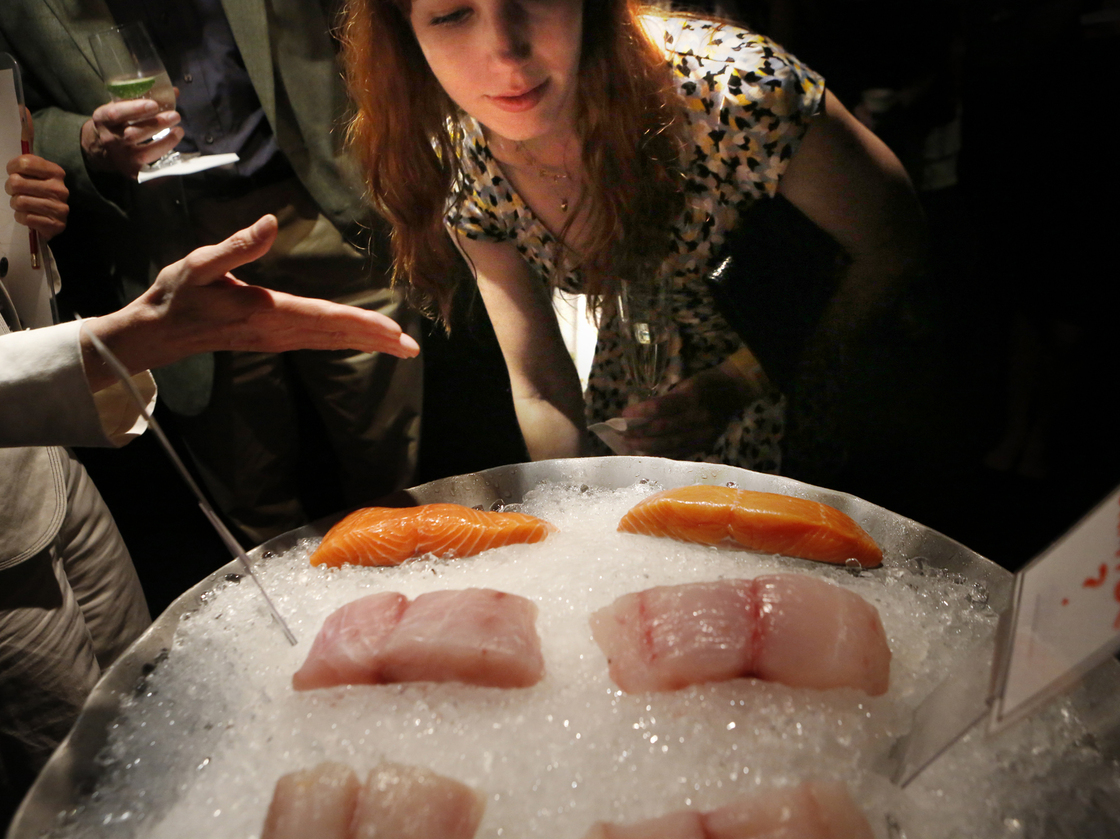
"caption": "Swigging for science: A hint of oak, our winetasting newbies learned, is more common in reds than whites. It's a marker for expense in both. Photo: Heather Rousseau/NPR",
"description": "Swigging for science: A hint of oak, our winetasting newbies learned, is more common in reds than whites. It's a marker for expense in both.",
"title": "winetasting003",
"credit": null,
"status": "inherit",
"isLoading": false,
"fetchFailed": false
},
"bayareabites_64079": {
"type": "attachments",
"id": "bayareabites_64079",
"meta": {
"index": "attachments_1716263798",
"site": "bayareabites",
"id": "64079",
"found": true
},
"parent": 64067,
"imgSizes": {
"kqedFullSize": {
"file": "https://ww2.kqed.org/app/uploads/sites/24/2013/06/seafoodfraud.jpg",
"width": 1120,
"height": 839
}
},
"publishDate": 1372188970,
"modified": 1372188970,
"caption": "Jessica McConnell, 26, of Silver Spring, Md., tries to identify various species of fish — halibut, red snapper and salmon — that are commonly mislabeled. Photo: Heather Rousseau/NPR",
"description": "Jessica McConnell, 26, of Silver Spring, Md., tries to identify various species of fish — halibut, red snapper and salmon — that are commonly mislabeled",
"title": "seafoodfraud001",
"credit": null,
"status": "inherit",
"isLoading": false,
"fetchFailed": false
},
"bayareabites_64003": {
"type": "attachments",
"id": "bayareabites_64003",
"meta": {
"index": "attachments_1716263798",
"site": "bayareabites",
"id": "64003",
"found": true
},
"parent": 63999,
"imgSizes": {
"kqedFullSize": {
"file": "https://ww2.kqed.org/app/uploads/sites/24/2013/06/farmers-foodsovereignty.jpg",
"width": 1120,
"height": 840
}
},
"publishDate": 1371913741,
"modified": 1371913741,
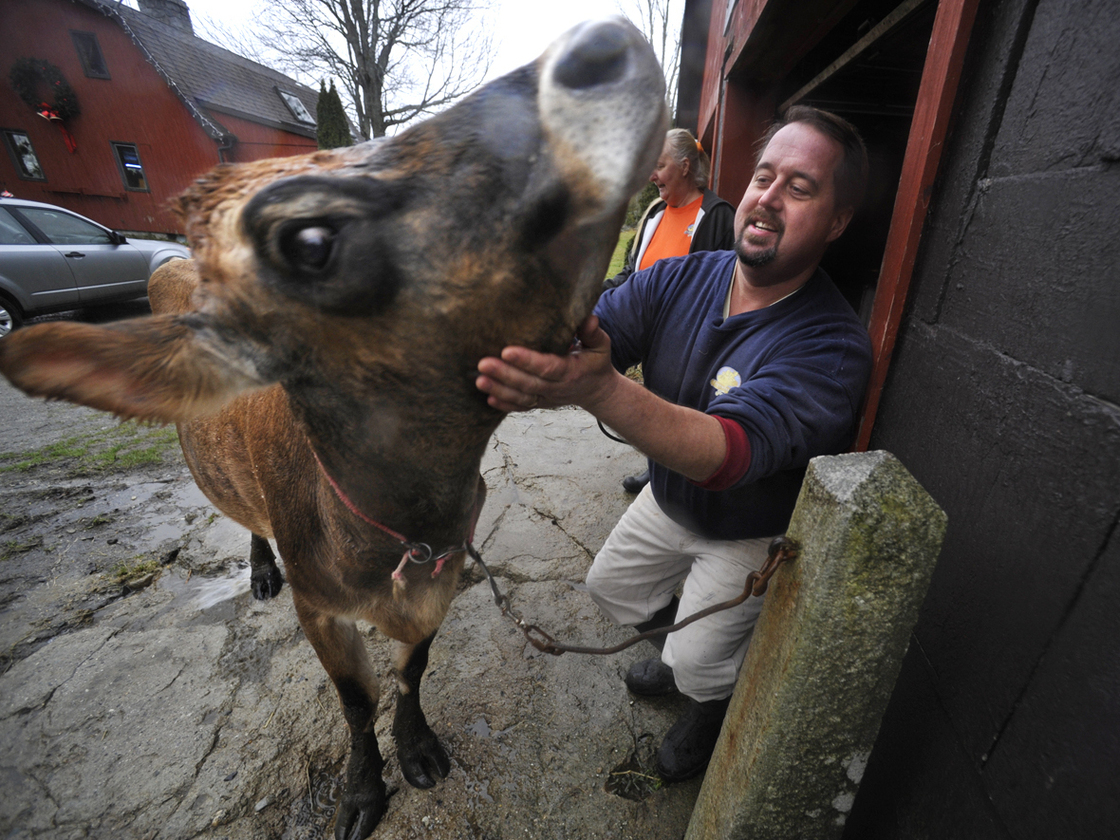
"caption": "Dan Brown pets \"Sprocket,\" his family's 4-year-old, sole milking cow, before hosing her down at his farm in Blue Hill, Maine. Brown has become the poster child for Maine's food sovereignty movement. Photo: John Clarke Russ/\u003ca href=\"http://bangordailynews.com/2013/02/15/news/hancock/brooksville-may-join-local-food-turf-war-between-towns-state-government/?ref=search\">Bangor Daily News\u003c/a>",
"description": "Dan Brown pets \"Sprocket,\" his family's 4-year-old, sole milking cow, before hosing her down at his farm in Blue Hill, Maine. Brown has become the poster child for Maine's food sovereignty movement.",
"title": "farmers1216-jcr_6990321",
"credit": null,
"status": "inherit",
"isLoading": false,
"fetchFailed": false
},
"bayareabites_63986": {
"type": "attachments",
"id": "bayareabites_63986",
"meta": {
"index": "attachments_1716263798",
"site": "bayareabites",
"id": "63986",
"found": true
},
"parent": 63982,
"imgSizes": {
"kqedFullSize": {
"file": "https://ww2.kqed.org/app/uploads/sites/24/2013/06/octopus.jpg",
"width": 1120,
"height": 628
}
},
"publishDate": 1371912499,
"modified": 1371912499,
"caption": "For octopus flesh to be tender enough to grill, it must be dried in the sun at least one full day. Photo: Joanna Kakissis for NPR",
"description": "For octopus flesh to be tender enough to grill, it must be dried in the sun at least one full day.",
"title": "octopus-hanging",
"credit": null,
"status": "inherit",
"isLoading": false,
"fetchFailed": false
},
"bayareabites_63946": {
"type": "attachments",
"id": "bayareabites_63946",
"meta": {
"index": "attachments_1716263798",
"site": "bayareabites",
"id": "63946",
"found": true
},
"parent": 63945,
"imgSizes": {
"kqedFullSize": {
"file": "https://ww2.kqed.org/app/uploads/sites/24/2013/06/veggiecircadianrhythms001-987c22fc7ae22c08201d2264d4f267d20ccee514.jpg",
"width": 200,
"height": 149
}
},
"publishDate": 1371832826,
"modified": 1371832826,
"caption": null,
"description": "Researchers at Rice University conducted lab studies using light-dark cycles to try to coax more beneficial compounds out of fruits and vegetables.",
"title": "Researchers at Rice University conducted lab studies using light-dark cycles to try to coax more beneficial compounds out of fruits and vegetables.",
"credit": null,
"status": "inherit",
"isLoading": false,
"fetchFailed": false
},
"bayareabites_63936": {
"type": "attachments",
"id": "bayareabites_63936",
"meta": {
"index": "attachments_1716263798",
"site": "bayareabites",
"id": "63936",
"found": true
},
"parent": 63935,
"imgSizes": {
"kqedFullSize": {
"file": "https://ww2.kqed.org/app/uploads/sites/24/2013/06/farm-bill-39c76f9964a2a2390285cd668039a2438f52817f.jpg",
"width": 200,
"height": 149
}
},
"publishDate": 1371831521,
"modified": 1371831521,
"caption": null,
"description": "Gracie Shannon-Sanborn, 5, holds a sign as she joins her father Allen Sanborn (L) and members of Progressive Democrats of America at a rally in front of Rep. Henry Waxman's office on June 17, 2013 in Los Angeles, Calif. The protestors asked the congressman to vote against a House farm bill, which was defeated Thursday.",
"title": "Gracie Shannon-Sanborn, 5, holds a sign as she joins her father Allen Sanborn (L) and members of Progressive Democrats of America at a rally in front of Rep. Henry Waxman's office on June 17, 2013 in Los Angeles, Calif. The protestors asked the congressman to vote against a House farm bill, which was defeated Thursday.",
"credit": null,
"status": "inherit",
"isLoading": false,
"fetchFailed": false
},
"bayareabites_63924": {
"type": "attachments",
"id": "bayareabites_63924",
"meta": {
"index": "attachments_1716263798",
"site": "bayareabites",
"id": "63924",
"found": true
},
"parent": 63920,
"imgSizes": {
"kqedFullSize": {
"file": "https://ww2.kqed.org/app/uploads/sites/24/2013/06/pauladeen.jpg",
"width": 1120,
"height": 840
}
},
"publishDate": 1371829628,
"modified": 1371829628,
"caption": "Will Paula Deen's admission of using a racial slur crumble her empire? Photo: Courtesy of Food Network/AP",
"description": "Will Paula Deen's admission of using a racial slur crumble her empire?",
"title": "ap060512056312",
"credit": null,
"status": "inherit",
"isLoading": false,
"fetchFailed": false
},
"bayareabites_63843": {
"type": "attachments",
"id": "bayareabites_63843",
"meta": {
"index": "attachments_1716263798",
"site": "bayareabites",
"id": "63843",
"found": true
},
"parent": 63833,
"imgSizes": {
"kqedFullSize": {
"file": "https://ww2.kqed.org/app/uploads/sites/24/2013/06/thai-shrimp.jpg",
"width": 1120,
"height": 839
}
},
"publishDate": 1371760434,
"modified": 1371760434,
"caption": "Workers process shrimp at a factory in Thailand in 2009. Photo: Chumsak Kanoknan/Getty Images",
"description": "Workers process shrimp at a factory in Thailand in 2009.",
"title": "thai-shrimp",
"credit": null,
"status": "inherit",
"isLoading": false,
"fetchFailed": false
},
"bayareabites_63823": {
"type": "attachments",
"id": "bayareabites_63823",
"meta": {
"index": "attachments_1716263798",
"site": "bayareabites",
"id": "63823",
"found": true
},
"parent": 63819,
"imgSizes": {
"kqedFullSize": {
"file": "https://ww2.kqed.org/app/uploads/sites/24/2013/06/capn-crunch.jpg",
"width": 1120,
"height": 629
}
},
"publishDate": 1371757221,
"modified": 1371757221,
"caption": "Say it ain't so, Cap'n. Photo: Quaker Oats Company/PepsiCo",
"description": "Say it ain't so, Cap'n.",
"title": "capn-crunch",
"credit": null,
"status": "inherit",
"isLoading": false,
"fetchFailed": false
},
"bayareabites_63786": {
"type": "attachments",
"id": "bayareabites_63786",
"meta": {
"index": "attachments_1716263798",
"site": "bayareabites",
"id": "63786",
"found": true
},
"parent": 63563,
"imgSizes": {
"kqedFullSize": {
"file": "https://ww2.kqed.org/app/uploads/sites/24/2013/06/apricots-in-pot1.jpg",
"width": 1120,
"height": 629
}
},
"publishDate": 1371690051,
"modified": 1371690051,
"caption": "Apricots. Photo: Domenica Marchetti for NPR",
"description": "Apricots",
"title": "apricots-in-pot",
"credit": null,
"status": "inherit",
"isLoading": false,
"fetchFailed": false
},
"bayareabites_63748": {
"type": "attachments",
"id": "bayareabites_63748",
"meta": {
"index": "attachments_1716263798",
"site": "bayareabites",
"id": "63748",
"found": true
},
"parent": 63741,
"imgSizes": {
"kqedFullSize": {
"file": "https://ww2.kqed.org/app/uploads/sites/24/2013/06/monsanto.jpg",
"width": 1120,
"height": 630
}
},
"publishDate": 1371674501,
"modified": 1371674501,
"caption": "The sign at Monsanto headquarters in St. Louis. Photo: James Finley/AP",
"description": "The sign at Monsanto headquarters in St. Louis.",
"title": "ap050628124526",
"credit": null,
"status": "inherit",
"isLoading": false,
"fetchFailed": false
},
"bayareabites_63737": {
"type": "attachments",
"id": "bayareabites_63737",
"meta": {
"index": "attachments_1716263798",
"site": "bayareabites",
"id": "63737",
"found": true
},
"parent": 63732,
"imgSizes": {
"kqedFullSize": {
"file": "https://ww2.kqed.org/app/uploads/sites/24/2013/06/martiniman.jpg",
"width": 1087,
"height": 1448
}
},
"publishDate": 1371673115,
"modified": 1371673115,
"caption": "The martini: international drink of mystery? Photo: iStockphoto.com",
"description": null,
"title": "martiniman",
"credit": null,
"status": "inherit",
"isLoading": false,
"fetchFailed": false
}
},
"audioPlayerReducer": {
"postId": "stream_live",
"isPaused": true,
"isPlaying": false,
"pfsActive": false,
"pledgeModalIsOpen": true,
"playerDrawerIsOpen": false,
"liveAudioPlayStartedAt": 0,
"liveAudioPlayContext": ""
},
"authorsReducer": {
"byline_bayareabites_64146": {
"type": "authors",
"id": "byline_bayareabites_64146",
"meta": {
"override": true
},
"slug": "byline_bayareabites_64146",
"name": "Michaeleen Doucleff",
"isLoading": false
},
"byline_bayareabites_64067": {
"type": "authors",
"id": "byline_bayareabites_64067",
"meta": {
"override": true
},
"slug": "byline_bayareabites_64067",
"name": "Eliza Barclay and Heather Rousseau",
"isLoading": false
},
"byline_bayareabites_63999": {
"type": "authors",
"id": "byline_bayareabites_63999",
"meta": {
"override": true
},
"slug": "byline_bayareabites_63999",
"name": "Maria Godoy",
"isLoading": false
},
"byline_bayareabites_63982": {
"type": "authors",
"id": "byline_bayareabites_63982",
"meta": {
"override": true
},
"slug": "byline_bayareabites_63982",
"name": "Joanna Kakissis",
"isLoading": false
},
"byline_bayareabites_63945": {
"type": "authors",
"id": "byline_bayareabites_63945",
"meta": {
"override": true
},
"slug": "byline_bayareabites_63945",
"name": "Allison Aubrey",
"isLoading": false
},
"byline_bayareabites_63935": {
"type": "authors",
"id": "byline_bayareabites_63935",
"meta": {
"override": true
},
"slug": "byline_bayareabites_63935",
"name": "Dan Charles",
"isLoading": false
},
"byline_bayareabites_63920": {
"type": "authors",
"id": "byline_bayareabites_63920",
"meta": {
"override": true
},
"slug": "byline_bayareabites_63920",
"name": "Maria Godoy",
"isLoading": false
},
"byline_bayareabites_63833": {
"type": "authors",
"id": "byline_bayareabites_63833",
"meta": {
"override": true
},
"slug": "byline_bayareabites_63833",
"name": "Eliza Barclay",
"isLoading": false
},
"byline_bayareabites_63819": {
"type": "authors",
"id": "byline_bayareabites_63819",
"meta": {
"override": true
},
"slug": "byline_bayareabites_63819",
"name": "Eyder Peralta",
"isLoading": false
},
"byline_bayareabites_63757": {
"type": "authors",
"id": "byline_bayareabites_63757",
"meta": {
"override": true
},
"slug": "byline_bayareabites_63757",
"name": "Domenica Marchetti",
"isLoading": false
},
"byline_bayareabites_63741": {
"type": "authors",
"id": "byline_bayareabites_63741",
"meta": {
"override": true
},
"slug": "byline_bayareabites_63741",
"name": "Dan Charles",
"isLoading": false
},
"byline_bayareabites_63732": {
"type": "authors",
"id": "byline_bayareabites_63732",
"meta": {
"override": true
},
"slug": "byline_bayareabites_63732",
"name": "April Fulton",
"isLoading": false
}
},
"pagesReducer": {
"bayareabites_category_npr-food": {
"type": "terms",
"id": "bayareabites_10916",
"meta": {
"index": "terms_1716263798",
"site": "bayareabites",
"id": "10916",
"score": 13.894667
},
"featImg": null,
"name": "NPR food",
"description": null,
"taxonomy": "category",
"headData": {
"twImgId": null,
"twTitle": null,
"ogTitle": null,
"ogImgId": null,
"twDescription": null,
"description": null,
"title": "NPR food Archives | KQED Bay Area Bites",
"ogDescription": null
},
"ttid": 5375,
"slug": "npr-food",
"isLoading": false,
"title": "NPR food",
"pageMeta": {
"site": "bayareabites",
"WpPageTemplate": "page-topic-editorial",
"currentPage": 77
},
"blocks": [
{
"blockName": "kqed/post-list",
"attrs": {
"layout": "cardArticle2",
"query": "posts/bayareabites?category=npr-food",
"seeMore": false,
"paginated": true,
"page": 77
}
},
{
"blockName": "kqed/ad"
}
]
}
},
"pfsSessionReducer": {},
"postsReducer": {
"stream_live": {
"type": "live",
"id": "stream_live",
"audioUrl": "https://hls.kqed.org/hls/kqed_app/playlist.m3u8",
"title": "Live Stream",
"excerpt": "Live Stream information currently unavailable.",
"link": "/radio",
"featImg": "",
"label": {
"name": "KQED Live",
"link": "/"
}
},
"stream_kqedNewscast": {
"type": "posts",
"id": "stream_kqedNewscast",
"audioUrl": "https://www.kqed.org/.stream/anon/radio/RDnews/newscast.mp3?_=1",
"title": "KQED Newscast",
"featImg": "",
"label": {
"name": "88.5 FM",
"link": "/"
}
},
"bayareabites_64146": {
"type": "posts",
"id": "bayareabites_64146",
"meta": {
"index": "posts_1716263798",
"site": "bayareabites",
"id": "64146",
"score": null,
"sort": [
1372265045000
]
},
"parent": 0,
"labelTerm": {
"site": "bayareabites"
},
"blocks": [],
"publishDate": 1372265045,
"format": "aside",
"disqusTitle": "Fruity With A Hint Of Bologna: A Slacker's Guide To Wine Tasting",
"title": "Fruity With A Hint Of Bologna: A Slacker's Guide To Wine Tasting",
"headTitle": "Bay Area Bites | KQED Food",
"content": "\u003cfigure id=\"attachment_64152\" class=\"wp-caption aligncenter\" style=\"max-width: 1024px\">\u003ca href=\"http://ww2.kqed.org/bayareabites/wp-content/uploads/sites/24/2013/06/winetasting.jpg\">\u003cimg src=\"http://ww2.kqed.org/bayareabites/wp-content/uploads/sites/24/2013/06/winetasting-1024x574.jpg\" alt=\"Our class of newbies learns how to pick up that buttery taste in a glass of Chardonnay. Photo: Heather Rousseau/NPR\" width=\"1024\" height=\"574\" class=\"size-large wp-image-64152\">\u003c/a>\u003cfigcaption class=\"wp-caption-text\">Our class of newbies learns how to pick up that buttery taste in a glass of Chardonnay. Photo: Heather Rousseau/NPR\u003c/figcaption>\u003c/figure>\n\u003cp>Post by Michaeleen Doucleff, \u003ca href=\"http://www.npr.org/blogs/thesalt/2013/06/26/194212435/fruity-with-a-hint-of-bologna-a-slacker-s-guide-to-wine-tasting\">The Salt at NPR Food\u003c/a> (6/26/13)\u003c/p>\n\u003cp>Wine tasting has taken it on the chin recently.\u003c/p>\n\u003cp>\"There are no two ways about it: the bullsh*t is strong with wine.\"\u003c/p>\n\u003cp>That's what Robert T. Gonzales recently \u003ca href=\"http://io9.com/wine-tasting-is-bullshit-heres-why-496098276\">wrote on io9.com\u003c/a> in a post that eviscerated wine tasting as a form of skilled craft. \"Wine tasting. Wine rating. Wine reviews. Wine descriptions.\" he writes. \"They're all related. And they're all egregious offenders, from a [expletive deleted] standpoint.\"\u003c/p>\n\u003cp>But then Gonzales goes on to cite a piece written by disgraced science journalist Jonah Lehrer to back up his argument. And that's when I start detecting hints of bologna.\u003c/p>\n\u003cp>[ad fullwidth]\u003c/p>\n\u003cp>Gonzales's comments swirled up the bee's nest. And wine lovers have come up from the cellars to defend their sniffing, gurgling and spitting on the blogosphere.\u003c/p>\n\u003cp>We're not here to enter the debate. But rather, we wanted to give you an insider's look at a few places where the science of wine tasting is clear-cut – and relatively easy to learn.\u003c/p>\n\u003cp>Most of what we taste in wine comes from its aroma. Connoisseurs like to talk about the complex aromas of wine – hints of strawberry or citrus, for example. But don't let that intimidate you. Mastering three or four of these aromas will take you far in the wine tasting world, impressing even your most die-hard oenophiles. Here's what you need to know.\u003c/p>\n\u003cp>\u003cstrong>1. Put your face close to some wood. Take a deep breath\u003c/strong>.\u003c/p>\n\u003cp>Got a pretty good idea what that smells like now? Good. That's what Chardonnay and Cabernet Sauvignon smell like when winemakers store them in oak barrels.\u003c/p>\n\u003cfigure id=\"attachment_64153\" class=\"wp-caption alignleft\" style=\"max-width: 290px\">\u003ca href=\"http://ww2.kqed.org/bayareabites/wp-content/uploads/sites/24/2013/06/winetasting1.jpg\">\u003cimg src=\"http://ww2.kqed.org/bayareabites/wp-content/uploads/sites/24/2013/06/winetasting1-290x217.jpg\" alt=\"Swigging for science: A hint of oak, our winetasting newbies learned, is more common in reds than whites. It's a marker for expense in both. Photo: Heather Rousseau/NPR\" width=\"290\" height=\"217\" class=\"size-medium wp-image-64153\">\u003c/a>\u003cfigcaption class=\"wp-caption-text\">Swigging for science: A hint of oak, our winetasting newbies learned, is more common in reds than whites. It's a marker for expense in both. Photo: Heather Rousseau/NPR\u003c/figcaption>\u003c/figure>\n\u003cp>Many red wines spend time in oak barrels. So if you call a California red \"oaky,\" chances are, you'll be correct. But no one will be impressed.\u003c/p>\n\u003cp>The way to get a little cred is to state confidently whether or not your Chardonnay has been stored in oak. As in: \"Hmm, I really like the oak flavors of this Chardonnay.\" Or conversely, \"I enjoy a Chardonnay that hasn't been oaked.\"\u003c/p>\n\u003cp>The woody aroma comes from compounds called \u003ca href=\"http://www.chemicalbook.com/ChemicalProductProperty_EN_CB0166670.htm\">whisky lactones\u003c/a>, which leach out of the barrels into the wine over the years. An oaky aroma is generally associated with more expensive wines.\u003c/p>\n\u003cp>\u003cstrong>2. Sniff out vanilla\u003c/strong>.\u003c/p>\n\u003cp>Here's a trick that will really knock the socks off your wine friends. Next time you're enjoying a red wine, say, a California Pinot Noir, and you smell vanilla, simply proclaim, \"Clearly, this wine was aged in American oak, not French.\" Practice by huffing on some vanilla extract in your kitchen.\u003c/p>\n\u003cp>Winemakers typically use one of two types of oak barrels for storage: French or American oak. The American wood releases more \u003ca href=\"http://pubchem.ncbi.nlm.nih.gov/summary/summary.cgi?cid=1183\">vanillin\u003c/a> into wine than French oak does. And guess what vanillin smells like? Yup, vanilla beans.\u003c/p>\n\u003cp>So if your sniffer is detecting vanilla in wine, it was likely stored in American oak barrels. But don't ever say this about a French wine, which — of course — would never be stored in American oak. Mon dieu!\u003c/p>\n\u003cp>\u003cstrong>3. Go slice a green pepper.\u003c/strong>\u003c/p>\n\u003cp>Certain types of grapes, a.k.a. varietals, have their own distinctive aromas. Perhaps the most distinctive is the Cabernet Sauvignon grape, which smells like green peppers. Both get their signature smell from \u003ca href=\"http://www.winesandvines.com/template.cfm?section=features&content=68769\">pyrazines\u003c/a>; with grapes, the scent is strongest when they aren't quite ripe – and you can still detect that scent in the resulting wine.\u003c/p>\n\u003cp>So swirl your next Cab. Take a whiff of it. If there's a faint hint of green pepper, then try a statement like, \"There are definitely some pyrazines in this Cab. The grapes must not haven ripened fully. Please take this inferior wine away from me.\"\u003c/p>\n\u003cp>\u003cstrong>4. Buy some imitation butter.\u003c/strong>\u003c/p>\n\u003cp>Our final party trick is a bit complicated. But it's so worth the investment.\u003c/p>\n\u003cp>Grapes taste tart because they contain an acid found in Granny Smith apples. Wine makers can get rid of this sourness by adding bacteria into their fermenting juice. The bug converts the tart acid into less tart acids, like the ones found in milk. Along the way, bacteria also churn out a butter flavor, called diacetyl — the same compound food scientists put in imitation butter and microwave popcorn.\u003c/p>\n\u003cp>The process is called malolactic fermentation, or MLF for short. Wines that have gone through MLF have a smoother mouthfeel and a butter or butterscotch smell that's a dead giveaway. The more buttery the wine, the bigger the pricetag.\u003c/p>\n\u003cp>\u003cstrong>5. Do try this at home.\u003c/strong>\u003c/p>\n\u003cp>To master these wine tasting tricks, you probably need some training. Here's a cool way to do it. Take a cheap, flavorless wine and then spike it with one of the compounds above – say, a few drops of vanilla extract or imitation butter. Then use it as a reference while you sniff the good stuff.\u003c/p>\n\u003cp>We tried out this training strategy here at The Salt with a few Chardonnays. And the results were impressive. By learning to sniff out the buttery aroma beforehand, 10 out of 10 newbie wine tasters could correctly identify the Chardonnay that went through MLF.\u003c/p>\n\u003cp>\u003cem>Michaeleen Doucleff is a reporter and producer on NPR's Science Desk. She has a master's in winemaking from U.C. Davis.\u003c/em> \u003c/p>\n\u003cp>\u003c/p>\n\u003cp>\u003cem>Copyright 2013 \u003ca href=\"http://www.npr.org/\">NPR\u003c/a>.\u003c/em> \u003c/p>\n\n",
"disqusIdentifier": "64146 http://blogs.kqed.org/bayareabites/?p=64146",
"disqusUrl": "https://ww2.kqed.org/bayareabites/2013/06/26/fruity-with-a-hint-of-bologna-a-slackers-guide-to-wine-tasting/",
"stats": {
"hasVideo": false,
"hasChartOrMap": false,
"hasAudio": false,
"hasPolis": false,
"wordCount": 950,
"hasGoogleForm": false,
"hasGallery": false,
"hasHearkenModule": false,
"iframeSrcs": [],
"paragraphCount": 31
},
"modified": 1372266746,
"excerpt": "Science is a beautiful thing — especially when it helps you impress your foodie friends. Here we present five easy party tricks — based on science — that will make you look like a wine tasting pro. Do try this at home.",
"headData": {
"twImgId": "",
"twTitle": "",
"ogTitle": "",
"ogImgId": "",
"twDescription": "",
"description": "Science is a beautiful thing — especially when it helps you impress your foodie friends. Here we present five easy party tricks — based on science — that will make you look like a wine tasting pro. Do try this at home.",
"title": "Fruity With A Hint Of Bologna: A Slacker's Guide To Wine Tasting | KQED",
"ogDescription": "",
"schema": {
"@context": "https://schema.org",
"@type": "Article",
"headline": "Fruity With A Hint Of Bologna: A Slacker's Guide To Wine Tasting",
"datePublished": "2013-06-26T09:44:05-07:00",
"dateModified": "2013-06-26T10:12:26-07:00",
"image": "https://cdn.kqed.org/wp-content/uploads/2020/02/KQED-OG-Image@1x.png"
}
},
"guestAuthors": [],
"slug": "fruity-with-a-hint-of-bologna-a-slackers-guide-to-wine-tasting",
"status": "publish",
"nprApiLink": "http://api.npr.org/query?id=194212435&apiKey=MDAxOTAwOTE4MDEyMTkxMDAzNjczZDljZA004",
"nprByline": "Michaeleen Doucleff",
"nprStoryDate": "Wed, 26 Jun 2013 09:00:00 -0400",
"nprLastModifiedDate": "Wed, 26 Jun 2013 08:55:53 -0400",
"nprHtmlLink": "http://www.npr.org/blogs/thesalt/2013/06/26/194212435/fruity-with-a-hint-of-bologna-a-slacker-s-guide-to-wine-tasting?ft=3&f=194212435",
"nprStoryId": "194212435",
"nprRetrievedStory": "1",
"nprPubDate": "Wed, 26 Jun 2013 09:03:00 -0400",
"path": "/bayareabites/64146/fruity-with-a-hint-of-bologna-a-slackers-guide-to-wine-tasting",
"audioTrackLength": null,
"parsedContent": [
{
"type": "contentString",
"content": "\u003cdiv class=\"post-body\">\u003cp>\u003cfigure id=\"attachment_64152\" class=\"wp-caption aligncenter\" style=\"max-width: 1024px\">\u003ca href=\"http://ww2.kqed.org/bayareabites/wp-content/uploads/sites/24/2013/06/winetasting.jpg\">\u003cimg src=\"http://ww2.kqed.org/bayareabites/wp-content/uploads/sites/24/2013/06/winetasting-1024x574.jpg\" alt=\"Our class of newbies learns how to pick up that buttery taste in a glass of Chardonnay. Photo: Heather Rousseau/NPR\" width=\"1024\" height=\"574\" class=\"size-large wp-image-64152\">\u003c/a>\u003cfigcaption class=\"wp-caption-text\">Our class of newbies learns how to pick up that buttery taste in a glass of Chardonnay. Photo: Heather Rousseau/NPR\u003c/figcaption>\u003c/figure>\n\u003cp>Post by Michaeleen Doucleff, \u003ca href=\"http://www.npr.org/blogs/thesalt/2013/06/26/194212435/fruity-with-a-hint-of-bologna-a-slacker-s-guide-to-wine-tasting\">The Salt at NPR Food\u003c/a> (6/26/13)\u003c/p>\n\u003cp>Wine tasting has taken it on the chin recently.\u003c/p>\n\u003cp>\"There are no two ways about it: the bullsh*t is strong with wine.\"\u003c/p>\n\u003cp>That's what Robert T. Gonzales recently \u003ca href=\"http://io9.com/wine-tasting-is-bullshit-heres-why-496098276\">wrote on io9.com\u003c/a> in a post that eviscerated wine tasting as a form of skilled craft. \"Wine tasting. Wine rating. Wine reviews. Wine descriptions.\" he writes. \"They're all related. And they're all egregious offenders, from a [expletive deleted] standpoint.\"\u003c/p>\n\u003cp>But then Gonzales goes on to cite a piece written by disgraced science journalist Jonah Lehrer to back up his argument. And that's when I start detecting hints of bologna.\u003c/p>\n\u003cp>\u003c/p>\u003c/div>",
"attributes": {
"named": {},
"numeric": []
}
},
{
"type": "component",
"content": "",
"name": "ad",
"attributes": {
"named": {
"label": "fullwidth"
},
"numeric": [
"fullwidth"
]
}
},
{
"type": "contentString",
"content": "\u003cdiv class=\"post-body\">\u003cp>\u003c/p>\n\u003cp>Gonzales's comments swirled up the bee's nest. And wine lovers have come up from the cellars to defend their sniffing, gurgling and spitting on the blogosphere.\u003c/p>\n\u003cp>We're not here to enter the debate. But rather, we wanted to give you an insider's look at a few places where the science of wine tasting is clear-cut – and relatively easy to learn.\u003c/p>\n\u003cp>Most of what we taste in wine comes from its aroma. Connoisseurs like to talk about the complex aromas of wine – hints of strawberry or citrus, for example. But don't let that intimidate you. Mastering three or four of these aromas will take you far in the wine tasting world, impressing even your most die-hard oenophiles. Here's what you need to know.\u003c/p>\n\u003cp>\u003cstrong>1. Put your face close to some wood. Take a deep breath\u003c/strong>.\u003c/p>\n\u003cp>Got a pretty good idea what that smells like now? Good. That's what Chardonnay and Cabernet Sauvignon smell like when winemakers store them in oak barrels.\u003c/p>\n\u003cfigure id=\"attachment_64153\" class=\"wp-caption alignleft\" style=\"max-width: 290px\">\u003ca href=\"http://ww2.kqed.org/bayareabites/wp-content/uploads/sites/24/2013/06/winetasting1.jpg\">\u003cimg src=\"http://ww2.kqed.org/bayareabites/wp-content/uploads/sites/24/2013/06/winetasting1-290x217.jpg\" alt=\"Swigging for science: A hint of oak, our winetasting newbies learned, is more common in reds than whites. It's a marker for expense in both. Photo: Heather Rousseau/NPR\" width=\"290\" height=\"217\" class=\"size-medium wp-image-64153\">\u003c/a>\u003cfigcaption class=\"wp-caption-text\">Swigging for science: A hint of oak, our winetasting newbies learned, is more common in reds than whites. It's a marker for expense in both. Photo: Heather Rousseau/NPR\u003c/figcaption>\u003c/figure>\n\u003cp>Many red wines spend time in oak barrels. So if you call a California red \"oaky,\" chances are, you'll be correct. But no one will be impressed.\u003c/p>\n\u003cp>The way to get a little cred is to state confidently whether or not your Chardonnay has been stored in oak. As in: \"Hmm, I really like the oak flavors of this Chardonnay.\" Or conversely, \"I enjoy a Chardonnay that hasn't been oaked.\"\u003c/p>\n\u003cp>The woody aroma comes from compounds called \u003ca href=\"http://www.chemicalbook.com/ChemicalProductProperty_EN_CB0166670.htm\">whisky lactones\u003c/a>, which leach out of the barrels into the wine over the years. An oaky aroma is generally associated with more expensive wines.\u003c/p>\n\u003cp>\u003cstrong>2. Sniff out vanilla\u003c/strong>.\u003c/p>\n\u003cp>Here's a trick that will really knock the socks off your wine friends. Next time you're enjoying a red wine, say, a California Pinot Noir, and you smell vanilla, simply proclaim, \"Clearly, this wine was aged in American oak, not French.\" Practice by huffing on some vanilla extract in your kitchen.\u003c/p>\n\u003cp>Winemakers typically use one of two types of oak barrels for storage: French or American oak. The American wood releases more \u003ca href=\"http://pubchem.ncbi.nlm.nih.gov/summary/summary.cgi?cid=1183\">vanillin\u003c/a> into wine than French oak does. And guess what vanillin smells like? Yup, vanilla beans.\u003c/p>\n\u003cp>So if your sniffer is detecting vanilla in wine, it was likely stored in American oak barrels. But don't ever say this about a French wine, which — of course — would never be stored in American oak. Mon dieu!\u003c/p>\n\u003cp>\u003cstrong>3. Go slice a green pepper.\u003c/strong>\u003c/p>\n\u003cp>Certain types of grapes, a.k.a. varietals, have their own distinctive aromas. Perhaps the most distinctive is the Cabernet Sauvignon grape, which smells like green peppers. Both get their signature smell from \u003ca href=\"http://www.winesandvines.com/template.cfm?section=features&content=68769\">pyrazines\u003c/a>; with grapes, the scent is strongest when they aren't quite ripe – and you can still detect that scent in the resulting wine.\u003c/p>\n\u003cp>So swirl your next Cab. Take a whiff of it. If there's a faint hint of green pepper, then try a statement like, \"There are definitely some pyrazines in this Cab. The grapes must not haven ripened fully. Please take this inferior wine away from me.\"\u003c/p>\n\u003cp>\u003cstrong>4. Buy some imitation butter.\u003c/strong>\u003c/p>\n\u003cp>Our final party trick is a bit complicated. But it's so worth the investment.\u003c/p>\n\u003cp>Grapes taste tart because they contain an acid found in Granny Smith apples. Wine makers can get rid of this sourness by adding bacteria into their fermenting juice. The bug converts the tart acid into less tart acids, like the ones found in milk. Along the way, bacteria also churn out a butter flavor, called diacetyl — the same compound food scientists put in imitation butter and microwave popcorn.\u003c/p>\n\u003cp>The process is called malolactic fermentation, or MLF for short. Wines that have gone through MLF have a smoother mouthfeel and a butter or butterscotch smell that's a dead giveaway. The more buttery the wine, the bigger the pricetag.\u003c/p>\n\u003cp>\u003cstrong>5. Do try this at home.\u003c/strong>\u003c/p>\n\u003cp>To master these wine tasting tricks, you probably need some training. Here's a cool way to do it. Take a cheap, flavorless wine and then spike it with one of the compounds above – say, a few drops of vanilla extract or imitation butter. Then use it as a reference while you sniff the good stuff.\u003c/p>\n\u003cp>We tried out this training strategy here at The Salt with a few Chardonnays. And the results were impressive. By learning to sniff out the buttery aroma beforehand, 10 out of 10 newbie wine tasters could correctly identify the Chardonnay that went through MLF.\u003c/p>\n\u003cp>\u003cem>Michaeleen Doucleff is a reporter and producer on NPR's Science Desk. She has a master's in winemaking from U.C. Davis.\u003c/em> \u003c/p>\n\u003cp>\u003c/p>\n\u003cp>\u003cem>Copyright 2013 \u003ca href=\"http://www.npr.org/\">NPR\u003c/a>.\u003c/em> \u003c/p>\n\n\u003c/div>\u003c/p>",
"attributes": {
"named": {},
"numeric": []
}
}
],
"link": "/bayareabites/64146/fruity-with-a-hint-of-bologna-a-slackers-guide-to-wine-tasting",
"authors": [
"byline_bayareabites_64146"
],
"categories": [
"bayareabites_10916",
"bayareabites_119"
],
"tags": [
"bayareabites_10921",
"bayareabites_14748",
"bayareabites_1605",
"bayareabites_9538"
],
"featImg": "bayareabites_64153",
"label": "bayareabites"
},
"bayareabites_64067": {
"type": "posts",
"id": "bayareabites_64067",
"meta": {
"index": "posts_1716263798",
"site": "bayareabites",
"id": "64067",
"score": null,
"sort": [
1372189824000
]
},
"parent": 0,
"labelTerm": {
"site": "bayareabites"
},
"blocks": [],
"publishDate": 1372189824,
"format": "aside",
"disqusTitle": "How Well Do You Know Your Fish Fillet? Even Chefs Can Be Fooled",
"title": "How Well Do You Know Your Fish Fillet? Even Chefs Can Be Fooled",
"headTitle": "Bay Area Bites | KQED Food",
"content": "\u003cfigure id=\"attachment_64079\" class=\"wp-caption aligncenter\" style=\"max-width: 1024px\">\u003ca href=\"http://ww2.kqed.org/bayareabites/wp-content/uploads/sites/24/2013/06/seafoodfraud.jpg\">\u003cimg src=\"http://ww2.kqed.org/bayareabites/wp-content/uploads/sites/24/2013/06/seafoodfraud-1024x767.jpg\" alt=\"Jessica McConnell, 26, of Silver Spring, Md., tries to identify various species of fish — halibut, red snapper and salmon — that are commonly mislabeled. Photo: Heather Rousseau/NPR\" width=\"1024\" height=\"767\" class=\"size-large wp-image-64079\">\u003c/a>\u003cfigcaption class=\"wp-caption-text\">Jessica McConnell, 26, of Silver Spring, Md., tries to identify various species of fish — halibut, red snapper and salmon — that are commonly mislabeled. Photo: Heather Rousseau/NPR\u003c/figcaption>\u003c/figure>\n\u003cp>Post by Eliza Barclay and Heather Rousseau, \u003ca href=\"http://www.npr.org/blogs/thesalt/2013/06/25/194334508/how-well-do-you-know-your-fish-fillet-even-chefs-can-be-fooled\">The Salt at NPR Food\u003c/a> (6/25/13)\u003c/p>\n\u003cp>In the world of seafood, looks can be very deceiving. And unfortunately for anyone who buys fish, it's easy for people above you in the supply chain to sell you something other than what you want.\u003c/p>\n\u003cp>Oceana, a conservation group, has been beating the drum about seafood mislabeling for a while. Back in February, the organization released a \u003ca href=\"http://www.npr.org/blogs/thesalt/2013/02/21/172589997/one-in-three-fish-sold-at-restaurants-and-grocery-stores-is-mislabeled\">study\u003c/a> that found that 33 percent of the seafood it sampled at retail outlets in 21 states was mislabeled. (Note: The sampling was not randomized, so the findings should be taken with a grain of salt.)\u003c/p>\n\u003cp>This month, Ocean hosted \u003ca href=\"http://aqua.org/news/2013/13-6-12-fresh-thoughts-dc-oceana\">a dinner\u003c/a> with the National Aquarium in Washington, D.C., to prove once again how easy it is to become a victim of seafood fraud.\u003c/p>\n\u003cp>\"It's nearly impossible for anyone – even experts — to tell the difference between many species of fish,\" Beth Lowell, Oceana's campaign director, tells The Salt.\u003c/p>\n\u003cp>[ad fullwidth]\u003c/p>\n\u003cp>The event began with a raw fish guessing game. \u003ca href=\"http://oceana.org/en/about-us/people-partners/oceana-staff/kimberly-warner\">Kimberly Warner\u003c/a>, Oceana's senior scientist, stood with a clipboard and pen by a large silver bowl filled with ice and six glistening fillets of fish. The objective? To correctly identify wild salmon, red snapper and halibut paired with almost doppelgangers beside them.\u003c/p>\n\u003cp>Many of the guests were flummoxed by the task. Listen to how some made up their minds:\u003c/p>\n\u003cp>\u003ciframe width=\"100%\" height=\"166\" scrolling=\"no\" frameborder=\"no\" src=\"https://w.soundcloud.com/player/?url=http%3A%2F%2Fapi.soundcloud.com%2Ftracks%2F98290537\">\u003c/iframe>\u003c/p>\n\u003cfigure id=\"attachment_64078\" class=\"wp-caption aligncenter\" style=\"max-width: 1024px\">\u003ca href=\"http://ww2.kqed.org/bayareabites/wp-content/uploads/sites/24/2013/06/seafoodfraud-1.jpg\">\u003cimg src=\"http://ww2.kqed.org/bayareabites/wp-content/uploads/sites/24/2013/06/seafoodfraud-1-1024x767.jpg\" alt=\"Chef Xavier Deshayes of the Ronald Reagan Building and International Trade Center in Washington, D.C., speaks to a crowd of diners during a fish taste test sponsored by the conservation group Oceana. Photo: Heather Rousseau/NPR\" width=\"1024\" height=\"767\" class=\"size-large wp-image-64078\">\u003c/a>\u003cfigcaption class=\"wp-caption-text\">Chef Xavier Deshayes of the Ronald Reagan Building and International Trade Center in Washington, D.C., speaks to a crowd of diners during a fish taste test sponsored by the conservation group Oceana. Photo: Heather Rousseau/NPR\u003c/figcaption>\u003c/figure>\n\u003cp>The confused included chef Xavier Deshayes of the Ronald Reagan Building and International Trade Center, who had prepared the meal we would soon eat. At first, Deschayes told me that he doesn't fall victim to mislabeling because he uses only purveyors that he trusts.\u003c/p>\n\u003cp>But as soon as he saw the two coral-colored fillets of salmon on the ice, he admitted that he didn't know which one was wild. \"It's a lot easier to tell when you're looking at a whole fish instead of a fillet,\" he said.\u003c/p>\n\u003cfigure id=\"attachment_64075\" class=\"wp-caption aligncenter\" style=\"max-width: 1024px\">\u003ca href=\"http://ww2.kqed.org/bayareabites/wp-content/uploads/sites/24/2013/06/seafoodfraud-2.jpg\">\u003cimg src=\"http://ww2.kqed.org/bayareabites/wp-content/uploads/sites/24/2013/06/seafoodfraud-2-1024x767.jpg\" alt=\"Chef Xavier Deshayes tested diners' fish identification skills by serving an escabeche-style grouper fish, left, with an escabeche-style weakfish, right, and potatoes between them. Photo: Heather Rousseau/NPR\" width=\"1024\" height=\"767\" class=\"size-large wp-image-64075\">\u003c/a>\u003cfigcaption class=\"wp-caption-text\">Chef Xavier Deshayes tested diners' fish identification skills by serving an escabeche-style grouper fish, left, with an escabeche-style weakfish, right, and potatoes between them. Photo: Heather Rousseau/NPR\u003c/figcaption>\u003c/figure>\n\u003cp>Steve Vilnit, director of fisheries marketing for the Maryland Department of Natural Resources, said he struggled with the snapper. \"The sinew in the meat ... I'm thinking, but I don't know; that's a tough one.\"\u003c/p>\n\u003cp>After most guests had tried their hand at identifying the raw fillets, we sat down to a meal of some of the most commonly mislabeled fish species: grouper, salmon and red snapper. Each course featured two equally sized pieces of fish prepared in exactly the same way.\u003c/p>\n\u003cp>\u003ciframe width=\"100%\" height=\"166\" scrolling=\"no\" frameborder=\"no\" src=\"https://w.soundcloud.com/player/?url=http%3A%2F%2Fapi.soundcloud.com%2Ftracks%2F98291630\">\u003c/iframe>\u003c/p>\n\u003cp>The first was grouper, cooked escabeche-style, and paired with potato salad. Its lookalike, Oceana's Lowell eventually told us, was a virtually indistinguishable piece of weakfish. In the February report, the group had found that 11 of the 44 samples of grouper, or 25 percent, were mislabeled.\u003c/p>\n\u003cp>Next up was the salmon course, with farm-raised salmon pitted against its wild counterpart. Listen to some of the guests' reactions:\u003c/p>\n\u003cp>\u003ciframe width=\"100%\" height=\"166\" scrolling=\"no\" frameborder=\"no\" src=\"https://w.soundcloud.com/player/?url=http%3A%2F%2Fapi.soundcloud.com%2Ftracks%2F98291819\">\u003c/iframe>\u003c/p>\n\u003cp>Dehayes told me that farm-raised salmon has thicker layers of fat, and that the additional fat gives it a moister, more buttery texture. \"I prefer farmed salmon to wild salmon, because wild salmon gets so dry when you cook it,\" he said. That turned out to be a helpful tip when it came time to taste the fish. The fish on the right felt apart in my mouth so easily, while the fish on the left, while delicious, had a stronger, fishier taste. It was the wild salmon.\u003c/p>\n\u003cfigure id=\"attachment_64076\" class=\"wp-caption aligncenter\" style=\"max-width: 1024px\">\u003ca href=\"http://ww2.kqed.org/bayareabites/wp-content/uploads/sites/24/2013/06/seafoodfraud-3.jpg\">\u003cimg src=\"http://ww2.kqed.org/bayareabites/wp-content/uploads/sites/24/2013/06/seafoodfraud-3-1024x767.jpg\" alt=\"Wild Alaskan king salmon, at left, with farm-raised salmon, right, are served at a dinner at the National Aquarium in Washington, D.C. Photo: Heather Rousseau/NPR\" width=\"1024\" height=\"767\" class=\"size-large wp-image-64076\">\u003c/a>\u003cfigcaption class=\"wp-caption-text\">Wild Alaskan king salmon, at left, with farm-raised salmon, right, are served at a dinner at the National Aquarium in Washington, D.C. Photo: Heather Rousseau/NPR\u003c/figcaption>\u003c/figure>\n\u003cp>Lastly, we tasted red snapper, alongside a typical imposter: tilapia. Red snapper is the most commonly mislabeled fish, according to the Oceana report: Only seven of the 120 samples the group purchased and sampled were actually red snapper.\u003c/p>\n\u003cp>The prevalence of mislabeled red snapper gives consumers a distorted view of its availability, says Lowell. Another downside is that fishermen who are trying manage red snapper fisheries sustainably, like the ones in the \u003ca href=\"http://mygulfwild.com/\">Gulf Wild\u003c/a> program who manage the catch in the Gulf of Mexico, have to compete against double-dealers who may have different priorities.\u003c/p>\n\u003cfigure id=\"attachment_64077\" class=\"wp-caption aligncenter\" style=\"max-width: 1024px\">\u003ca href=\"http://ww2.kqed.org/bayareabites/wp-content/uploads/sites/24/2013/06/seafoodfraud-4.jpg\">\u003cimg src=\"http://ww2.kqed.org/bayareabites/wp-content/uploads/sites/24/2013/06/seafoodfraud-4-1024x768.jpg\" alt=\"Fillets of chimichurri-crusted red snapper and tilapia, separated by fresh corn polenta. Photo: Heather Rousseau/NPR\" width=\"1024\" height=\"768\" class=\"size-large wp-image-64077\">\u003c/a>\u003cfigcaption class=\"wp-caption-text\">Fillets of chimichurri-crusted red snapper and tilapia, separated by fresh corn polenta. Photo: Heather Rousseau/NPR\u003c/figcaption>\u003c/figure>\n\u003cp>The snapper that Dehayes had prepared was covered in a chimichurri crust and served with fresh corn polenta. Although the snapper and tilapia had slightly different textures, strong spices made it tough to tell the two apart. It was easy to see why diners are so often tricked.\u003c/p>\n\u003cp>So who's to blame for all this mislabeling? According to Oceana, it's really hard to tell. It could be happening in the boat, during processing, at the wholesale level, at the retail counter or somewhere else along the way. But as Deshayes notes, if you're eating fraudulent fish at a restaurant, it may not be the fault of the chef.\u003c/p>\n\u003cp>Many chefs, especially those running large operations, buy fish that's already been filleted to save time. So that makes it harder for even the sharpest-eyed chefs to spot imposters in the kitchen.\u003c/p>\n\u003cp>To stop mislabeling, Oceana would like to see an international traceability system to inform consumers where and when a fish was caught and what gear was used. But political support for such a system, which would be costly, has been tepid. The seafood industry — one of the least transparent in the food system — has a long way to go before it can become more accountable to consumers.\u003c/p>\n\u003cp>\u003c/p>\n\u003cp>\u003cem>Copyright 2013 \u003ca href=\"http://www.npr.org/\">NPR\u003c/a>.\u003c/em>\u003c/p>\n\n",
"disqusIdentifier": "64067 http://blogs.kqed.org/bayareabites/?p=64067",
"disqusUrl": "https://ww2.kqed.org/bayareabites/2013/06/25/how-well-do-you-know-your-fish-fillet-even-chefs-can-be-fooled/",
"stats": {
"hasVideo": false,
"hasChartOrMap": true,
"hasAudio": true,
"hasPolis": false,
"wordCount": 1027,
"hasGoogleForm": false,
"hasGallery": false,
"hasHearkenModule": false,
"iframeSrcs": [
"https://w.soundcloud.com/player/"
],
"paragraphCount": 26
},
"modified": 1372189824,
"excerpt": "Oceana, a conservation group, has been beating the drum about seafood mislabeling. An interactive dinner hosted by the group helped prove how easy it is for anyone to become a victim of seafood fraud.",
"headData": {
"twImgId": "",
"twTitle": "",
"ogTitle": "",
"ogImgId": "",
"twDescription": "",
"description": "Oceana, a conservation group, has been beating the drum about seafood mislabeling. An interactive dinner hosted by the group helped prove how easy it is for anyone to become a victim of seafood fraud.",
"title": "How Well Do You Know Your Fish Fillet? Even Chefs Can Be Fooled | KQED",
"ogDescription": "",
"schema": {
"@context": "https://schema.org",
"@type": "Article",
"headline": "How Well Do You Know Your Fish Fillet? Even Chefs Can Be Fooled",
"datePublished": "2013-06-25T12:50:24-07:00",
"dateModified": "2013-06-25T12:50:24-07:00",
"image": "https://cdn.kqed.org/wp-content/uploads/2020/02/KQED-OG-Image@1x.png"
}
},
"guestAuthors": [],
"slug": "how-well-do-you-know-your-fish-fillet-even-chefs-can-be-fooled",
"status": "publish",
"nprApiLink": "http://api.npr.org/query?id=194334508&apiKey=MDAxOTAwOTE4MDEyMTkxMDAzNjczZDljZA004",
"nprByline": "Eliza Barclay and Heather Rousseau",
"nprStoryDate": "Tue, 25 Jun 2013 15:06:00 -0400",
"nprLastModifiedDate": "Tue, 25 Jun 2013 15:06:19 -0400",
"nprHtmlLink": "http://www.npr.org/blogs/thesalt/2013/06/25/194334508/how-well-do-you-know-your-fish-fillet-even-chefs-can-be-fooled?ft=3&f=194334508",
"nprStoryId": "194334508",
"nprRetrievedStory": "1",
"nprPubDate": "Tue, 25 Jun 2013 15:06:00 -0400",
"path": "/bayareabites/64067/how-well-do-you-know-your-fish-fillet-even-chefs-can-be-fooled",
"audioTrackLength": null,
"parsedContent": [
{
"type": "contentString",
"content": "\u003cdiv class=\"post-body\">\u003cp>\u003cfigure id=\"attachment_64079\" class=\"wp-caption aligncenter\" style=\"max-width: 1024px\">\u003ca href=\"http://ww2.kqed.org/bayareabites/wp-content/uploads/sites/24/2013/06/seafoodfraud.jpg\">\u003cimg src=\"http://ww2.kqed.org/bayareabites/wp-content/uploads/sites/24/2013/06/seafoodfraud-1024x767.jpg\" alt=\"Jessica McConnell, 26, of Silver Spring, Md., tries to identify various species of fish — halibut, red snapper and salmon — that are commonly mislabeled. Photo: Heather Rousseau/NPR\" width=\"1024\" height=\"767\" class=\"size-large wp-image-64079\">\u003c/a>\u003cfigcaption class=\"wp-caption-text\">Jessica McConnell, 26, of Silver Spring, Md., tries to identify various species of fish — halibut, red snapper and salmon — that are commonly mislabeled. Photo: Heather Rousseau/NPR\u003c/figcaption>\u003c/figure>\n\u003cp>Post by Eliza Barclay and Heather Rousseau, \u003ca href=\"http://www.npr.org/blogs/thesalt/2013/06/25/194334508/how-well-do-you-know-your-fish-fillet-even-chefs-can-be-fooled\">The Salt at NPR Food\u003c/a> (6/25/13)\u003c/p>\n\u003cp>In the world of seafood, looks can be very deceiving. And unfortunately for anyone who buys fish, it's easy for people above you in the supply chain to sell you something other than what you want.\u003c/p>\n\u003cp>Oceana, a conservation group, has been beating the drum about seafood mislabeling for a while. Back in February, the organization released a \u003ca href=\"http://www.npr.org/blogs/thesalt/2013/02/21/172589997/one-in-three-fish-sold-at-restaurants-and-grocery-stores-is-mislabeled\">study\u003c/a> that found that 33 percent of the seafood it sampled at retail outlets in 21 states was mislabeled. (Note: The sampling was not randomized, so the findings should be taken with a grain of salt.)\u003c/p>\n\u003cp>This month, Ocean hosted \u003ca href=\"http://aqua.org/news/2013/13-6-12-fresh-thoughts-dc-oceana\">a dinner\u003c/a> with the National Aquarium in Washington, D.C., to prove once again how easy it is to become a victim of seafood fraud.\u003c/p>\n\u003cp>\"It's nearly impossible for anyone – even experts — to tell the difference between many species of fish,\" Beth Lowell, Oceana's campaign director, tells The Salt.\u003c/p>\n\u003cp>\u003c/p>\u003c/div>",
"attributes": {
"named": {},
"numeric": []
}
},
{
"type": "component",
"content": "",
"name": "ad",
"attributes": {
"named": {
"label": "fullwidth"
},
"numeric": [
"fullwidth"
]
}
},
{
"type": "contentString",
"content": "\u003cdiv class=\"post-body\">\u003cp>\u003c/p>\n\u003cp>The event began with a raw fish guessing game. \u003ca href=\"http://oceana.org/en/about-us/people-partners/oceana-staff/kimberly-warner\">Kimberly Warner\u003c/a>, Oceana's senior scientist, stood with a clipboard and pen by a large silver bowl filled with ice and six glistening fillets of fish. The objective? To correctly identify wild salmon, red snapper and halibut paired with almost doppelgangers beside them.\u003c/p>\n\u003cp>Many of the guests were flummoxed by the task. Listen to how some made up their minds:\u003c/p>\n\u003cp>\u003ciframe width=\"100%\" height=\"166\" scrolling=\"no\" frameborder=\"no\" src=\"https://w.soundcloud.com/player/?url=http%3A%2F%2Fapi.soundcloud.com%2Ftracks%2F98290537\">\u003c/iframe>\u003c/p>\n\u003cfigure id=\"attachment_64078\" class=\"wp-caption aligncenter\" style=\"max-width: 1024px\">\u003ca href=\"http://ww2.kqed.org/bayareabites/wp-content/uploads/sites/24/2013/06/seafoodfraud-1.jpg\">\u003cimg src=\"http://ww2.kqed.org/bayareabites/wp-content/uploads/sites/24/2013/06/seafoodfraud-1-1024x767.jpg\" alt=\"Chef Xavier Deshayes of the Ronald Reagan Building and International Trade Center in Washington, D.C., speaks to a crowd of diners during a fish taste test sponsored by the conservation group Oceana. Photo: Heather Rousseau/NPR\" width=\"1024\" height=\"767\" class=\"size-large wp-image-64078\">\u003c/a>\u003cfigcaption class=\"wp-caption-text\">Chef Xavier Deshayes of the Ronald Reagan Building and International Trade Center in Washington, D.C., speaks to a crowd of diners during a fish taste test sponsored by the conservation group Oceana. Photo: Heather Rousseau/NPR\u003c/figcaption>\u003c/figure>\n\u003cp>The confused included chef Xavier Deshayes of the Ronald Reagan Building and International Trade Center, who had prepared the meal we would soon eat. At first, Deschayes told me that he doesn't fall victim to mislabeling because he uses only purveyors that he trusts.\u003c/p>\n\u003cp>But as soon as he saw the two coral-colored fillets of salmon on the ice, he admitted that he didn't know which one was wild. \"It's a lot easier to tell when you're looking at a whole fish instead of a fillet,\" he said.\u003c/p>\n\u003cfigure id=\"attachment_64075\" class=\"wp-caption aligncenter\" style=\"max-width: 1024px\">\u003ca href=\"http://ww2.kqed.org/bayareabites/wp-content/uploads/sites/24/2013/06/seafoodfraud-2.jpg\">\u003cimg src=\"http://ww2.kqed.org/bayareabites/wp-content/uploads/sites/24/2013/06/seafoodfraud-2-1024x767.jpg\" alt=\"Chef Xavier Deshayes tested diners' fish identification skills by serving an escabeche-style grouper fish, left, with an escabeche-style weakfish, right, and potatoes between them. Photo: Heather Rousseau/NPR\" width=\"1024\" height=\"767\" class=\"size-large wp-image-64075\">\u003c/a>\u003cfigcaption class=\"wp-caption-text\">Chef Xavier Deshayes tested diners' fish identification skills by serving an escabeche-style grouper fish, left, with an escabeche-style weakfish, right, and potatoes between them. Photo: Heather Rousseau/NPR\u003c/figcaption>\u003c/figure>\n\u003cp>Steve Vilnit, director of fisheries marketing for the Maryland Department of Natural Resources, said he struggled with the snapper. \"The sinew in the meat ... I'm thinking, but I don't know; that's a tough one.\"\u003c/p>\n\u003cp>After most guests had tried their hand at identifying the raw fillets, we sat down to a meal of some of the most commonly mislabeled fish species: grouper, salmon and red snapper. Each course featured two equally sized pieces of fish prepared in exactly the same way.\u003c/p>\n\u003cp>\u003ciframe width=\"100%\" height=\"166\" scrolling=\"no\" frameborder=\"no\" src=\"https://w.soundcloud.com/player/?url=http%3A%2F%2Fapi.soundcloud.com%2Ftracks%2F98291630\">\u003c/iframe>\u003c/p>\n\u003cp>The first was grouper, cooked escabeche-style, and paired with potato salad. Its lookalike, Oceana's Lowell eventually told us, was a virtually indistinguishable piece of weakfish. In the February report, the group had found that 11 of the 44 samples of grouper, or 25 percent, were mislabeled.\u003c/p>\n\u003cp>Next up was the salmon course, with farm-raised salmon pitted against its wild counterpart. Listen to some of the guests' reactions:\u003c/p>\n\u003cp>\u003ciframe width=\"100%\" height=\"166\" scrolling=\"no\" frameborder=\"no\" src=\"https://w.soundcloud.com/player/?url=http%3A%2F%2Fapi.soundcloud.com%2Ftracks%2F98291819\">\u003c/iframe>\u003c/p>\n\u003cp>Dehayes told me that farm-raised salmon has thicker layers of fat, and that the additional fat gives it a moister, more buttery texture. \"I prefer farmed salmon to wild salmon, because wild salmon gets so dry when you cook it,\" he said. That turned out to be a helpful tip when it came time to taste the fish. The fish on the right felt apart in my mouth so easily, while the fish on the left, while delicious, had a stronger, fishier taste. It was the wild salmon.\u003c/p>\n\u003cfigure id=\"attachment_64076\" class=\"wp-caption aligncenter\" style=\"max-width: 1024px\">\u003ca href=\"http://ww2.kqed.org/bayareabites/wp-content/uploads/sites/24/2013/06/seafoodfraud-3.jpg\">\u003cimg src=\"http://ww2.kqed.org/bayareabites/wp-content/uploads/sites/24/2013/06/seafoodfraud-3-1024x767.jpg\" alt=\"Wild Alaskan king salmon, at left, with farm-raised salmon, right, are served at a dinner at the National Aquarium in Washington, D.C. Photo: Heather Rousseau/NPR\" width=\"1024\" height=\"767\" class=\"size-large wp-image-64076\">\u003c/a>\u003cfigcaption class=\"wp-caption-text\">Wild Alaskan king salmon, at left, with farm-raised salmon, right, are served at a dinner at the National Aquarium in Washington, D.C. Photo: Heather Rousseau/NPR\u003c/figcaption>\u003c/figure>\n\u003cp>Lastly, we tasted red snapper, alongside a typical imposter: tilapia. Red snapper is the most commonly mislabeled fish, according to the Oceana report: Only seven of the 120 samples the group purchased and sampled were actually red snapper.\u003c/p>\n\u003cp>The prevalence of mislabeled red snapper gives consumers a distorted view of its availability, says Lowell. Another downside is that fishermen who are trying manage red snapper fisheries sustainably, like the ones in the \u003ca href=\"http://mygulfwild.com/\">Gulf Wild\u003c/a> program who manage the catch in the Gulf of Mexico, have to compete against double-dealers who may have different priorities.\u003c/p>\n\u003cfigure id=\"attachment_64077\" class=\"wp-caption aligncenter\" style=\"max-width: 1024px\">\u003ca href=\"http://ww2.kqed.org/bayareabites/wp-content/uploads/sites/24/2013/06/seafoodfraud-4.jpg\">\u003cimg src=\"http://ww2.kqed.org/bayareabites/wp-content/uploads/sites/24/2013/06/seafoodfraud-4-1024x768.jpg\" alt=\"Fillets of chimichurri-crusted red snapper and tilapia, separated by fresh corn polenta. Photo: Heather Rousseau/NPR\" width=\"1024\" height=\"768\" class=\"size-large wp-image-64077\">\u003c/a>\u003cfigcaption class=\"wp-caption-text\">Fillets of chimichurri-crusted red snapper and tilapia, separated by fresh corn polenta. Photo: Heather Rousseau/NPR\u003c/figcaption>\u003c/figure>\n\u003cp>The snapper that Dehayes had prepared was covered in a chimichurri crust and served with fresh corn polenta. Although the snapper and tilapia had slightly different textures, strong spices made it tough to tell the two apart. It was easy to see why diners are so often tricked.\u003c/p>\n\u003cp>So who's to blame for all this mislabeling? According to Oceana, it's really hard to tell. It could be happening in the boat, during processing, at the wholesale level, at the retail counter or somewhere else along the way. But as Deshayes notes, if you're eating fraudulent fish at a restaurant, it may not be the fault of the chef.\u003c/p>\n\u003cp>Many chefs, especially those running large operations, buy fish that's already been filleted to save time. So that makes it harder for even the sharpest-eyed chefs to spot imposters in the kitchen.\u003c/p>\n\u003cp>To stop mislabeling, Oceana would like to see an international traceability system to inform consumers where and when a fish was caught and what gear was used. But political support for such a system, which would be costly, has been tepid. The seafood industry — one of the least transparent in the food system — has a long way to go before it can become more accountable to consumers.\u003c/p>\n\u003cp>\u003c/p>\n\u003cp>\u003cem>Copyright 2013 \u003ca href=\"http://www.npr.org/\">NPR\u003c/a>.\u003c/em>\u003c/p>\n\n\u003c/div>\u003c/p>",
"attributes": {
"named": {},
"numeric": []
}
}
],
"link": "/bayareabites/64067/how-well-do-you-know-your-fish-fillet-even-chefs-can-be-fooled",
"authors": [
"byline_bayareabites_64067"
],
"categories": [
"bayareabites_10916",
"bayareabites_2035"
],
"tags": [
"bayareabites_9392",
"bayareabites_11244",
"bayareabites_11245",
"bayareabites_323",
"bayareabites_11892",
"bayareabites_10921"
],
"featImg": "bayareabites_64079",
"label": "bayareabites"
},
"bayareabites_63999": {
"type": "posts",
"id": "bayareabites_63999",
"meta": {
"index": "posts_1716263798",
"site": "bayareabites",
"id": "63999",
"score": null,
"sort": [
1371914281000
]
},
"parent": 0,
"labelTerm": {
"site": "bayareabites"
},
"blocks": [],
"publishDate": 1371914281,
"format": "aside",
"disqusTitle": "Farm Free Or Die! Maine Towns Rebel Against Food Rules",
"title": "Farm Free Or Die! Maine Towns Rebel Against Food Rules",
"headTitle": "Bay Area Bites | KQED Food",
"content": "\u003cfigure id=\"attachment_64003\" class=\"wp-caption aligncenter\" style=\"max-width: 1024px\">\u003ca href=\"http://ww2.kqed.org/bayareabites/wp-content/uploads/sites/24/2013/06/farmers-foodsovereignty.jpg\">\u003cimg src=\"http://ww2.kqed.org/bayareabites/wp-content/uploads/sites/24/2013/06/farmers-foodsovereignty-1024x768.jpg\" alt=\"Dan Brown pets "Sprocket," his family's 4-year-old, sole milking cow, before hosing her down at his farm in Blue Hill, Maine. Brown has become the poster child for Maine's food sovereignty movement. Photo: John Clarke Russ/Bangor Daily News\" width=\"1024\" height=\"768\" class=\"size-large wp-image-64003\">\u003c/a>\u003cfigcaption class=\"wp-caption-text\">Dan Brown pets \"Sprocket,\" his family's 4-year-old, sole milking cow, before hosing her down at his farm in Blue Hill, Maine. Brown has become the poster child for Maine's food sovereignty movement. Photo: John Clarke Russ/\u003ca href=\"http://bangordailynews.com/2013/02/15/news/hancock/brooksville-may-join-local-food-turf-war-between-towns-state-government/?ref=search\">Bangor Daily News\u003c/a>\u003c/figcaption>\u003c/figure>\n\u003cp>Post by Maria Godoy, \u003ca href=\"http://www.npr.org/blogs/thesalt/2013/05/28/186955163/farm-free-or-die-maine-towns-rebel-against-food-rules\">The Salt at NPR Food\u003c/a> (6/21/13)\u003c/p>\n\u003cp>New Englanders have never been shy about revolting against what they see as unfair food regulations. Remember that whole \u003ca href=\"http://www.npr.org/blogs/thetwo-way/2010/12/16/132104814/original-tea-party-fans-take-note-todays-your-day\">Boston Tea Party\u003c/a> thing?\u003c/p>\n\u003cp>So perhaps it's not so surprising that in Maine, towns have been staging another revolution: They've declared independence from state and federal regulations on locally produced foods.\u003c/p>\n\u003cp>In May, the tiny Isle of Haut became the \u003ca href=\"http://islandadvantages.com/news/2013/jun/6/isle-au-haut-votes-in-favor-of-food-self-governanc/#.UcIV4ecqbTo\">10th town\u003c/a> in the state to pass what's known as a food sovereignty ordinance. Essentially, these resolutions claim that small local food producers don't have to abide by state or federal licensing and inspection regulations if they are selling directly to consumers.\u003c/p>\n\u003cp>The idea is to spare farmers from burdensome regulations that are \"squeezing the smallest of the small,\" says \u003ca href=\"http://foodformainesfuture.net/about/staff/bob-st-peter-articles-recordings/\">Bob St. Peter\u003c/a> of the advocacy group Food For Maine's Future.\u003c/p>\n\u003cp>[ad fullwidth]\u003c/p>\n\u003cp>St. Peter helped draft one of the first local food sovereignty resolutions, passed in Blue Hill, Maine, back in 2011.\u003cstrong> \u003c/strong>That declaration of independence, he tells The Salt, was inspired in part by bureaucratic bumbling over chickens.\u003c/p>\n\u003cfigure id=\"attachment_64004\" class=\"wp-caption aligncenter\" style=\"max-width: 1024px\">\u003ca href=\"http://ww2.kqed.org/bayareabites/wp-content/uploads/sites/24/2013/06/foodrally.jpg\">\u003cimg src=\"http://ww2.kqed.org/bayareabites/wp-content/uploads/sites/24/2013/06/foodrally-1024x767.jpg\" alt=\"More than 150 people gather to hear farmer Dan Brown speak in 2011. The Maine Department of Agriculture filed suit against Brown, alleging that he was illegally selling unpasteurized milk without a license. Brown, meanwhile, insisted that a local food ordinance adopted by Blue Hill residents protects the rights of farmers to sell directly to consumers without a license. Photo: Kevin Miller/Bangor Daily News\" width=\"1024\" height=\"767\" class=\"size-large wp-image-64004\">\u003c/a>\u003cfigcaption class=\"wp-caption-text\">More than 150 people gather to hear farmer Dan Brown speak in 2011. The Maine Department of Agriculture filed suit against Brown, alleging that he was illegally selling unpasteurized milk without a license. Brown, meanwhile, insisted that a local food ordinance adopted by Blue Hill residents protects the rights of farmers to sell directly to consumers without a license. Photo: Kevin Miller/\u003ca href=\"http://bangordailynews.com/2011/11/18/news/hancock/farmers-consumers-rally-to-support-man%E2%80%99s-selling-of-%E2%80%98raw-milk%E2%80%99/?ref=search\">Bangor Daily News\u003c/a>\u003c/figcaption>\u003c/figure>\n\u003cp>Maine had passed a law that allowed small-scale poultry producers — those selling less than $1,000 worth per year — to slaughter the birds on their farms instead of at a slaughterhouse. The goal was to help more farmers get into the poultry game, but when state regulators wrote up rules for how the home slaughtering would work, they came up with a scheme that would cost a poultry farmer some $30,000 to $40,000 to implement, he says.\u003c/p>\n\u003cp>\"They took this exemption and made it worthless, basically,\" says St. Peter.\u003c/p>\n\u003cp>So Blue Hill and other towns revolted, passing laws that claimed local food sovereignty rights — rights that contradicted state rules. And the idea spread. The revolutionary fervor has now reached the statehouse.\u003c/p>\n\u003cp>In the past two weeks, state lawmakers have acted on several bills designed to exempt small local food producers from the reach of state regulators. Some of these bills — including ones designed to fix that small-scale poultry slaughter conundrum — have already been enacted into law.\u003c/p>\n\u003cp>One measure that failed to pass would have made local food sovereignty the law of the state. Some state lawmakers had raised fears that if Maine relaxed its food regulations in this way, federal food-safety authorities might step up their scrutiny.\u003c/p>\n\u003cp>St. Peter argues that he and other local food activists don't want to eliminate regulation; they just want to self-regulate at the community level among people who know and trust each other.\u003c/p>\n\u003cp>\"At the scale we are talking about,\" St. Peter says, \"where you are literally giving the food to the people who will eat it in their homes ... if you're producing bad food, people are going to know about it.\"\u003c/p>\n\u003cp>But just because you know your farmer doesn't mean your farmer knows food safety, says Kevin Poland, who runs \u003ca href=\"http://polandfarm.com/\">a family farm in Brooklin, Maine\u003c/a>. He's been a vocal opponent of the local food ordinances. Maine's food regulations, he says, are pretty lax already.\u003c/p>\n\u003cp>\"It has nothing to do with encouraging local farming,\" Poland tells The Salt. \"There's plenty of that here. What there should be more encouragement of is food safety. The state of Maine has laws that work.\" And the laws that \u003cem>are\u003c/em> in place are there to keep consumers safe, he says.\u003c/p>\n\u003cp>That's what state agricultural officials argued when they brought down the law on Dan Brown, a Blue Hill dairy farmer who operates on a \u003cem>very\u003c/em> small scale: just one cow. This week, Brown was \u003ca href=\"http://bangordailynews.com/2013/06/18/news/hancock/blue-hill-raw-milk-seller-ordered-to-pay-1000-in-court-fines-fees/\">ordered to pay\u003c/a> more than $1,000 in fines and fees for selling raw milk without a license and without proper labeling.\u003c/p>\n\u003cp>Raw milk sales are legal in Maine, but there are some rules about how to go about it. Brown's case has been seen widely as a test of the legality of Maine's local food sovereignty revolution: Brown had claimed that Blue Hill's local food ordinance exempted him from state licensing and labeling regulations. The state disagreed, and so did the judge.\u003c/p>\n\u003cp>Ironically, one measure that has cleared a major hurdle in the statehouse would make it legal for small farmers like Brown to sell up to 20 gallons of raw milk a day without a license.\u003c/p>\n\u003cp>Even if it becomes law, it would come too late to save Brown, but the revolution marches on. (Cue the \u003ca href=\"http://www.youtube.com/watch?v=bSSn3NddwFQ\">music\u003c/a>.)\u003c/p>\n\u003chr>\n\u003cp>\u003cem>P.S.: Interestingly, the concept of food sovereignty originated not with farmers in Maine but with \u003c/em>\u003ca href=\"http://viacampesina.org/en/\">peasants\u003c/a>\u003cem> in developing nations facing globalization. And it has spread to Europe, \u003c/em>\u003ca href=\"http://www.psfk.com/2013/06/british-peasant-farm-life.html\">including farmers in Britain\u003c/a>,\u003cem> as The Guardian reported this week.\u003c/em>\u003c/p>\n\u003cp>\u003cem>P.P.S.: Yes, we know that Live Free or Die is New Hampshire's state motto, not Maine's.\u003c/em>\u003c/p>\n\u003cp>\u003c/p>\n\u003cp>\u003cem>Copyright 2013 \u003ca href=\"http://www.npr.org/\">NPR\u003c/a>.\u003c/em> \u003c/p>\n\n",
"disqusIdentifier": "63999 http://blogs.kqed.org/bayareabites/?p=63999",
"disqusUrl": "https://ww2.kqed.org/bayareabites/2013/06/22/farm-free-or-die-maine-towns-rebel-against-food-rules/",
"stats": {
"hasVideo": false,
"hasChartOrMap": false,
"hasAudio": false,
"hasPolis": false,
"wordCount": 922,
"hasGoogleForm": false,
"hasGallery": false,
"hasHearkenModule": false,
"iframeSrcs": [],
"paragraphCount": 24
},
"modified": 1371914281,
"excerpt": "The Fourth of July is still days away, but in Maine, local food activists have already declared their independence. Ten towns so far have passed laws that essentially say local food producers don't have to abide by state or federal regulations if they are selling directly to consumers. And the revolutionary fervor has reached the statehouse.",
"headData": {
"twImgId": "",
"twTitle": "",
"ogTitle": "",
"ogImgId": "",
"twDescription": "",
"description": "The Fourth of July is still days away, but in Maine, local food activists have already declared their independence. Ten towns so far have passed laws that essentially say local food producers don't have to abide by state or federal regulations if they are selling directly to consumers. And the revolutionary fervor has reached the statehouse.",
"title": "Farm Free Or Die! Maine Towns Rebel Against Food Rules | KQED",
"ogDescription": "",
"schema": {
"@context": "https://schema.org",
"@type": "Article",
"headline": "Farm Free Or Die! Maine Towns Rebel Against Food Rules",
"datePublished": "2013-06-22T08:18:01-07:00",
"dateModified": "2013-06-22T08:18:01-07:00",
"image": "https://cdn.kqed.org/wp-content/uploads/2020/02/KQED-OG-Image@1x.png"
}
},
"guestAuthors": [],
"slug": "farm-free-or-die-maine-towns-rebel-against-food-rules",
"status": "publish",
"nprApiLink": "http://api.npr.org/query?id=186955163&apiKey=MDAxOTAwOTE4MDEyMTkxMDAzNjczZDljZA004",
"nprByline": "Maria Godoy",
"nprStoryDate": "Fri, 21 Jun 2013 12:12:00 -0400",
"nprLastModifiedDate": "Fri, 21 Jun 2013 15:44:36 -0400",
"nprHtmlLink": "http://www.npr.org/blogs/thesalt/2013/05/28/186955163/farm-free-or-die-maine-towns-rebel-against-food-rules?ft=3&f=186955163",
"nprStoryId": "186955163",
"nprRetrievedStory": "1",
"nprPubDate": "Fri, 21 Jun 2013 15:44:00 -0400",
"path": "/bayareabites/63999/farm-free-or-die-maine-towns-rebel-against-food-rules",
"audioTrackLength": null,
"parsedContent": [
{
"type": "contentString",
"content": "\u003cdiv class=\"post-body\">\u003cp>\u003cfigure id=\"attachment_64003\" class=\"wp-caption aligncenter\" style=\"max-width: 1024px\">\u003ca href=\"http://ww2.kqed.org/bayareabites/wp-content/uploads/sites/24/2013/06/farmers-foodsovereignty.jpg\">\u003cimg src=\"http://ww2.kqed.org/bayareabites/wp-content/uploads/sites/24/2013/06/farmers-foodsovereignty-1024x768.jpg\" alt=\"Dan Brown pets "Sprocket," his family's 4-year-old, sole milking cow, before hosing her down at his farm in Blue Hill, Maine. Brown has become the poster child for Maine's food sovereignty movement. Photo: John Clarke Russ/Bangor Daily News\" width=\"1024\" height=\"768\" class=\"size-large wp-image-64003\">\u003c/a>\u003cfigcaption class=\"wp-caption-text\">Dan Brown pets \"Sprocket,\" his family's 4-year-old, sole milking cow, before hosing her down at his farm in Blue Hill, Maine. Brown has become the poster child for Maine's food sovereignty movement. Photo: John Clarke Russ/\u003ca href=\"http://bangordailynews.com/2013/02/15/news/hancock/brooksville-may-join-local-food-turf-war-between-towns-state-government/?ref=search\">Bangor Daily News\u003c/a>\u003c/figcaption>\u003c/figure>\n\u003cp>Post by Maria Godoy, \u003ca href=\"http://www.npr.org/blogs/thesalt/2013/05/28/186955163/farm-free-or-die-maine-towns-rebel-against-food-rules\">The Salt at NPR Food\u003c/a> (6/21/13)\u003c/p>\n\u003cp>New Englanders have never been shy about revolting against what they see as unfair food regulations. Remember that whole \u003ca href=\"http://www.npr.org/blogs/thetwo-way/2010/12/16/132104814/original-tea-party-fans-take-note-todays-your-day\">Boston Tea Party\u003c/a> thing?\u003c/p>\n\u003cp>So perhaps it's not so surprising that in Maine, towns have been staging another revolution: They've declared independence from state and federal regulations on locally produced foods.\u003c/p>\n\u003cp>In May, the tiny Isle of Haut became the \u003ca href=\"http://islandadvantages.com/news/2013/jun/6/isle-au-haut-votes-in-favor-of-food-self-governanc/#.UcIV4ecqbTo\">10th town\u003c/a> in the state to pass what's known as a food sovereignty ordinance. Essentially, these resolutions claim that small local food producers don't have to abide by state or federal licensing and inspection regulations if they are selling directly to consumers.\u003c/p>\n\u003cp>The idea is to spare farmers from burdensome regulations that are \"squeezing the smallest of the small,\" says \u003ca href=\"http://foodformainesfuture.net/about/staff/bob-st-peter-articles-recordings/\">Bob St. Peter\u003c/a> of the advocacy group Food For Maine's Future.\u003c/p>\n\u003cp>\u003c/p>\u003c/div>",
"attributes": {
"named": {},
"numeric": []
}
},
{
"type": "component",
"content": "",
"name": "ad",
"attributes": {
"named": {
"label": "fullwidth"
},
"numeric": [
"fullwidth"
]
}
},
{
"type": "contentString",
"content": "\u003cdiv class=\"post-body\">\u003cp>\u003c/p>\n\u003cp>St. Peter helped draft one of the first local food sovereignty resolutions, passed in Blue Hill, Maine, back in 2011.\u003cstrong> \u003c/strong>That declaration of independence, he tells The Salt, was inspired in part by bureaucratic bumbling over chickens.\u003c/p>\n\u003cfigure id=\"attachment_64004\" class=\"wp-caption aligncenter\" style=\"max-width: 1024px\">\u003ca href=\"http://ww2.kqed.org/bayareabites/wp-content/uploads/sites/24/2013/06/foodrally.jpg\">\u003cimg src=\"http://ww2.kqed.org/bayareabites/wp-content/uploads/sites/24/2013/06/foodrally-1024x767.jpg\" alt=\"More than 150 people gather to hear farmer Dan Brown speak in 2011. The Maine Department of Agriculture filed suit against Brown, alleging that he was illegally selling unpasteurized milk without a license. Brown, meanwhile, insisted that a local food ordinance adopted by Blue Hill residents protects the rights of farmers to sell directly to consumers without a license. Photo: Kevin Miller/Bangor Daily News\" width=\"1024\" height=\"767\" class=\"size-large wp-image-64004\">\u003c/a>\u003cfigcaption class=\"wp-caption-text\">More than 150 people gather to hear farmer Dan Brown speak in 2011. The Maine Department of Agriculture filed suit against Brown, alleging that he was illegally selling unpasteurized milk without a license. Brown, meanwhile, insisted that a local food ordinance adopted by Blue Hill residents protects the rights of farmers to sell directly to consumers without a license. Photo: Kevin Miller/\u003ca href=\"http://bangordailynews.com/2011/11/18/news/hancock/farmers-consumers-rally-to-support-man%E2%80%99s-selling-of-%E2%80%98raw-milk%E2%80%99/?ref=search\">Bangor Daily News\u003c/a>\u003c/figcaption>\u003c/figure>\n\u003cp>Maine had passed a law that allowed small-scale poultry producers — those selling less than $1,000 worth per year — to slaughter the birds on their farms instead of at a slaughterhouse. The goal was to help more farmers get into the poultry game, but when state regulators wrote up rules for how the home slaughtering would work, they came up with a scheme that would cost a poultry farmer some $30,000 to $40,000 to implement, he says.\u003c/p>\n\u003cp>\"They took this exemption and made it worthless, basically,\" says St. Peter.\u003c/p>\n\u003cp>So Blue Hill and other towns revolted, passing laws that claimed local food sovereignty rights — rights that contradicted state rules. And the idea spread. The revolutionary fervor has now reached the statehouse.\u003c/p>\n\u003cp>In the past two weeks, state lawmakers have acted on several bills designed to exempt small local food producers from the reach of state regulators. Some of these bills — including ones designed to fix that small-scale poultry slaughter conundrum — have already been enacted into law.\u003c/p>\n\u003cp>One measure that failed to pass would have made local food sovereignty the law of the state. Some state lawmakers had raised fears that if Maine relaxed its food regulations in this way, federal food-safety authorities might step up their scrutiny.\u003c/p>\n\u003cp>St. Peter argues that he and other local food activists don't want to eliminate regulation; they just want to self-regulate at the community level among people who know and trust each other.\u003c/p>\n\u003cp>\"At the scale we are talking about,\" St. Peter says, \"where you are literally giving the food to the people who will eat it in their homes ... if you're producing bad food, people are going to know about it.\"\u003c/p>\n\u003cp>But just because you know your farmer doesn't mean your farmer knows food safety, says Kevin Poland, who runs \u003ca href=\"http://polandfarm.com/\">a family farm in Brooklin, Maine\u003c/a>. He's been a vocal opponent of the local food ordinances. Maine's food regulations, he says, are pretty lax already.\u003c/p>\n\u003cp>\"It has nothing to do with encouraging local farming,\" Poland tells The Salt. \"There's plenty of that here. What there should be more encouragement of is food safety. The state of Maine has laws that work.\" And the laws that \u003cem>are\u003c/em> in place are there to keep consumers safe, he says.\u003c/p>\n\u003cp>That's what state agricultural officials argued when they brought down the law on Dan Brown, a Blue Hill dairy farmer who operates on a \u003cem>very\u003c/em> small scale: just one cow. This week, Brown was \u003ca href=\"http://bangordailynews.com/2013/06/18/news/hancock/blue-hill-raw-milk-seller-ordered-to-pay-1000-in-court-fines-fees/\">ordered to pay\u003c/a> more than $1,000 in fines and fees for selling raw milk without a license and without proper labeling.\u003c/p>\n\u003cp>Raw milk sales are legal in Maine, but there are some rules about how to go about it. Brown's case has been seen widely as a test of the legality of Maine's local food sovereignty revolution: Brown had claimed that Blue Hill's local food ordinance exempted him from state licensing and labeling regulations. The state disagreed, and so did the judge.\u003c/p>\n\u003cp>Ironically, one measure that has cleared a major hurdle in the statehouse would make it legal for small farmers like Brown to sell up to 20 gallons of raw milk a day without a license.\u003c/p>\n\u003cp>Even if it becomes law, it would come too late to save Brown, but the revolution marches on. (Cue the \u003ca href=\"http://www.youtube.com/watch?v=bSSn3NddwFQ\">music\u003c/a>.)\u003c/p>\n\u003chr>\n\u003cp>\u003cem>P.S.: Interestingly, the concept of food sovereignty originated not with farmers in Maine but with \u003c/em>\u003ca href=\"http://viacampesina.org/en/\">peasants\u003c/a>\u003cem> in developing nations facing globalization. And it has spread to Europe, \u003c/em>\u003ca href=\"http://www.psfk.com/2013/06/british-peasant-farm-life.html\">including farmers in Britain\u003c/a>,\u003cem> as The Guardian reported this week.\u003c/em>\u003c/p>\n\u003cp>\u003cem>P.P.S.: Yes, we know that Live Free or Die is New Hampshire's state motto, not Maine's.\u003c/em>\u003c/p>\n\u003cp>\u003c/p>\n\u003cp>\u003cem>Copyright 2013 \u003ca href=\"http://www.npr.org/\">NPR\u003c/a>.\u003c/em> \u003c/p>\n\n\u003c/div>\u003c/p>",
"attributes": {
"named": {},
"numeric": []
}
}
],
"link": "/bayareabites/63999/farm-free-or-die-maine-towns-rebel-against-food-rules",
"authors": [
"byline_bayareabites_63999"
],
"categories": [
"bayareabites_2638",
"bayareabites_4084",
"bayareabites_10916",
"bayareabites_2035"
],
"tags": [
"bayareabites_11890",
"bayareabites_11889",
"bayareabites_11888",
"bayareabites_10921",
"bayareabites_10272"
],
"featImg": "bayareabites_64003",
"label": "bayareabites"
},
"bayareabites_63982": {
"type": "posts",
"id": "bayareabites_63982",
"meta": {
"index": "posts_1716263798",
"site": "bayareabites",
"id": "63982",
"score": null,
"sort": [
1371913070000
]
},
"parent": 0,
"labelTerm": {
"site": "bayareabites"
},
"blocks": [],
"publishDate": 1371913070,
"format": "aside",
"disqusTitle": "Mastering A Sea Monster: From Greece, A Lesson In Grilling Octopus",
"title": "Mastering A Sea Monster: From Greece, A Lesson In Grilling Octopus",
"headTitle": "Bay Area Bites | KQED Food",
"content": "\u003cfigure id=\"attachment_63986\" class=\"wp-caption aligncenter\" style=\"max-width: 1024px\">\u003ca href=\"http://ww2.kqed.org/bayareabites/wp-content/uploads/sites/24/2013/06/octopus.jpg\">\u003cimg src=\"http://ww2.kqed.org/bayareabites/wp-content/uploads/sites/24/2013/06/octopus-1024x574.jpg\" alt=\"For octopus flesh to be tender enough to grill, it must be dried in the sun at least one full day. Photo: Joanna Kakissis for NPR\" width=\"1024\" height=\"574\" class=\"size-large wp-image-63986\">\u003c/a>\u003cfigcaption class=\"wp-caption-text\">For octopus flesh to be tender enough to grill, it must be dried in the sun at least one full day.\u003cbr>Photo: Joanna Kakissis for NPR\u003c/figcaption>\u003c/figure>\n\u003cp>\u003cstrong>Listen to the Story\u003c/strong> on \u003ca href=\"http://www.npr.org/blogs/thesalt/2013/06/21/193904507/mastering-a-sea-monster-from-greece-a-lesson-in-grilling-octopus\">All Things Considered\u003c/a> [audio src=\"http://pd.npr.org/anon.npr-mp3/npr/atc/2013/06/20130621_atc_05.mp3\"] \u003c/p>\n\u003cp>Post by Joanna Kakissis, \u003ca href=\"http://www.npr.org/blogs/thesalt/2013/06/21/193904507/mastering-a-sea-monster-from-greece-a-lesson-in-grilling-octopus\">The Salt at NPR Food\u003c/a> (6/21/13)\u003c/p>\n\u003cp>The Greeks have been eating octopus since ancient times, and it's still on the menu of the country's many \u003cem>psarotavernes\u003c/em>, or fish taverns.\u003c/p>\n\u003cp>On the islands, where the catch is often fresh, octopus is grilled over charcoal, seasoned with fresh lemon and served with \u003ca href=\"http://greekfood.about.com/od/mezethesdrinks/a/Ouzo.htm\">ouzo\u003c/a>. Friends and families often share this special summer \u003cem>meze\u003c/em> during a hot day at the beach.\u003c/p>\n\u003cp>On Aegina, an island of pistachio trees off the coast of Athens in the Saronic Gulf, some of the best grilled octopus can be found in the southern seaside village of \u003ca href=\"http://www.fodors.com/world/europe/greece/attica-the-saronic-gulf-islands-and-delphi/review-469225.html\">Perdika\u003c/a>.\u003c/p>\n\u003cp>[ad fullwidth]\u003c/p>\n\u003cp>Small sailboats and speedboats are docked in the tiny port. Just above the port are the fish tavernas. The busiest is Miltos, a whitewashed little place with blue doors and outdoor tables. A street musician with a sunburned face plays a folk song on his clarinet. He weaves through tables, serenading local families, Spanish tourists and me and two journalist friends from Athens.\u003c/p>\n\u003cp>A young waiter runs through the menu. \"Sea urchin salad, eggplant dip, fish roe dip, sardines, red mullet and, of course, octopus,\" he says. \"The grilled octopus is especially good.\"\u003c/p>\n\u003cfigure id=\"attachment_63991\" class=\"wp-caption aligncenter\" style=\"max-width: 1024px\">\u003ca href=\"http://ww2.kqed.org/bayareabites/wp-content/uploads/sites/24/2013/06/octopus-plate.jpg\">\u003cimg src=\"http://ww2.kqed.org/bayareabites/wp-content/uploads/sites/24/2013/06/octopus-plate-1024x767.jpg\" alt=\"Grilled octopus at Miltos, a seaside tavern on the island of Aegina. Photo: Joanna Kakissis for NPR\" width=\"1024\" height=\"767\" class=\"size-large wp-image-63991\">\u003c/a>\u003cfigcaption class=\"wp-caption-text\">Grilled octopus at Miltos, a seaside tavern on the island of Aegina. Photo: Joanna Kakissis for NPR\u003c/figcaption>\u003c/figure>\n\u003cp>He motions over his shoulder to a man with a bushy mustache and a graying ponytail — Spiros Nikolaidis, the grillmaster at Miltos taverna. He's sprinkling sea salt on foot-long octopus tentacles that are cooking over a hot outdoor grill.\u003c/p>\n\u003cp>\"How long does it take for one of those to cook?\" I ask, looking at a sizzling tentacle.\u003c/p>\n\u003cp>\"Thirty minutes, maybe 45,\" he says. \"It depends on how much time the octopus has spent drying in the sun.\"\u003c/p>\n\u003cp>He points to the tavern's rooftop terrace. Two pink octopi — or is it octopuses? — are hanging like shirts on a clothesline.\u003c/p>\n\u003cp>\"They've been up there since morning,\" says Miltiadis \"Miltos\" Trimis, the taverna's owner.\u003c/p>\n\u003cp>As a young man, Trimis traveled the world as part of Greece's merchant marine. In 1987, after getting married and starting a family, he opened his taverna on Aegina, where some of his relatives lived.\u003c/p>\n\u003cp>\"We get our fish straight from the fishermen's boats,\" he says. \"Fresh fish grilled right away is always delicious.\"\u003c/p>\n\u003cp>Octopus is more complicated.\u003c/p>\n\u003cp>A fisherman usually traps an octopus and kill it by slicing a nerve between the eyes. Then he — or in rare cases, she — beats the carcass on a rock up to 100 times to wring out the water.\u003c/p>\n\u003cp>\"Like any creature, the octopus is made mostly of water,\" writes Peter Minakis, a Greek-Canadian food writer, on his popular food blog \u003ca href=\"http://www.kalofagas.ca\" target=\"_blank\">Kalofagas\u003c/a>. \"If one were to throw an octopus from sea to grill, all that water in the octopus would simply steam it into a rubbery mass.\"\u003c/p>\n\u003cp>That's why Trimis hangs a fresh catch to dry.\u003c/p>\n\u003cp>\"We hang [the octopus] on the clothesline first thing in the morning and don't take it down until the evening,\" he says. \"In the old days, when there weren't freezers, people here used to sun the octopus for days until it was tiny and fit into a little carafe. But it expanded to its original size when it was cooked.\"\u003c/p>\n\u003cp>For cooks who do not live on the Greek islands, Minakis suggests braising a fresh or frozen octopus until it's about half its original size. He often \u003ca href=\"http://www.kalofagas.ca/2009/07/07/grilled-octopus-x%CF%84%CE%B1%CF%80%CF%8C%CE%B4%CE%B9-%CF%83%CF%87%CE%AC%CF%81%CE%B1%CF%82/\" target=\"_blank\">adds a wine cork\u003c/a> to help in the reduction.\u003c/p>\n\u003cp>My friends and I toast when our plate of grilled octopus arrives. Spiros Nikolaidis, the grillmaster, has cut up the tentacles into one-inch pieces and served them with wedges of lemon.\u003c/p>\n\u003cp>My friend Deepa, an adventurous eater who once ate raw camel's liver, is trying it for the first time.\u003c/p>\n\u003cp>\"You know what's really interesting?\" she says. \"I thought it'd be more rubbery than it is. It's kind of crunchy and chewy at the same time, if that makes any sense. And it has just this little bit of lemon, which is just perfect on it. It's light and refreshing at the same time, and it'll go down really well with this wine.\"\u003c/p>\n\u003cp>Nikolaidis adds more tentacles to the fire.\u003c/p>\n\u003cp>He's been grilling octopus for 17 years and can tell when the meat is white and tender.\u003c/p>\n\u003cp>But he says he's repulsed by the idea of tasting it.\u003c/p>\n\u003cp>\"I won't eat octopus,\" he says. \"I will eat anything but octopus.\"\u003c/p>\n\u003chr>\n\u003ch3>\u003cem>Recipe: \u003cstrong>\u003ca href=\"http://www.kalofagas.ca\" target=\"_blank\">Peter Minakis\u003c/a>' \u003c/strong>\u003c/em>\u003cstrong>Grilled Octopus\u003c/strong>\u003c/h3>\n\u003cp>1 medium to large octopus, beak and ink-sac removed (most octopi are already cleaned)\u003c/p>\n\u003cp>1/3 cup red wine\u003c/p>\n\u003cp>Balsamic or wine vinegar\u003c/p>\n\u003cp>Black pepper, cracked\u003c/p>\n\u003cp>Greek oregano, fresh or dry\u003c/p>\n\u003cp>Extra virgin olive oil\u003c/p>\n\u003cp>Salt\u003c/p>\n\u003cp>Lemon wedges\u003c/p>\n\u003cp>Place your octopus (throwing in the cork is optional) in a pot over high heat and cover. Allow the octopus to boil for about 5-8 minutes. Take the lid off and have a look to see if the liquid has been released (the octopus should be almost covered in liquid). Place the cover back on and reduce the heat to a medium-low and simmer for about 45 minutes (checking occasionally to see if there's enough braising liquid). You may add some more water and continue to braise until the octopus is fork-tender.\u003c/p>\n\u003cp>Remove from the heat and add wine, balsamic vinegar and some Greek oregano. Allow the octopus to steep until the liquid has cooled or place in the fridge overnight.\u003c/p>\n\u003cp>When ready to grill, pre-heat gas or charcoal grill to a high heat. You may cut the octopus now or after it's grilled.\u003c/p>\n\u003cp>Take the octopus out of the liquid and place in a bowl. Add some olive oil, balsamic vinegar, dried Greek oregano, freshly ground black pepper. Sea salt is optional.\u003c/p>\n\u003cp>Place the octopus on the grill and sear for about 2-3 minutes on both sides. Remove and place on a serving plate. Drizzle with extra virgin olive oil, a squeeze of fresh lemon juice, a good sprinkle of dried Greek oregano and a little sea salt.\u003c/p>\n\u003cp>Serve as part of an array of Greek seafood appetizers (\u003cem>mezedes\u003c/em>) with some ouzo or tsipouro.\u003c/p>\n\u003chr>\n\u003ch3>\u003cstrong>Recipe: Basic Grilled Octopus\u003c/strong>\u003c/h3>\n\u003cp>\u003cem>Adapted from \u003c/em>8x8x8\u003cem> by Alexander Kalligas and Haris Kalligas. Published by Akroneon Monemvasia.\u003c/em>\u003c/p>\n\u003cp>Beat the octopus 100 times on a smooth rock, then rub it on the rock with a circular movement, sprinkling it often with sea-water, until the tentacles become curly or the membrane between them can be easily torn. It can be preserved very well in deep freeze for several months. It is often more tender and tasty if it rests for some time in the freezer before cooking.\u003c/p>\n\u003cp>Cut octopus into pieces about 12 cm long.\u003c/p>\n\u003cp>Place the pieces over a low-burning charcoal fire. Add sea salt. Turn every few minutes and check if the tentacles are fork-tender.\u003c/p>\n\u003cp>Cook for about 30 minutes, then add freshly-squeezed lemon juice. \u003c/p>\n\u003cp>[ad floatright]\u003c/p>\n\u003cp>\u003cem>Copyright 2013 \u003ca href=\"http://www.npr.org/\">NPR\u003c/a>.\u003c/em>\u003c/p>\n\n",
"disqusIdentifier": "63982 http://blogs.kqed.org/bayareabites/?p=63982",
"disqusUrl": "https://ww2.kqed.org/bayareabites/2013/06/22/mastering-a-sea-monster-from-greece-a-lesson-in-grilling-octopus/",
"stats": {
"hasVideo": false,
"hasChartOrMap": false,
"hasAudio": true,
"hasPolis": false,
"wordCount": 1235,
"hasGoogleForm": false,
"hasGallery": false,
"hasHearkenModule": false,
"iframeSrcs": [],
"paragraphCount": 49
},
"modified": 1371913070,
"excerpt": "The Greeks have been eating octopus since ancient times, but there's an art to grilling these tentacled sea creatures. An octopus has to be dried in the sun for at least a day first. Otherwise, the flesh just steams and turns into \"a rubbery mass.\"",
"headData": {
"twImgId": "",
"twTitle": "",
"ogTitle": "",
"ogImgId": "",
"twDescription": "",
"description": "The Greeks have been eating octopus since ancient times, but there's an art to grilling these tentacled sea creatures. An octopus has to be dried in the sun for at least a day first. Otherwise, the flesh just steams and turns into "a rubbery mass."",
"title": "Mastering A Sea Monster: From Greece, A Lesson In Grilling Octopus | KQED",
"ogDescription": "",
"schema": {
"@context": "https://schema.org",
"@type": "Article",
"headline": "Mastering A Sea Monster: From Greece, A Lesson In Grilling Octopus",
"datePublished": "2013-06-22T07:57:50-07:00",
"dateModified": "2013-06-22T07:57:50-07:00",
"image": "https://cdn.kqed.org/wp-content/uploads/2020/02/KQED-OG-Image@1x.png"
}
},
"guestAuthors": [],
"slug": "mastering-a-sea-monster-from-greece-a-lesson-in-grilling-octopus",
"status": "publish",
"nprApiLink": "http://api.npr.org/query?id=193904507&apiKey=MDAxOTAwOTE4MDEyMTkxMDAzNjczZDljZA004",
"nprByline": "Joanna Kakissis",
"nprStoryDate": "Fri, 21 Jun 2013 15:00:00 -0400",
"nprLastModifiedDate": "Fri, 21 Jun 2013 21:08:31 -0400",
"nprHtmlLink": "http://www.npr.org/blogs/thesalt/2013/06/21/193904507/mastering-a-sea-monster-from-greece-a-lesson-in-grilling-octopus?ft=3&f=193904507",
"nprAudio": "http://pd.npr.org/anon.npr-mp3/npr/atc/2013/06/20130621_atc_05.mp3?orgId=1&topicId=1053&ft=3&f=193904507",
"nprAudioM3u": "http://api.npr.org/m3u/1194330361-447076.m3u?orgId=1&topicId=1053&ft=3&f=193904507",
"nprStoryId": "193904507",
"nprRetrievedStory": "1",
"nprPubDate": "Fri, 21 Jun 2013 21:08:00 -0400",
"path": "/bayareabites/63982/mastering-a-sea-monster-from-greece-a-lesson-in-grilling-octopus",
"audioUrl": "http://pd.npr.org/anon.npr-mp3/npr/atc/2013/06/20130621_atc_05.mp3?orgId=1&topicId=1053&ft=3&f=193904507",
"audioDuration": null,
"audioTrackLength": null,
"parsedContent": [
{
"type": "contentString",
"content": "\u003cdiv class=\"post-body\">\u003cp>\u003cfigure id=\"attachment_63986\" class=\"wp-caption aligncenter\" style=\"max-width: 1024px\">\u003ca href=\"http://ww2.kqed.org/bayareabites/wp-content/uploads/sites/24/2013/06/octopus.jpg\">\u003cimg src=\"http://ww2.kqed.org/bayareabites/wp-content/uploads/sites/24/2013/06/octopus-1024x574.jpg\" alt=\"For octopus flesh to be tender enough to grill, it must be dried in the sun at least one full day. Photo: Joanna Kakissis for NPR\" width=\"1024\" height=\"574\" class=\"size-large wp-image-63986\">\u003c/a>\u003cfigcaption class=\"wp-caption-text\">For octopus flesh to be tender enough to grill, it must be dried in the sun at least one full day.\u003cbr>Photo: Joanna Kakissis for NPR\u003c/figcaption>\u003c/figure>\n\u003cp>\u003cstrong>Listen to the Story\u003c/strong> on \u003ca href=\"http://www.npr.org/blogs/thesalt/2013/06/21/193904507/mastering-a-sea-monster-from-greece-a-lesson-in-grilling-octopus\">All Things Considered\u003c/a> \u003c/p>\u003c/div>",
"attributes": {
"named": {},
"numeric": []
}
},
{
"type": "component",
"content": "",
"name": "audio",
"attributes": {
"named": {
"src": "http://pd.npr.org/anon.npr-mp3/npr/atc/2013/06/20130621_atc_05.mp3",
"label": ""
},
"numeric": []
}
},
{
"type": "contentString",
"content": "\u003cdiv class=\"post-body\">\u003cp> \u003c/p>\n\u003cp>Post by Joanna Kakissis, \u003ca href=\"http://www.npr.org/blogs/thesalt/2013/06/21/193904507/mastering-a-sea-monster-from-greece-a-lesson-in-grilling-octopus\">The Salt at NPR Food\u003c/a> (6/21/13)\u003c/p>\n\u003cp>The Greeks have been eating octopus since ancient times, and it's still on the menu of the country's many \u003cem>psarotavernes\u003c/em>, or fish taverns.\u003c/p>\n\u003cp>On the islands, where the catch is often fresh, octopus is grilled over charcoal, seasoned with fresh lemon and served with \u003ca href=\"http://greekfood.about.com/od/mezethesdrinks/a/Ouzo.htm\">ouzo\u003c/a>. Friends and families often share this special summer \u003cem>meze\u003c/em> during a hot day at the beach.\u003c/p>\n\u003cp>On Aegina, an island of pistachio trees off the coast of Athens in the Saronic Gulf, some of the best grilled octopus can be found in the southern seaside village of \u003ca href=\"http://www.fodors.com/world/europe/greece/attica-the-saronic-gulf-islands-and-delphi/review-469225.html\">Perdika\u003c/a>.\u003c/p>\n\u003cp>\u003c/p>\u003c/div>",
"attributes": {
"named": {},
"numeric": []
}
},
{
"type": "component",
"content": "",
"name": "ad",
"attributes": {
"named": {
"label": "fullwidth"
},
"numeric": [
"fullwidth"
]
}
},
{
"type": "contentString",
"content": "\u003cdiv class=\"post-body\">\u003cp>\u003c/p>\n\u003cp>Small sailboats and speedboats are docked in the tiny port. Just above the port are the fish tavernas. The busiest is Miltos, a whitewashed little place with blue doors and outdoor tables. A street musician with a sunburned face plays a folk song on his clarinet. He weaves through tables, serenading local families, Spanish tourists and me and two journalist friends from Athens.\u003c/p>\n\u003cp>A young waiter runs through the menu. \"Sea urchin salad, eggplant dip, fish roe dip, sardines, red mullet and, of course, octopus,\" he says. \"The grilled octopus is especially good.\"\u003c/p>\n\u003cfigure id=\"attachment_63991\" class=\"wp-caption aligncenter\" style=\"max-width: 1024px\">\u003ca href=\"http://ww2.kqed.org/bayareabites/wp-content/uploads/sites/24/2013/06/octopus-plate.jpg\">\u003cimg src=\"http://ww2.kqed.org/bayareabites/wp-content/uploads/sites/24/2013/06/octopus-plate-1024x767.jpg\" alt=\"Grilled octopus at Miltos, a seaside tavern on the island of Aegina. Photo: Joanna Kakissis for NPR\" width=\"1024\" height=\"767\" class=\"size-large wp-image-63991\">\u003c/a>\u003cfigcaption class=\"wp-caption-text\">Grilled octopus at Miltos, a seaside tavern on the island of Aegina. Photo: Joanna Kakissis for NPR\u003c/figcaption>\u003c/figure>\n\u003cp>He motions over his shoulder to a man with a bushy mustache and a graying ponytail — Spiros Nikolaidis, the grillmaster at Miltos taverna. He's sprinkling sea salt on foot-long octopus tentacles that are cooking over a hot outdoor grill.\u003c/p>\n\u003cp>\"How long does it take for one of those to cook?\" I ask, looking at a sizzling tentacle.\u003c/p>\n\u003cp>\"Thirty minutes, maybe 45,\" he says. \"It depends on how much time the octopus has spent drying in the sun.\"\u003c/p>\n\u003cp>He points to the tavern's rooftop terrace. Two pink octopi — or is it octopuses? — are hanging like shirts on a clothesline.\u003c/p>\n\u003cp>\"They've been up there since morning,\" says Miltiadis \"Miltos\" Trimis, the taverna's owner.\u003c/p>\n\u003cp>As a young man, Trimis traveled the world as part of Greece's merchant marine. In 1987, after getting married and starting a family, he opened his taverna on Aegina, where some of his relatives lived.\u003c/p>\n\u003cp>\"We get our fish straight from the fishermen's boats,\" he says. \"Fresh fish grilled right away is always delicious.\"\u003c/p>\n\u003cp>Octopus is more complicated.\u003c/p>\n\u003cp>A fisherman usually traps an octopus and kill it by slicing a nerve between the eyes. Then he — or in rare cases, she — beats the carcass on a rock up to 100 times to wring out the water.\u003c/p>\n\u003cp>\"Like any creature, the octopus is made mostly of water,\" writes Peter Minakis, a Greek-Canadian food writer, on his popular food blog \u003ca href=\"http://www.kalofagas.ca\" target=\"_blank\">Kalofagas\u003c/a>. \"If one were to throw an octopus from sea to grill, all that water in the octopus would simply steam it into a rubbery mass.\"\u003c/p>\n\u003cp>That's why Trimis hangs a fresh catch to dry.\u003c/p>\n\u003cp>\"We hang [the octopus] on the clothesline first thing in the morning and don't take it down until the evening,\" he says. \"In the old days, when there weren't freezers, people here used to sun the octopus for days until it was tiny and fit into a little carafe. But it expanded to its original size when it was cooked.\"\u003c/p>\n\u003cp>For cooks who do not live on the Greek islands, Minakis suggests braising a fresh or frozen octopus until it's about half its original size. He often \u003ca href=\"http://www.kalofagas.ca/2009/07/07/grilled-octopus-x%CF%84%CE%B1%CF%80%CF%8C%CE%B4%CE%B9-%CF%83%CF%87%CE%AC%CF%81%CE%B1%CF%82/\" target=\"_blank\">adds a wine cork\u003c/a> to help in the reduction.\u003c/p>\n\u003cp>My friends and I toast when our plate of grilled octopus arrives. Spiros Nikolaidis, the grillmaster, has cut up the tentacles into one-inch pieces and served them with wedges of lemon.\u003c/p>\n\u003cp>My friend Deepa, an adventurous eater who once ate raw camel's liver, is trying it for the first time.\u003c/p>\n\u003cp>\"You know what's really interesting?\" she says. \"I thought it'd be more rubbery than it is. It's kind of crunchy and chewy at the same time, if that makes any sense. And it has just this little bit of lemon, which is just perfect on it. It's light and refreshing at the same time, and it'll go down really well with this wine.\"\u003c/p>\n\u003cp>Nikolaidis adds more tentacles to the fire.\u003c/p>\n\u003cp>He's been grilling octopus for 17 years and can tell when the meat is white and tender.\u003c/p>\n\u003cp>But he says he's repulsed by the idea of tasting it.\u003c/p>\n\u003cp>\"I won't eat octopus,\" he says. \"I will eat anything but octopus.\"\u003c/p>\n\u003chr>\n\u003ch3>\u003cem>Recipe: \u003cstrong>\u003ca href=\"http://www.kalofagas.ca\" target=\"_blank\">Peter Minakis\u003c/a>' \u003c/strong>\u003c/em>\u003cstrong>Grilled Octopus\u003c/strong>\u003c/h3>\n\u003cp>1 medium to large octopus, beak and ink-sac removed (most octopi are already cleaned)\u003c/p>\n\u003cp>1/3 cup red wine\u003c/p>\n\u003cp>Balsamic or wine vinegar\u003c/p>\n\u003cp>Black pepper, cracked\u003c/p>\n\u003cp>Greek oregano, fresh or dry\u003c/p>\n\u003cp>Extra virgin olive oil\u003c/p>\n\u003cp>Salt\u003c/p>\n\u003cp>Lemon wedges\u003c/p>\n\u003cp>Place your octopus (throwing in the cork is optional) in a pot over high heat and cover. Allow the octopus to boil for about 5-8 minutes. Take the lid off and have a look to see if the liquid has been released (the octopus should be almost covered in liquid). Place the cover back on and reduce the heat to a medium-low and simmer for about 45 minutes (checking occasionally to see if there's enough braising liquid). You may add some more water and continue to braise until the octopus is fork-tender.\u003c/p>\n\u003cp>Remove from the heat and add wine, balsamic vinegar and some Greek oregano. Allow the octopus to steep until the liquid has cooled or place in the fridge overnight.\u003c/p>\n\u003cp>When ready to grill, pre-heat gas or charcoal grill to a high heat. You may cut the octopus now or after it's grilled.\u003c/p>\n\u003cp>Take the octopus out of the liquid and place in a bowl. Add some olive oil, balsamic vinegar, dried Greek oregano, freshly ground black pepper. Sea salt is optional.\u003c/p>\n\u003cp>Place the octopus on the grill and sear for about 2-3 minutes on both sides. Remove and place on a serving plate. Drizzle with extra virgin olive oil, a squeeze of fresh lemon juice, a good sprinkle of dried Greek oregano and a little sea salt.\u003c/p>\n\u003cp>Serve as part of an array of Greek seafood appetizers (\u003cem>mezedes\u003c/em>) with some ouzo or tsipouro.\u003c/p>\n\u003chr>\n\u003ch3>\u003cstrong>Recipe: Basic Grilled Octopus\u003c/strong>\u003c/h3>\n\u003cp>\u003cem>Adapted from \u003c/em>8x8x8\u003cem> by Alexander Kalligas and Haris Kalligas. Published by Akroneon Monemvasia.\u003c/em>\u003c/p>\n\u003cp>Beat the octopus 100 times on a smooth rock, then rub it on the rock with a circular movement, sprinkling it often with sea-water, until the tentacles become curly or the membrane between them can be easily torn. It can be preserved very well in deep freeze for several months. It is often more tender and tasty if it rests for some time in the freezer before cooking.\u003c/p>\n\u003cp>Cut octopus into pieces about 12 cm long.\u003c/p>\n\u003cp>Place the pieces over a low-burning charcoal fire. Add sea salt. Turn every few minutes and check if the tentacles are fork-tender.\u003c/p>\n\u003cp>Cook for about 30 minutes, then add freshly-squeezed lemon juice. \u003c/p>\n\u003cp>\u003c/p>\u003c/div>",
"attributes": {
"named": {},
"numeric": []
}
},
{
"type": "component",
"content": "",
"name": "ad",
"attributes": {
"named": {
"label": "floatright"
},
"numeric": [
"floatright"
]
}
},
{
"type": "contentString",
"content": "\u003cdiv class=\"post-body\">\u003cp>\u003c/p>\n\u003cp>\u003cem>Copyright 2013 \u003ca href=\"http://www.npr.org/\">NPR\u003c/a>.\u003c/em>\u003c/p>\n\n\u003c/div>\u003c/p>",
"attributes": {
"named": {},
"numeric": []
}
}
],
"link": "/bayareabites/63982/mastering-a-sea-monster-from-greece-a-lesson-in-grilling-octopus",
"authors": [
"byline_bayareabites_63982"
],
"categories": [
"bayareabites_10916",
"bayareabites_34",
"bayareabites_12",
"bayareabites_61"
],
"tags": [
"bayareabites_151",
"bayareabites_11887",
"bayareabites_11886",
"bayareabites_10921"
],
"featImg": "bayareabites_63986",
"label": "bayareabites"
},
"bayareabites_63945": {
"type": "posts",
"id": "bayareabites_63945",
"meta": {
"index": "posts_1716263798",
"site": "bayareabites",
"id": "63945",
"score": null,
"sort": [
1371833726000
]
},
"parent": 0,
"labelTerm": {
"site": "bayareabites"
},
"blocks": [],
"publishDate": 1371833726,
"format": "aside",
"disqusTitle": "How Circadian Rhythms Give Vegetables A Healthy Boost",
"title": "How Circadian Rhythms Give Vegetables A Healthy Boost",
"headTitle": "Bay Area Bites | KQED Food",
"content": "\u003cfigure id=\"attachment_63949\" class=\"wp-caption alignnone\" style=\"max-width: 1024px\">\u003ca href=\"http://ww2.kqed.org/bayareabites/wp-content/uploads/sites/24/2013/06/veggiecircadianrhythms.jpg\">\u003cimg src=\"http://ww2.kqed.org/bayareabites/wp-content/uploads/sites/24/2013/06/veggiecircadianrhythms-1024x767.jpg\" alt=\"Researchers at Rice University conducted lab studies using light-dark cycles to try to coax more beneficial compounds out of fruits and vegetables. Photo: Heather Rousseau/NPR\" width=\"1024\" height=\"767\" class=\"size-large wp-image-63949\">\u003c/a>\u003cfigcaption class=\"wp-caption-text\">Researchers at Rice University conducted lab studies using light-dark cycles to try to coax more beneficial compounds out of fruits and vegetables. Photo: Heather Rousseau/NPR\u003c/figcaption>\u003c/figure>\n\u003cp>\u003cstrong>Listen to the Story\u003c/strong> on \u003ca href=\"http://www.npr.org/blogs/thesalt/2013/06/20/193829029/how-circadian-rhythms-give-vegetables-a-healthy-boost\">All Things Considered\u003c/a> [audio src=\"http://pd.npr.org/anon.npr-mp3/npr/atc/2013/06/20130620_atc_15.mp3\"] \u003c/p>\n\u003cp>Post by Allison Aubrey, \u003ca href=\"http://www.npr.org/blogs/thesalt/2013/06/20/193829029/how-circadian-rhythms-give-vegetables-a-healthy-boost\">The Salt at NPR Food\u003c/a> (6/20/13)\u003c/p>\n\u003cp>Just as we have internal clocks that help regulate the systems in our bodies, fruit and vegetable plants have circadian rhythms, too.\u003c/p>\n\u003cp>And a \u003ca href=\"http://www.sciencedirect.com/science/article/pii/S0960982213006295\">new study\u003c/a> published in \u003cem>Current Biology\u003c/em> finds there may be a way to boost some of the beneficial compounds in plants by simulating the light-dark cycle after crops are harvested.\u003c/p>\n\u003cp>So, how does it work?\u003c/p>\n\u003cp>[ad fullwidth]\u003c/p>\n\u003cp>Well, take \u003ca href=\"http://en.wikipedia.org/wiki/Cruciferous_vegetables\">cruciferous\u003c/a> vegetables such as cabbage, which contains \u003ca href=\"http://www.ncbi.nlm.nih.gov/pubmed/?term=Rocz+Panstw+The+Role+of+glucosinolates+in+prevention+of+cancer\">cancer-fighting compounds\u003c/a> called glucosinolates. Studies have shown that glucosinolates secrete enzymes that can remove carcinogens.\u003c/p>\n\u003cp>\"The protective effect of these vegetables is that they rev up the capacity of cells to dispose of toxic compounds,\" says \u003ca href=\"http://www.jhu.edu/jhumag/0408web/talalay.html\">Paul Talalay\u003c/a>, a pharmacologist at Johns Hopkins University.\u003c/p>\n\u003cp>In other words, they help our bodies get rid of harmful substances.\u003c/p>\n\u003cp>Now, as vegetables go from the field to the store to our plate, the levels of these compounds start to fizzle out.\u003c/p>\n\u003cp>If you listen to my story on \u003cem>All Things Considered,\u003c/em> you'll hear how researcher \u003ca href=\"http://biochem.rice.edu/facultydetail.aspx?riceid=557\">Janet Braam\u003c/a> of Rice University and her colleagues conducted lab studies to test the possibilities of coaxing more life\u003cem>\u003c/em> — and more of these beneficial compounds — out of the fruits and vegetables we buy.\u003c/p>\n\u003cp>They put cabbages under light for 12 hours a day, followed by 12 hours of darkness, to try to re-create the light-dark cycle in the field.\u003c/p>\n\u003cp>Prior research has already shown that plants use circadian rhythms to help them judge when to turn on their chemical defenses. Some plants release these beneficial chemicals to fend off bugs in the field or cope with the stresses of heat or drought.\u003c/p>\n\u003cp>\"And sure enough we found that when we put the plants under light-dark cycles, we found periods of accumulation of those [beneficial] chemicals,\" explains Braam.\u003c/p>\n\u003cp>The peak of the compounds came in the afternoon, in the hours before dusk.\u003c/p>\n\u003cp>They were \"significantly higher in the day,\" Braam says — about twice as high. It was as if the plants were still alive, even though they're no longer attached to their roots or the earth. \"This very much surprised us,\" Braam says.\u003c/p>\n\u003cp>Her team found similar responses with a range of crops including lettuce, spinach, sweet potatoes and blueberries.\u003c/p>\n\u003cp>Outside experts seem impressed by the study. \"I'm excited to see this research going on,\" plant researcher \u003ca href=\"http://hortsciences.tamu.edu/people/faculty-2/bhimu-patil/\">Bhimu Patil\u003c/a> told me by phone. And he explains there's a lot of interest in the industry in figuring out ways to retain the beneficial compounds in produce after harvest.\u003c/p>\n\u003cp>Braam is quick to point out that more research is needed to see whether the findings carry over into real-life situations, like our kitchens or in grocery stores. \"It just opens the door to many possibilities,\" says Braam.\u003c/p>\n\u003cp>For instance, it might make sense for supermarkets — or consumers at home — to think abut storing our produce under light-dark cycles.\u003c/p>\n\u003cp>Or maybe it's time for a vegetable happy hour: eating our produce in the hours before dusk when some of the most beneficial compounds are at their peak. \u003c/p>\n\u003cp>\u003c/p>\n\u003cp>\u003cem>Copyright 2013 \u003ca href=\"http://www.npr.org/\">NPR\u003c/a>.\u003c/em>\u003c/p>\n\n",
"disqusIdentifier": "63945 http://blogs.kqed.org/bayareabites/?p=63945",
"disqusUrl": "https://ww2.kqed.org/bayareabites/2013/06/21/how-circadian-rhythms-give-vegetables-a-healthy-boost/",
"stats": {
"hasVideo": false,
"hasChartOrMap": false,
"hasAudio": true,
"hasPolis": false,
"wordCount": 577,
"hasGoogleForm": false,
"hasGallery": false,
"hasHearkenModule": false,
"iframeSrcs": [],
"paragraphCount": 23
},
"modified": 1371833726,
"excerpt": "A study finds there may be a way to boost some of the beneficial compounds in plants by simulating the light-dark cycle after crops are harvested. Plants use circadian rhythms to help them judge when to turn on their chemical defenses.",
"headData": {
"twImgId": "",
"twTitle": "",
"ogTitle": "",
"ogImgId": "",
"twDescription": "",
"description": "A study finds there may be a way to boost some of the beneficial compounds in plants by simulating the light-dark cycle after crops are harvested. Plants use circadian rhythms to help them judge when to turn on their chemical defenses.",
"title": "How Circadian Rhythms Give Vegetables A Healthy Boost | KQED",
"ogDescription": "",
"schema": {
"@context": "https://schema.org",
"@type": "Article",
"headline": "How Circadian Rhythms Give Vegetables A Healthy Boost",
"datePublished": "2013-06-21T09:55:26-07:00",
"dateModified": "2013-06-21T09:55:26-07:00",
"image": "https://cdn.kqed.org/wp-content/uploads/2020/02/KQED-OG-Image@1x.png"
}
},
"guestAuthors": [],
"slug": "how-circadian-rhythms-give-vegetables-a-healthy-boost",
"status": "publish",
"nprApiLink": "http://api.npr.org/query?id=193829029&apiKey=MDAxOTAwOTE4MDEyMTkxMDAzNjczZDljZA004",
"nprByline": "Allison Aubrey",
"nprStoryDate": "Thu, 20 Jun 2013 15:00:00 -0400",
"nprLastModifiedDate": "Thu, 20 Jun 2013 21:17:50 -0400",
"nprHtmlLink": "http://www.npr.org/blogs/thesalt/2013/06/20/193829029/how-circadian-rhythms-give-vegetables-a-healthy-boost?ft=3&f=193829029",
"nprAudio": "http://pd.npr.org/anon.npr-mp3/npr/atc/2013/06/20130620_atc_15.mp3?orgId=1&topicId=1053&ft=3&f=193829029",
"nprAudioM3u": "http://api.npr.org/m3u/1193972394-555dd2.m3u?orgId=1&topicId=1053&ft=3&f=193829029",
"nprStoryId": "193829029",
"nprRetrievedStory": "1",
"nprPubDate": "Thu, 20 Jun 2013 21:17:00 -0400",
"path": "/bayareabites/63945/how-circadian-rhythms-give-vegetables-a-healthy-boost",
"audioUrl": "http://pd.npr.org/anon.npr-mp3/npr/atc/2013/06/20130620_atc_15.mp3?orgId=1&topicId=1053&ft=3&f=193829029",
"audioDuration": null,
"audioTrackLength": null,
"parsedContent": [
{
"type": "contentString",
"content": "\u003cdiv class=\"post-body\">\u003cp>\u003cfigure id=\"attachment_63949\" class=\"wp-caption alignnone\" style=\"max-width: 1024px\">\u003ca href=\"http://ww2.kqed.org/bayareabites/wp-content/uploads/sites/24/2013/06/veggiecircadianrhythms.jpg\">\u003cimg src=\"http://ww2.kqed.org/bayareabites/wp-content/uploads/sites/24/2013/06/veggiecircadianrhythms-1024x767.jpg\" alt=\"Researchers at Rice University conducted lab studies using light-dark cycles to try to coax more beneficial compounds out of fruits and vegetables. Photo: Heather Rousseau/NPR\" width=\"1024\" height=\"767\" class=\"size-large wp-image-63949\">\u003c/a>\u003cfigcaption class=\"wp-caption-text\">Researchers at Rice University conducted lab studies using light-dark cycles to try to coax more beneficial compounds out of fruits and vegetables. Photo: Heather Rousseau/NPR\u003c/figcaption>\u003c/figure>\n\u003cp>\u003cstrong>Listen to the Story\u003c/strong> on \u003ca href=\"http://www.npr.org/blogs/thesalt/2013/06/20/193829029/how-circadian-rhythms-give-vegetables-a-healthy-boost\">All Things Considered\u003c/a> \u003c/p>\u003c/div>",
"attributes": {
"named": {},
"numeric": []
}
},
{
"type": "component",
"content": "",
"name": "audio",
"attributes": {
"named": {
"src": "http://pd.npr.org/anon.npr-mp3/npr/atc/2013/06/20130620_atc_15.mp3",
"label": ""
},
"numeric": []
}
},
{
"type": "contentString",
"content": "\u003cdiv class=\"post-body\">\u003cp> \u003c/p>\n\u003cp>Post by Allison Aubrey, \u003ca href=\"http://www.npr.org/blogs/thesalt/2013/06/20/193829029/how-circadian-rhythms-give-vegetables-a-healthy-boost\">The Salt at NPR Food\u003c/a> (6/20/13)\u003c/p>\n\u003cp>Just as we have internal clocks that help regulate the systems in our bodies, fruit and vegetable plants have circadian rhythms, too.\u003c/p>\n\u003cp>And a \u003ca href=\"http://www.sciencedirect.com/science/article/pii/S0960982213006295\">new study\u003c/a> published in \u003cem>Current Biology\u003c/em> finds there may be a way to boost some of the beneficial compounds in plants by simulating the light-dark cycle after crops are harvested.\u003c/p>\n\u003cp>So, how does it work?\u003c/p>\n\u003cp>\u003c/p>\u003c/div>",
"attributes": {
"named": {},
"numeric": []
}
},
{
"type": "component",
"content": "",
"name": "ad",
"attributes": {
"named": {
"label": "fullwidth"
},
"numeric": [
"fullwidth"
]
}
},
{
"type": "contentString",
"content": "\u003cdiv class=\"post-body\">\u003cp>\u003c/p>\n\u003cp>Well, take \u003ca href=\"http://en.wikipedia.org/wiki/Cruciferous_vegetables\">cruciferous\u003c/a> vegetables such as cabbage, which contains \u003ca href=\"http://www.ncbi.nlm.nih.gov/pubmed/?term=Rocz+Panstw+The+Role+of+glucosinolates+in+prevention+of+cancer\">cancer-fighting compounds\u003c/a> called glucosinolates. Studies have shown that glucosinolates secrete enzymes that can remove carcinogens.\u003c/p>\n\u003cp>\"The protective effect of these vegetables is that they rev up the capacity of cells to dispose of toxic compounds,\" says \u003ca href=\"http://www.jhu.edu/jhumag/0408web/talalay.html\">Paul Talalay\u003c/a>, a pharmacologist at Johns Hopkins University.\u003c/p>\n\u003cp>In other words, they help our bodies get rid of harmful substances.\u003c/p>\n\u003cp>Now, as vegetables go from the field to the store to our plate, the levels of these compounds start to fizzle out.\u003c/p>\n\u003cp>If you listen to my story on \u003cem>All Things Considered,\u003c/em> you'll hear how researcher \u003ca href=\"http://biochem.rice.edu/facultydetail.aspx?riceid=557\">Janet Braam\u003c/a> of Rice University and her colleagues conducted lab studies to test the possibilities of coaxing more life\u003cem>\u003c/em> — and more of these beneficial compounds — out of the fruits and vegetables we buy.\u003c/p>\n\u003cp>They put cabbages under light for 12 hours a day, followed by 12 hours of darkness, to try to re-create the light-dark cycle in the field.\u003c/p>\n\u003cp>Prior research has already shown that plants use circadian rhythms to help them judge when to turn on their chemical defenses. Some plants release these beneficial chemicals to fend off bugs in the field or cope with the stresses of heat or drought.\u003c/p>\n\u003cp>\"And sure enough we found that when we put the plants under light-dark cycles, we found periods of accumulation of those [beneficial] chemicals,\" explains Braam.\u003c/p>\n\u003cp>The peak of the compounds came in the afternoon, in the hours before dusk.\u003c/p>\n\u003cp>They were \"significantly higher in the day,\" Braam says — about twice as high. It was as if the plants were still alive, even though they're no longer attached to their roots or the earth. \"This very much surprised us,\" Braam says.\u003c/p>\n\u003cp>Her team found similar responses with a range of crops including lettuce, spinach, sweet potatoes and blueberries.\u003c/p>\n\u003cp>Outside experts seem impressed by the study. \"I'm excited to see this research going on,\" plant researcher \u003ca href=\"http://hortsciences.tamu.edu/people/faculty-2/bhimu-patil/\">Bhimu Patil\u003c/a> told me by phone. And he explains there's a lot of interest in the industry in figuring out ways to retain the beneficial compounds in produce after harvest.\u003c/p>\n\u003cp>Braam is quick to point out that more research is needed to see whether the findings carry over into real-life situations, like our kitchens or in grocery stores. \"It just opens the door to many possibilities,\" says Braam.\u003c/p>\n\u003cp>For instance, it might make sense for supermarkets — or consumers at home — to think abut storing our produce under light-dark cycles.\u003c/p>\n\u003cp>Or maybe it's time for a vegetable happy hour: eating our produce in the hours before dusk when some of the most beneficial compounds are at their peak. \u003c/p>\n\u003cp>\u003c/p>\n\u003cp>\u003cem>Copyright 2013 \u003ca href=\"http://www.npr.org/\">NPR\u003c/a>.\u003c/em>\u003c/p>\n\n\u003c/div>\u003c/p>",
"attributes": {
"named": {},
"numeric": []
}
}
],
"link": "/bayareabites/63945/how-circadian-rhythms-give-vegetables-a-healthy-boost",
"authors": [
"byline_bayareabites_63945"
],
"categories": [
"bayareabites_4084",
"bayareabites_1245",
"bayareabites_10916",
"bayareabites_34"
],
"tags": [
"bayareabites_11877",
"bayareabites_11878",
"bayareabites_244",
"bayareabites_11879",
"bayareabites_199"
],
"featImg": "bayareabites_63946",
"label": "bayareabites"
},
"bayareabites_63935": {
"type": "posts",
"id": "bayareabites_63935",
"meta": {
"index": "posts_1716263798",
"site": "bayareabites",
"id": "63935",
"score": null,
"sort": [
1371832757000
]
},
"parent": 0,
"labelTerm": {
"site": "bayareabites"
},
"blocks": [],
"publishDate": 1371832757,
"format": "aside",
"disqusTitle": "House Smacks Down Farm Bill, And Farm Lobby, Too",
"title": "House Smacks Down Farm Bill, And Farm Lobby, Too",
"headTitle": "Bay Area Bites | KQED Food",
"content": "\u003cfigure id=\"attachment_63941\" class=\"wp-caption alignnone\" style=\"max-width: 1024px\">\u003ca href=\"http://ww2.kqed.org/bayareabites/wp-content/uploads/sites/24/2013/06/stophunger.jpg\">\u003cimg src=\"http://ww2.kqed.org/bayareabites/wp-content/uploads/sites/24/2013/06/stophunger-1024x767.jpg\" alt=\"Gracie Shannon-Sanborn, 5, holds a sign as she joins her father Allen Sanborn (L) and members of Progressive Democrats of America at a rally in front of Rep. Henry Waxman's office on June 17, 2013 in Los Angeles, Calif. The protestors asked the congressman to vote against a House farm bill, which was defeated Thursday. Photo: Kevork Djansezian/Getty Images\" width=\"1024\" height=\"767\" class=\"size-large wp-image-63941\">\u003c/a>\u003cfigcaption class=\"wp-caption-text\">Gracie Shannon-Sanborn, 5, holds a sign as she joins her father Allen Sanborn (L) and members of Progressive Democrats of America at a rally in front of Rep. Henry Waxman's office on June 17, 2013 in Los Angeles, Calif. The protestors asked the congressman to vote against a House farm bill, which was defeated Thursday. Photo: Kevork Djansezian/Getty Images\u003c/figcaption>\u003c/figure>\n\u003cp>Post by \u003ca href=\"http://www.npr.org/people/143160021/daniel-charles\">Dan Charles\u003c/a>, \u003ca href=\"http://www.npr.org/blogs/thesalt/2013/06/20/193926602/house-smacks-down-farm-bill-and-farm-lobby-too\">The Salt at NPR Food\u003c/a> (6/20/13)\u003c/p>\n\u003cp>The so-called farm bill came to the floor of the House of Representatives Thursday. And it crashed. The defeat \u003ca href=\"http://blogs.rollcall.com/goppers/farm-bill-defeated-in-blow-to-boehner/\">shocked\u003c/a> many observers, but the vote wasn't even particularly close: 234-195. (You can see how your own representative voted \u003ca href=\"http://clerk.house.gov/evs/2013/roll286.xml\">here\u003c/a>.)\u003c/p>\n\u003cp>In the immediate aftermath, House Majority Leader Eric Cantor, R-Va., looking shell-shocked, blamed partisan politics. Democrats voted overwhelmingly against the bill, in large part because it cut an estimated $2 billion each year from nutrition programs like SNAP, or food stamps.\u003c/p>\n\u003cp>But 62 Republicans also voted against the bill, which highlighted an emerging new bipartisan reality. Farmers, along with those members of Congress who represent farm districts, are losing their grip on U.S. farm policy.\u003c/p>\n\u003cp>Farm-friendly members of the House Agriculture Committee wrote the version of the bill that died today. It included generous benefits to farmers, mainly in the form of government-subsidized \u003ca href=\"http://www.npr.org/blogs/thesalt/2013/05/30/187346726/Congress-Poised-To-Make-Crop-Insurance-Subsidies-More-Generous\">crop insurance\u003c/a>. It did not include a host of proposed reforms: limits on crop subsidies; proposals to buy more \u003ca href=\"http://www.npr.org/blogs/thesalt/2013/04/04/176154775/a-political-war-brews-over-food-for-peace-aid-program\">international food aid\u003c/a> abroad, rather than ship it from U.S. ports; and nationwide standards on cages for egg-laying chickens, an idea supported by the country's biggest egg producers and also the Humane Society of the U.S.\u003c/p>\n\u003cp>[ad fullwidth]\u003c/p>\n\u003cp>In the past, the full House might have let the Agriculture Committee have its way. Not this year. Libertarians and liberals alike ganged up to defeat it.\u003c/p>\n\u003cp>\u003ca href=\"http://royce.house.gov/\">Ed Royce,\u003c/a> R-Calif., a senior Republican who tried unsuccessfully to reform the food aid parts of the bill, voted against it today. So did budget hawk Paul Ryan, R-Wisc. The conservative \u003ca href=\"http://www.heritage.org/\">Heritage Foundation\u003c/a>, which wanted deeper cuts in both food stamps and farm subsidies, called the bill's defeat \"a victory for the taxpayer and the free market.\"\u003c/p>\n\u003cp>The bill's supporters might not have anticipated that reaction. \"Lawmakers on the [Agriculture] Committee really underestimated the extent to which others were offended\" by the bill, says Scott Faber of the \u003ca href=\"http://www.ewg.org/\">Environmental Working Group\u003c/a>, one of the leading critics of agricultural subsidies. Lobbyists for farm interests \"increasingly seem to have a political tin ear,\" Faber says.\u003c/p>\n\u003cp>It's unclear what happens next. The Senate has passed its own version of the farm bill, but it will remain in limbo until the House finishes its own work. \u003ca href=\"http://lucas.house.gov/\">Frank Lucas\u003c/a>, R-OK., chairman of the House Agriculture Committee, announced that \"we are assessing all our options.\"\u003c/p>\n\u003cp>\u003c/p>\n\u003cp>\u003ca href=\"http://collinpeterson.house.gov/\">Collin Peterson\u003c/a>, D-Minn., the committee's senior Democratic member, wrote \"I have a hard time seeing where we go from here.\" \u003ca href=\"http://www.stabenow.senate.gov/\">Debbie Stabenow\u003c/a>, D-Mich., who chairs the Senate Agriculture Committee, proposed that the House simply adopt the Senate's version of the bill, and bring it to the floor for a vote.\u003cbr>\n\u003cem>\u003cbr>\nCopyright 2013 \u003ca href=\"http://www.npr.org/\">NPR\u003c/a>.\u003c/em> \u003c/p>\n\n",
"disqusIdentifier": "63935 http://blogs.kqed.org/bayareabites/?p=63935",
"disqusUrl": "https://ww2.kqed.org/bayareabites/2013/06/21/house-smacks-down-farm-bill-and-farm-lobby-too/",
"stats": {
"hasVideo": false,
"hasChartOrMap": false,
"hasAudio": false,
"hasPolis": false,
"wordCount": 534,
"hasGoogleForm": false,
"hasGallery": false,
"hasHearkenModule": false,
"iframeSrcs": [],
"paragraphCount": 12
},
"modified": 1371832757,
"excerpt": "In the past, the House might have let the Agriculture Committee have its way. Not this year. Democrats voted overwhelmingly against the bill, in large part because it cut an estimated $2 billion each year from nutrition programs like SNAP, or food stamps.",
"headData": {
"twImgId": "",
"twTitle": "",
"ogTitle": "",
"ogImgId": "",
"twDescription": "",
"description": "In the past, the House might have let the Agriculture Committee have its way. Not this year. Democrats voted overwhelmingly against the bill, in large part because it cut an estimated $2 billion each year from nutrition programs like SNAP, or food stamps.",
"title": "House Smacks Down Farm Bill, And Farm Lobby, Too | KQED",
"ogDescription": "",
"schema": {
"@context": "https://schema.org",
"@type": "Article",
"headline": "House Smacks Down Farm Bill, And Farm Lobby, Too",
"datePublished": "2013-06-21T09:39:17-07:00",
"dateModified": "2013-06-21T09:39:17-07:00",
"image": "https://cdn.kqed.org/wp-content/uploads/2020/02/KQED-OG-Image@1x.png"
}
},
"guestAuthors": [],
"slug": "house-smacks-down-farm-bill-and-farm-lobby-too",
"status": "publish",
"nprApiLink": "http://api.npr.org/query?id=193926602&apiKey=MDAxOTAwOTE4MDEyMTkxMDAzNjczZDljZA004",
"nprByline": "Dan Charles",
"nprStoryDate": "Thu, 20 Jun 2013 18:05:00 -0400",
"nprLastModifiedDate": "Thu, 20 Jun 2013 18:05:08 -0400",
"nprHtmlLink": "http://www.npr.org/blogs/thesalt/2013/06/20/193926602/house-smacks-down-farm-bill-and-farm-lobby-too?ft=3&f=193926602",
"nprStoryId": "193926602",
"nprRetrievedStory": "1",
"nprPubDate": "Thu, 20 Jun 2013 18:05:00 -0400",
"path": "/bayareabites/63935/house-smacks-down-farm-bill-and-farm-lobby-too",
"audioTrackLength": null,
"parsedContent": [
{
"type": "contentString",
"content": "\u003cdiv class=\"post-body\">\u003cp>\u003cfigure id=\"attachment_63941\" class=\"wp-caption alignnone\" style=\"max-width: 1024px\">\u003ca href=\"http://ww2.kqed.org/bayareabites/wp-content/uploads/sites/24/2013/06/stophunger.jpg\">\u003cimg src=\"http://ww2.kqed.org/bayareabites/wp-content/uploads/sites/24/2013/06/stophunger-1024x767.jpg\" alt=\"Gracie Shannon-Sanborn, 5, holds a sign as she joins her father Allen Sanborn (L) and members of Progressive Democrats of America at a rally in front of Rep. Henry Waxman's office on June 17, 2013 in Los Angeles, Calif. The protestors asked the congressman to vote against a House farm bill, which was defeated Thursday. Photo: Kevork Djansezian/Getty Images\" width=\"1024\" height=\"767\" class=\"size-large wp-image-63941\">\u003c/a>\u003cfigcaption class=\"wp-caption-text\">Gracie Shannon-Sanborn, 5, holds a sign as she joins her father Allen Sanborn (L) and members of Progressive Democrats of America at a rally in front of Rep. Henry Waxman's office on June 17, 2013 in Los Angeles, Calif. The protestors asked the congressman to vote against a House farm bill, which was defeated Thursday. Photo: Kevork Djansezian/Getty Images\u003c/figcaption>\u003c/figure>\n\u003cp>Post by \u003ca href=\"http://www.npr.org/people/143160021/daniel-charles\">Dan Charles\u003c/a>, \u003ca href=\"http://www.npr.org/blogs/thesalt/2013/06/20/193926602/house-smacks-down-farm-bill-and-farm-lobby-too\">The Salt at NPR Food\u003c/a> (6/20/13)\u003c/p>\n\u003cp>The so-called farm bill came to the floor of the House of Representatives Thursday. And it crashed. The defeat \u003ca href=\"http://blogs.rollcall.com/goppers/farm-bill-defeated-in-blow-to-boehner/\">shocked\u003c/a> many observers, but the vote wasn't even particularly close: 234-195. (You can see how your own representative voted \u003ca href=\"http://clerk.house.gov/evs/2013/roll286.xml\">here\u003c/a>.)\u003c/p>\n\u003cp>In the immediate aftermath, House Majority Leader Eric Cantor, R-Va., looking shell-shocked, blamed partisan politics. Democrats voted overwhelmingly against the bill, in large part because it cut an estimated $2 billion each year from nutrition programs like SNAP, or food stamps.\u003c/p>\n\u003cp>But 62 Republicans also voted against the bill, which highlighted an emerging new bipartisan reality. Farmers, along with those members of Congress who represent farm districts, are losing their grip on U.S. farm policy.\u003c/p>\n\u003cp>Farm-friendly members of the House Agriculture Committee wrote the version of the bill that died today. It included generous benefits to farmers, mainly in the form of government-subsidized \u003ca href=\"http://www.npr.org/blogs/thesalt/2013/05/30/187346726/Congress-Poised-To-Make-Crop-Insurance-Subsidies-More-Generous\">crop insurance\u003c/a>. It did not include a host of proposed reforms: limits on crop subsidies; proposals to buy more \u003ca href=\"http://www.npr.org/blogs/thesalt/2013/04/04/176154775/a-political-war-brews-over-food-for-peace-aid-program\">international food aid\u003c/a> abroad, rather than ship it from U.S. ports; and nationwide standards on cages for egg-laying chickens, an idea supported by the country's biggest egg producers and also the Humane Society of the U.S.\u003c/p>\n\u003cp>\u003c/p>\u003c/div>",
"attributes": {
"named": {},
"numeric": []
}
},
{
"type": "component",
"content": "",
"name": "ad",
"attributes": {
"named": {
"label": "fullwidth"
},
"numeric": [
"fullwidth"
]
}
},
{
"type": "contentString",
"content": "\u003cdiv class=\"post-body\">\u003cp>\u003c/p>\n\u003cp>In the past, the full House might have let the Agriculture Committee have its way. Not this year. Libertarians and liberals alike ganged up to defeat it.\u003c/p>\n\u003cp>\u003ca href=\"http://royce.house.gov/\">Ed Royce,\u003c/a> R-Calif., a senior Republican who tried unsuccessfully to reform the food aid parts of the bill, voted against it today. So did budget hawk Paul Ryan, R-Wisc. The conservative \u003ca href=\"http://www.heritage.org/\">Heritage Foundation\u003c/a>, which wanted deeper cuts in both food stamps and farm subsidies, called the bill's defeat \"a victory for the taxpayer and the free market.\"\u003c/p>\n\u003cp>The bill's supporters might not have anticipated that reaction. \"Lawmakers on the [Agriculture] Committee really underestimated the extent to which others were offended\" by the bill, says Scott Faber of the \u003ca href=\"http://www.ewg.org/\">Environmental Working Group\u003c/a>, one of the leading critics of agricultural subsidies. Lobbyists for farm interests \"increasingly seem to have a political tin ear,\" Faber says.\u003c/p>\n\u003cp>It's unclear what happens next. The Senate has passed its own version of the farm bill, but it will remain in limbo until the House finishes its own work. \u003ca href=\"http://lucas.house.gov/\">Frank Lucas\u003c/a>, R-OK., chairman of the House Agriculture Committee, announced that \"we are assessing all our options.\"\u003c/p>\n\u003cp>\u003c/p>\n\u003cp>\u003ca href=\"http://collinpeterson.house.gov/\">Collin Peterson\u003c/a>, D-Minn., the committee's senior Democratic member, wrote \"I have a hard time seeing where we go from here.\" \u003ca href=\"http://www.stabenow.senate.gov/\">Debbie Stabenow\u003c/a>, D-Mich., who chairs the Senate Agriculture Committee, proposed that the House simply adopt the Senate's version of the bill, and bring it to the floor for a vote.\u003cbr>\n\u003cem>\u003cbr>\nCopyright 2013 \u003ca href=\"http://www.npr.org/\">NPR\u003c/a>.\u003c/em> \u003c/p>\n\n\u003c/div>\u003c/p>",
"attributes": {
"named": {},
"numeric": []
}
}
],
"link": "/bayareabites/63935/house-smacks-down-farm-bill-and-farm-lobby-too",
"authors": [
"byline_bayareabites_63935"
],
"categories": [
"bayareabites_1962",
"bayareabites_1874",
"bayareabites_10916",
"bayareabites_2035"
],
"tags": [
"bayareabites_11722",
"bayareabites_11270",
"bayareabites_135",
"bayareabites_11876",
"bayareabites_10921"
],
"featImg": "bayareabites_63936",
"label": "bayareabites"
},
"bayareabites_63920": {
"type": "posts",
"id": "bayareabites_63920",
"meta": {
"index": "posts_1716263798",
"site": "bayareabites",
"id": "63920",
"score": null,
"sort": [
1371831483000
]
},
"parent": 0,
"labelTerm": {
"site": "bayareabites"
},
"blocks": [],
"publishDate": 1371831483,
"format": "aside",
"disqusTitle": "Paula Deen: Child Of Dixie, Meet The Internet Age",
"title": "Paula Deen: Child Of Dixie, Meet The Internet Age",
"headTitle": "Bay Area Bites | KQED Food",
"content": "\u003cfigure id=\"attachment_63924\" class=\"wp-caption alignnone\" style=\"max-width: 1024px\">\u003ca href=\"http://ww2.kqed.org/bayareabites/wp-content/uploads/sites/24/2013/06/pauladeen.jpg\">\u003cimg src=\"http://ww2.kqed.org/bayareabites/wp-content/uploads/sites/24/2013/06/pauladeen-1024x768.jpg\" alt=\"Will Paula Deen's admission of using a racial slur crumble her empire? Photo: Courtesy of Food Network/AP\" width=\"1024\" height=\"768\" class=\"size-large wp-image-63924\">\u003c/a>\u003cfigcaption class=\"wp-caption-text\">Will Paula Deen's admission of using a racial slur crumble her empire? Photo: Courtesy of Food Network/AP\u003c/figcaption>\u003c/figure>\n\u003cp>Post by Maria Godoy, \u003ca href=\"http://www.npr.org/blogs/thesalt/2013/06/20/193984884/paula-deen-child-of-dixie-meet-the-internet-age\">The Salt at NPR Food\u003c/a> (6/20/13)\u003c/p>\n\u003cp>Paula Deen may be famous for her deep-fried Southern cooking, but the Internet isn't buying her defense that she used a racial slur because of her deep Dixie roots.\u003c/p>\n\u003cp>News that Food Network star \u003ca href=\"http://www.cnn.com/2013/06/19/showbiz/paula-deen-racial-slur/index.html\">Deen admitted\u003c/a> to using the N-word has set the Internet on fire, inspiring the Twitter hashtag \u003ca href=\"https://twitter.com/search?q=%23PaulasBestDishes&src=tyah\">#PaulasBestDishes\u003c/a>. (Eater has \u003ca href=\"http://eater.com/archives/2013/06/19/the-best-and-worst-paulasbestdishes-tweets-mocking-paula-deen.php\">rounded up\u003c/a> some of the best and worst of the breed.) Among the sample fare:\u003c/p>\n\u003cblockquote>\n\u003cul>\n\u003cli>\"cobblers filled with \"Strange\" Fruit\" (a reference to a\u003ca href=\"http://www.npr.org/2012/09/05/158933012/the-strange-story-of-the-man-behind-strange-fruit\"> racially loaded Billie Holiday song\u003c/a>)\u003c/li>\n\u003cli>\"Brie at last. Brie at last!\"\u003c/li>\n\u003cli>\"Paula Deen can teach you how to properly segregate the eggs whites from the colored yolk.\"\u003c/li>\n\u003cli>\"We Shall Over-Crumb Cake\"\u003c/li>\n\u003c/ul>\n\u003c/blockquote>\n\u003cp>Deen's admission that she used the epithet came during a deposition in a sexual and racial harassment lawsuit filed against her and her brother by a former employee. Trying to contain the controversy, Paula Deen Enterprises issued a statement Thursday that suggested Deen's use of the N-word occurred long ago — after all, she was born in Georgia in 1947, at a time when segregation was still the law of the land in the South. The company statement read in part:\u003c/p>\n\u003cblockquote>\n\u003cp>\"During a deposition where she swore to tell the truth, Ms. Deen recounted having used a racial epithet in the past, speaking largely about a time in American history which was quite different than today,\" the statement reads. \"[Paula] was born 60 years ago when America's South had schools that were segregated, different bathrooms, different restaurants and Americans rode in different parts of the bus. This is not today.\"\u003c/p>\n\u003c/blockquote>\n\u003cp>For those of you just catching up with this story, when Deen was asked by an attorney whether she had used the N-word, she responded, according to the \u003ca href=\"http://www.scribd.com/fullscreen/148813272?access_key=key-1bwrp0z47fo5v3xlbcs7&allow_share=true\">transcript\u003c/a>, \"Yes, of course. ... But that's just not a word that we use as time has gone on. Things have changed since the '60s in the South.\"\u003c/p>\n\u003cp>[ad fullwidth]\u003c/p>\n\u003cp>Her attorney Bill Franklin added in a statement that, contrary to media reports, Deen does not condone or find the use of racial epithets acceptable.\u003c/p>\n\u003cp>What the statements of Deen's representatives don't address, however, is the racial tone-deafness that Deen is alleged to have displayed in more recent years.\u003c/p>\n\u003cp>According to the lawsuit, for her brother's wedding in 2007, Deen allegedly wanted a \"true Southern plantation-style wedding\" — including hiring middle-aged black men to serve as waiters in white jackets and black bow ties. As NPR's \u003ca href=\"http://www.npr.org/templates/story/story.php?storyId=193965215\">Kathy Lohr reports\u003c/a> on \u003cem>All Things Considered,\u003c/em> during her deposition, Deen said she admired the waiters' professionalism. But Deen denied a former employee's allegations that she used the N-word to describe these black waiters. That allegation probably inspired this #PaulasBestDishes tweet: \"Old-timey black tuxedo cake, served by non-uppity black servants.\"\u003c/p>\n\u003cp>\u003cstrong>Listen to the Story\u003c/strong> on \u003ca href=\"http://www.npr.org/templates/story/story.php?storyId=193965215\">All Things Considered\u003c/a> [audio src=\"http://pd.npr.org/anon.npr-mp3/npr/atc/2013/06/20130620_atc_07.mp3\"] \u003c/p>\n\u003cp>But is all this Paula punning and panning likely to crumble her buttery empire — which includes not just TV shows but also cookbooks, a magazine and several restaurants?\u003c/p>\n\u003cp>\"I think anyone in good conscience will have to pause in thinking about supporting her company in light of this,\" says \u003ca href=\"http://userwww.service.emory.edu/~tforman/\">Tyrone Forman\u003c/a>, a sociology professor at Emory University.\u003c/p>\n\u003cp>\"She sells food and catering but also image,\" Forman told Lohr.\u003c/p>\n\u003cp>A spokeswoman for Food Network told NPR that the network will not tolerate any form of discrimination and is monitoring the situation.\u003c/p>\n\u003cp>Ultimately, Deen's fate may lie in the hands of fans, many of whom profess an emotional connection with the celebrity chef. As food anthropologist Christine DuBois \u003ca href=\"http://www.npr.org/blogs/thesalt/2011/11/26/142728673/with-paula-deen-its-not-really-about-the-pie\">told The Salt\u003c/a> back in 2011, for some fans, Deen \"becomes that wonderful neighbor or that grandma who's missing in our lives.\" But if Grandma says something racially insensitive, do you stop inviting her over for dinner? \u003c/p>\n\u003cp>\u003c/p>\n\u003cp> \u003cem>Copyright 2013 \u003ca href=\"http://www.npr.org/\">NPR\u003c/a>.\u003c/em> \u003c/p>\n\n",
"disqusIdentifier": "63920 http://blogs.kqed.org/bayareabites/?p=63920",
"disqusUrl": "https://ww2.kqed.org/bayareabites/2013/06/21/paula-deen-child-of-dixie-meet-the-internet-age/",
"stats": {
"hasVideo": false,
"hasChartOrMap": false,
"hasAudio": true,
"hasPolis": false,
"wordCount": 685,
"hasGoogleForm": false,
"hasGallery": false,
"hasHearkenModule": false,
"iframeSrcs": [],
"paragraphCount": 18
},
"modified": 1371833138,
"excerpt": "Revelations that celebrity chef Paula Deen admitted to using a racial epithet have inspired some pretty funny punning online. But they've also raised questions whether the controversy will see Deen's buttery empire crumble.",
"headData": {
"twImgId": "",
"twTitle": "",
"ogTitle": "",
"ogImgId": "",
"twDescription": "",
"description": "Revelations that celebrity chef Paula Deen admitted to using a racial epithet have inspired some pretty funny punning online. But they've also raised questions whether the controversy will see Deen's buttery empire crumble.",
"title": "Paula Deen: Child Of Dixie, Meet The Internet Age | KQED",
"ogDescription": "",
"schema": {
"@context": "https://schema.org",
"@type": "Article",
"headline": "Paula Deen: Child Of Dixie, Meet The Internet Age",
"datePublished": "2013-06-21T09:18:03-07:00",
"dateModified": "2013-06-21T09:45:38-07:00",
"image": "https://cdn.kqed.org/wp-content/uploads/2020/02/KQED-OG-Image@1x.png"
}
},
"guestAuthors": [],
"slug": "paula-deen-child-of-dixie-meet-the-internet-age",
"status": "publish",
"nprApiLink": "http://api.npr.org/query?id=193984884&apiKey=MDAxOTAwOTE4MDEyMTkxMDAzNjczZDljZA004",
"nprByline": "Maria Godoy",
"nprStoryDate": "Thu, 20 Jun 2013 19:19:00 -0400",
"nprLastModifiedDate": "Thu, 20 Jun 2013 21:18:52 -0400",
"nprHtmlLink": "http://www.npr.org/blogs/thesalt/2013/06/20/193984884/paula-deen-child-of-dixie-meet-the-internet-age?ft=3&f=193984884",
"nprStoryId": "193984884",
"nprRetrievedStory": "1",
"nprPubDate": "Thu, 20 Jun 2013 21:18:00 -0400",
"path": "/bayareabites/63920/paula-deen-child-of-dixie-meet-the-internet-age",
"audioUrl": "http://pd.npr.org/anon.npr-mp3/npr/atc/2013/06/20130620_atc_07.mp3?orgId=1&topicId=1070&ft=3&f=193965215",
"audioDuration": null,
"audioTrackLength": null,
"parsedContent": [
{
"type": "contentString",
"content": "\u003cdiv class=\"post-body\">\u003cp>\u003cfigure id=\"attachment_63924\" class=\"wp-caption alignnone\" style=\"max-width: 1024px\">\u003ca href=\"http://ww2.kqed.org/bayareabites/wp-content/uploads/sites/24/2013/06/pauladeen.jpg\">\u003cimg src=\"http://ww2.kqed.org/bayareabites/wp-content/uploads/sites/24/2013/06/pauladeen-1024x768.jpg\" alt=\"Will Paula Deen's admission of using a racial slur crumble her empire? Photo: Courtesy of Food Network/AP\" width=\"1024\" height=\"768\" class=\"size-large wp-image-63924\">\u003c/a>\u003cfigcaption class=\"wp-caption-text\">Will Paula Deen's admission of using a racial slur crumble her empire? Photo: Courtesy of Food Network/AP\u003c/figcaption>\u003c/figure>\n\u003cp>Post by Maria Godoy, \u003ca href=\"http://www.npr.org/blogs/thesalt/2013/06/20/193984884/paula-deen-child-of-dixie-meet-the-internet-age\">The Salt at NPR Food\u003c/a> (6/20/13)\u003c/p>\n\u003cp>Paula Deen may be famous for her deep-fried Southern cooking, but the Internet isn't buying her defense that she used a racial slur because of her deep Dixie roots.\u003c/p>\n\u003cp>News that Food Network star \u003ca href=\"http://www.cnn.com/2013/06/19/showbiz/paula-deen-racial-slur/index.html\">Deen admitted\u003c/a> to using the N-word has set the Internet on fire, inspiring the Twitter hashtag \u003ca href=\"https://twitter.com/search?q=%23PaulasBestDishes&src=tyah\">#PaulasBestDishes\u003c/a>. (Eater has \u003ca href=\"http://eater.com/archives/2013/06/19/the-best-and-worst-paulasbestdishes-tweets-mocking-paula-deen.php\">rounded up\u003c/a> some of the best and worst of the breed.) Among the sample fare:\u003c/p>\n\u003cblockquote>\n\u003cul>\n\u003cli>\"cobblers filled with \"Strange\" Fruit\" (a reference to a\u003ca href=\"http://www.npr.org/2012/09/05/158933012/the-strange-story-of-the-man-behind-strange-fruit\"> racially loaded Billie Holiday song\u003c/a>)\u003c/li>\n\u003cli>\"Brie at last. Brie at last!\"\u003c/li>\n\u003cli>\"Paula Deen can teach you how to properly segregate the eggs whites from the colored yolk.\"\u003c/li>\n\u003cli>\"We Shall Over-Crumb Cake\"\u003c/li>\n\u003c/ul>\n\u003c/blockquote>\n\u003cp>Deen's admission that she used the epithet came during a deposition in a sexual and racial harassment lawsuit filed against her and her brother by a former employee. Trying to contain the controversy, Paula Deen Enterprises issued a statement Thursday that suggested Deen's use of the N-word occurred long ago — after all, she was born in Georgia in 1947, at a time when segregation was still the law of the land in the South. The company statement read in part:\u003c/p>\n\u003cblockquote>\n\u003cp>\"During a deposition where she swore to tell the truth, Ms. Deen recounted having used a racial epithet in the past, speaking largely about a time in American history which was quite different than today,\" the statement reads. \"[Paula] was born 60 years ago when America's South had schools that were segregated, different bathrooms, different restaurants and Americans rode in different parts of the bus. This is not today.\"\u003c/p>\n\u003c/blockquote>\n\u003cp>For those of you just catching up with this story, when Deen was asked by an attorney whether she had used the N-word, she responded, according to the \u003ca href=\"http://www.scribd.com/fullscreen/148813272?access_key=key-1bwrp0z47fo5v3xlbcs7&allow_share=true\">transcript\u003c/a>, \"Yes, of course. ... But that's just not a word that we use as time has gone on. Things have changed since the '60s in the South.\"\u003c/p>\n\u003cp>\u003c/p>\u003c/div>",
"attributes": {
"named": {},
"numeric": []
}
},
{
"type": "component",
"content": "",
"name": "ad",
"attributes": {
"named": {
"label": "fullwidth"
},
"numeric": [
"fullwidth"
]
}
},
{
"type": "contentString",
"content": "\u003cdiv class=\"post-body\">\u003cp>\u003c/p>\n\u003cp>Her attorney Bill Franklin added in a statement that, contrary to media reports, Deen does not condone or find the use of racial epithets acceptable.\u003c/p>\n\u003cp>What the statements of Deen's representatives don't address, however, is the racial tone-deafness that Deen is alleged to have displayed in more recent years.\u003c/p>\n\u003cp>According to the lawsuit, for her brother's wedding in 2007, Deen allegedly wanted a \"true Southern plantation-style wedding\" — including hiring middle-aged black men to serve as waiters in white jackets and black bow ties. As NPR's \u003ca href=\"http://www.npr.org/templates/story/story.php?storyId=193965215\">Kathy Lohr reports\u003c/a> on \u003cem>All Things Considered,\u003c/em> during her deposition, Deen said she admired the waiters' professionalism. But Deen denied a former employee's allegations that she used the N-word to describe these black waiters. That allegation probably inspired this #PaulasBestDishes tweet: \"Old-timey black tuxedo cake, served by non-uppity black servants.\"\u003c/p>\n\u003cp>\u003cstrong>Listen to the Story\u003c/strong> on \u003ca href=\"http://www.npr.org/templates/story/story.php?storyId=193965215\">All Things Considered\u003c/a> \u003c/p>\u003c/div>",
"attributes": {
"named": {},
"numeric": []
}
},
{
"type": "component",
"content": "",
"name": "audio",
"attributes": {
"named": {
"src": "http://pd.npr.org/anon.npr-mp3/npr/atc/2013/06/20130620_atc_07.mp3",
"label": ""
},
"numeric": []
}
},
{
"type": "contentString",
"content": "\u003cdiv class=\"post-body\">\u003cp> \u003c/p>\n\u003cp>But is all this Paula punning and panning likely to crumble her buttery empire — which includes not just TV shows but also cookbooks, a magazine and several restaurants?\u003c/p>\n\u003cp>\"I think anyone in good conscience will have to pause in thinking about supporting her company in light of this,\" says \u003ca href=\"http://userwww.service.emory.edu/~tforman/\">Tyrone Forman\u003c/a>, a sociology professor at Emory University.\u003c/p>\n\u003cp>\"She sells food and catering but also image,\" Forman told Lohr.\u003c/p>\n\u003cp>A spokeswoman for Food Network told NPR that the network will not tolerate any form of discrimination and is monitoring the situation.\u003c/p>\n\u003cp>Ultimately, Deen's fate may lie in the hands of fans, many of whom profess an emotional connection with the celebrity chef. As food anthropologist Christine DuBois \u003ca href=\"http://www.npr.org/blogs/thesalt/2011/11/26/142728673/with-paula-deen-its-not-really-about-the-pie\">told The Salt\u003c/a> back in 2011, for some fans, Deen \"becomes that wonderful neighbor or that grandma who's missing in our lives.\" But if Grandma says something racially insensitive, do you stop inviting her over for dinner? \u003c/p>\n\u003cp>\u003c/p>\n\u003cp> \u003cem>Copyright 2013 \u003ca href=\"http://www.npr.org/\">NPR\u003c/a>.\u003c/em> \u003c/p>\n\n\u003c/div>\u003c/p>",
"attributes": {
"named": {},
"numeric": []
}
}
],
"link": "/bayareabites/63920/paula-deen-child-of-dixie-meet-the-internet-age",
"authors": [
"byline_bayareabites_63920"
],
"categories": [
"bayareabites_2090",
"bayareabites_10916",
"bayareabites_2035",
"bayareabites_34"
],
"tags": [
"bayareabites_10369",
"bayareabites_11875",
"bayareabites_10921"
],
"featImg": "bayareabites_63924",
"label": "bayareabites"
},
"bayareabites_63833": {
"type": "posts",
"id": "bayareabites_63833",
"meta": {
"index": "posts_1716263798",
"site": "bayareabites",
"id": "63833",
"score": null,
"sort": [
1371760558000
]
},
"parent": 0,
"labelTerm": {
"site": "bayareabites"
},
"blocks": [],
"publishDate": 1371760558,
"format": "aside",
"disqusTitle": "Why Slave Labor Still Plagues The Global Food System",
"title": "Why Slave Labor Still Plagues The Global Food System",
"headTitle": "Bay Area Bites | KQED Food",
"content": "\u003cfigure id=\"attachment_63843\" class=\"wp-caption aligncenter\" style=\"max-width: 1024px\">\u003ca href=\"http://ww2.kqed.org/bayareabites/wp-content/uploads/sites/24/2013/06/thai-shrimp.jpg\">\u003cimg src=\"http://ww2.kqed.org/bayareabites/wp-content/uploads/sites/24/2013/06/thai-shrimp-1024x767.jpg\" alt=\"Workers process shrimp at a factory in Thailand in 2009. Photo: Chumsak Kanoknan/Getty Images\" width=\"1024\" height=\"767\" class=\"size-large wp-image-63843\">\u003c/a>\u003cfigcaption class=\"wp-caption-text\">Workers process shrimp at a factory in Thailand in 2009. Photo: Chumsak Kanoknan/Getty Images\u003c/figcaption>\u003c/figure>\n\u003cp>Post by Eliza Barclay, \u003ca href=\"http://www.npr.org/blogs/thesalt/2013/06/19/193548623/why-slave-labor-still-plagues-the-global-food-system\">The Salt at NPR Food\u003c/a> (6/20/13)\u003c/p>\n\u003cp>When the State Department released its \u003ca href=\"http://www.state.gov/j/tip/rls/tiprpt/2013/index.htm\">annual report\u003c/a> on human trafficking Wednesday, we got a chilling reminder that even in 2013, slave labor is still embedded in the global food system.\u003c/p>\n\u003cp>As many as 27 million men, women, and children are estimated to be trafficking victims at any given time, according to the report. And some of those victims, the State Department says, are later forced to work in agriculture and food processing (though no one has a good idea how many).\u003c/p>\n\u003cp>The agriculture sector has an ugly track record when it comes to labor abuses, of course. Sugar production fueled the slave trade that brought millions of Africans to the Americas. As the Polaris Project, an anti-slavery organization, \u003ca href=\"http://www.polarisproject.org/human-trafficking/labor-trafficking-in-the-us/agriculture-a-farms\">notes\u003c/a>, agricultural work today is often isolated and transient, with peaks and lulls in employment due to changing harvest seasons. These conditions leave workers vulnerable, creating opportunities that farmers and food factory owners continue to exploit.\u003c/p>\n\u003cp>The new State Department report has many references to farm work: Malian children transported to Cote d'Ivoire for forced labor on \u003ca href=\"http://www.npr.org/blogs/thesalt/2011/11/29/142891462/nestle-to-investigate-child-labor-on-its-cocoa-farms\">cocoa farms\u003c/a>, and ethnic Indian families forced to work in the Bangladesh tea industry, to name a couple. Some of these offending farms and factories serve only the local economy. But some are selling food products on the international market.\u003c/p>\n\u003cp>[ad fullwidth]\u003c/p>\n\u003cp>As NPR's Michele Kelemen \u003ca href=\"http://www.npr.org/templates/story/story.php?storyId=193576474\">reports\u003c/a>, the State Department hopes that this year's report will hit home with Americans. And so an official reminds us that as consumers, we are at one end of a food supply chain that sometimes leads back to slavery.\u003c/p>\n\u003cp>\u003ca href=\"http://www.state.gov/r/pa/ei/biog/124083.htm\">Luis CdeBaca\u003c/a>, the official in charge of the office that monitors and fights trafficking, told Michele:\u003c/p>\n\u003cblockquote>\n\u003cp>\"This year's report looks at things like the fishing industry — and actually raises a question that I think all of us should be asking, which is: How much of my life is impacting modern-day slavery? Do I know where the shrimp is being caught or processed that is on my plate?\"\u003c/p>\n\u003c/blockquote>\n\u003cp>CdeBaca's comment was a lightly veiled reference to shrimp farms and processing plants in Thailand, which labor groups claim are heavily reliant on migrant workers from Laos, Burma and Cambodia.\u003c/p>\n\u003cp>Because of ongoing issues on shrimp farms and elsewhere, for the fourth year in a row, the State Department put Thailand on the \"Tier 2 Watch List\" for failing to increase efforts to address human trafficking, compared to the previous year.\u003c/p>\n\u003cp>Thailand is the source of one-third of all shrimp imported by the U.S. American retailers (and consumers) like it in part because it is cheap. Labor abuses at Thai shrimp factories and farms that export are well-documented. As PBS \u003ca href=\"http://www.pbs.org/newshour/bb/world/july-dec12/thaishrimp_09-20.html\">reported\u003c/a> last year, Thai labor activists have documented abuses of Burmese migrant workers who work in the shrimp-peeling sheds that supply shrimp to larger factories for export to the U.S.\u003c/p>\n\u003cp>A recent \u003ca href=\"http://www.warehouseworkersunited.org/wp-content/uploads/Narong-Shrimp-Report_Final.pdf\">briefing paper\u003c/a> by the International Labor Rights Forum and the Warehouse Workers United noted labor abuses at Thai shrimp producer \u003ca href=\"http://www.narongseafood.co.th/\">Narong Seafood\u003c/a>, which has been a major supplier to Walmart and a leading shrimp processor for the U.S. market. But despite the prevalence of abuse, the paper recommends that Walmart not drop Narong as a supplier, but instead \"work with labor and human rights activists in Thailand to ensure the rights of the workers who produce shrimp for Walmart in Thailand are respected.\"\u003c/p>\n\u003cp>Forced labor, including debt bondage, also continues to sustain palm oil plantations in Malaysia, also on the Tier 2 Watch List, and Indonesia. (Palm oil is used in lots of processed foods, from \u003ca href=\"http://www.npr.org/blogs/thesalt/2013/03/12/174140241/can-dunkin-donuts-really-turn-its-palm-oil-green\">Dunkin Donuts\u003c/a> to \u003ca href=\"http://www.npr.org/2011/07/04/137539757/two-scouts-want-palm-oil-out-of-famous-cookies\">Girl Scout cookies\u003c/a>.) Cargill, the largest importer of palm oil and trader of 25 percent of the world's palm oil supply, \u003ca href=\"http://clients.squareeye.net/uploads/tft/M_Gupta_-_Cargills_Journey_On_Palm_Oil_-_April_2013.pdf\">says\u003c/a> it has a policy of not using any slave or child labor. But the Rainforest Action Network \u003ca href=\"http://ran.org/cargill-supplier-connected-illegal-logging-allegations-slave-labor\">has alleged that\u003c/a> one of Cargill's palm oil suppliers used slave labor on the island of Sumatra in Indonesia.\u003c/p>\n\u003cp>Even in the U.S., food workers aren't exempt from abuse and even slavery. As our NPR colleague Yuki Noguchi \u003ca href=\"http://www.npr.org/2013/05/16/184491463/disabled-workers-victory-exposes-risks-to-most-vulnerable\">reported\u003c/a> last month, men with intellectual disabilities who worked at an Iowa turkey-processing plant suffered severe verbal and physical abuse for over 20 years. A jury eventually awarded the men approximately $3,000,000, the largest jury verdict in the history of the U.S. Equal Employment Opportunity Commission.\u003c/p>\n\u003cp>And we here at The Salt have \u003ca href=\"http://www.npr.org/blogs/thesalt/2011/09/08/140289240/shining-a-light-on-the-hidden-hardships-of-tomato-pickers\">previously told you\u003c/a> about labor groups that have documented cases of enslaved migrants working in Florida's tomato industry.\u003c/p>\n\u003cp>To get a rough idea of how your consumption habits may lead back to slave labor, use the calculator at \u003ca href=\"http://slaveryfootprint.org/\">SlaveryFootprint.org\u003c/a>. \u003c/p>\n\u003cp>\u003c/p>\n\u003cp>\u003cem>Copyright 2013 \u003ca href=\"http://www.npr.org/\">NPR\u003c/a>.\u003c/em> \u003c/p>\n\n",
"disqusIdentifier": "63833 http://blogs.kqed.org/bayareabites/?p=63833",
"disqusUrl": "https://ww2.kqed.org/bayareabites/2013/06/20/why-slave-labor-still-plagues-the-global-food-system/",
"stats": {
"hasVideo": false,
"hasChartOrMap": false,
"hasAudio": false,
"hasPolis": false,
"wordCount": 812,
"hasGoogleForm": false,
"hasGallery": false,
"hasHearkenModule": false,
"iframeSrcs": [],
"paragraphCount": 19
},
"modified": 1371760582,
"excerpt": "As consumers, we are at one end of a food supply chain that sometimes leads back to slavery. A State Department report on human trafficking shows that many farm and food workers around the world are still victims of trafficking and forced labor.",
"headData": {
"twImgId": "",
"twTitle": "",
"ogTitle": "",
"ogImgId": "",
"twDescription": "",
"description": "As consumers, we are at one end of a food supply chain that sometimes leads back to slavery. A State Department report on human trafficking shows that many farm and food workers around the world are still victims of trafficking and forced labor.",
"title": "Why Slave Labor Still Plagues The Global Food System | KQED",
"ogDescription": "",
"schema": {
"@context": "https://schema.org",
"@type": "Article",
"headline": "Why Slave Labor Still Plagues The Global Food System",
"datePublished": "2013-06-20T13:35:58-07:00",
"dateModified": "2013-06-20T13:36:22-07:00",
"image": "https://cdn.kqed.org/wp-content/uploads/2020/02/KQED-OG-Image@1x.png"
}
},
"guestAuthors": [],
"slug": "why-slave-labor-still-plagues-the-global-food-system",
"status": "publish",
"nprApiLink": "http://api.npr.org/query?id=193548623&apiKey=MDAxOTAwOTE4MDEyMTkxMDAzNjczZDljZA004",
"nprByline": "Eliza Barclay",
"nprStoryDate": "Thu, 20 Jun 2013 13:04:00 -0400",
"nprLastModifiedDate": "Thu, 20 Jun 2013 13:04:44 -0400",
"nprHtmlLink": "http://www.npr.org/blogs/thesalt/2013/06/19/193548623/why-slave-labor-still-plagues-the-global-food-system?ft=3&f=193548623",
"nprStoryId": "193548623",
"nprRetrievedStory": "1",
"nprPubDate": "Thu, 20 Jun 2013 13:04:00 -0400",
"path": "/bayareabites/63833/why-slave-labor-still-plagues-the-global-food-system",
"audioTrackLength": null,
"parsedContent": [
{
"type": "contentString",
"content": "\u003cdiv class=\"post-body\">\u003cp>\u003cfigure id=\"attachment_63843\" class=\"wp-caption aligncenter\" style=\"max-width: 1024px\">\u003ca href=\"http://ww2.kqed.org/bayareabites/wp-content/uploads/sites/24/2013/06/thai-shrimp.jpg\">\u003cimg src=\"http://ww2.kqed.org/bayareabites/wp-content/uploads/sites/24/2013/06/thai-shrimp-1024x767.jpg\" alt=\"Workers process shrimp at a factory in Thailand in 2009. Photo: Chumsak Kanoknan/Getty Images\" width=\"1024\" height=\"767\" class=\"size-large wp-image-63843\">\u003c/a>\u003cfigcaption class=\"wp-caption-text\">Workers process shrimp at a factory in Thailand in 2009. Photo: Chumsak Kanoknan/Getty Images\u003c/figcaption>\u003c/figure>\n\u003cp>Post by Eliza Barclay, \u003ca href=\"http://www.npr.org/blogs/thesalt/2013/06/19/193548623/why-slave-labor-still-plagues-the-global-food-system\">The Salt at NPR Food\u003c/a> (6/20/13)\u003c/p>\n\u003cp>When the State Department released its \u003ca href=\"http://www.state.gov/j/tip/rls/tiprpt/2013/index.htm\">annual report\u003c/a> on human trafficking Wednesday, we got a chilling reminder that even in 2013, slave labor is still embedded in the global food system.\u003c/p>\n\u003cp>As many as 27 million men, women, and children are estimated to be trafficking victims at any given time, according to the report. And some of those victims, the State Department says, are later forced to work in agriculture and food processing (though no one has a good idea how many).\u003c/p>\n\u003cp>The agriculture sector has an ugly track record when it comes to labor abuses, of course. Sugar production fueled the slave trade that brought millions of Africans to the Americas. As the Polaris Project, an anti-slavery organization, \u003ca href=\"http://www.polarisproject.org/human-trafficking/labor-trafficking-in-the-us/agriculture-a-farms\">notes\u003c/a>, agricultural work today is often isolated and transient, with peaks and lulls in employment due to changing harvest seasons. These conditions leave workers vulnerable, creating opportunities that farmers and food factory owners continue to exploit.\u003c/p>\n\u003cp>The new State Department report has many references to farm work: Malian children transported to Cote d'Ivoire for forced labor on \u003ca href=\"http://www.npr.org/blogs/thesalt/2011/11/29/142891462/nestle-to-investigate-child-labor-on-its-cocoa-farms\">cocoa farms\u003c/a>, and ethnic Indian families forced to work in the Bangladesh tea industry, to name a couple. Some of these offending farms and factories serve only the local economy. But some are selling food products on the international market.\u003c/p>\n\u003cp>\u003c/p>\u003c/div>",
"attributes": {
"named": {},
"numeric": []
}
},
{
"type": "component",
"content": "",
"name": "ad",
"attributes": {
"named": {
"label": "fullwidth"
},
"numeric": [
"fullwidth"
]
}
},
{
"type": "contentString",
"content": "\u003cdiv class=\"post-body\">\u003cp>\u003c/p>\n\u003cp>As NPR's Michele Kelemen \u003ca href=\"http://www.npr.org/templates/story/story.php?storyId=193576474\">reports\u003c/a>, the State Department hopes that this year's report will hit home with Americans. And so an official reminds us that as consumers, we are at one end of a food supply chain that sometimes leads back to slavery.\u003c/p>\n\u003cp>\u003ca href=\"http://www.state.gov/r/pa/ei/biog/124083.htm\">Luis CdeBaca\u003c/a>, the official in charge of the office that monitors and fights trafficking, told Michele:\u003c/p>\n\u003cblockquote>\n\u003cp>\"This year's report looks at things like the fishing industry — and actually raises a question that I think all of us should be asking, which is: How much of my life is impacting modern-day slavery? Do I know where the shrimp is being caught or processed that is on my plate?\"\u003c/p>\n\u003c/blockquote>\n\u003cp>CdeBaca's comment was a lightly veiled reference to shrimp farms and processing plants in Thailand, which labor groups claim are heavily reliant on migrant workers from Laos, Burma and Cambodia.\u003c/p>\n\u003cp>Because of ongoing issues on shrimp farms and elsewhere, for the fourth year in a row, the State Department put Thailand on the \"Tier 2 Watch List\" for failing to increase efforts to address human trafficking, compared to the previous year.\u003c/p>\n\u003cp>Thailand is the source of one-third of all shrimp imported by the U.S. American retailers (and consumers) like it in part because it is cheap. Labor abuses at Thai shrimp factories and farms that export are well-documented. As PBS \u003ca href=\"http://www.pbs.org/newshour/bb/world/july-dec12/thaishrimp_09-20.html\">reported\u003c/a> last year, Thai labor activists have documented abuses of Burmese migrant workers who work in the shrimp-peeling sheds that supply shrimp to larger factories for export to the U.S.\u003c/p>\n\u003cp>A recent \u003ca href=\"http://www.warehouseworkersunited.org/wp-content/uploads/Narong-Shrimp-Report_Final.pdf\">briefing paper\u003c/a> by the International Labor Rights Forum and the Warehouse Workers United noted labor abuses at Thai shrimp producer \u003ca href=\"http://www.narongseafood.co.th/\">Narong Seafood\u003c/a>, which has been a major supplier to Walmart and a leading shrimp processor for the U.S. market. But despite the prevalence of abuse, the paper recommends that Walmart not drop Narong as a supplier, but instead \"work with labor and human rights activists in Thailand to ensure the rights of the workers who produce shrimp for Walmart in Thailand are respected.\"\u003c/p>\n\u003cp>Forced labor, including debt bondage, also continues to sustain palm oil plantations in Malaysia, also on the Tier 2 Watch List, and Indonesia. (Palm oil is used in lots of processed foods, from \u003ca href=\"http://www.npr.org/blogs/thesalt/2013/03/12/174140241/can-dunkin-donuts-really-turn-its-palm-oil-green\">Dunkin Donuts\u003c/a> to \u003ca href=\"http://www.npr.org/2011/07/04/137539757/two-scouts-want-palm-oil-out-of-famous-cookies\">Girl Scout cookies\u003c/a>.) Cargill, the largest importer of palm oil and trader of 25 percent of the world's palm oil supply, \u003ca href=\"http://clients.squareeye.net/uploads/tft/M_Gupta_-_Cargills_Journey_On_Palm_Oil_-_April_2013.pdf\">says\u003c/a> it has a policy of not using any slave or child labor. But the Rainforest Action Network \u003ca href=\"http://ran.org/cargill-supplier-connected-illegal-logging-allegations-slave-labor\">has alleged that\u003c/a> one of Cargill's palm oil suppliers used slave labor on the island of Sumatra in Indonesia.\u003c/p>\n\u003cp>Even in the U.S., food workers aren't exempt from abuse and even slavery. As our NPR colleague Yuki Noguchi \u003ca href=\"http://www.npr.org/2013/05/16/184491463/disabled-workers-victory-exposes-risks-to-most-vulnerable\">reported\u003c/a> last month, men with intellectual disabilities who worked at an Iowa turkey-processing plant suffered severe verbal and physical abuse for over 20 years. A jury eventually awarded the men approximately $3,000,000, the largest jury verdict in the history of the U.S. Equal Employment Opportunity Commission.\u003c/p>\n\u003cp>And we here at The Salt have \u003ca href=\"http://www.npr.org/blogs/thesalt/2011/09/08/140289240/shining-a-light-on-the-hidden-hardships-of-tomato-pickers\">previously told you\u003c/a> about labor groups that have documented cases of enslaved migrants working in Florida's tomato industry.\u003c/p>\n\u003cp>To get a rough idea of how your consumption habits may lead back to slave labor, use the calculator at \u003ca href=\"http://slaveryfootprint.org/\">SlaveryFootprint.org\u003c/a>. \u003c/p>\n\u003cp>\u003c/p>\n\u003cp>\u003cem>Copyright 2013 \u003ca href=\"http://www.npr.org/\">NPR\u003c/a>.\u003c/em> \u003c/p>\n\n\u003c/div>\u003c/p>",
"attributes": {
"named": {},
"numeric": []
}
}
],
"link": "/bayareabites/63833/why-slave-labor-still-plagues-the-global-food-system",
"authors": [
"byline_bayareabites_63833"
],
"categories": [
"bayareabites_2998",
"bayareabites_1874",
"bayareabites_10916",
"bayareabites_2035"
],
"tags": [
"bayareabites_129",
"bayareabites_1911",
"bayareabites_11869",
"bayareabites_11871",
"bayareabites_11870",
"bayareabites_11873",
"bayareabites_11867",
"bayareabites_11868",
"bayareabites_2932",
"bayareabites_10921",
"bayareabites_11872"
],
"featImg": "bayareabites_63843",
"label": "bayareabites"
},
"bayareabites_63819": {
"type": "posts",
"id": "bayareabites_63819",
"meta": {
"index": "posts_1716263798",
"site": "bayareabites",
"id": "63819",
"score": null,
"sort": [
1371757377000
]
},
"parent": 0,
"labelTerm": {
"site": "bayareabites"
},
"blocks": [],
"publishDate": 1371757377,
"format": "aside",
"disqusTitle": "He's An Impostor, The Navy Says About Cap'n Crunch ",
"title": "He's An Impostor, The Navy Says About Cap'n Crunch ",
"headTitle": "Bay Area Bites | KQED Food",
"content": "\u003cfigure id=\"attachment_63823\" class=\"wp-caption aligncenter\" style=\"max-width: 1024px\">\u003ca href=\"http://ww2.kqed.org/bayareabites/wp-content/uploads/sites/24/2013/06/capn-crunch.jpg\">\u003cimg src=\"http://ww2.kqed.org/bayareabites/wp-content/uploads/sites/24/2013/06/capn-crunch-1024x575.jpg\" alt=\"Say it ain't so, Cap'n. Photo: Quaker Oats Company/PepsiCo\" width=\"1024\" height=\"575\" class=\"size-large wp-image-63823\">\u003c/a>\u003cfigcaption class=\"wp-caption-text\">Say it ain't so, Cap'n. Photo: Quaker Oats Company/PepsiCo\u003c/figcaption>\u003c/figure>\n\u003cp>Post by Eyder Peralta, \u003ca href=\"http://www.npr.org/blogs/thetwo-way/2013/06/20/193875243/hes-an-impostor-the-navy-says-about-capn-crunch\">The Two-Way at NPR Food\u003c/a> (6/20/13)\u003c/p>\n\u003cp>We don't know how, but we missed a major scandal brewing in the Navy for decades. It's important, so even if we're a little late to the story we still wanted to point it out: Cap'n Crunch is an impostor.\u003c/p>\n\u003cp>The Cap'n \u003ca href=\"http://foodbeast.com/content/2013/06/14/today-i-learned-captain-crunch-is-a-liar-and-a-fraud/#.UcMb6vbSPnV\">was unmasked on June 14 by a food blogger\u003c/a>, who noticed the uniform he wears on cereal boxes had the stripes of a commander, not a captain. That is: A captain has four stripes on his sleeve, while a commander has three.\u003c/p>\n\u003cp>As the story spread, the Navy confirmed what you might be fearing: Cap'n Crunch is a fraud, tricking innocent children since his introduction in 1963.\u003c/p>\n\u003cp>The Navy \u003ca href=\"http://www.foreignpolicy.com/articles/2013/06/19/navy_responds_to_crunch_scandal\">told Foreign Policy\u003c/a> (paywall):\u003c/p>\n\u003cblockquote>\n\u003cp>\" 'You are correct that Cap'n Crunch appears to be wearing the rank of a U.S. Navy commander,' Lt. Cmdr. Sarah Flaherty, a U.S. Navy spokeswoman, tells Foreign Policy. 'Oddly, our personnel records do not show a \"Cap'n Crunch\" who currently serves or has served in the Navy.' \"\u003c/p>\n\u003c/blockquote>\n\u003cp>What's more: We put our investigative reporter hat on and went digging. We pulled up \u003ca href=\"http://www.google.com/imgres?imgurl=http://3.bp.blogspot.com/_Y8m29ZLX5ag/SRvKPKzBDPI/AAAAAAAABww/VMtqNNLW0OI/s400/CAP'N%2BCRUNCH%2BB%2526W.jpg&imgrefurl=http://powsley.blogspot.com/2008_11_01_archive.html&h=400&w=344&sz=28&tbnid=LDc8GtbZ6s0tOM:&tbnh=85&tbnw=73&zoom=1&usg=__9LlZy8PCcyG5t9RMATLCtxm8lJ8=&docid=h-jSfAbBHptMzM&sa=X&ei=pR7DUfq_HLWj4AOlpYHoAw&ved=0CFgQ9QEwBw&dur=45#imgdii=LDc8GtbZ6s0tOM%3A%3BRsbLXXlF0y8m8M%3BLDc8GtbZ6s0tOM%3A\">historical images of the Cap'n,\u003c/a> and they showed that on some occasions he sported one stripe, on others two.\u003c/p>\n\u003cp>[ad fullwidth]\u003c/p>\n\u003cp>Cap'n Crunch is trying to \u003ca href=\"https://twitter.com/RealCapnCrunch\">tweet away the crisis\u003c/a>. \u003ca href=\"https://twitter.com/RealCapnCrunch/status/347063263651065856\">He said\u003c/a>:\u003c/p>\n\u003cblockquote class=\"twitter-tweet\">\n\u003cp>So much fuss about my name. O, be some other name. What’s in a name? That which we call Cap’n Crunch, by any other name would taste as sweet\u003c/p>\n\u003cp>— Cap'n Crunch (@RealCapnCrunch) \u003ca href=\"https://twitter.com/RealCapnCrunch/statuses/347063263651065856\">June 18, 2013\u003c/a>\u003c/p>\u003c/blockquote>\n\u003cp>\u003cscript async src=\"//platform.twitter.com/widgets.js\" charset=\"utf-8\">\u003c/script>\u003c/p>\n\u003cp>\u003c/p>\n\u003cp>\u003cem>Copyright 2013 \u003ca href=\"http://www.npr.org\">NPR\u003c/a>.\u003c/em> \u003c/p>\n\n",
"disqusIdentifier": "63819 http://blogs.kqed.org/bayareabites/?p=63819",
"disqusUrl": "https://ww2.kqed.org/bayareabites/2013/06/20/hes-an-impostor-the-navy-says-about-capn-crunch/",
"stats": {
"hasVideo": false,
"hasChartOrMap": false,
"hasAudio": false,
"hasPolis": false,
"wordCount": 291,
"hasGoogleForm": false,
"hasGallery": false,
"hasHearkenModule": false,
"iframeSrcs": [],
"paragraphCount": 14
},
"modified": 1371757766,
"excerpt": "The cereal star was first unmasked by a food blogger, who noticed his stripes did not match his rank. Now the Navy has weighed in, saying it has no record of his service.",
"headData": {
"twImgId": "",
"twTitle": "",
"ogTitle": "",
"ogImgId": "",
"twDescription": "",
"description": "The cereal star was first unmasked by a food blogger, who noticed his stripes did not match his rank. Now the Navy has weighed in, saying it has no record of his service.",
"title": "He's An Impostor, The Navy Says About Cap'n Crunch | KQED",
"ogDescription": "",
"schema": {
"@context": "https://schema.org",
"@type": "Article",
"headline": "He's An Impostor, The Navy Says About Cap'n Crunch ",
"datePublished": "2013-06-20T12:42:57-07:00",
"dateModified": "2013-06-20T12:49:26-07:00",
"image": "https://cdn.kqed.org/wp-content/uploads/2020/02/KQED-OG-Image@1x.png"
}
},
"guestAuthors": [],
"slug": "hes-an-impostor-the-navy-says-about-capn-crunch",
"status": "publish",
"nprApiLink": "http://api.npr.org/query?id=193875243&apiKey=MDAxOTAwOTE4MDEyMTkxMDAzNjczZDljZA004",
"nprByline": "Eyder Peralta",
"nprStoryDate": "Thu, 20 Jun 2013 12:01:00 -0400",
"nprLastModifiedDate": "Thu, 20 Jun 2013 12:53:43 -0400",
"nprHtmlLink": "http://www.npr.org/blogs/thetwo-way/2013/06/20/193875243/hes-an-impostor-the-navy-says-about-capn-crunch?ft=3&f=193875243",
"nprStoryId": "193875243",
"nprRetrievedStory": "1",
"nprPubDate": "Thu, 20 Jun 2013 12:53:00 -0400",
"path": "/bayareabites/63819/hes-an-impostor-the-navy-says-about-capn-crunch",
"audioTrackLength": null,
"parsedContent": [
{
"type": "contentString",
"content": "\u003cdiv class=\"post-body\">\u003cp>\u003cfigure id=\"attachment_63823\" class=\"wp-caption aligncenter\" style=\"max-width: 1024px\">\u003ca href=\"http://ww2.kqed.org/bayareabites/wp-content/uploads/sites/24/2013/06/capn-crunch.jpg\">\u003cimg src=\"http://ww2.kqed.org/bayareabites/wp-content/uploads/sites/24/2013/06/capn-crunch-1024x575.jpg\" alt=\"Say it ain't so, Cap'n. Photo: Quaker Oats Company/PepsiCo\" width=\"1024\" height=\"575\" class=\"size-large wp-image-63823\">\u003c/a>\u003cfigcaption class=\"wp-caption-text\">Say it ain't so, Cap'n. Photo: Quaker Oats Company/PepsiCo\u003c/figcaption>\u003c/figure>\n\u003cp>Post by Eyder Peralta, \u003ca href=\"http://www.npr.org/blogs/thetwo-way/2013/06/20/193875243/hes-an-impostor-the-navy-says-about-capn-crunch\">The Two-Way at NPR Food\u003c/a> (6/20/13)\u003c/p>\n\u003cp>We don't know how, but we missed a major scandal brewing in the Navy for decades. It's important, so even if we're a little late to the story we still wanted to point it out: Cap'n Crunch is an impostor.\u003c/p>\n\u003cp>The Cap'n \u003ca href=\"http://foodbeast.com/content/2013/06/14/today-i-learned-captain-crunch-is-a-liar-and-a-fraud/#.UcMb6vbSPnV\">was unmasked on June 14 by a food blogger\u003c/a>, who noticed the uniform he wears on cereal boxes had the stripes of a commander, not a captain. That is: A captain has four stripes on his sleeve, while a commander has three.\u003c/p>\n\u003cp>As the story spread, the Navy confirmed what you might be fearing: Cap'n Crunch is a fraud, tricking innocent children since his introduction in 1963.\u003c/p>\n\u003cp>The Navy \u003ca href=\"http://www.foreignpolicy.com/articles/2013/06/19/navy_responds_to_crunch_scandal\">told Foreign Policy\u003c/a> (paywall):\u003c/p>\n\u003cblockquote>\n\u003cp>\" 'You are correct that Cap'n Crunch appears to be wearing the rank of a U.S. Navy commander,' Lt. Cmdr. Sarah Flaherty, a U.S. Navy spokeswoman, tells Foreign Policy. 'Oddly, our personnel records do not show a \"Cap'n Crunch\" who currently serves or has served in the Navy.' \"\u003c/p>\n\u003c/blockquote>\n\u003cp>What's more: We put our investigative reporter hat on and went digging. We pulled up \u003ca href=\"http://www.google.com/imgres?imgurl=http://3.bp.blogspot.com/_Y8m29ZLX5ag/SRvKPKzBDPI/AAAAAAAABww/VMtqNNLW0OI/s400/CAP'N%2BCRUNCH%2BB%2526W.jpg&imgrefurl=http://powsley.blogspot.com/2008_11_01_archive.html&h=400&w=344&sz=28&tbnid=LDc8GtbZ6s0tOM:&tbnh=85&tbnw=73&zoom=1&usg=__9LlZy8PCcyG5t9RMATLCtxm8lJ8=&docid=h-jSfAbBHptMzM&sa=X&ei=pR7DUfq_HLWj4AOlpYHoAw&ved=0CFgQ9QEwBw&dur=45#imgdii=LDc8GtbZ6s0tOM%3A%3BRsbLXXlF0y8m8M%3BLDc8GtbZ6s0tOM%3A\">historical images of the Cap'n,\u003c/a> and they showed that on some occasions he sported one stripe, on others two.\u003c/p>\n\u003cp>\u003c/p>\u003c/div>",
"attributes": {
"named": {},
"numeric": []
}
},
{
"type": "component",
"content": "",
"name": "ad",
"attributes": {
"named": {
"label": "fullwidth"
},
"numeric": [
"fullwidth"
]
}
},
{
"type": "contentString",
"content": "\u003cdiv class=\"post-body\">\u003cp>\u003c/p>\n\u003cp>Cap'n Crunch is trying to \u003ca href=\"https://twitter.com/RealCapnCrunch\">tweet away the crisis\u003c/a>. \u003ca href=\"https://twitter.com/RealCapnCrunch/status/347063263651065856\">He said\u003c/a>:\u003c/p>\n\u003cblockquote class=\"twitter-tweet\">\n\u003cp>So much fuss about my name. O, be some other name. What’s in a name? That which we call Cap’n Crunch, by any other name would taste as sweet\u003c/p>\n\u003cp>— Cap'n Crunch (@RealCapnCrunch) \u003ca href=\"https://twitter.com/RealCapnCrunch/statuses/347063263651065856\">June 18, 2013\u003c/a>\u003c/p>\u003c/blockquote>\n\u003cp>\u003cscript async src=\"//platform.twitter.com/widgets.js\" charset=\"utf-8\">\u003c/script>\u003c/p>\n\u003cp>\u003c/p>\n\u003cp>\u003cem>Copyright 2013 \u003ca href=\"http://www.npr.org\">NPR\u003c/a>.\u003c/em> \u003c/p>\n\n\u003c/div>\u003c/p>",
"attributes": {
"named": {},
"numeric": []
}
}
],
"link": "/bayareabites/63819/hes-an-impostor-the-navy-says-about-capn-crunch",
"authors": [
"byline_bayareabites_63819"
],
"categories": [
"bayareabites_2090",
"bayareabites_1246",
"bayareabites_10916"
],
"tags": [
"bayareabites_11865",
"bayareabites_11198",
"bayareabites_11866",
"bayareabites_10921",
"bayareabites_11465"
],
"featImg": "bayareabites_63823",
"label": "bayareabites"
},
"bayareabites_63757": {
"type": "posts",
"id": "bayareabites_63757",
"meta": {
"index": "posts_1716263798",
"site": "bayareabites",
"id": "63757",
"score": null,
"sort": [
1371690736000
]
},
"parent": 0,
"labelTerm": {
"site": "bayareabites"
},
"blocks": [],
"publishDate": 1371690736,
"format": "aside",
"disqusTitle": "Stalking The Elusive, Worthy Apricot - Summer Recipes",
"title": "Stalking The Elusive, Worthy Apricot - Summer Recipes",
"headTitle": "Bay Area Bites | KQED Food",
"content": "\u003cfigure id=\"attachment_63786\" class=\"wp-caption aligncenter\" style=\"max-width: 1024px\">\u003ca href=\"http://ww2.kqed.org/bayareabites/wp-content/uploads/sites/24/2013/06/apricots-in-pot1.jpg\">\u003cimg src=\"http://ww2.kqed.org/bayareabites/wp-content/uploads/sites/24/2013/06/apricots-in-pot1-1024x575.jpg\" alt=\"Apricots. Photo: Domenica Marchetti for NPR\" width=\"1024\" height=\"575\" class=\"size-large wp-image-63786\">\u003c/a>\u003cfigcaption class=\"wp-caption-text\">Apricots. Photo: Domenica Marchetti for NPR\u003c/figcaption>\u003c/figure>\n\u003cp>Post by Domenica Marchetti, \u003ca href=\"http://www.npr.org/2013/06/19/192729957/stalking-the-elusive-worthy-apricot\">Kitchen Window at NPR Food\u003c/a> (6/19/13)\u003c/p>\n\u003cp>Get recipes for \u003ca href=\"#pie\">Strawberry-Apricot Pie\u003c/a>, \u003ca href=\"#broiled\">Broiled Apricots With Honey Mascarpone\u003c/a>, \u003ca href=\"#jam\">Apricot-Anise Jam\u003c/a> and \u003ca href=\"#galette\">Cheryl's Apricot Frangipane Galette\u003c/a>.\u003c/p>\n\u003cp>Apricots are the finest of summer's fruits, with dense, juicy flesh and delicate, velvety skins. Piled in baskets in farmers market stalls, they seem to glow in the early morning light. The prettiest ones have a celestial blush and a sweet, floral fragrance.\u003c/p>\n\u003cp>That's why it is so disheartening when you bite into one only to find it is mealy and flavorless. I can't count the number of times this apricot lover has been the victim of just such an injustice. You probably have been, too.\u003c/p>\n\u003cp>I grew up eating apricots by the kilo during summers spent in Italy. I could not get enough of their intense flavor, of prying them open and biting into their sweet-tart meaty interiors. I liked them better than I liked gelato (OK — maybe that's a stretch, but not by much).\u003c/p>\n\u003cp>[ad fullwidth]\u003c/p>\n\u003cp>Finding worthy apricots this side of the Atlantic has been a challenge, especially since I am not in California, the source of about 95 percent of commercially grown U.S. apricots. By the time they make their way over to Virginia, where I live, I suspect any celestial qualities have been jostled out of them. Having been burned many times, I am now reluctant to pay upwards of $6 a pound at fancy grocery stores for apricots that don't deliver.\u003c/p>\n\u003cp>In recent years I've had some luck at my weekly farmers market, where the locally grown apricots, in season in late June and early July, are flavorful and juicy, if not quite as spectacular as those I remember from my childhood.\u003c/p>\n\u003cp>It took the apricot a long time — centuries — to get to my market. It's an ancient fruit, the origins of which can be traced back to pre-biblical times. It was first cultivated in the mountains of Northeastern China as early as 2200 B.C., according to food historian Waverly Root. From there it traveled to Mesopotamia (it was said to grow in the hanging gardens of Babylon) and the Mediterranean. Spanish missionaries are credited with bringing the apricot to California in the 18th century.\u003c/p>\n\u003cp>Apricot trees require a temperate climate to thrive, Root says, with a cool winter allowing for a dormant period. However, the tree blooms early and is highly susceptible to frost, which can make it difficult to cultivate.\u003c/p>\n\u003cp>There are many varieties of apricots, with colorful names such as Lorna, Ambercot, Blenheim and Goldbar. Some are large and plush and uniformly orange-colored and some are small, with a rosy cast. Then there are the new hybrids such as red velvet, with its near-black skin — actually a cross between an apricot and a plum.\u003c/p>\n\u003cp>Apricots are best when picked ripe from the tree. While it's easy to tell if an apricot is ripe, it can be tough to tell whether it's good. Look for fruits that have a deep orange-gold color rather than those that are pale orange or yellow. They should be plump and firm, with just a little softness to them. If they're hard, they're not ripe; if they're squishy, they've gone too far. Ripe apricots have a lovely, unmistakable floral fragrance, so give it the sniff test.\u003c/p>\n\u003cp>Having said all that, there have been times, usually in grocery stores, where I thought I was buying decent apricots and have been sorely disappointed when I took a bite. You're likely to have better luck at a farmers market that sells locally grown fruit. Taste a sample if you can; it's really the only way to know for sure.\u003c/p>\n\u003cp>Besides being delicious, apricots are packed with nutrition — vitamins A and C, plus fiber and potassium. In the kitchen, they are versatile, and as much as I love them (the good ones) raw, cooking them caramelizes their sugars and deepens their flavor, making them even more delightful. They are as comfortable sidled up to a roast as they are nestled in a sweet pastry crust. In savory dishes they go especially well with lamb, pork and chicken.\u003c/p>\n\u003cp>But I like them best on the sweet side, in a pie or tart, or cooked down to a thick, glossy jam. The sweet, flowery aroma of that jam cooking on the stove top takes me right back to the carefree days of childhood summer. It's a good place to be.\u003c/p>\n\u003chr>\n\u003ch3>Recipe: \u003cstrong>\u003ca name=\"pie\">\u003c/a>Strawberry-Apricot Pie\u003c/strong>\u003c/h3>\n\u003cp>\u003cem>For a brief moment in early summer, strawberry and apricot seasons overlap. That is when you should — must — make this pie. It's a harmony of sweet and tangy flavors, set off by a buttery crust. Plus, the filling, when baked, is the color of a tropical sunset.\u003c/em>\u003c/p>\n\u003cp>\u003cem>It was not my genius idea to put these two fruits together. For that I must credit the Roches, a trio of folk-singing sisters who, years ago, wrote a song called \"The Troubles,\" which includes the lyrics, \"I hope they have health food in Dublin, and strawberry-apricot pie. If they don't have those things in Dublin, we'll probably die.\"\u003c/em>\u003c/p>\n\u003cp>\u003cem>A hearty thanks to the Roches for the inspiration.\u003c/em>\u003c/p>\n\u003cfigure id=\"attachment_63783\" class=\"wp-caption aligncenter\" style=\"max-width: 1024px\">\u003ca href=\"http://ww2.kqed.org/bayareabites/wp-content/uploads/sites/24/2013/06/apricot-strawberry-pie.jpg\">\u003cimg src=\"http://ww2.kqed.org/bayareabites/wp-content/uploads/sites/24/2013/06/apricot-strawberry-pie-1024x768.jpg\" alt=\"Strawberry Apricot Pie. Photo: Domenica Marchetti for NPR\" width=\"1024\" height=\"768\" class=\"size-large wp-image-63783\">\u003c/a>\u003cfigcaption class=\"wp-caption-text\">Strawberry Apricot Pie. Photo: Domenica Marchetti for NPR\u003c/figcaption>\u003c/figure>\n\u003cp>\u003cem>Makes one 9-inch pie\u003c/em>\u003c/p>\n\u003cp>\u003cstrong>Crust \u003c/strong>\u003c/p>\n\u003cp>2 cups unbleached all-purpose flour \u003c/p>\n\u003cp>1 teaspoon fine sea salt \u003c/p>\n\u003cp>2/3 cup plus 2 tablespoons cold unsalted butter, cut into 1/2-inch pieces \u003c/p>\n\u003cp>About 5 tablespoons ice-cold water\u003c/p>\n\u003cp>\u003cstrong>Filling\u003c/strong>\u003c/p>\n\u003cp>3 cups strawberries, hulled and quartered lengthwise\u003c/p>\n\u003cp>3 cups diced fresh apricots (no need to peel) \u003c/p>\n\u003cp>2 teaspoons freshly squeezed lemon juice \u003c/p>\n\u003cp>1 cup sugar \u003c/p>\n\u003cp>1/4 cup unbleached all-purpose flour \u003c/p>\n\u003cp>1/4 teaspoon ground cinnamon \u003c/p>\n\u003cp>Pinch of freshly grated nutmeg\u003c/p>\n\u003cp>To make the crust, combine the flour and salt in the work bowl of a food processor fitted with the metal blade and pulse briefly. Scatter the butter around the work bowl and pulse until the mixture has formed coarse crumbs. With the motor running, drizzle in the water and process just until the dough begins to come together.\u003c/p>\n\u003cp>Turn the dough out onto a lightly floured work surface and pat it into two disks, one slightly larger than the other. Wrap each disk tightly in plastic wrap and chill in the refrigerator for about 30 minutes.\u003c/p>\n\u003cp>Heat the oven to 425 degrees.\u003c/p>\n\u003cp>In a large bowl, gently mix together the strawberries, apricots, lemon juice, sugar, flour, cinnamon and nutmeg. Set aside.\u003c/p>\n\u003cp>Remove the dough from the refrigerator. Roll the larger piece into an 11-inch disk and gently press it into a 9-inch pie plate, leaving the overhang. Spoon the filling into the pastry-lined pie plate. Roll the smaller piece of dough into a 10-inch disk and, using a fluted pastry wheel, cut the disk into 10 (3/4-inch-thick) strips. Arrange the strips over the filling in a lattice pattern and trim off the ends. Fold the overhang over and pinch it to seal it and form a decorative rim.\u003c/p>\n\u003cp>Set the pie on a rimmed baking sheet and bake for 40-50 minutes, until the crust is golden-brown and the filling is bubbly and thick. Serve warm with a little cold heavy cream poured over each slice or a scoop of vanilla ice cream on top.\u003c/p>\n\u003chr>\n\u003ch3>\u003cstrong>\u003ca name=\"broiled\">\u003c/a>Recipe: Broiled Apricots With Honey Mascarpone\u003c/strong>\u003c/h3>\n\u003cp>\u003cem>This is the dish to trot out when you have no time to make dessert but still want to serve one. It takes less than 10 minutes to assemble from start to finish but I can assure you no one will be disappointed. Broiling the apricots concentrates their sweet-tart flavor. A dollop of honey mascarpone on top adds just a touch of richness. If restraint is your thing, use non-fat Greek yogurt in place of the mascarpone.\u003c/em>\u003c/p>\n\u003cfigure id=\"attachment_63784\" class=\"wp-caption aligncenter\" style=\"max-width: 1024px\">\u003ca href=\"http://ww2.kqed.org/bayareabites/wp-content/uploads/sites/24/2013/06/apricots-broiled.jpg\">\u003cimg src=\"http://ww2.kqed.org/bayareabites/wp-content/uploads/sites/24/2013/06/apricots-broiled-1024x767.jpg\" alt=\"Broiled Apricots. Photo: Domenica Marchetti for NPR\" width=\"1024\" height=\"767\" class=\"size-large wp-image-63784\">\u003c/a>\u003cfigcaption class=\"wp-caption-text\">Broiled Apricots. Photo: Domenica Marchetti for NPR\u003c/figcaption>\u003c/figure>\n\u003cp>\u003cem>Makes 4 servings\u003c/em>\u003c/p>\n\u003cp>8 tablespoons mascarpone cheese\u003c/p>\n\u003cp>2 tablespoons honey\u003c/p>\n\u003cp>6 ripe apricots\u003c/p>\n\u003cp>2 tablespoons butter, cut into 12 pieces\u003c/p>\n\u003cp>2 tablespoons sugar\u003c/p>\n\u003cp>Dash of cinnamon\u003c/p>\n\u003cp>Position an oven rack 4 inches from the broiler and turn the broiler on.\u003c/p>\n\u003cp>In a small bowl, whisk together the mascarpone and honey until well-blended. Set aside.\u003c/p>\n\u003cp>Gently pry the apricots in half or use a paring knife to split them open. Remove and discard the pits.\u003c/p>\n\u003cp>Set the apricot halves, cut side up, on a small, rimmed baking sheet or shallow broiler pan. Place a piece of butter in each of the apricot cavities. Sprinkle the sugar on the apricot halves and sprinkle a little cinnamon over each half.\u003c/p>\n\u003cp>Broil the apricot halves for 3 minutes, or until the sugar begins to caramelize and the apricots are just beginning to char around the edges. Remove from the oven.\u003c/p>\n\u003cp>Spoon the apricots, three halves per person, into dessert bowls and top each serving with a dollop of honey mascarpone. Serve while still warm.\u003c/p>\n\u003chr>\n\u003ch3>\u003cstrong>\u003ca name=\"jam\">\u003c/a>Recipe: Apricot-Anise Jam\u003c/strong>\u003c/h3>\n\u003cp>\u003cem>If you are new to jam making, apricots are a great fruit to start with. You don't have to peel them as their thin skin melts away during cooking. And there is no need to add the jelling agent pectin, since the fruit thickens nicely on its own. The optional addition of aniseed in this recipe imparts a delicate licorice note to the sweet-tart flavor of the apricots. Spread this jam on your morning toast, or use it to make jam cookies, a jam tart or, on the savory side, to glaze a pork roast.\u003c/em>\u003c/p>\n\u003cfigure id=\"attachment_63781\" class=\"wp-caption aligncenter\" style=\"max-width: 1024px\">\u003ca href=\"http://ww2.kqed.org/bayareabites/wp-content/uploads/sites/24/2013/06/apricot-anise-jam.jpg\">\u003cimg src=\"http://ww2.kqed.org/bayareabites/wp-content/uploads/sites/24/2013/06/apricot-anise-jam-1024x767.jpg\" alt=\"Apricot Anise Jam. Photo: Domenica Marchetti for NPR\" width=\"1024\" height=\"767\" class=\"size-large wp-image-63781\">\u003c/a>\u003cfigcaption class=\"wp-caption-text\">Apricot Anise Jam. Photo: Domenica Marchetti for NPR\u003c/figcaption>\u003c/figure>\n\u003cp>\u003cem>Makes about 1 pint (2 cups)\u003c/em>\u003c/p>\n\u003cp>1 1/2 pounds ripe apricots (12-14 medium)\u003c/p>\n\u003cp>3/4 to 1 cup sugar\u003c/p>\n\u003cp>2 tablespoons orange or lemon juice\u003c/p>\n\u003cp>3 small strips of lemon peel\u003c/p>\n\u003cp>1/2 teaspoon aniseed\u003c/p>\n\u003cp>A 3-inch-by-3-inch square of cheesecloth\u003c/p>\n\u003cp>Cut the apricots in half and remove the pits. Cut each half into 4 pieces and put the pieces in a heavy-bottomed nonreactive pot. (I use an enamel-coated cast-iron pot.) Sprinkle 3/4 cup sugar over the apricots and add the orange or lemon juice and the lemon peel. Gently stir to combine.\u003c/p>\n\u003cp>Mound the aniseed on the square of cheesecloth and tie it into a bundle with kitchen string. Toss the bundle into the pot.\u003c/p>\n\u003cp>Set the pot over medium heat and bring to a simmer. Cook, stirring often, for 10 minutes or until most of the fruit has broken down and the mixture has begun to thicken. Taste and add the remaining 1/4 cup sugar if the mixture is too tart. Cook, stirring, for an additional 10 minutes or until thickened to a jam-like consistency. (Reduce the heat to medium-low if the mixture is sputtering too much.)\u003c/p>\n\u003cp>To test for doneness, spoon a small amount of the mixture into a small bowl or plate and set in the freezer for 5 minutes. Tilt the bowl. If the jam is thick and stays mounded, it is done. If it is runny, continue to cook for another 5 minutes or so, until sufficiently thickened.\u003c/p>\n\u003cp>Remove the pot from the heat and let the jam cool slightly. Retrieve and discard the cheesecloth bundle. You can fish out the lemon peel as well if you like, but I usually just leave it in (it's hard to locate). Ladle the jam into two clean 1/2-pint jars. Cap the jars and store in the refrigerator for up to 1 month.\u003c/p>\n\u003cp>Note: You can process the jam for a longer shelf life: Ladle the hot jam into 2 sterilized glass jars. Cap the jars with sterilized lids and rings and process in a boiling-water bath for 10 minutes. Store the jars in a cool, dark place for up to 1 year.\u003c/p>\n\u003chr>\n\u003ch3>\u003cstrong>\u003ca name=\"galette\">\u003c/a>Recipe: Cheryl's Apricot Frangipane Galette\u003c/strong>\u003c/h3>\n\u003cp>\u003cem>Cheryl Sternman Rule is the creator of the award-winning blog \u003ca href=\"http://5secondrule.typepad.com\" target=\"_blank\">5 Second Rule\u003c/a> and author of the cookbook \u003c/em>Ripe: A Fresh, Colorful Approach to Fruits and Vegetables\u003cem> (Running Press, 2012). The recipe for this rustic, almond-spiked tart is adapted from her book. The rich, delicate crust is spread with a thick, creamy layer of almond filling and then topped with apricot slices. It's baked in a hot oven just until the natural sugars in the apricots caramelize and the slices of fruit turn juicy, with barely singed tips.\u003c/em>\u003c/p>\n\u003cfigure id=\"attachment_63782\" class=\"wp-caption aligncenter\" style=\"max-width: 1024px\">\u003ca href=\"http://ww2.kqed.org/bayareabites/wp-content/uploads/sites/24/2013/06/apricot-frangipane-galette.jpg\">\u003cimg src=\"http://ww2.kqed.org/bayareabites/wp-content/uploads/sites/24/2013/06/apricot-frangipane-galette-1024x767.jpg\" alt=\"Apricot Frangipane Galette. Photo: Domenica Marchetti for NPR\" width=\"1024\" height=\"767\" class=\"size-large wp-image-63782\">\u003c/a>\u003cfigcaption class=\"wp-caption-text\">Apricot Frangipane Galette. Photo: Domenica Marchetti for NPR\u003c/figcaption>\u003c/figure>\n\u003cp>\u003cem>Makes 6 to 8 servings\u003c/em>\u003c/p>\n\u003cp>\u003cstrong>Crust\u003c/strong>\u003c/p>\n\u003cp>1 cup plus 1 tablespoon all-purpose flour\u003c/p>\n\u003cp>1/4 cup almond meal (also called almond flour)\u003c/p>\n\u003cp>1/4 teaspoon kosher salt\u003c/p>\n\u003cp>1 tablespoon sugar\u003c/p>\n\u003cp>9 tablespoons cold butter, cut into pieces\u003c/p>\n\u003cp>3/4 teaspoon pure almond extract\u003c/p>\n\u003cp>2 tablespoons ice water\u003c/p>\n\u003cp>\u003cstrong>Almond Frangipane\u003c/strong>\u003c/p>\n\u003cp>1/2 cup almond meal\u003c/p>\n\u003cp>1/4 cup sugar\u003c/p>\n\u003cp>4 tablespoons butter, at room temperature\u003c/p>\n\u003cp>1 large egg, separated\u003c/p>\n\u003cp>1/2 teaspoon pure almond extract\u003c/p>\n\u003cp>Pinch of kosher salt\u003c/p>\n\u003cp>\u003cstrong>Fruit\u003c/strong>\u003c/p>\n\u003cp>4-5 apricots (about 10 ounces), pitted and quartered\u003c/p>\n\u003cp>1 tablespoon sugar\u003c/p>\n\u003cp>1/2 teaspoon lemon juice\u003c/p>\n\u003cp>For the crust, in the bowl of a stand mixer fitted with the paddle attachment, mix the flour, almond meal, salt, sugar and cold butter on low speed until clumps begin to form, about 1 minute. Add the almond extract and ice water and continue mixing until the dough comes together in a mass, 1 to 2 minutes. Transfer to a large sheet of plastic wrap, flatten into a 4 1/2-inch disk, wrap tightly and refrigerate for 1 hour.\u003c/p>\n\u003cp>Make the frangipane in the same bowl. Beat the almond meal, sugar, butter, egg yolk (reserve the egg white for brushing on the pastry later), almond extract and salt on medium speed until smooth, about 1 minute. Refrigerate, covered, until the crust is ready.\u003c/p>\n\u003cp>Line a heavy rimmed baking sheet with parchment. In a large bowl, toss the apricots with the sugar and lemon juice. On a floured countertop, roll out the chilled dough to a rough 11-inch circle. Transfer to the prepared baking sheet. Spread the frangipane thickly over the dough, leaving a 1 1/2-inch border. Scatter the apricots, cut side up atop the frangipane, scraping any juices from the bowl on top. (Do not pile the apricots in a heap. If they don't fit, eat any leftover pieces separately.) Fold in the pastry, pleating as you go, leaving a 4- to 5-inch circle of fruit exposed. Freeze on the baking sheet for 20 minutes.\u003c/p>\n\u003cp>Preheat the oven to 450 degrees. Whisk the reserved egg white until frothy. Brush it on the exposed pastry border. Bake the galette in the center of the oven for 25 to 30 minutes, or until the pastry is golden brown and the frangipane is set. Transfer the baking sheet to a cooling rack. Allow the galette to cool to room temperature (at least 30 minutes). Because the pastry is extremely delicate, slice and serve directly from the baking sheet. \u003c/p>\n\u003chr>\n\u003cp>\u003cstrong>About The Author\u003c/strong>\u003cbr>\nDomenica Marchetti is the author of five books on Italian cooking, including The Glorious Pasta of Italy and, forthcoming this fall, The Glorious Vegetables of Italy. She is the co-founder of \u003ca href=\"http://www.americanfoodroots.com/\">American Food Roots\u003c/a>, a website that explores why we eat what we eat. She also blogs about Italian home cooking at \u003ca href=\"http://www.domenicacooks.com/\">domenicacooks.com\u003c/a>.\u003c/p>\n\u003cp>[ad floatright]\u003c/p>\n\u003cp>\u003cem>Copyright 2013 \u003ca href=\"http://www.npr.org/\">NPR\u003c/a>.\u003c/em> \u003c/p>\n\n",
"disqusIdentifier": "63757 http://blogs.kqed.org/bayareabites/?p=63757",
"disqusUrl": "https://ww2.kqed.org/bayareabites/2013/06/19/summer-apricot-recipes-desserts-pie/",
"stats": {
"hasVideo": false,
"hasChartOrMap": false,
"hasAudio": false,
"hasPolis": false,
"wordCount": 2592,
"hasGoogleForm": false,
"hasGallery": false,
"hasHearkenModule": false,
"iframeSrcs": [],
"paragraphCount": 94
},
"modified": 1371690736,
"excerpt": "Apricots are the finest of summer's fruits, with dense, juicy flesh and delicate, velvety skins. That's why it is so disheartening when you bite into one, only to find it is mealy and flavorless. To find the best ones, head to your local farmers market.",
"headData": {
"twImgId": "",
"twTitle": "",
"ogTitle": "",
"ogImgId": "",
"twDescription": "",
"description": "Apricots are the finest of summer's fruits, with dense, juicy flesh and delicate, velvety skins. That's why it is so disheartening when you bite into one, only to find it is mealy and flavorless. To find the best ones, head to your local farmers market.",
"title": "Stalking The Elusive, Worthy Apricot - Summer Recipes | KQED",
"ogDescription": "",
"schema": {
"@context": "https://schema.org",
"@type": "Article",
"headline": "Stalking The Elusive, Worthy Apricot - Summer Recipes",
"datePublished": "2013-06-19T18:12:16-07:00",
"dateModified": "2013-06-19T18:12:16-07:00",
"image": "https://cdn.kqed.org/wp-content/uploads/2020/02/KQED-OG-Image@1x.png"
}
},
"guestAuthors": [],
"slug": "summer-apricot-recipes-desserts-pie",
"status": "publish",
"nprApiLink": "http://api.npr.org/query?id=192729957&apiKey=MDAxOTAwOTE4MDEyMTkxMDAzNjczZDljZA004",
"nprByline": "Domenica Marchetti",
"nprStoryDate": "Wed, 19 Jun 2013 00:10:00 -0400",
"nprLastModifiedDate": "Wed, 19 Jun 2013 10:39:58 -0400",
"nprHtmlLink": "http://www.npr.org/2013/06/19/192729957/stalking-the-elusive-worthy-apricot?ft=3&f=192729957",
"nprStoryId": "192729957",
"nprRetrievedStory": "1",
"nprPubDate": "Wed, 19 Jun 2013 10:39:00 -0400",
"path": "/bayareabites/63757/summer-apricot-recipes-desserts-pie",
"audioTrackLength": null,
"parsedContent": [
{
"type": "contentString",
"content": "\u003cdiv class=\"post-body\">\u003cp>\u003cfigure id=\"attachment_63786\" class=\"wp-caption aligncenter\" style=\"max-width: 1024px\">\u003ca href=\"http://ww2.kqed.org/bayareabites/wp-content/uploads/sites/24/2013/06/apricots-in-pot1.jpg\">\u003cimg src=\"http://ww2.kqed.org/bayareabites/wp-content/uploads/sites/24/2013/06/apricots-in-pot1-1024x575.jpg\" alt=\"Apricots. Photo: Domenica Marchetti for NPR\" width=\"1024\" height=\"575\" class=\"size-large wp-image-63786\">\u003c/a>\u003cfigcaption class=\"wp-caption-text\">Apricots. Photo: Domenica Marchetti for NPR\u003c/figcaption>\u003c/figure>\n\u003cp>Post by Domenica Marchetti, \u003ca href=\"http://www.npr.org/2013/06/19/192729957/stalking-the-elusive-worthy-apricot\">Kitchen Window at NPR Food\u003c/a> (6/19/13)\u003c/p>\n\u003cp>Get recipes for \u003ca href=\"#pie\">Strawberry-Apricot Pie\u003c/a>, \u003ca href=\"#broiled\">Broiled Apricots With Honey Mascarpone\u003c/a>, \u003ca href=\"#jam\">Apricot-Anise Jam\u003c/a> and \u003ca href=\"#galette\">Cheryl's Apricot Frangipane Galette\u003c/a>.\u003c/p>\n\u003cp>Apricots are the finest of summer's fruits, with dense, juicy flesh and delicate, velvety skins. Piled in baskets in farmers market stalls, they seem to glow in the early morning light. The prettiest ones have a celestial blush and a sweet, floral fragrance.\u003c/p>\n\u003cp>That's why it is so disheartening when you bite into one only to find it is mealy and flavorless. I can't count the number of times this apricot lover has been the victim of just such an injustice. You probably have been, too.\u003c/p>\n\u003cp>I grew up eating apricots by the kilo during summers spent in Italy. I could not get enough of their intense flavor, of prying them open and biting into their sweet-tart meaty interiors. I liked them better than I liked gelato (OK — maybe that's a stretch, but not by much).\u003c/p>\n\u003cp>\u003c/p>\u003c/div>",
"attributes": {
"named": {},
"numeric": []
}
},
{
"type": "component",
"content": "",
"name": "ad",
"attributes": {
"named": {
"label": "fullwidth"
},
"numeric": [
"fullwidth"
]
}
},
{
"type": "contentString",
"content": "\u003cdiv class=\"post-body\">\u003cp>\u003c/p>\n\u003cp>Finding worthy apricots this side of the Atlantic has been a challenge, especially since I am not in California, the source of about 95 percent of commercially grown U.S. apricots. By the time they make their way over to Virginia, where I live, I suspect any celestial qualities have been jostled out of them. Having been burned many times, I am now reluctant to pay upwards of $6 a pound at fancy grocery stores for apricots that don't deliver.\u003c/p>\n\u003cp>In recent years I've had some luck at my weekly farmers market, where the locally grown apricots, in season in late June and early July, are flavorful and juicy, if not quite as spectacular as those I remember from my childhood.\u003c/p>\n\u003cp>It took the apricot a long time — centuries — to get to my market. It's an ancient fruit, the origins of which can be traced back to pre-biblical times. It was first cultivated in the mountains of Northeastern China as early as 2200 B.C., according to food historian Waverly Root. From there it traveled to Mesopotamia (it was said to grow in the hanging gardens of Babylon) and the Mediterranean. Spanish missionaries are credited with bringing the apricot to California in the 18th century.\u003c/p>\n\u003cp>Apricot trees require a temperate climate to thrive, Root says, with a cool winter allowing for a dormant period. However, the tree blooms early and is highly susceptible to frost, which can make it difficult to cultivate.\u003c/p>\n\u003cp>There are many varieties of apricots, with colorful names such as Lorna, Ambercot, Blenheim and Goldbar. Some are large and plush and uniformly orange-colored and some are small, with a rosy cast. Then there are the new hybrids such as red velvet, with its near-black skin — actually a cross between an apricot and a plum.\u003c/p>\n\u003cp>Apricots are best when picked ripe from the tree. While it's easy to tell if an apricot is ripe, it can be tough to tell whether it's good. Look for fruits that have a deep orange-gold color rather than those that are pale orange or yellow. They should be plump and firm, with just a little softness to them. If they're hard, they're not ripe; if they're squishy, they've gone too far. Ripe apricots have a lovely, unmistakable floral fragrance, so give it the sniff test.\u003c/p>\n\u003cp>Having said all that, there have been times, usually in grocery stores, where I thought I was buying decent apricots and have been sorely disappointed when I took a bite. You're likely to have better luck at a farmers market that sells locally grown fruit. Taste a sample if you can; it's really the only way to know for sure.\u003c/p>\n\u003cp>Besides being delicious, apricots are packed with nutrition — vitamins A and C, plus fiber and potassium. In the kitchen, they are versatile, and as much as I love them (the good ones) raw, cooking them caramelizes their sugars and deepens their flavor, making them even more delightful. They are as comfortable sidled up to a roast as they are nestled in a sweet pastry crust. In savory dishes they go especially well with lamb, pork and chicken.\u003c/p>\n\u003cp>But I like them best on the sweet side, in a pie or tart, or cooked down to a thick, glossy jam. The sweet, flowery aroma of that jam cooking on the stove top takes me right back to the carefree days of childhood summer. It's a good place to be.\u003c/p>\n\u003chr>\n\u003ch3>Recipe: \u003cstrong>\u003ca name=\"pie\">\u003c/a>Strawberry-Apricot Pie\u003c/strong>\u003c/h3>\n\u003cp>\u003cem>For a brief moment in early summer, strawberry and apricot seasons overlap. That is when you should — must — make this pie. It's a harmony of sweet and tangy flavors, set off by a buttery crust. Plus, the filling, when baked, is the color of a tropical sunset.\u003c/em>\u003c/p>\n\u003cp>\u003cem>It was not my genius idea to put these two fruits together. For that I must credit the Roches, a trio of folk-singing sisters who, years ago, wrote a song called \"The Troubles,\" which includes the lyrics, \"I hope they have health food in Dublin, and strawberry-apricot pie. If they don't have those things in Dublin, we'll probably die.\"\u003c/em>\u003c/p>\n\u003cp>\u003cem>A hearty thanks to the Roches for the inspiration.\u003c/em>\u003c/p>\n\u003cfigure id=\"attachment_63783\" class=\"wp-caption aligncenter\" style=\"max-width: 1024px\">\u003ca href=\"http://ww2.kqed.org/bayareabites/wp-content/uploads/sites/24/2013/06/apricot-strawberry-pie.jpg\">\u003cimg src=\"http://ww2.kqed.org/bayareabites/wp-content/uploads/sites/24/2013/06/apricot-strawberry-pie-1024x768.jpg\" alt=\"Strawberry Apricot Pie. Photo: Domenica Marchetti for NPR\" width=\"1024\" height=\"768\" class=\"size-large wp-image-63783\">\u003c/a>\u003cfigcaption class=\"wp-caption-text\">Strawberry Apricot Pie. Photo: Domenica Marchetti for NPR\u003c/figcaption>\u003c/figure>\n\u003cp>\u003cem>Makes one 9-inch pie\u003c/em>\u003c/p>\n\u003cp>\u003cstrong>Crust \u003c/strong>\u003c/p>\n\u003cp>2 cups unbleached all-purpose flour \u003c/p>\n\u003cp>1 teaspoon fine sea salt \u003c/p>\n\u003cp>2/3 cup plus 2 tablespoons cold unsalted butter, cut into 1/2-inch pieces \u003c/p>\n\u003cp>About 5 tablespoons ice-cold water\u003c/p>\n\u003cp>\u003cstrong>Filling\u003c/strong>\u003c/p>\n\u003cp>3 cups strawberries, hulled and quartered lengthwise\u003c/p>\n\u003cp>3 cups diced fresh apricots (no need to peel) \u003c/p>\n\u003cp>2 teaspoons freshly squeezed lemon juice \u003c/p>\n\u003cp>1 cup sugar \u003c/p>\n\u003cp>1/4 cup unbleached all-purpose flour \u003c/p>\n\u003cp>1/4 teaspoon ground cinnamon \u003c/p>\n\u003cp>Pinch of freshly grated nutmeg\u003c/p>\n\u003cp>To make the crust, combine the flour and salt in the work bowl of a food processor fitted with the metal blade and pulse briefly. Scatter the butter around the work bowl and pulse until the mixture has formed coarse crumbs. With the motor running, drizzle in the water and process just until the dough begins to come together.\u003c/p>\n\u003cp>Turn the dough out onto a lightly floured work surface and pat it into two disks, one slightly larger than the other. Wrap each disk tightly in plastic wrap and chill in the refrigerator for about 30 minutes.\u003c/p>\n\u003cp>Heat the oven to 425 degrees.\u003c/p>\n\u003cp>In a large bowl, gently mix together the strawberries, apricots, lemon juice, sugar, flour, cinnamon and nutmeg. Set aside.\u003c/p>\n\u003cp>Remove the dough from the refrigerator. Roll the larger piece into an 11-inch disk and gently press it into a 9-inch pie plate, leaving the overhang. Spoon the filling into the pastry-lined pie plate. Roll the smaller piece of dough into a 10-inch disk and, using a fluted pastry wheel, cut the disk into 10 (3/4-inch-thick) strips. Arrange the strips over the filling in a lattice pattern and trim off the ends. Fold the overhang over and pinch it to seal it and form a decorative rim.\u003c/p>\n\u003cp>Set the pie on a rimmed baking sheet and bake for 40-50 minutes, until the crust is golden-brown and the filling is bubbly and thick. Serve warm with a little cold heavy cream poured over each slice or a scoop of vanilla ice cream on top.\u003c/p>\n\u003chr>\n\u003ch3>\u003cstrong>\u003ca name=\"broiled\">\u003c/a>Recipe: Broiled Apricots With Honey Mascarpone\u003c/strong>\u003c/h3>\n\u003cp>\u003cem>This is the dish to trot out when you have no time to make dessert but still want to serve one. It takes less than 10 minutes to assemble from start to finish but I can assure you no one will be disappointed. Broiling the apricots concentrates their sweet-tart flavor. A dollop of honey mascarpone on top adds just a touch of richness. If restraint is your thing, use non-fat Greek yogurt in place of the mascarpone.\u003c/em>\u003c/p>\n\u003cfigure id=\"attachment_63784\" class=\"wp-caption aligncenter\" style=\"max-width: 1024px\">\u003ca href=\"http://ww2.kqed.org/bayareabites/wp-content/uploads/sites/24/2013/06/apricots-broiled.jpg\">\u003cimg src=\"http://ww2.kqed.org/bayareabites/wp-content/uploads/sites/24/2013/06/apricots-broiled-1024x767.jpg\" alt=\"Broiled Apricots. Photo: Domenica Marchetti for NPR\" width=\"1024\" height=\"767\" class=\"size-large wp-image-63784\">\u003c/a>\u003cfigcaption class=\"wp-caption-text\">Broiled Apricots. Photo: Domenica Marchetti for NPR\u003c/figcaption>\u003c/figure>\n\u003cp>\u003cem>Makes 4 servings\u003c/em>\u003c/p>\n\u003cp>8 tablespoons mascarpone cheese\u003c/p>\n\u003cp>2 tablespoons honey\u003c/p>\n\u003cp>6 ripe apricots\u003c/p>\n\u003cp>2 tablespoons butter, cut into 12 pieces\u003c/p>\n\u003cp>2 tablespoons sugar\u003c/p>\n\u003cp>Dash of cinnamon\u003c/p>\n\u003cp>Position an oven rack 4 inches from the broiler and turn the broiler on.\u003c/p>\n\u003cp>In a small bowl, whisk together the mascarpone and honey until well-blended. Set aside.\u003c/p>\n\u003cp>Gently pry the apricots in half or use a paring knife to split them open. Remove and discard the pits.\u003c/p>\n\u003cp>Set the apricot halves, cut side up, on a small, rimmed baking sheet or shallow broiler pan. Place a piece of butter in each of the apricot cavities. Sprinkle the sugar on the apricot halves and sprinkle a little cinnamon over each half.\u003c/p>\n\u003cp>Broil the apricot halves for 3 minutes, or until the sugar begins to caramelize and the apricots are just beginning to char around the edges. Remove from the oven.\u003c/p>\n\u003cp>Spoon the apricots, three halves per person, into dessert bowls and top each serving with a dollop of honey mascarpone. Serve while still warm.\u003c/p>\n\u003chr>\n\u003ch3>\u003cstrong>\u003ca name=\"jam\">\u003c/a>Recipe: Apricot-Anise Jam\u003c/strong>\u003c/h3>\n\u003cp>\u003cem>If you are new to jam making, apricots are a great fruit to start with. You don't have to peel them as their thin skin melts away during cooking. And there is no need to add the jelling agent pectin, since the fruit thickens nicely on its own. The optional addition of aniseed in this recipe imparts a delicate licorice note to the sweet-tart flavor of the apricots. Spread this jam on your morning toast, or use it to make jam cookies, a jam tart or, on the savory side, to glaze a pork roast.\u003c/em>\u003c/p>\n\u003cfigure id=\"attachment_63781\" class=\"wp-caption aligncenter\" style=\"max-width: 1024px\">\u003ca href=\"http://ww2.kqed.org/bayareabites/wp-content/uploads/sites/24/2013/06/apricot-anise-jam.jpg\">\u003cimg src=\"http://ww2.kqed.org/bayareabites/wp-content/uploads/sites/24/2013/06/apricot-anise-jam-1024x767.jpg\" alt=\"Apricot Anise Jam. Photo: Domenica Marchetti for NPR\" width=\"1024\" height=\"767\" class=\"size-large wp-image-63781\">\u003c/a>\u003cfigcaption class=\"wp-caption-text\">Apricot Anise Jam. Photo: Domenica Marchetti for NPR\u003c/figcaption>\u003c/figure>\n\u003cp>\u003cem>Makes about 1 pint (2 cups)\u003c/em>\u003c/p>\n\u003cp>1 1/2 pounds ripe apricots (12-14 medium)\u003c/p>\n\u003cp>3/4 to 1 cup sugar\u003c/p>\n\u003cp>2 tablespoons orange or lemon juice\u003c/p>\n\u003cp>3 small strips of lemon peel\u003c/p>\n\u003cp>1/2 teaspoon aniseed\u003c/p>\n\u003cp>A 3-inch-by-3-inch square of cheesecloth\u003c/p>\n\u003cp>Cut the apricots in half and remove the pits. Cut each half into 4 pieces and put the pieces in a heavy-bottomed nonreactive pot. (I use an enamel-coated cast-iron pot.) Sprinkle 3/4 cup sugar over the apricots and add the orange or lemon juice and the lemon peel. Gently stir to combine.\u003c/p>\n\u003cp>Mound the aniseed on the square of cheesecloth and tie it into a bundle with kitchen string. Toss the bundle into the pot.\u003c/p>\n\u003cp>Set the pot over medium heat and bring to a simmer. Cook, stirring often, for 10 minutes or until most of the fruit has broken down and the mixture has begun to thicken. Taste and add the remaining 1/4 cup sugar if the mixture is too tart. Cook, stirring, for an additional 10 minutes or until thickened to a jam-like consistency. (Reduce the heat to medium-low if the mixture is sputtering too much.)\u003c/p>\n\u003cp>To test for doneness, spoon a small amount of the mixture into a small bowl or plate and set in the freezer for 5 minutes. Tilt the bowl. If the jam is thick and stays mounded, it is done. If it is runny, continue to cook for another 5 minutes or so, until sufficiently thickened.\u003c/p>\n\u003cp>Remove the pot from the heat and let the jam cool slightly. Retrieve and discard the cheesecloth bundle. You can fish out the lemon peel as well if you like, but I usually just leave it in (it's hard to locate). Ladle the jam into two clean 1/2-pint jars. Cap the jars and store in the refrigerator for up to 1 month.\u003c/p>\n\u003cp>Note: You can process the jam for a longer shelf life: Ladle the hot jam into 2 sterilized glass jars. Cap the jars with sterilized lids and rings and process in a boiling-water bath for 10 minutes. Store the jars in a cool, dark place for up to 1 year.\u003c/p>\n\u003chr>\n\u003ch3>\u003cstrong>\u003ca name=\"galette\">\u003c/a>Recipe: Cheryl's Apricot Frangipane Galette\u003c/strong>\u003c/h3>\n\u003cp>\u003cem>Cheryl Sternman Rule is the creator of the award-winning blog \u003ca href=\"http://5secondrule.typepad.com\" target=\"_blank\">5 Second Rule\u003c/a> and author of the cookbook \u003c/em>Ripe: A Fresh, Colorful Approach to Fruits and Vegetables\u003cem> (Running Press, 2012). The recipe for this rustic, almond-spiked tart is adapted from her book. The rich, delicate crust is spread with a thick, creamy layer of almond filling and then topped with apricot slices. It's baked in a hot oven just until the natural sugars in the apricots caramelize and the slices of fruit turn juicy, with barely singed tips.\u003c/em>\u003c/p>\n\u003cfigure id=\"attachment_63782\" class=\"wp-caption aligncenter\" style=\"max-width: 1024px\">\u003ca href=\"http://ww2.kqed.org/bayareabites/wp-content/uploads/sites/24/2013/06/apricot-frangipane-galette.jpg\">\u003cimg src=\"http://ww2.kqed.org/bayareabites/wp-content/uploads/sites/24/2013/06/apricot-frangipane-galette-1024x767.jpg\" alt=\"Apricot Frangipane Galette. Photo: Domenica Marchetti for NPR\" width=\"1024\" height=\"767\" class=\"size-large wp-image-63782\">\u003c/a>\u003cfigcaption class=\"wp-caption-text\">Apricot Frangipane Galette. Photo: Domenica Marchetti for NPR\u003c/figcaption>\u003c/figure>\n\u003cp>\u003cem>Makes 6 to 8 servings\u003c/em>\u003c/p>\n\u003cp>\u003cstrong>Crust\u003c/strong>\u003c/p>\n\u003cp>1 cup plus 1 tablespoon all-purpose flour\u003c/p>\n\u003cp>1/4 cup almond meal (also called almond flour)\u003c/p>\n\u003cp>1/4 teaspoon kosher salt\u003c/p>\n\u003cp>1 tablespoon sugar\u003c/p>\n\u003cp>9 tablespoons cold butter, cut into pieces\u003c/p>\n\u003cp>3/4 teaspoon pure almond extract\u003c/p>\n\u003cp>2 tablespoons ice water\u003c/p>\n\u003cp>\u003cstrong>Almond Frangipane\u003c/strong>\u003c/p>\n\u003cp>1/2 cup almond meal\u003c/p>\n\u003cp>1/4 cup sugar\u003c/p>\n\u003cp>4 tablespoons butter, at room temperature\u003c/p>\n\u003cp>1 large egg, separated\u003c/p>\n\u003cp>1/2 teaspoon pure almond extract\u003c/p>\n\u003cp>Pinch of kosher salt\u003c/p>\n\u003cp>\u003cstrong>Fruit\u003c/strong>\u003c/p>\n\u003cp>4-5 apricots (about 10 ounces), pitted and quartered\u003c/p>\n\u003cp>1 tablespoon sugar\u003c/p>\n\u003cp>1/2 teaspoon lemon juice\u003c/p>\n\u003cp>For the crust, in the bowl of a stand mixer fitted with the paddle attachment, mix the flour, almond meal, salt, sugar and cold butter on low speed until clumps begin to form, about 1 minute. Add the almond extract and ice water and continue mixing until the dough comes together in a mass, 1 to 2 minutes. Transfer to a large sheet of plastic wrap, flatten into a 4 1/2-inch disk, wrap tightly and refrigerate for 1 hour.\u003c/p>\n\u003cp>Make the frangipane in the same bowl. Beat the almond meal, sugar, butter, egg yolk (reserve the egg white for brushing on the pastry later), almond extract and salt on medium speed until smooth, about 1 minute. Refrigerate, covered, until the crust is ready.\u003c/p>\n\u003cp>Line a heavy rimmed baking sheet with parchment. In a large bowl, toss the apricots with the sugar and lemon juice. On a floured countertop, roll out the chilled dough to a rough 11-inch circle. Transfer to the prepared baking sheet. Spread the frangipane thickly over the dough, leaving a 1 1/2-inch border. Scatter the apricots, cut side up atop the frangipane, scraping any juices from the bowl on top. (Do not pile the apricots in a heap. If they don't fit, eat any leftover pieces separately.) Fold in the pastry, pleating as you go, leaving a 4- to 5-inch circle of fruit exposed. Freeze on the baking sheet for 20 minutes.\u003c/p>\n\u003cp>Preheat the oven to 450 degrees. Whisk the reserved egg white until frothy. Brush it on the exposed pastry border. Bake the galette in the center of the oven for 25 to 30 minutes, or until the pastry is golden brown and the frangipane is set. Transfer the baking sheet to a cooling rack. Allow the galette to cool to room temperature (at least 30 minutes). Because the pastry is extremely delicate, slice and serve directly from the baking sheet. \u003c/p>\n\u003chr>\n\u003cp>\u003cstrong>About The Author\u003c/strong>\u003cbr>\nDomenica Marchetti is the author of five books on Italian cooking, including The Glorious Pasta of Italy and, forthcoming this fall, The Glorious Vegetables of Italy. She is the co-founder of \u003ca href=\"http://www.americanfoodroots.com/\">American Food Roots\u003c/a>, a website that explores why we eat what we eat. She also blogs about Italian home cooking at \u003ca href=\"http://www.domenicacooks.com/\">domenicacooks.com\u003c/a>.\u003c/p>\n\u003cp>\u003c/p>\u003c/div>",
"attributes": {
"named": {},
"numeric": []
}
},
{
"type": "component",
"content": "",
"name": "ad",
"attributes": {
"named": {
"label": "floatright"
},
"numeric": [
"floatright"
]
}
},
{
"type": "contentString",
"content": "\u003cdiv class=\"post-body\">\u003cp>\u003c/p>\n\u003cp>\u003cem>Copyright 2013 \u003ca href=\"http://www.npr.org/\">NPR\u003c/a>.\u003c/em> \u003c/p>\n\n\u003c/div>\u003c/p>",
"attributes": {
"named": {},
"numeric": []
}
}
],
"link": "/bayareabites/63757/summer-apricot-recipes-desserts-pie",
"authors": [
"byline_bayareabites_63757"
],
"categories": [
"bayareabites_1516",
"bayareabites_1653",
"bayareabites_10916",
"bayareabites_12"
],
"tags": [
"bayareabites_2273",
"bayareabites_244",
"bayareabites_11860",
"bayareabites_11086",
"bayareabites_228",
"bayareabites_218",
"bayareabites_10921"
],
"featImg": "bayareabites_63786",
"label": "bayareabites"
},
"bayareabites_63741": {
"type": "posts",
"id": "bayareabites_63741",
"meta": {
"index": "posts_1716263798",
"site": "bayareabites",
"id": "63741",
"score": null,
"sort": [
1371674725000
]
},
"parent": 0,
"labelTerm": {
"site": "bayareabites"
},
"blocks": [],
"publishDate": 1371674725,
"format": "aside",
"disqusTitle": "And The Winner Of The World Food Prize Is ... The Man From Monsanto",
"title": "And The Winner Of The World Food Prize Is ... The Man From Monsanto",
"headTitle": "Bay Area Bites | KQED Food",
"content": "\u003cfigure id=\"attachment_63748\" class=\"wp-caption aligncenter\" style=\"max-width: 1024px\">\u003ca href=\"http://ww2.kqed.org/bayareabites/wp-content/uploads/sites/24/2013/06/monsanto.jpg\">\u003cimg src=\"http://ww2.kqed.org/bayareabites/wp-content/uploads/sites/24/2013/06/monsanto-1024x576.jpg\" alt=\"The sign at Monsanto headquarters in St. Louis. Photo: James Finley/AP\" width=\"1024\" height=\"576\" class=\"size-large wp-image-63748\">\u003c/a>\u003cfigcaption class=\"wp-caption-text\">The sign at Monsanto headquarters in St. Louis. Photo: James Finley/AP\u003c/figcaption>\u003c/figure>\n\u003cp>Post by \u003ca href=\"http://www.npr.org/people/143160021/daniel-charles\">Dan Charles\u003c/a>, \u003ca href=\"http://www.npr.org/blogs/thesalt/2013/06/19/193447482/and-the-winner-of-the-world-food-prize-is-the-man-from-monsanto\">The Salt at NPR Food\u003c/a> (6/19/13)\u003c/p>\n\u003cp>Ever heard of the \u003ca href=\"http://www.worldfoodprize.org/\">World Food Prize\u003c/a>? It's sometimes called the \"Nobel Prize for food and agriculture,\" but it has struggled to get people's attention. Prize winners tend to be agricultural insiders, and many are scientists. Last year's laureate, for instance, was \u003ca href=\"http://www.worldfoodprize.org/index.cfm?nodeID=47890&audienceID=1\">Daniel Hillel\u003c/a>, a pioneer of water-saving \"micro-irrigation.\"\u003c/p>\n\u003cfigure id=\"attachment_63747\" class=\"wp-caption alignleft\" style=\"max-width: 250px\">\u003ca href=\"http://ww2.kqed.org/bayareabites/wp-content/uploads/sites/24/2013/06/monsanto-fraley.jpg\">\u003cimg src=\"http://ww2.kqed.org/bayareabites/wp-content/uploads/sites/24/2013/06/monsanto-fraley.jpg\" alt=\"A pioneer in genetically modified crops, Robert Fraley has spent his entire career at Monsanto. He's now the company's chief technology officer. Photographer: Brian Schmittgens/Courtesy of the World Food Prize Foundation\" width=\"250\" class=\"size-full wp-image-63747\">\u003c/a>\u003cfigcaption class=\"wp-caption-text\">A pioneer in genetically modified crops, Robert Fraley has spent his entire career at Monsanto. He's now the company's chief technology officer. Photographer: Brian Schmittgens/Courtesy of the World Food Prize Foundation\u003c/figcaption>\u003c/figure>\n\u003cp>This year, though, the World Food Prize is likely to get some publicity, some of it in the form of anger and protests. The prize will go to \u003ca href=\"http://www.worldfoodprize.org/en/laureates/2013_laureates/\">three scientists\u003c/a> who played prominent roles in creating genetically engineered crops: Marc Van Montagu, Mary-Dell Chilton and Robert Fraley.\u003c/p>\n\u003cp>Of the three, Fraley is by far the youngest, but also the most pivotal and divisive. He's spent his entire career at Monsanto. He was hired in 1981 as one of the company's very first molecular biologists, led the company's intense drive to sell genetically engineered crops in the 1990s, and is now the company's chief technology officer. In fact, if there's a single person who most personifies Monsanto's controversial role in American agriculture, it's probably Robb Fraley.\u003c/p>\n\u003cp>(A bit of self-promotion: I told much of this story in a book about the origins of genetically engineered crops, \u003cem>Lords of the Harvest\u003c/em>, published in 2001. During research for the book, I also interviewed Fraley, Van Montagu and Chilton.)\u003c/p>\n\u003cp>[ad fullwidth]\u003c/p>\n\u003cp>The winners were announced Wednesday at the U.S. State Department, with Secretary of State John Kerry contributing his own remarks. It's hard to imagine a similar event taking place in Europe, where government authorities have refused to approve the planting or importation of some of these GMO crops.\u003c/p>\n\u003cp>Today's event reunited former scientific rivals. Thirty years ago, at a scientific meeting in Miami Beach, each of the award winners separately presented the results of experiments showing their first success in inserting genes into plants.\u003c/p>\n\u003cp>At the time, Van Montagu was at the University of Ghent, in Belgium, and Mary-Dell Chilton was at Washington University in St. Louis. Both were far more prominent in scientific circles than Fraley. They also later worked with biotech companies (Plant Genetic Systems and Syngenta, respectively), but neither had as much impact in the business world as Fraley.\u003c/p>\n\u003cp>The \u003ca href=\"http://www.worldfoodprize.org/\">World Food Prize Foundation\u003c/a> is a private, nonprofit organization with its headquarters in Des Moines, Iowa. It was set up in 1986 at the suggestion of Norman Borlaug, who had won the Nobel Peace Prize for his role in the \"green revolution\" that increased grain harvests worldwide. Major funding for the prize, which is worth $250,000, was provided by \u003ca href=\"http://www.worldfoodprize.org/index.cfm?nodeID=25297&audienceID=1\">John Ruan\u003c/a>, a prominent Des Moines businessman. In its early years, the award was sponsored by General Foods.\u003c/p>\n\u003cp>The prize has been criticized in the past for close relationships with agribusiness companies. Last year, activist groups opposed to genetically modified food staged an \"\u003ca href=\"http://occupytheworldfoodprize.com/\">Occupy World Food Prize\u003c/a>\" protest during the formal awarding of the prize in Des Moines. \u003c/p>\n\u003cp>\u003c/p>\n\u003cp> \u003cem>Copyright 2013 \u003ca href=\"http://www.npr.org/\">NPR\u003c/a>.\u003c/em> \u003c/p>\n\n",
"disqusIdentifier": "63741 http://blogs.kqed.org/bayareabites/?p=63741",
"disqusUrl": "https://ww2.kqed.org/bayareabites/2013/06/19/and-the-winner-of-the-world-food-prize-is-the-man-from-monsanto/",
"stats": {
"hasVideo": false,
"hasChartOrMap": false,
"hasAudio": false,
"hasPolis": false,
"wordCount": 556,
"hasGoogleForm": false,
"hasGallery": false,
"hasHearkenModule": false,
"iframeSrcs": [],
"paragraphCount": 13
},
"modified": 1371674747,
"excerpt": "The prize is sometimes called the \"Nobel Prize for food and agriculture.\" And this year's winners include Monsanto executive Robert Fraley, a pioneer in genetically engineered crops. If there's a single person who personifies the company's controversial role in American agriculture, it's probably Fraley.",
"headData": {
"twImgId": "",
"twTitle": "",
"ogTitle": "",
"ogImgId": "",
"twDescription": "",
"description": "The prize is sometimes called the "Nobel Prize for food and agriculture." And this year's winners include Monsanto executive Robert Fraley, a pioneer in genetically engineered crops. If there's a single person who personifies the company's controversial role in American agriculture, it's probably Fraley.",
"title": "And The Winner Of The World Food Prize Is ... The Man From Monsanto | KQED",
"ogDescription": "",
"schema": {
"@context": "https://schema.org",
"@type": "Article",
"headline": "And The Winner Of The World Food Prize Is ... The Man From Monsanto",
"datePublished": "2013-06-19T13:45:25-07:00",
"dateModified": "2013-06-19T13:45:47-07:00",
"image": "https://cdn.kqed.org/wp-content/uploads/2020/02/KQED-OG-Image@1x.png"
}
},
"guestAuthors": [],
"slug": "and-the-winner-of-the-world-food-prize-is-the-man-from-monsanto",
"status": "publish",
"nprApiLink": "http://api.npr.org/query?id=193447482&apiKey=MDAxOTAwOTE4MDEyMTkxMDAzNjczZDljZA004",
"nprByline": "Dan Charles",
"nprStoryDate": "Wed, 19 Jun 2013 15:14:00 -0400",
"nprLastModifiedDate": "Wed, 19 Jun 2013 15:41:28 -0400",
"nprHtmlLink": "http://www.npr.org/blogs/thesalt/2013/06/19/193447482/and-the-winner-of-the-world-food-prize-is-the-man-from-monsanto?ft=3&f=193447482",
"nprStoryId": "193447482",
"nprRetrievedStory": "1",
"nprPubDate": "Wed, 19 Jun 2013 15:41:00 -0400",
"path": "/bayareabites/63741/and-the-winner-of-the-world-food-prize-is-the-man-from-monsanto",
"audioTrackLength": null,
"parsedContent": [
{
"type": "contentString",
"content": "\u003cdiv class=\"post-body\">\u003cp>\u003cfigure id=\"attachment_63748\" class=\"wp-caption aligncenter\" style=\"max-width: 1024px\">\u003ca href=\"http://ww2.kqed.org/bayareabites/wp-content/uploads/sites/24/2013/06/monsanto.jpg\">\u003cimg src=\"http://ww2.kqed.org/bayareabites/wp-content/uploads/sites/24/2013/06/monsanto-1024x576.jpg\" alt=\"The sign at Monsanto headquarters in St. Louis. Photo: James Finley/AP\" width=\"1024\" height=\"576\" class=\"size-large wp-image-63748\">\u003c/a>\u003cfigcaption class=\"wp-caption-text\">The sign at Monsanto headquarters in St. Louis. Photo: James Finley/AP\u003c/figcaption>\u003c/figure>\n\u003cp>Post by \u003ca href=\"http://www.npr.org/people/143160021/daniel-charles\">Dan Charles\u003c/a>, \u003ca href=\"http://www.npr.org/blogs/thesalt/2013/06/19/193447482/and-the-winner-of-the-world-food-prize-is-the-man-from-monsanto\">The Salt at NPR Food\u003c/a> (6/19/13)\u003c/p>\n\u003cp>Ever heard of the \u003ca href=\"http://www.worldfoodprize.org/\">World Food Prize\u003c/a>? It's sometimes called the \"Nobel Prize for food and agriculture,\" but it has struggled to get people's attention. Prize winners tend to be agricultural insiders, and many are scientists. Last year's laureate, for instance, was \u003ca href=\"http://www.worldfoodprize.org/index.cfm?nodeID=47890&audienceID=1\">Daniel Hillel\u003c/a>, a pioneer of water-saving \"micro-irrigation.\"\u003c/p>\n\u003cfigure id=\"attachment_63747\" class=\"wp-caption alignleft\" style=\"max-width: 250px\">\u003ca href=\"http://ww2.kqed.org/bayareabites/wp-content/uploads/sites/24/2013/06/monsanto-fraley.jpg\">\u003cimg src=\"http://ww2.kqed.org/bayareabites/wp-content/uploads/sites/24/2013/06/monsanto-fraley.jpg\" alt=\"A pioneer in genetically modified crops, Robert Fraley has spent his entire career at Monsanto. He's now the company's chief technology officer. Photographer: Brian Schmittgens/Courtesy of the World Food Prize Foundation\" width=\"250\" class=\"size-full wp-image-63747\">\u003c/a>\u003cfigcaption class=\"wp-caption-text\">A pioneer in genetically modified crops, Robert Fraley has spent his entire career at Monsanto. He's now the company's chief technology officer. Photographer: Brian Schmittgens/Courtesy of the World Food Prize Foundation\u003c/figcaption>\u003c/figure>\n\u003cp>This year, though, the World Food Prize is likely to get some publicity, some of it in the form of anger and protests. The prize will go to \u003ca href=\"http://www.worldfoodprize.org/en/laureates/2013_laureates/\">three scientists\u003c/a> who played prominent roles in creating genetically engineered crops: Marc Van Montagu, Mary-Dell Chilton and Robert Fraley.\u003c/p>\n\u003cp>Of the three, Fraley is by far the youngest, but also the most pivotal and divisive. He's spent his entire career at Monsanto. He was hired in 1981 as one of the company's very first molecular biologists, led the company's intense drive to sell genetically engineered crops in the 1990s, and is now the company's chief technology officer. In fact, if there's a single person who most personifies Monsanto's controversial role in American agriculture, it's probably Robb Fraley.\u003c/p>\n\u003cp>(A bit of self-promotion: I told much of this story in a book about the origins of genetically engineered crops, \u003cem>Lords of the Harvest\u003c/em>, published in 2001. During research for the book, I also interviewed Fraley, Van Montagu and Chilton.)\u003c/p>\n\u003cp>\u003c/p>\u003c/div>",
"attributes": {
"named": {},
"numeric": []
}
},
{
"type": "component",
"content": "",
"name": "ad",
"attributes": {
"named": {
"label": "fullwidth"
},
"numeric": [
"fullwidth"
]
}
},
{
"type": "contentString",
"content": "\u003cdiv class=\"post-body\">\u003cp>\u003c/p>\n\u003cp>The winners were announced Wednesday at the U.S. State Department, with Secretary of State John Kerry contributing his own remarks. It's hard to imagine a similar event taking place in Europe, where government authorities have refused to approve the planting or importation of some of these GMO crops.\u003c/p>\n\u003cp>Today's event reunited former scientific rivals. Thirty years ago, at a scientific meeting in Miami Beach, each of the award winners separately presented the results of experiments showing their first success in inserting genes into plants.\u003c/p>\n\u003cp>At the time, Van Montagu was at the University of Ghent, in Belgium, and Mary-Dell Chilton was at Washington University in St. Louis. Both were far more prominent in scientific circles than Fraley. They also later worked with biotech companies (Plant Genetic Systems and Syngenta, respectively), but neither had as much impact in the business world as Fraley.\u003c/p>\n\u003cp>The \u003ca href=\"http://www.worldfoodprize.org/\">World Food Prize Foundation\u003c/a> is a private, nonprofit organization with its headquarters in Des Moines, Iowa. It was set up in 1986 at the suggestion of Norman Borlaug, who had won the Nobel Peace Prize for his role in the \"green revolution\" that increased grain harvests worldwide. Major funding for the prize, which is worth $250,000, was provided by \u003ca href=\"http://www.worldfoodprize.org/index.cfm?nodeID=25297&audienceID=1\">John Ruan\u003c/a>, a prominent Des Moines businessman. In its early years, the award was sponsored by General Foods.\u003c/p>\n\u003cp>The prize has been criticized in the past for close relationships with agribusiness companies. Last year, activist groups opposed to genetically modified food staged an \"\u003ca href=\"http://occupytheworldfoodprize.com/\">Occupy World Food Prize\u003c/a>\" protest during the formal awarding of the prize in Des Moines. \u003c/p>\n\u003cp>\u003c/p>\n\u003cp> \u003cem>Copyright 2013 \u003ca href=\"http://www.npr.org/\">NPR\u003c/a>.\u003c/em> \u003c/p>\n\n\u003c/div>\u003c/p>",
"attributes": {
"named": {},
"numeric": []
}
}
],
"link": "/bayareabites/63741/and-the-winner-of-the-world-food-prize-is-the-man-from-monsanto",
"authors": [
"byline_bayareabites_63741"
],
"categories": [
"bayareabites_1874",
"bayareabites_4084",
"bayareabites_10916",
"bayareabites_2035"
],
"tags": [
"bayareabites_11270",
"bayareabites_10773",
"bayareabites_10921",
"bayareabites_11859"
],
"featImg": "bayareabites_63748",
"label": "bayareabites"
},
"bayareabites_63732": {
"type": "posts",
"id": "bayareabites_63732",
"meta": {
"index": "posts_1716263798",
"site": "bayareabites",
"id": "63732",
"score": null,
"sort": [
1371673610000
]
},
"parent": 0,
"labelTerm": {
"site": "bayareabites"
},
"blocks": [],
"publishDate": 1371673610,
"format": "aside",
"disqusTitle": "The Martini: This American Cocktail May Have An International Twist",
"title": "The Martini: This American Cocktail May Have An International Twist",
"headTitle": "Bay Area Bites | KQED Food",
"content": "\u003cfigure id=\"attachment_63737\" class=\"wp-caption aligncenter\" style=\"max-width: 500px\">\u003ca href=\"http://ww2.kqed.org/bayareabites/wp-content/uploads/sites/24/2013/06/martiniman.jpg\">\u003cimg src=\"http://ww2.kqed.org/bayareabites/wp-content/uploads/sites/24/2013/06/martiniman.jpg\" alt=\"The martini: international drink of mystery? Photo: iStockphoto.com\" width=\"500\" class=\"size-full wp-image-63737\">\u003c/a>\u003cfigcaption class=\"wp-caption-text\">The martini: international drink of mystery? Photo: iStockphoto.com\u003c/figcaption>\u003c/figure>\n\u003cp>Post by \u003ca href=\"http://www.npr.org/people/140874239/april-fulton\">April Fulton\u003c/a>, \u003ca href=\"http://www.npr.org/blogs/thesalt/2013/06/18/193198710/martini-s-muddled-history-may-have-international-ties\">The Salt at NPR Food\u003c/a> (6/19/13)\u003c/p>\n\u003cp>There's no cocktail more distinctly American than the martini. It's strong, sophisticated and sexy. It's everything we hope to project while ordering one.\u003c/p>\n\u003cp>Baltimore-born satirist H.L. Mencken is said to have called the martini \"the only American invention as perfect as the sonnet.\" But is the martini perfectly American? Maybe not entirely.\u003c/p>\n\u003cp>So in honor of \u003ca href=\"http://www.punchbowl.com/holidays/national-martini-day\">National Martini Day\u003c/a> on Wednesday, we decided to dig into the drink's muddled past.\u003c/p>\n\u003cp>The history of the martini is a murky one. As is the case with many alcoholic concoctions through time, things weren't always written down, and memories got fuzzy from drinking a few of them.\u003c/p>\n\u003cp>[ad fullwidth]\u003c/p>\n\u003cp>Many historians follow the martini back to a miner who struck gold in California during the Gold Rush. The story goes that a miner walked into a bar and asked for a special drink to celebrate his new fortune. The bartender threw together what he had on hand — fortified wine (vermouth) and gin, and a few other goodies — and called it a Martinez, after the town in which the bar was located.\u003c/p>\n\u003cp>The Martinez was a hit, according to the city of Martinez's \u003ca href=\"http://www.cityofmartinez.org/our_city/martini.asp\">official website\u003c/a>, and word soon spread about the new drink. It was published in the \u003cem>Bartender's Manual\u003c/em> in the 1880s.\u003c/p>\n\u003cp>And yet, author Barnaby Conrad III, who wrote a \u003ca href=\"http://www.amazon.com/books/dp/0811807177\">book\u003c/a> on the drink's history, asserts that San Francisco is the martini's \u003ca href=\"http://www.youtube.com/watch?v=olz7xamAmNs\">true birthplace\u003c/a>. Then there's the claim that a New York bartender created it in 1911.\u003c/p>\n\u003cp>And wait, there's more: An Italian vermouth maker started marketing its product under the brand name \u003ca href=\"http://www.martini.com/gl/heritage#heritage/period-1867-1863\">Martini\u003c/a> in 1863.\u003c/p>\n\u003cp>\"Personally ... I think the martini may have gotten its name because of Martini & Rossi vermouth,\" says \u003ca href=\"http://www.museumoftheamericancocktail.org/welcome/founders.html\">Robert Hess\u003c/a>, secretary of the \u003ca href=\"http://www.museumoftheamericancocktail.org/welcome/index.html\">Museum of the American Cocktail\u003c/a> in New York. \"A customer asks for a 'Martini' cocktail because it utilized that product, much as they might ask for a 'sherry' cocktail in those days if they wanted a cocktail which used sherry. During the 1800s, many drinks were named very simply (gin cocktail, fancy gin cocktail, gin cobbler, gin daisy, etc.),\" Hess tells us via email.\u003c/p>\n\u003cp>Over the years, the drink's fame has grown, as its ingredients (\u003ca href=\"http://www.npr.org/templates/story/story.php?storyId=124904105\">Butterscotch\u003c/a>? Seriously?), the ratio of spirits to vermouth, and even its name changed (try saying Martinez three times fast). And there are people who prefer drier versions of a martini, vodka instead of gin, and \u003ca href=\"http://www.npr.org/blogs/thesalt/2012/10/05/162305178/shake-it-up-baby-are-martinis-made-the-bond-way-better\">shaken instead of stirred\u003c/a>.\u003c/p>\n\u003cp>But where does that all-important olive garnish come in?\u003c/p>\n\u003cp>Nobody knows for sure, but our far-flung correspondent Deborah Amos may have a lead.\u003c/p>\n\u003cp>Last year, she tells The Salt, she was interviewing a Dr. Ammar Martini, a member of the Syrian Red Crescent, at a Syrian rehab hospital on the Turkish border.\u003c/p>\n\u003cp>\"As we were chatting, I said, 'Hmmm, Martini, that's an unusual Arab name, no?' And he said, 'There are a lot of Martinis in northern Syria. In fact, my grandfather gave the name to a famous drink in the West,' \" Amos recalls.\u003c/p>\n\u003cp>And how did that happen? she asked. Martini said that after the French left Syria (they \u003ca href=\"http://www.cambridge.org/gb/knowledge/isbn/item6817923/?site_locale=en_GB\">occupied\u003c/a> it from 1920-1946), his grandfather went to Paris and ran a bar and a café.\u003c/p>\n\u003cp>\"His contribution to the famous drink, according to his grandson, was to put an olive in the glass — and he did so because Idlib province in Syria [where he was from] is famous for olives — and so the drink was called Martini after its Syrian inventor,\" she tells us.\u003c/p>\n\u003cp>While it's a great story, \"unfortunately, this particular one doesn't hold up when you realize that the martini cocktail existed pre-1900,\" Hess says.\u003c/p>\n\u003cp>It seems that everyone wants to take credit for this famous cocktail.\u003c/p>\n\u003chr>\n\u003cp>Extra Credit: In 1935, Mencken wrote an essay called \u003cem>How to Drink Like a Gentleman: The Things to Do and the Things Not To, as Learned in 30 Years' Extensive Research\u003c/em>, which contains some surprisingly modern advice about how best to enjoy alcohol and some sharp passages on the state of American education.\u003c/p>\n\u003cp>\u003c/p>\n\u003cp>\"Drinking with skill and taste is no more a natural art than love; either it must be learned by the onerous process of trial and error, or it must be taught,\" he writes. The essay was recently republished \u003ca href=\"http://gawker.com/5987040/how-to-drink-like-a-gentleman-the-things-to-do-and-the-things-not-to-as-learned-in-30-years-extensive-research\">here\u003c/a> by Gawker.\u003cbr>\n\u003cem>\u003cbr>\nCopyright 2013 \u003ca href=\"http://www.npr.org/\">NPR\u003c/a>.\u003c/em> \u003c/p>\n\n",
"disqusIdentifier": "63732 http://blogs.kqed.org/bayareabites/?p=63732",
"disqusUrl": "https://ww2.kqed.org/bayareabites/2013/06/19/the-martini-this-american-cocktail-may-have-an-international-twist/",
"stats": {
"hasVideo": false,
"hasChartOrMap": false,
"hasAudio": false,
"hasPolis": false,
"wordCount": 754,
"hasGoogleForm": false,
"hasGallery": false,
"hasHearkenModule": false,
"iframeSrcs": [],
"paragraphCount": 23
},
"modified": 1371673610,
"excerpt": "The martini has been called \"the only American invention as perfect as the sonnet.\" But is this cocktail perfectly American? Maybe not entirely. In honor of National Martini Day, we decided to dig into the drink's muddled past.",
"headData": {
"twImgId": "",
"twTitle": "",
"ogTitle": "",
"ogImgId": "",
"twDescription": "",
"description": "The martini has been called "the only American invention as perfect as the sonnet." But is this cocktail perfectly American? Maybe not entirely. In honor of National Martini Day, we decided to dig into the drink's muddled past.",
"title": "The Martini: This American Cocktail May Have An International Twist | KQED",
"ogDescription": "",
"schema": {
"@context": "https://schema.org",
"@type": "Article",
"headline": "The Martini: This American Cocktail May Have An International Twist",
"datePublished": "2013-06-19T13:26:50-07:00",
"dateModified": "2013-06-19T13:26:50-07:00",
"image": "https://cdn.kqed.org/wp-content/uploads/2020/02/KQED-OG-Image@1x.png"
}
},
"guestAuthors": [],
"slug": "the-martini-this-american-cocktail-may-have-an-international-twist",
"status": "publish",
"nprApiLink": "http://api.npr.org/query?id=193198710&apiKey=MDAxOTAwOTE4MDEyMTkxMDAzNjczZDljZA004",
"nprByline": "April Fulton",
"nprStoryDate": "Wed, 19 Jun 2013 11:28:00 -0400",
"nprLastModifiedDate": "Wed, 19 Jun 2013 11:50:34 -0400",
"nprHtmlLink": "http://www.npr.org/blogs/thesalt/2013/06/18/193198710/martini-s-muddled-history-may-have-international-ties?ft=3&f=193198710",
"nprStoryId": "193198710",
"nprRetrievedStory": "1",
"nprPubDate": "Wed, 19 Jun 2013 11:50:00 -0400",
"path": "/bayareabites/63732/the-martini-this-american-cocktail-may-have-an-international-twist",
"audioTrackLength": null,
"parsedContent": [
{
"type": "contentString",
"content": "\u003cdiv class=\"post-body\">\u003cp>\u003cfigure id=\"attachment_63737\" class=\"wp-caption aligncenter\" style=\"max-width: 500px\">\u003ca href=\"http://ww2.kqed.org/bayareabites/wp-content/uploads/sites/24/2013/06/martiniman.jpg\">\u003cimg src=\"http://ww2.kqed.org/bayareabites/wp-content/uploads/sites/24/2013/06/martiniman.jpg\" alt=\"The martini: international drink of mystery? Photo: iStockphoto.com\" width=\"500\" class=\"size-full wp-image-63737\">\u003c/a>\u003cfigcaption class=\"wp-caption-text\">The martini: international drink of mystery? Photo: iStockphoto.com\u003c/figcaption>\u003c/figure>\n\u003cp>Post by \u003ca href=\"http://www.npr.org/people/140874239/april-fulton\">April Fulton\u003c/a>, \u003ca href=\"http://www.npr.org/blogs/thesalt/2013/06/18/193198710/martini-s-muddled-history-may-have-international-ties\">The Salt at NPR Food\u003c/a> (6/19/13)\u003c/p>\n\u003cp>There's no cocktail more distinctly American than the martini. It's strong, sophisticated and sexy. It's everything we hope to project while ordering one.\u003c/p>\n\u003cp>Baltimore-born satirist H.L. Mencken is said to have called the martini \"the only American invention as perfect as the sonnet.\" But is the martini perfectly American? Maybe not entirely.\u003c/p>\n\u003cp>So in honor of \u003ca href=\"http://www.punchbowl.com/holidays/national-martini-day\">National Martini Day\u003c/a> on Wednesday, we decided to dig into the drink's muddled past.\u003c/p>\n\u003cp>The history of the martini is a murky one. As is the case with many alcoholic concoctions through time, things weren't always written down, and memories got fuzzy from drinking a few of them.\u003c/p>\n\u003cp>\u003c/p>\u003c/div>",
"attributes": {
"named": {},
"numeric": []
}
},
{
"type": "component",
"content": "",
"name": "ad",
"attributes": {
"named": {
"label": "fullwidth"
},
"numeric": [
"fullwidth"
]
}
},
{
"type": "contentString",
"content": "\u003cdiv class=\"post-body\">\u003cp>\u003c/p>\n\u003cp>Many historians follow the martini back to a miner who struck gold in California during the Gold Rush. The story goes that a miner walked into a bar and asked for a special drink to celebrate his new fortune. The bartender threw together what he had on hand — fortified wine (vermouth) and gin, and a few other goodies — and called it a Martinez, after the town in which the bar was located.\u003c/p>\n\u003cp>The Martinez was a hit, according to the city of Martinez's \u003ca href=\"http://www.cityofmartinez.org/our_city/martini.asp\">official website\u003c/a>, and word soon spread about the new drink. It was published in the \u003cem>Bartender's Manual\u003c/em> in the 1880s.\u003c/p>\n\u003cp>And yet, author Barnaby Conrad III, who wrote a \u003ca href=\"http://www.amazon.com/books/dp/0811807177\">book\u003c/a> on the drink's history, asserts that San Francisco is the martini's \u003ca href=\"http://www.youtube.com/watch?v=olz7xamAmNs\">true birthplace\u003c/a>. Then there's the claim that a New York bartender created it in 1911.\u003c/p>\n\u003cp>And wait, there's more: An Italian vermouth maker started marketing its product under the brand name \u003ca href=\"http://www.martini.com/gl/heritage#heritage/period-1867-1863\">Martini\u003c/a> in 1863.\u003c/p>\n\u003cp>\"Personally ... I think the martini may have gotten its name because of Martini & Rossi vermouth,\" says \u003ca href=\"http://www.museumoftheamericancocktail.org/welcome/founders.html\">Robert Hess\u003c/a>, secretary of the \u003ca href=\"http://www.museumoftheamericancocktail.org/welcome/index.html\">Museum of the American Cocktail\u003c/a> in New York. \"A customer asks for a 'Martini' cocktail because it utilized that product, much as they might ask for a 'sherry' cocktail in those days if they wanted a cocktail which used sherry. During the 1800s, many drinks were named very simply (gin cocktail, fancy gin cocktail, gin cobbler, gin daisy, etc.),\" Hess tells us via email.\u003c/p>\n\u003cp>Over the years, the drink's fame has grown, as its ingredients (\u003ca href=\"http://www.npr.org/templates/story/story.php?storyId=124904105\">Butterscotch\u003c/a>? Seriously?), the ratio of spirits to vermouth, and even its name changed (try saying Martinez three times fast). And there are people who prefer drier versions of a martini, vodka instead of gin, and \u003ca href=\"http://www.npr.org/blogs/thesalt/2012/10/05/162305178/shake-it-up-baby-are-martinis-made-the-bond-way-better\">shaken instead of stirred\u003c/a>.\u003c/p>\n\u003cp>But where does that all-important olive garnish come in?\u003c/p>\n\u003cp>Nobody knows for sure, but our far-flung correspondent Deborah Amos may have a lead.\u003c/p>\n\u003cp>Last year, she tells The Salt, she was interviewing a Dr. Ammar Martini, a member of the Syrian Red Crescent, at a Syrian rehab hospital on the Turkish border.\u003c/p>\n\u003cp>\"As we were chatting, I said, 'Hmmm, Martini, that's an unusual Arab name, no?' And he said, 'There are a lot of Martinis in northern Syria. In fact, my grandfather gave the name to a famous drink in the West,' \" Amos recalls.\u003c/p>\n\u003cp>And how did that happen? she asked. Martini said that after the French left Syria (they \u003ca href=\"http://www.cambridge.org/gb/knowledge/isbn/item6817923/?site_locale=en_GB\">occupied\u003c/a> it from 1920-1946), his grandfather went to Paris and ran a bar and a café.\u003c/p>\n\u003cp>\"His contribution to the famous drink, according to his grandson, was to put an olive in the glass — and he did so because Idlib province in Syria [where he was from] is famous for olives — and so the drink was called Martini after its Syrian inventor,\" she tells us.\u003c/p>\n\u003cp>While it's a great story, \"unfortunately, this particular one doesn't hold up when you realize that the martini cocktail existed pre-1900,\" Hess says.\u003c/p>\n\u003cp>It seems that everyone wants to take credit for this famous cocktail.\u003c/p>\n\u003chr>\n\u003cp>Extra Credit: In 1935, Mencken wrote an essay called \u003cem>How to Drink Like a Gentleman: The Things to Do and the Things Not To, as Learned in 30 Years' Extensive Research\u003c/em>, which contains some surprisingly modern advice about how best to enjoy alcohol and some sharp passages on the state of American education.\u003c/p>\n\u003cp>\u003c/p>\n\u003cp>\"Drinking with skill and taste is no more a natural art than love; either it must be learned by the onerous process of trial and error, or it must be taught,\" he writes. The essay was recently republished \u003ca href=\"http://gawker.com/5987040/how-to-drink-like-a-gentleman-the-things-to-do-and-the-things-not-to-as-learned-in-30-years-extensive-research\">here\u003c/a> by Gawker.\u003cbr>\n\u003cem>\u003cbr>\nCopyright 2013 \u003ca href=\"http://www.npr.org/\">NPR\u003c/a>.\u003c/em> \u003c/p>\n\n\u003c/div>\u003c/p>",
"attributes": {
"named": {},
"numeric": []
}
}
],
"link": "/bayareabites/63732/the-martini-this-american-cocktail-may-have-an-international-twist",
"authors": [
"byline_bayareabites_63732"
],
"categories": [
"bayareabites_1244",
"bayareabites_1763",
"bayareabites_10916"
],
"tags": [
"bayareabites_1561",
"bayareabites_10960",
"bayareabites_11858"
],
"featImg": "bayareabites_63737",
"label": "bayareabites"
}
},
"podcastsReducer": {
"isFetching": false,
"fetchFailed": false,
"hasFetched": false,
"podcasts": {}
},
"radioProgramsReducer": {
"isFetching": false,
"fetchFailed": false,
"hasFetched": false,
"radioPrograms": {}
},
"radioSearchSegmentsReducer": {},
"programsReducer": {
"all-things-considered": {
"id": "all-things-considered",
"title": "All Things Considered",
"info": "Every weekday, \u003cem>All Things Considered\u003c/em> hosts Robert Siegel, Audie Cornish, Ari Shapiro, and Kelly McEvers present the program's trademark mix of news, interviews, commentaries, reviews, and offbeat features. Michel Martin hosts on the weekends.",
"airtime": "MON-FRI 1pm-2pm, 4:30pm-6:30pm\u003cbr />SAT-SUN 5pm-6pm",
"imageSrc": "https://cdn.kqed.org/wp-content/uploads/2024/04/All-Things-Considered-Podcast-Tile-360x360-1.jpg",
"officialWebsiteLink": "https://www.npr.org/programs/all-things-considered/",
"meta": {
"site": "news",
"source": "npr"
},
"link": "/radio/program/all-things-considered"
},
"american-suburb-podcast": {
"id": "american-suburb-podcast",
"title": "American Suburb: The Podcast",
"tagline": "The flip side of gentrification, told through one town",
"info": "Gentrification is changing cities across America, forcing people from neighborhoods they have long called home. Call them the displaced. Now those priced out of the Bay Area are looking for a better life in an unlikely place. American Suburb follows this migration to one California town along the Delta, 45 miles from San Francisco. But is this once sleepy suburb ready for them?",
"imageSrc": "https://cdn.kqed.org/wp-content/uploads/2024/04/American-Suburb-Podcast-Tile-703x703-1.jpg",
"officialWebsiteLink": "/news/series/american-suburb-podcast",
"meta": {
"site": "news",
"source": "kqed",
"order": 19
},
"link": "/news/series/american-suburb-podcast/",
"subscribe": {
"npr": "https://rpb3r.app.goo.gl/RBrW",
"apple": "https://itunes.apple.com/WebObjects/MZStore.woa/wa/viewPodcast?mt=2&id=1287748328",
"tuneIn": "https://tunein.com/radio/American-Suburb-p1086805/",
"rss": "https://ww2.kqed.org/news/series/american-suburb-podcast/feed/podcast",
"google": "https://podcasts.google.com/feed/aHR0cHM6Ly9mZWVkcy5tZWdhcGhvbmUuZm0vS1FJTkMzMDExODgxNjA5"
}
},
"baycurious": {
"id": "baycurious",
"title": "Bay Curious",
"tagline": "Exploring the Bay Area, one question at a time",
"info": "KQED’s new podcast, Bay Curious, gets to the bottom of the mysteries — both profound and peculiar — that give the Bay Area its unique identity. And we’ll do it with your help! You ask the questions. You decide what Bay Curious investigates. And you join us on the journey to find the answers.",
"imageSrc": "https://cdn.kqed.org/wp-content/uploads/2024/04/Bay-Curious-Podcast-Tile-703x703-1.jpg",
"imageAlt": "KQED Bay Curious",
"officialWebsiteLink": "/news/series/baycurious",
"meta": {
"site": "news",
"source": "kqed",
"order": 3
},
"link": "/podcasts/baycurious",
"subscribe": {
"apple": "https://podcasts.apple.com/us/podcast/bay-curious/id1172473406",
"npr": "https://www.npr.org/podcasts/500557090/bay-curious",
"rss": "https://ww2.kqed.org/news/category/bay-curious-podcast/feed/podcast",
"amazon": "https://music.amazon.com/podcasts/9a90d476-aa04-455d-9a4c-0871ed6216d4/bay-curious",
"stitcher": "https://www.stitcher.com/podcast/kqed/bay-curious",
"spotify": "https://open.spotify.com/show/6O76IdmhixfijmhTZLIJ8k"
}
},
"bbc-world-service": {
"id": "bbc-world-service",
"title": "BBC World Service",
"info": "The day's top stories from BBC News compiled twice daily in the week, once at weekends.",
"airtime": "MON-FRI 9pm-10pm, TUE-FRI 1am-2am",
"imageSrc": "https://cdn.kqed.org/wp-content/uploads/2024/04/BBC-World-Service-Podcast-Tile-360x360-1.jpg",
"officialWebsiteLink": "https://www.bbc.co.uk/sounds/play/live:bbc_world_service",
"meta": {
"site": "news",
"source": "BBC World Service"
},
"link": "/radio/program/bbc-world-service",
"subscribe": {
"apple": "https://itunes.apple.com/us/podcast/global-news-podcast/id135067274?mt=2",
"tuneIn": "https://tunein.com/radio/BBC-World-Service-p455581/",
"rss": "https://podcasts.files.bbci.co.uk/p02nq0gn.rss"
}
},
"californiareport": {
"id": "californiareport",
"title": "The California Report",
"tagline": "California, day by day",
"info": "KQED’s statewide radio news program providing daily coverage of issues, trends and public policy decisions.",
"imageSrc": "https://cdn.kqed.org/wp-content/uploads/2024/04/The-California-Report-Podcast-Tile-703x703-1.jpg",
"imageAlt": "KQED The California Report",
"officialWebsiteLink": "/californiareport",
"meta": {
"site": "news",
"source": "kqed",
"order": 8
},
"link": "/californiareport",
"subscribe": {
"apple": "https://podcasts.apple.com/us/podcast/kqeds-the-california-report/id79681292",
"amazon": "https://music.amazon.com/podcasts/26099305-72af-4542-9dde-ac1807fe36d5/kqed-s-the-california-report",
"npr": "https://www.npr.org/podcasts/432285393/the-california-report",
"stitcher": "https://www.stitcher.com/podcast/kqedfm-kqeds-the-california-report-podcast-8838",
"rss": "https://ww2.kqed.org/news/tag/tcram/feed/podcast"
}
},
"californiareportmagazine": {
"id": "californiareportmagazine",
"title": "The California Report Magazine",
"tagline": "Your state, your stories",
"info": "Every week, The California Report Magazine takes you on a road trip for the ears: to visit the places and meet the people who make California unique. The in-depth storytelling podcast from the California Report.",
"airtime": "FRI 4:30pm-5pm, 6:30pm-7pm, 11pm-11:30pm",
"imageSrc": "https://cdn.kqed.org/wp-content/uploads/2024/04/The-California-Report-Magazine-Podcast-Tile-703x703-1.jpg",
"imageAlt": "KQED The California Report Magazine",
"officialWebsiteLink": "/californiareportmagazine",
"meta": {
"site": "news",
"source": "kqed",
"order": 10
},
"link": "/californiareportmagazine",
"subscribe": {
"apple": "https://podcasts.apple.com/us/podcast/the-california-report-magazine/id1314750545",
"google": "https://podcasts.google.com/feed/aHR0cHM6Ly9mZWVkcy5tZWdhcGhvbmUuZm0vS1FJTkM3NjkwNjk1OTAz",
"npr": "https://www.npr.org/podcasts/564733126/the-california-report-magazine",
"stitcher": "https://www.stitcher.com/podcast/kqed/the-california-report-magazine",
"rss": "https://ww2.kqed.org/news/tag/tcrmag/feed/podcast"
}
},
"city-arts": {
"id": "city-arts",
"title": "City Arts & Lectures",
"info": "A one-hour radio program to hear celebrated writers, artists and thinkers address contemporary ideas and values, often discussing the creative process. Please note: tapes or transcripts are not available",
"imageSrc": "https://ww2.kqed.org/radio/wp-content/uploads/sites/50/2018/05/cityartsandlecture-300x300.jpg",
"officialWebsiteLink": "https://www.cityarts.net/",
"airtime": "SUN 1pm-2pm, TUE 10pm, WED 1am",
"meta": {
"site": "news",
"source": "City Arts & Lectures"
},
"link": "https://www.cityarts.net",
"subscribe": {
"tuneIn": "https://tunein.com/radio/City-Arts-and-Lectures-p692/",
"rss": "https://www.cityarts.net/feed/"
}
},
"closealltabs": {
"id": "closealltabs",
"title": "Close All Tabs",
"tagline": "Your irreverent guide to the trends redefining our world",
"info": "Close All Tabs breaks down how digital culture shapes our world through thoughtful insights and irreverent humor.",
"imageSrc": "https://cdn.kqed.org/wp-content/uploads/2025/02/CAT_2_Tile-scaled.jpg",
"imageAlt": "KQED Close All Tabs",
"officialWebsiteLink": "/podcasts/closealltabs",
"meta": {
"site": "news",
"source": "kqed",
"order": 1
},
"link": "/podcasts/closealltabs",
"subscribe": {
"apple": "https://podcasts.apple.com/us/podcast/close-all-tabs/id214663465",
"rss": "https://feeds.megaphone.fm/KQINC6993880386",
"amazon": "https://music.amazon.com/podcasts/92d9d4ac-67a3-4eed-b10a-fb45d45b1ef2/close-all-tabs",
"spotify": "https://open.spotify.com/show/6LAJFHnGK1pYXYzv6SIol6?si=deb0cae19813417c"
}
},
"code-switch-life-kit": {
"id": "code-switch-life-kit",
"title": "Code Switch / Life Kit",
"info": "\u003cem>Code Switch\u003c/em>, which listeners will hear in the first part of the hour, has fearless and much-needed conversations about race. Hosted by journalists of color, the show tackles the subject of race head-on, exploring how it impacts every part of society — from politics and pop culture to history, sports and more.\u003cbr />\u003cbr />\u003cem>Life Kit\u003c/em>, which will be in the second part of the hour, guides you through spaces and feelings no one prepares you for — from finances to mental health, from workplace microaggressions to imposter syndrome, from relationships to parenting. The show features experts with real world experience and shares their knowledge. Because everyone needs a little help being human.\u003cbr />\u003cbr />\u003ca href=\"https://www.npr.org/podcasts/510312/codeswitch\">\u003cem>Code Switch\u003c/em> offical site and podcast\u003c/a>\u003cbr />\u003ca href=\"https://www.npr.org/lifekit\">\u003cem>Life Kit\u003c/em> offical site and podcast\u003c/a>\u003cbr />",
"airtime": "SUN 9pm-10pm",
"imageSrc": "https://cdn.kqed.org/wp-content/uploads/2024/04/Code-Switch-Life-Kit-Podcast-Tile-360x360-1.jpg",
"meta": {
"site": "radio",
"source": "npr"
},
"link": "/radio/program/code-switch-life-kit",
"subscribe": {
"apple": "https://podcasts.apple.com/podcast/1112190608?mt=2&at=11l79Y&ct=nprdirectory",
"google": "https://podcasts.google.com/feed/aHR0cHM6Ly93d3cubnByLm9yZy9yc3MvcG9kY2FzdC5waHA_aWQ9NTEwMzEy",
"spotify": "https://open.spotify.com/show/3bExJ9JQpkwNhoHvaIIuyV",
"rss": "https://feeds.npr.org/510312/podcast.xml"
}
},
"commonwealth-club": {
"id": "commonwealth-club",
"title": "Commonwealth Club of California Podcast",
"info": "The Commonwealth Club of California is the nation's oldest and largest public affairs forum. As a non-partisan forum, The Club brings to the public airwaves diverse viewpoints on important topics. The Club's weekly radio broadcast - the oldest in the U.S., dating back to 1924 - is carried across the nation on public radio stations and is now podcasting. Our website archive features audio of our recent programs, as well as selected speeches from our long and distinguished history. This podcast feed is usually updated twice a week and is always un-edited.",
"airtime": "THU 10pm, FRI 1am",
"imageSrc": "https://cdn.kqed.org/wp-content/uploads/2024/04/Commonwealth-Club-Podcast-Tile-360x360-1.jpg",
"officialWebsiteLink": "https://www.commonwealthclub.org/podcasts",
"meta": {
"site": "news",
"source": "Commonwealth Club of California"
},
"link": "/radio/program/commonwealth-club",
"subscribe": {
"apple": "https://itunes.apple.com/us/podcast/commonwealth-club-of-california-podcast/id976334034?mt=2",
"google": "https://podcasts.google.com/feed/aHR0cDovL3d3dy5jb21tb253ZWFsdGhjbHViLm9yZy9hdWRpby9wb2RjYXN0L3dlZWtseS54bWw",
"tuneIn": "https://tunein.com/radio/Commonwealth-Club-of-California-p1060/"
}
},
"forum": {
"id": "forum",
"title": "Forum",
"tagline": "The conversation starts here",
"info": "KQED’s live call-in program discussing local, state, national and international issues, as well as in-depth interviews.",
"airtime": "MON-FRI 9am-11am, 10pm-11pm",
"imageSrc": "https://cdn.kqed.org/wp-content/uploads/2024/04/Forum-Podcast-Tile-703x703-1.jpg",
"imageAlt": "KQED Forum with Mina Kim and Alexis Madrigal",
"officialWebsiteLink": "/forum",
"meta": {
"site": "news",
"source": "kqed",
"order": 9
},
"link": "/forum",
"subscribe": {
"apple": "https://podcasts.apple.com/us/podcast/kqeds-forum/id73329719",
"google": "https://podcasts.google.com/feed/aHR0cHM6Ly9mZWVkcy5tZWdhcGhvbmUuZm0vS1FJTkM5NTU3MzgxNjMz",
"npr": "https://www.npr.org/podcasts/432307980/forum",
"stitcher": "https://www.stitcher.com/podcast/kqedfm-kqeds-forum-podcast",
"rss": "https://feeds.megaphone.fm/KQINC9557381633"
}
},
"freakonomics-radio": {
"id": "freakonomics-radio",
"title": "Freakonomics Radio",
"info": "Freakonomics Radio is a one-hour award-winning podcast and public-radio project hosted by Stephen Dubner, with co-author Steve Levitt as a regular guest. It is produced in partnership with WNYC.",
"imageSrc": "https://ww2.kqed.org/news/wp-content/uploads/sites/10/2018/05/freakonomicsRadio.png",
"officialWebsiteLink": "http://freakonomics.com/",
"airtime": "SUN 1am-2am, SAT 3pm-4pm",
"meta": {
"site": "radio",
"source": "WNYC"
},
"link": "/radio/program/freakonomics-radio",
"subscribe": {
"npr": "https://rpb3r.app.goo.gl/4s8b",
"apple": "https://itunes.apple.com/us/podcast/freakonomics-radio/id354668519",
"tuneIn": "https://tunein.com/podcasts/WNYC-Podcasts/Freakonomics-Radio-p272293/",
"rss": "https://feeds.feedburner.com/freakonomicsradio"
}
},
"fresh-air": {
"id": "fresh-air",
"title": "Fresh Air",
"info": "Hosted by Terry Gross, \u003cem>Fresh Air from WHYY\u003c/em> is the Peabody Award-winning weekday magazine of contemporary arts and issues. One of public radio's most popular programs, Fresh Air features intimate conversations with today's biggest luminaries.",
"airtime": "MON-FRI 7pm-8pm",
"imageSrc": "https://cdn.kqed.org/wp-content/uploads/2024/04/Fresh-Air-Podcast-Tile-360x360-1.jpg",
"officialWebsiteLink": "https://www.npr.org/programs/fresh-air/",
"meta": {
"site": "radio",
"source": "npr"
},
"link": "/radio/program/fresh-air",
"subscribe": {
"npr": "https://rpb3r.app.goo.gl/4s8b",
"apple": "https://itunes.apple.com/WebObjects/MZStore.woa/wa/viewPodcast?s=143441&mt=2&id=214089682&at=11l79Y&ct=nprdirectory",
"tuneIn": "https://tunein.com/radio/Fresh-Air-p17/",
"rss": "https://feeds.npr.org/381444908/podcast.xml"
}
},
"here-and-now": {
"id": "here-and-now",
"title": "Here & Now",
"info": "A live production of NPR and WBUR Boston, in collaboration with stations across the country, Here & Now reflects the fluid world of news as it's happening in the middle of the day, with timely, in-depth news, interviews and conversation. Hosted by Robin Young, Jeremy Hobson and Tonya Mosley.",
"airtime": "MON-THU 11am-12pm",
"imageSrc": "https://cdn.kqed.org/wp-content/uploads/2024/04/Here-And-Now-Podcast-Tile-360x360-1.jpg",
"officialWebsiteLink": "http://www.wbur.org/hereandnow",
"meta": {
"site": "news",
"source": "npr"
},
"link": "/radio/program/here-and-now",
"subsdcribe": {
"apple": "https://itunes.apple.com/WebObjects/MZStore.woa/wa/viewPodcast?mt=2&id=426698661",
"tuneIn": "https://tunein.com/radio/Here--Now-p211/",
"rss": "https://feeds.npr.org/510051/podcast.xml"
}
},
"hidden-brain": {
"id": "hidden-brain",
"title": "Hidden Brain",
"info": "Shankar Vedantam uses science and storytelling to reveal the unconscious patterns that drive human behavior, shape our choices and direct our relationships.",
"imageSrc": "https://ww2.kqed.org/radio/wp-content/uploads/sites/50/2018/05/hiddenbrain.jpg",
"officialWebsiteLink": "https://www.npr.org/series/423302056/hidden-brain",
"airtime": "SUN 7pm-8pm",
"meta": {
"site": "news",
"source": "NPR"
},
"link": "/radio/program/hidden-brain",
"subscribe": {
"apple": "https://itunes.apple.com/us/podcast/hidden-brain/id1028908750?mt=2",
"tuneIn": "https://tunein.com/podcasts/Science-Podcasts/Hidden-Brain-p787503/",
"rss": "https://feeds.npr.org/510308/podcast.xml"
}
},
"how-i-built-this": {
"id": "how-i-built-this",
"title": "How I Built This with Guy Raz",
"info": "Guy Raz dives into the stories behind some of the world's best known companies. How I Built This weaves a narrative journey about innovators, entrepreneurs and idealists—and the movements they built.",
"imageSrc": "https://ww2.kqed.org/news/wp-content/uploads/sites/10/2018/05/howIBuiltThis.png",
"officialWebsiteLink": "https://www.npr.org/podcasts/510313/how-i-built-this",
"airtime": "SUN 7:30pm-8pm",
"meta": {
"site": "news",
"source": "npr"
},
"link": "/radio/program/how-i-built-this",
"subscribe": {
"npr": "https://rpb3r.app.goo.gl/3zxy",
"apple": "https://itunes.apple.com/us/podcast/how-i-built-this-with-guy-raz/id1150510297?mt=2",
"tuneIn": "https://tunein.com/podcasts/Arts--Culture-Podcasts/How-I-Built-This-p910896/",
"rss": "https://feeds.npr.org/510313/podcast.xml"
}
},
"hyphenacion": {
"id": "hyphenacion",
"title": "Hyphenación",
"tagline": "Where conversation and cultura meet",
"info": "What kind of no sabo word is Hyphenación? For us, it’s about living within a hyphenation. Like being a third-gen Mexican-American from the Texas border now living that Bay Area Chicano life. Like Xorje! Each week we bring together a couple of hyphenated Latinos to talk all about personal life choices: family, careers, relationships, belonging … everything is on the table. ",
"imageSrc": "https://cdn.kqed.org/wp-content/uploads/2025/03/Hyphenacion_FinalAssets_PodcastTile.png",
"imageAlt": "KQED Hyphenación",
"officialWebsiteLink": "/podcasts/hyphenacion",
"meta": {
"site": "news",
"source": "kqed",
"order": 15
},
"link": "/podcasts/hyphenacion",
"subscribe": {
"apple": "https://podcasts.apple.com/us/podcast/hyphenaci%C3%B3n/id1191591838",
"spotify": "https://open.spotify.com/show/2p3Fifq96nw9BPcmFdIq0o?si=39209f7b25774f38",
"youtube": "https://www.youtube.com/c/kqedarts",
"amazon": "https://music.amazon.com/podcasts/6c3dd23c-93fb-4aab-97ba-1725fa6315f1/hyphenaci%C3%B3n",
"rss": "https://feeds.megaphone.fm/KQINC2275451163"
}
},
"jerrybrown": {
"id": "jerrybrown",
"title": "The Political Mind of Jerry Brown",
"tagline": "Lessons from a lifetime in politics",
"info": "The Political Mind of Jerry Brown brings listeners the wisdom of the former Governor, Mayor, and presidential candidate. Scott Shafer interviewed Brown for more than 40 hours, covering the former governor's life and half-century in the political game – and Brown has some lessons he'd like to share. ",
"imageSrc": "https://cdn.kqed.org/wp-content/uploads/2024/04/The-Political-Mind-of-Jerry-Brown-Podcast-Tile-703x703-1.jpg",
"imageAlt": "KQED The Political Mind of Jerry Brown",
"officialWebsiteLink": "/podcasts/jerrybrown",
"meta": {
"site": "news",
"source": "kqed",
"order": 18
},
"link": "/podcasts/jerrybrown",
"subscribe": {
"npr": "https://www.npr.org/podcasts/790253322/the-political-mind-of-jerry-brown",
"apple": "https://itunes.apple.com/us/podcast/id1492194549",
"rss": "https://ww2.kqed.org/news/series/jerrybrown/feed/podcast/",
"tuneIn": "http://tun.in/pjGcK",
"stitcher": "https://www.stitcher.com/podcast/kqed/the-political-mind-of-jerry-brown",
"spotify": "https://open.spotify.com/show/54C1dmuyFyKMFttY6X2j6r?si=K8SgRCoISNK6ZbjpXrX5-w",
"amazon": "https://music.amazon.com/podcasts/44420f75-3b0e-4301-ab3b-16da6b09e543/the-political-mind-of-jerry-brown"
}
},
"latino-usa": {
"id": "latino-usa",
"title": "Latino USA",
"airtime": "MON 1am-2am, SUN 6pm-7pm",
"info": "Latino USA, the radio journal of news and culture, is the only national, English-language radio program produced from a Latino perspective.",
"imageSrc": "https://ww2.kqed.org/radio/wp-content/uploads/sites/50/2018/04/latinoUsa.jpg",
"officialWebsiteLink": "http://latinousa.org/",
"meta": {
"site": "news",
"source": "npr"
},
"link": "/radio/program/latino-usa",
"subscribe": {
"npr": "https://rpb3r.app.goo.gl/xtTd",
"apple": "https://itunes.apple.com/WebObjects/MZStore.woa/wa/viewPodcast?s=143441&mt=2&id=79681317&at=11l79Y&ct=nprdirectory",
"tuneIn": "https://tunein.com/radio/Latino-USA-p621/",
"rss": "https://feeds.npr.org/510016/podcast.xml"
}
},
"marketplace": {
"id": "marketplace",
"title": "Marketplace",
"info": "Our flagship program, helmed by Kai Ryssdal, examines what the day in money delivered, through stories, conversations, newsworthy numbers and more. Updated Monday through Friday at about 3:30 p.m. PT.",
"airtime": "MON-FRI 4pm-4:30pm, MON-WED 6:30pm-7pm",
"imageSrc": "https://cdn.kqed.org/wp-content/uploads/2024/04/Marketplace-Podcast-Tile-360x360-1.jpg",
"officialWebsiteLink": "https://www.marketplace.org/",
"meta": {
"site": "news",
"source": "American Public Media"
},
"link": "/radio/program/marketplace",
"subscribe": {
"apple": "https://itunes.apple.com/WebObjects/MZStore.woa/wa/viewPodcast?s=143441&mt=2&id=201853034&at=11l79Y&ct=nprdirectory",
"tuneIn": "https://tunein.com/radio/APM-Marketplace-p88/",
"rss": "https://feeds.publicradio.org/public_feeds/marketplace-pm/rss/rss"
}
},
"masters-of-scale": {
"id": "masters-of-scale",
"title": "Masters of Scale",
"info": "Masters of Scale is an original podcast in which LinkedIn co-founder and Greylock Partner Reid Hoffman sets out to describe and prove theories that explain how great entrepreneurs take their companies from zero to a gazillion in ingenious fashion.",
"airtime": "Every other Wednesday June 12 through October 16 at 8pm (repeats Thursdays at 2am)",
"imageSrc": "https://cdn.kqed.org/wp-content/uploads/2024/04/Masters-of-Scale-Podcast-Tile-360x360-1.jpg",
"officialWebsiteLink": "https://mastersofscale.com/",
"meta": {
"site": "radio",
"source": "WaitWhat"
},
"link": "/radio/program/masters-of-scale",
"subscribe": {
"apple": "http://mastersofscale.app.link/",
"rss": "https://rss.art19.com/masters-of-scale"
}
},
"mindshift": {
"id": "mindshift",
"title": "MindShift",
"tagline": "A podcast about the future of learning and how we raise our kids",
"info": "The MindShift podcast explores the innovations in education that are shaping how kids learn. Hosts Ki Sung and Katrina Schwartz introduce listeners to educators, researchers, parents and students who are developing effective ways to improve how kids learn. We cover topics like how fed-up administrators are developing surprising tactics to deal with classroom disruptions; how listening to podcasts are helping kids develop reading skills; the consequences of overparenting; and why interdisciplinary learning can engage students on all ends of the traditional achievement spectrum. This podcast is part of the MindShift education site, a division of KQED News. KQED is an NPR/PBS member station based in San Francisco. You can also visit the MindShift website for episodes and supplemental blog posts or tweet us \u003ca href=\"https://twitter.com/MindShiftKQED\">@MindShiftKQED\u003c/a> or visit us at \u003ca href=\"/mindshift\">MindShift.KQED.org\u003c/a>",
"imageSrc": "https://cdn.kqed.org/wp-content/uploads/2024/04/Mindshift-Podcast-Tile-703x703-1.jpg",
"imageAlt": "KQED MindShift: How We Will Learn",
"officialWebsiteLink": "/mindshift/",
"meta": {
"site": "news",
"source": "kqed",
"order": 12
},
"link": "/podcasts/mindshift",
"subscribe": {
"apple": "https://podcasts.apple.com/us/podcast/mindshift-podcast/id1078765985",
"google": "https://podcasts.google.com/feed/aHR0cHM6Ly9mZWVkcy5tZWdhcGhvbmUuZm0vS1FJTkM1NzY0NjAwNDI5",
"npr": "https://www.npr.org/podcasts/464615685/mind-shift-podcast",
"stitcher": "https://www.stitcher.com/podcast/kqed/stories-teachers-share",
"spotify": "https://open.spotify.com/show/0MxSpNYZKNprFLCl7eEtyx"
}
},
"morning-edition": {
"id": "morning-edition",
"title": "Morning Edition",
"info": "\u003cem>Morning Edition\u003c/em> takes listeners around the country and the world with multi-faceted stories and commentaries every weekday. Hosts Steve Inskeep, David Greene and Rachel Martin bring you the latest breaking news and features to prepare you for the day.",
"airtime": "MON-FRI 3am-9am",
"imageSrc": "https://cdn.kqed.org/wp-content/uploads/2024/04/Morning-Edition-Podcast-Tile-360x360-1.jpg",
"officialWebsiteLink": "https://www.npr.org/programs/morning-edition/",
"meta": {
"site": "news",
"source": "npr"
},
"link": "/radio/program/morning-edition"
},
"onourwatch": {
"id": "onourwatch",
"title": "On Our Watch",
"tagline": "Deeply-reported investigative journalism",
"info": "For decades, the process for how police police themselves has been inconsistent – if not opaque. In some states, like California, these proceedings were completely hidden. After a new police transparency law unsealed scores of internal affairs files, our reporters set out to examine these cases and the shadow world of police discipline. On Our Watch brings listeners into the rooms where officers are questioned and witnesses are interrogated to find out who this system is really protecting. Is it the officers, or the public they've sworn to serve?",
"imageSrc": "https://cdn.kqed.org/wp-content/uploads/2024/04/On-Our-Watch-Podcast-Tile-703x703-1.jpg",
"imageAlt": "On Our Watch from NPR and KQED",
"officialWebsiteLink": "/podcasts/onourwatch",
"meta": {
"site": "news",
"source": "kqed",
"order": 11
},
"link": "/podcasts/onourwatch",
"subscribe": {
"apple": "https://podcasts.apple.com/podcast/id1567098962",
"google": "https://podcasts.google.com/feed/aHR0cHM6Ly9mZWVkcy5ucHIub3JnLzUxMDM2MC9wb2RjYXN0LnhtbD9zYz1nb29nbGVwb2RjYXN0cw",
"npr": "https://rpb3r.app.goo.gl/onourwatch",
"spotify": "https://open.spotify.com/show/0OLWoyizopu6tY1XiuX70x",
"tuneIn": "https://tunein.com/radio/On-Our-Watch-p1436229/",
"stitcher": "https://www.stitcher.com/show/on-our-watch",
"rss": "https://feeds.npr.org/510360/podcast.xml"
}
},
"on-the-media": {
"id": "on-the-media",
"title": "On The Media",
"info": "Our weekly podcast explores how the media 'sausage' is made, casts an incisive eye on fluctuations in the marketplace of ideas, and examines threats to the freedom of information and expression in America and abroad. For one hour a week, the show tries to lift the veil from the process of \"making media,\" especially news media, because it's through that lens that we see the world and the world sees us",
"airtime": "SUN 2pm-3pm, MON 12am-1am",
"imageSrc": "https://ww2.kqed.org/radio/wp-content/uploads/sites/50/2018/04/onTheMedia.png",
"officialWebsiteLink": "https://www.wnycstudios.org/shows/otm",
"meta": {
"site": "news",
"source": "wnyc"
},
"link": "/radio/program/on-the-media",
"subscribe": {
"apple": "https://itunes.apple.com/us/podcast/on-the-media/id73330715?mt=2",
"tuneIn": "https://tunein.com/radio/On-the-Media-p69/",
"rss": "http://feeds.wnyc.org/onthemedia"
}
},
"pbs-newshour": {
"id": "pbs-newshour",
"title": "PBS NewsHour",
"info": "Analysis, background reports and updates from the PBS NewsHour putting today's news in context.",
"airtime": "MON-FRI 3pm-4pm",
"imageSrc": "https://cdn.kqed.org/wp-content/uploads/2024/04/PBS-News-Hour-Podcast-Tile-360x360-1.jpg",
"officialWebsiteLink": "https://www.pbs.org/newshour/",
"meta": {
"site": "news",
"source": "pbs"
},
"link": "/radio/program/pbs-newshour",
"subscribe": {
"apple": "https://itunes.apple.com/us/podcast/pbs-newshour-full-show/id394432287?mt=2",
"tuneIn": "https://tunein.com/radio/PBS-NewsHour---Full-Show-p425698/",
"rss": "https://www.pbs.org/newshour/feeds/rss/podcasts/show"
}
},
"perspectives": {
"id": "perspectives",
"title": "Perspectives",
"tagline": "KQED's series of daily listener commentaries since 1991",
"info": "KQED's series of daily listener commentaries since 1991.",
"imageSrc": "https://cdn.kqed.org/wp-content/uploads/2025/01/Perspectives_Tile_Final.jpg",
"imageAlt": "KQED Perspectives",
"officialWebsiteLink": "/perspectives/",
"meta": {
"site": "radio",
"source": "kqed",
"order": 14
},
"link": "/perspectives",
"subscribe": {
"apple": "https://podcasts.apple.com/us/podcast/id73801135",
"npr": "https://www.npr.org/podcasts/432309616/perspectives",
"rss": "https://ww2.kqed.org/perspectives/category/perspectives/feed/",
"google": "https://podcasts.google.com/feed/aHR0cHM6Ly93dzIua3FlZC5vcmcvcGVyc3BlY3RpdmVzL2NhdGVnb3J5L3BlcnNwZWN0aXZlcy9mZWVkLw"
}
},
"planet-money": {
"id": "planet-money",
"title": "Planet Money",
"info": "The economy explained. Imagine you could call up a friend and say, Meet me at the bar and tell me what's going on with the economy. Now imagine that's actually a fun evening.",
"airtime": "SUN 3pm-4pm",
"imageSrc": "https://ww2.kqed.org/radio/wp-content/uploads/sites/50/2018/04/planetmoney.jpg",
"officialWebsiteLink": "https://www.npr.org/sections/money/",
"meta": {
"site": "news",
"source": "npr"
},
"link": "/radio/program/planet-money",
"subscribe": {
"npr": "https://rpb3r.app.goo.gl/M4f5",
"apple": "https://itunes.apple.com/us/podcast/planet-money/id290783428?mt=2",
"tuneIn": "https://tunein.com/podcasts/Business--Economics-Podcasts/Planet-Money-p164680/",
"rss": "https://feeds.npr.org/510289/podcast.xml"
}
},
"politicalbreakdown": {
"id": "politicalbreakdown",
"title": "Political Breakdown",
"tagline": "Politics from a personal perspective",
"info": "Political Breakdown is a new series that explores the political intersection of California and the nation. Each week hosts Scott Shafer and Marisa Lagos are joined with a new special guest to unpack politics -- with personality — and offer an insider’s glimpse at how politics happens.",
"airtime": "THU 6:30pm-7pm",
"imageSrc": "https://cdn.kqed.org/wp-content/uploads/2024/04/Political-Breakdown-2024-Podcast-Tile-703x703-1.jpg",
"imageAlt": "KQED Political Breakdown",
"officialWebsiteLink": "/podcasts/politicalbreakdown",
"meta": {
"site": "radio",
"source": "kqed",
"order": 5
},
"link": "/podcasts/politicalbreakdown",
"subscribe": {
"apple": "https://podcasts.apple.com/us/podcast/political-breakdown/id1327641087",
"amazon": "https://music.amazon.com/podcasts/e0c2d153-ad36-4c8d-901d-f1da6a724824/political-breakdown",
"npr": "https://www.npr.org/podcasts/572155894/political-breakdown",
"stitcher": "https://www.stitcher.com/podcast/kqed/political-breakdown",
"spotify": "https://open.spotify.com/show/07RVyIjIdk2WDuVehvBMoN",
"rss": "https://ww2.kqed.org/news/tag/political-breakdown/feed/podcast"
}
},
"possible": {
"id": "possible",
"title": "Possible",
"info": "Possible is hosted by entrepreneur Reid Hoffman and writer Aria Finger. Together in Possible, Hoffman and Finger lead enlightening discussions about building a brighter collective future. The show features interviews with visionary guests like Trevor Noah, Sam Altman and Janette Sadik-Khan. Possible paints an optimistic portrait of the world we can create through science, policy, business, art and our shared humanity. It asks: What if everything goes right for once? How can we get there? Each episode also includes a short fiction story generated by advanced AI GPT-4, serving as a thought-provoking springboard to speculate how humanity could leverage technology for good.",
"airtime": "SUN 2pm",
"imageSrc": "https://cdn.kqed.org/wp-content/uploads/2024/04/Possible-Podcast-Tile-360x360-1.jpg",
"officialWebsiteLink": "https://www.possible.fm/",
"meta": {
"site": "news",
"source": "Possible"
},
"link": "/radio/program/possible",
"subscribe": {
"apple": "https://podcasts.apple.com/us/podcast/possible/id1677184070",
"spotify": "https://open.spotify.com/show/730YpdUSNlMyPQwNnyjp4k"
}
},
"pri-the-world": {
"id": "pri-the-world",
"title": "PRI's The World: Latest Edition",
"info": "Each weekday, host Marco Werman and his team of producers bring you the world's most interesting stories in an hour of radio that reminds us just how small our planet really is.",
"airtime": "MON-FRI 2pm-3pm",
"imageSrc": "https://cdn.kqed.org/wp-content/uploads/2024/04/The-World-Podcast-Tile-360x360-1.jpg",
"officialWebsiteLink": "https://www.pri.org/programs/the-world",
"meta": {
"site": "news",
"source": "PRI"
},
"link": "/radio/program/pri-the-world",
"subscribe": {
"apple": "https://itunes.apple.com/us/podcast/pris-the-world-latest-edition/id278196007?mt=2",
"tuneIn": "https://tunein.com/podcasts/News--Politics-Podcasts/PRIs-The-World-p24/",
"rss": "http://feeds.feedburner.com/pri/theworld"
}
},
"radiolab": {
"id": "radiolab",
"title": "Radiolab",
"info": "A two-time Peabody Award-winner, Radiolab is an investigation told through sounds and stories, and centered around one big idea. In the Radiolab world, information sounds like music and science and culture collide. Hosted by Jad Abumrad and Robert Krulwich, the show is designed for listeners who demand skepticism, but appreciate wonder. WNYC Studios is the producer of other leading podcasts including Freakonomics Radio, Death, Sex & Money, On the Media and many more.",
"airtime": "SUN 12am-1am, SAT 2pm-3pm",
"imageSrc": "https://ww2.kqed.org/radio/wp-content/uploads/sites/50/2018/04/radiolab1400.png",
"officialWebsiteLink": "https://www.wnycstudios.org/shows/radiolab/",
"meta": {
"site": "science",
"source": "WNYC"
},
"link": "/radio/program/radiolab",
"subscribe": {
"apple": "https://itunes.apple.com/us/podcast/radiolab/id152249110?mt=2",
"tuneIn": "https://tunein.com/radio/RadioLab-p68032/",
"rss": "https://feeds.wnyc.org/radiolab"
}
},
"reveal": {
"id": "reveal",
"title": "Reveal",
"info": "Created by The Center for Investigative Reporting and PRX, Reveal is public radios first one-hour weekly radio show and podcast dedicated to investigative reporting. Credible, fact based and without a partisan agenda, Reveal combines the power and artistry of driveway moment storytelling with data-rich reporting on critically important issues. The result is stories that inform and inspire, arming our listeners with information to right injustices, hold the powerful accountable and improve lives.Reveal is hosted by Al Letson and showcases the award-winning work of CIR and newsrooms large and small across the nation. In a radio and podcast market crowded with choices, Reveal focuses on important and often surprising stories that illuminate the world for our listeners.",
"airtime": "SAT 4pm-5pm",
"imageSrc": "https://ww2.kqed.org/radio/wp-content/uploads/sites/50/2018/04/reveal300px.png",
"officialWebsiteLink": "https://www.revealnews.org/episodes/",
"meta": {
"site": "news",
"source": "npr"
},
"link": "/radio/program/reveal",
"subscribe": {
"apple": "https://itunes.apple.com/us/podcast/reveal/id886009669",
"tuneIn": "https://tunein.com/radio/Reveal-p679597/",
"rss": "http://feeds.revealradio.org/revealpodcast"
}
},
"rightnowish": {
"id": "rightnowish",
"title": "Rightnowish",
"tagline": "Art is where you find it",
"info": "Rightnowish digs into life in the Bay Area right now… ish. Journalist Pendarvis Harshaw takes us to galleries painted on the sides of liquor stores in West Oakland. We'll dance in warehouses in the Bayview, make smoothies with kids in South Berkeley, and listen to classical music in a 1984 Cutlass Supreme in Richmond. Every week, Pen talks to movers and shakers about how the Bay Area shapes what they create, and how they shape the place we call home.",
"imageSrc": "https://cdn.kqed.org/wp-content/uploads/2024/04/Rightnowish-Podcast-Tile-500x500-1.jpg",
"imageAlt": "KQED Rightnowish with Pendarvis Harshaw",
"officialWebsiteLink": "/podcasts/rightnowish",
"meta": {
"site": "arts",
"source": "kqed",
"order": 16
},
"link": "/podcasts/rightnowish",
"subscribe": {
"npr": "https://www.npr.org/podcasts/721590300/rightnowish",
"rss": "https://ww2.kqed.org/arts/programs/rightnowish/feed/podcast",
"apple": "https://podcasts.apple.com/us/podcast/rightnowish/id1482187648",
"stitcher": "https://www.stitcher.com/podcast/kqed/rightnowish",
"google": "https://podcasts.google.com/feed/aHR0cHM6Ly9mZWVkcy5tZWdhcGhvbmUuZm0vS1FJTkMxMjU5MTY3NDc4",
"spotify": "https://open.spotify.com/show/7kEJuafTzTVan7B78ttz1I"
}
},
"science-friday": {
"id": "science-friday",
"title": "Science Friday",
"info": "Science Friday is a weekly science talk show, broadcast live over public radio stations nationwide. Each week, the show focuses on science topics that are in the news and tries to bring an educated, balanced discussion to bear on the scientific issues at hand. Panels of expert guests join host Ira Flatow, a veteran science journalist, to discuss science and to take questions from listeners during the call-in portion of the program.",
"airtime": "FRI 11am-1pm",
"imageSrc": "https://cdn.kqed.org/wp-content/uploads/2024/04/Science-Friday-Podcast-Tile-360x360-1.jpg",
"officialWebsiteLink": "https://www.wnycstudios.org/shows/science-friday",
"meta": {
"site": "news",
"source": "npr"
},
"link": "/radio/program/science-friday",
"subscribe": {
"apple": "https://itunes.apple.com/WebObjects/MZStore.woa/wa/viewPodcast?s=143441&mt=2&id=73329284&at=11l79Y&ct=nprdirectory",
"tuneIn": "https://tunein.com/radio/Science-Friday-p394/",
"rss": "http://feeds.wnyc.org/science-friday"
}
},
"snap-judgment": {
"id": "snap-judgment",
"title": "Snap Judgment",
"tagline": "Real stories with killer beats",
"info": "The Snap Judgment radio show and podcast mixes real stories with killer beats to produce cinematic, dramatic radio. Snap's musical brand of storytelling dares listeners to see the world through the eyes of another. This is storytelling... with a BEAT!! Snap first aired on public radio stations nationwide in July 2010. Today, Snap Judgment airs on over 450 public radio stations and is brought to the airwaves by KQED & PRX.",
"airtime": "SAT 1pm-2pm, 9pm-10pm",
"imageSrc": "https://cdn.kqed.org/wp-content/uploads/2024/05/Snap-Judgment-Podcast-Tile-703x703-1.jpg",
"imageAlt": "KQED Snap Judgment",
"officialWebsiteLink": "https://snapjudgment.org",
"meta": {
"site": "arts",
"source": "kqed",
"order": 4
},
"link": "https://snapjudgment.org",
"subscribe": {
"apple": "https://podcasts.apple.com/us/podcast/snap-judgment/id283657561",
"npr": "https://www.npr.org/podcasts/449018144/snap-judgment",
"stitcher": "https://www.pandora.com/podcast/snap-judgment/PC:241?source=stitcher-sunset",
"spotify": "https://open.spotify.com/show/3Cct7ZWmxHNAtLgBTqjC5v",
"rss": "https://snap.feed.snapjudgment.org/"
}
},
"soldout": {
"id": "soldout",
"title": "SOLD OUT: Rethinking Housing in America",
"tagline": "A new future for housing",
"info": "Sold Out: Rethinking Housing in America",
"imageSrc": "https://cdn.kqed.org/wp-content/uploads/2024/04/Sold-Out-Podcast-Tile-703x703-1.jpg",
"imageAlt": "KQED Sold Out: Rethinking Housing in America",
"officialWebsiteLink": "/podcasts/soldout",
"meta": {
"site": "news",
"source": "kqed",
"order": 13
},
"link": "/podcasts/soldout",
"subscribe": {
"npr": "https://www.npr.org/podcasts/911586047/s-o-l-d-o-u-t-a-new-future-for-housing",
"apple": "https://podcasts.apple.com/us/podcast/introducing-sold-out-rethinking-housing-in-america/id1531354937",
"rss": "https://feeds.megaphone.fm/soldout",
"spotify": "https://open.spotify.com/show/38dTBSk2ISFoPiyYNoKn1X",
"stitcher": "https://www.stitcher.com/podcast/kqed/sold-out-rethinking-housing-in-america",
"tunein": "https://tunein.com/radio/SOLD-OUT-Rethinking-Housing-in-America-p1365871/"
}
},
"spooked": {
"id": "spooked",
"title": "Spooked",
"tagline": "True-life supernatural stories",
"info": "",
"imageSrc": "https://cdn.kqed.org/wp-content/uploads/2024/10/Spooked-Podcast-Tile-703x703-1.jpg",
"imageAlt": "KQED Spooked",
"officialWebsiteLink": "https://spookedpodcast.org/",
"meta": {
"site": "news",
"source": "kqed",
"order": 7
},
"link": "https://spookedpodcast.org/",
"subscribe": {
"apple": "https://podcasts.apple.com/us/podcast/spooked/id1279361017",
"npr": "https://www.npr.org/podcasts/549547848/snap-judgment-presents-spooked",
"spotify": "https://open.spotify.com/show/76571Rfl3m7PLJQZKQIGCT",
"rss": "https://feeds.simplecast.com/TBotaapn"
}
},
"tech-nation": {
"id": "tech-nation",
"title": "Tech Nation Radio Podcast",
"info": "Tech Nation is a weekly public radio program, hosted by Dr. Moira Gunn. Founded in 1993, it has grown from a simple interview show to a multi-faceted production, featuring conversations with noted technology and science leaders, and a weekly science and technology-related commentary.",
"airtime": "FRI 10pm",
"imageSrc": "https://cdn.kqed.org/wp-content/uploads/2024/04/Tech-Nation-Radio-Podcast-Tile-360x360-1.jpg",
"officialWebsiteLink": "http://technation.podomatic.com/",
"meta": {
"site": "science",
"source": "Tech Nation Media"
},
"link": "/radio/program/tech-nation",
"subscribe": {
"rss": "https://technation.podomatic.com/rss2.xml"
}
},
"ted-radio-hour": {
"id": "ted-radio-hour",
"title": "TED Radio Hour",
"info": "The TED Radio Hour is a journey through fascinating ideas, astonishing inventions, fresh approaches to old problems, and new ways to think and create.",
"airtime": "SUN 3pm-4pm, SAT 10pm-11pm",
"imageSrc": "https://ww2.kqed.org/radio/wp-content/uploads/sites/50/2018/04/tedRadioHour.jpg",
"officialWebsiteLink": "https://www.npr.org/programs/ted-radio-hour/?showDate=2018-06-22",
"meta": {
"site": "news",
"source": "npr"
},
"link": "/radio/program/ted-radio-hour",
"subscribe": {
"npr": "https://rpb3r.app.goo.gl/8vsS",
"apple": "https://itunes.apple.com/WebObjects/MZStore.woa/wa/viewPodcast?s=143441&mt=2&id=523121474&at=11l79Y&ct=nprdirectory",
"tuneIn": "https://tunein.com/radio/TED-Radio-Hour-p418021/",
"rss": "https://feeds.npr.org/510298/podcast.xml"
}
},
"thebay": {
"id": "thebay",
"title": "The Bay",
"tagline": "Local news to keep you rooted",
"info": "Host Devin Katayama walks you through the biggest story of the day with reporters and newsmakers.",
"imageSrc": "https://cdn.kqed.org/wp-content/uploads/2024/04/The-Bay-Podcast-Tile-703x703-1.jpg",
"imageAlt": "KQED The Bay",
"officialWebsiteLink": "/podcasts/thebay",
"meta": {
"site": "radio",
"source": "kqed",
"order": 2
},
"link": "/podcasts/thebay",
"subscribe": {
"apple": "https://podcasts.apple.com/us/podcast/the-bay/id1350043452",
"amazon": "https://music.amazon.com/podcasts/d800ea4c-7a2c-42f2-b861-edaf78a5db0b/the-bay",
"npr": "https://www.npr.org/podcasts/586725995/the-bay",
"stitcher": "https://www.stitcher.com/podcast/kqed/the-bay",
"spotify": "https://open.spotify.com/show/4BIKBKIujizLHlIlBNaAqQ",
"rss": "https://feeds.megaphone.fm/KQINC8259786327"
}
},
"thelatest": {
"id": "thelatest",
"title": "The Latest",
"tagline": "Trusted local news in real time",
"info": "",
"imageSrc": "https://cdn.kqed.org/wp-content/uploads/2025/05/The-Latest-2025-Podcast-Tile-703x703-1.jpg",
"imageAlt": "KQED The Latest",
"officialWebsiteLink": "/thelatest",
"meta": {
"site": "news",
"source": "kqed",
"order": 6
},
"link": "/thelatest",
"subscribe": {
"apple": "https://podcasts.apple.com/us/podcast/the-latest-from-kqed/id1197721799",
"npr": "https://www.npr.org/podcasts/1257949365/the-latest-from-k-q-e-d",
"spotify": "https://open.spotify.com/show/5KIIXMgM9GTi5AepwOYvIZ?si=bd3053fec7244dba",
"rss": "https://feeds.megaphone.fm/KQINC9137121918"
}
},
"theleap": {
"id": "theleap",
"title": "The Leap",
"tagline": "What if you closed your eyes, and jumped?",
"info": "Stories about people making dramatic, risky changes, told by award-winning public radio reporter Judy Campbell.",
"imageSrc": "https://cdn.kqed.org/wp-content/uploads/2024/04/The-Leap-Podcast-Tile-703x703-1.jpg",
"imageAlt": "KQED The Leap",
"officialWebsiteLink": "/podcasts/theleap",
"meta": {
"site": "news",
"source": "kqed",
"order": 17
},
"link": "/podcasts/theleap",
"subscribe": {
"apple": "https://podcasts.apple.com/us/podcast/the-leap/id1046668171",
"npr": "https://www.npr.org/podcasts/447248267/the-leap",
"stitcher": "https://www.stitcher.com/podcast/kqed/the-leap",
"spotify": "https://open.spotify.com/show/3sSlVHHzU0ytLwuGs1SD1U",
"rss": "https://ww2.kqed.org/news/programs/the-leap/feed/podcast"
}
},
"the-moth-radio-hour": {
"id": "the-moth-radio-hour",
"title": "The Moth Radio Hour",
"info": "Since its launch in 1997, The Moth has presented thousands of true stories, told live and without notes, to standing-room-only crowds worldwide. Moth storytellers stand alone, under a spotlight, with only a microphone and a roomful of strangers. The storyteller and the audience embark on a high-wire act of shared experience which is both terrifying and exhilarating. Since 2008, The Moth podcast has featured many of our favorite stories told live on Moth stages around the country. For information on all of our programs and live events, visit themoth.org.",
"airtime": "SAT 8pm-9pm and SUN 11am-12pm",
"imageSrc": "https://ww2.kqed.org/radio/wp-content/uploads/sites/50/2018/04/theMoth.jpg",
"officialWebsiteLink": "https://themoth.org/",
"meta": {
"site": "arts",
"source": "prx"
},
"link": "/radio/program/the-moth-radio-hour",
"subscribe": {
"apple": "https://itunes.apple.com/us/podcast/the-moth-podcast/id275699983?mt=2",
"tuneIn": "https://tunein.com/radio/The-Moth-p273888/",
"rss": "http://feeds.themoth.org/themothpodcast"
}
},
"the-new-yorker-radio-hour": {
"id": "the-new-yorker-radio-hour",
"title": "The New Yorker Radio Hour",
"info": "The New Yorker Radio Hour is a weekly program presented by the magazine's editor, David Remnick, and produced by WNYC Studios and The New Yorker. Each episode features a diverse mix of interviews, profiles, storytelling, and an occasional burst of humor inspired by the magazine, and shaped by its writers, artists, and editors. This isn't a radio version of a magazine, but something all its own, reflecting the rich possibilities of audio storytelling and conversation. Theme music for the show was composed and performed by Merrill Garbus of tUnE-YArDs.",
"airtime": "SAT 10am-11am",
"imageSrc": "https://cdn.kqed.org/wp-content/uploads/2024/04/The-New-Yorker-Podcast-Tile-360x360-1.jpg",
"officialWebsiteLink": "https://www.wnycstudios.org/shows/tnyradiohour",
"meta": {
"site": "arts",
"source": "WNYC"
},
"link": "/radio/program/the-new-yorker-radio-hour",
"subscribe": {
"apple": "https://itunes.apple.com/us/podcast/id1050430296",
"tuneIn": "https://tunein.com/podcasts/WNYC-Podcasts/New-Yorker-Radio-Hour-p803804/",
"rss": "https://feeds.feedburner.com/newyorkerradiohour"
}
},
"the-sam-sanders-show": {
"id": "the-sam-sanders-show",
"title": "The Sam Sanders Show",
"info": "One of public radio's most dynamic voices, Sam Sanders helped launch The NPR Politics Podcast and hosted NPR's hit show It's Been A Minute. Now, the award-winning host returns with something brand new, The Sam Sanders Show. Every week, Sam Sanders and friends dig into the culture that shapes our lives: what's driving the biggest trends, how artists really think, and even the memes you can't stop scrolling past. Sam is beloved for his way of unpacking the world and bringing you up close to fresh currents and engaging conversations. The Sam Sanders Show is smart, funny and always a good time.",
"airtime": "FRI 12-1pm AND SAT 11am-12pm",
"imageSrc": "https://cdn.kqed.org/wp-content/uploads/2025/11/The-Sam-Sanders-Show-Podcast-Tile-400x400-1.jpg",
"officialWebsiteLink": "https://www.kcrw.com/shows/the-sam-sanders-show/latest",
"meta": {
"site": "arts",
"source": "KCRW"
},
"link": "https://www.kcrw.com/shows/the-sam-sanders-show/latest",
"subscribe": {
"rss": "https://feed.cdnstream1.com/zjb/feed/download/ac/28/59/ac28594c-e1d0-4231-8728-61865cdc80e8.xml"
}
},
"the-splendid-table": {
"id": "the-splendid-table",
"title": "The Splendid Table",
"info": "\u003cem>The Splendid Table\u003c/em> hosts our nation's conversations about cooking, sustainability and food culture.",
"imageSrc": "https://cdn.kqed.org/wp-content/uploads/2024/04/The-Splendid-Table-Podcast-Tile-360x360-1.jpg",
"officialWebsiteLink": "https://www.splendidtable.org/",
"airtime": "SUN 10-11 pm",
"meta": {
"site": "radio",
"source": "npr"
},
"link": "/radio/program/the-splendid-table"
},
"this-american-life": {
"id": "this-american-life",
"title": "This American Life",
"info": "This American Life is a weekly public radio show, heard by 2.2 million people on more than 500 stations. Another 2.5 million people download the weekly podcast. It is hosted by Ira Glass, produced in collaboration with Chicago Public Media, delivered to stations by PRX The Public Radio Exchange, and has won all of the major broadcasting awards.",
"airtime": "SAT 12pm-1pm, 7pm-8pm",
"imageSrc": "https://ww2.kqed.org/radio/wp-content/uploads/sites/50/2018/04/thisAmericanLife.png",
"officialWebsiteLink": "https://www.thisamericanlife.org/",
"meta": {
"site": "news",
"source": "wbez"
},
"link": "/radio/program/this-american-life",
"subscribe": {
"apple": "https://itunes.apple.com/WebObjects/MZStore.woa/wa/viewPodcast?s=143441&mt=2&id=201671138&at=11l79Y&ct=nprdirectory",
"rss": "https://www.thisamericanlife.org/podcast/rss.xml"
}
},
"tinydeskradio": {
"id": "tinydeskradio",
"title": "Tiny Desk Radio",
"info": "We're bringing the best of Tiny Desk to the airwaves, only on public radio.",
"airtime": "SUN 8pm and SAT 9pm",
"imageSrc": "https://cdn.kqed.org/wp-content/uploads/2025/04/300x300-For-Member-Station-Logo-Tiny-Desk-Radio-@2x.png",
"officialWebsiteLink": "https://www.npr.org/series/g-s1-52030/tiny-desk-radio",
"meta": {
"site": "news",
"source": "npr"
},
"link": "/radio/program/tinydeskradio",
"subscribe": {
"rss": "https://feeds.npr.org/g-s1-52030/rss.xml"
}
},
"wait-wait-dont-tell-me": {
"id": "wait-wait-dont-tell-me",
"title": "Wait Wait... Don't Tell Me!",
"info": "Peter Sagal and Bill Kurtis host the weekly NPR News quiz show alongside some of the best and brightest news and entertainment personalities.",
"airtime": "SUN 10am-11am, SAT 11am-12pm, SAT 6pm-7pm",
"imageSrc": "https://cdn.kqed.org/wp-content/uploads/2024/04/Wait-Wait-Podcast-Tile-300x300-1.jpg",
"officialWebsiteLink": "https://www.npr.org/programs/wait-wait-dont-tell-me/",
"meta": {
"site": "news",
"source": "npr"
},
"link": "/radio/program/wait-wait-dont-tell-me",
"subscribe": {
"npr": "https://rpb3r.app.goo.gl/Xogv",
"apple": "https://itunes.apple.com/WebObjects/MZStore.woa/wa/viewPodcast?s=143441&mt=2&id=121493804&at=11l79Y&ct=nprdirectory",
"tuneIn": "https://tunein.com/radio/Wait-Wait-Dont-Tell-Me-p46/",
"rss": "https://feeds.npr.org/344098539/podcast.xml"
}
},
"weekend-edition-saturday": {
"id": "weekend-edition-saturday",
"title": "Weekend Edition Saturday",
"info": "Weekend Edition Saturday wraps up the week's news and offers a mix of analysis and features on a wide range of topics, including arts, sports, entertainment, and human interest stories. The two-hour program is hosted by NPR's Peabody Award-winning Scott Simon.",
"airtime": "SAT 5am-10am",
"imageSrc": "https://cdn.kqed.org/wp-content/uploads/2024/04/Weekend-Edition-Podcast-Tile-360x360-1.jpg",
"officialWebsiteLink": "https://www.npr.org/programs/weekend-edition-saturday/",
"meta": {
"site": "news",
"source": "npr"
},
"link": "/radio/program/weekend-edition-saturday"
},
"weekend-edition-sunday": {
"id": "weekend-edition-sunday",
"title": "Weekend Edition Sunday",
"info": "Weekend Edition Sunday features interviews with newsmakers, artists, scientists, politicians, musicians, writers, theologians and historians. The program has covered news events from Nelson Mandela's 1990 release from a South African prison to the capture of Saddam Hussein.",
"airtime": "SUN 5am-10am",
"imageSrc": "https://cdn.kqed.org/wp-content/uploads/2024/04/Weekend-Edition-Podcast-Tile-360x360-1.jpg",
"officialWebsiteLink": "https://www.npr.org/programs/weekend-edition-sunday/",
"meta": {
"site": "news",
"source": "npr"
},
"link": "/radio/program/weekend-edition-sunday"
}
},
"racesReducer": {},
"racesGenElectionReducer": {},
"racesGenElection2026Reducer": {},
"racesGenElection2026PresidentialReducer": {},
"radioSchedulesReducer": {},
"listsReducer": {
"posts/bayareabites?category=npr-food": {
"isFetching": false,
"latestQuery": {
"from": 912,
"size": 12
},
"vitalsOnly": false,
"totalRequested": 12,
"isLoading": false,
"isLoadingMore": true,
"total": {
"value": 1108,
"relation": "eq"
},
"items": [
"bayareabites_64146",
"bayareabites_64067",
"bayareabites_63999",
"bayareabites_63982",
"bayareabites_63945",
"bayareabites_63935",
"bayareabites_63920",
"bayareabites_63833",
"bayareabites_63819",
"bayareabites_63757",
"bayareabites_63741",
"bayareabites_63732"
],
"complete": true
}
},
"recallGuideReducer": {
"intros": {},
"policy": {},
"candidates": {}
},
"savedArticleReducer": {
"articles": [],
"status": {}
},
"newslettersReducer": {
"isFetching": false,
"fetchFailed": false,
"hasFetched": false,
"newsletters": {},
"isSubscribing": false,
"isUnsubscribing": false,
"subscribedNewsletters": {}
},
"termsReducer": {
"about": {
"name": "About",
"type": "terms",
"id": "about",
"slug": "about",
"link": "/about",
"taxonomy": "site"
},
"arts": {
"name": "Arts & Culture",
"grouping": [
"arts",
"pop",
"trulyca"
],
"description": "KQED Arts provides daily in-depth coverage of the Bay Area's music, art, film, performing arts, literature and arts news, as well as cultural commentary and criticism.",
"type": "terms",
"id": "arts",
"slug": "arts",
"link": "/arts",
"taxonomy": "site"
},
"artschool": {
"name": "Art School",
"parent": "arts",
"type": "terms",
"id": "artschool",
"slug": "artschool",
"link": "/artschool",
"taxonomy": "site"
},
"bayareabites": {
"name": "KQED food",
"grouping": [
"food",
"bayareabites",
"checkplease"
],
"parent": "food",
"type": "terms",
"id": "bayareabites",
"slug": "bayareabites",
"link": "/food",
"taxonomy": "site"
},
"bayareahiphop": {
"name": "Bay Area Hiphop",
"type": "terms",
"id": "bayareahiphop",
"slug": "bayareahiphop",
"link": "/bayareahiphop",
"taxonomy": "site"
},
"campaign21": {
"name": "Campaign 21",
"type": "terms",
"id": "campaign21",
"slug": "campaign21",
"link": "/campaign21",
"taxonomy": "site"
},
"careers": {
"name": "Careers",
"type": "terms",
"id": "careers",
"slug": "careers",
"link": "/careers",
"taxonomy": "site"
},
"checkplease": {
"name": "KQED food",
"grouping": [
"food",
"bayareabites",
"checkplease"
],
"parent": "food",
"type": "terms",
"id": "checkplease",
"slug": "checkplease",
"link": "/food",
"taxonomy": "site"
},
"education": {
"name": "Education",
"grouping": [
"education"
],
"type": "terms",
"id": "education",
"slug": "education",
"link": "/education",
"taxonomy": "site"
},
"elections": {
"name": "Elections",
"type": "terms",
"id": "elections",
"slug": "elections",
"link": "/elections",
"taxonomy": "site"
},
"events": {
"name": "Events",
"type": "terms",
"id": "events",
"slug": "events",
"link": "/events",
"taxonomy": "site"
},
"event": {
"name": "Event",
"alias": "events",
"type": "terms",
"id": "event",
"slug": "event",
"link": "/event",
"taxonomy": "site"
},
"filmschoolshorts": {
"name": "Film School Shorts",
"type": "terms",
"id": "filmschoolshorts",
"slug": "filmschoolshorts",
"link": "/filmschoolshorts",
"taxonomy": "site"
},
"food": {
"name": "KQED food",
"grouping": [
"food",
"bayareabites",
"checkplease"
],
"type": "terms",
"id": "food",
"slug": "food",
"link": "/food",
"taxonomy": "site"
},
"forum": {
"name": "Forum",
"relatedContentQuery": "posts/forum?",
"parent": "news",
"type": "terms",
"id": "forum",
"slug": "forum",
"link": "/forum",
"taxonomy": "site"
},
"futureofyou": {
"name": "Future of You",
"grouping": [
"science",
"futureofyou"
],
"parent": "science",
"type": "terms",
"id": "futureofyou",
"slug": "futureofyou",
"link": "/futureofyou",
"taxonomy": "site"
},
"jpepinheart": {
"name": "KQED food",
"relatedContentQuery": "posts/food,bayareabites,checkplease",
"parent": "food",
"type": "terms",
"id": "jpepinheart",
"slug": "jpepinheart",
"link": "/food",
"taxonomy": "site"
},
"liveblog": {
"name": "Live Blog",
"type": "terms",
"id": "liveblog",
"slug": "liveblog",
"link": "/liveblog",
"taxonomy": "site"
},
"livetv": {
"name": "Live TV",
"parent": "tv",
"type": "terms",
"id": "livetv",
"slug": "livetv",
"link": "/livetv",
"taxonomy": "site"
},
"lowdown": {
"name": "The Lowdown",
"relatedContentQuery": "posts/lowdown?",
"parent": "news",
"type": "terms",
"id": "lowdown",
"slug": "lowdown",
"link": "/lowdown",
"taxonomy": "site"
},
"mindshift": {
"name": "Mindshift",
"parent": "news",
"description": "MindShift explores the future of education by highlighting the innovative – and sometimes counterintuitive – ways educators and parents are helping all children succeed.",
"type": "terms",
"id": "mindshift",
"slug": "mindshift",
"link": "/mindshift",
"taxonomy": "site"
},
"news": {
"name": "News",
"grouping": [
"news",
"forum"
],
"type": "terms",
"id": "news",
"slug": "news",
"link": "/news",
"taxonomy": "site"
},
"newsletters": {
"name": "newsletters",
"type": "terms",
"id": "newsletters",
"slug": "newsletters",
"link": "/newsletters",
"taxonomy": "site"
},
"perspectives": {
"name": "Perspectives",
"parent": "radio",
"type": "terms",
"id": "perspectives",
"slug": "perspectives",
"link": "/perspectives",
"taxonomy": "site"
},
"podcasts": {
"name": "Podcasts",
"type": "terms",
"id": "podcasts",
"slug": "podcasts",
"link": "/podcasts",
"taxonomy": "site"
},
"pop": {
"name": "Pop",
"parent": "arts",
"type": "terms",
"id": "pop",
"slug": "pop",
"link": "/pop",
"taxonomy": "site"
},
"pressroom": {
"name": "Pressroom",
"type": "terms",
"id": "pressroom",
"slug": "pressroom",
"link": "/pressroom",
"taxonomy": "site"
},
"quest": {
"name": "Quest",
"parent": "science",
"type": "terms",
"id": "quest",
"slug": "quest",
"link": "/quest",
"taxonomy": "site"
},
"radio": {
"name": "Radio",
"grouping": [
"forum",
"perspectives"
],
"description": "Listen to KQED Public Radio – home of Forum and The California Report – on 88.5 FM in San Francisco, 89.3 FM in Sacramento, 88.3 FM in Santa Rosa and 88.1 FM in Martinez.",
"type": "terms",
"id": "radio",
"slug": "radio",
"link": "/radio",
"taxonomy": "site"
},
"root": {
"name": "KQED",
"image": "https://ww2.kqed.org/app/uploads/2020/02/KQED-OG-Image@1x.png",
"imageWidth": 1200,
"imageHeight": 630,
"headData": {
"title": "KQED | News, Radio, Podcasts, TV | Public Media for Northern California",
"description": "KQED provides public radio, television, and independent reporting on issues that matter to the Bay Area. We’re the NPR and PBS member station for Northern California."
},
"type": "terms",
"id": "root",
"slug": "root",
"link": "/root",
"taxonomy": "site"
},
"science": {
"name": "Science",
"grouping": [
"science",
"futureofyou"
],
"description": "KQED Science brings you award-winning science and environment coverage from the Bay Area and beyond.",
"type": "terms",
"id": "science",
"slug": "science",
"link": "/science",
"taxonomy": "site"
},
"stateofhealth": {
"name": "State of Health",
"parent": "science",
"type": "terms",
"id": "stateofhealth",
"slug": "stateofhealth",
"link": "/stateofhealth",
"taxonomy": "site"
},
"support": {
"name": "Support",
"type": "terms",
"id": "support",
"slug": "support",
"link": "/support",
"taxonomy": "site"
},
"thedolist": {
"name": "The Do List",
"parent": "arts",
"type": "terms",
"id": "thedolist",
"slug": "thedolist",
"link": "/thedolist",
"taxonomy": "site"
},
"trulyca": {
"name": "Truly CA",
"grouping": [
"arts",
"pop",
"trulyca"
],
"parent": "arts",
"type": "terms",
"id": "trulyca",
"slug": "trulyca",
"link": "/trulyca",
"taxonomy": "site"
},
"tv": {
"name": "TV",
"type": "terms",
"id": "tv",
"slug": "tv",
"link": "/tv",
"taxonomy": "site"
},
"voterguide": {
"name": "Voter Guide",
"parent": "elections",
"alias": "elections",
"type": "terms",
"id": "voterguide",
"slug": "voterguide",
"link": "/voterguide",
"taxonomy": "site"
},
"guiaelectoral": {
"name": "Guia Electoral",
"parent": "elections",
"alias": "elections",
"type": "terms",
"id": "guiaelectoral",
"slug": "guiaelectoral",
"link": "/guiaelectoral",
"taxonomy": "site"
},
"bayareabites_category_npr-food": {
"isLoading": true
},
"bayareabites_10916": {
"type": "terms",
"id": "bayareabites_10916",
"meta": {
"index": "terms_1716263798",
"site": "bayareabites",
"id": "10916",
"found": true
},
"relationships": {},
"featImg": null,
"name": "NPR food",
"description": null,
"taxonomy": "category",
"headData": {
"twImgId": null,
"twTitle": null,
"ogTitle": null,
"ogImgId": null,
"twDescription": null,
"description": null,
"title": "NPR food Archives | KQED Bay Area Bites",
"ogDescription": null
},
"ttid": 5375,
"slug": "npr-food",
"isLoading": false,
"link": "/bayareabites/category/npr-food"
},
"bayareabites_119": {
"type": "terms",
"id": "bayareabites_119",
"meta": {
"index": "terms_1716263798",
"site": "bayareabites",
"id": "119",
"found": true
},
"relationships": {},
"featImg": null,
"name": "wine",
"description": null,
"taxonomy": "category",
"headData": {
"twImgId": null,
"twTitle": null,
"ogTitle": null,
"ogImgId": null,
"twDescription": null,
"description": null,
"title": "wine Archives | KQED Bay Area Bites",
"ogDescription": null
},
"ttid": 83,
"slug": "wine",
"isLoading": false,
"link": "/bayareabites/category/wine"
},
"bayareabites_10921": {
"type": "terms",
"id": "bayareabites_10921",
"meta": {
"index": "terms_1716263798",
"site": "bayareabites",
"id": "10921",
"found": true
},
"relationships": {},
"featImg": null,
"name": "the salt",
"description": null,
"taxonomy": "tag",
"headData": {
"twImgId": null,
"twTitle": null,
"ogTitle": null,
"ogImgId": null,
"twDescription": null,
"description": null,
"title": "the salt Archives | KQED Bay Area Bites",
"ogDescription": null
},
"ttid": 5380,
"slug": "the-salt",
"isLoading": false,
"link": "/bayareabites/tag/the-salt"
},
"bayareabites_14748": {
"type": "terms",
"id": "bayareabites_14748",
"meta": {
"index": "terms_1716263798",
"site": "bayareabites",
"id": "14748",
"found": true
},
"relationships": {},
"featImg": null,
"name": "wine",
"description": null,
"taxonomy": "tag",
"headData": {
"twImgId": null,
"twTitle": null,
"ogTitle": null,
"ogImgId": null,
"twDescription": null,
"description": null,
"title": "wine Archives | KQED Bay Area Bites",
"ogDescription": null
},
"ttid": 930,
"slug": "wine",
"isLoading": false,
"link": "/bayareabites/tag/wine"
},
"bayareabites_1605": {
"type": "terms",
"id": "bayareabites_1605",
"meta": {
"index": "terms_1716263798",
"site": "bayareabites",
"id": "1605",
"found": true
},
"relationships": {},
"featImg": null,
"name": "Wine Tasting",
"description": null,
"taxonomy": "tag",
"headData": {
"twImgId": null,
"twTitle": null,
"ogTitle": null,
"ogImgId": null,
"twDescription": null,
"description": null,
"title": "Wine Tasting Archives | KQED Bay Area Bites",
"ogDescription": null
},
"ttid": 1307,
"slug": "wine-tasting",
"isLoading": false,
"link": "/bayareabites/tag/wine-tasting"
},
"bayareabites_9538": {
"type": "terms",
"id": "bayareabites_9538",
"meta": {
"index": "terms_1716263798",
"site": "bayareabites",
"id": "9538",
"found": true
},
"relationships": {},
"featImg": null,
"name": "wine tips",
"description": null,
"taxonomy": "tag",
"headData": {
"twImgId": null,
"twTitle": null,
"ogTitle": null,
"ogImgId": null,
"twDescription": null,
"description": null,
"title": "wine tips Archives | KQED Bay Area Bites",
"ogDescription": null
},
"ttid": 3992,
"slug": "wine-tips",
"isLoading": false,
"link": "/bayareabites/tag/wine-tips"
},
"bayareabites_2035": {
"type": "terms",
"id": "bayareabites_2035",
"meta": {
"index": "terms_1716263798",
"site": "bayareabites",
"id": "2035",
"found": true
},
"relationships": {},
"featImg": null,
"name": "politics, activism, food safety",
"description": null,
"taxonomy": "category",
"headData": {
"twImgId": null,
"twTitle": null,
"ogTitle": null,
"ogImgId": null,
"twDescription": null,
"description": null,
"title": "politics, activism, food safety Archives | KQED Bay Area Bites",
"ogDescription": null
},
"ttid": 943,
"slug": "politics-activism-food-safety",
"isLoading": false,
"link": "/bayareabites/category/politics-activism-food-safety"
},
"bayareabites_9392": {
"type": "terms",
"id": "bayareabites_9392",
"meta": {
"index": "terms_1716263798",
"site": "bayareabites",
"id": "9392",
"found": true
},
"relationships": {},
"featImg": null,
"name": "fraud",
"description": null,
"taxonomy": "tag",
"headData": {
"twImgId": null,
"twTitle": null,
"ogTitle": null,
"ogImgId": null,
"twDescription": null,
"description": null,
"title": "fraud Archives | KQED Bay Area Bites",
"ogDescription": null
},
"ttid": 3846,
"slug": "fraud",
"isLoading": false,
"link": "/bayareabites/tag/fraud"
},
"bayareabites_11244": {
"type": "terms",
"id": "bayareabites_11244",
"meta": {
"index": "terms_1716263798",
"site": "bayareabites",
"id": "11244",
"found": true
},
"relationships": {},
"featImg": null,
"name": "mislabeled fish",
"description": null,
"taxonomy": "tag",
"headData": {
"twImgId": null,
"twTitle": null,
"ogTitle": null,
"ogImgId": null,
"twDescription": null,
"description": null,
"title": "mislabeled fish Archives | KQED Bay Area Bites",
"ogDescription": null
},
"ttid": 5703,
"slug": "mislabeled-fish",
"isLoading": false,
"link": "/bayareabites/tag/mislabeled-fish"
},
"bayareabites_11245": {
"type": "terms",
"id": "bayareabites_11245",
"meta": {
"index": "terms_1716263798",
"site": "bayareabites",
"id": "11245",
"found": true
},
"relationships": {},
"featImg": null,
"name": "Oceana",
"description": null,
"taxonomy": "tag",
"headData": {
"twImgId": null,
"twTitle": null,
"ogTitle": null,
"ogImgId": null,
"twDescription": null,
"description": null,
"title": "Oceana Archives | KQED Bay Area Bites",
"ogDescription": null
},
"ttid": 5704,
"slug": "oceana",
"isLoading": false,
"link": "/bayareabites/tag/oceana"
},
"bayareabites_323": {
"type": "terms",
"id": "bayareabites_323",
"meta": {
"index": "terms_1716263798",
"site": "bayareabites",
"id": "323",
"found": true
},
"relationships": {},
"featImg": null,
"name": "seafood",
"description": null,
"taxonomy": "tag",
"headData": {
"twImgId": null,
"twTitle": null,
"ogTitle": null,
"ogImgId": null,
"twDescription": null,
"description": null,
"title": "seafood Archives | KQED Bay Area Bites",
"ogDescription": null
},
"ttid": 288,
"slug": "seafood",
"isLoading": false,
"link": "/bayareabites/tag/seafood"
},
"bayareabites_11892": {
"type": "terms",
"id": "bayareabites_11892",
"meta": {
"index": "terms_1716263798",
"site": "bayareabites",
"id": "11892",
"found": true
},
"relationships": {},
"featImg": null,
"name": "seafood fraud",
"description": null,
"taxonomy": "tag",
"headData": {
"twImgId": null,
"twTitle": null,
"ogTitle": null,
"ogImgId": null,
"twDescription": null,
"description": null,
"title": "seafood fraud Archives | KQED Bay Area Bites",
"ogDescription": null
},
"ttid": 6354,
"slug": "seafood-fraud",
"isLoading": false,
"link": "/bayareabites/tag/seafood-fraud"
},
"bayareabites_2638": {
"type": "terms",
"id": "bayareabites_2638",
"meta": {
"index": "terms_1716263798",
"site": "bayareabites",
"id": "2638",
"found": true
},
"relationships": {},
"featImg": null,
"name": "DIY, foraging, urban homesteading",
"description": null,
"taxonomy": "category",
"headData": {
"twImgId": null,
"twTitle": null,
"ogTitle": null,
"ogImgId": null,
"twDescription": null,
"description": null,
"title": "DIY, foraging, urban homesteading Archives | KQED Bay Area Bites",
"ogDescription": null
},
"ttid": 1880,
"slug": "diy-and-urban-homesteading",
"isLoading": false,
"link": "/bayareabites/category/diy-and-urban-homesteading"
},
"bayareabites_4084": {
"type": "terms",
"id": "bayareabites_4084",
"meta": {
"index": "terms_1716263798",
"site": "bayareabites",
"id": "4084",
"found": true
},
"relationships": {},
"featImg": null,
"name": "food trends and technology",
"description": null,
"taxonomy": "category",
"headData": {
"twImgId": null,
"twTitle": null,
"ogTitle": null,
"ogImgId": null,
"twDescription": null,
"description": null,
"title": "food trends and technology Archives | KQED Bay Area Bites",
"ogDescription": null
},
"ttid": 2573,
"slug": "food-and-technology",
"isLoading": false,
"link": "/bayareabites/category/food-and-technology"
},
"bayareabites_11890": {
"type": "terms",
"id": "bayareabites_11890",
"meta": {
"index": "terms_1716263798",
"site": "bayareabites",
"id": "11890",
"found": true
},
"relationships": {},
"featImg": null,
"name": "cottage laws",
"description": null,
"taxonomy": "tag",
"headData": {
"twImgId": null,
"twTitle": null,
"ogTitle": null,
"ogImgId": null,
"twDescription": null,
"description": null,
"title": "cottage laws Archives | KQED Bay Area Bites",
"ogDescription": null
},
"ttid": 6352,
"slug": "cottage-laws",
"isLoading": false,
"link": "/bayareabites/tag/cottage-laws"
},
"bayareabites_11889": {
"type": "terms",
"id": "bayareabites_11889",
"meta": {
"index": "terms_1716263798",
"site": "bayareabites",
"id": "11889",
"found": true
},
"relationships": {},
"featImg": null,
"name": "food sovereignty",
"description": null,
"taxonomy": "tag",
"headData": {
"twImgId": null,
"twTitle": null,
"ogTitle": null,
"ogImgId": null,
"twDescription": null,
"description": null,
"title": "food sovereignty Archives | KQED Bay Area Bites",
"ogDescription": null
},
"ttid": 6351,
"slug": "food-sovereignty",
"isLoading": false,
"link": "/bayareabites/tag/food-sovereignty"
},
"bayareabites_11888": {
"type": "terms",
"id": "bayareabites_11888",
"meta": {
"index": "terms_1716263798",
"site": "bayareabites",
"id": "11888",
"found": true
},
"relationships": {},
"featImg": null,
"name": "Maine",
"description": null,
"taxonomy": "tag",
"headData": {
"twImgId": null,
"twTitle": null,
"ogTitle": null,
"ogImgId": null,
"twDescription": null,
"description": null,
"title": "Maine Archives | KQED Bay Area Bites",
"ogDescription": null
},
"ttid": 6350,
"slug": "maine",
"isLoading": false,
"link": "/bayareabites/tag/maine"
},
"bayareabites_10272": {
"type": "terms",
"id": "bayareabites_10272",
"meta": {
"index": "terms_1716263798",
"site": "bayareabites",
"id": "10272",
"found": true
},
"relationships": {},
"featImg": null,
"name": "underground market",
"description": null,
"taxonomy": "tag",
"headData": {
"twImgId": null,
"twTitle": null,
"ogTitle": null,
"ogImgId": null,
"twDescription": null,
"description": null,
"title": "underground market Archives | KQED Bay Area Bites",
"ogDescription": null
},
"ttid": 4726,
"slug": "underground-market",
"isLoading": false,
"link": "/bayareabites/tag/underground-market"
},
"bayareabites_34": {
"type": "terms",
"id": "bayareabites_34",
"meta": {
"index": "terms_1716263798",
"site": "bayareabites",
"id": "34",
"found": true
},
"relationships": {},
"featImg": null,
"name": "radio",
"description": null,
"taxonomy": "category",
"headData": {
"twImgId": null,
"twTitle": null,
"ogTitle": null,
"ogImgId": null,
"twDescription": null,
"description": null,
"title": "radio Archives | KQED Bay Area Bites",
"ogDescription": null
},
"ttid": 1158,
"slug": "radio",
"isLoading": false,
"link": "/bayareabites/category/radio"
},
"bayareabites_12": {
"type": "terms",
"id": "bayareabites_12",
"meta": {
"index": "terms_1716263798",
"site": "bayareabites",
"id": "12",
"found": true
},
"relationships": {},
"featImg": null,
"name": "recipes",
"description": null,
"taxonomy": "category",
"headData": {
"twImgId": null,
"twTitle": null,
"ogTitle": null,
"ogImgId": null,
"twDescription": null,
"description": null,
"title": "recipes Archives | KQED Bay Area Bites",
"ogDescription": null
},
"ttid": 10,
"slug": "recipes",
"isLoading": false,
"link": "/bayareabites/category/recipes"
},
"bayareabites_61": {
"type": "terms",
"id": "bayareabites_61",
"meta": {
"index": "terms_1716263798",
"site": "bayareabites",
"id": "61",
"found": true
},
"relationships": {},
"featImg": null,
"name": "travel",
"description": null,
"taxonomy": "category",
"headData": {
"twImgId": null,
"twTitle": null,
"ogTitle": null,
"ogImgId": null,
"twDescription": null,
"description": null,
"title": "travel Archives | KQED Bay Area Bites",
"ogDescription": null
},
"ttid": 1216,
"slug": "travel",
"isLoading": false,
"link": "/bayareabites/category/travel"
},
"bayareabites_151": {
"type": "terms",
"id": "bayareabites_151",
"meta": {
"index": "terms_1716263798",
"site": "bayareabites",
"id": "151",
"found": true
},
"relationships": {},
"featImg": null,
"name": "Greek",
"description": null,
"taxonomy": "tag",
"headData": {
"twImgId": null,
"twTitle": null,
"ogTitle": null,
"ogImgId": null,
"twDescription": null,
"description": null,
"title": "Greek Archives | KQED Bay Area Bites",
"ogDescription": null
},
"ttid": 116,
"slug": "greek",
"isLoading": false,
"link": "/bayareabites/tag/greek"
},
"bayareabites_11887": {
"type": "terms",
"id": "bayareabites_11887",
"meta": {
"index": "terms_1716263798",
"site": "bayareabites",
"id": "11887",
"found": true
},
"relationships": {},
"featImg": null,
"name": "grilled octopus",
"description": null,
"taxonomy": "tag",
"headData": {
"twImgId": null,
"twTitle": null,
"ogTitle": null,
"ogImgId": null,
"twDescription": null,
"description": null,
"title": "grilled octopus Archives | KQED Bay Area Bites",
"ogDescription": null
},
"ttid": 6349,
"slug": "grilled-octopus",
"isLoading": false,
"link": "/bayareabites/tag/grilled-octopus"
},
"bayareabites_11886": {
"type": "terms",
"id": "bayareabites_11886",
"meta": {
"index": "terms_1716263798",
"site": "bayareabites",
"id": "11886",
"found": true
},
"relationships": {},
"featImg": null,
"name": "octopus",
"description": null,
"taxonomy": "tag",
"headData": {
"twImgId": null,
"twTitle": null,
"ogTitle": null,
"ogImgId": null,
"twDescription": null,
"description": null,
"title": "octopus Archives | KQED Bay Area Bites",
"ogDescription": null
},
"ttid": 6348,
"slug": "octopus",
"isLoading": false,
"link": "/bayareabites/tag/octopus"
},
"bayareabites_1245": {
"type": "terms",
"id": "bayareabites_1245",
"meta": {
"index": "terms_1716263798",
"site": "bayareabites",
"id": "1245",
"found": true
},
"relationships": {},
"featImg": null,
"name": "health and nutrition",
"description": null,
"taxonomy": "category",
"headData": {
"twImgId": null,
"twTitle": null,
"ogTitle": null,
"ogImgId": null,
"twDescription": null,
"description": null,
"title": "health and nutrition Archives | KQED Bay Area Bites",
"ogDescription": null
},
"ttid": 1078,
"slug": "health-and-nutrition",
"isLoading": false,
"link": "/bayareabites/category/health-and-nutrition"
},
"bayareabites_11877": {
"type": "terms",
"id": "bayareabites_11877",
"meta": {
"index": "terms_1716263798",
"site": "bayareabites",
"id": "11877",
"found": true
},
"relationships": {},
"featImg": null,
"name": "Circadian Rhythms",
"description": null,
"taxonomy": "tag",
"headData": {
"twImgId": null,
"twTitle": null,
"ogTitle": null,
"ogImgId": null,
"twDescription": null,
"description": null,
"title": "Circadian Rhythms Archives | KQED Bay Area Bites",
"ogDescription": null
},
"ttid": 6339,
"slug": "circadian-rhythms",
"isLoading": false,
"link": "/bayareabites/tag/circadian-rhythms"
},
"bayareabites_11878": {
"type": "terms",
"id": "bayareabites_11878",
"meta": {
"index": "terms_1716263798",
"site": "bayareabites",
"id": "11878",
"found": true
},
"relationships": {},
"featImg": null,
"name": "cruciferous",
"description": null,
"taxonomy": "tag",
"headData": {
"twImgId": null,
"twTitle": null,
"ogTitle": null,
"ogImgId": null,
"twDescription": null,
"description": null,
"title": "cruciferous Archives | KQED Bay Area Bites",
"ogDescription": null
},
"ttid": 6340,
"slug": "cruciferous",
"isLoading": false,
"link": "/bayareabites/tag/cruciferous"
},
"bayareabites_244": {
"type": "terms",
"id": "bayareabites_244",
"meta": {
"index": "terms_1716263798",
"site": "bayareabites",
"id": "244",
"found": true
},
"relationships": {},
"featImg": null,
"name": "fruit",
"description": null,
"taxonomy": "tag",
"headData": {
"twImgId": null,
"twTitle": null,
"ogTitle": null,
"ogImgId": null,
"twDescription": null,
"description": null,
"title": "fruit Archives | KQED Bay Area Bites",
"ogDescription": null
},
"ttid": 209,
"slug": "fruit",
"isLoading": false,
"link": "/bayareabites/tag/fruit"
},
"bayareabites_11879": {
"type": "terms",
"id": "bayareabites_11879",
"meta": {
"index": "terms_1716263798",
"site": "bayareabites",
"id": "11879",
"found": true
},
"relationships": {},
"featImg": null,
"name": "glucosinolates",
"description": null,
"taxonomy": "tag",
"headData": {
"twImgId": null,
"twTitle": null,
"ogTitle": null,
"ogImgId": null,
"twDescription": null,
"description": null,
"title": "glucosinolates Archives | KQED Bay Area Bites",
"ogDescription": null
},
"ttid": 6341,
"slug": "glucosinolates",
"isLoading": false,
"link": "/bayareabites/tag/glucosinolates"
},
"bayareabites_199": {
"type": "terms",
"id": "bayareabites_199",
"meta": {
"index": "terms_1716263798",
"site": "bayareabites",
"id": "199",
"found": true
},
"relationships": {},
"featImg": null,
"name": "vegetables",
"description": null,
"taxonomy": "tag",
"headData": {
"twImgId": null,
"twTitle": null,
"ogTitle": null,
"ogImgId": null,
"twDescription": null,
"description": null,
"title": "vegetables Archives | KQED Bay Area Bites",
"ogDescription": null
},
"ttid": 164,
"slug": "vegetables",
"isLoading": false,
"link": "/bayareabites/tag/vegetables"
},
"bayareabites_1962": {
"type": "terms",
"id": "bayareabites_1962",
"meta": {
"index": "terms_1716263798",
"site": "bayareabites",
"id": "1962",
"found": true
},
"relationships": {},
"featImg": null,
"name": "economy and food costs",
"description": null,
"taxonomy": "category",
"headData": {
"twImgId": null,
"twTitle": null,
"ogTitle": null,
"ogImgId": null,
"twDescription": null,
"description": null,
"title": "economy and food costs Archives | KQED Bay Area Bites",
"ogDescription": null
},
"ttid": 1488,
"slug": "economy-and-food-costs",
"isLoading": false,
"link": "/bayareabites/category/economy-and-food-costs"
},
"bayareabites_1874": {
"type": "terms",
"id": "bayareabites_1874",
"meta": {
"index": "terms_1716263798",
"site": "bayareabites",
"id": "1874",
"found": true
},
"relationships": {},
"featImg": null,
"name": "farmers and farms",
"description": null,
"taxonomy": "category",
"headData": {
"twImgId": null,
"twTitle": null,
"ogTitle": null,
"ogImgId": null,
"twDescription": null,
"description": null,
"title": "farmers and farms Archives | KQED Bay Area Bites",
"ogDescription": null
},
"ttid": 1452,
"slug": "farmers-farmers-markets",
"isLoading": false,
"link": "/bayareabites/category/farmers-farmers-markets"
},
"bayareabites_11722": {
"type": "terms",
"id": "bayareabites_11722",
"meta": {
"index": "terms_1716263798",
"site": "bayareabites",
"id": "11722",
"found": true
},
"relationships": {},
"featImg": null,
"name": "congress",
"description": null,
"taxonomy": "tag",
"headData": {
"twImgId": null,
"twTitle": null,
"ogTitle": null,
"ogImgId": null,
"twDescription": null,
"description": null,
"title": "congress Archives | KQED Bay Area Bites",
"ogDescription": null
},
"ttid": 6184,
"slug": "congress",
"isLoading": false,
"link": "/bayareabites/tag/congress"
},
"bayareabites_11270": {
"type": "terms",
"id": "bayareabites_11270",
"meta": {
"index": "terms_1716263798",
"site": "bayareabites",
"id": "11270",
"found": true
},
"relationships": {},
"featImg": null,
"name": "dan charles",
"description": null,
"taxonomy": "tag",
"headData": {
"twImgId": null,
"twTitle": null,
"ogTitle": null,
"ogImgId": null,
"twDescription": null,
"description": null,
"title": "dan charles Archives | KQED Bay Area Bites",
"ogDescription": null
},
"ttid": 5729,
"slug": "dan-charles",
"isLoading": false,
"link": "/bayareabites/tag/dan-charles"
},
"bayareabites_135": {
"type": "terms",
"id": "bayareabites_135",
"meta": {
"index": "terms_1716263798",
"site": "bayareabites",
"id": "135",
"found": true
},
"relationships": {},
"featImg": null,
"name": "farm bill",
"description": null,
"taxonomy": "tag",
"headData": {
"twImgId": null,
"twTitle": null,
"ogTitle": null,
"ogImgId": null,
"twDescription": null,
"description": null,
"title": "farm bill Archives | KQED Bay Area Bites",
"ogDescription": null
},
"ttid": 100,
"slug": "farm-bill",
"isLoading": false,
"link": "/bayareabites/tag/farm-bill"
},
"bayareabites_11876": {
"type": "terms",
"id": "bayareabites_11876",
"meta": {
"index": "terms_1716263798",
"site": "bayareabites",
"id": "11876",
"found": true
},
"relationships": {},
"featImg": null,
"name": "house of representatives",
"description": null,
"taxonomy": "tag",
"headData": {
"twImgId": null,
"twTitle": null,
"ogTitle": null,
"ogImgId": null,
"twDescription": null,
"description": null,
"title": "house of representatives Archives | KQED Bay Area Bites",
"ogDescription": null
},
"ttid": 6338,
"slug": "house-of-representatives",
"isLoading": false,
"link": "/bayareabites/tag/house-of-representatives"
},
"bayareabites_2090": {
"type": "terms",
"id": "bayareabites_2090",
"meta": {
"index": "terms_1716263798",
"site": "bayareabites",
"id": "2090",
"found": true
},
"relationships": {},
"featImg": null,
"name": "food history and celebrities",
"description": null,
"taxonomy": "category",
"headData": {
"twImgId": null,
"twTitle": null,
"ogTitle": null,
"ogImgId": null,
"twDescription": null,
"description": null,
"title": "food history and celebrities Archives | KQED Bay Area Bites",
"ogDescription": null
},
"ttid": 1561,
"slug": "food-history-and-celebrities",
"isLoading": false,
"link": "/bayareabites/category/food-history-and-celebrities"
},
"bayareabites_10369": {
"type": "terms",
"id": "bayareabites_10369",
"meta": {
"index": "terms_1716263798",
"site": "bayareabites",
"id": "10369",
"found": true
},
"relationships": {},
"featImg": null,
"name": "Paula Deen",
"description": null,
"taxonomy": "tag",
"headData": {
"twImgId": null,
"twTitle": null,
"ogTitle": null,
"ogImgId": null,
"twDescription": null,
"description": null,
"title": "Paula Deen Archives | KQED Bay Area Bites",
"ogDescription": null
},
"ttid": 4823,
"slug": "paula-deen",
"isLoading": false,
"link": "/bayareabites/tag/paula-deen"
},
"bayareabites_11875": {
"type": "terms",
"id": "bayareabites_11875",
"meta": {
"index": "terms_1716263798",
"site": "bayareabites",
"id": "11875",
"found": true
},
"relationships": {},
"featImg": null,
"name": "racism",
"description": null,
"taxonomy": "tag",
"headData": {
"twImgId": null,
"twTitle": null,
"ogTitle": null,
"ogImgId": null,
"twDescription": null,
"description": null,
"title": "racism Archives | KQED Bay Area Bites",
"ogDescription": null
},
"ttid": 6337,
"slug": "racism",
"isLoading": false,
"link": "/bayareabites/tag/racism"
},
"bayareabites_2998": {
"type": "terms",
"id": "bayareabites_2998",
"meta": {
"index": "terms_1716263798",
"site": "bayareabites",
"id": "2998",
"found": true
},
"relationships": {},
"featImg": null,
"name": "asian food and drink",
"description": null,
"taxonomy": "category",
"headData": {
"twImgId": null,
"twTitle": null,
"ogTitle": null,
"ogImgId": null,
"twDescription": null,
"description": null,
"title": "asian food and drink Archives | KQED Bay Area Bites",
"ogDescription": null
},
"ttid": 58,
"slug": "asian-food-and-drink",
"isLoading": false,
"link": "/bayareabites/category/asian-food-and-drink"
},
"bayareabites_129": {
"type": "terms",
"id": "bayareabites_129",
"meta": {
"index": "terms_1716263798",
"site": "bayareabites",
"id": "129",
"found": true
},
"relationships": {},
"featImg": null,
"name": "agriculture",
"description": null,
"taxonomy": "tag",
"headData": {
"twImgId": null,
"twTitle": null,
"ogTitle": null,
"ogImgId": null,
"twDescription": null,
"description": null,
"title": "agriculture Archives | KQED Bay Area Bites",
"ogDescription": null
},
"ttid": 93,
"slug": "agriculture",
"isLoading": false,
"link": "/bayareabites/tag/agriculture"
},
"bayareabites_1911": {
"type": "terms",
"id": "bayareabites_1911",
"meta": {
"index": "terms_1716263798",
"site": "bayareabites",
"id": "1911",
"found": true
},
"relationships": {},
"featImg": null,
"name": "Girl Scout cookies",
"description": null,
"taxonomy": "tag",
"headData": {
"twImgId": null,
"twTitle": null,
"ogTitle": null,
"ogImgId": null,
"twDescription": null,
"description": null,
"title": "Girl Scout cookies Archives | KQED Bay Area Bites",
"ogDescription": null
},
"ttid": 1468,
"slug": "girl-scout-cookies",
"isLoading": false,
"link": "/bayareabites/tag/girl-scout-cookies"
},
"bayareabites_11869": {
"type": "terms",
"id": "bayareabites_11869",
"meta": {
"index": "terms_1716263798",
"site": "bayareabites",
"id": "11869",
"found": true
},
"relationships": {},
"featImg": null,
"name": "human trafficking",
"description": null,
"taxonomy": "tag",
"headData": {
"twImgId": null,
"twTitle": null,
"ogTitle": null,
"ogImgId": null,
"twDescription": null,
"description": null,
"title": "human trafficking Archives | KQED Bay Area Bites",
"ogDescription": null
},
"ttid": 6331,
"slug": "human-trafficking",
"isLoading": false,
"link": "/bayareabites/tag/human-trafficking"
},
"bayareabites_11871": {
"type": "terms",
"id": "bayareabites_11871",
"meta": {
"index": "terms_1716263798",
"site": "bayareabites",
"id": "11871",
"found": true
},
"relationships": {},
"featImg": null,
"name": "Narong Seafood",
"description": null,
"taxonomy": "tag",
"headData": {
"twImgId": null,
"twTitle": null,
"ogTitle": null,
"ogImgId": null,
"twDescription": null,
"description": null,
"title": "Narong Seafood Archives | KQED Bay Area Bites",
"ogDescription": null
},
"ttid": 6333,
"slug": "narong-seafood",
"isLoading": false,
"link": "/bayareabites/tag/narong-seafood"
},
"bayareabites_11870": {
"type": "terms",
"id": "bayareabites_11870",
"meta": {
"index": "terms_1716263798",
"site": "bayareabites",
"id": "11870",
"found": true
},
"relationships": {},
"featImg": null,
"name": "palm oil",
"description": null,
"taxonomy": "tag",
"headData": {
"twImgId": null,
"twTitle": null,
"ogTitle": null,
"ogImgId": null,
"twDescription": null,
"description": null,
"title": "palm oil Archives | KQED Bay Area Bites",
"ogDescription": null
},
"ttid": 6332,
"slug": "palm-oil",
"isLoading": false,
"link": "/bayareabites/tag/palm-oil"
},
"bayareabites_11873": {
"type": "terms",
"id": "bayareabites_11873",
"meta": {
"index": "terms_1716263798",
"site": "bayareabites",
"id": "11873",
"found": true
},
"relationships": {},
"featImg": null,
"name": "shrimp farms",
"description": null,
"taxonomy": "tag",
"headData": {
"twImgId": null,
"twTitle": null,
"ogTitle": null,
"ogImgId": null,
"twDescription": null,
"description": null,
"title": "shrimp farms Archives | KQED Bay Area Bites",
"ogDescription": null
},
"ttid": 6335,
"slug": "shrimp-farms",
"isLoading": false,
"link": "/bayareabites/tag/shrimp-farms"
},
"bayareabites_11867": {
"type": "terms",
"id": "bayareabites_11867",
"meta": {
"index": "terms_1716263798",
"site": "bayareabites",
"id": "11867",
"found": true
},
"relationships": {},
"featImg": null,
"name": "slave labor",
"description": null,
"taxonomy": "tag",
"headData": {
"twImgId": null,
"twTitle": null,
"ogTitle": null,
"ogImgId": null,
"twDescription": null,
"description": null,
"title": "slave labor Archives | KQED Bay Area Bites",
"ogDescription": null
},
"ttid": 6329,
"slug": "slave-labor",
"isLoading": false,
"link": "/bayareabites/tag/slave-labor"
},
"bayareabites_11868": {
"type": "terms",
"id": "bayareabites_11868",
"meta": {
"index": "terms_1716263798",
"site": "bayareabites",
"id": "11868",
"found": true
},
"relationships": {},
"featImg": null,
"name": "state department",
"description": null,
"taxonomy": "tag",
"headData": {
"twImgId": null,
"twTitle": null,
"ogTitle": null,
"ogImgId": null,
"twDescription": null,
"description": null,
"title": "state department Archives | KQED Bay Area Bites",
"ogDescription": null
},
"ttid": 6330,
"slug": "state-department",
"isLoading": false,
"link": "/bayareabites/tag/state-department"
},
"bayareabites_2932": {
"type": "terms",
"id": "bayareabites_2932",
"meta": {
"index": "terms_1716263798",
"site": "bayareabites",
"id": "2932",
"found": true
},
"relationships": {},
"featImg": null,
"name": "thailand",
"description": null,
"taxonomy": "tag",
"headData": {
"twImgId": null,
"twTitle": null,
"ogTitle": null,
"ogImgId": null,
"twDescription": null,
"description": null,
"title": "thailand Archives | KQED Bay Area Bites",
"ogDescription": null
},
"ttid": 2043,
"slug": "thailand",
"isLoading": false,
"link": "/bayareabites/tag/thailand"
},
"bayareabites_11872": {
"type": "terms",
"id": "bayareabites_11872",
"meta": {
"index": "terms_1716263798",
"site": "bayareabites",
"id": "11872",
"found": true
},
"relationships": {},
"featImg": null,
"name": "Walmart",
"description": null,
"taxonomy": "tag",
"headData": {
"twImgId": null,
"twTitle": null,
"ogTitle": null,
"ogImgId": null,
"twDescription": null,
"description": null,
"title": "Walmart Archives | KQED Bay Area Bites",
"ogDescription": null
},
"ttid": 6334,
"slug": "walmart",
"isLoading": false,
"link": "/bayareabites/tag/walmart"
},
"bayareabites_1246": {
"type": "terms",
"id": "bayareabites_1246",
"meta": {
"index": "terms_1716263798",
"site": "bayareabites",
"id": "1246",
"found": true
},
"relationships": {},
"featImg": null,
"name": "kids and family",
"description": null,
"taxonomy": "category",
"headData": {
"twImgId": null,
"twTitle": null,
"ogTitle": null,
"ogImgId": null,
"twDescription": null,
"description": null,
"title": "kids and family Archives | KQED Bay Area Bites",
"ogDescription": null
},
"ttid": 1085,
"slug": "kids-and-family",
"isLoading": false,
"link": "/bayareabites/category/kids-and-family"
},
"bayareabites_11865": {
"type": "terms",
"id": "bayareabites_11865",
"meta": {
"index": "terms_1716263798",
"site": "bayareabites",
"id": "11865",
"found": true
},
"relationships": {},
"featImg": null,
"name": "Cap'n Crunch",
"description": null,
"taxonomy": "tag",
"headData": {
"twImgId": null,
"twTitle": null,
"ogTitle": null,
"ogImgId": null,
"twDescription": null,
"description": null,
"title": "Cap'n Crunch Archives | KQED Bay Area Bites",
"ogDescription": null
},
"ttid": 6327,
"slug": "capn-crunch",
"isLoading": false,
"link": "/bayareabites/tag/capn-crunch"
},
"bayareabites_11198": {
"type": "terms",
"id": "bayareabites_11198",
"meta": {
"index": "terms_1716263798",
"site": "bayareabites",
"id": "11198",
"found": true
},
"relationships": {},
"featImg": null,
"name": "cereal",
"description": null,
"taxonomy": "tag",
"headData": {
"twImgId": null,
"twTitle": null,
"ogTitle": null,
"ogImgId": null,
"twDescription": null,
"description": null,
"title": "cereal Archives | KQED Bay Area Bites",
"ogDescription": null
},
"ttid": 5657,
"slug": "cereal",
"isLoading": false,
"link": "/bayareabites/tag/cereal"
},
"bayareabites_11866": {
"type": "terms",
"id": "bayareabites_11866",
"meta": {
"index": "terms_1716263798",
"site": "bayareabites",
"id": "11866",
"found": true
},
"relationships": {},
"featImg": null,
"name": "navy",
"description": null,
"taxonomy": "tag",
"headData": {
"twImgId": null,
"twTitle": null,
"ogTitle": null,
"ogImgId": null,
"twDescription": null,
"description": null,
"title": "navy Archives | KQED Bay Area Bites",
"ogDescription": null
},
"ttid": 6328,
"slug": "navy",
"isLoading": false,
"link": "/bayareabites/tag/navy"
},
"bayareabites_11465": {
"type": "terms",
"id": "bayareabites_11465",
"meta": {
"index": "terms_1716263798",
"site": "bayareabites",
"id": "11465",
"found": true
},
"relationships": {},
"featImg": null,
"name": "the two-way",
"description": null,
"taxonomy": "tag",
"headData": {
"twImgId": null,
"twTitle": null,
"ogTitle": null,
"ogImgId": null,
"twDescription": null,
"description": null,
"title": "the two-way Archives | KQED Bay Area Bites",
"ogDescription": null
},
"ttid": 5926,
"slug": "the-two-way",
"isLoading": false,
"link": "/bayareabites/tag/the-two-way"
},
"bayareabites_1516": {
"type": "terms",
"id": "bayareabites_1516",
"meta": {
"index": "terms_1716263798",
"site": "bayareabites",
"id": "1516",
"found": true
},
"relationships": {},
"featImg": null,
"name": "baking and bakeries",
"description": null,
"taxonomy": "category",
"headData": {
"twImgId": null,
"twTitle": null,
"ogTitle": null,
"ogImgId": null,
"twDescription": null,
"description": null,
"title": "baking and bakeries Archives | KQED Bay Area Bites",
"ogDescription": null
},
"ttid": 1253,
"slug": "baking-and-bakeries",
"isLoading": false,
"link": "/bayareabites/category/baking-and-bakeries"
},
"bayareabites_1653": {
"type": "terms",
"id": "bayareabites_1653",
"meta": {
"index": "terms_1716263798",
"site": "bayareabites",
"id": "1653",
"found": true
},
"relationships": {},
"featImg": null,
"name": "dessert and chocolate",
"description": null,
"taxonomy": "category",
"headData": {
"twImgId": null,
"twTitle": null,
"ogTitle": null,
"ogImgId": null,
"twDescription": null,
"description": null,
"title": "dessert and chocolate Archives | KQED Bay Area Bites",
"ogDescription": null
},
"ttid": 12,
"slug": "dessert-and-chocolate",
"isLoading": false,
"link": "/bayareabites/category/dessert-and-chocolate"
},
"bayareabites_2273": {
"type": "terms",
"id": "bayareabites_2273",
"meta": {
"index": "terms_1716263798",
"site": "bayareabites",
"id": "2273",
"found": true
},
"relationships": {},
"featImg": null,
"name": "apricots",
"description": null,
"taxonomy": "tag",
"headData": {
"twImgId": null,
"twTitle": null,
"ogTitle": null,
"ogImgId": null,
"twDescription": null,
"description": null,
"title": "apricots Archives | KQED Bay Area Bites",
"ogDescription": null
},
"ttid": 1693,
"slug": "apricots",
"isLoading": false,
"link": "/bayareabites/tag/apricots"
},
"bayareabites_11860": {
"type": "terms",
"id": "bayareabites_11860",
"meta": {
"index": "terms_1716263798",
"site": "bayareabites",
"id": "11860",
"found": true
},
"relationships": {},
"featImg": null,
"name": "galette",
"description": null,
"taxonomy": "tag",
"headData": {
"twImgId": null,
"twTitle": null,
"ogTitle": null,
"ogImgId": null,
"twDescription": null,
"description": null,
"title": "galette Archives | KQED Bay Area Bites",
"ogDescription": null
},
"ttid": 6322,
"slug": "galette",
"isLoading": false,
"link": "/bayareabites/tag/galette"
},
"bayareabites_11086": {
"type": "terms",
"id": "bayareabites_11086",
"meta": {
"index": "terms_1716263798",
"site": "bayareabites",
"id": "11086",
"found": true
},
"relationships": {},
"featImg": null,
"name": "kitchen window",
"description": null,
"taxonomy": "tag",
"headData": {
"twImgId": null,
"twTitle": null,
"ogTitle": null,
"ogImgId": null,
"twDescription": null,
"description": null,
"title": "kitchen window Archives | KQED Bay Area Bites",
"ogDescription": null
},
"ttid": 5545,
"slug": "kitchen-window",
"isLoading": false,
"link": "/bayareabites/tag/kitchen-window"
},
"bayareabites_228": {
"type": "terms",
"id": "bayareabites_228",
"meta": {
"index": "terms_1716263798",
"site": "bayareabites",
"id": "228",
"found": true
},
"relationships": {},
"featImg": null,
"name": "pie",
"description": null,
"taxonomy": "tag",
"headData": {
"twImgId": null,
"twTitle": null,
"ogTitle": null,
"ogImgId": null,
"twDescription": null,
"description": null,
"title": "pie Archives | KQED Bay Area Bites",
"ogDescription": null
},
"ttid": 193,
"slug": "pie",
"isLoading": false,
"link": "/bayareabites/tag/pie"
},
"bayareabites_218": {
"type": "terms",
"id": "bayareabites_218",
"meta": {
"index": "terms_1716263798",
"site": "bayareabites",
"id": "218",
"found": true
},
"relationships": {},
"featImg": null,
"name": "summer",
"description": null,
"taxonomy": "tag",
"headData": {
"twImgId": null,
"twTitle": null,
"ogTitle": null,
"ogImgId": null,
"twDescription": null,
"description": null,
"title": "summer Archives | KQED Bay Area Bites",
"ogDescription": null
},
"ttid": 183,
"slug": "summer",
"isLoading": false,
"link": "/bayareabites/tag/summer"
},
"bayareabites_10773": {
"type": "terms",
"id": "bayareabites_10773",
"meta": {
"index": "terms_1716263798",
"site": "bayareabites",
"id": "10773",
"found": true
},
"relationships": {},
"featImg": null,
"name": "Monsanto",
"description": null,
"taxonomy": "tag",
"headData": {
"twImgId": null,
"twTitle": null,
"ogTitle": null,
"ogImgId": null,
"twDescription": null,
"description": null,
"title": "Monsanto Archives | KQED Bay Area Bites",
"ogDescription": null
},
"ttid": 5227,
"slug": "monsanto",
"isLoading": false,
"link": "/bayareabites/tag/monsanto"
},
"bayareabites_11859": {
"type": "terms",
"id": "bayareabites_11859",
"meta": {
"index": "terms_1716263798",
"site": "bayareabites",
"id": "11859",
"found": true
},
"relationships": {},
"featImg": null,
"name": "World Food Prize",
"description": null,
"taxonomy": "tag",
"headData": {
"twImgId": null,
"twTitle": null,
"ogTitle": null,
"ogImgId": null,
"twDescription": null,
"description": null,
"title": "World Food Prize Archives | KQED Bay Area Bites",
"ogDescription": null
},
"ttid": 6321,
"slug": "world-food-prize",
"isLoading": false,
"link": "/bayareabites/tag/world-food-prize"
},
"bayareabites_1244": {
"type": "terms",
"id": "bayareabites_1244",
"meta": {
"index": "terms_1716263798",
"site": "bayareabites",
"id": "1244",
"found": true
},
"relationships": {},
"featImg": null,
"name": "cocktails and spirits",
"description": null,
"taxonomy": "category",
"headData": {
"twImgId": null,
"twTitle": null,
"ogTitle": null,
"ogImgId": null,
"twDescription": null,
"description": null,
"title": "cocktails and spirits Archives | KQED Bay Area Bites",
"ogDescription": null
},
"ttid": 53,
"slug": "cocktails-and-spirits",
"isLoading": false,
"link": "/bayareabites/category/cocktails-and-spirits"
},
"bayareabites_1763": {
"type": "terms",
"id": "bayareabites_1763",
"meta": {
"index": "terms_1716263798",
"site": "bayareabites",
"id": "1763",
"found": true
},
"relationships": {},
"featImg": null,
"name": "holidays and traditions",
"description": null,
"taxonomy": "category",
"headData": {
"twImgId": null,
"twTitle": null,
"ogTitle": null,
"ogImgId": null,
"twDescription": null,
"description": null,
"title": "holidays and traditions Archives | KQED Bay Area Bites",
"ogDescription": null
},
"ttid": 1254,
"slug": "holidays-and-traditions",
"isLoading": false,
"link": "/bayareabites/category/holidays-and-traditions"
},
"bayareabites_1561": {
"type": "terms",
"id": "bayareabites_1561",
"meta": {
"index": "terms_1716263798",
"site": "bayareabites",
"id": "1561",
"found": true
},
"relationships": {},
"featImg": null,
"name": "cocktail",
"description": null,
"taxonomy": "tag",
"headData": {
"twImgId": null,
"twTitle": null,
"ogTitle": null,
"ogImgId": null,
"twDescription": null,
"description": null,
"title": "cocktail Archives | KQED Bay Area Bites",
"ogDescription": null
},
"ttid": 1272,
"slug": "cocktail",
"isLoading": false,
"link": "/bayareabites/tag/cocktail"
},
"bayareabites_10960": {
"type": "terms",
"id": "bayareabites_10960",
"meta": {
"index": "terms_1716263798",
"site": "bayareabites",
"id": "10960",
"found": true
},
"relationships": {},
"featImg": null,
"name": "martini",
"description": null,
"taxonomy": "tag",
"headData": {
"twImgId": null,
"twTitle": null,
"ogTitle": null,
"ogImgId": null,
"twDescription": null,
"description": null,
"title": "martini Archives | KQED Bay Area Bites",
"ogDescription": null
},
"ttid": 5419,
"slug": "martini",
"isLoading": false,
"link": "/bayareabites/tag/martini"
},
"bayareabites_11858": {
"type": "terms",
"id": "bayareabites_11858",
"meta": {
"index": "terms_1716263798",
"site": "bayareabites",
"id": "11858",
"found": true
},
"relationships": {},
"featImg": null,
"name": "National Martini day",
"description": null,
"taxonomy": "tag",
"headData": {
"twImgId": null,
"twTitle": null,
"ogTitle": null,
"ogImgId": null,
"twDescription": null,
"description": null,
"title": "National Martini day Archives | KQED Bay Area Bites",
"ogDescription": null
},
"ttid": 6320,
"slug": "national-martini-day",
"isLoading": false,
"link": "/bayareabites/tag/national-martini-day"
}
},
"userPermissionsReducer": {
"wpLoggedIn": false
},
"eventsReducer": {},
"fssReducer": {},
"tvDailyScheduleReducer": {},
"tvWeeklyScheduleReducer": {},
"tvPrimetimeScheduleReducer": {},
"tvMonthlyScheduleReducer": {},
"userAccountReducer": {
"user": {
"email": null,
"emailStatus": "EMAIL_UNVALIDATED",
"loggedStatus": "LOGGED_OUT",
"loggingChecked": false,
"articles": [],
"firstName": null,
"lastName": null,
"phoneNumber": null,
"fetchingMembership": false,
"membershipError": false,
"memberships": [
{
"id": null,
"startDate": null,
"firstName": null,
"lastName": null,
"familyNumber": null,
"memberNumber": null,
"memberSince": null,
"expirationDate": null,
"pfsEligible": false,
"isSustaining": false,
"membershipLevel": "Prospect",
"membershipStatus": "Non Member",
"lastGiftDate": null,
"renewalDate": null,
"lastDonationAmount": null
}
]
},
"authModal": {
"isOpen": false,
"view": "LANDING_VIEW"
},
"error": null
},
"youthMediaReducer": {},
"checkPleaseReducer": {
"filterData": {
"region": {
"key": "Restaurant Region",
"filters": [
"Any Region"
]
},
"cuisine": {
"key": "Restaurant Cuisine",
"filters": [
"Any Cuisine"
]
}
},
"restaurantDataById": {},
"restaurantIdsSorted": [],
"error": null
},
"userAgentReducer": {
"userAgent": "Mozilla/5.0 AppleWebKit/537.36 (KHTML, like Gecko; compatible; ClaudeBot/1.0; +claudebot@anthropic.com)",
"isBot": true
},
"requestOutcomesReducer": {
"notFound": []
},
"navPromosReducer": {
"isFetching": false,
"fetchFailed": false,
"hasFetched": true,
"promos": {
"news": {
"name": "2026 Voter Guide",
"link": "/voterguide",
"imageURL": "https://cdn.kqed.org/wp-content/uploads/2026/10/Nav-News-Nov2026ElectionCoverage@2x-7bd4aad4.png",
"description": "Get informed in minutes with our Voter Guide for California’s November 3 election."
},
"podcasts-radio": {},
"video-tv": {},
"events": {},
"support": {}
}
}
}