window.__IS_SSR__=true
window.__INITIAL_STATE__={
"attachmentsReducer": {
"audio_0": {
"type": "attachments",
"id": "audio_0",
"imgSizes": {
"kqedFullSize": {
"file": "https://ww2.kqed.org/news/wp-content/themes/KQED-unified/img/audio_bgs/background0.jpg"
}
}
},
"audio_1": {
"type": "attachments",
"id": "audio_1",
"imgSizes": {
"kqedFullSize": {
"file": "https://ww2.kqed.org/news/wp-content/themes/KQED-unified/img/audio_bgs/background1.jpg"
}
}
},
"audio_2": {
"type": "attachments",
"id": "audio_2",
"imgSizes": {
"kqedFullSize": {
"file": "https://ww2.kqed.org/news/wp-content/themes/KQED-unified/img/audio_bgs/background2.jpg"
}
}
},
"audio_3": {
"type": "attachments",
"id": "audio_3",
"imgSizes": {
"kqedFullSize": {
"file": "https://ww2.kqed.org/news/wp-content/themes/KQED-unified/img/audio_bgs/background3.jpg"
}
}
},
"audio_4": {
"type": "attachments",
"id": "audio_4",
"imgSizes": {
"kqedFullSize": {
"file": "https://ww2.kqed.org/news/wp-content/themes/KQED-unified/img/audio_bgs/background4.jpg"
}
}
},
"placeholder": {
"type": "attachments",
"id": "placeholder",
"imgSizes": {
"thumbnail": {
"file": "https://cdn.kqed.org/wp-content/uploads/2024/12/KQED-Default-Image-816638274-2000x1333-1-160x107.jpg",
"width": 160,
"height": 107,
"mimeType": "image/jpeg"
},
"medium": {
"file": "https://cdn.kqed.org/wp-content/uploads/2024/12/KQED-Default-Image-816638274-2000x1333-1-800x533.jpg",
"width": 800,
"height": 533,
"mimeType": "image/jpeg"
},
"medium_large": {
"file": "https://cdn.kqed.org/wp-content/uploads/2024/12/KQED-Default-Image-816638274-2000x1333-1-768x512.jpg",
"width": 768,
"height": 512,
"mimeType": "image/jpeg"
},
"large": {
"file": "https://cdn.kqed.org/wp-content/uploads/2024/12/KQED-Default-Image-816638274-2000x1333-1-1020x680.jpg",
"width": 1020,
"height": 680,
"mimeType": "image/jpeg"
},
"1536x1536": {
"file": "https://cdn.kqed.org/wp-content/uploads/2024/12/KQED-Default-Image-816638274-2000x1333-1-1536x1024.jpg",
"width": 1536,
"height": 1024,
"mimeType": "image/jpeg"
},
"fd-lrg": {
"file": "https://cdn.kqed.org/wp-content/uploads/2024/12/KQED-Default-Image-816638274-2000x1333-1-1536x1024.jpg",
"width": 1536,
"height": 1024,
"mimeType": "image/jpeg"
},
"fd-med": {
"file": "https://cdn.kqed.org/wp-content/uploads/2024/12/KQED-Default-Image-816638274-2000x1333-1-1020x680.jpg",
"width": 1020,
"height": 680,
"mimeType": "image/jpeg"
},
"fd-sm": {
"file": "https://cdn.kqed.org/wp-content/uploads/2024/12/KQED-Default-Image-816638274-2000x1333-1-800x533.jpg",
"width": 800,
"height": 533,
"mimeType": "image/jpeg"
},
"post-thumbnail": {
"file": "https://cdn.kqed.org/wp-content/uploads/2024/12/KQED-Default-Image-816638274-2000x1333-1-672x372.jpg",
"width": 672,
"height": 372,
"mimeType": "image/jpeg"
},
"twentyfourteen-full-width": {
"file": "https://cdn.kqed.org/wp-content/uploads/2024/12/KQED-Default-Image-816638274-2000x1333-1-1038x576.jpg",
"width": 1038,
"height": 576,
"mimeType": "image/jpeg"
},
"xxsmall": {
"file": "https://cdn.kqed.org/wp-content/uploads/2024/12/KQED-Default-Image-816638274-2000x1333-1-160x107.jpg",
"width": 160,
"height": 107,
"mimeType": "image/jpeg"
},
"xsmall": {
"file": "https://cdn.kqed.org/wp-content/uploads/2024/12/KQED-Default-Image-816638274-2000x1333-1-672x372.jpg",
"width": 672,
"height": 372,
"mimeType": "image/jpeg"
},
"small": {
"file": "https://cdn.kqed.org/wp-content/uploads/2024/12/KQED-Default-Image-816638274-2000x1333-1-672x372.jpg",
"width": 672,
"height": 372,
"mimeType": "image/jpeg"
},
"xlarge": {
"file": "https://cdn.kqed.org/wp-content/uploads/2024/12/KQED-Default-Image-816638274-2000x1333-1-1020x680.jpg",
"width": 1020,
"height": 680,
"mimeType": "image/jpeg"
},
"full-width": {
"file": "https://cdn.kqed.org/wp-content/uploads/2024/12/KQED-Default-Image-816638274-2000x1333-1-1920x1280.jpg",
"width": 1920,
"height": 1280,
"mimeType": "image/jpeg"
},
"guest-author-32": {
"file": "https://cdn.kqed.org/wp-content/uploads/2025/01/KQED-Default-Image-816638274-1333x1333-1-160x160.jpg",
"width": 32,
"height": 32,
"mimeType": "image/jpeg"
},
"guest-author-50": {
"file": "https://cdn.kqed.org/wp-content/uploads/2025/01/KQED-Default-Image-816638274-1333x1333-1-160x160.jpg",
"width": 50,
"height": 50,
"mimeType": "image/jpeg"
},
"guest-author-64": {
"file": "https://cdn.kqed.org/wp-content/uploads/2025/01/KQED-Default-Image-816638274-1333x1333-1-160x160.jpg",
"width": 64,
"height": 64,
"mimeType": "image/jpeg"
},
"guest-author-96": {
"file": "https://cdn.kqed.org/wp-content/uploads/2025/01/KQED-Default-Image-816638274-1333x1333-1-160x160.jpg",
"width": 96,
"height": 96,
"mimeType": "image/jpeg"
},
"guest-author-128": {
"file": "https://cdn.kqed.org/wp-content/uploads/2025/01/KQED-Default-Image-816638274-1333x1333-1-160x160.jpg",
"width": 128,
"height": 128,
"mimeType": "image/jpeg"
},
"detail": {
"file": "https://cdn.kqed.org/wp-content/uploads/2025/01/KQED-Default-Image-816638274-1333x1333-1-160x160.jpg",
"width": 160,
"height": 160,
"mimeType": "image/jpeg"
},
"kqedFullSize": {
"file": "https://cdn.kqed.org/wp-content/uploads/2024/12/KQED-Default-Image-816638274-2000x1333-1.jpg",
"width": 2000,
"height": 1333
}
}
},
"bayareabites_68278": {
"type": "attachments",
"id": "bayareabites_68278",
"meta": {
"index": "attachments_1716263798",
"site": "bayareabites",
"id": "68278",
"found": true
},
"parent": 68259,
"imgSizes": {
"kqedFullSize": {
"file": "https://ww2.kqed.org/app/uploads/sites/24/2013/08/rings-wine-full1.jpg",
"width": 640,
"height": 586
}
},
"publishDate": 1376584699,
"modified": 1376584699,
"caption": "Blurring the lines between jewelry and stemware, designer Merve Kahraman created a sassy line of tasting rings for the cognac powerhouse Remy Martin. Photo: Courtesy of Remy Martin",
"description": null,
"title": "rings wine - full",
"credit": null,
"status": "inherit",
"isLoading": false,
"fetchFailed": false
},
"bayareabites_68287": {
"type": "attachments",
"id": "bayareabites_68287",
"meta": {
"index": "attachments_1716263798",
"site": "bayareabites",
"id": "68287",
"found": true
},
"parent": 68281,
"imgSizes": {
"kqedFullSize": {
"file": "https://ww2.kqed.org/app/uploads/sites/24/2013/08/tomatoes-640.jpg",
"width": 624,
"height": 467
}
},
"publishDate": 1376585501,
"modified": 1376585501,
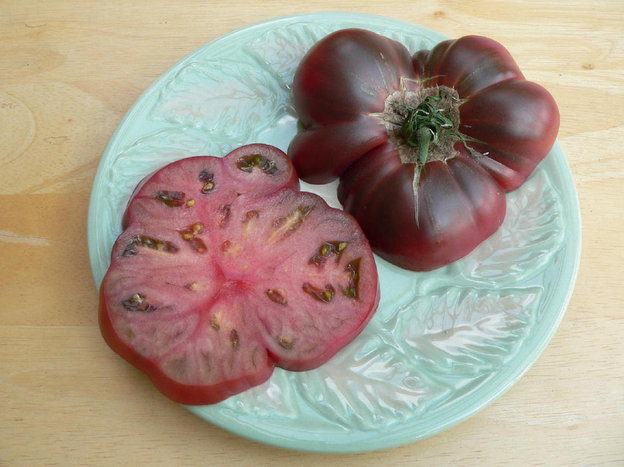
"caption": "A Cherokee purple tomato grown in Alaska in 2011. Photo: Sherry Shiesl/Tatiana's TOMATObase",
"description": null,
"title": "tomatoes - 640",
"credit": null,
"status": "inherit",
"isLoading": false,
"fetchFailed": false
},
"bayareabites_68250": {
"type": "attachments",
"id": "bayareabites_68250",
"meta": {
"index": "attachments_1716263798",
"site": "bayareabites",
"id": "68250",
"found": true
},
"parent": 68245,
"imgSizes": {
"kqedFullSize": {
"file": "https://ww2.kqed.org/app/uploads/sites/24/2013/08/listeria-640.jpg",
"width": 624,
"height": 350
}
},
"publishDate": 1376513255,
"modified": 1376513255,
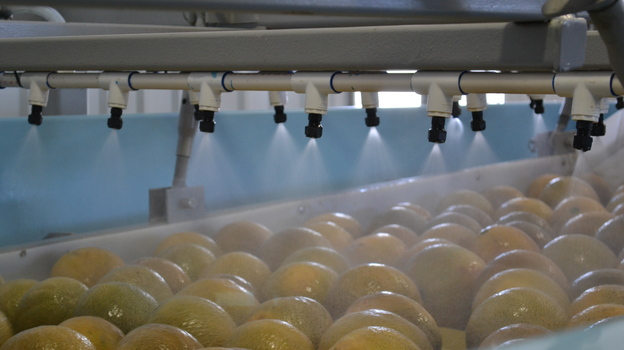
"caption": "A melon washing station sprays cantaloupes with clean water and sanitizer. Photo: Kristin Kidd/Colorado Public Radio",
"description": "A melon washing station sprays cantaloupes with clean water and sanitizer.",
"title": "dsc_0270",
"credit": null,
"status": "inherit",
"isLoading": false,
"fetchFailed": false
},
"bayareabites_68226": {
"type": "attachments",
"id": "bayareabites_68226",
"meta": {
"index": "attachments_1716263798",
"site": "bayareabites",
"id": "68226",
"found": true
},
"parent": 68222,
"imgSizes": {
"kqedFullSize": {
"file": "https://ww2.kqed.org/app/uploads/sites/24/2013/08/kebab-640.jpg",
"width": 624,
"height": 350
}
},
"publishDate": 1376462634,
"modified": 1376462634,
"caption": "Many different Middle Eastern cultures claim to have invented the kebab. Photo: iStockPhoto.com",
"description": "Many different Middle Eastern cultures claim to have invented the kebab.",
"title": "kebab2",
"credit": null,
"status": "inherit",
"isLoading": false,
"fetchFailed": false
},
"bayareabites_68211": {
"type": "attachments",
"id": "bayareabites_68211",
"meta": {
"index": "attachments_1716263798",
"site": "bayareabites",
"id": "68211",
"found": true
},
"parent": 68199,
"imgSizes": {
"kqedFullSize": {
"file": "https://ww2.kqed.org/app/uploads/sites/24/2013/08/lobster-640.jpg",
"width": 624,
"height": 350
}
},
"publishDate": 1376461635,
"modified": 1376461635,
"caption": "Lobster. Photo: iStock",
"description": "Lobster",
"title": "lobster",
"credit": null,
"status": "inherit",
"isLoading": false,
"fetchFailed": false
},
"bayareabites_68196": {
"type": "attachments",
"id": "bayareabites_68196",
"meta": {
"index": "attachments_1716263798",
"site": "bayareabites",
"id": "68196",
"found": true
},
"parent": 68191,
"imgSizes": {
"kqedFullSize": {
"file": "https://ww2.kqed.org/app/uploads/sites/24/2013/08/5115793807_9e843d90db_z.jpg",
"width": 640,
"height": 358
}
},
"publishDate": 1376433251,
"modified": 1376433251,
"caption": "Chipotle Mexican Grill. Photo: Aranami/Flickr",
"description": null,
"title": "5115793807_9e843d90db_z",
"credit": null,
"status": "inherit",
"isLoading": false,
"fetchFailed": false
},
"bayareabites_68169": {
"type": "attachments",
"id": "bayareabites_68169",
"meta": {
"index": "attachments_1716263798",
"site": "bayareabites",
"id": "68169",
"found": true
},
"parent": 68164,
"imgSizes": {
"kqedFullSize": {
"file": "https://ww2.kqed.org/app/uploads/sites/24/2013/08/beekeeper-640.jpg",
"width": 640,
"height": 398
}
},
"publishDate": 1376406717,
"modified": 1376406717,
"caption": "Beekeeper and Chairman of The London Beekeepers Association John Chapple installs a new bee hive on an urban rooftop garden in 2009 in London, England. The UK has an estimated 274,000 bee colonies, with each one containing around 20,000 bees.Photo: Dan Kitwood/Getty Images",
"description": "LONDON, ENGLAND - JUNE 29: Beekeeper and Chairman of The London Beekeepers Association John Chapple installs a new bee hive on an urban rooftop garden in Hackney on June 29, 2009 in London, England. The UK has an estimated 274,000 bee colonies producing an average of 6000 tonnes of honey per year. An estimated 44,000 beekeepers manage these hives with each one containing around 20,000 bees. It is estimated that honeybee numbers in the UK have fallen between ten and 15 per cent in the last two years. (Photo by Dan Kitwood/Getty Images)",
"title": "Urban Beekeeping On East London Rooftops",
"credit": null,
"status": "inherit",
"isLoading": false,
"fetchFailed": false
},
"bayareabites_68182": {
"type": "attachments",
"id": "bayareabites_68182",
"meta": {
"index": "attachments_1716263798",
"site": "bayareabites",
"id": "68182",
"found": true
},
"parent": 68173,
"imgSizes": {
"kqedFullSize": {
"file": "https://ww2.kqed.org/app/uploads/sites/24/2013/08/seeds-640.jpg",
"width": 624,
"height": 467
}
},
"publishDate": 1376407696,
"modified": 1376407696,
"caption": "Dave Dierig, research leader at the National Center for Genetic Resources Preservation, stands among the ceiling-high shelves that hold the 600,000 seed packets in this cold storage vault. Photo: Grace Hood/KUNC",
"description": "Dave Dierig, research leader at the National Center for Genetic Resources Preservation, stands among the ceiling-high shelves that hold the 600,000 seed packets in this cold storage vault.",
"title": "0725_seed-vault-dierig",
"credit": null,
"status": "inherit",
"isLoading": false,
"fetchFailed": false
},
"bayareabites_68110": {
"type": "attachments",
"id": "bayareabites_68110",
"meta": {
"index": "attachments_1716263798",
"site": "bayareabites",
"id": "68110",
"found": true
},
"parent": 68094,
"imgSizes": {
"kqedFullSize": {
"file": "https://ww2.kqed.org/app/uploads/sites/24/2013/08/history-640.jpg",
"width": 624,
"height": 468
}
},
"publishDate": 1376339441,
"modified": 1376339441,
"caption": "Maids at work in a large kitchen, circa 1890. Photo: W. and D. Downey/Getty Images",
"description": "Maids at work in a large kitchen, circa 1890.",
"title": "history - 640",
"credit": null,
"status": "inherit",
"isLoading": false,
"fetchFailed": false
},
"bayareabites_68079": {
"type": "attachments",
"id": "bayareabites_68079",
"meta": {
"index": "attachments_1716263798",
"site": "bayareabites",
"id": "68079",
"found": true
},
"parent": 68060,
"imgSizes": {
"kqedFullSize": {
"file": "https://ww2.kqed.org/app/uploads/sites/24/2013/08/water-640.jpg",
"width": 624,
"height": 350
}
},
"publishDate": 1376325475,
"modified": 1376325475,
"caption": "Big green storage tanks hold water for the planned Palestinian town of Rawabi in the West Bank, where water is often a source of contention. Photo: Emily Harris/NPR",
"description": "Big green storage tanks hold water for the planned Palestinian town of Rawabi in the West Bank, where water is often a source of contention.",
"title": "citywater_02",
"credit": null,
"status": "inherit",
"isLoading": false,
"fetchFailed": false
},
"bayareabites_68072": {
"type": "attachments",
"id": "bayareabites_68072",
"meta": {
"index": "attachments_1716263798",
"site": "bayareabites",
"id": "68072",
"found": true
},
"parent": 68066,
"imgSizes": {
"kqedFullSize": {
"file": "https://ww2.kqed.org/app/uploads/sites/24/2013/08/order-640.jpg",
"width": 624,
"height": 351
}
},
"publishDate": 1376323140,
"modified": 1376323140,
"caption": "A Seamless sticker is displayed next to the menu in the window of a restaurant in New York's Times Square on Saturday. Rivals Seamless and GrubHub said Friday that they have completed their combination, creating an online takeout company covering about 25,000 restaurants in 500 cities. Photo: Mary Altaffer/AP",
"description": "A Seamless sticker is displayed next to the menu in the window of a restaurant in New York's Times Square on Saturday. Rivals Seamless and GrubHub said Friday that they have completed their combination, creating an online takeout company covering about 25,000 restaurants in 500 cities.",
"title": "seamless",
"credit": null,
"status": "inherit",
"isLoading": false,
"fetchFailed": false
},
"bayareabites_68036": {
"type": "attachments",
"id": "bayareabites_68036",
"meta": {
"index": "attachments_1716263798",
"site": "bayareabites",
"id": "68036",
"found": true
},
"parent": 68031,
"imgSizes": {
"kqedFullSize": {
"file": "https://ww2.kqed.org/app/uploads/sites/24/2013/08/kvas-640.jpg",
"width": 624,
"height": 350
}
},
"publishDate": 1376248908,
"modified": 1376248908,
"caption": "A man drinks fresh kvas, the ancient Russian fermented-bread drink, in Zvenigorod, 35 miles west of Moscow. Photo: Dmitry Lovetsky/AP",
"description": "A man drinks fresh kvas, the ancient Russian fermented-bread drink, in Zvenigorod, 35 miles west of Moscow.",
"title": "ap080709013876",
"credit": null,
"status": "inherit",
"isLoading": false,
"fetchFailed": false
}
},
"audioPlayerReducer": {
"postId": "stream_live",
"isPaused": true,
"isPlaying": false,
"pfsActive": false,
"pledgeModalIsOpen": true,
"playerDrawerIsOpen": false,
"liveAudioPlayStartedAt": 0,
"liveAudioPlayContext": ""
},
"authorsReducer": {
"byline_bayareabites_68259": {
"type": "authors",
"id": "byline_bayareabites_68259",
"meta": {
"override": true
},
"slug": "byline_bayareabites_68259",
"name": "Michaeleen Doucleff",
"isLoading": false
},
"byline_bayareabites_68281": {
"type": "authors",
"id": "byline_bayareabites_68281",
"meta": {
"override": true
},
"slug": "byline_bayareabites_68281",
"name": "Eliza Barclay",
"isLoading": false
},
"byline_bayareabites_68245": {
"type": "authors",
"id": "byline_bayareabites_68245",
"meta": {
"override": true
},
"slug": "byline_bayareabites_68245",
"name": "Eric Whitney",
"isLoading": false
},
"byline_bayareabites_68222": {
"type": "authors",
"id": "byline_bayareabites_68222",
"meta": {
"override": true
},
"slug": "byline_bayareabites_68222",
"name": "Kelly McEvers",
"isLoading": false
},
"byline_bayareabites_68199": {
"type": "authors",
"id": "byline_bayareabites_68199",
"meta": {
"override": true
},
"slug": "byline_bayareabites_68199",
"name": "Laura McCandlish",
"isLoading": false
},
"byline_bayareabites_68191": {
"type": "authors",
"id": "byline_bayareabites_68191",
"meta": {
"override": true
},
"slug": "byline_bayareabites_68191",
"name": "Dan Charles",
"isLoading": false
},
"byline_bayareabites_68164": {
"type": "authors",
"id": "byline_bayareabites_68164",
"meta": {
"override": true
},
"slug": "byline_bayareabites_68164",
"name": "Dan Charles",
"isLoading": false
},
"byline_bayareabites_68173": {
"type": "authors",
"id": "byline_bayareabites_68173",
"meta": {
"override": true
},
"slug": "byline_bayareabites_68173",
"name": "Luke Runyon",
"isLoading": false
},
"byline_bayareabites_68094": {
"type": "authors",
"id": "byline_bayareabites_68094",
"meta": {
"override": true
},
"slug": "byline_bayareabites_68094",
"name": "Amy Guttman",
"isLoading": false
},
"byline_bayareabites_68060": {
"type": "authors",
"id": "byline_bayareabites_68060",
"meta": {
"override": true
},
"slug": "byline_bayareabites_68060",
"name": "Emily Harris",
"isLoading": false
},
"byline_bayareabites_68066": {
"type": "authors",
"id": "byline_bayareabites_68066",
"meta": {
"override": true
},
"slug": "byline_bayareabites_68066",
"name": "Ilya Marritz",
"isLoading": false
},
"byline_bayareabites_68031": {
"type": "authors",
"id": "byline_bayareabites_68031",
"meta": {
"override": true
},
"slug": "byline_bayareabites_68031",
"name": "Deena Prichep",
"isLoading": false
}
},
"pagesReducer": {
"bayareabites_category_npr-food": {
"type": "terms",
"id": "bayareabites_10916",
"meta": {
"index": "terms_1716263798",
"site": "bayareabites",
"id": "10916",
"score": 13.894709
},
"featImg": null,
"name": "NPR food",
"description": null,
"taxonomy": "category",
"headData": {
"twImgId": null,
"twTitle": null,
"ogTitle": null,
"ogImgId": null,
"twDescription": null,
"description": null,
"title": "NPR food Archives | KQED Bay Area Bites",
"ogDescription": null
},
"ttid": 5375,
"slug": "npr-food",
"isLoading": false,
"title": "NPR food",
"pageMeta": {
"site": "bayareabites",
"WpPageTemplate": "page-topic-editorial",
"currentPage": 70
},
"blocks": [
{
"blockName": "kqed/post-list",
"attrs": {
"layout": "cardArticle2",
"query": "posts/bayareabites?category=npr-food",
"seeMore": false,
"paginated": true,
"page": 70
}
},
{
"blockName": "kqed/ad"
}
]
}
},
"pfsSessionReducer": {},
"postsReducer": {
"stream_live": {
"type": "live",
"id": "stream_live",
"audioUrl": "https://hls.kqed.org/hls/kqed_app/playlist.m3u8",
"title": "Live Stream",
"excerpt": "Live Stream information currently unavailable.",
"link": "/radio",
"featImg": "",
"label": {
"name": "KQED Live",
"link": "/"
}
},
"stream_kqedNewscast": {
"type": "posts",
"id": "stream_kqedNewscast",
"audioUrl": "https://www.kqed.org/.stream/anon/radio/RDnews/newscast.mp3?_=1",
"title": "KQED Newscast",
"featImg": "",
"label": {
"name": "88.5 FM",
"link": "/"
}
},
"bayareabites_68259": {
"type": "posts",
"id": "bayareabites_68259",
"meta": {
"index": "posts_1716263798",
"site": "bayareabites",
"id": "68259",
"score": null,
"sort": [
1376586859000
]
},
"parent": 0,
"labelTerm": {
"site": "bayareabites"
},
"blocks": [],
"publishDate": 1376586859,
"format": "aside",
"disqusTitle": "If You Liked that Wine, You Should've Put a Ring on It",
"title": "If You Liked that Wine, You Should've Put a Ring on It",
"headTitle": "Bay Area Bites | KQED Food",
"content": "\u003cfigure id=\"attachment_68271\" class=\"wp-caption aligncenter\" style=\"max-width: 948px\">\u003ca href=\"http://ww2.kqed.org/bayareabites/wp-content/uploads/sites/24/2013/08/rings-wine-full.jpg\">\u003cimg src=\"http://ww2.kqed.org/bayareabites/wp-content/uploads/sites/24/2013/08/rings-wine-full.jpg\" alt=\"Blurring the lines between jewelry and stemware, designer Merve Kahraman created a sassy line of tasting rings for the cognac powerhouse Remy Martin. Photo: Courtesy of Remy Martin\" width=\"948\" height=\"869\" class=\"size-full wp-image-68271\">\u003c/a>\u003cfigcaption class=\"wp-caption-text\">Blurring the lines between jewelry and stemware, designer Merve Kahraman created a sassy line of tasting rings for the cognac powerhouse Remy Martin. Photo: Courtesy of Remy Martin\u003c/figcaption>\u003c/figure>\n\u003cp>[gallery type=\"slideshow\" link=\"file\" ids=\"68273,68274,68275\" width=\"1000\"]\u003c/p>\n\u003cp>Post by Michaeleen Doucleff, \u003ca href=\"http://www.npr.org/blogs/thesalt/2013/08/15/211399891/if-you-liked-that-wine-you-shouldve-put-a-ring-on-it\">The Salt at NPR Food\u003c/a> (8/15/2013) \u003c/p>\n\u003cp>Oh, Beyonce would be so proud.\u003c/p>\n\u003cp>Blurring the lines between jewelry and glassware, a Turkish art student has designed a set of rings made specifically for sniffing and sipping Remy Martin cognac and other adult beverages.\u003c/p>\n\u003cp>One ring perches a petite wineglass upon your finger. Another is a miniature snifter, attached to your hand — so you'll always be ready if you stumble upon some \u003ca href=\"http://www.remymartin.com/en/news#/remy-martin-vsop-and-robin-thicke-design-signature-limited-edition-bottle/\">Robin Thicke limited edition\u003c/a> V.S.O.P.\u003c/p>\n\u003cp>[ad fullwidth]\u003c/p>\n\u003cp>For ladies and gents uncomfortable with flashing big bling, designer Merve Kahraman also created a leather arm — or thigh — strap for holding the sassy rings.\u003c/p>\n\u003cfigure id=\"attachment_68276\" class=\"wp-caption aligncenter\" style=\"max-width: 1120px\">\u003ca href=\"http://ww2.kqed.org/bayareabites/wp-content/uploads/sites/24/2013/08/rings5.jpg\">\u003cimg src=\"http://ww2.kqed.org/bayareabites/wp-content/uploads/sites/24/2013/08/rings5.jpg\" alt=\"Designer Merve Kahraman also created a leather cuff for carrying the cognac tasting rings. Photo: Courtesy of Remy Martin\" width=\"1120\" height=\"1028\" class=\"size-full wp-image-68276\">\u003c/a>\u003cfigcaption class=\"wp-caption-text\">Designer Merve Kahraman also created a leather cuff for carrying the cognac tasting rings. Photo: Courtesy of Remy Martin\u003c/figcaption>\u003c/figure>\n\u003cp>The wearable sippers arose from a collaboration between design student \u003ca href=\"http://www.mervekahraman.com/\">Merve Kahraman\u003c/a>, who studies at the Central Saint Martins College of Art and Design in London, and Remy Martin, one of the world's largest producers of cognac, or distilled wine made from the Cognac region in France.\u003c/p>\n\u003cp>\"Basically, we asked the students to link our cognac — the bottle, the decanteur and the way of tasting cognac — with the art of seduction,\" Manon Missonge, a media coordinator at \u003ca href=\"http://www.remymartin.com/\">Remy Martin\u003c/a>, tells The Salt. \"Merve investigated the tasting ritual from the feminine perspective.\"\u003c/p>\n\u003cfigure id=\"attachment_68277\" class=\"wp-caption aligncenter\" style=\"max-width: 624px\">\u003ca href=\"http://ww2.kqed.org/bayareabites/wp-content/uploads/sites/24/2013/08/ringswine-6.png\">\u003cimg src=\"http://ww2.kqed.org/bayareabites/wp-content/uploads/sites/24/2013/08/ringswine-6.png\" alt=\"The tastevin: Centuries ago, Burgundy winemakers designed a small, silver necklace for tasting in dark cellars. Photo: National Museum of American History/Flickr\" width=\"624\" height=\"467\" class=\"size-full wp-image-68277\">\u003c/a>\u003cfigcaption class=\"wp-caption-text\">The tastevin: Centuries ago, Burgundy winemakers designed a small, silver necklace for tasting in dark cellars. Photo: National Museum of American History/Flickr\u003c/figcaption>\u003c/figure>\n\u003cp>\"People have this image that cognac is more a drink for men,\" Missonge says. \"But with it being mixed into cocktails, minds are changing quickly.\"\u003c/p>\n\u003cp>Indeed, Bey herself has been \u003ca href=\"http://beyonce.wikia.com/wiki/User_blog:BeyonceEditor/Beyonc%C3%A9_Sips_D'USSE_Cognac_Cocktails_at_La_Marina\">photographed\u003c/a> recently sipping on some golden distilled wine.\u003c/p>\n\u003cp>If you're really into wine tasting, these rings are clearly a classier way to keep track of your stemware than one of these \u003ca href=\"http://www.boozenews.com/booze-news/is-this-the-geekiest-or-coolest-wine-glass-holder-necklaces/\">versions\u003c/a>. (Frankly, those look like the fanny packs of tasting accessories).\u003c/p>\n\u003cp>But alas, Remy Martin only produced the jewelry for a few art exhibits, and the rings aren't going to be available commercially.\u003c/p>\n\u003cp>Don't fret. For all you sassy drinkers itching to don your glassware, there's always an old-fashioned \u003ca href=\"http://collections.si.edu/search/results.htm?q=record_ID:nmah_1313492\">tastevin\u003c/a>.\u003c/p>\n\u003cp>Hundreds of years ago, winemakers in Burgundy, France, wore a small, silver cup around their necks for tasting and judging wine under candlelight. The vessels have a bumpy surface on the inside that reflects light, allowing winemakers to see impurities in their creations sans electricity.\u003c/p>\n\u003cp>The tastevin tradition has been passed down through the generations. These days, the little saucers have become a symbol of membership in the gourmet society \u003ca href=\"http://www.tastevin-bourgogne.com/en/\">La Confrerie des Chevaliers du Tastevin\u003c/a>, which translates as \"brotherhood of the Knights of the Wine Cup.\"\u003c/p>\n\u003cp>And guess who was a member of the group — and owned his own tastevin? Julia Child's husband, Paul.\u003c/p>\n\u003cp>\"Paul loved wine and was instrumental in introducing fine wines to Julia,\" says Paula Johnson, who curated the exhibit at the Smithsonian's American History Museum that featured \u003ca href=\"http://www.npr.org/programs/atc/features/2002/aug/juliachild/\">Julia Child's kitchen\u003c/a>.\u003c/p>\n\u003cp>\"We just found the tastevin hanging right there next to the kitchen sink, knives and stuff,\" she says. \"It had Paul's initials engraved on it.\u003c/p>\n\u003cp>\"We just don't know if he used it, but the things that are hanging in the kitchen were the things they used. It was their design philosopher.\"\u003c/p>\n\u003cp>We think Julia would have rocked a cognac ring. Bon appetite! \u003c/p>\n\u003cp>\u003c/p>\n\u003cp>\u003cem>Copyright 2013 \u003ca href=\"http://www.npr.org\">NPR\u003c/a>. \u003c/em>\u003c/p>\n\n",
"disqusIdentifier": "68259 http://blogs.kqed.org/bayareabites/?p=68259",
"disqusUrl": "https://ww2.kqed.org/bayareabites/2013/08/15/if-you-liked-that-wine-you-shouldve-put-a-ring-on-it/",
"stats": {
"hasVideo": false,
"hasChartOrMap": false,
"hasAudio": false,
"hasPolis": false,
"wordCount": 613,
"hasGoogleForm": false,
"hasGallery": true,
"hasHearkenModule": false,
"iframeSrcs": [],
"paragraphCount": 23
},
"modified": 1376586859,
"excerpt": "An art student has designed a line of jewelry specifically for tasting wine and cognac. One ring perches a petite wineglass atop your finger. Another is a miniature snifter. The spirit sippers aren't available for purchase, but if you're itching to don your stemware, try an old-fashioned tastevin.",
"headData": {
"twImgId": "",
"twTitle": "",
"ogTitle": "",
"ogImgId": "",
"twDescription": "",
"description": "An art student has designed a line of jewelry specifically for tasting wine and cognac. One ring perches a petite wineglass atop your finger. Another is a miniature snifter. The spirit sippers aren't available for purchase, but if you're itching to don your stemware, try an old-fashioned tastevin.",
"title": "If You Liked that Wine, You Should've Put a Ring on It | KQED",
"ogDescription": "",
"schema": {
"@context": "https://schema.org",
"@type": "Article",
"headline": "If You Liked that Wine, You Should've Put a Ring on It",
"datePublished": "2013-08-15T10:14:19-07:00",
"dateModified": "2013-08-15T10:14:19-07:00",
"image": "https://cdn.kqed.org/wp-content/uploads/2020/02/KQED-OG-Image@1x.png"
}
},
"guestAuthors": [],
"slug": "if-you-liked-that-wine-you-shouldve-put-a-ring-on-it",
"status": "publish",
"nprApiLink": "http://api.npr.org/query?id=211399891&apiKey=MDAxOTAwOTE4MDEyMTkxMDAzNjczZDljZA004",
"nprByline": "Michaeleen Doucleff",
"nprStoryDate": "Thu, 15 Aug 2013 10:57:00 -0400",
"nprLastModifiedDate": "Thu, 15 Aug 2013 10:57:41 -0400",
"nprHtmlLink": "http://www.npr.org/blogs/thesalt/2013/08/15/211399891/if-you-liked-that-wine-you-shouldve-put-a-ring-on-it?ft=3&f=211399891",
"nprStoryId": "211399891",
"nprRetrievedStory": "1",
"nprPubDate": "Thu, 15 Aug 2013 10:57:00 -0400",
"path": "/bayareabites/68259/if-you-liked-that-wine-you-shouldve-put-a-ring-on-it",
"audioTrackLength": null,
"parsedContent": [
{
"type": "contentString",
"content": "\u003cdiv class=\"post-body\">\u003cp>\u003cfigure id=\"attachment_68271\" class=\"wp-caption aligncenter\" style=\"max-width: 948px\">\u003ca href=\"http://ww2.kqed.org/bayareabites/wp-content/uploads/sites/24/2013/08/rings-wine-full.jpg\">\u003cimg src=\"http://ww2.kqed.org/bayareabites/wp-content/uploads/sites/24/2013/08/rings-wine-full.jpg\" alt=\"Blurring the lines between jewelry and stemware, designer Merve Kahraman created a sassy line of tasting rings for the cognac powerhouse Remy Martin. Photo: Courtesy of Remy Martin\" width=\"948\" height=\"869\" class=\"size-full wp-image-68271\">\u003c/a>\u003cfigcaption class=\"wp-caption-text\">Blurring the lines between jewelry and stemware, designer Merve Kahraman created a sassy line of tasting rings for the cognac powerhouse Remy Martin. Photo: Courtesy of Remy Martin\u003c/figcaption>\u003c/figure>\n\u003cp>\u003c/p>\u003c/div>",
"attributes": {
"named": {},
"numeric": []
}
},
{
"type": "component",
"content": "",
"name": "gallery",
"attributes": {
"named": {
"type": "slideshow",
"link": "file",
"ids": "68273,68274,68275",
"width": "1000",
"label": ""
},
"numeric": []
}
},
{
"type": "contentString",
"content": "\u003cdiv class=\"post-body\">\u003cp>\u003c/p>\n\u003cp>Post by Michaeleen Doucleff, \u003ca href=\"http://www.npr.org/blogs/thesalt/2013/08/15/211399891/if-you-liked-that-wine-you-shouldve-put-a-ring-on-it\">The Salt at NPR Food\u003c/a> (8/15/2013) \u003c/p>\n\u003cp>Oh, Beyonce would be so proud.\u003c/p>\n\u003cp>Blurring the lines between jewelry and glassware, a Turkish art student has designed a set of rings made specifically for sniffing and sipping Remy Martin cognac and other adult beverages.\u003c/p>\n\u003cp>One ring perches a petite wineglass upon your finger. Another is a miniature snifter, attached to your hand — so you'll always be ready if you stumble upon some \u003ca href=\"http://www.remymartin.com/en/news#/remy-martin-vsop-and-robin-thicke-design-signature-limited-edition-bottle/\">Robin Thicke limited edition\u003c/a> V.S.O.P.\u003c/p>\n\u003cp>\u003c/p>\u003c/div>",
"attributes": {
"named": {},
"numeric": []
}
},
{
"type": "component",
"content": "",
"name": "ad",
"attributes": {
"named": {
"label": "fullwidth"
},
"numeric": [
"fullwidth"
]
}
},
{
"type": "contentString",
"content": "\u003cdiv class=\"post-body\">\u003cp>\u003c/p>\n\u003cp>For ladies and gents uncomfortable with flashing big bling, designer Merve Kahraman also created a leather arm — or thigh — strap for holding the sassy rings.\u003c/p>\n\u003cfigure id=\"attachment_68276\" class=\"wp-caption aligncenter\" style=\"max-width: 1120px\">\u003ca href=\"http://ww2.kqed.org/bayareabites/wp-content/uploads/sites/24/2013/08/rings5.jpg\">\u003cimg src=\"http://ww2.kqed.org/bayareabites/wp-content/uploads/sites/24/2013/08/rings5.jpg\" alt=\"Designer Merve Kahraman also created a leather cuff for carrying the cognac tasting rings. Photo: Courtesy of Remy Martin\" width=\"1120\" height=\"1028\" class=\"size-full wp-image-68276\">\u003c/a>\u003cfigcaption class=\"wp-caption-text\">Designer Merve Kahraman also created a leather cuff for carrying the cognac tasting rings. Photo: Courtesy of Remy Martin\u003c/figcaption>\u003c/figure>\n\u003cp>The wearable sippers arose from a collaboration between design student \u003ca href=\"http://www.mervekahraman.com/\">Merve Kahraman\u003c/a>, who studies at the Central Saint Martins College of Art and Design in London, and Remy Martin, one of the world's largest producers of cognac, or distilled wine made from the Cognac region in France.\u003c/p>\n\u003cp>\"Basically, we asked the students to link our cognac — the bottle, the decanteur and the way of tasting cognac — with the art of seduction,\" Manon Missonge, a media coordinator at \u003ca href=\"http://www.remymartin.com/\">Remy Martin\u003c/a>, tells The Salt. \"Merve investigated the tasting ritual from the feminine perspective.\"\u003c/p>\n\u003cfigure id=\"attachment_68277\" class=\"wp-caption aligncenter\" style=\"max-width: 624px\">\u003ca href=\"http://ww2.kqed.org/bayareabites/wp-content/uploads/sites/24/2013/08/ringswine-6.png\">\u003cimg src=\"http://ww2.kqed.org/bayareabites/wp-content/uploads/sites/24/2013/08/ringswine-6.png\" alt=\"The tastevin: Centuries ago, Burgundy winemakers designed a small, silver necklace for tasting in dark cellars. Photo: National Museum of American History/Flickr\" width=\"624\" height=\"467\" class=\"size-full wp-image-68277\">\u003c/a>\u003cfigcaption class=\"wp-caption-text\">The tastevin: Centuries ago, Burgundy winemakers designed a small, silver necklace for tasting in dark cellars. Photo: National Museum of American History/Flickr\u003c/figcaption>\u003c/figure>\n\u003cp>\"People have this image that cognac is more a drink for men,\" Missonge says. \"But with it being mixed into cocktails, minds are changing quickly.\"\u003c/p>\n\u003cp>Indeed, Bey herself has been \u003ca href=\"http://beyonce.wikia.com/wiki/User_blog:BeyonceEditor/Beyonc%C3%A9_Sips_D'USSE_Cognac_Cocktails_at_La_Marina\">photographed\u003c/a> recently sipping on some golden distilled wine.\u003c/p>\n\u003cp>If you're really into wine tasting, these rings are clearly a classier way to keep track of your stemware than one of these \u003ca href=\"http://www.boozenews.com/booze-news/is-this-the-geekiest-or-coolest-wine-glass-holder-necklaces/\">versions\u003c/a>. (Frankly, those look like the fanny packs of tasting accessories).\u003c/p>\n\u003cp>But alas, Remy Martin only produced the jewelry for a few art exhibits, and the rings aren't going to be available commercially.\u003c/p>\n\u003cp>Don't fret. For all you sassy drinkers itching to don your glassware, there's always an old-fashioned \u003ca href=\"http://collections.si.edu/search/results.htm?q=record_ID:nmah_1313492\">tastevin\u003c/a>.\u003c/p>\n\u003cp>Hundreds of years ago, winemakers in Burgundy, France, wore a small, silver cup around their necks for tasting and judging wine under candlelight. The vessels have a bumpy surface on the inside that reflects light, allowing winemakers to see impurities in their creations sans electricity.\u003c/p>\n\u003cp>The tastevin tradition has been passed down through the generations. These days, the little saucers have become a symbol of membership in the gourmet society \u003ca href=\"http://www.tastevin-bourgogne.com/en/\">La Confrerie des Chevaliers du Tastevin\u003c/a>, which translates as \"brotherhood of the Knights of the Wine Cup.\"\u003c/p>\n\u003cp>And guess who was a member of the group — and owned his own tastevin? Julia Child's husband, Paul.\u003c/p>\n\u003cp>\"Paul loved wine and was instrumental in introducing fine wines to Julia,\" says Paula Johnson, who curated the exhibit at the Smithsonian's American History Museum that featured \u003ca href=\"http://www.npr.org/programs/atc/features/2002/aug/juliachild/\">Julia Child's kitchen\u003c/a>.\u003c/p>\n\u003cp>\"We just found the tastevin hanging right there next to the kitchen sink, knives and stuff,\" she says. \"It had Paul's initials engraved on it.\u003c/p>\n\u003cp>\"We just don't know if he used it, but the things that are hanging in the kitchen were the things they used. It was their design philosopher.\"\u003c/p>\n\u003cp>We think Julia would have rocked a cognac ring. Bon appetite! \u003c/p>\n\u003cp>\u003c/p>\n\u003cp>\u003cem>Copyright 2013 \u003ca href=\"http://www.npr.org\">NPR\u003c/a>. \u003c/em>\u003c/p>\n\n\u003c/div>\u003c/p>",
"attributes": {
"named": {},
"numeric": []
}
}
],
"link": "/bayareabites/68259/if-you-liked-that-wine-you-shouldve-put-a-ring-on-it",
"authors": [
"byline_bayareabites_68259"
],
"categories": [
"bayareabites_1244",
"bayareabites_2407",
"bayareabites_10916",
"bayareabites_119"
],
"tags": [
"bayareabites_12220",
"bayareabites_12221",
"bayareabites_12222"
],
"featImg": "bayareabites_68278",
"label": "bayareabites"
},
"bayareabites_68281": {
"type": "posts",
"id": "bayareabites_68281",
"meta": {
"index": "posts_1716263798",
"site": "bayareabites",
"id": "68281",
"score": null,
"sort": [
1376585822000
]
},
"parent": 0,
"labelTerm": {
"site": "bayareabites"
},
"blocks": [],
"publishDate": 1376585822,
"format": "aside",
"disqusTitle": "How a Seed Saver Discovered One of Our Favorite Tomatoes",
"title": "How a Seed Saver Discovered One of Our Favorite Tomatoes",
"headTitle": "Bay Area Bites | KQED Food",
"content": "\u003cfigure id=\"attachment_68288\" class=\"wp-caption aligncenter\" style=\"max-width: 1120px\">\u003ca href=\"http://ww2.kqed.org/bayareabites/wp-content/uploads/sites/24/2013/08/tomatoes-full.jpg\">\u003cimg src=\"http://ww2.kqed.org/bayareabites/wp-content/uploads/sites/24/2013/08/tomatoes-full.jpg\" alt=\"A Cherokee purple tomato grown in Alaska in 2011. Photo: Sherry Shiesl/Tatiana's TOMATObase\" width=\"1120\" height=\"839\" class=\"size-full wp-image-68288\">\u003c/a>\u003cfigcaption class=\"wp-caption-text\">A Cherokee purple tomato grown in Alaska in 2011. Photo: Sherry Shiesl/Tatiana's TOMATObase\u003c/figcaption>\u003c/figure>\n\u003cp>Post by Eliza Barclay, The Salt at NPR Food (8/14/2013)\u003c/p>\n\u003cp>Fortunately for those of us who are suckers for novelty, every year fruits and vegetables seem to come in more bewitching colors, shapes and flavors. Lately, we've been tickled by the \u003ca href=\"http://ww2.kqed.org/bayareabites/2013/08/06/the-cotton-candy-grape-a-sweet-spin-on-designer-fruit/\">cotton candy grape\u003c/a> and the vibrant orange \u003ca href=\"http://www.npr.org/blogs/thesalt/2012/07/12/156683097/an-eggplant-of-a-different-color-can-be-just-as-sweet\">Turkish eggplant\u003c/a>. (Egg yolks can be ghostly white, too, but that's \u003ca href=\"http://www.npr.org/blogs/thesalt/2013/07/12/201501977/help-my-egg-yolks-are-freakishly-white\">another story\u003c/a>.)\u003c/p>\n\u003cp>If you go to the farmers market this time of year, tomatoes are strutting their stuff in all sorts of glorious and quirky hues: green striped, white, pink, even purplish-brown. They boast intriguing names, like Mortgage Lifter, \u003ca href=\"http://bonnieplants.com/products/arkansas-traveler-heirloom-tomato\">Arkansas Traveler\u003c/a> and \u003ca href=\"http://www.rareseeds.com/pink-berkeley-tie-dye-tomato/\">Pink Berkeley Tie Dye\u003c/a>. Some are true heirlooms, passed down over decades or centuries. Others are brand new to the world, the progeny of the latest cross-breeding experiments.\u003c/p>\n\u003cp>We got to wondering just who, besides farmers, is to thank for this expanding panoply. And we learned that while there are many professional breeders tinkering with the desirable traits that show up in the new varieties, amateur breeders — passionate seed savers and collectors — also play a vital role in discovering fruit and vegetable varieties guarded and nurtured by families over generations. Every now and then, these amateurs convince seed companies that the rest of the world will want to enjoy something they've discovered.\u003c/p>\n\u003cp>\u003ca href=\"http://nctomatoman.weebly.com/\">Craig LeHoullier\u003c/a>, a retired chemist from Raleigh, N.C., can take credit for introducing us to the Cherokee Purple tomato, one of the most popular heirlooms grown and sold today. You'd be forgiven if your first impression of this fruit, with its ungainly bulges and tones of brown, \u003ca href=\"http://www.npr.org/blogs/thesalt/2012/06/28/155917345/how-the-taste-of-tomatoes-went-bad-and-kept-on-going\">green\u003c/a> and purple, was dismissive. But its flavor consistently knocks socks off, with its balance of sweet, acid and savory — even a hint of smoke.\u003c/p>\n\u003cp>[ad fullwidth]\u003c/p>\n\u003cp>LeHoullier is — it's fair to say — obsessed with tomatoes and their stories. With more than 3,000 varieties, he has one of the largest personal tomato collections in the country. In his small yard at his home in the Raleigh suburbs, he can grow only 200 plants, so each year he must pore over the collection to decide what makes the cut.\u003c/p>\n\u003cp>An avid gardener for much of his life, LeHoullier, 57, joined the Seed Savers Exchange in 1986 and began connecting with other gardeners and seed savers to trade tips and favorite varieties.\u003c/p>\n\u003cp>Soon, LeHoullier had built a reputation as a tomato connoisseur, joining a small group of other hard-core tomato seed savers committed to reviving heirlooms. (Heirlooms are much \u003ca href=\"http://blog.seedsavers.org/open-pollinated-heirloom-and-hybrid-seeds/\">friendlier to seed saving\u003c/a> than the ubiquitous red hybrid tomatoes that dominate the commercial market.)\u003c/p>\n\u003cp>One day in 1990, a packet of tomato seeds arrived in LeHoullier's mail with a \u003ca href=\"http://nctomatoman.topcities.com/Reference/CherokeePurple.jpg\">handwritten note\u003c/a>. The sender was John Green of Sevierville, Tenn., who wrote that the seeds came from very good tomatoes he'd gotten from a woman who received them from her neighbors. The neighbors said that the varietal had been in their family for 100 years, and that the seeds were originally received from Cherokee Indians.\u003c/p>\n\u003cp>\"It was a question of being in the right place at the right time,\" says LeHoullier, who's now working on a book on heirloom tomatoes. \"Green had the forethought to send them to me, hoping that I would love them.\"\u003c/p>\n\u003cp>His hunch was correct, and LeHoullier was so impressed with the tomatoes the color of a \"bad leg bruise\" that he named them Cherokee Purple and sent his friends at a few seed companies some seeds.\u003c/p>\n\u003cp>\"If Craig hadn't said, 'This tomato is really amazing,' I doubt we would have tried it,\" says Ira Wallace, who coordinates the variety selection for Southern Exposure Seed Exchange, a cooperative seed company that's helped to promote and disseminate many heirloom varieties. \"It was an ugly tomato, and before all these heirlooms came along, all we knew were red and yellow tomatoes.\"\u003c/p>\n\u003cp>\u003ca href=\"http://www.johnnyseeds.com/t-Message.aspx\">Rob Johnston\u003c/a> is the founder and CEO of Johnny's Selected Seeds, another company that got the Cherokee Purple from LeHoullier and now does good business from the seed. Johnston says it's rare that an amateur seed saver discovers a variety that becomes commercially popular, but it's more likely for tomatoes than, say, carrots.\u003c/p>\n\u003cp>\"Tomatoes are always a favorite of seed savers because they're easy to save,\" says Johnston. \"And tomato seeds have long viability, so they might sit in a glass jar in somebody's pantry for many years before someone discovers it and decides to keep growing it.\" But those purple carrots you might spy at the market? That's the work of professional breeders, says Johnston.\u003c/p>\n\u003cfigure id=\"attachment_68289\" class=\"wp-caption aligncenter\" style=\"max-width: 1120px\">\u003ca href=\"http://ww2.kqed.org/bayareabites/wp-content/uploads/sites/24/2013/08/tomatoes-2.jpg\">\u003cimg src=\"http://ww2.kqed.org/bayareabites/wp-content/uploads/sites/24/2013/08/tomatoes-2.jpg\" alt=\"Joe Brunetti, a horticulturalist with Smithsonian Gardens, prunes Cherokee Purple tomato vines at the American Museum of Natural History Victory Garden. Photo: Eliza Barclay/NPR\" width=\"1120\" height=\"839\" class=\"size-full wp-image-68289\">\u003c/a>\u003cfigcaption class=\"wp-caption-text\">Joe Brunetti, a horticulturalist with Smithsonian Gardens, prunes Cherokee Purple tomato vines at the American Museum of Natural History Victory Garden. Photo: Eliza Barclay/NPR\u003c/figcaption>\u003c/figure>\n\u003cp>As for the family lore that often accompanies heirloom seeds like the Cherokee Purple? Its accuracy is always hard to judge, says LeHoullier. \"It's one of the more fascinating and frustrating aspects of pursuing heirlooms. For the vast majority we have a tantalizing taste of history, but there are always more questions to ask,\" he says.\u003c/p>\n\u003cp>As for the Cherokee legend, Joe Brunetti, a horticulturalist with Smithsonian Gardens who manages the \u003ca href=\"http://gardens.si.edu/our-gardens/victory-garden.html\">Victory Garden\u003c/a> at the National Museum of American History, says it's quite conceivable that the Cherokees were growing tomatoes in Tennessee over 100 years ago.\u003c/p>\n\u003cp>\"We grow the Cherokee Purple in the Victory Garden because it tolerates the humidity and diseases here better than the other dark tomatoes,\" says Brunetti. \"That makes sense if it comes from the Tennessee River Valley originally, which is also humid.\"\u003c/p>\n\u003cp>And seed savers say discoveries like the Cherokee Purple help preserve not just \u003ca href=\"http://www.seedsavers.org/Preservation/Genetic-Resources-Preservation/\">genetic diversity\u003c/a> but also history.\u003c/p>\n\u003cp>\"The stories themselves offer a snapshot of a time and place and region — they're a real wealth of cultural history,\" says Sara Straate, who leads \u003ca href=\"http://www.seedsavers.org/Preservation/Collection-Origins-Research-Effort/\">a project\u003c/a> to document the stories behind the seeds in the collection of the Seed Savers Exchange. \u003c/p>\n\u003cp>\u003c/p>\n\u003cp>\u003cem>Copyright 2013 \u003ca href=\"http://www.npr.org\">NPR\u003c/a>. \u003c/em>\u003c/p>\n\n",
"disqusIdentifier": "68281 http://blogs.kqed.org/bayareabites/?p=68281",
"disqusUrl": "https://ww2.kqed.org/bayareabites/2013/08/15/how-a-seed-saver-discovered-one-of-our-favorite-tomatoes/",
"stats": {
"hasVideo": false,
"hasChartOrMap": false,
"hasAudio": false,
"hasPolis": false,
"wordCount": 1018,
"hasGoogleForm": false,
"hasGallery": false,
"hasHearkenModule": false,
"iframeSrcs": [],
"paragraphCount": 22
},
"modified": 1376585822,
"excerpt": "At the farmers market this time of year, tomatoes are strutting their stuff in all sorts of glorious and quirky colors: green striped, white, pink, purplish-brown. Consumers have seed savers and amateur breeders to thank for discovering and sharing some of these heirloom varieties, like the Cherokee Purple.",
"headData": {
"twImgId": "",
"twTitle": "",
"ogTitle": "",
"ogImgId": "",
"twDescription": "",
"description": "At the farmers market this time of year, tomatoes are strutting their stuff in all sorts of glorious and quirky colors: green striped, white, pink, purplish-brown. Consumers have seed savers and amateur breeders to thank for discovering and sharing some of these heirloom varieties, like the Cherokee Purple.",
"title": "How a Seed Saver Discovered One of Our Favorite Tomatoes | KQED",
"ogDescription": "",
"schema": {
"@context": "https://schema.org",
"@type": "Article",
"headline": "How a Seed Saver Discovered One of Our Favorite Tomatoes",
"datePublished": "2013-08-15T09:57:02-07:00",
"dateModified": "2013-08-15T09:57:02-07:00",
"image": "https://cdn.kqed.org/wp-content/uploads/2020/02/KQED-OG-Image@1x.png"
}
},
"guestAuthors": [],
"slug": "how-a-seed-saver-discovered-one-of-our-favorite-tomatoes",
"status": "publish",
"nprApiLink": "http://api.npr.org/query?id=211372152&apiKey=MDAxOTAwOTE4MDEyMTkxMDAzNjczZDljZA004",
"nprByline": "Eliza Barclay",
"nprStoryDate": "Wed, 14 Aug 2013 12:31:00 -0400",
"nprLastModifiedDate": "Wed, 14 Aug 2013 16:36:16 -0400",
"nprHtmlLink": "http://www.npr.org/blogs/thesalt/2013/08/12/211372152/how-a-seed-saver-discovered-one-of-our-favorite-tomatoes?ft=3&f=211372152",
"nprStoryId": "211372152",
"nprRetrievedStory": "1",
"nprPubDate": "Wed, 14 Aug 2013 16:36:00 -0400",
"path": "/bayareabites/68281/how-a-seed-saver-discovered-one-of-our-favorite-tomatoes",
"audioTrackLength": null,
"parsedContent": [
{
"type": "contentString",
"content": "\u003cdiv class=\"post-body\">\u003cp>\u003cfigure id=\"attachment_68288\" class=\"wp-caption aligncenter\" style=\"max-width: 1120px\">\u003ca href=\"http://ww2.kqed.org/bayareabites/wp-content/uploads/sites/24/2013/08/tomatoes-full.jpg\">\u003cimg src=\"http://ww2.kqed.org/bayareabites/wp-content/uploads/sites/24/2013/08/tomatoes-full.jpg\" alt=\"A Cherokee purple tomato grown in Alaska in 2011. Photo: Sherry Shiesl/Tatiana's TOMATObase\" width=\"1120\" height=\"839\" class=\"size-full wp-image-68288\">\u003c/a>\u003cfigcaption class=\"wp-caption-text\">A Cherokee purple tomato grown in Alaska in 2011. Photo: Sherry Shiesl/Tatiana's TOMATObase\u003c/figcaption>\u003c/figure>\n\u003cp>Post by Eliza Barclay, The Salt at NPR Food (8/14/2013)\u003c/p>\n\u003cp>Fortunately for those of us who are suckers for novelty, every year fruits and vegetables seem to come in more bewitching colors, shapes and flavors. Lately, we've been tickled by the \u003ca href=\"http://ww2.kqed.org/bayareabites/2013/08/06/the-cotton-candy-grape-a-sweet-spin-on-designer-fruit/\">cotton candy grape\u003c/a> and the vibrant orange \u003ca href=\"http://www.npr.org/blogs/thesalt/2012/07/12/156683097/an-eggplant-of-a-different-color-can-be-just-as-sweet\">Turkish eggplant\u003c/a>. (Egg yolks can be ghostly white, too, but that's \u003ca href=\"http://www.npr.org/blogs/thesalt/2013/07/12/201501977/help-my-egg-yolks-are-freakishly-white\">another story\u003c/a>.)\u003c/p>\n\u003cp>If you go to the farmers market this time of year, tomatoes are strutting their stuff in all sorts of glorious and quirky hues: green striped, white, pink, even purplish-brown. They boast intriguing names, like Mortgage Lifter, \u003ca href=\"http://bonnieplants.com/products/arkansas-traveler-heirloom-tomato\">Arkansas Traveler\u003c/a> and \u003ca href=\"http://www.rareseeds.com/pink-berkeley-tie-dye-tomato/\">Pink Berkeley Tie Dye\u003c/a>. Some are true heirlooms, passed down over decades or centuries. Others are brand new to the world, the progeny of the latest cross-breeding experiments.\u003c/p>\n\u003cp>We got to wondering just who, besides farmers, is to thank for this expanding panoply. And we learned that while there are many professional breeders tinkering with the desirable traits that show up in the new varieties, amateur breeders — passionate seed savers and collectors — also play a vital role in discovering fruit and vegetable varieties guarded and nurtured by families over generations. Every now and then, these amateurs convince seed companies that the rest of the world will want to enjoy something they've discovered.\u003c/p>\n\u003cp>\u003ca href=\"http://nctomatoman.weebly.com/\">Craig LeHoullier\u003c/a>, a retired chemist from Raleigh, N.C., can take credit for introducing us to the Cherokee Purple tomato, one of the most popular heirlooms grown and sold today. You'd be forgiven if your first impression of this fruit, with its ungainly bulges and tones of brown, \u003ca href=\"http://www.npr.org/blogs/thesalt/2012/06/28/155917345/how-the-taste-of-tomatoes-went-bad-and-kept-on-going\">green\u003c/a> and purple, was dismissive. But its flavor consistently knocks socks off, with its balance of sweet, acid and savory — even a hint of smoke.\u003c/p>\n\u003cp>\u003c/p>\u003c/div>",
"attributes": {
"named": {},
"numeric": []
}
},
{
"type": "component",
"content": "",
"name": "ad",
"attributes": {
"named": {
"label": "fullwidth"
},
"numeric": [
"fullwidth"
]
}
},
{
"type": "contentString",
"content": "\u003cdiv class=\"post-body\">\u003cp>\u003c/p>\n\u003cp>LeHoullier is — it's fair to say — obsessed with tomatoes and their stories. With more than 3,000 varieties, he has one of the largest personal tomato collections in the country. In his small yard at his home in the Raleigh suburbs, he can grow only 200 plants, so each year he must pore over the collection to decide what makes the cut.\u003c/p>\n\u003cp>An avid gardener for much of his life, LeHoullier, 57, joined the Seed Savers Exchange in 1986 and began connecting with other gardeners and seed savers to trade tips and favorite varieties.\u003c/p>\n\u003cp>Soon, LeHoullier had built a reputation as a tomato connoisseur, joining a small group of other hard-core tomato seed savers committed to reviving heirlooms. (Heirlooms are much \u003ca href=\"http://blog.seedsavers.org/open-pollinated-heirloom-and-hybrid-seeds/\">friendlier to seed saving\u003c/a> than the ubiquitous red hybrid tomatoes that dominate the commercial market.)\u003c/p>\n\u003cp>One day in 1990, a packet of tomato seeds arrived in LeHoullier's mail with a \u003ca href=\"http://nctomatoman.topcities.com/Reference/CherokeePurple.jpg\">handwritten note\u003c/a>. The sender was John Green of Sevierville, Tenn., who wrote that the seeds came from very good tomatoes he'd gotten from a woman who received them from her neighbors. The neighbors said that the varietal had been in their family for 100 years, and that the seeds were originally received from Cherokee Indians.\u003c/p>\n\u003cp>\"It was a question of being in the right place at the right time,\" says LeHoullier, who's now working on a book on heirloom tomatoes. \"Green had the forethought to send them to me, hoping that I would love them.\"\u003c/p>\n\u003cp>His hunch was correct, and LeHoullier was so impressed with the tomatoes the color of a \"bad leg bruise\" that he named them Cherokee Purple and sent his friends at a few seed companies some seeds.\u003c/p>\n\u003cp>\"If Craig hadn't said, 'This tomato is really amazing,' I doubt we would have tried it,\" says Ira Wallace, who coordinates the variety selection for Southern Exposure Seed Exchange, a cooperative seed company that's helped to promote and disseminate many heirloom varieties. \"It was an ugly tomato, and before all these heirlooms came along, all we knew were red and yellow tomatoes.\"\u003c/p>\n\u003cp>\u003ca href=\"http://www.johnnyseeds.com/t-Message.aspx\">Rob Johnston\u003c/a> is the founder and CEO of Johnny's Selected Seeds, another company that got the Cherokee Purple from LeHoullier and now does good business from the seed. Johnston says it's rare that an amateur seed saver discovers a variety that becomes commercially popular, but it's more likely for tomatoes than, say, carrots.\u003c/p>\n\u003cp>\"Tomatoes are always a favorite of seed savers because they're easy to save,\" says Johnston. \"And tomato seeds have long viability, so they might sit in a glass jar in somebody's pantry for many years before someone discovers it and decides to keep growing it.\" But those purple carrots you might spy at the market? That's the work of professional breeders, says Johnston.\u003c/p>\n\u003cfigure id=\"attachment_68289\" class=\"wp-caption aligncenter\" style=\"max-width: 1120px\">\u003ca href=\"http://ww2.kqed.org/bayareabites/wp-content/uploads/sites/24/2013/08/tomatoes-2.jpg\">\u003cimg src=\"http://ww2.kqed.org/bayareabites/wp-content/uploads/sites/24/2013/08/tomatoes-2.jpg\" alt=\"Joe Brunetti, a horticulturalist with Smithsonian Gardens, prunes Cherokee Purple tomato vines at the American Museum of Natural History Victory Garden. Photo: Eliza Barclay/NPR\" width=\"1120\" height=\"839\" class=\"size-full wp-image-68289\">\u003c/a>\u003cfigcaption class=\"wp-caption-text\">Joe Brunetti, a horticulturalist with Smithsonian Gardens, prunes Cherokee Purple tomato vines at the American Museum of Natural History Victory Garden. Photo: Eliza Barclay/NPR\u003c/figcaption>\u003c/figure>\n\u003cp>As for the family lore that often accompanies heirloom seeds like the Cherokee Purple? Its accuracy is always hard to judge, says LeHoullier. \"It's one of the more fascinating and frustrating aspects of pursuing heirlooms. For the vast majority we have a tantalizing taste of history, but there are always more questions to ask,\" he says.\u003c/p>\n\u003cp>As for the Cherokee legend, Joe Brunetti, a horticulturalist with Smithsonian Gardens who manages the \u003ca href=\"http://gardens.si.edu/our-gardens/victory-garden.html\">Victory Garden\u003c/a> at the National Museum of American History, says it's quite conceivable that the Cherokees were growing tomatoes in Tennessee over 100 years ago.\u003c/p>\n\u003cp>\"We grow the Cherokee Purple in the Victory Garden because it tolerates the humidity and diseases here better than the other dark tomatoes,\" says Brunetti. \"That makes sense if it comes from the Tennessee River Valley originally, which is also humid.\"\u003c/p>\n\u003cp>And seed savers say discoveries like the Cherokee Purple help preserve not just \u003ca href=\"http://www.seedsavers.org/Preservation/Genetic-Resources-Preservation/\">genetic diversity\u003c/a> but also history.\u003c/p>\n\u003cp>\"The stories themselves offer a snapshot of a time and place and region — they're a real wealth of cultural history,\" says Sara Straate, who leads \u003ca href=\"http://www.seedsavers.org/Preservation/Collection-Origins-Research-Effort/\">a project\u003c/a> to document the stories behind the seeds in the collection of the Seed Savers Exchange. \u003c/p>\n\u003cp>\u003c/p>\n\u003cp>\u003cem>Copyright 2013 \u003ca href=\"http://www.npr.org\">NPR\u003c/a>. \u003c/em>\u003c/p>\n\n\u003c/div>\u003c/p>",
"attributes": {
"named": {},
"numeric": []
}
}
],
"link": "/bayareabites/68281/how-a-seed-saver-discovered-one-of-our-favorite-tomatoes",
"authors": [
"byline_bayareabites_68281"
],
"categories": [
"bayareabites_1874",
"bayareabites_4084",
"bayareabites_2554",
"bayareabites_10916"
],
"tags": [
"bayareabites_12223",
"bayareabites_9711",
"bayareabites_12224",
"bayareabites_8523",
"bayareabites_453"
],
"featImg": "bayareabites_68287",
"label": "bayareabites"
},
"bayareabites_68245": {
"type": "posts",
"id": "bayareabites_68245",
"meta": {
"index": "posts_1716263798",
"site": "bayareabites",
"id": "68245",
"score": null,
"sort": [
1376513398000
]
},
"parent": 0,
"labelTerm": {
"site": "bayareabites"
},
"blocks": [],
"publishDate": 1376513398,
"format": "aside",
"disqusTitle": "Listeria Outbreak Still Haunts Colorado's Cantaloupe Growers",
"title": "Listeria Outbreak Still Haunts Colorado's Cantaloupe Growers",
"headTitle": "Bay Area Bites | KQED Food",
"content": "\u003cfigure id=\"attachment_68251\" class=\"wp-caption aligncenter\" style=\"max-width: 1120px\">\u003ca href=\"http://ww2.kqed.org/bayareabites/wp-content/uploads/sites/24/2013/08/listeria-full.jpg\">\u003cimg src=\"http://ww2.kqed.org/bayareabites/wp-content/uploads/sites/24/2013/08/listeria-full.jpg\" alt=\"A melon washing station sprays cantaloupes with clean water and sanitizer. Photo: Kristin Kidd/Colorado Public Radio\" width=\"1120\" height=\"629\" class=\"size-full wp-image-68251\">\u003c/a>\u003cfigcaption class=\"wp-caption-text\">A melon washing station sprays cantaloupes with clean water and sanitizer. Photo: Kristin Kidd/Colorado Public Radio\u003c/figcaption>\u003c/figure>\n\u003cp>\u003cstrong>Listen to the Story\u003c/strong> on \u003ca href=\"http://www.npr.org/blogs/thesalt/2013/08/14/211784739/listeria-outbreak-still-haunts-colorados-cantaloupe-growers\">Morning Edition\u003c/a> [audio src=\"http://pd.npr.org/anon.npr-mp3/npr/me/2013/08/20130814_me_04.mp3\"] \u003c/p>\n\u003cp>Post by Eric Whitney, \u003ca href=\"http://www.npr.org/blogs/thesalt/2013/08/14/211784739/listeria-outbreak-still-haunts-colorados-cantaloupe-growers\">The Salt at NPR Food\u003c/a> (8/14/2013)\u003c/p>\n\u003cp>Two years after cantaloupe were linked to one of the worst foodborne\u003ca href=\"http://www.foodsafetynews.com/2012/04/the-ten-deadliest-outbreaks-in-history-revisited/#.UgqI7NKKK5I\"> outbreaks\u003c/a> in U.S. history, lawyers have filed a fresh round of lawsuits. Meanwhile, farmers are trying to win back customers after their signature crop was tarred by a broad brush.\u003c/p>\n\u003cp>Only \u003ca href=\"http://www.cdc.gov/listeria/outbreaks/cantaloupes-jensen-farms/index.html\">one Colorado farm\u003c/a> supplied cantaloupes contaminated with the listeria bacteria that killed 33 people and sickened at least 147 more in 28 states in 2011.\u003c/p>\n\u003cp>But that farmer sold his fruit as coming from Rocky Ford, Colo., and the longtime family farmers there, and the whole town, took a huge hit.\u003c/p>\n\u003cp>[ad fullwidth]\u003c/p>\n\u003cp>\"The whole community is very proud of the cantaloupe. The Rocky Ford high school mascot is \u003ca href=\"http://www.rockyford.k12.co.us/district/RFHSbanner.jpg\">the 'Meloneer,'\u003c/a>\" says \u003ca href=\"http://hirakatafarms.com/\">Mike Hirakata,\u003c/a> a fourth generation melon grower here, \"very proud to be Meloneers.\"\u003c/p>\n\u003cp>The tainted fruit \u003ca href=\"http://www.cpr.org/article/Sleuthing_Colorados_Listeria_Outbreak\">came from a farm 90 miles away\u003c/a>, but Rocky Ford farmers had never trademarked their local name and couldn't keep others from using it. That had never been a problem until 2011. The area's farmers have now \u003ca href=\"http://www.rockyfordgrowersassociation.com/\">legally protected their name\u003c/a>, and they're taking other measures to convince the public that the cantaloupe they've built a 100-year reputation on are safe.\u003c/p>\n\u003cp>\"If we wanted to keep going, we figured we needed to make changes that were for the better for our industry and for the customers,\" Hirakata says on a tour of his packing shed, newly refurbished with hundreds of thousands of dollars in new equipment.\u003c/p>\n\u003cp>He shows off the melon washing station that sprays his cantaloupes with clean water and sanitizer before the fruit are sent to an enormous cooling room. There, the melons are rapidly chilled to further inhibit the growth of any bacteria that might have survived the bath.\u003c/p>\n\u003cp>Farmers and the state of Colorado also invested in research that found that consumers play an important role in preventing cantaloupe-related outbreaks.\u003c/p>\n\u003cp>Their survey found that \"more than half of consumers weren't washing cantaloupe at all before consuming them,\" says Marisa Bunning, a food safety researcher at Colorado State University.\u003c/p>\n\u003cp>\"It already looked clean, and they weren't going to be eating the rind. It didn't occur to them to wash it,\" she says.\u003c/p>\n\u003cp>But researchers now believe that the deadly bacteria that caused the outbreak didn't penetrate the fruit until consumers cut into it, pushing listeria from the outer rind into the flesh they would eat with each pass of a knife.\u003c/p>\n\u003cp>\"The knife needs to be washed between cuts,\" Bunning says, \"just to be assured you're not causing any cross-contamination from the rind to the flesh.\"\u003c/p>\n\u003cp>Rocky Ford cantaloupe growers hired a public relations firm to help get that word out, and to tell people about the new safety measures they're taking to make sure that what happened at the one bad farm in 2011 will never happen at their facilities.\u003c/p>\n\u003cp>Farmer Hirakata says he never wants to go through something like that again, and not just because of the financial losses his family suffered. For over a week after the outbreak was first identified, he wasn't sure whether melons from his farm were making people sick.\u003c/p>\n\u003cp>\"It was just kind of a sick-to-your-stomach feeling for that whole time, a lot of sleepless nights,\" he recalls.\u003c/p>\n\u003cp>Consumers appear to be forgiving, so far. Last year, Rocky Ford growers sold every cantaloupe they harvested, but they only planted 20 percent of a normal crop. This year they're planting more, but still not enough to send any out of state.\u003c/p>\n\u003cp>At an urban farmers market recently, several native Coloradans echoed shopper Bob Purvine's sentiment about the outbreak.\u003c/p>\n\u003cp>\"It had us all a little paranoid,\" he said, but \"probably wouldn't prevent me from buying the cantaloupe when it comes time again.\"\u003c/p>\n\u003cp>Why? Rocky Ford melons, he says, are the \"best cantaloupe ever.\" \u003c/p>\n\u003cp>\u003c/p>\n\u003cp>\u003cem>Copyright 2013 \u003ca href=\"http://www.cpr.org\">Colorado Public Radio\u003c/a>. \u003c/em>\u003c/p>\n\n",
"disqusIdentifier": "68245 http://blogs.kqed.org/bayareabites/?p=68245",
"disqusUrl": "https://ww2.kqed.org/bayareabites/2013/08/14/listeria-outbreak-still-haunts-colorados-cantaloupe-growers/",
"stats": {
"hasVideo": false,
"hasChartOrMap": false,
"hasAudio": true,
"hasPolis": false,
"wordCount": 700,
"hasGoogleForm": false,
"hasGallery": false,
"hasHearkenModule": false,
"iframeSrcs": [],
"paragraphCount": 24
},
"modified": 1376513398,
"excerpt": "The contaminated fruit that killed 33 people and sickened at least 147 others in 2011 came from a farm 90 miles from Rocky Ford, Colo. But the town's many melon farmers took a huge hit nonetheless, and are still trying to convince the public their cantaloupes are safe.",
"headData": {
"twImgId": "",
"twTitle": "",
"ogTitle": "",
"ogImgId": "",
"twDescription": "",
"description": "The contaminated fruit that killed 33 people and sickened at least 147 others in 2011 came from a farm 90 miles from Rocky Ford, Colo. But the town's many melon farmers took a huge hit nonetheless, and are still trying to convince the public their cantaloupes are safe.",
"title": "Listeria Outbreak Still Haunts Colorado's Cantaloupe Growers | KQED",
"ogDescription": "",
"schema": {
"@context": "https://schema.org",
"@type": "Article",
"headline": "Listeria Outbreak Still Haunts Colorado's Cantaloupe Growers",
"datePublished": "2013-08-14T13:49:58-07:00",
"dateModified": "2013-08-14T13:49:58-07:00",
"image": "https://cdn.kqed.org/wp-content/uploads/2020/02/KQED-OG-Image@1x.png"
}
},
"guestAuthors": [],
"slug": "listeria-outbreak-still-haunts-colorados-cantaloupe-growers",
"status": "publish",
"nprApiLink": "http://api.npr.org/query?id=211784739&apiKey=MDAxOTAwOTE4MDEyMTkxMDAzNjczZDljZA004",
"nprByline": "Eric Whitney",
"nprStoryDate": "Wed, 14 Aug 2013 04:00:00 -0400",
"nprLastModifiedDate": "Wed, 14 Aug 2013 13:48:16 -0400",
"nprHtmlLink": "http://www.npr.org/blogs/thesalt/2013/08/14/211784739/listeria-outbreak-still-haunts-colorados-cantaloupe-growers?ft=3&f=211784739",
"nprAudio": "http://pd.npr.org/anon.npr-mp3/npr/me/2013/08/20130814_me_04.mp3?orgId=32&topicId=1053&ft=3&f=211784739",
"nprAudioM3u": "http://api.npr.org/m3u/1211890352-d675dd.m3u?orgId=32&topicId=1053&ft=3&f=211784739",
"nprStoryId": "211784739",
"nprRetrievedStory": "1",
"nprPubDate": "Wed, 14 Aug 2013 13:48:00 -0400",
"path": "/bayareabites/68245/listeria-outbreak-still-haunts-colorados-cantaloupe-growers",
"audioUrl": "http://pd.npr.org/anon.npr-mp3/npr/me/2013/08/20130814_me_04.mp3?orgId=32&topicId=1053&ft=3&f=211784739",
"audioDuration": null,
"audioTrackLength": null,
"parsedContent": [
{
"type": "contentString",
"content": "\u003cdiv class=\"post-body\">\u003cp>\u003cfigure id=\"attachment_68251\" class=\"wp-caption aligncenter\" style=\"max-width: 1120px\">\u003ca href=\"http://ww2.kqed.org/bayareabites/wp-content/uploads/sites/24/2013/08/listeria-full.jpg\">\u003cimg src=\"http://ww2.kqed.org/bayareabites/wp-content/uploads/sites/24/2013/08/listeria-full.jpg\" alt=\"A melon washing station sprays cantaloupes with clean water and sanitizer. Photo: Kristin Kidd/Colorado Public Radio\" width=\"1120\" height=\"629\" class=\"size-full wp-image-68251\">\u003c/a>\u003cfigcaption class=\"wp-caption-text\">A melon washing station sprays cantaloupes with clean water and sanitizer. Photo: Kristin Kidd/Colorado Public Radio\u003c/figcaption>\u003c/figure>\n\u003cp>\u003cstrong>Listen to the Story\u003c/strong> on \u003ca href=\"http://www.npr.org/blogs/thesalt/2013/08/14/211784739/listeria-outbreak-still-haunts-colorados-cantaloupe-growers\">Morning Edition\u003c/a> \u003c/p>\u003c/div>",
"attributes": {
"named": {},
"numeric": []
}
},
{
"type": "component",
"content": "",
"name": "audio",
"attributes": {
"named": {
"src": "http://pd.npr.org/anon.npr-mp3/npr/me/2013/08/20130814_me_04.mp3",
"label": ""
},
"numeric": []
}
},
{
"type": "contentString",
"content": "\u003cdiv class=\"post-body\">\u003cp> \u003c/p>\n\u003cp>Post by Eric Whitney, \u003ca href=\"http://www.npr.org/blogs/thesalt/2013/08/14/211784739/listeria-outbreak-still-haunts-colorados-cantaloupe-growers\">The Salt at NPR Food\u003c/a> (8/14/2013)\u003c/p>\n\u003cp>Two years after cantaloupe were linked to one of the worst foodborne\u003ca href=\"http://www.foodsafetynews.com/2012/04/the-ten-deadliest-outbreaks-in-history-revisited/#.UgqI7NKKK5I\"> outbreaks\u003c/a> in U.S. history, lawyers have filed a fresh round of lawsuits. Meanwhile, farmers are trying to win back customers after their signature crop was tarred by a broad brush.\u003c/p>\n\u003cp>Only \u003ca href=\"http://www.cdc.gov/listeria/outbreaks/cantaloupes-jensen-farms/index.html\">one Colorado farm\u003c/a> supplied cantaloupes contaminated with the listeria bacteria that killed 33 people and sickened at least 147 more in 28 states in 2011.\u003c/p>\n\u003cp>But that farmer sold his fruit as coming from Rocky Ford, Colo., and the longtime family farmers there, and the whole town, took a huge hit.\u003c/p>\n\u003cp>\u003c/p>\u003c/div>",
"attributes": {
"named": {},
"numeric": []
}
},
{
"type": "component",
"content": "",
"name": "ad",
"attributes": {
"named": {
"label": "fullwidth"
},
"numeric": [
"fullwidth"
]
}
},
{
"type": "contentString",
"content": "\u003cdiv class=\"post-body\">\u003cp>\u003c/p>\n\u003cp>\"The whole community is very proud of the cantaloupe. The Rocky Ford high school mascot is \u003ca href=\"http://www.rockyford.k12.co.us/district/RFHSbanner.jpg\">the 'Meloneer,'\u003c/a>\" says \u003ca href=\"http://hirakatafarms.com/\">Mike Hirakata,\u003c/a> a fourth generation melon grower here, \"very proud to be Meloneers.\"\u003c/p>\n\u003cp>The tainted fruit \u003ca href=\"http://www.cpr.org/article/Sleuthing_Colorados_Listeria_Outbreak\">came from a farm 90 miles away\u003c/a>, but Rocky Ford farmers had never trademarked their local name and couldn't keep others from using it. That had never been a problem until 2011. The area's farmers have now \u003ca href=\"http://www.rockyfordgrowersassociation.com/\">legally protected their name\u003c/a>, and they're taking other measures to convince the public that the cantaloupe they've built a 100-year reputation on are safe.\u003c/p>\n\u003cp>\"If we wanted to keep going, we figured we needed to make changes that were for the better for our industry and for the customers,\" Hirakata says on a tour of his packing shed, newly refurbished with hundreds of thousands of dollars in new equipment.\u003c/p>\n\u003cp>He shows off the melon washing station that sprays his cantaloupes with clean water and sanitizer before the fruit are sent to an enormous cooling room. There, the melons are rapidly chilled to further inhibit the growth of any bacteria that might have survived the bath.\u003c/p>\n\u003cp>Farmers and the state of Colorado also invested in research that found that consumers play an important role in preventing cantaloupe-related outbreaks.\u003c/p>\n\u003cp>Their survey found that \"more than half of consumers weren't washing cantaloupe at all before consuming them,\" says Marisa Bunning, a food safety researcher at Colorado State University.\u003c/p>\n\u003cp>\"It already looked clean, and they weren't going to be eating the rind. It didn't occur to them to wash it,\" she says.\u003c/p>\n\u003cp>But researchers now believe that the deadly bacteria that caused the outbreak didn't penetrate the fruit until consumers cut into it, pushing listeria from the outer rind into the flesh they would eat with each pass of a knife.\u003c/p>\n\u003cp>\"The knife needs to be washed between cuts,\" Bunning says, \"just to be assured you're not causing any cross-contamination from the rind to the flesh.\"\u003c/p>\n\u003cp>Rocky Ford cantaloupe growers hired a public relations firm to help get that word out, and to tell people about the new safety measures they're taking to make sure that what happened at the one bad farm in 2011 will never happen at their facilities.\u003c/p>\n\u003cp>Farmer Hirakata says he never wants to go through something like that again, and not just because of the financial losses his family suffered. For over a week after the outbreak was first identified, he wasn't sure whether melons from his farm were making people sick.\u003c/p>\n\u003cp>\"It was just kind of a sick-to-your-stomach feeling for that whole time, a lot of sleepless nights,\" he recalls.\u003c/p>\n\u003cp>Consumers appear to be forgiving, so far. Last year, Rocky Ford growers sold every cantaloupe they harvested, but they only planted 20 percent of a normal crop. This year they're planting more, but still not enough to send any out of state.\u003c/p>\n\u003cp>At an urban farmers market recently, several native Coloradans echoed shopper Bob Purvine's sentiment about the outbreak.\u003c/p>\n\u003cp>\"It had us all a little paranoid,\" he said, but \"probably wouldn't prevent me from buying the cantaloupe when it comes time again.\"\u003c/p>\n\u003cp>Why? Rocky Ford melons, he says, are the \"best cantaloupe ever.\" \u003c/p>\n\u003cp>\u003c/p>\n\u003cp>\u003cem>Copyright 2013 \u003ca href=\"http://www.cpr.org\">Colorado Public Radio\u003c/a>. \u003c/em>\u003c/p>\n\n\u003c/div>\u003c/p>",
"attributes": {
"named": {},
"numeric": []
}
}
],
"link": "/bayareabites/68245/listeria-outbreak-still-haunts-colorados-cantaloupe-growers",
"authors": [
"byline_bayareabites_68245"
],
"categories": [
"bayareabites_1962",
"bayareabites_1874",
"bayareabites_10916",
"bayareabites_2035",
"bayareabites_34"
],
"tags": [
"bayareabites_10709",
"bayareabites_12217",
"bayareabites_12219",
"bayareabites_12218"
],
"featImg": "bayareabites_68250",
"label": "bayareabites"
},
"bayareabites_68222": {
"type": "posts",
"id": "bayareabites_68222",
"meta": {
"index": "posts_1716263798",
"site": "bayareabites",
"id": "68222",
"score": null,
"sort": [
1376497699000
]
},
"parent": 0,
"labelTerm": {
"site": "bayareabites"
},
"blocks": [],
"publishDate": 1376497699,
"format": "aside",
"disqusTitle": "In Iraq, Laying Claim to the Kebab",
"title": "In Iraq, Laying Claim to the Kebab",
"headTitle": "Bay Area Bites | KQED Food",
"content": "\u003cfigure id=\"attachment_68227\" class=\"wp-caption aligncenter\" style=\"max-width: 1120px\">\u003ca href=\"http://ww2.kqed.org/bayareabites/wp-content/uploads/sites/24/2013/08/kebab-full.jpg\">\u003cimg src=\"http://ww2.kqed.org/bayareabites/wp-content/uploads/sites/24/2013/08/kebab-full.jpg\" alt=\"Many different Middle Eastern cultures claim to have invented the kebab. Photo: iStockPhoto.com\" width=\"1120\" height=\"628\" class=\"size-full wp-image-68227\">\u003c/a>\u003cfigcaption class=\"wp-caption-text\">Many different Middle Eastern cultures claim to have invented the kebab. Photo: iStockPhoto.com\u003c/figcaption>\u003c/figure>\n\u003cp>\u003cstrong>Listen to the Story\u003c/strong> on \u003ca href=\"http://www.npr.org/blogs/thesalt/2013/08/13/211685454/in-iraq-laying-claim-to-the-kebab\">All Things Considered\u003c/a> [audio src=\"http://pd.npr.org/anon.npr-mp3/npr/atc/2013/08/20130813_atc_19.mp3\"] \u003c/p>\n\u003cp>Post by \u003ca href=\"http://www.npr.org/people/131876588/kelly-mcevers\">Kelly McEvers\u003c/a>, \u003ca href=\"http://www.npr.org/people/131876588/kelly-mcevers\">The Salt at NPR Food\u003c/a> (8/13/2013)\u003c/p>\n\u003cp>When you hear the word \"kebab\" in America, you might think of skewers with chunks of chicken or beef and vegetables, marinated and grilled on coals or gas. But say \"kebab\" in the Middle East, and it means a lot of things — chunks of lamb or liver on skewers, or the more popular version of grilled ground meat logs found in Turkey, Iran and much of the Arab world.\u003c/p>\n\u003cp>If you spend enough time in the Middle East, you learn it can be hard to pinpoint the origins of things. Everybody claims to have invented hummus, flatbread and even yogurt. And don't even try to figure out who invented the kebab.\u003c/p>\n\u003cp>I talked to a historian of Arab medieval food on my last trip to Iraq. He told me the word is Arabic in origin and comes from the word \u003cem>keba\u003c/em>, which means \"to turn.\"\u003c/p>\n\u003cp>[ad fullwidth]\u003c/p>\n\u003cp>My guide to the Iraqi version of the kebab is Sami al Hilali, a longtime colleague, friend and really good cook.\u003c/p>\n\u003cp>Hilali says he uses a combination of lamb, beef, lamb fat, onions, parsley and spices, all ground up with his hands. He then molds the mixture onto skewers. The skewers are not the kind of skewers many Americans use — they're flat, wide and look sort of like a blunt sword.\u003c/p>\n\u003cp>When Hilali is ready to cook, he puts together about 18 skewers and heads outside. He uses a grill that's more like a 3-foot long trough with hardwood charcoal. He's oriented a fan to blow air over the coals and heat them up faster. The sparks are bright orange and look like fireworks.\u003c/p>\n\u003cp>Isra al Rubei'i, who is helping with the food, says the fan is a matter of practicality.\u003c/p>\n\u003cp>\"Sometimes it's without a blower; using a manual fan would ... give it a more delicious flavor,\" she says. \"But this is just to save time, you know, when you have many skewers to grill.\"\u003c/p>\n\u003cp>When the kebabs are cooked, Hilali prepares a plate with bread that will be their final resting place. Rubei'i says the bread is essential.\u003c/p>\n\u003cp>\"The best part is the flatbread that is soaked in the fat coming out of a charred kebab skewer. You know they fight over this one,\" she says, laughing.\u003c/p>\n\u003cp>The Iraqi medieval food historian who shared the origin of the word kebab also told me another story about them: They appear in a book from the southern Iraqi city of Basra called \u003cem>The Book of Misers\u003c/em>. It was written in the 9th century.\u003c/p>\n\u003cp>The miser in this story is a courtly man who invites people to his garden. He tells the guests, \"Here's the stream, and here's the fire. Catch your fish and make your kebab.\"\u003c/p>\n\u003cp>It's the first known mention of the word. My friends nod, knowingly, as if to say, \"You see? It all comes from Iraq.\" Then we get on with our eating.\u003c/p>\n\u003cp>I've had kebab all around the region — Arab kebab, Turkish kebab and Persian kebab. They're all different, and they're all pretty good. In the end, it doesn't really matter who invented kebab. What matters is that fire has touched meat, that the meat is good, and the company is even better.\u003c/p>\n\u003cp>\u003cem>This post is part of Global Grill, a summer series from \u003c/em>All Things Considered\u003cem> that pulls apart the smoky flavors of grilled foods from around the world.\u003c/em>\u003c/p>\n\u003cp>\u003c/p>\n\u003cp>Copyright 2013 \u003ca href=\"http://www.npr.org\">NPR\u003c/a>.\u003c/p>\n\n",
"disqusIdentifier": "68222 http://blogs.kqed.org/bayareabites/?p=68222",
"disqusUrl": "https://ww2.kqed.org/bayareabites/2013/08/14/in-iraq-laying-claim-to-the-kebab/",
"stats": {
"hasVideo": false,
"hasChartOrMap": false,
"hasAudio": true,
"hasPolis": false,
"wordCount": 630,
"hasGoogleForm": false,
"hasGallery": false,
"hasHearkenModule": false,
"iframeSrcs": [],
"paragraphCount": 20
},
"modified": 1376497703,
"excerpt": "The Iraqis, among many other Middle Easterners, believe they invented the kebab. The skewered meat dish appears as early as the 9th century in a book from the southern city of Basra called \u003cem>The Book of Misers\u003c/em>.",
"headData": {
"twImgId": "",
"twTitle": "",
"ogTitle": "",
"ogImgId": "",
"twDescription": "",
"description": "The Iraqis, among many other Middle Easterners, believe they invented the kebab. The skewered meat dish appears as early as the 9th century in a book from the southern city of Basra called The Book of Misers.",
"title": "In Iraq, Laying Claim to the Kebab | KQED",
"ogDescription": "",
"schema": {
"@context": "https://schema.org",
"@type": "Article",
"headline": "In Iraq, Laying Claim to the Kebab",
"datePublished": "2013-08-14T09:28:19-07:00",
"dateModified": "2013-08-14T09:28:23-07:00",
"image": "https://cdn.kqed.org/wp-content/uploads/2020/02/KQED-OG-Image@1x.png"
}
},
"guestAuthors": [],
"slug": "in-iraq-laying-claim-to-the-kebab",
"status": "publish",
"nprApiLink": "http://api.npr.org/query?id=211685454&apiKey=MDAxOTAwOTE4MDEyMTkxMDAzNjczZDljZA004",
"nprByline": "Kelly McEvers",
"nprStoryDate": "Tue, 13 Aug 2013 15:00:00 -0400",
"nprLastModifiedDate": "Tue, 13 Aug 2013 21:54:42 -0400",
"nprHtmlLink": "http://www.npr.org/blogs/thesalt/2013/08/13/211685454/in-iraq-laying-claim-to-the-kebab?ft=3&f=211685454",
"nprAudio": "http://pd.npr.org/anon.npr-mp3/npr/atc/2013/08/20130813_atc_19.mp3?orgId=1&topicId=1053&ft=3&f=211685454",
"nprAudioM3u": "http://api.npr.org/m3u/1211766259-08f194.m3u?orgId=1&topicId=1053&ft=3&f=211685454",
"nprStoryId": "211685454",
"nprRetrievedStory": "1",
"nprPubDate": "Tue, 13 Aug 2013 21:54:00 -0400",
"path": "/bayareabites/68222/in-iraq-laying-claim-to-the-kebab",
"audioUrl": "http://pd.npr.org/anon.npr-mp3/npr/atc/2013/08/20130813_atc_19.mp3?orgId=1&",
"audioDuration": null,
"audioTrackLength": null,
"parsedContent": [
{
"type": "contentString",
"content": "\u003cdiv class=\"post-body\">\u003cp>\u003cfigure id=\"attachment_68227\" class=\"wp-caption aligncenter\" style=\"max-width: 1120px\">\u003ca href=\"http://ww2.kqed.org/bayareabites/wp-content/uploads/sites/24/2013/08/kebab-full.jpg\">\u003cimg src=\"http://ww2.kqed.org/bayareabites/wp-content/uploads/sites/24/2013/08/kebab-full.jpg\" alt=\"Many different Middle Eastern cultures claim to have invented the kebab. Photo: iStockPhoto.com\" width=\"1120\" height=\"628\" class=\"size-full wp-image-68227\">\u003c/a>\u003cfigcaption class=\"wp-caption-text\">Many different Middle Eastern cultures claim to have invented the kebab. Photo: iStockPhoto.com\u003c/figcaption>\u003c/figure>\n\u003cp>\u003cstrong>Listen to the Story\u003c/strong> on \u003ca href=\"http://www.npr.org/blogs/thesalt/2013/08/13/211685454/in-iraq-laying-claim-to-the-kebab\">All Things Considered\u003c/a> \u003c/p>\u003c/div>",
"attributes": {
"named": {},
"numeric": []
}
},
{
"type": "component",
"content": "",
"name": "audio",
"attributes": {
"named": {
"src": "http://pd.npr.org/anon.npr-mp3/npr/atc/2013/08/20130813_atc_19.mp3",
"label": ""
},
"numeric": []
}
},
{
"type": "contentString",
"content": "\u003cdiv class=\"post-body\">\u003cp> \u003c/p>\n\u003cp>Post by \u003ca href=\"http://www.npr.org/people/131876588/kelly-mcevers\">Kelly McEvers\u003c/a>, \u003ca href=\"http://www.npr.org/people/131876588/kelly-mcevers\">The Salt at NPR Food\u003c/a> (8/13/2013)\u003c/p>\n\u003cp>When you hear the word \"kebab\" in America, you might think of skewers with chunks of chicken or beef and vegetables, marinated and grilled on coals or gas. But say \"kebab\" in the Middle East, and it means a lot of things — chunks of lamb or liver on skewers, or the more popular version of grilled ground meat logs found in Turkey, Iran and much of the Arab world.\u003c/p>\n\u003cp>If you spend enough time in the Middle East, you learn it can be hard to pinpoint the origins of things. Everybody claims to have invented hummus, flatbread and even yogurt. And don't even try to figure out who invented the kebab.\u003c/p>\n\u003cp>I talked to a historian of Arab medieval food on my last trip to Iraq. He told me the word is Arabic in origin and comes from the word \u003cem>keba\u003c/em>, which means \"to turn.\"\u003c/p>\n\u003cp>\u003c/p>\u003c/div>",
"attributes": {
"named": {},
"numeric": []
}
},
{
"type": "component",
"content": "",
"name": "ad",
"attributes": {
"named": {
"label": "fullwidth"
},
"numeric": [
"fullwidth"
]
}
},
{
"type": "contentString",
"content": "\u003cdiv class=\"post-body\">\u003cp>\u003c/p>\n\u003cp>My guide to the Iraqi version of the kebab is Sami al Hilali, a longtime colleague, friend and really good cook.\u003c/p>\n\u003cp>Hilali says he uses a combination of lamb, beef, lamb fat, onions, parsley and spices, all ground up with his hands. He then molds the mixture onto skewers. The skewers are not the kind of skewers many Americans use — they're flat, wide and look sort of like a blunt sword.\u003c/p>\n\u003cp>When Hilali is ready to cook, he puts together about 18 skewers and heads outside. He uses a grill that's more like a 3-foot long trough with hardwood charcoal. He's oriented a fan to blow air over the coals and heat them up faster. The sparks are bright orange and look like fireworks.\u003c/p>\n\u003cp>Isra al Rubei'i, who is helping with the food, says the fan is a matter of practicality.\u003c/p>\n\u003cp>\"Sometimes it's without a blower; using a manual fan would ... give it a more delicious flavor,\" she says. \"But this is just to save time, you know, when you have many skewers to grill.\"\u003c/p>\n\u003cp>When the kebabs are cooked, Hilali prepares a plate with bread that will be their final resting place. Rubei'i says the bread is essential.\u003c/p>\n\u003cp>\"The best part is the flatbread that is soaked in the fat coming out of a charred kebab skewer. You know they fight over this one,\" she says, laughing.\u003c/p>\n\u003cp>The Iraqi medieval food historian who shared the origin of the word kebab also told me another story about them: They appear in a book from the southern Iraqi city of Basra called \u003cem>The Book of Misers\u003c/em>. It was written in the 9th century.\u003c/p>\n\u003cp>The miser in this story is a courtly man who invites people to his garden. He tells the guests, \"Here's the stream, and here's the fire. Catch your fish and make your kebab.\"\u003c/p>\n\u003cp>It's the first known mention of the word. My friends nod, knowingly, as if to say, \"You see? It all comes from Iraq.\" Then we get on with our eating.\u003c/p>\n\u003cp>I've had kebab all around the region — Arab kebab, Turkish kebab and Persian kebab. They're all different, and they're all pretty good. In the end, it doesn't really matter who invented kebab. What matters is that fire has touched meat, that the meat is good, and the company is even better.\u003c/p>\n\u003cp>\u003cem>This post is part of Global Grill, a summer series from \u003c/em>All Things Considered\u003cem> that pulls apart the smoky flavors of grilled foods from around the world.\u003c/em>\u003c/p>\n\u003cp>\u003c/p>\n\u003cp>Copyright 2013 \u003ca href=\"http://www.npr.org\">NPR\u003c/a>.\u003c/p>\n\n\u003c/div>\u003c/p>",
"attributes": {
"named": {},
"numeric": []
}
}
],
"link": "/bayareabites/68222/in-iraq-laying-claim-to-the-kebab",
"authors": [
"byline_bayareabites_68222"
],
"categories": [
"bayareabites_2695",
"bayareabites_2090",
"bayareabites_1763",
"bayareabites_10916",
"bayareabites_34",
"bayareabites_61"
],
"tags": [
"bayareabites_620",
"bayareabites_11367",
"bayareabites_2251",
"bayareabites_619",
"bayareabites_12215"
],
"featImg": "bayareabites_68226",
"label": "bayareabites"
},
"bayareabites_68199": {
"type": "posts",
"id": "bayareabites_68199",
"meta": {
"index": "posts_1716263798",
"site": "bayareabites",
"id": "68199",
"score": null,
"sort": [
1376491133000
]
},
"parent": 0,
"labelTerm": {
"site": "bayareabites"
},
"blocks": [],
"publishDate": 1376491133,
"format": "aside",
"disqusTitle": "In Maine, Lobster Comes Out of Its Shell",
"title": "In Maine, Lobster Comes Out of Its Shell",
"headTitle": "Bay Area Bites | KQED Food",
"content": "\u003cfigure id=\"attachment_68210\" class=\"wp-caption aligncenter\" style=\"max-width: 1120px\">\u003ca href=\"http://ww2.kqed.org/bayareabites/wp-content/uploads/sites/24/2013/08/lobster-full.jpg\">\u003cimg class=\"size-full wp-image-68210\" src=\"http://ww2.kqed.org/bayareabites/wp-content/uploads/sites/24/2013/08/lobster-full.jpg\" alt=\"Lobster. Photo: iStock\" width=\"1120\" height=\"628\">\u003c/a>\u003cfigcaption class=\"wp-caption-text\">Lobster. Photo: iStock\u003c/figcaption>\u003c/figure>\n\u003cp>Post by Laura McCandlish, \u003ca href=\"http://www.npr.org/2013/08/14/211388320/in-maine-lobster-comes-out-of-its-shell\">Kitchen Window at NPR Food\u003c/a> (8/14/2013)\u003c/p>\n\u003cp>Get recipes for \u003ca href=\"#broth\">Creamy Maine Lobster Broth\u003c/a>, \u003ca href=\"#moqueca\">Brazilian \u003cem>Moqueca De Peixe\u003c/em> With Lobster\u003c/a>, \u003ca href=\"#rice\">Leah's Fried Rice With Lobster\u003c/a>, \u003ca href=\"#banhmi\">Lobster Banh Mi\u003c/a> and \u003ca href=\"#rolls\">Vietnamese Salad Rolls With Lobster\u003c/a>.\u003c/p>\n\u003cp>You might think a great benefit of living in Maine is unlimited access to fresh, cheap lobster. Most Mainers, however, probably eat less lobster in a year than tourists here consume in a week. Lobster bakes and boiling lobsters in those tall, speckled pots are grudgingly reserved for when company comes.\u003c/p>\n\u003cp>As a less fussy alternative, we treat our guests to lobster rolls. Fortunately, a lobsterman and his wife run \u003ca href=\"http://www.tripadvisor.com/Restaurant_Review-g40541-d1932364-Reviews-Libby_s_Market-Brunswick_Maine.html\">a convenience store\u003c/a> just down the road from me in Brunswick where they make some of the best ones around. These days, though, it's getting to be more affordable to make your own lobster rolls. There were a record number of lobsters harvested in 2012, and the price for shelled meat dipped as low as $24 a pound. A lobster roll with a quarter pound of meat can cost $15.\u003c/p>\n\u003cp>\u003ca href=\"http://www.nydailynews.com/life-style/eats/nyc-lobster-rolls-top-daily-meal-list-article-1.1388612\">L\u003c/a>\u003ca href=\"http://www.nydailynews.com/life-style/eats/nyc-lobster-rolls-top-daily-meal-list-article-1.1388612\">obster rolls are all the rage\u003c/a> this summer, everywhere from New York City food trucks to high-end establishments. It's even on the menu at \u003ca href=\"http://www.seriouseats.com/2012/08/cheap-lobster-rolls-maine-northeast-mclobster-fast-food-sandwiches.html\">many fast food restaurants\u003c/a> throughout New England. (What ever happened to that elusive \u003ca href=\"http://www.grubstreet.com/2013/07/mclobster-canada-mcdonalds.html\">McLobster\u003c/a> roll?)\u003c/p>\n\u003cp>[ad fullwidth]\u003c/p>\n\u003cp>Fortunately,\u003cstrong> \u003c/strong>you don't have to limit yourself to dressing lobster with heavy mayonnaise. My father, who has been coming to Belgrade Lakes since childhood (the same spot E.B. White extols in \u003ca href=\"http://www.freewebs.com/lanzbom/EBWhiteLakeEssay.pdf\">\"Once More to the Lake\")\u003c/a>, has experimented wildly in recent years. He has married lobster to tangy coconut milk in a Brazilian \u003cem>moqueca\u003c/em> seafood stew, a fusion dish he now enhances with Thai eggplant and green curry paste. Dad still makes rolls, too, with lobster in a lighter bath of butter. I tend to favor vinaigrette lobster salads, made with light rice wine vinegar and citrus juice.\u003c/p>\n\u003cp>Lobster lends itself to most cuisines, especially Vietnamese and Thai. There's hardly a Maine restaurant that doesn't have lobster on the menu. I've recently seen lobster tikka masala, lobster jambalaya and lobster-chanterelle mushroom tacos advertised. There are, of course, many Italian preparations such as lobster \u003cem>fra divalo\u003c/em>, lobster ravioli, truffled lobster mac 'n' cheese and lobster risotto, a dish made for early summer's fresh peas. This winter, I watched chef Tim O'Brien of Brunswick's Trattoria Athena and Enoteca Athena make stunning squid ink pasta purses stuffed with chopped lobster and fennel pollen.\u003c/p>\n\u003cp>Now that it's peak lobster season, I thought it was high time to cook up a load of live soft-shells (or shedders), to mark the conclusion of my first full year in Vacationland. I have managed to dodge the task until now. When my grandmother wanted lobster for her birthday, we asked the seafood counter to cook them. Nonny would meticulously pick the bodies for every last morsel, even devouring the green tomalley and coral roe. My vegetarian-leaning mother-in-law says she only cooked lobster once, when she live on Cape Cod. Those crustaceans\u003cstrong> \u003c/strong>skittering about in the fridge, as if sensing their impending doom, unnerved her.\u003c/p>\n\u003cp>I now understand. It was stressful enough just transporting the lobsters home without having them die in the car from heat stroke. Then there was the question of whether to kill them first or boil them alive. I had the option of cutting up a live, raw lobster. Julia Child says the French do for \u003cem>bisque de homard\u003c/em>, and it's the preparation Eileen Yin-Fei Lo uses before she stir-fries lobster in black bean sauce in \u003cem>Mastering the Art of Chinese Cooking\u003c/em>. Then, there was the question of how long to cook them. Not to mention a smelly mess of shells to discard.\u003c/p>\n\u003cp>I made the humane decision to first briefly numb the lobsters in the freezer, then \u003ca href=\"http://www.finecooking.com/item/11058/video-how-to-kill-a-lobster\">kill them belly up\u003c/a>, with a plunge of a knife into the head, drawn down into the mid-section. I then consulted Thomas Keller's \"The French Laundry Cookbook\" for \u003ca href=\"http://www.foodandwine.com/articles/french-laundry-techniques-for-cooking-lobster\">tips on how to gently steep the lobster\u003c/a> so it can then be butter-poached, slow-roasted or chopped for a filling without toughening up. Keller steeps lobsters in boiling water (with 1/2 cup of white distilled vinegar added for every 8 quarts) for only 2 to 3 minutes, then returns the claws to the hot bath for another 5 minutes. I kept mine in longer, \u003ca href=\"http://www.nytimes.com/2012/02/08/dining/lobster-stew-with-a-pastry-lid-for-your-valentine.html\">per the 6-minute boil recommended\u003c/a> by former Chez Panisse chef David Tanis in his \u003cem>New York Times \u003c/em>column. \"It's essential to work with the 'steeped' lobsters while they are still hot,\" Thomas Keller says in \"The French Laundry.\" \"If they cool, the fat in the meat will congeal and the meat will be difficult to remove from the shell.\" Use gloves. Heavy-duty kitchen shears often work best for shelling.\u003c/p>\n\u003cp>Lobster roll outfits only go after the meaty claws and tails, and don't waste time on the bodies. But it's worth reserving them at home for lobster stock. To save money, ask your seafood counter for culls, lobsters maybe missing a claw that are otherwise healthy. My waterfront\u003cstrong> \u003c/strong>\u003ca href=\"http://harpswellmaine.org/lobster/\">source in nearby Harpswell\u003c/a> sold them to me for only $3.25 a pound.\u003c/p>\n\u003cp>It's a rite of passage to cook live lobster, a way to make peace with where your food comes from. But buying shelled meat is an efficient treat. Now you can even cook with \u003ca href=\"http://www.shucksmaine.com/\">raw whole meat\u003c/a> separated from the shell by centrifuge.\u003c/p>\n\u003cp>So eat your Maine lobster now, while it's still plentiful. Though \"wild\" Maine lobster recently \u003ca href=\"http://www.msc.org/newsroom/news/maine-lobster-fishery-achieves-marine-stewardship-council-certification-maine-governor-makes-announcement-at-boston-seafood-show\">earned certification\u003c/a> as a sustainable, well-managed fishery, the state's iconic seafood, now practically \u003ca href=\"http://www.downeast.com/node/25499\">\"farmed\" as a monoculture, is increasingly vulnerable\u003c/a> to \u003ca href=\"http://www.bostonglobe.com/business/2013/08/11/lobster-shell-disease-creeping-northward-maine/7zkeynDtVu5ON5PhSuKR1N/story.html\" target=\"_blank\">disease\u003c/a> and other threats from climate change. Time to get cracking.\u003c/p>\n\u003chr>\n\u003ch3>\u003ca name=\"broth\">\u003c/a>Recipe: Creamy Maine Lobster Broth\u003c/h3>\n\u003cp>\u003cem>A side benefit of shelling lobster is simmering those meaty bodies down into a sweet stock or consomme. Maybe a seafood shack would even give you their discards for free. This recipe is adapted from the luxurious canape soup in Thomas Keller's \u003c/em>The French Laundry Cookbook\u003cem> (Artisan, 1999). The tarragon here is a natural pairing with lobster. I added boiled chunks of new potatoes, steamed corn cut off the cob and chopped scallions at the end to make a meatless chowder of sorts.\u003c/em>\u003c/p>\n\u003cfigure id=\"attachment_68212\" class=\"wp-caption aligncenter\" style=\"max-width: 1120px\">\u003ca href=\"http://ww2.kqed.org/bayareabites/wp-content/uploads/sites/24/2013/08/lobster2.jpg\">\u003cimg class=\"size-full wp-image-68212\" src=\"http://ww2.kqed.org/bayareabites/wp-content/uploads/sites/24/2013/08/lobster2.jpg\" alt=\"Creamy Lobster Stock. Photo: Laura McCandlish for NPR\" width=\"1120\" height=\"839\">\u003c/a>\u003cfigcaption class=\"wp-caption-text\">Creamy Lobster Stock. Photo: Laura McCandlish/NPR\u003c/figcaption>\u003c/figure>\n\u003cp>\u003cem>Makes 6 to 8 servings (2 cups)\u003c/em>\u003c/p>\n\u003cp>1/4 cup neutral vegetable oil (I used grape-seed)\u003c/p>\n\u003cp>3 lobster bodies, reserved after eating tail and claws (12 ounces total, cut into quarters)\u003c/p>\n\u003cp>1 1/2 cups chopped tomatoes (I used canned)\u003c/p>\n\u003cp>1/2 cup chopped carrots\u003c/p>\n\u003cp>1 bunch tarragon (1/2 ounce)\u003c/p>\n\u003cp>2 cups heavy cream\u003c/p>\n\u003cp>5 small new potatoes, boiled and cut into chunks\u003c/p>\n\u003cp>1 ear of corn, steamed and kernels cut off cob\u003c/p>\n\u003cp>1/4 cup scallions, chopped for garnish\u003c/p>\n\u003cp>Heat the oil in a large \u003cem>rondeau\u003c/em>, or deep straight-sided braising pan. Add the lobster shells and sear over medium-high heat for 1 to 2 minutes per side, until they turn red. (If your pot is not big enough to accomplish this easily, do it in 2 batches.)\u003c/p>\n\u003cp>Add the tomatoes, carrots and tarragon, cover the shells and vegetables with water and bring to a boil. Skim off any impurities that rise to the top. Reduce the heat and simmer over low heat for 1 hour. Strain the stock through a large strainer or \u003cem>chinois \u003c/em>into a clean saucepan, smashing the lobster bodies with a wooden spoon to extract all the liquid.\u003c/p>\n\u003cp>Return the strained stock to the stove and simmer until it is reduced to 1 cup. Add the heavy cream, return to a simmer, and cook, skimming occasionally, until the broth is reduced to 2 cups. (At this point, you can cover and refrigerate the broth for several hours to chill, or for up to 3 days.)\u003c/p>\n\u003cp>To serve, whisk the broth vigorously on a medium burner as you reheat it. Add the chunked potatoes and corn and stir in until warm. Pour the rich, hot broth into demitasse cups or other small mugs and garnish with scallions.\u003c/p>\n\u003chr>\n\u003ch3>\u003ca name=\"moqueca\">\u003c/a>Recipe: Brazilian \u003cem>Moqueca De Peixe\u003c/em> With Lobster\u003c/h3>\n\u003cp>\u003cem>This recipe is from John Atkinson, my parents' neighbor in Belgrade Lakes. He uses small Maine shrimp instead of lobster. Any seafood combination is delicious here, so feel free to experiment. John says he first discovered moqueca at the Bargaco restaurant in Recife, Brazil, in 1989. My Brazilian brother-in-law Salo Coslovsky says there are endless variations on \u003c/em>moqueca \u003cem>— in Bahia, it must be garnished with red palm oil, while in Capixaba (in the state of Espirito Santo) no palm oil is used. Palm oil can be found at ethnic markets, high-end grocers and ordered from \u003ca href=\"http://amigofoods.com/\">AmigoFoods.com\u003c/a>. Brazilians also always serve \u003c/em>moqueca\u003cem> over rice, though I didn't. \"Other than that, it's a free for all,\" Salo says. My father has made a combination dish using this recipe and Ivy Manning's for zebra eggplant green curry in her \u003c/em>The Farm to Table Cookbook\u003cem> (Sasquatch Publishers 2008). The fragrant Thai basil here is a nod to that influence.\u003c/em>\u003c/p>\n\u003cfigure id=\"attachment_68213\" class=\"wp-caption aligncenter\" style=\"max-width: 1120px\">\u003ca href=\"http://ww2.kqed.org/bayareabites/wp-content/uploads/sites/24/2013/08/lobster3.jpg\">\u003cimg class=\"size-full wp-image-68213\" src=\"http://ww2.kqed.org/bayareabites/wp-content/uploads/sites/24/2013/08/lobster3.jpg\" alt=\"Lobster Moqueca. Photo: Laura McCandlish for NPR\" width=\"1120\" height=\"839\">\u003c/a>\u003cfigcaption class=\"wp-caption-text\">Lobster Moqueca. Photo: Laura McCandlish/NPR\u003c/figcaption>\u003c/figure>\n\u003cp>\u003cem>Makes about 6 generous dinner servings (over rice)\u003c/em>\u003c/p>\n\u003cp>2 pounds fresh or defrosted white fish fillets, cut into spoon-size chunks (I used hake; John recommends cod)\u003c/p>\n\u003cp>1 pound shelled lobster meat (slightly undercooked if possible), cut into chunks\u003c/p>\n\u003cp>2 to 3 limes, juiced (or bottled lime juice)\u003c/p>\n\u003cp>Salt and black pepper, to taste\u003c/p>\n\u003cp>4 tablespoons extra-virgin olive oil\u003c/p>\n\u003cp>3 medium onions, finely diced\u003c/p>\n\u003cp>1 large green pepper, finely diced\u003c/p>\n\u003cp>1 large red bell pepper, finely diced\u003c/p>\n\u003cp>4 to 5 tablespoons cilantro, chopped\u003c/p>\n\u003cp>2 tablespoons parsley, chopped\u003c/p>\n\u003cp>4 tablespoons basil, chopped (preferably Thai basil)\u003c/p>\n\u003cp>14-ounce can diced tomatoes with juice (or use fresh ones)\u003c/p>\n\u003cp>1/2 teaspoon cayenne pepper, or to taste (or substitute smoked paprika)\u003c/p>\n\u003cp>14-ounce can coconut milk\u003c/p>\n\u003cp>3 tablespoons dendê (red palm) oil (optional)\u003c/p>\n\u003cp>Portuguese piri-piri or other hot pepper sauce, to taste\u003c/p>\n\u003cp>Rice (optional)\u003c/p>\n\u003cp>Place fish and lobster pieces in two separate shallow pans or bowls, coat with lime juice, sprinkle with salt and black pepper to taste, toss gently to combine, cover and refrigerate for about an hour.\u003c/p>\n\u003cp>Put olive oil in a large Dutch oven or wok over medium heat. Add onion and chopped bell peppers. Cook until the onions are nearly translucent, about 10 minutes, stirring occasionally. Added chopped cilantro, parsley and basil (reserving some for garnish) and cook for 1 to 2 minutes. Add diced tomatoes and juice, salt, black pepper and cayenne pepper to taste.\u003c/p>\n\u003cp>When the vegetables begin to steam, add the marinated fish and cover for 10 to 12 minutes, until a low boil is established. Add marinated lobster chunks and cook another few minutes. Remove lid and gently stir in the coconut milk. Add red palm oil over the top (optional) and garnish with chopped cilantro and Thai basil. For a kick, shake on some piri piri or other hot sauce. Serve over rice (recommended).\u003c/p>\n\u003chr>\n\u003ch3>\u003ca name=\"rice\">\u003c/a>Recipe: Leah's Fried Rice With Lobster\u003c/h3>\n\u003cp>\u003cem>In the midst of lobster recipe testing, my Chinese friend \u003ca href=\"http://www.bowdoin.edu/faculty/l/lzuo/\">Leah Zuo\u003c/a> brought her fried rice to a dinner party. As I dallied in the kitchen, my husband brilliantly suggested topping her rice with sautéed lobster. Thus, a great dish was born.\u003c/em>\u003c/p>\n\u003cfigure id=\"attachment_68214\" class=\"wp-caption aligncenter\" style=\"max-width: 1120px\">\u003ca href=\"http://ww2.kqed.org/bayareabites/wp-content/uploads/sites/24/2013/08/lobster4.jpg\">\u003cimg class=\"size-full wp-image-68214\" src=\"http://ww2.kqed.org/bayareabites/wp-content/uploads/sites/24/2013/08/lobster4.jpg\" alt=\"Lobster Fried Rice. Photo: Laura McCandlish/NPR\" width=\"1120\" height=\"839\">\u003c/a>\u003cfigcaption class=\"wp-caption-text\">Lobster Fried Rice. Photo: Laura McCandlish/NPR\u003c/figcaption>\u003c/figure>\n\u003cp>\u003cem>Makes about 6 servings\u003c/em>\u003c/p>\n\u003cp>2 large eggs, beaten\u003c/p>\n\u003cp>1 teaspoon cornstarch, dissolved into 2 tablespoons water\u003c/p>\n\u003cp>4 tablespoons grape-seed or peanut oil\u003c/p>\n\u003cp>1 medium onion, diced\u003c/p>\n\u003cp>1 cup carrots, cubed and parboiled for 5 minutes\u003c/p>\n\u003cp>1 cup corn, freshly cut from cob, drained from can or defrosted\u003c/p>\n\u003cp>1 cup peas, defrosted or freshly shelled\u003c/p>\n\u003cp>1 tablespoon garlic, minced\u003c/p>\n\u003cp>1 tablespoon ginger, minced\u003c/p>\n\u003cp>4 cups cooked jasmine rice, cooled\u003c/p>\n\u003cp>Ground cumin or Moroccan seasoning blend, to taste\u003c/p>\n\u003cp>Minced Chinese pickled vegetable (available at Asian market) or kimchi, to taste (optional)\u003c/p>\n\u003cp>1/4 cup minced scallions, green parts only\u003c/p>\n\u003cp>1/4 cup cilantro, chopped\u003c/p>\n\u003cp>1/2 pound shelled lobster meat, chopped\u003c/p>\n\u003cp>2 tablespoons butter\u003c/p>\n\u003cp>1/2 teaspoon fish sauce\u003c/p>\n\u003cp>1 tablespoon soy sauce\u003c/p>\n\u003cp>A quarter lemon or lime\u003c/p>\n\u003cp>2 tablespoons Thai basil, chopped\u003c/p>\n\u003cp>Beat eggs with cornstarch-water solution. Add 1 tablespoon oil to wok or skillet and turn heat to high, covering hot surface with oil. Add egg and cook, folding over into an omelet, until done. Transfer with a spatula to a plate and cut into bite-size pieces.\u003c/p>\n\u003cp>Put a second tablespoon of oil in wok and return heat to high. Add onion and sauté about 10 minutes, until softened and beginning to brown. Add parboiled carrots, corn and peas to skillet and stir-fry with onions until hot, about a minute or 2. Transfer cooked vegetables to a bowl.\u003c/p>\n\u003cp>Put remaining oil in skillet, followed by garlic and ginger. Stir-fry briefly, then add the rice, bit by bit, breaking up any clumps.\u003c/p>\n\u003cp>Return vegetables and egg pieces to skillet and stir to integrate. Season with Moroccan spices or cumin, and if available, minced Chinese preserved vegetable (mustard plant stem) or kimchi to taste. Add salt and pepper if necessary. Remove from heat and stir in scallions and cilantro.\u003c/p>\n\u003cp>In a separate pan, melt butter and add shelled lobster meat, heating until fully cooked. Season with fish sauce, soy sauce, a spritz of lemon or lime and Thai basil. Incorporate with fried rice and serve.\u003c/p>\n\u003chr>\n\u003ch3>\u003ca name=\"banhmi\">\u003c/a>Recipe: Lobster Banh Mi\u003c/h3>\n\u003cp>\u003cem>Dan and Tina Libby of the humble Libby's Market in Brunswick, Maine, make some of the best lobster rolls around. Their formula: scissor-cut the freshly shelled meat into even chunks, coat with a thick and heavy mayo and pile onto griddled Italian sub rolls fresh from Sorella's Bakehouse in nearby Portland's East Bayside neighborhood. Former Bar Boulud chef Damian Sansonetti, who recently opened Blue Rooster Food Co. in the Old Port, also uses these choice Sorella's buns on his lobster roll banh mi. His feature crispy pork skin and a house mayo made with a rich lobster. Saigon Sisters in Chicago also is known for its lobster banh mi. Joe Ricchio,as a waiter back at Portland's original Food Factory Miyake, gave us a tip to always pair lobster with Japanese Kewpie mayonnaise, tangy with rice vinegar (never mind the MSG). It's widely available at Asian markets.\u003c/em>\u003c/p>\n\u003cfigure id=\"attachment_68215\" class=\"wp-caption aligncenter\" style=\"max-width: 1120px\">\u003ca href=\"http://ww2.kqed.org/bayareabites/wp-content/uploads/sites/24/2013/08/lobster5.jpg\">\u003cimg class=\"size-full wp-image-68215\" src=\"http://ww2.kqed.org/bayareabites/wp-content/uploads/sites/24/2013/08/lobster5.jpg\" alt=\"Lobster Banh Mi. Photo: Courtesy Of Blue Rooster Food Co\" width=\"1120\" height=\"839\">\u003c/a>\u003cfigcaption class=\"wp-caption-text\">Lobster Banh Mi. Photo: Courtesy Of Blue Rooster Food Co\u003c/figcaption>\u003c/figure>\n\u003cp>\u003cem>Makes 2 to 3 sandwiches\u003c/em>\u003c/p>\n\u003cp>4 tablespoons Kewpie mayonnaise\u003c/p>\n\u003cp>1 tablespoon \u003ca href=\"http://www.npr.org/2011/02/06/133468797/spice-up-your-super-bowl-with-sriracha-sauce\">Sriracha sauce\u003c/a>\u003c/p>\n\u003cp>1 tablespoon freshly squeezed lime juice\u003c/p>\n\u003cp>1/2 pound lobster meat, cut into bite-size morsels\u003c/p>\n\u003cp>1 French baguette, two Italian sub rolls or split-top hot dog buns\u003c/p>\n\u003cp>2 tablespoons butter, softened\u003c/p>\n\u003cp>\u003ca href=\"http://www.simplyrecipes.com/recipes/vietnamese_daikon_and_carrot_pickles/\">Vietnamese daikon radish and carrot pickles\u003c/a>, to taste\u003c/p>\n\u003cp>1 fresh jalapeno pepper, thinly sliced\u003c/p>\n\u003cp>Thai basil, cilantro, tarragon and/or mint, chopped, to taste\u003c/p>\n\u003cp>Mix the mayo, Sriracha and lime juice together. Combine with lobster meat, stirring to coat.\u003c/p>\n\u003cp>Butter bread and toast, face down in a cast iron pan. Layer with lobster salad, Vietnamese daikon-carrot pickles, sliced jalapenos, chopped herbs, salt and freshly ground pepper to taste.\u003c/p>\n\u003chr>\n\u003ch3>\u003ca name=\"rolls\">\u003c/a>Recipe: Vietnamese Salad Rolls With Lobster\u003c/h3>\n\u003cp>\u003cem>I had a magical compressed watermelon and butter-poached lobster tail rice paper roll at Tao Yuan's monthly dim sum brunch in Brunswick. Unfortunately, I lack the chamber vacuum sealer and sous vide cooker chef Cara Stadler employed in its creation. So here's a simpler version, inspired by a recent \u003ca href=\"http://www.nytimes.com/recipes/1014829/Lobster-Summer-Rolls.html\">David Tanis recipe\u003c/a>. See this \u003ca href=\"http://www.npr.org/2012/09/25/161752021/a-roll-for-all-seasons-wrapped-in-rice-paper\">Kitchen Window on rice paper rolls for more inspiration\u003c/a>. You might prefer a lighter \u003c/em>nuoc cham\u003cem> fish sauce-based dipping sauce.\u003c/em>\u003c/p>\n\u003cfigure id=\"attachment_68216\" class=\"wp-caption aligncenter\" style=\"max-width: 1120px\">\u003ca href=\"http://ww2.kqed.org/bayareabites/wp-content/uploads/sites/24/2013/08/lobster6.jpg\">\u003cimg class=\"size-full wp-image-68216\" src=\"http://ww2.kqed.org/bayareabites/wp-content/uploads/sites/24/2013/08/lobster6.jpg\" alt=\"Vietnamese Salad Rolls with Lobster. Photo: Laura McCandlish/NPR\" width=\"1120\" height=\"839\">\u003c/a>\u003cfigcaption class=\"wp-caption-text\">Vietnamese Salad Rolls with Lobster. Photo: Laura McCandlish/NPR\u003c/figcaption>\u003c/figure>\n\u003cp>\u003cem>Makes 4 medium-sized rolls\u003c/em>\u003c/p>\n\u003cp>\u003cstrong>Rolls\u003c/strong>\u003c/p>\n\u003cp>1/2 pound cooked lobster claw meat, sliced in half length-wise\u003c/p>\n\u003cp>1 lime, zest grated and then juiced\u003c/p>\n\u003cp>1 teaspoon grated ginger\u003c/p>\n\u003cp>1 teaspoon rice wine vinegar\u003c/p>\n\u003cp>Fish sauce, to taste\u003c/p>\n\u003cp>2 tablespoons butter, melted in a pan\u003c/p>\n\u003cp>Kewpie mayo, to taste\u003c/p>\n\u003cp>Sriracha sauce, to taste\u003c/p>\n\u003cp>1 ripe avocado, flesh cut into strips\u003c/p>\n\u003cp>1 ripe mango or 1 cup watermelon, flesh cut into strips\u003c/p>\n\u003cp>1 cucumber, peeled and cut into julienne strips (preferably less seedy Asian variety)\u003c/p>\n\u003cp>Rice paper wrappers (I used 8-inch rounds)\u003c/p>\n\u003cp>1/4 cup basil leaves (preferably Thai)\u003c/p>\n\u003cp>1/4 cup spearmint leaves\u003c/p>\n\u003cp>1/4 cup cilantro springs, destemmed\u003c/p>\n\u003cp>1/2 cup scallions, slivered\u003c/p>\n\u003cp>2 tablespoons black sesame seeds (optional)\u003c/p>\n\u003cp>\u003cstrong>Dipping Sauce\u003c/strong>\u003c/p>\n\u003cp>1/2 cup cashew nut butter (or just use natural peanut butter)\u003c/p>\n\u003cp>1/8 cup water\u003c/p>\n\u003cp>2 tablespoons hoisin sauce\u003c/p>\n\u003cp>1 tablespoon freshly squeezed lime juice\u003c/p>\n\u003cp>3 teaspoons soy sauce\u003c/p>\n\u003cp>1 tablespoon maple syrup (or honey)\u003c/p>\n\u003cp>1 teaspoon Sriracha sauce\u003c/p>\n\u003cp>1 teaspoon rice wine vinegar\u003c/p>\n\u003cp>Combine lobster meat with lime juice, zest, ginger, rice wine vinegar and a couple dashes of fish sauce in a bowl. Let marinate for at least 30 minutes.\u003c/p>\n\u003cp>Whisk together dipping sauce ingredients and set aside.\u003c/p>\n\u003cp>Prepare cucumber, avocado, mango and fresh herb leaves.\u003c/p>\n\u003cp>Melt butter in pan, turn off and add marinated lobster. Toss in warm butter to bring to room temperature. Add some Kewpie mayo and Sriracha to taste and toss again.\u003c/p>\n\u003cp>Individually dip rice paper wrappers in bowl of lukewarm water, then transfer to a towel-lined plate or cutting board. Use two wrappers for a sturdier roll.\u003c/p>\n\u003cp>Lay one-quarter of the lobster mixture on the lower third of the softened wrapper, then lightly cover with herb leaves. Layer on cucumber, avocado and mango strips. Top with scallion slivers.\u003c/p>\n\u003cp>Roll up burrito-style, folding in the left and right edges and pressing down to help them stick. Roll away from you, compressing the enclosed ingredients\u003cstrong>. \u003c/strong>Sprinkle rolls with black sesame seeds as an optional garnish\u003cstrong>. \u003c/strong>Eat whole (if you are lazy like me), or chill first and then slice in half before serving.\u003c/p>\n\u003cp>\u003cem>Laura McCandlish is a food writer and radio producer who recently relocated from Oregon back East to Brunswick, Maine. She writes a food column for \u003cem>\u003ca href=\"http://portland.thephoenix.com/Authors/LAURA-MCCANDLISH/\">The Portland Phoenix\u003c/a>\u003c/em> and is reporting on Maine's \u003ca href=\"http://smallfarms.cornell.edu/2013/03/27/reconnecting-refugee-farmers-to-their-agricultural-roots-3/\">Somali community\u003c/a> with support from a \u003ca href=\"http://newamericamedia.org/2013-nam-women-immigrants-fellowship.php\">New America Media Women Immigrants fellowship\u003c/a>. She previously reported for NPR member station \u003ca href=\"http://www.klcc.org/Feature.asp?FeatureID=2251\">KLCC\u003c/a> in Eugene, Ore, and contributed to \u003cem>The Oregonian's FOODday \u003c/em>section, \u003cem>Culinate\u003c/em> and \u003cem>Edible Portland\u003c/em>. She blogs at \u003ca href=\"http://baltimoregon.com/\" target=\"_blank\">baltimoregon.com\u003c/a>.\u003c/em>\u003c/p>\n\u003cp>[ad floatright]\u003c/p>\n\u003cp>\u003cem>Copyright 2013 \u003ca href=\"http://www.npr.org\">NPR\u003c/a>. \u003c/em>\u003c/p>\n\n",
"disqusIdentifier": "68199 http://blogs.kqed.org/bayareabites/?p=68199",
"disqusUrl": "https://ww2.kqed.org/bayareabites/2013/08/14/in-maine-lobster-comes-out-of-its-shell/",
"stats": {
"hasVideo": false,
"hasChartOrMap": false,
"hasAudio": false,
"hasPolis": false,
"wordCount": 3069,
"hasGoogleForm": false,
"hasGallery": false,
"hasHearkenModule": false,
"iframeSrcs": [],
"paragraphCount": 130
},
"modified": 1377065445,
"excerpt": "It's a rite of passage to cook live lobster, a way to make peace with where your food comes from. But buying shelled meat is an efficient treat. Now you can even cook with raw whole meat separated from the shell by centrifuge.",
"headData": {
"twImgId": "",
"twTitle": "",
"ogTitle": "",
"ogImgId": "",
"twDescription": "",
"description": "It's a rite of passage to cook live lobster, a way to make peace with where your food comes from. But buying shelled meat is an efficient treat. Now you can even cook with raw whole meat separated from the shell by centrifuge.",
"title": "In Maine, Lobster Comes Out of Its Shell | KQED",
"ogDescription": "",
"schema": {
"@context": "https://schema.org",
"@type": "Article",
"headline": "In Maine, Lobster Comes Out of Its Shell",
"datePublished": "2013-08-14T07:38:53-07:00",
"dateModified": "2013-08-20T23:10:45-07:00",
"image": "https://cdn.kqed.org/wp-content/uploads/2020/02/KQED-OG-Image@1x.png"
}
},
"guestAuthors": [],
"slug": "in-maine-lobster-comes-out-of-its-shell",
"status": "publish",
"nprApiLink": "http://api.npr.org/query?id=211388320&apiKey=MDAxOTAwOTE4MDEyMTkxMDAzNjczZDljZA004",
"nprByline": "Laura McCandlish",
"nprStoryDate": "Wed, 14 Aug 2013 00:02:00 -0400",
"nprLastModifiedDate": "Wed, 14 Aug 2013 01:57:32 -0400",
"nprHtmlLink": "http://www.npr.org/2013/08/14/211388320/in-maine-lobster-comes-out-of-its-shell?ft=3&f=211388320",
"nprStoryId": "211388320",
"nprRetrievedStory": "1",
"nprPubDate": "Wed, 14 Aug 2013 01:57:00 -0400",
"path": "/bayareabites/68199/in-maine-lobster-comes-out-of-its-shell",
"audioTrackLength": null,
"parsedContent": [
{
"type": "contentString",
"content": "\u003cdiv class=\"post-body\">\u003cp>\u003cfigure id=\"attachment_68210\" class=\"wp-caption aligncenter\" style=\"max-width: 1120px\">\u003ca href=\"http://ww2.kqed.org/bayareabites/wp-content/uploads/sites/24/2013/08/lobster-full.jpg\">\u003cimg class=\"size-full wp-image-68210\" src=\"http://ww2.kqed.org/bayareabites/wp-content/uploads/sites/24/2013/08/lobster-full.jpg\" alt=\"Lobster. Photo: iStock\" width=\"1120\" height=\"628\">\u003c/a>\u003cfigcaption class=\"wp-caption-text\">Lobster. Photo: iStock\u003c/figcaption>\u003c/figure>\n\u003cp>Post by Laura McCandlish, \u003ca href=\"http://www.npr.org/2013/08/14/211388320/in-maine-lobster-comes-out-of-its-shell\">Kitchen Window at NPR Food\u003c/a> (8/14/2013)\u003c/p>\n\u003cp>Get recipes for \u003ca href=\"#broth\">Creamy Maine Lobster Broth\u003c/a>, \u003ca href=\"#moqueca\">Brazilian \u003cem>Moqueca De Peixe\u003c/em> With Lobster\u003c/a>, \u003ca href=\"#rice\">Leah's Fried Rice With Lobster\u003c/a>, \u003ca href=\"#banhmi\">Lobster Banh Mi\u003c/a> and \u003ca href=\"#rolls\">Vietnamese Salad Rolls With Lobster\u003c/a>.\u003c/p>\n\u003cp>You might think a great benefit of living in Maine is unlimited access to fresh, cheap lobster. Most Mainers, however, probably eat less lobster in a year than tourists here consume in a week. Lobster bakes and boiling lobsters in those tall, speckled pots are grudgingly reserved for when company comes.\u003c/p>\n\u003cp>As a less fussy alternative, we treat our guests to lobster rolls. Fortunately, a lobsterman and his wife run \u003ca href=\"http://www.tripadvisor.com/Restaurant_Review-g40541-d1932364-Reviews-Libby_s_Market-Brunswick_Maine.html\">a convenience store\u003c/a> just down the road from me in Brunswick where they make some of the best ones around. These days, though, it's getting to be more affordable to make your own lobster rolls. There were a record number of lobsters harvested in 2012, and the price for shelled meat dipped as low as $24 a pound. A lobster roll with a quarter pound of meat can cost $15.\u003c/p>\n\u003cp>\u003ca href=\"http://www.nydailynews.com/life-style/eats/nyc-lobster-rolls-top-daily-meal-list-article-1.1388612\">L\u003c/a>\u003ca href=\"http://www.nydailynews.com/life-style/eats/nyc-lobster-rolls-top-daily-meal-list-article-1.1388612\">obster rolls are all the rage\u003c/a> this summer, everywhere from New York City food trucks to high-end establishments. It's even on the menu at \u003ca href=\"http://www.seriouseats.com/2012/08/cheap-lobster-rolls-maine-northeast-mclobster-fast-food-sandwiches.html\">many fast food restaurants\u003c/a> throughout New England. (What ever happened to that elusive \u003ca href=\"http://www.grubstreet.com/2013/07/mclobster-canada-mcdonalds.html\">McLobster\u003c/a> roll?)\u003c/p>\n\u003cp>\u003c/p>\u003c/div>",
"attributes": {
"named": {},
"numeric": []
}
},
{
"type": "component",
"content": "",
"name": "ad",
"attributes": {
"named": {
"label": "fullwidth"
},
"numeric": [
"fullwidth"
]
}
},
{
"type": "contentString",
"content": "\u003cdiv class=\"post-body\">\u003cp>\u003c/p>\n\u003cp>Fortunately,\u003cstrong> \u003c/strong>you don't have to limit yourself to dressing lobster with heavy mayonnaise. My father, who has been coming to Belgrade Lakes since childhood (the same spot E.B. White extols in \u003ca href=\"http://www.freewebs.com/lanzbom/EBWhiteLakeEssay.pdf\">\"Once More to the Lake\")\u003c/a>, has experimented wildly in recent years. He has married lobster to tangy coconut milk in a Brazilian \u003cem>moqueca\u003c/em> seafood stew, a fusion dish he now enhances with Thai eggplant and green curry paste. Dad still makes rolls, too, with lobster in a lighter bath of butter. I tend to favor vinaigrette lobster salads, made with light rice wine vinegar and citrus juice.\u003c/p>\n\u003cp>Lobster lends itself to most cuisines, especially Vietnamese and Thai. There's hardly a Maine restaurant that doesn't have lobster on the menu. I've recently seen lobster tikka masala, lobster jambalaya and lobster-chanterelle mushroom tacos advertised. There are, of course, many Italian preparations such as lobster \u003cem>fra divalo\u003c/em>, lobster ravioli, truffled lobster mac 'n' cheese and lobster risotto, a dish made for early summer's fresh peas. This winter, I watched chef Tim O'Brien of Brunswick's Trattoria Athena and Enoteca Athena make stunning squid ink pasta purses stuffed with chopped lobster and fennel pollen.\u003c/p>\n\u003cp>Now that it's peak lobster season, I thought it was high time to cook up a load of live soft-shells (or shedders), to mark the conclusion of my first full year in Vacationland. I have managed to dodge the task until now. When my grandmother wanted lobster for her birthday, we asked the seafood counter to cook them. Nonny would meticulously pick the bodies for every last morsel, even devouring the green tomalley and coral roe. My vegetarian-leaning mother-in-law says she only cooked lobster once, when she live on Cape Cod. Those crustaceans\u003cstrong> \u003c/strong>skittering about in the fridge, as if sensing their impending doom, unnerved her.\u003c/p>\n\u003cp>I now understand. It was stressful enough just transporting the lobsters home without having them die in the car from heat stroke. Then there was the question of whether to kill them first or boil them alive. I had the option of cutting up a live, raw lobster. Julia Child says the French do for \u003cem>bisque de homard\u003c/em>, and it's the preparation Eileen Yin-Fei Lo uses before she stir-fries lobster in black bean sauce in \u003cem>Mastering the Art of Chinese Cooking\u003c/em>. Then, there was the question of how long to cook them. Not to mention a smelly mess of shells to discard.\u003c/p>\n\u003cp>I made the humane decision to first briefly numb the lobsters in the freezer, then \u003ca href=\"http://www.finecooking.com/item/11058/video-how-to-kill-a-lobster\">kill them belly up\u003c/a>, with a plunge of a knife into the head, drawn down into the mid-section. I then consulted Thomas Keller's \"The French Laundry Cookbook\" for \u003ca href=\"http://www.foodandwine.com/articles/french-laundry-techniques-for-cooking-lobster\">tips on how to gently steep the lobster\u003c/a> so it can then be butter-poached, slow-roasted or chopped for a filling without toughening up. Keller steeps lobsters in boiling water (with 1/2 cup of white distilled vinegar added for every 8 quarts) for only 2 to 3 minutes, then returns the claws to the hot bath for another 5 minutes. I kept mine in longer, \u003ca href=\"http://www.nytimes.com/2012/02/08/dining/lobster-stew-with-a-pastry-lid-for-your-valentine.html\">per the 6-minute boil recommended\u003c/a> by former Chez Panisse chef David Tanis in his \u003cem>New York Times \u003c/em>column. \"It's essential to work with the 'steeped' lobsters while they are still hot,\" Thomas Keller says in \"The French Laundry.\" \"If they cool, the fat in the meat will congeal and the meat will be difficult to remove from the shell.\" Use gloves. Heavy-duty kitchen shears often work best for shelling.\u003c/p>\n\u003cp>Lobster roll outfits only go after the meaty claws and tails, and don't waste time on the bodies. But it's worth reserving them at home for lobster stock. To save money, ask your seafood counter for culls, lobsters maybe missing a claw that are otherwise healthy. My waterfront\u003cstrong> \u003c/strong>\u003ca href=\"http://harpswellmaine.org/lobster/\">source in nearby Harpswell\u003c/a> sold them to me for only $3.25 a pound.\u003c/p>\n\u003cp>It's a rite of passage to cook live lobster, a way to make peace with where your food comes from. But buying shelled meat is an efficient treat. Now you can even cook with \u003ca href=\"http://www.shucksmaine.com/\">raw whole meat\u003c/a> separated from the shell by centrifuge.\u003c/p>\n\u003cp>So eat your Maine lobster now, while it's still plentiful. Though \"wild\" Maine lobster recently \u003ca href=\"http://www.msc.org/newsroom/news/maine-lobster-fishery-achieves-marine-stewardship-council-certification-maine-governor-makes-announcement-at-boston-seafood-show\">earned certification\u003c/a> as a sustainable, well-managed fishery, the state's iconic seafood, now practically \u003ca href=\"http://www.downeast.com/node/25499\">\"farmed\" as a monoculture, is increasingly vulnerable\u003c/a> to \u003ca href=\"http://www.bostonglobe.com/business/2013/08/11/lobster-shell-disease-creeping-northward-maine/7zkeynDtVu5ON5PhSuKR1N/story.html\" target=\"_blank\">disease\u003c/a> and other threats from climate change. Time to get cracking.\u003c/p>\n\u003chr>\n\u003ch3>\u003ca name=\"broth\">\u003c/a>Recipe: Creamy Maine Lobster Broth\u003c/h3>\n\u003cp>\u003cem>A side benefit of shelling lobster is simmering those meaty bodies down into a sweet stock or consomme. Maybe a seafood shack would even give you their discards for free. This recipe is adapted from the luxurious canape soup in Thomas Keller's \u003c/em>The French Laundry Cookbook\u003cem> (Artisan, 1999). The tarragon here is a natural pairing with lobster. I added boiled chunks of new potatoes, steamed corn cut off the cob and chopped scallions at the end to make a meatless chowder of sorts.\u003c/em>\u003c/p>\n\u003cfigure id=\"attachment_68212\" class=\"wp-caption aligncenter\" style=\"max-width: 1120px\">\u003ca href=\"http://ww2.kqed.org/bayareabites/wp-content/uploads/sites/24/2013/08/lobster2.jpg\">\u003cimg class=\"size-full wp-image-68212\" src=\"http://ww2.kqed.org/bayareabites/wp-content/uploads/sites/24/2013/08/lobster2.jpg\" alt=\"Creamy Lobster Stock. Photo: Laura McCandlish for NPR\" width=\"1120\" height=\"839\">\u003c/a>\u003cfigcaption class=\"wp-caption-text\">Creamy Lobster Stock. Photo: Laura McCandlish/NPR\u003c/figcaption>\u003c/figure>\n\u003cp>\u003cem>Makes 6 to 8 servings (2 cups)\u003c/em>\u003c/p>\n\u003cp>1/4 cup neutral vegetable oil (I used grape-seed)\u003c/p>\n\u003cp>3 lobster bodies, reserved after eating tail and claws (12 ounces total, cut into quarters)\u003c/p>\n\u003cp>1 1/2 cups chopped tomatoes (I used canned)\u003c/p>\n\u003cp>1/2 cup chopped carrots\u003c/p>\n\u003cp>1 bunch tarragon (1/2 ounce)\u003c/p>\n\u003cp>2 cups heavy cream\u003c/p>\n\u003cp>5 small new potatoes, boiled and cut into chunks\u003c/p>\n\u003cp>1 ear of corn, steamed and kernels cut off cob\u003c/p>\n\u003cp>1/4 cup scallions, chopped for garnish\u003c/p>\n\u003cp>Heat the oil in a large \u003cem>rondeau\u003c/em>, or deep straight-sided braising pan. Add the lobster shells and sear over medium-high heat for 1 to 2 minutes per side, until they turn red. (If your pot is not big enough to accomplish this easily, do it in 2 batches.)\u003c/p>\n\u003cp>Add the tomatoes, carrots and tarragon, cover the shells and vegetables with water and bring to a boil. Skim off any impurities that rise to the top. Reduce the heat and simmer over low heat for 1 hour. Strain the stock through a large strainer or \u003cem>chinois \u003c/em>into a clean saucepan, smashing the lobster bodies with a wooden spoon to extract all the liquid.\u003c/p>\n\u003cp>Return the strained stock to the stove and simmer until it is reduced to 1 cup. Add the heavy cream, return to a simmer, and cook, skimming occasionally, until the broth is reduced to 2 cups. (At this point, you can cover and refrigerate the broth for several hours to chill, or for up to 3 days.)\u003c/p>\n\u003cp>To serve, whisk the broth vigorously on a medium burner as you reheat it. Add the chunked potatoes and corn and stir in until warm. Pour the rich, hot broth into demitasse cups or other small mugs and garnish with scallions.\u003c/p>\n\u003chr>\n\u003ch3>\u003ca name=\"moqueca\">\u003c/a>Recipe: Brazilian \u003cem>Moqueca De Peixe\u003c/em> With Lobster\u003c/h3>\n\u003cp>\u003cem>This recipe is from John Atkinson, my parents' neighbor in Belgrade Lakes. He uses small Maine shrimp instead of lobster. Any seafood combination is delicious here, so feel free to experiment. John says he first discovered moqueca at the Bargaco restaurant in Recife, Brazil, in 1989. My Brazilian brother-in-law Salo Coslovsky says there are endless variations on \u003c/em>moqueca \u003cem>— in Bahia, it must be garnished with red palm oil, while in Capixaba (in the state of Espirito Santo) no palm oil is used. Palm oil can be found at ethnic markets, high-end grocers and ordered from \u003ca href=\"http://amigofoods.com/\">AmigoFoods.com\u003c/a>. Brazilians also always serve \u003c/em>moqueca\u003cem> over rice, though I didn't. \"Other than that, it's a free for all,\" Salo says. My father has made a combination dish using this recipe and Ivy Manning's for zebra eggplant green curry in her \u003c/em>The Farm to Table Cookbook\u003cem> (Sasquatch Publishers 2008). The fragrant Thai basil here is a nod to that influence.\u003c/em>\u003c/p>\n\u003cfigure id=\"attachment_68213\" class=\"wp-caption aligncenter\" style=\"max-width: 1120px\">\u003ca href=\"http://ww2.kqed.org/bayareabites/wp-content/uploads/sites/24/2013/08/lobster3.jpg\">\u003cimg class=\"size-full wp-image-68213\" src=\"http://ww2.kqed.org/bayareabites/wp-content/uploads/sites/24/2013/08/lobster3.jpg\" alt=\"Lobster Moqueca. Photo: Laura McCandlish for NPR\" width=\"1120\" height=\"839\">\u003c/a>\u003cfigcaption class=\"wp-caption-text\">Lobster Moqueca. Photo: Laura McCandlish/NPR\u003c/figcaption>\u003c/figure>\n\u003cp>\u003cem>Makes about 6 generous dinner servings (over rice)\u003c/em>\u003c/p>\n\u003cp>2 pounds fresh or defrosted white fish fillets, cut into spoon-size chunks (I used hake; John recommends cod)\u003c/p>\n\u003cp>1 pound shelled lobster meat (slightly undercooked if possible), cut into chunks\u003c/p>\n\u003cp>2 to 3 limes, juiced (or bottled lime juice)\u003c/p>\n\u003cp>Salt and black pepper, to taste\u003c/p>\n\u003cp>4 tablespoons extra-virgin olive oil\u003c/p>\n\u003cp>3 medium onions, finely diced\u003c/p>\n\u003cp>1 large green pepper, finely diced\u003c/p>\n\u003cp>1 large red bell pepper, finely diced\u003c/p>\n\u003cp>4 to 5 tablespoons cilantro, chopped\u003c/p>\n\u003cp>2 tablespoons parsley, chopped\u003c/p>\n\u003cp>4 tablespoons basil, chopped (preferably Thai basil)\u003c/p>\n\u003cp>14-ounce can diced tomatoes with juice (or use fresh ones)\u003c/p>\n\u003cp>1/2 teaspoon cayenne pepper, or to taste (or substitute smoked paprika)\u003c/p>\n\u003cp>14-ounce can coconut milk\u003c/p>\n\u003cp>3 tablespoons dendê (red palm) oil (optional)\u003c/p>\n\u003cp>Portuguese piri-piri or other hot pepper sauce, to taste\u003c/p>\n\u003cp>Rice (optional)\u003c/p>\n\u003cp>Place fish and lobster pieces in two separate shallow pans or bowls, coat with lime juice, sprinkle with salt and black pepper to taste, toss gently to combine, cover and refrigerate for about an hour.\u003c/p>\n\u003cp>Put olive oil in a large Dutch oven or wok over medium heat. Add onion and chopped bell peppers. Cook until the onions are nearly translucent, about 10 minutes, stirring occasionally. Added chopped cilantro, parsley and basil (reserving some for garnish) and cook for 1 to 2 minutes. Add diced tomatoes and juice, salt, black pepper and cayenne pepper to taste.\u003c/p>\n\u003cp>When the vegetables begin to steam, add the marinated fish and cover for 10 to 12 minutes, until a low boil is established. Add marinated lobster chunks and cook another few minutes. Remove lid and gently stir in the coconut milk. Add red palm oil over the top (optional) and garnish with chopped cilantro and Thai basil. For a kick, shake on some piri piri or other hot sauce. Serve over rice (recommended).\u003c/p>\n\u003chr>\n\u003ch3>\u003ca name=\"rice\">\u003c/a>Recipe: Leah's Fried Rice With Lobster\u003c/h3>\n\u003cp>\u003cem>In the midst of lobster recipe testing, my Chinese friend \u003ca href=\"http://www.bowdoin.edu/faculty/l/lzuo/\">Leah Zuo\u003c/a> brought her fried rice to a dinner party. As I dallied in the kitchen, my husband brilliantly suggested topping her rice with sautéed lobster. Thus, a great dish was born.\u003c/em>\u003c/p>\n\u003cfigure id=\"attachment_68214\" class=\"wp-caption aligncenter\" style=\"max-width: 1120px\">\u003ca href=\"http://ww2.kqed.org/bayareabites/wp-content/uploads/sites/24/2013/08/lobster4.jpg\">\u003cimg class=\"size-full wp-image-68214\" src=\"http://ww2.kqed.org/bayareabites/wp-content/uploads/sites/24/2013/08/lobster4.jpg\" alt=\"Lobster Fried Rice. Photo: Laura McCandlish/NPR\" width=\"1120\" height=\"839\">\u003c/a>\u003cfigcaption class=\"wp-caption-text\">Lobster Fried Rice. Photo: Laura McCandlish/NPR\u003c/figcaption>\u003c/figure>\n\u003cp>\u003cem>Makes about 6 servings\u003c/em>\u003c/p>\n\u003cp>2 large eggs, beaten\u003c/p>\n\u003cp>1 teaspoon cornstarch, dissolved into 2 tablespoons water\u003c/p>\n\u003cp>4 tablespoons grape-seed or peanut oil\u003c/p>\n\u003cp>1 medium onion, diced\u003c/p>\n\u003cp>1 cup carrots, cubed and parboiled for 5 minutes\u003c/p>\n\u003cp>1 cup corn, freshly cut from cob, drained from can or defrosted\u003c/p>\n\u003cp>1 cup peas, defrosted or freshly shelled\u003c/p>\n\u003cp>1 tablespoon garlic, minced\u003c/p>\n\u003cp>1 tablespoon ginger, minced\u003c/p>\n\u003cp>4 cups cooked jasmine rice, cooled\u003c/p>\n\u003cp>Ground cumin or Moroccan seasoning blend, to taste\u003c/p>\n\u003cp>Minced Chinese pickled vegetable (available at Asian market) or kimchi, to taste (optional)\u003c/p>\n\u003cp>1/4 cup minced scallions, green parts only\u003c/p>\n\u003cp>1/4 cup cilantro, chopped\u003c/p>\n\u003cp>1/2 pound shelled lobster meat, chopped\u003c/p>\n\u003cp>2 tablespoons butter\u003c/p>\n\u003cp>1/2 teaspoon fish sauce\u003c/p>\n\u003cp>1 tablespoon soy sauce\u003c/p>\n\u003cp>A quarter lemon or lime\u003c/p>\n\u003cp>2 tablespoons Thai basil, chopped\u003c/p>\n\u003cp>Beat eggs with cornstarch-water solution. Add 1 tablespoon oil to wok or skillet and turn heat to high, covering hot surface with oil. Add egg and cook, folding over into an omelet, until done. Transfer with a spatula to a plate and cut into bite-size pieces.\u003c/p>\n\u003cp>Put a second tablespoon of oil in wok and return heat to high. Add onion and sauté about 10 minutes, until softened and beginning to brown. Add parboiled carrots, corn and peas to skillet and stir-fry with onions until hot, about a minute or 2. Transfer cooked vegetables to a bowl.\u003c/p>\n\u003cp>Put remaining oil in skillet, followed by garlic and ginger. Stir-fry briefly, then add the rice, bit by bit, breaking up any clumps.\u003c/p>\n\u003cp>Return vegetables and egg pieces to skillet and stir to integrate. Season with Moroccan spices or cumin, and if available, minced Chinese preserved vegetable (mustard plant stem) or kimchi to taste. Add salt and pepper if necessary. Remove from heat and stir in scallions and cilantro.\u003c/p>\n\u003cp>In a separate pan, melt butter and add shelled lobster meat, heating until fully cooked. Season with fish sauce, soy sauce, a spritz of lemon or lime and Thai basil. Incorporate with fried rice and serve.\u003c/p>\n\u003chr>\n\u003ch3>\u003ca name=\"banhmi\">\u003c/a>Recipe: Lobster Banh Mi\u003c/h3>\n\u003cp>\u003cem>Dan and Tina Libby of the humble Libby's Market in Brunswick, Maine, make some of the best lobster rolls around. Their formula: scissor-cut the freshly shelled meat into even chunks, coat with a thick and heavy mayo and pile onto griddled Italian sub rolls fresh from Sorella's Bakehouse in nearby Portland's East Bayside neighborhood. Former Bar Boulud chef Damian Sansonetti, who recently opened Blue Rooster Food Co. in the Old Port, also uses these choice Sorella's buns on his lobster roll banh mi. His feature crispy pork skin and a house mayo made with a rich lobster. Saigon Sisters in Chicago also is known for its lobster banh mi. Joe Ricchio,as a waiter back at Portland's original Food Factory Miyake, gave us a tip to always pair lobster with Japanese Kewpie mayonnaise, tangy with rice vinegar (never mind the MSG). It's widely available at Asian markets.\u003c/em>\u003c/p>\n\u003cfigure id=\"attachment_68215\" class=\"wp-caption aligncenter\" style=\"max-width: 1120px\">\u003ca href=\"http://ww2.kqed.org/bayareabites/wp-content/uploads/sites/24/2013/08/lobster5.jpg\">\u003cimg class=\"size-full wp-image-68215\" src=\"http://ww2.kqed.org/bayareabites/wp-content/uploads/sites/24/2013/08/lobster5.jpg\" alt=\"Lobster Banh Mi. Photo: Courtesy Of Blue Rooster Food Co\" width=\"1120\" height=\"839\">\u003c/a>\u003cfigcaption class=\"wp-caption-text\">Lobster Banh Mi. Photo: Courtesy Of Blue Rooster Food Co\u003c/figcaption>\u003c/figure>\n\u003cp>\u003cem>Makes 2 to 3 sandwiches\u003c/em>\u003c/p>\n\u003cp>4 tablespoons Kewpie mayonnaise\u003c/p>\n\u003cp>1 tablespoon \u003ca href=\"http://www.npr.org/2011/02/06/133468797/spice-up-your-super-bowl-with-sriracha-sauce\">Sriracha sauce\u003c/a>\u003c/p>\n\u003cp>1 tablespoon freshly squeezed lime juice\u003c/p>\n\u003cp>1/2 pound lobster meat, cut into bite-size morsels\u003c/p>\n\u003cp>1 French baguette, two Italian sub rolls or split-top hot dog buns\u003c/p>\n\u003cp>2 tablespoons butter, softened\u003c/p>\n\u003cp>\u003ca href=\"http://www.simplyrecipes.com/recipes/vietnamese_daikon_and_carrot_pickles/\">Vietnamese daikon radish and carrot pickles\u003c/a>, to taste\u003c/p>\n\u003cp>1 fresh jalapeno pepper, thinly sliced\u003c/p>\n\u003cp>Thai basil, cilantro, tarragon and/or mint, chopped, to taste\u003c/p>\n\u003cp>Mix the mayo, Sriracha and lime juice together. Combine with lobster meat, stirring to coat.\u003c/p>\n\u003cp>Butter bread and toast, face down in a cast iron pan. Layer with lobster salad, Vietnamese daikon-carrot pickles, sliced jalapenos, chopped herbs, salt and freshly ground pepper to taste.\u003c/p>\n\u003chr>\n\u003ch3>\u003ca name=\"rolls\">\u003c/a>Recipe: Vietnamese Salad Rolls With Lobster\u003c/h3>\n\u003cp>\u003cem>I had a magical compressed watermelon and butter-poached lobster tail rice paper roll at Tao Yuan's monthly dim sum brunch in Brunswick. Unfortunately, I lack the chamber vacuum sealer and sous vide cooker chef Cara Stadler employed in its creation. So here's a simpler version, inspired by a recent \u003ca href=\"http://www.nytimes.com/recipes/1014829/Lobster-Summer-Rolls.html\">David Tanis recipe\u003c/a>. See this \u003ca href=\"http://www.npr.org/2012/09/25/161752021/a-roll-for-all-seasons-wrapped-in-rice-paper\">Kitchen Window on rice paper rolls for more inspiration\u003c/a>. You might prefer a lighter \u003c/em>nuoc cham\u003cem> fish sauce-based dipping sauce.\u003c/em>\u003c/p>\n\u003cfigure id=\"attachment_68216\" class=\"wp-caption aligncenter\" style=\"max-width: 1120px\">\u003ca href=\"http://ww2.kqed.org/bayareabites/wp-content/uploads/sites/24/2013/08/lobster6.jpg\">\u003cimg class=\"size-full wp-image-68216\" src=\"http://ww2.kqed.org/bayareabites/wp-content/uploads/sites/24/2013/08/lobster6.jpg\" alt=\"Vietnamese Salad Rolls with Lobster. Photo: Laura McCandlish/NPR\" width=\"1120\" height=\"839\">\u003c/a>\u003cfigcaption class=\"wp-caption-text\">Vietnamese Salad Rolls with Lobster. Photo: Laura McCandlish/NPR\u003c/figcaption>\u003c/figure>\n\u003cp>\u003cem>Makes 4 medium-sized rolls\u003c/em>\u003c/p>\n\u003cp>\u003cstrong>Rolls\u003c/strong>\u003c/p>\n\u003cp>1/2 pound cooked lobster claw meat, sliced in half length-wise\u003c/p>\n\u003cp>1 lime, zest grated and then juiced\u003c/p>\n\u003cp>1 teaspoon grated ginger\u003c/p>\n\u003cp>1 teaspoon rice wine vinegar\u003c/p>\n\u003cp>Fish sauce, to taste\u003c/p>\n\u003cp>2 tablespoons butter, melted in a pan\u003c/p>\n\u003cp>Kewpie mayo, to taste\u003c/p>\n\u003cp>Sriracha sauce, to taste\u003c/p>\n\u003cp>1 ripe avocado, flesh cut into strips\u003c/p>\n\u003cp>1 ripe mango or 1 cup watermelon, flesh cut into strips\u003c/p>\n\u003cp>1 cucumber, peeled and cut into julienne strips (preferably less seedy Asian variety)\u003c/p>\n\u003cp>Rice paper wrappers (I used 8-inch rounds)\u003c/p>\n\u003cp>1/4 cup basil leaves (preferably Thai)\u003c/p>\n\u003cp>1/4 cup spearmint leaves\u003c/p>\n\u003cp>1/4 cup cilantro springs, destemmed\u003c/p>\n\u003cp>1/2 cup scallions, slivered\u003c/p>\n\u003cp>2 tablespoons black sesame seeds (optional)\u003c/p>\n\u003cp>\u003cstrong>Dipping Sauce\u003c/strong>\u003c/p>\n\u003cp>1/2 cup cashew nut butter (or just use natural peanut butter)\u003c/p>\n\u003cp>1/8 cup water\u003c/p>\n\u003cp>2 tablespoons hoisin sauce\u003c/p>\n\u003cp>1 tablespoon freshly squeezed lime juice\u003c/p>\n\u003cp>3 teaspoons soy sauce\u003c/p>\n\u003cp>1 tablespoon maple syrup (or honey)\u003c/p>\n\u003cp>1 teaspoon Sriracha sauce\u003c/p>\n\u003cp>1 teaspoon rice wine vinegar\u003c/p>\n\u003cp>Combine lobster meat with lime juice, zest, ginger, rice wine vinegar and a couple dashes of fish sauce in a bowl. Let marinate for at least 30 minutes.\u003c/p>\n\u003cp>Whisk together dipping sauce ingredients and set aside.\u003c/p>\n\u003cp>Prepare cucumber, avocado, mango and fresh herb leaves.\u003c/p>\n\u003cp>Melt butter in pan, turn off and add marinated lobster. Toss in warm butter to bring to room temperature. Add some Kewpie mayo and Sriracha to taste and toss again.\u003c/p>\n\u003cp>Individually dip rice paper wrappers in bowl of lukewarm water, then transfer to a towel-lined plate or cutting board. Use two wrappers for a sturdier roll.\u003c/p>\n\u003cp>Lay one-quarter of the lobster mixture on the lower third of the softened wrapper, then lightly cover with herb leaves. Layer on cucumber, avocado and mango strips. Top with scallion slivers.\u003c/p>\n\u003cp>Roll up burrito-style, folding in the left and right edges and pressing down to help them stick. Roll away from you, compressing the enclosed ingredients\u003cstrong>. \u003c/strong>Sprinkle rolls with black sesame seeds as an optional garnish\u003cstrong>. \u003c/strong>Eat whole (if you are lazy like me), or chill first and then slice in half before serving.\u003c/p>\n\u003cp>\u003cem>Laura McCandlish is a food writer and radio producer who recently relocated from Oregon back East to Brunswick, Maine. She writes a food column for \u003cem>\u003ca href=\"http://portland.thephoenix.com/Authors/LAURA-MCCANDLISH/\">The Portland Phoenix\u003c/a>\u003c/em> and is reporting on Maine's \u003ca href=\"http://smallfarms.cornell.edu/2013/03/27/reconnecting-refugee-farmers-to-their-agricultural-roots-3/\">Somali community\u003c/a> with support from a \u003ca href=\"http://newamericamedia.org/2013-nam-women-immigrants-fellowship.php\">New America Media Women Immigrants fellowship\u003c/a>. She previously reported for NPR member station \u003ca href=\"http://www.klcc.org/Feature.asp?FeatureID=2251\">KLCC\u003c/a> in Eugene, Ore, and contributed to \u003cem>The Oregonian's FOODday \u003c/em>section, \u003cem>Culinate\u003c/em> and \u003cem>Edible Portland\u003c/em>. She blogs at \u003ca href=\"http://baltimoregon.com/\" target=\"_blank\">baltimoregon.com\u003c/a>.\u003c/em>\u003c/p>\n\u003cp>\u003c/p>\u003c/div>",
"attributes": {
"named": {},
"numeric": []
}
},
{
"type": "component",
"content": "",
"name": "ad",
"attributes": {
"named": {
"label": "floatright"
},
"numeric": [
"floatright"
]
}
},
{
"type": "contentString",
"content": "\u003cdiv class=\"post-body\">\u003cp>\u003c/p>\n\u003cp>\u003cem>Copyright 2013 \u003ca href=\"http://www.npr.org\">NPR\u003c/a>. \u003c/em>\u003c/p>\n\n\u003c/div>\u003c/p>",
"attributes": {
"named": {},
"numeric": []
}
}
],
"link": "/bayareabites/68199/in-maine-lobster-comes-out-of-its-shell",
"authors": [
"byline_bayareabites_68199"
],
"categories": [
"bayareabites_2695",
"bayareabites_10916",
"bayareabites_12"
],
"tags": [
"bayareabites_12213",
"bayareabites_11086",
"bayareabites_12212",
"bayareabites_11888",
"bayareabites_12214"
],
"featImg": "bayareabites_68211",
"label": "bayareabites"
},
"bayareabites_68191": {
"type": "posts",
"id": "bayareabites_68191",
"meta": {
"index": "posts_1716263798",
"site": "bayareabites",
"id": "68191",
"score": null,
"sort": [
1376433339000
]
},
"parent": 0,
"labelTerm": {
"site": "bayareabites"
},
"blocks": [],
"publishDate": 1376433339,
"format": "aside",
"disqusTitle": "Chipotle Is Keeping Its Meat Antibiotic-Free After All",
"title": "Chipotle Is Keeping Its Meat Antibiotic-Free After All",
"headTitle": "Bay Area Bites | KQED Food",
"content": "\u003cfigure id=\"attachment_68196\" class=\"wp-caption aligncenter\" style=\"max-width: 640px\">\u003ca href=\"http://ww2.kqed.org/bayareabites/wp-content/uploads/sites/24/2013/08/5115793807_9e843d90db_z.jpg\">\u003cimg src=\"http://ww2.kqed.org/bayareabites/wp-content/uploads/sites/24/2013/08/5115793807_9e843d90db_z.jpg\" alt=\"Chipotle Mexican Grill. Photo: Aranami/Flickr\" width=\"640\" height=\"358\" class=\"size-full wp-image-68196\">\u003c/a>\u003cfigcaption class=\"wp-caption-text\">Chipotle Mexican Grill. Photo: Aranami/Flickr\u003c/figcaption>\u003c/figure>\n\u003cp>Post by \u003ca href=\"http://www.npr.org/people/143160021/daniel-charles\">Dan Charles\u003c/a>, \u003ca href=\"http://www.npr.org/blogs/thesalt/2013/08/13/211717907/chipotle-changes-antibiotic-free-policy-oops-no-it-doesnt\">The Salt at NPR Food \u003c/a>(8/13/2013)\u003c/p>\n\u003cp>For a few hours Tuesday, it appeared that Chipotle Mexican Grill, an ever expanding source of fast food for the ethically conscious consumer, had softened its hard line against antibiotics in meat production.\u003c/p>\n\u003cp>Bloomberg News \"broke\" \u003ca href=\"http://www.businessweek.com/news/2013-08-12/chipotle-changing-beef-antibiotics-standards-amid-u-dot-s-dot-shortage\">the story\u003c/a>, as we journalists (rather weirdly) like to say. Relying on an email from Chipotle spokesman Chris Arnold, it reported that the restaurant chain no longer would ban all meat from animals treated with antibiotics. Such beef is growing increasingly scarce and expensive. Under the new policy, Bloomberg reported, Chipotle would allow beef producers to use antibiotics to treat disease, but routine use of antibiotics to prevent diseases or promote faster growth still would be banned.\u003c/p>\n\u003cp>The \"\u003ca href=\"http://www.salon.com/2013/08/13/chipotle_is_lowering_its_beef_standards/\">burrito bombshell\u003c/a>\" (Salon.com) flashed 'round the food world on tweeted wings. Many news outlets picked it up. Here at The Salt at NPR, we tried to confirm it. And eventually, we got our own email from Chris Arnold. Update! Chipotle has made no such change in its policies. \"I gave Bloomberg incorrect information,\" Arnold wrote us, manfully taking responsibility.\u003c/p>\n\u003cp>In fact, according to an official statement from Chipotle, the chain's antibiotic ban still stands. For now. Chipotle admits that it is considering a change: \"The company is currently evaluating if this strict 'never-ever' antibiotic protocol is best for the animals, or whether animals can be treated when necessary and allowed to remain in the herd.\"\u003c/p>\n\u003cp>[ad fullwidth]\u003c/p>\n\u003cp>Actually, Chipotle's ban was never absolute. Occasionally, some Chipotle restaurants do run out of meat that's been raised completely without antibiotics. In those cases, according to company policy, the restaurants may serve conventional meat, accompanied by a small sign informing consumers of this fact.\u003c/p>\n\u003cp>In any case, stay tuned! Arnold's premature announcement may yet turn out to be true. For now, though, he's suffering through a bad day at the office. \"Tough to un-ring the bell,\" he confessed ruefully. \u003c/p>\n\u003cp>\u003c/p>\n\u003cp>\u003cem>Copyright 2013 \u003ca href=\"http://www.npr.org\">NPR\u003c/a>. \u003c/em>\u003c/p>\n\n",
"disqusIdentifier": "68191 http://blogs.kqed.org/bayareabites/?p=68191",
"disqusUrl": "https://ww2.kqed.org/bayareabites/2013/08/13/chipotle-is-keeping-its-meat-antibiotic-free-after-all/",
"stats": {
"hasVideo": false,
"hasChartOrMap": false,
"hasAudio": false,
"hasPolis": false,
"wordCount": 339,
"hasGoogleForm": false,
"hasGallery": false,
"hasHearkenModule": false,
"iframeSrcs": [],
"paragraphCount": 10
},
"modified": 1376433339,
"excerpt": "Chipotle isn't changing its ban on meat raised with antibiotics after all, despite headlines to the contrary, a spokesman for the Mexican-fast-food chain tells NPR. According to an official statement from Chipotle, the chain's antibiotic ban still stands. For now.",
"headData": {
"twImgId": "",
"twTitle": "",
"ogTitle": "",
"ogImgId": "",
"twDescription": "",
"description": "Chipotle isn't changing its ban on meat raised with antibiotics after all, despite headlines to the contrary, a spokesman for the Mexican-fast-food chain tells NPR. According to an official statement from Chipotle, the chain's antibiotic ban still stands. For now.",
"title": "Chipotle Is Keeping Its Meat Antibiotic-Free After All | KQED",
"ogDescription": "",
"schema": {
"@context": "https://schema.org",
"@type": "Article",
"headline": "Chipotle Is Keeping Its Meat Antibiotic-Free After All",
"datePublished": "2013-08-13T15:35:39-07:00",
"dateModified": "2013-08-13T15:35:39-07:00",
"image": "https://cdn.kqed.org/wp-content/uploads/2020/02/KQED-OG-Image@1x.png"
}
},
"guestAuthors": [],
"slug": "chipotle-is-keeping-its-meat-antibiotic-free-after-all",
"status": "publish",
"nprApiLink": "http://api.npr.org/query?id=211717907&apiKey=MDAxOTAwOTE4MDEyMTkxMDAzNjczZDljZA004",
"nprByline": "Dan Charles",
"nprStoryDate": "Tue, 13 Aug 2013 16:22:00 -0400",
"nprLastModifiedDate": "Tue, 13 Aug 2013 16:38:36 -0400",
"nprHtmlLink": "http://www.npr.org/blogs/thesalt/2013/08/13/211717907/chipotle-changes-antibiotic-free-policy-oops-no-it-doesnt?ft=3&f=211717907",
"nprStoryId": "211717907",
"nprRetrievedStory": "1",
"nprPubDate": "Tue, 13 Aug 2013 16:38:00 -0400",
"path": "/bayareabites/68191/chipotle-is-keeping-its-meat-antibiotic-free-after-all",
"audioTrackLength": null,
"parsedContent": [
{
"type": "contentString",
"content": "\u003cdiv class=\"post-body\">\u003cp>\u003cfigure id=\"attachment_68196\" class=\"wp-caption aligncenter\" style=\"max-width: 640px\">\u003ca href=\"http://ww2.kqed.org/bayareabites/wp-content/uploads/sites/24/2013/08/5115793807_9e843d90db_z.jpg\">\u003cimg src=\"http://ww2.kqed.org/bayareabites/wp-content/uploads/sites/24/2013/08/5115793807_9e843d90db_z.jpg\" alt=\"Chipotle Mexican Grill. Photo: Aranami/Flickr\" width=\"640\" height=\"358\" class=\"size-full wp-image-68196\">\u003c/a>\u003cfigcaption class=\"wp-caption-text\">Chipotle Mexican Grill. Photo: Aranami/Flickr\u003c/figcaption>\u003c/figure>\n\u003cp>Post by \u003ca href=\"http://www.npr.org/people/143160021/daniel-charles\">Dan Charles\u003c/a>, \u003ca href=\"http://www.npr.org/blogs/thesalt/2013/08/13/211717907/chipotle-changes-antibiotic-free-policy-oops-no-it-doesnt\">The Salt at NPR Food \u003c/a>(8/13/2013)\u003c/p>\n\u003cp>For a few hours Tuesday, it appeared that Chipotle Mexican Grill, an ever expanding source of fast food for the ethically conscious consumer, had softened its hard line against antibiotics in meat production.\u003c/p>\n\u003cp>Bloomberg News \"broke\" \u003ca href=\"http://www.businessweek.com/news/2013-08-12/chipotle-changing-beef-antibiotics-standards-amid-u-dot-s-dot-shortage\">the story\u003c/a>, as we journalists (rather weirdly) like to say. Relying on an email from Chipotle spokesman Chris Arnold, it reported that the restaurant chain no longer would ban all meat from animals treated with antibiotics. Such beef is growing increasingly scarce and expensive. Under the new policy, Bloomberg reported, Chipotle would allow beef producers to use antibiotics to treat disease, but routine use of antibiotics to prevent diseases or promote faster growth still would be banned.\u003c/p>\n\u003cp>The \"\u003ca href=\"http://www.salon.com/2013/08/13/chipotle_is_lowering_its_beef_standards/\">burrito bombshell\u003c/a>\" (Salon.com) flashed 'round the food world on tweeted wings. Many news outlets picked it up. Here at The Salt at NPR, we tried to confirm it. And eventually, we got our own email from Chris Arnold. Update! Chipotle has made no such change in its policies. \"I gave Bloomberg incorrect information,\" Arnold wrote us, manfully taking responsibility.\u003c/p>\n\u003cp>In fact, according to an official statement from Chipotle, the chain's antibiotic ban still stands. For now. Chipotle admits that it is considering a change: \"The company is currently evaluating if this strict 'never-ever' antibiotic protocol is best for the animals, or whether animals can be treated when necessary and allowed to remain in the herd.\"\u003c/p>\n\u003cp>\u003c/p>\u003c/div>",
"attributes": {
"named": {},
"numeric": []
}
},
{
"type": "component",
"content": "",
"name": "ad",
"attributes": {
"named": {
"label": "fullwidth"
},
"numeric": [
"fullwidth"
]
}
},
{
"type": "contentString",
"content": "\u003cdiv class=\"post-body\">\u003cp>\u003c/p>\n\u003cp>Actually, Chipotle's ban was never absolute. Occasionally, some Chipotle restaurants do run out of meat that's been raised completely without antibiotics. In those cases, according to company policy, the restaurants may serve conventional meat, accompanied by a small sign informing consumers of this fact.\u003c/p>\n\u003cp>In any case, stay tuned! Arnold's premature announcement may yet turn out to be true. For now, though, he's suffering through a bad day at the office. \"Tough to un-ring the bell,\" he confessed ruefully. \u003c/p>\n\u003cp>\u003c/p>\n\u003cp>\u003cem>Copyright 2013 \u003ca href=\"http://www.npr.org\">NPR\u003c/a>. \u003c/em>\u003c/p>\n\n\u003c/div>\u003c/p>",
"attributes": {
"named": {},
"numeric": []
}
}
],
"link": "/bayareabites/68191/chipotle-is-keeping-its-meat-antibiotic-free-after-all",
"authors": [
"byline_bayareabites_68191"
],
"categories": [
"bayareabites_1245",
"bayareabites_10916",
"bayareabites_2035",
"bayareabites_1807"
],
"tags": [
"bayareabites_11521",
"bayareabites_12211",
"bayareabites_243"
],
"featImg": "bayareabites_68196",
"label": "bayareabites"
},
"bayareabites_68164": {
"type": "posts",
"id": "bayareabites_68164",
"meta": {
"index": "posts_1716263798",
"site": "bayareabites",
"id": "68164",
"score": null,
"sort": [
1376406999000
]
},
"parent": 0,
"labelTerm": {
"site": "bayareabites"
},
"blocks": [],
"publishDate": 1376406999,
"format": "aside",
"disqusTitle": "Why Urban Beekeeping Can Be Bad for Bees",
"title": "Why Urban Beekeeping Can Be Bad for Bees",
"headTitle": "Bay Area Bites | KQED Food",
"content": "\u003cfigure id=\"attachment_68170\" class=\"wp-caption aligncenter\" style=\"max-width: 1000px\">\u003ca href=\"http://ww2.kqed.org/bayareabites/wp-content/uploads/sites/24/2013/08/beekeeper-full.jpg\">\u003cimg src=\"http://ww2.kqed.org/bayareabites/wp-content/uploads/sites/24/2013/08/beekeeper-full.jpg\" alt=\"Beekeeper and Chairman of The London Beekeepers Association John Chapple installs a new bee hive on an urban rooftop garden in 2009 in London, England. The UK has an estimated 274,000 bee colonies, with each one containing around 20,000 bees.Photo: Dan Kitwood/Getty Images\" width=\"1000\" height=\"622\" class=\"size-full wp-image-68170\">\u003c/a>\u003cfigcaption class=\"wp-caption-text\">Beekeeper and Chairman of The London Beekeepers Association John Chapple installs a new bee hive on an urban rooftop garden in 2009 in London, England. The UK has an estimated 274,000 bee colonies, with each one containing around 20,000 bees.Photo: Dan Kitwood/Getty Images\u003c/figcaption>\u003c/figure>\n\u003cp>Post by \u003ca href=\"http://www.npr.org/people/143160021/daniel-charles\">Dan Charles\u003c/a>, \u003ca href=\"http://www.npr.org/blogs/thesalt/2013/08/12/211413350/londons-urban-beekeepers-are-bad-for-bees-scientists-say\">The Salt at NPR Food\u003c/a> (8/13/2013)\u003c/p>\n\u003cp>Two British scientists are dumping cold water on campaigns to promote urban beekeeping. They say that trying to \"help the bees\" by setting out more hives is naive and misguided if the bees can't find enough flowers nearby to feed on. You'll just end up with sick and starving bees.\u003c/p>\n\u003cp>\u003ca href=\"http://www.sussex.ac.uk/profiles/128567\">Francis Ratnieks\u003c/a> and \u003ca href=\"http://www.sussex.ac.uk/profiles/109825\">Karin Alton\u003c/a>, from the \u003ca href=\"http://www.sussex.ac.uk/lasi/aboutus/people\">Laboratory of Apiculture and Social Insects\u003c/a> at the University of Sussex, say that this is already a real problem in London, where the number of hives has doubled over the past five years. There now are about 25 honeybee hives for each square mile of the city. Businesses have installed hives on rooftops as a way to demonstrate their environmental concern, or even to \"boost office morale.\" (Loyal NPR listeners, in fact, may have heard that we, too, have two hives on the \"green roof\" of our new headquarters in Washington.)\u003c/p>\n\u003cp>According to Ratnieks and Alton, there now are too many bees in London, chasing too few flowers. The scientists are urging well-meaning bee defenders to change their focus: \"To have bees you don't need a bee hive,\" they write in \u003ca href=\"https://thebiologist.societyofbiology.org/index.php/biologist\">The Biologist\u003c/a>. \"Just plant bee-friendly flowers such as marjoram ... and lavender in your garden.\"\u003c/p>\n\u003cp>\u003ca href=\"http://www.entomology.umn.edu/People/GradFaculty/Spivak/\">Marla Spivak\u003c/a>, a specialist on bees at the University of Minnesota, says she hasn't yet seen, in the United States, a situation similar to London's, but the danger is real.\u003c/p>\n\u003cp>[ad fullwidth]\u003c/p>\n\u003cp>\"I think the alarm was a good one,\" she says. \"If you're a beekeeper, you need to be concerned about what they're going to eat.\"\u003c/p>\n\u003cp>Fortunately, many American cities still do offer a reasonably good buffet for bees. Think of all the tree pollen that torments allergy sufferers. \"Bees love it,\" says Spivak. \u003c/p>\n\u003cp>\u003c/p>\n\u003cp>\u003cem>Copyright 2013 \u003ca href=\"http://www.npr.org\">NPR\u003c/a>.\u003cbr>\n\u003c/em>\u003c/p>\n\n",
"disqusIdentifier": "68164 http://blogs.kqed.org/bayareabites/?p=68164",
"disqusUrl": "https://ww2.kqed.org/bayareabites/2013/08/13/why-urban-beekeeping-can-be-bad-for-bees/",
"stats": {
"hasVideo": false,
"hasChartOrMap": false,
"hasAudio": false,
"hasPolis": false,
"wordCount": 358,
"hasGoogleForm": false,
"hasGallery": false,
"hasHearkenModule": false,
"iframeSrcs": [],
"paragraphCount": 10
},
"modified": 1376406999,
"excerpt": "The rise in urban beekeeping could end up resulting in too many bees with too few flowers to feed on, two U.K. scientists warn. That's already the case in London, where the number of urban hives has doubled over the past five years, they say.",
"headData": {
"twImgId": "",
"twTitle": "",
"ogTitle": "",
"ogImgId": "",
"twDescription": "",
"description": "The rise in urban beekeeping could end up resulting in too many bees with too few flowers to feed on, two U.K. scientists warn. That's already the case in London, where the number of urban hives has doubled over the past five years, they say.",
"title": "Why Urban Beekeeping Can Be Bad for Bees | KQED",
"ogDescription": "",
"schema": {
"@context": "https://schema.org",
"@type": "Article",
"headline": "Why Urban Beekeeping Can Be Bad for Bees",
"datePublished": "2013-08-13T08:16:39-07:00",
"dateModified": "2013-08-13T08:16:39-07:00",
"image": "https://cdn.kqed.org/wp-content/uploads/2020/02/KQED-OG-Image@1x.png"
}
},
"guestAuthors": [],
"slug": "why-urban-beekeeping-can-be-bad-for-bees",
"status": "publish",
"nprApiLink": "http://api.npr.org/query?id=211413350&apiKey=MDAxOTAwOTE4MDEyMTkxMDAzNjczZDljZA004",
"nprByline": "Dan Charles",
"nprStoryDate": "Tue, 13 Aug 2013 10:47:00 -0400",
"nprLastModifiedDate": "Tue, 13 Aug 2013 10:49:05 -0400",
"nprHtmlLink": "http://www.npr.org/blogs/thesalt/2013/08/12/211413350/londons-urban-beekeepers-are-bad-for-bees-scientists-say?ft=3&f=211413350",
"nprStoryId": "211413350",
"nprRetrievedStory": "1",
"nprPubDate": "Tue, 13 Aug 2013 10:49:00 -0400",
"path": "/bayareabites/68164/why-urban-beekeeping-can-be-bad-for-bees",
"audioTrackLength": null,
"parsedContent": [
{
"type": "contentString",
"content": "\u003cdiv class=\"post-body\">\u003cp>\u003cfigure id=\"attachment_68170\" class=\"wp-caption aligncenter\" style=\"max-width: 1000px\">\u003ca href=\"http://ww2.kqed.org/bayareabites/wp-content/uploads/sites/24/2013/08/beekeeper-full.jpg\">\u003cimg src=\"http://ww2.kqed.org/bayareabites/wp-content/uploads/sites/24/2013/08/beekeeper-full.jpg\" alt=\"Beekeeper and Chairman of The London Beekeepers Association John Chapple installs a new bee hive on an urban rooftop garden in 2009 in London, England. The UK has an estimated 274,000 bee colonies, with each one containing around 20,000 bees.Photo: Dan Kitwood/Getty Images\" width=\"1000\" height=\"622\" class=\"size-full wp-image-68170\">\u003c/a>\u003cfigcaption class=\"wp-caption-text\">Beekeeper and Chairman of The London Beekeepers Association John Chapple installs a new bee hive on an urban rooftop garden in 2009 in London, England. The UK has an estimated 274,000 bee colonies, with each one containing around 20,000 bees.Photo: Dan Kitwood/Getty Images\u003c/figcaption>\u003c/figure>\n\u003cp>Post by \u003ca href=\"http://www.npr.org/people/143160021/daniel-charles\">Dan Charles\u003c/a>, \u003ca href=\"http://www.npr.org/blogs/thesalt/2013/08/12/211413350/londons-urban-beekeepers-are-bad-for-bees-scientists-say\">The Salt at NPR Food\u003c/a> (8/13/2013)\u003c/p>\n\u003cp>Two British scientists are dumping cold water on campaigns to promote urban beekeeping. They say that trying to \"help the bees\" by setting out more hives is naive and misguided if the bees can't find enough flowers nearby to feed on. You'll just end up with sick and starving bees.\u003c/p>\n\u003cp>\u003ca href=\"http://www.sussex.ac.uk/profiles/128567\">Francis Ratnieks\u003c/a> and \u003ca href=\"http://www.sussex.ac.uk/profiles/109825\">Karin Alton\u003c/a>, from the \u003ca href=\"http://www.sussex.ac.uk/lasi/aboutus/people\">Laboratory of Apiculture and Social Insects\u003c/a> at the University of Sussex, say that this is already a real problem in London, where the number of hives has doubled over the past five years. There now are about 25 honeybee hives for each square mile of the city. Businesses have installed hives on rooftops as a way to demonstrate their environmental concern, or even to \"boost office morale.\" (Loyal NPR listeners, in fact, may have heard that we, too, have two hives on the \"green roof\" of our new headquarters in Washington.)\u003c/p>\n\u003cp>According to Ratnieks and Alton, there now are too many bees in London, chasing too few flowers. The scientists are urging well-meaning bee defenders to change their focus: \"To have bees you don't need a bee hive,\" they write in \u003ca href=\"https://thebiologist.societyofbiology.org/index.php/biologist\">The Biologist\u003c/a>. \"Just plant bee-friendly flowers such as marjoram ... and lavender in your garden.\"\u003c/p>\n\u003cp>\u003ca href=\"http://www.entomology.umn.edu/People/GradFaculty/Spivak/\">Marla Spivak\u003c/a>, a specialist on bees at the University of Minnesota, says she hasn't yet seen, in the United States, a situation similar to London's, but the danger is real.\u003c/p>\n\u003cp>\u003c/p>\u003c/div>",
"attributes": {
"named": {},
"numeric": []
}
},
{
"type": "component",
"content": "",
"name": "ad",
"attributes": {
"named": {
"label": "fullwidth"
},
"numeric": [
"fullwidth"
]
}
},
{
"type": "contentString",
"content": "\u003cdiv class=\"post-body\">\u003cp>\u003c/p>\n\u003cp>\"I think the alarm was a good one,\" she says. \"If you're a beekeeper, you need to be concerned about what they're going to eat.\"\u003c/p>\n\u003cp>Fortunately, many American cities still do offer a reasonably good buffet for bees. Think of all the tree pollen that torments allergy sufferers. \"Bees love it,\" says Spivak. \u003c/p>\n\u003cp>\u003c/p>\n\u003cp>\u003cem>Copyright 2013 \u003ca href=\"http://www.npr.org\">NPR\u003c/a>.\u003cbr>\n\u003c/em>\u003c/p>\n\n\u003c/div>\u003c/p>",
"attributes": {
"named": {},
"numeric": []
}
}
],
"link": "/bayareabites/68164/why-urban-beekeeping-can-be-bad-for-bees",
"authors": [
"byline_bayareabites_68164"
],
"categories": [
"bayareabites_2638",
"bayareabites_2554",
"bayareabites_10916",
"bayareabites_60"
],
"tags": [
"bayareabites_1876",
"bayareabites_875",
"bayareabites_9162"
],
"featImg": "bayareabites_68169",
"label": "bayareabites"
},
"bayareabites_68173": {
"type": "posts",
"id": "bayareabites_68173",
"meta": {
"index": "posts_1716263798",
"site": "bayareabites",
"id": "68173",
"score": null,
"sort": [
1376404530000
]
},
"parent": 0,
"labelTerm": {
"site": "bayareabites"
},
"blocks": [],
"publishDate": 1376404530,
"format": "aside",
"disqusTitle": "Colorado Vault is Fort Knox for the World's Seeds",
"title": "Colorado Vault is Fort Knox for the World's Seeds",
"headTitle": "Bay Area Bites | KQED Food",
"content": "\u003cfigure id=\"attachment_68181\" class=\"wp-caption aligncenter\" style=\"max-width: 1120px\">\u003ca href=\"http://ww2.kqed.org/bayareabites/wp-content/uploads/sites/24/2013/08/seeds-full.jpg\">\u003cimg src=\"http://ww2.kqed.org/bayareabites/wp-content/uploads/sites/24/2013/08/seeds-full.jpg\" alt=\"Dave Dierig, research leader at the National Center for Genetic Resources Preservation, stands among the ceiling-high shelves that hold the 600,000 seed packets in this cold storage vault. Photo: Grace Hood/KUNC\" width=\"1120\" height=\"838\" class=\"size-full wp-image-68181\">\u003c/a>\u003cfigcaption class=\"wp-caption-text\">Dave Dierig, research leader at the National Center for Genetic Resources Preservation, stands among the ceiling-high shelves that hold the 600,000 seed packets in this cold storage vault. Photo: Grace Hood/KUNC\u003c/figcaption>\u003c/figure>\n\u003cp>\u003cstrong>Listen to the Story\u003c/strong> on \u003ca href=\"http://www.npr.org/blogs/thesalt/2013/08/13/211451380/colorado-seed-vault-is-fort-knox-for-the-worlds-seeds\">Morning Edition\u003c/a> [audio src=\"http://pd.npr.org/anon.npr-mp3/npr/me/2013/08/20130813_me_07.mp3\"] \u003c/p>\n\u003cp>Post by \u003ca href=\"http://kunc.org/people/luke-runyon\">Luke Runyon\u003c/a>, \u003ca href=\"http://www.npr.org/blogs/thesalt/2013/08/13/211451380/colorado-seed-vault-is-fort-knox-for-the-worlds-seeds\">The Salt at NPR Food\u003c/a> (8/13/2013)\u003c/p>\n\u003cp>When unapproved genetically modified wheat was found growing in Oregon earlier this year, it didn't take long for accusations to start flying. A flurry of initial finger-pointing cast potential blame on a federal seed vault in Fort Collins, Colo., which housed the same strain of wheat, developed by Monsanto Corp., for about seven years up until late 2011.\u003c/p>\n\u003cp>The facility has been cleared of wrongdoing since then. A U.S. Department of Agriculture spokesman says all of Monsanto's 1,500 pounds of wheat seeds held at the vault were incinerated a year and a half ago at the corporation's request. But the investigation raises the question of how secure these seed vaults actually are.\u003c/p>\n\u003cfigure id=\"attachment_68183\" class=\"wp-caption aligncenter\" style=\"max-width: 1120px\">\u003ca href=\"http://ww2.kqed.org/bayareabites/wp-content/uploads/sites/24/2013/08/seeds2.jpg\">\u003cimg src=\"http://ww2.kqed.org/bayareabites/wp-content/uploads/sites/24/2013/08/seeds2.jpg\" alt=\""You'll want your camera out for this," Dierig said as he lifted up the lid to a cryogenic freezer capsule. In the cryo chamber, the collection expands to include not just seeds, but animal embryos, semen and microbes. Photo: Grace Hood/KUNC\" width=\"1120\" height=\"838\" class=\"size-full wp-image-68183\">\u003c/a>\u003cfigcaption class=\"wp-caption-text\">\"You'll want your camera out for this,\" Dierig said as he lifted up the lid to a cryogenic freezer capsule. In the cryo chamber, the collection expands to include not just seeds, but animal embryos, semen and microbes. Photo: Grace Hood/KUNC\u003c/figcaption>\u003c/figure>\n\u003cp>Officially, the Fort Collins facility is called the \u003ca href=\"http://www.ars.usda.gov/main/site_main.htm?modecode=54-02-05-00\">National Center for Genetic Resources Preservation\u003c/a>. It's a nondescript, beige building just off the quad at Colorado State University.\u003c/p>\n\u003cp>[ad fullwidth]\u003c/p>\n\u003cp>There are no high, barbed-wired fences. No barking Dobermans. No armed guards. Just a friendly welcome video playing in the lobby and a warm-natured receptionist behind a desk, who hands you a clipboard with a sign-in sheet.\u003c/p>\n\u003cp>But that doesn't mean the center is lax on security. From the outside it may not look like a bastion of the American agriculture industry. Inside, it holds one of the world's largest collections of seeds, genetic material for livestock, microbes and endangered plants under highly sophisticated lock and key.\u003c/p>\n\u003cp>Upstairs in the facility's main cold storage vault, ceiling-high shelves hold seemingly endless rows of white pouches. In this room, there are 600,000 seed packets, which puts the total number of seeds in the billions. The temperature is kept at a level similar to a home freezer, at low humidity to arrest seed degradation and keep them viable longer.\u003c/p>\n\u003cp>\"They're all bar-coded so we know exactly where everything is,\" said \u003ca href=\"http://www.ars.usda.gov/pandp/people/people.htm?personid=43848\">Dave Dierig\u003c/a>, research leader at the center and one of six people in the building with access to the vaults. Another security measure is the labeling system. Looking at a seed pouch, there's nothing that tells you what kind of seeds you're holding, just a bar code. You need access to a secure database to find out what's inside.\u003c/p>\n\u003cfigure id=\"attachment_68184\" class=\"wp-caption aligncenter\" style=\"max-width: 1120px\">\u003ca href=\"http://ww2.kqed.org/bayareabites/wp-content/uploads/sites/24/2013/08/seeds3.jpg\">\u003cimg src=\"http://ww2.kqed.org/bayareabites/wp-content/uploads/sites/24/2013/08/seeds3.jpg\" alt=\"The seed vault in Fort Collins, Colo., houses genetic material from across the globe. Photo: Grace Hood/KUNC\" width=\"1120\" height=\"838\" class=\"size-full wp-image-68184\">\u003c/a>\u003cfigcaption class=\"wp-caption-text\">The seed vault in Fort Collins, Colo., houses genetic material from across the globe. Photo: Grace Hood/KUNC\u003c/figcaption>\u003c/figure>\n\u003cp>To the right of the large, gray metal vault doors, a TV screen shows a live stream of the seed vault. It serves as another reminder of the building's emphasis on security. In this place, you're always on camera.\u003c/p>\n\u003cp>Other seed vaults throughout the world store their back-up collections here because of the facility's reputation not just for the promise of security but also the ability to preserve the viability of seeds for longer periods of time. Private companies such as Monsanto and Dupont can also store their seeds in the federally owned building.\u003c/p>\n\u003cp>\"It would really be a rare case where we would keep another company's seed. There'd have to be some kind of extenuating circumstances, for them to say, 'We need you to keep this seed,' \" Dierig said.\u003c/p>\n\u003cp>Even though it is rare, privately owned, genetically modified seed does make it into storage. That's how all eyes fell on the vault's doors when news broke in June about Monsanto's glyphosate-resistant wheat, commonly called Roundup Ready, \u003ca href=\"http://ww2.kqed.org/bayareabites/2013/05/30/gmo-wheat-found-in-oregon-field-how-did-it-get-there/\">found growing in small volunteer patches\u003c/a> in a field in Oregon.\u003c/p>\n\u003cp>Dierig said he's unable to comment on the Oregon case as the \u003ca href=\"http://ww2.kqed.org/bayareabites/2013/07/17/in-oregon-the-gmo-wheat-mystery-deepens/\">USDA is still investigating\u003c/a> the exact source of the errant wheat plants.\u003c/p>\n\u003cp>With the investigation turning in other directions, this beige building in Colorado can return to business as usual: securely storing the world's seeds.\u003c/p>\n\u003cp>\u003cem>Luke Runyon is a reporter for \u003ca href=\"http://harvestpublicmedia.org/\">Harvest Public Media\u003c/a>, a public radio reporting collaboration that focuses on agriculture and food production.\u003c/em> \u003c/p>\n\u003cp>\u003c/p>\n\u003cp>\u003cem>Copyright 2013 \u003ca href=\"http://www.kunc.org\">KUNC-FM\u003c/a>. \u003c/em>\u003c/p>\n\n",
"disqusIdentifier": "68173 http://blogs.kqed.org/bayareabites/?p=68173",
"disqusUrl": "https://ww2.kqed.org/bayareabites/2013/08/13/colorado-vault-is-fort-knox-for-the-worlds-seeds/",
"stats": {
"hasVideo": false,
"hasChartOrMap": false,
"hasAudio": true,
"hasPolis": false,
"wordCount": 768,
"hasGoogleForm": false,
"hasGallery": false,
"hasHearkenModule": false,
"iframeSrcs": [],
"paragraphCount": 19
},
"modified": 1376408166,
"excerpt": "At Colorado State University, billions of seeds and other genetic material sit inside a giant storage vault. They're kept there in case of a loss of plant or animal life on a regional or global scale. But the investigation into GMO wheat in Oregon has raised questions about security at the facility.",
"headData": {
"twImgId": "",
"twTitle": "",
"ogTitle": "",
"ogImgId": "",
"twDescription": "",
"description": "At Colorado State University, billions of seeds and other genetic material sit inside a giant storage vault. They're kept there in case of a loss of plant or animal life on a regional or global scale. But the investigation into GMO wheat in Oregon has raised questions about security at the facility.",
"title": "Colorado Vault is Fort Knox for the World's Seeds | KQED",
"ogDescription": "",
"schema": {
"@context": "https://schema.org",
"@type": "Article",
"headline": "Colorado Vault is Fort Knox for the World's Seeds",
"datePublished": "2013-08-13T07:35:30-07:00",
"dateModified": "2013-08-13T08:36:06-07:00",
"image": "https://cdn.kqed.org/wp-content/uploads/2020/02/KQED-OG-Image@1x.png"
}
},
"guestAuthors": [],
"slug": "colorado-vault-is-fort-knox-for-the-worlds-seeds",
"status": "publish",
"nprApiLink": "http://api.npr.org/query?id=211451380&apiKey=MDAxOTAwOTE4MDEyMTkxMDAzNjczZDljZA004",
"nprByline": "Luke Runyon",
"nprStoryDate": "Tue, 13 Aug 2013 04:00:00 -0400",
"nprLastModifiedDate": "Tue, 13 Aug 2013 10:20:27 -0400",
"nprHtmlLink": "http://www.npr.org/blogs/thesalt/2013/08/13/211451380/colorado-seed-vault-is-fort-knox-for-the-worlds-seeds?ft=3&f=211451380",
"nprAudio": "http://pd.npr.org/anon.npr-mp3/npr/me/2013/08/20130813_me_07.mp3?orgId=223&topicId=1053&ft=3&f=211451380",
"nprAudioM3u": "http://api.npr.org/m3u/1211585108-144327.m3u?orgId=223&topicId=1053&ft=3&f=211451380",
"nprStoryId": "211451380",
"nprRetrievedStory": "1",
"nprPubDate": "Tue, 13 Aug 2013 10:20:00 -0400",
"path": "/bayareabites/68173/colorado-vault-is-fort-knox-for-the-worlds-seeds",
"audioUrl": "http://pd.npr.org/anon.npr-mp3/npr/me/2013/08/20130813_me_07.mp3?orgId=223&topicId=1053&ft=3&f=211451380",
"audioDuration": null,
"audioTrackLength": null,
"parsedContent": [
{
"type": "contentString",
"content": "\u003cdiv class=\"post-body\">\u003cp>\u003cfigure id=\"attachment_68181\" class=\"wp-caption aligncenter\" style=\"max-width: 1120px\">\u003ca href=\"http://ww2.kqed.org/bayareabites/wp-content/uploads/sites/24/2013/08/seeds-full.jpg\">\u003cimg src=\"http://ww2.kqed.org/bayareabites/wp-content/uploads/sites/24/2013/08/seeds-full.jpg\" alt=\"Dave Dierig, research leader at the National Center for Genetic Resources Preservation, stands among the ceiling-high shelves that hold the 600,000 seed packets in this cold storage vault. Photo: Grace Hood/KUNC\" width=\"1120\" height=\"838\" class=\"size-full wp-image-68181\">\u003c/a>\u003cfigcaption class=\"wp-caption-text\">Dave Dierig, research leader at the National Center for Genetic Resources Preservation, stands among the ceiling-high shelves that hold the 600,000 seed packets in this cold storage vault. Photo: Grace Hood/KUNC\u003c/figcaption>\u003c/figure>\n\u003cp>\u003cstrong>Listen to the Story\u003c/strong> on \u003ca href=\"http://www.npr.org/blogs/thesalt/2013/08/13/211451380/colorado-seed-vault-is-fort-knox-for-the-worlds-seeds\">Morning Edition\u003c/a> \u003c/p>\u003c/div>",
"attributes": {
"named": {},
"numeric": []
}
},
{
"type": "component",
"content": "",
"name": "audio",
"attributes": {
"named": {
"src": "http://pd.npr.org/anon.npr-mp3/npr/me/2013/08/20130813_me_07.mp3",
"label": ""
},
"numeric": []
}
},
{
"type": "contentString",
"content": "\u003cdiv class=\"post-body\">\u003cp> \u003c/p>\n\u003cp>Post by \u003ca href=\"http://kunc.org/people/luke-runyon\">Luke Runyon\u003c/a>, \u003ca href=\"http://www.npr.org/blogs/thesalt/2013/08/13/211451380/colorado-seed-vault-is-fort-knox-for-the-worlds-seeds\">The Salt at NPR Food\u003c/a> (8/13/2013)\u003c/p>\n\u003cp>When unapproved genetically modified wheat was found growing in Oregon earlier this year, it didn't take long for accusations to start flying. A flurry of initial finger-pointing cast potential blame on a federal seed vault in Fort Collins, Colo., which housed the same strain of wheat, developed by Monsanto Corp., for about seven years up until late 2011.\u003c/p>\n\u003cp>The facility has been cleared of wrongdoing since then. A U.S. Department of Agriculture spokesman says all of Monsanto's 1,500 pounds of wheat seeds held at the vault were incinerated a year and a half ago at the corporation's request. But the investigation raises the question of how secure these seed vaults actually are.\u003c/p>\n\u003cfigure id=\"attachment_68183\" class=\"wp-caption aligncenter\" style=\"max-width: 1120px\">\u003ca href=\"http://ww2.kqed.org/bayareabites/wp-content/uploads/sites/24/2013/08/seeds2.jpg\">\u003cimg src=\"http://ww2.kqed.org/bayareabites/wp-content/uploads/sites/24/2013/08/seeds2.jpg\" alt=\""You'll want your camera out for this," Dierig said as he lifted up the lid to a cryogenic freezer capsule. In the cryo chamber, the collection expands to include not just seeds, but animal embryos, semen and microbes. Photo: Grace Hood/KUNC\" width=\"1120\" height=\"838\" class=\"size-full wp-image-68183\">\u003c/a>\u003cfigcaption class=\"wp-caption-text\">\"You'll want your camera out for this,\" Dierig said as he lifted up the lid to a cryogenic freezer capsule. In the cryo chamber, the collection expands to include not just seeds, but animal embryos, semen and microbes. Photo: Grace Hood/KUNC\u003c/figcaption>\u003c/figure>\n\u003cp>Officially, the Fort Collins facility is called the \u003ca href=\"http://www.ars.usda.gov/main/site_main.htm?modecode=54-02-05-00\">National Center for Genetic Resources Preservation\u003c/a>. It's a nondescript, beige building just off the quad at Colorado State University.\u003c/p>\n\u003cp>\u003c/p>\u003c/div>",
"attributes": {
"named": {},
"numeric": []
}
},
{
"type": "component",
"content": "",
"name": "ad",
"attributes": {
"named": {
"label": "fullwidth"
},
"numeric": [
"fullwidth"
]
}
},
{
"type": "contentString",
"content": "\u003cdiv class=\"post-body\">\u003cp>\u003c/p>\n\u003cp>There are no high, barbed-wired fences. No barking Dobermans. No armed guards. Just a friendly welcome video playing in the lobby and a warm-natured receptionist behind a desk, who hands you a clipboard with a sign-in sheet.\u003c/p>\n\u003cp>But that doesn't mean the center is lax on security. From the outside it may not look like a bastion of the American agriculture industry. Inside, it holds one of the world's largest collections of seeds, genetic material for livestock, microbes and endangered plants under highly sophisticated lock and key.\u003c/p>\n\u003cp>Upstairs in the facility's main cold storage vault, ceiling-high shelves hold seemingly endless rows of white pouches. In this room, there are 600,000 seed packets, which puts the total number of seeds in the billions. The temperature is kept at a level similar to a home freezer, at low humidity to arrest seed degradation and keep them viable longer.\u003c/p>\n\u003cp>\"They're all bar-coded so we know exactly where everything is,\" said \u003ca href=\"http://www.ars.usda.gov/pandp/people/people.htm?personid=43848\">Dave Dierig\u003c/a>, research leader at the center and one of six people in the building with access to the vaults. Another security measure is the labeling system. Looking at a seed pouch, there's nothing that tells you what kind of seeds you're holding, just a bar code. You need access to a secure database to find out what's inside.\u003c/p>\n\u003cfigure id=\"attachment_68184\" class=\"wp-caption aligncenter\" style=\"max-width: 1120px\">\u003ca href=\"http://ww2.kqed.org/bayareabites/wp-content/uploads/sites/24/2013/08/seeds3.jpg\">\u003cimg src=\"http://ww2.kqed.org/bayareabites/wp-content/uploads/sites/24/2013/08/seeds3.jpg\" alt=\"The seed vault in Fort Collins, Colo., houses genetic material from across the globe. Photo: Grace Hood/KUNC\" width=\"1120\" height=\"838\" class=\"size-full wp-image-68184\">\u003c/a>\u003cfigcaption class=\"wp-caption-text\">The seed vault in Fort Collins, Colo., houses genetic material from across the globe. Photo: Grace Hood/KUNC\u003c/figcaption>\u003c/figure>\n\u003cp>To the right of the large, gray metal vault doors, a TV screen shows a live stream of the seed vault. It serves as another reminder of the building's emphasis on security. In this place, you're always on camera.\u003c/p>\n\u003cp>Other seed vaults throughout the world store their back-up collections here because of the facility's reputation not just for the promise of security but also the ability to preserve the viability of seeds for longer periods of time. Private companies such as Monsanto and Dupont can also store their seeds in the federally owned building.\u003c/p>\n\u003cp>\"It would really be a rare case where we would keep another company's seed. There'd have to be some kind of extenuating circumstances, for them to say, 'We need you to keep this seed,' \" Dierig said.\u003c/p>\n\u003cp>Even though it is rare, privately owned, genetically modified seed does make it into storage. That's how all eyes fell on the vault's doors when news broke in June about Monsanto's glyphosate-resistant wheat, commonly called Roundup Ready, \u003ca href=\"http://ww2.kqed.org/bayareabites/2013/05/30/gmo-wheat-found-in-oregon-field-how-did-it-get-there/\">found growing in small volunteer patches\u003c/a> in a field in Oregon.\u003c/p>\n\u003cp>Dierig said he's unable to comment on the Oregon case as the \u003ca href=\"http://ww2.kqed.org/bayareabites/2013/07/17/in-oregon-the-gmo-wheat-mystery-deepens/\">USDA is still investigating\u003c/a> the exact source of the errant wheat plants.\u003c/p>\n\u003cp>With the investigation turning in other directions, this beige building in Colorado can return to business as usual: securely storing the world's seeds.\u003c/p>\n\u003cp>\u003cem>Luke Runyon is a reporter for \u003ca href=\"http://harvestpublicmedia.org/\">Harvest Public Media\u003c/a>, a public radio reporting collaboration that focuses on agriculture and food production.\u003c/em> \u003c/p>\n\u003cp>\u003c/p>\n\u003cp>\u003cem>Copyright 2013 \u003ca href=\"http://www.kunc.org\">KUNC-FM\u003c/a>. \u003c/em>\u003c/p>\n\n\u003c/div>\u003c/p>",
"attributes": {
"named": {},
"numeric": []
}
}
],
"link": "/bayareabites/68173/colorado-vault-is-fort-knox-for-the-worlds-seeds",
"authors": [
"byline_bayareabites_68173"
],
"categories": [
"bayareabites_1874",
"bayareabites_4084",
"bayareabites_10916",
"bayareabites_2035",
"bayareabites_34"
],
"tags": [
"bayareabites_12209",
"bayareabites_10787",
"bayareabites_10773",
"bayareabites_12210",
"bayareabites_8523"
],
"featImg": "bayareabites_68182",
"label": "bayareabites"
},
"bayareabites_68094": {
"type": "posts",
"id": "bayareabites_68094",
"meta": {
"index": "posts_1716263798",
"site": "bayareabites",
"id": "68094",
"score": null,
"sort": [
1376339774000
]
},
"parent": 0,
"labelTerm": {
"site": "bayareabites"
},
"blocks": [],
"publishDate": 1376339774,
"format": "aside",
"disqusTitle": "Three Ways Cooking Has Changed Over the Last 300 Years",
"title": "Three Ways Cooking Has Changed Over the Last 300 Years",
"headTitle": "Bay Area Bites | KQED Food",
"content": "\u003cfigure id=\"attachment_68112\" class=\"wp-caption aligncenter\" style=\"max-width: 1120px\">\u003ca href=\"http://ww2.kqed.org/bayareabites/wp-content/uploads/sites/24/2013/08/history-full.jpg\">\u003cimg src=\"http://ww2.kqed.org/bayareabites/wp-content/uploads/sites/24/2013/08/history-full.jpg\" alt=\"Maids at work in a large kitchen, circa 1890. Photo: W. and D. Downey/Getty Images\" width=\"1120\" height=\"840\" class=\"size-full wp-image-68112\">\u003c/a>\u003cfigcaption class=\"wp-caption-text\">Maids at work in a large kitchen, circa 1890. Photo: W. and D. Downey/Getty Images\u003c/figcaption>\u003c/figure>\n\u003cp>Post by Amy Guttman, \u003ca href=\"http://www.npr.org/blogs/thesalt/2013/08/12/211408192/three-ways-cooking-has-changed-over-the-last-300-years\">The Salt at NPR Food\u003c/a> (8/12/2013)\u003c/p>\n\u003cp>Cooking with calf's head and cow heel may not seem like the most palatable way to spend an afternoon, but it's all in day's work for librarian Judith Finnamore of London's \u003ca href=\"http://www.westminster.gov.uk/services/libraries/archives/\">Westminster Archive Centre\u003c/a>.\u003c/p>\n\u003cp>With help from food historian \u003ca href=\"http://www.anniegray.co.uk/index.htmlhttp:/www.anniegray.co.uk/index.html\" target=\"_blank\">Annie Gray\u003c/a>, Finnamore's been cooking – and \u003ca href=\"http://lostcookbook.wordpress.com/2013/06/02/tort-de-moy/\">blogging\u003c/a> — her way through \u003cem>The Unknown Ladies Cookbook,\u003c/em> a 300-year-old British compendium of family recipes. Jotted down by hand by several different women between 1690 and 1830, the recipes provide insights into the cooking habits of the Georgian and Regency periods. They also tell quite a bit about how much culinary craft has changed over the centuries.\u003c/p>\n\u003cfigure id=\"attachment_68113\" class=\"wp-caption aligncenter\" style=\"max-width: 462px\">\u003ca href=\"http://ww2.kqed.org/bayareabites/wp-content/uploads/sites/24/2013/08/history2.jpg\">\u003cimg src=\"http://ww2.kqed.org/bayareabites/wp-content/uploads/sites/24/2013/08/history2.jpg\" alt=\"This handwritten recipe for veal kidney pie, from The Unknown Ladies Cookbook, includes a surprising combination of ingredients, including kidney, lettuce, apples, currants and rosewater. It is heavily spiced with mace, cinnamon and nutmeg and sweetened with sugar. Photo: Westminster City Archives\" width=\"462\" height=\"346\" class=\"size-full wp-image-68113\">\u003c/a>\u003cfigcaption class=\"wp-caption-text\">This handwritten recipe for veal kidney pie, from The Unknown Ladies Cookbook, includes a surprising combination of ingredients, including kidney, lettuce, apples, currants and rosewater. It is heavily spiced with mace, cinnamon and nutmeg and sweetened with sugar. Photo: Westminster City Archives\u003c/figcaption>\u003c/figure>\n\u003cblockquote>\u003cp>\u003cstrong>To Make a Veal Kidney Florentine\u003c/strong> (from the above photo): Shred the kidney small fat & all, half a handfull of young spinage, 2 sprigs of parsley, a lettice all shread small, 3 pippins par'd & shread, half the peel of a sivil orange boyled & shread small, some pounded mace & cinnimon, nutmeg, sugar, salt to yr taste, an handfull of currants, a large handfull of greated bread, 3 spoonfulls of sack, 3 of rose water, 3 eggs. Mix all well together & put them in a dish with puff paste at bottom & cross bar it at top. Bake it in a slow oven. This is for first course side dish.\u003c/p>\u003c/blockquote>\n\u003cp>\u003cstrong>Inventive Cooking With Carrots:\u003c/strong> These garden vegetables feature heavily in the cookbook, and were popular for lots of things beyond salad and carrot cake. Women of the Georgian period used carrots frequently because, like potatoes, carrots have a longer harvest and less spoilage. Cooks of the era also used them inventively, with recipes like carrots mashed with sugar, or carrots boiled, scooped out and filled with dried fruit and sugar, both typically served as a second course. \"What we think of today as dessert, they would have served as a second course,\" Gray tells The Salt. \"Their third course, or dessert, would be ice cream, biscuits or fruit. But today, we tend to serve those things at the same time to end a meal.\"\u003c/p>\n\u003cp>\u003cstrong>Brits Of Old Were Dead Serious About Eating the Whole Animal: \u003c/strong>When people kept their own animals, they were much more conscientious about using as much of it as possible, because they had intimate, first-hand knowledge of what it takes to raise and slaughter their meat source. That ethos is reflected in many recipes that call for offal prepared using slow-cooking techniques to make the tougher cuts tender. (There's even a recipe for mince pie made with cow's tongue.)\u003c/p>\n\u003cp>[ad fullwidth]\u003c/p>\n\u003cp>Gray says in the 20\u003csup>th\u003c/sup> century, people became more urbanized and squeamish, abandoning rich dishes such as \u003ca href=\"http://lostcookbook.wordpress.com/2013/06/02/tort-de-moy/\">bone marrow tart\u003c/a>, made with almonds, cream, rosewater, candied fruit, chicken and marrow in puff pastry. But the habit also died, Gray says, because – as we've \u003ca href=\"http://www.npr.org/blogs/thesalt/2012/02/19/147039706/dining-after-downton-abbey-why-british-food-was-so-bad-for-so-long\" target=\"_blank\">previously reported on The Salt\u003c/a> — World War I and World War II took a heavy toll on the culinary skills in British middle- and upper-class kitchens: \"Quite a lot of [these offal recipes] require a lot of cooking and processing,\" Gray says. \"So when you start to lose a lot of servants during wartimes, it becomes more difficult. The skill level declines, because people only cook with the ingredients they have access to.\"\u003c/p>\n\u003cp>\u003cstrong>Incredibly Expanding Eggs: \u003c/strong>Some recipes call for as many as 30 eggs to bake a cake; others suggest whisking for an hour. But if you were to try out these recipes today, you'd need to use just two-thirds or even one-half of the eggs indicated, Gray says, because eggs have grown larger over the last century. As eggs began to be classed by quality and weight, farmers culled smaller chickens in favor of larger ones that produced bigger eggs.\u003c/p>\n\u003cp>Even in 1940, Gray says, egg cups were much smaller than they are today, indicating a gradual change. While whisking for an hour sounds like a workout, modern machinery didn't exist in the Georgian period, and with servants to do it, women running a household wouldn't have minded. Gray says she has actually whisked eggs for a full hour, and it does make a difference in texture. So if you have servants to do it, why not?\u003c/p>\n\u003chr>\n\u003ch3>Recipes From \u003cem>The Cookbook Of Unknown Ladies\u003c/em>\u003c/h3>\n\u003cp>\u003cstrong>'An Oyester Pye:' \u003c/strong>This recipe shows how the relative price of ingredients has changed. In the 18th century, people from all levels of society enjoyed oysters. This recipe for an oyster pie calls for 100 oysters.\u003cstrong>\u003c/strong>\u003c/p>\n\u003cblockquote>\n\u003cp>\"Take an hundred of the largest oysters you can get. Wash them, when opend, in [...] warm water. Strain all ther own liquor and put ye water yow wash ye oysters in likewise. Cut two large sweet breads in small bits. Have an half hundred bouled chesnuts peeled, six yolks off hard eggs, two anchovys shred, some lumps of whole marrow. Intermix all these in ye pye. Pour on ye liquor & a water glass full of white wine. Fill ye pye with what liquor it wants, with greawy. If you have not marrow, put in butter. Seasone it with salt, mace and cloves.\"\u003c/p>\n\u003c/blockquote>\n\u003cp>\u003cstrong>'To Make a Spineage Tort:' \u003c/strong>Sweet spinach tart – a surprising combination of sweet and savory ingredients. This recipe has been largely forgotten in Britain, but a very similar dish is still made in a parts of Provence during the Christmas celebrations.\u003cstrong> \u003c/strong>This would be served as a second course.\u003c/p>\n\u003cblockquote>\n\u003cp>\"Take 6 eggs, yolks & whites. Beat them well with a pint of sweet cream, a qr of a pd of crums of bread, a good handfull of spinage cut small, half a qr of currons, half a qr of almonds pounded wth a little rose water, half a nutmeg, half a pd of white sugar. Half a pound of drawn butter, 3 spoonfulls of brandy. Mix all well together. Lay paist thin at the bottom & sides of the dish & cross bar at top. 3 qrs of an hour bakes it.\"\u003c/p>\n\u003c/blockquote>\n\u003cp>\u003cstrong>'Lemmond Cream:'\u003c/strong>\u003cem>\u003cstrong> \u003c/strong>\u003c/em>This recipe for lemon cream was a favorite with the Cooking Up History volunteers who gave it a test run.\u003c/p>\n\u003cblockquote>\n\u003cp>\"To four large lemmons squeesd put 3 qrs of a pd of the finest loaf sugar, 8 or 9 spoonfuls of water & a piece of the peel. Set it over the fire untill the sugar tis melted. Put in the whites of 4 eggs & strain it through a diaper napkin, doubled. Sett it on ye fire a gain & stir it all ye while. When it grows thick, take it off. Put in two spoonfuls of orange flower water. Lay some shreds of boiled lemmon peel at the bottom of the glasses.\"\u003c/p>\n\u003c/blockquote>\n\u003cp>[ad floatright]\u003c/p>\n\u003cp>\u003cem>Copyright 2013 \u003ca href=\"http://www.npr.org\">NPR\u003c/a>.\u003c/em>\u003c/p>\n\n",
"disqusIdentifier": "68094 http://blogs.kqed.org/bayareabites/?p=68094",
"disqusUrl": "https://ww2.kqed.org/bayareabites/2013/08/12/three-ways-cooking-has-changed-over-the-last-300-years/",
"stats": {
"hasVideo": false,
"hasChartOrMap": false,
"hasAudio": false,
"hasPolis": false,
"wordCount": 1195,
"hasGoogleForm": false,
"hasGallery": false,
"hasHearkenModule": false,
"iframeSrcs": [],
"paragraphCount": 18
},
"modified": 1376339774,
"excerpt": "When you put a librarian and a historian in the kitchen with a centuries' old cookbook, you get a lot more than recipes. You also get a sense of how much the way we eat has changed — from how we define dessert to the size of our eggs.",
"headData": {
"twImgId": "",
"twTitle": "",
"ogTitle": "",
"ogImgId": "",
"twDescription": "",
"description": "When you put a librarian and a historian in the kitchen with a centuries' old cookbook, you get a lot more than recipes. You also get a sense of how much the way we eat has changed — from how we define dessert to the size of our eggs.",
"title": "Three Ways Cooking Has Changed Over the Last 300 Years | KQED",
"ogDescription": "",
"schema": {
"@context": "https://schema.org",
"@type": "Article",
"headline": "Three Ways Cooking Has Changed Over the Last 300 Years",
"datePublished": "2013-08-12T13:36:14-07:00",
"dateModified": "2013-08-12T13:36:14-07:00",
"image": "https://cdn.kqed.org/wp-content/uploads/2020/02/KQED-OG-Image@1x.png"
}
},
"guestAuthors": [],
"slug": "three-ways-cooking-has-changed-over-the-last-300-years",
"status": "publish",
"nprApiLink": "http://api.npr.org/query?id=211408192&apiKey=MDAxOTAwOTE4MDEyMTkxMDAzNjczZDljZA004",
"nprByline": "Amy Guttman",
"nprStoryDate": "Mon, 12 Aug 2013 16:04:00 -0400",
"nprLastModifiedDate": "Mon, 12 Aug 2013 16:05:47 -0400",
"nprHtmlLink": "http://www.npr.org/blogs/thesalt/2013/08/12/211408192/three-ways-cooking-has-changed-over-the-last-300-years?ft=3&f=211408192",
"nprStoryId": "211408192",
"nprRetrievedStory": "1",
"nprPubDate": "Mon, 12 Aug 2013 16:05:00 -0400",
"path": "/bayareabites/68094/three-ways-cooking-has-changed-over-the-last-300-years",
"audioTrackLength": null,
"parsedContent": [
{
"type": "contentString",
"content": "\u003cdiv class=\"post-body\">\u003cp>\u003cfigure id=\"attachment_68112\" class=\"wp-caption aligncenter\" style=\"max-width: 1120px\">\u003ca href=\"http://ww2.kqed.org/bayareabites/wp-content/uploads/sites/24/2013/08/history-full.jpg\">\u003cimg src=\"http://ww2.kqed.org/bayareabites/wp-content/uploads/sites/24/2013/08/history-full.jpg\" alt=\"Maids at work in a large kitchen, circa 1890. Photo: W. and D. Downey/Getty Images\" width=\"1120\" height=\"840\" class=\"size-full wp-image-68112\">\u003c/a>\u003cfigcaption class=\"wp-caption-text\">Maids at work in a large kitchen, circa 1890. Photo: W. and D. Downey/Getty Images\u003c/figcaption>\u003c/figure>\n\u003cp>Post by Amy Guttman, \u003ca href=\"http://www.npr.org/blogs/thesalt/2013/08/12/211408192/three-ways-cooking-has-changed-over-the-last-300-years\">The Salt at NPR Food\u003c/a> (8/12/2013)\u003c/p>\n\u003cp>Cooking with calf's head and cow heel may not seem like the most palatable way to spend an afternoon, but it's all in day's work for librarian Judith Finnamore of London's \u003ca href=\"http://www.westminster.gov.uk/services/libraries/archives/\">Westminster Archive Centre\u003c/a>.\u003c/p>\n\u003cp>With help from food historian \u003ca href=\"http://www.anniegray.co.uk/index.htmlhttp:/www.anniegray.co.uk/index.html\" target=\"_blank\">Annie Gray\u003c/a>, Finnamore's been cooking – and \u003ca href=\"http://lostcookbook.wordpress.com/2013/06/02/tort-de-moy/\">blogging\u003c/a> — her way through \u003cem>The Unknown Ladies Cookbook,\u003c/em> a 300-year-old British compendium of family recipes. Jotted down by hand by several different women between 1690 and 1830, the recipes provide insights into the cooking habits of the Georgian and Regency periods. They also tell quite a bit about how much culinary craft has changed over the centuries.\u003c/p>\n\u003cfigure id=\"attachment_68113\" class=\"wp-caption aligncenter\" style=\"max-width: 462px\">\u003ca href=\"http://ww2.kqed.org/bayareabites/wp-content/uploads/sites/24/2013/08/history2.jpg\">\u003cimg src=\"http://ww2.kqed.org/bayareabites/wp-content/uploads/sites/24/2013/08/history2.jpg\" alt=\"This handwritten recipe for veal kidney pie, from The Unknown Ladies Cookbook, includes a surprising combination of ingredients, including kidney, lettuce, apples, currants and rosewater. It is heavily spiced with mace, cinnamon and nutmeg and sweetened with sugar. Photo: Westminster City Archives\" width=\"462\" height=\"346\" class=\"size-full wp-image-68113\">\u003c/a>\u003cfigcaption class=\"wp-caption-text\">This handwritten recipe for veal kidney pie, from The Unknown Ladies Cookbook, includes a surprising combination of ingredients, including kidney, lettuce, apples, currants and rosewater. It is heavily spiced with mace, cinnamon and nutmeg and sweetened with sugar. Photo: Westminster City Archives\u003c/figcaption>\u003c/figure>\n\u003cblockquote>\u003cp>\u003cstrong>To Make a Veal Kidney Florentine\u003c/strong> (from the above photo): Shred the kidney small fat & all, half a handfull of young spinage, 2 sprigs of parsley, a lettice all shread small, 3 pippins par'd & shread, half the peel of a sivil orange boyled & shread small, some pounded mace & cinnimon, nutmeg, sugar, salt to yr taste, an handfull of currants, a large handfull of greated bread, 3 spoonfulls of sack, 3 of rose water, 3 eggs. Mix all well together & put them in a dish with puff paste at bottom & cross bar it at top. Bake it in a slow oven. This is for first course side dish.\u003c/p>\u003c/blockquote>\n\u003cp>\u003cstrong>Inventive Cooking With Carrots:\u003c/strong> These garden vegetables feature heavily in the cookbook, and were popular for lots of things beyond salad and carrot cake. Women of the Georgian period used carrots frequently because, like potatoes, carrots have a longer harvest and less spoilage. Cooks of the era also used them inventively, with recipes like carrots mashed with sugar, or carrots boiled, scooped out and filled with dried fruit and sugar, both typically served as a second course. \"What we think of today as dessert, they would have served as a second course,\" Gray tells The Salt. \"Their third course, or dessert, would be ice cream, biscuits or fruit. But today, we tend to serve those things at the same time to end a meal.\"\u003c/p>\n\u003cp>\u003cstrong>Brits Of Old Were Dead Serious About Eating the Whole Animal: \u003c/strong>When people kept their own animals, they were much more conscientious about using as much of it as possible, because they had intimate, first-hand knowledge of what it takes to raise and slaughter their meat source. That ethos is reflected in many recipes that call for offal prepared using slow-cooking techniques to make the tougher cuts tender. (There's even a recipe for mince pie made with cow's tongue.)\u003c/p>\n\u003cp>\u003c/p>\u003c/div>",
"attributes": {
"named": {},
"numeric": []
}
},
{
"type": "component",
"content": "",
"name": "ad",
"attributes": {
"named": {
"label": "fullwidth"
},
"numeric": [
"fullwidth"
]
}
},
{
"type": "contentString",
"content": "\u003cdiv class=\"post-body\">\u003cp>\u003c/p>\n\u003cp>Gray says in the 20\u003csup>th\u003c/sup> century, people became more urbanized and squeamish, abandoning rich dishes such as \u003ca href=\"http://lostcookbook.wordpress.com/2013/06/02/tort-de-moy/\">bone marrow tart\u003c/a>, made with almonds, cream, rosewater, candied fruit, chicken and marrow in puff pastry. But the habit also died, Gray says, because – as we've \u003ca href=\"http://www.npr.org/blogs/thesalt/2012/02/19/147039706/dining-after-downton-abbey-why-british-food-was-so-bad-for-so-long\" target=\"_blank\">previously reported on The Salt\u003c/a> — World War I and World War II took a heavy toll on the culinary skills in British middle- and upper-class kitchens: \"Quite a lot of [these offal recipes] require a lot of cooking and processing,\" Gray says. \"So when you start to lose a lot of servants during wartimes, it becomes more difficult. The skill level declines, because people only cook with the ingredients they have access to.\"\u003c/p>\n\u003cp>\u003cstrong>Incredibly Expanding Eggs: \u003c/strong>Some recipes call for as many as 30 eggs to bake a cake; others suggest whisking for an hour. But if you were to try out these recipes today, you'd need to use just two-thirds or even one-half of the eggs indicated, Gray says, because eggs have grown larger over the last century. As eggs began to be classed by quality and weight, farmers culled smaller chickens in favor of larger ones that produced bigger eggs.\u003c/p>\n\u003cp>Even in 1940, Gray says, egg cups were much smaller than they are today, indicating a gradual change. While whisking for an hour sounds like a workout, modern machinery didn't exist in the Georgian period, and with servants to do it, women running a household wouldn't have minded. Gray says she has actually whisked eggs for a full hour, and it does make a difference in texture. So if you have servants to do it, why not?\u003c/p>\n\u003chr>\n\u003ch3>Recipes From \u003cem>The Cookbook Of Unknown Ladies\u003c/em>\u003c/h3>\n\u003cp>\u003cstrong>'An Oyester Pye:' \u003c/strong>This recipe shows how the relative price of ingredients has changed. In the 18th century, people from all levels of society enjoyed oysters. This recipe for an oyster pie calls for 100 oysters.\u003cstrong>\u003c/strong>\u003c/p>\n\u003cblockquote>\n\u003cp>\"Take an hundred of the largest oysters you can get. Wash them, when opend, in [...] warm water. Strain all ther own liquor and put ye water yow wash ye oysters in likewise. Cut two large sweet breads in small bits. Have an half hundred bouled chesnuts peeled, six yolks off hard eggs, two anchovys shred, some lumps of whole marrow. Intermix all these in ye pye. Pour on ye liquor & a water glass full of white wine. Fill ye pye with what liquor it wants, with greawy. If you have not marrow, put in butter. Seasone it with salt, mace and cloves.\"\u003c/p>\n\u003c/blockquote>\n\u003cp>\u003cstrong>'To Make a Spineage Tort:' \u003c/strong>Sweet spinach tart – a surprising combination of sweet and savory ingredients. This recipe has been largely forgotten in Britain, but a very similar dish is still made in a parts of Provence during the Christmas celebrations.\u003cstrong> \u003c/strong>This would be served as a second course.\u003c/p>\n\u003cblockquote>\n\u003cp>\"Take 6 eggs, yolks & whites. Beat them well with a pint of sweet cream, a qr of a pd of crums of bread, a good handfull of spinage cut small, half a qr of currons, half a qr of almonds pounded wth a little rose water, half a nutmeg, half a pd of white sugar. Half a pound of drawn butter, 3 spoonfulls of brandy. Mix all well together. Lay paist thin at the bottom & sides of the dish & cross bar at top. 3 qrs of an hour bakes it.\"\u003c/p>\n\u003c/blockquote>\n\u003cp>\u003cstrong>'Lemmond Cream:'\u003c/strong>\u003cem>\u003cstrong> \u003c/strong>\u003c/em>This recipe for lemon cream was a favorite with the Cooking Up History volunteers who gave it a test run.\u003c/p>\n\u003cblockquote>\n\u003cp>\"To four large lemmons squeesd put 3 qrs of a pd of the finest loaf sugar, 8 or 9 spoonfuls of water & a piece of the peel. Set it over the fire untill the sugar tis melted. Put in the whites of 4 eggs & strain it through a diaper napkin, doubled. Sett it on ye fire a gain & stir it all ye while. When it grows thick, take it off. Put in two spoonfuls of orange flower water. Lay some shreds of boiled lemmon peel at the bottom of the glasses.\"\u003c/p>\n\u003c/blockquote>\n\u003cp>\u003c/p>\u003c/div>",
"attributes": {
"named": {},
"numeric": []
}
},
{
"type": "component",
"content": "",
"name": "ad",
"attributes": {
"named": {
"label": "floatright"
},
"numeric": [
"floatright"
]
}
},
{
"type": "contentString",
"content": "\u003cdiv class=\"post-body\">\u003cp>\u003c/p>\n\u003cp>\u003cem>Copyright 2013 \u003ca href=\"http://www.npr.org\">NPR\u003c/a>.\u003c/em>\u003c/p>\n\n\u003c/div>\u003c/p>",
"attributes": {
"named": {},
"numeric": []
}
}
],
"link": "/bayareabites/68094/three-ways-cooking-has-changed-over-the-last-300-years",
"authors": [
"byline_bayareabites_68094"
],
"categories": [
"bayareabites_588",
"bayareabites_2695",
"bayareabites_2090",
"bayareabites_10916"
],
"tags": [
"bayareabites_49",
"bayareabites_1608",
"bayareabites_2621",
"bayareabites_12206",
"bayareabites_12207",
"bayareabites_12205"
],
"featImg": "bayareabites_68110",
"label": "bayareabites"
},
"bayareabites_68060": {
"type": "posts",
"id": "bayareabites_68060",
"meta": {
"index": "posts_1716263798",
"site": "bayareabites",
"id": "68060",
"score": null,
"sort": [
1376333463000
]
},
"parent": 0,
"labelTerm": {
"site": "bayareabites"
},
"blocks": [],
"publishDate": 1376333463,
"format": "aside",
"disqusTitle": "The Complications of Getting Running Water in the West Bank ",
"title": "The Complications of Getting Running Water in the West Bank ",
"headTitle": "Bay Area Bites | KQED Food",
"content": "\u003cfigure id=\"attachment_68080\" class=\"wp-caption aligncenter\" style=\"max-width: 1120px\">\u003ca href=\"http://ww2.kqed.org/bayareabites/wp-content/uploads/sites/24/2013/08/water-full.jpg\">\u003cimg src=\"http://ww2.kqed.org/bayareabites/wp-content/uploads/sites/24/2013/08/water-full.jpg\" alt=\"Big green storage tanks hold water for the planned Palestinian town of Rawabi in the West Bank, where water is often a source of contention. Photo: Emily Harris/NPR\" width=\"1120\" height=\"629\" class=\"size-full wp-image-68080\">\u003c/a>\u003cfigcaption class=\"wp-caption-text\">Big green storage tanks hold water for the planned Palestinian town of Rawabi in the West Bank, where water is often a source of contention. Photo: Emily Harris/NPR\u003c/figcaption>\u003c/figure>\n\u003cp>\u003cstrong>Listen to the Story\u003c/strong> on \u003ca href=\"http://www.npr.org/blogs/parallels/2013/08/12/205736028/the-complications-of-getting-running-water-in-the-west-bank\">Morning Edition\u003c/a> [audio src=\"http://pd.npr.org/anon.npr-mp3/npr/me/2013/08/20130812_me_02.mp3\"] \u003c/p>\n\u003cp>Post by \u003ca href=\"http://www.npr.org/people/193955788/emily-harris\">Emily Harris\u003c/a>, \u003ca href=\"http://www.npr.org/blogs/parallels/2013/08/12/205736028/the-complications-of-getting-running-water-in-the-west-bank\">Parallels at NPR\u003c/a> (8/12/2013)\u003c/p>\n\u003cp>Four enormous water tanks sit high on a hill in the West Bank. These hold the lifeblood for Rawabi, the first planned, privately developed Palestinian community, about 25 miles north of Jerusalem.\u003c/p>\n\u003cp>After five years, the first neighborhood is nearly built. But developer Bashar al-Masri is worried, because when it comes to water, Israel controls the spigot in the occupied West Bank.\u003c/p>\n\u003cp>\"We're about to have people move into the city,\" he says, \"and we still do not have a solid solution for the water.\"\u003c/p>\n\u003cp>[ad fullwidth]\u003c/p>\n\u003cp>Right now, a 2-inch temporary pipe brings in less than half the water needed for construction and to run the offices. The rest is trucked in to those storage tanks, an extra expense and hassle. Rawabi's first residents are due to move in at the end of this year. Eventually, developers hope, 40,000 people will call Rawabi home.\u003c/p>\n\u003cfigure id=\"attachment_68081\" class=\"wp-caption aligncenter\" style=\"max-width: 1120px\">\u003ca href=\"http://ww2.kqed.org/bayareabites/wp-content/uploads/sites/24/2013/08/water2.jpg\">\u003cimg src=\"http://ww2.kqed.org/bayareabites/wp-content/uploads/sites/24/2013/08/water2.jpg\" alt=\"Cement mixers in Rawabi, a planned Palestinian town in the West Bank, about 25 miles north of Jerusalem. Photo: Emily Harris/NPR\" width=\"1120\" height=\"743\" class=\"size-full wp-image-68081\">\u003c/a>\u003cfigcaption class=\"wp-caption-text\">Cement mixers in Rawabi, a planned Palestinian town in the West Bank, about 25 miles north of Jerusalem. Photo: Emily Harris/NPR\u003c/figcaption>\u003c/figure>\n\u003cp>They also hope this will be a new kind of living experience. Rawabi is designed to offer an environmentally friendly, middle-class lifestyle. There will be walking and biking paths.\u003c/p>\n\u003cp>Like in Israel, but unlike in any other Palestinian city, wastewater here will be cleaned and reused to irrigate landscaping. Homes will have meters to help monitor water use and instant hot water to reduce waste.\u003c/p>\n\u003cp>Amir Dajani, the deputy managing director of the project, says these are big cultural changes. Most Palestinian homes have their own water tanks on the roof, because in the West Bank water comes through the pipes erratically. Some places get it several times a week; some places less than once a month.\u003c/p>\n\u003cp>\"People hug their tanks in the summer,\" Dajani says. \"If they go up on the roof and feel the tank, they know that there is enough water to keep them going.\"\u003c/p>\n\u003cp>\u003cstrong>Seeking Israeli Approval\u003c/strong>\u003c/p>\n\u003cp>To get enough water to keep Rawabi going, a new pipe needs to be laid. And because that pipe would run across territory entirely controlled by Israel, in what's called \"Area C\" in the West Bank, the community needs Israeli permission.\u003c/p>\n\u003cp>An application is in to a joint Israeli-Palestinian commission. But Israeli water expert professor Alon Tal says it's a lopsided relationship.\u003c/p>\n\u003cp>\"Israel doesn't need Palestinian permission to undertake any number of water development projects,\" he says. \"Palestinians are required to get Israeli permission to do so.\"\u003c/p>\n\u003cp>But he says he believes Rawabi will get its pipe.\u003c/p>\n\u003cp>\"I think all the major decision makers, including our prime minister, see Rawabi as a good thing,\" says Tal, who supports the idea himself. \"It sends a message to the world that Israel's not trying to sabotage Palestinian development; it sends a message to the Palestinians: It pays to cooperate; we're going to let you guys develop new cities.\u003c/p>\n\u003cp>\"It's the first city in the West Bank in what, 100 years?\"\u003c/p>\n\u003cp>Developer Masri is not so sure.\u003c/p>\n\u003cp>\"We have had positive feedback from the Israeli authorities since day one,\" he says. \"But the delivery is very slow and always incomplete. Always incomplete.\"\u003c/p>\n\u003cp>\u003cstrong>Political Pressure\u003c/strong>\u003c/p>\n\u003cp>As an example, he points to Rawabi's attempt to get a road built to the city big enough to handle, first, construction traffic, then residents. The road also crosses part of Area C.\u003c/p>\n\u003cfigure id=\"attachment_68082\" class=\"wp-caption aligncenter\" style=\"max-width: 624px\">\u003ca href=\"http://ww2.kqed.org/bayareabites/wp-content/uploads/sites/24/2013/08/water3.jpg\">\u003cimg src=\"http://ww2.kqed.org/bayareabites/wp-content/uploads/sites/24/2013/08/water3.jpg\" alt=\"Palestinian flags at the top of Rawabi, where residents are planning to move in shortly. Photo: Emily Harris/NPR\" width=\"624\" height=\"415\" class=\"size-full wp-image-68082\">\u003c/a>\u003cfigcaption class=\"wp-caption-text\">Palestinian flags at the top of Rawabi, where residents are planning to move in shortly. Photo: Emily Harris/NPR\u003c/figcaption>\u003c/figure>\n\u003cp>Israel eventually permitted a temporary road. A Western official told NPR that Tony Blair, the former British prime minister who now serves as the official envoy of the Mideast Quartet, had raised the issue with Israeli Prime Minister Benjamin Netanyahu.\u003c/p>\n\u003cp>Israeli professor Tal says the question of Rawabi's water could also get caught up in politics – even in peace negotiations, if they begin.\u003c/p>\n\u003cp>\"Israel grants a certain amount of water, under agreement, to the Palestinians,\" he says, noting that the amount Israel provides the West Bank has grown since figures were first worked out under the Oslo Accords two decades ago.\u003c/p>\n\u003cp>\"It's very easy for us to increase that. But that's a concession. What are they going to do for us? At least this is the thinking of Israeli politicians,\" Tal says.\u003c/p>\n\u003cp>U.S. Secretary of State John Kerry is pushing a $4 billion economic investment plan for the West Bank, to parallel potential political negotiations with Israel. No details have been made public, but Kerry has spoken about removing \"bottlenecks and barriers\" to business in the West Bank. Experts in the West Bank economy say allowing development in Area C could be an important piece of that.\u003c/p>\n\u003cp>Rawabi's developer says even if Israel gave the green light for a water line right now, he would expect to continue hauling water even as early residents move in.\u003c/p>\n\u003cp>\u003c/p>\n\u003cp>\"But whether we haul it for three or four months or three or four years – that's the big question,\" he says.\u003cbr>\n\u003cem>\u003cbr>\nCopyright 2013 \u003ca href=\"http://www.npr.org\">NPR\u003c/a>. \u003c/em>\u003c/p>\n\n",
"disqusIdentifier": "68060 http://blogs.kqed.org/bayareabites/?p=68060",
"disqusUrl": "https://ww2.kqed.org/bayareabites/2013/08/12/the-complications-of-getting-running-water-in-the-west-bank/",
"stats": {
"hasVideo": false,
"hasChartOrMap": false,
"hasAudio": true,
"hasPolis": false,
"wordCount": 904,
"hasGoogleForm": false,
"hasGallery": false,
"hasHearkenModule": false,
"iframeSrcs": [],
"paragraphCount": 30
},
"modified": 1376333463,
"excerpt": "Rawabi, a privately developed Palestinian community, sits in the West Bank. The first residents are due to move in later this year, but its developer is worried about water. To get a pipe laid, Rawabi needs Israeli permission. Israel has cooperated, but the Palestinian developer says the cooperation has been \"very slow and always incomplete.\"",
"headData": {
"twImgId": "",
"twTitle": "",
"ogTitle": "",
"ogImgId": "",
"twDescription": "",
"description": "Rawabi, a privately developed Palestinian community, sits in the West Bank. The first residents are due to move in later this year, but its developer is worried about water. To get a pipe laid, Rawabi needs Israeli permission. Israel has cooperated, but the Palestinian developer says the cooperation has been "very slow and always incomplete."",
"title": "The Complications of Getting Running Water in the West Bank | KQED",
"ogDescription": "",
"schema": {
"@context": "https://schema.org",
"@type": "Article",
"headline": "The Complications of Getting Running Water in the West Bank ",
"datePublished": "2013-08-12T11:51:03-07:00",
"dateModified": "2013-08-12T11:51:03-07:00",
"image": "https://cdn.kqed.org/wp-content/uploads/2020/02/KQED-OG-Image@1x.png"
}
},
"guestAuthors": [],
"slug": "the-complications-of-getting-running-water-in-the-west-bank",
"status": "publish",
"nprApiLink": "http://api.npr.org/query?id=205736028&apiKey=MDAxOTAwOTE4MDEyMTkxMDAzNjczZDljZA004",
"nprByline": "Emily Harris",
"nprStoryDate": "Mon, 12 Aug 2013 04:00:00 -0400",
"nprLastModifiedDate": "Mon, 12 Aug 2013 08:53:43 -0400",
"nprHtmlLink": "http://www.npr.org/blogs/parallels/2013/08/12/205736028/the-complications-of-getting-running-water-in-the-west-bank?ft=3&f=205736028",
"nprAudio": "http://pd.npr.org/anon.npr-mp3/npr/me/2013/08/20130812_me_02.mp3?orgId=1&topicId=1009&ft=3&f=205736028",
"nprAudioM3u": "http://api.npr.org/m3u/1211279124-71381a.m3u?orgId=1&topicId=1009&ft=3&f=205736028",
"nprStoryId": "205736028",
"nprRetrievedStory": "1",
"nprPubDate": "Mon, 12 Aug 2013 08:53:00 -0400",
"path": "/bayareabites/68060/the-complications-of-getting-running-water-in-the-west-bank",
"audioUrl": "http://pd.npr.org/anon.npr-mp3/npr/me/2013/08/20130812_me_02.mp3?orgId=1&topicId=1009&ft=3&f=205736028",
"audioDuration": null,
"audioTrackLength": null,
"parsedContent": [
{
"type": "contentString",
"content": "\u003cdiv class=\"post-body\">\u003cp>\u003cfigure id=\"attachment_68080\" class=\"wp-caption aligncenter\" style=\"max-width: 1120px\">\u003ca href=\"http://ww2.kqed.org/bayareabites/wp-content/uploads/sites/24/2013/08/water-full.jpg\">\u003cimg src=\"http://ww2.kqed.org/bayareabites/wp-content/uploads/sites/24/2013/08/water-full.jpg\" alt=\"Big green storage tanks hold water for the planned Palestinian town of Rawabi in the West Bank, where water is often a source of contention. Photo: Emily Harris/NPR\" width=\"1120\" height=\"629\" class=\"size-full wp-image-68080\">\u003c/a>\u003cfigcaption class=\"wp-caption-text\">Big green storage tanks hold water for the planned Palestinian town of Rawabi in the West Bank, where water is often a source of contention. Photo: Emily Harris/NPR\u003c/figcaption>\u003c/figure>\n\u003cp>\u003cstrong>Listen to the Story\u003c/strong> on \u003ca href=\"http://www.npr.org/blogs/parallels/2013/08/12/205736028/the-complications-of-getting-running-water-in-the-west-bank\">Morning Edition\u003c/a> \u003c/p>\u003c/div>",
"attributes": {
"named": {},
"numeric": []
}
},
{
"type": "component",
"content": "",
"name": "audio",
"attributes": {
"named": {
"src": "http://pd.npr.org/anon.npr-mp3/npr/me/2013/08/20130812_me_02.mp3",
"label": ""
},
"numeric": []
}
},
{
"type": "contentString",
"content": "\u003cdiv class=\"post-body\">\u003cp> \u003c/p>\n\u003cp>Post by \u003ca href=\"http://www.npr.org/people/193955788/emily-harris\">Emily Harris\u003c/a>, \u003ca href=\"http://www.npr.org/blogs/parallels/2013/08/12/205736028/the-complications-of-getting-running-water-in-the-west-bank\">Parallels at NPR\u003c/a> (8/12/2013)\u003c/p>\n\u003cp>Four enormous water tanks sit high on a hill in the West Bank. These hold the lifeblood for Rawabi, the first planned, privately developed Palestinian community, about 25 miles north of Jerusalem.\u003c/p>\n\u003cp>After five years, the first neighborhood is nearly built. But developer Bashar al-Masri is worried, because when it comes to water, Israel controls the spigot in the occupied West Bank.\u003c/p>\n\u003cp>\"We're about to have people move into the city,\" he says, \"and we still do not have a solid solution for the water.\"\u003c/p>\n\u003cp>\u003c/p>\u003c/div>",
"attributes": {
"named": {},
"numeric": []
}
},
{
"type": "component",
"content": "",
"name": "ad",
"attributes": {
"named": {
"label": "fullwidth"
},
"numeric": [
"fullwidth"
]
}
},
{
"type": "contentString",
"content": "\u003cdiv class=\"post-body\">\u003cp>\u003c/p>\n\u003cp>Right now, a 2-inch temporary pipe brings in less than half the water needed for construction and to run the offices. The rest is trucked in to those storage tanks, an extra expense and hassle. Rawabi's first residents are due to move in at the end of this year. Eventually, developers hope, 40,000 people will call Rawabi home.\u003c/p>\n\u003cfigure id=\"attachment_68081\" class=\"wp-caption aligncenter\" style=\"max-width: 1120px\">\u003ca href=\"http://ww2.kqed.org/bayareabites/wp-content/uploads/sites/24/2013/08/water2.jpg\">\u003cimg src=\"http://ww2.kqed.org/bayareabites/wp-content/uploads/sites/24/2013/08/water2.jpg\" alt=\"Cement mixers in Rawabi, a planned Palestinian town in the West Bank, about 25 miles north of Jerusalem. Photo: Emily Harris/NPR\" width=\"1120\" height=\"743\" class=\"size-full wp-image-68081\">\u003c/a>\u003cfigcaption class=\"wp-caption-text\">Cement mixers in Rawabi, a planned Palestinian town in the West Bank, about 25 miles north of Jerusalem. Photo: Emily Harris/NPR\u003c/figcaption>\u003c/figure>\n\u003cp>They also hope this will be a new kind of living experience. Rawabi is designed to offer an environmentally friendly, middle-class lifestyle. There will be walking and biking paths.\u003c/p>\n\u003cp>Like in Israel, but unlike in any other Palestinian city, wastewater here will be cleaned and reused to irrigate landscaping. Homes will have meters to help monitor water use and instant hot water to reduce waste.\u003c/p>\n\u003cp>Amir Dajani, the deputy managing director of the project, says these are big cultural changes. Most Palestinian homes have their own water tanks on the roof, because in the West Bank water comes through the pipes erratically. Some places get it several times a week; some places less than once a month.\u003c/p>\n\u003cp>\"People hug their tanks in the summer,\" Dajani says. \"If they go up on the roof and feel the tank, they know that there is enough water to keep them going.\"\u003c/p>\n\u003cp>\u003cstrong>Seeking Israeli Approval\u003c/strong>\u003c/p>\n\u003cp>To get enough water to keep Rawabi going, a new pipe needs to be laid. And because that pipe would run across territory entirely controlled by Israel, in what's called \"Area C\" in the West Bank, the community needs Israeli permission.\u003c/p>\n\u003cp>An application is in to a joint Israeli-Palestinian commission. But Israeli water expert professor Alon Tal says it's a lopsided relationship.\u003c/p>\n\u003cp>\"Israel doesn't need Palestinian permission to undertake any number of water development projects,\" he says. \"Palestinians are required to get Israeli permission to do so.\"\u003c/p>\n\u003cp>But he says he believes Rawabi will get its pipe.\u003c/p>\n\u003cp>\"I think all the major decision makers, including our prime minister, see Rawabi as a good thing,\" says Tal, who supports the idea himself. \"It sends a message to the world that Israel's not trying to sabotage Palestinian development; it sends a message to the Palestinians: It pays to cooperate; we're going to let you guys develop new cities.\u003c/p>\n\u003cp>\"It's the first city in the West Bank in what, 100 years?\"\u003c/p>\n\u003cp>Developer Masri is not so sure.\u003c/p>\n\u003cp>\"We have had positive feedback from the Israeli authorities since day one,\" he says. \"But the delivery is very slow and always incomplete. Always incomplete.\"\u003c/p>\n\u003cp>\u003cstrong>Political Pressure\u003c/strong>\u003c/p>\n\u003cp>As an example, he points to Rawabi's attempt to get a road built to the city big enough to handle, first, construction traffic, then residents. The road also crosses part of Area C.\u003c/p>\n\u003cfigure id=\"attachment_68082\" class=\"wp-caption aligncenter\" style=\"max-width: 624px\">\u003ca href=\"http://ww2.kqed.org/bayareabites/wp-content/uploads/sites/24/2013/08/water3.jpg\">\u003cimg src=\"http://ww2.kqed.org/bayareabites/wp-content/uploads/sites/24/2013/08/water3.jpg\" alt=\"Palestinian flags at the top of Rawabi, where residents are planning to move in shortly. Photo: Emily Harris/NPR\" width=\"624\" height=\"415\" class=\"size-full wp-image-68082\">\u003c/a>\u003cfigcaption class=\"wp-caption-text\">Palestinian flags at the top of Rawabi, where residents are planning to move in shortly. Photo: Emily Harris/NPR\u003c/figcaption>\u003c/figure>\n\u003cp>Israel eventually permitted a temporary road. A Western official told NPR that Tony Blair, the former British prime minister who now serves as the official envoy of the Mideast Quartet, had raised the issue with Israeli Prime Minister Benjamin Netanyahu.\u003c/p>\n\u003cp>Israeli professor Tal says the question of Rawabi's water could also get caught up in politics – even in peace negotiations, if they begin.\u003c/p>\n\u003cp>\"Israel grants a certain amount of water, under agreement, to the Palestinians,\" he says, noting that the amount Israel provides the West Bank has grown since figures were first worked out under the Oslo Accords two decades ago.\u003c/p>\n\u003cp>\"It's very easy for us to increase that. But that's a concession. What are they going to do for us? At least this is the thinking of Israeli politicians,\" Tal says.\u003c/p>\n\u003cp>U.S. Secretary of State John Kerry is pushing a $4 billion economic investment plan for the West Bank, to parallel potential political negotiations with Israel. No details have been made public, but Kerry has spoken about removing \"bottlenecks and barriers\" to business in the West Bank. Experts in the West Bank economy say allowing development in Area C could be an important piece of that.\u003c/p>\n\u003cp>Rawabi's developer says even if Israel gave the green light for a water line right now, he would expect to continue hauling water even as early residents move in.\u003c/p>\n\u003cp>\u003c/p>\n\u003cp>\"But whether we haul it for three or four months or three or four years – that's the big question,\" he says.\u003cbr>\n\u003cem>\u003cbr>\nCopyright 2013 \u003ca href=\"http://www.npr.org\">NPR\u003c/a>. \u003c/em>\u003c/p>\n\n\u003c/div>\u003c/p>",
"attributes": {
"named": {},
"numeric": []
}
}
],
"link": "/bayareabites/68060/the-complications-of-getting-running-water-in-the-west-bank",
"authors": [
"byline_bayareabites_68060"
],
"categories": [
"bayareabites_10916",
"bayareabites_2035",
"bayareabites_34",
"bayareabites_61"
],
"tags": [
"bayareabites_12203",
"bayareabites_12204",
"bayareabites_1344",
"bayareabites_12202"
],
"featImg": "bayareabites_68079",
"label": "bayareabites"
},
"bayareabites_68066": {
"type": "posts",
"id": "bayareabites_68066",
"meta": {
"index": "posts_1716263798",
"site": "bayareabites",
"id": "68066",
"score": null,
"sort": [
1376323440000
]
},
"parent": 0,
"labelTerm": {
"site": "bayareabites"
},
"blocks": [],
"publishDate": 1376323440,
"format": "aside",
"disqusTitle": "Food Delivery Hits the Web, But Restaurants Pay the Price",
"title": "Food Delivery Hits the Web, But Restaurants Pay the Price",
"headTitle": "Bay Area Bites | KQED Food",
"content": "\u003cfigure id=\"attachment_68073\" class=\"wp-caption aligncenter\" style=\"max-width: 1120px\">\u003ca href=\"http://ww2.kqed.org/bayareabites/wp-content/uploads/sites/24/2013/08/order-full.jpg\">\u003cimg src=\"http://ww2.kqed.org/bayareabites/wp-content/uploads/sites/24/2013/08/order-full.jpg\" alt=\"A Seamless sticker is displayed next to the menu in the window of a restaurant in New York's Times Square on Saturday. Rivals Seamless and GrubHub said Friday that they have completed their combination, creating an online takeout company covering about 25,000 restaurants in 500 cities. Photo: Mary Altaffer/AP\" width=\"1120\" height=\"630\" class=\"size-full wp-image-68073\">\u003c/a>\u003cfigcaption class=\"wp-caption-text\">A Seamless sticker is displayed next to the menu in the window of a restaurant in New York's Times Square on Saturday. Rivals Seamless and GrubHub said Friday that they have completed their combination, creating an online takeout company covering about 25,000 restaurants in 500 cities. Photo: Mary Altaffer/AP\u003c/figcaption>\u003c/figure>\n\u003cp>\u003cstrong>Listen to the Story\u003c/strong> on \u003ca href=\"http://www.npr.org/blogs/thesalt/2013/08/12/211187343/food-delivery-hits-the-web-but-restaurants-pay-the-price\">Morning Edition\u003c/a> [audio src=\"http://pd.npr.org/anon.npr-mp3/npr/me/2013/08/20130812_me_08.mp3\"] \u003c/p>\n\u003cp>Post by Ilya Marritz from WNYC, \u003ca href=\"http://www.npr.org/blogs/thesalt/2013/08/12/211187343/food-delivery-hits-the-web-but-restaurants-pay-the-price\">The Salt at NPR Food\u003c/a> (8/12/2013)\u003c/p>\n\u003cp>Two big restaurant delivery websites — \u003ca href=\"https://www.grubhub.com/\">Grubhub\u003c/a> and \u003ca href=\"http://www.seamless.com/\">Seamless\u003c/a> — have \u003ca href=\"http://press.grubhub.com/2013-05-20-Seamless-and-GrubHub-Announce-Merger\">announced a merger\u003c/a>. Together, they'll allow diners in 500 cities the convenience of ordering from thousands of restaurants with just a few clicks on their computer. For restaurants, the costs of being on these websites can be hard to swallow.\u003c/p>\n\u003cp>If you're a takeout or delivery customer, websites like Seamless and Grubhub are a marvel. No more shouting into the telephone receiver, hoping to make yourself understood to someone in a noisy kitchen.\u003c/p>\n\u003cp>Just type and click your order. It's a big improvement.\u003c/p>\n\u003cp>[ad fullwidth]\u003c/p>\n\u003cp>But if you're a restaurant, this shift to the web may not sit so well with you.\u003c/p>\n\u003cp>\"The more business we bring Seamless, the more commission they charge us,\" says Pedro Munoz, who owns Luz, a Latin-American restaurant in Brooklyn.\u003c/p>\n\u003cp>Two years ago, Munoz signed up with Seamless. The commission seemed high — they'd take $1 out of every $10 order — but he was willing to give it a try. And at first, Munoz really liked the results.\u003c/p>\n\u003cp>\"Almost [instantly] the business started picking up,\" he says. \"We had to hire another delivery guy.\"\u003c/p>\n\u003cp>But then little things started bugging Munoz. There was a $150 a month \"marketing fee\" that he couldn't understand, and Seamless only paid him every 30 days, which left him chronically short of cash.\u003c/p>\n\u003cp>When his monthly orders increased to over $10,000, Seamless raised its take from 10 percent to 14 percent. Munoz couldn't believe this. When he orders more from his vegetable supplier, the price goes down. With Seamless, the opposite was happening.\u003c/p>\n\u003cp>\"I asked them, 'I'm bringing in three times as much money to Seamless as before. Can we negotiate the fees?'\" he says. \"They said they could drop me any day, and they don't negotiate fees.\"\u003c/p>\n\u003cp>Matt Maloney, CEO of the newly merged Grubhub-Seamless, says the relationship isn't adversarial, it's supportive. He says that they don't make money unless the restaurant makes money, but Seamless provides a valuable service that restaurants can't easily match.\u003c/p>\n\u003cp>\"If a restaurant's not on Grubhub-Seamless, then their best option is to distribute paper menus around their neighborhood,\" Maloney says.\u003c/p>\n\u003cp>A lot of restaurant owners agree that is ineffective. Tom DeSimone owns the tiny RBBTS Café in Manhattan. He says the food delivery website connects his restaurant to law firms and banks. Big companies that use vouchers for websites like Seamless to reward their employees.\u003c/p>\n\u003cp>\"It got us to the 100th floor of some building that you would never slip your menu underneath, and I just feel it opened us up to more of an online community,\" DeSimone says.\u003c/p>\n\u003cp>The commission might be high, he says, but that even if Seamless increased its cut, he would still stick with them. \u003c/p>\n\u003cp>\u003c/p>\n\u003cp>\u003cem>Copyright 2013 \u003ca href=\"http://www.wnyc.org\">WNYC Radio\u003c/a>.\u003cbr>\n\u003c/em>\u003c/p>\n\n",
"disqusIdentifier": "68066 http://blogs.kqed.org/bayareabites/?p=68066",
"disqusUrl": "https://ww2.kqed.org/bayareabites/2013/08/12/food-delivery-hits-the-web-but-restaurants-pay-the-price/",
"stats": {
"hasVideo": false,
"hasChartOrMap": false,
"hasAudio": true,
"hasPolis": false,
"wordCount": 569,
"hasGoogleForm": false,
"hasGallery": false,
"hasHearkenModule": false,
"iframeSrcs": [],
"paragraphCount": 20
},
"modified": 1376323440,
"excerpt": "If you're a takeout or delivery customer, websites like Seamless and Grubhub are a marvel. Just type, click your order and the food is on its way. But, if you're a restaurant, this shift to the web may not sit so well with you.",
"headData": {
"twImgId": "",
"twTitle": "",
"ogTitle": "",
"ogImgId": "",
"twDescription": "",
"description": "If you're a takeout or delivery customer, websites like Seamless and Grubhub are a marvel. Just type, click your order and the food is on its way. But, if you're a restaurant, this shift to the web may not sit so well with you.",
"title": "Food Delivery Hits the Web, But Restaurants Pay the Price | KQED",
"ogDescription": "",
"schema": {
"@context": "https://schema.org",
"@type": "Article",
"headline": "Food Delivery Hits the Web, But Restaurants Pay the Price",
"datePublished": "2013-08-12T09:04:00-07:00",
"dateModified": "2013-08-12T09:04:00-07:00",
"image": "https://cdn.kqed.org/wp-content/uploads/2020/02/KQED-OG-Image@1x.png"
}
},
"guestAuthors": [],
"slug": "food-delivery-hits-the-web-but-restaurants-pay-the-price",
"status": "publish",
"nprApiLink": "http://api.npr.org/query?id=211187343&apiKey=MDAxOTAwOTE4MDEyMTkxMDAzNjczZDljZA004",
"nprByline": "Ilya Marritz",
"nprStoryDate": "Mon, 12 Aug 2013 04:00:00 -0400",
"nprLastModifiedDate": "Mon, 12 Aug 2013 08:56:07 -0400",
"nprHtmlLink": "http://www.npr.org/blogs/thesalt/2013/08/12/211187343/food-delivery-hits-the-web-but-restaurants-pay-the-price?ft=3&f=211187343",
"nprAudio": "http://pd.npr.org/anon.npr-mp3/npr/me/2013/08/20130812_me_08.mp3?orgId=552&topicId=1053&ft=3&f=211187343",
"nprAudioM3u": "http://api.npr.org/m3u/1211279134-79ca00.m3u?orgId=552&topicId=1053&ft=3&f=211187343",
"nprStoryId": "211187343",
"nprRetrievedStory": "1",
"nprPubDate": "Mon, 12 Aug 2013 08:56:00 -0400",
"path": "/bayareabites/68066/food-delivery-hits-the-web-but-restaurants-pay-the-price",
"audioUrl": "http://pd.npr.org/anon.npr-mp3/npr/me/2013/08/20130812_me_08.mp3?orgId=552&topicId=1053&ft=3&f=211187343",
"audioDuration": null,
"audioTrackLength": null,
"parsedContent": [
{
"type": "contentString",
"content": "\u003cdiv class=\"post-body\">\u003cp>\u003cfigure id=\"attachment_68073\" class=\"wp-caption aligncenter\" style=\"max-width: 1120px\">\u003ca href=\"http://ww2.kqed.org/bayareabites/wp-content/uploads/sites/24/2013/08/order-full.jpg\">\u003cimg src=\"http://ww2.kqed.org/bayareabites/wp-content/uploads/sites/24/2013/08/order-full.jpg\" alt=\"A Seamless sticker is displayed next to the menu in the window of a restaurant in New York's Times Square on Saturday. Rivals Seamless and GrubHub said Friday that they have completed their combination, creating an online takeout company covering about 25,000 restaurants in 500 cities. Photo: Mary Altaffer/AP\" width=\"1120\" height=\"630\" class=\"size-full wp-image-68073\">\u003c/a>\u003cfigcaption class=\"wp-caption-text\">A Seamless sticker is displayed next to the menu in the window of a restaurant in New York's Times Square on Saturday. Rivals Seamless and GrubHub said Friday that they have completed their combination, creating an online takeout company covering about 25,000 restaurants in 500 cities. Photo: Mary Altaffer/AP\u003c/figcaption>\u003c/figure>\n\u003cp>\u003cstrong>Listen to the Story\u003c/strong> on \u003ca href=\"http://www.npr.org/blogs/thesalt/2013/08/12/211187343/food-delivery-hits-the-web-but-restaurants-pay-the-price\">Morning Edition\u003c/a> \u003c/p>\u003c/div>",
"attributes": {
"named": {},
"numeric": []
}
},
{
"type": "component",
"content": "",
"name": "audio",
"attributes": {
"named": {
"src": "http://pd.npr.org/anon.npr-mp3/npr/me/2013/08/20130812_me_08.mp3",
"label": ""
},
"numeric": []
}
},
{
"type": "contentString",
"content": "\u003cdiv class=\"post-body\">\u003cp> \u003c/p>\n\u003cp>Post by Ilya Marritz from WNYC, \u003ca href=\"http://www.npr.org/blogs/thesalt/2013/08/12/211187343/food-delivery-hits-the-web-but-restaurants-pay-the-price\">The Salt at NPR Food\u003c/a> (8/12/2013)\u003c/p>\n\u003cp>Two big restaurant delivery websites — \u003ca href=\"https://www.grubhub.com/\">Grubhub\u003c/a> and \u003ca href=\"http://www.seamless.com/\">Seamless\u003c/a> — have \u003ca href=\"http://press.grubhub.com/2013-05-20-Seamless-and-GrubHub-Announce-Merger\">announced a merger\u003c/a>. Together, they'll allow diners in 500 cities the convenience of ordering from thousands of restaurants with just a few clicks on their computer. For restaurants, the costs of being on these websites can be hard to swallow.\u003c/p>\n\u003cp>If you're a takeout or delivery customer, websites like Seamless and Grubhub are a marvel. No more shouting into the telephone receiver, hoping to make yourself understood to someone in a noisy kitchen.\u003c/p>\n\u003cp>Just type and click your order. It's a big improvement.\u003c/p>\n\u003cp>\u003c/p>\u003c/div>",
"attributes": {
"named": {},
"numeric": []
}
},
{
"type": "component",
"content": "",
"name": "ad",
"attributes": {
"named": {
"label": "fullwidth"
},
"numeric": [
"fullwidth"
]
}
},
{
"type": "contentString",
"content": "\u003cdiv class=\"post-body\">\u003cp>\u003c/p>\n\u003cp>But if you're a restaurant, this shift to the web may not sit so well with you.\u003c/p>\n\u003cp>\"The more business we bring Seamless, the more commission they charge us,\" says Pedro Munoz, who owns Luz, a Latin-American restaurant in Brooklyn.\u003c/p>\n\u003cp>Two years ago, Munoz signed up with Seamless. The commission seemed high — they'd take $1 out of every $10 order — but he was willing to give it a try. And at first, Munoz really liked the results.\u003c/p>\n\u003cp>\"Almost [instantly] the business started picking up,\" he says. \"We had to hire another delivery guy.\"\u003c/p>\n\u003cp>But then little things started bugging Munoz. There was a $150 a month \"marketing fee\" that he couldn't understand, and Seamless only paid him every 30 days, which left him chronically short of cash.\u003c/p>\n\u003cp>When his monthly orders increased to over $10,000, Seamless raised its take from 10 percent to 14 percent. Munoz couldn't believe this. When he orders more from his vegetable supplier, the price goes down. With Seamless, the opposite was happening.\u003c/p>\n\u003cp>\"I asked them, 'I'm bringing in three times as much money to Seamless as before. Can we negotiate the fees?'\" he says. \"They said they could drop me any day, and they don't negotiate fees.\"\u003c/p>\n\u003cp>Matt Maloney, CEO of the newly merged Grubhub-Seamless, says the relationship isn't adversarial, it's supportive. He says that they don't make money unless the restaurant makes money, but Seamless provides a valuable service that restaurants can't easily match.\u003c/p>\n\u003cp>\"If a restaurant's not on Grubhub-Seamless, then their best option is to distribute paper menus around their neighborhood,\" Maloney says.\u003c/p>\n\u003cp>A lot of restaurant owners agree that is ineffective. Tom DeSimone owns the tiny RBBTS Café in Manhattan. He says the food delivery website connects his restaurant to law firms and banks. Big companies that use vouchers for websites like Seamless to reward their employees.\u003c/p>\n\u003cp>\"It got us to the 100th floor of some building that you would never slip your menu underneath, and I just feel it opened us up to more of an online community,\" DeSimone says.\u003c/p>\n\u003cp>The commission might be high, he says, but that even if Seamless increased its cut, he would still stick with them. \u003c/p>\n\u003cp>\u003c/p>\n\u003cp>\u003cem>Copyright 2013 \u003ca href=\"http://www.wnyc.org\">WNYC Radio\u003c/a>.\u003cbr>\n\u003c/em>\u003c/p>\n\n\u003c/div>\u003c/p>",
"attributes": {
"named": {},
"numeric": []
}
}
],
"link": "/bayareabites/68066/food-delivery-hits-the-web-but-restaurants-pay-the-price",
"authors": [
"byline_bayareabites_68066"
],
"categories": [
"bayareabites_4084",
"bayareabites_10916",
"bayareabites_1927",
"bayareabites_34"
],
"tags": [
"bayareabites_12200",
"bayareabites_11349",
"bayareabites_12199",
"bayareabites_12201"
],
"featImg": "bayareabites_68072",
"label": "bayareabites"
},
"bayareabites_68031": {
"type": "posts",
"id": "bayareabites_68031",
"meta": {
"index": "posts_1716263798",
"site": "bayareabites",
"id": "68031",
"score": null,
"sort": [
1376249183000
]
},
"parent": 0,
"labelTerm": {
"site": "bayareabites"
},
"blocks": [],
"publishDate": 1376249183,
"format": "aside",
"disqusTitle": "America, Are You Tough Enough to Drink Real Russian Kvas?",
"title": "America, Are You Tough Enough to Drink Real Russian Kvas?",
"headTitle": "Bay Area Bites | KQED Food",
"content": "\u003cfigure id=\"attachment_68037\" class=\"wp-caption aligncenter\" style=\"max-width: 1120px\">\u003ca href=\"http://ww2.kqed.org/bayareabites/wp-content/uploads/sites/24/2013/08/kvas-full.jpg\">\u003cimg src=\"http://ww2.kqed.org/bayareabites/wp-content/uploads/sites/24/2013/08/kvas-full.jpg\" alt=\"A man drinks fresh kvas, the ancient Russian fermented-bread drink, in Zvenigorod, 35 miles west of Moscow. Photo: Dmitry Lovetsky/AP\" width=\"1120\" height=\"628\" class=\"size-full wp-image-68037\">\u003c/a>\u003cfigcaption class=\"wp-caption-text\">A man drinks fresh kvas, the ancient Russian fermented-bread drink, in Zvenigorod, 35 miles west of Moscow. Photo: Dmitry Lovetsky/AP\u003c/figcaption>\u003c/figure>\n\u003cp>\u003cstrong>Listen to the Story\u003c/strong> on \u003ca href=\"http://www.npr.org/blogs/thesalt/2013/08/11/204859046/america-are-you-tough-enough-to-drink-real-russian-kvas\">Weekend Edition Sunday\u003c/a> [audio src=\"http://pd.npr.org/anon.npr-mp3/npr/wesun/2013/08/20130811_wesun_17.mp3\"] \u003c/p>\n\u003cp>Post by Deena Prichep, \u003ca href=\"http://www.npr.org/blogs/thesalt/2013/08/11/204859046/america-are-you-tough-enough-to-drink-real-russian-kvas\">The Salt at NPR Food\u003c/a> (8/11/2013)\u003c/p>\n\u003cp>While American kids stand in line for the ice cream truck on sweltering summer days, kids in Russia have historically queued up for something different: the kvas truck.\u003c/p>\n\u003cp>Kvas is a fermented grain drink, sort of like a barely alcoholic beer. And in the heat of the summer, it was served from a big barrel on wheels, with everyone lining up for their turn at the communal mug. It may sound like a far cry from rocket pops and ice cream sandwiches, but most Russians have fond memories.\u003c/p>\n\u003cp>\"We didn't have sodas in the Soviet Union when we grew up — we barely had water to buy on the street. So kvas was saving our lives, actually!\" remembers Eugenia Glivinski.\u003c/p>\n\u003cp>[ad fullwidth]\u003c/p>\n\u003cp>To create that tangy fermented flavor, kvas makers start with Russian brown bread. You soak it in water, and then add some yeast (other additions — raisins, honey, mint — vary from recipe to recipe). The whole mixture ferments for a few days, a process that creates a natural carbonation, as well as a distinctive sour flavor.\u003c/p>\n\u003cp>According to Russian writer Alexander Genis, that sourness is beloved in the region. \"The sour is the taste of Russia — everything is supposed to be sour for Russian taste. Like sour cream, for example, or pickled cucumber. Cabbage, mushroom.\"\u003c/p>\n\u003cp>It's no surprise Russians have a taste for pickles. Fermentation helped preserve vitamin-filled fruits and vegetables for the long, cold winter. And the acid that comes from fermentation gives you more than just an addictive tang. It lowers the pH enough to kill bad bacteria — which means that drinking kvas can be safer than drinking questionable water.\u003c/p>\n\u003cp>Consequently, kvas has been popular for centuries — Genis sites a mention from the end of the 10th century. Soldiers were issued rations of kvas and spread it even further (a process Genis jokingly calls \"kvas imperialism\").\u003c/p>\n\u003cp>But these days, the kvas you find in the stores doesn't always resemble this long lineage. Because of the living bacteria that ferment the drink, traditional kvas is a living beverage. But commercial kvas? It's more like a malt soda. The natural bacteria are killed, and the sour tang is often buried under heaps of sugar.\u003c/p>\n\u003cp>\"Nowadays, it's almost impossible to drink real kvas in America,\" Genis sighs. \"Because it's not alive — it's like difference like draft beer and bottled beer. All bottled kvas is basically water and sugar.\"\u003c/p>\n\u003cp>But while there is mainstream Coca-Cola kvas, there are also some new kvas makers who are looking to revive the traditional methods. In Pennsylvania, \u003ca href=\"http://www.beaverbrewingcompany.com/beers-2/kvass\">Beaver Brewing\u003c/a> has started making kvas — and even wrote a book about it. And in Brooklyn, the \u003ca href=\"http://gefilteria.com/\">Gefilteria\u003c/a> — a company that is reviving old-world Jewish foods for modern gourmet markets — makes a beet kvas, with bright notes of ginger. The company is also working on a rye and mint kvas, using leftover rye bread from a \u003ca href=\"http://www.mileenddeli.com/\">local deli\u003c/a>.\u003c/p>\n\u003cp>\"We are Brooklyn young twenty-somethings making a naturally fermented drink. But we're actually reaching into something that actually has a lot of meaning in the world, and reintroducing it,\" says Jeffrey Yoskowitz, one of Gefilteria's co-founders.\u003c/p>\n\u003cp>Yoskowitz and his partners realize that savory, sour, fermented drinks may be a hard sell to American palates. But Yoskowitz points to kombucha tea, virtually unknown in American stores a few years ago, and now easily found in many markets. And they hope that with the growing interest in homebrewing, pickling and probiotics — not to mention kvas' old-world Slavic charm — they can find some new fans for this old drink. \u003c/p>\n\u003cp>\u003c/p>\n\u003cp>\u003cem>Copyright 2013 \u003ca href=\"http://www.npr.org\">NPR\u003c/a>. \u003c/em>\u003c/p>\n\n",
"disqusIdentifier": "68031 http://blogs.kqed.org/bayareabites/?p=68031",
"disqusUrl": "https://ww2.kqed.org/bayareabites/2013/08/11/america-are-you-tough-enough-to-drink-real-russian-kvas/",
"stats": {
"hasVideo": false,
"hasChartOrMap": false,
"hasAudio": true,
"hasPolis": false,
"wordCount": 672,
"hasGoogleForm": false,
"hasGallery": false,
"hasHearkenModule": false,
"iframeSrcs": [],
"paragraphCount": 17
},
"modified": 1539808669,
"excerpt": "Russians have been drinking kvas, a barely alcoholic fermented grain drink, for centuries. But the kvas sold commercially in the U.S.? It's largely just a wimpy, watered-down, sugary version, say aficionados. Now some new kvas makers are hoping Americans will embrace traditional, hard core versions of the drink and its tangy, sour goodness.",
"headData": {
"twImgId": "",
"twTitle": "",
"ogTitle": "",
"ogImgId": "",
"twDescription": "",
"description": "Russians have been drinking kvas, a barely alcoholic fermented grain drink, for centuries. But the kvas sold commercially in the U.S.? It's largely just a wimpy, watered-down, sugary version, say aficionados. Now some new kvas makers are hoping Americans will embrace traditional, hard core versions of the drink and its tangy, sour goodness.",
"title": "America, Are You Tough Enough to Drink Real Russian Kvas? | KQED",
"ogDescription": "",
"schema": {
"@context": "https://schema.org",
"@type": "Article",
"headline": "America, Are You Tough Enough to Drink Real Russian Kvas?",
"datePublished": "2013-08-11T12:26:23-07:00",
"dateModified": "2018-10-17T13:37:49-07:00",
"image": "https://cdn.kqed.org/wp-content/uploads/2020/02/KQED-OG-Image@1x.png"
}
},
"guestAuthors": [],
"slug": "america-are-you-tough-enough-to-drink-real-russian-kvas",
"status": "publish",
"nprApiLink": "http://api.npr.org/query?id=204859046&apiKey=MDAxOTAwOTE4MDEyMTkxMDAzNjczZDljZA004",
"nprByline": "Deena Prichep",
"nprStoryDate": "Sun, 11 Aug 2013 08:00:00 -0400",
"nprLastModifiedDate": "Sun, 11 Aug 2013 11:51:09 -0400",
"nprHtmlLink": "http://www.npr.org/blogs/thesalt/2013/08/11/204859046/america-are-you-tough-enough-to-drink-real-russian-kvas?ft=3&f=204859046",
"nprAudio": "http://pd.npr.org/anon.npr-mp3/npr/wesun/2013/08/20130811_wesun_17.mp3?orgId=1&topicId=1053&ft=3&f=204859046",
"audioTrackLength": 229,
"nprAudioM3u": "http://api.npr.org/m3u/1211029296-a8c101.m3u?orgId=1&topicId=1053&ft=3&f=204859046",
"nprStoryId": "204859046",
"nprRetrievedStory": "1",
"nprPubDate": "Sun, 11 Aug 2013 11:51:00 -0400",
"path": "/bayareabites/68031/america-are-you-tough-enough-to-drink-real-russian-kvas",
"audioUrl": "http://pd.npr.org/anon.npr-mp3/npr/wesun/2013/08/20130811_wesun_17.mp3?orgId=1&topicId=1053&ft=3&f=204859046",
"audioDuration": null,
"parsedContent": [
{
"type": "contentString",
"content": "\u003cdiv class=\"post-body\">\u003cp>\u003cfigure id=\"attachment_68037\" class=\"wp-caption aligncenter\" style=\"max-width: 1120px\">\u003ca href=\"http://ww2.kqed.org/bayareabites/wp-content/uploads/sites/24/2013/08/kvas-full.jpg\">\u003cimg src=\"http://ww2.kqed.org/bayareabites/wp-content/uploads/sites/24/2013/08/kvas-full.jpg\" alt=\"A man drinks fresh kvas, the ancient Russian fermented-bread drink, in Zvenigorod, 35 miles west of Moscow. Photo: Dmitry Lovetsky/AP\" width=\"1120\" height=\"628\" class=\"size-full wp-image-68037\">\u003c/a>\u003cfigcaption class=\"wp-caption-text\">A man drinks fresh kvas, the ancient Russian fermented-bread drink, in Zvenigorod, 35 miles west of Moscow. Photo: Dmitry Lovetsky/AP\u003c/figcaption>\u003c/figure>\n\u003cp>\u003cstrong>Listen to the Story\u003c/strong> on \u003ca href=\"http://www.npr.org/blogs/thesalt/2013/08/11/204859046/america-are-you-tough-enough-to-drink-real-russian-kvas\">Weekend Edition Sunday\u003c/a> \u003c/p>\u003c/div>",
"attributes": {
"named": {},
"numeric": []
}
},
{
"type": "component",
"content": "",
"name": "audio",
"attributes": {
"named": {
"src": "http://pd.npr.org/anon.npr-mp3/npr/wesun/2013/08/20130811_wesun_17.mp3",
"label": ""
},
"numeric": []
}
},
{
"type": "contentString",
"content": "\u003cdiv class=\"post-body\">\u003cp> \u003c/p>\n\u003cp>Post by Deena Prichep, \u003ca href=\"http://www.npr.org/blogs/thesalt/2013/08/11/204859046/america-are-you-tough-enough-to-drink-real-russian-kvas\">The Salt at NPR Food\u003c/a> (8/11/2013)\u003c/p>\n\u003cp>While American kids stand in line for the ice cream truck on sweltering summer days, kids in Russia have historically queued up for something different: the kvas truck.\u003c/p>\n\u003cp>Kvas is a fermented grain drink, sort of like a barely alcoholic beer. And in the heat of the summer, it was served from a big barrel on wheels, with everyone lining up for their turn at the communal mug. It may sound like a far cry from rocket pops and ice cream sandwiches, but most Russians have fond memories.\u003c/p>\n\u003cp>\"We didn't have sodas in the Soviet Union when we grew up — we barely had water to buy on the street. So kvas was saving our lives, actually!\" remembers Eugenia Glivinski.\u003c/p>\n\u003cp>\u003c/p>\u003c/div>",
"attributes": {
"named": {},
"numeric": []
}
},
{
"type": "component",
"content": "",
"name": "ad",
"attributes": {
"named": {
"label": "fullwidth"
},
"numeric": [
"fullwidth"
]
}
},
{
"type": "contentString",
"content": "\u003cdiv class=\"post-body\">\u003cp>\u003c/p>\n\u003cp>To create that tangy fermented flavor, kvas makers start with Russian brown bread. You soak it in water, and then add some yeast (other additions — raisins, honey, mint — vary from recipe to recipe). The whole mixture ferments for a few days, a process that creates a natural carbonation, as well as a distinctive sour flavor.\u003c/p>\n\u003cp>According to Russian writer Alexander Genis, that sourness is beloved in the region. \"The sour is the taste of Russia — everything is supposed to be sour for Russian taste. Like sour cream, for example, or pickled cucumber. Cabbage, mushroom.\"\u003c/p>\n\u003cp>It's no surprise Russians have a taste for pickles. Fermentation helped preserve vitamin-filled fruits and vegetables for the long, cold winter. And the acid that comes from fermentation gives you more than just an addictive tang. It lowers the pH enough to kill bad bacteria — which means that drinking kvas can be safer than drinking questionable water.\u003c/p>\n\u003cp>Consequently, kvas has been popular for centuries — Genis sites a mention from the end of the 10th century. Soldiers were issued rations of kvas and spread it even further (a process Genis jokingly calls \"kvas imperialism\").\u003c/p>\n\u003cp>But these days, the kvas you find in the stores doesn't always resemble this long lineage. Because of the living bacteria that ferment the drink, traditional kvas is a living beverage. But commercial kvas? It's more like a malt soda. The natural bacteria are killed, and the sour tang is often buried under heaps of sugar.\u003c/p>\n\u003cp>\"Nowadays, it's almost impossible to drink real kvas in America,\" Genis sighs. \"Because it's not alive — it's like difference like draft beer and bottled beer. All bottled kvas is basically water and sugar.\"\u003c/p>\n\u003cp>But while there is mainstream Coca-Cola kvas, there are also some new kvas makers who are looking to revive the traditional methods. In Pennsylvania, \u003ca href=\"http://www.beaverbrewingcompany.com/beers-2/kvass\">Beaver Brewing\u003c/a> has started making kvas — and even wrote a book about it. And in Brooklyn, the \u003ca href=\"http://gefilteria.com/\">Gefilteria\u003c/a> — a company that is reviving old-world Jewish foods for modern gourmet markets — makes a beet kvas, with bright notes of ginger. The company is also working on a rye and mint kvas, using leftover rye bread from a \u003ca href=\"http://www.mileenddeli.com/\">local deli\u003c/a>.\u003c/p>\n\u003cp>\"We are Brooklyn young twenty-somethings making a naturally fermented drink. But we're actually reaching into something that actually has a lot of meaning in the world, and reintroducing it,\" says Jeffrey Yoskowitz, one of Gefilteria's co-founders.\u003c/p>\n\u003cp>Yoskowitz and his partners realize that savory, sour, fermented drinks may be a hard sell to American palates. But Yoskowitz points to kombucha tea, virtually unknown in American stores a few years ago, and now easily found in many markets. And they hope that with the growing interest in homebrewing, pickling and probiotics — not to mention kvas' old-world Slavic charm — they can find some new fans for this old drink. \u003c/p>\n\u003cp>\u003c/p>\n\u003cp>\u003cem>Copyright 2013 \u003ca href=\"http://www.npr.org\">NPR\u003c/a>. \u003c/em>\u003c/p>\n\n\u003c/div>\u003c/p>",
"attributes": {
"named": {},
"numeric": []
}
}
],
"link": "/bayareabites/68031/america-are-you-tough-enough-to-drink-real-russian-kvas",
"authors": [
"byline_bayareabites_68031"
],
"categories": [
"bayareabites_4084",
"bayareabites_1846",
"bayareabites_10916",
"bayareabites_34",
"bayareabites_61"
],
"tags": [
"bayareabites_504",
"bayareabites_1608",
"bayareabites_16221",
"bayareabites_16222",
"bayareabites_16252"
],
"featImg": "bayareabites_68036",
"label": "bayareabites"
}
},
"podcastsReducer": {
"isFetching": false,
"fetchFailed": false,
"hasFetched": false,
"podcasts": {}
},
"radioProgramsReducer": {
"isFetching": false,
"fetchFailed": false,
"hasFetched": false,
"radioPrograms": {}
},
"radioSearchSegmentsReducer": {},
"programsReducer": {
"all-things-considered": {
"id": "all-things-considered",
"title": "All Things Considered",
"info": "Every weekday, \u003cem>All Things Considered\u003c/em> hosts Robert Siegel, Audie Cornish, Ari Shapiro, and Kelly McEvers present the program's trademark mix of news, interviews, commentaries, reviews, and offbeat features. Michel Martin hosts on the weekends.",
"airtime": "MON-FRI 1pm-2pm, 4:30pm-6:30pm\u003cbr />SAT-SUN 5pm-6pm",
"imageSrc": "https://cdn.kqed.org/wp-content/uploads/2024/04/All-Things-Considered-Podcast-Tile-360x360-1.jpg",
"officialWebsiteLink": "https://www.npr.org/programs/all-things-considered/",
"meta": {
"site": "news",
"source": "npr"
},
"link": "/radio/program/all-things-considered"
},
"american-suburb-podcast": {
"id": "american-suburb-podcast",
"title": "American Suburb: The Podcast",
"tagline": "The flip side of gentrification, told through one town",
"info": "Gentrification is changing cities across America, forcing people from neighborhoods they have long called home. Call them the displaced. Now those priced out of the Bay Area are looking for a better life in an unlikely place. American Suburb follows this migration to one California town along the Delta, 45 miles from San Francisco. But is this once sleepy suburb ready for them?",
"imageSrc": "https://cdn.kqed.org/wp-content/uploads/2024/04/American-Suburb-Podcast-Tile-703x703-1.jpg",
"officialWebsiteLink": "/news/series/american-suburb-podcast",
"meta": {
"site": "news",
"source": "kqed",
"order": 19
},
"link": "/news/series/american-suburb-podcast/",
"subscribe": {
"npr": "https://rpb3r.app.goo.gl/RBrW",
"apple": "https://itunes.apple.com/WebObjects/MZStore.woa/wa/viewPodcast?mt=2&id=1287748328",
"tuneIn": "https://tunein.com/radio/American-Suburb-p1086805/",
"rss": "https://ww2.kqed.org/news/series/american-suburb-podcast/feed/podcast",
"google": "https://podcasts.google.com/feed/aHR0cHM6Ly9mZWVkcy5tZWdhcGhvbmUuZm0vS1FJTkMzMDExODgxNjA5"
}
},
"baycurious": {
"id": "baycurious",
"title": "Bay Curious",
"tagline": "Exploring the Bay Area, one question at a time",
"info": "KQED’s new podcast, Bay Curious, gets to the bottom of the mysteries — both profound and peculiar — that give the Bay Area its unique identity. And we’ll do it with your help! You ask the questions. You decide what Bay Curious investigates. And you join us on the journey to find the answers.",
"imageSrc": "https://cdn.kqed.org/wp-content/uploads/2024/04/Bay-Curious-Podcast-Tile-703x703-1.jpg",
"imageAlt": "KQED Bay Curious",
"officialWebsiteLink": "/news/series/baycurious",
"meta": {
"site": "news",
"source": "kqed",
"order": 3
},
"link": "/podcasts/baycurious",
"subscribe": {
"apple": "https://podcasts.apple.com/us/podcast/bay-curious/id1172473406",
"npr": "https://www.npr.org/podcasts/500557090/bay-curious",
"rss": "https://ww2.kqed.org/news/category/bay-curious-podcast/feed/podcast",
"amazon": "https://music.amazon.com/podcasts/9a90d476-aa04-455d-9a4c-0871ed6216d4/bay-curious",
"stitcher": "https://www.stitcher.com/podcast/kqed/bay-curious",
"spotify": "https://open.spotify.com/show/6O76IdmhixfijmhTZLIJ8k"
}
},
"bbc-world-service": {
"id": "bbc-world-service",
"title": "BBC World Service",
"info": "The day's top stories from BBC News compiled twice daily in the week, once at weekends.",
"airtime": "MON-FRI 9pm-10pm, TUE-FRI 1am-2am",
"imageSrc": "https://cdn.kqed.org/wp-content/uploads/2024/04/BBC-World-Service-Podcast-Tile-360x360-1.jpg",
"officialWebsiteLink": "https://www.bbc.co.uk/sounds/play/live:bbc_world_service",
"meta": {
"site": "news",
"source": "BBC World Service"
},
"link": "/radio/program/bbc-world-service",
"subscribe": {
"apple": "https://itunes.apple.com/us/podcast/global-news-podcast/id135067274?mt=2",
"tuneIn": "https://tunein.com/radio/BBC-World-Service-p455581/",
"rss": "https://podcasts.files.bbci.co.uk/p02nq0gn.rss"
}
},
"californiareport": {
"id": "californiareport",
"title": "The California Report",
"tagline": "California, day by day",
"info": "KQED’s statewide radio news program providing daily coverage of issues, trends and public policy decisions.",
"imageSrc": "https://cdn.kqed.org/wp-content/uploads/2024/04/The-California-Report-Podcast-Tile-703x703-1.jpg",
"imageAlt": "KQED The California Report",
"officialWebsiteLink": "/californiareport",
"meta": {
"site": "news",
"source": "kqed",
"order": 8
},
"link": "/californiareport",
"subscribe": {
"apple": "https://podcasts.apple.com/us/podcast/kqeds-the-california-report/id79681292",
"amazon": "https://music.amazon.com/podcasts/26099305-72af-4542-9dde-ac1807fe36d5/kqed-s-the-california-report",
"npr": "https://www.npr.org/podcasts/432285393/the-california-report",
"stitcher": "https://www.stitcher.com/podcast/kqedfm-kqeds-the-california-report-podcast-8838",
"rss": "https://ww2.kqed.org/news/tag/tcram/feed/podcast"
}
},
"californiareportmagazine": {
"id": "californiareportmagazine",
"title": "The California Report Magazine",
"tagline": "Your state, your stories",
"info": "Every week, The California Report Magazine takes you on a road trip for the ears: to visit the places and meet the people who make California unique. The in-depth storytelling podcast from the California Report.",
"airtime": "FRI 4:30pm-5pm, 6:30pm-7pm, 11pm-11:30pm",
"imageSrc": "https://cdn.kqed.org/wp-content/uploads/2024/04/The-California-Report-Magazine-Podcast-Tile-703x703-1.jpg",
"imageAlt": "KQED The California Report Magazine",
"officialWebsiteLink": "/californiareportmagazine",
"meta": {
"site": "news",
"source": "kqed",
"order": 10
},
"link": "/californiareportmagazine",
"subscribe": {
"apple": "https://podcasts.apple.com/us/podcast/the-california-report-magazine/id1314750545",
"google": "https://podcasts.google.com/feed/aHR0cHM6Ly9mZWVkcy5tZWdhcGhvbmUuZm0vS1FJTkM3NjkwNjk1OTAz",
"npr": "https://www.npr.org/podcasts/564733126/the-california-report-magazine",
"stitcher": "https://www.stitcher.com/podcast/kqed/the-california-report-magazine",
"rss": "https://ww2.kqed.org/news/tag/tcrmag/feed/podcast"
}
},
"city-arts": {
"id": "city-arts",
"title": "City Arts & Lectures",
"info": "A one-hour radio program to hear celebrated writers, artists and thinkers address contemporary ideas and values, often discussing the creative process. Please note: tapes or transcripts are not available",
"imageSrc": "https://ww2.kqed.org/radio/wp-content/uploads/sites/50/2018/05/cityartsandlecture-300x300.jpg",
"officialWebsiteLink": "https://www.cityarts.net/",
"airtime": "SUN 1pm-2pm, TUE 10pm, WED 1am",
"meta": {
"site": "news",
"source": "City Arts & Lectures"
},
"link": "https://www.cityarts.net",
"subscribe": {
"tuneIn": "https://tunein.com/radio/City-Arts-and-Lectures-p692/",
"rss": "https://www.cityarts.net/feed/"
}
},
"closealltabs": {
"id": "closealltabs",
"title": "Close All Tabs",
"tagline": "Your irreverent guide to the trends redefining our world",
"info": "Close All Tabs breaks down how digital culture shapes our world through thoughtful insights and irreverent humor.",
"imageSrc": "https://cdn.kqed.org/wp-content/uploads/2025/02/CAT_2_Tile-scaled.jpg",
"imageAlt": "KQED Close All Tabs",
"officialWebsiteLink": "/podcasts/closealltabs",
"meta": {
"site": "news",
"source": "kqed",
"order": 1
},
"link": "/podcasts/closealltabs",
"subscribe": {
"apple": "https://podcasts.apple.com/us/podcast/close-all-tabs/id214663465",
"rss": "https://feeds.megaphone.fm/KQINC6993880386",
"amazon": "https://music.amazon.com/podcasts/92d9d4ac-67a3-4eed-b10a-fb45d45b1ef2/close-all-tabs",
"spotify": "https://open.spotify.com/show/6LAJFHnGK1pYXYzv6SIol6?si=deb0cae19813417c"
}
},
"code-switch-life-kit": {
"id": "code-switch-life-kit",
"title": "Code Switch / Life Kit",
"info": "\u003cem>Code Switch\u003c/em>, which listeners will hear in the first part of the hour, has fearless and much-needed conversations about race. Hosted by journalists of color, the show tackles the subject of race head-on, exploring how it impacts every part of society — from politics and pop culture to history, sports and more.\u003cbr />\u003cbr />\u003cem>Life Kit\u003c/em>, which will be in the second part of the hour, guides you through spaces and feelings no one prepares you for — from finances to mental health, from workplace microaggressions to imposter syndrome, from relationships to parenting. The show features experts with real world experience and shares their knowledge. Because everyone needs a little help being human.\u003cbr />\u003cbr />\u003ca href=\"https://www.npr.org/podcasts/510312/codeswitch\">\u003cem>Code Switch\u003c/em> offical site and podcast\u003c/a>\u003cbr />\u003ca href=\"https://www.npr.org/lifekit\">\u003cem>Life Kit\u003c/em> offical site and podcast\u003c/a>\u003cbr />",
"airtime": "SUN 9pm-10pm",
"imageSrc": "https://cdn.kqed.org/wp-content/uploads/2024/04/Code-Switch-Life-Kit-Podcast-Tile-360x360-1.jpg",
"meta": {
"site": "radio",
"source": "npr"
},
"link": "/radio/program/code-switch-life-kit",
"subscribe": {
"apple": "https://podcasts.apple.com/podcast/1112190608?mt=2&at=11l79Y&ct=nprdirectory",
"google": "https://podcasts.google.com/feed/aHR0cHM6Ly93d3cubnByLm9yZy9yc3MvcG9kY2FzdC5waHA_aWQ9NTEwMzEy",
"spotify": "https://open.spotify.com/show/3bExJ9JQpkwNhoHvaIIuyV",
"rss": "https://feeds.npr.org/510312/podcast.xml"
}
},
"commonwealth-club": {
"id": "commonwealth-club",
"title": "Commonwealth Club of California Podcast",
"info": "The Commonwealth Club of California is the nation's oldest and largest public affairs forum. As a non-partisan forum, The Club brings to the public airwaves diverse viewpoints on important topics. The Club's weekly radio broadcast - the oldest in the U.S., dating back to 1924 - is carried across the nation on public radio stations and is now podcasting. Our website archive features audio of our recent programs, as well as selected speeches from our long and distinguished history. This podcast feed is usually updated twice a week and is always un-edited.",
"airtime": "THU 10pm, FRI 1am",
"imageSrc": "https://cdn.kqed.org/wp-content/uploads/2024/04/Commonwealth-Club-Podcast-Tile-360x360-1.jpg",
"officialWebsiteLink": "https://www.commonwealthclub.org/podcasts",
"meta": {
"site": "news",
"source": "Commonwealth Club of California"
},
"link": "/radio/program/commonwealth-club",
"subscribe": {
"apple": "https://itunes.apple.com/us/podcast/commonwealth-club-of-california-podcast/id976334034?mt=2",
"google": "https://podcasts.google.com/feed/aHR0cDovL3d3dy5jb21tb253ZWFsdGhjbHViLm9yZy9hdWRpby9wb2RjYXN0L3dlZWtseS54bWw",
"tuneIn": "https://tunein.com/radio/Commonwealth-Club-of-California-p1060/"
}
},
"forum": {
"id": "forum",
"title": "Forum",
"tagline": "The conversation starts here",
"info": "KQED’s live call-in program discussing local, state, national and international issues, as well as in-depth interviews.",
"airtime": "MON-FRI 9am-11am, 10pm-11pm",
"imageSrc": "https://cdn.kqed.org/wp-content/uploads/2024/04/Forum-Podcast-Tile-703x703-1.jpg",
"imageAlt": "KQED Forum with Mina Kim and Alexis Madrigal",
"officialWebsiteLink": "/forum",
"meta": {
"site": "news",
"source": "kqed",
"order": 9
},
"link": "/forum",
"subscribe": {
"apple": "https://podcasts.apple.com/us/podcast/kqeds-forum/id73329719",
"google": "https://podcasts.google.com/feed/aHR0cHM6Ly9mZWVkcy5tZWdhcGhvbmUuZm0vS1FJTkM5NTU3MzgxNjMz",
"npr": "https://www.npr.org/podcasts/432307980/forum",
"stitcher": "https://www.stitcher.com/podcast/kqedfm-kqeds-forum-podcast",
"rss": "https://feeds.megaphone.fm/KQINC9557381633"
}
},
"freakonomics-radio": {
"id": "freakonomics-radio",
"title": "Freakonomics Radio",
"info": "Freakonomics Radio is a one-hour award-winning podcast and public-radio project hosted by Stephen Dubner, with co-author Steve Levitt as a regular guest. It is produced in partnership with WNYC.",
"imageSrc": "https://ww2.kqed.org/news/wp-content/uploads/sites/10/2018/05/freakonomicsRadio.png",
"officialWebsiteLink": "http://freakonomics.com/",
"airtime": "SUN 1am-2am, SAT 3pm-4pm",
"meta": {
"site": "radio",
"source": "WNYC"
},
"link": "/radio/program/freakonomics-radio",
"subscribe": {
"npr": "https://rpb3r.app.goo.gl/4s8b",
"apple": "https://itunes.apple.com/us/podcast/freakonomics-radio/id354668519",
"tuneIn": "https://tunein.com/podcasts/WNYC-Podcasts/Freakonomics-Radio-p272293/",
"rss": "https://feeds.feedburner.com/freakonomicsradio"
}
},
"fresh-air": {
"id": "fresh-air",
"title": "Fresh Air",
"info": "Hosted by Terry Gross, \u003cem>Fresh Air from WHYY\u003c/em> is the Peabody Award-winning weekday magazine of contemporary arts and issues. One of public radio's most popular programs, Fresh Air features intimate conversations with today's biggest luminaries.",
"airtime": "MON-FRI 7pm-8pm",
"imageSrc": "https://cdn.kqed.org/wp-content/uploads/2024/04/Fresh-Air-Podcast-Tile-360x360-1.jpg",
"officialWebsiteLink": "https://www.npr.org/programs/fresh-air/",
"meta": {
"site": "radio",
"source": "npr"
},
"link": "/radio/program/fresh-air",
"subscribe": {
"npr": "https://rpb3r.app.goo.gl/4s8b",
"apple": "https://itunes.apple.com/WebObjects/MZStore.woa/wa/viewPodcast?s=143441&mt=2&id=214089682&at=11l79Y&ct=nprdirectory",
"tuneIn": "https://tunein.com/radio/Fresh-Air-p17/",
"rss": "https://feeds.npr.org/381444908/podcast.xml"
}
},
"here-and-now": {
"id": "here-and-now",
"title": "Here & Now",
"info": "A live production of NPR and WBUR Boston, in collaboration with stations across the country, Here & Now reflects the fluid world of news as it's happening in the middle of the day, with timely, in-depth news, interviews and conversation. Hosted by Robin Young, Jeremy Hobson and Tonya Mosley.",
"airtime": "MON-THU 11am-12pm",
"imageSrc": "https://cdn.kqed.org/wp-content/uploads/2024/04/Here-And-Now-Podcast-Tile-360x360-1.jpg",
"officialWebsiteLink": "http://www.wbur.org/hereandnow",
"meta": {
"site": "news",
"source": "npr"
},
"link": "/radio/program/here-and-now",
"subsdcribe": {
"apple": "https://itunes.apple.com/WebObjects/MZStore.woa/wa/viewPodcast?mt=2&id=426698661",
"tuneIn": "https://tunein.com/radio/Here--Now-p211/",
"rss": "https://feeds.npr.org/510051/podcast.xml"
}
},
"hidden-brain": {
"id": "hidden-brain",
"title": "Hidden Brain",
"info": "Shankar Vedantam uses science and storytelling to reveal the unconscious patterns that drive human behavior, shape our choices and direct our relationships.",
"imageSrc": "https://ww2.kqed.org/radio/wp-content/uploads/sites/50/2018/05/hiddenbrain.jpg",
"officialWebsiteLink": "https://www.npr.org/series/423302056/hidden-brain",
"airtime": "SUN 7pm-8pm",
"meta": {
"site": "news",
"source": "NPR"
},
"link": "/radio/program/hidden-brain",
"subscribe": {
"apple": "https://itunes.apple.com/us/podcast/hidden-brain/id1028908750?mt=2",
"tuneIn": "https://tunein.com/podcasts/Science-Podcasts/Hidden-Brain-p787503/",
"rss": "https://feeds.npr.org/510308/podcast.xml"
}
},
"how-i-built-this": {
"id": "how-i-built-this",
"title": "How I Built This with Guy Raz",
"info": "Guy Raz dives into the stories behind some of the world's best known companies. How I Built This weaves a narrative journey about innovators, entrepreneurs and idealists—and the movements they built.",
"imageSrc": "https://ww2.kqed.org/news/wp-content/uploads/sites/10/2018/05/howIBuiltThis.png",
"officialWebsiteLink": "https://www.npr.org/podcasts/510313/how-i-built-this",
"airtime": "SUN 7:30pm-8pm",
"meta": {
"site": "news",
"source": "npr"
},
"link": "/radio/program/how-i-built-this",
"subscribe": {
"npr": "https://rpb3r.app.goo.gl/3zxy",
"apple": "https://itunes.apple.com/us/podcast/how-i-built-this-with-guy-raz/id1150510297?mt=2",
"tuneIn": "https://tunein.com/podcasts/Arts--Culture-Podcasts/How-I-Built-This-p910896/",
"rss": "https://feeds.npr.org/510313/podcast.xml"
}
},
"hyphenacion": {
"id": "hyphenacion",
"title": "Hyphenación",
"tagline": "Where conversation and cultura meet",
"info": "What kind of no sabo word is Hyphenación? For us, it’s about living within a hyphenation. Like being a third-gen Mexican-American from the Texas border now living that Bay Area Chicano life. Like Xorje! Each week we bring together a couple of hyphenated Latinos to talk all about personal life choices: family, careers, relationships, belonging … everything is on the table. ",
"imageSrc": "https://cdn.kqed.org/wp-content/uploads/2025/03/Hyphenacion_FinalAssets_PodcastTile.png",
"imageAlt": "KQED Hyphenación",
"officialWebsiteLink": "/podcasts/hyphenacion",
"meta": {
"site": "news",
"source": "kqed",
"order": 15
},
"link": "/podcasts/hyphenacion",
"subscribe": {
"apple": "https://podcasts.apple.com/us/podcast/hyphenaci%C3%B3n/id1191591838",
"spotify": "https://open.spotify.com/show/2p3Fifq96nw9BPcmFdIq0o?si=39209f7b25774f38",
"youtube": "https://www.youtube.com/c/kqedarts",
"amazon": "https://music.amazon.com/podcasts/6c3dd23c-93fb-4aab-97ba-1725fa6315f1/hyphenaci%C3%B3n",
"rss": "https://feeds.megaphone.fm/KQINC2275451163"
}
},
"jerrybrown": {
"id": "jerrybrown",
"title": "The Political Mind of Jerry Brown",
"tagline": "Lessons from a lifetime in politics",
"info": "The Political Mind of Jerry Brown brings listeners the wisdom of the former Governor, Mayor, and presidential candidate. Scott Shafer interviewed Brown for more than 40 hours, covering the former governor's life and half-century in the political game – and Brown has some lessons he'd like to share. ",
"imageSrc": "https://cdn.kqed.org/wp-content/uploads/2024/04/The-Political-Mind-of-Jerry-Brown-Podcast-Tile-703x703-1.jpg",
"imageAlt": "KQED The Political Mind of Jerry Brown",
"officialWebsiteLink": "/podcasts/jerrybrown",
"meta": {
"site": "news",
"source": "kqed",
"order": 18
},
"link": "/podcasts/jerrybrown",
"subscribe": {
"npr": "https://www.npr.org/podcasts/790253322/the-political-mind-of-jerry-brown",
"apple": "https://itunes.apple.com/us/podcast/id1492194549",
"rss": "https://ww2.kqed.org/news/series/jerrybrown/feed/podcast/",
"tuneIn": "http://tun.in/pjGcK",
"stitcher": "https://www.stitcher.com/podcast/kqed/the-political-mind-of-jerry-brown",
"spotify": "https://open.spotify.com/show/54C1dmuyFyKMFttY6X2j6r?si=K8SgRCoISNK6ZbjpXrX5-w",
"amazon": "https://music.amazon.com/podcasts/44420f75-3b0e-4301-ab3b-16da6b09e543/the-political-mind-of-jerry-brown"
}
},
"latino-usa": {
"id": "latino-usa",
"title": "Latino USA",
"airtime": "MON 1am-2am, SUN 6pm-7pm",
"info": "Latino USA, the radio journal of news and culture, is the only national, English-language radio program produced from a Latino perspective.",
"imageSrc": "https://ww2.kqed.org/radio/wp-content/uploads/sites/50/2018/04/latinoUsa.jpg",
"officialWebsiteLink": "http://latinousa.org/",
"meta": {
"site": "news",
"source": "npr"
},
"link": "/radio/program/latino-usa",
"subscribe": {
"npr": "https://rpb3r.app.goo.gl/xtTd",
"apple": "https://itunes.apple.com/WebObjects/MZStore.woa/wa/viewPodcast?s=143441&mt=2&id=79681317&at=11l79Y&ct=nprdirectory",
"tuneIn": "https://tunein.com/radio/Latino-USA-p621/",
"rss": "https://feeds.npr.org/510016/podcast.xml"
}
},
"marketplace": {
"id": "marketplace",
"title": "Marketplace",
"info": "Our flagship program, helmed by Kai Ryssdal, examines what the day in money delivered, through stories, conversations, newsworthy numbers and more. Updated Monday through Friday at about 3:30 p.m. PT.",
"airtime": "MON-FRI 4pm-4:30pm, MON-WED 6:30pm-7pm",
"imageSrc": "https://cdn.kqed.org/wp-content/uploads/2024/04/Marketplace-Podcast-Tile-360x360-1.jpg",
"officialWebsiteLink": "https://www.marketplace.org/",
"meta": {
"site": "news",
"source": "American Public Media"
},
"link": "/radio/program/marketplace",
"subscribe": {
"apple": "https://itunes.apple.com/WebObjects/MZStore.woa/wa/viewPodcast?s=143441&mt=2&id=201853034&at=11l79Y&ct=nprdirectory",
"tuneIn": "https://tunein.com/radio/APM-Marketplace-p88/",
"rss": "https://feeds.publicradio.org/public_feeds/marketplace-pm/rss/rss"
}
},
"masters-of-scale": {
"id": "masters-of-scale",
"title": "Masters of Scale",
"info": "Masters of Scale is an original podcast in which LinkedIn co-founder and Greylock Partner Reid Hoffman sets out to describe and prove theories that explain how great entrepreneurs take their companies from zero to a gazillion in ingenious fashion.",
"airtime": "Every other Wednesday June 12 through October 16 at 8pm (repeats Thursdays at 2am)",
"imageSrc": "https://cdn.kqed.org/wp-content/uploads/2024/04/Masters-of-Scale-Podcast-Tile-360x360-1.jpg",
"officialWebsiteLink": "https://mastersofscale.com/",
"meta": {
"site": "radio",
"source": "WaitWhat"
},
"link": "/radio/program/masters-of-scale",
"subscribe": {
"apple": "http://mastersofscale.app.link/",
"rss": "https://rss.art19.com/masters-of-scale"
}
},
"mindshift": {
"id": "mindshift",
"title": "MindShift",
"tagline": "A podcast about the future of learning and how we raise our kids",
"info": "The MindShift podcast explores the innovations in education that are shaping how kids learn. Hosts Ki Sung and Katrina Schwartz introduce listeners to educators, researchers, parents and students who are developing effective ways to improve how kids learn. We cover topics like how fed-up administrators are developing surprising tactics to deal with classroom disruptions; how listening to podcasts are helping kids develop reading skills; the consequences of overparenting; and why interdisciplinary learning can engage students on all ends of the traditional achievement spectrum. This podcast is part of the MindShift education site, a division of KQED News. KQED is an NPR/PBS member station based in San Francisco. You can also visit the MindShift website for episodes and supplemental blog posts or tweet us \u003ca href=\"https://twitter.com/MindShiftKQED\">@MindShiftKQED\u003c/a> or visit us at \u003ca href=\"/mindshift\">MindShift.KQED.org\u003c/a>",
"imageSrc": "https://cdn.kqed.org/wp-content/uploads/2024/04/Mindshift-Podcast-Tile-703x703-1.jpg",
"imageAlt": "KQED MindShift: How We Will Learn",
"officialWebsiteLink": "/mindshift/",
"meta": {
"site": "news",
"source": "kqed",
"order": 12
},
"link": "/podcasts/mindshift",
"subscribe": {
"apple": "https://podcasts.apple.com/us/podcast/mindshift-podcast/id1078765985",
"google": "https://podcasts.google.com/feed/aHR0cHM6Ly9mZWVkcy5tZWdhcGhvbmUuZm0vS1FJTkM1NzY0NjAwNDI5",
"npr": "https://www.npr.org/podcasts/464615685/mind-shift-podcast",
"stitcher": "https://www.stitcher.com/podcast/kqed/stories-teachers-share",
"spotify": "https://open.spotify.com/show/0MxSpNYZKNprFLCl7eEtyx"
}
},
"morning-edition": {
"id": "morning-edition",
"title": "Morning Edition",
"info": "\u003cem>Morning Edition\u003c/em> takes listeners around the country and the world with multi-faceted stories and commentaries every weekday. Hosts Steve Inskeep, David Greene and Rachel Martin bring you the latest breaking news and features to prepare you for the day.",
"airtime": "MON-FRI 3am-9am",
"imageSrc": "https://cdn.kqed.org/wp-content/uploads/2024/04/Morning-Edition-Podcast-Tile-360x360-1.jpg",
"officialWebsiteLink": "https://www.npr.org/programs/morning-edition/",
"meta": {
"site": "news",
"source": "npr"
},
"link": "/radio/program/morning-edition"
},
"onourwatch": {
"id": "onourwatch",
"title": "On Our Watch",
"tagline": "Deeply-reported investigative journalism",
"info": "For decades, the process for how police police themselves has been inconsistent – if not opaque. In some states, like California, these proceedings were completely hidden. After a new police transparency law unsealed scores of internal affairs files, our reporters set out to examine these cases and the shadow world of police discipline. On Our Watch brings listeners into the rooms where officers are questioned and witnesses are interrogated to find out who this system is really protecting. Is it the officers, or the public they've sworn to serve?",
"imageSrc": "https://cdn.kqed.org/wp-content/uploads/2024/04/On-Our-Watch-Podcast-Tile-703x703-1.jpg",
"imageAlt": "On Our Watch from NPR and KQED",
"officialWebsiteLink": "/podcasts/onourwatch",
"meta": {
"site": "news",
"source": "kqed",
"order": 11
},
"link": "/podcasts/onourwatch",
"subscribe": {
"apple": "https://podcasts.apple.com/podcast/id1567098962",
"google": "https://podcasts.google.com/feed/aHR0cHM6Ly9mZWVkcy5ucHIub3JnLzUxMDM2MC9wb2RjYXN0LnhtbD9zYz1nb29nbGVwb2RjYXN0cw",
"npr": "https://rpb3r.app.goo.gl/onourwatch",
"spotify": "https://open.spotify.com/show/0OLWoyizopu6tY1XiuX70x",
"tuneIn": "https://tunein.com/radio/On-Our-Watch-p1436229/",
"stitcher": "https://www.stitcher.com/show/on-our-watch",
"rss": "https://feeds.npr.org/510360/podcast.xml"
}
},
"on-the-media": {
"id": "on-the-media",
"title": "On The Media",
"info": "Our weekly podcast explores how the media 'sausage' is made, casts an incisive eye on fluctuations in the marketplace of ideas, and examines threats to the freedom of information and expression in America and abroad. For one hour a week, the show tries to lift the veil from the process of \"making media,\" especially news media, because it's through that lens that we see the world and the world sees us",
"airtime": "SUN 2pm-3pm, MON 12am-1am",
"imageSrc": "https://ww2.kqed.org/radio/wp-content/uploads/sites/50/2018/04/onTheMedia.png",
"officialWebsiteLink": "https://www.wnycstudios.org/shows/otm",
"meta": {
"site": "news",
"source": "wnyc"
},
"link": "/radio/program/on-the-media",
"subscribe": {
"apple": "https://itunes.apple.com/us/podcast/on-the-media/id73330715?mt=2",
"tuneIn": "https://tunein.com/radio/On-the-Media-p69/",
"rss": "http://feeds.wnyc.org/onthemedia"
}
},
"pbs-newshour": {
"id": "pbs-newshour",
"title": "PBS NewsHour",
"info": "Analysis, background reports and updates from the PBS NewsHour putting today's news in context.",
"airtime": "MON-FRI 3pm-4pm",
"imageSrc": "https://cdn.kqed.org/wp-content/uploads/2024/04/PBS-News-Hour-Podcast-Tile-360x360-1.jpg",
"officialWebsiteLink": "https://www.pbs.org/newshour/",
"meta": {
"site": "news",
"source": "pbs"
},
"link": "/radio/program/pbs-newshour",
"subscribe": {
"apple": "https://itunes.apple.com/us/podcast/pbs-newshour-full-show/id394432287?mt=2",
"tuneIn": "https://tunein.com/radio/PBS-NewsHour---Full-Show-p425698/",
"rss": "https://www.pbs.org/newshour/feeds/rss/podcasts/show"
}
},
"perspectives": {
"id": "perspectives",
"title": "Perspectives",
"tagline": "KQED's series of daily listener commentaries since 1991",
"info": "KQED's series of daily listener commentaries since 1991.",
"imageSrc": "https://cdn.kqed.org/wp-content/uploads/2025/01/Perspectives_Tile_Final.jpg",
"imageAlt": "KQED Perspectives",
"officialWebsiteLink": "/perspectives/",
"meta": {
"site": "radio",
"source": "kqed",
"order": 14
},
"link": "/perspectives",
"subscribe": {
"apple": "https://podcasts.apple.com/us/podcast/id73801135",
"npr": "https://www.npr.org/podcasts/432309616/perspectives",
"rss": "https://ww2.kqed.org/perspectives/category/perspectives/feed/",
"google": "https://podcasts.google.com/feed/aHR0cHM6Ly93dzIua3FlZC5vcmcvcGVyc3BlY3RpdmVzL2NhdGVnb3J5L3BlcnNwZWN0aXZlcy9mZWVkLw"
}
},
"planet-money": {
"id": "planet-money",
"title": "Planet Money",
"info": "The economy explained. Imagine you could call up a friend and say, Meet me at the bar and tell me what's going on with the economy. Now imagine that's actually a fun evening.",
"airtime": "SUN 3pm-4pm",
"imageSrc": "https://ww2.kqed.org/radio/wp-content/uploads/sites/50/2018/04/planetmoney.jpg",
"officialWebsiteLink": "https://www.npr.org/sections/money/",
"meta": {
"site": "news",
"source": "npr"
},
"link": "/radio/program/planet-money",
"subscribe": {
"npr": "https://rpb3r.app.goo.gl/M4f5",
"apple": "https://itunes.apple.com/us/podcast/planet-money/id290783428?mt=2",
"tuneIn": "https://tunein.com/podcasts/Business--Economics-Podcasts/Planet-Money-p164680/",
"rss": "https://feeds.npr.org/510289/podcast.xml"
}
},
"politicalbreakdown": {
"id": "politicalbreakdown",
"title": "Political Breakdown",
"tagline": "Politics from a personal perspective",
"info": "Political Breakdown is a new series that explores the political intersection of California and the nation. Each week hosts Scott Shafer and Marisa Lagos are joined with a new special guest to unpack politics -- with personality — and offer an insider’s glimpse at how politics happens.",
"airtime": "THU 6:30pm-7pm",
"imageSrc": "https://cdn.kqed.org/wp-content/uploads/2024/04/Political-Breakdown-2024-Podcast-Tile-703x703-1.jpg",
"imageAlt": "KQED Political Breakdown",
"officialWebsiteLink": "/podcasts/politicalbreakdown",
"meta": {
"site": "radio",
"source": "kqed",
"order": 5
},
"link": "/podcasts/politicalbreakdown",
"subscribe": {
"apple": "https://podcasts.apple.com/us/podcast/political-breakdown/id1327641087",
"amazon": "https://music.amazon.com/podcasts/e0c2d153-ad36-4c8d-901d-f1da6a724824/political-breakdown",
"npr": "https://www.npr.org/podcasts/572155894/political-breakdown",
"stitcher": "https://www.stitcher.com/podcast/kqed/political-breakdown",
"spotify": "https://open.spotify.com/show/07RVyIjIdk2WDuVehvBMoN",
"rss": "https://ww2.kqed.org/news/tag/political-breakdown/feed/podcast"
}
},
"possible": {
"id": "possible",
"title": "Possible",
"info": "Possible is hosted by entrepreneur Reid Hoffman and writer Aria Finger. Together in Possible, Hoffman and Finger lead enlightening discussions about building a brighter collective future. The show features interviews with visionary guests like Trevor Noah, Sam Altman and Janette Sadik-Khan. Possible paints an optimistic portrait of the world we can create through science, policy, business, art and our shared humanity. It asks: What if everything goes right for once? How can we get there? Each episode also includes a short fiction story generated by advanced AI GPT-4, serving as a thought-provoking springboard to speculate how humanity could leverage technology for good.",
"airtime": "SUN 2pm",
"imageSrc": "https://cdn.kqed.org/wp-content/uploads/2024/04/Possible-Podcast-Tile-360x360-1.jpg",
"officialWebsiteLink": "https://www.possible.fm/",
"meta": {
"site": "news",
"source": "Possible"
},
"link": "/radio/program/possible",
"subscribe": {
"apple": "https://podcasts.apple.com/us/podcast/possible/id1677184070",
"spotify": "https://open.spotify.com/show/730YpdUSNlMyPQwNnyjp4k"
}
},
"pri-the-world": {
"id": "pri-the-world",
"title": "PRI's The World: Latest Edition",
"info": "Each weekday, host Marco Werman and his team of producers bring you the world's most interesting stories in an hour of radio that reminds us just how small our planet really is.",
"airtime": "MON-FRI 2pm-3pm",
"imageSrc": "https://cdn.kqed.org/wp-content/uploads/2024/04/The-World-Podcast-Tile-360x360-1.jpg",
"officialWebsiteLink": "https://www.pri.org/programs/the-world",
"meta": {
"site": "news",
"source": "PRI"
},
"link": "/radio/program/pri-the-world",
"subscribe": {
"apple": "https://itunes.apple.com/us/podcast/pris-the-world-latest-edition/id278196007?mt=2",
"tuneIn": "https://tunein.com/podcasts/News--Politics-Podcasts/PRIs-The-World-p24/",
"rss": "http://feeds.feedburner.com/pri/theworld"
}
},
"radiolab": {
"id": "radiolab",
"title": "Radiolab",
"info": "A two-time Peabody Award-winner, Radiolab is an investigation told through sounds and stories, and centered around one big idea. In the Radiolab world, information sounds like music and science and culture collide. Hosted by Jad Abumrad and Robert Krulwich, the show is designed for listeners who demand skepticism, but appreciate wonder. WNYC Studios is the producer of other leading podcasts including Freakonomics Radio, Death, Sex & Money, On the Media and many more.",
"airtime": "SUN 12am-1am, SAT 2pm-3pm",
"imageSrc": "https://ww2.kqed.org/radio/wp-content/uploads/sites/50/2018/04/radiolab1400.png",
"officialWebsiteLink": "https://www.wnycstudios.org/shows/radiolab/",
"meta": {
"site": "science",
"source": "WNYC"
},
"link": "/radio/program/radiolab",
"subscribe": {
"apple": "https://itunes.apple.com/us/podcast/radiolab/id152249110?mt=2",
"tuneIn": "https://tunein.com/radio/RadioLab-p68032/",
"rss": "https://feeds.wnyc.org/radiolab"
}
},
"reveal": {
"id": "reveal",
"title": "Reveal",
"info": "Created by The Center for Investigative Reporting and PRX, Reveal is public radios first one-hour weekly radio show and podcast dedicated to investigative reporting. Credible, fact based and without a partisan agenda, Reveal combines the power and artistry of driveway moment storytelling with data-rich reporting on critically important issues. The result is stories that inform and inspire, arming our listeners with information to right injustices, hold the powerful accountable and improve lives.Reveal is hosted by Al Letson and showcases the award-winning work of CIR and newsrooms large and small across the nation. In a radio and podcast market crowded with choices, Reveal focuses on important and often surprising stories that illuminate the world for our listeners.",
"airtime": "SAT 4pm-5pm",
"imageSrc": "https://ww2.kqed.org/radio/wp-content/uploads/sites/50/2018/04/reveal300px.png",
"officialWebsiteLink": "https://www.revealnews.org/episodes/",
"meta": {
"site": "news",
"source": "npr"
},
"link": "/radio/program/reveal",
"subscribe": {
"apple": "https://itunes.apple.com/us/podcast/reveal/id886009669",
"tuneIn": "https://tunein.com/radio/Reveal-p679597/",
"rss": "http://feeds.revealradio.org/revealpodcast"
}
},
"rightnowish": {
"id": "rightnowish",
"title": "Rightnowish",
"tagline": "Art is where you find it",
"info": "Rightnowish digs into life in the Bay Area right now… ish. Journalist Pendarvis Harshaw takes us to galleries painted on the sides of liquor stores in West Oakland. We'll dance in warehouses in the Bayview, make smoothies with kids in South Berkeley, and listen to classical music in a 1984 Cutlass Supreme in Richmond. Every week, Pen talks to movers and shakers about how the Bay Area shapes what they create, and how they shape the place we call home.",
"imageSrc": "https://cdn.kqed.org/wp-content/uploads/2024/04/Rightnowish-Podcast-Tile-500x500-1.jpg",
"imageAlt": "KQED Rightnowish with Pendarvis Harshaw",
"officialWebsiteLink": "/podcasts/rightnowish",
"meta": {
"site": "arts",
"source": "kqed",
"order": 16
},
"link": "/podcasts/rightnowish",
"subscribe": {
"npr": "https://www.npr.org/podcasts/721590300/rightnowish",
"rss": "https://ww2.kqed.org/arts/programs/rightnowish/feed/podcast",
"apple": "https://podcasts.apple.com/us/podcast/rightnowish/id1482187648",
"stitcher": "https://www.stitcher.com/podcast/kqed/rightnowish",
"google": "https://podcasts.google.com/feed/aHR0cHM6Ly9mZWVkcy5tZWdhcGhvbmUuZm0vS1FJTkMxMjU5MTY3NDc4",
"spotify": "https://open.spotify.com/show/7kEJuafTzTVan7B78ttz1I"
}
},
"science-friday": {
"id": "science-friday",
"title": "Science Friday",
"info": "Science Friday is a weekly science talk show, broadcast live over public radio stations nationwide. Each week, the show focuses on science topics that are in the news and tries to bring an educated, balanced discussion to bear on the scientific issues at hand. Panels of expert guests join host Ira Flatow, a veteran science journalist, to discuss science and to take questions from listeners during the call-in portion of the program.",
"airtime": "FRI 11am-1pm",
"imageSrc": "https://cdn.kqed.org/wp-content/uploads/2024/04/Science-Friday-Podcast-Tile-360x360-1.jpg",
"officialWebsiteLink": "https://www.wnycstudios.org/shows/science-friday",
"meta": {
"site": "news",
"source": "npr"
},
"link": "/radio/program/science-friday",
"subscribe": {
"apple": "https://itunes.apple.com/WebObjects/MZStore.woa/wa/viewPodcast?s=143441&mt=2&id=73329284&at=11l79Y&ct=nprdirectory",
"tuneIn": "https://tunein.com/radio/Science-Friday-p394/",
"rss": "http://feeds.wnyc.org/science-friday"
}
},
"snap-judgment": {
"id": "snap-judgment",
"title": "Snap Judgment",
"tagline": "Real stories with killer beats",
"info": "The Snap Judgment radio show and podcast mixes real stories with killer beats to produce cinematic, dramatic radio. Snap's musical brand of storytelling dares listeners to see the world through the eyes of another. This is storytelling... with a BEAT!! Snap first aired on public radio stations nationwide in July 2010. Today, Snap Judgment airs on over 450 public radio stations and is brought to the airwaves by KQED & PRX.",
"airtime": "SAT 1pm-2pm, 9pm-10pm",
"imageSrc": "https://cdn.kqed.org/wp-content/uploads/2024/05/Snap-Judgment-Podcast-Tile-703x703-1.jpg",
"imageAlt": "KQED Snap Judgment",
"officialWebsiteLink": "https://snapjudgment.org",
"meta": {
"site": "arts",
"source": "kqed",
"order": 4
},
"link": "https://snapjudgment.org",
"subscribe": {
"apple": "https://podcasts.apple.com/us/podcast/snap-judgment/id283657561",
"npr": "https://www.npr.org/podcasts/449018144/snap-judgment",
"stitcher": "https://www.pandora.com/podcast/snap-judgment/PC:241?source=stitcher-sunset",
"spotify": "https://open.spotify.com/show/3Cct7ZWmxHNAtLgBTqjC5v",
"rss": "https://snap.feed.snapjudgment.org/"
}
},
"soldout": {
"id": "soldout",
"title": "SOLD OUT: Rethinking Housing in America",
"tagline": "A new future for housing",
"info": "Sold Out: Rethinking Housing in America",
"imageSrc": "https://cdn.kqed.org/wp-content/uploads/2024/04/Sold-Out-Podcast-Tile-703x703-1.jpg",
"imageAlt": "KQED Sold Out: Rethinking Housing in America",
"officialWebsiteLink": "/podcasts/soldout",
"meta": {
"site": "news",
"source": "kqed",
"order": 13
},
"link": "/podcasts/soldout",
"subscribe": {
"npr": "https://www.npr.org/podcasts/911586047/s-o-l-d-o-u-t-a-new-future-for-housing",
"apple": "https://podcasts.apple.com/us/podcast/introducing-sold-out-rethinking-housing-in-america/id1531354937",
"rss": "https://feeds.megaphone.fm/soldout",
"spotify": "https://open.spotify.com/show/38dTBSk2ISFoPiyYNoKn1X",
"stitcher": "https://www.stitcher.com/podcast/kqed/sold-out-rethinking-housing-in-america",
"tunein": "https://tunein.com/radio/SOLD-OUT-Rethinking-Housing-in-America-p1365871/"
}
},
"spooked": {
"id": "spooked",
"title": "Spooked",
"tagline": "True-life supernatural stories",
"info": "",
"imageSrc": "https://cdn.kqed.org/wp-content/uploads/2024/10/Spooked-Podcast-Tile-703x703-1.jpg",
"imageAlt": "KQED Spooked",
"officialWebsiteLink": "https://spookedpodcast.org/",
"meta": {
"site": "news",
"source": "kqed",
"order": 7
},
"link": "https://spookedpodcast.org/",
"subscribe": {
"apple": "https://podcasts.apple.com/us/podcast/spooked/id1279361017",
"npr": "https://www.npr.org/podcasts/549547848/snap-judgment-presents-spooked",
"spotify": "https://open.spotify.com/show/76571Rfl3m7PLJQZKQIGCT",
"rss": "https://feeds.simplecast.com/TBotaapn"
}
},
"tech-nation": {
"id": "tech-nation",
"title": "Tech Nation Radio Podcast",
"info": "Tech Nation is a weekly public radio program, hosted by Dr. Moira Gunn. Founded in 1993, it has grown from a simple interview show to a multi-faceted production, featuring conversations with noted technology and science leaders, and a weekly science and technology-related commentary.",
"airtime": "FRI 10pm",
"imageSrc": "https://cdn.kqed.org/wp-content/uploads/2024/04/Tech-Nation-Radio-Podcast-Tile-360x360-1.jpg",
"officialWebsiteLink": "http://technation.podomatic.com/",
"meta": {
"site": "science",
"source": "Tech Nation Media"
},
"link": "/radio/program/tech-nation",
"subscribe": {
"rss": "https://technation.podomatic.com/rss2.xml"
}
},
"ted-radio-hour": {
"id": "ted-radio-hour",
"title": "TED Radio Hour",
"info": "The TED Radio Hour is a journey through fascinating ideas, astonishing inventions, fresh approaches to old problems, and new ways to think and create.",
"airtime": "SUN 3pm-4pm, SAT 10pm-11pm",
"imageSrc": "https://ww2.kqed.org/radio/wp-content/uploads/sites/50/2018/04/tedRadioHour.jpg",
"officialWebsiteLink": "https://www.npr.org/programs/ted-radio-hour/?showDate=2018-06-22",
"meta": {
"site": "news",
"source": "npr"
},
"link": "/radio/program/ted-radio-hour",
"subscribe": {
"npr": "https://rpb3r.app.goo.gl/8vsS",
"apple": "https://itunes.apple.com/WebObjects/MZStore.woa/wa/viewPodcast?s=143441&mt=2&id=523121474&at=11l79Y&ct=nprdirectory",
"tuneIn": "https://tunein.com/radio/TED-Radio-Hour-p418021/",
"rss": "https://feeds.npr.org/510298/podcast.xml"
}
},
"thebay": {
"id": "thebay",
"title": "The Bay",
"tagline": "Local news to keep you rooted",
"info": "Host Devin Katayama walks you through the biggest story of the day with reporters and newsmakers.",
"imageSrc": "https://cdn.kqed.org/wp-content/uploads/2024/04/The-Bay-Podcast-Tile-703x703-1.jpg",
"imageAlt": "KQED The Bay",
"officialWebsiteLink": "/podcasts/thebay",
"meta": {
"site": "radio",
"source": "kqed",
"order": 2
},
"link": "/podcasts/thebay",
"subscribe": {
"apple": "https://podcasts.apple.com/us/podcast/the-bay/id1350043452",
"amazon": "https://music.amazon.com/podcasts/d800ea4c-7a2c-42f2-b861-edaf78a5db0b/the-bay",
"npr": "https://www.npr.org/podcasts/586725995/the-bay",
"stitcher": "https://www.stitcher.com/podcast/kqed/the-bay",
"spotify": "https://open.spotify.com/show/4BIKBKIujizLHlIlBNaAqQ",
"rss": "https://feeds.megaphone.fm/KQINC8259786327"
}
},
"thelatest": {
"id": "thelatest",
"title": "The Latest",
"tagline": "Trusted local news in real time",
"info": "",
"imageSrc": "https://cdn.kqed.org/wp-content/uploads/2025/05/The-Latest-2025-Podcast-Tile-703x703-1.jpg",
"imageAlt": "KQED The Latest",
"officialWebsiteLink": "/thelatest",
"meta": {
"site": "news",
"source": "kqed",
"order": 6
},
"link": "/thelatest",
"subscribe": {
"apple": "https://podcasts.apple.com/us/podcast/the-latest-from-kqed/id1197721799",
"npr": "https://www.npr.org/podcasts/1257949365/the-latest-from-k-q-e-d",
"spotify": "https://open.spotify.com/show/5KIIXMgM9GTi5AepwOYvIZ?si=bd3053fec7244dba",
"rss": "https://feeds.megaphone.fm/KQINC9137121918"
}
},
"theleap": {
"id": "theleap",
"title": "The Leap",
"tagline": "What if you closed your eyes, and jumped?",
"info": "Stories about people making dramatic, risky changes, told by award-winning public radio reporter Judy Campbell.",
"imageSrc": "https://cdn.kqed.org/wp-content/uploads/2024/04/The-Leap-Podcast-Tile-703x703-1.jpg",
"imageAlt": "KQED The Leap",
"officialWebsiteLink": "/podcasts/theleap",
"meta": {
"site": "news",
"source": "kqed",
"order": 17
},
"link": "/podcasts/theleap",
"subscribe": {
"apple": "https://podcasts.apple.com/us/podcast/the-leap/id1046668171",
"npr": "https://www.npr.org/podcasts/447248267/the-leap",
"stitcher": "https://www.stitcher.com/podcast/kqed/the-leap",
"spotify": "https://open.spotify.com/show/3sSlVHHzU0ytLwuGs1SD1U",
"rss": "https://ww2.kqed.org/news/programs/the-leap/feed/podcast"
}
},
"the-moth-radio-hour": {
"id": "the-moth-radio-hour",
"title": "The Moth Radio Hour",
"info": "Since its launch in 1997, The Moth has presented thousands of true stories, told live and without notes, to standing-room-only crowds worldwide. Moth storytellers stand alone, under a spotlight, with only a microphone and a roomful of strangers. The storyteller and the audience embark on a high-wire act of shared experience which is both terrifying and exhilarating. Since 2008, The Moth podcast has featured many of our favorite stories told live on Moth stages around the country. For information on all of our programs and live events, visit themoth.org.",
"airtime": "SAT 8pm-9pm and SUN 11am-12pm",
"imageSrc": "https://ww2.kqed.org/radio/wp-content/uploads/sites/50/2018/04/theMoth.jpg",
"officialWebsiteLink": "https://themoth.org/",
"meta": {
"site": "arts",
"source": "prx"
},
"link": "/radio/program/the-moth-radio-hour",
"subscribe": {
"apple": "https://itunes.apple.com/us/podcast/the-moth-podcast/id275699983?mt=2",
"tuneIn": "https://tunein.com/radio/The-Moth-p273888/",
"rss": "http://feeds.themoth.org/themothpodcast"
}
},
"the-new-yorker-radio-hour": {
"id": "the-new-yorker-radio-hour",
"title": "The New Yorker Radio Hour",
"info": "The New Yorker Radio Hour is a weekly program presented by the magazine's editor, David Remnick, and produced by WNYC Studios and The New Yorker. Each episode features a diverse mix of interviews, profiles, storytelling, and an occasional burst of humor inspired by the magazine, and shaped by its writers, artists, and editors. This isn't a radio version of a magazine, but something all its own, reflecting the rich possibilities of audio storytelling and conversation. Theme music for the show was composed and performed by Merrill Garbus of tUnE-YArDs.",
"airtime": "SAT 10am-11am",
"imageSrc": "https://cdn.kqed.org/wp-content/uploads/2024/04/The-New-Yorker-Podcast-Tile-360x360-1.jpg",
"officialWebsiteLink": "https://www.wnycstudios.org/shows/tnyradiohour",
"meta": {
"site": "arts",
"source": "WNYC"
},
"link": "/radio/program/the-new-yorker-radio-hour",
"subscribe": {
"apple": "https://itunes.apple.com/us/podcast/id1050430296",
"tuneIn": "https://tunein.com/podcasts/WNYC-Podcasts/New-Yorker-Radio-Hour-p803804/",
"rss": "https://feeds.feedburner.com/newyorkerradiohour"
}
},
"the-sam-sanders-show": {
"id": "the-sam-sanders-show",
"title": "The Sam Sanders Show",
"info": "One of public radio's most dynamic voices, Sam Sanders helped launch The NPR Politics Podcast and hosted NPR's hit show It's Been A Minute. Now, the award-winning host returns with something brand new, The Sam Sanders Show. Every week, Sam Sanders and friends dig into the culture that shapes our lives: what's driving the biggest trends, how artists really think, and even the memes you can't stop scrolling past. Sam is beloved for his way of unpacking the world and bringing you up close to fresh currents and engaging conversations. The Sam Sanders Show is smart, funny and always a good time.",
"airtime": "FRI 12-1pm AND SAT 11am-12pm",
"imageSrc": "https://cdn.kqed.org/wp-content/uploads/2025/11/The-Sam-Sanders-Show-Podcast-Tile-400x400-1.jpg",
"officialWebsiteLink": "https://www.kcrw.com/shows/the-sam-sanders-show/latest",
"meta": {
"site": "arts",
"source": "KCRW"
},
"link": "https://www.kcrw.com/shows/the-sam-sanders-show/latest",
"subscribe": {
"rss": "https://feed.cdnstream1.com/zjb/feed/download/ac/28/59/ac28594c-e1d0-4231-8728-61865cdc80e8.xml"
}
},
"the-splendid-table": {
"id": "the-splendid-table",
"title": "The Splendid Table",
"info": "\u003cem>The Splendid Table\u003c/em> hosts our nation's conversations about cooking, sustainability and food culture.",
"imageSrc": "https://cdn.kqed.org/wp-content/uploads/2024/04/The-Splendid-Table-Podcast-Tile-360x360-1.jpg",
"officialWebsiteLink": "https://www.splendidtable.org/",
"airtime": "SUN 10-11 pm",
"meta": {
"site": "radio",
"source": "npr"
},
"link": "/radio/program/the-splendid-table"
},
"this-american-life": {
"id": "this-american-life",
"title": "This American Life",
"info": "This American Life is a weekly public radio show, heard by 2.2 million people on more than 500 stations. Another 2.5 million people download the weekly podcast. It is hosted by Ira Glass, produced in collaboration with Chicago Public Media, delivered to stations by PRX The Public Radio Exchange, and has won all of the major broadcasting awards.",
"airtime": "SAT 12pm-1pm, 7pm-8pm",
"imageSrc": "https://ww2.kqed.org/radio/wp-content/uploads/sites/50/2018/04/thisAmericanLife.png",
"officialWebsiteLink": "https://www.thisamericanlife.org/",
"meta": {
"site": "news",
"source": "wbez"
},
"link": "/radio/program/this-american-life",
"subscribe": {
"apple": "https://itunes.apple.com/WebObjects/MZStore.woa/wa/viewPodcast?s=143441&mt=2&id=201671138&at=11l79Y&ct=nprdirectory",
"rss": "https://www.thisamericanlife.org/podcast/rss.xml"
}
},
"tinydeskradio": {
"id": "tinydeskradio",
"title": "Tiny Desk Radio",
"info": "We're bringing the best of Tiny Desk to the airwaves, only on public radio.",
"airtime": "SUN 8pm and SAT 9pm",
"imageSrc": "https://cdn.kqed.org/wp-content/uploads/2025/04/300x300-For-Member-Station-Logo-Tiny-Desk-Radio-@2x.png",
"officialWebsiteLink": "https://www.npr.org/series/g-s1-52030/tiny-desk-radio",
"meta": {
"site": "news",
"source": "npr"
},
"link": "/radio/program/tinydeskradio",
"subscribe": {
"rss": "https://feeds.npr.org/g-s1-52030/rss.xml"
}
},
"wait-wait-dont-tell-me": {
"id": "wait-wait-dont-tell-me",
"title": "Wait Wait... Don't Tell Me!",
"info": "Peter Sagal and Bill Kurtis host the weekly NPR News quiz show alongside some of the best and brightest news and entertainment personalities.",
"airtime": "SUN 10am-11am, SAT 11am-12pm, SAT 6pm-7pm",
"imageSrc": "https://cdn.kqed.org/wp-content/uploads/2024/04/Wait-Wait-Podcast-Tile-300x300-1.jpg",
"officialWebsiteLink": "https://www.npr.org/programs/wait-wait-dont-tell-me/",
"meta": {
"site": "news",
"source": "npr"
},
"link": "/radio/program/wait-wait-dont-tell-me",
"subscribe": {
"npr": "https://rpb3r.app.goo.gl/Xogv",
"apple": "https://itunes.apple.com/WebObjects/MZStore.woa/wa/viewPodcast?s=143441&mt=2&id=121493804&at=11l79Y&ct=nprdirectory",
"tuneIn": "https://tunein.com/radio/Wait-Wait-Dont-Tell-Me-p46/",
"rss": "https://feeds.npr.org/344098539/podcast.xml"
}
},
"weekend-edition-saturday": {
"id": "weekend-edition-saturday",
"title": "Weekend Edition Saturday",
"info": "Weekend Edition Saturday wraps up the week's news and offers a mix of analysis and features on a wide range of topics, including arts, sports, entertainment, and human interest stories. The two-hour program is hosted by NPR's Peabody Award-winning Scott Simon.",
"airtime": "SAT 5am-10am",
"imageSrc": "https://cdn.kqed.org/wp-content/uploads/2024/04/Weekend-Edition-Podcast-Tile-360x360-1.jpg",
"officialWebsiteLink": "https://www.npr.org/programs/weekend-edition-saturday/",
"meta": {
"site": "news",
"source": "npr"
},
"link": "/radio/program/weekend-edition-saturday"
},
"weekend-edition-sunday": {
"id": "weekend-edition-sunday",
"title": "Weekend Edition Sunday",
"info": "Weekend Edition Sunday features interviews with newsmakers, artists, scientists, politicians, musicians, writers, theologians and historians. The program has covered news events from Nelson Mandela's 1990 release from a South African prison to the capture of Saddam Hussein.",
"airtime": "SUN 5am-10am",
"imageSrc": "https://cdn.kqed.org/wp-content/uploads/2024/04/Weekend-Edition-Podcast-Tile-360x360-1.jpg",
"officialWebsiteLink": "https://www.npr.org/programs/weekend-edition-sunday/",
"meta": {
"site": "news",
"source": "npr"
},
"link": "/radio/program/weekend-edition-sunday"
}
},
"racesReducer": {},
"racesGenElectionReducer": {},
"racesGenElection2026Reducer": {},
"racesGenElection2026PresidentialReducer": {},
"radioSchedulesReducer": {},
"listsReducer": {
"posts/bayareabites?category=npr-food": {
"isFetching": false,
"latestQuery": {
"from": 828,
"size": 12
},
"vitalsOnly": false,
"totalRequested": 12,
"isLoading": false,
"isLoadingMore": true,
"total": {
"value": 1108,
"relation": "eq"
},
"items": [
"bayareabites_68259",
"bayareabites_68281",
"bayareabites_68245",
"bayareabites_68222",
"bayareabites_68199",
"bayareabites_68191",
"bayareabites_68164",
"bayareabites_68173",
"bayareabites_68094",
"bayareabites_68060",
"bayareabites_68066",
"bayareabites_68031"
],
"complete": true
}
},
"recallGuideReducer": {
"intros": {},
"policy": {},
"candidates": {}
},
"savedArticleReducer": {
"articles": [],
"status": {}
},
"newslettersReducer": {
"isFetching": false,
"fetchFailed": false,
"hasFetched": false,
"newsletters": {},
"isSubscribing": false,
"isUnsubscribing": false,
"subscribedNewsletters": {}
},
"termsReducer": {
"about": {
"name": "About",
"type": "terms",
"id": "about",
"slug": "about",
"link": "/about",
"taxonomy": "site"
},
"arts": {
"name": "Arts & Culture",
"grouping": [
"arts",
"pop",
"trulyca"
],
"description": "KQED Arts provides daily in-depth coverage of the Bay Area's music, art, film, performing arts, literature and arts news, as well as cultural commentary and criticism.",
"type": "terms",
"id": "arts",
"slug": "arts",
"link": "/arts",
"taxonomy": "site"
},
"artschool": {
"name": "Art School",
"parent": "arts",
"type": "terms",
"id": "artschool",
"slug": "artschool",
"link": "/artschool",
"taxonomy": "site"
},
"bayareabites": {
"name": "KQED food",
"grouping": [
"food",
"bayareabites",
"checkplease"
],
"parent": "food",
"type": "terms",
"id": "bayareabites",
"slug": "bayareabites",
"link": "/food",
"taxonomy": "site"
},
"bayareahiphop": {
"name": "Bay Area Hiphop",
"type": "terms",
"id": "bayareahiphop",
"slug": "bayareahiphop",
"link": "/bayareahiphop",
"taxonomy": "site"
},
"campaign21": {
"name": "Campaign 21",
"type": "terms",
"id": "campaign21",
"slug": "campaign21",
"link": "/campaign21",
"taxonomy": "site"
},
"careers": {
"name": "Careers",
"type": "terms",
"id": "careers",
"slug": "careers",
"link": "/careers",
"taxonomy": "site"
},
"checkplease": {
"name": "KQED food",
"grouping": [
"food",
"bayareabites",
"checkplease"
],
"parent": "food",
"type": "terms",
"id": "checkplease",
"slug": "checkplease",
"link": "/food",
"taxonomy": "site"
},
"education": {
"name": "Education",
"grouping": [
"education"
],
"type": "terms",
"id": "education",
"slug": "education",
"link": "/education",
"taxonomy": "site"
},
"elections": {
"name": "Elections",
"type": "terms",
"id": "elections",
"slug": "elections",
"link": "/elections",
"taxonomy": "site"
},
"events": {
"name": "Events",
"type": "terms",
"id": "events",
"slug": "events",
"link": "/events",
"taxonomy": "site"
},
"event": {
"name": "Event",
"alias": "events",
"type": "terms",
"id": "event",
"slug": "event",
"link": "/event",
"taxonomy": "site"
},
"filmschoolshorts": {
"name": "Film School Shorts",
"type": "terms",
"id": "filmschoolshorts",
"slug": "filmschoolshorts",
"link": "/filmschoolshorts",
"taxonomy": "site"
},
"food": {
"name": "KQED food",
"grouping": [
"food",
"bayareabites",
"checkplease"
],
"type": "terms",
"id": "food",
"slug": "food",
"link": "/food",
"taxonomy": "site"
},
"forum": {
"name": "Forum",
"relatedContentQuery": "posts/forum?",
"parent": "news",
"type": "terms",
"id": "forum",
"slug": "forum",
"link": "/forum",
"taxonomy": "site"
},
"futureofyou": {
"name": "Future of You",
"grouping": [
"science",
"futureofyou"
],
"parent": "science",
"type": "terms",
"id": "futureofyou",
"slug": "futureofyou",
"link": "/futureofyou",
"taxonomy": "site"
},
"jpepinheart": {
"name": "KQED food",
"relatedContentQuery": "posts/food,bayareabites,checkplease",
"parent": "food",
"type": "terms",
"id": "jpepinheart",
"slug": "jpepinheart",
"link": "/food",
"taxonomy": "site"
},
"liveblog": {
"name": "Live Blog",
"type": "terms",
"id": "liveblog",
"slug": "liveblog",
"link": "/liveblog",
"taxonomy": "site"
},
"livetv": {
"name": "Live TV",
"parent": "tv",
"type": "terms",
"id": "livetv",
"slug": "livetv",
"link": "/livetv",
"taxonomy": "site"
},
"lowdown": {
"name": "The Lowdown",
"relatedContentQuery": "posts/lowdown?",
"parent": "news",
"type": "terms",
"id": "lowdown",
"slug": "lowdown",
"link": "/lowdown",
"taxonomy": "site"
},
"mindshift": {
"name": "Mindshift",
"parent": "news",
"description": "MindShift explores the future of education by highlighting the innovative – and sometimes counterintuitive – ways educators and parents are helping all children succeed.",
"type": "terms",
"id": "mindshift",
"slug": "mindshift",
"link": "/mindshift",
"taxonomy": "site"
},
"news": {
"name": "News",
"grouping": [
"news",
"forum"
],
"type": "terms",
"id": "news",
"slug": "news",
"link": "/news",
"taxonomy": "site"
},
"newsletters": {
"name": "newsletters",
"type": "terms",
"id": "newsletters",
"slug": "newsletters",
"link": "/newsletters",
"taxonomy": "site"
},
"perspectives": {
"name": "Perspectives",
"parent": "radio",
"type": "terms",
"id": "perspectives",
"slug": "perspectives",
"link": "/perspectives",
"taxonomy": "site"
},
"podcasts": {
"name": "Podcasts",
"type": "terms",
"id": "podcasts",
"slug": "podcasts",
"link": "/podcasts",
"taxonomy": "site"
},
"pop": {
"name": "Pop",
"parent": "arts",
"type": "terms",
"id": "pop",
"slug": "pop",
"link": "/pop",
"taxonomy": "site"
},
"pressroom": {
"name": "Pressroom",
"type": "terms",
"id": "pressroom",
"slug": "pressroom",
"link": "/pressroom",
"taxonomy": "site"
},
"quest": {
"name": "Quest",
"parent": "science",
"type": "terms",
"id": "quest",
"slug": "quest",
"link": "/quest",
"taxonomy": "site"
},
"radio": {
"name": "Radio",
"grouping": [
"forum",
"perspectives"
],
"description": "Listen to KQED Public Radio – home of Forum and The California Report – on 88.5 FM in San Francisco, 89.3 FM in Sacramento, 88.3 FM in Santa Rosa and 88.1 FM in Martinez.",
"type": "terms",
"id": "radio",
"slug": "radio",
"link": "/radio",
"taxonomy": "site"
},
"root": {
"name": "KQED",
"image": "https://ww2.kqed.org/app/uploads/2020/02/KQED-OG-Image@1x.png",
"imageWidth": 1200,
"imageHeight": 630,
"headData": {
"title": "KQED | News, Radio, Podcasts, TV | Public Media for Northern California",
"description": "KQED provides public radio, television, and independent reporting on issues that matter to the Bay Area. We’re the NPR and PBS member station for Northern California."
},
"type": "terms",
"id": "root",
"slug": "root",
"link": "/root",
"taxonomy": "site"
},
"science": {
"name": "Science",
"grouping": [
"science",
"futureofyou"
],
"description": "KQED Science brings you award-winning science and environment coverage from the Bay Area and beyond.",
"type": "terms",
"id": "science",
"slug": "science",
"link": "/science",
"taxonomy": "site"
},
"stateofhealth": {
"name": "State of Health",
"parent": "science",
"type": "terms",
"id": "stateofhealth",
"slug": "stateofhealth",
"link": "/stateofhealth",
"taxonomy": "site"
},
"support": {
"name": "Support",
"type": "terms",
"id": "support",
"slug": "support",
"link": "/support",
"taxonomy": "site"
},
"thedolist": {
"name": "The Do List",
"parent": "arts",
"type": "terms",
"id": "thedolist",
"slug": "thedolist",
"link": "/thedolist",
"taxonomy": "site"
},
"trulyca": {
"name": "Truly CA",
"grouping": [
"arts",
"pop",
"trulyca"
],
"parent": "arts",
"type": "terms",
"id": "trulyca",
"slug": "trulyca",
"link": "/trulyca",
"taxonomy": "site"
},
"tv": {
"name": "TV",
"type": "terms",
"id": "tv",
"slug": "tv",
"link": "/tv",
"taxonomy": "site"
},
"voterguide": {
"name": "Voter Guide",
"parent": "elections",
"alias": "elections",
"type": "terms",
"id": "voterguide",
"slug": "voterguide",
"link": "/voterguide",
"taxonomy": "site"
},
"guiaelectoral": {
"name": "Guia Electoral",
"parent": "elections",
"alias": "elections",
"type": "terms",
"id": "guiaelectoral",
"slug": "guiaelectoral",
"link": "/guiaelectoral",
"taxonomy": "site"
},
"bayareabites_category_npr-food": {
"isLoading": true
},
"bayareabites_10916": {
"type": "terms",
"id": "bayareabites_10916",
"meta": {
"index": "terms_1716263798",
"site": "bayareabites",
"id": "10916",
"found": true
},
"relationships": {},
"featImg": null,
"name": "NPR food",
"description": null,
"taxonomy": "category",
"headData": {
"twImgId": null,
"twTitle": null,
"ogTitle": null,
"ogImgId": null,
"twDescription": null,
"description": null,
"title": "NPR food Archives | KQED Bay Area Bites",
"ogDescription": null
},
"ttid": 5375,
"slug": "npr-food",
"isLoading": false,
"link": "/bayareabites/category/npr-food"
},
"bayareabites_1244": {
"type": "terms",
"id": "bayareabites_1244",
"meta": {
"index": "terms_1716263798",
"site": "bayareabites",
"id": "1244",
"found": true
},
"relationships": {},
"featImg": null,
"name": "cocktails and spirits",
"description": null,
"taxonomy": "category",
"headData": {
"twImgId": null,
"twTitle": null,
"ogTitle": null,
"ogImgId": null,
"twDescription": null,
"description": null,
"title": "cocktails and spirits Archives | KQED Bay Area Bites",
"ogDescription": null
},
"ttid": 53,
"slug": "cocktails-and-spirits",
"isLoading": false,
"link": "/bayareabites/category/cocktails-and-spirits"
},
"bayareabites_2407": {
"type": "terms",
"id": "bayareabites_2407",
"meta": {
"index": "terms_1716263798",
"site": "bayareabites",
"id": "2407",
"found": true
},
"relationships": {},
"featImg": null,
"name": "food art, writing, music, dance",
"description": null,
"taxonomy": "category",
"headData": {
"twImgId": null,
"twTitle": null,
"ogTitle": null,
"ogImgId": null,
"twDescription": null,
"description": null,
"title": "food art, writing, music, dance Archives | KQED Bay Area Bites",
"ogDescription": null
},
"ttid": 941,
"slug": "food-art-writing-music",
"isLoading": false,
"link": "/bayareabites/category/food-art-writing-music"
},
"bayareabites_119": {
"type": "terms",
"id": "bayareabites_119",
"meta": {
"index": "terms_1716263798",
"site": "bayareabites",
"id": "119",
"found": true
},
"relationships": {},
"featImg": null,
"name": "wine",
"description": null,
"taxonomy": "category",
"headData": {
"twImgId": null,
"twTitle": null,
"ogTitle": null,
"ogImgId": null,
"twDescription": null,
"description": null,
"title": "wine Archives | KQED Bay Area Bites",
"ogDescription": null
},
"ttid": 83,
"slug": "wine",
"isLoading": false,
"link": "/bayareabites/category/wine"
},
"bayareabites_12220": {
"type": "terms",
"id": "bayareabites_12220",
"meta": {
"index": "terms_1716263798",
"site": "bayareabites",
"id": "12220",
"found": true
},
"relationships": {},
"featImg": null,
"name": "cognac",
"description": null,
"taxonomy": "tag",
"headData": {
"twImgId": null,
"twTitle": null,
"ogTitle": null,
"ogImgId": null,
"twDescription": null,
"description": null,
"title": "cognac Archives | KQED Bay Area Bites",
"ogDescription": null
},
"ttid": 6682,
"slug": "cognac",
"isLoading": false,
"link": "/bayareabites/tag/cognac"
},
"bayareabites_12221": {
"type": "terms",
"id": "bayareabites_12221",
"meta": {
"index": "terms_1716263798",
"site": "bayareabites",
"id": "12221",
"found": true
},
"relationships": {},
"featImg": null,
"name": "jewelry",
"description": null,
"taxonomy": "tag",
"headData": {
"twImgId": null,
"twTitle": null,
"ogTitle": null,
"ogImgId": null,
"twDescription": null,
"description": null,
"title": "jewelry Archives | KQED Bay Area Bites",
"ogDescription": null
},
"ttid": 6683,
"slug": "jewelry",
"isLoading": false,
"link": "/bayareabites/tag/jewelry"
},
"bayareabites_12222": {
"type": "terms",
"id": "bayareabites_12222",
"meta": {
"index": "terms_1716263798",
"site": "bayareabites",
"id": "12222",
"found": true
},
"relationships": {},
"featImg": null,
"name": "Remy Martin",
"description": null,
"taxonomy": "tag",
"headData": {
"twImgId": null,
"twTitle": null,
"ogTitle": null,
"ogImgId": null,
"twDescription": null,
"description": null,
"title": "Remy Martin Archives | KQED Bay Area Bites",
"ogDescription": null
},
"ttid": 6684,
"slug": "remy-martin",
"isLoading": false,
"link": "/bayareabites/tag/remy-martin"
},
"bayareabites_1874": {
"type": "terms",
"id": "bayareabites_1874",
"meta": {
"index": "terms_1716263798",
"site": "bayareabites",
"id": "1874",
"found": true
},
"relationships": {},
"featImg": null,
"name": "farmers and farms",
"description": null,
"taxonomy": "category",
"headData": {
"twImgId": null,
"twTitle": null,
"ogTitle": null,
"ogImgId": null,
"twDescription": null,
"description": null,
"title": "farmers and farms Archives | KQED Bay Area Bites",
"ogDescription": null
},
"ttid": 1452,
"slug": "farmers-farmers-markets",
"isLoading": false,
"link": "/bayareabites/category/farmers-farmers-markets"
},
"bayareabites_4084": {
"type": "terms",
"id": "bayareabites_4084",
"meta": {
"index": "terms_1716263798",
"site": "bayareabites",
"id": "4084",
"found": true
},
"relationships": {},
"featImg": null,
"name": "food trends and technology",
"description": null,
"taxonomy": "category",
"headData": {
"twImgId": null,
"twTitle": null,
"ogTitle": null,
"ogImgId": null,
"twDescription": null,
"description": null,
"title": "food trends and technology Archives | KQED Bay Area Bites",
"ogDescription": null
},
"ttid": 2573,
"slug": "food-and-technology",
"isLoading": false,
"link": "/bayareabites/category/food-and-technology"
},
"bayareabites_2554": {
"type": "terms",
"id": "bayareabites_2554",
"meta": {
"index": "terms_1716263798",
"site": "bayareabites",
"id": "2554",
"found": true
},
"relationships": {},
"featImg": null,
"name": "gardening and urban farming",
"description": null,
"taxonomy": "category",
"headData": {
"twImgId": null,
"twTitle": null,
"ogTitle": null,
"ogImgId": null,
"twDescription": null,
"description": null,
"title": "gardening and urban farming Archives | KQED Bay Area Bites",
"ogDescription": null
},
"ttid": 1016,
"slug": "gardening-and-urban-farming",
"isLoading": false,
"link": "/bayareabites/category/gardening-and-urban-farming"
},
"bayareabites_12223": {
"type": "terms",
"id": "bayareabites_12223",
"meta": {
"index": "terms_1716263798",
"site": "bayareabites",
"id": "12223",
"found": true
},
"relationships": {},
"featImg": null,
"name": "Cherokee Purple tomato",
"description": null,
"taxonomy": "tag",
"headData": {
"twImgId": null,
"twTitle": null,
"ogTitle": null,
"ogImgId": null,
"twDescription": null,
"description": null,
"title": "Cherokee Purple tomato Archives | KQED Bay Area Bites",
"ogDescription": null
},
"ttid": 6685,
"slug": "cherokee-purple-tomato",
"isLoading": false,
"link": "/bayareabites/tag/cherokee-purple-tomato"
},
"bayareabites_9711": {
"type": "terms",
"id": "bayareabites_9711",
"meta": {
"index": "terms_1716263798",
"site": "bayareabites",
"id": "9711",
"found": true
},
"relationships": {},
"featImg": null,
"name": "heirloom tomatoes",
"description": null,
"taxonomy": "tag",
"headData": {
"twImgId": null,
"twTitle": null,
"ogTitle": null,
"ogImgId": null,
"twDescription": null,
"description": null,
"title": "heirloom tomatoes Archives | KQED Bay Area Bites",
"ogDescription": null
},
"ttid": 4165,
"slug": "heirloom-tomatoes",
"isLoading": false,
"link": "/bayareabites/tag/heirloom-tomatoes"
},
"bayareabites_12224": {
"type": "terms",
"id": "bayareabites_12224",
"meta": {
"index": "terms_1716263798",
"site": "bayareabites",
"id": "12224",
"found": true
},
"relationships": {},
"featImg": null,
"name": "Seed Savers Exchange",
"description": null,
"taxonomy": "tag",
"headData": {
"twImgId": null,
"twTitle": null,
"ogTitle": null,
"ogImgId": null,
"twDescription": null,
"description": null,
"title": "Seed Savers Exchange Archives | KQED Bay Area Bites",
"ogDescription": null
},
"ttid": 6686,
"slug": "seed-savers-exchange",
"isLoading": false,
"link": "/bayareabites/tag/seed-savers-exchange"
},
"bayareabites_8523": {
"type": "terms",
"id": "bayareabites_8523",
"meta": {
"index": "terms_1716263798",
"site": "bayareabites",
"id": "8523",
"found": true
},
"relationships": {},
"featImg": null,
"name": "seeds",
"description": null,
"taxonomy": "tag",
"headData": {
"twImgId": null,
"twTitle": null,
"ogTitle": null,
"ogImgId": null,
"twDescription": null,
"description": null,
"title": "seeds Archives | KQED Bay Area Bites",
"ogDescription": null
},
"ttid": 2976,
"slug": "seeds",
"isLoading": false,
"link": "/bayareabites/tag/seeds"
},
"bayareabites_453": {
"type": "terms",
"id": "bayareabites_453",
"meta": {
"index": "terms_1716263798",
"site": "bayareabites",
"id": "453",
"found": true
},
"relationships": {},
"featImg": null,
"name": "tomatoes",
"description": null,
"taxonomy": "tag",
"headData": {
"twImgId": null,
"twTitle": null,
"ogTitle": null,
"ogImgId": null,
"twDescription": null,
"description": null,
"title": "tomatoes Archives | KQED Bay Area Bites",
"ogDescription": null
},
"ttid": 418,
"slug": "tomatoes",
"isLoading": false,
"link": "/bayareabites/tag/tomatoes"
},
"bayareabites_1962": {
"type": "terms",
"id": "bayareabites_1962",
"meta": {
"index": "terms_1716263798",
"site": "bayareabites",
"id": "1962",
"found": true
},
"relationships": {},
"featImg": null,
"name": "economy and food costs",
"description": null,
"taxonomy": "category",
"headData": {
"twImgId": null,
"twTitle": null,
"ogTitle": null,
"ogImgId": null,
"twDescription": null,
"description": null,
"title": "economy and food costs Archives | KQED Bay Area Bites",
"ogDescription": null
},
"ttid": 1488,
"slug": "economy-and-food-costs",
"isLoading": false,
"link": "/bayareabites/category/economy-and-food-costs"
},
"bayareabites_2035": {
"type": "terms",
"id": "bayareabites_2035",
"meta": {
"index": "terms_1716263798",
"site": "bayareabites",
"id": "2035",
"found": true
},
"relationships": {},
"featImg": null,
"name": "politics, activism, food safety",
"description": null,
"taxonomy": "category",
"headData": {
"twImgId": null,
"twTitle": null,
"ogTitle": null,
"ogImgId": null,
"twDescription": null,
"description": null,
"title": "politics, activism, food safety Archives | KQED Bay Area Bites",
"ogDescription": null
},
"ttid": 943,
"slug": "politics-activism-food-safety",
"isLoading": false,
"link": "/bayareabites/category/politics-activism-food-safety"
},
"bayareabites_34": {
"type": "terms",
"id": "bayareabites_34",
"meta": {
"index": "terms_1716263798",
"site": "bayareabites",
"id": "34",
"found": true
},
"relationships": {},
"featImg": null,
"name": "radio",
"description": null,
"taxonomy": "category",
"headData": {
"twImgId": null,
"twTitle": null,
"ogTitle": null,
"ogImgId": null,
"twDescription": null,
"description": null,
"title": "radio Archives | KQED Bay Area Bites",
"ogDescription": null
},
"ttid": 1158,
"slug": "radio",
"isLoading": false,
"link": "/bayareabites/category/radio"
},
"bayareabites_10709": {
"type": "terms",
"id": "bayareabites_10709",
"meta": {
"index": "terms_1716263798",
"site": "bayareabites",
"id": "10709",
"found": true
},
"relationships": {},
"featImg": null,
"name": "canteloupe",
"description": null,
"taxonomy": "tag",
"headData": {
"twImgId": null,
"twTitle": null,
"ogTitle": null,
"ogImgId": null,
"twDescription": null,
"description": null,
"title": "canteloupe Archives | KQED Bay Area Bites",
"ogDescription": null
},
"ttid": 5163,
"slug": "canteloupe",
"isLoading": false,
"link": "/bayareabites/tag/canteloupe"
},
"bayareabites_12217": {
"type": "terms",
"id": "bayareabites_12217",
"meta": {
"index": "terms_1716263798",
"site": "bayareabites",
"id": "12217",
"found": true
},
"relationships": {},
"featImg": null,
"name": "Colorado",
"description": null,
"taxonomy": "tag",
"headData": {
"twImgId": null,
"twTitle": null,
"ogTitle": null,
"ogImgId": null,
"twDescription": null,
"description": null,
"title": "Colorado Archives | KQED Bay Area Bites",
"ogDescription": null
},
"ttid": 6679,
"slug": "colorado",
"isLoading": false,
"link": "/bayareabites/tag/colorado"
},
"bayareabites_12219": {
"type": "terms",
"id": "bayareabites_12219",
"meta": {
"index": "terms_1716263798",
"site": "bayareabites",
"id": "12219",
"found": true
},
"relationships": {},
"featImg": null,
"name": "listeria",
"description": null,
"taxonomy": "tag",
"headData": {
"twImgId": null,
"twTitle": null,
"ogTitle": null,
"ogImgId": null,
"twDescription": null,
"description": null,
"title": "listeria Archives | KQED Bay Area Bites",
"ogDescription": null
},
"ttid": 6681,
"slug": "listeria",
"isLoading": false,
"link": "/bayareabites/tag/listeria"
},
"bayareabites_12218": {
"type": "terms",
"id": "bayareabites_12218",
"meta": {
"index": "terms_1716263798",
"site": "bayareabites",
"id": "12218",
"found": true
},
"relationships": {},
"featImg": null,
"name": "Rocky Ford Farms",
"description": null,
"taxonomy": "tag",
"headData": {
"twImgId": null,
"twTitle": null,
"ogTitle": null,
"ogImgId": null,
"twDescription": null,
"description": null,
"title": "Rocky Ford Farms Archives | KQED Bay Area Bites",
"ogDescription": null
},
"ttid": 6680,
"slug": "rocky-ford-farms",
"isLoading": false,
"link": "/bayareabites/tag/rocky-ford-farms"
},
"bayareabites_2695": {
"type": "terms",
"id": "bayareabites_2695",
"meta": {
"index": "terms_1716263798",
"site": "bayareabites",
"id": "2695",
"found": true
},
"relationships": {},
"featImg": null,
"name": "cooking techniques and tips",
"description": null,
"taxonomy": "category",
"headData": {
"twImgId": null,
"twTitle": null,
"ogTitle": null,
"ogImgId": null,
"twDescription": null,
"description": null,
"title": "cooking techniques and tips Archives | KQED Bay Area Bites",
"ogDescription": null
},
"ttid": 1905,
"slug": "cooking-techniques-and-tips",
"isLoading": false,
"link": "/bayareabites/category/cooking-techniques-and-tips"
},
"bayareabites_2090": {
"type": "terms",
"id": "bayareabites_2090",
"meta": {
"index": "terms_1716263798",
"site": "bayareabites",
"id": "2090",
"found": true
},
"relationships": {},
"featImg": null,
"name": "food history and celebrities",
"description": null,
"taxonomy": "category",
"headData": {
"twImgId": null,
"twTitle": null,
"ogTitle": null,
"ogImgId": null,
"twDescription": null,
"description": null,
"title": "food history and celebrities Archives | KQED Bay Area Bites",
"ogDescription": null
},
"ttid": 1561,
"slug": "food-history-and-celebrities",
"isLoading": false,
"link": "/bayareabites/category/food-history-and-celebrities"
},
"bayareabites_1763": {
"type": "terms",
"id": "bayareabites_1763",
"meta": {
"index": "terms_1716263798",
"site": "bayareabites",
"id": "1763",
"found": true
},
"relationships": {},
"featImg": null,
"name": "holidays and traditions",
"description": null,
"taxonomy": "category",
"headData": {
"twImgId": null,
"twTitle": null,
"ogTitle": null,
"ogImgId": null,
"twDescription": null,
"description": null,
"title": "holidays and traditions Archives | KQED Bay Area Bites",
"ogDescription": null
},
"ttid": 1254,
"slug": "holidays-and-traditions",
"isLoading": false,
"link": "/bayareabites/category/holidays-and-traditions"
},
"bayareabites_61": {
"type": "terms",
"id": "bayareabites_61",
"meta": {
"index": "terms_1716263798",
"site": "bayareabites",
"id": "61",
"found": true
},
"relationships": {},
"featImg": null,
"name": "travel",
"description": null,
"taxonomy": "category",
"headData": {
"twImgId": null,
"twTitle": null,
"ogTitle": null,
"ogImgId": null,
"twDescription": null,
"description": null,
"title": "travel Archives | KQED Bay Area Bites",
"ogDescription": null
},
"ttid": 1216,
"slug": "travel",
"isLoading": false,
"link": "/bayareabites/category/travel"
},
"bayareabites_620": {
"type": "terms",
"id": "bayareabites_620",
"meta": {
"index": "terms_1716263798",
"site": "bayareabites",
"id": "620",
"found": true
},
"relationships": {},
"featImg": null,
"name": "beef",
"description": null,
"taxonomy": "tag",
"headData": {
"twImgId": null,
"twTitle": null,
"ogTitle": null,
"ogImgId": null,
"twDescription": null,
"description": null,
"title": "beef Archives | KQED Bay Area Bites",
"ogDescription": null
},
"ttid": 585,
"slug": "beef",
"isLoading": false,
"link": "/bayareabites/tag/beef"
},
"bayareabites_11367": {
"type": "terms",
"id": "bayareabites_11367",
"meta": {
"index": "terms_1716263798",
"site": "bayareabites",
"id": "11367",
"found": true
},
"relationships": {},
"featImg": null,
"name": "Iraq",
"description": null,
"taxonomy": "tag",
"headData": {
"twImgId": null,
"twTitle": null,
"ogTitle": null,
"ogImgId": null,
"twDescription": null,
"description": null,
"title": "Iraq Archives | KQED Bay Area Bites",
"ogDescription": null
},
"ttid": 5827,
"slug": "iraq",
"isLoading": false,
"link": "/bayareabites/tag/iraq"
},
"bayareabites_2251": {
"type": "terms",
"id": "bayareabites_2251",
"meta": {
"index": "terms_1716263798",
"site": "bayareabites",
"id": "2251",
"found": true
},
"relationships": {},
"featImg": null,
"name": "kebab",
"description": null,
"taxonomy": "tag",
"headData": {
"twImgId": null,
"twTitle": null,
"ogTitle": null,
"ogImgId": null,
"twDescription": null,
"description": null,
"title": "kebab Archives | KQED Bay Area Bites",
"ogDescription": null
},
"ttid": 1674,
"slug": "kebab",
"isLoading": false,
"link": "/bayareabites/tag/kebab"
},
"bayareabites_619": {
"type": "terms",
"id": "bayareabites_619",
"meta": {
"index": "terms_1716263798",
"site": "bayareabites",
"id": "619",
"found": true
},
"relationships": {},
"featImg": null,
"name": "lamb",
"description": null,
"taxonomy": "tag",
"headData": {
"twImgId": null,
"twTitle": null,
"ogTitle": null,
"ogImgId": null,
"twDescription": null,
"description": null,
"title": "lamb Archives | KQED Bay Area Bites",
"ogDescription": null
},
"ttid": 584,
"slug": "lamb",
"isLoading": false,
"link": "/bayareabites/tag/lamb"
},
"bayareabites_12215": {
"type": "terms",
"id": "bayareabites_12215",
"meta": {
"index": "terms_1716263798",
"site": "bayareabites",
"id": "12215",
"found": true
},
"relationships": {},
"featImg": null,
"name": "The Book of Misers",
"description": null,
"taxonomy": "tag",
"headData": {
"twImgId": null,
"twTitle": null,
"ogTitle": null,
"ogImgId": null,
"twDescription": null,
"description": null,
"title": "The Book of Misers Archives | KQED Bay Area Bites",
"ogDescription": null
},
"ttid": 6677,
"slug": "the-book-of-misers",
"isLoading": false,
"link": "/bayareabites/tag/the-book-of-misers"
},
"bayareabites_12": {
"type": "terms",
"id": "bayareabites_12",
"meta": {
"index": "terms_1716263798",
"site": "bayareabites",
"id": "12",
"found": true
},
"relationships": {},
"featImg": null,
"name": "recipes",
"description": null,
"taxonomy": "category",
"headData": {
"twImgId": null,
"twTitle": null,
"ogTitle": null,
"ogImgId": null,
"twDescription": null,
"description": null,
"title": "recipes Archives | KQED Bay Area Bites",
"ogDescription": null
},
"ttid": 10,
"slug": "recipes",
"isLoading": false,
"link": "/bayareabites/category/recipes"
},
"bayareabites_12213": {
"type": "terms",
"id": "bayareabites_12213",
"meta": {
"index": "terms_1716263798",
"site": "bayareabites",
"id": "12213",
"found": true
},
"relationships": {},
"featImg": null,
"name": "fried rice",
"description": null,
"taxonomy": "tag",
"headData": {
"twImgId": null,
"twTitle": null,
"ogTitle": null,
"ogImgId": null,
"twDescription": null,
"description": null,
"title": "fried rice Archives | KQED Bay Area Bites",
"ogDescription": null
},
"ttid": 6675,
"slug": "fried-rice",
"isLoading": false,
"link": "/bayareabites/tag/fried-rice"
},
"bayareabites_11086": {
"type": "terms",
"id": "bayareabites_11086",
"meta": {
"index": "terms_1716263798",
"site": "bayareabites",
"id": "11086",
"found": true
},
"relationships": {},
"featImg": null,
"name": "kitchen window",
"description": null,
"taxonomy": "tag",
"headData": {
"twImgId": null,
"twTitle": null,
"ogTitle": null,
"ogImgId": null,
"twDescription": null,
"description": null,
"title": "kitchen window Archives | KQED Bay Area Bites",
"ogDescription": null
},
"ttid": 5545,
"slug": "kitchen-window",
"isLoading": false,
"link": "/bayareabites/tag/kitchen-window"
},
"bayareabites_12212": {
"type": "terms",
"id": "bayareabites_12212",
"meta": {
"index": "terms_1716263798",
"site": "bayareabites",
"id": "12212",
"found": true
},
"relationships": {},
"featImg": null,
"name": "lobster",
"description": null,
"taxonomy": "tag",
"headData": {
"twImgId": null,
"twTitle": null,
"ogTitle": null,
"ogImgId": null,
"twDescription": null,
"description": null,
"title": "lobster Archives | KQED Bay Area Bites",
"ogDescription": null
},
"ttid": 6674,
"slug": "lobster",
"isLoading": false,
"link": "/bayareabites/tag/lobster"
},
"bayareabites_11888": {
"type": "terms",
"id": "bayareabites_11888",
"meta": {
"index": "terms_1716263798",
"site": "bayareabites",
"id": "11888",
"found": true
},
"relationships": {},
"featImg": null,
"name": "Maine",
"description": null,
"taxonomy": "tag",
"headData": {
"twImgId": null,
"twTitle": null,
"ogTitle": null,
"ogImgId": null,
"twDescription": null,
"description": null,
"title": "Maine Archives | KQED Bay Area Bites",
"ogDescription": null
},
"ttid": 6350,
"slug": "maine",
"isLoading": false,
"link": "/bayareabites/tag/maine"
},
"bayareabites_12214": {
"type": "terms",
"id": "bayareabites_12214",
"meta": {
"index": "terms_1716263798",
"site": "bayareabites",
"id": "12214",
"found": true
},
"relationships": {},
"featImg": null,
"name": "Vietnamese rolls",
"description": null,
"taxonomy": "tag",
"headData": {
"twImgId": null,
"twTitle": null,
"ogTitle": null,
"ogImgId": null,
"twDescription": null,
"description": null,
"title": "Vietnamese rolls Archives | KQED Bay Area Bites",
"ogDescription": null
},
"ttid": 6676,
"slug": "vietnamese-rolls",
"isLoading": false,
"link": "/bayareabites/tag/vietnamese-rolls"
},
"bayareabites_1245": {
"type": "terms",
"id": "bayareabites_1245",
"meta": {
"index": "terms_1716263798",
"site": "bayareabites",
"id": "1245",
"found": true
},
"relationships": {},
"featImg": null,
"name": "health and nutrition",
"description": null,
"taxonomy": "category",
"headData": {
"twImgId": null,
"twTitle": null,
"ogTitle": null,
"ogImgId": null,
"twDescription": null,
"description": null,
"title": "health and nutrition Archives | KQED Bay Area Bites",
"ogDescription": null
},
"ttid": 1078,
"slug": "health-and-nutrition",
"isLoading": false,
"link": "/bayareabites/category/health-and-nutrition"
},
"bayareabites_1807": {
"type": "terms",
"id": "bayareabites_1807",
"meta": {
"index": "terms_1716263798",
"site": "bayareabites",
"id": "1807",
"found": true
},
"relationships": {},
"featImg": null,
"name": "restaurants, bars, cafes, pop-ups",
"description": null,
"taxonomy": "category",
"headData": {
"twImgId": null,
"twTitle": null,
"ogTitle": null,
"ogImgId": null,
"twDescription": null,
"description": null,
"title": "restaurants, bars, cafes, pop-ups Archives | KQED Bay Area Bites",
"ogDescription": null
},
"ttid": 56,
"slug": "restaurants-and-bars",
"isLoading": false,
"link": "/bayareabites/category/restaurants-and-bars"
},
"bayareabites_11521": {
"type": "terms",
"id": "bayareabites_11521",
"meta": {
"index": "terms_1716263798",
"site": "bayareabites",
"id": "11521",
"found": true
},
"relationships": {},
"featImg": null,
"name": "antibiotics",
"description": null,
"taxonomy": "tag",
"headData": {
"twImgId": null,
"twTitle": null,
"ogTitle": null,
"ogImgId": null,
"twDescription": null,
"description": null,
"title": "antibiotics Archives | KQED Bay Area Bites",
"ogDescription": null
},
"ttid": 5982,
"slug": "antibiotics",
"isLoading": false,
"link": "/bayareabites/tag/antibiotics"
},
"bayareabites_12211": {
"type": "terms",
"id": "bayareabites_12211",
"meta": {
"index": "terms_1716263798",
"site": "bayareabites",
"id": "12211",
"found": true
},
"relationships": {},
"featImg": null,
"name": "Chipotle",
"description": null,
"taxonomy": "tag",
"headData": {
"twImgId": null,
"twTitle": null,
"ogTitle": null,
"ogImgId": null,
"twDescription": null,
"description": null,
"title": "Chipotle Archives | KQED Bay Area Bites",
"ogDescription": null
},
"ttid": 6673,
"slug": "chipotle",
"isLoading": false,
"link": "/bayareabites/tag/chipotle"
},
"bayareabites_243": {
"type": "terms",
"id": "bayareabites_243",
"meta": {
"index": "terms_1716263798",
"site": "bayareabites",
"id": "243",
"found": true
},
"relationships": {},
"featImg": null,
"name": "meat",
"description": null,
"taxonomy": "tag",
"headData": {
"twImgId": null,
"twTitle": null,
"ogTitle": null,
"ogImgId": null,
"twDescription": null,
"description": null,
"title": "meat Archives | KQED Bay Area Bites",
"ogDescription": null
},
"ttid": 208,
"slug": "meat",
"isLoading": false,
"link": "/bayareabites/tag/meat"
},
"bayareabites_2638": {
"type": "terms",
"id": "bayareabites_2638",
"meta": {
"index": "terms_1716263798",
"site": "bayareabites",
"id": "2638",
"found": true
},
"relationships": {},
"featImg": null,
"name": "DIY, foraging, urban homesteading",
"description": null,
"taxonomy": "category",
"headData": {
"twImgId": null,
"twTitle": null,
"ogTitle": null,
"ogImgId": null,
"twDescription": null,
"description": null,
"title": "DIY, foraging, urban homesteading Archives | KQED Bay Area Bites",
"ogDescription": null
},
"ttid": 1880,
"slug": "diy-and-urban-homesteading",
"isLoading": false,
"link": "/bayareabites/category/diy-and-urban-homesteading"
},
"bayareabites_60": {
"type": "terms",
"id": "bayareabites_60",
"meta": {
"index": "terms_1716263798",
"site": "bayareabites",
"id": "60",
"found": true
},
"relationships": {},
"featImg": null,
"name": "sustainability, environment, climate change",
"description": null,
"taxonomy": "category",
"headData": {
"twImgId": null,
"twTitle": null,
"ogTitle": null,
"ogImgId": null,
"twDescription": null,
"description": null,
"title": "sustainability, environment, climate change Archives | KQED Bay Area Bites",
"ogDescription": null
},
"ttid": 23,
"slug": "sustainability",
"isLoading": false,
"link": "/bayareabites/category/sustainability"
},
"bayareabites_1876": {
"type": "terms",
"id": "bayareabites_1876",
"meta": {
"index": "terms_1716263798",
"site": "bayareabites",
"id": "1876",
"found": true
},
"relationships": {},
"featImg": null,
"name": "beekeeping",
"description": null,
"taxonomy": "tag",
"headData": {
"twImgId": null,
"twTitle": null,
"ogTitle": null,
"ogImgId": null,
"twDescription": null,
"description": null,
"title": "beekeeping Archives | KQED Bay Area Bites",
"ogDescription": null
},
"ttid": 1454,
"slug": "beekeeping",
"isLoading": false,
"link": "/bayareabites/tag/beekeeping"
},
"bayareabites_875": {
"type": "terms",
"id": "bayareabites_875",
"meta": {
"index": "terms_1716263798",
"site": "bayareabites",
"id": "875",
"found": true
},
"relationships": {},
"featImg": null,
"name": "bees",
"description": null,
"taxonomy": "tag",
"headData": {
"twImgId": null,
"twTitle": null,
"ogTitle": null,
"ogImgId": null,
"twDescription": null,
"description": null,
"title": "bees Archives | KQED Bay Area Bites",
"ogDescription": null
},
"ttid": 852,
"slug": "bees",
"isLoading": false,
"link": "/bayareabites/tag/bees"
},
"bayareabites_9162": {
"type": "terms",
"id": "bayareabites_9162",
"meta": {
"index": "terms_1716263798",
"site": "bayareabites",
"id": "9162",
"found": true
},
"relationships": {},
"featImg": null,
"name": "urban homesteading",
"description": null,
"taxonomy": "tag",
"headData": {
"twImgId": null,
"twTitle": null,
"ogTitle": null,
"ogImgId": null,
"twDescription": null,
"description": null,
"title": "urban homesteading Archives | KQED Bay Area Bites",
"ogDescription": null
},
"ttid": 3616,
"slug": "urban-homesteading",
"isLoading": false,
"link": "/bayareabites/tag/urban-homesteading"
},
"bayareabites_12209": {
"type": "terms",
"id": "bayareabites_12209",
"meta": {
"index": "terms_1716263798",
"site": "bayareabites",
"id": "12209",
"found": true
},
"relationships": {},
"featImg": null,
"name": "Dupont",
"description": null,
"taxonomy": "tag",
"headData": {
"twImgId": null,
"twTitle": null,
"ogTitle": null,
"ogImgId": null,
"twDescription": null,
"description": null,
"title": "Dupont Archives | KQED Bay Area Bites",
"ogDescription": null
},
"ttid": 6671,
"slug": "dupont",
"isLoading": false,
"link": "/bayareabites/tag/dupont"
},
"bayareabites_10787": {
"type": "terms",
"id": "bayareabites_10787",
"meta": {
"index": "terms_1716263798",
"site": "bayareabites",
"id": "10787",
"found": true
},
"relationships": {},
"featImg": null,
"name": "GMOs",
"description": null,
"taxonomy": "tag",
"headData": {
"twImgId": null,
"twTitle": null,
"ogTitle": null,
"ogImgId": null,
"twDescription": null,
"description": null,
"title": "GMOs Archives | KQED Bay Area Bites",
"ogDescription": null
},
"ttid": 5241,
"slug": "gmos",
"isLoading": false,
"link": "/bayareabites/tag/gmos"
},
"bayareabites_10773": {
"type": "terms",
"id": "bayareabites_10773",
"meta": {
"index": "terms_1716263798",
"site": "bayareabites",
"id": "10773",
"found": true
},
"relationships": {},
"featImg": null,
"name": "Monsanto",
"description": null,
"taxonomy": "tag",
"headData": {
"twImgId": null,
"twTitle": null,
"ogTitle": null,
"ogImgId": null,
"twDescription": null,
"description": null,
"title": "Monsanto Archives | KQED Bay Area Bites",
"ogDescription": null
},
"ttid": 5227,
"slug": "monsanto",
"isLoading": false,
"link": "/bayareabites/tag/monsanto"
},
"bayareabites_12210": {
"type": "terms",
"id": "bayareabites_12210",
"meta": {
"index": "terms_1716263798",
"site": "bayareabites",
"id": "12210",
"found": true
},
"relationships": {},
"featImg": null,
"name": "National Center for Genetic Resources Preservation",
"description": null,
"taxonomy": "tag",
"headData": {
"twImgId": null,
"twTitle": null,
"ogTitle": null,
"ogImgId": null,
"twDescription": null,
"description": null,
"title": "National Center for Genetic Resources Preservation Archives | KQED Bay Area Bites",
"ogDescription": null
},
"ttid": 6672,
"slug": "national-center-for-genetic-resources-preservation",
"isLoading": false,
"link": "/bayareabites/tag/national-center-for-genetic-resources-preservation"
},
"bayareabites_588": {
"type": "terms",
"id": "bayareabites_588",
"meta": {
"index": "terms_1716263798",
"site": "bayareabites",
"id": "588",
"found": true
},
"relationships": {},
"featImg": null,
"name": "cookbooks",
"description": null,
"taxonomy": "category",
"headData": {
"twImgId": null,
"twTitle": null,
"ogTitle": null,
"ogImgId": null,
"twDescription": null,
"description": null,
"title": "cookbooks Archives | KQED Bay Area Bites",
"ogDescription": null
},
"ttid": 76,
"slug": "cookbooks",
"isLoading": false,
"link": "/bayareabites/category/cookbooks"
},
"bayareabites_49": {
"type": "terms",
"id": "bayareabites_49",
"meta": {
"index": "terms_1716263798",
"site": "bayareabites",
"id": "49",
"found": true
},
"relationships": {},
"featImg": null,
"name": "dessert",
"description": null,
"taxonomy": "tag",
"headData": {
"twImgId": null,
"twTitle": null,
"ogTitle": null,
"ogImgId": null,
"twDescription": null,
"description": null,
"title": "dessert Archives | KQED Bay Area Bites",
"ogDescription": null
},
"ttid": 1916,
"slug": "dessert",
"isLoading": false,
"link": "/bayareabites/tag/dessert"
},
"bayareabites_1608": {
"type": "terms",
"id": "bayareabites_1608",
"meta": {
"index": "terms_1716263798",
"site": "bayareabites",
"id": "1608",
"found": true
},
"relationships": {},
"featImg": null,
"name": "food history",
"description": null,
"taxonomy": "tag",
"headData": {
"twImgId": null,
"twTitle": null,
"ogTitle": null,
"ogImgId": null,
"twDescription": null,
"description": null,
"title": "food history Archives | KQED Bay Area Bites",
"ogDescription": null
},
"ttid": 1310,
"slug": "food-history",
"isLoading": false,
"link": "/bayareabites/tag/food-history"
},
"bayareabites_2621": {
"type": "terms",
"id": "bayareabites_2621",
"meta": {
"index": "terms_1716263798",
"site": "bayareabites",
"id": "2621",
"found": true
},
"relationships": {},
"featImg": null,
"name": "homemade tortillas",
"description": null,
"taxonomy": "tag",
"headData": {
"twImgId": null,
"twTitle": null,
"ogTitle": null,
"ogImgId": null,
"twDescription": null,
"description": null,
"title": "homemade tortillas Archives | KQED Bay Area Bites",
"ogDescription": null
},
"ttid": 1869,
"slug": "homemade-tortillas",
"isLoading": false,
"link": "/bayareabites/tag/homemade-tortillas"
},
"bayareabites_12206": {
"type": "terms",
"id": "bayareabites_12206",
"meta": {
"index": "terms_1716263798",
"site": "bayareabites",
"id": "12206",
"found": true
},
"relationships": {},
"featImg": null,
"name": "lemon cream",
"description": null,
"taxonomy": "tag",
"headData": {
"twImgId": null,
"twTitle": null,
"ogTitle": null,
"ogImgId": null,
"twDescription": null,
"description": null,
"title": "lemon cream Archives | KQED Bay Area Bites",
"ogDescription": null
},
"ttid": 6668,
"slug": "lemon-cream",
"isLoading": false,
"link": "/bayareabites/tag/lemon-cream"
},
"bayareabites_12207": {
"type": "terms",
"id": "bayareabites_12207",
"meta": {
"index": "terms_1716263798",
"site": "bayareabites",
"id": "12207",
"found": true
},
"relationships": {},
"featImg": null,
"name": "oyster",
"description": null,
"taxonomy": "tag",
"headData": {
"twImgId": null,
"twTitle": null,
"ogTitle": null,
"ogImgId": null,
"twDescription": null,
"description": null,
"title": "oyster Archives | KQED Bay Area Bites",
"ogDescription": null
},
"ttid": 6669,
"slug": "oyster",
"isLoading": false,
"link": "/bayareabites/tag/oyster"
},
"bayareabites_12205": {
"type": "terms",
"id": "bayareabites_12205",
"meta": {
"index": "terms_1716263798",
"site": "bayareabites",
"id": "12205",
"found": true
},
"relationships": {},
"featImg": null,
"name": "The Unknown Ladies' Cookbook",
"description": null,
"taxonomy": "tag",
"headData": {
"twImgId": null,
"twTitle": null,
"ogTitle": null,
"ogImgId": null,
"twDescription": null,
"description": null,
"title": "The Unknown Ladies' Cookbook Archives | KQED Bay Area Bites",
"ogDescription": null
},
"ttid": 6667,
"slug": "the-unknown-ladies-cookbook",
"isLoading": false,
"link": "/bayareabites/tag/the-unknown-ladies-cookbook"
},
"bayareabites_12203": {
"type": "terms",
"id": "bayareabites_12203",
"meta": {
"index": "terms_1716263798",
"site": "bayareabites",
"id": "12203",
"found": true
},
"relationships": {},
"featImg": null,
"name": "Israel",
"description": null,
"taxonomy": "tag",
"headData": {
"twImgId": null,
"twTitle": null,
"ogTitle": null,
"ogImgId": null,
"twDescription": null,
"description": null,
"title": "Israel Archives | KQED Bay Area Bites",
"ogDescription": null
},
"ttid": 6665,
"slug": "israel",
"isLoading": false,
"link": "/bayareabites/tag/israel"
},
"bayareabites_12204": {
"type": "terms",
"id": "bayareabites_12204",
"meta": {
"index": "terms_1716263798",
"site": "bayareabites",
"id": "12204",
"found": true
},
"relationships": {},
"featImg": null,
"name": "Palestine",
"description": null,
"taxonomy": "tag",
"headData": {
"twImgId": null,
"twTitle": null,
"ogTitle": null,
"ogImgId": null,
"twDescription": null,
"description": null,
"title": "Palestine Archives | KQED Bay Area Bites",
"ogDescription": null
},
"ttid": 6666,
"slug": "palestine",
"isLoading": false,
"link": "/bayareabites/tag/palestine"
},
"bayareabites_1344": {
"type": "terms",
"id": "bayareabites_1344",
"meta": {
"index": "terms_1716263798",
"site": "bayareabites",
"id": "1344",
"found": true
},
"relationships": {},
"featImg": null,
"name": "water",
"description": null,
"taxonomy": "tag",
"headData": {
"twImgId": null,
"twTitle": null,
"ogTitle": null,
"ogImgId": null,
"twDescription": null,
"description": null,
"title": "water Archives | KQED Bay Area Bites",
"ogDescription": null
},
"ttid": 1295,
"slug": "water",
"isLoading": false,
"link": "/bayareabites/tag/water"
},
"bayareabites_12202": {
"type": "terms",
"id": "bayareabites_12202",
"meta": {
"index": "terms_1716263798",
"site": "bayareabites",
"id": "12202",
"found": true
},
"relationships": {},
"featImg": null,
"name": "West Bank",
"description": null,
"taxonomy": "tag",
"headData": {
"twImgId": null,
"twTitle": null,
"ogTitle": null,
"ogImgId": null,
"twDescription": null,
"description": null,
"title": "West Bank Archives | KQED Bay Area Bites",
"ogDescription": null
},
"ttid": 6664,
"slug": "west-bank",
"isLoading": false,
"link": "/bayareabites/tag/west-bank"
},
"bayareabites_1927": {
"type": "terms",
"id": "bayareabites_1927",
"meta": {
"index": "terms_1716263798",
"site": "bayareabites",
"id": "1927",
"found": true
},
"relationships": {},
"featImg": null,
"name": "online marketplaces and food sites",
"description": null,
"taxonomy": "category",
"headData": {
"twImgId": null,
"twTitle": null,
"ogTitle": null,
"ogImgId": null,
"twDescription": null,
"description": null,
"title": "online marketplaces and food sites Archives | KQED Bay Area Bites",
"ogDescription": null
},
"ttid": 1472,
"slug": "online-marketplaces-and-food-sites",
"isLoading": false,
"link": "/bayareabites/category/online-marketplaces-and-food-sites"
},
"bayareabites_12200": {
"type": "terms",
"id": "bayareabites_12200",
"meta": {
"index": "terms_1716263798",
"site": "bayareabites",
"id": "12200",
"found": true
},
"relationships": {},
"featImg": null,
"name": "Grubhub",
"description": null,
"taxonomy": "tag",
"headData": {
"twImgId": null,
"twTitle": null,
"ogTitle": null,
"ogImgId": null,
"twDescription": null,
"description": null,
"title": "Grubhub Archives | KQED Bay Area Bites",
"ogDescription": null
},
"ttid": 6662,
"slug": "grubhub",
"isLoading": false,
"link": "/bayareabites/tag/grubhub"
},
"bayareabites_11349": {
"type": "terms",
"id": "bayareabites_11349",
"meta": {
"index": "terms_1716263798",
"site": "bayareabites",
"id": "11349",
"found": true
},
"relationships": {},
"featImg": null,
"name": "local food delivery",
"description": null,
"taxonomy": "tag",
"headData": {
"twImgId": null,
"twTitle": null,
"ogTitle": null,
"ogImgId": null,
"twDescription": null,
"description": null,
"title": "local food delivery Archives | KQED Bay Area Bites",
"ogDescription": null
},
"ttid": 5808,
"slug": "local-food-delivery",
"isLoading": false,
"link": "/bayareabites/tag/local-food-delivery"
},
"bayareabites_12199": {
"type": "terms",
"id": "bayareabites_12199",
"meta": {
"index": "terms_1716263798",
"site": "bayareabites",
"id": "12199",
"found": true
},
"relationships": {},
"featImg": null,
"name": "Seamless",
"description": null,
"taxonomy": "tag",
"headData": {
"twImgId": null,
"twTitle": null,
"ogTitle": null,
"ogImgId": null,
"twDescription": null,
"description": null,
"title": "Seamless Archives | KQED Bay Area Bites",
"ogDescription": null
},
"ttid": 6661,
"slug": "seamless",
"isLoading": false,
"link": "/bayareabites/tag/seamless"
},
"bayareabites_12201": {
"type": "terms",
"id": "bayareabites_12201",
"meta": {
"index": "terms_1716263798",
"site": "bayareabites",
"id": "12201",
"found": true
},
"relationships": {},
"featImg": null,
"name": "takeout",
"description": null,
"taxonomy": "tag",
"headData": {
"twImgId": null,
"twTitle": null,
"ogTitle": null,
"ogImgId": null,
"twDescription": null,
"description": null,
"title": "takeout Archives | KQED Bay Area Bites",
"ogDescription": null
},
"ttid": 6663,
"slug": "takeout",
"isLoading": false,
"link": "/bayareabites/tag/takeout"
},
"bayareabites_1846": {
"type": "terms",
"id": "bayareabites_1846",
"meta": {
"index": "terms_1716263798",
"site": "bayareabites",
"id": "1846",
"found": true
},
"relationships": {},
"featImg": null,
"name": "near beer",
"description": null,
"taxonomy": "category",
"headData": {
"twImgId": null,
"twTitle": null,
"ogTitle": null,
"ogImgId": null,
"twDescription": null,
"description": null,
"title": "near beer Archives | KQED Bay Area Bites",
"ogDescription": null
},
"ttid": 1434,
"slug": "near-beer",
"isLoading": false,
"link": "/bayareabites/category/near-beer"
},
"bayareabites_504": {
"type": "terms",
"id": "bayareabites_504",
"meta": {
"index": "terms_1716263798",
"site": "bayareabites",
"id": "504",
"found": true
},
"relationships": {},
"featImg": null,
"name": "beverages",
"description": null,
"taxonomy": "tag",
"headData": {
"twImgId": null,
"twTitle": null,
"ogTitle": null,
"ogImgId": null,
"twDescription": null,
"description": null,
"title": "beverages Archives | KQED Bay Area Bites",
"ogDescription": null
},
"ttid": 469,
"slug": "beverages",
"isLoading": false,
"link": "/bayareabites/tag/beverages"
},
"bayareabites_16221": {
"type": "terms",
"id": "bayareabites_16221",
"meta": {
"index": "terms_1716263798",
"site": "bayareabites",
"id": "16221",
"found": true
},
"relationships": {},
"featImg": null,
"name": "low abv",
"description": null,
"taxonomy": "tag",
"headData": {
"twImgId": null,
"twTitle": null,
"ogTitle": null,
"ogImgId": null,
"twDescription": null,
"description": null,
"title": "low abv Archives | KQED Bay Area Bites",
"ogDescription": null
},
"ttid": 100551,
"slug": "low-abv",
"isLoading": false,
"link": "/bayareabites/tag/low-abv"
},
"bayareabites_16222": {
"type": "terms",
"id": "bayareabites_16222",
"meta": {
"index": "terms_1716263798",
"site": "bayareabites",
"id": "16222",
"found": true
},
"relationships": {},
"featImg": null,
"name": "no abv",
"description": null,
"taxonomy": "tag",
"headData": {
"twImgId": null,
"twTitle": null,
"ogTitle": null,
"ogImgId": null,
"twDescription": null,
"description": null,
"title": "no abv Archives | KQED Bay Area Bites",
"ogDescription": null
},
"ttid": 100552,
"slug": "no-abv",
"isLoading": false,
"link": "/bayareabites/tag/no-abv"
},
"bayareabites_16252": {
"type": "terms",
"id": "bayareabites_16252",
"meta": {
"index": "terms_1716263798",
"site": "bayareabites",
"id": "16252",
"found": true
},
"relationships": {},
"featImg": null,
"name": "russian food",
"description": null,
"taxonomy": "tag",
"headData": {
"twImgId": null,
"twTitle": null,
"ogTitle": null,
"ogImgId": null,
"twDescription": null,
"description": null,
"title": "russian food Archives | KQED Bay Area Bites",
"ogDescription": null
},
"ttid": 100582,
"slug": "russian-food",
"isLoading": false,
"link": "/bayareabites/tag/russian-food"
}
},
"userPermissionsReducer": {
"wpLoggedIn": false
},
"eventsReducer": {},
"fssReducer": {},
"tvDailyScheduleReducer": {},
"tvWeeklyScheduleReducer": {},
"tvPrimetimeScheduleReducer": {},
"tvMonthlyScheduleReducer": {},
"userAccountReducer": {
"user": {
"email": null,
"emailStatus": "EMAIL_UNVALIDATED",
"loggedStatus": "LOGGED_OUT",
"loggingChecked": false,
"articles": [],
"firstName": null,
"lastName": null,
"phoneNumber": null,
"fetchingMembership": false,
"membershipError": false,
"memberships": [
{
"id": null,
"startDate": null,
"firstName": null,
"lastName": null,
"familyNumber": null,
"memberNumber": null,
"memberSince": null,
"expirationDate": null,
"pfsEligible": false,
"isSustaining": false,
"membershipLevel": "Prospect",
"membershipStatus": "Non Member",
"lastGiftDate": null,
"renewalDate": null,
"lastDonationAmount": null
}
]
},
"authModal": {
"isOpen": false,
"view": "LANDING_VIEW"
},
"error": null
},
"youthMediaReducer": {},
"checkPleaseReducer": {
"filterData": {
"region": {
"key": "Restaurant Region",
"filters": [
"Any Region"
]
},
"cuisine": {
"key": "Restaurant Cuisine",
"filters": [
"Any Cuisine"
]
}
},
"restaurantDataById": {},
"restaurantIdsSorted": [],
"error": null
},
"userAgentReducer": {
"userAgent": "Mozilla/5.0 AppleWebKit/537.36 (KHTML, like Gecko; compatible; ClaudeBot/1.0; +claudebot@anthropic.com)",
"isBot": true
},
"requestOutcomesReducer": {
"notFound": []
},
"navPromosReducer": {
"isFetching": false,
"fetchFailed": false,
"hasFetched": true,
"promos": {
"news": {
"name": "2026 Voter Guide",
"link": "/voterguide",
"imageURL": "https://cdn.kqed.org/wp-content/uploads/2026/10/Nav-News-Nov2026ElectionCoverage@2x-7bd4aad4.png",
"description": "Get informed in minutes with our Voter Guide for California’s November 3 election."
},
"podcasts-radio": {},
"video-tv": {},
"events": {},
"support": {}
}
}
}