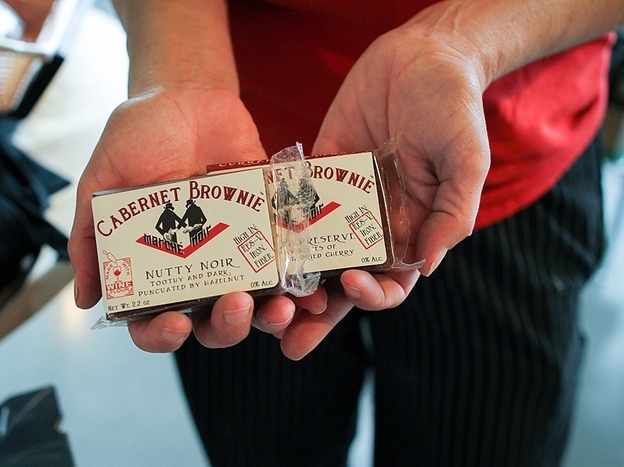
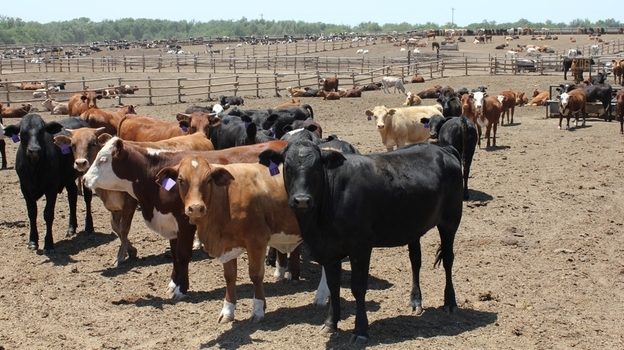
window.__IS_SSR__=true
window.__INITIAL_STATE__={
"attachmentsReducer": {
"audio_0": {
"type": "attachments",
"id": "audio_0",
"imgSizes": {
"kqedFullSize": {
"file": "https://ww2.kqed.org/news/wp-content/themes/KQED-unified/img/audio_bgs/background0.jpg"
}
}
},
"audio_1": {
"type": "attachments",
"id": "audio_1",
"imgSizes": {
"kqedFullSize": {
"file": "https://ww2.kqed.org/news/wp-content/themes/KQED-unified/img/audio_bgs/background1.jpg"
}
}
},
"audio_2": {
"type": "attachments",
"id": "audio_2",
"imgSizes": {
"kqedFullSize": {
"file": "https://ww2.kqed.org/news/wp-content/themes/KQED-unified/img/audio_bgs/background2.jpg"
}
}
},
"audio_3": {
"type": "attachments",
"id": "audio_3",
"imgSizes": {
"kqedFullSize": {
"file": "https://ww2.kqed.org/news/wp-content/themes/KQED-unified/img/audio_bgs/background3.jpg"
}
}
},
"audio_4": {
"type": "attachments",
"id": "audio_4",
"imgSizes": {
"kqedFullSize": {
"file": "https://ww2.kqed.org/news/wp-content/themes/KQED-unified/img/audio_bgs/background4.jpg"
}
}
},
"placeholder": {
"type": "attachments",
"id": "placeholder",
"imgSizes": {
"thumbnail": {
"file": "https://cdn.kqed.org/wp-content/uploads/2024/12/KQED-Default-Image-816638274-2000x1333-1-160x107.jpg",
"width": 160,
"height": 107,
"mimeType": "image/jpeg"
},
"medium": {
"file": "https://cdn.kqed.org/wp-content/uploads/2024/12/KQED-Default-Image-816638274-2000x1333-1-800x533.jpg",
"width": 800,
"height": 533,
"mimeType": "image/jpeg"
},
"medium_large": {
"file": "https://cdn.kqed.org/wp-content/uploads/2024/12/KQED-Default-Image-816638274-2000x1333-1-768x512.jpg",
"width": 768,
"height": 512,
"mimeType": "image/jpeg"
},
"large": {
"file": "https://cdn.kqed.org/wp-content/uploads/2024/12/KQED-Default-Image-816638274-2000x1333-1-1020x680.jpg",
"width": 1020,
"height": 680,
"mimeType": "image/jpeg"
},
"1536x1536": {
"file": "https://cdn.kqed.org/wp-content/uploads/2024/12/KQED-Default-Image-816638274-2000x1333-1-1536x1024.jpg",
"width": 1536,
"height": 1024,
"mimeType": "image/jpeg"
},
"fd-lrg": {
"file": "https://cdn.kqed.org/wp-content/uploads/2024/12/KQED-Default-Image-816638274-2000x1333-1-1536x1024.jpg",
"width": 1536,
"height": 1024,
"mimeType": "image/jpeg"
},
"fd-med": {
"file": "https://cdn.kqed.org/wp-content/uploads/2024/12/KQED-Default-Image-816638274-2000x1333-1-1020x680.jpg",
"width": 1020,
"height": 680,
"mimeType": "image/jpeg"
},
"fd-sm": {
"file": "https://cdn.kqed.org/wp-content/uploads/2024/12/KQED-Default-Image-816638274-2000x1333-1-800x533.jpg",
"width": 800,
"height": 533,
"mimeType": "image/jpeg"
},
"post-thumbnail": {
"file": "https://cdn.kqed.org/wp-content/uploads/2024/12/KQED-Default-Image-816638274-2000x1333-1-672x372.jpg",
"width": 672,
"height": 372,
"mimeType": "image/jpeg"
},
"twentyfourteen-full-width": {
"file": "https://cdn.kqed.org/wp-content/uploads/2024/12/KQED-Default-Image-816638274-2000x1333-1-1038x576.jpg",
"width": 1038,
"height": 576,
"mimeType": "image/jpeg"
},
"xxsmall": {
"file": "https://cdn.kqed.org/wp-content/uploads/2024/12/KQED-Default-Image-816638274-2000x1333-1-160x107.jpg",
"width": 160,
"height": 107,
"mimeType": "image/jpeg"
},
"xsmall": {
"file": "https://cdn.kqed.org/wp-content/uploads/2024/12/KQED-Default-Image-816638274-2000x1333-1-672x372.jpg",
"width": 672,
"height": 372,
"mimeType": "image/jpeg"
},
"small": {
"file": "https://cdn.kqed.org/wp-content/uploads/2024/12/KQED-Default-Image-816638274-2000x1333-1-672x372.jpg",
"width": 672,
"height": 372,
"mimeType": "image/jpeg"
},
"xlarge": {
"file": "https://cdn.kqed.org/wp-content/uploads/2024/12/KQED-Default-Image-816638274-2000x1333-1-1020x680.jpg",
"width": 1020,
"height": 680,
"mimeType": "image/jpeg"
},
"full-width": {
"file": "https://cdn.kqed.org/wp-content/uploads/2024/12/KQED-Default-Image-816638274-2000x1333-1-1920x1280.jpg",
"width": 1920,
"height": 1280,
"mimeType": "image/jpeg"
},
"guest-author-32": {
"file": "https://cdn.kqed.org/wp-content/uploads/2025/01/KQED-Default-Image-816638274-1333x1333-1-160x160.jpg",
"width": 32,
"height": 32,
"mimeType": "image/jpeg"
},
"guest-author-50": {
"file": "https://cdn.kqed.org/wp-content/uploads/2025/01/KQED-Default-Image-816638274-1333x1333-1-160x160.jpg",
"width": 50,
"height": 50,
"mimeType": "image/jpeg"
},
"guest-author-64": {
"file": "https://cdn.kqed.org/wp-content/uploads/2025/01/KQED-Default-Image-816638274-1333x1333-1-160x160.jpg",
"width": 64,
"height": 64,
"mimeType": "image/jpeg"
},
"guest-author-96": {
"file": "https://cdn.kqed.org/wp-content/uploads/2025/01/KQED-Default-Image-816638274-1333x1333-1-160x160.jpg",
"width": 96,
"height": 96,
"mimeType": "image/jpeg"
},
"guest-author-128": {
"file": "https://cdn.kqed.org/wp-content/uploads/2025/01/KQED-Default-Image-816638274-1333x1333-1-160x160.jpg",
"width": 128,
"height": 128,
"mimeType": "image/jpeg"
},
"detail": {
"file": "https://cdn.kqed.org/wp-content/uploads/2025/01/KQED-Default-Image-816638274-1333x1333-1-160x160.jpg",
"width": 160,
"height": 160,
"mimeType": "image/jpeg"
},
"kqedFullSize": {
"file": "https://cdn.kqed.org/wp-content/uploads/2024/12/KQED-Default-Image-816638274-2000x1333-1.jpg",
"width": 2000,
"height": 1333
}
}
},
"bayareabites_68026": {
"type": "attachments",
"id": "bayareabites_68026",
"meta": {
"index": "attachments_1716263798",
"site": "bayareabites",
"id": "68026",
"found": true
},
"parent": 68020,
"imgSizes": {
"kqedFullSize": {
"file": "https://ww2.kqed.org/app/uploads/sites/24/2013/08/bravo-640.jpg",
"width": 624,
"height": 466
}
},
"publishDate": 1376238031,
"modified": 1376238031,
"caption": "Waylynn makes fonuts. Photo: Screenshot from Bravo",
"description": "Waylynn makes fonuts.",
"title": "fonutwaylynn2",
"credit": null,
"status": "inherit",
"isLoading": false,
"fetchFailed": false
},
"bayareabites_67994": {
"type": "attachments",
"id": "bayareabites_67994",
"meta": {
"index": "attachments_1716263798",
"site": "bayareabites",
"id": "67994",
"found": true
},
"parent": 67985,
"imgSizes": {
"kqedFullSize": {
"file": "https://ww2.kqed.org/app/uploads/sites/24/2013/08/winflour-640.jpg",
"width": 624,
"height": 467
}
},
"publishDate": 1376095600,
"modified": 1376095600,
"caption": "At her bakery in Costa Mesa, Calif., Rachel Klemek sells cabernet brownies made with a flour substitute derived from grape pomace, a byproduct of winemaking packed with nutrients known as polyphenols. Photo: Mariana Dale/NPR",
"description": "At her bakery in Costa Mesa, Calif., Rachel Klemek sells cabernet brownies made with a flour substitute derived from grape pomace, a byproduct of winemaking packed with nutrients known as polyphenols.",
"title": "wine-flour-brownies",
"credit": null,
"status": "inherit",
"isLoading": false,
"fetchFailed": false
},
"bayareabites_67976": {
"type": "attachments",
"id": "bayareabites_67976",
"meta": {
"index": "attachments_1716263798",
"site": "bayareabites",
"id": "67976",
"found": true
},
"parent": 67969,
"imgSizes": {
"kqedFullSize": {
"file": "https://ww2.kqed.org/app/uploads/sites/24/2013/08/cattle0640.jpg",
"width": 624,
"height": 350
}
},
"publishDate": 1376091010,
"modified": 1376091010,
"caption": "A pen at a feedlot in central Kansas that houses 30,000 cattle. Feedlots are where cattle are \"finished\" before slaughter, often with the use of growth-promoting drugs like zilpaterol. Photo: Peggy Lowe, Harvest Public Media",
"description": "A pen at a feedlot in central Kansas that houses 30,000 cattle. Feedlots are where cattle are “finished” before slaughter, often with the use of growth-promoting drugs like zilpate",
"title": "feedlot",
"credit": null,
"status": "inherit",
"isLoading": false,
"fetchFailed": false
},
"bayareabites_67959": {
"type": "attachments",
"id": "bayareabites_67959",
"meta": {
"index": "attachments_1716263798",
"site": "bayareabites",
"id": "67959",
"found": true
},
"parent": 67952,
"imgSizes": {
"kqedFullSize": {
"file": "https://ww2.kqed.org/app/uploads/sites/24/2013/08/farmworkers-640.jpeg",
"width": 624,
"height": 413
}
},
"publishDate": 1376063813,
"modified": 1376063813,
"caption": "Marcelina, a Triqui Mexican, picks strawberries at a farm in Washington State. Photo: Courtesy of Seth M. Holmes",
"description": "Marcelina, a Triqui Mexican, picks strawberries at a farm in Washington State.",
"title": "ucpphoto4",
"credit": null,
"status": "inherit",
"isLoading": false,
"fetchFailed": false
},
"bayareabites_67941": {
"type": "attachments",
"id": "bayareabites_67941",
"meta": {
"index": "attachments_1716263798",
"site": "bayareabites",
"id": "67941",
"found": true
},
"parent": 67932,
"imgSizes": {
"kqedFullSize": {
"file": "https://ww2.kqed.org/app/uploads/sites/24/2013/08/hawaii-640.jpg",
"width": 624,
"height": 492
}
},
"publishDate": 1376062487,
"modified": 1376062487,
"caption": "Colorful covers of menus from the Royal Hawaiian Hotel (left) and the Monarch Room Royal Hawaiian Hotel. Photo: New York Public Library",
"description": "Colorful covers of menus from the Royal Hawaiian Hotel (left) and the Monarch Room Royal Hawaiian Hotel.",
"title": "hawaii-8",
"credit": null,
"status": "inherit",
"isLoading": false,
"fetchFailed": false
},
"bayareabites_67908": {
"type": "attachments",
"id": "bayareabites_67908",
"meta": {
"index": "attachments_1716263798",
"site": "bayareabites",
"id": "67908",
"found": true
},
"parent": 67901,
"imgSizes": {
"kqedFullSize": {
"file": "https://ww2.kqed.org/app/uploads/sites/24/2013/08/pesto-feature.jpg",
"width": 624,
"height": 350
}
},
"publishDate": 1375992766,
"modified": 1375992766,
"caption": "Julia della Croce says pistachio pesto is an economical — and delicious — alternative when Italian pine nuts can cost up to $120 per pound. Photo: Nathan Hoyt/Courtesy of Julia della Croce",
"description": "Julia della Croce says pistachio pesto is an economical -- and delicious -- alternative when Italian pine nuts can cost up to $120 per pound.",
"title": "pistachio",
"credit": null,
"status": "inherit",
"isLoading": false,
"fetchFailed": false
},
"bayareabites_67914": {
"type": "attachments",
"id": "bayareabites_67914",
"meta": {
"index": "attachments_1716263798",
"site": "bayareabites",
"id": "67914",
"found": true
},
"parent": 67860,
"imgSizes": {
"kqedFullSize": {
"file": "https://ww2.kqed.org/app/uploads/sites/24/2013/08/meatcsa.jpg",
"width": 640,
"height": 402
}
},
"publishDate": 1375994909,
"modified": 1375994909,
"caption": "Meat delivered via CSA. Photo: nlbarber/Flickr.com",
"description": null,
"title": "meatcsa",
"credit": null,
"status": "inherit",
"isLoading": false,
"fetchFailed": false
},
"bayareabites_67894": {
"type": "attachments",
"id": "bayareabites_67894",
"meta": {
"index": "attachments_1716263798",
"site": "bayareabites",
"id": "67894",
"found": true
},
"parent": 67886,
"imgSizes": {
"kqedFullSize": {
"file": "https://ww2.kqed.org/app/uploads/sites/24/2013/08/chocolate-640.jpg",
"width": 624,
"height": 468
}
},
"publishDate": 1375983518,
"modified": 1375983518,
"caption": "Researchers say one particular flavanol, (-)-epicatechin, may be the source of the brain benefits seen from consuming cocoa. Photo: Philippe Huguen/AFP/Getty Images",
"description": "Researchers say one particular flavanol, (-)-epicatechin, may be the source of the brain benefits seen from consuming cocoa.",
"title": "chocolate",
"credit": null,
"status": "inherit",
"isLoading": false,
"fetchFailed": false
},
"bayareabites_67876": {
"type": "attachments",
"id": "bayareabites_67876",
"meta": {
"index": "attachments_1716263798",
"site": "bayareabites",
"id": "67876",
"found": true
},
"parent": 67869,
"imgSizes": {
"kqedFullSize": {
"file": "https://ww2.kqed.org/app/uploads/sites/24/2013/08/seasalt640.jpg",
"width": 624,
"height": 467
}
},
"publishDate": 1375941401,
"modified": 1375941401,
"caption": "Martha's Vineyard Sea Salt is one of several companies bringing salt-making back to the shores of Massachusetts. Photo: Courtesy of Heidi Feldman",
"description": "Martha's Vineyard Sea Salt is one of several companies bringing salt-making back to the shores of Massachusetts.",
"title": "mvss",
"credit": null,
"status": "inherit",
"isLoading": false,
"fetchFailed": false
},
"bayareabites_67844": {
"type": "attachments",
"id": "bayareabites_67844",
"meta": {
"index": "attachments_1716263798",
"site": "bayareabites",
"id": "67844",
"found": true
},
"parent": 67835,
"imgSizes": {
"kqedFullSize": {
"file": "https://ww2.kqed.org/app/uploads/sites/24/2013/08/immigration-feature.jpg",
"width": 624,
"height": 467
}
},
"publishDate": 1375914414,
"modified": 1375914414,
"caption": "Celerino Sanchez, an H-2A worker from Guerrero, Mexico, weeds rows of mint at HerbCo International in Duvall, Wash. Photo: Liz Jones/NPR",
"description": "Celerino Sanchez, an H-2A worker from Guerrero, Mexico, weeds rows of mint at HerbCo International in Duvall, Wash.",
"title": "celerino-sanchez",
"credit": null,
"status": "inherit",
"isLoading": false,
"fetchFailed": false
},
"bayareabites_67776": {
"type": "attachments",
"id": "bayareabites_67776",
"meta": {
"index": "attachments_1716263798",
"site": "bayareabites",
"id": "67776",
"found": true
},
"parent": 67765,
"imgSizes": {
"kqedFullSize": {
"file": "https://ww2.kqed.org/app/uploads/sites/24/2013/08/cobbler1-640.jpg",
"width": 624,
"height": 350
}
},
"publishDate": 1375891923,
"modified": 1375891923,
"caption": "Peach-Blackberry Cobbler. Photo: Emily Hilliard for NPR",
"description": "Peach-Blackberry Cobbler",
"title": "img_8295",
"credit": null,
"status": "inherit",
"isLoading": false,
"fetchFailed": false
},
"bayareabites_67737": {
"type": "attachments",
"id": "bayareabites_67737",
"meta": {
"index": "attachments_1716263798",
"site": "bayareabites",
"id": "67737",
"found": true
},
"parent": 67729,
"imgSizes": {
"kqedFullSize": {
"file": "https://ww2.kqed.org/app/uploads/sites/24/2013/08/grapes1-640.jpg",
"width": 624,
"height": 468
}
},
"publishDate": 1375817972,
"modified": 1375817972,
"caption": "The Cotton Candy grape looks and smells like a regular green grape. But the taste will evoke memories of the circus. Photo: Courtesy of Spencer Grey",
"description": "The Cotton Candy grape looks and smells like a regular green grape. But the taste will evoke memories of the circus.",
"title": "grapesgreytoned",
"credit": null,
"status": "inherit",
"isLoading": false,
"fetchFailed": false
}
},
"audioPlayerReducer": {
"postId": "stream_live",
"isPaused": true,
"isPlaying": false,
"pfsActive": false,
"pledgeModalIsOpen": true,
"playerDrawerIsOpen": false,
"liveAudioPlayStartedAt": 0,
"liveAudioPlayContext": ""
},
"authorsReducer": {
"byline_bayareabites_68020": {
"type": "authors",
"id": "byline_bayareabites_68020",
"meta": {
"override": true
},
"slug": "byline_bayareabites_68020",
"name": "Linda Holmes",
"isLoading": false
},
"byline_bayareabites_67985": {
"type": "authors",
"id": "byline_bayareabites_67985",
"meta": {
"override": true
},
"slug": "byline_bayareabites_67985",
"name": "Mariana Dale",
"isLoading": false
},
"byline_bayareabites_67969": {
"type": "authors",
"id": "byline_bayareabites_67969",
"meta": {
"override": true
},
"slug": "byline_bayareabites_67969",
"name": "Peggy Lowe",
"isLoading": false
},
"byline_bayareabites_67952": {
"type": "authors",
"id": "byline_bayareabites_67952",
"meta": {
"override": true
},
"slug": "byline_bayareabites_67952",
"name": "Eliza Barclay",
"isLoading": false
},
"byline_bayareabites_67932": {
"type": "authors",
"id": "byline_bayareabites_67932",
"meta": {
"override": true
},
"slug": "byline_bayareabites_67932",
"name": "Christopher Joyce",
"isLoading": false
},
"byline_bayareabites_67901": {
"type": "authors",
"id": "byline_bayareabites_67901",
"meta": {
"override": true
},
"slug": "byline_bayareabites_67901",
"name": "NPR Staff",
"isLoading": false
},
"byline_bayareabites_67860": {
"type": "authors",
"id": "byline_bayareabites_67860",
"meta": {
"override": true
},
"slug": "byline_bayareabites_67860",
"name": "Twilight Greenaway",
"isLoading": false
},
"byline_bayareabites_67886": {
"type": "authors",
"id": "byline_bayareabites_67886",
"meta": {
"override": true
},
"slug": "byline_bayareabites_67886",
"name": "Maria Godoy",
"isLoading": false
},
"byline_bayareabites_67869": {
"type": "authors",
"id": "byline_bayareabites_67869",
"meta": {
"override": true
},
"slug": "byline_bayareabites_67869",
"name": "Katherine Perry",
"isLoading": false
},
"byline_bayareabites_67835": {
"type": "authors",
"id": "byline_bayareabites_67835",
"meta": {
"override": true
},
"slug": "byline_bayareabites_67835",
"name": "Liz Jones",
"isLoading": false
},
"byline_bayareabites_67765": {
"type": "authors",
"id": "byline_bayareabites_67765",
"meta": {
"override": true
},
"slug": "byline_bayareabites_67765",
"name": "Emily Hilliard",
"isLoading": false
},
"byline_bayareabites_67729": {
"type": "authors",
"id": "byline_bayareabites_67729",
"meta": {
"override": true
},
"slug": "byline_bayareabites_67729",
"name": "Michaeleen Doucleff",
"isLoading": false
}
},
"pagesReducer": {
"bayareabites_category_npr-food": {
"type": "terms",
"id": "bayareabites_10916",
"meta": {
"index": "terms_1716263798",
"site": "bayareabites",
"id": "10916",
"score": 13.894709
},
"featImg": null,
"name": "NPR food",
"description": null,
"taxonomy": "category",
"headData": {
"twImgId": null,
"twTitle": null,
"ogTitle": null,
"ogImgId": null,
"twDescription": null,
"description": null,
"title": "NPR food Archives | KQED Bay Area Bites",
"ogDescription": null
},
"ttid": 5375,
"slug": "npr-food",
"isLoading": false,
"title": "NPR food",
"pageMeta": {
"site": "bayareabites",
"WpPageTemplate": "page-topic-editorial",
"currentPage": 71
},
"blocks": [
{
"blockName": "kqed/post-list",
"attrs": {
"layout": "cardArticle2",
"query": "posts/bayareabites?category=npr-food",
"seeMore": false,
"paginated": true,
"page": 71
}
},
{
"blockName": "kqed/ad"
}
]
}
},
"pfsSessionReducer": {},
"postsReducer": {
"stream_live": {
"type": "live",
"id": "stream_live",
"audioUrl": "https://hls.kqed.org/hls/kqed_app/playlist.m3u8",
"title": "Live Stream",
"excerpt": "Live Stream information currently unavailable.",
"link": "/radio",
"featImg": "",
"label": {
"name": "KQED Live",
"link": "/"
}
},
"stream_kqedNewscast": {
"type": "posts",
"id": "stream_kqedNewscast",
"audioUrl": "https://www.kqed.org/.stream/anon/radio/RDnews/newscast.mp3?_=1",
"title": "KQED Newscast",
"featImg": "",
"label": {
"name": "88.5 FM",
"link": "/"
}
},
"bayareabites_68020": {
"type": "posts",
"id": "bayareabites_68020",
"meta": {
"index": "posts_1716263798",
"site": "bayareabites",
"id": "68020",
"score": null,
"sort": [
1376238171000
]
},
"parent": 0,
"labelTerm": {
"site": "bayareabites"
},
"blocks": [],
"publishDate": 1376238171,
"format": "aside",
"disqusTitle": "The Real Foodwives: Bravo Found Some More Rich Ladies Who Gossip!",
"title": "The Real Foodwives: Bravo Found Some More Rich Ladies Who Gossip!",
"headTitle": "Bay Area Bites | KQED Food",
"content": "\u003cfigure id=\"attachment_68025\" class=\"wp-caption aligncenter\" style=\"max-width: 1120px\">\u003ca href=\"http://ww2.kqed.org/bayareabites/wp-content/uploads/sites/24/2013/08/bravo-full.jpg\">\u003cimg src=\"http://ww2.kqed.org/bayareabites/wp-content/uploads/sites/24/2013/08/bravo-full.jpg\" alt=\"Waylynn makes fonuts. Photo: Screenshot from Bravo\" width=\"1120\" height=\"837\" class=\"size-full wp-image-68025\">\u003c/a>\u003cfigcaption class=\"wp-caption-text\">Waylynn makes fonuts. Photo: Screenshot from Bravo\u003c/figcaption>\u003c/figure>\n\u003cp>Post by \u003ca href=\"http://www.npr.org/people/93702353/linda-holmes\">Linda Holmes\u003c/a>, \u003ca href=\"http://www.npr.org/blogs/monkeysee/2013/08/11/211060932/the-real-foodwives-bravo-found-some-more-rich-ladies-who-gossip\">Monkey See at NPR Food\u003c/a>\u003c/p>\n\u003cp>The first person we meet in Bravo's new rich-white-ladies-fighting show \u003cem>Eat Drink Love\u003c/em> is Waylynn. Waylynn is a pastry chef who has a store where she sells what she calls \"fonuts.\"\u003c/p>\n\u003cp>Point the first: There's supposed to be a mark indicating it's a long \"o,\" but I'm leaving it out for the sake of all of our dignity, because when you have to put pronunciation symbols directly in the name of your fonut shop, perhaps you should have called it something else, especially since \"fonut,\" derived from \"faux donut,\" makes it sound like they're made from recycled bicycle tires, when in fact they're just baked/steamed instead of fried, which means they are not faux anything. They are what the rest of us call \"cake.\"\u003c/p>\n\u003cp>Point the second: while attending press tour, I returned to my hotel room one afternoon to find that Bravo had delivered, along with the \u003cem>Eat Drink Love \u003c/em>screener, two fonuts, one strawberry and one chocolate. The next day, my fellow critics and I agreed (unanimously, as far as I could tell in my tiny survey sample of two or three people) that the strawberry one was quite good and the chocolate one was regrettable, to the point where we couldn't agree about what was sprinkled on top of it, other than \"something problematic.\" And thus did we begin passing around on Twitter a new social nicety: \"Do you want my fonuts? You can have them, really.\"\u003c/p>\n\u003cp>Where were we? Oh, right. Fonut Waylynn.\u003c/p>\n\u003cp>[ad fullwidth]\u003c/p>\n\u003cp>Along with Fonut Waylynn, there are four other well-off white ladies on this show about the L.A. food scene: Brenda Urban, a \"culinary publicist\"; Jessica Miller, a \"culinary marketing specialist\"; Kat Odell, a writer for Eater LA; and Nina Clemente, a private chef.\u003c/p>\n\u003cp>Initially, we are introduced to the women through their careers and their dating lives. Fonut Waylynn gets hit on all the time by dudes who come in and act like they've never seen a circle-shaped cake before. But she's a little reticent, so usually she does her twitchy, eye-rolly, \"Uh, time to make the fonuts\"-type dance, and she walks away. She just got out of a relationship with \"a high-profile chef\" they act like they're not going to name for a while, and then she accidentally maybe lets it slip that okay, you dragged it out of her, it's Michael Voltaggio from \u003cem>Top Chef\u003c/em>. She's sworn never to date a chef again, but how can she resist the taco-making genius from around the corner who's sending her flowers with incredibly cheesy notes attached to them? That kind of thing.\u003c/p>\n\u003cp>Jessica works for the restaurant organization that owns Pink Taco, and I just can't take her seriously after that. She uses her phone to spy on all the restaurants she oversees with security cameras, and then she goes and yells at people. I honestly doubt this is usually her job, but somehow it seems to be what fascinates Bravo. Jessica: Pink Taco Spy Chief.\u003c/p>\n\u003cp>It's not really Publicist Brenda's fault that when we watch her at work calling people up with pitches, I can only imagine the person on the other end of the line making a \"yap yap yap\" motion with one hand, but I bet they do. Her first big accomplishment we see is that she got a restaurant she represents mentioned in a story about oysters. She's also trying to get the same establishment into a Sexy Hotel Restaurants feature in \u003cem>Details\u003c/em>. That's probably worth a zillion dollars and everything, but as she says it, it does sound a little bit like Ultimate Food Industry Blah-Dee-Blah of the highest order. I mean, somewhere, there are people who say, \"We should go to this restaurant I saw in that list of Sexiest Hotel Restaurants in \u003cem>Details\u003c/em>,\" but I don't go to dinner with them.\u003c/p>\n\u003cp>Publicist Brenda has a tense relationship with Writer Kat, since Writer Kat makes her living (according to the show) holding the lives of restaurants in her tiny hand and cackling like Gargamel while deciding whether to crush them. Brenda doesn't want to be mean or anything, but you know, she says Kat has a reputation involving who she writes about and who she's having sex with, wink hint ick. (Actually, this entire show could be called \u003cem>Wink Hint Ick\u003c/em>. Cut, print.)\u003c/p>\n\u003cp>Private Chef Nina started out as an artist and then decided that food was her medium, which is why I couldn't even afford to have her make me a grilled cheese sandwich, I suspect. She started out not really having any training at all, but then she catered a party and happened to bump into a \u003cem>Vanity Fair\u003c/em> editor (as you do), and now she's in high demand to cook dinner for wealthy people with obstreperous toddlers. Or so it appears.\u003c/p>\n\u003cp>As with the Real Housewives, it's never clear how many of these women would be socializing with each other if they hadn't been cast on the same show (or whether any of them have ugly or uncool friends who eat at Olive Garden). They spend a lot of time talking about each other and sharing their stories – when Brenda tells the story of her divorce and gets to the part where she announces she's leaving her husband, Jessica responds with a thoughtful and supportive \"Ew!\"\u003c/p>\n\u003cp>Real Housewife shows never have had anything to do with houses or wives any more than they do with reality: after all, one of the most successful exploiters of the genre, Bethenny Frankel, was single when she was cast. What they have to do with is pouring a bunch of well-off women into a martini shaker, drowning them in tropes about sex and independence, and assuming that when you pour them into a glass with plenty of ice, they'll taste like distilled Bitch. (That is a word a lot of people don't particularly like, including me, but to use any other is to deny the fundamental worldview of the show and the cultural waters in which it's swimming.) These shows are, in fact, among the relatively few places on television where you will see a bunch of women on screen at the same time at all.\u003c/p>\n\u003cp>There's going to be plenty more of this before there's less – it makes sense (cynically) to combine the girlfight show cliché with the foodie show cliché. There's no reason to believe they'll run out of women who see this kind of thing as the fastest way to make the fonut the next cronut, or (as someone on the similarly constructed \u003cem>Princesses: Long Island\u003c/em> is trying to do) make the \u003ca href=\"http://www.drinkhanky.com/\">Drink Hanky\u003c/a> more than just a cloth sack you could make on a Barbie sewing machine that allows you to carry around a wet bag instead of a wet glass.\u003c/p>\n\u003cp>But honestly, if fighting and gossiping is the kind of thing that floats your boat, you could save a lot of time by just following the right jerks on Twitter.\u003c/p>\n\u003cp>http://www.youtube.com/watch?v=SaNjQ287DT0\u003c/p>\n\u003cp>[ad floatright]\u003c/p>\n\u003cp>\u003cem>Copyright 2013 \u003ca href=\"http://www.npr.org\">NPR\u003c/a>. \u003c/em>\u003c/p>\n\n",
"disqusIdentifier": "68020 http://blogs.kqed.org/bayareabites/?p=68020",
"disqusUrl": "https://ww2.kqed.org/bayareabites/2013/08/11/the-real-foodwives-bravo-found-some-more-rich-ladies-who-gossip/",
"stats": {
"hasVideo": false,
"hasChartOrMap": false,
"hasAudio": false,
"hasPolis": false,
"wordCount": 1238,
"hasGoogleForm": false,
"hasGallery": false,
"hasHearkenModule": false,
"iframeSrcs": [],
"paragraphCount": 18
},
"modified": 1376238171,
"excerpt": "Bravo has created an entire genre out of getting women to snipe at each other, and tonight, the new show \u003cem>Eat Drink Love\u003c/em> turns to the world of food.",
"headData": {
"twImgId": "",
"twTitle": "",
"ogTitle": "",
"ogImgId": "",
"twDescription": "",
"description": "Bravo has created an entire genre out of getting women to snipe at each other, and tonight, the new show Eat Drink Love turns to the world of food.",
"title": "The Real Foodwives: Bravo Found Some More Rich Ladies Who Gossip! | KQED",
"ogDescription": "",
"schema": {
"@context": "https://schema.org",
"@type": "Article",
"headline": "The Real Foodwives: Bravo Found Some More Rich Ladies Who Gossip!",
"datePublished": "2013-08-11T09:22:51-07:00",
"dateModified": "2013-08-11T09:22:51-07:00",
"image": "https://cdn.kqed.org/wp-content/uploads/2020/02/KQED-OG-Image@1x.png"
}
},
"guestAuthors": [],
"slug": "the-real-foodwives-bravo-found-some-more-rich-ladies-who-gossip",
"status": "publish",
"nprApiLink": "http://api.npr.org/query?id=211060932&apiKey=MDAxOTAwOTE4MDEyMTkxMDAzNjczZDljZA004",
"nprByline": "Linda Holmes",
"nprStoryDate": "Sun, 11 Aug 2013 10:12:00 -0400",
"nprLastModifiedDate": "Sun, 11 Aug 2013 10:12:01 -0400",
"nprHtmlLink": "http://www.npr.org/blogs/monkeysee/2013/08/11/211060932/the-real-foodwives-bravo-found-some-more-rich-ladies-who-gossip?ft=3&f=211060932",
"nprStoryId": "211060932",
"nprRetrievedStory": "1",
"nprPubDate": "Sun, 11 Aug 2013 10:12:00 -0400",
"path": "/bayareabites/68020/the-real-foodwives-bravo-found-some-more-rich-ladies-who-gossip",
"audioTrackLength": null,
"parsedContent": [
{
"type": "contentString",
"content": "\u003cdiv class=\"post-body\">\u003cp>\u003cfigure id=\"attachment_68025\" class=\"wp-caption aligncenter\" style=\"max-width: 1120px\">\u003ca href=\"http://ww2.kqed.org/bayareabites/wp-content/uploads/sites/24/2013/08/bravo-full.jpg\">\u003cimg src=\"http://ww2.kqed.org/bayareabites/wp-content/uploads/sites/24/2013/08/bravo-full.jpg\" alt=\"Waylynn makes fonuts. Photo: Screenshot from Bravo\" width=\"1120\" height=\"837\" class=\"size-full wp-image-68025\">\u003c/a>\u003cfigcaption class=\"wp-caption-text\">Waylynn makes fonuts. Photo: Screenshot from Bravo\u003c/figcaption>\u003c/figure>\n\u003cp>Post by \u003ca href=\"http://www.npr.org/people/93702353/linda-holmes\">Linda Holmes\u003c/a>, \u003ca href=\"http://www.npr.org/blogs/monkeysee/2013/08/11/211060932/the-real-foodwives-bravo-found-some-more-rich-ladies-who-gossip\">Monkey See at NPR Food\u003c/a>\u003c/p>\n\u003cp>The first person we meet in Bravo's new rich-white-ladies-fighting show \u003cem>Eat Drink Love\u003c/em> is Waylynn. Waylynn is a pastry chef who has a store where she sells what she calls \"fonuts.\"\u003c/p>\n\u003cp>Point the first: There's supposed to be a mark indicating it's a long \"o,\" but I'm leaving it out for the sake of all of our dignity, because when you have to put pronunciation symbols directly in the name of your fonut shop, perhaps you should have called it something else, especially since \"fonut,\" derived from \"faux donut,\" makes it sound like they're made from recycled bicycle tires, when in fact they're just baked/steamed instead of fried, which means they are not faux anything. They are what the rest of us call \"cake.\"\u003c/p>\n\u003cp>Point the second: while attending press tour, I returned to my hotel room one afternoon to find that Bravo had delivered, along with the \u003cem>Eat Drink Love \u003c/em>screener, two fonuts, one strawberry and one chocolate. The next day, my fellow critics and I agreed (unanimously, as far as I could tell in my tiny survey sample of two or three people) that the strawberry one was quite good and the chocolate one was regrettable, to the point where we couldn't agree about what was sprinkled on top of it, other than \"something problematic.\" And thus did we begin passing around on Twitter a new social nicety: \"Do you want my fonuts? You can have them, really.\"\u003c/p>\n\u003cp>Where were we? Oh, right. Fonut Waylynn.\u003c/p>\n\u003cp>\u003c/p>\u003c/div>",
"attributes": {
"named": {},
"numeric": []
}
},
{
"type": "component",
"content": "",
"name": "ad",
"attributes": {
"named": {
"label": "fullwidth"
},
"numeric": [
"fullwidth"
]
}
},
{
"type": "contentString",
"content": "\u003cdiv class=\"post-body\">\u003cp>\u003c/p>\n\u003cp>Along with Fonut Waylynn, there are four other well-off white ladies on this show about the L.A. food scene: Brenda Urban, a \"culinary publicist\"; Jessica Miller, a \"culinary marketing specialist\"; Kat Odell, a writer for Eater LA; and Nina Clemente, a private chef.\u003c/p>\n\u003cp>Initially, we are introduced to the women through their careers and their dating lives. Fonut Waylynn gets hit on all the time by dudes who come in and act like they've never seen a circle-shaped cake before. But she's a little reticent, so usually she does her twitchy, eye-rolly, \"Uh, time to make the fonuts\"-type dance, and she walks away. She just got out of a relationship with \"a high-profile chef\" they act like they're not going to name for a while, and then she accidentally maybe lets it slip that okay, you dragged it out of her, it's Michael Voltaggio from \u003cem>Top Chef\u003c/em>. She's sworn never to date a chef again, but how can she resist the taco-making genius from around the corner who's sending her flowers with incredibly cheesy notes attached to them? That kind of thing.\u003c/p>\n\u003cp>Jessica works for the restaurant organization that owns Pink Taco, and I just can't take her seriously after that. She uses her phone to spy on all the restaurants she oversees with security cameras, and then she goes and yells at people. I honestly doubt this is usually her job, but somehow it seems to be what fascinates Bravo. Jessica: Pink Taco Spy Chief.\u003c/p>\n\u003cp>It's not really Publicist Brenda's fault that when we watch her at work calling people up with pitches, I can only imagine the person on the other end of the line making a \"yap yap yap\" motion with one hand, but I bet they do. Her first big accomplishment we see is that she got a restaurant she represents mentioned in a story about oysters. She's also trying to get the same establishment into a Sexy Hotel Restaurants feature in \u003cem>Details\u003c/em>. That's probably worth a zillion dollars and everything, but as she says it, it does sound a little bit like Ultimate Food Industry Blah-Dee-Blah of the highest order. I mean, somewhere, there are people who say, \"We should go to this restaurant I saw in that list of Sexiest Hotel Restaurants in \u003cem>Details\u003c/em>,\" but I don't go to dinner with them.\u003c/p>\n\u003cp>Publicist Brenda has a tense relationship with Writer Kat, since Writer Kat makes her living (according to the show) holding the lives of restaurants in her tiny hand and cackling like Gargamel while deciding whether to crush them. Brenda doesn't want to be mean or anything, but you know, she says Kat has a reputation involving who she writes about and who she's having sex with, wink hint ick. (Actually, this entire show could be called \u003cem>Wink Hint Ick\u003c/em>. Cut, print.)\u003c/p>\n\u003cp>Private Chef Nina started out as an artist and then decided that food was her medium, which is why I couldn't even afford to have her make me a grilled cheese sandwich, I suspect. She started out not really having any training at all, but then she catered a party and happened to bump into a \u003cem>Vanity Fair\u003c/em> editor (as you do), and now she's in high demand to cook dinner for wealthy people with obstreperous toddlers. Or so it appears.\u003c/p>\n\u003cp>As with the Real Housewives, it's never clear how many of these women would be socializing with each other if they hadn't been cast on the same show (or whether any of them have ugly or uncool friends who eat at Olive Garden). They spend a lot of time talking about each other and sharing their stories – when Brenda tells the story of her divorce and gets to the part where she announces she's leaving her husband, Jessica responds with a thoughtful and supportive \"Ew!\"\u003c/p>\n\u003cp>Real Housewife shows never have had anything to do with houses or wives any more than they do with reality: after all, one of the most successful exploiters of the genre, Bethenny Frankel, was single when she was cast. What they have to do with is pouring a bunch of well-off women into a martini shaker, drowning them in tropes about sex and independence, and assuming that when you pour them into a glass with plenty of ice, they'll taste like distilled Bitch. (That is a word a lot of people don't particularly like, including me, but to use any other is to deny the fundamental worldview of the show and the cultural waters in which it's swimming.) These shows are, in fact, among the relatively few places on television where you will see a bunch of women on screen at the same time at all.\u003c/p>\n\u003cp>There's going to be plenty more of this before there's less – it makes sense (cynically) to combine the girlfight show cliché with the foodie show cliché. There's no reason to believe they'll run out of women who see this kind of thing as the fastest way to make the fonut the next cronut, or (as someone on the similarly constructed \u003cem>Princesses: Long Island\u003c/em> is trying to do) make the \u003ca href=\"http://www.drinkhanky.com/\">Drink Hanky\u003c/a> more than just a cloth sack you could make on a Barbie sewing machine that allows you to carry around a wet bag instead of a wet glass.\u003c/p>\n\u003cp>But honestly, if fighting and gossiping is the kind of thing that floats your boat, you could save a lot of time by just following the right jerks on Twitter.\u003c/p>\u003c/p>\u003cp>\u003cspan class='utils-parseShortcode-shortcodes-__youtubeShortcode__embedYoutube'>\n \u003cspan class='utils-parseShortcode-shortcodes-__youtubeShortcode__embedYoutubeInside'>\n \u003ciframe\n loading='lazy'\n class='utils-parseShortcode-shortcodes-__youtubeShortcode__youtubePlayer'\n type='text/html'\n src='//www.youtube.com/embed/SaNjQ287DT0'\n title='//www.youtube.com/embed/SaNjQ287DT0'\n allowfullscreen='true'\n style='border:0;'>\u003c/iframe>\n \u003c/span>\n \u003c/span>\u003c/p>\u003cp>\u003cp>\u003c/p>\u003c/div>",
"attributes": {
"named": {},
"numeric": []
}
},
{
"type": "component",
"content": "",
"name": "ad",
"attributes": {
"named": {
"label": "floatright"
},
"numeric": [
"floatright"
]
}
},
{
"type": "contentString",
"content": "\u003cdiv class=\"post-body\">\u003cp>\u003c/p>\n\u003cp>\u003cem>Copyright 2013 \u003ca href=\"http://www.npr.org\">NPR\u003c/a>. \u003c/em>\u003c/p>\n\n\u003c/div>\u003c/p>",
"attributes": {
"named": {},
"numeric": []
}
}
],
"link": "/bayareabites/68020/the-real-foodwives-bravo-found-some-more-rich-ladies-who-gossip",
"authors": [
"byline_bayareabites_68020"
],
"categories": [
"bayareabites_10916",
"bayareabites_1593"
],
"tags": [
"bayareabites_10875",
"bayareabites_11004",
"bayareabites_47"
],
"featImg": "bayareabites_68026",
"label": "bayareabites"
},
"bayareabites_67985": {
"type": "posts",
"id": "bayareabites_67985",
"meta": {
"index": "posts_1716263798",
"site": "bayareabites",
"id": "67985",
"score": null,
"sort": [
1376149767000
]
},
"parent": 0,
"labelTerm": {
"site": "bayareabites"
},
"blocks": [],
"publishDate": 1376149767,
"format": "aside",
"disqusTitle": "Wine Waste Finds Sweet Afterlife in Baked Goods",
"title": "Wine Waste Finds Sweet Afterlife in Baked Goods",
"headTitle": "Bay Area Bites | KQED Food",
"content": "\u003cfigure id=\"attachment_67995\" class=\"wp-caption aligncenter\" style=\"max-width: 1120px\">\u003ca href=\"http://ww2.kqed.org/bayareabites/wp-content/uploads/sites/24/2013/08/winflourfull.jpg\">\u003cimg src=\"http://ww2.kqed.org/bayareabites/wp-content/uploads/sites/24/2013/08/winflourfull.jpg\" alt=\"At her bakery in Costa Mesa, Calif., Rachel Klemek sells cabernet brownies made with a flour substitute derived from grape pomace, a byproduct of winemaking packed with nutrients known as polyphenols. Photo: Mariana Dale/NPR\" width=\"1120\" height=\"839\" class=\"size-full wp-image-67995\">\u003c/a>\u003cfigcaption class=\"wp-caption-text\">At her bakery in Costa Mesa, Calif., Rachel Klemek sells cabernet brownies made with a flour substitute derived from grape pomace, a byproduct of winemaking packed with nutrients known as polyphenols. Photo: Mariana Dale/NPR\u003c/figcaption>\u003c/figure>\n\u003cp>Post by Mariana Dale, \u003ca href=\"http://www.npr.org/blogs/thesalt/2013/08/08/210265493/wine-waste-finds-sweet-afterlife-in-baked-goods\">The Salt at NPR Food\u003c/a> (8/9/2013)\u003c/p>\n\u003cp>When winemakers crush the juice from grapes, what's left is a goopy pile of seeds, stems and skins called pomace. Until several years ago, these remains were more than likely destined for the dump.\u003c/p>\n\u003cp>\"The pomace pile was one of the largest problems that the wine industry had with sustainability,\" says Paul Novak, general manager for \u003ca href=\"http://wholevine.com/home\">WholeVine Products\u003c/a>, a sister company to winemaker Kendall-Jackson in Northern California.\u003c/p>\n\u003cp>But now, scientists and entrepreneurs are finding new and often surprising uses for this former waste product. Some winemakers, for instance, are using pomace as compost or as the basis of grapeseed oil. Researchers are also exploring pomace's properties as a food preservative — studies have shown that compounds called polyphenols found in grapes and in pomace kill bacteria that can cause food to spoil. One Oregon State University professor, \u003ca href=\"http://oregonstate.edu/dept/foodsci/faculty/yyz.htm\">Yanyun Zhao\u003c/a>, has even toyed with turning pomace into a biodegradable material to make flower pots.\u003c/p>\n\u003cfigure id=\"attachment_67992\" class=\"wp-caption aligncenter\" style=\"max-width: 1120px\">\u003ca href=\"http://ww2.kqed.org/bayareabites/wp-content/uploads/sites/24/2013/08/wineflour2.jpg\">\u003cimg src=\"http://ww2.kqed.org/bayareabites/wp-content/uploads/sites/24/2013/08/wineflour2.jpg\" alt=\"After grapes are harvested and pressed, WholeVine Products takes the leftover seeds, stems and skins and turns them into a flour substitute. Some pomace also becomes grapeseed oil. Photo: Courtesy WholeVine Products\" width=\"1120\" height=\"840\" class=\"size-full wp-image-67992\">\u003c/a>\u003cfigcaption class=\"wp-caption-text\">After grapes are harvested and pressed, WholeVine Products takes the leftover seeds, stems and skins and turns them into a flour substitute. Some pomace also becomes grapeseed oil. Photo: Courtesy WholeVine Products\u003c/figcaption>\u003c/figure>\n\u003cp>\"We're continuously looking for new options,\" says Zhao, who has spent several years studying pomace and its potential uses in and out of the kitchen.\u003c/p>\n\u003cp>[ad fullwidth]\u003c/p>\n\u003cp>But right now, one of the most promising commercial uses of pomace is also one of the tastiest. It's being turned into a gluten-free flour substitute.\u003c/p>\n\u003cp>WholeVine has partnered with a local miller to produce the flour, which comes in 16 different varieties based on the different wine grapes — such as chardonnay, Riesling and merlot — used to make it.\u003c/p>\n\u003cp>The journey from vine to oven begins in September with the harvest. WholeVine collects pomace left from after grapes are pressed. The seeds and skins need to be separated, dried and milled. The process takes place within a two-month period. Workers must move quickly to get the pomace dried and stabilized before mold takes hold and the polyphenols in pomace — which have been linked to many health benefits — start to degrade.\u003c/p>\n\u003cp>\"There's a lot of nutrition and goodness that we are currently letting the mold get to and throw away,\" Novak says. \"We think that nutrition should be put into the system for humans.\"\u003c/p>\n\u003cp>WholeVine says its products are also high in iron, fiber, protein and other nutrients. That's all well and good, but in order for the flour to have commercial success, it has to taste good, too.\u003c/p>\n\u003cp>There's good news on that end, says Oregon State's Zhao. Her testing has found that grape pomace flour can replace as much as 20 percent of regular flour in baked goods like bread, brownies and muffins without altering the taste or texture. Add more than that, though, and you can start to change the flavor of food (pomace flour can be bitter in large quantities).\u003c/p>\n\u003cfigure id=\"attachment_67993\" class=\"wp-caption aligncenter\" style=\"max-width: 1120px\">\u003ca href=\"http://ww2.kqed.org/bayareabites/wp-content/uploads/sites/24/2013/08/wineflour3.jpg\">\u003cimg src=\"http://ww2.kqed.org/bayareabites/wp-content/uploads/sites/24/2013/08/wineflour3.jpg\" alt=\"Klemek holds a small dish of cabernet wine flour she uses in her brownies and pasta. Photo: Mariana Dale/NPR\" width=\"1120\" height=\"747\" class=\"size-full wp-image-67993\">\u003c/a>\u003cfigcaption class=\"wp-caption-text\">Klemek holds a small dish of cabernet wine flour she uses in her brownies and pasta. Photo: Mariana Dale/NPR\u003c/figcaption>\u003c/figure>\n\u003cp>Can consumers taste the difference? At Washington State University, food science undergraduate Gena McKahan tested out reactions to granola bars made with anywhere from 0 to 15 percent grape pomace flour. Participants in a blind taste test, McKahan says, preferred the bars with 5 percent or less grape flour. Even that small amount of pomace flour, McKahan says, can add a significant amount of polyphenols to a sweet treat.\u003c/p>\n\u003cp>Rachel Klemek, a baker in Orange County, Calif., admits she was skeptical when, four years ago, a friend suggested she experiment with a purple powder in the kitchen. \"If it's not butter, sugar, flour or eggs, I don't want it,\" says Klemek.\u003c/p>\n\u003cp>But eventually, Klemek decided to mix what she called \"wine flour\" into basic recipes for baked goods and pasta. These days, you'll fine Klemek selling several flavors of cabernet brownies and violet-colored pasta at \u003ca href=\"http://www.blackmarketbakery.com/\">Blackmarket Bakery\u003c/a>, the shop she runs in Costa Mesa, Calif.\u003c/p>\n\u003cp>The taste is slightly \"grape-y,\" she says. It retains the tannin quality of a cabernet sauvignon, the dryness associated with some red wines.I sampled several of her creations and can testify to their tastiness.\u003c/p>\n\u003cp>Right now, only a fraction of the pomace produced nationally is meeting such a sweet afterlife. WholeVine's Novak says the goal is to create a market for its pomace-based products that will eventually allow the company to scale up operations.\u003c/p>\n\u003cp>\"We are doing things,\" he says, \"that in essence, close the loop for sustainability for the fine wine industry.\" \u003c/p>\n\u003cp>\u003c/p>\n\u003cp>\u003cem>Copyright 2013 \u003ca href=\"http://www.npr.org\">NPR\u003c/a>. \u003c/em>\u003c/p>\n\n",
"disqusIdentifier": "67985 http://blogs.kqed.org/bayareabites/?p=67985",
"disqusUrl": "https://ww2.kqed.org/bayareabites/2013/08/10/wine-waste-finds-sweet-afterlife-in-baked-goods/",
"stats": {
"hasVideo": false,
"hasChartOrMap": false,
"hasAudio": false,
"hasPolis": false,
"wordCount": 815,
"hasGoogleForm": false,
"hasGallery": false,
"hasHearkenModule": false,
"iframeSrcs": [],
"paragraphCount": 20
},
"modified": 1376149771,
"excerpt": "The mushy pile of seeds, skins and stems left over after grapes are pressed used to be one of winemaking's biggest sustainability problems. But instead of heading to the dump, these days, some grape pomace is being reborn in a host of ways, including a nutrient-packed flour substitute.",
"headData": {
"twImgId": "",
"twTitle": "",
"ogTitle": "",
"ogImgId": "",
"twDescription": "",
"description": "The mushy pile of seeds, skins and stems left over after grapes are pressed used to be one of winemaking's biggest sustainability problems. But instead of heading to the dump, these days, some grape pomace is being reborn in a host of ways, including a nutrient-packed flour substitute.",
"title": "Wine Waste Finds Sweet Afterlife in Baked Goods | KQED",
"ogDescription": "",
"schema": {
"@context": "https://schema.org",
"@type": "Article",
"headline": "Wine Waste Finds Sweet Afterlife in Baked Goods",
"datePublished": "2013-08-10T08:49:27-07:00",
"dateModified": "2013-08-10T08:49:31-07:00",
"image": "https://cdn.kqed.org/wp-content/uploads/2020/02/KQED-OG-Image@1x.png"
}
},
"guestAuthors": [],
"slug": "wine-waste-finds-sweet-afterlife-in-baked-goods",
"status": "publish",
"nprApiLink": "http://api.npr.org/query?id=210265493&apiKey=MDAxOTAwOTE4MDEyMTkxMDAzNjczZDljZA004",
"nprByline": "Mariana Dale",
"nprStoryDate": "Fri, 09 Aug 2013 12:41:00 -0400",
"nprLastModifiedDate": "Fri, 09 Aug 2013 14:08:56 -0400",
"nprHtmlLink": "http://www.npr.org/blogs/thesalt/2013/08/08/210265493/wine-waste-finds-sweet-afterlife-in-baked-goods?ft=3&f=210265493",
"nprStoryId": "210265493",
"nprRetrievedStory": "1",
"nprPubDate": "Fri, 09 Aug 2013 14:08:00 -0400",
"path": "/bayareabites/67985/wine-waste-finds-sweet-afterlife-in-baked-goods",
"audioTrackLength": null,
"parsedContent": [
{
"type": "contentString",
"content": "\u003cdiv class=\"post-body\">\u003cp>\u003cfigure id=\"attachment_67995\" class=\"wp-caption aligncenter\" style=\"max-width: 1120px\">\u003ca href=\"http://ww2.kqed.org/bayareabites/wp-content/uploads/sites/24/2013/08/winflourfull.jpg\">\u003cimg src=\"http://ww2.kqed.org/bayareabites/wp-content/uploads/sites/24/2013/08/winflourfull.jpg\" alt=\"At her bakery in Costa Mesa, Calif., Rachel Klemek sells cabernet brownies made with a flour substitute derived from grape pomace, a byproduct of winemaking packed with nutrients known as polyphenols. Photo: Mariana Dale/NPR\" width=\"1120\" height=\"839\" class=\"size-full wp-image-67995\">\u003c/a>\u003cfigcaption class=\"wp-caption-text\">At her bakery in Costa Mesa, Calif., Rachel Klemek sells cabernet brownies made with a flour substitute derived from grape pomace, a byproduct of winemaking packed with nutrients known as polyphenols. Photo: Mariana Dale/NPR\u003c/figcaption>\u003c/figure>\n\u003cp>Post by Mariana Dale, \u003ca href=\"http://www.npr.org/blogs/thesalt/2013/08/08/210265493/wine-waste-finds-sweet-afterlife-in-baked-goods\">The Salt at NPR Food\u003c/a> (8/9/2013)\u003c/p>\n\u003cp>When winemakers crush the juice from grapes, what's left is a goopy pile of seeds, stems and skins called pomace. Until several years ago, these remains were more than likely destined for the dump.\u003c/p>\n\u003cp>\"The pomace pile was one of the largest problems that the wine industry had with sustainability,\" says Paul Novak, general manager for \u003ca href=\"http://wholevine.com/home\">WholeVine Products\u003c/a>, a sister company to winemaker Kendall-Jackson in Northern California.\u003c/p>\n\u003cp>But now, scientists and entrepreneurs are finding new and often surprising uses for this former waste product. Some winemakers, for instance, are using pomace as compost or as the basis of grapeseed oil. Researchers are also exploring pomace's properties as a food preservative — studies have shown that compounds called polyphenols found in grapes and in pomace kill bacteria that can cause food to spoil. One Oregon State University professor, \u003ca href=\"http://oregonstate.edu/dept/foodsci/faculty/yyz.htm\">Yanyun Zhao\u003c/a>, has even toyed with turning pomace into a biodegradable material to make flower pots.\u003c/p>\n\u003cfigure id=\"attachment_67992\" class=\"wp-caption aligncenter\" style=\"max-width: 1120px\">\u003ca href=\"http://ww2.kqed.org/bayareabites/wp-content/uploads/sites/24/2013/08/wineflour2.jpg\">\u003cimg src=\"http://ww2.kqed.org/bayareabites/wp-content/uploads/sites/24/2013/08/wineflour2.jpg\" alt=\"After grapes are harvested and pressed, WholeVine Products takes the leftover seeds, stems and skins and turns them into a flour substitute. Some pomace also becomes grapeseed oil. Photo: Courtesy WholeVine Products\" width=\"1120\" height=\"840\" class=\"size-full wp-image-67992\">\u003c/a>\u003cfigcaption class=\"wp-caption-text\">After grapes are harvested and pressed, WholeVine Products takes the leftover seeds, stems and skins and turns them into a flour substitute. Some pomace also becomes grapeseed oil. Photo: Courtesy WholeVine Products\u003c/figcaption>\u003c/figure>\n\u003cp>\"We're continuously looking for new options,\" says Zhao, who has spent several years studying pomace and its potential uses in and out of the kitchen.\u003c/p>\n\u003cp>\u003c/p>\u003c/div>",
"attributes": {
"named": {},
"numeric": []
}
},
{
"type": "component",
"content": "",
"name": "ad",
"attributes": {
"named": {
"label": "fullwidth"
},
"numeric": [
"fullwidth"
]
}
},
{
"type": "contentString",
"content": "\u003cdiv class=\"post-body\">\u003cp>\u003c/p>\n\u003cp>But right now, one of the most promising commercial uses of pomace is also one of the tastiest. It's being turned into a gluten-free flour substitute.\u003c/p>\n\u003cp>WholeVine has partnered with a local miller to produce the flour, which comes in 16 different varieties based on the different wine grapes — such as chardonnay, Riesling and merlot — used to make it.\u003c/p>\n\u003cp>The journey from vine to oven begins in September with the harvest. WholeVine collects pomace left from after grapes are pressed. The seeds and skins need to be separated, dried and milled. The process takes place within a two-month period. Workers must move quickly to get the pomace dried and stabilized before mold takes hold and the polyphenols in pomace — which have been linked to many health benefits — start to degrade.\u003c/p>\n\u003cp>\"There's a lot of nutrition and goodness that we are currently letting the mold get to and throw away,\" Novak says. \"We think that nutrition should be put into the system for humans.\"\u003c/p>\n\u003cp>WholeVine says its products are also high in iron, fiber, protein and other nutrients. That's all well and good, but in order for the flour to have commercial success, it has to taste good, too.\u003c/p>\n\u003cp>There's good news on that end, says Oregon State's Zhao. Her testing has found that grape pomace flour can replace as much as 20 percent of regular flour in baked goods like bread, brownies and muffins without altering the taste or texture. Add more than that, though, and you can start to change the flavor of food (pomace flour can be bitter in large quantities).\u003c/p>\n\u003cfigure id=\"attachment_67993\" class=\"wp-caption aligncenter\" style=\"max-width: 1120px\">\u003ca href=\"http://ww2.kqed.org/bayareabites/wp-content/uploads/sites/24/2013/08/wineflour3.jpg\">\u003cimg src=\"http://ww2.kqed.org/bayareabites/wp-content/uploads/sites/24/2013/08/wineflour3.jpg\" alt=\"Klemek holds a small dish of cabernet wine flour she uses in her brownies and pasta. Photo: Mariana Dale/NPR\" width=\"1120\" height=\"747\" class=\"size-full wp-image-67993\">\u003c/a>\u003cfigcaption class=\"wp-caption-text\">Klemek holds a small dish of cabernet wine flour she uses in her brownies and pasta. Photo: Mariana Dale/NPR\u003c/figcaption>\u003c/figure>\n\u003cp>Can consumers taste the difference? At Washington State University, food science undergraduate Gena McKahan tested out reactions to granola bars made with anywhere from 0 to 15 percent grape pomace flour. Participants in a blind taste test, McKahan says, preferred the bars with 5 percent or less grape flour. Even that small amount of pomace flour, McKahan says, can add a significant amount of polyphenols to a sweet treat.\u003c/p>\n\u003cp>Rachel Klemek, a baker in Orange County, Calif., admits she was skeptical when, four years ago, a friend suggested she experiment with a purple powder in the kitchen. \"If it's not butter, sugar, flour or eggs, I don't want it,\" says Klemek.\u003c/p>\n\u003cp>But eventually, Klemek decided to mix what she called \"wine flour\" into basic recipes for baked goods and pasta. These days, you'll fine Klemek selling several flavors of cabernet brownies and violet-colored pasta at \u003ca href=\"http://www.blackmarketbakery.com/\">Blackmarket Bakery\u003c/a>, the shop she runs in Costa Mesa, Calif.\u003c/p>\n\u003cp>The taste is slightly \"grape-y,\" she says. It retains the tannin quality of a cabernet sauvignon, the dryness associated with some red wines.I sampled several of her creations and can testify to their tastiness.\u003c/p>\n\u003cp>Right now, only a fraction of the pomace produced nationally is meeting such a sweet afterlife. WholeVine's Novak says the goal is to create a market for its pomace-based products that will eventually allow the company to scale up operations.\u003c/p>\n\u003cp>\"We are doing things,\" he says, \"that in essence, close the loop for sustainability for the fine wine industry.\" \u003c/p>\n\u003cp>\u003c/p>\n\u003cp>\u003cem>Copyright 2013 \u003ca href=\"http://www.npr.org\">NPR\u003c/a>. \u003c/em>\u003c/p>\n\n\u003c/div>\u003c/p>",
"attributes": {
"named": {},
"numeric": []
}
}
],
"link": "/bayareabites/67985/wine-waste-finds-sweet-afterlife-in-baked-goods",
"authors": [
"byline_bayareabites_67985"
],
"categories": [
"bayareabites_1516",
"bayareabites_10916",
"bayareabites_60",
"bayareabites_119"
],
"tags": [
"bayareabites_12194",
"bayareabites_12195",
"bayareabites_9908"
],
"featImg": "bayareabites_67994",
"label": "bayareabites"
},
"bayareabites_67969": {
"type": "posts",
"id": "bayareabites_67969",
"meta": {
"index": "posts_1716263798",
"site": "bayareabites",
"id": "67969",
"score": null,
"sort": [
1376091284000
]
},
"parent": 0,
"labelTerm": {
"site": "bayareabites"
},
"blocks": [],
"publishDate": 1376091284,
"format": "aside",
"disqusTitle": "Did Tyson Ban Doping Cows with Zilmax to Boost Foreign Sales?",
"title": "Did Tyson Ban Doping Cows with Zilmax to Boost Foreign Sales?",
"headTitle": "Bay Area Bites | KQED Food",
"content": "\u003cfigure id=\"attachment_67977\" class=\"wp-caption aligncenter\" style=\"max-width: 1120px\">\u003ca href=\"http://ww2.kqed.org/bayareabites/wp-content/uploads/sites/24/2013/08/cattlefull.jpg\">\u003cimg src=\"http://ww2.kqed.org/bayareabites/wp-content/uploads/sites/24/2013/08/cattlefull.jpg\" alt='A pen at a feedlot in central Kansas that houses 30,000 cattle. Feedlots are where cattle are \"finished\" before slaughter, often with the use of growth-promoting drugs like zilpaterol. Photo: Peggy Lowe, Harvest Public Media' width=\"1120\" height=\"629\" class=\"size-full wp-image-67977\">\u003c/a>\u003cfigcaption class=\"wp-caption-text\">A pen at a feedlot in central Kansas that houses 30,000 cattle. Feedlots are where cattle are \"finished\" before slaughter, often with the use of growth-promoting drugs like zilpaterol. Photo: Peggy Lowe, Harvest Public Media\u003c/figcaption>\u003c/figure>\n\u003cp>\u003cstrong>Listen to the Story\u003c/strong> on \u003ca href=\"http://www.npr.org/blogs/thesalt/2013/08/09/210538430/did-tyson-drop-zilmax-fed-beef-to-appease-foreign-buyers\">All Things Considered\u003c/a> [audio src=\"http://pd.npr.org/anon.npr-mp3/npr/atc/2013/08/20130809_atc_17.mp3\"] \u003c/p>\n\u003cp>Post by Peggy Lowe, \u003ca href=\"http://www.npr.org/blogs/thesalt/2013/08/09/210538430/did-tyson-drop-zilmax-fed-beef-to-appease-foreign-buyers\">The Salt at NPR Food\u003c/a> (8/9/2013)\u003c/p>\n\u003cp>Tyson Foods Inc. announced this week that it would soon suspend purchases of cattle that had been treated with a controversial drug, citing animal welfare concerns.\u003c/p>\n\u003cp>But many in the industry wonder if the real reason is the battle for sales in other countries, where certain drugs that make livestock grow faster are banned.\u003c/p>\n\u003cp>\"I really do think this is more of a marketing ploy from Tyson to raise some awareness so they can garner some export business from our overseas export partners,\" says Dan Norcini, an independent commodities broker.\u003c/p>\n\u003cp>[ad fullwidth]\u003c/p>\n\u003cp>Surprising many in the industry, Tyson sent a letter to cattle feeders saying that as of Sept. 6, the company would no longer buy animals that had been treated with \u003ca href=\"http://www.zilmax.com/\">Zilmax\u003c/a>, a drug that bulks up cattle by as much as 30 pounds just before slaughter. Tyson controls 26 percent of the U.S. beef supply and is the first company in the industry to make this change.\u003c/p>\n\u003cp>The letter cited recent reports of cattle being delivered for processing that couldn't walk or move.\u003c/p>\n\u003cp>\"We do not know the specific cause of these problems, but some animal health experts have suggested that the use of the feed supplement Zilmax, also known as zilpaterol, is one possible cause,\" the letter said, adding that it wasn't a food safety issue.\u003c/p>\n\u003cp>The company that manufactures Zilmax, Merck Animal Health, issued a \u003ca href=\"http://www.merck-animal-health-usa.com/news/2013-8-8.aspx\">statement\u003c/a> saying the product is safe.\u003c/p>\n\u003cp>\"We are surprised by Tyson's letter,\" the statement said. \"We are confident that, based on all of the available data on Zilmax, the experience reported by Tyson is not attributable to Zilmax.\"\u003c/p>\n\u003cp>Zilmax, approved by the FDA for use in livestock, is a beta-agonist and acts as a steroid, turning fat into muscle. As the \u003cem>Chronicle of Higher Education\u003c/em> \u003ca href=\"http://chronicle.com/article/As-Beef-Cattle-Become/131480/\">reported\u003c/a> in 2012, the drug can make meat tough and tasteless. But new reports have surfaced recently suggesting that cattle are growing so large — up to 1,300 pounds — that they can't walk.\u003c/p>\n\u003cp>Lilly Callaway, an animal scientist who works for JBS, the largest beef-producing company in the world, told a meeting of cattle producers in Denver this week that her company is seeing increasing reports of animals fed beta-agonists as stressed.\u003c/p>\n\u003cp>\"Truck drivers have indicated that there is a difference between loading cattle depending on the beta-agonist status of the diet,\" she told \u003ca href=\"http://feedstuffs.com/story-tyson-stops-buying-cattle-fed-popular-beta-agonist-45-101133\">Feedstuffs\u003c/a>, a weekly agribusiness newspaper. \"Our plants have indicated that particular lots of cattle are showing up as 'tender-footed' — they do not want to move, seem lethargic and stiff, and have no energy.\"\u003c/p>\n\u003cp>Mike Callicrate, a Kansas cattle rancher and president of the \u003ca href=\"http://www.competitivemarkets.com/\">Organization for Competitive Markets\u003c/a>, a small group of beef producers fighting consolidation of the industry, says he wasn't surprised by Tyson's move. Consumers are growing increasingly aware of how their food is produced, he says, and they don't like what the use of what he calls \"performance-enhancing drugs\" to dope livestock.\u003c/p>\n\u003cp>\"The Lance Armstrong, baseball-player type of compounds are precisely the same compounds being used in livestock production,\" he says. \"We have killed our export markets with the use of all these growth-promoting, growth-enhancing, performance-enhancing type drugs.\"\u003c/p>\n\u003cp>China, \u003ca href=\"http://ww2.kqed.org/bayareabites/2013/02/12/why-russia-is-saying-nyet-to-u-s-meat-imports/\">Russia\u003c/a> and many countries in the European Union have banned the use of these drugs in meat production. In May, Smithfield Foods, the largest pork producer in the world, announced it would cut in half its purchase of animals raised with a similar drug, ractopamine. Just a week later, Smithfield \u003ca href=\"http://www.npr.org/blogs/thetwo-way/2013/05/29/187029237/smithfield-foods-to-be-sold-to-chinese-firm-for-4-72-billion\">announced\u003c/a> its sale to a Chinese company.\u003c/p>\n\u003cp>Patty Lovera, assistant director of Food and Water Watch in Washington, D.C., says she hopes that large companies' barring the use of such drugs will become a trend.\u003c/p>\n\u003cp>\"It's a little bit unfortunate that it takes other countries having good standards to make an improvement in the U.S. marketplace,\" she said, \"but at this point we'll take what we can get, I think, when it comes to how we look at the drugs that are allowed to be given to food animals.\"\u003c/p>\n\u003cp>But not everyone is happy about Tyson's decision. The last few years have been tough on cattle ranchers and farmers. They've suffered through \u003ca href=\"http://ww2.kqed.org/bayareabites/2013/06/12/drought-high-cost-beef/\">drought\u003c/a> drying up their hay and grass, then watched as that weather killed off corn and sent feed prices sky high.\u003c/p>\n\u003cp>Norcini, the commodities broker, says Zilmax was a godsend to producers, allowing them to feed the cattle less and get a better price thanks to the added pounds. He thinks Tyson is taking a big risk.\u003c/p>\n\u003cp>\"They may appease or they may keep some people happy in ... the animal rights front. They may gain some followers and some accolades from that,\" he says. \"But I think the cattle industry as a whole is not going to look at this particularly in a good light.\"\u003c/p>\n\u003cp>Meanwhile, Lovera and others wonder if Tyson is simply sending a message to all those countries now negotiating two large trade agreements with the U.S.\u003c/p>\n\u003cp>\"This stuff is front and center in these trade negotiations so I just think it's really interesting to see a big player like this volunteer some change, probably to make export markets happy,\" she says.\u003c/p>\n\u003cp>\u003cem>Peggy Lowe is a reporter for \u003c/em>\u003ca href=\"http://harvestpublicmedia.org/\">Harvest Public Media\u003c/a>\u003cem>, a public radio reporting collaboration that focuses on agriculture and food production.\u003c/em> \u003c/p>\n\u003cp>\u003c/p>\n\u003cp>\u003cem>Copyright 2013 \u003ca href=\"http://www.npr.org\">NPR\u003c/a>. \u003c/em>\u003c/p>\n\n",
"disqusIdentifier": "67969 http://blogs.kqed.org/bayareabites/?p=67969",
"disqusUrl": "https://ww2.kqed.org/bayareabites/2013/08/09/did-tyson-ban-doping-cows-with-zilmax-to-boost-foreign-sales/",
"stats": {
"hasVideo": false,
"hasChartOrMap": false,
"hasAudio": true,
"hasPolis": false,
"wordCount": 971,
"hasGoogleForm": false,
"hasGallery": false,
"hasHearkenModule": false,
"iframeSrcs": [],
"paragraphCount": 27
},
"modified": 1376091284,
"excerpt": "Tyson Foods said it will stop using the controversial drug, which fattens cattle, because of potential animal welfare issues. But many in the beef industry say the company is just interested in boosting exports to countries like China and the European Union, where growth-promoting drugs for meat production are banned.",
"headData": {
"twImgId": "",
"twTitle": "",
"ogTitle": "",
"ogImgId": "",
"twDescription": "",
"description": "Tyson Foods said it will stop using the controversial drug, which fattens cattle, because of potential animal welfare issues. But many in the beef industry say the company is just interested in boosting exports to countries like China and the European Union, where growth-promoting drugs for meat production are banned.",
"title": "Did Tyson Ban Doping Cows with Zilmax to Boost Foreign Sales? | KQED",
"ogDescription": "",
"schema": {
"@context": "https://schema.org",
"@type": "Article",
"headline": "Did Tyson Ban Doping Cows with Zilmax to Boost Foreign Sales?",
"datePublished": "2013-08-09T16:34:44-07:00",
"dateModified": "2013-08-09T16:34:44-07:00",
"image": "https://cdn.kqed.org/wp-content/uploads/2020/02/KQED-OG-Image@1x.png"
}
},
"guestAuthors": [],
"slug": "did-tyson-ban-doping-cows-with-zilmax-to-boost-foreign-sales",
"status": "publish",
"nprApiLink": "http://api.npr.org/query?id=210538430&apiKey=MDAxOTAwOTE4MDEyMTkxMDAzNjczZDljZA004",
"nprByline": "Peggy Lowe",
"nprStoryDate": "Fri, 09 Aug 2013 15:00:00 -0400",
"nprLastModifiedDate": "Fri, 09 Aug 2013 18:36:07 -0400",
"nprHtmlLink": "http://www.npr.org/blogs/thesalt/2013/08/09/210538430/did-tyson-drop-zilmax-fed-beef-to-appease-foreign-buyers?ft=3&f=210538430",
"nprAudio": "http://pd.npr.org/anon.npr-mp3/npr/atc/2013/08/20130809_atc_17.mp3?orgId=1&topicId=1053&ft=3&f=210538430",
"nprAudioM3u": "http://api.npr.org/m3u/1210576571-aa9218.m3u?orgId=1&topicId=1053&ft=3&f=210538430",
"nprStoryId": "210538430",
"nprRetrievedStory": "1",
"nprPubDate": "Fri, 09 Aug 2013 18:36:00 -0400",
"path": "/bayareabites/67969/did-tyson-ban-doping-cows-with-zilmax-to-boost-foreign-sales",
"audioUrl": "http://pd.npr.org/anon.npr-mp3/npr/atc/2013/08/20130809_atc_17.mp3?orgId=1&topicId=1053&ft=3&f=210538430",
"audioDuration": null,
"audioTrackLength": null,
"parsedContent": [
{
"type": "contentString",
"content": "\u003cdiv class=\"post-body\">\u003cp>\u003cfigure id=\"attachment_67977\" class=\"wp-caption aligncenter\" style=\"max-width: 1120px\">\u003ca href=\"http://ww2.kqed.org/bayareabites/wp-content/uploads/sites/24/2013/08/cattlefull.jpg\">\u003cimg src=\"http://ww2.kqed.org/bayareabites/wp-content/uploads/sites/24/2013/08/cattlefull.jpg\" alt='A pen at a feedlot in central Kansas that houses 30,000 cattle. Feedlots are where cattle are \"finished\" before slaughter, often with the use of growth-promoting drugs like zilpaterol. Photo: Peggy Lowe, Harvest Public Media' width=\"1120\" height=\"629\" class=\"size-full wp-image-67977\">\u003c/a>\u003cfigcaption class=\"wp-caption-text\">A pen at a feedlot in central Kansas that houses 30,000 cattle. Feedlots are where cattle are \"finished\" before slaughter, often with the use of growth-promoting drugs like zilpaterol. Photo: Peggy Lowe, Harvest Public Media\u003c/figcaption>\u003c/figure>\n\u003cp>\u003cstrong>Listen to the Story\u003c/strong> on \u003ca href=\"http://www.npr.org/blogs/thesalt/2013/08/09/210538430/did-tyson-drop-zilmax-fed-beef-to-appease-foreign-buyers\">All Things Considered\u003c/a> \u003c/p>\u003c/div>",
"attributes": {
"named": {},
"numeric": []
}
},
{
"type": "component",
"content": "",
"name": "audio",
"attributes": {
"named": {
"src": "http://pd.npr.org/anon.npr-mp3/npr/atc/2013/08/20130809_atc_17.mp3",
"label": ""
},
"numeric": []
}
},
{
"type": "contentString",
"content": "\u003cdiv class=\"post-body\">\u003cp> \u003c/p>\n\u003cp>Post by Peggy Lowe, \u003ca href=\"http://www.npr.org/blogs/thesalt/2013/08/09/210538430/did-tyson-drop-zilmax-fed-beef-to-appease-foreign-buyers\">The Salt at NPR Food\u003c/a> (8/9/2013)\u003c/p>\n\u003cp>Tyson Foods Inc. announced this week that it would soon suspend purchases of cattle that had been treated with a controversial drug, citing animal welfare concerns.\u003c/p>\n\u003cp>But many in the industry wonder if the real reason is the battle for sales in other countries, where certain drugs that make livestock grow faster are banned.\u003c/p>\n\u003cp>\"I really do think this is more of a marketing ploy from Tyson to raise some awareness so they can garner some export business from our overseas export partners,\" says Dan Norcini, an independent commodities broker.\u003c/p>\n\u003cp>\u003c/p>\u003c/div>",
"attributes": {
"named": {},
"numeric": []
}
},
{
"type": "component",
"content": "",
"name": "ad",
"attributes": {
"named": {
"label": "fullwidth"
},
"numeric": [
"fullwidth"
]
}
},
{
"type": "contentString",
"content": "\u003cdiv class=\"post-body\">\u003cp>\u003c/p>\n\u003cp>Surprising many in the industry, Tyson sent a letter to cattle feeders saying that as of Sept. 6, the company would no longer buy animals that had been treated with \u003ca href=\"http://www.zilmax.com/\">Zilmax\u003c/a>, a drug that bulks up cattle by as much as 30 pounds just before slaughter. Tyson controls 26 percent of the U.S. beef supply and is the first company in the industry to make this change.\u003c/p>\n\u003cp>The letter cited recent reports of cattle being delivered for processing that couldn't walk or move.\u003c/p>\n\u003cp>\"We do not know the specific cause of these problems, but some animal health experts have suggested that the use of the feed supplement Zilmax, also known as zilpaterol, is one possible cause,\" the letter said, adding that it wasn't a food safety issue.\u003c/p>\n\u003cp>The company that manufactures Zilmax, Merck Animal Health, issued a \u003ca href=\"http://www.merck-animal-health-usa.com/news/2013-8-8.aspx\">statement\u003c/a> saying the product is safe.\u003c/p>\n\u003cp>\"We are surprised by Tyson's letter,\" the statement said. \"We are confident that, based on all of the available data on Zilmax, the experience reported by Tyson is not attributable to Zilmax.\"\u003c/p>\n\u003cp>Zilmax, approved by the FDA for use in livestock, is a beta-agonist and acts as a steroid, turning fat into muscle. As the \u003cem>Chronicle of Higher Education\u003c/em> \u003ca href=\"http://chronicle.com/article/As-Beef-Cattle-Become/131480/\">reported\u003c/a> in 2012, the drug can make meat tough and tasteless. But new reports have surfaced recently suggesting that cattle are growing so large — up to 1,300 pounds — that they can't walk.\u003c/p>\n\u003cp>Lilly Callaway, an animal scientist who works for JBS, the largest beef-producing company in the world, told a meeting of cattle producers in Denver this week that her company is seeing increasing reports of animals fed beta-agonists as stressed.\u003c/p>\n\u003cp>\"Truck drivers have indicated that there is a difference between loading cattle depending on the beta-agonist status of the diet,\" she told \u003ca href=\"http://feedstuffs.com/story-tyson-stops-buying-cattle-fed-popular-beta-agonist-45-101133\">Feedstuffs\u003c/a>, a weekly agribusiness newspaper. \"Our plants have indicated that particular lots of cattle are showing up as 'tender-footed' — they do not want to move, seem lethargic and stiff, and have no energy.\"\u003c/p>\n\u003cp>Mike Callicrate, a Kansas cattle rancher and president of the \u003ca href=\"http://www.competitivemarkets.com/\">Organization for Competitive Markets\u003c/a>, a small group of beef producers fighting consolidation of the industry, says he wasn't surprised by Tyson's move. Consumers are growing increasingly aware of how their food is produced, he says, and they don't like what the use of what he calls \"performance-enhancing drugs\" to dope livestock.\u003c/p>\n\u003cp>\"The Lance Armstrong, baseball-player type of compounds are precisely the same compounds being used in livestock production,\" he says. \"We have killed our export markets with the use of all these growth-promoting, growth-enhancing, performance-enhancing type drugs.\"\u003c/p>\n\u003cp>China, \u003ca href=\"http://ww2.kqed.org/bayareabites/2013/02/12/why-russia-is-saying-nyet-to-u-s-meat-imports/\">Russia\u003c/a> and many countries in the European Union have banned the use of these drugs in meat production. In May, Smithfield Foods, the largest pork producer in the world, announced it would cut in half its purchase of animals raised with a similar drug, ractopamine. Just a week later, Smithfield \u003ca href=\"http://www.npr.org/blogs/thetwo-way/2013/05/29/187029237/smithfield-foods-to-be-sold-to-chinese-firm-for-4-72-billion\">announced\u003c/a> its sale to a Chinese company.\u003c/p>\n\u003cp>Patty Lovera, assistant director of Food and Water Watch in Washington, D.C., says she hopes that large companies' barring the use of such drugs will become a trend.\u003c/p>\n\u003cp>\"It's a little bit unfortunate that it takes other countries having good standards to make an improvement in the U.S. marketplace,\" she said, \"but at this point we'll take what we can get, I think, when it comes to how we look at the drugs that are allowed to be given to food animals.\"\u003c/p>\n\u003cp>But not everyone is happy about Tyson's decision. The last few years have been tough on cattle ranchers and farmers. They've suffered through \u003ca href=\"http://ww2.kqed.org/bayareabites/2013/06/12/drought-high-cost-beef/\">drought\u003c/a> drying up their hay and grass, then watched as that weather killed off corn and sent feed prices sky high.\u003c/p>\n\u003cp>Norcini, the commodities broker, says Zilmax was a godsend to producers, allowing them to feed the cattle less and get a better price thanks to the added pounds. He thinks Tyson is taking a big risk.\u003c/p>\n\u003cp>\"They may appease or they may keep some people happy in ... the animal rights front. They may gain some followers and some accolades from that,\" he says. \"But I think the cattle industry as a whole is not going to look at this particularly in a good light.\"\u003c/p>\n\u003cp>Meanwhile, Lovera and others wonder if Tyson is simply sending a message to all those countries now negotiating two large trade agreements with the U.S.\u003c/p>\n\u003cp>\"This stuff is front and center in these trade negotiations so I just think it's really interesting to see a big player like this volunteer some change, probably to make export markets happy,\" she says.\u003c/p>\n\u003cp>\u003cem>Peggy Lowe is a reporter for \u003c/em>\u003ca href=\"http://harvestpublicmedia.org/\">Harvest Public Media\u003c/a>\u003cem>, a public radio reporting collaboration that focuses on agriculture and food production.\u003c/em> \u003c/p>\n\u003cp>\u003c/p>\n\u003cp>\u003cem>Copyright 2013 \u003ca href=\"http://www.npr.org\">NPR\u003c/a>. \u003c/em>\u003c/p>\n\n\u003c/div>\u003c/p>",
"attributes": {
"named": {},
"numeric": []
}
}
],
"link": "/bayareabites/67969/did-tyson-ban-doping-cows-with-zilmax-to-boost-foreign-sales",
"authors": [
"byline_bayareabites_67969"
],
"categories": [
"bayareabites_1962",
"bayareabites_1874",
"bayareabites_10916",
"bayareabites_2035",
"bayareabites_34"
],
"tags": [
"bayareabites_620",
"bayareabites_8966",
"bayareabites_2608",
"bayareabites_8914",
"bayareabites_12192",
"bayareabites_12193"
],
"featImg": "bayareabites_67976",
"label": "bayareabites"
},
"bayareabites_67952": {
"type": "posts",
"id": "bayareabites_67952",
"meta": {
"index": "posts_1716263798",
"site": "bayareabites",
"id": "67952",
"score": null,
"sort": [
1376064107000
]
},
"parent": 0,
"labelTerm": {
"site": "bayareabites"
},
"blocks": [],
"publishDate": 1376064107,
"format": "aside",
"disqusTitle": "Why Picking Your Berries for $8,000 a Year Hurts a Lot",
"title": "Why Picking Your Berries for $8,000 a Year Hurts a Lot",
"headTitle": "Bay Area Bites | KQED Food",
"content": "\u003cfigure id=\"attachment_67958\" class=\"wp-caption aligncenter\" style=\"max-width: 1120px\">\u003ca href=\"http://ww2.kqed.org/bayareabites/wp-content/uploads/sites/24/2013/08/farmworkers.jpeg\">\u003cimg src=\"http://ww2.kqed.org/bayareabites/wp-content/uploads/sites/24/2013/08/farmworkers.jpeg\" alt=\"Marcelina, a Triqui Mexican, picks strawberries at a farm in Washington State. Photo: Courtesy of Seth M. Holmes\" width=\"1120\" height=\"742\" class=\"size-full wp-image-67958\">\u003c/a>\u003cfigcaption class=\"wp-caption-text\">Marcelina, a Triqui Mexican, picks strawberries at a farm in Washington State. Photo: Courtesy of Seth M. Holmes\u003c/figcaption>\u003c/figure>\n\u003cp>Post by Eliza Barclay, \u003ca href=\"http://www.npr.org/blogs/thesalt/2013/08/09/209925420/why-picking-your-berries-for-8-000-a-year-hurts-a-lot\">The Salt at NPR Food\u003c/a> (8/9/2013)\u003c/p>\n\u003cp>As the supply chain that delivers our food to us gets longer and more complicated, many consumers want to understand – and control – where their food comes from.\u003c/p>\n\u003cp>But even if we meet farmers at the \u003ca href=\"http://www.npr.org/blogs/thesalt/2012/08/30/160303008/on-the-farmers-market-frontier-its-not-just-about-profit\">farmers market\u003c/a>, urban consumers are still largely divorced from the people who grow, pick and package our food. And we may even willfully ignore their suffering, argues \u003ca href=\"http://sph.berkeley.edu/faculty/holmes.php\">Seth Holmes\u003c/a>, a medical anthropologist and professor of health and social behavior at the University of California, Berkeley, in his provocative new book, \u003cem>\u003ca href=\"http://www.ucpress.edu/book.php?isbn=9780520275140\">Fresh Fruit, Broken Bodies\u003c/a>\u003c/em>.\u003c/p>\n\u003cp>For two summers between 2003 and 2005, Holmes lived on a farm in the Skagit Valley of Washington state. The farm produces strawberries, apples, raspberries and blueberries to sell to berry companies like Driscoll and dairy companies like Häagen-Dazs. He traveled there with a group of Triqui Indians, across the border from their hometown of San Miguel in Oaxaca, Mexico. As Holmes soon learned, the Triquis make up the very bottom rung of the agricultural labor ladder and earn between $5,000-$8,000 a year.\u003c/p>\n\u003cp>Holmes stayed in the camp with the other laborers, in a shack with a tin roof and no insulation. Over the winter, he traveled with the Triquis to Madera, Calif., to prune grapevines in a vineyard. In 2005, Holmes went back to medical school, but he has continued to visit the same workers nearly every year since.\u003c/p>\n\u003cp>[ad fullwidth]\u003c/p>\n\u003cp>On the berry farm, Holmes picked fruit once or twice a week; the Triqui workers picked seven days a week, rain or shine, without a day off. And that took a heavy toll on their bodies: back and knee pain, slipped disks, type 2 diabetes, premature births. As one Triqui worker he calls Abelino told him, \"You pick with your hands bent over kneeling, your back hurts; you get knee pains and [hip] pains ... You suffer a lot.\"\u003c/p>\n\u003cp>We talked to Holmes about his time with the Triquis; here's part of our conversation, edited for brevity and clarity.\u003c/p>\n\u003cp>\u003cstrong>What was the most surprising or shocking aspect of the food system that you uncovered in your research?\u003c/strong>\u003c/p>\n\u003cp>\"Before I did the research, I had a sense of the hierarchy of people involved in the food labor chain. But over the course of the first five months, it became clear that the hierarchy is much more detailed and subtle. There are indigenous Mexicans [like the Triqui] who occupy the rung with the most demanding physical labor – they're the ones who are bent over picking. The \u003cem>mestizos\u003c/em> operate the machines – that's not quite as demanding. Then the U.S.-born Latinos are in charge of some things, and use English and Spanish. The white Americans have the most control.\u003c/p>\n\u003cp>\"What was troubling was that people on every rung of hierarchy are legitimizing and justifying it. Farmworkers are doing that, too.\"\u003c/p>\n\u003cp>\u003cstrong>Do you think that hierarchy is representative of farms in other states in the U.S.?\u003c/strong>\u003c/p>\n\u003cp>\"I think it is. The indigenous people from Mexico and Central America have the least powerful position. The system is different in California, because farms tend to hire \u003ca href=\"http://www.npr.org/templates/story/story.php?storyId=4865345\">a contractor\u003c/a> to get big fields picked or pruned. The contractor goes out and finds laborers, and in my field research, I found that system to be worse in the sense that farmworkers are not paid directly by the farm. There's no paper trail. When we were in California, every time we pruned, we were paid less than minimum wage. With that system, labor laws are less likely to be enforced. But in Washington state, the farmworkers were hired directly by farmers, who were more likely to pay minimum wage.\"\u003c/p>\n\u003cp>\u003cstrong>Do you think that the American public cares about the labor required to produce our food?\u003c/strong>\u003c/p>\n\u003cp>\"We talk so little about the people who do the work that gives us the fresh fruit and vegetables that we want. Farmworkers are pretty hidden, and there's a concept from John Paul Sarte, the French philosopher, called \u003ca href=\"http://plato.stanford.edu/entries/sartre/\">bad faith\u003c/a>, meaning self-deception. My simplified version of that is that we consciously hide from ourselves the difficult realities of the workers. We somewhat know them, but we don't think about them much. In that way it seems like 'communal bad faith.' \"\u003c/p>\n\u003cp>\u003cstrong>Why do you think the people in the food movement calling for changes in the industrial food system don't talk \u003cstrong>much\u003c/strong> about the labor issues?\u003c/strong>\u003c/p>\n\u003cp>\"On some level, a lot of the food movement is concerned with, \"How does this food affect me and my body? Are there hormones in it? \u003ca href=\"http://ww2.kqed.org/bayareabites/2013/07/11/are-antibiotics-on-the-farm-risky-business/\">Antibiotics\u003c/a>? Pesticides?\" But the workers who are harvesting the food and spraying the pesticides — their bodies are human, too. Ideally, we would think about them and what's going into that work. If there are ways that we, as consumers, can lend a voice towards farmworkers having health care that will protect the bodies that are working so hard to give us the healthy food we can eat, I think that's really important.\"\u003c/p>\n\u003cp>\u003cstrong>So you think the health care available to farmworkers is deficient?\u003c/strong>\u003c/p>\n\u003cp>\"In Washington State and California, the people I met were pretty lucky to have independently run, grant-funded non-profit clinics to go to. But it's unclear what will happen with the Affordable Care Act. The law is wonderful in lots of ways, and will increase access for a lot of people, but there are no provisions for immigrants. Meanwhile, immigration reform \u003ca href=\"http://www.npr.org/templates/story/story.php?storyId=203361077\">is stalled\u003c/a>, and it looks like part of the reason is that several representatives won't vote for reform unless newly legalized immigrants will not be eligible for full health care. But the people who are getting sick to help us get a healthy diet deserve health care.\"\u003c/p>\n\u003cp>\u003cstrong>It's clear from the book that you don't really blame the farm owners for the poor living and working conditions of berry pickers. As you write, \"The corporatization of U.S. agriculture and the growth of international free markets squeeze growers such that they cannot easily imagine increasing the pay of the pickers or improving the labor camps without bankrupting the farm ... many of the most powerful inputs into the suffering of farmworkers are structural, not willed by individuals.\"\u003c/strong>\u003c/p>\n\u003cp>\"Sometimes it is fair for us to blame farm owners. But sometimes it isn't. We also have to look at the North American Free Trade Agreement, and other free trade agreements. In general, the problems in agriculture are long-standing.\"\u003c/p>\n\u003cp>\u003cstrong>What do you think is the most important thing for consumers to know about the people behind their food?\u003c/strong>\u003c/p>\n\u003cp>\"Farmworkers help us be healthy by harvesting fruits and vegetables, and they're helping the health of our economy by paying sales taxes and Social Security. But we are not prone to value their health or bodies or well-being. That seems disrespectful and unfair.\" \u003c/p>\n\u003cp>[ad floatright]\u003c/p>\n\u003cp>\u003cem>Copyright 2013 \u003ca href=\"http://www.npr.org\">NPR\u003c/a>. \u003c/em>\u003c/p>\n\n",
"disqusIdentifier": "67952 http://blogs.kqed.org/bayareabites/?p=67952",
"disqusUrl": "https://ww2.kqed.org/bayareabites/2013/08/09/why-picking-your-berries-for-8000-a-year-hurts-a-lot/",
"stats": {
"hasVideo": false,
"hasChartOrMap": false,
"hasAudio": false,
"hasPolis": false,
"wordCount": 1185,
"hasGoogleForm": false,
"hasGallery": false,
"hasHearkenModule": false,
"iframeSrcs": [],
"paragraphCount": 25
},
"modified": 1376064107,
"excerpt": "Picking berries is hard, sometimes back-breaking work. But consumers rarely consider the physical labor required to deliver them fresh fruits and vegetables. In a new book, a medical anthropologist argues that farmworkers who suffer physically while picking fresh fruit and vegetables deserve better health care.",
"headData": {
"twImgId": "",
"twTitle": "",
"ogTitle": "",
"ogImgId": "",
"twDescription": "",
"description": "Picking berries is hard, sometimes back-breaking work. But consumers rarely consider the physical labor required to deliver them fresh fruits and vegetables. In a new book, a medical anthropologist argues that farmworkers who suffer physically while picking fresh fruit and vegetables deserve better health care.",
"title": "Why Picking Your Berries for $8,000 a Year Hurts a Lot | KQED",
"ogDescription": "",
"schema": {
"@context": "https://schema.org",
"@type": "Article",
"headline": "Why Picking Your Berries for $8,000 a Year Hurts a Lot",
"datePublished": "2013-08-09T09:01:47-07:00",
"dateModified": "2013-08-09T09:01:47-07:00",
"image": "https://cdn.kqed.org/wp-content/uploads/2020/02/KQED-OG-Image@1x.png"
}
},
"guestAuthors": [],
"slug": "why-picking-your-berries-for-8000-a-year-hurts-a-lot",
"status": "publish",
"nprApiLink": "http://api.npr.org/query?id=209925420&apiKey=MDAxOTAwOTE4MDEyMTkxMDAzNjczZDljZA004",
"nprByline": "Eliza Barclay",
"nprStoryDate": "Fri, 09 Aug 2013 11:31:00 -0400",
"nprLastModifiedDate": "Fri, 09 Aug 2013 11:31:56 -0400",
"nprHtmlLink": "http://www.npr.org/blogs/thesalt/2013/08/09/209925420/why-picking-your-berries-for-8-000-a-year-hurts-a-lot?ft=3&f=209925420",
"nprStoryId": "209925420",
"nprRetrievedStory": "1",
"nprPubDate": "Fri, 09 Aug 2013 11:31:00 -0400",
"path": "/bayareabites/67952/why-picking-your-berries-for-8000-a-year-hurts-a-lot",
"audioTrackLength": null,
"parsedContent": [
{
"type": "contentString",
"content": "\u003cdiv class=\"post-body\">\u003cp>\u003cfigure id=\"attachment_67958\" class=\"wp-caption aligncenter\" style=\"max-width: 1120px\">\u003ca href=\"http://ww2.kqed.org/bayareabites/wp-content/uploads/sites/24/2013/08/farmworkers.jpeg\">\u003cimg src=\"http://ww2.kqed.org/bayareabites/wp-content/uploads/sites/24/2013/08/farmworkers.jpeg\" alt=\"Marcelina, a Triqui Mexican, picks strawberries at a farm in Washington State. Photo: Courtesy of Seth M. Holmes\" width=\"1120\" height=\"742\" class=\"size-full wp-image-67958\">\u003c/a>\u003cfigcaption class=\"wp-caption-text\">Marcelina, a Triqui Mexican, picks strawberries at a farm in Washington State. Photo: Courtesy of Seth M. Holmes\u003c/figcaption>\u003c/figure>\n\u003cp>Post by Eliza Barclay, \u003ca href=\"http://www.npr.org/blogs/thesalt/2013/08/09/209925420/why-picking-your-berries-for-8-000-a-year-hurts-a-lot\">The Salt at NPR Food\u003c/a> (8/9/2013)\u003c/p>\n\u003cp>As the supply chain that delivers our food to us gets longer and more complicated, many consumers want to understand – and control – where their food comes from.\u003c/p>\n\u003cp>But even if we meet farmers at the \u003ca href=\"http://www.npr.org/blogs/thesalt/2012/08/30/160303008/on-the-farmers-market-frontier-its-not-just-about-profit\">farmers market\u003c/a>, urban consumers are still largely divorced from the people who grow, pick and package our food. And we may even willfully ignore their suffering, argues \u003ca href=\"http://sph.berkeley.edu/faculty/holmes.php\">Seth Holmes\u003c/a>, a medical anthropologist and professor of health and social behavior at the University of California, Berkeley, in his provocative new book, \u003cem>\u003ca href=\"http://www.ucpress.edu/book.php?isbn=9780520275140\">Fresh Fruit, Broken Bodies\u003c/a>\u003c/em>.\u003c/p>\n\u003cp>For two summers between 2003 and 2005, Holmes lived on a farm in the Skagit Valley of Washington state. The farm produces strawberries, apples, raspberries and blueberries to sell to berry companies like Driscoll and dairy companies like Häagen-Dazs. He traveled there with a group of Triqui Indians, across the border from their hometown of San Miguel in Oaxaca, Mexico. As Holmes soon learned, the Triquis make up the very bottom rung of the agricultural labor ladder and earn between $5,000-$8,000 a year.\u003c/p>\n\u003cp>Holmes stayed in the camp with the other laborers, in a shack with a tin roof and no insulation. Over the winter, he traveled with the Triquis to Madera, Calif., to prune grapevines in a vineyard. In 2005, Holmes went back to medical school, but he has continued to visit the same workers nearly every year since.\u003c/p>\n\u003cp>\u003c/p>\u003c/div>",
"attributes": {
"named": {},
"numeric": []
}
},
{
"type": "component",
"content": "",
"name": "ad",
"attributes": {
"named": {
"label": "fullwidth"
},
"numeric": [
"fullwidth"
]
}
},
{
"type": "contentString",
"content": "\u003cdiv class=\"post-body\">\u003cp>\u003c/p>\n\u003cp>On the berry farm, Holmes picked fruit once or twice a week; the Triqui workers picked seven days a week, rain or shine, without a day off. And that took a heavy toll on their bodies: back and knee pain, slipped disks, type 2 diabetes, premature births. As one Triqui worker he calls Abelino told him, \"You pick with your hands bent over kneeling, your back hurts; you get knee pains and [hip] pains ... You suffer a lot.\"\u003c/p>\n\u003cp>We talked to Holmes about his time with the Triquis; here's part of our conversation, edited for brevity and clarity.\u003c/p>\n\u003cp>\u003cstrong>What was the most surprising or shocking aspect of the food system that you uncovered in your research?\u003c/strong>\u003c/p>\n\u003cp>\"Before I did the research, I had a sense of the hierarchy of people involved in the food labor chain. But over the course of the first five months, it became clear that the hierarchy is much more detailed and subtle. There are indigenous Mexicans [like the Triqui] who occupy the rung with the most demanding physical labor – they're the ones who are bent over picking. The \u003cem>mestizos\u003c/em> operate the machines – that's not quite as demanding. Then the U.S.-born Latinos are in charge of some things, and use English and Spanish. The white Americans have the most control.\u003c/p>\n\u003cp>\"What was troubling was that people on every rung of hierarchy are legitimizing and justifying it. Farmworkers are doing that, too.\"\u003c/p>\n\u003cp>\u003cstrong>Do you think that hierarchy is representative of farms in other states in the U.S.?\u003c/strong>\u003c/p>\n\u003cp>\"I think it is. The indigenous people from Mexico and Central America have the least powerful position. The system is different in California, because farms tend to hire \u003ca href=\"http://www.npr.org/templates/story/story.php?storyId=4865345\">a contractor\u003c/a> to get big fields picked or pruned. The contractor goes out and finds laborers, and in my field research, I found that system to be worse in the sense that farmworkers are not paid directly by the farm. There's no paper trail. When we were in California, every time we pruned, we were paid less than minimum wage. With that system, labor laws are less likely to be enforced. But in Washington state, the farmworkers were hired directly by farmers, who were more likely to pay minimum wage.\"\u003c/p>\n\u003cp>\u003cstrong>Do you think that the American public cares about the labor required to produce our food?\u003c/strong>\u003c/p>\n\u003cp>\"We talk so little about the people who do the work that gives us the fresh fruit and vegetables that we want. Farmworkers are pretty hidden, and there's a concept from John Paul Sarte, the French philosopher, called \u003ca href=\"http://plato.stanford.edu/entries/sartre/\">bad faith\u003c/a>, meaning self-deception. My simplified version of that is that we consciously hide from ourselves the difficult realities of the workers. We somewhat know them, but we don't think about them much. In that way it seems like 'communal bad faith.' \"\u003c/p>\n\u003cp>\u003cstrong>Why do you think the people in the food movement calling for changes in the industrial food system don't talk \u003cstrong>much\u003c/strong> about the labor issues?\u003c/strong>\u003c/p>\n\u003cp>\"On some level, a lot of the food movement is concerned with, \"How does this food affect me and my body? Are there hormones in it? \u003ca href=\"http://ww2.kqed.org/bayareabites/2013/07/11/are-antibiotics-on-the-farm-risky-business/\">Antibiotics\u003c/a>? Pesticides?\" But the workers who are harvesting the food and spraying the pesticides — their bodies are human, too. Ideally, we would think about them and what's going into that work. If there are ways that we, as consumers, can lend a voice towards farmworkers having health care that will protect the bodies that are working so hard to give us the healthy food we can eat, I think that's really important.\"\u003c/p>\n\u003cp>\u003cstrong>So you think the health care available to farmworkers is deficient?\u003c/strong>\u003c/p>\n\u003cp>\"In Washington State and California, the people I met were pretty lucky to have independently run, grant-funded non-profit clinics to go to. But it's unclear what will happen with the Affordable Care Act. The law is wonderful in lots of ways, and will increase access for a lot of people, but there are no provisions for immigrants. Meanwhile, immigration reform \u003ca href=\"http://www.npr.org/templates/story/story.php?storyId=203361077\">is stalled\u003c/a>, and it looks like part of the reason is that several representatives won't vote for reform unless newly legalized immigrants will not be eligible for full health care. But the people who are getting sick to help us get a healthy diet deserve health care.\"\u003c/p>\n\u003cp>\u003cstrong>It's clear from the book that you don't really blame the farm owners for the poor living and working conditions of berry pickers. As you write, \"The corporatization of U.S. agriculture and the growth of international free markets squeeze growers such that they cannot easily imagine increasing the pay of the pickers or improving the labor camps without bankrupting the farm ... many of the most powerful inputs into the suffering of farmworkers are structural, not willed by individuals.\"\u003c/strong>\u003c/p>\n\u003cp>\"Sometimes it is fair for us to blame farm owners. But sometimes it isn't. We also have to look at the North American Free Trade Agreement, and other free trade agreements. In general, the problems in agriculture are long-standing.\"\u003c/p>\n\u003cp>\u003cstrong>What do you think is the most important thing for consumers to know about the people behind their food?\u003c/strong>\u003c/p>\n\u003cp>\"Farmworkers help us be healthy by harvesting fruits and vegetables, and they're helping the health of our economy by paying sales taxes and Social Security. But we are not prone to value their health or bodies or well-being. That seems disrespectful and unfair.\" \u003c/p>\n\u003cp>\u003c/p>\u003c/div>",
"attributes": {
"named": {},
"numeric": []
}
},
{
"type": "component",
"content": "",
"name": "ad",
"attributes": {
"named": {
"label": "floatright"
},
"numeric": [
"floatright"
]
}
},
{
"type": "contentString",
"content": "\u003cdiv class=\"post-body\">\u003cp>\u003c/p>\n\u003cp>\u003cem>Copyright 2013 \u003ca href=\"http://www.npr.org\">NPR\u003c/a>. \u003c/em>\u003c/p>\n\n\u003c/div>\u003c/p>",
"attributes": {
"named": {},
"numeric": []
}
}
],
"link": "/bayareabites/67952/why-picking-your-berries-for-8000-a-year-hurts-a-lot",
"authors": [
"byline_bayareabites_67952"
],
"categories": [
"bayareabites_2254",
"bayareabites_1962",
"bayareabites_1874",
"bayareabites_10916",
"bayareabites_2035"
],
"tags": [
"bayareabites_3644",
"bayareabites_9677",
"bayareabites_452",
"bayareabites_12191"
],
"featImg": "bayareabites_67959",
"label": "bayareabites"
},
"bayareabites_67932": {
"type": "posts",
"id": "bayareabites_67932",
"meta": {
"index": "posts_1716263798",
"site": "bayareabites",
"id": "67932",
"score": null,
"sort": [
1376059388000
]
},
"parent": 0,
"labelTerm": {
"site": "bayareabites"
},
"blocks": [],
"publishDate": 1376059388,
"format": "aside",
"disqusTitle": "Old Hawaiian Menus Tell Story of Local Fish and Their Demise",
"title": "Old Hawaiian Menus Tell Story of Local Fish and Their Demise",
"headTitle": "Bay Area Bites | KQED Food",
"content": "\u003cfigure id=\"attachment_67942\" class=\"wp-caption aligncenter\" style=\"max-width: 1120px\">\u003ca href=\"http://ww2.kqed.org/bayareabites/wp-content/uploads/sites/24/2013/08/hawaii-full.jpg\">\u003cimg src=\"http://ww2.kqed.org/bayareabites/wp-content/uploads/sites/24/2013/08/hawaii-full.jpg\" alt=\"Colorful covers of menus from the Royal Hawaiian Hotel (left) and the Monarch Room Royal Hawaiian Hotel. Photo: New York Public Library\" width=\"1120\" height=\"883\" class=\"size-full wp-image-67942\">\u003c/a>\u003cfigcaption class=\"wp-caption-text\">Colorful covers of menus from the Royal Hawaiian Hotel (left) and the Monarch Room Royal Hawaiian Hotel. Photo: New York Public Library\u003c/figcaption>\u003c/figure>\n\u003cp>\u003cstrong>Listen to the Story\u003c/strong> on \u003ca href=\"http://www.npr.org/blogs/thesalt/2013/08/09/210195491/hawaiian-menus-say-aloha-oe-to-once-popular-fish-species\">Morning Edition\u003c/a> [audio src=\"http://pd.npr.org/anon.npr-mp3/npr/me/2013/08/20130809_me_18.mp3\"] \u003c/p>\n\u003cp>Post by \u003ca href=\"http://www.npr.org/people/2100689/christopher-joyce\">Christopher Joyce\u003c/a>, \u003ca href=\"http://www.npr.org/blogs/thesalt/2013/08/09/210195491/hawaiian-menus-say-aloha-oe-to-once-popular-fish-species\">The Salt at NPR Food\u003c/a> (8/9/2013)\u003c/p>\n\u003cp>In the early to mid-1900s, the islands of Hawaii were a far-away, exotic destination. People who managed to get there often kept mementos of that journey including kitschy menus from Hawaiian fine dining restaurants and hotels like like Trader Vic's and Prince Kuhio's.\u003c/p>\n\u003cp>Now these old menus are serving a purpose beyond colorful relics from the past. \u003ca href=\"http://people.duke.edu/~ksv2/\">Kyle Van Houtan\u003c/a>, an ecologist with the National Oceanic and Atmospheric Administration, says he's found a scientific purpose for the menus.\u003c/p>\n\u003cp>Years ago, he traveled to Hawaii to study sea turtles. He wanted to know where they ended up. In a shark's belly? Or as turtle soup?\u003c/p>\n\u003cp>[ad fullwidth]\u003c/p>\n\u003cp>One day he got one of those lightning-bolt ideas: Maybe turtle would show on old restaurant menus? Over time, he collected 500 menus.\u003c/p>\n\u003cp>\"People had just kept them because they were beautiful,\" Van Houtan says. \"They were memorabilia of grandma's trip and grandpa's to Hawaii in 1915.\"\u003c/p>\n\u003cp>He also combed through menus from galleries, a museum — even the \u003ca href=\"http://digital.library.unlv.edu/collections/menus\">Las Vegas Public Library\u003c/a>. But Van Houtan came up empty handed. There were no sea turtles on the menus. Ever.\u003c/p>\n\u003cfigure id=\"attachment_67939\" class=\"wp-caption alignleft\" style=\"max-width: 196px\">\u003ca href=\"http://ww2.kqed.org/bayareabites/wp-content/uploads/sites/24/2013/08/hawaii2.jpg\">\u003cimg src=\"http://ww2.kqed.org/bayareabites/wp-content/uploads/sites/24/2013/08/hawaii2-196x290.jpg\" alt=\"This vintage 1935 menu from the Royal Hawaiian Hotel lists flounder and red snapper, two local fish that an ecologist says have faded from Hawaiian menus over time. Photo: New York Public Library\" width=\"196\" height=\"290\" class=\"size-medium wp-image-67939\">\u003c/a>\u003cfigcaption class=\"wp-caption-text\">This vintage 1935 menu from the Royal Hawaiian Hotel lists flounder and red snapper, two local fish that an ecologist says have faded from Hawaiian menus over time. Photo: New York Public Library\u003c/figcaption>\u003c/figure>\n\u003cp>What the ecologist did happen upon was a different marine discovery. After World War II, a lot of the locally caught fish were bottom feeding and reef dwellers. Van Houtan says the types of fish that lived close to shore started to disappear from menus.\u003c/p>\n\u003cp>\"Fish like \u003ca href=\"http://ww2.kqed.org/bayareabites/2013/02/21/one-in-three-fish-sold-at-restaurants-and-grocery-stores-is-mislabeled/\">snapper\u003c/a> and flounder and grouper,\" he said. \"They really took a nosedive.\"\u003c/p>\n\u003cp>So, Van Houtan used fisheries data combined with his menus to calculate this interesting tidbit: Local fish numbers had dropped to about a tenth of what they once were.\u003c/p>\n\u003cp>\"These are very desirable fish,\" he said. \"They used to be on the menus we see them on there in the 1930s and 1940s, but they're not in any of the menus today.\"\u003c/p>\n\u003cp>Fast-forward 20 years and swanky 60s eateries like the Tropics had replaced local fish with deep ocean fish, like tuna and swordfish. Or Maine lobster, flown in from the mainland, washed down with 85-cent martinis.\u003c/p>\n\u003cp>There were still a few quirky island offerings, too. Apparently, tourists couldn't get enough of Hawaiian \u003ca href=\"http://www.hawaii.edu/recipes/veggies/onions.html\">pickled onions \u003c/a>-- not so surprising for 1960s palates.\u003c/p>\n\u003cp>Aside from sour appetizers, there was real scientific value in Van Houtan's fish forensics.\u003c/p>\n\u003cp>Here's why: Fisheries records in Hawaii were nonexistent until about 1950, and pretty spotty for years after. With these menus and fish entrees, Van Houtan was able to chronicle a crash in local fisheries and a shift to deep ocean fish.\u003c/p>\n\u003cp>True, changing tastes might have also played a role, but clearly something — overfishing, pollution or both — had hurt local fish populations.\u003c/p>\n\u003cfigure id=\"attachment_67940\" class=\"wp-caption aligncenter\" style=\"max-width: 624px\">\u003ca href=\"http://ww2.kqed.org/bayareabites/wp-content/uploads/sites/24/2013/08/hawaii3.jpg\">\u003cimg src=\"http://ww2.kqed.org/bayareabites/wp-content/uploads/sites/24/2013/08/hawaii3.jpg\" alt=\"Ecologist Kyle Van Houtan in the field with a wild hawksbill sea turtle. Van Houtan began reading old Hawaiian menus in search of information about the turtles but instead saw changes in fish consumption. Photo: Kyle Van Houtan/NOAA\" width=\"624\" height=\"448\" class=\"size-full wp-image-67940\">\u003c/a>\u003cfigcaption class=\"wp-caption-text\">Ecologist Kyle Van Houtan in the field with a wild hawksbill sea turtle. Van Houtan began reading old Hawaiian menus in search of information about the turtles but instead saw changes in fish consumption. Photo: Kyle Van Houtan/NOAA\u003c/figcaption>\u003c/figure>\n\u003cp>Van Houtan published his findings in the journal \u003cem>Frontiers in Ecology\u003c/em>. One of his coauthors is \u003ca href=\"http://www.colby.edu/directory_cs/lemcclen/\">Loren McClenachan\u003c/a>, an environmental scientist at Colby College in Maine. She did similar \u003ca href=\"http://onlinelibrary.wiley.com/doi/10.1111/j.1467-2979.2012.00465.x/abstract\">research\u003c/a> on Caribbean fisheries, based on diaries. \u003c/p>\n\u003cp>\"Travelers' [diaries] mostly, so early natural history diaries,\" McClenachan said. \"I used a published diary from a pirate who traveled around the Caribbean in the 1600s.\"\u003c/p>\n\u003cp>McClenachan says other scientists are calling them now with ideas on how to mine menus for more information.\u003c/p>\n\u003cp>\"For example, changes in price and ... rarity,\" she said. \"Did things get more expensive before they disappear?\"\u003c/p>\n\u003cp>If that's the case, then the Hawaiian beach-side cocktail may be headed for extinction. That 85-cent martini in 1969 is now $14 in Waikiki. \u003c/p>\n\u003cp>\u003c/p>\n\u003cp>\u003cem>Copyright 2013 \u003ca href=\"http://www.npr.org\">NPR\u003c/a>. \u003c/em>\u003c/p>\n\n",
"disqusIdentifier": "67932 http://blogs.kqed.org/bayareabites/?p=67932",
"disqusUrl": "https://ww2.kqed.org/bayareabites/2013/08/09/old-hawaiian-menus-tell-story-of-local-fish-and-their-demise/",
"stats": {
"hasVideo": false,
"hasChartOrMap": false,
"hasAudio": true,
"hasPolis": false,
"wordCount": 713,
"hasGoogleForm": false,
"hasGallery": false,
"hasHearkenModule": false,
"iframeSrcs": [],
"paragraphCount": 25
},
"modified": 1376090888,
"excerpt": "An ecologist wondered if Hawaiian menus might help explain what happened to Hawaii's sea turtle population. But the menus revealed another marine tragedy: that local fish numbers had dropped to about a tenth of what they once were.",
"headData": {
"twImgId": "",
"twTitle": "",
"ogTitle": "",
"ogImgId": "",
"twDescription": "",
"description": "An ecologist wondered if Hawaiian menus might help explain what happened to Hawaii's sea turtle population. But the menus revealed another marine tragedy: that local fish numbers had dropped to about a tenth of what they once were.",
"title": "Old Hawaiian Menus Tell Story of Local Fish and Their Demise | KQED",
"ogDescription": "",
"schema": {
"@context": "https://schema.org",
"@type": "Article",
"headline": "Old Hawaiian Menus Tell Story of Local Fish and Their Demise",
"datePublished": "2013-08-09T07:43:08-07:00",
"dateModified": "2013-08-09T16:28:08-07:00",
"image": "https://cdn.kqed.org/wp-content/uploads/2020/02/KQED-OG-Image@1x.png"
}
},
"guestAuthors": [],
"slug": "old-hawaiian-menus-tell-story-of-local-fish-and-their-demise",
"status": "publish",
"nprApiLink": "http://api.npr.org/query?id=210195491&apiKey=MDAxOTAwOTE4MDEyMTkxMDAzNjczZDljZA004",
"nprByline": "Christopher Joyce",
"nprStoryDate": "Fri, 09 Aug 2013 04:00:00 -0400",
"nprLastModifiedDate": "Fri, 09 Aug 2013 10:55:22 -0400",
"nprHtmlLink": "http://www.npr.org/blogs/thesalt/2013/08/09/210195491/hawaiian-menus-say-aloha-oe-to-once-popular-fish-species?ft=3&f=210195491",
"nprAudio": "http://pd.npr.org/anon.npr-mp3/npr/me/2013/08/20130809_me_18.mp3?orgId=1&topicId=1053&ft=3&f=210195491",
"nprAudioM3u": "http://api.npr.org/m3u/1210412972-58c68e.m3u?orgId=1&topicId=1053&ft=3&f=210195491",
"nprStoryId": "210195491",
"nprRetrievedStory": "1",
"nprPubDate": "Fri, 09 Aug 2013 10:55:00 -0400",
"path": "/bayareabites/67932/old-hawaiian-menus-tell-story-of-local-fish-and-their-demise",
"audioUrl": "http://pd.npr.org/anon.npr-mp3/npr/me/2013/08/20130809_me_18.mp3?orgId=1&topicId=1053&ft=3&f=210195491",
"audioDuration": null,
"audioTrackLength": null,
"parsedContent": [
{
"type": "contentString",
"content": "\u003cdiv class=\"post-body\">\u003cp>\u003cfigure id=\"attachment_67942\" class=\"wp-caption aligncenter\" style=\"max-width: 1120px\">\u003ca href=\"http://ww2.kqed.org/bayareabites/wp-content/uploads/sites/24/2013/08/hawaii-full.jpg\">\u003cimg src=\"http://ww2.kqed.org/bayareabites/wp-content/uploads/sites/24/2013/08/hawaii-full.jpg\" alt=\"Colorful covers of menus from the Royal Hawaiian Hotel (left) and the Monarch Room Royal Hawaiian Hotel. Photo: New York Public Library\" width=\"1120\" height=\"883\" class=\"size-full wp-image-67942\">\u003c/a>\u003cfigcaption class=\"wp-caption-text\">Colorful covers of menus from the Royal Hawaiian Hotel (left) and the Monarch Room Royal Hawaiian Hotel. Photo: New York Public Library\u003c/figcaption>\u003c/figure>\n\u003cp>\u003cstrong>Listen to the Story\u003c/strong> on \u003ca href=\"http://www.npr.org/blogs/thesalt/2013/08/09/210195491/hawaiian-menus-say-aloha-oe-to-once-popular-fish-species\">Morning Edition\u003c/a> \u003c/p>\u003c/div>",
"attributes": {
"named": {},
"numeric": []
}
},
{
"type": "component",
"content": "",
"name": "audio",
"attributes": {
"named": {
"src": "http://pd.npr.org/anon.npr-mp3/npr/me/2013/08/20130809_me_18.mp3",
"label": ""
},
"numeric": []
}
},
{
"type": "contentString",
"content": "\u003cdiv class=\"post-body\">\u003cp> \u003c/p>\n\u003cp>Post by \u003ca href=\"http://www.npr.org/people/2100689/christopher-joyce\">Christopher Joyce\u003c/a>, \u003ca href=\"http://www.npr.org/blogs/thesalt/2013/08/09/210195491/hawaiian-menus-say-aloha-oe-to-once-popular-fish-species\">The Salt at NPR Food\u003c/a> (8/9/2013)\u003c/p>\n\u003cp>In the early to mid-1900s, the islands of Hawaii were a far-away, exotic destination. People who managed to get there often kept mementos of that journey including kitschy menus from Hawaiian fine dining restaurants and hotels like like Trader Vic's and Prince Kuhio's.\u003c/p>\n\u003cp>Now these old menus are serving a purpose beyond colorful relics from the past. \u003ca href=\"http://people.duke.edu/~ksv2/\">Kyle Van Houtan\u003c/a>, an ecologist with the National Oceanic and Atmospheric Administration, says he's found a scientific purpose for the menus.\u003c/p>\n\u003cp>Years ago, he traveled to Hawaii to study sea turtles. He wanted to know where they ended up. In a shark's belly? Or as turtle soup?\u003c/p>\n\u003cp>\u003c/p>\u003c/div>",
"attributes": {
"named": {},
"numeric": []
}
},
{
"type": "component",
"content": "",
"name": "ad",
"attributes": {
"named": {
"label": "fullwidth"
},
"numeric": [
"fullwidth"
]
}
},
{
"type": "contentString",
"content": "\u003cdiv class=\"post-body\">\u003cp>\u003c/p>\n\u003cp>One day he got one of those lightning-bolt ideas: Maybe turtle would show on old restaurant menus? Over time, he collected 500 menus.\u003c/p>\n\u003cp>\"People had just kept them because they were beautiful,\" Van Houtan says. \"They were memorabilia of grandma's trip and grandpa's to Hawaii in 1915.\"\u003c/p>\n\u003cp>He also combed through menus from galleries, a museum — even the \u003ca href=\"http://digital.library.unlv.edu/collections/menus\">Las Vegas Public Library\u003c/a>. But Van Houtan came up empty handed. There were no sea turtles on the menus. Ever.\u003c/p>\n\u003cfigure id=\"attachment_67939\" class=\"wp-caption alignleft\" style=\"max-width: 196px\">\u003ca href=\"http://ww2.kqed.org/bayareabites/wp-content/uploads/sites/24/2013/08/hawaii2.jpg\">\u003cimg src=\"http://ww2.kqed.org/bayareabites/wp-content/uploads/sites/24/2013/08/hawaii2-196x290.jpg\" alt=\"This vintage 1935 menu from the Royal Hawaiian Hotel lists flounder and red snapper, two local fish that an ecologist says have faded from Hawaiian menus over time. Photo: New York Public Library\" width=\"196\" height=\"290\" class=\"size-medium wp-image-67939\">\u003c/a>\u003cfigcaption class=\"wp-caption-text\">This vintage 1935 menu from the Royal Hawaiian Hotel lists flounder and red snapper, two local fish that an ecologist says have faded from Hawaiian menus over time. Photo: New York Public Library\u003c/figcaption>\u003c/figure>\n\u003cp>What the ecologist did happen upon was a different marine discovery. After World War II, a lot of the locally caught fish were bottom feeding and reef dwellers. Van Houtan says the types of fish that lived close to shore started to disappear from menus.\u003c/p>\n\u003cp>\"Fish like \u003ca href=\"http://ww2.kqed.org/bayareabites/2013/02/21/one-in-three-fish-sold-at-restaurants-and-grocery-stores-is-mislabeled/\">snapper\u003c/a> and flounder and grouper,\" he said. \"They really took a nosedive.\"\u003c/p>\n\u003cp>So, Van Houtan used fisheries data combined with his menus to calculate this interesting tidbit: Local fish numbers had dropped to about a tenth of what they once were.\u003c/p>\n\u003cp>\"These are very desirable fish,\" he said. \"They used to be on the menus we see them on there in the 1930s and 1940s, but they're not in any of the menus today.\"\u003c/p>\n\u003cp>Fast-forward 20 years and swanky 60s eateries like the Tropics had replaced local fish with deep ocean fish, like tuna and swordfish. Or Maine lobster, flown in from the mainland, washed down with 85-cent martinis.\u003c/p>\n\u003cp>There were still a few quirky island offerings, too. Apparently, tourists couldn't get enough of Hawaiian \u003ca href=\"http://www.hawaii.edu/recipes/veggies/onions.html\">pickled onions \u003c/a>-- not so surprising for 1960s palates.\u003c/p>\n\u003cp>Aside from sour appetizers, there was real scientific value in Van Houtan's fish forensics.\u003c/p>\n\u003cp>Here's why: Fisheries records in Hawaii were nonexistent until about 1950, and pretty spotty for years after. With these menus and fish entrees, Van Houtan was able to chronicle a crash in local fisheries and a shift to deep ocean fish.\u003c/p>\n\u003cp>True, changing tastes might have also played a role, but clearly something — overfishing, pollution or both — had hurt local fish populations.\u003c/p>\n\u003cfigure id=\"attachment_67940\" class=\"wp-caption aligncenter\" style=\"max-width: 624px\">\u003ca href=\"http://ww2.kqed.org/bayareabites/wp-content/uploads/sites/24/2013/08/hawaii3.jpg\">\u003cimg src=\"http://ww2.kqed.org/bayareabites/wp-content/uploads/sites/24/2013/08/hawaii3.jpg\" alt=\"Ecologist Kyle Van Houtan in the field with a wild hawksbill sea turtle. Van Houtan began reading old Hawaiian menus in search of information about the turtles but instead saw changes in fish consumption. Photo: Kyle Van Houtan/NOAA\" width=\"624\" height=\"448\" class=\"size-full wp-image-67940\">\u003c/a>\u003cfigcaption class=\"wp-caption-text\">Ecologist Kyle Van Houtan in the field with a wild hawksbill sea turtle. Van Houtan began reading old Hawaiian menus in search of information about the turtles but instead saw changes in fish consumption. Photo: Kyle Van Houtan/NOAA\u003c/figcaption>\u003c/figure>\n\u003cp>Van Houtan published his findings in the journal \u003cem>Frontiers in Ecology\u003c/em>. One of his coauthors is \u003ca href=\"http://www.colby.edu/directory_cs/lemcclen/\">Loren McClenachan\u003c/a>, an environmental scientist at Colby College in Maine. She did similar \u003ca href=\"http://onlinelibrary.wiley.com/doi/10.1111/j.1467-2979.2012.00465.x/abstract\">research\u003c/a> on Caribbean fisheries, based on diaries. \u003c/p>\n\u003cp>\"Travelers' [diaries] mostly, so early natural history diaries,\" McClenachan said. \"I used a published diary from a pirate who traveled around the Caribbean in the 1600s.\"\u003c/p>\n\u003cp>McClenachan says other scientists are calling them now with ideas on how to mine menus for more information.\u003c/p>\n\u003cp>\"For example, changes in price and ... rarity,\" she said. \"Did things get more expensive before they disappear?\"\u003c/p>\n\u003cp>If that's the case, then the Hawaiian beach-side cocktail may be headed for extinction. That 85-cent martini in 1969 is now $14 in Waikiki. \u003c/p>\n\u003cp>\u003c/p>\n\u003cp>\u003cem>Copyright 2013 \u003ca href=\"http://www.npr.org\">NPR\u003c/a>. \u003c/em>\u003c/p>\n\n\u003c/div>\u003c/p>",
"attributes": {
"named": {},
"numeric": []
}
}
],
"link": "/bayareabites/67932/old-hawaiian-menus-tell-story-of-local-fish-and-their-demise",
"authors": [
"byline_bayareabites_67932"
],
"categories": [
"bayareabites_1962",
"bayareabites_2090",
"bayareabites_10916",
"bayareabites_34",
"bayareabites_12",
"bayareabites_60"
],
"tags": [
"bayareabites_12190",
"bayareabites_114",
"bayareabites_8581",
"bayareabites_198"
],
"featImg": "bayareabites_67941",
"label": "bayareabites"
},
"bayareabites_67901": {
"type": "posts",
"id": "bayareabites_67901",
"meta": {
"index": "posts_1716263798",
"site": "bayareabites",
"id": "67901",
"score": null,
"sort": [
1376020807000
]
},
"parent": 0,
"labelTerm": {
"site": "bayareabites"
},
"blocks": [],
"publishDate": 1376020807,
"format": "aside",
"disqusTitle": "Don't Let the Price of Pine Nuts Keep You from Pesto",
"title": "Don't Let the Price of Pine Nuts Keep You from Pesto",
"headTitle": "Bay Area Bites | KQED Food",
"content": "\u003cfigure id=\"attachment_67907\" class=\"wp-caption aligncenter\" style=\"max-width: 1120px\">\u003ca href=\"http://ww2.kqed.org/bayareabites/wp-content/uploads/sites/24/2013/08/pesto-full.jpg\">\u003cimg src=\"http://ww2.kqed.org/bayareabites/wp-content/uploads/sites/24/2013/08/pesto-full.jpg\" alt=\"Julia della Croce says pistachio pesto is an economical — and delicious — alternative when Italian pine nuts can cost up to $120 per pound. Photo: Nathan Hoyt/Courtesy of Julia della Croce\" width=\"1120\" height=\"629\" class=\"size-full wp-image-67907\">\u003c/a>\u003cfigcaption class=\"wp-caption-text\">Julia della Croce says pistachio pesto is an economical — and delicious — alternative when Italian pine nuts can cost up to $120 per pound. Photo: Nathan Hoyt/Courtesy of Julia della Croce\u003c/figcaption>\u003c/figure>\n\u003cp>\u003cstrong>Listen to the Story\u003c/strong> on \u003ca href=\"http://www.npr.org/blogs/thesalt/2013/08/08/209604826/dont-let-the-price-of-pine-nuts-keep-you-from-pesto\">All Things Considered\u003c/a> [audio src=\"http://pd.npr.org/anon.npr-mp3/npr/atc/2013/08/20130808_atc_07.mp3\"] \u003c/p>\n\u003cp>Post by Serri Graslie, \u003ca href=\"http://www.npr.org/2013/08/08/209604826/dont-let-the-price-of-pine-nuts-keep-you-from-pesto\">NPR Food\u003c/a> (8/8/2013)\u003c/p>\n\u003cp>Basil is growing thick and leafy in many backyard gardens throughout the U.S. right now, which means many people are thinking about pesto. It's one of the more basic sauces you can make — in addition to basil, all you need is Parmesan or Romano cheese, a little garlic, some extra virgin olive oil and Italian pine nuts.\u003c/p>\n\u003cp>But if you've looked for them at the grocery store recently, you know those little nuts sport a big price tag. \u003ca href=\"http://www.theworld.org/2010/10/italy%E2%80%99s-pine-nut-pest/\">Hungry bugs\u003c/a> and warmer temperatures have \u003ca href=\"http://articles.chicagotribune.com/2010-09-01/features/sc-food-0827-pinenuts-20100901_1_pine-nuts-climate-change-harvesting\" target=\"_blank\">severely diminished harvests\u003c/a>. Now it's not uncommon to see them selling for $60 to $120 a pound.\u003c/p>\n\u003cp>Julia della Croce, author of \u003ca href=\"http://www.amazon.com/dp/1906868271\" target=\"_blank\">Italian Home Cooking\u003c/a>\u003cem>, \u003c/em>says it's a global problem.\u003c/p>\n\u003cp>[ad fullwidth]\u003c/p>\n\u003cp>\"Even in Italy, where they're also very expensive, they keep them under lock and key in the shops,\" she says. \"So even the Italians can't afford them.\"\u003c/p>\n\u003cp>Asian pine nuts are more available. They're about half the price of the cheapest Italian pignolis, but della Croce says they are not as flavorful or aromatic. And buyer beware: The Asian-grown nuts are often sold in bulk but go rancid quickly because of their high oil content. Additionally, some consumers have also reported a \u003ca href=\"http://www.washingtonpost.com/wp-dyn/content/article/2010/12/14/AR2010121406053.html\" target=\"_blank\">long-lasting bitter aftertaste\u003c/a> from eating them.\u003c/p>\n\u003cp>If you're feeling ambitious and live in the American West or Southwest, you could \u003ca href=\"http://www.blm.gov/pgdata/etc/medialib/blm/nv/recreation.Par.60356.File.dat/pine_nuts.pdf\" target=\"_blank\">collect your own pinyon pine nuts\u003c/a> on most public lands that are managed by the Bureau of Land Management. You can harvest up to 25 pounds without a permit — but it's labor intensive, another factor that's driving up the price.\u003c/p>\n\u003cp>So what's a frugal cook to do if they want to make several batches of pesto? Della Croce turned to pistachios as a colorful — and still nutty — alternative. She shared a recipe for \u003cem>All Things Considered\u003c/em>'s \u003ca href=\"http://www.npr.org/series/175306271/found-recipes\" target=\"_blank\">Found Recipes\u003c/a> series.\u003c/p>\n\u003cp>The idea came to her when she was reminiscing about a trip to Sicily. A particular area near Mount Etna grows a lot of pistachios.\u003c/p>\n\u003cp>\"Very flavorful, delicious pistachios — and they were in everything,\" she says.\u003c/p>\n\u003cp>Instead of using pistachios as a wholesale replacement for the pine nuts, she added some almonds and cut the basil with parsley to tone down the sweetness. She topped it all off with some extra virgin olive oil and a little cheese.\u003c/p>\n\u003cp>\"I came up with the most delicious pesto,\" she says. \"In fact, I think I even prefer it to the original, and it's beautiful because the pistachios are green.\"\u003c/p>\n\u003cp>And when you're only paying $14 a pound for pistachios by comparison, it doesn't hit the pocketbook quite so hard.\u003c/p>\n\u003chr>\n\u003ch3>Recipe: Fusilli With Pistachio Pesto\u003c/h3>\n\u003cp>\u003cem>This pesto coats short macaroni cuts best, including fusilli, penne and gemelli. Fusilli are especially suitable because the coils trap the pesto nicely for an excellent ratio of sauce to pasta surface. Mind that when saucing pasta, it is essential to reserve about half a cup of the pasta cooking water before draining; you will need to blend a few tablespoons or possibly more with the pesto to loosen it up for an even coating.\u003c/em>\u003c/p>\n\u003cp>\u003cem>Note: If the membrane of the pistachios don't peel off easily after rubbing them with your fingers, blanch them in boiling water for about 1 minute. Drain, shock in cold water, and dry the nuts in a paper towel. Toast them lightly, and when they cool, peel off any skins that haven't come off.\u003c/em>\u003c/p>\n\u003cp>\u003cem>Serves 4 to 6\u003c/em>\u003c/p>\n\u003cp>\u003cstrong>Pesto\u003c/strong>\u003c/p>\n\u003cp>1/2 cup shelled, peeled, unsalted pistachios, plus a handful, roughly chopped, reserved for scattering over each portion\u003c/p>\n\u003cp>3 tablespoons lightly toasted, blanched almonds\u003c/p>\n\u003cp>1 packed cup fresh basil leaves\u003c/p>\n\u003cp>1/2 packed cup fresh flat-leaf parsley leaves\u003c/p>\n\u003cp>1/2 cup good quality extra-virgin olive oil\u003c/p>\n\u003cp>1/2 teaspoon sea salt\u003c/p>\n\u003cp>Freshly ground white or black pepper\u003c/p>\n\u003cp>\u003cstrong>Pasta\u003c/strong>\u003c/p>\n\u003cp>1 pound imported Italian fusilli\u003cem> \u003c/em>or other pasta mentioned in recipe headnote\u003c/p>\n\u003cp>2 tablespoons kosher salt\u003c/p>\n\u003cp>3 tablespoons freshly grated parmigiano-reggiano or grana padano cheese, plus additional for the table\u003c/p>\n\u003cp>In a food processor, combine the pistachios, almonds, basil, parsley, olive oil, salt and pepper. Process, pulsing every few seconds until the mixture is blended but still has a slightly grainy consistency. Take care not to over-grind to avoid a paste-like result. Use a rubber spatula to transfer the pesto to a small mixing bowl. Press plastic wrap directly on the surface of the pesto and chill until you are ready to use it. For best results, use it within several hours of preparing.\u003c/p>\n\u003cp>If you need to make it far in advance, proceed as above, transfer the pesto to a freezer container and cover with a thin film of olive oil; press plastic wrap directly on the surface and seal the container. When ready to use, thaw and continue with the recipe as below.\u003c/p>\n\u003cp>Bring 5 quarts water to a rolling boil. Add the salt and the pasta at the same time. Cook precisely as indicated on the package directions. Just before draining, set aside 1/2 cup of the pasta cooking water. Drain the pasta; while it is still dripping wet, return it to the pan. Add the pesto and the 3 tablespoons grated cheese, blending well with a wooden spoon and working in a few tablespoons of the reserved cooking water or more, if needed, to loosen up the sauce and coat the pasta evenly. Transfer to individual plates and scatter the chopped pistachios over each. Pass additional grated cheese at the table. \u003c/p>\n\u003cp>\u003c/p>\n\u003cp>\u003cem>Copyright 2013 \u003ca href=\"http://www.npr.org\">NPR\u003c/a>.\u003cbr>\n\u003c/em>\u003c/p>\n\n",
"disqusIdentifier": "67901 http://blogs.kqed.org/bayareabites/?p=67901",
"disqusUrl": "https://ww2.kqed.org/bayareabites/2013/08/08/dont-let-the-price-of-pine-nuts-keep-you-from-pesto/",
"stats": {
"hasVideo": false,
"hasChartOrMap": false,
"hasAudio": true,
"hasPolis": false,
"wordCount": 995,
"hasGoogleForm": false,
"hasGallery": false,
"hasHearkenModule": false,
"iframeSrcs": [],
"paragraphCount": 35
},
"modified": 1376062758,
"excerpt": "Hungry bugs and warmer temperatures mean pine trees aren't producing as many seeds as they once did, driving up the cost of Italian pine nuts to $120 per pound in some cases. Cookbook author Julia della Croce found a colorful — and delicious — alternative in pistachios.",
"headData": {
"twImgId": "",
"twTitle": "",
"ogTitle": "",
"ogImgId": "",
"twDescription": "",
"description": "Hungry bugs and warmer temperatures mean pine trees aren't producing as many seeds as they once did, driving up the cost of Italian pine nuts to $120 per pound in some cases. Cookbook author Julia della Croce found a colorful — and delicious — alternative in pistachios.",
"title": "Don't Let the Price of Pine Nuts Keep You from Pesto | KQED",
"ogDescription": "",
"schema": {
"@context": "https://schema.org",
"@type": "Article",
"headline": "Don't Let the Price of Pine Nuts Keep You from Pesto",
"datePublished": "2013-08-08T21:00:07-07:00",
"dateModified": "2013-08-09T08:39:18-07:00",
"image": "https://cdn.kqed.org/wp-content/uploads/2020/02/KQED-OG-Image@1x.png"
}
},
"guestAuthors": [],
"slug": "dont-let-the-price-of-pine-nuts-keep-you-from-pesto",
"status": "publish",
"nprApiLink": "http://api.npr.org/query?id=209604826&apiKey=MDAxOTAwOTE4MDEyMTkxMDAzNjczZDljZA004",
"nprByline": "NPR Staff",
"nprStoryDate": "Thu, 08 Aug 2013 15:00:00 -0400",
"nprLastModifiedDate": "Thu, 08 Aug 2013 15:51:33 -0400",
"nprHtmlLink": "http://www.npr.org/2013/08/08/209604826/dont-let-the-price-of-pine-nuts-keep-you-from-pesto?ft=3&f=209604826",
"nprStoryId": "209604826",
"nprRetrievedStory": "1",
"nprPubDate": "Thu, 08 Aug 2013 15:51:00 -0400",
"path": "/bayareabites/67901/dont-let-the-price-of-pine-nuts-keep-you-from-pesto",
"audioUrl": "http://pd.npr.org/anon.npr-mp3/npr/atc/2013/08/20130808_atc_07.mp3?orgId=1&topicId=1139&aggIds=175306271&ft=3&f=209604826",
"audioDuration": null,
"audioTrackLength": null,
"parsedContent": [
{
"type": "contentString",
"content": "\u003cdiv class=\"post-body\">\u003cp>\u003cfigure id=\"attachment_67907\" class=\"wp-caption aligncenter\" style=\"max-width: 1120px\">\u003ca href=\"http://ww2.kqed.org/bayareabites/wp-content/uploads/sites/24/2013/08/pesto-full.jpg\">\u003cimg src=\"http://ww2.kqed.org/bayareabites/wp-content/uploads/sites/24/2013/08/pesto-full.jpg\" alt=\"Julia della Croce says pistachio pesto is an economical — and delicious — alternative when Italian pine nuts can cost up to $120 per pound. Photo: Nathan Hoyt/Courtesy of Julia della Croce\" width=\"1120\" height=\"629\" class=\"size-full wp-image-67907\">\u003c/a>\u003cfigcaption class=\"wp-caption-text\">Julia della Croce says pistachio pesto is an economical — and delicious — alternative when Italian pine nuts can cost up to $120 per pound. Photo: Nathan Hoyt/Courtesy of Julia della Croce\u003c/figcaption>\u003c/figure>\n\u003cp>\u003cstrong>Listen to the Story\u003c/strong> on \u003ca href=\"http://www.npr.org/blogs/thesalt/2013/08/08/209604826/dont-let-the-price-of-pine-nuts-keep-you-from-pesto\">All Things Considered\u003c/a> \u003c/p>\u003c/div>",
"attributes": {
"named": {},
"numeric": []
}
},
{
"type": "component",
"content": "",
"name": "audio",
"attributes": {
"named": {
"src": "http://pd.npr.org/anon.npr-mp3/npr/atc/2013/08/20130808_atc_07.mp3",
"label": ""
},
"numeric": []
}
},
{
"type": "contentString",
"content": "\u003cdiv class=\"post-body\">\u003cp> \u003c/p>\n\u003cp>Post by Serri Graslie, \u003ca href=\"http://www.npr.org/2013/08/08/209604826/dont-let-the-price-of-pine-nuts-keep-you-from-pesto\">NPR Food\u003c/a> (8/8/2013)\u003c/p>\n\u003cp>Basil is growing thick and leafy in many backyard gardens throughout the U.S. right now, which means many people are thinking about pesto. It's one of the more basic sauces you can make — in addition to basil, all you need is Parmesan or Romano cheese, a little garlic, some extra virgin olive oil and Italian pine nuts.\u003c/p>\n\u003cp>But if you've looked for them at the grocery store recently, you know those little nuts sport a big price tag. \u003ca href=\"http://www.theworld.org/2010/10/italy%E2%80%99s-pine-nut-pest/\">Hungry bugs\u003c/a> and warmer temperatures have \u003ca href=\"http://articles.chicagotribune.com/2010-09-01/features/sc-food-0827-pinenuts-20100901_1_pine-nuts-climate-change-harvesting\" target=\"_blank\">severely diminished harvests\u003c/a>. Now it's not uncommon to see them selling for $60 to $120 a pound.\u003c/p>\n\u003cp>Julia della Croce, author of \u003ca href=\"http://www.amazon.com/dp/1906868271\" target=\"_blank\">Italian Home Cooking\u003c/a>\u003cem>, \u003c/em>says it's a global problem.\u003c/p>\n\u003cp>\u003c/p>\u003c/div>",
"attributes": {
"named": {},
"numeric": []
}
},
{
"type": "component",
"content": "",
"name": "ad",
"attributes": {
"named": {
"label": "fullwidth"
},
"numeric": [
"fullwidth"
]
}
},
{
"type": "contentString",
"content": "\u003cdiv class=\"post-body\">\u003cp>\u003c/p>\n\u003cp>\"Even in Italy, where they're also very expensive, they keep them under lock and key in the shops,\" she says. \"So even the Italians can't afford them.\"\u003c/p>\n\u003cp>Asian pine nuts are more available. They're about half the price of the cheapest Italian pignolis, but della Croce says they are not as flavorful or aromatic. And buyer beware: The Asian-grown nuts are often sold in bulk but go rancid quickly because of their high oil content. Additionally, some consumers have also reported a \u003ca href=\"http://www.washingtonpost.com/wp-dyn/content/article/2010/12/14/AR2010121406053.html\" target=\"_blank\">long-lasting bitter aftertaste\u003c/a> from eating them.\u003c/p>\n\u003cp>If you're feeling ambitious and live in the American West or Southwest, you could \u003ca href=\"http://www.blm.gov/pgdata/etc/medialib/blm/nv/recreation.Par.60356.File.dat/pine_nuts.pdf\" target=\"_blank\">collect your own pinyon pine nuts\u003c/a> on most public lands that are managed by the Bureau of Land Management. You can harvest up to 25 pounds without a permit — but it's labor intensive, another factor that's driving up the price.\u003c/p>\n\u003cp>So what's a frugal cook to do if they want to make several batches of pesto? Della Croce turned to pistachios as a colorful — and still nutty — alternative. She shared a recipe for \u003cem>All Things Considered\u003c/em>'s \u003ca href=\"http://www.npr.org/series/175306271/found-recipes\" target=\"_blank\">Found Recipes\u003c/a> series.\u003c/p>\n\u003cp>The idea came to her when she was reminiscing about a trip to Sicily. A particular area near Mount Etna grows a lot of pistachios.\u003c/p>\n\u003cp>\"Very flavorful, delicious pistachios — and they were in everything,\" she says.\u003c/p>\n\u003cp>Instead of using pistachios as a wholesale replacement for the pine nuts, she added some almonds and cut the basil with parsley to tone down the sweetness. She topped it all off with some extra virgin olive oil and a little cheese.\u003c/p>\n\u003cp>\"I came up with the most delicious pesto,\" she says. \"In fact, I think I even prefer it to the original, and it's beautiful because the pistachios are green.\"\u003c/p>\n\u003cp>And when you're only paying $14 a pound for pistachios by comparison, it doesn't hit the pocketbook quite so hard.\u003c/p>\n\u003chr>\n\u003ch3>Recipe: Fusilli With Pistachio Pesto\u003c/h3>\n\u003cp>\u003cem>This pesto coats short macaroni cuts best, including fusilli, penne and gemelli. Fusilli are especially suitable because the coils trap the pesto nicely for an excellent ratio of sauce to pasta surface. Mind that when saucing pasta, it is essential to reserve about half a cup of the pasta cooking water before draining; you will need to blend a few tablespoons or possibly more with the pesto to loosen it up for an even coating.\u003c/em>\u003c/p>\n\u003cp>\u003cem>Note: If the membrane of the pistachios don't peel off easily after rubbing them with your fingers, blanch them in boiling water for about 1 minute. Drain, shock in cold water, and dry the nuts in a paper towel. Toast them lightly, and when they cool, peel off any skins that haven't come off.\u003c/em>\u003c/p>\n\u003cp>\u003cem>Serves 4 to 6\u003c/em>\u003c/p>\n\u003cp>\u003cstrong>Pesto\u003c/strong>\u003c/p>\n\u003cp>1/2 cup shelled, peeled, unsalted pistachios, plus a handful, roughly chopped, reserved for scattering over each portion\u003c/p>\n\u003cp>3 tablespoons lightly toasted, blanched almonds\u003c/p>\n\u003cp>1 packed cup fresh basil leaves\u003c/p>\n\u003cp>1/2 packed cup fresh flat-leaf parsley leaves\u003c/p>\n\u003cp>1/2 cup good quality extra-virgin olive oil\u003c/p>\n\u003cp>1/2 teaspoon sea salt\u003c/p>\n\u003cp>Freshly ground white or black pepper\u003c/p>\n\u003cp>\u003cstrong>Pasta\u003c/strong>\u003c/p>\n\u003cp>1 pound imported Italian fusilli\u003cem> \u003c/em>or other pasta mentioned in recipe headnote\u003c/p>\n\u003cp>2 tablespoons kosher salt\u003c/p>\n\u003cp>3 tablespoons freshly grated parmigiano-reggiano or grana padano cheese, plus additional for the table\u003c/p>\n\u003cp>In a food processor, combine the pistachios, almonds, basil, parsley, olive oil, salt and pepper. Process, pulsing every few seconds until the mixture is blended but still has a slightly grainy consistency. Take care not to over-grind to avoid a paste-like result. Use a rubber spatula to transfer the pesto to a small mixing bowl. Press plastic wrap directly on the surface of the pesto and chill until you are ready to use it. For best results, use it within several hours of preparing.\u003c/p>\n\u003cp>If you need to make it far in advance, proceed as above, transfer the pesto to a freezer container and cover with a thin film of olive oil; press plastic wrap directly on the surface and seal the container. When ready to use, thaw and continue with the recipe as below.\u003c/p>\n\u003cp>Bring 5 quarts water to a rolling boil. Add the salt and the pasta at the same time. Cook precisely as indicated on the package directions. Just before draining, set aside 1/2 cup of the pasta cooking water. Drain the pasta; while it is still dripping wet, return it to the pan. Add the pesto and the 3 tablespoons grated cheese, blending well with a wooden spoon and working in a few tablespoons of the reserved cooking water or more, if needed, to loosen up the sauce and coat the pasta evenly. Transfer to individual plates and scatter the chopped pistachios over each. Pass additional grated cheese at the table. \u003c/p>\n\u003cp>\u003c/p>\n\u003cp>\u003cem>Copyright 2013 \u003ca href=\"http://www.npr.org\">NPR\u003c/a>.\u003cbr>\n\u003c/em>\u003c/p>\n\n\u003c/div>\u003c/p>",
"attributes": {
"named": {},
"numeric": []
}
}
],
"link": "/bayareabites/67901/dont-let-the-price-of-pine-nuts-keep-you-from-pesto",
"authors": [
"byline_bayareabites_67901"
],
"categories": [
"bayareabites_63",
"bayareabites_2695",
"bayareabites_1962",
"bayareabites_10916",
"bayareabites_34",
"bayareabites_12"
],
"tags": [
"bayareabites_12189",
"bayareabites_8987",
"bayareabites_1992",
"bayareabites_2036"
],
"featImg": "bayareabites_67908",
"label": "bayareabites"
},
"bayareabites_67860": {
"type": "posts",
"id": "bayareabites_67860",
"meta": {
"index": "posts_1716263798",
"site": "bayareabites",
"id": "67860",
"score": null,
"sort": [
1375995026000
]
},
"parent": 0,
"labelTerm": {
"site": "bayareabites"
},
"blocks": [],
"publishDate": 1375995026,
"format": "aside",
"disqusTitle": "Bring Home the Bacon or Put It in a Meat Locker?",
"title": "Bring Home the Bacon or Put It in a Meat Locker?",
"headTitle": "Bay Area Bites | KQED Food",
"content": "\u003cfigure id=\"attachment_67866\" class=\"wp-caption alignleft\" style=\"max-width: 216px\">\u003ca href=\"http://ww2.kqed.org/bayareabites/wp-content/uploads/sites/24/2013/08/meatlocker1.jpg\">\u003cimg class=\"size-medium wp-image-67866\" src=\"http://ww2.kqed.org/bayareabites/wp-content/uploads/sites/24/2013/08/meatlocker1-216x290.jpg\" alt=\"Time for a meat locker? One Flickr user's freezer after purchasing a large share of a pig. Photo: Cowgirl Jules/via Flickr\" width=\"216\" height=\"290\">\u003c/a>\u003cfigcaption class=\"wp-caption-text\">Time for a meat locker? One Flickr user's freezer after purchasing a large share of a pig. Photo: Cowgirl Jules/via Flickr\u003c/figcaption>\u003c/figure>\n\u003cp>Post by Twilight Greenaway, \u003ca href=\"http://www.npr.org/blogs/thesalt/2013/08/07/209834679/bring-home-the-bacon-or-put-it-in-a-meat-locker\">The Salt on NPR Food\u003c/a>(8/7/2013)\u003c/p>\n\u003cp>Why buy 1 pound of hamburger meat from a local farmer when you can buy 5 pounds — plus another 20 pounds of stew meat, steaks and roast — for as little as half the price of what it all goes for at the market?\u003c/p>\n\u003cp>That's part of the logic behind meat shares — plans for buying meat in bulk that are cropping up around the country. Farmers are keen on these schemes, similar to \u003ca href=\"http://www.localharvest.org/meat-csa-C22277\">meat CSAs\u003c/a>, because it gives them the chance to sell whole, half and quarter animals (broken down into individual cuts). Selling this way allows them to move a lot of meat quickly, at a desirable price.\u003c/p>\n\u003cp>But if you're suddenly the proud owner of 20 pounds of frozen beef, pork or chicken, your freezer may be feeling the hurt.\u003c/p>\n\u003cp>\u003ca href=\"http://ccetompkins.org/agriculture/farm-marketing\">Matt LeRoux\u003c/a>, an agriculture marketing specialist at the Cornell Cooperative Extension in Ithaca, N.Y., says this is a common complaint in Ithaca, where meat shares have taken off. So he had an idea: Why not start a community freezer space to make bulk meat sales easier for both parties?\u003c/p>\n\u003cp>[ad fullwidth]\u003c/p>\n\u003cp>\"I'm trying to reinvent an old system that was really popular in the 1940s, when not everyone owned a freezer, and then started to disappear in the '60s,\" says LeRoux.\u003c/p>\n\u003cp>In early August, LeRoux launched a pilot project called Meat Locker with an $80,000 grant from the U.S. Department of Agriculture's Farmers Market Promotion Program. It's an amount that LeRoux says will fund two shared spaces — one in Ithaca and one in the nearby town of Corning — for around 100 members each, for a fee of $3 to $5 a month.\u003c/p>\n\u003cp>According to Arthur Neal of USDA's Agricultural Marketing Service, the meat locker will also serve as food distribution hub, where people can rendezvous with farmers. \"As consumers seek to purchase more local foods, including local meats and proteins, projects like this will aid those efforts,\" he says.\u003c/p>\n\u003cp>At first, LeRoux says, he considered raising money to help area residents buy home freezers. But then he realized a 10x14 freezer would be more energy efficient than 100 small home freezers running at once. \"[Big freezers] are the public transportation of freezing meat,\" he says.\u003c/p>\n\u003cfigure id=\"attachment_67914\" class=\"wp-caption aligncenter\" style=\"max-width: 640px\">\u003ca href=\"http://ww2.kqed.org/bayareabites/wp-content/uploads/sites/24/2013/08/meatcsa.jpg\">\u003cimg class=\"size-full wp-image-67914\" src=\"http://ww2.kqed.org/bayareabites/wp-content/uploads/sites/24/2013/08/meatcsa.jpg\" alt=\"Meat delivered via CSA. Photo: nlbarber/Flickr.com\" width=\"640\" height=\"402\">\u003c/a>\u003cfigcaption class=\"wp-caption-text\">Meat delivered via CSA. Photo: \u003ca href=\"http://www.flickr.com/photos/76353144@N00/8540161617/sizes/z/in/photolist-e1EyvP-8zoyZg-8zrHts-8zozpt-8zozxR-8zozfk-8zrH6W-8zrHdY-a9ntKa-a9nj9v-a9njyc-a9njHt-a9nfGg-a9q4YU-a9q6r3-a9nh94-a9niNc-a9nkKv-a9q5hA-a9q82G-a9njne-a9q6EJ-a9ngJM-a9nk5n-a9niix-a9ngvM-a9nm2X-a9q73s-a9qa6j/\">nlbarber/Flickr.com\u003c/a>\u003c/figcaption>\u003c/figure>\n\u003cp>For consumers like Avi Miner, a local foods educator and farmers market manager in Ithaca, having access to a unit in the shared freezer space may inspire him to buy more local meat. Miner knows many of the farmers in his area, and values high-quality, pasture-raised meat grown close to home. But he admits that he springs for \"good meat\" less than half the time.\u003c/p>\n\u003cp>\"There are a lot of people, like me, who love the idea of buying meat locally, but it's a big financial step — bigger than joining a vegetable CSA,\" Miner tells The Salt. Paying upfront, on the other hand, \"would bring the price of local meat down to the point where it becomes affordable.\"\u003c/p>\n\u003cp>Once the locker is open, Miner plans to buy a quarter of an animal for himself or go in on half an animal with friends, if they can get a better price that way.\u003c/p>\n\u003cp>But is there enough demand for this kind of shared meat locker outside local food enclaves and college towns like Ithaca? According to LeRoux, that question is what drove him to want to build a second locker in Corning, a smaller town that USDA has identified as a \u003ca href=\"http://www.npr.org/blogs/thesalt/2013/03/13/174112591/how-to-find-a-food-desert-near-you\">food desert\u003c/a>. Like the Ithaca meat locker, this site will also offer individual storage units within a 10 x 14 freezer.\u003c/p>\n\u003cp>LeRoux expects some of the clientele will be foodies and committed locavores. But he's also hoping to attract members of the international community in Ithaca, some of whom are always on the lookout for less-common meats such as goat.\u003c/p>\n\u003cp>And he thinks the freezers will appeal to folks watching their budget.\u003c/p>\n\u003cp>\u003c/p>\n\u003cp>\u003cem>Copyright \u003ca href=\"http://www.npr.org\">2013 NPR\u003c/a>. \u003c/em>\u003c/p>\n\n",
"disqusIdentifier": "67860 http://blogs.kqed.org/bayareabites/?p=67860",
"disqusUrl": "https://ww2.kqed.org/bayareabites/2013/08/08/bring-home-the-bacon-or-put-it-in-a-meat-locker/",
"stats": {
"hasVideo": false,
"hasChartOrMap": false,
"hasAudio": false,
"hasPolis": false,
"wordCount": 704,
"hasGoogleForm": false,
"hasGallery": false,
"hasHearkenModule": false,
"iframeSrcs": [],
"paragraphCount": 18
},
"modified": 1375995026,
"excerpt": "If you're suddenly the proud owner of 25 pounds of pork or chicken, your freezer may feel the hurt. So marketers at the Cornell Cooperative Extension in Ithaca, N.Y., are piloting a community meat locker where consumers can store large quantities of meat purchased through meat shares.",
"headData": {
"twImgId": "",
"twTitle": "",
"ogTitle": "",
"ogImgId": "",
"twDescription": "",
"description": "If you're suddenly the proud owner of 25 pounds of pork or chicken, your freezer may feel the hurt. So marketers at the Cornell Cooperative Extension in Ithaca, N.Y., are piloting a community meat locker where consumers can store large quantities of meat purchased through meat shares.",
"title": "Bring Home the Bacon or Put It in a Meat Locker? | KQED",
"ogDescription": "",
"schema": {
"@context": "https://schema.org",
"@type": "Article",
"headline": "Bring Home the Bacon or Put It in a Meat Locker?",
"datePublished": "2013-08-08T13:50:26-07:00",
"dateModified": "2013-08-08T13:50:26-07:00",
"image": "https://cdn.kqed.org/wp-content/uploads/2020/02/KQED-OG-Image@1x.png"
}
},
"guestAuthors": [],
"slug": "bring-home-the-bacon-or-put-it-in-a-meat-locker",
"status": "publish",
"nprApiLink": "http://api.npr.org/query?id=209834679&apiKey=MDAxOTAwOTE4MDEyMTkxMDAzNjczZDljZA004",
"nprByline": "Twilight Greenaway",
"nprStoryDate": "Wed, 07 Aug 2013 16:01:00 -0400",
"nprLastModifiedDate": "Wed, 07 Aug 2013 17:26:00 -0400",
"nprHtmlLink": "http://www.npr.org/blogs/thesalt/2013/08/07/209834679/bring-home-the-bacon-or-put-it-in-a-meat-locker?ft=3&f=209834679",
"nprStoryId": "209834679",
"nprRetrievedStory": "1",
"nprPubDate": "Wed, 07 Aug 2013 17:26:00 -0400",
"path": "/bayareabites/67860/bring-home-the-bacon-or-put-it-in-a-meat-locker",
"audioTrackLength": null,
"parsedContent": [
{
"type": "contentString",
"content": "\u003cdiv class=\"post-body\">\u003cp>\u003cfigure id=\"attachment_67866\" class=\"wp-caption alignleft\" style=\"max-width: 216px\">\u003ca href=\"http://ww2.kqed.org/bayareabites/wp-content/uploads/sites/24/2013/08/meatlocker1.jpg\">\u003cimg class=\"size-medium wp-image-67866\" src=\"http://ww2.kqed.org/bayareabites/wp-content/uploads/sites/24/2013/08/meatlocker1-216x290.jpg\" alt=\"Time for a meat locker? One Flickr user's freezer after purchasing a large share of a pig. Photo: Cowgirl Jules/via Flickr\" width=\"216\" height=\"290\">\u003c/a>\u003cfigcaption class=\"wp-caption-text\">Time for a meat locker? One Flickr user's freezer after purchasing a large share of a pig. Photo: Cowgirl Jules/via Flickr\u003c/figcaption>\u003c/figure>\n\u003cp>Post by Twilight Greenaway, \u003ca href=\"http://www.npr.org/blogs/thesalt/2013/08/07/209834679/bring-home-the-bacon-or-put-it-in-a-meat-locker\">The Salt on NPR Food\u003c/a>(8/7/2013)\u003c/p>\n\u003cp>Why buy 1 pound of hamburger meat from a local farmer when you can buy 5 pounds — plus another 20 pounds of stew meat, steaks and roast — for as little as half the price of what it all goes for at the market?\u003c/p>\n\u003cp>That's part of the logic behind meat shares — plans for buying meat in bulk that are cropping up around the country. Farmers are keen on these schemes, similar to \u003ca href=\"http://www.localharvest.org/meat-csa-C22277\">meat CSAs\u003c/a>, because it gives them the chance to sell whole, half and quarter animals (broken down into individual cuts). Selling this way allows them to move a lot of meat quickly, at a desirable price.\u003c/p>\n\u003cp>But if you're suddenly the proud owner of 20 pounds of frozen beef, pork or chicken, your freezer may be feeling the hurt.\u003c/p>\n\u003cp>\u003ca href=\"http://ccetompkins.org/agriculture/farm-marketing\">Matt LeRoux\u003c/a>, an agriculture marketing specialist at the Cornell Cooperative Extension in Ithaca, N.Y., says this is a common complaint in Ithaca, where meat shares have taken off. So he had an idea: Why not start a community freezer space to make bulk meat sales easier for both parties?\u003c/p>\n\u003cp>\u003c/p>\u003c/div>",
"attributes": {
"named": {},
"numeric": []
}
},
{
"type": "component",
"content": "",
"name": "ad",
"attributes": {
"named": {
"label": "fullwidth"
},
"numeric": [
"fullwidth"
]
}
},
{
"type": "contentString",
"content": "\u003cdiv class=\"post-body\">\u003cp>\u003c/p>\n\u003cp>\"I'm trying to reinvent an old system that was really popular in the 1940s, when not everyone owned a freezer, and then started to disappear in the '60s,\" says LeRoux.\u003c/p>\n\u003cp>In early August, LeRoux launched a pilot project called Meat Locker with an $80,000 grant from the U.S. Department of Agriculture's Farmers Market Promotion Program. It's an amount that LeRoux says will fund two shared spaces — one in Ithaca and one in the nearby town of Corning — for around 100 members each, for a fee of $3 to $5 a month.\u003c/p>\n\u003cp>According to Arthur Neal of USDA's Agricultural Marketing Service, the meat locker will also serve as food distribution hub, where people can rendezvous with farmers. \"As consumers seek to purchase more local foods, including local meats and proteins, projects like this will aid those efforts,\" he says.\u003c/p>\n\u003cp>At first, LeRoux says, he considered raising money to help area residents buy home freezers. But then he realized a 10x14 freezer would be more energy efficient than 100 small home freezers running at once. \"[Big freezers] are the public transportation of freezing meat,\" he says.\u003c/p>\n\u003cfigure id=\"attachment_67914\" class=\"wp-caption aligncenter\" style=\"max-width: 640px\">\u003ca href=\"http://ww2.kqed.org/bayareabites/wp-content/uploads/sites/24/2013/08/meatcsa.jpg\">\u003cimg class=\"size-full wp-image-67914\" src=\"http://ww2.kqed.org/bayareabites/wp-content/uploads/sites/24/2013/08/meatcsa.jpg\" alt=\"Meat delivered via CSA. Photo: nlbarber/Flickr.com\" width=\"640\" height=\"402\">\u003c/a>\u003cfigcaption class=\"wp-caption-text\">Meat delivered via CSA. Photo: \u003ca href=\"http://www.flickr.com/photos/76353144@N00/8540161617/sizes/z/in/photolist-e1EyvP-8zoyZg-8zrHts-8zozpt-8zozxR-8zozfk-8zrH6W-8zrHdY-a9ntKa-a9nj9v-a9njyc-a9njHt-a9nfGg-a9q4YU-a9q6r3-a9nh94-a9niNc-a9nkKv-a9q5hA-a9q82G-a9njne-a9q6EJ-a9ngJM-a9nk5n-a9niix-a9ngvM-a9nm2X-a9q73s-a9qa6j/\">nlbarber/Flickr.com\u003c/a>\u003c/figcaption>\u003c/figure>\n\u003cp>For consumers like Avi Miner, a local foods educator and farmers market manager in Ithaca, having access to a unit in the shared freezer space may inspire him to buy more local meat. Miner knows many of the farmers in his area, and values high-quality, pasture-raised meat grown close to home. But he admits that he springs for \"good meat\" less than half the time.\u003c/p>\n\u003cp>\"There are a lot of people, like me, who love the idea of buying meat locally, but it's a big financial step — bigger than joining a vegetable CSA,\" Miner tells The Salt. Paying upfront, on the other hand, \"would bring the price of local meat down to the point where it becomes affordable.\"\u003c/p>\n\u003cp>Once the locker is open, Miner plans to buy a quarter of an animal for himself or go in on half an animal with friends, if they can get a better price that way.\u003c/p>\n\u003cp>But is there enough demand for this kind of shared meat locker outside local food enclaves and college towns like Ithaca? According to LeRoux, that question is what drove him to want to build a second locker in Corning, a smaller town that USDA has identified as a \u003ca href=\"http://www.npr.org/blogs/thesalt/2013/03/13/174112591/how-to-find-a-food-desert-near-you\">food desert\u003c/a>. Like the Ithaca meat locker, this site will also offer individual storage units within a 10 x 14 freezer.\u003c/p>\n\u003cp>LeRoux expects some of the clientele will be foodies and committed locavores. But he's also hoping to attract members of the international community in Ithaca, some of whom are always on the lookout for less-common meats such as goat.\u003c/p>\n\u003cp>And he thinks the freezers will appeal to folks watching their budget.\u003c/p>\n\u003cp>\u003c/p>\n\u003cp>\u003cem>Copyright \u003ca href=\"http://www.npr.org\">2013 NPR\u003c/a>. \u003c/em>\u003c/p>\n\n\u003c/div>\u003c/p>",
"attributes": {
"named": {},
"numeric": []
}
}
],
"link": "/bayareabites/67860/bring-home-the-bacon-or-put-it-in-a-meat-locker",
"authors": [
"byline_bayareabites_67860"
],
"categories": [
"bayareabites_1962",
"bayareabites_4084",
"bayareabites_10916",
"bayareabites_2035",
"bayareabites_60"
],
"tags": [
"bayareabites_368",
"bayareabites_11803",
"bayareabites_8713",
"bayareabites_12183",
"bayareabites_12182"
],
"featImg": "bayareabites_67914",
"label": "bayareabites"
},
"bayareabites_67886": {
"type": "posts",
"id": "bayareabites_67886",
"meta": {
"index": "posts_1716263798",
"site": "bayareabites",
"id": "67886",
"score": null,
"sort": [
1375983648000
]
},
"parent": 0,
"labelTerm": {
"site": "bayareabites"
},
"blocks": [],
"publishDate": 1375983648,
"format": "aside",
"disqusTitle": "Can Chocolate Boost Brain Health? Don't Binge Just Yet",
"title": "Can Chocolate Boost Brain Health? Don't Binge Just Yet",
"headTitle": "Bay Area Bites | KQED Food",
"content": "\u003cfigure id=\"attachment_67895\" class=\"wp-caption aligncenter\" style=\"max-width: 1120px\">\u003ca href=\"http://ww2.kqed.org/bayareabites/wp-content/uploads/sites/24/2013/08/chocolate-full.jpg\">\u003cimg src=\"http://ww2.kqed.org/bayareabites/wp-content/uploads/sites/24/2013/08/chocolate-full.jpg\" alt=\"Researchers say one particular flavanol, (-)epicatechin, may be the source of the brain benefits seen from consuming cocoa. Photo: Philippe Huguen/AFP/Getty Images\" width=\"1120\" height=\"840\" class=\"size-full wp-image-67895\">\u003c/a>\u003cfigcaption class=\"wp-caption-text\">Researchers say one particular flavanol, (-)epicatechin, may be the source of the brain benefits seen from consuming cocoa. Photo: Philippe Huguen/AFP/Getty Images\u003c/figcaption>\u003c/figure>\n\u003cp>Post by Maria Godoy, \u003ca href=\"http://www.npr.org/blogs/thesalt/2013/08/07/209943266/can-chocolate-boost-brain-health-don-t-binge-just-yet\">The Salt at NPR Food\u003c/a> (8/8/2013)\u003c/p>\n\u003cp>Wouldn't it be grand (and delicious) if we could boost our brain power with a daily dose of chocolate?\u003c/p>\n\u003cp>At first blush, a \u003ca href=\"http://www.neurology.org/content/early/2013/08/07/WNL.0b013e3182a351aa.short?sid=084a882f-8469-41dc-bca1-b05af9921880\">study\u003c/a> published in the journal \u003cem>Neurology\u003c/em> this week appears to offer tantalizing evidence that this may be the case, at least when it comes to seniors.\u003c/p>\n\u003cp>In the study, older adults (average age 73) who drank two cups of cocoa daily for one month showed improvements in how quickly they completed a set of cognitive tests. Brain imaging showed these patients also experienced better blood flow to the brain, the authors reported. Dozens of media outlets jumped on the news, with headlines blaring that cocoa \u003ca href=\"http://www.cbsnews.com/8301-204_162-57597454/two-cups-of-hot-cocoa-a-day-sharpen-seniors-brains-study-suggests/\">\"sharpens seniors' brains\u003c/a>.\"\u003c/p>\n\u003cp>Sounds like a good excuse to down a cup of hot chocolate, right?\u003c/p>\n\u003cp>[ad fullwidth]\u003c/p>\n\u003cp>Not so fast, says Catherine Kwik-Uribe. She's the director of research and development for \u003ca href=\"http://www.marssymbioscience.com/\">Mars Symbioscience\u003c/a> – a unit of the candy-making giant that studies flavanols, a type of antioxidant in cocoa beans.\u003c/p>\n\u003cp>As she notes, there's a solid \u003ca href=\"http://www.npr.org/templates/story/story.php?storyId=5053576\">body of research\u003c/a> showing that cocoa flavanols can help control \u003ca href=\"http://www.npr.org/blogs/thesalt/2012/08/14/158761362/daily-dose-of-dark-chocolate-may-help-lower-blood-pressure\">blood pressure\u003c/a> and generally improve cardiovascular health. Plenty of evidence has linked cardiovascular health to cognition and, more recently, researchers have been asking whether cocoa flavanols can also boost brain health.\u003c/p>\n\u003cp>\"Our knowledge is just beginning to emerge,\" says Kwik-Uribe. But you can't conclude much from the \u003cem>Neurology \u003c/em>study, Kwik-Uribe told me.\u003c/p>\n\u003cp>The researchers in the study, she notes, didn't find a difference between those who drank cocoa with high levels of flavanols and those with very low levels. The authors also failed to keep track of what else the participants were eating that might have influenced their improved cognitive test scores.\u003c/p>\n\u003cp>In fact, cocoa's impact on the brain wasn't really the main point of the study anyway, as study author \u003ca href=\"http://physiciandirectory.brighamandwomens.org/Details/1452\">Farzaneh Sorond\u003c/a>, a neurologist at Brigham and Women's Hospital in Boston, points out. She and her colleagues were mostly interested in investigating the link between poorer performance on thinking and memory tests and lower blood flow to the brain. The chocolate bit was really more of an aside.\u003c/p>\n\u003cfigure id=\"attachment_67893\" class=\"wp-caption aligncenter\" style=\"max-width: 1120px\">\u003ca href=\"http://ww2.kqed.org/bayareabites/wp-content/uploads/sites/24/2013/08/chocolate2.jpg\">\u003cimg src=\"http://ww2.kqed.org/bayareabites/wp-content/uploads/sites/24/2013/08/chocolate2.jpg\" alt=\"Cocoa beans are naturally rich in flavanols, but these compounds can get stripped out by the time you get to a chocolate bar. Researchers use cocoa powder specially prepared to preserve the flavanols to figure out how they affect the brain. Photo: Courtesy of Mars\" width=\"1120\" height=\"745\" class=\"size-full wp-image-67893\">\u003c/a>\u003cfigcaption class=\"wp-caption-text\">Cocoa beans are naturally rich in flavanols, but these compounds can get stripped out by the time you get to a chocolate bar. Researchers use cocoa powder specially prepared to preserve the flavanols to figure out how they affect the brain. Photo: Courtesy of Mars\u003c/figcaption>\u003c/figure>\n\u003cp>\"I do not recommend that people add chocolate or cocoa to their diet at this point,\" Sorond told The Salt via email. \"Our results are preliminary and adding the extra calories, sugar and fat that comes with chocolate and cocoa carries additional health hazards which may offset any possible brain benefits.\"\u003c/p>\n\u003cp>But don't fret just yet, chocoholics: While this study may not tell us all that much, other research on cocoa flavanols and brain health, while preliminary, is more promising.\u003c/p>\n\u003cp>Scientists have homed in on one particular flavanol, (-)epicatechin (it's pronounced minus epicatechin), as the likely source of the brain benefits seen from cocoa. For example, studies have found that \u003ca href=\"http://www.jneurosci.org/content/27/22/5869.full\">mice fed (-)epicatechin\u003c/a> had better spatial memory and formed more new blood vessels than mice who weren't given the compound. And research in \u003ca href=\"http://jeb.biologists.org/content/215/20/3566.full\">snails\u003c/a> has found the slimy crawlers were able to remember a trained task for at least a day when given the flavanol, compared to less than three hours without it.\u003c/p>\n\u003cp>As for humans, last year, Kwik-Uribe and her colleagues published a \u003ca href=\"http://hyper.ahajournals.org/content/early/2012/08/14/HYPERTENSIONAHA.112.193060\">study\u003c/a> that looked at 90 elderly patients with mild memory problems. Those who drank cocoa with medium levels (520 mg) to high levels (990 mg) of flavanols daily for eight weeks showed major improvements on tests that measured factors such as attention, verbal fluency and working memory, compared to those whose cocoa had low flavanol levels (45 mg).\u003c/p>\n\u003cp>So how do cocoa flavanols confer their brain benefits? Researchers don't know for sure, though there are plenty of ideas.\u003c/p>\n\u003cp>It might be that flavanols promote better brain blood flow and help generate new blood vessels (the more oxygen your noggin gets, the better it performs). Or maybe flavanols encourage the expression of proteins that protect the brain and promote neuron connections. Cocoa flavanols also help control blood sugar, which might be protecting the brain from \u003ca href=\"http://www.uphs.upenn.edu/news/News_Releases/2012/03/insulin/\">declines associated with insulin resistance\u003c/a>.\u003c/p>\n\u003cp>The data, says Kwik-Uribe, is still emerging: \"You have to stay tuned.\" \u003c/p>\n\u003cp>\u003c/p>\n\u003cp>\u003cem>Copyright 2013 \u003ca href=\"http://www.npr.org\">NPR\u003c/a>.\u003cbr>\n\u003c/em>\u003c/p>\n\n",
"disqusIdentifier": "67886 http://blogs.kqed.org/bayareabites/?p=67886",
"disqusUrl": "https://ww2.kqed.org/bayareabites/2013/08/08/can-chocolate-boost-brain-health-dont-binge-just-yet/",
"stats": {
"hasVideo": false,
"hasChartOrMap": false,
"hasAudio": false,
"hasPolis": false,
"wordCount": 771,
"hasGoogleForm": false,
"hasGallery": false,
"hasHearkenModule": false,
"iframeSrcs": [],
"paragraphCount": 20
},
"modified": 1375983871,
"excerpt": "A study that seems to suggest a daily cocoa habit helps aid the brain doesn't actually tell us much. But don't fret, chocoholics. Other research offers more promising evidence of the health benefits of chocolate.",
"headData": {
"twImgId": "",
"twTitle": "",
"ogTitle": "",
"ogImgId": "",
"twDescription": "",
"description": "A study that seems to suggest a daily cocoa habit helps aid the brain doesn't actually tell us much. But don't fret, chocoholics. Other research offers more promising evidence of the health benefits of chocolate.",
"title": "Can Chocolate Boost Brain Health? Don't Binge Just Yet | KQED",
"ogDescription": "",
"schema": {
"@context": "https://schema.org",
"@type": "Article",
"headline": "Can Chocolate Boost Brain Health? Don't Binge Just Yet",
"datePublished": "2013-08-08T10:40:48-07:00",
"dateModified": "2013-08-08T10:44:31-07:00",
"image": "https://cdn.kqed.org/wp-content/uploads/2020/02/KQED-OG-Image@1x.png"
}
},
"guestAuthors": [],
"slug": "can-chocolate-boost-brain-health-dont-binge-just-yet",
"status": "publish",
"nprApiLink": "http://api.npr.org/query?id=209943266&apiKey=MDAxOTAwOTE4MDEyMTkxMDAzNjczZDljZA004",
"nprByline": "Maria Godoy",
"nprStoryDate": "Thu, 08 Aug 2013 13:20:00 -0400",
"nprLastModifiedDate": "Thu, 08 Aug 2013 13:27:25 -0400",
"nprHtmlLink": "http://www.npr.org/blogs/thesalt/2013/08/07/209943266/can-chocolate-boost-brain-health-don-t-binge-just-yet?ft=3&f=209943266",
"nprStoryId": "209943266",
"nprRetrievedStory": "1",
"nprPubDate": "Thu, 08 Aug 2013 13:27:00 -0400",
"path": "/bayareabites/67886/can-chocolate-boost-brain-health-dont-binge-just-yet",
"audioTrackLength": null,
"parsedContent": [
{
"type": "contentString",
"content": "\u003cdiv class=\"post-body\">\u003cp>\u003cfigure id=\"attachment_67895\" class=\"wp-caption aligncenter\" style=\"max-width: 1120px\">\u003ca href=\"http://ww2.kqed.org/bayareabites/wp-content/uploads/sites/24/2013/08/chocolate-full.jpg\">\u003cimg src=\"http://ww2.kqed.org/bayareabites/wp-content/uploads/sites/24/2013/08/chocolate-full.jpg\" alt=\"Researchers say one particular flavanol, (-)epicatechin, may be the source of the brain benefits seen from consuming cocoa. Photo: Philippe Huguen/AFP/Getty Images\" width=\"1120\" height=\"840\" class=\"size-full wp-image-67895\">\u003c/a>\u003cfigcaption class=\"wp-caption-text\">Researchers say one particular flavanol, (-)epicatechin, may be the source of the brain benefits seen from consuming cocoa. Photo: Philippe Huguen/AFP/Getty Images\u003c/figcaption>\u003c/figure>\n\u003cp>Post by Maria Godoy, \u003ca href=\"http://www.npr.org/blogs/thesalt/2013/08/07/209943266/can-chocolate-boost-brain-health-don-t-binge-just-yet\">The Salt at NPR Food\u003c/a> (8/8/2013)\u003c/p>\n\u003cp>Wouldn't it be grand (and delicious) if we could boost our brain power with a daily dose of chocolate?\u003c/p>\n\u003cp>At first blush, a \u003ca href=\"http://www.neurology.org/content/early/2013/08/07/WNL.0b013e3182a351aa.short?sid=084a882f-8469-41dc-bca1-b05af9921880\">study\u003c/a> published in the journal \u003cem>Neurology\u003c/em> this week appears to offer tantalizing evidence that this may be the case, at least when it comes to seniors.\u003c/p>\n\u003cp>In the study, older adults (average age 73) who drank two cups of cocoa daily for one month showed improvements in how quickly they completed a set of cognitive tests. Brain imaging showed these patients also experienced better blood flow to the brain, the authors reported. Dozens of media outlets jumped on the news, with headlines blaring that cocoa \u003ca href=\"http://www.cbsnews.com/8301-204_162-57597454/two-cups-of-hot-cocoa-a-day-sharpen-seniors-brains-study-suggests/\">\"sharpens seniors' brains\u003c/a>.\"\u003c/p>\n\u003cp>Sounds like a good excuse to down a cup of hot chocolate, right?\u003c/p>\n\u003cp>\u003c/p>\u003c/div>",
"attributes": {
"named": {},
"numeric": []
}
},
{
"type": "component",
"content": "",
"name": "ad",
"attributes": {
"named": {
"label": "fullwidth"
},
"numeric": [
"fullwidth"
]
}
},
{
"type": "contentString",
"content": "\u003cdiv class=\"post-body\">\u003cp>\u003c/p>\n\u003cp>Not so fast, says Catherine Kwik-Uribe. She's the director of research and development for \u003ca href=\"http://www.marssymbioscience.com/\">Mars Symbioscience\u003c/a> – a unit of the candy-making giant that studies flavanols, a type of antioxidant in cocoa beans.\u003c/p>\n\u003cp>As she notes, there's a solid \u003ca href=\"http://www.npr.org/templates/story/story.php?storyId=5053576\">body of research\u003c/a> showing that cocoa flavanols can help control \u003ca href=\"http://www.npr.org/blogs/thesalt/2012/08/14/158761362/daily-dose-of-dark-chocolate-may-help-lower-blood-pressure\">blood pressure\u003c/a> and generally improve cardiovascular health. Plenty of evidence has linked cardiovascular health to cognition and, more recently, researchers have been asking whether cocoa flavanols can also boost brain health.\u003c/p>\n\u003cp>\"Our knowledge is just beginning to emerge,\" says Kwik-Uribe. But you can't conclude much from the \u003cem>Neurology \u003c/em>study, Kwik-Uribe told me.\u003c/p>\n\u003cp>The researchers in the study, she notes, didn't find a difference between those who drank cocoa with high levels of flavanols and those with very low levels. The authors also failed to keep track of what else the participants were eating that might have influenced their improved cognitive test scores.\u003c/p>\n\u003cp>In fact, cocoa's impact on the brain wasn't really the main point of the study anyway, as study author \u003ca href=\"http://physiciandirectory.brighamandwomens.org/Details/1452\">Farzaneh Sorond\u003c/a>, a neurologist at Brigham and Women's Hospital in Boston, points out. She and her colleagues were mostly interested in investigating the link between poorer performance on thinking and memory tests and lower blood flow to the brain. The chocolate bit was really more of an aside.\u003c/p>\n\u003cfigure id=\"attachment_67893\" class=\"wp-caption aligncenter\" style=\"max-width: 1120px\">\u003ca href=\"http://ww2.kqed.org/bayareabites/wp-content/uploads/sites/24/2013/08/chocolate2.jpg\">\u003cimg src=\"http://ww2.kqed.org/bayareabites/wp-content/uploads/sites/24/2013/08/chocolate2.jpg\" alt=\"Cocoa beans are naturally rich in flavanols, but these compounds can get stripped out by the time you get to a chocolate bar. Researchers use cocoa powder specially prepared to preserve the flavanols to figure out how they affect the brain. Photo: Courtesy of Mars\" width=\"1120\" height=\"745\" class=\"size-full wp-image-67893\">\u003c/a>\u003cfigcaption class=\"wp-caption-text\">Cocoa beans are naturally rich in flavanols, but these compounds can get stripped out by the time you get to a chocolate bar. Researchers use cocoa powder specially prepared to preserve the flavanols to figure out how they affect the brain. Photo: Courtesy of Mars\u003c/figcaption>\u003c/figure>\n\u003cp>\"I do not recommend that people add chocolate or cocoa to their diet at this point,\" Sorond told The Salt via email. \"Our results are preliminary and adding the extra calories, sugar and fat that comes with chocolate and cocoa carries additional health hazards which may offset any possible brain benefits.\"\u003c/p>\n\u003cp>But don't fret just yet, chocoholics: While this study may not tell us all that much, other research on cocoa flavanols and brain health, while preliminary, is more promising.\u003c/p>\n\u003cp>Scientists have homed in on one particular flavanol, (-)epicatechin (it's pronounced minus epicatechin), as the likely source of the brain benefits seen from cocoa. For example, studies have found that \u003ca href=\"http://www.jneurosci.org/content/27/22/5869.full\">mice fed (-)epicatechin\u003c/a> had better spatial memory and formed more new blood vessels than mice who weren't given the compound. And research in \u003ca href=\"http://jeb.biologists.org/content/215/20/3566.full\">snails\u003c/a> has found the slimy crawlers were able to remember a trained task for at least a day when given the flavanol, compared to less than three hours without it.\u003c/p>\n\u003cp>As for humans, last year, Kwik-Uribe and her colleagues published a \u003ca href=\"http://hyper.ahajournals.org/content/early/2012/08/14/HYPERTENSIONAHA.112.193060\">study\u003c/a> that looked at 90 elderly patients with mild memory problems. Those who drank cocoa with medium levels (520 mg) to high levels (990 mg) of flavanols daily for eight weeks showed major improvements on tests that measured factors such as attention, verbal fluency and working memory, compared to those whose cocoa had low flavanol levels (45 mg).\u003c/p>\n\u003cp>So how do cocoa flavanols confer their brain benefits? Researchers don't know for sure, though there are plenty of ideas.\u003c/p>\n\u003cp>It might be that flavanols promote better brain blood flow and help generate new blood vessels (the more oxygen your noggin gets, the better it performs). Or maybe flavanols encourage the expression of proteins that protect the brain and promote neuron connections. Cocoa flavanols also help control blood sugar, which might be protecting the brain from \u003ca href=\"http://www.uphs.upenn.edu/news/News_Releases/2012/03/insulin/\">declines associated with insulin resistance\u003c/a>.\u003c/p>\n\u003cp>The data, says Kwik-Uribe, is still emerging: \"You have to stay tuned.\" \u003c/p>\n\u003cp>\u003c/p>\n\u003cp>\u003cem>Copyright 2013 \u003ca href=\"http://www.npr.org\">NPR\u003c/a>.\u003cbr>\n\u003c/em>\u003c/p>\n\n\u003c/div>\u003c/p>",
"attributes": {
"named": {},
"numeric": []
}
}
],
"link": "/bayareabites/67886/can-chocolate-boost-brain-health-dont-binge-just-yet",
"authors": [
"byline_bayareabites_67886"
],
"categories": [
"bayareabites_1653",
"bayareabites_1245",
"bayareabites_10916"
],
"tags": [
"bayareabites_11226",
"bayareabites_147",
"bayareabites_10931",
"bayareabites_12188",
"bayareabites_12187",
"bayareabites_14756"
],
"featImg": "bayareabites_67894",
"label": "bayareabites"
},
"bayareabites_67869": {
"type": "posts",
"id": "bayareabites_67869",
"meta": {
"index": "posts_1716263798",
"site": "bayareabites",
"id": "67869",
"score": null,
"sort": [
1375972631000
]
},
"parent": 0,
"labelTerm": {
"site": "bayareabites"
},
"blocks": [],
"publishDate": 1375972631,
"format": "aside",
"disqusTitle": "Massachusetts Revives the Lost Art of Making Sea Salt",
"title": "Massachusetts Revives the Lost Art of Making Sea Salt",
"headTitle": "Bay Area Bites | KQED Food",
"content": "\u003cfigure id=\"attachment_67877\" class=\"wp-caption aligncenter\" style=\"max-width: 1120px\">\u003ca href=\"http://ww2.kqed.org/bayareabites/wp-content/uploads/sites/24/2013/08/seasaltfull.jpg\">\u003cimg src=\"http://ww2.kqed.org/bayareabites/wp-content/uploads/sites/24/2013/08/seasaltfull.jpg\" alt=\"Martha's Vineyard Sea Salt is one of several companies bringing salt-making back to the shores of Massachusetts. Photo: Courtesy of Heidi Feldman\" width=\"1120\" height=\"838\" class=\"size-full wp-image-67877\">\u003c/a>\u003cfigcaption class=\"wp-caption-text\">Martha's Vineyard Sea Salt is one of several companies bringing salt-making back to the shores of Massachusetts. Photo: Courtesy of Heidi Feldman\u003c/figcaption>\u003c/figure>\n\u003cp>\u003cstrong>Listen to the Story\u003c/strong> on \u003ca href=\"http://www.npr.org/blogs/thesalt/2013/08/02/206628788/massachusetts-revives-the-lost-art-of-making-sea-salt\">Morning Edition\u003c/a> [audio src=\"http://pd.npr.org/anon.npr-mp3/npr/me/2013/08/20130802_me_21.mp3\"] \u003c/p>\n\u003cp>Post by Katherine Perry, \u003ca href=\"http://www.npr.org/blogs/thesalt/2013/08/02/206628788/massachusetts-revives-the-lost-art-of-making-sea-salt\">The Salt on NPR Food\u003c/a>\u003c/p>\n\u003cp>\"Look for a house, barn, paddock, barking dogs and screeching peacocks.\"\u003c/p>\n\u003cp>Those were Heidi Feldman's instructions to me to find Down Island Farm in Vineyard Haven on Martha's Vineyard, Mass.\u003c/p>\n\u003cp>She forgot to mention the ram, free roaming chickens and miniature horse. But I managed to find it anyway.\u003c/p>\n\u003cp>[ad fullwidth]\u003c/p>\n\u003cp>When I arrived, Feldman showed me her hoop house, where the island's newest star product is growing. The 14-by-3-foot wooden box is covered by a plastic arch and filled with about 3 inches of seawater, with small, filmy patches spotting the surface. It doesn't look like much, but this vessel holds \u003ca href=\"http://mvseasalt.com/\">Martha's Vineyard Sea Salt\u003c/a>, and those patches are the \u003cem>fleur de sel\u003c/em>, the first, finest bloom of salt.\u003c/p>\n\u003cp>This spring was the salt's debut. Feldman says it was the product of years of brainstorming to find \u003ca href=\"http://www.npr.org/blogs/thesalt/2012/12/20/167619010/the-paradox-and-mystery-of-our-taste-for-salt\">something that everyone needs\u003c/a>, but isn't being made locally.\u003c/p>\n\u003cp>\"One day I was sitting and eating a bag of Cape Cod Sea Salt and Vinegar chips,\" she says. \"And it just dawned on me: No one here was making sea salt. And it just kinda went snap, snap, snap: sea salt! OK, how does somebody make sea salt?\"\u003c/p>\n\u003cfigure id=\"attachment_67875\" class=\"wp-caption aligncenter\" style=\"max-width: 1120px\">\u003ca href=\"http://ww2.kqed.org/bayareabites/wp-content/uploads/sites/24/2013/08/seasalt2.jpg\">\u003cimg src=\"http://ww2.kqed.org/bayareabites/wp-content/uploads/sites/24/2013/08/seasalt2.jpg\" alt=\"The Martha's Vineyard beach where Heidi Feldman collects saltwater to make sea salt. Photo: Courtesy of Heidi Feldman\" width=\"1120\" height=\"630\" class=\"size-full wp-image-67875\">\u003c/a>\u003cfigcaption class=\"wp-caption-text\">The Martha's Vineyard beach where Heidi Feldman collects saltwater to make sea salt. Photo: Courtesy of Heidi Feldman\u003c/figcaption>\u003c/figure>\n\u003cp>So she set out to find out by researching on the Internet, talking with other boutique salt-makers and, she says, \"sending spies to other farm markets.\"\u003c/p>\n\u003cp>So far, it has been a success — she's already sold out all her early batches. But Feldman is far from the first person in this area who has looked at the ocean, looked at their salt shaker and had a light bulb go off.\u003c/p>\n\u003cp>\u003ca href=\"http://minerals.usgs.gov/minerals/pubs/commodity/salt/saltmyb01.pdf\">Dennis Kostick\u003c/a>, who was a salt specialist for the U.S. Geological Survey for more than 40 years, says \"there's actually a great \u003ca href=\"http://www.woodsholemuseum.org/spritsail/saltworks.pdf\">history of the salt industry\u003c/a> in New England, and especially Massachusetts.\"\u003c/p>\n\u003cp>He says that the New England salt industry grew strong during Revolutionary times, when there was an embargo on imports, and salt was vital to health and food preservation. It continued to boom up to the Civil War.\u003c/p>\n\u003cp>\"But unfortunately,\" Kostick says, \"through competition, a lot of the small companies were absorbed by the middle-sized companies, and the middle-sized companies absorbed by the giants.\"\u003c/p>\n\u003cp>But now, small salt-makers are popping up again, in the same spots in Massachusetts where the saltworks once loomed large. In addition to Feldman's company, there's the Wellfleet Sea Salt Co. and \u003ca href=\"http://www.capecodsaltworks.com/\">Cape Cod Salt Works\u003c/a> on the Cape.\u003c/p>\n\u003cp>Feldman says that what appeals to people about her salt is that it's a piece of the island. In the future, she's planning to blend the salt with other native flavors, like blueberry and sassafras, for even more locavore allure.\u003c/p>\n\u003cp>She's in the process of building a new evaporation house more than six times the size of the current one to dry more salt with the sun. Once that's going, she hopes to start on the flavored blends. And while she may never reach the bushel volume of the olden days, at least for now, the saltworks are back in business.\u003c/p>\n\u003cp>\u003c/p>\n\u003cp>\u003cem>Perry is a freelancer in Somerville, Mass.\u003c/em> \u003cem> Copyright 2013 \u003ca href=\"http://www.npr.org\">NPR\u003c/a>. \u003c/em>\u003c/p>\n\n",
"disqusIdentifier": "67869 http://blogs.kqed.org/bayareabites/?p=67869",
"disqusUrl": "https://ww2.kqed.org/bayareabites/2013/08/08/massachusetts-revives-the-lost-art-of-making-sea-salt/",
"stats": {
"hasVideo": false,
"hasChartOrMap": false,
"hasAudio": true,
"hasPolis": false,
"wordCount": 611,
"hasGoogleForm": false,
"hasGallery": false,
"hasHearkenModule": false,
"iframeSrcs": [],
"paragraphCount": 19
},
"modified": 1375972631,
"excerpt": "Farmers are mining the sea for salt on the same shore where the salt industry boomed 170 years ago. Fans of local food are buying up the favorite condiment collected close to home.",
"headData": {
"twImgId": "",
"twTitle": "",
"ogTitle": "",
"ogImgId": "",
"twDescription": "",
"description": "Farmers are mining the sea for salt on the same shore where the salt industry boomed 170 years ago. Fans of local food are buying up the favorite condiment collected close to home.",
"title": "Massachusetts Revives the Lost Art of Making Sea Salt | KQED",
"ogDescription": "",
"schema": {
"@context": "https://schema.org",
"@type": "Article",
"headline": "Massachusetts Revives the Lost Art of Making Sea Salt",
"datePublished": "2013-08-08T07:37:11-07:00",
"dateModified": "2013-08-08T07:37:11-07:00",
"image": "https://cdn.kqed.org/wp-content/uploads/2020/02/KQED-OG-Image@1x.png"
}
},
"guestAuthors": [],
"slug": "massachusetts-revives-the-lost-art-of-making-sea-salt",
"status": "publish",
"nprApiLink": "http://api.npr.org/query?id=206628788&apiKey=MDAxOTAwOTE4MDEyMTkxMDAzNjczZDljZA004",
"nprByline": "Katherine Perry",
"nprStoryDate": "Fri, 02 Aug 2013 04:00:00 -0400",
"nprLastModifiedDate": "Fri, 02 Aug 2013 11:08:32 -0400",
"nprHtmlLink": "http://www.npr.org/blogs/thesalt/2013/08/02/206628788/massachusetts-revives-the-lost-art-of-making-sea-salt?ft=3&f=206628788",
"nprAudio": "http://pd.npr.org/anon.npr-mp3/npr/me/2013/08/20130802_me_21.mp3?orgId=1&topicId=1053&ft=3&f=206628788",
"nprAudioM3u": "http://api.npr.org/m3u/1208176360-7eb466.m3u?orgId=1&topicId=1053&ft=3&f=206628788",
"nprStoryId": "206628788",
"nprRetrievedStory": "1",
"nprPubDate": "Fri, 02 Aug 2013 11:08:00 -0400",
"path": "/bayareabites/67869/massachusetts-revives-the-lost-art-of-making-sea-salt",
"audioUrl": "http://pd.npr.org/anon.npr-mp3/npr/me/2013/08/20130802_me_21.mp3?orgId=1&",
"audioDuration": null,
"audioTrackLength": null,
"parsedContent": [
{
"type": "contentString",
"content": "\u003cdiv class=\"post-body\">\u003cp>\u003cfigure id=\"attachment_67877\" class=\"wp-caption aligncenter\" style=\"max-width: 1120px\">\u003ca href=\"http://ww2.kqed.org/bayareabites/wp-content/uploads/sites/24/2013/08/seasaltfull.jpg\">\u003cimg src=\"http://ww2.kqed.org/bayareabites/wp-content/uploads/sites/24/2013/08/seasaltfull.jpg\" alt=\"Martha's Vineyard Sea Salt is one of several companies bringing salt-making back to the shores of Massachusetts. Photo: Courtesy of Heidi Feldman\" width=\"1120\" height=\"838\" class=\"size-full wp-image-67877\">\u003c/a>\u003cfigcaption class=\"wp-caption-text\">Martha's Vineyard Sea Salt is one of several companies bringing salt-making back to the shores of Massachusetts. Photo: Courtesy of Heidi Feldman\u003c/figcaption>\u003c/figure>\n\u003cp>\u003cstrong>Listen to the Story\u003c/strong> on \u003ca href=\"http://www.npr.org/blogs/thesalt/2013/08/02/206628788/massachusetts-revives-the-lost-art-of-making-sea-salt\">Morning Edition\u003c/a> \u003c/p>\u003c/div>",
"attributes": {
"named": {},
"numeric": []
}
},
{
"type": "component",
"content": "",
"name": "audio",
"attributes": {
"named": {
"src": "http://pd.npr.org/anon.npr-mp3/npr/me/2013/08/20130802_me_21.mp3",
"label": ""
},
"numeric": []
}
},
{
"type": "contentString",
"content": "\u003cdiv class=\"post-body\">\u003cp> \u003c/p>\n\u003cp>Post by Katherine Perry, \u003ca href=\"http://www.npr.org/blogs/thesalt/2013/08/02/206628788/massachusetts-revives-the-lost-art-of-making-sea-salt\">The Salt on NPR Food\u003c/a>\u003c/p>\n\u003cp>\"Look for a house, barn, paddock, barking dogs and screeching peacocks.\"\u003c/p>\n\u003cp>Those were Heidi Feldman's instructions to me to find Down Island Farm in Vineyard Haven on Martha's Vineyard, Mass.\u003c/p>\n\u003cp>She forgot to mention the ram, free roaming chickens and miniature horse. But I managed to find it anyway.\u003c/p>\n\u003cp>\u003c/p>\u003c/div>",
"attributes": {
"named": {},
"numeric": []
}
},
{
"type": "component",
"content": "",
"name": "ad",
"attributes": {
"named": {
"label": "fullwidth"
},
"numeric": [
"fullwidth"
]
}
},
{
"type": "contentString",
"content": "\u003cdiv class=\"post-body\">\u003cp>\u003c/p>\n\u003cp>When I arrived, Feldman showed me her hoop house, where the island's newest star product is growing. The 14-by-3-foot wooden box is covered by a plastic arch and filled with about 3 inches of seawater, with small, filmy patches spotting the surface. It doesn't look like much, but this vessel holds \u003ca href=\"http://mvseasalt.com/\">Martha's Vineyard Sea Salt\u003c/a>, and those patches are the \u003cem>fleur de sel\u003c/em>, the first, finest bloom of salt.\u003c/p>\n\u003cp>This spring was the salt's debut. Feldman says it was the product of years of brainstorming to find \u003ca href=\"http://www.npr.org/blogs/thesalt/2012/12/20/167619010/the-paradox-and-mystery-of-our-taste-for-salt\">something that everyone needs\u003c/a>, but isn't being made locally.\u003c/p>\n\u003cp>\"One day I was sitting and eating a bag of Cape Cod Sea Salt and Vinegar chips,\" she says. \"And it just dawned on me: No one here was making sea salt. And it just kinda went snap, snap, snap: sea salt! OK, how does somebody make sea salt?\"\u003c/p>\n\u003cfigure id=\"attachment_67875\" class=\"wp-caption aligncenter\" style=\"max-width: 1120px\">\u003ca href=\"http://ww2.kqed.org/bayareabites/wp-content/uploads/sites/24/2013/08/seasalt2.jpg\">\u003cimg src=\"http://ww2.kqed.org/bayareabites/wp-content/uploads/sites/24/2013/08/seasalt2.jpg\" alt=\"The Martha's Vineyard beach where Heidi Feldman collects saltwater to make sea salt. Photo: Courtesy of Heidi Feldman\" width=\"1120\" height=\"630\" class=\"size-full wp-image-67875\">\u003c/a>\u003cfigcaption class=\"wp-caption-text\">The Martha's Vineyard beach where Heidi Feldman collects saltwater to make sea salt. Photo: Courtesy of Heidi Feldman\u003c/figcaption>\u003c/figure>\n\u003cp>So she set out to find out by researching on the Internet, talking with other boutique salt-makers and, she says, \"sending spies to other farm markets.\"\u003c/p>\n\u003cp>So far, it has been a success — she's already sold out all her early batches. But Feldman is far from the first person in this area who has looked at the ocean, looked at their salt shaker and had a light bulb go off.\u003c/p>\n\u003cp>\u003ca href=\"http://minerals.usgs.gov/minerals/pubs/commodity/salt/saltmyb01.pdf\">Dennis Kostick\u003c/a>, who was a salt specialist for the U.S. Geological Survey for more than 40 years, says \"there's actually a great \u003ca href=\"http://www.woodsholemuseum.org/spritsail/saltworks.pdf\">history of the salt industry\u003c/a> in New England, and especially Massachusetts.\"\u003c/p>\n\u003cp>He says that the New England salt industry grew strong during Revolutionary times, when there was an embargo on imports, and salt was vital to health and food preservation. It continued to boom up to the Civil War.\u003c/p>\n\u003cp>\"But unfortunately,\" Kostick says, \"through competition, a lot of the small companies were absorbed by the middle-sized companies, and the middle-sized companies absorbed by the giants.\"\u003c/p>\n\u003cp>But now, small salt-makers are popping up again, in the same spots in Massachusetts where the saltworks once loomed large. In addition to Feldman's company, there's the Wellfleet Sea Salt Co. and \u003ca href=\"http://www.capecodsaltworks.com/\">Cape Cod Salt Works\u003c/a> on the Cape.\u003c/p>\n\u003cp>Feldman says that what appeals to people about her salt is that it's a piece of the island. In the future, she's planning to blend the salt with other native flavors, like blueberry and sassafras, for even more locavore allure.\u003c/p>\n\u003cp>She's in the process of building a new evaporation house more than six times the size of the current one to dry more salt with the sun. Once that's going, she hopes to start on the flavored blends. And while she may never reach the bushel volume of the olden days, at least for now, the saltworks are back in business.\u003c/p>\n\u003cp>\u003c/p>\n\u003cp>\u003cem>Perry is a freelancer in Somerville, Mass.\u003c/em> \u003cem> Copyright 2013 \u003ca href=\"http://www.npr.org\">NPR\u003c/a>. \u003c/em>\u003c/p>\n\n\u003c/div>\u003c/p>",
"attributes": {
"named": {},
"numeric": []
}
}
],
"link": "/bayareabites/67869/massachusetts-revives-the-lost-art-of-making-sea-salt",
"authors": [
"byline_bayareabites_67869"
],
"categories": [
"bayareabites_1874",
"bayareabites_4084",
"bayareabites_10916",
"bayareabites_34"
],
"tags": [
"bayareabites_12186",
"bayareabites_12185",
"bayareabites_1853",
"bayareabites_12184"
],
"featImg": "bayareabites_67876",
"label": "bayareabites"
},
"bayareabites_67835": {
"type": "posts",
"id": "bayareabites_67835",
"meta": {
"index": "posts_1716263798",
"site": "bayareabites",
"id": "67835",
"score": null,
"sort": [
1375914677000
]
},
"parent": 0,
"labelTerm": {
"site": "bayareabites"
},
"blocks": [],
"publishDate": 1375914677,
"format": "aside",
"disqusTitle": "After Immigration Bust, Herb Grower Tries a New Path",
"title": "After Immigration Bust, Herb Grower Tries a New Path",
"headTitle": "Bay Area Bites | KQED Food",
"content": "\u003cfigure id=\"attachment_67846\" class=\"wp-caption aligncenter\" style=\"max-width: 1120px\">\u003ca href=\"http://ww2.kqed.org/bayareabites/wp-content/uploads/sites/24/2013/08/immigration-full.jpg\">\u003cimg src=\"http://ww2.kqed.org/bayareabites/wp-content/uploads/sites/24/2013/08/immigration-full.jpg\" alt=\"Celerino Sanchez, an H-2A worker from Guerrero, Mexico, weeds rows of mint at HerbCo International in Duvall, Wash. Photo: Liz Jones/NPR\" width=\"1120\" height=\"839\" class=\"size-full wp-image-67846\">\u003c/a>\u003cfigcaption class=\"wp-caption-text\">Celerino Sanchez, an H-2A worker from Guerrero, Mexico, weeds rows of mint at HerbCo International in Duvall, Wash. Photo: Liz Jones/NPR\u003c/figcaption>\u003c/figure>\n\u003cp>\u003cstrong>Listen to the Story\u003c/strong> on \u003ca href=\"http://www.npr.org/blogs/thesalt/2013/08/07/207854285/after-immigration-bust-herb-grower-tries-a-new-path\">All Things Considered\u003c/a> [audio src=\"http://pd.npr.org/anon.npr-mp3/npr/atc/2013/08/20130807_atc_05.mp3\"] \u003c/p>\n\u003cp>Post by \u003ca href=\"http://www.kuow.org/people/liz-jones\">Liz Jones\u003c/a>, \u003ca href=\"http://www.npr.org/blogs/thesalt/2013/08/07/207854285/after-immigration-bust-herb-grower-tries-a-new-path\">The Salt at NPR Food\u003c/a> (8/7/2013)\u003c/p>\n\u003cp>The ongoing immigration debate in Congress often spotlights the job market for people living in the U.S. illegally. Not long ago, that market included one of the country's top organic herb farms — until an immigration bust forced the business, based in Washington state, to clean up its payroll.\u003c/p>\n\u003cp>Ted Andrews, owner of \u003ca href=\"http://www.herbco.net/\">HerbCo International\u003c/a>, says he's learned some tough lessons during the transition to a legal workforce. Lesson No. 1: \"There are events that can destroy a business in the snap of a finger,\" he says. \"This was one of them.\"\u003c/p>\n\u003cp>In 2011, Andrews pleaded guilty in federal court to knowingly hiring illegal workers from Mexico. That came after an immigration inspection revealed that Andrews had employed more than 200 people without valid paperwork at his farm near Seattle.\u003c/p>\n\u003cfigure id=\"attachment_67845\" class=\"wp-caption aligncenter\" style=\"max-width: 1120px\">\u003ca href=\"http://ww2.kqed.org/bayareabites/wp-content/uploads/sites/24/2013/08/immigration2.jpg\">\u003cimg src=\"http://ww2.kqed.org/bayareabites/wp-content/uploads/sites/24/2013/08/immigration2.jpg\" alt=\"Ted Andrews, CEO of HerbCo International, says the H-2A agricultural guest worker program improvements. Liz Jones/NPR\" width=\"1120\" height=\"839\" class=\"size-full wp-image-67845\">\u003c/a>\u003cfigcaption class=\"wp-caption-text\">Ted Andrews, CEO of HerbCo International, says the H-2A agricultural guest worker program improvements. Liz Jones/NPR\u003c/figcaption>\u003c/figure>\n\u003cp>HerbCo International grows a variety of herbs on farms in five states. After the \"immigration event,\" as Andrews calls it, he struggled to find a stable and legal workforce at this farm. Hundreds of workers came and went, but few lasted long. So Andrews turned to the federal \u003ca href=\"http://www.uscis.gov/portal/site/uscis/menuitem.eb1d4c2a3e5b9ac89243c6a7543f6d1a/?vgnextoid=889f0b89284a3210VgnVCM100000b92ca60aRCRD&vgnextchannel=889f0b89284a3210VgnVCM100000b92ca60aRCRD\">H-2A visa program\u003c/a> to bring in more workers straight from Mexico.\u003c/p>\n\u003cp>[ad fullwidth]\u003c/p>\n\u003cp>They're paid about $12 an hour, the same wages as the local crews. But the company also covers the guest workers' travel costs, housing and other fees. Altogether, Andrews ends up paying about $1.50 more per hour for each foreign worker.\u003c/p>\n\u003cp>But there is a big upside, Andrews says. \"They certainly are our very best employees. They come here willing and able to do the job. They're happy to come here and work and work and work.\"\u003c/p>\n\u003cp>That's not necessarily a good thing, says Andrea Schmitt, an attorney with \u003ca href=\"http://www.columbialegal.org/\">Columbia Legal Services\u003c/a> in Olympia, Wash., who focuses on farmworker rights. \"That's often described by growers as H-2A workers being 'good workers,' in quotes,\" she says. \"Sort of a euphemism for people who follow orders, no matter what.\"\u003c/p>\n\u003cp>While the H-2A program includes protections for workers, Schmitt says, these contract employees are still vulnerable to abuses because \"they're really far from home, they've been brought here by somebody else and are generally less aware of their rights.\"\u003c/p>\n\u003cp>The use of the H-2A visa program has steadily grown in recent years due in part to stepped-up immigration enforcement. Since 2009, the feds have more aggressively audited employers to ensure their workforces are legal. It's this audit process that led to HerbCo's criminal prosecution, massive staff turnover — and a $1 million fine.\u003c/p>\n\u003cp>\"At the end, we want to reduce the magnet for illegal immigration, and that is employers,\" says Waldemar Rodriguez, a deputy assistant director with U.S. Immigration and Customs Enforcement's Homeland Security Investigations.\u003c/p>\n\u003cp>Rodriguez says the agency's recent shift to targeting employers more than workers is paying off. Last year, the agency set a record for these immigration audits and subsequent criminal arrests.\u003c/p>\n\u003cp>Back at the HerbCo farm, Augustina Reyes waters row after row of basil plants inside an 85-degree greenhouse.\u003c/p>\n\u003cp>Reyes, who came here on the H-2A program from Oaxaca, Mexico, says the visa program is perfect for her. She used to sneak across the border for work, she says, but prefers the less-risky trip as a guest worker. \"It's better to come with the program because I don't have any trouble coming here,\" she explains.\u003c/p>\n\u003cp>Reyes is on a seven-month contract and expects to save up $4,000 to $5,000 to take home, after deducting her stateside expenses, such as cell phone bills and groceries.\u003c/p>\n\u003cp>Farm owner Ted Andrews hopes to see improvements in the guest worker program included in the immigration reform bill passed by the Senate and now stalled in the House. Most H-2A visas last 10 months or fewer, but Andrews would prefer to employ guest workers for an entire year. He's also had to hire extra staff to navigate the complex program and complete the required paperwork, he says, and has had guest workers arrive several weeks late. That's disruptive for growers who rely on a large labor force during a short harvest window, he says.\u003c/p>\n\u003cp>Despite these challenges, Andrews says, the biggest lesson from his immigration event makes the program well worth the effort: \"It's about the people. The people make the harvest.\"\u003c/p>\n\u003cp>If you take care of your employees, he says, they'll take care of you.\u003c/p>\n\u003cp>\u003c/p>\n\u003cp>\u003cem>Copyright 2013 \u003ca href=\"http://www.kuow.org\">Puget Sound Public Radio\u003c/a>. \u003c/em>\u003c/p>\n\n",
"disqusIdentifier": "67835 http://blogs.kqed.org/bayareabites/?p=67835",
"disqusUrl": "https://ww2.kqed.org/bayareabites/2013/08/07/after-immigration-bust-herb-grower-tries-a-new-path/",
"stats": {
"hasVideo": false,
"hasChartOrMap": false,
"hasAudio": true,
"hasPolis": false,
"wordCount": 828,
"hasGoogleForm": false,
"hasGallery": false,
"hasHearkenModule": false,
"iframeSrcs": [],
"paragraphCount": 22
},
"modified": 1375914677,
"excerpt": "One of the nation's largest herb producers once relied heavily on undocumented labor, but has learned some hard lessons since an immigration crackdown. He says transitioning to a legal workforce was well worth it, but that navigating a cumbersome foreign worker program has been challenging.",
"headData": {
"twImgId": "",
"twTitle": "",
"ogTitle": "",
"ogImgId": "",
"twDescription": "",
"description": "One of the nation's largest herb producers once relied heavily on undocumented labor, but has learned some hard lessons since an immigration crackdown. He says transitioning to a legal workforce was well worth it, but that navigating a cumbersome foreign worker program has been challenging.",
"title": "After Immigration Bust, Herb Grower Tries a New Path | KQED",
"ogDescription": "",
"schema": {
"@context": "https://schema.org",
"@type": "Article",
"headline": "After Immigration Bust, Herb Grower Tries a New Path",
"datePublished": "2013-08-07T15:31:17-07:00",
"dateModified": "2013-08-07T15:31:17-07:00",
"image": "https://cdn.kqed.org/wp-content/uploads/2020/02/KQED-OG-Image@1x.png"
}
},
"guestAuthors": [],
"slug": "after-immigration-bust-herb-grower-tries-a-new-path",
"status": "publish",
"nprApiLink": "http://api.npr.org/query?id=207854285&apiKey=MDAxOTAwOTE4MDEyMTkxMDAzNjczZDljZA004",
"nprByline": "Liz Jones",
"nprStoryDate": "Wed, 07 Aug 2013 15:00:00 -0400",
"nprLastModifiedDate": "Wed, 07 Aug 2013 17:48:55 -0400",
"nprHtmlLink": "http://www.npr.org/blogs/thesalt/2013/08/07/207854285/after-immigration-bust-herb-grower-tries-a-new-path?ft=3&f=207854285",
"nprAudio": "http://pd.npr.org/anon.npr-mp3/npr/atc/2013/08/20130807_atc_05.mp3?orgId=231&topicId=1006&ft=3&f=207854285",
"nprAudioM3u": "http://api.npr.org/m3u/1209909022-75eceb.m3u?orgId=231&topicId=1006&ft=3&f=207854285",
"nprStoryId": "207854285",
"nprRetrievedStory": "1",
"nprPubDate": "Wed, 07 Aug 2013 17:48:00 -0400",
"path": "/bayareabites/67835/after-immigration-bust-herb-grower-tries-a-new-path",
"audioUrl": "http://pd.npr.org/anon.npr-mp3/npr/atc/2013/08/20130807_atc_05.mp3?orgId=231&topicId=1006&ft=3&f=207854285",
"audioDuration": null,
"audioTrackLength": null,
"parsedContent": [
{
"type": "contentString",
"content": "\u003cdiv class=\"post-body\">\u003cp>\u003cfigure id=\"attachment_67846\" class=\"wp-caption aligncenter\" style=\"max-width: 1120px\">\u003ca href=\"http://ww2.kqed.org/bayareabites/wp-content/uploads/sites/24/2013/08/immigration-full.jpg\">\u003cimg src=\"http://ww2.kqed.org/bayareabites/wp-content/uploads/sites/24/2013/08/immigration-full.jpg\" alt=\"Celerino Sanchez, an H-2A worker from Guerrero, Mexico, weeds rows of mint at HerbCo International in Duvall, Wash. Photo: Liz Jones/NPR\" width=\"1120\" height=\"839\" class=\"size-full wp-image-67846\">\u003c/a>\u003cfigcaption class=\"wp-caption-text\">Celerino Sanchez, an H-2A worker from Guerrero, Mexico, weeds rows of mint at HerbCo International in Duvall, Wash. Photo: Liz Jones/NPR\u003c/figcaption>\u003c/figure>\n\u003cp>\u003cstrong>Listen to the Story\u003c/strong> on \u003ca href=\"http://www.npr.org/blogs/thesalt/2013/08/07/207854285/after-immigration-bust-herb-grower-tries-a-new-path\">All Things Considered\u003c/a> \u003c/p>\u003c/div>",
"attributes": {
"named": {},
"numeric": []
}
},
{
"type": "component",
"content": "",
"name": "audio",
"attributes": {
"named": {
"src": "http://pd.npr.org/anon.npr-mp3/npr/atc/2013/08/20130807_atc_05.mp3",
"label": ""
},
"numeric": []
}
},
{
"type": "contentString",
"content": "\u003cdiv class=\"post-body\">\u003cp> \u003c/p>\n\u003cp>Post by \u003ca href=\"http://www.kuow.org/people/liz-jones\">Liz Jones\u003c/a>, \u003ca href=\"http://www.npr.org/blogs/thesalt/2013/08/07/207854285/after-immigration-bust-herb-grower-tries-a-new-path\">The Salt at NPR Food\u003c/a> (8/7/2013)\u003c/p>\n\u003cp>The ongoing immigration debate in Congress often spotlights the job market for people living in the U.S. illegally. Not long ago, that market included one of the country's top organic herb farms — until an immigration bust forced the business, based in Washington state, to clean up its payroll.\u003c/p>\n\u003cp>Ted Andrews, owner of \u003ca href=\"http://www.herbco.net/\">HerbCo International\u003c/a>, says he's learned some tough lessons during the transition to a legal workforce. Lesson No. 1: \"There are events that can destroy a business in the snap of a finger,\" he says. \"This was one of them.\"\u003c/p>\n\u003cp>In 2011, Andrews pleaded guilty in federal court to knowingly hiring illegal workers from Mexico. That came after an immigration inspection revealed that Andrews had employed more than 200 people without valid paperwork at his farm near Seattle.\u003c/p>\n\u003cfigure id=\"attachment_67845\" class=\"wp-caption aligncenter\" style=\"max-width: 1120px\">\u003ca href=\"http://ww2.kqed.org/bayareabites/wp-content/uploads/sites/24/2013/08/immigration2.jpg\">\u003cimg src=\"http://ww2.kqed.org/bayareabites/wp-content/uploads/sites/24/2013/08/immigration2.jpg\" alt=\"Ted Andrews, CEO of HerbCo International, says the H-2A agricultural guest worker program improvements. Liz Jones/NPR\" width=\"1120\" height=\"839\" class=\"size-full wp-image-67845\">\u003c/a>\u003cfigcaption class=\"wp-caption-text\">Ted Andrews, CEO of HerbCo International, says the H-2A agricultural guest worker program improvements. Liz Jones/NPR\u003c/figcaption>\u003c/figure>\n\u003cp>HerbCo International grows a variety of herbs on farms in five states. After the \"immigration event,\" as Andrews calls it, he struggled to find a stable and legal workforce at this farm. Hundreds of workers came and went, but few lasted long. So Andrews turned to the federal \u003ca href=\"http://www.uscis.gov/portal/site/uscis/menuitem.eb1d4c2a3e5b9ac89243c6a7543f6d1a/?vgnextoid=889f0b89284a3210VgnVCM100000b92ca60aRCRD&vgnextchannel=889f0b89284a3210VgnVCM100000b92ca60aRCRD\">H-2A visa program\u003c/a> to bring in more workers straight from Mexico.\u003c/p>\n\u003cp>\u003c/p>\u003c/div>",
"attributes": {
"named": {},
"numeric": []
}
},
{
"type": "component",
"content": "",
"name": "ad",
"attributes": {
"named": {
"label": "fullwidth"
},
"numeric": [
"fullwidth"
]
}
},
{
"type": "contentString",
"content": "\u003cdiv class=\"post-body\">\u003cp>\u003c/p>\n\u003cp>They're paid about $12 an hour, the same wages as the local crews. But the company also covers the guest workers' travel costs, housing and other fees. Altogether, Andrews ends up paying about $1.50 more per hour for each foreign worker.\u003c/p>\n\u003cp>But there is a big upside, Andrews says. \"They certainly are our very best employees. They come here willing and able to do the job. They're happy to come here and work and work and work.\"\u003c/p>\n\u003cp>That's not necessarily a good thing, says Andrea Schmitt, an attorney with \u003ca href=\"http://www.columbialegal.org/\">Columbia Legal Services\u003c/a> in Olympia, Wash., who focuses on farmworker rights. \"That's often described by growers as H-2A workers being 'good workers,' in quotes,\" she says. \"Sort of a euphemism for people who follow orders, no matter what.\"\u003c/p>\n\u003cp>While the H-2A program includes protections for workers, Schmitt says, these contract employees are still vulnerable to abuses because \"they're really far from home, they've been brought here by somebody else and are generally less aware of their rights.\"\u003c/p>\n\u003cp>The use of the H-2A visa program has steadily grown in recent years due in part to stepped-up immigration enforcement. Since 2009, the feds have more aggressively audited employers to ensure their workforces are legal. It's this audit process that led to HerbCo's criminal prosecution, massive staff turnover — and a $1 million fine.\u003c/p>\n\u003cp>\"At the end, we want to reduce the magnet for illegal immigration, and that is employers,\" says Waldemar Rodriguez, a deputy assistant director with U.S. Immigration and Customs Enforcement's Homeland Security Investigations.\u003c/p>\n\u003cp>Rodriguez says the agency's recent shift to targeting employers more than workers is paying off. Last year, the agency set a record for these immigration audits and subsequent criminal arrests.\u003c/p>\n\u003cp>Back at the HerbCo farm, Augustina Reyes waters row after row of basil plants inside an 85-degree greenhouse.\u003c/p>\n\u003cp>Reyes, who came here on the H-2A program from Oaxaca, Mexico, says the visa program is perfect for her. She used to sneak across the border for work, she says, but prefers the less-risky trip as a guest worker. \"It's better to come with the program because I don't have any trouble coming here,\" she explains.\u003c/p>\n\u003cp>Reyes is on a seven-month contract and expects to save up $4,000 to $5,000 to take home, after deducting her stateside expenses, such as cell phone bills and groceries.\u003c/p>\n\u003cp>Farm owner Ted Andrews hopes to see improvements in the guest worker program included in the immigration reform bill passed by the Senate and now stalled in the House. Most H-2A visas last 10 months or fewer, but Andrews would prefer to employ guest workers for an entire year. He's also had to hire extra staff to navigate the complex program and complete the required paperwork, he says, and has had guest workers arrive several weeks late. That's disruptive for growers who rely on a large labor force during a short harvest window, he says.\u003c/p>\n\u003cp>Despite these challenges, Andrews says, the biggest lesson from his immigration event makes the program well worth the effort: \"It's about the people. The people make the harvest.\"\u003c/p>\n\u003cp>If you take care of your employees, he says, they'll take care of you.\u003c/p>\n\u003cp>\u003c/p>\n\u003cp>\u003cem>Copyright 2013 \u003ca href=\"http://www.kuow.org\">Puget Sound Public Radio\u003c/a>. \u003c/em>\u003c/p>\n\n\u003c/div>\u003c/p>",
"attributes": {
"named": {},
"numeric": []
}
}
],
"link": "/bayareabites/67835/after-immigration-bust-herb-grower-tries-a-new-path",
"authors": [
"byline_bayareabites_67835"
],
"categories": [
"bayareabites_1962",
"bayareabites_1874",
"bayareabites_10916",
"bayareabites_2035",
"bayareabites_34"
],
"tags": [
"bayareabites_3644",
"bayareabites_12181",
"bayareabites_12180",
"bayareabites_452"
],
"featImg": "bayareabites_67844",
"label": "bayareabites"
},
"bayareabites_67765": {
"type": "posts",
"id": "bayareabites_67765",
"meta": {
"index": "posts_1716263798",
"site": "bayareabites",
"id": "67765",
"score": null,
"sort": [
1375892314000
]
},
"parent": 0,
"labelTerm": {
"site": "bayareabites"
},
"blocks": [],
"publishDate": 1375892314,
"format": "aside",
"disqusTitle": "Cobbled Together: American Fruit Desserts",
"title": "Cobbled Together: American Fruit Desserts",
"headTitle": "Bay Area Bites | KQED Food",
"content": "\u003cfigure id=\"attachment_67777\" class=\"wp-caption aligncenter\" style=\"max-width: 1120px\">\u003ca href=\"http://ww2.kqed.org/bayareabites/wp-content/uploads/sites/24/2013/08/cobbler1-large.jpg\">\u003cimg class=\"size-full wp-image-67777\" src=\"http://ww2.kqed.org/bayareabites/wp-content/uploads/sites/24/2013/08/cobbler1-large.jpg\" alt=\"Peach-Blackberry Cobbler. Photo: Emily Hilliard for NPR\" width=\"1120\" height=\"628\">\u003c/a>\u003cfigcaption class=\"wp-caption-text\">Peach-Blackberry Cobbler. Photo: Emily Hilliard for NPR\u003c/figcaption>\u003c/figure>\n\u003cp>Post by Emily Hilliard, \u003ca href=\"http://www.npr.org/2013/08/07/209514441/cobbled-together-american-fruit-desserts\">Kitchen Window at NPR Food\u003c/a>\u003c/p>\n\u003cp>Get recipes for \u003ca href=\"#cobbler\">Peach-Blackberry Cobbler\u003c/a>, \u003ca href=\"#crumble\">Plum-Cherry Crumble\u003c/a>, \u003ca href=\"#pandowdy\">Apple-Raspberry Pandowdy\u003c/a> and \u003ca href=\"#buckle\">Blueberry Buckle\u003c/a>.\u003c/p>\n\u003cp>Cobbler. I didn't understand the dessert until I understood the word.\u003c/p>\n\u003cp>A professional \"cobbler\" is often thought of as a shoemaker and repairman, but a \u003cem>true\u003c/em> cobbler is only a mender of shoes. A cordwainer is the more masterful footwear maker.\u003c/p>\n\u003cp>A cordwainer would not want to be called a cobbler. And a delicately latticed pie would not want to be mistaken for the less artful dessert that's thrown or \"cobbled\" together with disparate bits of fruit and pastry, whether it's called a cobbler, crisp, crumble, pandowdy or buckle. Though a cobbler or crisp may not be as pretty as a fresh pie or a new shoe, the result is just as functional, enjoyable and more economical, at least in terms of time and effort.\u003c/p>\n\u003cp>[ad fullwidth]\u003c/p>\n\u003cp>Cobblers appear in American cookbooks at least as far back as the mid-1800s, where they are described as a dessert or \"luncheon\" consisting of a biscuit or pastry dough and fresh fruit, often peaches. Though some boast a double crust, what characterizes the cobbler is the baked top crust that covers the sweet, bubbling fruit filling.\u003c/p>\n\u003cp>The pandowdy is a cobbler-like dessert with an unusual name of unknown origins. Some consider \"dowd-y\" to be a variation of the word \"dough,\" and others conjecture that it descended from the term \"pandoulde,\" a regional British word for custard. What we do know is that the pandowdy has New England roots and can be made with either a typical pie dough or biscuit crust. Though a close relation to the cobbler, it varies in two distinct ways: Molasses is used to sweeten the fruit, and just before it's finished baking, the crust is sliced or crumbled into pieces and mixed with the fruit juices to create dumpling-like morsels scattered among the thick filling. For those of you who are paralyzed by making the perfect-looking crust, the pandowdy is for you. You'll spoon the filling over it anyway, so who cares what it looks like?\u003c/p>\n\u003cp>The crisp (or crumble, as it's called in England) is the cobbler's thrifty cousin, sporting a simple crumbled top of sugar, flour, butter and sometimes oats or nuts. All of that is simply scattered over a fruit filling — a great choice for the crust-fearing baker.\u003c/p>\n\u003cp>Most different from its cousins, though still related, is the buckle. No, that's not another shoe reference. It's thought to be so named because the cake-like batter \"buckles\" under the weight of all the fruit and buttered crumble top. It does indeed, fall a bit in the middle — but that's the berries' fault, not the baker's and the excess of fruit is what makes it special.\u003c/p>\n\u003cp>All these baked creations whip up easily. The versatility of the cobbler family of desserts allows you to experiment with various combinations of summer fruit and swap in biscuit or pie dough, depending on what you have on hand. After all, you're cobbling it together. If the shoe fits, wear it.\u003c/p>\n\u003chr>\n\u003ch3>\u003ca name=\"cobbler\">\u003c/a>Recipe: Peach-Blackberry Cobbler\u003c/h3>\n\u003cp>\u003cem>Cobblers are a wonderful way to experiment with combinations of summer fruits. I like to pair stone fruit and berries, as the tart berries provide the perfect counterbalance to the sweet tree fruit. You could easily substitute other seasonal fruits — nectarines, apricots or plums for the peaches and blueberries or raspberries for the blackberries.\u003c/em>\u003c/p>\n\u003cfigure id=\"attachment_67778\" class=\"wp-caption aligncenter\" style=\"max-width: 1120px\">\u003ca href=\"http://ww2.kqed.org/bayareabites/wp-content/uploads/sites/24/2013/08/cobbler2.jpg\">\u003cimg class=\"size-full wp-image-67778\" src=\"http://ww2.kqed.org/bayareabites/wp-content/uploads/sites/24/2013/08/cobbler2.jpg\" alt=\"Peach-Blackberry Cobbler. Photo: Emily Hilliard for NPR\" width=\"1120\" height=\"839\">\u003c/a>\u003cfigcaption class=\"wp-caption-text\">Peach-Blackberry Cobbler. Photo: Emily Hilliard for NPR\u003c/figcaption>\u003c/figure>\n\u003cp>\u003cstrong>Top\u003c/strong>\u003c/p>\n\u003cp>1 1/2 cups all-purpose flour\u003c/p>\n\u003cp>1 tablespoon granulated sugar, plus 1 tablespoon for sprinkling\u003c/p>\n\u003cp>1 tablespoon baking powder\u003c/p>\n\u003cp>1/2 teaspoon salt\u003c/p>\n\u003cp>1/4 cup (1/2 stick) unsalted butter, cold and cut into 1/2-inch chunks\u003c/p>\n\u003cp>3/4 cup whole milk\u003c/p>\n\u003cp>\u003cstrong>Filling\u003c/strong>\u003c/p>\n\u003cp>3 pounds peaches (about 8 cups or 6-8 peaches) cut into 1/2-inch slices\u003c/p>\n\u003cp>1 cup blackberries (about 1 pint)\u003c/p>\n\u003cp>1/2 cup granulated sugar\u003c/p>\n\u003cp>2 tablespoons light brown sugar, packed\u003c/p>\n\u003cp>3 tablespoons cornstarch\u003c/p>\n\u003cp>1 teaspoon salt\u003c/p>\n\u003cp>1 tablespoon lemon juice\u003c/p>\n\u003cp>1 teaspoon fresh ginger, grated\u003c/p>\n\u003cp>For biscuit top, in a medium bowl, whisk together flour, 1 tablespoon sugar, baking powder and salt. With a knife and fork or pastry cutter, cut in the butter until mixture resembles the consistency of cornmeal and peas. Add milk and stir gently to combine. Form dough into a ball and cover with plastic wrap. Store in the refrigerator for at least 20 minutes while you prepare the filling.\u003c/p>\n\u003cp>Preheat oven to 375 degrees.\u003c/p>\n\u003cp>In a medium bowl, combine the peaches, berries, sugars, cornstarch, salt, lemon juice and ginger. Pour filling into a deep-dish, 9-inch (2 quart) glass oven-safe bowl, or an 11-by-7-inch baking pan.\u003c/p>\n\u003cp>Remove biscuit dough from the refrigerator and unwrap. Divide dough into 10 to 12 balls of equal size (an ice cream scoop works well for this) and spoon evenly over the filling. Sprinkle biscuit top with remaining tablespoon of sugar.\u003c/p>\n\u003cp>Bake for 55-65 minutes until biscuit top is golden brown and filling is bubbling. Remove from oven and let cool on a wire rack. Serve warm with a scoop of ice cream.\u003c/p>\n\u003chr>\n\u003ch3>\u003ca name=\"crumble\">\u003c/a>Recipe: Plum-Cherry Crumble\u003c/h3>\n\u003cp>\u003cem>When tart cherries are in their fleeting season, I want to put them in everything I bake. Here with plums, they make a dark, rich and smooth filling, that's made sweet and crunchy by the buttery almond crumble top.\u003c/em>\u003c/p>\n\u003cfigure id=\"attachment_67779\" class=\"wp-caption aligncenter\" style=\"max-width: 1120px\">\u003ca href=\"http://ww2.kqed.org/bayareabites/wp-content/uploads/sites/24/2013/08/cobbler3.jpg\">\u003cimg class=\"size-full wp-image-67779\" src=\"http://ww2.kqed.org/bayareabites/wp-content/uploads/sites/24/2013/08/cobbler3.jpg\" alt=\"Plum-Cherry Crumble. Photo: Emily Hilliard for NPR\" width=\"1120\" height=\"839\">\u003c/a>\u003cfigcaption class=\"wp-caption-text\">Plum-Cherry Crumble. Photo: Emily Hilliard for NPR\u003c/figcaption>\u003c/figure>\n\u003cp>\u003cstrong>Filling\u003c/strong>\u003c/p>\n\u003cp>2 cups tart cherries, pitted\u003c/p>\n\u003cp>1 1/2 pounds plums, about 4 cups or 9 plums, cut into 1/4-inch slices\u003c/p>\n\u003cp>1 teaspoon orange zest\u003c/p>\n\u003cp>1/3 cup brown sugar, packed\u003c/p>\n\u003cp>2 tablespoons cornstarch\u003c/p>\n\u003cp>\u003cstrong>Crumble Top\u003c/strong>\u003c/p>\n\u003cp>3/4 cup sliced almonds\u003c/p>\n\u003cp>1 cup all-purpose flour\u003c/p>\n\u003cp>1/4 cup light brown sugar, packed\u003c/p>\n\u003cp>1/4 cup granulated sugar\u003c/p>\n\u003cp>1/2 teaspoon cinnamon\u003c/p>\n\u003cp>1/4 teaspoon nutmeg\u003c/p>\n\u003cp>3/4 teaspoon salt\u003c/p>\n\u003cp>1/2 cup (1 stick) unsalted butter, at room temperature, cut into 1/2-inch chunks\u003c/p>\n\u003cp>Preheat oven to 375 degrees.\u003c/p>\n\u003cp>In a medium bowl, combine cherries, plums, orange zest, brown sugar and cornstarch. Pour the filling into a 9-by-9-inch baking pan.\u003c/p>\n\u003cp>In a small bowl, combine sliced almonds, flour, sugars, cinnamon, nutmeg and salt. Stir in the butter and use your hands to form small clumps with the dry ingredients. Scatter crumble topping over the top of the filling.\u003c/p>\n\u003cp>Bake 40-50 minutes, until the topping is golden brown and the filling is bubbling. Let cool and serve still warm.\u003c/p>\n\u003chr>\n\u003ch3>\u003ca name=\"pandowdy\">\u003c/a>Recipe: Apple-Raspberry Pandowdy\u003c/h3>\n\u003cp>\u003cem>Traditionally, pandowdy was made with apples, but here I throw in raspberries to add some tartness and take advantage of the summer harvest. Try using fresh summer or early fall apples such as Gravenstein, Northern Spy or Benhams (if you can find them) — a variety popular in Kentucky and Virginia that bears in August.\u003c/em>\u003c/p>\n\u003cp>\u003cem>I like to bake mine in a cast iron skillet, but if you don't have one, a pandowdy can be made just as well in an 8- or 9-inch round or square baking pan\u003c/em>.\u003c/p>\n\u003cfigure id=\"attachment_67780\" class=\"wp-caption aligncenter\" style=\"max-width: 1120px\">\u003ca href=\"http://ww2.kqed.org/bayareabites/wp-content/uploads/sites/24/2013/08/cobbler4.jpg\">\u003cimg class=\"size-full wp-image-67780\" src=\"http://ww2.kqed.org/bayareabites/wp-content/uploads/sites/24/2013/08/cobbler4.jpg\" alt=\"Apple-Raspberry Pandowdy. Photo: Emily Hilliard for NPR\" width=\"1120\" height=\"839\">\u003c/a>\u003cfigcaption class=\"wp-caption-text\">Apple-Raspberry Pandowdy. Photo: Emily Hilliard for NPR\u003c/figcaption>\u003c/figure>\n\u003cp>\u003cstrong>Top\u003c/strong>\u003c/p>\n\u003cp>1 1/2 cups all-purpose flour\u003c/p>\n\u003cp>1 tablespoon granulated sugar, plus 1 tablespoon for sprinkling\u003c/p>\n\u003cp>1 tablespoon baking powder\u003c/p>\n\u003cp>1/2 teaspoon salt\u003c/p>\n\u003cp>1/4 cup (1/2 stick) unsalted butter, cold and cut in to 1/2-inch chunks\u003c/p>\n\u003cp>3/4 cup whole milk\u003c/p>\n\u003cp>\u003cstrong>Filling\u003c/strong>\u003c/p>\n\u003cp>5 apples (about 2 pounds) cored and cut into 1/2-inch wedges\u003c/p>\n\u003cp>1 cup raspberries\u003c/p>\n\u003cp>2 tablespoons all-purpose flour\u003c/p>\n\u003cp>1/3 cup molasses\u003c/p>\n\u003cp>1/3 cup granulated sugar\u003c/p>\n\u003cp>2 teaspoons lemon juice\u003c/p>\n\u003cp>1/2 teaspoon cinnamon\u003c/p>\n\u003cp>1/2 teaspoon nutmeg\u003c/p>\n\u003cp>1/2 teaspoon vanilla extract\u003c/p>\n\u003cp>1/4 teaspoon salt\u003c/p>\n\u003cp>2 tablespoons unsalted butter, cut into 1/2-inch chunks\u003c/p>\n\u003cp>For the biscuit top, in a medium bowl, whisk together flour, 1 tablespoon sugar, baking powder and salt. With a knife and fork or pastry cutter, cut in the butter until mixture resembles the consistency of cornmeal and peas. Add milk and stir gently to combine. Form dough into a ball and cover in plastic wrap. Store in the refrigerator for at least 20 minutes while you prepare the filling.\u003c/p>\n\u003cp>Preheat oven to 375 degrees.\u003c/p>\n\u003cp>In a medium bowl, combine apples, raspberries, flour, molasses, sugar and lemon juice. Stir in cinnamon, nutmeg, vanilla and salt. Pour filling into a 9-inch cast iron skillet. Cover with foil and bake for 25 minutes.\u003c/p>\n\u003cp>While filling is baking, on a clean, floured surface roll out biscuit dough into a 9-10-inch circle. Set aside.\u003c/p>\n\u003cp>Once filling has baked, remove from oven and cover the filling with the biscuit dough, tucking any overhang into the sides of the skillet and sprinkling with remaining tablespoon of sugar. Return to the oven and bake for 20-25 minutes more, until biscuit dough is light golden and filling is bubbling.\u003c/p>\n\u003cp>Remove from the oven and with a sharp knife, cut the biscuit top into squares. Spoon some of the steaming filling over the biscuit and return to the oven to bake 5-10 minutes more. Remove from oven and let cool. Serve slightly warm.\u003c/p>\n\u003chr>\n\u003ch3>\u003ca name=\"buckle\">\u003c/a>Recipe: Blueberry Buckle\u003c/h3>\n\u003cp>\u003cem>This classic buckle recipe, adapted from Dawn Yanahihara's recipe in \u003c/em>Cook's Illustrated\u003cem> (July and August, 2005), uses a thick cake batter to support the overflowing amount of berries that a buckle calls for. A streusel tops it off, making a coffee cake-like treat that's equally good for breakfast or dessert. Blueberries are standard buckle ingredients, and you can use either high-bush or low-bush varieties.\u003c/em>\u003c/p>\n\u003cfigure id=\"attachment_67781\" class=\"wp-caption aligncenter\" style=\"max-width: 1120px\">\u003ca href=\"http://ww2.kqed.org/bayareabites/wp-content/uploads/sites/24/2013/08/cobbler5.jpg\">\u003cimg class=\"size-full wp-image-67781\" src=\"http://ww2.kqed.org/bayareabites/wp-content/uploads/sites/24/2013/08/cobbler5.jpg\" alt=\"Blueberry Buckle. Photo: Emily Hilliard for NPR\" width=\"1120\" height=\"839\">\u003c/a>\u003cfigcaption class=\"wp-caption-text\">Blueberry Buckle. Photo: Emily Hilliard for NPR\u003c/figcaption>\u003c/figure>\n\u003cp>\u003cstrong>Buckle\u003c/strong>\u003c/p>\n\u003cp>1 1/2 cups all-purpose flour\u003c/p>\n\u003cp>1 1/2 teaspoons baking powder\u003c/p>\n\u003cp>10 tablespoons (1 1/4 sticks) unsalted butter, at room temperature\u003c/p>\n\u003cp>2/3 cup granulated sugar\u003c/p>\n\u003cp>1/2 teaspoon salt\u003c/p>\n\u003cp>Zest from 1 lemon\u003c/p>\n\u003cp>1 1/2 teaspoons vanilla extract\u003c/p>\n\u003cp>2 large eggs\u003c/p>\n\u003cp>4 cups blueberries, preferably fresh, though frozen will also work\u003c/p>\n\u003cp>\u003cstrong>Streusel\u003c/strong>\u003c/p>\n\u003cp>1/2 cup all-purpose flour\u003c/p>\n\u003cp>1/2 cup light brown sugar, packed\u003c/p>\n\u003cp>2 tablespoons granulated sugar\u003c/p>\n\u003cp>1/4 teaspoon cinnamon\u003c/p>\n\u003cp>1/4 teaspoon nutmeg\u003c/p>\n\u003cp>3/4 teaspoon salt\u003c/p>\n\u003cp>4 tablespoons unsalted butter, at room temperature and cut into chunks\u003c/p>\n\u003cp>For the streusel topping, in a medium bowl, whisk together flour, sugars, cinnamon, nutmeg and salt until well combined. With a wooden spoon, stir in chunks of butter, then work butter into the dry ingredients with your hands until the mixture resembles wet sand. Set aside on the counter while you prepare the rest of the buckle.\u003c/p>\n\u003cp>Preheat oven to 350 degrees.\u003c/p>\n\u003cp>Grease a 9-inch cake pan, line the bottom with parchment paper then grease and flour the paper and sides of the pan.\u003c/p>\n\u003cp>In a small bowl, whisk together flour and baking powder and set aside.\u003c/p>\n\u003cp>In a standing mixer fitted with the paddle attachment, cream butter, sugar, salt and lemon zest until combined and fluffy. Beat in vanilla and add eggs one at a time, beating until incorporated. Gradually add the flour mixture while the mixer is on low speed. Mix well to combine, but do not over mix. Batter will be thick. With a rubber spatula, gently fold in the blueberries until incorporated.\u003c/p>\n\u003cp>Pour filling into the greased and floured cake pan, spreading evenly. Scatter streusel top over the buckle batter.\u003c/p>\n\u003cp>Bake about 50-60 minutes, until toothpick inserted in the center comes out clean. Let cool on a wire rack and serve slightly warm or at room temperature.\u003c/p>\n\u003cp>\u003cem>Emily Hilliard is a folklorist, writer and baker living in Washington, D.C. She writes the pie blog \u003ca href=\"http://www.nothinginthehouse.com/\">Nothing-in-the-House\u003c/a> and just released the cookbook \u003ca href=\"http://www.etsy.com/listing/113875269/pie-a-hand-drawn-almanac\">PIE. A Hand Drawn Almanac\u003c/a> with illustrator \u003ca href=\"http://www.elizabethgraeber.com/\">Elizabeth Graeber\u003c/a>.\u003c/em>\u003c/p>\n\u003cp>[ad floatright]\u003c/p>\n\u003cp>Copyright \u003ca href=\"http://www.npr.org\">2013 NPR\u003c/a>.\u003c/p>\n\n",
"disqusIdentifier": "67765 http://blogs.kqed.org/bayareabites/?p=67765",
"disqusUrl": "https://ww2.kqed.org/bayareabites/2013/08/07/cobbled-together-american-fruit-desserts/",
"stats": {
"hasVideo": false,
"hasChartOrMap": false,
"hasAudio": false,
"hasPolis": false,
"wordCount": 1990,
"hasGoogleForm": false,
"hasGallery": false,
"hasHearkenModule": false,
"iframeSrcs": [],
"paragraphCount": 109
},
"modified": 1550602905,
"excerpt": "The versatility of the cobbler family of desserts allows you to experiment with various combinations of summer fruit and swap in biscuit or pie dough, depending on what you have on hand. After all, you're cobbling it together. If the shoe fits, wear it.",
"headData": {
"twImgId": "",
"twTitle": "",
"ogTitle": "",
"ogImgId": "",
"twDescription": "",
"description": "The versatility of the cobbler family of desserts allows you to experiment with various combinations of summer fruit and swap in biscuit or pie dough, depending on what you have on hand. After all, you're cobbling it together. If the shoe fits, wear it.",
"title": "Cobbled Together: American Fruit Desserts | KQED",
"ogDescription": "",
"schema": {
"@context": "https://schema.org",
"@type": "Article",
"headline": "Cobbled Together: American Fruit Desserts",
"datePublished": "2013-08-07T09:18:34-07:00",
"dateModified": "2019-02-19T11:01:45-08:00",
"image": "https://cdn.kqed.org/wp-content/uploads/2020/02/KQED-OG-Image@1x.png"
}
},
"guestAuthors": [],
"slug": "cobbled-together-american-fruit-desserts",
"status": "publish",
"nprApiLink": "http://api.npr.org/query?id=209514441&apiKey=MDAxOTAwOTE4MDEyMTkxMDAzNjczZDljZA004",
"nprByline": "Emily Hilliard",
"nprStoryDate": "Wed, 07 Aug 2013 00:13:00 -0400",
"nprLastModifiedDate": "Wed, 07 Aug 2013 00:56:16 -0400",
"nprHtmlLink": "http://www.npr.org/2013/08/07/209514441/cobbled-together-american-fruit-desserts?ft=3&f=209514441",
"nprStoryId": "209514441",
"nprRetrievedStory": "1",
"nprPubDate": "Wed, 07 Aug 2013 00:56:00 -0400",
"path": "/bayareabites/67765/cobbled-together-american-fruit-desserts",
"audioTrackLength": null,
"parsedContent": [
{
"type": "contentString",
"content": "\u003cdiv class=\"post-body\">\u003cp>\u003cfigure id=\"attachment_67777\" class=\"wp-caption aligncenter\" style=\"max-width: 1120px\">\u003ca href=\"http://ww2.kqed.org/bayareabites/wp-content/uploads/sites/24/2013/08/cobbler1-large.jpg\">\u003cimg class=\"size-full wp-image-67777\" src=\"http://ww2.kqed.org/bayareabites/wp-content/uploads/sites/24/2013/08/cobbler1-large.jpg\" alt=\"Peach-Blackberry Cobbler. Photo: Emily Hilliard for NPR\" width=\"1120\" height=\"628\">\u003c/a>\u003cfigcaption class=\"wp-caption-text\">Peach-Blackberry Cobbler. Photo: Emily Hilliard for NPR\u003c/figcaption>\u003c/figure>\n\u003cp>Post by Emily Hilliard, \u003ca href=\"http://www.npr.org/2013/08/07/209514441/cobbled-together-american-fruit-desserts\">Kitchen Window at NPR Food\u003c/a>\u003c/p>\n\u003cp>Get recipes for \u003ca href=\"#cobbler\">Peach-Blackberry Cobbler\u003c/a>, \u003ca href=\"#crumble\">Plum-Cherry Crumble\u003c/a>, \u003ca href=\"#pandowdy\">Apple-Raspberry Pandowdy\u003c/a> and \u003ca href=\"#buckle\">Blueberry Buckle\u003c/a>.\u003c/p>\n\u003cp>Cobbler. I didn't understand the dessert until I understood the word.\u003c/p>\n\u003cp>A professional \"cobbler\" is often thought of as a shoemaker and repairman, but a \u003cem>true\u003c/em> cobbler is only a mender of shoes. A cordwainer is the more masterful footwear maker.\u003c/p>\n\u003cp>A cordwainer would not want to be called a cobbler. And a delicately latticed pie would not want to be mistaken for the less artful dessert that's thrown or \"cobbled\" together with disparate bits of fruit and pastry, whether it's called a cobbler, crisp, crumble, pandowdy or buckle. Though a cobbler or crisp may not be as pretty as a fresh pie or a new shoe, the result is just as functional, enjoyable and more economical, at least in terms of time and effort.\u003c/p>\n\u003cp>\u003c/p>\u003c/div>",
"attributes": {
"named": {},
"numeric": []
}
},
{
"type": "component",
"content": "",
"name": "ad",
"attributes": {
"named": {
"label": "fullwidth"
},
"numeric": [
"fullwidth"
]
}
},
{
"type": "contentString",
"content": "\u003cdiv class=\"post-body\">\u003cp>\u003c/p>\n\u003cp>Cobblers appear in American cookbooks at least as far back as the mid-1800s, where they are described as a dessert or \"luncheon\" consisting of a biscuit or pastry dough and fresh fruit, often peaches. Though some boast a double crust, what characterizes the cobbler is the baked top crust that covers the sweet, bubbling fruit filling.\u003c/p>\n\u003cp>The pandowdy is a cobbler-like dessert with an unusual name of unknown origins. Some consider \"dowd-y\" to be a variation of the word \"dough,\" and others conjecture that it descended from the term \"pandoulde,\" a regional British word for custard. What we do know is that the pandowdy has New England roots and can be made with either a typical pie dough or biscuit crust. Though a close relation to the cobbler, it varies in two distinct ways: Molasses is used to sweeten the fruit, and just before it's finished baking, the crust is sliced or crumbled into pieces and mixed with the fruit juices to create dumpling-like morsels scattered among the thick filling. For those of you who are paralyzed by making the perfect-looking crust, the pandowdy is for you. You'll spoon the filling over it anyway, so who cares what it looks like?\u003c/p>\n\u003cp>The crisp (or crumble, as it's called in England) is the cobbler's thrifty cousin, sporting a simple crumbled top of sugar, flour, butter and sometimes oats or nuts. All of that is simply scattered over a fruit filling — a great choice for the crust-fearing baker.\u003c/p>\n\u003cp>Most different from its cousins, though still related, is the buckle. No, that's not another shoe reference. It's thought to be so named because the cake-like batter \"buckles\" under the weight of all the fruit and buttered crumble top. It does indeed, fall a bit in the middle — but that's the berries' fault, not the baker's and the excess of fruit is what makes it special.\u003c/p>\n\u003cp>All these baked creations whip up easily. The versatility of the cobbler family of desserts allows you to experiment with various combinations of summer fruit and swap in biscuit or pie dough, depending on what you have on hand. After all, you're cobbling it together. If the shoe fits, wear it.\u003c/p>\n\u003chr>\n\u003ch3>\u003ca name=\"cobbler\">\u003c/a>Recipe: Peach-Blackberry Cobbler\u003c/h3>\n\u003cp>\u003cem>Cobblers are a wonderful way to experiment with combinations of summer fruits. I like to pair stone fruit and berries, as the tart berries provide the perfect counterbalance to the sweet tree fruit. You could easily substitute other seasonal fruits — nectarines, apricots or plums for the peaches and blueberries or raspberries for the blackberries.\u003c/em>\u003c/p>\n\u003cfigure id=\"attachment_67778\" class=\"wp-caption aligncenter\" style=\"max-width: 1120px\">\u003ca href=\"http://ww2.kqed.org/bayareabites/wp-content/uploads/sites/24/2013/08/cobbler2.jpg\">\u003cimg class=\"size-full wp-image-67778\" src=\"http://ww2.kqed.org/bayareabites/wp-content/uploads/sites/24/2013/08/cobbler2.jpg\" alt=\"Peach-Blackberry Cobbler. Photo: Emily Hilliard for NPR\" width=\"1120\" height=\"839\">\u003c/a>\u003cfigcaption class=\"wp-caption-text\">Peach-Blackberry Cobbler. Photo: Emily Hilliard for NPR\u003c/figcaption>\u003c/figure>\n\u003cp>\u003cstrong>Top\u003c/strong>\u003c/p>\n\u003cp>1 1/2 cups all-purpose flour\u003c/p>\n\u003cp>1 tablespoon granulated sugar, plus 1 tablespoon for sprinkling\u003c/p>\n\u003cp>1 tablespoon baking powder\u003c/p>\n\u003cp>1/2 teaspoon salt\u003c/p>\n\u003cp>1/4 cup (1/2 stick) unsalted butter, cold and cut into 1/2-inch chunks\u003c/p>\n\u003cp>3/4 cup whole milk\u003c/p>\n\u003cp>\u003cstrong>Filling\u003c/strong>\u003c/p>\n\u003cp>3 pounds peaches (about 8 cups or 6-8 peaches) cut into 1/2-inch slices\u003c/p>\n\u003cp>1 cup blackberries (about 1 pint)\u003c/p>\n\u003cp>1/2 cup granulated sugar\u003c/p>\n\u003cp>2 tablespoons light brown sugar, packed\u003c/p>\n\u003cp>3 tablespoons cornstarch\u003c/p>\n\u003cp>1 teaspoon salt\u003c/p>\n\u003cp>1 tablespoon lemon juice\u003c/p>\n\u003cp>1 teaspoon fresh ginger, grated\u003c/p>\n\u003cp>For biscuit top, in a medium bowl, whisk together flour, 1 tablespoon sugar, baking powder and salt. With a knife and fork or pastry cutter, cut in the butter until mixture resembles the consistency of cornmeal and peas. Add milk and stir gently to combine. Form dough into a ball and cover with plastic wrap. Store in the refrigerator for at least 20 minutes while you prepare the filling.\u003c/p>\n\u003cp>Preheat oven to 375 degrees.\u003c/p>\n\u003cp>In a medium bowl, combine the peaches, berries, sugars, cornstarch, salt, lemon juice and ginger. Pour filling into a deep-dish, 9-inch (2 quart) glass oven-safe bowl, or an 11-by-7-inch baking pan.\u003c/p>\n\u003cp>Remove biscuit dough from the refrigerator and unwrap. Divide dough into 10 to 12 balls of equal size (an ice cream scoop works well for this) and spoon evenly over the filling. Sprinkle biscuit top with remaining tablespoon of sugar.\u003c/p>\n\u003cp>Bake for 55-65 minutes until biscuit top is golden brown and filling is bubbling. Remove from oven and let cool on a wire rack. Serve warm with a scoop of ice cream.\u003c/p>\n\u003chr>\n\u003ch3>\u003ca name=\"crumble\">\u003c/a>Recipe: Plum-Cherry Crumble\u003c/h3>\n\u003cp>\u003cem>When tart cherries are in their fleeting season, I want to put them in everything I bake. Here with plums, they make a dark, rich and smooth filling, that's made sweet and crunchy by the buttery almond crumble top.\u003c/em>\u003c/p>\n\u003cfigure id=\"attachment_67779\" class=\"wp-caption aligncenter\" style=\"max-width: 1120px\">\u003ca href=\"http://ww2.kqed.org/bayareabites/wp-content/uploads/sites/24/2013/08/cobbler3.jpg\">\u003cimg class=\"size-full wp-image-67779\" src=\"http://ww2.kqed.org/bayareabites/wp-content/uploads/sites/24/2013/08/cobbler3.jpg\" alt=\"Plum-Cherry Crumble. Photo: Emily Hilliard for NPR\" width=\"1120\" height=\"839\">\u003c/a>\u003cfigcaption class=\"wp-caption-text\">Plum-Cherry Crumble. Photo: Emily Hilliard for NPR\u003c/figcaption>\u003c/figure>\n\u003cp>\u003cstrong>Filling\u003c/strong>\u003c/p>\n\u003cp>2 cups tart cherries, pitted\u003c/p>\n\u003cp>1 1/2 pounds plums, about 4 cups or 9 plums, cut into 1/4-inch slices\u003c/p>\n\u003cp>1 teaspoon orange zest\u003c/p>\n\u003cp>1/3 cup brown sugar, packed\u003c/p>\n\u003cp>2 tablespoons cornstarch\u003c/p>\n\u003cp>\u003cstrong>Crumble Top\u003c/strong>\u003c/p>\n\u003cp>3/4 cup sliced almonds\u003c/p>\n\u003cp>1 cup all-purpose flour\u003c/p>\n\u003cp>1/4 cup light brown sugar, packed\u003c/p>\n\u003cp>1/4 cup granulated sugar\u003c/p>\n\u003cp>1/2 teaspoon cinnamon\u003c/p>\n\u003cp>1/4 teaspoon nutmeg\u003c/p>\n\u003cp>3/4 teaspoon salt\u003c/p>\n\u003cp>1/2 cup (1 stick) unsalted butter, at room temperature, cut into 1/2-inch chunks\u003c/p>\n\u003cp>Preheat oven to 375 degrees.\u003c/p>\n\u003cp>In a medium bowl, combine cherries, plums, orange zest, brown sugar and cornstarch. Pour the filling into a 9-by-9-inch baking pan.\u003c/p>\n\u003cp>In a small bowl, combine sliced almonds, flour, sugars, cinnamon, nutmeg and salt. Stir in the butter and use your hands to form small clumps with the dry ingredients. Scatter crumble topping over the top of the filling.\u003c/p>\n\u003cp>Bake 40-50 minutes, until the topping is golden brown and the filling is bubbling. Let cool and serve still warm.\u003c/p>\n\u003chr>\n\u003ch3>\u003ca name=\"pandowdy\">\u003c/a>Recipe: Apple-Raspberry Pandowdy\u003c/h3>\n\u003cp>\u003cem>Traditionally, pandowdy was made with apples, but here I throw in raspberries to add some tartness and take advantage of the summer harvest. Try using fresh summer or early fall apples such as Gravenstein, Northern Spy or Benhams (if you can find them) — a variety popular in Kentucky and Virginia that bears in August.\u003c/em>\u003c/p>\n\u003cp>\u003cem>I like to bake mine in a cast iron skillet, but if you don't have one, a pandowdy can be made just as well in an 8- or 9-inch round or square baking pan\u003c/em>.\u003c/p>\n\u003cfigure id=\"attachment_67780\" class=\"wp-caption aligncenter\" style=\"max-width: 1120px\">\u003ca href=\"http://ww2.kqed.org/bayareabites/wp-content/uploads/sites/24/2013/08/cobbler4.jpg\">\u003cimg class=\"size-full wp-image-67780\" src=\"http://ww2.kqed.org/bayareabites/wp-content/uploads/sites/24/2013/08/cobbler4.jpg\" alt=\"Apple-Raspberry Pandowdy. Photo: Emily Hilliard for NPR\" width=\"1120\" height=\"839\">\u003c/a>\u003cfigcaption class=\"wp-caption-text\">Apple-Raspberry Pandowdy. Photo: Emily Hilliard for NPR\u003c/figcaption>\u003c/figure>\n\u003cp>\u003cstrong>Top\u003c/strong>\u003c/p>\n\u003cp>1 1/2 cups all-purpose flour\u003c/p>\n\u003cp>1 tablespoon granulated sugar, plus 1 tablespoon for sprinkling\u003c/p>\n\u003cp>1 tablespoon baking powder\u003c/p>\n\u003cp>1/2 teaspoon salt\u003c/p>\n\u003cp>1/4 cup (1/2 stick) unsalted butter, cold and cut in to 1/2-inch chunks\u003c/p>\n\u003cp>3/4 cup whole milk\u003c/p>\n\u003cp>\u003cstrong>Filling\u003c/strong>\u003c/p>\n\u003cp>5 apples (about 2 pounds) cored and cut into 1/2-inch wedges\u003c/p>\n\u003cp>1 cup raspberries\u003c/p>\n\u003cp>2 tablespoons all-purpose flour\u003c/p>\n\u003cp>1/3 cup molasses\u003c/p>\n\u003cp>1/3 cup granulated sugar\u003c/p>\n\u003cp>2 teaspoons lemon juice\u003c/p>\n\u003cp>1/2 teaspoon cinnamon\u003c/p>\n\u003cp>1/2 teaspoon nutmeg\u003c/p>\n\u003cp>1/2 teaspoon vanilla extract\u003c/p>\n\u003cp>1/4 teaspoon salt\u003c/p>\n\u003cp>2 tablespoons unsalted butter, cut into 1/2-inch chunks\u003c/p>\n\u003cp>For the biscuit top, in a medium bowl, whisk together flour, 1 tablespoon sugar, baking powder and salt. With a knife and fork or pastry cutter, cut in the butter until mixture resembles the consistency of cornmeal and peas. Add milk and stir gently to combine. Form dough into a ball and cover in plastic wrap. Store in the refrigerator for at least 20 minutes while you prepare the filling.\u003c/p>\n\u003cp>Preheat oven to 375 degrees.\u003c/p>\n\u003cp>In a medium bowl, combine apples, raspberries, flour, molasses, sugar and lemon juice. Stir in cinnamon, nutmeg, vanilla and salt. Pour filling into a 9-inch cast iron skillet. Cover with foil and bake for 25 minutes.\u003c/p>\n\u003cp>While filling is baking, on a clean, floured surface roll out biscuit dough into a 9-10-inch circle. Set aside.\u003c/p>\n\u003cp>Once filling has baked, remove from oven and cover the filling with the biscuit dough, tucking any overhang into the sides of the skillet and sprinkling with remaining tablespoon of sugar. Return to the oven and bake for 20-25 minutes more, until biscuit dough is light golden and filling is bubbling.\u003c/p>\n\u003cp>Remove from the oven and with a sharp knife, cut the biscuit top into squares. Spoon some of the steaming filling over the biscuit and return to the oven to bake 5-10 minutes more. Remove from oven and let cool. Serve slightly warm.\u003c/p>\n\u003chr>\n\u003ch3>\u003ca name=\"buckle\">\u003c/a>Recipe: Blueberry Buckle\u003c/h3>\n\u003cp>\u003cem>This classic buckle recipe, adapted from Dawn Yanahihara's recipe in \u003c/em>Cook's Illustrated\u003cem> (July and August, 2005), uses a thick cake batter to support the overflowing amount of berries that a buckle calls for. A streusel tops it off, making a coffee cake-like treat that's equally good for breakfast or dessert. Blueberries are standard buckle ingredients, and you can use either high-bush or low-bush varieties.\u003c/em>\u003c/p>\n\u003cfigure id=\"attachment_67781\" class=\"wp-caption aligncenter\" style=\"max-width: 1120px\">\u003ca href=\"http://ww2.kqed.org/bayareabites/wp-content/uploads/sites/24/2013/08/cobbler5.jpg\">\u003cimg class=\"size-full wp-image-67781\" src=\"http://ww2.kqed.org/bayareabites/wp-content/uploads/sites/24/2013/08/cobbler5.jpg\" alt=\"Blueberry Buckle. Photo: Emily Hilliard for NPR\" width=\"1120\" height=\"839\">\u003c/a>\u003cfigcaption class=\"wp-caption-text\">Blueberry Buckle. Photo: Emily Hilliard for NPR\u003c/figcaption>\u003c/figure>\n\u003cp>\u003cstrong>Buckle\u003c/strong>\u003c/p>\n\u003cp>1 1/2 cups all-purpose flour\u003c/p>\n\u003cp>1 1/2 teaspoons baking powder\u003c/p>\n\u003cp>10 tablespoons (1 1/4 sticks) unsalted butter, at room temperature\u003c/p>\n\u003cp>2/3 cup granulated sugar\u003c/p>\n\u003cp>1/2 teaspoon salt\u003c/p>\n\u003cp>Zest from 1 lemon\u003c/p>\n\u003cp>1 1/2 teaspoons vanilla extract\u003c/p>\n\u003cp>2 large eggs\u003c/p>\n\u003cp>4 cups blueberries, preferably fresh, though frozen will also work\u003c/p>\n\u003cp>\u003cstrong>Streusel\u003c/strong>\u003c/p>\n\u003cp>1/2 cup all-purpose flour\u003c/p>\n\u003cp>1/2 cup light brown sugar, packed\u003c/p>\n\u003cp>2 tablespoons granulated sugar\u003c/p>\n\u003cp>1/4 teaspoon cinnamon\u003c/p>\n\u003cp>1/4 teaspoon nutmeg\u003c/p>\n\u003cp>3/4 teaspoon salt\u003c/p>\n\u003cp>4 tablespoons unsalted butter, at room temperature and cut into chunks\u003c/p>\n\u003cp>For the streusel topping, in a medium bowl, whisk together flour, sugars, cinnamon, nutmeg and salt until well combined. With a wooden spoon, stir in chunks of butter, then work butter into the dry ingredients with your hands until the mixture resembles wet sand. Set aside on the counter while you prepare the rest of the buckle.\u003c/p>\n\u003cp>Preheat oven to 350 degrees.\u003c/p>\n\u003cp>Grease a 9-inch cake pan, line the bottom with parchment paper then grease and flour the paper and sides of the pan.\u003c/p>\n\u003cp>In a small bowl, whisk together flour and baking powder and set aside.\u003c/p>\n\u003cp>In a standing mixer fitted with the paddle attachment, cream butter, sugar, salt and lemon zest until combined and fluffy. Beat in vanilla and add eggs one at a time, beating until incorporated. Gradually add the flour mixture while the mixer is on low speed. Mix well to combine, but do not over mix. Batter will be thick. With a rubber spatula, gently fold in the blueberries until incorporated.\u003c/p>\n\u003cp>Pour filling into the greased and floured cake pan, spreading evenly. Scatter streusel top over the buckle batter.\u003c/p>\n\u003cp>Bake about 50-60 minutes, until toothpick inserted in the center comes out clean. Let cool on a wire rack and serve slightly warm or at room temperature.\u003c/p>\n\u003cp>\u003cem>Emily Hilliard is a folklorist, writer and baker living in Washington, D.C. She writes the pie blog \u003ca href=\"http://www.nothinginthehouse.com/\">Nothing-in-the-House\u003c/a> and just released the cookbook \u003ca href=\"http://www.etsy.com/listing/113875269/pie-a-hand-drawn-almanac\">PIE. A Hand Drawn Almanac\u003c/a> with illustrator \u003ca href=\"http://www.elizabethgraeber.com/\">Elizabeth Graeber\u003c/a>.\u003c/em>\u003c/p>\n\u003cp>\u003c/p>\u003c/div>",
"attributes": {
"named": {},
"numeric": []
}
},
{
"type": "component",
"content": "",
"name": "ad",
"attributes": {
"named": {
"label": "floatright"
},
"numeric": [
"floatright"
]
}
},
{
"type": "contentString",
"content": "\u003cdiv class=\"post-body\">\u003cp>\u003c/p>\n\u003cp>Copyright \u003ca href=\"http://www.npr.org\">2013 NPR\u003c/a>.\u003c/p>\n\n\u003c/div>\u003c/p>",
"attributes": {
"named": {},
"numeric": []
}
}
],
"link": "/bayareabites/67765/cobbled-together-american-fruit-desserts",
"authors": [
"byline_bayareabites_67765"
],
"categories": [
"bayareabites_1516",
"bayareabites_1653",
"bayareabites_10916",
"bayareabites_12"
],
"tags": [
"bayareabites_16289",
"bayareabites_1172",
"bayareabites_12178",
"bayareabites_11086",
"bayareabites_228"
],
"featImg": "bayareabites_67776",
"label": "bayareabites"
},
"bayareabites_67729": {
"type": "posts",
"id": "bayareabites_67729",
"meta": {
"index": "posts_1716263798",
"site": "bayareabites",
"id": "67729",
"score": null,
"sort": [
1375818313000
]
},
"parent": 0,
"labelTerm": {
"site": "bayareabites"
},
"blocks": [],
"publishDate": 1375818313,
"format": "aside",
"disqusTitle": "The Cotton Candy Grape: A Sweet Spin On Designer Fruit",
"title": "The Cotton Candy Grape: A Sweet Spin On Designer Fruit",
"headTitle": "Bay Area Bites | KQED Food",
"content": "\u003cfigure id=\"attachment_67738\" class=\"wp-caption aligncenter\" style=\"max-width: 1120px\">\u003ca href=\"http://ww2.kqed.org/bayareabites/wp-content/uploads/sites/24/2013/08/grapes1-big.jpg\">\u003cimg src=\"http://ww2.kqed.org/bayareabites/wp-content/uploads/sites/24/2013/08/grapes1-big.jpg\" alt=\"The Cotton Candy grape looks and smells like a regular green grape. But the taste will evoke memories of the circus. Photo: Courtesy of Spencer Grey\" width=\"1120\" height=\"840\" class=\"size-full wp-image-67738\">\u003c/a>\u003cfigcaption class=\"wp-caption-text\">The Cotton Candy grape looks and smells like a regular green grape. But the taste will evoke memories of the circus. Photo: Courtesy of Spencer Grey\u003c/figcaption>\u003c/figure>\n\u003cp>Post by Michaeleen Doucleff, \u003ca href=\"http://www.npr.org/blogs/thesalt/2013/08/05/209222126/the-cotton-candy-grape-a-sweet-spin-on-designer-fruit\">The Salt at NPR Food\u003c/a> (8/6/2013)\u003c/p>\n\u003cp>Can't we just leave our fruit alone?\u003c/p>\n\u003cp>Last year, apple farmers were \u003ca href=\"http://www.npr.org/blogs/thesalt/2012/01/09/144922008/how-to-get-kids-to-eat-apples-make-them-taste-like-grape-candy\">soaking\u003c/a> their fruit in grape flavor to make them more attractive to kids. Now, plant breeders in California have created a grape that tastes like — well, spun sugar and air.\u003c/p>\n\u003cp>That's right, Salties. Say hello to the Cotton Candy grape.\u003c/p>\n\u003cfigure id=\"attachment_67739\" class=\"wp-caption alignleft\" style=\"max-width: 217px\">\u003ca href=\"http://ww2.kqed.org/bayareabites/wp-content/uploads/sites/24/2013/08/grapes2.jpg\">\u003cimg src=\"http://ww2.kqed.org/bayareabites/wp-content/uploads/sites/24/2013/08/grapes2-217x290.jpg\" alt=\"What exactly is cotton candy flavor anyway? Well, the blue is suppose to be raspberry. The yellow is lemon, and that ubiquitous pink puff ball has vanilla in it. Photo: seelenstum/Flickr.com\" width=\"217\" height=\"290\" class=\"size-medium wp-image-67739\">\u003c/a>\u003cfigcaption class=\"wp-caption-text\">What exactly is cotton candy flavor anyway? Well, the blue is suppose to be raspberry. The yellow is lemon, and that ubiquitous pink puff ball has vanilla in it. Photo: seelenstum/Flickr.com\u003c/figcaption>\u003c/figure>\n\u003cp>\"When it pops in your mouth, the first impression is a rush of cotton candy flavor,\" says \u003ca href=\"http://spencerhgray.wordpress.com/2011/09/02/cotton-candy-grapes/\">Spencer Gray\u003c/a>, a personal chef in Culver City and blogger at Omnivorous who has sampled the grapes. \"The green grapes don't look or smell like cotton candy,\" he tells The Salt, \"but they will remind you of a circus.\" His son, he says, loves them.\u003c/p>\n\u003cp>[ad fullwidth]\u003c/p>\n\u003cp>At about $6 per pound, this sounds like a lucrative gimmick that takes a perfectly pleasant fruit and jazzes it up into junk food. But when we dug deeper into the grape's origins, we found that its creator is actually trying to do the opposite.\u003c/p>\n\u003cp>Horticulturalist David Cain wants to bring back the natural flavors of our grapes, which have been stripped away by decades of breeding fruit to withstand shipping and storage — not to please our taste buds.\u003c/p>\n\u003cp>\"When you go to the supermarket, there's like 15 kinds of apples — Fuji, Pink Lady, Gala, Braeburn. The list goes on,\" Cain tells The Salt. \"We want to give consumers the same array of flavors for grapes.\"\u003c/p>\n\u003cp>And he's doing it without genetic engineering or artificial flavors. Just good old-fashioned \u003ca href=\"http://www.aces.uiuc.edu/vista/html_pubs/PLBREED/pl_breed.html\">plant breeding\u003c/a>.\u003c/p>\n\u003cp>Cain and his team at International Fruit Genetics in Bakersfield, Calif., made the Cotton Candy grape by hybridizing two different grape species. So the designer fruit is actually a hybrid — like \u003ca href=\"http://www.npr.org/templates/story/story.php?storyId=106098949\">pluots\u003c/a>, peacharines and cherums.\u003c/p>\n\u003cp>\"We already have other varieties that taste like strawberry, pineapple or mango,\" he says. \"We're still testing those out to see if they're commercial viable.\"\u003c/p>\n\u003cp>The Cotton Candy grape has already cleared those hurdles — it has been commercially available in limited quantities since 2011. In fact, sales have been so good that the fruit's distributor, \u003ca href=\"http://www.grapery.biz/\">The Grapery\u003c/a>, bumped up its production from just two acres to 100 acres this year, with 200 acres planted for 2014.\u003c/p>\n\u003cfigure id=\"attachment_67740\" class=\"wp-caption alignleft\" style=\"max-width: 217px\">\u003ca href=\"http://ww2.kqed.org/bayareabites/wp-content/uploads/sites/24/2013/08/grapes3.jpg\">\u003cimg src=\"http://ww2.kqed.org/bayareabites/wp-content/uploads/sites/24/2013/08/grapes3-217x290.jpg\" alt=\"Breeding seedless grapes isn't easy. Scientists have to remove the baby embryos from the plant and grow them in a test tube before later planting them in a field. Photo: Courtesy of David Cain/International Fruit Genetics\" width=\"217\" height=\"290\" class=\"size-medium wp-image-67740\">\u003c/a>\u003cfigcaption class=\"wp-caption-text\">Breeding seedless grapes isn't easy. Scientists have to remove the baby embryos from the plant and grow them in a test tube before later planting them in a field. Photo: Courtesy of David Cain/International Fruit Genetics\u003c/figcaption>\u003c/figure>\n\u003cp>Weighing in at about 18 grams of sugar per 100 grams of grapes, the designer fruit isn't cloyingly sweet. It has about 12 percent more sugar than regular table grapes but far less than raisins, which have more than three times the carbs.\u003c/p>\n\u003cp>So just how do these green grapes conjure up the sensation of spun-sugar melting on your tongue?\u003c/p>\n\u003cp>The fruit has very little tartness, chef Spencer tells the Salt. \"It's like there's nothing to stop the sweetness. It just lingers on your tongue.\"\u003c/p>\n\u003cp>There are also hints off vanilla, Spencer says — and vanilla, it seems, is a key flavor in the archetypal \"pink\" cotton candy that makes your dentist cringe.\u003c/p>\n\u003cp>To get that vanilla flavor into the table grapes naturally, Cain and his team had to widen the plants' gene pool, mixing in genes from less common grape species.\u003c/p>\n\u003cp>Almost all of the table grapes in America belong to the species \u003cem>Vitis vinifera\u003c/em>. There's nothing wrong with that. \u003cem>V. vinifera \u003c/em>is a noble grape. It's used to make all of our wines.\u003c/p>\n\u003cp>But the world has dozens of grape species, and restricting the fruit in grocery stores to just one species also limits their flavors, Cain says.\u003c/p>\n\u003cp>Take, for instance, the Concord grape. It's used to make Welch's juices, jams and jellies. The dark-purple berry is packed with exotic flavors and aromas, including one known as \"\u003ca href=\"http://onlinelibrary.wiley.com/doi/10.1111/j.1365-2621.1977.tb01217.x/abstract\">foxy\u003c/a>.\" But the Concord grape has seeds and its skin tends to fall off — not great qualities for a table grape.\u003c/p>\n\u003cp>So Cain decided to put all the flavors of a Concord-like grape into the firm, crisp and seedless \u003cem>Vitis vineferia\u003c/em> by crossing the two species. (He couldn't say exactly which Concord-like grape he used because it's a trade secret).\u003c/p>\n\u003cp>Breeding seedless grapes isn't easy, because they can't reproduce on their own. After fertilizing the plant, Cain and his team have to take out the baby embryos from the plant, then grow them in individual test tubes in the lab before they ever make it to the field.\u003c/p>\n\u003cp>Cain painstakingly created around 100,000 of these test tube plants before he stumbled upon the cotton-candy flavored grapes.\u003c/p>\n\u003cp>\"The whole process takes at least six years and sometimes up to 15 years,\" Cain says. But he thinks it's worth it.\u003c/p>\n\u003cp>\"A lot of fruit becomes tasteless by the time somebody buys it,\" Cain says. \"We want to change that.\"\u003c/p>\n\u003cp>\u003c/p>\n\u003cp>\u003cem>Copyright \u003ca href=\"http://www.npr.org\">2013 NPR\u003c/a>. \u003c/em>\u003c/p>\n\n",
"disqusIdentifier": "67729 http://blogs.kqed.org/bayareabites/?p=67729",
"disqusUrl": "https://ww2.kqed.org/bayareabites/2013/08/06/the-cotton-candy-grape-a-sweet-spin-on-designer-fruit/",
"stats": {
"hasVideo": false,
"hasChartOrMap": false,
"hasAudio": false,
"hasPolis": false,
"wordCount": 900,
"hasGoogleForm": false,
"hasGallery": false,
"hasHearkenModule": false,
"iframeSrcs": [],
"paragraphCount": 28
},
"modified": 1375818313,
"excerpt": "Grapes that taste like cotton candy? No, it's not a GMO experiment but rather the result of good old-fashioned plant breeding techniques. One scientist has already brought these sweet treats to the market and hopes our grape choices will one day be as varied as our apple choices.",
"headData": {
"twImgId": "",
"twTitle": "",
"ogTitle": "",
"ogImgId": "",
"twDescription": "",
"description": "Grapes that taste like cotton candy? No, it's not a GMO experiment but rather the result of good old-fashioned plant breeding techniques. One scientist has already brought these sweet treats to the market and hopes our grape choices will one day be as varied as our apple choices.",
"title": "The Cotton Candy Grape: A Sweet Spin On Designer Fruit | KQED",
"ogDescription": "",
"schema": {
"@context": "https://schema.org",
"@type": "Article",
"headline": "The Cotton Candy Grape: A Sweet Spin On Designer Fruit",
"datePublished": "2013-08-06T12:45:13-07:00",
"dateModified": "2013-08-06T12:45:13-07:00",
"image": "https://cdn.kqed.org/wp-content/uploads/2020/02/KQED-OG-Image@1x.png"
}
},
"guestAuthors": [],
"slug": "the-cotton-candy-grape-a-sweet-spin-on-designer-fruit",
"status": "publish",
"nprApiLink": "http://api.npr.org/query?id=209222126&apiKey=MDAxOTAwOTE4MDEyMTkxMDAzNjczZDljZA004",
"nprByline": "Michaeleen Doucleff",
"nprStoryDate": "Tue, 06 Aug 2013 11:46:00 -0400",
"nprLastModifiedDate": "Tue, 06 Aug 2013 13:21:31 -0400",
"nprHtmlLink": "http://www.npr.org/blogs/thesalt/2013/08/05/209222126/the-cotton-candy-grape-a-sweet-spin-on-designer-fruit?ft=3&f=209222126",
"nprStoryId": "209222126",
"nprRetrievedStory": "1",
"nprPubDate": "Tue, 06 Aug 2013 13:21:00 -0400",
"path": "/bayareabites/67729/the-cotton-candy-grape-a-sweet-spin-on-designer-fruit",
"audioTrackLength": null,
"parsedContent": [
{
"type": "contentString",
"content": "\u003cdiv class=\"post-body\">\u003cp>\u003cfigure id=\"attachment_67738\" class=\"wp-caption aligncenter\" style=\"max-width: 1120px\">\u003ca href=\"http://ww2.kqed.org/bayareabites/wp-content/uploads/sites/24/2013/08/grapes1-big.jpg\">\u003cimg src=\"http://ww2.kqed.org/bayareabites/wp-content/uploads/sites/24/2013/08/grapes1-big.jpg\" alt=\"The Cotton Candy grape looks and smells like a regular green grape. But the taste will evoke memories of the circus. Photo: Courtesy of Spencer Grey\" width=\"1120\" height=\"840\" class=\"size-full wp-image-67738\">\u003c/a>\u003cfigcaption class=\"wp-caption-text\">The Cotton Candy grape looks and smells like a regular green grape. But the taste will evoke memories of the circus. Photo: Courtesy of Spencer Grey\u003c/figcaption>\u003c/figure>\n\u003cp>Post by Michaeleen Doucleff, \u003ca href=\"http://www.npr.org/blogs/thesalt/2013/08/05/209222126/the-cotton-candy-grape-a-sweet-spin-on-designer-fruit\">The Salt at NPR Food\u003c/a> (8/6/2013)\u003c/p>\n\u003cp>Can't we just leave our fruit alone?\u003c/p>\n\u003cp>Last year, apple farmers were \u003ca href=\"http://www.npr.org/blogs/thesalt/2012/01/09/144922008/how-to-get-kids-to-eat-apples-make-them-taste-like-grape-candy\">soaking\u003c/a> their fruit in grape flavor to make them more attractive to kids. Now, plant breeders in California have created a grape that tastes like — well, spun sugar and air.\u003c/p>\n\u003cp>That's right, Salties. Say hello to the Cotton Candy grape.\u003c/p>\n\u003cfigure id=\"attachment_67739\" class=\"wp-caption alignleft\" style=\"max-width: 217px\">\u003ca href=\"http://ww2.kqed.org/bayareabites/wp-content/uploads/sites/24/2013/08/grapes2.jpg\">\u003cimg src=\"http://ww2.kqed.org/bayareabites/wp-content/uploads/sites/24/2013/08/grapes2-217x290.jpg\" alt=\"What exactly is cotton candy flavor anyway? Well, the blue is suppose to be raspberry. The yellow is lemon, and that ubiquitous pink puff ball has vanilla in it. Photo: seelenstum/Flickr.com\" width=\"217\" height=\"290\" class=\"size-medium wp-image-67739\">\u003c/a>\u003cfigcaption class=\"wp-caption-text\">What exactly is cotton candy flavor anyway? Well, the blue is suppose to be raspberry. The yellow is lemon, and that ubiquitous pink puff ball has vanilla in it. Photo: seelenstum/Flickr.com\u003c/figcaption>\u003c/figure>\n\u003cp>\"When it pops in your mouth, the first impression is a rush of cotton candy flavor,\" says \u003ca href=\"http://spencerhgray.wordpress.com/2011/09/02/cotton-candy-grapes/\">Spencer Gray\u003c/a>, a personal chef in Culver City and blogger at Omnivorous who has sampled the grapes. \"The green grapes don't look or smell like cotton candy,\" he tells The Salt, \"but they will remind you of a circus.\" His son, he says, loves them.\u003c/p>\n\u003cp>\u003c/p>\u003c/div>",
"attributes": {
"named": {},
"numeric": []
}
},
{
"type": "component",
"content": "",
"name": "ad",
"attributes": {
"named": {
"label": "fullwidth"
},
"numeric": [
"fullwidth"
]
}
},
{
"type": "contentString",
"content": "\u003cdiv class=\"post-body\">\u003cp>\u003c/p>\n\u003cp>At about $6 per pound, this sounds like a lucrative gimmick that takes a perfectly pleasant fruit and jazzes it up into junk food. But when we dug deeper into the grape's origins, we found that its creator is actually trying to do the opposite.\u003c/p>\n\u003cp>Horticulturalist David Cain wants to bring back the natural flavors of our grapes, which have been stripped away by decades of breeding fruit to withstand shipping and storage — not to please our taste buds.\u003c/p>\n\u003cp>\"When you go to the supermarket, there's like 15 kinds of apples — Fuji, Pink Lady, Gala, Braeburn. The list goes on,\" Cain tells The Salt. \"We want to give consumers the same array of flavors for grapes.\"\u003c/p>\n\u003cp>And he's doing it without genetic engineering or artificial flavors. Just good old-fashioned \u003ca href=\"http://www.aces.uiuc.edu/vista/html_pubs/PLBREED/pl_breed.html\">plant breeding\u003c/a>.\u003c/p>\n\u003cp>Cain and his team at International Fruit Genetics in Bakersfield, Calif., made the Cotton Candy grape by hybridizing two different grape species. So the designer fruit is actually a hybrid — like \u003ca href=\"http://www.npr.org/templates/story/story.php?storyId=106098949\">pluots\u003c/a>, peacharines and cherums.\u003c/p>\n\u003cp>\"We already have other varieties that taste like strawberry, pineapple or mango,\" he says. \"We're still testing those out to see if they're commercial viable.\"\u003c/p>\n\u003cp>The Cotton Candy grape has already cleared those hurdles — it has been commercially available in limited quantities since 2011. In fact, sales have been so good that the fruit's distributor, \u003ca href=\"http://www.grapery.biz/\">The Grapery\u003c/a>, bumped up its production from just two acres to 100 acres this year, with 200 acres planted for 2014.\u003c/p>\n\u003cfigure id=\"attachment_67740\" class=\"wp-caption alignleft\" style=\"max-width: 217px\">\u003ca href=\"http://ww2.kqed.org/bayareabites/wp-content/uploads/sites/24/2013/08/grapes3.jpg\">\u003cimg src=\"http://ww2.kqed.org/bayareabites/wp-content/uploads/sites/24/2013/08/grapes3-217x290.jpg\" alt=\"Breeding seedless grapes isn't easy. Scientists have to remove the baby embryos from the plant and grow them in a test tube before later planting them in a field. Photo: Courtesy of David Cain/International Fruit Genetics\" width=\"217\" height=\"290\" class=\"size-medium wp-image-67740\">\u003c/a>\u003cfigcaption class=\"wp-caption-text\">Breeding seedless grapes isn't easy. Scientists have to remove the baby embryos from the plant and grow them in a test tube before later planting them in a field. Photo: Courtesy of David Cain/International Fruit Genetics\u003c/figcaption>\u003c/figure>\n\u003cp>Weighing in at about 18 grams of sugar per 100 grams of grapes, the designer fruit isn't cloyingly sweet. It has about 12 percent more sugar than regular table grapes but far less than raisins, which have more than three times the carbs.\u003c/p>\n\u003cp>So just how do these green grapes conjure up the sensation of spun-sugar melting on your tongue?\u003c/p>\n\u003cp>The fruit has very little tartness, chef Spencer tells the Salt. \"It's like there's nothing to stop the sweetness. It just lingers on your tongue.\"\u003c/p>\n\u003cp>There are also hints off vanilla, Spencer says — and vanilla, it seems, is a key flavor in the archetypal \"pink\" cotton candy that makes your dentist cringe.\u003c/p>\n\u003cp>To get that vanilla flavor into the table grapes naturally, Cain and his team had to widen the plants' gene pool, mixing in genes from less common grape species.\u003c/p>\n\u003cp>Almost all of the table grapes in America belong to the species \u003cem>Vitis vinifera\u003c/em>. There's nothing wrong with that. \u003cem>V. vinifera \u003c/em>is a noble grape. It's used to make all of our wines.\u003c/p>\n\u003cp>But the world has dozens of grape species, and restricting the fruit in grocery stores to just one species also limits their flavors, Cain says.\u003c/p>\n\u003cp>Take, for instance, the Concord grape. It's used to make Welch's juices, jams and jellies. The dark-purple berry is packed with exotic flavors and aromas, including one known as \"\u003ca href=\"http://onlinelibrary.wiley.com/doi/10.1111/j.1365-2621.1977.tb01217.x/abstract\">foxy\u003c/a>.\" But the Concord grape has seeds and its skin tends to fall off — not great qualities for a table grape.\u003c/p>\n\u003cp>So Cain decided to put all the flavors of a Concord-like grape into the firm, crisp and seedless \u003cem>Vitis vineferia\u003c/em> by crossing the two species. (He couldn't say exactly which Concord-like grape he used because it's a trade secret).\u003c/p>\n\u003cp>Breeding seedless grapes isn't easy, because they can't reproduce on their own. After fertilizing the plant, Cain and his team have to take out the baby embryos from the plant, then grow them in individual test tubes in the lab before they ever make it to the field.\u003c/p>\n\u003cp>Cain painstakingly created around 100,000 of these test tube plants before he stumbled upon the cotton-candy flavored grapes.\u003c/p>\n\u003cp>\"The whole process takes at least six years and sometimes up to 15 years,\" Cain says. But he thinks it's worth it.\u003c/p>\n\u003cp>\"A lot of fruit becomes tasteless by the time somebody buys it,\" Cain says. \"We want to change that.\"\u003c/p>\n\u003cp>\u003c/p>\n\u003cp>\u003cem>Copyright \u003ca href=\"http://www.npr.org\">2013 NPR\u003c/a>. \u003c/em>\u003c/p>\n\n\u003c/div>\u003c/p>",
"attributes": {
"named": {},
"numeric": []
}
}
],
"link": "/bayareabites/67729/the-cotton-candy-grape-a-sweet-spin-on-designer-fruit",
"authors": [
"byline_bayareabites_67729"
],
"categories": [
"bayareabites_1874",
"bayareabites_4084",
"bayareabites_10916",
"bayareabites_2035"
],
"tags": [
"bayareabites_12176",
"bayareabites_11930",
"bayareabites_2758",
"bayareabites_12175"
],
"featImg": "bayareabites_67737",
"label": "bayareabites"
}
},
"podcastsReducer": {
"isFetching": false,
"fetchFailed": false,
"hasFetched": false,
"podcasts": {}
},
"radioProgramsReducer": {
"isFetching": false,
"fetchFailed": false,
"hasFetched": false,
"radioPrograms": {}
},
"radioSearchSegmentsReducer": {},
"programsReducer": {
"all-things-considered": {
"id": "all-things-considered",
"title": "All Things Considered",
"info": "Every weekday, \u003cem>All Things Considered\u003c/em> hosts Robert Siegel, Audie Cornish, Ari Shapiro, and Kelly McEvers present the program's trademark mix of news, interviews, commentaries, reviews, and offbeat features. Michel Martin hosts on the weekends.",
"airtime": "MON-FRI 1pm-2pm, 4:30pm-6:30pm\u003cbr />SAT-SUN 5pm-6pm",
"imageSrc": "https://cdn.kqed.org/wp-content/uploads/2024/04/All-Things-Considered-Podcast-Tile-360x360-1.jpg",
"officialWebsiteLink": "https://www.npr.org/programs/all-things-considered/",
"meta": {
"site": "news",
"source": "npr"
},
"link": "/radio/program/all-things-considered"
},
"american-suburb-podcast": {
"id": "american-suburb-podcast",
"title": "American Suburb: The Podcast",
"tagline": "The flip side of gentrification, told through one town",
"info": "Gentrification is changing cities across America, forcing people from neighborhoods they have long called home. Call them the displaced. Now those priced out of the Bay Area are looking for a better life in an unlikely place. American Suburb follows this migration to one California town along the Delta, 45 miles from San Francisco. But is this once sleepy suburb ready for them?",
"imageSrc": "https://cdn.kqed.org/wp-content/uploads/2024/04/American-Suburb-Podcast-Tile-703x703-1.jpg",
"officialWebsiteLink": "/news/series/american-suburb-podcast",
"meta": {
"site": "news",
"source": "kqed",
"order": 19
},
"link": "/news/series/american-suburb-podcast/",
"subscribe": {
"npr": "https://rpb3r.app.goo.gl/RBrW",
"apple": "https://itunes.apple.com/WebObjects/MZStore.woa/wa/viewPodcast?mt=2&id=1287748328",
"tuneIn": "https://tunein.com/radio/American-Suburb-p1086805/",
"rss": "https://ww2.kqed.org/news/series/american-suburb-podcast/feed/podcast",
"google": "https://podcasts.google.com/feed/aHR0cHM6Ly9mZWVkcy5tZWdhcGhvbmUuZm0vS1FJTkMzMDExODgxNjA5"
}
},
"baycurious": {
"id": "baycurious",
"title": "Bay Curious",
"tagline": "Exploring the Bay Area, one question at a time",
"info": "KQED’s new podcast, Bay Curious, gets to the bottom of the mysteries — both profound and peculiar — that give the Bay Area its unique identity. And we’ll do it with your help! You ask the questions. You decide what Bay Curious investigates. And you join us on the journey to find the answers.",
"imageSrc": "https://cdn.kqed.org/wp-content/uploads/2024/04/Bay-Curious-Podcast-Tile-703x703-1.jpg",
"imageAlt": "KQED Bay Curious",
"officialWebsiteLink": "/news/series/baycurious",
"meta": {
"site": "news",
"source": "kqed",
"order": 3
},
"link": "/podcasts/baycurious",
"subscribe": {
"apple": "https://podcasts.apple.com/us/podcast/bay-curious/id1172473406",
"npr": "https://www.npr.org/podcasts/500557090/bay-curious",
"rss": "https://ww2.kqed.org/news/category/bay-curious-podcast/feed/podcast",
"amazon": "https://music.amazon.com/podcasts/9a90d476-aa04-455d-9a4c-0871ed6216d4/bay-curious",
"stitcher": "https://www.stitcher.com/podcast/kqed/bay-curious",
"spotify": "https://open.spotify.com/show/6O76IdmhixfijmhTZLIJ8k"
}
},
"bbc-world-service": {
"id": "bbc-world-service",
"title": "BBC World Service",
"info": "The day's top stories from BBC News compiled twice daily in the week, once at weekends.",
"airtime": "MON-FRI 9pm-10pm, TUE-FRI 1am-2am",
"imageSrc": "https://cdn.kqed.org/wp-content/uploads/2024/04/BBC-World-Service-Podcast-Tile-360x360-1.jpg",
"officialWebsiteLink": "https://www.bbc.co.uk/sounds/play/live:bbc_world_service",
"meta": {
"site": "news",
"source": "BBC World Service"
},
"link": "/radio/program/bbc-world-service",
"subscribe": {
"apple": "https://itunes.apple.com/us/podcast/global-news-podcast/id135067274?mt=2",
"tuneIn": "https://tunein.com/radio/BBC-World-Service-p455581/",
"rss": "https://podcasts.files.bbci.co.uk/p02nq0gn.rss"
}
},
"californiareport": {
"id": "californiareport",
"title": "The California Report",
"tagline": "California, day by day",
"info": "KQED’s statewide radio news program providing daily coverage of issues, trends and public policy decisions.",
"imageSrc": "https://cdn.kqed.org/wp-content/uploads/2024/04/The-California-Report-Podcast-Tile-703x703-1.jpg",
"imageAlt": "KQED The California Report",
"officialWebsiteLink": "/californiareport",
"meta": {
"site": "news",
"source": "kqed",
"order": 8
},
"link": "/californiareport",
"subscribe": {
"apple": "https://podcasts.apple.com/us/podcast/kqeds-the-california-report/id79681292",
"amazon": "https://music.amazon.com/podcasts/26099305-72af-4542-9dde-ac1807fe36d5/kqed-s-the-california-report",
"npr": "https://www.npr.org/podcasts/432285393/the-california-report",
"stitcher": "https://www.stitcher.com/podcast/kqedfm-kqeds-the-california-report-podcast-8838",
"rss": "https://ww2.kqed.org/news/tag/tcram/feed/podcast"
}
},
"californiareportmagazine": {
"id": "californiareportmagazine",
"title": "The California Report Magazine",
"tagline": "Your state, your stories",
"info": "Every week, The California Report Magazine takes you on a road trip for the ears: to visit the places and meet the people who make California unique. The in-depth storytelling podcast from the California Report.",
"airtime": "FRI 4:30pm-5pm, 6:30pm-7pm, 11pm-11:30pm",
"imageSrc": "https://cdn.kqed.org/wp-content/uploads/2024/04/The-California-Report-Magazine-Podcast-Tile-703x703-1.jpg",
"imageAlt": "KQED The California Report Magazine",
"officialWebsiteLink": "/californiareportmagazine",
"meta": {
"site": "news",
"source": "kqed",
"order": 10
},
"link": "/californiareportmagazine",
"subscribe": {
"apple": "https://podcasts.apple.com/us/podcast/the-california-report-magazine/id1314750545",
"google": "https://podcasts.google.com/feed/aHR0cHM6Ly9mZWVkcy5tZWdhcGhvbmUuZm0vS1FJTkM3NjkwNjk1OTAz",
"npr": "https://www.npr.org/podcasts/564733126/the-california-report-magazine",
"stitcher": "https://www.stitcher.com/podcast/kqed/the-california-report-magazine",
"rss": "https://ww2.kqed.org/news/tag/tcrmag/feed/podcast"
}
},
"city-arts": {
"id": "city-arts",
"title": "City Arts & Lectures",
"info": "A one-hour radio program to hear celebrated writers, artists and thinkers address contemporary ideas and values, often discussing the creative process. Please note: tapes or transcripts are not available",
"imageSrc": "https://ww2.kqed.org/radio/wp-content/uploads/sites/50/2018/05/cityartsandlecture-300x300.jpg",
"officialWebsiteLink": "https://www.cityarts.net/",
"airtime": "SUN 1pm-2pm, TUE 10pm, WED 1am",
"meta": {
"site": "news",
"source": "City Arts & Lectures"
},
"link": "https://www.cityarts.net",
"subscribe": {
"tuneIn": "https://tunein.com/radio/City-Arts-and-Lectures-p692/",
"rss": "https://www.cityarts.net/feed/"
}
},
"closealltabs": {
"id": "closealltabs",
"title": "Close All Tabs",
"tagline": "Your irreverent guide to the trends redefining our world",
"info": "Close All Tabs breaks down how digital culture shapes our world through thoughtful insights and irreverent humor.",
"imageSrc": "https://cdn.kqed.org/wp-content/uploads/2025/02/CAT_2_Tile-scaled.jpg",
"imageAlt": "KQED Close All Tabs",
"officialWebsiteLink": "/podcasts/closealltabs",
"meta": {
"site": "news",
"source": "kqed",
"order": 1
},
"link": "/podcasts/closealltabs",
"subscribe": {
"apple": "https://podcasts.apple.com/us/podcast/close-all-tabs/id214663465",
"rss": "https://feeds.megaphone.fm/KQINC6993880386",
"amazon": "https://music.amazon.com/podcasts/92d9d4ac-67a3-4eed-b10a-fb45d45b1ef2/close-all-tabs",
"spotify": "https://open.spotify.com/show/6LAJFHnGK1pYXYzv6SIol6?si=deb0cae19813417c"
}
},
"code-switch-life-kit": {
"id": "code-switch-life-kit",
"title": "Code Switch / Life Kit",
"info": "\u003cem>Code Switch\u003c/em>, which listeners will hear in the first part of the hour, has fearless and much-needed conversations about race. Hosted by journalists of color, the show tackles the subject of race head-on, exploring how it impacts every part of society — from politics and pop culture to history, sports and more.\u003cbr />\u003cbr />\u003cem>Life Kit\u003c/em>, which will be in the second part of the hour, guides you through spaces and feelings no one prepares you for — from finances to mental health, from workplace microaggressions to imposter syndrome, from relationships to parenting. The show features experts with real world experience and shares their knowledge. Because everyone needs a little help being human.\u003cbr />\u003cbr />\u003ca href=\"https://www.npr.org/podcasts/510312/codeswitch\">\u003cem>Code Switch\u003c/em> offical site and podcast\u003c/a>\u003cbr />\u003ca href=\"https://www.npr.org/lifekit\">\u003cem>Life Kit\u003c/em> offical site and podcast\u003c/a>\u003cbr />",
"airtime": "SUN 9pm-10pm",
"imageSrc": "https://cdn.kqed.org/wp-content/uploads/2024/04/Code-Switch-Life-Kit-Podcast-Tile-360x360-1.jpg",
"meta": {
"site": "radio",
"source": "npr"
},
"link": "/radio/program/code-switch-life-kit",
"subscribe": {
"apple": "https://podcasts.apple.com/podcast/1112190608?mt=2&at=11l79Y&ct=nprdirectory",
"google": "https://podcasts.google.com/feed/aHR0cHM6Ly93d3cubnByLm9yZy9yc3MvcG9kY2FzdC5waHA_aWQ9NTEwMzEy",
"spotify": "https://open.spotify.com/show/3bExJ9JQpkwNhoHvaIIuyV",
"rss": "https://feeds.npr.org/510312/podcast.xml"
}
},
"commonwealth-club": {
"id": "commonwealth-club",
"title": "Commonwealth Club of California Podcast",
"info": "The Commonwealth Club of California is the nation's oldest and largest public affairs forum. As a non-partisan forum, The Club brings to the public airwaves diverse viewpoints on important topics. The Club's weekly radio broadcast - the oldest in the U.S., dating back to 1924 - is carried across the nation on public radio stations and is now podcasting. Our website archive features audio of our recent programs, as well as selected speeches from our long and distinguished history. This podcast feed is usually updated twice a week and is always un-edited.",
"airtime": "THU 10pm, FRI 1am",
"imageSrc": "https://cdn.kqed.org/wp-content/uploads/2024/04/Commonwealth-Club-Podcast-Tile-360x360-1.jpg",
"officialWebsiteLink": "https://www.commonwealthclub.org/podcasts",
"meta": {
"site": "news",
"source": "Commonwealth Club of California"
},
"link": "/radio/program/commonwealth-club",
"subscribe": {
"apple": "https://itunes.apple.com/us/podcast/commonwealth-club-of-california-podcast/id976334034?mt=2",
"google": "https://podcasts.google.com/feed/aHR0cDovL3d3dy5jb21tb253ZWFsdGhjbHViLm9yZy9hdWRpby9wb2RjYXN0L3dlZWtseS54bWw",
"tuneIn": "https://tunein.com/radio/Commonwealth-Club-of-California-p1060/"
}
},
"forum": {
"id": "forum",
"title": "Forum",
"tagline": "The conversation starts here",
"info": "KQED’s live call-in program discussing local, state, national and international issues, as well as in-depth interviews.",
"airtime": "MON-FRI 9am-11am, 10pm-11pm",
"imageSrc": "https://cdn.kqed.org/wp-content/uploads/2024/04/Forum-Podcast-Tile-703x703-1.jpg",
"imageAlt": "KQED Forum with Mina Kim and Alexis Madrigal",
"officialWebsiteLink": "/forum",
"meta": {
"site": "news",
"source": "kqed",
"order": 9
},
"link": "/forum",
"subscribe": {
"apple": "https://podcasts.apple.com/us/podcast/kqeds-forum/id73329719",
"google": "https://podcasts.google.com/feed/aHR0cHM6Ly9mZWVkcy5tZWdhcGhvbmUuZm0vS1FJTkM5NTU3MzgxNjMz",
"npr": "https://www.npr.org/podcasts/432307980/forum",
"stitcher": "https://www.stitcher.com/podcast/kqedfm-kqeds-forum-podcast",
"rss": "https://feeds.megaphone.fm/KQINC9557381633"
}
},
"freakonomics-radio": {
"id": "freakonomics-radio",
"title": "Freakonomics Radio",
"info": "Freakonomics Radio is a one-hour award-winning podcast and public-radio project hosted by Stephen Dubner, with co-author Steve Levitt as a regular guest. It is produced in partnership with WNYC.",
"imageSrc": "https://ww2.kqed.org/news/wp-content/uploads/sites/10/2018/05/freakonomicsRadio.png",
"officialWebsiteLink": "http://freakonomics.com/",
"airtime": "SUN 1am-2am, SAT 3pm-4pm",
"meta": {
"site": "radio",
"source": "WNYC"
},
"link": "/radio/program/freakonomics-radio",
"subscribe": {
"npr": "https://rpb3r.app.goo.gl/4s8b",
"apple": "https://itunes.apple.com/us/podcast/freakonomics-radio/id354668519",
"tuneIn": "https://tunein.com/podcasts/WNYC-Podcasts/Freakonomics-Radio-p272293/",
"rss": "https://feeds.feedburner.com/freakonomicsradio"
}
},
"fresh-air": {
"id": "fresh-air",
"title": "Fresh Air",
"info": "Hosted by Terry Gross, \u003cem>Fresh Air from WHYY\u003c/em> is the Peabody Award-winning weekday magazine of contemporary arts and issues. One of public radio's most popular programs, Fresh Air features intimate conversations with today's biggest luminaries.",
"airtime": "MON-FRI 7pm-8pm",
"imageSrc": "https://cdn.kqed.org/wp-content/uploads/2024/04/Fresh-Air-Podcast-Tile-360x360-1.jpg",
"officialWebsiteLink": "https://www.npr.org/programs/fresh-air/",
"meta": {
"site": "radio",
"source": "npr"
},
"link": "/radio/program/fresh-air",
"subscribe": {
"npr": "https://rpb3r.app.goo.gl/4s8b",
"apple": "https://itunes.apple.com/WebObjects/MZStore.woa/wa/viewPodcast?s=143441&mt=2&id=214089682&at=11l79Y&ct=nprdirectory",
"tuneIn": "https://tunein.com/radio/Fresh-Air-p17/",
"rss": "https://feeds.npr.org/381444908/podcast.xml"
}
},
"here-and-now": {
"id": "here-and-now",
"title": "Here & Now",
"info": "A live production of NPR and WBUR Boston, in collaboration with stations across the country, Here & Now reflects the fluid world of news as it's happening in the middle of the day, with timely, in-depth news, interviews and conversation. Hosted by Robin Young, Jeremy Hobson and Tonya Mosley.",
"airtime": "MON-THU 11am-12pm",
"imageSrc": "https://cdn.kqed.org/wp-content/uploads/2024/04/Here-And-Now-Podcast-Tile-360x360-1.jpg",
"officialWebsiteLink": "http://www.wbur.org/hereandnow",
"meta": {
"site": "news",
"source": "npr"
},
"link": "/radio/program/here-and-now",
"subsdcribe": {
"apple": "https://itunes.apple.com/WebObjects/MZStore.woa/wa/viewPodcast?mt=2&id=426698661",
"tuneIn": "https://tunein.com/radio/Here--Now-p211/",
"rss": "https://feeds.npr.org/510051/podcast.xml"
}
},
"hidden-brain": {
"id": "hidden-brain",
"title": "Hidden Brain",
"info": "Shankar Vedantam uses science and storytelling to reveal the unconscious patterns that drive human behavior, shape our choices and direct our relationships.",
"imageSrc": "https://ww2.kqed.org/radio/wp-content/uploads/sites/50/2018/05/hiddenbrain.jpg",
"officialWebsiteLink": "https://www.npr.org/series/423302056/hidden-brain",
"airtime": "SUN 7pm-8pm",
"meta": {
"site": "news",
"source": "NPR"
},
"link": "/radio/program/hidden-brain",
"subscribe": {
"apple": "https://itunes.apple.com/us/podcast/hidden-brain/id1028908750?mt=2",
"tuneIn": "https://tunein.com/podcasts/Science-Podcasts/Hidden-Brain-p787503/",
"rss": "https://feeds.npr.org/510308/podcast.xml"
}
},
"how-i-built-this": {
"id": "how-i-built-this",
"title": "How I Built This with Guy Raz",
"info": "Guy Raz dives into the stories behind some of the world's best known companies. How I Built This weaves a narrative journey about innovators, entrepreneurs and idealists—and the movements they built.",
"imageSrc": "https://ww2.kqed.org/news/wp-content/uploads/sites/10/2018/05/howIBuiltThis.png",
"officialWebsiteLink": "https://www.npr.org/podcasts/510313/how-i-built-this",
"airtime": "SUN 7:30pm-8pm",
"meta": {
"site": "news",
"source": "npr"
},
"link": "/radio/program/how-i-built-this",
"subscribe": {
"npr": "https://rpb3r.app.goo.gl/3zxy",
"apple": "https://itunes.apple.com/us/podcast/how-i-built-this-with-guy-raz/id1150510297?mt=2",
"tuneIn": "https://tunein.com/podcasts/Arts--Culture-Podcasts/How-I-Built-This-p910896/",
"rss": "https://feeds.npr.org/510313/podcast.xml"
}
},
"hyphenacion": {
"id": "hyphenacion",
"title": "Hyphenación",
"tagline": "Where conversation and cultura meet",
"info": "What kind of no sabo word is Hyphenación? For us, it’s about living within a hyphenation. Like being a third-gen Mexican-American from the Texas border now living that Bay Area Chicano life. Like Xorje! Each week we bring together a couple of hyphenated Latinos to talk all about personal life choices: family, careers, relationships, belonging … everything is on the table. ",
"imageSrc": "https://cdn.kqed.org/wp-content/uploads/2025/03/Hyphenacion_FinalAssets_PodcastTile.png",
"imageAlt": "KQED Hyphenación",
"officialWebsiteLink": "/podcasts/hyphenacion",
"meta": {
"site": "news",
"source": "kqed",
"order": 15
},
"link": "/podcasts/hyphenacion",
"subscribe": {
"apple": "https://podcasts.apple.com/us/podcast/hyphenaci%C3%B3n/id1191591838",
"spotify": "https://open.spotify.com/show/2p3Fifq96nw9BPcmFdIq0o?si=39209f7b25774f38",
"youtube": "https://www.youtube.com/c/kqedarts",
"amazon": "https://music.amazon.com/podcasts/6c3dd23c-93fb-4aab-97ba-1725fa6315f1/hyphenaci%C3%B3n",
"rss": "https://feeds.megaphone.fm/KQINC2275451163"
}
},
"jerrybrown": {
"id": "jerrybrown",
"title": "The Political Mind of Jerry Brown",
"tagline": "Lessons from a lifetime in politics",
"info": "The Political Mind of Jerry Brown brings listeners the wisdom of the former Governor, Mayor, and presidential candidate. Scott Shafer interviewed Brown for more than 40 hours, covering the former governor's life and half-century in the political game – and Brown has some lessons he'd like to share. ",
"imageSrc": "https://cdn.kqed.org/wp-content/uploads/2024/04/The-Political-Mind-of-Jerry-Brown-Podcast-Tile-703x703-1.jpg",
"imageAlt": "KQED The Political Mind of Jerry Brown",
"officialWebsiteLink": "/podcasts/jerrybrown",
"meta": {
"site": "news",
"source": "kqed",
"order": 18
},
"link": "/podcasts/jerrybrown",
"subscribe": {
"npr": "https://www.npr.org/podcasts/790253322/the-political-mind-of-jerry-brown",
"apple": "https://itunes.apple.com/us/podcast/id1492194549",
"rss": "https://ww2.kqed.org/news/series/jerrybrown/feed/podcast/",
"tuneIn": "http://tun.in/pjGcK",
"stitcher": "https://www.stitcher.com/podcast/kqed/the-political-mind-of-jerry-brown",
"spotify": "https://open.spotify.com/show/54C1dmuyFyKMFttY6X2j6r?si=K8SgRCoISNK6ZbjpXrX5-w",
"amazon": "https://music.amazon.com/podcasts/44420f75-3b0e-4301-ab3b-16da6b09e543/the-political-mind-of-jerry-brown"
}
},
"latino-usa": {
"id": "latino-usa",
"title": "Latino USA",
"airtime": "MON 1am-2am, SUN 6pm-7pm",
"info": "Latino USA, the radio journal of news and culture, is the only national, English-language radio program produced from a Latino perspective.",
"imageSrc": "https://ww2.kqed.org/radio/wp-content/uploads/sites/50/2018/04/latinoUsa.jpg",
"officialWebsiteLink": "http://latinousa.org/",
"meta": {
"site": "news",
"source": "npr"
},
"link": "/radio/program/latino-usa",
"subscribe": {
"npr": "https://rpb3r.app.goo.gl/xtTd",
"apple": "https://itunes.apple.com/WebObjects/MZStore.woa/wa/viewPodcast?s=143441&mt=2&id=79681317&at=11l79Y&ct=nprdirectory",
"tuneIn": "https://tunein.com/radio/Latino-USA-p621/",
"rss": "https://feeds.npr.org/510016/podcast.xml"
}
},
"marketplace": {
"id": "marketplace",
"title": "Marketplace",
"info": "Our flagship program, helmed by Kai Ryssdal, examines what the day in money delivered, through stories, conversations, newsworthy numbers and more. Updated Monday through Friday at about 3:30 p.m. PT.",
"airtime": "MON-FRI 4pm-4:30pm, MON-WED 6:30pm-7pm",
"imageSrc": "https://cdn.kqed.org/wp-content/uploads/2024/04/Marketplace-Podcast-Tile-360x360-1.jpg",
"officialWebsiteLink": "https://www.marketplace.org/",
"meta": {
"site": "news",
"source": "American Public Media"
},
"link": "/radio/program/marketplace",
"subscribe": {
"apple": "https://itunes.apple.com/WebObjects/MZStore.woa/wa/viewPodcast?s=143441&mt=2&id=201853034&at=11l79Y&ct=nprdirectory",
"tuneIn": "https://tunein.com/radio/APM-Marketplace-p88/",
"rss": "https://feeds.publicradio.org/public_feeds/marketplace-pm/rss/rss"
}
},
"masters-of-scale": {
"id": "masters-of-scale",
"title": "Masters of Scale",
"info": "Masters of Scale is an original podcast in which LinkedIn co-founder and Greylock Partner Reid Hoffman sets out to describe and prove theories that explain how great entrepreneurs take their companies from zero to a gazillion in ingenious fashion.",
"airtime": "Every other Wednesday June 12 through October 16 at 8pm (repeats Thursdays at 2am)",
"imageSrc": "https://cdn.kqed.org/wp-content/uploads/2024/04/Masters-of-Scale-Podcast-Tile-360x360-1.jpg",
"officialWebsiteLink": "https://mastersofscale.com/",
"meta": {
"site": "radio",
"source": "WaitWhat"
},
"link": "/radio/program/masters-of-scale",
"subscribe": {
"apple": "http://mastersofscale.app.link/",
"rss": "https://rss.art19.com/masters-of-scale"
}
},
"mindshift": {
"id": "mindshift",
"title": "MindShift",
"tagline": "A podcast about the future of learning and how we raise our kids",
"info": "The MindShift podcast explores the innovations in education that are shaping how kids learn. Hosts Ki Sung and Katrina Schwartz introduce listeners to educators, researchers, parents and students who are developing effective ways to improve how kids learn. We cover topics like how fed-up administrators are developing surprising tactics to deal with classroom disruptions; how listening to podcasts are helping kids develop reading skills; the consequences of overparenting; and why interdisciplinary learning can engage students on all ends of the traditional achievement spectrum. This podcast is part of the MindShift education site, a division of KQED News. KQED is an NPR/PBS member station based in San Francisco. You can also visit the MindShift website for episodes and supplemental blog posts or tweet us \u003ca href=\"https://twitter.com/MindShiftKQED\">@MindShiftKQED\u003c/a> or visit us at \u003ca href=\"/mindshift\">MindShift.KQED.org\u003c/a>",
"imageSrc": "https://cdn.kqed.org/wp-content/uploads/2024/04/Mindshift-Podcast-Tile-703x703-1.jpg",
"imageAlt": "KQED MindShift: How We Will Learn",
"officialWebsiteLink": "/mindshift/",
"meta": {
"site": "news",
"source": "kqed",
"order": 12
},
"link": "/podcasts/mindshift",
"subscribe": {
"apple": "https://podcasts.apple.com/us/podcast/mindshift-podcast/id1078765985",
"google": "https://podcasts.google.com/feed/aHR0cHM6Ly9mZWVkcy5tZWdhcGhvbmUuZm0vS1FJTkM1NzY0NjAwNDI5",
"npr": "https://www.npr.org/podcasts/464615685/mind-shift-podcast",
"stitcher": "https://www.stitcher.com/podcast/kqed/stories-teachers-share",
"spotify": "https://open.spotify.com/show/0MxSpNYZKNprFLCl7eEtyx"
}
},
"morning-edition": {
"id": "morning-edition",
"title": "Morning Edition",
"info": "\u003cem>Morning Edition\u003c/em> takes listeners around the country and the world with multi-faceted stories and commentaries every weekday. Hosts Steve Inskeep, David Greene and Rachel Martin bring you the latest breaking news and features to prepare you for the day.",
"airtime": "MON-FRI 3am-9am",
"imageSrc": "https://cdn.kqed.org/wp-content/uploads/2024/04/Morning-Edition-Podcast-Tile-360x360-1.jpg",
"officialWebsiteLink": "https://www.npr.org/programs/morning-edition/",
"meta": {
"site": "news",
"source": "npr"
},
"link": "/radio/program/morning-edition"
},
"onourwatch": {
"id": "onourwatch",
"title": "On Our Watch",
"tagline": "Deeply-reported investigative journalism",
"info": "For decades, the process for how police police themselves has been inconsistent – if not opaque. In some states, like California, these proceedings were completely hidden. After a new police transparency law unsealed scores of internal affairs files, our reporters set out to examine these cases and the shadow world of police discipline. On Our Watch brings listeners into the rooms where officers are questioned and witnesses are interrogated to find out who this system is really protecting. Is it the officers, or the public they've sworn to serve?",
"imageSrc": "https://cdn.kqed.org/wp-content/uploads/2024/04/On-Our-Watch-Podcast-Tile-703x703-1.jpg",
"imageAlt": "On Our Watch from NPR and KQED",
"officialWebsiteLink": "/podcasts/onourwatch",
"meta": {
"site": "news",
"source": "kqed",
"order": 11
},
"link": "/podcasts/onourwatch",
"subscribe": {
"apple": "https://podcasts.apple.com/podcast/id1567098962",
"google": "https://podcasts.google.com/feed/aHR0cHM6Ly9mZWVkcy5ucHIub3JnLzUxMDM2MC9wb2RjYXN0LnhtbD9zYz1nb29nbGVwb2RjYXN0cw",
"npr": "https://rpb3r.app.goo.gl/onourwatch",
"spotify": "https://open.spotify.com/show/0OLWoyizopu6tY1XiuX70x",
"tuneIn": "https://tunein.com/radio/On-Our-Watch-p1436229/",
"stitcher": "https://www.stitcher.com/show/on-our-watch",
"rss": "https://feeds.npr.org/510360/podcast.xml"
}
},
"on-the-media": {
"id": "on-the-media",
"title": "On The Media",
"info": "Our weekly podcast explores how the media 'sausage' is made, casts an incisive eye on fluctuations in the marketplace of ideas, and examines threats to the freedom of information and expression in America and abroad. For one hour a week, the show tries to lift the veil from the process of \"making media,\" especially news media, because it's through that lens that we see the world and the world sees us",
"airtime": "SUN 2pm-3pm, MON 12am-1am",
"imageSrc": "https://ww2.kqed.org/radio/wp-content/uploads/sites/50/2018/04/onTheMedia.png",
"officialWebsiteLink": "https://www.wnycstudios.org/shows/otm",
"meta": {
"site": "news",
"source": "wnyc"
},
"link": "/radio/program/on-the-media",
"subscribe": {
"apple": "https://itunes.apple.com/us/podcast/on-the-media/id73330715?mt=2",
"tuneIn": "https://tunein.com/radio/On-the-Media-p69/",
"rss": "http://feeds.wnyc.org/onthemedia"
}
},
"pbs-newshour": {
"id": "pbs-newshour",
"title": "PBS NewsHour",
"info": "Analysis, background reports and updates from the PBS NewsHour putting today's news in context.",
"airtime": "MON-FRI 3pm-4pm",
"imageSrc": "https://cdn.kqed.org/wp-content/uploads/2024/04/PBS-News-Hour-Podcast-Tile-360x360-1.jpg",
"officialWebsiteLink": "https://www.pbs.org/newshour/",
"meta": {
"site": "news",
"source": "pbs"
},
"link": "/radio/program/pbs-newshour",
"subscribe": {
"apple": "https://itunes.apple.com/us/podcast/pbs-newshour-full-show/id394432287?mt=2",
"tuneIn": "https://tunein.com/radio/PBS-NewsHour---Full-Show-p425698/",
"rss": "https://www.pbs.org/newshour/feeds/rss/podcasts/show"
}
},
"perspectives": {
"id": "perspectives",
"title": "Perspectives",
"tagline": "KQED's series of daily listener commentaries since 1991",
"info": "KQED's series of daily listener commentaries since 1991.",
"imageSrc": "https://cdn.kqed.org/wp-content/uploads/2025/01/Perspectives_Tile_Final.jpg",
"imageAlt": "KQED Perspectives",
"officialWebsiteLink": "/perspectives/",
"meta": {
"site": "radio",
"source": "kqed",
"order": 14
},
"link": "/perspectives",
"subscribe": {
"apple": "https://podcasts.apple.com/us/podcast/id73801135",
"npr": "https://www.npr.org/podcasts/432309616/perspectives",
"rss": "https://ww2.kqed.org/perspectives/category/perspectives/feed/",
"google": "https://podcasts.google.com/feed/aHR0cHM6Ly93dzIua3FlZC5vcmcvcGVyc3BlY3RpdmVzL2NhdGVnb3J5L3BlcnNwZWN0aXZlcy9mZWVkLw"
}
},
"planet-money": {
"id": "planet-money",
"title": "Planet Money",
"info": "The economy explained. Imagine you could call up a friend and say, Meet me at the bar and tell me what's going on with the economy. Now imagine that's actually a fun evening.",
"airtime": "SUN 3pm-4pm",
"imageSrc": "https://ww2.kqed.org/radio/wp-content/uploads/sites/50/2018/04/planetmoney.jpg",
"officialWebsiteLink": "https://www.npr.org/sections/money/",
"meta": {
"site": "news",
"source": "npr"
},
"link": "/radio/program/planet-money",
"subscribe": {
"npr": "https://rpb3r.app.goo.gl/M4f5",
"apple": "https://itunes.apple.com/us/podcast/planet-money/id290783428?mt=2",
"tuneIn": "https://tunein.com/podcasts/Business--Economics-Podcasts/Planet-Money-p164680/",
"rss": "https://feeds.npr.org/510289/podcast.xml"
}
},
"politicalbreakdown": {
"id": "politicalbreakdown",
"title": "Political Breakdown",
"tagline": "Politics from a personal perspective",
"info": "Political Breakdown is a new series that explores the political intersection of California and the nation. Each week hosts Scott Shafer and Marisa Lagos are joined with a new special guest to unpack politics -- with personality — and offer an insider’s glimpse at how politics happens.",
"airtime": "THU 6:30pm-7pm",
"imageSrc": "https://cdn.kqed.org/wp-content/uploads/2024/04/Political-Breakdown-2024-Podcast-Tile-703x703-1.jpg",
"imageAlt": "KQED Political Breakdown",
"officialWebsiteLink": "/podcasts/politicalbreakdown",
"meta": {
"site": "radio",
"source": "kqed",
"order": 5
},
"link": "/podcasts/politicalbreakdown",
"subscribe": {
"apple": "https://podcasts.apple.com/us/podcast/political-breakdown/id1327641087",
"amazon": "https://music.amazon.com/podcasts/e0c2d153-ad36-4c8d-901d-f1da6a724824/political-breakdown",
"npr": "https://www.npr.org/podcasts/572155894/political-breakdown",
"stitcher": "https://www.stitcher.com/podcast/kqed/political-breakdown",
"spotify": "https://open.spotify.com/show/07RVyIjIdk2WDuVehvBMoN",
"rss": "https://ww2.kqed.org/news/tag/political-breakdown/feed/podcast"
}
},
"possible": {
"id": "possible",
"title": "Possible",
"info": "Possible is hosted by entrepreneur Reid Hoffman and writer Aria Finger. Together in Possible, Hoffman and Finger lead enlightening discussions about building a brighter collective future. The show features interviews with visionary guests like Trevor Noah, Sam Altman and Janette Sadik-Khan. Possible paints an optimistic portrait of the world we can create through science, policy, business, art and our shared humanity. It asks: What if everything goes right for once? How can we get there? Each episode also includes a short fiction story generated by advanced AI GPT-4, serving as a thought-provoking springboard to speculate how humanity could leverage technology for good.",
"airtime": "SUN 2pm",
"imageSrc": "https://cdn.kqed.org/wp-content/uploads/2024/04/Possible-Podcast-Tile-360x360-1.jpg",
"officialWebsiteLink": "https://www.possible.fm/",
"meta": {
"site": "news",
"source": "Possible"
},
"link": "/radio/program/possible",
"subscribe": {
"apple": "https://podcasts.apple.com/us/podcast/possible/id1677184070",
"spotify": "https://open.spotify.com/show/730YpdUSNlMyPQwNnyjp4k"
}
},
"pri-the-world": {
"id": "pri-the-world",
"title": "PRI's The World: Latest Edition",
"info": "Each weekday, host Marco Werman and his team of producers bring you the world's most interesting stories in an hour of radio that reminds us just how small our planet really is.",
"airtime": "MON-FRI 2pm-3pm",
"imageSrc": "https://cdn.kqed.org/wp-content/uploads/2024/04/The-World-Podcast-Tile-360x360-1.jpg",
"officialWebsiteLink": "https://www.pri.org/programs/the-world",
"meta": {
"site": "news",
"source": "PRI"
},
"link": "/radio/program/pri-the-world",
"subscribe": {
"apple": "https://itunes.apple.com/us/podcast/pris-the-world-latest-edition/id278196007?mt=2",
"tuneIn": "https://tunein.com/podcasts/News--Politics-Podcasts/PRIs-The-World-p24/",
"rss": "http://feeds.feedburner.com/pri/theworld"
}
},
"radiolab": {
"id": "radiolab",
"title": "Radiolab",
"info": "A two-time Peabody Award-winner, Radiolab is an investigation told through sounds and stories, and centered around one big idea. In the Radiolab world, information sounds like music and science and culture collide. Hosted by Jad Abumrad and Robert Krulwich, the show is designed for listeners who demand skepticism, but appreciate wonder. WNYC Studios is the producer of other leading podcasts including Freakonomics Radio, Death, Sex & Money, On the Media and many more.",
"airtime": "SUN 12am-1am, SAT 2pm-3pm",
"imageSrc": "https://ww2.kqed.org/radio/wp-content/uploads/sites/50/2018/04/radiolab1400.png",
"officialWebsiteLink": "https://www.wnycstudios.org/shows/radiolab/",
"meta": {
"site": "science",
"source": "WNYC"
},
"link": "/radio/program/radiolab",
"subscribe": {
"apple": "https://itunes.apple.com/us/podcast/radiolab/id152249110?mt=2",
"tuneIn": "https://tunein.com/radio/RadioLab-p68032/",
"rss": "https://feeds.wnyc.org/radiolab"
}
},
"reveal": {
"id": "reveal",
"title": "Reveal",
"info": "Created by The Center for Investigative Reporting and PRX, Reveal is public radios first one-hour weekly radio show and podcast dedicated to investigative reporting. Credible, fact based and without a partisan agenda, Reveal combines the power and artistry of driveway moment storytelling with data-rich reporting on critically important issues. The result is stories that inform and inspire, arming our listeners with information to right injustices, hold the powerful accountable and improve lives.Reveal is hosted by Al Letson and showcases the award-winning work of CIR and newsrooms large and small across the nation. In a radio and podcast market crowded with choices, Reveal focuses on important and often surprising stories that illuminate the world for our listeners.",
"airtime": "SAT 4pm-5pm",
"imageSrc": "https://ww2.kqed.org/radio/wp-content/uploads/sites/50/2018/04/reveal300px.png",
"officialWebsiteLink": "https://www.revealnews.org/episodes/",
"meta": {
"site": "news",
"source": "npr"
},
"link": "/radio/program/reveal",
"subscribe": {
"apple": "https://itunes.apple.com/us/podcast/reveal/id886009669",
"tuneIn": "https://tunein.com/radio/Reveal-p679597/",
"rss": "http://feeds.revealradio.org/revealpodcast"
}
},
"rightnowish": {
"id": "rightnowish",
"title": "Rightnowish",
"tagline": "Art is where you find it",
"info": "Rightnowish digs into life in the Bay Area right now… ish. Journalist Pendarvis Harshaw takes us to galleries painted on the sides of liquor stores in West Oakland. We'll dance in warehouses in the Bayview, make smoothies with kids in South Berkeley, and listen to classical music in a 1984 Cutlass Supreme in Richmond. Every week, Pen talks to movers and shakers about how the Bay Area shapes what they create, and how they shape the place we call home.",
"imageSrc": "https://cdn.kqed.org/wp-content/uploads/2024/04/Rightnowish-Podcast-Tile-500x500-1.jpg",
"imageAlt": "KQED Rightnowish with Pendarvis Harshaw",
"officialWebsiteLink": "/podcasts/rightnowish",
"meta": {
"site": "arts",
"source": "kqed",
"order": 16
},
"link": "/podcasts/rightnowish",
"subscribe": {
"npr": "https://www.npr.org/podcasts/721590300/rightnowish",
"rss": "https://ww2.kqed.org/arts/programs/rightnowish/feed/podcast",
"apple": "https://podcasts.apple.com/us/podcast/rightnowish/id1482187648",
"stitcher": "https://www.stitcher.com/podcast/kqed/rightnowish",
"google": "https://podcasts.google.com/feed/aHR0cHM6Ly9mZWVkcy5tZWdhcGhvbmUuZm0vS1FJTkMxMjU5MTY3NDc4",
"spotify": "https://open.spotify.com/show/7kEJuafTzTVan7B78ttz1I"
}
},
"science-friday": {
"id": "science-friday",
"title": "Science Friday",
"info": "Science Friday is a weekly science talk show, broadcast live over public radio stations nationwide. Each week, the show focuses on science topics that are in the news and tries to bring an educated, balanced discussion to bear on the scientific issues at hand. Panels of expert guests join host Ira Flatow, a veteran science journalist, to discuss science and to take questions from listeners during the call-in portion of the program.",
"airtime": "FRI 11am-1pm",
"imageSrc": "https://cdn.kqed.org/wp-content/uploads/2024/04/Science-Friday-Podcast-Tile-360x360-1.jpg",
"officialWebsiteLink": "https://www.wnycstudios.org/shows/science-friday",
"meta": {
"site": "news",
"source": "npr"
},
"link": "/radio/program/science-friday",
"subscribe": {
"apple": "https://itunes.apple.com/WebObjects/MZStore.woa/wa/viewPodcast?s=143441&mt=2&id=73329284&at=11l79Y&ct=nprdirectory",
"tuneIn": "https://tunein.com/radio/Science-Friday-p394/",
"rss": "http://feeds.wnyc.org/science-friday"
}
},
"snap-judgment": {
"id": "snap-judgment",
"title": "Snap Judgment",
"tagline": "Real stories with killer beats",
"info": "The Snap Judgment radio show and podcast mixes real stories with killer beats to produce cinematic, dramatic radio. Snap's musical brand of storytelling dares listeners to see the world through the eyes of another. This is storytelling... with a BEAT!! Snap first aired on public radio stations nationwide in July 2010. Today, Snap Judgment airs on over 450 public radio stations and is brought to the airwaves by KQED & PRX.",
"airtime": "SAT 1pm-2pm, 9pm-10pm",
"imageSrc": "https://cdn.kqed.org/wp-content/uploads/2024/05/Snap-Judgment-Podcast-Tile-703x703-1.jpg",
"imageAlt": "KQED Snap Judgment",
"officialWebsiteLink": "https://snapjudgment.org",
"meta": {
"site": "arts",
"source": "kqed",
"order": 4
},
"link": "https://snapjudgment.org",
"subscribe": {
"apple": "https://podcasts.apple.com/us/podcast/snap-judgment/id283657561",
"npr": "https://www.npr.org/podcasts/449018144/snap-judgment",
"stitcher": "https://www.pandora.com/podcast/snap-judgment/PC:241?source=stitcher-sunset",
"spotify": "https://open.spotify.com/show/3Cct7ZWmxHNAtLgBTqjC5v",
"rss": "https://snap.feed.snapjudgment.org/"
}
},
"soldout": {
"id": "soldout",
"title": "SOLD OUT: Rethinking Housing in America",
"tagline": "A new future for housing",
"info": "Sold Out: Rethinking Housing in America",
"imageSrc": "https://cdn.kqed.org/wp-content/uploads/2024/04/Sold-Out-Podcast-Tile-703x703-1.jpg",
"imageAlt": "KQED Sold Out: Rethinking Housing in America",
"officialWebsiteLink": "/podcasts/soldout",
"meta": {
"site": "news",
"source": "kqed",
"order": 13
},
"link": "/podcasts/soldout",
"subscribe": {
"npr": "https://www.npr.org/podcasts/911586047/s-o-l-d-o-u-t-a-new-future-for-housing",
"apple": "https://podcasts.apple.com/us/podcast/introducing-sold-out-rethinking-housing-in-america/id1531354937",
"rss": "https://feeds.megaphone.fm/soldout",
"spotify": "https://open.spotify.com/show/38dTBSk2ISFoPiyYNoKn1X",
"stitcher": "https://www.stitcher.com/podcast/kqed/sold-out-rethinking-housing-in-america",
"tunein": "https://tunein.com/radio/SOLD-OUT-Rethinking-Housing-in-America-p1365871/"
}
},
"spooked": {
"id": "spooked",
"title": "Spooked",
"tagline": "True-life supernatural stories",
"info": "",
"imageSrc": "https://cdn.kqed.org/wp-content/uploads/2024/10/Spooked-Podcast-Tile-703x703-1.jpg",
"imageAlt": "KQED Spooked",
"officialWebsiteLink": "https://spookedpodcast.org/",
"meta": {
"site": "news",
"source": "kqed",
"order": 7
},
"link": "https://spookedpodcast.org/",
"subscribe": {
"apple": "https://podcasts.apple.com/us/podcast/spooked/id1279361017",
"npr": "https://www.npr.org/podcasts/549547848/snap-judgment-presents-spooked",
"spotify": "https://open.spotify.com/show/76571Rfl3m7PLJQZKQIGCT",
"rss": "https://feeds.simplecast.com/TBotaapn"
}
},
"tech-nation": {
"id": "tech-nation",
"title": "Tech Nation Radio Podcast",
"info": "Tech Nation is a weekly public radio program, hosted by Dr. Moira Gunn. Founded in 1993, it has grown from a simple interview show to a multi-faceted production, featuring conversations with noted technology and science leaders, and a weekly science and technology-related commentary.",
"airtime": "FRI 10pm",
"imageSrc": "https://cdn.kqed.org/wp-content/uploads/2024/04/Tech-Nation-Radio-Podcast-Tile-360x360-1.jpg",
"officialWebsiteLink": "http://technation.podomatic.com/",
"meta": {
"site": "science",
"source": "Tech Nation Media"
},
"link": "/radio/program/tech-nation",
"subscribe": {
"rss": "https://technation.podomatic.com/rss2.xml"
}
},
"ted-radio-hour": {
"id": "ted-radio-hour",
"title": "TED Radio Hour",
"info": "The TED Radio Hour is a journey through fascinating ideas, astonishing inventions, fresh approaches to old problems, and new ways to think and create.",
"airtime": "SUN 3pm-4pm, SAT 10pm-11pm",
"imageSrc": "https://ww2.kqed.org/radio/wp-content/uploads/sites/50/2018/04/tedRadioHour.jpg",
"officialWebsiteLink": "https://www.npr.org/programs/ted-radio-hour/?showDate=2018-06-22",
"meta": {
"site": "news",
"source": "npr"
},
"link": "/radio/program/ted-radio-hour",
"subscribe": {
"npr": "https://rpb3r.app.goo.gl/8vsS",
"apple": "https://itunes.apple.com/WebObjects/MZStore.woa/wa/viewPodcast?s=143441&mt=2&id=523121474&at=11l79Y&ct=nprdirectory",
"tuneIn": "https://tunein.com/radio/TED-Radio-Hour-p418021/",
"rss": "https://feeds.npr.org/510298/podcast.xml"
}
},
"thebay": {
"id": "thebay",
"title": "The Bay",
"tagline": "Local news to keep you rooted",
"info": "Host Devin Katayama walks you through the biggest story of the day with reporters and newsmakers.",
"imageSrc": "https://cdn.kqed.org/wp-content/uploads/2024/04/The-Bay-Podcast-Tile-703x703-1.jpg",
"imageAlt": "KQED The Bay",
"officialWebsiteLink": "/podcasts/thebay",
"meta": {
"site": "radio",
"source": "kqed",
"order": 2
},
"link": "/podcasts/thebay",
"subscribe": {
"apple": "https://podcasts.apple.com/us/podcast/the-bay/id1350043452",
"amazon": "https://music.amazon.com/podcasts/d800ea4c-7a2c-42f2-b861-edaf78a5db0b/the-bay",
"npr": "https://www.npr.org/podcasts/586725995/the-bay",
"stitcher": "https://www.stitcher.com/podcast/kqed/the-bay",
"spotify": "https://open.spotify.com/show/4BIKBKIujizLHlIlBNaAqQ",
"rss": "https://feeds.megaphone.fm/KQINC8259786327"
}
},
"thelatest": {
"id": "thelatest",
"title": "The Latest",
"tagline": "Trusted local news in real time",
"info": "",
"imageSrc": "https://cdn.kqed.org/wp-content/uploads/2025/05/The-Latest-2025-Podcast-Tile-703x703-1.jpg",
"imageAlt": "KQED The Latest",
"officialWebsiteLink": "/thelatest",
"meta": {
"site": "news",
"source": "kqed",
"order": 6
},
"link": "/thelatest",
"subscribe": {
"apple": "https://podcasts.apple.com/us/podcast/the-latest-from-kqed/id1197721799",
"npr": "https://www.npr.org/podcasts/1257949365/the-latest-from-k-q-e-d",
"spotify": "https://open.spotify.com/show/5KIIXMgM9GTi5AepwOYvIZ?si=bd3053fec7244dba",
"rss": "https://feeds.megaphone.fm/KQINC9137121918"
}
},
"theleap": {
"id": "theleap",
"title": "The Leap",
"tagline": "What if you closed your eyes, and jumped?",
"info": "Stories about people making dramatic, risky changes, told by award-winning public radio reporter Judy Campbell.",
"imageSrc": "https://cdn.kqed.org/wp-content/uploads/2024/04/The-Leap-Podcast-Tile-703x703-1.jpg",
"imageAlt": "KQED The Leap",
"officialWebsiteLink": "/podcasts/theleap",
"meta": {
"site": "news",
"source": "kqed",
"order": 17
},
"link": "/podcasts/theleap",
"subscribe": {
"apple": "https://podcasts.apple.com/us/podcast/the-leap/id1046668171",
"npr": "https://www.npr.org/podcasts/447248267/the-leap",
"stitcher": "https://www.stitcher.com/podcast/kqed/the-leap",
"spotify": "https://open.spotify.com/show/3sSlVHHzU0ytLwuGs1SD1U",
"rss": "https://ww2.kqed.org/news/programs/the-leap/feed/podcast"
}
},
"the-moth-radio-hour": {
"id": "the-moth-radio-hour",
"title": "The Moth Radio Hour",
"info": "Since its launch in 1997, The Moth has presented thousands of true stories, told live and without notes, to standing-room-only crowds worldwide. Moth storytellers stand alone, under a spotlight, with only a microphone and a roomful of strangers. The storyteller and the audience embark on a high-wire act of shared experience which is both terrifying and exhilarating. Since 2008, The Moth podcast has featured many of our favorite stories told live on Moth stages around the country. For information on all of our programs and live events, visit themoth.org.",
"airtime": "SAT 8pm-9pm and SUN 11am-12pm",
"imageSrc": "https://ww2.kqed.org/radio/wp-content/uploads/sites/50/2018/04/theMoth.jpg",
"officialWebsiteLink": "https://themoth.org/",
"meta": {
"site": "arts",
"source": "prx"
},
"link": "/radio/program/the-moth-radio-hour",
"subscribe": {
"apple": "https://itunes.apple.com/us/podcast/the-moth-podcast/id275699983?mt=2",
"tuneIn": "https://tunein.com/radio/The-Moth-p273888/",
"rss": "http://feeds.themoth.org/themothpodcast"
}
},
"the-new-yorker-radio-hour": {
"id": "the-new-yorker-radio-hour",
"title": "The New Yorker Radio Hour",
"info": "The New Yorker Radio Hour is a weekly program presented by the magazine's editor, David Remnick, and produced by WNYC Studios and The New Yorker. Each episode features a diverse mix of interviews, profiles, storytelling, and an occasional burst of humor inspired by the magazine, and shaped by its writers, artists, and editors. This isn't a radio version of a magazine, but something all its own, reflecting the rich possibilities of audio storytelling and conversation. Theme music for the show was composed and performed by Merrill Garbus of tUnE-YArDs.",
"airtime": "SAT 10am-11am",
"imageSrc": "https://cdn.kqed.org/wp-content/uploads/2024/04/The-New-Yorker-Podcast-Tile-360x360-1.jpg",
"officialWebsiteLink": "https://www.wnycstudios.org/shows/tnyradiohour",
"meta": {
"site": "arts",
"source": "WNYC"
},
"link": "/radio/program/the-new-yorker-radio-hour",
"subscribe": {
"apple": "https://itunes.apple.com/us/podcast/id1050430296",
"tuneIn": "https://tunein.com/podcasts/WNYC-Podcasts/New-Yorker-Radio-Hour-p803804/",
"rss": "https://feeds.feedburner.com/newyorkerradiohour"
}
},
"the-sam-sanders-show": {
"id": "the-sam-sanders-show",
"title": "The Sam Sanders Show",
"info": "One of public radio's most dynamic voices, Sam Sanders helped launch The NPR Politics Podcast and hosted NPR's hit show It's Been A Minute. Now, the award-winning host returns with something brand new, The Sam Sanders Show. Every week, Sam Sanders and friends dig into the culture that shapes our lives: what's driving the biggest trends, how artists really think, and even the memes you can't stop scrolling past. Sam is beloved for his way of unpacking the world and bringing you up close to fresh currents and engaging conversations. The Sam Sanders Show is smart, funny and always a good time.",
"airtime": "FRI 12-1pm AND SAT 11am-12pm",
"imageSrc": "https://cdn.kqed.org/wp-content/uploads/2025/11/The-Sam-Sanders-Show-Podcast-Tile-400x400-1.jpg",
"officialWebsiteLink": "https://www.kcrw.com/shows/the-sam-sanders-show/latest",
"meta": {
"site": "arts",
"source": "KCRW"
},
"link": "https://www.kcrw.com/shows/the-sam-sanders-show/latest",
"subscribe": {
"rss": "https://feed.cdnstream1.com/zjb/feed/download/ac/28/59/ac28594c-e1d0-4231-8728-61865cdc80e8.xml"
}
},
"the-splendid-table": {
"id": "the-splendid-table",
"title": "The Splendid Table",
"info": "\u003cem>The Splendid Table\u003c/em> hosts our nation's conversations about cooking, sustainability and food culture.",
"imageSrc": "https://cdn.kqed.org/wp-content/uploads/2024/04/The-Splendid-Table-Podcast-Tile-360x360-1.jpg",
"officialWebsiteLink": "https://www.splendidtable.org/",
"airtime": "SUN 10-11 pm",
"meta": {
"site": "radio",
"source": "npr"
},
"link": "/radio/program/the-splendid-table"
},
"this-american-life": {
"id": "this-american-life",
"title": "This American Life",
"info": "This American Life is a weekly public radio show, heard by 2.2 million people on more than 500 stations. Another 2.5 million people download the weekly podcast. It is hosted by Ira Glass, produced in collaboration with Chicago Public Media, delivered to stations by PRX The Public Radio Exchange, and has won all of the major broadcasting awards.",
"airtime": "SAT 12pm-1pm, 7pm-8pm",
"imageSrc": "https://ww2.kqed.org/radio/wp-content/uploads/sites/50/2018/04/thisAmericanLife.png",
"officialWebsiteLink": "https://www.thisamericanlife.org/",
"meta": {
"site": "news",
"source": "wbez"
},
"link": "/radio/program/this-american-life",
"subscribe": {
"apple": "https://itunes.apple.com/WebObjects/MZStore.woa/wa/viewPodcast?s=143441&mt=2&id=201671138&at=11l79Y&ct=nprdirectory",
"rss": "https://www.thisamericanlife.org/podcast/rss.xml"
}
},
"tinydeskradio": {
"id": "tinydeskradio",
"title": "Tiny Desk Radio",
"info": "We're bringing the best of Tiny Desk to the airwaves, only on public radio.",
"airtime": "SUN 8pm and SAT 9pm",
"imageSrc": "https://cdn.kqed.org/wp-content/uploads/2025/04/300x300-For-Member-Station-Logo-Tiny-Desk-Radio-@2x.png",
"officialWebsiteLink": "https://www.npr.org/series/g-s1-52030/tiny-desk-radio",
"meta": {
"site": "news",
"source": "npr"
},
"link": "/radio/program/tinydeskradio",
"subscribe": {
"rss": "https://feeds.npr.org/g-s1-52030/rss.xml"
}
},
"wait-wait-dont-tell-me": {
"id": "wait-wait-dont-tell-me",
"title": "Wait Wait... Don't Tell Me!",
"info": "Peter Sagal and Bill Kurtis host the weekly NPR News quiz show alongside some of the best and brightest news and entertainment personalities.",
"airtime": "SUN 10am-11am, SAT 11am-12pm, SAT 6pm-7pm",
"imageSrc": "https://cdn.kqed.org/wp-content/uploads/2024/04/Wait-Wait-Podcast-Tile-300x300-1.jpg",
"officialWebsiteLink": "https://www.npr.org/programs/wait-wait-dont-tell-me/",
"meta": {
"site": "news",
"source": "npr"
},
"link": "/radio/program/wait-wait-dont-tell-me",
"subscribe": {
"npr": "https://rpb3r.app.goo.gl/Xogv",
"apple": "https://itunes.apple.com/WebObjects/MZStore.woa/wa/viewPodcast?s=143441&mt=2&id=121493804&at=11l79Y&ct=nprdirectory",
"tuneIn": "https://tunein.com/radio/Wait-Wait-Dont-Tell-Me-p46/",
"rss": "https://feeds.npr.org/344098539/podcast.xml"
}
},
"weekend-edition-saturday": {
"id": "weekend-edition-saturday",
"title": "Weekend Edition Saturday",
"info": "Weekend Edition Saturday wraps up the week's news and offers a mix of analysis and features on a wide range of topics, including arts, sports, entertainment, and human interest stories. The two-hour program is hosted by NPR's Peabody Award-winning Scott Simon.",
"airtime": "SAT 5am-10am",
"imageSrc": "https://cdn.kqed.org/wp-content/uploads/2024/04/Weekend-Edition-Podcast-Tile-360x360-1.jpg",
"officialWebsiteLink": "https://www.npr.org/programs/weekend-edition-saturday/",
"meta": {
"site": "news",
"source": "npr"
},
"link": "/radio/program/weekend-edition-saturday"
},
"weekend-edition-sunday": {
"id": "weekend-edition-sunday",
"title": "Weekend Edition Sunday",
"info": "Weekend Edition Sunday features interviews with newsmakers, artists, scientists, politicians, musicians, writers, theologians and historians. The program has covered news events from Nelson Mandela's 1990 release from a South African prison to the capture of Saddam Hussein.",
"airtime": "SUN 5am-10am",
"imageSrc": "https://cdn.kqed.org/wp-content/uploads/2024/04/Weekend-Edition-Podcast-Tile-360x360-1.jpg",
"officialWebsiteLink": "https://www.npr.org/programs/weekend-edition-sunday/",
"meta": {
"site": "news",
"source": "npr"
},
"link": "/radio/program/weekend-edition-sunday"
}
},
"racesReducer": {},
"racesGenElectionReducer": {},
"racesGenElection2026Reducer": {},
"racesGenElection2026PresidentialReducer": {},
"radioSchedulesReducer": {},
"listsReducer": {
"posts/bayareabites?category=npr-food": {
"isFetching": false,
"latestQuery": {
"from": 840,
"size": 12
},
"vitalsOnly": false,
"totalRequested": 12,
"isLoading": false,
"isLoadingMore": true,
"total": {
"value": 1108,
"relation": "eq"
},
"items": [
"bayareabites_68020",
"bayareabites_67985",
"bayareabites_67969",
"bayareabites_67952",
"bayareabites_67932",
"bayareabites_67901",
"bayareabites_67860",
"bayareabites_67886",
"bayareabites_67869",
"bayareabites_67835",
"bayareabites_67765",
"bayareabites_67729"
],
"complete": true
}
},
"recallGuideReducer": {
"intros": {},
"policy": {},
"candidates": {}
},
"savedArticleReducer": {
"articles": [],
"status": {}
},
"newslettersReducer": {
"isFetching": false,
"fetchFailed": false,
"hasFetched": false,
"newsletters": {},
"isSubscribing": false,
"isUnsubscribing": false,
"subscribedNewsletters": {}
},
"termsReducer": {
"about": {
"name": "About",
"type": "terms",
"id": "about",
"slug": "about",
"link": "/about",
"taxonomy": "site"
},
"arts": {
"name": "Arts & Culture",
"grouping": [
"arts",
"pop",
"trulyca"
],
"description": "KQED Arts provides daily in-depth coverage of the Bay Area's music, art, film, performing arts, literature and arts news, as well as cultural commentary and criticism.",
"type": "terms",
"id": "arts",
"slug": "arts",
"link": "/arts",
"taxonomy": "site"
},
"artschool": {
"name": "Art School",
"parent": "arts",
"type": "terms",
"id": "artschool",
"slug": "artschool",
"link": "/artschool",
"taxonomy": "site"
},
"bayareabites": {
"name": "KQED food",
"grouping": [
"food",
"bayareabites",
"checkplease"
],
"parent": "food",
"type": "terms",
"id": "bayareabites",
"slug": "bayareabites",
"link": "/food",
"taxonomy": "site"
},
"bayareahiphop": {
"name": "Bay Area Hiphop",
"type": "terms",
"id": "bayareahiphop",
"slug": "bayareahiphop",
"link": "/bayareahiphop",
"taxonomy": "site"
},
"campaign21": {
"name": "Campaign 21",
"type": "terms",
"id": "campaign21",
"slug": "campaign21",
"link": "/campaign21",
"taxonomy": "site"
},
"careers": {
"name": "Careers",
"type": "terms",
"id": "careers",
"slug": "careers",
"link": "/careers",
"taxonomy": "site"
},
"checkplease": {
"name": "KQED food",
"grouping": [
"food",
"bayareabites",
"checkplease"
],
"parent": "food",
"type": "terms",
"id": "checkplease",
"slug": "checkplease",
"link": "/food",
"taxonomy": "site"
},
"education": {
"name": "Education",
"grouping": [
"education"
],
"type": "terms",
"id": "education",
"slug": "education",
"link": "/education",
"taxonomy": "site"
},
"elections": {
"name": "Elections",
"type": "terms",
"id": "elections",
"slug": "elections",
"link": "/elections",
"taxonomy": "site"
},
"events": {
"name": "Events",
"type": "terms",
"id": "events",
"slug": "events",
"link": "/events",
"taxonomy": "site"
},
"event": {
"name": "Event",
"alias": "events",
"type": "terms",
"id": "event",
"slug": "event",
"link": "/event",
"taxonomy": "site"
},
"filmschoolshorts": {
"name": "Film School Shorts",
"type": "terms",
"id": "filmschoolshorts",
"slug": "filmschoolshorts",
"link": "/filmschoolshorts",
"taxonomy": "site"
},
"food": {
"name": "KQED food",
"grouping": [
"food",
"bayareabites",
"checkplease"
],
"type": "terms",
"id": "food",
"slug": "food",
"link": "/food",
"taxonomy": "site"
},
"forum": {
"name": "Forum",
"relatedContentQuery": "posts/forum?",
"parent": "news",
"type": "terms",
"id": "forum",
"slug": "forum",
"link": "/forum",
"taxonomy": "site"
},
"futureofyou": {
"name": "Future of You",
"grouping": [
"science",
"futureofyou"
],
"parent": "science",
"type": "terms",
"id": "futureofyou",
"slug": "futureofyou",
"link": "/futureofyou",
"taxonomy": "site"
},
"jpepinheart": {
"name": "KQED food",
"relatedContentQuery": "posts/food,bayareabites,checkplease",
"parent": "food",
"type": "terms",
"id": "jpepinheart",
"slug": "jpepinheart",
"link": "/food",
"taxonomy": "site"
},
"liveblog": {
"name": "Live Blog",
"type": "terms",
"id": "liveblog",
"slug": "liveblog",
"link": "/liveblog",
"taxonomy": "site"
},
"livetv": {
"name": "Live TV",
"parent": "tv",
"type": "terms",
"id": "livetv",
"slug": "livetv",
"link": "/livetv",
"taxonomy": "site"
},
"lowdown": {
"name": "The Lowdown",
"relatedContentQuery": "posts/lowdown?",
"parent": "news",
"type": "terms",
"id": "lowdown",
"slug": "lowdown",
"link": "/lowdown",
"taxonomy": "site"
},
"mindshift": {
"name": "Mindshift",
"parent": "news",
"description": "MindShift explores the future of education by highlighting the innovative – and sometimes counterintuitive – ways educators and parents are helping all children succeed.",
"type": "terms",
"id": "mindshift",
"slug": "mindshift",
"link": "/mindshift",
"taxonomy": "site"
},
"news": {
"name": "News",
"grouping": [
"news",
"forum"
],
"type": "terms",
"id": "news",
"slug": "news",
"link": "/news",
"taxonomy": "site"
},
"newsletters": {
"name": "newsletters",
"type": "terms",
"id": "newsletters",
"slug": "newsletters",
"link": "/newsletters",
"taxonomy": "site"
},
"perspectives": {
"name": "Perspectives",
"parent": "radio",
"type": "terms",
"id": "perspectives",
"slug": "perspectives",
"link": "/perspectives",
"taxonomy": "site"
},
"podcasts": {
"name": "Podcasts",
"type": "terms",
"id": "podcasts",
"slug": "podcasts",
"link": "/podcasts",
"taxonomy": "site"
},
"pop": {
"name": "Pop",
"parent": "arts",
"type": "terms",
"id": "pop",
"slug": "pop",
"link": "/pop",
"taxonomy": "site"
},
"pressroom": {
"name": "Pressroom",
"type": "terms",
"id": "pressroom",
"slug": "pressroom",
"link": "/pressroom",
"taxonomy": "site"
},
"quest": {
"name": "Quest",
"parent": "science",
"type": "terms",
"id": "quest",
"slug": "quest",
"link": "/quest",
"taxonomy": "site"
},
"radio": {
"name": "Radio",
"grouping": [
"forum",
"perspectives"
],
"description": "Listen to KQED Public Radio – home of Forum and The California Report – on 88.5 FM in San Francisco, 89.3 FM in Sacramento, 88.3 FM in Santa Rosa and 88.1 FM in Martinez.",
"type": "terms",
"id": "radio",
"slug": "radio",
"link": "/radio",
"taxonomy": "site"
},
"root": {
"name": "KQED",
"image": "https://ww2.kqed.org/app/uploads/2020/02/KQED-OG-Image@1x.png",
"imageWidth": 1200,
"imageHeight": 630,
"headData": {
"title": "KQED | News, Radio, Podcasts, TV | Public Media for Northern California",
"description": "KQED provides public radio, television, and independent reporting on issues that matter to the Bay Area. We’re the NPR and PBS member station for Northern California."
},
"type": "terms",
"id": "root",
"slug": "root",
"link": "/root",
"taxonomy": "site"
},
"science": {
"name": "Science",
"grouping": [
"science",
"futureofyou"
],
"description": "KQED Science brings you award-winning science and environment coverage from the Bay Area and beyond.",
"type": "terms",
"id": "science",
"slug": "science",
"link": "/science",
"taxonomy": "site"
},
"stateofhealth": {
"name": "State of Health",
"parent": "science",
"type": "terms",
"id": "stateofhealth",
"slug": "stateofhealth",
"link": "/stateofhealth",
"taxonomy": "site"
},
"support": {
"name": "Support",
"type": "terms",
"id": "support",
"slug": "support",
"link": "/support",
"taxonomy": "site"
},
"thedolist": {
"name": "The Do List",
"parent": "arts",
"type": "terms",
"id": "thedolist",
"slug": "thedolist",
"link": "/thedolist",
"taxonomy": "site"
},
"trulyca": {
"name": "Truly CA",
"grouping": [
"arts",
"pop",
"trulyca"
],
"parent": "arts",
"type": "terms",
"id": "trulyca",
"slug": "trulyca",
"link": "/trulyca",
"taxonomy": "site"
},
"tv": {
"name": "TV",
"type": "terms",
"id": "tv",
"slug": "tv",
"link": "/tv",
"taxonomy": "site"
},
"voterguide": {
"name": "Voter Guide",
"parent": "elections",
"alias": "elections",
"type": "terms",
"id": "voterguide",
"slug": "voterguide",
"link": "/voterguide",
"taxonomy": "site"
},
"guiaelectoral": {
"name": "Guia Electoral",
"parent": "elections",
"alias": "elections",
"type": "terms",
"id": "guiaelectoral",
"slug": "guiaelectoral",
"link": "/guiaelectoral",
"taxonomy": "site"
},
"bayareabites_category_npr-food": {
"isLoading": true
},
"bayareabites_10916": {
"type": "terms",
"id": "bayareabites_10916",
"meta": {
"index": "terms_1716263798",
"site": "bayareabites",
"id": "10916",
"found": true
},
"relationships": {},
"featImg": null,
"name": "NPR food",
"description": null,
"taxonomy": "category",
"headData": {
"twImgId": null,
"twTitle": null,
"ogTitle": null,
"ogImgId": null,
"twDescription": null,
"description": null,
"title": "NPR food Archives | KQED Bay Area Bites",
"ogDescription": null
},
"ttid": 5375,
"slug": "npr-food",
"isLoading": false,
"link": "/bayareabites/category/npr-food"
},
"bayareabites_1593": {
"type": "terms",
"id": "bayareabites_1593",
"meta": {
"index": "terms_1716263798",
"site": "bayareabites",
"id": "1593",
"found": true
},
"relationships": {},
"featImg": null,
"name": "tv, film, video, photography",
"description": null,
"taxonomy": "category",
"headData": {
"twImgId": null,
"twTitle": null,
"ogTitle": null,
"ogImgId": null,
"twDescription": null,
"description": null,
"title": "tv, film, video, photography Archives | KQED Bay Area Bites",
"ogDescription": null
},
"ttid": 9,
"slug": "tv-film-video",
"isLoading": false,
"link": "/bayareabites/category/tv-film-video"
},
"bayareabites_10875": {
"type": "terms",
"id": "bayareabites_10875",
"meta": {
"index": "terms_1716263798",
"site": "bayareabites",
"id": "10875",
"found": true
},
"relationships": {},
"featImg": null,
"name": "bravo tv",
"description": null,
"taxonomy": "tag",
"headData": {
"twImgId": null,
"twTitle": null,
"ogTitle": null,
"ogImgId": null,
"twDescription": null,
"description": null,
"title": "bravo tv Archives | KQED Bay Area Bites",
"ogDescription": null
},
"ttid": 5333,
"slug": "bravo-tv",
"isLoading": false,
"link": "/bayareabites/tag/bravo-tv"
},
"bayareabites_11004": {
"type": "terms",
"id": "bayareabites_11004",
"meta": {
"index": "terms_1716263798",
"site": "bayareabites",
"id": "11004",
"found": true
},
"relationships": {},
"featImg": null,
"name": "reality tv",
"description": null,
"taxonomy": "tag",
"headData": {
"twImgId": null,
"twTitle": null,
"ogTitle": null,
"ogImgId": null,
"twDescription": null,
"description": null,
"title": "reality tv Archives | KQED Bay Area Bites",
"ogDescription": null
},
"ttid": 5463,
"slug": "reality-tv",
"isLoading": false,
"link": "/bayareabites/tag/reality-tv"
},
"bayareabites_47": {
"type": "terms",
"id": "bayareabites_47",
"meta": {
"index": "terms_1716263798",
"site": "bayareabites",
"id": "47",
"found": true
},
"relationships": {},
"featImg": null,
"name": "tv",
"description": null,
"taxonomy": "tag",
"headData": {
"twImgId": null,
"twTitle": null,
"ogTitle": null,
"ogImgId": null,
"twDescription": null,
"description": null,
"title": "tv Archives | KQED Bay Area Bites",
"ogDescription": null
},
"ttid": 2243,
"slug": "tv",
"isLoading": false,
"link": "/bayareabites/tag/tv"
},
"bayareabites_1516": {
"type": "terms",
"id": "bayareabites_1516",
"meta": {
"index": "terms_1716263798",
"site": "bayareabites",
"id": "1516",
"found": true
},
"relationships": {},
"featImg": null,
"name": "baking and bakeries",
"description": null,
"taxonomy": "category",
"headData": {
"twImgId": null,
"twTitle": null,
"ogTitle": null,
"ogImgId": null,
"twDescription": null,
"description": null,
"title": "baking and bakeries Archives | KQED Bay Area Bites",
"ogDescription": null
},
"ttid": 1253,
"slug": "baking-and-bakeries",
"isLoading": false,
"link": "/bayareabites/category/baking-and-bakeries"
},
"bayareabites_60": {
"type": "terms",
"id": "bayareabites_60",
"meta": {
"index": "terms_1716263798",
"site": "bayareabites",
"id": "60",
"found": true
},
"relationships": {},
"featImg": null,
"name": "sustainability, environment, climate change",
"description": null,
"taxonomy": "category",
"headData": {
"twImgId": null,
"twTitle": null,
"ogTitle": null,
"ogImgId": null,
"twDescription": null,
"description": null,
"title": "sustainability, environment, climate change Archives | KQED Bay Area Bites",
"ogDescription": null
},
"ttid": 23,
"slug": "sustainability",
"isLoading": false,
"link": "/bayareabites/category/sustainability"
},
"bayareabites_119": {
"type": "terms",
"id": "bayareabites_119",
"meta": {
"index": "terms_1716263798",
"site": "bayareabites",
"id": "119",
"found": true
},
"relationships": {},
"featImg": null,
"name": "wine",
"description": null,
"taxonomy": "category",
"headData": {
"twImgId": null,
"twTitle": null,
"ogTitle": null,
"ogImgId": null,
"twDescription": null,
"description": null,
"title": "wine Archives | KQED Bay Area Bites",
"ogDescription": null
},
"ttid": 83,
"slug": "wine",
"isLoading": false,
"link": "/bayareabites/category/wine"
},
"bayareabites_12194": {
"type": "terms",
"id": "bayareabites_12194",
"meta": {
"index": "terms_1716263798",
"site": "bayareabites",
"id": "12194",
"found": true
},
"relationships": {},
"featImg": null,
"name": "pomace",
"description": null,
"taxonomy": "tag",
"headData": {
"twImgId": null,
"twTitle": null,
"ogTitle": null,
"ogImgId": null,
"twDescription": null,
"description": null,
"title": "pomace Archives | KQED Bay Area Bites",
"ogDescription": null
},
"ttid": 6656,
"slug": "pomace",
"isLoading": false,
"link": "/bayareabites/tag/pomace"
},
"bayareabites_12195": {
"type": "terms",
"id": "bayareabites_12195",
"meta": {
"index": "terms_1716263798",
"site": "bayareabites",
"id": "12195",
"found": true
},
"relationships": {},
"featImg": null,
"name": "WholeVine",
"description": null,
"taxonomy": "tag",
"headData": {
"twImgId": null,
"twTitle": null,
"ogTitle": null,
"ogImgId": null,
"twDescription": null,
"description": null,
"title": "WholeVine Archives | KQED Bay Area Bites",
"ogDescription": null
},
"ttid": 6657,
"slug": "wholevine",
"isLoading": false,
"link": "/bayareabites/tag/wholevine"
},
"bayareabites_9908": {
"type": "terms",
"id": "bayareabites_9908",
"meta": {
"index": "terms_1716263798",
"site": "bayareabites",
"id": "9908",
"found": true
},
"relationships": {},
"featImg": null,
"name": "winemaker",
"description": null,
"taxonomy": "tag",
"headData": {
"twImgId": null,
"twTitle": null,
"ogTitle": null,
"ogImgId": null,
"twDescription": null,
"description": null,
"title": "winemaker Archives | KQED Bay Area Bites",
"ogDescription": null
},
"ttid": 4362,
"slug": "winemaker",
"isLoading": false,
"link": "/bayareabites/tag/winemaker"
},
"bayareabites_1962": {
"type": "terms",
"id": "bayareabites_1962",
"meta": {
"index": "terms_1716263798",
"site": "bayareabites",
"id": "1962",
"found": true
},
"relationships": {},
"featImg": null,
"name": "economy and food costs",
"description": null,
"taxonomy": "category",
"headData": {
"twImgId": null,
"twTitle": null,
"ogTitle": null,
"ogImgId": null,
"twDescription": null,
"description": null,
"title": "economy and food costs Archives | KQED Bay Area Bites",
"ogDescription": null
},
"ttid": 1488,
"slug": "economy-and-food-costs",
"isLoading": false,
"link": "/bayareabites/category/economy-and-food-costs"
},
"bayareabites_1874": {
"type": "terms",
"id": "bayareabites_1874",
"meta": {
"index": "terms_1716263798",
"site": "bayareabites",
"id": "1874",
"found": true
},
"relationships": {},
"featImg": null,
"name": "farmers and farms",
"description": null,
"taxonomy": "category",
"headData": {
"twImgId": null,
"twTitle": null,
"ogTitle": null,
"ogImgId": null,
"twDescription": null,
"description": null,
"title": "farmers and farms Archives | KQED Bay Area Bites",
"ogDescription": null
},
"ttid": 1452,
"slug": "farmers-farmers-markets",
"isLoading": false,
"link": "/bayareabites/category/farmers-farmers-markets"
},
"bayareabites_2035": {
"type": "terms",
"id": "bayareabites_2035",
"meta": {
"index": "terms_1716263798",
"site": "bayareabites",
"id": "2035",
"found": true
},
"relationships": {},
"featImg": null,
"name": "politics, activism, food safety",
"description": null,
"taxonomy": "category",
"headData": {
"twImgId": null,
"twTitle": null,
"ogTitle": null,
"ogImgId": null,
"twDescription": null,
"description": null,
"title": "politics, activism, food safety Archives | KQED Bay Area Bites",
"ogDescription": null
},
"ttid": 943,
"slug": "politics-activism-food-safety",
"isLoading": false,
"link": "/bayareabites/category/politics-activism-food-safety"
},
"bayareabites_34": {
"type": "terms",
"id": "bayareabites_34",
"meta": {
"index": "terms_1716263798",
"site": "bayareabites",
"id": "34",
"found": true
},
"relationships": {},
"featImg": null,
"name": "radio",
"description": null,
"taxonomy": "category",
"headData": {
"twImgId": null,
"twTitle": null,
"ogTitle": null,
"ogImgId": null,
"twDescription": null,
"description": null,
"title": "radio Archives | KQED Bay Area Bites",
"ogDescription": null
},
"ttid": 1158,
"slug": "radio",
"isLoading": false,
"link": "/bayareabites/category/radio"
},
"bayareabites_620": {
"type": "terms",
"id": "bayareabites_620",
"meta": {
"index": "terms_1716263798",
"site": "bayareabites",
"id": "620",
"found": true
},
"relationships": {},
"featImg": null,
"name": "beef",
"description": null,
"taxonomy": "tag",
"headData": {
"twImgId": null,
"twTitle": null,
"ogTitle": null,
"ogImgId": null,
"twDescription": null,
"description": null,
"title": "beef Archives | KQED Bay Area Bites",
"ogDescription": null
},
"ttid": 585,
"slug": "beef",
"isLoading": false,
"link": "/bayareabites/tag/beef"
},
"bayareabites_8966": {
"type": "terms",
"id": "bayareabites_8966",
"meta": {
"index": "terms_1716263798",
"site": "bayareabites",
"id": "8966",
"found": true
},
"relationships": {},
"featImg": null,
"name": "cattle",
"description": null,
"taxonomy": "tag",
"headData": {
"twImgId": null,
"twTitle": null,
"ogTitle": null,
"ogImgId": null,
"twDescription": null,
"description": null,
"title": "cattle Archives | KQED Bay Area Bites",
"ogDescription": null
},
"ttid": 3419,
"slug": "cattle",
"isLoading": false,
"link": "/bayareabites/tag/cattle"
},
"bayareabites_2608": {
"type": "terms",
"id": "bayareabites_2608",
"meta": {
"index": "terms_1716263798",
"site": "bayareabites",
"id": "2608",
"found": true
},
"relationships": {},
"featImg": null,
"name": "FDA",
"description": null,
"taxonomy": "tag",
"headData": {
"twImgId": null,
"twTitle": null,
"ogTitle": null,
"ogImgId": null,
"twDescription": null,
"description": null,
"title": "FDA Archives | KQED Bay Area Bites",
"ogDescription": null
},
"ttid": 1862,
"slug": "fda",
"isLoading": false,
"link": "/bayareabites/tag/fda"
},
"bayareabites_8914": {
"type": "terms",
"id": "bayareabites_8914",
"meta": {
"index": "terms_1716263798",
"site": "bayareabites",
"id": "8914",
"found": true
},
"relationships": {},
"featImg": null,
"name": "livestock",
"description": null,
"taxonomy": "tag",
"headData": {
"twImgId": null,
"twTitle": null,
"ogTitle": null,
"ogImgId": null,
"twDescription": null,
"description": null,
"title": "livestock Archives | KQED Bay Area Bites",
"ogDescription": null
},
"ttid": 3367,
"slug": "livestock",
"isLoading": false,
"link": "/bayareabites/tag/livestock"
},
"bayareabites_12192": {
"type": "terms",
"id": "bayareabites_12192",
"meta": {
"index": "terms_1716263798",
"site": "bayareabites",
"id": "12192",
"found": true
},
"relationships": {},
"featImg": null,
"name": "Tyson",
"description": null,
"taxonomy": "tag",
"headData": {
"twImgId": null,
"twTitle": null,
"ogTitle": null,
"ogImgId": null,
"twDescription": null,
"description": null,
"title": "Tyson Archives | KQED Bay Area Bites",
"ogDescription": null
},
"ttid": 6654,
"slug": "tyson",
"isLoading": false,
"link": "/bayareabites/tag/tyson"
},
"bayareabites_12193": {
"type": "terms",
"id": "bayareabites_12193",
"meta": {
"index": "terms_1716263798",
"site": "bayareabites",
"id": "12193",
"found": true
},
"relationships": {},
"featImg": null,
"name": "Zilmax",
"description": null,
"taxonomy": "tag",
"headData": {
"twImgId": null,
"twTitle": null,
"ogTitle": null,
"ogImgId": null,
"twDescription": null,
"description": null,
"title": "Zilmax Archives | KQED Bay Area Bites",
"ogDescription": null
},
"ttid": 6655,
"slug": "zilmax",
"isLoading": false,
"link": "/bayareabites/tag/zilmax"
},
"bayareabites_2254": {
"type": "terms",
"id": "bayareabites_2254",
"meta": {
"index": "terms_1716263798",
"site": "bayareabites",
"id": "2254",
"found": true
},
"relationships": {},
"featImg": null,
"name": "books, magazines, newspapers",
"description": null,
"taxonomy": "category",
"headData": {
"twImgId": null,
"twTitle": null,
"ogTitle": null,
"ogImgId": null,
"twDescription": null,
"description": null,
"title": "books, magazines, newspapers Archives | KQED Bay Area Bites",
"ogDescription": null
},
"ttid": 11,
"slug": "books-and-magazines",
"isLoading": false,
"link": "/bayareabites/category/books-and-magazines"
},
"bayareabites_3644": {
"type": "terms",
"id": "bayareabites_3644",
"meta": {
"index": "terms_1716263798",
"site": "bayareabites",
"id": "3644",
"found": true
},
"relationships": {},
"featImg": null,
"name": "farmworkers",
"description": null,
"taxonomy": "tag",
"headData": {
"twImgId": null,
"twTitle": null,
"ogTitle": null,
"ogImgId": null,
"twDescription": null,
"description": null,
"title": "farmworkers Archives | KQED Bay Area Bites",
"ogDescription": null
},
"ttid": 2408,
"slug": "farmworkers",
"isLoading": false,
"link": "/bayareabites/tag/farmworkers"
},
"bayareabites_9677": {
"type": "terms",
"id": "bayareabites_9677",
"meta": {
"index": "terms_1716263798",
"site": "bayareabites",
"id": "9677",
"found": true
},
"relationships": {},
"featImg": null,
"name": "harvest",
"description": null,
"taxonomy": "tag",
"headData": {
"twImgId": null,
"twTitle": null,
"ogTitle": null,
"ogImgId": null,
"twDescription": null,
"description": null,
"title": "harvest Archives | KQED Bay Area Bites",
"ogDescription": null
},
"ttid": 4131,
"slug": "harvest",
"isLoading": false,
"link": "/bayareabites/tag/harvest"
},
"bayareabites_452": {
"type": "terms",
"id": "bayareabites_452",
"meta": {
"index": "terms_1716263798",
"site": "bayareabites",
"id": "452",
"found": true
},
"relationships": {},
"featImg": null,
"name": "immigrants",
"description": null,
"taxonomy": "tag",
"headData": {
"twImgId": null,
"twTitle": null,
"ogTitle": null,
"ogImgId": null,
"twDescription": null,
"description": null,
"title": "immigrants Archives | KQED Bay Area Bites",
"ogDescription": null
},
"ttid": 417,
"slug": "immigrants",
"isLoading": false,
"link": "/bayareabites/tag/immigrants"
},
"bayareabites_12191": {
"type": "terms",
"id": "bayareabites_12191",
"meta": {
"index": "terms_1716263798",
"site": "bayareabites",
"id": "12191",
"found": true
},
"relationships": {},
"featImg": null,
"name": "Seth Holmes",
"description": null,
"taxonomy": "tag",
"headData": {
"twImgId": null,
"twTitle": null,
"ogTitle": null,
"ogImgId": null,
"twDescription": null,
"description": null,
"title": "Seth Holmes Archives | KQED Bay Area Bites",
"ogDescription": null
},
"ttid": 6653,
"slug": "seth-holmes",
"isLoading": false,
"link": "/bayareabites/tag/seth-holmes"
},
"bayareabites_2090": {
"type": "terms",
"id": "bayareabites_2090",
"meta": {
"index": "terms_1716263798",
"site": "bayareabites",
"id": "2090",
"found": true
},
"relationships": {},
"featImg": null,
"name": "food history and celebrities",
"description": null,
"taxonomy": "category",
"headData": {
"twImgId": null,
"twTitle": null,
"ogTitle": null,
"ogImgId": null,
"twDescription": null,
"description": null,
"title": "food history and celebrities Archives | KQED Bay Area Bites",
"ogDescription": null
},
"ttid": 1561,
"slug": "food-history-and-celebrities",
"isLoading": false,
"link": "/bayareabites/category/food-history-and-celebrities"
},
"bayareabites_12": {
"type": "terms",
"id": "bayareabites_12",
"meta": {
"index": "terms_1716263798",
"site": "bayareabites",
"id": "12",
"found": true
},
"relationships": {},
"featImg": null,
"name": "recipes",
"description": null,
"taxonomy": "category",
"headData": {
"twImgId": null,
"twTitle": null,
"ogTitle": null,
"ogImgId": null,
"twDescription": null,
"description": null,
"title": "recipes Archives | KQED Bay Area Bites",
"ogDescription": null
},
"ttid": 10,
"slug": "recipes",
"isLoading": false,
"link": "/bayareabites/category/recipes"
},
"bayareabites_12190": {
"type": "terms",
"id": "bayareabites_12190",
"meta": {
"index": "terms_1716263798",
"site": "bayareabites",
"id": "12190",
"found": true
},
"relationships": {},
"featImg": null,
"name": "Frontiers in Ecology",
"description": null,
"taxonomy": "tag",
"headData": {
"twImgId": null,
"twTitle": null,
"ogTitle": null,
"ogImgId": null,
"twDescription": null,
"description": null,
"title": "Frontiers in Ecology Archives | KQED Bay Area Bites",
"ogDescription": null
},
"ttid": 6652,
"slug": "frontiers-in-ecology",
"isLoading": false,
"link": "/bayareabites/tag/frontiers-in-ecology"
},
"bayareabites_114": {
"type": "terms",
"id": "bayareabites_114",
"meta": {
"index": "terms_1716263798",
"site": "bayareabites",
"id": "114",
"found": true
},
"relationships": {},
"featImg": null,
"name": "hawaii",
"description": null,
"taxonomy": "tag",
"headData": {
"twImgId": null,
"twTitle": null,
"ogTitle": null,
"ogImgId": null,
"twDescription": null,
"description": null,
"title": "hawaii Archives | KQED Bay Area Bites",
"ogDescription": null
},
"ttid": 78,
"slug": "hawaii",
"isLoading": false,
"link": "/bayareabites/tag/hawaii"
},
"bayareabites_8581": {
"type": "terms",
"id": "bayareabites_8581",
"meta": {
"index": "terms_1716263798",
"site": "bayareabites",
"id": "8581",
"found": true
},
"relationships": {},
"featImg": null,
"name": "menus",
"description": null,
"taxonomy": "tag",
"headData": {
"twImgId": null,
"twTitle": null,
"ogTitle": null,
"ogImgId": null,
"twDescription": null,
"description": null,
"title": "menus Archives | KQED Bay Area Bites",
"ogDescription": null
},
"ttid": 3034,
"slug": "menus",
"isLoading": false,
"link": "/bayareabites/tag/menus"
},
"bayareabites_198": {
"type": "terms",
"id": "bayareabites_198",
"meta": {
"index": "terms_1716263798",
"site": "bayareabites",
"id": "198",
"found": true
},
"relationships": {},
"featImg": null,
"name": "tourists",
"description": null,
"taxonomy": "tag",
"headData": {
"twImgId": null,
"twTitle": null,
"ogTitle": null,
"ogImgId": null,
"twDescription": null,
"description": null,
"title": "tourists Archives | KQED Bay Area Bites",
"ogDescription": null
},
"ttid": 163,
"slug": "tourists",
"isLoading": false,
"link": "/bayareabites/tag/tourists"
},
"bayareabites_63": {
"type": "terms",
"id": "bayareabites_63",
"meta": {
"index": "terms_1716263798",
"site": "bayareabites",
"id": "63",
"found": true
},
"relationships": {},
"featImg": null,
"name": "chefs",
"description": null,
"taxonomy": "category",
"headData": {
"twImgId": null,
"twTitle": null,
"ogTitle": null,
"ogImgId": null,
"twDescription": null,
"description": null,
"title": "chefs Archives | KQED Bay Area Bites",
"ogDescription": null
},
"ttid": 27,
"slug": "chefs",
"isLoading": false,
"link": "/bayareabites/category/chefs"
},
"bayareabites_2695": {
"type": "terms",
"id": "bayareabites_2695",
"meta": {
"index": "terms_1716263798",
"site": "bayareabites",
"id": "2695",
"found": true
},
"relationships": {},
"featImg": null,
"name": "cooking techniques and tips",
"description": null,
"taxonomy": "category",
"headData": {
"twImgId": null,
"twTitle": null,
"ogTitle": null,
"ogImgId": null,
"twDescription": null,
"description": null,
"title": "cooking techniques and tips Archives | KQED Bay Area Bites",
"ogDescription": null
},
"ttid": 1905,
"slug": "cooking-techniques-and-tips",
"isLoading": false,
"link": "/bayareabites/category/cooking-techniques-and-tips"
},
"bayareabites_12189": {
"type": "terms",
"id": "bayareabites_12189",
"meta": {
"index": "terms_1716263798",
"site": "bayareabites",
"id": "12189",
"found": true
},
"relationships": {},
"featImg": null,
"name": "found recipes",
"description": null,
"taxonomy": "tag",
"headData": {
"twImgId": null,
"twTitle": null,
"ogTitle": null,
"ogImgId": null,
"twDescription": null,
"description": null,
"title": "found recipes Archives | KQED Bay Area Bites",
"ogDescription": null
},
"ttid": 6651,
"slug": "found-recipes",
"isLoading": false,
"link": "/bayareabites/tag/found-recipes"
},
"bayareabites_8987": {
"type": "terms",
"id": "bayareabites_8987",
"meta": {
"index": "terms_1716263798",
"site": "bayareabites",
"id": "8987",
"found": true
},
"relationships": {},
"featImg": null,
"name": "pesto",
"description": null,
"taxonomy": "tag",
"headData": {
"twImgId": null,
"twTitle": null,
"ogTitle": null,
"ogImgId": null,
"twDescription": null,
"description": null,
"title": "pesto Archives | KQED Bay Area Bites",
"ogDescription": null
},
"ttid": 3440,
"slug": "pesto",
"isLoading": false,
"link": "/bayareabites/tag/pesto"
},
"bayareabites_1992": {
"type": "terms",
"id": "bayareabites_1992",
"meta": {
"index": "terms_1716263798",
"site": "bayareabites",
"id": "1992",
"found": true
},
"relationships": {},
"featImg": null,
"name": "pine nuts",
"description": null,
"taxonomy": "tag",
"headData": {
"twImgId": null,
"twTitle": null,
"ogTitle": null,
"ogImgId": null,
"twDescription": null,
"description": null,
"title": "pine nuts Archives | KQED Bay Area Bites",
"ogDescription": null
},
"ttid": 1505,
"slug": "pine-nuts",
"isLoading": false,
"link": "/bayareabites/tag/pine-nuts"
},
"bayareabites_2036": {
"type": "terms",
"id": "bayareabites_2036",
"meta": {
"index": "terms_1716263798",
"site": "bayareabites",
"id": "2036",
"found": true
},
"relationships": {},
"featImg": null,
"name": "pistachio nuts",
"description": null,
"taxonomy": "tag",
"headData": {
"twImgId": null,
"twTitle": null,
"ogTitle": null,
"ogImgId": null,
"twDescription": null,
"description": null,
"title": "pistachio nuts Archives | KQED Bay Area Bites",
"ogDescription": null
},
"ttid": 1535,
"slug": "pistachio-nuts",
"isLoading": false,
"link": "/bayareabites/tag/pistachio-nuts"
},
"bayareabites_4084": {
"type": "terms",
"id": "bayareabites_4084",
"meta": {
"index": "terms_1716263798",
"site": "bayareabites",
"id": "4084",
"found": true
},
"relationships": {},
"featImg": null,
"name": "food trends and technology",
"description": null,
"taxonomy": "category",
"headData": {
"twImgId": null,
"twTitle": null,
"ogTitle": null,
"ogImgId": null,
"twDescription": null,
"description": null,
"title": "food trends and technology Archives | KQED Bay Area Bites",
"ogDescription": null
},
"ttid": 2573,
"slug": "food-and-technology",
"isLoading": false,
"link": "/bayareabites/category/food-and-technology"
},
"bayareabites_368": {
"type": "terms",
"id": "bayareabites_368",
"meta": {
"index": "terms_1716263798",
"site": "bayareabites",
"id": "368",
"found": true
},
"relationships": {},
"featImg": null,
"name": "csa",
"description": null,
"taxonomy": "tag",
"headData": {
"twImgId": null,
"twTitle": null,
"ogTitle": null,
"ogImgId": null,
"twDescription": null,
"description": null,
"title": "csa Archives | KQED Bay Area Bites",
"ogDescription": null
},
"ttid": 333,
"slug": "csa",
"isLoading": false,
"link": "/bayareabites/tag/csa"
},
"bayareabites_11803": {
"type": "terms",
"id": "bayareabites_11803",
"meta": {
"index": "terms_1716263798",
"site": "bayareabites",
"id": "11803",
"found": true
},
"relationships": {},
"featImg": null,
"name": "Department of agriculture",
"description": null,
"taxonomy": "tag",
"headData": {
"twImgId": null,
"twTitle": null,
"ogTitle": null,
"ogImgId": null,
"twDescription": null,
"description": null,
"title": "Department of agriculture Archives | KQED Bay Area Bites",
"ogDescription": null
},
"ttid": 6265,
"slug": "department-of-agriculture",
"isLoading": false,
"link": "/bayareabites/tag/department-of-agriculture"
},
"bayareabites_8713": {
"type": "terms",
"id": "bayareabites_8713",
"meta": {
"index": "terms_1716263798",
"site": "bayareabites",
"id": "8713",
"found": true
},
"relationships": {},
"featImg": null,
"name": "food desert",
"description": null,
"taxonomy": "tag",
"headData": {
"twImgId": null,
"twTitle": null,
"ogTitle": null,
"ogImgId": null,
"twDescription": null,
"description": null,
"title": "food desert Archives | KQED Bay Area Bites",
"ogDescription": null
},
"ttid": 3166,
"slug": "food-desert",
"isLoading": false,
"link": "/bayareabites/tag/food-desert"
},
"bayareabites_12183": {
"type": "terms",
"id": "bayareabites_12183",
"meta": {
"index": "terms_1716263798",
"site": "bayareabites",
"id": "12183",
"found": true
},
"relationships": {},
"featImg": null,
"name": "meat locker",
"description": null,
"taxonomy": "tag",
"headData": {
"twImgId": null,
"twTitle": null,
"ogTitle": null,
"ogImgId": null,
"twDescription": null,
"description": null,
"title": "meat locker Archives | KQED Bay Area Bites",
"ogDescription": null
},
"ttid": 6645,
"slug": "meat-locker",
"isLoading": false,
"link": "/bayareabites/tag/meat-locker"
},
"bayareabites_12182": {
"type": "terms",
"id": "bayareabites_12182",
"meta": {
"index": "terms_1716263798",
"site": "bayareabites",
"id": "12182",
"found": true
},
"relationships": {},
"featImg": null,
"name": "meat shares",
"description": null,
"taxonomy": "tag",
"headData": {
"twImgId": null,
"twTitle": null,
"ogTitle": null,
"ogImgId": null,
"twDescription": null,
"description": null,
"title": "meat shares Archives | KQED Bay Area Bites",
"ogDescription": null
},
"ttid": 6644,
"slug": "meat-shares",
"isLoading": false,
"link": "/bayareabites/tag/meat-shares"
},
"bayareabites_1653": {
"type": "terms",
"id": "bayareabites_1653",
"meta": {
"index": "terms_1716263798",
"site": "bayareabites",
"id": "1653",
"found": true
},
"relationships": {},
"featImg": null,
"name": "dessert and chocolate",
"description": null,
"taxonomy": "category",
"headData": {
"twImgId": null,
"twTitle": null,
"ogTitle": null,
"ogImgId": null,
"twDescription": null,
"description": null,
"title": "dessert and chocolate Archives | KQED Bay Area Bites",
"ogDescription": null
},
"ttid": 12,
"slug": "dessert-and-chocolate",
"isLoading": false,
"link": "/bayareabites/category/dessert-and-chocolate"
},
"bayareabites_1245": {
"type": "terms",
"id": "bayareabites_1245",
"meta": {
"index": "terms_1716263798",
"site": "bayareabites",
"id": "1245",
"found": true
},
"relationships": {},
"featImg": null,
"name": "health and nutrition",
"description": null,
"taxonomy": "category",
"headData": {
"twImgId": null,
"twTitle": null,
"ogTitle": null,
"ogImgId": null,
"twDescription": null,
"description": null,
"title": "health and nutrition Archives | KQED Bay Area Bites",
"ogDescription": null
},
"ttid": 1078,
"slug": "health-and-nutrition",
"isLoading": false,
"link": "/bayareabites/category/health-and-nutrition"
},
"bayareabites_11226": {
"type": "terms",
"id": "bayareabites_11226",
"meta": {
"index": "terms_1716263798",
"site": "bayareabites",
"id": "11226",
"found": true
},
"relationships": {},
"featImg": null,
"name": "antioxidants",
"description": null,
"taxonomy": "tag",
"headData": {
"twImgId": null,
"twTitle": null,
"ogTitle": null,
"ogImgId": null,
"twDescription": null,
"description": null,
"title": "antioxidants Archives | KQED Bay Area Bites",
"ogDescription": null
},
"ttid": 5685,
"slug": "antioxidants",
"isLoading": false,
"link": "/bayareabites/tag/antioxidants"
},
"bayareabites_147": {
"type": "terms",
"id": "bayareabites_147",
"meta": {
"index": "terms_1716263798",
"site": "bayareabites",
"id": "147",
"found": true
},
"relationships": {},
"featImg": null,
"name": "chocolate",
"description": null,
"taxonomy": "tag",
"headData": {
"twImgId": null,
"twTitle": null,
"ogTitle": null,
"ogImgId": null,
"twDescription": null,
"description": null,
"title": "chocolate Archives | KQED Bay Area Bites",
"ogDescription": null
},
"ttid": 112,
"slug": "chocolate",
"isLoading": false,
"link": "/bayareabites/tag/chocolate"
},
"bayareabites_10931": {
"type": "terms",
"id": "bayareabites_10931",
"meta": {
"index": "terms_1716263798",
"site": "bayareabites",
"id": "10931",
"found": true
},
"relationships": {},
"featImg": null,
"name": "cocoa",
"description": null,
"taxonomy": "tag",
"headData": {
"twImgId": null,
"twTitle": null,
"ogTitle": null,
"ogImgId": null,
"twDescription": null,
"description": null,
"title": "cocoa Archives | KQED Bay Area Bites",
"ogDescription": null
},
"ttid": 5390,
"slug": "cocoa",
"isLoading": false,
"link": "/bayareabites/tag/cocoa"
},
"bayareabites_12188": {
"type": "terms",
"id": "bayareabites_12188",
"meta": {
"index": "terms_1716263798",
"site": "bayareabites",
"id": "12188",
"found": true
},
"relationships": {},
"featImg": null,
"name": "cocoa beans",
"description": null,
"taxonomy": "tag",
"headData": {
"twImgId": null,
"twTitle": null,
"ogTitle": null,
"ogImgId": null,
"twDescription": null,
"description": null,
"title": "cocoa beans Archives | KQED Bay Area Bites",
"ogDescription": null
},
"ttid": 6650,
"slug": "cocoa-beans",
"isLoading": false,
"link": "/bayareabites/tag/cocoa-beans"
},
"bayareabites_12187": {
"type": "terms",
"id": "bayareabites_12187",
"meta": {
"index": "terms_1716263798",
"site": "bayareabites",
"id": "12187",
"found": true
},
"relationships": {},
"featImg": null,
"name": "Mars",
"description": null,
"taxonomy": "tag",
"headData": {
"twImgId": null,
"twTitle": null,
"ogTitle": null,
"ogImgId": null,
"twDescription": null,
"description": null,
"title": "Mars Archives | KQED Bay Area Bites",
"ogDescription": null
},
"ttid": 6649,
"slug": "mars",
"isLoading": false,
"link": "/bayareabites/tag/mars"
},
"bayareabites_14756": {
"type": "terms",
"id": "bayareabites_14756",
"meta": {
"index": "terms_1716263798",
"site": "bayareabites",
"id": "14756",
"found": true
},
"relationships": {},
"featImg": null,
"name": "science",
"description": null,
"taxonomy": "tag",
"headData": {
"twImgId": null,
"twTitle": null,
"ogTitle": null,
"ogImgId": null,
"twDescription": null,
"description": null,
"title": "science Archives | KQED Bay Area Bites",
"ogDescription": null
},
"ttid": 323,
"slug": "science",
"isLoading": false,
"link": "/bayareabites/tag/science"
},
"bayareabites_12186": {
"type": "terms",
"id": "bayareabites_12186",
"meta": {
"index": "terms_1716263798",
"site": "bayareabites",
"id": "12186",
"found": true
},
"relationships": {},
"featImg": null,
"name": "Martha's Vineyard",
"description": null,
"taxonomy": "tag",
"headData": {
"twImgId": null,
"twTitle": null,
"ogTitle": null,
"ogImgId": null,
"twDescription": null,
"description": null,
"title": "Martha's Vineyard Archives | KQED Bay Area Bites",
"ogDescription": null
},
"ttid": 6648,
"slug": "marthas-vineyard",
"isLoading": false,
"link": "/bayareabites/tag/marthas-vineyard"
},
"bayareabites_12185": {
"type": "terms",
"id": "bayareabites_12185",
"meta": {
"index": "terms_1716263798",
"site": "bayareabites",
"id": "12185",
"found": true
},
"relationships": {},
"featImg": null,
"name": "Massachusetts",
"description": null,
"taxonomy": "tag",
"headData": {
"twImgId": null,
"twTitle": null,
"ogTitle": null,
"ogImgId": null,
"twDescription": null,
"description": null,
"title": "Massachusetts Archives | KQED Bay Area Bites",
"ogDescription": null
},
"ttid": 6647,
"slug": "massachusetts",
"isLoading": false,
"link": "/bayareabites/tag/massachusetts"
},
"bayareabites_1853": {
"type": "terms",
"id": "bayareabites_1853",
"meta": {
"index": "terms_1716263798",
"site": "bayareabites",
"id": "1853",
"found": true
},
"relationships": {},
"featImg": null,
"name": "salt",
"description": null,
"taxonomy": "tag",
"headData": {
"twImgId": null,
"twTitle": null,
"ogTitle": null,
"ogImgId": null,
"twDescription": null,
"description": null,
"title": "salt Archives | KQED Bay Area Bites",
"ogDescription": null
},
"ttid": 1439,
"slug": "salt",
"isLoading": false,
"link": "/bayareabites/tag/salt"
},
"bayareabites_12184": {
"type": "terms",
"id": "bayareabites_12184",
"meta": {
"index": "terms_1716263798",
"site": "bayareabites",
"id": "12184",
"found": true
},
"relationships": {},
"featImg": null,
"name": "sea salt",
"description": null,
"taxonomy": "tag",
"headData": {
"twImgId": null,
"twTitle": null,
"ogTitle": null,
"ogImgId": null,
"twDescription": null,
"description": null,
"title": "sea salt Archives | KQED Bay Area Bites",
"ogDescription": null
},
"ttid": 6646,
"slug": "sea-salt",
"isLoading": false,
"link": "/bayareabites/tag/sea-salt"
},
"bayareabites_12181": {
"type": "terms",
"id": "bayareabites_12181",
"meta": {
"index": "terms_1716263798",
"site": "bayareabites",
"id": "12181",
"found": true
},
"relationships": {},
"featImg": null,
"name": "H2-A visa",
"description": null,
"taxonomy": "tag",
"headData": {
"twImgId": null,
"twTitle": null,
"ogTitle": null,
"ogImgId": null,
"twDescription": null,
"description": null,
"title": "H2-A visa Archives | KQED Bay Area Bites",
"ogDescription": null
},
"ttid": 6643,
"slug": "h2-a-visa",
"isLoading": false,
"link": "/bayareabites/tag/h2-a-visa"
},
"bayareabites_12180": {
"type": "terms",
"id": "bayareabites_12180",
"meta": {
"index": "terms_1716263798",
"site": "bayareabites",
"id": "12180",
"found": true
},
"relationships": {},
"featImg": null,
"name": "HerbCo International",
"description": null,
"taxonomy": "tag",
"headData": {
"twImgId": null,
"twTitle": null,
"ogTitle": null,
"ogImgId": null,
"twDescription": null,
"description": null,
"title": "HerbCo International Archives | KQED Bay Area Bites",
"ogDescription": null
},
"ttid": 6642,
"slug": "herbco-international",
"isLoading": false,
"link": "/bayareabites/tag/herbco-international"
},
"bayareabites_16289": {
"type": "terms",
"id": "bayareabites_16289",
"meta": {
"index": "terms_1716263798",
"site": "bayareabites",
"id": "16289",
"found": true
},
"relationships": {},
"featImg": null,
"name": "baking recipes",
"description": null,
"taxonomy": "tag",
"headData": {
"twImgId": null,
"twTitle": null,
"ogTitle": null,
"ogImgId": null,
"twDescription": null,
"description": null,
"title": "baking recipes Archives | KQED Bay Area Bites",
"ogDescription": null
},
"ttid": 100619,
"slug": "baking-recipes",
"isLoading": false,
"link": "/bayareabites/tag/baking-recipes"
},
"bayareabites_1172": {
"type": "terms",
"id": "bayareabites_1172",
"meta": {
"index": "terms_1716263798",
"site": "bayareabites",
"id": "1172",
"found": true
},
"relationships": {},
"featImg": null,
"name": "cobbler",
"description": null,
"taxonomy": "tag",
"headData": {
"twImgId": null,
"twTitle": null,
"ogTitle": null,
"ogImgId": null,
"twDescription": null,
"description": null,
"title": "cobbler Archives | KQED Bay Area Bites",
"ogDescription": null
},
"ttid": 1033,
"slug": "cobbler",
"isLoading": false,
"link": "/bayareabites/tag/cobbler"
},
"bayareabites_12178": {
"type": "terms",
"id": "bayareabites_12178",
"meta": {
"index": "terms_1716263798",
"site": "bayareabites",
"id": "12178",
"found": true
},
"relationships": {},
"featImg": null,
"name": "crumble",
"description": null,
"taxonomy": "tag",
"headData": {
"twImgId": null,
"twTitle": null,
"ogTitle": null,
"ogImgId": null,
"twDescription": null,
"description": null,
"title": "crumble Archives | KQED Bay Area Bites",
"ogDescription": null
},
"ttid": 6640,
"slug": "crumble",
"isLoading": false,
"link": "/bayareabites/tag/crumble"
},
"bayareabites_11086": {
"type": "terms",
"id": "bayareabites_11086",
"meta": {
"index": "terms_1716263798",
"site": "bayareabites",
"id": "11086",
"found": true
},
"relationships": {},
"featImg": null,
"name": "kitchen window",
"description": null,
"taxonomy": "tag",
"headData": {
"twImgId": null,
"twTitle": null,
"ogTitle": null,
"ogImgId": null,
"twDescription": null,
"description": null,
"title": "kitchen window Archives | KQED Bay Area Bites",
"ogDescription": null
},
"ttid": 5545,
"slug": "kitchen-window",
"isLoading": false,
"link": "/bayareabites/tag/kitchen-window"
},
"bayareabites_228": {
"type": "terms",
"id": "bayareabites_228",
"meta": {
"index": "terms_1716263798",
"site": "bayareabites",
"id": "228",
"found": true
},
"relationships": {},
"featImg": null,
"name": "pie",
"description": null,
"taxonomy": "tag",
"headData": {
"twImgId": null,
"twTitle": null,
"ogTitle": null,
"ogImgId": null,
"twDescription": null,
"description": null,
"title": "pie Archives | KQED Bay Area Bites",
"ogDescription": null
},
"ttid": 193,
"slug": "pie",
"isLoading": false,
"link": "/bayareabites/tag/pie"
},
"bayareabites_12176": {
"type": "terms",
"id": "bayareabites_12176",
"meta": {
"index": "terms_1716263798",
"site": "bayareabites",
"id": "12176",
"found": true
},
"relationships": {},
"featImg": null,
"name": "cotton candy",
"description": null,
"taxonomy": "tag",
"headData": {
"twImgId": null,
"twTitle": null,
"ogTitle": null,
"ogImgId": null,
"twDescription": null,
"description": null,
"title": "cotton candy Archives | KQED Bay Area Bites",
"ogDescription": null
},
"ttid": 6638,
"slug": "cotton-candy",
"isLoading": false,
"link": "/bayareabites/tag/cotton-candy"
},
"bayareabites_11930": {
"type": "terms",
"id": "bayareabites_11930",
"meta": {
"index": "terms_1716263798",
"site": "bayareabites",
"id": "11930",
"found": true
},
"relationships": {},
"featImg": null,
"name": "flavor",
"description": null,
"taxonomy": "tag",
"headData": {
"twImgId": null,
"twTitle": null,
"ogTitle": null,
"ogImgId": null,
"twDescription": null,
"description": null,
"title": "flavor Archives | KQED Bay Area Bites",
"ogDescription": null
},
"ttid": 6392,
"slug": "flavor",
"isLoading": false,
"link": "/bayareabites/tag/flavor"
},
"bayareabites_2758": {
"type": "terms",
"id": "bayareabites_2758",
"meta": {
"index": "terms_1716263798",
"site": "bayareabites",
"id": "2758",
"found": true
},
"relationships": {},
"featImg": null,
"name": "grapes",
"description": null,
"taxonomy": "tag",
"headData": {
"twImgId": null,
"twTitle": null,
"ogTitle": null,
"ogImgId": null,
"twDescription": null,
"description": null,
"title": "grapes Archives | KQED Bay Area Bites",
"ogDescription": null
},
"ttid": 1943,
"slug": "grapes",
"isLoading": false,
"link": "/bayareabites/tag/grapes"
},
"bayareabites_12175": {
"type": "terms",
"id": "bayareabites_12175",
"meta": {
"index": "terms_1716263798",
"site": "bayareabites",
"id": "12175",
"found": true
},
"relationships": {},
"featImg": null,
"name": "plant breeding",
"description": null,
"taxonomy": "tag",
"headData": {
"twImgId": null,
"twTitle": null,
"ogTitle": null,
"ogImgId": null,
"twDescription": null,
"description": null,
"title": "plant breeding Archives | KQED Bay Area Bites",
"ogDescription": null
},
"ttid": 6637,
"slug": "plant-breeding",
"isLoading": false,
"link": "/bayareabites/tag/plant-breeding"
}
},
"userPermissionsReducer": {
"wpLoggedIn": false
},
"eventsReducer": {},
"fssReducer": {},
"tvDailyScheduleReducer": {},
"tvWeeklyScheduleReducer": {},
"tvPrimetimeScheduleReducer": {},
"tvMonthlyScheduleReducer": {},
"userAccountReducer": {
"user": {
"email": null,
"emailStatus": "EMAIL_UNVALIDATED",
"loggedStatus": "LOGGED_OUT",
"loggingChecked": false,
"articles": [],
"firstName": null,
"lastName": null,
"phoneNumber": null,
"fetchingMembership": false,
"membershipError": false,
"memberships": [
{
"id": null,
"startDate": null,
"firstName": null,
"lastName": null,
"familyNumber": null,
"memberNumber": null,
"memberSince": null,
"expirationDate": null,
"pfsEligible": false,
"isSustaining": false,
"membershipLevel": "Prospect",
"membershipStatus": "Non Member",
"lastGiftDate": null,
"renewalDate": null,
"lastDonationAmount": null
}
]
},
"authModal": {
"isOpen": false,
"view": "LANDING_VIEW"
},
"error": null
},
"youthMediaReducer": {},
"checkPleaseReducer": {
"filterData": {
"region": {
"key": "Restaurant Region",
"filters": [
"Any Region"
]
},
"cuisine": {
"key": "Restaurant Cuisine",
"filters": [
"Any Cuisine"
]
}
},
"restaurantDataById": {},
"restaurantIdsSorted": [],
"error": null
},
"userAgentReducer": {
"userAgent": "Mozilla/5.0 AppleWebKit/537.36 (KHTML, like Gecko; compatible; ClaudeBot/1.0; +claudebot@anthropic.com)",
"isBot": true
},
"requestOutcomesReducer": {
"notFound": []
},
"navPromosReducer": {
"isFetching": false,
"fetchFailed": false,
"hasFetched": true,
"promos": {
"news": {
"name": "2026 Voter Guide",
"link": "/voterguide",
"imageURL": "https://cdn.kqed.org/wp-content/uploads/2026/10/Nav-News-Nov2026ElectionCoverage@2x-7bd4aad4.png",
"description": "Get informed in minutes with our Voter Guide for California’s November 3 election."
},
"podcasts-radio": {},
"video-tv": {},
"events": {},
"support": {}
}
}
}