window.__IS_SSR__=true
window.__INITIAL_STATE__={
"attachmentsReducer": {
"audio_0": {
"type": "attachments",
"id": "audio_0",
"imgSizes": {
"kqedFullSize": {
"file": "https://ww2.kqed.org/news/wp-content/themes/KQED-unified/img/audio_bgs/background0.jpg"
}
}
},
"audio_1": {
"type": "attachments",
"id": "audio_1",
"imgSizes": {
"kqedFullSize": {
"file": "https://ww2.kqed.org/news/wp-content/themes/KQED-unified/img/audio_bgs/background1.jpg"
}
}
},
"audio_2": {
"type": "attachments",
"id": "audio_2",
"imgSizes": {
"kqedFullSize": {
"file": "https://ww2.kqed.org/news/wp-content/themes/KQED-unified/img/audio_bgs/background2.jpg"
}
}
},
"audio_3": {
"type": "attachments",
"id": "audio_3",
"imgSizes": {
"kqedFullSize": {
"file": "https://ww2.kqed.org/news/wp-content/themes/KQED-unified/img/audio_bgs/background3.jpg"
}
}
},
"audio_4": {
"type": "attachments",
"id": "audio_4",
"imgSizes": {
"kqedFullSize": {
"file": "https://ww2.kqed.org/news/wp-content/themes/KQED-unified/img/audio_bgs/background4.jpg"
}
}
},
"placeholder": {
"type": "attachments",
"id": "placeholder",
"imgSizes": {
"thumbnail": {
"file": "https://cdn.kqed.org/wp-content/uploads/2024/12/KQED-Default-Image-816638274-2000x1333-1-160x107.jpg",
"width": 160,
"height": 107,
"mimeType": "image/jpeg"
},
"medium": {
"file": "https://cdn.kqed.org/wp-content/uploads/2024/12/KQED-Default-Image-816638274-2000x1333-1-800x533.jpg",
"width": 800,
"height": 533,
"mimeType": "image/jpeg"
},
"medium_large": {
"file": "https://cdn.kqed.org/wp-content/uploads/2024/12/KQED-Default-Image-816638274-2000x1333-1-768x512.jpg",
"width": 768,
"height": 512,
"mimeType": "image/jpeg"
},
"large": {
"file": "https://cdn.kqed.org/wp-content/uploads/2024/12/KQED-Default-Image-816638274-2000x1333-1-1020x680.jpg",
"width": 1020,
"height": 680,
"mimeType": "image/jpeg"
},
"1536x1536": {
"file": "https://cdn.kqed.org/wp-content/uploads/2024/12/KQED-Default-Image-816638274-2000x1333-1-1536x1024.jpg",
"width": 1536,
"height": 1024,
"mimeType": "image/jpeg"
},
"fd-lrg": {
"file": "https://cdn.kqed.org/wp-content/uploads/2024/12/KQED-Default-Image-816638274-2000x1333-1-1536x1024.jpg",
"width": 1536,
"height": 1024,
"mimeType": "image/jpeg"
},
"fd-med": {
"file": "https://cdn.kqed.org/wp-content/uploads/2024/12/KQED-Default-Image-816638274-2000x1333-1-1020x680.jpg",
"width": 1020,
"height": 680,
"mimeType": "image/jpeg"
},
"fd-sm": {
"file": "https://cdn.kqed.org/wp-content/uploads/2024/12/KQED-Default-Image-816638274-2000x1333-1-800x533.jpg",
"width": 800,
"height": 533,
"mimeType": "image/jpeg"
},
"post-thumbnail": {
"file": "https://cdn.kqed.org/wp-content/uploads/2024/12/KQED-Default-Image-816638274-2000x1333-1-672x372.jpg",
"width": 672,
"height": 372,
"mimeType": "image/jpeg"
},
"twentyfourteen-full-width": {
"file": "https://cdn.kqed.org/wp-content/uploads/2024/12/KQED-Default-Image-816638274-2000x1333-1-1038x576.jpg",
"width": 1038,
"height": 576,
"mimeType": "image/jpeg"
},
"xxsmall": {
"file": "https://cdn.kqed.org/wp-content/uploads/2024/12/KQED-Default-Image-816638274-2000x1333-1-160x107.jpg",
"width": 160,
"height": 107,
"mimeType": "image/jpeg"
},
"xsmall": {
"file": "https://cdn.kqed.org/wp-content/uploads/2024/12/KQED-Default-Image-816638274-2000x1333-1-672x372.jpg",
"width": 672,
"height": 372,
"mimeType": "image/jpeg"
},
"small": {
"file": "https://cdn.kqed.org/wp-content/uploads/2024/12/KQED-Default-Image-816638274-2000x1333-1-672x372.jpg",
"width": 672,
"height": 372,
"mimeType": "image/jpeg"
},
"xlarge": {
"file": "https://cdn.kqed.org/wp-content/uploads/2024/12/KQED-Default-Image-816638274-2000x1333-1-1020x680.jpg",
"width": 1020,
"height": 680,
"mimeType": "image/jpeg"
},
"full-width": {
"file": "https://cdn.kqed.org/wp-content/uploads/2024/12/KQED-Default-Image-816638274-2000x1333-1-1920x1280.jpg",
"width": 1920,
"height": 1280,
"mimeType": "image/jpeg"
},
"guest-author-32": {
"file": "https://cdn.kqed.org/wp-content/uploads/2025/01/KQED-Default-Image-816638274-1333x1333-1-160x160.jpg",
"width": 32,
"height": 32,
"mimeType": "image/jpeg"
},
"guest-author-50": {
"file": "https://cdn.kqed.org/wp-content/uploads/2025/01/KQED-Default-Image-816638274-1333x1333-1-160x160.jpg",
"width": 50,
"height": 50,
"mimeType": "image/jpeg"
},
"guest-author-64": {
"file": "https://cdn.kqed.org/wp-content/uploads/2025/01/KQED-Default-Image-816638274-1333x1333-1-160x160.jpg",
"width": 64,
"height": 64,
"mimeType": "image/jpeg"
},
"guest-author-96": {
"file": "https://cdn.kqed.org/wp-content/uploads/2025/01/KQED-Default-Image-816638274-1333x1333-1-160x160.jpg",
"width": 96,
"height": 96,
"mimeType": "image/jpeg"
},
"guest-author-128": {
"file": "https://cdn.kqed.org/wp-content/uploads/2025/01/KQED-Default-Image-816638274-1333x1333-1-160x160.jpg",
"width": 128,
"height": 128,
"mimeType": "image/jpeg"
},
"detail": {
"file": "https://cdn.kqed.org/wp-content/uploads/2025/01/KQED-Default-Image-816638274-1333x1333-1-160x160.jpg",
"width": 160,
"height": 160,
"mimeType": "image/jpeg"
},
"kqedFullSize": {
"file": "https://cdn.kqed.org/wp-content/uploads/2024/12/KQED-Default-Image-816638274-2000x1333-1.jpg",
"width": 2000,
"height": 1333
}
}
},
"bayareabites_80140": {
"type": "attachments",
"id": "bayareabites_80140",
"meta": {
"index": "attachments_1716263798",
"site": "bayareabites",
"id": "80140",
"found": true
},
"parent": 80132,
"imgSizes": {
"kqedFullSize": {
"file": "https://ww2.kqed.org/app/uploads/sites/24/2014/04/urbangarden.jpg",
"width": 624,
"height": 350
}
},
"publishDate": 1396731360,
"modified": 1396731360,
"caption": null,
"description": null,
"title": "urbangarden",
"credit": null,
"status": "inherit",
"isLoading": false,
"fetchFailed": false
},
"bayareabites_80039": {
"type": "attachments",
"id": "bayareabites_80039",
"meta": {
"index": "attachments_1716263798",
"site": "bayareabites",
"id": "80039",
"found": true
},
"parent": 80038,
"imgSizes": {
"kqedFullSize": {
"file": "https://ww2.kqed.org/app/uploads/sites/24/2014/04/5866033084_48e430ca02_o_wide-a36b21bef8409fd40a1a25cb376ea1e1b49cea76.jpg",
"width": 1673,
"height": 940
}
},
"publishDate": 1396549754,
"modified": 1396549754,
"caption": "Farmers participate in a CGIAR climate training workshop on how to interpret seasonal rainfall forecasts in Kaffrine, Senegal. Courtesy of J. Hansen CGIAR Climate",
"description": null,
"title": "Farmers participate in a CGIAR climate training workshop on how to interpret seasonal rainfall forecasts in Kaffrine, Senegal.",
"credit": null,
"status": "inherit",
"isLoading": false,
"fetchFailed": false
},
"bayareabites_79955": {
"type": "attachments",
"id": "bayareabites_79955",
"meta": {
"index": "attachments_1716263798",
"site": "bayareabites",
"id": "79955",
"found": true
},
"parent": 79949,
"imgSizes": {
"kqedFullSize": {
"file": "https://ww2.kqed.org/app/uploads/sites/24/2014/04/overfish.jpg",
"width": 624,
"height": 350
}
},
"publishDate": 1396487482,
"modified": 1396487482,
"caption": null,
"description": null,
"title": "overfish",
"credit": null,
"status": "inherit",
"isLoading": false,
"fetchFailed": false
},
"bayareabites_79859": {
"type": "attachments",
"id": "bayareabites_79859",
"meta": {
"index": "attachments_1716263798",
"site": "bayareabites",
"id": "79859",
"found": true
},
"parent": 79851,
"imgSizes": {
"kqedFullSize": {
"file": "https://ww2.kqed.org/app/uploads/sites/24/2014/04/girlscoutcookies.jpg",
"width": 624,
"height": 350
}
},
"publishDate": 1396372108,
"modified": 1396372108,
"caption": null,
"description": null,
"title": "girlscoutcookies",
"credit": null,
"status": "inherit",
"isLoading": false,
"fetchFailed": false
},
"bayareabites_79762": {
"type": "attachments",
"id": "bayareabites_79762",
"meta": {
"index": "attachments_1716263798",
"site": "bayareabites",
"id": "79762",
"found": true
},
"parent": 79754,
"imgSizes": {
"kqedFullSize": {
"file": "https://ww2.kqed.org/app/uploads/sites/24/2014/03/highfat-diet.jpg",
"width": 624,
"height": 350
}
},
"publishDate": 1396284013,
"modified": 1396284013,
"caption": null,
"description": null,
"title": "highfat-diet",
"credit": null,
"status": "inherit",
"isLoading": false,
"fetchFailed": false
},
"bayareabites_79753": {
"type": "attachments",
"id": "bayareabites_79753",
"meta": {
"index": "attachments_1716263798",
"site": "bayareabites",
"id": "79753",
"found": true
},
"parent": 79747,
"imgSizes": {
"kqedFullSize": {
"file": "https://ww2.kqed.org/app/uploads/sites/24/2014/03/no-kill-caviar.jpg",
"width": 624,
"height": 350
}
},
"publishDate": 1396282436,
"modified": 1396282436,
"caption": null,
"description": null,
"title": "no-kill-caviar",
"credit": null,
"status": "inherit",
"isLoading": false,
"fetchFailed": false
},
"bayareabites_79632": {
"type": "attachments",
"id": "bayareabites_79632",
"meta": {
"index": "attachments_1716263798",
"site": "bayareabites",
"id": "79632",
"found": true
},
"parent": 79621,
"imgSizes": {
"kqedFullSize": {
"file": "https://ww2.kqed.org/app/uploads/sites/24/2014/03/grinder-orphespress.jpg",
"width": 624,
"height": 350
}
},
"publishDate": 1395958646,
"modified": 1395958646,
"caption": null,
"description": null,
"title": "grinder-orphespress",
"credit": null,
"status": "inherit",
"isLoading": false,
"fetchFailed": false
},
"bayareabites_79525": {
"type": "attachments",
"id": "bayareabites_79525",
"meta": {
"index": "attachments_1716263798",
"site": "bayareabites",
"id": "79525",
"found": true
},
"parent": 79519,
"imgSizes": {
"kqedFullSize": {
"file": "https://ww2.kqed.org/app/uploads/sites/24/2014/03/salmon-trucking.jpg",
"width": 624,
"height": 350
}
},
"publishDate": 1395855578,
"modified": 1395855578,
"caption": null,
"description": null,
"title": "salmon-trucking",
"credit": null,
"status": "inherit",
"isLoading": false,
"fetchFailed": false
},
"bayareabites_79537": {
"type": "attachments",
"id": "bayareabites_79537",
"meta": {
"index": "attachments_1716263798",
"site": "bayareabites",
"id": "79537",
"found": true
},
"parent": 79529,
"imgSizes": {
"kqedFullSize": {
"file": "https://ww2.kqed.org/app/uploads/sites/24/2014/03/flavoring.jpg",
"width": 624,
"height": 351
}
},
"publishDate": 1395885248,
"modified": 1395885248,
"caption": null,
"description": null,
"title": "flavoring",
"credit": null,
"status": "inherit",
"isLoading": false,
"fetchFailed": false
},
"bayareabites_79511": {
"type": "attachments",
"id": "bayareabites_79511",
"meta": {
"index": "attachments_1716263798",
"site": "bayareabites",
"id": "79511",
"found": true
},
"parent": 79506,
"imgSizes": {
"kqedFullSize": {
"file": "https://ww2.kqed.org/app/uploads/sites/24/2014/03/limes.jpg",
"width": 624,
"height": 350
}
},
"publishDate": 1395852141,
"modified": 1395852141,
"caption": null,
"description": null,
"title": "limes",
"credit": null,
"status": "inherit",
"isLoading": false,
"fetchFailed": false
},
"bayareabites_79489": {
"type": "attachments",
"id": "bayareabites_79489",
"meta": {
"index": "attachments_1716263798",
"site": "bayareabites",
"id": "79489",
"found": true
},
"parent": 79482,
"imgSizes": {
"kqedFullSize": {
"file": "https://ww2.kqed.org/app/uploads/sites/24/2014/03/mcdonalds-sustainablebeef.jpg",
"width": 624,
"height": 350
}
},
"publishDate": 1395778653,
"modified": 1395778653,
"caption": null,
"description": null,
"title": "mcdonalds-sustainablebeef",
"credit": null,
"status": "inherit",
"isLoading": false,
"fetchFailed": false
},
"bayareabites_79401": {
"type": "attachments",
"id": "bayareabites_79401",
"meta": {
"index": "attachments_1716263798",
"site": "bayareabites",
"id": "79401",
"found": true
},
"parent": 79400,
"imgSizes": {
"kqedFullSize": {
"file": "https://ww2.kqed.org/app/uploads/sites/24/2014/03/screen-shot-2014-03-20-at-3.48.12-pm_custom-e0d510cd302b72339846795251d46783aa51d1fe.png",
"width": 610,
"height": 758
}
},
"publishDate": 1395695972,
"modified": 1395695972,
"caption": "Comparing apples to oranges. Image: Google",
"description": null,
"title": "Comparing apples to oranges",
"credit": null,
"status": "inherit",
"isLoading": false,
"fetchFailed": false
}
},
"audioPlayerReducer": {
"postId": "stream_live",
"isPaused": true,
"isPlaying": false,
"pfsActive": false,
"pledgeModalIsOpen": true,
"playerDrawerIsOpen": false,
"liveAudioPlayStartedAt": 0,
"liveAudioPlayContext": ""
},
"authorsReducer": {
"byline_bayareabites_80132": {
"type": "authors",
"id": "byline_bayareabites_80132",
"meta": {
"override": true
},
"slug": "byline_bayareabites_80132",
"name": "Maanvi Singh",
"isLoading": false
},
"byline_bayareabites_80038": {
"type": "authors",
"id": "byline_bayareabites_80038",
"meta": {
"override": true
},
"slug": "byline_bayareabites_80038",
"name": "Dan Charles",
"isLoading": false
},
"byline_bayareabites_79949": {
"type": "authors",
"id": "byline_bayareabites_79949",
"meta": {
"override": true
},
"slug": "byline_bayareabites_79949",
"name": "Alastair Bland",
"isLoading": false
},
"byline_bayareabites_79851": {
"type": "authors",
"id": "byline_bayareabites_79851",
"meta": {
"override": true
},
"slug": "byline_bayareabites_79851",
"name": "Eliza Barclay",
"isLoading": false
},
"byline_bayareabites_79754": {
"type": "authors",
"id": "byline_bayareabites_79754",
"meta": {
"override": true
},
"slug": "byline_bayareabites_79754",
"name": "Allison Aubrey",
"isLoading": false
},
"byline_bayareabites_79747": {
"type": "authors",
"id": "byline_bayareabites_79747",
"meta": {
"override": true
},
"slug": "byline_bayareabites_79747",
"name": "Alastair Bland",
"isLoading": false
},
"byline_bayareabites_79621": {
"type": "authors",
"id": "byline_bayareabites_79621",
"meta": {
"override": true
},
"slug": "byline_bayareabites_79621",
"name": "Sam Dean",
"isLoading": false
},
"byline_bayareabites_79519": {
"type": "authors",
"id": "byline_bayareabites_79519",
"meta": {
"override": true
},
"slug": "byline_bayareabites_79519",
"name": "Richard Gonzales",
"isLoading": false
},
"byline_bayareabites_79529": {
"type": "authors",
"id": "byline_bayareabites_79529",
"meta": {
"override": true
},
"slug": "byline_bayareabites_79529",
"name": "Michaeleen Doucleff",
"isLoading": false
},
"byline_bayareabites_79506": {
"type": "authors",
"id": "byline_bayareabites_79506",
"meta": {
"override": true
},
"slug": "byline_bayareabites_79506",
"name": "Carrie Kahn",
"isLoading": false
},
"byline_bayareabites_79482": {
"type": "authors",
"id": "byline_bayareabites_79482",
"meta": {
"override": true
},
"slug": "byline_bayareabites_79482",
"name": "Dan Charles",
"isLoading": false
},
"byline_bayareabites_79400": {
"type": "authors",
"id": "byline_bayareabites_79400",
"meta": {
"override": true
},
"slug": "byline_bayareabites_79400",
"name": "Eliza Barclay",
"isLoading": false
}
},
"pagesReducer": {
"bayareabites_category_npr-food": {
"type": "terms",
"id": "bayareabites_10916",
"meta": {
"index": "terms_1716263798",
"site": "bayareabites",
"id": "10916",
"score": 13.894751
},
"featImg": null,
"name": "NPR food",
"description": null,
"taxonomy": "category",
"headData": {
"twImgId": null,
"twTitle": null,
"ogTitle": null,
"ogImgId": null,
"twDescription": null,
"description": null,
"title": "NPR food Archives | KQED Bay Area Bites",
"ogDescription": null
},
"ttid": 5375,
"slug": "npr-food",
"isLoading": false,
"title": "NPR food",
"pageMeta": {
"site": "bayareabites",
"WpPageTemplate": "page-topic-editorial",
"currentPage": 47
},
"blocks": [
{
"blockName": "kqed/post-list",
"attrs": {
"layout": "cardArticle2",
"query": "posts/bayareabites?category=npr-food",
"seeMore": false,
"paginated": true,
"page": 47
}
},
{
"blockName": "kqed/ad"
}
]
}
},
"pfsSessionReducer": {},
"postsReducer": {
"stream_live": {
"type": "live",
"id": "stream_live",
"audioUrl": "https://hls.kqed.org/hls/kqed_app/playlist.m3u8",
"title": "Live Stream",
"excerpt": "Live Stream information currently unavailable.",
"link": "/radio",
"featImg": "",
"label": {
"name": "KQED Live",
"link": "/"
}
},
"stream_kqedNewscast": {
"type": "posts",
"id": "stream_kqedNewscast",
"audioUrl": "https://www.kqed.org/.stream/anon/radio/RDnews/newscast.mp3?_=1",
"title": "KQED Newscast",
"featImg": "",
"label": {
"name": "88.5 FM",
"link": "/"
}
},
"bayareabites_80132": {
"type": "posts",
"id": "bayareabites_80132",
"meta": {
"index": "posts_1716263798",
"site": "bayareabites",
"id": "80132",
"score": null,
"sort": [
1396731682000
]
},
"parent": 0,
"labelTerm": {
"site": "bayareabites"
},
"blocks": [],
"publishDate": 1396731682,
"format": "aside",
"disqusTitle": "Newbie Urban Gardeners May Not Be Aware Of Soil's Dirty Legacy",
"title": "Newbie Urban Gardeners May Not Be Aware Of Soil's Dirty Legacy",
"headTitle": "Bay Area Bites | KQED Food",
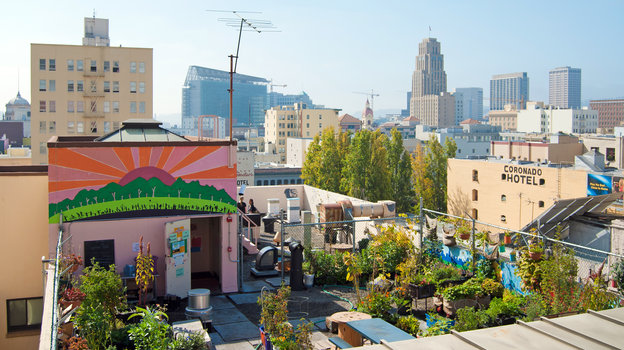
"content": "\u003cfigure id=\"attachment_80133\" class=\"wp-caption aligncenter\" style=\"max-width: 1674px\">\u003ca href=\"http://ww2.kqed.org/bayareabites/wp-content/uploads/sites/24/2014/04/8042458836_0768f11f06_o_wide-5b39f19f9fc15138bc6d3992ab0ed12a7b8fb3b9.jpg\">\u003cimg src=\"http://ww2.kqed.org/bayareabites/wp-content/uploads/sites/24/2014/04/8042458836_0768f11f06_o_wide-5b39f19f9fc15138bc6d3992ab0ed12a7b8fb3b9.jpg\" alt=\"Graze the Roof is a community-produced garden that grows vegetables on the rooftop of a church in San Francisco. Photo: Sergio Ruiz. Flickr\" width=\"1674\" height=\"940\" class=\"size-full wp-image-80133\">\u003c/a>\u003cfigcaption class=\"wp-caption-text\">Graze the Roof is a community-produced garden that grows vegetables on the rooftop of a church in San Francisco. Photo: \u003ca href=\"https://www.flickr.com/photos/urbanists/\">Sergio Ruiz/Flickr\u003c/a>\u003c/figcaption>\u003c/figure>\n\u003cp>by Maanvi Singh. \u003ca href=\"http://www.npr.org/blogs/thesalt/2014/04/05/299051466/newbie-urban-gardeners-may-not-be-aware-of-soils-dirty-legacy\">The Salt at NPR Food\u003c/a> (4/5/14)\u003c/p>\n\u003cp>The majority of Americans now live in cities, which means we have very little to do anymore with the production of our food.\u003c/p>\n\u003cp>But there's a reversal of that trend afoot, as more city people decide that they want to cultivate crops and raise some livestock. After all, there are few things more satisfying that biting than a bunch of tender, red radishes you grew yourself, or a fresh egg from the \u003ca href=\"http://www.npr.org/2013/08/07/209726394/want-to-be-a-chicken-farmer-try-it-before-you-commit\">backyard\u003c/a>.\u003c/p>\n\u003cp>According to \u003ca href=\"http://assoc.garden.org/press/press.php?q=show&id=3819&pr=pr_nga\">figures\u003c/a> just released by the National Gardening Association, the number of American growing food in urban areas increased 29 percent between 2008 and 2013 from 7 million to 9 million people.\u003c/p>\n\u003cp>But many of these city-dwelling gardeners still aren't aware of how to grow food in urban soil safely, according to a \u003ca href=\"http://www.plosone.org/article/info%3Adoi%2F10.1371%2Fjournal.pone.0087913\">study\u003c/a> by researchers at Johns Hopkins University's Center for a Livable Future.\u003c/p>\n\u003cp>[ad fullwidth]\u003c/p>\n\u003cp>Most gardeners understand that the soil in big cities is often \u003ca href=\"http://www.npr.org/blogs/health/2013/04/04/176257595/soil-lead-may-be-an-overlooked-threat-to-kids-health\">contaminated with lead\u003c/a> — and know to get their soil tested. But the researchers' interviews with 70 urban gardeners in Baltimore revealed that most are pretty clueless about how to avoid other types of contaminants — like heavy metals and asbestos — from getting into their vegetables.\u003c/p>\n\u003cp>Part of the problem is that \"there might be contaminants that [gardeners] can't test for,\" says \u003ca href=\"http://www.livablefutureblog.com/about/brent-kim\">Brent Kim\u003c/a>, a program officer at the Center for a Livable Future. Most soil tests look for lead, cadmium and arsenic, he tells The Salt. But they don't test things petrochemicals left behind by cars, or cleaning solvents, which might have seeped into the soil from an old laundromat.\u003c/p>\n\u003cp>Many of these chemicals — including the cleaning solvents lautromats used back in the day, and chemicals found in the exhaust of cars — are carcinogenic, and they're dangerous to ingest or even breath in. Asbestos left over from a building demolished years ago cause lung problems, as well. And children are especially vulnerable to all of these substances, Kim says.\u003c/p>\n\u003cp>So if you're thinking of starting an urban garden, Kim says, once you've have found a plot of land, you should learn its history. What's now an empty plot or a backyard might once have been a parking lot, a gas station or the site of a chemical spill, he says. \"Knowing the site history will give you some clues about what might be in that soil,\" Kim says.\u003c/p>\n\u003cp>And testing the soil and investigating the land's history are crucial whether or not you're planning on using raised beds. \"People tend to think raised beds are going to solve their contamination problem,\" Kim says. But contaminated soil could easily get kicked onto your plants, especially if the beds are low to the ground.\u003c/p>\n\u003cp>\"Another consideration is you have to be careful about the materials that you're using to build a raised bed,\" Kim says. Recycling wood from an old construction site might seem like a good, eco-friendly idea. But that wood could be treated with chemicals you don't want touching your fruits and veggies, Kim says.\u003c/p>\n\u003cp>Even after taking all those precautions, gardeners can never be 100 percent sure that they're in the clear, Kim says. So it's always a good idea to use gloves while gardening, and wash all your produce thoroughly. And if your young kids like to help out in the garden, you might want to clean them up as well.\u003c/p>\n\u003cp>All of this advice applies to all urban gardeners, Kim says, whether you're in charge of a small backyard plot, or a giant operation, like 140-acre \u003ca href=\"http://www.hantzfarmsdetroit.com/\">Hantz Farms\u003c/a> in Detroit.\u003c/p>\n\u003cp>According to the report, in Baltimore, over a quarter of the gardeners were relative newbies, with less than five years of experience.\u003c/p>\n\u003cp>Kim says there's no quick way to bridge the knowledge gap. But providing gardeners with the right resources is a first step. He and his colleagues have created an urban gardening \u003ca href=\"http://www.jhsph.edu/research/centers-and-institutes/johns-hopkins-center-for-a-livable-future/projects/Urban-Soil-Safety/\">guide\u003c/a>. Baltimore residents can also check out an interactive \u003ca href=\"http://www.arcgis.com/apps/StorytellingTextLegend/index.html?appid=78b09d5b87f6416c966057b6ed092034\">map\u003c/a> of the city, which highlights sites where the risk of contamination is high.\u003c/p>\n\u003cp>Other great resources include the U.S. Department of Agriculture's online \u003ca href=\"http://afsic.nal.usda.gov/farms-and-community/urban-agriculturehttp:/afsic.nal.usda.gov/farms-and-community/urban-agriculture\">guide.\u003c/a>\u003c/p>\n\u003cp>\"I see these urban growing spaces as these oases in the middle of these urban environments,\" Kim says. They bring communities together, and they help people save money on fresh produce.\u003c/p>\n\u003cp>\"Urban growing spaces are amazing,\" Kim says. \"Let's keeping doing this, but let's do it safely.\" \u003c/p>\n\u003cp>\u003c/p>\n\u003cp>\u003cem>Copyright 2014 \u003ca href=\"http://www.npr.org/\">NPR\u003c/a>.\u003c/em> \u003c/p>\n\n",
"disqusIdentifier": "80132 http://blogs.kqed.org/bayareabites/?p=80132",
"disqusUrl": "https://ww2.kqed.org/bayareabites/2014/04/05/newbie-urban-gardeners-may-not-be-aware-of-soils-dirty-legacy/",
"stats": {
"hasVideo": false,
"hasChartOrMap": false,
"hasAudio": false,
"hasPolis": false,
"wordCount": 785,
"hasGoogleForm": false,
"hasGallery": false,
"hasHearkenModule": false,
"iframeSrcs": [],
"paragraphCount": 21
},
"modified": 1396731682,
"excerpt": "More and more city dwellers are trying their hand at urban gardening. Most know to be wary of lead in their soil, a report finds, but they're clueless about how to avoid other types of contaminants.",
"headData": {
"twImgId": "",
"twTitle": "",
"ogTitle": "",
"ogImgId": "",
"twDescription": "",
"description": "More and more city dwellers are trying their hand at urban gardening. Most know to be wary of lead in their soil, a report finds, but they're clueless about how to avoid other types of contaminants.",
"title": "Newbie Urban Gardeners May Not Be Aware Of Soil's Dirty Legacy | KQED",
"ogDescription": "",
"schema": {
"@context": "https://schema.org",
"@type": "Article",
"headline": "Newbie Urban Gardeners May Not Be Aware Of Soil's Dirty Legacy",
"datePublished": "2014-04-05T14:01:22-07:00",
"dateModified": "2014-04-05T14:01:22-07:00",
"image": "https://cdn.kqed.org/wp-content/uploads/2020/02/KQED-OG-Image@1x.png"
}
},
"guestAuthors": [],
"slug": "newbie-urban-gardeners-may-not-be-aware-of-soils-dirty-legacy",
"status": "publish",
"nprApiLink": "http://api.npr.org/query?id=299051466&apiKey=MDAxOTAwOTE4MDEyMTkxMDAzNjczZDljZA004",
"nprByline": "Maanvi Singh",
"nprStoryDate": "Sat, 05 Apr 2014 08:18:02 -0400",
"nprLastModifiedDate": "Sat, 05 Apr 2014 08:18:02 -0400",
"nprHtmlLink": "http://www.npr.org/blogs/thesalt/2014/04/05/299051466/newbie-urban-gardeners-may-not-be-aware-of-soils-dirty-legacy?ft=3&f=299051466",
"nprStoryId": "299051466",
"nprRetrievedStory": "1",
"nprPubDate": "Sat, 05 Apr 2014 08:18:00 -0400",
"path": "/bayareabites/80132/newbie-urban-gardeners-may-not-be-aware-of-soils-dirty-legacy",
"audioTrackLength": null,
"parsedContent": [
{
"type": "contentString",
"content": "\u003cdiv class=\"post-body\">\u003cp>\u003cfigure id=\"attachment_80133\" class=\"wp-caption aligncenter\" style=\"max-width: 1674px\">\u003ca href=\"http://ww2.kqed.org/bayareabites/wp-content/uploads/sites/24/2014/04/8042458836_0768f11f06_o_wide-5b39f19f9fc15138bc6d3992ab0ed12a7b8fb3b9.jpg\">\u003cimg src=\"http://ww2.kqed.org/bayareabites/wp-content/uploads/sites/24/2014/04/8042458836_0768f11f06_o_wide-5b39f19f9fc15138bc6d3992ab0ed12a7b8fb3b9.jpg\" alt=\"Graze the Roof is a community-produced garden that grows vegetables on the rooftop of a church in San Francisco. Photo: Sergio Ruiz. Flickr\" width=\"1674\" height=\"940\" class=\"size-full wp-image-80133\">\u003c/a>\u003cfigcaption class=\"wp-caption-text\">Graze the Roof is a community-produced garden that grows vegetables on the rooftop of a church in San Francisco. Photo: \u003ca href=\"https://www.flickr.com/photos/urbanists/\">Sergio Ruiz/Flickr\u003c/a>\u003c/figcaption>\u003c/figure>\n\u003cp>by Maanvi Singh. \u003ca href=\"http://www.npr.org/blogs/thesalt/2014/04/05/299051466/newbie-urban-gardeners-may-not-be-aware-of-soils-dirty-legacy\">The Salt at NPR Food\u003c/a> (4/5/14)\u003c/p>\n\u003cp>The majority of Americans now live in cities, which means we have very little to do anymore with the production of our food.\u003c/p>\n\u003cp>But there's a reversal of that trend afoot, as more city people decide that they want to cultivate crops and raise some livestock. After all, there are few things more satisfying that biting than a bunch of tender, red radishes you grew yourself, or a fresh egg from the \u003ca href=\"http://www.npr.org/2013/08/07/209726394/want-to-be-a-chicken-farmer-try-it-before-you-commit\">backyard\u003c/a>.\u003c/p>\n\u003cp>According to \u003ca href=\"http://assoc.garden.org/press/press.php?q=show&id=3819&pr=pr_nga\">figures\u003c/a> just released by the National Gardening Association, the number of American growing food in urban areas increased 29 percent between 2008 and 2013 from 7 million to 9 million people.\u003c/p>\n\u003cp>But many of these city-dwelling gardeners still aren't aware of how to grow food in urban soil safely, according to a \u003ca href=\"http://www.plosone.org/article/info%3Adoi%2F10.1371%2Fjournal.pone.0087913\">study\u003c/a> by researchers at Johns Hopkins University's Center for a Livable Future.\u003c/p>\n\u003cp>\u003c/p>\u003c/div>",
"attributes": {
"named": {},
"numeric": []
}
},
{
"type": "component",
"content": "",
"name": "ad",
"attributes": {
"named": {
"label": "fullwidth"
},
"numeric": [
"fullwidth"
]
}
},
{
"type": "contentString",
"content": "\u003cdiv class=\"post-body\">\u003cp>\u003c/p>\n\u003cp>Most gardeners understand that the soil in big cities is often \u003ca href=\"http://www.npr.org/blogs/health/2013/04/04/176257595/soil-lead-may-be-an-overlooked-threat-to-kids-health\">contaminated with lead\u003c/a> — and know to get their soil tested. But the researchers' interviews with 70 urban gardeners in Baltimore revealed that most are pretty clueless about how to avoid other types of contaminants — like heavy metals and asbestos — from getting into their vegetables.\u003c/p>\n\u003cp>Part of the problem is that \"there might be contaminants that [gardeners] can't test for,\" says \u003ca href=\"http://www.livablefutureblog.com/about/brent-kim\">Brent Kim\u003c/a>, a program officer at the Center for a Livable Future. Most soil tests look for lead, cadmium and arsenic, he tells The Salt. But they don't test things petrochemicals left behind by cars, or cleaning solvents, which might have seeped into the soil from an old laundromat.\u003c/p>\n\u003cp>Many of these chemicals — including the cleaning solvents lautromats used back in the day, and chemicals found in the exhaust of cars — are carcinogenic, and they're dangerous to ingest or even breath in. Asbestos left over from a building demolished years ago cause lung problems, as well. And children are especially vulnerable to all of these substances, Kim says.\u003c/p>\n\u003cp>So if you're thinking of starting an urban garden, Kim says, once you've have found a plot of land, you should learn its history. What's now an empty plot or a backyard might once have been a parking lot, a gas station or the site of a chemical spill, he says. \"Knowing the site history will give you some clues about what might be in that soil,\" Kim says.\u003c/p>\n\u003cp>And testing the soil and investigating the land's history are crucial whether or not you're planning on using raised beds. \"People tend to think raised beds are going to solve their contamination problem,\" Kim says. But contaminated soil could easily get kicked onto your plants, especially if the beds are low to the ground.\u003c/p>\n\u003cp>\"Another consideration is you have to be careful about the materials that you're using to build a raised bed,\" Kim says. Recycling wood from an old construction site might seem like a good, eco-friendly idea. But that wood could be treated with chemicals you don't want touching your fruits and veggies, Kim says.\u003c/p>\n\u003cp>Even after taking all those precautions, gardeners can never be 100 percent sure that they're in the clear, Kim says. So it's always a good idea to use gloves while gardening, and wash all your produce thoroughly. And if your young kids like to help out in the garden, you might want to clean them up as well.\u003c/p>\n\u003cp>All of this advice applies to all urban gardeners, Kim says, whether you're in charge of a small backyard plot, or a giant operation, like 140-acre \u003ca href=\"http://www.hantzfarmsdetroit.com/\">Hantz Farms\u003c/a> in Detroit.\u003c/p>\n\u003cp>According to the report, in Baltimore, over a quarter of the gardeners were relative newbies, with less than five years of experience.\u003c/p>\n\u003cp>Kim says there's no quick way to bridge the knowledge gap. But providing gardeners with the right resources is a first step. He and his colleagues have created an urban gardening \u003ca href=\"http://www.jhsph.edu/research/centers-and-institutes/johns-hopkins-center-for-a-livable-future/projects/Urban-Soil-Safety/\">guide\u003c/a>. Baltimore residents can also check out an interactive \u003ca href=\"http://www.arcgis.com/apps/StorytellingTextLegend/index.html?appid=78b09d5b87f6416c966057b6ed092034\">map\u003c/a> of the city, which highlights sites where the risk of contamination is high.\u003c/p>\n\u003cp>Other great resources include the U.S. Department of Agriculture's online \u003ca href=\"http://afsic.nal.usda.gov/farms-and-community/urban-agriculturehttp:/afsic.nal.usda.gov/farms-and-community/urban-agriculture\">guide.\u003c/a>\u003c/p>\n\u003cp>\"I see these urban growing spaces as these oases in the middle of these urban environments,\" Kim says. They bring communities together, and they help people save money on fresh produce.\u003c/p>\n\u003cp>\"Urban growing spaces are amazing,\" Kim says. \"Let's keeping doing this, but let's do it safely.\" \u003c/p>\n\u003cp>\u003c/p>\n\u003cp>\u003cem>Copyright 2014 \u003ca href=\"http://www.npr.org/\">NPR\u003c/a>.\u003c/em> \u003c/p>\n\n\u003c/div>\u003c/p>",
"attributes": {
"named": {},
"numeric": []
}
}
],
"link": "/bayareabites/80132/newbie-urban-gardeners-may-not-be-aware-of-soils-dirty-legacy",
"authors": [
"byline_bayareabites_80132"
],
"categories": [
"bayareabites_2638",
"bayareabites_2554",
"bayareabites_1245",
"bayareabites_10916",
"bayareabites_2035"
],
"tags": [
"bayareabites_13244",
"bayareabites_13243",
"bayareabites_12168",
"bayareabites_10921",
"bayareabites_2721"
],
"featImg": "bayareabites_80140",
"label": "bayareabites"
},
"bayareabites_80038": {
"type": "posts",
"id": "bayareabites_80038",
"meta": {
"index": "posts_1716263798",
"site": "bayareabites",
"id": "80038",
"score": null,
"sort": [
1396550640000
]
},
"parent": 0,
"labelTerm": {
"site": "bayareabites"
},
"blocks": [],
"publishDate": 1396550640,
"format": "aside",
"disqusTitle": "Farmers Need To Get 'Climate Smart' To Prep For What's Ahead",
"title": "Farmers Need To Get 'Climate Smart' To Prep For What's Ahead",
"headTitle": "Bay Area Bites | KQED Food",
"content": "\u003cfigure id=\"attachment_80039\" class=\"wp-caption aligncenter\" style=\"max-width: 1673px\">\u003ca href=\"http://ww2.kqed.org/bayareabites/wp-content/uploads/sites/24/2014/04/5866033084_48e430ca02_o_wide-a36b21bef8409fd40a1a25cb376ea1e1b49cea76.jpg\">\u003cimg src=\"http://ww2.kqed.org/bayareabites/wp-content/uploads/sites/24/2014/04/5866033084_48e430ca02_o_wide-a36b21bef8409fd40a1a25cb376ea1e1b49cea76.jpg\" alt=\"Farmers participate in a CGIAR climate training workshop on how to interpret seasonal rainfall forecasts in Kaffrine, Senegal. Courtesy of J. Hansen CGIAR Climate\" width=\"1673\" height=\"940\" class=\"size-full wp-image-80039\">\u003c/a>\u003cfigcaption class=\"wp-caption-text\">Farmers participate in a CGIAR climate training workshop on how to interpret seasonal rainfall forecasts in Kaffrine, Senegal. Courtesy of \u003ca href=\"https://www.flickr.com/photos/cgiarclimate/\">J. Hansen CGIAR Climate\u003c/a>\u003c/figcaption>\u003c/figure>\n\u003cp>by \u003ca href=\"http://www.npr.org/people/143160021/daniel-charles\">Dan Charles\u003c/a>, The Salt at NPR Food (4/3/14)\u003c/p>\n\u003cp>The planet's top experts on global warning released their latest \u003ca href=\"http://ipcc-wg2.gov/AR5/report/final-drafts/\">predictions\u003c/a> this week for how rising temperatures will change our lives, and in particular, what they mean for the \u003ca href=\"http://ipcc-wg2.gov/AR5/images/uploads/WGIIAR5-Chap7_FGDall.pdf\">production of food\u003c/a>.\u003c/p>\n\u003cp>The report, sadly, is massive and excruciatingly hard to digest. Our hats go off to the good folks at the Consultative Group on International Agricultural Research (CGIAR), who summarized it with easy-to-read infographics on what to expect over the next several decades.\u003c/p>\n\u003cp>The bottom line: Climate change probably will hurt food production, raise food prices and increase hunger, especially in the tropics.\u003c/p>\n\u003cp>At the same time, those calamities may not be inevitable. According to CGIAR, \"Adaptation will be key.\"\u003c/p>\n\u003cfigure id=\"attachment_80040\" class=\"wp-caption aligncenter\" style=\"max-width: 831px\">\u003ca href=\"http://ww2.kqed.org/bayareabites/wp-content/uploads/sites/24/2014/04/image004_custom-f3e53a3339e122c1061aa56cac9df9df832ed10f.jpe\">\u003cimg src=\"http://ww2.kqed.org/bayareabites/wp-content/uploads/sites/24/2014/04/image004_custom-f3e53a3339e122c1061aa56cac9df9df832ed10f.jpe\" alt=\"In the 2030s, climate change will affect food and farming more strongly, particularly small-scale in poor countries. Infographic: CGIAR\" width=\"831\" height=\"1176\" class=\"size-full wp-image-80040\">\u003c/a>\u003cfigcaption class=\"wp-caption-text\">In the 2030s, climate change will affect food and farming more strongly, particularly small-scale in poor countries. Infographic: \u003ca href=\"http://www.cgiar.org/\">CGIAR\u003c/a>\u003c/figcaption>\u003c/figure>\n\u003cp>If you want to see more infographics like this one, check out what CGIAR put together on the \u003ca href=\"http://ccafs.cgiar.org/sites/default/files/images/IPCCAg_2010.png\">2010s\u003c/a> and the \u003ca href=\"http://ccafs.cgiar.org/sites/default/files/images/IPCCAg_2050.png\">2050s\u003c/a>.\u003c/p>\n\u003cp>[ad fullwidth]\u003c/p>\n\u003cp>Adaptation is climate-change jargon for everything that people can do to avoid the effects of rising temperatures, from building higher seawalls to installing air conditioning.\u003c/p>\n\u003cp>Even if you're just talking about farming, the list of possible adaptations is long. It includes irrigation, switching to crop varieties that can better withstand high temperatures, planting earlier to take advantage of longer growing seasons, fighting new insect pests, and building new transportation infrastructure that will allow countries to move food to where it is needed most.\u003c/p>\n\u003cp>International donors, including the World Bank, are now pouring money into research on \"\u003ca href=\"http://ccafs.cgiar.org/blog/world-bank-scaling-investments-climate-smart-agriculture#.UzxTM6hdV8E\">climate smart agriculture\u003c/a>.\" They're trying out specific innovations among farmers in 15 \"\u003ca href=\"http://ccafs.cgiar.org/climate-smart-villages#.Uzwy86hdV8E\">climate smart villages\u003c/a>\" that have been identified in sub-Saharan Africa and South Asia.\u003c/p>\n\u003cp>In one area of Senegal, for instance, farmers are now getting more accurate weather forecasts, delivered via cell phones. \u003ca href=\"http://ccafs.cgiar.org/about/who-we-are/our-staff/researchers/theme-leader/andrew-jarvis#.Uzxav6hdV8E\">Andy Jarvis\u003c/a>, of the \u003ca href=\"http://ciat.cgiar.org/\">International Center for Tropical Agriculture\u003c/a>, says these forecasts are vitally important, because farmers want to plant their crops just as the rains start, and the true start of the rainy season can't be easily predicted.\u003c/p>\n\u003cp>It may vary, from one year to the next, by a month or more, and farmers can easily be fooled into planting too early by a small rain that's not sustained. Jarvis says this program is now expanding to reach more farmers. \u003c/p>\n\u003cp>Watch a video about the program:\u003c/p>\n\u003cp>[youtube //www.youtube.com/watch?v=FAT26-WWffs]\u003c/p>\n\u003cp>According to this week's report from the IPCC, adaptive measures like these offer significant benefits — like boosting the yields of major grain crops by an estimated 15 to 18 percent — compared to current yields.\u003c/p>\n\u003cp>At the same time, the report warned that if average temperatures keep increasing, farmers and consumers would have to adapt in more fundamental ways. Farmers would be forced to grow different crops entirely, or leave their traditional farming areas, and consume would have to get used to entirely new mix of foods. \u003c/p>\n\u003cp>Come 2030, we might just have to develop a taste for \u003ca href=\"http://www.npr.org/blogs/thesalt/2013/10/31/231509864/heat-drought-draw-farmers-back-to-sorghum-the-camel-of-crops\">sorghum\u003c/a> biscuits. \u003c/p>\n\u003cp>\u003c/p>\n\u003cp>\u003cem>Copyright 2014 \u003ca href=\"http://www.npr.org/\">NPR\u003c/a>.\u003c/em> \u003c/p>\n\n",
"disqusIdentifier": "80038 http://blogs.kqed.org/bayareabites/?p=80038",
"disqusUrl": "https://ww2.kqed.org/bayareabites/2014/04/03/farmers-need-to-get-climate-smart-to-prep-for-whats-ahead/",
"stats": {
"hasVideo": true,
"hasChartOrMap": false,
"hasAudio": false,
"hasPolis": false,
"wordCount": 539,
"hasGoogleForm": false,
"hasGallery": false,
"hasHearkenModule": false,
"iframeSrcs": [],
"paragraphCount": 19
},
"modified": 1528396651,
"excerpt": "Climate change will likely hurt food production, raise food prices and increase hunger. But those calamities may not be inevitable, according to a group of international agriculture researchers.",
"headData": {
"twImgId": "",
"twTitle": "",
"ogTitle": "",
"ogImgId": "",
"twDescription": "",
"description": "Climate change will likely hurt food production, raise food prices and increase hunger. But those calamities may not be inevitable, according to a group of international agriculture researchers.",
"title": "Farmers Need To Get 'Climate Smart' To Prep For What's Ahead | KQED",
"ogDescription": "",
"schema": {
"@context": "https://schema.org",
"@type": "Article",
"headline": "Farmers Need To Get 'Climate Smart' To Prep For What's Ahead",
"datePublished": "2014-04-03T11:44:00-07:00",
"dateModified": "2018-06-07T11:37:31-07:00",
"image": "https://cdn.kqed.org/wp-content/uploads/2020/02/KQED-OG-Image@1x.png"
}
},
"guestAuthors": [],
"slug": "farmers-need-to-get-climate-smart-to-prep-for-whats-ahead",
"status": "publish",
"nprApiLink": "http://api.npr.org/query?id=298333482&apiKey=MDAxOTAwOTE4MDEyMTkxMDAzNjczZDljZA004",
"nprByline": "Dan Charles",
"nprStoryDate": "Thu, 03 Apr 2014 14:14:00 -0400",
"nprLastModifiedDate": "Thu, 03 Apr 2014 14:16:33 -0400",
"nprHtmlLink": "http://www.npr.org/blogs/thesalt/2014/04/03/298333482/farmers-need-to-get-climate-smart-to-prep-for-whats-ahead?ft=3&f=298333482",
"nprStoryId": "298333482",
"nprRetrievedStory": "1",
"nprPubDate": "Thu, 03 Apr 2014 14:14:00 -0400",
"path": "/bayareabites/80038/farmers-need-to-get-climate-smart-to-prep-for-whats-ahead",
"audioTrackLength": null,
"parsedContent": [
{
"type": "contentString",
"content": "\u003cdiv class=\"post-body\">\u003cp>\u003cfigure id=\"attachment_80039\" class=\"wp-caption aligncenter\" style=\"max-width: 1673px\">\u003ca href=\"http://ww2.kqed.org/bayareabites/wp-content/uploads/sites/24/2014/04/5866033084_48e430ca02_o_wide-a36b21bef8409fd40a1a25cb376ea1e1b49cea76.jpg\">\u003cimg src=\"http://ww2.kqed.org/bayareabites/wp-content/uploads/sites/24/2014/04/5866033084_48e430ca02_o_wide-a36b21bef8409fd40a1a25cb376ea1e1b49cea76.jpg\" alt=\"Farmers participate in a CGIAR climate training workshop on how to interpret seasonal rainfall forecasts in Kaffrine, Senegal. Courtesy of J. Hansen CGIAR Climate\" width=\"1673\" height=\"940\" class=\"size-full wp-image-80039\">\u003c/a>\u003cfigcaption class=\"wp-caption-text\">Farmers participate in a CGIAR climate training workshop on how to interpret seasonal rainfall forecasts in Kaffrine, Senegal. Courtesy of \u003ca href=\"https://www.flickr.com/photos/cgiarclimate/\">J. Hansen CGIAR Climate\u003c/a>\u003c/figcaption>\u003c/figure>\n\u003cp>by \u003ca href=\"http://www.npr.org/people/143160021/daniel-charles\">Dan Charles\u003c/a>, The Salt at NPR Food (4/3/14)\u003c/p>\n\u003cp>The planet's top experts on global warning released their latest \u003ca href=\"http://ipcc-wg2.gov/AR5/report/final-drafts/\">predictions\u003c/a> this week for how rising temperatures will change our lives, and in particular, what they mean for the \u003ca href=\"http://ipcc-wg2.gov/AR5/images/uploads/WGIIAR5-Chap7_FGDall.pdf\">production of food\u003c/a>.\u003c/p>\n\u003cp>The report, sadly, is massive and excruciatingly hard to digest. Our hats go off to the good folks at the Consultative Group on International Agricultural Research (CGIAR), who summarized it with easy-to-read infographics on what to expect over the next several decades.\u003c/p>\n\u003cp>The bottom line: Climate change probably will hurt food production, raise food prices and increase hunger, especially in the tropics.\u003c/p>\n\u003cp>At the same time, those calamities may not be inevitable. According to CGIAR, \"Adaptation will be key.\"\u003c/p>\n\u003cfigure id=\"attachment_80040\" class=\"wp-caption aligncenter\" style=\"max-width: 831px\">\u003ca href=\"http://ww2.kqed.org/bayareabites/wp-content/uploads/sites/24/2014/04/image004_custom-f3e53a3339e122c1061aa56cac9df9df832ed10f.jpe\">\u003cimg src=\"http://ww2.kqed.org/bayareabites/wp-content/uploads/sites/24/2014/04/image004_custom-f3e53a3339e122c1061aa56cac9df9df832ed10f.jpe\" alt=\"In the 2030s, climate change will affect food and farming more strongly, particularly small-scale in poor countries. Infographic: CGIAR\" width=\"831\" height=\"1176\" class=\"size-full wp-image-80040\">\u003c/a>\u003cfigcaption class=\"wp-caption-text\">In the 2030s, climate change will affect food and farming more strongly, particularly small-scale in poor countries. Infographic: \u003ca href=\"http://www.cgiar.org/\">CGIAR\u003c/a>\u003c/figcaption>\u003c/figure>\n\u003cp>If you want to see more infographics like this one, check out what CGIAR put together on the \u003ca href=\"http://ccafs.cgiar.org/sites/default/files/images/IPCCAg_2010.png\">2010s\u003c/a> and the \u003ca href=\"http://ccafs.cgiar.org/sites/default/files/images/IPCCAg_2050.png\">2050s\u003c/a>.\u003c/p>\n\u003cp>\u003c/p>\u003c/div>",
"attributes": {
"named": {},
"numeric": []
}
},
{
"type": "component",
"content": "",
"name": "ad",
"attributes": {
"named": {
"label": "fullwidth"
},
"numeric": [
"fullwidth"
]
}
},
{
"type": "contentString",
"content": "\u003cdiv class=\"post-body\">\u003cp>\u003c/p>\n\u003cp>Adaptation is climate-change jargon for everything that people can do to avoid the effects of rising temperatures, from building higher seawalls to installing air conditioning.\u003c/p>\n\u003cp>Even if you're just talking about farming, the list of possible adaptations is long. It includes irrigation, switching to crop varieties that can better withstand high temperatures, planting earlier to take advantage of longer growing seasons, fighting new insect pests, and building new transportation infrastructure that will allow countries to move food to where it is needed most.\u003c/p>\n\u003cp>International donors, including the World Bank, are now pouring money into research on \"\u003ca href=\"http://ccafs.cgiar.org/blog/world-bank-scaling-investments-climate-smart-agriculture#.UzxTM6hdV8E\">climate smart agriculture\u003c/a>.\" They're trying out specific innovations among farmers in 15 \"\u003ca href=\"http://ccafs.cgiar.org/climate-smart-villages#.Uzwy86hdV8E\">climate smart villages\u003c/a>\" that have been identified in sub-Saharan Africa and South Asia.\u003c/p>\n\u003cp>In one area of Senegal, for instance, farmers are now getting more accurate weather forecasts, delivered via cell phones. \u003ca href=\"http://ccafs.cgiar.org/about/who-we-are/our-staff/researchers/theme-leader/andrew-jarvis#.Uzxav6hdV8E\">Andy Jarvis\u003c/a>, of the \u003ca href=\"http://ciat.cgiar.org/\">International Center for Tropical Agriculture\u003c/a>, says these forecasts are vitally important, because farmers want to plant their crops just as the rains start, and the true start of the rainy season can't be easily predicted.\u003c/p>\n\u003cp>It may vary, from one year to the next, by a month or more, and farmers can easily be fooled into planting too early by a small rain that's not sustained. Jarvis says this program is now expanding to reach more farmers. \u003c/p>\n\u003cp>Watch a video about the program:\u003c/p>\n\u003cp>\u003c/p>\u003cp>\u003cspan class='utils-parseShortcode-shortcodes-__youtubeShortcode__embedYoutube'>\n \u003cspan class='utils-parseShortcode-shortcodes-__youtubeShortcode__embedYoutubeInside'>\n \u003ciframe\n loading='lazy'\n class='utils-parseShortcode-shortcodes-__youtubeShortcode__youtubePlayer'\n type='text/html'\n src='//www.youtube.com/embed/FAT26-WWffs'\n title='//www.youtube.com/embed/FAT26-WWffs'\n allowfullscreen='true'\n style='border:0;'>\u003c/iframe>\n \u003c/span>\n \u003c/span>\u003c/p>\u003cp>\u003c/p>\n\u003cp>According to this week's report from the IPCC, adaptive measures like these offer significant benefits — like boosting the yields of major grain crops by an estimated 15 to 18 percent — compared to current yields.\u003c/p>\n\u003cp>At the same time, the report warned that if average temperatures keep increasing, farmers and consumers would have to adapt in more fundamental ways. Farmers would be forced to grow different crops entirely, or leave their traditional farming areas, and consume would have to get used to entirely new mix of foods. \u003c/p>\n\u003cp>Come 2030, we might just have to develop a taste for \u003ca href=\"http://www.npr.org/blogs/thesalt/2013/10/31/231509864/heat-drought-draw-farmers-back-to-sorghum-the-camel-of-crops\">sorghum\u003c/a> biscuits. \u003c/p>\n\u003cp>\u003c/p>\n\u003cp>\u003cem>Copyright 2014 \u003ca href=\"http://www.npr.org/\">NPR\u003c/a>.\u003c/em> \u003c/p>\n\n\u003c/div>\u003c/p>",
"attributes": {
"named": {},
"numeric": []
}
}
],
"link": "/bayareabites/80038/farmers-need-to-get-climate-smart-to-prep-for-whats-ahead",
"authors": [
"byline_bayareabites_80038"
],
"categories": [
"bayareabites_1962",
"bayareabites_1874",
"bayareabites_4084",
"bayareabites_10916",
"bayareabites_2035",
"bayareabites_60"
],
"tags": [
"bayareabites_836",
"bayareabites_11270",
"bayareabites_134",
"bayareabites_10921"
],
"featImg": "bayareabites_80039",
"label": "bayareabites"
},
"bayareabites_79949": {
"type": "posts",
"id": "bayareabites_79949",
"meta": {
"index": "posts_1716263798",
"site": "bayareabites",
"id": "79949",
"score": null,
"sort": [
1396487874000
]
},
"parent": 0,
"labelTerm": {
"site": "bayareabites"
},
"blocks": [],
"publishDate": 1396487874,
"format": "aside",
"disqusTitle": "Should We Close Part Of The Ocean To Keep Fish On The Plate?",
"title": "Should We Close Part Of The Ocean To Keep Fish On The Plate?",
"headTitle": "Bay Area Bites | KQED Food",
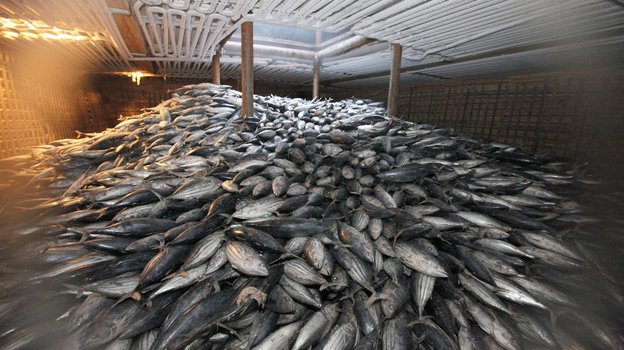
"content": "\u003cfigure id=\"attachment_79951\" class=\"wp-caption aligncenter\" style=\"max-width: 1674px\">\u003ca href=\"http://ww2.kqed.org/bayareabites/wp-content/uploads/sites/24/2014/04/fish_wide-233e0e586d59426d6c3ca7475e2f2796117db032.jpe\">\u003cimg src=\"http://ww2.kqed.org/bayareabites/wp-content/uploads/sites/24/2014/04/fish_wide-233e0e586d59426d6c3ca7475e2f2796117db032.jpe\" alt='Frozen tuna in the hold of the Chinese ship \"Heng Xing 1\" in an area of international waters near the exclusive economic zone of Indonesia, 14 November 2012. Photo: Alex Hofford/EPA /LANDOV' width=\"1674\" height=\"940\" class=\"size-full wp-image-79951\">\u003c/a>\u003cfigcaption class=\"wp-caption-text\">Frozen tuna in the hold of the Chinese ship \"Heng Xing 1\" in an area of international waters near the exclusive economic zone of Indonesia, 14 November 2012. Photo: Alex Hofford/EPA /LANDOV\u003c/figcaption>\u003c/figure>\n\u003cp>by Alastair Bland, \u003ca href=\"http://www.npr.org/blogs/thesalt/2014/04/02/297840486/should-we-close-part-of-the-ocean-to-keep-fish-on-the-plate\">The Salt at NPR Food\u003c/a> (4/2/14)\u003c/p>\n\u003cp>For lovers of fatty tuna belly, canned albacore and swordfish kebabs, here's a question: Would you be willing to give them up for several years so that you could eat them perhaps for the rest of your life?\u003c/p>\n\u003cp>If a new proposal to ban fishing on the open ocean were to fly, that's essentially what we might be faced with. It's an idea that might help restore the populations of several rapidly disappearing fish – like tuna, swordfish and marlin — that we, and future generations, might like to continue to have as a food source.\u003c/p>\n\u003cp>The novel conservation plan, introduced recently in a \u003ca href=\"http://www.plosbiology.org/article/info%3Adoi%2F10.1371%2Fjournal.pbio.1001826?utm_source=feedburner&utm_medium=feed&utm_campaign=Feed%3A+plosbiology%2FNewArticles+(PLOS+Biology+-+New+Articles\" target=\"_blank\">paper\u003c/a> in the journal \u003cem>PLoS Biology\u003c/em>, would close international waters – where there's currently pretty much a fishing free-for-all — to all fishing and restrict commercial fishermen to coastal areas managed by individual nations. The authors, \u003ca href=\"http://www.marine.calpoly.edu/community/faculty/crow-white.php\">Crow White\u003c/a> and \u003ca href=\"http://fiesta.bren.ucsb.edu/~costello/\">Christopher Costello\u003c/a>, suggest turning the open ocean into a worldwide reserve for the migratory species that travel huge distances.\u003c/p>\n\u003cp>That reserve would give these fish populations to chance to rebound. And the fish that strayed into coastal national waters, where fishing would remain legal, could meanwhile be caught by fishermen. Overall, under such a plan, fish populations would grow healthier, fishing would become a more lucrative business and we would have more fish to eat, the researchers argue.\u003c/p>\n\u003cp>[ad fullwidth]\u003c/p>\n\u003cp>But let's face it: Closing off most of the ocean to fishing boats would be a pretty drastic move.\u003c/p>\n\u003cp>But as White, a marine biologist at the California Polytechnic State University in San Luis Obispo, notes, the policies we currently have in place to regulate fisheries — catch quotas, seasonal closures and minimum size limits — aren't working.\u003c/p>\n\u003cp>\"We're already failing to create, much less enforce, other fishery regulations on the high seas,\" White tells The Salt.\u003c/p>\n\u003cfigure id=\"attachment_79952\" class=\"wp-caption aligncenter\" style=\"max-width: 1671px\">\u003ca href=\"http://ww2.kqed.org/bayareabites/wp-content/uploads/sites/24/2014/04/journal.pbio_.1001826.g001_wide-c78df98252452e9bf258a6bbf45688cc187c88a3.jpg\">\u003cimg src=\"http://ww2.kqed.org/bayareabites/wp-content/uploads/sites/24/2014/04/journal.pbio_.1001826.g001_wide-c78df98252452e9bf258a6bbf45688cc187c88a3.jpg\" alt=\"A global map of exclusive economic zones (green), where fishing would be allowed, and high seas (blue), where fishing would be banned, under the proposal from researchers Crow White and Christopher Costello. Image: PLoS Biology\" width=\"1671\" height=\"940\" class=\"size-full wp-image-79952\">\u003c/a>\u003cfigcaption class=\"wp-caption-text\">A global map of exclusive economic zones (green), where fishing would be allowed, and high seas (blue), where fishing would be banned, under the proposal from researchers Crow White and Christopher Costello. Image: \u003ca href=\"http://www.plosbiology.org/article/info%3Adoi%2F10.1371%2Fjournal.pbio.1001826;jsessionid=68BD688545DAD3920262C5B271F65DCC\">PLoS Biology\u003c/a>\u003c/figcaption>\u003c/figure>\n\u003cp>The \"high seas,\" according to the Food and Agriculture Organization, are international waters more than 200 miles from land that make up 64 percent of ocean's surface and 95 percent of its volume.\u003c/p>\n\u003cp>In these waters, millions of tunas, sharks and billfish every year are hauled onto enormous industrial-scale fishing vessels at a rate faster than they can reproduce. Tunas are a main target of high seas fishing boats, with species like the Atlantic bluefin, albacore and bigeye especially impacted by overfishing.\u003c/p>\n\u003cp>Costello, an environmental and resource economist at the University of California, Santa Barbara, tells The Salt that populations of these fish could start rebounding within five or ten years of enacting a high seas fishing ban. He says catches — and availability for consumers — would decline for only a few years.\u003c/p>\n\u003cp>\"By catching less fish in the short run we'd be able to catch more fish every year on a sustainable basis forever,\" he says. \"This has huge implications for food security.\"\u003c/p>\n\u003cfigure id=\"attachment_79950\" class=\"wp-caption alignleft\" style=\"max-width: 290px\">\u003ca href=\"http://ww2.kqed.org/bayareabites/wp-content/uploads/sites/24/2014/04/141293587_wide-cf549c92fd88000de6b4544acc2b6d5930b7467a.jpg\">\u003cimg src=\"http://ww2.kqed.org/bayareabites/wp-content/uploads/sites/24/2014/04/141293587_wide-cf549c92fd88000de6b4544acc2b6d5930b7467a-290x162.jpg\" alt='A tuna fishing boat drags a cage of nets on the Mediterranean sea in 2010. (The Mediterranean is not considered to be part of the \"high seas.\") Photo: Andreas Solaro/AFP/Getty Images' width=\"290\" height=\"162\" class=\"size-medium wp-image-79950\">\u003c/a>\u003cfigcaption class=\"wp-caption-text\">A tuna fishing boat drags a cage of nets on the Mediterranean sea in 2010. (The Mediterranean is not considered to be part of the \"high seas.\") Photo: Andreas Solaro/AFP/Getty Images\u003c/figcaption>\u003c/figure>\n\u003cp>Enforcement could be relatively simple, too, says White — with the help of satellites. Any large ship observed moving slowly, meandering in circles or simply drifting in international waters would be considered suspicious.\u003c/p>\n\u003cp>White and Costello expect some nations — like Spain, China and Japan, which have major investments in fishing fleets in international waters — to resist the idea of a ban. White says that Spain, especially, could be impacted because, while it currently relies heavily on offshore fish populations, it has relatively little of its own national waters to exploit.\u003cstrong> \u003c/strong>\u003c/p>\n\u003cp>White and Costello aren't the only ones raising the idea of a fishing ban in international waters. Martin Stuchtey, with the global management consulting firm McKinsey & Company, recently argued that high seas fishing operations are overall a losing endeavor, \u003ca href=\"http://www.businessinsider.com/economist-ban-of-high-seas-fishing-saves-2-per-person-on-the-planet-2014-2\">as reported by AFP\u003c/a>. Fishing on the high seas is often supported with subsidies. But Stuchtey calculated that closing the high seas would cost every person on earth $2 but would ultimately give them a return of $4.\u003c/p>\n\u003cp>There could be unintended environmental consequences, however. Gib Brogan, fisheries campaign manager with Oceana, wonders if restricting the global fishing fleet to nearshore waters could have adverse effects on fishes like flounder, snapper and grouper that occupy these waters year round.\u003c/p>\n\u003cp>\"If we swap diffuse fishing across a wide swath of ocean for intense fishing on the edges and near shore, will this be a good thing or will it just concentrate the effects near shore?\" Brogan says in an email.\u003c/p>\n\u003cp>Costello, the environmental economist, says no, because overfishing of nearshore species could be avoided if each nation steps up to manage its own resources and protect them from foreign plundering.\u003c/p>\n\u003cp>Costello and White are now taking the next step toward a high seas fishing ban by trying to determine precisely how such a measure might affect individual nations, certain fish species and seafood consumers. Costello expects that research to be published in about a year.\u003c/p>\n\u003cp>\"All big ideas have to start somewhere,\" White says.\u003c/p>\n\u003cp>\u003c/p>\n\u003cp>\u003cem>Copyright 2014 \u003ca href=\"http://www.npr.org/\">NPR\u003c/a>.\u003c/em> \u003c/p>\n\n",
"disqusIdentifier": "79949 http://blogs.kqed.org/bayareabites/?p=79949",
"disqusUrl": "https://ww2.kqed.org/bayareabites/2014/04/02/should-we-close-part-of-the-ocean-to-keep-fish-on-the-plate/",
"stats": {
"hasVideo": false,
"hasChartOrMap": false,
"hasAudio": false,
"hasPolis": false,
"wordCount": 928,
"hasGoogleForm": false,
"hasGallery": false,
"hasHearkenModule": false,
"iframeSrcs": [],
"paragraphCount": 23
},
"modified": 1396487874,
"excerpt": "Tuna, swordfish and other migratory fishes are being overfished by vessels on the high seas. A new proposal says we should close these international waters for a few years to let the fishes rebound.",
"headData": {
"twImgId": "",
"twTitle": "",
"ogTitle": "",
"ogImgId": "",
"twDescription": "",
"description": "Tuna, swordfish and other migratory fishes are being overfished by vessels on the high seas. A new proposal says we should close these international waters for a few years to let the fishes rebound.",
"title": "Should We Close Part Of The Ocean To Keep Fish On The Plate? | KQED",
"ogDescription": "",
"schema": {
"@context": "https://schema.org",
"@type": "Article",
"headline": "Should We Close Part Of The Ocean To Keep Fish On The Plate?",
"datePublished": "2014-04-02T18:17:54-07:00",
"dateModified": "2014-04-02T18:17:54-07:00",
"image": "https://cdn.kqed.org/wp-content/uploads/2020/02/KQED-OG-Image@1x.png"
}
},
"guestAuthors": [],
"slug": "should-we-close-part-of-the-ocean-to-keep-fish-on-the-plate",
"status": "publish",
"nprApiLink": "http://api.npr.org/query?id=297840486&apiKey=MDAxOTAwOTE4MDEyMTkxMDAzNjczZDljZA004",
"nprByline": "Alastair Bland",
"nprStoryDate": "Wed, 02 Apr 2014 15:27:00 -0400",
"nprLastModifiedDate": "Wed, 02 Apr 2014 17:55:50 -0400",
"nprHtmlLink": "http://www.npr.org/blogs/thesalt/2014/04/02/297840486/should-we-close-part-of-the-ocean-to-keep-fish-on-the-plate?ft=3&f=297840486",
"nprStoryId": "297840486",
"nprRetrievedStory": "1",
"nprPubDate": "Wed, 02 Apr 2014 17:55:00 -0400",
"path": "/bayareabites/79949/should-we-close-part-of-the-ocean-to-keep-fish-on-the-plate",
"audioTrackLength": null,
"parsedContent": [
{
"type": "contentString",
"content": "\u003cdiv class=\"post-body\">\u003cp>\u003cfigure id=\"attachment_79951\" class=\"wp-caption aligncenter\" style=\"max-width: 1674px\">\u003ca href=\"http://ww2.kqed.org/bayareabites/wp-content/uploads/sites/24/2014/04/fish_wide-233e0e586d59426d6c3ca7475e2f2796117db032.jpe\">\u003cimg src=\"http://ww2.kqed.org/bayareabites/wp-content/uploads/sites/24/2014/04/fish_wide-233e0e586d59426d6c3ca7475e2f2796117db032.jpe\" alt='Frozen tuna in the hold of the Chinese ship \"Heng Xing 1\" in an area of international waters near the exclusive economic zone of Indonesia, 14 November 2012. Photo: Alex Hofford/EPA /LANDOV' width=\"1674\" height=\"940\" class=\"size-full wp-image-79951\">\u003c/a>\u003cfigcaption class=\"wp-caption-text\">Frozen tuna in the hold of the Chinese ship \"Heng Xing 1\" in an area of international waters near the exclusive economic zone of Indonesia, 14 November 2012. Photo: Alex Hofford/EPA /LANDOV\u003c/figcaption>\u003c/figure>\n\u003cp>by Alastair Bland, \u003ca href=\"http://www.npr.org/blogs/thesalt/2014/04/02/297840486/should-we-close-part-of-the-ocean-to-keep-fish-on-the-plate\">The Salt at NPR Food\u003c/a> (4/2/14)\u003c/p>\n\u003cp>For lovers of fatty tuna belly, canned albacore and swordfish kebabs, here's a question: Would you be willing to give them up for several years so that you could eat them perhaps for the rest of your life?\u003c/p>\n\u003cp>If a new proposal to ban fishing on the open ocean were to fly, that's essentially what we might be faced with. It's an idea that might help restore the populations of several rapidly disappearing fish – like tuna, swordfish and marlin — that we, and future generations, might like to continue to have as a food source.\u003c/p>\n\u003cp>The novel conservation plan, introduced recently in a \u003ca href=\"http://www.plosbiology.org/article/info%3Adoi%2F10.1371%2Fjournal.pbio.1001826?utm_source=feedburner&utm_medium=feed&utm_campaign=Feed%3A+plosbiology%2FNewArticles+(PLOS+Biology+-+New+Articles\" target=\"_blank\">paper\u003c/a> in the journal \u003cem>PLoS Biology\u003c/em>, would close international waters – where there's currently pretty much a fishing free-for-all — to all fishing and restrict commercial fishermen to coastal areas managed by individual nations. The authors, \u003ca href=\"http://www.marine.calpoly.edu/community/faculty/crow-white.php\">Crow White\u003c/a> and \u003ca href=\"http://fiesta.bren.ucsb.edu/~costello/\">Christopher Costello\u003c/a>, suggest turning the open ocean into a worldwide reserve for the migratory species that travel huge distances.\u003c/p>\n\u003cp>That reserve would give these fish populations to chance to rebound. And the fish that strayed into coastal national waters, where fishing would remain legal, could meanwhile be caught by fishermen. Overall, under such a plan, fish populations would grow healthier, fishing would become a more lucrative business and we would have more fish to eat, the researchers argue.\u003c/p>\n\u003cp>\u003c/p>\u003c/div>",
"attributes": {
"named": {},
"numeric": []
}
},
{
"type": "component",
"content": "",
"name": "ad",
"attributes": {
"named": {
"label": "fullwidth"
},
"numeric": [
"fullwidth"
]
}
},
{
"type": "contentString",
"content": "\u003cdiv class=\"post-body\">\u003cp>\u003c/p>\n\u003cp>But let's face it: Closing off most of the ocean to fishing boats would be a pretty drastic move.\u003c/p>\n\u003cp>But as White, a marine biologist at the California Polytechnic State University in San Luis Obispo, notes, the policies we currently have in place to regulate fisheries — catch quotas, seasonal closures and minimum size limits — aren't working.\u003c/p>\n\u003cp>\"We're already failing to create, much less enforce, other fishery regulations on the high seas,\" White tells The Salt.\u003c/p>\n\u003cfigure id=\"attachment_79952\" class=\"wp-caption aligncenter\" style=\"max-width: 1671px\">\u003ca href=\"http://ww2.kqed.org/bayareabites/wp-content/uploads/sites/24/2014/04/journal.pbio_.1001826.g001_wide-c78df98252452e9bf258a6bbf45688cc187c88a3.jpg\">\u003cimg src=\"http://ww2.kqed.org/bayareabites/wp-content/uploads/sites/24/2014/04/journal.pbio_.1001826.g001_wide-c78df98252452e9bf258a6bbf45688cc187c88a3.jpg\" alt=\"A global map of exclusive economic zones (green), where fishing would be allowed, and high seas (blue), where fishing would be banned, under the proposal from researchers Crow White and Christopher Costello. Image: PLoS Biology\" width=\"1671\" height=\"940\" class=\"size-full wp-image-79952\">\u003c/a>\u003cfigcaption class=\"wp-caption-text\">A global map of exclusive economic zones (green), where fishing would be allowed, and high seas (blue), where fishing would be banned, under the proposal from researchers Crow White and Christopher Costello. Image: \u003ca href=\"http://www.plosbiology.org/article/info%3Adoi%2F10.1371%2Fjournal.pbio.1001826;jsessionid=68BD688545DAD3920262C5B271F65DCC\">PLoS Biology\u003c/a>\u003c/figcaption>\u003c/figure>\n\u003cp>The \"high seas,\" according to the Food and Agriculture Organization, are international waters more than 200 miles from land that make up 64 percent of ocean's surface and 95 percent of its volume.\u003c/p>\n\u003cp>In these waters, millions of tunas, sharks and billfish every year are hauled onto enormous industrial-scale fishing vessels at a rate faster than they can reproduce. Tunas are a main target of high seas fishing boats, with species like the Atlantic bluefin, albacore and bigeye especially impacted by overfishing.\u003c/p>\n\u003cp>Costello, an environmental and resource economist at the University of California, Santa Barbara, tells The Salt that populations of these fish could start rebounding within five or ten years of enacting a high seas fishing ban. He says catches — and availability for consumers — would decline for only a few years.\u003c/p>\n\u003cp>\"By catching less fish in the short run we'd be able to catch more fish every year on a sustainable basis forever,\" he says. \"This has huge implications for food security.\"\u003c/p>\n\u003cfigure id=\"attachment_79950\" class=\"wp-caption alignleft\" style=\"max-width: 290px\">\u003ca href=\"http://ww2.kqed.org/bayareabites/wp-content/uploads/sites/24/2014/04/141293587_wide-cf549c92fd88000de6b4544acc2b6d5930b7467a.jpg\">\u003cimg src=\"http://ww2.kqed.org/bayareabites/wp-content/uploads/sites/24/2014/04/141293587_wide-cf549c92fd88000de6b4544acc2b6d5930b7467a-290x162.jpg\" alt='A tuna fishing boat drags a cage of nets on the Mediterranean sea in 2010. (The Mediterranean is not considered to be part of the \"high seas.\") Photo: Andreas Solaro/AFP/Getty Images' width=\"290\" height=\"162\" class=\"size-medium wp-image-79950\">\u003c/a>\u003cfigcaption class=\"wp-caption-text\">A tuna fishing boat drags a cage of nets on the Mediterranean sea in 2010. (The Mediterranean is not considered to be part of the \"high seas.\") Photo: Andreas Solaro/AFP/Getty Images\u003c/figcaption>\u003c/figure>\n\u003cp>Enforcement could be relatively simple, too, says White — with the help of satellites. Any large ship observed moving slowly, meandering in circles or simply drifting in international waters would be considered suspicious.\u003c/p>\n\u003cp>White and Costello expect some nations — like Spain, China and Japan, which have major investments in fishing fleets in international waters — to resist the idea of a ban. White says that Spain, especially, could be impacted because, while it currently relies heavily on offshore fish populations, it has relatively little of its own national waters to exploit.\u003cstrong> \u003c/strong>\u003c/p>\n\u003cp>White and Costello aren't the only ones raising the idea of a fishing ban in international waters. Martin Stuchtey, with the global management consulting firm McKinsey & Company, recently argued that high seas fishing operations are overall a losing endeavor, \u003ca href=\"http://www.businessinsider.com/economist-ban-of-high-seas-fishing-saves-2-per-person-on-the-planet-2014-2\">as reported by AFP\u003c/a>. Fishing on the high seas is often supported with subsidies. But Stuchtey calculated that closing the high seas would cost every person on earth $2 but would ultimately give them a return of $4.\u003c/p>\n\u003cp>There could be unintended environmental consequences, however. Gib Brogan, fisheries campaign manager with Oceana, wonders if restricting the global fishing fleet to nearshore waters could have adverse effects on fishes like flounder, snapper and grouper that occupy these waters year round.\u003c/p>\n\u003cp>\"If we swap diffuse fishing across a wide swath of ocean for intense fishing on the edges and near shore, will this be a good thing or will it just concentrate the effects near shore?\" Brogan says in an email.\u003c/p>\n\u003cp>Costello, the environmental economist, says no, because overfishing of nearshore species could be avoided if each nation steps up to manage its own resources and protect them from foreign plundering.\u003c/p>\n\u003cp>Costello and White are now taking the next step toward a high seas fishing ban by trying to determine precisely how such a measure might affect individual nations, certain fish species and seafood consumers. Costello expects that research to be published in about a year.\u003c/p>\n\u003cp>\"All big ideas have to start somewhere,\" White says.\u003c/p>\n\u003cp>\u003c/p>\n\u003cp>\u003cem>Copyright 2014 \u003ca href=\"http://www.npr.org/\">NPR\u003c/a>.\u003c/em> \u003c/p>\n\n\u003c/div>\u003c/p>",
"attributes": {
"named": {},
"numeric": []
}
}
],
"link": "/bayareabites/79949/should-we-close-part-of-the-ocean-to-keep-fish-on-the-plate",
"authors": [
"byline_bayareabites_79949"
],
"categories": [
"bayareabites_10916",
"bayareabites_60"
],
"tags": [
"bayareabites_376",
"bayareabites_13239",
"bayareabites_323",
"bayareabites_12538",
"bayareabites_10921",
"bayareabites_1956"
],
"featImg": "bayareabites_79955",
"label": "bayareabites"
},
"bayareabites_79851": {
"type": "posts",
"id": "bayareabites_79851",
"meta": {
"index": "posts_1716263798",
"site": "bayareabites",
"id": "79851",
"score": null,
"sort": [
1396382150000
]
},
"parent": 0,
"labelTerm": {
"site": "bayareabites"
},
"blocks": [],
"publishDate": 1396382150,
"format": "aside",
"disqusTitle": "Do Girl Scout Cookies Still Make The World A Better Place?",
"title": "Do Girl Scout Cookies Still Make The World A Better Place?",
"headTitle": "Bay Area Bites | KQED Food",
"content": "\u003cfigure id=\"attachment_79852\" class=\"wp-caption aligncenter\" style=\"max-width: 1674px\">\u003ca href=\"http://ww2.kqed.org/bayareabites/wp-content/uploads/sites/24/2014/04/160975416_wide-55bde97e4f2523531c1fca1cf57b55362f1cd7be.jpg\">\u003cimg src=\"http://ww2.kqed.org/bayareabites/wp-content/uploads/sites/24/2014/04/160975416_wide-55bde97e4f2523531c1fca1cf57b55362f1cd7be.jpg\" alt=\"Girl Scouts sell cookies as a winter storm moves in on February 8, 2013 in New York City. Photo: John Moore/Getty Images\" width=\"1674\" height=\"940\" class=\"size-full wp-image-79852\">\u003c/a>\u003cfigcaption class=\"wp-caption-text\">Girl Scouts sell cookies as a winter storm moves in on February 8, 2013 in New York City. Photo: John Moore/Getty Images\u003c/figcaption>\u003c/figure>\n\u003cp>by Eliza Barclay, \u003ca href=\"http://www.npr.org/blogs/thesalt/2014/04/01/295748000/do-girl-scout-cookies-still-make-the-world-a-better-place\">The Salt at NPR Food\u003c/a> (4/1/13)\u003c/p>\n\u003cp>It's a pretty bold move to blast Girl Scout cookies, those precious sugary treats whose limited run from late winter to early spring is just about over for the year.\u003c/p>\n\u003cp>But a few brave voices argue it's no longer all that delightful to see little girls peddling packaged cookies, or to buy them in the name of supporting the community. (And no, this is not an April Fools joke.)\u003c/p>\n\u003cfigure id=\"attachment_79853\" class=\"wp-caption alignleft\" style=\"max-width: 290px\">\u003ca href=\"http://ww2.kqed.org/bayareabites/wp-content/uploads/sites/24/2014/04/girl-scout-cookies-1511f86cbe6717b5e8cce866803a995e3364712d.jpg\">\u003cimg src=\"http://ww2.kqed.org/bayareabites/wp-content/uploads/sites/24/2014/04/girl-scout-cookies-1511f86cbe6717b5e8cce866803a995e3364712d-290x217.jpg\" alt=\"Could you possibly eat just one Thin Mint or Samoa? Photo: Andrew Prince/NPR\" width=\"290\" height=\"217\" class=\"size-medium wp-image-79853\">\u003c/a>\u003cfigcaption class=\"wp-caption-text\">Could you possibly eat just one Thin Mint or Samoa? Photo: Andrew Prince/NPR\u003c/figcaption>\u003c/figure>\n\u003cp>To some doctors and parents, the tradition increasingly feels out of step with the uncomfortable public health realities of our day.\u003c/p>\n\u003cp>\"The problem is that selling high-fat sugar-laden cookies to an increasingly calorie-addicted populace is no longer congruent with [the Girl Scouts' aim to make the world a better place.]\" That's what John Mandrola, a heart doctor in Louisville, Ky., \u003ca href=\"http://www.drjohnm.org/2014/03/dear-girl-scouts-its-time-to-cut-out-the-cookies/\">wrote\u003c/a> on his blog in March. (He also blogs for Medscape Cardiology.)\u003c/p>\n\u003cp>[ad fullwidth]\u003c/p>\n\u003cp>The sentiment was echoed by Diana Hartman, a writer and editor in Denver, who penned an indignant \u003ca href=\"http://www.denverpost.com/opinion/ci_25418121/why-are-we-letting-girl-scouts-sell-these?source=rss\">op-ed\u003c/a> in the \u003cem>Denver Post\u003c/em>, entitled \"Why are we letting Girl Scouts sell these fattening cookies?\"\u003c/p>\n\u003cp>\"They have some trans fat, some palm oil and are high carb ... all those things you've probably been trying to avoid,\" writes Hartman. As Allison Aubrey \u003ca href=\"http://ww2.kqed.org/bayareabites/2014/03/31/rethinking-fat-the-case-for-adding-some-into-your-diet/\">just reported\u003c/a>, it's the refined carbs in our diets doctors say we really should be cutting.\u003c/p>\n\u003cp>Unsurprisingly, Hartman and Mandrola took some flack from readers for questioning the tradition, which is almost a century old and touted by the Girl Scouts of America as \"the premier entrepreneurship opportunity for girls.\" Cookie revenue (65 to 75 percent of the cookie retail price), of course, goes to local Girl Scout councils, which typically spend it on Girl Scout activities, camps and properties.\u003c/p>\n\u003cp>And come on, it's not like we eat Girl Scout cookies all year round, right?\u003c/p>\n\u003cp>\"Girl Scout cookies are sold for a short time each year,\" Girl Scouts of the USA's chief communications officer, Kelly Parisi, tells The Salt in an email. \"As such, Girl Scout cookies are considered a snack treat and are intended to be enjoyed in moderation.\"\u003c/p>\n\u003cp>But as \u003ca href=\"http://profiles.ucsf.edu/robert.lustig\">Robert Lustig\u003c/a>, the passionate anti-sugar crusader and pediatric endocrinologist at the University of California, San Francisco, notes, that argument just doesn't fly anymore.\u003c/p>\n\u003cp>That's because Girl Scout cookies are followed by a steady stream of other seasonal snack treats intended to be enjoyed in moderation: like Peeps and Cadbury cream eggs and candy corn and candy canes. (McDonald's knows this trick, and every year rakes in the profits with limited-time-only marketing of its \u003ca href=\"http://www.npr.org/blogs/thesalt/2012/12/17/167455904/sandwich-monday-the-mighty-mcrib-returns\">McRib sandwich\u003c/a>.)\u003c/p>\n\u003cp>\"If you gorge out on Girl Scout cookies and that's all you did all year, it wouldn't matter,\" says Lustig. \"But you don't. Girl Scout cookies are just another sign of the problem of hyper-consumption ... It's no better than Tony the Tiger selling Frosted Flakes, and in a way it's worse because you're co-opting innocent children.\"\u003c/p>\n\u003cp>Indeed, Girl Scout cookies are addictive. And one glance at Twitter suggests no one's really eating them in moderation:\u003c/p>\n\u003cblockquote class=\"twitter-tweet\" lang=\"en\">\n\u003cp>If no one sees me in my dark basement eating a sleeve of Girl Scout cookies, it never really happened.\u003c/p>\n\u003cp>— Kim Bongiorno (@LetMeStart) \u003ca href=\"https://twitter.com/LetMeStart/statuses/446813413608816640\">March 21, 2014\u003c/a>\u003c/p>\u003c/blockquote>\n\u003cp>\u003cscript async src=\"//platform.twitter.com/widgets.js\" charset=\"utf-8\">\u003c/script>\u003c/p>\n\u003cblockquote class=\"twitter-tweet\" lang=\"en\">\n\u003cp>When life hands you Girl Scout Cookies.. you eat them all immediately.\u003c/p>\n\u003cp>— The Ceremonies (@theCEREMONIES) \u003ca href=\"https://twitter.com/theCEREMONIES/statuses/449629396773527552\">March 28, 2014\u003c/a>\u003c/p>\u003c/blockquote>\n\u003cp>\u003cscript async src=\"//platform.twitter.com/widgets.js\" charset=\"utf-8\">\u003c/script>\u003c/p>\n\u003cp>\u003cem>The New Yorker\u003c/em> captured our collective guilty tendency to rip through boxes of cookies perfectly in this week's Shouts and Murmurs \u003ca href=\"http://www.newyorker.com/online/blogs/shouts/2014/03/nutrition-facts.html\">column\u003c/a> on revisions to the nutrition label:\u003c/p>\n\u003cblockquote>\n\u003cp>\"Girl Scout Cookies, Samoas, 7 ounces\u003cbr>Serving size: Just one more cookie.\u003cbr>Servings per container: Look, I'm really sorry, O.K.? I know they're your favorite. I don't know what happened. I promise I'll get you some more when I go out later. Just chill out. Jesus.\"\u003c/p>\n\u003c/blockquote>\n\u003cp>OK, so the cookies are a guilty pleasure.\u003c/p>\n\u003cp>But what bothers Mandrola, the doctor whose blog post challenged the Girl Scouts to reconsider the ethics of selling cookies, is that this addictive relationship we now have with sugary foods is showing up every day in his office, in the form of heart rhythm disorders linked to obesity and hypertension.\u003c/p>\n\u003cp>\"I spend my days telling patients to eat less, eat better and exercise,\" he tells us. \"So to me it seems like the Girl Scouts are profiteering off an obvious public health problem.\"\u003c/p>\n\u003cp>Hartman, the writer in Denver, has a suggestions for what the Girl Scouts might sell instead: energy efficient lightbulbs.\u003c/p>\n\u003cp>What do you think? Should the Girl Scouts find something more healthful to sell for their fundraising? \u003c/p>\n\u003cp>\u003c/p>\n\u003cp>\u003cem>Copyright 2014 \u003ca href=\"http://www.npr.org/\">NPR\u003c/a>.\u003c/em> \u003c/p>\n\n",
"disqusIdentifier": "79851 http://blogs.kqed.org/bayareabites/?p=79851",
"disqusUrl": "https://ww2.kqed.org/bayareabites/2014/04/01/do-girl-scout-cookies-still-make-the-world-a-better-place/",
"stats": {
"hasVideo": false,
"hasChartOrMap": false,
"hasAudio": false,
"hasPolis": false,
"wordCount": 824,
"hasGoogleForm": false,
"hasGallery": false,
"hasHearkenModule": false,
"iframeSrcs": [],
"paragraphCount": 30
},
"modified": 1396382150,
"excerpt": "Obesity docs say it's time for the Girl Scouts to ditch the processed, sugary cookies and find another way to raise money. But the tradition is deeply ingrained and has been around for a century.",
"headData": {
"twImgId": "",
"twTitle": "",
"ogTitle": "",
"ogImgId": "",
"twDescription": "",
"description": "Obesity docs say it's time for the Girl Scouts to ditch the processed, sugary cookies and find another way to raise money. But the tradition is deeply ingrained and has been around for a century.",
"title": "Do Girl Scout Cookies Still Make The World A Better Place? | KQED",
"ogDescription": "",
"schema": {
"@context": "https://schema.org",
"@type": "Article",
"headline": "Do Girl Scout Cookies Still Make The World A Better Place?",
"datePublished": "2014-04-01T12:55:50-07:00",
"dateModified": "2014-04-01T12:55:50-07:00",
"image": "https://cdn.kqed.org/wp-content/uploads/2020/02/KQED-OG-Image@1x.png"
}
},
"guestAuthors": [],
"slug": "do-girl-scout-cookies-still-make-the-world-a-better-place",
"status": "publish",
"nprApiLink": "http://api.npr.org/query?id=295748000&apiKey=MDAxOTAwOTE4MDEyMTkxMDAzNjczZDljZA004",
"nprByline": "Eliza Barclay",
"nprStoryDate": "Tue, 01 Apr 2014 12:05:00 -0400",
"nprLastModifiedDate": "Tue, 01 Apr 2014 12:14:18 -0400",
"nprHtmlLink": "http://www.npr.org/blogs/thesalt/2014/04/01/295748000/do-girl-scout-cookies-still-make-the-world-a-better-place?ft=3&f=295748000",
"nprStoryId": "295748000",
"nprRetrievedStory": "1",
"nprPubDate": "Tue, 01 Apr 2014 12:14:00 -0400",
"path": "/bayareabites/79851/do-girl-scout-cookies-still-make-the-world-a-better-place",
"audioTrackLength": null,
"parsedContent": [
{
"type": "contentString",
"content": "\u003cdiv class=\"post-body\">\u003cp>\u003cfigure id=\"attachment_79852\" class=\"wp-caption aligncenter\" style=\"max-width: 1674px\">\u003ca href=\"http://ww2.kqed.org/bayareabites/wp-content/uploads/sites/24/2014/04/160975416_wide-55bde97e4f2523531c1fca1cf57b55362f1cd7be.jpg\">\u003cimg src=\"http://ww2.kqed.org/bayareabites/wp-content/uploads/sites/24/2014/04/160975416_wide-55bde97e4f2523531c1fca1cf57b55362f1cd7be.jpg\" alt=\"Girl Scouts sell cookies as a winter storm moves in on February 8, 2013 in New York City. Photo: John Moore/Getty Images\" width=\"1674\" height=\"940\" class=\"size-full wp-image-79852\">\u003c/a>\u003cfigcaption class=\"wp-caption-text\">Girl Scouts sell cookies as a winter storm moves in on February 8, 2013 in New York City. Photo: John Moore/Getty Images\u003c/figcaption>\u003c/figure>\n\u003cp>by Eliza Barclay, \u003ca href=\"http://www.npr.org/blogs/thesalt/2014/04/01/295748000/do-girl-scout-cookies-still-make-the-world-a-better-place\">The Salt at NPR Food\u003c/a> (4/1/13)\u003c/p>\n\u003cp>It's a pretty bold move to blast Girl Scout cookies, those precious sugary treats whose limited run from late winter to early spring is just about over for the year.\u003c/p>\n\u003cp>But a few brave voices argue it's no longer all that delightful to see little girls peddling packaged cookies, or to buy them in the name of supporting the community. (And no, this is not an April Fools joke.)\u003c/p>\n\u003cfigure id=\"attachment_79853\" class=\"wp-caption alignleft\" style=\"max-width: 290px\">\u003ca href=\"http://ww2.kqed.org/bayareabites/wp-content/uploads/sites/24/2014/04/girl-scout-cookies-1511f86cbe6717b5e8cce866803a995e3364712d.jpg\">\u003cimg src=\"http://ww2.kqed.org/bayareabites/wp-content/uploads/sites/24/2014/04/girl-scout-cookies-1511f86cbe6717b5e8cce866803a995e3364712d-290x217.jpg\" alt=\"Could you possibly eat just one Thin Mint or Samoa? Photo: Andrew Prince/NPR\" width=\"290\" height=\"217\" class=\"size-medium wp-image-79853\">\u003c/a>\u003cfigcaption class=\"wp-caption-text\">Could you possibly eat just one Thin Mint or Samoa? Photo: Andrew Prince/NPR\u003c/figcaption>\u003c/figure>\n\u003cp>To some doctors and parents, the tradition increasingly feels out of step with the uncomfortable public health realities of our day.\u003c/p>\n\u003cp>\"The problem is that selling high-fat sugar-laden cookies to an increasingly calorie-addicted populace is no longer congruent with [the Girl Scouts' aim to make the world a better place.]\" That's what John Mandrola, a heart doctor in Louisville, Ky., \u003ca href=\"http://www.drjohnm.org/2014/03/dear-girl-scouts-its-time-to-cut-out-the-cookies/\">wrote\u003c/a> on his blog in March. (He also blogs for Medscape Cardiology.)\u003c/p>\n\u003cp>\u003c/p>\u003c/div>",
"attributes": {
"named": {},
"numeric": []
}
},
{
"type": "component",
"content": "",
"name": "ad",
"attributes": {
"named": {
"label": "fullwidth"
},
"numeric": [
"fullwidth"
]
}
},
{
"type": "contentString",
"content": "\u003cdiv class=\"post-body\">\u003cp>\u003c/p>\n\u003cp>The sentiment was echoed by Diana Hartman, a writer and editor in Denver, who penned an indignant \u003ca href=\"http://www.denverpost.com/opinion/ci_25418121/why-are-we-letting-girl-scouts-sell-these?source=rss\">op-ed\u003c/a> in the \u003cem>Denver Post\u003c/em>, entitled \"Why are we letting Girl Scouts sell these fattening cookies?\"\u003c/p>\n\u003cp>\"They have some trans fat, some palm oil and are high carb ... all those things you've probably been trying to avoid,\" writes Hartman. As Allison Aubrey \u003ca href=\"http://ww2.kqed.org/bayareabites/2014/03/31/rethinking-fat-the-case-for-adding-some-into-your-diet/\">just reported\u003c/a>, it's the refined carbs in our diets doctors say we really should be cutting.\u003c/p>\n\u003cp>Unsurprisingly, Hartman and Mandrola took some flack from readers for questioning the tradition, which is almost a century old and touted by the Girl Scouts of America as \"the premier entrepreneurship opportunity for girls.\" Cookie revenue (65 to 75 percent of the cookie retail price), of course, goes to local Girl Scout councils, which typically spend it on Girl Scout activities, camps and properties.\u003c/p>\n\u003cp>And come on, it's not like we eat Girl Scout cookies all year round, right?\u003c/p>\n\u003cp>\"Girl Scout cookies are sold for a short time each year,\" Girl Scouts of the USA's chief communications officer, Kelly Parisi, tells The Salt in an email. \"As such, Girl Scout cookies are considered a snack treat and are intended to be enjoyed in moderation.\"\u003c/p>\n\u003cp>But as \u003ca href=\"http://profiles.ucsf.edu/robert.lustig\">Robert Lustig\u003c/a>, the passionate anti-sugar crusader and pediatric endocrinologist at the University of California, San Francisco, notes, that argument just doesn't fly anymore.\u003c/p>\n\u003cp>That's because Girl Scout cookies are followed by a steady stream of other seasonal snack treats intended to be enjoyed in moderation: like Peeps and Cadbury cream eggs and candy corn and candy canes. (McDonald's knows this trick, and every year rakes in the profits with limited-time-only marketing of its \u003ca href=\"http://www.npr.org/blogs/thesalt/2012/12/17/167455904/sandwich-monday-the-mighty-mcrib-returns\">McRib sandwich\u003c/a>.)\u003c/p>\n\u003cp>\"If you gorge out on Girl Scout cookies and that's all you did all year, it wouldn't matter,\" says Lustig. \"But you don't. Girl Scout cookies are just another sign of the problem of hyper-consumption ... It's no better than Tony the Tiger selling Frosted Flakes, and in a way it's worse because you're co-opting innocent children.\"\u003c/p>\n\u003cp>Indeed, Girl Scout cookies are addictive. And one glance at Twitter suggests no one's really eating them in moderation:\u003c/p>\n\u003cblockquote class=\"twitter-tweet\" lang=\"en\">\n\u003cp>If no one sees me in my dark basement eating a sleeve of Girl Scout cookies, it never really happened.\u003c/p>\n\u003cp>— Kim Bongiorno (@LetMeStart) \u003ca href=\"https://twitter.com/LetMeStart/statuses/446813413608816640\">March 21, 2014\u003c/a>\u003c/p>\u003c/blockquote>\n\u003cp>\u003cscript async src=\"//platform.twitter.com/widgets.js\" charset=\"utf-8\">\u003c/script>\u003c/p>\n\u003cblockquote class=\"twitter-tweet\" lang=\"en\">\n\u003cp>When life hands you Girl Scout Cookies.. you eat them all immediately.\u003c/p>\n\u003cp>— The Ceremonies (@theCEREMONIES) \u003ca href=\"https://twitter.com/theCEREMONIES/statuses/449629396773527552\">March 28, 2014\u003c/a>\u003c/p>\u003c/blockquote>\n\u003cp>\u003cscript async src=\"//platform.twitter.com/widgets.js\" charset=\"utf-8\">\u003c/script>\u003c/p>\n\u003cp>\u003cem>The New Yorker\u003c/em> captured our collective guilty tendency to rip through boxes of cookies perfectly in this week's Shouts and Murmurs \u003ca href=\"http://www.newyorker.com/online/blogs/shouts/2014/03/nutrition-facts.html\">column\u003c/a> on revisions to the nutrition label:\u003c/p>\n\u003cblockquote>\n\u003cp>\"Girl Scout Cookies, Samoas, 7 ounces\u003cbr>Serving size: Just one more cookie.\u003cbr>Servings per container: Look, I'm really sorry, O.K.? I know they're your favorite. I don't know what happened. I promise I'll get you some more when I go out later. Just chill out. Jesus.\"\u003c/p>\n\u003c/blockquote>\n\u003cp>OK, so the cookies are a guilty pleasure.\u003c/p>\n\u003cp>But what bothers Mandrola, the doctor whose blog post challenged the Girl Scouts to reconsider the ethics of selling cookies, is that this addictive relationship we now have with sugary foods is showing up every day in his office, in the form of heart rhythm disorders linked to obesity and hypertension.\u003c/p>\n\u003cp>\"I spend my days telling patients to eat less, eat better and exercise,\" he tells us. \"So to me it seems like the Girl Scouts are profiteering off an obvious public health problem.\"\u003c/p>\n\u003cp>Hartman, the writer in Denver, has a suggestions for what the Girl Scouts might sell instead: energy efficient lightbulbs.\u003c/p>\n\u003cp>What do you think? Should the Girl Scouts find something more healthful to sell for their fundraising? \u003c/p>\n\u003cp>\u003c/p>\n\u003cp>\u003cem>Copyright 2014 \u003ca href=\"http://www.npr.org/\">NPR\u003c/a>.\u003c/em> \u003c/p>\n\n\u003c/div>\u003c/p>",
"attributes": {
"named": {},
"numeric": []
}
}
],
"link": "/bayareabites/79851/do-girl-scout-cookies-still-make-the-world-a-better-place",
"authors": [
"byline_bayareabites_79851"
],
"categories": [
"bayareabites_1653",
"bayareabites_1245",
"bayareabites_1763",
"bayareabites_10916"
],
"tags": [
"bayareabites_11518",
"bayareabites_1911",
"bayareabites_2613",
"bayareabites_9224",
"bayareabites_511",
"bayareabites_10921"
],
"featImg": "bayareabites_79859",
"label": "bayareabites"
},
"bayareabites_79754": {
"type": "posts",
"id": "bayareabites_79754",
"meta": {
"index": "posts_1716263798",
"site": "bayareabites",
"id": "79754",
"score": null,
"sort": [
1396284276000
]
},
"parent": 0,
"labelTerm": {
"site": "bayareabites"
},
"blocks": [],
"publishDate": 1396284276,
"format": "aside",
"disqusTitle": "Rethinking Fat: The Case For Adding Some Into Your Diet",
"title": "Rethinking Fat: The Case For Adding Some Into Your Diet",
"headTitle": "Bay Area Bites | KQED Food",
"content": "\u003cfigure id=\"attachment_79755\" class=\"wp-caption aligncenter\" style=\"max-width: 1000px\">\u003ca href=\"http://ww2.kqed.org/bayareabites/wp-content/uploads/sites/24/2014/03/4532239153_2427705448_o_wide-3c9f385395f8b7a6db21deaa704c4da378932acc.jpg\">\u003cimg src=\"http://ww2.kqed.org/bayareabites/wp-content/uploads/sites/24/2014/03/4532239153_2427705448_o_wide-3c9f385395f8b7a6db21deaa704c4da378932acc.jpg\" alt=\"Nutrition researchers are reaching a new consensus: Cut back on all those refined carbs. And remember that some fat is good. Photo: Stacy Spensley/Flickr\" width=\"1000\" height=\"561\" class=\"size-full wp-image-79755\">\u003c/a>\u003cfigcaption class=\"wp-caption-text\">Nutrition researchers are reaching a new consensus: Cut back on all those refined carbs. And remember that some fat is good. Photo: Stacy Spensley/Flickr\u003c/figcaption>\u003c/figure>\n\u003cp>\u003cstrong>Listen to the Story\u003c/strong> on \u003ca href=\"http://www.npr.org/blogs/thesalt/2014/03/31/295719579/rethinking-fat-the-case-for-adding-some-into-your-diet\">Morning Edition\u003c/a> [audio src=\"http://pd.npr.org/anon.npr-mp3/npr/me/2014/03/20140331_me_rethinking_fat_the_case_for_adding_some_into_your_diet.mp3\"] \u003c/p>\n\u003cp>by Allison Aubrey, \u003ca href=\"http://www.npr.org/blogs/thesalt/2014/03/31/295719579/rethinking-fat-the-case-for-adding-some-into-your-diet\">The Salt at NPR Food\u003c/a> (3/31/14)\u003c/p>\n\u003cp>Remember the fat-free boom that swept the country in the 1990s? Yes, we know from the Salt readers who took our informal \u003ca href=\"http://www.npr.org/blogs/thesalt/2014/03/22/292389447/remember-fat-free-mania-take-our-survey\">survey\u003c/a> that lots of you tried to follow it. And gave up.\u003c/p>\n\u003cp>\"I definitely remember eating fat–free cookies, fat–free pudding, fat-free cheese, which was awful,\" Elizabeth Stafford, an attorney from North Carolina, told us in the survey.\u003c/p>\n\u003cp>Back then, she avoided all kinds of foods with fat: cheese, eggs, meat, even nuts and avocados. Most of the experts were recommending a low-fat diet to prevent heart disease.\u003c/p>\n\u003cp>[ad fullwidth]\u003c/p>\n\u003cp>And, as a result, her diet was full of sugar (lots of fat-free, sugary yogurt) and carbohydrates, like bagels.\u003c/p>\n\u003cp>\"Fat was really the villain,\" says \u003ca href=\"http://www.hsph.harvard.edu/walter-willett/\">Walter Willett\u003c/a>, who is chairman of the department of nutrition at the Harvard School of Public Health. And, by default, people \"had to load up on carbohydrates.\"\u003c/p>\n\u003cp>But, by the mid-1990s, Willett says, there were already signs that the high-carb, low-fat approach might not lead to fewer heart attacks and strokes. He had a long-term study underway that was aimed at evaluating the effects of diet and lifestyle on health.\u003c/p>\n\u003cp>\"We were finding that if people seemed to replace saturated fat — the kind of fat found in cheese, eggs, meat, butter — with carbohydrate, there was no reduction in heart disease,\" Willett says.\u003c/p>\n\u003cp>Willett submitted his data to a top medical journal, but he says the editors would not publish his findings. His paper was turned down.\u003c/p>\n\u003cp>\"There was a lot of resistance to anything that would question the low-fat guidelines,\" Willett says, especially the guidelines on saturated fat.\u003c/p>\n\u003cp>Willett's \u003ca href=\"http://www.bmj.com/content/313/7049/84\">paper\u003c/a> was eventually published by a British medical journal, the \u003cem>BMJ\u003c/em>, in 1996.\u003c/p>\n\u003cp>Now, nearly two decades later, a more complicated picture has emerged of how fats and carbohydrates contribute to heart disease.\u003c/p>\n\u003cp>For instance, it's clearer that some fats, namely plant-based fats found in nuts and olive oil, as well as those found in fatty fish, are beneficial. Willett says there's strong evidence that they help reduce the risk of heart disease.\u003c/p>\n\u003cp>But here's where it gets interesting: \"We've learned that carbohydrates aren't neutral,\" explains \u003ca href=\"http://www.hsph.harvard.edu/dariush-mozaffarian/\">Dariush Mozaffarian\u003c/a>, an epidemiologist at Harvard Medical School.\u003c/p>\n\u003cp>\"[Carbs] were the base of the pyramid,\" says Mozaffarian. The message was \"eat all carbohydrates you want.\"\u003c/p>\n\u003cp>Americans took this as a green light to eat more refined grains such as breads, processed snack foods and white pasta.\u003c/p>\n\u003cp>\"But carbohydrates worsen glucose and insulin — they have negative effects on blood cholesterol levels,\" he says. And so the thinking that it's OK to swap saturated fats for these refined carbs \"has not been useful advice.\"\u003c/p>\n\u003cp>He says it's clear that saturated fats can raise LDL cholesterol, the bad cholesterol. But that's only one risk factor for heart disease.\u003c/p>\n\u003cp>There's now evidence that — compared with carbs — saturated fat can raise HDL cholesterol (the good cholesterol) and lower trigylcerides in the blood, which are both countering effects to heart disease, he says.\u003c/p>\n\u003cp>\"When you put all of this together,\" says Mozaffarian, what you see is that saturated fat has a relatively neutral effect compared with carbs. He says it's \"not a beneficial effect but not a harmful effect. And I think that's what the recent studies show.\" He points to a \u003ca href=\"http://www.ncbi.nlm.nih.gov/pubmed/?term=Siri-Tarino+Meta-analysis+of+prospective+cohort+studies\">review\u003c/a> of studies published in 2010.\u003c/p>\n\u003cp>He also points to a highly publicized \u003ca href=\"http://ww2.kqed.org/bayareabites/2014/03/18/dont-fear-the-fat-experts-question-saturated-fat-guidelines/\">recent meta-analysis\u003c/a> that concludes there's no convincing evidence to support the dietary recommendations to limit saturated fat.\u003c/p>\n\u003cp>The \u003ca href=\"http://annals.org/article.aspx?articleid=1846638\">findings\u003c/a> in that paper have created quite a bit of controversy. For instance, the American Heart Association \u003ca href=\"http://blog.heart.org/study-raises-questions-about-good-and-bad-fats/\">says\u003c/a> it stands by its recommendations to limit saturated fat.\u003c/p>\n\u003cp>\"This research simply means that we lack the data from controlled clinical trials that truly test this question of how much saturated fat is acceptable,\" writes Linda Van Horn, a spokesperson for the American Heart Association.\u003c/p>\n\u003cp>But what's the message that's getting out?\u003c/p>\n\u003cp>A few days ago, Mark Bittman, an author and op-ed contributor to the \u003cem>New York Times\u003c/em>, wrote a \u003ca href=\"http://www.nytimes.com/2014/03/26/opinion/bittman-butter-is-back.html?_r=0\">column\u003c/a> titled \"Butter is Back\" based on the findings of the recent meta-analysis. \"When you're looking for a few chunks of pork for a stew, you can resume searching for the best pieces — the ones with the most fat,\" he wrote.\u003c/p>\n\u003cp>This didn't sit well with \u003ca href=\"http://nutrition.tufts.edu/faculty/lichtenstein-alice\">Alice Lichtenstein\u003c/a>, a nutrition science and policy researcher at Tufts University, who wrote a \u003ca href=\"http://www.nytimes.com/2014/03/29/opinion/eat-more-butter-and-fat.html\">letter to the editor\u003c/a> arguing that green-lighting the return to butter and fatty pork was off.\u003c/p>\n\u003cp>She pointed to an \u003ca href=\"http://circ.ahajournals.org/content/early/2013/11/11/01.cir.0000437740.48606.d1.full.pdf+html\">AHA guideline review\u003c/a> supporting the recommendation to limit saturated fats.\u003c/p>\n\u003cp>So, given the kerfuffle, is there some consensus? Yes, it turns out.\u003c/p>\n\u003cp>In an email to us, Lichtenstein explained that, \"There are strong data to suggest substituting carbohydrate for saturated fat is not associated with a [cardiovascular risk] benefit.\"\u003c/p>\n\u003cp>And like Willett and Mozafarrian, she makes the case that \"substituting polyunsaturated fatty acids [which are found in nuts, seeds, fish and leafy greens] for saturated fat is associated with a benefit.\"\u003c/p>\n\u003cp>So, the message here seems to be: Cut back on all those refined carbs. And remember that some fat is good.\u003c/p>\n\u003cp>After all, the \u003ca href=\"http://www.npr.org/blogs/thesalt/2013/09/30/226844915/to-get-the-benefits-of-olive-oil-fresh-may-be-best\">heart-healthy Mediterranean diet\u003c/a>, which includes lots of nuts, olive oil, fish, fruits, vegetables and legumes, and small amounts of cheese and meat, turns out to be a pattern of eating that includes 40 percent to 45 percent of calories from fat. That's hardly low-fat!\u003c/p>\n\u003cp>Now, of course, in an age when people are avoiding animal products for many reasons, including animal welfare and \u003ca href=\"http://www.npr.org/blogs/thesalt/2014/03/21/291495523/how-your-love-of-burgers-may-be-helping-to-drive-wildlife-extinct?ft=1&f=1007\">environmental concerns\u003c/a>, new studies that conclude meat is OK, compared with all the refined grains we eat, is bound to raise criticism from vegetarians.\u003c/p>\n\u003cp>\u003ca href=\"http://www.nealbarnard.org/\">Neal Barnard\u003c/a>, a physician and vegetarian activist who leads the Physicians Committee for Responsible Medicine, writes, \"Before you fry up that bacon, hold the fork.\" His conclusion about the recent meta-analysis is this: \"The study had some interesting statistical quirks that made [saturated fat] look safer than it really is.\"\u003c/p>\n\u003cp>The debates about fat will likely go on. And the new studies have been like lighter fluid on the charcoal grill.\u003c/p>\n\u003cp>So, stay tuned. But what's clear is this: Gone are the days of experts calling for ultra-low-fat diets.\u003c/p>\n\u003cp>And, Elizabeth Stafford, who told The Salt about how she struggled with her weight on a low-fat diet, says there's a good reason why.\u003c/p>\n\u003cp>\"I was always starving, and I never felt satisfied,\" she says, thinking back to her low-fat, high-carb days. Eating carbs \u003ca href=\"http://www.npr.org/blogs/thesalt/2013/06/26/195292850/can-you-be-addicted-to-carbs-scientists-are-checking-that-out\">seems\u003c/a> to make you quickly hungrier for more carbs. And ditto for sugar.\u003c/p>\n\u003cp>\"It took me a long time not to be scared of fat,\" Stafford says. But, she says, she now enjoys scrambled eggs and the occasional burger. \u003c/p>\n\u003cp>[ad floatright]\u003c/p>\n\u003cp> \u003cem>Copyright 2014 \u003ca href=\"http://www.npr.org/\">NPR\u003c/a>.\u003c/em> \u003c/p>\n\n",
"disqusIdentifier": "79754 http://blogs.kqed.org/bayareabites/?p=79754",
"disqusUrl": "https://ww2.kqed.org/bayareabites/2014/03/31/rethinking-fat-the-case-for-adding-some-into-your-diet/",
"stats": {
"hasVideo": false,
"hasChartOrMap": false,
"hasAudio": true,
"hasPolis": false,
"wordCount": 1215,
"hasGoogleForm": false,
"hasGallery": false,
"hasHearkenModule": false,
"iframeSrcs": [],
"paragraphCount": 43
},
"modified": 1396284276,
"excerpt": "There's new thinking about the effects of fat on our waistlines and our hearts. And consensus is building that saturated fat isn't the demon we were once told to fear, especially compared with carbs.",
"headData": {
"twImgId": "",
"twTitle": "",
"ogTitle": "",
"ogImgId": "",
"twDescription": "",
"description": "There's new thinking about the effects of fat on our waistlines and our hearts. And consensus is building that saturated fat isn't the demon we were once told to fear, especially compared with carbs.",
"title": "Rethinking Fat: The Case For Adding Some Into Your Diet | KQED",
"ogDescription": "",
"schema": {
"@context": "https://schema.org",
"@type": "Article",
"headline": "Rethinking Fat: The Case For Adding Some Into Your Diet",
"datePublished": "2014-03-31T09:44:36-07:00",
"dateModified": "2014-03-31T09:44:36-07:00",
"image": "https://cdn.kqed.org/wp-content/uploads/2020/02/KQED-OG-Image@1x.png"
}
},
"guestAuthors": [],
"slug": "rethinking-fat-the-case-for-adding-some-into-your-diet",
"status": "publish",
"nprApiLink": "http://api.npr.org/query?id=295719579&apiKey=MDAxOTAwOTE4MDEyMTkxMDAzNjczZDljZA004",
"nprByline": "Allison Aubrey",
"nprStoryDate": "Mon, 31 Mar 2014 03:31:00 -0400",
"nprLastModifiedDate": "Mon, 31 Mar 2014 11:44:54 -0400",
"nprHtmlLink": "http://www.npr.org/blogs/thesalt/2014/03/31/295719579/rethinking-fat-the-case-for-adding-some-into-your-diet?ft=3&f=295719579",
"nprAudio": "http://pd.npr.org/anon.npr-mp3/npr/me/2014/03/20140331_me_rethinking_fat_the_case_for_adding_some_into_your_diet.mp3?orgId=1&topicId=1053&ft=3&f=295719579",
"nprAudioM3u": "http://api.npr.org/m3u/1297076428-fb690a.m3u?orgId=1&topicId=1053&ft=3&f=295719579",
"nprStoryId": "295719579",
"nprRetrievedStory": "1",
"nprPubDate": "Mon, 31 Mar 2014 11:44:00 -0400",
"path": "/bayareabites/79754/rethinking-fat-the-case-for-adding-some-into-your-diet",
"audioUrl": "http://pd.npr.org/anon.npr-mp3/npr/me/2014/03/20140331_me_rethinking_fat_the_case_for_adding_some_into_your_diet.mp3?orgId=1&topicId=1053&ft=3&f=295719579",
"audioDuration": null,
"audioTrackLength": null,
"parsedContent": [
{
"type": "contentString",
"content": "\u003cdiv class=\"post-body\">\u003cp>\u003cfigure id=\"attachment_79755\" class=\"wp-caption aligncenter\" style=\"max-width: 1000px\">\u003ca href=\"http://ww2.kqed.org/bayareabites/wp-content/uploads/sites/24/2014/03/4532239153_2427705448_o_wide-3c9f385395f8b7a6db21deaa704c4da378932acc.jpg\">\u003cimg src=\"http://ww2.kqed.org/bayareabites/wp-content/uploads/sites/24/2014/03/4532239153_2427705448_o_wide-3c9f385395f8b7a6db21deaa704c4da378932acc.jpg\" alt=\"Nutrition researchers are reaching a new consensus: Cut back on all those refined carbs. And remember that some fat is good. Photo: Stacy Spensley/Flickr\" width=\"1000\" height=\"561\" class=\"size-full wp-image-79755\">\u003c/a>\u003cfigcaption class=\"wp-caption-text\">Nutrition researchers are reaching a new consensus: Cut back on all those refined carbs. And remember that some fat is good. Photo: Stacy Spensley/Flickr\u003c/figcaption>\u003c/figure>\n\u003cp>\u003cstrong>Listen to the Story\u003c/strong> on \u003ca href=\"http://www.npr.org/blogs/thesalt/2014/03/31/295719579/rethinking-fat-the-case-for-adding-some-into-your-diet\">Morning Edition\u003c/a> \u003c/p>\u003c/div>",
"attributes": {
"named": {},
"numeric": []
}
},
{
"type": "component",
"content": "",
"name": "audio",
"attributes": {
"named": {
"src": "http://pd.npr.org/anon.npr-mp3/npr/me/2014/03/20140331_me_rethinking_fat_the_case_for_adding_some_into_your_diet.mp3",
"label": ""
},
"numeric": []
}
},
{
"type": "contentString",
"content": "\u003cdiv class=\"post-body\">\u003cp> \u003c/p>\n\u003cp>by Allison Aubrey, \u003ca href=\"http://www.npr.org/blogs/thesalt/2014/03/31/295719579/rethinking-fat-the-case-for-adding-some-into-your-diet\">The Salt at NPR Food\u003c/a> (3/31/14)\u003c/p>\n\u003cp>Remember the fat-free boom that swept the country in the 1990s? Yes, we know from the Salt readers who took our informal \u003ca href=\"http://www.npr.org/blogs/thesalt/2014/03/22/292389447/remember-fat-free-mania-take-our-survey\">survey\u003c/a> that lots of you tried to follow it. And gave up.\u003c/p>\n\u003cp>\"I definitely remember eating fat–free cookies, fat–free pudding, fat-free cheese, which was awful,\" Elizabeth Stafford, an attorney from North Carolina, told us in the survey.\u003c/p>\n\u003cp>Back then, she avoided all kinds of foods with fat: cheese, eggs, meat, even nuts and avocados. Most of the experts were recommending a low-fat diet to prevent heart disease.\u003c/p>\n\u003cp>\u003c/p>\u003c/div>",
"attributes": {
"named": {},
"numeric": []
}
},
{
"type": "component",
"content": "",
"name": "ad",
"attributes": {
"named": {
"label": "fullwidth"
},
"numeric": [
"fullwidth"
]
}
},
{
"type": "contentString",
"content": "\u003cdiv class=\"post-body\">\u003cp>\u003c/p>\n\u003cp>And, as a result, her diet was full of sugar (lots of fat-free, sugary yogurt) and carbohydrates, like bagels.\u003c/p>\n\u003cp>\"Fat was really the villain,\" says \u003ca href=\"http://www.hsph.harvard.edu/walter-willett/\">Walter Willett\u003c/a>, who is chairman of the department of nutrition at the Harvard School of Public Health. And, by default, people \"had to load up on carbohydrates.\"\u003c/p>\n\u003cp>But, by the mid-1990s, Willett says, there were already signs that the high-carb, low-fat approach might not lead to fewer heart attacks and strokes. He had a long-term study underway that was aimed at evaluating the effects of diet and lifestyle on health.\u003c/p>\n\u003cp>\"We were finding that if people seemed to replace saturated fat — the kind of fat found in cheese, eggs, meat, butter — with carbohydrate, there was no reduction in heart disease,\" Willett says.\u003c/p>\n\u003cp>Willett submitted his data to a top medical journal, but he says the editors would not publish his findings. His paper was turned down.\u003c/p>\n\u003cp>\"There was a lot of resistance to anything that would question the low-fat guidelines,\" Willett says, especially the guidelines on saturated fat.\u003c/p>\n\u003cp>Willett's \u003ca href=\"http://www.bmj.com/content/313/7049/84\">paper\u003c/a> was eventually published by a British medical journal, the \u003cem>BMJ\u003c/em>, in 1996.\u003c/p>\n\u003cp>Now, nearly two decades later, a more complicated picture has emerged of how fats and carbohydrates contribute to heart disease.\u003c/p>\n\u003cp>For instance, it's clearer that some fats, namely plant-based fats found in nuts and olive oil, as well as those found in fatty fish, are beneficial. Willett says there's strong evidence that they help reduce the risk of heart disease.\u003c/p>\n\u003cp>But here's where it gets interesting: \"We've learned that carbohydrates aren't neutral,\" explains \u003ca href=\"http://www.hsph.harvard.edu/dariush-mozaffarian/\">Dariush Mozaffarian\u003c/a>, an epidemiologist at Harvard Medical School.\u003c/p>\n\u003cp>\"[Carbs] were the base of the pyramid,\" says Mozaffarian. The message was \"eat all carbohydrates you want.\"\u003c/p>\n\u003cp>Americans took this as a green light to eat more refined grains such as breads, processed snack foods and white pasta.\u003c/p>\n\u003cp>\"But carbohydrates worsen glucose and insulin — they have negative effects on blood cholesterol levels,\" he says. And so the thinking that it's OK to swap saturated fats for these refined carbs \"has not been useful advice.\"\u003c/p>\n\u003cp>He says it's clear that saturated fats can raise LDL cholesterol, the bad cholesterol. But that's only one risk factor for heart disease.\u003c/p>\n\u003cp>There's now evidence that — compared with carbs — saturated fat can raise HDL cholesterol (the good cholesterol) and lower trigylcerides in the blood, which are both countering effects to heart disease, he says.\u003c/p>\n\u003cp>\"When you put all of this together,\" says Mozaffarian, what you see is that saturated fat has a relatively neutral effect compared with carbs. He says it's \"not a beneficial effect but not a harmful effect. And I think that's what the recent studies show.\" He points to a \u003ca href=\"http://www.ncbi.nlm.nih.gov/pubmed/?term=Siri-Tarino+Meta-analysis+of+prospective+cohort+studies\">review\u003c/a> of studies published in 2010.\u003c/p>\n\u003cp>He also points to a highly publicized \u003ca href=\"http://ww2.kqed.org/bayareabites/2014/03/18/dont-fear-the-fat-experts-question-saturated-fat-guidelines/\">recent meta-analysis\u003c/a> that concludes there's no convincing evidence to support the dietary recommendations to limit saturated fat.\u003c/p>\n\u003cp>The \u003ca href=\"http://annals.org/article.aspx?articleid=1846638\">findings\u003c/a> in that paper have created quite a bit of controversy. For instance, the American Heart Association \u003ca href=\"http://blog.heart.org/study-raises-questions-about-good-and-bad-fats/\">says\u003c/a> it stands by its recommendations to limit saturated fat.\u003c/p>\n\u003cp>\"This research simply means that we lack the data from controlled clinical trials that truly test this question of how much saturated fat is acceptable,\" writes Linda Van Horn, a spokesperson for the American Heart Association.\u003c/p>\n\u003cp>But what's the message that's getting out?\u003c/p>\n\u003cp>A few days ago, Mark Bittman, an author and op-ed contributor to the \u003cem>New York Times\u003c/em>, wrote a \u003ca href=\"http://www.nytimes.com/2014/03/26/opinion/bittman-butter-is-back.html?_r=0\">column\u003c/a> titled \"Butter is Back\" based on the findings of the recent meta-analysis. \"When you're looking for a few chunks of pork for a stew, you can resume searching for the best pieces — the ones with the most fat,\" he wrote.\u003c/p>\n\u003cp>This didn't sit well with \u003ca href=\"http://nutrition.tufts.edu/faculty/lichtenstein-alice\">Alice Lichtenstein\u003c/a>, a nutrition science and policy researcher at Tufts University, who wrote a \u003ca href=\"http://www.nytimes.com/2014/03/29/opinion/eat-more-butter-and-fat.html\">letter to the editor\u003c/a> arguing that green-lighting the return to butter and fatty pork was off.\u003c/p>\n\u003cp>She pointed to an \u003ca href=\"http://circ.ahajournals.org/content/early/2013/11/11/01.cir.0000437740.48606.d1.full.pdf+html\">AHA guideline review\u003c/a> supporting the recommendation to limit saturated fats.\u003c/p>\n\u003cp>So, given the kerfuffle, is there some consensus? Yes, it turns out.\u003c/p>\n\u003cp>In an email to us, Lichtenstein explained that, \"There are strong data to suggest substituting carbohydrate for saturated fat is not associated with a [cardiovascular risk] benefit.\"\u003c/p>\n\u003cp>And like Willett and Mozafarrian, she makes the case that \"substituting polyunsaturated fatty acids [which are found in nuts, seeds, fish and leafy greens] for saturated fat is associated with a benefit.\"\u003c/p>\n\u003cp>So, the message here seems to be: Cut back on all those refined carbs. And remember that some fat is good.\u003c/p>\n\u003cp>After all, the \u003ca href=\"http://www.npr.org/blogs/thesalt/2013/09/30/226844915/to-get-the-benefits-of-olive-oil-fresh-may-be-best\">heart-healthy Mediterranean diet\u003c/a>, which includes lots of nuts, olive oil, fish, fruits, vegetables and legumes, and small amounts of cheese and meat, turns out to be a pattern of eating that includes 40 percent to 45 percent of calories from fat. That's hardly low-fat!\u003c/p>\n\u003cp>Now, of course, in an age when people are avoiding animal products for many reasons, including animal welfare and \u003ca href=\"http://www.npr.org/blogs/thesalt/2014/03/21/291495523/how-your-love-of-burgers-may-be-helping-to-drive-wildlife-extinct?ft=1&f=1007\">environmental concerns\u003c/a>, new studies that conclude meat is OK, compared with all the refined grains we eat, is bound to raise criticism from vegetarians.\u003c/p>\n\u003cp>\u003ca href=\"http://www.nealbarnard.org/\">Neal Barnard\u003c/a>, a physician and vegetarian activist who leads the Physicians Committee for Responsible Medicine, writes, \"Before you fry up that bacon, hold the fork.\" His conclusion about the recent meta-analysis is this: \"The study had some interesting statistical quirks that made [saturated fat] look safer than it really is.\"\u003c/p>\n\u003cp>The debates about fat will likely go on. And the new studies have been like lighter fluid on the charcoal grill.\u003c/p>\n\u003cp>So, stay tuned. But what's clear is this: Gone are the days of experts calling for ultra-low-fat diets.\u003c/p>\n\u003cp>And, Elizabeth Stafford, who told The Salt about how she struggled with her weight on a low-fat diet, says there's a good reason why.\u003c/p>\n\u003cp>\"I was always starving, and I never felt satisfied,\" she says, thinking back to her low-fat, high-carb days. Eating carbs \u003ca href=\"http://www.npr.org/blogs/thesalt/2013/06/26/195292850/can-you-be-addicted-to-carbs-scientists-are-checking-that-out\">seems\u003c/a> to make you quickly hungrier for more carbs. And ditto for sugar.\u003c/p>\n\u003cp>\"It took me a long time not to be scared of fat,\" Stafford says. But, she says, she now enjoys scrambled eggs and the occasional burger. \u003c/p>\n\u003cp>\u003c/p>\u003c/div>",
"attributes": {
"named": {},
"numeric": []
}
},
{
"type": "component",
"content": "",
"name": "ad",
"attributes": {
"named": {
"label": "floatright"
},
"numeric": [
"floatright"
]
}
},
{
"type": "contentString",
"content": "\u003cdiv class=\"post-body\">\u003cp>\u003c/p>\n\u003cp> \u003cem>Copyright 2014 \u003ca href=\"http://www.npr.org/\">NPR\u003c/a>.\u003c/em> \u003c/p>\n\n\u003c/div>\u003c/p>",
"attributes": {
"named": {},
"numeric": []
}
}
],
"link": "/bayareabites/79754/rethinking-fat-the-case-for-adding-some-into-your-diet",
"authors": [
"byline_bayareabites_79754"
],
"categories": [
"bayareabites_1245",
"bayareabites_10916",
"bayareabites_34"
],
"tags": [
"bayareabites_11745",
"bayareabites_11518",
"bayareabites_13226",
"bayareabites_12139",
"bayareabites_12083",
"bayareabites_11318",
"bayareabites_10921"
],
"featImg": "bayareabites_79762",
"label": "bayareabites"
},
"bayareabites_79747": {
"type": "posts",
"id": "bayareabites_79747",
"meta": {
"index": "posts_1716263798",
"site": "bayareabites",
"id": "79747",
"score": null,
"sort": [
1396282520000
]
},
"parent": 0,
"labelTerm": {
"site": "bayareabites"
},
"blocks": [],
"publishDate": 1396282520,
"format": "aside",
"disqusTitle": "No-Kill Caviar Aims To Keep The Treat And Save The Sturgeon",
"title": "No-Kill Caviar Aims To Keep The Treat And Save The Sturgeon",
"headTitle": "Bay Area Bites | KQED Food",
"content": "\u003cfigure id=\"attachment_79748\" class=\"wp-caption aligncenter\" style=\"max-width: 1673px\">\u003ca href=\"http://ww2.kqed.org/bayareabites/wp-content/uploads/sites/24/2014/03/vivacecaviarabaerii_wide-ef2ba6aa195f29a5f6c3ef97e7b8016274df82b0.jpg\">\u003cimg src=\"http://ww2.kqed.org/bayareabites/wp-content/uploads/sites/24/2014/03/vivacecaviarabaerii_wide-ef2ba6aa195f29a5f6c3ef97e7b8016274df82b0.jpg\" alt=\"http://www.npr.org/blogs/thesalt/2014/03/07/287309630/no-kill-caviar-aims-to-keep-the-treat-and-save-the-sturgeon. Photo: Alastair Bland for NPR\" width=\"1673\" height=\"941\" class=\"size-full wp-image-79748\">\u003c/a>\u003cfigcaption class=\"wp-caption-text\">http://www.npr.org/blogs/thesalt/2014/03/07/287309630/no-kill-caviar-aims-to-keep-the-treat-and-save-the-sturgeon. Photo: Alastair Bland for NPR\u003c/figcaption>\u003c/figure>\n\u003cp>by Alastair Bland, \u003ca href=\"http://www.npr.org/blogs/thesalt/2014/03/07/287309630/no-kill-caviar-aims-to-keep-the-treat-and-save-the-sturgeon\">The Salt at NPR Food\u003c/a> (3/30/14)\u003c/p>\n\u003cp>Caviar was once the food of kings and czars — and for a sturgeon, it meant death.\u003c/p>\n\u003cp>But a new technique of massaging the ripe eggs from a female sturgeon — without killing or even cutting the fish open— could make caviar more abundant, more affordable, and more accessible to all.\u003c/p>\n\u003cp>Best of all, says Angela Köhler, the German scientist who has spent nine years developing the new production system, \"no-kill caviar\" — also being called \"\u003ca href=\"http://www.californiacaviar.com/our-caviar/imported/index.php#.UzSxMGFOVVo\" target=\"_blank\">cruelty-free caviar\u003c/a>\" and \"\u003ca href=\"http://vivacecaviar.de/correct-caviar/\" target=\"_blank\">correct caviar\u003c/a>\" by the people marketing it — could help reduce demand for black market caviar and save endangered wild sturgeon from being hunted to extinction.\u003c/p>\n\u003cp>The idea is to turn the caviar farming industry into something more akin to the commercial production of poultry, eggs or milk. The new method, being practiced at a small farm in Loxstedt, Germany, called \u003ca href=\"http://vivacecaviar.de/\">Vivace GmbH\u003c/a>, involves first viewing a sturgeon's eggs by ultrasound. If they are deemed ready, a signaling protein is administered to the sturgeon several days before the egg harvest.\u003c/p>\n\u003cp>[ad fullwidth]\u003c/p>\n\u003cp>This, Köhler says, \"induces labor\" and releases the eggs from a membranous sack in the belly cavity. At that point, the eggs can be pumped from the belly with gentle massaging. Köhler says the process can be repeated every 15 months or so throughout a sturgeon's lifetime, which may last decades.\u003c/p>\n\u003cp>The method is considered by some an improvement over so-called \"C-section caviar\" production, which requires making a small incision in the female fish to access her eggs. The operation allows the producer to harvest the roe without using any chemicals to induce egg-laying. But C-sections subject a sturgeon to the risk of fatal infection and can damage the fish's ovaries, reducing future roe yields.\u003c/p>\n\u003cp>\"[The Vivace method] will make caviar production more financially reasonable,\" Köhler says. \"It doesn't make much sense to take a fish that needs seven or eight years to mature and then, when it has its first eggs, kill it.\"\u003c/p>\n\u003cp>The Vivace farm in Loxstedt produced only about 1,100 pounds of caviar last year, Köhler says. If demand grows, output could eventually rise to 10 tons per year.\u003c/p>\n\u003cp>That's still just a tiny fraction of current global output. But if enough other caviar farms adopt her method — which would involve paying money for proprietary information about the process — Köhler says caviar farming could become a relatively cheap endeavor. Supply could increase as prices dive. In the end, low-priced no-kill caviar could undercut the market for illegally produced wild sturgeon caviar.\u003c/p>\n\u003cp>But some skeptics doubt that no-kill caviar will catch on.\u003c/p>\n\u003cp>Geno Evans, owner of \u003ca href=\"http://www.anastasiagoldcaviar.com/\">Anastasia Gold Caviar\u003c/a>, in Pierson, Fla., has tried making caviar without killing his fish. He wasn't impressed. In order to massage the roe from the fish's body cavity, he explains, you have to wait until a sturgeon is nearly ready to lay her eggs. For Evans, this resulted in overly oily, soft caviar.\u003c/p>\n\u003cp>\"[The eggs] were mushy,\" he tells The Salt. \"It was gross. It wasn't caviar.\"\u003c/p>\n\u003cp>Köhler's method addresses this texture issue by rinsing the tender, overripe roe immediately in a calcium-water solution. This makes the oil-rich pearls durable enough to undergo salting and curing without breaking.\u003c/p>\n\u003cp>It also improves the texture, according to Deborah Keane, owner of the \u003ca href=\"http://www.californiacaviar.com/\">California Caviar Company\u003c/a>, in Sausalito, Calif., currently the only American importer of Vivace no-kill caviar.\u003c/p>\n\u003cp>\"You get what chefs call the 'Caspian pop' — a very firm snap in your mouth as you bite each egg,\" says Keane.\u003c/p>\n\u003cp>Wesley Holton, the executive chef of \u003ca href=\"http://roserabbitlie.com/\">Rose. Rabbit. Lie.\u003c/a> in Las Vegas, is among several American chefs using the product. He says Vivace caviar tastes about the same as traditional caviar, but withstands heat better. (The traditional stuff tends to wilt when cooked.)\u003c/p>\n\u003cp>The Salt sampled the Vivace caviar alongside more traditional styles at Keane's tasting room. The traditional caviar from \u003cem>Acipenser baerii\u003c/em>, the Siberian sturgeon, was creamy and buttery, with a pronounced flavor of brine, sardines and smoked salmon.\u003c/p>\n\u003cp>A similar product made from the eggs of \u003cem>A. transmontanus\u003c/em>, the white sturgeon of Western North America, was also buttery smooth, with a salty flavor and an interesting finish of pond water and river fish.\u003c/p>\n\u003cp>The Vivace \u003cem>A. baerii\u003c/em> caviar was entirely different. The tiny black eggs did not melt in the mouth but, rather, popped. Flavor was faint and subdued, with quiet hints of salt marsh and catfish. It was not our favorite of the three.\u003c/p>\n\u003cp>And then there's the question of price.\u003c/p>\n\u003cp>For now, an ounce of Vivace will run you $125 to $135 in Keane's shop, compared to $105 an ounce for conventional caviar of the same species. A custom-packed jar of Vivace \"golden caviar,\" taken from albino fish, will fetch up to $800 per ounce.\u003c/p>\n\u003cp>But Keane argues that if more farms adopt the Vivace method, no-kill caviar could eventually become \"an everyday indulgence,\" bringing costs down to $20 or $30 per ounce.\u003c/p>\n\u003cp>Which brings us to the ultimate question, as raised by Sacramento, California-area sturgeon farmer \u003ca href=\"http://passmoreranch.com/about/what-we-do/\" target=\"_blank\">Michael Passmore\u003c/a>.\u003c/p>\n\u003cp>\"Why would producers of caviar want prices to continue to drop?\" \u003c/p>\n\u003cp>\u003c/p>\n\u003cp>\u003cem>Copyright 2014 \u003ca href=\"http://www.npr.org/\">NPR\u003c/a>.\u003c/em> \u003c/p>\n\n",
"disqusIdentifier": "79747 http://blogs.kqed.org/bayareabites/?p=79747",
"disqusUrl": "https://ww2.kqed.org/bayareabites/2014/03/31/no-kill-caviar-aims-to-keep-the-treat-and-save-the-sturgeon/",
"stats": {
"hasVideo": false,
"hasChartOrMap": false,
"hasAudio": false,
"hasPolis": false,
"wordCount": 927,
"hasGoogleForm": false,
"hasGallery": false,
"hasHearkenModule": false,
"iframeSrcs": [],
"paragraphCount": 28
},
"modified": 1396282520,
"excerpt": "A method of extracting eggs from sturgeon without killing or cutting aims to revamp the industry and lower prices for this long-luxe treat. Critics say the idea is great. The taste? That's debatable.",
"headData": {
"twImgId": "",
"twTitle": "",
"ogTitle": "",
"ogImgId": "",
"twDescription": "",
"description": "A method of extracting eggs from sturgeon without killing or cutting aims to revamp the industry and lower prices for this long-luxe treat. Critics say the idea is great. The taste? That's debatable.",
"title": "No-Kill Caviar Aims To Keep The Treat And Save The Sturgeon | KQED",
"ogDescription": "",
"schema": {
"@context": "https://schema.org",
"@type": "Article",
"headline": "No-Kill Caviar Aims To Keep The Treat And Save The Sturgeon",
"datePublished": "2014-03-31T09:15:20-07:00",
"dateModified": "2014-03-31T09:15:20-07:00",
"image": "https://cdn.kqed.org/wp-content/uploads/2020/02/KQED-OG-Image@1x.png"
}
},
"guestAuthors": [],
"slug": "no-kill-caviar-aims-to-keep-the-treat-and-save-the-sturgeon",
"status": "publish",
"nprApiLink": "http://api.npr.org/query?id=287309630&apiKey=MDAxOTAwOTE4MDEyMTkxMDAzNjczZDljZA004",
"nprByline": "Alastair Bland",
"nprStoryDate": "Sun, 30 Mar 2014 05:09:00 -0400",
"nprLastModifiedDate": "Sun, 30 Mar 2014 05:09:52 -0400",
"nprHtmlLink": "http://www.npr.org/blogs/thesalt/2014/03/07/287309630/no-kill-caviar-aims-to-keep-the-treat-and-save-the-sturgeon?ft=3&f=287309630",
"nprStoryId": "287309630",
"nprRetrievedStory": "1",
"nprPubDate": "Sun, 30 Mar 2014 05:09:00 -0400",
"path": "/bayareabites/79747/no-kill-caviar-aims-to-keep-the-treat-and-save-the-sturgeon",
"audioTrackLength": null,
"parsedContent": [
{
"type": "contentString",
"content": "\u003cdiv class=\"post-body\">\u003cp>\u003cfigure id=\"attachment_79748\" class=\"wp-caption aligncenter\" style=\"max-width: 1673px\">\u003ca href=\"http://ww2.kqed.org/bayareabites/wp-content/uploads/sites/24/2014/03/vivacecaviarabaerii_wide-ef2ba6aa195f29a5f6c3ef97e7b8016274df82b0.jpg\">\u003cimg src=\"http://ww2.kqed.org/bayareabites/wp-content/uploads/sites/24/2014/03/vivacecaviarabaerii_wide-ef2ba6aa195f29a5f6c3ef97e7b8016274df82b0.jpg\" alt=\"http://www.npr.org/blogs/thesalt/2014/03/07/287309630/no-kill-caviar-aims-to-keep-the-treat-and-save-the-sturgeon. Photo: Alastair Bland for NPR\" width=\"1673\" height=\"941\" class=\"size-full wp-image-79748\">\u003c/a>\u003cfigcaption class=\"wp-caption-text\">http://www.npr.org/blogs/thesalt/2014/03/07/287309630/no-kill-caviar-aims-to-keep-the-treat-and-save-the-sturgeon. Photo: Alastair Bland for NPR\u003c/figcaption>\u003c/figure>\n\u003cp>by Alastair Bland, \u003ca href=\"http://www.npr.org/blogs/thesalt/2014/03/07/287309630/no-kill-caviar-aims-to-keep-the-treat-and-save-the-sturgeon\">The Salt at NPR Food\u003c/a> (3/30/14)\u003c/p>\n\u003cp>Caviar was once the food of kings and czars — and for a sturgeon, it meant death.\u003c/p>\n\u003cp>But a new technique of massaging the ripe eggs from a female sturgeon — without killing or even cutting the fish open— could make caviar more abundant, more affordable, and more accessible to all.\u003c/p>\n\u003cp>Best of all, says Angela Köhler, the German scientist who has spent nine years developing the new production system, \"no-kill caviar\" — also being called \"\u003ca href=\"http://www.californiacaviar.com/our-caviar/imported/index.php#.UzSxMGFOVVo\" target=\"_blank\">cruelty-free caviar\u003c/a>\" and \"\u003ca href=\"http://vivacecaviar.de/correct-caviar/\" target=\"_blank\">correct caviar\u003c/a>\" by the people marketing it — could help reduce demand for black market caviar and save endangered wild sturgeon from being hunted to extinction.\u003c/p>\n\u003cp>The idea is to turn the caviar farming industry into something more akin to the commercial production of poultry, eggs or milk. The new method, being practiced at a small farm in Loxstedt, Germany, called \u003ca href=\"http://vivacecaviar.de/\">Vivace GmbH\u003c/a>, involves first viewing a sturgeon's eggs by ultrasound. If they are deemed ready, a signaling protein is administered to the sturgeon several days before the egg harvest.\u003c/p>\n\u003cp>\u003c/p>\u003c/div>",
"attributes": {
"named": {},
"numeric": []
}
},
{
"type": "component",
"content": "",
"name": "ad",
"attributes": {
"named": {
"label": "fullwidth"
},
"numeric": [
"fullwidth"
]
}
},
{
"type": "contentString",
"content": "\u003cdiv class=\"post-body\">\u003cp>\u003c/p>\n\u003cp>This, Köhler says, \"induces labor\" and releases the eggs from a membranous sack in the belly cavity. At that point, the eggs can be pumped from the belly with gentle massaging. Köhler says the process can be repeated every 15 months or so throughout a sturgeon's lifetime, which may last decades.\u003c/p>\n\u003cp>The method is considered by some an improvement over so-called \"C-section caviar\" production, which requires making a small incision in the female fish to access her eggs. The operation allows the producer to harvest the roe without using any chemicals to induce egg-laying. But C-sections subject a sturgeon to the risk of fatal infection and can damage the fish's ovaries, reducing future roe yields.\u003c/p>\n\u003cp>\"[The Vivace method] will make caviar production more financially reasonable,\" Köhler says. \"It doesn't make much sense to take a fish that needs seven or eight years to mature and then, when it has its first eggs, kill it.\"\u003c/p>\n\u003cp>The Vivace farm in Loxstedt produced only about 1,100 pounds of caviar last year, Köhler says. If demand grows, output could eventually rise to 10 tons per year.\u003c/p>\n\u003cp>That's still just a tiny fraction of current global output. But if enough other caviar farms adopt her method — which would involve paying money for proprietary information about the process — Köhler says caviar farming could become a relatively cheap endeavor. Supply could increase as prices dive. In the end, low-priced no-kill caviar could undercut the market for illegally produced wild sturgeon caviar.\u003c/p>\n\u003cp>But some skeptics doubt that no-kill caviar will catch on.\u003c/p>\n\u003cp>Geno Evans, owner of \u003ca href=\"http://www.anastasiagoldcaviar.com/\">Anastasia Gold Caviar\u003c/a>, in Pierson, Fla., has tried making caviar without killing his fish. He wasn't impressed. In order to massage the roe from the fish's body cavity, he explains, you have to wait until a sturgeon is nearly ready to lay her eggs. For Evans, this resulted in overly oily, soft caviar.\u003c/p>\n\u003cp>\"[The eggs] were mushy,\" he tells The Salt. \"It was gross. It wasn't caviar.\"\u003c/p>\n\u003cp>Köhler's method addresses this texture issue by rinsing the tender, overripe roe immediately in a calcium-water solution. This makes the oil-rich pearls durable enough to undergo salting and curing without breaking.\u003c/p>\n\u003cp>It also improves the texture, according to Deborah Keane, owner of the \u003ca href=\"http://www.californiacaviar.com/\">California Caviar Company\u003c/a>, in Sausalito, Calif., currently the only American importer of Vivace no-kill caviar.\u003c/p>\n\u003cp>\"You get what chefs call the 'Caspian pop' — a very firm snap in your mouth as you bite each egg,\" says Keane.\u003c/p>\n\u003cp>Wesley Holton, the executive chef of \u003ca href=\"http://roserabbitlie.com/\">Rose. Rabbit. Lie.\u003c/a> in Las Vegas, is among several American chefs using the product. He says Vivace caviar tastes about the same as traditional caviar, but withstands heat better. (The traditional stuff tends to wilt when cooked.)\u003c/p>\n\u003cp>The Salt sampled the Vivace caviar alongside more traditional styles at Keane's tasting room. The traditional caviar from \u003cem>Acipenser baerii\u003c/em>, the Siberian sturgeon, was creamy and buttery, with a pronounced flavor of brine, sardines and smoked salmon.\u003c/p>\n\u003cp>A similar product made from the eggs of \u003cem>A. transmontanus\u003c/em>, the white sturgeon of Western North America, was also buttery smooth, with a salty flavor and an interesting finish of pond water and river fish.\u003c/p>\n\u003cp>The Vivace \u003cem>A. baerii\u003c/em> caviar was entirely different. The tiny black eggs did not melt in the mouth but, rather, popped. Flavor was faint and subdued, with quiet hints of salt marsh and catfish. It was not our favorite of the three.\u003c/p>\n\u003cp>And then there's the question of price.\u003c/p>\n\u003cp>For now, an ounce of Vivace will run you $125 to $135 in Keane's shop, compared to $105 an ounce for conventional caviar of the same species. A custom-packed jar of Vivace \"golden caviar,\" taken from albino fish, will fetch up to $800 per ounce.\u003c/p>\n\u003cp>But Keane argues that if more farms adopt the Vivace method, no-kill caviar could eventually become \"an everyday indulgence,\" bringing costs down to $20 or $30 per ounce.\u003c/p>\n\u003cp>Which brings us to the ultimate question, as raised by Sacramento, California-area sturgeon farmer \u003ca href=\"http://passmoreranch.com/about/what-we-do/\" target=\"_blank\">Michael Passmore\u003c/a>.\u003c/p>\n\u003cp>\"Why would producers of caviar want prices to continue to drop?\" \u003c/p>\n\u003cp>\u003c/p>\n\u003cp>\u003cem>Copyright 2014 \u003ca href=\"http://www.npr.org/\">NPR\u003c/a>.\u003c/em> \u003c/p>\n\n\u003c/div>\u003c/p>",
"attributes": {
"named": {},
"numeric": []
}
}
],
"link": "/bayareabites/79747/no-kill-caviar-aims-to-keep-the-treat-and-save-the-sturgeon",
"authors": [
"byline_bayareabites_79747"
],
"categories": [
"bayareabites_10916",
"bayareabites_60"
],
"tags": [
"bayareabites_9887",
"bayareabites_9547",
"bayareabites_13225",
"bayareabites_13224",
"bayareabites_10921"
],
"featImg": "bayareabites_79753",
"label": "bayareabites"
},
"bayareabites_79621": {
"type": "posts",
"id": "bayareabites_79621",
"meta": {
"index": "posts_1716263798",
"site": "bayareabites",
"id": "79621",
"score": null,
"sort": [
1395958677000
]
},
"parent": 0,
"labelTerm": {
"site": "bayareabites"
},
"blocks": [],
"publishDate": 1395958677,
"format": "aside",
"disqusTitle": "The Search For The Perfect Cup Of Coffee Can Be Such A Grind(er)",
"title": "The Search For The Perfect Cup Of Coffee Can Be Such A Grind(er)",
"headTitle": "Bay Area Bites | KQED Food",
"content": "\u003cfigure id=\"attachment_79622\" class=\"wp-caption aligncenter\" style=\"max-width: 1674px\">\u003ca href=\"http://ww2.kqed.org/bayareabites/wp-content/uploads/sites/24/2014/03/orphespress-npr8-copy_wide-19ff3940f8c9e62fc49c1852cb8447f324a34273.jpg\">\u003cimg src=\"http://ww2.kqed.org/bayareabites/wp-content/uploads/sites/24/2014/03/orphespress-npr8-copy_wide-19ff3940f8c9e62fc49c1852cb8447f324a34273.jpg\" alt=\"Doug and Barb Garrott assemble a Lido 2 grinder at their home in Troy, Idaho. They've spent the past three years perfecting their design for the hand-cranked machine. Photo: Jessica Greene\" width=\"1674\" height=\"940\" class=\"size-full wp-image-79622\">\u003c/a>\u003cfigcaption class=\"wp-caption-text\">Doug and Barb Garrott assemble a Lido 2 grinder at their home in Troy, Idaho. They've spent the past three years perfecting their design for the hand-cranked machine. Photo: Jessica Greene\u003c/figcaption>\u003c/figure>\n\u003cp>Post by Sam Dean, \u003ca href=\"http://www.npr.org/blogs/thesalt/2014/03/27/287449219/for-a-perfect-cup-of-coffee-it-s-all-a-sleight-of-hand-grind\">The Salt at NPR Food\u003c/a> (3/27/14)\u003c/p>\n\u003cp>In the tiny town of Troy, Idaho, Barb and Doug Garrott have spent the past three years perfecting a machine that could change the morning routines of coffee drinkers all over the country: a $175 hand-cranked coffee grinder.\u003c/p>\n\u003cp>It's called the \u003ca href=\"http://www.oehandgrinders.com/LIDO-2_c_23.html\">Lido 2\u003c/a>, the first run of 500 has already sold out on preorder, and coffee aficionados are asking for more.\u003c/p>\n\u003cp>Before you spit that cup of coffee all over your screen, consider this: Single cups of pour-over coffee, brewed with nothing but hot water and a paper filter, are replacing shots of espresso as the gold standard of the gourmet coffee world.\u003c/p>\n\u003cp>People in pursuit of the perfect cup of Joe no longer need to spend thousands of dollars on an espresso machine to brew like a pro. That shift has given rise to a new wave of high-end home coffee lovers (and a \u003ca href=\"http://www.theatlantic.com/magazine/archive/2014/03/java-script/357562/\">wave of articles\u003c/a> on the seemingly simple art of making a cup of regular coffee).\u003c/p>\n\u003cp>[ad fullwidth]\u003c/p>\n\u003cp>But even if good coffee is more accessible than ever, it's not quite as easy as getting good beans, a $10 drip cone and practicing your hot water pour. Without a good grinder to chop those single-origin beans into a consistent size, you might as well be brewing with your grandma's percolator.\u003c/p>\n\u003cfigure id=\"attachment_79628\" class=\"wp-caption alignleft\" style=\"max-width: 290px\">\u003ca href=\"http://ww2.kqed.org/bayareabites/wp-content/uploads/sites/24/2014/03/grinder.jpg\">\u003cimg src=\"http://ww2.kqed.org/bayareabites/wp-content/uploads/sites/24/2014/03/grinder-290x217.jpg\" alt=\"The Lido 2 (far right) is the latest hand grinder produced by the Garrotts. Their previous efforts were the well-regarded Pharos (left) and Lido 1 (center). Photo: Jessica Greene\" width=\"290\" height=\"217\" class=\"size-medium wp-image-79628\">\u003c/a>\u003cfigcaption class=\"wp-caption-text\">The Lido 2 (far right) is the latest hand grinder produced by the Garrotts. Their previous efforts were the well-regarded Pharos (left) and Lido 1 (center). Photo: Jessica Greene\u003c/figcaption>\u003c/figure>\n\u003cp>Ask anyone in the coffee industry, and they'll tell you: The grinder is the unsung hero of the coffee process. Benjamin Brewer, \u003ca href=\"http://www.bluebottlecoffee.com/\">Blue Bottle Coffee\u003c/a>'s director of quality control, says the switch from a \"crummy\" grinder to a more competent machine \"totally makes a difference. It's like, oh, we can actually taste the coffee now!\"\u003c/p>\n\u003cp>Making coffee is all about dissolving some of the roasted beans' flavor compounds — including the slightly bitter tang of caffeine — into hot water. Every brewing method is designed to pull out just the right amount. For espresso, that extraction happens when hot water passes through tightly packed, superfine grounds for just a few moments; for French press, when water steeps in coarse-ground beans for a few minutes.\u003c/p>\n\u003cp>But all of that depends on the coffee grounds being as close to uniform in size as possible. Once you introduce too many big chunks (known as \"boulders\" in grinder parlance) or tiny microparticles (dubbed \"fines\"), the extraction gets all out of whack.\u003c/p>\n\u003cp>The fines give up their flavor too fast, making for a bitter brew, and the boulders hardly give up anything at all, leaving your cup thin and sour. It's the same problem that occurs whenever you cook widely varying chunks of anything all together — potatoes in a pot of boiling water, for instance. The result will come out either cooked to oblivion or underdone.\u003c/p>\n\u003cp>The whirling blade grinder that most people have at home just doesn't cut it. The blade smashes coffee to smithereens, making boulders and fines all over the place. Instead, the coffee pros use burr grinders, which chew the beans up to a precise, consistent size by funneling them through a set of steel or ceramic teeth.\u003c/p>\n\u003cp>In other words, a good grinder can make all the difference between a cup of sludge and a rich, aromatic morning mug of Joe.\u003c/p>\n\u003cp>Which is exactly why the Garrotts set out to make an ideal hand grinder three years ago. \"It started out as a winter project to stave off the boredom,\" Barb says.\u003c/p>\n\u003cp>She and Doug had been running a business called \u003ca href=\"http://www.orphanespresso.com/\">Orphan Espresso\u003c/a>, selling repair parts for vintage espresso machines and old-timey wood-box coffee grinders. They'd found themselves disappointed with most of the hand grinders on the market, vintage and new. So, they figured, they might as well make one themselves.\u003c/p>\n\u003cp>Since their first machine debuted in 2011, they've sold over 1,500 grinders, mostly to the self-selecting coffee obsessives on forums like \u003ca href=\"http://www.home-barista.com/\">Home Barista\u003c/a> and \u003ca href=\"http://www.coffeegeek.com/\">CoffeeGeek\u003c/a>. Each one was painstakingly put together by hand in the workshop next to their house. Now, with the Lido 2, they've gone through the hoops to mass manufacture their parts in Taiwan, but are still assembling their first run of 500 at home.\u003c/p>\n\u003cp>The $175 price tag comes from using professional-grade parts, cast metal construction and lots of attention to detail. They also added adjustment mechanisms to stop the teeth from wobbling while crushing up beans. That means the grind is more regular, and more consistent, than many of the hand grinders on the market.\u003c/p>\n\u003cp>But why make, or buy, a hand grinder at all?\u003c/p>\n\u003cp>Simply put, they deliver the same quality as motorized machines at a fraction of the cost. There are other hand grinders that are even cheaper than the Lido 2, such as the Hario Slim ($50) and Porlex Mini ($7). But die-hard coffee lovers contend that with sub-$100 models, you'll have problems with inconsistent grinds.\u003c/p>\n\u003cp>\u003ca href=\"https://twitter.com/jbviau\">Joshua Viau\u003c/a>, a regular Home Barista contributor, says the appeal of the Lido 2 and other serious hand grinders goes beyond mechanics.\u003c/p>\n\u003cp>\"You taste differences in the cup, but it's more than that. These feel like tools, like something that lasts.\" Grinding every morning, he says, \"you form a bond with it.\" \u003c/p>\n\u003cp>\u003c/p>\n\u003cp>\u003cem>Copyright 2014 \u003ca href=\"http://www.npr.org/\">NPR\u003c/a>.\u003c/em> \u003c/p>\n\n",
"disqusIdentifier": "79621 http://blogs.kqed.org/bayareabites/?p=79621",
"disqusUrl": "https://ww2.kqed.org/bayareabites/2014/03/27/the-search-for-the-perfect-cup-of-coffee-can-be-such-a-grinder/",
"stats": {
"hasVideo": false,
"hasChartOrMap": false,
"hasAudio": false,
"hasPolis": false,
"wordCount": 945,
"hasGoogleForm": false,
"hasGallery": false,
"hasHearkenModule": false,
"iframeSrcs": [],
"paragraphCount": 23
},
"modified": 1395958689,
"excerpt": "It's the holy grail of the coffee world: a grinder that optimizes flavor from every bean. An Idaho couple has spent years perfecting a hand-cranked machine that's as good as much pricier models.",
"headData": {
"twImgId": "",
"twTitle": "",
"ogTitle": "",
"ogImgId": "",
"twDescription": "",
"description": "It's the holy grail of the coffee world: a grinder that optimizes flavor from every bean. An Idaho couple has spent years perfecting a hand-cranked machine that's as good as much pricier models.",
"title": "The Search For The Perfect Cup Of Coffee Can Be Such A Grind(er) | KQED",
"ogDescription": "",
"schema": {
"@context": "https://schema.org",
"@type": "Article",
"headline": "The Search For The Perfect Cup Of Coffee Can Be Such A Grind(er)",
"datePublished": "2014-03-27T15:17:57-07:00",
"dateModified": "2014-03-27T15:18:09-07:00",
"image": "https://cdn.kqed.org/wp-content/uploads/2020/02/KQED-OG-Image@1x.png"
}
},
"guestAuthors": [],
"slug": "the-search-for-the-perfect-cup-of-coffee-can-be-such-a-grinder",
"status": "publish",
"nprApiLink": "http://api.npr.org/query?id=287449219&apiKey=MDAxOTAwOTE4MDEyMTkxMDAzNjczZDljZA004",
"nprByline": "Sam Dean",
"nprStoryDate": "Thu, 27 Mar 2014 15:25:00 -0400",
"nprLastModifiedDate": "Thu, 27 Mar 2014 17:42:15 -0400",
"nprHtmlLink": "http://www.npr.org/blogs/thesalt/2014/03/27/287449219/for-a-perfect-cup-of-coffee-it-s-all-a-sleight-of-hand-grind?ft=3&f=287449219",
"nprStoryId": "287449219",
"nprRetrievedStory": "1",
"nprPubDate": "Thu, 27 Mar 2014 17:42:00 -0400",
"path": "/bayareabites/79621/the-search-for-the-perfect-cup-of-coffee-can-be-such-a-grinder",
"audioTrackLength": null,
"parsedContent": [
{
"type": "contentString",
"content": "\u003cdiv class=\"post-body\">\u003cp>\u003cfigure id=\"attachment_79622\" class=\"wp-caption aligncenter\" style=\"max-width: 1674px\">\u003ca href=\"http://ww2.kqed.org/bayareabites/wp-content/uploads/sites/24/2014/03/orphespress-npr8-copy_wide-19ff3940f8c9e62fc49c1852cb8447f324a34273.jpg\">\u003cimg src=\"http://ww2.kqed.org/bayareabites/wp-content/uploads/sites/24/2014/03/orphespress-npr8-copy_wide-19ff3940f8c9e62fc49c1852cb8447f324a34273.jpg\" alt=\"Doug and Barb Garrott assemble a Lido 2 grinder at their home in Troy, Idaho. They've spent the past three years perfecting their design for the hand-cranked machine. Photo: Jessica Greene\" width=\"1674\" height=\"940\" class=\"size-full wp-image-79622\">\u003c/a>\u003cfigcaption class=\"wp-caption-text\">Doug and Barb Garrott assemble a Lido 2 grinder at their home in Troy, Idaho. They've spent the past three years perfecting their design for the hand-cranked machine. Photo: Jessica Greene\u003c/figcaption>\u003c/figure>\n\u003cp>Post by Sam Dean, \u003ca href=\"http://www.npr.org/blogs/thesalt/2014/03/27/287449219/for-a-perfect-cup-of-coffee-it-s-all-a-sleight-of-hand-grind\">The Salt at NPR Food\u003c/a> (3/27/14)\u003c/p>\n\u003cp>In the tiny town of Troy, Idaho, Barb and Doug Garrott have spent the past three years perfecting a machine that could change the morning routines of coffee drinkers all over the country: a $175 hand-cranked coffee grinder.\u003c/p>\n\u003cp>It's called the \u003ca href=\"http://www.oehandgrinders.com/LIDO-2_c_23.html\">Lido 2\u003c/a>, the first run of 500 has already sold out on preorder, and coffee aficionados are asking for more.\u003c/p>\n\u003cp>Before you spit that cup of coffee all over your screen, consider this: Single cups of pour-over coffee, brewed with nothing but hot water and a paper filter, are replacing shots of espresso as the gold standard of the gourmet coffee world.\u003c/p>\n\u003cp>People in pursuit of the perfect cup of Joe no longer need to spend thousands of dollars on an espresso machine to brew like a pro. That shift has given rise to a new wave of high-end home coffee lovers (and a \u003ca href=\"http://www.theatlantic.com/magazine/archive/2014/03/java-script/357562/\">wave of articles\u003c/a> on the seemingly simple art of making a cup of regular coffee).\u003c/p>\n\u003cp>\u003c/p>\u003c/div>",
"attributes": {
"named": {},
"numeric": []
}
},
{
"type": "component",
"content": "",
"name": "ad",
"attributes": {
"named": {
"label": "fullwidth"
},
"numeric": [
"fullwidth"
]
}
},
{
"type": "contentString",
"content": "\u003cdiv class=\"post-body\">\u003cp>\u003c/p>\n\u003cp>But even if good coffee is more accessible than ever, it's not quite as easy as getting good beans, a $10 drip cone and practicing your hot water pour. Without a good grinder to chop those single-origin beans into a consistent size, you might as well be brewing with your grandma's percolator.\u003c/p>\n\u003cfigure id=\"attachment_79628\" class=\"wp-caption alignleft\" style=\"max-width: 290px\">\u003ca href=\"http://ww2.kqed.org/bayareabites/wp-content/uploads/sites/24/2014/03/grinder.jpg\">\u003cimg src=\"http://ww2.kqed.org/bayareabites/wp-content/uploads/sites/24/2014/03/grinder-290x217.jpg\" alt=\"The Lido 2 (far right) is the latest hand grinder produced by the Garrotts. Their previous efforts were the well-regarded Pharos (left) and Lido 1 (center). Photo: Jessica Greene\" width=\"290\" height=\"217\" class=\"size-medium wp-image-79628\">\u003c/a>\u003cfigcaption class=\"wp-caption-text\">The Lido 2 (far right) is the latest hand grinder produced by the Garrotts. Their previous efforts were the well-regarded Pharos (left) and Lido 1 (center). Photo: Jessica Greene\u003c/figcaption>\u003c/figure>\n\u003cp>Ask anyone in the coffee industry, and they'll tell you: The grinder is the unsung hero of the coffee process. Benjamin Brewer, \u003ca href=\"http://www.bluebottlecoffee.com/\">Blue Bottle Coffee\u003c/a>'s director of quality control, says the switch from a \"crummy\" grinder to a more competent machine \"totally makes a difference. It's like, oh, we can actually taste the coffee now!\"\u003c/p>\n\u003cp>Making coffee is all about dissolving some of the roasted beans' flavor compounds — including the slightly bitter tang of caffeine — into hot water. Every brewing method is designed to pull out just the right amount. For espresso, that extraction happens when hot water passes through tightly packed, superfine grounds for just a few moments; for French press, when water steeps in coarse-ground beans for a few minutes.\u003c/p>\n\u003cp>But all of that depends on the coffee grounds being as close to uniform in size as possible. Once you introduce too many big chunks (known as \"boulders\" in grinder parlance) or tiny microparticles (dubbed \"fines\"), the extraction gets all out of whack.\u003c/p>\n\u003cp>The fines give up their flavor too fast, making for a bitter brew, and the boulders hardly give up anything at all, leaving your cup thin and sour. It's the same problem that occurs whenever you cook widely varying chunks of anything all together — potatoes in a pot of boiling water, for instance. The result will come out either cooked to oblivion or underdone.\u003c/p>\n\u003cp>The whirling blade grinder that most people have at home just doesn't cut it. The blade smashes coffee to smithereens, making boulders and fines all over the place. Instead, the coffee pros use burr grinders, which chew the beans up to a precise, consistent size by funneling them through a set of steel or ceramic teeth.\u003c/p>\n\u003cp>In other words, a good grinder can make all the difference between a cup of sludge and a rich, aromatic morning mug of Joe.\u003c/p>\n\u003cp>Which is exactly why the Garrotts set out to make an ideal hand grinder three years ago. \"It started out as a winter project to stave off the boredom,\" Barb says.\u003c/p>\n\u003cp>She and Doug had been running a business called \u003ca href=\"http://www.orphanespresso.com/\">Orphan Espresso\u003c/a>, selling repair parts for vintage espresso machines and old-timey wood-box coffee grinders. They'd found themselves disappointed with most of the hand grinders on the market, vintage and new. So, they figured, they might as well make one themselves.\u003c/p>\n\u003cp>Since their first machine debuted in 2011, they've sold over 1,500 grinders, mostly to the self-selecting coffee obsessives on forums like \u003ca href=\"http://www.home-barista.com/\">Home Barista\u003c/a> and \u003ca href=\"http://www.coffeegeek.com/\">CoffeeGeek\u003c/a>. Each one was painstakingly put together by hand in the workshop next to their house. Now, with the Lido 2, they've gone through the hoops to mass manufacture their parts in Taiwan, but are still assembling their first run of 500 at home.\u003c/p>\n\u003cp>The $175 price tag comes from using professional-grade parts, cast metal construction and lots of attention to detail. They also added adjustment mechanisms to stop the teeth from wobbling while crushing up beans. That means the grind is more regular, and more consistent, than many of the hand grinders on the market.\u003c/p>\n\u003cp>But why make, or buy, a hand grinder at all?\u003c/p>\n\u003cp>Simply put, they deliver the same quality as motorized machines at a fraction of the cost. There are other hand grinders that are even cheaper than the Lido 2, such as the Hario Slim ($50) and Porlex Mini ($7). But die-hard coffee lovers contend that with sub-$100 models, you'll have problems with inconsistent grinds.\u003c/p>\n\u003cp>\u003ca href=\"https://twitter.com/jbviau\">Joshua Viau\u003c/a>, a regular Home Barista contributor, says the appeal of the Lido 2 and other serious hand grinders goes beyond mechanics.\u003c/p>\n\u003cp>\"You taste differences in the cup, but it's more than that. These feel like tools, like something that lasts.\" Grinding every morning, he says, \"you form a bond with it.\" \u003c/p>\n\u003cp>\u003c/p>\n\u003cp>\u003cem>Copyright 2014 \u003ca href=\"http://www.npr.org/\">NPR\u003c/a>.\u003c/em> \u003c/p>\n\n\u003c/div>\u003c/p>",
"attributes": {
"named": {},
"numeric": []
}
}
],
"link": "/bayareabites/79621/the-search-for-the-perfect-cup-of-coffee-can-be-such-a-grinder",
"authors": [
"byline_bayareabites_79621"
],
"categories": [
"bayareabites_1321",
"bayareabites_4084",
"bayareabites_10916",
"bayareabites_1248"
],
"tags": [
"bayareabites_125",
"bayareabites_13208",
"bayareabites_13207",
"bayareabites_13209"
],
"featImg": "bayareabites_79632",
"label": "bayareabites"
},
"bayareabites_79519": {
"type": "posts",
"id": "bayareabites_79519",
"meta": {
"index": "posts_1716263798",
"site": "bayareabites",
"id": "79519",
"score": null,
"sort": [
1395939365000
]
},
"parent": 0,
"labelTerm": {
"site": "bayareabites"
},
"blocks": [],
"publishDate": 1395939365,
"format": "aside",
"disqusTitle": "Truckin': Salmon Take A Long, Strange Trip To The Pacific Ocean",
"title": "Truckin': Salmon Take A Long, Strange Trip To The Pacific Ocean",
"headTitle": "Bay Area Bites | KQED Food",
"content": "\u003cfigure id=\"attachment_79520\" class=\"wp-caption aligncenter\" style=\"max-width: 1674px\">\u003ca href=\"http://ww2.kqed.org/bayareabites/wp-content/uploads/sites/24/2014/03/480516545_wide-c65ba1a68a23fe8d0247a9a50d3d348182760f69.jpg\">\u003cimg src=\"http://ww2.kqed.org/bayareabites/wp-content/uploads/sites/24/2014/03/480516545_wide-c65ba1a68a23fe8d0247a9a50d3d348182760f69.jpg\" alt=\"Pacific Or Bust: Fingerling Chinook salmon are dumped into a holding pen Tuesday as they are transferred from a truck into the Sacramento River in Rio Vista, Calif. From here, they'll be towed downstream for a bit, then make their own way out to the Pacific Ocean. Photo: Justin Sullivan/Getty Images\" width=\"1674\" height=\"940\" class=\"size-full wp-image-79520\">\u003c/a>\u003cfigcaption class=\"wp-caption-text\">Pacific Or Bust: Fingerling Chinook salmon are dumped into a holding pen Tuesday as they are transferred from a truck into the Sacramento River in Rio Vista, Calif. From here, they'll be towed downstream for a bit, then make their own way out to the Pacific Ocean. Photo: Justin Sullivan/Getty Images\u003c/figcaption>\u003c/figure>\n\u003cp>\u003cstrong>Listen to the Story\u003c/strong> on \u003ca href=\"http://www.npr.org/blogs/thesalt/2014/03/26/294416303/what-a-long-strange-trip-salmon-are-trucking-to-the-pacific-ocean\">Morning Edition\u003c/a> [audio src=\"http://pd.npr.org/anon.npr-mp3/npr/me/2014/03/20140326_me_what_a_long_strange_trip_salmon_are_trucking_to_the_pacific_ocean.mp3\"] \u003c/p>\n\u003cp>By \u003ca href=\"http://www.npr.org/people/2100569/richard-gonzales\">Richard Gonzales\u003c/a>, \u003ca href=\"http://www.npr.org/blogs/thesalt/2014/03/26/294416303/what-a-long-strange-trip-salmon-are-trucking-to-the-pacific-ocean\">The Salt at NPR Food\u003c/a> (3/26/14)\u003c/p>\n\u003cp>In California, severe drought has imperiled millions of juvenile salmon who now face waterways too dry to let them make their usual migration to the Pacific Ocean. So state and federal officials are giving millions of salmon a lift — in tanker trucks.\u003c/p>\n\u003cp>Over the next two-and-a-half months, some 30 million Chinook salmon will be trucked from five hatcheries in the state's Central Valley to waters where they can make their way to the ocean.\u003c/p>\n\u003cp>The trucking experiment formally kicked off Tuesday, when some 400,000 smolt — juvenile salmon about 3 to 4 inches long — hitched a ride on climate-controlled tankers from the Coleman National hatchery near Red Bluff to the Sacramento River, in the delta town of Rio Vista. A roughly 100-foot-long pipe then funneled the fish from the truck into a series of floating holding pens in the water.\u003c/p>\n\u003cp>[ad fullwidth]\u003c/p>\n\u003cp>The salmon usually make the 270-mile trip on their own. But they wouldn't have been able to survive the swim in this drought, says \u003ca href=\"http://fishhabitat.org/content/bob-clarke\">Bob Clarke\u003c/a>, fisheries program supervisor for the U.S. Fish and Wildlife Service.\u003c/p>\n\u003cp>\"If we don't get any rain, later in the year the river may become too low, too slow and too clear,\" Clarke says, \"so that the fish would face too warm temperatures and too much predation, and would ... all perish.\"\u003c/p>\n\u003cp>These are certainly extreme measures, says Stafford Lehr, the chief of fisheries for the \u003ca href=\"http://www.dfg.ca.gov/fish/\">California Department of Fish and Wildlife\u003c/a>, but drought has left officials with little choice.\u003c/p>\n\u003cp>\"We are not necessarily in favor of trucking 100 percent of our fish,\" he says. \"So we would prefer to find other means to release these [salmon], to improve their homing ability to get back to their natal streams.\"\u003c/p>\n\u003cp>Officials worry that this hitchhike for the fish will disrupt their ability to \"imprint.\" That refers to the process by which the fish \u003ca href=\"http://www.npr.org/blogs/thesalt/2013/02/07/171384063/animal-magnetism-how-salmon-find-their-way-back-home\">learn the location\u003c/a> of their home waters so they can return there from the ocean in three or four years in order to spawn.\u003c/p>\n\u003cp>But Lehr says that's a risk worth taking. And the trucking operation could be a boon to researchers.\u003c/p>\n\u003cp>\"Twenty-five percent of these fish have a small tag in their nose that identifies the hatchery and the river they belong to and the release strategy,\" he explains. \"So we'll be able to track those fish in four years, or three years. As they come back, we take those tags and we read them.\"\u003c/p>\n\u003cfigure id=\"attachment_79521\" class=\"wp-caption alignleft\" style=\"max-width: 290px\">\u003ca href=\"http://ww2.kqed.org/bayareabites/wp-content/uploads/sites/24/2014/03/480522075-b402d2d28e11a87424ad39d1678a1ee472053f95.jpg\">\u003cimg src=\"http://ww2.kqed.org/bayareabites/wp-content/uploads/sites/24/2014/03/480522075-b402d2d28e11a87424ad39d1678a1ee472053f95-290x217.jpg\" alt=\"A California Department of Fish and Wildlife worker prepares to release fingerling Chinook salmon into the Sacramento River on Tuesday in Rio Vista, Calif. Photo: Justin Sullivan/Getty Images\" width=\"290\" height=\"217\" class=\"size-medium wp-image-79521\">\u003c/a>\u003cfigcaption class=\"wp-caption-text\">A California Department of Fish and Wildlife worker prepares to release fingerling Chinook salmon into the Sacramento River on Tuesday in Rio Vista, Calif. Photo: Justin Sullivan/Getty Images\u003c/figcaption>\u003c/figure>\n\u003cp>There's more than a little history here. In 1991 the state trucked salmon to the delta. But the trucks simply dumped the fish near the river banks, where they were easy pickings for predators.\u003c/p>\n\u003cp>In 2008, poor river conditions and a low supply of food in the ocean caused few salmon to return home for spawning. The result: The commercial salmon fishing industry was virtually shut down for a couple of years.\u003c/p>\n\u003cp>That's why state and federal officials are taking painstaking steps to make sure every juvenile salmon is flushed properly out of the tanker trucks. The holding pens are operated by staff from a group called the \u003ca href=\"http://www.fisheryfoundation.org/staff/fishery_foundation_staff.html\">Fishery Foundation of California\u003c/a>. Kari Burr, a senior biologist with the group, says the pens allow the fish to get accustomed to the water temperature.\u003c/p>\n\u003cp>One tell-tale sign that smolts are ready to make the transition to salt water? The fish assume a shiny silver color, she says. \"They're looking good and healthy,\" she says of the current batch of fish.\u003c/p>\n\u003cp>After the pens are full, a boat slowly tugs them at about the speed of the tide to the middle of the Sacramento River, where the fish will be released.\u003c/p>\n\u003cp>The salmon are the root stock of an industry estimated at about $1.5 billion in these parts. On the dock, the executive director of the \u003ca href=\"http://goldengatesalmonassociation.com/\">Golden Gate Salmon Association\u003c/a>, John McManus, is beaming.\u003c/p>\n\u003cp>\"For us in the sport and commercial salmon fishery industry, it means that we should see much better returns of adults in 2016, when these fish are fully grown,\" he says. \"We'll have something to harvest.\"\u003c/p>\n\u003cp>And that means lovers of salmon will find fish on the market.\u003c/p>\n\u003cp>\u003c/p>\n\u003cp>\u003cem>Copyright 2014 \u003ca href=\"http://www.npr.org/\">NPR\u003c/a>.\u003c/em> \u003c/p>\n\n",
"disqusIdentifier": "79519 http://blogs.kqed.org/bayareabites/?p=79519",
"disqusUrl": "https://ww2.kqed.org/bayareabites/2014/03/27/truckin-salmon-take-a-long-strange-trip-to-the-pacific-ocean/",
"stats": {
"hasVideo": false,
"hasChartOrMap": false,
"hasAudio": true,
"hasPolis": false,
"wordCount": 825,
"hasGoogleForm": false,
"hasGallery": false,
"hasHearkenModule": false,
"iframeSrcs": [],
"paragraphCount": 23
},
"modified": 1395939365,
"excerpt": "California's severe drought has left rivers so dry that young salmon can't make their usual migration. To save the fish and the industry, the state is giving millions of salmon a lift.",
"headData": {
"twImgId": "",
"twTitle": "",
"ogTitle": "",
"ogImgId": "",
"twDescription": "",
"description": "California's severe drought has left rivers so dry that young salmon can't make their usual migration. To save the fish and the industry, the state is giving millions of salmon a lift.",
"title": "Truckin': Salmon Take A Long, Strange Trip To The Pacific Ocean | KQED",
"ogDescription": "",
"schema": {
"@context": "https://schema.org",
"@type": "Article",
"headline": "Truckin': Salmon Take A Long, Strange Trip To The Pacific Ocean",
"datePublished": "2014-03-27T09:56:05-07:00",
"dateModified": "2014-03-27T09:56:05-07:00",
"image": "https://cdn.kqed.org/wp-content/uploads/2020/02/KQED-OG-Image@1x.png"
}
},
"guestAuthors": [],
"slug": "truckin-salmon-take-a-long-strange-trip-to-the-pacific-ocean",
"status": "publish",
"nprApiLink": "http://api.npr.org/query?id=294416303&apiKey=MDAxOTAwOTE4MDEyMTkxMDAzNjczZDljZA004",
"nprByline": "Richard Gonzales",
"nprStoryDate": "Wed, 26 Mar 2014 03:21:00 -0400",
"nprLastModifiedDate": "Wed, 26 Mar 2014 09:53:32 -0400",
"nprHtmlLink": "http://www.npr.org/blogs/thesalt/2014/03/26/294416303/what-a-long-strange-trip-salmon-are-trucking-to-the-pacific-ocean?ft=3&f=294416303",
"nprAudio": "http://pd.npr.org/anon.npr-mp3/npr/me/2014/03/20140326_me_what_a_long_strange_trip_salmon_are_trucking_to_the_pacific_ocean.mp3?orgId=1&topicId=1025&ft=3&f=294416303",
"nprAudioM3u": "http://api.npr.org/m3u/1294639991-456753.m3u?orgId=1&topicId=1025&ft=3&f=294416303",
"nprStoryId": "294416303",
"nprRetrievedStory": "1",
"nprPubDate": "Wed, 26 Mar 2014 09:53:00 -0400",
"path": "/bayareabites/79519/truckin-salmon-take-a-long-strange-trip-to-the-pacific-ocean",
"audioUrl": "http://pd.npr.org/anon.npr-mp3/npr/me/2014/03/20140326_me_what_a_long_strange_trip_salmon_are_trucking_to_the_pacific_ocean.mp3?orgId=1&topicId=1025&ft=3&f=294416303",
"audioDuration": null,
"audioTrackLength": null,
"parsedContent": [
{
"type": "contentString",
"content": "\u003cdiv class=\"post-body\">\u003cp>\u003cfigure id=\"attachment_79520\" class=\"wp-caption aligncenter\" style=\"max-width: 1674px\">\u003ca href=\"http://ww2.kqed.org/bayareabites/wp-content/uploads/sites/24/2014/03/480516545_wide-c65ba1a68a23fe8d0247a9a50d3d348182760f69.jpg\">\u003cimg src=\"http://ww2.kqed.org/bayareabites/wp-content/uploads/sites/24/2014/03/480516545_wide-c65ba1a68a23fe8d0247a9a50d3d348182760f69.jpg\" alt=\"Pacific Or Bust: Fingerling Chinook salmon are dumped into a holding pen Tuesday as they are transferred from a truck into the Sacramento River in Rio Vista, Calif. From here, they'll be towed downstream for a bit, then make their own way out to the Pacific Ocean. Photo: Justin Sullivan/Getty Images\" width=\"1674\" height=\"940\" class=\"size-full wp-image-79520\">\u003c/a>\u003cfigcaption class=\"wp-caption-text\">Pacific Or Bust: Fingerling Chinook salmon are dumped into a holding pen Tuesday as they are transferred from a truck into the Sacramento River in Rio Vista, Calif. From here, they'll be towed downstream for a bit, then make their own way out to the Pacific Ocean. Photo: Justin Sullivan/Getty Images\u003c/figcaption>\u003c/figure>\n\u003cp>\u003cstrong>Listen to the Story\u003c/strong> on \u003ca href=\"http://www.npr.org/blogs/thesalt/2014/03/26/294416303/what-a-long-strange-trip-salmon-are-trucking-to-the-pacific-ocean\">Morning Edition\u003c/a> \u003c/p>\u003c/div>",
"attributes": {
"named": {},
"numeric": []
}
},
{
"type": "component",
"content": "",
"name": "audio",
"attributes": {
"named": {
"src": "http://pd.npr.org/anon.npr-mp3/npr/me/2014/03/20140326_me_what_a_long_strange_trip_salmon_are_trucking_to_the_pacific_ocean.mp3",
"label": ""
},
"numeric": []
}
},
{
"type": "contentString",
"content": "\u003cdiv class=\"post-body\">\u003cp> \u003c/p>\n\u003cp>By \u003ca href=\"http://www.npr.org/people/2100569/richard-gonzales\">Richard Gonzales\u003c/a>, \u003ca href=\"http://www.npr.org/blogs/thesalt/2014/03/26/294416303/what-a-long-strange-trip-salmon-are-trucking-to-the-pacific-ocean\">The Salt at NPR Food\u003c/a> (3/26/14)\u003c/p>\n\u003cp>In California, severe drought has imperiled millions of juvenile salmon who now face waterways too dry to let them make their usual migration to the Pacific Ocean. So state and federal officials are giving millions of salmon a lift — in tanker trucks.\u003c/p>\n\u003cp>Over the next two-and-a-half months, some 30 million Chinook salmon will be trucked from five hatcheries in the state's Central Valley to waters where they can make their way to the ocean.\u003c/p>\n\u003cp>The trucking experiment formally kicked off Tuesday, when some 400,000 smolt — juvenile salmon about 3 to 4 inches long — hitched a ride on climate-controlled tankers from the Coleman National hatchery near Red Bluff to the Sacramento River, in the delta town of Rio Vista. A roughly 100-foot-long pipe then funneled the fish from the truck into a series of floating holding pens in the water.\u003c/p>\n\u003cp>\u003c/p>\u003c/div>",
"attributes": {
"named": {},
"numeric": []
}
},
{
"type": "component",
"content": "",
"name": "ad",
"attributes": {
"named": {
"label": "fullwidth"
},
"numeric": [
"fullwidth"
]
}
},
{
"type": "contentString",
"content": "\u003cdiv class=\"post-body\">\u003cp>\u003c/p>\n\u003cp>The salmon usually make the 270-mile trip on their own. But they wouldn't have been able to survive the swim in this drought, says \u003ca href=\"http://fishhabitat.org/content/bob-clarke\">Bob Clarke\u003c/a>, fisheries program supervisor for the U.S. Fish and Wildlife Service.\u003c/p>\n\u003cp>\"If we don't get any rain, later in the year the river may become too low, too slow and too clear,\" Clarke says, \"so that the fish would face too warm temperatures and too much predation, and would ... all perish.\"\u003c/p>\n\u003cp>These are certainly extreme measures, says Stafford Lehr, the chief of fisheries for the \u003ca href=\"http://www.dfg.ca.gov/fish/\">California Department of Fish and Wildlife\u003c/a>, but drought has left officials with little choice.\u003c/p>\n\u003cp>\"We are not necessarily in favor of trucking 100 percent of our fish,\" he says. \"So we would prefer to find other means to release these [salmon], to improve their homing ability to get back to their natal streams.\"\u003c/p>\n\u003cp>Officials worry that this hitchhike for the fish will disrupt their ability to \"imprint.\" That refers to the process by which the fish \u003ca href=\"http://www.npr.org/blogs/thesalt/2013/02/07/171384063/animal-magnetism-how-salmon-find-their-way-back-home\">learn the location\u003c/a> of their home waters so they can return there from the ocean in three or four years in order to spawn.\u003c/p>\n\u003cp>But Lehr says that's a risk worth taking. And the trucking operation could be a boon to researchers.\u003c/p>\n\u003cp>\"Twenty-five percent of these fish have a small tag in their nose that identifies the hatchery and the river they belong to and the release strategy,\" he explains. \"So we'll be able to track those fish in four years, or three years. As they come back, we take those tags and we read them.\"\u003c/p>\n\u003cfigure id=\"attachment_79521\" class=\"wp-caption alignleft\" style=\"max-width: 290px\">\u003ca href=\"http://ww2.kqed.org/bayareabites/wp-content/uploads/sites/24/2014/03/480522075-b402d2d28e11a87424ad39d1678a1ee472053f95.jpg\">\u003cimg src=\"http://ww2.kqed.org/bayareabites/wp-content/uploads/sites/24/2014/03/480522075-b402d2d28e11a87424ad39d1678a1ee472053f95-290x217.jpg\" alt=\"A California Department of Fish and Wildlife worker prepares to release fingerling Chinook salmon into the Sacramento River on Tuesday in Rio Vista, Calif. Photo: Justin Sullivan/Getty Images\" width=\"290\" height=\"217\" class=\"size-medium wp-image-79521\">\u003c/a>\u003cfigcaption class=\"wp-caption-text\">A California Department of Fish and Wildlife worker prepares to release fingerling Chinook salmon into the Sacramento River on Tuesday in Rio Vista, Calif. Photo: Justin Sullivan/Getty Images\u003c/figcaption>\u003c/figure>\n\u003cp>There's more than a little history here. In 1991 the state trucked salmon to the delta. But the trucks simply dumped the fish near the river banks, where they were easy pickings for predators.\u003c/p>\n\u003cp>In 2008, poor river conditions and a low supply of food in the ocean caused few salmon to return home for spawning. The result: The commercial salmon fishing industry was virtually shut down for a couple of years.\u003c/p>\n\u003cp>That's why state and federal officials are taking painstaking steps to make sure every juvenile salmon is flushed properly out of the tanker trucks. The holding pens are operated by staff from a group called the \u003ca href=\"http://www.fisheryfoundation.org/staff/fishery_foundation_staff.html\">Fishery Foundation of California\u003c/a>. Kari Burr, a senior biologist with the group, says the pens allow the fish to get accustomed to the water temperature.\u003c/p>\n\u003cp>One tell-tale sign that smolts are ready to make the transition to salt water? The fish assume a shiny silver color, she says. \"They're looking good and healthy,\" she says of the current batch of fish.\u003c/p>\n\u003cp>After the pens are full, a boat slowly tugs them at about the speed of the tide to the middle of the Sacramento River, where the fish will be released.\u003c/p>\n\u003cp>The salmon are the root stock of an industry estimated at about $1.5 billion in these parts. On the dock, the executive director of the \u003ca href=\"http://goldengatesalmonassociation.com/\">Golden Gate Salmon Association\u003c/a>, John McManus, is beaming.\u003c/p>\n\u003cp>\"For us in the sport and commercial salmon fishery industry, it means that we should see much better returns of adults in 2016, when these fish are fully grown,\" he says. \"We'll have something to harvest.\"\u003c/p>\n\u003cp>And that means lovers of salmon will find fish on the market.\u003c/p>\n\u003cp>\u003c/p>\n\u003cp>\u003cem>Copyright 2014 \u003ca href=\"http://www.npr.org/\">NPR\u003c/a>.\u003c/em> \u003c/p>\n\n\u003c/div>\u003c/p>",
"attributes": {
"named": {},
"numeric": []
}
}
],
"link": "/bayareabites/79519/truckin-salmon-take-a-long-strange-trip-to-the-pacific-ocean",
"authors": [
"byline_bayareabites_79519"
],
"categories": [
"bayareabites_10916",
"bayareabites_34",
"bayareabites_60"
],
"tags": [
"bayareabites_250",
"bayareabites_11813",
"bayareabites_80",
"bayareabites_13199"
],
"featImg": "bayareabites_79525",
"label": "bayareabites"
},
"bayareabites_79529": {
"type": "posts",
"id": "bayareabites_79529",
"meta": {
"index": "posts_1716263798",
"site": "bayareabites",
"id": "79529",
"score": null,
"sort": [
1395885539000
]
},
"parent": 0,
"labelTerm": {
"site": "bayareabites"
},
"blocks": [],
"publishDate": 1395885539,
"format": "aside",
"disqusTitle": "Does Beaver Tush Flavor Your Strawberry Shortcake? We Go Myth Busting",
"title": "Does Beaver Tush Flavor Your Strawberry Shortcake? We Go Myth Busting",
"headTitle": "Bay Area Bites | KQED Food",
"content": "\u003cfigure id=\"attachment_79531\" class=\"wp-caption aligncenter\" style=\"max-width: 1539px\">\u003ca href=\"http://ww2.kqed.org/bayareabites/wp-content/uploads/sites/24/2014/03/img_8676_wide-bd06c82897d6e1c7ffc513ed1dc39f0616a53219.jpg\">\u003cimg src=\"http://ww2.kqed.org/bayareabites/wp-content/uploads/sites/24/2014/03/img_8676_wide-bd06c82897d6e1c7ffc513ed1dc39f0616a53219.jpg\" alt=\"What's Flavoring Your Pastry? Decades ago, scientists used compounds extracted from a gland in a beaver's tush to help create strawberry and raspberry flavorings or enhance vanilla substitutes. But the chance of encountering eau de beaver in foods today is actually slim to none. Photo: Meg Vogel/NPR\" width=\"1539\" height=\"866\" class=\"size-full wp-image-79531\">\u003c/a>\u003cfigcaption class=\"wp-caption-text\">What's Flavoring Your Pastry? Decades ago, scientists used compounds extracted from a gland in a beaver's tush to help create strawberry and raspberry flavorings or enhance vanilla substitutes. But the chance of encountering eau de beaver in foods today is actually slim to none. Photo: Meg Vogel/NPR\u003c/figcaption>\u003c/figure>\n\u003cp>Post by Michaeleen Doucleff, \u003ca href=\"http://www.npr.org/blogs/thesalt/2014/03/26/293406191/does-beaver-tush-flavor-your-strawberry-shortcake-we-go-myth-busting\">The Salt at NPR Food\u003c/a> (4/26/14)\u003c/p>\n\u003cp>A few years ago, celebrity chef Jamie Oliver kicked up a foodie firestorm when he \u003ca href=\"https://www.youtube.com/watch?v=8J_uSMGvrwg\">told\u003c/a> the audience at the \u003cem>Late Show with David Letterman\u003c/em> that vanilla ice cream contains flavoring from a beaver's ... um, derriere.\u003c/p>\n\u003cp>[youtube //www.youtube.com/watch?v=8J_uSMGvrwg]\u003c/p>\n\u003cp>\"Beaver anal gland — yes,\" Oliver shouted bluntly, as the crowd booed and hissed. \"Oh, come on! You're telling me you don't like a little beaver? ... It's in cheap sorts of strawberry syrups and vanilla ice cream.\"\u003c/p>\n\u003cp>In the food flavoring world, the truth can be stranger than fiction. (Remember when Starbucks was coloring its strawberry Frappuccinos with \u003ca href=\"http://www.npr.org/blogs/thesalt/2012/03/30/149700341/food-coloring-made-from-insects-irks-some-starbucks-patrons\">crushed bugs\u003c/a>?) And since Oliver's big reveal, the Internet has perpetuated the tale of the beaver tush flavoring.\u003c/p>\n\u003cp>[ad fullwidth]\u003c/p>\n\u003cp>But was Oliver telling the truth? Or was he pulling our turkey legs?\u003c/p>\n\u003cp>Probably a little bit of both, says flavor chemist \u003ca href=\"http://www.flavor.umn.edu/who_we_are/Gary/\">Gary Reineccius\u003c/a>, from the University of Minnesota.\u003c/p>\n\u003cp>Decades ago, he explains, scientists did indeed extract compounds from a gland in a beaver's tush. And then they would use the potion to help create strawberry and raspberry flavorings or to enhance vanilla substitutes.\u003c/p>\n\u003cp>And these days, the Food and Drug Administration \u003ca href=\"http://www.ncbi.nlm.nih.gov/pubmed/17365147\">regards\u003c/a> the beaver extract as a safe, natural flavoring. There's even a Swedish \u003ca href=\"http://dolly.jorgensenweb.net/nordicnature/?p=1015\">schnapps\u003c/a> flavored with it, called \u003cem>baverhojt\u003c/em>.\u003c/p>\n\u003cp>But the chance of encountering \u003cem>eau de beaver\u003c/em> in foods today is actually slim to none, Reineccius says. It's simply too expensive. So companies have pretty much stopped using it.\u003c/p>\n\u003cp>\"In the flavor industry, you need tons and tons of material to work with,\" Reineccius tells The Salt. \"It's not like you can grow fields of beavers to harvest. There aren't very many of them. So it ends up being a very expensive product — and not very popular with food companies.\"\u003c/p>\n\u003cp>In 2004, the food industry \u003ca href=\"http://books.google.com/books?id=A8OyTzGGJhYC&lpg=PA277&ots=YeByZKDtcL&dq=castoreum%20food%20ingredients&pg=PA277#v=onepage&q&f=false\">used\u003c/a> only about 300 pounds of the beaver extract, according to according to the fifth edition of \u003cem>Fenaroli's Handbook of Flavor Ingredients,\u003c/em> an industry bible of sorts. That's a mere drop in the bucket compared with the amount of vanilla extract used. And in 2011, the Vegetarian Resource Group \u003ca href=\"http://www.vrg.org/blog/2011/06/17/beaver-gland-castoreum-not-used-in-vanilla-flavorings-according-to-manufacturers/\">asked\u003c/a> five companies that make vanilla flavoring if they used any beaver extract. All of them said no.\u003c/p>\n\u003cp>\"If food companies can find anything else to substitute for vanilla or to create a strawberry flavor, they will,\" Reineccius says. \"It actually isn't very hard to make a basic strawberry flavor that you would recognize with just two compounds.\"\u003c/p>\n\u003cp>So why did flavor scientists go looking to beaver behinds in the first place?\u003c/p>\n\u003cp>Turns out, the scent of beaver is not only pleasant but downright wonderful, wildlife ecologist Joanne Crawford \u003ca href=\"http://newswatch.nationalgeographic.com/2013/10/01/beaver-butts-emit-goo-used-for-vanilla-flavoring/\">told\u003c/a> \u003cem>National Geographic\u003c/em> in October.\u003c/p>\n\u003cp>\"I lift up the animal's tail and I'm like, 'Get down there, and stick your nose near its bum,' \" she said, adding, \"People think I'm nuts. I tell them, 'Oh, but it's beavers; it smells really good.' \"\u003c/p>\n\u003cp>Like dogs, beavers mark their territory by secreting pungent scents from their behinds. But unlike Fido's odors, the fragrance of beavers has been prized by perfumers for centuries. Extracts of its secretions are thought to have put the \"oh!\" in many famous \u003cem>eaux de toilette,\u003c/em> from Chanel to Shalimar.\u003c/p>\n\u003cp>So why such a fuss over a rodent's secretion?\u003c/p>\n\u003cp>The beaver's scent contains hundreds of compounds, including ones that smell like honey, anise and even raspberry. At high concentrations, the mixture has an intense animal, musky and leathery odor. But at low concentrations, the bouquet supposedly takes on more subtle nuances.\u003c/p>\n\u003cp>Those fruity fragrant compounds probably come from the beaver's diet of bark and leaves, Crawford told NatGeo, and because the beaver secretions don't contain foul-smell bacteria.\u003c/p>\n\u003cp>That last point brings up another remark from chef Oliver that needs correcting. Beaver food flavoring doesn't actually come from the animal's anal gland but from another organ next to it, called the castor sac. And the technical term for the beaver extract is \"castoreum.\"\u003c/p>\n\u003cp>And with that refresher on biology, we can all go safely back to enjoying a cup of vanilla ice cream with strawberry syrup drizzled on top. \u003c/p>\n\u003cp>\u003c/p>\n\u003cp>\u003cem>Copyright 2014 \u003ca href=\"http://www.npr.org/\">NPR\u003c/a>.\u003c/em> \u003c/p>\n\n",
"disqusIdentifier": "79529 http://blogs.kqed.org/bayareabites/?p=79529",
"disqusUrl": "https://ww2.kqed.org/bayareabites/2014/03/26/does-beaver-tush-flavor-your-strawberry-shortcake-we-go-myth-busting/",
"stats": {
"hasVideo": true,
"hasChartOrMap": false,
"hasAudio": false,
"hasPolis": false,
"wordCount": 766,
"hasGoogleForm": false,
"hasGallery": false,
"hasHearkenModule": false,
"iframeSrcs": [],
"paragraphCount": 25
},
"modified": 1395885539,
"excerpt": "Heard the rumor that strawberry syrups contain flavoring from a beaver's tush? The potion was once a common food flavoring. But settle down! The time of beaver-spiked ice pops and pastries has ended.",
"headData": {
"twImgId": "",
"twTitle": "",
"ogTitle": "",
"ogImgId": "",
"twDescription": "",
"description": "Heard the rumor that strawberry syrups contain flavoring from a beaver's tush? The potion was once a common food flavoring. But settle down! The time of beaver-spiked ice pops and pastries has ended.",
"title": "Does Beaver Tush Flavor Your Strawberry Shortcake? We Go Myth Busting | KQED",
"ogDescription": "",
"schema": {
"@context": "https://schema.org",
"@type": "Article",
"headline": "Does Beaver Tush Flavor Your Strawberry Shortcake? We Go Myth Busting",
"datePublished": "2014-03-26T18:58:59-07:00",
"dateModified": "2014-03-26T18:58:59-07:00",
"image": "https://cdn.kqed.org/wp-content/uploads/2020/02/KQED-OG-Image@1x.png"
}
},
"guestAuthors": [],
"slug": "does-beaver-tush-flavor-your-strawberry-shortcake-we-go-myth-busting",
"status": "publish",
"nprApiLink": "http://api.npr.org/query?id=293406191&apiKey=MDAxOTAwOTE4MDEyMTkxMDAzNjczZDljZA004",
"nprByline": "Michaeleen Doucleff",
"nprStoryDate": "Wed, 26 Mar 2014 16:41:00 -0400",
"nprLastModifiedDate": "Wed, 26 Mar 2014 19:15:46 -0400",
"nprHtmlLink": "http://www.npr.org/blogs/thesalt/2014/03/26/293406191/does-beaver-tush-flavor-your-strawberry-shortcake-we-go-myth-busting?ft=3&f=293406191",
"nprStoryId": "293406191",
"nprRetrievedStory": "1",
"nprPubDate": "Wed, 26 Mar 2014 19:15:00 -0400",
"path": "/bayareabites/79529/does-beaver-tush-flavor-your-strawberry-shortcake-we-go-myth-busting",
"audioTrackLength": null,
"parsedContent": [
{
"type": "contentString",
"content": "\u003cdiv class=\"post-body\">\u003cp>\u003cfigure id=\"attachment_79531\" class=\"wp-caption aligncenter\" style=\"max-width: 1539px\">\u003ca href=\"http://ww2.kqed.org/bayareabites/wp-content/uploads/sites/24/2014/03/img_8676_wide-bd06c82897d6e1c7ffc513ed1dc39f0616a53219.jpg\">\u003cimg src=\"http://ww2.kqed.org/bayareabites/wp-content/uploads/sites/24/2014/03/img_8676_wide-bd06c82897d6e1c7ffc513ed1dc39f0616a53219.jpg\" alt=\"What's Flavoring Your Pastry? Decades ago, scientists used compounds extracted from a gland in a beaver's tush to help create strawberry and raspberry flavorings or enhance vanilla substitutes. But the chance of encountering eau de beaver in foods today is actually slim to none. Photo: Meg Vogel/NPR\" width=\"1539\" height=\"866\" class=\"size-full wp-image-79531\">\u003c/a>\u003cfigcaption class=\"wp-caption-text\">What's Flavoring Your Pastry? Decades ago, scientists used compounds extracted from a gland in a beaver's tush to help create strawberry and raspberry flavorings or enhance vanilla substitutes. But the chance of encountering eau de beaver in foods today is actually slim to none. Photo: Meg Vogel/NPR\u003c/figcaption>\u003c/figure>\n\u003cp>Post by Michaeleen Doucleff, \u003ca href=\"http://www.npr.org/blogs/thesalt/2014/03/26/293406191/does-beaver-tush-flavor-your-strawberry-shortcake-we-go-myth-busting\">The Salt at NPR Food\u003c/a> (4/26/14)\u003c/p>\n\u003cp>A few years ago, celebrity chef Jamie Oliver kicked up a foodie firestorm when he \u003ca href=\"https://www.youtube.com/watch?v=8J_uSMGvrwg\">told\u003c/a> the audience at the \u003cem>Late Show with David Letterman\u003c/em> that vanilla ice cream contains flavoring from a beaver's ... um, derriere.\u003c/p>\n\u003cp>\u003c/p>\u003cp>\u003cspan class='utils-parseShortcode-shortcodes-__youtubeShortcode__embedYoutube'>\n \u003cspan class='utils-parseShortcode-shortcodes-__youtubeShortcode__embedYoutubeInside'>\n \u003ciframe\n loading='lazy'\n class='utils-parseShortcode-shortcodes-__youtubeShortcode__youtubePlayer'\n type='text/html'\n src='//www.youtube.com/embed/8J_uSMGvrwg'\n title='//www.youtube.com/embed/8J_uSMGvrwg'\n allowfullscreen='true'\n style='border:0;'>\u003c/iframe>\n \u003c/span>\n \u003c/span>\u003c/p>\u003cp>\u003c/p>\n\u003cp>\"Beaver anal gland — yes,\" Oliver shouted bluntly, as the crowd booed and hissed. \"Oh, come on! You're telling me you don't like a little beaver? ... It's in cheap sorts of strawberry syrups and vanilla ice cream.\"\u003c/p>\n\u003cp>In the food flavoring world, the truth can be stranger than fiction. (Remember when Starbucks was coloring its strawberry Frappuccinos with \u003ca href=\"http://www.npr.org/blogs/thesalt/2012/03/30/149700341/food-coloring-made-from-insects-irks-some-starbucks-patrons\">crushed bugs\u003c/a>?) And since Oliver's big reveal, the Internet has perpetuated the tale of the beaver tush flavoring.\u003c/p>\n\u003cp>\u003c/p>\u003c/div>",
"attributes": {
"named": {},
"numeric": []
}
},
{
"type": "component",
"content": "",
"name": "ad",
"attributes": {
"named": {
"label": "fullwidth"
},
"numeric": [
"fullwidth"
]
}
},
{
"type": "contentString",
"content": "\u003cdiv class=\"post-body\">\u003cp>\u003c/p>\n\u003cp>But was Oliver telling the truth? Or was he pulling our turkey legs?\u003c/p>\n\u003cp>Probably a little bit of both, says flavor chemist \u003ca href=\"http://www.flavor.umn.edu/who_we_are/Gary/\">Gary Reineccius\u003c/a>, from the University of Minnesota.\u003c/p>\n\u003cp>Decades ago, he explains, scientists did indeed extract compounds from a gland in a beaver's tush. And then they would use the potion to help create strawberry and raspberry flavorings or to enhance vanilla substitutes.\u003c/p>\n\u003cp>And these days, the Food and Drug Administration \u003ca href=\"http://www.ncbi.nlm.nih.gov/pubmed/17365147\">regards\u003c/a> the beaver extract as a safe, natural flavoring. There's even a Swedish \u003ca href=\"http://dolly.jorgensenweb.net/nordicnature/?p=1015\">schnapps\u003c/a> flavored with it, called \u003cem>baverhojt\u003c/em>.\u003c/p>\n\u003cp>But the chance of encountering \u003cem>eau de beaver\u003c/em> in foods today is actually slim to none, Reineccius says. It's simply too expensive. So companies have pretty much stopped using it.\u003c/p>\n\u003cp>\"In the flavor industry, you need tons and tons of material to work with,\" Reineccius tells The Salt. \"It's not like you can grow fields of beavers to harvest. There aren't very many of them. So it ends up being a very expensive product — and not very popular with food companies.\"\u003c/p>\n\u003cp>In 2004, the food industry \u003ca href=\"http://books.google.com/books?id=A8OyTzGGJhYC&lpg=PA277&ots=YeByZKDtcL&dq=castoreum%20food%20ingredients&pg=PA277#v=onepage&q&f=false\">used\u003c/a> only about 300 pounds of the beaver extract, according to according to the fifth edition of \u003cem>Fenaroli's Handbook of Flavor Ingredients,\u003c/em> an industry bible of sorts. That's a mere drop in the bucket compared with the amount of vanilla extract used. And in 2011, the Vegetarian Resource Group \u003ca href=\"http://www.vrg.org/blog/2011/06/17/beaver-gland-castoreum-not-used-in-vanilla-flavorings-according-to-manufacturers/\">asked\u003c/a> five companies that make vanilla flavoring if they used any beaver extract. All of them said no.\u003c/p>\n\u003cp>\"If food companies can find anything else to substitute for vanilla or to create a strawberry flavor, they will,\" Reineccius says. \"It actually isn't very hard to make a basic strawberry flavor that you would recognize with just two compounds.\"\u003c/p>\n\u003cp>So why did flavor scientists go looking to beaver behinds in the first place?\u003c/p>\n\u003cp>Turns out, the scent of beaver is not only pleasant but downright wonderful, wildlife ecologist Joanne Crawford \u003ca href=\"http://newswatch.nationalgeographic.com/2013/10/01/beaver-butts-emit-goo-used-for-vanilla-flavoring/\">told\u003c/a> \u003cem>National Geographic\u003c/em> in October.\u003c/p>\n\u003cp>\"I lift up the animal's tail and I'm like, 'Get down there, and stick your nose near its bum,' \" she said, adding, \"People think I'm nuts. I tell them, 'Oh, but it's beavers; it smells really good.' \"\u003c/p>\n\u003cp>Like dogs, beavers mark their territory by secreting pungent scents from their behinds. But unlike Fido's odors, the fragrance of beavers has been prized by perfumers for centuries. Extracts of its secretions are thought to have put the \"oh!\" in many famous \u003cem>eaux de toilette,\u003c/em> from Chanel to Shalimar.\u003c/p>\n\u003cp>So why such a fuss over a rodent's secretion?\u003c/p>\n\u003cp>The beaver's scent contains hundreds of compounds, including ones that smell like honey, anise and even raspberry. At high concentrations, the mixture has an intense animal, musky and leathery odor. But at low concentrations, the bouquet supposedly takes on more subtle nuances.\u003c/p>\n\u003cp>Those fruity fragrant compounds probably come from the beaver's diet of bark and leaves, Crawford told NatGeo, and because the beaver secretions don't contain foul-smell bacteria.\u003c/p>\n\u003cp>That last point brings up another remark from chef Oliver that needs correcting. Beaver food flavoring doesn't actually come from the animal's anal gland but from another organ next to it, called the castor sac. And the technical term for the beaver extract is \"castoreum.\"\u003c/p>\n\u003cp>And with that refresher on biology, we can all go safely back to enjoying a cup of vanilla ice cream with strawberry syrup drizzled on top. \u003c/p>\n\u003cp>\u003c/p>\n\u003cp>\u003cem>Copyright 2014 \u003ca href=\"http://www.npr.org/\">NPR\u003c/a>.\u003c/em> \u003c/p>\n\n\u003c/div>\u003c/p>",
"attributes": {
"named": {},
"numeric": []
}
}
],
"link": "/bayareabites/79529/does-beaver-tush-flavor-your-strawberry-shortcake-we-go-myth-busting",
"authors": [
"byline_bayareabites_79529"
],
"categories": [
"bayareabites_4084",
"bayareabites_10916"
],
"tags": [
"bayareabites_13203",
"bayareabites_13201",
"bayareabites_13200",
"bayareabites_13202",
"bayareabites_495",
"bayareabites_10921"
],
"featImg": "bayareabites_79537",
"label": "bayareabites"
},
"bayareabites_79506": {
"type": "posts",
"id": "bayareabites_79506",
"meta": {
"index": "posts_1716263798",
"site": "bayareabites",
"id": "79506",
"score": null,
"sort": [
1395854557000
]
},
"parent": 0,
"labelTerm": {
"site": "bayareabites"
},
"blocks": [],
"publishDate": 1395854557,
"format": "aside",
"disqusTitle": "In Mexico And U.S., Lime Lovers Feel Squeezed By High Prices",
"title": "In Mexico And U.S., Lime Lovers Feel Squeezed By High Prices",
"headTitle": "Bay Area Bites | KQED Food",
"content": "\u003cfigure id=\"attachment_79507\" class=\"wp-caption aligncenter\" style=\"max-width: 1673px\">\u003ca href=\"http://ww2.kqed.org/bayareabites/wp-content/uploads/sites/24/2014/03/ap823905112805_wide-add3bdaadda52a755b5af36d6b34ae4a0eb39670.jpg\">\u003cimg src=\"http://ww2.kqed.org/bayareabites/wp-content/uploads/sites/24/2014/03/ap823905112805_wide-add3bdaadda52a755b5af36d6b34ae4a0eb39670.jpg\" alt=\"A worker unloads a truck full of Mexican limes at a citrus packing plant in La Ruana, in the state of Michoacan, Mexico. Photo: Dario Lopez-Mills/AP\" width=\"1673\" height=\"940\" class=\"size-full wp-image-79507\">\u003c/a>\u003cfigcaption class=\"wp-caption-text\">A worker unloads a truck full of Mexican limes at a citrus packing plant in La Ruana, in the state of Michoacan, Mexico. Photo: Dario Lopez-Mills/AP\u003c/figcaption>\u003c/figure>\n\u003cp>\u003cstrong>Listen to the Story\u003c/strong> on \u003ca href=\"http://www.npr.org/blogs/thesalt/2014/03/26/294413761/in-mexico-and-u-s-lime-lovers-feel-squeezed-by-high-prices\">Morning Edition\u003c/a> [audio src=\"http://pd.npr.org/anon.npr-mp3/npr/me/2014/03/20140326_me_in_mexico_and_us_lime_lovers_feel_squeezed_by_high_prices.mp3\"] \u003c/p>\n\u003cp>Post by \u003ca href=\"http://www.npr.org/people/2100701/carrie-kahn\">Carrie Kahn\u003c/a>, \u003ca href=\"http://www.npr.org/blogs/thesalt/2014/03/26/294413761/in-mexico-and-u-s-lime-lovers-feel-squeezed-by-high-prices\">The Salt at NPR Food\u003c/a> (3/26/14)\u003c/p>\n\u003cp>Has the price of your margarita cocktail shot up? Guacamole more expensive? Blame it on limes.\u003c/p>\n\u003cp>About 98 percent of limes consumed in the U.S. come from Mexico. But our neighbors to the south are feeling seriously squeezed by a shortage of the beloved citrus fruit.\u003c/p>\n\u003cp>At a Mexico City outdoor market, vendor Alberto Reyes Stanislao tries to entice passersby to buy his limes with sweet talk and coaxing. But with limes going for 50 pesos a kilo — about $1.75 a pound, or three times the normal price — his sales have plummeted 50 percent. And he says he's getting an earful from customers.\u003c/p>\n\u003cp>[ad fullwidth]\u003c/p>\n\u003cp>\"They say I'm selling green gold. One customer told me that instead of eating the limes, she was going to wear them as a necklace,\" says Reyes.\u003c/p>\n\u003cp>In the U.S., grocery stores are now charging an average of 53 cents for a single lime, compared to 21 cents per fruit at this time last year, according to the \u003ca href=\"http://www.ams.usda.gov/mnreports/fvwretail.pdf\">latest data\u003c/a> from the U.S. Department of Agriculture.\u003c/p>\n\u003cp>A combination of factors has affected Mexican production. Heavy rains late last year in the states of Michoacan, Guerrero and Veracruz hurt the crop. And in Colima, a big lime-producing state, a bacterium is infecting trees.\u003c/p>\n\u003cp>With supply tight at home, exports across the border are getting more and more expensive.\u003c/p>\n\u003cp>\"This year, we are in unchartered waters with limes, says Raul Millan of New Jersey-based \u003ca href=\"http://www.visionimportgroup.com/\">Vision Import Group\u003c/a>. \"I've never seen limes at these prices.\"\u003c/p>\n\u003cp>Millan says he can still recall a time when a 40-pound box of the so-called Mexican Persian variety went for as little as $4. This week, he paid 25 times that much.\u003c/p>\n\u003cp>\"I'm surprised that demand is still there, even at $100 a box,\" he says.\u003c/p>\n\u003cp>With prices that high, Millan says organized crime thieves in Mexico are stealing truckloads of limes. He says his producers in Veracruz have had to hire armed security guards for the trip to the border.\u003c/p>\n\u003cp>In Mexico, authorities say lime production should pick up in the coming months, as yields go up with the arrival of spring, and prices will hopefully fall back down.\u003c/p>\n\u003cp>That's good news to Ruben Jacobo, who's grilling up rib eye, \u003cem>carne asada\u003c/em> and chicken at his street taco stand. He says a taco without a squeeze of lime on it is just not a taco. And the high prices are cutting into his already small profit margin.\u003c/p>\n\u003cp>\"Unfortunately,\" Jacobo tells me, \"it seems the more expensive something is, the more people want it.\"\u003c/p>\n\u003cp>Last week, he caught a woman emptying his complimentary plate of lime wedges straight into her bag. \u003c/p>\n\u003cp>\u003c/p>\n\u003cp>Copyright 2014 \u003ca href=\"http://www.npr.org/\">NPR\u003c/a>. \u003c/p>\n\n",
"disqusIdentifier": "79506 http://blogs.kqed.org/bayareabites/?p=79506",
"disqusUrl": "https://ww2.kqed.org/bayareabites/2014/03/26/in-mexico-and-u-s-lime-lovers-feel-squeezed-by-high-prices/",
"stats": {
"hasVideo": false,
"hasChartOrMap": false,
"hasAudio": true,
"hasPolis": false,
"wordCount": 519,
"hasGoogleForm": false,
"hasGallery": false,
"hasHearkenModule": false,
"iframeSrcs": [],
"paragraphCount": 20
},
"modified": 1395854557,
"excerpt": "It's enough to leave you crying in your margarita: Lime prices are so high these days that in Mexico, organized gangs have even started stealing the fruit. Prices are no better stateside.",
"headData": {
"twImgId": "",
"twTitle": "",
"ogTitle": "",
"ogImgId": "",
"twDescription": "",
"description": "It's enough to leave you crying in your margarita: Lime prices are so high these days that in Mexico, organized gangs have even started stealing the fruit. Prices are no better stateside.",
"title": "In Mexico And U.S., Lime Lovers Feel Squeezed By High Prices | KQED",
"ogDescription": "",
"schema": {
"@context": "https://schema.org",
"@type": "Article",
"headline": "In Mexico And U.S., Lime Lovers Feel Squeezed By High Prices",
"datePublished": "2014-03-26T10:22:37-07:00",
"dateModified": "2014-03-26T10:22:37-07:00",
"image": "https://cdn.kqed.org/wp-content/uploads/2020/02/KQED-OG-Image@1x.png"
}
},
"guestAuthors": [],
"slug": "in-mexico-and-u-s-lime-lovers-feel-squeezed-by-high-prices",
"status": "publish",
"nprApiLink": "http://api.npr.org/query?id=294413761&apiKey=MDAxOTAwOTE4MDEyMTkxMDAzNjczZDljZA004",
"nprByline": "Carrie Kahn",
"nprStoryDate": "Wed, 26 Mar 2014 03:22:00 -0400",
"nprLastModifiedDate": "Wed, 26 Mar 2014 09:00:44 -0400",
"nprHtmlLink": "http://www.npr.org/blogs/thesalt/2014/03/26/294413761/in-mexico-and-u-s-lime-lovers-feel-squeezed-by-high-prices?ft=3&f=294413761",
"nprAudio": "http://pd.npr.org/anon.npr-mp3/npr/me/2014/03/20140326_me_in_mexico_and_us_lime_lovers_feel_squeezed_by_high_prices.mp3?orgId=1&topicId=1053&aggIds=291397809&ft=3&f=294413761",
"nprAudioM3u": "http://api.npr.org/m3u/1294639979-a825bf.m3u?orgId=1&topicId=1053&aggIds=291397809&ft=3&f=294413761",
"nprStoryId": "294413761",
"nprRetrievedStory": "1",
"nprPubDate": "Wed, 26 Mar 2014 09:00:00 -0400",
"path": "/bayareabites/79506/in-mexico-and-u-s-lime-lovers-feel-squeezed-by-high-prices",
"audioUrl": "http://pd.npr.org/anon.npr-mp3/npr/me/2014/03/20140326_me_in_mexico_and_us_lime_lovers_feel_squeezed_by_high_prices.mp3?orgId=1&topicId=1053&aggIds=291397809&ft=3&f=294413761",
"audioDuration": null,
"audioTrackLength": null,
"parsedContent": [
{
"type": "contentString",
"content": "\u003cdiv class=\"post-body\">\u003cp>\u003cfigure id=\"attachment_79507\" class=\"wp-caption aligncenter\" style=\"max-width: 1673px\">\u003ca href=\"http://ww2.kqed.org/bayareabites/wp-content/uploads/sites/24/2014/03/ap823905112805_wide-add3bdaadda52a755b5af36d6b34ae4a0eb39670.jpg\">\u003cimg src=\"http://ww2.kqed.org/bayareabites/wp-content/uploads/sites/24/2014/03/ap823905112805_wide-add3bdaadda52a755b5af36d6b34ae4a0eb39670.jpg\" alt=\"A worker unloads a truck full of Mexican limes at a citrus packing plant in La Ruana, in the state of Michoacan, Mexico. Photo: Dario Lopez-Mills/AP\" width=\"1673\" height=\"940\" class=\"size-full wp-image-79507\">\u003c/a>\u003cfigcaption class=\"wp-caption-text\">A worker unloads a truck full of Mexican limes at a citrus packing plant in La Ruana, in the state of Michoacan, Mexico. Photo: Dario Lopez-Mills/AP\u003c/figcaption>\u003c/figure>\n\u003cp>\u003cstrong>Listen to the Story\u003c/strong> on \u003ca href=\"http://www.npr.org/blogs/thesalt/2014/03/26/294413761/in-mexico-and-u-s-lime-lovers-feel-squeezed-by-high-prices\">Morning Edition\u003c/a> \u003c/p>\u003c/div>",
"attributes": {
"named": {},
"numeric": []
}
},
{
"type": "component",
"content": "",
"name": "audio",
"attributes": {
"named": {
"src": "http://pd.npr.org/anon.npr-mp3/npr/me/2014/03/20140326_me_in_mexico_and_us_lime_lovers_feel_squeezed_by_high_prices.mp3",
"label": ""
},
"numeric": []
}
},
{
"type": "contentString",
"content": "\u003cdiv class=\"post-body\">\u003cp> \u003c/p>\n\u003cp>Post by \u003ca href=\"http://www.npr.org/people/2100701/carrie-kahn\">Carrie Kahn\u003c/a>, \u003ca href=\"http://www.npr.org/blogs/thesalt/2014/03/26/294413761/in-mexico-and-u-s-lime-lovers-feel-squeezed-by-high-prices\">The Salt at NPR Food\u003c/a> (3/26/14)\u003c/p>\n\u003cp>Has the price of your margarita cocktail shot up? Guacamole more expensive? Blame it on limes.\u003c/p>\n\u003cp>About 98 percent of limes consumed in the U.S. come from Mexico. But our neighbors to the south are feeling seriously squeezed by a shortage of the beloved citrus fruit.\u003c/p>\n\u003cp>At a Mexico City outdoor market, vendor Alberto Reyes Stanislao tries to entice passersby to buy his limes with sweet talk and coaxing. But with limes going for 50 pesos a kilo — about $1.75 a pound, or three times the normal price — his sales have plummeted 50 percent. And he says he's getting an earful from customers.\u003c/p>\n\u003cp>\u003c/p>\u003c/div>",
"attributes": {
"named": {},
"numeric": []
}
},
{
"type": "component",
"content": "",
"name": "ad",
"attributes": {
"named": {
"label": "fullwidth"
},
"numeric": [
"fullwidth"
]
}
},
{
"type": "contentString",
"content": "\u003cdiv class=\"post-body\">\u003cp>\u003c/p>\n\u003cp>\"They say I'm selling green gold. One customer told me that instead of eating the limes, she was going to wear them as a necklace,\" says Reyes.\u003c/p>\n\u003cp>In the U.S., grocery stores are now charging an average of 53 cents for a single lime, compared to 21 cents per fruit at this time last year, according to the \u003ca href=\"http://www.ams.usda.gov/mnreports/fvwretail.pdf\">latest data\u003c/a> from the U.S. Department of Agriculture.\u003c/p>\n\u003cp>A combination of factors has affected Mexican production. Heavy rains late last year in the states of Michoacan, Guerrero and Veracruz hurt the crop. And in Colima, a big lime-producing state, a bacterium is infecting trees.\u003c/p>\n\u003cp>With supply tight at home, exports across the border are getting more and more expensive.\u003c/p>\n\u003cp>\"This year, we are in unchartered waters with limes, says Raul Millan of New Jersey-based \u003ca href=\"http://www.visionimportgroup.com/\">Vision Import Group\u003c/a>. \"I've never seen limes at these prices.\"\u003c/p>\n\u003cp>Millan says he can still recall a time when a 40-pound box of the so-called Mexican Persian variety went for as little as $4. This week, he paid 25 times that much.\u003c/p>\n\u003cp>\"I'm surprised that demand is still there, even at $100 a box,\" he says.\u003c/p>\n\u003cp>With prices that high, Millan says organized crime thieves in Mexico are stealing truckloads of limes. He says his producers in Veracruz have had to hire armed security guards for the trip to the border.\u003c/p>\n\u003cp>In Mexico, authorities say lime production should pick up in the coming months, as yields go up with the arrival of spring, and prices will hopefully fall back down.\u003c/p>\n\u003cp>That's good news to Ruben Jacobo, who's grilling up rib eye, \u003cem>carne asada\u003c/em> and chicken at his street taco stand. He says a taco without a squeeze of lime on it is just not a taco. And the high prices are cutting into his already small profit margin.\u003c/p>\n\u003cp>\"Unfortunately,\" Jacobo tells me, \"it seems the more expensive something is, the more people want it.\"\u003c/p>\n\u003cp>Last week, he caught a woman emptying his complimentary plate of lime wedges straight into her bag. \u003c/p>\n\u003cp>\u003c/p>\n\u003cp>Copyright 2014 \u003ca href=\"http://www.npr.org/\">NPR\u003c/a>. \u003c/p>\n\n\u003c/div>\u003c/p>",
"attributes": {
"named": {},
"numeric": []
}
}
],
"link": "/bayareabites/79506/in-mexico-and-u-s-lime-lovers-feel-squeezed-by-high-prices",
"authors": [
"byline_bayareabites_79506"
],
"categories": [
"bayareabites_1962",
"bayareabites_10916",
"bayareabites_34"
],
"tags": [
"bayareabites_11696",
"bayareabites_13198",
"bayareabites_2561",
"bayareabites_10921"
],
"featImg": "bayareabites_79511",
"label": "bayareabites"
},
"bayareabites_79482": {
"type": "posts",
"id": "bayareabites_79482",
"meta": {
"index": "posts_1716263798",
"site": "bayareabites",
"id": "79482",
"score": null,
"sort": [
1395779276000
]
},
"parent": 0,
"labelTerm": {
"site": "bayareabites"
},
"blocks": [],
"publishDate": 1395779276,
"format": "aside",
"disqusTitle": "Food Giants Want 'Sustainable' Beef. But What Does That Mean?",
"title": "Food Giants Want 'Sustainable' Beef. But What Does That Mean?",
"headTitle": "Bay Area Bites | KQED Food",
"content": "\u003cfigure id=\"attachment_79481\" class=\"wp-caption aligncenter\" style=\"max-width: 1672px\">\u003ca href=\"http://ww2.kqed.org/bayareabites/wp-content/uploads/sites/24/2014/03/185747038_wide-3a82c8bd22406b7d864ee85134b807de53d35b3e.jpg\">\u003cimg src=\"http://ww2.kqed.org/bayareabites/wp-content/uploads/sites/24/2014/03/185747038_wide-3a82c8bd22406b7d864ee85134b807de53d35b3e.jpg\" alt=\"Customers order food from a McDonald's restaurant in Des Plaines, Ill. The company has promised to start buying "verified sustainable beef" in 2016. Photo: Scott Olson/Getty Images\" width=\"1672\" height=\"940\" class=\"size-full wp-image-79481\">\u003c/a>\u003cfigcaption class=\"wp-caption-text\">Customers order food from a McDonald's restaurant in Des Plaines, Ill. The company has promised to start buying \"verified sustainable beef\" in 2016. Photo: Scott Olson/Getty Images\u003c/figcaption>\u003c/figure>\n\u003cp>Post by \u003ca href=\"http://www.npr.org/people/143160021/daniel-charles\">Dan Charles\u003c/a>, \u003ca href=\"http://www.npr.org/blogs/thesalt/2014/03/25/293889169/food-giants-want-sustainable-beef-but-what-does-that-mean\">The Salt at NPR Food\u003c/a> (3/25/14)\u003c/p>\n\u003cp>McDonald's made a big green splash a few months ago by \u003ca href=\"http://www.aboutmcdonalds.com/mcd/sustainability/signature_programs/beef-sustainability.html\">announcing\u003c/a> that it will start buying \"verified sustainable\" beef in 2016.\u003c/p>\n\u003cp>A chorus of voices responded, \"What's 'verified sustainable' beef?\"\u003c/p>\n\u003cp>McDonald's, it turns out, is part of a group that's trying to come up with an answer. It's called the \u003ca href=\"http://grsbeef.org/\">Global Roundtable for Sustainable Beef\u003c/a>, and its \u003ca href=\"http://grsbeef.org/Default.aspx?pageId=1814039\">members\u003c/a> include some of the biggest names in the beef industry as well as some environmental groups.\u003c/p>\n\u003cp>Last week, the roundtable \u003ca href=\"http://grsbeef.org/DRAFTprinciples\">released\u003c/a> a draft of principles and criteria for what might constitute sustainable beef. The document lays out general goals for a sustainable production system, such as minimizing greenhouse gas emissions and damage to ecosystems.\u003c/p>\n\u003cp>[ad fullwidth]\u003c/p>\n\u003cp>But it doesn't say exactly how much \"minimizing\" it actually takes to qualify as \"sustainable.\"\u003c/p>\n\u003cp>\"Those metrics have to be developed nationally,\" says Alex Bjork, manager of agriculture supply chains at the World Wildlife Fund, a member of the Sustainable Beef Roundtable. Beef production raises different concerns in different countries.\u003c/p>\n\u003cp>In Brazil, \"we'd like to see deforestation eliminated,\" says Bjork. In Australia, environmentalists want to stop sediment washing from grazing areas into the ocean, damaging the Great Barrier Reef. In the U.S., the goal may be to \"keep ranchers ranching\" in a way that preserves healthy grasslands.\u003c/p>\n\u003cp>On top of those complications, there are trade-offs between different goals. Raising cattle on grass is generally \u003ca href=\"http://ww2.kqed.org/bayareabites/2014/02/25/why-farmers-can-prevent-global-warming-just-as-well-as-vegetarians/\">worse\u003c/a> for the climate; cattle grow more slowly and emit more greenhouse gases per pound of beef produced. On the other hand, grazing cattle can help \u003ca href=\"http://www.npr.org/blogs/thesalt/2013/08/05/209018347/ecologists-turn-to-planned-grazing-to-revive-grassland-soil\">preserve\u003c/a> diverse grassland ecosystems.\u003c/p>\n\u003cp>For all those reasons, actually getting to a consensus definition of sustainable beef may take a very long time. \"Twenty years is kind of the time frame that we're looking at,\" Bjork says.\u003c/p>\n\u003cp>So why did McDonald's promise to start buying \"verified sustainable\" beef in 2016? As it happens, that's the year the Global Roundtable on Sustainable Beef plans to begin some pilot projects that will raise cattle in the major beef-producing countries. Researchers will measure the environmental and social effects of producing beef in those operations, and look for ways to do even better.\u003c/p>\n\u003cp>So technically, the beef won't be \"verified sustainable\" just yet.\u003c/p>\n\u003cp>And while some environmental groups have \u003ca href=\"http://ww2.kqed.org/bayareabites/2014/03/21/how-your-love-of-burgers-may-be-helping-to-drive-wildlife-extinct/\">argued\u003c/a> that reducing the demand and supply of meat should be the priority, Bjork is hoping that this effort to reform the beef industry can imitate the \u003ca href=\"https://ic.fsc.org/\">Forest Stewardship Council\u003c/a>, an international initiative devoted to reducing the environmental damage caused by logging. That group, which is now 20 years old, also brings together private companies and their critics, and according to Bjork, it has led to a global consensus on how forests should be managed. \u003c/p>\n\u003cp>\u003c/p>\n\u003cp>\u003cem>Copyright 2014 \u003ca href=\"http://www.npr.org/\">NPR\u003c/a>.\u003c/em>\u003c/p>\n\n",
"disqusIdentifier": "79482 http://blogs.kqed.org/bayareabites/?p=79482",
"disqusUrl": "https://ww2.kqed.org/bayareabites/2014/03/25/food-giants-want-sustainable-beef-but-what-does-that-mean/",
"stats": {
"hasVideo": false,
"hasChartOrMap": false,
"hasAudio": false,
"hasPolis": false,
"wordCount": 503,
"hasGoogleForm": false,
"hasGallery": false,
"hasHearkenModule": false,
"iframeSrcs": [],
"paragraphCount": 16
},
"modified": 1395779323,
"excerpt": "McDonald's says it will start to buy beef that's \"verified sustainable\" in 2016. But defining sustainable beef production is tricky because the environmental issues involved are so complex.",
"headData": {
"twImgId": "",
"twTitle": "",
"ogTitle": "",
"ogImgId": "",
"twDescription": "",
"description": "McDonald's says it will start to buy beef that's "verified sustainable" in 2016. But defining sustainable beef production is tricky because the environmental issues involved are so complex.",
"title": "Food Giants Want 'Sustainable' Beef. But What Does That Mean? | KQED",
"ogDescription": "",
"schema": {
"@context": "https://schema.org",
"@type": "Article",
"headline": "Food Giants Want 'Sustainable' Beef. But What Does That Mean?",
"datePublished": "2014-03-25T13:27:56-07:00",
"dateModified": "2014-03-25T13:28:43-07:00",
"image": "https://cdn.kqed.org/wp-content/uploads/2020/02/KQED-OG-Image@1x.png"
}
},
"guestAuthors": [],
"slug": "food-giants-want-sustainable-beef-but-what-does-that-mean",
"status": "publish",
"nprApiLink": "http://api.npr.org/query?id=293889169&apiKey=MDAxOTAwOTE4MDEyMTkxMDAzNjczZDljZA004",
"nprByline": "Dan Charles",
"nprStoryDate": "Tue, 25 Mar 2014 12:43:00 -0400",
"nprLastModifiedDate": "Tue, 25 Mar 2014 15:07:07 -0400",
"nprHtmlLink": "http://www.npr.org/blogs/thesalt/2014/03/25/293889169/food-giants-want-sustainable-beef-but-what-does-that-mean?ft=3&f=293889169",
"nprStoryId": "293889169",
"nprRetrievedStory": "1",
"nprPubDate": "Tue, 25 Mar 2014 15:07:00 -0400",
"path": "/bayareabites/79482/food-giants-want-sustainable-beef-but-what-does-that-mean",
"audioTrackLength": null,
"parsedContent": [
{
"type": "contentString",
"content": "\u003cdiv class=\"post-body\">\u003cp>\u003cfigure id=\"attachment_79481\" class=\"wp-caption aligncenter\" style=\"max-width: 1672px\">\u003ca href=\"http://ww2.kqed.org/bayareabites/wp-content/uploads/sites/24/2014/03/185747038_wide-3a82c8bd22406b7d864ee85134b807de53d35b3e.jpg\">\u003cimg src=\"http://ww2.kqed.org/bayareabites/wp-content/uploads/sites/24/2014/03/185747038_wide-3a82c8bd22406b7d864ee85134b807de53d35b3e.jpg\" alt=\"Customers order food from a McDonald's restaurant in Des Plaines, Ill. The company has promised to start buying "verified sustainable beef" in 2016. Photo: Scott Olson/Getty Images\" width=\"1672\" height=\"940\" class=\"size-full wp-image-79481\">\u003c/a>\u003cfigcaption class=\"wp-caption-text\">Customers order food from a McDonald's restaurant in Des Plaines, Ill. The company has promised to start buying \"verified sustainable beef\" in 2016. Photo: Scott Olson/Getty Images\u003c/figcaption>\u003c/figure>\n\u003cp>Post by \u003ca href=\"http://www.npr.org/people/143160021/daniel-charles\">Dan Charles\u003c/a>, \u003ca href=\"http://www.npr.org/blogs/thesalt/2014/03/25/293889169/food-giants-want-sustainable-beef-but-what-does-that-mean\">The Salt at NPR Food\u003c/a> (3/25/14)\u003c/p>\n\u003cp>McDonald's made a big green splash a few months ago by \u003ca href=\"http://www.aboutmcdonalds.com/mcd/sustainability/signature_programs/beef-sustainability.html\">announcing\u003c/a> that it will start buying \"verified sustainable\" beef in 2016.\u003c/p>\n\u003cp>A chorus of voices responded, \"What's 'verified sustainable' beef?\"\u003c/p>\n\u003cp>McDonald's, it turns out, is part of a group that's trying to come up with an answer. It's called the \u003ca href=\"http://grsbeef.org/\">Global Roundtable for Sustainable Beef\u003c/a>, and its \u003ca href=\"http://grsbeef.org/Default.aspx?pageId=1814039\">members\u003c/a> include some of the biggest names in the beef industry as well as some environmental groups.\u003c/p>\n\u003cp>Last week, the roundtable \u003ca href=\"http://grsbeef.org/DRAFTprinciples\">released\u003c/a> a draft of principles and criteria for what might constitute sustainable beef. The document lays out general goals for a sustainable production system, such as minimizing greenhouse gas emissions and damage to ecosystems.\u003c/p>\n\u003cp>\u003c/p>\u003c/div>",
"attributes": {
"named": {},
"numeric": []
}
},
{
"type": "component",
"content": "",
"name": "ad",
"attributes": {
"named": {
"label": "fullwidth"
},
"numeric": [
"fullwidth"
]
}
},
{
"type": "contentString",
"content": "\u003cdiv class=\"post-body\">\u003cp>\u003c/p>\n\u003cp>But it doesn't say exactly how much \"minimizing\" it actually takes to qualify as \"sustainable.\"\u003c/p>\n\u003cp>\"Those metrics have to be developed nationally,\" says Alex Bjork, manager of agriculture supply chains at the World Wildlife Fund, a member of the Sustainable Beef Roundtable. Beef production raises different concerns in different countries.\u003c/p>\n\u003cp>In Brazil, \"we'd like to see deforestation eliminated,\" says Bjork. In Australia, environmentalists want to stop sediment washing from grazing areas into the ocean, damaging the Great Barrier Reef. In the U.S., the goal may be to \"keep ranchers ranching\" in a way that preserves healthy grasslands.\u003c/p>\n\u003cp>On top of those complications, there are trade-offs between different goals. Raising cattle on grass is generally \u003ca href=\"http://ww2.kqed.org/bayareabites/2014/02/25/why-farmers-can-prevent-global-warming-just-as-well-as-vegetarians/\">worse\u003c/a> for the climate; cattle grow more slowly and emit more greenhouse gases per pound of beef produced. On the other hand, grazing cattle can help \u003ca href=\"http://www.npr.org/blogs/thesalt/2013/08/05/209018347/ecologists-turn-to-planned-grazing-to-revive-grassland-soil\">preserve\u003c/a> diverse grassland ecosystems.\u003c/p>\n\u003cp>For all those reasons, actually getting to a consensus definition of sustainable beef may take a very long time. \"Twenty years is kind of the time frame that we're looking at,\" Bjork says.\u003c/p>\n\u003cp>So why did McDonald's promise to start buying \"verified sustainable\" beef in 2016? As it happens, that's the year the Global Roundtable on Sustainable Beef plans to begin some pilot projects that will raise cattle in the major beef-producing countries. Researchers will measure the environmental and social effects of producing beef in those operations, and look for ways to do even better.\u003c/p>\n\u003cp>So technically, the beef won't be \"verified sustainable\" just yet.\u003c/p>\n\u003cp>And while some environmental groups have \u003ca href=\"http://ww2.kqed.org/bayareabites/2014/03/21/how-your-love-of-burgers-may-be-helping-to-drive-wildlife-extinct/\">argued\u003c/a> that reducing the demand and supply of meat should be the priority, Bjork is hoping that this effort to reform the beef industry can imitate the \u003ca href=\"https://ic.fsc.org/\">Forest Stewardship Council\u003c/a>, an international initiative devoted to reducing the environmental damage caused by logging. That group, which is now 20 years old, also brings together private companies and their critics, and according to Bjork, it has led to a global consensus on how forests should be managed. \u003c/p>\n\u003cp>\u003c/p>\n\u003cp>\u003cem>Copyright 2014 \u003ca href=\"http://www.npr.org/\">NPR\u003c/a>.\u003c/em>\u003c/p>\n\n\u003c/div>\u003c/p>",
"attributes": {
"named": {},
"numeric": []
}
}
],
"link": "/bayareabites/79482/food-giants-want-sustainable-beef-but-what-does-that-mean",
"authors": [
"byline_bayareabites_79482"
],
"categories": [
"bayareabites_1245",
"bayareabites_10916",
"bayareabites_181",
"bayareabites_60"
],
"tags": [
"bayareabites_620",
"bayareabites_11270",
"bayareabites_9101",
"bayareabites_2222",
"bayareabites_10921",
"bayareabites_13197"
],
"featImg": "bayareabites_79489",
"label": "bayareabites"
},
"bayareabites_79400": {
"type": "posts",
"id": "bayareabites_79400",
"meta": {
"index": "posts_1716263798",
"site": "bayareabites",
"id": "79400",
"score": null,
"sort": [
1395696613000
]
},
"parent": 0,
"labelTerm": {
"site": "bayareabites"
},
"blocks": [],
"publishDate": 1395696613,
"format": "aside",
"disqusTitle": "Apples Vs. Oranges: Google Tool Offers Ultimate Nutrition Smackdown",
"title": "Apples Vs. Oranges: Google Tool Offers Ultimate Nutrition Smackdown",
"headTitle": "Bay Area Bites | KQED Food",
"content": "\u003cfigure id=\"attachment_79401\" class=\"wp-caption aligncenter\" style=\"max-width: 610px\">\u003ca href=\"http://ww2.kqed.org/bayareabites/wp-content/uploads/sites/24/2014/03/screen-shot-2014-03-20-at-3.48.12-pm_custom-e0d510cd302b72339846795251d46783aa51d1fe.png\">\u003cimg src=\"http://ww2.kqed.org/bayareabites/wp-content/uploads/sites/24/2014/03/screen-shot-2014-03-20-at-3.48.12-pm_custom-e0d510cd302b72339846795251d46783aa51d1fe.png\" alt=\"Comparing apples to oranges. Image: Google\" width=\"610\" height=\"758\" class=\"size-full wp-image-79401\">\u003c/a>\u003cfigcaption class=\"wp-caption-text\">Comparing apples to oranges. Image: \u003ca href=\"https://www.google.com/search?q=google+compare+apples+to+oranges&oq=google+compare+apples+to+oranges&aqs=chrome..69i57j69i64.7774j0j7&sourceid=chrome&espv=2&es_sm=119&ie=UTF-8#q=compare+apples+to+oranges\">Google\u003c/a>\u003c/figcaption>\u003c/figure>\n\u003cp>Post by Eliza Barclay, \u003ca href=\"http://www.npr.org/blogs/thesalt/2014/03/24/291963536/apples-vs-oranges-google-tool-offers-ultimate-nutrition-smackdown\">The Salt at NPR Food\u003c/a> (3/24/14) \u003c/p>\n\u003cp>Leave it to the \u003ca href=\"http://www.reddit.com/r/keto/comments/1zr9rn/dont_know_if_you_know_this_or_not_but_google_can/\">folks at Reddit\u003c/a> to uncover the hidden treasures of the Internet. Recently, they were gabbing about Google's nutrition comparison tool, which was quietly \u003ca href=\"https://plus.google.com/+google/posts/GWhv8Lbooso\">launched\u003c/a> at the end of 2013 and escaped us here at The Salt.\u003c/p>\n\u003cp>Using this clever little tool is as simple as searching for two types of food, preceded by the word \"compare.\" The word \"vs.\" between the two foods also seems to work for some comparisons but not every single one.\u003c/p>\n\u003cp>So, for example, say you want to compare the calories, sugar content and nutrients of mashed potatoes and sweet potatoes? Just type in \"\u003ca href=\"https://www.google.com/#q=compare+mashed+potatoes+and+sweet+potatoes\">compare mashed potatoes and sweet potatoes\u003c/a>,\" and boom, you get photos and an elegant chart revealing that sweet potatoes have 4.2 grams of sugar per 100 grams, compared with 0.5 grams in mashed potatoes. Scroll down and you'll see that sweet potatoes kill mashed potatoes in vitamin A, potassium and calcium content.\u003c/p>\n\u003cp>As you contrast ingredients, perhaps out of sheer curiosity, perhaps while designing a meal plan, you'll learn a lot by playing around with the preparation and cooking method of the food. Tweak the mashed potatoes to \"potato, mashed, with milk and butter,\" and unsurprisingly, the fat content jumps up.\u003c/p>\n\u003cp>[ad fullwidth]\u003c/p>\n\u003cp>You can even compare apples and oranges (apples are slightly sweeter and have slightly more calories, in case you were wondering). Or analyze foods from totally different food groups — for instance, what do grapes and bacon have in common? Google says it's getting most of its data from the U.S. Department of Agriculture's \u003ca href=\"http://ndb.nal.usda.gov/ndb/search/list\">National Nutrient Database\u003c/a>, so you can compare pretty much anything in it.\u003c/p>\n\u003cp>According to Google spokeswoman Krisztina Radosavljevic-Szilagyi, the company created the comparison tool after the success of its original nutrition search tool, \u003ca href=\"http://insidesearch.blogspot.com/2013/05/time-to-back-away-from-cookie-jar.html\">introduced\u003c/a> in May 2013.\u003c/p>\n\u003cfigure id=\"attachment_79402\" class=\"wp-caption aligncenter\" style=\"max-width: 553px\">\u003ca href=\"http://ww2.kqed.org/bayareabites/wp-content/uploads/sites/24/2014/03/screen-shot-2014-03-24-at-1.02.38-pm-c5875980de137cbb7dc1ec3531fefb5a5764f399.png\">\u003cimg src=\"http://ww2.kqed.org/bayareabites/wp-content/uploads/sites/24/2014/03/screen-shot-2014-03-24-at-1.02.38-pm-c5875980de137cbb7dc1ec3531fefb5a5764f399.png\" alt=\"Compare Bacon to Kale. Image: Google\" width=\"553\" height=\"415\" class=\"size-full wp-image-79402\">\u003c/a>\u003cfigcaption class=\"wp-caption-text\">Compare Bacon to Kale. Image: Google\u003c/figcaption>\u003c/figure>\n\u003cp>\"We noticed that people were doing a lot of food and nutrition searches — multi-step searches on one food and another food,\" Radosavljevic-Szilagyi tells The Salt. \"These things are often compared to one another, so we thought, why don't we make it easy?\"\u003c/p>\n\u003cp>The data aren't perfect — as we discovered when we dug deep into bacon. Depending on the preparation you choose, the number of protein grams fluctuates pretty dramatically, dropping all the way to 0.1 grams for \"cooked bacon.\" (Some \u003ca href=\"http://chowhound.chow.com/topics/967843\">have posited\u003c/a> that \"cooked bacon\" in this case means bacon grease, but it's not clear.) Still, you may still learn some surprising facts. For instance, when it comes to \"bacon vs. ham,\" bacon comes out way fattier than almost all cuts of ham.\u003c/p>\n\u003cp>Of course, when we typed in \"bacon vs. kale\" for fun, we also got a slew of tempting-looking recipes. Radosavljevic-Szilagyi reminded us that's because Google's algorithm is always calculating \"what might be useful to you when you ask a question.\" Thanks, Google. Yes, I \u003cem>would\u003c/em> like to make \u003ca href=\"http://iowagirleats.com/2014/02/26/warm-kale-salad-with-bacon-dates-almonds-crispy-shallots-and-parmesan/\">Warm Kale Salad with Bacon, Dates, Almonds, Crispy Shallots and Parmesan\u003c/a>.\u003c/p>\n\u003cp>The company \u003ca href=\"https://plus.google.com/+google/posts/6oM6nXzfhJS\">rolled out\u003c/a> yet another food search tool at the end of February: This one helps you access restaurant menus faster — so you don't have to mess with all those Flash presentations and slideshows that can make it frustrating to scan a Thai menu for your favorite duck curry on your smartphone. Google says it has access to the menus of 75 percent of restaurants in the U.S.\u003c/p>\n\u003cp>And the food tools won't stop there, Radosavljevic-Szilagyi says. \"There are plenty more complicated food, recipe and nutrition questions to help people answer. We want to give as many answers to as many complicated questions as possible.\"\u003c/p>\n\u003cp>\u003c/p>\n\u003cp>\u003cem>Copyright 2014 \u003ca href=\"http://www.npr.org/\">NPR\u003c/a>.\u003c/em> \u003c/p>\n\n",
"disqusIdentifier": "79400 http://blogs.kqed.org/bayareabites/?p=79400",
"disqusUrl": "https://ww2.kqed.org/bayareabites/2014/03/24/apples-vs-oranges-google-tool-offers-ultimate-nutrition-smackdown/",
"stats": {
"hasVideo": false,
"hasChartOrMap": false,
"hasAudio": false,
"hasPolis": false,
"wordCount": 635,
"hasGoogleForm": false,
"hasGallery": false,
"hasHearkenModule": false,
"iframeSrcs": [],
"paragraphCount": 15
},
"modified": 1395696613,
"excerpt": "Lawyers may tell you not to compare apples with oranges. But Google's new tool allows you to compare the nutrition of any food in a huge government database. You might even learn something surprising.",
"headData": {
"twImgId": "",
"twTitle": "",
"ogTitle": "",
"ogImgId": "",
"twDescription": "",
"description": "Lawyers may tell you not to compare apples with oranges. But Google's new tool allows you to compare the nutrition of any food in a huge government database. You might even learn something surprising.",
"title": "Apples Vs. Oranges: Google Tool Offers Ultimate Nutrition Smackdown | KQED",
"ogDescription": "",
"schema": {
"@context": "https://schema.org",
"@type": "Article",
"headline": "Apples Vs. Oranges: Google Tool Offers Ultimate Nutrition Smackdown",
"datePublished": "2014-03-24T14:30:13-07:00",
"dateModified": "2014-03-24T14:30:13-07:00",
"image": "https://cdn.kqed.org/wp-content/uploads/2020/02/KQED-OG-Image@1x.png"
}
},
"guestAuthors": [],
"slug": "apples-vs-oranges-google-tool-offers-ultimate-nutrition-smackdown",
"status": "publish",
"nprApiLink": "http://api.npr.org/query?id=291963536&apiKey=MDAxOTAwOTE4MDEyMTkxMDAzNjczZDljZA004",
"nprByline": "Eliza Barclay",
"nprStoryDate": "Mon, 24 Mar 2014 13:30:00 -0400",
"nprLastModifiedDate": "Mon, 24 Mar 2014 14:40:54 -0400",
"nprHtmlLink": "http://www.npr.org/blogs/thesalt/2014/03/24/291963536/apples-vs-oranges-google-tool-offers-ultimate-nutrition-smackdown?ft=3&f=291963536",
"nprStoryId": "291963536",
"nprRetrievedStory": "1",
"nprPubDate": "Mon, 24 Mar 2014 14:40:00 -0400",
"path": "/bayareabites/79400/apples-vs-oranges-google-tool-offers-ultimate-nutrition-smackdown",
"audioTrackLength": null,
"parsedContent": [
{
"type": "contentString",
"content": "\u003cdiv class=\"post-body\">\u003cp>\u003cfigure id=\"attachment_79401\" class=\"wp-caption aligncenter\" style=\"max-width: 610px\">\u003ca href=\"http://ww2.kqed.org/bayareabites/wp-content/uploads/sites/24/2014/03/screen-shot-2014-03-20-at-3.48.12-pm_custom-e0d510cd302b72339846795251d46783aa51d1fe.png\">\u003cimg src=\"http://ww2.kqed.org/bayareabites/wp-content/uploads/sites/24/2014/03/screen-shot-2014-03-20-at-3.48.12-pm_custom-e0d510cd302b72339846795251d46783aa51d1fe.png\" alt=\"Comparing apples to oranges. Image: Google\" width=\"610\" height=\"758\" class=\"size-full wp-image-79401\">\u003c/a>\u003cfigcaption class=\"wp-caption-text\">Comparing apples to oranges. Image: \u003ca href=\"https://www.google.com/search?q=google+compare+apples+to+oranges&oq=google+compare+apples+to+oranges&aqs=chrome..69i57j69i64.7774j0j7&sourceid=chrome&espv=2&es_sm=119&ie=UTF-8#q=compare+apples+to+oranges\">Google\u003c/a>\u003c/figcaption>\u003c/figure>\n\u003cp>Post by Eliza Barclay, \u003ca href=\"http://www.npr.org/blogs/thesalt/2014/03/24/291963536/apples-vs-oranges-google-tool-offers-ultimate-nutrition-smackdown\">The Salt at NPR Food\u003c/a> (3/24/14) \u003c/p>\n\u003cp>Leave it to the \u003ca href=\"http://www.reddit.com/r/keto/comments/1zr9rn/dont_know_if_you_know_this_or_not_but_google_can/\">folks at Reddit\u003c/a> to uncover the hidden treasures of the Internet. Recently, they were gabbing about Google's nutrition comparison tool, which was quietly \u003ca href=\"https://plus.google.com/+google/posts/GWhv8Lbooso\">launched\u003c/a> at the end of 2013 and escaped us here at The Salt.\u003c/p>\n\u003cp>Using this clever little tool is as simple as searching for two types of food, preceded by the word \"compare.\" The word \"vs.\" between the two foods also seems to work for some comparisons but not every single one.\u003c/p>\n\u003cp>So, for example, say you want to compare the calories, sugar content and nutrients of mashed potatoes and sweet potatoes? Just type in \"\u003ca href=\"https://www.google.com/#q=compare+mashed+potatoes+and+sweet+potatoes\">compare mashed potatoes and sweet potatoes\u003c/a>,\" and boom, you get photos and an elegant chart revealing that sweet potatoes have 4.2 grams of sugar per 100 grams, compared with 0.5 grams in mashed potatoes. Scroll down and you'll see that sweet potatoes kill mashed potatoes in vitamin A, potassium and calcium content.\u003c/p>\n\u003cp>As you contrast ingredients, perhaps out of sheer curiosity, perhaps while designing a meal plan, you'll learn a lot by playing around with the preparation and cooking method of the food. Tweak the mashed potatoes to \"potato, mashed, with milk and butter,\" and unsurprisingly, the fat content jumps up.\u003c/p>\n\u003cp>\u003c/p>\u003c/div>",
"attributes": {
"named": {},
"numeric": []
}
},
{
"type": "component",
"content": "",
"name": "ad",
"attributes": {
"named": {
"label": "fullwidth"
},
"numeric": [
"fullwidth"
]
}
},
{
"type": "contentString",
"content": "\u003cdiv class=\"post-body\">\u003cp>\u003c/p>\n\u003cp>You can even compare apples and oranges (apples are slightly sweeter and have slightly more calories, in case you were wondering). Or analyze foods from totally different food groups — for instance, what do grapes and bacon have in common? Google says it's getting most of its data from the U.S. Department of Agriculture's \u003ca href=\"http://ndb.nal.usda.gov/ndb/search/list\">National Nutrient Database\u003c/a>, so you can compare pretty much anything in it.\u003c/p>\n\u003cp>According to Google spokeswoman Krisztina Radosavljevic-Szilagyi, the company created the comparison tool after the success of its original nutrition search tool, \u003ca href=\"http://insidesearch.blogspot.com/2013/05/time-to-back-away-from-cookie-jar.html\">introduced\u003c/a> in May 2013.\u003c/p>\n\u003cfigure id=\"attachment_79402\" class=\"wp-caption aligncenter\" style=\"max-width: 553px\">\u003ca href=\"http://ww2.kqed.org/bayareabites/wp-content/uploads/sites/24/2014/03/screen-shot-2014-03-24-at-1.02.38-pm-c5875980de137cbb7dc1ec3531fefb5a5764f399.png\">\u003cimg src=\"http://ww2.kqed.org/bayareabites/wp-content/uploads/sites/24/2014/03/screen-shot-2014-03-24-at-1.02.38-pm-c5875980de137cbb7dc1ec3531fefb5a5764f399.png\" alt=\"Compare Bacon to Kale. Image: Google\" width=\"553\" height=\"415\" class=\"size-full wp-image-79402\">\u003c/a>\u003cfigcaption class=\"wp-caption-text\">Compare Bacon to Kale. Image: Google\u003c/figcaption>\u003c/figure>\n\u003cp>\"We noticed that people were doing a lot of food and nutrition searches — multi-step searches on one food and another food,\" Radosavljevic-Szilagyi tells The Salt. \"These things are often compared to one another, so we thought, why don't we make it easy?\"\u003c/p>\n\u003cp>The data aren't perfect — as we discovered when we dug deep into bacon. Depending on the preparation you choose, the number of protein grams fluctuates pretty dramatically, dropping all the way to 0.1 grams for \"cooked bacon.\" (Some \u003ca href=\"http://chowhound.chow.com/topics/967843\">have posited\u003c/a> that \"cooked bacon\" in this case means bacon grease, but it's not clear.) Still, you may still learn some surprising facts. For instance, when it comes to \"bacon vs. ham,\" bacon comes out way fattier than almost all cuts of ham.\u003c/p>\n\u003cp>Of course, when we typed in \"bacon vs. kale\" for fun, we also got a slew of tempting-looking recipes. Radosavljevic-Szilagyi reminded us that's because Google's algorithm is always calculating \"what might be useful to you when you ask a question.\" Thanks, Google. Yes, I \u003cem>would\u003c/em> like to make \u003ca href=\"http://iowagirleats.com/2014/02/26/warm-kale-salad-with-bacon-dates-almonds-crispy-shallots-and-parmesan/\">Warm Kale Salad with Bacon, Dates, Almonds, Crispy Shallots and Parmesan\u003c/a>.\u003c/p>\n\u003cp>The company \u003ca href=\"https://plus.google.com/+google/posts/6oM6nXzfhJS\">rolled out\u003c/a> yet another food search tool at the end of February: This one helps you access restaurant menus faster — so you don't have to mess with all those Flash presentations and slideshows that can make it frustrating to scan a Thai menu for your favorite duck curry on your smartphone. Google says it has access to the menus of 75 percent of restaurants in the U.S.\u003c/p>\n\u003cp>And the food tools won't stop there, Radosavljevic-Szilagyi says. \"There are plenty more complicated food, recipe and nutrition questions to help people answer. We want to give as many answers to as many complicated questions as possible.\"\u003c/p>\n\u003cp>\u003c/p>\n\u003cp>\u003cem>Copyright 2014 \u003ca href=\"http://www.npr.org/\">NPR\u003c/a>.\u003c/em> \u003c/p>\n\n\u003c/div>\u003c/p>",
"attributes": {
"named": {},
"numeric": []
}
}
],
"link": "/bayareabites/79400/apples-vs-oranges-google-tool-offers-ultimate-nutrition-smackdown",
"authors": [
"byline_bayareabites_79400"
],
"categories": [
"bayareabites_4084",
"bayareabites_1245",
"bayareabites_10916"
],
"tags": [
"bayareabites_1997",
"bayareabites_449",
"bayareabites_11203",
"bayareabites_10921",
"bayareabites_13192"
],
"featImg": "bayareabites_79401",
"label": "bayareabites"
}
},
"podcastsReducer": {
"isFetching": false,
"fetchFailed": false,
"hasFetched": false,
"podcasts": {}
},
"radioProgramsReducer": {
"isFetching": false,
"fetchFailed": false,
"hasFetched": false,
"radioPrograms": {}
},
"radioSearchSegmentsReducer": {},
"programsReducer": {
"all-things-considered": {
"id": "all-things-considered",
"title": "All Things Considered",
"info": "Every weekday, \u003cem>All Things Considered\u003c/em> hosts Robert Siegel, Audie Cornish, Ari Shapiro, and Kelly McEvers present the program's trademark mix of news, interviews, commentaries, reviews, and offbeat features. Michel Martin hosts on the weekends.",
"airtime": "MON-FRI 1pm-2pm, 4:30pm-6:30pm\u003cbr />SAT-SUN 5pm-6pm",
"imageSrc": "https://cdn.kqed.org/wp-content/uploads/2024/04/All-Things-Considered-Podcast-Tile-360x360-1.jpg",
"officialWebsiteLink": "https://www.npr.org/programs/all-things-considered/",
"meta": {
"site": "news",
"source": "npr"
},
"link": "/radio/program/all-things-considered"
},
"american-suburb-podcast": {
"id": "american-suburb-podcast",
"title": "American Suburb: The Podcast",
"tagline": "The flip side of gentrification, told through one town",
"info": "Gentrification is changing cities across America, forcing people from neighborhoods they have long called home. Call them the displaced. Now those priced out of the Bay Area are looking for a better life in an unlikely place. American Suburb follows this migration to one California town along the Delta, 45 miles from San Francisco. But is this once sleepy suburb ready for them?",
"imageSrc": "https://cdn.kqed.org/wp-content/uploads/2024/04/American-Suburb-Podcast-Tile-703x703-1.jpg",
"officialWebsiteLink": "/news/series/american-suburb-podcast",
"meta": {
"site": "news",
"source": "kqed",
"order": 19
},
"link": "/news/series/american-suburb-podcast/",
"subscribe": {
"npr": "https://rpb3r.app.goo.gl/RBrW",
"apple": "https://itunes.apple.com/WebObjects/MZStore.woa/wa/viewPodcast?mt=2&id=1287748328",
"tuneIn": "https://tunein.com/radio/American-Suburb-p1086805/",
"rss": "https://ww2.kqed.org/news/series/american-suburb-podcast/feed/podcast",
"google": "https://podcasts.google.com/feed/aHR0cHM6Ly9mZWVkcy5tZWdhcGhvbmUuZm0vS1FJTkMzMDExODgxNjA5"
}
},
"baycurious": {
"id": "baycurious",
"title": "Bay Curious",
"tagline": "Exploring the Bay Area, one question at a time",
"info": "KQED’s new podcast, Bay Curious, gets to the bottom of the mysteries — both profound and peculiar — that give the Bay Area its unique identity. And we’ll do it with your help! You ask the questions. You decide what Bay Curious investigates. And you join us on the journey to find the answers.",
"imageSrc": "https://cdn.kqed.org/wp-content/uploads/2024/04/Bay-Curious-Podcast-Tile-703x703-1.jpg",
"imageAlt": "KQED Bay Curious",
"officialWebsiteLink": "/news/series/baycurious",
"meta": {
"site": "news",
"source": "kqed",
"order": 3
},
"link": "/podcasts/baycurious",
"subscribe": {
"apple": "https://podcasts.apple.com/us/podcast/bay-curious/id1172473406",
"npr": "https://www.npr.org/podcasts/500557090/bay-curious",
"rss": "https://ww2.kqed.org/news/category/bay-curious-podcast/feed/podcast",
"amazon": "https://music.amazon.com/podcasts/9a90d476-aa04-455d-9a4c-0871ed6216d4/bay-curious",
"stitcher": "https://www.stitcher.com/podcast/kqed/bay-curious",
"spotify": "https://open.spotify.com/show/6O76IdmhixfijmhTZLIJ8k"
}
},
"bbc-world-service": {
"id": "bbc-world-service",
"title": "BBC World Service",
"info": "The day's top stories from BBC News compiled twice daily in the week, once at weekends.",
"airtime": "MON-FRI 9pm-10pm, TUE-FRI 1am-2am",
"imageSrc": "https://cdn.kqed.org/wp-content/uploads/2024/04/BBC-World-Service-Podcast-Tile-360x360-1.jpg",
"officialWebsiteLink": "https://www.bbc.co.uk/sounds/play/live:bbc_world_service",
"meta": {
"site": "news",
"source": "BBC World Service"
},
"link": "/radio/program/bbc-world-service",
"subscribe": {
"apple": "https://itunes.apple.com/us/podcast/global-news-podcast/id135067274?mt=2",
"tuneIn": "https://tunein.com/radio/BBC-World-Service-p455581/",
"rss": "https://podcasts.files.bbci.co.uk/p02nq0gn.rss"
}
},
"californiareport": {
"id": "californiareport",
"title": "The California Report",
"tagline": "California, day by day",
"info": "KQED’s statewide radio news program providing daily coverage of issues, trends and public policy decisions.",
"imageSrc": "https://cdn.kqed.org/wp-content/uploads/2024/04/The-California-Report-Podcast-Tile-703x703-1.jpg",
"imageAlt": "KQED The California Report",
"officialWebsiteLink": "/californiareport",
"meta": {
"site": "news",
"source": "kqed",
"order": 8
},
"link": "/californiareport",
"subscribe": {
"apple": "https://podcasts.apple.com/us/podcast/kqeds-the-california-report/id79681292",
"amazon": "https://music.amazon.com/podcasts/26099305-72af-4542-9dde-ac1807fe36d5/kqed-s-the-california-report",
"npr": "https://www.npr.org/podcasts/432285393/the-california-report",
"stitcher": "https://www.stitcher.com/podcast/kqedfm-kqeds-the-california-report-podcast-8838",
"rss": "https://ww2.kqed.org/news/tag/tcram/feed/podcast"
}
},
"californiareportmagazine": {
"id": "californiareportmagazine",
"title": "The California Report Magazine",
"tagline": "Your state, your stories",
"info": "Every week, The California Report Magazine takes you on a road trip for the ears: to visit the places and meet the people who make California unique. The in-depth storytelling podcast from the California Report.",
"airtime": "FRI 4:30pm-5pm, 6:30pm-7pm, 11pm-11:30pm",
"imageSrc": "https://cdn.kqed.org/wp-content/uploads/2024/04/The-California-Report-Magazine-Podcast-Tile-703x703-1.jpg",
"imageAlt": "KQED The California Report Magazine",
"officialWebsiteLink": "/californiareportmagazine",
"meta": {
"site": "news",
"source": "kqed",
"order": 10
},
"link": "/californiareportmagazine",
"subscribe": {
"apple": "https://podcasts.apple.com/us/podcast/the-california-report-magazine/id1314750545",
"google": "https://podcasts.google.com/feed/aHR0cHM6Ly9mZWVkcy5tZWdhcGhvbmUuZm0vS1FJTkM3NjkwNjk1OTAz",
"npr": "https://www.npr.org/podcasts/564733126/the-california-report-magazine",
"stitcher": "https://www.stitcher.com/podcast/kqed/the-california-report-magazine",
"rss": "https://ww2.kqed.org/news/tag/tcrmag/feed/podcast"
}
},
"city-arts": {
"id": "city-arts",
"title": "City Arts & Lectures",
"info": "A one-hour radio program to hear celebrated writers, artists and thinkers address contemporary ideas and values, often discussing the creative process. Please note: tapes or transcripts are not available",
"imageSrc": "https://ww2.kqed.org/radio/wp-content/uploads/sites/50/2018/05/cityartsandlecture-300x300.jpg",
"officialWebsiteLink": "https://www.cityarts.net/",
"airtime": "SUN 1pm-2pm, TUE 10pm, WED 1am",
"meta": {
"site": "news",
"source": "City Arts & Lectures"
},
"link": "https://www.cityarts.net",
"subscribe": {
"tuneIn": "https://tunein.com/radio/City-Arts-and-Lectures-p692/",
"rss": "https://www.cityarts.net/feed/"
}
},
"closealltabs": {
"id": "closealltabs",
"title": "Close All Tabs",
"tagline": "Your irreverent guide to the trends redefining our world",
"info": "Close All Tabs breaks down how digital culture shapes our world through thoughtful insights and irreverent humor.",
"imageSrc": "https://cdn.kqed.org/wp-content/uploads/2025/02/CAT_2_Tile-scaled.jpg",
"imageAlt": "KQED Close All Tabs",
"officialWebsiteLink": "/podcasts/closealltabs",
"meta": {
"site": "news",
"source": "kqed",
"order": 1
},
"link": "/podcasts/closealltabs",
"subscribe": {
"apple": "https://podcasts.apple.com/us/podcast/close-all-tabs/id214663465",
"rss": "https://feeds.megaphone.fm/KQINC6993880386",
"amazon": "https://music.amazon.com/podcasts/92d9d4ac-67a3-4eed-b10a-fb45d45b1ef2/close-all-tabs",
"spotify": "https://open.spotify.com/show/6LAJFHnGK1pYXYzv6SIol6?si=deb0cae19813417c"
}
},
"code-switch-life-kit": {
"id": "code-switch-life-kit",
"title": "Code Switch / Life Kit",
"info": "\u003cem>Code Switch\u003c/em>, which listeners will hear in the first part of the hour, has fearless and much-needed conversations about race. Hosted by journalists of color, the show tackles the subject of race head-on, exploring how it impacts every part of society — from politics and pop culture to history, sports and more.\u003cbr />\u003cbr />\u003cem>Life Kit\u003c/em>, which will be in the second part of the hour, guides you through spaces and feelings no one prepares you for — from finances to mental health, from workplace microaggressions to imposter syndrome, from relationships to parenting. The show features experts with real world experience and shares their knowledge. Because everyone needs a little help being human.\u003cbr />\u003cbr />\u003ca href=\"https://www.npr.org/podcasts/510312/codeswitch\">\u003cem>Code Switch\u003c/em> offical site and podcast\u003c/a>\u003cbr />\u003ca href=\"https://www.npr.org/lifekit\">\u003cem>Life Kit\u003c/em> offical site and podcast\u003c/a>\u003cbr />",
"airtime": "SUN 9pm-10pm",
"imageSrc": "https://cdn.kqed.org/wp-content/uploads/2024/04/Code-Switch-Life-Kit-Podcast-Tile-360x360-1.jpg",
"meta": {
"site": "radio",
"source": "npr"
},
"link": "/radio/program/code-switch-life-kit",
"subscribe": {
"apple": "https://podcasts.apple.com/podcast/1112190608?mt=2&at=11l79Y&ct=nprdirectory",
"google": "https://podcasts.google.com/feed/aHR0cHM6Ly93d3cubnByLm9yZy9yc3MvcG9kY2FzdC5waHA_aWQ9NTEwMzEy",
"spotify": "https://open.spotify.com/show/3bExJ9JQpkwNhoHvaIIuyV",
"rss": "https://feeds.npr.org/510312/podcast.xml"
}
},
"commonwealth-club": {
"id": "commonwealth-club",
"title": "Commonwealth Club of California Podcast",
"info": "The Commonwealth Club of California is the nation's oldest and largest public affairs forum. As a non-partisan forum, The Club brings to the public airwaves diverse viewpoints on important topics. The Club's weekly radio broadcast - the oldest in the U.S., dating back to 1924 - is carried across the nation on public radio stations and is now podcasting. Our website archive features audio of our recent programs, as well as selected speeches from our long and distinguished history. This podcast feed is usually updated twice a week and is always un-edited.",
"airtime": "THU 10pm, FRI 1am",
"imageSrc": "https://cdn.kqed.org/wp-content/uploads/2024/04/Commonwealth-Club-Podcast-Tile-360x360-1.jpg",
"officialWebsiteLink": "https://www.commonwealthclub.org/podcasts",
"meta": {
"site": "news",
"source": "Commonwealth Club of California"
},
"link": "/radio/program/commonwealth-club",
"subscribe": {
"apple": "https://itunes.apple.com/us/podcast/commonwealth-club-of-california-podcast/id976334034?mt=2",
"google": "https://podcasts.google.com/feed/aHR0cDovL3d3dy5jb21tb253ZWFsdGhjbHViLm9yZy9hdWRpby9wb2RjYXN0L3dlZWtseS54bWw",
"tuneIn": "https://tunein.com/radio/Commonwealth-Club-of-California-p1060/"
}
},
"forum": {
"id": "forum",
"title": "Forum",
"tagline": "The conversation starts here",
"info": "KQED’s live call-in program discussing local, state, national and international issues, as well as in-depth interviews.",
"airtime": "MON-FRI 9am-11am, 10pm-11pm",
"imageSrc": "https://cdn.kqed.org/wp-content/uploads/2024/04/Forum-Podcast-Tile-703x703-1.jpg",
"imageAlt": "KQED Forum with Mina Kim and Alexis Madrigal",
"officialWebsiteLink": "/forum",
"meta": {
"site": "news",
"source": "kqed",
"order": 9
},
"link": "/forum",
"subscribe": {
"apple": "https://podcasts.apple.com/us/podcast/kqeds-forum/id73329719",
"google": "https://podcasts.google.com/feed/aHR0cHM6Ly9mZWVkcy5tZWdhcGhvbmUuZm0vS1FJTkM5NTU3MzgxNjMz",
"npr": "https://www.npr.org/podcasts/432307980/forum",
"stitcher": "https://www.stitcher.com/podcast/kqedfm-kqeds-forum-podcast",
"rss": "https://feeds.megaphone.fm/KQINC9557381633"
}
},
"freakonomics-radio": {
"id": "freakonomics-radio",
"title": "Freakonomics Radio",
"info": "Freakonomics Radio is a one-hour award-winning podcast and public-radio project hosted by Stephen Dubner, with co-author Steve Levitt as a regular guest. It is produced in partnership with WNYC.",
"imageSrc": "https://ww2.kqed.org/news/wp-content/uploads/sites/10/2018/05/freakonomicsRadio.png",
"officialWebsiteLink": "http://freakonomics.com/",
"airtime": "SUN 1am-2am, SAT 3pm-4pm",
"meta": {
"site": "radio",
"source": "WNYC"
},
"link": "/radio/program/freakonomics-radio",
"subscribe": {
"npr": "https://rpb3r.app.goo.gl/4s8b",
"apple": "https://itunes.apple.com/us/podcast/freakonomics-radio/id354668519",
"tuneIn": "https://tunein.com/podcasts/WNYC-Podcasts/Freakonomics-Radio-p272293/",
"rss": "https://feeds.feedburner.com/freakonomicsradio"
}
},
"fresh-air": {
"id": "fresh-air",
"title": "Fresh Air",
"info": "Hosted by Terry Gross, \u003cem>Fresh Air from WHYY\u003c/em> is the Peabody Award-winning weekday magazine of contemporary arts and issues. One of public radio's most popular programs, Fresh Air features intimate conversations with today's biggest luminaries.",
"airtime": "MON-FRI 7pm-8pm",
"imageSrc": "https://cdn.kqed.org/wp-content/uploads/2024/04/Fresh-Air-Podcast-Tile-360x360-1.jpg",
"officialWebsiteLink": "https://www.npr.org/programs/fresh-air/",
"meta": {
"site": "radio",
"source": "npr"
},
"link": "/radio/program/fresh-air",
"subscribe": {
"npr": "https://rpb3r.app.goo.gl/4s8b",
"apple": "https://itunes.apple.com/WebObjects/MZStore.woa/wa/viewPodcast?s=143441&mt=2&id=214089682&at=11l79Y&ct=nprdirectory",
"tuneIn": "https://tunein.com/radio/Fresh-Air-p17/",
"rss": "https://feeds.npr.org/381444908/podcast.xml"
}
},
"here-and-now": {
"id": "here-and-now",
"title": "Here & Now",
"info": "A live production of NPR and WBUR Boston, in collaboration with stations across the country, Here & Now reflects the fluid world of news as it's happening in the middle of the day, with timely, in-depth news, interviews and conversation. Hosted by Robin Young, Jeremy Hobson and Tonya Mosley.",
"airtime": "MON-THU 11am-12pm",
"imageSrc": "https://cdn.kqed.org/wp-content/uploads/2024/04/Here-And-Now-Podcast-Tile-360x360-1.jpg",
"officialWebsiteLink": "http://www.wbur.org/hereandnow",
"meta": {
"site": "news",
"source": "npr"
},
"link": "/radio/program/here-and-now",
"subsdcribe": {
"apple": "https://itunes.apple.com/WebObjects/MZStore.woa/wa/viewPodcast?mt=2&id=426698661",
"tuneIn": "https://tunein.com/radio/Here--Now-p211/",
"rss": "https://feeds.npr.org/510051/podcast.xml"
}
},
"hidden-brain": {
"id": "hidden-brain",
"title": "Hidden Brain",
"info": "Shankar Vedantam uses science and storytelling to reveal the unconscious patterns that drive human behavior, shape our choices and direct our relationships.",
"imageSrc": "https://ww2.kqed.org/radio/wp-content/uploads/sites/50/2018/05/hiddenbrain.jpg",
"officialWebsiteLink": "https://www.npr.org/series/423302056/hidden-brain",
"airtime": "SUN 7pm-8pm",
"meta": {
"site": "news",
"source": "NPR"
},
"link": "/radio/program/hidden-brain",
"subscribe": {
"apple": "https://itunes.apple.com/us/podcast/hidden-brain/id1028908750?mt=2",
"tuneIn": "https://tunein.com/podcasts/Science-Podcasts/Hidden-Brain-p787503/",
"rss": "https://feeds.npr.org/510308/podcast.xml"
}
},
"how-i-built-this": {
"id": "how-i-built-this",
"title": "How I Built This with Guy Raz",
"info": "Guy Raz dives into the stories behind some of the world's best known companies. How I Built This weaves a narrative journey about innovators, entrepreneurs and idealists—and the movements they built.",
"imageSrc": "https://ww2.kqed.org/news/wp-content/uploads/sites/10/2018/05/howIBuiltThis.png",
"officialWebsiteLink": "https://www.npr.org/podcasts/510313/how-i-built-this",
"airtime": "SUN 7:30pm-8pm",
"meta": {
"site": "news",
"source": "npr"
},
"link": "/radio/program/how-i-built-this",
"subscribe": {
"npr": "https://rpb3r.app.goo.gl/3zxy",
"apple": "https://itunes.apple.com/us/podcast/how-i-built-this-with-guy-raz/id1150510297?mt=2",
"tuneIn": "https://tunein.com/podcasts/Arts--Culture-Podcasts/How-I-Built-This-p910896/",
"rss": "https://feeds.npr.org/510313/podcast.xml"
}
},
"hyphenacion": {
"id": "hyphenacion",
"title": "Hyphenación",
"tagline": "Where conversation and cultura meet",
"info": "What kind of no sabo word is Hyphenación? For us, it’s about living within a hyphenation. Like being a third-gen Mexican-American from the Texas border now living that Bay Area Chicano life. Like Xorje! Each week we bring together a couple of hyphenated Latinos to talk all about personal life choices: family, careers, relationships, belonging … everything is on the table. ",
"imageSrc": "https://cdn.kqed.org/wp-content/uploads/2025/03/Hyphenacion_FinalAssets_PodcastTile.png",
"imageAlt": "KQED Hyphenación",
"officialWebsiteLink": "/podcasts/hyphenacion",
"meta": {
"site": "news",
"source": "kqed",
"order": 15
},
"link": "/podcasts/hyphenacion",
"subscribe": {
"apple": "https://podcasts.apple.com/us/podcast/hyphenaci%C3%B3n/id1191591838",
"spotify": "https://open.spotify.com/show/2p3Fifq96nw9BPcmFdIq0o?si=39209f7b25774f38",
"youtube": "https://www.youtube.com/c/kqedarts",
"amazon": "https://music.amazon.com/podcasts/6c3dd23c-93fb-4aab-97ba-1725fa6315f1/hyphenaci%C3%B3n",
"rss": "https://feeds.megaphone.fm/KQINC2275451163"
}
},
"jerrybrown": {
"id": "jerrybrown",
"title": "The Political Mind of Jerry Brown",
"tagline": "Lessons from a lifetime in politics",
"info": "The Political Mind of Jerry Brown brings listeners the wisdom of the former Governor, Mayor, and presidential candidate. Scott Shafer interviewed Brown for more than 40 hours, covering the former governor's life and half-century in the political game – and Brown has some lessons he'd like to share. ",
"imageSrc": "https://cdn.kqed.org/wp-content/uploads/2024/04/The-Political-Mind-of-Jerry-Brown-Podcast-Tile-703x703-1.jpg",
"imageAlt": "KQED The Political Mind of Jerry Brown",
"officialWebsiteLink": "/podcasts/jerrybrown",
"meta": {
"site": "news",
"source": "kqed",
"order": 18
},
"link": "/podcasts/jerrybrown",
"subscribe": {
"npr": "https://www.npr.org/podcasts/790253322/the-political-mind-of-jerry-brown",
"apple": "https://itunes.apple.com/us/podcast/id1492194549",
"rss": "https://ww2.kqed.org/news/series/jerrybrown/feed/podcast/",
"tuneIn": "http://tun.in/pjGcK",
"stitcher": "https://www.stitcher.com/podcast/kqed/the-political-mind-of-jerry-brown",
"spotify": "https://open.spotify.com/show/54C1dmuyFyKMFttY6X2j6r?si=K8SgRCoISNK6ZbjpXrX5-w",
"amazon": "https://music.amazon.com/podcasts/44420f75-3b0e-4301-ab3b-16da6b09e543/the-political-mind-of-jerry-brown"
}
},
"latino-usa": {
"id": "latino-usa",
"title": "Latino USA",
"airtime": "MON 1am-2am, SUN 6pm-7pm",
"info": "Latino USA, the radio journal of news and culture, is the only national, English-language radio program produced from a Latino perspective.",
"imageSrc": "https://ww2.kqed.org/radio/wp-content/uploads/sites/50/2018/04/latinoUsa.jpg",
"officialWebsiteLink": "http://latinousa.org/",
"meta": {
"site": "news",
"source": "npr"
},
"link": "/radio/program/latino-usa",
"subscribe": {
"npr": "https://rpb3r.app.goo.gl/xtTd",
"apple": "https://itunes.apple.com/WebObjects/MZStore.woa/wa/viewPodcast?s=143441&mt=2&id=79681317&at=11l79Y&ct=nprdirectory",
"tuneIn": "https://tunein.com/radio/Latino-USA-p621/",
"rss": "https://feeds.npr.org/510016/podcast.xml"
}
},
"marketplace": {
"id": "marketplace",
"title": "Marketplace",
"info": "Our flagship program, helmed by Kai Ryssdal, examines what the day in money delivered, through stories, conversations, newsworthy numbers and more. Updated Monday through Friday at about 3:30 p.m. PT.",
"airtime": "MON-FRI 4pm-4:30pm, MON-WED 6:30pm-7pm",
"imageSrc": "https://cdn.kqed.org/wp-content/uploads/2024/04/Marketplace-Podcast-Tile-360x360-1.jpg",
"officialWebsiteLink": "https://www.marketplace.org/",
"meta": {
"site": "news",
"source": "American Public Media"
},
"link": "/radio/program/marketplace",
"subscribe": {
"apple": "https://itunes.apple.com/WebObjects/MZStore.woa/wa/viewPodcast?s=143441&mt=2&id=201853034&at=11l79Y&ct=nprdirectory",
"tuneIn": "https://tunein.com/radio/APM-Marketplace-p88/",
"rss": "https://feeds.publicradio.org/public_feeds/marketplace-pm/rss/rss"
}
},
"masters-of-scale": {
"id": "masters-of-scale",
"title": "Masters of Scale",
"info": "Masters of Scale is an original podcast in which LinkedIn co-founder and Greylock Partner Reid Hoffman sets out to describe and prove theories that explain how great entrepreneurs take their companies from zero to a gazillion in ingenious fashion.",
"airtime": "Every other Wednesday June 12 through October 16 at 8pm (repeats Thursdays at 2am)",
"imageSrc": "https://cdn.kqed.org/wp-content/uploads/2024/04/Masters-of-Scale-Podcast-Tile-360x360-1.jpg",
"officialWebsiteLink": "https://mastersofscale.com/",
"meta": {
"site": "radio",
"source": "WaitWhat"
},
"link": "/radio/program/masters-of-scale",
"subscribe": {
"apple": "http://mastersofscale.app.link/",
"rss": "https://rss.art19.com/masters-of-scale"
}
},
"mindshift": {
"id": "mindshift",
"title": "MindShift",
"tagline": "A podcast about the future of learning and how we raise our kids",
"info": "The MindShift podcast explores the innovations in education that are shaping how kids learn. Hosts Ki Sung and Katrina Schwartz introduce listeners to educators, researchers, parents and students who are developing effective ways to improve how kids learn. We cover topics like how fed-up administrators are developing surprising tactics to deal with classroom disruptions; how listening to podcasts are helping kids develop reading skills; the consequences of overparenting; and why interdisciplinary learning can engage students on all ends of the traditional achievement spectrum. This podcast is part of the MindShift education site, a division of KQED News. KQED is an NPR/PBS member station based in San Francisco. You can also visit the MindShift website for episodes and supplemental blog posts or tweet us \u003ca href=\"https://twitter.com/MindShiftKQED\">@MindShiftKQED\u003c/a> or visit us at \u003ca href=\"/mindshift\">MindShift.KQED.org\u003c/a>",
"imageSrc": "https://cdn.kqed.org/wp-content/uploads/2024/04/Mindshift-Podcast-Tile-703x703-1.jpg",
"imageAlt": "KQED MindShift: How We Will Learn",
"officialWebsiteLink": "/mindshift/",
"meta": {
"site": "news",
"source": "kqed",
"order": 12
},
"link": "/podcasts/mindshift",
"subscribe": {
"apple": "https://podcasts.apple.com/us/podcast/mindshift-podcast/id1078765985",
"google": "https://podcasts.google.com/feed/aHR0cHM6Ly9mZWVkcy5tZWdhcGhvbmUuZm0vS1FJTkM1NzY0NjAwNDI5",
"npr": "https://www.npr.org/podcasts/464615685/mind-shift-podcast",
"stitcher": "https://www.stitcher.com/podcast/kqed/stories-teachers-share",
"spotify": "https://open.spotify.com/show/0MxSpNYZKNprFLCl7eEtyx"
}
},
"morning-edition": {
"id": "morning-edition",
"title": "Morning Edition",
"info": "\u003cem>Morning Edition\u003c/em> takes listeners around the country and the world with multi-faceted stories and commentaries every weekday. Hosts Steve Inskeep, David Greene and Rachel Martin bring you the latest breaking news and features to prepare you for the day.",
"airtime": "MON-FRI 3am-9am",
"imageSrc": "https://cdn.kqed.org/wp-content/uploads/2024/04/Morning-Edition-Podcast-Tile-360x360-1.jpg",
"officialWebsiteLink": "https://www.npr.org/programs/morning-edition/",
"meta": {
"site": "news",
"source": "npr"
},
"link": "/radio/program/morning-edition"
},
"onourwatch": {
"id": "onourwatch",
"title": "On Our Watch",
"tagline": "Deeply-reported investigative journalism",
"info": "For decades, the process for how police police themselves has been inconsistent – if not opaque. In some states, like California, these proceedings were completely hidden. After a new police transparency law unsealed scores of internal affairs files, our reporters set out to examine these cases and the shadow world of police discipline. On Our Watch brings listeners into the rooms where officers are questioned and witnesses are interrogated to find out who this system is really protecting. Is it the officers, or the public they've sworn to serve?",
"imageSrc": "https://cdn.kqed.org/wp-content/uploads/2024/04/On-Our-Watch-Podcast-Tile-703x703-1.jpg",
"imageAlt": "On Our Watch from NPR and KQED",
"officialWebsiteLink": "/podcasts/onourwatch",
"meta": {
"site": "news",
"source": "kqed",
"order": 11
},
"link": "/podcasts/onourwatch",
"subscribe": {
"apple": "https://podcasts.apple.com/podcast/id1567098962",
"google": "https://podcasts.google.com/feed/aHR0cHM6Ly9mZWVkcy5ucHIub3JnLzUxMDM2MC9wb2RjYXN0LnhtbD9zYz1nb29nbGVwb2RjYXN0cw",
"npr": "https://rpb3r.app.goo.gl/onourwatch",
"spotify": "https://open.spotify.com/show/0OLWoyizopu6tY1XiuX70x",
"tuneIn": "https://tunein.com/radio/On-Our-Watch-p1436229/",
"stitcher": "https://www.stitcher.com/show/on-our-watch",
"rss": "https://feeds.npr.org/510360/podcast.xml"
}
},
"on-the-media": {
"id": "on-the-media",
"title": "On The Media",
"info": "Our weekly podcast explores how the media 'sausage' is made, casts an incisive eye on fluctuations in the marketplace of ideas, and examines threats to the freedom of information and expression in America and abroad. For one hour a week, the show tries to lift the veil from the process of \"making media,\" especially news media, because it's through that lens that we see the world and the world sees us",
"airtime": "SUN 2pm-3pm, MON 12am-1am",
"imageSrc": "https://ww2.kqed.org/radio/wp-content/uploads/sites/50/2018/04/onTheMedia.png",
"officialWebsiteLink": "https://www.wnycstudios.org/shows/otm",
"meta": {
"site": "news",
"source": "wnyc"
},
"link": "/radio/program/on-the-media",
"subscribe": {
"apple": "https://itunes.apple.com/us/podcast/on-the-media/id73330715?mt=2",
"tuneIn": "https://tunein.com/radio/On-the-Media-p69/",
"rss": "http://feeds.wnyc.org/onthemedia"
}
},
"pbs-newshour": {
"id": "pbs-newshour",
"title": "PBS NewsHour",
"info": "Analysis, background reports and updates from the PBS NewsHour putting today's news in context.",
"airtime": "MON-FRI 3pm-4pm",
"imageSrc": "https://cdn.kqed.org/wp-content/uploads/2024/04/PBS-News-Hour-Podcast-Tile-360x360-1.jpg",
"officialWebsiteLink": "https://www.pbs.org/newshour/",
"meta": {
"site": "news",
"source": "pbs"
},
"link": "/radio/program/pbs-newshour",
"subscribe": {
"apple": "https://itunes.apple.com/us/podcast/pbs-newshour-full-show/id394432287?mt=2",
"tuneIn": "https://tunein.com/radio/PBS-NewsHour---Full-Show-p425698/",
"rss": "https://www.pbs.org/newshour/feeds/rss/podcasts/show"
}
},
"perspectives": {
"id": "perspectives",
"title": "Perspectives",
"tagline": "KQED's series of daily listener commentaries since 1991",
"info": "KQED's series of daily listener commentaries since 1991.",
"imageSrc": "https://cdn.kqed.org/wp-content/uploads/2025/01/Perspectives_Tile_Final.jpg",
"imageAlt": "KQED Perspectives",
"officialWebsiteLink": "/perspectives/",
"meta": {
"site": "radio",
"source": "kqed",
"order": 14
},
"link": "/perspectives",
"subscribe": {
"apple": "https://podcasts.apple.com/us/podcast/id73801135",
"npr": "https://www.npr.org/podcasts/432309616/perspectives",
"rss": "https://ww2.kqed.org/perspectives/category/perspectives/feed/",
"google": "https://podcasts.google.com/feed/aHR0cHM6Ly93dzIua3FlZC5vcmcvcGVyc3BlY3RpdmVzL2NhdGVnb3J5L3BlcnNwZWN0aXZlcy9mZWVkLw"
}
},
"planet-money": {
"id": "planet-money",
"title": "Planet Money",
"info": "The economy explained. Imagine you could call up a friend and say, Meet me at the bar and tell me what's going on with the economy. Now imagine that's actually a fun evening.",
"airtime": "SUN 3pm-4pm",
"imageSrc": "https://ww2.kqed.org/radio/wp-content/uploads/sites/50/2018/04/planetmoney.jpg",
"officialWebsiteLink": "https://www.npr.org/sections/money/",
"meta": {
"site": "news",
"source": "npr"
},
"link": "/radio/program/planet-money",
"subscribe": {
"npr": "https://rpb3r.app.goo.gl/M4f5",
"apple": "https://itunes.apple.com/us/podcast/planet-money/id290783428?mt=2",
"tuneIn": "https://tunein.com/podcasts/Business--Economics-Podcasts/Planet-Money-p164680/",
"rss": "https://feeds.npr.org/510289/podcast.xml"
}
},
"politicalbreakdown": {
"id": "politicalbreakdown",
"title": "Political Breakdown",
"tagline": "Politics from a personal perspective",
"info": "Political Breakdown is a new series that explores the political intersection of California and the nation. Each week hosts Scott Shafer and Marisa Lagos are joined with a new special guest to unpack politics -- with personality — and offer an insider’s glimpse at how politics happens.",
"airtime": "THU 6:30pm-7pm",
"imageSrc": "https://cdn.kqed.org/wp-content/uploads/2024/04/Political-Breakdown-2024-Podcast-Tile-703x703-1.jpg",
"imageAlt": "KQED Political Breakdown",
"officialWebsiteLink": "/podcasts/politicalbreakdown",
"meta": {
"site": "radio",
"source": "kqed",
"order": 5
},
"link": "/podcasts/politicalbreakdown",
"subscribe": {
"apple": "https://podcasts.apple.com/us/podcast/political-breakdown/id1327641087",
"amazon": "https://music.amazon.com/podcasts/e0c2d153-ad36-4c8d-901d-f1da6a724824/political-breakdown",
"npr": "https://www.npr.org/podcasts/572155894/political-breakdown",
"stitcher": "https://www.stitcher.com/podcast/kqed/political-breakdown",
"spotify": "https://open.spotify.com/show/07RVyIjIdk2WDuVehvBMoN",
"rss": "https://ww2.kqed.org/news/tag/political-breakdown/feed/podcast"
}
},
"possible": {
"id": "possible",
"title": "Possible",
"info": "Possible is hosted by entrepreneur Reid Hoffman and writer Aria Finger. Together in Possible, Hoffman and Finger lead enlightening discussions about building a brighter collective future. The show features interviews with visionary guests like Trevor Noah, Sam Altman and Janette Sadik-Khan. Possible paints an optimistic portrait of the world we can create through science, policy, business, art and our shared humanity. It asks: What if everything goes right for once? How can we get there? Each episode also includes a short fiction story generated by advanced AI GPT-4, serving as a thought-provoking springboard to speculate how humanity could leverage technology for good.",
"airtime": "SUN 2pm",
"imageSrc": "https://cdn.kqed.org/wp-content/uploads/2024/04/Possible-Podcast-Tile-360x360-1.jpg",
"officialWebsiteLink": "https://www.possible.fm/",
"meta": {
"site": "news",
"source": "Possible"
},
"link": "/radio/program/possible",
"subscribe": {
"apple": "https://podcasts.apple.com/us/podcast/possible/id1677184070",
"spotify": "https://open.spotify.com/show/730YpdUSNlMyPQwNnyjp4k"
}
},
"pri-the-world": {
"id": "pri-the-world",
"title": "PRI's The World: Latest Edition",
"info": "Each weekday, host Marco Werman and his team of producers bring you the world's most interesting stories in an hour of radio that reminds us just how small our planet really is.",
"airtime": "MON-FRI 2pm-3pm",
"imageSrc": "https://cdn.kqed.org/wp-content/uploads/2024/04/The-World-Podcast-Tile-360x360-1.jpg",
"officialWebsiteLink": "https://www.pri.org/programs/the-world",
"meta": {
"site": "news",
"source": "PRI"
},
"link": "/radio/program/pri-the-world",
"subscribe": {
"apple": "https://itunes.apple.com/us/podcast/pris-the-world-latest-edition/id278196007?mt=2",
"tuneIn": "https://tunein.com/podcasts/News--Politics-Podcasts/PRIs-The-World-p24/",
"rss": "http://feeds.feedburner.com/pri/theworld"
}
},
"radiolab": {
"id": "radiolab",
"title": "Radiolab",
"info": "A two-time Peabody Award-winner, Radiolab is an investigation told through sounds and stories, and centered around one big idea. In the Radiolab world, information sounds like music and science and culture collide. Hosted by Jad Abumrad and Robert Krulwich, the show is designed for listeners who demand skepticism, but appreciate wonder. WNYC Studios is the producer of other leading podcasts including Freakonomics Radio, Death, Sex & Money, On the Media and many more.",
"airtime": "SUN 12am-1am, SAT 2pm-3pm",
"imageSrc": "https://ww2.kqed.org/radio/wp-content/uploads/sites/50/2018/04/radiolab1400.png",
"officialWebsiteLink": "https://www.wnycstudios.org/shows/radiolab/",
"meta": {
"site": "science",
"source": "WNYC"
},
"link": "/radio/program/radiolab",
"subscribe": {
"apple": "https://itunes.apple.com/us/podcast/radiolab/id152249110?mt=2",
"tuneIn": "https://tunein.com/radio/RadioLab-p68032/",
"rss": "https://feeds.wnyc.org/radiolab"
}
},
"reveal": {
"id": "reveal",
"title": "Reveal",
"info": "Created by The Center for Investigative Reporting and PRX, Reveal is public radios first one-hour weekly radio show and podcast dedicated to investigative reporting. Credible, fact based and without a partisan agenda, Reveal combines the power and artistry of driveway moment storytelling with data-rich reporting on critically important issues. The result is stories that inform and inspire, arming our listeners with information to right injustices, hold the powerful accountable and improve lives.Reveal is hosted by Al Letson and showcases the award-winning work of CIR and newsrooms large and small across the nation. In a radio and podcast market crowded with choices, Reveal focuses on important and often surprising stories that illuminate the world for our listeners.",
"airtime": "SAT 4pm-5pm",
"imageSrc": "https://ww2.kqed.org/radio/wp-content/uploads/sites/50/2018/04/reveal300px.png",
"officialWebsiteLink": "https://www.revealnews.org/episodes/",
"meta": {
"site": "news",
"source": "npr"
},
"link": "/radio/program/reveal",
"subscribe": {
"apple": "https://itunes.apple.com/us/podcast/reveal/id886009669",
"tuneIn": "https://tunein.com/radio/Reveal-p679597/",
"rss": "http://feeds.revealradio.org/revealpodcast"
}
},
"rightnowish": {
"id": "rightnowish",
"title": "Rightnowish",
"tagline": "Art is where you find it",
"info": "Rightnowish digs into life in the Bay Area right now… ish. Journalist Pendarvis Harshaw takes us to galleries painted on the sides of liquor stores in West Oakland. We'll dance in warehouses in the Bayview, make smoothies with kids in South Berkeley, and listen to classical music in a 1984 Cutlass Supreme in Richmond. Every week, Pen talks to movers and shakers about how the Bay Area shapes what they create, and how they shape the place we call home.",
"imageSrc": "https://cdn.kqed.org/wp-content/uploads/2024/04/Rightnowish-Podcast-Tile-500x500-1.jpg",
"imageAlt": "KQED Rightnowish with Pendarvis Harshaw",
"officialWebsiteLink": "/podcasts/rightnowish",
"meta": {
"site": "arts",
"source": "kqed",
"order": 16
},
"link": "/podcasts/rightnowish",
"subscribe": {
"npr": "https://www.npr.org/podcasts/721590300/rightnowish",
"rss": "https://ww2.kqed.org/arts/programs/rightnowish/feed/podcast",
"apple": "https://podcasts.apple.com/us/podcast/rightnowish/id1482187648",
"stitcher": "https://www.stitcher.com/podcast/kqed/rightnowish",
"google": "https://podcasts.google.com/feed/aHR0cHM6Ly9mZWVkcy5tZWdhcGhvbmUuZm0vS1FJTkMxMjU5MTY3NDc4",
"spotify": "https://open.spotify.com/show/7kEJuafTzTVan7B78ttz1I"
}
},
"science-friday": {
"id": "science-friday",
"title": "Science Friday",
"info": "Science Friday is a weekly science talk show, broadcast live over public radio stations nationwide. Each week, the show focuses on science topics that are in the news and tries to bring an educated, balanced discussion to bear on the scientific issues at hand. Panels of expert guests join host Ira Flatow, a veteran science journalist, to discuss science and to take questions from listeners during the call-in portion of the program.",
"airtime": "FRI 11am-1pm",
"imageSrc": "https://cdn.kqed.org/wp-content/uploads/2024/04/Science-Friday-Podcast-Tile-360x360-1.jpg",
"officialWebsiteLink": "https://www.wnycstudios.org/shows/science-friday",
"meta": {
"site": "news",
"source": "npr"
},
"link": "/radio/program/science-friday",
"subscribe": {
"apple": "https://itunes.apple.com/WebObjects/MZStore.woa/wa/viewPodcast?s=143441&mt=2&id=73329284&at=11l79Y&ct=nprdirectory",
"tuneIn": "https://tunein.com/radio/Science-Friday-p394/",
"rss": "http://feeds.wnyc.org/science-friday"
}
},
"snap-judgment": {
"id": "snap-judgment",
"title": "Snap Judgment",
"tagline": "Real stories with killer beats",
"info": "The Snap Judgment radio show and podcast mixes real stories with killer beats to produce cinematic, dramatic radio. Snap's musical brand of storytelling dares listeners to see the world through the eyes of another. This is storytelling... with a BEAT!! Snap first aired on public radio stations nationwide in July 2010. Today, Snap Judgment airs on over 450 public radio stations and is brought to the airwaves by KQED & PRX.",
"airtime": "SAT 1pm-2pm, 9pm-10pm",
"imageSrc": "https://cdn.kqed.org/wp-content/uploads/2024/05/Snap-Judgment-Podcast-Tile-703x703-1.jpg",
"imageAlt": "KQED Snap Judgment",
"officialWebsiteLink": "https://snapjudgment.org",
"meta": {
"site": "arts",
"source": "kqed",
"order": 4
},
"link": "https://snapjudgment.org",
"subscribe": {
"apple": "https://podcasts.apple.com/us/podcast/snap-judgment/id283657561",
"npr": "https://www.npr.org/podcasts/449018144/snap-judgment",
"stitcher": "https://www.pandora.com/podcast/snap-judgment/PC:241?source=stitcher-sunset",
"spotify": "https://open.spotify.com/show/3Cct7ZWmxHNAtLgBTqjC5v",
"rss": "https://snap.feed.snapjudgment.org/"
}
},
"soldout": {
"id": "soldout",
"title": "SOLD OUT: Rethinking Housing in America",
"tagline": "A new future for housing",
"info": "Sold Out: Rethinking Housing in America",
"imageSrc": "https://cdn.kqed.org/wp-content/uploads/2024/04/Sold-Out-Podcast-Tile-703x703-1.jpg",
"imageAlt": "KQED Sold Out: Rethinking Housing in America",
"officialWebsiteLink": "/podcasts/soldout",
"meta": {
"site": "news",
"source": "kqed",
"order": 13
},
"link": "/podcasts/soldout",
"subscribe": {
"npr": "https://www.npr.org/podcasts/911586047/s-o-l-d-o-u-t-a-new-future-for-housing",
"apple": "https://podcasts.apple.com/us/podcast/introducing-sold-out-rethinking-housing-in-america/id1531354937",
"rss": "https://feeds.megaphone.fm/soldout",
"spotify": "https://open.spotify.com/show/38dTBSk2ISFoPiyYNoKn1X",
"stitcher": "https://www.stitcher.com/podcast/kqed/sold-out-rethinking-housing-in-america",
"tunein": "https://tunein.com/radio/SOLD-OUT-Rethinking-Housing-in-America-p1365871/"
}
},
"spooked": {
"id": "spooked",
"title": "Spooked",
"tagline": "True-life supernatural stories",
"info": "",
"imageSrc": "https://cdn.kqed.org/wp-content/uploads/2024/10/Spooked-Podcast-Tile-703x703-1.jpg",
"imageAlt": "KQED Spooked",
"officialWebsiteLink": "https://spookedpodcast.org/",
"meta": {
"site": "news",
"source": "kqed",
"order": 7
},
"link": "https://spookedpodcast.org/",
"subscribe": {
"apple": "https://podcasts.apple.com/us/podcast/spooked/id1279361017",
"npr": "https://www.npr.org/podcasts/549547848/snap-judgment-presents-spooked",
"spotify": "https://open.spotify.com/show/76571Rfl3m7PLJQZKQIGCT",
"rss": "https://feeds.simplecast.com/TBotaapn"
}
},
"tech-nation": {
"id": "tech-nation",
"title": "Tech Nation Radio Podcast",
"info": "Tech Nation is a weekly public radio program, hosted by Dr. Moira Gunn. Founded in 1993, it has grown from a simple interview show to a multi-faceted production, featuring conversations with noted technology and science leaders, and a weekly science and technology-related commentary.",
"airtime": "FRI 10pm",
"imageSrc": "https://cdn.kqed.org/wp-content/uploads/2024/04/Tech-Nation-Radio-Podcast-Tile-360x360-1.jpg",
"officialWebsiteLink": "http://technation.podomatic.com/",
"meta": {
"site": "science",
"source": "Tech Nation Media"
},
"link": "/radio/program/tech-nation",
"subscribe": {
"rss": "https://technation.podomatic.com/rss2.xml"
}
},
"ted-radio-hour": {
"id": "ted-radio-hour",
"title": "TED Radio Hour",
"info": "The TED Radio Hour is a journey through fascinating ideas, astonishing inventions, fresh approaches to old problems, and new ways to think and create.",
"airtime": "SUN 3pm-4pm, SAT 10pm-11pm",
"imageSrc": "https://ww2.kqed.org/radio/wp-content/uploads/sites/50/2018/04/tedRadioHour.jpg",
"officialWebsiteLink": "https://www.npr.org/programs/ted-radio-hour/?showDate=2018-06-22",
"meta": {
"site": "news",
"source": "npr"
},
"link": "/radio/program/ted-radio-hour",
"subscribe": {
"npr": "https://rpb3r.app.goo.gl/8vsS",
"apple": "https://itunes.apple.com/WebObjects/MZStore.woa/wa/viewPodcast?s=143441&mt=2&id=523121474&at=11l79Y&ct=nprdirectory",
"tuneIn": "https://tunein.com/radio/TED-Radio-Hour-p418021/",
"rss": "https://feeds.npr.org/510298/podcast.xml"
}
},
"thebay": {
"id": "thebay",
"title": "The Bay",
"tagline": "Local news to keep you rooted",
"info": "Host Devin Katayama walks you through the biggest story of the day with reporters and newsmakers.",
"imageSrc": "https://cdn.kqed.org/wp-content/uploads/2024/04/The-Bay-Podcast-Tile-703x703-1.jpg",
"imageAlt": "KQED The Bay",
"officialWebsiteLink": "/podcasts/thebay",
"meta": {
"site": "radio",
"source": "kqed",
"order": 2
},
"link": "/podcasts/thebay",
"subscribe": {
"apple": "https://podcasts.apple.com/us/podcast/the-bay/id1350043452",
"amazon": "https://music.amazon.com/podcasts/d800ea4c-7a2c-42f2-b861-edaf78a5db0b/the-bay",
"npr": "https://www.npr.org/podcasts/586725995/the-bay",
"stitcher": "https://www.stitcher.com/podcast/kqed/the-bay",
"spotify": "https://open.spotify.com/show/4BIKBKIujizLHlIlBNaAqQ",
"rss": "https://feeds.megaphone.fm/KQINC8259786327"
}
},
"thelatest": {
"id": "thelatest",
"title": "The Latest",
"tagline": "Trusted local news in real time",
"info": "",
"imageSrc": "https://cdn.kqed.org/wp-content/uploads/2025/05/The-Latest-2025-Podcast-Tile-703x703-1.jpg",
"imageAlt": "KQED The Latest",
"officialWebsiteLink": "/thelatest",
"meta": {
"site": "news",
"source": "kqed",
"order": 6
},
"link": "/thelatest",
"subscribe": {
"apple": "https://podcasts.apple.com/us/podcast/the-latest-from-kqed/id1197721799",
"npr": "https://www.npr.org/podcasts/1257949365/the-latest-from-k-q-e-d",
"spotify": "https://open.spotify.com/show/5KIIXMgM9GTi5AepwOYvIZ?si=bd3053fec7244dba",
"rss": "https://feeds.megaphone.fm/KQINC9137121918"
}
},
"theleap": {
"id": "theleap",
"title": "The Leap",
"tagline": "What if you closed your eyes, and jumped?",
"info": "Stories about people making dramatic, risky changes, told by award-winning public radio reporter Judy Campbell.",
"imageSrc": "https://cdn.kqed.org/wp-content/uploads/2024/04/The-Leap-Podcast-Tile-703x703-1.jpg",
"imageAlt": "KQED The Leap",
"officialWebsiteLink": "/podcasts/theleap",
"meta": {
"site": "news",
"source": "kqed",
"order": 17
},
"link": "/podcasts/theleap",
"subscribe": {
"apple": "https://podcasts.apple.com/us/podcast/the-leap/id1046668171",
"npr": "https://www.npr.org/podcasts/447248267/the-leap",
"stitcher": "https://www.stitcher.com/podcast/kqed/the-leap",
"spotify": "https://open.spotify.com/show/3sSlVHHzU0ytLwuGs1SD1U",
"rss": "https://ww2.kqed.org/news/programs/the-leap/feed/podcast"
}
},
"the-moth-radio-hour": {
"id": "the-moth-radio-hour",
"title": "The Moth Radio Hour",
"info": "Since its launch in 1997, The Moth has presented thousands of true stories, told live and without notes, to standing-room-only crowds worldwide. Moth storytellers stand alone, under a spotlight, with only a microphone and a roomful of strangers. The storyteller and the audience embark on a high-wire act of shared experience which is both terrifying and exhilarating. Since 2008, The Moth podcast has featured many of our favorite stories told live on Moth stages around the country. For information on all of our programs and live events, visit themoth.org.",
"airtime": "SAT 8pm-9pm and SUN 11am-12pm",
"imageSrc": "https://ww2.kqed.org/radio/wp-content/uploads/sites/50/2018/04/theMoth.jpg",
"officialWebsiteLink": "https://themoth.org/",
"meta": {
"site": "arts",
"source": "prx"
},
"link": "/radio/program/the-moth-radio-hour",
"subscribe": {
"apple": "https://itunes.apple.com/us/podcast/the-moth-podcast/id275699983?mt=2",
"tuneIn": "https://tunein.com/radio/The-Moth-p273888/",
"rss": "http://feeds.themoth.org/themothpodcast"
}
},
"the-new-yorker-radio-hour": {
"id": "the-new-yorker-radio-hour",
"title": "The New Yorker Radio Hour",
"info": "The New Yorker Radio Hour is a weekly program presented by the magazine's editor, David Remnick, and produced by WNYC Studios and The New Yorker. Each episode features a diverse mix of interviews, profiles, storytelling, and an occasional burst of humor inspired by the magazine, and shaped by its writers, artists, and editors. This isn't a radio version of a magazine, but something all its own, reflecting the rich possibilities of audio storytelling and conversation. Theme music for the show was composed and performed by Merrill Garbus of tUnE-YArDs.",
"airtime": "SAT 10am-11am",
"imageSrc": "https://cdn.kqed.org/wp-content/uploads/2024/04/The-New-Yorker-Podcast-Tile-360x360-1.jpg",
"officialWebsiteLink": "https://www.wnycstudios.org/shows/tnyradiohour",
"meta": {
"site": "arts",
"source": "WNYC"
},
"link": "/radio/program/the-new-yorker-radio-hour",
"subscribe": {
"apple": "https://itunes.apple.com/us/podcast/id1050430296",
"tuneIn": "https://tunein.com/podcasts/WNYC-Podcasts/New-Yorker-Radio-Hour-p803804/",
"rss": "https://feeds.feedburner.com/newyorkerradiohour"
}
},
"the-sam-sanders-show": {
"id": "the-sam-sanders-show",
"title": "The Sam Sanders Show",
"info": "One of public radio's most dynamic voices, Sam Sanders helped launch The NPR Politics Podcast and hosted NPR's hit show It's Been A Minute. Now, the award-winning host returns with something brand new, The Sam Sanders Show. Every week, Sam Sanders and friends dig into the culture that shapes our lives: what's driving the biggest trends, how artists really think, and even the memes you can't stop scrolling past. Sam is beloved for his way of unpacking the world and bringing you up close to fresh currents and engaging conversations. The Sam Sanders Show is smart, funny and always a good time.",
"airtime": "FRI 12-1pm AND SAT 11am-12pm",
"imageSrc": "https://cdn.kqed.org/wp-content/uploads/2025/11/The-Sam-Sanders-Show-Podcast-Tile-400x400-1.jpg",
"officialWebsiteLink": "https://www.kcrw.com/shows/the-sam-sanders-show/latest",
"meta": {
"site": "arts",
"source": "KCRW"
},
"link": "https://www.kcrw.com/shows/the-sam-sanders-show/latest",
"subscribe": {
"rss": "https://feed.cdnstream1.com/zjb/feed/download/ac/28/59/ac28594c-e1d0-4231-8728-61865cdc80e8.xml"
}
},
"the-splendid-table": {
"id": "the-splendid-table",
"title": "The Splendid Table",
"info": "\u003cem>The Splendid Table\u003c/em> hosts our nation's conversations about cooking, sustainability and food culture.",
"imageSrc": "https://cdn.kqed.org/wp-content/uploads/2024/04/The-Splendid-Table-Podcast-Tile-360x360-1.jpg",
"officialWebsiteLink": "https://www.splendidtable.org/",
"airtime": "SUN 10-11 pm",
"meta": {
"site": "radio",
"source": "npr"
},
"link": "/radio/program/the-splendid-table"
},
"this-american-life": {
"id": "this-american-life",
"title": "This American Life",
"info": "This American Life is a weekly public radio show, heard by 2.2 million people on more than 500 stations. Another 2.5 million people download the weekly podcast. It is hosted by Ira Glass, produced in collaboration with Chicago Public Media, delivered to stations by PRX The Public Radio Exchange, and has won all of the major broadcasting awards.",
"airtime": "SAT 12pm-1pm, 7pm-8pm",
"imageSrc": "https://ww2.kqed.org/radio/wp-content/uploads/sites/50/2018/04/thisAmericanLife.png",
"officialWebsiteLink": "https://www.thisamericanlife.org/",
"meta": {
"site": "news",
"source": "wbez"
},
"link": "/radio/program/this-american-life",
"subscribe": {
"apple": "https://itunes.apple.com/WebObjects/MZStore.woa/wa/viewPodcast?s=143441&mt=2&id=201671138&at=11l79Y&ct=nprdirectory",
"rss": "https://www.thisamericanlife.org/podcast/rss.xml"
}
},
"tinydeskradio": {
"id": "tinydeskradio",
"title": "Tiny Desk Radio",
"info": "We're bringing the best of Tiny Desk to the airwaves, only on public radio.",
"airtime": "SUN 8pm and SAT 9pm",
"imageSrc": "https://cdn.kqed.org/wp-content/uploads/2025/04/300x300-For-Member-Station-Logo-Tiny-Desk-Radio-@2x.png",
"officialWebsiteLink": "https://www.npr.org/series/g-s1-52030/tiny-desk-radio",
"meta": {
"site": "news",
"source": "npr"
},
"link": "/radio/program/tinydeskradio",
"subscribe": {
"rss": "https://feeds.npr.org/g-s1-52030/rss.xml"
}
},
"wait-wait-dont-tell-me": {
"id": "wait-wait-dont-tell-me",
"title": "Wait Wait... Don't Tell Me!",
"info": "Peter Sagal and Bill Kurtis host the weekly NPR News quiz show alongside some of the best and brightest news and entertainment personalities.",
"airtime": "SUN 10am-11am, SAT 11am-12pm, SAT 6pm-7pm",
"imageSrc": "https://cdn.kqed.org/wp-content/uploads/2024/04/Wait-Wait-Podcast-Tile-300x300-1.jpg",
"officialWebsiteLink": "https://www.npr.org/programs/wait-wait-dont-tell-me/",
"meta": {
"site": "news",
"source": "npr"
},
"link": "/radio/program/wait-wait-dont-tell-me",
"subscribe": {
"npr": "https://rpb3r.app.goo.gl/Xogv",
"apple": "https://itunes.apple.com/WebObjects/MZStore.woa/wa/viewPodcast?s=143441&mt=2&id=121493804&at=11l79Y&ct=nprdirectory",
"tuneIn": "https://tunein.com/radio/Wait-Wait-Dont-Tell-Me-p46/",
"rss": "https://feeds.npr.org/344098539/podcast.xml"
}
},
"weekend-edition-saturday": {
"id": "weekend-edition-saturday",
"title": "Weekend Edition Saturday",
"info": "Weekend Edition Saturday wraps up the week's news and offers a mix of analysis and features on a wide range of topics, including arts, sports, entertainment, and human interest stories. The two-hour program is hosted by NPR's Peabody Award-winning Scott Simon.",
"airtime": "SAT 5am-10am",
"imageSrc": "https://cdn.kqed.org/wp-content/uploads/2024/04/Weekend-Edition-Podcast-Tile-360x360-1.jpg",
"officialWebsiteLink": "https://www.npr.org/programs/weekend-edition-saturday/",
"meta": {
"site": "news",
"source": "npr"
},
"link": "/radio/program/weekend-edition-saturday"
},
"weekend-edition-sunday": {
"id": "weekend-edition-sunday",
"title": "Weekend Edition Sunday",
"info": "Weekend Edition Sunday features interviews with newsmakers, artists, scientists, politicians, musicians, writers, theologians and historians. The program has covered news events from Nelson Mandela's 1990 release from a South African prison to the capture of Saddam Hussein.",
"airtime": "SUN 5am-10am",
"imageSrc": "https://cdn.kqed.org/wp-content/uploads/2024/04/Weekend-Edition-Podcast-Tile-360x360-1.jpg",
"officialWebsiteLink": "https://www.npr.org/programs/weekend-edition-sunday/",
"meta": {
"site": "news",
"source": "npr"
},
"link": "/radio/program/weekend-edition-sunday"
}
},
"racesReducer": {},
"racesGenElectionReducer": {},
"racesGenElection2026Reducer": {},
"racesGenElection2026PresidentialReducer": {},
"radioSchedulesReducer": {},
"listsReducer": {
"posts/bayareabites?category=npr-food": {
"isFetching": false,
"latestQuery": {
"from": 552,
"size": 12
},
"vitalsOnly": false,
"totalRequested": 12,
"isLoading": false,
"isLoadingMore": true,
"total": {
"value": 1108,
"relation": "eq"
},
"items": [
"bayareabites_80132",
"bayareabites_80038",
"bayareabites_79949",
"bayareabites_79851",
"bayareabites_79754",
"bayareabites_79747",
"bayareabites_79621",
"bayareabites_79519",
"bayareabites_79529",
"bayareabites_79506",
"bayareabites_79482",
"bayareabites_79400"
],
"complete": true
}
},
"recallGuideReducer": {
"intros": {},
"policy": {},
"candidates": {}
},
"savedArticleReducer": {
"articles": [],
"status": {}
},
"newslettersReducer": {
"isFetching": false,
"fetchFailed": false,
"hasFetched": false,
"newsletters": {},
"isSubscribing": false,
"isUnsubscribing": false,
"subscribedNewsletters": {}
},
"termsReducer": {
"about": {
"name": "About",
"type": "terms",
"id": "about",
"slug": "about",
"link": "/about",
"taxonomy": "site"
},
"arts": {
"name": "Arts & Culture",
"grouping": [
"arts",
"pop",
"trulyca"
],
"description": "KQED Arts provides daily in-depth coverage of the Bay Area's music, art, film, performing arts, literature and arts news, as well as cultural commentary and criticism.",
"type": "terms",
"id": "arts",
"slug": "arts",
"link": "/arts",
"taxonomy": "site"
},
"artschool": {
"name": "Art School",
"parent": "arts",
"type": "terms",
"id": "artschool",
"slug": "artschool",
"link": "/artschool",
"taxonomy": "site"
},
"bayareabites": {
"name": "KQED food",
"grouping": [
"food",
"bayareabites",
"checkplease"
],
"parent": "food",
"type": "terms",
"id": "bayareabites",
"slug": "bayareabites",
"link": "/food",
"taxonomy": "site"
},
"bayareahiphop": {
"name": "Bay Area Hiphop",
"type": "terms",
"id": "bayareahiphop",
"slug": "bayareahiphop",
"link": "/bayareahiphop",
"taxonomy": "site"
},
"campaign21": {
"name": "Campaign 21",
"type": "terms",
"id": "campaign21",
"slug": "campaign21",
"link": "/campaign21",
"taxonomy": "site"
},
"careers": {
"name": "Careers",
"type": "terms",
"id": "careers",
"slug": "careers",
"link": "/careers",
"taxonomy": "site"
},
"checkplease": {
"name": "KQED food",
"grouping": [
"food",
"bayareabites",
"checkplease"
],
"parent": "food",
"type": "terms",
"id": "checkplease",
"slug": "checkplease",
"link": "/food",
"taxonomy": "site"
},
"education": {
"name": "Education",
"grouping": [
"education"
],
"type": "terms",
"id": "education",
"slug": "education",
"link": "/education",
"taxonomy": "site"
},
"elections": {
"name": "Elections",
"type": "terms",
"id": "elections",
"slug": "elections",
"link": "/elections",
"taxonomy": "site"
},
"events": {
"name": "Events",
"type": "terms",
"id": "events",
"slug": "events",
"link": "/events",
"taxonomy": "site"
},
"event": {
"name": "Event",
"alias": "events",
"type": "terms",
"id": "event",
"slug": "event",
"link": "/event",
"taxonomy": "site"
},
"filmschoolshorts": {
"name": "Film School Shorts",
"type": "terms",
"id": "filmschoolshorts",
"slug": "filmschoolshorts",
"link": "/filmschoolshorts",
"taxonomy": "site"
},
"food": {
"name": "KQED food",
"grouping": [
"food",
"bayareabites",
"checkplease"
],
"type": "terms",
"id": "food",
"slug": "food",
"link": "/food",
"taxonomy": "site"
},
"forum": {
"name": "Forum",
"relatedContentQuery": "posts/forum?",
"parent": "news",
"type": "terms",
"id": "forum",
"slug": "forum",
"link": "/forum",
"taxonomy": "site"
},
"futureofyou": {
"name": "Future of You",
"grouping": [
"science",
"futureofyou"
],
"parent": "science",
"type": "terms",
"id": "futureofyou",
"slug": "futureofyou",
"link": "/futureofyou",
"taxonomy": "site"
},
"jpepinheart": {
"name": "KQED food",
"relatedContentQuery": "posts/food,bayareabites,checkplease",
"parent": "food",
"type": "terms",
"id": "jpepinheart",
"slug": "jpepinheart",
"link": "/food",
"taxonomy": "site"
},
"liveblog": {
"name": "Live Blog",
"type": "terms",
"id": "liveblog",
"slug": "liveblog",
"link": "/liveblog",
"taxonomy": "site"
},
"livetv": {
"name": "Live TV",
"parent": "tv",
"type": "terms",
"id": "livetv",
"slug": "livetv",
"link": "/livetv",
"taxonomy": "site"
},
"lowdown": {
"name": "The Lowdown",
"relatedContentQuery": "posts/lowdown?",
"parent": "news",
"type": "terms",
"id": "lowdown",
"slug": "lowdown",
"link": "/lowdown",
"taxonomy": "site"
},
"mindshift": {
"name": "Mindshift",
"parent": "news",
"description": "MindShift explores the future of education by highlighting the innovative – and sometimes counterintuitive – ways educators and parents are helping all children succeed.",
"type": "terms",
"id": "mindshift",
"slug": "mindshift",
"link": "/mindshift",
"taxonomy": "site"
},
"news": {
"name": "News",
"grouping": [
"news",
"forum"
],
"type": "terms",
"id": "news",
"slug": "news",
"link": "/news",
"taxonomy": "site"
},
"newsletters": {
"name": "newsletters",
"type": "terms",
"id": "newsletters",
"slug": "newsletters",
"link": "/newsletters",
"taxonomy": "site"
},
"perspectives": {
"name": "Perspectives",
"parent": "radio",
"type": "terms",
"id": "perspectives",
"slug": "perspectives",
"link": "/perspectives",
"taxonomy": "site"
},
"podcasts": {
"name": "Podcasts",
"type": "terms",
"id": "podcasts",
"slug": "podcasts",
"link": "/podcasts",
"taxonomy": "site"
},
"pop": {
"name": "Pop",
"parent": "arts",
"type": "terms",
"id": "pop",
"slug": "pop",
"link": "/pop",
"taxonomy": "site"
},
"pressroom": {
"name": "Pressroom",
"type": "terms",
"id": "pressroom",
"slug": "pressroom",
"link": "/pressroom",
"taxonomy": "site"
},
"quest": {
"name": "Quest",
"parent": "science",
"type": "terms",
"id": "quest",
"slug": "quest",
"link": "/quest",
"taxonomy": "site"
},
"radio": {
"name": "Radio",
"grouping": [
"forum",
"perspectives"
],
"description": "Listen to KQED Public Radio – home of Forum and The California Report – on 88.5 FM in San Francisco, 89.3 FM in Sacramento, 88.3 FM in Santa Rosa and 88.1 FM in Martinez.",
"type": "terms",
"id": "radio",
"slug": "radio",
"link": "/radio",
"taxonomy": "site"
},
"root": {
"name": "KQED",
"image": "https://ww2.kqed.org/app/uploads/2020/02/KQED-OG-Image@1x.png",
"imageWidth": 1200,
"imageHeight": 630,
"headData": {
"title": "KQED | News, Radio, Podcasts, TV | Public Media for Northern California",
"description": "KQED provides public radio, television, and independent reporting on issues that matter to the Bay Area. We’re the NPR and PBS member station for Northern California."
},
"type": "terms",
"id": "root",
"slug": "root",
"link": "/root",
"taxonomy": "site"
},
"science": {
"name": "Science",
"grouping": [
"science",
"futureofyou"
],
"description": "KQED Science brings you award-winning science and environment coverage from the Bay Area and beyond.",
"type": "terms",
"id": "science",
"slug": "science",
"link": "/science",
"taxonomy": "site"
},
"stateofhealth": {
"name": "State of Health",
"parent": "science",
"type": "terms",
"id": "stateofhealth",
"slug": "stateofhealth",
"link": "/stateofhealth",
"taxonomy": "site"
},
"support": {
"name": "Support",
"type": "terms",
"id": "support",
"slug": "support",
"link": "/support",
"taxonomy": "site"
},
"thedolist": {
"name": "The Do List",
"parent": "arts",
"type": "terms",
"id": "thedolist",
"slug": "thedolist",
"link": "/thedolist",
"taxonomy": "site"
},
"trulyca": {
"name": "Truly CA",
"grouping": [
"arts",
"pop",
"trulyca"
],
"parent": "arts",
"type": "terms",
"id": "trulyca",
"slug": "trulyca",
"link": "/trulyca",
"taxonomy": "site"
},
"tv": {
"name": "TV",
"type": "terms",
"id": "tv",
"slug": "tv",
"link": "/tv",
"taxonomy": "site"
},
"voterguide": {
"name": "Voter Guide",
"parent": "elections",
"alias": "elections",
"type": "terms",
"id": "voterguide",
"slug": "voterguide",
"link": "/voterguide",
"taxonomy": "site"
},
"guiaelectoral": {
"name": "Guia Electoral",
"parent": "elections",
"alias": "elections",
"type": "terms",
"id": "guiaelectoral",
"slug": "guiaelectoral",
"link": "/guiaelectoral",
"taxonomy": "site"
},
"bayareabites_category_npr-food": {
"isLoading": true
},
"bayareabites_10916": {
"type": "terms",
"id": "bayareabites_10916",
"meta": {
"index": "terms_1716263798",
"site": "bayareabites",
"id": "10916",
"found": true
},
"relationships": {},
"featImg": null,
"name": "NPR food",
"description": null,
"taxonomy": "category",
"headData": {
"twImgId": null,
"twTitle": null,
"ogTitle": null,
"ogImgId": null,
"twDescription": null,
"description": null,
"title": "NPR food Archives | KQED Bay Area Bites",
"ogDescription": null
},
"ttid": 5375,
"slug": "npr-food",
"isLoading": false,
"link": "/bayareabites/category/npr-food"
},
"bayareabites_2638": {
"type": "terms",
"id": "bayareabites_2638",
"meta": {
"index": "terms_1716263798",
"site": "bayareabites",
"id": "2638",
"found": true
},
"relationships": {},
"featImg": null,
"name": "DIY, foraging, urban homesteading",
"description": null,
"taxonomy": "category",
"headData": {
"twImgId": null,
"twTitle": null,
"ogTitle": null,
"ogImgId": null,
"twDescription": null,
"description": null,
"title": "DIY, foraging, urban homesteading Archives | KQED Bay Area Bites",
"ogDescription": null
},
"ttid": 1880,
"slug": "diy-and-urban-homesteading",
"isLoading": false,
"link": "/bayareabites/category/diy-and-urban-homesteading"
},
"bayareabites_2554": {
"type": "terms",
"id": "bayareabites_2554",
"meta": {
"index": "terms_1716263798",
"site": "bayareabites",
"id": "2554",
"found": true
},
"relationships": {},
"featImg": null,
"name": "gardening and urban farming",
"description": null,
"taxonomy": "category",
"headData": {
"twImgId": null,
"twTitle": null,
"ogTitle": null,
"ogImgId": null,
"twDescription": null,
"description": null,
"title": "gardening and urban farming Archives | KQED Bay Area Bites",
"ogDescription": null
},
"ttid": 1016,
"slug": "gardening-and-urban-farming",
"isLoading": false,
"link": "/bayareabites/category/gardening-and-urban-farming"
},
"bayareabites_1245": {
"type": "terms",
"id": "bayareabites_1245",
"meta": {
"index": "terms_1716263798",
"site": "bayareabites",
"id": "1245",
"found": true
},
"relationships": {},
"featImg": null,
"name": "health and nutrition",
"description": null,
"taxonomy": "category",
"headData": {
"twImgId": null,
"twTitle": null,
"ogTitle": null,
"ogImgId": null,
"twDescription": null,
"description": null,
"title": "health and nutrition Archives | KQED Bay Area Bites",
"ogDescription": null
},
"ttid": 1078,
"slug": "health-and-nutrition",
"isLoading": false,
"link": "/bayareabites/category/health-and-nutrition"
},
"bayareabites_2035": {
"type": "terms",
"id": "bayareabites_2035",
"meta": {
"index": "terms_1716263798",
"site": "bayareabites",
"id": "2035",
"found": true
},
"relationships": {},
"featImg": null,
"name": "politics, activism, food safety",
"description": null,
"taxonomy": "category",
"headData": {
"twImgId": null,
"twTitle": null,
"ogTitle": null,
"ogImgId": null,
"twDescription": null,
"description": null,
"title": "politics, activism, food safety Archives | KQED Bay Area Bites",
"ogDescription": null
},
"ttid": 943,
"slug": "politics-activism-food-safety",
"isLoading": false,
"link": "/bayareabites/category/politics-activism-food-safety"
},
"bayareabites_13244": {
"type": "terms",
"id": "bayareabites_13244",
"meta": {
"index": "terms_1716263798",
"site": "bayareabites",
"id": "13244",
"found": true
},
"relationships": {},
"featImg": null,
"name": "contaminants",
"description": null,
"taxonomy": "tag",
"headData": {
"twImgId": null,
"twTitle": null,
"ogTitle": null,
"ogImgId": null,
"twDescription": null,
"description": null,
"title": "contaminants Archives | KQED Bay Area Bites",
"ogDescription": null
},
"ttid": 7710,
"slug": "contaminants",
"isLoading": false,
"link": "/bayareabites/tag/contaminants"
},
"bayareabites_13243": {
"type": "terms",
"id": "bayareabites_13243",
"meta": {
"index": "terms_1716263798",
"site": "bayareabites",
"id": "13243",
"found": true
},
"relationships": {},
"featImg": null,
"name": "lead",
"description": null,
"taxonomy": "tag",
"headData": {
"twImgId": null,
"twTitle": null,
"ogTitle": null,
"ogImgId": null,
"twDescription": null,
"description": null,
"title": "lead Archives | KQED Bay Area Bites",
"ogDescription": null
},
"ttid": 7709,
"slug": "lead",
"isLoading": false,
"link": "/bayareabites/tag/lead"
},
"bayareabites_12168": {
"type": "terms",
"id": "bayareabites_12168",
"meta": {
"index": "terms_1716263798",
"site": "bayareabites",
"id": "12168",
"found": true
},
"relationships": {},
"featImg": null,
"name": "soil",
"description": null,
"taxonomy": "tag",
"headData": {
"twImgId": null,
"twTitle": null,
"ogTitle": null,
"ogImgId": null,
"twDescription": null,
"description": null,
"title": "soil Archives | KQED Bay Area Bites",
"ogDescription": null
},
"ttid": 6630,
"slug": "soil",
"isLoading": false,
"link": "/bayareabites/tag/soil"
},
"bayareabites_10921": {
"type": "terms",
"id": "bayareabites_10921",
"meta": {
"index": "terms_1716263798",
"site": "bayareabites",
"id": "10921",
"found": true
},
"relationships": {},
"featImg": null,
"name": "the salt",
"description": null,
"taxonomy": "tag",
"headData": {
"twImgId": null,
"twTitle": null,
"ogTitle": null,
"ogImgId": null,
"twDescription": null,
"description": null,
"title": "the salt Archives | KQED Bay Area Bites",
"ogDescription": null
},
"ttid": 5380,
"slug": "the-salt",
"isLoading": false,
"link": "/bayareabites/tag/the-salt"
},
"bayareabites_2721": {
"type": "terms",
"id": "bayareabites_2721",
"meta": {
"index": "terms_1716263798",
"site": "bayareabites",
"id": "2721",
"found": true
},
"relationships": {},
"featImg": null,
"name": "urban gardening",
"description": null,
"taxonomy": "tag",
"headData": {
"twImgId": null,
"twTitle": null,
"ogTitle": null,
"ogImgId": null,
"twDescription": null,
"description": null,
"title": "urban gardening Archives | KQED Bay Area Bites",
"ogDescription": null
},
"ttid": 1926,
"slug": "urban-gardening",
"isLoading": false,
"link": "/bayareabites/tag/urban-gardening"
},
"bayareabites_1962": {
"type": "terms",
"id": "bayareabites_1962",
"meta": {
"index": "terms_1716263798",
"site": "bayareabites",
"id": "1962",
"found": true
},
"relationships": {},
"featImg": null,
"name": "economy and food costs",
"description": null,
"taxonomy": "category",
"headData": {
"twImgId": null,
"twTitle": null,
"ogTitle": null,
"ogImgId": null,
"twDescription": null,
"description": null,
"title": "economy and food costs Archives | KQED Bay Area Bites",
"ogDescription": null
},
"ttid": 1488,
"slug": "economy-and-food-costs",
"isLoading": false,
"link": "/bayareabites/category/economy-and-food-costs"
},
"bayareabites_1874": {
"type": "terms",
"id": "bayareabites_1874",
"meta": {
"index": "terms_1716263798",
"site": "bayareabites",
"id": "1874",
"found": true
},
"relationships": {},
"featImg": null,
"name": "farmers and farms",
"description": null,
"taxonomy": "category",
"headData": {
"twImgId": null,
"twTitle": null,
"ogTitle": null,
"ogImgId": null,
"twDescription": null,
"description": null,
"title": "farmers and farms Archives | KQED Bay Area Bites",
"ogDescription": null
},
"ttid": 1452,
"slug": "farmers-farmers-markets",
"isLoading": false,
"link": "/bayareabites/category/farmers-farmers-markets"
},
"bayareabites_4084": {
"type": "terms",
"id": "bayareabites_4084",
"meta": {
"index": "terms_1716263798",
"site": "bayareabites",
"id": "4084",
"found": true
},
"relationships": {},
"featImg": null,
"name": "food trends and technology",
"description": null,
"taxonomy": "category",
"headData": {
"twImgId": null,
"twTitle": null,
"ogTitle": null,
"ogImgId": null,
"twDescription": null,
"description": null,
"title": "food trends and technology Archives | KQED Bay Area Bites",
"ogDescription": null
},
"ttid": 2573,
"slug": "food-and-technology",
"isLoading": false,
"link": "/bayareabites/category/food-and-technology"
},
"bayareabites_60": {
"type": "terms",
"id": "bayareabites_60",
"meta": {
"index": "terms_1716263798",
"site": "bayareabites",
"id": "60",
"found": true
},
"relationships": {},
"featImg": null,
"name": "sustainability, environment, climate change",
"description": null,
"taxonomy": "category",
"headData": {
"twImgId": null,
"twTitle": null,
"ogTitle": null,
"ogImgId": null,
"twDescription": null,
"description": null,
"title": "sustainability, environment, climate change Archives | KQED Bay Area Bites",
"ogDescription": null
},
"ttid": 23,
"slug": "sustainability",
"isLoading": false,
"link": "/bayareabites/category/sustainability"
},
"bayareabites_836": {
"type": "terms",
"id": "bayareabites_836",
"meta": {
"index": "terms_1716263798",
"site": "bayareabites",
"id": "836",
"found": true
},
"relationships": {},
"featImg": null,
"name": "climate change",
"description": null,
"taxonomy": "tag",
"headData": {
"twImgId": null,
"twTitle": null,
"ogTitle": null,
"ogImgId": null,
"twDescription": null,
"description": null,
"title": "climate change Archives | KQED Bay Area Bites",
"ogDescription": null
},
"ttid": 834,
"slug": "climate-change",
"isLoading": false,
"link": "/bayareabites/tag/climate-change"
},
"bayareabites_11270": {
"type": "terms",
"id": "bayareabites_11270",
"meta": {
"index": "terms_1716263798",
"site": "bayareabites",
"id": "11270",
"found": true
},
"relationships": {},
"featImg": null,
"name": "dan charles",
"description": null,
"taxonomy": "tag",
"headData": {
"twImgId": null,
"twTitle": null,
"ogTitle": null,
"ogImgId": null,
"twDescription": null,
"description": null,
"title": "dan charles Archives | KQED Bay Area Bites",
"ogDescription": null
},
"ttid": 5729,
"slug": "dan-charles",
"isLoading": false,
"link": "/bayareabites/tag/dan-charles"
},
"bayareabites_134": {
"type": "terms",
"id": "bayareabites_134",
"meta": {
"index": "terms_1716263798",
"site": "bayareabites",
"id": "134",
"found": true
},
"relationships": {},
"featImg": null,
"name": "farmers",
"description": null,
"taxonomy": "tag",
"headData": {
"twImgId": null,
"twTitle": null,
"ogTitle": null,
"ogImgId": null,
"twDescription": null,
"description": null,
"title": "farmers Archives | KQED Bay Area Bites",
"ogDescription": null
},
"ttid": 99,
"slug": "farmers",
"isLoading": false,
"link": "/bayareabites/tag/farmers"
},
"bayareabites_376": {
"type": "terms",
"id": "bayareabites_376",
"meta": {
"index": "terms_1716263798",
"site": "bayareabites",
"id": "376",
"found": true
},
"relationships": {},
"featImg": null,
"name": "fish",
"description": null,
"taxonomy": "tag",
"headData": {
"twImgId": null,
"twTitle": null,
"ogTitle": null,
"ogImgId": null,
"twDescription": null,
"description": null,
"title": "fish Archives | KQED Bay Area Bites",
"ogDescription": null
},
"ttid": 341,
"slug": "fish",
"isLoading": false,
"link": "/bayareabites/tag/fish"
},
"bayareabites_13239": {
"type": "terms",
"id": "bayareabites_13239",
"meta": {
"index": "terms_1716263798",
"site": "bayareabites",
"id": "13239",
"found": true
},
"relationships": {},
"featImg": null,
"name": "overfishing",
"description": null,
"taxonomy": "tag",
"headData": {
"twImgId": null,
"twTitle": null,
"ogTitle": null,
"ogImgId": null,
"twDescription": null,
"description": null,
"title": "overfishing Archives | KQED Bay Area Bites",
"ogDescription": null
},
"ttid": 7705,
"slug": "overfishing",
"isLoading": false,
"link": "/bayareabites/tag/overfishing"
},
"bayareabites_323": {
"type": "terms",
"id": "bayareabites_323",
"meta": {
"index": "terms_1716263798",
"site": "bayareabites",
"id": "323",
"found": true
},
"relationships": {},
"featImg": null,
"name": "seafood",
"description": null,
"taxonomy": "tag",
"headData": {
"twImgId": null,
"twTitle": null,
"ogTitle": null,
"ogImgId": null,
"twDescription": null,
"description": null,
"title": "seafood Archives | KQED Bay Area Bites",
"ogDescription": null
},
"ttid": 288,
"slug": "seafood",
"isLoading": false,
"link": "/bayareabites/tag/seafood"
},
"bayareabites_12538": {
"type": "terms",
"id": "bayareabites_12538",
"meta": {
"index": "terms_1716263798",
"site": "bayareabites",
"id": "12538",
"found": true
},
"relationships": {},
"featImg": null,
"name": "swordfish",
"description": null,
"taxonomy": "tag",
"headData": {
"twImgId": null,
"twTitle": null,
"ogTitle": null,
"ogImgId": null,
"twDescription": null,
"description": null,
"title": "swordfish Archives | KQED Bay Area Bites",
"ogDescription": null
},
"ttid": 7001,
"slug": "swordfish",
"isLoading": false,
"link": "/bayareabites/tag/swordfish"
},
"bayareabites_1956": {
"type": "terms",
"id": "bayareabites_1956",
"meta": {
"index": "terms_1716263798",
"site": "bayareabites",
"id": "1956",
"found": true
},
"relationships": {},
"featImg": null,
"name": "tuna",
"description": null,
"taxonomy": "tag",
"headData": {
"twImgId": null,
"twTitle": null,
"ogTitle": null,
"ogImgId": null,
"twDescription": null,
"description": null,
"title": "tuna Archives | KQED Bay Area Bites",
"ogDescription": null
},
"ttid": 2191,
"slug": "tuna",
"isLoading": false,
"link": "/bayareabites/tag/tuna"
},
"bayareabites_1653": {
"type": "terms",
"id": "bayareabites_1653",
"meta": {
"index": "terms_1716263798",
"site": "bayareabites",
"id": "1653",
"found": true
},
"relationships": {},
"featImg": null,
"name": "dessert and chocolate",
"description": null,
"taxonomy": "category",
"headData": {
"twImgId": null,
"twTitle": null,
"ogTitle": null,
"ogImgId": null,
"twDescription": null,
"description": null,
"title": "dessert and chocolate Archives | KQED Bay Area Bites",
"ogDescription": null
},
"ttid": 12,
"slug": "dessert-and-chocolate",
"isLoading": false,
"link": "/bayareabites/category/dessert-and-chocolate"
},
"bayareabites_1763": {
"type": "terms",
"id": "bayareabites_1763",
"meta": {
"index": "terms_1716263798",
"site": "bayareabites",
"id": "1763",
"found": true
},
"relationships": {},
"featImg": null,
"name": "holidays and traditions",
"description": null,
"taxonomy": "category",
"headData": {
"twImgId": null,
"twTitle": null,
"ogTitle": null,
"ogImgId": null,
"twDescription": null,
"description": null,
"title": "holidays and traditions Archives | KQED Bay Area Bites",
"ogDescription": null
},
"ttid": 1254,
"slug": "holidays-and-traditions",
"isLoading": false,
"link": "/bayareabites/category/holidays-and-traditions"
},
"bayareabites_11518": {
"type": "terms",
"id": "bayareabites_11518",
"meta": {
"index": "terms_1716263798",
"site": "bayareabites",
"id": "11518",
"found": true
},
"relationships": {},
"featImg": null,
"name": "fat",
"description": null,
"taxonomy": "tag",
"headData": {
"twImgId": null,
"twTitle": null,
"ogTitle": null,
"ogImgId": null,
"twDescription": null,
"description": null,
"title": "fat Archives | KQED Bay Area Bites",
"ogDescription": null
},
"ttid": 5979,
"slug": "fat",
"isLoading": false,
"link": "/bayareabites/tag/fat"
},
"bayareabites_1911": {
"type": "terms",
"id": "bayareabites_1911",
"meta": {
"index": "terms_1716263798",
"site": "bayareabites",
"id": "1911",
"found": true
},
"relationships": {},
"featImg": null,
"name": "Girl Scout cookies",
"description": null,
"taxonomy": "tag",
"headData": {
"twImgId": null,
"twTitle": null,
"ogTitle": null,
"ogImgId": null,
"twDescription": null,
"description": null,
"title": "Girl Scout cookies Archives | KQED Bay Area Bites",
"ogDescription": null
},
"ttid": 1468,
"slug": "girl-scout-cookies",
"isLoading": false,
"link": "/bayareabites/tag/girl-scout-cookies"
},
"bayareabites_2613": {
"type": "terms",
"id": "bayareabites_2613",
"meta": {
"index": "terms_1716263798",
"site": "bayareabites",
"id": "2613",
"found": true
},
"relationships": {},
"featImg": null,
"name": "obesity",
"description": null,
"taxonomy": "tag",
"headData": {
"twImgId": null,
"twTitle": null,
"ogTitle": null,
"ogImgId": null,
"twDescription": null,
"description": null,
"title": "obesity Archives | KQED Bay Area Bites",
"ogDescription": null
},
"ttid": 1907,
"slug": "obesity",
"isLoading": false,
"link": "/bayareabites/tag/obesity"
},
"bayareabites_9224": {
"type": "terms",
"id": "bayareabites_9224",
"meta": {
"index": "terms_1716263798",
"site": "bayareabites",
"id": "9224",
"found": true
},
"relationships": {},
"featImg": null,
"name": "Robert Lustig",
"description": null,
"taxonomy": "tag",
"headData": {
"twImgId": null,
"twTitle": null,
"ogTitle": null,
"ogImgId": null,
"twDescription": null,
"description": null,
"title": "Robert Lustig Archives | KQED Bay Area Bites",
"ogDescription": null
},
"ttid": 3678,
"slug": "robert-lustig",
"isLoading": false,
"link": "/bayareabites/tag/robert-lustig"
},
"bayareabites_511": {
"type": "terms",
"id": "bayareabites_511",
"meta": {
"index": "terms_1716263798",
"site": "bayareabites",
"id": "511",
"found": true
},
"relationships": {},
"featImg": null,
"name": "sugar",
"description": null,
"taxonomy": "tag",
"headData": {
"twImgId": null,
"twTitle": null,
"ogTitle": null,
"ogImgId": null,
"twDescription": null,
"description": null,
"title": "sugar Archives | KQED Bay Area Bites",
"ogDescription": null
},
"ttid": 476,
"slug": "sugar",
"isLoading": false,
"link": "/bayareabites/tag/sugar"
},
"bayareabites_34": {
"type": "terms",
"id": "bayareabites_34",
"meta": {
"index": "terms_1716263798",
"site": "bayareabites",
"id": "34",
"found": true
},
"relationships": {},
"featImg": null,
"name": "radio",
"description": null,
"taxonomy": "category",
"headData": {
"twImgId": null,
"twTitle": null,
"ogTitle": null,
"ogImgId": null,
"twDescription": null,
"description": null,
"title": "radio Archives | KQED Bay Area Bites",
"ogDescription": null
},
"ttid": 1158,
"slug": "radio",
"isLoading": false,
"link": "/bayareabites/category/radio"
},
"bayareabites_11745": {
"type": "terms",
"id": "bayareabites_11745",
"meta": {
"index": "terms_1716263798",
"site": "bayareabites",
"id": "11745",
"found": true
},
"relationships": {},
"featImg": null,
"name": "carbohydrates",
"description": null,
"taxonomy": "tag",
"headData": {
"twImgId": null,
"twTitle": null,
"ogTitle": null,
"ogImgId": null,
"twDescription": null,
"description": null,
"title": "carbohydrates Archives | KQED Bay Area Bites",
"ogDescription": null
},
"ttid": 6207,
"slug": "carbohydrates",
"isLoading": false,
"link": "/bayareabites/tag/carbohydrates"
},
"bayareabites_13226": {
"type": "terms",
"id": "bayareabites_13226",
"meta": {
"index": "terms_1716263798",
"site": "bayareabites",
"id": "13226",
"found": true
},
"relationships": {},
"featImg": null,
"name": "low-fat diet",
"description": null,
"taxonomy": "tag",
"headData": {
"twImgId": null,
"twTitle": null,
"ogTitle": null,
"ogImgId": null,
"twDescription": null,
"description": null,
"title": "low-fat diet Archives | KQED Bay Area Bites",
"ogDescription": null
},
"ttid": 7692,
"slug": "low-fat-diet",
"isLoading": false,
"link": "/bayareabites/tag/low-fat-diet"
},
"bayareabites_12139": {
"type": "terms",
"id": "bayareabites_12139",
"meta": {
"index": "terms_1716263798",
"site": "bayareabites",
"id": "12139",
"found": true
},
"relationships": {},
"featImg": null,
"name": "research",
"description": null,
"taxonomy": "tag",
"headData": {
"twImgId": null,
"twTitle": null,
"ogTitle": null,
"ogImgId": null,
"twDescription": null,
"description": null,
"title": "research Archives | KQED Bay Area Bites",
"ogDescription": null
},
"ttid": 6601,
"slug": "research",
"isLoading": false,
"link": "/bayareabites/tag/research"
},
"bayareabites_12083": {
"type": "terms",
"id": "bayareabites_12083",
"meta": {
"index": "terms_1716263798",
"site": "bayareabites",
"id": "12083",
"found": true
},
"relationships": {},
"featImg": null,
"name": "saturated fats",
"description": null,
"taxonomy": "tag",
"headData": {
"twImgId": null,
"twTitle": null,
"ogTitle": null,
"ogImgId": null,
"twDescription": null,
"description": null,
"title": "saturated fats Archives | KQED Bay Area Bites",
"ogDescription": null
},
"ttid": 6545,
"slug": "saturated-fats",
"isLoading": false,
"link": "/bayareabites/tag/saturated-fats"
},
"bayareabites_11318": {
"type": "terms",
"id": "bayareabites_11318",
"meta": {
"index": "terms_1716263798",
"site": "bayareabites",
"id": "11318",
"found": true
},
"relationships": {},
"featImg": null,
"name": "study",
"description": null,
"taxonomy": "tag",
"headData": {
"twImgId": null,
"twTitle": null,
"ogTitle": null,
"ogImgId": null,
"twDescription": null,
"description": null,
"title": "study Archives | KQED Bay Area Bites",
"ogDescription": null
},
"ttid": 5777,
"slug": "study",
"isLoading": false,
"link": "/bayareabites/tag/study"
},
"bayareabites_9887": {
"type": "terms",
"id": "bayareabites_9887",
"meta": {
"index": "terms_1716263798",
"site": "bayareabites",
"id": "9887",
"found": true
},
"relationships": {},
"featImg": null,
"name": "animal rights",
"description": null,
"taxonomy": "tag",
"headData": {
"twImgId": null,
"twTitle": null,
"ogTitle": null,
"ogImgId": null,
"twDescription": null,
"description": null,
"title": "animal rights Archives | KQED Bay Area Bites",
"ogDescription": null
},
"ttid": 4341,
"slug": "animal-rights",
"isLoading": false,
"link": "/bayareabites/tag/animal-rights"
},
"bayareabites_9547": {
"type": "terms",
"id": "bayareabites_9547",
"meta": {
"index": "terms_1716263798",
"site": "bayareabites",
"id": "9547",
"found": true
},
"relationships": {},
"featImg": null,
"name": "caviar",
"description": null,
"taxonomy": "tag",
"headData": {
"twImgId": null,
"twTitle": null,
"ogTitle": null,
"ogImgId": null,
"twDescription": null,
"description": null,
"title": "caviar Archives | KQED Bay Area Bites",
"ogDescription": null
},
"ttid": 4001,
"slug": "caviar",
"isLoading": false,
"link": "/bayareabites/tag/caviar"
},
"bayareabites_13225": {
"type": "terms",
"id": "bayareabites_13225",
"meta": {
"index": "terms_1716263798",
"site": "bayareabites",
"id": "13225",
"found": true
},
"relationships": {},
"featImg": null,
"name": "no-kill caviar",
"description": null,
"taxonomy": "tag",
"headData": {
"twImgId": null,
"twTitle": null,
"ogTitle": null,
"ogImgId": null,
"twDescription": null,
"description": null,
"title": "no-kill caviar Archives | KQED Bay Area Bites",
"ogDescription": null
},
"ttid": 7691,
"slug": "no-kill-caviar",
"isLoading": false,
"link": "/bayareabites/tag/no-kill-caviar"
},
"bayareabites_13224": {
"type": "terms",
"id": "bayareabites_13224",
"meta": {
"index": "terms_1716263798",
"site": "bayareabites",
"id": "13224",
"found": true
},
"relationships": {},
"featImg": null,
"name": "sturgeon",
"description": null,
"taxonomy": "tag",
"headData": {
"twImgId": null,
"twTitle": null,
"ogTitle": null,
"ogImgId": null,
"twDescription": null,
"description": null,
"title": "sturgeon Archives | KQED Bay Area Bites",
"ogDescription": null
},
"ttid": 7690,
"slug": "sturgeon",
"isLoading": false,
"link": "/bayareabites/tag/sturgeon"
},
"bayareabites_1321": {
"type": "terms",
"id": "bayareabites_1321",
"meta": {
"index": "terms_1716263798",
"site": "bayareabites",
"id": "1321",
"found": true
},
"relationships": {},
"featImg": null,
"name": "cookware and accessories",
"description": null,
"taxonomy": "category",
"headData": {
"twImgId": null,
"twTitle": null,
"ogTitle": null,
"ogImgId": null,
"twDescription": null,
"description": null,
"title": "cookware and accessories Archives | KQED Bay Area Bites",
"ogDescription": null
},
"ttid": 1155,
"slug": "cookware-and-accessories",
"isLoading": false,
"link": "/bayareabites/category/cookware-and-accessories"
},
"bayareabites_1248": {
"type": "terms",
"id": "bayareabites_1248",
"meta": {
"index": "terms_1716263798",
"site": "bayareabites",
"id": "1248",
"found": true
},
"relationships": {},
"featImg": null,
"name": "tea and coffee",
"description": null,
"taxonomy": "category",
"headData": {
"twImgId": null,
"twTitle": null,
"ogTitle": null,
"ogImgId": null,
"twDescription": null,
"description": null,
"title": "tea and coffee Archives | KQED Bay Area Bites",
"ogDescription": null
},
"ttid": 1086,
"slug": "tea-and-coffee",
"isLoading": false,
"link": "/bayareabites/category/tea-and-coffee"
},
"bayareabites_125": {
"type": "terms",
"id": "bayareabites_125",
"meta": {
"index": "terms_1716263798",
"site": "bayareabites",
"id": "125",
"found": true
},
"relationships": {},
"featImg": null,
"name": "coffee",
"description": null,
"taxonomy": "tag",
"headData": {
"twImgId": null,
"twTitle": null,
"ogTitle": null,
"ogImgId": null,
"twDescription": null,
"description": null,
"title": "coffee Archives | KQED Bay Area Bites",
"ogDescription": null
},
"ttid": 89,
"slug": "coffee",
"isLoading": false,
"link": "/bayareabites/tag/coffee"
},
"bayareabites_13208": {
"type": "terms",
"id": "bayareabites_13208",
"meta": {
"index": "terms_1716263798",
"site": "bayareabites",
"id": "13208",
"found": true
},
"relationships": {},
"featImg": null,
"name": "hand-crank coffee grinder",
"description": null,
"taxonomy": "tag",
"headData": {
"twImgId": null,
"twTitle": null,
"ogTitle": null,
"ogImgId": null,
"twDescription": null,
"description": null,
"title": "hand-crank coffee grinder Archives | KQED Bay Area Bites",
"ogDescription": null
},
"ttid": 7674,
"slug": "hand-crank-coffee-grinder",
"isLoading": false,
"link": "/bayareabites/tag/hand-crank-coffee-grinder"
},
"bayareabites_13207": {
"type": "terms",
"id": "bayareabites_13207",
"meta": {
"index": "terms_1716263798",
"site": "bayareabites",
"id": "13207",
"found": true
},
"relationships": {},
"featImg": null,
"name": "Lido 2",
"description": null,
"taxonomy": "tag",
"headData": {
"twImgId": null,
"twTitle": null,
"ogTitle": null,
"ogImgId": null,
"twDescription": null,
"description": null,
"title": "Lido 2 Archives | KQED Bay Area Bites",
"ogDescription": null
},
"ttid": 7673,
"slug": "lido-2",
"isLoading": false,
"link": "/bayareabites/tag/lido-2"
},
"bayareabites_13209": {
"type": "terms",
"id": "bayareabites_13209",
"meta": {
"index": "terms_1716263798",
"site": "bayareabites",
"id": "13209",
"found": true
},
"relationships": {},
"featImg": null,
"name": "Orphan Espresso",
"description": null,
"taxonomy": "tag",
"headData": {
"twImgId": null,
"twTitle": null,
"ogTitle": null,
"ogImgId": null,
"twDescription": null,
"description": null,
"title": "Orphan Espresso Archives | KQED Bay Area Bites",
"ogDescription": null
},
"ttid": 7675,
"slug": "orphan-espresso",
"isLoading": false,
"link": "/bayareabites/tag/orphan-espresso"
},
"bayareabites_250": {
"type": "terms",
"id": "bayareabites_250",
"meta": {
"index": "terms_1716263798",
"site": "bayareabites",
"id": "250",
"found": true
},
"relationships": {},
"featImg": null,
"name": "California",
"description": null,
"taxonomy": "tag",
"headData": {
"twImgId": null,
"twTitle": null,
"ogTitle": null,
"ogImgId": null,
"twDescription": null,
"description": null,
"title": "California Archives | KQED Bay Area Bites",
"ogDescription": null
},
"ttid": 215,
"slug": "california",
"isLoading": false,
"link": "/bayareabites/tag/california"
},
"bayareabites_11813": {
"type": "terms",
"id": "bayareabites_11813",
"meta": {
"index": "terms_1716263798",
"site": "bayareabites",
"id": "11813",
"found": true
},
"relationships": {},
"featImg": null,
"name": "drought",
"description": null,
"taxonomy": "tag",
"headData": {
"twImgId": null,
"twTitle": null,
"ogTitle": null,
"ogImgId": null,
"twDescription": null,
"description": null,
"title": "drought Archives | KQED Bay Area Bites",
"ogDescription": null
},
"ttid": 6275,
"slug": "drought",
"isLoading": false,
"link": "/bayareabites/tag/drought"
},
"bayareabites_80": {
"type": "terms",
"id": "bayareabites_80",
"meta": {
"index": "terms_1716263798",
"site": "bayareabites",
"id": "80",
"found": true
},
"relationships": {},
"featImg": null,
"name": "salmon",
"description": null,
"taxonomy": "tag",
"headData": {
"twImgId": null,
"twTitle": null,
"ogTitle": null,
"ogImgId": null,
"twDescription": null,
"description": null,
"title": "salmon Archives | KQED Bay Area Bites",
"ogDescription": null
},
"ttid": 44,
"slug": "salmon",
"isLoading": false,
"link": "/bayareabites/tag/salmon"
},
"bayareabites_13199": {
"type": "terms",
"id": "bayareabites_13199",
"meta": {
"index": "terms_1716263798",
"site": "bayareabites",
"id": "13199",
"found": true
},
"relationships": {},
"featImg": null,
"name": "trucking",
"description": null,
"taxonomy": "tag",
"headData": {
"twImgId": null,
"twTitle": null,
"ogTitle": null,
"ogImgId": null,
"twDescription": null,
"description": null,
"title": "trucking Archives | KQED Bay Area Bites",
"ogDescription": null
},
"ttid": 7665,
"slug": "trucking",
"isLoading": false,
"link": "/bayareabites/tag/trucking"
},
"bayareabites_13203": {
"type": "terms",
"id": "bayareabites_13203",
"meta": {
"index": "terms_1716263798",
"site": "bayareabites",
"id": "13203",
"found": true
},
"relationships": {},
"featImg": null,
"name": "anal glands",
"description": null,
"taxonomy": "tag",
"headData": {
"twImgId": null,
"twTitle": null,
"ogTitle": null,
"ogImgId": null,
"twDescription": null,
"description": null,
"title": "anal glands Archives | KQED Bay Area Bites",
"ogDescription": null
},
"ttid": 7669,
"slug": "anal-glands",
"isLoading": false,
"link": "/bayareabites/tag/anal-glands"
},
"bayareabites_13201": {
"type": "terms",
"id": "bayareabites_13201",
"meta": {
"index": "terms_1716263798",
"site": "bayareabites",
"id": "13201",
"found": true
},
"relationships": {},
"featImg": null,
"name": "beaver",
"description": null,
"taxonomy": "tag",
"headData": {
"twImgId": null,
"twTitle": null,
"ogTitle": null,
"ogImgId": null,
"twDescription": null,
"description": null,
"title": "beaver Archives | KQED Bay Area Bites",
"ogDescription": null
},
"ttid": 7667,
"slug": "beaver",
"isLoading": false,
"link": "/bayareabites/tag/beaver"
},
"bayareabites_13200": {
"type": "terms",
"id": "bayareabites_13200",
"meta": {
"index": "terms_1716263798",
"site": "bayareabites",
"id": "13200",
"found": true
},
"relationships": {},
"featImg": null,
"name": "castoreum",
"description": null,
"taxonomy": "tag",
"headData": {
"twImgId": null,
"twTitle": null,
"ogTitle": null,
"ogImgId": null,
"twDescription": null,
"description": null,
"title": "castoreum Archives | KQED Bay Area Bites",
"ogDescription": null
},
"ttid": 7666,
"slug": "castoreum",
"isLoading": false,
"link": "/bayareabites/tag/castoreum"
},
"bayareabites_13202": {
"type": "terms",
"id": "bayareabites_13202",
"meta": {
"index": "terms_1716263798",
"site": "bayareabites",
"id": "13202",
"found": true
},
"relationships": {},
"featImg": null,
"name": "flavoring",
"description": null,
"taxonomy": "tag",
"headData": {
"twImgId": null,
"twTitle": null,
"ogTitle": null,
"ogImgId": null,
"twDescription": null,
"description": null,
"title": "flavoring Archives | KQED Bay Area Bites",
"ogDescription": null
},
"ttid": 7668,
"slug": "flavoring",
"isLoading": false,
"link": "/bayareabites/tag/flavoring"
},
"bayareabites_495": {
"type": "terms",
"id": "bayareabites_495",
"meta": {
"index": "terms_1716263798",
"site": "bayareabites",
"id": "495",
"found": true
},
"relationships": {},
"featImg": null,
"name": "jamie oliver",
"description": null,
"taxonomy": "tag",
"headData": {
"twImgId": null,
"twTitle": null,
"ogTitle": null,
"ogImgId": null,
"twDescription": null,
"description": null,
"title": "jamie oliver Archives | KQED Bay Area Bites",
"ogDescription": null
},
"ttid": 460,
"slug": "jamie-oliver",
"isLoading": false,
"link": "/bayareabites/tag/jamie-oliver"
},
"bayareabites_11696": {
"type": "terms",
"id": "bayareabites_11696",
"meta": {
"index": "terms_1716263798",
"site": "bayareabites",
"id": "11696",
"found": true
},
"relationships": {},
"featImg": null,
"name": "imports",
"description": null,
"taxonomy": "tag",
"headData": {
"twImgId": null,
"twTitle": null,
"ogTitle": null,
"ogImgId": null,
"twDescription": null,
"description": null,
"title": "imports Archives | KQED Bay Area Bites",
"ogDescription": null
},
"ttid": 6158,
"slug": "imports",
"isLoading": false,
"link": "/bayareabites/tag/imports"
},
"bayareabites_13198": {
"type": "terms",
"id": "bayareabites_13198",
"meta": {
"index": "terms_1716263798",
"site": "bayareabites",
"id": "13198",
"found": true
},
"relationships": {},
"featImg": null,
"name": "limes",
"description": null,
"taxonomy": "tag",
"headData": {
"twImgId": null,
"twTitle": null,
"ogTitle": null,
"ogImgId": null,
"twDescription": null,
"description": null,
"title": "limes Archives | KQED Bay Area Bites",
"ogDescription": null
},
"ttid": 7664,
"slug": "limes",
"isLoading": false,
"link": "/bayareabites/tag/limes"
},
"bayareabites_2561": {
"type": "terms",
"id": "bayareabites_2561",
"meta": {
"index": "terms_1716263798",
"site": "bayareabites",
"id": "2561",
"found": true
},
"relationships": {},
"featImg": null,
"name": "Mexico",
"description": null,
"taxonomy": "tag",
"headData": {
"twImgId": null,
"twTitle": null,
"ogTitle": null,
"ogImgId": null,
"twDescription": null,
"description": null,
"title": "Mexico Archives | KQED Bay Area Bites",
"ogDescription": null
},
"ttid": 2218,
"slug": "mexico",
"isLoading": false,
"link": "/bayareabites/tag/mexico"
},
"bayareabites_181": {
"type": "terms",
"id": "bayareabites_181",
"meta": {
"index": "terms_1716263798",
"site": "bayareabites",
"id": "181",
"found": true
},
"relationships": {},
"featImg": null,
"name": "street food and fast food",
"description": null,
"taxonomy": "category",
"headData": {
"twImgId": null,
"twTitle": null,
"ogTitle": null,
"ogImgId": null,
"twDescription": null,
"description": null,
"title": "street food and fast food Archives | KQED Bay Area Bites",
"ogDescription": null
},
"ttid": 1872,
"slug": "street-food",
"isLoading": false,
"link": "/bayareabites/category/street-food"
},
"bayareabites_620": {
"type": "terms",
"id": "bayareabites_620",
"meta": {
"index": "terms_1716263798",
"site": "bayareabites",
"id": "620",
"found": true
},
"relationships": {},
"featImg": null,
"name": "beef",
"description": null,
"taxonomy": "tag",
"headData": {
"twImgId": null,
"twTitle": null,
"ogTitle": null,
"ogImgId": null,
"twDescription": null,
"description": null,
"title": "beef Archives | KQED Bay Area Bites",
"ogDescription": null
},
"ttid": 585,
"slug": "beef",
"isLoading": false,
"link": "/bayareabites/tag/beef"
},
"bayareabites_9101": {
"type": "terms",
"id": "bayareabites_9101",
"meta": {
"index": "terms_1716263798",
"site": "bayareabites",
"id": "9101",
"found": true
},
"relationships": {},
"featImg": null,
"name": "mcdonald's",
"description": null,
"taxonomy": "tag",
"headData": {
"twImgId": null,
"twTitle": null,
"ogTitle": null,
"ogImgId": null,
"twDescription": null,
"description": null,
"title": "mcdonald's Archives | KQED Bay Area Bites",
"ogDescription": null
},
"ttid": 3555,
"slug": "mcdonalds",
"isLoading": false,
"link": "/bayareabites/tag/mcdonalds"
},
"bayareabites_2222": {
"type": "terms",
"id": "bayareabites_2222",
"meta": {
"index": "terms_1716263798",
"site": "bayareabites",
"id": "2222",
"found": true
},
"relationships": {},
"featImg": null,
"name": "sustainable",
"description": null,
"taxonomy": "tag",
"headData": {
"twImgId": null,
"twTitle": null,
"ogTitle": null,
"ogImgId": null,
"twDescription": null,
"description": null,
"title": "sustainable Archives | KQED Bay Area Bites",
"ogDescription": null
},
"ttid": 1654,
"slug": "sustainable",
"isLoading": false,
"link": "/bayareabites/tag/sustainable"
},
"bayareabites_13197": {
"type": "terms",
"id": "bayareabites_13197",
"meta": {
"index": "terms_1716263798",
"site": "bayareabites",
"id": "13197",
"found": true
},
"relationships": {},
"featImg": null,
"name": "verified sustainable",
"description": null,
"taxonomy": "tag",
"headData": {
"twImgId": null,
"twTitle": null,
"ogTitle": null,
"ogImgId": null,
"twDescription": null,
"description": null,
"title": "verified sustainable Archives | KQED Bay Area Bites",
"ogDescription": null
},
"ttid": 7663,
"slug": "verified-sustainable",
"isLoading": false,
"link": "/bayareabites/tag/verified-sustainable"
},
"bayareabites_1997": {
"type": "terms",
"id": "bayareabites_1997",
"meta": {
"index": "terms_1716263798",
"site": "bayareabites",
"id": "1997",
"found": true
},
"relationships": {},
"featImg": null,
"name": "google",
"description": null,
"taxonomy": "tag",
"headData": {
"twImgId": null,
"twTitle": null,
"ogTitle": null,
"ogImgId": null,
"twDescription": null,
"description": null,
"title": "google Archives | KQED Bay Area Bites",
"ogDescription": null
},
"ttid": 1509,
"slug": "google",
"isLoading": false,
"link": "/bayareabites/tag/google"
},
"bayareabites_449": {
"type": "terms",
"id": "bayareabites_449",
"meta": {
"index": "terms_1716263798",
"site": "bayareabites",
"id": "449",
"found": true
},
"relationships": {},
"featImg": null,
"name": "nutrition",
"description": null,
"taxonomy": "tag",
"headData": {
"twImgId": null,
"twTitle": null,
"ogTitle": null,
"ogImgId": null,
"twDescription": null,
"description": null,
"title": "nutrition Archives | KQED Bay Area Bites",
"ogDescription": null
},
"ttid": 414,
"slug": "nutrition",
"isLoading": false,
"link": "/bayareabites/tag/nutrition"
},
"bayareabites_11203": {
"type": "terms",
"id": "bayareabites_11203",
"meta": {
"index": "terms_1716263798",
"site": "bayareabites",
"id": "11203",
"found": true
},
"relationships": {},
"featImg": null,
"name": "Reddit",
"description": null,
"taxonomy": "tag",
"headData": {
"twImgId": null,
"twTitle": null,
"ogTitle": null,
"ogImgId": null,
"twDescription": null,
"description": null,
"title": "Reddit Archives | KQED Bay Area Bites",
"ogDescription": null
},
"ttid": 5662,
"slug": "reddit",
"isLoading": false,
"link": "/bayareabites/tag/reddit"
},
"bayareabites_13192": {
"type": "terms",
"id": "bayareabites_13192",
"meta": {
"index": "terms_1716263798",
"site": "bayareabites",
"id": "13192",
"found": true
},
"relationships": {},
"featImg": null,
"name": "tool",
"description": null,
"taxonomy": "tag",
"headData": {
"twImgId": null,
"twTitle": null,
"ogTitle": null,
"ogImgId": null,
"twDescription": null,
"description": null,
"title": "tool Archives | KQED Bay Area Bites",
"ogDescription": null
},
"ttid": 7658,
"slug": "tool",
"isLoading": false,
"link": "/bayareabites/tag/tool"
}
},
"userPermissionsReducer": {
"wpLoggedIn": false
},
"eventsReducer": {},
"fssReducer": {},
"tvDailyScheduleReducer": {},
"tvWeeklyScheduleReducer": {},
"tvPrimetimeScheduleReducer": {},
"tvMonthlyScheduleReducer": {},
"userAccountReducer": {
"user": {
"email": null,
"emailStatus": "EMAIL_UNVALIDATED",
"loggedStatus": "LOGGED_OUT",
"loggingChecked": false,
"articles": [],
"firstName": null,
"lastName": null,
"phoneNumber": null,
"fetchingMembership": false,
"membershipError": false,
"memberships": [
{
"id": null,
"startDate": null,
"firstName": null,
"lastName": null,
"familyNumber": null,
"memberNumber": null,
"memberSince": null,
"expirationDate": null,
"pfsEligible": false,
"isSustaining": false,
"membershipLevel": "Prospect",
"membershipStatus": "Non Member",
"lastGiftDate": null,
"renewalDate": null,
"lastDonationAmount": null
}
]
},
"authModal": {
"isOpen": false,
"view": "LANDING_VIEW"
},
"error": null
},
"youthMediaReducer": {},
"checkPleaseReducer": {
"filterData": {
"region": {
"key": "Restaurant Region",
"filters": [
"Any Region"
]
},
"cuisine": {
"key": "Restaurant Cuisine",
"filters": [
"Any Cuisine"
]
}
},
"restaurantDataById": {},
"restaurantIdsSorted": [],
"error": null
},
"userAgentReducer": {
"userAgent": "Mozilla/5.0 AppleWebKit/537.36 (KHTML, like Gecko; compatible; ClaudeBot/1.0; +claudebot@anthropic.com)",
"isBot": true
},
"requestOutcomesReducer": {
"notFound": []
},
"navPromosReducer": {
"isFetching": false,
"fetchFailed": false,
"hasFetched": true,
"promos": {
"news": {
"name": "2026 Voter Guide",
"link": "/voterguide",
"imageURL": "https://cdn.kqed.org/wp-content/uploads/2026/10/Nav-News-Nov2026ElectionCoverage@2x-7bd4aad4.png",
"description": "Get informed in minutes with our Voter Guide for California’s November 3 election."
},
"podcasts-radio": {},
"video-tv": {},
"events": {},
"support": {}
}
}
}