window.__IS_SSR__=true
window.__INITIAL_STATE__={
"attachmentsReducer": {
"audio_0": {
"type": "attachments",
"id": "audio_0",
"imgSizes": {
"kqedFullSize": {
"file": "https://ww2.kqed.org/news/wp-content/themes/KQED-unified/img/audio_bgs/background0.jpg"
}
}
},
"audio_1": {
"type": "attachments",
"id": "audio_1",
"imgSizes": {
"kqedFullSize": {
"file": "https://ww2.kqed.org/news/wp-content/themes/KQED-unified/img/audio_bgs/background1.jpg"
}
}
},
"audio_2": {
"type": "attachments",
"id": "audio_2",
"imgSizes": {
"kqedFullSize": {
"file": "https://ww2.kqed.org/news/wp-content/themes/KQED-unified/img/audio_bgs/background2.jpg"
}
}
},
"audio_3": {
"type": "attachments",
"id": "audio_3",
"imgSizes": {
"kqedFullSize": {
"file": "https://ww2.kqed.org/news/wp-content/themes/KQED-unified/img/audio_bgs/background3.jpg"
}
}
},
"audio_4": {
"type": "attachments",
"id": "audio_4",
"imgSizes": {
"kqedFullSize": {
"file": "https://ww2.kqed.org/news/wp-content/themes/KQED-unified/img/audio_bgs/background4.jpg"
}
}
},
"placeholder": {
"type": "attachments",
"id": "placeholder",
"imgSizes": {
"thumbnail": {
"file": "https://cdn.kqed.org/wp-content/uploads/2024/12/KQED-Default-Image-816638274-2000x1333-1-160x107.jpg",
"width": 160,
"height": 107,
"mimeType": "image/jpeg"
},
"medium": {
"file": "https://cdn.kqed.org/wp-content/uploads/2024/12/KQED-Default-Image-816638274-2000x1333-1-800x533.jpg",
"width": 800,
"height": 533,
"mimeType": "image/jpeg"
},
"medium_large": {
"file": "https://cdn.kqed.org/wp-content/uploads/2024/12/KQED-Default-Image-816638274-2000x1333-1-768x512.jpg",
"width": 768,
"height": 512,
"mimeType": "image/jpeg"
},
"large": {
"file": "https://cdn.kqed.org/wp-content/uploads/2024/12/KQED-Default-Image-816638274-2000x1333-1-1020x680.jpg",
"width": 1020,
"height": 680,
"mimeType": "image/jpeg"
},
"1536x1536": {
"file": "https://cdn.kqed.org/wp-content/uploads/2024/12/KQED-Default-Image-816638274-2000x1333-1-1536x1024.jpg",
"width": 1536,
"height": 1024,
"mimeType": "image/jpeg"
},
"fd-lrg": {
"file": "https://cdn.kqed.org/wp-content/uploads/2024/12/KQED-Default-Image-816638274-2000x1333-1-1536x1024.jpg",
"width": 1536,
"height": 1024,
"mimeType": "image/jpeg"
},
"fd-med": {
"file": "https://cdn.kqed.org/wp-content/uploads/2024/12/KQED-Default-Image-816638274-2000x1333-1-1020x680.jpg",
"width": 1020,
"height": 680,
"mimeType": "image/jpeg"
},
"fd-sm": {
"file": "https://cdn.kqed.org/wp-content/uploads/2024/12/KQED-Default-Image-816638274-2000x1333-1-800x533.jpg",
"width": 800,
"height": 533,
"mimeType": "image/jpeg"
},
"post-thumbnail": {
"file": "https://cdn.kqed.org/wp-content/uploads/2024/12/KQED-Default-Image-816638274-2000x1333-1-672x372.jpg",
"width": 672,
"height": 372,
"mimeType": "image/jpeg"
},
"twentyfourteen-full-width": {
"file": "https://cdn.kqed.org/wp-content/uploads/2024/12/KQED-Default-Image-816638274-2000x1333-1-1038x576.jpg",
"width": 1038,
"height": 576,
"mimeType": "image/jpeg"
},
"xxsmall": {
"file": "https://cdn.kqed.org/wp-content/uploads/2024/12/KQED-Default-Image-816638274-2000x1333-1-160x107.jpg",
"width": 160,
"height": 107,
"mimeType": "image/jpeg"
},
"xsmall": {
"file": "https://cdn.kqed.org/wp-content/uploads/2024/12/KQED-Default-Image-816638274-2000x1333-1-672x372.jpg",
"width": 672,
"height": 372,
"mimeType": "image/jpeg"
},
"small": {
"file": "https://cdn.kqed.org/wp-content/uploads/2024/12/KQED-Default-Image-816638274-2000x1333-1-672x372.jpg",
"width": 672,
"height": 372,
"mimeType": "image/jpeg"
},
"xlarge": {
"file": "https://cdn.kqed.org/wp-content/uploads/2024/12/KQED-Default-Image-816638274-2000x1333-1-1020x680.jpg",
"width": 1020,
"height": 680,
"mimeType": "image/jpeg"
},
"full-width": {
"file": "https://cdn.kqed.org/wp-content/uploads/2024/12/KQED-Default-Image-816638274-2000x1333-1-1920x1280.jpg",
"width": 1920,
"height": 1280,
"mimeType": "image/jpeg"
},
"guest-author-32": {
"file": "https://cdn.kqed.org/wp-content/uploads/2025/01/KQED-Default-Image-816638274-1333x1333-1-160x160.jpg",
"width": 32,
"height": 32,
"mimeType": "image/jpeg"
},
"guest-author-50": {
"file": "https://cdn.kqed.org/wp-content/uploads/2025/01/KQED-Default-Image-816638274-1333x1333-1-160x160.jpg",
"width": 50,
"height": 50,
"mimeType": "image/jpeg"
},
"guest-author-64": {
"file": "https://cdn.kqed.org/wp-content/uploads/2025/01/KQED-Default-Image-816638274-1333x1333-1-160x160.jpg",
"width": 64,
"height": 64,
"mimeType": "image/jpeg"
},
"guest-author-96": {
"file": "https://cdn.kqed.org/wp-content/uploads/2025/01/KQED-Default-Image-816638274-1333x1333-1-160x160.jpg",
"width": 96,
"height": 96,
"mimeType": "image/jpeg"
},
"guest-author-128": {
"file": "https://cdn.kqed.org/wp-content/uploads/2025/01/KQED-Default-Image-816638274-1333x1333-1-160x160.jpg",
"width": 128,
"height": 128,
"mimeType": "image/jpeg"
},
"detail": {
"file": "https://cdn.kqed.org/wp-content/uploads/2025/01/KQED-Default-Image-816638274-1333x1333-1-160x160.jpg",
"width": 160,
"height": 160,
"mimeType": "image/jpeg"
},
"kqedFullSize": {
"file": "https://cdn.kqed.org/wp-content/uploads/2024/12/KQED-Default-Image-816638274-2000x1333-1.jpg",
"width": 2000,
"height": 1333
}
}
},
"bayareabites_91783": {
"type": "attachments",
"id": "bayareabites_91783",
"meta": {
"index": "attachments_1716263798",
"site": "bayareabites",
"id": "91783",
"found": true
},
"parent": 91782,
"imgSizes": {
"kqedFullSize": {
"file": "https://ww2.kqed.org/app/uploads/sites/24/2014/12/cn_hangover_sci_wide-eb5664df1582feefa7f6dcfbf6ea2fdbff7586c0-e1420057939765.jpg",
"width": 1000,
"height": 562
}
},
"publishDate": 1420057784,
"modified": 1420057933,
"caption": "Seeing double after toasting? Just wait for the hangover that's coming, thanks in part to those bubbles in sparkling wine. Image: Chris Nickels for NPR ",
"description": "Seeing double after toasting? Just wait for the hangover that's coming, thanks in part to those bubbles in sparkling wine.",
"title": "Seeing double after toasting? Just wait for the hangover that's coming, thanks in part to those bubbles in sparkling wine.",
"credit": null,
"status": "inherit",
"isLoading": false,
"fetchFailed": false
},
"bayareabites_91686": {
"type": "attachments",
"id": "bayareabites_91686",
"meta": {
"index": "attachments_1716263798",
"site": "bayareabites",
"id": "91686",
"found": true
},
"parent": 91685,
"imgSizes": {
"kqedFullSize": {
"file": "https://ww2.kqed.org/app/uploads/sites/24/2014/12/enriched-cage_custom-d0bd8668df5a4ff7e1d06e2d462ee7e0310f571b-e1419897443870.jpg",
"width": 1000,
"height": 641
}
},
"publishDate": 1419895903,
"modified": 1419897438,
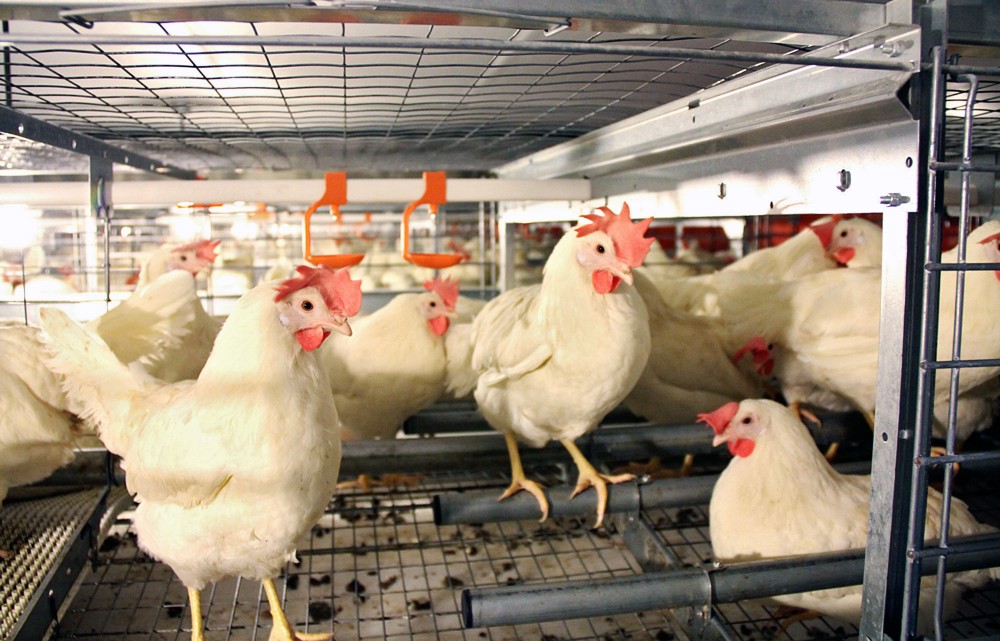
"caption": "These \"enriched cages\" at the JS West farm in Atwater, Calif., comply with the state's new law. They are larger and allow chickens to perch and lay eggs in enclosed spaces. Photo: Jill Benson/AP ",
"description": "These \"enriched cages\" at the JS West farm in Atwater, Calif., comply with the state's new law. They are larger and allow chickens to perch and lay eggs in enclosed spaces.",
"title": "These \"enriched cages\" at the JS West farm in Atwater, Calif., comply with the state's new law. They are larger and allow chickens to perch and lay eggs in enclosed spaces.",
"credit": null,
"status": "inherit",
"isLoading": false,
"fetchFailed": false
},
"bayareabites_91546": {
"type": "attachments",
"id": "bayareabites_91546",
"meta": {
"index": "attachments_1716263798",
"site": "bayareabites",
"id": "91546",
"found": true
},
"parent": 91545,
"imgSizes": {
"kqedFullSize": {
"file": "https://ww2.kqed.org/app/uploads/sites/24/2014/12/dairyland-1_enl-b7101bd19b7d9893f7413fd78231894ff31b18f9-e1419624855783.jpg",
"width": 1000,
"height": 667
}
},
"publishDate": 1419624430,
"modified": 1419624733,
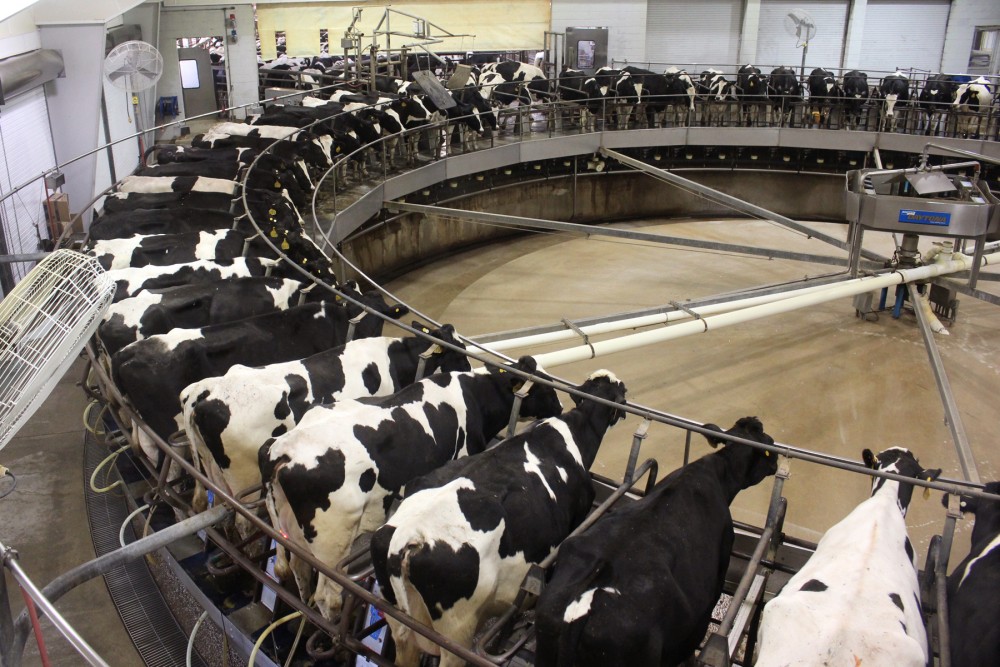
"caption": "Cows rotate in the milking parlor at Fair Oaks Farms, a large-scale dairy and tourist attraction, near Rensselaer, Ind. Photo: Dan Charles/NPR ",
"description": "Cows rotate in the milking parlor at Fair Oaks Farms, a large-scale dairy and tourist attraction, near Rensselaer, Ind.",
"title": "Cows rotate in the milking parlor at Fair Oaks Farms, a large-scale dairy and tourist attraction, near Rensselaer, Ind.",
"credit": null,
"status": "inherit",
"isLoading": false,
"fetchFailed": false
},
"bayareabites_91423": {
"type": "attachments",
"id": "bayareabites_91423",
"meta": {
"index": "attachments_1716263798",
"site": "bayareabites",
"id": "91423",
"found": true
},
"parent": 91418,
"imgSizes": {
"kqedFullSize": {
"file": "https://ww2.kqed.org/app/uploads/sites/24/2014/12/eggs.jpg",
"width": 700,
"height": 411
}
},
"publishDate": 1419354912,
"modified": 1419354942,
"caption": "Free-range eggs from Pennypack Farm in Pennsylvania. Photo: Christopher Paquette/Flickr ",
"description": null,
"title": "eggs",
"credit": null,
"status": "inherit",
"isLoading": false,
"fetchFailed": false
},
"bayareabites_91344": {
"type": "attachments",
"id": "bayareabites_91344",
"meta": {
"index": "attachments_1716263798",
"site": "bayareabites",
"id": "91344",
"found": true
},
"parent": 91341,
"imgSizes": {
"kqedFullSize": {
"file": "https://ww2.kqed.org/app/uploads/sites/24/2014/12/peppermint.jpg",
"width": 800,
"height": 533
}
},
"publishDate": 1419011764,
"modified": 1419011791,
"caption": "We seem to be hard-wired to enjoy the refreshing, cooling sensation of menthol in our mouths. Photo: Allison Dinner/the food passi/Corbis ",
"description": null,
"title": "peppermint",
"credit": null,
"status": "inherit",
"isLoading": false,
"fetchFailed": false
},
"bayareabites_91193": {
"type": "attachments",
"id": "bayareabites_91193",
"meta": {
"index": "attachments_1716263798",
"site": "bayareabites",
"id": "91193",
"found": true
},
"parent": 91191,
"imgSizes": {
"kqedFullSize": {
"file": "https://ww2.kqed.org/app/uploads/sites/24/2014/12/cuba-food-2_enl-cb5c84796dd304b05905ee2f8d6b371b4837d37a-e1418942761520.jpg",
"width": 1000,
"height": 667
}
},
"publishDate": 1418942484,
"modified": 1418942757,
"caption": "Banana growers at a market on the outskirts of Havana, Cuba, on Sept. 30, 2013. Cuba currently imports few fruits and vegetables from the U.S., but the American Farm Bureau says the change in relations may allow for new trade opportunities. Photo: Ramon Espinosa/AP",
"description": "Banana growers at a market on the outskirts of Havana, Cuba, on Sept. 30, 2013. Cuba currently imports few fruits and vegetables from the U.S., but the American Farm Bureau says the change in relations may allow for new trade opportunities.",
"title": "Banana growers at a market on the outskirts of Havana, Cuba, on Sept. 30, 2013. Cuba currently imports few fruits and vegetables from the U.S., but the American Farm Bureau says the change in relations may allow for new trade opportunities.",
"credit": null,
"status": "inherit",
"isLoading": false,
"fetchFailed": false
},
"bayareabites_91088": {
"type": "attachments",
"id": "bayareabites_91088",
"meta": {
"index": "attachments_1716263798",
"site": "bayareabites",
"id": "91088",
"found": true
},
"parent": 91087,
"imgSizes": {
"kqedFullSize": {
"file": "https://ww2.kqed.org/app/uploads/sites/24/2014/12/nonna-cooking-0de6de7219c3001d9e0dba87bee1880a21f840e2-e1418857910763.jpg",
"width": 1000,
"height": 750
}
},
"publishDate": 1418857418,
"modified": 1418857418,
"caption": null,
"description": "Aurora Leveroni, 91, is also known as \"Nonna Marijuana.\"",
"title": "Aurora Leveroni, 91, is also known as \"Nonna Marijuana.\"",
"credit": null,
"status": "inherit",
"isLoading": false,
"fetchFailed": false
},
"bayareabites_90854": {
"type": "attachments",
"id": "bayareabites_90854",
"meta": {
"index": "attachments_1716263798",
"site": "bayareabites",
"id": "90854",
"found": true
},
"parent": 90846,
"imgSizes": {
"kqedFullSize": {
"file": "https://ww2.kqed.org/app/uploads/sites/24/2014/12/kalettes.jpg",
"width": 900,
"height": 506
}
},
"publishDate": 1418415273,
"modified": 1418415299,
"caption": "Kalettes, BrusselKale, Lollipop Kale and Flower Sprout: This little vegetable, a cross of kale and Brussels sprouts, goes by a lot of names. Photo: Rain Rabbit/Flickr",
"description": null,
"title": "kalettes",
"credit": null,
"status": "inherit",
"isLoading": false,
"fetchFailed": false
},
"bayareabites_90756": {
"type": "attachments",
"id": "bayareabites_90756",
"meta": {
"index": "attachments_1716263798",
"site": "bayareabites",
"id": "90756",
"found": true
},
"parent": 90748,
"imgSizes": {
"kqedFullSize": {
"file": "https://ww2.kqed.org/app/uploads/sites/24/2014/12/mexico-farm-labor.jpg",
"width": 900,
"height": 592
}
},
"publishDate": 1418181731,
"modified": 1418181743,
"caption": "At the end of the day, Roma tomatoes are ready for transport in Cristo Rey in the state of Sinaloa. Half the tomatoes consumed in the U.S. come from Mexico. Photo: Don Bartletti/Los Angeles Times",
"description": null,
"title": "mexico-farm-labor",
"credit": null,
"status": "inherit",
"isLoading": false,
"fetchFailed": false
},
"bayareabites_90717": {
"type": "attachments",
"id": "bayareabites_90717",
"meta": {
"index": "attachments_1716263798",
"site": "bayareabites",
"id": "90717",
"found": true
},
"parent": 90716,
"imgSizes": {
"kqedFullSize": {
"file": "https://ww2.kqed.org/app/uploads/sites/24/2014/12/carrot-8fb1fe4b6fce4279cd17e6de7b3b7c5ea2817f70.jpg",
"width": 718,
"height": 539
}
},
"publishDate": 1418168905,
"modified": 1418168905,
"caption": null,
"description": "A still from the Intermarché campaign for ugly fruits and vegetable",
"title": "A still from the Intermarché campaign for ugly fruits and vegetables.",
"credit": null,
"status": "inherit",
"isLoading": false,
"fetchFailed": false
},
"bayareabites_90559": {
"type": "attachments",
"id": "bayareabites_90559",
"meta": {
"index": "attachments_1716263798",
"site": "bayareabites",
"id": "90559",
"found": true
},
"parent": 90558,
"imgSizes": {
"kqedFullSize": {
"file": "https://ww2.kqed.org/app/uploads/sites/24/2014/12/herbivorous-e850717d7aa930ac1de7846b4df0b06efd11f23c.jpg",
"width": 667,
"height": 500
}
},
"publishDate": 1418067351,
"modified": 1418067918,
"caption": "No need to wonder what's in this bologna; The Herbivorous Butcher lists every ingredient on its website: Tofu, vital wheat gluten, tomato juice, tapioca flour, tomato paste, nutritional yeast, vegan beef bouillon, canola oil, soy sauce, agar agar, red beet powder, sugar, salt, liquid smoke, onion powder, garlic powder and celery seed. Jonathan A. Photo: Armstrong/Courtesy The Herbivorous Butcher ",
"description": "Guess what's in this mystery meat.",
"title": "No need to wonder what's in this bologna; The Herbivorous Butcher lists every ingredient on its website: Tofu, vital wheat gluten, tomato juice, tapioca flour, tomato paste, nutritional yeast, vegan beef bouillon, canola oil, soy sauce, agar agar, red beet powder, sugar, salt, liquid smoke, onion powder, garlic powder and celery seed.",
"credit": null,
"status": "inherit",
"isLoading": false,
"fetchFailed": false
},
"bayareabites_90553": {
"type": "attachments",
"id": "bayareabites_90553",
"meta": {
"index": "attachments_1716263798",
"site": "bayareabites",
"id": "90553",
"found": true
},
"parent": 90552,
"imgSizes": {
"kqedFullSize": {
"file": "https://ww2.kqed.org/app/uploads/sites/24/2014/12/cheerios-ancient-grains_enl-5391fbb23d8f4de5bf7f776b5b8324ac8e6ff855.jpe",
"width": 450,
"height": 600
}
},
"publishDate": 1418065096,
"modified": 1418065468,
"caption": "The new box of Cheerios + Ancient grains cereal. Image: General Mills ",
"description": "The new box of Cheerios Ancient grains cereal.",
"title": "The new box of Cheerios + Ancient grains cereal.",
"credit": null,
"status": "inherit",
"isLoading": false,
"fetchFailed": false
}
},
"audioPlayerReducer": {
"postId": "stream_live",
"isPaused": true,
"isPlaying": false,
"pfsActive": false,
"pledgeModalIsOpen": true,
"playerDrawerIsOpen": false,
"liveAudioPlayStartedAt": 0,
"liveAudioPlayContext": ""
},
"authorsReducer": {
"byline_bayareabites_91782": {
"type": "authors",
"id": "byline_bayareabites_91782",
"meta": {
"override": true
},
"slug": "byline_bayareabites_91782",
"name": "Allison Aubrey",
"isLoading": false
},
"byline_bayareabites_91685": {
"type": "authors",
"id": "byline_bayareabites_91685",
"meta": {
"override": true
},
"slug": "byline_bayareabites_91685",
"name": "Dan Charles",
"isLoading": false
},
"byline_bayareabites_91545": {
"type": "authors",
"id": "byline_bayareabites_91545",
"meta": {
"override": true
},
"slug": "byline_bayareabites_91545",
"name": "Dan Charles",
"isLoading": false
},
"byline_bayareabites_91418": {
"type": "authors",
"id": "byline_bayareabites_91418",
"meta": {
"override": true
},
"slug": "byline_bayareabites_91418",
"name": "Anders Kelto",
"isLoading": false
},
"byline_bayareabites_91341": {
"type": "authors",
"id": "byline_bayareabites_91341",
"meta": {
"override": true
},
"slug": "byline_bayareabites_91341",
"name": "Maanvi Singh",
"isLoading": false
},
"byline_bayareabites_91191": {
"type": "authors",
"id": "byline_bayareabites_91191",
"meta": {
"override": true
},
"slug": "byline_bayareabites_91191",
"name": "Eliza Barclay",
"isLoading": false
},
"byline_bayareabites_91087": {
"type": "authors",
"id": "byline_bayareabites_91087",
"meta": {
"override": true
},
"slug": "byline_bayareabites_91087",
"name": "Eliza Barclay",
"isLoading": false
},
"byline_bayareabites_90846": {
"type": "authors",
"id": "byline_bayareabites_90846",
"meta": {
"override": true
},
"slug": "byline_bayareabites_90846",
"name": "Alison Bruzek",
"isLoading": false
},
"byline_bayareabites_90748": {
"type": "authors",
"id": "byline_bayareabites_90748",
"meta": {
"override": true
},
"slug": "byline_bayareabites_90748",
"name": "NPR Staff",
"isLoading": false
},
"byline_bayareabites_90716": {
"type": "authors",
"id": "byline_bayareabites_90716",
"meta": {
"override": true
},
"slug": "byline_bayareabites_90716",
"name": "Maria Godoy",
"isLoading": false
},
"byline_bayareabites_90558": {
"type": "authors",
"id": "byline_bayareabites_90558",
"meta": {
"override": true
},
"slug": "byline_bayareabites_90558",
"name": "NPR Staff",
"isLoading": false
},
"byline_bayareabites_90552": {
"type": "authors",
"id": "byline_bayareabites_90552",
"meta": {
"override": true
},
"slug": "byline_bayareabites_90552",
"name": "Dan Charles",
"isLoading": false
}
},
"pagesReducer": {
"bayareabites_category_npr-food": {
"type": "terms",
"id": "bayareabites_10916",
"meta": {
"index": "terms_1716263798",
"site": "bayareabites",
"id": "10916",
"score": 13.894709
},
"featImg": null,
"name": "NPR food",
"description": null,
"taxonomy": "category",
"headData": {
"twImgId": null,
"twTitle": null,
"ogTitle": null,
"ogImgId": null,
"twDescription": null,
"description": null,
"title": "NPR food Archives | KQED Bay Area Bites",
"ogDescription": null
},
"ttid": 5375,
"slug": "npr-food",
"isLoading": false,
"title": "NPR food",
"pageMeta": {
"site": "bayareabites",
"WpPageTemplate": "page-topic-editorial",
"currentPage": 31
},
"blocks": [
{
"blockName": "kqed/post-list",
"attrs": {
"layout": "cardArticle2",
"query": "posts/bayareabites?category=npr-food",
"seeMore": false,
"paginated": true,
"page": 31
}
},
{
"blockName": "kqed/ad"
}
]
}
},
"pfsSessionReducer": {},
"postsReducer": {
"stream_live": {
"type": "live",
"id": "stream_live",
"audioUrl": "https://hls.kqed.org/hls/kqed_app/playlist.m3u8",
"title": "Live Stream",
"excerpt": "Live Stream information currently unavailable.",
"link": "/radio",
"featImg": "",
"label": {
"name": "KQED Live",
"link": "/"
}
},
"stream_kqedNewscast": {
"type": "posts",
"id": "stream_kqedNewscast",
"audioUrl": "https://www.kqed.org/.stream/anon/radio/RDnews/newscast.mp3?_=1",
"title": "KQED Newscast",
"featImg": "",
"label": {
"name": "88.5 FM",
"link": "/"
}
},
"bayareabites_91782": {
"type": "posts",
"id": "bayareabites_91782",
"meta": {
"index": "posts_1716263798",
"site": "bayareabites",
"id": "91782",
"score": null,
"sort": [
1420058465000
]
},
"parent": 0,
"labelTerm": {
"site": "bayareabites"
},
"blocks": [],
"publishDate": 1420058465,
"format": "aside",
"disqusTitle": "Hangover Helper: Tips To Prevent A Horrible Headache ",
"title": "Hangover Helper: Tips To Prevent A Horrible Headache ",
"headTitle": "Bay Area Bites | KQED Food",
"content": "\u003cfigure id=\"attachment_91783\" class=\"wp-caption aligncenter\" style=\"max-width: 1000px\">\u003ca href=\"http://ww2.kqed.org/bayareabites/wp-content/uploads/sites/24/2014/12/cn_hangover_sci_wide-eb5664df1582feefa7f6dcfbf6ea2fdbff7586c0-e1420057939765.jpg\">\u003cimg src=\"http://ww2.kqed.org/bayareabites/wp-content/uploads/sites/24/2014/12/cn_hangover_sci_wide-eb5664df1582feefa7f6dcfbf6ea2fdbff7586c0-e1420057939765.jpg\" alt=\"Seeing double after toasting? Just wait for the hangover that's coming, thanks in part to those bubbles in sparkling wine. Image: Chris Nickels for NPR\" width=\"1000\" height=\"562\" class=\"size-full wp-image-91783\">\u003c/a>\u003cfigcaption class=\"wp-caption-text\">Seeing double after toasting? Just wait for the hangover that's coming, thanks in part to those bubbles in sparkling wine. Image: Chris Nickels for NPR\u003c/figcaption>\u003c/figure>\n\u003cp>Listen to the Story on All Things Considered:\u003cbr>\nhttp://pd.npr.org/anon.npr-mp3/npr/atc/2014/12/20141230_atc_hangover_helper_tips_to_prevent_a_horrible_headache_.mp3\u003c/p>\n\u003cp>by \u003ca href=\"http://www.npr.org/people/2100208/allison-aubrey\" target=\"_blank\">Allison Aubrey\u003c/a>, \u003ca href=\"http://www.npr.org/blogs/thesalt/2014/12/30/371950986/hangover-helper-tips-to-prevent-a-horrible-headache\" target=\"_blank\">The Salt at NPR Food\u003c/a> (12/30/14)\u003c/p>\n\u003cp>The first time I \u003cem>ever\u003c/em> got tipsy was during a champagne toast at a cousin's wedding reception.\u003c/p>\n\u003cp>All was good, until the room started spinning — and the sight of my cousin's bride dancing in her wedding dress was just a whirl of lace.\u003c/p>\n\u003cp>Of course, if you're an uninitiated teenager, any amount of alcohol can go straight to your head. But, decades later, bubbly wine still seems to hit me faster than, say, beer. It turns out there's a reason.\u003c/p>\n\u003cp>[ad fullwidth]\u003c/p>\n\u003cp>\"Some of the dizziness you can feel after champagne is due to both the brain getting [a little] less oxygen and also the [effects] of the alcohol at the same time,\" explains researcher \u003ca href=\"http://www.colorado.edu/ibg/people/279\">Boris Tabakoff\u003c/a> at the University of Colorado, Boulder.\u003c/p>\n\u003cp>All the bubbles in sparkling wine are carbon dioxide. The C0\u003csub>2\u003c/sub> competes with oxygen in our bloodstream, says Tabakoff, who studies the effects of alcohol on the body.\u003c/p>\n\u003cp>And according to a Princeton University \u003ca href=\"http://www.princeton.edu/uhs/healthy-living/hot-topics/alcohol/\">explainer\u003c/a> on alcohol absorption, carbon dioxide \"increases the pressure in your stomach, forcing alcohol out through the lining of your stomach into the bloodstream.\" That can speed up the rate of alcohol absorption — \u003ca href=\"http://www.npr.org/blogs/thesalt/2013/12/31/258588280/does-champagne-actually-get-you-drunker\">albeit temporarily\u003c/a>.\u003c/p>\n\u003cp>So if you want to stay steady on your feet, sip that bubbly slowly. And if you want to prevent a hangover, swap your next glass of bubbly for water. Alternating between alcoholic beverages and H\u003csub>2\u003c/sub>0 can help prevent the dehydration that accompanies a night of drinking.\u003c/p>\n\u003cp>\"What happens when you first start drinking,\" Tabakoff explains, \"is that a hormone that controls your water balance, an anti-diuretic hormone, is suppressed.\" And this leaves us heading for the ladies' or men's room — which can precipitate a pounding headache in the morning.\u003c/p>\n\u003cp>But Tabakoff says dehydration is not the only reason we get a headache.\u003c/p>\n\u003cp>\"High levels of alcohol in the brain have fairly recently been shown to cause neuro-inflammation, basically, inflammation in the brain,\" he says.\u003c/p>\n\u003cp>This is why taking aspirin or other anti-inflammatory medicines, such as ibuprofen, can help us feel better.\u003c/p>\n\u003cp>Now, alcohol isn't the only headache-producing culprit in our drink glasses. Many alcoholic beverages, such as wines and beers, contain toxic byproducts of fermentation, such as aldehydes. And Tabakoff says if you drink too much, you can feel the effects.\u003c/p>\n\u003cp>\"If these compounds accumulate in the body, \" explains Tabakoff, \"they can release your stress hormones, like epinephrine and norepinephrine, and as such can alter function in a stresslike way\" — paving the way for a hangover.\u003c/p>\n\u003cp>Tabakoff says distilled spirits contain fewer of these toxic compounds than other types of booze, which explains why some people report feeling fewer hangover effects if they stick with vodka or gin.\u003c/p>\n\u003cp>Obviously, the only sure way to avoid a hangover is to not drink alcohol. But if you are going to indulge, Tabakoff says the tried-and-true advice — eat something before you drink, and while you drink, makes good sense.\u003c/p>\n\u003cp>\"Food is very good for the purpose of slowing the absorption of alcohol,\" he says.\u003c/p>\n\u003cp>Adding liquid calories to your cocktails — say, Coke, ginger ale or sugary punch as a mixer — is a good way to slow absorption, too. In fact, a study we \u003ca href=\"http://www.npr.org/blogs/thesalt/2013/01/31/170748045/why-mixing-alcohol-with-diet-soda-may-make-you-drunker\">reported\u003c/a> on back in 2013 determined that a diet soda and rum will make you drunker than rum mixed with sugary Coke.\u003c/p>\n\u003cp>\u003ca href=\"http://artscience.nku.edu/departments/psychology/facstaff/ft-faculty/marczinski.html\">Cecile Marczinski\u003c/a>, a cognitive psychologist who authored that study, found that the average breath alcohol concentration was .091 (at its peak) when subjects drank alcohol mixed with a diet drink. By comparison, BrAC was .077 when the same subjects consumed the same amount of alcohol but with a sugary soda.\u003c/p>\n\u003cp>\"I was a little surprised by the findings, since the 18 percent increase in [BrAC] was a fairly large difference,\" Marczinski told us at the time. She says the difference would not likely have been as large if the subjects — who were all college age — had not been drinking on empty stomachs.\u003c/p>\n\u003cp>And here's another self-evident tip when it comes to drinking: Pace yourself.\u003c/p>\n\u003cp>\"We can get rid of most of the alcohol we drink if we [limit] drinking to one drink per hour,\" Tabakofff says. This way, \"our blood alcohol levels don't start accumulating.\"\u003c/p>\n\u003cp>One drink per hour is a rule of thumb, but that can vary depending on height or body size. Bigger people tend to be able to handle a little more alcohol, and smaller people a little less.\u003c/p>\n\u003cp>\u003c/p>\n\u003cp>And remember, Tabakoff says, a single drink is less than you might think. It's 5 ounces of wine, 12 ounces of beer, or a shot of liquor.\u003cbr>\n\u003cem>\u003cbr>\nCopyright 2014 \u003ca href=\"http://www.npr.org/\" target=\"_blank\">NPR\u003c/a>.\u003c/em>\u003c/p>\n\n",
"disqusIdentifier": "91782 http://blogs.kqed.org/bayareabites/?p=91782",
"disqusUrl": "https://ww2.kqed.org/bayareabites/2014/12/31/hangover-helper-tips-to-prevent-a-horrible-headache/",
"stats": {
"hasVideo": false,
"hasChartOrMap": false,
"hasAudio": false,
"hasPolis": false,
"wordCount": 840,
"hasGoogleForm": false,
"hasGallery": false,
"hasHearkenModule": false,
"iframeSrcs": [],
"paragraphCount": 27
},
"modified": 1420058465,
"excerpt": "Champagne and other booze flow freely on New Year's Eve. But if you want to wake to a new year without the side effects of alcohol, don't fret: Science offers some guidance.",
"headData": {
"twImgId": "",
"twTitle": "",
"ogTitle": "",
"ogImgId": "",
"twDescription": "",
"description": "Champagne and other booze flow freely on New Year's Eve. But if you want to wake to a new year without the side effects of alcohol, don't fret: Science offers some guidance.",
"title": "Hangover Helper: Tips To Prevent A Horrible Headache | KQED",
"ogDescription": "",
"schema": {
"@context": "https://schema.org",
"@type": "Article",
"headline": "Hangover Helper: Tips To Prevent A Horrible Headache ",
"datePublished": "2014-12-31T12:41:05-08:00",
"dateModified": "2014-12-31T12:41:05-08:00",
"image": "https://cdn.kqed.org/wp-content/uploads/2020/02/KQED-OG-Image@1x.png"
}
},
"guestAuthors": [],
"slug": "hangover-helper-tips-to-prevent-a-horrible-headache",
"status": "publish",
"nprApiLink": "http://api.npr.org/query?id=371950986&apiKey=MDAxOTAwOTE4MDEyMTkxMDAzNjczZDljZA004",
"nprByline": "Allison Aubrey",
"nprStoryDate": "Tue, 30 Dec 2014 16:01:00 -0500",
"nprLastModifiedDate": "Tue, 30 Dec 2014 18:45:05 -0500",
"nprHtmlLink": "http://www.npr.org/blogs/thesalt/2014/12/30/371950986/hangover-helper-tips-to-prevent-a-horrible-headache?ft=3&f=371950986",
"nprAudio": "http://pd.npr.org/anon.npr-mp3/npr/atc/2014/12/20141230_atc_hangover_helper_tips_to_prevent_a_horrible_headache_.mp3?orgId=1&topicId=1066&ft=3&f=371950986",
"nprAudioM3u": "http://api.npr.org/m3u/1374033115-4425e0.m3u?orgId=1&topicId=1066&ft=3&f=371950986",
"nprStoryId": "371950986",
"nprRetrievedStory": "1",
"nprPubDate": "Tue, 30 Dec 2014 18:45:00 -0500",
"path": "/bayareabites/91782/hangover-helper-tips-to-prevent-a-horrible-headache",
"audioUrl": "http://pd.npr.org/anon.npr-mp3/npr/atc/2014/12/20141230_atc_hangover_helper_tips_to_prevent_a_horrible_headache_.mp3",
"audioDuration": null,
"audioTrackLength": null,
"parsedContent": [
{
"type": "contentString",
"content": "\u003cdiv class=\"post-body\">\u003cp>\u003cfigure id=\"attachment_91783\" class=\"wp-caption aligncenter\" style=\"max-width: 1000px\">\u003ca href=\"http://ww2.kqed.org/bayareabites/wp-content/uploads/sites/24/2014/12/cn_hangover_sci_wide-eb5664df1582feefa7f6dcfbf6ea2fdbff7586c0-e1420057939765.jpg\">\u003cimg src=\"http://ww2.kqed.org/bayareabites/wp-content/uploads/sites/24/2014/12/cn_hangover_sci_wide-eb5664df1582feefa7f6dcfbf6ea2fdbff7586c0-e1420057939765.jpg\" alt=\"Seeing double after toasting? Just wait for the hangover that's coming, thanks in part to those bubbles in sparkling wine. Image: Chris Nickels for NPR\" width=\"1000\" height=\"562\" class=\"size-full wp-image-91783\">\u003c/a>\u003cfigcaption class=\"wp-caption-text\">Seeing double after toasting? Just wait for the hangover that's coming, thanks in part to those bubbles in sparkling wine. Image: Chris Nickels for NPR\u003c/figcaption>\u003c/figure>\n\u003cp>Listen to the Story on All Things Considered:\u003cbr>\nhttp://pd.npr.org/anon.npr-mp3/npr/atc/2014/12/20141230_atc_hangover_helper_tips_to_prevent_a_horrible_headache_.mp3\u003c/p>\n\u003cp>by \u003ca href=\"http://www.npr.org/people/2100208/allison-aubrey\" target=\"_blank\">Allison Aubrey\u003c/a>, \u003ca href=\"http://www.npr.org/blogs/thesalt/2014/12/30/371950986/hangover-helper-tips-to-prevent-a-horrible-headache\" target=\"_blank\">The Salt at NPR Food\u003c/a> (12/30/14)\u003c/p>\n\u003cp>The first time I \u003cem>ever\u003c/em> got tipsy was during a champagne toast at a cousin's wedding reception.\u003c/p>\n\u003cp>All was good, until the room started spinning — and the sight of my cousin's bride dancing in her wedding dress was just a whirl of lace.\u003c/p>\n\u003cp>Of course, if you're an uninitiated teenager, any amount of alcohol can go straight to your head. But, decades later, bubbly wine still seems to hit me faster than, say, beer. It turns out there's a reason.\u003c/p>\n\u003cp>\u003c/p>\u003c/div>",
"attributes": {
"named": {},
"numeric": []
}
},
{
"type": "component",
"content": "",
"name": "ad",
"attributes": {
"named": {
"label": "fullwidth"
},
"numeric": [
"fullwidth"
]
}
},
{
"type": "contentString",
"content": "\u003cdiv class=\"post-body\">\u003cp>\u003c/p>\n\u003cp>\"Some of the dizziness you can feel after champagne is due to both the brain getting [a little] less oxygen and also the [effects] of the alcohol at the same time,\" explains researcher \u003ca href=\"http://www.colorado.edu/ibg/people/279\">Boris Tabakoff\u003c/a> at the University of Colorado, Boulder.\u003c/p>\n\u003cp>All the bubbles in sparkling wine are carbon dioxide. The C0\u003csub>2\u003c/sub> competes with oxygen in our bloodstream, says Tabakoff, who studies the effects of alcohol on the body.\u003c/p>\n\u003cp>And according to a Princeton University \u003ca href=\"http://www.princeton.edu/uhs/healthy-living/hot-topics/alcohol/\">explainer\u003c/a> on alcohol absorption, carbon dioxide \"increases the pressure in your stomach, forcing alcohol out through the lining of your stomach into the bloodstream.\" That can speed up the rate of alcohol absorption — \u003ca href=\"http://www.npr.org/blogs/thesalt/2013/12/31/258588280/does-champagne-actually-get-you-drunker\">albeit temporarily\u003c/a>.\u003c/p>\n\u003cp>So if you want to stay steady on your feet, sip that bubbly slowly. And if you want to prevent a hangover, swap your next glass of bubbly for water. Alternating between alcoholic beverages and H\u003csub>2\u003c/sub>0 can help prevent the dehydration that accompanies a night of drinking.\u003c/p>\n\u003cp>\"What happens when you first start drinking,\" Tabakoff explains, \"is that a hormone that controls your water balance, an anti-diuretic hormone, is suppressed.\" And this leaves us heading for the ladies' or men's room — which can precipitate a pounding headache in the morning.\u003c/p>\n\u003cp>But Tabakoff says dehydration is not the only reason we get a headache.\u003c/p>\n\u003cp>\"High levels of alcohol in the brain have fairly recently been shown to cause neuro-inflammation, basically, inflammation in the brain,\" he says.\u003c/p>\n\u003cp>This is why taking aspirin or other anti-inflammatory medicines, such as ibuprofen, can help us feel better.\u003c/p>\n\u003cp>Now, alcohol isn't the only headache-producing culprit in our drink glasses. Many alcoholic beverages, such as wines and beers, contain toxic byproducts of fermentation, such as aldehydes. And Tabakoff says if you drink too much, you can feel the effects.\u003c/p>\n\u003cp>\"If these compounds accumulate in the body, \" explains Tabakoff, \"they can release your stress hormones, like epinephrine and norepinephrine, and as such can alter function in a stresslike way\" — paving the way for a hangover.\u003c/p>\n\u003cp>Tabakoff says distilled spirits contain fewer of these toxic compounds than other types of booze, which explains why some people report feeling fewer hangover effects if they stick with vodka or gin.\u003c/p>\n\u003cp>Obviously, the only sure way to avoid a hangover is to not drink alcohol. But if you are going to indulge, Tabakoff says the tried-and-true advice — eat something before you drink, and while you drink, makes good sense.\u003c/p>\n\u003cp>\"Food is very good for the purpose of slowing the absorption of alcohol,\" he says.\u003c/p>\n\u003cp>Adding liquid calories to your cocktails — say, Coke, ginger ale or sugary punch as a mixer — is a good way to slow absorption, too. In fact, a study we \u003ca href=\"http://www.npr.org/blogs/thesalt/2013/01/31/170748045/why-mixing-alcohol-with-diet-soda-may-make-you-drunker\">reported\u003c/a> on back in 2013 determined that a diet soda and rum will make you drunker than rum mixed with sugary Coke.\u003c/p>\n\u003cp>\u003ca href=\"http://artscience.nku.edu/departments/psychology/facstaff/ft-faculty/marczinski.html\">Cecile Marczinski\u003c/a>, a cognitive psychologist who authored that study, found that the average breath alcohol concentration was .091 (at its peak) when subjects drank alcohol mixed with a diet drink. By comparison, BrAC was .077 when the same subjects consumed the same amount of alcohol but with a sugary soda.\u003c/p>\n\u003cp>\"I was a little surprised by the findings, since the 18 percent increase in [BrAC] was a fairly large difference,\" Marczinski told us at the time. She says the difference would not likely have been as large if the subjects — who were all college age — had not been drinking on empty stomachs.\u003c/p>\n\u003cp>And here's another self-evident tip when it comes to drinking: Pace yourself.\u003c/p>\n\u003cp>\"We can get rid of most of the alcohol we drink if we [limit] drinking to one drink per hour,\" Tabakofff says. This way, \"our blood alcohol levels don't start accumulating.\"\u003c/p>\n\u003cp>One drink per hour is a rule of thumb, but that can vary depending on height or body size. Bigger people tend to be able to handle a little more alcohol, and smaller people a little less.\u003c/p>\n\u003cp>\u003c/p>\n\u003cp>And remember, Tabakoff says, a single drink is less than you might think. It's 5 ounces of wine, 12 ounces of beer, or a shot of liquor.\u003cbr>\n\u003cem>\u003cbr>\nCopyright 2014 \u003ca href=\"http://www.npr.org/\" target=\"_blank\">NPR\u003c/a>.\u003c/em>\u003c/p>\n\n\u003c/div>\u003c/p>",
"attributes": {
"named": {},
"numeric": []
}
}
],
"link": "/bayareabites/91782/hangover-helper-tips-to-prevent-a-horrible-headache",
"authors": [
"byline_bayareabites_91782"
],
"categories": [
"bayareabites_301",
"bayareabites_13306",
"bayareabites_1244",
"bayareabites_1763",
"bayareabites_10916",
"bayareabites_34",
"bayareabites_358"
],
"tags": [
"bayareabites_2688",
"bayareabites_3202",
"bayareabites_1686",
"bayareabites_10921"
],
"featImg": "bayareabites_91783",
"label": "bayareabites"
},
"bayareabites_91685": {
"type": "posts",
"id": "bayareabites_91685",
"meta": {
"index": "posts_1716263798",
"site": "bayareabites",
"id": "91685",
"score": null,
"sort": [
1419897605000
]
},
"parent": 0,
"labelTerm": {
"site": "bayareabites"
},
"blocks": [],
"publishDate": 1419897605,
"format": "aside",
"disqusTitle": "How California's New Rules Are Scrambling The Egg Industry",
"title": "How California's New Rules Are Scrambling The Egg Industry",
"headTitle": "Bay Area Bites | KQED Food",
"content": "\u003cfigure id=\"attachment_91686\" class=\"wp-caption aligncenter\" style=\"max-width: 1000px\">\u003ca href=\"http://ww2.kqed.org/bayareabites/wp-content/uploads/sites/24/2014/12/enriched-cage_custom-d0bd8668df5a4ff7e1d06e2d462ee7e0310f571b-e1419897443870.jpg\">\u003cimg src=\"http://ww2.kqed.org/bayareabites/wp-content/uploads/sites/24/2014/12/enriched-cage_custom-d0bd8668df5a4ff7e1d06e2d462ee7e0310f571b-e1419897443870.jpg\" alt=\"These "enriched cages" at the JS West farm in Atwater, Calif., comply with the state's new law. They are larger and allow chickens to perch and lay eggs in enclosed spaces. Photo: Jill Benson/AP\" width=\"1000\" height=\"641\" class=\"size-full wp-image-91686\">\u003c/a>\u003cfigcaption class=\"wp-caption-text\">These \"enriched cages\" at the JS West farm in Atwater, Calif., comply with the state's new law. They are larger and allow chickens to perch and lay eggs in enclosed spaces. Photo: Jill Benson/AP\u003c/figcaption>\u003c/figure>\n\u003cp>Listen to the Story on All Things Considered:\u003cbr>\nhttp://pd.npr.org/anon.npr-mp3/npr/atc/2014/12/20141229_atc_how_californias_new_egg_rules_are_shaking_up_the_egg_industry.mp3\u003c/p>\n\u003cp>by \u003ca href=\"http://www.npr.org/people/143160021/daniel-charles\" target=\"_blank\">Dan Charles\u003c/a>, \u003ca href=\"http://www.npr.org/blogs/thesalt/2014/12/29/373802858/how-californias-new-rules-are-scrambling-the-egg-industry\" target=\"_blank\">The Salt at NPR Food\u003c/a> (12/29/14)\u003c/p>\n\u003cp>Within just a few days, on Jan. 1, all eggs sold in California will have to come from chickens that live in more spacious quarters — almost twice as spacious, in fact, as the cages that have been the industry standard.\u003c/p>\n\u003cp>It's been a shock to the egg industry, and to grocery stores. Eggs are one of those staples that any self-respecting grocery retailers absolutely, positively has to keep in stock. \"You have to have bread, milk, lettuce. You have to have eggs,\" says Ronald Fong, the president and CEO of the \u003ca href=\"http://www.cagrocers.com/\">California Grocers Association\u003c/a>.\u003c/p>\n\u003cp>That's why, right now, California's grocers are doing whatever it takes to get their hands on eggs that are stamped with with a new, almost incomprehensible label: CA SEFS Compliant, which stands for California Shell Egg Food Safety Compliant.\u003c/p>\n\u003cp>[ad fullwidth]\u003c/p>\n\u003cp>That stamp means that those eggs comply with a new regulation, the result of a voter initiative that passed with over 60 percent of the vote in 2008.\u003c/p>\n\u003cp>Proposition 2, as it's called, required eggs in California to come from chickens that have enough room to fully extend their limbs and turn around freely. It was a direct challenge to the egg industry, because most egg-laying chickens can't do that in standard hen houses where they live in small cages, five or ten birds to a cage.\u003c/p>\n\u003cp>State officials had to figure out how to translate Prop. 2's requirement into specific regulations. California's state veterinarian, \u003ca href=\"http://www.cdfa.ca.gov/exec/public_affairs/cdfaexecstaffbios.html\">Dr. Annette Jones\u003c/a>, turned to animal welfare experts at the University of California, Davis. \"We actually did hire some scientists at UC Davis to do a study for us, to kind of give us their feel, based on some field trials that they did, of how much space\" the law required, Jones says.\u003c/p>\n\u003cp>In the end, they decided that each chicken is legally entitled to at least 116 square inches of floor space.\u003c/p>\n\u003cp>As a result, as of January 1, most egg producers in the U.S. cannot sell eggs in California.\u003c/p>\n\u003cp>Egg producers have responded in several ways.\u003c/p>\n\u003cfigure id=\"attachment_91687\" class=\"wp-caption aligncenter\" style=\"max-width: 1000px\">\u003ca href=\"http://ww2.kqed.org/bayareabites/wp-content/uploads/sites/24/2014/12/img_5767_custom-00ee09e63229e2104bed0c2d9e1f9011db4e9049-e1419897523733.jpg\">\u003cimg src=\"http://ww2.kqed.org/bayareabites/wp-content/uploads/sites/24/2014/12/img_5767_custom-00ee09e63229e2104bed0c2d9e1f9011db4e9049-e1419897523733.jpg\" alt=\"Free-range chicken houses allow chickens to move around freely, but critics say birds are more frequently injured than in cages. Photo: Dan Charles/NPR\" width=\"1000\" height=\"666\" class=\"size-full wp-image-91687\">\u003c/a>\u003cfigcaption class=\"wp-caption-text\">Free-range chicken houses allow chickens to move around freely, but critics say birds are more frequently injured than in cages. Photo: Dan Charles/NPR\u003c/figcaption>\u003c/figure>\n\u003cp>Some have tried to \u003ca href=\"http://www.npr.org/blogs/thesalt/2014/03/07/286811197/poultry-farmers-to-fight-back-on-california-cage-free-egg-law\">challenge\u003c/a> the California rules in court. So far, that's failed. Jones says that other egg producers have built new hen houses - either \u003ca href=\"http://www.npr.org/blogs/thesalt/2013/06/27/195639341/what-the-rise-of-cage-free-eggs-means-for-chickens\">free-range\u003c/a> houses, where chickens can walk around on the floor, or houses with larger \"\u003ca href=\"http://www.npr.org/blogs/thesalt/2012/01/26/145900751/ex-foes-stage-coop-detat-for-egg-laying-chickens\">enriched cages\u003c/a>\" with perches and enclosed hutches where chickens can lay their eggs. \"In general, poultry farmers are trying to move in that direction, to provide more space and the ability for their hens to exhibit more natural behaviors,\" she says.\u003c/p>\n\u003cp>But building new barns takes time and costs a lot of money. Ronald Fong, from the California Grocers Association, says most egg producers so far have taken a simpler, cheaper route. \"They are complying with the new standards by reducing the flock size,\" he says. They've kept their cages for now, but they've cut the number of birds in each cage in half.\u003c/p>\n\u003cp>This means, of course, fewer chickens in each house and fewer eggs delivered to supermarkets.\u003c/p>\n\u003cp>People in the egg industry say that this is one reason why the egg industry in California has gone into a sharp decline. According to government \u003ca href=\"http://usda.mannlib.cornell.edu/MannUsda/viewDocumentInfo.do?documentID=1028\">statistics\u003c/a>, the number of egg-laying chickens in California has fallen by 23 percent over the past two years.\u003c/p>\n\u003cp>In the rest of the country, though, egg production is expanding, and egg brokers who supply the California market have been ringing up egg producers all across the country, offering high prices for eggs that meet California's new rules.\u003c/p>\n\u003cp>Fong says they're succeeding in lining up enough supplies. \"It is going to be business as usual come January 1,\" he says.\u003c/p>\n\u003cp>California's consumers, though, will pay. \"We can confirm that egg prices have gone up at least 35 percent. Some have reported going up 70 percent,\" Fong says.\u003c/p>\n\u003cp>The situation may be more extreme in California, but egg prices are soaring in lots of places. Much of the increase is due simply to increased demand. People are just eating more eggs. In addition, Mexico is buying more U.S. eggs because disease in Mexico's chicken flocks has cut its domestic production.\u003c/p>\n\u003cp>With prices so high, more egg producers are likely to expand, building new hen houses. And because of California's law, those houses are more likely to give chickens more room to spread their wings. \u003c/p>\n\u003cp>\u003c/p>\n\u003cp>\u003cem>Copyright 2014 \u003ca href=\"http://www.npr.org/\" target=\"_blank\">NPR\u003c/a>.\u003c/em>\u003c/p>\n\n",
"disqusIdentifier": "91685 http://blogs.kqed.org/bayareabites/?p=91685",
"disqusUrl": "https://ww2.kqed.org/bayareabites/2014/12/29/how-californias-new-rules-are-scrambling-the-egg-industry/",
"stats": {
"hasVideo": false,
"hasChartOrMap": false,
"hasAudio": false,
"hasPolis": false,
"wordCount": 833,
"hasGoogleForm": false,
"hasGallery": false,
"hasHearkenModule": false,
"iframeSrcs": [],
"paragraphCount": 23
},
"modified": 1419897605,
"excerpt": "On Jan. 1, all eggs sold in California will have to come from chickens living in more spacious digs. The rules have disrupted the egg industry, and pushed prices up at grocery stores in California.",
"headData": {
"twImgId": "",
"twTitle": "",
"ogTitle": "",
"ogImgId": "",
"twDescription": "",
"description": "On Jan. 1, all eggs sold in California will have to come from chickens living in more spacious digs. The rules have disrupted the egg industry, and pushed prices up at grocery stores in California.",
"title": "How California's New Rules Are Scrambling The Egg Industry | KQED",
"ogDescription": "",
"schema": {
"@context": "https://schema.org",
"@type": "Article",
"headline": "How California's New Rules Are Scrambling The Egg Industry",
"datePublished": "2014-12-29T16:00:05-08:00",
"dateModified": "2014-12-29T16:00:05-08:00",
"image": "https://cdn.kqed.org/wp-content/uploads/2020/02/KQED-OG-Image@1x.png"
}
},
"guestAuthors": [],
"slug": "how-californias-new-rules-are-scrambling-the-egg-industry",
"status": "publish",
"nprApiLink": "http://api.npr.org/query?id=373802858&apiKey=MDAxOTAwOTE4MDEyMTkxMDAzNjczZDljZA004",
"nprByline": "Dan Charles",
"nprStoryDate": "Mon, 29 Dec 2014 18:07:00 -0500",
"nprLastModifiedDate": "Mon, 29 Dec 2014 18:38:23 -0500",
"nprHtmlLink": "http://www.npr.org/blogs/thesalt/2014/12/29/373802858/how-californias-new-rules-are-scrambling-the-egg-industry?ft=3&f=373802858",
"nprAudio": "http://pd.npr.org/anon.npr-mp3/npr/atc/2014/12/20141229_atc_how_californias_new_egg_rules_are_shaking_up_the_egg_industry.mp3?orgId=1&topicId=1053&ft=3&f=373802858",
"nprAudioM3u": "http://api.npr.org/m3u/1373835171-9de664.m3u?orgId=1&topicId=1053&ft=3&f=373802858",
"nprStoryId": "373802858",
"nprRetrievedStory": "1",
"nprPubDate": "Mon, 29 Dec 2014 18:38:00 -0500",
"path": "/bayareabites/91685/how-californias-new-rules-are-scrambling-the-egg-industry",
"audioUrl": "http://pd.npr.org/anon.npr-mp3/npr/atc/2014/12/20141229_atc_how_californias_new_egg_rules_are_shaking_up_the_egg_industry.mp3",
"audioDuration": null,
"audioTrackLength": null,
"parsedContent": [
{
"type": "contentString",
"content": "\u003cdiv class=\"post-body\">\u003cp>\u003cfigure id=\"attachment_91686\" class=\"wp-caption aligncenter\" style=\"max-width: 1000px\">\u003ca href=\"http://ww2.kqed.org/bayareabites/wp-content/uploads/sites/24/2014/12/enriched-cage_custom-d0bd8668df5a4ff7e1d06e2d462ee7e0310f571b-e1419897443870.jpg\">\u003cimg src=\"http://ww2.kqed.org/bayareabites/wp-content/uploads/sites/24/2014/12/enriched-cage_custom-d0bd8668df5a4ff7e1d06e2d462ee7e0310f571b-e1419897443870.jpg\" alt=\"These "enriched cages" at the JS West farm in Atwater, Calif., comply with the state's new law. They are larger and allow chickens to perch and lay eggs in enclosed spaces. Photo: Jill Benson/AP\" width=\"1000\" height=\"641\" class=\"size-full wp-image-91686\">\u003c/a>\u003cfigcaption class=\"wp-caption-text\">These \"enriched cages\" at the JS West farm in Atwater, Calif., comply with the state's new law. They are larger and allow chickens to perch and lay eggs in enclosed spaces. Photo: Jill Benson/AP\u003c/figcaption>\u003c/figure>\n\u003cp>Listen to the Story on All Things Considered:\u003cbr>\nhttp://pd.npr.org/anon.npr-mp3/npr/atc/2014/12/20141229_atc_how_californias_new_egg_rules_are_shaking_up_the_egg_industry.mp3\u003c/p>\n\u003cp>by \u003ca href=\"http://www.npr.org/people/143160021/daniel-charles\" target=\"_blank\">Dan Charles\u003c/a>, \u003ca href=\"http://www.npr.org/blogs/thesalt/2014/12/29/373802858/how-californias-new-rules-are-scrambling-the-egg-industry\" target=\"_blank\">The Salt at NPR Food\u003c/a> (12/29/14)\u003c/p>\n\u003cp>Within just a few days, on Jan. 1, all eggs sold in California will have to come from chickens that live in more spacious quarters — almost twice as spacious, in fact, as the cages that have been the industry standard.\u003c/p>\n\u003cp>It's been a shock to the egg industry, and to grocery stores. Eggs are one of those staples that any self-respecting grocery retailers absolutely, positively has to keep in stock. \"You have to have bread, milk, lettuce. You have to have eggs,\" says Ronald Fong, the president and CEO of the \u003ca href=\"http://www.cagrocers.com/\">California Grocers Association\u003c/a>.\u003c/p>\n\u003cp>That's why, right now, California's grocers are doing whatever it takes to get their hands on eggs that are stamped with with a new, almost incomprehensible label: CA SEFS Compliant, which stands for California Shell Egg Food Safety Compliant.\u003c/p>\n\u003cp>\u003c/p>\u003c/div>",
"attributes": {
"named": {},
"numeric": []
}
},
{
"type": "component",
"content": "",
"name": "ad",
"attributes": {
"named": {
"label": "fullwidth"
},
"numeric": [
"fullwidth"
]
}
},
{
"type": "contentString",
"content": "\u003cdiv class=\"post-body\">\u003cp>\u003c/p>\n\u003cp>That stamp means that those eggs comply with a new regulation, the result of a voter initiative that passed with over 60 percent of the vote in 2008.\u003c/p>\n\u003cp>Proposition 2, as it's called, required eggs in California to come from chickens that have enough room to fully extend their limbs and turn around freely. It was a direct challenge to the egg industry, because most egg-laying chickens can't do that in standard hen houses where they live in small cages, five or ten birds to a cage.\u003c/p>\n\u003cp>State officials had to figure out how to translate Prop. 2's requirement into specific regulations. California's state veterinarian, \u003ca href=\"http://www.cdfa.ca.gov/exec/public_affairs/cdfaexecstaffbios.html\">Dr. Annette Jones\u003c/a>, turned to animal welfare experts at the University of California, Davis. \"We actually did hire some scientists at UC Davis to do a study for us, to kind of give us their feel, based on some field trials that they did, of how much space\" the law required, Jones says.\u003c/p>\n\u003cp>In the end, they decided that each chicken is legally entitled to at least 116 square inches of floor space.\u003c/p>\n\u003cp>As a result, as of January 1, most egg producers in the U.S. cannot sell eggs in California.\u003c/p>\n\u003cp>Egg producers have responded in several ways.\u003c/p>\n\u003cfigure id=\"attachment_91687\" class=\"wp-caption aligncenter\" style=\"max-width: 1000px\">\u003ca href=\"http://ww2.kqed.org/bayareabites/wp-content/uploads/sites/24/2014/12/img_5767_custom-00ee09e63229e2104bed0c2d9e1f9011db4e9049-e1419897523733.jpg\">\u003cimg src=\"http://ww2.kqed.org/bayareabites/wp-content/uploads/sites/24/2014/12/img_5767_custom-00ee09e63229e2104bed0c2d9e1f9011db4e9049-e1419897523733.jpg\" alt=\"Free-range chicken houses allow chickens to move around freely, but critics say birds are more frequently injured than in cages. Photo: Dan Charles/NPR\" width=\"1000\" height=\"666\" class=\"size-full wp-image-91687\">\u003c/a>\u003cfigcaption class=\"wp-caption-text\">Free-range chicken houses allow chickens to move around freely, but critics say birds are more frequently injured than in cages. Photo: Dan Charles/NPR\u003c/figcaption>\u003c/figure>\n\u003cp>Some have tried to \u003ca href=\"http://www.npr.org/blogs/thesalt/2014/03/07/286811197/poultry-farmers-to-fight-back-on-california-cage-free-egg-law\">challenge\u003c/a> the California rules in court. So far, that's failed. Jones says that other egg producers have built new hen houses - either \u003ca href=\"http://www.npr.org/blogs/thesalt/2013/06/27/195639341/what-the-rise-of-cage-free-eggs-means-for-chickens\">free-range\u003c/a> houses, where chickens can walk around on the floor, or houses with larger \"\u003ca href=\"http://www.npr.org/blogs/thesalt/2012/01/26/145900751/ex-foes-stage-coop-detat-for-egg-laying-chickens\">enriched cages\u003c/a>\" with perches and enclosed hutches where chickens can lay their eggs. \"In general, poultry farmers are trying to move in that direction, to provide more space and the ability for their hens to exhibit more natural behaviors,\" she says.\u003c/p>\n\u003cp>But building new barns takes time and costs a lot of money. Ronald Fong, from the California Grocers Association, says most egg producers so far have taken a simpler, cheaper route. \"They are complying with the new standards by reducing the flock size,\" he says. They've kept their cages for now, but they've cut the number of birds in each cage in half.\u003c/p>\n\u003cp>This means, of course, fewer chickens in each house and fewer eggs delivered to supermarkets.\u003c/p>\n\u003cp>People in the egg industry say that this is one reason why the egg industry in California has gone into a sharp decline. According to government \u003ca href=\"http://usda.mannlib.cornell.edu/MannUsda/viewDocumentInfo.do?documentID=1028\">statistics\u003c/a>, the number of egg-laying chickens in California has fallen by 23 percent over the past two years.\u003c/p>\n\u003cp>In the rest of the country, though, egg production is expanding, and egg brokers who supply the California market have been ringing up egg producers all across the country, offering high prices for eggs that meet California's new rules.\u003c/p>\n\u003cp>Fong says they're succeeding in lining up enough supplies. \"It is going to be business as usual come January 1,\" he says.\u003c/p>\n\u003cp>California's consumers, though, will pay. \"We can confirm that egg prices have gone up at least 35 percent. Some have reported going up 70 percent,\" Fong says.\u003c/p>\n\u003cp>The situation may be more extreme in California, but egg prices are soaring in lots of places. Much of the increase is due simply to increased demand. People are just eating more eggs. In addition, Mexico is buying more U.S. eggs because disease in Mexico's chicken flocks has cut its domestic production.\u003c/p>\n\u003cp>With prices so high, more egg producers are likely to expand, building new hen houses. And because of California's law, those houses are more likely to give chickens more room to spread their wings. \u003c/p>\n\u003cp>\u003c/p>\n\u003cp>\u003cem>Copyright 2014 \u003ca href=\"http://www.npr.org/\" target=\"_blank\">NPR\u003c/a>.\u003c/em>\u003c/p>\n\n\u003c/div>\u003c/p>",
"attributes": {
"named": {},
"numeric": []
}
}
],
"link": "/bayareabites/91685/how-californias-new-rules-are-scrambling-the-egg-industry",
"authors": [
"byline_bayareabites_91685"
],
"categories": [
"bayareabites_1874",
"bayareabites_10028",
"bayareabites_4084",
"bayareabites_10916",
"bayareabites_2035"
],
"tags": [
"bayareabites_9887",
"bayareabites_14036",
"bayareabites_250",
"bayareabites_11270",
"bayareabites_33",
"bayareabites_10921"
],
"featImg": "bayareabites_91686",
"label": "bayareabites"
},
"bayareabites_91545": {
"type": "posts",
"id": "bayareabites_91545",
"meta": {
"index": "posts_1716263798",
"site": "bayareabites",
"id": "91545",
"score": null,
"sort": [
1419625220000
]
},
"parent": 0,
"labelTerm": {
"site": "bayareabites"
},
"blocks": [],
"publishDate": 1419625220,
"format": "aside",
"disqusTitle": "Inside The Indiana Megadairy Making Coca-Cola's New Milk",
"title": "Inside The Indiana Megadairy Making Coca-Cola's New Milk",
"headTitle": "Bay Area Bites | KQED Food",
"content": "\u003cfigure id=\"attachment_91546\" class=\"wp-caption aligncenter\" style=\"max-width: 1800px\">\u003ca href=\"http://ww2.kqed.org/bayareabites/wp-content/uploads/sites/24/2014/12/dairyland-1_enl-b7101bd19b7d9893f7413fd78231894ff31b18f9.jpg\">\u003cimg src=\"http://ww2.kqed.org/bayareabites/wp-content/uploads/sites/24/2014/12/dairyland-1_enl-b7101bd19b7d9893f7413fd78231894ff31b18f9.jpg\" alt=\"Cows rotate in the milking parlor at Fair Oaks Farms, a large-scale dairy and tourist attraction, near Rensselaer, Ind. Photo: Dan Charles/NPR \" width=\"1800\" height=\"1200\" class=\"size-full wp-image-91546\">\u003c/a>\u003cfigcaption class=\"wp-caption-text\">Cows rotate in the milking parlor at Fair Oaks Farms, a large-scale dairy and tourist attraction, near Rensselaer, Ind. Photo: Dan Charles/NPR\u003c/figcaption>\u003c/figure>\n\u003cp>Listen to the Story on Morning Edition:\u003cbr>\nhttp://pd.npr.org/anon.npr-mp3/npr/me/2014/12/20141225_me_inside_the_indiana_megadairy_making_coca-colas_new_milk.mp3\u003c/p>\n\u003cp>by \u003ca href=\"http://www.npr.org/people/143160021/daniel-charles\" target=\"_blank\">Dan Charles\u003c/a>, \u003ca href=\"http://www.npr.org/blogs/thesalt/2014/12/25/372664332/inside-the-indiana-megadairy-making-coca-colas-new-milk\" target=\"_blank\">The Salt at NPR Food\u003c/a> (12/25/14)\u003c/p>\n\u003cp>Coca-Cola got a lot of attention in November when it \u003ca href=\"http://www.npr.org/2014/11/26/366851927/coca-cola-wades-into-milk-business-with-fairlife\">announced\u003c/a> that it was going into the milk business. Not just any milk, mind you: nutritious, reformulated supermilk.\u003c/p>\n\u003cp>It also invited ridicule. \"It's like they got Frankenstein to lactate,\" \u003ca href=\"http://thecolbertreport.cc.com/videos/ziipwv/thought-for-food---fairlife-milk---pizza-hut-s-subconscious-menu\">scoffed\u003c/a> Stephen Colbert on his show. \"If this product doesn't work out, they can always re-introduce Milk Classic.\"\u003c/p>\n\u003cp>In fact, the idea for New Milk didn't come from Coca-Cola at all. It emerged from a huge, high-tech dairy farm in Indiana.\u003c/p>\n\u003cfigure id=\"attachment_91547\" class=\"wp-caption aligncenter\" style=\"max-width: 1000px\">\u003ca href=\"http://ww2.kqed.org/bayareabites/wp-content/uploads/sites/24/2014/12/fairlife-1_enl-41c8de46f0b3eea1f619637b8787205bbd919e58-e1419624869530.jpg\">\u003cimg src=\"http://ww2.kqed.org/bayareabites/wp-content/uploads/sites/24/2014/12/fairlife-1_enl-41c8de46f0b3eea1f619637b8787205bbd919e58-e1419624869530.jpg\" alt=\"Fairlife milk, shown here on sale in Minneapolis, Minn., in April, is a partnership between Coca-Cola and Select Milk Producers, a dairy cooperative that owns Fair Oaks Farms. Photo: Courtesy of Alice Seuffert \" width=\"1000\" height=\"667\" class=\"size-full wp-image-91547\">\u003c/a>\u003cfigcaption class=\"wp-caption-text\">Fairlife milk, shown here on sale in Minneapolis, Minn., in April, is a partnership between Coca-Cola and Select Milk Producers, a dairy cooperative that owns Fair Oaks Farms. Photo: Courtesy of \u003ca href=\"http://diningwithalice.com/\" target=\"_blank\">Alice Seuffert\u003c/a>\u003c/figcaption>\u003c/figure>\n\u003cp>That dairy, called \u003ca href=\"http://fofarms.com/\">Fair Oaks Farms\u003c/a>, doubles as America's one and only dairy theme park, a bit of Americana that interrupts a monotonous stretch of Interstate 65 between Chicago and Indianapolis.\u003c/p>\n\u003cp>[ad fullwidth]\u003c/p>\n\u003cp>It grabs the attention of drivers with a series of tank trucks parked broadside like billboards in fields beside the highway. Painted on the tanks are cryptic messages: \"We Dairy You To Exit 200.\" Then: \"We Double Dairy You.\" The final tank truck has two huge fiberglass cows mounted on top of it.\u003c/p>\n\u003cp>The pitch may be goofy, but the farm is serious business. It's one of the biggest and most sophisticated dairies in the country, and it is home to 37,000 cows, divided among 11 different milking operations.\u003c/p>\n\u003cfigure id=\"attachment_91548\" class=\"wp-caption aligncenter\" style=\"max-width: 1000px\">\u003ca href=\"http://ww2.kqed.org/bayareabites/wp-content/uploads/sites/24/2014/12/dairyland-2_enl-b1246a12d0f4892c1588d908bb44c125ff4cccb7-e1419624883437.jpg\">\u003cimg src=\"http://ww2.kqed.org/bayareabites/wp-content/uploads/sites/24/2014/12/dairyland-2_enl-b1246a12d0f4892c1588d908bb44c125ff4cccb7-e1419624883437.jpg\" alt=\"The amphitheater where visitors can watch cows give birth. Photo: Dan Charles/NPR \" width=\"1000\" height=\"667\" class=\"size-full wp-image-91548\">\u003c/a>\u003cfigcaption class=\"wp-caption-text\">The amphitheater where visitors can watch cows give birth. Photo: Dan Charles/NPR\u003c/figcaption>\u003c/figure>\n\u003cp>The visitors center offers a cheerful picture of milk production. The most startling touch: a small amphitheater where visitors can watch, through a floor-to-ceiling glass wall, as cows give birth.\u003c/p>\n\u003cp>Then it's off to the working part of the farm aboard a small bus. The bus rolls right down the middle of a barn that's almost 500 yards long, past about 1,000 cows that are eating, standing around, and lying in stalls on beds of sand.\u003c/p>\n\u003cp>There's also a stop at the \"milking parlor,\" where visitors watch from a balcony as cows, one by one, step onto an enormous rotating turntable to be milked. Sensors identify each cow, and computers record how much milk she's producing.\u003c/p>\n\u003cp>\"Take a look! They're calm, cool and collected, exactly the way the farmers want them to be,\" says my tour guide, Terry Tracy.\u003c/p>\n\u003cp>This is the frontier of dairying. In fact, the people who run this place are so ambitious, they're ready to change milk itself.\u003c/p>\n\u003cp>Coca-Cola is now a partner in this venture, but the idea began years ago, when two of the founders of Fair Oaks, \u003ca href=\"https://www.youtube.com/watch?v=31R7V4-Cr5w\">Mike and Sue McCloskey\u003c/a>, were running a big dairy operation in New Mexico. They ran into a problem with bad water, and had to buy some expensive membranes to filter out impurities.\u003c/p>\n\u003cfigure id=\"attachment_91549\" class=\"wp-caption alignright\" style=\"max-width: 290px\">\u003ca href=\"http://ww2.kqed.org/bayareabites/wp-content/uploads/sites/24/2014/12/sue_enl-562a66e2e24af44e54e993313cc014de090eb40a-e1419624896456.jpg\">\u003cimg src=\"http://ww2.kqed.org/bayareabites/wp-content/uploads/sites/24/2014/12/sue_enl-562a66e2e24af44e54e993313cc014de090eb40a-290x193.jpg\" alt=\"Sue McCloskey co-founded Fair Oaks Farms with her husband, Mike. Photo: Dan Charles/NPR \" width=\"290\" height=\"193\" class=\"size-medium wp-image-91549\">\u003c/a>\u003cfigcaption class=\"wp-caption-text\">Sue McCloskey co-founded Fair Oaks Farms with her husband, Mike. Photo: Dan Charles/NPR\u003c/figcaption>\u003c/figure>\n\u003cp>Sue McCloskey says they started thinking about what those filters might accomplish with milk: \"Is there something else we can do with this milk that will give it a premium value that we're not thinking about?\"\u003c/p>\n\u003cp>They realized that the filters could separate raw milk into its different parts, such as protein, lactose, minerals and water. Perhaps they could put those parts back together in different proportions, altering milk's time-honored recipe.\u003c/p>\n\u003cp>\"I remember sitting down with Mike, and we were talking about this,\" McCloskey says. \"And I told him, 'Listen, if you could make a milk for me, as a woman, where I could get all of my calcium and a bunch of my protein in one glass or serving — holy mackerel, that would be the most awesome thing!' \"\u003c/p>\n\u003cp>They did, in fact, create a kind of milk with extra protein and calcium but no lactose. The H-E-B supermarket chain in Texas sells it as \u003ca href=\"http://www.heb.com/page/healthy-primo-picks/heb-mooptopia\">Mootopia\u003c/a>. It tastes like a slightly thicker, richer version of milk.\u003c/p>\n\u003cp>Now the idea is going national, propelled by the immense marketing and logistical muscle of Coca-Cola. The beverage giant has joined forces with Fair Oaks Farms and Select Milk Producers, the cooperative that the McCloskeys founded in 1994. They created a venture called \u003ca href=\"http://fairlife.com/\">Fairlife\u003c/a> to produce a new line of milk-derived beverages. The first product, which is similar to Mootopia, will arrive in the dairy sections of supermarkets in January. \u003c/p>\n\u003cp>\u003c/p>\n\u003cp>\u003cem>Copyright 2014 \u003ca href=\"http://www.npr.org\" target=\"_blank\">NPR\u003c/a>.\u003c/em> \u003c/p>\n\n",
"disqusIdentifier": "91545 http://blogs.kqed.org/bayareabites/?p=91545",
"disqusUrl": "https://ww2.kqed.org/bayareabites/2014/12/26/inside-the-indiana-megadairy-making-coca-colas-new-milk/",
"stats": {
"hasVideo": false,
"hasChartOrMap": false,
"hasAudio": false,
"hasPolis": false,
"wordCount": 803,
"hasGoogleForm": false,
"hasGallery": false,
"hasHearkenModule": false,
"iframeSrcs": [],
"paragraphCount": 22
},
"modified": 1419625220,
"excerpt": "Coca-Cola got a lot of attention in November when it announced it was going into the milk business. In fact, its extra-nutritious milk product was invented by some dairy farmers in Indiana.",
"headData": {
"twImgId": "",
"twTitle": "",
"ogTitle": "",
"ogImgId": "",
"twDescription": "",
"description": "Coca-Cola got a lot of attention in November when it announced it was going into the milk business. In fact, its extra-nutritious milk product was invented by some dairy farmers in Indiana.",
"title": "Inside The Indiana Megadairy Making Coca-Cola's New Milk | KQED",
"ogDescription": "",
"schema": {
"@context": "https://schema.org",
"@type": "Article",
"headline": "Inside The Indiana Megadairy Making Coca-Cola's New Milk",
"datePublished": "2014-12-26T12:20:20-08:00",
"dateModified": "2014-12-26T12:20:20-08:00",
"image": "https://cdn.kqed.org/wp-content/uploads/2020/02/KQED-OG-Image@1x.png"
}
},
"guestAuthors": [],
"slug": "inside-the-indiana-megadairy-making-coca-colas-new-milk",
"status": "publish",
"nprApiLink": "http://api.npr.org/query?id=372664332&apiKey=MDAxOTAwOTE4MDEyMTkxMDAzNjczZDljZA004",
"nprByline": "Dan Charles",
"nprStoryDate": "Thu, 25 Dec 2014 03:27:00 -0500",
"nprLastModifiedDate": "Fri, 26 Dec 2014 11:49:59 -0500",
"nprHtmlLink": "http://www.npr.org/blogs/thesalt/2014/12/25/372664332/inside-the-indiana-megadairy-making-coca-colas-new-milk?ft=3&f=372664332",
"nprAudio": "http://pd.npr.org/anon.npr-mp3/npr/me/2014/12/20141225_me_inside_the_indiana_megadairy_making_coca-colas_new_milk.mp3?orgId=1&topicId=1053&ft=3&f=372664332",
"nprAudioM3u": "http://api.npr.org/m3u/1373038473-1b0232.m3u?orgId=1&topicId=1053&ft=3&f=372664332",
"nprStoryId": "372664332",
"nprRetrievedStory": "1",
"nprPubDate": "Fri, 26 Dec 2014 11:49:00 -0500",
"path": "/bayareabites/91545/inside-the-indiana-megadairy-making-coca-colas-new-milk",
"audioUrl": "http://pd.npr.org/anon.npr-mp3/npr/me/2014/12/20141225_me_inside_the_indiana_megadairy_making_coca-colas_new_milk.mp3",
"audioDuration": null,
"audioTrackLength": null,
"parsedContent": [
{
"type": "contentString",
"content": "\u003cdiv class=\"post-body\">\u003cp>\u003cfigure id=\"attachment_91546\" class=\"wp-caption aligncenter\" style=\"max-width: 1800px\">\u003ca href=\"http://ww2.kqed.org/bayareabites/wp-content/uploads/sites/24/2014/12/dairyland-1_enl-b7101bd19b7d9893f7413fd78231894ff31b18f9.jpg\">\u003cimg src=\"http://ww2.kqed.org/bayareabites/wp-content/uploads/sites/24/2014/12/dairyland-1_enl-b7101bd19b7d9893f7413fd78231894ff31b18f9.jpg\" alt=\"Cows rotate in the milking parlor at Fair Oaks Farms, a large-scale dairy and tourist attraction, near Rensselaer, Ind. Photo: Dan Charles/NPR \" width=\"1800\" height=\"1200\" class=\"size-full wp-image-91546\">\u003c/a>\u003cfigcaption class=\"wp-caption-text\">Cows rotate in the milking parlor at Fair Oaks Farms, a large-scale dairy and tourist attraction, near Rensselaer, Ind. Photo: Dan Charles/NPR\u003c/figcaption>\u003c/figure>\n\u003cp>Listen to the Story on Morning Edition:\u003cbr>\nhttp://pd.npr.org/anon.npr-mp3/npr/me/2014/12/20141225_me_inside_the_indiana_megadairy_making_coca-colas_new_milk.mp3\u003c/p>\n\u003cp>by \u003ca href=\"http://www.npr.org/people/143160021/daniel-charles\" target=\"_blank\">Dan Charles\u003c/a>, \u003ca href=\"http://www.npr.org/blogs/thesalt/2014/12/25/372664332/inside-the-indiana-megadairy-making-coca-colas-new-milk\" target=\"_blank\">The Salt at NPR Food\u003c/a> (12/25/14)\u003c/p>\n\u003cp>Coca-Cola got a lot of attention in November when it \u003ca href=\"http://www.npr.org/2014/11/26/366851927/coca-cola-wades-into-milk-business-with-fairlife\">announced\u003c/a> that it was going into the milk business. Not just any milk, mind you: nutritious, reformulated supermilk.\u003c/p>\n\u003cp>It also invited ridicule. \"It's like they got Frankenstein to lactate,\" \u003ca href=\"http://thecolbertreport.cc.com/videos/ziipwv/thought-for-food---fairlife-milk---pizza-hut-s-subconscious-menu\">scoffed\u003c/a> Stephen Colbert on his show. \"If this product doesn't work out, they can always re-introduce Milk Classic.\"\u003c/p>\n\u003cp>In fact, the idea for New Milk didn't come from Coca-Cola at all. It emerged from a huge, high-tech dairy farm in Indiana.\u003c/p>\n\u003cfigure id=\"attachment_91547\" class=\"wp-caption aligncenter\" style=\"max-width: 1000px\">\u003ca href=\"http://ww2.kqed.org/bayareabites/wp-content/uploads/sites/24/2014/12/fairlife-1_enl-41c8de46f0b3eea1f619637b8787205bbd919e58-e1419624869530.jpg\">\u003cimg src=\"http://ww2.kqed.org/bayareabites/wp-content/uploads/sites/24/2014/12/fairlife-1_enl-41c8de46f0b3eea1f619637b8787205bbd919e58-e1419624869530.jpg\" alt=\"Fairlife milk, shown here on sale in Minneapolis, Minn., in April, is a partnership between Coca-Cola and Select Milk Producers, a dairy cooperative that owns Fair Oaks Farms. Photo: Courtesy of Alice Seuffert \" width=\"1000\" height=\"667\" class=\"size-full wp-image-91547\">\u003c/a>\u003cfigcaption class=\"wp-caption-text\">Fairlife milk, shown here on sale in Minneapolis, Minn., in April, is a partnership between Coca-Cola and Select Milk Producers, a dairy cooperative that owns Fair Oaks Farms. Photo: Courtesy of \u003ca href=\"http://diningwithalice.com/\" target=\"_blank\">Alice Seuffert\u003c/a>\u003c/figcaption>\u003c/figure>\n\u003cp>That dairy, called \u003ca href=\"http://fofarms.com/\">Fair Oaks Farms\u003c/a>, doubles as America's one and only dairy theme park, a bit of Americana that interrupts a monotonous stretch of Interstate 65 between Chicago and Indianapolis.\u003c/p>\n\u003cp>\u003c/p>\u003c/div>",
"attributes": {
"named": {},
"numeric": []
}
},
{
"type": "component",
"content": "",
"name": "ad",
"attributes": {
"named": {
"label": "fullwidth"
},
"numeric": [
"fullwidth"
]
}
},
{
"type": "contentString",
"content": "\u003cdiv class=\"post-body\">\u003cp>\u003c/p>\n\u003cp>It grabs the attention of drivers with a series of tank trucks parked broadside like billboards in fields beside the highway. Painted on the tanks are cryptic messages: \"We Dairy You To Exit 200.\" Then: \"We Double Dairy You.\" The final tank truck has two huge fiberglass cows mounted on top of it.\u003c/p>\n\u003cp>The pitch may be goofy, but the farm is serious business. It's one of the biggest and most sophisticated dairies in the country, and it is home to 37,000 cows, divided among 11 different milking operations.\u003c/p>\n\u003cfigure id=\"attachment_91548\" class=\"wp-caption aligncenter\" style=\"max-width: 1000px\">\u003ca href=\"http://ww2.kqed.org/bayareabites/wp-content/uploads/sites/24/2014/12/dairyland-2_enl-b1246a12d0f4892c1588d908bb44c125ff4cccb7-e1419624883437.jpg\">\u003cimg src=\"http://ww2.kqed.org/bayareabites/wp-content/uploads/sites/24/2014/12/dairyland-2_enl-b1246a12d0f4892c1588d908bb44c125ff4cccb7-e1419624883437.jpg\" alt=\"The amphitheater where visitors can watch cows give birth. Photo: Dan Charles/NPR \" width=\"1000\" height=\"667\" class=\"size-full wp-image-91548\">\u003c/a>\u003cfigcaption class=\"wp-caption-text\">The amphitheater where visitors can watch cows give birth. Photo: Dan Charles/NPR\u003c/figcaption>\u003c/figure>\n\u003cp>The visitors center offers a cheerful picture of milk production. The most startling touch: a small amphitheater where visitors can watch, through a floor-to-ceiling glass wall, as cows give birth.\u003c/p>\n\u003cp>Then it's off to the working part of the farm aboard a small bus. The bus rolls right down the middle of a barn that's almost 500 yards long, past about 1,000 cows that are eating, standing around, and lying in stalls on beds of sand.\u003c/p>\n\u003cp>There's also a stop at the \"milking parlor,\" where visitors watch from a balcony as cows, one by one, step onto an enormous rotating turntable to be milked. Sensors identify each cow, and computers record how much milk she's producing.\u003c/p>\n\u003cp>\"Take a look! They're calm, cool and collected, exactly the way the farmers want them to be,\" says my tour guide, Terry Tracy.\u003c/p>\n\u003cp>This is the frontier of dairying. In fact, the people who run this place are so ambitious, they're ready to change milk itself.\u003c/p>\n\u003cp>Coca-Cola is now a partner in this venture, but the idea began years ago, when two of the founders of Fair Oaks, \u003ca href=\"https://www.youtube.com/watch?v=31R7V4-Cr5w\">Mike and Sue McCloskey\u003c/a>, were running a big dairy operation in New Mexico. They ran into a problem with bad water, and had to buy some expensive membranes to filter out impurities.\u003c/p>\n\u003cfigure id=\"attachment_91549\" class=\"wp-caption alignright\" style=\"max-width: 290px\">\u003ca href=\"http://ww2.kqed.org/bayareabites/wp-content/uploads/sites/24/2014/12/sue_enl-562a66e2e24af44e54e993313cc014de090eb40a-e1419624896456.jpg\">\u003cimg src=\"http://ww2.kqed.org/bayareabites/wp-content/uploads/sites/24/2014/12/sue_enl-562a66e2e24af44e54e993313cc014de090eb40a-290x193.jpg\" alt=\"Sue McCloskey co-founded Fair Oaks Farms with her husband, Mike. Photo: Dan Charles/NPR \" width=\"290\" height=\"193\" class=\"size-medium wp-image-91549\">\u003c/a>\u003cfigcaption class=\"wp-caption-text\">Sue McCloskey co-founded Fair Oaks Farms with her husband, Mike. Photo: Dan Charles/NPR\u003c/figcaption>\u003c/figure>\n\u003cp>Sue McCloskey says they started thinking about what those filters might accomplish with milk: \"Is there something else we can do with this milk that will give it a premium value that we're not thinking about?\"\u003c/p>\n\u003cp>They realized that the filters could separate raw milk into its different parts, such as protein, lactose, minerals and water. Perhaps they could put those parts back together in different proportions, altering milk's time-honored recipe.\u003c/p>\n\u003cp>\"I remember sitting down with Mike, and we were talking about this,\" McCloskey says. \"And I told him, 'Listen, if you could make a milk for me, as a woman, where I could get all of my calcium and a bunch of my protein in one glass or serving — holy mackerel, that would be the most awesome thing!' \"\u003c/p>\n\u003cp>They did, in fact, create a kind of milk with extra protein and calcium but no lactose. The H-E-B supermarket chain in Texas sells it as \u003ca href=\"http://www.heb.com/page/healthy-primo-picks/heb-mooptopia\">Mootopia\u003c/a>. It tastes like a slightly thicker, richer version of milk.\u003c/p>\n\u003cp>Now the idea is going national, propelled by the immense marketing and logistical muscle of Coca-Cola. The beverage giant has joined forces with Fair Oaks Farms and Select Milk Producers, the cooperative that the McCloskeys founded in 1994. They created a venture called \u003ca href=\"http://fairlife.com/\">Fairlife\u003c/a> to produce a new line of milk-derived beverages. The first product, which is similar to Mootopia, will arrive in the dairy sections of supermarkets in January. \u003c/p>\n\u003cp>\u003c/p>\n\u003cp>\u003cem>Copyright 2014 \u003ca href=\"http://www.npr.org\" target=\"_blank\">NPR\u003c/a>.\u003c/em> \u003c/p>\n\n\u003c/div>\u003c/p>",
"attributes": {
"named": {},
"numeric": []
}
}
],
"link": "/bayareabites/91545/inside-the-indiana-megadairy-making-coca-colas-new-milk",
"authors": [
"byline_bayareabites_91545"
],
"categories": [
"bayareabites_13306",
"bayareabites_1874",
"bayareabites_10028",
"bayareabites_4084",
"bayareabites_1245",
"bayareabites_10916",
"bayareabites_34"
],
"tags": [
"bayareabites_11107",
"bayareabites_11270",
"bayareabites_1621",
"bayareabites_14035"
],
"featImg": "bayareabites_91546",
"label": "bayareabites"
},
"bayareabites_91418": {
"type": "posts",
"id": "bayareabites_91418",
"meta": {
"index": "posts_1716263798",
"site": "bayareabites",
"id": "91418",
"score": null,
"sort": [
1419355910000
]
},
"parent": 0,
"labelTerm": {
"site": "bayareabites"
},
"blocks": [],
"publishDate": 1419355910,
"format": "aside",
"disqusTitle": "Farm Fresh? Natural? Eggs Not Always What They're Cracked Up To Be",
"title": "Farm Fresh? Natural? Eggs Not Always What They're Cracked Up To Be",
"headTitle": "Bay Area Bites | KQED Food",
"content": "\u003cfigure id=\"attachment_91423\" class=\"wp-caption aligncenter\" style=\"max-width: 700px\">\u003ca href=\"http://ww2.kqed.org/bayareabites/wp-content/uploads/sites/24/2014/12/eggs.jpg\">\u003cimg src=\"http://ww2.kqed.org/bayareabites/wp-content/uploads/sites/24/2014/12/eggs.jpg\" alt=\"Free-range eggs from Pennypack Farm in Pennsylvania. Photo: Christopher Paquette/Flickr \" width=\"700\" height=\"411\" class=\"size-full wp-image-91423\">\u003c/a>\u003cfigcaption class=\"wp-caption-text\">Free-range eggs from Pennypack Farm in Pennsylvania. Photo: \u003ca href=\"https://www.flickr.com/photos/chpaquette/3541346092\" target=\"_blank\">Christopher Paquette/Flickr\u003c/a>\u003c/figcaption>\u003c/figure>\n\u003cp>by \u003ca href=\"http://www.npr.org/people/348740555/anders-kelto\" target=\"_blank\">Anders Kelto\u003c/a>, \u003ca href=\"http://www.npr.org/blogs/thesalt/2014/12/23/370377902/farm-fresh-natural-eggs-not-always-what-they-re-cracked-up-to-be\" target=\"_blank\">The Salt at NPR Food\u003c/a> (12/23/14)\u003c/p>\n\u003cp>You're in the supermarket gathering ingredients for eggnog and a Christmas Bundt cake, and you're staring at a wall of egg cartons. They're plastered with terms that all sound pretty wonderful: All-Natural, Cage-Free, Free-Range, Farm Fresh, Organic, No Hormones, Omega-3 and so on.\u003c/p>\n\u003cp>And yet the longer you stare at them, the more confused you become. You are tired and hungry, so you just grab the cheapest one – or the one with the most adorable chicken illustration – and head for the checkout line.\u003c/p>\n\u003cp>This is what I've been doing ever since I moved back to U.S. five months ago after four years abroad. Then I finally cracked. It was time to figure out what all this egg jargon actually means.\u003c/p>\n\u003cp>Here is the result. Consider it a glossary for the wannabe informed egg buyer.\u003c/p>\n\u003cp>[ad fullwidth]\u003c/p>\n\u003cp>\u003cstrong>Farm Fresh\u003c/strong>\u003c/p>\n\u003cp>\u003cem>What You Might Think It Means: \u003c/em>Your friendly local farmer rises at dawn to harvest a dozen (still warm) eggs, and puts them into this egg carton, which is rushed to your local store.\u003c/p>\n\u003cp>\u003cem>What It Actually Means: \u003c/em>\"It literally means nothing,\" says \u003ca href=\"http://www.humanesociety.org/about/leadership/executive_staff/paul_shapiro.html\">Paul Shapiro\u003c/a>, vice president of the Humane Society of the U.S., and an expert on commercial egg production. He says the term is probably meant to conjure up a favorable image in the consumer's mind, but it has no substance whatsoever.\u003c/p>\n\u003cp>\u003cstrong>All Natural\u003c/strong>\u003c/p>\n\u003cp>\u003cem>What You Might Think It Means: \u003c/em>Chickens eating a \"natural\" diet and doing what chickens, you know, naturally do.\u003c/p>\n\u003cp>\u003cem>What It Actually Means: \u003c/em>Once again, this phrase has no real meaning. Shapiro says it's an ironic term, too, \"because [conventional chickens] are raised in the least natural conditions imaginable.\"\u003c/p>\n\u003cp>OK, let's pause for a minute. How exactly \u003cem>are\u003c/em> most eggs in the U.S. produced?\u003c/p>\n\u003cp>According to the \u003ca href=\"http://www2.sustainableeggcoalition.org/research\" target=\"_blank\">Coalition for Sustainable Egg Supply,\u003c/a> a group that includes commercial egg producers, the U.S. Department of Agriculture and several universities, 95 percent of eggs in the U.S. come from chickens raised in something called battery cages. These cages house anywhere from four to 12 birds, giving each bird roughly 67 square inches of floor space (that's about the size of an iPad).\u003c/p>\n\u003cp>Come Jan. 1, 2015, though, eggs sold in California will have to come from chickens enjoying at least 116 square inches of space.\u003c/p>\n\u003cp>The cages are stacked in long rows, inside massive barns that usually house tens of thousands of birds. They're typically fed a mixture of corn and feed made from animal byproducts. Watch a video of one such facility:\u003c/p>\n\u003cp>[youtube //www.youtube.com/watch?v=ThLEXBV6HW8]\u003c/p>\n\u003cp>Commercial egg producers note that this method of production is safe and economical. It's what keeps egg prices down.\u003c/p>\n\u003cp>But many animal welfare advocates believe these battery cage facilities are inhumane. \"The birds never go outside, are unable to spread their wings, and are essentially immobilized for their entire lives,\" says Shapiro.\u003c/p>\n\u003cp>Ethics aside, this is by far the most common method of egg production. So unless a label tells you otherwise, you can assume this is what you're buying – even if it's labeled \"Farm Fresh\" or \"All Natural.\"\u003c/p>\n\u003cp>\u003cstrong>Cage-Free\u003c/strong>\u003c/p>\n\u003cfigure id=\"attachment_91419\" class=\"wp-caption aligncenter\" style=\"max-width: 1000px\">\u003ca href=\"http://ww2.kqed.org/bayareabites/wp-content/uploads/sites/24/2014/12/cage-free-eggs_enl-95148fe1292f34b31ff12caf4efab295d73d65e6-e1419355087426.jpg\">\u003cimg src=\"http://ww2.kqed.org/bayareabites/wp-content/uploads/sites/24/2014/12/cage-free-eggs_enl-95148fe1292f34b31ff12caf4efab295d73d65e6-e1419355087426.jpg\" alt=\"Cage-free eggs for sale in 2008 in Knoxville, Tenn. Photo: Joel Kramer/Flickr\" width=\"1000\" height=\"667\" class=\"size-full wp-image-91419\">\u003c/a>\u003cfigcaption class=\"wp-caption-text\">Cage-free eggs for sale in 2008 in Knoxville, Tenn. Photo: \u003ca href=\"https://www.flickr.com/photos/75001512@N00/2480673724/in/photolist-4Md6SC-8SaHPb-5ZJuBd-5ZJvqC-5ZEhH8-5ZEhvZ-5ZEhhz-5ZJuqL-6u8XJm-a242Fq-6FPuZ-8d7f4s-5zenda-g1KQ9p-g1KZ7p-g1KHa3-5ZEgFc-8u1KXR-8d7fkN-7yBmhb\" target=\"_blank\">Joel Kramer/Flickr\u003c/a>\u003c/figcaption>\u003c/figure>\n\u003cp>\u003cem>What You Might Think It Means: \u003c/em>Chickens happily wandering around a big red barn, pecking at corn kernels on a hay-covered floor — like the feeding farm I used to visit with my grandma.\u003c/p>\n\u003cp>\u003cem>What It Actually Means: \u003c/em>Exactly what it sounds like: The hens don't live in cages. But they don't live in bucolic red barns, either. They usually live in aviaries: massive industrial barns that house thousands of birds. Each bird has, on average, one square foot of space.\u003c/p>\n\u003cp>Shapiro and other animal welfare advocates believe cage-free birds are better off than their caged counterparts. \"They're not exactly living on Old McDonald's farm, but they're able to walk around, perch, lay their eggs in a nest and spread their wings – all important natural behaviors,\" he says.\u003c/p>\n\u003cp>But the science around the health of cage-free birds is less clear. \u003ca href=\"http://www.ans.msu.edu/people/dr_janice_swanson\" target=\"_blank\">Janice Swanson\u003c/a>, an animal scientist at Michigan State University, has been leading a three-year \u003ca href=\"http://www2.sustainableeggcoalition.org/\" target=\"_blank\">study\u003c/a> of egg production techniques.\u003c/p>\n\u003cp>She says cage-free birds have more feathers and stronger bones and exhibit more natural behaviors. But crowded aviaries also come with risks: reduced air quality, and twice the likelihood of dying. Over the course of their three-year study, less than 5 percent of birds in cages died, compared to more than 11 percent of cage-free birds. One of the most common causes of death was pecking by other chickens.\u003c/p>\n\u003cp>\u003cstrong>No Hormones\u003c/strong>\u003c/p>\n\u003cp>\u003cem>What you might think it means: \u003c/em>These birds were spared injections of nasty hormones that might cause them to sprout hair in unusual places and render them unhealthy for us to eat.\u003c/p>\n\u003cp>\u003cem>What It Actually Means\u003c/em>: This term is rather misleading, because it's illegal to give hormones to poultry, and no large-scale farms in the U.S. do so. It's like putting a label on a cereal box that says, \"No toxic waste.\"\u003c/p>\n\u003cp>\u003cstrong>No Antibiotics\u003c/strong>\u003c/p>\n\u003cp>\u003cem>What You Might Think It Means: \u003c/em>These birds don't need antibiotics because they are healthy and clean.\u003c/p>\n\u003cp>\u003cem>What It Actually Means: \u003c/em>Once again, this is a somewhat misleading term, because antibiotics are rarely used in the egg industry, says Shapiro. Chickens that are raised for their meat, on the other hand, do commonly get antibiotics to fend off disease and increase animal growth.\u003c/p>\n\u003cp>\u003cstrong>Free-Range\u003c/strong>\u003c/p>\n\u003cp>\u003cem>What You Might Think It Means: \u003c/em>Hens playfully strolling and tumbling down green hills, home on the range.\u003c/p>\n\u003cp>\u003cem>What It Actually Means: \u003c/em>Free-range means cage-free plus \"access to the outdoors.\" But as Mark Kastel of the \u003ca href=\"http://www.cornucopia.org/\" target=\"_blank\">Cornucopia Institute\u003c/a> notes, this \"access\" typically means a few small doors that lead to a screened-in porch with cement, dirt, or a modicum of grass. And often, Kastel says, industrial fans that suck ammonia out of the building create \"hurricane winds\" through the small doorways, \"and the birds don't really want to walk through that.\"\u003c/p>\n\u003cp>Kastel claims the vast majority of free-range birds in commercial egg facilities never actually go outside. So in most cases, he says, free-range means the same thing as cage-free. Unlike poultry production, there's also no government oversight of the term \"free range\" when it comes to eggs, so companies can more or less interpret it as they see fit.\u003c/p>\n\u003cp>\u003cstrong>Vegetarian Diet\u003c/strong>\u003c/p>\n\u003cp>\u003cem>What You Might Think It Means: \u003c/em>Chickens enjoying a salad bar of grass, herbs, Brussels sprouts and kale – you know, their natural diet.\u003c/p>\n\u003cp>\u003cem>What It Actually Means: \u003c/em>This is perhaps the most confusing claim because chickens are not vegetarian. They're omnivores that, in the wild, get most of their protein from worms, grasshoppers and other insects. Hens that are fed a \"vegetarian diet\" are probably eating corn fortified with amino acids.\u003c/p>\n\u003cp>\u003cstrong>Omega-3\u003c/strong>\u003c/p>\n\u003cfigure id=\"attachment_91420\" class=\"wp-caption aligncenter\" style=\"max-width: 1000px\">\u003ca href=\"http://ww2.kqed.org/bayareabites/wp-content/uploads/sites/24/2014/12/omega-3-7e962e8e57d19662ccebca9fb38d4fc4192b567c-e1419355358593.jpg\">\u003cimg src=\"http://ww2.kqed.org/bayareabites/wp-content/uploads/sites/24/2014/12/omega-3-7e962e8e57d19662ccebca9fb38d4fc4192b567c-e1419355358593.jpg\" alt=\"Eggs labeled as organic and omega-3 for sale under the Fresh & Easy store brand on Oct. 14, 2014. Photo: SITS Girls/Flickr \" width=\"1000\" height=\"749\" class=\"size-full wp-image-91420\">\u003c/a>\u003cfigcaption class=\"wp-caption-text\">Eggs labeled as organic and omega-3 for sale under the Fresh & Easy store brand on Oct. 14, 2014. Photo: \u003ca href=\"https://www.flickr.com/photos/sitsgirls/15516345256\" target=\"_blank\">SITS Girls/Flickr\u003c/a>\u003c/figcaption>\u003c/figure>\n\u003cp>\u003cem>What You Might Think It Means: \u003c/em>The hens are fed a healthier diet, which leads to eggs rich in omega-3 acids, which make me smarter.\u003c/p>\n\u003cp>\u003cem>What It Actually Means: \u003c/em>The hens are probably given a bit of flax seed mixed in with their corn feed, possibly leading to higher levels of omega-3s in their eggs.\u003c/p>\n\u003cp>\u003cstrong>Organic\u003c/strong>\u003c/p>\n\u003cp>\u003cem>What You Might Think It Means: \u003c/em>Chickens with hemp bracelets and yoga pants change the sign on their coop from \"Chicken Coop\" to \"Chicken Co-op,\" then begin composting.\u003c/p>\n\u003cp>\u003cem>What It Actually Means: \u003c/em>\"Organic\" actually means something very specific, and egg producers who use it are subject to USDA regulation. Organic eggs must come from chickens that are free-range (cage-free plus access to the outdoors), fed organic feed (no synthetic pesticides) and receive no hormones or antibiotics.\u003c/p>\n\u003cp>But as was the case with \"free-range\" eggs, Kastel says \"organic\" eggs are usually coming from birds that live in crowded, industrial aviaries. His organization has created an \u003ca href=\"http://www.cornucopia.org/organic-egg-scorecard/\" target=\"_blank\">egg scorecard\u003c/a> that rates organic egg farms on a much wider variety of factors.\u003c/p>\n\u003cp>\u003cstrong>Pasture-Raised\u003c/strong>\u003c/p>\n\u003cfigure id=\"attachment_91430\" class=\"wp-caption aligncenter\" style=\"max-width: 700px\">\u003ca href=\"http://ww2.kqed.org/bayareabites/wp-content/uploads/sites/24/2014/12/pasture-raised.jpg\">\u003cimg src=\"http://ww2.kqed.org/bayareabites/wp-content/uploads/sites/24/2014/12/pasture-raised.jpg\" alt=\"Shelly's Farm Fresh of Brentwood, Calif., sells pasture-raised eggs at farmers markets. Photo: CUESA/Flickr \" width=\"700\" height=\"524\" class=\"size-full wp-image-91430\">\u003c/a>\u003cfigcaption class=\"wp-caption-text\">Shelly's Farm Fresh of Brentwood, Calif., sells pasture-raised eggs at farmers markets. Photo: CUESA/Flickr\u003c/figcaption>\u003c/figure>\n\u003cp>\u003cem>What You Might Think It Means: \u003c/em>Chickens dashing between the legs of friendly cows and sheep on a sprawling pasture of peace and harmony.\u003c/p>\n\u003cp>\u003cem>What It Actually Means: \u003c/em>In terms of replicating chickens' natural environment and way of life, pasture-raised is pretty much the gold standard. Pasture-raised birds spend most of their life outdoors, with a fair amount of space plus access to a barn. Many are able to eat a diet of worms, insects and grass, along with corn feed (which may or may not be organic).\u003c/p>\n\u003cp>That said, Kastel says there is a wide range of \"pasture-raised\" farms. Some have spacious fields; others are a bit crowded (some farms list the square footage per bird on their carton.) Some farms rotate their birds through different pastures to ensure a rich, varied diet; others keep the birds on the same plot of land. Some have trees and bushes, which he says chickens prefer; others are flat, wide-open fields.\u003c/p>\n\u003cp>\u003cstrong>Certified Humane / Animal Welfare Approved\u003c/strong>\u003c/p>\n\u003cp>\u003cem>What You Might Think It Means: \u003c/em>The animals on these farms are treated humanely.\u003c/p>\n\u003cp>\u003cem>What It Actually Means: \u003c/em>What constitutes \"humane\" treatment is subjective – and a topic of much debate. But the third-party auditing organizations \u003ca href=\"http://certifiedhumane.org/\" target=\"_blank\">Certified Humane\u003c/a>, \u003ca href=\"http://animalwelfareapproved.org/\" target=\"_blank\">Animal Welfare Approved\u003c/a> and \u003ca href=\"http://www.humaneheartland.org/\" target=\"_blank\">American Humane Certified\u003c/a> assess egg farms according to a robust set of animal welfare guidelines.\u003c/p>\n\u003cp>\u003cstrong>So, where can I buy eggs with these labels?\u003c/strong>\u003c/p>\n\u003cp>Cage-free: Most grocery stores. Growing consumer demand has led to wider availability in recent years.\u003c/p>\n\u003cp>Free-range, organic and pasture-raised: Many grocery stores, local food co-ops, farmers markets and community-supported agriculture programs. \u003c/p>\n\u003cp>[ad floatright]\u003c/p>\n\u003cp>\u003cem>Copyright 2014 \u003ca href=\"http://www.npr.org\" target=\"_blank\">NPR\u003c/a>.\u003c/em> \u003c/p>\n\n",
"disqusIdentifier": "91418 http://blogs.kqed.org/bayareabites/?p=91418",
"disqusUrl": "https://ww2.kqed.org/bayareabites/2014/12/23/farm-fresh-natural-eggs-not-always-what-theyre-cracked-up-to-be/",
"stats": {
"hasVideo": true,
"hasChartOrMap": false,
"hasAudio": false,
"hasPolis": false,
"wordCount": 1694,
"hasGoogleForm": false,
"hasGallery": false,
"hasHearkenModule": false,
"iframeSrcs": [],
"paragraphCount": 58
},
"modified": 1419355910,
"excerpt": "Egg cartons these days are often plastered with an array of terms that can confuse and even mislead consumers. Here's a glossary of carton jargon for the wannabe informed egg buyer.",
"headData": {
"twImgId": "",
"twTitle": "",
"ogTitle": "",
"ogImgId": "",
"twDescription": "",
"description": "Egg cartons these days are often plastered with an array of terms that can confuse and even mislead consumers. Here's a glossary of carton jargon for the wannabe informed egg buyer.",
"title": "Farm Fresh? Natural? Eggs Not Always What They're Cracked Up To Be | KQED",
"ogDescription": "",
"schema": {
"@context": "https://schema.org",
"@type": "Article",
"headline": "Farm Fresh? Natural? Eggs Not Always What They're Cracked Up To Be",
"datePublished": "2014-12-23T09:31:50-08:00",
"dateModified": "2014-12-23T09:31:50-08:00",
"image": "https://cdn.kqed.org/wp-content/uploads/2020/02/KQED-OG-Image@1x.png"
}
},
"guestAuthors": [],
"slug": "farm-fresh-natural-eggs-not-always-what-theyre-cracked-up-to-be",
"status": "publish",
"nprApiLink": "http://api.npr.org/query?id=370377902&apiKey=MDAxOTAwOTE4MDEyMTkxMDAzNjczZDljZA004",
"nprByline": "Anders Kelto",
"nprStoryDate": "Tue, 23 Dec 2014 10:56:00 -0500",
"nprLastModifiedDate": "Tue, 23 Dec 2014 11:17:35 -0500",
"nprHtmlLink": "http://www.npr.org/blogs/thesalt/2014/12/23/370377902/farm-fresh-natural-eggs-not-always-what-they-re-cracked-up-to-be?ft=3&f=370377902",
"nprStoryId": "370377902",
"nprRetrievedStory": "1",
"nprPubDate": "Tue, 23 Dec 2014 11:17:00 -0500",
"path": "/bayareabites/91418/farm-fresh-natural-eggs-not-always-what-theyre-cracked-up-to-be",
"audioTrackLength": null,
"parsedContent": [
{
"type": "contentString",
"content": "\u003cdiv class=\"post-body\">\u003cp>\u003cfigure id=\"attachment_91423\" class=\"wp-caption aligncenter\" style=\"max-width: 700px\">\u003ca href=\"http://ww2.kqed.org/bayareabites/wp-content/uploads/sites/24/2014/12/eggs.jpg\">\u003cimg src=\"http://ww2.kqed.org/bayareabites/wp-content/uploads/sites/24/2014/12/eggs.jpg\" alt=\"Free-range eggs from Pennypack Farm in Pennsylvania. Photo: Christopher Paquette/Flickr \" width=\"700\" height=\"411\" class=\"size-full wp-image-91423\">\u003c/a>\u003cfigcaption class=\"wp-caption-text\">Free-range eggs from Pennypack Farm in Pennsylvania. Photo: \u003ca href=\"https://www.flickr.com/photos/chpaquette/3541346092\" target=\"_blank\">Christopher Paquette/Flickr\u003c/a>\u003c/figcaption>\u003c/figure>\n\u003cp>by \u003ca href=\"http://www.npr.org/people/348740555/anders-kelto\" target=\"_blank\">Anders Kelto\u003c/a>, \u003ca href=\"http://www.npr.org/blogs/thesalt/2014/12/23/370377902/farm-fresh-natural-eggs-not-always-what-they-re-cracked-up-to-be\" target=\"_blank\">The Salt at NPR Food\u003c/a> (12/23/14)\u003c/p>\n\u003cp>You're in the supermarket gathering ingredients for eggnog and a Christmas Bundt cake, and you're staring at a wall of egg cartons. They're plastered with terms that all sound pretty wonderful: All-Natural, Cage-Free, Free-Range, Farm Fresh, Organic, No Hormones, Omega-3 and so on.\u003c/p>\n\u003cp>And yet the longer you stare at them, the more confused you become. You are tired and hungry, so you just grab the cheapest one – or the one with the most adorable chicken illustration – and head for the checkout line.\u003c/p>\n\u003cp>This is what I've been doing ever since I moved back to U.S. five months ago after four years abroad. Then I finally cracked. It was time to figure out what all this egg jargon actually means.\u003c/p>\n\u003cp>Here is the result. Consider it a glossary for the wannabe informed egg buyer.\u003c/p>\n\u003cp>\u003c/p>\u003c/div>",
"attributes": {
"named": {},
"numeric": []
}
},
{
"type": "component",
"content": "",
"name": "ad",
"attributes": {
"named": {
"label": "fullwidth"
},
"numeric": [
"fullwidth"
]
}
},
{
"type": "contentString",
"content": "\u003cdiv class=\"post-body\">\u003cp>\u003c/p>\n\u003cp>\u003cstrong>Farm Fresh\u003c/strong>\u003c/p>\n\u003cp>\u003cem>What You Might Think It Means: \u003c/em>Your friendly local farmer rises at dawn to harvest a dozen (still warm) eggs, and puts them into this egg carton, which is rushed to your local store.\u003c/p>\n\u003cp>\u003cem>What It Actually Means: \u003c/em>\"It literally means nothing,\" says \u003ca href=\"http://www.humanesociety.org/about/leadership/executive_staff/paul_shapiro.html\">Paul Shapiro\u003c/a>, vice president of the Humane Society of the U.S., and an expert on commercial egg production. He says the term is probably meant to conjure up a favorable image in the consumer's mind, but it has no substance whatsoever.\u003c/p>\n\u003cp>\u003cstrong>All Natural\u003c/strong>\u003c/p>\n\u003cp>\u003cem>What You Might Think It Means: \u003c/em>Chickens eating a \"natural\" diet and doing what chickens, you know, naturally do.\u003c/p>\n\u003cp>\u003cem>What It Actually Means: \u003c/em>Once again, this phrase has no real meaning. Shapiro says it's an ironic term, too, \"because [conventional chickens] are raised in the least natural conditions imaginable.\"\u003c/p>\n\u003cp>OK, let's pause for a minute. How exactly \u003cem>are\u003c/em> most eggs in the U.S. produced?\u003c/p>\n\u003cp>According to the \u003ca href=\"http://www2.sustainableeggcoalition.org/research\" target=\"_blank\">Coalition for Sustainable Egg Supply,\u003c/a> a group that includes commercial egg producers, the U.S. Department of Agriculture and several universities, 95 percent of eggs in the U.S. come from chickens raised in something called battery cages. These cages house anywhere from four to 12 birds, giving each bird roughly 67 square inches of floor space (that's about the size of an iPad).\u003c/p>\n\u003cp>Come Jan. 1, 2015, though, eggs sold in California will have to come from chickens enjoying at least 116 square inches of space.\u003c/p>\n\u003cp>The cages are stacked in long rows, inside massive barns that usually house tens of thousands of birds. They're typically fed a mixture of corn and feed made from animal byproducts. Watch a video of one such facility:\u003c/p>\n\u003cp>\u003c/p>\u003cp>\u003cspan class='utils-parseShortcode-shortcodes-__youtubeShortcode__embedYoutube'>\n \u003cspan class='utils-parseShortcode-shortcodes-__youtubeShortcode__embedYoutubeInside'>\n \u003ciframe\n loading='lazy'\n class='utils-parseShortcode-shortcodes-__youtubeShortcode__youtubePlayer'\n type='text/html'\n src='//www.youtube.com/embed/ThLEXBV6HW8'\n title='//www.youtube.com/embed/ThLEXBV6HW8'\n allowfullscreen='true'\n style='border:0;'>\u003c/iframe>\n \u003c/span>\n \u003c/span>\u003c/p>\u003cp>\u003c/p>\n\u003cp>Commercial egg producers note that this method of production is safe and economical. It's what keeps egg prices down.\u003c/p>\n\u003cp>But many animal welfare advocates believe these battery cage facilities are inhumane. \"The birds never go outside, are unable to spread their wings, and are essentially immobilized for their entire lives,\" says Shapiro.\u003c/p>\n\u003cp>Ethics aside, this is by far the most common method of egg production. So unless a label tells you otherwise, you can assume this is what you're buying – even if it's labeled \"Farm Fresh\" or \"All Natural.\"\u003c/p>\n\u003cp>\u003cstrong>Cage-Free\u003c/strong>\u003c/p>\n\u003cfigure id=\"attachment_91419\" class=\"wp-caption aligncenter\" style=\"max-width: 1000px\">\u003ca href=\"http://ww2.kqed.org/bayareabites/wp-content/uploads/sites/24/2014/12/cage-free-eggs_enl-95148fe1292f34b31ff12caf4efab295d73d65e6-e1419355087426.jpg\">\u003cimg src=\"http://ww2.kqed.org/bayareabites/wp-content/uploads/sites/24/2014/12/cage-free-eggs_enl-95148fe1292f34b31ff12caf4efab295d73d65e6-e1419355087426.jpg\" alt=\"Cage-free eggs for sale in 2008 in Knoxville, Tenn. Photo: Joel Kramer/Flickr\" width=\"1000\" height=\"667\" class=\"size-full wp-image-91419\">\u003c/a>\u003cfigcaption class=\"wp-caption-text\">Cage-free eggs for sale in 2008 in Knoxville, Tenn. Photo: \u003ca href=\"https://www.flickr.com/photos/75001512@N00/2480673724/in/photolist-4Md6SC-8SaHPb-5ZJuBd-5ZJvqC-5ZEhH8-5ZEhvZ-5ZEhhz-5ZJuqL-6u8XJm-a242Fq-6FPuZ-8d7f4s-5zenda-g1KQ9p-g1KZ7p-g1KHa3-5ZEgFc-8u1KXR-8d7fkN-7yBmhb\" target=\"_blank\">Joel Kramer/Flickr\u003c/a>\u003c/figcaption>\u003c/figure>\n\u003cp>\u003cem>What You Might Think It Means: \u003c/em>Chickens happily wandering around a big red barn, pecking at corn kernels on a hay-covered floor — like the feeding farm I used to visit with my grandma.\u003c/p>\n\u003cp>\u003cem>What It Actually Means: \u003c/em>Exactly what it sounds like: The hens don't live in cages. But they don't live in bucolic red barns, either. They usually live in aviaries: massive industrial barns that house thousands of birds. Each bird has, on average, one square foot of space.\u003c/p>\n\u003cp>Shapiro and other animal welfare advocates believe cage-free birds are better off than their caged counterparts. \"They're not exactly living on Old McDonald's farm, but they're able to walk around, perch, lay their eggs in a nest and spread their wings – all important natural behaviors,\" he says.\u003c/p>\n\u003cp>But the science around the health of cage-free birds is less clear. \u003ca href=\"http://www.ans.msu.edu/people/dr_janice_swanson\" target=\"_blank\">Janice Swanson\u003c/a>, an animal scientist at Michigan State University, has been leading a three-year \u003ca href=\"http://www2.sustainableeggcoalition.org/\" target=\"_blank\">study\u003c/a> of egg production techniques.\u003c/p>\n\u003cp>She says cage-free birds have more feathers and stronger bones and exhibit more natural behaviors. But crowded aviaries also come with risks: reduced air quality, and twice the likelihood of dying. Over the course of their three-year study, less than 5 percent of birds in cages died, compared to more than 11 percent of cage-free birds. One of the most common causes of death was pecking by other chickens.\u003c/p>\n\u003cp>\u003cstrong>No Hormones\u003c/strong>\u003c/p>\n\u003cp>\u003cem>What you might think it means: \u003c/em>These birds were spared injections of nasty hormones that might cause them to sprout hair in unusual places and render them unhealthy for us to eat.\u003c/p>\n\u003cp>\u003cem>What It Actually Means\u003c/em>: This term is rather misleading, because it's illegal to give hormones to poultry, and no large-scale farms in the U.S. do so. It's like putting a label on a cereal box that says, \"No toxic waste.\"\u003c/p>\n\u003cp>\u003cstrong>No Antibiotics\u003c/strong>\u003c/p>\n\u003cp>\u003cem>What You Might Think It Means: \u003c/em>These birds don't need antibiotics because they are healthy and clean.\u003c/p>\n\u003cp>\u003cem>What It Actually Means: \u003c/em>Once again, this is a somewhat misleading term, because antibiotics are rarely used in the egg industry, says Shapiro. Chickens that are raised for their meat, on the other hand, do commonly get antibiotics to fend off disease and increase animal growth.\u003c/p>\n\u003cp>\u003cstrong>Free-Range\u003c/strong>\u003c/p>\n\u003cp>\u003cem>What You Might Think It Means: \u003c/em>Hens playfully strolling and tumbling down green hills, home on the range.\u003c/p>\n\u003cp>\u003cem>What It Actually Means: \u003c/em>Free-range means cage-free plus \"access to the outdoors.\" But as Mark Kastel of the \u003ca href=\"http://www.cornucopia.org/\" target=\"_blank\">Cornucopia Institute\u003c/a> notes, this \"access\" typically means a few small doors that lead to a screened-in porch with cement, dirt, or a modicum of grass. And often, Kastel says, industrial fans that suck ammonia out of the building create \"hurricane winds\" through the small doorways, \"and the birds don't really want to walk through that.\"\u003c/p>\n\u003cp>Kastel claims the vast majority of free-range birds in commercial egg facilities never actually go outside. So in most cases, he says, free-range means the same thing as cage-free. Unlike poultry production, there's also no government oversight of the term \"free range\" when it comes to eggs, so companies can more or less interpret it as they see fit.\u003c/p>\n\u003cp>\u003cstrong>Vegetarian Diet\u003c/strong>\u003c/p>\n\u003cp>\u003cem>What You Might Think It Means: \u003c/em>Chickens enjoying a salad bar of grass, herbs, Brussels sprouts and kale – you know, their natural diet.\u003c/p>\n\u003cp>\u003cem>What It Actually Means: \u003c/em>This is perhaps the most confusing claim because chickens are not vegetarian. They're omnivores that, in the wild, get most of their protein from worms, grasshoppers and other insects. Hens that are fed a \"vegetarian diet\" are probably eating corn fortified with amino acids.\u003c/p>\n\u003cp>\u003cstrong>Omega-3\u003c/strong>\u003c/p>\n\u003cfigure id=\"attachment_91420\" class=\"wp-caption aligncenter\" style=\"max-width: 1000px\">\u003ca href=\"http://ww2.kqed.org/bayareabites/wp-content/uploads/sites/24/2014/12/omega-3-7e962e8e57d19662ccebca9fb38d4fc4192b567c-e1419355358593.jpg\">\u003cimg src=\"http://ww2.kqed.org/bayareabites/wp-content/uploads/sites/24/2014/12/omega-3-7e962e8e57d19662ccebca9fb38d4fc4192b567c-e1419355358593.jpg\" alt=\"Eggs labeled as organic and omega-3 for sale under the Fresh & Easy store brand on Oct. 14, 2014. Photo: SITS Girls/Flickr \" width=\"1000\" height=\"749\" class=\"size-full wp-image-91420\">\u003c/a>\u003cfigcaption class=\"wp-caption-text\">Eggs labeled as organic and omega-3 for sale under the Fresh & Easy store brand on Oct. 14, 2014. Photo: \u003ca href=\"https://www.flickr.com/photos/sitsgirls/15516345256\" target=\"_blank\">SITS Girls/Flickr\u003c/a>\u003c/figcaption>\u003c/figure>\n\u003cp>\u003cem>What You Might Think It Means: \u003c/em>The hens are fed a healthier diet, which leads to eggs rich in omega-3 acids, which make me smarter.\u003c/p>\n\u003cp>\u003cem>What It Actually Means: \u003c/em>The hens are probably given a bit of flax seed mixed in with their corn feed, possibly leading to higher levels of omega-3s in their eggs.\u003c/p>\n\u003cp>\u003cstrong>Organic\u003c/strong>\u003c/p>\n\u003cp>\u003cem>What You Might Think It Means: \u003c/em>Chickens with hemp bracelets and yoga pants change the sign on their coop from \"Chicken Coop\" to \"Chicken Co-op,\" then begin composting.\u003c/p>\n\u003cp>\u003cem>What It Actually Means: \u003c/em>\"Organic\" actually means something very specific, and egg producers who use it are subject to USDA regulation. Organic eggs must come from chickens that are free-range (cage-free plus access to the outdoors), fed organic feed (no synthetic pesticides) and receive no hormones or antibiotics.\u003c/p>\n\u003cp>But as was the case with \"free-range\" eggs, Kastel says \"organic\" eggs are usually coming from birds that live in crowded, industrial aviaries. His organization has created an \u003ca href=\"http://www.cornucopia.org/organic-egg-scorecard/\" target=\"_blank\">egg scorecard\u003c/a> that rates organic egg farms on a much wider variety of factors.\u003c/p>\n\u003cp>\u003cstrong>Pasture-Raised\u003c/strong>\u003c/p>\n\u003cfigure id=\"attachment_91430\" class=\"wp-caption aligncenter\" style=\"max-width: 700px\">\u003ca href=\"http://ww2.kqed.org/bayareabites/wp-content/uploads/sites/24/2014/12/pasture-raised.jpg\">\u003cimg src=\"http://ww2.kqed.org/bayareabites/wp-content/uploads/sites/24/2014/12/pasture-raised.jpg\" alt=\"Shelly's Farm Fresh of Brentwood, Calif., sells pasture-raised eggs at farmers markets. Photo: CUESA/Flickr \" width=\"700\" height=\"524\" class=\"size-full wp-image-91430\">\u003c/a>\u003cfigcaption class=\"wp-caption-text\">Shelly's Farm Fresh of Brentwood, Calif., sells pasture-raised eggs at farmers markets. Photo: CUESA/Flickr\u003c/figcaption>\u003c/figure>\n\u003cp>\u003cem>What You Might Think It Means: \u003c/em>Chickens dashing between the legs of friendly cows and sheep on a sprawling pasture of peace and harmony.\u003c/p>\n\u003cp>\u003cem>What It Actually Means: \u003c/em>In terms of replicating chickens' natural environment and way of life, pasture-raised is pretty much the gold standard. Pasture-raised birds spend most of their life outdoors, with a fair amount of space plus access to a barn. Many are able to eat a diet of worms, insects and grass, along with corn feed (which may or may not be organic).\u003c/p>\n\u003cp>That said, Kastel says there is a wide range of \"pasture-raised\" farms. Some have spacious fields; others are a bit crowded (some farms list the square footage per bird on their carton.) Some farms rotate their birds through different pastures to ensure a rich, varied diet; others keep the birds on the same plot of land. Some have trees and bushes, which he says chickens prefer; others are flat, wide-open fields.\u003c/p>\n\u003cp>\u003cstrong>Certified Humane / Animal Welfare Approved\u003c/strong>\u003c/p>\n\u003cp>\u003cem>What You Might Think It Means: \u003c/em>The animals on these farms are treated humanely.\u003c/p>\n\u003cp>\u003cem>What It Actually Means: \u003c/em>What constitutes \"humane\" treatment is subjective – and a topic of much debate. But the third-party auditing organizations \u003ca href=\"http://certifiedhumane.org/\" target=\"_blank\">Certified Humane\u003c/a>, \u003ca href=\"http://animalwelfareapproved.org/\" target=\"_blank\">Animal Welfare Approved\u003c/a> and \u003ca href=\"http://www.humaneheartland.org/\" target=\"_blank\">American Humane Certified\u003c/a> assess egg farms according to a robust set of animal welfare guidelines.\u003c/p>\n\u003cp>\u003cstrong>So, where can I buy eggs with these labels?\u003c/strong>\u003c/p>\n\u003cp>Cage-free: Most grocery stores. Growing consumer demand has led to wider availability in recent years.\u003c/p>\n\u003cp>Free-range, organic and pasture-raised: Many grocery stores, local food co-ops, farmers markets and community-supported agriculture programs. \u003c/p>\n\u003cp>\u003c/p>\u003c/div>",
"attributes": {
"named": {},
"numeric": []
}
},
{
"type": "component",
"content": "",
"name": "ad",
"attributes": {
"named": {
"label": "floatright"
},
"numeric": [
"floatright"
]
}
},
{
"type": "contentString",
"content": "\u003cdiv class=\"post-body\">\u003cp>\u003c/p>\n\u003cp>\u003cem>Copyright 2014 \u003ca href=\"http://www.npr.org\" target=\"_blank\">NPR\u003c/a>.\u003c/em> \u003c/p>\n\n\u003c/div>\u003c/p>",
"attributes": {
"named": {},
"numeric": []
}
}
],
"link": "/bayareabites/91418/farm-fresh-natural-eggs-not-always-what-theyre-cracked-up-to-be",
"authors": [
"byline_bayareabites_91418"
],
"categories": [
"bayareabites_1874",
"bayareabites_10028",
"bayareabites_1245",
"bayareabites_10916",
"bayareabites_2035"
],
"tags": [
"bayareabites_14031",
"bayareabites_11915",
"bayareabites_33",
"bayareabites_14030",
"bayareabites_13614",
"bayareabites_8902",
"bayareabites_10921"
],
"featImg": "bayareabites_91423",
"label": "bayareabites"
},
"bayareabites_91341": {
"type": "posts",
"id": "bayareabites_91341",
"meta": {
"index": "posts_1716263798",
"site": "bayareabites",
"id": "91341",
"score": null,
"sort": [
1419012144000
]
},
"parent": 0,
"labelTerm": {
"site": "bayareabites"
},
"blocks": [],
"publishDate": 1419012144,
"format": "aside",
"disqusTitle": "How Peppermint Tricks Us Into Feeling (Deliciously) Cold ",
"title": "How Peppermint Tricks Us Into Feeling (Deliciously) Cold ",
"headTitle": "Bay Area Bites | KQED Food",
"content": "\u003cfigure id=\"attachment_91344\" class=\"wp-caption aligncenter\" style=\"max-width: 800px\">\u003ca href=\"http://ww2.kqed.org/bayareabites/wp-content/uploads/sites/24/2014/12/peppermint.jpg\">\u003cimg src=\"http://ww2.kqed.org/bayareabites/wp-content/uploads/sites/24/2014/12/peppermint.jpg\" alt=\"We seem to be hard-wired to enjoy the refreshing, cooling sensation of menthol in our mouths. Photo: Allison Dinner/the food passi/Corbis \" width=\"800\" height=\"533\" class=\"size-full wp-image-91344\">\u003c/a>\u003cfigcaption class=\"wp-caption-text\">We seem to be hard-wired to enjoy the refreshing, cooling sensation of menthol in our mouths. Photo: Allison Dinner/the food passi/Corbis\u003c/figcaption>\u003c/figure>\n\u003cp>by \u003ca href=\"http://www.npr.org/people/348776169/maanvi-singh\" target=\"_blank\">Maanvi Singh\u003c/a>, \u003ca href=\"http://www.npr.org/blogs/thesalt/2014/12/19/371462345/how-peppermint-tricks-us-into-feeling-deliciously-cold\" target=\"_blank\">The Salt at NPR Food\u003c/a> (12/19/14)\u003c/p>\n\u003cp>Even in the coldest months, we relish the refreshing, icy taste of peppermint — in seasonal treats like peppermint bark, peppermint schnapps, even \u003ca href=\"http://flyingdogbrewery.com/beers/mint-chocolate-stout/\">peppermint beer\u003c/a>.\u003c/p>\n\u003cp>We have the chemical menthol to thank for that deliciously cool mouth-feel of peppermint. And scientists now know that menthol actually tricks our brains and mouths into the cool sensation because menthol activates the same receptor on nerve endings that's involved in sensing cold, says \u003ca href=\"https://dornsife.usc.edu/labs/mckemy/\">David McKemy\u003c/a>, a neurobiologist at the University of Southern California.\u003c/p>\n\u003cp>As McKemy explains in a \u003ca href=\"https://www.youtube.com/watch?v=ZIch-Y09mtg\">video\u003c/a> about peppermint out this month from USC, thanks to this neat trick of nature, researchers were able to use menthol to better understand how our nervous system senses and reacts to cold\u003cem>.\u003c/em> His team found a protein which is \"a trigger on cold sensing nerve fibers to send an electrical signal to the brain to let you know that you're feeling cold.\"\u003c/p>\n\u003cp>[youtube //www.youtube.com/watch?v=ZIch-Y09mtg]\u003c/p>\n\u003cp>\"It's incredible how nature and plants have evolved to have these effects,\" McKemy tells The Salt.\u003c/p>\n\u003cfigure id=\"attachment_91348\" class=\"wp-caption alignright\" style=\"max-width: 290px\">\u003ca href=\"http://ww2.kqed.org/bayareabites/wp-content/uploads/sites/24/2014/12/peppermint-image-e1419012018717.jpg\">\u003cimg src=\"http://ww2.kqed.org/bayareabites/wp-content/uploads/sites/24/2014/12/peppermint-image-290x290.jpg\" alt=\"Mint-flavored candies date back hundreds of years in Europe and perhaps longer in the Middle East, according to Ryan Berley, owner of Shane Confectionery in Philadelphia. Image: Denise Sutherland/ImageZoo/Corbis\" width=\"290\" height=\"290\" class=\"size-medium wp-image-91348\">\u003c/a>\u003cfigcaption class=\"wp-caption-text\">Mint-flavored candies date back hundreds of years in Europe and perhaps longer in the Middle East, according to Ryan Berley, owner of \u003ca href=\"http://shanecandies.com/blog/\" target=\"_blank\">Shane Confectionery\u003c/a> in Philadelphia. Image: Denise Sutherland/ImageZoo/Corbis\u003c/figcaption>\u003c/figure>\n\u003cp>For some reason, we seem to be hard-wired to enjoy the refreshing, cooling sensation of menthol in our mouths. \u003ca href=\"http://www.ncbi.nlm.nih.gov/pubmed/10744889\">Research\u003c/a> shows that menthol's effects on cold receptors may satiate thirst, ease breathing and help us feel alert — which helps explain why it's so popular not just in candy but also in cigarettes and cold medicine.\u003c/p>\n\u003cp>[ad fullwidth]\u003c/p>\n\u003cp>As McKemy notes, cold drinks can satiate thirst faster than water that's room temperature, and it is easier to breath when the air is cool. A 1990 \u003ca href=\"http://journal.scconline.org/pdf/cc1991/cc042n03/p00199-p00210.pdf?origin=publication_detail\">study\u003c/a> by psychologists found that peppermint may also help us feel \u003ca href=\"http://journal.scconline.org/pdf/cc1991/cc042n03/p00199-p00210.pdf?origin=publication_detail\">more alert and focused\u003c/a>.\u003c/p>\n\u003cp>The reason we got hooked on candy canes and other peppermint treats this time of year is most likely cultural – and coincidental, says Ryan Berley, owner of \u003ca href=\"http://shanecandies.com/blog/\">Shane Confectionery\u003c/a> in Philadelphia, where handmade peppermint candy canes sell by the hundreds in the wintertime. Berley researched the history of peppermint candy for an \u003ca href=\"http://phillyseaport.org/ohsugar\">exhibition\u003c/a> on sugar and confections he curated last year at Philadelphia's Independence Seaport Museum\u003c/p>\n\u003cp>\"First of all, hard candies could only be successfully made in the winter months,\" Berley says. At least in the days before air conditioning, summer humidity would spoil the texture of the candy — so these sorts of sweets were a wintertime treat.\u003c/p>\n\u003cp>And peppermint has always been a common candy flavor because it doesn't cook off during the process of making candy, Berley says. \"Mint flavored candies go back hundreds of years to Europe and probably to the Middle East before that.\"\u003c/p>\n\u003cp>At some point — though Berley says it's unclear when exactly — confectioners began adding peppermint to candy canes, a Christmastime sweet.\u003c/p>\n\u003cp>Legend has it that the candy cane was designed in the 17\u003csup>th\u003c/sup> century by a German choirmaster. \"He asked a candy maker to make a stick into a shepherd's crook to remind children of the nativity scene,\" Berley says. \"So now it's got this Christmas association.\" \u003c/p>\n\u003cp>\u003c/p>\n\u003cp>\u003cem>Copyright 2014 \u003ca href=\"http://www.npr.org/\" target=\"_blank\">NPR\u003c/a>.\u003c/em> \u003c/p>\n\n",
"disqusIdentifier": "91341 http://blogs.kqed.org/bayareabites/?p=91341",
"disqusUrl": "https://ww2.kqed.org/bayareabites/2014/12/19/how-peppermint-tricks-us-into-feeling-deliciously-cold/",
"stats": {
"hasVideo": true,
"hasChartOrMap": false,
"hasAudio": false,
"hasPolis": false,
"wordCount": 573,
"hasGoogleForm": false,
"hasGallery": false,
"hasHearkenModule": false,
"iframeSrcs": [],
"paragraphCount": 16
},
"modified": 1419012144,
"excerpt": "We have the chemical menthol to thank for the wonderful mouth-feel of peppermint. Scientists now know that menthol fools the brain by activating receptors involved with sensing cold.",
"headData": {
"twImgId": "",
"twTitle": "",
"ogTitle": "",
"ogImgId": "",
"twDescription": "",
"description": "We have the chemical menthol to thank for the wonderful mouth-feel of peppermint. Scientists now know that menthol fools the brain by activating receptors involved with sensing cold.",
"title": "How Peppermint Tricks Us Into Feeling (Deliciously) Cold | KQED",
"ogDescription": "",
"schema": {
"@context": "https://schema.org",
"@type": "Article",
"headline": "How Peppermint Tricks Us Into Feeling (Deliciously) Cold ",
"datePublished": "2014-12-19T10:02:24-08:00",
"dateModified": "2014-12-19T10:02:24-08:00",
"image": "https://cdn.kqed.org/wp-content/uploads/2020/02/KQED-OG-Image@1x.png"
}
},
"guestAuthors": [],
"slug": "how-peppermint-tricks-us-into-feeling-deliciously-cold",
"status": "publish",
"nprApiLink": "http://api.npr.org/query?id=371462345&apiKey=MDAxOTAwOTE4MDEyMTkxMDAzNjczZDljZA004",
"nprByline": "Maanvi Singh",
"nprStoryDate": "Fri, 19 Dec 2014 11:59:00 -0500",
"nprLastModifiedDate": "Fri, 19 Dec 2014 12:00:43 -0500",
"nprHtmlLink": "http://www.npr.org/blogs/thesalt/2014/12/19/371462345/how-peppermint-tricks-us-into-feeling-deliciously-cold?ft=3&f=371462345",
"nprStoryId": "371462345",
"nprRetrievedStory": "1",
"nprPubDate": "Fri, 19 Dec 2014 12:00:00 -0500",
"path": "/bayareabites/91341/how-peppermint-tricks-us-into-feeling-deliciously-cold",
"audioTrackLength": null,
"parsedContent": [
{
"type": "contentString",
"content": "\u003cdiv class=\"post-body\">\u003cp>\u003cfigure id=\"attachment_91344\" class=\"wp-caption aligncenter\" style=\"max-width: 800px\">\u003ca href=\"http://ww2.kqed.org/bayareabites/wp-content/uploads/sites/24/2014/12/peppermint.jpg\">\u003cimg src=\"http://ww2.kqed.org/bayareabites/wp-content/uploads/sites/24/2014/12/peppermint.jpg\" alt=\"We seem to be hard-wired to enjoy the refreshing, cooling sensation of menthol in our mouths. Photo: Allison Dinner/the food passi/Corbis \" width=\"800\" height=\"533\" class=\"size-full wp-image-91344\">\u003c/a>\u003cfigcaption class=\"wp-caption-text\">We seem to be hard-wired to enjoy the refreshing, cooling sensation of menthol in our mouths. Photo: Allison Dinner/the food passi/Corbis\u003c/figcaption>\u003c/figure>\n\u003cp>by \u003ca href=\"http://www.npr.org/people/348776169/maanvi-singh\" target=\"_blank\">Maanvi Singh\u003c/a>, \u003ca href=\"http://www.npr.org/blogs/thesalt/2014/12/19/371462345/how-peppermint-tricks-us-into-feeling-deliciously-cold\" target=\"_blank\">The Salt at NPR Food\u003c/a> (12/19/14)\u003c/p>\n\u003cp>Even in the coldest months, we relish the refreshing, icy taste of peppermint — in seasonal treats like peppermint bark, peppermint schnapps, even \u003ca href=\"http://flyingdogbrewery.com/beers/mint-chocolate-stout/\">peppermint beer\u003c/a>.\u003c/p>\n\u003cp>We have the chemical menthol to thank for that deliciously cool mouth-feel of peppermint. And scientists now know that menthol actually tricks our brains and mouths into the cool sensation because menthol activates the same receptor on nerve endings that's involved in sensing cold, says \u003ca href=\"https://dornsife.usc.edu/labs/mckemy/\">David McKemy\u003c/a>, a neurobiologist at the University of Southern California.\u003c/p>\n\u003cp>As McKemy explains in a \u003ca href=\"https://www.youtube.com/watch?v=ZIch-Y09mtg\">video\u003c/a> about peppermint out this month from USC, thanks to this neat trick of nature, researchers were able to use menthol to better understand how our nervous system senses and reacts to cold\u003cem>.\u003c/em> His team found a protein which is \"a trigger on cold sensing nerve fibers to send an electrical signal to the brain to let you know that you're feeling cold.\"\u003c/p>\n\u003cp>\u003c/p>\u003cp>\u003cspan class='utils-parseShortcode-shortcodes-__youtubeShortcode__embedYoutube'>\n \u003cspan class='utils-parseShortcode-shortcodes-__youtubeShortcode__embedYoutubeInside'>\n \u003ciframe\n loading='lazy'\n class='utils-parseShortcode-shortcodes-__youtubeShortcode__youtubePlayer'\n type='text/html'\n src='//www.youtube.com/embed/ZIch-Y09mtg'\n title='//www.youtube.com/embed/ZIch-Y09mtg'\n allowfullscreen='true'\n style='border:0;'>\u003c/iframe>\n \u003c/span>\n \u003c/span>\u003c/p>\u003cp>\u003c/p>\n\u003cp>\"It's incredible how nature and plants have evolved to have these effects,\" McKemy tells The Salt.\u003c/p>\n\u003cfigure id=\"attachment_91348\" class=\"wp-caption alignright\" style=\"max-width: 290px\">\u003ca href=\"http://ww2.kqed.org/bayareabites/wp-content/uploads/sites/24/2014/12/peppermint-image-e1419012018717.jpg\">\u003cimg src=\"http://ww2.kqed.org/bayareabites/wp-content/uploads/sites/24/2014/12/peppermint-image-290x290.jpg\" alt=\"Mint-flavored candies date back hundreds of years in Europe and perhaps longer in the Middle East, according to Ryan Berley, owner of Shane Confectionery in Philadelphia. Image: Denise Sutherland/ImageZoo/Corbis\" width=\"290\" height=\"290\" class=\"size-medium wp-image-91348\">\u003c/a>\u003cfigcaption class=\"wp-caption-text\">Mint-flavored candies date back hundreds of years in Europe and perhaps longer in the Middle East, according to Ryan Berley, owner of \u003ca href=\"http://shanecandies.com/blog/\" target=\"_blank\">Shane Confectionery\u003c/a> in Philadelphia. Image: Denise Sutherland/ImageZoo/Corbis\u003c/figcaption>\u003c/figure>\n\u003cp>For some reason, we seem to be hard-wired to enjoy the refreshing, cooling sensation of menthol in our mouths. \u003ca href=\"http://www.ncbi.nlm.nih.gov/pubmed/10744889\">Research\u003c/a> shows that menthol's effects on cold receptors may satiate thirst, ease breathing and help us feel alert — which helps explain why it's so popular not just in candy but also in cigarettes and cold medicine.\u003c/p>\n\u003cp>\u003c/p>\u003c/div>",
"attributes": {
"named": {},
"numeric": []
}
},
{
"type": "component",
"content": "",
"name": "ad",
"attributes": {
"named": {
"label": "fullwidth"
},
"numeric": [
"fullwidth"
]
}
},
{
"type": "contentString",
"content": "\u003cdiv class=\"post-body\">\u003cp>\u003c/p>\n\u003cp>As McKemy notes, cold drinks can satiate thirst faster than water that's room temperature, and it is easier to breath when the air is cool. A 1990 \u003ca href=\"http://journal.scconline.org/pdf/cc1991/cc042n03/p00199-p00210.pdf?origin=publication_detail\">study\u003c/a> by psychologists found that peppermint may also help us feel \u003ca href=\"http://journal.scconline.org/pdf/cc1991/cc042n03/p00199-p00210.pdf?origin=publication_detail\">more alert and focused\u003c/a>.\u003c/p>\n\u003cp>The reason we got hooked on candy canes and other peppermint treats this time of year is most likely cultural – and coincidental, says Ryan Berley, owner of \u003ca href=\"http://shanecandies.com/blog/\">Shane Confectionery\u003c/a> in Philadelphia, where handmade peppermint candy canes sell by the hundreds in the wintertime. Berley researched the history of peppermint candy for an \u003ca href=\"http://phillyseaport.org/ohsugar\">exhibition\u003c/a> on sugar and confections he curated last year at Philadelphia's Independence Seaport Museum\u003c/p>\n\u003cp>\"First of all, hard candies could only be successfully made in the winter months,\" Berley says. At least in the days before air conditioning, summer humidity would spoil the texture of the candy — so these sorts of sweets were a wintertime treat.\u003c/p>\n\u003cp>And peppermint has always been a common candy flavor because it doesn't cook off during the process of making candy, Berley says. \"Mint flavored candies go back hundreds of years to Europe and probably to the Middle East before that.\"\u003c/p>\n\u003cp>At some point — though Berley says it's unclear when exactly — confectioners began adding peppermint to candy canes, a Christmastime sweet.\u003c/p>\n\u003cp>Legend has it that the candy cane was designed in the 17\u003csup>th\u003c/sup> century by a German choirmaster. \"He asked a candy maker to make a stick into a shepherd's crook to remind children of the nativity scene,\" Berley says. \"So now it's got this Christmas association.\" \u003c/p>\n\u003cp>\u003c/p>\n\u003cp>\u003cem>Copyright 2014 \u003ca href=\"http://www.npr.org/\" target=\"_blank\">NPR\u003c/a>.\u003c/em> \u003c/p>\n\n\u003c/div>\u003c/p>",
"attributes": {
"named": {},
"numeric": []
}
}
],
"link": "/bayareabites/91341/how-peppermint-tricks-us-into-feeling-deliciously-cold",
"authors": [
"byline_bayareabites_91341"
],
"categories": [
"bayareabites_1653",
"bayareabites_10916",
"bayareabites_358",
"bayareabites_316"
],
"tags": [
"bayareabites_416",
"bayareabites_14025",
"bayareabites_1757",
"bayareabites_14026",
"bayareabites_14024",
"bayareabites_11318",
"bayareabites_10921"
],
"featImg": "bayareabites_91344",
"label": "bayareabites"
},
"bayareabites_91191": {
"type": "posts",
"id": "bayareabites_91191",
"meta": {
"index": "posts_1716263798",
"site": "bayareabites",
"id": "91191",
"score": null,
"sort": [
1418942949000
]
},
"parent": 0,
"labelTerm": {
"site": "bayareabites"
},
"blocks": [],
"publishDate": 1418942949,
"format": "aside",
"disqusTitle": "What The Change In U.S.-Cuba Relations Might Mean For Food",
"title": "What The Change In U.S.-Cuba Relations Might Mean For Food",
"headTitle": "Bay Area Bites | KQED Food",
"content": "\u003cfigure id=\"attachment_91192\" class=\"wp-caption aligncenter\" style=\"max-width: 1000px\">\u003ca href=\"http://ww2.kqed.org/bayareabites/wp-content/uploads/sites/24/2014/12/cuba-food-1_enl-e620b823165d6772e5283e23366830315e2c9952-e1418942691481.jpg\">\u003cimg src=\"http://ww2.kqed.org/bayareabites/wp-content/uploads/sites/24/2014/12/cuba-food-1_enl-e620b823165d6772e5283e23366830315e2c9952-e1418942691481.jpg\" alt=\"Sugar, coffee, fruit juice for babies, oil and salt inside a market subsidized by the government in Havana on July 11, 2013. Photo: Enrique De La Osa/Reuters/Landov\" width=\"1000\" height=\"647\" class=\"size-full wp-image-91192\">\u003c/a>\u003cfigcaption class=\"wp-caption-text\">Sugar, coffee, fruit juice for babies, oil and salt inside a market subsidized by the government in Havana on July 11, 2013. Photo: Enrique De La Osa/Reuters/Landov\u003c/figcaption>\u003c/figure>\n\u003cp>by \u003ca href=\"http://www.npr.org/people/348764033/eliza-barclay\" target=\"_blank\">Eliza Barclay\u003c/a>, \u003ca href=\"http://www.npr.org/blogs/thesalt/2014/12/18/371478629/what-the-change-in-u-s-cuba-relations-might-mean-for-food\" target=\"_blank\">The Salt at NPR Food\u003c/a> (12/18/14)\u003c/p>\n\u003cp>It took a few hours for Cubans to realize the magnitude of President Obama's \u003ca href=\"http://www.npr.org/blogs/thetwo-way/2014/12/17/371398638/cuba-frees-american-contractor-alan-gross\">announcement\u003c/a> on Wednesday about changes in the relationship between the U.S. and Cuba, according to Cuban blogger Yoani Sánchez.\u003c/p>\n\u003cp>Why? Because a lot of people were at the market, buying fish. \"It is important to also say that the news had fierce competition, like the arrival of fish to the rationed market, after years of disappearance,\" \u003ca href=\"https://generacionyen.wordpress.com/2014/12/17/has-d-day-arrived/\">wrote\u003c/a> Sanchez, who is perhaps the \u003ca href=\"http://www.npr.org/2013/04/02/175997121/cuban-blogger-wants-fidels-cuba-miamis-cuba-to-unite\">most celebrated dissident\u003c/a> on the island.\u003c/p>\n\u003cp>As you've probably heard — or seen, if you've traveled to Cuba — food (and, at times, the lack thereof) remains one of the most striking emblems of Cuba's dysfunctional economic system. Let's just say that the agreement between Obama and Cuban President Raul Castro will probably eventually mean big changes for the food supply in Cuba.\u003c/p>\n\u003cp>But if you're picturing Cubans sipping Frappuccinos at Starbucks in Havana, or a Carnival cruise ship full of American tourists unloading in the port and filing into a gleaming new McDonald's, analysts say, \"Hold your horses.\" Such massive changes are, in theory, perhaps more possible than they were on Tuesday, but not before our two governments work out a huge number of issues embedded in our super complex trade relationship.\u003c/p>\n\u003cp>[ad fullwidth]\u003c/p>\n\u003cp>Obama and Castro's speeches were significant and expansive, says John Kavulich, president of the \u003ca href=\"http://www.cubatrade.org/\">U.S.-Cuba Trade and Economic Council\u003c/a>, but \"the details are what matter. What people tend to forget is it's not what the U.S. wants to do to or for Cuba. It's about what Cuba feels is in its interest.\"\u003c/p>\n\u003cp>Most Cubans depend on monthly rations (limited amounts of deeply subsidized food) of rice, beans, coffee and a few other staple foods for their sustenance. There's also a \u003ca href=\"http://www.npr.org/2014/04/13/301476324/what-life-in-the-new-cuba-is-really-like\">thriving black market\u003c/a> for food, supplying the wealthy and the foreigners with gourmet items like blue cheese and smoked salmon smuggled in by suitcase. (I traveled to Cuba in 2003 and 2007, first on a person-to-person license and then on a freelance journalist visa. Like so many other American visitors, I was utterly bewitched by the place. And I lost weight there — probably because candy bars and other snacks were so hard to come by.)\u003c/p>\n\u003cp>Of course, Cuba is far more food secure than many of its similarly impoverished neighbors in Latin America like Honduras and Haiti. But animal (and fish) protein is in extremely limited supply, and to buy food, Cubans have to wrestle with a \u003ca href=\"http://www.havanatimes.org/?p=107265\">\"jigsaw puzzle\"\u003c/a> — different markets and currencies for different food products.\u003c/p>\n\u003cp>Cuba imports about 80 percent of its food, which costs the government $2 billion a year. Since 2000, a solid chunk of that has come from the U.S. In 2013, American firms sold $348 million worth of agricultural goods to Cuba, according to the U.S.-Cuba Trade and Economic Council. The top three products? Frozen chicken, soybean meal (for animal feed) and corn.\u003c/p>\n\u003cp>Wednesday's announcement was not the end of the embargo, of course. But Obama's \u003ca href=\"http://www.whitehouse.gov/issues/foreign-policy/cuba\">new approach\u003c/a> to Cuba includes \"expanded sales and exports of certain goods and services from the U.S. to Cuba.\" That includes agricultural products, from commodities like rice and beans to butter.\u003c/p>\n\u003cfigure id=\"attachment_91193\" class=\"wp-caption aligncenter\" style=\"max-width: 1000px\">\u003ca href=\"http://ww2.kqed.org/bayareabites/wp-content/uploads/sites/24/2014/12/cuba-food-2_enl-cb5c84796dd304b05905ee2f8d6b371b4837d37a-e1418942761520.jpg\">\u003cimg src=\"http://ww2.kqed.org/bayareabites/wp-content/uploads/sites/24/2014/12/cuba-food-2_enl-cb5c84796dd304b05905ee2f8d6b371b4837d37a-e1418942761520.jpg\" alt=\"Banana growers at a market on the outskirts of Havana, Cuba, on Sept. 30, 2013. Cuba currently imports few fruits and vegetables from the U.S., but the American Farm Bureau says the change in relations may allow for new trade opportunities. Photo: Ramon Espinosa/AP\" width=\"1000\" height=\"667\" class=\"size-full wp-image-91193\">\u003c/a>\u003cfigcaption class=\"wp-caption-text\">Banana growers at a market on the outskirts of Havana, Cuba, on Sept. 30, 2013. Cuba currently imports few fruits and vegetables from the U.S., but the American Farm Bureau says the change in relations may allow for new trade opportunities. Photo: Ramon Espinosa/AP\u003c/figcaption>\u003c/figure>\n\u003cp>And for U.S. agricultural producers, the most important part of Wednesday's announcement was Obama's call to lift restrictions on financial transactions for food products, says David Salmonsen, a trade specialist with the \u003ca href=\"http://www.fb.org/\">American Farm Bureau\u003c/a>.\u003c/p>\n\u003cp>Currently, any agricultural producer who wants to sell to Cuba has to get cash upfront from the Cuban government before shipping, and the money exchange must be handled through a third-party bank, which means all kinds of extra transaction costs.\u003c/p>\n\u003cp>If the Treasury Department and Commerce Department go along with Obama's order, then those producers will now be able to do business more directly with the Cuban government and its banks, says Salmonsen.\u003c/p>\n\u003cp>Without those extra transaction costs, certain U.S. producers that don't currently sell to Cuba — like fruit and vegetables producers — may finally be able to offer the Cuban government a competitive price. Or rice from the Southeast U.S.: Cuba used to buy it, until we were out-competed by Brazil and Vietnam.\u003c/p>\n\u003cp>\u003ca href=\"http://www.cargill.com/news/releases/2014/NA31716068.jsp\">Cargill\u003c/a>, for one, says it's optimistic about the opportunities. So is the\u003ca href=\"http://soygrowers.com/progress-relations-cuba-creates-multiple-opportunities-american-soy/\"> American Soybean Association\u003c/a>.\u003c/p>\n\u003cp>\"Depending on how it develops, it could put our producers back into a more normal trading relationship with Cuba, so that the whole supply chain evolves, and demand rises as barriers are reduced and eliminated,\" says Salmonsen.\u003c/p>\n\u003cp>But as Kavulich points out, food isn't necessarily Cuba's biggest priority: Investments in infrastructure may be more desperately needed.\u003c/p>\n\u003cp>Still, \"there are opportunities\" for food companies, he says, but what happens when the \"Cubans say, 'That's all well and good, but we need help with financing?' The risk of doing business with the Cuban government is huge.\"\u003c/p>\n\u003cp>Cuba's government has considerable trade deficits with other nations, but little with the U.S. If American businesses want to sell more to Cuba, they might find themselves waiting a while to get paid, he says.\u003c/p>\n\u003cp>The big trade picture aside, the outlook for Cuban cuisine is also a bit murky. As I \u003ca href=\"http://www.npr.org/blogs/thesalt/2012/01/27/145836157/cuban-chefs-modernize-their-cuisine-despite-u-s-embargo\">reported\u003c/a> in 2012, Cuban chefs haven't been able to incorporate many modern cooking techniques, or exotic ingredients. (I don't think sous vides machines can get past the embargo.) So chefs may have to wait a while before they can import some of the American ingredients they covet.\u003c/p>\n\u003cp>As Sanchez wrote, Wednesday's announcement \"is just the beginning.\" It's tempting to get excited about the future of Cuban food, but \"keep the corks in the bottles,\" she says. \u003c/p>\n\u003cp>[ad floatright]\u003c/p>\n\u003cp>\u003cem>Copyright 2014 \u003ca href=\"http://www.npr.org/\" target=\"_blank\">NPR\u003c/a>.\u003c/em> \u003c/p>\n\n",
"disqusIdentifier": "91191 http://blogs.kqed.org/bayareabites/?p=91191",
"disqusUrl": "https://ww2.kqed.org/bayareabites/2014/12/18/what-the-change-in-u-s-cuba-relations-might-mean-for-food/",
"stats": {
"hasVideo": false,
"hasChartOrMap": false,
"hasAudio": false,
"hasPolis": false,
"wordCount": 1058,
"hasGoogleForm": false,
"hasGallery": false,
"hasHearkenModule": false,
"iframeSrcs": [],
"paragraphCount": 24
},
"modified": 1418942949,
"excerpt": "The decision to normalize relations is driving all kinds of speculation about American food companies opening up shop in Cuba. But analysts say: Don't expect to see McDonald's there anytime soon.",
"headData": {
"twImgId": "",
"twTitle": "",
"ogTitle": "",
"ogImgId": "",
"twDescription": "",
"description": "The decision to normalize relations is driving all kinds of speculation about American food companies opening up shop in Cuba. But analysts say: Don't expect to see McDonald's there anytime soon.",
"title": "What The Change In U.S.-Cuba Relations Might Mean For Food | KQED",
"ogDescription": "",
"schema": {
"@context": "https://schema.org",
"@type": "Article",
"headline": "What The Change In U.S.-Cuba Relations Might Mean For Food",
"datePublished": "2014-12-18T14:49:09-08:00",
"dateModified": "2014-12-18T14:49:09-08:00",
"image": "https://cdn.kqed.org/wp-content/uploads/2020/02/KQED-OG-Image@1x.png"
}
},
"guestAuthors": [],
"slug": "what-the-change-in-u-s-cuba-relations-might-mean-for-food",
"status": "publish",
"nprApiLink": "http://api.npr.org/query?id=371478629&apiKey=MDAxOTAwOTE4MDEyMTkxMDAzNjczZDljZA004",
"nprByline": "Eliza Barclay",
"nprStoryDate": "Thu, 18 Dec 2014 17:06:00 -0500",
"nprLastModifiedDate": "Thu, 18 Dec 2014 17:36:27 -0500",
"nprHtmlLink": "http://www.npr.org/blogs/thesalt/2014/12/18/371478629/what-the-change-in-u-s-cuba-relations-might-mean-for-food?ft=3&f=371478629",
"nprStoryId": "371478629",
"nprRetrievedStory": "1",
"nprPubDate": "Thu, 18 Dec 2014 17:36:00 -0500",
"path": "/bayareabites/91191/what-the-change-in-u-s-cuba-relations-might-mean-for-food",
"audioTrackLength": null,
"parsedContent": [
{
"type": "contentString",
"content": "\u003cdiv class=\"post-body\">\u003cp>\u003cfigure id=\"attachment_91192\" class=\"wp-caption aligncenter\" style=\"max-width: 1000px\">\u003ca href=\"http://ww2.kqed.org/bayareabites/wp-content/uploads/sites/24/2014/12/cuba-food-1_enl-e620b823165d6772e5283e23366830315e2c9952-e1418942691481.jpg\">\u003cimg src=\"http://ww2.kqed.org/bayareabites/wp-content/uploads/sites/24/2014/12/cuba-food-1_enl-e620b823165d6772e5283e23366830315e2c9952-e1418942691481.jpg\" alt=\"Sugar, coffee, fruit juice for babies, oil and salt inside a market subsidized by the government in Havana on July 11, 2013. Photo: Enrique De La Osa/Reuters/Landov\" width=\"1000\" height=\"647\" class=\"size-full wp-image-91192\">\u003c/a>\u003cfigcaption class=\"wp-caption-text\">Sugar, coffee, fruit juice for babies, oil and salt inside a market subsidized by the government in Havana on July 11, 2013. Photo: Enrique De La Osa/Reuters/Landov\u003c/figcaption>\u003c/figure>\n\u003cp>by \u003ca href=\"http://www.npr.org/people/348764033/eliza-barclay\" target=\"_blank\">Eliza Barclay\u003c/a>, \u003ca href=\"http://www.npr.org/blogs/thesalt/2014/12/18/371478629/what-the-change-in-u-s-cuba-relations-might-mean-for-food\" target=\"_blank\">The Salt at NPR Food\u003c/a> (12/18/14)\u003c/p>\n\u003cp>It took a few hours for Cubans to realize the magnitude of President Obama's \u003ca href=\"http://www.npr.org/blogs/thetwo-way/2014/12/17/371398638/cuba-frees-american-contractor-alan-gross\">announcement\u003c/a> on Wednesday about changes in the relationship between the U.S. and Cuba, according to Cuban blogger Yoani Sánchez.\u003c/p>\n\u003cp>Why? Because a lot of people were at the market, buying fish. \"It is important to also say that the news had fierce competition, like the arrival of fish to the rationed market, after years of disappearance,\" \u003ca href=\"https://generacionyen.wordpress.com/2014/12/17/has-d-day-arrived/\">wrote\u003c/a> Sanchez, who is perhaps the \u003ca href=\"http://www.npr.org/2013/04/02/175997121/cuban-blogger-wants-fidels-cuba-miamis-cuba-to-unite\">most celebrated dissident\u003c/a> on the island.\u003c/p>\n\u003cp>As you've probably heard — or seen, if you've traveled to Cuba — food (and, at times, the lack thereof) remains one of the most striking emblems of Cuba's dysfunctional economic system. Let's just say that the agreement between Obama and Cuban President Raul Castro will probably eventually mean big changes for the food supply in Cuba.\u003c/p>\n\u003cp>But if you're picturing Cubans sipping Frappuccinos at Starbucks in Havana, or a Carnival cruise ship full of American tourists unloading in the port and filing into a gleaming new McDonald's, analysts say, \"Hold your horses.\" Such massive changes are, in theory, perhaps more possible than they were on Tuesday, but not before our two governments work out a huge number of issues embedded in our super complex trade relationship.\u003c/p>\n\u003cp>\u003c/p>\u003c/div>",
"attributes": {
"named": {},
"numeric": []
}
},
{
"type": "component",
"content": "",
"name": "ad",
"attributes": {
"named": {
"label": "fullwidth"
},
"numeric": [
"fullwidth"
]
}
},
{
"type": "contentString",
"content": "\u003cdiv class=\"post-body\">\u003cp>\u003c/p>\n\u003cp>Obama and Castro's speeches were significant and expansive, says John Kavulich, president of the \u003ca href=\"http://www.cubatrade.org/\">U.S.-Cuba Trade and Economic Council\u003c/a>, but \"the details are what matter. What people tend to forget is it's not what the U.S. wants to do to or for Cuba. It's about what Cuba feels is in its interest.\"\u003c/p>\n\u003cp>Most Cubans depend on monthly rations (limited amounts of deeply subsidized food) of rice, beans, coffee and a few other staple foods for their sustenance. There's also a \u003ca href=\"http://www.npr.org/2014/04/13/301476324/what-life-in-the-new-cuba-is-really-like\">thriving black market\u003c/a> for food, supplying the wealthy and the foreigners with gourmet items like blue cheese and smoked salmon smuggled in by suitcase. (I traveled to Cuba in 2003 and 2007, first on a person-to-person license and then on a freelance journalist visa. Like so many other American visitors, I was utterly bewitched by the place. And I lost weight there — probably because candy bars and other snacks were so hard to come by.)\u003c/p>\n\u003cp>Of course, Cuba is far more food secure than many of its similarly impoverished neighbors in Latin America like Honduras and Haiti. But animal (and fish) protein is in extremely limited supply, and to buy food, Cubans have to wrestle with a \u003ca href=\"http://www.havanatimes.org/?p=107265\">\"jigsaw puzzle\"\u003c/a> — different markets and currencies for different food products.\u003c/p>\n\u003cp>Cuba imports about 80 percent of its food, which costs the government $2 billion a year. Since 2000, a solid chunk of that has come from the U.S. In 2013, American firms sold $348 million worth of agricultural goods to Cuba, according to the U.S.-Cuba Trade and Economic Council. The top three products? Frozen chicken, soybean meal (for animal feed) and corn.\u003c/p>\n\u003cp>Wednesday's announcement was not the end of the embargo, of course. But Obama's \u003ca href=\"http://www.whitehouse.gov/issues/foreign-policy/cuba\">new approach\u003c/a> to Cuba includes \"expanded sales and exports of certain goods and services from the U.S. to Cuba.\" That includes agricultural products, from commodities like rice and beans to butter.\u003c/p>\n\u003cfigure id=\"attachment_91193\" class=\"wp-caption aligncenter\" style=\"max-width: 1000px\">\u003ca href=\"http://ww2.kqed.org/bayareabites/wp-content/uploads/sites/24/2014/12/cuba-food-2_enl-cb5c84796dd304b05905ee2f8d6b371b4837d37a-e1418942761520.jpg\">\u003cimg src=\"http://ww2.kqed.org/bayareabites/wp-content/uploads/sites/24/2014/12/cuba-food-2_enl-cb5c84796dd304b05905ee2f8d6b371b4837d37a-e1418942761520.jpg\" alt=\"Banana growers at a market on the outskirts of Havana, Cuba, on Sept. 30, 2013. Cuba currently imports few fruits and vegetables from the U.S., but the American Farm Bureau says the change in relations may allow for new trade opportunities. Photo: Ramon Espinosa/AP\" width=\"1000\" height=\"667\" class=\"size-full wp-image-91193\">\u003c/a>\u003cfigcaption class=\"wp-caption-text\">Banana growers at a market on the outskirts of Havana, Cuba, on Sept. 30, 2013. Cuba currently imports few fruits and vegetables from the U.S., but the American Farm Bureau says the change in relations may allow for new trade opportunities. Photo: Ramon Espinosa/AP\u003c/figcaption>\u003c/figure>\n\u003cp>And for U.S. agricultural producers, the most important part of Wednesday's announcement was Obama's call to lift restrictions on financial transactions for food products, says David Salmonsen, a trade specialist with the \u003ca href=\"http://www.fb.org/\">American Farm Bureau\u003c/a>.\u003c/p>\n\u003cp>Currently, any agricultural producer who wants to sell to Cuba has to get cash upfront from the Cuban government before shipping, and the money exchange must be handled through a third-party bank, which means all kinds of extra transaction costs.\u003c/p>\n\u003cp>If the Treasury Department and Commerce Department go along with Obama's order, then those producers will now be able to do business more directly with the Cuban government and its banks, says Salmonsen.\u003c/p>\n\u003cp>Without those extra transaction costs, certain U.S. producers that don't currently sell to Cuba — like fruit and vegetables producers — may finally be able to offer the Cuban government a competitive price. Or rice from the Southeast U.S.: Cuba used to buy it, until we were out-competed by Brazil and Vietnam.\u003c/p>\n\u003cp>\u003ca href=\"http://www.cargill.com/news/releases/2014/NA31716068.jsp\">Cargill\u003c/a>, for one, says it's optimistic about the opportunities. So is the\u003ca href=\"http://soygrowers.com/progress-relations-cuba-creates-multiple-opportunities-american-soy/\"> American Soybean Association\u003c/a>.\u003c/p>\n\u003cp>\"Depending on how it develops, it could put our producers back into a more normal trading relationship with Cuba, so that the whole supply chain evolves, and demand rises as barriers are reduced and eliminated,\" says Salmonsen.\u003c/p>\n\u003cp>But as Kavulich points out, food isn't necessarily Cuba's biggest priority: Investments in infrastructure may be more desperately needed.\u003c/p>\n\u003cp>Still, \"there are opportunities\" for food companies, he says, but what happens when the \"Cubans say, 'That's all well and good, but we need help with financing?' The risk of doing business with the Cuban government is huge.\"\u003c/p>\n\u003cp>Cuba's government has considerable trade deficits with other nations, but little with the U.S. If American businesses want to sell more to Cuba, they might find themselves waiting a while to get paid, he says.\u003c/p>\n\u003cp>The big trade picture aside, the outlook for Cuban cuisine is also a bit murky. As I \u003ca href=\"http://www.npr.org/blogs/thesalt/2012/01/27/145836157/cuban-chefs-modernize-their-cuisine-despite-u-s-embargo\">reported\u003c/a> in 2012, Cuban chefs haven't been able to incorporate many modern cooking techniques, or exotic ingredients. (I don't think sous vides machines can get past the embargo.) So chefs may have to wait a while before they can import some of the American ingredients they covet.\u003c/p>\n\u003cp>As Sanchez wrote, Wednesday's announcement \"is just the beginning.\" It's tempting to get excited about the future of Cuban food, but \"keep the corks in the bottles,\" she says. \u003c/p>\n\u003cp>\u003c/p>\u003c/div>",
"attributes": {
"named": {},
"numeric": []
}
},
{
"type": "component",
"content": "",
"name": "ad",
"attributes": {
"named": {
"label": "floatright"
},
"numeric": [
"floatright"
]
}
},
{
"type": "contentString",
"content": "\u003cdiv class=\"post-body\">\u003cp>\u003c/p>\n\u003cp>\u003cem>Copyright 2014 \u003ca href=\"http://www.npr.org/\" target=\"_blank\">NPR\u003c/a>.\u003c/em> \u003c/p>\n\n\u003c/div>\u003c/p>",
"attributes": {
"named": {},
"numeric": []
}
}
],
"link": "/bayareabites/91191/what-the-change-in-u-s-cuba-relations-might-mean-for-food",
"authors": [
"byline_bayareabites_91191"
],
"categories": [
"bayareabites_1962",
"bayareabites_10028",
"bayareabites_10916",
"bayareabites_2035"
],
"tags": [
"bayareabites_11236",
"bayareabites_11855",
"bayareabites_10921"
],
"featImg": "bayareabites_91193",
"label": "bayareabites"
},
"bayareabites_91087": {
"type": "posts",
"id": "bayareabites_91087",
"meta": {
"index": "posts_1716263798",
"site": "bayareabites",
"id": "91087",
"score": null,
"sort": [
1418857887000
]
},
"parent": 0,
"labelTerm": {
"site": "bayareabites"
},
"blocks": [],
"publishDate": 1418857887,
"format": "aside",
"disqusTitle": "Way Beyond Brownies: Vice Launches A Marijuana Cooking Show",
"title": "Way Beyond Brownies: Vice Launches A Marijuana Cooking Show",
"headTitle": "Bay Area Bites | KQED Food",
"content": "\u003cp>[youtube //www.youtube.com/watch?v=Z2Xd7cseGcE]\u003c/p>\n\u003cp>by \u003ca href=\"http://www.npr.org/people/348764033/eliza-barclay\" target=\"_blank\">Eliza Barclay\u003c/a>, \u003ca href=\"http://www.npr.org/blogs/thesalt/2014/12/15/370971706/way-beyond-brownies-vice-launches-a-marijuana-cooking-show\" target=\"_blank\">The Salt at NPR Food\u003c/a> (12/17/14)\u003c/p>\n\u003cp>On Sunday, my mother sent me an email: \"OMG! Watch this unbelievable cooking show!\"\u003c/p>\n\u003cp>It wasn't spam, and my mother, who's 65, does not use OMG lightly.\u003c/p>\n\u003cp>The fuss was over a 20-minute video about a 91-year-old grandmother who cooks Italian classics in marijuana-infused butter.\u003c/p>\n\u003cp>[ad fullwidth]\u003c/p>\n\u003cp>It's the first episode in a new series called \u003cem>Bong Appetit\u003c/em> from Munchies, Vice Media's food channel. Vice is the media company that \u003ca href=\"http://www.newyorker.com/magazine/2013/04/08/the-bad-boy-brand\">aspires\u003c/a> to be \"the largest network for young people in the world.\"\u003c/p>\n\u003cp>But the appeal of a marijuana cooking show apparently extends far beyond computer-bound stoners clicking for chuckles.\u003c/p>\n\u003cp>As the show's producer, David Bienenstock, who's based in Santa Cruz, Calif., tells The Salt, there's really so much more to the world of marijuana cuisine than pot brownies and lollipops at the edible shops popping up around Colorado, Washington and California. Bienenstock has been writing Vice's \"Weed Eater\" column since April and is a former editor at \u003cem>High Times\u003c/em>.\u003c/p>\n\u003cp>\"We're moving beyond marijuana as something frightening. A lot of people are curious, and food is a great way for people to access the culture,\" he says. \"Once they can access it, they start to understand it's something we shouldn't be suppressing and should be celebrating.\"\u003c/p>\n\u003cp>The culinary connection has largely been ignored, Bienenstock says. (Except on this blog: We've reported on \u003ca href=\"http://ww2.kqed.org/bayareabites/2013/05/20/washington-state-butcher-spikes-pig-feed-with-weed/\">a butcher\u003c/a> who feeds marijuana to his pigs and \u003ca href=\"http://ww2.kqed.org/bayareabites/2014/05/14/the-latest-food-truck-theme-is-marijuana-for-lunch/\">a marijuana food truck\u003c/a>.)\u003c/p>\n\u003cp>Which perhaps explains the freshness of characters like Aurora Leveroni, also known as \"Nonna Marijuana.\" The charming 91-year-old first shared her marijuana cooking skills on YouTube in 2011, courtesy of the \u003ca href=\"https://wamm.org/about-wamm/\">Wo/Men's Alliance for Medical Marijuana\u003c/a>, which her daughter, Valerie Corral, founded.\u003c/p>\n\u003cp>\"I like to cook with medical marijuana because I feel that it helps those who have been ill and had to endure pain, and I will use it if it helps anyone,\" she tells Munchies. But that does not include herself. While Valerie says has used marijuana to treat \u003ca href=\"http://www.mayoclinic.org/diseases-conditions/grand-mal-seizure/basics/definition/con-20021356\">grand mal seizures\u003c/a> since the 1970s, when she was injured in a car accident, Nonna says she doesn't partake.\u003c/p>\n\u003cp>But like any good Italian grandmother who comforts through food, she's more than happy to cook it for others. And so Nonna shares her marijuana-infused butter technique with \u003cem>Bong Appetit\u003c/em> host Matt Zambric.\u003c/p>\n\u003cp>Then Valerie offers Zambric a tour of her impressive marijuana garden, which features 20 different strains that her organization, WAMM, supplies to patients and caregivers on donation basis.\u003c/p>\n\u003cp>Next it's time to get back to the kitchen to make \u003ca href=\"http://munchies.vice.com/recipes/chicken-pot-cciatore?utm_source=munchiesyoutube&utm_medium=video&utm_campaign=recipe\">chicken pot-cciatore\u003c/a> and gnocchi with Nonna. We won't tell you how it ends, but suffice it to say it's delectable.\u003c/p>\n\u003cp>\u003c/p>\n\u003cp>\u003cem>Copyright 2014 \u003ca href=\"http://www.npr.org/\" target=\"_blank\">NPR\u003c/a>.\u003c/em> \u003c/p>\n\n",
"disqusIdentifier": "91087 http://blogs.kqed.org/bayareabites/?p=91087",
"disqusUrl": "https://ww2.kqed.org/bayareabites/2014/12/17/way-beyond-brownies-vice-launches-a-marijuana-cooking-show/",
"stats": {
"hasVideo": true,
"hasChartOrMap": false,
"hasAudio": false,
"hasPolis": false,
"wordCount": 485,
"hasGoogleForm": false,
"hasGallery": false,
"hasHearkenModule": false,
"iframeSrcs": [],
"paragraphCount": 18
},
"modified": 1418857887,
"excerpt": "\"Nonna Marijuana's Italian Feast\" is the first episode of a Web series exploring pot cuisine. It features a charming 91-year-old grandmother who cooks cannabis Italian food infused with love.",
"headData": {
"twImgId": "",
"twTitle": "",
"ogTitle": "",
"ogImgId": "",
"twDescription": "",
"description": ""Nonna Marijuana's Italian Feast" is the first episode of a Web series exploring pot cuisine. It features a charming 91-year-old grandmother who cooks cannabis Italian food infused with love.",
"title": "Way Beyond Brownies: Vice Launches A Marijuana Cooking Show | KQED",
"ogDescription": "",
"schema": {
"@context": "https://schema.org",
"@type": "Article",
"headline": "Way Beyond Brownies: Vice Launches A Marijuana Cooking Show",
"datePublished": "2014-12-17T15:11:27-08:00",
"dateModified": "2014-12-17T15:11:27-08:00",
"image": "https://cdn.kqed.org/wp-content/uploads/2020/02/KQED-OG-Image@1x.png"
}
},
"guestAuthors": [],
"slug": "way-beyond-brownies-vice-launches-a-marijuana-cooking-show",
"status": "publish",
"nprApiLink": "http://api.npr.org/query?id=370971706&apiKey=MDAxOTAwOTE4MDEyMTkxMDAzNjczZDljZA004",
"nprByline": "Eliza Barclay",
"nprStoryDate": "Wed, 17 Dec 2014 11:31:00 -0500",
"nprLastModifiedDate": "Wed, 17 Dec 2014 13:03:16 -0500",
"nprHtmlLink": "http://www.npr.org/blogs/thesalt/2014/12/15/370971706/way-beyond-brownies-vice-launches-a-marijuana-cooking-show?ft=3&f=370971706",
"nprStoryId": "370971706",
"nprRetrievedStory": "1",
"nprPubDate": "Wed, 17 Dec 2014 13:03:00 -0500",
"path": "/bayareabites/91087/way-beyond-brownies-vice-launches-a-marijuana-cooking-show",
"audioTrackLength": null,
"parsedContent": [
{
"type": "contentString",
"content": "\u003cdiv class=\"post-body\">\u003cp>\u003cp>\u003c/p>\u003cp>\u003cspan class='utils-parseShortcode-shortcodes-__youtubeShortcode__embedYoutube'>\n \u003cspan class='utils-parseShortcode-shortcodes-__youtubeShortcode__embedYoutubeInside'>\n \u003ciframe\n loading='lazy'\n class='utils-parseShortcode-shortcodes-__youtubeShortcode__youtubePlayer'\n type='text/html'\n src='//www.youtube.com/embed/Z2Xd7cseGcE'\n title='//www.youtube.com/embed/Z2Xd7cseGcE'\n allowfullscreen='true'\n style='border:0;'>\u003c/iframe>\n \u003c/span>\n \u003c/span>\u003c/p>\u003cp>\u003c/p>\n\u003cp>by \u003ca href=\"http://www.npr.org/people/348764033/eliza-barclay\" target=\"_blank\">Eliza Barclay\u003c/a>, \u003ca href=\"http://www.npr.org/blogs/thesalt/2014/12/15/370971706/way-beyond-brownies-vice-launches-a-marijuana-cooking-show\" target=\"_blank\">The Salt at NPR Food\u003c/a> (12/17/14)\u003c/p>\n\u003cp>On Sunday, my mother sent me an email: \"OMG! Watch this unbelievable cooking show!\"\u003c/p>\n\u003cp>It wasn't spam, and my mother, who's 65, does not use OMG lightly.\u003c/p>\n\u003cp>The fuss was over a 20-minute video about a 91-year-old grandmother who cooks Italian classics in marijuana-infused butter.\u003c/p>\n\u003cp>\u003c/p>\u003c/div>",
"attributes": {
"named": {},
"numeric": []
}
},
{
"type": "component",
"content": "",
"name": "ad",
"attributes": {
"named": {
"label": "fullwidth"
},
"numeric": [
"fullwidth"
]
}
},
{
"type": "contentString",
"content": "\u003cdiv class=\"post-body\">\u003cp>\u003c/p>\n\u003cp>It's the first episode in a new series called \u003cem>Bong Appetit\u003c/em> from Munchies, Vice Media's food channel. Vice is the media company that \u003ca href=\"http://www.newyorker.com/magazine/2013/04/08/the-bad-boy-brand\">aspires\u003c/a> to be \"the largest network for young people in the world.\"\u003c/p>\n\u003cp>But the appeal of a marijuana cooking show apparently extends far beyond computer-bound stoners clicking for chuckles.\u003c/p>\n\u003cp>As the show's producer, David Bienenstock, who's based in Santa Cruz, Calif., tells The Salt, there's really so much more to the world of marijuana cuisine than pot brownies and lollipops at the edible shops popping up around Colorado, Washington and California. Bienenstock has been writing Vice's \"Weed Eater\" column since April and is a former editor at \u003cem>High Times\u003c/em>.\u003c/p>\n\u003cp>\"We're moving beyond marijuana as something frightening. A lot of people are curious, and food is a great way for people to access the culture,\" he says. \"Once they can access it, they start to understand it's something we shouldn't be suppressing and should be celebrating.\"\u003c/p>\n\u003cp>The culinary connection has largely been ignored, Bienenstock says. (Except on this blog: We've reported on \u003ca href=\"http://ww2.kqed.org/bayareabites/2013/05/20/washington-state-butcher-spikes-pig-feed-with-weed/\">a butcher\u003c/a> who feeds marijuana to his pigs and \u003ca href=\"http://ww2.kqed.org/bayareabites/2014/05/14/the-latest-food-truck-theme-is-marijuana-for-lunch/\">a marijuana food truck\u003c/a>.)\u003c/p>\n\u003cp>Which perhaps explains the freshness of characters like Aurora Leveroni, also known as \"Nonna Marijuana.\" The charming 91-year-old first shared her marijuana cooking skills on YouTube in 2011, courtesy of the \u003ca href=\"https://wamm.org/about-wamm/\">Wo/Men's Alliance for Medical Marijuana\u003c/a>, which her daughter, Valerie Corral, founded.\u003c/p>\n\u003cp>\"I like to cook with medical marijuana because I feel that it helps those who have been ill and had to endure pain, and I will use it if it helps anyone,\" she tells Munchies. But that does not include herself. While Valerie says has used marijuana to treat \u003ca href=\"http://www.mayoclinic.org/diseases-conditions/grand-mal-seizure/basics/definition/con-20021356\">grand mal seizures\u003c/a> since the 1970s, when she was injured in a car accident, Nonna says she doesn't partake.\u003c/p>\n\u003cp>But like any good Italian grandmother who comforts through food, she's more than happy to cook it for others. And so Nonna shares her marijuana-infused butter technique with \u003cem>Bong Appetit\u003c/em> host Matt Zambric.\u003c/p>\n\u003cp>Then Valerie offers Zambric a tour of her impressive marijuana garden, which features 20 different strains that her organization, WAMM, supplies to patients and caregivers on donation basis.\u003c/p>\n\u003cp>Next it's time to get back to the kitchen to make \u003ca href=\"http://munchies.vice.com/recipes/chicken-pot-cciatore?utm_source=munchiesyoutube&utm_medium=video&utm_campaign=recipe\">chicken pot-cciatore\u003c/a> and gnocchi with Nonna. We won't tell you how it ends, but suffice it to say it's delectable.\u003c/p>\n\u003cp>\u003c/p>\n\u003cp>\u003cem>Copyright 2014 \u003ca href=\"http://www.npr.org/\" target=\"_blank\">NPR\u003c/a>.\u003c/em> \u003c/p>\n\n\u003c/div>\u003c/p>",
"attributes": {
"named": {},
"numeric": []
}
}
],
"link": "/bayareabites/91087/way-beyond-brownies-vice-launches-a-marijuana-cooking-show",
"authors": [
"byline_bayareabites_91087"
],
"categories": [
"bayareabites_4084",
"bayareabites_10916",
"bayareabites_1593",
"bayareabites_316"
],
"tags": [
"bayareabites_14020",
"bayareabites_11746",
"bayareabites_13052",
"bayareabites_11747",
"bayareabites_14018",
"bayareabites_10921",
"bayareabites_14019",
"bayareabites_14021"
],
"featImg": "bayareabites_91088",
"label": "bayareabites"
},
"bayareabites_90846": {
"type": "posts",
"id": "bayareabites_90846",
"meta": {
"index": "posts_1716263798",
"site": "bayareabites",
"id": "90846",
"score": null,
"sort": [
1418420474000
]
},
"parent": 0,
"labelTerm": {
"site": "bayareabites"
},
"blocks": [],
"publishDate": 1418420474,
"format": "aside",
"disqusTitle": "Kalettes, Broccoflower And Other Eye-Popping Vegetables For 2015",
"title": "Kalettes, Broccoflower And Other Eye-Popping Vegetables For 2015",
"headTitle": "Bay Area Bites | KQED Food",
"content": "\u003cfigure id=\"attachment_90854\" class=\"wp-caption aligncenter\" style=\"max-width: 900px\">\u003ca href=\"http://ww2.kqed.org/bayareabites/wp-content/uploads/sites/24/2014/12/kalettes.jpg\">\u003cimg src=\"http://ww2.kqed.org/bayareabites/wp-content/uploads/sites/24/2014/12/kalettes.jpg\" alt=\"Kalettes, BrusselKale, Lollipop Kale and Flower Sprout: This little vegetable, a cross of kale and Brussels sprouts, goes by a lot of names. Photo: Rain Rabbit/Flickr\" width=\"900\" height=\"506\" class=\"size-full wp-image-90854\">\u003c/a>\u003cfigcaption class=\"wp-caption-text\">Kalettes, BrusselKale, Lollipop Kale and Flower Sprout: This little vegetable, a cross of kale and Brussels sprouts, goes by a lot of names. Photo: \u003ca href=\"https://www.flickr.com/photos/37996583811@N01/12407119754/in/photolist-aKPAwx-am2CRL-9wtBf3-a87ucR-a87tKZ-a8anc5-jUmnqT-jUnJrQ-9GGaec-peAoWW-E45PY-oi6v4v-dnYife-99qV77-dQ62T2-8woeWr-5dKfYi-9GK2hC-9GJYLS-7ZPZTB-do5zE-dmjq1D-9GGasz-ahtbyB-6cBqLb\" target=\"_blank\">Rain Rabbit/Flickr\u003c/a>\u003c/figcaption>\u003c/figure>\n\u003cp>by Alison Bruzek, \u003ca href=\"http://www.npr.org/blogs/thesalt/2014/12/11/369675821/kalettes-broccoflower-and-other-eye-popping-vegetables-for-2015\" target=\"_blank\">The Salt at NPR Food\u003c/a> (12/11/14)\u003c/p>\n\u003cp>Does a cross between Brussels sprouts and kale sound like your vegetable dream come true? Maybe so, if you're someone who's crazy for \u003ca href=\"http://www.npr.org/blogs/thesalt/2014/06/23/324895793/simple-tricks-can-tame-the-taste-of-broccoli-and-its-cousins\">cruciferous vegetables\u003c/a> and all the \u003ca href=\"http://www.npr.org/blogs/thesalt/2014/04/28/306544406/got-gas-it-could-mean-you-ve-got-healthy-gut-microbes\">fiber\u003c/a> and nutrients they pack in.\u003c/p>\n\u003cp>Meet Kalettes, a hybrid of the two that looks like a small head of purple kale. It arrived in U.S. supermarkets like Trader Joe's and Whole Foods this fall, and \u003ca href=\"http://kalettes.com/about-kalettes.aspx\">is being marketed\u003c/a> as \"a fresh fusion of sweet and nutty.\"\u003c/p>\n\u003cp>It's not the only new hybrid vegetable that we may be seeing a lot more of in 2015. Kendall College, a culinary and hospitality school in Chicago, predicts that broccoflower, broccolini and rainbow carrots may also leap from the specialty fringes to the mainstream produce aisle, owing to their terrific flavor and good looks.\u003c/p>\n\u003cp>Why now? People are moving away from the comfort food they fell back on during the recession, says Christopher \u003cem>\u003c/em>Koetke, vice president of Kendall's School of Culinary Arts. \"People are starting to say OK, I can be a little more adventuresome.\"\u003c/p>\n\u003cp>[ad fullwidth]\u003c/p>\n\u003cp>\u003cstrong>Kalettes\u003c/strong> (Brussels sprouts crossed with kale):\u003c/p>\n\u003cp>\"Those are two vegetables that are incredibly popular, and chefs are cooking them constantly,\" says Koetke. But Kalettes: The British company \u003ca href=\"http://www.tozerseeds.com/us/en/kalettes/\">Tozer Seeds\u003c/a> came up with the idea to develop the hybrid, which also goes by BrusselKale and Flower Sprout, 15 years ago. Tozer debuted it in the U.K. in 2010 before launching it in the U.S. in 2014.\u003c/p>\n\u003cp>The flavor of kalettes is more subtle than that of Brussels sprouts, making it tasty raw or sauteed, says Koetke. He recommends roasting or blanching, much like you would Brussels sprouts.\u003c/p>\n\u003cfigure id=\"attachment_90847\" class=\"wp-caption aligncenter\" style=\"max-width: 1000px\">\u003ca href=\"http://ww2.kqed.org/bayareabites/wp-content/uploads/sites/24/2014/12/broccoflower1_enl-d8f45e3492b1bea8f5d65bc268dc8d6fc35a9f98-e1418420240946.jpg\">\u003cimg src=\"http://ww2.kqed.org/bayareabites/wp-content/uploads/sites/24/2014/12/broccoflower1_enl-d8f45e3492b1bea8f5d65bc268dc8d6fc35a9f98-e1418420240946.jpg\" alt=\"Broccoflower was originally grown in Holland and hit the U.S. market in 1989. It's remained a relatively specialty item since then, but culinary experts say it may soon become more widely available. Photo: Brand X Pictures/Getty Images\" width=\"1000\" height=\"519\" class=\"size-full wp-image-90847\">\u003c/a>\u003cfigcaption class=\"wp-caption-text\">Broccoflower was originally grown in Holland and hit the U.S. market in 1989. It's remained a relatively specialty item since then, but culinary experts say it may soon become more widely available. Photo: Brand X Pictures/Getty Images\u003c/figcaption>\u003c/figure>\n\u003cp>\u003cstrong>Broccoflower\u003c/strong> (broccoli crossed with cauliflower):\u003c/p>\n\u003cp>Broccoflower, a cauliflower with a pale green tint, was first grown in Holland and brought to the U.S. by Rick Antle of the family farm Tanimura and Antle in California. His farm \u003ca href=\"http://www.taproduce.com/trade/fresh-vegetables-detaihttp:/www.taproduce.com/trade/fresh-vegetables-detail.php?id=15l.php?id=15\">coined\u003c/a> the name Broccoflower and began distributing it in 1989.\u003c/p>\n\u003cp>The flavor is similar to a cauliflower but slightly sweeter. \"Cook it and give it a whole smoke,\" says Koetke, and \"it develops a whole separate flavor profile.\"\u003c/p>\n\u003cp>While it may not be an especially novel ingredient for chefs, the growing popularity of cauliflower may mean it's ready to move from the farmers market into more supermarkets.\u003c/p>\n\u003cfigure id=\"attachment_90848\" class=\"wp-caption aligncenter\" style=\"max-width: 500px\">\u003ca href=\"http://ww2.kqed.org/bayareabites/wp-content/uploads/sites/24/2014/12/broccolini_enl-274d55390444f2ed9d4d68091607db8e0ade08c9-e1418420302311.jpg\">\u003cimg src=\"http://ww2.kqed.org/bayareabites/wp-content/uploads/sites/24/2014/12/broccolini_enl-274d55390444f2ed9d4d68091607db8e0ade08c9-e1418420302311.jpg\" alt='Sometimes called \"baby broccoli,\" broccolini is a more delicate version of broccoli. Photo: Robyn Mackenzie/iStockphoto' width=\"500\" class=\"size-full wp-image-90848\">\u003c/a>\u003cfigcaption class=\"wp-caption-text\">Sometimes called \"baby broccoli,\" broccolini is a more delicate version of broccoli. Photo: Robyn Mackenzie/iStockphoto\u003c/figcaption>\u003c/figure>\n\u003cp>\u003cstrong>Broccolini\u003c/strong> (broccoli crossed with Chinese broccoli):\u003c/p>\n\u003cp>This cross, sometimes called baby broccoli, was \u003ca href=\"http://agsyst.wsu.edu/Broccolini.html\">first\u003c/a> hybridized in 1993 in Yokohama, Japan, by Sakata Seed Co. Originally called \"apabroc,\" it wasn't until 1998 that it began selling under the name broccolini.\u003c/p>\n\u003cp>It looks just like broccoli, but has longer stalks and smaller florets. Its taste is subtly sweet with a bit of pepper. Because of its slender stalk, it takes less time to cook than traditional broccoli. \"Word to the wise: Keep a close eye on it because it overcooks relatively easily,\" says Koetke.\u003c/p>\n\u003cp>Unlike broccoli, the side shoots of broccolini are the tasty part, while the main stalk of the vegetable is removed. This makes it a more labor-intensive vegetable to harvest. However, the stems of broccolini are \"really delicious,\" says Koetke, more delicious than broccoli stems.\u003c/p>\n\u003cp>You've maybe seen it at a farmers market or a specialty store, says Koetke, but its beauty, full flavor and cute name may help it soon reach a wider audience.\u003c/p>\n\u003cfigure id=\"attachment_90849\" class=\"wp-caption aligncenter\" style=\"max-width: 500px\">\u003ca href=\"http://ww2.kqed.org/bayareabites/wp-content/uploads/sites/24/2014/12/colorfulcarrots1_enl-21c04b12e5a8dd6317434040d80821fe83fcc8c1-e1418420400748.jpg\">\u003cimg src=\"http://ww2.kqed.org/bayareabites/wp-content/uploads/sites/24/2014/12/colorfulcarrots1_enl-21c04b12e5a8dd6317434040d80821fe83fcc8c1-e1418420400748.jpg\" alt=\"Rainbow carrots were originally developed by the USDA as an experiment to get more nutrients in food. Photo: Mark Skalny/Getty Images/iStockphoto\" width=\"500\" class=\"size-full wp-image-90849\">\u003c/a>\u003cfigcaption class=\"wp-caption-text\">Rainbow carrots were originally developed by the USDA as an experiment to get more nutrients in food. Photo: Mark Skalny/Getty Images/iStockphoto\u003c/figcaption>\u003c/figure>\n\u003cp>\u003cstrong>Rainbow Carrots:\u003c/strong>\u003c/p>\n\u003cp>Carrots in wild shades of purple, red and yellow were originally developed by the U.S. Department of Agriculture's Agricultural Research Service in Madison, Wis. Those breeders' goal was to create carrots with extra beta carotene, which makes the carrots orange and is a key nutrient for us.\u003c/p>\n\u003cp>Their project worked: The average carrot now provides 75 percent \u003ca href=\"http://www.ars.usda.gov/is/ar/archive/nov04/carrot1104.htm\">more\u003c/a> beta carotene than it did 25 years ago.\u003c/p>\n\u003cp>But the USDA scientists didn't just add extra orange; they also injected other pigments into carrots, including red lycopene, yellow xanthophylls and purple anthocyanins. These compounds guard against heart disease, help the eyes, and act as antioxidants, respectively. And now carrot seeds are available in all those colors.\u003c/p>\n\u003cp>You may not see these kooky carrots in fine dining restaurants, says Koetke. But he does hope to see them appear not just in supermarkets and farmers markets, but in school dining programs, too. As the \"Fruit Loops of carrots,\" he says, they might spur children to choose a \u003ca href=\"http://www.npr.org/blogs/thesalt/2014/12/02/364712994/of-carrots-and-kids-healthy-school-lunches-that-dont-get-tossed\">healthier option\u003c/a>.\u003c/p>\n\u003cp>As for Koetke's dream hybrid vegetable? \"An onion that also tasted like garlic,\" he says. Chefs are always chopping up onions and mincing garlic. \"Boy that would be amazing,\" says Koetke. \"You could eliminate one step.\"\u003c/p>\n\u003cp>It might just be possible, since plant breeders have been hybridizing food crops for a while — centuries, actually.\u003c/p>\n\u003cp>\"The general idea is that it's a lot like breeding dogs or breeding cats,\" says \u003ca href=\"http://ucdavismagazine.ucdavis.edu/issues/sp13/food_science_fusion.html\">Ali Bouzari\u003c/a>, a food biochemist at the University of California, Davis. \"You need things that are biologically close enough related that they're compatible with each other.\"\u003c/p>\n\u003cp>For example, Brussels sprouts, kale, broccoli and cauliflower all belong to the species \u003cem>Brassica oleracea, \u003c/em>and all are now common crosses.\u003c/p>\n\u003cp>But it's not the same as genetic engineering. \"It's just cross-breeding,\" says Bouzari. \"It's horticulture.\"\u003c/p>\n\u003cp>It's actually easier to do this for vegetables than for fruits, says Bouzari, because you don't have to wait for a whole tree to grow. Most hybrids — for example, the hybrid tomatoes that have become so ubiquitous — are created to boost yield or disease resistance or durability for traveling long distances to the supermarket.\u003c/p>\n\u003cp>\u003cem>Alison Bruzek is an intern for NPR's science desk.\u003c/em> \u003c/p>\n\u003cp>[ad floatright]\u003c/p>\n\u003cp>\u003cem>Copyright 2014 \u003ca href=\"http://www.npr.org/\" target=\"_blank\">NPR\u003c/a>.\u003c/em> \u003c/p>\n\n",
"disqusIdentifier": "90846 http://blogs.kqed.org/bayareabites/?p=90846",
"disqusUrl": "https://ww2.kqed.org/bayareabites/2014/12/12/kalettes-broccoflower-and-other-eye-popping-vegetables-for-2015/",
"stats": {
"hasVideo": false,
"hasChartOrMap": false,
"hasAudio": false,
"hasPolis": false,
"wordCount": 1050,
"hasGoogleForm": false,
"hasGallery": false,
"hasHearkenModule": false,
"iframeSrcs": [],
"paragraphCount": 32
},
"modified": 1418420474,
"excerpt": "Kale's days as the superfood-du-jour may be numbered. Next up: Kalettes? It's a cross between kale and Brussels sprouts, and it's one of a few bewitching hybrid vegetables that could go big in 2015.",
"headData": {
"twImgId": "",
"twTitle": "",
"ogTitle": "",
"ogImgId": "",
"twDescription": "",
"description": "Kale's days as the superfood-du-jour may be numbered. Next up: Kalettes? It's a cross between kale and Brussels sprouts, and it's one of a few bewitching hybrid vegetables that could go big in 2015.",
"title": "Kalettes, Broccoflower And Other Eye-Popping Vegetables For 2015 | KQED",
"ogDescription": "",
"schema": {
"@context": "https://schema.org",
"@type": "Article",
"headline": "Kalettes, Broccoflower And Other Eye-Popping Vegetables For 2015",
"datePublished": "2014-12-12T13:41:14-08:00",
"dateModified": "2014-12-12T13:41:14-08:00",
"image": "https://cdn.kqed.org/wp-content/uploads/2020/02/KQED-OG-Image@1x.png"
}
},
"guestAuthors": [],
"slug": "kalettes-broccoflower-and-other-eye-popping-vegetables-for-2015",
"status": "publish",
"nprApiLink": "http://api.npr.org/query?id=369675821&apiKey=MDAxOTAwOTE4MDEyMTkxMDAzNjczZDljZA004",
"nprByline": "Alison Bruzek",
"nprStoryDate": "Thu, 11 Dec 2014 17:49:00 -0500",
"nprLastModifiedDate": "Fri, 12 Dec 2014 13:17:34 -0500",
"nprHtmlLink": "http://www.npr.org/blogs/thesalt/2014/12/11/369675821/kalettes-broccoflower-and-other-eye-popping-vegetables-for-2015?ft=3&f=369675821",
"nprStoryId": "369675821",
"nprRetrievedStory": "1",
"nprPubDate": "Fri, 12 Dec 2014 13:17:00 -0500",
"path": "/bayareabites/90846/kalettes-broccoflower-and-other-eye-popping-vegetables-for-2015",
"audioTrackLength": null,
"parsedContent": [
{
"type": "contentString",
"content": "\u003cdiv class=\"post-body\">\u003cp>\u003cfigure id=\"attachment_90854\" class=\"wp-caption aligncenter\" style=\"max-width: 900px\">\u003ca href=\"http://ww2.kqed.org/bayareabites/wp-content/uploads/sites/24/2014/12/kalettes.jpg\">\u003cimg src=\"http://ww2.kqed.org/bayareabites/wp-content/uploads/sites/24/2014/12/kalettes.jpg\" alt=\"Kalettes, BrusselKale, Lollipop Kale and Flower Sprout: This little vegetable, a cross of kale and Brussels sprouts, goes by a lot of names. Photo: Rain Rabbit/Flickr\" width=\"900\" height=\"506\" class=\"size-full wp-image-90854\">\u003c/a>\u003cfigcaption class=\"wp-caption-text\">Kalettes, BrusselKale, Lollipop Kale and Flower Sprout: This little vegetable, a cross of kale and Brussels sprouts, goes by a lot of names. Photo: \u003ca href=\"https://www.flickr.com/photos/37996583811@N01/12407119754/in/photolist-aKPAwx-am2CRL-9wtBf3-a87ucR-a87tKZ-a8anc5-jUmnqT-jUnJrQ-9GGaec-peAoWW-E45PY-oi6v4v-dnYife-99qV77-dQ62T2-8woeWr-5dKfYi-9GK2hC-9GJYLS-7ZPZTB-do5zE-dmjq1D-9GGasz-ahtbyB-6cBqLb\" target=\"_blank\">Rain Rabbit/Flickr\u003c/a>\u003c/figcaption>\u003c/figure>\n\u003cp>by Alison Bruzek, \u003ca href=\"http://www.npr.org/blogs/thesalt/2014/12/11/369675821/kalettes-broccoflower-and-other-eye-popping-vegetables-for-2015\" target=\"_blank\">The Salt at NPR Food\u003c/a> (12/11/14)\u003c/p>\n\u003cp>Does a cross between Brussels sprouts and kale sound like your vegetable dream come true? Maybe so, if you're someone who's crazy for \u003ca href=\"http://www.npr.org/blogs/thesalt/2014/06/23/324895793/simple-tricks-can-tame-the-taste-of-broccoli-and-its-cousins\">cruciferous vegetables\u003c/a> and all the \u003ca href=\"http://www.npr.org/blogs/thesalt/2014/04/28/306544406/got-gas-it-could-mean-you-ve-got-healthy-gut-microbes\">fiber\u003c/a> and nutrients they pack in.\u003c/p>\n\u003cp>Meet Kalettes, a hybrid of the two that looks like a small head of purple kale. It arrived in U.S. supermarkets like Trader Joe's and Whole Foods this fall, and \u003ca href=\"http://kalettes.com/about-kalettes.aspx\">is being marketed\u003c/a> as \"a fresh fusion of sweet and nutty.\"\u003c/p>\n\u003cp>It's not the only new hybrid vegetable that we may be seeing a lot more of in 2015. Kendall College, a culinary and hospitality school in Chicago, predicts that broccoflower, broccolini and rainbow carrots may also leap from the specialty fringes to the mainstream produce aisle, owing to their terrific flavor and good looks.\u003c/p>\n\u003cp>Why now? People are moving away from the comfort food they fell back on during the recession, says Christopher \u003cem>\u003c/em>Koetke, vice president of Kendall's School of Culinary Arts. \"People are starting to say OK, I can be a little more adventuresome.\"\u003c/p>\n\u003cp>\u003c/p>\u003c/div>",
"attributes": {
"named": {},
"numeric": []
}
},
{
"type": "component",
"content": "",
"name": "ad",
"attributes": {
"named": {
"label": "fullwidth"
},
"numeric": [
"fullwidth"
]
}
},
{
"type": "contentString",
"content": "\u003cdiv class=\"post-body\">\u003cp>\u003c/p>\n\u003cp>\u003cstrong>Kalettes\u003c/strong> (Brussels sprouts crossed with kale):\u003c/p>\n\u003cp>\"Those are two vegetables that are incredibly popular, and chefs are cooking them constantly,\" says Koetke. But Kalettes: The British company \u003ca href=\"http://www.tozerseeds.com/us/en/kalettes/\">Tozer Seeds\u003c/a> came up with the idea to develop the hybrid, which also goes by BrusselKale and Flower Sprout, 15 years ago. Tozer debuted it in the U.K. in 2010 before launching it in the U.S. in 2014.\u003c/p>\n\u003cp>The flavor of kalettes is more subtle than that of Brussels sprouts, making it tasty raw or sauteed, says Koetke. He recommends roasting or blanching, much like you would Brussels sprouts.\u003c/p>\n\u003cfigure id=\"attachment_90847\" class=\"wp-caption aligncenter\" style=\"max-width: 1000px\">\u003ca href=\"http://ww2.kqed.org/bayareabites/wp-content/uploads/sites/24/2014/12/broccoflower1_enl-d8f45e3492b1bea8f5d65bc268dc8d6fc35a9f98-e1418420240946.jpg\">\u003cimg src=\"http://ww2.kqed.org/bayareabites/wp-content/uploads/sites/24/2014/12/broccoflower1_enl-d8f45e3492b1bea8f5d65bc268dc8d6fc35a9f98-e1418420240946.jpg\" alt=\"Broccoflower was originally grown in Holland and hit the U.S. market in 1989. It's remained a relatively specialty item since then, but culinary experts say it may soon become more widely available. Photo: Brand X Pictures/Getty Images\" width=\"1000\" height=\"519\" class=\"size-full wp-image-90847\">\u003c/a>\u003cfigcaption class=\"wp-caption-text\">Broccoflower was originally grown in Holland and hit the U.S. market in 1989. It's remained a relatively specialty item since then, but culinary experts say it may soon become more widely available. Photo: Brand X Pictures/Getty Images\u003c/figcaption>\u003c/figure>\n\u003cp>\u003cstrong>Broccoflower\u003c/strong> (broccoli crossed with cauliflower):\u003c/p>\n\u003cp>Broccoflower, a cauliflower with a pale green tint, was first grown in Holland and brought to the U.S. by Rick Antle of the family farm Tanimura and Antle in California. His farm \u003ca href=\"http://www.taproduce.com/trade/fresh-vegetables-detaihttp:/www.taproduce.com/trade/fresh-vegetables-detail.php?id=15l.php?id=15\">coined\u003c/a> the name Broccoflower and began distributing it in 1989.\u003c/p>\n\u003cp>The flavor is similar to a cauliflower but slightly sweeter. \"Cook it and give it a whole smoke,\" says Koetke, and \"it develops a whole separate flavor profile.\"\u003c/p>\n\u003cp>While it may not be an especially novel ingredient for chefs, the growing popularity of cauliflower may mean it's ready to move from the farmers market into more supermarkets.\u003c/p>\n\u003cfigure id=\"attachment_90848\" class=\"wp-caption aligncenter\" style=\"max-width: 500px\">\u003ca href=\"http://ww2.kqed.org/bayareabites/wp-content/uploads/sites/24/2014/12/broccolini_enl-274d55390444f2ed9d4d68091607db8e0ade08c9-e1418420302311.jpg\">\u003cimg src=\"http://ww2.kqed.org/bayareabites/wp-content/uploads/sites/24/2014/12/broccolini_enl-274d55390444f2ed9d4d68091607db8e0ade08c9-e1418420302311.jpg\" alt='Sometimes called \"baby broccoli,\" broccolini is a more delicate version of broccoli. Photo: Robyn Mackenzie/iStockphoto' width=\"500\" class=\"size-full wp-image-90848\">\u003c/a>\u003cfigcaption class=\"wp-caption-text\">Sometimes called \"baby broccoli,\" broccolini is a more delicate version of broccoli. Photo: Robyn Mackenzie/iStockphoto\u003c/figcaption>\u003c/figure>\n\u003cp>\u003cstrong>Broccolini\u003c/strong> (broccoli crossed with Chinese broccoli):\u003c/p>\n\u003cp>This cross, sometimes called baby broccoli, was \u003ca href=\"http://agsyst.wsu.edu/Broccolini.html\">first\u003c/a> hybridized in 1993 in Yokohama, Japan, by Sakata Seed Co. Originally called \"apabroc,\" it wasn't until 1998 that it began selling under the name broccolini.\u003c/p>\n\u003cp>It looks just like broccoli, but has longer stalks and smaller florets. Its taste is subtly sweet with a bit of pepper. Because of its slender stalk, it takes less time to cook than traditional broccoli. \"Word to the wise: Keep a close eye on it because it overcooks relatively easily,\" says Koetke.\u003c/p>\n\u003cp>Unlike broccoli, the side shoots of broccolini are the tasty part, while the main stalk of the vegetable is removed. This makes it a more labor-intensive vegetable to harvest. However, the stems of broccolini are \"really delicious,\" says Koetke, more delicious than broccoli stems.\u003c/p>\n\u003cp>You've maybe seen it at a farmers market or a specialty store, says Koetke, but its beauty, full flavor and cute name may help it soon reach a wider audience.\u003c/p>\n\u003cfigure id=\"attachment_90849\" class=\"wp-caption aligncenter\" style=\"max-width: 500px\">\u003ca href=\"http://ww2.kqed.org/bayareabites/wp-content/uploads/sites/24/2014/12/colorfulcarrots1_enl-21c04b12e5a8dd6317434040d80821fe83fcc8c1-e1418420400748.jpg\">\u003cimg src=\"http://ww2.kqed.org/bayareabites/wp-content/uploads/sites/24/2014/12/colorfulcarrots1_enl-21c04b12e5a8dd6317434040d80821fe83fcc8c1-e1418420400748.jpg\" alt=\"Rainbow carrots were originally developed by the USDA as an experiment to get more nutrients in food. Photo: Mark Skalny/Getty Images/iStockphoto\" width=\"500\" class=\"size-full wp-image-90849\">\u003c/a>\u003cfigcaption class=\"wp-caption-text\">Rainbow carrots were originally developed by the USDA as an experiment to get more nutrients in food. Photo: Mark Skalny/Getty Images/iStockphoto\u003c/figcaption>\u003c/figure>\n\u003cp>\u003cstrong>Rainbow Carrots:\u003c/strong>\u003c/p>\n\u003cp>Carrots in wild shades of purple, red and yellow were originally developed by the U.S. Department of Agriculture's Agricultural Research Service in Madison, Wis. Those breeders' goal was to create carrots with extra beta carotene, which makes the carrots orange and is a key nutrient for us.\u003c/p>\n\u003cp>Their project worked: The average carrot now provides 75 percent \u003ca href=\"http://www.ars.usda.gov/is/ar/archive/nov04/carrot1104.htm\">more\u003c/a> beta carotene than it did 25 years ago.\u003c/p>\n\u003cp>But the USDA scientists didn't just add extra orange; they also injected other pigments into carrots, including red lycopene, yellow xanthophylls and purple anthocyanins. These compounds guard against heart disease, help the eyes, and act as antioxidants, respectively. And now carrot seeds are available in all those colors.\u003c/p>\n\u003cp>You may not see these kooky carrots in fine dining restaurants, says Koetke. But he does hope to see them appear not just in supermarkets and farmers markets, but in school dining programs, too. As the \"Fruit Loops of carrots,\" he says, they might spur children to choose a \u003ca href=\"http://www.npr.org/blogs/thesalt/2014/12/02/364712994/of-carrots-and-kids-healthy-school-lunches-that-dont-get-tossed\">healthier option\u003c/a>.\u003c/p>\n\u003cp>As for Koetke's dream hybrid vegetable? \"An onion that also tasted like garlic,\" he says. Chefs are always chopping up onions and mincing garlic. \"Boy that would be amazing,\" says Koetke. \"You could eliminate one step.\"\u003c/p>\n\u003cp>It might just be possible, since plant breeders have been hybridizing food crops for a while — centuries, actually.\u003c/p>\n\u003cp>\"The general idea is that it's a lot like breeding dogs or breeding cats,\" says \u003ca href=\"http://ucdavismagazine.ucdavis.edu/issues/sp13/food_science_fusion.html\">Ali Bouzari\u003c/a>, a food biochemist at the University of California, Davis. \"You need things that are biologically close enough related that they're compatible with each other.\"\u003c/p>\n\u003cp>For example, Brussels sprouts, kale, broccoli and cauliflower all belong to the species \u003cem>Brassica oleracea, \u003c/em>and all are now common crosses.\u003c/p>\n\u003cp>But it's not the same as genetic engineering. \"It's just cross-breeding,\" says Bouzari. \"It's horticulture.\"\u003c/p>\n\u003cp>It's actually easier to do this for vegetables than for fruits, says Bouzari, because you don't have to wait for a whole tree to grow. Most hybrids — for example, the hybrid tomatoes that have become so ubiquitous — are created to boost yield or disease resistance or durability for traveling long distances to the supermarket.\u003c/p>\n\u003cp>\u003cem>Alison Bruzek is an intern for NPR's science desk.\u003c/em> \u003c/p>\n\u003cp>\u003c/p>\u003c/div>",
"attributes": {
"named": {},
"numeric": []
}
},
{
"type": "component",
"content": "",
"name": "ad",
"attributes": {
"named": {
"label": "floatright"
},
"numeric": [
"floatright"
]
}
},
{
"type": "contentString",
"content": "\u003cdiv class=\"post-body\">\u003cp>\u003c/p>\n\u003cp>\u003cem>Copyright 2014 \u003ca href=\"http://www.npr.org/\" target=\"_blank\">NPR\u003c/a>.\u003c/em> \u003c/p>\n\n\u003c/div>\u003c/p>",
"attributes": {
"named": {},
"numeric": []
}
}
],
"link": "/bayareabites/90846/kalettes-broccoflower-and-other-eye-popping-vegetables-for-2015",
"authors": [
"byline_bayareabites_90846"
],
"categories": [
"bayareabites_4084",
"bayareabites_10916",
"bayareabites_358",
"bayareabites_1873"
],
"tags": [
"bayareabites_13998",
"bayareabites_13996",
"bayareabites_13999",
"bayareabites_13997",
"bayareabites_10921"
],
"featImg": "bayareabites_90854",
"label": "bayareabites"
},
"bayareabites_90748": {
"type": "posts",
"id": "bayareabites_90748",
"meta": {
"index": "posts_1716263798",
"site": "bayareabites",
"id": "90748",
"score": null,
"sort": [
1418182274000
]
},
"parent": 0,
"labelTerm": {
"site": "bayareabites"
},
"blocks": [],
"publishDate": 1418182274,
"format": "aside",
"disqusTitle": "Mexican Megafarms Supplying U.S. Market Are Rife With Labor Abuses",
"title": "Mexican Megafarms Supplying U.S. Market Are Rife With Labor Abuses",
"headTitle": "Bay Area Bites | KQED Food",
"content": "\u003cfigure id=\"attachment_90756\" class=\"wp-caption aligncenter\" style=\"max-width: 900px\">\u003ca href=\"http://ww2.kqed.org/bayareabites/wp-content/uploads/sites/24/2014/12/mexico-farm-labor.jpg\">\u003cimg src=\"http://ww2.kqed.org/bayareabites/wp-content/uploads/sites/24/2014/12/mexico-farm-labor.jpg\" alt=\"At the end of the day, Roma tomatoes are ready for transport in Cristo Rey in the state of Sinaloa. Half the tomatoes consumed in the U.S. come from Mexico. Photo: Don Bartletti/Los Angeles Times\" width=\"900\" height=\"592\" class=\"size-full wp-image-90756\">\u003c/a>\u003cfigcaption class=\"wp-caption-text\">At the end of the day, Roma tomatoes are ready for transport in Cristo Rey in the state of Sinaloa. Half the tomatoes consumed in the U.S. come from Mexico. Photo: Don Bartletti/Los Angeles Times\u003c/figcaption>\u003c/figure>\n\u003cp>by NPR Staff, \u003ca href=\"http://www.npr.org/blogs/thesalt/2014/12/09/369645204/mexican-megafarms-supplying-u-s-market-are-rife-with-labor-abuses\" target=\"_blank\">The Salt at NPR Food\u003c/a> (12/9/14)\u003c/p>\n\u003cp>\"Product of Mexico\" — it's a label you see on fruit and vegetable stickers in supermarkets across the U.S.\u003c/p>\n\u003cp>It's also the name of an \u003ca href=\"http://graphics.latimes.com/product-of-mexico-camps/\">investigative series\u003c/a> appearing this week in the \u003cem>Los Angeles Times\u003c/em>.\u003c/p>\n\u003cp>\u003cem>Morning Edition's\u003c/em> Steve Inskeep spoke to reporter Richard Marosi about his \u003ca href=\"http://graphics.latimes.com/product-of-mexico-camps/\">18-month investigation\u003c/a> in Mexico. Wednesday's story in the series follows Ricardo Martinez, a farmworker who tried, unsuccessfully, to leave a labor camp.\u003c/p>\n\u003cp>According to Marosi, the farmworkers are \"the invisible people of Mexico, the poorest, the most discriminated.\" That's what makes them so vulnerable to abuse in farm labor camps.\u003c/p>\n\u003cp>[ad fullwidth]\u003c/p>\n\u003cp>The camps are in remote regions of west and northwest Mexico, and attached to the megafarms that produce millions of pounds of tomatoes, bell peppers, cucumbers and other vegetables, much of them bound for the U.S.\u003c/p>\n\u003cfigure id=\"attachment_90758\" class=\"wp-caption aligncenter\" style=\"max-width: 900px\">\u003ca href=\"http://ww2.kqed.org/bayareabites/wp-content/uploads/sites/24/2014/12/mexican-labor-camp.jpg\">\u003cimg src=\"http://ww2.kqed.org/bayareabites/wp-content/uploads/sites/24/2014/12/mexican-labor-camp.jpg\" alt=\"The 12-foot-by-12-foot rooms at Campo San Jose each house as many as six people, who sleep on concrete bunks nightly for months at a time. A restful night is hard to come by, as light and the sounds of crying babies and loud music spill over from adjoining rooms. Thieves jump the partitions and pilfer food, and rats scurry on the steel slats. Photo: Don Bartletti/Los Angeles Times\" width=\"900\" height=\"574\" class=\"size-full wp-image-90758\">\u003c/a>\u003cfigcaption class=\"wp-caption-text\">The 12-foot-by-12-foot rooms at Campo San Jose each house as many as six people, who sleep on concrete bunks nightly for months at a time. A restful night is hard to come by, as light and the sounds of crying babies and loud music spill over from adjoining rooms. Thieves jump the partitions and pilfer food, and rats scurry on the steel slats. Photo: Don Bartletti/Los Angeles Times\u003c/figcaption>\u003c/figure>\n\u003cp>\"They live in rooms six-by-eight generally, and shed-like housing, sometimes no furniture. They sleep on scraps of cardboard,\" Marosi says.\u003c/p>\n\u003cp>The workers are forced to buy food from the company stores where the prices are heavily inflated. Even making $8 to $12 dollars a day, which is more than they might make at home, they can't keep up with the high costs.\u003c/p>\n\u003cp>\"A lot of these places, they illegally withhold the wages of the workers; they're there on three-month contracts, they're not paid until the end,\" he says. That means they don't even have the money to catch a bus and escape the farm.\u003c/p>\n\u003cp>Marosi says a lot of the blame lies with firms who project an image of social responsibility or tote their many badges of certifications from labor groups. In reality, they are not actually enforcing their standards.\u003c/p>\n\u003cp>\"I went and looked at some of the places with some of the better reputations and I found appalling conditions at many of them,\" including one where people were actually being held captive, he says.\u003c/p>\n\u003cp>There are other problems, too: \"Some of these camps are so remote that people, even if they want to go check the conditions, don't know where they are. So it's up to the agribusiness owners to tell them and sometimes they don't,\" explains Marosi.\u003c/p>\n\u003cp>There are American exporters and representatives of retailers like Wal-Mart in Mexico, he says, but they're looking out for food safety, not the conditions of the laborers.\u003c/p>\n\u003cp>For example, the farms Marosi saw has very advanced irrigation canals to grow high-quality tomatoes and cucumbers. But the labor force has no water to shower with when they go home.\u003c/p>\n\u003cp>The only way these conditions may change is if the U.S. puts pressure on the retailers who buy from the Mexican megafarms, says Marosi.\u003c/p>\n\u003cfigure id=\"attachment_90759\" class=\"wp-caption aligncenter\" style=\"max-width: 900px\">\u003ca href=\"http://ww2.kqed.org/bayareabites/wp-content/uploads/sites/24/2014/12/mexican-labor-camp1.jpg\">\u003cimg src=\"http://ww2.kqed.org/bayareabites/wp-content/uploads/sites/24/2014/12/mexican-labor-camp1.jpg\" alt=\"Workers pick fresh basil in a field in Villa Benito Juarez, Sinaloa. The tender leaves are carefully boxed for export to the United States. Photo: Don Bartletti/Los Angeles Times\" width=\"900\" height=\"582\" class=\"size-full wp-image-90759\">\u003c/a>\u003cfigcaption class=\"wp-caption-text\">Workers pick fresh basil in a field in Villa Benito Juarez, Sinaloa. The tender leaves are carefully boxed for export to the United States. Photo: Don Bartletti/Los Angeles Times\u003c/figcaption>\u003c/figure>\n\u003cp>\"If there's consumer pressure,\" he says, \"retailers at that point can act to bring in higher, third-party, independent auditors to make sure that the [retailers'] requirements of \u003ca href=\"http://corporate.walmart.com/global-responsibility/ethical-sourcing/audit-process\">social responsibility guidelines\u003c/a> are being met.\"\u003c/p>\n\u003cp>Following Marosi's investigation, some companies have reported that they've instituted corrective action plans or ceased operations with unsafe megafarms. However, even a year after one farm was raided for its poor worker conditions, it still produced 700 million pounds of tomatoes.\u003c/p>\n\u003cp>The problem isn't limited to big box retailers either — even farmers markets can import from Mexico. As Marosi explains. \"A lot of the farmer's market is sourced from regional wholesalers or regional produce markets and much of that comes from Mexico.\"\u003c/p>\n\u003cp>\u003cem>For more videos and photos from the investigation, visit the \u003ca href=\"http://graphics.latimes.com/product-of-mexico-camps/\">Los Angeles Times' site\u003c/a>.\u003c/em> \u003c/p>\n\u003cp>\u003c/p>\n\u003cp>\u003cem>Copyright 2014 \u003ca href=\"http://www.npr.org/\" target=\"_blank\">NPR\u003c/a>.\u003c/em>\u003c/p>\n\n",
"disqusIdentifier": "90748 http://blogs.kqed.org/bayareabites/?p=90748",
"disqusUrl": "https://ww2.kqed.org/bayareabites/2014/12/09/mexican-megafarms-supplying-u-s-market-are-rife-with-labor-abuses/",
"stats": {
"hasVideo": false,
"hasChartOrMap": false,
"hasAudio": false,
"hasPolis": false,
"wordCount": 748,
"hasGoogleForm": false,
"hasGallery": false,
"hasHearkenModule": false,
"iframeSrcs": [],
"paragraphCount": 22
},
"modified": 1418182274,
"excerpt": "An investigation by the \u003cem>Los Angeles Times\u003c/em> into labor camps on Mexican megafarms reveals appalling conditions. Reporter Richard Marosi says that U.S. consumers need to pressure retailers for change.",
"headData": {
"twImgId": "",
"twTitle": "",
"ogTitle": "",
"ogImgId": "",
"twDescription": "",
"description": "An investigation by the Los Angeles Times into labor camps on Mexican megafarms reveals appalling conditions. Reporter Richard Marosi says that U.S. consumers need to pressure retailers for change.",
"title": "Mexican Megafarms Supplying U.S. Market Are Rife With Labor Abuses | KQED",
"ogDescription": "",
"schema": {
"@context": "https://schema.org",
"@type": "Article",
"headline": "Mexican Megafarms Supplying U.S. Market Are Rife With Labor Abuses",
"datePublished": "2014-12-09T19:31:14-08:00",
"dateModified": "2014-12-09T19:31:14-08:00",
"image": "https://cdn.kqed.org/wp-content/uploads/2020/02/KQED-OG-Image@1x.png"
}
},
"guestAuthors": [],
"slug": "mexican-megafarms-supplying-u-s-market-are-rife-with-labor-abuses",
"status": "publish",
"nprApiLink": "http://api.npr.org/query?id=369645204&apiKey=MDAxOTAwOTE4MDEyMTkxMDAzNjczZDljZA004",
"nprByline": "NPR Staff",
"nprStoryDate": "Tue, 09 Dec 2014 21:02:13 -0500",
"nprLastModifiedDate": "Tue, 09 Dec 2014 21:02:13 -0500",
"nprHtmlLink": "http://www.npr.org/blogs/thesalt/2014/12/09/369645204/mexican-megafarms-supplying-u-s-market-are-rife-with-labor-abuses?ft=3&f=369645204",
"nprStoryId": "369645204",
"nprRetrievedStory": "1",
"nprPubDate": "Tue, 09 Dec 2014 21:02:00 -0500",
"path": "/bayareabites/90748/mexican-megafarms-supplying-u-s-market-are-rife-with-labor-abuses",
"audioTrackLength": null,
"parsedContent": [
{
"type": "contentString",
"content": "\u003cdiv class=\"post-body\">\u003cp>\u003cfigure id=\"attachment_90756\" class=\"wp-caption aligncenter\" style=\"max-width: 900px\">\u003ca href=\"http://ww2.kqed.org/bayareabites/wp-content/uploads/sites/24/2014/12/mexico-farm-labor.jpg\">\u003cimg src=\"http://ww2.kqed.org/bayareabites/wp-content/uploads/sites/24/2014/12/mexico-farm-labor.jpg\" alt=\"At the end of the day, Roma tomatoes are ready for transport in Cristo Rey in the state of Sinaloa. Half the tomatoes consumed in the U.S. come from Mexico. Photo: Don Bartletti/Los Angeles Times\" width=\"900\" height=\"592\" class=\"size-full wp-image-90756\">\u003c/a>\u003cfigcaption class=\"wp-caption-text\">At the end of the day, Roma tomatoes are ready for transport in Cristo Rey in the state of Sinaloa. Half the tomatoes consumed in the U.S. come from Mexico. Photo: Don Bartletti/Los Angeles Times\u003c/figcaption>\u003c/figure>\n\u003cp>by NPR Staff, \u003ca href=\"http://www.npr.org/blogs/thesalt/2014/12/09/369645204/mexican-megafarms-supplying-u-s-market-are-rife-with-labor-abuses\" target=\"_blank\">The Salt at NPR Food\u003c/a> (12/9/14)\u003c/p>\n\u003cp>\"Product of Mexico\" — it's a label you see on fruit and vegetable stickers in supermarkets across the U.S.\u003c/p>\n\u003cp>It's also the name of an \u003ca href=\"http://graphics.latimes.com/product-of-mexico-camps/\">investigative series\u003c/a> appearing this week in the \u003cem>Los Angeles Times\u003c/em>.\u003c/p>\n\u003cp>\u003cem>Morning Edition's\u003c/em> Steve Inskeep spoke to reporter Richard Marosi about his \u003ca href=\"http://graphics.latimes.com/product-of-mexico-camps/\">18-month investigation\u003c/a> in Mexico. Wednesday's story in the series follows Ricardo Martinez, a farmworker who tried, unsuccessfully, to leave a labor camp.\u003c/p>\n\u003cp>According to Marosi, the farmworkers are \"the invisible people of Mexico, the poorest, the most discriminated.\" That's what makes them so vulnerable to abuse in farm labor camps.\u003c/p>\n\u003cp>\u003c/p>\u003c/div>",
"attributes": {
"named": {},
"numeric": []
}
},
{
"type": "component",
"content": "",
"name": "ad",
"attributes": {
"named": {
"label": "fullwidth"
},
"numeric": [
"fullwidth"
]
}
},
{
"type": "contentString",
"content": "\u003cdiv class=\"post-body\">\u003cp>\u003c/p>\n\u003cp>The camps are in remote regions of west and northwest Mexico, and attached to the megafarms that produce millions of pounds of tomatoes, bell peppers, cucumbers and other vegetables, much of them bound for the U.S.\u003c/p>\n\u003cfigure id=\"attachment_90758\" class=\"wp-caption aligncenter\" style=\"max-width: 900px\">\u003ca href=\"http://ww2.kqed.org/bayareabites/wp-content/uploads/sites/24/2014/12/mexican-labor-camp.jpg\">\u003cimg src=\"http://ww2.kqed.org/bayareabites/wp-content/uploads/sites/24/2014/12/mexican-labor-camp.jpg\" alt=\"The 12-foot-by-12-foot rooms at Campo San Jose each house as many as six people, who sleep on concrete bunks nightly for months at a time. A restful night is hard to come by, as light and the sounds of crying babies and loud music spill over from adjoining rooms. Thieves jump the partitions and pilfer food, and rats scurry on the steel slats. Photo: Don Bartletti/Los Angeles Times\" width=\"900\" height=\"574\" class=\"size-full wp-image-90758\">\u003c/a>\u003cfigcaption class=\"wp-caption-text\">The 12-foot-by-12-foot rooms at Campo San Jose each house as many as six people, who sleep on concrete bunks nightly for months at a time. A restful night is hard to come by, as light and the sounds of crying babies and loud music spill over from adjoining rooms. Thieves jump the partitions and pilfer food, and rats scurry on the steel slats. Photo: Don Bartletti/Los Angeles Times\u003c/figcaption>\u003c/figure>\n\u003cp>\"They live in rooms six-by-eight generally, and shed-like housing, sometimes no furniture. They sleep on scraps of cardboard,\" Marosi says.\u003c/p>\n\u003cp>The workers are forced to buy food from the company stores where the prices are heavily inflated. Even making $8 to $12 dollars a day, which is more than they might make at home, they can't keep up with the high costs.\u003c/p>\n\u003cp>\"A lot of these places, they illegally withhold the wages of the workers; they're there on three-month contracts, they're not paid until the end,\" he says. That means they don't even have the money to catch a bus and escape the farm.\u003c/p>\n\u003cp>Marosi says a lot of the blame lies with firms who project an image of social responsibility or tote their many badges of certifications from labor groups. In reality, they are not actually enforcing their standards.\u003c/p>\n\u003cp>\"I went and looked at some of the places with some of the better reputations and I found appalling conditions at many of them,\" including one where people were actually being held captive, he says.\u003c/p>\n\u003cp>There are other problems, too: \"Some of these camps are so remote that people, even if they want to go check the conditions, don't know where they are. So it's up to the agribusiness owners to tell them and sometimes they don't,\" explains Marosi.\u003c/p>\n\u003cp>There are American exporters and representatives of retailers like Wal-Mart in Mexico, he says, but they're looking out for food safety, not the conditions of the laborers.\u003c/p>\n\u003cp>For example, the farms Marosi saw has very advanced irrigation canals to grow high-quality tomatoes and cucumbers. But the labor force has no water to shower with when they go home.\u003c/p>\n\u003cp>The only way these conditions may change is if the U.S. puts pressure on the retailers who buy from the Mexican megafarms, says Marosi.\u003c/p>\n\u003cfigure id=\"attachment_90759\" class=\"wp-caption aligncenter\" style=\"max-width: 900px\">\u003ca href=\"http://ww2.kqed.org/bayareabites/wp-content/uploads/sites/24/2014/12/mexican-labor-camp1.jpg\">\u003cimg src=\"http://ww2.kqed.org/bayareabites/wp-content/uploads/sites/24/2014/12/mexican-labor-camp1.jpg\" alt=\"Workers pick fresh basil in a field in Villa Benito Juarez, Sinaloa. The tender leaves are carefully boxed for export to the United States. Photo: Don Bartletti/Los Angeles Times\" width=\"900\" height=\"582\" class=\"size-full wp-image-90759\">\u003c/a>\u003cfigcaption class=\"wp-caption-text\">Workers pick fresh basil in a field in Villa Benito Juarez, Sinaloa. The tender leaves are carefully boxed for export to the United States. Photo: Don Bartletti/Los Angeles Times\u003c/figcaption>\u003c/figure>\n\u003cp>\"If there's consumer pressure,\" he says, \"retailers at that point can act to bring in higher, third-party, independent auditors to make sure that the [retailers'] requirements of \u003ca href=\"http://corporate.walmart.com/global-responsibility/ethical-sourcing/audit-process\">social responsibility guidelines\u003c/a> are being met.\"\u003c/p>\n\u003cp>Following Marosi's investigation, some companies have reported that they've instituted corrective action plans or ceased operations with unsafe megafarms. However, even a year after one farm was raided for its poor worker conditions, it still produced 700 million pounds of tomatoes.\u003c/p>\n\u003cp>The problem isn't limited to big box retailers either — even farmers markets can import from Mexico. As Marosi explains. \"A lot of the farmer's market is sourced from regional wholesalers or regional produce markets and much of that comes from Mexico.\"\u003c/p>\n\u003cp>\u003cem>For more videos and photos from the investigation, visit the \u003ca href=\"http://graphics.latimes.com/product-of-mexico-camps/\">Los Angeles Times' site\u003c/a>.\u003c/em> \u003c/p>\n\u003cp>\u003c/p>\n\u003cp>\u003cem>Copyright 2014 \u003ca href=\"http://www.npr.org/\" target=\"_blank\">NPR\u003c/a>.\u003c/em>\u003c/p>\n\n\u003c/div>\u003c/p>",
"attributes": {
"named": {},
"numeric": []
}
}
],
"link": "/bayareabites/90748/mexican-megafarms-supplying-u-s-market-are-rife-with-labor-abuses",
"authors": [
"byline_bayareabites_90748"
],
"categories": [
"bayareabites_1874",
"bayareabites_10028",
"bayareabites_10916",
"bayareabites_2035"
],
"tags": [
"bayareabites_13983",
"bayareabites_13982",
"bayareabites_13984",
"bayareabites_2561",
"bayareabites_10921"
],
"featImg": "bayareabites_90756",
"label": "bayareabites"
},
"bayareabites_90716": {
"type": "posts",
"id": "bayareabites_90716",
"meta": {
"index": "posts_1716263798",
"site": "bayareabites",
"id": "90716",
"score": null,
"sort": [
1418169354000
]
},
"parent": 0,
"labelTerm": {
"site": "bayareabites"
},
"blocks": [],
"publishDate": 1418169354,
"format": "aside",
"disqusTitle": "In Europe, Ugly Sells In The Produce Aisle",
"title": "In Europe, Ugly Sells In The Produce Aisle",
"headTitle": "Bay Area Bites | KQED Food",
"content": "\u003cp>by Maria Godoy, \u003ca href=\"http://www.npr.org/blogs/thesalt/2014/12/09/369613561/in-europe-ugly-sells-in-the-produce-aisle\" target=\"_blank\">The Salt at NPR Food\u003c/a> (12/9/14)\u003c/p>\n\u003cp>[vimeo 105657593]\u003c/p>\n\u003cp>In Europe, the ugly ducklings of the produce aisle are increasingly admired for their inner swans.\u003c/p>\n\u003cp>Call it the return of unsightly fruit.\u003c/p>\n\u003cp>Retailers (at least in Europe and the U.S.) by default now cater to the perfectionist shopper who prefers only the plump, round tomato or the unblemished apple to grace the fruit bowl. But many fruits and vegetables, while edible and nutritious, don't measure up.\u003c/p>\n\u003cp>[ad fullwidth]\u003c/p>\n\u003cp>That means farmers end up tossing out a huge amount of food that fails to meet retailers' cosmetic standards – in some cases, as \u003ca href=\"http://www.unep.org/newscentre/Default.aspx?DocumentID=2726&ArticleID=9611\">much as 20 to 40 percent\u003c/a> of fresh produce gets wasted, according to estimates from the United Nations Environment Program.\u003c/p>\n\u003cp>But the European Union declared 2014 to be the Year Against Food Waste. And earlier this year, French retailer Intermarche, the country's third-largest supermarket, took that initiative viral, launching a cheeky \"inglorious fruit\" campaign to get consumers to see the beauty of ugly produce.\u003c/p>\n\u003cp>[vimeo 98441820]\u003c/p>\n\u003cp>As this video shows, the Intermarche campaign made hideous fruits and veggies the star of the show. In TV commercials and print ads, the supermarket promoted absurd-looking produce like \"the grotesque apple,\" \"the failed lemon,\" \"the disfigured eggplant,\" \"the ugly carrot\" and the \"unfortunate clementine.\"\u003c/p>\n\u003cp>The campaign was a temporary experiment in a store in Provins, outside of Paris. Intermarche bought up the lumpy and bumpy stuff that would have gotten discarded and gave it its own aisle in the supermarket, selling it at a 30 percent discount. And to convince shoppers that looks may have suffered, but taste did not, the retailer also sold soups and shakes made with them\u003c/p>\n\u003cp>That initial campaign, launched in March, was quite successful: Marcel, the creative agency behind Intermarche's campaign, says overall store traffic rose 24 percent. It was so successful, in fact, that Intermarche brought the idea back for \u003ca href=\"http://www.connexionfrance.com/Ugly-fruit-veg-Intermarche-soup-juice-16212-view-article.html\">a week in October\u003c/a> in all of its 1,800 stores, and its competitors in France, Auchan and Monoprix, have \u003ca href=\"http://www.dw.de/imperfect-fruit-and-vegetables-back-en-vogue-in-france/a-17893176\">launched similar initiatives\u003c/a>.\u003c/p>\n\u003cp>And ugly fruit fever is spreading.\u003c/p>\n\u003cp>In Portugal, \u003cem>The New York Times\u003c/em> \u003ca href=\"http://www.nytimes.com/2014/05/25/world/europe/tempting-europe-with-ugly-fruit.html?_r=0\">reports\u003c/a>, a food cooperative called Fruta Feia (Ugly Fruit) buys up produce too gnarly for supermarkets and sells it to customers attracted both to its lower prices and its food waste prevention mission. Farmers like the scheme, too — they get extra income instead of adding the ugly ones to the rubbish pile.\u003c/p>\n\u003cp>In the U.K., \"a growing number of supermarkets are preparing to follow the French lead and stock produce that isn't as aesthetically pleasing,\" market intelligence firm Companies and Markets \u003ca href=\"http://www.companiesandmarkets.com/News/Food-and-Drink/Ugly-fruit-and-vegetables-to-see-UK-supermarket-shelves/NI9639\">wrote\u003c/a> in a research note.\u003c/p>\n\u003cp>This summer, Waitrose, a sort of U.K. version of Whole Foods, stocked apples prominently branded as \"\u003ca href=\"http://www.fruitnet.com/fpj/article/161683/waitrose-begins-selling-ugly-fruit\">weather blemished\u003c/a>\" – the result of extensive damage from hail at its South African farm suppliers. In previous years the retailer has sold imperfect eggplants, carrots and plums.\u003c/p>\n\u003cp>Other supermarkets are finding different uses for the produce, says Shazia Ejaz of the British Retail Consortium, an industry group.\u003c/p>\n\u003cfigure id=\"attachment_90718\" class=\"wp-caption alignleft\" style=\"max-width: 233px\">\u003ca href=\"http://ww2.kqed.org/bayareabites/wp-content/uploads/sites/24/2014/12/waitroseapples_enl-b8ed4d883c5688977b0c071932eee50fe891b514-e1418169252557.jpg\">\u003cimg src=\"http://ww2.kqed.org/bayareabites/wp-content/uploads/sites/24/2014/12/waitroseapples_enl-b8ed4d883c5688977b0c071932eee50fe891b514-233x290.jpg\" alt='This summer, U.K. supermarket chain Waitrose stocked apples prominently branded as \"weather blemished\" – the result of extensive damage from hail at its South African farm suppliers. Photo: Courtesy of Waitrose' width=\"233\" height=\"290\" class=\"size-medium wp-image-90718\">\u003c/a>\u003cfigcaption class=\"wp-caption-text\">This summer, U.K. supermarket chain Waitrose stocked apples prominently branded as \"weather blemished\" – the result of extensive damage from hail at its South African farm suppliers. Photo: Courtesy of Waitrose\u003c/figcaption>\u003c/figure>\n\u003cp>\"The key is to make the most of the crop, which all supermarkets are doing,\" she tells The Salt in an email. \"This could be using the best of the crop for bagged or loose produce, but [also] looking for alternative uses for those that don't make the grade — i.e. pre-prepared produce (a growing trend), ready meals and soups.\"\u003c/p>\n\u003cp>So what's driving the interest? The European Union relaxed strict rules governing the sale of imperfect fruit in 2009. But \u003ca href=\"http://www.tristramstuart.co.uk/\">Tristram Stuart\u003c/a>, a food waste activist with the group Feeding the 5000, says growing consumer awareness was also crucial.\u003c/p>\n\u003cp>\"Supermarkets will cater to what public demand requires,\" he says. And, he notes, \"there are not a lot of environmental measures out there that are going to save you money, but stopping wasting food is one of them.\"\u003c/p>\n\u003cp>And consumers will scoop up these tasty uglies when they know the story behind their unfortunate looks, says Waitrose spokesperson Jess Hughes.\u003c/p>\n\u003cp>\"We always find these products are popular with customers — they always sell well,\" Hughes tells The Salt via email.\u003c/p>\n\u003cp>For now, there appear to be limits to just how much imperfection retailers will take.\u003c/p>\n\u003cp>\"The experience of retailers in the U.K. is that customers naturally select, they always pick the cream of the crop,\" Ejaz says.\u003c/p>\n\u003cp>And even Intermarche \u003ca href=\"http://www.connexionfrance.com/Ugly-fruit-veg-Intermarche-soup-juice-16212-view-article.html\">has said\u003c/a> its promotion of inglorious fruits can only be occasional, as problems with suppliers occur.\u003c/p>\n\u003cp>Nonetheless, the fever is also making the leap across the pond: In Canada, \u003ca href=\"https://www.youtube.com/watch?v=Ja_SRYNpnQU&feature=youtu.be&list=UUHK7tgD0IUq0KvvkDF1FbHw\">Safeway is experimenting\u003c/a> with \"misfit produce\" displays. And your local U.S. farmers market might just have \"seconds\" of peaches, tomatoes or apples for sale. Stay tuned: Plenty of activists stateside are hoping to bring ugly fruit to a supermarket or CSA near you soon. \u003c/p>\n\u003cp>\u003c/p>\n\u003cp>\u003cem>Copyright 2014 \u003ca href=\"http://www.npr.org/\" target=\"_blank\">NPR\u003c/a>.\u003c/em>\u003c/p>\n\n",
"disqusIdentifier": "90716 http://blogs.kqed.org/bayareabites/?p=90716",
"disqusUrl": "https://ww2.kqed.org/bayareabites/2014/12/09/in-europe-ugly-sells-in-the-produce-aisle/",
"stats": {
"hasVideo": true,
"hasChartOrMap": false,
"hasAudio": false,
"hasPolis": false,
"wordCount": 848,
"hasGoogleForm": false,
"hasGallery": false,
"hasHearkenModule": false,
"iframeSrcs": [],
"paragraphCount": 28
},
"modified": 1418169354,
"excerpt": "Lumpy, bumpy produce that fails to meet supermarkets' high bar for beauty usually ends up as waste. But increasingly, European supermarkets are finding that ugly sells, if you tell the right story.",
"headData": {
"twImgId": "",
"twTitle": "",
"ogTitle": "",
"ogImgId": "",
"twDescription": "",
"description": "Lumpy, bumpy produce that fails to meet supermarkets' high bar for beauty usually ends up as waste. But increasingly, European supermarkets are finding that ugly sells, if you tell the right story.",
"title": "In Europe, Ugly Sells In The Produce Aisle | KQED",
"ogDescription": "",
"schema": {
"@context": "https://schema.org",
"@type": "Article",
"headline": "In Europe, Ugly Sells In The Produce Aisle",
"datePublished": "2014-12-09T15:55:54-08:00",
"dateModified": "2014-12-09T15:55:54-08:00",
"image": "https://cdn.kqed.org/wp-content/uploads/2020/02/KQED-OG-Image@1x.png"
}
},
"guestAuthors": [],
"slug": "in-europe-ugly-sells-in-the-produce-aisle",
"status": "publish",
"nprApiLink": "http://api.npr.org/query?id=369613561&apiKey=MDAxOTAwOTE4MDEyMTkxMDAzNjczZDljZA004",
"nprByline": "Maria Godoy",
"nprStoryDate": "Tue, 09 Dec 2014 18:46:14 -0500",
"nprLastModifiedDate": "Tue, 09 Dec 2014 18:46:14 -0500",
"nprHtmlLink": "http://www.npr.org/blogs/thesalt/2014/12/09/369613561/in-europe-ugly-sells-in-the-produce-aisle?ft=3&f=369613561",
"nprStoryId": "369613561",
"nprRetrievedStory": "1",
"nprPubDate": "Tue, 09 Dec 2014 18:46:00 -0500",
"path": "/bayareabites/90716/in-europe-ugly-sells-in-the-produce-aisle",
"audioTrackLength": null,
"parsedContent": [
{
"type": "contentString",
"content": "\u003cdiv class=\"post-body\">\u003cp>\u003cp>by Maria Godoy, \u003ca href=\"http://www.npr.org/blogs/thesalt/2014/12/09/369613561/in-europe-ugly-sells-in-the-produce-aisle\" target=\"_blank\">The Salt at NPR Food\u003c/a> (12/9/14)\u003c/p>\n\u003cp>\u003c/p>\u003c/div>",
"attributes": {
"named": {},
"numeric": []
}
},
{
"type": "component",
"content": "",
"name": "vimeo",
"attributes": {
"named": {
"label": "105657593"
},
"numeric": [
"105657593"
]
}
},
{
"type": "contentString",
"content": "\u003cdiv class=\"post-body\">\u003cp>\u003c/p>\n\u003cp>In Europe, the ugly ducklings of the produce aisle are increasingly admired for their inner swans.\u003c/p>\n\u003cp>Call it the return of unsightly fruit.\u003c/p>\n\u003cp>Retailers (at least in Europe and the U.S.) by default now cater to the perfectionist shopper who prefers only the plump, round tomato or the unblemished apple to grace the fruit bowl. But many fruits and vegetables, while edible and nutritious, don't measure up.\u003c/p>\n\u003cp>\u003c/p>\u003c/div>",
"attributes": {
"named": {},
"numeric": []
}
},
{
"type": "component",
"content": "",
"name": "ad",
"attributes": {
"named": {
"label": "fullwidth"
},
"numeric": [
"fullwidth"
]
}
},
{
"type": "contentString",
"content": "\u003cdiv class=\"post-body\">\u003cp>\u003c/p>\n\u003cp>That means farmers end up tossing out a huge amount of food that fails to meet retailers' cosmetic standards – in some cases, as \u003ca href=\"http://www.unep.org/newscentre/Default.aspx?DocumentID=2726&ArticleID=9611\">much as 20 to 40 percent\u003c/a> of fresh produce gets wasted, according to estimates from the United Nations Environment Program.\u003c/p>\n\u003cp>But the European Union declared 2014 to be the Year Against Food Waste. And earlier this year, French retailer Intermarche, the country's third-largest supermarket, took that initiative viral, launching a cheeky \"inglorious fruit\" campaign to get consumers to see the beauty of ugly produce.\u003c/p>\n\u003cp>\u003c/p>\u003c/div>",
"attributes": {
"named": {},
"numeric": []
}
},
{
"type": "component",
"content": "",
"name": "vimeo",
"attributes": {
"named": {
"label": "98441820"
},
"numeric": [
"98441820"
]
}
},
{
"type": "contentString",
"content": "\u003cdiv class=\"post-body\">\u003cp>\u003c/p>\n\u003cp>As this video shows, the Intermarche campaign made hideous fruits and veggies the star of the show. In TV commercials and print ads, the supermarket promoted absurd-looking produce like \"the grotesque apple,\" \"the failed lemon,\" \"the disfigured eggplant,\" \"the ugly carrot\" and the \"unfortunate clementine.\"\u003c/p>\n\u003cp>The campaign was a temporary experiment in a store in Provins, outside of Paris. Intermarche bought up the lumpy and bumpy stuff that would have gotten discarded and gave it its own aisle in the supermarket, selling it at a 30 percent discount. And to convince shoppers that looks may have suffered, but taste did not, the retailer also sold soups and shakes made with them\u003c/p>\n\u003cp>That initial campaign, launched in March, was quite successful: Marcel, the creative agency behind Intermarche's campaign, says overall store traffic rose 24 percent. It was so successful, in fact, that Intermarche brought the idea back for \u003ca href=\"http://www.connexionfrance.com/Ugly-fruit-veg-Intermarche-soup-juice-16212-view-article.html\">a week in October\u003c/a> in all of its 1,800 stores, and its competitors in France, Auchan and Monoprix, have \u003ca href=\"http://www.dw.de/imperfect-fruit-and-vegetables-back-en-vogue-in-france/a-17893176\">launched similar initiatives\u003c/a>.\u003c/p>\n\u003cp>And ugly fruit fever is spreading.\u003c/p>\n\u003cp>In Portugal, \u003cem>The New York Times\u003c/em> \u003ca href=\"http://www.nytimes.com/2014/05/25/world/europe/tempting-europe-with-ugly-fruit.html?_r=0\">reports\u003c/a>, a food cooperative called Fruta Feia (Ugly Fruit) buys up produce too gnarly for supermarkets and sells it to customers attracted both to its lower prices and its food waste prevention mission. Farmers like the scheme, too — they get extra income instead of adding the ugly ones to the rubbish pile.\u003c/p>\n\u003cp>In the U.K., \"a growing number of supermarkets are preparing to follow the French lead and stock produce that isn't as aesthetically pleasing,\" market intelligence firm Companies and Markets \u003ca href=\"http://www.companiesandmarkets.com/News/Food-and-Drink/Ugly-fruit-and-vegetables-to-see-UK-supermarket-shelves/NI9639\">wrote\u003c/a> in a research note.\u003c/p>\n\u003cp>This summer, Waitrose, a sort of U.K. version of Whole Foods, stocked apples prominently branded as \"\u003ca href=\"http://www.fruitnet.com/fpj/article/161683/waitrose-begins-selling-ugly-fruit\">weather blemished\u003c/a>\" – the result of extensive damage from hail at its South African farm suppliers. In previous years the retailer has sold imperfect eggplants, carrots and plums.\u003c/p>\n\u003cp>Other supermarkets are finding different uses for the produce, says Shazia Ejaz of the British Retail Consortium, an industry group.\u003c/p>\n\u003cfigure id=\"attachment_90718\" class=\"wp-caption alignleft\" style=\"max-width: 233px\">\u003ca href=\"http://ww2.kqed.org/bayareabites/wp-content/uploads/sites/24/2014/12/waitroseapples_enl-b8ed4d883c5688977b0c071932eee50fe891b514-e1418169252557.jpg\">\u003cimg src=\"http://ww2.kqed.org/bayareabites/wp-content/uploads/sites/24/2014/12/waitroseapples_enl-b8ed4d883c5688977b0c071932eee50fe891b514-233x290.jpg\" alt='This summer, U.K. supermarket chain Waitrose stocked apples prominently branded as \"weather blemished\" – the result of extensive damage from hail at its South African farm suppliers. Photo: Courtesy of Waitrose' width=\"233\" height=\"290\" class=\"size-medium wp-image-90718\">\u003c/a>\u003cfigcaption class=\"wp-caption-text\">This summer, U.K. supermarket chain Waitrose stocked apples prominently branded as \"weather blemished\" – the result of extensive damage from hail at its South African farm suppliers. Photo: Courtesy of Waitrose\u003c/figcaption>\u003c/figure>\n\u003cp>\"The key is to make the most of the crop, which all supermarkets are doing,\" she tells The Salt in an email. \"This could be using the best of the crop for bagged or loose produce, but [also] looking for alternative uses for those that don't make the grade — i.e. pre-prepared produce (a growing trend), ready meals and soups.\"\u003c/p>\n\u003cp>So what's driving the interest? The European Union relaxed strict rules governing the sale of imperfect fruit in 2009. But \u003ca href=\"http://www.tristramstuart.co.uk/\">Tristram Stuart\u003c/a>, a food waste activist with the group Feeding the 5000, says growing consumer awareness was also crucial.\u003c/p>\n\u003cp>\"Supermarkets will cater to what public demand requires,\" he says. And, he notes, \"there are not a lot of environmental measures out there that are going to save you money, but stopping wasting food is one of them.\"\u003c/p>\n\u003cp>And consumers will scoop up these tasty uglies when they know the story behind their unfortunate looks, says Waitrose spokesperson Jess Hughes.\u003c/p>\n\u003cp>\"We always find these products are popular with customers — they always sell well,\" Hughes tells The Salt via email.\u003c/p>\n\u003cp>For now, there appear to be limits to just how much imperfection retailers will take.\u003c/p>\n\u003cp>\"The experience of retailers in the U.K. is that customers naturally select, they always pick the cream of the crop,\" Ejaz says.\u003c/p>\n\u003cp>And even Intermarche \u003ca href=\"http://www.connexionfrance.com/Ugly-fruit-veg-Intermarche-soup-juice-16212-view-article.html\">has said\u003c/a> its promotion of inglorious fruits can only be occasional, as problems with suppliers occur.\u003c/p>\n\u003cp>Nonetheless, the fever is also making the leap across the pond: In Canada, \u003ca href=\"https://www.youtube.com/watch?v=Ja_SRYNpnQU&feature=youtu.be&list=UUHK7tgD0IUq0KvvkDF1FbHw\">Safeway is experimenting\u003c/a> with \"misfit produce\" displays. And your local U.S. farmers market might just have \"seconds\" of peaches, tomatoes or apples for sale. Stay tuned: Plenty of activists stateside are hoping to bring ugly fruit to a supermarket or CSA near you soon. \u003c/p>\n\u003cp>\u003c/p>\n\u003cp>\u003cem>Copyright 2014 \u003ca href=\"http://www.npr.org/\" target=\"_blank\">NPR\u003c/a>.\u003c/em>\u003c/p>\n\n\u003c/div>\u003c/p>",
"attributes": {
"named": {},
"numeric": []
}
}
],
"link": "/bayareabites/90716/in-europe-ugly-sells-in-the-produce-aisle",
"authors": [
"byline_bayareabites_90716"
],
"categories": [
"bayareabites_3032",
"bayareabites_4084",
"bayareabites_10916",
"bayareabites_2035"
],
"tags": [
"bayareabites_3707",
"bayareabites_13981",
"bayareabites_667",
"bayareabites_10921",
"bayareabites_13980"
],
"featImg": "bayareabites_90717",
"label": "bayareabites"
},
"bayareabites_90558": {
"type": "posts",
"id": "bayareabites_90558",
"meta": {
"index": "posts_1716263798",
"site": "bayareabites",
"id": "90558",
"score": null,
"sort": [
1418069398000
]
},
"parent": 0,
"labelTerm": {
"site": "bayareabites"
},
"blocks": [],
"publishDate": 1418069398,
"format": "aside",
"disqusTitle": "Siblings Build A Butcher Shop For 'Meat'-Loving Vegans",
"title": "Siblings Build A Butcher Shop For 'Meat'-Loving Vegans",
"headTitle": "Bay Area Bites | KQED Food",
"content": "\u003cfigure id=\"attachment_90559\" class=\"wp-caption aligncenter\" style=\"max-width: 667px\">\u003ca href=\"http://ww2.kqed.org/bayareabites/wp-content/uploads/sites/24/2014/12/herbivorous-e850717d7aa930ac1de7846b4df0b06efd11f23c.jpg\">\u003cimg src=\"http://ww2.kqed.org/bayareabites/wp-content/uploads/sites/24/2014/12/herbivorous-e850717d7aa930ac1de7846b4df0b06efd11f23c.jpg\" alt=\"No need to wonder what's in this bologna; The Herbivorous Butcher lists every ingredient on its website: Tofu, vital wheat gluten, tomato juice, tapioca flour, tomato paste, nutritional yeast, vegan beef bouillon, canola oil, soy sauce, agar agar, red beet powder, sugar, salt, liquid smoke, onion powder, garlic powder and celery seed. Jonathan A. Photo: Armstrong/Courtesy The Herbivorous Butcher \" width=\"667\" height=\"500\" class=\"size-full wp-image-90559\">\u003c/a>\u003cfigcaption class=\"wp-caption-text\">No need to wonder what's in this bologna; The Herbivorous Butcher lists every ingredient on its website: Tofu, vital wheat gluten, tomato juice, tapioca flour, tomato paste, nutritional yeast, vegan beef bouillon, canola oil, soy sauce, agar agar, red beet powder, sugar, salt, liquid smoke, onion powder, garlic powder and celery seed. Jonathan A. Photo: Armstrong/Courtesy The Herbivorous Butcher\u003c/figcaption>\u003c/figure>\n\u003cp>Listen to the Story on NPR's Weekend Edition Sunday:\u003cbr>\nhttp://pd.npr.org/anon.npr-mp3/npr/wesun/2014/12/20141207_wesun_siblings_build_a_butcher_shop_for_meat-loving_vegans.mp3\u003c/p>\n\u003cp>by NPR Staff, \u003ca href=\"http://www.npr.org/blogs/thesalt/2014/12/07/369069078/siblings-build-a-butcher-shop-for-meat-loving-vegans\" target=\"_blank\">The Salt at NPR Food\u003c/a> (12/7/14)\u003c/p>\n\u003cp>Take a moment to imagine platters of andouille sausage, barbecue ribs and bacon. Now think of all of those dishes without meat.\u003c/p>\n\u003cp>It might seem like a contradiction, but brother and sister Kale and Aubry Walch — yes, Kale — are opening the first vegan butcher shop next spring in Minneapolis, to be called the \u003ca href=\"http://www.theherbivorousbutcher.com/\" target=\"_blank\">Herbivorous Butcher\u003c/a>. They plan to bring their customers all of those delicious meat flavors, minus the meat.\u003c/p>\n\u003cp>Recreating the taste without the actual ingredient is a challenge worth tackling, the siblings say. \"Meat was a big part of the dinner table, growing up,\" Kale Walch says.\u003c/p>\n\u003cp>[ad fullwidth]\u003c/p>\n\u003cp>\"Oftentimes, we had three or four different meats at our dinner table,\" his sister agrees. \"When I decided to go vegetarian when I was 14, I really wanted to recreate those same items. I missed them.\"\u003c/p>\n\u003cp>They experimented to replicate the textures and tastes of meat.\u003c/p>\n\u003cp>\"We use pinto beans, for example, in our sausages,\" Kale Walch says. \"That gives it a really meaty heft that's unparalleled in the meat-alternative market.\"\u003c/p>\n\u003cp>They say nutritional yeast gives a savory flavor to many of their products. They also use jackfruit, a starchy tree fruit native to Southeast Asia and the national fruit of Bangladesh, that can weigh up to 80 pounds.\u003c/p>\n\u003cfigure id=\"attachment_90560\" class=\"wp-caption alignleft\" style=\"max-width: 245px\">\u003ca href=\"http://ww2.kqed.org/bayareabites/wp-content/uploads/sites/24/2014/12/34155281_h8449096_custom-82de7008557356602f45b75ff49a54dfee1df970-e1418067988970.jpg\">\u003cimg src=\"http://ww2.kqed.org/bayareabites/wp-content/uploads/sites/24/2014/12/34155281_h8449096_custom-82de7008557356602f45b75ff49a54dfee1df970-245x290.jpg\" alt=\"The jackfruit gives foods at the Herbivorous Butcher a fibrous, meat-like texture, Kale Walch says. Photo: Maricel E. Presilla/MCT /Landov\" width=\"245\" height=\"290\" class=\"size-medium wp-image-90560\">\u003c/a>\u003cfigcaption class=\"wp-caption-text\">The jackfruit gives foods at the Herbivorous Butcher a fibrous, meat-like texture, Kale Walch says. Photo: Maricel E. Presilla/MCT /Landov\u003c/figcaption>\u003c/figure>\n\u003cp>\"The jackfruit can be used in steaks to give it that veiny, fibrous texture that you might be looking for sometimes,\" he says.\u003c/p>\n\u003cp>After years of developing their recipes and with the help of vegan and vegetarian friends, they began selling at the Minneapolis farmers market. Their menu includes smokey house ribs, pepperoni, deli bologna, chorizo, maple sage breakfast sausage and teriyaki jerky.\u003c/p>\n\u003cp>After selling out at the market, they were inspired to create a brick-and-mortar spot where people could come for their foods. Their \u003ca href=\"https://www.kickstarter.com/projects/1903151005/build-a-vegan-butcher-shop-with-the-herbivorous-bu\" target=\"_blank\">Kickstarter\u003c/a> campaign has already exceeded its $50,000 goal — the most successful vegan Kickstarter campaign in history, the Herbivorous website says.\u003c/p>\n\u003cp>They claim their vegan butcher shop will be the world's first.\u003c/p>\n\u003cp>\"We wanted people to go to a place to pick up their meat — vegan meat, of course — instead of going to the frozen food aisle at the grocery store,\" Aubry Walch says. \"We want to make it special for them.\"\u003c/p>\n\u003cp>They even imagine a family gathering at Thanksgiving to carve their imitation turkey, seasoned with fennel, thyme, salt and vegan chicken broth.\u003c/p>\n\u003cp>\"We, too, have suffered through countless tofurkeys on Thanksgivings, so we know the struggle is real,\" Kale Walch says.\u003c/p>\n\u003cp>But, adds his sister, \"We still love tofurkey.\" \u003c/p>\n\u003cfigure id=\"attachment_90561\" class=\"wp-caption aligncenter\" style=\"max-width: 667px\">\u003ca href=\"http://ww2.kqed.org/bayareabites/wp-content/uploads/sites/24/2014/12/herbivorous_ribs-0abb7fabbe902678342a448e9e04359624c5fa11.jpg\">\u003cimg src=\"http://ww2.kqed.org/bayareabites/wp-content/uploads/sites/24/2014/12/herbivorous_ribs-0abb7fabbe902678342a448e9e04359624c5fa11.jpg\" alt=\"These Smokey House Ribs from The Herbivorous Butcher are made of wheat gluten and smoked over hickory chips. Photo: Jonathan A. Armstrong/Courtesy The Herbivorous Butcher \" width=\"667\" height=\"500\" class=\"size-full wp-image-90561\">\u003c/a>\u003cfigcaption class=\"wp-caption-text\">These Smokey House Ribs from The Herbivorous Butcher are made of wheat gluten and smoked over hickory chips. Photo: Jonathan A. Armstrong/Courtesy The Herbivorous Butcher\u003c/figcaption>\u003c/figure>\n\u003cp>\u003c/p>\n\u003cp>\u003cem>Copyright 2014 \u003ca href=\"http://www.npr.org/\" target=\"_blank\">NPR\u003c/a>.\u003c/em>\u003c/p>\n\n",
"disqusIdentifier": "90558 http://blogs.kqed.org/bayareabites/?p=90558",
"disqusUrl": "https://ww2.kqed.org/bayareabites/2014/12/08/siblings-build-a-butcher-shop-for-meat-loving-vegans/",
"stats": {
"hasVideo": false,
"hasChartOrMap": false,
"hasAudio": false,
"hasPolis": false,
"wordCount": 573,
"hasGoogleForm": false,
"hasGallery": false,
"hasHearkenModule": false,
"iframeSrcs": [],
"paragraphCount": 20
},
"modified": 1418069398,
"excerpt": "Kale and Aubry Walch plan to open the country's first vegan butcher shop. Their goal: to free vegans from enduring yet another tofurkey holiday.",
"headData": {
"twImgId": "",
"twTitle": "",
"ogTitle": "",
"ogImgId": "",
"twDescription": "",
"description": "Kale and Aubry Walch plan to open the country's first vegan butcher shop. Their goal: to free vegans from enduring yet another tofurkey holiday.",
"title": "Siblings Build A Butcher Shop For 'Meat'-Loving Vegans | KQED",
"ogDescription": "",
"schema": {
"@context": "https://schema.org",
"@type": "Article",
"headline": "Siblings Build A Butcher Shop For 'Meat'-Loving Vegans",
"datePublished": "2014-12-08T12:09:58-08:00",
"dateModified": "2014-12-08T12:09:58-08:00",
"image": "https://cdn.kqed.org/wp-content/uploads/2020/02/KQED-OG-Image@1x.png"
}
},
"guestAuthors": [],
"slug": "siblings-build-a-butcher-shop-for-meat-loving-vegans",
"status": "publish",
"nprApiLink": "http://api.npr.org/query?id=369069078&apiKey=MDAxOTAwOTE4MDEyMTkxMDAzNjczZDljZA004",
"nprByline": "NPR Staff",
"nprStoryDate": "Sun, 07 Dec 2014 10:05:00 -0500",
"nprLastModifiedDate": "Sun, 07 Dec 2014 13:44:47 -0500",
"nprHtmlLink": "http://www.npr.org/blogs/thesalt/2014/12/07/369069078/siblings-build-a-butcher-shop-for-meat-loving-vegans?ft=3&f=369069078",
"nprAudio": "http://pd.npr.org/anon.npr-mp3/npr/wesun/2014/12/20141207_wesun_siblings_build_a_butcher_shop_for_meat-loving_vegans.mp3?orgId=1&topicId=1053&ft=3&f=369069078",
"nprAudioM3u": "http://api.npr.org/m3u/1369108478-5a169a.m3u?orgId=1&topicId=1053&ft=3&f=369069078",
"nprStoryId": "369069078",
"nprRetrievedStory": "1",
"nprPubDate": "Sun, 07 Dec 2014 13:44:00 -0500",
"path": "/bayareabites/90558/siblings-build-a-butcher-shop-for-meat-loving-vegans",
"audioUrl": "http://pd.npr.org/anon.npr-mp3/npr/wesun/2014/12/20141207_wesun_siblings_build_a_butcher_shop_for_meat-loving_vegans.mp3",
"audioDuration": null,
"audioTrackLength": null,
"parsedContent": [
{
"type": "contentString",
"content": "\u003cdiv class=\"post-body\">\u003cp>\u003cfigure id=\"attachment_90559\" class=\"wp-caption aligncenter\" style=\"max-width: 667px\">\u003ca href=\"http://ww2.kqed.org/bayareabites/wp-content/uploads/sites/24/2014/12/herbivorous-e850717d7aa930ac1de7846b4df0b06efd11f23c.jpg\">\u003cimg src=\"http://ww2.kqed.org/bayareabites/wp-content/uploads/sites/24/2014/12/herbivorous-e850717d7aa930ac1de7846b4df0b06efd11f23c.jpg\" alt=\"No need to wonder what's in this bologna; The Herbivorous Butcher lists every ingredient on its website: Tofu, vital wheat gluten, tomato juice, tapioca flour, tomato paste, nutritional yeast, vegan beef bouillon, canola oil, soy sauce, agar agar, red beet powder, sugar, salt, liquid smoke, onion powder, garlic powder and celery seed. Jonathan A. Photo: Armstrong/Courtesy The Herbivorous Butcher \" width=\"667\" height=\"500\" class=\"size-full wp-image-90559\">\u003c/a>\u003cfigcaption class=\"wp-caption-text\">No need to wonder what's in this bologna; The Herbivorous Butcher lists every ingredient on its website: Tofu, vital wheat gluten, tomato juice, tapioca flour, tomato paste, nutritional yeast, vegan beef bouillon, canola oil, soy sauce, agar agar, red beet powder, sugar, salt, liquid smoke, onion powder, garlic powder and celery seed. Jonathan A. Photo: Armstrong/Courtesy The Herbivorous Butcher\u003c/figcaption>\u003c/figure>\n\u003cp>Listen to the Story on NPR's Weekend Edition Sunday:\u003cbr>\nhttp://pd.npr.org/anon.npr-mp3/npr/wesun/2014/12/20141207_wesun_siblings_build_a_butcher_shop_for_meat-loving_vegans.mp3\u003c/p>\n\u003cp>by NPR Staff, \u003ca href=\"http://www.npr.org/blogs/thesalt/2014/12/07/369069078/siblings-build-a-butcher-shop-for-meat-loving-vegans\" target=\"_blank\">The Salt at NPR Food\u003c/a> (12/7/14)\u003c/p>\n\u003cp>Take a moment to imagine platters of andouille sausage, barbecue ribs and bacon. Now think of all of those dishes without meat.\u003c/p>\n\u003cp>It might seem like a contradiction, but brother and sister Kale and Aubry Walch — yes, Kale — are opening the first vegan butcher shop next spring in Minneapolis, to be called the \u003ca href=\"http://www.theherbivorousbutcher.com/\" target=\"_blank\">Herbivorous Butcher\u003c/a>. They plan to bring their customers all of those delicious meat flavors, minus the meat.\u003c/p>\n\u003cp>Recreating the taste without the actual ingredient is a challenge worth tackling, the siblings say. \"Meat was a big part of the dinner table, growing up,\" Kale Walch says.\u003c/p>\n\u003cp>\u003c/p>\u003c/div>",
"attributes": {
"named": {},
"numeric": []
}
},
{
"type": "component",
"content": "",
"name": "ad",
"attributes": {
"named": {
"label": "fullwidth"
},
"numeric": [
"fullwidth"
]
}
},
{
"type": "contentString",
"content": "\u003cdiv class=\"post-body\">\u003cp>\u003c/p>\n\u003cp>\"Oftentimes, we had three or four different meats at our dinner table,\" his sister agrees. \"When I decided to go vegetarian when I was 14, I really wanted to recreate those same items. I missed them.\"\u003c/p>\n\u003cp>They experimented to replicate the textures and tastes of meat.\u003c/p>\n\u003cp>\"We use pinto beans, for example, in our sausages,\" Kale Walch says. \"That gives it a really meaty heft that's unparalleled in the meat-alternative market.\"\u003c/p>\n\u003cp>They say nutritional yeast gives a savory flavor to many of their products. They also use jackfruit, a starchy tree fruit native to Southeast Asia and the national fruit of Bangladesh, that can weigh up to 80 pounds.\u003c/p>\n\u003cfigure id=\"attachment_90560\" class=\"wp-caption alignleft\" style=\"max-width: 245px\">\u003ca href=\"http://ww2.kqed.org/bayareabites/wp-content/uploads/sites/24/2014/12/34155281_h8449096_custom-82de7008557356602f45b75ff49a54dfee1df970-e1418067988970.jpg\">\u003cimg src=\"http://ww2.kqed.org/bayareabites/wp-content/uploads/sites/24/2014/12/34155281_h8449096_custom-82de7008557356602f45b75ff49a54dfee1df970-245x290.jpg\" alt=\"The jackfruit gives foods at the Herbivorous Butcher a fibrous, meat-like texture, Kale Walch says. Photo: Maricel E. Presilla/MCT /Landov\" width=\"245\" height=\"290\" class=\"size-medium wp-image-90560\">\u003c/a>\u003cfigcaption class=\"wp-caption-text\">The jackfruit gives foods at the Herbivorous Butcher a fibrous, meat-like texture, Kale Walch says. Photo: Maricel E. Presilla/MCT /Landov\u003c/figcaption>\u003c/figure>\n\u003cp>\"The jackfruit can be used in steaks to give it that veiny, fibrous texture that you might be looking for sometimes,\" he says.\u003c/p>\n\u003cp>After years of developing their recipes and with the help of vegan and vegetarian friends, they began selling at the Minneapolis farmers market. Their menu includes smokey house ribs, pepperoni, deli bologna, chorizo, maple sage breakfast sausage and teriyaki jerky.\u003c/p>\n\u003cp>After selling out at the market, they were inspired to create a brick-and-mortar spot where people could come for their foods. Their \u003ca href=\"https://www.kickstarter.com/projects/1903151005/build-a-vegan-butcher-shop-with-the-herbivorous-bu\" target=\"_blank\">Kickstarter\u003c/a> campaign has already exceeded its $50,000 goal — the most successful vegan Kickstarter campaign in history, the Herbivorous website says.\u003c/p>\n\u003cp>They claim their vegan butcher shop will be the world's first.\u003c/p>\n\u003cp>\"We wanted people to go to a place to pick up their meat — vegan meat, of course — instead of going to the frozen food aisle at the grocery store,\" Aubry Walch says. \"We want to make it special for them.\"\u003c/p>\n\u003cp>They even imagine a family gathering at Thanksgiving to carve their imitation turkey, seasoned with fennel, thyme, salt and vegan chicken broth.\u003c/p>\n\u003cp>\"We, too, have suffered through countless tofurkeys on Thanksgivings, so we know the struggle is real,\" Kale Walch says.\u003c/p>\n\u003cp>But, adds his sister, \"We still love tofurkey.\" \u003c/p>\n\u003cfigure id=\"attachment_90561\" class=\"wp-caption aligncenter\" style=\"max-width: 667px\">\u003ca href=\"http://ww2.kqed.org/bayareabites/wp-content/uploads/sites/24/2014/12/herbivorous_ribs-0abb7fabbe902678342a448e9e04359624c5fa11.jpg\">\u003cimg src=\"http://ww2.kqed.org/bayareabites/wp-content/uploads/sites/24/2014/12/herbivorous_ribs-0abb7fabbe902678342a448e9e04359624c5fa11.jpg\" alt=\"These Smokey House Ribs from The Herbivorous Butcher are made of wheat gluten and smoked over hickory chips. Photo: Jonathan A. Armstrong/Courtesy The Herbivorous Butcher \" width=\"667\" height=\"500\" class=\"size-full wp-image-90561\">\u003c/a>\u003cfigcaption class=\"wp-caption-text\">These Smokey House Ribs from The Herbivorous Butcher are made of wheat gluten and smoked over hickory chips. Photo: Jonathan A. Armstrong/Courtesy The Herbivorous Butcher\u003c/figcaption>\u003c/figure>\n\u003cp>\u003c/p>\n\u003cp>\u003cem>Copyright 2014 \u003ca href=\"http://www.npr.org/\" target=\"_blank\">NPR\u003c/a>.\u003c/em>\u003c/p>\n\n\u003c/div>\u003c/p>",
"attributes": {
"named": {},
"numeric": []
}
}
],
"link": "/bayareabites/90558/siblings-build-a-butcher-shop-for-meat-loving-vegans",
"authors": [
"byline_bayareabites_90558"
],
"categories": [
"bayareabites_4084",
"bayareabites_10916",
"bayareabites_34",
"bayareabites_1873"
],
"tags": [
"bayareabites_13972",
"bayareabites_13975",
"bayareabites_13971",
"bayareabites_10921",
"bayareabites_1871",
"bayareabites_13973",
"bayareabites_13974"
],
"featImg": "bayareabites_90559",
"label": "bayareabites"
},
"bayareabites_90552": {
"type": "posts",
"id": "bayareabites_90552",
"meta": {
"index": "posts_1716263798",
"site": "bayareabites",
"id": "90552",
"score": null,
"sort": [
1418065624000
]
},
"parent": 0,
"labelTerm": {
"site": "bayareabites"
},
"blocks": [],
"publishDate": 1418065624,
"format": "aside",
"disqusTitle": "Fringe No More: 'Ancient Grains' Will Soon Be A Cheerios Variety",
"title": "Fringe No More: 'Ancient Grains' Will Soon Be A Cheerios Variety",
"headTitle": "Bay Area Bites | KQED Food",
"content": "\u003cp>post by \u003ca href=\"http://www.npr.org/people/143160021/daniel-charles\" target=\"_blank\">Dan Charles\u003c/a>, \u003ca href=\"http://www.npr.org/blogs/thesalt/2014/12/08/368689124/fringe-no-more-ancient-grains-will-soon-be-a-cheerios-variety\" target=\"_blank\">The Salt at NPR Food\u003c/a> (12/8/14)\u003c/p>\n\u003cfigure id=\"attachment_90553\" class=\"wp-caption alignleft\" style=\"max-width: 300px\">\u003ca href=\"http://ww2.kqed.org/bayareabites/wp-content/uploads/sites/24/2014/12/cheerios-ancient-grains_enl-5391fbb23d8f4de5bf7f776b5b8324ac8e6ff855.jpe\">\u003cimg src=\"http://ww2.kqed.org/bayareabites/wp-content/uploads/sites/24/2014/12/cheerios-ancient-grains_enl-5391fbb23d8f4de5bf7f776b5b8324ac8e6ff855.jpe\" alt=\"The new box of Cheerios + Ancient grains cereal. Image: General Mills \" width=\"300\" class=\"size-full wp-image-90553\">\u003c/a>\u003cfigcaption class=\"wp-caption-text\">The new box of Cheerios + Ancient grains cereal. Image: General Mills\u003c/figcaption>\u003c/figure>\n\u003cp>So-called \"ancient grains\" have moved with breathtaking momentum from America's culinary dissident fringe toward the mainstream — and now they've arrived. After all, what's more mainstream than Cheerios? In January, General Mills will introduce a new version of its flagship breakfast cereal, called Cheerios + Ancient Grains.\u003c/p>\n\u003cp>The new version of Cheerios will contain small amounts of \u003ca href=\"http://www.npr.org/templates/story/story.php?storyId=15749697\">quinoa\u003c/a>, Kamut wheat and spelt along with the traditional oats.\u003c/p>\n\u003cp>\"They're keeping their ears attuned to what's hot and trendy,\" says Topher Ellis, who's been monitoring the world of breakfast cereals ever since he and his two brothers fought over the prizes at the bottom of each new box. Topher co-authored \u003cem>\u003ca href=\"http://www.amazon.com/The-Great-American-Cereal-Book/dp/0810997991\">The Great American Cereal Book: How Breakfast Got Its Crunch\u003c/a>, \u003c/em>and edits a newsletter on cereals called \u003ca href=\"http://www.lavasurfer.com/boxtop/boxtop-162.html\">The Boxtop\u003c/a>.\u003c/p>\n\u003cp>No one seems to know who first came up with the term \"ancient grains.\" It certainly has little basis in history or botany. Spelt or quinoa or millet aren't older than oats or regular wheat; they're just more hard to find, and they've been relatively neglected by crop breeders. \"You could just call them 'whole grains,' \" admits \u003ca href=\"http://mariaspeck.com/\">Maria Speck\u003c/a>, author of the cookbook \u003ca href=\"http://www.amazon.com/Ancient-Grains-Modern-Meals-Mediterranean/dp/1580083544\">Ancient Grains for Modern Meals\u003c/a>\u003cem>.\u003c/em>\u003c/p>\n\u003cp>[ad fullwidth]\u003c/p>\n\u003cp>But calling these grains \"ancient,\" with its sense of mystery and archeological discovery, helped to express Speck's fascination with traditional whole grains. \"I'm mesmerized by them,\" she says.\u003c/p>\n\u003cp>Speck did not, however, invent the term. Cynthia Harriman, director of food and nutrition strategies for Oldways, which promotes traditional foods, searched through her email archives and discovered that Nature's Path, the organic food company, was talking about \"ancient grains\" in 2005.\u003c/p>\n\u003cp>Now, General Mills hopes that these allegedly ancient ingredients will invigorate a brand that's showing signs of age itself.\u003c/p>\n\u003cp>Cheerios helped to define the industrial era of American breakfasting when General Mills launched the product as Cheery Oats in 1941. But breakfast cereal sales have been sagging in recent years.\u003c/p>\n\u003cp>Ellis points out that General Mills has actually done a lot of experimenting with its venerable franchise. Since 1979, it has spun off a whole family of Cheerios subgenres. There are now 15 in all, including Honey Nut (which now outsells the original Cheerios), Dulce De Leche, Chocolate, Multi Grain and Protein.\u003c/p>\n\u003cp>All of the new versions are sweeter than the original. A serving of unadorned Cheerios has one gram of sugar, compared to nine grams in Honey Nut Cheerios. A serving of Cheerios + Ancient Grains will have five grams of sugar.\u003c/p>\n\u003cp>Speck seems uncertain how she should react to this ancient grains version of Cheerios. Part of her is quite pleased. \"For me, it's beautiful that 'ancient grains' has this appeal,\" she says. On the other hand, she doesn't eat manufactured breakfast cereal, and isn't really interested in promoting it. \"My interest is, I want people to cook more,\" she says.\u003c/p>\n\u003cp>\u003c/p>\n\u003cp> \u003cem>Copyright 2014 \u003ca href=\"http://www.npr.org/\" target=\"_blank\">NPR\u003c/a>.\u003c/em>\u003c/p>\n\n",
"disqusIdentifier": "90552 http://blogs.kqed.org/bayareabites/?p=90552",
"disqusUrl": "https://ww2.kqed.org/bayareabites/2014/12/08/fringe-no-more-ancient-grains-will-soon-be-a-cheerios-variety/",
"stats": {
"hasVideo": false,
"hasChartOrMap": false,
"hasAudio": false,
"hasPolis": false,
"wordCount": 512,
"hasGoogleForm": false,
"hasGallery": false,
"hasHearkenModule": false,
"iframeSrcs": [],
"paragraphCount": 15
},
"modified": 1418066284,
"excerpt": "General Mills helped define the industrial era of American breakfasting with its ringlets of processed oats. Soon, it'll put out a version with \"ancient grains,\" which aren't, actually, very ancient.",
"headData": {
"twImgId": "",
"twTitle": "",
"ogTitle": "",
"ogImgId": "",
"twDescription": "",
"description": "General Mills helped define the industrial era of American breakfasting with its ringlets of processed oats. Soon, it'll put out a version with "ancient grains," which aren't, actually, very ancient.",
"title": "Fringe No More: 'Ancient Grains' Will Soon Be A Cheerios Variety | KQED",
"ogDescription": "",
"schema": {
"@context": "https://schema.org",
"@type": "Article",
"headline": "Fringe No More: 'Ancient Grains' Will Soon Be A Cheerios Variety",
"datePublished": "2014-12-08T11:07:04-08:00",
"dateModified": "2014-12-08T11:18:04-08:00",
"image": "https://cdn.kqed.org/wp-content/uploads/2020/02/KQED-OG-Image@1x.png"
}
},
"guestAuthors": [],
"slug": "fringe-no-more-ancient-grains-will-soon-be-a-cheerios-variety",
"status": "publish",
"nprApiLink": "http://api.npr.org/query?id=368689124&apiKey=MDAxOTAwOTE4MDEyMTkxMDAzNjczZDljZA004",
"nprByline": "Dan Charles",
"nprStoryDate": "Mon, 08 Dec 2014 13:05:26 -0500",
"nprLastModifiedDate": "Mon, 08 Dec 2014 13:05:26 -0500",
"nprHtmlLink": "http://www.npr.org/blogs/thesalt/2014/12/08/368689124/fringe-no-more-ancient-grains-will-soon-be-a-cheerios-variety?ft=3&f=368689124",
"nprStoryId": "368689124",
"nprRetrievedStory": "1",
"nprPubDate": "Mon, 08 Dec 2014 13:05:00 -0500",
"path": "/bayareabites/90552/fringe-no-more-ancient-grains-will-soon-be-a-cheerios-variety",
"audioTrackLength": null,
"parsedContent": [
{
"type": "contentString",
"content": "\u003cdiv class=\"post-body\">\u003cp>\u003cp>post by \u003ca href=\"http://www.npr.org/people/143160021/daniel-charles\" target=\"_blank\">Dan Charles\u003c/a>, \u003ca href=\"http://www.npr.org/blogs/thesalt/2014/12/08/368689124/fringe-no-more-ancient-grains-will-soon-be-a-cheerios-variety\" target=\"_blank\">The Salt at NPR Food\u003c/a> (12/8/14)\u003c/p>\n\u003cfigure id=\"attachment_90553\" class=\"wp-caption alignleft\" style=\"max-width: 300px\">\u003ca href=\"http://ww2.kqed.org/bayareabites/wp-content/uploads/sites/24/2014/12/cheerios-ancient-grains_enl-5391fbb23d8f4de5bf7f776b5b8324ac8e6ff855.jpe\">\u003cimg src=\"http://ww2.kqed.org/bayareabites/wp-content/uploads/sites/24/2014/12/cheerios-ancient-grains_enl-5391fbb23d8f4de5bf7f776b5b8324ac8e6ff855.jpe\" alt=\"The new box of Cheerios + Ancient grains cereal. Image: General Mills \" width=\"300\" class=\"size-full wp-image-90553\">\u003c/a>\u003cfigcaption class=\"wp-caption-text\">The new box of Cheerios + Ancient grains cereal. Image: General Mills\u003c/figcaption>\u003c/figure>\n\u003cp>So-called \"ancient grains\" have moved with breathtaking momentum from America's culinary dissident fringe toward the mainstream — and now they've arrived. After all, what's more mainstream than Cheerios? In January, General Mills will introduce a new version of its flagship breakfast cereal, called Cheerios + Ancient Grains.\u003c/p>\n\u003cp>The new version of Cheerios will contain small amounts of \u003ca href=\"http://www.npr.org/templates/story/story.php?storyId=15749697\">quinoa\u003c/a>, Kamut wheat and spelt along with the traditional oats.\u003c/p>\n\u003cp>\"They're keeping their ears attuned to what's hot and trendy,\" says Topher Ellis, who's been monitoring the world of breakfast cereals ever since he and his two brothers fought over the prizes at the bottom of each new box. Topher co-authored \u003cem>\u003ca href=\"http://www.amazon.com/The-Great-American-Cereal-Book/dp/0810997991\">The Great American Cereal Book: How Breakfast Got Its Crunch\u003c/a>, \u003c/em>and edits a newsletter on cereals called \u003ca href=\"http://www.lavasurfer.com/boxtop/boxtop-162.html\">The Boxtop\u003c/a>.\u003c/p>\n\u003cp>No one seems to know who first came up with the term \"ancient grains.\" It certainly has little basis in history or botany. Spelt or quinoa or millet aren't older than oats or regular wheat; they're just more hard to find, and they've been relatively neglected by crop breeders. \"You could just call them 'whole grains,' \" admits \u003ca href=\"http://mariaspeck.com/\">Maria Speck\u003c/a>, author of the cookbook \u003ca href=\"http://www.amazon.com/Ancient-Grains-Modern-Meals-Mediterranean/dp/1580083544\">Ancient Grains for Modern Meals\u003c/a>\u003cem>.\u003c/em>\u003c/p>\n\u003cp>\u003c/p>\u003c/div>",
"attributes": {
"named": {},
"numeric": []
}
},
{
"type": "component",
"content": "",
"name": "ad",
"attributes": {
"named": {
"label": "fullwidth"
},
"numeric": [
"fullwidth"
]
}
},
{
"type": "contentString",
"content": "\u003cdiv class=\"post-body\">\u003cp>\u003c/p>\n\u003cp>But calling these grains \"ancient,\" with its sense of mystery and archeological discovery, helped to express Speck's fascination with traditional whole grains. \"I'm mesmerized by them,\" she says.\u003c/p>\n\u003cp>Speck did not, however, invent the term. Cynthia Harriman, director of food and nutrition strategies for Oldways, which promotes traditional foods, searched through her email archives and discovered that Nature's Path, the organic food company, was talking about \"ancient grains\" in 2005.\u003c/p>\n\u003cp>Now, General Mills hopes that these allegedly ancient ingredients will invigorate a brand that's showing signs of age itself.\u003c/p>\n\u003cp>Cheerios helped to define the industrial era of American breakfasting when General Mills launched the product as Cheery Oats in 1941. But breakfast cereal sales have been sagging in recent years.\u003c/p>\n\u003cp>Ellis points out that General Mills has actually done a lot of experimenting with its venerable franchise. Since 1979, it has spun off a whole family of Cheerios subgenres. There are now 15 in all, including Honey Nut (which now outsells the original Cheerios), Dulce De Leche, Chocolate, Multi Grain and Protein.\u003c/p>\n\u003cp>All of the new versions are sweeter than the original. A serving of unadorned Cheerios has one gram of sugar, compared to nine grams in Honey Nut Cheerios. A serving of Cheerios + Ancient Grains will have five grams of sugar.\u003c/p>\n\u003cp>Speck seems uncertain how she should react to this ancient grains version of Cheerios. Part of her is quite pleased. \"For me, it's beautiful that 'ancient grains' has this appeal,\" she says. On the other hand, she doesn't eat manufactured breakfast cereal, and isn't really interested in promoting it. \"My interest is, I want people to cook more,\" she says.\u003c/p>\n\u003cp>\u003c/p>\n\u003cp> \u003cem>Copyright 2014 \u003ca href=\"http://www.npr.org/\" target=\"_blank\">NPR\u003c/a>.\u003c/em>\u003c/p>\n\n\u003c/div>\u003c/p>",
"attributes": {
"named": {},
"numeric": []
}
}
],
"link": "/bayareabites/90552/fringe-no-more-ancient-grains-will-soon-be-a-cheerios-variety",
"authors": [
"byline_bayareabites_90552"
],
"categories": [
"bayareabites_1245",
"bayareabites_1246",
"bayareabites_12555",
"bayareabites_10916"
],
"tags": [
"bayareabites_4208",
"bayareabites_13969",
"bayareabites_13970",
"bayareabites_11270",
"bayareabites_511",
"bayareabites_10921"
],
"featImg": "bayareabites_90553",
"label": "bayareabites"
}
},
"podcastsReducer": {
"isFetching": false,
"fetchFailed": false,
"hasFetched": false,
"podcasts": {}
},
"radioProgramsReducer": {
"isFetching": false,
"fetchFailed": false,
"hasFetched": false,
"radioPrograms": {}
},
"radioSearchSegmentsReducer": {},
"programsReducer": {
"all-things-considered": {
"id": "all-things-considered",
"title": "All Things Considered",
"info": "Every weekday, \u003cem>All Things Considered\u003c/em> hosts Robert Siegel, Audie Cornish, Ari Shapiro, and Kelly McEvers present the program's trademark mix of news, interviews, commentaries, reviews, and offbeat features. Michel Martin hosts on the weekends.",
"airtime": "MON-FRI 1pm-2pm, 4:30pm-6:30pm\u003cbr />SAT-SUN 5pm-6pm",
"imageSrc": "https://cdn.kqed.org/wp-content/uploads/2024/04/All-Things-Considered-Podcast-Tile-360x360-1.jpg",
"officialWebsiteLink": "https://www.npr.org/programs/all-things-considered/",
"meta": {
"site": "news",
"source": "npr"
},
"link": "/radio/program/all-things-considered"
},
"american-suburb-podcast": {
"id": "american-suburb-podcast",
"title": "American Suburb: The Podcast",
"tagline": "The flip side of gentrification, told through one town",
"info": "Gentrification is changing cities across America, forcing people from neighborhoods they have long called home. Call them the displaced. Now those priced out of the Bay Area are looking for a better life in an unlikely place. American Suburb follows this migration to one California town along the Delta, 45 miles from San Francisco. But is this once sleepy suburb ready for them?",
"imageSrc": "https://cdn.kqed.org/wp-content/uploads/2024/04/American-Suburb-Podcast-Tile-703x703-1.jpg",
"officialWebsiteLink": "/news/series/american-suburb-podcast",
"meta": {
"site": "news",
"source": "kqed",
"order": 19
},
"link": "/news/series/american-suburb-podcast/",
"subscribe": {
"npr": "https://rpb3r.app.goo.gl/RBrW",
"apple": "https://itunes.apple.com/WebObjects/MZStore.woa/wa/viewPodcast?mt=2&id=1287748328",
"tuneIn": "https://tunein.com/radio/American-Suburb-p1086805/",
"rss": "https://ww2.kqed.org/news/series/american-suburb-podcast/feed/podcast",
"google": "https://podcasts.google.com/feed/aHR0cHM6Ly9mZWVkcy5tZWdhcGhvbmUuZm0vS1FJTkMzMDExODgxNjA5"
}
},
"baycurious": {
"id": "baycurious",
"title": "Bay Curious",
"tagline": "Exploring the Bay Area, one question at a time",
"info": "KQED’s new podcast, Bay Curious, gets to the bottom of the mysteries — both profound and peculiar — that give the Bay Area its unique identity. And we’ll do it with your help! You ask the questions. You decide what Bay Curious investigates. And you join us on the journey to find the answers.",
"imageSrc": "https://cdn.kqed.org/wp-content/uploads/2024/04/Bay-Curious-Podcast-Tile-703x703-1.jpg",
"imageAlt": "KQED Bay Curious",
"officialWebsiteLink": "/news/series/baycurious",
"meta": {
"site": "news",
"source": "kqed",
"order": 3
},
"link": "/podcasts/baycurious",
"subscribe": {
"apple": "https://podcasts.apple.com/us/podcast/bay-curious/id1172473406",
"npr": "https://www.npr.org/podcasts/500557090/bay-curious",
"rss": "https://ww2.kqed.org/news/category/bay-curious-podcast/feed/podcast",
"amazon": "https://music.amazon.com/podcasts/9a90d476-aa04-455d-9a4c-0871ed6216d4/bay-curious",
"stitcher": "https://www.stitcher.com/podcast/kqed/bay-curious",
"spotify": "https://open.spotify.com/show/6O76IdmhixfijmhTZLIJ8k"
}
},
"bbc-world-service": {
"id": "bbc-world-service",
"title": "BBC World Service",
"info": "The day's top stories from BBC News compiled twice daily in the week, once at weekends.",
"airtime": "MON-FRI 9pm-10pm, TUE-FRI 1am-2am",
"imageSrc": "https://cdn.kqed.org/wp-content/uploads/2024/04/BBC-World-Service-Podcast-Tile-360x360-1.jpg",
"officialWebsiteLink": "https://www.bbc.co.uk/sounds/play/live:bbc_world_service",
"meta": {
"site": "news",
"source": "BBC World Service"
},
"link": "/radio/program/bbc-world-service",
"subscribe": {
"apple": "https://itunes.apple.com/us/podcast/global-news-podcast/id135067274?mt=2",
"tuneIn": "https://tunein.com/radio/BBC-World-Service-p455581/",
"rss": "https://podcasts.files.bbci.co.uk/p02nq0gn.rss"
}
},
"californiareport": {
"id": "californiareport",
"title": "The California Report",
"tagline": "California, day by day",
"info": "KQED’s statewide radio news program providing daily coverage of issues, trends and public policy decisions.",
"imageSrc": "https://cdn.kqed.org/wp-content/uploads/2024/04/The-California-Report-Podcast-Tile-703x703-1.jpg",
"imageAlt": "KQED The California Report",
"officialWebsiteLink": "/californiareport",
"meta": {
"site": "news",
"source": "kqed",
"order": 8
},
"link": "/californiareport",
"subscribe": {
"apple": "https://podcasts.apple.com/us/podcast/kqeds-the-california-report/id79681292",
"amazon": "https://music.amazon.com/podcasts/26099305-72af-4542-9dde-ac1807fe36d5/kqed-s-the-california-report",
"npr": "https://www.npr.org/podcasts/432285393/the-california-report",
"stitcher": "https://www.stitcher.com/podcast/kqedfm-kqeds-the-california-report-podcast-8838",
"rss": "https://ww2.kqed.org/news/tag/tcram/feed/podcast"
}
},
"californiareportmagazine": {
"id": "californiareportmagazine",
"title": "The California Report Magazine",
"tagline": "Your state, your stories",
"info": "Every week, The California Report Magazine takes you on a road trip for the ears: to visit the places and meet the people who make California unique. The in-depth storytelling podcast from the California Report.",
"airtime": "FRI 4:30pm-5pm, 6:30pm-7pm, 11pm-11:30pm",
"imageSrc": "https://cdn.kqed.org/wp-content/uploads/2024/04/The-California-Report-Magazine-Podcast-Tile-703x703-1.jpg",
"imageAlt": "KQED The California Report Magazine",
"officialWebsiteLink": "/californiareportmagazine",
"meta": {
"site": "news",
"source": "kqed",
"order": 10
},
"link": "/californiareportmagazine",
"subscribe": {
"apple": "https://podcasts.apple.com/us/podcast/the-california-report-magazine/id1314750545",
"google": "https://podcasts.google.com/feed/aHR0cHM6Ly9mZWVkcy5tZWdhcGhvbmUuZm0vS1FJTkM3NjkwNjk1OTAz",
"npr": "https://www.npr.org/podcasts/564733126/the-california-report-magazine",
"stitcher": "https://www.stitcher.com/podcast/kqed/the-california-report-magazine",
"rss": "https://ww2.kqed.org/news/tag/tcrmag/feed/podcast"
}
},
"city-arts": {
"id": "city-arts",
"title": "City Arts & Lectures",
"info": "A one-hour radio program to hear celebrated writers, artists and thinkers address contemporary ideas and values, often discussing the creative process. Please note: tapes or transcripts are not available",
"imageSrc": "https://ww2.kqed.org/radio/wp-content/uploads/sites/50/2018/05/cityartsandlecture-300x300.jpg",
"officialWebsiteLink": "https://www.cityarts.net/",
"airtime": "SUN 1pm-2pm, TUE 10pm, WED 1am",
"meta": {
"site": "news",
"source": "City Arts & Lectures"
},
"link": "https://www.cityarts.net",
"subscribe": {
"tuneIn": "https://tunein.com/radio/City-Arts-and-Lectures-p692/",
"rss": "https://www.cityarts.net/feed/"
}
},
"closealltabs": {
"id": "closealltabs",
"title": "Close All Tabs",
"tagline": "Your irreverent guide to the trends redefining our world",
"info": "Close All Tabs breaks down how digital culture shapes our world through thoughtful insights and irreverent humor.",
"imageSrc": "https://cdn.kqed.org/wp-content/uploads/2025/02/CAT_2_Tile-scaled.jpg",
"imageAlt": "KQED Close All Tabs",
"officialWebsiteLink": "/podcasts/closealltabs",
"meta": {
"site": "news",
"source": "kqed",
"order": 1
},
"link": "/podcasts/closealltabs",
"subscribe": {
"apple": "https://podcasts.apple.com/us/podcast/close-all-tabs/id214663465",
"rss": "https://feeds.megaphone.fm/KQINC6993880386",
"amazon": "https://music.amazon.com/podcasts/92d9d4ac-67a3-4eed-b10a-fb45d45b1ef2/close-all-tabs",
"spotify": "https://open.spotify.com/show/6LAJFHnGK1pYXYzv6SIol6?si=deb0cae19813417c"
}
},
"code-switch-life-kit": {
"id": "code-switch-life-kit",
"title": "Code Switch / Life Kit",
"info": "\u003cem>Code Switch\u003c/em>, which listeners will hear in the first part of the hour, has fearless and much-needed conversations about race. Hosted by journalists of color, the show tackles the subject of race head-on, exploring how it impacts every part of society — from politics and pop culture to history, sports and more.\u003cbr />\u003cbr />\u003cem>Life Kit\u003c/em>, which will be in the second part of the hour, guides you through spaces and feelings no one prepares you for — from finances to mental health, from workplace microaggressions to imposter syndrome, from relationships to parenting. The show features experts with real world experience and shares their knowledge. Because everyone needs a little help being human.\u003cbr />\u003cbr />\u003ca href=\"https://www.npr.org/podcasts/510312/codeswitch\">\u003cem>Code Switch\u003c/em> offical site and podcast\u003c/a>\u003cbr />\u003ca href=\"https://www.npr.org/lifekit\">\u003cem>Life Kit\u003c/em> offical site and podcast\u003c/a>\u003cbr />",
"airtime": "SUN 9pm-10pm",
"imageSrc": "https://cdn.kqed.org/wp-content/uploads/2024/04/Code-Switch-Life-Kit-Podcast-Tile-360x360-1.jpg",
"meta": {
"site": "radio",
"source": "npr"
},
"link": "/radio/program/code-switch-life-kit",
"subscribe": {
"apple": "https://podcasts.apple.com/podcast/1112190608?mt=2&at=11l79Y&ct=nprdirectory",
"google": "https://podcasts.google.com/feed/aHR0cHM6Ly93d3cubnByLm9yZy9yc3MvcG9kY2FzdC5waHA_aWQ9NTEwMzEy",
"spotify": "https://open.spotify.com/show/3bExJ9JQpkwNhoHvaIIuyV",
"rss": "https://feeds.npr.org/510312/podcast.xml"
}
},
"commonwealth-club": {
"id": "commonwealth-club",
"title": "Commonwealth Club of California Podcast",
"info": "The Commonwealth Club of California is the nation's oldest and largest public affairs forum. As a non-partisan forum, The Club brings to the public airwaves diverse viewpoints on important topics. The Club's weekly radio broadcast - the oldest in the U.S., dating back to 1924 - is carried across the nation on public radio stations and is now podcasting. Our website archive features audio of our recent programs, as well as selected speeches from our long and distinguished history. This podcast feed is usually updated twice a week and is always un-edited.",
"airtime": "THU 10pm, FRI 1am",
"imageSrc": "https://cdn.kqed.org/wp-content/uploads/2024/04/Commonwealth-Club-Podcast-Tile-360x360-1.jpg",
"officialWebsiteLink": "https://www.commonwealthclub.org/podcasts",
"meta": {
"site": "news",
"source": "Commonwealth Club of California"
},
"link": "/radio/program/commonwealth-club",
"subscribe": {
"apple": "https://itunes.apple.com/us/podcast/commonwealth-club-of-california-podcast/id976334034?mt=2",
"google": "https://podcasts.google.com/feed/aHR0cDovL3d3dy5jb21tb253ZWFsdGhjbHViLm9yZy9hdWRpby9wb2RjYXN0L3dlZWtseS54bWw",
"tuneIn": "https://tunein.com/radio/Commonwealth-Club-of-California-p1060/"
}
},
"forum": {
"id": "forum",
"title": "Forum",
"tagline": "The conversation starts here",
"info": "KQED’s live call-in program discussing local, state, national and international issues, as well as in-depth interviews.",
"airtime": "MON-FRI 9am-11am, 10pm-11pm",
"imageSrc": "https://cdn.kqed.org/wp-content/uploads/2024/04/Forum-Podcast-Tile-703x703-1.jpg",
"imageAlt": "KQED Forum with Mina Kim and Alexis Madrigal",
"officialWebsiteLink": "/forum",
"meta": {
"site": "news",
"source": "kqed",
"order": 9
},
"link": "/forum",
"subscribe": {
"apple": "https://podcasts.apple.com/us/podcast/kqeds-forum/id73329719",
"google": "https://podcasts.google.com/feed/aHR0cHM6Ly9mZWVkcy5tZWdhcGhvbmUuZm0vS1FJTkM5NTU3MzgxNjMz",
"npr": "https://www.npr.org/podcasts/432307980/forum",
"stitcher": "https://www.stitcher.com/podcast/kqedfm-kqeds-forum-podcast",
"rss": "https://feeds.megaphone.fm/KQINC9557381633"
}
},
"freakonomics-radio": {
"id": "freakonomics-radio",
"title": "Freakonomics Radio",
"info": "Freakonomics Radio is a one-hour award-winning podcast and public-radio project hosted by Stephen Dubner, with co-author Steve Levitt as a regular guest. It is produced in partnership with WNYC.",
"imageSrc": "https://ww2.kqed.org/news/wp-content/uploads/sites/10/2018/05/freakonomicsRadio.png",
"officialWebsiteLink": "http://freakonomics.com/",
"airtime": "SUN 1am-2am, SAT 3pm-4pm",
"meta": {
"site": "radio",
"source": "WNYC"
},
"link": "/radio/program/freakonomics-radio",
"subscribe": {
"npr": "https://rpb3r.app.goo.gl/4s8b",
"apple": "https://itunes.apple.com/us/podcast/freakonomics-radio/id354668519",
"tuneIn": "https://tunein.com/podcasts/WNYC-Podcasts/Freakonomics-Radio-p272293/",
"rss": "https://feeds.feedburner.com/freakonomicsradio"
}
},
"fresh-air": {
"id": "fresh-air",
"title": "Fresh Air",
"info": "Hosted by Terry Gross, \u003cem>Fresh Air from WHYY\u003c/em> is the Peabody Award-winning weekday magazine of contemporary arts and issues. One of public radio's most popular programs, Fresh Air features intimate conversations with today's biggest luminaries.",
"airtime": "MON-FRI 7pm-8pm",
"imageSrc": "https://cdn.kqed.org/wp-content/uploads/2024/04/Fresh-Air-Podcast-Tile-360x360-1.jpg",
"officialWebsiteLink": "https://www.npr.org/programs/fresh-air/",
"meta": {
"site": "radio",
"source": "npr"
},
"link": "/radio/program/fresh-air",
"subscribe": {
"npr": "https://rpb3r.app.goo.gl/4s8b",
"apple": "https://itunes.apple.com/WebObjects/MZStore.woa/wa/viewPodcast?s=143441&mt=2&id=214089682&at=11l79Y&ct=nprdirectory",
"tuneIn": "https://tunein.com/radio/Fresh-Air-p17/",
"rss": "https://feeds.npr.org/381444908/podcast.xml"
}
},
"here-and-now": {
"id": "here-and-now",
"title": "Here & Now",
"info": "A live production of NPR and WBUR Boston, in collaboration with stations across the country, Here & Now reflects the fluid world of news as it's happening in the middle of the day, with timely, in-depth news, interviews and conversation. Hosted by Robin Young, Jeremy Hobson and Tonya Mosley.",
"airtime": "MON-THU 11am-12pm",
"imageSrc": "https://cdn.kqed.org/wp-content/uploads/2024/04/Here-And-Now-Podcast-Tile-360x360-1.jpg",
"officialWebsiteLink": "http://www.wbur.org/hereandnow",
"meta": {
"site": "news",
"source": "npr"
},
"link": "/radio/program/here-and-now",
"subsdcribe": {
"apple": "https://itunes.apple.com/WebObjects/MZStore.woa/wa/viewPodcast?mt=2&id=426698661",
"tuneIn": "https://tunein.com/radio/Here--Now-p211/",
"rss": "https://feeds.npr.org/510051/podcast.xml"
}
},
"hidden-brain": {
"id": "hidden-brain",
"title": "Hidden Brain",
"info": "Shankar Vedantam uses science and storytelling to reveal the unconscious patterns that drive human behavior, shape our choices and direct our relationships.",
"imageSrc": "https://ww2.kqed.org/radio/wp-content/uploads/sites/50/2018/05/hiddenbrain.jpg",
"officialWebsiteLink": "https://www.npr.org/series/423302056/hidden-brain",
"airtime": "SUN 7pm-8pm",
"meta": {
"site": "news",
"source": "NPR"
},
"link": "/radio/program/hidden-brain",
"subscribe": {
"apple": "https://itunes.apple.com/us/podcast/hidden-brain/id1028908750?mt=2",
"tuneIn": "https://tunein.com/podcasts/Science-Podcasts/Hidden-Brain-p787503/",
"rss": "https://feeds.npr.org/510308/podcast.xml"
}
},
"how-i-built-this": {
"id": "how-i-built-this",
"title": "How I Built This with Guy Raz",
"info": "Guy Raz dives into the stories behind some of the world's best known companies. How I Built This weaves a narrative journey about innovators, entrepreneurs and idealists—and the movements they built.",
"imageSrc": "https://ww2.kqed.org/news/wp-content/uploads/sites/10/2018/05/howIBuiltThis.png",
"officialWebsiteLink": "https://www.npr.org/podcasts/510313/how-i-built-this",
"airtime": "SUN 7:30pm-8pm",
"meta": {
"site": "news",
"source": "npr"
},
"link": "/radio/program/how-i-built-this",
"subscribe": {
"npr": "https://rpb3r.app.goo.gl/3zxy",
"apple": "https://itunes.apple.com/us/podcast/how-i-built-this-with-guy-raz/id1150510297?mt=2",
"tuneIn": "https://tunein.com/podcasts/Arts--Culture-Podcasts/How-I-Built-This-p910896/",
"rss": "https://feeds.npr.org/510313/podcast.xml"
}
},
"hyphenacion": {
"id": "hyphenacion",
"title": "Hyphenación",
"tagline": "Where conversation and cultura meet",
"info": "What kind of no sabo word is Hyphenación? For us, it’s about living within a hyphenation. Like being a third-gen Mexican-American from the Texas border now living that Bay Area Chicano life. Like Xorje! Each week we bring together a couple of hyphenated Latinos to talk all about personal life choices: family, careers, relationships, belonging … everything is on the table. ",
"imageSrc": "https://cdn.kqed.org/wp-content/uploads/2025/03/Hyphenacion_FinalAssets_PodcastTile.png",
"imageAlt": "KQED Hyphenación",
"officialWebsiteLink": "/podcasts/hyphenacion",
"meta": {
"site": "news",
"source": "kqed",
"order": 15
},
"link": "/podcasts/hyphenacion",
"subscribe": {
"apple": "https://podcasts.apple.com/us/podcast/hyphenaci%C3%B3n/id1191591838",
"spotify": "https://open.spotify.com/show/2p3Fifq96nw9BPcmFdIq0o?si=39209f7b25774f38",
"youtube": "https://www.youtube.com/c/kqedarts",
"amazon": "https://music.amazon.com/podcasts/6c3dd23c-93fb-4aab-97ba-1725fa6315f1/hyphenaci%C3%B3n",
"rss": "https://feeds.megaphone.fm/KQINC2275451163"
}
},
"jerrybrown": {
"id": "jerrybrown",
"title": "The Political Mind of Jerry Brown",
"tagline": "Lessons from a lifetime in politics",
"info": "The Political Mind of Jerry Brown brings listeners the wisdom of the former Governor, Mayor, and presidential candidate. Scott Shafer interviewed Brown for more than 40 hours, covering the former governor's life and half-century in the political game – and Brown has some lessons he'd like to share. ",
"imageSrc": "https://cdn.kqed.org/wp-content/uploads/2024/04/The-Political-Mind-of-Jerry-Brown-Podcast-Tile-703x703-1.jpg",
"imageAlt": "KQED The Political Mind of Jerry Brown",
"officialWebsiteLink": "/podcasts/jerrybrown",
"meta": {
"site": "news",
"source": "kqed",
"order": 18
},
"link": "/podcasts/jerrybrown",
"subscribe": {
"npr": "https://www.npr.org/podcasts/790253322/the-political-mind-of-jerry-brown",
"apple": "https://itunes.apple.com/us/podcast/id1492194549",
"rss": "https://ww2.kqed.org/news/series/jerrybrown/feed/podcast/",
"tuneIn": "http://tun.in/pjGcK",
"stitcher": "https://www.stitcher.com/podcast/kqed/the-political-mind-of-jerry-brown",
"spotify": "https://open.spotify.com/show/54C1dmuyFyKMFttY6X2j6r?si=K8SgRCoISNK6ZbjpXrX5-w",
"amazon": "https://music.amazon.com/podcasts/44420f75-3b0e-4301-ab3b-16da6b09e543/the-political-mind-of-jerry-brown"
}
},
"latino-usa": {
"id": "latino-usa",
"title": "Latino USA",
"airtime": "MON 1am-2am, SUN 6pm-7pm",
"info": "Latino USA, the radio journal of news and culture, is the only national, English-language radio program produced from a Latino perspective.",
"imageSrc": "https://ww2.kqed.org/radio/wp-content/uploads/sites/50/2018/04/latinoUsa.jpg",
"officialWebsiteLink": "http://latinousa.org/",
"meta": {
"site": "news",
"source": "npr"
},
"link": "/radio/program/latino-usa",
"subscribe": {
"npr": "https://rpb3r.app.goo.gl/xtTd",
"apple": "https://itunes.apple.com/WebObjects/MZStore.woa/wa/viewPodcast?s=143441&mt=2&id=79681317&at=11l79Y&ct=nprdirectory",
"tuneIn": "https://tunein.com/radio/Latino-USA-p621/",
"rss": "https://feeds.npr.org/510016/podcast.xml"
}
},
"marketplace": {
"id": "marketplace",
"title": "Marketplace",
"info": "Our flagship program, helmed by Kai Ryssdal, examines what the day in money delivered, through stories, conversations, newsworthy numbers and more. Updated Monday through Friday at about 3:30 p.m. PT.",
"airtime": "MON-FRI 4pm-4:30pm, MON-WED 6:30pm-7pm",
"imageSrc": "https://cdn.kqed.org/wp-content/uploads/2024/04/Marketplace-Podcast-Tile-360x360-1.jpg",
"officialWebsiteLink": "https://www.marketplace.org/",
"meta": {
"site": "news",
"source": "American Public Media"
},
"link": "/radio/program/marketplace",
"subscribe": {
"apple": "https://itunes.apple.com/WebObjects/MZStore.woa/wa/viewPodcast?s=143441&mt=2&id=201853034&at=11l79Y&ct=nprdirectory",
"tuneIn": "https://tunein.com/radio/APM-Marketplace-p88/",
"rss": "https://feeds.publicradio.org/public_feeds/marketplace-pm/rss/rss"
}
},
"masters-of-scale": {
"id": "masters-of-scale",
"title": "Masters of Scale",
"info": "Masters of Scale is an original podcast in which LinkedIn co-founder and Greylock Partner Reid Hoffman sets out to describe and prove theories that explain how great entrepreneurs take their companies from zero to a gazillion in ingenious fashion.",
"airtime": "Every other Wednesday June 12 through October 16 at 8pm (repeats Thursdays at 2am)",
"imageSrc": "https://cdn.kqed.org/wp-content/uploads/2024/04/Masters-of-Scale-Podcast-Tile-360x360-1.jpg",
"officialWebsiteLink": "https://mastersofscale.com/",
"meta": {
"site": "radio",
"source": "WaitWhat"
},
"link": "/radio/program/masters-of-scale",
"subscribe": {
"apple": "http://mastersofscale.app.link/",
"rss": "https://rss.art19.com/masters-of-scale"
}
},
"mindshift": {
"id": "mindshift",
"title": "MindShift",
"tagline": "A podcast about the future of learning and how we raise our kids",
"info": "The MindShift podcast explores the innovations in education that are shaping how kids learn. Hosts Ki Sung and Katrina Schwartz introduce listeners to educators, researchers, parents and students who are developing effective ways to improve how kids learn. We cover topics like how fed-up administrators are developing surprising tactics to deal with classroom disruptions; how listening to podcasts are helping kids develop reading skills; the consequences of overparenting; and why interdisciplinary learning can engage students on all ends of the traditional achievement spectrum. This podcast is part of the MindShift education site, a division of KQED News. KQED is an NPR/PBS member station based in San Francisco. You can also visit the MindShift website for episodes and supplemental blog posts or tweet us \u003ca href=\"https://twitter.com/MindShiftKQED\">@MindShiftKQED\u003c/a> or visit us at \u003ca href=\"/mindshift\">MindShift.KQED.org\u003c/a>",
"imageSrc": "https://cdn.kqed.org/wp-content/uploads/2024/04/Mindshift-Podcast-Tile-703x703-1.jpg",
"imageAlt": "KQED MindShift: How We Will Learn",
"officialWebsiteLink": "/mindshift/",
"meta": {
"site": "news",
"source": "kqed",
"order": 12
},
"link": "/podcasts/mindshift",
"subscribe": {
"apple": "https://podcasts.apple.com/us/podcast/mindshift-podcast/id1078765985",
"google": "https://podcasts.google.com/feed/aHR0cHM6Ly9mZWVkcy5tZWdhcGhvbmUuZm0vS1FJTkM1NzY0NjAwNDI5",
"npr": "https://www.npr.org/podcasts/464615685/mind-shift-podcast",
"stitcher": "https://www.stitcher.com/podcast/kqed/stories-teachers-share",
"spotify": "https://open.spotify.com/show/0MxSpNYZKNprFLCl7eEtyx"
}
},
"morning-edition": {
"id": "morning-edition",
"title": "Morning Edition",
"info": "\u003cem>Morning Edition\u003c/em> takes listeners around the country and the world with multi-faceted stories and commentaries every weekday. Hosts Steve Inskeep, David Greene and Rachel Martin bring you the latest breaking news and features to prepare you for the day.",
"airtime": "MON-FRI 3am-9am",
"imageSrc": "https://cdn.kqed.org/wp-content/uploads/2024/04/Morning-Edition-Podcast-Tile-360x360-1.jpg",
"officialWebsiteLink": "https://www.npr.org/programs/morning-edition/",
"meta": {
"site": "news",
"source": "npr"
},
"link": "/radio/program/morning-edition"
},
"onourwatch": {
"id": "onourwatch",
"title": "On Our Watch",
"tagline": "Deeply-reported investigative journalism",
"info": "For decades, the process for how police police themselves has been inconsistent – if not opaque. In some states, like California, these proceedings were completely hidden. After a new police transparency law unsealed scores of internal affairs files, our reporters set out to examine these cases and the shadow world of police discipline. On Our Watch brings listeners into the rooms where officers are questioned and witnesses are interrogated to find out who this system is really protecting. Is it the officers, or the public they've sworn to serve?",
"imageSrc": "https://cdn.kqed.org/wp-content/uploads/2024/04/On-Our-Watch-Podcast-Tile-703x703-1.jpg",
"imageAlt": "On Our Watch from NPR and KQED",
"officialWebsiteLink": "/podcasts/onourwatch",
"meta": {
"site": "news",
"source": "kqed",
"order": 11
},
"link": "/podcasts/onourwatch",
"subscribe": {
"apple": "https://podcasts.apple.com/podcast/id1567098962",
"google": "https://podcasts.google.com/feed/aHR0cHM6Ly9mZWVkcy5ucHIub3JnLzUxMDM2MC9wb2RjYXN0LnhtbD9zYz1nb29nbGVwb2RjYXN0cw",
"npr": "https://rpb3r.app.goo.gl/onourwatch",
"spotify": "https://open.spotify.com/show/0OLWoyizopu6tY1XiuX70x",
"tuneIn": "https://tunein.com/radio/On-Our-Watch-p1436229/",
"stitcher": "https://www.stitcher.com/show/on-our-watch",
"rss": "https://feeds.npr.org/510360/podcast.xml"
}
},
"on-the-media": {
"id": "on-the-media",
"title": "On The Media",
"info": "Our weekly podcast explores how the media 'sausage' is made, casts an incisive eye on fluctuations in the marketplace of ideas, and examines threats to the freedom of information and expression in America and abroad. For one hour a week, the show tries to lift the veil from the process of \"making media,\" especially news media, because it's through that lens that we see the world and the world sees us",
"airtime": "SUN 2pm-3pm, MON 12am-1am",
"imageSrc": "https://ww2.kqed.org/radio/wp-content/uploads/sites/50/2018/04/onTheMedia.png",
"officialWebsiteLink": "https://www.wnycstudios.org/shows/otm",
"meta": {
"site": "news",
"source": "wnyc"
},
"link": "/radio/program/on-the-media",
"subscribe": {
"apple": "https://itunes.apple.com/us/podcast/on-the-media/id73330715?mt=2",
"tuneIn": "https://tunein.com/radio/On-the-Media-p69/",
"rss": "http://feeds.wnyc.org/onthemedia"
}
},
"pbs-newshour": {
"id": "pbs-newshour",
"title": "PBS NewsHour",
"info": "Analysis, background reports and updates from the PBS NewsHour putting today's news in context.",
"airtime": "MON-FRI 3pm-4pm",
"imageSrc": "https://cdn.kqed.org/wp-content/uploads/2024/04/PBS-News-Hour-Podcast-Tile-360x360-1.jpg",
"officialWebsiteLink": "https://www.pbs.org/newshour/",
"meta": {
"site": "news",
"source": "pbs"
},
"link": "/radio/program/pbs-newshour",
"subscribe": {
"apple": "https://itunes.apple.com/us/podcast/pbs-newshour-full-show/id394432287?mt=2",
"tuneIn": "https://tunein.com/radio/PBS-NewsHour---Full-Show-p425698/",
"rss": "https://www.pbs.org/newshour/feeds/rss/podcasts/show"
}
},
"perspectives": {
"id": "perspectives",
"title": "Perspectives",
"tagline": "KQED's series of daily listener commentaries since 1991",
"info": "KQED's series of daily listener commentaries since 1991.",
"imageSrc": "https://cdn.kqed.org/wp-content/uploads/2025/01/Perspectives_Tile_Final.jpg",
"imageAlt": "KQED Perspectives",
"officialWebsiteLink": "/perspectives/",
"meta": {
"site": "radio",
"source": "kqed",
"order": 14
},
"link": "/perspectives",
"subscribe": {
"apple": "https://podcasts.apple.com/us/podcast/id73801135",
"npr": "https://www.npr.org/podcasts/432309616/perspectives",
"rss": "https://ww2.kqed.org/perspectives/category/perspectives/feed/",
"google": "https://podcasts.google.com/feed/aHR0cHM6Ly93dzIua3FlZC5vcmcvcGVyc3BlY3RpdmVzL2NhdGVnb3J5L3BlcnNwZWN0aXZlcy9mZWVkLw"
}
},
"planet-money": {
"id": "planet-money",
"title": "Planet Money",
"info": "The economy explained. Imagine you could call up a friend and say, Meet me at the bar and tell me what's going on with the economy. Now imagine that's actually a fun evening.",
"airtime": "SUN 3pm-4pm",
"imageSrc": "https://ww2.kqed.org/radio/wp-content/uploads/sites/50/2018/04/planetmoney.jpg",
"officialWebsiteLink": "https://www.npr.org/sections/money/",
"meta": {
"site": "news",
"source": "npr"
},
"link": "/radio/program/planet-money",
"subscribe": {
"npr": "https://rpb3r.app.goo.gl/M4f5",
"apple": "https://itunes.apple.com/us/podcast/planet-money/id290783428?mt=2",
"tuneIn": "https://tunein.com/podcasts/Business--Economics-Podcasts/Planet-Money-p164680/",
"rss": "https://feeds.npr.org/510289/podcast.xml"
}
},
"politicalbreakdown": {
"id": "politicalbreakdown",
"title": "Political Breakdown",
"tagline": "Politics from a personal perspective",
"info": "Political Breakdown is a new series that explores the political intersection of California and the nation. Each week hosts Scott Shafer and Marisa Lagos are joined with a new special guest to unpack politics -- with personality — and offer an insider’s glimpse at how politics happens.",
"airtime": "THU 6:30pm-7pm",
"imageSrc": "https://cdn.kqed.org/wp-content/uploads/2024/04/Political-Breakdown-2024-Podcast-Tile-703x703-1.jpg",
"imageAlt": "KQED Political Breakdown",
"officialWebsiteLink": "/podcasts/politicalbreakdown",
"meta": {
"site": "radio",
"source": "kqed",
"order": 5
},
"link": "/podcasts/politicalbreakdown",
"subscribe": {
"apple": "https://podcasts.apple.com/us/podcast/political-breakdown/id1327641087",
"amazon": "https://music.amazon.com/podcasts/e0c2d153-ad36-4c8d-901d-f1da6a724824/political-breakdown",
"npr": "https://www.npr.org/podcasts/572155894/political-breakdown",
"stitcher": "https://www.stitcher.com/podcast/kqed/political-breakdown",
"spotify": "https://open.spotify.com/show/07RVyIjIdk2WDuVehvBMoN",
"rss": "https://ww2.kqed.org/news/tag/political-breakdown/feed/podcast"
}
},
"possible": {
"id": "possible",
"title": "Possible",
"info": "Possible is hosted by entrepreneur Reid Hoffman and writer Aria Finger. Together in Possible, Hoffman and Finger lead enlightening discussions about building a brighter collective future. The show features interviews with visionary guests like Trevor Noah, Sam Altman and Janette Sadik-Khan. Possible paints an optimistic portrait of the world we can create through science, policy, business, art and our shared humanity. It asks: What if everything goes right for once? How can we get there? Each episode also includes a short fiction story generated by advanced AI GPT-4, serving as a thought-provoking springboard to speculate how humanity could leverage technology for good.",
"airtime": "SUN 2pm",
"imageSrc": "https://cdn.kqed.org/wp-content/uploads/2024/04/Possible-Podcast-Tile-360x360-1.jpg",
"officialWebsiteLink": "https://www.possible.fm/",
"meta": {
"site": "news",
"source": "Possible"
},
"link": "/radio/program/possible",
"subscribe": {
"apple": "https://podcasts.apple.com/us/podcast/possible/id1677184070",
"spotify": "https://open.spotify.com/show/730YpdUSNlMyPQwNnyjp4k"
}
},
"pri-the-world": {
"id": "pri-the-world",
"title": "PRI's The World: Latest Edition",
"info": "Each weekday, host Marco Werman and his team of producers bring you the world's most interesting stories in an hour of radio that reminds us just how small our planet really is.",
"airtime": "MON-FRI 2pm-3pm",
"imageSrc": "https://cdn.kqed.org/wp-content/uploads/2024/04/The-World-Podcast-Tile-360x360-1.jpg",
"officialWebsiteLink": "https://www.pri.org/programs/the-world",
"meta": {
"site": "news",
"source": "PRI"
},
"link": "/radio/program/pri-the-world",
"subscribe": {
"apple": "https://itunes.apple.com/us/podcast/pris-the-world-latest-edition/id278196007?mt=2",
"tuneIn": "https://tunein.com/podcasts/News--Politics-Podcasts/PRIs-The-World-p24/",
"rss": "http://feeds.feedburner.com/pri/theworld"
}
},
"radiolab": {
"id": "radiolab",
"title": "Radiolab",
"info": "A two-time Peabody Award-winner, Radiolab is an investigation told through sounds and stories, and centered around one big idea. In the Radiolab world, information sounds like music and science and culture collide. Hosted by Jad Abumrad and Robert Krulwich, the show is designed for listeners who demand skepticism, but appreciate wonder. WNYC Studios is the producer of other leading podcasts including Freakonomics Radio, Death, Sex & Money, On the Media and many more.",
"airtime": "SUN 12am-1am, SAT 2pm-3pm",
"imageSrc": "https://ww2.kqed.org/radio/wp-content/uploads/sites/50/2018/04/radiolab1400.png",
"officialWebsiteLink": "https://www.wnycstudios.org/shows/radiolab/",
"meta": {
"site": "science",
"source": "WNYC"
},
"link": "/radio/program/radiolab",
"subscribe": {
"apple": "https://itunes.apple.com/us/podcast/radiolab/id152249110?mt=2",
"tuneIn": "https://tunein.com/radio/RadioLab-p68032/",
"rss": "https://feeds.wnyc.org/radiolab"
}
},
"reveal": {
"id": "reveal",
"title": "Reveal",
"info": "Created by The Center for Investigative Reporting and PRX, Reveal is public radios first one-hour weekly radio show and podcast dedicated to investigative reporting. Credible, fact based and without a partisan agenda, Reveal combines the power and artistry of driveway moment storytelling with data-rich reporting on critically important issues. The result is stories that inform and inspire, arming our listeners with information to right injustices, hold the powerful accountable and improve lives.Reveal is hosted by Al Letson and showcases the award-winning work of CIR and newsrooms large and small across the nation. In a radio and podcast market crowded with choices, Reveal focuses on important and often surprising stories that illuminate the world for our listeners.",
"airtime": "SAT 4pm-5pm",
"imageSrc": "https://ww2.kqed.org/radio/wp-content/uploads/sites/50/2018/04/reveal300px.png",
"officialWebsiteLink": "https://www.revealnews.org/episodes/",
"meta": {
"site": "news",
"source": "npr"
},
"link": "/radio/program/reveal",
"subscribe": {
"apple": "https://itunes.apple.com/us/podcast/reveal/id886009669",
"tuneIn": "https://tunein.com/radio/Reveal-p679597/",
"rss": "http://feeds.revealradio.org/revealpodcast"
}
},
"rightnowish": {
"id": "rightnowish",
"title": "Rightnowish",
"tagline": "Art is where you find it",
"info": "Rightnowish digs into life in the Bay Area right now… ish. Journalist Pendarvis Harshaw takes us to galleries painted on the sides of liquor stores in West Oakland. We'll dance in warehouses in the Bayview, make smoothies with kids in South Berkeley, and listen to classical music in a 1984 Cutlass Supreme in Richmond. Every week, Pen talks to movers and shakers about how the Bay Area shapes what they create, and how they shape the place we call home.",
"imageSrc": "https://cdn.kqed.org/wp-content/uploads/2024/04/Rightnowish-Podcast-Tile-500x500-1.jpg",
"imageAlt": "KQED Rightnowish with Pendarvis Harshaw",
"officialWebsiteLink": "/podcasts/rightnowish",
"meta": {
"site": "arts",
"source": "kqed",
"order": 16
},
"link": "/podcasts/rightnowish",
"subscribe": {
"npr": "https://www.npr.org/podcasts/721590300/rightnowish",
"rss": "https://ww2.kqed.org/arts/programs/rightnowish/feed/podcast",
"apple": "https://podcasts.apple.com/us/podcast/rightnowish/id1482187648",
"stitcher": "https://www.stitcher.com/podcast/kqed/rightnowish",
"google": "https://podcasts.google.com/feed/aHR0cHM6Ly9mZWVkcy5tZWdhcGhvbmUuZm0vS1FJTkMxMjU5MTY3NDc4",
"spotify": "https://open.spotify.com/show/7kEJuafTzTVan7B78ttz1I"
}
},
"science-friday": {
"id": "science-friday",
"title": "Science Friday",
"info": "Science Friday is a weekly science talk show, broadcast live over public radio stations nationwide. Each week, the show focuses on science topics that are in the news and tries to bring an educated, balanced discussion to bear on the scientific issues at hand. Panels of expert guests join host Ira Flatow, a veteran science journalist, to discuss science and to take questions from listeners during the call-in portion of the program.",
"airtime": "FRI 11am-1pm",
"imageSrc": "https://cdn.kqed.org/wp-content/uploads/2024/04/Science-Friday-Podcast-Tile-360x360-1.jpg",
"officialWebsiteLink": "https://www.wnycstudios.org/shows/science-friday",
"meta": {
"site": "news",
"source": "npr"
},
"link": "/radio/program/science-friday",
"subscribe": {
"apple": "https://itunes.apple.com/WebObjects/MZStore.woa/wa/viewPodcast?s=143441&mt=2&id=73329284&at=11l79Y&ct=nprdirectory",
"tuneIn": "https://tunein.com/radio/Science-Friday-p394/",
"rss": "http://feeds.wnyc.org/science-friday"
}
},
"snap-judgment": {
"id": "snap-judgment",
"title": "Snap Judgment",
"tagline": "Real stories with killer beats",
"info": "The Snap Judgment radio show and podcast mixes real stories with killer beats to produce cinematic, dramatic radio. Snap's musical brand of storytelling dares listeners to see the world through the eyes of another. This is storytelling... with a BEAT!! Snap first aired on public radio stations nationwide in July 2010. Today, Snap Judgment airs on over 450 public radio stations and is brought to the airwaves by KQED & PRX.",
"airtime": "SAT 1pm-2pm, 9pm-10pm",
"imageSrc": "https://cdn.kqed.org/wp-content/uploads/2024/05/Snap-Judgment-Podcast-Tile-703x703-1.jpg",
"imageAlt": "KQED Snap Judgment",
"officialWebsiteLink": "https://snapjudgment.org",
"meta": {
"site": "arts",
"source": "kqed",
"order": 4
},
"link": "https://snapjudgment.org",
"subscribe": {
"apple": "https://podcasts.apple.com/us/podcast/snap-judgment/id283657561",
"npr": "https://www.npr.org/podcasts/449018144/snap-judgment",
"stitcher": "https://www.pandora.com/podcast/snap-judgment/PC:241?source=stitcher-sunset",
"spotify": "https://open.spotify.com/show/3Cct7ZWmxHNAtLgBTqjC5v",
"rss": "https://snap.feed.snapjudgment.org/"
}
},
"soldout": {
"id": "soldout",
"title": "SOLD OUT: Rethinking Housing in America",
"tagline": "A new future for housing",
"info": "Sold Out: Rethinking Housing in America",
"imageSrc": "https://cdn.kqed.org/wp-content/uploads/2024/04/Sold-Out-Podcast-Tile-703x703-1.jpg",
"imageAlt": "KQED Sold Out: Rethinking Housing in America",
"officialWebsiteLink": "/podcasts/soldout",
"meta": {
"site": "news",
"source": "kqed",
"order": 13
},
"link": "/podcasts/soldout",
"subscribe": {
"npr": "https://www.npr.org/podcasts/911586047/s-o-l-d-o-u-t-a-new-future-for-housing",
"apple": "https://podcasts.apple.com/us/podcast/introducing-sold-out-rethinking-housing-in-america/id1531354937",
"rss": "https://feeds.megaphone.fm/soldout",
"spotify": "https://open.spotify.com/show/38dTBSk2ISFoPiyYNoKn1X",
"stitcher": "https://www.stitcher.com/podcast/kqed/sold-out-rethinking-housing-in-america",
"tunein": "https://tunein.com/radio/SOLD-OUT-Rethinking-Housing-in-America-p1365871/"
}
},
"spooked": {
"id": "spooked",
"title": "Spooked",
"tagline": "True-life supernatural stories",
"info": "",
"imageSrc": "https://cdn.kqed.org/wp-content/uploads/2024/10/Spooked-Podcast-Tile-703x703-1.jpg",
"imageAlt": "KQED Spooked",
"officialWebsiteLink": "https://spookedpodcast.org/",
"meta": {
"site": "news",
"source": "kqed",
"order": 7
},
"link": "https://spookedpodcast.org/",
"subscribe": {
"apple": "https://podcasts.apple.com/us/podcast/spooked/id1279361017",
"npr": "https://www.npr.org/podcasts/549547848/snap-judgment-presents-spooked",
"spotify": "https://open.spotify.com/show/76571Rfl3m7PLJQZKQIGCT",
"rss": "https://feeds.simplecast.com/TBotaapn"
}
},
"tech-nation": {
"id": "tech-nation",
"title": "Tech Nation Radio Podcast",
"info": "Tech Nation is a weekly public radio program, hosted by Dr. Moira Gunn. Founded in 1993, it has grown from a simple interview show to a multi-faceted production, featuring conversations with noted technology and science leaders, and a weekly science and technology-related commentary.",
"airtime": "FRI 10pm",
"imageSrc": "https://cdn.kqed.org/wp-content/uploads/2024/04/Tech-Nation-Radio-Podcast-Tile-360x360-1.jpg",
"officialWebsiteLink": "http://technation.podomatic.com/",
"meta": {
"site": "science",
"source": "Tech Nation Media"
},
"link": "/radio/program/tech-nation",
"subscribe": {
"rss": "https://technation.podomatic.com/rss2.xml"
}
},
"ted-radio-hour": {
"id": "ted-radio-hour",
"title": "TED Radio Hour",
"info": "The TED Radio Hour is a journey through fascinating ideas, astonishing inventions, fresh approaches to old problems, and new ways to think and create.",
"airtime": "SUN 3pm-4pm, SAT 10pm-11pm",
"imageSrc": "https://ww2.kqed.org/radio/wp-content/uploads/sites/50/2018/04/tedRadioHour.jpg",
"officialWebsiteLink": "https://www.npr.org/programs/ted-radio-hour/?showDate=2018-06-22",
"meta": {
"site": "news",
"source": "npr"
},
"link": "/radio/program/ted-radio-hour",
"subscribe": {
"npr": "https://rpb3r.app.goo.gl/8vsS",
"apple": "https://itunes.apple.com/WebObjects/MZStore.woa/wa/viewPodcast?s=143441&mt=2&id=523121474&at=11l79Y&ct=nprdirectory",
"tuneIn": "https://tunein.com/radio/TED-Radio-Hour-p418021/",
"rss": "https://feeds.npr.org/510298/podcast.xml"
}
},
"thebay": {
"id": "thebay",
"title": "The Bay",
"tagline": "Local news to keep you rooted",
"info": "Host Devin Katayama walks you through the biggest story of the day with reporters and newsmakers.",
"imageSrc": "https://cdn.kqed.org/wp-content/uploads/2024/04/The-Bay-Podcast-Tile-703x703-1.jpg",
"imageAlt": "KQED The Bay",
"officialWebsiteLink": "/podcasts/thebay",
"meta": {
"site": "radio",
"source": "kqed",
"order": 2
},
"link": "/podcasts/thebay",
"subscribe": {
"apple": "https://podcasts.apple.com/us/podcast/the-bay/id1350043452",
"amazon": "https://music.amazon.com/podcasts/d800ea4c-7a2c-42f2-b861-edaf78a5db0b/the-bay",
"npr": "https://www.npr.org/podcasts/586725995/the-bay",
"stitcher": "https://www.stitcher.com/podcast/kqed/the-bay",
"spotify": "https://open.spotify.com/show/4BIKBKIujizLHlIlBNaAqQ",
"rss": "https://feeds.megaphone.fm/KQINC8259786327"
}
},
"thelatest": {
"id": "thelatest",
"title": "The Latest",
"tagline": "Trusted local news in real time",
"info": "",
"imageSrc": "https://cdn.kqed.org/wp-content/uploads/2025/05/The-Latest-2025-Podcast-Tile-703x703-1.jpg",
"imageAlt": "KQED The Latest",
"officialWebsiteLink": "/thelatest",
"meta": {
"site": "news",
"source": "kqed",
"order": 6
},
"link": "/thelatest",
"subscribe": {
"apple": "https://podcasts.apple.com/us/podcast/the-latest-from-kqed/id1197721799",
"npr": "https://www.npr.org/podcasts/1257949365/the-latest-from-k-q-e-d",
"spotify": "https://open.spotify.com/show/5KIIXMgM9GTi5AepwOYvIZ?si=bd3053fec7244dba",
"rss": "https://feeds.megaphone.fm/KQINC9137121918"
}
},
"theleap": {
"id": "theleap",
"title": "The Leap",
"tagline": "What if you closed your eyes, and jumped?",
"info": "Stories about people making dramatic, risky changes, told by award-winning public radio reporter Judy Campbell.",
"imageSrc": "https://cdn.kqed.org/wp-content/uploads/2024/04/The-Leap-Podcast-Tile-703x703-1.jpg",
"imageAlt": "KQED The Leap",
"officialWebsiteLink": "/podcasts/theleap",
"meta": {
"site": "news",
"source": "kqed",
"order": 17
},
"link": "/podcasts/theleap",
"subscribe": {
"apple": "https://podcasts.apple.com/us/podcast/the-leap/id1046668171",
"npr": "https://www.npr.org/podcasts/447248267/the-leap",
"stitcher": "https://www.stitcher.com/podcast/kqed/the-leap",
"spotify": "https://open.spotify.com/show/3sSlVHHzU0ytLwuGs1SD1U",
"rss": "https://ww2.kqed.org/news/programs/the-leap/feed/podcast"
}
},
"the-moth-radio-hour": {
"id": "the-moth-radio-hour",
"title": "The Moth Radio Hour",
"info": "Since its launch in 1997, The Moth has presented thousands of true stories, told live and without notes, to standing-room-only crowds worldwide. Moth storytellers stand alone, under a spotlight, with only a microphone and a roomful of strangers. The storyteller and the audience embark on a high-wire act of shared experience which is both terrifying and exhilarating. Since 2008, The Moth podcast has featured many of our favorite stories told live on Moth stages around the country. For information on all of our programs and live events, visit themoth.org.",
"airtime": "SAT 8pm-9pm and SUN 11am-12pm",
"imageSrc": "https://ww2.kqed.org/radio/wp-content/uploads/sites/50/2018/04/theMoth.jpg",
"officialWebsiteLink": "https://themoth.org/",
"meta": {
"site": "arts",
"source": "prx"
},
"link": "/radio/program/the-moth-radio-hour",
"subscribe": {
"apple": "https://itunes.apple.com/us/podcast/the-moth-podcast/id275699983?mt=2",
"tuneIn": "https://tunein.com/radio/The-Moth-p273888/",
"rss": "http://feeds.themoth.org/themothpodcast"
}
},
"the-new-yorker-radio-hour": {
"id": "the-new-yorker-radio-hour",
"title": "The New Yorker Radio Hour",
"info": "The New Yorker Radio Hour is a weekly program presented by the magazine's editor, David Remnick, and produced by WNYC Studios and The New Yorker. Each episode features a diverse mix of interviews, profiles, storytelling, and an occasional burst of humor inspired by the magazine, and shaped by its writers, artists, and editors. This isn't a radio version of a magazine, but something all its own, reflecting the rich possibilities of audio storytelling and conversation. Theme music for the show was composed and performed by Merrill Garbus of tUnE-YArDs.",
"airtime": "SAT 10am-11am",
"imageSrc": "https://cdn.kqed.org/wp-content/uploads/2024/04/The-New-Yorker-Podcast-Tile-360x360-1.jpg",
"officialWebsiteLink": "https://www.wnycstudios.org/shows/tnyradiohour",
"meta": {
"site": "arts",
"source": "WNYC"
},
"link": "/radio/program/the-new-yorker-radio-hour",
"subscribe": {
"apple": "https://itunes.apple.com/us/podcast/id1050430296",
"tuneIn": "https://tunein.com/podcasts/WNYC-Podcasts/New-Yorker-Radio-Hour-p803804/",
"rss": "https://feeds.feedburner.com/newyorkerradiohour"
}
},
"the-sam-sanders-show": {
"id": "the-sam-sanders-show",
"title": "The Sam Sanders Show",
"info": "One of public radio's most dynamic voices, Sam Sanders helped launch The NPR Politics Podcast and hosted NPR's hit show It's Been A Minute. Now, the award-winning host returns with something brand new, The Sam Sanders Show. Every week, Sam Sanders and friends dig into the culture that shapes our lives: what's driving the biggest trends, how artists really think, and even the memes you can't stop scrolling past. Sam is beloved for his way of unpacking the world and bringing you up close to fresh currents and engaging conversations. The Sam Sanders Show is smart, funny and always a good time.",
"airtime": "FRI 12-1pm AND SAT 11am-12pm",
"imageSrc": "https://cdn.kqed.org/wp-content/uploads/2025/11/The-Sam-Sanders-Show-Podcast-Tile-400x400-1.jpg",
"officialWebsiteLink": "https://www.kcrw.com/shows/the-sam-sanders-show/latest",
"meta": {
"site": "arts",
"source": "KCRW"
},
"link": "https://www.kcrw.com/shows/the-sam-sanders-show/latest",
"subscribe": {
"rss": "https://feed.cdnstream1.com/zjb/feed/download/ac/28/59/ac28594c-e1d0-4231-8728-61865cdc80e8.xml"
}
},
"the-splendid-table": {
"id": "the-splendid-table",
"title": "The Splendid Table",
"info": "\u003cem>The Splendid Table\u003c/em> hosts our nation's conversations about cooking, sustainability and food culture.",
"imageSrc": "https://cdn.kqed.org/wp-content/uploads/2024/04/The-Splendid-Table-Podcast-Tile-360x360-1.jpg",
"officialWebsiteLink": "https://www.splendidtable.org/",
"airtime": "SUN 10-11 pm",
"meta": {
"site": "radio",
"source": "npr"
},
"link": "/radio/program/the-splendid-table"
},
"this-american-life": {
"id": "this-american-life",
"title": "This American Life",
"info": "This American Life is a weekly public radio show, heard by 2.2 million people on more than 500 stations. Another 2.5 million people download the weekly podcast. It is hosted by Ira Glass, produced in collaboration with Chicago Public Media, delivered to stations by PRX The Public Radio Exchange, and has won all of the major broadcasting awards.",
"airtime": "SAT 12pm-1pm, 7pm-8pm",
"imageSrc": "https://ww2.kqed.org/radio/wp-content/uploads/sites/50/2018/04/thisAmericanLife.png",
"officialWebsiteLink": "https://www.thisamericanlife.org/",
"meta": {
"site": "news",
"source": "wbez"
},
"link": "/radio/program/this-american-life",
"subscribe": {
"apple": "https://itunes.apple.com/WebObjects/MZStore.woa/wa/viewPodcast?s=143441&mt=2&id=201671138&at=11l79Y&ct=nprdirectory",
"rss": "https://www.thisamericanlife.org/podcast/rss.xml"
}
},
"tinydeskradio": {
"id": "tinydeskradio",
"title": "Tiny Desk Radio",
"info": "We're bringing the best of Tiny Desk to the airwaves, only on public radio.",
"airtime": "SUN 8pm and SAT 9pm",
"imageSrc": "https://cdn.kqed.org/wp-content/uploads/2025/04/300x300-For-Member-Station-Logo-Tiny-Desk-Radio-@2x.png",
"officialWebsiteLink": "https://www.npr.org/series/g-s1-52030/tiny-desk-radio",
"meta": {
"site": "news",
"source": "npr"
},
"link": "/radio/program/tinydeskradio",
"subscribe": {
"rss": "https://feeds.npr.org/g-s1-52030/rss.xml"
}
},
"wait-wait-dont-tell-me": {
"id": "wait-wait-dont-tell-me",
"title": "Wait Wait... Don't Tell Me!",
"info": "Peter Sagal and Bill Kurtis host the weekly NPR News quiz show alongside some of the best and brightest news and entertainment personalities.",
"airtime": "SUN 10am-11am, SAT 11am-12pm, SAT 6pm-7pm",
"imageSrc": "https://cdn.kqed.org/wp-content/uploads/2024/04/Wait-Wait-Podcast-Tile-300x300-1.jpg",
"officialWebsiteLink": "https://www.npr.org/programs/wait-wait-dont-tell-me/",
"meta": {
"site": "news",
"source": "npr"
},
"link": "/radio/program/wait-wait-dont-tell-me",
"subscribe": {
"npr": "https://rpb3r.app.goo.gl/Xogv",
"apple": "https://itunes.apple.com/WebObjects/MZStore.woa/wa/viewPodcast?s=143441&mt=2&id=121493804&at=11l79Y&ct=nprdirectory",
"tuneIn": "https://tunein.com/radio/Wait-Wait-Dont-Tell-Me-p46/",
"rss": "https://feeds.npr.org/344098539/podcast.xml"
}
},
"weekend-edition-saturday": {
"id": "weekend-edition-saturday",
"title": "Weekend Edition Saturday",
"info": "Weekend Edition Saturday wraps up the week's news and offers a mix of analysis and features on a wide range of topics, including arts, sports, entertainment, and human interest stories. The two-hour program is hosted by NPR's Peabody Award-winning Scott Simon.",
"airtime": "SAT 5am-10am",
"imageSrc": "https://cdn.kqed.org/wp-content/uploads/2024/04/Weekend-Edition-Podcast-Tile-360x360-1.jpg",
"officialWebsiteLink": "https://www.npr.org/programs/weekend-edition-saturday/",
"meta": {
"site": "news",
"source": "npr"
},
"link": "/radio/program/weekend-edition-saturday"
},
"weekend-edition-sunday": {
"id": "weekend-edition-sunday",
"title": "Weekend Edition Sunday",
"info": "Weekend Edition Sunday features interviews with newsmakers, artists, scientists, politicians, musicians, writers, theologians and historians. The program has covered news events from Nelson Mandela's 1990 release from a South African prison to the capture of Saddam Hussein.",
"airtime": "SUN 5am-10am",
"imageSrc": "https://cdn.kqed.org/wp-content/uploads/2024/04/Weekend-Edition-Podcast-Tile-360x360-1.jpg",
"officialWebsiteLink": "https://www.npr.org/programs/weekend-edition-sunday/",
"meta": {
"site": "news",
"source": "npr"
},
"link": "/radio/program/weekend-edition-sunday"
}
},
"racesReducer": {},
"racesGenElectionReducer": {},
"racesGenElection2026Reducer": {},
"racesGenElection2026PresidentialReducer": {},
"radioSchedulesReducer": {},
"listsReducer": {
"posts/bayareabites?category=npr-food": {
"isFetching": false,
"latestQuery": {
"from": 360,
"size": 12
},
"vitalsOnly": false,
"totalRequested": 12,
"isLoading": false,
"isLoadingMore": true,
"total": {
"value": 1108,
"relation": "eq"
},
"items": [
"bayareabites_91782",
"bayareabites_91685",
"bayareabites_91545",
"bayareabites_91418",
"bayareabites_91341",
"bayareabites_91191",
"bayareabites_91087",
"bayareabites_90846",
"bayareabites_90748",
"bayareabites_90716",
"bayareabites_90558",
"bayareabites_90552"
],
"complete": true
}
},
"recallGuideReducer": {
"intros": {},
"policy": {},
"candidates": {}
},
"savedArticleReducer": {
"articles": [],
"status": {}
},
"newslettersReducer": {
"isFetching": false,
"fetchFailed": false,
"hasFetched": false,
"newsletters": {},
"isSubscribing": false,
"isUnsubscribing": false,
"subscribedNewsletters": {}
},
"termsReducer": {
"about": {
"name": "About",
"type": "terms",
"id": "about",
"slug": "about",
"link": "/about",
"taxonomy": "site"
},
"arts": {
"name": "Arts & Culture",
"grouping": [
"arts",
"pop",
"trulyca"
],
"description": "KQED Arts provides daily in-depth coverage of the Bay Area's music, art, film, performing arts, literature and arts news, as well as cultural commentary and criticism.",
"type": "terms",
"id": "arts",
"slug": "arts",
"link": "/arts",
"taxonomy": "site"
},
"artschool": {
"name": "Art School",
"parent": "arts",
"type": "terms",
"id": "artschool",
"slug": "artschool",
"link": "/artschool",
"taxonomy": "site"
},
"bayareabites": {
"name": "KQED food",
"grouping": [
"food",
"bayareabites",
"checkplease"
],
"parent": "food",
"type": "terms",
"id": "bayareabites",
"slug": "bayareabites",
"link": "/food",
"taxonomy": "site"
},
"bayareahiphop": {
"name": "Bay Area Hiphop",
"type": "terms",
"id": "bayareahiphop",
"slug": "bayareahiphop",
"link": "/bayareahiphop",
"taxonomy": "site"
},
"campaign21": {
"name": "Campaign 21",
"type": "terms",
"id": "campaign21",
"slug": "campaign21",
"link": "/campaign21",
"taxonomy": "site"
},
"careers": {
"name": "Careers",
"type": "terms",
"id": "careers",
"slug": "careers",
"link": "/careers",
"taxonomy": "site"
},
"checkplease": {
"name": "KQED food",
"grouping": [
"food",
"bayareabites",
"checkplease"
],
"parent": "food",
"type": "terms",
"id": "checkplease",
"slug": "checkplease",
"link": "/food",
"taxonomy": "site"
},
"education": {
"name": "Education",
"grouping": [
"education"
],
"type": "terms",
"id": "education",
"slug": "education",
"link": "/education",
"taxonomy": "site"
},
"elections": {
"name": "Elections",
"type": "terms",
"id": "elections",
"slug": "elections",
"link": "/elections",
"taxonomy": "site"
},
"events": {
"name": "Events",
"type": "terms",
"id": "events",
"slug": "events",
"link": "/events",
"taxonomy": "site"
},
"event": {
"name": "Event",
"alias": "events",
"type": "terms",
"id": "event",
"slug": "event",
"link": "/event",
"taxonomy": "site"
},
"filmschoolshorts": {
"name": "Film School Shorts",
"type": "terms",
"id": "filmschoolshorts",
"slug": "filmschoolshorts",
"link": "/filmschoolshorts",
"taxonomy": "site"
},
"food": {
"name": "KQED food",
"grouping": [
"food",
"bayareabites",
"checkplease"
],
"type": "terms",
"id": "food",
"slug": "food",
"link": "/food",
"taxonomy": "site"
},
"forum": {
"name": "Forum",
"relatedContentQuery": "posts/forum?",
"parent": "news",
"type": "terms",
"id": "forum",
"slug": "forum",
"link": "/forum",
"taxonomy": "site"
},
"futureofyou": {
"name": "Future of You",
"grouping": [
"science",
"futureofyou"
],
"parent": "science",
"type": "terms",
"id": "futureofyou",
"slug": "futureofyou",
"link": "/futureofyou",
"taxonomy": "site"
},
"jpepinheart": {
"name": "KQED food",
"relatedContentQuery": "posts/food,bayareabites,checkplease",
"parent": "food",
"type": "terms",
"id": "jpepinheart",
"slug": "jpepinheart",
"link": "/food",
"taxonomy": "site"
},
"liveblog": {
"name": "Live Blog",
"type": "terms",
"id": "liveblog",
"slug": "liveblog",
"link": "/liveblog",
"taxonomy": "site"
},
"livetv": {
"name": "Live TV",
"parent": "tv",
"type": "terms",
"id": "livetv",
"slug": "livetv",
"link": "/livetv",
"taxonomy": "site"
},
"lowdown": {
"name": "The Lowdown",
"relatedContentQuery": "posts/lowdown?",
"parent": "news",
"type": "terms",
"id": "lowdown",
"slug": "lowdown",
"link": "/lowdown",
"taxonomy": "site"
},
"mindshift": {
"name": "Mindshift",
"parent": "news",
"description": "MindShift explores the future of education by highlighting the innovative – and sometimes counterintuitive – ways educators and parents are helping all children succeed.",
"type": "terms",
"id": "mindshift",
"slug": "mindshift",
"link": "/mindshift",
"taxonomy": "site"
},
"news": {
"name": "News",
"grouping": [
"news",
"forum"
],
"type": "terms",
"id": "news",
"slug": "news",
"link": "/news",
"taxonomy": "site"
},
"newsletters": {
"name": "newsletters",
"type": "terms",
"id": "newsletters",
"slug": "newsletters",
"link": "/newsletters",
"taxonomy": "site"
},
"perspectives": {
"name": "Perspectives",
"parent": "radio",
"type": "terms",
"id": "perspectives",
"slug": "perspectives",
"link": "/perspectives",
"taxonomy": "site"
},
"podcasts": {
"name": "Podcasts",
"type": "terms",
"id": "podcasts",
"slug": "podcasts",
"link": "/podcasts",
"taxonomy": "site"
},
"pop": {
"name": "Pop",
"parent": "arts",
"type": "terms",
"id": "pop",
"slug": "pop",
"link": "/pop",
"taxonomy": "site"
},
"pressroom": {
"name": "Pressroom",
"type": "terms",
"id": "pressroom",
"slug": "pressroom",
"link": "/pressroom",
"taxonomy": "site"
},
"quest": {
"name": "Quest",
"parent": "science",
"type": "terms",
"id": "quest",
"slug": "quest",
"link": "/quest",
"taxonomy": "site"
},
"radio": {
"name": "Radio",
"grouping": [
"forum",
"perspectives"
],
"description": "Listen to KQED Public Radio – home of Forum and The California Report – on 88.5 FM in San Francisco, 89.3 FM in Sacramento, 88.3 FM in Santa Rosa and 88.1 FM in Martinez.",
"type": "terms",
"id": "radio",
"slug": "radio",
"link": "/radio",
"taxonomy": "site"
},
"root": {
"name": "KQED",
"image": "https://ww2.kqed.org/app/uploads/2020/02/KQED-OG-Image@1x.png",
"imageWidth": 1200,
"imageHeight": 630,
"headData": {
"title": "KQED | News, Radio, Podcasts, TV | Public Media for Northern California",
"description": "KQED provides public radio, television, and independent reporting on issues that matter to the Bay Area. We’re the NPR and PBS member station for Northern California."
},
"type": "terms",
"id": "root",
"slug": "root",
"link": "/root",
"taxonomy": "site"
},
"science": {
"name": "Science",
"grouping": [
"science",
"futureofyou"
],
"description": "KQED Science brings you award-winning science and environment coverage from the Bay Area and beyond.",
"type": "terms",
"id": "science",
"slug": "science",
"link": "/science",
"taxonomy": "site"
},
"stateofhealth": {
"name": "State of Health",
"parent": "science",
"type": "terms",
"id": "stateofhealth",
"slug": "stateofhealth",
"link": "/stateofhealth",
"taxonomy": "site"
},
"support": {
"name": "Support",
"type": "terms",
"id": "support",
"slug": "support",
"link": "/support",
"taxonomy": "site"
},
"thedolist": {
"name": "The Do List",
"parent": "arts",
"type": "terms",
"id": "thedolist",
"slug": "thedolist",
"link": "/thedolist",
"taxonomy": "site"
},
"trulyca": {
"name": "Truly CA",
"grouping": [
"arts",
"pop",
"trulyca"
],
"parent": "arts",
"type": "terms",
"id": "trulyca",
"slug": "trulyca",
"link": "/trulyca",
"taxonomy": "site"
},
"tv": {
"name": "TV",
"type": "terms",
"id": "tv",
"slug": "tv",
"link": "/tv",
"taxonomy": "site"
},
"voterguide": {
"name": "Voter Guide",
"parent": "elections",
"alias": "elections",
"type": "terms",
"id": "voterguide",
"slug": "voterguide",
"link": "/voterguide",
"taxonomy": "site"
},
"guiaelectoral": {
"name": "Guia Electoral",
"parent": "elections",
"alias": "elections",
"type": "terms",
"id": "guiaelectoral",
"slug": "guiaelectoral",
"link": "/guiaelectoral",
"taxonomy": "site"
},
"bayareabites_category_npr-food": {
"isLoading": true
},
"bayareabites_10916": {
"type": "terms",
"id": "bayareabites_10916",
"meta": {
"index": "terms_1716263798",
"site": "bayareabites",
"id": "10916",
"found": true
},
"relationships": {},
"featImg": null,
"name": "NPR food",
"description": null,
"taxonomy": "category",
"headData": {
"twImgId": null,
"twTitle": null,
"ogTitle": null,
"ogImgId": null,
"twDescription": null,
"description": null,
"title": "NPR food Archives | KQED Bay Area Bites",
"ogDescription": null
},
"ttid": 5375,
"slug": "npr-food",
"isLoading": false,
"link": "/bayareabites/category/npr-food"
},
"bayareabites_301": {
"type": "terms",
"id": "bayareabites_301",
"meta": {
"index": "terms_1716263798",
"site": "bayareabites",
"id": "301",
"found": true
},
"relationships": {},
"featImg": null,
"name": "beer",
"description": "Beer",
"taxonomy": "category",
"headData": {
"twImgId": null,
"twTitle": null,
"ogTitle": null,
"ogImgId": null,
"twDescription": null,
"description": "beer",
"title": "beer Archives | KQED Bay Area Bites",
"ogDescription": null
},
"ttid": 1071,
"slug": "beer",
"isLoading": false,
"link": "/bayareabites/category/beer"
},
"bayareabites_13306": {
"type": "terms",
"id": "bayareabites_13306",
"meta": {
"index": "terms_1716263798",
"site": "bayareabites",
"id": "13306",
"found": true
},
"relationships": {},
"featImg": null,
"name": "beverages",
"description": null,
"taxonomy": "category",
"headData": {
"twImgId": null,
"twTitle": null,
"ogTitle": null,
"ogImgId": null,
"twDescription": null,
"description": null,
"title": "beverages Archives | KQED Bay Area Bites",
"ogDescription": null
},
"ttid": 7773,
"slug": "beverages",
"isLoading": false,
"link": "/bayareabites/category/beverages"
},
"bayareabites_1244": {
"type": "terms",
"id": "bayareabites_1244",
"meta": {
"index": "terms_1716263798",
"site": "bayareabites",
"id": "1244",
"found": true
},
"relationships": {},
"featImg": null,
"name": "cocktails and spirits",
"description": null,
"taxonomy": "category",
"headData": {
"twImgId": null,
"twTitle": null,
"ogTitle": null,
"ogImgId": null,
"twDescription": null,
"description": null,
"title": "cocktails and spirits Archives | KQED Bay Area Bites",
"ogDescription": null
},
"ttid": 53,
"slug": "cocktails-and-spirits",
"isLoading": false,
"link": "/bayareabites/category/cocktails-and-spirits"
},
"bayareabites_1763": {
"type": "terms",
"id": "bayareabites_1763",
"meta": {
"index": "terms_1716263798",
"site": "bayareabites",
"id": "1763",
"found": true
},
"relationships": {},
"featImg": null,
"name": "holidays and traditions",
"description": null,
"taxonomy": "category",
"headData": {
"twImgId": null,
"twTitle": null,
"ogTitle": null,
"ogImgId": null,
"twDescription": null,
"description": null,
"title": "holidays and traditions Archives | KQED Bay Area Bites",
"ogDescription": null
},
"ttid": 1254,
"slug": "holidays-and-traditions",
"isLoading": false,
"link": "/bayareabites/category/holidays-and-traditions"
},
"bayareabites_34": {
"type": "terms",
"id": "bayareabites_34",
"meta": {
"index": "terms_1716263798",
"site": "bayareabites",
"id": "34",
"found": true
},
"relationships": {},
"featImg": null,
"name": "radio",
"description": null,
"taxonomy": "category",
"headData": {
"twImgId": null,
"twTitle": null,
"ogTitle": null,
"ogImgId": null,
"twDescription": null,
"description": null,
"title": "radio Archives | KQED Bay Area Bites",
"ogDescription": null
},
"ttid": 1158,
"slug": "radio",
"isLoading": false,
"link": "/bayareabites/category/radio"
},
"bayareabites_358": {
"type": "terms",
"id": "bayareabites_358",
"meta": {
"index": "terms_1716263798",
"site": "bayareabites",
"id": "358",
"found": true
},
"relationships": {},
"featImg": null,
"name": "science",
"description": null,
"taxonomy": "category",
"headData": {
"twImgId": null,
"twTitle": null,
"ogTitle": null,
"ogImgId": null,
"twDescription": null,
"description": null,
"title": "science Archives | KQED Bay Area Bites",
"ogDescription": null
},
"ttid": 7943,
"slug": "science",
"isLoading": false,
"link": "/bayareabites/category/science"
},
"bayareabites_2688": {
"type": "terms",
"id": "bayareabites_2688",
"meta": {
"index": "terms_1716263798",
"site": "bayareabites",
"id": "2688",
"found": true
},
"relationships": {},
"featImg": null,
"name": "hangover",
"description": null,
"taxonomy": "tag",
"headData": {
"twImgId": null,
"twTitle": null,
"ogTitle": null,
"ogImgId": null,
"twDescription": null,
"description": null,
"title": "hangover Archives | KQED Bay Area Bites",
"ogDescription": null
},
"ttid": 1899,
"slug": "hangover",
"isLoading": false,
"link": "/bayareabites/tag/hangover"
},
"bayareabites_3202": {
"type": "terms",
"id": "bayareabites_3202",
"meta": {
"index": "terms_1716263798",
"site": "bayareabites",
"id": "3202",
"found": true
},
"relationships": {},
"featImg": null,
"name": "new year's eve",
"description": null,
"taxonomy": "tag",
"headData": {
"twImgId": null,
"twTitle": null,
"ogTitle": null,
"ogImgId": null,
"twDescription": null,
"description": null,
"title": "new year's eve Archives | KQED Bay Area Bites",
"ogDescription": null
},
"ttid": 2195,
"slug": "new-years-eve",
"isLoading": false,
"link": "/bayareabites/tag/new-years-eve"
},
"bayareabites_1686": {
"type": "terms",
"id": "bayareabites_1686",
"meta": {
"index": "terms_1716263798",
"site": "bayareabites",
"id": "1686",
"found": true
},
"relationships": {},
"featImg": null,
"name": "new years",
"description": null,
"taxonomy": "tag",
"headData": {
"twImgId": null,
"twTitle": null,
"ogTitle": null,
"ogImgId": null,
"twDescription": null,
"description": null,
"title": "new years Archives | KQED Bay Area Bites",
"ogDescription": null
},
"ttid": 1347,
"slug": "new-years",
"isLoading": false,
"link": "/bayareabites/tag/new-years"
},
"bayareabites_10921": {
"type": "terms",
"id": "bayareabites_10921",
"meta": {
"index": "terms_1716263798",
"site": "bayareabites",
"id": "10921",
"found": true
},
"relationships": {},
"featImg": null,
"name": "the salt",
"description": null,
"taxonomy": "tag",
"headData": {
"twImgId": null,
"twTitle": null,
"ogTitle": null,
"ogImgId": null,
"twDescription": null,
"description": null,
"title": "the salt Archives | KQED Bay Area Bites",
"ogDescription": null
},
"ttid": 5380,
"slug": "the-salt",
"isLoading": false,
"link": "/bayareabites/tag/the-salt"
},
"bayareabites_1874": {
"type": "terms",
"id": "bayareabites_1874",
"meta": {
"index": "terms_1716263798",
"site": "bayareabites",
"id": "1874",
"found": true
},
"relationships": {},
"featImg": null,
"name": "farmers and farms",
"description": null,
"taxonomy": "category",
"headData": {
"twImgId": null,
"twTitle": null,
"ogTitle": null,
"ogImgId": null,
"twDescription": null,
"description": null,
"title": "farmers and farms Archives | KQED Bay Area Bites",
"ogDescription": null
},
"ttid": 1452,
"slug": "farmers-farmers-markets",
"isLoading": false,
"link": "/bayareabites/category/farmers-farmers-markets"
},
"bayareabites_10028": {
"type": "terms",
"id": "bayareabites_10028",
"meta": {
"index": "terms_1716263798",
"site": "bayareabites",
"id": "10028",
"found": true
},
"relationships": {},
"featImg": null,
"name": "food news",
"description": null,
"taxonomy": "category",
"headData": {
"twImgId": null,
"twTitle": null,
"ogTitle": null,
"ogImgId": null,
"twDescription": null,
"description": null,
"title": "food news Archives | KQED Bay Area Bites",
"ogDescription": null
},
"ttid": 8301,
"slug": "food-news",
"isLoading": false,
"link": "/bayareabites/category/food-news"
},
"bayareabites_4084": {
"type": "terms",
"id": "bayareabites_4084",
"meta": {
"index": "terms_1716263798",
"site": "bayareabites",
"id": "4084",
"found": true
},
"relationships": {},
"featImg": null,
"name": "food trends and technology",
"description": null,
"taxonomy": "category",
"headData": {
"twImgId": null,
"twTitle": null,
"ogTitle": null,
"ogImgId": null,
"twDescription": null,
"description": null,
"title": "food trends and technology Archives | KQED Bay Area Bites",
"ogDescription": null
},
"ttid": 2573,
"slug": "food-and-technology",
"isLoading": false,
"link": "/bayareabites/category/food-and-technology"
},
"bayareabites_2035": {
"type": "terms",
"id": "bayareabites_2035",
"meta": {
"index": "terms_1716263798",
"site": "bayareabites",
"id": "2035",
"found": true
},
"relationships": {},
"featImg": null,
"name": "politics, activism, food safety",
"description": null,
"taxonomy": "category",
"headData": {
"twImgId": null,
"twTitle": null,
"ogTitle": null,
"ogImgId": null,
"twDescription": null,
"description": null,
"title": "politics, activism, food safety Archives | KQED Bay Area Bites",
"ogDescription": null
},
"ttid": 943,
"slug": "politics-activism-food-safety",
"isLoading": false,
"link": "/bayareabites/category/politics-activism-food-safety"
},
"bayareabites_9887": {
"type": "terms",
"id": "bayareabites_9887",
"meta": {
"index": "terms_1716263798",
"site": "bayareabites",
"id": "9887",
"found": true
},
"relationships": {},
"featImg": null,
"name": "animal rights",
"description": null,
"taxonomy": "tag",
"headData": {
"twImgId": null,
"twTitle": null,
"ogTitle": null,
"ogImgId": null,
"twDescription": null,
"description": null,
"title": "animal rights Archives | KQED Bay Area Bites",
"ogDescription": null
},
"ttid": 4341,
"slug": "animal-rights",
"isLoading": false,
"link": "/bayareabites/tag/animal-rights"
},
"bayareabites_14036": {
"type": "terms",
"id": "bayareabites_14036",
"meta": {
"index": "terms_1716263798",
"site": "bayareabites",
"id": "14036",
"found": true
},
"relationships": {},
"featImg": null,
"name": "CA SEFS Compliant",
"description": null,
"taxonomy": "tag",
"headData": {
"twImgId": null,
"twTitle": null,
"ogTitle": null,
"ogImgId": null,
"twDescription": null,
"description": null,
"title": "CA SEFS Compliant Archives | KQED Bay Area Bites",
"ogDescription": null
},
"ttid": 8510,
"slug": "ca-sefs-compliant",
"isLoading": false,
"link": "/bayareabites/tag/ca-sefs-compliant"
},
"bayareabites_250": {
"type": "terms",
"id": "bayareabites_250",
"meta": {
"index": "terms_1716263798",
"site": "bayareabites",
"id": "250",
"found": true
},
"relationships": {},
"featImg": null,
"name": "California",
"description": null,
"taxonomy": "tag",
"headData": {
"twImgId": null,
"twTitle": null,
"ogTitle": null,
"ogImgId": null,
"twDescription": null,
"description": null,
"title": "California Archives | KQED Bay Area Bites",
"ogDescription": null
},
"ttid": 215,
"slug": "california",
"isLoading": false,
"link": "/bayareabites/tag/california"
},
"bayareabites_11270": {
"type": "terms",
"id": "bayareabites_11270",
"meta": {
"index": "terms_1716263798",
"site": "bayareabites",
"id": "11270",
"found": true
},
"relationships": {},
"featImg": null,
"name": "dan charles",
"description": null,
"taxonomy": "tag",
"headData": {
"twImgId": null,
"twTitle": null,
"ogTitle": null,
"ogImgId": null,
"twDescription": null,
"description": null,
"title": "dan charles Archives | KQED Bay Area Bites",
"ogDescription": null
},
"ttid": 5729,
"slug": "dan-charles",
"isLoading": false,
"link": "/bayareabites/tag/dan-charles"
},
"bayareabites_33": {
"type": "terms",
"id": "bayareabites_33",
"meta": {
"index": "terms_1716263798",
"site": "bayareabites",
"id": "33",
"found": true
},
"relationships": {},
"featImg": null,
"name": "eggs",
"description": null,
"taxonomy": "tag",
"headData": {
"twImgId": null,
"twTitle": null,
"ogTitle": null,
"ogImgId": null,
"twDescription": null,
"description": null,
"title": "eggs Archives | KQED Bay Area Bites",
"ogDescription": null
},
"ttid": 1497,
"slug": "eggs",
"isLoading": false,
"link": "/bayareabites/tag/eggs"
},
"bayareabites_1245": {
"type": "terms",
"id": "bayareabites_1245",
"meta": {
"index": "terms_1716263798",
"site": "bayareabites",
"id": "1245",
"found": true
},
"relationships": {},
"featImg": null,
"name": "health and nutrition",
"description": null,
"taxonomy": "category",
"headData": {
"twImgId": null,
"twTitle": null,
"ogTitle": null,
"ogImgId": null,
"twDescription": null,
"description": null,
"title": "health and nutrition Archives | KQED Bay Area Bites",
"ogDescription": null
},
"ttid": 1078,
"slug": "health-and-nutrition",
"isLoading": false,
"link": "/bayareabites/category/health-and-nutrition"
},
"bayareabites_11107": {
"type": "terms",
"id": "bayareabites_11107",
"meta": {
"index": "terms_1716263798",
"site": "bayareabites",
"id": "11107",
"found": true
},
"relationships": {},
"featImg": null,
"name": "coca-cola",
"description": null,
"taxonomy": "tag",
"headData": {
"twImgId": null,
"twTitle": null,
"ogTitle": null,
"ogImgId": null,
"twDescription": null,
"description": null,
"title": "coca-cola Archives | KQED Bay Area Bites",
"ogDescription": null
},
"ttid": 5566,
"slug": "coca-cola",
"isLoading": false,
"link": "/bayareabites/tag/coca-cola"
},
"bayareabites_1621": {
"type": "terms",
"id": "bayareabites_1621",
"meta": {
"index": "terms_1716263798",
"site": "bayareabites",
"id": "1621",
"found": true
},
"relationships": {},
"featImg": null,
"name": "milk",
"description": null,
"taxonomy": "tag",
"headData": {
"twImgId": null,
"twTitle": null,
"ogTitle": null,
"ogImgId": null,
"twDescription": null,
"description": null,
"title": "milk Archives | KQED Bay Area Bites",
"ogDescription": null
},
"ttid": 1320,
"slug": "milk",
"isLoading": false,
"link": "/bayareabites/tag/milk"
},
"bayareabites_14035": {
"type": "terms",
"id": "bayareabites_14035",
"meta": {
"index": "terms_1716263798",
"site": "bayareabites",
"id": "14035",
"found": true
},
"relationships": {},
"featImg": null,
"name": "Mootopia",
"description": null,
"taxonomy": "tag",
"headData": {
"twImgId": null,
"twTitle": null,
"ogTitle": null,
"ogImgId": null,
"twDescription": null,
"description": null,
"title": "Mootopia Archives | KQED Bay Area Bites",
"ogDescription": null
},
"ttid": 8509,
"slug": "mootopia",
"isLoading": false,
"link": "/bayareabites/tag/mootopia"
},
"bayareabites_14031": {
"type": "terms",
"id": "bayareabites_14031",
"meta": {
"index": "terms_1716263798",
"site": "bayareabites",
"id": "14031",
"found": true
},
"relationships": {},
"featImg": null,
"name": "all natural",
"description": null,
"taxonomy": "tag",
"headData": {
"twImgId": null,
"twTitle": null,
"ogTitle": null,
"ogImgId": null,
"twDescription": null,
"description": null,
"title": "all natural Archives | KQED Bay Area Bites",
"ogDescription": null
},
"ttid": 8505,
"slug": "all-natural",
"isLoading": false,
"link": "/bayareabites/tag/all-natural"
},
"bayareabites_11915": {
"type": "terms",
"id": "bayareabites_11915",
"meta": {
"index": "terms_1716263798",
"site": "bayareabites",
"id": "11915",
"found": true
},
"relationships": {},
"featImg": null,
"name": "cage-free",
"description": null,
"taxonomy": "tag",
"headData": {
"twImgId": null,
"twTitle": null,
"ogTitle": null,
"ogImgId": null,
"twDescription": null,
"description": null,
"title": "cage-free Archives | KQED Bay Area Bites",
"ogDescription": null
},
"ttid": 6377,
"slug": "cage-free",
"isLoading": false,
"link": "/bayareabites/tag/cage-free"
},
"bayareabites_14030": {
"type": "terms",
"id": "bayareabites_14030",
"meta": {
"index": "terms_1716263798",
"site": "bayareabites",
"id": "14030",
"found": true
},
"relationships": {},
"featImg": null,
"name": "farm fresh",
"description": null,
"taxonomy": "tag",
"headData": {
"twImgId": null,
"twTitle": null,
"ogTitle": null,
"ogImgId": null,
"twDescription": null,
"description": null,
"title": "farm fresh Archives | KQED Bay Area Bites",
"ogDescription": null
},
"ttid": 8504,
"slug": "farm-fresh",
"isLoading": false,
"link": "/bayareabites/tag/farm-fresh"
},
"bayareabites_13614": {
"type": "terms",
"id": "bayareabites_13614",
"meta": {
"index": "terms_1716263798",
"site": "bayareabites",
"id": "13614",
"found": true
},
"relationships": {},
"featImg": null,
"name": "omega 3",
"description": null,
"taxonomy": "tag",
"headData": {
"twImgId": null,
"twTitle": null,
"ogTitle": null,
"ogImgId": null,
"twDescription": null,
"description": null,
"title": "omega 3 Archives | KQED Bay Area Bites",
"ogDescription": null
},
"ttid": 8084,
"slug": "omega-3",
"isLoading": false,
"link": "/bayareabites/tag/omega-3"
},
"bayareabites_8902": {
"type": "terms",
"id": "bayareabites_8902",
"meta": {
"index": "terms_1716263798",
"site": "bayareabites",
"id": "8902",
"found": true
},
"relationships": {},
"featImg": null,
"name": "pasture-raised",
"description": null,
"taxonomy": "tag",
"headData": {
"twImgId": null,
"twTitle": null,
"ogTitle": null,
"ogImgId": null,
"twDescription": null,
"description": null,
"title": "pasture-raised Archives | KQED Bay Area Bites",
"ogDescription": null
},
"ttid": 3355,
"slug": "pasture-raised",
"isLoading": false,
"link": "/bayareabites/tag/pasture-raised"
},
"bayareabites_1653": {
"type": "terms",
"id": "bayareabites_1653",
"meta": {
"index": "terms_1716263798",
"site": "bayareabites",
"id": "1653",
"found": true
},
"relationships": {},
"featImg": null,
"name": "dessert and chocolate",
"description": null,
"taxonomy": "category",
"headData": {
"twImgId": null,
"twTitle": null,
"ogTitle": null,
"ogImgId": null,
"twDescription": null,
"description": null,
"title": "dessert and chocolate Archives | KQED Bay Area Bites",
"ogDescription": null
},
"ttid": 12,
"slug": "dessert-and-chocolate",
"isLoading": false,
"link": "/bayareabites/category/dessert-and-chocolate"
},
"bayareabites_316": {
"type": "terms",
"id": "bayareabites_316",
"meta": {
"index": "terms_1716263798",
"site": "bayareabites",
"id": "316",
"found": true
},
"relationships": {},
"featImg": null,
"name": "video",
"description": null,
"taxonomy": "category",
"headData": {
"twImgId": null,
"twTitle": null,
"ogTitle": null,
"ogImgId": null,
"twDescription": null,
"description": null,
"title": "video Archives | KQED Bay Area Bites",
"ogDescription": null
},
"ttid": 5360,
"slug": "video",
"isLoading": false,
"link": "/bayareabites/category/video"
},
"bayareabites_416": {
"type": "terms",
"id": "bayareabites_416",
"meta": {
"index": "terms_1716263798",
"site": "bayareabites",
"id": "416",
"found": true
},
"relationships": {},
"featImg": null,
"name": "candy",
"description": null,
"taxonomy": "tag",
"headData": {
"twImgId": null,
"twTitle": null,
"ogTitle": null,
"ogImgId": null,
"twDescription": null,
"description": null,
"title": "candy Archives | KQED Bay Area Bites",
"ogDescription": null
},
"ttid": 381,
"slug": "candy",
"isLoading": false,
"link": "/bayareabites/tag/candy"
},
"bayareabites_14025": {
"type": "terms",
"id": "bayareabites_14025",
"meta": {
"index": "terms_1716263798",
"site": "bayareabites",
"id": "14025",
"found": true
},
"relationships": {},
"featImg": null,
"name": "candycanes",
"description": null,
"taxonomy": "tag",
"headData": {
"twImgId": null,
"twTitle": null,
"ogTitle": null,
"ogImgId": null,
"twDescription": null,
"description": null,
"title": "candycanes Archives | KQED Bay Area Bites",
"ogDescription": null
},
"ttid": 8499,
"slug": "candycanes",
"isLoading": false,
"link": "/bayareabites/tag/candycanes"
},
"bayareabites_1757": {
"type": "terms",
"id": "bayareabites_1757",
"meta": {
"index": "terms_1716263798",
"site": "bayareabites",
"id": "1757",
"found": true
},
"relationships": {},
"featImg": null,
"name": "cold",
"description": null,
"taxonomy": "tag",
"headData": {
"twImgId": null,
"twTitle": null,
"ogTitle": null,
"ogImgId": null,
"twDescription": null,
"description": null,
"title": "cold Archives | KQED Bay Area Bites",
"ogDescription": null
},
"ttid": 1385,
"slug": "cold",
"isLoading": false,
"link": "/bayareabites/tag/cold"
},
"bayareabites_14026": {
"type": "terms",
"id": "bayareabites_14026",
"meta": {
"index": "terms_1716263798",
"site": "bayareabites",
"id": "14026",
"found": true
},
"relationships": {},
"featImg": null,
"name": "menthol",
"description": null,
"taxonomy": "tag",
"headData": {
"twImgId": null,
"twTitle": null,
"ogTitle": null,
"ogImgId": null,
"twDescription": null,
"description": null,
"title": "menthol Archives | KQED Bay Area Bites",
"ogDescription": null
},
"ttid": 8500,
"slug": "menthol",
"isLoading": false,
"link": "/bayareabites/tag/menthol"
},
"bayareabites_14024": {
"type": "terms",
"id": "bayareabites_14024",
"meta": {
"index": "terms_1716263798",
"site": "bayareabites",
"id": "14024",
"found": true
},
"relationships": {},
"featImg": null,
"name": "peppermint",
"description": null,
"taxonomy": "tag",
"headData": {
"twImgId": null,
"twTitle": null,
"ogTitle": null,
"ogImgId": null,
"twDescription": null,
"description": null,
"title": "peppermint Archives | KQED Bay Area Bites",
"ogDescription": null
},
"ttid": 8498,
"slug": "peppermint",
"isLoading": false,
"link": "/bayareabites/tag/peppermint"
},
"bayareabites_11318": {
"type": "terms",
"id": "bayareabites_11318",
"meta": {
"index": "terms_1716263798",
"site": "bayareabites",
"id": "11318",
"found": true
},
"relationships": {},
"featImg": null,
"name": "study",
"description": null,
"taxonomy": "tag",
"headData": {
"twImgId": null,
"twTitle": null,
"ogTitle": null,
"ogImgId": null,
"twDescription": null,
"description": null,
"title": "study Archives | KQED Bay Area Bites",
"ogDescription": null
},
"ttid": 5777,
"slug": "study",
"isLoading": false,
"link": "/bayareabites/tag/study"
},
"bayareabites_1962": {
"type": "terms",
"id": "bayareabites_1962",
"meta": {
"index": "terms_1716263798",
"site": "bayareabites",
"id": "1962",
"found": true
},
"relationships": {},
"featImg": null,
"name": "economy and food costs",
"description": null,
"taxonomy": "category",
"headData": {
"twImgId": null,
"twTitle": null,
"ogTitle": null,
"ogImgId": null,
"twDescription": null,
"description": null,
"title": "economy and food costs Archives | KQED Bay Area Bites",
"ogDescription": null
},
"ttid": 1488,
"slug": "economy-and-food-costs",
"isLoading": false,
"link": "/bayareabites/category/economy-and-food-costs"
},
"bayareabites_11236": {
"type": "terms",
"id": "bayareabites_11236",
"meta": {
"index": "terms_1716263798",
"site": "bayareabites",
"id": "11236",
"found": true
},
"relationships": {},
"featImg": null,
"name": "cuba",
"description": null,
"taxonomy": "tag",
"headData": {
"twImgId": null,
"twTitle": null,
"ogTitle": null,
"ogImgId": null,
"twDescription": null,
"description": null,
"title": "cuba Archives | KQED Bay Area Bites",
"ogDescription": null
},
"ttid": 5695,
"slug": "cuba",
"isLoading": false,
"link": "/bayareabites/tag/cuba"
},
"bayareabites_11855": {
"type": "terms",
"id": "bayareabites_11855",
"meta": {
"index": "terms_1716263798",
"site": "bayareabites",
"id": "11855",
"found": true
},
"relationships": {},
"featImg": null,
"name": "president obama",
"description": null,
"taxonomy": "tag",
"headData": {
"twImgId": null,
"twTitle": null,
"ogTitle": null,
"ogImgId": null,
"twDescription": null,
"description": null,
"title": "president obama Archives | KQED Bay Area Bites",
"ogDescription": null
},
"ttid": 6317,
"slug": "president-obama",
"isLoading": false,
"link": "/bayareabites/tag/president-obama"
},
"bayareabites_1593": {
"type": "terms",
"id": "bayareabites_1593",
"meta": {
"index": "terms_1716263798",
"site": "bayareabites",
"id": "1593",
"found": true
},
"relationships": {},
"featImg": null,
"name": "tv, film, video, photography",
"description": null,
"taxonomy": "category",
"headData": {
"twImgId": null,
"twTitle": null,
"ogTitle": null,
"ogImgId": null,
"twDescription": null,
"description": null,
"title": "tv, film, video, photography Archives | KQED Bay Area Bites",
"ogDescription": null
},
"ttid": 9,
"slug": "tv-film-video",
"isLoading": false,
"link": "/bayareabites/category/tv-film-video"
},
"bayareabites_14020": {
"type": "terms",
"id": "bayareabites_14020",
"meta": {
"index": "terms_1716263798",
"site": "bayareabites",
"id": "14020",
"found": true
},
"relationships": {},
"featImg": null,
"name": "Bong Appetit",
"description": null,
"taxonomy": "tag",
"headData": {
"twImgId": null,
"twTitle": null,
"ogTitle": null,
"ogImgId": null,
"twDescription": null,
"description": null,
"title": "Bong Appetit Archives | KQED Bay Area Bites",
"ogDescription": null
},
"ttid": 8494,
"slug": "bong-appetit",
"isLoading": false,
"link": "/bayareabites/tag/bong-appetit"
},
"bayareabites_11746": {
"type": "terms",
"id": "bayareabites_11746",
"meta": {
"index": "terms_1716263798",
"site": "bayareabites",
"id": "11746",
"found": true
},
"relationships": {},
"featImg": null,
"name": "marijuana",
"description": null,
"taxonomy": "tag",
"headData": {
"twImgId": null,
"twTitle": null,
"ogTitle": null,
"ogImgId": null,
"twDescription": null,
"description": null,
"title": "marijuana Archives | KQED Bay Area Bites",
"ogDescription": null
},
"ttid": 6208,
"slug": "marijuana",
"isLoading": false,
"link": "/bayareabites/tag/marijuana"
},
"bayareabites_13052": {
"type": "terms",
"id": "bayareabites_13052",
"meta": {
"index": "terms_1716263798",
"site": "bayareabites",
"id": "13052",
"found": true
},
"relationships": {},
"featImg": null,
"name": "munchies",
"description": null,
"taxonomy": "tag",
"headData": {
"twImgId": null,
"twTitle": null,
"ogTitle": null,
"ogImgId": null,
"twDescription": null,
"description": null,
"title": "munchies Archives | KQED Bay Area Bites",
"ogDescription": null
},
"ttid": 7515,
"slug": "munchies",
"isLoading": false,
"link": "/bayareabites/tag/munchies"
},
"bayareabites_11747": {
"type": "terms",
"id": "bayareabites_11747",
"meta": {
"index": "terms_1716263798",
"site": "bayareabites",
"id": "11747",
"found": true
},
"relationships": {},
"featImg": null,
"name": "pot",
"description": null,
"taxonomy": "tag",
"headData": {
"twImgId": null,
"twTitle": null,
"ogTitle": null,
"ogImgId": null,
"twDescription": null,
"description": null,
"title": "pot Archives | KQED Bay Area Bites",
"ogDescription": null
},
"ttid": 6209,
"slug": "pot",
"isLoading": false,
"link": "/bayareabites/tag/pot"
},
"bayareabites_14018": {
"type": "terms",
"id": "bayareabites_14018",
"meta": {
"index": "terms_1716263798",
"site": "bayareabites",
"id": "14018",
"found": true
},
"relationships": {},
"featImg": null,
"name": "pot cuisine",
"description": null,
"taxonomy": "tag",
"headData": {
"twImgId": null,
"twTitle": null,
"ogTitle": null,
"ogImgId": null,
"twDescription": null,
"description": null,
"title": "pot cuisine Archives | KQED Bay Area Bites",
"ogDescription": null
},
"ttid": 8492,
"slug": "pot-cuisine",
"isLoading": false,
"link": "/bayareabites/tag/pot-cuisine"
},
"bayareabites_14019": {
"type": "terms",
"id": "bayareabites_14019",
"meta": {
"index": "terms_1716263798",
"site": "bayareabites",
"id": "14019",
"found": true
},
"relationships": {},
"featImg": null,
"name": "Vice",
"description": null,
"taxonomy": "tag",
"headData": {
"twImgId": null,
"twTitle": null,
"ogTitle": null,
"ogImgId": null,
"twDescription": null,
"description": null,
"title": "Vice Archives | KQED Bay Area Bites",
"ogDescription": null
},
"ttid": 8493,
"slug": "vice",
"isLoading": false,
"link": "/bayareabites/tag/vice"
},
"bayareabites_14021": {
"type": "terms",
"id": "bayareabites_14021",
"meta": {
"index": "terms_1716263798",
"site": "bayareabites",
"id": "14021",
"found": true
},
"relationships": {},
"featImg": null,
"name": "weed",
"description": null,
"taxonomy": "tag",
"headData": {
"twImgId": null,
"twTitle": null,
"ogTitle": null,
"ogImgId": null,
"twDescription": null,
"description": null,
"title": "weed Archives | KQED Bay Area Bites",
"ogDescription": null
},
"ttid": 8495,
"slug": "weed",
"isLoading": false,
"link": "/bayareabites/tag/weed"
},
"bayareabites_1873": {
"type": "terms",
"id": "bayareabites_1873",
"meta": {
"index": "terms_1716263798",
"site": "bayareabites",
"id": "1873",
"found": true
},
"relationships": {},
"featImg": null,
"name": "vegetarian and vegan",
"description": null,
"taxonomy": "category",
"headData": {
"twImgId": null,
"twTitle": null,
"ogTitle": null,
"ogImgId": null,
"twDescription": null,
"description": null,
"title": "vegetarian and vegan Archives | KQED Bay Area Bites",
"ogDescription": null
},
"ttid": 1451,
"slug": "vegetarian-and-vegan",
"isLoading": false,
"link": "/bayareabites/category/vegetarian-and-vegan"
},
"bayareabites_13998": {
"type": "terms",
"id": "bayareabites_13998",
"meta": {
"index": "terms_1716263798",
"site": "bayareabites",
"id": "13998",
"found": true
},
"relationships": {},
"featImg": null,
"name": "Broccoflower",
"description": null,
"taxonomy": "tag",
"headData": {
"twImgId": null,
"twTitle": null,
"ogTitle": null,
"ogImgId": null,
"twDescription": null,
"description": null,
"title": "Broccoflower Archives | KQED Bay Area Bites",
"ogDescription": null
},
"ttid": 8472,
"slug": "broccoflower",
"isLoading": false,
"link": "/bayareabites/tag/broccoflower"
},
"bayareabites_13996": {
"type": "terms",
"id": "bayareabites_13996",
"meta": {
"index": "terms_1716263798",
"site": "bayareabites",
"id": "13996",
"found": true
},
"relationships": {},
"featImg": null,
"name": "Broccolini",
"description": null,
"taxonomy": "tag",
"headData": {
"twImgId": null,
"twTitle": null,
"ogTitle": null,
"ogImgId": null,
"twDescription": null,
"description": null,
"title": "Broccolini Archives | KQED Bay Area Bites",
"ogDescription": null
},
"ttid": 8470,
"slug": "broccolini",
"isLoading": false,
"link": "/bayareabites/tag/broccolini"
},
"bayareabites_13999": {
"type": "terms",
"id": "bayareabites_13999",
"meta": {
"index": "terms_1716263798",
"site": "bayareabites",
"id": "13999",
"found": true
},
"relationships": {},
"featImg": null,
"name": "Kalettes",
"description": null,
"taxonomy": "tag",
"headData": {
"twImgId": null,
"twTitle": null,
"ogTitle": null,
"ogImgId": null,
"twDescription": null,
"description": null,
"title": "Kalettes Archives | KQED Bay Area Bites",
"ogDescription": null
},
"ttid": 8473,
"slug": "kalettes",
"isLoading": false,
"link": "/bayareabites/tag/kalettes"
},
"bayareabites_13997": {
"type": "terms",
"id": "bayareabites_13997",
"meta": {
"index": "terms_1716263798",
"site": "bayareabites",
"id": "13997",
"found": true
},
"relationships": {},
"featImg": null,
"name": "Rainbow Carrots",
"description": null,
"taxonomy": "tag",
"headData": {
"twImgId": null,
"twTitle": null,
"ogTitle": null,
"ogImgId": null,
"twDescription": null,
"description": null,
"title": "Rainbow Carrots Archives | KQED Bay Area Bites",
"ogDescription": null
},
"ttid": 8471,
"slug": "rainbow-carrots",
"isLoading": false,
"link": "/bayareabites/tag/rainbow-carrots"
},
"bayareabites_13983": {
"type": "terms",
"id": "bayareabites_13983",
"meta": {
"index": "terms_1716263798",
"site": "bayareabites",
"id": "13983",
"found": true
},
"relationships": {},
"featImg": null,
"name": "labor camps",
"description": null,
"taxonomy": "tag",
"headData": {
"twImgId": null,
"twTitle": null,
"ogTitle": null,
"ogImgId": null,
"twDescription": null,
"description": null,
"title": "labor camps Archives | KQED Bay Area Bites",
"ogDescription": null
},
"ttid": 8457,
"slug": "labor-camps",
"isLoading": false,
"link": "/bayareabites/tag/labor-camps"
},
"bayareabites_13982": {
"type": "terms",
"id": "bayareabites_13982",
"meta": {
"index": "terms_1716263798",
"site": "bayareabites",
"id": "13982",
"found": true
},
"relationships": {},
"featImg": null,
"name": "Los Angeles Times",
"description": null,
"taxonomy": "tag",
"headData": {
"twImgId": null,
"twTitle": null,
"ogTitle": null,
"ogImgId": null,
"twDescription": null,
"description": null,
"title": "Los Angeles Times Archives | KQED Bay Area Bites",
"ogDescription": null
},
"ttid": 8456,
"slug": "los-angeles-times",
"isLoading": false,
"link": "/bayareabites/tag/los-angeles-times"
},
"bayareabites_13984": {
"type": "terms",
"id": "bayareabites_13984",
"meta": {
"index": "terms_1716263798",
"site": "bayareabites",
"id": "13984",
"found": true
},
"relationships": {},
"featImg": null,
"name": "megafarms",
"description": null,
"taxonomy": "tag",
"headData": {
"twImgId": null,
"twTitle": null,
"ogTitle": null,
"ogImgId": null,
"twDescription": null,
"description": null,
"title": "megafarms Archives | KQED Bay Area Bites",
"ogDescription": null
},
"ttid": 8458,
"slug": "megafarms",
"isLoading": false,
"link": "/bayareabites/tag/megafarms"
},
"bayareabites_2561": {
"type": "terms",
"id": "bayareabites_2561",
"meta": {
"index": "terms_1716263798",
"site": "bayareabites",
"id": "2561",
"found": true
},
"relationships": {},
"featImg": null,
"name": "Mexico",
"description": null,
"taxonomy": "tag",
"headData": {
"twImgId": null,
"twTitle": null,
"ogTitle": null,
"ogImgId": null,
"twDescription": null,
"description": null,
"title": "Mexico Archives | KQED Bay Area Bites",
"ogDescription": null
},
"ttid": 2218,
"slug": "mexico",
"isLoading": false,
"link": "/bayareabites/tag/mexico"
},
"bayareabites_3032": {
"type": "terms",
"id": "bayareabites_3032",
"meta": {
"index": "terms_1716263798",
"site": "bayareabites",
"id": "3032",
"found": true
},
"relationships": {},
"featImg": null,
"name": "food banks, hunger, volunteer",
"description": null,
"taxonomy": "category",
"headData": {
"twImgId": null,
"twTitle": null,
"ogTitle": null,
"ogImgId": null,
"twDescription": null,
"description": null,
"title": "food banks, hunger, volunteer Archives | KQED Bay Area Bites",
"ogDescription": null
},
"ttid": 2109,
"slug": "food-banks-hunger-volunteer",
"isLoading": false,
"link": "/bayareabites/category/food-banks-hunger-volunteer"
},
"bayareabites_3707": {
"type": "terms",
"id": "bayareabites_3707",
"meta": {
"index": "terms_1716263798",
"site": "bayareabites",
"id": "3707",
"found": true
},
"relationships": {},
"featImg": null,
"name": "food waste",
"description": null,
"taxonomy": "tag",
"headData": {
"twImgId": null,
"twTitle": null,
"ogTitle": null,
"ogImgId": null,
"twDescription": null,
"description": null,
"title": "food waste Archives | KQED Bay Area Bites",
"ogDescription": null
},
"ttid": 2448,
"slug": "food-waste",
"isLoading": false,
"link": "/bayareabites/tag/food-waste"
},
"bayareabites_13981": {
"type": "terms",
"id": "bayareabites_13981",
"meta": {
"index": "terms_1716263798",
"site": "bayareabites",
"id": "13981",
"found": true
},
"relationships": {},
"featImg": null,
"name": "misfit produce",
"description": null,
"taxonomy": "tag",
"headData": {
"twImgId": null,
"twTitle": null,
"ogTitle": null,
"ogImgId": null,
"twDescription": null,
"description": null,
"title": "misfit produce Archives | KQED Bay Area Bites",
"ogDescription": null
},
"ttid": 8455,
"slug": "misfit-produce",
"isLoading": false,
"link": "/bayareabites/tag/misfit-produce"
},
"bayareabites_667": {
"type": "terms",
"id": "bayareabites_667",
"meta": {
"index": "terms_1716263798",
"site": "bayareabites",
"id": "667",
"found": true
},
"relationships": {},
"featImg": null,
"name": "produce",
"description": null,
"taxonomy": "tag",
"headData": {
"twImgId": null,
"twTitle": null,
"ogTitle": null,
"ogImgId": null,
"twDescription": null,
"description": null,
"title": "produce Archives | KQED Bay Area Bites",
"ogDescription": null
},
"ttid": 632,
"slug": "produce",
"isLoading": false,
"link": "/bayareabites/tag/produce"
},
"bayareabites_13980": {
"type": "terms",
"id": "bayareabites_13980",
"meta": {
"index": "terms_1716263798",
"site": "bayareabites",
"id": "13980",
"found": true
},
"relationships": {},
"featImg": null,
"name": "ugly produce",
"description": null,
"taxonomy": "tag",
"headData": {
"twImgId": null,
"twTitle": null,
"ogTitle": null,
"ogImgId": null,
"twDescription": null,
"description": null,
"title": "ugly produce Archives | KQED Bay Area Bites",
"ogDescription": null
},
"ttid": 8454,
"slug": "ugly-produce",
"isLoading": false,
"link": "/bayareabites/tag/ugly-produce"
},
"bayareabites_13972": {
"type": "terms",
"id": "bayareabites_13972",
"meta": {
"index": "terms_1716263798",
"site": "bayareabites",
"id": "13972",
"found": true
},
"relationships": {},
"featImg": null,
"name": "faux meat",
"description": null,
"taxonomy": "tag",
"headData": {
"twImgId": null,
"twTitle": null,
"ogTitle": null,
"ogImgId": null,
"twDescription": null,
"description": null,
"title": "faux meat Archives | KQED Bay Area Bites",
"ogDescription": null
},
"ttid": 8446,
"slug": "faux-meat",
"isLoading": false,
"link": "/bayareabites/tag/faux-meat"
},
"bayareabites_13975": {
"type": "terms",
"id": "bayareabites_13975",
"meta": {
"index": "terms_1716263798",
"site": "bayareabites",
"id": "13975",
"found": true
},
"relationships": {},
"featImg": null,
"name": "Herbivorous Butcher",
"description": null,
"taxonomy": "tag",
"headData": {
"twImgId": null,
"twTitle": null,
"ogTitle": null,
"ogImgId": null,
"twDescription": null,
"description": null,
"title": "Herbivorous Butcher Archives | KQED Bay Area Bites",
"ogDescription": null
},
"ttid": 8449,
"slug": "herbivorous-butcher",
"isLoading": false,
"link": "/bayareabites/tag/herbivorous-butcher"
},
"bayareabites_13971": {
"type": "terms",
"id": "bayareabites_13971",
"meta": {
"index": "terms_1716263798",
"site": "bayareabites",
"id": "13971",
"found": true
},
"relationships": {},
"featImg": null,
"name": "meat substitutes",
"description": null,
"taxonomy": "tag",
"headData": {
"twImgId": null,
"twTitle": null,
"ogTitle": null,
"ogImgId": null,
"twDescription": null,
"description": null,
"title": "meat substitutes Archives | KQED Bay Area Bites",
"ogDescription": null
},
"ttid": 8445,
"slug": "meat-substitutes",
"isLoading": false,
"link": "/bayareabites/tag/meat-substitutes"
},
"bayareabites_1871": {
"type": "terms",
"id": "bayareabites_1871",
"meta": {
"index": "terms_1716263798",
"site": "bayareabites",
"id": "1871",
"found": true
},
"relationships": {},
"featImg": null,
"name": "vegan",
"description": null,
"taxonomy": "tag",
"headData": {
"twImgId": null,
"twTitle": null,
"ogTitle": null,
"ogImgId": null,
"twDescription": null,
"description": null,
"title": "vegan Archives | KQED Bay Area Bites",
"ogDescription": null
},
"ttid": 1450,
"slug": "vegan",
"isLoading": false,
"link": "/bayareabites/tag/vegan"
},
"bayareabites_13973": {
"type": "terms",
"id": "bayareabites_13973",
"meta": {
"index": "terms_1716263798",
"site": "bayareabites",
"id": "13973",
"found": true
},
"relationships": {},
"featImg": null,
"name": "vegan butcher shop",
"description": null,
"taxonomy": "tag",
"headData": {
"twImgId": null,
"twTitle": null,
"ogTitle": null,
"ogImgId": null,
"twDescription": null,
"description": null,
"title": "vegan butcher shop Archives | KQED Bay Area Bites",
"ogDescription": null
},
"ttid": 8447,
"slug": "vegan-butcher-shop",
"isLoading": false,
"link": "/bayareabites/tag/vegan-butcher-shop"
},
"bayareabites_13974": {
"type": "terms",
"id": "bayareabites_13974",
"meta": {
"index": "terms_1716263798",
"site": "bayareabites",
"id": "13974",
"found": true
},
"relationships": {},
"featImg": null,
"name": "vegan meat",
"description": null,
"taxonomy": "tag",
"headData": {
"twImgId": null,
"twTitle": null,
"ogTitle": null,
"ogImgId": null,
"twDescription": null,
"description": null,
"title": "vegan meat Archives | KQED Bay Area Bites",
"ogDescription": null
},
"ttid": 8448,
"slug": "vegan-meat",
"isLoading": false,
"link": "/bayareabites/tag/vegan-meat"
},
"bayareabites_1246": {
"type": "terms",
"id": "bayareabites_1246",
"meta": {
"index": "terms_1716263798",
"site": "bayareabites",
"id": "1246",
"found": true
},
"relationships": {},
"featImg": null,
"name": "kids and family",
"description": null,
"taxonomy": "category",
"headData": {
"twImgId": null,
"twTitle": null,
"ogTitle": null,
"ogImgId": null,
"twDescription": null,
"description": null,
"title": "kids and family Archives | KQED Bay Area Bites",
"ogDescription": null
},
"ttid": 1085,
"slug": "kids-and-family",
"isLoading": false,
"link": "/bayareabites/category/kids-and-family"
},
"bayareabites_12555": {
"type": "terms",
"id": "bayareabites_12555",
"meta": {
"index": "terms_1716263798",
"site": "bayareabites",
"id": "12555",
"found": true
},
"relationships": {},
"featImg": null,
"name": "marketing, advertising & labeling",
"description": null,
"taxonomy": "category",
"headData": {
"twImgId": null,
"twTitle": null,
"ogTitle": null,
"ogImgId": null,
"twDescription": null,
"description": null,
"title": "marketing, advertising & labeling Archives | KQED Bay Area Bites",
"ogDescription": null
},
"ttid": 7018,
"slug": "marketing-and-advertising",
"isLoading": false,
"link": "/bayareabites/category/marketing-and-advertising"
},
"bayareabites_4208": {
"type": "terms",
"id": "bayareabites_4208",
"meta": {
"index": "terms_1716263798",
"site": "bayareabites",
"id": "4208",
"found": true
},
"relationships": {},
"featImg": null,
"name": "ancient grain",
"description": null,
"taxonomy": "tag",
"headData": {
"twImgId": null,
"twTitle": null,
"ogTitle": null,
"ogImgId": null,
"twDescription": null,
"description": null,
"title": "ancient grain Archives | KQED Bay Area Bites",
"ogDescription": null
},
"ttid": 2637,
"slug": "ancient-grain",
"isLoading": false,
"link": "/bayareabites/tag/ancient-grain"
},
"bayareabites_13969": {
"type": "terms",
"id": "bayareabites_13969",
"meta": {
"index": "terms_1716263798",
"site": "bayareabites",
"id": "13969",
"found": true
},
"relationships": {},
"featImg": null,
"name": "ancient grains",
"description": null,
"taxonomy": "tag",
"headData": {
"twImgId": null,
"twTitle": null,
"ogTitle": null,
"ogImgId": null,
"twDescription": null,
"description": null,
"title": "ancient grains Archives | KQED Bay Area Bites",
"ogDescription": null
},
"ttid": 8443,
"slug": "ancient-grains",
"isLoading": false,
"link": "/bayareabites/tag/ancient-grains"
},
"bayareabites_13970": {
"type": "terms",
"id": "bayareabites_13970",
"meta": {
"index": "terms_1716263798",
"site": "bayareabites",
"id": "13970",
"found": true
},
"relationships": {},
"featImg": null,
"name": "cherrios",
"description": null,
"taxonomy": "tag",
"headData": {
"twImgId": null,
"twTitle": null,
"ogTitle": null,
"ogImgId": null,
"twDescription": null,
"description": null,
"title": "cherrios Archives | KQED Bay Area Bites",
"ogDescription": null
},
"ttid": 8444,
"slug": "cherrios",
"isLoading": false,
"link": "/bayareabites/tag/cherrios"
},
"bayareabites_511": {
"type": "terms",
"id": "bayareabites_511",
"meta": {
"index": "terms_1716263798",
"site": "bayareabites",
"id": "511",
"found": true
},
"relationships": {},
"featImg": null,
"name": "sugar",
"description": null,
"taxonomy": "tag",
"headData": {
"twImgId": null,
"twTitle": null,
"ogTitle": null,
"ogImgId": null,
"twDescription": null,
"description": null,
"title": "sugar Archives | KQED Bay Area Bites",
"ogDescription": null
},
"ttid": 476,
"slug": "sugar",
"isLoading": false,
"link": "/bayareabites/tag/sugar"
}
},
"userPermissionsReducer": {
"wpLoggedIn": false
},
"eventsReducer": {},
"fssReducer": {},
"tvDailyScheduleReducer": {},
"tvWeeklyScheduleReducer": {},
"tvPrimetimeScheduleReducer": {},
"tvMonthlyScheduleReducer": {},
"userAccountReducer": {
"user": {
"email": null,
"emailStatus": "EMAIL_UNVALIDATED",
"loggedStatus": "LOGGED_OUT",
"loggingChecked": false,
"articles": [],
"firstName": null,
"lastName": null,
"phoneNumber": null,
"fetchingMembership": false,
"membershipError": false,
"memberships": [
{
"id": null,
"startDate": null,
"firstName": null,
"lastName": null,
"familyNumber": null,
"memberNumber": null,
"memberSince": null,
"expirationDate": null,
"pfsEligible": false,
"isSustaining": false,
"membershipLevel": "Prospect",
"membershipStatus": "Non Member",
"lastGiftDate": null,
"renewalDate": null,
"lastDonationAmount": null
}
]
},
"authModal": {
"isOpen": false,
"view": "LANDING_VIEW"
},
"error": null
},
"youthMediaReducer": {},
"checkPleaseReducer": {
"filterData": {
"region": {
"key": "Restaurant Region",
"filters": [
"Any Region"
]
},
"cuisine": {
"key": "Restaurant Cuisine",
"filters": [
"Any Cuisine"
]
}
},
"restaurantDataById": {},
"restaurantIdsSorted": [],
"error": null
},
"userAgentReducer": {
"userAgent": "Mozilla/5.0 AppleWebKit/537.36 (KHTML, like Gecko; compatible; ClaudeBot/1.0; +claudebot@anthropic.com)",
"isBot": true
},
"requestOutcomesReducer": {
"notFound": []
},
"navPromosReducer": {
"isFetching": false,
"fetchFailed": false,
"hasFetched": true,
"promos": {
"news": {
"name": "2026 Voter Guide",
"link": "/voterguide",
"imageURL": "https://cdn.kqed.org/wp-content/uploads/2026/10/Nav-News-Nov2026ElectionCoverage@2x-7bd4aad4.png",
"description": "Get informed in minutes with our Voter Guide for California’s November 3 election."
},
"podcasts-radio": {},
"video-tv": {},
"events": {},
"support": {}
}
}
}