window.__IS_SSR__=true
window.__INITIAL_STATE__={
"attachmentsReducer": {
"audio_0": {
"type": "attachments",
"id": "audio_0",
"imgSizes": {
"kqedFullSize": {
"file": "https://ww2.kqed.org/news/wp-content/themes/KQED-unified/img/audio_bgs/background0.jpg"
}
}
},
"audio_1": {
"type": "attachments",
"id": "audio_1",
"imgSizes": {
"kqedFullSize": {
"file": "https://ww2.kqed.org/news/wp-content/themes/KQED-unified/img/audio_bgs/background1.jpg"
}
}
},
"audio_2": {
"type": "attachments",
"id": "audio_2",
"imgSizes": {
"kqedFullSize": {
"file": "https://ww2.kqed.org/news/wp-content/themes/KQED-unified/img/audio_bgs/background2.jpg"
}
}
},
"audio_3": {
"type": "attachments",
"id": "audio_3",
"imgSizes": {
"kqedFullSize": {
"file": "https://ww2.kqed.org/news/wp-content/themes/KQED-unified/img/audio_bgs/background3.jpg"
}
}
},
"audio_4": {
"type": "attachments",
"id": "audio_4",
"imgSizes": {
"kqedFullSize": {
"file": "https://ww2.kqed.org/news/wp-content/themes/KQED-unified/img/audio_bgs/background4.jpg"
}
}
},
"placeholder": {
"type": "attachments",
"id": "placeholder",
"imgSizes": {
"thumbnail": {
"file": "https://cdn.kqed.org/wp-content/uploads/2024/12/KQED-Default-Image-816638274-2000x1333-1-160x107.jpg",
"width": 160,
"height": 107,
"mimeType": "image/jpeg"
},
"medium": {
"file": "https://cdn.kqed.org/wp-content/uploads/2024/12/KQED-Default-Image-816638274-2000x1333-1-800x533.jpg",
"width": 800,
"height": 533,
"mimeType": "image/jpeg"
},
"medium_large": {
"file": "https://cdn.kqed.org/wp-content/uploads/2024/12/KQED-Default-Image-816638274-2000x1333-1-768x512.jpg",
"width": 768,
"height": 512,
"mimeType": "image/jpeg"
},
"large": {
"file": "https://cdn.kqed.org/wp-content/uploads/2024/12/KQED-Default-Image-816638274-2000x1333-1-1020x680.jpg",
"width": 1020,
"height": 680,
"mimeType": "image/jpeg"
},
"1536x1536": {
"file": "https://cdn.kqed.org/wp-content/uploads/2024/12/KQED-Default-Image-816638274-2000x1333-1-1536x1024.jpg",
"width": 1536,
"height": 1024,
"mimeType": "image/jpeg"
},
"fd-lrg": {
"file": "https://cdn.kqed.org/wp-content/uploads/2024/12/KQED-Default-Image-816638274-2000x1333-1-1536x1024.jpg",
"width": 1536,
"height": 1024,
"mimeType": "image/jpeg"
},
"fd-med": {
"file": "https://cdn.kqed.org/wp-content/uploads/2024/12/KQED-Default-Image-816638274-2000x1333-1-1020x680.jpg",
"width": 1020,
"height": 680,
"mimeType": "image/jpeg"
},
"fd-sm": {
"file": "https://cdn.kqed.org/wp-content/uploads/2024/12/KQED-Default-Image-816638274-2000x1333-1-800x533.jpg",
"width": 800,
"height": 533,
"mimeType": "image/jpeg"
},
"post-thumbnail": {
"file": "https://cdn.kqed.org/wp-content/uploads/2024/12/KQED-Default-Image-816638274-2000x1333-1-672x372.jpg",
"width": 672,
"height": 372,
"mimeType": "image/jpeg"
},
"twentyfourteen-full-width": {
"file": "https://cdn.kqed.org/wp-content/uploads/2024/12/KQED-Default-Image-816638274-2000x1333-1-1038x576.jpg",
"width": 1038,
"height": 576,
"mimeType": "image/jpeg"
},
"xxsmall": {
"file": "https://cdn.kqed.org/wp-content/uploads/2024/12/KQED-Default-Image-816638274-2000x1333-1-160x107.jpg",
"width": 160,
"height": 107,
"mimeType": "image/jpeg"
},
"xsmall": {
"file": "https://cdn.kqed.org/wp-content/uploads/2024/12/KQED-Default-Image-816638274-2000x1333-1-672x372.jpg",
"width": 672,
"height": 372,
"mimeType": "image/jpeg"
},
"small": {
"file": "https://cdn.kqed.org/wp-content/uploads/2024/12/KQED-Default-Image-816638274-2000x1333-1-672x372.jpg",
"width": 672,
"height": 372,
"mimeType": "image/jpeg"
},
"xlarge": {
"file": "https://cdn.kqed.org/wp-content/uploads/2024/12/KQED-Default-Image-816638274-2000x1333-1-1020x680.jpg",
"width": 1020,
"height": 680,
"mimeType": "image/jpeg"
},
"full-width": {
"file": "https://cdn.kqed.org/wp-content/uploads/2024/12/KQED-Default-Image-816638274-2000x1333-1-1920x1280.jpg",
"width": 1920,
"height": 1280,
"mimeType": "image/jpeg"
},
"guest-author-32": {
"file": "https://cdn.kqed.org/wp-content/uploads/2025/01/KQED-Default-Image-816638274-1333x1333-1-160x160.jpg",
"width": 32,
"height": 32,
"mimeType": "image/jpeg"
},
"guest-author-50": {
"file": "https://cdn.kqed.org/wp-content/uploads/2025/01/KQED-Default-Image-816638274-1333x1333-1-160x160.jpg",
"width": 50,
"height": 50,
"mimeType": "image/jpeg"
},
"guest-author-64": {
"file": "https://cdn.kqed.org/wp-content/uploads/2025/01/KQED-Default-Image-816638274-1333x1333-1-160x160.jpg",
"width": 64,
"height": 64,
"mimeType": "image/jpeg"
},
"guest-author-96": {
"file": "https://cdn.kqed.org/wp-content/uploads/2025/01/KQED-Default-Image-816638274-1333x1333-1-160x160.jpg",
"width": 96,
"height": 96,
"mimeType": "image/jpeg"
},
"guest-author-128": {
"file": "https://cdn.kqed.org/wp-content/uploads/2025/01/KQED-Default-Image-816638274-1333x1333-1-160x160.jpg",
"width": 128,
"height": 128,
"mimeType": "image/jpeg"
},
"detail": {
"file": "https://cdn.kqed.org/wp-content/uploads/2025/01/KQED-Default-Image-816638274-1333x1333-1-160x160.jpg",
"width": 160,
"height": 160,
"mimeType": "image/jpeg"
},
"kqedFullSize": {
"file": "https://cdn.kqed.org/wp-content/uploads/2024/12/KQED-Default-Image-816638274-2000x1333-1.jpg",
"width": 2000,
"height": 1333
}
}
},
"bayareabites_92207": {
"type": "attachments",
"id": "bayareabites_92207",
"meta": {
"index": "attachments_1716263798",
"site": "bayareabites",
"id": "92207",
"found": true
},
"parent": 92206,
"imgSizes": {
"kqedFullSize": {
"file": "https://ww2.kqed.org/app/uploads/sites/24/2015/01/non-gmo-76ca7b2dcfdb5406e4017a92ac36e4939418f8e6-e1421783470891.jpg",
"width": 1000,
"height": 749
}
},
"publishDate": 1421782452,
"modified": 1421783461,
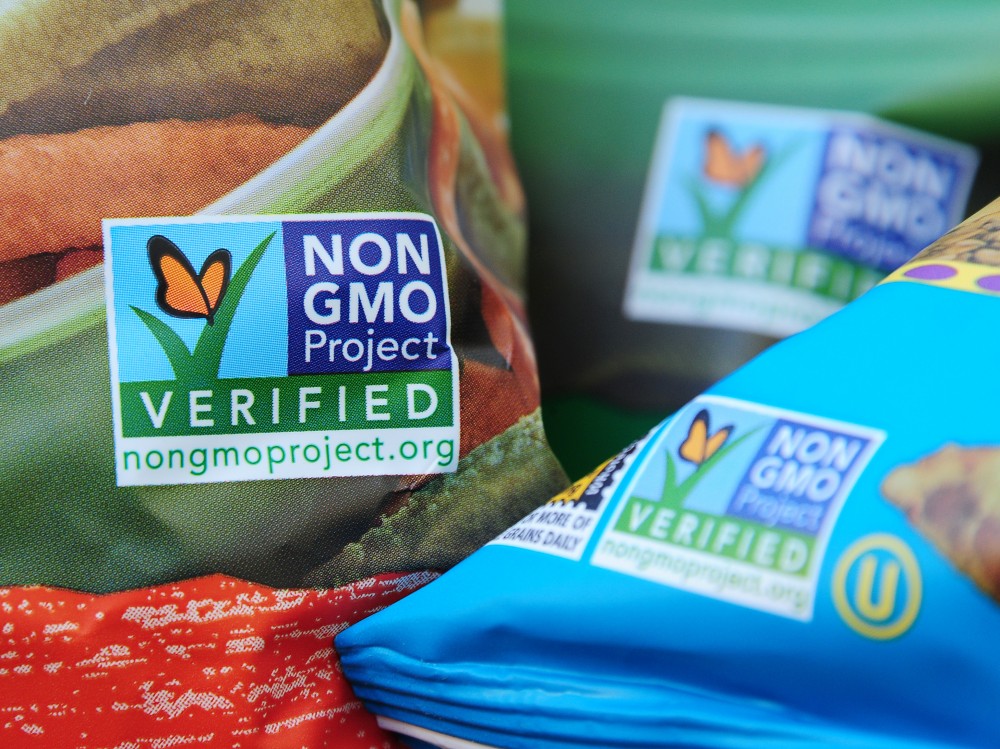
"caption": "Demand is growing for GMO-free labels on food products, according to the Non-GMO Project, one of the principle suppliers of the label. Photo: Robyn Beck/AFP/Getty Images ",
"description": "Demand is growing for GMO-free labels on food products, according to the Non-GMO Project, one of the principle suppliers of the label.",
"title": "Demand is growing for GMO-free labels on food products, according to the Non-GMO Project, one of the principle suppliers of the label.",
"credit": null,
"status": "inherit",
"isLoading": false,
"fetchFailed": false
},
"bayareabites_92127": {
"type": "attachments",
"id": "bayareabites_92127",
"meta": {
"index": "attachments_1716263798",
"site": "bayareabites",
"id": "92127",
"found": true
},
"parent": 92126,
"imgSizes": {
"kqedFullSize": {
"file": "https://ww2.kqed.org/app/uploads/sites/24/2015/01/food-bike-1_enl-106cb1f0d67a72f64de0232b1aebf67a3d0da9b5-e1421444350391.jpg",
"width": 1000,
"height": 667
}
},
"publishDate": 1421444184,
"modified": 1421444355,
"caption": "Charlie Wicker of Trailhead Coffee Roasters makes all of his deliveries within the 6-mile radius of urban Portland, Ore., on one of his custom-built cargo bikes. He can also pull over to brew and serve coffee. Photo: John Lee/Courtesy of Trailhead Coffee Roasters",
"description": "Charlie Wicker of Trailhead Coffee Roasters makes all of his deliveries within the 6-mile radius of urban Portland, Ore., on one of his custom-built cargo bikes. He can also pull over to brew and serve coffee.",
"title": "Charlie Wicker of Trailhead Coffee Roasters makes all of his deliveries within the 6-mile radius of urban Portland, Ore., on one of his custom-built cargo bikes. He can also pull over to brew and serve coffee.",
"credit": null,
"status": "inherit",
"isLoading": false,
"fetchFailed": false
},
"bayareabites_92100": {
"type": "attachments",
"id": "bayareabites_92100",
"meta": {
"index": "attachments_1716263798",
"site": "bayareabites",
"id": "92100",
"found": true
},
"parent": 92099,
"imgSizes": {
"kqedFullSize": {
"file": "https://ww2.kqed.org/app/uploads/sites/24/2015/01/ap751843601418_custom-81cb3cb3c541445902c2e7259e9afddc2db65f18-e1421348256284.jpg",
"width": 1000,
"height": 692
}
},
"publishDate": 1421347967,
"modified": 1421348268,
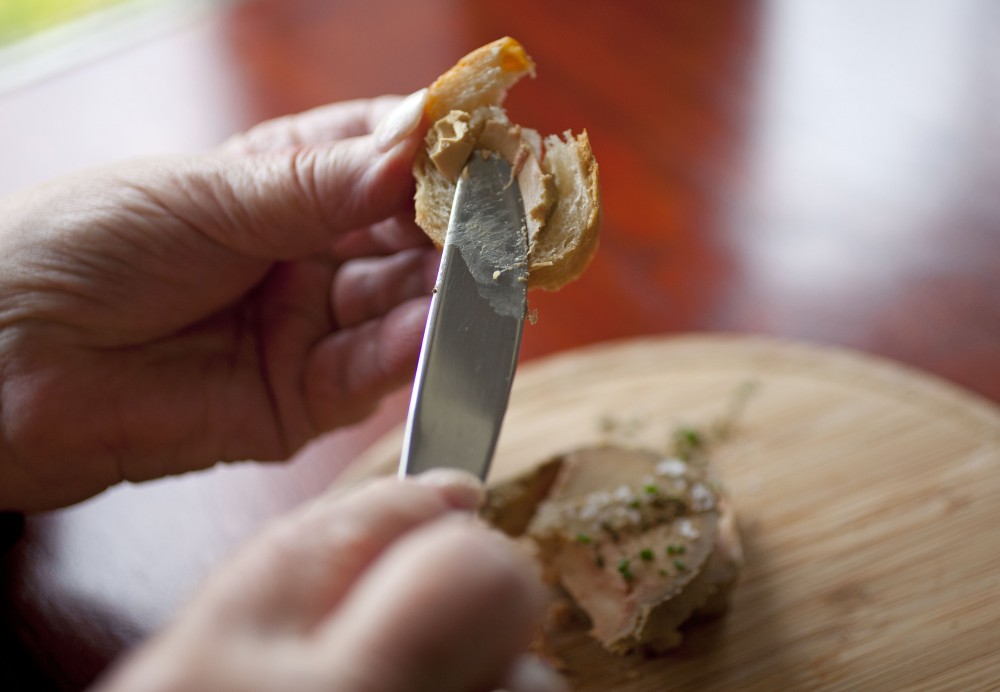
"caption": "Karlene Bley of Los Angeles spreads her torchon of foie gras onto bread during lunch at the Presidio Social Club restaurant in San Francisco. Last week, a federal judge overturned California's ban on the dish. Photo: Eric Risberg/AP ",
"description": "Karlene Bley of Los Angeles spreads her torchon of foie gras onto bread during lunch at the Presidio Social Club restaurant in San Francisco. Last week, a federal judge overturned California's ban on the dish",
"title": "Karlene Bley of Los Angeles spreads her torchon of foie gras onto bread during lunch at the Presidio Social Club restaurant in San Francisco. Last week, a federal judge overturned California's ban on the dish.",
"credit": null,
"status": "inherit",
"isLoading": false,
"fetchFailed": false
},
"bayareabites_92075": {
"type": "attachments",
"id": "bayareabites_92075",
"meta": {
"index": "attachments_1716263798",
"site": "bayareabites",
"id": "92075",
"found": true
},
"parent": 92074,
"imgSizes": {
"kqedFullSize": {
"file": "https://ww2.kqed.org/app/uploads/sites/24/2015/01/pizza-1_enl-36c7409d6a04456a921be823c8e4e236551cdfd5-e1421272673835.jpg",
"width": 1000,
"height": 667
}
},
"publishDate": 1421271734,
"modified": 1421272663,
"caption": "Slices of pizza on the counter of Rosa's Fresh Pizza where customers are encouraged to pay it forward. Photo: Elizabeth Fiedler/WHYY",
"description": "Slices of pizza on the counter of Rosa's Fresh Pizza where customers are encouraged to pay it forward.",
"title": "Slices of pizza on the counter of Rosa's Fresh Pizza where customers are encouraged to pay it forward.",
"credit": null,
"status": "inherit",
"isLoading": false,
"fetchFailed": false
},
"bayareabites_92065": {
"type": "attachments",
"id": "bayareabites_92065",
"meta": {
"index": "attachments_1716263798",
"site": "bayareabites",
"id": "92065",
"found": true
},
"parent": 92064,
"imgSizes": {
"kqedFullSize": {
"file": "https://ww2.kqed.org/app/uploads/sites/24/2015/01/potatoes-3_slide-9c5df7f5282662734d8012f4f2e0a5344f7e823e-e1421195007488.jpg",
"width": 1000,
"height": 667
}
},
"publishDate": 1421194618,
"modified": 1421195002,
"caption": "After a turn in the tumbling machine, these conventional russet Burbank potatoes are starting to show signs of bruising. New GMO potatoes called Innate russet Burbanks have been bred not to bruise as easily as these. Photo: Dan Charles/NPR",
"description": "After a turn in the tumbling machine, these conventional russet Burbank potatoes are starting to show signs of bruising. New GMO potatoes called Innate russet Burbanks have been bred not to bruise as easily as these.",
"title": "After a turn in the tumbling machine, these conventional russet Burbank potatoes are starting to show signs of bruising. New GMO potatoes called Innate russet Burbanks have been bred not to bruise as easily as these.",
"credit": null,
"status": "inherit",
"isLoading": false,
"fetchFailed": false
},
"bayareabites_91963": {
"type": "attachments",
"id": "bayareabites_91963",
"meta": {
"index": "attachments_1716263798",
"site": "bayareabites",
"id": "91963",
"found": true
},
"parent": 91962,
"imgSizes": {
"kqedFullSize": {
"file": "https://ww2.kqed.org/app/uploads/sites/24/2015/01/water-myplate_custom-7fd5ef3d1ae94826d10feee902a0971207e3e4e0.png",
"width": 649,
"height": 575
}
},
"publishDate": 1421083296,
"modified": 1421083479,
"caption": "The University of California's Nutrition Policy Institute has proposed that MyPlate include an icon for water. Image: UC Division of Agriculture and Natural Resources ",
"description": null,
"title": "The University of California's Nutrition Policy Institute has proposed that MyPlate include an icon for water.",
"credit": null,
"status": "inherit",
"isLoading": false,
"fetchFailed": false
},
"bayareabites_91944": {
"type": "attachments",
"id": "bayareabites_91944",
"meta": {
"index": "attachments_1716263798",
"site": "bayareabites",
"id": "91944",
"found": true
},
"parent": 91943,
"imgSizes": {
"kqedFullSize": {
"file": "https://ww2.kqed.org/app/uploads/sites/24/2015/01/vintage-beers-1_enl-9943a146c33c5c5f00d60ff032edfd0fc550ad3e-e1420862386178.jpg",
"width": 1000,
"height": 667
}
},
"publishDate": 1420856790,
"modified": 1420862380,
"caption": "A stash of vintage beers at Dogfish Head Brewery in Delaware. Photo: Courtesy of Dogfish Head Craft Brewery",
"description": "A stash of vintage beers at Dogfish Head Brewery in Delaware.",
"title": "A stash of vintage beers at Dogfish Head Brewery in Delaware.",
"credit": null,
"status": "inherit",
"isLoading": false,
"fetchFailed": false
},
"bayareabites_91906": {
"type": "attachments",
"id": "bayareabites_91906",
"meta": {
"index": "attachments_1716263798",
"site": "bayareabites",
"id": "91906",
"found": true
},
"parent": 91905,
"imgSizes": {
"kqedFullSize": {
"file": "https://ww2.kqed.org/app/uploads/sites/24/2015/01/avocados_wide-e516f064e2a39614339f451173deafb59b4d5be5-e1420741956662.jpg",
"width": 1000,
"height": 563
}
},
"publishDate": 1420741864,
"modified": 1420741949,
"caption": "Researchers say they think there's something in the avocado — other than just the healthy fat — that may lower bad cholesterol. Photo: Tastyart Ltd Rob White/Getty Images ",
"description": "Researchers say they think there's something in the avocado — other than just the healthy fat — that may lower bad choleste",
"title": "Researchers say they think there's something in the avocado — other than just the healthy fat — that may lower bad cholesterol.",
"credit": null,
"status": "inherit",
"isLoading": false,
"fetchFailed": false
},
"bayareabites_91896": {
"type": "attachments",
"id": "bayareabites_91896",
"meta": {
"index": "attachments_1716263798",
"site": "bayareabites",
"id": "91896",
"found": true
},
"parent": 91895,
"imgSizes": {
"kqedFullSize": {
"file": "https://ww2.kqed.org/app/uploads/sites/24/2015/01/bluefin-tuna-2_enl-808feafef2fcb638e46945e81c26827fd39a25d9-e1420664178117.jpg",
"width": 1000,
"height": 667
}
},
"publishDate": 1420662408,
"modified": 1420664194,
"caption": "The IUCN says the Atlantic bluefin tuna is endangered. Its stocks have declined globally between 29 percent and 51 percent over the past 21 to 39 years, according to the conservation group. Photo: Tono Balaguer/iStockphoto",
"description": "The IUCN \u003ca href=\"http://www.iucnredlist.org/details/21860/0\">says\u003c/a> the Atlantic bluefin tuna is endangered. Its stocks have declined globally between 29 percent and 51 percent over the past 21 to 39 years, according to the conservation group.",
"title": "The IUCN says the Atlantic bluefin tuna is endangered. Its stocks have declined globally between 29 percent and 51 percent over the past 21 to 39 years, according to the conservation group.",
"credit": null,
"status": "inherit",
"isLoading": false,
"fetchFailed": false
},
"bayareabites_91868": {
"type": "attachments",
"id": "bayareabites_91868",
"meta": {
"index": "attachments_1716263798",
"site": "bayareabites",
"id": "91868",
"found": true
},
"parent": 91867,
"imgSizes": {
"kqedFullSize": {
"file": "https://ww2.kqed.org/app/uploads/sites/24/2015/01/best-diets_wide-8ff364da90f59a9f1e38812289928a9d9d566951-e1420581652376.jpg",
"width": 1000,
"height": 563
}
},
"publishDate": 1420581244,
"modified": 1420581872,
"caption": "The Mediterranean-like DASH and the plant-centric Ornish eating plan topped this year's rankings of diets by a panel assembled by U.S. News & World Report. Image: Gillian Blease/Getty Images/Ikon Images",
"description": "The Mediterranean-like DASH and the plant-centric Ornish eating plan topped this year's rankings of diets by a panel assembled by \u003cem>U.S. New",
"title": "The Mediterranean-like DASH and the plant-centric Ornish eating plan topped this year's rankings of diets by a panel assembled by U.S. News & World Report.",
"credit": null,
"status": "inherit",
"isLoading": false,
"fetchFailed": false
},
"bayareabites_91836": {
"type": "attachments",
"id": "bayareabites_91836",
"meta": {
"index": "attachments_1716263798",
"site": "bayareabites",
"id": "91836",
"found": true
},
"parent": 91835,
"imgSizes": {
"kqedFullSize": {
"file": "https://ww2.kqed.org/app/uploads/sites/24/2015/01/beer-final_wide-f27ca638d8cc312bd41c4b0de847264b286a01f5-e1420481072940.jpg",
"width": 1000,
"height": 562
}
},
"publishDate": 1420480726,
"modified": 1420481065,
"caption": "With so many craft breweries now in operation, just about every beer name you can imagine is taken. That's making it harder for newcomers to name that brew without risking a legal fight. Illustration: Leif Parsons for NPR ",
"description": "With so many craft breweries now in operation, just about every beer name you can imagine is taken. That's making it harder for newcomers to name that brew without risking a legal fight.",
"title": "With so many craft breweries now in operation, just about every beer name you can imagine is taken. That's making it harder for newcomers to name that brew without risking a legal fight.",
"credit": null,
"status": "inherit",
"isLoading": false,
"fetchFailed": false
},
"bayareabites_91828": {
"type": "attachments",
"id": "bayareabites_91828",
"meta": {
"index": "attachments_1716263798",
"site": "bayareabites",
"id": "91828",
"found": true
},
"parent": 91825,
"imgSizes": {
"kqedFullSize": {
"file": "https://ww2.kqed.org/app/uploads/sites/24/2015/01/changefoodsystem.jpg",
"width": 800,
"height": 533
}
},
"publishDate": 1420326885,
"modified": 1420326906,
"caption": "Want to change the food system? You can vote with your fork, but you can also join a campaign that's confronting the problems directly. Photo: Tim Pannell/Corbis ",
"description": null,
"title": "changefoodsystem",
"credit": null,
"status": "inherit",
"isLoading": false,
"fetchFailed": false
}
},
"audioPlayerReducer": {
"postId": "stream_live",
"isPaused": true,
"isPlaying": false,
"pfsActive": false,
"pledgeModalIsOpen": true,
"playerDrawerIsOpen": false,
"liveAudioPlayStartedAt": 0,
"liveAudioPlayContext": ""
},
"authorsReducer": {
"byline_bayareabites_92206": {
"type": "authors",
"id": "byline_bayareabites_92206",
"meta": {
"override": true
},
"slug": "byline_bayareabites_92206",
"name": "Amy Mayer",
"isLoading": false
},
"byline_bayareabites_92126": {
"type": "authors",
"id": "byline_bayareabites_92126",
"meta": {
"override": true
},
"slug": "byline_bayareabites_92126",
"name": "Alastair Bland",
"isLoading": false
},
"byline_bayareabites_92099": {
"type": "authors",
"id": "byline_bayareabites_92099",
"meta": {
"override": true
},
"slug": "byline_bayareabites_92099",
"name": "Sam Sanders",
"isLoading": false
},
"byline_bayareabites_92074": {
"type": "authors",
"id": "byline_bayareabites_92074",
"meta": {
"override": true
},
"slug": "byline_bayareabites_92074",
"name": "Elizabeth Fiedler",
"isLoading": false
},
"byline_bayareabites_92064": {
"type": "authors",
"id": "byline_bayareabites_92064",
"meta": {
"override": true
},
"slug": "byline_bayareabites_92064",
"name": "Dan Charles",
"isLoading": false
},
"byline_bayareabites_91962": {
"type": "authors",
"id": "byline_bayareabites_91962",
"meta": {
"override": true
},
"slug": "byline_bayareabites_91962",
"name": "Eliza Barclay",
"isLoading": false
},
"byline_bayareabites_91943": {
"type": "authors",
"id": "byline_bayareabites_91943",
"meta": {
"override": true
},
"slug": "byline_bayareabites_91943",
"name": "Alastair Bland",
"isLoading": false
},
"byline_bayareabites_91905": {
"type": "authors",
"id": "byline_bayareabites_91905",
"meta": {
"override": true
},
"slug": "byline_bayareabites_91905",
"name": "Allison Aubrey",
"isLoading": false
},
"byline_bayareabites_91895": {
"type": "authors",
"id": "byline_bayareabites_91895",
"meta": {
"override": true
},
"slug": "byline_bayareabites_91895",
"name": "Eliza Barclay",
"isLoading": false
},
"byline_bayareabites_91867": {
"type": "authors",
"id": "byline_bayareabites_91867",
"meta": {
"override": true
},
"slug": "byline_bayareabites_91867",
"name": "Allison Aubrey",
"isLoading": false
},
"byline_bayareabites_91835": {
"type": "authors",
"id": "byline_bayareabites_91835",
"meta": {
"override": true
},
"slug": "byline_bayareabites_91835",
"name": "Alastair Bland",
"isLoading": false
},
"nprfood": {
"type": "authors",
"id": "5403",
"meta": {
"index": "authors_1716337520",
"id": "5403",
"found": true
},
"name": "NPR Food",
"firstName": "NPR Food",
"lastName": null,
"slug": "nprfood",
"email": "nprfood@kqed.org",
"display_author_email": false,
"staff_mastheads": [],
"title": null,
"bio": "Food and Health-related stories from NPR including NPR Radio; NPR's food blog, \"The Salt\"; NPR's Health News blog, \"Shots\"; NPR's Breaking News blog \"The Two-Way\"; NPR's global stories blog \"Goats and Soda,\" NPR's economy explainer \"Planet Money\"; food-related technology news from NPR's \"All Tech Considered\"; and food series \"Kitchen Window.\"",
"avatar": "https://secure.gravatar.com/avatar/c4b735bb26404fa18ce2447d32e64291?s=600&d=blank&r=g",
"twitter": "nprfood",
"facebook": null,
"instagram": null,
"linkedin": null,
"sites": [
{
"site": "bayareabites",
"roles": [
"contributor"
]
},
{
"site": "food",
"roles": [
"contributor"
]
}
],
"headData": {
"title": "NPR Food | KQED",
"description": null,
"ogImgSrc": "https://secure.gravatar.com/avatar/c4b735bb26404fa18ce2447d32e64291?s=600&d=blank&r=g",
"twImgSrc": "https://secure.gravatar.com/avatar/c4b735bb26404fa18ce2447d32e64291?s=600&d=blank&r=g"
},
"isLoading": false,
"link": "/author/nprfood"
}
},
"pagesReducer": {
"bayareabites_category_npr-food": {
"type": "terms",
"id": "bayareabites_10916",
"meta": {
"index": "terms_1716263798",
"site": "bayareabites",
"id": "10916",
"score": 13.894751
},
"featImg": null,
"name": "NPR food",
"description": null,
"taxonomy": "category",
"headData": {
"twImgId": null,
"twTitle": null,
"ogTitle": null,
"ogImgId": null,
"twDescription": null,
"description": null,
"title": "NPR food Archives | KQED Bay Area Bites",
"ogDescription": null
},
"ttid": 5375,
"slug": "npr-food",
"isLoading": false,
"title": "NPR food",
"pageMeta": {
"site": "bayareabites",
"WpPageTemplate": "page-topic-editorial",
"currentPage": 30
},
"blocks": [
{
"blockName": "kqed/post-list",
"attrs": {
"layout": "cardArticle2",
"query": "posts/bayareabites?category=npr-food",
"seeMore": false,
"paginated": true,
"page": 30
}
},
{
"blockName": "kqed/ad"
}
]
}
},
"pfsSessionReducer": {},
"postsReducer": {
"stream_live": {
"type": "live",
"id": "stream_live",
"audioUrl": "https://hls.kqed.org/hls/kqed_app/playlist.m3u8",
"title": "Live Stream",
"excerpt": "Live Stream information currently unavailable.",
"link": "/radio",
"featImg": "",
"label": {
"name": "KQED Live",
"link": "/"
}
},
"stream_kqedNewscast": {
"type": "posts",
"id": "stream_kqedNewscast",
"audioUrl": "https://www.kqed.org/.stream/anon/radio/RDnews/newscast.mp3?_=1",
"title": "KQED Newscast",
"featImg": "",
"label": {
"name": "88.5 FM",
"link": "/"
}
},
"bayareabites_92206": {
"type": "posts",
"id": "bayareabites_92206",
"meta": {
"index": "posts_1716263798",
"site": "bayareabites",
"id": "92206",
"score": null,
"sort": [
1421784169000
]
},
"parent": 0,
"labelTerm": {
"site": "bayareabites"
},
"blocks": [],
"publishDate": 1421784169,
"format": "aside",
"disqusTitle": "How Your Food Gets The 'Non-GMO' Label",
"title": "How Your Food Gets The 'Non-GMO' Label",
"headTitle": "Bay Area Bites | KQED Food",
"content": "\u003cfigure id=\"attachment_92207\" class=\"wp-caption aligncenter\" style=\"max-width: 1000px\">\u003ca href=\"http://ww2.kqed.org/bayareabites/wp-content/uploads/sites/24/2015/01/non-gmo-76ca7b2dcfdb5406e4017a92ac36e4939418f8e6-e1421783470891.jpg\">\u003cimg src=\"http://ww2.kqed.org/bayareabites/wp-content/uploads/sites/24/2015/01/non-gmo-76ca7b2dcfdb5406e4017a92ac36e4939418f8e6-e1421783470891.jpg\" alt=\"Demand is growing for GMO-free labels on food products, according to the Non-GMO Project, one of the principle suppliers of the label. Photo: Robyn Beck/AFP/Getty Images\" width=\"1000\" height=\"749\" class=\"size-full wp-image-92207\">\u003c/a>\u003cfigcaption class=\"wp-caption-text\">Demand is growing for GMO-free labels on food products, according to the Non-GMO Project, one of the principle suppliers of the label. Photo: Robyn Beck/AFP/Getty Images\u003c/figcaption>\u003c/figure>\n\u003cp>by Ann Mayer, \u003ca href=\"http://iowapublicradio.org/\" target=\"_blank\">WOI\u003c/a> at \u003ca href=\"http://www.npr.org/blogs/thesalt/2015/01/20/378361539/how-your-food-gets-the-non-gmo-label\" target=\"_blank\">The Salt at NPR Food\u003c/a> (1/20/15)\u003c/p>\n\u003cp>Demand for products that don't contain genetically modified organisms, or GMOs, is exploding.\u003c/p>\n\u003cp>And now many food companies are seeking certification for products that don't have any genetically modified ingredients, and not just the brands popular in the health food aisle. Even \u003ca href=\"http://harvestpublicmedia.org/content/original-cheerios-now-free-gmo-ingredients#.VJBo8zHF_pU\">Cheerios\u003c/a>, that iconic cereal from General Mills, no longer contains GMOs.\u003c/p>\n\u003cp>\"We currently are at over $8.5 billion in annual sales of verified products,\" says Megan Westgate, executive director of the \u003ca href=\"http://www.nongmoproject.org/\">Non GMO Project\u003c/a>, an independent organization that verifies products.\u003c/p>\n\u003cp>To receive the \u003ca href=\"http://www.npr.org/blogs/thesalt/2014/02/28/283460420/why-the-non-gmo-label-is-organic-s-frenemy\">label\u003c/a>, a product has to be certified as containing ingredients with less than 1 percent genetic modification. Westgate says that's a realistic standard, while totally GMO-free is not. She says natural foods stores began the process of defining a standard, involving other interested players along the way, including consumers. Now, General Mills is just one of the big food companies selling non-GMO products.\u003c/p>\n\u003cp>[ad fullwidth]\u003c/p>\n\u003cp>Sales of food labeled as non-GMO ballooned to over $3 billion in 2013, \u003ca href=\"http://www.wsj.com/articles/the-gmo-fight-ripples-down-the-food-chain-1407465378\">according\u003c/a> to \u003cem>The Wall Street Journal.\u003c/em>\u003c/p>\n\u003cp>\"Interestingly, with all of this traction in the natural sector,\" Westgate says, \"we're increasingly seeing more conventional companies coming on board and having their products verified.\"\u003c/p>\n\u003cp>But how does a company get into the non-GMO game? They might call \u003ca href=\"http://www.foodchainid.com/\">FoodChain ID\u003c/a>, a company in Fairfield, Iowa, that can shepherd a firm through the process. It's one of the third-party auditors that certifies products for the Non-GMO Project.\u003c/p>\n\u003cp>\"We start looking at ingredients, and we identify what are all the ingredients,\" says David Carter, FoodChain ID's general manager. \"And of course, the label itself doesn't always identify all of those. So we need to be sure that we have a list of all the processing aids, the carriers and all the inputs that go into a product.\"\u003c/p>\n\u003cp>Next, FoodChain ID figures out where each ingredient and input came from. If there's honey in cookies, for example, the company will have to show that the bees that make the honey aren't feeding near genetically modified corn. When there's even the smallest risk that an ingredient could contain a modified gene, DNA testing is in order.\u003c/p>\n\u003cp>FoodChain ID has a lab where a machine can extract the DNA from ingredient samples in order to analyze it. If that test finds no evidence of GMOs, the ingredient can go in the cookies. Carter says he can barely keep up with the number of inquiries coming in from companies that want certification.\u003c/p>\n\u003cp>\"The demand is now very, very high, and it has been for probably over a year in particular,\" Carter says.\u003c/p>\n\u003cp>To date, FoodChain ID says it has verified 17,000 ingredients from 10,000 suppliers in 96 countries.\u003c/p>\n\u003cp>It may take hundreds of dollars for some products to get a non-GMO label, depending on how many ingredients are already verified as being GMO-free and how many are not.\u003c/p>\n\u003cp>But even with the rising demand, non-GMO products make up a small fraction of the marketplace. More than \u003ca href=\"http://harvestpublicmedia.org/content/acres-genetically-modified-corn-nearly-doubled-decade#.VJBlbTHF_pU\">90 percent\u003c/a> of corn and soybeans grown in the U.S. contains genetically modified traits. And those two crops are ubiquitous in processed foods like packaged cookies. Still, if the current trend continues, it seems likely that more farmers will consider planting non-GMO crops.\u003c/p>\n\u003cp>Various companies sell non-GMO seeds, but they can be more difficult to find. Plant breeder Alix Paez hopes his central Iowa seed company, Genetic Enterprises International, can help fill that market niche.\u003c/p>\n\u003cp>\"We are a very small company,\" Paez says \"so our strategy is to find niche markets for farmers that are looking for non-GMO products.\"\u003c/p>\n\u003cp>Farmers pay a premium for seeds that are genetically modified to withstand pests, or \u003ca href=\"http://www.npr.org/blogs/thesalt/2014/01/24/265687251/soil-weedkillers-and-gmos-when-numbers-don-t-tell-the-whole-story\">engineered\u003c/a> to tolerate popular herbicides, making it easier for farmers to use those chemicals to kill weeds. Paez and his wife, Mary Jane, hope to develop seeds than can achieve the same yields without those expensive, patented traits. This past season, they grew test plots on a farm in Boone County, Iowa, which they harvested this fall with an ancient red Massey Ferguson combine.\u003c/p>\n\u003cp>Paez studies the effectiveness of each hybrid seed variety. It's slow and meticulous work. But the careful data collection is key to determining whether a new, non-GMO hybrid can be competitive in the marketplace.\u003c/p>\n\u003cp>\"One of the main things is yield,\" Paez says. \"Stand-ability, consistent performance, disease tolerance — things like that.\"\u003c/p>\n\u003cp>If these seeds make the grade, farmers could potentially save some money. And their grain might fetch a premium, especially as demand for \u003ca href=\"http://ww2.kqed.org/bayareabites/2014/03/02/chickens-that-lay-organic-eggs-eat-imported-food-and-its-pricey/\">non-GMO animal feed\u003c/a> grows. Because the only way to end up with non-GMO certified meat is to raise animals on non-GMO feed.\u003c/p>\n\u003chr>\n\u003cp>\u003cem> Amy Mayer is a reporter based at Iowa Public Radio in Ames, Iowa. This story comes to us from \u003ca href=\"http://harvestpublicmedia.org/\">Harvest Public Media\u003c/a>, a reporting collaboration focusing on agriculture. A \u003ca href=\"http://harvestpublicmedia.org/article/how-your-food-gets-%E2%80%98non-gmo%E2%80%99-label\">version\u003c/a> of this post originally ran on the Harvest website.\u003c/em> \u003c/p>\n\u003cp>\u003c/p>\n\u003cp>\u003cem>Copyright 2015 \u003ca href=\"http://www.iowapublicradio.org\" target=\"_blank\">Iowa Public Radio\u003c/a>.\u003c/em>\u003c/p>\n\n",
"disqusIdentifier": "92206 http://blogs.kqed.org/bayareabites/?p=92206",
"disqusUrl": "https://ww2.kqed.org/bayareabites/2015/01/20/how-your-food-gets-the-non-gmo-label/",
"stats": {
"hasVideo": false,
"hasChartOrMap": false,
"hasAudio": false,
"hasPolis": false,
"wordCount": 883,
"hasGoogleForm": false,
"hasGallery": false,
"hasHearkenModule": false,
"iframeSrcs": [],
"paragraphCount": 25
},
"modified": 1421784169,
"excerpt": "Demand for foods certified as GMO-free is ballooning. Increasingly, it's conventional companies that want to earn the label. Here's how a company gets into the non-GMO game.",
"headData": {
"twImgId": "",
"twTitle": "",
"ogTitle": "",
"ogImgId": "",
"twDescription": "",
"description": "Demand for foods certified as GMO-free is ballooning. Increasingly, it's conventional companies that want to earn the label. Here's how a company gets into the non-GMO game.",
"title": "How Your Food Gets The 'Non-GMO' Label | KQED",
"ogDescription": "",
"schema": {
"@context": "https://schema.org",
"@type": "Article",
"headline": "How Your Food Gets The 'Non-GMO' Label",
"datePublished": "2015-01-20T12:02:49-08:00",
"dateModified": "2015-01-20T12:02:49-08:00",
"image": "https://cdn.kqed.org/wp-content/uploads/2020/02/KQED-OG-Image@1x.png"
}
},
"guestAuthors": [],
"slug": "how-your-food-gets-the-non-gmo-label",
"status": "publish",
"nprApiLink": "http://api.npr.org/query?id=378361539&apiKey=MDAxOTAwOTE4MDEyMTkxMDAzNjczZDljZA004",
"nprByline": "Amy Mayer",
"nprStoryDate": "Tue, 20 Jan 2015 12:48:12 -0500",
"nprLastModifiedDate": "Tue, 20 Jan 2015 12:48:12 -0500",
"nprHtmlLink": "http://www.npr.org/blogs/thesalt/2015/01/20/378361539/how-your-food-gets-the-non-gmo-label?ft=3&f=378361539",
"nprStoryId": "378361539",
"nprRetrievedStory": "1",
"nprPubDate": "Tue, 20 Jan 2015 12:48:00 -0500",
"path": "/bayareabites/92206/how-your-food-gets-the-non-gmo-label",
"audioTrackLength": null,
"parsedContent": [
{
"type": "contentString",
"content": "\u003cdiv class=\"post-body\">\u003cp>\u003cfigure id=\"attachment_92207\" class=\"wp-caption aligncenter\" style=\"max-width: 1000px\">\u003ca href=\"http://ww2.kqed.org/bayareabites/wp-content/uploads/sites/24/2015/01/non-gmo-76ca7b2dcfdb5406e4017a92ac36e4939418f8e6-e1421783470891.jpg\">\u003cimg src=\"http://ww2.kqed.org/bayareabites/wp-content/uploads/sites/24/2015/01/non-gmo-76ca7b2dcfdb5406e4017a92ac36e4939418f8e6-e1421783470891.jpg\" alt=\"Demand is growing for GMO-free labels on food products, according to the Non-GMO Project, one of the principle suppliers of the label. Photo: Robyn Beck/AFP/Getty Images\" width=\"1000\" height=\"749\" class=\"size-full wp-image-92207\">\u003c/a>\u003cfigcaption class=\"wp-caption-text\">Demand is growing for GMO-free labels on food products, according to the Non-GMO Project, one of the principle suppliers of the label. Photo: Robyn Beck/AFP/Getty Images\u003c/figcaption>\u003c/figure>\n\u003cp>by Ann Mayer, \u003ca href=\"http://iowapublicradio.org/\" target=\"_blank\">WOI\u003c/a> at \u003ca href=\"http://www.npr.org/blogs/thesalt/2015/01/20/378361539/how-your-food-gets-the-non-gmo-label\" target=\"_blank\">The Salt at NPR Food\u003c/a> (1/20/15)\u003c/p>\n\u003cp>Demand for products that don't contain genetically modified organisms, or GMOs, is exploding.\u003c/p>\n\u003cp>And now many food companies are seeking certification for products that don't have any genetically modified ingredients, and not just the brands popular in the health food aisle. Even \u003ca href=\"http://harvestpublicmedia.org/content/original-cheerios-now-free-gmo-ingredients#.VJBo8zHF_pU\">Cheerios\u003c/a>, that iconic cereal from General Mills, no longer contains GMOs.\u003c/p>\n\u003cp>\"We currently are at over $8.5 billion in annual sales of verified products,\" says Megan Westgate, executive director of the \u003ca href=\"http://www.nongmoproject.org/\">Non GMO Project\u003c/a>, an independent organization that verifies products.\u003c/p>\n\u003cp>To receive the \u003ca href=\"http://www.npr.org/blogs/thesalt/2014/02/28/283460420/why-the-non-gmo-label-is-organic-s-frenemy\">label\u003c/a>, a product has to be certified as containing ingredients with less than 1 percent genetic modification. Westgate says that's a realistic standard, while totally GMO-free is not. She says natural foods stores began the process of defining a standard, involving other interested players along the way, including consumers. Now, General Mills is just one of the big food companies selling non-GMO products.\u003c/p>\n\u003cp>\u003c/p>\u003c/div>",
"attributes": {
"named": {},
"numeric": []
}
},
{
"type": "component",
"content": "",
"name": "ad",
"attributes": {
"named": {
"label": "fullwidth"
},
"numeric": [
"fullwidth"
]
}
},
{
"type": "contentString",
"content": "\u003cdiv class=\"post-body\">\u003cp>\u003c/p>\n\u003cp>Sales of food labeled as non-GMO ballooned to over $3 billion in 2013, \u003ca href=\"http://www.wsj.com/articles/the-gmo-fight-ripples-down-the-food-chain-1407465378\">according\u003c/a> to \u003cem>The Wall Street Journal.\u003c/em>\u003c/p>\n\u003cp>\"Interestingly, with all of this traction in the natural sector,\" Westgate says, \"we're increasingly seeing more conventional companies coming on board and having their products verified.\"\u003c/p>\n\u003cp>But how does a company get into the non-GMO game? They might call \u003ca href=\"http://www.foodchainid.com/\">FoodChain ID\u003c/a>, a company in Fairfield, Iowa, that can shepherd a firm through the process. It's one of the third-party auditors that certifies products for the Non-GMO Project.\u003c/p>\n\u003cp>\"We start looking at ingredients, and we identify what are all the ingredients,\" says David Carter, FoodChain ID's general manager. \"And of course, the label itself doesn't always identify all of those. So we need to be sure that we have a list of all the processing aids, the carriers and all the inputs that go into a product.\"\u003c/p>\n\u003cp>Next, FoodChain ID figures out where each ingredient and input came from. If there's honey in cookies, for example, the company will have to show that the bees that make the honey aren't feeding near genetically modified corn. When there's even the smallest risk that an ingredient could contain a modified gene, DNA testing is in order.\u003c/p>\n\u003cp>FoodChain ID has a lab where a machine can extract the DNA from ingredient samples in order to analyze it. If that test finds no evidence of GMOs, the ingredient can go in the cookies. Carter says he can barely keep up with the number of inquiries coming in from companies that want certification.\u003c/p>\n\u003cp>\"The demand is now very, very high, and it has been for probably over a year in particular,\" Carter says.\u003c/p>\n\u003cp>To date, FoodChain ID says it has verified 17,000 ingredients from 10,000 suppliers in 96 countries.\u003c/p>\n\u003cp>It may take hundreds of dollars for some products to get a non-GMO label, depending on how many ingredients are already verified as being GMO-free and how many are not.\u003c/p>\n\u003cp>But even with the rising demand, non-GMO products make up a small fraction of the marketplace. More than \u003ca href=\"http://harvestpublicmedia.org/content/acres-genetically-modified-corn-nearly-doubled-decade#.VJBlbTHF_pU\">90 percent\u003c/a> of corn and soybeans grown in the U.S. contains genetically modified traits. And those two crops are ubiquitous in processed foods like packaged cookies. Still, if the current trend continues, it seems likely that more farmers will consider planting non-GMO crops.\u003c/p>\n\u003cp>Various companies sell non-GMO seeds, but they can be more difficult to find. Plant breeder Alix Paez hopes his central Iowa seed company, Genetic Enterprises International, can help fill that market niche.\u003c/p>\n\u003cp>\"We are a very small company,\" Paez says \"so our strategy is to find niche markets for farmers that are looking for non-GMO products.\"\u003c/p>\n\u003cp>Farmers pay a premium for seeds that are genetically modified to withstand pests, or \u003ca href=\"http://www.npr.org/blogs/thesalt/2014/01/24/265687251/soil-weedkillers-and-gmos-when-numbers-don-t-tell-the-whole-story\">engineered\u003c/a> to tolerate popular herbicides, making it easier for farmers to use those chemicals to kill weeds. Paez and his wife, Mary Jane, hope to develop seeds than can achieve the same yields without those expensive, patented traits. This past season, they grew test plots on a farm in Boone County, Iowa, which they harvested this fall with an ancient red Massey Ferguson combine.\u003c/p>\n\u003cp>Paez studies the effectiveness of each hybrid seed variety. It's slow and meticulous work. But the careful data collection is key to determining whether a new, non-GMO hybrid can be competitive in the marketplace.\u003c/p>\n\u003cp>\"One of the main things is yield,\" Paez says. \"Stand-ability, consistent performance, disease tolerance — things like that.\"\u003c/p>\n\u003cp>If these seeds make the grade, farmers could potentially save some money. And their grain might fetch a premium, especially as demand for \u003ca href=\"http://ww2.kqed.org/bayareabites/2014/03/02/chickens-that-lay-organic-eggs-eat-imported-food-and-its-pricey/\">non-GMO animal feed\u003c/a> grows. Because the only way to end up with non-GMO certified meat is to raise animals on non-GMO feed.\u003c/p>\n\u003chr>\n\u003cp>\u003cem> Amy Mayer is a reporter based at Iowa Public Radio in Ames, Iowa. This story comes to us from \u003ca href=\"http://harvestpublicmedia.org/\">Harvest Public Media\u003c/a>, a reporting collaboration focusing on agriculture. A \u003ca href=\"http://harvestpublicmedia.org/article/how-your-food-gets-%E2%80%98non-gmo%E2%80%99-label\">version\u003c/a> of this post originally ran on the Harvest website.\u003c/em> \u003c/p>\n\u003cp>\u003c/p>\n\u003cp>\u003cem>Copyright 2015 \u003ca href=\"http://www.iowapublicradio.org\" target=\"_blank\">Iowa Public Radio\u003c/a>.\u003c/em>\u003c/p>\n\n\u003c/div>\u003c/p>",
"attributes": {
"named": {},
"numeric": []
}
}
],
"link": "/bayareabites/92206/how-your-food-gets-the-non-gmo-label",
"authors": [
"byline_bayareabites_92206"
],
"categories": [
"bayareabites_1245",
"bayareabites_12555",
"bayareabites_10916",
"bayareabites_2035"
],
"tags": [
"bayareabites_10771",
"bayareabites_10787",
"bayareabites_10774",
"bayareabites_14081"
],
"featImg": "bayareabites_92207",
"label": "bayareabites"
},
"bayareabites_92126": {
"type": "posts",
"id": "bayareabites_92126",
"meta": {
"index": "posts_1716263798",
"site": "bayareabites",
"id": "92126",
"score": null,
"sort": [
1421444764000
]
},
"parent": 0,
"labelTerm": {
"site": "bayareabites"
},
"blocks": [],
"publishDate": 1421444764,
"format": "aside",
"disqusTitle": "Food Trucks, Share The Lane. Food Bikes Are Merging Into The Business",
"title": "Food Trucks, Share The Lane. Food Bikes Are Merging Into The Business",
"headTitle": "Bay Area Bites | KQED Food",
"content": "\u003cfigure id=\"attachment_92127\" class=\"wp-caption aligncenter\" style=\"max-width: 1000px\">\u003ca href=\"http://ww2.kqed.org/bayareabites/wp-content/uploads/sites/24/2015/01/food-bike-1_enl-106cb1f0d67a72f64de0232b1aebf67a3d0da9b5-e1421444350391.jpg\">\u003cimg src=\"http://ww2.kqed.org/bayareabites/wp-content/uploads/sites/24/2015/01/food-bike-1_enl-106cb1f0d67a72f64de0232b1aebf67a3d0da9b5-e1421444350391.jpg\" alt=\"Charlie Wicker of Trailhead Coffee Roasters makes all of his deliveries within the 6-mile radius of urban Portland, Ore., on one of his custom-built cargo bikes. He can also pull over to brew and serve coffee. Photo: John Lee/Courtesy of Trailhead Coffee Roasters\" width=\"1000\" height=\"667\" class=\"size-full wp-image-92127\">\u003c/a>\u003cfigcaption class=\"wp-caption-text\">Charlie Wicker of Trailhead Coffee Roasters makes all of his deliveries within the 6-mile radius of urban Portland, Ore., on one of his custom-built cargo bikes. He can also pull over to brew and serve coffee. Photo: John Lee/Courtesy of Trailhead Coffee Roasters\u003c/figcaption>\u003c/figure>\n\u003cp>by Alastair Bland, \u003ca href=\"http://www.npr.org/blogs/thesalt/2015/01/16/371688456/food-trucks-share-the-lane-food-bikes-are-merging-into-the-business\" target=\"_blank\">The Salt at NPR Food\u003c/a> (1/16/15)\u003c/p>\n\u003cp>When upscale food trucks roared into popularity a few years ago, the folks running them praised their rolling operations as far cheaper and simpler to launch than a bricks-and-mortar restaurant.\u003c/p>\n\u003cp>Now, entrepreneurs are finding similar advantages in food bikes.\u003c/p>\n\u003cp>Brewers, chefs, baristas and even farmers are turning to pedal-powered vehicles to bring their goods to consumers — and, sometimes, actually produce them on the street.\u003c/p>\n\u003cp>The environmental benefits of ditching a motor are obvious — fewer emissions into the urban air. It also makes sense financially: A fully outfitted food bike costs just several thousand dollars — a fraction of the price of a food truck, which runs tens of thousands.\u003c/p>\n\u003cp>[ad fullwidth]\u003c/p>\n\u003cp>But the main appeal, it seems, is far simpler.\u003c/p>\n\u003cfigure id=\"attachment_92128\" class=\"wp-caption alignright\" style=\"max-width: 290px\">\u003ca href=\"http://ww2.kqed.org/bayareabites/wp-content/uploads/sites/24/2015/01/food-bike-3_enl-922370d42f9722b37aff06d435bc30c108563a1d-e1421444397703.jpg\">\u003cimg src=\"http://ww2.kqed.org/bayareabites/wp-content/uploads/sites/24/2015/01/food-bike-3_enl-922370d42f9722b37aff06d435bc30c108563a1d-290x209.jpg\" alt=\"Worksman Cycles makes trikes for food vending and for general deliveries. Most of its customers are independent businesses, but some are larger national chains like gourmet food purveyor Harry and David, whose food bike is pictured above. Photo: Courtesy of Worksman Cycles\" width=\"290\" height=\"209\" class=\"size-medium wp-image-92128\">\u003c/a>\u003cfigcaption class=\"wp-caption-text\">Worksman Cycles makes trikes for food vending and for general deliveries. Most of its customers are independent businesses, but some are larger national chains like gourmet food purveyor Harry and David, whose food bike is pictured above. Photo: Courtesy of Worksman Cycles\u003c/figcaption>\u003c/figure>\n\u003cp>\"It's more convenient being on a bike,\" says Vincent Sterne, owner of \u003ca href=\"http://www.tworiverscider.com/\">Two Rivers Cider Co.\u003c/a> in Sacramento, Calif.\u003c/p>\n\u003cp>Sterne has been delivering cider kegs and bottles by bike to bars and retailers for 18 years.\u003c/p>\n\u003cp>\"I go to all the local beer festivals on my bicycle, and I pull in and get set up and pull out again faster than anyone in a truck,\" says Sterne, who uses four company bicycles. One of them is actually a moving bar: a cargo bike fitted with keg mounts and tap handles that he pedals to special tasting events. \"I just roll up and turn on the CO2,\" he says. \"It's that easy.\"\u003c/p>\n\u003cp>Charlie Wicker, owner of \u003ca href=\"http://www.trailheadcoffeeroasters.com/\">Trailhead Coffee Roasters\u003c/a>, uses a pair of cargo bikes for all deliveries within the 6-mile radius of urban Portland, Ore. He even has the capacity to pull over anywhere to brew and serve coffee. He says riding even a heavily loaded bicycle in a congested city is swifter and more efficient than using a vehicle.\u003c/p>\n\u003cp>\"We're doing high volumes of retail business within the Portland area, and we use bikes because it works,\" Wicker says.\u003c/p>\n\u003cfigure id=\"attachment_92129\" class=\"wp-caption aligncenter\" style=\"max-width: 994px\">\u003ca href=\"http://ww2.kqed.org/bayareabites/wp-content/uploads/sites/24/2015/01/curbside-bikes_wide-bffe5cef3d873b772d52992b437d5a7af0998435.jpg\">\u003cimg src=\"http://ww2.kqed.org/bayareabites/wp-content/uploads/sites/24/2015/01/curbside-bikes_wide-bffe5cef3d873b772d52992b437d5a7af0998435.jpg\" alt=\"Curbside Creamery's Tori Wentworth dishes out free samples at a recent First Friday event held in Oakland's Temescal Alley. Photo: Jenny Oh/KQED Bay Area Bites\" width=\"994\" height=\"559\" class=\"size-full wp-image-92129\">\u003c/a>\u003cfigcaption class=\"wp-caption-text\">Curbside Creamery's Tori Wentworth dishes out free samples at a recent First Friday event held in Oakland's Temescal Alley. Photo: Jenny Oh/KQED Bay Area Bites\u003c/figcaption>\u003c/figure>\n\u003cp>He can carry 200 pounds of coffee at a time — even uphill — and says he pedals 600 to 700 pounds weekly to Portland cafes, grocery stores and restaurants. And he says he can make his routine delivery circuit faster than competing coffee purveyors, whom he sometimes slips quietly past in downtown gridlock.\u003c/p>\n\u003cp>\"On a bike, you're basically impervious to traffic jams,\" he says. \"I can calculate my delivery time down to the minute.\"\u003c/p>\n\u003cp>Around the country, the fleet of food bike vendors is swelling — from the \u003ca href=\"http://taco.bike/\">Taco Bike\u003c/a> in Nashville to the \u003ca href=\"https://www.facebook.com/westsacveggitrike\">West Sac Veggie Trike\u003c/a> in Sacramento.\u003c/p>\n\u003cp>Portland-based \u003ca href=\"https://metrofiets.com/\">Metrofiets Cargo Bikes\u003c/a> is among the companies supplying the growing industry. Co-owner Phillip Ross says demand has ballooned beyond what he and partner James Nichols can keep up with.\u003c/p>\n\u003cp>Ross says he has shipped custom-built cargo bicycles to customers around the country and even to Europe. Most are fitted just for packing and transport. Some are also rigged for cooking, food prep and draft beverage service. At least one had an operating sink.\u003c/p>\n\u003cp>One of his earlier customers was \u003ca href=\"http://hopworksbeer.com/\">Hopworks Urban Brewery\u003c/a>, a Portland brewpub for which Metrofiets built a custom bar bike, fitted with keg mounts, tap handles, a pizza rack in the rear and solar panels to power an MP3 player at party events.\u003c/p>\n\u003cfigure id=\"attachment_92130\" class=\"wp-caption aligncenter\" style=\"max-width: 1000px\">\u003ca href=\"http://ww2.kqed.org/bayareabites/wp-content/uploads/sites/24/2015/01/food-bike-2_enl-b04fb74eb734542bc9a1c5ff3883643ccd450d04-e1421444307506.jpg\">\u003cimg src=\"http://ww2.kqed.org/bayareabites/wp-content/uploads/sites/24/2015/01/food-bike-2_enl-b04fb74eb734542bc9a1c5ff3883643ccd450d04-e1421444307506.jpg\" alt=\"Bicycle Coffee serves its brews at the Grand Lake Farmers Market in Oakland, Calif. Photo: Courtesy of John Romankiewicz\" width=\"1000\" height=\"667\" class=\"size-full wp-image-92130\">\u003c/a>\u003cfigcaption class=\"wp-caption-text\">Bicycle Coffee serves its brews at the Grand Lake Farmers Market in Oakland, Calif. Photo: Courtesy of John Romankiewicz\u003c/figcaption>\u003c/figure>\n\u003cp>Metrofiets is a two-person outfit. \u003ca href=\"http://worksman.com/\">Worksman Cycles\u003c/a>, based in Queens, N.Y., is huge by comparison. The company, which has 55 employees, has been building custom bikes and trikes since 1898, says co-owner Wayne Sosin. He says firms big and small have long recognized the marketing value of a company bicycle.\u003c/p>\n\u003cp>\"The public sees a bike or tricycle as charming, not like a truck spewing fumes,\" Sosin says. A bike, he says, can work like a \"moving billboard.\"\u003c/p>\n\u003cp>Sosin says he has built rigs for large companies including Whole Foods, Domino's Pizza, Starbucks and Four Seasons Hotels and Resorts, which uses them as room service vehicles between buildings.\u003c/p>\n\u003cp>Moving through a busy street grid on a bike may be easy, but cooking on one isn't. Sometimes it isn't even legal, as dishwashing stations and refrigeration may be required onsite by state health codes.\u003c/p>\n\u003cp>\"If I put all that extra stuff on my bike, it would become a food truck,\" says Alfonso Dominguez, owner of El Taco Bike. So Dominguez preps all of the tacos at his \u003ca href=\"http://www.tamarindoantojeria.com/#!about/c1iho\">family's Oakland, Calif., restaurant\u003c/a>, then pedals them to parties and street festivals for sale.\u003c/p>\n\u003cp>Berkeley resident John Romankiewicz, who will soon be serving Chinese crepes off a food bike called Jian Bing Johnny's, hopes to amend existing law for the benefit of all food bikes. What he wants is for health officials to allow food bike operators to cook and serve food without onsite refrigeration for up to four hours — the same time limit granted to stationary food purveyors. This, he says, would grant wiggle room to work with.\u003c/p>\n\u003cp>\"I'll just pack up before the four-hour mark, and I'll bring lots of spatulas,\" he says, so he doesn't have to wash them.\u003c/p>\n\u003cp>Europe's fleet of food bikes is advancing at least as quickly as America's.\u003c/p>\n\u003cp>\u003ca href=\"http://www.wheelyscafe.com/\">Wheely's Cafe\u003c/a> is a Scandinavian concept aimed at creating a global franchise of trike-based coffee shops. A company called \u003ca href=\"http://foodlogica.com/\">Foodlogica\u003c/a> runs solar-powered trikes that operate \"last-mile\" food delivery services in Amsterdam.\u003c/p>\n\u003cp>There is even a $15,000 coffee-brewing bike, made by a London company called \u003ca href=\"http://www.velopresso.cc/\">Velopresso\u003c/a>, that grinds roasted beans via pedal power, then brews you a cup of joe.\u003c/p>\n\u003cp>Clever — but Trailhead Coffee's Wicker says he isn't interested in such gimmicks.\u003c/p>\n\u003cp>\"We aren't a circus show,\" he says. \"This is a viable business.\" \u003c/p>\n\u003cp>[ad floatright]\u003c/p>\n\u003cp>\u003cem>Copyright 2015 \u003ca href=\"http://www.npr.org/\" target=\"_blank\">NPR\u003c/a>.\u003c/em> \u003c/p>\n\n",
"disqusIdentifier": "92126 http://blogs.kqed.org/bayareabites/?p=92126",
"disqusUrl": "https://ww2.kqed.org/bayareabites/2015/01/16/food-trucks-share-the-lane-food-bikes-are-merging-into-the-business/",
"stats": {
"hasVideo": false,
"hasChartOrMap": false,
"hasAudio": false,
"hasPolis": false,
"wordCount": 1100,
"hasGoogleForm": false,
"hasGallery": false,
"hasHearkenModule": false,
"iframeSrcs": [],
"paragraphCount": 32
},
"modified": 1421444971,
"excerpt": "A growing number of food vendors are literally pedaling their wares. From baristas to veggie farmers, many say bikes are a cheaper, greener, more convenient way to launch their mobile food businesses.",
"headData": {
"twImgId": "",
"twTitle": "",
"ogTitle": "",
"ogImgId": "",
"twDescription": "",
"description": "A growing number of food vendors are literally pedaling their wares. From baristas to veggie farmers, many say bikes are a cheaper, greener, more convenient way to launch their mobile food businesses.",
"title": "Food Trucks, Share The Lane. Food Bikes Are Merging Into The Business | KQED",
"ogDescription": "",
"schema": {
"@context": "https://schema.org",
"@type": "Article",
"headline": "Food Trucks, Share The Lane. Food Bikes Are Merging Into The Business",
"datePublished": "2015-01-16T13:46:04-08:00",
"dateModified": "2015-01-16T13:49:31-08:00",
"image": "https://cdn.kqed.org/wp-content/uploads/2020/02/KQED-OG-Image@1x.png"
}
},
"guestAuthors": [],
"slug": "food-trucks-share-the-lane-food-bikes-are-merging-into-the-business",
"status": "publish",
"nprApiLink": "http://api.npr.org/query?id=371688456&apiKey=MDAxOTAwOTE4MDEyMTkxMDAzNjczZDljZA004",
"nprByline": "Alastair Bland",
"nprStoryDate": "Fri, 16 Jan 2015 13:09:00 -0500",
"nprLastModifiedDate": "Fri, 16 Jan 2015 15:45:57 -0500",
"nprHtmlLink": "http://www.npr.org/blogs/thesalt/2015/01/16/371688456/food-trucks-share-the-lane-food-bikes-are-merging-into-the-business?ft=3&f=371688456",
"nprStoryId": "371688456",
"nprRetrievedStory": "1",
"nprPubDate": "Fri, 16 Jan 2015 15:45:00 -0500",
"path": "/bayareabites/92126/food-trucks-share-the-lane-food-bikes-are-merging-into-the-business",
"audioTrackLength": null,
"parsedContent": [
{
"type": "contentString",
"content": "\u003cdiv class=\"post-body\">\u003cp>\u003cfigure id=\"attachment_92127\" class=\"wp-caption aligncenter\" style=\"max-width: 1000px\">\u003ca href=\"http://ww2.kqed.org/bayareabites/wp-content/uploads/sites/24/2015/01/food-bike-1_enl-106cb1f0d67a72f64de0232b1aebf67a3d0da9b5-e1421444350391.jpg\">\u003cimg src=\"http://ww2.kqed.org/bayareabites/wp-content/uploads/sites/24/2015/01/food-bike-1_enl-106cb1f0d67a72f64de0232b1aebf67a3d0da9b5-e1421444350391.jpg\" alt=\"Charlie Wicker of Trailhead Coffee Roasters makes all of his deliveries within the 6-mile radius of urban Portland, Ore., on one of his custom-built cargo bikes. He can also pull over to brew and serve coffee. Photo: John Lee/Courtesy of Trailhead Coffee Roasters\" width=\"1000\" height=\"667\" class=\"size-full wp-image-92127\">\u003c/a>\u003cfigcaption class=\"wp-caption-text\">Charlie Wicker of Trailhead Coffee Roasters makes all of his deliveries within the 6-mile radius of urban Portland, Ore., on one of his custom-built cargo bikes. He can also pull over to brew and serve coffee. Photo: John Lee/Courtesy of Trailhead Coffee Roasters\u003c/figcaption>\u003c/figure>\n\u003cp>by Alastair Bland, \u003ca href=\"http://www.npr.org/blogs/thesalt/2015/01/16/371688456/food-trucks-share-the-lane-food-bikes-are-merging-into-the-business\" target=\"_blank\">The Salt at NPR Food\u003c/a> (1/16/15)\u003c/p>\n\u003cp>When upscale food trucks roared into popularity a few years ago, the folks running them praised their rolling operations as far cheaper and simpler to launch than a bricks-and-mortar restaurant.\u003c/p>\n\u003cp>Now, entrepreneurs are finding similar advantages in food bikes.\u003c/p>\n\u003cp>Brewers, chefs, baristas and even farmers are turning to pedal-powered vehicles to bring their goods to consumers — and, sometimes, actually produce them on the street.\u003c/p>\n\u003cp>The environmental benefits of ditching a motor are obvious — fewer emissions into the urban air. It also makes sense financially: A fully outfitted food bike costs just several thousand dollars — a fraction of the price of a food truck, which runs tens of thousands.\u003c/p>\n\u003cp>\u003c/p>\u003c/div>",
"attributes": {
"named": {},
"numeric": []
}
},
{
"type": "component",
"content": "",
"name": "ad",
"attributes": {
"named": {
"label": "fullwidth"
},
"numeric": [
"fullwidth"
]
}
},
{
"type": "contentString",
"content": "\u003cdiv class=\"post-body\">\u003cp>\u003c/p>\n\u003cp>But the main appeal, it seems, is far simpler.\u003c/p>\n\u003cfigure id=\"attachment_92128\" class=\"wp-caption alignright\" style=\"max-width: 290px\">\u003ca href=\"http://ww2.kqed.org/bayareabites/wp-content/uploads/sites/24/2015/01/food-bike-3_enl-922370d42f9722b37aff06d435bc30c108563a1d-e1421444397703.jpg\">\u003cimg src=\"http://ww2.kqed.org/bayareabites/wp-content/uploads/sites/24/2015/01/food-bike-3_enl-922370d42f9722b37aff06d435bc30c108563a1d-290x209.jpg\" alt=\"Worksman Cycles makes trikes for food vending and for general deliveries. Most of its customers are independent businesses, but some are larger national chains like gourmet food purveyor Harry and David, whose food bike is pictured above. Photo: Courtesy of Worksman Cycles\" width=\"290\" height=\"209\" class=\"size-medium wp-image-92128\">\u003c/a>\u003cfigcaption class=\"wp-caption-text\">Worksman Cycles makes trikes for food vending and for general deliveries. Most of its customers are independent businesses, but some are larger national chains like gourmet food purveyor Harry and David, whose food bike is pictured above. Photo: Courtesy of Worksman Cycles\u003c/figcaption>\u003c/figure>\n\u003cp>\"It's more convenient being on a bike,\" says Vincent Sterne, owner of \u003ca href=\"http://www.tworiverscider.com/\">Two Rivers Cider Co.\u003c/a> in Sacramento, Calif.\u003c/p>\n\u003cp>Sterne has been delivering cider kegs and bottles by bike to bars and retailers for 18 years.\u003c/p>\n\u003cp>\"I go to all the local beer festivals on my bicycle, and I pull in and get set up and pull out again faster than anyone in a truck,\" says Sterne, who uses four company bicycles. One of them is actually a moving bar: a cargo bike fitted with keg mounts and tap handles that he pedals to special tasting events. \"I just roll up and turn on the CO2,\" he says. \"It's that easy.\"\u003c/p>\n\u003cp>Charlie Wicker, owner of \u003ca href=\"http://www.trailheadcoffeeroasters.com/\">Trailhead Coffee Roasters\u003c/a>, uses a pair of cargo bikes for all deliveries within the 6-mile radius of urban Portland, Ore. He even has the capacity to pull over anywhere to brew and serve coffee. He says riding even a heavily loaded bicycle in a congested city is swifter and more efficient than using a vehicle.\u003c/p>\n\u003cp>\"We're doing high volumes of retail business within the Portland area, and we use bikes because it works,\" Wicker says.\u003c/p>\n\u003cfigure id=\"attachment_92129\" class=\"wp-caption aligncenter\" style=\"max-width: 994px\">\u003ca href=\"http://ww2.kqed.org/bayareabites/wp-content/uploads/sites/24/2015/01/curbside-bikes_wide-bffe5cef3d873b772d52992b437d5a7af0998435.jpg\">\u003cimg src=\"http://ww2.kqed.org/bayareabites/wp-content/uploads/sites/24/2015/01/curbside-bikes_wide-bffe5cef3d873b772d52992b437d5a7af0998435.jpg\" alt=\"Curbside Creamery's Tori Wentworth dishes out free samples at a recent First Friday event held in Oakland's Temescal Alley. Photo: Jenny Oh/KQED Bay Area Bites\" width=\"994\" height=\"559\" class=\"size-full wp-image-92129\">\u003c/a>\u003cfigcaption class=\"wp-caption-text\">Curbside Creamery's Tori Wentworth dishes out free samples at a recent First Friday event held in Oakland's Temescal Alley. Photo: Jenny Oh/KQED Bay Area Bites\u003c/figcaption>\u003c/figure>\n\u003cp>He can carry 200 pounds of coffee at a time — even uphill — and says he pedals 600 to 700 pounds weekly to Portland cafes, grocery stores and restaurants. And he says he can make his routine delivery circuit faster than competing coffee purveyors, whom he sometimes slips quietly past in downtown gridlock.\u003c/p>\n\u003cp>\"On a bike, you're basically impervious to traffic jams,\" he says. \"I can calculate my delivery time down to the minute.\"\u003c/p>\n\u003cp>Around the country, the fleet of food bike vendors is swelling — from the \u003ca href=\"http://taco.bike/\">Taco Bike\u003c/a> in Nashville to the \u003ca href=\"https://www.facebook.com/westsacveggitrike\">West Sac Veggie Trike\u003c/a> in Sacramento.\u003c/p>\n\u003cp>Portland-based \u003ca href=\"https://metrofiets.com/\">Metrofiets Cargo Bikes\u003c/a> is among the companies supplying the growing industry. Co-owner Phillip Ross says demand has ballooned beyond what he and partner James Nichols can keep up with.\u003c/p>\n\u003cp>Ross says he has shipped custom-built cargo bicycles to customers around the country and even to Europe. Most are fitted just for packing and transport. Some are also rigged for cooking, food prep and draft beverage service. At least one had an operating sink.\u003c/p>\n\u003cp>One of his earlier customers was \u003ca href=\"http://hopworksbeer.com/\">Hopworks Urban Brewery\u003c/a>, a Portland brewpub for which Metrofiets built a custom bar bike, fitted with keg mounts, tap handles, a pizza rack in the rear and solar panels to power an MP3 player at party events.\u003c/p>\n\u003cfigure id=\"attachment_92130\" class=\"wp-caption aligncenter\" style=\"max-width: 1000px\">\u003ca href=\"http://ww2.kqed.org/bayareabites/wp-content/uploads/sites/24/2015/01/food-bike-2_enl-b04fb74eb734542bc9a1c5ff3883643ccd450d04-e1421444307506.jpg\">\u003cimg src=\"http://ww2.kqed.org/bayareabites/wp-content/uploads/sites/24/2015/01/food-bike-2_enl-b04fb74eb734542bc9a1c5ff3883643ccd450d04-e1421444307506.jpg\" alt=\"Bicycle Coffee serves its brews at the Grand Lake Farmers Market in Oakland, Calif. Photo: Courtesy of John Romankiewicz\" width=\"1000\" height=\"667\" class=\"size-full wp-image-92130\">\u003c/a>\u003cfigcaption class=\"wp-caption-text\">Bicycle Coffee serves its brews at the Grand Lake Farmers Market in Oakland, Calif. Photo: Courtesy of John Romankiewicz\u003c/figcaption>\u003c/figure>\n\u003cp>Metrofiets is a two-person outfit. \u003ca href=\"http://worksman.com/\">Worksman Cycles\u003c/a>, based in Queens, N.Y., is huge by comparison. The company, which has 55 employees, has been building custom bikes and trikes since 1898, says co-owner Wayne Sosin. He says firms big and small have long recognized the marketing value of a company bicycle.\u003c/p>\n\u003cp>\"The public sees a bike or tricycle as charming, not like a truck spewing fumes,\" Sosin says. A bike, he says, can work like a \"moving billboard.\"\u003c/p>\n\u003cp>Sosin says he has built rigs for large companies including Whole Foods, Domino's Pizza, Starbucks and Four Seasons Hotels and Resorts, which uses them as room service vehicles between buildings.\u003c/p>\n\u003cp>Moving through a busy street grid on a bike may be easy, but cooking on one isn't. Sometimes it isn't even legal, as dishwashing stations and refrigeration may be required onsite by state health codes.\u003c/p>\n\u003cp>\"If I put all that extra stuff on my bike, it would become a food truck,\" says Alfonso Dominguez, owner of El Taco Bike. So Dominguez preps all of the tacos at his \u003ca href=\"http://www.tamarindoantojeria.com/#!about/c1iho\">family's Oakland, Calif., restaurant\u003c/a>, then pedals them to parties and street festivals for sale.\u003c/p>\n\u003cp>Berkeley resident John Romankiewicz, who will soon be serving Chinese crepes off a food bike called Jian Bing Johnny's, hopes to amend existing law for the benefit of all food bikes. What he wants is for health officials to allow food bike operators to cook and serve food without onsite refrigeration for up to four hours — the same time limit granted to stationary food purveyors. This, he says, would grant wiggle room to work with.\u003c/p>\n\u003cp>\"I'll just pack up before the four-hour mark, and I'll bring lots of spatulas,\" he says, so he doesn't have to wash them.\u003c/p>\n\u003cp>Europe's fleet of food bikes is advancing at least as quickly as America's.\u003c/p>\n\u003cp>\u003ca href=\"http://www.wheelyscafe.com/\">Wheely's Cafe\u003c/a> is a Scandinavian concept aimed at creating a global franchise of trike-based coffee shops. A company called \u003ca href=\"http://foodlogica.com/\">Foodlogica\u003c/a> runs solar-powered trikes that operate \"last-mile\" food delivery services in Amsterdam.\u003c/p>\n\u003cp>There is even a $15,000 coffee-brewing bike, made by a London company called \u003ca href=\"http://www.velopresso.cc/\">Velopresso\u003c/a>, that grinds roasted beans via pedal power, then brews you a cup of joe.\u003c/p>\n\u003cp>Clever — but Trailhead Coffee's Wicker says he isn't interested in such gimmicks.\u003c/p>\n\u003cp>\"We aren't a circus show,\" he says. \"This is a viable business.\" \u003c/p>\n\u003cp>\u003c/p>\u003c/div>",
"attributes": {
"named": {},
"numeric": []
}
},
{
"type": "component",
"content": "",
"name": "ad",
"attributes": {
"named": {
"label": "floatright"
},
"numeric": [
"floatright"
]
}
},
{
"type": "contentString",
"content": "\u003cdiv class=\"post-body\">\u003cp>\u003c/p>\n\u003cp>\u003cem>Copyright 2015 \u003ca href=\"http://www.npr.org/\" target=\"_blank\">NPR\u003c/a>.\u003c/em> \u003c/p>\n\n\u003c/div>\u003c/p>",
"attributes": {
"named": {},
"numeric": []
}
}
],
"link": "/bayareabites/92126/food-trucks-share-the-lane-food-bikes-are-merging-into-the-business",
"authors": [
"byline_bayareabites_92126"
],
"categories": [
"bayareabites_109",
"bayareabites_8770",
"bayareabites_4084",
"bayareabites_1875",
"bayareabites_10916",
"bayareabites_181"
],
"tags": [
"bayareabites_9218",
"bayareabites_14072",
"bayareabites_9322",
"bayareabites_10921",
"bayareabites_2527"
],
"featImg": "bayareabites_92127",
"label": "bayareabites"
},
"bayareabites_92099": {
"type": "posts",
"id": "bayareabites_92099",
"meta": {
"index": "posts_1716263798",
"site": "bayareabites",
"id": "92099",
"score": null,
"sort": [
1421348376000
]
},
"parent": 0,
"labelTerm": {
"site": "bayareabites"
},
"blocks": [],
"publishDate": 1421348376,
"format": "aside",
"disqusTitle": "After Foie Gras Ban Lifted In California, Some Chefs Face Threats",
"title": "After Foie Gras Ban Lifted In California, Some Chefs Face Threats",
"headTitle": "Bay Area Bites | KQED Food",
"content": "\u003cfigure id=\"attachment_92100\" class=\"wp-caption aligncenter\" style=\"max-width: 1000px\">\u003ca href=\"http://ww2.kqed.org/bayareabites/wp-content/uploads/sites/24/2015/01/ap751843601418_custom-81cb3cb3c541445902c2e7259e9afddc2db65f18.jpg\">\u003cimg src=\"http://ww2.kqed.org/bayareabites/wp-content/uploads/sites/24/2015/01/ap751843601418_custom-81cb3cb3c541445902c2e7259e9afddc2db65f18-e1421348256284.jpg\" alt=\"Karlene Bley of Los Angeles spreads her torchon of foie gras onto bread during lunch at the Presidio Social Club restaurant in San Francisco. Last week, a federal judge overturned California's ban on the dish. Photo: Eric Risberg/AP \" width=\"1000\" height=\"692\" class=\"size-full wp-image-92100\">\u003c/a>\u003cfigcaption class=\"wp-caption-text\">Karlene Bley of Los Angeles spreads her torchon of foie gras onto bread during lunch at the Presidio Social Club restaurant in San Francisco. Last week, a federal judge overturned California's ban on the dish. Photo: Eric Risberg/AP\u003c/figcaption>\u003c/figure>\n\u003cp>by \u003ca href=\"http://www.npr.org/people/349243304/sam-sanders\" target=\"_blank\">Sam Sanders\u003c/a>, \u003ca href=\"http://www.npr.org/blogs/thetwo-way/2015/01/14/377304610/after-foie-gras-ban-lifted-in-california-some-chefs-face-threats\" target=\"_blank\">The Two-Way\u003c/a>, NPR News 91/14/15)\u003c/p>\n\u003cp>Last Wednesday, a federal judge overturned California's ban on the sale of foie gras, the delicacy made from the livers of fatty ducks and geese that have often been force-fed. The ban was approved by California voters in 2004, and went into effect in 2012.\u003c/p>\n\u003cp>Since the ban was overturned, some chefs using foie gras in their menus have been receiving threats.\u003c/p>\n\u003cp>Sean Chaney of Hot's Kitchen in Hermosa Beach, Calif., one of the restaurants involved in the case that overturned the ban, \u003ca href=\"http://www.npr.org/2015/01/10/376381103/in-california-fois-gras-is-back-on-the-menu\">spoke with NPR's Arun Rath\u003c/a> one day after the ban was lifted.\u003c/p>\n\u003cp>\"Apparently there's some people out there that, really, they just, they'll kill me,\" Chaney said. \"But I can't kill an animal that's raised for this?\" He continued, \"You know, it goes with it. I'm OK with it. I'm not really too worried about a bunch of people that sit in their dark room writing threats to me. If they want, come on down to the restaurant. They know where I'm at.\"\u003c/p>\n\u003cp>[ad fullwidth]\u003c/p>\n\u003cp>\"Some of them are willing to sit quiet for a minute with a protest sign,\" says Chaney's attorney Michael Tenenbaum. \"Other ones take to the Internet and issue death threats, as we saw today, with somebody threatening to find him, kill him, shove a tube in him. This is craziness.\"\u003c/p>\n\u003cp>Chaney and Tenenbaum say they've been in touch with the FBI and local law enforcement about the threats.\u003c/p>\n\u003cp>\u003ca href=\"http://www.huffingtonpost.com/2015/01/14/california-foie-gras_n_6467320.html\">The Huffington Post is also reporting\u003c/a> that another chef in California has been receiving threats over foie gras:\u003c/p>\n\u003cblockquote>\n\u003cp>\"There are some describing the way they're hoping I will die,\" Ken Frank, who owns the restaurant La Toque in Napa Valley, told The Huffington Post. \"A good share of them talk about shoving a pipe up my ass or down my throat. But it's the ones who would like to see me hung by my feet and bled to death with no anesthetic — those are the most disturbing.\"\u003c/p>\n\u003c/blockquote>\n\u003cp>People for the Ethical Treatment of Animals, or PETA, have organized protests in support of a foie gras ban, and the organization sent the following statement to HuffPost after learning about the threats:\u003c/p>\n\u003cblockquote>\n\u003cp>\"PETA is skeptical of the claim that threats are being made. Anyone who's desperate enough to want to serve up the diseased, fatty livers of tortured birds is certainly not above making up a fat lie. This big macho chef needs to 'man up' and recognize that part of being a man means having a heart.\"\u003c/p>\n\u003c/blockquote>\n\u003cp>\u003ca href=\"http://www.npr.org/blogs/thesalt/2015/01/08/375926061/out-of-the-shadows-and-onto-menus-foie-gras-is-back-in-california\">As we've previously reported\u003c/a>, it's still illegal to produce foie gras in California, even though last week's ruling makes it legal to sell the product in the state. And even during California's statewide ban on the dish, many chefs just gave it away for free from their kitchens.\u003c/p>\n\u003cp>\u003c/p>\n\u003cp>\u003cem>Copyright 2015 \u003ca href=\"http://www.npr.org/\" target=\"_blank\">NPR\u003c/a>.\u003c/em> \u003c/p>\n\n",
"disqusIdentifier": "92099 http://blogs.kqed.org/bayareabites/?p=92099",
"disqusUrl": "https://ww2.kqed.org/bayareabites/2015/01/15/after-foie-gras-ban-lifted-in-california-some-chefs-face-threats/",
"stats": {
"hasVideo": false,
"hasChartOrMap": false,
"hasAudio": false,
"hasPolis": false,
"wordCount": 535,
"hasGoogleForm": false,
"hasGallery": false,
"hasHearkenModule": false,
"iframeSrcs": [],
"paragraphCount": 15
},
"modified": 1421348376,
"excerpt": "A ban on the controversial delicacy that went into effect in 2012 was overturned last week. Now some chefs offering the dish have received enough threats to get law enforcement involved.",
"headData": {
"twImgId": "",
"twTitle": "",
"ogTitle": "",
"ogImgId": "",
"twDescription": "",
"description": "A ban on the controversial delicacy that went into effect in 2012 was overturned last week. Now some chefs offering the dish have received enough threats to get law enforcement involved.",
"title": "After Foie Gras Ban Lifted In California, Some Chefs Face Threats | KQED",
"ogDescription": "",
"schema": {
"@context": "https://schema.org",
"@type": "Article",
"headline": "After Foie Gras Ban Lifted In California, Some Chefs Face Threats",
"datePublished": "2015-01-15T10:59:36-08:00",
"dateModified": "2015-01-15T10:59:36-08:00",
"image": "https://cdn.kqed.org/wp-content/uploads/2020/02/KQED-OG-Image@1x.png"
}
},
"guestAuthors": [],
"slug": "after-foie-gras-ban-lifted-in-california-some-chefs-face-threats",
"status": "publish",
"nprApiLink": "http://api.npr.org/query?id=377304610&apiKey=MDAxOTAwOTE4MDEyMTkxMDAzNjczZDljZA004",
"nprByline": "Sam Sanders",
"nprStoryDate": "Wed, 14 Jan 2015 20:34:00 -0500",
"nprLastModifiedDate": "Thu, 15 Jan 2015 12:59:47 -0500",
"nprHtmlLink": "http://www.npr.org/blogs/thetwo-way/2015/01/14/377304610/after-foie-gras-ban-lifted-in-california-some-chefs-face-threats?ft=3&f=377304610",
"nprStoryId": "377304610",
"nprRetrievedStory": "1",
"nprPubDate": "Thu, 15 Jan 2015 12:59:00 -0500",
"path": "/bayareabites/92099/after-foie-gras-ban-lifted-in-california-some-chefs-face-threats",
"audioTrackLength": null,
"parsedContent": [
{
"type": "contentString",
"content": "\u003cdiv class=\"post-body\">\u003cp>\u003cfigure id=\"attachment_92100\" class=\"wp-caption aligncenter\" style=\"max-width: 1000px\">\u003ca href=\"http://ww2.kqed.org/bayareabites/wp-content/uploads/sites/24/2015/01/ap751843601418_custom-81cb3cb3c541445902c2e7259e9afddc2db65f18.jpg\">\u003cimg src=\"http://ww2.kqed.org/bayareabites/wp-content/uploads/sites/24/2015/01/ap751843601418_custom-81cb3cb3c541445902c2e7259e9afddc2db65f18-e1421348256284.jpg\" alt=\"Karlene Bley of Los Angeles spreads her torchon of foie gras onto bread during lunch at the Presidio Social Club restaurant in San Francisco. Last week, a federal judge overturned California's ban on the dish. Photo: Eric Risberg/AP \" width=\"1000\" height=\"692\" class=\"size-full wp-image-92100\">\u003c/a>\u003cfigcaption class=\"wp-caption-text\">Karlene Bley of Los Angeles spreads her torchon of foie gras onto bread during lunch at the Presidio Social Club restaurant in San Francisco. Last week, a federal judge overturned California's ban on the dish. Photo: Eric Risberg/AP\u003c/figcaption>\u003c/figure>\n\u003cp>by \u003ca href=\"http://www.npr.org/people/349243304/sam-sanders\" target=\"_blank\">Sam Sanders\u003c/a>, \u003ca href=\"http://www.npr.org/blogs/thetwo-way/2015/01/14/377304610/after-foie-gras-ban-lifted-in-california-some-chefs-face-threats\" target=\"_blank\">The Two-Way\u003c/a>, NPR News 91/14/15)\u003c/p>\n\u003cp>Last Wednesday, a federal judge overturned California's ban on the sale of foie gras, the delicacy made from the livers of fatty ducks and geese that have often been force-fed. The ban was approved by California voters in 2004, and went into effect in 2012.\u003c/p>\n\u003cp>Since the ban was overturned, some chefs using foie gras in their menus have been receiving threats.\u003c/p>\n\u003cp>Sean Chaney of Hot's Kitchen in Hermosa Beach, Calif., one of the restaurants involved in the case that overturned the ban, \u003ca href=\"http://www.npr.org/2015/01/10/376381103/in-california-fois-gras-is-back-on-the-menu\">spoke with NPR's Arun Rath\u003c/a> one day after the ban was lifted.\u003c/p>\n\u003cp>\"Apparently there's some people out there that, really, they just, they'll kill me,\" Chaney said. \"But I can't kill an animal that's raised for this?\" He continued, \"You know, it goes with it. I'm OK with it. I'm not really too worried about a bunch of people that sit in their dark room writing threats to me. If they want, come on down to the restaurant. They know where I'm at.\"\u003c/p>\n\u003cp>\u003c/p>\u003c/div>",
"attributes": {
"named": {},
"numeric": []
}
},
{
"type": "component",
"content": "",
"name": "ad",
"attributes": {
"named": {
"label": "fullwidth"
},
"numeric": [
"fullwidth"
]
}
},
{
"type": "contentString",
"content": "\u003cdiv class=\"post-body\">\u003cp>\u003c/p>\n\u003cp>\"Some of them are willing to sit quiet for a minute with a protest sign,\" says Chaney's attorney Michael Tenenbaum. \"Other ones take to the Internet and issue death threats, as we saw today, with somebody threatening to find him, kill him, shove a tube in him. This is craziness.\"\u003c/p>\n\u003cp>Chaney and Tenenbaum say they've been in touch with the FBI and local law enforcement about the threats.\u003c/p>\n\u003cp>\u003ca href=\"http://www.huffingtonpost.com/2015/01/14/california-foie-gras_n_6467320.html\">The Huffington Post is also reporting\u003c/a> that another chef in California has been receiving threats over foie gras:\u003c/p>\n\u003cblockquote>\n\u003cp>\"There are some describing the way they're hoping I will die,\" Ken Frank, who owns the restaurant La Toque in Napa Valley, told The Huffington Post. \"A good share of them talk about shoving a pipe up my ass or down my throat. But it's the ones who would like to see me hung by my feet and bled to death with no anesthetic — those are the most disturbing.\"\u003c/p>\n\u003c/blockquote>\n\u003cp>People for the Ethical Treatment of Animals, or PETA, have organized protests in support of a foie gras ban, and the organization sent the following statement to HuffPost after learning about the threats:\u003c/p>\n\u003cblockquote>\n\u003cp>\"PETA is skeptical of the claim that threats are being made. Anyone who's desperate enough to want to serve up the diseased, fatty livers of tortured birds is certainly not above making up a fat lie. This big macho chef needs to 'man up' and recognize that part of being a man means having a heart.\"\u003c/p>\n\u003c/blockquote>\n\u003cp>\u003ca href=\"http://www.npr.org/blogs/thesalt/2015/01/08/375926061/out-of-the-shadows-and-onto-menus-foie-gras-is-back-in-california\">As we've previously reported\u003c/a>, it's still illegal to produce foie gras in California, even though last week's ruling makes it legal to sell the product in the state. And even during California's statewide ban on the dish, many chefs just gave it away for free from their kitchens.\u003c/p>\n\u003cp>\u003c/p>\n\u003cp>\u003cem>Copyright 2015 \u003ca href=\"http://www.npr.org/\" target=\"_blank\">NPR\u003c/a>.\u003c/em> \u003c/p>\n\n\u003c/div>\u003c/p>",
"attributes": {
"named": {},
"numeric": []
}
}
],
"link": "/bayareabites/92099/after-foie-gras-ban-lifted-in-california-some-chefs-face-threats",
"authors": [
"byline_bayareabites_92099"
],
"categories": [
"bayareabites_63",
"bayareabites_10028",
"bayareabites_10916",
"bayareabites_2035"
],
"tags": [
"bayareabites_1786",
"bayareabites_13595",
"bayareabites_11465"
],
"featImg": "bayareabites_92100",
"label": "bayareabites"
},
"bayareabites_92074": {
"type": "posts",
"id": "bayareabites_92074",
"meta": {
"index": "posts_1716263798",
"site": "bayareabites",
"id": "92074",
"score": null,
"sort": [
1421272908000
]
},
"parent": 0,
"labelTerm": {
"site": "bayareabites"
},
"blocks": [],
"publishDate": 1421272908,
"format": "aside",
"disqusTitle": "Pay-It-Forward Generosity at Pizza Place Helps to Feed the Homeless",
"title": "Pay-It-Forward Generosity at Pizza Place Helps to Feed the Homeless",
"headTitle": "Bay Area Bites | KQED Food",
"content": "\u003cfigure id=\"attachment_92076\" class=\"wp-caption aligncenter\" style=\"max-width: 1000px\">\u003ca href=\"http://ww2.kqed.org/bayareabites/wp-content/uploads/sites/24/2015/01/pizza-2_enl-420a0a5e59f388b13fec30c5cdc198cc7070a608-e1421272477198.jpg\">\u003cimg src=\"http://ww2.kqed.org/bayareabites/wp-content/uploads/sites/24/2015/01/pizza-2_enl-420a0a5e59f388b13fec30c5cdc198cc7070a608-e1421272477198.jpg\" alt=\"The lunchtime rush at Rosa's Fresh Pizza in Center City Philadelphia where customers pay extra money to buy slices for the homeless. Photo: Elizabeth Fiedler/WHYY\" width=\"1000\" height=\"667\" class=\"size-full wp-image-92076\">\u003c/a>\u003cfigcaption class=\"wp-caption-text\">The lunchtime rush at Rosa's Fresh Pizza in Center City Philadelphia where customers pay extra money to buy slices for the homeless. Photo: Elizabeth Fiedler/WHYY\u003c/figcaption>\u003c/figure>\n\u003cp>by Elizabeth Fiedler, \u003ca href=\"http://www.whyy.org\" target=\"_blank\">WHYY\u003c/a> at \u003ca href=\"http://www.npr.org/blogs/thesalt/2015/01/14/377033772/philadelphia-pizza-lovers-pay-it-forward-one-slice-at-a-time\" target=\"_blank\">The Salt at NPR Food\u003c/a> (1/15/15) \u003c/p>\n\u003cp>Some pizza restaurants decorate the walls with signed photos of minor local celebrities who once stopped by for a slice.\u003c/p>\n\u003cp>At Rosa's Fresh Pizza in Philadelphia the shop is adorned with post-it notes and letters. The messages are from customers who gave $1 so homeless members in the community could get a slice, which cost $1.\u003c/p>\n\u003cp>\"The homeless, they come in and say, 'I hear you give out free pizza to homeless people,' \" owner Mason Wartman tells The Salt.\u003c/p>\n\u003cp>The pay-it-forward pizza program started about a year ago, Wartman says, when one paying customer asked if he could buy a slice for a homeless person. \"I said 'Sure.' I took his dollar and ran out and got some post-it notes and put one up to signify that a slice was purchased,\" he recalls.\u003c/p>\n\u003cp>[ad fullwidth]\u003c/p>\n\u003cp>Pay-it-forward pizza was born.\u003c/p>\n\u003cp>Over the last nine months, Wartman says clients have bought 8,400 slices of pizza for their homeless neighbors. He kept track of the pre-paid slices with post-it notes on the walls until he hit about 500 free slices. Then the accounting system became untenable. He now keeps track at the register.\u003c/p>\n\u003cp>But his customers — both paying and non-paying — keep sharing their motivations and their thanks in writing. On the post-it notes and papers hung around the shop there are messages like, \"I just want to thank everyone that donated to Rosa's; it gave me a place to eat everyday and the opportunity to get back on my feet. I start a new job tomorrow!\"\u003c/p>\n\u003cfigure id=\"attachment_92075\" class=\"wp-caption alignright\" style=\"max-width: 290px\">\u003ca href=\"http://ww2.kqed.org/bayareabites/wp-content/uploads/sites/24/2015/01/pizza-1_enl-36c7409d6a04456a921be823c8e4e236551cdfd5-e1421272673835.jpg\">\u003cimg src=\"http://ww2.kqed.org/bayareabites/wp-content/uploads/sites/24/2015/01/pizza-1_enl-36c7409d6a04456a921be823c8e4e236551cdfd5-290x193.jpg\" alt=\"Slices of pizza on the counter of Rosa's Fresh Pizza where customers are encouraged to pay it forward. Photo: Elizabeth Fiedler/WHYY\" width=\"290\" height=\"193\" class=\"size-medium wp-image-92075\">\u003c/a>\u003cfigcaption class=\"wp-caption-text\">Slices of pizza on the counter of Rosa's Fresh Pizza where customers are encouraged to pay it forward. Photo: Elizabeth Fiedler/WHYY\u003c/figcaption>\u003c/figure>\n\u003cp>Wartman says the customer who started it all was inspired by a practice in Italy called \"\u003ca href=\"http://ww2.kqed.org/bayareabites/2013/04/25/eu-embraces-suspended-coffee-pay-it-forward-with-a-cup-of-joe/\">suspended coffee\u003c/a>\" where customers purchase an extra cup for someone who can't afford it.\u003c/p>\n\u003cp>Pay-it-forward generosity isn't limited to Italian cafes or one Philly pizza shop. Even mega-chains including the bakery and sandwich chain Panera have gotten into the giving act.\u003c/p>\n\u003cp>\u003ca href=\"http://paneracares.org/locations/\">At five \"Panera Cares\" locations\u003c/a> across the country, there are no set menu prices. In a written statement, Panera spokesperson Kate McConnell tells The Salt that the cafes \"provide suggested donation amounts for all menu items to help guide those who would like to 'pay it forward.' \" She says the money collected is used to cover the operating costs of the cafes, \"while also covering the cost of the meals for those who come in and are unable to contribute the suggested donation amount.\"\u003c/p>\n\u003cp>Other chains' pay-it-forward systems have grown organically. Starbucks Coffee company spokesperson Sanja Gould says the company doesn't have a formal system in place but some customers ask to pay for others and some store partners may encourage customers to do so verbally.\u003c/p>\n\u003cfigure id=\"attachment_92077\" class=\"wp-caption aligncenter\" style=\"max-width: 1000px\">\u003ca href=\"http://ww2.kqed.org/bayareabites/wp-content/uploads/sites/24/2015/01/pizza_enl-e8c20e171a874bed213c97937f44826dc4b4784e.jpg\">\u003cimg src=\"http://ww2.kqed.org/bayareabites/wp-content/uploads/sites/24/2015/01/pizza_enl-e8c20e171a874bed213c97937f44826dc4b4784e-e1421272597986.jpg\" alt=\"Messages adorn the walls of a Philadelphia pizza shop where customers pay an extra $1 to feed a person who is homeless. Photo: Courtesy of Mason Wartman\" width=\"1000\" height=\"750\" class=\"size-full wp-image-92077\">\u003c/a>\u003cfigcaption class=\"wp-caption-text\">Messages adorn the walls of a Philadelphia pizza shop where customers pay an extra $1 to feed a person who is homeless. Photo: Courtesy of Mason Wartman\u003c/figcaption>\u003c/figure>\n\u003cp>\"It happens for Starbucks all around the world,\" she says.\u003c/p>\n\u003cp>The latte-giving spans a huge range. Gould says some people just offer to pay for the person behind them in line while others \"might load a certain dollar amount onto a Starbucks card and the store partners have it on hand and they keep adding to it as the line goes on.\"\u003c/p>\n\u003cp>Gould points to an impressive example: \u003ca href=\"http://www.eater.com/2013/12/30/6306591/ct-starbucks-customers-pay-it-forward-1468-times\">more than 1,000 customers at a Connecticut Starbucks\u003c/a> paid it forward on Christmas Eve in 2013.\u003c/p>\n\u003cp>Wartman says the pay-it-forward method at his tiny Philly pizza shop has made him think about customers' motivations.\u003c/p>\n\u003cp>\"They're just really nice people, you know? Sometimes homeless people buy them for other homeless people.\" He says people want to help but aren't sure what to do.\u003c/p>\n\u003cp>\"This is a super-easy way, a super-efficient way and a super-transparent way to help the homeless.\"\u003c/p>\n\u003cp>Wartman doesn't need to advertise, and he is receiving enough \"paid forward\" pizza that he does not have to turn away any of the homeless people who come in. He says word has spread within Philadelphia's homeless community and each day 30 to 40 homeless people come in asking for a free slice.\u003c/p>\n\u003cp>\u003c/p>\n\u003cp> \u003cem>Copyright 2015 \u003ca href=\"http://www.whyy.org\" target=\"_blank\">WHYY\u003c/a>, Inc.\u003c/em>\u003c/p>\n\n",
"disqusIdentifier": "92074 http://blogs.kqed.org/bayareabites/?p=92074",
"disqusUrl": "https://ww2.kqed.org/bayareabites/2015/01/14/pay-it-forward-generosity-at-pizza-place-helps-to-feed-the-homeless/",
"stats": {
"hasVideo": false,
"hasChartOrMap": false,
"hasAudio": false,
"hasPolis": false,
"wordCount": 763,
"hasGoogleForm": false,
"hasGallery": false,
"hasHearkenModule": false,
"iframeSrcs": [],
"paragraphCount": 22
},
"modified": 1421272908,
"excerpt": "A Philadelphia pizza shop has become an ad hoc feeding program for the homeless where customers can pay the $1 slices forward. To date, some 8,400 slices have been bought for the homeless.",
"headData": {
"twImgId": "",
"twTitle": "",
"ogTitle": "",
"ogImgId": "",
"twDescription": "",
"description": "A Philadelphia pizza shop has become an ad hoc feeding program for the homeless where customers can pay the $1 slices forward. To date, some 8,400 slices have been bought for the homeless.",
"title": "Pay-It-Forward Generosity at Pizza Place Helps to Feed the Homeless | KQED",
"ogDescription": "",
"schema": {
"@context": "https://schema.org",
"@type": "Article",
"headline": "Pay-It-Forward Generosity at Pizza Place Helps to Feed the Homeless",
"datePublished": "2015-01-14T14:01:48-08:00",
"dateModified": "2015-01-14T14:01:48-08:00",
"image": "https://cdn.kqed.org/wp-content/uploads/2020/02/KQED-OG-Image@1x.png"
}
},
"guestAuthors": [],
"slug": "pay-it-forward-generosity-at-pizza-place-helps-to-feed-the-homeless",
"status": "publish",
"nprApiLink": "http://api.npr.org/query?id=377033772&apiKey=MDAxOTAwOTE4MDEyMTkxMDAzNjczZDljZA004",
"nprByline": "Elizabeth Fiedler",
"nprStoryDate": "Wed, 14 Jan 2015 15:53:00 -0500",
"nprLastModifiedDate": "Wed, 14 Jan 2015 15:58:08 -0500",
"nprHtmlLink": "http://www.npr.org/blogs/thesalt/2015/01/14/377033772/philadelphia-pizza-lovers-pay-it-forward-one-slice-at-a-time?ft=3&f=377033772",
"nprStoryId": "377033772",
"nprRetrievedStory": "1",
"nprPubDate": "Wed, 14 Jan 2015 15:58:00 -0500",
"path": "/bayareabites/92074/pay-it-forward-generosity-at-pizza-place-helps-to-feed-the-homeless",
"audioTrackLength": null,
"parsedContent": [
{
"type": "contentString",
"content": "\u003cdiv class=\"post-body\">\u003cp>\u003cfigure id=\"attachment_92076\" class=\"wp-caption aligncenter\" style=\"max-width: 1000px\">\u003ca href=\"http://ww2.kqed.org/bayareabites/wp-content/uploads/sites/24/2015/01/pizza-2_enl-420a0a5e59f388b13fec30c5cdc198cc7070a608-e1421272477198.jpg\">\u003cimg src=\"http://ww2.kqed.org/bayareabites/wp-content/uploads/sites/24/2015/01/pizza-2_enl-420a0a5e59f388b13fec30c5cdc198cc7070a608-e1421272477198.jpg\" alt=\"The lunchtime rush at Rosa's Fresh Pizza in Center City Philadelphia where customers pay extra money to buy slices for the homeless. Photo: Elizabeth Fiedler/WHYY\" width=\"1000\" height=\"667\" class=\"size-full wp-image-92076\">\u003c/a>\u003cfigcaption class=\"wp-caption-text\">The lunchtime rush at Rosa's Fresh Pizza in Center City Philadelphia where customers pay extra money to buy slices for the homeless. Photo: Elizabeth Fiedler/WHYY\u003c/figcaption>\u003c/figure>\n\u003cp>by Elizabeth Fiedler, \u003ca href=\"http://www.whyy.org\" target=\"_blank\">WHYY\u003c/a> at \u003ca href=\"http://www.npr.org/blogs/thesalt/2015/01/14/377033772/philadelphia-pizza-lovers-pay-it-forward-one-slice-at-a-time\" target=\"_blank\">The Salt at NPR Food\u003c/a> (1/15/15) \u003c/p>\n\u003cp>Some pizza restaurants decorate the walls with signed photos of minor local celebrities who once stopped by for a slice.\u003c/p>\n\u003cp>At Rosa's Fresh Pizza in Philadelphia the shop is adorned with post-it notes and letters. The messages are from customers who gave $1 so homeless members in the community could get a slice, which cost $1.\u003c/p>\n\u003cp>\"The homeless, they come in and say, 'I hear you give out free pizza to homeless people,' \" owner Mason Wartman tells The Salt.\u003c/p>\n\u003cp>The pay-it-forward pizza program started about a year ago, Wartman says, when one paying customer asked if he could buy a slice for a homeless person. \"I said 'Sure.' I took his dollar and ran out and got some post-it notes and put one up to signify that a slice was purchased,\" he recalls.\u003c/p>\n\u003cp>\u003c/p>\u003c/div>",
"attributes": {
"named": {},
"numeric": []
}
},
{
"type": "component",
"content": "",
"name": "ad",
"attributes": {
"named": {
"label": "fullwidth"
},
"numeric": [
"fullwidth"
]
}
},
{
"type": "contentString",
"content": "\u003cdiv class=\"post-body\">\u003cp>\u003c/p>\n\u003cp>Pay-it-forward pizza was born.\u003c/p>\n\u003cp>Over the last nine months, Wartman says clients have bought 8,400 slices of pizza for their homeless neighbors. He kept track of the pre-paid slices with post-it notes on the walls until he hit about 500 free slices. Then the accounting system became untenable. He now keeps track at the register.\u003c/p>\n\u003cp>But his customers — both paying and non-paying — keep sharing their motivations and their thanks in writing. On the post-it notes and papers hung around the shop there are messages like, \"I just want to thank everyone that donated to Rosa's; it gave me a place to eat everyday and the opportunity to get back on my feet. I start a new job tomorrow!\"\u003c/p>\n\u003cfigure id=\"attachment_92075\" class=\"wp-caption alignright\" style=\"max-width: 290px\">\u003ca href=\"http://ww2.kqed.org/bayareabites/wp-content/uploads/sites/24/2015/01/pizza-1_enl-36c7409d6a04456a921be823c8e4e236551cdfd5-e1421272673835.jpg\">\u003cimg src=\"http://ww2.kqed.org/bayareabites/wp-content/uploads/sites/24/2015/01/pizza-1_enl-36c7409d6a04456a921be823c8e4e236551cdfd5-290x193.jpg\" alt=\"Slices of pizza on the counter of Rosa's Fresh Pizza where customers are encouraged to pay it forward. Photo: Elizabeth Fiedler/WHYY\" width=\"290\" height=\"193\" class=\"size-medium wp-image-92075\">\u003c/a>\u003cfigcaption class=\"wp-caption-text\">Slices of pizza on the counter of Rosa's Fresh Pizza where customers are encouraged to pay it forward. Photo: Elizabeth Fiedler/WHYY\u003c/figcaption>\u003c/figure>\n\u003cp>Wartman says the customer who started it all was inspired by a practice in Italy called \"\u003ca href=\"http://ww2.kqed.org/bayareabites/2013/04/25/eu-embraces-suspended-coffee-pay-it-forward-with-a-cup-of-joe/\">suspended coffee\u003c/a>\" where customers purchase an extra cup for someone who can't afford it.\u003c/p>\n\u003cp>Pay-it-forward generosity isn't limited to Italian cafes or one Philly pizza shop. Even mega-chains including the bakery and sandwich chain Panera have gotten into the giving act.\u003c/p>\n\u003cp>\u003ca href=\"http://paneracares.org/locations/\">At five \"Panera Cares\" locations\u003c/a> across the country, there are no set menu prices. In a written statement, Panera spokesperson Kate McConnell tells The Salt that the cafes \"provide suggested donation amounts for all menu items to help guide those who would like to 'pay it forward.' \" She says the money collected is used to cover the operating costs of the cafes, \"while also covering the cost of the meals for those who come in and are unable to contribute the suggested donation amount.\"\u003c/p>\n\u003cp>Other chains' pay-it-forward systems have grown organically. Starbucks Coffee company spokesperson Sanja Gould says the company doesn't have a formal system in place but some customers ask to pay for others and some store partners may encourage customers to do so verbally.\u003c/p>\n\u003cfigure id=\"attachment_92077\" class=\"wp-caption aligncenter\" style=\"max-width: 1000px\">\u003ca href=\"http://ww2.kqed.org/bayareabites/wp-content/uploads/sites/24/2015/01/pizza_enl-e8c20e171a874bed213c97937f44826dc4b4784e.jpg\">\u003cimg src=\"http://ww2.kqed.org/bayareabites/wp-content/uploads/sites/24/2015/01/pizza_enl-e8c20e171a874bed213c97937f44826dc4b4784e-e1421272597986.jpg\" alt=\"Messages adorn the walls of a Philadelphia pizza shop where customers pay an extra $1 to feed a person who is homeless. Photo: Courtesy of Mason Wartman\" width=\"1000\" height=\"750\" class=\"size-full wp-image-92077\">\u003c/a>\u003cfigcaption class=\"wp-caption-text\">Messages adorn the walls of a Philadelphia pizza shop where customers pay an extra $1 to feed a person who is homeless. Photo: Courtesy of Mason Wartman\u003c/figcaption>\u003c/figure>\n\u003cp>\"It happens for Starbucks all around the world,\" she says.\u003c/p>\n\u003cp>The latte-giving spans a huge range. Gould says some people just offer to pay for the person behind them in line while others \"might load a certain dollar amount onto a Starbucks card and the store partners have it on hand and they keep adding to it as the line goes on.\"\u003c/p>\n\u003cp>Gould points to an impressive example: \u003ca href=\"http://www.eater.com/2013/12/30/6306591/ct-starbucks-customers-pay-it-forward-1468-times\">more than 1,000 customers at a Connecticut Starbucks\u003c/a> paid it forward on Christmas Eve in 2013.\u003c/p>\n\u003cp>Wartman says the pay-it-forward method at his tiny Philly pizza shop has made him think about customers' motivations.\u003c/p>\n\u003cp>\"They're just really nice people, you know? Sometimes homeless people buy them for other homeless people.\" He says people want to help but aren't sure what to do.\u003c/p>\n\u003cp>\"This is a super-easy way, a super-efficient way and a super-transparent way to help the homeless.\"\u003c/p>\n\u003cp>Wartman doesn't need to advertise, and he is receiving enough \"paid forward\" pizza that he does not have to turn away any of the homeless people who come in. He says word has spread within Philadelphia's homeless community and each day 30 to 40 homeless people come in asking for a free slice.\u003c/p>\n\u003cp>\u003c/p>\n\u003cp> \u003cem>Copyright 2015 \u003ca href=\"http://www.whyy.org\" target=\"_blank\">WHYY\u003c/a>, Inc.\u003c/em>\u003c/p>\n\n\u003c/div>\u003c/p>",
"attributes": {
"named": {},
"numeric": []
}
}
],
"link": "/bayareabites/92074/pay-it-forward-generosity-at-pizza-place-helps-to-feed-the-homeless",
"authors": [
"byline_bayareabites_92074"
],
"categories": [
"bayareabites_3032",
"bayareabites_4084",
"bayareabites_10916",
"bayareabites_1807"
],
"tags": [
"bayareabites_3038",
"bayareabites_14066",
"bayareabites_8946",
"bayareabites_443",
"bayareabites_11279"
],
"featImg": "bayareabites_92075",
"label": "bayareabites"
},
"bayareabites_92064": {
"type": "posts",
"id": "bayareabites_92064",
"meta": {
"index": "posts_1716263798",
"site": "bayareabites",
"id": "92064",
"score": null,
"sort": [
1421195205000
]
},
"parent": 0,
"labelTerm": {
"site": "bayareabites"
},
"blocks": [],
"publishDate": 1421195205,
"format": "aside",
"disqusTitle": "GMO Potatoes Have Arrived. But Will Anyone Buy Them?",
"title": "GMO Potatoes Have Arrived. But Will Anyone Buy Them?",
"headTitle": "Bay Area Bites | KQED Food",
"content": "\u003cfigure id=\"attachment_92065\" class=\"wp-caption aligncenter\" style=\"max-width: 1000px\">\u003ca href=\"http://ww2.kqed.org/bayareabites/wp-content/uploads/sites/24/2015/01/potatoes-3_slide-9c5df7f5282662734d8012f4f2e0a5344f7e823e-e1421195007488.jpg\">\u003cimg src=\"http://ww2.kqed.org/bayareabites/wp-content/uploads/sites/24/2015/01/potatoes-3_slide-9c5df7f5282662734d8012f4f2e0a5344f7e823e-e1421195007488.jpg\" alt=\"After a turn in the tumbling machine, these conventional russet Burbank potatoes are starting to show signs of bruising. New GMO potatoes called Innate russet Burbanks have been bred not to bruise as easily as these. Photo: Dan Charles/NPR\" width=\"1000\" height=\"667\" class=\"size-full wp-image-92065\">\u003c/a>\u003cfigcaption class=\"wp-caption-text\">After a turn in the tumbling machine, these conventional russet Burbank potatoes are starting to show signs of bruising. New GMO potatoes called Innate russet Burbanks have been bred not to bruise as easily as these. Photo: Dan Charles/NPR\u003c/figcaption>\u003c/figure>\n\u003cp>\u003cstrong>Listen to the Story on All Things Considered:\u003c/strong>\u003cbr>\nhttp://pd.npr.org/anon.npr-mp3/npr/atc/2015/01/20150113_atc_gmo_potatoes_have_arrived_but_will_anyone_buy_them.mp3\u003c/p>\n\u003cp>by \u003ca href=\"http://www.npr.org/people/143160021/daniel-charles\" target=\"_blank\">Dan Charles\u003c/a>, \u003ca href=\"http://www.npr.org/blogs/thesalt/2015/01/13/376184710/gmo-potatoes-have-arrived-but-will-anyone-buy-them\" target=\"_blank\">The Salt at NPR Food\u003c/a> (1/13/15)\u003c/p>\n\u003cp>On the face of it, the new potato varieties called \"Innate\" seem attractive. If you peel the brown skin off their white flesh, you won't find many unsightly black spots. And when you fry them, you'll probably get a much smaller dose of a potentially harmful chemical.\u003c/p>\n\u003cp>But here's the catch: Some of the biggest potato buyers in the country, such as Frito-Lay and McDonald's, seem afraid to touch these potatoes. Others don't even want to talk about them because they are genetically modified organisms, or GMOs.\u003c/p>\n\u003cp>The potatoes aren't yet on the market (more about that later). So to get a sneak peek at them I paid a visit to Michigan State University and its top potato breeder, \u003ca href=\"http://potatobg.css.msu.edu/douches.shtml\">David Douches\u003c/a>.\u003c/p>\n\u003cfigure id=\"attachment_92066\" class=\"wp-caption alignright\" style=\"max-width: 290px\">\u003ca href=\"http://ww2.kqed.org/bayareabites/wp-content/uploads/sites/24/2015/01/potatoes-4_slide-a16c15b64b829ba6b7e3c86e590181bc2bcb90ac-e1421195104540.jpg\">\u003cimg src=\"http://ww2.kqed.org/bayareabites/wp-content/uploads/sites/24/2015/01/potatoes-4_slide-a16c15b64b829ba6b7e3c86e590181bc2bcb90ac-290x193.jpg\" alt=\"Photo: Dan Charles/NPR\" width=\"290\" height=\"193\" class=\"size-medium wp-image-92066\">\u003c/a>\u003cfigcaption class=\"wp-caption-text\">Photo: Dan Charles/NPR\u003c/figcaption>\u003c/figure>\n\u003cp>Douches is a lean and focused man, in constant motion. He's been working with potatoes for most of his adult life. It is, you might say, a committed but high-maintenance relationship.\u003c/p>\n\u003cp>[ad fullwidth]\u003c/p>\n\u003cp>Douches fell for the potato 32 years ago, when he was in graduate school. It seemed like \"a beautiful plant to work with,\" he says. It also feeds a lot of people. According to the \u003ca href=\"http://cipotato.org/\">International Potato Center\u003c/a>, the potato is the world's third-most-important food crop. \"I felt that when I work on something like this, it could have a large impact,\" Douches says.\u003c/p>\n\u003cp>He wants to make the potato just a little bit better. Unfortunately, the potato resists improvement.\u003c/p>\n\u003cp>The reasons lie in the genetic nature of this crop. It's very difficult, using traditional breeding, to make gradual improvements in an established potato variety. Mating it with another variety produces tremendously varied offspring, the vast majority of them inferior to the variety that you were hoping to improve. It's like trying to improve a really good poker hand by reshuffling the whole deck of cards and dealing again.\u003c/p>\n\u003cp>This is why Douches is so excited about these new potatoes: They're just like a much-loved variety, but better. To demonstrate, he and his colleague Joseph Coombs are banging some potatoes around inside an ancient, rotating wooden drum.\u003c/p>\n\u003cp>This is a bruise test. They're comparing two different varieties.\u003c/p>\n\u003cp>The first variety is russet Burbank, the most popular potato in America. It's been widely grown for more than a century. The other potatoes are almost identical to russet Burbank, but the J.R. Simplot Co. of Boise, Idaho, has inserted some extra genes into them in the laboratory. These potatoes are called \u003ca href=\"http://www.simplotplantsciences.com/\">Innate\u003c/a> russet Burbank.\u003c/p>\n\u003cfigure id=\"attachment_92067\" class=\"wp-caption aligncenter\" style=\"max-width: 1000px\">\u003ca href=\"http://ww2.kqed.org/bayareabites/wp-content/uploads/sites/24/2015/01/potatoes-1_enl-9de2a5c3dc7cdf87ec18282003b324a8b8b66a06-e1421195156667.jpg\">\u003cimg src=\"http://ww2.kqed.org/bayareabites/wp-content/uploads/sites/24/2015/01/potatoes-1_enl-9de2a5c3dc7cdf87ec18282003b324a8b8b66a06-e1421195156667.jpg\" alt=\"Michigan State's researchers cooked up two batches of fries to compare bruising in traditional, non-GMO potatoes (left) and GMO potatoes (right). Photo: Dan Charles/NPR\" width=\"1000\" height=\"667\" class=\"size-full wp-image-92067\">\u003c/a>\u003cfigcaption class=\"wp-caption-text\">Michigan State's researchers cooked up two batches of fries to compare bruising in traditional, non-GMO potatoes (left) and GMO potatoes (right). Photo: Dan Charles/NPR\u003c/figcaption>\u003c/figure>\n\u003cp>The Simplot Co. chose the word \"innate\" because the new genes it inserted are actually modified versions of some genes that exist naturally in potatoes; they are innate to this species. But the inserted genes have a curious effect: They shut down a few of the potato's original, natural genes. Scientists call it gene silencing.\u003c/p>\n\u003cp>We're about to see the results. We peel some potatoes that went through the bruising barrel yesterday and lay them out on a table. The traditional russet Burbank potatoes are starting to show some evidence of bruising. Black spots are forming.\u003c/p>\n\u003cp>We see few bruises, by contrast, on the Innate russet Burbank potatoes.\u003c/p>\n\u003cp>There's another difference that we cannot see. If we fry these potatoes, the Innate russet Burbanks will have less than half as much of a worrisome chemical called acrylamide.\u003c/p>\n\u003cp>Lots of foods — coffee, for instance — contain acrylamide. But when lab rats eat it, they're more likely to get cancer. Studies have never shown a clear link between acrylamide consumption and cancer in humans, but the Food and Drug Administration still \u003ca href=\"http://www.fda.gov/ForConsumers/ConsumerUpdates/ucm374855.htm\">says\u003c/a> that it's a good idea to consume less of it.\u003c/p>\n\u003cp>For both these reasons — less bruising and less acrylamide — Haven Baker, general manager of Simplot Plant Sciences, thinks that consumers should be lining up to buy these new potatoes. \"The No. 1 consumer complaint [about potatoes] is black spot bruise,\" he says. \"You have to cut it out or, if it's bad enough, throw the potato away. It's a significant waste issue.\"\u003c/p>\n\u003cp>The Simplot Co. has created Innate versions of several different varieties, including one called Atlantic that's widely used to make potato chips. The U.S. Department of Agriculture \u003ca href=\"http://www.aphis.usda.gov/brs/fedregister/BRS_20141110b.pdf\">approved\u003c/a> the new varieties in November. They are not on sale yet because Simplot is waiting for a green light from the FDA, which is \u003ca href=\"http://www.fda.gov/ForConsumers/ConsumerUpdates/ucm352067.htm\">reviewing\u003c/a> scientific data — mostly provided by the company — on how genetic modification has altered the chemical makeup of the potato and whether any of those changes could raise safety concerns.\u003c/p>\n\u003cp>But even before they've gone on sale, some of the very biggest potato buyers seem to be backing away from them.\u003c/p>\n\u003cp>Frito-Lay, the biggest potato chip maker, and McDonald's have both issued \u003ca href=\"http://www.capitalpress.com/Business/20141113/mcdonalds-not-interested-in-gmo-potatoes\">statements\u003c/a> saying that they are not planning to use the Simplot potatoes in their products. An executive at another potato chip company told The Salt that his company does not plan to use those potatoes. He didn't even want to be quoted on the subject for fear that someone would mistakenly get the opposite impression.\u003c/p>\n\u003cp>Patty Lovera, assistant director of \u003ca href=\"http://www.foodandwaterwatch.org/\">Food and Water Watch\u003c/a>, an environmental advocacy group, says food companies should, in fact, react this way. \"When you ask consumers if they're comfortable with this technology, they are not,\" she says. Food and Water Watch has launched a \u003ca href=\"https://secure3.convio.net/fww/site/Advocacy?cmd=display&page=UserAction&id=801\">petition\u003c/a> calling on McDonald's to reject GMO potatoes.\u003c/p>\n\u003cp>There may not be anything wrong with these potatoes, Lovera says, but she does not think the government is regulating biotech crops carefully enough. \"I don't have some smoking gun to hand you [about] this danger or that danger,\" she says, \"but we don't think that the review that they've gone through can show us that they're safe.\"\u003c/p>\n\u003cp>Yet other advocates for healthy food believe the Simplot potatoes offer real advantages.\u003c/p>\n\u003cp>\"It's really strange how GMO has become a curse word,\" says Michael Jacobson, executive director of the \u003ca href=\"http://www.cspinet.org/about/index.html\">Center for Science in the Public Interest\u003c/a>. Jacobson has been among the leaders of the healthful-food movement. For the past 40 years, he has fought excess sugar, fat, salt and food additives.\u003c/p>\n\u003cp>But genetic modification? It's just another technology, he says, \"and if we could have genetically engineered crops and foods that produce safer products, and less expensive products, that's terrific!\"\u003c/p>\n\u003cp>The FDA does need to examine these new potatoes, Jacobson says. But if they do deliver less cancer risk, and result in less food wasted, he hopes that people will buy them.\u003c/p>\n\u003cp>[ad floatright]\u003c/p>\n\u003cp>\u003cem>Copyright 2015 \u003ca href=\"http://www.npr.org/\" target=\"_blank\">NPR\u003c/a>.\u003c/em> \u003c/p>\n\n",
"disqusIdentifier": "92064 http://blogs.kqed.org/bayareabites/?p=92064",
"disqusUrl": "https://ww2.kqed.org/bayareabites/2015/01/13/gmo-potatoes-have-arrived-but-will-anyone-buy-them/",
"stats": {
"hasVideo": false,
"hasChartOrMap": false,
"hasAudio": false,
"hasPolis": false,
"wordCount": 1215,
"hasGoogleForm": false,
"hasGallery": false,
"hasHearkenModule": false,
"iframeSrcs": [],
"paragraphCount": 30
},
"modified": 1421270473,
"excerpt": "New GMO potatoes don't bruise as easily, and, when fried, they have less of a potentially harmful chemical. Yet some big chip and french fry makers won't touch them because of the stigma of GMOs.",
"headData": {
"twImgId": "",
"twTitle": "",
"ogTitle": "",
"ogImgId": "",
"twDescription": "",
"description": "New GMO potatoes don't bruise as easily, and, when fried, they have less of a potentially harmful chemical. Yet some big chip and french fry makers won't touch them because of the stigma of GMOs.",
"title": "GMO Potatoes Have Arrived. But Will Anyone Buy Them? | KQED",
"ogDescription": "",
"schema": {
"@context": "https://schema.org",
"@type": "Article",
"headline": "GMO Potatoes Have Arrived. But Will Anyone Buy Them?",
"datePublished": "2015-01-13T16:26:45-08:00",
"dateModified": "2015-01-14T13:21:13-08:00",
"image": "https://cdn.kqed.org/wp-content/uploads/2020/02/KQED-OG-Image@1x.png"
}
},
"guestAuthors": [],
"slug": "gmo-potatoes-have-arrived-but-will-anyone-buy-them",
"status": "publish",
"nprApiLink": "http://api.npr.org/query?id=376184710&apiKey=MDAxOTAwOTE4MDEyMTkxMDAzNjczZDljZA004",
"nprByline": "Dan Charles",
"nprStoryDate": "Tue, 13 Jan 2015 16:30:00 -0500",
"nprLastModifiedDate": "Tue, 13 Jan 2015 18:31:35 -0500",
"nprHtmlLink": "http://www.npr.org/blogs/thesalt/2015/01/13/376184710/gmo-potatoes-have-arrived-but-will-anyone-buy-them?ft=3&f=376184710",
"nprAudio": "http://pd.npr.org/anon.npr-mp3/npr/atc/2015/01/20150113_atc_gmo_potatoes_have_arrived_but_will_anyone_buy_them.mp3?orgId=1&topicId=1053&ft=3&f=376184710",
"nprAudioM3u": "http://api.npr.org/m3u/1377024779-ff4a85.m3u?orgId=1&topicId=1053&ft=3&f=376184710",
"nprStoryId": "376184710",
"nprRetrievedStory": "1",
"nprPubDate": "Tue, 13 Jan 2015 18:45:00 -0500",
"path": "/bayareabites/92064/gmo-potatoes-have-arrived-but-will-anyone-buy-them",
"audioUrl": "http://pd.npr.org/anon.npr-mp3/npr/atc/2015/01/20150113_atc_gmo_potatoes_have_arrived_but_will_anyone_buy_them.mp3",
"audioDuration": null,
"audioTrackLength": null,
"parsedContent": [
{
"type": "contentString",
"content": "\u003cdiv class=\"post-body\">\u003cp>\u003cfigure id=\"attachment_92065\" class=\"wp-caption aligncenter\" style=\"max-width: 1000px\">\u003ca href=\"http://ww2.kqed.org/bayareabites/wp-content/uploads/sites/24/2015/01/potatoes-3_slide-9c5df7f5282662734d8012f4f2e0a5344f7e823e-e1421195007488.jpg\">\u003cimg src=\"http://ww2.kqed.org/bayareabites/wp-content/uploads/sites/24/2015/01/potatoes-3_slide-9c5df7f5282662734d8012f4f2e0a5344f7e823e-e1421195007488.jpg\" alt=\"After a turn in the tumbling machine, these conventional russet Burbank potatoes are starting to show signs of bruising. New GMO potatoes called Innate russet Burbanks have been bred not to bruise as easily as these. Photo: Dan Charles/NPR\" width=\"1000\" height=\"667\" class=\"size-full wp-image-92065\">\u003c/a>\u003cfigcaption class=\"wp-caption-text\">After a turn in the tumbling machine, these conventional russet Burbank potatoes are starting to show signs of bruising. New GMO potatoes called Innate russet Burbanks have been bred not to bruise as easily as these. Photo: Dan Charles/NPR\u003c/figcaption>\u003c/figure>\n\u003cp>\u003cstrong>Listen to the Story on All Things Considered:\u003c/strong>\u003cbr>\nhttp://pd.npr.org/anon.npr-mp3/npr/atc/2015/01/20150113_atc_gmo_potatoes_have_arrived_but_will_anyone_buy_them.mp3\u003c/p>\n\u003cp>by \u003ca href=\"http://www.npr.org/people/143160021/daniel-charles\" target=\"_blank\">Dan Charles\u003c/a>, \u003ca href=\"http://www.npr.org/blogs/thesalt/2015/01/13/376184710/gmo-potatoes-have-arrived-but-will-anyone-buy-them\" target=\"_blank\">The Salt at NPR Food\u003c/a> (1/13/15)\u003c/p>\n\u003cp>On the face of it, the new potato varieties called \"Innate\" seem attractive. If you peel the brown skin off their white flesh, you won't find many unsightly black spots. And when you fry them, you'll probably get a much smaller dose of a potentially harmful chemical.\u003c/p>\n\u003cp>But here's the catch: Some of the biggest potato buyers in the country, such as Frito-Lay and McDonald's, seem afraid to touch these potatoes. Others don't even want to talk about them because they are genetically modified organisms, or GMOs.\u003c/p>\n\u003cp>The potatoes aren't yet on the market (more about that later). So to get a sneak peek at them I paid a visit to Michigan State University and its top potato breeder, \u003ca href=\"http://potatobg.css.msu.edu/douches.shtml\">David Douches\u003c/a>.\u003c/p>\n\u003cfigure id=\"attachment_92066\" class=\"wp-caption alignright\" style=\"max-width: 290px\">\u003ca href=\"http://ww2.kqed.org/bayareabites/wp-content/uploads/sites/24/2015/01/potatoes-4_slide-a16c15b64b829ba6b7e3c86e590181bc2bcb90ac-e1421195104540.jpg\">\u003cimg src=\"http://ww2.kqed.org/bayareabites/wp-content/uploads/sites/24/2015/01/potatoes-4_slide-a16c15b64b829ba6b7e3c86e590181bc2bcb90ac-290x193.jpg\" alt=\"Photo: Dan Charles/NPR\" width=\"290\" height=\"193\" class=\"size-medium wp-image-92066\">\u003c/a>\u003cfigcaption class=\"wp-caption-text\">Photo: Dan Charles/NPR\u003c/figcaption>\u003c/figure>\n\u003cp>Douches is a lean and focused man, in constant motion. He's been working with potatoes for most of his adult life. It is, you might say, a committed but high-maintenance relationship.\u003c/p>\n\u003cp>\u003c/p>\u003c/div>",
"attributes": {
"named": {},
"numeric": []
}
},
{
"type": "component",
"content": "",
"name": "ad",
"attributes": {
"named": {
"label": "fullwidth"
},
"numeric": [
"fullwidth"
]
}
},
{
"type": "contentString",
"content": "\u003cdiv class=\"post-body\">\u003cp>\u003c/p>\n\u003cp>Douches fell for the potato 32 years ago, when he was in graduate school. It seemed like \"a beautiful plant to work with,\" he says. It also feeds a lot of people. According to the \u003ca href=\"http://cipotato.org/\">International Potato Center\u003c/a>, the potato is the world's third-most-important food crop. \"I felt that when I work on something like this, it could have a large impact,\" Douches says.\u003c/p>\n\u003cp>He wants to make the potato just a little bit better. Unfortunately, the potato resists improvement.\u003c/p>\n\u003cp>The reasons lie in the genetic nature of this crop. It's very difficult, using traditional breeding, to make gradual improvements in an established potato variety. Mating it with another variety produces tremendously varied offspring, the vast majority of them inferior to the variety that you were hoping to improve. It's like trying to improve a really good poker hand by reshuffling the whole deck of cards and dealing again.\u003c/p>\n\u003cp>This is why Douches is so excited about these new potatoes: They're just like a much-loved variety, but better. To demonstrate, he and his colleague Joseph Coombs are banging some potatoes around inside an ancient, rotating wooden drum.\u003c/p>\n\u003cp>This is a bruise test. They're comparing two different varieties.\u003c/p>\n\u003cp>The first variety is russet Burbank, the most popular potato in America. It's been widely grown for more than a century. The other potatoes are almost identical to russet Burbank, but the J.R. Simplot Co. of Boise, Idaho, has inserted some extra genes into them in the laboratory. These potatoes are called \u003ca href=\"http://www.simplotplantsciences.com/\">Innate\u003c/a> russet Burbank.\u003c/p>\n\u003cfigure id=\"attachment_92067\" class=\"wp-caption aligncenter\" style=\"max-width: 1000px\">\u003ca href=\"http://ww2.kqed.org/bayareabites/wp-content/uploads/sites/24/2015/01/potatoes-1_enl-9de2a5c3dc7cdf87ec18282003b324a8b8b66a06-e1421195156667.jpg\">\u003cimg src=\"http://ww2.kqed.org/bayareabites/wp-content/uploads/sites/24/2015/01/potatoes-1_enl-9de2a5c3dc7cdf87ec18282003b324a8b8b66a06-e1421195156667.jpg\" alt=\"Michigan State's researchers cooked up two batches of fries to compare bruising in traditional, non-GMO potatoes (left) and GMO potatoes (right). Photo: Dan Charles/NPR\" width=\"1000\" height=\"667\" class=\"size-full wp-image-92067\">\u003c/a>\u003cfigcaption class=\"wp-caption-text\">Michigan State's researchers cooked up two batches of fries to compare bruising in traditional, non-GMO potatoes (left) and GMO potatoes (right). Photo: Dan Charles/NPR\u003c/figcaption>\u003c/figure>\n\u003cp>The Simplot Co. chose the word \"innate\" because the new genes it inserted are actually modified versions of some genes that exist naturally in potatoes; they are innate to this species. But the inserted genes have a curious effect: They shut down a few of the potato's original, natural genes. Scientists call it gene silencing.\u003c/p>\n\u003cp>We're about to see the results. We peel some potatoes that went through the bruising barrel yesterday and lay them out on a table. The traditional russet Burbank potatoes are starting to show some evidence of bruising. Black spots are forming.\u003c/p>\n\u003cp>We see few bruises, by contrast, on the Innate russet Burbank potatoes.\u003c/p>\n\u003cp>There's another difference that we cannot see. If we fry these potatoes, the Innate russet Burbanks will have less than half as much of a worrisome chemical called acrylamide.\u003c/p>\n\u003cp>Lots of foods — coffee, for instance — contain acrylamide. But when lab rats eat it, they're more likely to get cancer. Studies have never shown a clear link between acrylamide consumption and cancer in humans, but the Food and Drug Administration still \u003ca href=\"http://www.fda.gov/ForConsumers/ConsumerUpdates/ucm374855.htm\">says\u003c/a> that it's a good idea to consume less of it.\u003c/p>\n\u003cp>For both these reasons — less bruising and less acrylamide — Haven Baker, general manager of Simplot Plant Sciences, thinks that consumers should be lining up to buy these new potatoes. \"The No. 1 consumer complaint [about potatoes] is black spot bruise,\" he says. \"You have to cut it out or, if it's bad enough, throw the potato away. It's a significant waste issue.\"\u003c/p>\n\u003cp>The Simplot Co. has created Innate versions of several different varieties, including one called Atlantic that's widely used to make potato chips. The U.S. Department of Agriculture \u003ca href=\"http://www.aphis.usda.gov/brs/fedregister/BRS_20141110b.pdf\">approved\u003c/a> the new varieties in November. They are not on sale yet because Simplot is waiting for a green light from the FDA, which is \u003ca href=\"http://www.fda.gov/ForConsumers/ConsumerUpdates/ucm352067.htm\">reviewing\u003c/a> scientific data — mostly provided by the company — on how genetic modification has altered the chemical makeup of the potato and whether any of those changes could raise safety concerns.\u003c/p>\n\u003cp>But even before they've gone on sale, some of the very biggest potato buyers seem to be backing away from them.\u003c/p>\n\u003cp>Frito-Lay, the biggest potato chip maker, and McDonald's have both issued \u003ca href=\"http://www.capitalpress.com/Business/20141113/mcdonalds-not-interested-in-gmo-potatoes\">statements\u003c/a> saying that they are not planning to use the Simplot potatoes in their products. An executive at another potato chip company told The Salt that his company does not plan to use those potatoes. He didn't even want to be quoted on the subject for fear that someone would mistakenly get the opposite impression.\u003c/p>\n\u003cp>Patty Lovera, assistant director of \u003ca href=\"http://www.foodandwaterwatch.org/\">Food and Water Watch\u003c/a>, an environmental advocacy group, says food companies should, in fact, react this way. \"When you ask consumers if they're comfortable with this technology, they are not,\" she says. Food and Water Watch has launched a \u003ca href=\"https://secure3.convio.net/fww/site/Advocacy?cmd=display&page=UserAction&id=801\">petition\u003c/a> calling on McDonald's to reject GMO potatoes.\u003c/p>\n\u003cp>There may not be anything wrong with these potatoes, Lovera says, but she does not think the government is regulating biotech crops carefully enough. \"I don't have some smoking gun to hand you [about] this danger or that danger,\" she says, \"but we don't think that the review that they've gone through can show us that they're safe.\"\u003c/p>\n\u003cp>Yet other advocates for healthy food believe the Simplot potatoes offer real advantages.\u003c/p>\n\u003cp>\"It's really strange how GMO has become a curse word,\" says Michael Jacobson, executive director of the \u003ca href=\"http://www.cspinet.org/about/index.html\">Center for Science in the Public Interest\u003c/a>. Jacobson has been among the leaders of the healthful-food movement. For the past 40 years, he has fought excess sugar, fat, salt and food additives.\u003c/p>\n\u003cp>But genetic modification? It's just another technology, he says, \"and if we could have genetically engineered crops and foods that produce safer products, and less expensive products, that's terrific!\"\u003c/p>\n\u003cp>The FDA does need to examine these new potatoes, Jacobson says. But if they do deliver less cancer risk, and result in less food wasted, he hopes that people will buy them.\u003c/p>\n\u003cp>\u003c/p>\u003c/div>",
"attributes": {
"named": {},
"numeric": []
}
},
{
"type": "component",
"content": "",
"name": "ad",
"attributes": {
"named": {
"label": "floatright"
},
"numeric": [
"floatright"
]
}
},
{
"type": "contentString",
"content": "\u003cdiv class=\"post-body\">\u003cp>\u003c/p>\n\u003cp>\u003cem>Copyright 2015 \u003ca href=\"http://www.npr.org/\" target=\"_blank\">NPR\u003c/a>.\u003c/em> \u003c/p>\n\n\u003c/div>\u003c/p>",
"attributes": {
"named": {},
"numeric": []
}
}
],
"link": "/bayareabites/92064/gmo-potatoes-have-arrived-but-will-anyone-buy-them",
"authors": [
"byline_bayareabites_92064"
],
"categories": [
"bayareabites_10028",
"bayareabites_4084",
"bayareabites_1245",
"bayareabites_10916",
"bayareabites_2035",
"bayareabites_34",
"bayareabites_358"
],
"tags": [
"bayareabites_11270",
"bayareabites_14065",
"bayareabites_10207",
"bayareabites_10771",
"bayareabites_10787",
"bayareabites_300",
"bayareabites_10921"
],
"featImg": "bayareabites_92065",
"label": "bayareabites"
},
"bayareabites_91962": {
"type": "posts",
"id": "bayareabites_91962",
"meta": {
"index": "posts_1716263798",
"site": "bayareabites",
"id": "91962",
"score": null,
"sort": [
1421083773000
]
},
"parent": 0,
"labelTerm": {
"site": "bayareabites"
},
"blocks": [],
"publishDate": 1421083773,
"format": "aside",
"disqusTitle": "What Might Be Missing From MyPlate? Water",
"title": "What Might Be Missing From MyPlate? Water",
"headTitle": "Bay Area Bites | KQED Food",
"content": "\u003cfigure id=\"attachment_91963\" class=\"wp-caption aligncenter\" style=\"max-width: 649px\">\u003ca href=\"http://ww2.kqed.org/bayareabites/wp-content/uploads/sites/24/2015/01/water-myplate_custom-7fd5ef3d1ae94826d10feee902a0971207e3e4e0.png\">\u003cimg src=\"http://ww2.kqed.org/bayareabites/wp-content/uploads/sites/24/2015/01/water-myplate_custom-7fd5ef3d1ae94826d10feee902a0971207e3e4e0.png\" alt=\"The University of California's Nutrition Policy Institute has proposed that MyPlate include an icon for water. Image: UC Division of Agriculture and Natural Resources \" width=\"649\" height=\"575\" class=\"size-full wp-image-91963\">\u003c/a>\u003cfigcaption class=\"wp-caption-text\">The University of California's Nutrition Policy Institute has proposed that MyPlate include an icon for water. Image: UC Division of Agriculture and Natural Resources\u003c/figcaption>\u003c/figure>\n\u003cp>by \u003ca href=\"http://www.npr.org/people/348764033/eliza-barclay\" target=\"_blank\">Eliza Barclay\u003c/a>, \u003ca href=\"http://www.npr.org/blogs/thesalt/2015/01/12/376172800/what-might-be-missing-from-myplate-water\" target=\"_blank\">The Salt at NPR Food\u003c/a> (1/12/15)\u003c/p>\n\u003cp>Sometime in the next few weeks, we'll be hearing from the Dietary Guidelines Advisory Committee. The \u003ca href=\"http://www.health.gov/dietaryguidelines/2015.asp#overview\">panel\u003c/a> of nutrition experts is tasked with reviewing the latest science on nutrition and medicine and making recommendations on how to update the next version of the federal government's guidance on eating.\u003c/p>\n\u003cp>A lot of people are eagerly awaiting this report, including a group of scientists keenly interested in what the panel has to say about what we're drinking. Since the last version of the guidelines was released in 2010, more evidence has piled up showing the benefits of drinking water and the harm that can come from \u003ca href=\"http://www.npr.org/blogs/thesalt/2014/06/09/319230765/fruit-juice-vs-soda-both-beverages-pack-in-sugar-and-health-risk\">drinking sugary beverages\u003c/a>.\u003c/p>\n\u003cp>Of course, there are lots of ways to spread public health messages like \"drink water, not soda.\" But this faction of scientists, led by a couple of folks at the University of California's Nutrition Policy Institute, has its sights set on adding a water icon to MyPlate, the image of a plate divided into portions that \u003ca href=\"http://www.npr.org/blogs/health/2011/06/02/136884100/new-symbol-for-healthful-eating-hello-plate-goodbye-pyramid\">replaced\u003c/a> the food pyramid in 2011. (The plate already has a circle to represent dairy, so the water circle would be an addition, not a replacement for the recommended dairy beverage.)\u003c/p>\n\u003cp>\"Consumption of sugary beverages is the leading contributor to \u003ca href=\"http://www.npr.org/blogs/thesalt/2014/02/03/271130613/sweet-tooth-gone-bad-why-22-teaspoons-of-sugar-per-day-is-deadly\">added sugar\u003c/a> in the American diet,\" says \u003ca href=\"http://ucanr.edu/?facultyid=26511\">Christina Hecht\u003c/a>, senior policy adviser at the UC Nutrition Policy Institute and one of the water advocates. \"If people could make that one change to drink water to quench their thirst instead of sugar beverages, that would solve a big piece of the problem.\"\u003c/p>\n\u003cp>[ad fullwidth]\u003c/p>\n\u003cp>Most Americans never actually read the Dietary Guidelines, Hecht notes, but that MyPlate image is pinned to the walls of thousands of school and hospital cafeterias and myriad other public institutions.\u003c/p>\n\u003cp>\"MyPlate is used so extensively for nutrition education around the country, and it's a positive promotional message,\" says Hecht.\u003c/p>\n\u003cp>Hecht, along with Kelly Brownell of Duke University and Barry Popkin of the\u003cstrong> \u003c/strong>\u003ca href=\"http://www.cpc.unc.edu/\">Carolina Population Center\u003c/a> at the University of North Carolina at Chapel Hill, recently submitted a \u003ca href=\"http://ucanr.edu/blogs/food/blogfiles/26976.pdf\">letter\u003c/a> to the panel making the case for including stronger language on water as a substitute for soda and other sugary beverages, and for the addition of the water symbol.\u003c/p>\n\u003cp>The next step, Hecht says, is to wait for the report, and if it does call for changes to how the guidelines treat beverages, then she and her fellow advocates will try to mobilize a flood of comments in favor of the water icon. Their hope is that later this year, the U.S. Department of Agriculture, which came up with MyPlate, will agree to the suggested changes to the graphic.\u003c/p>\n\u003cp>\"Asking for a change in the MyPlate graphic is a big ask,\" Hecht says. \"But I am feeling a little optimistic; it seems to me that the climate is very favorable for this.\" \u003c/p>\n\u003cp>\u003c/p>\n\u003cp>\u003cem>Copyright 2015 \u003ca href=\"http://www.npr.org/\" target=\"_blank\">NPR\u003c/a>.\u003c/em> \u003c/p>\n\n",
"disqusIdentifier": "91962 http://blogs.kqed.org/bayareabites/?p=91962",
"disqusUrl": "https://ww2.kqed.org/bayareabites/2015/01/12/what-might-be-missing-from-myplate-water/",
"stats": {
"hasVideo": false,
"hasChartOrMap": false,
"hasAudio": false,
"hasPolis": false,
"wordCount": 512,
"hasGoogleForm": false,
"hasGallery": false,
"hasHearkenModule": false,
"iframeSrcs": [],
"paragraphCount": 13
},
"modified": 1421084357,
"excerpt": "Since the 2010 Dietary Guidelines, more evidence has piled up showing the benefits of drinking water and the risks of sugary beverages. So scientists say it's time for a water symbol on MyPlate.",
"headData": {
"twImgId": "",
"twTitle": "",
"ogTitle": "",
"ogImgId": "",
"twDescription": "",
"description": "Since the 2010 Dietary Guidelines, more evidence has piled up showing the benefits of drinking water and the risks of sugary beverages. So scientists say it's time for a water symbol on MyPlate.",
"title": "What Might Be Missing From MyPlate? Water | KQED",
"ogDescription": "",
"schema": {
"@context": "https://schema.org",
"@type": "Article",
"headline": "What Might Be Missing From MyPlate? Water",
"datePublished": "2015-01-12T09:29:33-08:00",
"dateModified": "2015-01-12T09:39:17-08:00",
"image": "https://cdn.kqed.org/wp-content/uploads/2020/02/KQED-OG-Image@1x.png"
}
},
"guestAuthors": [],
"slug": "what-might-be-missing-from-myplate-water",
"status": "publish",
"nprApiLink": "http://api.npr.org/query?id=376172800&apiKey=MDAxOTAwOTE4MDEyMTkxMDAzNjczZDljZA004",
"nprByline": "Eliza Barclay",
"nprStoryDate": "Mon, 12 Jan 2015 12:14:28 -0500",
"nprLastModifiedDate": "Mon, 12 Jan 2015 12:14:28 -0500",
"nprHtmlLink": "http://www.npr.org/blogs/thesalt/2015/01/12/376172800/what-might-be-missing-from-myplate-water?ft=3&f=376172800",
"nprStoryId": "376172800",
"nprRetrievedStory": "1",
"nprPubDate": "Mon, 12 Jan 2015 12:14:00 -0500",
"path": "/bayareabites/91962/what-might-be-missing-from-myplate-water",
"audioTrackLength": null,
"parsedContent": [
{
"type": "contentString",
"content": "\u003cdiv class=\"post-body\">\u003cp>\u003cfigure id=\"attachment_91963\" class=\"wp-caption aligncenter\" style=\"max-width: 649px\">\u003ca href=\"http://ww2.kqed.org/bayareabites/wp-content/uploads/sites/24/2015/01/water-myplate_custom-7fd5ef3d1ae94826d10feee902a0971207e3e4e0.png\">\u003cimg src=\"http://ww2.kqed.org/bayareabites/wp-content/uploads/sites/24/2015/01/water-myplate_custom-7fd5ef3d1ae94826d10feee902a0971207e3e4e0.png\" alt=\"The University of California's Nutrition Policy Institute has proposed that MyPlate include an icon for water. Image: UC Division of Agriculture and Natural Resources \" width=\"649\" height=\"575\" class=\"size-full wp-image-91963\">\u003c/a>\u003cfigcaption class=\"wp-caption-text\">The University of California's Nutrition Policy Institute has proposed that MyPlate include an icon for water. Image: UC Division of Agriculture and Natural Resources\u003c/figcaption>\u003c/figure>\n\u003cp>by \u003ca href=\"http://www.npr.org/people/348764033/eliza-barclay\" target=\"_blank\">Eliza Barclay\u003c/a>, \u003ca href=\"http://www.npr.org/blogs/thesalt/2015/01/12/376172800/what-might-be-missing-from-myplate-water\" target=\"_blank\">The Salt at NPR Food\u003c/a> (1/12/15)\u003c/p>\n\u003cp>Sometime in the next few weeks, we'll be hearing from the Dietary Guidelines Advisory Committee. The \u003ca href=\"http://www.health.gov/dietaryguidelines/2015.asp#overview\">panel\u003c/a> of nutrition experts is tasked with reviewing the latest science on nutrition and medicine and making recommendations on how to update the next version of the federal government's guidance on eating.\u003c/p>\n\u003cp>A lot of people are eagerly awaiting this report, including a group of scientists keenly interested in what the panel has to say about what we're drinking. Since the last version of the guidelines was released in 2010, more evidence has piled up showing the benefits of drinking water and the harm that can come from \u003ca href=\"http://www.npr.org/blogs/thesalt/2014/06/09/319230765/fruit-juice-vs-soda-both-beverages-pack-in-sugar-and-health-risk\">drinking sugary beverages\u003c/a>.\u003c/p>\n\u003cp>Of course, there are lots of ways to spread public health messages like \"drink water, not soda.\" But this faction of scientists, led by a couple of folks at the University of California's Nutrition Policy Institute, has its sights set on adding a water icon to MyPlate, the image of a plate divided into portions that \u003ca href=\"http://www.npr.org/blogs/health/2011/06/02/136884100/new-symbol-for-healthful-eating-hello-plate-goodbye-pyramid\">replaced\u003c/a> the food pyramid in 2011. (The plate already has a circle to represent dairy, so the water circle would be an addition, not a replacement for the recommended dairy beverage.)\u003c/p>\n\u003cp>\"Consumption of sugary beverages is the leading contributor to \u003ca href=\"http://www.npr.org/blogs/thesalt/2014/02/03/271130613/sweet-tooth-gone-bad-why-22-teaspoons-of-sugar-per-day-is-deadly\">added sugar\u003c/a> in the American diet,\" says \u003ca href=\"http://ucanr.edu/?facultyid=26511\">Christina Hecht\u003c/a>, senior policy adviser at the UC Nutrition Policy Institute and one of the water advocates. \"If people could make that one change to drink water to quench their thirst instead of sugar beverages, that would solve a big piece of the problem.\"\u003c/p>\n\u003cp>\u003c/p>\u003c/div>",
"attributes": {
"named": {},
"numeric": []
}
},
{
"type": "component",
"content": "",
"name": "ad",
"attributes": {
"named": {
"label": "fullwidth"
},
"numeric": [
"fullwidth"
]
}
},
{
"type": "contentString",
"content": "\u003cdiv class=\"post-body\">\u003cp>\u003c/p>\n\u003cp>Most Americans never actually read the Dietary Guidelines, Hecht notes, but that MyPlate image is pinned to the walls of thousands of school and hospital cafeterias and myriad other public institutions.\u003c/p>\n\u003cp>\"MyPlate is used so extensively for nutrition education around the country, and it's a positive promotional message,\" says Hecht.\u003c/p>\n\u003cp>Hecht, along with Kelly Brownell of Duke University and Barry Popkin of the\u003cstrong> \u003c/strong>\u003ca href=\"http://www.cpc.unc.edu/\">Carolina Population Center\u003c/a> at the University of North Carolina at Chapel Hill, recently submitted a \u003ca href=\"http://ucanr.edu/blogs/food/blogfiles/26976.pdf\">letter\u003c/a> to the panel making the case for including stronger language on water as a substitute for soda and other sugary beverages, and for the addition of the water symbol.\u003c/p>\n\u003cp>The next step, Hecht says, is to wait for the report, and if it does call for changes to how the guidelines treat beverages, then she and her fellow advocates will try to mobilize a flood of comments in favor of the water icon. Their hope is that later this year, the U.S. Department of Agriculture, which came up with MyPlate, will agree to the suggested changes to the graphic.\u003c/p>\n\u003cp>\"Asking for a change in the MyPlate graphic is a big ask,\" Hecht says. \"But I am feeling a little optimistic; it seems to me that the climate is very favorable for this.\" \u003c/p>\n\u003cp>\u003c/p>\n\u003cp>\u003cem>Copyright 2015 \u003ca href=\"http://www.npr.org/\" target=\"_blank\">NPR\u003c/a>.\u003c/em> \u003c/p>\n\n\u003c/div>\u003c/p>",
"attributes": {
"named": {},
"numeric": []
}
}
],
"link": "/bayareabites/91962/what-might-be-missing-from-myplate-water",
"authors": [
"byline_bayareabites_91962"
],
"categories": [
"bayareabites_13306",
"bayareabites_4084",
"bayareabites_1245",
"bayareabites_10916",
"bayareabites_2035",
"bayareabites_11070"
],
"tags": [
"bayareabites_14058",
"bayareabites_14057",
"bayareabites_449",
"bayareabites_14781",
"bayareabites_511",
"bayareabites_10921",
"bayareabites_1344"
],
"featImg": "bayareabites_91963",
"label": "bayareabites"
},
"bayareabites_91943": {
"type": "posts",
"id": "bayareabites_91943",
"meta": {
"index": "posts_1716263798",
"site": "bayareabites",
"id": "91943",
"score": null,
"sort": [
1420862508000
]
},
"parent": 0,
"labelTerm": {
"site": "bayareabites"
},
"blocks": [],
"publishDate": 1420862508,
"format": "aside",
"disqusTitle": "Vintage Beer? Aficionados Say Some Brews Taste Better With Age",
"title": "Vintage Beer? Aficionados Say Some Brews Taste Better With Age",
"headTitle": "Bay Area Bites | KQED Food",
"content": "\u003cfigure id=\"attachment_91944\" class=\"wp-caption aligncenter\" style=\"max-width: 1000px\">\u003ca href=\"http://ww2.kqed.org/bayareabites/wp-content/uploads/sites/24/2015/01/vintage-beers-1_enl-9943a146c33c5c5f00d60ff032edfd0fc550ad3e-e1420862386178.jpg\">\u003cimg src=\"http://ww2.kqed.org/bayareabites/wp-content/uploads/sites/24/2015/01/vintage-beers-1_enl-9943a146c33c5c5f00d60ff032edfd0fc550ad3e-e1420862386178.jpg\" alt=\"A stash of vintage beers at Dogfish Head Brewery in Delaware. Photo: Courtesy of Dogfish Head Craft Brewery\" width=\"1000\" height=\"667\" class=\"size-full wp-image-91944\">\u003c/a>\u003cfigcaption class=\"wp-caption-text\">A stash of vintage beers at Dogfish Head Brewery in Delaware. Photo: Courtesy of Dogfish Head Craft Brewery\u003c/figcaption>\u003c/figure>\n\u003cp>by Alastair Bland, \u003ca href=\"http://www.npr.org/blogs/thesalt/2015/01/09/375945633/vintage-beer-aficonados-say-some-brews-taste-better-with-age\" target=\"_blank\">The Salt at NPR Food\u003c/a> (1/9/15)\u003c/p>\n\u003cp>In the late 1970s, a young Southern California beer enthusiast named Bill Sysak began doing something quite novel at the time. He bought cases of beer and stashed the bottles in his basement to age like wine. Over several years, Sysak discovered that some beers could develop rich flavors — like toffee and caramel — not present in their youth. Excited by what he found, Sysak ramped up his cellaring program and made it a full-time hobby.\u003c/p>\n\u003cp>Today, Sysak's beer stash contains thousands of bottles, some acquired from other collectors and now more than 60 years old. Meanwhile, many more beer aficionados have begun experimenting with the art and science of aging beer.\u003c/p>\n\u003cp>\"There is a huge subculture of people in the beer industry with cellars who are squirreling away bottles, just like with wine, to keep for years,\" says \u003ca href=\"http://pdawson.com/\" target=\"_blank\">Patrick Dawson\u003c/a>, a beer writer and the author of \u003cem>Vintage Beer\u003c/em>, which was released in March.\u003c/p>\n\u003cp>Sysak, who works for \u003ca href=\"http://www.stonebrewing.com/\" target=\"_blank\">Stone Brewing Co.\u003c/a> as its \"craft beer ambassador\" and who wrote the foreword to Dawson's book, tells The Salt there is a considerable difference between aging beer in barrels — also wildly popular now among brewers — and aging beer in bottles.\u003c/p>\n\u003cp>[ad fullwidth]\u003c/p>\n\u003cp>\"When a beer is in an oak barrel, it continues to pick up flavors, like vanillins and tannins, that contribute to the recipe created by the brewer,\" Sysak says.\u003c/p>\n\u003cfigure id=\"attachment_91945\" class=\"wp-caption aligncenter\" style=\"max-width: 1000px\">\u003ca href=\"http://ww2.kqed.org/bayareabites/wp-content/uploads/sites/24/2015/01/vintage-beers-2_enl-b3870596bf4c7313b85ae4053f4871b768e7cb87-e1420862454350.jpg\">\u003cimg src=\"http://ww2.kqed.org/bayareabites/wp-content/uploads/sites/24/2015/01/vintage-beers-2_enl-b3870596bf4c7313b85ae4053f4871b768e7cb87-e1420862454350.jpg\" alt=\"Sediment in a glass of 1977 Ind Coope Strong Ale. Proteins in very old beers can coagulate into chunks at the bottom of the bottle, Patrick Dawson explains in Vintage Beer. Photo: Courtesy of Lindsay Dawson\" width=\"1000\" height=\"667\" class=\"size-full wp-image-91945\">\u003c/a>\u003cfigcaption class=\"wp-caption-text\">Sediment in a glass of 1977 Ind Coope Strong Ale. Proteins in very old beers can coagulate into chunks at the bottom of the bottle, Patrick Dawson explains in Vintage Beer. Photo: Courtesy of Lindsay Dawson\u003c/figcaption>\u003c/figure>\n\u003cp>But a beer aging in a bottle, which is virtually airtight, is affected by no material additions — just the effects of time.\u003c/p>\n\u003cp>Most beers are not suited for aging. Light pilsners, pale ales, IPAs and most other styles with low or moderate alcohol levels will only deteriorate when stashed in a cool, dark place. \u003ca href=\"http://www.deschutesbrewery.com/\" target=\"_blank\">Deschutes Brewery\u003c/a>'s assistant brewmaster Ryan Schmiege — a beer collector himself — says beers that contain lots of hop are generally intended to be consumed fresh, not stashed away to age.\u003c/p>\n\u003cp>\"Hop compounds break down rapidly,\" Schmiege says, and losing the aromatic qualities of a carefully brewed IPA, he says, \"is tragic.\"\u003c/p>\n\u003cp>For a beer to benefit from aging, there are several basic prerequisites. First, it should be strong — at least 8 percent alcohol by volume. Alcohol acts like a preservative against a beer turning stale or skunky. Virtually all beer bottles display the alcohol content.\u003c/p>\n\u003cp>Sweetness, from residual sugar that didn't ferment during brewing, also helps, as the sugars develop malty, caramel-like overtones. Smoky-flavored beers, as well as those affected by souring yeasts or bacteria, can also do well in the cellar. Sour beers, a popular brewing method, are easily found at many beer stores, as are smoke-flavored brews. Those shopping for cellarworthy beers should ask for tips from the retailer.\u003c/p>\n\u003cp>With high-alcohol brews commonplace in the craft beer world, finding age-worthy bottles is easy to do. On the other hand, finding beers already aged for some time in a cellar is more challenging, as most retailers and small breweries don't have the storage space to keep large library collections of past vintages. Your best bet for locating old bottles is to inquire with beer-specific retail shops — the sorts of stores with entire walls devoted to shelves of beer. Examples include \u003ca href=\"https://www.craftbeercellar.com/belmont/\">Craft Beer Cellar\u003c/a> in Belmont, Mass., \u003ca href=\"http://www.monkscafe.com/\" target=\"_blank\">Monk's Cafe\u003c/a> in Philadelphia, \u003ca href=\"http://fallingrocktaphouse.com/\" target=\"_blank\">Falling Rock Tap House\u003c/a> in Denver and \u003ca href=\"http://citybeerstore.com/\" target=\"_blank\">City Beer Store\u003c/a> in San Francisco. The \u003ca href=\"http://www.eataly.com/nyc\" target=\"_blank\">New York City\u003c/a> and \u003ca href=\"http://www.eataly.com/chicago-birreria/\" target=\"_blank\">Chicago\u003c/a> locations of Eataly serve keg-aged beers on draft. Breweries like Hair of the Dog, Stone, Avery, Deschutes, \u003ca href=\"http://www.sierranevada.com/\" target=\"_blank\">Sierra Nevada\u003c/a>, The Lost Abbey, \u003ca href=\"http://www.dogfish.com/\" target=\"_blank\">Dogfish Head\u003c/a> and The Bruery, among many more, all keep aging bottles in stock.\u003c/p>\n\u003cp>Such beers, be warned, come at a substantial premium — sometimes $30 or $40 for a 12-ounce bottle.\u003c/p>\n\u003cp>Much more affordable is to get started with your own beer cellar — or just a cupboard. What some people do is put away a few bottles of a given beer every year, carefully marking the year of release on each bottle. Some beers, like North Coast Brewing's Old Stock Ale, come labeled with the year of production. Old Stock — strong and sweet — is considered a great beer to age. So are Anchor Brewing's Old Foghorn barleywine, Goose Island's Bourbon County Stout and Sierra Nevada's Bigfoot barleywine. After several years, a bottle of each vintage can be opened and sipped side by side — a snapshot glance at how a beverage changes with time called a vertical tasting.\u003c/p>\n\u003cp>Some beers age rapidly. Just a year or two in storage will turn a Lagunitas Brown Shugga' from a rather one-dimensional candy-sweet ale into a fudgy, malty beer with qualities of a sipping liquor. Many barleywines reputedly take many years to reach their peak.\u003c/p>\n\u003cp>\u003ca href=\"http://www.ratebeer.com/beer/schloss-eggenberg-samichlaus-classic/6245/\" target=\"_blank\">Samichlaus Classic Bier\u003c/a> also evolves for long periods of time. While some enjoy this 14-percent alcohol lager right off the retail shelf, I've found it wretched — like cough syrup and flat Pepsi spiked with vodka. But Dawson, who has tasted aged Samichlaus, says delectable flavors of dried fruits and candy begin to emerge at three years of age.\u003c/p>\n\u003cp>He recently opened a 1995 bottle. \"It was absolutely delicious,\" he says. \"There was tons of dried fruit, raisins, molasses, treacle and a hint of pipe tobacco.\"\u003c/p>\n\u003cp>Julia Herz, a spokeswoman with the \u003ca href=\"http://www.brewersassociation.org/\" target=\"_blank\">Brewers Association\u003c/a>, a craft beer advocacy group, concedes that bottle-aging can do great things for many beers.\u003c/p>\n\u003cp>However, she warns that improper handling — especially exposing a bottle to light or heat or wavering temperatures — can easily cause a beer to spoil. The beer will not be dangerous to drink, though, just foul-tasting.\u003c/p>\n\u003cp>She also says to keep bottles upright, not sideways, as wine bottles are supposed to be placed when aging. And if, at the end of the process, the beer tastes bad, don't blame the brewer, she says.\u003c/p>\n\u003cp>By the same token, if a beer tastes great after a few years in solitary confinement, you'll have yourself to thank.\u003c/p>\n\u003cp>\"I've put my thumbprint on a beer that I aged,\" says Dawson. \"It's really satisfying. When I drink it, I get to say, 'I helped make this beer as good as it is.' \"\u003c/p>\n\u003chr>\n\u003cp>\u003cem>Alastair Bland is a freelance journalist based in San Francisco.\u003c/em> \u003c/p>\n\u003cp>[ad floatright]\u003c/p>\n\u003cp>\u003cem>Copyright 2015 \u003ca href=\"http://www.npr.org\" target=\"_blank\">NPR\u003c/a>.\u003c/em> \u003c/p>\n\n",
"disqusIdentifier": "91943 http://blogs.kqed.org/bayareabites/?p=91943",
"disqusUrl": "https://ww2.kqed.org/bayareabites/2015/01/09/vintage-beer-aficionados-say-some-brews-taste-better-with-age/",
"stats": {
"hasVideo": false,
"hasChartOrMap": false,
"hasAudio": false,
"hasPolis": false,
"wordCount": 1125,
"hasGoogleForm": false,
"hasGallery": false,
"hasHearkenModule": false,
"iframeSrcs": [],
"paragraphCount": 26
},
"modified": 1420862508,
"excerpt": "Aging in the bottle isn't just for wine anymore: It can also bring out sweet, caramel tones in some high-alcohol, smoky or sour craft brews. Don't believe us? You, too, can try this at home.",
"headData": {
"twImgId": "",
"twTitle": "",
"ogTitle": "",
"ogImgId": "",
"twDescription": "",
"description": "Aging in the bottle isn't just for wine anymore: It can also bring out sweet, caramel tones in some high-alcohol, smoky or sour craft brews. Don't believe us? You, too, can try this at home.",
"title": "Vintage Beer? Aficionados Say Some Brews Taste Better With Age | KQED",
"ogDescription": "",
"schema": {
"@context": "https://schema.org",
"@type": "Article",
"headline": "Vintage Beer? Aficionados Say Some Brews Taste Better With Age",
"datePublished": "2015-01-09T20:01:48-08:00",
"dateModified": "2015-01-09T20:01:48-08:00",
"image": "https://cdn.kqed.org/wp-content/uploads/2020/02/KQED-OG-Image@1x.png"
}
},
"guestAuthors": [],
"slug": "vintage-beer-aficionados-say-some-brews-taste-better-with-age",
"status": "publish",
"nprApiLink": "http://api.npr.org/query?id=375945633&apiKey=MDAxOTAwOTE4MDEyMTkxMDAzNjczZDljZA004",
"nprByline": "Alastair Bland",
"nprStoryDate": "Fri, 09 Jan 2015 13:15:00 -0500",
"nprLastModifiedDate": "Fri, 09 Jan 2015 14:39:29 -0500",
"nprHtmlLink": "http://www.npr.org/blogs/thesalt/2015/01/09/375945633/vintage-beer-aficonados-say-some-brews-taste-better-with-age?ft=3&f=375945633",
"nprStoryId": "375945633",
"nprRetrievedStory": "1",
"nprPubDate": "Fri, 09 Jan 2015 14:39:00 -0500",
"path": "/bayareabites/91943/vintage-beer-aficionados-say-some-brews-taste-better-with-age",
"audioTrackLength": null,
"parsedContent": [
{
"type": "contentString",
"content": "\u003cdiv class=\"post-body\">\u003cp>\u003cfigure id=\"attachment_91944\" class=\"wp-caption aligncenter\" style=\"max-width: 1000px\">\u003ca href=\"http://ww2.kqed.org/bayareabites/wp-content/uploads/sites/24/2015/01/vintage-beers-1_enl-9943a146c33c5c5f00d60ff032edfd0fc550ad3e-e1420862386178.jpg\">\u003cimg src=\"http://ww2.kqed.org/bayareabites/wp-content/uploads/sites/24/2015/01/vintage-beers-1_enl-9943a146c33c5c5f00d60ff032edfd0fc550ad3e-e1420862386178.jpg\" alt=\"A stash of vintage beers at Dogfish Head Brewery in Delaware. Photo: Courtesy of Dogfish Head Craft Brewery\" width=\"1000\" height=\"667\" class=\"size-full wp-image-91944\">\u003c/a>\u003cfigcaption class=\"wp-caption-text\">A stash of vintage beers at Dogfish Head Brewery in Delaware. Photo: Courtesy of Dogfish Head Craft Brewery\u003c/figcaption>\u003c/figure>\n\u003cp>by Alastair Bland, \u003ca href=\"http://www.npr.org/blogs/thesalt/2015/01/09/375945633/vintage-beer-aficonados-say-some-brews-taste-better-with-age\" target=\"_blank\">The Salt at NPR Food\u003c/a> (1/9/15)\u003c/p>\n\u003cp>In the late 1970s, a young Southern California beer enthusiast named Bill Sysak began doing something quite novel at the time. He bought cases of beer and stashed the bottles in his basement to age like wine. Over several years, Sysak discovered that some beers could develop rich flavors — like toffee and caramel — not present in their youth. Excited by what he found, Sysak ramped up his cellaring program and made it a full-time hobby.\u003c/p>\n\u003cp>Today, Sysak's beer stash contains thousands of bottles, some acquired from other collectors and now more than 60 years old. Meanwhile, many more beer aficionados have begun experimenting with the art and science of aging beer.\u003c/p>\n\u003cp>\"There is a huge subculture of people in the beer industry with cellars who are squirreling away bottles, just like with wine, to keep for years,\" says \u003ca href=\"http://pdawson.com/\" target=\"_blank\">Patrick Dawson\u003c/a>, a beer writer and the author of \u003cem>Vintage Beer\u003c/em>, which was released in March.\u003c/p>\n\u003cp>Sysak, who works for \u003ca href=\"http://www.stonebrewing.com/\" target=\"_blank\">Stone Brewing Co.\u003c/a> as its \"craft beer ambassador\" and who wrote the foreword to Dawson's book, tells The Salt there is a considerable difference between aging beer in barrels — also wildly popular now among brewers — and aging beer in bottles.\u003c/p>\n\u003cp>\u003c/p>\u003c/div>",
"attributes": {
"named": {},
"numeric": []
}
},
{
"type": "component",
"content": "",
"name": "ad",
"attributes": {
"named": {
"label": "fullwidth"
},
"numeric": [
"fullwidth"
]
}
},
{
"type": "contentString",
"content": "\u003cdiv class=\"post-body\">\u003cp>\u003c/p>\n\u003cp>\"When a beer is in an oak barrel, it continues to pick up flavors, like vanillins and tannins, that contribute to the recipe created by the brewer,\" Sysak says.\u003c/p>\n\u003cfigure id=\"attachment_91945\" class=\"wp-caption aligncenter\" style=\"max-width: 1000px\">\u003ca href=\"http://ww2.kqed.org/bayareabites/wp-content/uploads/sites/24/2015/01/vintage-beers-2_enl-b3870596bf4c7313b85ae4053f4871b768e7cb87-e1420862454350.jpg\">\u003cimg src=\"http://ww2.kqed.org/bayareabites/wp-content/uploads/sites/24/2015/01/vintage-beers-2_enl-b3870596bf4c7313b85ae4053f4871b768e7cb87-e1420862454350.jpg\" alt=\"Sediment in a glass of 1977 Ind Coope Strong Ale. Proteins in very old beers can coagulate into chunks at the bottom of the bottle, Patrick Dawson explains in Vintage Beer. Photo: Courtesy of Lindsay Dawson\" width=\"1000\" height=\"667\" class=\"size-full wp-image-91945\">\u003c/a>\u003cfigcaption class=\"wp-caption-text\">Sediment in a glass of 1977 Ind Coope Strong Ale. Proteins in very old beers can coagulate into chunks at the bottom of the bottle, Patrick Dawson explains in Vintage Beer. Photo: Courtesy of Lindsay Dawson\u003c/figcaption>\u003c/figure>\n\u003cp>But a beer aging in a bottle, which is virtually airtight, is affected by no material additions — just the effects of time.\u003c/p>\n\u003cp>Most beers are not suited for aging. Light pilsners, pale ales, IPAs and most other styles with low or moderate alcohol levels will only deteriorate when stashed in a cool, dark place. \u003ca href=\"http://www.deschutesbrewery.com/\" target=\"_blank\">Deschutes Brewery\u003c/a>'s assistant brewmaster Ryan Schmiege — a beer collector himself — says beers that contain lots of hop are generally intended to be consumed fresh, not stashed away to age.\u003c/p>\n\u003cp>\"Hop compounds break down rapidly,\" Schmiege says, and losing the aromatic qualities of a carefully brewed IPA, he says, \"is tragic.\"\u003c/p>\n\u003cp>For a beer to benefit from aging, there are several basic prerequisites. First, it should be strong — at least 8 percent alcohol by volume. Alcohol acts like a preservative against a beer turning stale or skunky. Virtually all beer bottles display the alcohol content.\u003c/p>\n\u003cp>Sweetness, from residual sugar that didn't ferment during brewing, also helps, as the sugars develop malty, caramel-like overtones. Smoky-flavored beers, as well as those affected by souring yeasts or bacteria, can also do well in the cellar. Sour beers, a popular brewing method, are easily found at many beer stores, as are smoke-flavored brews. Those shopping for cellarworthy beers should ask for tips from the retailer.\u003c/p>\n\u003cp>With high-alcohol brews commonplace in the craft beer world, finding age-worthy bottles is easy to do. On the other hand, finding beers already aged for some time in a cellar is more challenging, as most retailers and small breweries don't have the storage space to keep large library collections of past vintages. Your best bet for locating old bottles is to inquire with beer-specific retail shops — the sorts of stores with entire walls devoted to shelves of beer. Examples include \u003ca href=\"https://www.craftbeercellar.com/belmont/\">Craft Beer Cellar\u003c/a> in Belmont, Mass., \u003ca href=\"http://www.monkscafe.com/\" target=\"_blank\">Monk's Cafe\u003c/a> in Philadelphia, \u003ca href=\"http://fallingrocktaphouse.com/\" target=\"_blank\">Falling Rock Tap House\u003c/a> in Denver and \u003ca href=\"http://citybeerstore.com/\" target=\"_blank\">City Beer Store\u003c/a> in San Francisco. The \u003ca href=\"http://www.eataly.com/nyc\" target=\"_blank\">New York City\u003c/a> and \u003ca href=\"http://www.eataly.com/chicago-birreria/\" target=\"_blank\">Chicago\u003c/a> locations of Eataly serve keg-aged beers on draft. Breweries like Hair of the Dog, Stone, Avery, Deschutes, \u003ca href=\"http://www.sierranevada.com/\" target=\"_blank\">Sierra Nevada\u003c/a>, The Lost Abbey, \u003ca href=\"http://www.dogfish.com/\" target=\"_blank\">Dogfish Head\u003c/a> and The Bruery, among many more, all keep aging bottles in stock.\u003c/p>\n\u003cp>Such beers, be warned, come at a substantial premium — sometimes $30 or $40 for a 12-ounce bottle.\u003c/p>\n\u003cp>Much more affordable is to get started with your own beer cellar — or just a cupboard. What some people do is put away a few bottles of a given beer every year, carefully marking the year of release on each bottle. Some beers, like North Coast Brewing's Old Stock Ale, come labeled with the year of production. Old Stock — strong and sweet — is considered a great beer to age. So are Anchor Brewing's Old Foghorn barleywine, Goose Island's Bourbon County Stout and Sierra Nevada's Bigfoot barleywine. After several years, a bottle of each vintage can be opened and sipped side by side — a snapshot glance at how a beverage changes with time called a vertical tasting.\u003c/p>\n\u003cp>Some beers age rapidly. Just a year or two in storage will turn a Lagunitas Brown Shugga' from a rather one-dimensional candy-sweet ale into a fudgy, malty beer with qualities of a sipping liquor. Many barleywines reputedly take many years to reach their peak.\u003c/p>\n\u003cp>\u003ca href=\"http://www.ratebeer.com/beer/schloss-eggenberg-samichlaus-classic/6245/\" target=\"_blank\">Samichlaus Classic Bier\u003c/a> also evolves for long periods of time. While some enjoy this 14-percent alcohol lager right off the retail shelf, I've found it wretched — like cough syrup and flat Pepsi spiked with vodka. But Dawson, who has tasted aged Samichlaus, says delectable flavors of dried fruits and candy begin to emerge at three years of age.\u003c/p>\n\u003cp>He recently opened a 1995 bottle. \"It was absolutely delicious,\" he says. \"There was tons of dried fruit, raisins, molasses, treacle and a hint of pipe tobacco.\"\u003c/p>\n\u003cp>Julia Herz, a spokeswoman with the \u003ca href=\"http://www.brewersassociation.org/\" target=\"_blank\">Brewers Association\u003c/a>, a craft beer advocacy group, concedes that bottle-aging can do great things for many beers.\u003c/p>\n\u003cp>However, she warns that improper handling — especially exposing a bottle to light or heat or wavering temperatures — can easily cause a beer to spoil. The beer will not be dangerous to drink, though, just foul-tasting.\u003c/p>\n\u003cp>She also says to keep bottles upright, not sideways, as wine bottles are supposed to be placed when aging. And if, at the end of the process, the beer tastes bad, don't blame the brewer, she says.\u003c/p>\n\u003cp>By the same token, if a beer tastes great after a few years in solitary confinement, you'll have yourself to thank.\u003c/p>\n\u003cp>\"I've put my thumbprint on a beer that I aged,\" says Dawson. \"It's really satisfying. When I drink it, I get to say, 'I helped make this beer as good as it is.' \"\u003c/p>\n\u003chr>\n\u003cp>\u003cem>Alastair Bland is a freelance journalist based in San Francisco.\u003c/em> \u003c/p>\n\u003cp>\u003c/p>\u003c/div>",
"attributes": {
"named": {},
"numeric": []
}
},
{
"type": "component",
"content": "",
"name": "ad",
"attributes": {
"named": {
"label": "floatright"
},
"numeric": [
"floatright"
]
}
},
{
"type": "contentString",
"content": "\u003cdiv class=\"post-body\">\u003cp>\u003c/p>\n\u003cp>\u003cem>Copyright 2015 \u003ca href=\"http://www.npr.org\" target=\"_blank\">NPR\u003c/a>.\u003c/em> \u003c/p>\n\n\u003c/div>\u003c/p>",
"attributes": {
"named": {},
"numeric": []
}
}
],
"link": "/bayareabites/91943/vintage-beer-aficionados-say-some-brews-taste-better-with-age",
"authors": [
"byline_bayareabites_91943"
],
"categories": [
"bayareabites_301",
"bayareabites_13306",
"bayareabites_4084",
"bayareabites_10916"
],
"tags": [
"bayareabites_14056",
"bayareabites_14753",
"bayareabites_10921"
],
"featImg": "bayareabites_91944",
"label": "bayareabites"
},
"bayareabites_91905": {
"type": "posts",
"id": "bayareabites_91905",
"meta": {
"index": "posts_1716263798",
"site": "bayareabites",
"id": "91905",
"score": null,
"sort": [
1420742144000
]
},
"parent": 0,
"labelTerm": {
"site": "bayareabites"
},
"blocks": [],
"publishDate": 1420742144,
"format": "aside",
"disqusTitle": "Bite Back At Bad Cholesterol: Eat An Avocado A Day",
"title": "Bite Back At Bad Cholesterol: Eat An Avocado A Day",
"headTitle": "Bay Area Bites | KQED Food",
"content": "\u003cfigure id=\"attachment_91906\" class=\"wp-caption aligncenter\" style=\"max-width: 1000px\">\u003ca href=\"http://ww2.kqed.org/bayareabites/wp-content/uploads/sites/24/2015/01/avocados_wide-e516f064e2a39614339f451173deafb59b4d5be5-e1420741956662.jpg\">\u003cimg class=\"size-full wp-image-91906\" src=\"http://ww2.kqed.org/bayareabites/wp-content/uploads/sites/24/2015/01/avocados_wide-e516f064e2a39614339f451173deafb59b4d5be5-e1420741956662.jpg\" alt=\"Researchers say they think there's something in the avocado — other than just the healthy fat — that may lower bad cholesterol. Photo: Tastyart Ltd Rob White/Getty Images\" width=\"1000\" height=\"563\">\u003c/a>\u003cfigcaption class=\"wp-caption-text\">Researchers say they think there's something in the avocado — other than just the healthy fat — that may lower bad cholesterol. Photo: Tastyart Ltd Rob White/Getty Images\u003c/figcaption>\u003c/figure>\n\u003cp>by \u003ca href=\"http://www.npr.org/people/2100208/allison-aubrey\" target=\"_blank\" rel=\"noopener\">Allison Aubrey\u003c/a>, \u003ca href=\"http://www.npr.org/blogs/thesalt/2015/01/07/375653050/take-a-swipe-at-bad-cholesterol-eat-an-avocado-a-day\" target=\"_blank\" rel=\"noopener\">The Salt at NPR Food\u003c/a> (1/7/15)\u003c/p>\n\u003cp>New research finds that eating an avocado per day, as part of an overall diet rich in healthy fats, may help cut the bad kind cholesterol, known as LDL.\u003c/p>\n\u003cp>Researchers at Pennsylvania State University recruited 45 overweight participants who agreed to try three different types of cholesterol-lowering diets. Their \u003ca href=\"http://jaha.ahajournals.org/content/4/1/e001355.abstract\">study\u003c/a> was published Wednesday in the \u003cem>Journal of the American Heart Association\u003c/em>.\u003c/p>\n\u003cp>One was a low-fat diet that included lots of fruits, low-fat dairy, poultry, whole grains and small amounts of red meat.\u003c/p>\n\u003cp>The other two diets were moderately high in fat, with about 34 percent of total calories consumed per day coming from fat. The types of foods and meals were similar to the low-fat diet, but included more nuts and oils.\u003c/p>\n\u003cp>[ad fullwidth]\u003c/p>\n\u003cp>One of the moderately high-fat diets included a daily serving of one avocado.\u003c/p>\n\u003cp>In one sample meal plan, lunch was chicken salad with half an avocado, and dinner included turkey tacos with another half an avocado.\u003c/p>\n\u003cp>The diets were similar in terms of macronutrients (like protein and fats) and calories. The only difference between the two was the avocado — the other diet had the same amount of fat from other sources.\u003c/p>\n\u003cp>At the end of the study, the researchers found that the avocado diet led to significant reductions in LDL cholesterol, compared with the other two diets.\u003c/p>\n\u003cp>To put the difference in perspective, the avocado diet decreased LDL cholesterol about 14 milligrams per deciliter of blood. Compare that with a decrease of about 7 mg/dL for the low-fat diet, and about a 8 mg/dl drop from the moderate-fat diet.\u003c/p>\n\u003cp>\"I was surprised to see the added benefit [of the avocado],\" \u003ca href=\"http://nutrition.hhd.psu.edu/directory/Bio.aspx?id=PennyKris-Etherton\">Penny Kris-Etherton\u003c/a>, a nutrition scientist at Penn State and the lead author of the study, tells us.\" It's something in the avocado\" other than just the fat composition, she says.\u003c/p>\n\u003cp>She says she'd like to do follow-up research to look at the bioactive compounds in avocados, which may explain the added reduction in LDL cholesterol in the study participants. It's also possible that the fiber in avocados plays a role in the cholesterol-lowering effect, she says.\u003c/p>\n\u003cp>But one caveat for anyone who loves guacamole: When it's served up with chips, the calories can add up. A mere half-cup of guacamole has about 200 calories all on its own.\u003c/p>\n\u003cp>Kris-Etherton's study was funded, in part, by the National Center for Research Resources, part of the National Institutes of Health.\u003c/p>\n\u003cp>It was also supported by a grant from the Haas Avocado Board, an industry group that the researchers say had no role in the design of the study or the interpretation of the data.\u003c/p>\n\u003cp>We asked Kris-Etherton if she would have published the results had there been no positive findings for the avocado.\u003c/p>\n\u003cp>\"Oh, absolutely!\" she told us. The agreement was to publish no matter the results. And given the reduction in funds available for research, it's become increasingly common for researchers to carry out these kinds of industry-supported studies.\u003c/p>\n\u003cp>\u003c/p>\n\u003cp>\u003cem>Copyright 2015 \u003ca href=\"http://www.npr.org/\" target=\"_blank\" rel=\"noopener\">NPR\u003c/a>.\u003c/em>\u003c/p>\n\n",
"disqusIdentifier": "91905 http://blogs.kqed.org/bayareabites/?p=91905",
"disqusUrl": "https://ww2.kqed.org/bayareabites/2015/01/08/bite-back-at-bad-cholesterol-eat-an-avocado-a-day/",
"stats": {
"hasVideo": false,
"hasChartOrMap": false,
"hasAudio": false,
"hasPolis": false,
"wordCount": 559,
"hasGoogleForm": false,
"hasGallery": false,
"hasHearkenModule": false,
"iframeSrcs": [],
"paragraphCount": 20
},
"modified": 1553037594,
"excerpt": "Researchers have long known that avocados have \"good\" fats. But they didn't know if daily avocado consumption might affect cardiovascular disease risk factors. So they designed a study to find out.",
"headData": {
"twImgId": "",
"twTitle": "",
"ogTitle": "",
"ogImgId": "",
"twDescription": "",
"description": "Researchers have long known that avocados have "good" fats. But they didn't know if daily avocado consumption might affect cardiovascular disease risk factors. So they designed a study to find out.",
"title": "Bite Back At Bad Cholesterol: Eat An Avocado A Day | KQED",
"ogDescription": "",
"schema": {
"@context": "https://schema.org",
"@type": "Article",
"headline": "Bite Back At Bad Cholesterol: Eat An Avocado A Day",
"datePublished": "2015-01-08T10:35:44-08:00",
"dateModified": "2019-03-19T16:19:54-07:00",
"image": "https://cdn.kqed.org/wp-content/uploads/2020/02/KQED-OG-Image@1x.png"
}
},
"guestAuthors": [],
"slug": "bite-back-at-bad-cholesterol-eat-an-avocado-a-day",
"status": "publish",
"nprApiLink": "http://api.npr.org/query?id=375653050&apiKey=MDAxOTAwOTE4MDEyMTkxMDAzNjczZDljZA004",
"nprByline": "Allison Aubrey",
"nprStoryDate": "Wed, 07 Jan 2015 18:25:00 -0500",
"nprLastModifiedDate": "Wed, 07 Jan 2015 18:45:28 -0500",
"nprHtmlLink": "http://www.npr.org/blogs/thesalt/2015/01/07/375653050/take-a-swipe-at-bad-cholesterol-eat-an-avocado-a-day?ft=3&f=375653050",
"nprStoryId": "375653050",
"nprRetrievedStory": "1",
"nprPubDate": "Wed, 07 Jan 2015 18:45:00 -0500",
"path": "/bayareabites/91905/bite-back-at-bad-cholesterol-eat-an-avocado-a-day",
"audioTrackLength": null,
"parsedContent": [
{
"type": "contentString",
"content": "\u003cdiv class=\"post-body\">\u003cp>\u003cfigure id=\"attachment_91906\" class=\"wp-caption aligncenter\" style=\"max-width: 1000px\">\u003ca href=\"http://ww2.kqed.org/bayareabites/wp-content/uploads/sites/24/2015/01/avocados_wide-e516f064e2a39614339f451173deafb59b4d5be5-e1420741956662.jpg\">\u003cimg class=\"size-full wp-image-91906\" src=\"http://ww2.kqed.org/bayareabites/wp-content/uploads/sites/24/2015/01/avocados_wide-e516f064e2a39614339f451173deafb59b4d5be5-e1420741956662.jpg\" alt=\"Researchers say they think there's something in the avocado — other than just the healthy fat — that may lower bad cholesterol. Photo: Tastyart Ltd Rob White/Getty Images\" width=\"1000\" height=\"563\">\u003c/a>\u003cfigcaption class=\"wp-caption-text\">Researchers say they think there's something in the avocado — other than just the healthy fat — that may lower bad cholesterol. Photo: Tastyart Ltd Rob White/Getty Images\u003c/figcaption>\u003c/figure>\n\u003cp>by \u003ca href=\"http://www.npr.org/people/2100208/allison-aubrey\" target=\"_blank\" rel=\"noopener\">Allison Aubrey\u003c/a>, \u003ca href=\"http://www.npr.org/blogs/thesalt/2015/01/07/375653050/take-a-swipe-at-bad-cholesterol-eat-an-avocado-a-day\" target=\"_blank\" rel=\"noopener\">The Salt at NPR Food\u003c/a> (1/7/15)\u003c/p>\n\u003cp>New research finds that eating an avocado per day, as part of an overall diet rich in healthy fats, may help cut the bad kind cholesterol, known as LDL.\u003c/p>\n\u003cp>Researchers at Pennsylvania State University recruited 45 overweight participants who agreed to try three different types of cholesterol-lowering diets. Their \u003ca href=\"http://jaha.ahajournals.org/content/4/1/e001355.abstract\">study\u003c/a> was published Wednesday in the \u003cem>Journal of the American Heart Association\u003c/em>.\u003c/p>\n\u003cp>One was a low-fat diet that included lots of fruits, low-fat dairy, poultry, whole grains and small amounts of red meat.\u003c/p>\n\u003cp>The other two diets were moderately high in fat, with about 34 percent of total calories consumed per day coming from fat. The types of foods and meals were similar to the low-fat diet, but included more nuts and oils.\u003c/p>\n\u003cp>\u003c/p>\u003c/div>",
"attributes": {
"named": {},
"numeric": []
}
},
{
"type": "component",
"content": "",
"name": "ad",
"attributes": {
"named": {
"label": "fullwidth"
},
"numeric": [
"fullwidth"
]
}
},
{
"type": "contentString",
"content": "\u003cdiv class=\"post-body\">\u003cp>\u003c/p>\n\u003cp>One of the moderately high-fat diets included a daily serving of one avocado.\u003c/p>\n\u003cp>In one sample meal plan, lunch was chicken salad with half an avocado, and dinner included turkey tacos with another half an avocado.\u003c/p>\n\u003cp>The diets were similar in terms of macronutrients (like protein and fats) and calories. The only difference between the two was the avocado — the other diet had the same amount of fat from other sources.\u003c/p>\n\u003cp>At the end of the study, the researchers found that the avocado diet led to significant reductions in LDL cholesterol, compared with the other two diets.\u003c/p>\n\u003cp>To put the difference in perspective, the avocado diet decreased LDL cholesterol about 14 milligrams per deciliter of blood. Compare that with a decrease of about 7 mg/dL for the low-fat diet, and about a 8 mg/dl drop from the moderate-fat diet.\u003c/p>\n\u003cp>\"I was surprised to see the added benefit [of the avocado],\" \u003ca href=\"http://nutrition.hhd.psu.edu/directory/Bio.aspx?id=PennyKris-Etherton\">Penny Kris-Etherton\u003c/a>, a nutrition scientist at Penn State and the lead author of the study, tells us.\" It's something in the avocado\" other than just the fat composition, she says.\u003c/p>\n\u003cp>She says she'd like to do follow-up research to look at the bioactive compounds in avocados, which may explain the added reduction in LDL cholesterol in the study participants. It's also possible that the fiber in avocados plays a role in the cholesterol-lowering effect, she says.\u003c/p>\n\u003cp>But one caveat for anyone who loves guacamole: When it's served up with chips, the calories can add up. A mere half-cup of guacamole has about 200 calories all on its own.\u003c/p>\n\u003cp>Kris-Etherton's study was funded, in part, by the National Center for Research Resources, part of the National Institutes of Health.\u003c/p>\n\u003cp>It was also supported by a grant from the Haas Avocado Board, an industry group that the researchers say had no role in the design of the study or the interpretation of the data.\u003c/p>\n\u003cp>We asked Kris-Etherton if she would have published the results had there been no positive findings for the avocado.\u003c/p>\n\u003cp>\"Oh, absolutely!\" she told us. The agreement was to publish no matter the results. And given the reduction in funds available for research, it's become increasingly common for researchers to carry out these kinds of industry-supported studies.\u003c/p>\n\u003cp>\u003c/p>\n\u003cp>\u003cem>Copyright 2015 \u003ca href=\"http://www.npr.org/\" target=\"_blank\" rel=\"noopener\">NPR\u003c/a>.\u003c/em>\u003c/p>\n\n\u003c/div>\u003c/p>",
"attributes": {
"named": {},
"numeric": []
}
}
],
"link": "/bayareabites/91905/bite-back-at-bad-cholesterol-eat-an-avocado-a-day",
"authors": [
"byline_bayareabites_91905"
],
"categories": [
"bayareabites_1245",
"bayareabites_10916"
],
"tags": [
"bayareabites_10096",
"bayareabites_14775",
"bayareabites_1270",
"bayareabites_16272"
],
"featImg": "bayareabites_91906",
"label": "bayareabites"
},
"bayareabites_91895": {
"type": "posts",
"id": "bayareabites_91895",
"meta": {
"index": "posts_1716263798",
"site": "bayareabites",
"id": "91895",
"score": null,
"sort": [
1420664431000
]
},
"parent": 0,
"labelTerm": {
"site": "bayareabites"
},
"blocks": [],
"publishDate": 1420664431,
"format": "aside",
"disqusTitle": "Why Some Chefs Just Can't Quit Serving Bluefin Tuna",
"title": "Why Some Chefs Just Can't Quit Serving Bluefin Tuna",
"headTitle": "Bay Area Bites | KQED Food",
"content": "\u003cfigure id=\"attachment_91897\" class=\"wp-caption aligncenter\" style=\"max-width: 1000px\">\u003ca href=\"http://ww2.kqed.org/bayareabites/wp-content/uploads/sites/24/2015/01/bluefin-tuna-1_enl-4508bc0741d23812a49587be7ea12a6d7cf3bba3-e1420664098474.jpg\">\u003cimg src=\"http://ww2.kqed.org/bayareabites/wp-content/uploads/sites/24/2015/01/bluefin-tuna-1_enl-4508bc0741d23812a49587be7ea12a6d7cf3bba3-e1420664098474.jpg\" alt=\"Hand-rolled bluefin tuna sushi is prepared with green onions at Vegas Uncork'd by Bon Appetit's Grand Tasting event in Las Vegas. Photo: Ethan Miller/Getty Images for Vegas Uncork'd\" width=\"1000\" height=\"667\" class=\"size-full wp-image-91897\">\u003c/a>\u003cfigcaption class=\"wp-caption-text\">Hand-rolled bluefin tuna sushi is prepared with green onions at Vegas Uncork'd by Bon Appetit's Grand Tasting event in Las Vegas. Photo: Ethan Miller/Getty Images for Vegas Uncork'd\u003c/figcaption>\u003c/figure>\n\u003cp>\u003ca href=\"http://www.npr.org/blogs/thesalt/2015/01/07/375366742/why-some-chefs-just-cant-quit-serving-bluefin-tuna\" target=\"_blank\">by \u003c/a>\u003ca href=\"http://www.npr.org/people/348764033/eliza-barclay\" target=\"_blank\">Eliza Barclay\u003c/a>, The Salt at NPR Food (1/7/15)\u003c/p>\n\u003cp>On Monday, a single 380-pound bluefin tuna \u003ca href=\"http://phys.org/news/2015-01-bluefin-tuna-nets-tokyo-year.html\">sold\u003c/a> for about $37,500 in the first auction of the year at the Tsukiji fish market in Tokyo. That's far below the peak price of \u003ca href=\"http://www.npr.org/blogs/thesalt/2013/01/07/168813383/the-1-76-million-tuna-great-for-publicity-bad-for-the-species\">$1.76 million\u003c/a> that a bluefin went for at the same market in 2013, and this year's price isn't a good indicator of the supply, or population status. But it is a reminder of the unrelenting hunger and willingness to pay top dollar for the fatty pink flesh of this swiftly disappearing wild fish.\u003c/p>\n\u003cp>The 2015 inaugural bluefin is bound for a popular restaurant chain in Japan called Sushi-Zanmai, according to \u003ca href=\"http://phys.org/news/2015-01-bluefin-tuna-nets-tokyo-year.html\">wire reports\u003c/a>. Japan consumes 80 percent of the world's bluefin, and international conservation groups say that demand from the Asian sushi and sashimi industry is mainly to blame for the rapid decline in bluefin populations in recent decades.\u003c/p>\n\u003cp>In November, the International Union for Conservation of Nature's Red List \u003ca href=\"http://www.iucnredlist.org/news/global-appetite-for-resources-pushing-new-species-to-the-brink\">moved\u003c/a> Pacific bluefin tuna from \"least concern\" to \"vulnerable,\" which means that the fish is now threatened with extinction. It joins the southern bluefin, which is \"critically endangered\" — the third, and most threatened IUCN designation — and the Atlantic bluefin, which is \"endangered,\" the second level. In all cases, overfishing is making it nearly impossible for the spawning stock to rebuild the population.\u003c/p>\n\u003cp>But, just as many Japanese sushi chefs can't say no to the glistening meat on offer, neither can several American chefs — even though U.S. conservation groups and marine biologists have been badgering them about bluefin for years. The \u003ca href=\"http://www.huffingtonpost.com/samuel-fromartz/nobu-feels-the-heat-about_b_213314.html\">media\u003c/a> and the food cognoscenti made a big stink about it in 2009, and in 2010, the Center for Biological Diversity launched the \u003ca href=\"https://www.facebook.com/pages/Bluefin-Tuna-Boycott-Join-the-Bluefin-Brigade/107330386001726\">Bluefin Boycott\u003c/a>, which has garnered 80,000 signatures from people who've pledged not to eat the fish or serve it. (Among the signatories were owners of big-name restaurants like Blue Hill, Chez Panisse and Tataki Sushi.)\u003c/p>\n\u003cp>[ad fullwidth]\u003c/p>\n\u003cp>But you'll still find tiny morsels of bluefin on tasting menus at glittery sushi restaurants in New York and Los Angeles like Nobu, Morimoto and Masa, and at the Michelin-starred Terra in Napa Valley. It has become a luxury food item — like shark fin or \u003ca href=\"http://www.npr.org/blogs/thesalt/2014/08/03/337162283/taste-for-rare-wild-pangolin-is-driving-the-mammal-to-extinction\">pangolin\u003c/a> in Asia.\u003c/p>\n\u003cfigure id=\"attachment_91896\" class=\"wp-caption aligncenter\" style=\"max-width: 1000px\">\u003ca href=\"http://ww2.kqed.org/bayareabites/wp-content/uploads/sites/24/2015/01/bluefin-tuna-2_enl-808feafef2fcb638e46945e81c26827fd39a25d9-e1420664178117.jpg\">\u003cimg src=\"http://ww2.kqed.org/bayareabites/wp-content/uploads/sites/24/2015/01/bluefin-tuna-2_enl-808feafef2fcb638e46945e81c26827fd39a25d9-e1420664178117.jpg\" alt=\"The IUCN says the Atlantic bluefin tuna is endangered. Its stocks have declined globally between 29 percent and 51 percent over the past 21 to 39 years, according to the conservation group. Photo: Tono Balaguer/iStockphoto\" width=\"1000\" height=\"667\" class=\"size-full wp-image-91896\">\u003c/a>\u003cfigcaption class=\"wp-caption-text\">The IUCN says the Atlantic bluefin tuna is endangered. Its stocks have declined globally between 29 percent and 51 percent over the past 21 to 39 years, according to the conservation group. Photo: Tono Balaguer/iStockphoto\u003c/figcaption>\u003c/figure>\n\u003cp>And we received an invitation in October from Jaleo, one of celebrity chef Jose Andres' Spanish-themed restaurants in Washington, D.C., for a \"Tuna Celebration\" featuring four dishes with bluefin. (The event was postponed; more on it and Andres later.)\u003c/p>\n\u003cp>There's one clear reason why it's still on menus: \"Bluefin tuna belly is one of the most delicious things in the world,\" says \u003ca href=\"http://www.ciachef.edu/bruce-mattel/\">Bruce Mattel\u003c/a>, associate dean of food production at the Culinary Institute of America. But, he says, the decision to serve bluefin is \"largely driven by demographics and customer base\" — in other words, chefs beholden to people spending hundreds of dollars on a meal.\u003c/p>\n\u003cp>Chefs at top restaurants can't really play dumb about how few bluefin are left in the sea, Mattel says.\u003c/p>\n\u003cp>\"I think most [chefs] are aware of the conservation issues,\" Mattel tells us. \"I don't know how you cannot be aware if you have a passion for fish.\"\u003c/p>\n\u003cp>One internationally acclaimed chef who's aware — and gravely concerned — is Japanese sushi master Jiro Ono, subject of the 2011 documentary \u003ca href=\"http://www.npr.org/2012/03/16/148737187/cameras-follow-worlds-greatest-sushi-chef\">Jiro Dreams of Sushi\u003c/a> and the chef \u003ca href=\"http://www.npr.org/blogs/thesalt/2014/04/23/306227740/obama-gets-a-taste-of-jiros-dream-sushi-in-name-of-diplomacy\">who prepared sushi \u003c/a>for President Obama during a visit to Japan in April 2014. In November, Ono told the Foreign Correspondents' Club of Japan: \"I can't imagine at all that sushi in the future will be made of the same materials we use today. I told my young men three years ago sushi materials will totally change in five years. And now, such a trend is becoming a reality little by little.\" \u003ca href=\"http://www.nydailynews.com/life-style/eats/jiro-ono-warns-raw-deal-overfishing-article-1.1998645\">According to\u003c/a> the \u003cem>New York Daily News\u003c/em>, Ono was referring to his troubles getting high-quality Pacific bluefin, and having to rely on Atlantic bluefin instead.\u003c/p>\n\u003cp>Mattel of the CIA says he won't order that species of tuna anymore, whether he's dining or cooking. And he's troubled and perplexed by chefs' continued use of it, when there are so many other delicious fish they could be cooking instead. \"When you think about the diversity of the oceans, it just baffles that we're so dependent on this species,\" says Mattel.\u003c/p>\n\u003cp>We asked the chefs at Nobu and Terra in Napa Valley to explain why they still serve it, but we got no response to our calls and emails.\u003c/p>\n\u003cp>After repeated requests for an interview, Jose Andres finally sat down with us to explain why he included bluefin on the menu for his Tuna Celebration. The event was postponed last fall, but Andres says he may still host it in May. It will be focused around\u003cstrong> \u003c/strong>a \u003cem>ronqueo\u003c/em>, a coastal Spanish tradition of carving a whole bluefin tuna in front of an audience.\u003c/p>\n\u003cp>\"What I wanted to do was celebrate the way of life of the people in the Mediterranean, show the disappearing way of life, the \u003cem>ronqueo\u003c/em>, the \u003cem>almadraba\u003c/em>,\" he says, referring to the \u003ca href=\"https://www.youtube.com/watch?v=XhIqzqpE9D8\">elaborate and ancient system of nets\u003c/a> used in small fishing communities. For the celebration, he hopes to bring over fishermen from Galicia, Spain, who catch the fish this way only once a year.\u003c/p>\n\u003cp>And ultimately, Andres argues, these artisanal fishermen who've been catching Atlantic bluefin their whole lives the same way their grandfathers did, are not to blame for the species' decimation.\u003c/p>\n\u003cp>\"I believe something radical should be done. We should be stopping those [large fishing] fleets following those tunas. If that means also stopping those \u003cem>almadraba\u003c/em> in Spain, Turkey, Italy, I will say so ... but I don't believe those \u003cem>almadraba\u003c/em> catchers are the problem.\" (After our interview, Andres said he might not serve bluefin at the tuna event, after all.)\u003c/p>\n\u003cp>\u003ca href=\"http://www.biologicaldiversity.org/about/staff/\">Catherine Kilduff\u003c/a>, staff attorney for the Center for Biological Diversity, agrees that the agencies charged with regulating fishing of bluefin haven't set low enough limits for fishermen big or small to allow the populations to recover. And, she says, the fishermen who catch bluefin can still make a lot of money from them.\u003c/p>\n\u003cp>\"Unfortunately, this is an environmental issue that's been very responsive in the past to economics,\" she says. \"There are still people who want to buy it; that's why the price is so high. The only way to break that loop is to have people say they're valuable in the oceans.\"\u003c/p>\n\u003cp>But, Kilduff says, eating a tuna caught by an artisanal fisherman in a Mediterranean \u003cem>almadraba\u003c/em> isn't any more defensible than eating one caught by a massive Japanese trawler: \"The argument that there's a way to catch them that makes it sustainable is kind of a red herring.\" (This is why some fishermen have decided instead to try and farm bluefin, as we've \u003ca href=\"http://ww2.kqed.org/bayareabites/2014/07/30/farming-the-bluefin-tuna-tiger-of-the-ocean-is-not-without-a-price/\">reported\u003c/a>.)\u003c/p>\n\u003cp>And while American consumers are not the primary consumers of bluefin, their influence still matters a lot, she says.\u003c/p>\n\u003cp>\"Public demand that these fish not go extinct is the only thing that's going to save them,\" says Kilduff. \"Having people go into restaurants [serving it and telling them not to] is probably the most direct way to vote on those issues.\" \u003c/p>\n\u003cp>[ad floatright]\u003c/p>\n\u003cp>\u003cem>Copyright 2015 \u003ca href=\"http://www.npr.org/\" target=\"_blank\">NPR\u003c/a>.\u003c/em> \u003c/p>\n\n",
"disqusIdentifier": "91895 http://blogs.kqed.org/bayareabites/?p=91895",
"disqusUrl": "https://ww2.kqed.org/bayareabites/2015/01/07/why-some-chefs-just-cant-quit-serving-bluefin-tuna/",
"stats": {
"hasVideo": false,
"hasChartOrMap": false,
"hasAudio": false,
"hasPolis": false,
"wordCount": 1301,
"hasGoogleForm": false,
"hasGallery": false,
"hasHearkenModule": false,
"iframeSrcs": [],
"paragraphCount": 25
},
"modified": 1420664431,
"excerpt": "Japanese sushi chefs often can't resist bluefin tuna on offer. Some American chefs can't either, even though conservation groups and marine biologists have been badgering them about bluefin for years.",
"headData": {
"twImgId": "",
"twTitle": "",
"ogTitle": "",
"ogImgId": "",
"twDescription": "",
"description": "Japanese sushi chefs often can't resist bluefin tuna on offer. Some American chefs can't either, even though conservation groups and marine biologists have been badgering them about bluefin for years.",
"title": "Why Some Chefs Just Can't Quit Serving Bluefin Tuna | KQED",
"ogDescription": "",
"schema": {
"@context": "https://schema.org",
"@type": "Article",
"headline": "Why Some Chefs Just Can't Quit Serving Bluefin Tuna",
"datePublished": "2015-01-07T13:00:31-08:00",
"dateModified": "2015-01-07T13:00:31-08:00",
"image": "https://cdn.kqed.org/wp-content/uploads/2020/02/KQED-OG-Image@1x.png"
}
},
"guestAuthors": [],
"slug": "why-some-chefs-just-cant-quit-serving-bluefin-tuna",
"status": "publish",
"nprApiLink": "http://api.npr.org/query?id=375366742&apiKey=MDAxOTAwOTE4MDEyMTkxMDAzNjczZDljZA004",
"nprByline": "Eliza Barclay",
"nprStoryDate": "Wed, 07 Jan 2015 12:01:00 -0500",
"nprLastModifiedDate": "Wed, 07 Jan 2015 14:27:59 -0500",
"nprHtmlLink": "http://www.npr.org/blogs/thesalt/2015/01/07/375366742/why-some-chefs-just-cant-quit-serving-bluefin-tuna?ft=3&f=375366742",
"nprStoryId": "375366742",
"nprRetrievedStory": "1",
"nprPubDate": "Wed, 07 Jan 2015 14:28:00 -0500",
"path": "/bayareabites/91895/why-some-chefs-just-cant-quit-serving-bluefin-tuna",
"audioTrackLength": null,
"parsedContent": [
{
"type": "contentString",
"content": "\u003cdiv class=\"post-body\">\u003cp>\u003cfigure id=\"attachment_91897\" class=\"wp-caption aligncenter\" style=\"max-width: 1000px\">\u003ca href=\"http://ww2.kqed.org/bayareabites/wp-content/uploads/sites/24/2015/01/bluefin-tuna-1_enl-4508bc0741d23812a49587be7ea12a6d7cf3bba3-e1420664098474.jpg\">\u003cimg src=\"http://ww2.kqed.org/bayareabites/wp-content/uploads/sites/24/2015/01/bluefin-tuna-1_enl-4508bc0741d23812a49587be7ea12a6d7cf3bba3-e1420664098474.jpg\" alt=\"Hand-rolled bluefin tuna sushi is prepared with green onions at Vegas Uncork'd by Bon Appetit's Grand Tasting event in Las Vegas. Photo: Ethan Miller/Getty Images for Vegas Uncork'd\" width=\"1000\" height=\"667\" class=\"size-full wp-image-91897\">\u003c/a>\u003cfigcaption class=\"wp-caption-text\">Hand-rolled bluefin tuna sushi is prepared with green onions at Vegas Uncork'd by Bon Appetit's Grand Tasting event in Las Vegas. Photo: Ethan Miller/Getty Images for Vegas Uncork'd\u003c/figcaption>\u003c/figure>\n\u003cp>\u003ca href=\"http://www.npr.org/blogs/thesalt/2015/01/07/375366742/why-some-chefs-just-cant-quit-serving-bluefin-tuna\" target=\"_blank\">by \u003c/a>\u003ca href=\"http://www.npr.org/people/348764033/eliza-barclay\" target=\"_blank\">Eliza Barclay\u003c/a>, The Salt at NPR Food (1/7/15)\u003c/p>\n\u003cp>On Monday, a single 380-pound bluefin tuna \u003ca href=\"http://phys.org/news/2015-01-bluefin-tuna-nets-tokyo-year.html\">sold\u003c/a> for about $37,500 in the first auction of the year at the Tsukiji fish market in Tokyo. That's far below the peak price of \u003ca href=\"http://www.npr.org/blogs/thesalt/2013/01/07/168813383/the-1-76-million-tuna-great-for-publicity-bad-for-the-species\">$1.76 million\u003c/a> that a bluefin went for at the same market in 2013, and this year's price isn't a good indicator of the supply, or population status. But it is a reminder of the unrelenting hunger and willingness to pay top dollar for the fatty pink flesh of this swiftly disappearing wild fish.\u003c/p>\n\u003cp>The 2015 inaugural bluefin is bound for a popular restaurant chain in Japan called Sushi-Zanmai, according to \u003ca href=\"http://phys.org/news/2015-01-bluefin-tuna-nets-tokyo-year.html\">wire reports\u003c/a>. Japan consumes 80 percent of the world's bluefin, and international conservation groups say that demand from the Asian sushi and sashimi industry is mainly to blame for the rapid decline in bluefin populations in recent decades.\u003c/p>\n\u003cp>In November, the International Union for Conservation of Nature's Red List \u003ca href=\"http://www.iucnredlist.org/news/global-appetite-for-resources-pushing-new-species-to-the-brink\">moved\u003c/a> Pacific bluefin tuna from \"least concern\" to \"vulnerable,\" which means that the fish is now threatened with extinction. It joins the southern bluefin, which is \"critically endangered\" — the third, and most threatened IUCN designation — and the Atlantic bluefin, which is \"endangered,\" the second level. In all cases, overfishing is making it nearly impossible for the spawning stock to rebuild the population.\u003c/p>\n\u003cp>But, just as many Japanese sushi chefs can't say no to the glistening meat on offer, neither can several American chefs — even though U.S. conservation groups and marine biologists have been badgering them about bluefin for years. The \u003ca href=\"http://www.huffingtonpost.com/samuel-fromartz/nobu-feels-the-heat-about_b_213314.html\">media\u003c/a> and the food cognoscenti made a big stink about it in 2009, and in 2010, the Center for Biological Diversity launched the \u003ca href=\"https://www.facebook.com/pages/Bluefin-Tuna-Boycott-Join-the-Bluefin-Brigade/107330386001726\">Bluefin Boycott\u003c/a>, which has garnered 80,000 signatures from people who've pledged not to eat the fish or serve it. (Among the signatories were owners of big-name restaurants like Blue Hill, Chez Panisse and Tataki Sushi.)\u003c/p>\n\u003cp>\u003c/p>\u003c/div>",
"attributes": {
"named": {},
"numeric": []
}
},
{
"type": "component",
"content": "",
"name": "ad",
"attributes": {
"named": {
"label": "fullwidth"
},
"numeric": [
"fullwidth"
]
}
},
{
"type": "contentString",
"content": "\u003cdiv class=\"post-body\">\u003cp>\u003c/p>\n\u003cp>But you'll still find tiny morsels of bluefin on tasting menus at glittery sushi restaurants in New York and Los Angeles like Nobu, Morimoto and Masa, and at the Michelin-starred Terra in Napa Valley. It has become a luxury food item — like shark fin or \u003ca href=\"http://www.npr.org/blogs/thesalt/2014/08/03/337162283/taste-for-rare-wild-pangolin-is-driving-the-mammal-to-extinction\">pangolin\u003c/a> in Asia.\u003c/p>\n\u003cfigure id=\"attachment_91896\" class=\"wp-caption aligncenter\" style=\"max-width: 1000px\">\u003ca href=\"http://ww2.kqed.org/bayareabites/wp-content/uploads/sites/24/2015/01/bluefin-tuna-2_enl-808feafef2fcb638e46945e81c26827fd39a25d9-e1420664178117.jpg\">\u003cimg src=\"http://ww2.kqed.org/bayareabites/wp-content/uploads/sites/24/2015/01/bluefin-tuna-2_enl-808feafef2fcb638e46945e81c26827fd39a25d9-e1420664178117.jpg\" alt=\"The IUCN says the Atlantic bluefin tuna is endangered. Its stocks have declined globally between 29 percent and 51 percent over the past 21 to 39 years, according to the conservation group. Photo: Tono Balaguer/iStockphoto\" width=\"1000\" height=\"667\" class=\"size-full wp-image-91896\">\u003c/a>\u003cfigcaption class=\"wp-caption-text\">The IUCN says the Atlantic bluefin tuna is endangered. Its stocks have declined globally between 29 percent and 51 percent over the past 21 to 39 years, according to the conservation group. Photo: Tono Balaguer/iStockphoto\u003c/figcaption>\u003c/figure>\n\u003cp>And we received an invitation in October from Jaleo, one of celebrity chef Jose Andres' Spanish-themed restaurants in Washington, D.C., for a \"Tuna Celebration\" featuring four dishes with bluefin. (The event was postponed; more on it and Andres later.)\u003c/p>\n\u003cp>There's one clear reason why it's still on menus: \"Bluefin tuna belly is one of the most delicious things in the world,\" says \u003ca href=\"http://www.ciachef.edu/bruce-mattel/\">Bruce Mattel\u003c/a>, associate dean of food production at the Culinary Institute of America. But, he says, the decision to serve bluefin is \"largely driven by demographics and customer base\" — in other words, chefs beholden to people spending hundreds of dollars on a meal.\u003c/p>\n\u003cp>Chefs at top restaurants can't really play dumb about how few bluefin are left in the sea, Mattel says.\u003c/p>\n\u003cp>\"I think most [chefs] are aware of the conservation issues,\" Mattel tells us. \"I don't know how you cannot be aware if you have a passion for fish.\"\u003c/p>\n\u003cp>One internationally acclaimed chef who's aware — and gravely concerned — is Japanese sushi master Jiro Ono, subject of the 2011 documentary \u003ca href=\"http://www.npr.org/2012/03/16/148737187/cameras-follow-worlds-greatest-sushi-chef\">Jiro Dreams of Sushi\u003c/a> and the chef \u003ca href=\"http://www.npr.org/blogs/thesalt/2014/04/23/306227740/obama-gets-a-taste-of-jiros-dream-sushi-in-name-of-diplomacy\">who prepared sushi \u003c/a>for President Obama during a visit to Japan in April 2014. In November, Ono told the Foreign Correspondents' Club of Japan: \"I can't imagine at all that sushi in the future will be made of the same materials we use today. I told my young men three years ago sushi materials will totally change in five years. And now, such a trend is becoming a reality little by little.\" \u003ca href=\"http://www.nydailynews.com/life-style/eats/jiro-ono-warns-raw-deal-overfishing-article-1.1998645\">According to\u003c/a> the \u003cem>New York Daily News\u003c/em>, Ono was referring to his troubles getting high-quality Pacific bluefin, and having to rely on Atlantic bluefin instead.\u003c/p>\n\u003cp>Mattel of the CIA says he won't order that species of tuna anymore, whether he's dining or cooking. And he's troubled and perplexed by chefs' continued use of it, when there are so many other delicious fish they could be cooking instead. \"When you think about the diversity of the oceans, it just baffles that we're so dependent on this species,\" says Mattel.\u003c/p>\n\u003cp>We asked the chefs at Nobu and Terra in Napa Valley to explain why they still serve it, but we got no response to our calls and emails.\u003c/p>\n\u003cp>After repeated requests for an interview, Jose Andres finally sat down with us to explain why he included bluefin on the menu for his Tuna Celebration. The event was postponed last fall, but Andres says he may still host it in May. It will be focused around\u003cstrong> \u003c/strong>a \u003cem>ronqueo\u003c/em>, a coastal Spanish tradition of carving a whole bluefin tuna in front of an audience.\u003c/p>\n\u003cp>\"What I wanted to do was celebrate the way of life of the people in the Mediterranean, show the disappearing way of life, the \u003cem>ronqueo\u003c/em>, the \u003cem>almadraba\u003c/em>,\" he says, referring to the \u003ca href=\"https://www.youtube.com/watch?v=XhIqzqpE9D8\">elaborate and ancient system of nets\u003c/a> used in small fishing communities. For the celebration, he hopes to bring over fishermen from Galicia, Spain, who catch the fish this way only once a year.\u003c/p>\n\u003cp>And ultimately, Andres argues, these artisanal fishermen who've been catching Atlantic bluefin their whole lives the same way their grandfathers did, are not to blame for the species' decimation.\u003c/p>\n\u003cp>\"I believe something radical should be done. We should be stopping those [large fishing] fleets following those tunas. If that means also stopping those \u003cem>almadraba\u003c/em> in Spain, Turkey, Italy, I will say so ... but I don't believe those \u003cem>almadraba\u003c/em> catchers are the problem.\" (After our interview, Andres said he might not serve bluefin at the tuna event, after all.)\u003c/p>\n\u003cp>\u003ca href=\"http://www.biologicaldiversity.org/about/staff/\">Catherine Kilduff\u003c/a>, staff attorney for the Center for Biological Diversity, agrees that the agencies charged with regulating fishing of bluefin haven't set low enough limits for fishermen big or small to allow the populations to recover. And, she says, the fishermen who catch bluefin can still make a lot of money from them.\u003c/p>\n\u003cp>\"Unfortunately, this is an environmental issue that's been very responsive in the past to economics,\" she says. \"There are still people who want to buy it; that's why the price is so high. The only way to break that loop is to have people say they're valuable in the oceans.\"\u003c/p>\n\u003cp>But, Kilduff says, eating a tuna caught by an artisanal fisherman in a Mediterranean \u003cem>almadraba\u003c/em> isn't any more defensible than eating one caught by a massive Japanese trawler: \"The argument that there's a way to catch them that makes it sustainable is kind of a red herring.\" (This is why some fishermen have decided instead to try and farm bluefin, as we've \u003ca href=\"http://ww2.kqed.org/bayareabites/2014/07/30/farming-the-bluefin-tuna-tiger-of-the-ocean-is-not-without-a-price/\">reported\u003c/a>.)\u003c/p>\n\u003cp>And while American consumers are not the primary consumers of bluefin, their influence still matters a lot, she says.\u003c/p>\n\u003cp>\"Public demand that these fish not go extinct is the only thing that's going to save them,\" says Kilduff. \"Having people go into restaurants [serving it and telling them not to] is probably the most direct way to vote on those issues.\" \u003c/p>\n\u003cp>\u003c/p>\u003c/div>",
"attributes": {
"named": {},
"numeric": []
}
},
{
"type": "component",
"content": "",
"name": "ad",
"attributes": {
"named": {
"label": "floatright"
},
"numeric": [
"floatright"
]
}
},
{
"type": "contentString",
"content": "\u003cdiv class=\"post-body\">\u003cp>\u003c/p>\n\u003cp>\u003cem>Copyright 2015 \u003ca href=\"http://www.npr.org/\" target=\"_blank\">NPR\u003c/a>.\u003c/em> \u003c/p>\n\n\u003c/div>\u003c/p>",
"attributes": {
"named": {},
"numeric": []
}
}
],
"link": "/bayareabites/91895/why-some-chefs-just-cant-quit-serving-bluefin-tuna",
"authors": [
"byline_bayareabites_91895"
],
"categories": [
"bayareabites_10916",
"bayareabites_2035",
"bayareabites_60"
],
"tags": [
"bayareabites_13635",
"bayareabites_14055",
"bayareabites_989",
"bayareabites_335",
"bayareabites_336",
"bayareabites_10921",
"bayareabites_1956"
],
"featImg": "bayareabites_91896",
"label": "bayareabites"
},
"bayareabites_91867": {
"type": "posts",
"id": "bayareabites_91867",
"meta": {
"index": "posts_1716263798",
"site": "bayareabites",
"id": "91867",
"score": null,
"sort": [
1420582233000
]
},
"parent": 0,
"labelTerm": {
"site": "bayareabites"
},
"blocks": [],
"publishDate": 1420582233,
"format": "aside",
"disqusTitle": "From Paleo To Plant-Based, New Report Ranks Top Diets Of 2015",
"title": "From Paleo To Plant-Based, New Report Ranks Top Diets Of 2015",
"headTitle": "Bay Area Bites | KQED Food",
"content": "\u003cfigure id=\"attachment_91868\" class=\"wp-caption aligncenter\" style=\"max-width: 1000px\">\u003ca href=\"http://ww2.kqed.org/bayareabites/wp-content/uploads/sites/24/2015/01/best-diets_wide-8ff364da90f59a9f1e38812289928a9d9d566951-e1420581652376.jpg\">\u003cimg src=\"http://ww2.kqed.org/bayareabites/wp-content/uploads/sites/24/2015/01/best-diets_wide-8ff364da90f59a9f1e38812289928a9d9d566951-e1420581652376.jpg\" alt=\"The Mediterranean-like DASH and the plant-centric Ornish eating plan topped this year's rankings of diets by a panel assembled by U.S. News & World Report. Image: Gillian Blease/Getty Images/Ikon Images\" width=\"1000\" height=\"563\" class=\"size-full wp-image-91868\">\u003c/a>\u003cfigcaption class=\"wp-caption-text\">The Mediterranean-like DASH and the plant-centric Ornish eating plan topped this year's rankings of diets by a panel assembled by U.S. News & World Report. Image: Gillian Blease/Getty Images/Ikon Images\u003c/figcaption>\u003c/figure>\n\u003cp>by \u003ca href=\"http://www.npr.org/people/2100208/allison-aubrey\" target=\"_blank\">Allison Aubrey\u003c/a>, \u003ca href=\"http://www.npr.org/blogs/thesalt/2015/01/06/375387779/from-paleo-to-plant-based-new-report-ranks-top-diets-of-2015\" target=\"_blank\">The Salt at NPR Food\u003c/a> (1/6/15)\u003c/p>\n\u003cp>Despite the buzz about paleo and raw food diets, a new ranking of the 35 top diets puts these two near the bottom of the list.\u003c/p>\n\u003cp>Why?\u003c/p>\n\u003cp>The \u003cem>U.S. News & World Report\u003c/em> \u003ca href=\"http://health.usnews.com/best-diet/best-overall-diets?page=4\">rankings\u003c/a> are based on evaluations by a \u003ca href=\"http://health.usnews.com/best-diet/experts\">panel\u003c/a> of doctors, nutritionists and other health experts. For each diet, the experts evaluated short-term and long-term weight loss, ease of adherence, and how the advice stacked up against current dietary guidelines. The experts also considered health risks.\u003c/p>\n\u003cp>And when it comes to paleo, or the caveman diet, the verdict is that eating the way our hunter-gatherer ancestors did is not very realistic.\u003c/p>\n\u003cp>[ad fullwidth]\u003c/p>\n\u003cp>One expert concluded that \"a true paleo diet might be a great option: very lean, pure meats, lots of wild plants.\" But the problem, according to the report, is that it's too difficult to follow in modern times. The experts say that in avoiding dairy, grains and other mainstays of the modern diet, paleo followers may miss out on key nutrients. And, the panel concludes, \"if you're not careful about making lean meat choices, you'll quickly ratchet up your risk for heart problems.\"\u003c/p>\n\u003cp>Then there's the raw food diet, which calls for a plant-heavy diet of unprocessed, largely uncooked foods. The experts conclude that it's effective for weight loss, but they say it's \"impossible to follow and its nutritional completeness and safety were concerns.\" They point out that while most adherents are vegan, some choose to eat raw or undercooked meat, fish, milk or eggs. And since the diet is very restrictive, they point out it's not appropriate for children, since some restrictive diets have been linked to growth problems.\u003c/p>\n\u003cp>Similarly, Atkins, which is the low-carbohydrate, high-protein and high-fat diet — think steak without the potatoes — was given a low ranking (32nd out of 34), due to poor marks for long-term weight loss, safety and heart health. Many people on Atkins go heavy on meats which can raise LDL cholesterol, the unhealthy cholesterol.\u003c/p>\n\u003cp>\u003cstrong>So, which diets come out on top?\u003c/strong>\u003c/p>\n\u003cp>For the fifth year in a row, the government researched DASH diet (an acronym for Dietary Approaches to Stop Hypertension) ranked no. 1 overall diet. It's similar to the Mediterranean diet: heavy on fruits, vegetables, low-fat dairy, whole grains, poultry, fish and nuts.\u003c/p>\n\u003cp>There may not be any Hollywood stars promoting it, but as \u003ca href=\"http://www.npr.org/blogs/thesalt/2014/01/07/260560837/top-diets-of-2014-hint-its-probably-not-what-you-think\">we've reported\u003c/a>, DASH has been around for a long time. And there's solid evidence that it works, not just for weight control but also to lower high blood pressure, which is a common condition among adults in the U.S.\u003c/p>\n\u003cp>And when it comes to heart health, the top diet of 2015 is, once-again, the \u003ca href=\"ornish.com\">Ornish diet\u003c/a>, which is a plant-based diet that's low in refined carbs and fat developed by Dean Ornish. In his book \u003cem>Spectrum\u003c/em>, Ornish describes a range of healthy lifestyle choices, including exercise, yoga and meditation for stress management, as part of his overall wellness plan.\u003c/p>\n\u003cp>The \u003cem>U.S. News\u003c/em> panel calls the Ornish diet \"safe and tremendously heart healthy.\" But the rub, according to the report, is that the eating plan is not easy to stick with due to the \"severe fat restriction that the diet demands.\"\u003c/p>\n\u003cp>Dr. Dean Ornish, the diet's developer, says that he's heard this too-hard-to-follow criticism for years.\u003c/p>\n\u003cp>\"This is the most common misconception about my work,\" he told The Salt this morning.\u003c/p>\n\u003cp>Ornish has developed comprehensive programs, which include his plant-based diet principles, to help people prevent and reverse heart disease. The programs are offered through medical centers, doctor's offices and hospitals. He says heart disease patients — as well as people who are at high risk of heart disease or type-2 diabetes — who enroll do quite well in sticking with the diet.\u003c/p>\n\u003cp>\"We have data from thousands of patients [who have participated in the program], and we're finding we're getting 85 percent to 90 percent adherence after one year\" of being enrolled, Ornish told us.\u003c/p>\n\u003cp>To be clear, folks who try the Ornish diet at home are not getting the comprehensive support received by those formally enrolled in the heart disease programs, which include group exercise and meditation classes as well as group meals and nutrition lectures. So, part of the success is likely due to the encouragement and instruction the patients receive when they're enrolled.\u003c/p>\n\u003cp>Nonetheless, Ornish says, \"the idea that it's too hard to change diet is not true.\" \u003c/p>\n\u003cp>\u003c/p>\n\u003cp>\u003cem>Copyright 2015 \u003ca href=\"http://www.npr.org/\" target=\"_blank\">NPR\u003c/a>.\u003c/em> \u003c/p>\n\n",
"disqusIdentifier": "91867 http://blogs.kqed.org/bayareabites/?p=91867",
"disqusUrl": "https://ww2.kqed.org/bayareabites/2015/01/06/from-paleo-to-plant-based-new-report-ranks-top-diets-of-2015/",
"stats": {
"hasVideo": false,
"hasChartOrMap": false,
"hasAudio": false,
"hasPolis": false,
"wordCount": 818,
"hasGoogleForm": false,
"hasGallery": false,
"hasHearkenModule": false,
"iframeSrcs": [],
"paragraphCount": 22
},
"modified": 1420582233,
"excerpt": "The caveman way of eating ranked near the bottom of a list of 35 diets ranked by medical and nutrition experts. The winners? The Mediterranean-like DASH and the plant-centric Ornish eating plan.",
"headData": {
"twImgId": "",
"twTitle": "",
"ogTitle": "",
"ogImgId": "",
"twDescription": "",
"description": "The caveman way of eating ranked near the bottom of a list of 35 diets ranked by medical and nutrition experts. The winners? The Mediterranean-like DASH and the plant-centric Ornish eating plan.",
"title": "From Paleo To Plant-Based, New Report Ranks Top Diets Of 2015 | KQED",
"ogDescription": "",
"schema": {
"@context": "https://schema.org",
"@type": "Article",
"headline": "From Paleo To Plant-Based, New Report Ranks Top Diets Of 2015",
"datePublished": "2015-01-06T14:10:33-08:00",
"dateModified": "2015-01-06T14:10:33-08:00",
"image": "https://cdn.kqed.org/wp-content/uploads/2020/02/KQED-OG-Image@1x.png"
}
},
"guestAuthors": [],
"slug": "from-paleo-to-plant-based-new-report-ranks-top-diets-of-2015",
"status": "publish",
"nprApiLink": "http://api.npr.org/query?id=375387779&apiKey=MDAxOTAwOTE4MDEyMTkxMDAzNjczZDljZA004",
"nprByline": "Allison Aubrey",
"nprStoryDate": "Tue, 06 Jan 2015 16:19:13 -0500",
"nprLastModifiedDate": "Tue, 06 Jan 2015 16:19:13 -0500",
"nprHtmlLink": "http://www.npr.org/blogs/thesalt/2015/01/06/375387779/from-paleo-to-plant-based-new-report-ranks-top-diets-of-2015?ft=3&f=375387779",
"nprStoryId": "375387779",
"nprRetrievedStory": "1",
"nprPubDate": "Tue, 06 Jan 2015 16:19:00 -0500",
"path": "/bayareabites/91867/from-paleo-to-plant-based-new-report-ranks-top-diets-of-2015",
"audioTrackLength": null,
"parsedContent": [
{
"type": "contentString",
"content": "\u003cdiv class=\"post-body\">\u003cp>\u003cfigure id=\"attachment_91868\" class=\"wp-caption aligncenter\" style=\"max-width: 1000px\">\u003ca href=\"http://ww2.kqed.org/bayareabites/wp-content/uploads/sites/24/2015/01/best-diets_wide-8ff364da90f59a9f1e38812289928a9d9d566951-e1420581652376.jpg\">\u003cimg src=\"http://ww2.kqed.org/bayareabites/wp-content/uploads/sites/24/2015/01/best-diets_wide-8ff364da90f59a9f1e38812289928a9d9d566951-e1420581652376.jpg\" alt=\"The Mediterranean-like DASH and the plant-centric Ornish eating plan topped this year's rankings of diets by a panel assembled by U.S. News & World Report. Image: Gillian Blease/Getty Images/Ikon Images\" width=\"1000\" height=\"563\" class=\"size-full wp-image-91868\">\u003c/a>\u003cfigcaption class=\"wp-caption-text\">The Mediterranean-like DASH and the plant-centric Ornish eating plan topped this year's rankings of diets by a panel assembled by U.S. News & World Report. Image: Gillian Blease/Getty Images/Ikon Images\u003c/figcaption>\u003c/figure>\n\u003cp>by \u003ca href=\"http://www.npr.org/people/2100208/allison-aubrey\" target=\"_blank\">Allison Aubrey\u003c/a>, \u003ca href=\"http://www.npr.org/blogs/thesalt/2015/01/06/375387779/from-paleo-to-plant-based-new-report-ranks-top-diets-of-2015\" target=\"_blank\">The Salt at NPR Food\u003c/a> (1/6/15)\u003c/p>\n\u003cp>Despite the buzz about paleo and raw food diets, a new ranking of the 35 top diets puts these two near the bottom of the list.\u003c/p>\n\u003cp>Why?\u003c/p>\n\u003cp>The \u003cem>U.S. News & World Report\u003c/em> \u003ca href=\"http://health.usnews.com/best-diet/best-overall-diets?page=4\">rankings\u003c/a> are based on evaluations by a \u003ca href=\"http://health.usnews.com/best-diet/experts\">panel\u003c/a> of doctors, nutritionists and other health experts. For each diet, the experts evaluated short-term and long-term weight loss, ease of adherence, and how the advice stacked up against current dietary guidelines. The experts also considered health risks.\u003c/p>\n\u003cp>And when it comes to paleo, or the caveman diet, the verdict is that eating the way our hunter-gatherer ancestors did is not very realistic.\u003c/p>\n\u003cp>\u003c/p>\u003c/div>",
"attributes": {
"named": {},
"numeric": []
}
},
{
"type": "component",
"content": "",
"name": "ad",
"attributes": {
"named": {
"label": "fullwidth"
},
"numeric": [
"fullwidth"
]
}
},
{
"type": "contentString",
"content": "\u003cdiv class=\"post-body\">\u003cp>\u003c/p>\n\u003cp>One expert concluded that \"a true paleo diet might be a great option: very lean, pure meats, lots of wild plants.\" But the problem, according to the report, is that it's too difficult to follow in modern times. The experts say that in avoiding dairy, grains and other mainstays of the modern diet, paleo followers may miss out on key nutrients. And, the panel concludes, \"if you're not careful about making lean meat choices, you'll quickly ratchet up your risk for heart problems.\"\u003c/p>\n\u003cp>Then there's the raw food diet, which calls for a plant-heavy diet of unprocessed, largely uncooked foods. The experts conclude that it's effective for weight loss, but they say it's \"impossible to follow and its nutritional completeness and safety were concerns.\" They point out that while most adherents are vegan, some choose to eat raw or undercooked meat, fish, milk or eggs. And since the diet is very restrictive, they point out it's not appropriate for children, since some restrictive diets have been linked to growth problems.\u003c/p>\n\u003cp>Similarly, Atkins, which is the low-carbohydrate, high-protein and high-fat diet — think steak without the potatoes — was given a low ranking (32nd out of 34), due to poor marks for long-term weight loss, safety and heart health. Many people on Atkins go heavy on meats which can raise LDL cholesterol, the unhealthy cholesterol.\u003c/p>\n\u003cp>\u003cstrong>So, which diets come out on top?\u003c/strong>\u003c/p>\n\u003cp>For the fifth year in a row, the government researched DASH diet (an acronym for Dietary Approaches to Stop Hypertension) ranked no. 1 overall diet. It's similar to the Mediterranean diet: heavy on fruits, vegetables, low-fat dairy, whole grains, poultry, fish and nuts.\u003c/p>\n\u003cp>There may not be any Hollywood stars promoting it, but as \u003ca href=\"http://www.npr.org/blogs/thesalt/2014/01/07/260560837/top-diets-of-2014-hint-its-probably-not-what-you-think\">we've reported\u003c/a>, DASH has been around for a long time. And there's solid evidence that it works, not just for weight control but also to lower high blood pressure, which is a common condition among adults in the U.S.\u003c/p>\n\u003cp>And when it comes to heart health, the top diet of 2015 is, once-again, the \u003ca href=\"ornish.com\">Ornish diet\u003c/a>, which is a plant-based diet that's low in refined carbs and fat developed by Dean Ornish. In his book \u003cem>Spectrum\u003c/em>, Ornish describes a range of healthy lifestyle choices, including exercise, yoga and meditation for stress management, as part of his overall wellness plan.\u003c/p>\n\u003cp>The \u003cem>U.S. News\u003c/em> panel calls the Ornish diet \"safe and tremendously heart healthy.\" But the rub, according to the report, is that the eating plan is not easy to stick with due to the \"severe fat restriction that the diet demands.\"\u003c/p>\n\u003cp>Dr. Dean Ornish, the diet's developer, says that he's heard this too-hard-to-follow criticism for years.\u003c/p>\n\u003cp>\"This is the most common misconception about my work,\" he told The Salt this morning.\u003c/p>\n\u003cp>Ornish has developed comprehensive programs, which include his plant-based diet principles, to help people prevent and reverse heart disease. The programs are offered through medical centers, doctor's offices and hospitals. He says heart disease patients — as well as people who are at high risk of heart disease or type-2 diabetes — who enroll do quite well in sticking with the diet.\u003c/p>\n\u003cp>\"We have data from thousands of patients [who have participated in the program], and we're finding we're getting 85 percent to 90 percent adherence after one year\" of being enrolled, Ornish told us.\u003c/p>\n\u003cp>To be clear, folks who try the Ornish diet at home are not getting the comprehensive support received by those formally enrolled in the heart disease programs, which include group exercise and meditation classes as well as group meals and nutrition lectures. So, part of the success is likely due to the encouragement and instruction the patients receive when they're enrolled.\u003c/p>\n\u003cp>Nonetheless, Ornish says, \"the idea that it's too hard to change diet is not true.\" \u003c/p>\n\u003cp>\u003c/p>\n\u003cp>\u003cem>Copyright 2015 \u003ca href=\"http://www.npr.org/\" target=\"_blank\">NPR\u003c/a>.\u003c/em> \u003c/p>\n\n\u003c/div>\u003c/p>",
"attributes": {
"named": {},
"numeric": []
}
}
],
"link": "/bayareabites/91867/from-paleo-to-plant-based-new-report-ranks-top-diets-of-2015",
"authors": [
"byline_bayareabites_91867"
],
"categories": [
"bayareabites_1245",
"bayareabites_10916"
],
"tags": [
"bayareabites_14051",
"bayareabites_11290",
"bayareabites_663",
"bayareabites_11260",
"bayareabites_9699",
"bayareabites_14050",
"bayareabites_10921"
],
"featImg": "bayareabites_91868",
"label": "bayareabites"
},
"bayareabites_91835": {
"type": "posts",
"id": "bayareabites_91835",
"meta": {
"index": "posts_1716263798",
"site": "bayareabites",
"id": "91835",
"score": null,
"sort": [
1420481185000
]
},
"parent": 0,
"labelTerm": {
"site": "bayareabites"
},
"blocks": [],
"publishDate": 1420481185,
"format": "aside",
"disqusTitle": "Craft Brewers Are Running Out Of Names, And Into Legal Spats",
"title": "Craft Brewers Are Running Out Of Names, And Into Legal Spats",
"headTitle": "Bay Area Bites | KQED Food",
"content": "\u003cfigure id=\"attachment_91836\" class=\"wp-caption aligncenter\" style=\"max-width: 1000px\">\u003ca href=\"http://ww2.kqed.org/bayareabites/wp-content/uploads/sites/24/2015/01/beer-final_wide-f27ca638d8cc312bd41c4b0de847264b286a01f5-e1420481072940.jpg\">\u003cimg src=\"http://ww2.kqed.org/bayareabites/wp-content/uploads/sites/24/2015/01/beer-final_wide-f27ca638d8cc312bd41c4b0de847264b286a01f5-e1420481072940.jpg\" alt=\"With so many craft breweries now in operation, just about every beer name you can imagine is taken. That's making it harder for newcomers to name that brew without risking a legal fight. Illustration: Leif Parsons for NPR\" width=\"1000\" height=\"562\" class=\"size-full wp-image-91836\">\u003c/a>\u003cfigcaption class=\"wp-caption-text\">With so many craft breweries now in operation, just about every beer name you can imagine is taken. That's making it harder for newcomers to name that brew without risking a legal fight. Illustration: Leif Parsons for NPR\u003c/figcaption>\u003c/figure>\n\u003cp>by Alastair Bland, \u003ca href=\"http://www.npr.org/blogs/thesalt/2015/01/05/369445171/craft-brewers-are-running-out-of-names-and-into-legal-spats\" target=\"_blank\">The Salt at NPR Food\u003c/a> (1/5/15)\u003c/p>\n\u003cp>Columbia? Taken. Mississippi? Taken. Sacramento? El Niño? Marlin? Grizzly? Sorry, they're all taken.\u003c/p>\n\u003cp>Virtually every large city, notable landscape feature, creature and weather pattern of North America — as well as myriad other words, concepts and images — has been snapped up and trademarked as the name of either a brewery or a beer. For newcomers to the increasingly crowded industry of \u003ca href=\"http://www.brewersassociation.org/insights/us-brewery-count-tops-3000/\" target=\"_blank\">more than 3,000\u003c/a> breweries, finding names for beers, or even themselves, is increasingly hard to do without risking a legal fight.\u003c/p>\n\u003cp>Candace Moon, a.k.a. \u003ca href=\"http://www.craftbeerattorney.com/\" target=\"_blank\">The Craft Beer Attorney\u003c/a>, is a San Diego lawyer who specializes in helping brewers trademark ideas and also settle disputes. Moon tells The Salt she has never seen a brewery intentionally infringe upon another's trademarked name, image or font style. Yet, with tens of thousands of brands in the American beer market, it happens all the time.\u003c/p>\n\u003cp>\"There are only so many words and names that make sense with beer, so it's not surprising that many people will come up with the same ideas,\" Moon says.\u003c/p>\n\u003cp>[ad fullwidth]\u003c/p>\n\u003cp>A frequently recurring issue, she says, is different breweries thinking they've coined the same hop-centric puns and catchphrases for their beers. A quick Google search reveals multiple beers named \"Hopscotch,\" and at least three India Pale Ales with the name \"Bitter End.\"\u003c/p>\n\u003cp>Name overlaps may not matter as long as the beers are sold in different regions, but in such cases, Moon says, would-be conflicts often go unresolved.\u003c/p>\n\u003cp>When two large breweries with broad distribution are involved, the matter is almost always settled, sometimes amicably.\u003c/p>\n\u003cp>For example, when the brewers at \u003ca href=\"http://averybrewing.com/age-verification/?referrer=/\" target=\"_blank\">Avery\u003c/a> in Colorado and \u003ca href=\"http://russianriverbrewing.com/age-check.html?prev=http://russianriverbrewing.com/\" target=\"_blank\">Russian River\u003c/a> in California discovered that they each had a beer named Salvation, they met at an annual Colorado beer festival to talk it out. \u003ca href=\"http://russianriverbrewing.com/about-us/\">Vinnie Cilurzo\u003c/a>, co-owner and brewmaster of Russian River Brewing Company, says that neither he nor Adam Avery knew who first coined the name. Nor were they particularly worried about it. Still, they took the opportunity to come a clever conclusion. They combined their beers in a blend and named it \"\u003ca href=\"http://averybrewing.com/our-ales/collaboration-not-litigation-ale/\" target=\"_blank\">Collaboration Not Litigation\u003c/a>.\"\u003c/p>\n\u003cp>Other cases get ugly. In July 2013, Lagunitas Brewing Co.'s owner, Tony Magee, received a cease-and-desist order from SweetWater Brewing Co. in Atlanta demanding that the Northern California brewing giant stop using the marijuana code \"420\" in the cryptic artwork and messaging found on many Lagunitas beer labels. Since the 1990s, SweetWater had made a beer called 420 Extra Pale Ale. Magee, who responded to the demand with a \u003ca href=\"http://clatl.com/omnivore/archives/2013/07/11/lagunitas-founder-blows-up-at-sweetwater\" target=\"_blank\">volley of Twitter jabs\u003c/a> at SweetWater, quickly agreed to the demand.\u003c/p>\n\u003cp>\"I decided, 'You want to own 420, fine, you can have it,' \" Magee says. \"And it's true: They legitimately owned it.\"\u003c/p>\n\u003cp>Magee admits he has called out others — like Knee Deep Brewing Co. — when they printed IPA labels too similar to his own. The Lagunitas IPA label features three stencil-style letters, bold and black, in serif font and without periods in between.\u003c/p>\n\u003cp>\"It's not that we trademarked the alphabet, but we trademarked the arch presentation of those letters,\" Magee explains. \"From a design standpoint, I found the most elegant way to put 'IPA' on a label, so it's likely that others would have landed on the same design.\"\u003c/p>\n\u003cp>American trademark law lumps breweries together with wineries and distilleries, making the naming game even chancier. A widely circulating rumor has it that Yellow Tail Wines, of Australia, came after Ballast Point Brewing Co., in San Diego, for naming a beer \"Yellowtail.\" \u003ca href=\"http://www.beeradvocate.com/beer/profile/199/696/\" target=\"_blank\">Ballast Point's pale ale\u003c/a> is now conspicuously lacking a fish-themed name (a signature, if not a trademark, of the brewery), though an image of a brightly colored yellowtail still resides plainly — and legally, it seems — on the label. A spokesperson for Ballast Point said the company could not discuss the matter.\u003c/p>\n\u003cp>Even imagery can be trademarked and protected in court. San Diego's \u003ca href=\"http://portbrewing.com/\">Port Brewing Company\u003c/a>, for instance, applied several years ago for a trademark on using Celtic cross-shaped tap handles at its brewpub, specifically for its Lost Abbey label. When Port, which first installed its stylized tap handles in 2008, discovered that Moylan's Brewery and Restaurant, near San Francisco, was serving beer with similar handles, Port \u003ca href=\"http://beerpulse.com/wp-content/uploads/2010/09/PortBrewingComplaint.pdf\">sued\u003c/a> Moylan's.\u003c/p>\n\u003cp>\"I'd been using Celtic crosses for 16 years when [Port's owner] came after me,\" Brendan Moylan tells The Salt. Moylan says he lost time and money fighting the lawsuit—but not his crosses. He thumbed his nose at the San Diego brewery and kept his tap handles.\u003c/p>\n\u003cp>Moylan's has been involved in other trademark battles, too. Moylan says he was the first brewery to name a beer Kilt Lifter. However, he didn't trademark the two words. Over the years, other craft breweries put the same name on their own beers—often dark and malty Scotch-style ales. Moylan, who says he isn't a \"trademarkey kind of guy,\" wasn't concerned.\u003c/p>\n\u003cp>Then, as Moylan tells it, a brewing company in Arizona called Four Peaks not only adopted the name but applied for a trademark on it. Foreseeing legal troubles, Moylan voluntarily took the name off bottles of his beer that were shipped to states where Four Peaks' beers are sold. Four Peaks' representatives could not be reached for comment.\u003c/p>\n\u003cp>Moylan says the owners of Four Peaks recently visited his brewpub with a peace offering: a Four Peaks T-shirt and some beer. Moylan drank the beer and has even worn the shirt. It might not have been the happiest ending for his Kilt Lifter, but it wasn't a, um, bitter end.\u003c/p>\n\u003cp>\u003c/p>\n\u003cp>\u003cem>Copyright 2015 \u003ca href=\"http://www.npr.org/\" target=\"_blank\">NPR\u003c/a>.\u003c/em>\u003c/p>\n\n",
"disqusIdentifier": "91835 http://blogs.kqed.org/bayareabites/?p=91835",
"disqusUrl": "https://ww2.kqed.org/bayareabites/2015/01/05/craft-brewers-are-running-out-of-names-and-into-legal-spats/",
"stats": {
"hasVideo": false,
"hasChartOrMap": false,
"hasAudio": false,
"hasPolis": false,
"wordCount": 1005,
"hasGoogleForm": false,
"hasGallery": false,
"hasHearkenModule": false,
"iframeSrcs": [],
"paragraphCount": 22
},
"modified": 1420481185,
"excerpt": "One consequence of the thousands of breweries that have sprung up? Just about all the beer names you can imagine have been snapped up. That's making it harder for newcomers to name that brew.",
"headData": {
"twImgId": "",
"twTitle": "",
"ogTitle": "",
"ogImgId": "",
"twDescription": "",
"description": "One consequence of the thousands of breweries that have sprung up? Just about all the beer names you can imagine have been snapped up. That's making it harder for newcomers to name that brew.",
"title": "Craft Brewers Are Running Out Of Names, And Into Legal Spats | KQED",
"ogDescription": "",
"schema": {
"@context": "https://schema.org",
"@type": "Article",
"headline": "Craft Brewers Are Running Out Of Names, And Into Legal Spats",
"datePublished": "2015-01-05T10:06:25-08:00",
"dateModified": "2015-01-05T10:06:25-08:00",
"image": "https://cdn.kqed.org/wp-content/uploads/2020/02/KQED-OG-Image@1x.png"
}
},
"guestAuthors": [],
"slug": "craft-brewers-are-running-out-of-names-and-into-legal-spats",
"status": "publish",
"nprApiLink": "http://api.npr.org/query?id=369445171&apiKey=MDAxOTAwOTE4MDEyMTkxMDAzNjczZDljZA004",
"nprByline": "Alastair Bland",
"nprStoryDate": "Mon, 05 Jan 2015 09:08:00 -0500",
"nprLastModifiedDate": "Mon, 05 Jan 2015 11:47:27 -0500",
"nprHtmlLink": "http://www.npr.org/blogs/thesalt/2015/01/05/369445171/craft-brewers-are-running-out-of-names-and-into-legal-spats?ft=3&f=369445171",
"nprStoryId": "369445171",
"nprRetrievedStory": "1",
"nprPubDate": "Mon, 05 Jan 2015 11:47:00 -0500",
"path": "/bayareabites/91835/craft-brewers-are-running-out-of-names-and-into-legal-spats",
"audioTrackLength": null,
"parsedContent": [
{
"type": "contentString",
"content": "\u003cdiv class=\"post-body\">\u003cp>\u003cfigure id=\"attachment_91836\" class=\"wp-caption aligncenter\" style=\"max-width: 1000px\">\u003ca href=\"http://ww2.kqed.org/bayareabites/wp-content/uploads/sites/24/2015/01/beer-final_wide-f27ca638d8cc312bd41c4b0de847264b286a01f5-e1420481072940.jpg\">\u003cimg src=\"http://ww2.kqed.org/bayareabites/wp-content/uploads/sites/24/2015/01/beer-final_wide-f27ca638d8cc312bd41c4b0de847264b286a01f5-e1420481072940.jpg\" alt=\"With so many craft breweries now in operation, just about every beer name you can imagine is taken. That's making it harder for newcomers to name that brew without risking a legal fight. Illustration: Leif Parsons for NPR\" width=\"1000\" height=\"562\" class=\"size-full wp-image-91836\">\u003c/a>\u003cfigcaption class=\"wp-caption-text\">With so many craft breweries now in operation, just about every beer name you can imagine is taken. That's making it harder for newcomers to name that brew without risking a legal fight. Illustration: Leif Parsons for NPR\u003c/figcaption>\u003c/figure>\n\u003cp>by Alastair Bland, \u003ca href=\"http://www.npr.org/blogs/thesalt/2015/01/05/369445171/craft-brewers-are-running-out-of-names-and-into-legal-spats\" target=\"_blank\">The Salt at NPR Food\u003c/a> (1/5/15)\u003c/p>\n\u003cp>Columbia? Taken. Mississippi? Taken. Sacramento? El Niño? Marlin? Grizzly? Sorry, they're all taken.\u003c/p>\n\u003cp>Virtually every large city, notable landscape feature, creature and weather pattern of North America — as well as myriad other words, concepts and images — has been snapped up and trademarked as the name of either a brewery or a beer. For newcomers to the increasingly crowded industry of \u003ca href=\"http://www.brewersassociation.org/insights/us-brewery-count-tops-3000/\" target=\"_blank\">more than 3,000\u003c/a> breweries, finding names for beers, or even themselves, is increasingly hard to do without risking a legal fight.\u003c/p>\n\u003cp>Candace Moon, a.k.a. \u003ca href=\"http://www.craftbeerattorney.com/\" target=\"_blank\">The Craft Beer Attorney\u003c/a>, is a San Diego lawyer who specializes in helping brewers trademark ideas and also settle disputes. Moon tells The Salt she has never seen a brewery intentionally infringe upon another's trademarked name, image or font style. Yet, with tens of thousands of brands in the American beer market, it happens all the time.\u003c/p>\n\u003cp>\"There are only so many words and names that make sense with beer, so it's not surprising that many people will come up with the same ideas,\" Moon says.\u003c/p>\n\u003cp>\u003c/p>\u003c/div>",
"attributes": {
"named": {},
"numeric": []
}
},
{
"type": "component",
"content": "",
"name": "ad",
"attributes": {
"named": {
"label": "fullwidth"
},
"numeric": [
"fullwidth"
]
}
},
{
"type": "contentString",
"content": "\u003cdiv class=\"post-body\">\u003cp>\u003c/p>\n\u003cp>A frequently recurring issue, she says, is different breweries thinking they've coined the same hop-centric puns and catchphrases for their beers. A quick Google search reveals multiple beers named \"Hopscotch,\" and at least three India Pale Ales with the name \"Bitter End.\"\u003c/p>\n\u003cp>Name overlaps may not matter as long as the beers are sold in different regions, but in such cases, Moon says, would-be conflicts often go unresolved.\u003c/p>\n\u003cp>When two large breweries with broad distribution are involved, the matter is almost always settled, sometimes amicably.\u003c/p>\n\u003cp>For example, when the brewers at \u003ca href=\"http://averybrewing.com/age-verification/?referrer=/\" target=\"_blank\">Avery\u003c/a> in Colorado and \u003ca href=\"http://russianriverbrewing.com/age-check.html?prev=http://russianriverbrewing.com/\" target=\"_blank\">Russian River\u003c/a> in California discovered that they each had a beer named Salvation, they met at an annual Colorado beer festival to talk it out. \u003ca href=\"http://russianriverbrewing.com/about-us/\">Vinnie Cilurzo\u003c/a>, co-owner and brewmaster of Russian River Brewing Company, says that neither he nor Adam Avery knew who first coined the name. Nor were they particularly worried about it. Still, they took the opportunity to come a clever conclusion. They combined their beers in a blend and named it \"\u003ca href=\"http://averybrewing.com/our-ales/collaboration-not-litigation-ale/\" target=\"_blank\">Collaboration Not Litigation\u003c/a>.\"\u003c/p>\n\u003cp>Other cases get ugly. In July 2013, Lagunitas Brewing Co.'s owner, Tony Magee, received a cease-and-desist order from SweetWater Brewing Co. in Atlanta demanding that the Northern California brewing giant stop using the marijuana code \"420\" in the cryptic artwork and messaging found on many Lagunitas beer labels. Since the 1990s, SweetWater had made a beer called 420 Extra Pale Ale. Magee, who responded to the demand with a \u003ca href=\"http://clatl.com/omnivore/archives/2013/07/11/lagunitas-founder-blows-up-at-sweetwater\" target=\"_blank\">volley of Twitter jabs\u003c/a> at SweetWater, quickly agreed to the demand.\u003c/p>\n\u003cp>\"I decided, 'You want to own 420, fine, you can have it,' \" Magee says. \"And it's true: They legitimately owned it.\"\u003c/p>\n\u003cp>Magee admits he has called out others — like Knee Deep Brewing Co. — when they printed IPA labels too similar to his own. The Lagunitas IPA label features three stencil-style letters, bold and black, in serif font and without periods in between.\u003c/p>\n\u003cp>\"It's not that we trademarked the alphabet, but we trademarked the arch presentation of those letters,\" Magee explains. \"From a design standpoint, I found the most elegant way to put 'IPA' on a label, so it's likely that others would have landed on the same design.\"\u003c/p>\n\u003cp>American trademark law lumps breweries together with wineries and distilleries, making the naming game even chancier. A widely circulating rumor has it that Yellow Tail Wines, of Australia, came after Ballast Point Brewing Co., in San Diego, for naming a beer \"Yellowtail.\" \u003ca href=\"http://www.beeradvocate.com/beer/profile/199/696/\" target=\"_blank\">Ballast Point's pale ale\u003c/a> is now conspicuously lacking a fish-themed name (a signature, if not a trademark, of the brewery), though an image of a brightly colored yellowtail still resides plainly — and legally, it seems — on the label. A spokesperson for Ballast Point said the company could not discuss the matter.\u003c/p>\n\u003cp>Even imagery can be trademarked and protected in court. San Diego's \u003ca href=\"http://portbrewing.com/\">Port Brewing Company\u003c/a>, for instance, applied several years ago for a trademark on using Celtic cross-shaped tap handles at its brewpub, specifically for its Lost Abbey label. When Port, which first installed its stylized tap handles in 2008, discovered that Moylan's Brewery and Restaurant, near San Francisco, was serving beer with similar handles, Port \u003ca href=\"http://beerpulse.com/wp-content/uploads/2010/09/PortBrewingComplaint.pdf\">sued\u003c/a> Moylan's.\u003c/p>\n\u003cp>\"I'd been using Celtic crosses for 16 years when [Port's owner] came after me,\" Brendan Moylan tells The Salt. Moylan says he lost time and money fighting the lawsuit—but not his crosses. He thumbed his nose at the San Diego brewery and kept his tap handles.\u003c/p>\n\u003cp>Moylan's has been involved in other trademark battles, too. Moylan says he was the first brewery to name a beer Kilt Lifter. However, he didn't trademark the two words. Over the years, other craft breweries put the same name on their own beers—often dark and malty Scotch-style ales. Moylan, who says he isn't a \"trademarkey kind of guy,\" wasn't concerned.\u003c/p>\n\u003cp>Then, as Moylan tells it, a brewing company in Arizona called Four Peaks not only adopted the name but applied for a trademark on it. Foreseeing legal troubles, Moylan voluntarily took the name off bottles of his beer that were shipped to states where Four Peaks' beers are sold. Four Peaks' representatives could not be reached for comment.\u003c/p>\n\u003cp>Moylan says the owners of Four Peaks recently visited his brewpub with a peace offering: a Four Peaks T-shirt and some beer. Moylan drank the beer and has even worn the shirt. It might not have been the happiest ending for his Kilt Lifter, but it wasn't a, um, bitter end.\u003c/p>\n\u003cp>\u003c/p>\n\u003cp>\u003cem>Copyright 2015 \u003ca href=\"http://www.npr.org/\" target=\"_blank\">NPR\u003c/a>.\u003c/em>\u003c/p>\n\n\u003c/div>\u003c/p>",
"attributes": {
"named": {},
"numeric": []
}
}
],
"link": "/bayareabites/91835/craft-brewers-are-running-out-of-names-and-into-legal-spats",
"authors": [
"byline_bayareabites_91835"
],
"categories": [
"bayareabites_301",
"bayareabites_13306",
"bayareabites_4084",
"bayareabites_12555",
"bayareabites_10916"
],
"tags": [
"bayareabites_14049",
"bayareabites_11160",
"bayareabites_10774",
"bayareabites_10921"
],
"featImg": "bayareabites_91836",
"label": "bayareabites"
},
"bayareabites_91825": {
"type": "posts",
"id": "bayareabites_91825",
"meta": {
"index": "posts_1716263798",
"site": "bayareabites",
"id": "91825",
"score": null,
"sort": [
1420327279000
]
},
"parent": 0,
"labelTerm": {
"site": "bayareabites"
},
"blocks": [],
"publishDate": 1420327279,
"format": "aside",
"disqusTitle": "A Resolution For Foodies Who Want To Do Good: Pick A Campaign",
"title": "A Resolution For Foodies Who Want To Do Good: Pick A Campaign",
"headTitle": "Bay Area Bites | KQED Food",
"content": "\u003cfigure id=\"attachment_91828\" class=\"wp-caption aligncenter\" style=\"max-width: 800px\">\u003ca href=\"http://ww2.kqed.org/bayareabites/wp-content/uploads/sites/24/2015/01/changefoodsystem.jpg\">\u003cimg src=\"http://ww2.kqed.org/bayareabites/wp-content/uploads/sites/24/2015/01/changefoodsystem.jpg\" alt=\"Want to change the food system? You can vote with your fork, but you can also join a campaign that's confronting the problems directly. Photo: Tim Pannell/Corbis \" width=\"800\" height=\"533\" class=\"size-full wp-image-91828\">\u003c/a>\u003cfigcaption class=\"wp-caption-text\">Want to change the food system? You can vote with your fork, but you can also join a campaign that's confronting the problems directly. Photo: Tim Pannell/Corbis\u003c/figcaption>\u003c/figure>\n\u003cp>by \u003ca href=\"http://www.npr.org/people/2100208/allison-aubrey\" target=\"_blank\">Allison Aubrey\u003c/a> and \u003ca href=\"http://www.npr.org/people/348764033/eliza-barclay\" target=\"_blank\">Eliza Barclay\u003c/a>, \u003ca href=\"http://www.npr.org/blogs/thesalt/2015/01/02/374579964/a-resolution-for-foodies-who-want-to-do-good-pick-a-campaign\" target=\"_blank\">The Salt at NPR Food\u003c/a> (1/2/15)\u003c/p>\n\u003cp>Say you're kicking off 2015 with big plans to be a conscientious food consumer.\u003c/p>\n\u003cp>One obvious path is to vote with your fork and your wallet, purchasing products such as \u003ca href=\"http://ww2.kqed.org/bayareabites/2014/09/03/perdue-says-its-hatching-chicks-are-off-antibiotics/\">antibiotic-free meat;\u003c/a> \u003ca href=\"http://ww2.kqed.org/bayareabites/2014/12/23/farm-fresh-natural-eggs-not-always-what-theyre-cracked-up-to-be/\">local, pasture-raised eggs\u003c/a>; or\u003ca href=\"http://www.npr.org/blogs/thesalt/2013/02/13/171891081/bean-to-bar-chocolate-makers-dare-to-bare-how-its-done\"> bean-to-bar chocolate\u003c/a>.\u003c/p>\n\u003cp>It can feel good to support the food producers whose ideals match your own. And nowadays there are a lot of alternatives to Big Food at the supermarket.\u003c/p>\n\u003cp>But there's another way to nudge change in the food system: Support a campaign that's confronting the problems more directly.\u003c/p>\n\u003cp>[ad fullwidth]\u003c/p>\n\u003cp>The biggest food companies in the world — think Nestle, PepsiCo, Mars, Smithfield, Cargill, General Mills, Unilever, Coca-Cola, Kellogg — are the major players in the food system. They control the supply chain from the raw materials to the packaging, and set the labor and environmental precedents of much of what we consume.\u003c/p>\n\u003cp>There are now a wide range of campaigns aimed at pushing these global companies to respond more directly to consumers' concerns about everything from antibiotics to greenhouse gas emissions to labor abuses.\u003c/p>\n\u003cp>We'd argue that these campaigns — which have a growing number of victories under their belts — may have a bigger impact than your individual choices at the supermarket.\u003c/p>\n\u003cp>Take, for instance, Oxfam's \u003ca href=\"http://www.behindthebrands.org/en-us\">Behind the Brands\u003c/a>, which, as we've \u003ca href=\"http://www.npr.org/blogs/thesalt/2014/08/30/343963519/can-oxfam-nudge-big-food-companies-to-do-right\">reported\u003c/a>, is putting pressure on the 10 biggest food companies to be more transparent about how they do business.\u003c/p>\n\u003cp>Oxfam has leaned on these global brands to disclose the companies in their supply chain. When a problem is identified — like the working conditions of cacao farmers in West Africa — Oxfam has pushed the companies to use their leverage with suppliers to address issues like gender inequality. One example: \u003ca href=\"https://www.youtube.com/watch?v=V5ua_Ny1XVw&list=UUX1IND5NlfU01edaqQwJIAg\">a Times Square event\u003c/a> on the plight of female cocoa farmers in Africa, which garnered plenty of attention.\u003c/p>\n\u003cp>And what came of these efforts? \u003ca href=\"http://www.behindthebrands.org/en-us/campaign-news/power-of-you\">Agreements\u003c/a> with three large chocolate companies — Mars, Mondelez and Nestle — which committed to doing more to address the issues of poverty and worker's rights.\u003c/p>\n\u003cp>When it comes to nudging the meat industry to rethink how it uses antibiotics, the Pew Charitable Trusts, Keep Antibiotics Working and other groups have advocated for using the drugs only to treat sick animals. Those activists were applauding in September when Perdue Farms \u003ca href=\"http://www.perduefarms.com/News_Room/Press_Releases/details.asp?id=1104&title=Perdue%20Foods%20reaches%20milestone%20in%20reducing%20antibiotic%20use,%20sets%20standard%20for%20responsible%20use\">announced\u003c/a> it had stopped injecting antibiotics into eggs that are just about to hatch.\u003c/p>\n\u003cp>Palm oil is a hot issue, too. As we've \u003ca href=\"http://www.npr.org/blogs/thesalt/2014/09/18/349562067/sweet-dunkin-donuts-and-krispy-kreme-pump-up-pledge-on-palm-oil\">noted\u003c/a>, the rain forest protection coalition Forest Heroes has been lobbying many companies that rely on the oil to cut ties with suppliers that have a history of clear-cutting rain forests and destroying wildlife habitat and carbon-rich peatlands. And they've made inroads with Krispy Kreme, Dunkin' Brands and \u003ca href=\"http://www.npr.org/blogs/thesalt/2014/02/20/280257631/how-tracing-the-oil-in-your-pop-tarts-may-help-save-rainforests\">Kellogg\u003c/a>, the maker of Pop-Tarts and other products made with palm oil.\u003c/p>\n\u003cp>The livestock industry is responsible for 12 percent of global greenhouse gas emissions, and that's motivating a lot of consumers to eat less meat. But since the demand for meat isn't going to drop anytime soon, the \u003ca href=\"http://grsbeef.org/\">Global Roundtable for Sustainable Beef,\u003c/a> a coalition of beef producers and buyers and environmental groups, is trying to figure out how to guide producers to cut those emissions.\u003c/p>\n\u003cp>And right here in the U.S., the fair food movement, lead by groups like the Fair Food Standards Council and the \u003ca href=\"http://www.ciw-online.org/\">Coalition of Immokalee Farmworkers\u003c/a>, has managed to improve the working conditions of Florida tomato pickers by pressuring big corporate buyers like Wal-Mart. As The Salt \u003ca href=\"http://www.npr.org/blogs/thesalt/2014/12/12/370338800/fla-tomato-pickers-wins-could-extend-to-dairy-berry-workers\">reported\u003c/a>, those wins may soon be extended to other farms.\u003c/p>\n\u003cp>\u003c/p>\n\u003cp>\u003cem>Copyright 2015 \u003ca href=\"http://www.npr.org/\" target=\"_blank\">NPR\u003c/a>.\u003c/em> \u003c/p>\n\n",
"disqusIdentifier": "91825 http://blogs.kqed.org/bayareabites/?p=91825",
"disqusUrl": "https://ww2.kqed.org/bayareabites/2015/01/03/a-resolution-for-foodies-who-want-to-do-good-pick-a-campaign/",
"stats": {
"hasVideo": false,
"hasChartOrMap": false,
"hasAudio": false,
"hasPolis": false,
"wordCount": 647,
"hasGoogleForm": false,
"hasGallery": false,
"hasHearkenModule": false,
"iframeSrcs": [],
"paragraphCount": 18
},
"modified": 1420327279,
"excerpt": "Want to change the food system? You can vote with your fork, but you can also support a campaign that's confronting the problems head on.",
"headData": {
"twImgId": "",
"twTitle": "",
"ogTitle": "",
"ogImgId": "",
"twDescription": "",
"description": "Want to change the food system? You can vote with your fork, but you can also support a campaign that's confronting the problems head on.",
"title": "A Resolution For Foodies Who Want To Do Good: Pick A Campaign | KQED",
"ogDescription": "",
"schema": {
"@context": "https://schema.org",
"@type": "Article",
"headline": "A Resolution For Foodies Who Want To Do Good: Pick A Campaign",
"datePublished": "2015-01-03T15:21:19-08:00",
"dateModified": "2015-01-03T15:21:19-08:00",
"image": "https://cdn.kqed.org/wp-content/uploads/2020/02/KQED-OG-Image@1x.png"
}
},
"guestAuthors": [],
"slug": "a-resolution-for-foodies-who-want-to-do-good-pick-a-campaign",
"status": "publish",
"nprApiLink": "http://api.npr.org/query?id=374579964&apiKey=MDAxOTAwOTE4MDEyMTkxMDAzNjczZDljZA004",
"nprStoryDate": "Fri, 02 Jan 2015 17:39:00 -0500",
"nprLastModifiedDate": "Sat, 03 Jan 2015 17:40:22 -0500",
"nprHtmlLink": "http://www.npr.org/blogs/thesalt/2015/01/02/374579964/a-resolution-for-foodies-who-want-to-do-good-pick-a-campaign?ft=3&f=374579964",
"nprStoryId": "374579964",
"nprRetrievedStory": "1",
"nprPubDate": "Sat, 03 Jan 2015 17:40:00 -0500",
"path": "/bayareabites/91825/a-resolution-for-foodies-who-want-to-do-good-pick-a-campaign",
"audioTrackLength": null,
"parsedContent": [
{
"type": "contentString",
"content": "\u003cdiv class=\"post-body\">\u003cp>\u003cfigure id=\"attachment_91828\" class=\"wp-caption aligncenter\" style=\"max-width: 800px\">\u003ca href=\"http://ww2.kqed.org/bayareabites/wp-content/uploads/sites/24/2015/01/changefoodsystem.jpg\">\u003cimg src=\"http://ww2.kqed.org/bayareabites/wp-content/uploads/sites/24/2015/01/changefoodsystem.jpg\" alt=\"Want to change the food system? You can vote with your fork, but you can also join a campaign that's confronting the problems directly. Photo: Tim Pannell/Corbis \" width=\"800\" height=\"533\" class=\"size-full wp-image-91828\">\u003c/a>\u003cfigcaption class=\"wp-caption-text\">Want to change the food system? You can vote with your fork, but you can also join a campaign that's confronting the problems directly. Photo: Tim Pannell/Corbis\u003c/figcaption>\u003c/figure>\n\u003cp>by \u003ca href=\"http://www.npr.org/people/2100208/allison-aubrey\" target=\"_blank\">Allison Aubrey\u003c/a> and \u003ca href=\"http://www.npr.org/people/348764033/eliza-barclay\" target=\"_blank\">Eliza Barclay\u003c/a>, \u003ca href=\"http://www.npr.org/blogs/thesalt/2015/01/02/374579964/a-resolution-for-foodies-who-want-to-do-good-pick-a-campaign\" target=\"_blank\">The Salt at NPR Food\u003c/a> (1/2/15)\u003c/p>\n\u003cp>Say you're kicking off 2015 with big plans to be a conscientious food consumer.\u003c/p>\n\u003cp>One obvious path is to vote with your fork and your wallet, purchasing products such as \u003ca href=\"http://ww2.kqed.org/bayareabites/2014/09/03/perdue-says-its-hatching-chicks-are-off-antibiotics/\">antibiotic-free meat;\u003c/a> \u003ca href=\"http://ww2.kqed.org/bayareabites/2014/12/23/farm-fresh-natural-eggs-not-always-what-theyre-cracked-up-to-be/\">local, pasture-raised eggs\u003c/a>; or\u003ca href=\"http://www.npr.org/blogs/thesalt/2013/02/13/171891081/bean-to-bar-chocolate-makers-dare-to-bare-how-its-done\"> bean-to-bar chocolate\u003c/a>.\u003c/p>\n\u003cp>It can feel good to support the food producers whose ideals match your own. And nowadays there are a lot of alternatives to Big Food at the supermarket.\u003c/p>\n\u003cp>But there's another way to nudge change in the food system: Support a campaign that's confronting the problems more directly.\u003c/p>\n\u003cp>\u003c/p>\u003c/div>",
"attributes": {
"named": {},
"numeric": []
}
},
{
"type": "component",
"content": "",
"name": "ad",
"attributes": {
"named": {
"label": "fullwidth"
},
"numeric": [
"fullwidth"
]
}
},
{
"type": "contentString",
"content": "\u003cdiv class=\"post-body\">\u003cp>\u003c/p>\n\u003cp>The biggest food companies in the world — think Nestle, PepsiCo, Mars, Smithfield, Cargill, General Mills, Unilever, Coca-Cola, Kellogg — are the major players in the food system. They control the supply chain from the raw materials to the packaging, and set the labor and environmental precedents of much of what we consume.\u003c/p>\n\u003cp>There are now a wide range of campaigns aimed at pushing these global companies to respond more directly to consumers' concerns about everything from antibiotics to greenhouse gas emissions to labor abuses.\u003c/p>\n\u003cp>We'd argue that these campaigns — which have a growing number of victories under their belts — may have a bigger impact than your individual choices at the supermarket.\u003c/p>\n\u003cp>Take, for instance, Oxfam's \u003ca href=\"http://www.behindthebrands.org/en-us\">Behind the Brands\u003c/a>, which, as we've \u003ca href=\"http://www.npr.org/blogs/thesalt/2014/08/30/343963519/can-oxfam-nudge-big-food-companies-to-do-right\">reported\u003c/a>, is putting pressure on the 10 biggest food companies to be more transparent about how they do business.\u003c/p>\n\u003cp>Oxfam has leaned on these global brands to disclose the companies in their supply chain. When a problem is identified — like the working conditions of cacao farmers in West Africa — Oxfam has pushed the companies to use their leverage with suppliers to address issues like gender inequality. One example: \u003ca href=\"https://www.youtube.com/watch?v=V5ua_Ny1XVw&list=UUX1IND5NlfU01edaqQwJIAg\">a Times Square event\u003c/a> on the plight of female cocoa farmers in Africa, which garnered plenty of attention.\u003c/p>\n\u003cp>And what came of these efforts? \u003ca href=\"http://www.behindthebrands.org/en-us/campaign-news/power-of-you\">Agreements\u003c/a> with three large chocolate companies — Mars, Mondelez and Nestle — which committed to doing more to address the issues of poverty and worker's rights.\u003c/p>\n\u003cp>When it comes to nudging the meat industry to rethink how it uses antibiotics, the Pew Charitable Trusts, Keep Antibiotics Working and other groups have advocated for using the drugs only to treat sick animals. Those activists were applauding in September when Perdue Farms \u003ca href=\"http://www.perduefarms.com/News_Room/Press_Releases/details.asp?id=1104&title=Perdue%20Foods%20reaches%20milestone%20in%20reducing%20antibiotic%20use,%20sets%20standard%20for%20responsible%20use\">announced\u003c/a> it had stopped injecting antibiotics into eggs that are just about to hatch.\u003c/p>\n\u003cp>Palm oil is a hot issue, too. As we've \u003ca href=\"http://www.npr.org/blogs/thesalt/2014/09/18/349562067/sweet-dunkin-donuts-and-krispy-kreme-pump-up-pledge-on-palm-oil\">noted\u003c/a>, the rain forest protection coalition Forest Heroes has been lobbying many companies that rely on the oil to cut ties with suppliers that have a history of clear-cutting rain forests and destroying wildlife habitat and carbon-rich peatlands. And they've made inroads with Krispy Kreme, Dunkin' Brands and \u003ca href=\"http://www.npr.org/blogs/thesalt/2014/02/20/280257631/how-tracing-the-oil-in-your-pop-tarts-may-help-save-rainforests\">Kellogg\u003c/a>, the maker of Pop-Tarts and other products made with palm oil.\u003c/p>\n\u003cp>The livestock industry is responsible for 12 percent of global greenhouse gas emissions, and that's motivating a lot of consumers to eat less meat. But since the demand for meat isn't going to drop anytime soon, the \u003ca href=\"http://grsbeef.org/\">Global Roundtable for Sustainable Beef,\u003c/a> a coalition of beef producers and buyers and environmental groups, is trying to figure out how to guide producers to cut those emissions.\u003c/p>\n\u003cp>And right here in the U.S., the fair food movement, lead by groups like the Fair Food Standards Council and the \u003ca href=\"http://www.ciw-online.org/\">Coalition of Immokalee Farmworkers\u003c/a>, has managed to improve the working conditions of Florida tomato pickers by pressuring big corporate buyers like Wal-Mart. As The Salt \u003ca href=\"http://www.npr.org/blogs/thesalt/2014/12/12/370338800/fla-tomato-pickers-wins-could-extend-to-dairy-berry-workers\">reported\u003c/a>, those wins may soon be extended to other farms.\u003c/p>\n\u003cp>\u003c/p>\n\u003cp>\u003cem>Copyright 2015 \u003ca href=\"http://www.npr.org/\" target=\"_blank\">NPR\u003c/a>.\u003c/em> \u003c/p>\n\n\u003c/div>\u003c/p>",
"attributes": {
"named": {},
"numeric": []
}
}
],
"link": "/bayareabites/91825/a-resolution-for-foodies-who-want-to-do-good-pick-a-campaign",
"authors": [
"5403"
],
"categories": [
"bayareabites_4084",
"bayareabites_1763",
"bayareabites_10916",
"bayareabites_2035"
],
"tags": [
"bayareabites_11271",
"bayareabites_14046",
"bayareabites_14048",
"bayareabites_14047",
"bayareabites_1695",
"bayareabites_1686",
"bayareabites_11269",
"bayareabites_612"
],
"featImg": "bayareabites_91828",
"label": "bayareabites"
}
},
"podcastsReducer": {
"isFetching": false,
"fetchFailed": false,
"hasFetched": false,
"podcasts": {}
},
"radioProgramsReducer": {
"isFetching": false,
"fetchFailed": false,
"hasFetched": false,
"radioPrograms": {}
},
"radioSearchSegmentsReducer": {},
"programsReducer": {
"all-things-considered": {
"id": "all-things-considered",
"title": "All Things Considered",
"info": "Every weekday, \u003cem>All Things Considered\u003c/em> hosts Robert Siegel, Audie Cornish, Ari Shapiro, and Kelly McEvers present the program's trademark mix of news, interviews, commentaries, reviews, and offbeat features. Michel Martin hosts on the weekends.",
"airtime": "MON-FRI 1pm-2pm, 4:30pm-6:30pm\u003cbr />SAT-SUN 5pm-6pm",
"imageSrc": "https://cdn.kqed.org/wp-content/uploads/2024/04/All-Things-Considered-Podcast-Tile-360x360-1.jpg",
"officialWebsiteLink": "https://www.npr.org/programs/all-things-considered/",
"meta": {
"site": "news",
"source": "npr"
},
"link": "/radio/program/all-things-considered"
},
"american-suburb-podcast": {
"id": "american-suburb-podcast",
"title": "American Suburb: The Podcast",
"tagline": "The flip side of gentrification, told through one town",
"info": "Gentrification is changing cities across America, forcing people from neighborhoods they have long called home. Call them the displaced. Now those priced out of the Bay Area are looking for a better life in an unlikely place. American Suburb follows this migration to one California town along the Delta, 45 miles from San Francisco. But is this once sleepy suburb ready for them?",
"imageSrc": "https://cdn.kqed.org/wp-content/uploads/2024/04/American-Suburb-Podcast-Tile-703x703-1.jpg",
"officialWebsiteLink": "/news/series/american-suburb-podcast",
"meta": {
"site": "news",
"source": "kqed",
"order": 19
},
"link": "/news/series/american-suburb-podcast/",
"subscribe": {
"npr": "https://rpb3r.app.goo.gl/RBrW",
"apple": "https://itunes.apple.com/WebObjects/MZStore.woa/wa/viewPodcast?mt=2&id=1287748328",
"tuneIn": "https://tunein.com/radio/American-Suburb-p1086805/",
"rss": "https://ww2.kqed.org/news/series/american-suburb-podcast/feed/podcast",
"google": "https://podcasts.google.com/feed/aHR0cHM6Ly9mZWVkcy5tZWdhcGhvbmUuZm0vS1FJTkMzMDExODgxNjA5"
}
},
"baycurious": {
"id": "baycurious",
"title": "Bay Curious",
"tagline": "Exploring the Bay Area, one question at a time",
"info": "KQED’s new podcast, Bay Curious, gets to the bottom of the mysteries — both profound and peculiar — that give the Bay Area its unique identity. And we’ll do it with your help! You ask the questions. You decide what Bay Curious investigates. And you join us on the journey to find the answers.",
"imageSrc": "https://cdn.kqed.org/wp-content/uploads/2024/04/Bay-Curious-Podcast-Tile-703x703-1.jpg",
"imageAlt": "KQED Bay Curious",
"officialWebsiteLink": "/news/series/baycurious",
"meta": {
"site": "news",
"source": "kqed",
"order": 3
},
"link": "/podcasts/baycurious",
"subscribe": {
"apple": "https://podcasts.apple.com/us/podcast/bay-curious/id1172473406",
"npr": "https://www.npr.org/podcasts/500557090/bay-curious",
"rss": "https://ww2.kqed.org/news/category/bay-curious-podcast/feed/podcast",
"amazon": "https://music.amazon.com/podcasts/9a90d476-aa04-455d-9a4c-0871ed6216d4/bay-curious",
"stitcher": "https://www.stitcher.com/podcast/kqed/bay-curious",
"spotify": "https://open.spotify.com/show/6O76IdmhixfijmhTZLIJ8k"
}
},
"bbc-world-service": {
"id": "bbc-world-service",
"title": "BBC World Service",
"info": "The day's top stories from BBC News compiled twice daily in the week, once at weekends.",
"airtime": "MON-FRI 9pm-10pm, TUE-FRI 1am-2am",
"imageSrc": "https://cdn.kqed.org/wp-content/uploads/2024/04/BBC-World-Service-Podcast-Tile-360x360-1.jpg",
"officialWebsiteLink": "https://www.bbc.co.uk/sounds/play/live:bbc_world_service",
"meta": {
"site": "news",
"source": "BBC World Service"
},
"link": "/radio/program/bbc-world-service",
"subscribe": {
"apple": "https://itunes.apple.com/us/podcast/global-news-podcast/id135067274?mt=2",
"tuneIn": "https://tunein.com/radio/BBC-World-Service-p455581/",
"rss": "https://podcasts.files.bbci.co.uk/p02nq0gn.rss"
}
},
"californiareport": {
"id": "californiareport",
"title": "The California Report",
"tagline": "California, day by day",
"info": "KQED’s statewide radio news program providing daily coverage of issues, trends and public policy decisions.",
"imageSrc": "https://cdn.kqed.org/wp-content/uploads/2024/04/The-California-Report-Podcast-Tile-703x703-1.jpg",
"imageAlt": "KQED The California Report",
"officialWebsiteLink": "/californiareport",
"meta": {
"site": "news",
"source": "kqed",
"order": 8
},
"link": "/californiareport",
"subscribe": {
"apple": "https://podcasts.apple.com/us/podcast/kqeds-the-california-report/id79681292",
"amazon": "https://music.amazon.com/podcasts/26099305-72af-4542-9dde-ac1807fe36d5/kqed-s-the-california-report",
"npr": "https://www.npr.org/podcasts/432285393/the-california-report",
"stitcher": "https://www.stitcher.com/podcast/kqedfm-kqeds-the-california-report-podcast-8838",
"rss": "https://ww2.kqed.org/news/tag/tcram/feed/podcast"
}
},
"californiareportmagazine": {
"id": "californiareportmagazine",
"title": "The California Report Magazine",
"tagline": "Your state, your stories",
"info": "Every week, The California Report Magazine takes you on a road trip for the ears: to visit the places and meet the people who make California unique. The in-depth storytelling podcast from the California Report.",
"airtime": "FRI 4:30pm-5pm, 6:30pm-7pm, 11pm-11:30pm",
"imageSrc": "https://cdn.kqed.org/wp-content/uploads/2024/04/The-California-Report-Magazine-Podcast-Tile-703x703-1.jpg",
"imageAlt": "KQED The California Report Magazine",
"officialWebsiteLink": "/californiareportmagazine",
"meta": {
"site": "news",
"source": "kqed",
"order": 10
},
"link": "/californiareportmagazine",
"subscribe": {
"apple": "https://podcasts.apple.com/us/podcast/the-california-report-magazine/id1314750545",
"google": "https://podcasts.google.com/feed/aHR0cHM6Ly9mZWVkcy5tZWdhcGhvbmUuZm0vS1FJTkM3NjkwNjk1OTAz",
"npr": "https://www.npr.org/podcasts/564733126/the-california-report-magazine",
"stitcher": "https://www.stitcher.com/podcast/kqed/the-california-report-magazine",
"rss": "https://ww2.kqed.org/news/tag/tcrmag/feed/podcast"
}
},
"city-arts": {
"id": "city-arts",
"title": "City Arts & Lectures",
"info": "A one-hour radio program to hear celebrated writers, artists and thinkers address contemporary ideas and values, often discussing the creative process. Please note: tapes or transcripts are not available",
"imageSrc": "https://ww2.kqed.org/radio/wp-content/uploads/sites/50/2018/05/cityartsandlecture-300x300.jpg",
"officialWebsiteLink": "https://www.cityarts.net/",
"airtime": "SUN 1pm-2pm, TUE 10pm, WED 1am",
"meta": {
"site": "news",
"source": "City Arts & Lectures"
},
"link": "https://www.cityarts.net",
"subscribe": {
"tuneIn": "https://tunein.com/radio/City-Arts-and-Lectures-p692/",
"rss": "https://www.cityarts.net/feed/"
}
},
"closealltabs": {
"id": "closealltabs",
"title": "Close All Tabs",
"tagline": "Your irreverent guide to the trends redefining our world",
"info": "Close All Tabs breaks down how digital culture shapes our world through thoughtful insights and irreverent humor.",
"imageSrc": "https://cdn.kqed.org/wp-content/uploads/2025/02/CAT_2_Tile-scaled.jpg",
"imageAlt": "KQED Close All Tabs",
"officialWebsiteLink": "/podcasts/closealltabs",
"meta": {
"site": "news",
"source": "kqed",
"order": 1
},
"link": "/podcasts/closealltabs",
"subscribe": {
"apple": "https://podcasts.apple.com/us/podcast/close-all-tabs/id214663465",
"rss": "https://feeds.megaphone.fm/KQINC6993880386",
"amazon": "https://music.amazon.com/podcasts/92d9d4ac-67a3-4eed-b10a-fb45d45b1ef2/close-all-tabs",
"spotify": "https://open.spotify.com/show/6LAJFHnGK1pYXYzv6SIol6?si=deb0cae19813417c"
}
},
"code-switch-life-kit": {
"id": "code-switch-life-kit",
"title": "Code Switch / Life Kit",
"info": "\u003cem>Code Switch\u003c/em>, which listeners will hear in the first part of the hour, has fearless and much-needed conversations about race. Hosted by journalists of color, the show tackles the subject of race head-on, exploring how it impacts every part of society — from politics and pop culture to history, sports and more.\u003cbr />\u003cbr />\u003cem>Life Kit\u003c/em>, which will be in the second part of the hour, guides you through spaces and feelings no one prepares you for — from finances to mental health, from workplace microaggressions to imposter syndrome, from relationships to parenting. The show features experts with real world experience and shares their knowledge. Because everyone needs a little help being human.\u003cbr />\u003cbr />\u003ca href=\"https://www.npr.org/podcasts/510312/codeswitch\">\u003cem>Code Switch\u003c/em> offical site and podcast\u003c/a>\u003cbr />\u003ca href=\"https://www.npr.org/lifekit\">\u003cem>Life Kit\u003c/em> offical site and podcast\u003c/a>\u003cbr />",
"airtime": "SUN 9pm-10pm",
"imageSrc": "https://cdn.kqed.org/wp-content/uploads/2024/04/Code-Switch-Life-Kit-Podcast-Tile-360x360-1.jpg",
"meta": {
"site": "radio",
"source": "npr"
},
"link": "/radio/program/code-switch-life-kit",
"subscribe": {
"apple": "https://podcasts.apple.com/podcast/1112190608?mt=2&at=11l79Y&ct=nprdirectory",
"google": "https://podcasts.google.com/feed/aHR0cHM6Ly93d3cubnByLm9yZy9yc3MvcG9kY2FzdC5waHA_aWQ9NTEwMzEy",
"spotify": "https://open.spotify.com/show/3bExJ9JQpkwNhoHvaIIuyV",
"rss": "https://feeds.npr.org/510312/podcast.xml"
}
},
"commonwealth-club": {
"id": "commonwealth-club",
"title": "Commonwealth Club of California Podcast",
"info": "The Commonwealth Club of California is the nation's oldest and largest public affairs forum. As a non-partisan forum, The Club brings to the public airwaves diverse viewpoints on important topics. The Club's weekly radio broadcast - the oldest in the U.S., dating back to 1924 - is carried across the nation on public radio stations and is now podcasting. Our website archive features audio of our recent programs, as well as selected speeches from our long and distinguished history. This podcast feed is usually updated twice a week and is always un-edited.",
"airtime": "THU 10pm, FRI 1am",
"imageSrc": "https://cdn.kqed.org/wp-content/uploads/2024/04/Commonwealth-Club-Podcast-Tile-360x360-1.jpg",
"officialWebsiteLink": "https://www.commonwealthclub.org/podcasts",
"meta": {
"site": "news",
"source": "Commonwealth Club of California"
},
"link": "/radio/program/commonwealth-club",
"subscribe": {
"apple": "https://itunes.apple.com/us/podcast/commonwealth-club-of-california-podcast/id976334034?mt=2",
"google": "https://podcasts.google.com/feed/aHR0cDovL3d3dy5jb21tb253ZWFsdGhjbHViLm9yZy9hdWRpby9wb2RjYXN0L3dlZWtseS54bWw",
"tuneIn": "https://tunein.com/radio/Commonwealth-Club-of-California-p1060/"
}
},
"forum": {
"id": "forum",
"title": "Forum",
"tagline": "The conversation starts here",
"info": "KQED’s live call-in program discussing local, state, national and international issues, as well as in-depth interviews.",
"airtime": "MON-FRI 9am-11am, 10pm-11pm",
"imageSrc": "https://cdn.kqed.org/wp-content/uploads/2024/04/Forum-Podcast-Tile-703x703-1.jpg",
"imageAlt": "KQED Forum with Mina Kim and Alexis Madrigal",
"officialWebsiteLink": "/forum",
"meta": {
"site": "news",
"source": "kqed",
"order": 9
},
"link": "/forum",
"subscribe": {
"apple": "https://podcasts.apple.com/us/podcast/kqeds-forum/id73329719",
"google": "https://podcasts.google.com/feed/aHR0cHM6Ly9mZWVkcy5tZWdhcGhvbmUuZm0vS1FJTkM5NTU3MzgxNjMz",
"npr": "https://www.npr.org/podcasts/432307980/forum",
"stitcher": "https://www.stitcher.com/podcast/kqedfm-kqeds-forum-podcast",
"rss": "https://feeds.megaphone.fm/KQINC9557381633"
}
},
"freakonomics-radio": {
"id": "freakonomics-radio",
"title": "Freakonomics Radio",
"info": "Freakonomics Radio is a one-hour award-winning podcast and public-radio project hosted by Stephen Dubner, with co-author Steve Levitt as a regular guest. It is produced in partnership with WNYC.",
"imageSrc": "https://ww2.kqed.org/news/wp-content/uploads/sites/10/2018/05/freakonomicsRadio.png",
"officialWebsiteLink": "http://freakonomics.com/",
"airtime": "SUN 1am-2am, SAT 3pm-4pm",
"meta": {
"site": "radio",
"source": "WNYC"
},
"link": "/radio/program/freakonomics-radio",
"subscribe": {
"npr": "https://rpb3r.app.goo.gl/4s8b",
"apple": "https://itunes.apple.com/us/podcast/freakonomics-radio/id354668519",
"tuneIn": "https://tunein.com/podcasts/WNYC-Podcasts/Freakonomics-Radio-p272293/",
"rss": "https://feeds.feedburner.com/freakonomicsradio"
}
},
"fresh-air": {
"id": "fresh-air",
"title": "Fresh Air",
"info": "Hosted by Terry Gross, \u003cem>Fresh Air from WHYY\u003c/em> is the Peabody Award-winning weekday magazine of contemporary arts and issues. One of public radio's most popular programs, Fresh Air features intimate conversations with today's biggest luminaries.",
"airtime": "MON-FRI 7pm-8pm",
"imageSrc": "https://cdn.kqed.org/wp-content/uploads/2024/04/Fresh-Air-Podcast-Tile-360x360-1.jpg",
"officialWebsiteLink": "https://www.npr.org/programs/fresh-air/",
"meta": {
"site": "radio",
"source": "npr"
},
"link": "/radio/program/fresh-air",
"subscribe": {
"npr": "https://rpb3r.app.goo.gl/4s8b",
"apple": "https://itunes.apple.com/WebObjects/MZStore.woa/wa/viewPodcast?s=143441&mt=2&id=214089682&at=11l79Y&ct=nprdirectory",
"tuneIn": "https://tunein.com/radio/Fresh-Air-p17/",
"rss": "https://feeds.npr.org/381444908/podcast.xml"
}
},
"here-and-now": {
"id": "here-and-now",
"title": "Here & Now",
"info": "A live production of NPR and WBUR Boston, in collaboration with stations across the country, Here & Now reflects the fluid world of news as it's happening in the middle of the day, with timely, in-depth news, interviews and conversation. Hosted by Robin Young, Jeremy Hobson and Tonya Mosley.",
"airtime": "MON-THU 11am-12pm",
"imageSrc": "https://cdn.kqed.org/wp-content/uploads/2024/04/Here-And-Now-Podcast-Tile-360x360-1.jpg",
"officialWebsiteLink": "http://www.wbur.org/hereandnow",
"meta": {
"site": "news",
"source": "npr"
},
"link": "/radio/program/here-and-now",
"subsdcribe": {
"apple": "https://itunes.apple.com/WebObjects/MZStore.woa/wa/viewPodcast?mt=2&id=426698661",
"tuneIn": "https://tunein.com/radio/Here--Now-p211/",
"rss": "https://feeds.npr.org/510051/podcast.xml"
}
},
"hidden-brain": {
"id": "hidden-brain",
"title": "Hidden Brain",
"info": "Shankar Vedantam uses science and storytelling to reveal the unconscious patterns that drive human behavior, shape our choices and direct our relationships.",
"imageSrc": "https://ww2.kqed.org/radio/wp-content/uploads/sites/50/2018/05/hiddenbrain.jpg",
"officialWebsiteLink": "https://www.npr.org/series/423302056/hidden-brain",
"airtime": "SUN 7pm-8pm",
"meta": {
"site": "news",
"source": "NPR"
},
"link": "/radio/program/hidden-brain",
"subscribe": {
"apple": "https://itunes.apple.com/us/podcast/hidden-brain/id1028908750?mt=2",
"tuneIn": "https://tunein.com/podcasts/Science-Podcasts/Hidden-Brain-p787503/",
"rss": "https://feeds.npr.org/510308/podcast.xml"
}
},
"how-i-built-this": {
"id": "how-i-built-this",
"title": "How I Built This with Guy Raz",
"info": "Guy Raz dives into the stories behind some of the world's best known companies. How I Built This weaves a narrative journey about innovators, entrepreneurs and idealists—and the movements they built.",
"imageSrc": "https://ww2.kqed.org/news/wp-content/uploads/sites/10/2018/05/howIBuiltThis.png",
"officialWebsiteLink": "https://www.npr.org/podcasts/510313/how-i-built-this",
"airtime": "SUN 7:30pm-8pm",
"meta": {
"site": "news",
"source": "npr"
},
"link": "/radio/program/how-i-built-this",
"subscribe": {
"npr": "https://rpb3r.app.goo.gl/3zxy",
"apple": "https://itunes.apple.com/us/podcast/how-i-built-this-with-guy-raz/id1150510297?mt=2",
"tuneIn": "https://tunein.com/podcasts/Arts--Culture-Podcasts/How-I-Built-This-p910896/",
"rss": "https://feeds.npr.org/510313/podcast.xml"
}
},
"hyphenacion": {
"id": "hyphenacion",
"title": "Hyphenación",
"tagline": "Where conversation and cultura meet",
"info": "What kind of no sabo word is Hyphenación? For us, it’s about living within a hyphenation. Like being a third-gen Mexican-American from the Texas border now living that Bay Area Chicano life. Like Xorje! Each week we bring together a couple of hyphenated Latinos to talk all about personal life choices: family, careers, relationships, belonging … everything is on the table. ",
"imageSrc": "https://cdn.kqed.org/wp-content/uploads/2025/03/Hyphenacion_FinalAssets_PodcastTile.png",
"imageAlt": "KQED Hyphenación",
"officialWebsiteLink": "/podcasts/hyphenacion",
"meta": {
"site": "news",
"source": "kqed",
"order": 15
},
"link": "/podcasts/hyphenacion",
"subscribe": {
"apple": "https://podcasts.apple.com/us/podcast/hyphenaci%C3%B3n/id1191591838",
"spotify": "https://open.spotify.com/show/2p3Fifq96nw9BPcmFdIq0o?si=39209f7b25774f38",
"youtube": "https://www.youtube.com/c/kqedarts",
"amazon": "https://music.amazon.com/podcasts/6c3dd23c-93fb-4aab-97ba-1725fa6315f1/hyphenaci%C3%B3n",
"rss": "https://feeds.megaphone.fm/KQINC2275451163"
}
},
"jerrybrown": {
"id": "jerrybrown",
"title": "The Political Mind of Jerry Brown",
"tagline": "Lessons from a lifetime in politics",
"info": "The Political Mind of Jerry Brown brings listeners the wisdom of the former Governor, Mayor, and presidential candidate. Scott Shafer interviewed Brown for more than 40 hours, covering the former governor's life and half-century in the political game – and Brown has some lessons he'd like to share. ",
"imageSrc": "https://cdn.kqed.org/wp-content/uploads/2024/04/The-Political-Mind-of-Jerry-Brown-Podcast-Tile-703x703-1.jpg",
"imageAlt": "KQED The Political Mind of Jerry Brown",
"officialWebsiteLink": "/podcasts/jerrybrown",
"meta": {
"site": "news",
"source": "kqed",
"order": 18
},
"link": "/podcasts/jerrybrown",
"subscribe": {
"npr": "https://www.npr.org/podcasts/790253322/the-political-mind-of-jerry-brown",
"apple": "https://itunes.apple.com/us/podcast/id1492194549",
"rss": "https://ww2.kqed.org/news/series/jerrybrown/feed/podcast/",
"tuneIn": "http://tun.in/pjGcK",
"stitcher": "https://www.stitcher.com/podcast/kqed/the-political-mind-of-jerry-brown",
"spotify": "https://open.spotify.com/show/54C1dmuyFyKMFttY6X2j6r?si=K8SgRCoISNK6ZbjpXrX5-w",
"amazon": "https://music.amazon.com/podcasts/44420f75-3b0e-4301-ab3b-16da6b09e543/the-political-mind-of-jerry-brown"
}
},
"latino-usa": {
"id": "latino-usa",
"title": "Latino USA",
"airtime": "MON 1am-2am, SUN 6pm-7pm",
"info": "Latino USA, the radio journal of news and culture, is the only national, English-language radio program produced from a Latino perspective.",
"imageSrc": "https://ww2.kqed.org/radio/wp-content/uploads/sites/50/2018/04/latinoUsa.jpg",
"officialWebsiteLink": "http://latinousa.org/",
"meta": {
"site": "news",
"source": "npr"
},
"link": "/radio/program/latino-usa",
"subscribe": {
"npr": "https://rpb3r.app.goo.gl/xtTd",
"apple": "https://itunes.apple.com/WebObjects/MZStore.woa/wa/viewPodcast?s=143441&mt=2&id=79681317&at=11l79Y&ct=nprdirectory",
"tuneIn": "https://tunein.com/radio/Latino-USA-p621/",
"rss": "https://feeds.npr.org/510016/podcast.xml"
}
},
"marketplace": {
"id": "marketplace",
"title": "Marketplace",
"info": "Our flagship program, helmed by Kai Ryssdal, examines what the day in money delivered, through stories, conversations, newsworthy numbers and more. Updated Monday through Friday at about 3:30 p.m. PT.",
"airtime": "MON-FRI 4pm-4:30pm, MON-WED 6:30pm-7pm",
"imageSrc": "https://cdn.kqed.org/wp-content/uploads/2024/04/Marketplace-Podcast-Tile-360x360-1.jpg",
"officialWebsiteLink": "https://www.marketplace.org/",
"meta": {
"site": "news",
"source": "American Public Media"
},
"link": "/radio/program/marketplace",
"subscribe": {
"apple": "https://itunes.apple.com/WebObjects/MZStore.woa/wa/viewPodcast?s=143441&mt=2&id=201853034&at=11l79Y&ct=nprdirectory",
"tuneIn": "https://tunein.com/radio/APM-Marketplace-p88/",
"rss": "https://feeds.publicradio.org/public_feeds/marketplace-pm/rss/rss"
}
},
"masters-of-scale": {
"id": "masters-of-scale",
"title": "Masters of Scale",
"info": "Masters of Scale is an original podcast in which LinkedIn co-founder and Greylock Partner Reid Hoffman sets out to describe and prove theories that explain how great entrepreneurs take their companies from zero to a gazillion in ingenious fashion.",
"airtime": "Every other Wednesday June 12 through October 16 at 8pm (repeats Thursdays at 2am)",
"imageSrc": "https://cdn.kqed.org/wp-content/uploads/2024/04/Masters-of-Scale-Podcast-Tile-360x360-1.jpg",
"officialWebsiteLink": "https://mastersofscale.com/",
"meta": {
"site": "radio",
"source": "WaitWhat"
},
"link": "/radio/program/masters-of-scale",
"subscribe": {
"apple": "http://mastersofscale.app.link/",
"rss": "https://rss.art19.com/masters-of-scale"
}
},
"mindshift": {
"id": "mindshift",
"title": "MindShift",
"tagline": "A podcast about the future of learning and how we raise our kids",
"info": "The MindShift podcast explores the innovations in education that are shaping how kids learn. Hosts Ki Sung and Katrina Schwartz introduce listeners to educators, researchers, parents and students who are developing effective ways to improve how kids learn. We cover topics like how fed-up administrators are developing surprising tactics to deal with classroom disruptions; how listening to podcasts are helping kids develop reading skills; the consequences of overparenting; and why interdisciplinary learning can engage students on all ends of the traditional achievement spectrum. This podcast is part of the MindShift education site, a division of KQED News. KQED is an NPR/PBS member station based in San Francisco. You can also visit the MindShift website for episodes and supplemental blog posts or tweet us \u003ca href=\"https://twitter.com/MindShiftKQED\">@MindShiftKQED\u003c/a> or visit us at \u003ca href=\"/mindshift\">MindShift.KQED.org\u003c/a>",
"imageSrc": "https://cdn.kqed.org/wp-content/uploads/2024/04/Mindshift-Podcast-Tile-703x703-1.jpg",
"imageAlt": "KQED MindShift: How We Will Learn",
"officialWebsiteLink": "/mindshift/",
"meta": {
"site": "news",
"source": "kqed",
"order": 12
},
"link": "/podcasts/mindshift",
"subscribe": {
"apple": "https://podcasts.apple.com/us/podcast/mindshift-podcast/id1078765985",
"google": "https://podcasts.google.com/feed/aHR0cHM6Ly9mZWVkcy5tZWdhcGhvbmUuZm0vS1FJTkM1NzY0NjAwNDI5",
"npr": "https://www.npr.org/podcasts/464615685/mind-shift-podcast",
"stitcher": "https://www.stitcher.com/podcast/kqed/stories-teachers-share",
"spotify": "https://open.spotify.com/show/0MxSpNYZKNprFLCl7eEtyx"
}
},
"morning-edition": {
"id": "morning-edition",
"title": "Morning Edition",
"info": "\u003cem>Morning Edition\u003c/em> takes listeners around the country and the world with multi-faceted stories and commentaries every weekday. Hosts Steve Inskeep, David Greene and Rachel Martin bring you the latest breaking news and features to prepare you for the day.",
"airtime": "MON-FRI 3am-9am",
"imageSrc": "https://cdn.kqed.org/wp-content/uploads/2024/04/Morning-Edition-Podcast-Tile-360x360-1.jpg",
"officialWebsiteLink": "https://www.npr.org/programs/morning-edition/",
"meta": {
"site": "news",
"source": "npr"
},
"link": "/radio/program/morning-edition"
},
"onourwatch": {
"id": "onourwatch",
"title": "On Our Watch",
"tagline": "Deeply-reported investigative journalism",
"info": "For decades, the process for how police police themselves has been inconsistent – if not opaque. In some states, like California, these proceedings were completely hidden. After a new police transparency law unsealed scores of internal affairs files, our reporters set out to examine these cases and the shadow world of police discipline. On Our Watch brings listeners into the rooms where officers are questioned and witnesses are interrogated to find out who this system is really protecting. Is it the officers, or the public they've sworn to serve?",
"imageSrc": "https://cdn.kqed.org/wp-content/uploads/2024/04/On-Our-Watch-Podcast-Tile-703x703-1.jpg",
"imageAlt": "On Our Watch from NPR and KQED",
"officialWebsiteLink": "/podcasts/onourwatch",
"meta": {
"site": "news",
"source": "kqed",
"order": 11
},
"link": "/podcasts/onourwatch",
"subscribe": {
"apple": "https://podcasts.apple.com/podcast/id1567098962",
"google": "https://podcasts.google.com/feed/aHR0cHM6Ly9mZWVkcy5ucHIub3JnLzUxMDM2MC9wb2RjYXN0LnhtbD9zYz1nb29nbGVwb2RjYXN0cw",
"npr": "https://rpb3r.app.goo.gl/onourwatch",
"spotify": "https://open.spotify.com/show/0OLWoyizopu6tY1XiuX70x",
"tuneIn": "https://tunein.com/radio/On-Our-Watch-p1436229/",
"stitcher": "https://www.stitcher.com/show/on-our-watch",
"rss": "https://feeds.npr.org/510360/podcast.xml"
}
},
"on-the-media": {
"id": "on-the-media",
"title": "On The Media",
"info": "Our weekly podcast explores how the media 'sausage' is made, casts an incisive eye on fluctuations in the marketplace of ideas, and examines threats to the freedom of information and expression in America and abroad. For one hour a week, the show tries to lift the veil from the process of \"making media,\" especially news media, because it's through that lens that we see the world and the world sees us",
"airtime": "SUN 2pm-3pm, MON 12am-1am",
"imageSrc": "https://ww2.kqed.org/radio/wp-content/uploads/sites/50/2018/04/onTheMedia.png",
"officialWebsiteLink": "https://www.wnycstudios.org/shows/otm",
"meta": {
"site": "news",
"source": "wnyc"
},
"link": "/radio/program/on-the-media",
"subscribe": {
"apple": "https://itunes.apple.com/us/podcast/on-the-media/id73330715?mt=2",
"tuneIn": "https://tunein.com/radio/On-the-Media-p69/",
"rss": "http://feeds.wnyc.org/onthemedia"
}
},
"pbs-newshour": {
"id": "pbs-newshour",
"title": "PBS NewsHour",
"info": "Analysis, background reports and updates from the PBS NewsHour putting today's news in context.",
"airtime": "MON-FRI 3pm-4pm",
"imageSrc": "https://cdn.kqed.org/wp-content/uploads/2024/04/PBS-News-Hour-Podcast-Tile-360x360-1.jpg",
"officialWebsiteLink": "https://www.pbs.org/newshour/",
"meta": {
"site": "news",
"source": "pbs"
},
"link": "/radio/program/pbs-newshour",
"subscribe": {
"apple": "https://itunes.apple.com/us/podcast/pbs-newshour-full-show/id394432287?mt=2",
"tuneIn": "https://tunein.com/radio/PBS-NewsHour---Full-Show-p425698/",
"rss": "https://www.pbs.org/newshour/feeds/rss/podcasts/show"
}
},
"perspectives": {
"id": "perspectives",
"title": "Perspectives",
"tagline": "KQED's series of daily listener commentaries since 1991",
"info": "KQED's series of daily listener commentaries since 1991.",
"imageSrc": "https://cdn.kqed.org/wp-content/uploads/2025/01/Perspectives_Tile_Final.jpg",
"imageAlt": "KQED Perspectives",
"officialWebsiteLink": "/perspectives/",
"meta": {
"site": "radio",
"source": "kqed",
"order": 14
},
"link": "/perspectives",
"subscribe": {
"apple": "https://podcasts.apple.com/us/podcast/id73801135",
"npr": "https://www.npr.org/podcasts/432309616/perspectives",
"rss": "https://ww2.kqed.org/perspectives/category/perspectives/feed/",
"google": "https://podcasts.google.com/feed/aHR0cHM6Ly93dzIua3FlZC5vcmcvcGVyc3BlY3RpdmVzL2NhdGVnb3J5L3BlcnNwZWN0aXZlcy9mZWVkLw"
}
},
"planet-money": {
"id": "planet-money",
"title": "Planet Money",
"info": "The economy explained. Imagine you could call up a friend and say, Meet me at the bar and tell me what's going on with the economy. Now imagine that's actually a fun evening.",
"airtime": "SUN 3pm-4pm",
"imageSrc": "https://ww2.kqed.org/radio/wp-content/uploads/sites/50/2018/04/planetmoney.jpg",
"officialWebsiteLink": "https://www.npr.org/sections/money/",
"meta": {
"site": "news",
"source": "npr"
},
"link": "/radio/program/planet-money",
"subscribe": {
"npr": "https://rpb3r.app.goo.gl/M4f5",
"apple": "https://itunes.apple.com/us/podcast/planet-money/id290783428?mt=2",
"tuneIn": "https://tunein.com/podcasts/Business--Economics-Podcasts/Planet-Money-p164680/",
"rss": "https://feeds.npr.org/510289/podcast.xml"
}
},
"politicalbreakdown": {
"id": "politicalbreakdown",
"title": "Political Breakdown",
"tagline": "Politics from a personal perspective",
"info": "Political Breakdown is a new series that explores the political intersection of California and the nation. Each week hosts Scott Shafer and Marisa Lagos are joined with a new special guest to unpack politics -- with personality — and offer an insider’s glimpse at how politics happens.",
"airtime": "THU 6:30pm-7pm",
"imageSrc": "https://cdn.kqed.org/wp-content/uploads/2024/04/Political-Breakdown-2024-Podcast-Tile-703x703-1.jpg",
"imageAlt": "KQED Political Breakdown",
"officialWebsiteLink": "/podcasts/politicalbreakdown",
"meta": {
"site": "radio",
"source": "kqed",
"order": 5
},
"link": "/podcasts/politicalbreakdown",
"subscribe": {
"apple": "https://podcasts.apple.com/us/podcast/political-breakdown/id1327641087",
"amazon": "https://music.amazon.com/podcasts/e0c2d153-ad36-4c8d-901d-f1da6a724824/political-breakdown",
"npr": "https://www.npr.org/podcasts/572155894/political-breakdown",
"stitcher": "https://www.stitcher.com/podcast/kqed/political-breakdown",
"spotify": "https://open.spotify.com/show/07RVyIjIdk2WDuVehvBMoN",
"rss": "https://ww2.kqed.org/news/tag/political-breakdown/feed/podcast"
}
},
"possible": {
"id": "possible",
"title": "Possible",
"info": "Possible is hosted by entrepreneur Reid Hoffman and writer Aria Finger. Together in Possible, Hoffman and Finger lead enlightening discussions about building a brighter collective future. The show features interviews with visionary guests like Trevor Noah, Sam Altman and Janette Sadik-Khan. Possible paints an optimistic portrait of the world we can create through science, policy, business, art and our shared humanity. It asks: What if everything goes right for once? How can we get there? Each episode also includes a short fiction story generated by advanced AI GPT-4, serving as a thought-provoking springboard to speculate how humanity could leverage technology for good.",
"airtime": "SUN 2pm",
"imageSrc": "https://cdn.kqed.org/wp-content/uploads/2024/04/Possible-Podcast-Tile-360x360-1.jpg",
"officialWebsiteLink": "https://www.possible.fm/",
"meta": {
"site": "news",
"source": "Possible"
},
"link": "/radio/program/possible",
"subscribe": {
"apple": "https://podcasts.apple.com/us/podcast/possible/id1677184070",
"spotify": "https://open.spotify.com/show/730YpdUSNlMyPQwNnyjp4k"
}
},
"pri-the-world": {
"id": "pri-the-world",
"title": "PRI's The World: Latest Edition",
"info": "Each weekday, host Marco Werman and his team of producers bring you the world's most interesting stories in an hour of radio that reminds us just how small our planet really is.",
"airtime": "MON-FRI 2pm-3pm",
"imageSrc": "https://cdn.kqed.org/wp-content/uploads/2024/04/The-World-Podcast-Tile-360x360-1.jpg",
"officialWebsiteLink": "https://www.pri.org/programs/the-world",
"meta": {
"site": "news",
"source": "PRI"
},
"link": "/radio/program/pri-the-world",
"subscribe": {
"apple": "https://itunes.apple.com/us/podcast/pris-the-world-latest-edition/id278196007?mt=2",
"tuneIn": "https://tunein.com/podcasts/News--Politics-Podcasts/PRIs-The-World-p24/",
"rss": "http://feeds.feedburner.com/pri/theworld"
}
},
"radiolab": {
"id": "radiolab",
"title": "Radiolab",
"info": "A two-time Peabody Award-winner, Radiolab is an investigation told through sounds and stories, and centered around one big idea. In the Radiolab world, information sounds like music and science and culture collide. Hosted by Jad Abumrad and Robert Krulwich, the show is designed for listeners who demand skepticism, but appreciate wonder. WNYC Studios is the producer of other leading podcasts including Freakonomics Radio, Death, Sex & Money, On the Media and many more.",
"airtime": "SUN 12am-1am, SAT 2pm-3pm",
"imageSrc": "https://ww2.kqed.org/radio/wp-content/uploads/sites/50/2018/04/radiolab1400.png",
"officialWebsiteLink": "https://www.wnycstudios.org/shows/radiolab/",
"meta": {
"site": "science",
"source": "WNYC"
},
"link": "/radio/program/radiolab",
"subscribe": {
"apple": "https://itunes.apple.com/us/podcast/radiolab/id152249110?mt=2",
"tuneIn": "https://tunein.com/radio/RadioLab-p68032/",
"rss": "https://feeds.wnyc.org/radiolab"
}
},
"reveal": {
"id": "reveal",
"title": "Reveal",
"info": "Created by The Center for Investigative Reporting and PRX, Reveal is public radios first one-hour weekly radio show and podcast dedicated to investigative reporting. Credible, fact based and without a partisan agenda, Reveal combines the power and artistry of driveway moment storytelling with data-rich reporting on critically important issues. The result is stories that inform and inspire, arming our listeners with information to right injustices, hold the powerful accountable and improve lives.Reveal is hosted by Al Letson and showcases the award-winning work of CIR and newsrooms large and small across the nation. In a radio and podcast market crowded with choices, Reveal focuses on important and often surprising stories that illuminate the world for our listeners.",
"airtime": "SAT 4pm-5pm",
"imageSrc": "https://ww2.kqed.org/radio/wp-content/uploads/sites/50/2018/04/reveal300px.png",
"officialWebsiteLink": "https://www.revealnews.org/episodes/",
"meta": {
"site": "news",
"source": "npr"
},
"link": "/radio/program/reveal",
"subscribe": {
"apple": "https://itunes.apple.com/us/podcast/reveal/id886009669",
"tuneIn": "https://tunein.com/radio/Reveal-p679597/",
"rss": "http://feeds.revealradio.org/revealpodcast"
}
},
"rightnowish": {
"id": "rightnowish",
"title": "Rightnowish",
"tagline": "Art is where you find it",
"info": "Rightnowish digs into life in the Bay Area right now… ish. Journalist Pendarvis Harshaw takes us to galleries painted on the sides of liquor stores in West Oakland. We'll dance in warehouses in the Bayview, make smoothies with kids in South Berkeley, and listen to classical music in a 1984 Cutlass Supreme in Richmond. Every week, Pen talks to movers and shakers about how the Bay Area shapes what they create, and how they shape the place we call home.",
"imageSrc": "https://cdn.kqed.org/wp-content/uploads/2024/04/Rightnowish-Podcast-Tile-500x500-1.jpg",
"imageAlt": "KQED Rightnowish with Pendarvis Harshaw",
"officialWebsiteLink": "/podcasts/rightnowish",
"meta": {
"site": "arts",
"source": "kqed",
"order": 16
},
"link": "/podcasts/rightnowish",
"subscribe": {
"npr": "https://www.npr.org/podcasts/721590300/rightnowish",
"rss": "https://ww2.kqed.org/arts/programs/rightnowish/feed/podcast",
"apple": "https://podcasts.apple.com/us/podcast/rightnowish/id1482187648",
"stitcher": "https://www.stitcher.com/podcast/kqed/rightnowish",
"google": "https://podcasts.google.com/feed/aHR0cHM6Ly9mZWVkcy5tZWdhcGhvbmUuZm0vS1FJTkMxMjU5MTY3NDc4",
"spotify": "https://open.spotify.com/show/7kEJuafTzTVan7B78ttz1I"
}
},
"science-friday": {
"id": "science-friday",
"title": "Science Friday",
"info": "Science Friday is a weekly science talk show, broadcast live over public radio stations nationwide. Each week, the show focuses on science topics that are in the news and tries to bring an educated, balanced discussion to bear on the scientific issues at hand. Panels of expert guests join host Ira Flatow, a veteran science journalist, to discuss science and to take questions from listeners during the call-in portion of the program.",
"airtime": "FRI 11am-1pm",
"imageSrc": "https://cdn.kqed.org/wp-content/uploads/2024/04/Science-Friday-Podcast-Tile-360x360-1.jpg",
"officialWebsiteLink": "https://www.wnycstudios.org/shows/science-friday",
"meta": {
"site": "news",
"source": "npr"
},
"link": "/radio/program/science-friday",
"subscribe": {
"apple": "https://itunes.apple.com/WebObjects/MZStore.woa/wa/viewPodcast?s=143441&mt=2&id=73329284&at=11l79Y&ct=nprdirectory",
"tuneIn": "https://tunein.com/radio/Science-Friday-p394/",
"rss": "http://feeds.wnyc.org/science-friday"
}
},
"snap-judgment": {
"id": "snap-judgment",
"title": "Snap Judgment",
"tagline": "Real stories with killer beats",
"info": "The Snap Judgment radio show and podcast mixes real stories with killer beats to produce cinematic, dramatic radio. Snap's musical brand of storytelling dares listeners to see the world through the eyes of another. This is storytelling... with a BEAT!! Snap first aired on public radio stations nationwide in July 2010. Today, Snap Judgment airs on over 450 public radio stations and is brought to the airwaves by KQED & PRX.",
"airtime": "SAT 1pm-2pm, 9pm-10pm",
"imageSrc": "https://cdn.kqed.org/wp-content/uploads/2024/05/Snap-Judgment-Podcast-Tile-703x703-1.jpg",
"imageAlt": "KQED Snap Judgment",
"officialWebsiteLink": "https://snapjudgment.org",
"meta": {
"site": "arts",
"source": "kqed",
"order": 4
},
"link": "https://snapjudgment.org",
"subscribe": {
"apple": "https://podcasts.apple.com/us/podcast/snap-judgment/id283657561",
"npr": "https://www.npr.org/podcasts/449018144/snap-judgment",
"stitcher": "https://www.pandora.com/podcast/snap-judgment/PC:241?source=stitcher-sunset",
"spotify": "https://open.spotify.com/show/3Cct7ZWmxHNAtLgBTqjC5v",
"rss": "https://snap.feed.snapjudgment.org/"
}
},
"soldout": {
"id": "soldout",
"title": "SOLD OUT: Rethinking Housing in America",
"tagline": "A new future for housing",
"info": "Sold Out: Rethinking Housing in America",
"imageSrc": "https://cdn.kqed.org/wp-content/uploads/2024/04/Sold-Out-Podcast-Tile-703x703-1.jpg",
"imageAlt": "KQED Sold Out: Rethinking Housing in America",
"officialWebsiteLink": "/podcasts/soldout",
"meta": {
"site": "news",
"source": "kqed",
"order": 13
},
"link": "/podcasts/soldout",
"subscribe": {
"npr": "https://www.npr.org/podcasts/911586047/s-o-l-d-o-u-t-a-new-future-for-housing",
"apple": "https://podcasts.apple.com/us/podcast/introducing-sold-out-rethinking-housing-in-america/id1531354937",
"rss": "https://feeds.megaphone.fm/soldout",
"spotify": "https://open.spotify.com/show/38dTBSk2ISFoPiyYNoKn1X",
"stitcher": "https://www.stitcher.com/podcast/kqed/sold-out-rethinking-housing-in-america",
"tunein": "https://tunein.com/radio/SOLD-OUT-Rethinking-Housing-in-America-p1365871/"
}
},
"spooked": {
"id": "spooked",
"title": "Spooked",
"tagline": "True-life supernatural stories",
"info": "",
"imageSrc": "https://cdn.kqed.org/wp-content/uploads/2024/10/Spooked-Podcast-Tile-703x703-1.jpg",
"imageAlt": "KQED Spooked",
"officialWebsiteLink": "https://spookedpodcast.org/",
"meta": {
"site": "news",
"source": "kqed",
"order": 7
},
"link": "https://spookedpodcast.org/",
"subscribe": {
"apple": "https://podcasts.apple.com/us/podcast/spooked/id1279361017",
"npr": "https://www.npr.org/podcasts/549547848/snap-judgment-presents-spooked",
"spotify": "https://open.spotify.com/show/76571Rfl3m7PLJQZKQIGCT",
"rss": "https://feeds.simplecast.com/TBotaapn"
}
},
"tech-nation": {
"id": "tech-nation",
"title": "Tech Nation Radio Podcast",
"info": "Tech Nation is a weekly public radio program, hosted by Dr. Moira Gunn. Founded in 1993, it has grown from a simple interview show to a multi-faceted production, featuring conversations with noted technology and science leaders, and a weekly science and technology-related commentary.",
"airtime": "FRI 10pm",
"imageSrc": "https://cdn.kqed.org/wp-content/uploads/2024/04/Tech-Nation-Radio-Podcast-Tile-360x360-1.jpg",
"officialWebsiteLink": "http://technation.podomatic.com/",
"meta": {
"site": "science",
"source": "Tech Nation Media"
},
"link": "/radio/program/tech-nation",
"subscribe": {
"rss": "https://technation.podomatic.com/rss2.xml"
}
},
"ted-radio-hour": {
"id": "ted-radio-hour",
"title": "TED Radio Hour",
"info": "The TED Radio Hour is a journey through fascinating ideas, astonishing inventions, fresh approaches to old problems, and new ways to think and create.",
"airtime": "SUN 3pm-4pm, SAT 10pm-11pm",
"imageSrc": "https://ww2.kqed.org/radio/wp-content/uploads/sites/50/2018/04/tedRadioHour.jpg",
"officialWebsiteLink": "https://www.npr.org/programs/ted-radio-hour/?showDate=2018-06-22",
"meta": {
"site": "news",
"source": "npr"
},
"link": "/radio/program/ted-radio-hour",
"subscribe": {
"npr": "https://rpb3r.app.goo.gl/8vsS",
"apple": "https://itunes.apple.com/WebObjects/MZStore.woa/wa/viewPodcast?s=143441&mt=2&id=523121474&at=11l79Y&ct=nprdirectory",
"tuneIn": "https://tunein.com/radio/TED-Radio-Hour-p418021/",
"rss": "https://feeds.npr.org/510298/podcast.xml"
}
},
"thebay": {
"id": "thebay",
"title": "The Bay",
"tagline": "Local news to keep you rooted",
"info": "Host Devin Katayama walks you through the biggest story of the day with reporters and newsmakers.",
"imageSrc": "https://cdn.kqed.org/wp-content/uploads/2024/04/The-Bay-Podcast-Tile-703x703-1.jpg",
"imageAlt": "KQED The Bay",
"officialWebsiteLink": "/podcasts/thebay",
"meta": {
"site": "radio",
"source": "kqed",
"order": 2
},
"link": "/podcasts/thebay",
"subscribe": {
"apple": "https://podcasts.apple.com/us/podcast/the-bay/id1350043452",
"amazon": "https://music.amazon.com/podcasts/d800ea4c-7a2c-42f2-b861-edaf78a5db0b/the-bay",
"npr": "https://www.npr.org/podcasts/586725995/the-bay",
"stitcher": "https://www.stitcher.com/podcast/kqed/the-bay",
"spotify": "https://open.spotify.com/show/4BIKBKIujizLHlIlBNaAqQ",
"rss": "https://feeds.megaphone.fm/KQINC8259786327"
}
},
"thelatest": {
"id": "thelatest",
"title": "The Latest",
"tagline": "Trusted local news in real time",
"info": "",
"imageSrc": "https://cdn.kqed.org/wp-content/uploads/2025/05/The-Latest-2025-Podcast-Tile-703x703-1.jpg",
"imageAlt": "KQED The Latest",
"officialWebsiteLink": "/thelatest",
"meta": {
"site": "news",
"source": "kqed",
"order": 6
},
"link": "/thelatest",
"subscribe": {
"apple": "https://podcasts.apple.com/us/podcast/the-latest-from-kqed/id1197721799",
"npr": "https://www.npr.org/podcasts/1257949365/the-latest-from-k-q-e-d",
"spotify": "https://open.spotify.com/show/5KIIXMgM9GTi5AepwOYvIZ?si=bd3053fec7244dba",
"rss": "https://feeds.megaphone.fm/KQINC9137121918"
}
},
"theleap": {
"id": "theleap",
"title": "The Leap",
"tagline": "What if you closed your eyes, and jumped?",
"info": "Stories about people making dramatic, risky changes, told by award-winning public radio reporter Judy Campbell.",
"imageSrc": "https://cdn.kqed.org/wp-content/uploads/2024/04/The-Leap-Podcast-Tile-703x703-1.jpg",
"imageAlt": "KQED The Leap",
"officialWebsiteLink": "/podcasts/theleap",
"meta": {
"site": "news",
"source": "kqed",
"order": 17
},
"link": "/podcasts/theleap",
"subscribe": {
"apple": "https://podcasts.apple.com/us/podcast/the-leap/id1046668171",
"npr": "https://www.npr.org/podcasts/447248267/the-leap",
"stitcher": "https://www.stitcher.com/podcast/kqed/the-leap",
"spotify": "https://open.spotify.com/show/3sSlVHHzU0ytLwuGs1SD1U",
"rss": "https://ww2.kqed.org/news/programs/the-leap/feed/podcast"
}
},
"the-moth-radio-hour": {
"id": "the-moth-radio-hour",
"title": "The Moth Radio Hour",
"info": "Since its launch in 1997, The Moth has presented thousands of true stories, told live and without notes, to standing-room-only crowds worldwide. Moth storytellers stand alone, under a spotlight, with only a microphone and a roomful of strangers. The storyteller and the audience embark on a high-wire act of shared experience which is both terrifying and exhilarating. Since 2008, The Moth podcast has featured many of our favorite stories told live on Moth stages around the country. For information on all of our programs and live events, visit themoth.org.",
"airtime": "SAT 8pm-9pm and SUN 11am-12pm",
"imageSrc": "https://ww2.kqed.org/radio/wp-content/uploads/sites/50/2018/04/theMoth.jpg",
"officialWebsiteLink": "https://themoth.org/",
"meta": {
"site": "arts",
"source": "prx"
},
"link": "/radio/program/the-moth-radio-hour",
"subscribe": {
"apple": "https://itunes.apple.com/us/podcast/the-moth-podcast/id275699983?mt=2",
"tuneIn": "https://tunein.com/radio/The-Moth-p273888/",
"rss": "http://feeds.themoth.org/themothpodcast"
}
},
"the-new-yorker-radio-hour": {
"id": "the-new-yorker-radio-hour",
"title": "The New Yorker Radio Hour",
"info": "The New Yorker Radio Hour is a weekly program presented by the magazine's editor, David Remnick, and produced by WNYC Studios and The New Yorker. Each episode features a diverse mix of interviews, profiles, storytelling, and an occasional burst of humor inspired by the magazine, and shaped by its writers, artists, and editors. This isn't a radio version of a magazine, but something all its own, reflecting the rich possibilities of audio storytelling and conversation. Theme music for the show was composed and performed by Merrill Garbus of tUnE-YArDs.",
"airtime": "SAT 10am-11am",
"imageSrc": "https://cdn.kqed.org/wp-content/uploads/2024/04/The-New-Yorker-Podcast-Tile-360x360-1.jpg",
"officialWebsiteLink": "https://www.wnycstudios.org/shows/tnyradiohour",
"meta": {
"site": "arts",
"source": "WNYC"
},
"link": "/radio/program/the-new-yorker-radio-hour",
"subscribe": {
"apple": "https://itunes.apple.com/us/podcast/id1050430296",
"tuneIn": "https://tunein.com/podcasts/WNYC-Podcasts/New-Yorker-Radio-Hour-p803804/",
"rss": "https://feeds.feedburner.com/newyorkerradiohour"
}
},
"the-sam-sanders-show": {
"id": "the-sam-sanders-show",
"title": "The Sam Sanders Show",
"info": "One of public radio's most dynamic voices, Sam Sanders helped launch The NPR Politics Podcast and hosted NPR's hit show It's Been A Minute. Now, the award-winning host returns with something brand new, The Sam Sanders Show. Every week, Sam Sanders and friends dig into the culture that shapes our lives: what's driving the biggest trends, how artists really think, and even the memes you can't stop scrolling past. Sam is beloved for his way of unpacking the world and bringing you up close to fresh currents and engaging conversations. The Sam Sanders Show is smart, funny and always a good time.",
"airtime": "FRI 12-1pm AND SAT 11am-12pm",
"imageSrc": "https://cdn.kqed.org/wp-content/uploads/2025/11/The-Sam-Sanders-Show-Podcast-Tile-400x400-1.jpg",
"officialWebsiteLink": "https://www.kcrw.com/shows/the-sam-sanders-show/latest",
"meta": {
"site": "arts",
"source": "KCRW"
},
"link": "https://www.kcrw.com/shows/the-sam-sanders-show/latest",
"subscribe": {
"rss": "https://feed.cdnstream1.com/zjb/feed/download/ac/28/59/ac28594c-e1d0-4231-8728-61865cdc80e8.xml"
}
},
"the-splendid-table": {
"id": "the-splendid-table",
"title": "The Splendid Table",
"info": "\u003cem>The Splendid Table\u003c/em> hosts our nation's conversations about cooking, sustainability and food culture.",
"imageSrc": "https://cdn.kqed.org/wp-content/uploads/2024/04/The-Splendid-Table-Podcast-Tile-360x360-1.jpg",
"officialWebsiteLink": "https://www.splendidtable.org/",
"airtime": "SUN 10-11 pm",
"meta": {
"site": "radio",
"source": "npr"
},
"link": "/radio/program/the-splendid-table"
},
"this-american-life": {
"id": "this-american-life",
"title": "This American Life",
"info": "This American Life is a weekly public radio show, heard by 2.2 million people on more than 500 stations. Another 2.5 million people download the weekly podcast. It is hosted by Ira Glass, produced in collaboration with Chicago Public Media, delivered to stations by PRX The Public Radio Exchange, and has won all of the major broadcasting awards.",
"airtime": "SAT 12pm-1pm, 7pm-8pm",
"imageSrc": "https://ww2.kqed.org/radio/wp-content/uploads/sites/50/2018/04/thisAmericanLife.png",
"officialWebsiteLink": "https://www.thisamericanlife.org/",
"meta": {
"site": "news",
"source": "wbez"
},
"link": "/radio/program/this-american-life",
"subscribe": {
"apple": "https://itunes.apple.com/WebObjects/MZStore.woa/wa/viewPodcast?s=143441&mt=2&id=201671138&at=11l79Y&ct=nprdirectory",
"rss": "https://www.thisamericanlife.org/podcast/rss.xml"
}
},
"tinydeskradio": {
"id": "tinydeskradio",
"title": "Tiny Desk Radio",
"info": "We're bringing the best of Tiny Desk to the airwaves, only on public radio.",
"airtime": "SUN 8pm and SAT 9pm",
"imageSrc": "https://cdn.kqed.org/wp-content/uploads/2025/04/300x300-For-Member-Station-Logo-Tiny-Desk-Radio-@2x.png",
"officialWebsiteLink": "https://www.npr.org/series/g-s1-52030/tiny-desk-radio",
"meta": {
"site": "news",
"source": "npr"
},
"link": "/radio/program/tinydeskradio",
"subscribe": {
"rss": "https://feeds.npr.org/g-s1-52030/rss.xml"
}
},
"wait-wait-dont-tell-me": {
"id": "wait-wait-dont-tell-me",
"title": "Wait Wait... Don't Tell Me!",
"info": "Peter Sagal and Bill Kurtis host the weekly NPR News quiz show alongside some of the best and brightest news and entertainment personalities.",
"airtime": "SUN 10am-11am, SAT 11am-12pm, SAT 6pm-7pm",
"imageSrc": "https://cdn.kqed.org/wp-content/uploads/2024/04/Wait-Wait-Podcast-Tile-300x300-1.jpg",
"officialWebsiteLink": "https://www.npr.org/programs/wait-wait-dont-tell-me/",
"meta": {
"site": "news",
"source": "npr"
},
"link": "/radio/program/wait-wait-dont-tell-me",
"subscribe": {
"npr": "https://rpb3r.app.goo.gl/Xogv",
"apple": "https://itunes.apple.com/WebObjects/MZStore.woa/wa/viewPodcast?s=143441&mt=2&id=121493804&at=11l79Y&ct=nprdirectory",
"tuneIn": "https://tunein.com/radio/Wait-Wait-Dont-Tell-Me-p46/",
"rss": "https://feeds.npr.org/344098539/podcast.xml"
}
},
"weekend-edition-saturday": {
"id": "weekend-edition-saturday",
"title": "Weekend Edition Saturday",
"info": "Weekend Edition Saturday wraps up the week's news and offers a mix of analysis and features on a wide range of topics, including arts, sports, entertainment, and human interest stories. The two-hour program is hosted by NPR's Peabody Award-winning Scott Simon.",
"airtime": "SAT 5am-10am",
"imageSrc": "https://cdn.kqed.org/wp-content/uploads/2024/04/Weekend-Edition-Podcast-Tile-360x360-1.jpg",
"officialWebsiteLink": "https://www.npr.org/programs/weekend-edition-saturday/",
"meta": {
"site": "news",
"source": "npr"
},
"link": "/radio/program/weekend-edition-saturday"
},
"weekend-edition-sunday": {
"id": "weekend-edition-sunday",
"title": "Weekend Edition Sunday",
"info": "Weekend Edition Sunday features interviews with newsmakers, artists, scientists, politicians, musicians, writers, theologians and historians. The program has covered news events from Nelson Mandela's 1990 release from a South African prison to the capture of Saddam Hussein.",
"airtime": "SUN 5am-10am",
"imageSrc": "https://cdn.kqed.org/wp-content/uploads/2024/04/Weekend-Edition-Podcast-Tile-360x360-1.jpg",
"officialWebsiteLink": "https://www.npr.org/programs/weekend-edition-sunday/",
"meta": {
"site": "news",
"source": "npr"
},
"link": "/radio/program/weekend-edition-sunday"
}
},
"racesReducer": {},
"racesGenElectionReducer": {},
"racesGenElection2026Reducer": {},
"racesGenElection2026PresidentialReducer": {},
"radioSchedulesReducer": {},
"listsReducer": {
"posts/bayareabites?category=npr-food": {
"isFetching": false,
"latestQuery": {
"from": 348,
"size": 12
},
"vitalsOnly": false,
"totalRequested": 12,
"isLoading": false,
"isLoadingMore": true,
"total": {
"value": 1108,
"relation": "eq"
},
"items": [
"bayareabites_92206",
"bayareabites_92126",
"bayareabites_92099",
"bayareabites_92074",
"bayareabites_92064",
"bayareabites_91962",
"bayareabites_91943",
"bayareabites_91905",
"bayareabites_91895",
"bayareabites_91867",
"bayareabites_91835",
"bayareabites_91825"
],
"complete": true
}
},
"recallGuideReducer": {
"intros": {},
"policy": {},
"candidates": {}
},
"savedArticleReducer": {
"articles": [],
"status": {}
},
"newslettersReducer": {
"isFetching": false,
"fetchFailed": false,
"hasFetched": false,
"newsletters": {},
"isSubscribing": false,
"isUnsubscribing": false,
"subscribedNewsletters": {}
},
"termsReducer": {
"about": {
"name": "About",
"type": "terms",
"id": "about",
"slug": "about",
"link": "/about",
"taxonomy": "site"
},
"arts": {
"name": "Arts & Culture",
"grouping": [
"arts",
"pop",
"trulyca"
],
"description": "KQED Arts provides daily in-depth coverage of the Bay Area's music, art, film, performing arts, literature and arts news, as well as cultural commentary and criticism.",
"type": "terms",
"id": "arts",
"slug": "arts",
"link": "/arts",
"taxonomy": "site"
},
"artschool": {
"name": "Art School",
"parent": "arts",
"type": "terms",
"id": "artschool",
"slug": "artschool",
"link": "/artschool",
"taxonomy": "site"
},
"bayareabites": {
"name": "KQED food",
"grouping": [
"food",
"bayareabites",
"checkplease"
],
"parent": "food",
"type": "terms",
"id": "bayareabites",
"slug": "bayareabites",
"link": "/food",
"taxonomy": "site"
},
"bayareahiphop": {
"name": "Bay Area Hiphop",
"type": "terms",
"id": "bayareahiphop",
"slug": "bayareahiphop",
"link": "/bayareahiphop",
"taxonomy": "site"
},
"campaign21": {
"name": "Campaign 21",
"type": "terms",
"id": "campaign21",
"slug": "campaign21",
"link": "/campaign21",
"taxonomy": "site"
},
"careers": {
"name": "Careers",
"type": "terms",
"id": "careers",
"slug": "careers",
"link": "/careers",
"taxonomy": "site"
},
"checkplease": {
"name": "KQED food",
"grouping": [
"food",
"bayareabites",
"checkplease"
],
"parent": "food",
"type": "terms",
"id": "checkplease",
"slug": "checkplease",
"link": "/food",
"taxonomy": "site"
},
"education": {
"name": "Education",
"grouping": [
"education"
],
"type": "terms",
"id": "education",
"slug": "education",
"link": "/education",
"taxonomy": "site"
},
"elections": {
"name": "Elections",
"type": "terms",
"id": "elections",
"slug": "elections",
"link": "/elections",
"taxonomy": "site"
},
"events": {
"name": "Events",
"type": "terms",
"id": "events",
"slug": "events",
"link": "/events",
"taxonomy": "site"
},
"event": {
"name": "Event",
"alias": "events",
"type": "terms",
"id": "event",
"slug": "event",
"link": "/event",
"taxonomy": "site"
},
"filmschoolshorts": {
"name": "Film School Shorts",
"type": "terms",
"id": "filmschoolshorts",
"slug": "filmschoolshorts",
"link": "/filmschoolshorts",
"taxonomy": "site"
},
"food": {
"name": "KQED food",
"grouping": [
"food",
"bayareabites",
"checkplease"
],
"type": "terms",
"id": "food",
"slug": "food",
"link": "/food",
"taxonomy": "site"
},
"forum": {
"name": "Forum",
"relatedContentQuery": "posts/forum?",
"parent": "news",
"type": "terms",
"id": "forum",
"slug": "forum",
"link": "/forum",
"taxonomy": "site"
},
"futureofyou": {
"name": "Future of You",
"grouping": [
"science",
"futureofyou"
],
"parent": "science",
"type": "terms",
"id": "futureofyou",
"slug": "futureofyou",
"link": "/futureofyou",
"taxonomy": "site"
},
"jpepinheart": {
"name": "KQED food",
"relatedContentQuery": "posts/food,bayareabites,checkplease",
"parent": "food",
"type": "terms",
"id": "jpepinheart",
"slug": "jpepinheart",
"link": "/food",
"taxonomy": "site"
},
"liveblog": {
"name": "Live Blog",
"type": "terms",
"id": "liveblog",
"slug": "liveblog",
"link": "/liveblog",
"taxonomy": "site"
},
"livetv": {
"name": "Live TV",
"parent": "tv",
"type": "terms",
"id": "livetv",
"slug": "livetv",
"link": "/livetv",
"taxonomy": "site"
},
"lowdown": {
"name": "The Lowdown",
"relatedContentQuery": "posts/lowdown?",
"parent": "news",
"type": "terms",
"id": "lowdown",
"slug": "lowdown",
"link": "/lowdown",
"taxonomy": "site"
},
"mindshift": {
"name": "Mindshift",
"parent": "news",
"description": "MindShift explores the future of education by highlighting the innovative – and sometimes counterintuitive – ways educators and parents are helping all children succeed.",
"type": "terms",
"id": "mindshift",
"slug": "mindshift",
"link": "/mindshift",
"taxonomy": "site"
},
"news": {
"name": "News",
"grouping": [
"news",
"forum"
],
"type": "terms",
"id": "news",
"slug": "news",
"link": "/news",
"taxonomy": "site"
},
"newsletters": {
"name": "newsletters",
"type": "terms",
"id": "newsletters",
"slug": "newsletters",
"link": "/newsletters",
"taxonomy": "site"
},
"perspectives": {
"name": "Perspectives",
"parent": "radio",
"type": "terms",
"id": "perspectives",
"slug": "perspectives",
"link": "/perspectives",
"taxonomy": "site"
},
"podcasts": {
"name": "Podcasts",
"type": "terms",
"id": "podcasts",
"slug": "podcasts",
"link": "/podcasts",
"taxonomy": "site"
},
"pop": {
"name": "Pop",
"parent": "arts",
"type": "terms",
"id": "pop",
"slug": "pop",
"link": "/pop",
"taxonomy": "site"
},
"pressroom": {
"name": "Pressroom",
"type": "terms",
"id": "pressroom",
"slug": "pressroom",
"link": "/pressroom",
"taxonomy": "site"
},
"quest": {
"name": "Quest",
"parent": "science",
"type": "terms",
"id": "quest",
"slug": "quest",
"link": "/quest",
"taxonomy": "site"
},
"radio": {
"name": "Radio",
"grouping": [
"forum",
"perspectives"
],
"description": "Listen to KQED Public Radio – home of Forum and The California Report – on 88.5 FM in San Francisco, 89.3 FM in Sacramento, 88.3 FM in Santa Rosa and 88.1 FM in Martinez.",
"type": "terms",
"id": "radio",
"slug": "radio",
"link": "/radio",
"taxonomy": "site"
},
"root": {
"name": "KQED",
"image": "https://ww2.kqed.org/app/uploads/2020/02/KQED-OG-Image@1x.png",
"imageWidth": 1200,
"imageHeight": 630,
"headData": {
"title": "KQED | News, Radio, Podcasts, TV | Public Media for Northern California",
"description": "KQED provides public radio, television, and independent reporting on issues that matter to the Bay Area. We’re the NPR and PBS member station for Northern California."
},
"type": "terms",
"id": "root",
"slug": "root",
"link": "/root",
"taxonomy": "site"
},
"science": {
"name": "Science",
"grouping": [
"science",
"futureofyou"
],
"description": "KQED Science brings you award-winning science and environment coverage from the Bay Area and beyond.",
"type": "terms",
"id": "science",
"slug": "science",
"link": "/science",
"taxonomy": "site"
},
"stateofhealth": {
"name": "State of Health",
"parent": "science",
"type": "terms",
"id": "stateofhealth",
"slug": "stateofhealth",
"link": "/stateofhealth",
"taxonomy": "site"
},
"support": {
"name": "Support",
"type": "terms",
"id": "support",
"slug": "support",
"link": "/support",
"taxonomy": "site"
},
"thedolist": {
"name": "The Do List",
"parent": "arts",
"type": "terms",
"id": "thedolist",
"slug": "thedolist",
"link": "/thedolist",
"taxonomy": "site"
},
"trulyca": {
"name": "Truly CA",
"grouping": [
"arts",
"pop",
"trulyca"
],
"parent": "arts",
"type": "terms",
"id": "trulyca",
"slug": "trulyca",
"link": "/trulyca",
"taxonomy": "site"
},
"tv": {
"name": "TV",
"type": "terms",
"id": "tv",
"slug": "tv",
"link": "/tv",
"taxonomy": "site"
},
"voterguide": {
"name": "Voter Guide",
"parent": "elections",
"alias": "elections",
"type": "terms",
"id": "voterguide",
"slug": "voterguide",
"link": "/voterguide",
"taxonomy": "site"
},
"guiaelectoral": {
"name": "Guia Electoral",
"parent": "elections",
"alias": "elections",
"type": "terms",
"id": "guiaelectoral",
"slug": "guiaelectoral",
"link": "/guiaelectoral",
"taxonomy": "site"
},
"bayareabites_category_npr-food": {
"isLoading": true
},
"bayareabites_10916": {
"type": "terms",
"id": "bayareabites_10916",
"meta": {
"index": "terms_1716263798",
"site": "bayareabites",
"id": "10916",
"found": true
},
"relationships": {},
"featImg": null,
"name": "NPR food",
"description": null,
"taxonomy": "category",
"headData": {
"twImgId": null,
"twTitle": null,
"ogTitle": null,
"ogImgId": null,
"twDescription": null,
"description": null,
"title": "NPR food Archives | KQED Bay Area Bites",
"ogDescription": null
},
"ttid": 5375,
"slug": "npr-food",
"isLoading": false,
"link": "/bayareabites/category/npr-food"
},
"bayareabites_1245": {
"type": "terms",
"id": "bayareabites_1245",
"meta": {
"index": "terms_1716263798",
"site": "bayareabites",
"id": "1245",
"found": true
},
"relationships": {},
"featImg": null,
"name": "health and nutrition",
"description": null,
"taxonomy": "category",
"headData": {
"twImgId": null,
"twTitle": null,
"ogTitle": null,
"ogImgId": null,
"twDescription": null,
"description": null,
"title": "health and nutrition Archives | KQED Bay Area Bites",
"ogDescription": null
},
"ttid": 1078,
"slug": "health-and-nutrition",
"isLoading": false,
"link": "/bayareabites/category/health-and-nutrition"
},
"bayareabites_12555": {
"type": "terms",
"id": "bayareabites_12555",
"meta": {
"index": "terms_1716263798",
"site": "bayareabites",
"id": "12555",
"found": true
},
"relationships": {},
"featImg": null,
"name": "marketing, advertising & labeling",
"description": null,
"taxonomy": "category",
"headData": {
"twImgId": null,
"twTitle": null,
"ogTitle": null,
"ogImgId": null,
"twDescription": null,
"description": null,
"title": "marketing, advertising & labeling Archives | KQED Bay Area Bites",
"ogDescription": null
},
"ttid": 7018,
"slug": "marketing-and-advertising",
"isLoading": false,
"link": "/bayareabites/category/marketing-and-advertising"
},
"bayareabites_2035": {
"type": "terms",
"id": "bayareabites_2035",
"meta": {
"index": "terms_1716263798",
"site": "bayareabites",
"id": "2035",
"found": true
},
"relationships": {},
"featImg": null,
"name": "politics, activism, food safety",
"description": null,
"taxonomy": "category",
"headData": {
"twImgId": null,
"twTitle": null,
"ogTitle": null,
"ogImgId": null,
"twDescription": null,
"description": null,
"title": "politics, activism, food safety Archives | KQED Bay Area Bites",
"ogDescription": null
},
"ttid": 943,
"slug": "politics-activism-food-safety",
"isLoading": false,
"link": "/bayareabites/category/politics-activism-food-safety"
},
"bayareabites_10771": {
"type": "terms",
"id": "bayareabites_10771",
"meta": {
"index": "terms_1716263798",
"site": "bayareabites",
"id": "10771",
"found": true
},
"relationships": {},
"featImg": null,
"name": "GMO",
"description": null,
"taxonomy": "tag",
"headData": {
"twImgId": null,
"twTitle": null,
"ogTitle": null,
"ogImgId": null,
"twDescription": null,
"description": null,
"title": "GMO Archives | KQED Bay Area Bites",
"ogDescription": null
},
"ttid": 5225,
"slug": "gmo",
"isLoading": false,
"link": "/bayareabites/tag/gmo"
},
"bayareabites_10787": {
"type": "terms",
"id": "bayareabites_10787",
"meta": {
"index": "terms_1716263798",
"site": "bayareabites",
"id": "10787",
"found": true
},
"relationships": {},
"featImg": null,
"name": "GMOs",
"description": null,
"taxonomy": "tag",
"headData": {
"twImgId": null,
"twTitle": null,
"ogTitle": null,
"ogImgId": null,
"twDescription": null,
"description": null,
"title": "GMOs Archives | KQED Bay Area Bites",
"ogDescription": null
},
"ttid": 5241,
"slug": "gmos",
"isLoading": false,
"link": "/bayareabites/tag/gmos"
},
"bayareabites_10774": {
"type": "terms",
"id": "bayareabites_10774",
"meta": {
"index": "terms_1716263798",
"site": "bayareabites",
"id": "10774",
"found": true
},
"relationships": {},
"featImg": null,
"name": "labeling",
"description": null,
"taxonomy": "tag",
"headData": {
"twImgId": null,
"twTitle": null,
"ogTitle": null,
"ogImgId": null,
"twDescription": null,
"description": null,
"title": "labeling Archives | KQED Bay Area Bites",
"ogDescription": null
},
"ttid": 5228,
"slug": "labeling",
"isLoading": false,
"link": "/bayareabites/tag/labeling"
},
"bayareabites_14081": {
"type": "terms",
"id": "bayareabites_14081",
"meta": {
"index": "terms_1716263798",
"site": "bayareabites",
"id": "14081",
"found": true
},
"relationships": {},
"featImg": null,
"name": "non-GMO.WOI",
"description": null,
"taxonomy": "tag",
"headData": {
"twImgId": null,
"twTitle": null,
"ogTitle": null,
"ogImgId": null,
"twDescription": null,
"description": null,
"title": "non-GMO.WOI Archives | KQED Bay Area Bites",
"ogDescription": null
},
"ttid": 8556,
"slug": "non-gmo-woi",
"isLoading": false,
"link": "/bayareabites/tag/non-gmo-woi"
},
"bayareabites_109": {
"type": "terms",
"id": "bayareabites_109",
"meta": {
"index": "terms_1716263798",
"site": "bayareabites",
"id": "109",
"found": true
},
"relationships": {},
"featImg": null,
"name": "bay area",
"description": null,
"taxonomy": "category",
"headData": {
"twImgId": null,
"twTitle": null,
"ogTitle": null,
"ogImgId": null,
"twDescription": null,
"description": null,
"title": "bay area Archives | KQED Bay Area Bites",
"ogDescription": null
},
"ttid": 73,
"slug": "bay-area",
"isLoading": false,
"link": "/bayareabites/category/bay-area"
},
"bayareabites_8770": {
"type": "terms",
"id": "bayareabites_8770",
"meta": {
"index": "terms_1716263798",
"site": "bayareabites",
"id": "8770",
"found": true
},
"relationships": {},
"featImg": null,
"name": "east bay",
"description": null,
"taxonomy": "category",
"headData": {
"twImgId": null,
"twTitle": null,
"ogTitle": null,
"ogImgId": null,
"twDescription": null,
"description": null,
"title": "east bay Archives | KQED Bay Area Bites",
"ogDescription": null
},
"ttid": 7634,
"slug": "east-bay",
"isLoading": false,
"link": "/bayareabites/category/east-bay"
},
"bayareabites_4084": {
"type": "terms",
"id": "bayareabites_4084",
"meta": {
"index": "terms_1716263798",
"site": "bayareabites",
"id": "4084",
"found": true
},
"relationships": {},
"featImg": null,
"name": "food trends and technology",
"description": null,
"taxonomy": "category",
"headData": {
"twImgId": null,
"twTitle": null,
"ogTitle": null,
"ogImgId": null,
"twDescription": null,
"description": null,
"title": "food trends and technology Archives | KQED Bay Area Bites",
"ogDescription": null
},
"ttid": 2573,
"slug": "food-and-technology",
"isLoading": false,
"link": "/bayareabites/category/food-and-technology"
},
"bayareabites_1875": {
"type": "terms",
"id": "bayareabites_1875",
"meta": {
"index": "terms_1716263798",
"site": "bayareabites",
"id": "1875",
"found": true
},
"relationships": {},
"featImg": null,
"name": "local food businesses",
"description": null,
"taxonomy": "category",
"headData": {
"twImgId": null,
"twTitle": null,
"ogTitle": null,
"ogImgId": null,
"twDescription": null,
"description": null,
"title": "local food businesses Archives | KQED Bay Area Bites",
"ogDescription": null
},
"ttid": 1453,
"slug": "local-food-businesses",
"isLoading": false,
"link": "/bayareabites/category/local-food-businesses"
},
"bayareabites_181": {
"type": "terms",
"id": "bayareabites_181",
"meta": {
"index": "terms_1716263798",
"site": "bayareabites",
"id": "181",
"found": true
},
"relationships": {},
"featImg": null,
"name": "street food and fast food",
"description": null,
"taxonomy": "category",
"headData": {
"twImgId": null,
"twTitle": null,
"ogTitle": null,
"ogImgId": null,
"twDescription": null,
"description": null,
"title": "street food and fast food Archives | KQED Bay Area Bites",
"ogDescription": null
},
"ttid": 1872,
"slug": "street-food",
"isLoading": false,
"link": "/bayareabites/category/street-food"
},
"bayareabites_9218": {
"type": "terms",
"id": "bayareabites_9218",
"meta": {
"index": "terms_1716263798",
"site": "bayareabites",
"id": "9218",
"found": true
},
"relationships": {},
"featImg": null,
"name": "bicycle",
"description": null,
"taxonomy": "tag",
"headData": {
"twImgId": null,
"twTitle": null,
"ogTitle": null,
"ogImgId": null,
"twDescription": null,
"description": null,
"title": "bicycle Archives | KQED Bay Area Bites",
"ogDescription": null
},
"ttid": 3672,
"slug": "bicycle",
"isLoading": false,
"link": "/bayareabites/tag/bicycle"
},
"bayareabites_14072": {
"type": "terms",
"id": "bayareabites_14072",
"meta": {
"index": "terms_1716263798",
"site": "bayareabites",
"id": "14072",
"found": true
},
"relationships": {},
"featImg": null,
"name": "Curbside Creamery",
"description": null,
"taxonomy": "tag",
"headData": {
"twImgId": null,
"twTitle": null,
"ogTitle": null,
"ogImgId": null,
"twDescription": null,
"description": null,
"title": "Curbside Creamery Archives | KQED Bay Area Bites",
"ogDescription": null
},
"ttid": 8547,
"slug": "curbside-creamery",
"isLoading": false,
"link": "/bayareabites/tag/curbside-creamery"
},
"bayareabites_9322": {
"type": "terms",
"id": "bayareabites_9322",
"meta": {
"index": "terms_1716263798",
"site": "bayareabites",
"id": "9322",
"found": true
},
"relationships": {},
"featImg": null,
"name": "mobile food vendors",
"description": null,
"taxonomy": "tag",
"headData": {
"twImgId": null,
"twTitle": null,
"ogTitle": null,
"ogImgId": null,
"twDescription": null,
"description": null,
"title": "mobile food vendors Archives | KQED Bay Area Bites",
"ogDescription": null
},
"ttid": 3776,
"slug": "mobile-food-vendors",
"isLoading": false,
"link": "/bayareabites/tag/mobile-food-vendors"
},
"bayareabites_10921": {
"type": "terms",
"id": "bayareabites_10921",
"meta": {
"index": "terms_1716263798",
"site": "bayareabites",
"id": "10921",
"found": true
},
"relationships": {},
"featImg": null,
"name": "the salt",
"description": null,
"taxonomy": "tag",
"headData": {
"twImgId": null,
"twTitle": null,
"ogTitle": null,
"ogImgId": null,
"twDescription": null,
"description": null,
"title": "the salt Archives | KQED Bay Area Bites",
"ogDescription": null
},
"ttid": 5380,
"slug": "the-salt",
"isLoading": false,
"link": "/bayareabites/tag/the-salt"
},
"bayareabites_2527": {
"type": "terms",
"id": "bayareabites_2527",
"meta": {
"index": "terms_1716263798",
"site": "bayareabites",
"id": "2527",
"found": true
},
"relationships": {},
"featImg": null,
"name": "vendors",
"description": null,
"taxonomy": "tag",
"headData": {
"twImgId": null,
"twTitle": null,
"ogTitle": null,
"ogImgId": null,
"twDescription": null,
"description": null,
"title": "vendors Archives | KQED Bay Area Bites",
"ogDescription": null
},
"ttid": 1825,
"slug": "vendors",
"isLoading": false,
"link": "/bayareabites/tag/vendors"
},
"bayareabites_63": {
"type": "terms",
"id": "bayareabites_63",
"meta": {
"index": "terms_1716263798",
"site": "bayareabites",
"id": "63",
"found": true
},
"relationships": {},
"featImg": null,
"name": "chefs",
"description": null,
"taxonomy": "category",
"headData": {
"twImgId": null,
"twTitle": null,
"ogTitle": null,
"ogImgId": null,
"twDescription": null,
"description": null,
"title": "chefs Archives | KQED Bay Area Bites",
"ogDescription": null
},
"ttid": 27,
"slug": "chefs",
"isLoading": false,
"link": "/bayareabites/category/chefs"
},
"bayareabites_10028": {
"type": "terms",
"id": "bayareabites_10028",
"meta": {
"index": "terms_1716263798",
"site": "bayareabites",
"id": "10028",
"found": true
},
"relationships": {},
"featImg": null,
"name": "food news",
"description": null,
"taxonomy": "category",
"headData": {
"twImgId": null,
"twTitle": null,
"ogTitle": null,
"ogImgId": null,
"twDescription": null,
"description": null,
"title": "food news Archives | KQED Bay Area Bites",
"ogDescription": null
},
"ttid": 8301,
"slug": "food-news",
"isLoading": false,
"link": "/bayareabites/category/food-news"
},
"bayareabites_1786": {
"type": "terms",
"id": "bayareabites_1786",
"meta": {
"index": "terms_1716263798",
"site": "bayareabites",
"id": "1786",
"found": true
},
"relationships": {},
"featImg": null,
"name": "foie gras",
"description": null,
"taxonomy": "tag",
"headData": {
"twImgId": null,
"twTitle": null,
"ogTitle": null,
"ogImgId": null,
"twDescription": null,
"description": null,
"title": "foie gras Archives | KQED Bay Area Bites",
"ogDescription": null
},
"ttid": 1401,
"slug": "foie-gras",
"isLoading": false,
"link": "/bayareabites/tag/foie-gras"
},
"bayareabites_13595": {
"type": "terms",
"id": "bayareabites_13595",
"meta": {
"index": "terms_1716263798",
"site": "bayareabites",
"id": "13595",
"found": true
},
"relationships": {},
"featImg": null,
"name": "PETA",
"description": null,
"taxonomy": "tag",
"headData": {
"twImgId": null,
"twTitle": null,
"ogTitle": null,
"ogImgId": null,
"twDescription": null,
"description": null,
"title": "PETA Archives | KQED Bay Area Bites",
"ogDescription": null
},
"ttid": 8065,
"slug": "peta",
"isLoading": false,
"link": "/bayareabites/tag/peta"
},
"bayareabites_11465": {
"type": "terms",
"id": "bayareabites_11465",
"meta": {
"index": "terms_1716263798",
"site": "bayareabites",
"id": "11465",
"found": true
},
"relationships": {},
"featImg": null,
"name": "the two-way",
"description": null,
"taxonomy": "tag",
"headData": {
"twImgId": null,
"twTitle": null,
"ogTitle": null,
"ogImgId": null,
"twDescription": null,
"description": null,
"title": "the two-way Archives | KQED Bay Area Bites",
"ogDescription": null
},
"ttid": 5926,
"slug": "the-two-way",
"isLoading": false,
"link": "/bayareabites/tag/the-two-way"
},
"bayareabites_3032": {
"type": "terms",
"id": "bayareabites_3032",
"meta": {
"index": "terms_1716263798",
"site": "bayareabites",
"id": "3032",
"found": true
},
"relationships": {},
"featImg": null,
"name": "food banks, hunger, volunteer",
"description": null,
"taxonomy": "category",
"headData": {
"twImgId": null,
"twTitle": null,
"ogTitle": null,
"ogImgId": null,
"twDescription": null,
"description": null,
"title": "food banks, hunger, volunteer Archives | KQED Bay Area Bites",
"ogDescription": null
},
"ttid": 2109,
"slug": "food-banks-hunger-volunteer",
"isLoading": false,
"link": "/bayareabites/category/food-banks-hunger-volunteer"
},
"bayareabites_1807": {
"type": "terms",
"id": "bayareabites_1807",
"meta": {
"index": "terms_1716263798",
"site": "bayareabites",
"id": "1807",
"found": true
},
"relationships": {},
"featImg": null,
"name": "restaurants, bars, cafes, pop-ups",
"description": null,
"taxonomy": "category",
"headData": {
"twImgId": null,
"twTitle": null,
"ogTitle": null,
"ogImgId": null,
"twDescription": null,
"description": null,
"title": "restaurants, bars, cafes, pop-ups Archives | KQED Bay Area Bites",
"ogDescription": null
},
"ttid": 56,
"slug": "restaurants-and-bars",
"isLoading": false,
"link": "/bayareabites/category/restaurants-and-bars"
},
"bayareabites_3038": {
"type": "terms",
"id": "bayareabites_3038",
"meta": {
"index": "terms_1716263798",
"site": "bayareabites",
"id": "3038",
"found": true
},
"relationships": {},
"featImg": null,
"name": "homeless",
"description": null,
"taxonomy": "tag",
"headData": {
"twImgId": null,
"twTitle": null,
"ogTitle": null,
"ogImgId": null,
"twDescription": null,
"description": null,
"title": "homeless Archives | KQED Bay Area Bites",
"ogDescription": null
},
"ttid": 2113,
"slug": "homeless",
"isLoading": false,
"link": "/bayareabites/tag/homeless"
},
"bayareabites_14066": {
"type": "terms",
"id": "bayareabites_14066",
"meta": {
"index": "terms_1716263798",
"site": "bayareabites",
"id": "14066",
"found": true
},
"relationships": {},
"featImg": null,
"name": "pay-it-forward",
"description": null,
"taxonomy": "tag",
"headData": {
"twImgId": null,
"twTitle": null,
"ogTitle": null,
"ogImgId": null,
"twDescription": null,
"description": null,
"title": "pay-it-forward Archives | KQED Bay Area Bites",
"ogDescription": null
},
"ttid": 8541,
"slug": "pay-it-forward",
"isLoading": false,
"link": "/bayareabites/tag/pay-it-forward"
},
"bayareabites_8946": {
"type": "terms",
"id": "bayareabites_8946",
"meta": {
"index": "terms_1716263798",
"site": "bayareabites",
"id": "8946",
"found": true
},
"relationships": {},
"featImg": null,
"name": "Philadelphia",
"description": null,
"taxonomy": "tag",
"headData": {
"twImgId": null,
"twTitle": null,
"ogTitle": null,
"ogImgId": null,
"twDescription": null,
"description": null,
"title": "Philadelphia Archives | KQED Bay Area Bites",
"ogDescription": null
},
"ttid": 3399,
"slug": "philadelphia",
"isLoading": false,
"link": "/bayareabites/tag/philadelphia"
},
"bayareabites_443": {
"type": "terms",
"id": "bayareabites_443",
"meta": {
"index": "terms_1716263798",
"site": "bayareabites",
"id": "443",
"found": true
},
"relationships": {},
"featImg": null,
"name": "pizza",
"description": null,
"taxonomy": "tag",
"headData": {
"twImgId": null,
"twTitle": null,
"ogTitle": null,
"ogImgId": null,
"twDescription": null,
"description": null,
"title": "pizza Archives | KQED Bay Area Bites",
"ogDescription": null
},
"ttid": 408,
"slug": "pizza",
"isLoading": false,
"link": "/bayareabites/tag/pizza"
},
"bayareabites_11279": {
"type": "terms",
"id": "bayareabites_11279",
"meta": {
"index": "terms_1716263798",
"site": "bayareabites",
"id": "11279",
"found": true
},
"relationships": {},
"featImg": null,
"name": "whyy",
"description": null,
"taxonomy": "tag",
"headData": {
"twImgId": null,
"twTitle": null,
"ogTitle": null,
"ogImgId": null,
"twDescription": null,
"description": null,
"title": "whyy Archives | KQED Bay Area Bites",
"ogDescription": null
},
"ttid": 5738,
"slug": "whyy",
"isLoading": false,
"link": "/bayareabites/tag/whyy"
},
"bayareabites_34": {
"type": "terms",
"id": "bayareabites_34",
"meta": {
"index": "terms_1716263798",
"site": "bayareabites",
"id": "34",
"found": true
},
"relationships": {},
"featImg": null,
"name": "radio",
"description": null,
"taxonomy": "category",
"headData": {
"twImgId": null,
"twTitle": null,
"ogTitle": null,
"ogImgId": null,
"twDescription": null,
"description": null,
"title": "radio Archives | KQED Bay Area Bites",
"ogDescription": null
},
"ttid": 1158,
"slug": "radio",
"isLoading": false,
"link": "/bayareabites/category/radio"
},
"bayareabites_358": {
"type": "terms",
"id": "bayareabites_358",
"meta": {
"index": "terms_1716263798",
"site": "bayareabites",
"id": "358",
"found": true
},
"relationships": {},
"featImg": null,
"name": "science",
"description": null,
"taxonomy": "category",
"headData": {
"twImgId": null,
"twTitle": null,
"ogTitle": null,
"ogImgId": null,
"twDescription": null,
"description": null,
"title": "science Archives | KQED Bay Area Bites",
"ogDescription": null
},
"ttid": 7943,
"slug": "science",
"isLoading": false,
"link": "/bayareabites/category/science"
},
"bayareabites_11270": {
"type": "terms",
"id": "bayareabites_11270",
"meta": {
"index": "terms_1716263798",
"site": "bayareabites",
"id": "11270",
"found": true
},
"relationships": {},
"featImg": null,
"name": "dan charles",
"description": null,
"taxonomy": "tag",
"headData": {
"twImgId": null,
"twTitle": null,
"ogTitle": null,
"ogImgId": null,
"twDescription": null,
"description": null,
"title": "dan charles Archives | KQED Bay Area Bites",
"ogDescription": null
},
"ttid": 5729,
"slug": "dan-charles",
"isLoading": false,
"link": "/bayareabites/tag/dan-charles"
},
"bayareabites_14065": {
"type": "terms",
"id": "bayareabites_14065",
"meta": {
"index": "terms_1716263798",
"site": "bayareabites",
"id": "14065",
"found": true
},
"relationships": {},
"featImg": null,
"name": "foodscience",
"description": null,
"taxonomy": "tag",
"headData": {
"twImgId": null,
"twTitle": null,
"ogTitle": null,
"ogImgId": null,
"twDescription": null,
"description": null,
"title": "foodscience Archives | KQED Bay Area Bites",
"ogDescription": null
},
"ttid": 8540,
"slug": "foodscience",
"isLoading": false,
"link": "/bayareabites/tag/foodscience"
},
"bayareabites_10207": {
"type": "terms",
"id": "bayareabites_10207",
"meta": {
"index": "terms_1716263798",
"site": "bayareabites",
"id": "10207",
"found": true
},
"relationships": {},
"featImg": null,
"name": "french fries",
"description": null,
"taxonomy": "tag",
"headData": {
"twImgId": null,
"twTitle": null,
"ogTitle": null,
"ogImgId": null,
"twDescription": null,
"description": null,
"title": "french fries Archives | KQED Bay Area Bites",
"ogDescription": null
},
"ttid": 4661,
"slug": "french-fries",
"isLoading": false,
"link": "/bayareabites/tag/french-fries"
},
"bayareabites_300": {
"type": "terms",
"id": "bayareabites_300",
"meta": {
"index": "terms_1716263798",
"site": "bayareabites",
"id": "300",
"found": true
},
"relationships": {},
"featImg": null,
"name": "potatoes",
"description": null,
"taxonomy": "tag",
"headData": {
"twImgId": null,
"twTitle": null,
"ogTitle": null,
"ogImgId": null,
"twDescription": null,
"description": null,
"title": "potatoes Archives | KQED Bay Area Bites",
"ogDescription": null
},
"ttid": 265,
"slug": "potatoes",
"isLoading": false,
"link": "/bayareabites/tag/potatoes"
},
"bayareabites_13306": {
"type": "terms",
"id": "bayareabites_13306",
"meta": {
"index": "terms_1716263798",
"site": "bayareabites",
"id": "13306",
"found": true
},
"relationships": {},
"featImg": null,
"name": "beverages",
"description": null,
"taxonomy": "category",
"headData": {
"twImgId": null,
"twTitle": null,
"ogTitle": null,
"ogImgId": null,
"twDescription": null,
"description": null,
"title": "beverages Archives | KQED Bay Area Bites",
"ogDescription": null
},
"ttid": 7773,
"slug": "beverages",
"isLoading": false,
"link": "/bayareabites/category/beverages"
},
"bayareabites_11070": {
"type": "terms",
"id": "bayareabites_11070",
"meta": {
"index": "terms_1716263798",
"site": "bayareabites",
"id": "11070",
"found": true
},
"relationships": {},
"featImg": null,
"name": "soda",
"description": null,
"taxonomy": "category",
"headData": {
"twImgId": null,
"twTitle": null,
"ogTitle": null,
"ogImgId": null,
"twDescription": null,
"description": null,
"title": "soda Archives | KQED Bay Area Bites",
"ogDescription": null
},
"ttid": 7810,
"slug": "soda",
"isLoading": false,
"link": "/bayareabites/category/soda"
},
"bayareabites_14058": {
"type": "terms",
"id": "bayareabites_14058",
"meta": {
"index": "terms_1716263798",
"site": "bayareabites",
"id": "14058",
"found": true
},
"relationships": {},
"featImg": null,
"name": "Dietary Guidelines",
"description": null,
"taxonomy": "tag",
"headData": {
"twImgId": null,
"twTitle": null,
"ogTitle": null,
"ogImgId": null,
"twDescription": null,
"description": null,
"title": "Dietary Guidelines Archives | KQED Bay Area Bites",
"ogDescription": null
},
"ttid": 8532,
"slug": "dietary-guidelines",
"isLoading": false,
"link": "/bayareabites/tag/dietary-guidelines"
},
"bayareabites_14057": {
"type": "terms",
"id": "bayareabites_14057",
"meta": {
"index": "terms_1716263798",
"site": "bayareabites",
"id": "14057",
"found": true
},
"relationships": {},
"featImg": null,
"name": "MyPlate",
"description": null,
"taxonomy": "tag",
"headData": {
"twImgId": null,
"twTitle": null,
"ogTitle": null,
"ogImgId": null,
"twDescription": null,
"description": null,
"title": "MyPlate Archives | KQED Bay Area Bites",
"ogDescription": null
},
"ttid": 8531,
"slug": "myplate",
"isLoading": false,
"link": "/bayareabites/tag/myplate"
},
"bayareabites_449": {
"type": "terms",
"id": "bayareabites_449",
"meta": {
"index": "terms_1716263798",
"site": "bayareabites",
"id": "449",
"found": true
},
"relationships": {},
"featImg": null,
"name": "nutrition",
"description": null,
"taxonomy": "tag",
"headData": {
"twImgId": null,
"twTitle": null,
"ogTitle": null,
"ogImgId": null,
"twDescription": null,
"description": null,
"title": "nutrition Archives | KQED Bay Area Bites",
"ogDescription": null
},
"ttid": 414,
"slug": "nutrition",
"isLoading": false,
"link": "/bayareabites/tag/nutrition"
},
"bayareabites_14781": {
"type": "terms",
"id": "bayareabites_14781",
"meta": {
"index": "terms_1716263798",
"site": "bayareabites",
"id": "14781",
"found": true
},
"relationships": {},
"featImg": null,
"name": "soda",
"description": null,
"taxonomy": "tag",
"headData": {
"twImgId": null,
"twTitle": null,
"ogTitle": null,
"ogImgId": null,
"twDescription": null,
"description": null,
"title": "soda Archives | KQED Bay Area Bites",
"ogDescription": null
},
"ttid": 5529,
"slug": "soda",
"isLoading": false,
"link": "/bayareabites/tag/soda"
},
"bayareabites_511": {
"type": "terms",
"id": "bayareabites_511",
"meta": {
"index": "terms_1716263798",
"site": "bayareabites",
"id": "511",
"found": true
},
"relationships": {},
"featImg": null,
"name": "sugar",
"description": null,
"taxonomy": "tag",
"headData": {
"twImgId": null,
"twTitle": null,
"ogTitle": null,
"ogImgId": null,
"twDescription": null,
"description": null,
"title": "sugar Archives | KQED Bay Area Bites",
"ogDescription": null
},
"ttid": 476,
"slug": "sugar",
"isLoading": false,
"link": "/bayareabites/tag/sugar"
},
"bayareabites_1344": {
"type": "terms",
"id": "bayareabites_1344",
"meta": {
"index": "terms_1716263798",
"site": "bayareabites",
"id": "1344",
"found": true
},
"relationships": {},
"featImg": null,
"name": "water",
"description": null,
"taxonomy": "tag",
"headData": {
"twImgId": null,
"twTitle": null,
"ogTitle": null,
"ogImgId": null,
"twDescription": null,
"description": null,
"title": "water Archives | KQED Bay Area Bites",
"ogDescription": null
},
"ttid": 1295,
"slug": "water",
"isLoading": false,
"link": "/bayareabites/tag/water"
},
"bayareabites_301": {
"type": "terms",
"id": "bayareabites_301",
"meta": {
"index": "terms_1716263798",
"site": "bayareabites",
"id": "301",
"found": true
},
"relationships": {},
"featImg": null,
"name": "beer",
"description": "Beer",
"taxonomy": "category",
"headData": {
"twImgId": null,
"twTitle": null,
"ogTitle": null,
"ogImgId": null,
"twDescription": null,
"description": "beer",
"title": "beer Archives | KQED Bay Area Bites",
"ogDescription": null
},
"ttid": 1071,
"slug": "beer",
"isLoading": false,
"link": "/bayareabites/category/beer"
},
"bayareabites_14056": {
"type": "terms",
"id": "bayareabites_14056",
"meta": {
"index": "terms_1716263798",
"site": "bayareabites",
"id": "14056",
"found": true
},
"relationships": {},
"featImg": null,
"name": "aged beer",
"description": null,
"taxonomy": "tag",
"headData": {
"twImgId": null,
"twTitle": null,
"ogTitle": null,
"ogImgId": null,
"twDescription": null,
"description": null,
"title": "aged beer Archives | KQED Bay Area Bites",
"ogDescription": null
},
"ttid": 8530,
"slug": "aged-beer",
"isLoading": false,
"link": "/bayareabites/tag/aged-beer"
},
"bayareabites_14753": {
"type": "terms",
"id": "bayareabites_14753",
"meta": {
"index": "terms_1716263798",
"site": "bayareabites",
"id": "14753",
"found": true
},
"relationships": {},
"featImg": null,
"name": "beer",
"description": null,
"taxonomy": "tag",
"headData": {
"twImgId": null,
"twTitle": null,
"ogTitle": null,
"ogImgId": null,
"twDescription": null,
"description": null,
"title": "beer Archives | KQED Bay Area Bites",
"ogDescription": null
},
"ttid": 266,
"slug": "beer",
"isLoading": false,
"link": "/bayareabites/tag/beer"
},
"bayareabites_10096": {
"type": "terms",
"id": "bayareabites_10096",
"meta": {
"index": "terms_1716263798",
"site": "bayareabites",
"id": "10096",
"found": true
},
"relationships": {},
"featImg": null,
"name": "avocado",
"description": null,
"taxonomy": "tag",
"headData": {
"twImgId": null,
"twTitle": null,
"ogTitle": null,
"ogImgId": null,
"twDescription": null,
"description": null,
"title": "avocado Archives | KQED Bay Area Bites",
"ogDescription": null
},
"ttid": 4550,
"slug": "avocado",
"isLoading": false,
"link": "/bayareabites/tag/avocado"
},
"bayareabites_14775": {
"type": "terms",
"id": "bayareabites_14775",
"meta": {
"index": "terms_1716263798",
"site": "bayareabites",
"id": "14775",
"found": true
},
"relationships": {},
"featImg": null,
"name": "food news",
"description": null,
"taxonomy": "tag",
"headData": {
"twImgId": null,
"twTitle": null,
"ogTitle": null,
"ogImgId": null,
"twDescription": null,
"description": null,
"title": "food news Archives | KQED Bay Area Bites",
"ogDescription": null
},
"ttid": 4482,
"slug": "food-news",
"isLoading": false,
"link": "/bayareabites/tag/food-news"
},
"bayareabites_1270": {
"type": "terms",
"id": "bayareabites_1270",
"meta": {
"index": "terms_1716263798",
"site": "bayareabites",
"id": "1270",
"found": true
},
"relationships": {},
"featImg": null,
"name": "health",
"description": null,
"taxonomy": "tag",
"headData": {
"twImgId": null,
"twTitle": null,
"ogTitle": null,
"ogImgId": null,
"twDescription": null,
"description": null,
"title": "health Archives | KQED Bay Area Bites",
"ogDescription": null
},
"ttid": 1113,
"slug": "health",
"isLoading": false,
"link": "/bayareabites/tag/health"
},
"bayareabites_16272": {
"type": "terms",
"id": "bayareabites_16272",
"meta": {
"index": "terms_1716263798",
"site": "bayareabites",
"id": "16272",
"found": true
},
"relationships": {},
"featImg": null,
"name": "npr food",
"description": null,
"taxonomy": "tag",
"headData": {
"twImgId": null,
"twTitle": null,
"ogTitle": null,
"ogImgId": null,
"twDescription": null,
"description": null,
"title": "npr food Archives | KQED Bay Area Bites",
"ogDescription": null
},
"ttid": 100602,
"slug": "npr-food",
"isLoading": false,
"link": "/bayareabites/tag/npr-food"
},
"bayareabites_60": {
"type": "terms",
"id": "bayareabites_60",
"meta": {
"index": "terms_1716263798",
"site": "bayareabites",
"id": "60",
"found": true
},
"relationships": {},
"featImg": null,
"name": "sustainability, environment, climate change",
"description": null,
"taxonomy": "category",
"headData": {
"twImgId": null,
"twTitle": null,
"ogTitle": null,
"ogImgId": null,
"twDescription": null,
"description": null,
"title": "sustainability, environment, climate change Archives | KQED Bay Area Bites",
"ogDescription": null
},
"ttid": 23,
"slug": "sustainability",
"isLoading": false,
"link": "/bayareabites/category/sustainability"
},
"bayareabites_13635": {
"type": "terms",
"id": "bayareabites_13635",
"meta": {
"index": "terms_1716263798",
"site": "bayareabites",
"id": "13635",
"found": true
},
"relationships": {},
"featImg": null,
"name": "bluefin tuna",
"description": null,
"taxonomy": "tag",
"headData": {
"twImgId": null,
"twTitle": null,
"ogTitle": null,
"ogImgId": null,
"twDescription": null,
"description": null,
"title": "bluefin tuna Archives | KQED Bay Area Bites",
"ogDescription": null
},
"ttid": 8105,
"slug": "bluefin-tuna",
"isLoading": false,
"link": "/bayareabites/tag/bluefin-tuna"
},
"bayareabites_14055": {
"type": "terms",
"id": "bayareabites_14055",
"meta": {
"index": "terms_1716263798",
"site": "bayareabites",
"id": "14055",
"found": true
},
"relationships": {},
"featImg": null,
"name": "endangered species",
"description": null,
"taxonomy": "tag",
"headData": {
"twImgId": null,
"twTitle": null,
"ogTitle": null,
"ogImgId": null,
"twDescription": null,
"description": null,
"title": "endangered species Archives | KQED Bay Area Bites",
"ogDescription": null
},
"ttid": 8529,
"slug": "endangered-species",
"isLoading": false,
"link": "/bayareabites/tag/endangered-species"
},
"bayareabites_989": {
"type": "terms",
"id": "bayareabites_989",
"meta": {
"index": "terms_1716263798",
"site": "bayareabites",
"id": "989",
"found": true
},
"relationships": {},
"featImg": null,
"name": "japan",
"description": null,
"taxonomy": "tag",
"headData": {
"twImgId": null,
"twTitle": null,
"ogTitle": null,
"ogImgId": null,
"twDescription": null,
"description": null,
"title": "japan Archives | KQED Bay Area Bites",
"ogDescription": null
},
"ttid": 900,
"slug": "japan",
"isLoading": false,
"link": "/bayareabites/tag/japan"
},
"bayareabites_335": {
"type": "terms",
"id": "bayareabites_335",
"meta": {
"index": "terms_1716263798",
"site": "bayareabites",
"id": "335",
"found": true
},
"relationships": {},
"featImg": null,
"name": "Japanese",
"description": null,
"taxonomy": "tag",
"headData": {
"twImgId": null,
"twTitle": null,
"ogTitle": null,
"ogImgId": null,
"twDescription": null,
"description": null,
"title": "Japanese Archives | KQED Bay Area Bites",
"ogDescription": null
},
"ttid": 300,
"slug": "japanese",
"isLoading": false,
"link": "/bayareabites/tag/japanese"
},
"bayareabites_336": {
"type": "terms",
"id": "bayareabites_336",
"meta": {
"index": "terms_1716263798",
"site": "bayareabites",
"id": "336",
"found": true
},
"relationships": {},
"featImg": null,
"name": "sushi",
"description": null,
"taxonomy": "tag",
"headData": {
"twImgId": null,
"twTitle": null,
"ogTitle": null,
"ogImgId": null,
"twDescription": null,
"description": null,
"title": "sushi Archives | KQED Bay Area Bites",
"ogDescription": null
},
"ttid": 301,
"slug": "sushi",
"isLoading": false,
"link": "/bayareabites/tag/sushi"
},
"bayareabites_1956": {
"type": "terms",
"id": "bayareabites_1956",
"meta": {
"index": "terms_1716263798",
"site": "bayareabites",
"id": "1956",
"found": true
},
"relationships": {},
"featImg": null,
"name": "tuna",
"description": null,
"taxonomy": "tag",
"headData": {
"twImgId": null,
"twTitle": null,
"ogTitle": null,
"ogImgId": null,
"twDescription": null,
"description": null,
"title": "tuna Archives | KQED Bay Area Bites",
"ogDescription": null
},
"ttid": 2191,
"slug": "tuna",
"isLoading": false,
"link": "/bayareabites/tag/tuna"
},
"bayareabites_14051": {
"type": "terms",
"id": "bayareabites_14051",
"meta": {
"index": "terms_1716263798",
"site": "bayareabites",
"id": "14051",
"found": true
},
"relationships": {},
"featImg": null,
"name": "DASH",
"description": null,
"taxonomy": "tag",
"headData": {
"twImgId": null,
"twTitle": null,
"ogTitle": null,
"ogImgId": null,
"twDescription": null,
"description": null,
"title": "DASH Archives | KQED Bay Area Bites",
"ogDescription": null
},
"ttid": 8525,
"slug": "dash",
"isLoading": false,
"link": "/bayareabites/tag/dash"
},
"bayareabites_11290": {
"type": "terms",
"id": "bayareabites_11290",
"meta": {
"index": "terms_1716263798",
"site": "bayareabites",
"id": "11290",
"found": true
},
"relationships": {},
"featImg": null,
"name": "dean ornish",
"description": null,
"taxonomy": "tag",
"headData": {
"twImgId": null,
"twTitle": null,
"ogTitle": null,
"ogImgId": null,
"twDescription": null,
"description": null,
"title": "dean ornish Archives | KQED Bay Area Bites",
"ogDescription": null
},
"ttid": 5749,
"slug": "dean-ornish",
"isLoading": false,
"link": "/bayareabites/tag/dean-ornish"
},
"bayareabites_663": {
"type": "terms",
"id": "bayareabites_663",
"meta": {
"index": "terms_1716263798",
"site": "bayareabites",
"id": "663",
"found": true
},
"relationships": {},
"featImg": null,
"name": "diet",
"description": null,
"taxonomy": "tag",
"headData": {
"twImgId": null,
"twTitle": null,
"ogTitle": null,
"ogImgId": null,
"twDescription": null,
"description": null,
"title": "diet Archives | KQED Bay Area Bites",
"ogDescription": null
},
"ttid": 628,
"slug": "diet",
"isLoading": false,
"link": "/bayareabites/tag/diet"
},
"bayareabites_11260": {
"type": "terms",
"id": "bayareabites_11260",
"meta": {
"index": "terms_1716263798",
"site": "bayareabites",
"id": "11260",
"found": true
},
"relationships": {},
"featImg": null,
"name": "Mediterranean Diet",
"description": null,
"taxonomy": "tag",
"headData": {
"twImgId": null,
"twTitle": null,
"ogTitle": null,
"ogImgId": null,
"twDescription": null,
"description": null,
"title": "Mediterranean Diet Archives | KQED Bay Area Bites",
"ogDescription": null
},
"ttid": 5719,
"slug": "mediterranean-diet",
"isLoading": false,
"link": "/bayareabites/tag/mediterranean-diet"
},
"bayareabites_9699": {
"type": "terms",
"id": "bayareabites_9699",
"meta": {
"index": "terms_1716263798",
"site": "bayareabites",
"id": "9699",
"found": true
},
"relationships": {},
"featImg": null,
"name": "Paleo Diet",
"description": null,
"taxonomy": "tag",
"headData": {
"twImgId": null,
"twTitle": null,
"ogTitle": null,
"ogImgId": null,
"twDescription": null,
"description": null,
"title": "Paleo Diet Archives | KQED Bay Area Bites",
"ogDescription": null
},
"ttid": 4153,
"slug": "paleo-diet",
"isLoading": false,
"link": "/bayareabites/tag/paleo-diet"
},
"bayareabites_14050": {
"type": "terms",
"id": "bayareabites_14050",
"meta": {
"index": "terms_1716263798",
"site": "bayareabites",
"id": "14050",
"found": true
},
"relationships": {},
"featImg": null,
"name": "raw food diet",
"description": null,
"taxonomy": "tag",
"headData": {
"twImgId": null,
"twTitle": null,
"ogTitle": null,
"ogImgId": null,
"twDescription": null,
"description": null,
"title": "raw food diet Archives | KQED Bay Area Bites",
"ogDescription": null
},
"ttid": 8524,
"slug": "raw-food-diet",
"isLoading": false,
"link": "/bayareabites/tag/raw-food-diet"
},
"bayareabites_14049": {
"type": "terms",
"id": "bayareabites_14049",
"meta": {
"index": "terms_1716263798",
"site": "bayareabites",
"id": "14049",
"found": true
},
"relationships": {},
"featImg": null,
"name": "branding",
"description": null,
"taxonomy": "tag",
"headData": {
"twImgId": null,
"twTitle": null,
"ogTitle": null,
"ogImgId": null,
"twDescription": null,
"description": null,
"title": "branding Archives | KQED Bay Area Bites",
"ogDescription": null
},
"ttid": 8523,
"slug": "branding",
"isLoading": false,
"link": "/bayareabites/tag/branding"
},
"bayareabites_11160": {
"type": "terms",
"id": "bayareabites_11160",
"meta": {
"index": "terms_1716263798",
"site": "bayareabites",
"id": "11160",
"found": true
},
"relationships": {},
"featImg": null,
"name": "craft beer",
"description": null,
"taxonomy": "tag",
"headData": {
"twImgId": null,
"twTitle": null,
"ogTitle": null,
"ogImgId": null,
"twDescription": null,
"description": null,
"title": "craft beer Archives | KQED Bay Area Bites",
"ogDescription": null
},
"ttid": 5619,
"slug": "craft-beer",
"isLoading": false,
"link": "/bayareabites/tag/craft-beer"
},
"bayareabites_1763": {
"type": "terms",
"id": "bayareabites_1763",
"meta": {
"index": "terms_1716263798",
"site": "bayareabites",
"id": "1763",
"found": true
},
"relationships": {},
"featImg": null,
"name": "holidays and traditions",
"description": null,
"taxonomy": "category",
"headData": {
"twImgId": null,
"twTitle": null,
"ogTitle": null,
"ogImgId": null,
"twDescription": null,
"description": null,
"title": "holidays and traditions Archives | KQED Bay Area Bites",
"ogDescription": null
},
"ttid": 1254,
"slug": "holidays-and-traditions",
"isLoading": false,
"link": "/bayareabites/category/holidays-and-traditions"
},
"bayareabites_11271": {
"type": "terms",
"id": "bayareabites_11271",
"meta": {
"index": "terms_1716263798",
"site": "bayareabites",
"id": "11271",
"found": true
},
"relationships": {},
"featImg": null,
"name": "big food",
"description": null,
"taxonomy": "tag",
"headData": {
"twImgId": null,
"twTitle": null,
"ogTitle": null,
"ogImgId": null,
"twDescription": null,
"description": null,
"title": "big food Archives | KQED Bay Area Bites",
"ogDescription": null
},
"ttid": 5730,
"slug": "big-food",
"isLoading": false,
"link": "/bayareabites/tag/big-food"
},
"bayareabites_14046": {
"type": "terms",
"id": "bayareabites_14046",
"meta": {
"index": "terms_1716263798",
"site": "bayareabites",
"id": "14046",
"found": true
},
"relationships": {},
"featImg": null,
"name": "campaigns",
"description": null,
"taxonomy": "tag",
"headData": {
"twImgId": null,
"twTitle": null,
"ogTitle": null,
"ogImgId": null,
"twDescription": null,
"description": null,
"title": "campaigns Archives | KQED Bay Area Bites",
"ogDescription": null
},
"ttid": 8520,
"slug": "campaigns",
"isLoading": false,
"link": "/bayareabites/tag/campaigns"
},
"bayareabites_14048": {
"type": "terms",
"id": "bayareabites_14048",
"meta": {
"index": "terms_1716263798",
"site": "bayareabites",
"id": "14048",
"found": true
},
"relationships": {},
"featImg": null,
"name": "Coalition of Immokalee Farmworkers",
"description": null,
"taxonomy": "tag",
"headData": {
"twImgId": null,
"twTitle": null,
"ogTitle": null,
"ogImgId": null,
"twDescription": null,
"description": null,
"title": "Coalition of Immokalee Farmworkers Archives | KQED Bay Area Bites",
"ogDescription": null
},
"ttid": 8522,
"slug": "coalition-of-immokalee-farmworkers",
"isLoading": false,
"link": "/bayareabites/tag/coalition-of-immokalee-farmworkers"
},
"bayareabites_14047": {
"type": "terms",
"id": "bayareabites_14047",
"meta": {
"index": "terms_1716263798",
"site": "bayareabites",
"id": "14047",
"found": true
},
"relationships": {},
"featImg": null,
"name": "Global Roundtable for Sustainable Beef",
"description": null,
"taxonomy": "tag",
"headData": {
"twImgId": null,
"twTitle": null,
"ogTitle": null,
"ogImgId": null,
"twDescription": null,
"description": null,
"title": "Global Roundtable for Sustainable Beef Archives | KQED Bay Area Bites",
"ogDescription": null
},
"ttid": 8521,
"slug": "global-roundtable-for-sustainable-beef",
"isLoading": false,
"link": "/bayareabites/tag/global-roundtable-for-sustainable-beef"
},
"bayareabites_1695": {
"type": "terms",
"id": "bayareabites_1695",
"meta": {
"index": "terms_1716263798",
"site": "bayareabites",
"id": "1695",
"found": true
},
"relationships": {},
"featImg": null,
"name": "New Year's Resolutions",
"description": null,
"taxonomy": "tag",
"headData": {
"twImgId": null,
"twTitle": null,
"ogTitle": null,
"ogImgId": null,
"twDescription": null,
"description": null,
"title": "New Year's Resolutions Archives | KQED Bay Area Bites",
"ogDescription": null
},
"ttid": 1353,
"slug": "new-years-resolutions",
"isLoading": false,
"link": "/bayareabites/tag/new-years-resolutions"
},
"bayareabites_1686": {
"type": "terms",
"id": "bayareabites_1686",
"meta": {
"index": "terms_1716263798",
"site": "bayareabites",
"id": "1686",
"found": true
},
"relationships": {},
"featImg": null,
"name": "new years",
"description": null,
"taxonomy": "tag",
"headData": {
"twImgId": null,
"twTitle": null,
"ogTitle": null,
"ogImgId": null,
"twDescription": null,
"description": null,
"title": "new years Archives | KQED Bay Area Bites",
"ogDescription": null
},
"ttid": 1347,
"slug": "new-years",
"isLoading": false,
"link": "/bayareabites/tag/new-years"
},
"bayareabites_11269": {
"type": "terms",
"id": "bayareabites_11269",
"meta": {
"index": "terms_1716263798",
"site": "bayareabites",
"id": "11269",
"found": true
},
"relationships": {},
"featImg": null,
"name": "oxfam",
"description": null,
"taxonomy": "tag",
"headData": {
"twImgId": null,
"twTitle": null,
"ogTitle": null,
"ogImgId": null,
"twDescription": null,
"description": null,
"title": "oxfam Archives | KQED Bay Area Bites",
"ogDescription": null
},
"ttid": 5728,
"slug": "oxfam",
"isLoading": false,
"link": "/bayareabites/tag/oxfam"
},
"bayareabites_612": {
"type": "terms",
"id": "bayareabites_612",
"meta": {
"index": "terms_1716263798",
"site": "bayareabites",
"id": "612",
"found": true
},
"relationships": {},
"featImg": null,
"name": "resolutions",
"description": null,
"taxonomy": "tag",
"headData": {
"twImgId": null,
"twTitle": null,
"ogTitle": null,
"ogImgId": null,
"twDescription": null,
"description": null,
"title": "resolutions Archives | KQED Bay Area Bites",
"ogDescription": null
},
"ttid": 577,
"slug": "resolutions",
"isLoading": false,
"link": "/bayareabites/tag/resolutions"
}
},
"userPermissionsReducer": {
"wpLoggedIn": false
},
"eventsReducer": {},
"fssReducer": {},
"tvDailyScheduleReducer": {},
"tvWeeklyScheduleReducer": {},
"tvPrimetimeScheduleReducer": {},
"tvMonthlyScheduleReducer": {},
"userAccountReducer": {
"user": {
"email": null,
"emailStatus": "EMAIL_UNVALIDATED",
"loggedStatus": "LOGGED_OUT",
"loggingChecked": false,
"articles": [],
"firstName": null,
"lastName": null,
"phoneNumber": null,
"fetchingMembership": false,
"membershipError": false,
"memberships": [
{
"id": null,
"startDate": null,
"firstName": null,
"lastName": null,
"familyNumber": null,
"memberNumber": null,
"memberSince": null,
"expirationDate": null,
"pfsEligible": false,
"isSustaining": false,
"membershipLevel": "Prospect",
"membershipStatus": "Non Member",
"lastGiftDate": null,
"renewalDate": null,
"lastDonationAmount": null
}
]
},
"authModal": {
"isOpen": false,
"view": "LANDING_VIEW"
},
"error": null
},
"youthMediaReducer": {},
"checkPleaseReducer": {
"filterData": {
"region": {
"key": "Restaurant Region",
"filters": [
"Any Region"
]
},
"cuisine": {
"key": "Restaurant Cuisine",
"filters": [
"Any Cuisine"
]
}
},
"restaurantDataById": {},
"restaurantIdsSorted": [],
"error": null
},
"userAgentReducer": {
"userAgent": "Mozilla/5.0 AppleWebKit/537.36 (KHTML, like Gecko; compatible; ClaudeBot/1.0; +claudebot@anthropic.com)",
"isBot": true
},
"requestOutcomesReducer": {
"notFound": []
},
"navPromosReducer": {
"isFetching": false,
"fetchFailed": false,
"hasFetched": true,
"promos": {
"news": {
"name": "2026 Voter Guide",
"link": "/voterguide",
"imageURL": "https://cdn.kqed.org/wp-content/uploads/2026/10/Nav-News-Nov2026ElectionCoverage@2x-7bd4aad4.png",
"description": "Get informed in minutes with our Voter Guide for California’s November 3 election."
},
"podcasts-radio": {},
"video-tv": {},
"events": {},
"support": {}
}
}
}