window.__IS_SSR__=true
window.__INITIAL_STATE__={
"attachmentsReducer": {
"audio_0": {
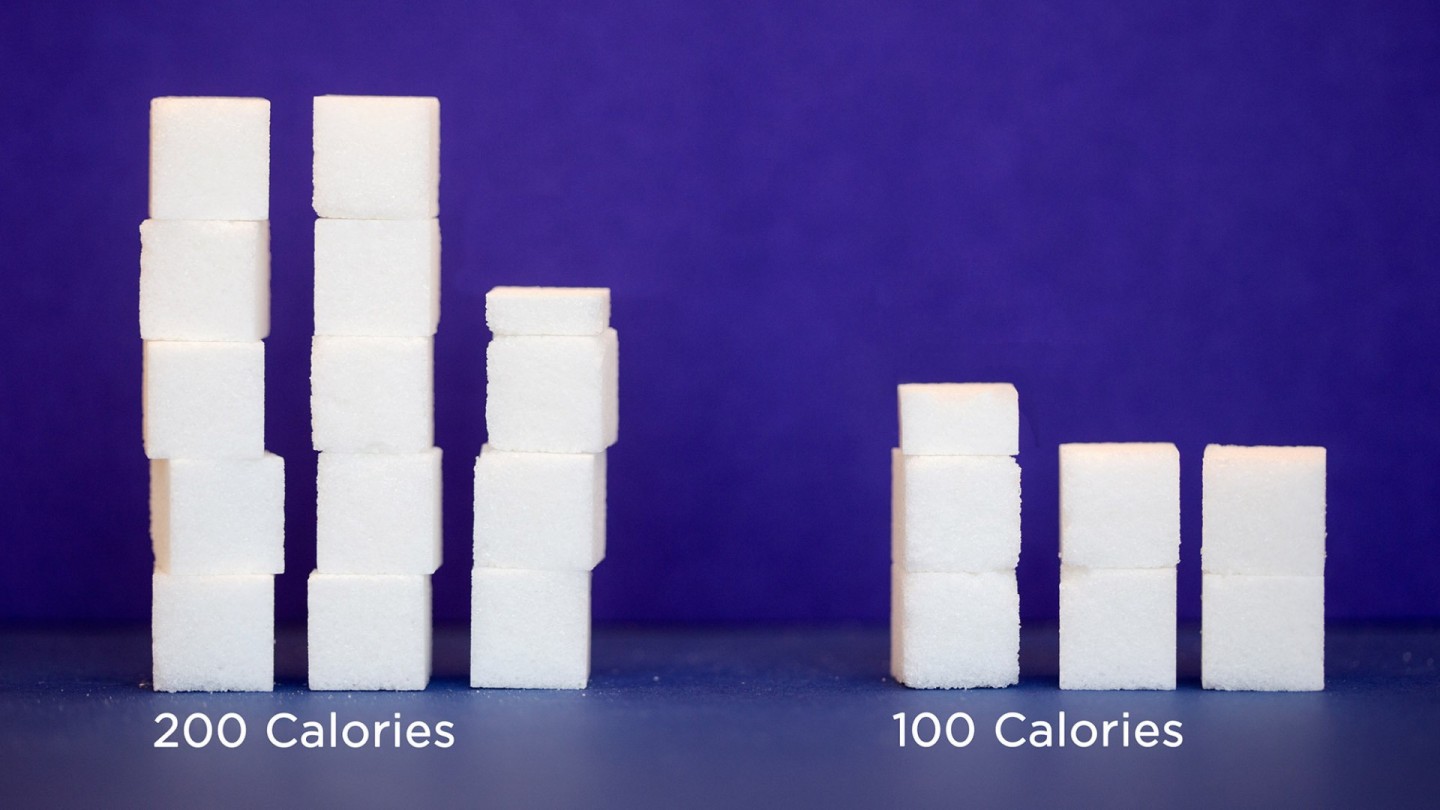
"type": "attachments",
"id": "audio_0",
"imgSizes": {
"kqedFullSize": {
"file": "https://ww2.kqed.org/news/wp-content/themes/KQED-unified/img/audio_bgs/background0.jpg"
}
}
},
"audio_1": {
"type": "attachments",
"id": "audio_1",
"imgSizes": {
"kqedFullSize": {
"file": "https://ww2.kqed.org/news/wp-content/themes/KQED-unified/img/audio_bgs/background1.jpg"
}
}
},
"audio_2": {
"type": "attachments",
"id": "audio_2",
"imgSizes": {
"kqedFullSize": {
"file": "https://ww2.kqed.org/news/wp-content/themes/KQED-unified/img/audio_bgs/background2.jpg"
}
}
},
"audio_3": {
"type": "attachments",
"id": "audio_3",
"imgSizes": {
"kqedFullSize": {
"file": "https://ww2.kqed.org/news/wp-content/themes/KQED-unified/img/audio_bgs/background3.jpg"
}
}
},
"audio_4": {
"type": "attachments",
"id": "audio_4",
"imgSizes": {
"kqedFullSize": {
"file": "https://ww2.kqed.org/news/wp-content/themes/KQED-unified/img/audio_bgs/background4.jpg"
}
}
},
"placeholder": {
"type": "attachments",
"id": "placeholder",
"imgSizes": {
"thumbnail": {
"file": "https://cdn.kqed.org/wp-content/uploads/2024/12/KQED-Default-Image-816638274-2000x1333-1-160x107.jpg",
"width": 160,
"height": 107,
"mimeType": "image/jpeg"
},
"medium": {
"file": "https://cdn.kqed.org/wp-content/uploads/2024/12/KQED-Default-Image-816638274-2000x1333-1-800x533.jpg",
"width": 800,
"height": 533,
"mimeType": "image/jpeg"
},
"medium_large": {
"file": "https://cdn.kqed.org/wp-content/uploads/2024/12/KQED-Default-Image-816638274-2000x1333-1-768x512.jpg",
"width": 768,
"height": 512,
"mimeType": "image/jpeg"
},
"large": {
"file": "https://cdn.kqed.org/wp-content/uploads/2024/12/KQED-Default-Image-816638274-2000x1333-1-1020x680.jpg",
"width": 1020,
"height": 680,
"mimeType": "image/jpeg"
},
"1536x1536": {
"file": "https://cdn.kqed.org/wp-content/uploads/2024/12/KQED-Default-Image-816638274-2000x1333-1-1536x1024.jpg",
"width": 1536,
"height": 1024,
"mimeType": "image/jpeg"
},
"fd-lrg": {
"file": "https://cdn.kqed.org/wp-content/uploads/2024/12/KQED-Default-Image-816638274-2000x1333-1-1536x1024.jpg",
"width": 1536,
"height": 1024,
"mimeType": "image/jpeg"
},
"fd-med": {
"file": "https://cdn.kqed.org/wp-content/uploads/2024/12/KQED-Default-Image-816638274-2000x1333-1-1020x680.jpg",
"width": 1020,
"height": 680,
"mimeType": "image/jpeg"
},
"fd-sm": {
"file": "https://cdn.kqed.org/wp-content/uploads/2024/12/KQED-Default-Image-816638274-2000x1333-1-800x533.jpg",
"width": 800,
"height": 533,
"mimeType": "image/jpeg"
},
"post-thumbnail": {
"file": "https://cdn.kqed.org/wp-content/uploads/2024/12/KQED-Default-Image-816638274-2000x1333-1-672x372.jpg",
"width": 672,
"height": 372,
"mimeType": "image/jpeg"
},
"twentyfourteen-full-width": {
"file": "https://cdn.kqed.org/wp-content/uploads/2024/12/KQED-Default-Image-816638274-2000x1333-1-1038x576.jpg",
"width": 1038,
"height": 576,
"mimeType": "image/jpeg"
},
"xxsmall": {
"file": "https://cdn.kqed.org/wp-content/uploads/2024/12/KQED-Default-Image-816638274-2000x1333-1-160x107.jpg",
"width": 160,
"height": 107,
"mimeType": "image/jpeg"
},
"xsmall": {
"file": "https://cdn.kqed.org/wp-content/uploads/2024/12/KQED-Default-Image-816638274-2000x1333-1-672x372.jpg",
"width": 672,
"height": 372,
"mimeType": "image/jpeg"
},
"small": {
"file": "https://cdn.kqed.org/wp-content/uploads/2024/12/KQED-Default-Image-816638274-2000x1333-1-672x372.jpg",
"width": 672,
"height": 372,
"mimeType": "image/jpeg"
},
"xlarge": {
"file": "https://cdn.kqed.org/wp-content/uploads/2024/12/KQED-Default-Image-816638274-2000x1333-1-1020x680.jpg",
"width": 1020,
"height": 680,
"mimeType": "image/jpeg"
},
"full-width": {
"file": "https://cdn.kqed.org/wp-content/uploads/2024/12/KQED-Default-Image-816638274-2000x1333-1-1920x1280.jpg",
"width": 1920,
"height": 1280,
"mimeType": "image/jpeg"
},
"guest-author-32": {
"file": "https://cdn.kqed.org/wp-content/uploads/2025/01/KQED-Default-Image-816638274-1333x1333-1-160x160.jpg",
"width": 32,
"height": 32,
"mimeType": "image/jpeg"
},
"guest-author-50": {
"file": "https://cdn.kqed.org/wp-content/uploads/2025/01/KQED-Default-Image-816638274-1333x1333-1-160x160.jpg",
"width": 50,
"height": 50,
"mimeType": "image/jpeg"
},
"guest-author-64": {
"file": "https://cdn.kqed.org/wp-content/uploads/2025/01/KQED-Default-Image-816638274-1333x1333-1-160x160.jpg",
"width": 64,
"height": 64,
"mimeType": "image/jpeg"
},
"guest-author-96": {
"file": "https://cdn.kqed.org/wp-content/uploads/2025/01/KQED-Default-Image-816638274-1333x1333-1-160x160.jpg",
"width": 96,
"height": 96,
"mimeType": "image/jpeg"
},
"guest-author-128": {
"file": "https://cdn.kqed.org/wp-content/uploads/2025/01/KQED-Default-Image-816638274-1333x1333-1-160x160.jpg",
"width": 128,
"height": 128,
"mimeType": "image/jpeg"
},
"detail": {
"file": "https://cdn.kqed.org/wp-content/uploads/2025/01/KQED-Default-Image-816638274-1333x1333-1-160x160.jpg",
"width": 160,
"height": 160,
"mimeType": "image/jpeg"
},
"kqedFullSize": {
"file": "https://cdn.kqed.org/wp-content/uploads/2024/12/KQED-Default-Image-816638274-2000x1333-1.jpg",
"width": 2000,
"height": 1333
}
}
},
"bayareabites_93657": {
"type": "attachments",
"id": "bayareabites_93657",
"meta": {
"index": "attachments_1716263798",
"site": "bayareabites",
"id": "93657",
"found": true
},
"parent": 93656,
"imgSizes": {
"twentyfourteen-full-width": {
"file": "https://ww2.kqed.org/app/uploads/sites/24/2015/03/sugar-wide1_wide-87c022a8365b9b7099774588e7b7c8483d0b8c3f-e1425518723758-1038x576.jpg",
"width": 1038,
"mimeType": "image/jpeg",
"height": 576
},
"thumbnail": {
"file": "https://ww2.kqed.org/app/uploads/sites/24/2015/03/sugar-wide1_wide-87c022a8365b9b7099774588e7b7c8483d0b8c3f-e1425518723758-400x225.jpg",
"width": 400,
"mimeType": "image/jpeg",
"height": 225
},
"fd-sm": {
"file": "https://ww2.kqed.org/app/uploads/sites/24/2015/03/sugar-wide1_wide-87c022a8365b9b7099774588e7b7c8483d0b8c3f-e1425518723758-320x180.jpg",
"width": 320,
"mimeType": "image/jpeg",
"height": 180
},
"post-thumbnail": {
"file": "https://ww2.kqed.org/app/uploads/sites/24/2015/03/sugar-wide1_wide-87c022a8365b9b7099774588e7b7c8483d0b8c3f-e1425518723758-672x372.jpg",
"width": 672,
"mimeType": "image/jpeg",
"height": 372
},
"kqedFullSize": {
"file": "https://ww2.kqed.org/app/uploads/sites/24/2015/03/sugar-wide1_wide-87c022a8365b9b7099774588e7b7c8483d0b8c3f-e1425518723758.jpg",
"width": 1920,
"height": 1080
},
"large": {
"file": "https://ww2.kqed.org/app/uploads/sites/24/2015/03/sugar-wide1_wide-87c022a8365b9b7099774588e7b7c8483d0b8c3f-e1425518723758-1440x810.jpg",
"width": 1440,
"mimeType": "image/jpeg",
"height": 810
},
"guest-author-96": {
"file": "https://ww2.kqed.org/app/uploads/sites/24/2015/03/sugar-wide1_wide-87c022a8365b9b7099774588e7b7c8483d0b8c3f-e1425518723758-96x96.jpg",
"width": 96,
"mimeType": "image/jpeg",
"height": 96
},
"medium": {
"file": "https://ww2.kqed.org/app/uploads/sites/24/2015/03/sugar-wide1_wide-87c022a8365b9b7099774588e7b7c8483d0b8c3f-e1425518723758-800x450.jpg",
"width": 800,
"mimeType": "image/jpeg",
"height": 450
},
"guest-author-64": {
"file": "https://ww2.kqed.org/app/uploads/sites/24/2015/03/sugar-wide1_wide-87c022a8365b9b7099774588e7b7c8483d0b8c3f-e1425518723758-64x64.jpg",
"width": 64,
"mimeType": "image/jpeg",
"height": 64
},
"guest-author-32": {
"file": "https://ww2.kqed.org/app/uploads/sites/24/2015/03/sugar-wide1_wide-87c022a8365b9b7099774588e7b7c8483d0b8c3f-e1425518723758-32x32.jpg",
"width": 32,
"mimeType": "image/jpeg",
"height": 32
},
"cat_post_thumb_sizecategory-posts-2": {
"file": "https://ww2.kqed.org/app/uploads/sites/24/2015/03/sugar-wide1_wide-87c022a8365b9b7099774588e7b7c8483d0b8c3f-e1425518723758-50x50.jpg",
"width": 50,
"mimeType": "image/jpeg",
"height": 50
},
"fd-lrg": {
"file": "https://ww2.kqed.org/app/uploads/sites/24/2015/03/sugar-wide1_wide-87c022a8365b9b7099774588e7b7c8483d0b8c3f-e1425518723758-1180x664.jpg",
"width": 1180,
"mimeType": "image/jpeg",
"height": 664
},
"fd-med": {
"file": "https://ww2.kqed.org/app/uploads/sites/24/2015/03/sugar-wide1_wide-87c022a8365b9b7099774588e7b7c8483d0b8c3f-e1425518723758-768x432.jpg",
"width": 768,
"mimeType": "image/jpeg",
"height": 432
},
"detail": {
"file": "https://ww2.kqed.org/app/uploads/sites/24/2015/03/sugar-wide1_wide-87c022a8365b9b7099774588e7b7c8483d0b8c3f-e1425518723758-75x75.jpg",
"width": 75,
"mimeType": "image/jpeg",
"height": 75
},
"guest-author-128": {
"file": "https://ww2.kqed.org/app/uploads/sites/24/2015/03/sugar-wide1_wide-87c022a8365b9b7099774588e7b7c8483d0b8c3f-e1425518723758-128x128.jpg",
"width": 128,
"mimeType": "image/jpeg",
"height": 128
}
},
"publishDate": 1425518472,
"modified": 1425518732,
"caption": "The World Health Organization recommends cutting sugar intake. Photo: Meredith Rizzo/NPR",
"description": "The World Health Organization recommends cutting sugar intake.",
"title": "The World Health Organization recommends cutting sugar intake.",
"credit": null,
"status": "inherit",
"isLoading": false,
"fetchFailed": false
},
"bayareabites_93645": {
"type": "attachments",
"id": "bayareabites_93645",
"meta": {
"index": "attachments_1716263798",
"site": "bayareabites",
"id": "93645",
"found": true
},
"parent": 93644,
"imgSizes": {
"twentyfourteen-full-width": {
"file": "https://ww2.kqed.org/app/uploads/sites/24/2015/03/shark-soup_enl-e0df97c2c1e717a750b27dbfba09b7dad3198d4a-e1425433136540-1038x576.jpg",
"width": 1038,
"mimeType": "image/jpeg",
"height": 576
},
"thumbnail": {
"file": "https://ww2.kqed.org/app/uploads/sites/24/2015/03/shark-soup_enl-e0df97c2c1e717a750b27dbfba09b7dad3198d4a-e1425433136540-400x258.jpg",
"width": 400,
"mimeType": "image/jpeg",
"height": 258
},
"fd-sm": {
"file": "https://ww2.kqed.org/app/uploads/sites/24/2015/03/shark-soup_enl-e0df97c2c1e717a750b27dbfba09b7dad3198d4a-e1425433136540-320x206.jpg",
"width": 320,
"mimeType": "image/jpeg",
"height": 206
},
"post-thumbnail": {
"file": "https://ww2.kqed.org/app/uploads/sites/24/2015/03/shark-soup_enl-e0df97c2c1e717a750b27dbfba09b7dad3198d4a-e1425433136540-672x372.jpg",
"width": 672,
"mimeType": "image/jpeg",
"height": 372
},
"kqedFullSize": {
"file": "https://ww2.kqed.org/app/uploads/sites/24/2015/03/shark-soup_enl-e0df97c2c1e717a750b27dbfba09b7dad3198d4a-e1425433136540.jpg",
"width": 1920,
"height": 1238
},
"large": {
"file": "https://ww2.kqed.org/app/uploads/sites/24/2015/03/shark-soup_enl-e0df97c2c1e717a750b27dbfba09b7dad3198d4a-e1425433136540-1440x929.jpg",
"width": 1440,
"mimeType": "image/jpeg",
"height": 929
},
"guest-author-96": {
"file": "https://ww2.kqed.org/app/uploads/sites/24/2015/03/shark-soup_enl-e0df97c2c1e717a750b27dbfba09b7dad3198d4a-e1425433136540-96x96.jpg",
"width": 96,
"mimeType": "image/jpeg",
"height": 96
},
"medium": {
"file": "https://ww2.kqed.org/app/uploads/sites/24/2015/03/shark-soup_enl-e0df97c2c1e717a750b27dbfba09b7dad3198d4a-e1425433136540-800x516.jpg",
"width": 800,
"mimeType": "image/jpeg",
"height": 516
},
"guest-author-64": {
"file": "https://ww2.kqed.org/app/uploads/sites/24/2015/03/shark-soup_enl-e0df97c2c1e717a750b27dbfba09b7dad3198d4a-e1425433136540-64x64.jpg",
"width": 64,
"mimeType": "image/jpeg",
"height": 64
},
"guest-author-32": {
"file": "https://ww2.kqed.org/app/uploads/sites/24/2015/03/shark-soup_enl-e0df97c2c1e717a750b27dbfba09b7dad3198d4a-e1425433136540-32x32.jpg",
"width": 32,
"mimeType": "image/jpeg",
"height": 32
},
"cat_post_thumb_sizecategory-posts-2": {
"file": "https://ww2.kqed.org/app/uploads/sites/24/2015/03/shark-soup_enl-e0df97c2c1e717a750b27dbfba09b7dad3198d4a-e1425433136540-50x50.jpg",
"width": 50,
"mimeType": "image/jpeg",
"height": 50
},
"fd-lrg": {
"file": "https://ww2.kqed.org/app/uploads/sites/24/2015/03/shark-soup_enl-e0df97c2c1e717a750b27dbfba09b7dad3198d4a-e1425433136540-1180x761.jpg",
"width": 1180,
"mimeType": "image/jpeg",
"height": 761
},
"fd-med": {
"file": "https://ww2.kqed.org/app/uploads/sites/24/2015/03/shark-soup_enl-e0df97c2c1e717a750b27dbfba09b7dad3198d4a-e1425433136540-768x495.jpg",
"width": 768,
"mimeType": "image/jpeg",
"height": 495
},
"detail": {
"file": "https://ww2.kqed.org/app/uploads/sites/24/2015/03/shark-soup_enl-e0df97c2c1e717a750b27dbfba09b7dad3198d4a-e1425433136540-75x75.jpg",
"width": 75,
"mimeType": "image/jpeg",
"height": 75
},
"guest-author-128": {
"file": "https://ww2.kqed.org/app/uploads/sites/24/2015/03/shark-soup_enl-e0df97c2c1e717a750b27dbfba09b7dad3198d4a-e1425433136540-128x128.jpg",
"width": 128,
"mimeType": "image/jpeg",
"height": 128
}
},
"publishDate": 1425431752,
"modified": 1425433127,
"caption": "A waitress serves shark fin soup in a restaurant in Guangzhou, in southern China's Guangdong province on Aug. 10, 2014. Photo: Johannes Eisele/AFP/Getty Images",
"description": "A waitress serves shark fin soup in a restaurant in Guangzhou, in southern China's Guangdong province on Aug. 10, 201",
"title": "A waitress serves shark fin soup in a restaurant in Guangzhou, in southern China's Guangdong province on Aug. 10, 2014.",
"credit": null,
"status": "inherit",
"isLoading": false,
"fetchFailed": false
},
"bayareabites_93638": {
"type": "attachments",
"id": "bayareabites_93638",
"meta": {
"index": "attachments_1716263798",
"site": "bayareabites",
"id": "93638",
"found": true
},
"parent": 93637,
"imgSizes": {
"twentyfourteen-full-width": {
"file": "https://ww2.kqed.org/app/uploads/sites/24/2015/03/farm-1_enl-e7c0b75a8633e1021452395810f3c73cc8e4b4e5-e1425421073231-1038x576.jpg",
"width": 1038,
"mimeType": "image/jpeg",
"height": 576
},
"thumbnail": {
"file": "https://ww2.kqed.org/app/uploads/sites/24/2015/03/farm-1_enl-e7c0b75a8633e1021452395810f3c73cc8e4b4e5-e1425421073231-400x267.jpg",
"width": 400,
"mimeType": "image/jpeg",
"height": 267
},
"fd-sm": {
"file": "https://ww2.kqed.org/app/uploads/sites/24/2015/03/farm-1_enl-e7c0b75a8633e1021452395810f3c73cc8e4b4e5-e1425421073231-320x213.jpg",
"width": 320,
"mimeType": "image/jpeg",
"height": 213
},
"post-thumbnail": {
"file": "https://ww2.kqed.org/app/uploads/sites/24/2015/03/farm-1_enl-e7c0b75a8633e1021452395810f3c73cc8e4b4e5-e1425421073231-672x372.jpg",
"width": 672,
"mimeType": "image/jpeg",
"height": 372
},
"kqedFullSize": {
"file": "https://ww2.kqed.org/app/uploads/sites/24/2015/03/farm-1_enl-e7c0b75a8633e1021452395810f3c73cc8e4b4e5-e1425421073231.jpg",
"width": 1920,
"height": 1280
},
"large": {
"file": "https://ww2.kqed.org/app/uploads/sites/24/2015/03/farm-1_enl-e7c0b75a8633e1021452395810f3c73cc8e4b4e5-e1425421073231-1440x960.jpg",
"width": 1440,
"mimeType": "image/jpeg",
"height": 960
},
"guest-author-96": {
"file": "https://ww2.kqed.org/app/uploads/sites/24/2015/03/farm-1_enl-e7c0b75a8633e1021452395810f3c73cc8e4b4e5-e1425421073231-96x96.jpg",
"width": 96,
"mimeType": "image/jpeg",
"height": 96
},
"medium": {
"file": "https://ww2.kqed.org/app/uploads/sites/24/2015/03/farm-1_enl-e7c0b75a8633e1021452395810f3c73cc8e4b4e5-e1425421073231-800x533.jpg",
"width": 800,
"mimeType": "image/jpeg",
"height": 533
},
"guest-author-64": {
"file": "https://ww2.kqed.org/app/uploads/sites/24/2015/03/farm-1_enl-e7c0b75a8633e1021452395810f3c73cc8e4b4e5-e1425421073231-64x64.jpg",
"width": 64,
"mimeType": "image/jpeg",
"height": 64
},
"guest-author-32": {
"file": "https://ww2.kqed.org/app/uploads/sites/24/2015/03/farm-1_enl-e7c0b75a8633e1021452395810f3c73cc8e4b4e5-e1425421073231-32x32.jpg",
"width": 32,
"mimeType": "image/jpeg",
"height": 32
},
"cat_post_thumb_sizecategory-posts-2": {
"file": "https://ww2.kqed.org/app/uploads/sites/24/2015/03/farm-1_enl-e7c0b75a8633e1021452395810f3c73cc8e4b4e5-e1425421073231-50x50.jpg",
"width": 50,
"mimeType": "image/jpeg",
"height": 50
},
"fd-lrg": {
"file": "https://ww2.kqed.org/app/uploads/sites/24/2015/03/farm-1_enl-e7c0b75a8633e1021452395810f3c73cc8e4b4e5-e1425421073231-1180x787.jpg",
"width": 1180,
"mimeType": "image/jpeg",
"height": 787
},
"fd-med": {
"file": "https://ww2.kqed.org/app/uploads/sites/24/2015/03/farm-1_enl-e7c0b75a8633e1021452395810f3c73cc8e4b4e5-e1425421073231-768x512.jpg",
"width": 768,
"mimeType": "image/jpeg",
"height": 512
},
"detail": {
"file": "https://ww2.kqed.org/app/uploads/sites/24/2015/03/farm-1_enl-e7c0b75a8633e1021452395810f3c73cc8e4b4e5-e1425421073231-75x75.jpg",
"width": 75,
"mimeType": "image/jpeg",
"height": 75
},
"guest-author-128": {
"file": "https://ww2.kqed.org/app/uploads/sites/24/2015/03/farm-1_enl-e7c0b75a8633e1021452395810f3c73cc8e4b4e5-e1425421073231-128x128.jpg",
"width": 128,
"mimeType": "image/jpeg",
"height": 128
}
},
"publishDate": 1425418979,
"modified": 1425421065,
"caption": "Three years ago, Air Force veteran Sara Creech quit her job as a nurse and bought a 43-acre farm in North Salem, Ind. She named her farm Blue Yonder Organic. Photo: John Wendle for Harvest Public Media",
"description": "Three years ago, Air Force veteran Sara Creech quit her job as a nurse and bought a 43-acre farm in North Salem, Ind. She named her farm Blue Yonder Organic",
"title": "Three years ago, Air Force veteran Sara Creech quit her job as a nurse and bought a 43-acre farm in North Salem, Ind. She named her farm Blue Yonder Organic.",
"credit": null,
"status": "inherit",
"isLoading": false,
"fetchFailed": false
},
"bayareabites_93623": {
"type": "attachments",
"id": "bayareabites_93623",
"meta": {
"index": "attachments_1716263798",
"site": "bayareabites",
"id": "93623",
"found": true
},
"parent": 93622,
"imgSizes": {
"twentyfourteen-full-width": {
"file": "https://ww2.kqed.org/app/uploads/sites/24/2015/03/walmartfood_sq-5598b83fc408dcd77e94b10f59dbca88bff8fb4d-1038x576.jpg",
"width": 1038,
"mimeType": "image/jpeg",
"height": 576
},
"thumbnail": {
"file": "https://ww2.kqed.org/app/uploads/sites/24/2015/03/walmartfood_sq-5598b83fc408dcd77e94b10f59dbca88bff8fb4d-400x400.jpg",
"width": 400,
"mimeType": "image/jpeg",
"height": 400
},
"fd-sm": {
"file": "https://ww2.kqed.org/app/uploads/sites/24/2015/03/walmartfood_sq-5598b83fc408dcd77e94b10f59dbca88bff8fb4d-320x320.jpg",
"width": 320,
"mimeType": "image/jpeg",
"height": 320
},
"post-thumbnail": {
"file": "https://ww2.kqed.org/app/uploads/sites/24/2015/03/walmartfood_sq-5598b83fc408dcd77e94b10f59dbca88bff8fb4d-672x372.jpg",
"width": 672,
"mimeType": "image/jpeg",
"height": 372
},
"kqedFullSize": {
"file": "https://ww2.kqed.org/app/uploads/sites/24/2015/03/walmartfood_sq-5598b83fc408dcd77e94b10f59dbca88bff8fb4d.jpg",
"width": 2352,
"height": 2350
},
"large": {
"file": "https://ww2.kqed.org/app/uploads/sites/24/2015/03/walmartfood_sq-5598b83fc408dcd77e94b10f59dbca88bff8fb4d-1440x1439.jpg",
"width": 1440,
"mimeType": "image/jpeg",
"height": 1439
},
"guest-author-96": {
"file": "https://ww2.kqed.org/app/uploads/sites/24/2015/03/walmartfood_sq-5598b83fc408dcd77e94b10f59dbca88bff8fb4d-96x96.jpg",
"width": 96,
"mimeType": "image/jpeg",
"height": 96
},
"medium": {
"file": "https://ww2.kqed.org/app/uploads/sites/24/2015/03/walmartfood_sq-5598b83fc408dcd77e94b10f59dbca88bff8fb4d-800x799.jpg",
"width": 800,
"mimeType": "image/jpeg",
"height": 799
},
"guest-author-64": {
"file": "https://ww2.kqed.org/app/uploads/sites/24/2015/03/walmartfood_sq-5598b83fc408dcd77e94b10f59dbca88bff8fb4d-64x64.jpg",
"width": 64,
"mimeType": "image/jpeg",
"height": 64
},
"guest-author-32": {
"file": "https://ww2.kqed.org/app/uploads/sites/24/2015/03/walmartfood_sq-5598b83fc408dcd77e94b10f59dbca88bff8fb4d-32x32.jpg",
"width": 32,
"mimeType": "image/jpeg",
"height": 32
},
"cat_post_thumb_sizecategory-posts-2": {
"file": "https://ww2.kqed.org/app/uploads/sites/24/2015/03/walmartfood_sq-5598b83fc408dcd77e94b10f59dbca88bff8fb4d-50x50.jpg",
"width": 50,
"mimeType": "image/jpeg",
"height": 50
},
"fd-lrg": {
"file": "https://ww2.kqed.org/app/uploads/sites/24/2015/03/walmartfood_sq-5598b83fc408dcd77e94b10f59dbca88bff8fb4d-1180x1179.jpg",
"width": 1180,
"mimeType": "image/jpeg",
"height": 1179
},
"fd-med": {
"file": "https://ww2.kqed.org/app/uploads/sites/24/2015/03/walmartfood_sq-5598b83fc408dcd77e94b10f59dbca88bff8fb4d-768x767.jpg",
"width": 768,
"mimeType": "image/jpeg",
"height": 767
},
"detail": {
"file": "https://ww2.kqed.org/app/uploads/sites/24/2015/03/walmartfood_sq-5598b83fc408dcd77e94b10f59dbca88bff8fb4d-75x75.jpg",
"width": 75,
"mimeType": "image/jpeg",
"height": 75
},
"guest-author-128": {
"file": "https://ww2.kqed.org/app/uploads/sites/24/2015/03/walmartfood_sq-5598b83fc408dcd77e94b10f59dbca88bff8fb4d-128x128.jpg",
"width": 128,
"mimeType": "image/jpeg",
"height": 128
}
},
"publishDate": 1425340046,
"modified": 1425340046,
"caption": null,
"description": "In 2013, Americans on average spent 5.6 percent of their disposable personal incomes on food they consumed at home.",
"title": "In 2013, Americans on average spent 5.6 percent of their disposable personal incomes on food they consumed at home.",
"credit": null,
"status": "inherit",
"isLoading": false,
"fetchFailed": false
},
"bayareabites_93584": {
"type": "attachments",
"id": "bayareabites_93584",
"meta": {
"index": "attachments_1716263798",
"site": "bayareabites",
"id": "93584",
"found": true
},
"parent": 93583,
"imgSizes": {
"twentyfourteen-full-width": {
"file": "https://ww2.kqed.org/app/uploads/sites/24/2015/02/food-waste-1_enl-6a0a590462479a2a9eeac8f3e4f465eef08bc3dc-1038x576.jpg",
"width": 1038,
"mimeType": "image/jpeg",
"height": 576
},
"thumbnail": {
"file": "https://ww2.kqed.org/app/uploads/sites/24/2015/02/food-waste-1_enl-6a0a590462479a2a9eeac8f3e4f465eef08bc3dc-400x269.jpg",
"width": 400,
"mimeType": "image/jpeg",
"height": 269
},
"fd-sm": {
"file": "https://ww2.kqed.org/app/uploads/sites/24/2015/02/food-waste-1_enl-6a0a590462479a2a9eeac8f3e4f465eef08bc3dc-320x216.jpg",
"width": 320,
"mimeType": "image/jpeg",
"height": 216
},
"post-thumbnail": {
"file": "https://ww2.kqed.org/app/uploads/sites/24/2015/02/food-waste-1_enl-6a0a590462479a2a9eeac8f3e4f465eef08bc3dc-672x372.jpg",
"width": 672,
"mimeType": "image/jpeg",
"height": 372
},
"kqedFullSize": {
"file": "https://ww2.kqed.org/app/uploads/sites/24/2015/02/food-waste-1_enl-6a0a590462479a2a9eeac8f3e4f465eef08bc3dc.jpg",
"width": 1783,
"height": 1201
},
"large": {
"file": "https://ww2.kqed.org/app/uploads/sites/24/2015/02/food-waste-1_enl-6a0a590462479a2a9eeac8f3e4f465eef08bc3dc-1440x970.jpg",
"width": 1440,
"mimeType": "image/jpeg",
"height": 970
},
"guest-author-96": {
"file": "https://ww2.kqed.org/app/uploads/sites/24/2015/02/food-waste-1_enl-6a0a590462479a2a9eeac8f3e4f465eef08bc3dc-96x96.jpg",
"width": 96,
"mimeType": "image/jpeg",
"height": 96
},
"medium": {
"file": "https://ww2.kqed.org/app/uploads/sites/24/2015/02/food-waste-1_enl-6a0a590462479a2a9eeac8f3e4f465eef08bc3dc-800x539.jpg",
"width": 800,
"mimeType": "image/jpeg",
"height": 539
},
"guest-author-64": {
"file": "https://ww2.kqed.org/app/uploads/sites/24/2015/02/food-waste-1_enl-6a0a590462479a2a9eeac8f3e4f465eef08bc3dc-64x64.jpg",
"width": 64,
"mimeType": "image/jpeg",
"height": 64
},
"guest-author-32": {
"file": "https://ww2.kqed.org/app/uploads/sites/24/2015/02/food-waste-1_enl-6a0a590462479a2a9eeac8f3e4f465eef08bc3dc-32x32.jpg",
"width": 32,
"mimeType": "image/jpeg",
"height": 32
},
"cat_post_thumb_sizecategory-posts-2": {
"file": "https://ww2.kqed.org/app/uploads/sites/24/2015/02/food-waste-1_enl-6a0a590462479a2a9eeac8f3e4f465eef08bc3dc-50x50.jpg",
"width": 50,
"mimeType": "image/jpeg",
"height": 50
},
"fd-lrg": {
"file": "https://ww2.kqed.org/app/uploads/sites/24/2015/02/food-waste-1_enl-6a0a590462479a2a9eeac8f3e4f465eef08bc3dc-1180x795.jpg",
"width": 1180,
"mimeType": "image/jpeg",
"height": 795
},
"fd-med": {
"file": "https://ww2.kqed.org/app/uploads/sites/24/2015/02/food-waste-1_enl-6a0a590462479a2a9eeac8f3e4f465eef08bc3dc-768x517.jpg",
"width": 768,
"mimeType": "image/jpeg",
"height": 517
},
"detail": {
"file": "https://ww2.kqed.org/app/uploads/sites/24/2015/02/food-waste-1_enl-6a0a590462479a2a9eeac8f3e4f465eef08bc3dc-75x75.jpg",
"width": 75,
"mimeType": "image/jpeg",
"height": 75
},
"guest-author-128": {
"file": "https://ww2.kqed.org/app/uploads/sites/24/2015/02/food-waste-1_enl-6a0a590462479a2a9eeac8f3e4f465eef08bc3dc-128x128.jpg",
"width": 128,
"mimeType": "image/jpeg",
"height": 128
}
},
"publishDate": 1425078187,
"modified": 1425079930,
"caption": "Student volunteers with The Campus Kitchens Project evaluate produce. The initiative gets high-school and college students to scavenge food from cafeterias, grocery stores and farmers' markets, cook it and deliver it to organizations serving low-income people in their communities. Photo: Courtesy of DC Central Kitchen ",
"description": "Student volunteers with The Campus Kitchens Project evaluate produce. The initiative gets high-school and college students to scavenge food from cafeterias, grocery stores and farmers' markets, cook it and deliver it to organizations serving low-income people in their communities.",
"title": "Student volunteers with The Campus Kitchens Project evaluate produce. The initiative gets high-school and college students to scavenge food from cafeterias, grocery stores and farmers' markets, cook it and deliver it to organizations serving low-income people in their communities.",
"credit": null,
"status": "inherit",
"isLoading": false,
"fetchFailed": false
},
"bayareabites_93570": {
"type": "attachments",
"id": "bayareabites_93570",
"meta": {
"index": "attachments_1716263798",
"site": "bayareabites",
"id": "93570",
"found": true
},
"parent": 93569,
"imgSizes": {
"twentyfourteen-full-width": {
"file": "https://ww2.kqed.org/app/uploads/sites/24/2015/02/farmers-3_enl-0c2c1c37ed632b8d2e1ccacb82be04aca34011f2-1038x576.jpg",
"width": 1038,
"mimeType": "image/jpeg",
"height": 576
},
"thumbnail": {
"file": "https://ww2.kqed.org/app/uploads/sites/24/2015/02/farmers-3_enl-0c2c1c37ed632b8d2e1ccacb82be04aca34011f2-400x267.jpg",
"width": 400,
"mimeType": "image/jpeg",
"height": 267
},
"fd-sm": {
"file": "https://ww2.kqed.org/app/uploads/sites/24/2015/02/farmers-3_enl-0c2c1c37ed632b8d2e1ccacb82be04aca34011f2-320x213.jpg",
"width": 320,
"mimeType": "image/jpeg",
"height": 213
},
"post-thumbnail": {
"file": "https://ww2.kqed.org/app/uploads/sites/24/2015/02/farmers-3_enl-0c2c1c37ed632b8d2e1ccacb82be04aca34011f2-672x372.jpg",
"width": 672,
"mimeType": "image/jpeg",
"height": 372
},
"kqedFullSize": {
"file": "https://ww2.kqed.org/app/uploads/sites/24/2015/02/farmers-3_enl-0c2c1c37ed632b8d2e1ccacb82be04aca34011f2.jpg",
"width": 1800,
"height": 1200
},
"large": {
"file": "https://ww2.kqed.org/app/uploads/sites/24/2015/02/farmers-3_enl-0c2c1c37ed632b8d2e1ccacb82be04aca34011f2-1440x960.jpg",
"width": 1440,
"mimeType": "image/jpeg",
"height": 960
},
"guest-author-96": {
"file": "https://ww2.kqed.org/app/uploads/sites/24/2015/02/farmers-3_enl-0c2c1c37ed632b8d2e1ccacb82be04aca34011f2-96x96.jpg",
"width": 96,
"mimeType": "image/jpeg",
"height": 96
},
"medium": {
"file": "https://ww2.kqed.org/app/uploads/sites/24/2015/02/farmers-3_enl-0c2c1c37ed632b8d2e1ccacb82be04aca34011f2-800x533.jpg",
"width": 800,
"mimeType": "image/jpeg",
"height": 533
},
"guest-author-64": {
"file": "https://ww2.kqed.org/app/uploads/sites/24/2015/02/farmers-3_enl-0c2c1c37ed632b8d2e1ccacb82be04aca34011f2-64x64.jpg",
"width": 64,
"mimeType": "image/jpeg",
"height": 64
},
"guest-author-32": {
"file": "https://ww2.kqed.org/app/uploads/sites/24/2015/02/farmers-3_enl-0c2c1c37ed632b8d2e1ccacb82be04aca34011f2-32x32.jpg",
"width": 32,
"mimeType": "image/jpeg",
"height": 32
},
"cat_post_thumb_sizecategory-posts-2": {
"file": "https://ww2.kqed.org/app/uploads/sites/24/2015/02/farmers-3_enl-0c2c1c37ed632b8d2e1ccacb82be04aca34011f2-50x50.jpg",
"width": 50,
"mimeType": "image/jpeg",
"height": 50
},
"fd-lrg": {
"file": "https://ww2.kqed.org/app/uploads/sites/24/2015/02/farmers-3_enl-0c2c1c37ed632b8d2e1ccacb82be04aca34011f2-1180x787.jpg",
"width": 1180,
"mimeType": "image/jpeg",
"height": 787
},
"fd-med": {
"file": "https://ww2.kqed.org/app/uploads/sites/24/2015/02/farmers-3_enl-0c2c1c37ed632b8d2e1ccacb82be04aca34011f2-768x512.jpg",
"width": 768,
"mimeType": "image/jpeg",
"height": 512
},
"detail": {
"file": "https://ww2.kqed.org/app/uploads/sites/24/2015/02/farmers-3_enl-0c2c1c37ed632b8d2e1ccacb82be04aca34011f2-75x75.jpg",
"width": 75,
"mimeType": "image/jpeg",
"height": 75
},
"guest-author-128": {
"file": "https://ww2.kqed.org/app/uploads/sites/24/2015/02/farmers-3_enl-0c2c1c37ed632b8d2e1ccacb82be04aca34011f2-128x128.jpg",
"width": 128,
"mimeType": "image/jpeg",
"height": 128
}
},
"publishDate": 1424977404,
"modified": 1424977779,
"caption": "Nahun Villagomez Sanchez washes freshly dug Red LaSoda potatoes at T&D Willey Farms near Madera, Calif. Photo: Dan Charles/NPR ",
"description": "Nahun Villagomez Sanchez washes freshly dug Red LaSoda potatoes at T",
"title": "Nahun Villagomez Sanchez washes freshly dug Red LaSoda potatoes at T&D Willey Farms near Madera, Calif.",
"credit": null,
"status": "inherit",
"isLoading": false,
"fetchFailed": false
},
"bayareabites_93514": {
"type": "attachments",
"id": "bayareabites_93514",
"meta": {
"index": "attachments_1716263798",
"site": "bayareabites",
"id": "93514",
"found": true
},
"parent": 93513,
"imgSizes": {
"twentyfourteen-full-width": {
"file": "https://ww2.kqed.org/app/uploads/sites/24/2015/02/tater-tats-1_enl-75f89318cceccbf0ce34e701c34d828edf7e897a-e1424894180358-1038x576.jpg",
"width": 1038,
"mimeType": "image/jpeg",
"height": 576
},
"thumbnail": {
"file": "https://ww2.kqed.org/app/uploads/sites/24/2015/02/tater-tats-1_enl-75f89318cceccbf0ce34e701c34d828edf7e897a-e1424894180358-400x266.jpg",
"width": 400,
"mimeType": "image/jpeg",
"height": 266
},
"fd-sm": {
"file": "https://ww2.kqed.org/app/uploads/sites/24/2015/02/tater-tats-1_enl-75f89318cceccbf0ce34e701c34d828edf7e897a-e1424894180358-320x213.jpg",
"width": 320,
"mimeType": "image/jpeg",
"height": 213
},
"post-thumbnail": {
"file": "https://ww2.kqed.org/app/uploads/sites/24/2015/02/tater-tats-1_enl-75f89318cceccbf0ce34e701c34d828edf7e897a-e1424894180358-672x372.jpg",
"width": 672,
"mimeType": "image/jpeg",
"height": 372
},
"kqedFullSize": {
"file": "https://ww2.kqed.org/app/uploads/sites/24/2015/02/tater-tats-1_enl-75f89318cceccbf0ce34e701c34d828edf7e897a-e1424894180358.jpg",
"width": 1920,
"height": 1279
},
"large": {
"file": "https://ww2.kqed.org/app/uploads/sites/24/2015/02/tater-tats-1_enl-75f89318cceccbf0ce34e701c34d828edf7e897a-e1424894180358-1440x959.jpg",
"width": 1440,
"mimeType": "image/jpeg",
"height": 959
},
"guest-author-96": {
"file": "https://ww2.kqed.org/app/uploads/sites/24/2015/02/tater-tats-1_enl-75f89318cceccbf0ce34e701c34d828edf7e897a-e1424894180358-96x96.jpg",
"width": 96,
"mimeType": "image/jpeg",
"height": 96
},
"medium": {
"file": "https://ww2.kqed.org/app/uploads/sites/24/2015/02/tater-tats-1_enl-75f89318cceccbf0ce34e701c34d828edf7e897a-e1424894180358-800x533.jpg",
"width": 800,
"mimeType": "image/jpeg",
"height": 533
},
"guest-author-64": {
"file": "https://ww2.kqed.org/app/uploads/sites/24/2015/02/tater-tats-1_enl-75f89318cceccbf0ce34e701c34d828edf7e897a-e1424894180358-64x64.jpg",
"width": 64,
"mimeType": "image/jpeg",
"height": 64
},
"guest-author-32": {
"file": "https://ww2.kqed.org/app/uploads/sites/24/2015/02/tater-tats-1_enl-75f89318cceccbf0ce34e701c34d828edf7e897a-e1424894180358-32x32.jpg",
"width": 32,
"mimeType": "image/jpeg",
"height": 32
},
"cat_post_thumb_sizecategory-posts-2": {
"file": "https://ww2.kqed.org/app/uploads/sites/24/2015/02/tater-tats-1_enl-75f89318cceccbf0ce34e701c34d828edf7e897a-e1424894180358-50x50.jpg",
"width": 50,
"mimeType": "image/jpeg",
"height": 50
},
"fd-lrg": {
"file": "https://ww2.kqed.org/app/uploads/sites/24/2015/02/tater-tats-1_enl-75f89318cceccbf0ce34e701c34d828edf7e897a-e1424894180358-1180x786.jpg",
"width": 1180,
"mimeType": "image/jpeg",
"height": 786
},
"fd-med": {
"file": "https://ww2.kqed.org/app/uploads/sites/24/2015/02/tater-tats-1_enl-75f89318cceccbf0ce34e701c34d828edf7e897a-e1424894180358-768x512.jpg",
"width": 768,
"mimeType": "image/jpeg",
"height": 512
},
"detail": {
"file": "https://ww2.kqed.org/app/uploads/sites/24/2015/02/tater-tats-1_enl-75f89318cceccbf0ce34e701c34d828edf7e897a-e1424894180358-75x75.jpg",
"width": 75,
"mimeType": "image/jpeg",
"height": 75
},
"guest-author-128": {
"file": "https://ww2.kqed.org/app/uploads/sites/24/2015/02/tater-tats-1_enl-75f89318cceccbf0ce34e701c34d828edf7e897a-e1424894180358-128x128.jpg",
"width": 128,
"mimeType": "image/jpeg",
"height": 128
}
},
"publishDate": 1424893365,
"modified": 1424894197,
"caption": "Siblings Jessica and Oliver Schaap of Holland, Mich., test out the temporary vegetable tattoos known as Tater Tats. Photo: Courtesy of Jenna Weiler",
"description": "Siblings Jessica and Oliver Schaap of Holland, Mich., test out the temporary vegetable tattoos known as Tater Tats.",
"title": "Siblings Jessica and Oliver Schaap of Holland, Mich., test out the temporary vegetable tattoos known as Tater Tats.",
"credit": null,
"status": "inherit",
"isLoading": false,
"fetchFailed": false
},
"bayareabites_93498": {
"type": "attachments",
"id": "bayareabites_93498",
"meta": {
"index": "attachments_1716263798",
"site": "bayareabites",
"id": "93498",
"found": true
},
"parent": 93490,
"imgSizes": {
"thumbnail": {
"file": "https://ww2.kqed.org/app/uploads/sites/24/2015/02/tea-add-milk-400x225.gif",
"width": 400,
"mimeType": "image/gif",
"height": 225
},
"fd-sm": {
"file": "https://ww2.kqed.org/app/uploads/sites/24/2015/02/tea-add-milk-320x180.gif",
"width": 320,
"mimeType": "image/gif",
"height": 180
},
"post-thumbnail": {
"file": "https://ww2.kqed.org/app/uploads/sites/24/2015/02/tea-add-milk-672x372.gif",
"width": 672,
"mimeType": "image/gif",
"height": 372
},
"kqedFullSize": {
"file": "https://ww2.kqed.org/app/uploads/sites/24/2015/02/tea-add-milk.gif",
"width": 720,
"height": 405
},
"cat_post_thumb_sizecategory-posts-2": {
"file": "https://ww2.kqed.org/app/uploads/sites/24/2015/02/tea-add-milk-50x50.gif",
"width": 50,
"mimeType": "image/gif",
"height": 50
},
"guest-author-96": {
"file": "https://ww2.kqed.org/app/uploads/sites/24/2015/02/tea-add-milk-96x96.gif",
"width": 96,
"mimeType": "image/gif",
"height": 96
},
"guest-author-64": {
"file": "https://ww2.kqed.org/app/uploads/sites/24/2015/02/tea-add-milk-64x64.gif",
"width": 64,
"mimeType": "image/gif",
"height": 64
},
"detail": {
"file": "https://ww2.kqed.org/app/uploads/sites/24/2015/02/tea-add-milk-75x75.gif",
"width": 75,
"mimeType": "image/gif",
"height": 75
},
"guest-author-32": {
"file": "https://ww2.kqed.org/app/uploads/sites/24/2015/02/tea-add-milk-32x32.gif",
"width": 32,
"mimeType": "image/gif",
"height": 32
},
"guest-author-128": {
"file": "https://ww2.kqed.org/app/uploads/sites/24/2015/02/tea-add-milk-128x128.gif",
"width": 128,
"mimeType": "image/gif",
"height": 128
}
},
"publishDate": 1424813216,
"modified": 1424813659,
"caption": "Black tea with milk. Animation: Meredith Rizzo/NPR",
"description": null,
"title": "tea-add-milk",
"credit": null,
"status": "inherit",
"isLoading": false,
"fetchFailed": false
},
"bayareabites_93473": {
"type": "attachments",
"id": "bayareabites_93473",
"meta": {
"index": "attachments_1716263798",
"site": "bayareabites",
"id": "93473",
"found": true
},
"parent": 93472,
"imgSizes": {
"twentyfourteen-full-width": {
"file": "https://ww2.kqed.org/app/uploads/sites/24/2015/02/oystermen1_enl-ce5932a8171cbc9b4d464b3eab5376af31858493-e1424796582877-1038x576.jpg",
"width": 1038,
"mimeType": "image/jpeg",
"height": 576
},
"thumbnail": {
"file": "https://ww2.kqed.org/app/uploads/sites/24/2015/02/oystermen1_enl-ce5932a8171cbc9b4d464b3eab5376af31858493-e1424796582877-400x266.jpg",
"width": 400,
"mimeType": "image/jpeg",
"height": 266
},
"fd-sm": {
"file": "https://ww2.kqed.org/app/uploads/sites/24/2015/02/oystermen1_enl-ce5932a8171cbc9b4d464b3eab5376af31858493-e1424796582877-320x213.jpg",
"width": 320,
"mimeType": "image/jpeg",
"height": 213
},
"post-thumbnail": {
"file": "https://ww2.kqed.org/app/uploads/sites/24/2015/02/oystermen1_enl-ce5932a8171cbc9b4d464b3eab5376af31858493-e1424796582877-672x372.jpg",
"width": 672,
"mimeType": "image/jpeg",
"height": 372
},
"kqedFullSize": {
"file": "https://ww2.kqed.org/app/uploads/sites/24/2015/02/oystermen1_enl-ce5932a8171cbc9b4d464b3eab5376af31858493-e1424796582877.jpg",
"width": 1920,
"height": 1279
},
"large": {
"file": "https://ww2.kqed.org/app/uploads/sites/24/2015/02/oystermen1_enl-ce5932a8171cbc9b4d464b3eab5376af31858493-e1424796582877-1440x959.jpg",
"width": 1440,
"mimeType": "image/jpeg",
"height": 959
},
"guest-author-96": {
"file": "https://ww2.kqed.org/app/uploads/sites/24/2015/02/oystermen1_enl-ce5932a8171cbc9b4d464b3eab5376af31858493-e1424796582877-96x96.jpg",
"width": 96,
"mimeType": "image/jpeg",
"height": 96
},
"medium": {
"file": "https://ww2.kqed.org/app/uploads/sites/24/2015/02/oystermen1_enl-ce5932a8171cbc9b4d464b3eab5376af31858493-e1424796582877-800x533.jpg",
"width": 800,
"mimeType": "image/jpeg",
"height": 533
},
"guest-author-64": {
"file": "https://ww2.kqed.org/app/uploads/sites/24/2015/02/oystermen1_enl-ce5932a8171cbc9b4d464b3eab5376af31858493-e1424796582877-64x64.jpg",
"width": 64,
"mimeType": "image/jpeg",
"height": 64
},
"guest-author-32": {
"file": "https://ww2.kqed.org/app/uploads/sites/24/2015/02/oystermen1_enl-ce5932a8171cbc9b4d464b3eab5376af31858493-e1424796582877-32x32.jpg",
"width": 32,
"mimeType": "image/jpeg",
"height": 32
},
"cat_post_thumb_sizecategory-posts-2": {
"file": "https://ww2.kqed.org/app/uploads/sites/24/2015/02/oystermen1_enl-ce5932a8171cbc9b4d464b3eab5376af31858493-e1424796582877-50x50.jpg",
"width": 50,
"mimeType": "image/jpeg",
"height": 50
},
"fd-lrg": {
"file": "https://ww2.kqed.org/app/uploads/sites/24/2015/02/oystermen1_enl-ce5932a8171cbc9b4d464b3eab5376af31858493-e1424796582877-1180x786.jpg",
"width": 1180,
"mimeType": "image/jpeg",
"height": 786
},
"fd-med": {
"file": "https://ww2.kqed.org/app/uploads/sites/24/2015/02/oystermen1_enl-ce5932a8171cbc9b4d464b3eab5376af31858493-e1424796582877-768x512.jpg",
"width": 768,
"mimeType": "image/jpeg",
"height": 512
},
"detail": {
"file": "https://ww2.kqed.org/app/uploads/sites/24/2015/02/oystermen1_enl-ce5932a8171cbc9b4d464b3eab5376af31858493-e1424796582877-75x75.jpg",
"width": 75,
"mimeType": "image/jpeg",
"height": 75
},
"guest-author-128": {
"file": "https://ww2.kqed.org/app/uploads/sites/24/2015/02/oystermen1_enl-ce5932a8171cbc9b4d464b3eab5376af31858493-e1424796582877-128x128.jpg",
"width": 128,
"mimeType": "image/jpeg",
"height": 128
}
},
"publishDate": 1424734563,
"modified": 1424796564,
"caption": "Crew members pull an oyster dredge in Tangier Sound of the Chesapeake Bay near Deal Island, Md., in 2013. A study found that the Chesapeake Bay shellfishery is a \"hot zone\" for ocean acidification. Photo: Patrick Semansky/AP ",
"description": "Crew members pull an oyster dredge in Tangier Sound of the Chesapeake Bay near Deal Island, Md., in 2013. A study found that the Chesapeake Bay shellfishery is a \"hot zone\" for ocean acidification.",
"title": "Crew members pull an oyster dredge in Tangier Sound of the Chesapeake Bay near Deal Island, Md., in 2013. A study found that the Chesapeake Bay shellfishery is a \"hot zone\" for ocean acidification.",
"credit": null,
"status": "inherit",
"isLoading": false,
"fetchFailed": false
},
"bayareabites_93467": {
"type": "attachments",
"id": "bayareabites_93467",
"meta": {
"index": "attachments_1716263798",
"site": "bayareabites",
"id": "93467",
"found": true
},
"parent": 93464,
"imgSizes": {
"thumbnail": {
"file": "https://ww2.kqed.org/app/uploads/sites/24/2015/02/peanut-butter-400x266.jpg",
"width": 400,
"mimeType": "image/jpeg",
"height": 266
},
"fd-sm": {
"file": "https://ww2.kqed.org/app/uploads/sites/24/2015/02/peanut-butter-320x212.jpg",
"width": 320,
"mimeType": "image/jpeg",
"height": 212
},
"post-thumbnail": {
"file": "https://ww2.kqed.org/app/uploads/sites/24/2015/02/peanut-butter-672x372.jpg",
"width": 672,
"mimeType": "image/jpeg",
"height": 372
},
"kqedFullSize": {
"file": "https://ww2.kqed.org/app/uploads/sites/24/2015/02/peanut-butter.jpg",
"width": 800,
"height": 531
},
"cat_post_thumb_sizecategory-posts-2": {
"file": "https://ww2.kqed.org/app/uploads/sites/24/2015/02/peanut-butter-50x50.jpg",
"width": 50,
"mimeType": "image/jpeg",
"height": 50
},
"fd-med": {
"file": "https://ww2.kqed.org/app/uploads/sites/24/2015/02/peanut-butter-768x510.jpg",
"width": 768,
"mimeType": "image/jpeg",
"height": 510
},
"guest-author-96": {
"file": "https://ww2.kqed.org/app/uploads/sites/24/2015/02/peanut-butter-96x96.jpg",
"width": 96,
"mimeType": "image/jpeg",
"height": 96
},
"medium": {
"file": "https://ww2.kqed.org/app/uploads/sites/24/2015/02/peanut-butter-800x531.jpg",
"width": 800,
"mimeType": "image/jpeg",
"height": 531
},
"guest-author-64": {
"file": "https://ww2.kqed.org/app/uploads/sites/24/2015/02/peanut-butter-64x64.jpg",
"width": 64,
"mimeType": "image/jpeg",
"height": 64
},
"detail": {
"file": "https://ww2.kqed.org/app/uploads/sites/24/2015/02/peanut-butter-75x75.jpg",
"width": 75,
"mimeType": "image/jpeg",
"height": 75
},
"guest-author-32": {
"file": "https://ww2.kqed.org/app/uploads/sites/24/2015/02/peanut-butter-32x32.jpg",
"width": 32,
"mimeType": "image/jpeg",
"height": 32
},
"guest-author-128": {
"file": "https://ww2.kqed.org/app/uploads/sites/24/2015/02/peanut-butter-128x128.jpg",
"width": 128,
"mimeType": "image/jpeg",
"height": 128
}
},
"publishDate": 1424733852,
"modified": 1424733873,
"caption": "In a landmark new study, researchers found that babies who consumed the equivalent of about four heaping teaspoons of peanut butter each week, starting when they were between 4 and 11 months old, were about 80 percent less likely to develop a peanut allergy by their fifth birthday. Photo: Anna/Flickr",
"description": null,
"title": "peanut-butter",
"credit": null,
"status": "inherit",
"isLoading": false,
"fetchFailed": false
},
"bayareabites_93453": {
"type": "attachments",
"id": "bayareabites_93453",
"meta": {
"index": "attachments_1716263798",
"site": "bayareabites",
"id": "93453",
"found": true
},
"parent": 93452,
"imgSizes": {
"twentyfourteen-full-width": {
"file": "https://ww2.kqed.org/app/uploads/sites/24/2015/02/freight-farms-1_enl-123e7a79521b0fabc4811de46e4cdf38a710ead1-1038x576.jpg",
"width": 1038,
"mimeType": "image/jpeg",
"height": 576
},
"thumbnail": {
"file": "https://ww2.kqed.org/app/uploads/sites/24/2015/02/freight-farms-1_enl-123e7a79521b0fabc4811de46e4cdf38a710ead1-400x266.jpg",
"width": 400,
"mimeType": "image/jpeg",
"height": 266
},
"fd-sm": {
"file": "https://ww2.kqed.org/app/uploads/sites/24/2015/02/freight-farms-1_enl-123e7a79521b0fabc4811de46e4cdf38a710ead1-320x213.jpg",
"width": 320,
"mimeType": "image/jpeg",
"height": 213
},
"post-thumbnail": {
"file": "https://ww2.kqed.org/app/uploads/sites/24/2015/02/freight-farms-1_enl-123e7a79521b0fabc4811de46e4cdf38a710ead1-672x372.jpg",
"width": 672,
"mimeType": "image/jpeg",
"height": 372
},
"kqedFullSize": {
"file": "https://ww2.kqed.org/app/uploads/sites/24/2015/02/freight-farms-1_enl-123e7a79521b0fabc4811de46e4cdf38a710ead1.jpg",
"width": 1108,
"height": 736
},
"guest-author-96": {
"file": "https://ww2.kqed.org/app/uploads/sites/24/2015/02/freight-farms-1_enl-123e7a79521b0fabc4811de46e4cdf38a710ead1-96x96.jpg",
"width": 96,
"mimeType": "image/jpeg",
"height": 96
},
"medium": {
"file": "https://ww2.kqed.org/app/uploads/sites/24/2015/02/freight-farms-1_enl-123e7a79521b0fabc4811de46e4cdf38a710ead1-800x531.jpg",
"width": 800,
"mimeType": "image/jpeg",
"height": 531
},
"guest-author-64": {
"file": "https://ww2.kqed.org/app/uploads/sites/24/2015/02/freight-farms-1_enl-123e7a79521b0fabc4811de46e4cdf38a710ead1-64x64.jpg",
"width": 64,
"mimeType": "image/jpeg",
"height": 64
},
"guest-author-32": {
"file": "https://ww2.kqed.org/app/uploads/sites/24/2015/02/freight-farms-1_enl-123e7a79521b0fabc4811de46e4cdf38a710ead1-32x32.jpg",
"width": 32,
"mimeType": "image/jpeg",
"height": 32
},
"cat_post_thumb_sizecategory-posts-2": {
"file": "https://ww2.kqed.org/app/uploads/sites/24/2015/02/freight-farms-1_enl-123e7a79521b0fabc4811de46e4cdf38a710ead1-50x50.jpg",
"width": 50,
"mimeType": "image/jpeg",
"height": 50
},
"fd-med": {
"file": "https://ww2.kqed.org/app/uploads/sites/24/2015/02/freight-farms-1_enl-123e7a79521b0fabc4811de46e4cdf38a710ead1-768x510.jpg",
"width": 768,
"mimeType": "image/jpeg",
"height": 510
},
"detail": {
"file": "https://ww2.kqed.org/app/uploads/sites/24/2015/02/freight-farms-1_enl-123e7a79521b0fabc4811de46e4cdf38a710ead1-75x75.jpg",
"width": 75,
"mimeType": "image/jpeg",
"height": 75
},
"guest-author-128": {
"file": "https://ww2.kqed.org/app/uploads/sites/24/2015/02/freight-farms-1_enl-123e7a79521b0fabc4811de46e4cdf38a710ead1-128x128.jpg",
"width": 128,
"mimeType": "image/jpeg",
"height": 128
}
},
"publishDate": 1424727194,
"modified": 1424727298,
"caption": "Freight Farms are shipping containers modified to grow stacks of hydroponic plants and vegetables — anywhere, 365 days a year. Photo: Courtesy of Freight Farms",
"description": "Freight Farms are shipping containers modified to grow stacks of hydroponic plants and vegetables -- anywhere, 365 days a year",
"title": "Freight Farms are shipping containers modified to grow stacks of hydroponic plants and vegetables — anywhere, 365 days a year.",
"credit": null,
"status": "inherit",
"isLoading": false,
"fetchFailed": false
},
"bayareabites_93441": {
"type": "attachments",
"id": "bayareabites_93441",
"meta": {
"index": "attachments_1716263798",
"site": "bayareabites",
"id": "93441",
"found": true
},
"parent": 93440,
"imgSizes": {
"twentyfourteen-full-width": {
"file": "https://ww2.kqed.org/app/uploads/sites/24/2015/02/costco_enl-90d3a4bc4261c10b14c238b264083371cfc61211-1038x576.jpg",
"width": 1038,
"mimeType": "image/jpeg",
"height": 576
},
"thumbnail": {
"file": "https://ww2.kqed.org/app/uploads/sites/24/2015/02/costco_enl-90d3a4bc4261c10b14c238b264083371cfc61211-400x266.jpg",
"width": 400,
"mimeType": "image/jpeg",
"height": 266
},
"fd-sm": {
"file": "https://ww2.kqed.org/app/uploads/sites/24/2015/02/costco_enl-90d3a4bc4261c10b14c238b264083371cfc61211-320x212.jpg",
"width": 320,
"mimeType": "image/jpeg",
"height": 212
},
"post-thumbnail": {
"file": "https://ww2.kqed.org/app/uploads/sites/24/2015/02/costco_enl-90d3a4bc4261c10b14c238b264083371cfc61211-672x372.jpg",
"width": 672,
"mimeType": "image/jpeg",
"height": 372
},
"kqedFullSize": {
"file": "https://ww2.kqed.org/app/uploads/sites/24/2015/02/costco_enl-90d3a4bc4261c10b14c238b264083371cfc61211.jpg",
"width": 2000,
"height": 1328
},
"large": {
"file": "https://ww2.kqed.org/app/uploads/sites/24/2015/02/costco_enl-90d3a4bc4261c10b14c238b264083371cfc61211-1440x956.jpg",
"width": 1440,
"mimeType": "image/jpeg",
"height": 956
},
"guest-author-96": {
"file": "https://ww2.kqed.org/app/uploads/sites/24/2015/02/costco_enl-90d3a4bc4261c10b14c238b264083371cfc61211-96x96.jpg",
"width": 96,
"mimeType": "image/jpeg",
"height": 96
},
"medium": {
"file": "https://ww2.kqed.org/app/uploads/sites/24/2015/02/costco_enl-90d3a4bc4261c10b14c238b264083371cfc61211-800x531.jpg",
"width": 800,
"mimeType": "image/jpeg",
"height": 531
},
"guest-author-64": {
"file": "https://ww2.kqed.org/app/uploads/sites/24/2015/02/costco_enl-90d3a4bc4261c10b14c238b264083371cfc61211-64x64.jpg",
"width": 64,
"mimeType": "image/jpeg",
"height": 64
},
"guest-author-32": {
"file": "https://ww2.kqed.org/app/uploads/sites/24/2015/02/costco_enl-90d3a4bc4261c10b14c238b264083371cfc61211-32x32.jpg",
"width": 32,
"mimeType": "image/jpeg",
"height": 32
},
"cat_post_thumb_sizecategory-posts-2": {
"file": "https://ww2.kqed.org/app/uploads/sites/24/2015/02/costco_enl-90d3a4bc4261c10b14c238b264083371cfc61211-50x50.jpg",
"width": 50,
"mimeType": "image/jpeg",
"height": 50
},
"fd-lrg": {
"file": "https://ww2.kqed.org/app/uploads/sites/24/2015/02/costco_enl-90d3a4bc4261c10b14c238b264083371cfc61211-1180x784.jpg",
"width": 1180,
"mimeType": "image/jpeg",
"height": 784
},
"fd-med": {
"file": "https://ww2.kqed.org/app/uploads/sites/24/2015/02/costco_enl-90d3a4bc4261c10b14c238b264083371cfc61211-768x510.jpg",
"width": 768,
"mimeType": "image/jpeg",
"height": 510
},
"detail": {
"file": "https://ww2.kqed.org/app/uploads/sites/24/2015/02/costco_enl-90d3a4bc4261c10b14c238b264083371cfc61211-75x75.jpg",
"width": 75,
"mimeType": "image/jpeg",
"height": 75
},
"guest-author-128": {
"file": "https://ww2.kqed.org/app/uploads/sites/24/2015/02/costco_enl-90d3a4bc4261c10b14c238b264083371cfc61211-128x128.jpg",
"width": 128,
"mimeType": "image/jpeg",
"height": 128
}
},
"publishDate": 1424474503,
"modified": 1424710977,
"caption": "Photo: Ron Antonelli/Bloomberg via Getty Images ",
"description": "A woman pushes a cart at a Costco store in Hackensack, N.J., in 2013. Big-box stores are effective delivery devices for fattening foods, economists argue in a new study.",
"title": "A woman pushes a cart at a Costco store in Hackensack, N.J., in 2013. Big-box stores are effective delivery devices for fattening foods, economists argue in a new study.",
"credit": null,
"status": "inherit",
"isLoading": false,
"fetchFailed": false
}
},
"audioPlayerReducer": {
"postId": "stream_live",
"isPaused": true,
"isPlaying": false,
"pfsActive": false,
"pledgeModalIsOpen": true,
"playerDrawerIsOpen": false,
"liveAudioPlayStartedAt": 0,
"liveAudioPlayContext": ""
},
"authorsReducer": {
"byline_bayareabites_93656": {
"type": "authors",
"id": "byline_bayareabites_93656",
"meta": {
"override": true
},
"slug": "byline_bayareabites_93656",
"name": "Allison Aubrey",
"isLoading": false
},
"byline_bayareabites_93644": {
"type": "authors",
"id": "byline_bayareabites_93644",
"meta": {
"override": true
},
"slug": "byline_bayareabites_93644",
"name": "Alastair Bland",
"isLoading": false
},
"byline_bayareabites_93637": {
"type": "authors",
"id": "byline_bayareabites_93637",
"meta": {
"override": true
},
"slug": "byline_bayareabites_93637",
"name": "Abby Wendle",
"isLoading": false
},
"byline_bayareabites_93622": {
"type": "authors",
"id": "byline_bayareabites_93622",
"meta": {
"override": true
},
"slug": "byline_bayareabites_93622",
"name": "Eliza Barclay",
"isLoading": false
},
"byline_bayareabites_93583": {
"type": "authors",
"id": "byline_bayareabites_93583",
"meta": {
"override": true
},
"slug": "byline_bayareabites_93583",
"name": "Linda Poon",
"isLoading": false
},
"byline_bayareabites_93569": {
"type": "authors",
"id": "byline_bayareabites_93569",
"meta": {
"override": true
},
"slug": "byline_bayareabites_93569",
"name": "Dan Charles",
"isLoading": false
},
"byline_bayareabites_93513": {
"type": "authors",
"id": "byline_bayareabites_93513",
"meta": {
"override": true
},
"slug": "byline_bayareabites_93513",
"name": "Eliza Barclay",
"isLoading": false
},
"byline_bayareabites_93490": {
"type": "authors",
"id": "byline_bayareabites_93490",
"meta": {
"override": true
},
"slug": "byline_bayareabites_93490",
"name": "Alison Bruzek",
"isLoading": false
},
"byline_bayareabites_93472": {
"type": "authors",
"id": "byline_bayareabites_93472",
"meta": {
"override": true
},
"slug": "byline_bayareabites_93472",
"name": "Christopher Joyce",
"isLoading": false
},
"byline_bayareabites_93464": {
"type": "authors",
"id": "byline_bayareabites_93464",
"meta": {
"override": true
},
"slug": "byline_bayareabites_93464",
"name": "Rob Stein",
"isLoading": false
},
"byline_bayareabites_93452": {
"type": "authors",
"id": "byline_bayareabites_93452",
"meta": {
"override": true
},
"slug": "byline_bayareabites_93452",
"name": "Here & Now Staff",
"isLoading": false
},
"byline_bayareabites_93440": {
"type": "authors",
"id": "byline_bayareabites_93440",
"meta": {
"override": true
},
"slug": "byline_bayareabites_93440",
"name": "Alan Greenblatt",
"isLoading": false
}
},
"pagesReducer": {
"bayareabites_category_npr-food": {
"type": "terms",
"id": "bayareabites_10916",
"meta": {
"index": "terms_1716263798",
"site": "bayareabites",
"id": "10916",
"score": 13.894709
},
"featImg": null,
"name": "NPR food",
"description": null,
"taxonomy": "category",
"headData": {
"twImgId": null,
"twTitle": null,
"ogTitle": null,
"ogImgId": null,
"twDescription": null,
"description": null,
"title": "NPR food Archives | KQED Bay Area Bites",
"ogDescription": null
},
"ttid": 5375,
"slug": "npr-food",
"isLoading": false,
"title": "NPR food",
"pageMeta": {
"site": "bayareabites",
"WpPageTemplate": "page-topic-editorial",
"currentPage": 27
},
"blocks": [
{
"blockName": "kqed/post-list",
"attrs": {
"layout": "cardArticle2",
"query": "posts/bayareabites?category=npr-food",
"seeMore": false,
"paginated": true,
"page": 27
}
},
{
"blockName": "kqed/ad"
}
]
}
},
"pfsSessionReducer": {},
"postsReducer": {
"stream_live": {
"type": "live",
"id": "stream_live",
"audioUrl": "https://hls.kqed.org/hls/kqed_app/playlist.m3u8",
"title": "Live Stream",
"excerpt": "Live Stream information currently unavailable.",
"link": "/radio",
"featImg": "",
"label": {
"name": "KQED Live",
"link": "/"
}
},
"stream_kqedNewscast": {
"type": "posts",
"id": "stream_kqedNewscast",
"audioUrl": "https://www.kqed.org/.stream/anon/radio/RDnews/newscast.mp3?_=1",
"title": "KQED Newscast",
"featImg": "",
"label": {
"name": "88.5 FM",
"link": "/"
}
},
"bayareabites_93656": {
"type": "posts",
"id": "bayareabites_93656",
"meta": {
"index": "posts_1716263798",
"site": "bayareabites",
"id": "93656",
"score": null,
"sort": [
1425518829000
]
},
"parent": 0,
"labelTerm": {
"site": "bayareabites"
},
"blocks": [],
"publishDate": 1425518829,
"format": "aside",
"disqusTitle": "Dump The Lumps: The World Health Organization Says Eat Less Sugar",
"title": "Dump The Lumps: The World Health Organization Says Eat Less Sugar",
"headTitle": "Bay Area Bites | KQED Food",
"content": "\u003cp>By \u003ca href=\"http://www.npr.org/people/2100208/allison-aubrey\" target=\"_blank\">Allison Aubrey\u003c/a>, \u003ca href=\"http://www.npr.org/blogs/thesalt/2015/03/04/390726878/dump-the-lumps-the-world-health-organization-says-eat-less-sugar\" target=\"_blank\">The Salt at NPR Food\u003c/a> (3/4/15)\u003c/p>\n\u003cp>Sugar is sweet.\u003c/p>\n\u003cp>But too much of it can expand our waistlines, rot our teeth and \u003ca href=\"http://www.npr.org/blogs/thesalt/2014/02/03/271130613/sweet-tooth-gone-bad-why-22-teaspoons-of-sugar-per-day-is-deadly\">increase the risk\u003c/a> of Type 2 diabetes and heart disease.\u003c/p>\n\u003cp>So the World Health Organization has new \u003ca href=\"http://www.who.int/nutrition/publications/guidelines/sugar_intake_information_note_en.pdf?ua=1\">advice\u003c/a>: Limit sugars to less than 10 percent of total calories consumed each day. And capping your sugar intake at just 5 percent of your daily calories \"would provide additional health benefits,\" the guideline says.\u003c/p>\n\u003cblockquote>\u003cp>\u003cstrong>Easy On The Sweet Tooth\u003c/strong>\u003cbr>\nThe World Health Organization guidelines call for limiting sugars to 10 percent of your daily calories. Based on a 2,000-calorie diet, this means no more than 200 calories should come from sugar. And WHO says reducing it to 5 percent — or just 100 calories in our scenario — may be even better. These cubes may look like a lot of sugar, but remember, lots of sugar is added to the processed foods we eat, including yogurts, condiments and snacks.\u003c/p>\u003c/blockquote>\n\u003cfigure id=\"attachment_93657\" class=\"wp-caption aligncenter\" style=\"max-width: 1920px\">\u003ca href=\"http://ww2.kqed.org/bayareabites/wp-content/uploads/sites/24/2015/03/sugar-wide1_wide-87c022a8365b9b7099774588e7b7c8483d0b8c3f-e1425518723758.jpg\">\u003cimg src=\"http://ww2.kqed.org/bayareabites/wp-content/uploads/sites/24/2015/03/sugar-wide1_wide-87c022a8365b9b7099774588e7b7c8483d0b8c3f-e1425518723758.jpg\" alt=\"The World Health Organization recommends cutting sugar intake. Photo: Meredith Rizzo/NPR\" width=\"1920\" height=\"1080\" class=\"size-full wp-image-93657\" srcset=\"https://ww2.kqed.org/app/uploads/sites/24/2015/03/sugar-wide1_wide-87c022a8365b9b7099774588e7b7c8483d0b8c3f-e1425518723758.jpg 1920w, https://ww2.kqed.org/app/uploads/sites/24/2015/03/sugar-wide1_wide-87c022a8365b9b7099774588e7b7c8483d0b8c3f-e1425518723758-400x225.jpg 400w, https://ww2.kqed.org/app/uploads/sites/24/2015/03/sugar-wide1_wide-87c022a8365b9b7099774588e7b7c8483d0b8c3f-e1425518723758-800x450.jpg 800w, https://ww2.kqed.org/app/uploads/sites/24/2015/03/sugar-wide1_wide-87c022a8365b9b7099774588e7b7c8483d0b8c3f-e1425518723758-1440x810.jpg 1440w, https://ww2.kqed.org/app/uploads/sites/24/2015/03/sugar-wide1_wide-87c022a8365b9b7099774588e7b7c8483d0b8c3f-e1425518723758-1180x664.jpg 1180w, https://ww2.kqed.org/app/uploads/sites/24/2015/03/sugar-wide1_wide-87c022a8365b9b7099774588e7b7c8483d0b8c3f-e1425518723758-768x432.jpg 768w, https://ww2.kqed.org/app/uploads/sites/24/2015/03/sugar-wide1_wide-87c022a8365b9b7099774588e7b7c8483d0b8c3f-e1425518723758-320x180.jpg 320w\" sizes=\"(max-width: 1920px) 100vw, 1920px\">\u003c/a>\u003cfigcaption class=\"wp-caption-text\">The World Health Organization recommends cutting sugar intake. Photo: Meredith Rizzo/NPR\u003c/figcaption>\u003c/figure>\n\u003cp>The WHO recommendation echoes the advice of the Dietary Guidelines Advisory Committee, the panel that helps shape federal nutrition policy, which released its \u003ca href=\"http://www.npr.org/blogs/thesalt/2015/02/19/387517506/nutrition-panel-egg-with-coffee-is-a-ok-but-skip-the-side-of-bacon\">report\u003c/a> a few weeks ago.\u003c/p>\n\u003cp>[ad fullwidth]\u003c/p>\n\u003cp>And just what would it take to comply with WHO's sweet-tooth limits? Well, consider the soda-drinking habits of Warren Buffett.\u003c/p>\n\u003cp>Just this week, \u003cem>Fortune\u003c/em> quoted the Oracle of Omaha as \u003ca href=\"http://fortune.com/2015/02/25/warren-buffett-diet-coke/\">saying\u003c/a>: \"If I eat 2,700 calories a day, a quarter of that is Coca-Cola. I drink at least five 12-ounce servings. I do it every day,\" says the major Coca-Cola shareholder.\u003c/p>\n\u003cp>So that's 700 calories of soda. And, yep, that's about 25 percent of Buffett's daily calories.\u003c/p>\n\u003cp>If Buffett decided he wanted to follow the WHO guidelines, he'd need to cut out three Cokes a day. And he'd need to skip other favorite sugary treats, such as the \u003ca href=\"http://www.washingtonpost.com/blogs/on-leadership/wp/2015/03/02/the-leadership-wisdom-in-warren-buffetts-letter/\">giant root beer floats\u003c/a> served at \u003ca href=\"http://piccolopetesrestaurant.net/page2.cfm\">Piccolo Pete's\u003c/a> in Omaha — a dessert the billionaire has\u003cstrong> \u003c/strong>enthusiastically endorsed.\u003cstrong>\u003c/strong>\u003c/p>\n\u003cp>As for the rest of us, cutting back to less than 10 percent of calories from added sugar may mean rethinking our favorite snacks and beverages.\u003c/p>\n\u003cp>WHO says the types of sugars we want to cut back on include all of the sweeteners added to foods, such as sucrose (aka table sugar) and high fructose corn syrup, as well as sugars naturally present in honey, syrups, fruit juices and fruit juice concentrates.\u003c/p>\n\u003cp>The only sugars that we don't need to limit, according to WHO, are\u003cem> \u003c/em>intrinsic sugars, which are naturally present in foods such as whole fresh fruits and vegetables.\u003c/p>\n\u003cp>The WHO recommendations to cut back on sugar are not sitting well with the global beverage industry. The\u003ca href=\"http://www.icba-net.org/\"> International Council of Beverages Associations\u003c/a>, which includes the \u003ca href=\"http://www.ameribev.org/members/active-members/\">American Beverage Association\u003c/a> (whose members include The Coca-Cola Co. and PepsiCo), released the following statement:\u003c/p>\n\u003cp>\"ICBA is disappointed that the WHO has confirmed the conditional recommendation suggesting a further reduction of the intake of free sugars to below 5 percent of total energy intake, as it does not reflect scientific agreement on the totality of evidence.\"\u003c/p>\n\u003cp>The release went on to say that the industry \"will continue to offer innovative ways to help consumers to achieve calorie balance though smaller portion sizes, no- and low-calorie beverages and transparent, fact-based nutrition information.\"\u003c/p>\n\u003cp>But public health advocates say the new WHO sugar guidelines are an important tool to help push back against the food and beverage industry — which has been resistant to limits on sugar.\u003c/p>\n\u003cp>\"The guidelines are based on two meta-analyses of more than 120 scientific studies,\" \u003ca href=\"http://www.law.georgetown.edu/oneillinstitute/faculty/SarahRoache.cfm\">Sarah Roache\u003c/a>, a fellow at the O'Neill Institute for National and Global Health Law at Georgetown University Law Center, said in a statement.\u003c/p>\n\u003cp>Roache, who was not involved in the study, says, \"These guidelines are a crucial tool for developing and implementing policies to address weight-gain and obesity, such as food labeling laws, restrictions on advertising foods and beverages, and restrictions on sales of unhealthy products in regulated settings like schools and hospitals.\"\u003c/p>\n\u003cp>\u003c/p>\n\u003cp>\u003cem>Copyright 2015 \u003ca href=\"http://www.npr.org/\" target=\"_blank\">NPR\u003c/a>.\u003c/em> \u003c/p>\n\n",
"disqusIdentifier": "93656 http://blogs.kqed.org/bayareabites/?p=93656",
"disqusUrl": "https://ww2.kqed.org/bayareabites/2015/03/04/dump-the-lumps-the-world-health-organization-says-eat-less-sugar/",
"stats": {
"hasVideo": false,
"hasChartOrMap": false,
"hasAudio": false,
"hasPolis": false,
"wordCount": 693,
"hasGoogleForm": false,
"hasGallery": false,
"hasHearkenModule": false,
"iframeSrcs": [],
"paragraphCount": 22
},
"modified": 1425518963,
"excerpt": "WHO says there's strong evidence that excessive sugar is bad for us. So it's recommending that we cut back significantly.",
"headData": {
"twImgId": "",
"twTitle": "",
"ogTitle": "",
"ogImgId": "",
"twDescription": "",
"description": "WHO says there's strong evidence that excessive sugar is bad for us. So it's recommending that we cut back significantly.",
"title": "Dump The Lumps: The World Health Organization Says Eat Less Sugar | KQED",
"ogDescription": "",
"schema": {
"@context": "https://schema.org",
"@type": "Article",
"headline": "Dump The Lumps: The World Health Organization Says Eat Less Sugar",
"datePublished": "2015-03-04T17:27:09-08:00",
"dateModified": "2015-03-04T17:29:23-08:00",
"image": "https://cdn.kqed.org/wp-content/uploads/2020/02/KQED-OG-Image@1x.png"
}
},
"guestAuthors": [],
"slug": "dump-the-lumps-the-world-health-organization-says-eat-less-sugar",
"status": "publish",
"nprApiLink": "http://api.npr.org/query?id=390726878&apiKey=MDAxOTAwOTE4MDEyMTkxMDAzNjczZDljZA004",
"nprByline": "Allison Aubrey",
"nprStoryDate": "Wed, 04 Mar 2015 17:54:00 -0500",
"nprLastModifiedDate": "Wed, 04 Mar 2015 18:14:25 -0500",
"nprHtmlLink": "http://www.npr.org/blogs/thesalt/2015/03/04/390726878/dump-the-lumps-the-world-health-organization-says-eat-less-sugar?ft=nprml&f=390726878",
"nprStoryId": "390726878",
"nprRetrievedStory": "1",
"nprPubDate": "Wed, 04 Mar 2015 18:14:00 -0500",
"path": "/bayareabites/93656/dump-the-lumps-the-world-health-organization-says-eat-less-sugar",
"audioTrackLength": null,
"parsedContent": [
{
"type": "contentString",
"content": "\u003cdiv class=\"post-body\">\u003cp>\u003cp>By \u003ca href=\"http://www.npr.org/people/2100208/allison-aubrey\" target=\"_blank\">Allison Aubrey\u003c/a>, \u003ca href=\"http://www.npr.org/blogs/thesalt/2015/03/04/390726878/dump-the-lumps-the-world-health-organization-says-eat-less-sugar\" target=\"_blank\">The Salt at NPR Food\u003c/a> (3/4/15)\u003c/p>\n\u003cp>Sugar is sweet.\u003c/p>\n\u003cp>But too much of it can expand our waistlines, rot our teeth and \u003ca href=\"http://www.npr.org/blogs/thesalt/2014/02/03/271130613/sweet-tooth-gone-bad-why-22-teaspoons-of-sugar-per-day-is-deadly\">increase the risk\u003c/a> of Type 2 diabetes and heart disease.\u003c/p>\n\u003cp>So the World Health Organization has new \u003ca href=\"http://www.who.int/nutrition/publications/guidelines/sugar_intake_information_note_en.pdf?ua=1\">advice\u003c/a>: Limit sugars to less than 10 percent of total calories consumed each day. And capping your sugar intake at just 5 percent of your daily calories \"would provide additional health benefits,\" the guideline says.\u003c/p>\n\u003cblockquote>\u003cp>\u003cstrong>Easy On The Sweet Tooth\u003c/strong>\u003cbr>\nThe World Health Organization guidelines call for limiting sugars to 10 percent of your daily calories. Based on a 2,000-calorie diet, this means no more than 200 calories should come from sugar. And WHO says reducing it to 5 percent — or just 100 calories in our scenario — may be even better. These cubes may look like a lot of sugar, but remember, lots of sugar is added to the processed foods we eat, including yogurts, condiments and snacks.\u003c/p>\u003c/blockquote>\n\u003cfigure id=\"attachment_93657\" class=\"wp-caption aligncenter\" style=\"max-width: 1920px\">\u003ca href=\"http://ww2.kqed.org/bayareabites/wp-content/uploads/sites/24/2015/03/sugar-wide1_wide-87c022a8365b9b7099774588e7b7c8483d0b8c3f-e1425518723758.jpg\">\u003cimg src=\"http://ww2.kqed.org/bayareabites/wp-content/uploads/sites/24/2015/03/sugar-wide1_wide-87c022a8365b9b7099774588e7b7c8483d0b8c3f-e1425518723758.jpg\" alt=\"The World Health Organization recommends cutting sugar intake. Photo: Meredith Rizzo/NPR\" width=\"1920\" height=\"1080\" class=\"size-full wp-image-93657\" srcset=\"https://ww2.kqed.org/app/uploads/sites/24/2015/03/sugar-wide1_wide-87c022a8365b9b7099774588e7b7c8483d0b8c3f-e1425518723758.jpg 1920w, https://ww2.kqed.org/app/uploads/sites/24/2015/03/sugar-wide1_wide-87c022a8365b9b7099774588e7b7c8483d0b8c3f-e1425518723758-400x225.jpg 400w, https://ww2.kqed.org/app/uploads/sites/24/2015/03/sugar-wide1_wide-87c022a8365b9b7099774588e7b7c8483d0b8c3f-e1425518723758-800x450.jpg 800w, https://ww2.kqed.org/app/uploads/sites/24/2015/03/sugar-wide1_wide-87c022a8365b9b7099774588e7b7c8483d0b8c3f-e1425518723758-1440x810.jpg 1440w, https://ww2.kqed.org/app/uploads/sites/24/2015/03/sugar-wide1_wide-87c022a8365b9b7099774588e7b7c8483d0b8c3f-e1425518723758-1180x664.jpg 1180w, https://ww2.kqed.org/app/uploads/sites/24/2015/03/sugar-wide1_wide-87c022a8365b9b7099774588e7b7c8483d0b8c3f-e1425518723758-768x432.jpg 768w, https://ww2.kqed.org/app/uploads/sites/24/2015/03/sugar-wide1_wide-87c022a8365b9b7099774588e7b7c8483d0b8c3f-e1425518723758-320x180.jpg 320w\" sizes=\"(max-width: 1920px) 100vw, 1920px\">\u003c/a>\u003cfigcaption class=\"wp-caption-text\">The World Health Organization recommends cutting sugar intake. Photo: Meredith Rizzo/NPR\u003c/figcaption>\u003c/figure>\n\u003cp>The WHO recommendation echoes the advice of the Dietary Guidelines Advisory Committee, the panel that helps shape federal nutrition policy, which released its \u003ca href=\"http://www.npr.org/blogs/thesalt/2015/02/19/387517506/nutrition-panel-egg-with-coffee-is-a-ok-but-skip-the-side-of-bacon\">report\u003c/a> a few weeks ago.\u003c/p>\n\u003cp>\u003c/p>\u003c/div>",
"attributes": {
"named": {},
"numeric": []
}
},
{
"type": "component",
"content": "",
"name": "ad",
"attributes": {
"named": {
"label": "fullwidth"
},
"numeric": [
"fullwidth"
]
}
},
{
"type": "contentString",
"content": "\u003cdiv class=\"post-body\">\u003cp>\u003c/p>\n\u003cp>And just what would it take to comply with WHO's sweet-tooth limits? Well, consider the soda-drinking habits of Warren Buffett.\u003c/p>\n\u003cp>Just this week, \u003cem>Fortune\u003c/em> quoted the Oracle of Omaha as \u003ca href=\"http://fortune.com/2015/02/25/warren-buffett-diet-coke/\">saying\u003c/a>: \"If I eat 2,700 calories a day, a quarter of that is Coca-Cola. I drink at least five 12-ounce servings. I do it every day,\" says the major Coca-Cola shareholder.\u003c/p>\n\u003cp>So that's 700 calories of soda. And, yep, that's about 25 percent of Buffett's daily calories.\u003c/p>\n\u003cp>If Buffett decided he wanted to follow the WHO guidelines, he'd need to cut out three Cokes a day. And he'd need to skip other favorite sugary treats, such as the \u003ca href=\"http://www.washingtonpost.com/blogs/on-leadership/wp/2015/03/02/the-leadership-wisdom-in-warren-buffetts-letter/\">giant root beer floats\u003c/a> served at \u003ca href=\"http://piccolopetesrestaurant.net/page2.cfm\">Piccolo Pete's\u003c/a> in Omaha — a dessert the billionaire has\u003cstrong> \u003c/strong>enthusiastically endorsed.\u003cstrong>\u003c/strong>\u003c/p>\n\u003cp>As for the rest of us, cutting back to less than 10 percent of calories from added sugar may mean rethinking our favorite snacks and beverages.\u003c/p>\n\u003cp>WHO says the types of sugars we want to cut back on include all of the sweeteners added to foods, such as sucrose (aka table sugar) and high fructose corn syrup, as well as sugars naturally present in honey, syrups, fruit juices and fruit juice concentrates.\u003c/p>\n\u003cp>The only sugars that we don't need to limit, according to WHO, are\u003cem> \u003c/em>intrinsic sugars, which are naturally present in foods such as whole fresh fruits and vegetables.\u003c/p>\n\u003cp>The WHO recommendations to cut back on sugar are not sitting well with the global beverage industry. The\u003ca href=\"http://www.icba-net.org/\"> International Council of Beverages Associations\u003c/a>, which includes the \u003ca href=\"http://www.ameribev.org/members/active-members/\">American Beverage Association\u003c/a> (whose members include The Coca-Cola Co. and PepsiCo), released the following statement:\u003c/p>\n\u003cp>\"ICBA is disappointed that the WHO has confirmed the conditional recommendation suggesting a further reduction of the intake of free sugars to below 5 percent of total energy intake, as it does not reflect scientific agreement on the totality of evidence.\"\u003c/p>\n\u003cp>The release went on to say that the industry \"will continue to offer innovative ways to help consumers to achieve calorie balance though smaller portion sizes, no- and low-calorie beverages and transparent, fact-based nutrition information.\"\u003c/p>\n\u003cp>But public health advocates say the new WHO sugar guidelines are an important tool to help push back against the food and beverage industry — which has been resistant to limits on sugar.\u003c/p>\n\u003cp>\"The guidelines are based on two meta-analyses of more than 120 scientific studies,\" \u003ca href=\"http://www.law.georgetown.edu/oneillinstitute/faculty/SarahRoache.cfm\">Sarah Roache\u003c/a>, a fellow at the O'Neill Institute for National and Global Health Law at Georgetown University Law Center, said in a statement.\u003c/p>\n\u003cp>Roache, who was not involved in the study, says, \"These guidelines are a crucial tool for developing and implementing policies to address weight-gain and obesity, such as food labeling laws, restrictions on advertising foods and beverages, and restrictions on sales of unhealthy products in regulated settings like schools and hospitals.\"\u003c/p>\n\u003cp>\u003c/p>\n\u003cp>\u003cem>Copyright 2015 \u003ca href=\"http://www.npr.org/\" target=\"_blank\">NPR\u003c/a>.\u003c/em> \u003c/p>\n\n\u003c/div>\u003c/p>",
"attributes": {
"named": {},
"numeric": []
}
}
],
"link": "/bayareabites/93656/dump-the-lumps-the-world-health-organization-says-eat-less-sugar",
"authors": [
"byline_bayareabites_93656"
],
"categories": [
"bayareabites_10028",
"bayareabites_1245",
"bayareabites_10916"
],
"tags": [
"bayareabites_9224",
"bayareabites_511",
"bayareabites_10921",
"bayareabites_14185"
],
"featImg": "bayareabites_93657",
"label": "bayareabites"
},
"bayareabites_93644": {
"type": "posts",
"id": "bayareabites_93644",
"meta": {
"index": "posts_1716263798",
"site": "bayareabites",
"id": "93644",
"score": null,
"sort": [
1425435811000
]
},
"parent": 0,
"labelTerm": {
"site": "bayareabites"
},
"blocks": [],
"publishDate": 1425435811,
"format": "aside",
"disqusTitle": "Why Shark Finning Bans Aren't Keeping Sharks Off The Plate (Yet)",
"title": "Why Shark Finning Bans Aren't Keeping Sharks Off The Plate (Yet)",
"headTitle": "Bay Area Bites | KQED Food",
"content": "\u003cfigure id=\"attachment_93646\" class=\"wp-caption aligncenter\" style=\"max-width: 1920px\">\u003ca href=\"http://ww2.kqed.org/bayareabites/wp-content/uploads/sites/24/2015/03/shark-fin-2_enl-4c88c598b2e42487fae4670d609400bc05af1f8d-e1425432752432.jpg\">\u003cimg src=\"http://ww2.kqed.org/bayareabites/wp-content/uploads/sites/24/2015/03/shark-fin-2_enl-4c88c598b2e42487fae4670d609400bc05af1f8d-e1425432752432.jpg\" alt=\"Shark fins dry in the sun covering the roof of a factory building in Hong Kong on Jan. 2, 2013. Hong Kong is one of the world's biggest markets for shark fins, but imports there have dropped by 29 percent since 2011, according to a new study. Photo: Antony Dickson/AFP/Getty Images\" width=\"1920\" height=\"1185\" class=\"size-full wp-image-93646\" srcset=\"https://ww2.kqed.org/app/uploads/sites/24/2015/03/shark-fin-2_enl-4c88c598b2e42487fae4670d609400bc05af1f8d-e1425432752432.jpg 1920w, https://ww2.kqed.org/app/uploads/sites/24/2015/03/shark-fin-2_enl-4c88c598b2e42487fae4670d609400bc05af1f8d-e1425432752432-400x247.jpg 400w, https://ww2.kqed.org/app/uploads/sites/24/2015/03/shark-fin-2_enl-4c88c598b2e42487fae4670d609400bc05af1f8d-e1425432752432-800x494.jpg 800w, https://ww2.kqed.org/app/uploads/sites/24/2015/03/shark-fin-2_enl-4c88c598b2e42487fae4670d609400bc05af1f8d-e1425432752432-1440x889.jpg 1440w, https://ww2.kqed.org/app/uploads/sites/24/2015/03/shark-fin-2_enl-4c88c598b2e42487fae4670d609400bc05af1f8d-e1425432752432-1180x728.jpg 1180w, https://ww2.kqed.org/app/uploads/sites/24/2015/03/shark-fin-2_enl-4c88c598b2e42487fae4670d609400bc05af1f8d-e1425432752432-768x474.jpg 768w, https://ww2.kqed.org/app/uploads/sites/24/2015/03/shark-fin-2_enl-4c88c598b2e42487fae4670d609400bc05af1f8d-e1425432752432-320x198.jpg 320w\" sizes=\"(max-width: 1920px) 100vw, 1920px\">\u003c/a>\u003cfigcaption class=\"wp-caption-text\">Shark fins dry in the sun covering the roof of a factory building in Hong Kong on Jan. 2, 2013. Hong Kong is one of the world's biggest markets for shark fins, but imports there have dropped by 29 percent since 2011, according to a new study. Photo: Antony Dickson/AFP/Getty Images\u003c/figcaption>\u003c/figure>\n\u003cp>By Alastair Bland, \u003ca href=\"http://www.npr.org/blogs/thesalt/2015/03/03/390449252/why-shark-finning-bans-arent-keeping-sharks-off-the-plate-yet\" target=\"_blank\">The Salt at NPR Food\u003c/a> (3/3/15)\u003c/p>\n\u003cp>For decades, sharks have gotten a raw deal on the high seas, where fishermen have butchered them alive by the hundreds of millions and thrown their carcasses overboard, keeping only the prized fins to sell to Asian markets. This gruesome practice — called finning — has come under fire from conservationists, who say the shark fin trade has decimated species like silky, oceanic whitetip and dusky sharks around the world.\u003c/p>\n\u003cp>Where have all those fins gone? They're a base ingredient in shark fin soup, a traditional Chinese dish that is today both esteemed and, increasingly, scorned as a symbol of wanton waste and cruelty.\u003c/p>\n\u003cp>Now, thanks in part to publicity campaigns condemning the delicacy, imports of shark fins into Hong Kong, historically a major market, have dropped by 29 percent since 2011. That's according to \u003ca href=\"http://www.sciencedirect.com/science/article/pii/S0006320715000397\">new research\u003c/a> published in the journal \u003cem>Biological Conservation\u003c/em>. This dip comes in the wake of new laws around the world that make it illegal to sell shark fins.\u003c/p>\n\u003cp>But it may be a bit early to celebrate. Sharks are still being overfished, according to several researchers who study them. And while the trade in shark fins may be down, the trade in shark meat, it turns out, is going strong.\u003c/p>\n\u003cp>[ad fullwidth]\u003c/p>\n\u003cp>As The Salt \u003ca href=\"http://www.npr.org/blogs/thesalt/2014/08/11/339579328/shark-week-fuels-shark-meat-feeding-frenzy-at-restaurants\">reported\u003c/a> in August, sharks like mako and blacktip were hot menu items in the U.S. during Discovery Channel's hugely popular television series \"Shark Week.\" And according to an analysis by the United Nations' Food and Agriculture Organization, imports of shark meat around the world increased by \u003ca href=\"http://www.spc.int/DigitalLibrary/Doc/FAME/InfoBull/FishNews/145/FishNews145_49_Clarke.pdf\">42 percent\u003c/a> from 2000 to 2011.\u003c/p>\n\u003cp>And the shark finning bans could have something to do with it.\u003c/p>\n\u003cfigure id=\"attachment_93647\" class=\"wp-caption aligncenter\" style=\"max-width: 1920px\">\u003ca href=\"http://ww2.kqed.org/bayareabites/wp-content/uploads/sites/24/2015/03/shark-fin-31_enl-6cb775d1caf5c480e9a1bd581155d9b16cba89a3-e1425433080517.jpg\">\u003cimg src=\"http://ww2.kqed.org/bayareabites/wp-content/uploads/sites/24/2015/03/shark-fin-31_enl-6cb775d1caf5c480e9a1bd581155d9b16cba89a3-e1425433080517.jpg\" alt=\"A shark steak. Despite bans on shark fin, the trade in shark meat is going strong. Photo: iStockphoto\" width=\"1920\" height=\"1275\" class=\"size-full wp-image-93647\" srcset=\"https://ww2.kqed.org/app/uploads/sites/24/2015/03/shark-fin-31_enl-6cb775d1caf5c480e9a1bd581155d9b16cba89a3-e1425433080517.jpg 1920w, https://ww2.kqed.org/app/uploads/sites/24/2015/03/shark-fin-31_enl-6cb775d1caf5c480e9a1bd581155d9b16cba89a3-e1425433080517-400x266.jpg 400w, https://ww2.kqed.org/app/uploads/sites/24/2015/03/shark-fin-31_enl-6cb775d1caf5c480e9a1bd581155d9b16cba89a3-e1425433080517-800x531.jpg 800w, https://ww2.kqed.org/app/uploads/sites/24/2015/03/shark-fin-31_enl-6cb775d1caf5c480e9a1bd581155d9b16cba89a3-e1425433080517-1440x956.jpg 1440w, https://ww2.kqed.org/app/uploads/sites/24/2015/03/shark-fin-31_enl-6cb775d1caf5c480e9a1bd581155d9b16cba89a3-e1425433080517-1180x784.jpg 1180w, https://ww2.kqed.org/app/uploads/sites/24/2015/03/shark-fin-31_enl-6cb775d1caf5c480e9a1bd581155d9b16cba89a3-e1425433080517-768x510.jpg 768w, https://ww2.kqed.org/app/uploads/sites/24/2015/03/shark-fin-31_enl-6cb775d1caf5c480e9a1bd581155d9b16cba89a3-e1425433080517-320x213.jpg 320w\" sizes=\"(max-width: 1920px) 100vw, 1920px\">\u003c/a>\u003cfigcaption class=\"wp-caption-text\">A shark steak. Despite bans on shark fin, the trade in shark meat is going strong. Photo: iStockphoto\u003c/figcaption>\u003c/figure>\n\u003cp>Shelley Clarke, an independent researcher based in Japan and coauthor of the \u003cem>Biological Conservation\u003c/em> study (and a less technical \u003ca href=\"http://www.spc.int/DigitalLibrary/Doc/FAME/InfoBull/FishNews/145/FishNews145_49_Clarke.pdf\">companion paper)\u003c/a>, says bans on finning could actually be driving new markets for shark flesh. That, she speculates, is because in places where sharks were once de-finned and their carcasses dumped at sea, now whole sharks are being delivered to port. While their fins would remain the more valued item, it is likely that fishermen may be selling the meat and creating new appetites for a product that wasn't before utilized – bad news for sharks.\u003c/p>\n\u003cp>In still other places where the meat has long been consumed, including Mexico's Sea of Cortez, demand for it remains the same.\u003c/p>\n\u003cp>In the U.S., conservation campaigns have produced a handful of state-by-state bans on sale of shark fins. And the new fishing regulations have been lauded as effective advances in shark conservation efforts.\u003c/p>\n\u003cp>According to Jonathan Gonzalez, a Santa Barbara sustainability activist who lobbied for the California-wide 2012 ban on selling shark fins, the \u003ca href=\"http://www.leginfo.ca.gov/pub/11-12/bill/asm/ab_0351-0400/ab_376_bill_20111007_chaptered.html\">bill\u003c/a> \"did not save a single shark from our local gillnet fleet. State-by-state fin bans are a feel-good step.\"\u003c/p>\n\u003cfigure id=\"attachment_93645\" class=\"wp-caption aligncenter\" style=\"max-width: 1920px\">\u003ca href=\"http://ww2.kqed.org/bayareabites/wp-content/uploads/sites/24/2015/03/shark-soup_enl-e0df97c2c1e717a750b27dbfba09b7dad3198d4a-e1425433136540.jpg\">\u003cimg src=\"http://ww2.kqed.org/bayareabites/wp-content/uploads/sites/24/2015/03/shark-soup_enl-e0df97c2c1e717a750b27dbfba09b7dad3198d4a-e1425433136540.jpg\" alt=\"A waitress serves shark fin soup in a restaurant in Guangzhou, in southern China's Guangdong province on Aug. 10, 2014. Photo: Johannes Eisele/AFP/Getty Images\" width=\"1920\" height=\"1238\" class=\"size-full wp-image-93645\" srcset=\"https://ww2.kqed.org/app/uploads/sites/24/2015/03/shark-soup_enl-e0df97c2c1e717a750b27dbfba09b7dad3198d4a-e1425433136540.jpg 1920w, https://ww2.kqed.org/app/uploads/sites/24/2015/03/shark-soup_enl-e0df97c2c1e717a750b27dbfba09b7dad3198d4a-e1425433136540-400x258.jpg 400w, https://ww2.kqed.org/app/uploads/sites/24/2015/03/shark-soup_enl-e0df97c2c1e717a750b27dbfba09b7dad3198d4a-e1425433136540-800x516.jpg 800w, https://ww2.kqed.org/app/uploads/sites/24/2015/03/shark-soup_enl-e0df97c2c1e717a750b27dbfba09b7dad3198d4a-e1425433136540-1440x929.jpg 1440w, https://ww2.kqed.org/app/uploads/sites/24/2015/03/shark-soup_enl-e0df97c2c1e717a750b27dbfba09b7dad3198d4a-e1425433136540-1180x761.jpg 1180w, https://ww2.kqed.org/app/uploads/sites/24/2015/03/shark-soup_enl-e0df97c2c1e717a750b27dbfba09b7dad3198d4a-e1425433136540-768x495.jpg 768w, https://ww2.kqed.org/app/uploads/sites/24/2015/03/shark-soup_enl-e0df97c2c1e717a750b27dbfba09b7dad3198d4a-e1425433136540-320x206.jpg 320w\" sizes=\"(max-width: 1920px) 100vw, 1920px\">\u003c/a>\u003cfigcaption class=\"wp-caption-text\">A waitress serves shark fin soup in a restaurant in Guangzhou, in southern China's Guangdong province on Aug. 10, 2014. Photo: Johannes Eisele/AFP/Getty Images\u003c/figcaption>\u003c/figure>\n\u003cp>But Gonzalez's main objective in backing the legislation was to deal a blow to foreign fisheries that sold fins — even fins of widely protected species like the great white — in places like San Francisco's Chinatown. Foreign shark fisheries, he says, can be especially problematic due to their lack of transparency, especially if fins are brought to port detached from the shark. This makes it almost impossible for scientists to track which species are being fished.\u003c/p>\n\u003cp>Gonzalez says that virtually every shark landed in an American port today is sold for its meat, not its fins. And in the Sea of Cortez, shrimp trawlers who accidentally catch sharks have traditionally brought the entire animal ashore, as both the meat and fins have value, according to Maria Johnson, a conservation fellow with \u003ca href=\"http://www.prescott.edu/kino-bay-center/staff/index.html\">Prescott College's Kino Bay\u003c/a> fishery research program. In such fisheries, bans on finning and on the sale of the fins would have no effect.\u003c/p>\n\u003cp>\u003ca href=\"http://www.sharkadvocates.org/sonja_fordham.html\">Sonja Fordham\u003c/a>, president of the The Ocean Foundation's Shark Advocates International project has worked for years on implementing finning bans. She admits that banning finning doesn't necessarily reduce shark mortality.\u003c/p>\n\u003cp>\"It's just a sensible first step [toward shark conservation] to get the ball rolling,\" Fordham tells The Salt. A worldwide ban on killing threatened species of sharks would be more effective, she says.\u003c/p>\n\u003cp>But even such rules will not guarantee that sharks released after capture will survive. Clarke has reported that sharks accidentally caught, then released, face great odds of mortality — as high as 84 percent.\u003c/p>\n\u003cp>While few, if any, shark advocates trivialize the importance of recent shark fin-related restrictions, \u003ca href=\"http://wildaid.org/people/peter-knights\">Peter Knights\u003c/a>, executive director of Wild Aid, says regulations won't help sharks if demand for the animals is not eventually dampened. \"Just like with elephants, tigers, rhinos — if the financial incentive to break the law is too strong, the protective measures will fail,\" Knights says.\u003c/p>\n\u003cp>Fortunately, education campaigns that highlight the environmental consequences of eating certain shark species, as well as health consequences of eating sharks with high mercury content, seem to have had some impact. According to Clarke's research, shark fin sales in Asia have plunged as the increasingly taboo delicacy has become shunned where it was once relished.\u003c/p>\n\u003cp>Gonzalez, who runs a website called \u003ca href=\"http://organiccreativity.com/eatusseafood/category/my-journey/\">Eat U.S. Seafood\u003c/a>, says he thinks that overall there's been progress.\u003c/p>\n\u003cp>\"I'm just happy I can walk into a shop in [San Francisco's] Chinatown now and not see imported fins of great white sharks,\" he says.\u003c/p>\n\u003cp>\u003cem>Alastair Bland is a freelance writer based in San Francisco who covers food, agriculture and the environment.\u003c/em> \u003c/p>\n\u003cp>\u003c/p>\n\u003cp>\u003cem>Copyright 2015 \u003ca href=\"http://www.npr.org/\" target=\"_blank\">NPR\u003c/a>.\u003c/em> \u003c/p>\n\n",
"disqusIdentifier": "93644 http://blogs.kqed.org/bayareabites/?p=93644",
"disqusUrl": "https://ww2.kqed.org/bayareabites/2015/03/03/why-shark-finning-bans-arent-keeping-sharks-off-the-plate-yet/",
"stats": {
"hasVideo": false,
"hasChartOrMap": false,
"hasAudio": false,
"hasPolis": false,
"wordCount": 1030,
"hasGoogleForm": false,
"hasGallery": false,
"hasHearkenModule": false,
"iframeSrcs": [],
"paragraphCount": 24
},
"modified": 1425435811,
"excerpt": "Fewer shark fins are being imported into Hong Kong, the epicenter of shark-fin soup, a culinary delicacy. But while the trade in shark fins may be down, the trade in shark meat is still going strong.",
"headData": {
"twImgId": "",
"twTitle": "",
"ogTitle": "",
"ogImgId": "",
"twDescription": "",
"description": "Fewer shark fins are being imported into Hong Kong, the epicenter of shark-fin soup, a culinary delicacy. But while the trade in shark fins may be down, the trade in shark meat is still going strong.",
"title": "Why Shark Finning Bans Aren't Keeping Sharks Off The Plate (Yet) | KQED",
"ogDescription": "",
"schema": {
"@context": "https://schema.org",
"@type": "Article",
"headline": "Why Shark Finning Bans Aren't Keeping Sharks Off The Plate (Yet)",
"datePublished": "2015-03-03T18:23:31-08:00",
"dateModified": "2015-03-03T18:23:31-08:00",
"image": "https://cdn.kqed.org/wp-content/uploads/2020/02/KQED-OG-Image@1x.png"
}
},
"guestAuthors": [],
"slug": "why-shark-finning-bans-arent-keeping-sharks-off-the-plate-yet",
"status": "publish",
"nprApiLink": "http://api.npr.org/query?id=390449252&apiKey=MDAxOTAwOTE4MDEyMTkxMDAzNjczZDljZA004",
"nprByline": "Alastair Bland",
"nprStoryDate": "Tue, 03 Mar 2015 19:12:00 -0500",
"nprLastModifiedDate": "Tue, 03 Mar 2015 19:26:49 -0500",
"nprHtmlLink": "http://www.npr.org/blogs/thesalt/2015/03/03/390449252/why-shark-finning-bans-arent-keeping-sharks-off-the-plate-yet?ft=nprml&f=390449252",
"nprStoryId": "390449252",
"nprRetrievedStory": "1",
"nprPubDate": "Tue, 03 Mar 2015 19:26:00 -0500",
"path": "/bayareabites/93644/why-shark-finning-bans-arent-keeping-sharks-off-the-plate-yet",
"audioTrackLength": null,
"parsedContent": [
{
"type": "contentString",
"content": "\u003cdiv class=\"post-body\">\u003cp>\u003cfigure id=\"attachment_93646\" class=\"wp-caption aligncenter\" style=\"max-width: 1920px\">\u003ca href=\"http://ww2.kqed.org/bayareabites/wp-content/uploads/sites/24/2015/03/shark-fin-2_enl-4c88c598b2e42487fae4670d609400bc05af1f8d-e1425432752432.jpg\">\u003cimg src=\"http://ww2.kqed.org/bayareabites/wp-content/uploads/sites/24/2015/03/shark-fin-2_enl-4c88c598b2e42487fae4670d609400bc05af1f8d-e1425432752432.jpg\" alt=\"Shark fins dry in the sun covering the roof of a factory building in Hong Kong on Jan. 2, 2013. Hong Kong is one of the world's biggest markets for shark fins, but imports there have dropped by 29 percent since 2011, according to a new study. Photo: Antony Dickson/AFP/Getty Images\" width=\"1920\" height=\"1185\" class=\"size-full wp-image-93646\" srcset=\"https://ww2.kqed.org/app/uploads/sites/24/2015/03/shark-fin-2_enl-4c88c598b2e42487fae4670d609400bc05af1f8d-e1425432752432.jpg 1920w, https://ww2.kqed.org/app/uploads/sites/24/2015/03/shark-fin-2_enl-4c88c598b2e42487fae4670d609400bc05af1f8d-e1425432752432-400x247.jpg 400w, https://ww2.kqed.org/app/uploads/sites/24/2015/03/shark-fin-2_enl-4c88c598b2e42487fae4670d609400bc05af1f8d-e1425432752432-800x494.jpg 800w, https://ww2.kqed.org/app/uploads/sites/24/2015/03/shark-fin-2_enl-4c88c598b2e42487fae4670d609400bc05af1f8d-e1425432752432-1440x889.jpg 1440w, https://ww2.kqed.org/app/uploads/sites/24/2015/03/shark-fin-2_enl-4c88c598b2e42487fae4670d609400bc05af1f8d-e1425432752432-1180x728.jpg 1180w, https://ww2.kqed.org/app/uploads/sites/24/2015/03/shark-fin-2_enl-4c88c598b2e42487fae4670d609400bc05af1f8d-e1425432752432-768x474.jpg 768w, https://ww2.kqed.org/app/uploads/sites/24/2015/03/shark-fin-2_enl-4c88c598b2e42487fae4670d609400bc05af1f8d-e1425432752432-320x198.jpg 320w\" sizes=\"(max-width: 1920px) 100vw, 1920px\">\u003c/a>\u003cfigcaption class=\"wp-caption-text\">Shark fins dry in the sun covering the roof of a factory building in Hong Kong on Jan. 2, 2013. Hong Kong is one of the world's biggest markets for shark fins, but imports there have dropped by 29 percent since 2011, according to a new study. Photo: Antony Dickson/AFP/Getty Images\u003c/figcaption>\u003c/figure>\n\u003cp>By Alastair Bland, \u003ca href=\"http://www.npr.org/blogs/thesalt/2015/03/03/390449252/why-shark-finning-bans-arent-keeping-sharks-off-the-plate-yet\" target=\"_blank\">The Salt at NPR Food\u003c/a> (3/3/15)\u003c/p>\n\u003cp>For decades, sharks have gotten a raw deal on the high seas, where fishermen have butchered them alive by the hundreds of millions and thrown their carcasses overboard, keeping only the prized fins to sell to Asian markets. This gruesome practice — called finning — has come under fire from conservationists, who say the shark fin trade has decimated species like silky, oceanic whitetip and dusky sharks around the world.\u003c/p>\n\u003cp>Where have all those fins gone? They're a base ingredient in shark fin soup, a traditional Chinese dish that is today both esteemed and, increasingly, scorned as a symbol of wanton waste and cruelty.\u003c/p>\n\u003cp>Now, thanks in part to publicity campaigns condemning the delicacy, imports of shark fins into Hong Kong, historically a major market, have dropped by 29 percent since 2011. That's according to \u003ca href=\"http://www.sciencedirect.com/science/article/pii/S0006320715000397\">new research\u003c/a> published in the journal \u003cem>Biological Conservation\u003c/em>. This dip comes in the wake of new laws around the world that make it illegal to sell shark fins.\u003c/p>\n\u003cp>But it may be a bit early to celebrate. Sharks are still being overfished, according to several researchers who study them. And while the trade in shark fins may be down, the trade in shark meat, it turns out, is going strong.\u003c/p>\n\u003cp>\u003c/p>\u003c/div>",
"attributes": {
"named": {},
"numeric": []
}
},
{
"type": "component",
"content": "",
"name": "ad",
"attributes": {
"named": {
"label": "fullwidth"
},
"numeric": [
"fullwidth"
]
}
},
{
"type": "contentString",
"content": "\u003cdiv class=\"post-body\">\u003cp>\u003c/p>\n\u003cp>As The Salt \u003ca href=\"http://www.npr.org/blogs/thesalt/2014/08/11/339579328/shark-week-fuels-shark-meat-feeding-frenzy-at-restaurants\">reported\u003c/a> in August, sharks like mako and blacktip were hot menu items in the U.S. during Discovery Channel's hugely popular television series \"Shark Week.\" And according to an analysis by the United Nations' Food and Agriculture Organization, imports of shark meat around the world increased by \u003ca href=\"http://www.spc.int/DigitalLibrary/Doc/FAME/InfoBull/FishNews/145/FishNews145_49_Clarke.pdf\">42 percent\u003c/a> from 2000 to 2011.\u003c/p>\n\u003cp>And the shark finning bans could have something to do with it.\u003c/p>\n\u003cfigure id=\"attachment_93647\" class=\"wp-caption aligncenter\" style=\"max-width: 1920px\">\u003ca href=\"http://ww2.kqed.org/bayareabites/wp-content/uploads/sites/24/2015/03/shark-fin-31_enl-6cb775d1caf5c480e9a1bd581155d9b16cba89a3-e1425433080517.jpg\">\u003cimg src=\"http://ww2.kqed.org/bayareabites/wp-content/uploads/sites/24/2015/03/shark-fin-31_enl-6cb775d1caf5c480e9a1bd581155d9b16cba89a3-e1425433080517.jpg\" alt=\"A shark steak. Despite bans on shark fin, the trade in shark meat is going strong. Photo: iStockphoto\" width=\"1920\" height=\"1275\" class=\"size-full wp-image-93647\" srcset=\"https://ww2.kqed.org/app/uploads/sites/24/2015/03/shark-fin-31_enl-6cb775d1caf5c480e9a1bd581155d9b16cba89a3-e1425433080517.jpg 1920w, https://ww2.kqed.org/app/uploads/sites/24/2015/03/shark-fin-31_enl-6cb775d1caf5c480e9a1bd581155d9b16cba89a3-e1425433080517-400x266.jpg 400w, https://ww2.kqed.org/app/uploads/sites/24/2015/03/shark-fin-31_enl-6cb775d1caf5c480e9a1bd581155d9b16cba89a3-e1425433080517-800x531.jpg 800w, https://ww2.kqed.org/app/uploads/sites/24/2015/03/shark-fin-31_enl-6cb775d1caf5c480e9a1bd581155d9b16cba89a3-e1425433080517-1440x956.jpg 1440w, https://ww2.kqed.org/app/uploads/sites/24/2015/03/shark-fin-31_enl-6cb775d1caf5c480e9a1bd581155d9b16cba89a3-e1425433080517-1180x784.jpg 1180w, https://ww2.kqed.org/app/uploads/sites/24/2015/03/shark-fin-31_enl-6cb775d1caf5c480e9a1bd581155d9b16cba89a3-e1425433080517-768x510.jpg 768w, https://ww2.kqed.org/app/uploads/sites/24/2015/03/shark-fin-31_enl-6cb775d1caf5c480e9a1bd581155d9b16cba89a3-e1425433080517-320x213.jpg 320w\" sizes=\"(max-width: 1920px) 100vw, 1920px\">\u003c/a>\u003cfigcaption class=\"wp-caption-text\">A shark steak. Despite bans on shark fin, the trade in shark meat is going strong. Photo: iStockphoto\u003c/figcaption>\u003c/figure>\n\u003cp>Shelley Clarke, an independent researcher based in Japan and coauthor of the \u003cem>Biological Conservation\u003c/em> study (and a less technical \u003ca href=\"http://www.spc.int/DigitalLibrary/Doc/FAME/InfoBull/FishNews/145/FishNews145_49_Clarke.pdf\">companion paper)\u003c/a>, says bans on finning could actually be driving new markets for shark flesh. That, she speculates, is because in places where sharks were once de-finned and their carcasses dumped at sea, now whole sharks are being delivered to port. While their fins would remain the more valued item, it is likely that fishermen may be selling the meat and creating new appetites for a product that wasn't before utilized – bad news for sharks.\u003c/p>\n\u003cp>In still other places where the meat has long been consumed, including Mexico's Sea of Cortez, demand for it remains the same.\u003c/p>\n\u003cp>In the U.S., conservation campaigns have produced a handful of state-by-state bans on sale of shark fins. And the new fishing regulations have been lauded as effective advances in shark conservation efforts.\u003c/p>\n\u003cp>According to Jonathan Gonzalez, a Santa Barbara sustainability activist who lobbied for the California-wide 2012 ban on selling shark fins, the \u003ca href=\"http://www.leginfo.ca.gov/pub/11-12/bill/asm/ab_0351-0400/ab_376_bill_20111007_chaptered.html\">bill\u003c/a> \"did not save a single shark from our local gillnet fleet. State-by-state fin bans are a feel-good step.\"\u003c/p>\n\u003cfigure id=\"attachment_93645\" class=\"wp-caption aligncenter\" style=\"max-width: 1920px\">\u003ca href=\"http://ww2.kqed.org/bayareabites/wp-content/uploads/sites/24/2015/03/shark-soup_enl-e0df97c2c1e717a750b27dbfba09b7dad3198d4a-e1425433136540.jpg\">\u003cimg src=\"http://ww2.kqed.org/bayareabites/wp-content/uploads/sites/24/2015/03/shark-soup_enl-e0df97c2c1e717a750b27dbfba09b7dad3198d4a-e1425433136540.jpg\" alt=\"A waitress serves shark fin soup in a restaurant in Guangzhou, in southern China's Guangdong province on Aug. 10, 2014. Photo: Johannes Eisele/AFP/Getty Images\" width=\"1920\" height=\"1238\" class=\"size-full wp-image-93645\" srcset=\"https://ww2.kqed.org/app/uploads/sites/24/2015/03/shark-soup_enl-e0df97c2c1e717a750b27dbfba09b7dad3198d4a-e1425433136540.jpg 1920w, https://ww2.kqed.org/app/uploads/sites/24/2015/03/shark-soup_enl-e0df97c2c1e717a750b27dbfba09b7dad3198d4a-e1425433136540-400x258.jpg 400w, https://ww2.kqed.org/app/uploads/sites/24/2015/03/shark-soup_enl-e0df97c2c1e717a750b27dbfba09b7dad3198d4a-e1425433136540-800x516.jpg 800w, https://ww2.kqed.org/app/uploads/sites/24/2015/03/shark-soup_enl-e0df97c2c1e717a750b27dbfba09b7dad3198d4a-e1425433136540-1440x929.jpg 1440w, https://ww2.kqed.org/app/uploads/sites/24/2015/03/shark-soup_enl-e0df97c2c1e717a750b27dbfba09b7dad3198d4a-e1425433136540-1180x761.jpg 1180w, https://ww2.kqed.org/app/uploads/sites/24/2015/03/shark-soup_enl-e0df97c2c1e717a750b27dbfba09b7dad3198d4a-e1425433136540-768x495.jpg 768w, https://ww2.kqed.org/app/uploads/sites/24/2015/03/shark-soup_enl-e0df97c2c1e717a750b27dbfba09b7dad3198d4a-e1425433136540-320x206.jpg 320w\" sizes=\"(max-width: 1920px) 100vw, 1920px\">\u003c/a>\u003cfigcaption class=\"wp-caption-text\">A waitress serves shark fin soup in a restaurant in Guangzhou, in southern China's Guangdong province on Aug. 10, 2014. Photo: Johannes Eisele/AFP/Getty Images\u003c/figcaption>\u003c/figure>\n\u003cp>But Gonzalez's main objective in backing the legislation was to deal a blow to foreign fisheries that sold fins — even fins of widely protected species like the great white — in places like San Francisco's Chinatown. Foreign shark fisheries, he says, can be especially problematic due to their lack of transparency, especially if fins are brought to port detached from the shark. This makes it almost impossible for scientists to track which species are being fished.\u003c/p>\n\u003cp>Gonzalez says that virtually every shark landed in an American port today is sold for its meat, not its fins. And in the Sea of Cortez, shrimp trawlers who accidentally catch sharks have traditionally brought the entire animal ashore, as both the meat and fins have value, according to Maria Johnson, a conservation fellow with \u003ca href=\"http://www.prescott.edu/kino-bay-center/staff/index.html\">Prescott College's Kino Bay\u003c/a> fishery research program. In such fisheries, bans on finning and on the sale of the fins would have no effect.\u003c/p>\n\u003cp>\u003ca href=\"http://www.sharkadvocates.org/sonja_fordham.html\">Sonja Fordham\u003c/a>, president of the The Ocean Foundation's Shark Advocates International project has worked for years on implementing finning bans. She admits that banning finning doesn't necessarily reduce shark mortality.\u003c/p>\n\u003cp>\"It's just a sensible first step [toward shark conservation] to get the ball rolling,\" Fordham tells The Salt. A worldwide ban on killing threatened species of sharks would be more effective, she says.\u003c/p>\n\u003cp>But even such rules will not guarantee that sharks released after capture will survive. Clarke has reported that sharks accidentally caught, then released, face great odds of mortality — as high as 84 percent.\u003c/p>\n\u003cp>While few, if any, shark advocates trivialize the importance of recent shark fin-related restrictions, \u003ca href=\"http://wildaid.org/people/peter-knights\">Peter Knights\u003c/a>, executive director of Wild Aid, says regulations won't help sharks if demand for the animals is not eventually dampened. \"Just like with elephants, tigers, rhinos — if the financial incentive to break the law is too strong, the protective measures will fail,\" Knights says.\u003c/p>\n\u003cp>Fortunately, education campaigns that highlight the environmental consequences of eating certain shark species, as well as health consequences of eating sharks with high mercury content, seem to have had some impact. According to Clarke's research, shark fin sales in Asia have plunged as the increasingly taboo delicacy has become shunned where it was once relished.\u003c/p>\n\u003cp>Gonzalez, who runs a website called \u003ca href=\"http://organiccreativity.com/eatusseafood/category/my-journey/\">Eat U.S. Seafood\u003c/a>, says he thinks that overall there's been progress.\u003c/p>\n\u003cp>\"I'm just happy I can walk into a shop in [San Francisco's] Chinatown now and not see imported fins of great white sharks,\" he says.\u003c/p>\n\u003cp>\u003cem>Alastair Bland is a freelance writer based in San Francisco who covers food, agriculture and the environment.\u003c/em> \u003c/p>\n\u003cp>\u003c/p>\n\u003cp>\u003cem>Copyright 2015 \u003ca href=\"http://www.npr.org/\" target=\"_blank\">NPR\u003c/a>.\u003c/em> \u003c/p>\n\n\u003c/div>\u003c/p>",
"attributes": {
"named": {},
"numeric": []
}
}
],
"link": "/bayareabites/93644/why-shark-finning-bans-arent-keeping-sharks-off-the-plate-yet",
"authors": [
"byline_bayareabites_93644"
],
"categories": [
"bayareabites_10028",
"bayareabites_10916",
"bayareabites_60"
],
"tags": [
"bayareabites_1362",
"bayareabites_14181",
"bayareabites_8989",
"bayareabites_10921"
],
"featImg": "bayareabites_93645",
"label": "bayareabites"
},
"bayareabites_93637": {
"type": "posts",
"id": "bayareabites_93637",
"meta": {
"index": "posts_1716263798",
"site": "bayareabites",
"id": "93637",
"score": null,
"sort": [
1425431142000
]
},
"parent": 0,
"labelTerm": {
"site": "bayareabites"
},
"blocks": [],
"publishDate": 1425431142,
"format": "aside",
"disqusTitle": "From War To Plow: Why USDA Wants Veterans To Take Up Farming",
"title": "From War To Plow: Why USDA Wants Veterans To Take Up Farming",
"headTitle": "Bay Area Bites | KQED Food",
"content": "\u003cfigure id=\"attachment_93638\" class=\"wp-caption aligncenter\" style=\"max-width: 1920px\">\u003ca href=\"http://ww2.kqed.org/bayareabites/wp-content/uploads/sites/24/2015/03/farm-1_enl-e7c0b75a8633e1021452395810f3c73cc8e4b4e5-e1425421073231.jpg\">\u003cimg src=\"http://ww2.kqed.org/bayareabites/wp-content/uploads/sites/24/2015/03/farm-1_enl-e7c0b75a8633e1021452395810f3c73cc8e4b4e5-e1425421073231.jpg\" alt=\"Three years ago, Air Force veteran Sara Creech quit her job as a nurse and bought a 43-acre farm in North Salem, Ind. She named her farm Blue Yonder Organic. Photo: John Wendle for Harvest Public Media\" width=\"1920\" height=\"1280\" class=\"size-full wp-image-93638\" srcset=\"https://ww2.kqed.org/app/uploads/sites/24/2015/03/farm-1_enl-e7c0b75a8633e1021452395810f3c73cc8e4b4e5-e1425421073231.jpg 1920w, https://ww2.kqed.org/app/uploads/sites/24/2015/03/farm-1_enl-e7c0b75a8633e1021452395810f3c73cc8e4b4e5-e1425421073231-400x267.jpg 400w, https://ww2.kqed.org/app/uploads/sites/24/2015/03/farm-1_enl-e7c0b75a8633e1021452395810f3c73cc8e4b4e5-e1425421073231-800x533.jpg 800w, https://ww2.kqed.org/app/uploads/sites/24/2015/03/farm-1_enl-e7c0b75a8633e1021452395810f3c73cc8e4b4e5-e1425421073231-1440x960.jpg 1440w, https://ww2.kqed.org/app/uploads/sites/24/2015/03/farm-1_enl-e7c0b75a8633e1021452395810f3c73cc8e4b4e5-e1425421073231-1180x787.jpg 1180w, https://ww2.kqed.org/app/uploads/sites/24/2015/03/farm-1_enl-e7c0b75a8633e1021452395810f3c73cc8e4b4e5-e1425421073231-768x512.jpg 768w, https://ww2.kqed.org/app/uploads/sites/24/2015/03/farm-1_enl-e7c0b75a8633e1021452395810f3c73cc8e4b4e5-e1425421073231-320x213.jpg 320w\" sizes=\"(max-width: 1920px) 100vw, 1920px\">\u003c/a>\u003cfigcaption class=\"wp-caption-text\">Three years ago, Air Force veteran Sara Creech quit her job as a nurse and bought a 43-acre farm in North Salem, Ind. She named her farm Blue Yonder Organic. Photo: John Wendle for Harvest Public Media\u003c/figcaption>\u003c/figure>\n\u003cp>By Abby Wendle, \u003ca href=\"http://www.npr.org/blogs/thesalt/2015/03/03/390251255/from-war-to-plow-why-usda-wants-veterans-to-take-up-farming\" target=\"_blank\">The Salt at NPR Food\u003c/a> (3/3/15)\u003c/p>\n\u003cp>Sara Creech has grown dependent on farming. She started out planting an orchard of fruit trees: apples, peaches, cherries and pears. She added berry bushes and rows of vegetables.\u003c/p>\n\u003cp>And then she bought her first chickens.\u003c/p>\n\u003cp>\"A lot of people call chickens the gateway animal,\" says Creech, who lives in rural North Salem, Ind. \"Like once you have a chicken on the farm, then you end up getting sheep on the farm, and then you end up getting horses, and cows. And then it just explodes from there.\"\u003c/p>\n\u003cp>Creech served as a surgery nurse during the Iraq War. She has a master's degree and 16 years of experience. But she turned to farming when her career in nursing fell apart.\u003c/p>\n\u003cp>[ad fullwidth]\u003c/p>\n\u003cp>As many as \u003ca href=\"http://www.ptsd.va.gov/public/PTSD-overview/basics/how-common-is-ptsd.asp\">one in five\u003c/a> Iraq War veterans came home from service with PTSD. Creech was one of them. She said PTSD made returning to nursing impossible. Her depression and anxiety became so severe, she says she felt like she was dangerous to her patients.\u003c/p>\n\u003cp>\"I couldn't work,\" she says. \"I couldn't do my job. It was devastating.\"\u003c/p>\n\u003cp>Veterans returning home from Iraq and Afghanistan often have a hard time transitioning back to their civilian lives and careers. They have \u003ca href=\"http://costsofwar.org/article/us-veterans-and-military-families\">higher rates\u003c/a> of divorce, depression and suicide. And they're more likely to be \u003ca href=\"http://www.bls.gov/news.release/empsit.t05.htm\">unemployed\u003c/a> than both civilians and veterans of other wars.\u003c/p>\n\u003cp>In recent years, thousands of veterans like Creech have showed an interest in farming as a way to find peace and purpose. Several \u003ca href=\"https://www.ncat.org/about-us/\">nonprofit organizations\u003c/a> and \u003ca href=\"http://harvestpublicmedia.org/article/544/combat-cowboy-duties-helping-hand-nebraska/5\">universities\u003c/a> have launched programs to help them pursue careers in agriculture.\u003c/p>\n\u003cp>Now, Congress has gotten on board, giving veterans a dose of financial support. The 2014 Farm Bill designated veterans, for the first time, as a distinct class of \u003ca href=\"http://www.usda.gov/newfarmers\">beginning farmers\u003c/a> within the U.S. Department of Agriculture. The status \u003ca href=\"http://iowafarmerveteran.org/house-2014-farm-bill-includes-veteran-farmers/\">grants\u003c/a> veterans access to low-interest-rate loans to buy animals and equipment. It also allows them to apply for grants to build onto their farm, and it can help them receive extra payments to implement conservation practices on their land.\u003c/p>\n\u003cp>\"More than anything, it's just an acknowledgement,\" says Michael O'Gorman, founder of the \u003ca href=\"http://www.farmvetco.org/\">Farmer Veteran Coalition\u003c/a>, a nonprofit organization that links up veterans with farming jobs and apprenticeships.\u003c/p>\n\u003cp>O'Gorman started the coalition with a handful of interested veterans' families in 2009. He says excitement about the legislation has helped double his group's membership to 4,000 veterans in the past year.\u003c/p>\n\u003cp>Veterans still face all of the obstacles of other beginners: Farming is expensive. The hours are long. Success can be at the mercy of the weather, and profit margins can be discouragingly low. Operators of small farms often face financial \u003ca href=\"http://www.ers.usda.gov/media/1728096/eib-132.pdf\">problems\u003c/a> that require off-farm jobs to keep the business afloat.\u003c/p>\n\u003cp>But the Farm Bill gives veterans an extra advantage over these obstacles. It not only provides them with access to all of the beginning farmer program's resources, in some cases, it requires the USDA to give veterans' applications priority preference — ahead of nonveterans and minority farmers.\u003c/p>\n\u003cfigure id=\"attachment_93639\" class=\"wp-caption aligncenter\" style=\"max-width: 1920px\">\u003ca href=\"http://ww2.kqed.org/bayareabites/wp-content/uploads/sites/24/2015/03/farm-2_enl-63abd1f9cd21c0cad63244e02f8ff4eaae1db139-e1425421166331.jpg\">\u003cimg src=\"http://ww2.kqed.org/bayareabites/wp-content/uploads/sites/24/2015/03/farm-2_enl-63abd1f9cd21c0cad63244e02f8ff4eaae1db139-e1425421166331.jpg\" alt=\"Sara Creech used her savings account and support from her family to buy a foreclosed farmhouse in rural Indiana. This year, thanks to changes in the latest Farm Bill, Creech received $21,000 from the USDA — money she is putting back into her farm. Photo: John Wendle for Harvest Public Media\" width=\"1920\" height=\"1280\" class=\"size-full wp-image-93639\" srcset=\"https://ww2.kqed.org/app/uploads/sites/24/2015/03/farm-2_enl-63abd1f9cd21c0cad63244e02f8ff4eaae1db139-e1425421166331.jpg 1920w, https://ww2.kqed.org/app/uploads/sites/24/2015/03/farm-2_enl-63abd1f9cd21c0cad63244e02f8ff4eaae1db139-e1425421166331-400x267.jpg 400w, https://ww2.kqed.org/app/uploads/sites/24/2015/03/farm-2_enl-63abd1f9cd21c0cad63244e02f8ff4eaae1db139-e1425421166331-800x533.jpg 800w, https://ww2.kqed.org/app/uploads/sites/24/2015/03/farm-2_enl-63abd1f9cd21c0cad63244e02f8ff4eaae1db139-e1425421166331-1440x960.jpg 1440w, https://ww2.kqed.org/app/uploads/sites/24/2015/03/farm-2_enl-63abd1f9cd21c0cad63244e02f8ff4eaae1db139-e1425421166331-1180x787.jpg 1180w, https://ww2.kqed.org/app/uploads/sites/24/2015/03/farm-2_enl-63abd1f9cd21c0cad63244e02f8ff4eaae1db139-e1425421166331-768x512.jpg 768w, https://ww2.kqed.org/app/uploads/sites/24/2015/03/farm-2_enl-63abd1f9cd21c0cad63244e02f8ff4eaae1db139-e1425421166331-320x213.jpg 320w\" sizes=\"(max-width: 1920px) 100vw, 1920px\">\u003c/a>\u003cfigcaption class=\"wp-caption-text\">Sara Creech used her savings account and support from her family to buy a foreclosed farmhouse in rural Indiana. This year, thanks to changes in the latest Farm Bill, Creech received $21,000 from the USDA — money she is putting back into her farm. Photo: John Wendle for Harvest Public Media\u003c/figcaption>\u003c/figure>\n\u003cp>O'Gorman says this preferential treatment is payment for the time veterans took away from their own goals to serve.\u003c/p>\n\u003cp>\"The veterans don't want a hand out,\" he says. \"But it would be nice to go to the front of a few lines, because even if one did come home unharmed — many of them didn't — but they still took years out of the normal development of a career.\"\u003c/p>\n\u003cp>While other recruiters might require a full resume, the USDA is eager to attract inexperienced farmers to the field.\u003c/p>\n\u003cp>The average American farmer is 58 years old, according to the 2012 Census of Agriculture. Farmers over 55 control \u003ca href=\"http://www.cfra.org/resources/beginning_farmer\">more than half\u003c/a> of the country's farmland, and one in two is likely to retire in the next decade. Since 1987, there has been a \u003ca href=\"http://harvestpublicmedia.org/changinglands\">decline\u003c/a> in the number of new farmers joining the ranks, with only 17 percent at the beginning of their farming careers — with less than a decade of experience.\u003c/p>\n\u003cp>\"When you look at the population growth, we're naturally going to need more and more producers to keep pace with the growing demand,\" says Karis Gutter, the USDA's first military veterans' agriculture liaison. \"The veterans' cadre looks very promising for us.\"\u003c/p>\n\u003cp>About 2 1/2 million veterans have returned home from Iraq and Afghanistan, \u003ca href=\"http://www.cfra.org/resources/beginning_farmer\">nearly half\u003c/a> of them to rural counties. Despite that, very few veterans currently work in agriculture: just 2 percent of rural veterans of Iraq and the Gulf War, according to USDA.\u003c/p>\n\u003cp>But a USDA \u003ca href=\"http://www.ers.usda.gov/publications/eb-economic-brief/eb25.aspx\">report\u003c/a> from 2013 suggests that rural veterans could be a wise investment, because they tend to have more education and technical training than their nonveteran rural peers, and they bring unique skills from their military experience.\u003c/p>\n\u003cp>\"It's an absolute natural fit,\" Gutter says. \"Many of the men and women who have served come from rural backgrounds and get training to work with their hands and have a natural instinct for entrepreneurship.\"\u003c/p>\n\u003cp>Sara Creech is proof of that sentiment. Three years ago she quit her job as a nurse and used her savings account and support from her family to buy a foreclosed farmhouse sitting on 43 acres in rural Indiana.\u003c/p>\n\u003cp>Last year, Creech started \u003ca href=\"http://www.blueyonderorganicfarm.com/\">Blue Yonder Organic Farm\u003c/a>, named for the Air Force \u003ca href=\"https://www.youtube.com/watch?v=C95Cb2ByHNA\">theme song\u003c/a>. She raised 900 chickens and sold meat, eggs and produce at the local farmers market and through a CSA.\u003c/p>\n\u003cp>This year, thanks to changes in the latest Farm Bill,\u003cstrong> \u003c/strong>Creech received $21,000 from the USDA because of her veteran status. She's using the money to improve the quality of her soil and build a hoop house, which will extend her growing season and should increase her profits.\u003c/p>\n\u003cp>Creech is also getting support at the state level. Some Midwest states are launching\u003ca href=\"http://www.kyproud.com/veterans/\"> marketing campaigns\u003c/a> that supply veteran farmers with a patriotic logo, \"Homegrown by Heroes,\" to help advertise their products. Creech flies a \"Homegrown by Heroes\" sign at her farmers market table to attract customers.\u003c/p>\n\u003cp>\"The community loves food, and they love veterans, at least in our area,\" she says. \"But they don't know how to support us. They don't know what we need.\"\u003c/p>\n\u003cp>She says being able to designate her business as veteran-owned gives people a tangible way to pay her back for her service.\u003c/p>\n\u003cp>Money, though, is not her priority, she says. In many ways, she says, the work pays for itself.\u003c/p>\n\u003cp>\"I am getting out of bed every day. And I am doing my chores every day. And I am taking care of animals every day. People are relying on me,\" she says. \"I don't know where my life is going to take me, but I feel like I'm on the right path.\"\u003c/p>\n\u003cp>She's helping other vets find their path, too, hosting veterans groups at Blue Yonder for week-long workshops to give them a taste of life on the farm.\u003c/p>\n\u003chr>\n\u003cp>\u003cem>Abby Wendle is a reporter with \u003c/em>\u003ca href=\"http://tspr.org/\">Tri States Public Radio\u003c/a>\u003cem> and \u003c/em>\u003ca href=\"http://harvestpublicmedia.org/\">Harvest Public Media\u003c/a>, \u003cem>a public radio reporting collaboration that focuses on agriculture and food production.\u003c/em> \u003c/p>\n\u003cp>[ad floatright]\u003c/p>\n\u003cp> \u003cem>Copyright 2015 \u003ca href=\"http://www.npr.org/\" target=\"_blank\">NPR\u003c/a>.\u003c/em>\u003c/p>\n\n",
"disqusIdentifier": "93637 http://blogs.kqed.org/bayareabites/?p=93637",
"disqusUrl": "https://ww2.kqed.org/bayareabites/2015/03/03/from-war-to-plow-why-usda-wants-veterans-to-take-up-farming/",
"stats": {
"hasVideo": false,
"hasChartOrMap": false,
"hasAudio": false,
"hasPolis": false,
"wordCount": 1294,
"hasGoogleForm": false,
"hasGallery": false,
"hasHearkenModule": false,
"iframeSrcs": [],
"paragraphCount": 35
},
"modified": 1425431142,
"excerpt": "Sara Creech's nursing career fell apart after she returned from Iraq with PTSD. She found purpose — and a new path — on the farm. Now, the USDA is giving veterans like her more financial support.",
"headData": {
"twImgId": "",
"twTitle": "",
"ogTitle": "",
"ogImgId": "",
"twDescription": "",
"description": "Sara Creech's nursing career fell apart after she returned from Iraq with PTSD. She found purpose — and a new path — on the farm. Now, the USDA is giving veterans like her more financial support.",
"title": "From War To Plow: Why USDA Wants Veterans To Take Up Farming | KQED",
"ogDescription": "",
"schema": {
"@context": "https://schema.org",
"@type": "Article",
"headline": "From War To Plow: Why USDA Wants Veterans To Take Up Farming",
"datePublished": "2015-03-03T17:05:42-08:00",
"dateModified": "2015-03-03T17:05:42-08:00",
"image": "https://cdn.kqed.org/wp-content/uploads/2020/02/KQED-OG-Image@1x.png"
}
},
"guestAuthors": [],
"slug": "from-war-to-plow-why-usda-wants-veterans-to-take-up-farming",
"status": "publish",
"nprApiLink": "http://api.npr.org/query?id=390251255&apiKey=MDAxOTAwOTE4MDEyMTkxMDAzNjczZDljZA004",
"nprByline": "Abby Wendle",
"nprStoryDate": "Tue, 03 Mar 2015 13:08:00 -0500",
"nprLastModifiedDate": "Tue, 03 Mar 2015 16:26:02 -0500",
"nprHtmlLink": "http://www.npr.org/blogs/thesalt/2015/03/03/390251255/from-war-to-plow-why-usda-wants-veterans-to-take-up-farming?ft=nprml&f=390251255",
"nprStoryId": "390251255",
"nprRetrievedStory": "1",
"nprPubDate": "Tue, 03 Mar 2015 16:26:00 -0500",
"path": "/bayareabites/93637/from-war-to-plow-why-usda-wants-veterans-to-take-up-farming",
"audioTrackLength": null,
"parsedContent": [
{
"type": "contentString",
"content": "\u003cdiv class=\"post-body\">\u003cp>\u003cfigure id=\"attachment_93638\" class=\"wp-caption aligncenter\" style=\"max-width: 1920px\">\u003ca href=\"http://ww2.kqed.org/bayareabites/wp-content/uploads/sites/24/2015/03/farm-1_enl-e7c0b75a8633e1021452395810f3c73cc8e4b4e5-e1425421073231.jpg\">\u003cimg src=\"http://ww2.kqed.org/bayareabites/wp-content/uploads/sites/24/2015/03/farm-1_enl-e7c0b75a8633e1021452395810f3c73cc8e4b4e5-e1425421073231.jpg\" alt=\"Three years ago, Air Force veteran Sara Creech quit her job as a nurse and bought a 43-acre farm in North Salem, Ind. She named her farm Blue Yonder Organic. Photo: John Wendle for Harvest Public Media\" width=\"1920\" height=\"1280\" class=\"size-full wp-image-93638\" srcset=\"https://ww2.kqed.org/app/uploads/sites/24/2015/03/farm-1_enl-e7c0b75a8633e1021452395810f3c73cc8e4b4e5-e1425421073231.jpg 1920w, https://ww2.kqed.org/app/uploads/sites/24/2015/03/farm-1_enl-e7c0b75a8633e1021452395810f3c73cc8e4b4e5-e1425421073231-400x267.jpg 400w, https://ww2.kqed.org/app/uploads/sites/24/2015/03/farm-1_enl-e7c0b75a8633e1021452395810f3c73cc8e4b4e5-e1425421073231-800x533.jpg 800w, https://ww2.kqed.org/app/uploads/sites/24/2015/03/farm-1_enl-e7c0b75a8633e1021452395810f3c73cc8e4b4e5-e1425421073231-1440x960.jpg 1440w, https://ww2.kqed.org/app/uploads/sites/24/2015/03/farm-1_enl-e7c0b75a8633e1021452395810f3c73cc8e4b4e5-e1425421073231-1180x787.jpg 1180w, https://ww2.kqed.org/app/uploads/sites/24/2015/03/farm-1_enl-e7c0b75a8633e1021452395810f3c73cc8e4b4e5-e1425421073231-768x512.jpg 768w, https://ww2.kqed.org/app/uploads/sites/24/2015/03/farm-1_enl-e7c0b75a8633e1021452395810f3c73cc8e4b4e5-e1425421073231-320x213.jpg 320w\" sizes=\"(max-width: 1920px) 100vw, 1920px\">\u003c/a>\u003cfigcaption class=\"wp-caption-text\">Three years ago, Air Force veteran Sara Creech quit her job as a nurse and bought a 43-acre farm in North Salem, Ind. She named her farm Blue Yonder Organic. Photo: John Wendle for Harvest Public Media\u003c/figcaption>\u003c/figure>\n\u003cp>By Abby Wendle, \u003ca href=\"http://www.npr.org/blogs/thesalt/2015/03/03/390251255/from-war-to-plow-why-usda-wants-veterans-to-take-up-farming\" target=\"_blank\">The Salt at NPR Food\u003c/a> (3/3/15)\u003c/p>\n\u003cp>Sara Creech has grown dependent on farming. She started out planting an orchard of fruit trees: apples, peaches, cherries and pears. She added berry bushes and rows of vegetables.\u003c/p>\n\u003cp>And then she bought her first chickens.\u003c/p>\n\u003cp>\"A lot of people call chickens the gateway animal,\" says Creech, who lives in rural North Salem, Ind. \"Like once you have a chicken on the farm, then you end up getting sheep on the farm, and then you end up getting horses, and cows. And then it just explodes from there.\"\u003c/p>\n\u003cp>Creech served as a surgery nurse during the Iraq War. She has a master's degree and 16 years of experience. But she turned to farming when her career in nursing fell apart.\u003c/p>\n\u003cp>\u003c/p>\u003c/div>",
"attributes": {
"named": {},
"numeric": []
}
},
{
"type": "component",
"content": "",
"name": "ad",
"attributes": {
"named": {
"label": "fullwidth"
},
"numeric": [
"fullwidth"
]
}
},
{
"type": "contentString",
"content": "\u003cdiv class=\"post-body\">\u003cp>\u003c/p>\n\u003cp>As many as \u003ca href=\"http://www.ptsd.va.gov/public/PTSD-overview/basics/how-common-is-ptsd.asp\">one in five\u003c/a> Iraq War veterans came home from service with PTSD. Creech was one of them. She said PTSD made returning to nursing impossible. Her depression and anxiety became so severe, she says she felt like she was dangerous to her patients.\u003c/p>\n\u003cp>\"I couldn't work,\" she says. \"I couldn't do my job. It was devastating.\"\u003c/p>\n\u003cp>Veterans returning home from Iraq and Afghanistan often have a hard time transitioning back to their civilian lives and careers. They have \u003ca href=\"http://costsofwar.org/article/us-veterans-and-military-families\">higher rates\u003c/a> of divorce, depression and suicide. And they're more likely to be \u003ca href=\"http://www.bls.gov/news.release/empsit.t05.htm\">unemployed\u003c/a> than both civilians and veterans of other wars.\u003c/p>\n\u003cp>In recent years, thousands of veterans like Creech have showed an interest in farming as a way to find peace and purpose. Several \u003ca href=\"https://www.ncat.org/about-us/\">nonprofit organizations\u003c/a> and \u003ca href=\"http://harvestpublicmedia.org/article/544/combat-cowboy-duties-helping-hand-nebraska/5\">universities\u003c/a> have launched programs to help them pursue careers in agriculture.\u003c/p>\n\u003cp>Now, Congress has gotten on board, giving veterans a dose of financial support. The 2014 Farm Bill designated veterans, for the first time, as a distinct class of \u003ca href=\"http://www.usda.gov/newfarmers\">beginning farmers\u003c/a> within the U.S. Department of Agriculture. The status \u003ca href=\"http://iowafarmerveteran.org/house-2014-farm-bill-includes-veteran-farmers/\">grants\u003c/a> veterans access to low-interest-rate loans to buy animals and equipment. It also allows them to apply for grants to build onto their farm, and it can help them receive extra payments to implement conservation practices on their land.\u003c/p>\n\u003cp>\"More than anything, it's just an acknowledgement,\" says Michael O'Gorman, founder of the \u003ca href=\"http://www.farmvetco.org/\">Farmer Veteran Coalition\u003c/a>, a nonprofit organization that links up veterans with farming jobs and apprenticeships.\u003c/p>\n\u003cp>O'Gorman started the coalition with a handful of interested veterans' families in 2009. He says excitement about the legislation has helped double his group's membership to 4,000 veterans in the past year.\u003c/p>\n\u003cp>Veterans still face all of the obstacles of other beginners: Farming is expensive. The hours are long. Success can be at the mercy of the weather, and profit margins can be discouragingly low. Operators of small farms often face financial \u003ca href=\"http://www.ers.usda.gov/media/1728096/eib-132.pdf\">problems\u003c/a> that require off-farm jobs to keep the business afloat.\u003c/p>\n\u003cp>But the Farm Bill gives veterans an extra advantage over these obstacles. It not only provides them with access to all of the beginning farmer program's resources, in some cases, it requires the USDA to give veterans' applications priority preference — ahead of nonveterans and minority farmers.\u003c/p>\n\u003cfigure id=\"attachment_93639\" class=\"wp-caption aligncenter\" style=\"max-width: 1920px\">\u003ca href=\"http://ww2.kqed.org/bayareabites/wp-content/uploads/sites/24/2015/03/farm-2_enl-63abd1f9cd21c0cad63244e02f8ff4eaae1db139-e1425421166331.jpg\">\u003cimg src=\"http://ww2.kqed.org/bayareabites/wp-content/uploads/sites/24/2015/03/farm-2_enl-63abd1f9cd21c0cad63244e02f8ff4eaae1db139-e1425421166331.jpg\" alt=\"Sara Creech used her savings account and support from her family to buy a foreclosed farmhouse in rural Indiana. This year, thanks to changes in the latest Farm Bill, Creech received $21,000 from the USDA — money she is putting back into her farm. Photo: John Wendle for Harvest Public Media\" width=\"1920\" height=\"1280\" class=\"size-full wp-image-93639\" srcset=\"https://ww2.kqed.org/app/uploads/sites/24/2015/03/farm-2_enl-63abd1f9cd21c0cad63244e02f8ff4eaae1db139-e1425421166331.jpg 1920w, https://ww2.kqed.org/app/uploads/sites/24/2015/03/farm-2_enl-63abd1f9cd21c0cad63244e02f8ff4eaae1db139-e1425421166331-400x267.jpg 400w, https://ww2.kqed.org/app/uploads/sites/24/2015/03/farm-2_enl-63abd1f9cd21c0cad63244e02f8ff4eaae1db139-e1425421166331-800x533.jpg 800w, https://ww2.kqed.org/app/uploads/sites/24/2015/03/farm-2_enl-63abd1f9cd21c0cad63244e02f8ff4eaae1db139-e1425421166331-1440x960.jpg 1440w, https://ww2.kqed.org/app/uploads/sites/24/2015/03/farm-2_enl-63abd1f9cd21c0cad63244e02f8ff4eaae1db139-e1425421166331-1180x787.jpg 1180w, https://ww2.kqed.org/app/uploads/sites/24/2015/03/farm-2_enl-63abd1f9cd21c0cad63244e02f8ff4eaae1db139-e1425421166331-768x512.jpg 768w, https://ww2.kqed.org/app/uploads/sites/24/2015/03/farm-2_enl-63abd1f9cd21c0cad63244e02f8ff4eaae1db139-e1425421166331-320x213.jpg 320w\" sizes=\"(max-width: 1920px) 100vw, 1920px\">\u003c/a>\u003cfigcaption class=\"wp-caption-text\">Sara Creech used her savings account and support from her family to buy a foreclosed farmhouse in rural Indiana. This year, thanks to changes in the latest Farm Bill, Creech received $21,000 from the USDA — money she is putting back into her farm. Photo: John Wendle for Harvest Public Media\u003c/figcaption>\u003c/figure>\n\u003cp>O'Gorman says this preferential treatment is payment for the time veterans took away from their own goals to serve.\u003c/p>\n\u003cp>\"The veterans don't want a hand out,\" he says. \"But it would be nice to go to the front of a few lines, because even if one did come home unharmed — many of them didn't — but they still took years out of the normal development of a career.\"\u003c/p>\n\u003cp>While other recruiters might require a full resume, the USDA is eager to attract inexperienced farmers to the field.\u003c/p>\n\u003cp>The average American farmer is 58 years old, according to the 2012 Census of Agriculture. Farmers over 55 control \u003ca href=\"http://www.cfra.org/resources/beginning_farmer\">more than half\u003c/a> of the country's farmland, and one in two is likely to retire in the next decade. Since 1987, there has been a \u003ca href=\"http://harvestpublicmedia.org/changinglands\">decline\u003c/a> in the number of new farmers joining the ranks, with only 17 percent at the beginning of their farming careers — with less than a decade of experience.\u003c/p>\n\u003cp>\"When you look at the population growth, we're naturally going to need more and more producers to keep pace with the growing demand,\" says Karis Gutter, the USDA's first military veterans' agriculture liaison. \"The veterans' cadre looks very promising for us.\"\u003c/p>\n\u003cp>About 2 1/2 million veterans have returned home from Iraq and Afghanistan, \u003ca href=\"http://www.cfra.org/resources/beginning_farmer\">nearly half\u003c/a> of them to rural counties. Despite that, very few veterans currently work in agriculture: just 2 percent of rural veterans of Iraq and the Gulf War, according to USDA.\u003c/p>\n\u003cp>But a USDA \u003ca href=\"http://www.ers.usda.gov/publications/eb-economic-brief/eb25.aspx\">report\u003c/a> from 2013 suggests that rural veterans could be a wise investment, because they tend to have more education and technical training than their nonveteran rural peers, and they bring unique skills from their military experience.\u003c/p>\n\u003cp>\"It's an absolute natural fit,\" Gutter says. \"Many of the men and women who have served come from rural backgrounds and get training to work with their hands and have a natural instinct for entrepreneurship.\"\u003c/p>\n\u003cp>Sara Creech is proof of that sentiment. Three years ago she quit her job as a nurse and used her savings account and support from her family to buy a foreclosed farmhouse sitting on 43 acres in rural Indiana.\u003c/p>\n\u003cp>Last year, Creech started \u003ca href=\"http://www.blueyonderorganicfarm.com/\">Blue Yonder Organic Farm\u003c/a>, named for the Air Force \u003ca href=\"https://www.youtube.com/watch?v=C95Cb2ByHNA\">theme song\u003c/a>. She raised 900 chickens and sold meat, eggs and produce at the local farmers market and through a CSA.\u003c/p>\n\u003cp>This year, thanks to changes in the latest Farm Bill,\u003cstrong> \u003c/strong>Creech received $21,000 from the USDA because of her veteran status. She's using the money to improve the quality of her soil and build a hoop house, which will extend her growing season and should increase her profits.\u003c/p>\n\u003cp>Creech is also getting support at the state level. Some Midwest states are launching\u003ca href=\"http://www.kyproud.com/veterans/\"> marketing campaigns\u003c/a> that supply veteran farmers with a patriotic logo, \"Homegrown by Heroes,\" to help advertise their products. Creech flies a \"Homegrown by Heroes\" sign at her farmers market table to attract customers.\u003c/p>\n\u003cp>\"The community loves food, and they love veterans, at least in our area,\" she says. \"But they don't know how to support us. They don't know what we need.\"\u003c/p>\n\u003cp>She says being able to designate her business as veteran-owned gives people a tangible way to pay her back for her service.\u003c/p>\n\u003cp>Money, though, is not her priority, she says. In many ways, she says, the work pays for itself.\u003c/p>\n\u003cp>\"I am getting out of bed every day. And I am doing my chores every day. And I am taking care of animals every day. People are relying on me,\" she says. \"I don't know where my life is going to take me, but I feel like I'm on the right path.\"\u003c/p>\n\u003cp>She's helping other vets find their path, too, hosting veterans groups at Blue Yonder for week-long workshops to give them a taste of life on the farm.\u003c/p>\n\u003chr>\n\u003cp>\u003cem>Abby Wendle is a reporter with \u003c/em>\u003ca href=\"http://tspr.org/\">Tri States Public Radio\u003c/a>\u003cem> and \u003c/em>\u003ca href=\"http://harvestpublicmedia.org/\">Harvest Public Media\u003c/a>, \u003cem>a public radio reporting collaboration that focuses on agriculture and food production.\u003c/em> \u003c/p>\n\u003cp>\u003c/p>\u003c/div>",
"attributes": {
"named": {},
"numeric": []
}
},
{
"type": "component",
"content": "",
"name": "ad",
"attributes": {
"named": {
"label": "floatright"
},
"numeric": [
"floatright"
]
}
},
{
"type": "contentString",
"content": "\u003cdiv class=\"post-body\">\u003cp>\u003c/p>\n\u003cp> \u003cem>Copyright 2015 \u003ca href=\"http://www.npr.org/\" target=\"_blank\">NPR\u003c/a>.\u003c/em>\u003c/p>\n\n\u003c/div>\u003c/p>",
"attributes": {
"named": {},
"numeric": []
}
}
],
"link": "/bayareabites/93637/from-war-to-plow-why-usda-wants-veterans-to-take-up-farming",
"authors": [
"byline_bayareabites_93637"
],
"categories": [
"bayareabites_1874",
"bayareabites_4084",
"bayareabites_10916",
"bayareabites_2035"
],
"tags": [
"bayareabites_2143",
"bayareabites_14180",
"bayareabites_10921",
"bayareabites_8913",
"bayareabites_11365"
],
"featImg": "bayareabites_93638",
"label": "bayareabites"
},
"bayareabites_93622": {
"type": "posts",
"id": "bayareabites_93622",
"meta": {
"index": "posts_1716263798",
"site": "bayareabites",
"id": "93622",
"score": null,
"sort": [
1425340495000
]
},
"parent": 0,
"labelTerm": {
"site": "bayareabites"
},
"blocks": [],
"publishDate": 1425340495,
"format": "aside",
"disqusTitle": "Your Grandparents Spent More Of Their Money On Food Than You Do",
"title": "Your Grandparents Spent More Of Their Money On Food Than You Do",
"headTitle": "Bay Area Bites | KQED Food",
"content": "\u003cfigure id=\"attachment_93629\" class=\"wp-caption aligncenter\" style=\"max-width: 800px\">\u003ca href=\"http://ww2.kqed.org/bayareabites/wp-content/uploads/sites/24/2015/03/usda-income.png\">\u003cimg src=\"http://ww2.kqed.org/bayareabites/wp-content/uploads/sites/24/2015/03/usda-income.png\" alt=\"Per capita disposable income spent on food in the U.S., 1960-2013. Image: USDA Economic Research Service\" width=\"800\" height=\"639\" class=\"size-full wp-image-93629\" srcset=\"https://ww2.kqed.org/app/uploads/sites/24/2015/03/usda-income.png 800w, https://ww2.kqed.org/app/uploads/sites/24/2015/03/usda-income-400x320.png 400w, https://ww2.kqed.org/app/uploads/sites/24/2015/03/usda-income-768x613.png 768w, https://ww2.kqed.org/app/uploads/sites/24/2015/03/usda-income-320x256.png 320w\" sizes=\"(max-width: 800px) 100vw, 800px\">\u003c/a>\u003cfigcaption class=\"wp-caption-text\">Per capita disposable income spent on food in the U.S., 1960-2013. Image: USDA Economic Research Service\u003c/figcaption>\u003c/figure>\n\u003cp>By Eliza Barclay, \u003ca href=\"http://www.npr.org/blogs/thesalt/2015/03/02/389578089/your-grandparents-spent-more-of-their-money-on-food-than-you-do\" target=\"_blank\">The Salt at NPR Food\u003c/a> (3/2/15)\u003c/p>\n\u003cp>When admiring such enticing items at the grocery store as an avocado for $1.50, an $8 chocolate bar or fresh wild Alaskan salmon for $20 a pound, you've probably experienced sticker shock.\u003c/p>\n\u003cp>Indeed, retailers and restaurants offer myriad opportunities to blow your food budget in one fell swoop.\u003c/p>\n\u003cp>But our spending on food — proportional to our income — has actually declined dramatically since 1960, according a chart recently published by the U.S. Department of Agriculture. As the chart shows, the average share of per capita\u003cstrong> \u003c/strong>income spent on food declined from 17.5 percent in 1960 to 9.6 percent in 2007. (It has since risen slightly, reaching 9.9 percent in 2013.)\u003c/p>\n\u003cp>Because of the overall rise in income, and the consistent shrinking of food prices adjusted for inflation, we actually have more disposable income than our grandparents did, according to \u003ca href=\"http://www.ers.usda.gov/ers-staff-directory/annette-clauson.aspx\">Annette Clauson\u003c/a>, an agricultural economist with USDA's Economic Research Service who helped calculate the data in the chart.\u003c/p>\n\u003cp>[ad fullwidth]\u003c/p>\n\u003cp>\"We are purchasing more food for less money, and we are purchasing our food for less of our income,\" Clauson tells The Salt. \"This is a good thing, because we have income to purchase other things.\" (We know, it may not always feel that way these days.)\u003c/p>\n\u003cfigure id=\"attachment_93630\" class=\"wp-caption aligncenter\" style=\"max-width: 800px\">\u003ca href=\"http://ww2.kqed.org/bayareabites/wp-content/uploads/sites/24/2015/03/food-prices.png\">\u003cimg src=\"http://ww2.kqed.org/bayareabites/wp-content/uploads/sites/24/2015/03/food-prices.png\" alt=\"Households spend more money on food when incomes rise, but that expenditure represents a smaller portion of income. Image: USDA Economic Research Service\" width=\"800\" height=\"639\" class=\"size-full wp-image-93630\" srcset=\"https://ww2.kqed.org/app/uploads/sites/24/2015/03/food-prices.png 800w, https://ww2.kqed.org/app/uploads/sites/24/2015/03/food-prices-400x320.png 400w, https://ww2.kqed.org/app/uploads/sites/24/2015/03/food-prices-768x613.png 768w, https://ww2.kqed.org/app/uploads/sites/24/2015/03/food-prices-320x256.png 320w\" sizes=\"(max-width: 800px) 100vw, 800px\">\u003c/a>\u003cfigcaption class=\"wp-caption-text\">Households spend more money on food when incomes rise, but that expenditure represents a smaller portion of income. Image: USDA Economic Research Service\u003c/figcaption>\u003c/figure>\n\u003cp>Of course, the more money you make, the more total dollars you'll have available to spend on food. But that expenditure will be a smaller share of your total income, as this second chart shows. Likewise, the less you make, the bigger your food spending will be relative to your income — and the more costly food may seem.\u003c/p>\n\u003cp>In 2013, the lowest income bracket spent on average $3,655 annually on food, or 36 percent of total income. People in the highest income bracket, meanwhile, spent about $11,000 annually on food, which was only about 8 percent of their earnings.\u003c/p>\n\u003cp>What's more, says Clauson, when it comes to consumer purchases, Americans spend the least on food consumed at home compared with just about every other country in the world.\u003c/p>\n\u003cp>To be clear, this is not relative to income. It's a \u003ca href=\"http://www.ers.usda.gov/data-products/food-expenditures.aspx\">slightly different calculation\u003c/a> the USDA does when it compares food spending in the U.S. with other countries.\u003c/p>\n\u003cp>About 40 percent of household consumer expenditures in Guatemala and the Philippines went to food in 2013, compared with just 6.7 percent in the U.S. Even the French and the Japanese spend about double of what we spend on food — 14 percent of all consumer expenditures each. (You can check out that data, and the data for 85 other countries, \u003ca href=\"http://www.ers.usda.gov/data-products/food-expenditures.aspx\">here\u003c/a>.)\u003c/p>\n\u003cp>\"Food is a still a good bargain for the American consumer,\" says Clauson.\u003c/p>\n\u003cp>That may be true in general terms, and as NPR's Marilyn Geewax \u003ca href=\"http://www.npr.org/2015/02/12/385720551/as-commodity-prices-plunge-groceries-may-be-next\">reported\u003c/a> in February, soybeans, sugar and wheat are all cheaper than they were a few years ago.\u003c/p>\n\u003cp>But as we've reported, there's been volatility in the price of plenty of other food items. And key staples like \u003ca href=\"http://www.npr.org/blogs/thesalt/2014/11/19/363518869/no-misteak-high-beef-prices-a-boon-for-drought-weary-ranchers\">beef\u003c/a> and \u003ca href=\"http://www.npr.org/blogs/thesalt/2014/12/29/373802858/how-californias-new-rules-are-scrambling-the-egg-industry\">eggs\u003c/a> are actually more expensive these days than they have been. \u003c/p>\n\u003cp>\u003c/p>\n\u003cp>\u003cem>Copyright 2015 \u003ca href=\"http://www.npr.org/\" target=\"_blank\">NPR\u003c/a>.\u003c/em>\u003c/p>\n\n",
"disqusIdentifier": "93622 http://blogs.kqed.org/bayareabites/?p=93622",
"disqusUrl": "https://ww2.kqed.org/bayareabites/2015/03/02/your-grandparents-spent-more-of-their-money-on-food-than-you-do/",
"stats": {
"hasVideo": false,
"hasChartOrMap": false,
"hasAudio": false,
"hasPolis": false,
"wordCount": 574,
"hasGoogleForm": false,
"hasGallery": false,
"hasHearkenModule": false,
"iframeSrcs": [],
"paragraphCount": 17
},
"modified": 1425340495,
"excerpt": "Shelling out dough at the grocery store can often feel painful. But Americans on average actually spend far less on food relative to their income than they did 50 years ago.",
"headData": {
"twImgId": "",
"twTitle": "",
"ogTitle": "",
"ogImgId": "",
"twDescription": "",
"description": "Shelling out dough at the grocery store can often feel painful. But Americans on average actually spend far less on food relative to their income than they did 50 years ago.",
"title": "Your Grandparents Spent More Of Their Money On Food Than You Do | KQED",
"ogDescription": "",
"schema": {
"@context": "https://schema.org",
"@type": "Article",
"headline": "Your Grandparents Spent More Of Their Money On Food Than You Do",
"datePublished": "2015-03-02T15:54:55-08:00",
"dateModified": "2015-03-02T15:54:55-08:00",
"image": "https://cdn.kqed.org/wp-content/uploads/2020/02/KQED-OG-Image@1x.png"
}
},
"guestAuthors": [],
"slug": "your-grandparents-spent-more-of-their-money-on-food-than-you-do",
"status": "publish",
"nprApiLink": "http://api.npr.org/query?id=389578089&apiKey=MDAxOTAwOTE4MDEyMTkxMDAzNjczZDljZA004",
"nprByline": "Eliza Barclay",
"nprStoryDate": "Mon, 02 Mar 2015 14:55:00 -0500",
"nprLastModifiedDate": "Mon, 02 Mar 2015 15:10:41 -0500",
"nprHtmlLink": "http://www.npr.org/blogs/thesalt/2015/03/02/389578089/your-grandparents-spent-more-of-their-money-on-food-than-you-do?ft=nprml&f=389578089",
"nprStoryId": "389578089",
"nprRetrievedStory": "1",
"nprPubDate": "Mon, 02 Mar 2015 15:10:00 -0500",
"path": "/bayareabites/93622/your-grandparents-spent-more-of-their-money-on-food-than-you-do",
"audioTrackLength": null,
"parsedContent": [
{
"type": "contentString",
"content": "\u003cdiv class=\"post-body\">\u003cp>\u003cfigure id=\"attachment_93629\" class=\"wp-caption aligncenter\" style=\"max-width: 800px\">\u003ca href=\"http://ww2.kqed.org/bayareabites/wp-content/uploads/sites/24/2015/03/usda-income.png\">\u003cimg src=\"http://ww2.kqed.org/bayareabites/wp-content/uploads/sites/24/2015/03/usda-income.png\" alt=\"Per capita disposable income spent on food in the U.S., 1960-2013. Image: USDA Economic Research Service\" width=\"800\" height=\"639\" class=\"size-full wp-image-93629\" srcset=\"https://ww2.kqed.org/app/uploads/sites/24/2015/03/usda-income.png 800w, https://ww2.kqed.org/app/uploads/sites/24/2015/03/usda-income-400x320.png 400w, https://ww2.kqed.org/app/uploads/sites/24/2015/03/usda-income-768x613.png 768w, https://ww2.kqed.org/app/uploads/sites/24/2015/03/usda-income-320x256.png 320w\" sizes=\"(max-width: 800px) 100vw, 800px\">\u003c/a>\u003cfigcaption class=\"wp-caption-text\">Per capita disposable income spent on food in the U.S., 1960-2013. Image: USDA Economic Research Service\u003c/figcaption>\u003c/figure>\n\u003cp>By Eliza Barclay, \u003ca href=\"http://www.npr.org/blogs/thesalt/2015/03/02/389578089/your-grandparents-spent-more-of-their-money-on-food-than-you-do\" target=\"_blank\">The Salt at NPR Food\u003c/a> (3/2/15)\u003c/p>\n\u003cp>When admiring such enticing items at the grocery store as an avocado for $1.50, an $8 chocolate bar or fresh wild Alaskan salmon for $20 a pound, you've probably experienced sticker shock.\u003c/p>\n\u003cp>Indeed, retailers and restaurants offer myriad opportunities to blow your food budget in one fell swoop.\u003c/p>\n\u003cp>But our spending on food — proportional to our income — has actually declined dramatically since 1960, according a chart recently published by the U.S. Department of Agriculture. As the chart shows, the average share of per capita\u003cstrong> \u003c/strong>income spent on food declined from 17.5 percent in 1960 to 9.6 percent in 2007. (It has since risen slightly, reaching 9.9 percent in 2013.)\u003c/p>\n\u003cp>Because of the overall rise in income, and the consistent shrinking of food prices adjusted for inflation, we actually have more disposable income than our grandparents did, according to \u003ca href=\"http://www.ers.usda.gov/ers-staff-directory/annette-clauson.aspx\">Annette Clauson\u003c/a>, an agricultural economist with USDA's Economic Research Service who helped calculate the data in the chart.\u003c/p>\n\u003cp>\u003c/p>\u003c/div>",
"attributes": {
"named": {},
"numeric": []
}
},
{
"type": "component",
"content": "",
"name": "ad",
"attributes": {
"named": {
"label": "fullwidth"
},
"numeric": [
"fullwidth"
]
}
},
{
"type": "contentString",
"content": "\u003cdiv class=\"post-body\">\u003cp>\u003c/p>\n\u003cp>\"We are purchasing more food for less money, and we are purchasing our food for less of our income,\" Clauson tells The Salt. \"This is a good thing, because we have income to purchase other things.\" (We know, it may not always feel that way these days.)\u003c/p>\n\u003cfigure id=\"attachment_93630\" class=\"wp-caption aligncenter\" style=\"max-width: 800px\">\u003ca href=\"http://ww2.kqed.org/bayareabites/wp-content/uploads/sites/24/2015/03/food-prices.png\">\u003cimg src=\"http://ww2.kqed.org/bayareabites/wp-content/uploads/sites/24/2015/03/food-prices.png\" alt=\"Households spend more money on food when incomes rise, but that expenditure represents a smaller portion of income. Image: USDA Economic Research Service\" width=\"800\" height=\"639\" class=\"size-full wp-image-93630\" srcset=\"https://ww2.kqed.org/app/uploads/sites/24/2015/03/food-prices.png 800w, https://ww2.kqed.org/app/uploads/sites/24/2015/03/food-prices-400x320.png 400w, https://ww2.kqed.org/app/uploads/sites/24/2015/03/food-prices-768x613.png 768w, https://ww2.kqed.org/app/uploads/sites/24/2015/03/food-prices-320x256.png 320w\" sizes=\"(max-width: 800px) 100vw, 800px\">\u003c/a>\u003cfigcaption class=\"wp-caption-text\">Households spend more money on food when incomes rise, but that expenditure represents a smaller portion of income. Image: USDA Economic Research Service\u003c/figcaption>\u003c/figure>\n\u003cp>Of course, the more money you make, the more total dollars you'll have available to spend on food. But that expenditure will be a smaller share of your total income, as this second chart shows. Likewise, the less you make, the bigger your food spending will be relative to your income — and the more costly food may seem.\u003c/p>\n\u003cp>In 2013, the lowest income bracket spent on average $3,655 annually on food, or 36 percent of total income. People in the highest income bracket, meanwhile, spent about $11,000 annually on food, which was only about 8 percent of their earnings.\u003c/p>\n\u003cp>What's more, says Clauson, when it comes to consumer purchases, Americans spend the least on food consumed at home compared with just about every other country in the world.\u003c/p>\n\u003cp>To be clear, this is not relative to income. It's a \u003ca href=\"http://www.ers.usda.gov/data-products/food-expenditures.aspx\">slightly different calculation\u003c/a> the USDA does when it compares food spending in the U.S. with other countries.\u003c/p>\n\u003cp>About 40 percent of household consumer expenditures in Guatemala and the Philippines went to food in 2013, compared with just 6.7 percent in the U.S. Even the French and the Japanese spend about double of what we spend on food — 14 percent of all consumer expenditures each. (You can check out that data, and the data for 85 other countries, \u003ca href=\"http://www.ers.usda.gov/data-products/food-expenditures.aspx\">here\u003c/a>.)\u003c/p>\n\u003cp>\"Food is a still a good bargain for the American consumer,\" says Clauson.\u003c/p>\n\u003cp>That may be true in general terms, and as NPR's Marilyn Geewax \u003ca href=\"http://www.npr.org/2015/02/12/385720551/as-commodity-prices-plunge-groceries-may-be-next\">reported\u003c/a> in February, soybeans, sugar and wheat are all cheaper than they were a few years ago.\u003c/p>\n\u003cp>But as we've reported, there's been volatility in the price of plenty of other food items. And key staples like \u003ca href=\"http://www.npr.org/blogs/thesalt/2014/11/19/363518869/no-misteak-high-beef-prices-a-boon-for-drought-weary-ranchers\">beef\u003c/a> and \u003ca href=\"http://www.npr.org/blogs/thesalt/2014/12/29/373802858/how-californias-new-rules-are-scrambling-the-egg-industry\">eggs\u003c/a> are actually more expensive these days than they have been. \u003c/p>\n\u003cp>\u003c/p>\n\u003cp>\u003cem>Copyright 2015 \u003ca href=\"http://www.npr.org/\" target=\"_blank\">NPR\u003c/a>.\u003c/em>\u003c/p>\n\n\u003c/div>\u003c/p>",
"attributes": {
"named": {},
"numeric": []
}
}
],
"link": "/bayareabites/93622/your-grandparents-spent-more-of-their-money-on-food-than-you-do",
"authors": [
"byline_bayareabites_93622"
],
"categories": [
"bayareabites_1962",
"bayareabites_10916"
],
"tags": [
"bayareabites_1397",
"bayareabites_961",
"bayareabites_13273"
],
"featImg": "bayareabites_93623",
"label": "bayareabites"
},
"bayareabites_93583": {
"type": "posts",
"id": "bayareabites_93583",
"meta": {
"index": "posts_1716263798",
"site": "bayareabites",
"id": "93583",
"score": null,
"sort": [
1425080136000
]
},
"parent": 0,
"labelTerm": {
"site": "bayareabites"
},
"blocks": [],
"publishDate": 1425080136,
"format": "aside",
"disqusTitle": "When Food Is Too Good To Waste, College Kids Pick Up The Scraps",
"title": "When Food Is Too Good To Waste, College Kids Pick Up The Scraps",
"headTitle": "Bay Area Bites | KQED Food",
"content": "\u003cfigure id=\"attachment_93584\" class=\"wp-caption aligncenter\" style=\"max-width: 1783px\">\u003ca href=\"http://ww2.kqed.org/bayareabites/wp-content/uploads/sites/24/2015/02/food-waste-1_enl-6a0a590462479a2a9eeac8f3e4f465eef08bc3dc.jpg\">\u003cimg src=\"http://ww2.kqed.org/bayareabites/wp-content/uploads/sites/24/2015/02/food-waste-1_enl-6a0a590462479a2a9eeac8f3e4f465eef08bc3dc.jpg\" alt=\"Student volunteers with The Campus Kitchens Project evaluate produce. The initiative gets high-school and college students to scavenge food from cafeterias, grocery stores and farmers' markets, cook it and deliver it to organizations serving low-income people in their communities. Photo: Courtesy of DC Central Kitchen \" width=\"1783\" height=\"1201\" class=\"size-full wp-image-93584\" srcset=\"https://ww2.kqed.org/app/uploads/sites/24/2015/02/food-waste-1_enl-6a0a590462479a2a9eeac8f3e4f465eef08bc3dc.jpg 1783w, https://ww2.kqed.org/app/uploads/sites/24/2015/02/food-waste-1_enl-6a0a590462479a2a9eeac8f3e4f465eef08bc3dc-400x269.jpg 400w, https://ww2.kqed.org/app/uploads/sites/24/2015/02/food-waste-1_enl-6a0a590462479a2a9eeac8f3e4f465eef08bc3dc-800x539.jpg 800w, https://ww2.kqed.org/app/uploads/sites/24/2015/02/food-waste-1_enl-6a0a590462479a2a9eeac8f3e4f465eef08bc3dc-1440x970.jpg 1440w, https://ww2.kqed.org/app/uploads/sites/24/2015/02/food-waste-1_enl-6a0a590462479a2a9eeac8f3e4f465eef08bc3dc-1180x795.jpg 1180w, https://ww2.kqed.org/app/uploads/sites/24/2015/02/food-waste-1_enl-6a0a590462479a2a9eeac8f3e4f465eef08bc3dc-768x517.jpg 768w, https://ww2.kqed.org/app/uploads/sites/24/2015/02/food-waste-1_enl-6a0a590462479a2a9eeac8f3e4f465eef08bc3dc-320x216.jpg 320w\" sizes=\"(max-width: 1783px) 100vw, 1783px\">\u003c/a>\u003cfigcaption class=\"wp-caption-text\">Student volunteers with The Campus Kitchens Project evaluate produce. The initiative gets high-school and college students to scavenge food from cafeterias, grocery stores and farmers' markets, cook it and deliver it to organizations serving low-income people in their communities. Photo: Courtesy of DC Central Kitchen\u003c/figcaption>\u003c/figure>\n\u003cp>by Linda Poon, \u003ca href=\"http://www.npr.org/blogs/thesalt/2015/02/27/389284061/when-food-is-too-good-to-waste-college-kids-pick-up-the-scraps\" target=\"_blank\">The Salt at NPR Food\u003c/a> (2/27/15)\u003c/p>\n\u003cp>Back in 2011 when I was a student at the University of Maryland in College Park I once noticed a massive pile of trash in front of a dining hall. A closer look revealed that it was mostly food — a half-eaten sandwich, a browning apple and what appeared to be the remains of the day's lunch special.\u003c/p>\n\u003cp>The heap was gross, but intriguing. Turned out it was a stunt to get students thinking about how much food they throw out each day.\u003c/p>\n\u003cp>Nowadays, students are coming face to face with their food waste, and its environmental and social impact, a lot more often. They also have more opportunities do something about it.\u003c/p>\n\u003cp>The conspirator behind the stinky installation at UMD was Ben Simon, 25. Simon founded the \u003ca href=\"http://www.foodrecoverynetwork.org/\">Food Recovery Network\u003c/a> as an undergraduate as a way to get college kids to salvage uneaten food from cafeterias and deliver it to local agencies that feed the needy. He's been so successful with the initiative that he \u003ca href=\"http://www.forbes.com/pictures/emeg45edife/ben-simon-25/\">was recently highlighted\u003c/a> on Forbes' \"30 Under 30\" list of entrepreneurs.\u003c/p>\n\u003cp>[ad fullwidth]\u003c/p>\n\u003cp>The average college student generates 142 pounds of food waste a year, \u003ca href=\"http://www.recyclingworksma.com/food-waste-estimation-guide/#Jump01\">according\u003c/a> to Recycling Works, a program in Massachusetts. And college campuses as a group throw out a total of 22 million pounds of uneaten food each year, the Food Recovery Network has found. It's a small – but significant — piece of the 35 million tons of food discarded by Americans in 2012 alone, \u003ca href=\"http://www.epa.gov/osw/nonhaz/municipal/pubs/2012_msw_fs.pdf\">according\u003c/a> to the latest estimate from the U.S. Environmental Protection Agency. About 40 percent of all food in the U.S. never even makes it to the plate before it's tossed. Yet \u003ca href=\"http://www.feedingamerica.org/hunger-in-america/\">1 in 6\u003c/a> Americans go hungry.\u003c/p>\n\u003cp>Like many institutions with big food service operations, colleges and universities are forced to throw food away because they never know exactly how many people will be dining in their cafeterias every day. Many schools are serving meals buffet-style and can't run the risk of running out of food.\u003c/p>\n\u003cp>Simon says all the waste at the UMD began to resonate with him as a lost opportunity to feed the hungry — he was volunteering at soup kitchens and involved with food drives at the time. He discovered that only a handful of U.S. colleges had some sort of program to repurpose uneaten food. There was \u003ca href=\"http://hunger.stanford.edu/\">SPOON\u003c/a> at Stanford University and the \u003ca href=\"http://www.campuskitchens.org/\">The Campus Kitchens Project\u003c/a>, which had chapters in a few dozen schools.\u003c/p>\n\u003cp>\"It just seemed like everywhere across the country, this surplus food from college campuses was just getting wasted,\" he tells The Salt.\u003c/p>\n\u003cp>So he got to work, initially with a group of 11 people. Soon 200 people from other student organizations on campus came to volunteer. Three years later, the program expanded to more than 100 chapters around the country. To date, students in the network have salvaged nearly 640,000 pounds of food, which they repackage and driven by students in their own cars to local agencies that feed the hungry.\u003c/p>\n\u003cp>Colleges and universities have also been coming up with their own ways to prevent food waste, says \u003ca href=\"http://www.ulsf.org/about_bio_wcalder.html\">Wynn Calder\u003c/a>, a sustainability consultant and the director of the Association of University Leaders for a Sustainable Future. \"A lot of schools have done things like introduce trayless dining,\" he says. \"A study at Loyola University Chicago found that a combination of getting rid of trays and reducing plate sizes makes about a 25 percent reduction in food waste.\"\u003c/p>\n\u003cp>Other tactics include offering fewer food choices and putting unhealthful food further in the back to make students take less at a time.\u003c/p>\n\u003cp>Simon says part of his inspiration came from The Campus Kitchens Project, which was started in 2001 by the nonprofit \u003ca href=\"http://www.dccentralkitchen.org/\">D.C. Central Kitchen\u003c/a> and now has 42 chapters. Whereas Simon's organization rescues food that's already been cooked, The Campus Kitchens Project has high-school and college students scavenging food from cafeterias, grocery stores and farmers' markets, preparing it and delivering it to organizations serving low-income people in their communities.\u003c/p>\n\u003cp>\"It's the students who come up with the recipes, who check the temperature of the food, who are trained in [food] safety and who are running the shifts as a chef would,\" says Jenny Bird, a coordinator for the The Campus Kitchens Project at the St. Louis University chapter.\u003c/p>\n\u003cfigure id=\"attachment_93585\" class=\"wp-caption aligncenter\" style=\"max-width: 1291px\">\u003ca href=\"http://ww2.kqed.org/bayareabites/wp-content/uploads/sites/24/2015/02/composting-1_slide-43aea62eb22ed09ae8812b788dbb54ade0a7f915.jpg\">\u003cimg src=\"http://ww2.kqed.org/bayareabites/wp-content/uploads/sites/24/2015/02/composting-1_slide-43aea62eb22ed09ae8812b788dbb54ade0a7f915.jpg\" alt=\"Former Director Nidhi Solanki of Project Compost uses a tractor and compost turner to turn food waste into compost. Photo: Sequoia Williams \" width=\"1291\" height=\"860\" class=\"size-full wp-image-93585\" srcset=\"https://ww2.kqed.org/app/uploads/sites/24/2015/02/composting-1_slide-43aea62eb22ed09ae8812b788dbb54ade0a7f915.jpg 1291w, https://ww2.kqed.org/app/uploads/sites/24/2015/02/composting-1_slide-43aea62eb22ed09ae8812b788dbb54ade0a7f915-400x266.jpg 400w, https://ww2.kqed.org/app/uploads/sites/24/2015/02/composting-1_slide-43aea62eb22ed09ae8812b788dbb54ade0a7f915-800x533.jpg 800w, https://ww2.kqed.org/app/uploads/sites/24/2015/02/composting-1_slide-43aea62eb22ed09ae8812b788dbb54ade0a7f915-1180x786.jpg 1180w, https://ww2.kqed.org/app/uploads/sites/24/2015/02/composting-1_slide-43aea62eb22ed09ae8812b788dbb54ade0a7f915-768x512.jpg 768w, https://ww2.kqed.org/app/uploads/sites/24/2015/02/composting-1_slide-43aea62eb22ed09ae8812b788dbb54ade0a7f915-320x213.jpg 320w\" sizes=\"(max-width: 1291px) 100vw, 1291px\">\u003c/a>\u003cfigcaption class=\"wp-caption-text\">Former Director Nidhi Solanki of Project Compost uses a tractor and compost turner to turn food waste into compost. Photo: Sequoia Williams\u003c/figcaption>\u003c/figure>\n\u003cp>At University of California, Davis, students are focusing on food waste that can't be eaten but can be composted. Jessica Siegel, 21, is a senior who runs \u003ca href=\"http://projectcompost.ucdavis.edu/\">Project Compost\u003c/a>. The student-led program collects nearly 2,000 pounds a week in carrot peels and coffee grounds from the school's main coffee house and from a plant lab. It all gets composted into a material that's donated to community gardens.\u003c/p>\n\u003cp>\"You just see so much when you're behind the scenes digging at the waste, like how much waste is produced and how much of that can be used to make compost,\" says Siegel.\u003c/p>\n\u003cp>Wynn Calder at Association of University Leaders for a Sustainable Future says he's thrilled that students are getting involved with the food waste issue.\u003c/p>\n\u003cp>\"If you become aware of the importance of not wasting food at the age of 15, 18 or 20, it's a heck of a lot better than figuring that out when you're 50,\" he tells The Salt.\u003c/p>\n\u003cp>If anyone is going to reverse the trend of food waste, it's millennials, says \u003ca href=\"http://www.nrdc.org/about/staff/dana-gunders\">Dana Gunders\u003c/a> at the nonprofit National Resources Defense Council. \"They care, they're just starting to form their food habits and they're opened to new things,\" she says. \"And they're going to be eating food for longer than [older] generations.\u003c/p>\n\u003cp>What's really needed, she says, is a \"paradigm shift in how we value food. And I think millennials are really poised to drive that.\" \u003c/p>\n\u003cp>[ad floatright]\u003c/p>\n\u003cp>\u003cem>Copyright 2015 \u003ca href=\"http://www.npr.org/\" target=\"_blank\">NPR\u003c/a>.\u003c/em>\u003c/p>\n\n",
"disqusIdentifier": "93583 http://blogs.kqed.org/bayareabites/?p=93583",
"disqusUrl": "https://ww2.kqed.org/bayareabites/2015/02/27/when-food-is-too-good-to-waste-college-kids-pick-up-the-scraps/",
"stats": {
"hasVideo": false,
"hasChartOrMap": false,
"hasAudio": false,
"hasPolis": false,
"wordCount": 1066,
"hasGoogleForm": false,
"hasGallery": false,
"hasHearkenModule": false,
"iframeSrcs": [],
"paragraphCount": 23
},
"modified": 1425080136,
"excerpt": "Millions of tons of food are wasted on college campuses around the country, and students are noticing. Some of them are now rescuing food to make tasty meals for the needy and compost for gardens.",
"headData": {
"twImgId": "",
"twTitle": "",
"ogTitle": "",
"ogImgId": "",
"twDescription": "",
"description": "Millions of tons of food are wasted on college campuses around the country, and students are noticing. Some of them are now rescuing food to make tasty meals for the needy and compost for gardens.",
"title": "When Food Is Too Good To Waste, College Kids Pick Up The Scraps | KQED",
"ogDescription": "",
"schema": {
"@context": "https://schema.org",
"@type": "Article",
"headline": "When Food Is Too Good To Waste, College Kids Pick Up The Scraps",
"datePublished": "2015-02-27T15:35:36-08:00",
"dateModified": "2015-02-27T15:35:36-08:00",
"image": "https://cdn.kqed.org/wp-content/uploads/2020/02/KQED-OG-Image@1x.png"
}
},
"guestAuthors": [],
"slug": "when-food-is-too-good-to-waste-college-kids-pick-up-the-scraps",
"status": "publish",
"nprApiLink": "http://api.npr.org/query?id=389284061&apiKey=MDAxOTAwOTE4MDEyMTkxMDAzNjczZDljZA004",
"nprByline": "Linda Poon",
"nprStoryDate": "Fri, 27 Feb 2015 13:51:00 -0500",
"nprLastModifiedDate": "Fri, 27 Feb 2015 16:57:38 -0500",
"nprHtmlLink": "http://www.npr.org/blogs/thesalt/2015/02/27/389284061/when-food-is-too-good-to-waste-college-kids-pick-up-the-scraps?ft=nprml&f=389284061",
"nprStoryId": "389284061",
"nprRetrievedStory": "1",
"nprPubDate": "Fri, 27 Feb 2015 16:57:00 -0500",
"path": "/bayareabites/93583/when-food-is-too-good-to-waste-college-kids-pick-up-the-scraps",
"audioTrackLength": null,
"parsedContent": [
{
"type": "contentString",
"content": "\u003cdiv class=\"post-body\">\u003cp>\u003cfigure id=\"attachment_93584\" class=\"wp-caption aligncenter\" style=\"max-width: 1783px\">\u003ca href=\"http://ww2.kqed.org/bayareabites/wp-content/uploads/sites/24/2015/02/food-waste-1_enl-6a0a590462479a2a9eeac8f3e4f465eef08bc3dc.jpg\">\u003cimg src=\"http://ww2.kqed.org/bayareabites/wp-content/uploads/sites/24/2015/02/food-waste-1_enl-6a0a590462479a2a9eeac8f3e4f465eef08bc3dc.jpg\" alt=\"Student volunteers with The Campus Kitchens Project evaluate produce. The initiative gets high-school and college students to scavenge food from cafeterias, grocery stores and farmers' markets, cook it and deliver it to organizations serving low-income people in their communities. Photo: Courtesy of DC Central Kitchen \" width=\"1783\" height=\"1201\" class=\"size-full wp-image-93584\" srcset=\"https://ww2.kqed.org/app/uploads/sites/24/2015/02/food-waste-1_enl-6a0a590462479a2a9eeac8f3e4f465eef08bc3dc.jpg 1783w, https://ww2.kqed.org/app/uploads/sites/24/2015/02/food-waste-1_enl-6a0a590462479a2a9eeac8f3e4f465eef08bc3dc-400x269.jpg 400w, https://ww2.kqed.org/app/uploads/sites/24/2015/02/food-waste-1_enl-6a0a590462479a2a9eeac8f3e4f465eef08bc3dc-800x539.jpg 800w, https://ww2.kqed.org/app/uploads/sites/24/2015/02/food-waste-1_enl-6a0a590462479a2a9eeac8f3e4f465eef08bc3dc-1440x970.jpg 1440w, https://ww2.kqed.org/app/uploads/sites/24/2015/02/food-waste-1_enl-6a0a590462479a2a9eeac8f3e4f465eef08bc3dc-1180x795.jpg 1180w, https://ww2.kqed.org/app/uploads/sites/24/2015/02/food-waste-1_enl-6a0a590462479a2a9eeac8f3e4f465eef08bc3dc-768x517.jpg 768w, https://ww2.kqed.org/app/uploads/sites/24/2015/02/food-waste-1_enl-6a0a590462479a2a9eeac8f3e4f465eef08bc3dc-320x216.jpg 320w\" sizes=\"(max-width: 1783px) 100vw, 1783px\">\u003c/a>\u003cfigcaption class=\"wp-caption-text\">Student volunteers with The Campus Kitchens Project evaluate produce. The initiative gets high-school and college students to scavenge food from cafeterias, grocery stores and farmers' markets, cook it and deliver it to organizations serving low-income people in their communities. Photo: Courtesy of DC Central Kitchen\u003c/figcaption>\u003c/figure>\n\u003cp>by Linda Poon, \u003ca href=\"http://www.npr.org/blogs/thesalt/2015/02/27/389284061/when-food-is-too-good-to-waste-college-kids-pick-up-the-scraps\" target=\"_blank\">The Salt at NPR Food\u003c/a> (2/27/15)\u003c/p>\n\u003cp>Back in 2011 when I was a student at the University of Maryland in College Park I once noticed a massive pile of trash in front of a dining hall. A closer look revealed that it was mostly food — a half-eaten sandwich, a browning apple and what appeared to be the remains of the day's lunch special.\u003c/p>\n\u003cp>The heap was gross, but intriguing. Turned out it was a stunt to get students thinking about how much food they throw out each day.\u003c/p>\n\u003cp>Nowadays, students are coming face to face with their food waste, and its environmental and social impact, a lot more often. They also have more opportunities do something about it.\u003c/p>\n\u003cp>The conspirator behind the stinky installation at UMD was Ben Simon, 25. Simon founded the \u003ca href=\"http://www.foodrecoverynetwork.org/\">Food Recovery Network\u003c/a> as an undergraduate as a way to get college kids to salvage uneaten food from cafeterias and deliver it to local agencies that feed the needy. He's been so successful with the initiative that he \u003ca href=\"http://www.forbes.com/pictures/emeg45edife/ben-simon-25/\">was recently highlighted\u003c/a> on Forbes' \"30 Under 30\" list of entrepreneurs.\u003c/p>\n\u003cp>\u003c/p>\u003c/div>",
"attributes": {
"named": {},
"numeric": []
}
},
{
"type": "component",
"content": "",
"name": "ad",
"attributes": {
"named": {
"label": "fullwidth"
},
"numeric": [
"fullwidth"
]
}
},
{
"type": "contentString",
"content": "\u003cdiv class=\"post-body\">\u003cp>\u003c/p>\n\u003cp>The average college student generates 142 pounds of food waste a year, \u003ca href=\"http://www.recyclingworksma.com/food-waste-estimation-guide/#Jump01\">according\u003c/a> to Recycling Works, a program in Massachusetts. And college campuses as a group throw out a total of 22 million pounds of uneaten food each year, the Food Recovery Network has found. It's a small – but significant — piece of the 35 million tons of food discarded by Americans in 2012 alone, \u003ca href=\"http://www.epa.gov/osw/nonhaz/municipal/pubs/2012_msw_fs.pdf\">according\u003c/a> to the latest estimate from the U.S. Environmental Protection Agency. About 40 percent of all food in the U.S. never even makes it to the plate before it's tossed. Yet \u003ca href=\"http://www.feedingamerica.org/hunger-in-america/\">1 in 6\u003c/a> Americans go hungry.\u003c/p>\n\u003cp>Like many institutions with big food service operations, colleges and universities are forced to throw food away because they never know exactly how many people will be dining in their cafeterias every day. Many schools are serving meals buffet-style and can't run the risk of running out of food.\u003c/p>\n\u003cp>Simon says all the waste at the UMD began to resonate with him as a lost opportunity to feed the hungry — he was volunteering at soup kitchens and involved with food drives at the time. He discovered that only a handful of U.S. colleges had some sort of program to repurpose uneaten food. There was \u003ca href=\"http://hunger.stanford.edu/\">SPOON\u003c/a> at Stanford University and the \u003ca href=\"http://www.campuskitchens.org/\">The Campus Kitchens Project\u003c/a>, which had chapters in a few dozen schools.\u003c/p>\n\u003cp>\"It just seemed like everywhere across the country, this surplus food from college campuses was just getting wasted,\" he tells The Salt.\u003c/p>\n\u003cp>So he got to work, initially with a group of 11 people. Soon 200 people from other student organizations on campus came to volunteer. Three years later, the program expanded to more than 100 chapters around the country. To date, students in the network have salvaged nearly 640,000 pounds of food, which they repackage and driven by students in their own cars to local agencies that feed the hungry.\u003c/p>\n\u003cp>Colleges and universities have also been coming up with their own ways to prevent food waste, says \u003ca href=\"http://www.ulsf.org/about_bio_wcalder.html\">Wynn Calder\u003c/a>, a sustainability consultant and the director of the Association of University Leaders for a Sustainable Future. \"A lot of schools have done things like introduce trayless dining,\" he says. \"A study at Loyola University Chicago found that a combination of getting rid of trays and reducing plate sizes makes about a 25 percent reduction in food waste.\"\u003c/p>\n\u003cp>Other tactics include offering fewer food choices and putting unhealthful food further in the back to make students take less at a time.\u003c/p>\n\u003cp>Simon says part of his inspiration came from The Campus Kitchens Project, which was started in 2001 by the nonprofit \u003ca href=\"http://www.dccentralkitchen.org/\">D.C. Central Kitchen\u003c/a> and now has 42 chapters. Whereas Simon's organization rescues food that's already been cooked, The Campus Kitchens Project has high-school and college students scavenging food from cafeterias, grocery stores and farmers' markets, preparing it and delivering it to organizations serving low-income people in their communities.\u003c/p>\n\u003cp>\"It's the students who come up with the recipes, who check the temperature of the food, who are trained in [food] safety and who are running the shifts as a chef would,\" says Jenny Bird, a coordinator for the The Campus Kitchens Project at the St. Louis University chapter.\u003c/p>\n\u003cfigure id=\"attachment_93585\" class=\"wp-caption aligncenter\" style=\"max-width: 1291px\">\u003ca href=\"http://ww2.kqed.org/bayareabites/wp-content/uploads/sites/24/2015/02/composting-1_slide-43aea62eb22ed09ae8812b788dbb54ade0a7f915.jpg\">\u003cimg src=\"http://ww2.kqed.org/bayareabites/wp-content/uploads/sites/24/2015/02/composting-1_slide-43aea62eb22ed09ae8812b788dbb54ade0a7f915.jpg\" alt=\"Former Director Nidhi Solanki of Project Compost uses a tractor and compost turner to turn food waste into compost. Photo: Sequoia Williams \" width=\"1291\" height=\"860\" class=\"size-full wp-image-93585\" srcset=\"https://ww2.kqed.org/app/uploads/sites/24/2015/02/composting-1_slide-43aea62eb22ed09ae8812b788dbb54ade0a7f915.jpg 1291w, https://ww2.kqed.org/app/uploads/sites/24/2015/02/composting-1_slide-43aea62eb22ed09ae8812b788dbb54ade0a7f915-400x266.jpg 400w, https://ww2.kqed.org/app/uploads/sites/24/2015/02/composting-1_slide-43aea62eb22ed09ae8812b788dbb54ade0a7f915-800x533.jpg 800w, https://ww2.kqed.org/app/uploads/sites/24/2015/02/composting-1_slide-43aea62eb22ed09ae8812b788dbb54ade0a7f915-1180x786.jpg 1180w, https://ww2.kqed.org/app/uploads/sites/24/2015/02/composting-1_slide-43aea62eb22ed09ae8812b788dbb54ade0a7f915-768x512.jpg 768w, https://ww2.kqed.org/app/uploads/sites/24/2015/02/composting-1_slide-43aea62eb22ed09ae8812b788dbb54ade0a7f915-320x213.jpg 320w\" sizes=\"(max-width: 1291px) 100vw, 1291px\">\u003c/a>\u003cfigcaption class=\"wp-caption-text\">Former Director Nidhi Solanki of Project Compost uses a tractor and compost turner to turn food waste into compost. Photo: Sequoia Williams\u003c/figcaption>\u003c/figure>\n\u003cp>At University of California, Davis, students are focusing on food waste that can't be eaten but can be composted. Jessica Siegel, 21, is a senior who runs \u003ca href=\"http://projectcompost.ucdavis.edu/\">Project Compost\u003c/a>. The student-led program collects nearly 2,000 pounds a week in carrot peels and coffee grounds from the school's main coffee house and from a plant lab. It all gets composted into a material that's donated to community gardens.\u003c/p>\n\u003cp>\"You just see so much when you're behind the scenes digging at the waste, like how much waste is produced and how much of that can be used to make compost,\" says Siegel.\u003c/p>\n\u003cp>Wynn Calder at Association of University Leaders for a Sustainable Future says he's thrilled that students are getting involved with the food waste issue.\u003c/p>\n\u003cp>\"If you become aware of the importance of not wasting food at the age of 15, 18 or 20, it's a heck of a lot better than figuring that out when you're 50,\" he tells The Salt.\u003c/p>\n\u003cp>If anyone is going to reverse the trend of food waste, it's millennials, says \u003ca href=\"http://www.nrdc.org/about/staff/dana-gunders\">Dana Gunders\u003c/a> at the nonprofit National Resources Defense Council. \"They care, they're just starting to form their food habits and they're opened to new things,\" she says. \"And they're going to be eating food for longer than [older] generations.\u003c/p>\n\u003cp>What's really needed, she says, is a \"paradigm shift in how we value food. And I think millennials are really poised to drive that.\" \u003c/p>\n\u003cp>\u003c/p>\u003c/div>",
"attributes": {
"named": {},
"numeric": []
}
},
{
"type": "component",
"content": "",
"name": "ad",
"attributes": {
"named": {
"label": "floatright"
},
"numeric": [
"floatright"
]
}
},
{
"type": "contentString",
"content": "\u003cdiv class=\"post-body\">\u003cp>\u003c/p>\n\u003cp>\u003cem>Copyright 2015 \u003ca href=\"http://www.npr.org/\" target=\"_blank\">NPR\u003c/a>.\u003c/em>\u003c/p>\n\n\u003c/div>\u003c/p>",
"attributes": {
"named": {},
"numeric": []
}
}
],
"link": "/bayareabites/93583/when-food-is-too-good-to-waste-college-kids-pick-up-the-scraps",
"authors": [
"byline_bayareabites_93583"
],
"categories": [
"bayareabites_1962",
"bayareabites_3032",
"bayareabites_4084",
"bayareabites_10916",
"bayareabites_2035",
"bayareabites_60"
],
"tags": [
"bayareabites_14178",
"bayareabites_2524",
"bayareabites_3707",
"bayareabites_248",
"bayareabites_11439",
"bayareabites_10921"
],
"featImg": "bayareabites_93584",
"label": "bayareabites"
},
"bayareabites_93569": {
"type": "posts",
"id": "bayareabites_93569",
"meta": {
"index": "posts_1716263798",
"site": "bayareabites",
"id": "93569",
"score": null,
"sort": [
1424977943000
]
},
"parent": 0,
"labelTerm": {
"site": "bayareabites"
},
"blocks": [],
"publishDate": 1424977943,
"format": "aside",
"disqusTitle": "Farmers Fear Legal Status For Workers Would Lead Them Off The Farm",
"title": "Farmers Fear Legal Status For Workers Would Lead Them Off The Farm",
"headTitle": "Bay Area Bites | KQED Food",
"content": "\u003cfigure id=\"attachment_93570\" class=\"wp-caption aligncenter\" style=\"max-width: 1800px\">\u003ca href=\"http://ww2.kqed.org/bayareabites/wp-content/uploads/sites/24/2015/02/farmers-3_enl-0c2c1c37ed632b8d2e1ccacb82be04aca34011f2.jpg\">\u003cimg src=\"http://ww2.kqed.org/bayareabites/wp-content/uploads/sites/24/2015/02/farmers-3_enl-0c2c1c37ed632b8d2e1ccacb82be04aca34011f2.jpg\" alt=\"Nahun Villagomez Sanchez washes freshly dug Red LaSoda potatoes at T&D Willey Farms near Madera, Calif. Photo: Dan Charles/NPR \" width=\"1800\" height=\"1200\" class=\"size-full wp-image-93570\" srcset=\"https://ww2.kqed.org/app/uploads/sites/24/2015/02/farmers-3_enl-0c2c1c37ed632b8d2e1ccacb82be04aca34011f2.jpg 1800w, https://ww2.kqed.org/app/uploads/sites/24/2015/02/farmers-3_enl-0c2c1c37ed632b8d2e1ccacb82be04aca34011f2-400x267.jpg 400w, https://ww2.kqed.org/app/uploads/sites/24/2015/02/farmers-3_enl-0c2c1c37ed632b8d2e1ccacb82be04aca34011f2-800x533.jpg 800w, https://ww2.kqed.org/app/uploads/sites/24/2015/02/farmers-3_enl-0c2c1c37ed632b8d2e1ccacb82be04aca34011f2-1440x960.jpg 1440w, https://ww2.kqed.org/app/uploads/sites/24/2015/02/farmers-3_enl-0c2c1c37ed632b8d2e1ccacb82be04aca34011f2-1180x787.jpg 1180w, https://ww2.kqed.org/app/uploads/sites/24/2015/02/farmers-3_enl-0c2c1c37ed632b8d2e1ccacb82be04aca34011f2-768x512.jpg 768w, https://ww2.kqed.org/app/uploads/sites/24/2015/02/farmers-3_enl-0c2c1c37ed632b8d2e1ccacb82be04aca34011f2-320x213.jpg 320w\" sizes=\"(max-width: 1800px) 100vw, 1800px\">\u003c/a>\u003cfigcaption class=\"wp-caption-text\">Nahun Villagomez Sanchez washes freshly dug Red LaSoda potatoes at T&D Willey Farms near Madera, Calif. Photo: Dan Charles/NPR\u003c/figcaption>\u003c/figure>\n\u003cp>\u003cstrong>Listen to the Story on Morning Edition:\u003c/strong>\u003cbr>\nhttp://pd.npr.org/anon.npr-mp3/npr/me/2015/02/20150226_me_do_your_veggies_depend_on_workers_who_lack_legal_rights.mp3\u003c/p>\n\u003cp>By \u003ca href=\"http://www.npr.org/people/143160021/daniel-charles\" target=\"_blank\">Dan Charles\u003c/a>, \u003ca href=\"http://www.npr.org/blogs/thesalt/2015/02/26/387698016/do-your-veggies-depend-on-workers-who-lack-legal-rights\" target=\"_blank\">The Salt at NPR Food\u003c/a> (2/26/15)\u003c/p>\n\u003cp>The political battle over immigration, now provoking a confrontation between Congress and the White House, touches all of us in one very direct way: our food. That salad mix, and those apples, may well have been harvested by workers who arrived here in the U.S. illegally.\u003c/p>\n\u003cp>According to \u003ca href=\"http://www.farmworkerjustice.org/sites/default/files/NAWS%20data%20factsht%201-13-15FINAL.pdf\">surveys\u003c/a>, about half of all farm workers in the country lack legitimate documents, and live in what's often described as a \"shadow world,\" without legal rights. The farmers who employ those workers, meanwhile, are deeply ambivalent about this situation.\u003c/p>\n\u003cp>\"They present bona fide documents that show that they're a legal worker. Do I believe that they're 100 percent correct? No,\" says \u003ca href=\"http://www.westsideproduce.com/index.php/our-team/85-people/111-stephen-patricio\">Stephen Patricio\u003c/a>, president of Westside Produce, a big melon packer in California's Central Valley.\u003c/p>\n\u003cp>[ad fullwidth]\u003c/p>\n\u003cp>Patricio is frustrated with federal immigration policies that make life difficult for his workers. Those feelings are partly rooted in self-interest because he needs them. But they're mixed with sympathy.\u003c/p>\n\u003cp>\"They're just trying to feed their families,\" he says. \"And to punish people for seeking a better life, which we've held up as our mantra throughout the world, is wrong!\"\u003c/p>\n\u003cp>So one part of Patricio was happy when, last fall, President Obama \u003ca href=\"http://www.npr.org/blogs/thetwo-way/2014/11/20/365519963/obama-will-announce-relief-for-up-to-5-million-immigrants\">promised\u003c/a> more protection for millions of immigrants, such those who have children who are U.S. citizens. This executive action probably covers hundreds of thousands of farm workers — but it is now in limbo, because a federal judge in Texas has \u003ca href=\"http://www.npr.org/blogs/thetwo-way/2015/02/17/386905806/federal-judge-blocks-obama-s-executive-actions-on-immigration\">blocked\u003c/a> it, at least for now.\u003c/p>\n\u003cp>Patricio, however, also has another reaction, one that illustrates deeper conflicts over U.S. immigration policy.\u003c/p>\n\u003cp>He says that giving more legal rights to those workers is probably bad for his business. He believes that some of these workers are in the Central Valley, working in agriculture, because it's a good place to hide from the authorities.\u003c/p>\n\u003cp>If those workers gain legal status, \"that pressure is off. Now they can go to the cities and look for construction jobs, or manufacturing jobs,\" he says.\u003c/p>\n\u003cp>In the late 1980s, millions of immigrants gained legal status. Patricio believes that, as a result, many left agriculture.\u003c/p>\n\u003cp>But back then, employers had an alternative. The border was more porous than it is now, and employers were able turn to a fresh wave of immigrants. That flow has now slowed to a trickle, and Patricio says this has created a real shortage of farm workers.\u003c/p>\n\u003cp>Traveling around the Central Valley, I heard same argument from several different employers. Among the most vocal was Manuel Cunha, Jr., who is president of the \u003ca href=\"http://www.niseifarmersleague.com/index.htm\">Nisei Farmers League\u003c/a>, based in Fresno.\u003c/p>\n\u003cp>Many workers who get legal protections \"are going to go find full-time jobs, because now they're safe,\" Cunha said. \"And I have nothing to replace them with. Nothing!\"\u003c/p>\n\u003cfigure id=\"attachment_93571\" class=\"wp-caption aligncenter\" style=\"max-width: 1800px\">\u003ca href=\"http://ww2.kqed.org/bayareabites/wp-content/uploads/sites/24/2015/02/farmers-2_enl-51e4233938c735c8ae25134d98cbcfa5bc7afa35.jpg\">\u003cimg src=\"http://ww2.kqed.org/bayareabites/wp-content/uploads/sites/24/2015/02/farmers-2_enl-51e4233938c735c8ae25134d98cbcfa5bc7afa35.jpg\" alt=\"Farm worker Lorena Hernandez (right) with her daughter Luzliliana. Photo: Dan Charles/NPR \" width=\"1800\" height=\"1200\" class=\"size-full wp-image-93571\" srcset=\"https://ww2.kqed.org/app/uploads/sites/24/2015/02/farmers-2_enl-51e4233938c735c8ae25134d98cbcfa5bc7afa35.jpg 1800w, https://ww2.kqed.org/app/uploads/sites/24/2015/02/farmers-2_enl-51e4233938c735c8ae25134d98cbcfa5bc7afa35-400x267.jpg 400w, https://ww2.kqed.org/app/uploads/sites/24/2015/02/farmers-2_enl-51e4233938c735c8ae25134d98cbcfa5bc7afa35-800x533.jpg 800w, https://ww2.kqed.org/app/uploads/sites/24/2015/02/farmers-2_enl-51e4233938c735c8ae25134d98cbcfa5bc7afa35-1440x960.jpg 1440w, https://ww2.kqed.org/app/uploads/sites/24/2015/02/farmers-2_enl-51e4233938c735c8ae25134d98cbcfa5bc7afa35-1180x787.jpg 1180w, https://ww2.kqed.org/app/uploads/sites/24/2015/02/farmers-2_enl-51e4233938c735c8ae25134d98cbcfa5bc7afa35-768x512.jpg 768w, https://ww2.kqed.org/app/uploads/sites/24/2015/02/farmers-2_enl-51e4233938c735c8ae25134d98cbcfa5bc7afa35-320x213.jpg 320w\" sizes=\"(max-width: 1800px) 100vw, 1800px\">\u003c/a>\u003cfigcaption class=\"wp-caption-text\">Farm worker Lorena Hernandez (right) with her daughter Luzliliana. Photo: Dan Charles/NPR\u003c/figcaption>\u003c/figure>\n\u003cp>At first, I was surprised to hear this argument. It seemed self-incriminating for employers to suggest that their workers are trapped in these jobs by their lack of legal status.\u003c/p>\n\u003cp>But there's a political and historical background to Cunha's argument. Cunha, along with many farm leaders, wants to resurrect some form of the guest worker program that they relied on in the 1950s and the 1960s. This program brought in large numbers of farm workers for seasonal work, but did not promise citizenship.\u003c/p>\n\u003cp>Groups representing farm employers have been lobbying Congress for a new guest worker program, so far without success.\u003c/p>\n\u003cp>However, there's debate over whether farm workers do, in fact, stay in agriculture because they lack legal status. Many farm workers themselves deny it.\u003c/p>\n\u003cp>Among them is Lorena Hernandez, who lives in Madera, Calif. She came to the U.S. from Mexico eight years ago. Since then, she married and now has a child.\u003c/p>\n\u003cp>Because of that daughter, who is an American citizen, Hernandez and her husband would be covered by the Obama Administration's executive action; if it went into effect, she'd be able to work legally — at least for the next two years.\u003c/p>\n\u003cp>I met Hernandez before the recent court decision that put this on hold. So it looked at that time as though she would soon be able to get a real social security card. It would change a lot of things for her, she said, but not her job.\u003c/p>\n\u003cp>\"I'm still going to be working in the fields,\" she told me. \"I like it.\"\u003c/p>\n\u003cp>Her friends and co-workers feel the same way, she says. \"I was talking to them about it, and it seems like they're not interested in any other work. They're just interested in working in the fields.\"\u003c/p>\n\u003cp>Rick Mines, who ran a national survey of farm workers for the Department of Labor during the 1980s and 90s, says those surveys also \u003ca href=\"http://newamericamedia.org/2013/02/in-immigration-reform-debate-is-agribusiness-crying-wolf.php\">show\u003c/a> that workers who gain legal status are no more likely to leave farm work.\u003c/p>\n\u003cp>Many workers do leave agriculture, says, and many employers believe that legalization is the reason. But in reality, Mines says, \"those farm workers leave because they can't make a living at it. And whether or not they're legal is not that relevant.\"\u003c/p>\n\u003cfigure id=\"attachment_93572\" class=\"wp-caption aligncenter\" style=\"max-width: 1800px\">\u003ca href=\"http://ww2.kqed.org/bayareabites/wp-content/uploads/sites/24/2015/02/farmers-1_enl-698ceb4d58428fb28b9b76910c4170580018253c.jpg\">\u003cimg src=\"http://ww2.kqed.org/bayareabites/wp-content/uploads/sites/24/2015/02/farmers-1_enl-698ceb4d58428fb28b9b76910c4170580018253c.jpg\" alt=\"Tom Willey grows a big variety of organic vegetables near Madera, Calif., and employs about 50 people year-round. Photo: Dan Charles/NPR \" width=\"1800\" height=\"1200\" class=\"size-full wp-image-93572\" srcset=\"https://ww2.kqed.org/app/uploads/sites/24/2015/02/farmers-1_enl-698ceb4d58428fb28b9b76910c4170580018253c.jpg 1800w, https://ww2.kqed.org/app/uploads/sites/24/2015/02/farmers-1_enl-698ceb4d58428fb28b9b76910c4170580018253c-400x267.jpg 400w, https://ww2.kqed.org/app/uploads/sites/24/2015/02/farmers-1_enl-698ceb4d58428fb28b9b76910c4170580018253c-800x533.jpg 800w, https://ww2.kqed.org/app/uploads/sites/24/2015/02/farmers-1_enl-698ceb4d58428fb28b9b76910c4170580018253c-1440x960.jpg 1440w, https://ww2.kqed.org/app/uploads/sites/24/2015/02/farmers-1_enl-698ceb4d58428fb28b9b76910c4170580018253c-1180x787.jpg 1180w, https://ww2.kqed.org/app/uploads/sites/24/2015/02/farmers-1_enl-698ceb4d58428fb28b9b76910c4170580018253c-768x512.jpg 768w, https://ww2.kqed.org/app/uploads/sites/24/2015/02/farmers-1_enl-698ceb4d58428fb28b9b76910c4170580018253c-320x213.jpg 320w\" sizes=\"(max-width: 1800px) 100vw, 1800px\">\u003c/a>\u003cfigcaption class=\"wp-caption-text\">Tom Willey grows a big variety of organic vegetables near Madera, Calif., and employs about 50 people year-round. Photo: Dan Charles/NPR\u003c/figcaption>\u003c/figure>\n\u003cp>Mines also is not a fan of a new guest worker program. Such programs have been criticized for abusing workers in the past. And according to Mines, many of the workers end up violating the rules and staying in the country.\u003c/p>\n\u003cp>Mines says that farmers simply will need to adapt to the closed border and compete for the workers who are here. This could mean paying workers more, or adapting farm operations so that workers have jobs year-round. The shortage of workers, in fact, has been one factor behind California's shift to almond growing, which is much more mechanized and requires less labor.\u003c/p>\n\u003cp>Vegetable farmer \u003ca href=\"http://www.abundantharvestorganics.com/farmers/tom-denesse-willey/\">Tom Willey\u003c/a>, meanwhile, tries to attract and keep workers by offering them better working conditions. He and his wife Denesse are among the pioneers of organic farming in California.\u003c/p>\n\u003cp>They \u003ca href=\"http://www.tdwilleyfarms.com/frwho.html\">grow\u003c/a> a huge variety of vegetables, in part so that they can offer year-round work and develop a more stable, cohesive team. \"Creating that sense of community, in which people feel that they're working in a non-coercive environment, is something that I focus a great deal on,\" says Willey.\u003c/p>\n\u003cp>But Willey doesn't pretend that he's solved all the problems. He still can't pay very much. As it is, 70 percent of his farm's revenue goes to paying the workers. And they're competing with other farms, not just in California, but also in Mexico and Central America, where workers earn \u003ca href=\"http://graphics.latimes.com/product-of-mexico-camps/\">even less\u003c/a>.\u003c/p>\n\u003cp>We may be allowing fewer people to cross the border, Willey points out, but imports of vegetables from Mexico are way up.\u003c/p>\n\u003cp>[ad floatright]\u003c/p>\n\u003cp>Copyright 2015 \u003ca href=\"http://www.npr.org/\" target=\"_blank\">NPR\u003c/a>.\u003c/p>\n\n",
"disqusIdentifier": "93569 http://blogs.kqed.org/bayareabites/?p=93569",
"disqusUrl": "https://ww2.kqed.org/bayareabites/2015/02/26/farmers-fear-legal-status-for-workers-would-lead-them-off-the-farm/",
"stats": {
"hasVideo": false,
"hasChartOrMap": false,
"hasAudio": false,
"hasPolis": false,
"wordCount": 1217,
"hasGoogleForm": false,
"hasGallery": false,
"hasHearkenModule": false,
"iframeSrcs": [],
"paragraphCount": 35
},
"modified": 1424977962,
"excerpt": "Produce growers often rely on workers who are in the U.S. illegally. Some farmers worry that if those workers gain legal status, they will leave agriculture. But some workers say they would stay.",
"headData": {
"twImgId": "",
"twTitle": "",
"ogTitle": "",
"ogImgId": "",
"twDescription": "",
"description": "Produce growers often rely on workers who are in the U.S. illegally. Some farmers worry that if those workers gain legal status, they will leave agriculture. But some workers say they would stay.",
"title": "Farmers Fear Legal Status For Workers Would Lead Them Off The Farm | KQED",
"ogDescription": "",
"schema": {
"@context": "https://schema.org",
"@type": "Article",
"headline": "Farmers Fear Legal Status For Workers Would Lead Them Off The Farm",
"datePublished": "2015-02-26T11:12:23-08:00",
"dateModified": "2015-02-26T11:12:42-08:00",
"image": "https://cdn.kqed.org/wp-content/uploads/2020/02/KQED-OG-Image@1x.png"
}
},
"guestAuthors": [],
"slug": "farmers-fear-legal-status-for-workers-would-lead-them-off-the-farm",
"status": "publish",
"nprApiLink": "http://api.npr.org/query?id=387698016&apiKey=MDAxOTAwOTE4MDEyMTkxMDAzNjczZDljZA004",
"nprByline": "Dan Charles",
"nprStoryDate": "Thu, 26 Feb 2015 03:42:00 -0500",
"nprLastModifiedDate": "Thu, 26 Feb 2015 08:32:12 -0500",
"nprHtmlLink": "http://www.npr.org/blogs/thesalt/2015/02/26/387698016/do-your-veggies-depend-on-workers-who-lack-legal-rights?ft=nprml&f=387698016",
"nprAudio": "http://pd.npr.org/anon.npr-mp3/npr/me/2015/02/20150226_me_do_your_veggies_depend_on_workers_who_lack_legal_rights.mp3?orgId=1&topicId=1053&e=387698016&d=339&ft=nprml&f=387698016",
"nprAudioM3u": "http://api.npr.org/m3u/1389177486-48b951.m3u?orgId=1&topicId=1053&e=387698016&d=339&ft=nprml&f=387698016",
"nprStoryId": "387698016",
"nprRetrievedStory": "1",
"nprPubDate": "Thu, 26 Feb 2015 08:32:00 -0500",
"path": "/bayareabites/93569/farmers-fear-legal-status-for-workers-would-lead-them-off-the-farm",
"audioUrl": "http://pd.npr.org/anon.npr-mp3/npr/me/2015/02/20150226_me_do_your_veggies_depend_on_workers_who_lack_legal_rights.mp3",
"audioDuration": null,
"audioTrackLength": null,
"parsedContent": [
{
"type": "contentString",
"content": "\u003cdiv class=\"post-body\">\u003cp>\u003cfigure id=\"attachment_93570\" class=\"wp-caption aligncenter\" style=\"max-width: 1800px\">\u003ca href=\"http://ww2.kqed.org/bayareabites/wp-content/uploads/sites/24/2015/02/farmers-3_enl-0c2c1c37ed632b8d2e1ccacb82be04aca34011f2.jpg\">\u003cimg src=\"http://ww2.kqed.org/bayareabites/wp-content/uploads/sites/24/2015/02/farmers-3_enl-0c2c1c37ed632b8d2e1ccacb82be04aca34011f2.jpg\" alt=\"Nahun Villagomez Sanchez washes freshly dug Red LaSoda potatoes at T&D Willey Farms near Madera, Calif. Photo: Dan Charles/NPR \" width=\"1800\" height=\"1200\" class=\"size-full wp-image-93570\" srcset=\"https://ww2.kqed.org/app/uploads/sites/24/2015/02/farmers-3_enl-0c2c1c37ed632b8d2e1ccacb82be04aca34011f2.jpg 1800w, https://ww2.kqed.org/app/uploads/sites/24/2015/02/farmers-3_enl-0c2c1c37ed632b8d2e1ccacb82be04aca34011f2-400x267.jpg 400w, https://ww2.kqed.org/app/uploads/sites/24/2015/02/farmers-3_enl-0c2c1c37ed632b8d2e1ccacb82be04aca34011f2-800x533.jpg 800w, https://ww2.kqed.org/app/uploads/sites/24/2015/02/farmers-3_enl-0c2c1c37ed632b8d2e1ccacb82be04aca34011f2-1440x960.jpg 1440w, https://ww2.kqed.org/app/uploads/sites/24/2015/02/farmers-3_enl-0c2c1c37ed632b8d2e1ccacb82be04aca34011f2-1180x787.jpg 1180w, https://ww2.kqed.org/app/uploads/sites/24/2015/02/farmers-3_enl-0c2c1c37ed632b8d2e1ccacb82be04aca34011f2-768x512.jpg 768w, https://ww2.kqed.org/app/uploads/sites/24/2015/02/farmers-3_enl-0c2c1c37ed632b8d2e1ccacb82be04aca34011f2-320x213.jpg 320w\" sizes=\"(max-width: 1800px) 100vw, 1800px\">\u003c/a>\u003cfigcaption class=\"wp-caption-text\">Nahun Villagomez Sanchez washes freshly dug Red LaSoda potatoes at T&D Willey Farms near Madera, Calif. Photo: Dan Charles/NPR\u003c/figcaption>\u003c/figure>\n\u003cp>\u003cstrong>Listen to the Story on Morning Edition:\u003c/strong>\u003cbr>\nhttp://pd.npr.org/anon.npr-mp3/npr/me/2015/02/20150226_me_do_your_veggies_depend_on_workers_who_lack_legal_rights.mp3\u003c/p>\n\u003cp>By \u003ca href=\"http://www.npr.org/people/143160021/daniel-charles\" target=\"_blank\">Dan Charles\u003c/a>, \u003ca href=\"http://www.npr.org/blogs/thesalt/2015/02/26/387698016/do-your-veggies-depend-on-workers-who-lack-legal-rights\" target=\"_blank\">The Salt at NPR Food\u003c/a> (2/26/15)\u003c/p>\n\u003cp>The political battle over immigration, now provoking a confrontation between Congress and the White House, touches all of us in one very direct way: our food. That salad mix, and those apples, may well have been harvested by workers who arrived here in the U.S. illegally.\u003c/p>\n\u003cp>According to \u003ca href=\"http://www.farmworkerjustice.org/sites/default/files/NAWS%20data%20factsht%201-13-15FINAL.pdf\">surveys\u003c/a>, about half of all farm workers in the country lack legitimate documents, and live in what's often described as a \"shadow world,\" without legal rights. The farmers who employ those workers, meanwhile, are deeply ambivalent about this situation.\u003c/p>\n\u003cp>\"They present bona fide documents that show that they're a legal worker. Do I believe that they're 100 percent correct? No,\" says \u003ca href=\"http://www.westsideproduce.com/index.php/our-team/85-people/111-stephen-patricio\">Stephen Patricio\u003c/a>, president of Westside Produce, a big melon packer in California's Central Valley.\u003c/p>\n\u003cp>\u003c/p>\u003c/div>",
"attributes": {
"named": {},
"numeric": []
}
},
{
"type": "component",
"content": "",
"name": "ad",
"attributes": {
"named": {
"label": "fullwidth"
},
"numeric": [
"fullwidth"
]
}
},
{
"type": "contentString",
"content": "\u003cdiv class=\"post-body\">\u003cp>\u003c/p>\n\u003cp>Patricio is frustrated with federal immigration policies that make life difficult for his workers. Those feelings are partly rooted in self-interest because he needs them. But they're mixed with sympathy.\u003c/p>\n\u003cp>\"They're just trying to feed their families,\" he says. \"And to punish people for seeking a better life, which we've held up as our mantra throughout the world, is wrong!\"\u003c/p>\n\u003cp>So one part of Patricio was happy when, last fall, President Obama \u003ca href=\"http://www.npr.org/blogs/thetwo-way/2014/11/20/365519963/obama-will-announce-relief-for-up-to-5-million-immigrants\">promised\u003c/a> more protection for millions of immigrants, such those who have children who are U.S. citizens. This executive action probably covers hundreds of thousands of farm workers — but it is now in limbo, because a federal judge in Texas has \u003ca href=\"http://www.npr.org/blogs/thetwo-way/2015/02/17/386905806/federal-judge-blocks-obama-s-executive-actions-on-immigration\">blocked\u003c/a> it, at least for now.\u003c/p>\n\u003cp>Patricio, however, also has another reaction, one that illustrates deeper conflicts over U.S. immigration policy.\u003c/p>\n\u003cp>He says that giving more legal rights to those workers is probably bad for his business. He believes that some of these workers are in the Central Valley, working in agriculture, because it's a good place to hide from the authorities.\u003c/p>\n\u003cp>If those workers gain legal status, \"that pressure is off. Now they can go to the cities and look for construction jobs, or manufacturing jobs,\" he says.\u003c/p>\n\u003cp>In the late 1980s, millions of immigrants gained legal status. Patricio believes that, as a result, many left agriculture.\u003c/p>\n\u003cp>But back then, employers had an alternative. The border was more porous than it is now, and employers were able turn to a fresh wave of immigrants. That flow has now slowed to a trickle, and Patricio says this has created a real shortage of farm workers.\u003c/p>\n\u003cp>Traveling around the Central Valley, I heard same argument from several different employers. Among the most vocal was Manuel Cunha, Jr., who is president of the \u003ca href=\"http://www.niseifarmersleague.com/index.htm\">Nisei Farmers League\u003c/a>, based in Fresno.\u003c/p>\n\u003cp>Many workers who get legal protections \"are going to go find full-time jobs, because now they're safe,\" Cunha said. \"And I have nothing to replace them with. Nothing!\"\u003c/p>\n\u003cfigure id=\"attachment_93571\" class=\"wp-caption aligncenter\" style=\"max-width: 1800px\">\u003ca href=\"http://ww2.kqed.org/bayareabites/wp-content/uploads/sites/24/2015/02/farmers-2_enl-51e4233938c735c8ae25134d98cbcfa5bc7afa35.jpg\">\u003cimg src=\"http://ww2.kqed.org/bayareabites/wp-content/uploads/sites/24/2015/02/farmers-2_enl-51e4233938c735c8ae25134d98cbcfa5bc7afa35.jpg\" alt=\"Farm worker Lorena Hernandez (right) with her daughter Luzliliana. Photo: Dan Charles/NPR \" width=\"1800\" height=\"1200\" class=\"size-full wp-image-93571\" srcset=\"https://ww2.kqed.org/app/uploads/sites/24/2015/02/farmers-2_enl-51e4233938c735c8ae25134d98cbcfa5bc7afa35.jpg 1800w, https://ww2.kqed.org/app/uploads/sites/24/2015/02/farmers-2_enl-51e4233938c735c8ae25134d98cbcfa5bc7afa35-400x267.jpg 400w, https://ww2.kqed.org/app/uploads/sites/24/2015/02/farmers-2_enl-51e4233938c735c8ae25134d98cbcfa5bc7afa35-800x533.jpg 800w, https://ww2.kqed.org/app/uploads/sites/24/2015/02/farmers-2_enl-51e4233938c735c8ae25134d98cbcfa5bc7afa35-1440x960.jpg 1440w, https://ww2.kqed.org/app/uploads/sites/24/2015/02/farmers-2_enl-51e4233938c735c8ae25134d98cbcfa5bc7afa35-1180x787.jpg 1180w, https://ww2.kqed.org/app/uploads/sites/24/2015/02/farmers-2_enl-51e4233938c735c8ae25134d98cbcfa5bc7afa35-768x512.jpg 768w, https://ww2.kqed.org/app/uploads/sites/24/2015/02/farmers-2_enl-51e4233938c735c8ae25134d98cbcfa5bc7afa35-320x213.jpg 320w\" sizes=\"(max-width: 1800px) 100vw, 1800px\">\u003c/a>\u003cfigcaption class=\"wp-caption-text\">Farm worker Lorena Hernandez (right) with her daughter Luzliliana. Photo: Dan Charles/NPR\u003c/figcaption>\u003c/figure>\n\u003cp>At first, I was surprised to hear this argument. It seemed self-incriminating for employers to suggest that their workers are trapped in these jobs by their lack of legal status.\u003c/p>\n\u003cp>But there's a political and historical background to Cunha's argument. Cunha, along with many farm leaders, wants to resurrect some form of the guest worker program that they relied on in the 1950s and the 1960s. This program brought in large numbers of farm workers for seasonal work, but did not promise citizenship.\u003c/p>\n\u003cp>Groups representing farm employers have been lobbying Congress for a new guest worker program, so far without success.\u003c/p>\n\u003cp>However, there's debate over whether farm workers do, in fact, stay in agriculture because they lack legal status. Many farm workers themselves deny it.\u003c/p>\n\u003cp>Among them is Lorena Hernandez, who lives in Madera, Calif. She came to the U.S. from Mexico eight years ago. Since then, she married and now has a child.\u003c/p>\n\u003cp>Because of that daughter, who is an American citizen, Hernandez and her husband would be covered by the Obama Administration's executive action; if it went into effect, she'd be able to work legally — at least for the next two years.\u003c/p>\n\u003cp>I met Hernandez before the recent court decision that put this on hold. So it looked at that time as though she would soon be able to get a real social security card. It would change a lot of things for her, she said, but not her job.\u003c/p>\n\u003cp>\"I'm still going to be working in the fields,\" she told me. \"I like it.\"\u003c/p>\n\u003cp>Her friends and co-workers feel the same way, she says. \"I was talking to them about it, and it seems like they're not interested in any other work. They're just interested in working in the fields.\"\u003c/p>\n\u003cp>Rick Mines, who ran a national survey of farm workers for the Department of Labor during the 1980s and 90s, says those surveys also \u003ca href=\"http://newamericamedia.org/2013/02/in-immigration-reform-debate-is-agribusiness-crying-wolf.php\">show\u003c/a> that workers who gain legal status are no more likely to leave farm work.\u003c/p>\n\u003cp>Many workers do leave agriculture, says, and many employers believe that legalization is the reason. But in reality, Mines says, \"those farm workers leave because they can't make a living at it. And whether or not they're legal is not that relevant.\"\u003c/p>\n\u003cfigure id=\"attachment_93572\" class=\"wp-caption aligncenter\" style=\"max-width: 1800px\">\u003ca href=\"http://ww2.kqed.org/bayareabites/wp-content/uploads/sites/24/2015/02/farmers-1_enl-698ceb4d58428fb28b9b76910c4170580018253c.jpg\">\u003cimg src=\"http://ww2.kqed.org/bayareabites/wp-content/uploads/sites/24/2015/02/farmers-1_enl-698ceb4d58428fb28b9b76910c4170580018253c.jpg\" alt=\"Tom Willey grows a big variety of organic vegetables near Madera, Calif., and employs about 50 people year-round. Photo: Dan Charles/NPR \" width=\"1800\" height=\"1200\" class=\"size-full wp-image-93572\" srcset=\"https://ww2.kqed.org/app/uploads/sites/24/2015/02/farmers-1_enl-698ceb4d58428fb28b9b76910c4170580018253c.jpg 1800w, https://ww2.kqed.org/app/uploads/sites/24/2015/02/farmers-1_enl-698ceb4d58428fb28b9b76910c4170580018253c-400x267.jpg 400w, https://ww2.kqed.org/app/uploads/sites/24/2015/02/farmers-1_enl-698ceb4d58428fb28b9b76910c4170580018253c-800x533.jpg 800w, https://ww2.kqed.org/app/uploads/sites/24/2015/02/farmers-1_enl-698ceb4d58428fb28b9b76910c4170580018253c-1440x960.jpg 1440w, https://ww2.kqed.org/app/uploads/sites/24/2015/02/farmers-1_enl-698ceb4d58428fb28b9b76910c4170580018253c-1180x787.jpg 1180w, https://ww2.kqed.org/app/uploads/sites/24/2015/02/farmers-1_enl-698ceb4d58428fb28b9b76910c4170580018253c-768x512.jpg 768w, https://ww2.kqed.org/app/uploads/sites/24/2015/02/farmers-1_enl-698ceb4d58428fb28b9b76910c4170580018253c-320x213.jpg 320w\" sizes=\"(max-width: 1800px) 100vw, 1800px\">\u003c/a>\u003cfigcaption class=\"wp-caption-text\">Tom Willey grows a big variety of organic vegetables near Madera, Calif., and employs about 50 people year-round. Photo: Dan Charles/NPR\u003c/figcaption>\u003c/figure>\n\u003cp>Mines also is not a fan of a new guest worker program. Such programs have been criticized for abusing workers in the past. And according to Mines, many of the workers end up violating the rules and staying in the country.\u003c/p>\n\u003cp>Mines says that farmers simply will need to adapt to the closed border and compete for the workers who are here. This could mean paying workers more, or adapting farm operations so that workers have jobs year-round. The shortage of workers, in fact, has been one factor behind California's shift to almond growing, which is much more mechanized and requires less labor.\u003c/p>\n\u003cp>Vegetable farmer \u003ca href=\"http://www.abundantharvestorganics.com/farmers/tom-denesse-willey/\">Tom Willey\u003c/a>, meanwhile, tries to attract and keep workers by offering them better working conditions. He and his wife Denesse are among the pioneers of organic farming in California.\u003c/p>\n\u003cp>They \u003ca href=\"http://www.tdwilleyfarms.com/frwho.html\">grow\u003c/a> a huge variety of vegetables, in part so that they can offer year-round work and develop a more stable, cohesive team. \"Creating that sense of community, in which people feel that they're working in a non-coercive environment, is something that I focus a great deal on,\" says Willey.\u003c/p>\n\u003cp>But Willey doesn't pretend that he's solved all the problems. He still can't pay very much. As it is, 70 percent of his farm's revenue goes to paying the workers. And they're competing with other farms, not just in California, but also in Mexico and Central America, where workers earn \u003ca href=\"http://graphics.latimes.com/product-of-mexico-camps/\">even less\u003c/a>.\u003c/p>\n\u003cp>We may be allowing fewer people to cross the border, Willey points out, but imports of vegetables from Mexico are way up.\u003c/p>\n\u003cp>\u003c/p>\u003c/div>",
"attributes": {
"named": {},
"numeric": []
}
},
{
"type": "component",
"content": "",
"name": "ad",
"attributes": {
"named": {
"label": "floatright"
},
"numeric": [
"floatright"
]
}
},
{
"type": "contentString",
"content": "\u003cdiv class=\"post-body\">\u003cp>\u003c/p>\n\u003cp>Copyright 2015 \u003ca href=\"http://www.npr.org/\" target=\"_blank\">NPR\u003c/a>.\u003c/p>\n\n\u003c/div>\u003c/p>",
"attributes": {
"named": {},
"numeric": []
}
}
],
"link": "/bayareabites/93569/farmers-fear-legal-status-for-workers-would-lead-them-off-the-farm",
"authors": [
"byline_bayareabites_93569"
],
"categories": [
"bayareabites_1962",
"bayareabites_1874",
"bayareabites_10028",
"bayareabites_10916",
"bayareabites_2035",
"bayareabites_34"
],
"tags": [
"bayareabites_250",
"bayareabites_10503",
"bayareabites_452",
"bayareabites_14177",
"bayareabites_10921"
],
"featImg": "bayareabites_93570",
"label": "bayareabites"
},
"bayareabites_93513": {
"type": "posts",
"id": "bayareabites_93513",
"meta": {
"index": "posts_1716263798",
"site": "bayareabites",
"id": "93513",
"score": null,
"sort": [
1424894970000
]
},
"parent": 0,
"labelTerm": {
"site": "bayareabites"
},
"blocks": [],
"publishDate": 1424894970,
"format": "aside",
"disqusTitle": "Produce Pride: Showing The Love With Vegetable Tattoos",
"title": "Produce Pride: Showing The Love With Vegetable Tattoos",
"headTitle": "Bay Area Bites | KQED Food",
"content": "\u003cfigure id=\"attachment_93514\" class=\"wp-caption aligncenter\" style=\"max-width: 1920px\">\u003ca href=\"http://ww2.kqed.org/bayareabites/wp-content/uploads/sites/24/2015/02/tater-tats-1_enl-75f89318cceccbf0ce34e701c34d828edf7e897a-e1424894180358.jpg\">\u003cimg src=\"http://ww2.kqed.org/bayareabites/wp-content/uploads/sites/24/2015/02/tater-tats-1_enl-75f89318cceccbf0ce34e701c34d828edf7e897a-e1424894180358.jpg\" alt=\"Siblings Jessica and Oliver Schaap of Holland, Mich., test out the temporary vegetable tattoos known as Tater Tats. Photo: Courtesy of Jenna Weiler\" width=\"1920\" height=\"1279\" class=\"size-full wp-image-93514\" srcset=\"https://ww2.kqed.org/app/uploads/sites/24/2015/02/tater-tats-1_enl-75f89318cceccbf0ce34e701c34d828edf7e897a-e1424894180358.jpg 1920w, https://ww2.kqed.org/app/uploads/sites/24/2015/02/tater-tats-1_enl-75f89318cceccbf0ce34e701c34d828edf7e897a-e1424894180358-400x266.jpg 400w, https://ww2.kqed.org/app/uploads/sites/24/2015/02/tater-tats-1_enl-75f89318cceccbf0ce34e701c34d828edf7e897a-e1424894180358-800x533.jpg 800w, https://ww2.kqed.org/app/uploads/sites/24/2015/02/tater-tats-1_enl-75f89318cceccbf0ce34e701c34d828edf7e897a-e1424894180358-1440x959.jpg 1440w, https://ww2.kqed.org/app/uploads/sites/24/2015/02/tater-tats-1_enl-75f89318cceccbf0ce34e701c34d828edf7e897a-e1424894180358-1180x786.jpg 1180w, https://ww2.kqed.org/app/uploads/sites/24/2015/02/tater-tats-1_enl-75f89318cceccbf0ce34e701c34d828edf7e897a-e1424894180358-768x512.jpg 768w, https://ww2.kqed.org/app/uploads/sites/24/2015/02/tater-tats-1_enl-75f89318cceccbf0ce34e701c34d828edf7e897a-e1424894180358-320x213.jpg 320w\" sizes=\"(max-width: 1920px) 100vw, 1920px\">\u003c/a>\u003cfigcaption class=\"wp-caption-text\">Siblings Jessica and Oliver Schaap of Holland, Mich., test out the temporary vegetable tattoos known as Tater Tats. Photo: Courtesy of Jenna Weiler\u003c/figcaption>\u003c/figure>\n\u003cp>By \u003ca href=\"http://www.npr.org/people/348764033/eliza-barclay\" target=\"_blank\">Eliza Barclay\u003c/a>, \u003ca href=\"http://www.npr.org/blogs/thesalt/2015/02/25/384138019/vegetable-tattoos\" target=\"_blank\">The Salt at NPR Food\u003c/a> (2/25/15)\u003c/p>\n\u003cp>If you really love vegetables and want to tell the world, there are many ways to do so. You can join a community supported agriculture group, or CSA. You can plant a garden in your front yard. And you can broadcast your passion with t-shirt or sticker slogan like \"Eat More Kale\" or \"Powered By Plants.\"\u003c/p>\n\u003cp>Now, there's also the option of adorning your body with vegetable body art.\u003c/p>\n\u003cp>Jenna Weiler, a farmer and food entrepreneur from Michigan, has a \u003ca href=\"https://www.kickstarter.com/projects/1386926937/tater-tats\">Kickstarter\u003c/a> underway to raise money for Tater Tats, a temporary vegetable tattoo business.\u003c/p>\n\u003cp>Weiler says the idea for the tats came to her when she was working on Groundswell Farm in west Michigan, and was joking with her fellow farmers that she should get a bean tattoo on her arm to remind her of the right size to harvest the legumes.\u003c/p>\n\u003cfigure id=\"attachment_93515\" class=\"wp-caption aligncenter\" style=\"max-width: 1920px\">\u003ca href=\"http://ww2.kqed.org/bayareabites/wp-content/uploads/sites/24/2015/02/tats_enl-775e094762b693ad936649e9ae3aa492046ecc4f.jpg\">\u003cimg src=\"http://ww2.kqed.org/bayareabites/wp-content/uploads/sites/24/2015/02/tats_enl-775e094762b693ad936649e9ae3aa492046ecc4f-e1424894237278.jpg\" alt=\"The temporary tattoos from Tater Tats come in three different seasonal packs. Image: Courtesy of Jenna Weiler\" width=\"1920\" height=\"958\" class=\"size-full wp-image-93515\" srcset=\"https://ww2.kqed.org/app/uploads/sites/24/2015/02/tats_enl-775e094762b693ad936649e9ae3aa492046ecc4f-e1424894237278.jpg 1920w, https://ww2.kqed.org/app/uploads/sites/24/2015/02/tats_enl-775e094762b693ad936649e9ae3aa492046ecc4f-e1424894237278-400x200.jpg 400w, https://ww2.kqed.org/app/uploads/sites/24/2015/02/tats_enl-775e094762b693ad936649e9ae3aa492046ecc4f-e1424894237278-800x399.jpg 800w, https://ww2.kqed.org/app/uploads/sites/24/2015/02/tats_enl-775e094762b693ad936649e9ae3aa492046ecc4f-e1424894237278-1440x719.jpg 1440w, https://ww2.kqed.org/app/uploads/sites/24/2015/02/tats_enl-775e094762b693ad936649e9ae3aa492046ecc4f-e1424894237278-1180x589.jpg 1180w, https://ww2.kqed.org/app/uploads/sites/24/2015/02/tats_enl-775e094762b693ad936649e9ae3aa492046ecc4f-e1424894237278-768x383.jpg 768w, https://ww2.kqed.org/app/uploads/sites/24/2015/02/tats_enl-775e094762b693ad936649e9ae3aa492046ecc4f-e1424894237278-320x160.jpg 320w\" sizes=\"(max-width: 1920px) 100vw, 1920px\">\u003c/a>\u003cfigcaption class=\"wp-caption-text\">The temporary tattoos from Tater Tats come in three different seasonal packs. Image: Courtesy of Jenna Weiler\u003c/figcaption>\u003c/figure>\n\u003cp>Rather then get a real bean tattoo, she decided that temporary vegetable tattoos could be a fun way to educate kids (and adults) about healthy, seasonal eating. Temporary body art could remind people of how beautiful vegetables are, and grouping them seasonally could help communicate what crops grow when, she says.\u003c/p>\n\u003cp>[ad fullwidth]\u003c/p>\n\u003cp>\"Ideally these tats would be a fun way to make vegetables cool,\" Weiler tells us by email. \"So us food lovers can proclaim, 'I'm proud to love eggplant!' \"\u003c/p>\n\u003cfigure id=\"attachment_93516\" class=\"wp-caption alignright\" style=\"max-width: 290px\">\u003ca href=\"http://ww2.kqed.org/bayareabites/wp-content/uploads/sites/24/2015/02/sean-brock-15b129ce0d5ce2f6538f3b7e98af126dc821e33a-e1424894336700.jpg\">\u003cimg src=\"http://ww2.kqed.org/bayareabites/wp-content/uploads/sites/24/2015/02/sean-brock-15b129ce0d5ce2f6538f3b7e98af126dc821e33a-290x217.jpg\" alt=\"Chef Sean Brock of Charleston, S.C., shows off the inspiration for his Jimmy Red corn tattoo. Photo: Breville USA via Flickr\" width=\"290\" height=\"217\" class=\"size-medium wp-image-93516\">\u003c/a>\u003cfigcaption class=\"wp-caption-text\">Chef Sean Brock of Charleston, S.C., shows off the inspiration for his Jimmy Red corn tattoo. Photo: \u003ca href=\"https://www.flickr.com/photos/breville/10731712866/in/photolist-hmjQmb-hmkk7M-djj1o3-6F1Z4D-djj1m7-6F1Zt2-6EtSVJ-6EpHhk-6ASm1Y-6ASkZ9-6ANb8k-hmpV8T-hmomyD-hmnNGH-6EtSKy-hmoN6m-hmoRMY-hmnDpU-hmoENH-hmoRDw-hmkS19-hmn7YV-hmmqVQ-hmogub-hmpnjx-hmkSGD-hmpV3T-hm\" target=\"_blank\">Breville USA via Flickr\u003c/a>\u003c/figcaption>\u003c/figure>\n\u003cp>The Tater Tats last three days and will cost $5 for a pack of four. They come in spring, summer and fall themes, featuring a few vegetables harvested in each season, like greens and radishes for spring, peppers and eggplant for summer and butternut squash and leeks for fall.\u003c/p>\n\u003cp>While temporary tattoos may be all some veggie lovers need, some diehards are committing to a lifetime of produce art on their bodies.\u003c/p>\n\u003cp>\u003ca href=\"http://www.kylecrowell.com\">Kyle Crowell\u003c/a> is a tattoo artist in Anaheim, Calif., who says he's drawn a few vegetables in his day, including carrots, beets and two halves of an avocado on a married couple. (One of them got the pit.) Most of the people who request them are vegetarian or vegan, he says.\u003c/p>\n\u003cp>\"Pizza is the no. 1 food-related tattoo, for whatever reason,\" Crowell tells us. \"But I appreciate the vegetables; they make for an interesting looking tattoo and they're fun to draw.\"\u003c/p>\n\u003cp>We combed Instagram for pictures of some of the best permanent vegetable tattoos, and assembled them here. We also recommend \u003ca href=\"http://edibletattoos.tumblr.com\">Edible Tattoos\u003c/a>, a Tumblr dedicated to the art of food tattoos.\u003c/p>\n\u003cblockquote class=\"instagram-media\" data-instgrm-captioned data-instgrm-version=\"4\" style=\" background:#FFF; border:0; border-radius:3px; box-shadow:0 0 1px 0 rgba(0,0,0,0.5),0 1px 10px 0 rgba(0,0,0,0.15); margin: 1px; max-width:658px; padding:0; width:99.375%; width:-webkit-calc(100% - 2px); width:calc(100% - 2px);\">\n\u003cdiv style=\"padding:8px;\">\n\u003cdiv style=\" background:#F8F8F8; line-height:0; margin-top:40px; padding:50% 0; text-align:center; width:100%;\">\n\u003cdiv style=\" background:url(data:image/png;base64,iVBORw0KGgoAAAANSUhEUgAAACwAAAAsCAMAAAApWqozAAAAGFBMVEUiIiI9PT0eHh4gIB4hIBkcHBwcHBwcHBydr+JQAAAACHRSTlMABA4YHyQsM5jtaMwAAADfSURBVDjL7ZVBEgMhCAQBAf//42xcNbpAqakcM0ftUmFAAIBE81IqBJdS3lS6zs3bIpB9WED3YYXFPmHRfT8sgyrCP1x8uEUxLMzNWElFOYCV6mHWWwMzdPEKHlhLw7NWJqkHc4uIZphavDzA2JPzUDsBZziNae2S6owH8xPmX8G7zzgKEOPUoYHvGz1TBCxMkd3kwNVbU0gKHkx+iZILf77IofhrY1nYFnB/lQPb79drWOyJVa/DAvg9B/rLB4cC+Nqgdz/TvBbBnr6GBReqn/nRmDgaQEej7WhonozjF+Y2I/fZou/qAAAAAElFTkSuQmCC); display:block; height:44px; margin:0 auto -44px; position:relative; top:-22px; width:44px;\">\u003c/div>\n\u003c/div>\n\u003cp style=\" margin:8px 0 0 0; padding:0 4px;\"> \u003ca href=\"https://instagram.com/p/q8Srx_ydRE/\" style=\" color:#000; font-family:Arial,sans-serif; font-size:14px; font-style:normal; font-weight:normal; line-height:17px; text-decoration:none; word-wrap:break-word;\" target=\"_top\">High Quality work done By Cody Eich from Canada. Last pic for today. ll post one picture on weekdays. Thanks for the likes n follow! #hkig #hk #tattoo #ink #geometry #tattooink #fruittattoo #oniontattoo #tattooart #inktattoo #artistictattoo #artisticinkfo\u003c/a>\u003c/p>\n\u003cp style=\" color:#c9c8cd; font-family:Arial,sans-serif; font-size:14px; line-height:17px; margin-bottom:0; margin-top:8px; overflow:hidden; padding:8px 0 7px; text-align:center; text-overflow:ellipsis; white-space:nowrap;\">A photo posted by Tattoo Inspiration (@artistic_inkfo) on \u003ctime style=\" font-family:Arial,sans-serif; font-size:14px; line-height:17px;\" datetime=\"2014-07-27T05:03:16+00:00\">Jul 26, 2014 at 10:03pm PDT\u003c/time>\u003c/p>\n\u003c/div>\n\u003c/blockquote>\n\u003cp>\u003cscript async defer src=\"//platform.instagram.com/en_US/embeds.js\">\u003c/script>\u003c/p>\n\u003cblockquote class=\"instagram-media\" data-instgrm-captioned data-instgrm-version=\"4\" style=\" background:#FFF; border:0; border-radius:3px; box-shadow:0 0 1px 0 rgba(0,0,0,0.5),0 1px 10px 0 rgba(0,0,0,0.15); margin: 1px; max-width:658px; padding:0; width:99.375%; width:-webkit-calc(100% - 2px); width:calc(100% - 2px);\">\n\u003cdiv style=\"padding:8px;\">\n\u003cdiv style=\" background:#F8F8F8; line-height:0; margin-top:40px; padding:50% 0; text-align:center; width:100%;\">\n\u003cdiv style=\" background:url(data:image/png;base64,iVBORw0KGgoAAAANSUhEUgAAACwAAAAsCAMAAAApWqozAAAAGFBMVEUiIiI9PT0eHh4gIB4hIBkcHBwcHBwcHBydr+JQAAAACHRSTlMABA4YHyQsM5jtaMwAAADfSURBVDjL7ZVBEgMhCAQBAf//42xcNbpAqakcM0ftUmFAAIBE81IqBJdS3lS6zs3bIpB9WED3YYXFPmHRfT8sgyrCP1x8uEUxLMzNWElFOYCV6mHWWwMzdPEKHlhLw7NWJqkHc4uIZphavDzA2JPzUDsBZziNae2S6owH8xPmX8G7zzgKEOPUoYHvGz1TBCxMkd3kwNVbU0gKHkx+iZILf77IofhrY1nYFnB/lQPb79drWOyJVa/DAvg9B/rLB4cC+Nqgdz/TvBbBnr6GBReqn/nRmDgaQEej7WhonozjF+Y2I/fZou/qAAAAAElFTkSuQmCC); display:block; height:44px; margin:0 auto -44px; position:relative; top:-22px; width:44px;\">\u003c/div>\n\u003c/div>\n\u003cp style=\" margin:8px 0 0 0; padding:0 4px;\"> \u003ca href=\"https://instagram.com/p/yq96jSPa_c/\" style=\" color:#000; font-family:Arial,sans-serif; font-size:14px; font-style:normal; font-weight:normal; line-height:17px; text-decoration:none; word-wrap:break-word;\" target=\"_top\">First semi realistic vegetable tattoo. Never thought I'd get to do an avocado. #tattoobycanada #avocadotattoo #healthytattoos\u003c/a>\u003c/p>\n\u003cp style=\" color:#c9c8cd; font-family:Arial,sans-serif; font-size:14px; line-height:17px; margin-bottom:0; margin-top:8px; overflow:hidden; padding:8px 0 7px; text-align:center; text-overflow:ellipsis; white-space:nowrap;\">A photo posted by MikeY aka Canada (@shortythemaster) on \u003ctime style=\" font-family:Arial,sans-serif; font-size:14px; line-height:17px;\" datetime=\"2015-02-04T07:45:51+00:00\">Feb 3, 2015 at 11:45pm PST\u003c/time>\u003c/p>\n\u003c/div>\n\u003c/blockquote>\n\u003cp>\u003cscript async defer src=\"//platform.instagram.com/en_US/embeds.js\">\u003c/script>\u003c/p>\n\u003cblockquote class=\"instagram-media\" data-instgrm-captioned data-instgrm-version=\"4\" style=\" background:#FFF; border:0; border-radius:3px; box-shadow:0 0 1px 0 rgba(0,0,0,0.5),0 1px 10px 0 rgba(0,0,0,0.15); margin: 1px; max-width:658px; padding:0; width:99.375%; width:-webkit-calc(100% - 2px); width:calc(100% - 2px);\">\n\u003cdiv style=\"padding:8px;\">\n\u003cdiv style=\" background:#F8F8F8; line-height:0; margin-top:40px; padding:50% 0; text-align:center; width:100%;\">\n\u003cdiv style=\" background:url(data:image/png;base64,iVBORw0KGgoAAAANSUhEUgAAACwAAAAsCAMAAAApWqozAAAAGFBMVEUiIiI9PT0eHh4gIB4hIBkcHBwcHBwcHBydr+JQAAAACHRSTlMABA4YHyQsM5jtaMwAAADfSURBVDjL7ZVBEgMhCAQBAf//42xcNbpAqakcM0ftUmFAAIBE81IqBJdS3lS6zs3bIpB9WED3YYXFPmHRfT8sgyrCP1x8uEUxLMzNWElFOYCV6mHWWwMzdPEKHlhLw7NWJqkHc4uIZphavDzA2JPzUDsBZziNae2S6owH8xPmX8G7zzgKEOPUoYHvGz1TBCxMkd3kwNVbU0gKHkx+iZILf77IofhrY1nYFnB/lQPb79drWOyJVa/DAvg9B/rLB4cC+Nqgdz/TvBbBnr6GBReqn/nRmDgaQEej7WhonozjF+Y2I/fZou/qAAAAAElFTkSuQmCC); display:block; height:44px; margin:0 auto -44px; position:relative; top:-22px; width:44px;\">\u003c/div>\n\u003c/div>\n\u003cp style=\" margin:8px 0 0 0; padding:0 4px;\"> \u003ca href=\"https://instagram.com/p/weSNGfTJUE/\" style=\" color:#000; font-family:Arial,sans-serif; font-size:14px; font-style:normal; font-weight:normal; line-height:17px; text-decoration:none; word-wrap:break-word;\" target=\"_top\">#Repost @inkstress ・・・ Did you tattoo rainbow chard today? Because I sure did! Yum!! Thanks @monkeyhousejenny! #rachelgilbert #nohopenofeartattoo #tattoo #portland #tattoosbyinkstress\u003c/a>\u003c/p>\n\u003cp style=\" color:#c9c8cd; font-family:Arial,sans-serif; font-size:14px; line-height:17px; margin-bottom:0; margin-top:8px; overflow:hidden; padding:8px 0 7px; text-align:center; text-overflow:ellipsis; white-space:nowrap;\">A photo posted by Jenny Breed (@monkeyhousejenny) on \u003ctime style=\" font-family:Arial,sans-serif; font-size:14px; line-height:17px;\" datetime=\"2014-12-11T16:30:14+00:00\">Dec 11, 2014 at 8:30am PST\u003c/time>\u003c/p>\n\u003c/div>\n\u003c/blockquote>\n\u003cp>\u003cscript async defer src=\"//platform.instagram.com/en_US/embeds.js\">\u003c/script>\u003c/p>\n\u003cblockquote class=\"instagram-media\" data-instgrm-captioned data-instgrm-version=\"4\" style=\" background:#FFF; border:0; border-radius:3px; box-shadow:0 0 1px 0 rgba(0,0,0,0.5),0 1px 10px 0 rgba(0,0,0,0.15); margin: 1px; max-width:658px; padding:0; width:99.375%; width:-webkit-calc(100% - 2px); width:calc(100% - 2px);\">\n\u003cdiv style=\"padding:8px;\">\n\u003cdiv style=\" background:#F8F8F8; line-height:0; margin-top:40px; padding:50% 0; text-align:center; width:100%;\">\n\u003cdiv style=\" background:url(data:image/png;base64,iVBORw0KGgoAAAANSUhEUgAAACwAAAAsCAMAAAApWqozAAAAGFBMVEUiIiI9PT0eHh4gIB4hIBkcHBwcHBwcHBydr+JQAAAACHRSTlMABA4YHyQsM5jtaMwAAADfSURBVDjL7ZVBEgMhCAQBAf//42xcNbpAqakcM0ftUmFAAIBE81IqBJdS3lS6zs3bIpB9WED3YYXFPmHRfT8sgyrCP1x8uEUxLMzNWElFOYCV6mHWWwMzdPEKHlhLw7NWJqkHc4uIZphavDzA2JPzUDsBZziNae2S6owH8xPmX8G7zzgKEOPUoYHvGz1TBCxMkd3kwNVbU0gKHkx+iZILf77IofhrY1nYFnB/lQPb79drWOyJVa/DAvg9B/rLB4cC+Nqgdz/TvBbBnr6GBReqn/nRmDgaQEej7WhonozjF+Y2I/fZou/qAAAAAElFTkSuQmCC); display:block; height:44px; margin:0 auto -44px; position:relative; top:-22px; width:44px;\">\u003c/div>\n\u003c/div>\n\u003cp style=\" margin:8px 0 0 0; padding:0 4px;\"> \u003ca href=\"https://instagram.com/p/yJGTlYBRFU/\" style=\" color:#000; font-family:Arial,sans-serif; font-size:14px; font-style:normal; font-weight:normal; line-height:17px; text-decoration:none; word-wrap:break-word;\" target=\"_top\">Meghan's veggie 3/4 sleeve fully healed. #amandamarie @evermorela #ladytattooer #losangelestattoo #laink #vegtattoo #vegetableart #veggietattoo #colortattoo #healedtattoo #realistictattoo\u003c/a>\u003c/p>\n\u003cp style=\" color:#c9c8cd; font-family:Arial,sans-serif; font-size:14px; line-height:17px; margin-bottom:0; margin-top:8px; overflow:hidden; padding:8px 0 7px; text-align:center; text-overflow:ellipsis; white-space:nowrap;\">A photo posted by Amanda Marie (@amanda_marie_tattooer) on \u003ctime style=\" font-family:Arial,sans-serif; font-size:14px; line-height:17px;\" datetime=\"2015-01-22T04:05:00+00:00\">Jan 21, 2015 at 8:05pm PST\u003c/time>\u003c/p>\n\u003c/div>\n\u003c/blockquote>\n\u003cp>\u003cscript async defer src=\"//platform.instagram.com/en_US/embeds.js\">\u003c/script>\u003c/p>\n\u003cblockquote class=\"instagram-media\" data-instgrm-captioned data-instgrm-version=\"4\" style=\" background:#FFF; border:0; border-radius:3px; box-shadow:0 0 1px 0 rgba(0,0,0,0.5),0 1px 10px 0 rgba(0,0,0,0.15); margin: 1px; max-width:658px; padding:0; width:99.375%; width:-webkit-calc(100% - 2px); width:calc(100% - 2px);\">\n\u003cdiv style=\"padding:8px;\">\n\u003cdiv style=\" background:#F8F8F8; line-height:0; margin-top:40px; padding:50% 0; text-align:center; width:100%;\">\n\u003cdiv style=\" background:url(data:image/png;base64,iVBORw0KGgoAAAANSUhEUgAAACwAAAAsCAMAAAApWqozAAAAGFBMVEUiIiI9PT0eHh4gIB4hIBkcHBwcHBwcHBydr+JQAAAACHRSTlMABA4YHyQsM5jtaMwAAADfSURBVDjL7ZVBEgMhCAQBAf//42xcNbpAqakcM0ftUmFAAIBE81IqBJdS3lS6zs3bIpB9WED3YYXFPmHRfT8sgyrCP1x8uEUxLMzNWElFOYCV6mHWWwMzdPEKHlhLw7NWJqkHc4uIZphavDzA2JPzUDsBZziNae2S6owH8xPmX8G7zzgKEOPUoYHvGz1TBCxMkd3kwNVbU0gKHkx+iZILf77IofhrY1nYFnB/lQPb79drWOyJVa/DAvg9B/rLB4cC+Nqgdz/TvBbBnr6GBReqn/nRmDgaQEej7WhonozjF+Y2I/fZou/qAAAAAElFTkSuQmCC); display:block; height:44px; margin:0 auto -44px; position:relative; top:-22px; width:44px;\">\u003c/div>\n\u003c/div>\n\u003cp style=\" margin:8px 0 0 0; padding:0 4px;\"> \u003ca href=\"https://instagram.com/p/heveADq6sz/\" style=\" color:#000; font-family:Arial,sans-serif; font-size:14px; font-style:normal; font-weight:normal; line-height:17px; text-decoration:none; word-wrap:break-word;\" target=\"_top\">Corn portrait #foodtattoo #butterfattattoo\u003c/a>\u003c/p>\n\u003cp style=\" color:#c9c8cd; font-family:Arial,sans-serif; font-size:14px; line-height:17px; margin-bottom:0; margin-top:8px; overflow:hidden; padding:8px 0 7px; text-align:center; text-overflow:ellipsis; white-space:nowrap;\">A photo posted by Esther Garcia (@butterstinker) on \u003ctime style=\" font-family:Arial,sans-serif; font-size:14px; line-height:17px;\" datetime=\"2013-12-04T00:55:02+00:00\">Dec 3, 2013 at 4:55pm PST\u003c/time>\u003c/p>\n\u003c/div>\n\u003c/blockquote>\n\u003cp>\u003cscript async defer src=\"//platform.instagram.com/en_US/embeds.js\">\u003c/script>\u003c/p>\n\u003cblockquote class=\"instagram-media\" data-instgrm-captioned data-instgrm-version=\"4\" style=\" background:#FFF; border:0; border-radius:3px; box-shadow:0 0 1px 0 rgba(0,0,0,0.5),0 1px 10px 0 rgba(0,0,0,0.15); margin: 1px; max-width:658px; padding:0; width:99.375%; width:-webkit-calc(100% - 2px); width:calc(100% - 2px);\">\n\u003cdiv style=\"padding:8px;\">\n\u003cdiv style=\" background:#F8F8F8; line-height:0; margin-top:40px; padding:50% 0; text-align:center; width:100%;\">\n\u003cdiv style=\" background:url(data:image/png;base64,iVBORw0KGgoAAAANSUhEUgAAACwAAAAsCAMAAAApWqozAAAAGFBMVEUiIiI9PT0eHh4gIB4hIBkcHBwcHBwcHBydr+JQAAAACHRSTlMABA4YHyQsM5jtaMwAAADfSURBVDjL7ZVBEgMhCAQBAf//42xcNbpAqakcM0ftUmFAAIBE81IqBJdS3lS6zs3bIpB9WED3YYXFPmHRfT8sgyrCP1x8uEUxLMzNWElFOYCV6mHWWwMzdPEKHlhLw7NWJqkHc4uIZphavDzA2JPzUDsBZziNae2S6owH8xPmX8G7zzgKEOPUoYHvGz1TBCxMkd3kwNVbU0gKHkx+iZILf77IofhrY1nYFnB/lQPb79drWOyJVa/DAvg9B/rLB4cC+Nqgdz/TvBbBnr6GBReqn/nRmDgaQEej7WhonozjF+Y2I/fZou/qAAAAAElFTkSuQmCC); display:block; height:44px; margin:0 auto -44px; position:relative; top:-22px; width:44px;\">\u003c/div>\n\u003c/div>\n\u003cp style=\" margin:8px 0 0 0; padding:0 4px;\"> \u003ca href=\"https://instagram.com/p/XVRb89TCMc/\" style=\" color:#000; font-family:Arial,sans-serif; font-size:14px; font-style:normal; font-weight:normal; line-height:17px; text-decoration:none; word-wrap:break-word;\" target=\"_top\">#asparagas #fig #tattoo #freshtattoo #cheftattoo\u003c/a>\u003c/p>\n\u003cp style=\" color:#c9c8cd; font-family:Arial,sans-serif; font-size:14px; line-height:17px; margin-bottom:0; margin-top:8px; overflow:hidden; padding:8px 0 7px; text-align:center; text-overflow:ellipsis; white-space:nowrap;\">A photo posted by Roger Trawick (@action_tattoo) on \u003ctime style=\" font-family:Arial,sans-serif; font-size:14px; line-height:17px;\" datetime=\"2013-03-26T19:25:30+00:00\">Mar 26, 2013 at 12:25pm PDT\u003c/time>\u003c/p>\n\u003c/div>\n\u003c/blockquote>\n\u003cp>\u003cscript async defer src=\"//platform.instagram.com/en_US/embeds.js\">\u003c/script>\u003c/p>\n\u003cblockquote class=\"instagram-media\" data-instgrm-captioned data-instgrm-version=\"4\" style=\" background:#FFF; border:0; border-radius:3px; box-shadow:0 0 1px 0 rgba(0,0,0,0.5),0 1px 10px 0 rgba(0,0,0,0.15); margin: 1px; max-width:658px; padding:0; width:99.375%; width:-webkit-calc(100% - 2px); width:calc(100% - 2px);\">\n\u003cdiv style=\"padding:8px;\">\n\u003cdiv style=\" background:#F8F8F8; line-height:0; margin-top:40px; padding:50% 0; text-align:center; width:100%;\">\n\u003cdiv style=\" background:url(data:image/png;base64,iVBORw0KGgoAAAANSUhEUgAAACwAAAAsCAMAAAApWqozAAAAGFBMVEUiIiI9PT0eHh4gIB4hIBkcHBwcHBwcHBydr+JQAAAACHRSTlMABA4YHyQsM5jtaMwAAADfSURBVDjL7ZVBEgMhCAQBAf//42xcNbpAqakcM0ftUmFAAIBE81IqBJdS3lS6zs3bIpB9WED3YYXFPmHRfT8sgyrCP1x8uEUxLMzNWElFOYCV6mHWWwMzdPEKHlhLw7NWJqkHc4uIZphavDzA2JPzUDsBZziNae2S6owH8xPmX8G7zzgKEOPUoYHvGz1TBCxMkd3kwNVbU0gKHkx+iZILf77IofhrY1nYFnB/lQPb79drWOyJVa/DAvg9B/rLB4cC+Nqgdz/TvBbBnr6GBReqn/nRmDgaQEej7WhonozjF+Y2I/fZou/qAAAAAElFTkSuQmCC); display:block; height:44px; margin:0 auto -44px; position:relative; top:-22px; width:44px;\">\u003c/div>\n\u003c/div>\n\u003cp style=\" margin:8px 0 0 0; padding:0 4px;\"> \u003ca href=\"https://instagram.com/p/qcAP3ZOJvA/\" style=\" color:#000; font-family:Arial,sans-serif; font-size:14px; font-style:normal; font-weight:normal; line-height:17px; text-decoration:none; word-wrap:break-word;\" target=\"_top\">Cute little artichoke by Sean @piercedhearts @ramshackle_tattoo #foodtattoo #tattoo #tattooseattle #tattooudistrict #piercedheartstattoo #artichoke #artichoketattoo\u003c/a>\u003c/p>\n\u003cp style=\" color:#c9c8cd; font-family:Arial,sans-serif; font-size:14px; line-height:17px; margin-bottom:0; margin-top:8px; overflow:hidden; padding:8px 0 7px; text-align:center; text-overflow:ellipsis; white-space:nowrap;\">A photo posted by Pierced Hearts (@piercedhearts) on \u003ctime style=\" font-family:Arial,sans-serif; font-size:14px; line-height:17px;\" datetime=\"2014-07-14T16:06:29+00:00\">Jul 14, 2014 at 9:06am PDT\u003c/time>\u003c/p>\n\u003c/div>\n\u003c/blockquote>\n\u003cp>\u003cscript async defer src=\"//platform.instagram.com/en_US/embeds.js\">\u003c/script>\u003c/p>\n\u003cblockquote class=\"instagram-media\" data-instgrm-captioned data-instgrm-version=\"4\" style=\" background:#FFF; border:0; border-radius:3px; box-shadow:0 0 1px 0 rgba(0,0,0,0.5),0 1px 10px 0 rgba(0,0,0,0.15); margin: 1px; max-width:658px; padding:0; width:99.375%; width:-webkit-calc(100% - 2px); width:calc(100% - 2px);\">\n\u003cdiv style=\"padding:8px;\">\n\u003cdiv style=\" background:#F8F8F8; line-height:0; margin-top:40px; padding:50% 0; text-align:center; width:100%;\">\n\u003cdiv style=\" background:url(data:image/png;base64,iVBORw0KGgoAAAANSUhEUgAAACwAAAAsCAMAAAApWqozAAAAGFBMVEUiIiI9PT0eHh4gIB4hIBkcHBwcHBwcHBydr+JQAAAACHRSTlMABA4YHyQsM5jtaMwAAADfSURBVDjL7ZVBEgMhCAQBAf//42xcNbpAqakcM0ftUmFAAIBE81IqBJdS3lS6zs3bIpB9WED3YYXFPmHRfT8sgyrCP1x8uEUxLMzNWElFOYCV6mHWWwMzdPEKHlhLw7NWJqkHc4uIZphavDzA2JPzUDsBZziNae2S6owH8xPmX8G7zzgKEOPUoYHvGz1TBCxMkd3kwNVbU0gKHkx+iZILf77IofhrY1nYFnB/lQPb79drWOyJVa/DAvg9B/rLB4cC+Nqgdz/TvBbBnr6GBReqn/nRmDgaQEej7WhonozjF+Y2I/fZou/qAAAAAElFTkSuQmCC); display:block; height:44px; margin:0 auto -44px; position:relative; top:-22px; width:44px;\">\u003c/div>\n\u003c/div>\n\u003cp style=\" margin:8px 0 0 0; padding:0 4px;\"> \u003ca href=\"https://instagram.com/p/ZETCgagy3l/\" style=\" color:#000; font-family:Arial,sans-serif; font-size:14px; font-style:normal; font-weight:normal; line-height:17px; text-decoration:none; word-wrap:break-word;\" target=\"_top\">Bouquet of root vegetables for @thebaconbandit! So stoked to see a pal from home. #tattoo #whatdoesitmean?#beetsme!\u003c/a>\u003c/p>\n\u003cp style=\" color:#c9c8cd; font-family:Arial,sans-serif; font-size:14px; line-height:17px; margin-bottom:0; margin-top:8px; overflow:hidden; padding:8px 0 7px; text-align:center; text-overflow:ellipsis; white-space:nowrap;\">A photo posted by Sam Smith Tattoo (@scragpie) on \u003ctime style=\" font-family:Arial,sans-serif; font-size:14px; line-height:17px;\" datetime=\"2013-05-08T22:15:12+00:00\">May 8, 2013 at 3:15pm PDT\u003c/time>\u003c/p>\n\u003c/div>\n\u003c/blockquote>\n\u003cp>\u003cscript async defer src=\"//platform.instagram.com/en_US/embeds.js\">\u003c/script>\u003c/p>\n\u003cp>\u003c/p>\n\u003cp>Copyright 2015 \u003ca href=\"http://www.npr.org/\" target=\"_blank\">NPR\u003c/a>.\u003c/p>\n\n",
"disqusIdentifier": "93513 http://blogs.kqed.org/bayareabites/?p=93513",
"disqusUrl": "https://ww2.kqed.org/bayareabites/2015/02/25/produce-pride-showing-the-love-with-vegetable-tattoos/",
"stats": {
"hasVideo": false,
"hasChartOrMap": false,
"hasAudio": false,
"hasPolis": false,
"wordCount": 746,
"hasGoogleForm": false,
"hasGallery": false,
"hasHearkenModule": false,
"iframeSrcs": [],
"paragraphCount": 23
},
"modified": 1424894970,
"excerpt": "Vegetable tattoos, both temporary and permanent, can make for beautiful body art. Some enthusiasts are hoping to use them to encourage healthy, seasonal eating.",
"headData": {
"twImgId": "",
"twTitle": "",
"ogTitle": "",
"ogImgId": "",
"twDescription": "",
"description": "Vegetable tattoos, both temporary and permanent, can make for beautiful body art. Some enthusiasts are hoping to use them to encourage healthy, seasonal eating.",
"title": "Produce Pride: Showing The Love With Vegetable Tattoos | KQED",
"ogDescription": "",
"schema": {
"@context": "https://schema.org",
"@type": "Article",
"headline": "Produce Pride: Showing The Love With Vegetable Tattoos",
"datePublished": "2015-02-25T12:09:30-08:00",
"dateModified": "2015-02-25T12:09:30-08:00",
"image": "https://cdn.kqed.org/wp-content/uploads/2020/02/KQED-OG-Image@1x.png"
}
},
"guestAuthors": [],
"slug": "produce-pride-showing-the-love-with-vegetable-tattoos",
"status": "publish",
"nprApiLink": "http://api.npr.org/query?id=384138019&apiKey=MDAxOTAwOTE4MDEyMTkxMDAzNjczZDljZA004",
"nprByline": "Eliza Barclay",
"nprStoryDate": "Wed, 25 Feb 2015 11:07:00 -0500",
"nprLastModifiedDate": "Wed, 25 Feb 2015 14:34:29 -0500",
"nprHtmlLink": "http://www.npr.org/blogs/thesalt/2015/02/25/384138019/vegetable-tattoos?ft=nprml&f=384138019",
"nprStoryId": "384138019",
"nprRetrievedStory": "1",
"nprPubDate": "Wed, 25 Feb 2015 14:34:00 -0500",
"path": "/bayareabites/93513/produce-pride-showing-the-love-with-vegetable-tattoos",
"audioTrackLength": null,
"parsedContent": [
{
"type": "contentString",
"content": "\u003cdiv class=\"post-body\">\u003cp>\u003cfigure id=\"attachment_93514\" class=\"wp-caption aligncenter\" style=\"max-width: 1920px\">\u003ca href=\"http://ww2.kqed.org/bayareabites/wp-content/uploads/sites/24/2015/02/tater-tats-1_enl-75f89318cceccbf0ce34e701c34d828edf7e897a-e1424894180358.jpg\">\u003cimg src=\"http://ww2.kqed.org/bayareabites/wp-content/uploads/sites/24/2015/02/tater-tats-1_enl-75f89318cceccbf0ce34e701c34d828edf7e897a-e1424894180358.jpg\" alt=\"Siblings Jessica and Oliver Schaap of Holland, Mich., test out the temporary vegetable tattoos known as Tater Tats. Photo: Courtesy of Jenna Weiler\" width=\"1920\" height=\"1279\" class=\"size-full wp-image-93514\" srcset=\"https://ww2.kqed.org/app/uploads/sites/24/2015/02/tater-tats-1_enl-75f89318cceccbf0ce34e701c34d828edf7e897a-e1424894180358.jpg 1920w, https://ww2.kqed.org/app/uploads/sites/24/2015/02/tater-tats-1_enl-75f89318cceccbf0ce34e701c34d828edf7e897a-e1424894180358-400x266.jpg 400w, https://ww2.kqed.org/app/uploads/sites/24/2015/02/tater-tats-1_enl-75f89318cceccbf0ce34e701c34d828edf7e897a-e1424894180358-800x533.jpg 800w, https://ww2.kqed.org/app/uploads/sites/24/2015/02/tater-tats-1_enl-75f89318cceccbf0ce34e701c34d828edf7e897a-e1424894180358-1440x959.jpg 1440w, https://ww2.kqed.org/app/uploads/sites/24/2015/02/tater-tats-1_enl-75f89318cceccbf0ce34e701c34d828edf7e897a-e1424894180358-1180x786.jpg 1180w, https://ww2.kqed.org/app/uploads/sites/24/2015/02/tater-tats-1_enl-75f89318cceccbf0ce34e701c34d828edf7e897a-e1424894180358-768x512.jpg 768w, https://ww2.kqed.org/app/uploads/sites/24/2015/02/tater-tats-1_enl-75f89318cceccbf0ce34e701c34d828edf7e897a-e1424894180358-320x213.jpg 320w\" sizes=\"(max-width: 1920px) 100vw, 1920px\">\u003c/a>\u003cfigcaption class=\"wp-caption-text\">Siblings Jessica and Oliver Schaap of Holland, Mich., test out the temporary vegetable tattoos known as Tater Tats. Photo: Courtesy of Jenna Weiler\u003c/figcaption>\u003c/figure>\n\u003cp>By \u003ca href=\"http://www.npr.org/people/348764033/eliza-barclay\" target=\"_blank\">Eliza Barclay\u003c/a>, \u003ca href=\"http://www.npr.org/blogs/thesalt/2015/02/25/384138019/vegetable-tattoos\" target=\"_blank\">The Salt at NPR Food\u003c/a> (2/25/15)\u003c/p>\n\u003cp>If you really love vegetables and want to tell the world, there are many ways to do so. You can join a community supported agriculture group, or CSA. You can plant a garden in your front yard. And you can broadcast your passion with t-shirt or sticker slogan like \"Eat More Kale\" or \"Powered By Plants.\"\u003c/p>\n\u003cp>Now, there's also the option of adorning your body with vegetable body art.\u003c/p>\n\u003cp>Jenna Weiler, a farmer and food entrepreneur from Michigan, has a \u003ca href=\"https://www.kickstarter.com/projects/1386926937/tater-tats\">Kickstarter\u003c/a> underway to raise money for Tater Tats, a temporary vegetable tattoo business.\u003c/p>\n\u003cp>Weiler says the idea for the tats came to her when she was working on Groundswell Farm in west Michigan, and was joking with her fellow farmers that she should get a bean tattoo on her arm to remind her of the right size to harvest the legumes.\u003c/p>\n\u003cfigure id=\"attachment_93515\" class=\"wp-caption aligncenter\" style=\"max-width: 1920px\">\u003ca href=\"http://ww2.kqed.org/bayareabites/wp-content/uploads/sites/24/2015/02/tats_enl-775e094762b693ad936649e9ae3aa492046ecc4f.jpg\">\u003cimg src=\"http://ww2.kqed.org/bayareabites/wp-content/uploads/sites/24/2015/02/tats_enl-775e094762b693ad936649e9ae3aa492046ecc4f-e1424894237278.jpg\" alt=\"The temporary tattoos from Tater Tats come in three different seasonal packs. Image: Courtesy of Jenna Weiler\" width=\"1920\" height=\"958\" class=\"size-full wp-image-93515\" srcset=\"https://ww2.kqed.org/app/uploads/sites/24/2015/02/tats_enl-775e094762b693ad936649e9ae3aa492046ecc4f-e1424894237278.jpg 1920w, https://ww2.kqed.org/app/uploads/sites/24/2015/02/tats_enl-775e094762b693ad936649e9ae3aa492046ecc4f-e1424894237278-400x200.jpg 400w, https://ww2.kqed.org/app/uploads/sites/24/2015/02/tats_enl-775e094762b693ad936649e9ae3aa492046ecc4f-e1424894237278-800x399.jpg 800w, https://ww2.kqed.org/app/uploads/sites/24/2015/02/tats_enl-775e094762b693ad936649e9ae3aa492046ecc4f-e1424894237278-1440x719.jpg 1440w, https://ww2.kqed.org/app/uploads/sites/24/2015/02/tats_enl-775e094762b693ad936649e9ae3aa492046ecc4f-e1424894237278-1180x589.jpg 1180w, https://ww2.kqed.org/app/uploads/sites/24/2015/02/tats_enl-775e094762b693ad936649e9ae3aa492046ecc4f-e1424894237278-768x383.jpg 768w, https://ww2.kqed.org/app/uploads/sites/24/2015/02/tats_enl-775e094762b693ad936649e9ae3aa492046ecc4f-e1424894237278-320x160.jpg 320w\" sizes=\"(max-width: 1920px) 100vw, 1920px\">\u003c/a>\u003cfigcaption class=\"wp-caption-text\">The temporary tattoos from Tater Tats come in three different seasonal packs. Image: Courtesy of Jenna Weiler\u003c/figcaption>\u003c/figure>\n\u003cp>Rather then get a real bean tattoo, she decided that temporary vegetable tattoos could be a fun way to educate kids (and adults) about healthy, seasonal eating. Temporary body art could remind people of how beautiful vegetables are, and grouping them seasonally could help communicate what crops grow when, she says.\u003c/p>\n\u003cp>\u003c/p>\u003c/div>",
"attributes": {
"named": {},
"numeric": []
}
},
{
"type": "component",
"content": "",
"name": "ad",
"attributes": {
"named": {
"label": "fullwidth"
},
"numeric": [
"fullwidth"
]
}
},
{
"type": "contentString",
"content": "\u003cdiv class=\"post-body\">\u003cp>\u003c/p>\n\u003cp>\"Ideally these tats would be a fun way to make vegetables cool,\" Weiler tells us by email. \"So us food lovers can proclaim, 'I'm proud to love eggplant!' \"\u003c/p>\n\u003cfigure id=\"attachment_93516\" class=\"wp-caption alignright\" style=\"max-width: 290px\">\u003ca href=\"http://ww2.kqed.org/bayareabites/wp-content/uploads/sites/24/2015/02/sean-brock-15b129ce0d5ce2f6538f3b7e98af126dc821e33a-e1424894336700.jpg\">\u003cimg src=\"http://ww2.kqed.org/bayareabites/wp-content/uploads/sites/24/2015/02/sean-brock-15b129ce0d5ce2f6538f3b7e98af126dc821e33a-290x217.jpg\" alt=\"Chef Sean Brock of Charleston, S.C., shows off the inspiration for his Jimmy Red corn tattoo. Photo: Breville USA via Flickr\" width=\"290\" height=\"217\" class=\"size-medium wp-image-93516\">\u003c/a>\u003cfigcaption class=\"wp-caption-text\">Chef Sean Brock of Charleston, S.C., shows off the inspiration for his Jimmy Red corn tattoo. Photo: \u003ca href=\"https://www.flickr.com/photos/breville/10731712866/in/photolist-hmjQmb-hmkk7M-djj1o3-6F1Z4D-djj1m7-6F1Zt2-6EtSVJ-6EpHhk-6ASm1Y-6ASkZ9-6ANb8k-hmpV8T-hmomyD-hmnNGH-6EtSKy-hmoN6m-hmoRMY-hmnDpU-hmoENH-hmoRDw-hmkS19-hmn7YV-hmmqVQ-hmogub-hmpnjx-hmkSGD-hmpV3T-hm\" target=\"_blank\">Breville USA via Flickr\u003c/a>\u003c/figcaption>\u003c/figure>\n\u003cp>The Tater Tats last three days and will cost $5 for a pack of four. They come in spring, summer and fall themes, featuring a few vegetables harvested in each season, like greens and radishes for spring, peppers and eggplant for summer and butternut squash and leeks for fall.\u003c/p>\n\u003cp>While temporary tattoos may be all some veggie lovers need, some diehards are committing to a lifetime of produce art on their bodies.\u003c/p>\n\u003cp>\u003ca href=\"http://www.kylecrowell.com\">Kyle Crowell\u003c/a> is a tattoo artist in Anaheim, Calif., who says he's drawn a few vegetables in his day, including carrots, beets and two halves of an avocado on a married couple. (One of them got the pit.) Most of the people who request them are vegetarian or vegan, he says.\u003c/p>\n\u003cp>\"Pizza is the no. 1 food-related tattoo, for whatever reason,\" Crowell tells us. \"But I appreciate the vegetables; they make for an interesting looking tattoo and they're fun to draw.\"\u003c/p>\n\u003cp>We combed Instagram for pictures of some of the best permanent vegetable tattoos, and assembled them here. We also recommend \u003ca href=\"http://edibletattoos.tumblr.com\">Edible Tattoos\u003c/a>, a Tumblr dedicated to the art of food tattoos.\u003c/p>\n\u003cblockquote class=\"instagram-media\" data-instgrm-captioned data-instgrm-version=\"4\" style=\" background:#FFF; border:0; border-radius:3px; box-shadow:0 0 1px 0 rgba(0,0,0,0.5),0 1px 10px 0 rgba(0,0,0,0.15); margin: 1px; max-width:658px; padding:0; width:99.375%; width:-webkit-calc(100% - 2px); width:calc(100% - 2px);\">\n\u003cdiv style=\"padding:8px;\">\n\u003cdiv style=\" background:#F8F8F8; line-height:0; margin-top:40px; padding:50% 0; text-align:center; width:100%;\">\n\u003cdiv style=\" background:url(data:image/png;base64,iVBORw0KGgoAAAANSUhEUgAAACwAAAAsCAMAAAApWqozAAAAGFBMVEUiIiI9PT0eHh4gIB4hIBkcHBwcHBwcHBydr+JQAAAACHRSTlMABA4YHyQsM5jtaMwAAADfSURBVDjL7ZVBEgMhCAQBAf//42xcNbpAqakcM0ftUmFAAIBE81IqBJdS3lS6zs3bIpB9WED3YYXFPmHRfT8sgyrCP1x8uEUxLMzNWElFOYCV6mHWWwMzdPEKHlhLw7NWJqkHc4uIZphavDzA2JPzUDsBZziNae2S6owH8xPmX8G7zzgKEOPUoYHvGz1TBCxMkd3kwNVbU0gKHkx+iZILf77IofhrY1nYFnB/lQPb79drWOyJVa/DAvg9B/rLB4cC+Nqgdz/TvBbBnr6GBReqn/nRmDgaQEej7WhonozjF+Y2I/fZou/qAAAAAElFTkSuQmCC); display:block; height:44px; margin:0 auto -44px; position:relative; top:-22px; width:44px;\">\u003c/div>\n\u003c/div>\n\u003cp style=\" margin:8px 0 0 0; padding:0 4px;\"> \u003ca href=\"https://instagram.com/p/q8Srx_ydRE/\" style=\" color:#000; font-family:Arial,sans-serif; font-size:14px; font-style:normal; font-weight:normal; line-height:17px; text-decoration:none; word-wrap:break-word;\" target=\"_top\">High Quality work done By Cody Eich from Canada. Last pic for today. ll post one picture on weekdays. Thanks for the likes n follow! #hkig #hk #tattoo #ink #geometry #tattooink #fruittattoo #oniontattoo #tattooart #inktattoo #artistictattoo #artisticinkfo\u003c/a>\u003c/p>\n\u003cp style=\" color:#c9c8cd; font-family:Arial,sans-serif; font-size:14px; line-height:17px; margin-bottom:0; margin-top:8px; overflow:hidden; padding:8px 0 7px; text-align:center; text-overflow:ellipsis; white-space:nowrap;\">A photo posted by Tattoo Inspiration (@artistic_inkfo) on \u003ctime style=\" font-family:Arial,sans-serif; font-size:14px; line-height:17px;\" datetime=\"2014-07-27T05:03:16+00:00\">Jul 26, 2014 at 10:03pm PDT\u003c/time>\u003c/p>\n\u003c/div>\n\u003c/blockquote>\n\u003cp>\u003cscript async defer src=\"//platform.instagram.com/en_US/embeds.js\">\u003c/script>\u003c/p>\n\u003cblockquote class=\"instagram-media\" data-instgrm-captioned data-instgrm-version=\"4\" style=\" background:#FFF; border:0; border-radius:3px; box-shadow:0 0 1px 0 rgba(0,0,0,0.5),0 1px 10px 0 rgba(0,0,0,0.15); margin: 1px; max-width:658px; padding:0; width:99.375%; width:-webkit-calc(100% - 2px); width:calc(100% - 2px);\">\n\u003cdiv style=\"padding:8px;\">\n\u003cdiv style=\" background:#F8F8F8; line-height:0; margin-top:40px; padding:50% 0; text-align:center; width:100%;\">\n\u003cdiv style=\" background:url(data:image/png;base64,iVBORw0KGgoAAAANSUhEUgAAACwAAAAsCAMAAAApWqozAAAAGFBMVEUiIiI9PT0eHh4gIB4hIBkcHBwcHBwcHBydr+JQAAAACHRSTlMABA4YHyQsM5jtaMwAAADfSURBVDjL7ZVBEgMhCAQBAf//42xcNbpAqakcM0ftUmFAAIBE81IqBJdS3lS6zs3bIpB9WED3YYXFPmHRfT8sgyrCP1x8uEUxLMzNWElFOYCV6mHWWwMzdPEKHlhLw7NWJqkHc4uIZphavDzA2JPzUDsBZziNae2S6owH8xPmX8G7zzgKEOPUoYHvGz1TBCxMkd3kwNVbU0gKHkx+iZILf77IofhrY1nYFnB/lQPb79drWOyJVa/DAvg9B/rLB4cC+Nqgdz/TvBbBnr6GBReqn/nRmDgaQEej7WhonozjF+Y2I/fZou/qAAAAAElFTkSuQmCC); display:block; height:44px; margin:0 auto -44px; position:relative; top:-22px; width:44px;\">\u003c/div>\n\u003c/div>\n\u003cp style=\" margin:8px 0 0 0; padding:0 4px;\"> \u003ca href=\"https://instagram.com/p/yq96jSPa_c/\" style=\" color:#000; font-family:Arial,sans-serif; font-size:14px; font-style:normal; font-weight:normal; line-height:17px; text-decoration:none; word-wrap:break-word;\" target=\"_top\">First semi realistic vegetable tattoo. Never thought I'd get to do an avocado. #tattoobycanada #avocadotattoo #healthytattoos\u003c/a>\u003c/p>\n\u003cp style=\" color:#c9c8cd; font-family:Arial,sans-serif; font-size:14px; line-height:17px; margin-bottom:0; margin-top:8px; overflow:hidden; padding:8px 0 7px; text-align:center; text-overflow:ellipsis; white-space:nowrap;\">A photo posted by MikeY aka Canada (@shortythemaster) on \u003ctime style=\" font-family:Arial,sans-serif; font-size:14px; line-height:17px;\" datetime=\"2015-02-04T07:45:51+00:00\">Feb 3, 2015 at 11:45pm PST\u003c/time>\u003c/p>\n\u003c/div>\n\u003c/blockquote>\n\u003cp>\u003cscript async defer src=\"//platform.instagram.com/en_US/embeds.js\">\u003c/script>\u003c/p>\n\u003cblockquote class=\"instagram-media\" data-instgrm-captioned data-instgrm-version=\"4\" style=\" background:#FFF; border:0; border-radius:3px; box-shadow:0 0 1px 0 rgba(0,0,0,0.5),0 1px 10px 0 rgba(0,0,0,0.15); margin: 1px; max-width:658px; padding:0; width:99.375%; width:-webkit-calc(100% - 2px); width:calc(100% - 2px);\">\n\u003cdiv style=\"padding:8px;\">\n\u003cdiv style=\" background:#F8F8F8; line-height:0; margin-top:40px; padding:50% 0; text-align:center; width:100%;\">\n\u003cdiv style=\" background:url(data:image/png;base64,iVBORw0KGgoAAAANSUhEUgAAACwAAAAsCAMAAAApWqozAAAAGFBMVEUiIiI9PT0eHh4gIB4hIBkcHBwcHBwcHBydr+JQAAAACHRSTlMABA4YHyQsM5jtaMwAAADfSURBVDjL7ZVBEgMhCAQBAf//42xcNbpAqakcM0ftUmFAAIBE81IqBJdS3lS6zs3bIpB9WED3YYXFPmHRfT8sgyrCP1x8uEUxLMzNWElFOYCV6mHWWwMzdPEKHlhLw7NWJqkHc4uIZphavDzA2JPzUDsBZziNae2S6owH8xPmX8G7zzgKEOPUoYHvGz1TBCxMkd3kwNVbU0gKHkx+iZILf77IofhrY1nYFnB/lQPb79drWOyJVa/DAvg9B/rLB4cC+Nqgdz/TvBbBnr6GBReqn/nRmDgaQEej7WhonozjF+Y2I/fZou/qAAAAAElFTkSuQmCC); display:block; height:44px; margin:0 auto -44px; position:relative; top:-22px; width:44px;\">\u003c/div>\n\u003c/div>\n\u003cp style=\" margin:8px 0 0 0; padding:0 4px;\"> \u003ca href=\"https://instagram.com/p/weSNGfTJUE/\" style=\" color:#000; font-family:Arial,sans-serif; font-size:14px; font-style:normal; font-weight:normal; line-height:17px; text-decoration:none; word-wrap:break-word;\" target=\"_top\">#Repost @inkstress ・・・ Did you tattoo rainbow chard today? Because I sure did! Yum!! Thanks @monkeyhousejenny! #rachelgilbert #nohopenofeartattoo #tattoo #portland #tattoosbyinkstress\u003c/a>\u003c/p>\n\u003cp style=\" color:#c9c8cd; font-family:Arial,sans-serif; font-size:14px; line-height:17px; margin-bottom:0; margin-top:8px; overflow:hidden; padding:8px 0 7px; text-align:center; text-overflow:ellipsis; white-space:nowrap;\">A photo posted by Jenny Breed (@monkeyhousejenny) on \u003ctime style=\" font-family:Arial,sans-serif; font-size:14px; line-height:17px;\" datetime=\"2014-12-11T16:30:14+00:00\">Dec 11, 2014 at 8:30am PST\u003c/time>\u003c/p>\n\u003c/div>\n\u003c/blockquote>\n\u003cp>\u003cscript async defer src=\"//platform.instagram.com/en_US/embeds.js\">\u003c/script>\u003c/p>\n\u003cblockquote class=\"instagram-media\" data-instgrm-captioned data-instgrm-version=\"4\" style=\" background:#FFF; border:0; border-radius:3px; box-shadow:0 0 1px 0 rgba(0,0,0,0.5),0 1px 10px 0 rgba(0,0,0,0.15); margin: 1px; max-width:658px; padding:0; width:99.375%; width:-webkit-calc(100% - 2px); width:calc(100% - 2px);\">\n\u003cdiv style=\"padding:8px;\">\n\u003cdiv style=\" background:#F8F8F8; line-height:0; margin-top:40px; padding:50% 0; text-align:center; width:100%;\">\n\u003cdiv style=\" background:url(data:image/png;base64,iVBORw0KGgoAAAANSUhEUgAAACwAAAAsCAMAAAApWqozAAAAGFBMVEUiIiI9PT0eHh4gIB4hIBkcHBwcHBwcHBydr+JQAAAACHRSTlMABA4YHyQsM5jtaMwAAADfSURBVDjL7ZVBEgMhCAQBAf//42xcNbpAqakcM0ftUmFAAIBE81IqBJdS3lS6zs3bIpB9WED3YYXFPmHRfT8sgyrCP1x8uEUxLMzNWElFOYCV6mHWWwMzdPEKHlhLw7NWJqkHc4uIZphavDzA2JPzUDsBZziNae2S6owH8xPmX8G7zzgKEOPUoYHvGz1TBCxMkd3kwNVbU0gKHkx+iZILf77IofhrY1nYFnB/lQPb79drWOyJVa/DAvg9B/rLB4cC+Nqgdz/TvBbBnr6GBReqn/nRmDgaQEej7WhonozjF+Y2I/fZou/qAAAAAElFTkSuQmCC); display:block; height:44px; margin:0 auto -44px; position:relative; top:-22px; width:44px;\">\u003c/div>\n\u003c/div>\n\u003cp style=\" margin:8px 0 0 0; padding:0 4px;\"> \u003ca href=\"https://instagram.com/p/yJGTlYBRFU/\" style=\" color:#000; font-family:Arial,sans-serif; font-size:14px; font-style:normal; font-weight:normal; line-height:17px; text-decoration:none; word-wrap:break-word;\" target=\"_top\">Meghan's veggie 3/4 sleeve fully healed. #amandamarie @evermorela #ladytattooer #losangelestattoo #laink #vegtattoo #vegetableart #veggietattoo #colortattoo #healedtattoo #realistictattoo\u003c/a>\u003c/p>\n\u003cp style=\" color:#c9c8cd; font-family:Arial,sans-serif; font-size:14px; line-height:17px; margin-bottom:0; margin-top:8px; overflow:hidden; padding:8px 0 7px; text-align:center; text-overflow:ellipsis; white-space:nowrap;\">A photo posted by Amanda Marie (@amanda_marie_tattooer) on \u003ctime style=\" font-family:Arial,sans-serif; font-size:14px; line-height:17px;\" datetime=\"2015-01-22T04:05:00+00:00\">Jan 21, 2015 at 8:05pm PST\u003c/time>\u003c/p>\n\u003c/div>\n\u003c/blockquote>\n\u003cp>\u003cscript async defer src=\"//platform.instagram.com/en_US/embeds.js\">\u003c/script>\u003c/p>\n\u003cblockquote class=\"instagram-media\" data-instgrm-captioned data-instgrm-version=\"4\" style=\" background:#FFF; border:0; border-radius:3px; box-shadow:0 0 1px 0 rgba(0,0,0,0.5),0 1px 10px 0 rgba(0,0,0,0.15); margin: 1px; max-width:658px; padding:0; width:99.375%; width:-webkit-calc(100% - 2px); width:calc(100% - 2px);\">\n\u003cdiv style=\"padding:8px;\">\n\u003cdiv style=\" background:#F8F8F8; line-height:0; margin-top:40px; padding:50% 0; text-align:center; width:100%;\">\n\u003cdiv style=\" background:url(data:image/png;base64,iVBORw0KGgoAAAANSUhEUgAAACwAAAAsCAMAAAApWqozAAAAGFBMVEUiIiI9PT0eHh4gIB4hIBkcHBwcHBwcHBydr+JQAAAACHRSTlMABA4YHyQsM5jtaMwAAADfSURBVDjL7ZVBEgMhCAQBAf//42xcNbpAqakcM0ftUmFAAIBE81IqBJdS3lS6zs3bIpB9WED3YYXFPmHRfT8sgyrCP1x8uEUxLMzNWElFOYCV6mHWWwMzdPEKHlhLw7NWJqkHc4uIZphavDzA2JPzUDsBZziNae2S6owH8xPmX8G7zzgKEOPUoYHvGz1TBCxMkd3kwNVbU0gKHkx+iZILf77IofhrY1nYFnB/lQPb79drWOyJVa/DAvg9B/rLB4cC+Nqgdz/TvBbBnr6GBReqn/nRmDgaQEej7WhonozjF+Y2I/fZou/qAAAAAElFTkSuQmCC); display:block; height:44px; margin:0 auto -44px; position:relative; top:-22px; width:44px;\">\u003c/div>\n\u003c/div>\n\u003cp style=\" margin:8px 0 0 0; padding:0 4px;\"> \u003ca href=\"https://instagram.com/p/heveADq6sz/\" style=\" color:#000; font-family:Arial,sans-serif; font-size:14px; font-style:normal; font-weight:normal; line-height:17px; text-decoration:none; word-wrap:break-word;\" target=\"_top\">Corn portrait #foodtattoo #butterfattattoo\u003c/a>\u003c/p>\n\u003cp style=\" color:#c9c8cd; font-family:Arial,sans-serif; font-size:14px; line-height:17px; margin-bottom:0; margin-top:8px; overflow:hidden; padding:8px 0 7px; text-align:center; text-overflow:ellipsis; white-space:nowrap;\">A photo posted by Esther Garcia (@butterstinker) on \u003ctime style=\" font-family:Arial,sans-serif; font-size:14px; line-height:17px;\" datetime=\"2013-12-04T00:55:02+00:00\">Dec 3, 2013 at 4:55pm PST\u003c/time>\u003c/p>\n\u003c/div>\n\u003c/blockquote>\n\u003cp>\u003cscript async defer src=\"//platform.instagram.com/en_US/embeds.js\">\u003c/script>\u003c/p>\n\u003cblockquote class=\"instagram-media\" data-instgrm-captioned data-instgrm-version=\"4\" style=\" background:#FFF; border:0; border-radius:3px; box-shadow:0 0 1px 0 rgba(0,0,0,0.5),0 1px 10px 0 rgba(0,0,0,0.15); margin: 1px; max-width:658px; padding:0; width:99.375%; width:-webkit-calc(100% - 2px); width:calc(100% - 2px);\">\n\u003cdiv style=\"padding:8px;\">\n\u003cdiv style=\" background:#F8F8F8; line-height:0; margin-top:40px; padding:50% 0; text-align:center; width:100%;\">\n\u003cdiv style=\" background:url(data:image/png;base64,iVBORw0KGgoAAAANSUhEUgAAACwAAAAsCAMAAAApWqozAAAAGFBMVEUiIiI9PT0eHh4gIB4hIBkcHBwcHBwcHBydr+JQAAAACHRSTlMABA4YHyQsM5jtaMwAAADfSURBVDjL7ZVBEgMhCAQBAf//42xcNbpAqakcM0ftUmFAAIBE81IqBJdS3lS6zs3bIpB9WED3YYXFPmHRfT8sgyrCP1x8uEUxLMzNWElFOYCV6mHWWwMzdPEKHlhLw7NWJqkHc4uIZphavDzA2JPzUDsBZziNae2S6owH8xPmX8G7zzgKEOPUoYHvGz1TBCxMkd3kwNVbU0gKHkx+iZILf77IofhrY1nYFnB/lQPb79drWOyJVa/DAvg9B/rLB4cC+Nqgdz/TvBbBnr6GBReqn/nRmDgaQEej7WhonozjF+Y2I/fZou/qAAAAAElFTkSuQmCC); display:block; height:44px; margin:0 auto -44px; position:relative; top:-22px; width:44px;\">\u003c/div>\n\u003c/div>\n\u003cp style=\" margin:8px 0 0 0; padding:0 4px;\"> \u003ca href=\"https://instagram.com/p/XVRb89TCMc/\" style=\" color:#000; font-family:Arial,sans-serif; font-size:14px; font-style:normal; font-weight:normal; line-height:17px; text-decoration:none; word-wrap:break-word;\" target=\"_top\">#asparagas #fig #tattoo #freshtattoo #cheftattoo\u003c/a>\u003c/p>\n\u003cp style=\" color:#c9c8cd; font-family:Arial,sans-serif; font-size:14px; line-height:17px; margin-bottom:0; margin-top:8px; overflow:hidden; padding:8px 0 7px; text-align:center; text-overflow:ellipsis; white-space:nowrap;\">A photo posted by Roger Trawick (@action_tattoo) on \u003ctime style=\" font-family:Arial,sans-serif; font-size:14px; line-height:17px;\" datetime=\"2013-03-26T19:25:30+00:00\">Mar 26, 2013 at 12:25pm PDT\u003c/time>\u003c/p>\n\u003c/div>\n\u003c/blockquote>\n\u003cp>\u003cscript async defer src=\"//platform.instagram.com/en_US/embeds.js\">\u003c/script>\u003c/p>\n\u003cblockquote class=\"instagram-media\" data-instgrm-captioned data-instgrm-version=\"4\" style=\" background:#FFF; border:0; border-radius:3px; box-shadow:0 0 1px 0 rgba(0,0,0,0.5),0 1px 10px 0 rgba(0,0,0,0.15); margin: 1px; max-width:658px; padding:0; width:99.375%; width:-webkit-calc(100% - 2px); width:calc(100% - 2px);\">\n\u003cdiv style=\"padding:8px;\">\n\u003cdiv style=\" background:#F8F8F8; line-height:0; margin-top:40px; padding:50% 0; text-align:center; width:100%;\">\n\u003cdiv style=\" background:url(data:image/png;base64,iVBORw0KGgoAAAANSUhEUgAAACwAAAAsCAMAAAApWqozAAAAGFBMVEUiIiI9PT0eHh4gIB4hIBkcHBwcHBwcHBydr+JQAAAACHRSTlMABA4YHyQsM5jtaMwAAADfSURBVDjL7ZVBEgMhCAQBAf//42xcNbpAqakcM0ftUmFAAIBE81IqBJdS3lS6zs3bIpB9WED3YYXFPmHRfT8sgyrCP1x8uEUxLMzNWElFOYCV6mHWWwMzdPEKHlhLw7NWJqkHc4uIZphavDzA2JPzUDsBZziNae2S6owH8xPmX8G7zzgKEOPUoYHvGz1TBCxMkd3kwNVbU0gKHkx+iZILf77IofhrY1nYFnB/lQPb79drWOyJVa/DAvg9B/rLB4cC+Nqgdz/TvBbBnr6GBReqn/nRmDgaQEej7WhonozjF+Y2I/fZou/qAAAAAElFTkSuQmCC); display:block; height:44px; margin:0 auto -44px; position:relative; top:-22px; width:44px;\">\u003c/div>\n\u003c/div>\n\u003cp style=\" margin:8px 0 0 0; padding:0 4px;\"> \u003ca href=\"https://instagram.com/p/qcAP3ZOJvA/\" style=\" color:#000; font-family:Arial,sans-serif; font-size:14px; font-style:normal; font-weight:normal; line-height:17px; text-decoration:none; word-wrap:break-word;\" target=\"_top\">Cute little artichoke by Sean @piercedhearts @ramshackle_tattoo #foodtattoo #tattoo #tattooseattle #tattooudistrict #piercedheartstattoo #artichoke #artichoketattoo\u003c/a>\u003c/p>\n\u003cp style=\" color:#c9c8cd; font-family:Arial,sans-serif; font-size:14px; line-height:17px; margin-bottom:0; margin-top:8px; overflow:hidden; padding:8px 0 7px; text-align:center; text-overflow:ellipsis; white-space:nowrap;\">A photo posted by Pierced Hearts (@piercedhearts) on \u003ctime style=\" font-family:Arial,sans-serif; font-size:14px; line-height:17px;\" datetime=\"2014-07-14T16:06:29+00:00\">Jul 14, 2014 at 9:06am PDT\u003c/time>\u003c/p>\n\u003c/div>\n\u003c/blockquote>\n\u003cp>\u003cscript async defer src=\"//platform.instagram.com/en_US/embeds.js\">\u003c/script>\u003c/p>\n\u003cblockquote class=\"instagram-media\" data-instgrm-captioned data-instgrm-version=\"4\" style=\" background:#FFF; border:0; border-radius:3px; box-shadow:0 0 1px 0 rgba(0,0,0,0.5),0 1px 10px 0 rgba(0,0,0,0.15); margin: 1px; max-width:658px; padding:0; width:99.375%; width:-webkit-calc(100% - 2px); width:calc(100% - 2px);\">\n\u003cdiv style=\"padding:8px;\">\n\u003cdiv style=\" background:#F8F8F8; line-height:0; margin-top:40px; padding:50% 0; text-align:center; width:100%;\">\n\u003cdiv style=\" background:url(data:image/png;base64,iVBORw0KGgoAAAANSUhEUgAAACwAAAAsCAMAAAApWqozAAAAGFBMVEUiIiI9PT0eHh4gIB4hIBkcHBwcHBwcHBydr+JQAAAACHRSTlMABA4YHyQsM5jtaMwAAADfSURBVDjL7ZVBEgMhCAQBAf//42xcNbpAqakcM0ftUmFAAIBE81IqBJdS3lS6zs3bIpB9WED3YYXFPmHRfT8sgyrCP1x8uEUxLMzNWElFOYCV6mHWWwMzdPEKHlhLw7NWJqkHc4uIZphavDzA2JPzUDsBZziNae2S6owH8xPmX8G7zzgKEOPUoYHvGz1TBCxMkd3kwNVbU0gKHkx+iZILf77IofhrY1nYFnB/lQPb79drWOyJVa/DAvg9B/rLB4cC+Nqgdz/TvBbBnr6GBReqn/nRmDgaQEej7WhonozjF+Y2I/fZou/qAAAAAElFTkSuQmCC); display:block; height:44px; margin:0 auto -44px; position:relative; top:-22px; width:44px;\">\u003c/div>\n\u003c/div>\n\u003cp style=\" margin:8px 0 0 0; padding:0 4px;\"> \u003ca href=\"https://instagram.com/p/ZETCgagy3l/\" style=\" color:#000; font-family:Arial,sans-serif; font-size:14px; font-style:normal; font-weight:normal; line-height:17px; text-decoration:none; word-wrap:break-word;\" target=\"_top\">Bouquet of root vegetables for @thebaconbandit! So stoked to see a pal from home. #tattoo #whatdoesitmean?#beetsme!\u003c/a>\u003c/p>\n\u003cp style=\" color:#c9c8cd; font-family:Arial,sans-serif; font-size:14px; line-height:17px; margin-bottom:0; margin-top:8px; overflow:hidden; padding:8px 0 7px; text-align:center; text-overflow:ellipsis; white-space:nowrap;\">A photo posted by Sam Smith Tattoo (@scragpie) on \u003ctime style=\" font-family:Arial,sans-serif; font-size:14px; line-height:17px;\" datetime=\"2013-05-08T22:15:12+00:00\">May 8, 2013 at 3:15pm PDT\u003c/time>\u003c/p>\n\u003c/div>\n\u003c/blockquote>\n\u003cp>\u003cscript async defer src=\"//platform.instagram.com/en_US/embeds.js\">\u003c/script>\u003c/p>\n\u003cp>\u003c/p>\n\u003cp>Copyright 2015 \u003ca href=\"http://www.npr.org/\" target=\"_blank\">NPR\u003c/a>.\u003c/p>\n\n\u003c/div>\u003c/p>",
"attributes": {
"named": {},
"numeric": []
}
}
],
"link": "/bayareabites/93513/produce-pride-showing-the-love-with-vegetable-tattoos",
"authors": [
"byline_bayareabites_93513"
],
"categories": [
"bayareabites_11028",
"bayareabites_2407",
"bayareabites_4084",
"bayareabites_10916"
],
"tags": [
"bayareabites_14174",
"bayareabites_14176",
"bayareabites_14173",
"bayareabites_10921",
"bayareabites_14175"
],
"featImg": "bayareabites_93514",
"label": "bayareabites"
},
"bayareabites_93490": {
"type": "posts",
"id": "bayareabites_93490",
"meta": {
"index": "posts_1716263798",
"site": "bayareabites",
"id": "93490",
"score": null,
"sort": [
1424813700000
]
},
"parent": 0,
"labelTerm": {
"site": "bayareabites"
},
"blocks": [],
"publishDate": 1424813700,
"format": "aside",
"disqusTitle": "Tea Tuesdays: The Chemis-Tea Of Pouring The Perfect English-Style Cuppa",
"title": "Tea Tuesdays: The Chemis-Tea Of Pouring The Perfect English-Style Cuppa",
"headTitle": "Bay Area Bites | KQED Food",
"content": "\u003cfigure id=\"attachment_93498\" class=\"wp-caption aligncenter\" style=\"max-width: 720px\">\u003ca href=\"http://ww2.kqed.org/bayareabites/wp-content/uploads/sites/24/2015/02/tea-add-milk.gif\">\u003cimg class=\"size-full wp-image-93498\" src=\"http://ww2.kqed.org/bayareabites/wp-content/uploads/sites/24/2015/02/tea-add-milk.gif\" alt=\"Black tea with milk. Animation: Meredith Rizzo/NPR\" width=\"720\" height=\"405\">\u003c/a>\u003cfigcaption class=\"wp-caption-text\">Black tea with milk. Animation: Meredith Rizzo/NPR\u003c/figcaption>\u003c/figure>\n\u003cp>By Alison Bruzek, \u003ca href=\"http://www.npr.org/blogs/thesalt/2015/02/24/359888857/tea-tuesdays-the-chemis-tea-of-pouring-the-perfect-english-style-cuppa\" target=\"_blank\" rel=\"noopener\">The Salt at NPR Food\u003c/a> (2/24/15)\u003c/p>\n\u003cp>Tea is a daily ritual for millions of Britons. And the British are very specific about how they take their cuppa: black, traditionally with milk and sugar. In 1946, George Orwell wrote an essay in which he \u003ca href=\"http://www.booksatoz.com/witsend/tea/orwell.htm\">claimed\u003c/a> to have cracked the code to putting together the perfect cup of tea with milk. But taste preferences can be very individual, so his solution may not be your ideal brew.\u003c/p>\n\u003cp>\"Tea is not like something you can reliably make without really paying attention to detail,\" says \u003ca href=\"http://www.ucl.ac.uk/mecheng/people/academic-staff/mark-miodownik\">Mark Miodownik\u003c/a>, a materials engineer at University College London.\u003c/p>\n\u003cp>Indeed, the ritual is so ingrained in British culture that several scientists over in the U.K. (and elsewhere) have devoted some time to breaking down tea science — specifically, what's involved in brewing the perfect cuppa, British-style.\u003c/p>\n\u003cp>\"If you like tea a certain way, then you need to work out what the variables are,\" says Miodownik.\u003c/p>\n\u003cp>[ad fullwidth]\u003c/p>\n\u003cp>And there are many variables. Tea is made of many compounds, says chemist \u003ca href=\"http://www.jacobs-university.de/ses/nkuhnert\" target=\"_blank\" rel=\"noopener\">Nikolai Kuhnert\u003c/a> at Jacobs University Bremen, in Germany, who has studied tea. In fact, black tea contains over 30,000 \"rather complex molecules.\"\u003c/p>\n\u003cp>To help you out, The Salt has put together a list of important variables and their chemis-tea, if you will, to aid you in pouring your perfect cuppa every time. (Though we do note, the world of tea is vast, and the Chinese tradition is quite different. This guide focuses on the English style of tea-drinking.)\u003c/p>\n\u003cp>\u003cstrong>Choose Your Tea\u003c/strong>\u003c/p>\n\u003cp>Are you in the mood for something lighter or more bold? Green tea and black tea are made from the same plant leaves, but black tea is withered and oxidated, and this processing renders it chemically different from green tea. For one thing, black tea has way more caffeine than green tea, making it a great morning wake-up call. (So explains Sir Martyn Poliakoff, a chemist at the University of Nottingham, in this entertaining \u003ca href=\"https://www.youtube.com/watch?v=EFPosXIYGP0\">video\u003c/a> on tea chemistry.)\u003c/p>\n\u003cfigure id=\"attachment_93492\" class=\"wp-caption aligncenter\" style=\"max-width: 1776px\">\u003ca href=\"http://ww2.kqed.org/bayareabites/wp-content/uploads/sites/24/2015/02/tea-1-2673cf82b95dbf45528288dc27a583330449de6b.jpg\">\u003cimg class=\"size-full wp-image-93492\" src=\"http://ww2.kqed.org/bayareabites/wp-content/uploads/sites/24/2015/02/tea-1-2673cf82b95dbf45528288dc27a583330449de6b.jpg\" alt=\"Choose your tea. Photo: Meredith Rizzo/NPR\" width=\"1776\" height=\"1332\" srcset=\"https://ww2.kqed.org/app/uploads/sites/24/2015/02/tea-1-2673cf82b95dbf45528288dc27a583330449de6b.jpg 1776w, https://ww2.kqed.org/app/uploads/sites/24/2015/02/tea-1-2673cf82b95dbf45528288dc27a583330449de6b-800x600.jpg 800w, https://ww2.kqed.org/app/uploads/sites/24/2015/02/tea-1-2673cf82b95dbf45528288dc27a583330449de6b-1440x1080.jpg 1440w, https://ww2.kqed.org/app/uploads/sites/24/2015/02/tea-1-2673cf82b95dbf45528288dc27a583330449de6b-1180x885.jpg 1180w, https://ww2.kqed.org/app/uploads/sites/24/2015/02/tea-1-2673cf82b95dbf45528288dc27a583330449de6b-768x576.jpg 768w, https://ww2.kqed.org/app/uploads/sites/24/2015/02/tea-1-2673cf82b95dbf45528288dc27a583330449de6b-320x240.jpg 320w\" sizes=\"(max-width: 1776px) 100vw, 1776px\">\u003c/a>\u003cfigcaption class=\"wp-caption-text\">Choose your tea. Photo: Meredith Rizzo/NPR\u003c/figcaption>\u003c/figure>\n\u003cp>Then, choose whether you want loose leaf or bagged tea. If it's bagged, make sure it's big. According to research by physical chemist \u003ca href=\"http://chemistrypmb.ukzn.ac.za/StaffProfiles/ProfDeoJaganyi.aspx\">Deo Jaganyi\u003c/a> at the University of Kwazulu-Natal in South Africa, the shape of the bag doesn't matter, but larger bags will allow more flavor from the tea to infuse the water.\u003c/p>\n\u003cp>In particular, he says, those pyramid-shaped bags aren't any better than your average rectangle. \"The shape of the pyramidal tea bag alone cannot increase the rate of infusion,\" he and his coauthor wrote in a \u003ca href=\"http://www.sciencedirect.com/science/article/pii/S0308814601001868\">2001 study\u003c/a> in the journal \u003cem>Food Chemistry\u003c/em>.\u003c/p>\n\u003cp>Loose leaf tea, when it sits directly in the water without a bag, is the best choice for allowing full infusion. \"The volume of the pot in proportion to the tea and the water is different than [in] the cup,\" says Miodownik.\u003c/p>\n\u003cp>\u003cstrong>Choose Your Cup\u003c/strong>\u003c/p>\n\u003cp>\"If it's a very thick cup, a ceramic cup, you're going to cool down the tea very fast,\" says Miodownik.\u003c/p>\n\u003cfigure id=\"attachment_93500\" class=\"wp-caption aligncenter\" style=\"max-width: 720px\">\u003ca href=\"http://ww2.kqed.org/bayareabites/wp-content/uploads/sites/24/2015/02/Tea-choose-cup.gif\">\u003cimg class=\"size-full wp-image-93500\" src=\"http://ww2.kqed.org/bayareabites/wp-content/uploads/sites/24/2015/02/Tea-choose-cup.gif\" alt=\"Animation: Meredith Rizzo/NPR\" width=\"720\" height=\"405\">\u003c/a>\u003cfigcaption class=\"wp-caption-text\">Animation: Meredith Rizzo/NPR\u003c/figcaption>\u003c/figure>\n\u003cp>When tea first made its way from China to England, it was accompanied by very fine porcelain, which didn't bleed the heat away so quickly, he says. A thick mug might feel nice in your hands, but the thinner the cup, the longer the tea will stay hot.\u003c/p>\n\u003cp>\u003cstrong>Brew Away\u003c/strong>\u003c/p>\n\u003cp>You should know the character of your favorite tea to determine how long to brew. Black tea is designed to be steeped at a very high temperature (near boiling, see below for more information) for three to five minutes, while green tea pairs with slightly cooler water for a minute or two.\u003c/p>\n\u003cfigure id=\"attachment_93499\" class=\"wp-caption aligncenter\" style=\"max-width: 720px\">\u003ca href=\"http://ww2.kqed.org/bayareabites/wp-content/uploads/sites/24/2015/02/Tea-brew-2.gif\">\u003cimg class=\"size-full wp-image-93499\" src=\"http://ww2.kqed.org/bayareabites/wp-content/uploads/sites/24/2015/02/Tea-brew-2.gif\" alt=\"Animation: Meredith Rizzo/NPR\" width=\"720\" height=\"405\">\u003c/a>\u003cfigcaption class=\"wp-caption-text\">Animation: Meredith Rizzo/NPR\u003c/figcaption>\u003c/figure>\n\u003cp>Brewing for too long will release the tea's tannins, a substance also found in wine, chocolate and berries that is bitter and astringent. However, too short a brew won't allow the caffeine and flavors to fully infuse the water.\u003c/p>\n\u003cp>When you steep tea, \"the caffeine comes out first\" from the leaves, says chemist Kuhnert. If you keep infusing, compounds called \u003ca href=\"http://epubs.surrey.ac.uk/773033/\">thearubigins\u003c/a> seep out of the plant, and some will actually bind to the caffeine, he says — meaning the caffeine can't then bind to your brain receptors and wake you up. The longer you infuse the tea, the less caffeine that's available to your body, so a shorter brew can also be more invigorating, says Kuhnert.\u003c/p>\n\u003cp>\u003cstrong>But Watch The Temperature\u003c/strong>\u003c/p>\n\u003cp>According to the Tea Association of the U.S.A., the larger and more delicate the leaf, the \u003ca href=\"http://www.teausa.com/14521/brewing-tea\">cooler\u003c/a> your water should be. Keeping the water close to boiling is ideal for black tea (between 200 and 212 degrees Fahrenheit). For green tea, the temperature can drop to 150 to 180 degrees Fahrenheit.\u003c/p>\n\u003cfigure id=\"attachment_93493\" class=\"wp-caption aligncenter\" style=\"max-width: 1920px\">\u003ca href=\"http://ww2.kqed.org/bayareabites/wp-content/uploads/sites/24/2015/02/tea-temperature-2_enl-acfe8e87d521bbe43f94405f6327209d70d5b30a-e1424813541804.jpg\">\u003cimg class=\"size-full wp-image-93493\" src=\"http://ww2.kqed.org/bayareabites/wp-content/uploads/sites/24/2015/02/tea-temperature-2_enl-acfe8e87d521bbe43f94405f6327209d70d5b30a-e1424813541804.jpg\" alt=\"Taking the temperature of water for tea. Photo: Meredith Rizzo/NPR\" width=\"1920\" height=\"1280\" srcset=\"https://ww2.kqed.org/app/uploads/sites/24/2015/02/tea-temperature-2_enl-acfe8e87d521bbe43f94405f6327209d70d5b30a-e1424813541804.jpg 1920w, https://ww2.kqed.org/app/uploads/sites/24/2015/02/tea-temperature-2_enl-acfe8e87d521bbe43f94405f6327209d70d5b30a-e1424813541804-400x267.jpg 400w, https://ww2.kqed.org/app/uploads/sites/24/2015/02/tea-temperature-2_enl-acfe8e87d521bbe43f94405f6327209d70d5b30a-e1424813541804-800x533.jpg 800w, https://ww2.kqed.org/app/uploads/sites/24/2015/02/tea-temperature-2_enl-acfe8e87d521bbe43f94405f6327209d70d5b30a-e1424813541804-1440x960.jpg 1440w, https://ww2.kqed.org/app/uploads/sites/24/2015/02/tea-temperature-2_enl-acfe8e87d521bbe43f94405f6327209d70d5b30a-e1424813541804-1180x787.jpg 1180w, https://ww2.kqed.org/app/uploads/sites/24/2015/02/tea-temperature-2_enl-acfe8e87d521bbe43f94405f6327209d70d5b30a-e1424813541804-768x512.jpg 768w, https://ww2.kqed.org/app/uploads/sites/24/2015/02/tea-temperature-2_enl-acfe8e87d521bbe43f94405f6327209d70d5b30a-e1424813541804-320x213.jpg 320w\" sizes=\"(max-width: 1920px) 100vw, 1920px\">\u003c/a>\u003cfigcaption class=\"wp-caption-text\">Taking the temperature of water for tea. Photo: Meredith Rizzo/NPR\u003c/figcaption>\u003c/figure>\n\u003cp>You might even be able to tell the temperature of the water just by listening to how it pours. Humans are surprisingly good at this: Marketers at the company Condiment Junkie tested people to see whether they could tell the difference between the pour of a hot drink and a cold one. Amazingly, 96 percent of people could \u003ca href=\"http://www.npr.org/2014/07/05/328842704/what-does-cold-sound-like\">correctly discern\u003c/a> the difference.\u003c/p>\n\u003cp>\u003cstrong>Add Milk (Or Don't)\u003c/strong>\u003c/p>\n\u003cp>Adding milk to tea can lessen the effect of tannins. Milk's many proteins fold themselves around the tannins, sequestering them and destroying the bitter taste.\u003c/p>\n\u003cp>But there's a well-documented \u003ca href=\"http://www.theguardian.com/science/brain-flapping/2014/oct/03/how-to-make-tea-science-milk-first\">debate\u003c/a> about the benefits of adding milk to the cup before or after the tea has been poured. \u003ca href=\"http://www.lboro.ac.uk/departments/chemical/about/people/andrewstapley/\">Andrew Stapey\u003c/a>, a chemical engineer at Loughborough University in Leicestershire, England, argues that milk should always be added beforehand. That way, the milk heats evenly. He says pouring in the milk after the tea causes the proteins in the milk to unfold unevenly, contributing to the skin you get on the top of the brew.\u003c/p>\n\u003cp>However, Miodownik says he's tried to replicate this effect, but no informal taste tester has ever been able to perceive a difference.\u003c/p>\n\u003cp>\u003cstrong>Enjoy\u003c/strong>\u003c/p>\n\u003cp>So while the barista at your local shop may roll her eyes at the fussiness of your tea order, a perfect sip comes from careful chemistry. Just don't be surprised if you end up having to make it yourself.\u003c/p>\n\u003cfigure id=\"attachment_93494\" class=\"wp-caption aligncenter\" style=\"max-width: 1920px\">\u003ca href=\"http://ww2.kqed.org/bayareabites/wp-content/uploads/sites/24/2015/02/alison-tea_enl-87296c8ddf1fd855a6107d6d5ca4668bc7bc2acb-e1424813590620.jpg\">\u003cimg class=\"size-full wp-image-93494\" src=\"http://ww2.kqed.org/bayareabites/wp-content/uploads/sites/24/2015/02/alison-tea_enl-87296c8ddf1fd855a6107d6d5ca4668bc7bc2acb-e1424813590620.jpg\" alt=\"The perfect cup of tea, prepared by Alison Bruzek. Photo: Meredith Rizzo/NPR\" width=\"1920\" height=\"1279\" srcset=\"https://ww2.kqed.org/app/uploads/sites/24/2015/02/alison-tea_enl-87296c8ddf1fd855a6107d6d5ca4668bc7bc2acb-e1424813590620.jpg 1920w, https://ww2.kqed.org/app/uploads/sites/24/2015/02/alison-tea_enl-87296c8ddf1fd855a6107d6d5ca4668bc7bc2acb-e1424813590620-400x266.jpg 400w, https://ww2.kqed.org/app/uploads/sites/24/2015/02/alison-tea_enl-87296c8ddf1fd855a6107d6d5ca4668bc7bc2acb-e1424813590620-800x533.jpg 800w, https://ww2.kqed.org/app/uploads/sites/24/2015/02/alison-tea_enl-87296c8ddf1fd855a6107d6d5ca4668bc7bc2acb-e1424813590620-1440x959.jpg 1440w, https://ww2.kqed.org/app/uploads/sites/24/2015/02/alison-tea_enl-87296c8ddf1fd855a6107d6d5ca4668bc7bc2acb-e1424813590620-1180x786.jpg 1180w, https://ww2.kqed.org/app/uploads/sites/24/2015/02/alison-tea_enl-87296c8ddf1fd855a6107d6d5ca4668bc7bc2acb-e1424813590620-768x512.jpg 768w, https://ww2.kqed.org/app/uploads/sites/24/2015/02/alison-tea_enl-87296c8ddf1fd855a6107d6d5ca4668bc7bc2acb-e1424813590620-320x213.jpg 320w\" sizes=\"(max-width: 1920px) 100vw, 1920px\">\u003c/a>\u003cfigcaption class=\"wp-caption-text\">The perfect cup of tea, prepared by Alison Bruzek. Photo: Meredith Rizzo/NPR\u003c/figcaption>\u003c/figure>\n\u003chr>\n\u003cp>\u003cem>With this story, The Salt introduce Tea Tuesdays, an occasional series that will explore the science, history, culture and economics of this ancient brewed beverage. \u003c/em>\u003c/p>\n\u003cp>[ad floatright]\u003c/p>\n\u003cp>\u003cem>Copyright 2015 \u003ca href=\"http://www.npr.org/\" target=\"_blank\" rel=\"noopener\">NPR\u003c/a>.\u003c/em>\u003c/p>\n\n",
"disqusIdentifier": "93490 http://blogs.kqed.org/bayareabites/?p=93490",
"disqusUrl": "https://ww2.kqed.org/bayareabites/2015/02/24/tea-tuesdays-the-chemis-tea-of-pouring-the-perfect-english-style-cuppa/",
"stats": {
"hasVideo": false,
"hasChartOrMap": false,
"hasAudio": false,
"hasPolis": false,
"wordCount": 1104,
"hasGoogleForm": false,
"hasGallery": false,
"hasHearkenModule": false,
"iframeSrcs": [],
"paragraphCount": 32
},
"modified": 1554248700,
"excerpt": "The British are very specific about how they take their tea: black, with milk and sugar. But steeping the optimal cup requires a surprising amount of chemistry. Here's a guide to the science.",
"headData": {
"twImgId": "",
"twTitle": "",
"ogTitle": "",
"ogImgId": "",
"twDescription": "",
"description": "The British are very specific about how they take their tea: black, with milk and sugar. But steeping the optimal cup requires a surprising amount of chemistry. Here's a guide to the science.",
"title": "Tea Tuesdays: The Chemis-Tea Of Pouring The Perfect English-Style Cuppa | KQED",
"ogDescription": "",
"schema": {
"@context": "https://schema.org",
"@type": "Article",
"headline": "Tea Tuesdays: The Chemis-Tea Of Pouring The Perfect English-Style Cuppa",
"datePublished": "2015-02-24T13:35:00-08:00",
"dateModified": "2019-04-02T16:45:00-07:00",
"image": "https://cdn.kqed.org/wp-content/uploads/2020/02/KQED-OG-Image@1x.png"
}
},
"guestAuthors": [],
"slug": "tea-tuesdays-the-chemis-tea-of-pouring-the-perfect-english-style-cuppa",
"status": "publish",
"nprApiLink": "http://api.npr.org/query?id=359888857&apiKey=MDAxOTAwOTE4MDEyMTkxMDAzNjczZDljZA004",
"nprByline": "Alison Bruzek",
"nprStoryDate": "Tue, 24 Feb 2015 13:57:00 -0500",
"nprLastModifiedDate": "Tue, 24 Feb 2015 14:33:58 -0500",
"nprHtmlLink": "http://www.npr.org/blogs/thesalt/2015/02/24/359888857/tea-tuesdays-the-chemis-tea-of-pouring-the-perfect-english-style-cuppa?ft=nprml&f=359888857",
"nprStoryId": "359888857",
"nprRetrievedStory": "1",
"nprPubDate": "Tue, 24 Feb 2015 14:33:00 -0500",
"path": "/bayareabites/93490/tea-tuesdays-the-chemis-tea-of-pouring-the-perfect-english-style-cuppa",
"audioTrackLength": null,
"parsedContent": [
{
"type": "contentString",
"content": "\u003cdiv class=\"post-body\">\u003cp>\u003cfigure id=\"attachment_93498\" class=\"wp-caption aligncenter\" style=\"max-width: 720px\">\u003ca href=\"http://ww2.kqed.org/bayareabites/wp-content/uploads/sites/24/2015/02/tea-add-milk.gif\">\u003cimg class=\"size-full wp-image-93498\" src=\"http://ww2.kqed.org/bayareabites/wp-content/uploads/sites/24/2015/02/tea-add-milk.gif\" alt=\"Black tea with milk. Animation: Meredith Rizzo/NPR\" width=\"720\" height=\"405\">\u003c/a>\u003cfigcaption class=\"wp-caption-text\">Black tea with milk. Animation: Meredith Rizzo/NPR\u003c/figcaption>\u003c/figure>\n\u003cp>By Alison Bruzek, \u003ca href=\"http://www.npr.org/blogs/thesalt/2015/02/24/359888857/tea-tuesdays-the-chemis-tea-of-pouring-the-perfect-english-style-cuppa\" target=\"_blank\" rel=\"noopener\">The Salt at NPR Food\u003c/a> (2/24/15)\u003c/p>\n\u003cp>Tea is a daily ritual for millions of Britons. And the British are very specific about how they take their cuppa: black, traditionally with milk and sugar. In 1946, George Orwell wrote an essay in which he \u003ca href=\"http://www.booksatoz.com/witsend/tea/orwell.htm\">claimed\u003c/a> to have cracked the code to putting together the perfect cup of tea with milk. But taste preferences can be very individual, so his solution may not be your ideal brew.\u003c/p>\n\u003cp>\"Tea is not like something you can reliably make without really paying attention to detail,\" says \u003ca href=\"http://www.ucl.ac.uk/mecheng/people/academic-staff/mark-miodownik\">Mark Miodownik\u003c/a>, a materials engineer at University College London.\u003c/p>\n\u003cp>Indeed, the ritual is so ingrained in British culture that several scientists over in the U.K. (and elsewhere) have devoted some time to breaking down tea science — specifically, what's involved in brewing the perfect cuppa, British-style.\u003c/p>\n\u003cp>\"If you like tea a certain way, then you need to work out what the variables are,\" says Miodownik.\u003c/p>\n\u003cp>\u003c/p>\u003c/div>",
"attributes": {
"named": {},
"numeric": []
}
},
{
"type": "component",
"content": "",
"name": "ad",
"attributes": {
"named": {
"label": "fullwidth"
},
"numeric": [
"fullwidth"
]
}
},
{
"type": "contentString",
"content": "\u003cdiv class=\"post-body\">\u003cp>\u003c/p>\n\u003cp>And there are many variables. Tea is made of many compounds, says chemist \u003ca href=\"http://www.jacobs-university.de/ses/nkuhnert\" target=\"_blank\" rel=\"noopener\">Nikolai Kuhnert\u003c/a> at Jacobs University Bremen, in Germany, who has studied tea. In fact, black tea contains over 30,000 \"rather complex molecules.\"\u003c/p>\n\u003cp>To help you out, The Salt has put together a list of important variables and their chemis-tea, if you will, to aid you in pouring your perfect cuppa every time. (Though we do note, the world of tea is vast, and the Chinese tradition is quite different. This guide focuses on the English style of tea-drinking.)\u003c/p>\n\u003cp>\u003cstrong>Choose Your Tea\u003c/strong>\u003c/p>\n\u003cp>Are you in the mood for something lighter or more bold? Green tea and black tea are made from the same plant leaves, but black tea is withered and oxidated, and this processing renders it chemically different from green tea. For one thing, black tea has way more caffeine than green tea, making it a great morning wake-up call. (So explains Sir Martyn Poliakoff, a chemist at the University of Nottingham, in this entertaining \u003ca href=\"https://www.youtube.com/watch?v=EFPosXIYGP0\">video\u003c/a> on tea chemistry.)\u003c/p>\n\u003cfigure id=\"attachment_93492\" class=\"wp-caption aligncenter\" style=\"max-width: 1776px\">\u003ca href=\"http://ww2.kqed.org/bayareabites/wp-content/uploads/sites/24/2015/02/tea-1-2673cf82b95dbf45528288dc27a583330449de6b.jpg\">\u003cimg class=\"size-full wp-image-93492\" src=\"http://ww2.kqed.org/bayareabites/wp-content/uploads/sites/24/2015/02/tea-1-2673cf82b95dbf45528288dc27a583330449de6b.jpg\" alt=\"Choose your tea. Photo: Meredith Rizzo/NPR\" width=\"1776\" height=\"1332\" srcset=\"https://ww2.kqed.org/app/uploads/sites/24/2015/02/tea-1-2673cf82b95dbf45528288dc27a583330449de6b.jpg 1776w, https://ww2.kqed.org/app/uploads/sites/24/2015/02/tea-1-2673cf82b95dbf45528288dc27a583330449de6b-800x600.jpg 800w, https://ww2.kqed.org/app/uploads/sites/24/2015/02/tea-1-2673cf82b95dbf45528288dc27a583330449de6b-1440x1080.jpg 1440w, https://ww2.kqed.org/app/uploads/sites/24/2015/02/tea-1-2673cf82b95dbf45528288dc27a583330449de6b-1180x885.jpg 1180w, https://ww2.kqed.org/app/uploads/sites/24/2015/02/tea-1-2673cf82b95dbf45528288dc27a583330449de6b-768x576.jpg 768w, https://ww2.kqed.org/app/uploads/sites/24/2015/02/tea-1-2673cf82b95dbf45528288dc27a583330449de6b-320x240.jpg 320w\" sizes=\"(max-width: 1776px) 100vw, 1776px\">\u003c/a>\u003cfigcaption class=\"wp-caption-text\">Choose your tea. Photo: Meredith Rizzo/NPR\u003c/figcaption>\u003c/figure>\n\u003cp>Then, choose whether you want loose leaf or bagged tea. If it's bagged, make sure it's big. According to research by physical chemist \u003ca href=\"http://chemistrypmb.ukzn.ac.za/StaffProfiles/ProfDeoJaganyi.aspx\">Deo Jaganyi\u003c/a> at the University of Kwazulu-Natal in South Africa, the shape of the bag doesn't matter, but larger bags will allow more flavor from the tea to infuse the water.\u003c/p>\n\u003cp>In particular, he says, those pyramid-shaped bags aren't any better than your average rectangle. \"The shape of the pyramidal tea bag alone cannot increase the rate of infusion,\" he and his coauthor wrote in a \u003ca href=\"http://www.sciencedirect.com/science/article/pii/S0308814601001868\">2001 study\u003c/a> in the journal \u003cem>Food Chemistry\u003c/em>.\u003c/p>\n\u003cp>Loose leaf tea, when it sits directly in the water without a bag, is the best choice for allowing full infusion. \"The volume of the pot in proportion to the tea and the water is different than [in] the cup,\" says Miodownik.\u003c/p>\n\u003cp>\u003cstrong>Choose Your Cup\u003c/strong>\u003c/p>\n\u003cp>\"If it's a very thick cup, a ceramic cup, you're going to cool down the tea very fast,\" says Miodownik.\u003c/p>\n\u003cfigure id=\"attachment_93500\" class=\"wp-caption aligncenter\" style=\"max-width: 720px\">\u003ca href=\"http://ww2.kqed.org/bayareabites/wp-content/uploads/sites/24/2015/02/Tea-choose-cup.gif\">\u003cimg class=\"size-full wp-image-93500\" src=\"http://ww2.kqed.org/bayareabites/wp-content/uploads/sites/24/2015/02/Tea-choose-cup.gif\" alt=\"Animation: Meredith Rizzo/NPR\" width=\"720\" height=\"405\">\u003c/a>\u003cfigcaption class=\"wp-caption-text\">Animation: Meredith Rizzo/NPR\u003c/figcaption>\u003c/figure>\n\u003cp>When tea first made its way from China to England, it was accompanied by very fine porcelain, which didn't bleed the heat away so quickly, he says. A thick mug might feel nice in your hands, but the thinner the cup, the longer the tea will stay hot.\u003c/p>\n\u003cp>\u003cstrong>Brew Away\u003c/strong>\u003c/p>\n\u003cp>You should know the character of your favorite tea to determine how long to brew. Black tea is designed to be steeped at a very high temperature (near boiling, see below for more information) for three to five minutes, while green tea pairs with slightly cooler water for a minute or two.\u003c/p>\n\u003cfigure id=\"attachment_93499\" class=\"wp-caption aligncenter\" style=\"max-width: 720px\">\u003ca href=\"http://ww2.kqed.org/bayareabites/wp-content/uploads/sites/24/2015/02/Tea-brew-2.gif\">\u003cimg class=\"size-full wp-image-93499\" src=\"http://ww2.kqed.org/bayareabites/wp-content/uploads/sites/24/2015/02/Tea-brew-2.gif\" alt=\"Animation: Meredith Rizzo/NPR\" width=\"720\" height=\"405\">\u003c/a>\u003cfigcaption class=\"wp-caption-text\">Animation: Meredith Rizzo/NPR\u003c/figcaption>\u003c/figure>\n\u003cp>Brewing for too long will release the tea's tannins, a substance also found in wine, chocolate and berries that is bitter and astringent. However, too short a brew won't allow the caffeine and flavors to fully infuse the water.\u003c/p>\n\u003cp>When you steep tea, \"the caffeine comes out first\" from the leaves, says chemist Kuhnert. If you keep infusing, compounds called \u003ca href=\"http://epubs.surrey.ac.uk/773033/\">thearubigins\u003c/a> seep out of the plant, and some will actually bind to the caffeine, he says — meaning the caffeine can't then bind to your brain receptors and wake you up. The longer you infuse the tea, the less caffeine that's available to your body, so a shorter brew can also be more invigorating, says Kuhnert.\u003c/p>\n\u003cp>\u003cstrong>But Watch The Temperature\u003c/strong>\u003c/p>\n\u003cp>According to the Tea Association of the U.S.A., the larger and more delicate the leaf, the \u003ca href=\"http://www.teausa.com/14521/brewing-tea\">cooler\u003c/a> your water should be. Keeping the water close to boiling is ideal for black tea (between 200 and 212 degrees Fahrenheit). For green tea, the temperature can drop to 150 to 180 degrees Fahrenheit.\u003c/p>\n\u003cfigure id=\"attachment_93493\" class=\"wp-caption aligncenter\" style=\"max-width: 1920px\">\u003ca href=\"http://ww2.kqed.org/bayareabites/wp-content/uploads/sites/24/2015/02/tea-temperature-2_enl-acfe8e87d521bbe43f94405f6327209d70d5b30a-e1424813541804.jpg\">\u003cimg class=\"size-full wp-image-93493\" src=\"http://ww2.kqed.org/bayareabites/wp-content/uploads/sites/24/2015/02/tea-temperature-2_enl-acfe8e87d521bbe43f94405f6327209d70d5b30a-e1424813541804.jpg\" alt=\"Taking the temperature of water for tea. Photo: Meredith Rizzo/NPR\" width=\"1920\" height=\"1280\" srcset=\"https://ww2.kqed.org/app/uploads/sites/24/2015/02/tea-temperature-2_enl-acfe8e87d521bbe43f94405f6327209d70d5b30a-e1424813541804.jpg 1920w, https://ww2.kqed.org/app/uploads/sites/24/2015/02/tea-temperature-2_enl-acfe8e87d521bbe43f94405f6327209d70d5b30a-e1424813541804-400x267.jpg 400w, https://ww2.kqed.org/app/uploads/sites/24/2015/02/tea-temperature-2_enl-acfe8e87d521bbe43f94405f6327209d70d5b30a-e1424813541804-800x533.jpg 800w, https://ww2.kqed.org/app/uploads/sites/24/2015/02/tea-temperature-2_enl-acfe8e87d521bbe43f94405f6327209d70d5b30a-e1424813541804-1440x960.jpg 1440w, https://ww2.kqed.org/app/uploads/sites/24/2015/02/tea-temperature-2_enl-acfe8e87d521bbe43f94405f6327209d70d5b30a-e1424813541804-1180x787.jpg 1180w, https://ww2.kqed.org/app/uploads/sites/24/2015/02/tea-temperature-2_enl-acfe8e87d521bbe43f94405f6327209d70d5b30a-e1424813541804-768x512.jpg 768w, https://ww2.kqed.org/app/uploads/sites/24/2015/02/tea-temperature-2_enl-acfe8e87d521bbe43f94405f6327209d70d5b30a-e1424813541804-320x213.jpg 320w\" sizes=\"(max-width: 1920px) 100vw, 1920px\">\u003c/a>\u003cfigcaption class=\"wp-caption-text\">Taking the temperature of water for tea. Photo: Meredith Rizzo/NPR\u003c/figcaption>\u003c/figure>\n\u003cp>You might even be able to tell the temperature of the water just by listening to how it pours. Humans are surprisingly good at this: Marketers at the company Condiment Junkie tested people to see whether they could tell the difference between the pour of a hot drink and a cold one. Amazingly, 96 percent of people could \u003ca href=\"http://www.npr.org/2014/07/05/328842704/what-does-cold-sound-like\">correctly discern\u003c/a> the difference.\u003c/p>\n\u003cp>\u003cstrong>Add Milk (Or Don't)\u003c/strong>\u003c/p>\n\u003cp>Adding milk to tea can lessen the effect of tannins. Milk's many proteins fold themselves around the tannins, sequestering them and destroying the bitter taste.\u003c/p>\n\u003cp>But there's a well-documented \u003ca href=\"http://www.theguardian.com/science/brain-flapping/2014/oct/03/how-to-make-tea-science-milk-first\">debate\u003c/a> about the benefits of adding milk to the cup before or after the tea has been poured. \u003ca href=\"http://www.lboro.ac.uk/departments/chemical/about/people/andrewstapley/\">Andrew Stapey\u003c/a>, a chemical engineer at Loughborough University in Leicestershire, England, argues that milk should always be added beforehand. That way, the milk heats evenly. He says pouring in the milk after the tea causes the proteins in the milk to unfold unevenly, contributing to the skin you get on the top of the brew.\u003c/p>\n\u003cp>However, Miodownik says he's tried to replicate this effect, but no informal taste tester has ever been able to perceive a difference.\u003c/p>\n\u003cp>\u003cstrong>Enjoy\u003c/strong>\u003c/p>\n\u003cp>So while the barista at your local shop may roll her eyes at the fussiness of your tea order, a perfect sip comes from careful chemistry. Just don't be surprised if you end up having to make it yourself.\u003c/p>\n\u003cfigure id=\"attachment_93494\" class=\"wp-caption aligncenter\" style=\"max-width: 1920px\">\u003ca href=\"http://ww2.kqed.org/bayareabites/wp-content/uploads/sites/24/2015/02/alison-tea_enl-87296c8ddf1fd855a6107d6d5ca4668bc7bc2acb-e1424813590620.jpg\">\u003cimg class=\"size-full wp-image-93494\" src=\"http://ww2.kqed.org/bayareabites/wp-content/uploads/sites/24/2015/02/alison-tea_enl-87296c8ddf1fd855a6107d6d5ca4668bc7bc2acb-e1424813590620.jpg\" alt=\"The perfect cup of tea, prepared by Alison Bruzek. Photo: Meredith Rizzo/NPR\" width=\"1920\" height=\"1279\" srcset=\"https://ww2.kqed.org/app/uploads/sites/24/2015/02/alison-tea_enl-87296c8ddf1fd855a6107d6d5ca4668bc7bc2acb-e1424813590620.jpg 1920w, https://ww2.kqed.org/app/uploads/sites/24/2015/02/alison-tea_enl-87296c8ddf1fd855a6107d6d5ca4668bc7bc2acb-e1424813590620-400x266.jpg 400w, https://ww2.kqed.org/app/uploads/sites/24/2015/02/alison-tea_enl-87296c8ddf1fd855a6107d6d5ca4668bc7bc2acb-e1424813590620-800x533.jpg 800w, https://ww2.kqed.org/app/uploads/sites/24/2015/02/alison-tea_enl-87296c8ddf1fd855a6107d6d5ca4668bc7bc2acb-e1424813590620-1440x959.jpg 1440w, https://ww2.kqed.org/app/uploads/sites/24/2015/02/alison-tea_enl-87296c8ddf1fd855a6107d6d5ca4668bc7bc2acb-e1424813590620-1180x786.jpg 1180w, https://ww2.kqed.org/app/uploads/sites/24/2015/02/alison-tea_enl-87296c8ddf1fd855a6107d6d5ca4668bc7bc2acb-e1424813590620-768x512.jpg 768w, https://ww2.kqed.org/app/uploads/sites/24/2015/02/alison-tea_enl-87296c8ddf1fd855a6107d6d5ca4668bc7bc2acb-e1424813590620-320x213.jpg 320w\" sizes=\"(max-width: 1920px) 100vw, 1920px\">\u003c/a>\u003cfigcaption class=\"wp-caption-text\">The perfect cup of tea, prepared by Alison Bruzek. Photo: Meredith Rizzo/NPR\u003c/figcaption>\u003c/figure>\n\u003chr>\n\u003cp>\u003cem>With this story, The Salt introduce Tea Tuesdays, an occasional series that will explore the science, history, culture and economics of this ancient brewed beverage. \u003c/em>\u003c/p>\n\u003cp>\u003c/p>\u003c/div>",
"attributes": {
"named": {},
"numeric": []
}
},
{
"type": "component",
"content": "",
"name": "ad",
"attributes": {
"named": {
"label": "floatright"
},
"numeric": [
"floatright"
]
}
},
{
"type": "contentString",
"content": "\u003cdiv class=\"post-body\">\u003cp>\u003c/p>\n\u003cp>\u003cem>Copyright 2015 \u003ca href=\"http://www.npr.org/\" target=\"_blank\" rel=\"noopener\">NPR\u003c/a>.\u003c/em>\u003c/p>\n\n\u003c/div>\u003c/p>",
"attributes": {
"named": {},
"numeric": []
}
}
],
"link": "/bayareabites/93490/tea-tuesdays-the-chemis-tea-of-pouring-the-perfect-english-style-cuppa",
"authors": [
"byline_bayareabites_93490"
],
"categories": [
"bayareabites_13306",
"bayareabites_10916",
"bayareabites_1248"
],
"tags": [
"bayareabites_16374",
"bayareabites_16272",
"bayareabites_165"
],
"featImg": "bayareabites_93498",
"label": "bayareabites"
},
"bayareabites_93472": {
"type": "posts",
"id": "bayareabites_93472",
"meta": {
"index": "posts_1716263798",
"site": "bayareabites",
"id": "93472",
"score": null,
"sort": [
1424796793000
]
},
"parent": 0,
"labelTerm": {
"site": "bayareabites"
},
"blocks": [],
"publishDate": 1424796793,
"format": "aside",
"disqusTitle": "Acidifying Waters Are Endangering Your Oysters And Mussels",
"title": "Acidifying Waters Are Endangering Your Oysters And Mussels",
"headTitle": "Bay Area Bites | KQED Food",
"content": "\u003cfigure id=\"attachment_93473\" class=\"wp-caption aligncenter\" style=\"max-width: 1920px\">\u003ca href=\"http://ww2.kqed.org/bayareabites/wp-content/uploads/sites/24/2015/02/oystermen1_enl-ce5932a8171cbc9b4d464b3eab5376af31858493-e1424796582877.jpg\">\u003cimg src=\"http://ww2.kqed.org/bayareabites/wp-content/uploads/sites/24/2015/02/oystermen1_enl-ce5932a8171cbc9b4d464b3eab5376af31858493-e1424796582877.jpg\" alt='Crew members pull an oyster dredge in Tangier Sound of the Chesapeake Bay near Deal Island, Md., in 2013. A study found that the Chesapeake Bay shellfishery is a \"hot zone\" for ocean acidification. Photo: Patrick Semansky/AP' width=\"1920\" height=\"1279\" class=\"size-full wp-image-93473\" srcset=\"https://ww2.kqed.org/app/uploads/sites/24/2015/02/oystermen1_enl-ce5932a8171cbc9b4d464b3eab5376af31858493-e1424796582877.jpg 1920w, https://ww2.kqed.org/app/uploads/sites/24/2015/02/oystermen1_enl-ce5932a8171cbc9b4d464b3eab5376af31858493-e1424796582877-400x266.jpg 400w, https://ww2.kqed.org/app/uploads/sites/24/2015/02/oystermen1_enl-ce5932a8171cbc9b4d464b3eab5376af31858493-e1424796582877-800x533.jpg 800w, https://ww2.kqed.org/app/uploads/sites/24/2015/02/oystermen1_enl-ce5932a8171cbc9b4d464b3eab5376af31858493-e1424796582877-1440x959.jpg 1440w, https://ww2.kqed.org/app/uploads/sites/24/2015/02/oystermen1_enl-ce5932a8171cbc9b4d464b3eab5376af31858493-e1424796582877-1180x786.jpg 1180w, https://ww2.kqed.org/app/uploads/sites/24/2015/02/oystermen1_enl-ce5932a8171cbc9b4d464b3eab5376af31858493-e1424796582877-768x512.jpg 768w, https://ww2.kqed.org/app/uploads/sites/24/2015/02/oystermen1_enl-ce5932a8171cbc9b4d464b3eab5376af31858493-e1424796582877-320x213.jpg 320w\" sizes=\"(max-width: 1920px) 100vw, 1920px\">\u003c/a>\u003cfigcaption class=\"wp-caption-text\">Crew members pull an oyster dredge in Tangier Sound of the Chesapeake Bay near Deal Island, Md., in 2013. A study found that the Chesapeake Bay shellfishery is a \"hot zone\" for ocean acidification. Photo: Patrick Semansky/AP\u003c/figcaption>\u003c/figure>\n\u003cp>By Christopher Joyce, \u003ca href=\"http://www.npr.org/blogs/thesalt/2015/02/23/388480482/acidifying-waters-are-endangering-your-oysters-and-mussels\" target=\"_blank\">The Salt at NPR Food\u003c/a> (2/23/15)\u003c/p>\n\u003cp>Bad news for bivalves comes this week from scientists studying ocean acidification.\u003c/p>\n\u003cp>Ocean water in parts of the world is changing. Its chemistry is very slowly becoming more acidic, like lemon juice, and less alkaline, a la baking soda.\u003c/p>\n\u003cp>The change so far is small — you wouldn't notice if you swam in the ocean or even drank it (not recommended, in any case). But numerous scientific studies show that it could get worse. One reason is that as humans produce more carbon dioxide, a lot is absorbed into the oceans. That makes the water more acidic.\u003c/p>\n\u003cfigure id=\"attachment_93474\" class=\"wp-caption alignright\" style=\"max-width: 290px\">\u003ca href=\"http://ww2.kqed.org/bayareabites/wp-content/uploads/sites/24/2015/02/shellfish_enl-16ea4dfedb5196147021c3f62d9f6f5ef994ada8.jpg\">\u003cimg src=\"http://ww2.kqed.org/bayareabites/wp-content/uploads/sites/24/2015/02/shellfish_enl-16ea4dfedb5196147021c3f62d9f6f5ef994ada8-290x193.jpg\" alt=\"Eastern oysters in South Kingston, RI on July 25, 2013. Photo: Rick Friedman/Nature \" width=\"290\" height=\"193\" class=\"size-medium wp-image-93474\">\u003c/a>\u003cfigcaption class=\"wp-caption-text\">Eastern oysters in South Kingston, RI on July 25, 2013. Photo: Rick Friedman/Nature\u003c/figcaption>\u003c/figure>\n\u003cp>So, shellfish. Why is this bad news for them, and the $1 billion industry devoted to them in the U.S.?\u003c/p>\n\u003cp>[ad fullwidth]\u003c/p>\n\u003cp>Well, anything that builds a shell depends on calcium compounds in water. If water gets too acidic, it interferes with the chemistry of shell-building. So oysters, mussels, scallops and lots more will suffer in an increasingly acidic ocean. Crabs and lobsters and \u003ca href=\"http://www.npr.org/2013/04/18/177721483/can-acid-neutralizers-help-coral-reefs-to-bounce-back\">coral reefs\u003c/a> will feel it as well, but mollusks are most vulnerable.\u003c/p>\n\u003cp>According to \u003ca href=\"http://www.nature.com/nclimate/journal/vaop/ncurrent/full/nclimate2508.html\">research\u003c/a> published Monday in the journal \u003cem>Nature Climate Change\u003c/em>, you can already measure the harmful effects on shellfish in places like the Pacific Northwest.\u003c/p>\n\u003cp>The study is billed as the first analysis of how shellfisheries in 15 states in the U.S. are likely to fare as this acidification continues. With 17 authors from 13 academic, government and environmental institutions, it examines not just ocean chemistry but local coastal pollution and how that combines with acidification.\u003c/p>\n\u003cp>And the news for the mollusk industry, as we said, is bad, though not without hope.\u003c/p>\n\u003cfigure id=\"attachment_93480\" class=\"wp-caption aligncenter\" style=\"max-width: 800px\">\u003ca href=\"http://ww2.kqed.org/bayareabites/wp-content/uploads/sites/24/2015/02/noaa-monitoringmap.jpg\">\u003cimg src=\"http://ww2.kqed.org/bayareabites/wp-content/uploads/sites/24/2015/02/noaa-monitoringmap.jpg\" alt=\"NOAA Map: National Oceanic and Atmospheric Administration \" width=\"800\" height=\"600\" class=\"size-full wp-image-93480\" srcset=\"https://ww2.kqed.org/app/uploads/sites/24/2015/02/noaa-monitoringmap.jpg 800w, https://ww2.kqed.org/app/uploads/sites/24/2015/02/noaa-monitoringmap-768x576.jpg 768w, https://ww2.kqed.org/app/uploads/sites/24/2015/02/noaa-monitoringmap-320x240.jpg 320w\" sizes=\"(max-width: 800px) 100vw, 800px\">\u003c/a>\u003cfigcaption class=\"wp-caption-text\">NOAA Map: National Oceanic and Atmospheric Administration\u003c/figcaption>\u003c/figure>\n\u003cp>Some of the coastal areas could see damage from acidification within a few years. Southern Maine and southern Massachusetts are hot spots, as are estuaries along the East Coast, like the Chesapeake Bay and Long Island Sound. The latter are suffering from a lot of nitrogen pollution already from agricultural and sewage runoff. That pollution exacerbates the effects of acidification.\u003c/p>\n\u003cp>The study also points to the Gulf of Mexico as particularly vulnerable, in part because so few species of shellfish are harvested there. The more diverse the species, the study authors argue, the better chance a few will be resistant to the Gulf's changing chemistry.\u003c/p>\n\u003cp>The study also points to coastal communities in New Jersey, Virginia and Louisiana that have relatively less monitoring of ocean acidity under way.\u003c/p>\n\u003cp>The hopeful note in the research is that there are solutions short of stopping the emission of carbon dioxide into the air. Reducing local nitrogen pollution in rivers and bays along the coasts is one. Raising shellfish where the ocean is less affected is another. There may also be strains of oysters that are resistant to acidity.\u003c/p>\n\u003cp>\"There is plenty we can do to help these at-risk communities while protecting the environment,\" Lisa Suatoni, an ecologist at the Natural Resources Defense Council and one of the authors, said in a statement.\u003c/p>\n\u003cp>\u003c/p>\n\u003cp>\u003cem>Copyright 2015 \u003ca href=\"http://www.npr.org/\" target=\"_blank\">NPR\u003c/a>.\u003c/em>\u003c/p>\n\n",
"disqusIdentifier": "93472 http://blogs.kqed.org/bayareabites/?p=93472",
"disqusUrl": "https://ww2.kqed.org/bayareabites/2015/02/24/acidifying-waters-are-endangering-your-oysters-and-mussels/",
"stats": {
"hasVideo": false,
"hasChartOrMap": false,
"hasAudio": false,
"hasPolis": false,
"wordCount": 564,
"hasGoogleForm": false,
"hasGallery": false,
"hasHearkenModule": false,
"iframeSrcs": [],
"paragraphCount": 17
},
"modified": 1427395583,
"excerpt": "Many coastal communities that harvest shellfish could soon be hurt by ocean acidification, a study finds. The Pacific Northwest and New England are hot spots, as are estuaries along the East Coast.",
"headData": {
"twImgId": "",
"twTitle": "",
"ogTitle": "",
"ogImgId": "",
"twDescription": "",
"description": "Many coastal communities that harvest shellfish could soon be hurt by ocean acidification, a study finds. The Pacific Northwest and New England are hot spots, as are estuaries along the East Coast.",
"title": "Acidifying Waters Are Endangering Your Oysters And Mussels | KQED",
"ogDescription": "",
"schema": {
"@context": "https://schema.org",
"@type": "Article",
"headline": "Acidifying Waters Are Endangering Your Oysters And Mussels",
"datePublished": "2015-02-24T08:53:13-08:00",
"dateModified": "2015-03-26T11:46:23-07:00",
"image": "https://cdn.kqed.org/wp-content/uploads/2020/02/KQED-OG-Image@1x.png"
}
},
"guestAuthors": [],
"slug": "acidifying-waters-are-endangering-your-oysters-and-mussels",
"status": "publish",
"nprApiLink": "http://api.npr.org/query?id=388480482&apiKey=MDAxOTAwOTE4MDEyMTkxMDAzNjczZDljZA004",
"nprByline": "Christopher Joyce",
"nprStoryDate": "Mon, 23 Feb 2015 17:46:00 -0500",
"nprLastModifiedDate": "Mon, 23 Feb 2015 17:48:08 -0500",
"nprHtmlLink": "http://www.npr.org/blogs/thesalt/2015/02/23/388480482/acidifying-waters-are-endangering-your-oysters-and-mussels?ft=nprml&f=388480482",
"nprStoryId": "388480482",
"nprRetrievedStory": "1",
"nprPubDate": "Mon, 23 Feb 2015 17:48:00 -0500",
"path": "/bayareabites/93472/acidifying-waters-are-endangering-your-oysters-and-mussels",
"audioTrackLength": null,
"parsedContent": [
{
"type": "contentString",
"content": "\u003cdiv class=\"post-body\">\u003cp>\u003cfigure id=\"attachment_93473\" class=\"wp-caption aligncenter\" style=\"max-width: 1920px\">\u003ca href=\"http://ww2.kqed.org/bayareabites/wp-content/uploads/sites/24/2015/02/oystermen1_enl-ce5932a8171cbc9b4d464b3eab5376af31858493-e1424796582877.jpg\">\u003cimg src=\"http://ww2.kqed.org/bayareabites/wp-content/uploads/sites/24/2015/02/oystermen1_enl-ce5932a8171cbc9b4d464b3eab5376af31858493-e1424796582877.jpg\" alt='Crew members pull an oyster dredge in Tangier Sound of the Chesapeake Bay near Deal Island, Md., in 2013. A study found that the Chesapeake Bay shellfishery is a \"hot zone\" for ocean acidification. Photo: Patrick Semansky/AP' width=\"1920\" height=\"1279\" class=\"size-full wp-image-93473\" srcset=\"https://ww2.kqed.org/app/uploads/sites/24/2015/02/oystermen1_enl-ce5932a8171cbc9b4d464b3eab5376af31858493-e1424796582877.jpg 1920w, https://ww2.kqed.org/app/uploads/sites/24/2015/02/oystermen1_enl-ce5932a8171cbc9b4d464b3eab5376af31858493-e1424796582877-400x266.jpg 400w, https://ww2.kqed.org/app/uploads/sites/24/2015/02/oystermen1_enl-ce5932a8171cbc9b4d464b3eab5376af31858493-e1424796582877-800x533.jpg 800w, https://ww2.kqed.org/app/uploads/sites/24/2015/02/oystermen1_enl-ce5932a8171cbc9b4d464b3eab5376af31858493-e1424796582877-1440x959.jpg 1440w, https://ww2.kqed.org/app/uploads/sites/24/2015/02/oystermen1_enl-ce5932a8171cbc9b4d464b3eab5376af31858493-e1424796582877-1180x786.jpg 1180w, https://ww2.kqed.org/app/uploads/sites/24/2015/02/oystermen1_enl-ce5932a8171cbc9b4d464b3eab5376af31858493-e1424796582877-768x512.jpg 768w, https://ww2.kqed.org/app/uploads/sites/24/2015/02/oystermen1_enl-ce5932a8171cbc9b4d464b3eab5376af31858493-e1424796582877-320x213.jpg 320w\" sizes=\"(max-width: 1920px) 100vw, 1920px\">\u003c/a>\u003cfigcaption class=\"wp-caption-text\">Crew members pull an oyster dredge in Tangier Sound of the Chesapeake Bay near Deal Island, Md., in 2013. A study found that the Chesapeake Bay shellfishery is a \"hot zone\" for ocean acidification. Photo: Patrick Semansky/AP\u003c/figcaption>\u003c/figure>\n\u003cp>By Christopher Joyce, \u003ca href=\"http://www.npr.org/blogs/thesalt/2015/02/23/388480482/acidifying-waters-are-endangering-your-oysters-and-mussels\" target=\"_blank\">The Salt at NPR Food\u003c/a> (2/23/15)\u003c/p>\n\u003cp>Bad news for bivalves comes this week from scientists studying ocean acidification.\u003c/p>\n\u003cp>Ocean water in parts of the world is changing. Its chemistry is very slowly becoming more acidic, like lemon juice, and less alkaline, a la baking soda.\u003c/p>\n\u003cp>The change so far is small — you wouldn't notice if you swam in the ocean or even drank it (not recommended, in any case). But numerous scientific studies show that it could get worse. One reason is that as humans produce more carbon dioxide, a lot is absorbed into the oceans. That makes the water more acidic.\u003c/p>\n\u003cfigure id=\"attachment_93474\" class=\"wp-caption alignright\" style=\"max-width: 290px\">\u003ca href=\"http://ww2.kqed.org/bayareabites/wp-content/uploads/sites/24/2015/02/shellfish_enl-16ea4dfedb5196147021c3f62d9f6f5ef994ada8.jpg\">\u003cimg src=\"http://ww2.kqed.org/bayareabites/wp-content/uploads/sites/24/2015/02/shellfish_enl-16ea4dfedb5196147021c3f62d9f6f5ef994ada8-290x193.jpg\" alt=\"Eastern oysters in South Kingston, RI on July 25, 2013. Photo: Rick Friedman/Nature \" width=\"290\" height=\"193\" class=\"size-medium wp-image-93474\">\u003c/a>\u003cfigcaption class=\"wp-caption-text\">Eastern oysters in South Kingston, RI on July 25, 2013. Photo: Rick Friedman/Nature\u003c/figcaption>\u003c/figure>\n\u003cp>So, shellfish. Why is this bad news for them, and the $1 billion industry devoted to them in the U.S.?\u003c/p>\n\u003cp>\u003c/p>\u003c/div>",
"attributes": {
"named": {},
"numeric": []
}
},
{
"type": "component",
"content": "",
"name": "ad",
"attributes": {
"named": {
"label": "fullwidth"
},
"numeric": [
"fullwidth"
]
}
},
{
"type": "contentString",
"content": "\u003cdiv class=\"post-body\">\u003cp>\u003c/p>\n\u003cp>Well, anything that builds a shell depends on calcium compounds in water. If water gets too acidic, it interferes with the chemistry of shell-building. So oysters, mussels, scallops and lots more will suffer in an increasingly acidic ocean. Crabs and lobsters and \u003ca href=\"http://www.npr.org/2013/04/18/177721483/can-acid-neutralizers-help-coral-reefs-to-bounce-back\">coral reefs\u003c/a> will feel it as well, but mollusks are most vulnerable.\u003c/p>\n\u003cp>According to \u003ca href=\"http://www.nature.com/nclimate/journal/vaop/ncurrent/full/nclimate2508.html\">research\u003c/a> published Monday in the journal \u003cem>Nature Climate Change\u003c/em>, you can already measure the harmful effects on shellfish in places like the Pacific Northwest.\u003c/p>\n\u003cp>The study is billed as the first analysis of how shellfisheries in 15 states in the U.S. are likely to fare as this acidification continues. With 17 authors from 13 academic, government and environmental institutions, it examines not just ocean chemistry but local coastal pollution and how that combines with acidification.\u003c/p>\n\u003cp>And the news for the mollusk industry, as we said, is bad, though not without hope.\u003c/p>\n\u003cfigure id=\"attachment_93480\" class=\"wp-caption aligncenter\" style=\"max-width: 800px\">\u003ca href=\"http://ww2.kqed.org/bayareabites/wp-content/uploads/sites/24/2015/02/noaa-monitoringmap.jpg\">\u003cimg src=\"http://ww2.kqed.org/bayareabites/wp-content/uploads/sites/24/2015/02/noaa-monitoringmap.jpg\" alt=\"NOAA Map: National Oceanic and Atmospheric Administration \" width=\"800\" height=\"600\" class=\"size-full wp-image-93480\" srcset=\"https://ww2.kqed.org/app/uploads/sites/24/2015/02/noaa-monitoringmap.jpg 800w, https://ww2.kqed.org/app/uploads/sites/24/2015/02/noaa-monitoringmap-768x576.jpg 768w, https://ww2.kqed.org/app/uploads/sites/24/2015/02/noaa-monitoringmap-320x240.jpg 320w\" sizes=\"(max-width: 800px) 100vw, 800px\">\u003c/a>\u003cfigcaption class=\"wp-caption-text\">NOAA Map: National Oceanic and Atmospheric Administration\u003c/figcaption>\u003c/figure>\n\u003cp>Some of the coastal areas could see damage from acidification within a few years. Southern Maine and southern Massachusetts are hot spots, as are estuaries along the East Coast, like the Chesapeake Bay and Long Island Sound. The latter are suffering from a lot of nitrogen pollution already from agricultural and sewage runoff. That pollution exacerbates the effects of acidification.\u003c/p>\n\u003cp>The study also points to the Gulf of Mexico as particularly vulnerable, in part because so few species of shellfish are harvested there. The more diverse the species, the study authors argue, the better chance a few will be resistant to the Gulf's changing chemistry.\u003c/p>\n\u003cp>The study also points to coastal communities in New Jersey, Virginia and Louisiana that have relatively less monitoring of ocean acidity under way.\u003c/p>\n\u003cp>The hopeful note in the research is that there are solutions short of stopping the emission of carbon dioxide into the air. Reducing local nitrogen pollution in rivers and bays along the coasts is one. Raising shellfish where the ocean is less affected is another. There may also be strains of oysters that are resistant to acidity.\u003c/p>\n\u003cp>\"There is plenty we can do to help these at-risk communities while protecting the environment,\" Lisa Suatoni, an ecologist at the Natural Resources Defense Council and one of the authors, said in a statement.\u003c/p>\n\u003cp>\u003c/p>\n\u003cp>\u003cem>Copyright 2015 \u003ca href=\"http://www.npr.org/\" target=\"_blank\">NPR\u003c/a>.\u003c/em>\u003c/p>\n\n\u003c/div>\u003c/p>",
"attributes": {
"named": {},
"numeric": []
}
}
],
"link": "/bayareabites/93472/acidifying-waters-are-endangering-your-oysters-and-mussels",
"authors": [
"byline_bayareabites_93472"
],
"categories": [
"bayareabites_10028",
"bayareabites_10916",
"bayareabites_358",
"bayareabites_60"
],
"tags": [
"bayareabites_836",
"bayareabites_14171",
"bayareabites_14170",
"bayareabites_435",
"bayareabites_10921"
],
"featImg": "bayareabites_93473",
"label": "bayareabites"
},
"bayareabites_93464": {
"type": "posts",
"id": "bayareabites_93464",
"meta": {
"index": "posts_1716263798",
"site": "bayareabites",
"id": "93464",
"score": null,
"sort": [
1424733984000
]
},
"parent": 0,
"labelTerm": {
"site": "bayareabites"
},
"blocks": [],
"publishDate": 1424733984,
"format": "aside",
"disqusTitle": "Feeding Babies Foods With Peanuts Appears To Prevent Allergies",
"title": "Feeding Babies Foods With Peanuts Appears To Prevent Allergies",
"headTitle": "Bay Area Bites | KQED Food",
"content": "\u003cfigure id=\"attachment_93467\" class=\"wp-caption aligncenter\" style=\"max-width: 800px\">\u003ca href=\"http://ww2.kqed.org/bayareabites/wp-content/uploads/sites/24/2015/02/peanut-butter.jpg\">\u003cimg src=\"http://ww2.kqed.org/bayareabites/wp-content/uploads/sites/24/2015/02/peanut-butter.jpg\" alt=\"In a landmark new study, researchers found that babies who consumed the equivalent of about four heaping teaspoons of peanut butter each week, starting when they were between 4 and 11 months old, were about 80 percent less likely to develop a peanut allergy by their fifth birthday. Photo: Anna/Flickr\" width=\"800\" height=\"531\" class=\"size-full wp-image-93467\" srcset=\"https://ww2.kqed.org/app/uploads/sites/24/2015/02/peanut-butter.jpg 800w, https://ww2.kqed.org/app/uploads/sites/24/2015/02/peanut-butter-400x266.jpg 400w, https://ww2.kqed.org/app/uploads/sites/24/2015/02/peanut-butter-768x510.jpg 768w, https://ww2.kqed.org/app/uploads/sites/24/2015/02/peanut-butter-320x212.jpg 320w\" sizes=\"(max-width: 800px) 100vw, 800px\">\u003c/a>\u003cfigcaption class=\"wp-caption-text\">In a landmark new study, researchers found that babies who consumed the equivalent of about four heaping teaspoons of peanut butter each week, starting when they were between 4 and 11 months old, were about 80 percent less likely to develop a peanut allergy by their fifth birthday. Photo: \u003ca href=\"https://www.flickr.com/photos/clada74/2363869595\" target=\"_blank\">Anna/Flickr\u003c/a>\u003c/figcaption>\u003c/figure>\n\u003cp>\u003cstrong>Listen to the Story on All Things Considered:\u003c/strong>\u003cbr>\nhttp://pd.npr.org/anon.npr-mp3/npr/atc/2015/02/20150223_atc_feeding_babies_foods_with_peanuts_appears_to_prevent_allergies_.mp3\u003c/p>\n\u003cp>By \u003ca href=\"http://www.npr.org/people/146944972/rob-stein\" target=\"_blank\">Rob Stein\u003c/a>, \u003ca href=\"http://www.npr.org/blogs/thesalt/2015/02/23/388450621/feeding-babies-foods-with-peanuts-appears-to-prevent-allergies\" target=\"_blank\">The Salt at NPR Food\u003c/a> (2/23/15)\u003c/p>\n\u003cp>Babies at high risk for becoming allergic to peanuts are much less likely to develop the allergy if they are regularly fed foods containing the legumes starting in their first year of life.\u003c/p>\n\u003cp>That's according to a big new study released Monday involving hundreds of British babies. The researchers found that those who consumed the equivalent of about four heaping teaspoons of peanut butter each week, starting when they were between 4 and 11 months old, were about 80 percent less likely to develop a peanut allergy by their fifth birthday.\u003c/p>\n\u003cp>\"This is certainly good news,\" says \u003ca href=\"http://www.kcl.ac.uk/lsm/research/divisions/aalb/about/people/profiles/lackg.aspx\">Gideon Lack\u003c/a> of King's College London, who led the study. He presented the research at the annual meeting of the \u003ca href=\"http://www.aaaai.org/home.aspx\">American Academy of Allergy, Asthma and Immunology\u003c/a>. It was also \u003ca href=\"http://www.nejm.org/doi/full/10.1056/NEJMoa1414850\">published\u003c/a> in \u003cem>The New England Journal of Medicine\u003c/em>.\u003c/p>\n\u003cp>[ad fullwidth]\u003c/p>\n\u003cp>As many as 2 million U.S. children are estimated to be allergic to peanuts — an allergy that has been increasing rapidly in the United States, Britain and other countries in recent years. While most children who are allergic to peanuts only experience relatively mild symptoms, such as hives, some have life-threatening reactions that can include trouble breathing and heart problems.\u003c/p>\n\u003cp>\"Peanut allergy can be extremely serious,\" Lack says.\u003c/p>\n\u003cp>Lack's study was launched after he noticed that Israeli kids are much less likely to have peanut allergies than are Jewish kids in Britain and the United States.\u003c/p>\n\u003cp>\"My Israeli colleagues and friends and young parents were telling me, 'Look, we give peanuts to these children very early. Not whole peanuts, but peanut snacks,' \" Lack says.\u003c/p>\n\u003cp>Peanut snacks called Bamba, which are made of peanut butter and corn, are wildly popular in Israel, where parents give them to their kids when they're very young. That's very different from what parents do in Britain and the United States, where fears about food allergies have prompted many parents to keep their children away from peanuts, even though the American Academy of Pediatrics revised a recommendation to do so in 2008.\u003c/p>\n\u003cp>\"That raised the question whether early exposure would prevent these allergies\" by training babies' immune systems not to overreact to peanuts, Lack says. \"It's really a very fundamental change in the way we're approaching these children.\"\u003c/p>\n\u003cp>To try to find out, Lack and his colleagues got funding from the U.S. National Institutes of Health to launch a study. They found 640 babies who were at high risk for developing peanut allergies because they already had eczema or egg allergy. They asked half of the infants' parents to start feeding them Bamba, peanut butter, peanut soup or peanut in some other form before their first birthday and followed them for about five years.\u003c/p>\n\u003cp>\"What we found was a very great reduction in the rate of peanut allergy,\" Lack says. About 17 percent of the kids who avoided peanuts developed peanut allergies, compared to only 3.2 percent of the kids who ate peanuts, the researchers reported.\u003c/p>\n\u003cp>Based on the findings, Lack thinks most parents should start feeding their babies peanuts in one form or another as early as possible.\u003c/p>\n\u003cp>\"We've moved, really, 180 degrees from complete avoidance to we should give peanuts to young children actively,\" Lack says.\u003c/p>\n\u003cp>Other allergy experts hailed the results as an important advance.\u003c/p>\n\u003cp>\"This is a major study — really what we would call a landmark study,\" says \u003ca href=\"http://www.mountsinai.org/profiles/scott-h-sicherer\">Scott Sicherer\u003c/a>, who advises the \u003ca href=\"http://www.aap.org/en-us/Pages/Default.aspx\">American Academy of Pediatrics\u003c/a> on allergies. \"There's been a huge question about why there's an increase in peanut allergy and what we can do to try to stem that increase. And this is a study that directly addresses that issue.\"\u003c/p>\n\u003cp>But Sicherer says we have to be careful, since some kids are really sensitive to peanuts.\u003c/p>\n\u003cp>\"If you're a parent sitting at home with your child looking at them saying, 'Well, gee, they didn't eat peanut yet. Maybe I should run to the cupboard and get some peanut butter for them.' It could be a little bit dangerous because if you do that and the child has a bad allergic reaction, you would be at home and have a problem,\" Sicherer says.\u003c/p>\n\u003cp>So Sicherer says parents who have some reason to think their kids might be allergic to peanuts should get them tested first and then only try feeding them peanuts with a doctor in the room.\u003c/p>\n\u003cp>But other specialists say for most parents, the new findings should encourage them to start feeding their kids peanuts as early as possible.\u003c/p>\n\u003cp>\"This is a question we get asked constantly in our clinic. When parents come in, they often have young children. They want to know what should they do. This really provides us with the answer,\" says \u003ca href=\"http://www.mountsinai.org/profiles/hugh-a-sampson\">Hugh Sampson\u003c/a>, who heads the Jaffe Food Allergy Institute at Mount Sinai in New York. Sampson co-authored an \u003ca href=\"http://www.nejm.org/doi/full/10.1056/NEJMe1500186\">editorial\u003c/a> being published with the study.\u003c/p>\n\u003cp>\"So now I think we're on firm ground, and we can go forward and look the parents in the eye and say, 'This is something that will be beneficial,'\" Sampson says\u003c/p>\n\u003cp> A key question is whether kids will have to keep eating peanuts to keep any allergy at bay. Lack is following the kids in his study to find out what happened to them after they stopped eating peanuts regularly.\u003c/p>\n\u003cp>\u003c/p>\n\u003cp>\u003cem>Copyright 2015 \u003ca href=\"http://www.npr.org/\" target=\"_blank\">NPR\u003c/a>.\u003c/em> \u003c/p>\n\n",
"disqusIdentifier": "93464 http://blogs.kqed.org/bayareabites/?p=93464",
"disqusUrl": "https://ww2.kqed.org/bayareabites/2015/02/23/feeding-babies-foods-with-peanuts-appears-to-prevent-allergies/",
"stats": {
"hasVideo": false,
"hasChartOrMap": false,
"hasAudio": false,
"hasPolis": false,
"wordCount": 974,
"hasGoogleForm": false,
"hasGallery": false,
"hasHearkenModule": false,
"iframeSrcs": [],
"paragraphCount": 27
},
"modified": 1424734059,
"excerpt": "Babies who ate the equivalent of about 4 heaping teaspoons of peanut butter weekly were about 80 percent less likely to develop a peanut allergy by their fifth birthday. So finds a landmark new study.",
"headData": {
"twImgId": "",
"twTitle": "",
"ogTitle": "",
"ogImgId": "",
"twDescription": "",
"description": "Babies who ate the equivalent of about 4 heaping teaspoons of peanut butter weekly were about 80 percent less likely to develop a peanut allergy by their fifth birthday. So finds a landmark new study.",
"title": "Feeding Babies Foods With Peanuts Appears To Prevent Allergies | KQED",
"ogDescription": "",
"schema": {
"@context": "https://schema.org",
"@type": "Article",
"headline": "Feeding Babies Foods With Peanuts Appears To Prevent Allergies",
"datePublished": "2015-02-23T15:26:24-08:00",
"dateModified": "2015-02-23T15:27:39-08:00",
"image": "https://cdn.kqed.org/wp-content/uploads/2020/02/KQED-OG-Image@1x.png"
}
},
"guestAuthors": [],
"slug": "feeding-babies-foods-with-peanuts-appears-to-prevent-allergies",
"status": "publish",
"nprApiLink": "http://api.npr.org/query?id=388450621&apiKey=MDAxOTAwOTE4MDEyMTkxMDAzNjczZDljZA004",
"nprByline": "Rob Stein",
"nprStoryDate": "Mon, 23 Feb 2015 16:38:00 -0500",
"nprLastModifiedDate": "Mon, 23 Feb 2015 18:01:12 -0500",
"nprHtmlLink": "http://www.npr.org/blogs/thesalt/2015/02/23/388450621/feeding-babies-foods-with-peanuts-appears-to-prevent-allergies?ft=nprml&f=388450621",
"nprAudio": "http://pd.npr.org/anon.npr-mp3/npr/atc/2015/02/20150223_atc_feeding_babies_foods_with_peanuts_appears_to_prevent_allergies_.mp3?orgId=1&topicId=1024&e=388450621&d=268&ft=nprml&f=388450621",
"nprAudioM3u": "http://api.npr.org/m3u/1388520671-2e6c39.m3u?orgId=1&topicId=1024&e=388450621&d=268&ft=nprml&f=388450621",
"nprStoryId": "388450621",
"nprRetrievedStory": "1",
"nprPubDate": "Mon, 23 Feb 2015 18:11:00 -0500",
"path": "/bayareabites/93464/feeding-babies-foods-with-peanuts-appears-to-prevent-allergies",
"audioUrl": "http://pd.npr.org/anon.npr-mp3/npr/atc/2015/02/20150223_atc_feeding_babies_foods_with_peanuts_appears_to_prevent_allergies_.mp3",
"audioDuration": null,
"audioTrackLength": null,
"parsedContent": [
{
"type": "contentString",
"content": "\u003cdiv class=\"post-body\">\u003cp>\u003cfigure id=\"attachment_93467\" class=\"wp-caption aligncenter\" style=\"max-width: 800px\">\u003ca href=\"http://ww2.kqed.org/bayareabites/wp-content/uploads/sites/24/2015/02/peanut-butter.jpg\">\u003cimg src=\"http://ww2.kqed.org/bayareabites/wp-content/uploads/sites/24/2015/02/peanut-butter.jpg\" alt=\"In a landmark new study, researchers found that babies who consumed the equivalent of about four heaping teaspoons of peanut butter each week, starting when they were between 4 and 11 months old, were about 80 percent less likely to develop a peanut allergy by their fifth birthday. Photo: Anna/Flickr\" width=\"800\" height=\"531\" class=\"size-full wp-image-93467\" srcset=\"https://ww2.kqed.org/app/uploads/sites/24/2015/02/peanut-butter.jpg 800w, https://ww2.kqed.org/app/uploads/sites/24/2015/02/peanut-butter-400x266.jpg 400w, https://ww2.kqed.org/app/uploads/sites/24/2015/02/peanut-butter-768x510.jpg 768w, https://ww2.kqed.org/app/uploads/sites/24/2015/02/peanut-butter-320x212.jpg 320w\" sizes=\"(max-width: 800px) 100vw, 800px\">\u003c/a>\u003cfigcaption class=\"wp-caption-text\">In a landmark new study, researchers found that babies who consumed the equivalent of about four heaping teaspoons of peanut butter each week, starting when they were between 4 and 11 months old, were about 80 percent less likely to develop a peanut allergy by their fifth birthday. Photo: \u003ca href=\"https://www.flickr.com/photos/clada74/2363869595\" target=\"_blank\">Anna/Flickr\u003c/a>\u003c/figcaption>\u003c/figure>\n\u003cp>\u003cstrong>Listen to the Story on All Things Considered:\u003c/strong>\u003cbr>\nhttp://pd.npr.org/anon.npr-mp3/npr/atc/2015/02/20150223_atc_feeding_babies_foods_with_peanuts_appears_to_prevent_allergies_.mp3\u003c/p>\n\u003cp>By \u003ca href=\"http://www.npr.org/people/146944972/rob-stein\" target=\"_blank\">Rob Stein\u003c/a>, \u003ca href=\"http://www.npr.org/blogs/thesalt/2015/02/23/388450621/feeding-babies-foods-with-peanuts-appears-to-prevent-allergies\" target=\"_blank\">The Salt at NPR Food\u003c/a> (2/23/15)\u003c/p>\n\u003cp>Babies at high risk for becoming allergic to peanuts are much less likely to develop the allergy if they are regularly fed foods containing the legumes starting in their first year of life.\u003c/p>\n\u003cp>That's according to a big new study released Monday involving hundreds of British babies. The researchers found that those who consumed the equivalent of about four heaping teaspoons of peanut butter each week, starting when they were between 4 and 11 months old, were about 80 percent less likely to develop a peanut allergy by their fifth birthday.\u003c/p>\n\u003cp>\"This is certainly good news,\" says \u003ca href=\"http://www.kcl.ac.uk/lsm/research/divisions/aalb/about/people/profiles/lackg.aspx\">Gideon Lack\u003c/a> of King's College London, who led the study. He presented the research at the annual meeting of the \u003ca href=\"http://www.aaaai.org/home.aspx\">American Academy of Allergy, Asthma and Immunology\u003c/a>. It was also \u003ca href=\"http://www.nejm.org/doi/full/10.1056/NEJMoa1414850\">published\u003c/a> in \u003cem>The New England Journal of Medicine\u003c/em>.\u003c/p>\n\u003cp>\u003c/p>\u003c/div>",
"attributes": {
"named": {},
"numeric": []
}
},
{
"type": "component",
"content": "",
"name": "ad",
"attributes": {
"named": {
"label": "fullwidth"
},
"numeric": [
"fullwidth"
]
}
},
{
"type": "contentString",
"content": "\u003cdiv class=\"post-body\">\u003cp>\u003c/p>\n\u003cp>As many as 2 million U.S. children are estimated to be allergic to peanuts — an allergy that has been increasing rapidly in the United States, Britain and other countries in recent years. While most children who are allergic to peanuts only experience relatively mild symptoms, such as hives, some have life-threatening reactions that can include trouble breathing and heart problems.\u003c/p>\n\u003cp>\"Peanut allergy can be extremely serious,\" Lack says.\u003c/p>\n\u003cp>Lack's study was launched after he noticed that Israeli kids are much less likely to have peanut allergies than are Jewish kids in Britain and the United States.\u003c/p>\n\u003cp>\"My Israeli colleagues and friends and young parents were telling me, 'Look, we give peanuts to these children very early. Not whole peanuts, but peanut snacks,' \" Lack says.\u003c/p>\n\u003cp>Peanut snacks called Bamba, which are made of peanut butter and corn, are wildly popular in Israel, where parents give them to their kids when they're very young. That's very different from what parents do in Britain and the United States, where fears about food allergies have prompted many parents to keep their children away from peanuts, even though the American Academy of Pediatrics revised a recommendation to do so in 2008.\u003c/p>\n\u003cp>\"That raised the question whether early exposure would prevent these allergies\" by training babies' immune systems not to overreact to peanuts, Lack says. \"It's really a very fundamental change in the way we're approaching these children.\"\u003c/p>\n\u003cp>To try to find out, Lack and his colleagues got funding from the U.S. National Institutes of Health to launch a study. They found 640 babies who were at high risk for developing peanut allergies because they already had eczema or egg allergy. They asked half of the infants' parents to start feeding them Bamba, peanut butter, peanut soup or peanut in some other form before their first birthday and followed them for about five years.\u003c/p>\n\u003cp>\"What we found was a very great reduction in the rate of peanut allergy,\" Lack says. About 17 percent of the kids who avoided peanuts developed peanut allergies, compared to only 3.2 percent of the kids who ate peanuts, the researchers reported.\u003c/p>\n\u003cp>Based on the findings, Lack thinks most parents should start feeding their babies peanuts in one form or another as early as possible.\u003c/p>\n\u003cp>\"We've moved, really, 180 degrees from complete avoidance to we should give peanuts to young children actively,\" Lack says.\u003c/p>\n\u003cp>Other allergy experts hailed the results as an important advance.\u003c/p>\n\u003cp>\"This is a major study — really what we would call a landmark study,\" says \u003ca href=\"http://www.mountsinai.org/profiles/scott-h-sicherer\">Scott Sicherer\u003c/a>, who advises the \u003ca href=\"http://www.aap.org/en-us/Pages/Default.aspx\">American Academy of Pediatrics\u003c/a> on allergies. \"There's been a huge question about why there's an increase in peanut allergy and what we can do to try to stem that increase. And this is a study that directly addresses that issue.\"\u003c/p>\n\u003cp>But Sicherer says we have to be careful, since some kids are really sensitive to peanuts.\u003c/p>\n\u003cp>\"If you're a parent sitting at home with your child looking at them saying, 'Well, gee, they didn't eat peanut yet. Maybe I should run to the cupboard and get some peanut butter for them.' It could be a little bit dangerous because if you do that and the child has a bad allergic reaction, you would be at home and have a problem,\" Sicherer says.\u003c/p>\n\u003cp>So Sicherer says parents who have some reason to think their kids might be allergic to peanuts should get them tested first and then only try feeding them peanuts with a doctor in the room.\u003c/p>\n\u003cp>But other specialists say for most parents, the new findings should encourage them to start feeding their kids peanuts as early as possible.\u003c/p>\n\u003cp>\"This is a question we get asked constantly in our clinic. When parents come in, they often have young children. They want to know what should they do. This really provides us with the answer,\" says \u003ca href=\"http://www.mountsinai.org/profiles/hugh-a-sampson\">Hugh Sampson\u003c/a>, who heads the Jaffe Food Allergy Institute at Mount Sinai in New York. Sampson co-authored an \u003ca href=\"http://www.nejm.org/doi/full/10.1056/NEJMe1500186\">editorial\u003c/a> being published with the study.\u003c/p>\n\u003cp>\"So now I think we're on firm ground, and we can go forward and look the parents in the eye and say, 'This is something that will be beneficial,'\" Sampson says\u003c/p>\n\u003cp> A key question is whether kids will have to keep eating peanuts to keep any allergy at bay. Lack is following the kids in his study to find out what happened to them after they stopped eating peanuts regularly.\u003c/p>\n\u003cp>\u003c/p>\n\u003cp>\u003cem>Copyright 2015 \u003ca href=\"http://www.npr.org/\" target=\"_blank\">NPR\u003c/a>.\u003c/em> \u003c/p>\n\n\u003c/div>\u003c/p>",
"attributes": {
"named": {},
"numeric": []
}
}
],
"link": "/bayareabites/93464/feeding-babies-foods-with-peanuts-appears-to-prevent-allergies",
"authors": [
"byline_bayareabites_93464"
],
"categories": [
"bayareabites_1245",
"bayareabites_10916",
"bayareabites_34"
],
"tags": [
"bayareabites_10625",
"bayareabites_14169",
"bayareabites_2826",
"bayareabites_11925",
"bayareabites_10921"
],
"featImg": "bayareabites_93467",
"label": "bayareabites"
},
"bayareabites_93452": {
"type": "posts",
"id": "bayareabites_93452",
"meta": {
"index": "posts_1716263798",
"site": "bayareabites",
"id": "93452",
"score": null,
"sort": [
1424728173000
]
},
"parent": 0,
"labelTerm": {
"site": "bayareabites"
},
"blocks": [],
"publishDate": 1424728173,
"format": "aside",
"disqusTitle": "Freight Farms: Entrepreneurs Modify Shipping Containers to Grow Local Produce Year-Round",
"title": "Freight Farms: Entrepreneurs Modify Shipping Containers to Grow Local Produce Year-Round",
"headTitle": "Bay Area Bites | KQED Food",
"content": "\u003cfigure id=\"attachment_93453\" class=\"wp-caption aligncenter\" style=\"max-width: 1108px\">\u003ca href=\"http://ww2.kqed.org/bayareabites/wp-content/uploads/sites/24/2015/02/freight-farms-1_enl-123e7a79521b0fabc4811de46e4cdf38a710ead1.jpg\">\u003cimg src=\"http://ww2.kqed.org/bayareabites/wp-content/uploads/sites/24/2015/02/freight-farms-1_enl-123e7a79521b0fabc4811de46e4cdf38a710ead1.jpg\" alt=\"Freight Farms are shipping containers modified to grow stacks of hydroponic plants and vegetables — anywhere, 365 days a year. Photo: Courtesy of Freight Farms\" width=\"1108\" height=\"736\" class=\"size-full wp-image-93453\" srcset=\"https://ww2.kqed.org/app/uploads/sites/24/2015/02/freight-farms-1_enl-123e7a79521b0fabc4811de46e4cdf38a710ead1.jpg 1108w, https://ww2.kqed.org/app/uploads/sites/24/2015/02/freight-farms-1_enl-123e7a79521b0fabc4811de46e4cdf38a710ead1-400x266.jpg 400w, https://ww2.kqed.org/app/uploads/sites/24/2015/02/freight-farms-1_enl-123e7a79521b0fabc4811de46e4cdf38a710ead1-800x531.jpg 800w, https://ww2.kqed.org/app/uploads/sites/24/2015/02/freight-farms-1_enl-123e7a79521b0fabc4811de46e4cdf38a710ead1-768x510.jpg 768w, https://ww2.kqed.org/app/uploads/sites/24/2015/02/freight-farms-1_enl-123e7a79521b0fabc4811de46e4cdf38a710ead1-320x213.jpg 320w\" sizes=\"(max-width: 1108px) 100vw, 1108px\">\u003c/a>\u003cfigcaption class=\"wp-caption-text\">Freight Farms are shipping containers modified to grow stacks of hydroponic plants and vegetables — anywhere, 365 days a year. Photo: Courtesy of Freight Farms\u003c/figcaption>\u003c/figure>\n\u003cp>\u003ciframe width=\"100%\" height=\"124\" scrolling=\"no\" frameborder=\"no\" src=\"//embed.wbur.org/player/hereandnow/2015/02/17/freight-farms-local-food\">\u003c/iframe>\u003c/p>\n\u003cp>Here & Now Staff, \u003ca href=\"http://www.npr.org/blogs/thesalt/2015/02/23/388467327/-freight-farms-grow-local-flavor-year-round\" target=\"_blank\">The Salt at NPR Food\u003c/a> (2/23/15)\u003c/p>\n\u003cp>The United States imports more than $100 billion of food every year from farms across the globe, often in the big metal shipping containers you see on cargo ships. Now, entrepreneurs are using those shipping containers to grow local produce.\u003c/p>\n\u003cp>\"\u003ca href=\"http://freightfarms.com/\" target=\"_blank\">Freight Farms\u003c/a>\" are shipping containers modified to grow stacks of hydroponic plants and vegetables. It's a new way for small-scale farmers to grow crops year-round in a computer-controlled environment, even in the middle of the city.\u003c/p>\n\u003cp>Freight Farms co-founders Jon Friedman and Brad McNamara started their Boston-based company in 2010. At first, they tell \u003cem>Here & Now'\u003c/em>s Jeremy Hobson, they were looking at growing food using urban rooftops.\u003c/p>\n\u003cp>[ad fullwidth]\u003c/p>\n\u003cp>Then they \"realized that there was a much larger opportunity to empower more people in different spaces than just your unused roof space,\" McNamara tells Hobson. Friedman and McNamara say their goal was to cut down on the number of miles it takes to get greens from farm to table, so you can grow local food anywhere.\u003c/p>\n\u003cfigure id=\"attachment_93454\" class=\"wp-caption aligncenter\" style=\"max-width: 1150px\">\u003ca href=\"http://ww2.kqed.org/bayareabites/wp-content/uploads/sites/24/2015/02/freight-farms-3_enl-693b5dddff7a491bce26566df176e01fa72bc331.jpg\">\u003cimg src=\"http://ww2.kqed.org/bayareabites/wp-content/uploads/sites/24/2015/02/freight-farms-3_enl-693b5dddff7a491bce26566df176e01fa72bc331.jpg\" alt=\"Jon Friedman (left) and Brad McNamara (right) are the co-founders of Freight Farms. Photo: Courtesy of Freight Farms\" width=\"1150\" height=\"766\" class=\"size-full wp-image-93454\" srcset=\"https://ww2.kqed.org/app/uploads/sites/24/2015/02/freight-farms-3_enl-693b5dddff7a491bce26566df176e01fa72bc331.jpg 1150w, https://ww2.kqed.org/app/uploads/sites/24/2015/02/freight-farms-3_enl-693b5dddff7a491bce26566df176e01fa72bc331-400x266.jpg 400w, https://ww2.kqed.org/app/uploads/sites/24/2015/02/freight-farms-3_enl-693b5dddff7a491bce26566df176e01fa72bc331-800x533.jpg 800w, https://ww2.kqed.org/app/uploads/sites/24/2015/02/freight-farms-3_enl-693b5dddff7a491bce26566df176e01fa72bc331-768x512.jpg 768w, https://ww2.kqed.org/app/uploads/sites/24/2015/02/freight-farms-3_enl-693b5dddff7a491bce26566df176e01fa72bc331-320x213.jpg 320w\" sizes=\"(max-width: 1150px) 100vw, 1150px\">\u003c/a>\u003cfigcaption class=\"wp-caption-text\">Jon Friedman (left) and Brad McNamara (right) are the co-founders of Freight Farms. Photo: Courtesy of Freight Farms\u003c/figcaption>\u003c/figure>\n\u003cp>The shipping containers are insulated, and all the systems – from pumps to irrigation to LED growing lights – can be digitally controlled. The Freight Farms are also Wi-Fi hot spots, so farmers can check on things like pH levels remotely using a mobile dashboard.\u003c/p>\n\u003cp>\"They can set alerts. They can set alarms,\" McNamara says, adding, \"So if you're at home and it's really cold outside, your farm is covered in snow, you don't actually have to leave your house to go check on things.\"\u003c/p>\n\u003cp>Freight Farms says it has sold about 25 of the containers so far, at a cost starting at $76,000 each.\u003c/p>\n\u003cp>Shawn and Connie Cooney are two urban farmers putting the technology into action in Boston.\u003c/p>\n\u003cp>\"In a city, you can grow enough produce using this technology to make a scalable business. So you can sell wholesale as well as retail and have a real business,\" Shawn Cooney tells Hobson.\u003c/p>\n\u003cp>The couple is currently growing greens including kale, cilantro, mustard greens and wild mint. Like a library of plants, the herbs and vegetables are neatly organized in towers of leafy greens. The Cooneys sell most of their produce to restaurants via wholesale distributors.\u003c/p>\n\u003cfigure id=\"attachment_93455\" class=\"wp-caption alignright\" style=\"max-width: 250px\">\u003ca href=\"http://ww2.kqed.org/bayareabites/wp-content/uploads/sites/24/2015/02/freigh-farms-2_enl-14bc13d78d799bc60884fea29ad7556d47089898.jpg\">\u003cimg src=\"http://ww2.kqed.org/bayareabites/wp-content/uploads/sites/24/2015/02/freigh-farms-2_enl-14bc13d78d799bc60884fea29ad7556d47089898.jpg\" alt=\"Lettuces, brassicas and herbs grow in a Freight Farms container. Photo: Courtesy of Freight Farms\" width=\"250\" class=\"size-full wp-image-93455\" srcset=\"https://ww2.kqed.org/app/uploads/sites/24/2015/02/freigh-farms-2_enl-14bc13d78d799bc60884fea29ad7556d47089898.jpg 490w, https://ww2.kqed.org/app/uploads/sites/24/2015/02/freigh-farms-2_enl-14bc13d78d799bc60884fea29ad7556d47089898-400x601.jpg 400w, https://ww2.kqed.org/app/uploads/sites/24/2015/02/freigh-farms-2_enl-14bc13d78d799bc60884fea29ad7556d47089898-320x481.jpg 320w\" sizes=\"(max-width: 490px) 100vw, 490px\">\u003c/a>\u003cfigcaption class=\"wp-caption-text\">Lettuces, brassicas and herbs grow in a Freight Farms container. Photo: Courtesy of Freight Farms\u003c/figcaption>\u003c/figure>\n\u003cp>\"No we're at the point where we're asking what the restaurants want,\" Connie Cooney says. Mustard greens, with their wasabi-like finish, are a popular request.\u003c/p>\n\u003cp>With a 365-day growing season, the Cooneys are always in business. Their four freight containers can yield as much produce as four acres of land – in less time, they say, than it would take to grow on a traditional farm.\u003c/p>\n\u003cp>\"If you give them the right nutrients, they taste as good, or better, as they would coming out of a dirt farm,\" Shawn Cooney says.\u003c/p>\n\u003cp>Even though watering, lighting and the addition of nutrients are all automatically controlled, \"there's still a lot of farm work going on,\" Shawn Cooney says, adding, \"You still have to come in and take care of the plants.\"\u003c/p>\n\u003cp>At this point, the Cooneys' business is breaking even. Now that they have a handle on the farming aspects, they can tailor their produce to what people want and focus on profit.\u003c/p>\n\u003cp>And while the Freight Farms system may seem particularly useful right now to Bostonians, with their city entombed in snow, Friedman hopes to see farmers all over the world adopt his company's growing system.\u003c/p>\n\u003cp>\"We see a lot of potential in a lot of other countries besides the U.S. [that] don't have access to food, [that] either have a large urban sprawl or just don't have the distribution system that we have in the U.S,\" Friedman says.\u003c/p>\n\u003chr>\n\u003cp>\u003cem>This story comes to us via Here & Now, a show produced by NPR and member station WBUR in Boston. You can also listen to the \u003ca href=\"http://hereandnow.wbur.org/2015/02/17/freight-farms-local-food\">audio version\u003c/a> of this story on WBUR's website.\u003c/em> \u003c/p>\n\u003cp>\u003c/p>\n\u003cp>Copyright 2015 \u003ca href=\"http://www.npr.org/\" target=\"_blank\">NPR\u003c/a>. \u003c/p>\n\n",
"disqusIdentifier": "93452 http://blogs.kqed.org/bayareabites/?p=93452",
"disqusUrl": "https://ww2.kqed.org/bayareabites/2015/02/23/freight-farms-entrepreneurs-modify-shipping-containers-to-grow-local-produce-year-round/",
"stats": {
"hasVideo": false,
"hasChartOrMap": true,
"hasAudio": false,
"hasPolis": false,
"wordCount": 733,
"hasGoogleForm": false,
"hasGallery": false,
"hasHearkenModule": false,
"iframeSrcs": [
"//embed.wbur.org/player/hereandnow/2015/02/17/freight-farms-local-food"
],
"paragraphCount": 23
},
"modified": 1424728173,
"excerpt": "Big metal shipping containers are often used to import food from around the globe. Now, two Boston entrepreneurs are modifying those containers to grow local produce hydroponically, 365 days a year.",
"headData": {
"twImgId": "",
"twTitle": "",
"ogTitle": "",
"ogImgId": "",
"twDescription": "",
"description": "Big metal shipping containers are often used to import food from around the globe. Now, two Boston entrepreneurs are modifying those containers to grow local produce hydroponically, 365 days a year.",
"title": "Freight Farms: Entrepreneurs Modify Shipping Containers to Grow Local Produce Year-Round | KQED",
"ogDescription": "",
"schema": {
"@context": "https://schema.org",
"@type": "Article",
"headline": "Freight Farms: Entrepreneurs Modify Shipping Containers to Grow Local Produce Year-Round",
"datePublished": "2015-02-23T13:49:33-08:00",
"dateModified": "2015-02-23T13:49:33-08:00",
"image": "https://cdn.kqed.org/wp-content/uploads/2020/02/KQED-OG-Image@1x.png"
}
},
"guestAuthors": [],
"slug": "freight-farms-entrepreneurs-modify-shipping-containers-to-grow-local-produce-year-round",
"status": "publish",
"nprApiLink": "http://api.npr.org/query?id=388467327&apiKey=MDAxOTAwOTE4MDEyMTkxMDAzNjczZDljZA004",
"nprByline": "Here & Now Staff",
"nprStoryDate": "Mon, 23 Feb 2015 13:47:00 -0500",
"nprLastModifiedDate": "Mon, 23 Feb 2015 13:48:00 -0500",
"nprHtmlLink": "http://www.npr.org/blogs/thesalt/2015/02/23/388467327/-freight-farms-grow-local-flavor-year-round?ft=nprml&f=388467327",
"nprStoryId": "388467327",
"nprRetrievedStory": "1",
"nprPubDate": "Mon, 23 Feb 2015 13:48:00 -0500",
"path": "/bayareabites/93452/freight-farms-entrepreneurs-modify-shipping-containers-to-grow-local-produce-year-round",
"audioTrackLength": null,
"parsedContent": [
{
"type": "contentString",
"content": "\u003cdiv class=\"post-body\">\u003cp>\u003cfigure id=\"attachment_93453\" class=\"wp-caption aligncenter\" style=\"max-width: 1108px\">\u003ca href=\"http://ww2.kqed.org/bayareabites/wp-content/uploads/sites/24/2015/02/freight-farms-1_enl-123e7a79521b0fabc4811de46e4cdf38a710ead1.jpg\">\u003cimg src=\"http://ww2.kqed.org/bayareabites/wp-content/uploads/sites/24/2015/02/freight-farms-1_enl-123e7a79521b0fabc4811de46e4cdf38a710ead1.jpg\" alt=\"Freight Farms are shipping containers modified to grow stacks of hydroponic plants and vegetables — anywhere, 365 days a year. Photo: Courtesy of Freight Farms\" width=\"1108\" height=\"736\" class=\"size-full wp-image-93453\" srcset=\"https://ww2.kqed.org/app/uploads/sites/24/2015/02/freight-farms-1_enl-123e7a79521b0fabc4811de46e4cdf38a710ead1.jpg 1108w, https://ww2.kqed.org/app/uploads/sites/24/2015/02/freight-farms-1_enl-123e7a79521b0fabc4811de46e4cdf38a710ead1-400x266.jpg 400w, https://ww2.kqed.org/app/uploads/sites/24/2015/02/freight-farms-1_enl-123e7a79521b0fabc4811de46e4cdf38a710ead1-800x531.jpg 800w, https://ww2.kqed.org/app/uploads/sites/24/2015/02/freight-farms-1_enl-123e7a79521b0fabc4811de46e4cdf38a710ead1-768x510.jpg 768w, https://ww2.kqed.org/app/uploads/sites/24/2015/02/freight-farms-1_enl-123e7a79521b0fabc4811de46e4cdf38a710ead1-320x213.jpg 320w\" sizes=\"(max-width: 1108px) 100vw, 1108px\">\u003c/a>\u003cfigcaption class=\"wp-caption-text\">Freight Farms are shipping containers modified to grow stacks of hydroponic plants and vegetables — anywhere, 365 days a year. Photo: Courtesy of Freight Farms\u003c/figcaption>\u003c/figure>\n\u003cp>\u003ciframe width=\"100%\" height=\"124\" scrolling=\"no\" frameborder=\"no\" src=\"//embed.wbur.org/player/hereandnow/2015/02/17/freight-farms-local-food\">\u003c/iframe>\u003c/p>\n\u003cp>Here & Now Staff, \u003ca href=\"http://www.npr.org/blogs/thesalt/2015/02/23/388467327/-freight-farms-grow-local-flavor-year-round\" target=\"_blank\">The Salt at NPR Food\u003c/a> (2/23/15)\u003c/p>\n\u003cp>The United States imports more than $100 billion of food every year from farms across the globe, often in the big metal shipping containers you see on cargo ships. Now, entrepreneurs are using those shipping containers to grow local produce.\u003c/p>\n\u003cp>\"\u003ca href=\"http://freightfarms.com/\" target=\"_blank\">Freight Farms\u003c/a>\" are shipping containers modified to grow stacks of hydroponic plants and vegetables. It's a new way for small-scale farmers to grow crops year-round in a computer-controlled environment, even in the middle of the city.\u003c/p>\n\u003cp>Freight Farms co-founders Jon Friedman and Brad McNamara started their Boston-based company in 2010. At first, they tell \u003cem>Here & Now'\u003c/em>s Jeremy Hobson, they were looking at growing food using urban rooftops.\u003c/p>\n\u003cp>\u003c/p>\u003c/div>",
"attributes": {
"named": {},
"numeric": []
}
},
{
"type": "component",
"content": "",
"name": "ad",
"attributes": {
"named": {
"label": "fullwidth"
},
"numeric": [
"fullwidth"
]
}
},
{
"type": "contentString",
"content": "\u003cdiv class=\"post-body\">\u003cp>\u003c/p>\n\u003cp>Then they \"realized that there was a much larger opportunity to empower more people in different spaces than just your unused roof space,\" McNamara tells Hobson. Friedman and McNamara say their goal was to cut down on the number of miles it takes to get greens from farm to table, so you can grow local food anywhere.\u003c/p>\n\u003cfigure id=\"attachment_93454\" class=\"wp-caption aligncenter\" style=\"max-width: 1150px\">\u003ca href=\"http://ww2.kqed.org/bayareabites/wp-content/uploads/sites/24/2015/02/freight-farms-3_enl-693b5dddff7a491bce26566df176e01fa72bc331.jpg\">\u003cimg src=\"http://ww2.kqed.org/bayareabites/wp-content/uploads/sites/24/2015/02/freight-farms-3_enl-693b5dddff7a491bce26566df176e01fa72bc331.jpg\" alt=\"Jon Friedman (left) and Brad McNamara (right) are the co-founders of Freight Farms. Photo: Courtesy of Freight Farms\" width=\"1150\" height=\"766\" class=\"size-full wp-image-93454\" srcset=\"https://ww2.kqed.org/app/uploads/sites/24/2015/02/freight-farms-3_enl-693b5dddff7a491bce26566df176e01fa72bc331.jpg 1150w, https://ww2.kqed.org/app/uploads/sites/24/2015/02/freight-farms-3_enl-693b5dddff7a491bce26566df176e01fa72bc331-400x266.jpg 400w, https://ww2.kqed.org/app/uploads/sites/24/2015/02/freight-farms-3_enl-693b5dddff7a491bce26566df176e01fa72bc331-800x533.jpg 800w, https://ww2.kqed.org/app/uploads/sites/24/2015/02/freight-farms-3_enl-693b5dddff7a491bce26566df176e01fa72bc331-768x512.jpg 768w, https://ww2.kqed.org/app/uploads/sites/24/2015/02/freight-farms-3_enl-693b5dddff7a491bce26566df176e01fa72bc331-320x213.jpg 320w\" sizes=\"(max-width: 1150px) 100vw, 1150px\">\u003c/a>\u003cfigcaption class=\"wp-caption-text\">Jon Friedman (left) and Brad McNamara (right) are the co-founders of Freight Farms. Photo: Courtesy of Freight Farms\u003c/figcaption>\u003c/figure>\n\u003cp>The shipping containers are insulated, and all the systems – from pumps to irrigation to LED growing lights – can be digitally controlled. The Freight Farms are also Wi-Fi hot spots, so farmers can check on things like pH levels remotely using a mobile dashboard.\u003c/p>\n\u003cp>\"They can set alerts. They can set alarms,\" McNamara says, adding, \"So if you're at home and it's really cold outside, your farm is covered in snow, you don't actually have to leave your house to go check on things.\"\u003c/p>\n\u003cp>Freight Farms says it has sold about 25 of the containers so far, at a cost starting at $76,000 each.\u003c/p>\n\u003cp>Shawn and Connie Cooney are two urban farmers putting the technology into action in Boston.\u003c/p>\n\u003cp>\"In a city, you can grow enough produce using this technology to make a scalable business. So you can sell wholesale as well as retail and have a real business,\" Shawn Cooney tells Hobson.\u003c/p>\n\u003cp>The couple is currently growing greens including kale, cilantro, mustard greens and wild mint. Like a library of plants, the herbs and vegetables are neatly organized in towers of leafy greens. The Cooneys sell most of their produce to restaurants via wholesale distributors.\u003c/p>\n\u003cfigure id=\"attachment_93455\" class=\"wp-caption alignright\" style=\"max-width: 250px\">\u003ca href=\"http://ww2.kqed.org/bayareabites/wp-content/uploads/sites/24/2015/02/freigh-farms-2_enl-14bc13d78d799bc60884fea29ad7556d47089898.jpg\">\u003cimg src=\"http://ww2.kqed.org/bayareabites/wp-content/uploads/sites/24/2015/02/freigh-farms-2_enl-14bc13d78d799bc60884fea29ad7556d47089898.jpg\" alt=\"Lettuces, brassicas and herbs grow in a Freight Farms container. Photo: Courtesy of Freight Farms\" width=\"250\" class=\"size-full wp-image-93455\" srcset=\"https://ww2.kqed.org/app/uploads/sites/24/2015/02/freigh-farms-2_enl-14bc13d78d799bc60884fea29ad7556d47089898.jpg 490w, https://ww2.kqed.org/app/uploads/sites/24/2015/02/freigh-farms-2_enl-14bc13d78d799bc60884fea29ad7556d47089898-400x601.jpg 400w, https://ww2.kqed.org/app/uploads/sites/24/2015/02/freigh-farms-2_enl-14bc13d78d799bc60884fea29ad7556d47089898-320x481.jpg 320w\" sizes=\"(max-width: 490px) 100vw, 490px\">\u003c/a>\u003cfigcaption class=\"wp-caption-text\">Lettuces, brassicas and herbs grow in a Freight Farms container. Photo: Courtesy of Freight Farms\u003c/figcaption>\u003c/figure>\n\u003cp>\"No we're at the point where we're asking what the restaurants want,\" Connie Cooney says. Mustard greens, with their wasabi-like finish, are a popular request.\u003c/p>\n\u003cp>With a 365-day growing season, the Cooneys are always in business. Their four freight containers can yield as much produce as four acres of land – in less time, they say, than it would take to grow on a traditional farm.\u003c/p>\n\u003cp>\"If you give them the right nutrients, they taste as good, or better, as they would coming out of a dirt farm,\" Shawn Cooney says.\u003c/p>\n\u003cp>Even though watering, lighting and the addition of nutrients are all automatically controlled, \"there's still a lot of farm work going on,\" Shawn Cooney says, adding, \"You still have to come in and take care of the plants.\"\u003c/p>\n\u003cp>At this point, the Cooneys' business is breaking even. Now that they have a handle on the farming aspects, they can tailor their produce to what people want and focus on profit.\u003c/p>\n\u003cp>And while the Freight Farms system may seem particularly useful right now to Bostonians, with their city entombed in snow, Friedman hopes to see farmers all over the world adopt his company's growing system.\u003c/p>\n\u003cp>\"We see a lot of potential in a lot of other countries besides the U.S. [that] don't have access to food, [that] either have a large urban sprawl or just don't have the distribution system that we have in the U.S,\" Friedman says.\u003c/p>\n\u003chr>\n\u003cp>\u003cem>This story comes to us via Here & Now, a show produced by NPR and member station WBUR in Boston. You can also listen to the \u003ca href=\"http://hereandnow.wbur.org/2015/02/17/freight-farms-local-food\">audio version\u003c/a> of this story on WBUR's website.\u003c/em> \u003c/p>\n\u003cp>\u003c/p>\n\u003cp>Copyright 2015 \u003ca href=\"http://www.npr.org/\" target=\"_blank\">NPR\u003c/a>. \u003c/p>\n\n\u003c/div>\u003c/p>",
"attributes": {
"named": {},
"numeric": []
}
}
],
"link": "/bayareabites/93452/freight-farms-entrepreneurs-modify-shipping-containers-to-grow-local-produce-year-round",
"authors": [
"byline_bayareabites_93452"
],
"categories": [
"bayareabites_2638",
"bayareabites_1874",
"bayareabites_4084",
"bayareabites_2554",
"bayareabites_10916"
],
"tags": [
"bayareabites_14166",
"bayareabites_14167",
"bayareabites_14168",
"bayareabites_2055"
],
"featImg": "bayareabites_93453",
"label": "bayareabites"
},
"bayareabites_93440": {
"type": "posts",
"id": "bayareabites_93440",
"meta": {
"index": "posts_1716263798",
"site": "bayareabites",
"id": "93440",
"score": null,
"sort": [
1424711171000
]
},
"parent": 0,
"labelTerm": {
"site": "bayareabites"
},
"blocks": [],
"publishDate": 1424711171,
"format": "aside",
"disqusTitle": "Have Big-Box Superstores Helped To Make Us Fat?",
"title": "Have Big-Box Superstores Helped To Make Us Fat?",
"headTitle": "Bay Area Bites | KQED Food",
"content": "\u003cfigure id=\"attachment_93441\" class=\"wp-caption aligncenter\" style=\"max-width: 2000px\">\u003ca href=\"http://ww2.kqed.org/bayareabites/wp-content/uploads/sites/24/2015/02/costco_enl-90d3a4bc4261c10b14c238b264083371cfc61211.jpg\">\u003cimg src=\"http://ww2.kqed.org/bayareabites/wp-content/uploads/sites/24/2015/02/costco_enl-90d3a4bc4261c10b14c238b264083371cfc61211.jpg\" alt=\"Photo: Ron Antonelli/Bloomberg via Getty Images \" width=\"2000\" height=\"1328\" class=\"size-full wp-image-93441\" srcset=\"https://ww2.kqed.org/app/uploads/sites/24/2015/02/costco_enl-90d3a4bc4261c10b14c238b264083371cfc61211.jpg 2000w, https://ww2.kqed.org/app/uploads/sites/24/2015/02/costco_enl-90d3a4bc4261c10b14c238b264083371cfc61211-400x266.jpg 400w, https://ww2.kqed.org/app/uploads/sites/24/2015/02/costco_enl-90d3a4bc4261c10b14c238b264083371cfc61211-800x531.jpg 800w, https://ww2.kqed.org/app/uploads/sites/24/2015/02/costco_enl-90d3a4bc4261c10b14c238b264083371cfc61211-1440x956.jpg 1440w, https://ww2.kqed.org/app/uploads/sites/24/2015/02/costco_enl-90d3a4bc4261c10b14c238b264083371cfc61211-1180x784.jpg 1180w, https://ww2.kqed.org/app/uploads/sites/24/2015/02/costco_enl-90d3a4bc4261c10b14c238b264083371cfc61211-768x510.jpg 768w, https://ww2.kqed.org/app/uploads/sites/24/2015/02/costco_enl-90d3a4bc4261c10b14c238b264083371cfc61211-320x212.jpg 320w\" sizes=\"(max-width: 2000px) 100vw, 2000px\">\u003c/a>\u003cfigcaption class=\"wp-caption-text\">Photo: Ron Antonelli/Bloomberg via Getty Images\u003c/figcaption>\u003c/figure>\n\u003cp>By Alan Greenblatt, \u003ca href=\"http://www.npr.org/blogs/thesalt/2015/02/20/387761011/have-big-box-superstores-helped-to-make-us-fat\" target=\"_blank\">The Salt at NPR Food\u003c/a> (2/20/15)\u003c/p>\n\u003cp>The humorist Bill Bryson once \u003ca href=\"http://www.newyorker.com/magazine/2001/04/09/the-baseball-writer\">wrote\u003c/a> that \"the purpose of the modern American suburb is to make sure that no citizen is ever more than 500 yards from a food product featuring melted cheese.\"\u003c/p>\n\u003cp>That's an exaggeration, but health officials have long worried that our environment of plentiful, cheap and easily accessible calories is contributing to obesity.\u003c/p>\n\u003cp>A group of economists argues in a new \u003ca href=\"http://www.nber.org/papers/w20892\">paper\u003c/a> published by the National Bureau of Economic Research that the prevalence of restaurants and big-box grocers and warehouse clubs contributes mightily to weight gain. \"Food's gotten cheaper and more readily available, so we eat more of it. It's really simple,\" says study coauthor \u003ca href=\"http://aysps.gsu.edu/profile/charles-courtemanche/\">Charles Courtemanche\u003c/a>, a health economist at Georgia State University. \"At least a sizable portion of the rise in obesity can be characterized as responses to economic incentives.\"\u003c/p>\n\u003cp>A major \u003ca href=\"http://www.npr.org/2015/02/20/387685044/panel-recommends-more-fruits-and-vegetables-less-meat-and-sugar\">report\u003c/a> from a group of government-appointed nutrition experts released Thursday noted that about two-thirds of American adults are overweight or obese and nearly half suffer from chronic conditions related to poor diet and exercise. Many studies have shown that additional caloric intake rather than reduced exercise is driving the trend.\u003c/p>\n\u003cp>[ad fullwidth]\u003c/p>\n\u003cp>A big part of the problem of overeating, Courtemanche and his colleagues argue, is that restaurants and big-box stores are such effective delivery devices for loads of fattening foods.\u003c/p>\n\u003cp>\"With 20 years of data, you can really identify the exact moment when a new Wal-Mart or new restaurants came in and you saw the rise in BMI,\" Courtemanche says.\u003c/p>\n\u003cp>The study, coauthored by researchers at the universities of Iowa, Virginia and Louisville, looks at the nation as a whole, rather than focusing in on specific locales (although Courtemanche says there are clear regional differences). The authors compared information they had compiled about restaurant and big-box-store locations with survey data looking at individual health, as well as state-level data examining more than two dozen economic and demographic factors.\u003c/p>\n\u003cp>What they found was that the density of restaurants and large-scale food retailers in particular areas was a major factor between 1990 and 2010\u003cstrong> \u003c/strong>in the nationwide rise of obesity and \u003ca href=\"http://www.npr.org/blogs/health/2010/12/01/131735271/how-dangerous-is-being-fat-new-data-on-the-meaning-of-body-mass-index\">BMI, or body mass index\u003c/a>, which measures weight against an individual's height. They attribute nearly half the rise in severe obesity — referring to people who are more than 50 percent above their ideal weight — to such businesses.\u003c/p>\n\u003cp>Courtemanche concedes that it would be impossible to prove to a certainty that big-box stores and restaurants cause increases in obesity, \"unless you're able to randomize which counties get a Wal-Mart and which ones don't.\" But he says even after controlling for other factors, such businesses have a measurable effect.\u003c/p>\n\u003cp>But others focused on the obesity problem are skeptical. Health officials have long debated how much our evolving environment, such as a \u003ca href=\"http://www.npr.org/blogs/thetwo-way/2012/04/16/150586667/americans-do-not-walk-the-walk-and-thats-a-growing-problem\">lack of sidewalks\u003c/a> and the \u003ca href=\"http://www.npr.org/blogs/thesalt/2014/03/14/290122911/see-more-eat-more-the-geography-of-fast-food\">prevalence of fast-food restaurants\u003c/a>, has contributed to the obesity epidemic. And there's a potential \"chicken and egg\" problem with the big-box analysis, says Ted Kyle, advocacy adviser to the \u003ca href=\"http://www.obesity.org/about-us/about-us.htm\">Obesity Society\u003c/a>, a Maryland-based group that promotes obesity research.\u003c/p>\n\u003cp>\"What they did find is an association between areas with high numbers of big-box stores and people with high rates of obesity,\" Kyle says. \"It could be that the consumers who have high rates of obesity make very good customers for big-box stores.\"\u003c/p>\n\u003cp>Kyle emphasizes that he doesn't mean retailers go looking for areas with large numbers of obese residents, but that they do naturally seek customers who will purchase large quantities of packaged goods.\u003c/p>\n\u003cp>So, do the big-box stores cause obesity, or simply serve people with a propensity to buy in big amounts?\u003c/p>\n\u003cp>\"They're not going to put big-box stores in a place where there aren't people who are going to shop there,\" says \u003ca href=\"http://www.yaleruddcenter.org/who_we_are.aspx?id=330\">Marlene Schwartz\u003c/a>, director of the Rudd Center for Food Policy and Obesity at the University of Connecticut. (The center was formerly at Yale University.)\u003c/p>\n\u003cp>Still, Schwartz notes that the study is careful to filter for other possible explanations, such as income levels and population density and age. Big-box stores and restaurants, she says, are part of the perils of abundance in the American diet.\u003c/p>\n\u003cp>Our brains respond greedily to a surfeit of food, she suggests. \"Historically, food didn't last forever,\" Schwartz says. \"You had to eat food when you had it [so] the idea of eating more when you have so much available makes sense to me.\"\u003c/p>\n\u003cp>Wal-Mart and other retailers say the study does not take into account their efforts to offer more healthful choices and reduce the number of calories consumers take home with them. They also cite their involvement with first lady Michelle Obama on her \u003ca href=\"http://www.npr.org/2011/01/20/133085573/first-lady-lauds-walmarts-healthy-food-plan\">\"Let's Move\" initiative\u003c/a> and the \u003ca href=\"http://www.healthyweightcommit.org/\">Healthy Weight Commitment Foundation\u003c/a>.\u003c/p>\n\u003cp>Still, they haven't stopped selling foodstuffs in mass quantities. Yet the problem may not be that food retailers are seemingly everywhere, selling chocolate pretzels in 3.5-gallon containers, but how people react to such goodies, suggests \u003ca href=\"http://dyson.cornell.edu/people/profiles/wansink.php\">Brian Wansink\u003c/a>, a former federal nutrition official who is a professor of consumer behavior at Cornell University.\u003c/p>\n\u003cp>When people \"stockpile\" bulk foods, they're likely to eat a lot of it in a short time, he says. Like, half of it within a few days.\u003c/p>\n\u003cp>A couple of simple steps can drastically reduce such overconsumption, Wansink says. Put that 36-bag package of chips in a cupboard that's just a little bit out of the way, such as in a pantry in the basement. Also, breaking up the packages — by dividing chips, for instance, into smaller bags — helps people to slow their eating down appreciably.\u003c/p>\n\u003cp>\"If we broke the food into smaller units, like 150 or 200 calories, it reduced how much people ate to about 10 percent more than they typically would, instead of it being a whole lot more,\" says Wansink, who recently published a book, \u003cem>Slim by Design: Mindless Eating Solutions for Everyday Life\u003c/em>. \"Repackaging that huge, money-saving item into smaller subitems and putting them into a cupboard that's out of sight are very simple steps and don't involve willpower or keeping a food diary.\"\u003c/p>\n\u003cp>The conclusion is thus the same as always with dietary information. Chips, cookies and melted cheese are all around us. It's OK to buy all you want, Wansink suggests, and enjoy. Just don't overdo it at any given time.\u003c/p>\n\u003cp>[ad floatright]\u003c/p>\n\u003cp> \u003cem>Copyright 2015\u003ca href=\"http://www.npr.org/\" target=\"_blank\"> NPR\u003c/a>.\u003c/em>\u003c/p>\n\n",
"disqusIdentifier": "93440 http://blogs.kqed.org/bayareabites/?p=93440",
"disqusUrl": "https://ww2.kqed.org/bayareabites/2015/02/23/have-big-box-superstores-helped-to-make-us-fat/",
"stats": {
"hasVideo": false,
"hasChartOrMap": false,
"hasAudio": false,
"hasPolis": false,
"wordCount": 1103,
"hasGoogleForm": false,
"hasGallery": false,
"hasHearkenModule": false,
"iframeSrcs": [],
"paragraphCount": 26
},
"modified": 1424711171,
"excerpt": "A study argues that the density of restaurants and large-scale food retailers in parts of the U.S. has been a major factor in the rise of obesity. But some see it as a \"chicken and egg\" problem.",
"headData": {
"twImgId": "",
"twTitle": "",
"ogTitle": "",
"ogImgId": "",
"twDescription": "",
"description": "A study argues that the density of restaurants and large-scale food retailers in parts of the U.S. has been a major factor in the rise of obesity. But some see it as a "chicken and egg" problem.",
"title": "Have Big-Box Superstores Helped To Make Us Fat? | KQED",
"ogDescription": "",
"schema": {
"@context": "https://schema.org",
"@type": "Article",
"headline": "Have Big-Box Superstores Helped To Make Us Fat?",
"datePublished": "2015-02-23T09:06:11-08:00",
"dateModified": "2015-02-23T09:06:11-08:00",
"image": "https://cdn.kqed.org/wp-content/uploads/2020/02/KQED-OG-Image@1x.png"
}
},
"guestAuthors": [],
"slug": "have-big-box-superstores-helped-to-make-us-fat",
"status": "publish",
"nprApiLink": "http://api.npr.org/query?id=387761011&apiKey=MDAxOTAwOTE4MDEyMTkxMDAzNjczZDljZA004",
"nprByline": "Alan Greenblatt",
"nprStoryDate": "Fri, 20 Feb 2015 15:10:00 -0500",
"nprLastModifiedDate": "Fri, 20 Feb 2015 17:27:41 -0500",
"nprHtmlLink": "http://www.npr.org/blogs/thesalt/2015/02/20/387761011/have-big-box-superstores-helped-to-make-us-fat?ft=nprml&f=387761011",
"nprStoryId": "387761011",
"nprRetrievedStory": "1",
"nprPubDate": "Fri, 20 Feb 2015 17:27:00 -0500",
"path": "/bayareabites/93440/have-big-box-superstores-helped-to-make-us-fat",
"audioTrackLength": null,
"parsedContent": [
{
"type": "contentString",
"content": "\u003cdiv class=\"post-body\">\u003cp>\u003cfigure id=\"attachment_93441\" class=\"wp-caption aligncenter\" style=\"max-width: 2000px\">\u003ca href=\"http://ww2.kqed.org/bayareabites/wp-content/uploads/sites/24/2015/02/costco_enl-90d3a4bc4261c10b14c238b264083371cfc61211.jpg\">\u003cimg src=\"http://ww2.kqed.org/bayareabites/wp-content/uploads/sites/24/2015/02/costco_enl-90d3a4bc4261c10b14c238b264083371cfc61211.jpg\" alt=\"Photo: Ron Antonelli/Bloomberg via Getty Images \" width=\"2000\" height=\"1328\" class=\"size-full wp-image-93441\" srcset=\"https://ww2.kqed.org/app/uploads/sites/24/2015/02/costco_enl-90d3a4bc4261c10b14c238b264083371cfc61211.jpg 2000w, https://ww2.kqed.org/app/uploads/sites/24/2015/02/costco_enl-90d3a4bc4261c10b14c238b264083371cfc61211-400x266.jpg 400w, https://ww2.kqed.org/app/uploads/sites/24/2015/02/costco_enl-90d3a4bc4261c10b14c238b264083371cfc61211-800x531.jpg 800w, https://ww2.kqed.org/app/uploads/sites/24/2015/02/costco_enl-90d3a4bc4261c10b14c238b264083371cfc61211-1440x956.jpg 1440w, https://ww2.kqed.org/app/uploads/sites/24/2015/02/costco_enl-90d3a4bc4261c10b14c238b264083371cfc61211-1180x784.jpg 1180w, https://ww2.kqed.org/app/uploads/sites/24/2015/02/costco_enl-90d3a4bc4261c10b14c238b264083371cfc61211-768x510.jpg 768w, https://ww2.kqed.org/app/uploads/sites/24/2015/02/costco_enl-90d3a4bc4261c10b14c238b264083371cfc61211-320x212.jpg 320w\" sizes=\"(max-width: 2000px) 100vw, 2000px\">\u003c/a>\u003cfigcaption class=\"wp-caption-text\">Photo: Ron Antonelli/Bloomberg via Getty Images\u003c/figcaption>\u003c/figure>\n\u003cp>By Alan Greenblatt, \u003ca href=\"http://www.npr.org/blogs/thesalt/2015/02/20/387761011/have-big-box-superstores-helped-to-make-us-fat\" target=\"_blank\">The Salt at NPR Food\u003c/a> (2/20/15)\u003c/p>\n\u003cp>The humorist Bill Bryson once \u003ca href=\"http://www.newyorker.com/magazine/2001/04/09/the-baseball-writer\">wrote\u003c/a> that \"the purpose of the modern American suburb is to make sure that no citizen is ever more than 500 yards from a food product featuring melted cheese.\"\u003c/p>\n\u003cp>That's an exaggeration, but health officials have long worried that our environment of plentiful, cheap and easily accessible calories is contributing to obesity.\u003c/p>\n\u003cp>A group of economists argues in a new \u003ca href=\"http://www.nber.org/papers/w20892\">paper\u003c/a> published by the National Bureau of Economic Research that the prevalence of restaurants and big-box grocers and warehouse clubs contributes mightily to weight gain. \"Food's gotten cheaper and more readily available, so we eat more of it. It's really simple,\" says study coauthor \u003ca href=\"http://aysps.gsu.edu/profile/charles-courtemanche/\">Charles Courtemanche\u003c/a>, a health economist at Georgia State University. \"At least a sizable portion of the rise in obesity can be characterized as responses to economic incentives.\"\u003c/p>\n\u003cp>A major \u003ca href=\"http://www.npr.org/2015/02/20/387685044/panel-recommends-more-fruits-and-vegetables-less-meat-and-sugar\">report\u003c/a> from a group of government-appointed nutrition experts released Thursday noted that about two-thirds of American adults are overweight or obese and nearly half suffer from chronic conditions related to poor diet and exercise. Many studies have shown that additional caloric intake rather than reduced exercise is driving the trend.\u003c/p>\n\u003cp>\u003c/p>\u003c/div>",
"attributes": {
"named": {},
"numeric": []
}
},
{
"type": "component",
"content": "",
"name": "ad",
"attributes": {
"named": {
"label": "fullwidth"
},
"numeric": [
"fullwidth"
]
}
},
{
"type": "contentString",
"content": "\u003cdiv class=\"post-body\">\u003cp>\u003c/p>\n\u003cp>A big part of the problem of overeating, Courtemanche and his colleagues argue, is that restaurants and big-box stores are such effective delivery devices for loads of fattening foods.\u003c/p>\n\u003cp>\"With 20 years of data, you can really identify the exact moment when a new Wal-Mart or new restaurants came in and you saw the rise in BMI,\" Courtemanche says.\u003c/p>\n\u003cp>The study, coauthored by researchers at the universities of Iowa, Virginia and Louisville, looks at the nation as a whole, rather than focusing in on specific locales (although Courtemanche says there are clear regional differences). The authors compared information they had compiled about restaurant and big-box-store locations with survey data looking at individual health, as well as state-level data examining more than two dozen economic and demographic factors.\u003c/p>\n\u003cp>What they found was that the density of restaurants and large-scale food retailers in particular areas was a major factor between 1990 and 2010\u003cstrong> \u003c/strong>in the nationwide rise of obesity and \u003ca href=\"http://www.npr.org/blogs/health/2010/12/01/131735271/how-dangerous-is-being-fat-new-data-on-the-meaning-of-body-mass-index\">BMI, or body mass index\u003c/a>, which measures weight against an individual's height. They attribute nearly half the rise in severe obesity — referring to people who are more than 50 percent above their ideal weight — to such businesses.\u003c/p>\n\u003cp>Courtemanche concedes that it would be impossible to prove to a certainty that big-box stores and restaurants cause increases in obesity, \"unless you're able to randomize which counties get a Wal-Mart and which ones don't.\" But he says even after controlling for other factors, such businesses have a measurable effect.\u003c/p>\n\u003cp>But others focused on the obesity problem are skeptical. Health officials have long debated how much our evolving environment, such as a \u003ca href=\"http://www.npr.org/blogs/thetwo-way/2012/04/16/150586667/americans-do-not-walk-the-walk-and-thats-a-growing-problem\">lack of sidewalks\u003c/a> and the \u003ca href=\"http://www.npr.org/blogs/thesalt/2014/03/14/290122911/see-more-eat-more-the-geography-of-fast-food\">prevalence of fast-food restaurants\u003c/a>, has contributed to the obesity epidemic. And there's a potential \"chicken and egg\" problem with the big-box analysis, says Ted Kyle, advocacy adviser to the \u003ca href=\"http://www.obesity.org/about-us/about-us.htm\">Obesity Society\u003c/a>, a Maryland-based group that promotes obesity research.\u003c/p>\n\u003cp>\"What they did find is an association between areas with high numbers of big-box stores and people with high rates of obesity,\" Kyle says. \"It could be that the consumers who have high rates of obesity make very good customers for big-box stores.\"\u003c/p>\n\u003cp>Kyle emphasizes that he doesn't mean retailers go looking for areas with large numbers of obese residents, but that they do naturally seek customers who will purchase large quantities of packaged goods.\u003c/p>\n\u003cp>So, do the big-box stores cause obesity, or simply serve people with a propensity to buy in big amounts?\u003c/p>\n\u003cp>\"They're not going to put big-box stores in a place where there aren't people who are going to shop there,\" says \u003ca href=\"http://www.yaleruddcenter.org/who_we_are.aspx?id=330\">Marlene Schwartz\u003c/a>, director of the Rudd Center for Food Policy and Obesity at the University of Connecticut. (The center was formerly at Yale University.)\u003c/p>\n\u003cp>Still, Schwartz notes that the study is careful to filter for other possible explanations, such as income levels and population density and age. Big-box stores and restaurants, she says, are part of the perils of abundance in the American diet.\u003c/p>\n\u003cp>Our brains respond greedily to a surfeit of food, she suggests. \"Historically, food didn't last forever,\" Schwartz says. \"You had to eat food when you had it [so] the idea of eating more when you have so much available makes sense to me.\"\u003c/p>\n\u003cp>Wal-Mart and other retailers say the study does not take into account their efforts to offer more healthful choices and reduce the number of calories consumers take home with them. They also cite their involvement with first lady Michelle Obama on her \u003ca href=\"http://www.npr.org/2011/01/20/133085573/first-lady-lauds-walmarts-healthy-food-plan\">\"Let's Move\" initiative\u003c/a> and the \u003ca href=\"http://www.healthyweightcommit.org/\">Healthy Weight Commitment Foundation\u003c/a>.\u003c/p>\n\u003cp>Still, they haven't stopped selling foodstuffs in mass quantities. Yet the problem may not be that food retailers are seemingly everywhere, selling chocolate pretzels in 3.5-gallon containers, but how people react to such goodies, suggests \u003ca href=\"http://dyson.cornell.edu/people/profiles/wansink.php\">Brian Wansink\u003c/a>, a former federal nutrition official who is a professor of consumer behavior at Cornell University.\u003c/p>\n\u003cp>When people \"stockpile\" bulk foods, they're likely to eat a lot of it in a short time, he says. Like, half of it within a few days.\u003c/p>\n\u003cp>A couple of simple steps can drastically reduce such overconsumption, Wansink says. Put that 36-bag package of chips in a cupboard that's just a little bit out of the way, such as in a pantry in the basement. Also, breaking up the packages — by dividing chips, for instance, into smaller bags — helps people to slow their eating down appreciably.\u003c/p>\n\u003cp>\"If we broke the food into smaller units, like 150 or 200 calories, it reduced how much people ate to about 10 percent more than they typically would, instead of it being a whole lot more,\" says Wansink, who recently published a book, \u003cem>Slim by Design: Mindless Eating Solutions for Everyday Life\u003c/em>. \"Repackaging that huge, money-saving item into smaller subitems and putting them into a cupboard that's out of sight are very simple steps and don't involve willpower or keeping a food diary.\"\u003c/p>\n\u003cp>The conclusion is thus the same as always with dietary information. Chips, cookies and melted cheese are all around us. It's OK to buy all you want, Wansink suggests, and enjoy. Just don't overdo it at any given time.\u003c/p>\n\u003cp>\u003c/p>\u003c/div>",
"attributes": {
"named": {},
"numeric": []
}
},
{
"type": "component",
"content": "",
"name": "ad",
"attributes": {
"named": {
"label": "floatright"
},
"numeric": [
"floatright"
]
}
},
{
"type": "contentString",
"content": "\u003cdiv class=\"post-body\">\u003cp>\u003c/p>\n\u003cp> \u003cem>Copyright 2015\u003ca href=\"http://www.npr.org/\" target=\"_blank\"> NPR\u003c/a>.\u003c/em>\u003c/p>\n\n\u003c/div>\u003c/p>",
"attributes": {
"named": {},
"numeric": []
}
}
],
"link": "/bayareabites/93440/have-big-box-superstores-helped-to-make-us-fat",
"authors": [
"byline_bayareabites_93440"
],
"categories": [
"bayareabites_4084",
"bayareabites_1245",
"bayareabites_10916"
],
"tags": [
"bayareabites_509",
"bayareabites_2613",
"bayareabites_10921",
"bayareabites_11141"
],
"featImg": "bayareabites_93441",
"label": "bayareabites"
}
},
"podcastsReducer": {
"isFetching": false,
"fetchFailed": false,
"hasFetched": false,
"podcasts": {}
},
"radioProgramsReducer": {
"isFetching": false,
"fetchFailed": false,
"hasFetched": false,
"radioPrograms": {}
},
"radioSearchSegmentsReducer": {},
"programsReducer": {
"all-things-considered": {
"id": "all-things-considered",
"title": "All Things Considered",
"info": "Every weekday, \u003cem>All Things Considered\u003c/em> hosts Robert Siegel, Audie Cornish, Ari Shapiro, and Kelly McEvers present the program's trademark mix of news, interviews, commentaries, reviews, and offbeat features. Michel Martin hosts on the weekends.",
"airtime": "MON-FRI 1pm-2pm, 4:30pm-6:30pm\u003cbr />SAT-SUN 5pm-6pm",
"imageSrc": "https://cdn.kqed.org/wp-content/uploads/2024/04/All-Things-Considered-Podcast-Tile-360x360-1.jpg",
"officialWebsiteLink": "https://www.npr.org/programs/all-things-considered/",
"meta": {
"site": "news",
"source": "npr"
},
"link": "/radio/program/all-things-considered"
},
"american-suburb-podcast": {
"id": "american-suburb-podcast",
"title": "American Suburb: The Podcast",
"tagline": "The flip side of gentrification, told through one town",
"info": "Gentrification is changing cities across America, forcing people from neighborhoods they have long called home. Call them the displaced. Now those priced out of the Bay Area are looking for a better life in an unlikely place. American Suburb follows this migration to one California town along the Delta, 45 miles from San Francisco. But is this once sleepy suburb ready for them?",
"imageSrc": "https://cdn.kqed.org/wp-content/uploads/2024/04/American-Suburb-Podcast-Tile-703x703-1.jpg",
"officialWebsiteLink": "/news/series/american-suburb-podcast",
"meta": {
"site": "news",
"source": "kqed",
"order": 19
},
"link": "/news/series/american-suburb-podcast/",
"subscribe": {
"npr": "https://rpb3r.app.goo.gl/RBrW",
"apple": "https://itunes.apple.com/WebObjects/MZStore.woa/wa/viewPodcast?mt=2&id=1287748328",
"tuneIn": "https://tunein.com/radio/American-Suburb-p1086805/",
"rss": "https://ww2.kqed.org/news/series/american-suburb-podcast/feed/podcast",
"google": "https://podcasts.google.com/feed/aHR0cHM6Ly9mZWVkcy5tZWdhcGhvbmUuZm0vS1FJTkMzMDExODgxNjA5"
}
},
"baycurious": {
"id": "baycurious",
"title": "Bay Curious",
"tagline": "Exploring the Bay Area, one question at a time",
"info": "KQED’s new podcast, Bay Curious, gets to the bottom of the mysteries — both profound and peculiar — that give the Bay Area its unique identity. And we’ll do it with your help! You ask the questions. You decide what Bay Curious investigates. And you join us on the journey to find the answers.",
"imageSrc": "https://cdn.kqed.org/wp-content/uploads/2024/04/Bay-Curious-Podcast-Tile-703x703-1.jpg",
"imageAlt": "KQED Bay Curious",
"officialWebsiteLink": "/news/series/baycurious",
"meta": {
"site": "news",
"source": "kqed",
"order": 3
},
"link": "/podcasts/baycurious",
"subscribe": {
"apple": "https://podcasts.apple.com/us/podcast/bay-curious/id1172473406",
"npr": "https://www.npr.org/podcasts/500557090/bay-curious",
"rss": "https://ww2.kqed.org/news/category/bay-curious-podcast/feed/podcast",
"amazon": "https://music.amazon.com/podcasts/9a90d476-aa04-455d-9a4c-0871ed6216d4/bay-curious",
"stitcher": "https://www.stitcher.com/podcast/kqed/bay-curious",
"spotify": "https://open.spotify.com/show/6O76IdmhixfijmhTZLIJ8k"
}
},
"bbc-world-service": {
"id": "bbc-world-service",
"title": "BBC World Service",
"info": "The day's top stories from BBC News compiled twice daily in the week, once at weekends.",
"airtime": "MON-FRI 9pm-10pm, TUE-FRI 1am-2am",
"imageSrc": "https://cdn.kqed.org/wp-content/uploads/2024/04/BBC-World-Service-Podcast-Tile-360x360-1.jpg",
"officialWebsiteLink": "https://www.bbc.co.uk/sounds/play/live:bbc_world_service",
"meta": {
"site": "news",
"source": "BBC World Service"
},
"link": "/radio/program/bbc-world-service",
"subscribe": {
"apple": "https://itunes.apple.com/us/podcast/global-news-podcast/id135067274?mt=2",
"tuneIn": "https://tunein.com/radio/BBC-World-Service-p455581/",
"rss": "https://podcasts.files.bbci.co.uk/p02nq0gn.rss"
}
},
"californiareport": {
"id": "californiareport",
"title": "The California Report",
"tagline": "California, day by day",
"info": "KQED’s statewide radio news program providing daily coverage of issues, trends and public policy decisions.",
"imageSrc": "https://cdn.kqed.org/wp-content/uploads/2024/04/The-California-Report-Podcast-Tile-703x703-1.jpg",
"imageAlt": "KQED The California Report",
"officialWebsiteLink": "/californiareport",
"meta": {
"site": "news",
"source": "kqed",
"order": 8
},
"link": "/californiareport",
"subscribe": {
"apple": "https://podcasts.apple.com/us/podcast/kqeds-the-california-report/id79681292",
"amazon": "https://music.amazon.com/podcasts/26099305-72af-4542-9dde-ac1807fe36d5/kqed-s-the-california-report",
"npr": "https://www.npr.org/podcasts/432285393/the-california-report",
"stitcher": "https://www.stitcher.com/podcast/kqedfm-kqeds-the-california-report-podcast-8838",
"rss": "https://ww2.kqed.org/news/tag/tcram/feed/podcast"
}
},
"californiareportmagazine": {
"id": "californiareportmagazine",
"title": "The California Report Magazine",
"tagline": "Your state, your stories",
"info": "Every week, The California Report Magazine takes you on a road trip for the ears: to visit the places and meet the people who make California unique. The in-depth storytelling podcast from the California Report.",
"airtime": "FRI 4:30pm-5pm, 6:30pm-7pm, 11pm-11:30pm",
"imageSrc": "https://cdn.kqed.org/wp-content/uploads/2024/04/The-California-Report-Magazine-Podcast-Tile-703x703-1.jpg",
"imageAlt": "KQED The California Report Magazine",
"officialWebsiteLink": "/californiareportmagazine",
"meta": {
"site": "news",
"source": "kqed",
"order": 10
},
"link": "/californiareportmagazine",
"subscribe": {
"apple": "https://podcasts.apple.com/us/podcast/the-california-report-magazine/id1314750545",
"google": "https://podcasts.google.com/feed/aHR0cHM6Ly9mZWVkcy5tZWdhcGhvbmUuZm0vS1FJTkM3NjkwNjk1OTAz",
"npr": "https://www.npr.org/podcasts/564733126/the-california-report-magazine",
"stitcher": "https://www.stitcher.com/podcast/kqed/the-california-report-magazine",
"rss": "https://ww2.kqed.org/news/tag/tcrmag/feed/podcast"
}
},
"city-arts": {
"id": "city-arts",
"title": "City Arts & Lectures",
"info": "A one-hour radio program to hear celebrated writers, artists and thinkers address contemporary ideas and values, often discussing the creative process. Please note: tapes or transcripts are not available",
"imageSrc": "https://ww2.kqed.org/radio/wp-content/uploads/sites/50/2018/05/cityartsandlecture-300x300.jpg",
"officialWebsiteLink": "https://www.cityarts.net/",
"airtime": "SUN 1pm-2pm, TUE 10pm, WED 1am",
"meta": {
"site": "news",
"source": "City Arts & Lectures"
},
"link": "https://www.cityarts.net",
"subscribe": {
"tuneIn": "https://tunein.com/radio/City-Arts-and-Lectures-p692/",
"rss": "https://www.cityarts.net/feed/"
}
},
"closealltabs": {
"id": "closealltabs",
"title": "Close All Tabs",
"tagline": "Your irreverent guide to the trends redefining our world",
"info": "Close All Tabs breaks down how digital culture shapes our world through thoughtful insights and irreverent humor.",
"imageSrc": "https://cdn.kqed.org/wp-content/uploads/2025/02/CAT_2_Tile-scaled.jpg",
"imageAlt": "KQED Close All Tabs",
"officialWebsiteLink": "/podcasts/closealltabs",
"meta": {
"site": "news",
"source": "kqed",
"order": 1
},
"link": "/podcasts/closealltabs",
"subscribe": {
"apple": "https://podcasts.apple.com/us/podcast/close-all-tabs/id214663465",
"rss": "https://feeds.megaphone.fm/KQINC6993880386",
"amazon": "https://music.amazon.com/podcasts/92d9d4ac-67a3-4eed-b10a-fb45d45b1ef2/close-all-tabs",
"spotify": "https://open.spotify.com/show/6LAJFHnGK1pYXYzv6SIol6?si=deb0cae19813417c"
}
},
"code-switch-life-kit": {
"id": "code-switch-life-kit",
"title": "Code Switch / Life Kit",
"info": "\u003cem>Code Switch\u003c/em>, which listeners will hear in the first part of the hour, has fearless and much-needed conversations about race. Hosted by journalists of color, the show tackles the subject of race head-on, exploring how it impacts every part of society — from politics and pop culture to history, sports and more.\u003cbr />\u003cbr />\u003cem>Life Kit\u003c/em>, which will be in the second part of the hour, guides you through spaces and feelings no one prepares you for — from finances to mental health, from workplace microaggressions to imposter syndrome, from relationships to parenting. The show features experts with real world experience and shares their knowledge. Because everyone needs a little help being human.\u003cbr />\u003cbr />\u003ca href=\"https://www.npr.org/podcasts/510312/codeswitch\">\u003cem>Code Switch\u003c/em> offical site and podcast\u003c/a>\u003cbr />\u003ca href=\"https://www.npr.org/lifekit\">\u003cem>Life Kit\u003c/em> offical site and podcast\u003c/a>\u003cbr />",
"airtime": "SUN 9pm-10pm",
"imageSrc": "https://cdn.kqed.org/wp-content/uploads/2024/04/Code-Switch-Life-Kit-Podcast-Tile-360x360-1.jpg",
"meta": {
"site": "radio",
"source": "npr"
},
"link": "/radio/program/code-switch-life-kit",
"subscribe": {
"apple": "https://podcasts.apple.com/podcast/1112190608?mt=2&at=11l79Y&ct=nprdirectory",
"google": "https://podcasts.google.com/feed/aHR0cHM6Ly93d3cubnByLm9yZy9yc3MvcG9kY2FzdC5waHA_aWQ9NTEwMzEy",
"spotify": "https://open.spotify.com/show/3bExJ9JQpkwNhoHvaIIuyV",
"rss": "https://feeds.npr.org/510312/podcast.xml"
}
},
"commonwealth-club": {
"id": "commonwealth-club",
"title": "Commonwealth Club of California Podcast",
"info": "The Commonwealth Club of California is the nation's oldest and largest public affairs forum. As a non-partisan forum, The Club brings to the public airwaves diverse viewpoints on important topics. The Club's weekly radio broadcast - the oldest in the U.S., dating back to 1924 - is carried across the nation on public radio stations and is now podcasting. Our website archive features audio of our recent programs, as well as selected speeches from our long and distinguished history. This podcast feed is usually updated twice a week and is always un-edited.",
"airtime": "THU 10pm, FRI 1am",
"imageSrc": "https://cdn.kqed.org/wp-content/uploads/2024/04/Commonwealth-Club-Podcast-Tile-360x360-1.jpg",
"officialWebsiteLink": "https://www.commonwealthclub.org/podcasts",
"meta": {
"site": "news",
"source": "Commonwealth Club of California"
},
"link": "/radio/program/commonwealth-club",
"subscribe": {
"apple": "https://itunes.apple.com/us/podcast/commonwealth-club-of-california-podcast/id976334034?mt=2",
"google": "https://podcasts.google.com/feed/aHR0cDovL3d3dy5jb21tb253ZWFsdGhjbHViLm9yZy9hdWRpby9wb2RjYXN0L3dlZWtseS54bWw",
"tuneIn": "https://tunein.com/radio/Commonwealth-Club-of-California-p1060/"
}
},
"forum": {
"id": "forum",
"title": "Forum",
"tagline": "The conversation starts here",
"info": "KQED’s live call-in program discussing local, state, national and international issues, as well as in-depth interviews.",
"airtime": "MON-FRI 9am-11am, 10pm-11pm",
"imageSrc": "https://cdn.kqed.org/wp-content/uploads/2024/04/Forum-Podcast-Tile-703x703-1.jpg",
"imageAlt": "KQED Forum with Mina Kim and Alexis Madrigal",
"officialWebsiteLink": "/forum",
"meta": {
"site": "news",
"source": "kqed",
"order": 9
},
"link": "/forum",
"subscribe": {
"apple": "https://podcasts.apple.com/us/podcast/kqeds-forum/id73329719",
"google": "https://podcasts.google.com/feed/aHR0cHM6Ly9mZWVkcy5tZWdhcGhvbmUuZm0vS1FJTkM5NTU3MzgxNjMz",
"npr": "https://www.npr.org/podcasts/432307980/forum",
"stitcher": "https://www.stitcher.com/podcast/kqedfm-kqeds-forum-podcast",
"rss": "https://feeds.megaphone.fm/KQINC9557381633"
}
},
"freakonomics-radio": {
"id": "freakonomics-radio",
"title": "Freakonomics Radio",
"info": "Freakonomics Radio is a one-hour award-winning podcast and public-radio project hosted by Stephen Dubner, with co-author Steve Levitt as a regular guest. It is produced in partnership with WNYC.",
"imageSrc": "https://ww2.kqed.org/news/wp-content/uploads/sites/10/2018/05/freakonomicsRadio.png",
"officialWebsiteLink": "http://freakonomics.com/",
"airtime": "SUN 1am-2am, SAT 3pm-4pm",
"meta": {
"site": "radio",
"source": "WNYC"
},
"link": "/radio/program/freakonomics-radio",
"subscribe": {
"npr": "https://rpb3r.app.goo.gl/4s8b",
"apple": "https://itunes.apple.com/us/podcast/freakonomics-radio/id354668519",
"tuneIn": "https://tunein.com/podcasts/WNYC-Podcasts/Freakonomics-Radio-p272293/",
"rss": "https://feeds.feedburner.com/freakonomicsradio"
}
},
"fresh-air": {
"id": "fresh-air",
"title": "Fresh Air",
"info": "Hosted by Terry Gross, \u003cem>Fresh Air from WHYY\u003c/em> is the Peabody Award-winning weekday magazine of contemporary arts and issues. One of public radio's most popular programs, Fresh Air features intimate conversations with today's biggest luminaries.",
"airtime": "MON-FRI 7pm-8pm",
"imageSrc": "https://cdn.kqed.org/wp-content/uploads/2024/04/Fresh-Air-Podcast-Tile-360x360-1.jpg",
"officialWebsiteLink": "https://www.npr.org/programs/fresh-air/",
"meta": {
"site": "radio",
"source": "npr"
},
"link": "/radio/program/fresh-air",
"subscribe": {
"npr": "https://rpb3r.app.goo.gl/4s8b",
"apple": "https://itunes.apple.com/WebObjects/MZStore.woa/wa/viewPodcast?s=143441&mt=2&id=214089682&at=11l79Y&ct=nprdirectory",
"tuneIn": "https://tunein.com/radio/Fresh-Air-p17/",
"rss": "https://feeds.npr.org/381444908/podcast.xml"
}
},
"here-and-now": {
"id": "here-and-now",
"title": "Here & Now",
"info": "A live production of NPR and WBUR Boston, in collaboration with stations across the country, Here & Now reflects the fluid world of news as it's happening in the middle of the day, with timely, in-depth news, interviews and conversation. Hosted by Robin Young, Jeremy Hobson and Tonya Mosley.",
"airtime": "MON-THU 11am-12pm",
"imageSrc": "https://cdn.kqed.org/wp-content/uploads/2024/04/Here-And-Now-Podcast-Tile-360x360-1.jpg",
"officialWebsiteLink": "http://www.wbur.org/hereandnow",
"meta": {
"site": "news",
"source": "npr"
},
"link": "/radio/program/here-and-now",
"subsdcribe": {
"apple": "https://itunes.apple.com/WebObjects/MZStore.woa/wa/viewPodcast?mt=2&id=426698661",
"tuneIn": "https://tunein.com/radio/Here--Now-p211/",
"rss": "https://feeds.npr.org/510051/podcast.xml"
}
},
"hidden-brain": {
"id": "hidden-brain",
"title": "Hidden Brain",
"info": "Shankar Vedantam uses science and storytelling to reveal the unconscious patterns that drive human behavior, shape our choices and direct our relationships.",
"imageSrc": "https://ww2.kqed.org/radio/wp-content/uploads/sites/50/2018/05/hiddenbrain.jpg",
"officialWebsiteLink": "https://www.npr.org/series/423302056/hidden-brain",
"airtime": "SUN 7pm-8pm",
"meta": {
"site": "news",
"source": "NPR"
},
"link": "/radio/program/hidden-brain",
"subscribe": {
"apple": "https://itunes.apple.com/us/podcast/hidden-brain/id1028908750?mt=2",
"tuneIn": "https://tunein.com/podcasts/Science-Podcasts/Hidden-Brain-p787503/",
"rss": "https://feeds.npr.org/510308/podcast.xml"
}
},
"how-i-built-this": {
"id": "how-i-built-this",
"title": "How I Built This with Guy Raz",
"info": "Guy Raz dives into the stories behind some of the world's best known companies. How I Built This weaves a narrative journey about innovators, entrepreneurs and idealists—and the movements they built.",
"imageSrc": "https://ww2.kqed.org/news/wp-content/uploads/sites/10/2018/05/howIBuiltThis.png",
"officialWebsiteLink": "https://www.npr.org/podcasts/510313/how-i-built-this",
"airtime": "SUN 7:30pm-8pm",
"meta": {
"site": "news",
"source": "npr"
},
"link": "/radio/program/how-i-built-this",
"subscribe": {
"npr": "https://rpb3r.app.goo.gl/3zxy",
"apple": "https://itunes.apple.com/us/podcast/how-i-built-this-with-guy-raz/id1150510297?mt=2",
"tuneIn": "https://tunein.com/podcasts/Arts--Culture-Podcasts/How-I-Built-This-p910896/",
"rss": "https://feeds.npr.org/510313/podcast.xml"
}
},
"hyphenacion": {
"id": "hyphenacion",
"title": "Hyphenación",
"tagline": "Where conversation and cultura meet",
"info": "What kind of no sabo word is Hyphenación? For us, it’s about living within a hyphenation. Like being a third-gen Mexican-American from the Texas border now living that Bay Area Chicano life. Like Xorje! Each week we bring together a couple of hyphenated Latinos to talk all about personal life choices: family, careers, relationships, belonging … everything is on the table. ",
"imageSrc": "https://cdn.kqed.org/wp-content/uploads/2025/03/Hyphenacion_FinalAssets_PodcastTile.png",
"imageAlt": "KQED Hyphenación",
"officialWebsiteLink": "/podcasts/hyphenacion",
"meta": {
"site": "news",
"source": "kqed",
"order": 15
},
"link": "/podcasts/hyphenacion",
"subscribe": {
"apple": "https://podcasts.apple.com/us/podcast/hyphenaci%C3%B3n/id1191591838",
"spotify": "https://open.spotify.com/show/2p3Fifq96nw9BPcmFdIq0o?si=39209f7b25774f38",
"youtube": "https://www.youtube.com/c/kqedarts",
"amazon": "https://music.amazon.com/podcasts/6c3dd23c-93fb-4aab-97ba-1725fa6315f1/hyphenaci%C3%B3n",
"rss": "https://feeds.megaphone.fm/KQINC2275451163"
}
},
"jerrybrown": {
"id": "jerrybrown",
"title": "The Political Mind of Jerry Brown",
"tagline": "Lessons from a lifetime in politics",
"info": "The Political Mind of Jerry Brown brings listeners the wisdom of the former Governor, Mayor, and presidential candidate. Scott Shafer interviewed Brown for more than 40 hours, covering the former governor's life and half-century in the political game – and Brown has some lessons he'd like to share. ",
"imageSrc": "https://cdn.kqed.org/wp-content/uploads/2024/04/The-Political-Mind-of-Jerry-Brown-Podcast-Tile-703x703-1.jpg",
"imageAlt": "KQED The Political Mind of Jerry Brown",
"officialWebsiteLink": "/podcasts/jerrybrown",
"meta": {
"site": "news",
"source": "kqed",
"order": 18
},
"link": "/podcasts/jerrybrown",
"subscribe": {
"npr": "https://www.npr.org/podcasts/790253322/the-political-mind-of-jerry-brown",
"apple": "https://itunes.apple.com/us/podcast/id1492194549",
"rss": "https://ww2.kqed.org/news/series/jerrybrown/feed/podcast/",
"tuneIn": "http://tun.in/pjGcK",
"stitcher": "https://www.stitcher.com/podcast/kqed/the-political-mind-of-jerry-brown",
"spotify": "https://open.spotify.com/show/54C1dmuyFyKMFttY6X2j6r?si=K8SgRCoISNK6ZbjpXrX5-w",
"amazon": "https://music.amazon.com/podcasts/44420f75-3b0e-4301-ab3b-16da6b09e543/the-political-mind-of-jerry-brown"
}
},
"latino-usa": {
"id": "latino-usa",
"title": "Latino USA",
"airtime": "MON 1am-2am, SUN 6pm-7pm",
"info": "Latino USA, the radio journal of news and culture, is the only national, English-language radio program produced from a Latino perspective.",
"imageSrc": "https://ww2.kqed.org/radio/wp-content/uploads/sites/50/2018/04/latinoUsa.jpg",
"officialWebsiteLink": "http://latinousa.org/",
"meta": {
"site": "news",
"source": "npr"
},
"link": "/radio/program/latino-usa",
"subscribe": {
"npr": "https://rpb3r.app.goo.gl/xtTd",
"apple": "https://itunes.apple.com/WebObjects/MZStore.woa/wa/viewPodcast?s=143441&mt=2&id=79681317&at=11l79Y&ct=nprdirectory",
"tuneIn": "https://tunein.com/radio/Latino-USA-p621/",
"rss": "https://feeds.npr.org/510016/podcast.xml"
}
},
"marketplace": {
"id": "marketplace",
"title": "Marketplace",
"info": "Our flagship program, helmed by Kai Ryssdal, examines what the day in money delivered, through stories, conversations, newsworthy numbers and more. Updated Monday through Friday at about 3:30 p.m. PT.",
"airtime": "MON-FRI 4pm-4:30pm, MON-WED 6:30pm-7pm",
"imageSrc": "https://cdn.kqed.org/wp-content/uploads/2024/04/Marketplace-Podcast-Tile-360x360-1.jpg",
"officialWebsiteLink": "https://www.marketplace.org/",
"meta": {
"site": "news",
"source": "American Public Media"
},
"link": "/radio/program/marketplace",
"subscribe": {
"apple": "https://itunes.apple.com/WebObjects/MZStore.woa/wa/viewPodcast?s=143441&mt=2&id=201853034&at=11l79Y&ct=nprdirectory",
"tuneIn": "https://tunein.com/radio/APM-Marketplace-p88/",
"rss": "https://feeds.publicradio.org/public_feeds/marketplace-pm/rss/rss"
}
},
"masters-of-scale": {
"id": "masters-of-scale",
"title": "Masters of Scale",
"info": "Masters of Scale is an original podcast in which LinkedIn co-founder and Greylock Partner Reid Hoffman sets out to describe and prove theories that explain how great entrepreneurs take their companies from zero to a gazillion in ingenious fashion.",
"airtime": "Every other Wednesday June 12 through October 16 at 8pm (repeats Thursdays at 2am)",
"imageSrc": "https://cdn.kqed.org/wp-content/uploads/2024/04/Masters-of-Scale-Podcast-Tile-360x360-1.jpg",
"officialWebsiteLink": "https://mastersofscale.com/",
"meta": {
"site": "radio",
"source": "WaitWhat"
},
"link": "/radio/program/masters-of-scale",
"subscribe": {
"apple": "http://mastersofscale.app.link/",
"rss": "https://rss.art19.com/masters-of-scale"
}
},
"mindshift": {
"id": "mindshift",
"title": "MindShift",
"tagline": "A podcast about the future of learning and how we raise our kids",
"info": "The MindShift podcast explores the innovations in education that are shaping how kids learn. Hosts Ki Sung and Katrina Schwartz introduce listeners to educators, researchers, parents and students who are developing effective ways to improve how kids learn. We cover topics like how fed-up administrators are developing surprising tactics to deal with classroom disruptions; how listening to podcasts are helping kids develop reading skills; the consequences of overparenting; and why interdisciplinary learning can engage students on all ends of the traditional achievement spectrum. This podcast is part of the MindShift education site, a division of KQED News. KQED is an NPR/PBS member station based in San Francisco. You can also visit the MindShift website for episodes and supplemental blog posts or tweet us \u003ca href=\"https://twitter.com/MindShiftKQED\">@MindShiftKQED\u003c/a> or visit us at \u003ca href=\"/mindshift\">MindShift.KQED.org\u003c/a>",
"imageSrc": "https://cdn.kqed.org/wp-content/uploads/2024/04/Mindshift-Podcast-Tile-703x703-1.jpg",
"imageAlt": "KQED MindShift: How We Will Learn",
"officialWebsiteLink": "/mindshift/",
"meta": {
"site": "news",
"source": "kqed",
"order": 12
},
"link": "/podcasts/mindshift",
"subscribe": {
"apple": "https://podcasts.apple.com/us/podcast/mindshift-podcast/id1078765985",
"google": "https://podcasts.google.com/feed/aHR0cHM6Ly9mZWVkcy5tZWdhcGhvbmUuZm0vS1FJTkM1NzY0NjAwNDI5",
"npr": "https://www.npr.org/podcasts/464615685/mind-shift-podcast",
"stitcher": "https://www.stitcher.com/podcast/kqed/stories-teachers-share",
"spotify": "https://open.spotify.com/show/0MxSpNYZKNprFLCl7eEtyx"
}
},
"morning-edition": {
"id": "morning-edition",
"title": "Morning Edition",
"info": "\u003cem>Morning Edition\u003c/em> takes listeners around the country and the world with multi-faceted stories and commentaries every weekday. Hosts Steve Inskeep, David Greene and Rachel Martin bring you the latest breaking news and features to prepare you for the day.",
"airtime": "MON-FRI 3am-9am",
"imageSrc": "https://cdn.kqed.org/wp-content/uploads/2024/04/Morning-Edition-Podcast-Tile-360x360-1.jpg",
"officialWebsiteLink": "https://www.npr.org/programs/morning-edition/",
"meta": {
"site": "news",
"source": "npr"
},
"link": "/radio/program/morning-edition"
},
"onourwatch": {
"id": "onourwatch",
"title": "On Our Watch",
"tagline": "Deeply-reported investigative journalism",
"info": "For decades, the process for how police police themselves has been inconsistent – if not opaque. In some states, like California, these proceedings were completely hidden. After a new police transparency law unsealed scores of internal affairs files, our reporters set out to examine these cases and the shadow world of police discipline. On Our Watch brings listeners into the rooms where officers are questioned and witnesses are interrogated to find out who this system is really protecting. Is it the officers, or the public they've sworn to serve?",
"imageSrc": "https://cdn.kqed.org/wp-content/uploads/2024/04/On-Our-Watch-Podcast-Tile-703x703-1.jpg",
"imageAlt": "On Our Watch from NPR and KQED",
"officialWebsiteLink": "/podcasts/onourwatch",
"meta": {
"site": "news",
"source": "kqed",
"order": 11
},
"link": "/podcasts/onourwatch",
"subscribe": {
"apple": "https://podcasts.apple.com/podcast/id1567098962",
"google": "https://podcasts.google.com/feed/aHR0cHM6Ly9mZWVkcy5ucHIub3JnLzUxMDM2MC9wb2RjYXN0LnhtbD9zYz1nb29nbGVwb2RjYXN0cw",
"npr": "https://rpb3r.app.goo.gl/onourwatch",
"spotify": "https://open.spotify.com/show/0OLWoyizopu6tY1XiuX70x",
"tuneIn": "https://tunein.com/radio/On-Our-Watch-p1436229/",
"stitcher": "https://www.stitcher.com/show/on-our-watch",
"rss": "https://feeds.npr.org/510360/podcast.xml"
}
},
"on-the-media": {
"id": "on-the-media",
"title": "On The Media",
"info": "Our weekly podcast explores how the media 'sausage' is made, casts an incisive eye on fluctuations in the marketplace of ideas, and examines threats to the freedom of information and expression in America and abroad. For one hour a week, the show tries to lift the veil from the process of \"making media,\" especially news media, because it's through that lens that we see the world and the world sees us",
"airtime": "SUN 2pm-3pm, MON 12am-1am",
"imageSrc": "https://ww2.kqed.org/radio/wp-content/uploads/sites/50/2018/04/onTheMedia.png",
"officialWebsiteLink": "https://www.wnycstudios.org/shows/otm",
"meta": {
"site": "news",
"source": "wnyc"
},
"link": "/radio/program/on-the-media",
"subscribe": {
"apple": "https://itunes.apple.com/us/podcast/on-the-media/id73330715?mt=2",
"tuneIn": "https://tunein.com/radio/On-the-Media-p69/",
"rss": "http://feeds.wnyc.org/onthemedia"
}
},
"pbs-newshour": {
"id": "pbs-newshour",
"title": "PBS NewsHour",
"info": "Analysis, background reports and updates from the PBS NewsHour putting today's news in context.",
"airtime": "MON-FRI 3pm-4pm",
"imageSrc": "https://cdn.kqed.org/wp-content/uploads/2024/04/PBS-News-Hour-Podcast-Tile-360x360-1.jpg",
"officialWebsiteLink": "https://www.pbs.org/newshour/",
"meta": {
"site": "news",
"source": "pbs"
},
"link": "/radio/program/pbs-newshour",
"subscribe": {
"apple": "https://itunes.apple.com/us/podcast/pbs-newshour-full-show/id394432287?mt=2",
"tuneIn": "https://tunein.com/radio/PBS-NewsHour---Full-Show-p425698/",
"rss": "https://www.pbs.org/newshour/feeds/rss/podcasts/show"
}
},
"perspectives": {
"id": "perspectives",
"title": "Perspectives",
"tagline": "KQED's series of daily listener commentaries since 1991",
"info": "KQED's series of daily listener commentaries since 1991.",
"imageSrc": "https://cdn.kqed.org/wp-content/uploads/2025/01/Perspectives_Tile_Final.jpg",
"imageAlt": "KQED Perspectives",
"officialWebsiteLink": "/perspectives/",
"meta": {
"site": "radio",
"source": "kqed",
"order": 14
},
"link": "/perspectives",
"subscribe": {
"apple": "https://podcasts.apple.com/us/podcast/id73801135",
"npr": "https://www.npr.org/podcasts/432309616/perspectives",
"rss": "https://ww2.kqed.org/perspectives/category/perspectives/feed/",
"google": "https://podcasts.google.com/feed/aHR0cHM6Ly93dzIua3FlZC5vcmcvcGVyc3BlY3RpdmVzL2NhdGVnb3J5L3BlcnNwZWN0aXZlcy9mZWVkLw"
}
},
"planet-money": {
"id": "planet-money",
"title": "Planet Money",
"info": "The economy explained. Imagine you could call up a friend and say, Meet me at the bar and tell me what's going on with the economy. Now imagine that's actually a fun evening.",
"airtime": "SUN 3pm-4pm",
"imageSrc": "https://ww2.kqed.org/radio/wp-content/uploads/sites/50/2018/04/planetmoney.jpg",
"officialWebsiteLink": "https://www.npr.org/sections/money/",
"meta": {
"site": "news",
"source": "npr"
},
"link": "/radio/program/planet-money",
"subscribe": {
"npr": "https://rpb3r.app.goo.gl/M4f5",
"apple": "https://itunes.apple.com/us/podcast/planet-money/id290783428?mt=2",
"tuneIn": "https://tunein.com/podcasts/Business--Economics-Podcasts/Planet-Money-p164680/",
"rss": "https://feeds.npr.org/510289/podcast.xml"
}
},
"politicalbreakdown": {
"id": "politicalbreakdown",
"title": "Political Breakdown",
"tagline": "Politics from a personal perspective",
"info": "Political Breakdown is a new series that explores the political intersection of California and the nation. Each week hosts Scott Shafer and Marisa Lagos are joined with a new special guest to unpack politics -- with personality — and offer an insider’s glimpse at how politics happens.",
"airtime": "THU 6:30pm-7pm",
"imageSrc": "https://cdn.kqed.org/wp-content/uploads/2024/04/Political-Breakdown-2024-Podcast-Tile-703x703-1.jpg",
"imageAlt": "KQED Political Breakdown",
"officialWebsiteLink": "/podcasts/politicalbreakdown",
"meta": {
"site": "radio",
"source": "kqed",
"order": 5
},
"link": "/podcasts/politicalbreakdown",
"subscribe": {
"apple": "https://podcasts.apple.com/us/podcast/political-breakdown/id1327641087",
"amazon": "https://music.amazon.com/podcasts/e0c2d153-ad36-4c8d-901d-f1da6a724824/political-breakdown",
"npr": "https://www.npr.org/podcasts/572155894/political-breakdown",
"stitcher": "https://www.stitcher.com/podcast/kqed/political-breakdown",
"spotify": "https://open.spotify.com/show/07RVyIjIdk2WDuVehvBMoN",
"rss": "https://ww2.kqed.org/news/tag/political-breakdown/feed/podcast"
}
},
"possible": {
"id": "possible",
"title": "Possible",
"info": "Possible is hosted by entrepreneur Reid Hoffman and writer Aria Finger. Together in Possible, Hoffman and Finger lead enlightening discussions about building a brighter collective future. The show features interviews with visionary guests like Trevor Noah, Sam Altman and Janette Sadik-Khan. Possible paints an optimistic portrait of the world we can create through science, policy, business, art and our shared humanity. It asks: What if everything goes right for once? How can we get there? Each episode also includes a short fiction story generated by advanced AI GPT-4, serving as a thought-provoking springboard to speculate how humanity could leverage technology for good.",
"airtime": "SUN 2pm",
"imageSrc": "https://cdn.kqed.org/wp-content/uploads/2024/04/Possible-Podcast-Tile-360x360-1.jpg",
"officialWebsiteLink": "https://www.possible.fm/",
"meta": {
"site": "news",
"source": "Possible"
},
"link": "/radio/program/possible",
"subscribe": {
"apple": "https://podcasts.apple.com/us/podcast/possible/id1677184070",
"spotify": "https://open.spotify.com/show/730YpdUSNlMyPQwNnyjp4k"
}
},
"pri-the-world": {
"id": "pri-the-world",
"title": "PRI's The World: Latest Edition",
"info": "Each weekday, host Marco Werman and his team of producers bring you the world's most interesting stories in an hour of radio that reminds us just how small our planet really is.",
"airtime": "MON-FRI 2pm-3pm",
"imageSrc": "https://cdn.kqed.org/wp-content/uploads/2024/04/The-World-Podcast-Tile-360x360-1.jpg",
"officialWebsiteLink": "https://www.pri.org/programs/the-world",
"meta": {
"site": "news",
"source": "PRI"
},
"link": "/radio/program/pri-the-world",
"subscribe": {
"apple": "https://itunes.apple.com/us/podcast/pris-the-world-latest-edition/id278196007?mt=2",
"tuneIn": "https://tunein.com/podcasts/News--Politics-Podcasts/PRIs-The-World-p24/",
"rss": "http://feeds.feedburner.com/pri/theworld"
}
},
"radiolab": {
"id": "radiolab",
"title": "Radiolab",
"info": "A two-time Peabody Award-winner, Radiolab is an investigation told through sounds and stories, and centered around one big idea. In the Radiolab world, information sounds like music and science and culture collide. Hosted by Jad Abumrad and Robert Krulwich, the show is designed for listeners who demand skepticism, but appreciate wonder. WNYC Studios is the producer of other leading podcasts including Freakonomics Radio, Death, Sex & Money, On the Media and many more.",
"airtime": "SUN 12am-1am, SAT 2pm-3pm",
"imageSrc": "https://ww2.kqed.org/radio/wp-content/uploads/sites/50/2018/04/radiolab1400.png",
"officialWebsiteLink": "https://www.wnycstudios.org/shows/radiolab/",
"meta": {
"site": "science",
"source": "WNYC"
},
"link": "/radio/program/radiolab",
"subscribe": {
"apple": "https://itunes.apple.com/us/podcast/radiolab/id152249110?mt=2",
"tuneIn": "https://tunein.com/radio/RadioLab-p68032/",
"rss": "https://feeds.wnyc.org/radiolab"
}
},
"reveal": {
"id": "reveal",
"title": "Reveal",
"info": "Created by The Center for Investigative Reporting and PRX, Reveal is public radios first one-hour weekly radio show and podcast dedicated to investigative reporting. Credible, fact based and without a partisan agenda, Reveal combines the power and artistry of driveway moment storytelling with data-rich reporting on critically important issues. The result is stories that inform and inspire, arming our listeners with information to right injustices, hold the powerful accountable and improve lives.Reveal is hosted by Al Letson and showcases the award-winning work of CIR and newsrooms large and small across the nation. In a radio and podcast market crowded with choices, Reveal focuses on important and often surprising stories that illuminate the world for our listeners.",
"airtime": "SAT 4pm-5pm",
"imageSrc": "https://ww2.kqed.org/radio/wp-content/uploads/sites/50/2018/04/reveal300px.png",
"officialWebsiteLink": "https://www.revealnews.org/episodes/",
"meta": {
"site": "news",
"source": "npr"
},
"link": "/radio/program/reveal",
"subscribe": {
"apple": "https://itunes.apple.com/us/podcast/reveal/id886009669",
"tuneIn": "https://tunein.com/radio/Reveal-p679597/",
"rss": "http://feeds.revealradio.org/revealpodcast"
}
},
"rightnowish": {
"id": "rightnowish",
"title": "Rightnowish",
"tagline": "Art is where you find it",
"info": "Rightnowish digs into life in the Bay Area right now… ish. Journalist Pendarvis Harshaw takes us to galleries painted on the sides of liquor stores in West Oakland. We'll dance in warehouses in the Bayview, make smoothies with kids in South Berkeley, and listen to classical music in a 1984 Cutlass Supreme in Richmond. Every week, Pen talks to movers and shakers about how the Bay Area shapes what they create, and how they shape the place we call home.",
"imageSrc": "https://cdn.kqed.org/wp-content/uploads/2024/04/Rightnowish-Podcast-Tile-500x500-1.jpg",
"imageAlt": "KQED Rightnowish with Pendarvis Harshaw",
"officialWebsiteLink": "/podcasts/rightnowish",
"meta": {
"site": "arts",
"source": "kqed",
"order": 16
},
"link": "/podcasts/rightnowish",
"subscribe": {
"npr": "https://www.npr.org/podcasts/721590300/rightnowish",
"rss": "https://ww2.kqed.org/arts/programs/rightnowish/feed/podcast",
"apple": "https://podcasts.apple.com/us/podcast/rightnowish/id1482187648",
"stitcher": "https://www.stitcher.com/podcast/kqed/rightnowish",
"google": "https://podcasts.google.com/feed/aHR0cHM6Ly9mZWVkcy5tZWdhcGhvbmUuZm0vS1FJTkMxMjU5MTY3NDc4",
"spotify": "https://open.spotify.com/show/7kEJuafTzTVan7B78ttz1I"
}
},
"science-friday": {
"id": "science-friday",
"title": "Science Friday",
"info": "Science Friday is a weekly science talk show, broadcast live over public radio stations nationwide. Each week, the show focuses on science topics that are in the news and tries to bring an educated, balanced discussion to bear on the scientific issues at hand. Panels of expert guests join host Ira Flatow, a veteran science journalist, to discuss science and to take questions from listeners during the call-in portion of the program.",
"airtime": "FRI 11am-1pm",
"imageSrc": "https://cdn.kqed.org/wp-content/uploads/2024/04/Science-Friday-Podcast-Tile-360x360-1.jpg",
"officialWebsiteLink": "https://www.wnycstudios.org/shows/science-friday",
"meta": {
"site": "news",
"source": "npr"
},
"link": "/radio/program/science-friday",
"subscribe": {
"apple": "https://itunes.apple.com/WebObjects/MZStore.woa/wa/viewPodcast?s=143441&mt=2&id=73329284&at=11l79Y&ct=nprdirectory",
"tuneIn": "https://tunein.com/radio/Science-Friday-p394/",
"rss": "http://feeds.wnyc.org/science-friday"
}
},
"snap-judgment": {
"id": "snap-judgment",
"title": "Snap Judgment",
"tagline": "Real stories with killer beats",
"info": "The Snap Judgment radio show and podcast mixes real stories with killer beats to produce cinematic, dramatic radio. Snap's musical brand of storytelling dares listeners to see the world through the eyes of another. This is storytelling... with a BEAT!! Snap first aired on public radio stations nationwide in July 2010. Today, Snap Judgment airs on over 450 public radio stations and is brought to the airwaves by KQED & PRX.",
"airtime": "SAT 1pm-2pm, 9pm-10pm",
"imageSrc": "https://cdn.kqed.org/wp-content/uploads/2024/05/Snap-Judgment-Podcast-Tile-703x703-1.jpg",
"imageAlt": "KQED Snap Judgment",
"officialWebsiteLink": "https://snapjudgment.org",
"meta": {
"site": "arts",
"source": "kqed",
"order": 4
},
"link": "https://snapjudgment.org",
"subscribe": {
"apple": "https://podcasts.apple.com/us/podcast/snap-judgment/id283657561",
"npr": "https://www.npr.org/podcasts/449018144/snap-judgment",
"stitcher": "https://www.pandora.com/podcast/snap-judgment/PC:241?source=stitcher-sunset",
"spotify": "https://open.spotify.com/show/3Cct7ZWmxHNAtLgBTqjC5v",
"rss": "https://snap.feed.snapjudgment.org/"
}
},
"soldout": {
"id": "soldout",
"title": "SOLD OUT: Rethinking Housing in America",
"tagline": "A new future for housing",
"info": "Sold Out: Rethinking Housing in America",
"imageSrc": "https://cdn.kqed.org/wp-content/uploads/2024/04/Sold-Out-Podcast-Tile-703x703-1.jpg",
"imageAlt": "KQED Sold Out: Rethinking Housing in America",
"officialWebsiteLink": "/podcasts/soldout",
"meta": {
"site": "news",
"source": "kqed",
"order": 13
},
"link": "/podcasts/soldout",
"subscribe": {
"npr": "https://www.npr.org/podcasts/911586047/s-o-l-d-o-u-t-a-new-future-for-housing",
"apple": "https://podcasts.apple.com/us/podcast/introducing-sold-out-rethinking-housing-in-america/id1531354937",
"rss": "https://feeds.megaphone.fm/soldout",
"spotify": "https://open.spotify.com/show/38dTBSk2ISFoPiyYNoKn1X",
"stitcher": "https://www.stitcher.com/podcast/kqed/sold-out-rethinking-housing-in-america",
"tunein": "https://tunein.com/radio/SOLD-OUT-Rethinking-Housing-in-America-p1365871/"
}
},
"spooked": {
"id": "spooked",
"title": "Spooked",
"tagline": "True-life supernatural stories",
"info": "",
"imageSrc": "https://cdn.kqed.org/wp-content/uploads/2024/10/Spooked-Podcast-Tile-703x703-1.jpg",
"imageAlt": "KQED Spooked",
"officialWebsiteLink": "https://spookedpodcast.org/",
"meta": {
"site": "news",
"source": "kqed",
"order": 7
},
"link": "https://spookedpodcast.org/",
"subscribe": {
"apple": "https://podcasts.apple.com/us/podcast/spooked/id1279361017",
"npr": "https://www.npr.org/podcasts/549547848/snap-judgment-presents-spooked",
"spotify": "https://open.spotify.com/show/76571Rfl3m7PLJQZKQIGCT",
"rss": "https://feeds.simplecast.com/TBotaapn"
}
},
"tech-nation": {
"id": "tech-nation",
"title": "Tech Nation Radio Podcast",
"info": "Tech Nation is a weekly public radio program, hosted by Dr. Moira Gunn. Founded in 1993, it has grown from a simple interview show to a multi-faceted production, featuring conversations with noted technology and science leaders, and a weekly science and technology-related commentary.",
"airtime": "FRI 10pm",
"imageSrc": "https://cdn.kqed.org/wp-content/uploads/2024/04/Tech-Nation-Radio-Podcast-Tile-360x360-1.jpg",
"officialWebsiteLink": "http://technation.podomatic.com/",
"meta": {
"site": "science",
"source": "Tech Nation Media"
},
"link": "/radio/program/tech-nation",
"subscribe": {
"rss": "https://technation.podomatic.com/rss2.xml"
}
},
"ted-radio-hour": {
"id": "ted-radio-hour",
"title": "TED Radio Hour",
"info": "The TED Radio Hour is a journey through fascinating ideas, astonishing inventions, fresh approaches to old problems, and new ways to think and create.",
"airtime": "SUN 3pm-4pm, SAT 10pm-11pm",
"imageSrc": "https://ww2.kqed.org/radio/wp-content/uploads/sites/50/2018/04/tedRadioHour.jpg",
"officialWebsiteLink": "https://www.npr.org/programs/ted-radio-hour/?showDate=2018-06-22",
"meta": {
"site": "news",
"source": "npr"
},
"link": "/radio/program/ted-radio-hour",
"subscribe": {
"npr": "https://rpb3r.app.goo.gl/8vsS",
"apple": "https://itunes.apple.com/WebObjects/MZStore.woa/wa/viewPodcast?s=143441&mt=2&id=523121474&at=11l79Y&ct=nprdirectory",
"tuneIn": "https://tunein.com/radio/TED-Radio-Hour-p418021/",
"rss": "https://feeds.npr.org/510298/podcast.xml"
}
},
"thebay": {
"id": "thebay",
"title": "The Bay",
"tagline": "Local news to keep you rooted",
"info": "Host Devin Katayama walks you through the biggest story of the day with reporters and newsmakers.",
"imageSrc": "https://cdn.kqed.org/wp-content/uploads/2024/04/The-Bay-Podcast-Tile-703x703-1.jpg",
"imageAlt": "KQED The Bay",
"officialWebsiteLink": "/podcasts/thebay",
"meta": {
"site": "radio",
"source": "kqed",
"order": 2
},
"link": "/podcasts/thebay",
"subscribe": {
"apple": "https://podcasts.apple.com/us/podcast/the-bay/id1350043452",
"amazon": "https://music.amazon.com/podcasts/d800ea4c-7a2c-42f2-b861-edaf78a5db0b/the-bay",
"npr": "https://www.npr.org/podcasts/586725995/the-bay",
"stitcher": "https://www.stitcher.com/podcast/kqed/the-bay",
"spotify": "https://open.spotify.com/show/4BIKBKIujizLHlIlBNaAqQ",
"rss": "https://feeds.megaphone.fm/KQINC8259786327"
}
},
"thelatest": {
"id": "thelatest",
"title": "The Latest",
"tagline": "Trusted local news in real time",
"info": "",
"imageSrc": "https://cdn.kqed.org/wp-content/uploads/2025/05/The-Latest-2025-Podcast-Tile-703x703-1.jpg",
"imageAlt": "KQED The Latest",
"officialWebsiteLink": "/thelatest",
"meta": {
"site": "news",
"source": "kqed",
"order": 6
},
"link": "/thelatest",
"subscribe": {
"apple": "https://podcasts.apple.com/us/podcast/the-latest-from-kqed/id1197721799",
"npr": "https://www.npr.org/podcasts/1257949365/the-latest-from-k-q-e-d",
"spotify": "https://open.spotify.com/show/5KIIXMgM9GTi5AepwOYvIZ?si=bd3053fec7244dba",
"rss": "https://feeds.megaphone.fm/KQINC9137121918"
}
},
"theleap": {
"id": "theleap",
"title": "The Leap",
"tagline": "What if you closed your eyes, and jumped?",
"info": "Stories about people making dramatic, risky changes, told by award-winning public radio reporter Judy Campbell.",
"imageSrc": "https://cdn.kqed.org/wp-content/uploads/2024/04/The-Leap-Podcast-Tile-703x703-1.jpg",
"imageAlt": "KQED The Leap",
"officialWebsiteLink": "/podcasts/theleap",
"meta": {
"site": "news",
"source": "kqed",
"order": 17
},
"link": "/podcasts/theleap",
"subscribe": {
"apple": "https://podcasts.apple.com/us/podcast/the-leap/id1046668171",
"npr": "https://www.npr.org/podcasts/447248267/the-leap",
"stitcher": "https://www.stitcher.com/podcast/kqed/the-leap",
"spotify": "https://open.spotify.com/show/3sSlVHHzU0ytLwuGs1SD1U",
"rss": "https://ww2.kqed.org/news/programs/the-leap/feed/podcast"
}
},
"the-moth-radio-hour": {
"id": "the-moth-radio-hour",
"title": "The Moth Radio Hour",
"info": "Since its launch in 1997, The Moth has presented thousands of true stories, told live and without notes, to standing-room-only crowds worldwide. Moth storytellers stand alone, under a spotlight, with only a microphone and a roomful of strangers. The storyteller and the audience embark on a high-wire act of shared experience which is both terrifying and exhilarating. Since 2008, The Moth podcast has featured many of our favorite stories told live on Moth stages around the country. For information on all of our programs and live events, visit themoth.org.",
"airtime": "SAT 8pm-9pm and SUN 11am-12pm",
"imageSrc": "https://ww2.kqed.org/radio/wp-content/uploads/sites/50/2018/04/theMoth.jpg",
"officialWebsiteLink": "https://themoth.org/",
"meta": {
"site": "arts",
"source": "prx"
},
"link": "/radio/program/the-moth-radio-hour",
"subscribe": {
"apple": "https://itunes.apple.com/us/podcast/the-moth-podcast/id275699983?mt=2",
"tuneIn": "https://tunein.com/radio/The-Moth-p273888/",
"rss": "http://feeds.themoth.org/themothpodcast"
}
},
"the-new-yorker-radio-hour": {
"id": "the-new-yorker-radio-hour",
"title": "The New Yorker Radio Hour",
"info": "The New Yorker Radio Hour is a weekly program presented by the magazine's editor, David Remnick, and produced by WNYC Studios and The New Yorker. Each episode features a diverse mix of interviews, profiles, storytelling, and an occasional burst of humor inspired by the magazine, and shaped by its writers, artists, and editors. This isn't a radio version of a magazine, but something all its own, reflecting the rich possibilities of audio storytelling and conversation. Theme music for the show was composed and performed by Merrill Garbus of tUnE-YArDs.",
"airtime": "SAT 10am-11am",
"imageSrc": "https://cdn.kqed.org/wp-content/uploads/2024/04/The-New-Yorker-Podcast-Tile-360x360-1.jpg",
"officialWebsiteLink": "https://www.wnycstudios.org/shows/tnyradiohour",
"meta": {
"site": "arts",
"source": "WNYC"
},
"link": "/radio/program/the-new-yorker-radio-hour",
"subscribe": {
"apple": "https://itunes.apple.com/us/podcast/id1050430296",
"tuneIn": "https://tunein.com/podcasts/WNYC-Podcasts/New-Yorker-Radio-Hour-p803804/",
"rss": "https://feeds.feedburner.com/newyorkerradiohour"
}
},
"the-sam-sanders-show": {
"id": "the-sam-sanders-show",
"title": "The Sam Sanders Show",
"info": "One of public radio's most dynamic voices, Sam Sanders helped launch The NPR Politics Podcast and hosted NPR's hit show It's Been A Minute. Now, the award-winning host returns with something brand new, The Sam Sanders Show. Every week, Sam Sanders and friends dig into the culture that shapes our lives: what's driving the biggest trends, how artists really think, and even the memes you can't stop scrolling past. Sam is beloved for his way of unpacking the world and bringing you up close to fresh currents and engaging conversations. The Sam Sanders Show is smart, funny and always a good time.",
"airtime": "FRI 12-1pm AND SAT 11am-12pm",
"imageSrc": "https://cdn.kqed.org/wp-content/uploads/2025/11/The-Sam-Sanders-Show-Podcast-Tile-400x400-1.jpg",
"officialWebsiteLink": "https://www.kcrw.com/shows/the-sam-sanders-show/latest",
"meta": {
"site": "arts",
"source": "KCRW"
},
"link": "https://www.kcrw.com/shows/the-sam-sanders-show/latest",
"subscribe": {
"rss": "https://feed.cdnstream1.com/zjb/feed/download/ac/28/59/ac28594c-e1d0-4231-8728-61865cdc80e8.xml"
}
},
"the-splendid-table": {
"id": "the-splendid-table",
"title": "The Splendid Table",
"info": "\u003cem>The Splendid Table\u003c/em> hosts our nation's conversations about cooking, sustainability and food culture.",
"imageSrc": "https://cdn.kqed.org/wp-content/uploads/2024/04/The-Splendid-Table-Podcast-Tile-360x360-1.jpg",
"officialWebsiteLink": "https://www.splendidtable.org/",
"airtime": "SUN 10-11 pm",
"meta": {
"site": "radio",
"source": "npr"
},
"link": "/radio/program/the-splendid-table"
},
"this-american-life": {
"id": "this-american-life",
"title": "This American Life",
"info": "This American Life is a weekly public radio show, heard by 2.2 million people on more than 500 stations. Another 2.5 million people download the weekly podcast. It is hosted by Ira Glass, produced in collaboration with Chicago Public Media, delivered to stations by PRX The Public Radio Exchange, and has won all of the major broadcasting awards.",
"airtime": "SAT 12pm-1pm, 7pm-8pm",
"imageSrc": "https://ww2.kqed.org/radio/wp-content/uploads/sites/50/2018/04/thisAmericanLife.png",
"officialWebsiteLink": "https://www.thisamericanlife.org/",
"meta": {
"site": "news",
"source": "wbez"
},
"link": "/radio/program/this-american-life",
"subscribe": {
"apple": "https://itunes.apple.com/WebObjects/MZStore.woa/wa/viewPodcast?s=143441&mt=2&id=201671138&at=11l79Y&ct=nprdirectory",
"rss": "https://www.thisamericanlife.org/podcast/rss.xml"
}
},
"tinydeskradio": {
"id": "tinydeskradio",
"title": "Tiny Desk Radio",
"info": "We're bringing the best of Tiny Desk to the airwaves, only on public radio.",
"airtime": "SUN 8pm and SAT 9pm",
"imageSrc": "https://cdn.kqed.org/wp-content/uploads/2025/04/300x300-For-Member-Station-Logo-Tiny-Desk-Radio-@2x.png",
"officialWebsiteLink": "https://www.npr.org/series/g-s1-52030/tiny-desk-radio",
"meta": {
"site": "news",
"source": "npr"
},
"link": "/radio/program/tinydeskradio",
"subscribe": {
"rss": "https://feeds.npr.org/g-s1-52030/rss.xml"
}
},
"wait-wait-dont-tell-me": {
"id": "wait-wait-dont-tell-me",
"title": "Wait Wait... Don't Tell Me!",
"info": "Peter Sagal and Bill Kurtis host the weekly NPR News quiz show alongside some of the best and brightest news and entertainment personalities.",
"airtime": "SUN 10am-11am, SAT 11am-12pm, SAT 6pm-7pm",
"imageSrc": "https://cdn.kqed.org/wp-content/uploads/2024/04/Wait-Wait-Podcast-Tile-300x300-1.jpg",
"officialWebsiteLink": "https://www.npr.org/programs/wait-wait-dont-tell-me/",
"meta": {
"site": "news",
"source": "npr"
},
"link": "/radio/program/wait-wait-dont-tell-me",
"subscribe": {
"npr": "https://rpb3r.app.goo.gl/Xogv",
"apple": "https://itunes.apple.com/WebObjects/MZStore.woa/wa/viewPodcast?s=143441&mt=2&id=121493804&at=11l79Y&ct=nprdirectory",
"tuneIn": "https://tunein.com/radio/Wait-Wait-Dont-Tell-Me-p46/",
"rss": "https://feeds.npr.org/344098539/podcast.xml"
}
},
"weekend-edition-saturday": {
"id": "weekend-edition-saturday",
"title": "Weekend Edition Saturday",
"info": "Weekend Edition Saturday wraps up the week's news and offers a mix of analysis and features on a wide range of topics, including arts, sports, entertainment, and human interest stories. The two-hour program is hosted by NPR's Peabody Award-winning Scott Simon.",
"airtime": "SAT 5am-10am",
"imageSrc": "https://cdn.kqed.org/wp-content/uploads/2024/04/Weekend-Edition-Podcast-Tile-360x360-1.jpg",
"officialWebsiteLink": "https://www.npr.org/programs/weekend-edition-saturday/",
"meta": {
"site": "news",
"source": "npr"
},
"link": "/radio/program/weekend-edition-saturday"
},
"weekend-edition-sunday": {
"id": "weekend-edition-sunday",
"title": "Weekend Edition Sunday",
"info": "Weekend Edition Sunday features interviews with newsmakers, artists, scientists, politicians, musicians, writers, theologians and historians. The program has covered news events from Nelson Mandela's 1990 release from a South African prison to the capture of Saddam Hussein.",
"airtime": "SUN 5am-10am",
"imageSrc": "https://cdn.kqed.org/wp-content/uploads/2024/04/Weekend-Edition-Podcast-Tile-360x360-1.jpg",
"officialWebsiteLink": "https://www.npr.org/programs/weekend-edition-sunday/",
"meta": {
"site": "news",
"source": "npr"
},
"link": "/radio/program/weekend-edition-sunday"
}
},
"racesReducer": {},
"racesGenElectionReducer": {},
"racesGenElection2026Reducer": {},
"racesGenElection2026PresidentialReducer": {},
"radioSchedulesReducer": {},
"listsReducer": {
"posts/bayareabites?category=npr-food": {
"isFetching": false,
"latestQuery": {
"from": 312,
"size": 12
},
"vitalsOnly": false,
"totalRequested": 12,
"isLoading": false,
"isLoadingMore": true,
"total": {
"value": 1108,
"relation": "eq"
},
"items": [
"bayareabites_93656",
"bayareabites_93644",
"bayareabites_93637",
"bayareabites_93622",
"bayareabites_93583",
"bayareabites_93569",
"bayareabites_93513",
"bayareabites_93490",
"bayareabites_93472",
"bayareabites_93464",
"bayareabites_93452",
"bayareabites_93440"
],
"complete": true
}
},
"recallGuideReducer": {
"intros": {},
"policy": {},
"candidates": {}
},
"savedArticleReducer": {
"articles": [],
"status": {}
},
"newslettersReducer": {
"isFetching": false,
"fetchFailed": false,
"hasFetched": false,
"newsletters": {},
"isSubscribing": false,
"isUnsubscribing": false,
"subscribedNewsletters": {}
},
"termsReducer": {
"about": {
"name": "About",
"type": "terms",
"id": "about",
"slug": "about",
"link": "/about",
"taxonomy": "site"
},
"arts": {
"name": "Arts & Culture",
"grouping": [
"arts",
"pop",
"trulyca"
],
"description": "KQED Arts provides daily in-depth coverage of the Bay Area's music, art, film, performing arts, literature and arts news, as well as cultural commentary and criticism.",
"type": "terms",
"id": "arts",
"slug": "arts",
"link": "/arts",
"taxonomy": "site"
},
"artschool": {
"name": "Art School",
"parent": "arts",
"type": "terms",
"id": "artschool",
"slug": "artschool",
"link": "/artschool",
"taxonomy": "site"
},
"bayareabites": {
"name": "KQED food",
"grouping": [
"food",
"bayareabites",
"checkplease"
],
"parent": "food",
"type": "terms",
"id": "bayareabites",
"slug": "bayareabites",
"link": "/food",
"taxonomy": "site"
},
"bayareahiphop": {
"name": "Bay Area Hiphop",
"type": "terms",
"id": "bayareahiphop",
"slug": "bayareahiphop",
"link": "/bayareahiphop",
"taxonomy": "site"
},
"campaign21": {
"name": "Campaign 21",
"type": "terms",
"id": "campaign21",
"slug": "campaign21",
"link": "/campaign21",
"taxonomy": "site"
},
"careers": {
"name": "Careers",
"type": "terms",
"id": "careers",
"slug": "careers",
"link": "/careers",
"taxonomy": "site"
},
"checkplease": {
"name": "KQED food",
"grouping": [
"food",
"bayareabites",
"checkplease"
],
"parent": "food",
"type": "terms",
"id": "checkplease",
"slug": "checkplease",
"link": "/food",
"taxonomy": "site"
},
"education": {
"name": "Education",
"grouping": [
"education"
],
"type": "terms",
"id": "education",
"slug": "education",
"link": "/education",
"taxonomy": "site"
},
"elections": {
"name": "Elections",
"type": "terms",
"id": "elections",
"slug": "elections",
"link": "/elections",
"taxonomy": "site"
},
"events": {
"name": "Events",
"type": "terms",
"id": "events",
"slug": "events",
"link": "/events",
"taxonomy": "site"
},
"event": {
"name": "Event",
"alias": "events",
"type": "terms",
"id": "event",
"slug": "event",
"link": "/event",
"taxonomy": "site"
},
"filmschoolshorts": {
"name": "Film School Shorts",
"type": "terms",
"id": "filmschoolshorts",
"slug": "filmschoolshorts",
"link": "/filmschoolshorts",
"taxonomy": "site"
},
"food": {
"name": "KQED food",
"grouping": [
"food",
"bayareabites",
"checkplease"
],
"type": "terms",
"id": "food",
"slug": "food",
"link": "/food",
"taxonomy": "site"
},
"forum": {
"name": "Forum",
"relatedContentQuery": "posts/forum?",
"parent": "news",
"type": "terms",
"id": "forum",
"slug": "forum",
"link": "/forum",
"taxonomy": "site"
},
"futureofyou": {
"name": "Future of You",
"grouping": [
"science",
"futureofyou"
],
"parent": "science",
"type": "terms",
"id": "futureofyou",
"slug": "futureofyou",
"link": "/futureofyou",
"taxonomy": "site"
},
"jpepinheart": {
"name": "KQED food",
"relatedContentQuery": "posts/food,bayareabites,checkplease",
"parent": "food",
"type": "terms",
"id": "jpepinheart",
"slug": "jpepinheart",
"link": "/food",
"taxonomy": "site"
},
"liveblog": {
"name": "Live Blog",
"type": "terms",
"id": "liveblog",
"slug": "liveblog",
"link": "/liveblog",
"taxonomy": "site"
},
"livetv": {
"name": "Live TV",
"parent": "tv",
"type": "terms",
"id": "livetv",
"slug": "livetv",
"link": "/livetv",
"taxonomy": "site"
},
"lowdown": {
"name": "The Lowdown",
"relatedContentQuery": "posts/lowdown?",
"parent": "news",
"type": "terms",
"id": "lowdown",
"slug": "lowdown",
"link": "/lowdown",
"taxonomy": "site"
},
"mindshift": {
"name": "Mindshift",
"parent": "news",
"description": "MindShift explores the future of education by highlighting the innovative – and sometimes counterintuitive – ways educators and parents are helping all children succeed.",
"type": "terms",
"id": "mindshift",
"slug": "mindshift",
"link": "/mindshift",
"taxonomy": "site"
},
"news": {
"name": "News",
"grouping": [
"news",
"forum"
],
"type": "terms",
"id": "news",
"slug": "news",
"link": "/news",
"taxonomy": "site"
},
"newsletters": {
"name": "newsletters",
"type": "terms",
"id": "newsletters",
"slug": "newsletters",
"link": "/newsletters",
"taxonomy": "site"
},
"perspectives": {
"name": "Perspectives",
"parent": "radio",
"type": "terms",
"id": "perspectives",
"slug": "perspectives",
"link": "/perspectives",
"taxonomy": "site"
},
"podcasts": {
"name": "Podcasts",
"type": "terms",
"id": "podcasts",
"slug": "podcasts",
"link": "/podcasts",
"taxonomy": "site"
},
"pop": {
"name": "Pop",
"parent": "arts",
"type": "terms",
"id": "pop",
"slug": "pop",
"link": "/pop",
"taxonomy": "site"
},
"pressroom": {
"name": "Pressroom",
"type": "terms",
"id": "pressroom",
"slug": "pressroom",
"link": "/pressroom",
"taxonomy": "site"
},
"quest": {
"name": "Quest",
"parent": "science",
"type": "terms",
"id": "quest",
"slug": "quest",
"link": "/quest",
"taxonomy": "site"
},
"radio": {
"name": "Radio",
"grouping": [
"forum",
"perspectives"
],
"description": "Listen to KQED Public Radio – home of Forum and The California Report – on 88.5 FM in San Francisco, 89.3 FM in Sacramento, 88.3 FM in Santa Rosa and 88.1 FM in Martinez.",
"type": "terms",
"id": "radio",
"slug": "radio",
"link": "/radio",
"taxonomy": "site"
},
"root": {
"name": "KQED",
"image": "https://ww2.kqed.org/app/uploads/2020/02/KQED-OG-Image@1x.png",
"imageWidth": 1200,
"imageHeight": 630,
"headData": {
"title": "KQED | News, Radio, Podcasts, TV | Public Media for Northern California",
"description": "KQED provides public radio, television, and independent reporting on issues that matter to the Bay Area. We’re the NPR and PBS member station for Northern California."
},
"type": "terms",
"id": "root",
"slug": "root",
"link": "/root",
"taxonomy": "site"
},
"science": {
"name": "Science",
"grouping": [
"science",
"futureofyou"
],
"description": "KQED Science brings you award-winning science and environment coverage from the Bay Area and beyond.",
"type": "terms",
"id": "science",
"slug": "science",
"link": "/science",
"taxonomy": "site"
},
"stateofhealth": {
"name": "State of Health",
"parent": "science",
"type": "terms",
"id": "stateofhealth",
"slug": "stateofhealth",
"link": "/stateofhealth",
"taxonomy": "site"
},
"support": {
"name": "Support",
"type": "terms",
"id": "support",
"slug": "support",
"link": "/support",
"taxonomy": "site"
},
"thedolist": {
"name": "The Do List",
"parent": "arts",
"type": "terms",
"id": "thedolist",
"slug": "thedolist",
"link": "/thedolist",
"taxonomy": "site"
},
"trulyca": {
"name": "Truly CA",
"grouping": [
"arts",
"pop",
"trulyca"
],
"parent": "arts",
"type": "terms",
"id": "trulyca",
"slug": "trulyca",
"link": "/trulyca",
"taxonomy": "site"
},
"tv": {
"name": "TV",
"type": "terms",
"id": "tv",
"slug": "tv",
"link": "/tv",
"taxonomy": "site"
},
"voterguide": {
"name": "Voter Guide",
"parent": "elections",
"alias": "elections",
"type": "terms",
"id": "voterguide",
"slug": "voterguide",
"link": "/voterguide",
"taxonomy": "site"
},
"guiaelectoral": {
"name": "Guia Electoral",
"parent": "elections",
"alias": "elections",
"type": "terms",
"id": "guiaelectoral",
"slug": "guiaelectoral",
"link": "/guiaelectoral",
"taxonomy": "site"
},
"bayareabites_category_npr-food": {
"isLoading": true
},
"bayareabites_10916": {
"type": "terms",
"id": "bayareabites_10916",
"meta": {
"index": "terms_1716263798",
"site": "bayareabites",
"id": "10916",
"found": true
},
"relationships": {},
"featImg": null,
"name": "NPR food",
"description": null,
"taxonomy": "category",
"headData": {
"twImgId": null,
"twTitle": null,
"ogTitle": null,
"ogImgId": null,
"twDescription": null,
"description": null,
"title": "NPR food Archives | KQED Bay Area Bites",
"ogDescription": null
},
"ttid": 5375,
"slug": "npr-food",
"isLoading": false,
"link": "/bayareabites/category/npr-food"
},
"bayareabites_10028": {
"type": "terms",
"id": "bayareabites_10028",
"meta": {
"index": "terms_1716263798",
"site": "bayareabites",
"id": "10028",
"found": true
},
"relationships": {},
"featImg": null,
"name": "food news",
"description": null,
"taxonomy": "category",
"headData": {
"twImgId": null,
"twTitle": null,
"ogTitle": null,
"ogImgId": null,
"twDescription": null,
"description": null,
"title": "food news Archives | KQED Bay Area Bites",
"ogDescription": null
},
"ttid": 8301,
"slug": "food-news",
"isLoading": false,
"link": "/bayareabites/category/food-news"
},
"bayareabites_1245": {
"type": "terms",
"id": "bayareabites_1245",
"meta": {
"index": "terms_1716263798",
"site": "bayareabites",
"id": "1245",
"found": true
},
"relationships": {},
"featImg": null,
"name": "health and nutrition",
"description": null,
"taxonomy": "category",
"headData": {
"twImgId": null,
"twTitle": null,
"ogTitle": null,
"ogImgId": null,
"twDescription": null,
"description": null,
"title": "health and nutrition Archives | KQED Bay Area Bites",
"ogDescription": null
},
"ttid": 1078,
"slug": "health-and-nutrition",
"isLoading": false,
"link": "/bayareabites/category/health-and-nutrition"
},
"bayareabites_9224": {
"type": "terms",
"id": "bayareabites_9224",
"meta": {
"index": "terms_1716263798",
"site": "bayareabites",
"id": "9224",
"found": true
},
"relationships": {},
"featImg": null,
"name": "Robert Lustig",
"description": null,
"taxonomy": "tag",
"headData": {
"twImgId": null,
"twTitle": null,
"ogTitle": null,
"ogImgId": null,
"twDescription": null,
"description": null,
"title": "Robert Lustig Archives | KQED Bay Area Bites",
"ogDescription": null
},
"ttid": 3678,
"slug": "robert-lustig",
"isLoading": false,
"link": "/bayareabites/tag/robert-lustig"
},
"bayareabites_511": {
"type": "terms",
"id": "bayareabites_511",
"meta": {
"index": "terms_1716263798",
"site": "bayareabites",
"id": "511",
"found": true
},
"relationships": {},
"featImg": null,
"name": "sugar",
"description": null,
"taxonomy": "tag",
"headData": {
"twImgId": null,
"twTitle": null,
"ogTitle": null,
"ogImgId": null,
"twDescription": null,
"description": null,
"title": "sugar Archives | KQED Bay Area Bites",
"ogDescription": null
},
"ttid": 476,
"slug": "sugar",
"isLoading": false,
"link": "/bayareabites/tag/sugar"
},
"bayareabites_10921": {
"type": "terms",
"id": "bayareabites_10921",
"meta": {
"index": "terms_1716263798",
"site": "bayareabites",
"id": "10921",
"found": true
},
"relationships": {},
"featImg": null,
"name": "the salt",
"description": null,
"taxonomy": "tag",
"headData": {
"twImgId": null,
"twTitle": null,
"ogTitle": null,
"ogImgId": null,
"twDescription": null,
"description": null,
"title": "the salt Archives | KQED Bay Area Bites",
"ogDescription": null
},
"ttid": 5380,
"slug": "the-salt",
"isLoading": false,
"link": "/bayareabites/tag/the-salt"
},
"bayareabites_14185": {
"type": "terms",
"id": "bayareabites_14185",
"meta": {
"index": "terms_1716263798",
"site": "bayareabites",
"id": "14185",
"found": true
},
"relationships": {},
"featImg": null,
"name": "WHO",
"description": null,
"taxonomy": "tag",
"headData": {
"twImgId": null,
"twTitle": null,
"ogTitle": null,
"ogImgId": null,
"twDescription": null,
"description": null,
"title": "WHO Archives | KQED Bay Area Bites",
"ogDescription": null
},
"ttid": 8661,
"slug": "who",
"isLoading": false,
"link": "/bayareabites/tag/who"
},
"bayareabites_60": {
"type": "terms",
"id": "bayareabites_60",
"meta": {
"index": "terms_1716263798",
"site": "bayareabites",
"id": "60",
"found": true
},
"relationships": {},
"featImg": null,
"name": "sustainability, environment, climate change",
"description": null,
"taxonomy": "category",
"headData": {
"twImgId": null,
"twTitle": null,
"ogTitle": null,
"ogImgId": null,
"twDescription": null,
"description": null,
"title": "sustainability, environment, climate change Archives | KQED Bay Area Bites",
"ogDescription": null
},
"ttid": 23,
"slug": "sustainability",
"isLoading": false,
"link": "/bayareabites/category/sustainability"
},
"bayareabites_1362": {
"type": "terms",
"id": "bayareabites_1362",
"meta": {
"index": "terms_1716263798",
"site": "bayareabites",
"id": "1362",
"found": true
},
"relationships": {},
"featImg": null,
"name": "hong kong",
"description": null,
"taxonomy": "tag",
"headData": {
"twImgId": null,
"twTitle": null,
"ogTitle": null,
"ogImgId": null,
"twDescription": null,
"description": null,
"title": "hong kong Archives | KQED Bay Area Bites",
"ogDescription": null
},
"ttid": 1176,
"slug": "hong-kong",
"isLoading": false,
"link": "/bayareabites/tag/hong-kong"
},
"bayareabites_14181": {
"type": "terms",
"id": "bayareabites_14181",
"meta": {
"index": "terms_1716263798",
"site": "bayareabites",
"id": "14181",
"found": true
},
"relationships": {},
"featImg": null,
"name": "shark fin",
"description": null,
"taxonomy": "tag",
"headData": {
"twImgId": null,
"twTitle": null,
"ogTitle": null,
"ogImgId": null,
"twDescription": null,
"description": null,
"title": "shark fin Archives | KQED Bay Area Bites",
"ogDescription": null
},
"ttid": 8657,
"slug": "shark-fin",
"isLoading": false,
"link": "/bayareabites/tag/shark-fin"
},
"bayareabites_8989": {
"type": "terms",
"id": "bayareabites_8989",
"meta": {
"index": "terms_1716263798",
"site": "bayareabites",
"id": "8989",
"found": true
},
"relationships": {},
"featImg": null,
"name": "shark fin soup",
"description": null,
"taxonomy": "tag",
"headData": {
"twImgId": null,
"twTitle": null,
"ogTitle": null,
"ogImgId": null,
"twDescription": null,
"description": null,
"title": "shark fin soup Archives | KQED Bay Area Bites",
"ogDescription": null
},
"ttid": 3442,
"slug": "shark-fin-soup",
"isLoading": false,
"link": "/bayareabites/tag/shark-fin-soup"
},
"bayareabites_1874": {
"type": "terms",
"id": "bayareabites_1874",
"meta": {
"index": "terms_1716263798",
"site": "bayareabites",
"id": "1874",
"found": true
},
"relationships": {},
"featImg": null,
"name": "farmers and farms",
"description": null,
"taxonomy": "category",
"headData": {
"twImgId": null,
"twTitle": null,
"ogTitle": null,
"ogImgId": null,
"twDescription": null,
"description": null,
"title": "farmers and farms Archives | KQED Bay Area Bites",
"ogDescription": null
},
"ttid": 1452,
"slug": "farmers-farmers-markets",
"isLoading": false,
"link": "/bayareabites/category/farmers-farmers-markets"
},
"bayareabites_4084": {
"type": "terms",
"id": "bayareabites_4084",
"meta": {
"index": "terms_1716263798",
"site": "bayareabites",
"id": "4084",
"found": true
},
"relationships": {},
"featImg": null,
"name": "food trends and technology",
"description": null,
"taxonomy": "category",
"headData": {
"twImgId": null,
"twTitle": null,
"ogTitle": null,
"ogImgId": null,
"twDescription": null,
"description": null,
"title": "food trends and technology Archives | KQED Bay Area Bites",
"ogDescription": null
},
"ttid": 2573,
"slug": "food-and-technology",
"isLoading": false,
"link": "/bayareabites/category/food-and-technology"
},
"bayareabites_2035": {
"type": "terms",
"id": "bayareabites_2035",
"meta": {
"index": "terms_1716263798",
"site": "bayareabites",
"id": "2035",
"found": true
},
"relationships": {},
"featImg": null,
"name": "politics, activism, food safety",
"description": null,
"taxonomy": "category",
"headData": {
"twImgId": null,
"twTitle": null,
"ogTitle": null,
"ogImgId": null,
"twDescription": null,
"description": null,
"title": "politics, activism, food safety Archives | KQED Bay Area Bites",
"ogDescription": null
},
"ttid": 943,
"slug": "politics-activism-food-safety",
"isLoading": false,
"link": "/bayareabites/category/politics-activism-food-safety"
},
"bayareabites_2143": {
"type": "terms",
"id": "bayareabites_2143",
"meta": {
"index": "terms_1716263798",
"site": "bayareabites",
"id": "2143",
"found": true
},
"relationships": {},
"featImg": null,
"name": "farming",
"description": null,
"taxonomy": "tag",
"headData": {
"twImgId": null,
"twTitle": null,
"ogTitle": null,
"ogImgId": null,
"twDescription": null,
"description": null,
"title": "farming Archives | KQED Bay Area Bites",
"ogDescription": null
},
"ttid": 1597,
"slug": "farming",
"isLoading": false,
"link": "/bayareabites/tag/farming"
},
"bayareabites_14180": {
"type": "terms",
"id": "bayareabites_14180",
"meta": {
"index": "terms_1716263798",
"site": "bayareabites",
"id": "14180",
"found": true
},
"relationships": {},
"featImg": null,
"name": "PTSD",
"description": null,
"taxonomy": "tag",
"headData": {
"twImgId": null,
"twTitle": null,
"ogTitle": null,
"ogImgId": null,
"twDescription": null,
"description": null,
"title": "PTSD Archives | KQED Bay Area Bites",
"ogDescription": null
},
"ttid": 8656,
"slug": "ptsd",
"isLoading": false,
"link": "/bayareabites/tag/ptsd"
},
"bayareabites_8913": {
"type": "terms",
"id": "bayareabites_8913",
"meta": {
"index": "terms_1716263798",
"site": "bayareabites",
"id": "8913",
"found": true
},
"relationships": {},
"featImg": null,
"name": "usda",
"description": null,
"taxonomy": "tag",
"headData": {
"twImgId": null,
"twTitle": null,
"ogTitle": null,
"ogImgId": null,
"twDescription": null,
"description": null,
"title": "usda Archives | KQED Bay Area Bites",
"ogDescription": null
},
"ttid": 3366,
"slug": "usda",
"isLoading": false,
"link": "/bayareabites/tag/usda"
},
"bayareabites_11365": {
"type": "terms",
"id": "bayareabites_11365",
"meta": {
"index": "terms_1716263798",
"site": "bayareabites",
"id": "11365",
"found": true
},
"relationships": {},
"featImg": null,
"name": "veterans",
"description": null,
"taxonomy": "tag",
"headData": {
"twImgId": null,
"twTitle": null,
"ogTitle": null,
"ogImgId": null,
"twDescription": null,
"description": null,
"title": "veterans Archives | KQED Bay Area Bites",
"ogDescription": null
},
"ttid": 5825,
"slug": "veterans",
"isLoading": false,
"link": "/bayareabites/tag/veterans"
},
"bayareabites_1962": {
"type": "terms",
"id": "bayareabites_1962",
"meta": {
"index": "terms_1716263798",
"site": "bayareabites",
"id": "1962",
"found": true
},
"relationships": {},
"featImg": null,
"name": "economy and food costs",
"description": null,
"taxonomy": "category",
"headData": {
"twImgId": null,
"twTitle": null,
"ogTitle": null,
"ogImgId": null,
"twDescription": null,
"description": null,
"title": "economy and food costs Archives | KQED Bay Area Bites",
"ogDescription": null
},
"ttid": 1488,
"slug": "economy-and-food-costs",
"isLoading": false,
"link": "/bayareabites/category/economy-and-food-costs"
},
"bayareabites_1397": {
"type": "terms",
"id": "bayareabites_1397",
"meta": {
"index": "terms_1716263798",
"site": "bayareabites",
"id": "1397",
"found": true
},
"relationships": {},
"featImg": null,
"name": "economy",
"description": null,
"taxonomy": "tag",
"headData": {
"twImgId": null,
"twTitle": null,
"ogTitle": null,
"ogImgId": null,
"twDescription": null,
"description": null,
"title": "economy Archives | KQED Bay Area Bites",
"ogDescription": null
},
"ttid": 1486,
"slug": "economy",
"isLoading": false,
"link": "/bayareabites/tag/economy"
},
"bayareabites_961": {
"type": "terms",
"id": "bayareabites_961",
"meta": {
"index": "terms_1716263798",
"site": "bayareabites",
"id": "961",
"found": true
},
"relationships": {},
"featImg": null,
"name": "food costs",
"description": null,
"taxonomy": "tag",
"headData": {
"twImgId": null,
"twTitle": null,
"ogTitle": null,
"ogImgId": null,
"twDescription": null,
"description": null,
"title": "food costs Archives | KQED Bay Area Bites",
"ogDescription": null
},
"ttid": 873,
"slug": "food-costs",
"isLoading": false,
"link": "/bayareabites/tag/food-costs"
},
"bayareabites_13273": {
"type": "terms",
"id": "bayareabites_13273",
"meta": {
"index": "terms_1716263798",
"site": "bayareabites",
"id": "13273",
"found": true
},
"relationships": {},
"featImg": null,
"name": "groceries",
"description": null,
"taxonomy": "tag",
"headData": {
"twImgId": null,
"twTitle": null,
"ogTitle": null,
"ogImgId": null,
"twDescription": null,
"description": null,
"title": "groceries Archives | KQED Bay Area Bites",
"ogDescription": null
},
"ttid": 7740,
"slug": "groceries",
"isLoading": false,
"link": "/bayareabites/tag/groceries"
},
"bayareabites_3032": {
"type": "terms",
"id": "bayareabites_3032",
"meta": {
"index": "terms_1716263798",
"site": "bayareabites",
"id": "3032",
"found": true
},
"relationships": {},
"featImg": null,
"name": "food banks, hunger, volunteer",
"description": null,
"taxonomy": "category",
"headData": {
"twImgId": null,
"twTitle": null,
"ogTitle": null,
"ogImgId": null,
"twDescription": null,
"description": null,
"title": "food banks, hunger, volunteer Archives | KQED Bay Area Bites",
"ogDescription": null
},
"ttid": 2109,
"slug": "food-banks-hunger-volunteer",
"isLoading": false,
"link": "/bayareabites/category/food-banks-hunger-volunteer"
},
"bayareabites_14178": {
"type": "terms",
"id": "bayareabites_14178",
"meta": {
"index": "terms_1716263798",
"site": "bayareabites",
"id": "14178",
"found": true
},
"relationships": {},
"featImg": null,
"name": "college",
"description": null,
"taxonomy": "tag",
"headData": {
"twImgId": null,
"twTitle": null,
"ogTitle": null,
"ogImgId": null,
"twDescription": null,
"description": null,
"title": "college Archives | KQED Bay Area Bites",
"ogDescription": null
},
"ttid": 8654,
"slug": "college",
"isLoading": false,
"link": "/bayareabites/tag/college"
},
"bayareabites_2524": {
"type": "terms",
"id": "bayareabites_2524",
"meta": {
"index": "terms_1716263798",
"site": "bayareabites",
"id": "2524",
"found": true
},
"relationships": {},
"featImg": null,
"name": "compost",
"description": null,
"taxonomy": "tag",
"headData": {
"twImgId": null,
"twTitle": null,
"ogTitle": null,
"ogImgId": null,
"twDescription": null,
"description": null,
"title": "compost Archives | KQED Bay Area Bites",
"ogDescription": null
},
"ttid": 1822,
"slug": "compost",
"isLoading": false,
"link": "/bayareabites/tag/compost"
},
"bayareabites_3707": {
"type": "terms",
"id": "bayareabites_3707",
"meta": {
"index": "terms_1716263798",
"site": "bayareabites",
"id": "3707",
"found": true
},
"relationships": {},
"featImg": null,
"name": "food waste",
"description": null,
"taxonomy": "tag",
"headData": {
"twImgId": null,
"twTitle": null,
"ogTitle": null,
"ogImgId": null,
"twDescription": null,
"description": null,
"title": "food waste Archives | KQED Bay Area Bites",
"ogDescription": null
},
"ttid": 2448,
"slug": "food-waste",
"isLoading": false,
"link": "/bayareabites/tag/food-waste"
},
"bayareabites_248": {
"type": "terms",
"id": "bayareabites_248",
"meta": {
"index": "terms_1716263798",
"site": "bayareabites",
"id": "248",
"found": true
},
"relationships": {},
"featImg": null,
"name": "hunger",
"description": null,
"taxonomy": "tag",
"headData": {
"twImgId": null,
"twTitle": null,
"ogTitle": null,
"ogImgId": null,
"twDescription": null,
"description": null,
"title": "hunger Archives | KQED Bay Area Bites",
"ogDescription": null
},
"ttid": 213,
"slug": "hunger",
"isLoading": false,
"link": "/bayareabites/tag/hunger"
},
"bayareabites_11439": {
"type": "terms",
"id": "bayareabites_11439",
"meta": {
"index": "terms_1716263798",
"site": "bayareabites",
"id": "11439",
"found": true
},
"relationships": {},
"featImg": null,
"name": "students",
"description": null,
"taxonomy": "tag",
"headData": {
"twImgId": null,
"twTitle": null,
"ogTitle": null,
"ogImgId": null,
"twDescription": null,
"description": null,
"title": "students Archives | KQED Bay Area Bites",
"ogDescription": null
},
"ttid": 5899,
"slug": "students",
"isLoading": false,
"link": "/bayareabites/tag/students"
},
"bayareabites_34": {
"type": "terms",
"id": "bayareabites_34",
"meta": {
"index": "terms_1716263798",
"site": "bayareabites",
"id": "34",
"found": true
},
"relationships": {},
"featImg": null,
"name": "radio",
"description": null,
"taxonomy": "category",
"headData": {
"twImgId": null,
"twTitle": null,
"ogTitle": null,
"ogImgId": null,
"twDescription": null,
"description": null,
"title": "radio Archives | KQED Bay Area Bites",
"ogDescription": null
},
"ttid": 1158,
"slug": "radio",
"isLoading": false,
"link": "/bayareabites/category/radio"
},
"bayareabites_250": {
"type": "terms",
"id": "bayareabites_250",
"meta": {
"index": "terms_1716263798",
"site": "bayareabites",
"id": "250",
"found": true
},
"relationships": {},
"featImg": null,
"name": "California",
"description": null,
"taxonomy": "tag",
"headData": {
"twImgId": null,
"twTitle": null,
"ogTitle": null,
"ogImgId": null,
"twDescription": null,
"description": null,
"title": "California Archives | KQED Bay Area Bites",
"ogDescription": null
},
"ttid": 215,
"slug": "california",
"isLoading": false,
"link": "/bayareabites/tag/california"
},
"bayareabites_10503": {
"type": "terms",
"id": "bayareabites_10503",
"meta": {
"index": "terms_1716263798",
"site": "bayareabites",
"id": "10503",
"found": true
},
"relationships": {},
"featImg": null,
"name": "farm workers",
"description": null,
"taxonomy": "tag",
"headData": {
"twImgId": null,
"twTitle": null,
"ogTitle": null,
"ogImgId": null,
"twDescription": null,
"description": null,
"title": "farm workers Archives | KQED Bay Area Bites",
"ogDescription": null
},
"ttid": 4957,
"slug": "farm-workers",
"isLoading": false,
"link": "/bayareabites/tag/farm-workers"
},
"bayareabites_452": {
"type": "terms",
"id": "bayareabites_452",
"meta": {
"index": "terms_1716263798",
"site": "bayareabites",
"id": "452",
"found": true
},
"relationships": {},
"featImg": null,
"name": "immigrants",
"description": null,
"taxonomy": "tag",
"headData": {
"twImgId": null,
"twTitle": null,
"ogTitle": null,
"ogImgId": null,
"twDescription": null,
"description": null,
"title": "immigrants Archives | KQED Bay Area Bites",
"ogDescription": null
},
"ttid": 417,
"slug": "immigrants",
"isLoading": false,
"link": "/bayareabites/tag/immigrants"
},
"bayareabites_14177": {
"type": "terms",
"id": "bayareabites_14177",
"meta": {
"index": "terms_1716263798",
"site": "bayareabites",
"id": "14177",
"found": true
},
"relationships": {},
"featImg": null,
"name": "immigration",
"description": null,
"taxonomy": "tag",
"headData": {
"twImgId": null,
"twTitle": null,
"ogTitle": null,
"ogImgId": null,
"twDescription": null,
"description": null,
"title": "immigration Archives | KQED Bay Area Bites",
"ogDescription": null
},
"ttid": 8653,
"slug": "immigration",
"isLoading": false,
"link": "/bayareabites/tag/immigration"
},
"bayareabites_11028": {
"type": "terms",
"id": "bayareabites_11028",
"meta": {
"index": "terms_1716263798",
"site": "bayareabites",
"id": "11028",
"found": true
},
"relationships": {},
"featImg": null,
"name": "food art",
"description": null,
"taxonomy": "category",
"headData": {
"twImgId": null,
"twTitle": null,
"ogTitle": null,
"ogImgId": null,
"twDescription": null,
"description": null,
"title": "food art Archives | KQED Bay Area Bites",
"ogDescription": null
},
"ttid": 7736,
"slug": "food-art",
"isLoading": false,
"link": "/bayareabites/category/food-art"
},
"bayareabites_2407": {
"type": "terms",
"id": "bayareabites_2407",
"meta": {
"index": "terms_1716263798",
"site": "bayareabites",
"id": "2407",
"found": true
},
"relationships": {},
"featImg": null,
"name": "food art, writing, music, dance",
"description": null,
"taxonomy": "category",
"headData": {
"twImgId": null,
"twTitle": null,
"ogTitle": null,
"ogImgId": null,
"twDescription": null,
"description": null,
"title": "food art, writing, music, dance Archives | KQED Bay Area Bites",
"ogDescription": null
},
"ttid": 941,
"slug": "food-art-writing-music",
"isLoading": false,
"link": "/bayareabites/category/food-art-writing-music"
},
"bayareabites_14174": {
"type": "terms",
"id": "bayareabites_14174",
"meta": {
"index": "terms_1716263798",
"site": "bayareabites",
"id": "14174",
"found": true
},
"relationships": {},
"featImg": null,
"name": "edible tattoos",
"description": null,
"taxonomy": "tag",
"headData": {
"twImgId": null,
"twTitle": null,
"ogTitle": null,
"ogImgId": null,
"twDescription": null,
"description": null,
"title": "edible tattoos Archives | KQED Bay Area Bites",
"ogDescription": null
},
"ttid": 8650,
"slug": "edible-tattoos",
"isLoading": false,
"link": "/bayareabites/tag/edible-tattoos"
},
"bayareabites_14176": {
"type": "terms",
"id": "bayareabites_14176",
"meta": {
"index": "terms_1716263798",
"site": "bayareabites",
"id": "14176",
"found": true
},
"relationships": {},
"featImg": null,
"name": "tater tats",
"description": null,
"taxonomy": "tag",
"headData": {
"twImgId": null,
"twTitle": null,
"ogTitle": null,
"ogImgId": null,
"twDescription": null,
"description": null,
"title": "tater tats Archives | KQED Bay Area Bites",
"ogDescription": null
},
"ttid": 8652,
"slug": "tater-tats",
"isLoading": false,
"link": "/bayareabites/tag/tater-tats"
},
"bayareabites_14173": {
"type": "terms",
"id": "bayareabites_14173",
"meta": {
"index": "terms_1716263798",
"site": "bayareabites",
"id": "14173",
"found": true
},
"relationships": {},
"featImg": null,
"name": "tattoos",
"description": null,
"taxonomy": "tag",
"headData": {
"twImgId": null,
"twTitle": null,
"ogTitle": null,
"ogImgId": null,
"twDescription": null,
"description": null,
"title": "tattoos Archives | KQED Bay Area Bites",
"ogDescription": null
},
"ttid": 8649,
"slug": "tattoos",
"isLoading": false,
"link": "/bayareabites/tag/tattoos"
},
"bayareabites_14175": {
"type": "terms",
"id": "bayareabites_14175",
"meta": {
"index": "terms_1716263798",
"site": "bayareabites",
"id": "14175",
"found": true
},
"relationships": {},
"featImg": null,
"name": "vegetable tattoos",
"description": null,
"taxonomy": "tag",
"headData": {
"twImgId": null,
"twTitle": null,
"ogTitle": null,
"ogImgId": null,
"twDescription": null,
"description": null,
"title": "vegetable tattoos Archives | KQED Bay Area Bites",
"ogDescription": null
},
"ttid": 8651,
"slug": "vegetable-tattoos",
"isLoading": false,
"link": "/bayareabites/tag/vegetable-tattoos"
},
"bayareabites_13306": {
"type": "terms",
"id": "bayareabites_13306",
"meta": {
"index": "terms_1716263798",
"site": "bayareabites",
"id": "13306",
"found": true
},
"relationships": {},
"featImg": null,
"name": "beverages",
"description": null,
"taxonomy": "category",
"headData": {
"twImgId": null,
"twTitle": null,
"ogTitle": null,
"ogImgId": null,
"twDescription": null,
"description": null,
"title": "beverages Archives | KQED Bay Area Bites",
"ogDescription": null
},
"ttid": 7773,
"slug": "beverages",
"isLoading": false,
"link": "/bayareabites/category/beverages"
},
"bayareabites_1248": {
"type": "terms",
"id": "bayareabites_1248",
"meta": {
"index": "terms_1716263798",
"site": "bayareabites",
"id": "1248",
"found": true
},
"relationships": {},
"featImg": null,
"name": "tea and coffee",
"description": null,
"taxonomy": "category",
"headData": {
"twImgId": null,
"twTitle": null,
"ogTitle": null,
"ogImgId": null,
"twDescription": null,
"description": null,
"title": "tea and coffee Archives | KQED Bay Area Bites",
"ogDescription": null
},
"ttid": 1086,
"slug": "tea-and-coffee",
"isLoading": false,
"link": "/bayareabites/category/tea-and-coffee"
},
"bayareabites_16374": {
"type": "terms",
"id": "bayareabites_16374",
"meta": {
"index": "terms_1716263798",
"site": "bayareabites",
"id": "16374",
"found": true
},
"relationships": {},
"featImg": null,
"name": "English food",
"description": null,
"taxonomy": "tag",
"headData": {
"twImgId": null,
"twTitle": null,
"ogTitle": null,
"ogImgId": null,
"twDescription": null,
"description": null,
"title": "English food Archives | KQED Bay Area Bites",
"ogDescription": null
},
"ttid": 100704,
"slug": "english-food",
"isLoading": false,
"link": "/bayareabites/tag/english-food"
},
"bayareabites_16272": {
"type": "terms",
"id": "bayareabites_16272",
"meta": {
"index": "terms_1716263798",
"site": "bayareabites",
"id": "16272",
"found": true
},
"relationships": {},
"featImg": null,
"name": "npr food",
"description": null,
"taxonomy": "tag",
"headData": {
"twImgId": null,
"twTitle": null,
"ogTitle": null,
"ogImgId": null,
"twDescription": null,
"description": null,
"title": "npr food Archives | KQED Bay Area Bites",
"ogDescription": null
},
"ttid": 100602,
"slug": "npr-food",
"isLoading": false,
"link": "/bayareabites/tag/npr-food"
},
"bayareabites_165": {
"type": "terms",
"id": "bayareabites_165",
"meta": {
"index": "terms_1716263798",
"site": "bayareabites",
"id": "165",
"found": true
},
"relationships": {},
"featImg": null,
"name": "tea",
"description": null,
"taxonomy": "tag",
"headData": {
"twImgId": null,
"twTitle": null,
"ogTitle": null,
"ogImgId": null,
"twDescription": null,
"description": null,
"title": "tea Archives | KQED Bay Area Bites",
"ogDescription": null
},
"ttid": 130,
"slug": "tea",
"isLoading": false,
"link": "/bayareabites/tag/tea"
},
"bayareabites_358": {
"type": "terms",
"id": "bayareabites_358",
"meta": {
"index": "terms_1716263798",
"site": "bayareabites",
"id": "358",
"found": true
},
"relationships": {},
"featImg": null,
"name": "science",
"description": null,
"taxonomy": "category",
"headData": {
"twImgId": null,
"twTitle": null,
"ogTitle": null,
"ogImgId": null,
"twDescription": null,
"description": null,
"title": "science Archives | KQED Bay Area Bites",
"ogDescription": null
},
"ttid": 7943,
"slug": "science",
"isLoading": false,
"link": "/bayareabites/category/science"
},
"bayareabites_836": {
"type": "terms",
"id": "bayareabites_836",
"meta": {
"index": "terms_1716263798",
"site": "bayareabites",
"id": "836",
"found": true
},
"relationships": {},
"featImg": null,
"name": "climate change",
"description": null,
"taxonomy": "tag",
"headData": {
"twImgId": null,
"twTitle": null,
"ogTitle": null,
"ogImgId": null,
"twDescription": null,
"description": null,
"title": "climate change Archives | KQED Bay Area Bites",
"ogDescription": null
},
"ttid": 834,
"slug": "climate-change",
"isLoading": false,
"link": "/bayareabites/tag/climate-change"
},
"bayareabites_14171": {
"type": "terms",
"id": "bayareabites_14171",
"meta": {
"index": "terms_1716263798",
"site": "bayareabites",
"id": "14171",
"found": true
},
"relationships": {},
"featImg": null,
"name": "coastal communities",
"description": null,
"taxonomy": "tag",
"headData": {
"twImgId": null,
"twTitle": null,
"ogTitle": null,
"ogImgId": null,
"twDescription": null,
"description": null,
"title": "coastal communities Archives | KQED Bay Area Bites",
"ogDescription": null
},
"ttid": 8647,
"slug": "coastal-communities",
"isLoading": false,
"link": "/bayareabites/tag/coastal-communities"
},
"bayareabites_14170": {
"type": "terms",
"id": "bayareabites_14170",
"meta": {
"index": "terms_1716263798",
"site": "bayareabites",
"id": "14170",
"found": true
},
"relationships": {},
"featImg": null,
"name": "ocean acidification",
"description": null,
"taxonomy": "tag",
"headData": {
"twImgId": null,
"twTitle": null,
"ogTitle": null,
"ogImgId": null,
"twDescription": null,
"description": null,
"title": "ocean acidification Archives | KQED Bay Area Bites",
"ogDescription": null
},
"ttid": 8646,
"slug": "ocean-acidification",
"isLoading": false,
"link": "/bayareabites/tag/ocean-acidification"
},
"bayareabites_435": {
"type": "terms",
"id": "bayareabites_435",
"meta": {
"index": "terms_1716263798",
"site": "bayareabites",
"id": "435",
"found": true
},
"relationships": {},
"featImg": null,
"name": "shellfish",
"description": null,
"taxonomy": "tag",
"headData": {
"twImgId": null,
"twTitle": null,
"ogTitle": null,
"ogImgId": null,
"twDescription": null,
"description": null,
"title": "shellfish Archives | KQED Bay Area Bites",
"ogDescription": null
},
"ttid": 400,
"slug": "shellfish",
"isLoading": false,
"link": "/bayareabites/tag/shellfish"
},
"bayareabites_10625": {
"type": "terms",
"id": "bayareabites_10625",
"meta": {
"index": "terms_1716263798",
"site": "bayareabites",
"id": "10625",
"found": true
},
"relationships": {},
"featImg": null,
"name": "allergies",
"description": null,
"taxonomy": "tag",
"headData": {
"twImgId": null,
"twTitle": null,
"ogTitle": null,
"ogImgId": null,
"twDescription": null,
"description": null,
"title": "allergies Archives | KQED Bay Area Bites",
"ogDescription": null
},
"ttid": 5079,
"slug": "allergies",
"isLoading": false,
"link": "/bayareabites/tag/allergies"
},
"bayareabites_14169": {
"type": "terms",
"id": "bayareabites_14169",
"meta": {
"index": "terms_1716263798",
"site": "bayareabites",
"id": "14169",
"found": true
},
"relationships": {},
"featImg": null,
"name": "peanut allergy",
"description": null,
"taxonomy": "tag",
"headData": {
"twImgId": null,
"twTitle": null,
"ogTitle": null,
"ogImgId": null,
"twDescription": null,
"description": null,
"title": "peanut allergy Archives | KQED Bay Area Bites",
"ogDescription": null
},
"ttid": 8645,
"slug": "peanut-allergy",
"isLoading": false,
"link": "/bayareabites/tag/peanut-allergy"
},
"bayareabites_2826": {
"type": "terms",
"id": "bayareabites_2826",
"meta": {
"index": "terms_1716263798",
"site": "bayareabites",
"id": "2826",
"found": true
},
"relationships": {},
"featImg": null,
"name": "peanut butter",
"description": null,
"taxonomy": "tag",
"headData": {
"twImgId": null,
"twTitle": null,
"ogTitle": null,
"ogImgId": null,
"twDescription": null,
"description": null,
"title": "peanut butter Archives | KQED Bay Area Bites",
"ogDescription": null
},
"ttid": 1982,
"slug": "peanut-butter",
"isLoading": false,
"link": "/bayareabites/tag/peanut-butter"
},
"bayareabites_11925": {
"type": "terms",
"id": "bayareabites_11925",
"meta": {
"index": "terms_1716263798",
"site": "bayareabites",
"id": "11925",
"found": true
},
"relationships": {},
"featImg": null,
"name": "peanuts",
"description": null,
"taxonomy": "tag",
"headData": {
"twImgId": null,
"twTitle": null,
"ogTitle": null,
"ogImgId": null,
"twDescription": null,
"description": null,
"title": "peanuts Archives | KQED Bay Area Bites",
"ogDescription": null
},
"ttid": 6387,
"slug": "peanuts",
"isLoading": false,
"link": "/bayareabites/tag/peanuts"
},
"bayareabites_2638": {
"type": "terms",
"id": "bayareabites_2638",
"meta": {
"index": "terms_1716263798",
"site": "bayareabites",
"id": "2638",
"found": true
},
"relationships": {},
"featImg": null,
"name": "DIY, foraging, urban homesteading",
"description": null,
"taxonomy": "category",
"headData": {
"twImgId": null,
"twTitle": null,
"ogTitle": null,
"ogImgId": null,
"twDescription": null,
"description": null,
"title": "DIY, foraging, urban homesteading Archives | KQED Bay Area Bites",
"ogDescription": null
},
"ttid": 1880,
"slug": "diy-and-urban-homesteading",
"isLoading": false,
"link": "/bayareabites/category/diy-and-urban-homesteading"
},
"bayareabites_2554": {
"type": "terms",
"id": "bayareabites_2554",
"meta": {
"index": "terms_1716263798",
"site": "bayareabites",
"id": "2554",
"found": true
},
"relationships": {},
"featImg": null,
"name": "gardening and urban farming",
"description": null,
"taxonomy": "category",
"headData": {
"twImgId": null,
"twTitle": null,
"ogTitle": null,
"ogImgId": null,
"twDescription": null,
"description": null,
"title": "gardening and urban farming Archives | KQED Bay Area Bites",
"ogDescription": null
},
"ttid": 1016,
"slug": "gardening-and-urban-farming",
"isLoading": false,
"link": "/bayareabites/category/gardening-and-urban-farming"
},
"bayareabites_14166": {
"type": "terms",
"id": "bayareabites_14166",
"meta": {
"index": "terms_1716263798",
"site": "bayareabites",
"id": "14166",
"found": true
},
"relationships": {},
"featImg": null,
"name": "freight farms",
"description": null,
"taxonomy": "tag",
"headData": {
"twImgId": null,
"twTitle": null,
"ogTitle": null,
"ogImgId": null,
"twDescription": null,
"description": null,
"title": "freight farms Archives | KQED Bay Area Bites",
"ogDescription": null
},
"ttid": 8642,
"slug": "freight-farms",
"isLoading": false,
"link": "/bayareabites/tag/freight-farms"
},
"bayareabites_14167": {
"type": "terms",
"id": "bayareabites_14167",
"meta": {
"index": "terms_1716263798",
"site": "bayareabites",
"id": "14167",
"found": true
},
"relationships": {},
"featImg": null,
"name": "here & now",
"description": null,
"taxonomy": "tag",
"headData": {
"twImgId": null,
"twTitle": null,
"ogTitle": null,
"ogImgId": null,
"twDescription": null,
"description": null,
"title": "here & now Archives | KQED Bay Area Bites",
"ogDescription": null
},
"ttid": 8643,
"slug": "here-now",
"isLoading": false,
"link": "/bayareabites/tag/here-now"
},
"bayareabites_14168": {
"type": "terms",
"id": "bayareabites_14168",
"meta": {
"index": "terms_1716263798",
"site": "bayareabites",
"id": "14168",
"found": true
},
"relationships": {},
"featImg": null,
"name": "hydroponic farming",
"description": null,
"taxonomy": "tag",
"headData": {
"twImgId": null,
"twTitle": null,
"ogTitle": null,
"ogImgId": null,
"twDescription": null,
"description": null,
"title": "hydroponic farming Archives | KQED Bay Area Bites",
"ogDescription": null
},
"ttid": 8644,
"slug": "hydroponic-farming",
"isLoading": false,
"link": "/bayareabites/tag/hydroponic-farming"
},
"bayareabites_2055": {
"type": "terms",
"id": "bayareabites_2055",
"meta": {
"index": "terms_1716263798",
"site": "bayareabites",
"id": "2055",
"found": true
},
"relationships": {},
"featImg": null,
"name": "urban farming",
"description": null,
"taxonomy": "tag",
"headData": {
"twImgId": null,
"twTitle": null,
"ogTitle": null,
"ogImgId": null,
"twDescription": null,
"description": null,
"title": "urban farming Archives | KQED Bay Area Bites",
"ogDescription": null
},
"ttid": 1546,
"slug": "urban-farming",
"isLoading": false,
"link": "/bayareabites/tag/urban-farming"
},
"bayareabites_509": {
"type": "terms",
"id": "bayareabites_509",
"meta": {
"index": "terms_1716263798",
"site": "bayareabites",
"id": "509",
"found": true
},
"relationships": {},
"featImg": null,
"name": "grocery",
"description": null,
"taxonomy": "tag",
"headData": {
"twImgId": null,
"twTitle": null,
"ogTitle": null,
"ogImgId": null,
"twDescription": null,
"description": null,
"title": "grocery Archives | KQED Bay Area Bites",
"ogDescription": null
},
"ttid": 474,
"slug": "grocery",
"isLoading": false,
"link": "/bayareabites/tag/grocery"
},
"bayareabites_2613": {
"type": "terms",
"id": "bayareabites_2613",
"meta": {
"index": "terms_1716263798",
"site": "bayareabites",
"id": "2613",
"found": true
},
"relationships": {},
"featImg": null,
"name": "obesity",
"description": null,
"taxonomy": "tag",
"headData": {
"twImgId": null,
"twTitle": null,
"ogTitle": null,
"ogImgId": null,
"twDescription": null,
"description": null,
"title": "obesity Archives | KQED Bay Area Bites",
"ogDescription": null
},
"ttid": 1907,
"slug": "obesity",
"isLoading": false,
"link": "/bayareabites/tag/obesity"
},
"bayareabites_11141": {
"type": "terms",
"id": "bayareabites_11141",
"meta": {
"index": "terms_1716263798",
"site": "bayareabites",
"id": "11141",
"found": true
},
"relationships": {},
"featImg": null,
"name": "Wal-Mart",
"description": null,
"taxonomy": "tag",
"headData": {
"twImgId": null,
"twTitle": null,
"ogTitle": null,
"ogImgId": null,
"twDescription": null,
"description": null,
"title": "Wal-Mart Archives | KQED Bay Area Bites",
"ogDescription": null
},
"ttid": 5600,
"slug": "wal-mart",
"isLoading": false,
"link": "/bayareabites/tag/wal-mart"
}
},
"userPermissionsReducer": {
"wpLoggedIn": false
},
"eventsReducer": {},
"fssReducer": {},
"tvDailyScheduleReducer": {},
"tvWeeklyScheduleReducer": {},
"tvPrimetimeScheduleReducer": {},
"tvMonthlyScheduleReducer": {},
"userAccountReducer": {
"user": {
"email": null,
"emailStatus": "EMAIL_UNVALIDATED",
"loggedStatus": "LOGGED_OUT",
"loggingChecked": false,
"articles": [],
"firstName": null,
"lastName": null,
"phoneNumber": null,
"fetchingMembership": false,
"membershipError": false,
"memberships": [
{
"id": null,
"startDate": null,
"firstName": null,
"lastName": null,
"familyNumber": null,
"memberNumber": null,
"memberSince": null,
"expirationDate": null,
"pfsEligible": false,
"isSustaining": false,
"membershipLevel": "Prospect",
"membershipStatus": "Non Member",
"lastGiftDate": null,
"renewalDate": null,
"lastDonationAmount": null
}
]
},
"authModal": {
"isOpen": false,
"view": "LANDING_VIEW"
},
"error": null
},
"youthMediaReducer": {},
"checkPleaseReducer": {
"filterData": {
"region": {
"key": "Restaurant Region",
"filters": [
"Any Region"
]
},
"cuisine": {
"key": "Restaurant Cuisine",
"filters": [
"Any Cuisine"
]
}
},
"restaurantDataById": {},
"restaurantIdsSorted": [],
"error": null
},
"userAgentReducer": {
"userAgent": "Mozilla/5.0 AppleWebKit/537.36 (KHTML, like Gecko; compatible; ClaudeBot/1.0; +claudebot@anthropic.com)",
"isBot": true
},
"requestOutcomesReducer": {
"notFound": []
},
"navPromosReducer": {
"isFetching": false,
"fetchFailed": false,
"hasFetched": true,
"promos": {
"news": {
"name": "2026 Voter Guide",
"link": "/voterguide",
"imageURL": "https://cdn.kqed.org/wp-content/uploads/2026/10/Nav-News-Nov2026ElectionCoverage@2x-7bd4aad4.png",
"description": "Get informed in minutes with our Voter Guide for California’s November 3 election."
},
"podcasts-radio": {},
"video-tv": {},
"events": {},
"support": {}
}
}
}