window.__IS_SSR__=true
window.__INITIAL_STATE__={
"attachmentsReducer": {
"audio_0": {
"type": "attachments",
"id": "audio_0",
"imgSizes": {
"kqedFullSize": {
"file": "https://ww2.kqed.org/news/wp-content/themes/KQED-unified/img/audio_bgs/background0.jpg"
}
}
},
"audio_1": {
"type": "attachments",
"id": "audio_1",
"imgSizes": {
"kqedFullSize": {
"file": "https://ww2.kqed.org/news/wp-content/themes/KQED-unified/img/audio_bgs/background1.jpg"
}
}
},
"audio_2": {
"type": "attachments",
"id": "audio_2",
"imgSizes": {
"kqedFullSize": {
"file": "https://ww2.kqed.org/news/wp-content/themes/KQED-unified/img/audio_bgs/background2.jpg"
}
}
},
"audio_3": {
"type": "attachments",
"id": "audio_3",
"imgSizes": {
"kqedFullSize": {
"file": "https://ww2.kqed.org/news/wp-content/themes/KQED-unified/img/audio_bgs/background3.jpg"
}
}
},
"audio_4": {
"type": "attachments",
"id": "audio_4",
"imgSizes": {
"kqedFullSize": {
"file": "https://ww2.kqed.org/news/wp-content/themes/KQED-unified/img/audio_bgs/background4.jpg"
}
}
},
"placeholder": {
"type": "attachments",
"id": "placeholder",
"imgSizes": {
"thumbnail": {
"file": "https://cdn.kqed.org/wp-content/uploads/2024/12/KQED-Default-Image-816638274-2000x1333-1-160x107.jpg",
"width": 160,
"height": 107,
"mimeType": "image/jpeg"
},
"medium": {
"file": "https://cdn.kqed.org/wp-content/uploads/2024/12/KQED-Default-Image-816638274-2000x1333-1-800x533.jpg",
"width": 800,
"height": 533,
"mimeType": "image/jpeg"
},
"medium_large": {
"file": "https://cdn.kqed.org/wp-content/uploads/2024/12/KQED-Default-Image-816638274-2000x1333-1-768x512.jpg",
"width": 768,
"height": 512,
"mimeType": "image/jpeg"
},
"large": {
"file": "https://cdn.kqed.org/wp-content/uploads/2024/12/KQED-Default-Image-816638274-2000x1333-1-1020x680.jpg",
"width": 1020,
"height": 680,
"mimeType": "image/jpeg"
},
"1536x1536": {
"file": "https://cdn.kqed.org/wp-content/uploads/2024/12/KQED-Default-Image-816638274-2000x1333-1-1536x1024.jpg",
"width": 1536,
"height": 1024,
"mimeType": "image/jpeg"
},
"fd-lrg": {
"file": "https://cdn.kqed.org/wp-content/uploads/2024/12/KQED-Default-Image-816638274-2000x1333-1-1536x1024.jpg",
"width": 1536,
"height": 1024,
"mimeType": "image/jpeg"
},
"fd-med": {
"file": "https://cdn.kqed.org/wp-content/uploads/2024/12/KQED-Default-Image-816638274-2000x1333-1-1020x680.jpg",
"width": 1020,
"height": 680,
"mimeType": "image/jpeg"
},
"fd-sm": {
"file": "https://cdn.kqed.org/wp-content/uploads/2024/12/KQED-Default-Image-816638274-2000x1333-1-800x533.jpg",
"width": 800,
"height": 533,
"mimeType": "image/jpeg"
},
"post-thumbnail": {
"file": "https://cdn.kqed.org/wp-content/uploads/2024/12/KQED-Default-Image-816638274-2000x1333-1-672x372.jpg",
"width": 672,
"height": 372,
"mimeType": "image/jpeg"
},
"twentyfourteen-full-width": {
"file": "https://cdn.kqed.org/wp-content/uploads/2024/12/KQED-Default-Image-816638274-2000x1333-1-1038x576.jpg",
"width": 1038,
"height": 576,
"mimeType": "image/jpeg"
},
"xxsmall": {
"file": "https://cdn.kqed.org/wp-content/uploads/2024/12/KQED-Default-Image-816638274-2000x1333-1-160x107.jpg",
"width": 160,
"height": 107,
"mimeType": "image/jpeg"
},
"xsmall": {
"file": "https://cdn.kqed.org/wp-content/uploads/2024/12/KQED-Default-Image-816638274-2000x1333-1-672x372.jpg",
"width": 672,
"height": 372,
"mimeType": "image/jpeg"
},
"small": {
"file": "https://cdn.kqed.org/wp-content/uploads/2024/12/KQED-Default-Image-816638274-2000x1333-1-672x372.jpg",
"width": 672,
"height": 372,
"mimeType": "image/jpeg"
},
"xlarge": {
"file": "https://cdn.kqed.org/wp-content/uploads/2024/12/KQED-Default-Image-816638274-2000x1333-1-1020x680.jpg",
"width": 1020,
"height": 680,
"mimeType": "image/jpeg"
},
"full-width": {
"file": "https://cdn.kqed.org/wp-content/uploads/2024/12/KQED-Default-Image-816638274-2000x1333-1-1920x1280.jpg",
"width": 1920,
"height": 1280,
"mimeType": "image/jpeg"
},
"guest-author-32": {
"file": "https://cdn.kqed.org/wp-content/uploads/2025/01/KQED-Default-Image-816638274-1333x1333-1-160x160.jpg",
"width": 32,
"height": 32,
"mimeType": "image/jpeg"
},
"guest-author-50": {
"file": "https://cdn.kqed.org/wp-content/uploads/2025/01/KQED-Default-Image-816638274-1333x1333-1-160x160.jpg",
"width": 50,
"height": 50,
"mimeType": "image/jpeg"
},
"guest-author-64": {
"file": "https://cdn.kqed.org/wp-content/uploads/2025/01/KQED-Default-Image-816638274-1333x1333-1-160x160.jpg",
"width": 64,
"height": 64,
"mimeType": "image/jpeg"
},
"guest-author-96": {
"file": "https://cdn.kqed.org/wp-content/uploads/2025/01/KQED-Default-Image-816638274-1333x1333-1-160x160.jpg",
"width": 96,
"height": 96,
"mimeType": "image/jpeg"
},
"guest-author-128": {
"file": "https://cdn.kqed.org/wp-content/uploads/2025/01/KQED-Default-Image-816638274-1333x1333-1-160x160.jpg",
"width": 128,
"height": 128,
"mimeType": "image/jpeg"
},
"detail": {
"file": "https://cdn.kqed.org/wp-content/uploads/2025/01/KQED-Default-Image-816638274-1333x1333-1-160x160.jpg",
"width": 160,
"height": 160,
"mimeType": "image/jpeg"
},
"kqedFullSize": {
"file": "https://cdn.kqed.org/wp-content/uploads/2024/12/KQED-Default-Image-816638274-2000x1333-1.jpg",
"width": 2000,
"height": 1333
}
}
},
"bayareabites_94222": {
"type": "attachments",
"id": "bayareabites_94222",
"meta": {
"index": "attachments_1716263798",
"site": "bayareabites",
"id": "94222",
"found": true
},
"parent": 94221,
"imgSizes": {
"twentyfourteen-full-width": {
"file": "https://ww2.kqed.org/app/uploads/sites/24/2015/03/ap844793428781-3aed1185d54f68e76d30f47c232b234b4c41a234-e1427126177259-1038x576.jpg",
"width": 1038,
"mimeType": "image/jpeg",
"height": 576
},
"thumbnail": {
"file": "https://ww2.kqed.org/app/uploads/sites/24/2015/03/ap844793428781-3aed1185d54f68e76d30f47c232b234b4c41a234-e1427126177259-400x300.jpg",
"width": 400,
"mimeType": "image/jpeg",
"height": 300
},
"fd-sm": {
"file": "https://ww2.kqed.org/app/uploads/sites/24/2015/03/ap844793428781-3aed1185d54f68e76d30f47c232b234b4c41a234-e1427126177259-320x240.jpg",
"width": 320,
"mimeType": "image/jpeg",
"height": 240
},
"post-thumbnail": {
"file": "https://ww2.kqed.org/app/uploads/sites/24/2015/03/ap844793428781-3aed1185d54f68e76d30f47c232b234b4c41a234-e1427126177259-672x372.jpg",
"width": 672,
"mimeType": "image/jpeg",
"height": 372
},
"kqedFullSize": {
"file": "https://ww2.kqed.org/app/uploads/sites/24/2015/03/ap844793428781-3aed1185d54f68e76d30f47c232b234b4c41a234-e1427126177259.jpg",
"width": 1920,
"height": 1440
},
"large": {
"file": "https://ww2.kqed.org/app/uploads/sites/24/2015/03/ap844793428781-3aed1185d54f68e76d30f47c232b234b4c41a234-e1427126177259-1440x1080.jpg",
"width": 1440,
"mimeType": "image/jpeg",
"height": 1080
},
"guest-author-96": {
"file": "https://ww2.kqed.org/app/uploads/sites/24/2015/03/ap844793428781-3aed1185d54f68e76d30f47c232b234b4c41a234-e1427126177259-96x96.jpg",
"width": 96,
"mimeType": "image/jpeg",
"height": 96
},
"medium": {
"file": "https://ww2.kqed.org/app/uploads/sites/24/2015/03/ap844793428781-3aed1185d54f68e76d30f47c232b234b4c41a234-e1427126177259-800x600.jpg",
"width": 800,
"mimeType": "image/jpeg",
"height": 600
},
"guest-author-64": {
"file": "https://ww2.kqed.org/app/uploads/sites/24/2015/03/ap844793428781-3aed1185d54f68e76d30f47c232b234b4c41a234-e1427126177259-64x64.jpg",
"width": 64,
"mimeType": "image/jpeg",
"height": 64
},
"guest-author-32": {
"file": "https://ww2.kqed.org/app/uploads/sites/24/2015/03/ap844793428781-3aed1185d54f68e76d30f47c232b234b4c41a234-e1427126177259-32x32.jpg",
"width": 32,
"mimeType": "image/jpeg",
"height": 32
},
"cat_post_thumb_sizecategory-posts-2": {
"file": "https://ww2.kqed.org/app/uploads/sites/24/2015/03/ap844793428781-3aed1185d54f68e76d30f47c232b234b4c41a234-e1427126177259-50x50.jpg",
"width": 50,
"mimeType": "image/jpeg",
"height": 50
},
"fd-lrg": {
"file": "https://ww2.kqed.org/app/uploads/sites/24/2015/03/ap844793428781-3aed1185d54f68e76d30f47c232b234b4c41a234-e1427126177259-1180x885.jpg",
"width": 1180,
"mimeType": "image/jpeg",
"height": 885
},
"fd-med": {
"file": "https://ww2.kqed.org/app/uploads/sites/24/2015/03/ap844793428781-3aed1185d54f68e76d30f47c232b234b4c41a234-e1427126177259-768x576.jpg",
"width": 768,
"mimeType": "image/jpeg",
"height": 576
},
"detail": {
"file": "https://ww2.kqed.org/app/uploads/sites/24/2015/03/ap844793428781-3aed1185d54f68e76d30f47c232b234b4c41a234-e1427126177259-75x75.jpg",
"width": 75,
"mimeType": "image/jpeg",
"height": 75
},
"guest-author-128": {
"file": "https://ww2.kqed.org/app/uploads/sites/24/2015/03/ap844793428781-3aed1185d54f68e76d30f47c232b234b4c41a234-e1427126177259-128x128.jpg",
"width": 128,
"mimeType": "image/jpeg",
"height": 128
}
},
"publishDate": 1427125918,
"modified": 1427126169,
"caption": "Larenda Myres holds an iced coffee drink with a \"Race Together\" sticker on it at a Starbucks store in Seattle. Starbucks baristas will no longer write \"Race Together\" on customers' cups starting Sunday. Photo: Ted S. Warren/AP ",
"description": "Larenda Myres holds an iced coffee drink with a \"Race Together\" sticker on it at a Starbucks store in Seattle. Starbucks baristas will no longer write \"Race Together\" on customers' cups starting Sunday.",
"title": "Larenda Myres holds an iced coffee drink with a \"Race Together\" sticker on it at a Starbucks store in Seattle. Starbucks baristas will no longer write \"Race Together\" on customers' cups starting Sunday.",
"credit": null,
"status": "inherit",
"isLoading": false,
"fetchFailed": false
},
"bayareabites_94171": {
"type": "attachments",
"id": "bayareabites_94171",
"meta": {
"index": "attachments_1716263798",
"site": "bayareabites",
"id": "94171",
"found": true
},
"parent": 94170,
"imgSizes": {
"twentyfourteen-full-width": {
"file": "https://ww2.kqed.org/app/uploads/sites/24/2015/03/img_5767_custom-4e3e5748ff97e2e0e516d721c0af9175ab72b880-e1426812959854-1038x576.jpg",
"width": 1038,
"mimeType": "image/jpeg",
"height": 576
},
"thumbnail": {
"file": "https://ww2.kqed.org/app/uploads/sites/24/2015/03/img_5767_custom-4e3e5748ff97e2e0e516d721c0af9175ab72b880-e1426812959854-400x266.jpg",
"width": 400,
"mimeType": "image/jpeg",
"height": 266
},
"fd-sm": {
"file": "https://ww2.kqed.org/app/uploads/sites/24/2015/03/img_5767_custom-4e3e5748ff97e2e0e516d721c0af9175ab72b880-e1426812959854-320x213.jpg",
"width": 320,
"mimeType": "image/jpeg",
"height": 213
},
"post-thumbnail": {
"file": "https://ww2.kqed.org/app/uploads/sites/24/2015/03/img_5767_custom-4e3e5748ff97e2e0e516d721c0af9175ab72b880-e1426812959854-672x372.jpg",
"width": 672,
"mimeType": "image/jpeg",
"height": 372
},
"kqedFullSize": {
"file": "https://ww2.kqed.org/app/uploads/sites/24/2015/03/img_5767_custom-4e3e5748ff97e2e0e516d721c0af9175ab72b880-e1426812959854.jpg",
"width": 1920,
"height": 1279
},
"large": {
"file": "https://ww2.kqed.org/app/uploads/sites/24/2015/03/img_5767_custom-4e3e5748ff97e2e0e516d721c0af9175ab72b880-e1426812959854-1440x959.jpg",
"width": 1440,
"mimeType": "image/jpeg",
"height": 959
},
"guest-author-96": {
"file": "https://ww2.kqed.org/app/uploads/sites/24/2015/03/img_5767_custom-4e3e5748ff97e2e0e516d721c0af9175ab72b880-e1426812959854-96x96.jpg",
"width": 96,
"mimeType": "image/jpeg",
"height": 96
},
"medium": {
"file": "https://ww2.kqed.org/app/uploads/sites/24/2015/03/img_5767_custom-4e3e5748ff97e2e0e516d721c0af9175ab72b880-e1426812959854-800x533.jpg",
"width": 800,
"mimeType": "image/jpeg",
"height": 533
},
"guest-author-64": {
"file": "https://ww2.kqed.org/app/uploads/sites/24/2015/03/img_5767_custom-4e3e5748ff97e2e0e516d721c0af9175ab72b880-e1426812959854-64x64.jpg",
"width": 64,
"mimeType": "image/jpeg",
"height": 64
},
"guest-author-32": {
"file": "https://ww2.kqed.org/app/uploads/sites/24/2015/03/img_5767_custom-4e3e5748ff97e2e0e516d721c0af9175ab72b880-e1426812959854-32x32.jpg",
"width": 32,
"mimeType": "image/jpeg",
"height": 32
},
"cat_post_thumb_sizecategory-posts-2": {
"file": "https://ww2.kqed.org/app/uploads/sites/24/2015/03/img_5767_custom-4e3e5748ff97e2e0e516d721c0af9175ab72b880-e1426812959854-50x50.jpg",
"width": 50,
"mimeType": "image/jpeg",
"height": 50
},
"fd-lrg": {
"file": "https://ww2.kqed.org/app/uploads/sites/24/2015/03/img_5767_custom-4e3e5748ff97e2e0e516d721c0af9175ab72b880-e1426812959854-1180x786.jpg",
"width": 1180,
"mimeType": "image/jpeg",
"height": 786
},
"fd-med": {
"file": "https://ww2.kqed.org/app/uploads/sites/24/2015/03/img_5767_custom-4e3e5748ff97e2e0e516d721c0af9175ab72b880-e1426812959854-768x512.jpg",
"width": 768,
"mimeType": "image/jpeg",
"height": 512
},
"detail": {
"file": "https://ww2.kqed.org/app/uploads/sites/24/2015/03/img_5767_custom-4e3e5748ff97e2e0e516d721c0af9175ab72b880-e1426812959854-75x75.jpg",
"width": 75,
"mimeType": "image/jpeg",
"height": 75
},
"guest-author-128": {
"file": "https://ww2.kqed.org/app/uploads/sites/24/2015/03/img_5767_custom-4e3e5748ff97e2e0e516d721c0af9175ab72b880-e1426812959854-128x128.jpg",
"width": 128,
"mimeType": "image/jpeg",
"height": 128
}
},
"publishDate": 1426811778,
"modified": 1426812980,
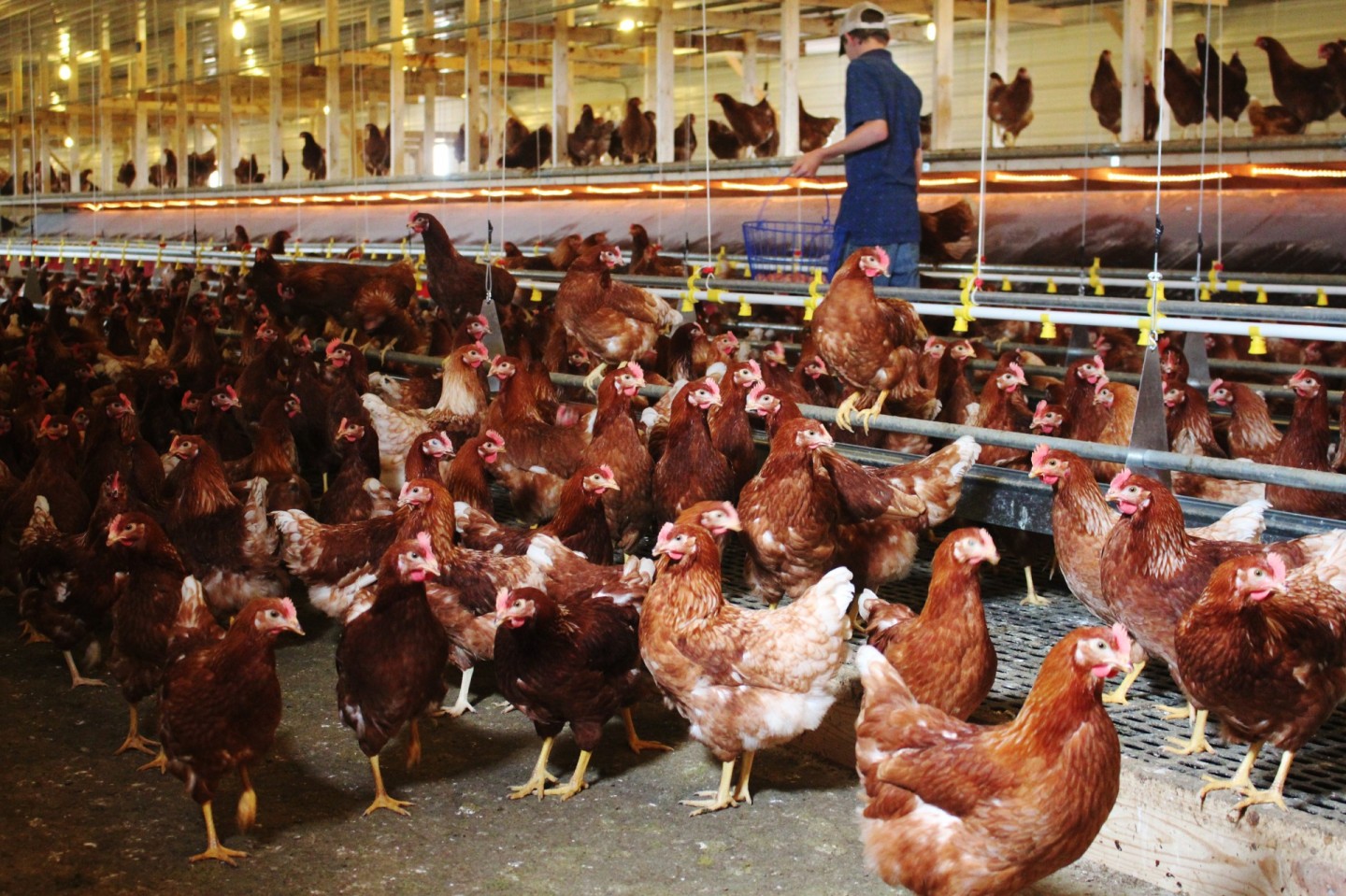
"caption": "Free-range houses allow chickens to move around freely, but operating costs were 23 percent higher than for traditional cages, according to a new study. Photo: Dan Charles/NPR",
"description": "Free-range houses allow chickens to move around freely, but operating costs were 23 percent higher than for traditional cages, according to a new study.",
"title": "Free-range houses allow chickens to move around freely, but operating costs were 23 percent higher than for traditional cages, according to a new study.",
"credit": null,
"status": "inherit",
"isLoading": false,
"fetchFailed": false
},
"bayareabites_94085": {
"type": "attachments",
"id": "bayareabites_94085",
"meta": {
"index": "attachments_1716263798",
"site": "bayareabites",
"id": "94085",
"found": true
},
"parent": 94084,
"imgSizes": {
"twentyfourteen-full-width": {
"file": "https://ww2.kqed.org/app/uploads/sites/24/2015/03/istock_000012771284large_custom-8227e1cfab3b8cbb49389558951aef42b20e65e3-e1426706571692-1038x576.jpg",
"width": 1038,
"mimeType": "image/jpeg",
"height": 576
},
"thumbnail": {
"file": "https://ww2.kqed.org/app/uploads/sites/24/2015/03/istock_000012771284large_custom-8227e1cfab3b8cbb49389558951aef42b20e65e3-e1426706571692-400x266.jpg",
"width": 400,
"mimeType": "image/jpeg",
"height": 266
},
"fd-sm": {
"file": "https://ww2.kqed.org/app/uploads/sites/24/2015/03/istock_000012771284large_custom-8227e1cfab3b8cbb49389558951aef42b20e65e3-e1426706571692-320x213.jpg",
"width": 320,
"mimeType": "image/jpeg",
"height": 213
},
"post-thumbnail": {
"file": "https://ww2.kqed.org/app/uploads/sites/24/2015/03/istock_000012771284large_custom-8227e1cfab3b8cbb49389558951aef42b20e65e3-e1426706571692-672x372.jpg",
"width": 672,
"mimeType": "image/jpeg",
"height": 372
},
"kqedFullSize": {
"file": "https://ww2.kqed.org/app/uploads/sites/24/2015/03/istock_000012771284large_custom-8227e1cfab3b8cbb49389558951aef42b20e65e3-e1426706571692.jpg",
"width": 1920,
"height": 1279
},
"large": {
"file": "https://ww2.kqed.org/app/uploads/sites/24/2015/03/istock_000012771284large_custom-8227e1cfab3b8cbb49389558951aef42b20e65e3-e1426706571692-1440x959.jpg",
"width": 1440,
"mimeType": "image/jpeg",
"height": 959
},
"guest-author-96": {
"file": "https://ww2.kqed.org/app/uploads/sites/24/2015/03/istock_000012771284large_custom-8227e1cfab3b8cbb49389558951aef42b20e65e3-e1426706571692-96x96.jpg",
"width": 96,
"mimeType": "image/jpeg",
"height": 96
},
"medium": {
"file": "https://ww2.kqed.org/app/uploads/sites/24/2015/03/istock_000012771284large_custom-8227e1cfab3b8cbb49389558951aef42b20e65e3-e1426706571692-800x533.jpg",
"width": 800,
"mimeType": "image/jpeg",
"height": 533
},
"guest-author-64": {
"file": "https://ww2.kqed.org/app/uploads/sites/24/2015/03/istock_000012771284large_custom-8227e1cfab3b8cbb49389558951aef42b20e65e3-e1426706571692-64x64.jpg",
"width": 64,
"mimeType": "image/jpeg",
"height": 64
},
"guest-author-32": {
"file": "https://ww2.kqed.org/app/uploads/sites/24/2015/03/istock_000012771284large_custom-8227e1cfab3b8cbb49389558951aef42b20e65e3-e1426706571692-32x32.jpg",
"width": 32,
"mimeType": "image/jpeg",
"height": 32
},
"cat_post_thumb_sizecategory-posts-2": {
"file": "https://ww2.kqed.org/app/uploads/sites/24/2015/03/istock_000012771284large_custom-8227e1cfab3b8cbb49389558951aef42b20e65e3-e1426706571692-50x50.jpg",
"width": 50,
"mimeType": "image/jpeg",
"height": 50
},
"fd-lrg": {
"file": "https://ww2.kqed.org/app/uploads/sites/24/2015/03/istock_000012771284large_custom-8227e1cfab3b8cbb49389558951aef42b20e65e3-e1426706571692-1180x786.jpg",
"width": 1180,
"mimeType": "image/jpeg",
"height": 786
},
"fd-med": {
"file": "https://ww2.kqed.org/app/uploads/sites/24/2015/03/istock_000012771284large_custom-8227e1cfab3b8cbb49389558951aef42b20e65e3-e1426706571692-768x512.jpg",
"width": 768,
"mimeType": "image/jpeg",
"height": 512
},
"detail": {
"file": "https://ww2.kqed.org/app/uploads/sites/24/2015/03/istock_000012771284large_custom-8227e1cfab3b8cbb49389558951aef42b20e65e3-e1426706571692-75x75.jpg",
"width": 75,
"mimeType": "image/jpeg",
"height": 75
},
"guest-author-128": {
"file": "https://ww2.kqed.org/app/uploads/sites/24/2015/03/istock_000012771284large_custom-8227e1cfab3b8cbb49389558951aef42b20e65e3-e1426706571692-128x128.jpg",
"width": 128,
"mimeType": "image/jpeg",
"height": 128
}
},
"publishDate": 1426637056,
"modified": 1426706562,
"caption": "A gourd of yerba mate. Legend has it that the moon gifted this infusion to the Guaraní people of South America. Photo: iStockphoto",
"description": "A gourd of yerba mate. Legend has it that the moon gifted this infusion to the Guaraní people of South America",
"title": "A gourd of yerba mate. Legend has it that the moon gifted this infusion to the Guaraní people of South America.",
"credit": null,
"status": "inherit",
"isLoading": false,
"fetchFailed": false
},
"bayareabites_94092": {
"type": "attachments",
"id": "bayareabites_94092",
"meta": {
"index": "attachments_1716263798",
"site": "bayareabites",
"id": "94092",
"found": true
},
"parent": 94091,
"imgSizes": {
"twentyfourteen-full-width": {
"file": "https://ww2.kqed.org/app/uploads/sites/24/2015/03/457283146_slide-43a84b9fa50496406611aa099b5aef82d0b4e96a-e1426705461968-1038x576.jpg",
"width": 1038,
"mimeType": "image/jpeg",
"height": 576
},
"thumbnail": {
"file": "https://ww2.kqed.org/app/uploads/sites/24/2015/03/457283146_slide-43a84b9fa50496406611aa099b5aef82d0b4e96a-e1426705461968-400x267.jpg",
"width": 400,
"mimeType": "image/jpeg",
"height": 267
},
"fd-sm": {
"file": "https://ww2.kqed.org/app/uploads/sites/24/2015/03/457283146_slide-43a84b9fa50496406611aa099b5aef82d0b4e96a-e1426705461968-320x213.jpg",
"width": 320,
"mimeType": "image/jpeg",
"height": 213
},
"post-thumbnail": {
"file": "https://ww2.kqed.org/app/uploads/sites/24/2015/03/457283146_slide-43a84b9fa50496406611aa099b5aef82d0b4e96a-e1426705461968-672x372.jpg",
"width": 672,
"mimeType": "image/jpeg",
"height": 372
},
"kqedFullSize": {
"file": "https://ww2.kqed.org/app/uploads/sites/24/2015/03/457283146_slide-43a84b9fa50496406611aa099b5aef82d0b4e96a-e1426705461968.jpg",
"width": 1920,
"height": 1280
},
"large": {
"file": "https://ww2.kqed.org/app/uploads/sites/24/2015/03/457283146_slide-43a84b9fa50496406611aa099b5aef82d0b4e96a-e1426705461968-1440x960.jpg",
"width": 1440,
"mimeType": "image/jpeg",
"height": 960
},
"guest-author-96": {
"file": "https://ww2.kqed.org/app/uploads/sites/24/2015/03/457283146_slide-43a84b9fa50496406611aa099b5aef82d0b4e96a-e1426705461968-96x96.jpg",
"width": 96,
"mimeType": "image/jpeg",
"height": 96
},
"medium": {
"file": "https://ww2.kqed.org/app/uploads/sites/24/2015/03/457283146_slide-43a84b9fa50496406611aa099b5aef82d0b4e96a-e1426705461968-800x533.jpg",
"width": 800,
"mimeType": "image/jpeg",
"height": 533
},
"guest-author-64": {
"file": "https://ww2.kqed.org/app/uploads/sites/24/2015/03/457283146_slide-43a84b9fa50496406611aa099b5aef82d0b4e96a-e1426705461968-64x64.jpg",
"width": 64,
"mimeType": "image/jpeg",
"height": 64
},
"guest-author-32": {
"file": "https://ww2.kqed.org/app/uploads/sites/24/2015/03/457283146_slide-43a84b9fa50496406611aa099b5aef82d0b4e96a-e1426705461968-32x32.jpg",
"width": 32,
"mimeType": "image/jpeg",
"height": 32
},
"cat_post_thumb_sizecategory-posts-2": {
"file": "https://ww2.kqed.org/app/uploads/sites/24/2015/03/457283146_slide-43a84b9fa50496406611aa099b5aef82d0b4e96a-e1426705461968-50x50.jpg",
"width": 50,
"mimeType": "image/jpeg",
"height": 50
},
"fd-lrg": {
"file": "https://ww2.kqed.org/app/uploads/sites/24/2015/03/457283146_slide-43a84b9fa50496406611aa099b5aef82d0b4e96a-e1426705461968-1180x787.jpg",
"width": 1180,
"mimeType": "image/jpeg",
"height": 787
},
"fd-med": {
"file": "https://ww2.kqed.org/app/uploads/sites/24/2015/03/457283146_slide-43a84b9fa50496406611aa099b5aef82d0b4e96a-e1426705461968-768x512.jpg",
"width": 768,
"mimeType": "image/jpeg",
"height": 512
},
"detail": {
"file": "https://ww2.kqed.org/app/uploads/sites/24/2015/03/457283146_slide-43a84b9fa50496406611aa099b5aef82d0b4e96a-e1426705461968-75x75.jpg",
"width": 75,
"mimeType": "image/jpeg",
"height": 75
},
"guest-author-128": {
"file": "https://ww2.kqed.org/app/uploads/sites/24/2015/03/457283146_slide-43a84b9fa50496406611aa099b5aef82d0b4e96a-e1426705461968-128x128.jpg",
"width": 128,
"mimeType": "image/jpeg",
"height": 128
}
},
"publishDate": 1426704312,
"modified": 1426705453,
"caption": "Celebrity chef Giada De Laurentiis during a guest appearance on ABC's The Chew last fall. She can cook rich foods and keep her trim figure, but new research suggests that's a difficult feat for amateur cooks watching along at home. Photo: Lou Rocco/ABC/Getty Images",
"description": "Celebrity chef Giada De Laurentiis during a guest appearance on ABC's \u003cem>The Chew \u003c/em>last fall. She can cook rich foods and keep her trim figure, but new research suggests that's a difficult feat for amateur cooks watching along at home.",
"title": "Celebrity chef Giada De Laurentiis during a guest appearance on ABC's The Chew last fall. She can cook rich foods and keep her trim figure, but new research suggests that's a difficult feat for amateur cooks watching along at home.",
"credit": null,
"status": "inherit",
"isLoading": false,
"fetchFailed": false
},
"bayareabites_94060": {
"type": "attachments",
"id": "bayareabites_94060",
"meta": {
"index": "attachments_1716263798",
"site": "bayareabites",
"id": "94060",
"found": true
},
"parent": 94059,
"imgSizes": {
"twentyfourteen-full-width": {
"file": "https://ww2.kqed.org/app/uploads/sites/24/2015/03/walllowres-1e39a90bfdb3e3fa2214fde62b88be441d4b1d74-1038x576.jpg",
"width": 1038,
"mimeType": "image/jpeg",
"height": 576
},
"fd-sm": {
"file": "https://ww2.kqed.org/app/uploads/sites/24/2015/03/walllowres-1e39a90bfdb3e3fa2214fde62b88be441d4b1d74-320x240.jpg",
"width": 320,
"mimeType": "image/jpeg",
"height": 240
},
"post-thumbnail": {
"file": "https://ww2.kqed.org/app/uploads/sites/24/2015/03/walllowres-1e39a90bfdb3e3fa2214fde62b88be441d4b1d74-672x372.jpg",
"width": 672,
"mimeType": "image/jpeg",
"height": 372
},
"kqedFullSize": {
"file": "https://ww2.kqed.org/app/uploads/sites/24/2015/03/walllowres-1e39a90bfdb3e3fa2214fde62b88be441d4b1d74.jpg",
"width": 1197,
"height": 897
},
"guest-author-96": {
"file": "https://ww2.kqed.org/app/uploads/sites/24/2015/03/walllowres-1e39a90bfdb3e3fa2214fde62b88be441d4b1d74-96x96.jpg",
"width": 96,
"mimeType": "image/jpeg",
"height": 96
},
"medium": {
"file": "https://ww2.kqed.org/app/uploads/sites/24/2015/03/walllowres-1e39a90bfdb3e3fa2214fde62b88be441d4b1d74-800x599.jpg",
"width": 800,
"mimeType": "image/jpeg",
"height": 599
},
"guest-author-64": {
"file": "https://ww2.kqed.org/app/uploads/sites/24/2015/03/walllowres-1e39a90bfdb3e3fa2214fde62b88be441d4b1d74-64x64.jpg",
"width": 64,
"mimeType": "image/jpeg",
"height": 64
},
"guest-author-32": {
"file": "https://ww2.kqed.org/app/uploads/sites/24/2015/03/walllowres-1e39a90bfdb3e3fa2214fde62b88be441d4b1d74-32x32.jpg",
"width": 32,
"mimeType": "image/jpeg",
"height": 32
},
"cat_post_thumb_sizecategory-posts-2": {
"file": "https://ww2.kqed.org/app/uploads/sites/24/2015/03/walllowres-1e39a90bfdb3e3fa2214fde62b88be441d4b1d74-50x50.jpg",
"width": 50,
"mimeType": "image/jpeg",
"height": 50
},
"fd-lrg": {
"file": "https://ww2.kqed.org/app/uploads/sites/24/2015/03/walllowres-1e39a90bfdb3e3fa2214fde62b88be441d4b1d74-1180x884.jpg",
"width": 1180,
"mimeType": "image/jpeg",
"height": 884
},
"fd-med": {
"file": "https://ww2.kqed.org/app/uploads/sites/24/2015/03/walllowres-1e39a90bfdb3e3fa2214fde62b88be441d4b1d74-768x576.jpg",
"width": 768,
"mimeType": "image/jpeg",
"height": 576
},
"detail": {
"file": "https://ww2.kqed.org/app/uploads/sites/24/2015/03/walllowres-1e39a90bfdb3e3fa2214fde62b88be441d4b1d74-75x75.jpg",
"width": 75,
"mimeType": "image/jpeg",
"height": 75
},
"guest-author-128": {
"file": "https://ww2.kqed.org/app/uploads/sites/24/2015/03/walllowres-1e39a90bfdb3e3fa2214fde62b88be441d4b1d74-128x128.jpg",
"width": 128,
"mimeType": "image/jpeg",
"height": 128
}
},
"publishDate": 1426621842,
"modified": 1426622112,
"caption": "Butter labels from Irish creameries operating in the 1970s. Photo: Roland Paschhoff/Cork Butter Museum",
"description": "Butter labels from Irish creameries operating in the 1970s.",
"title": "Butter labels from Irish creameries operating in the 1970s.",
"credit": null,
"status": "inherit",
"isLoading": false,
"fetchFailed": false
},
"bayareabites_93987": {
"type": "attachments",
"id": "bayareabites_93987",
"meta": {
"index": "attachments_1716263798",
"site": "bayareabites",
"id": "93987",
"found": true
},
"parent": 93986,
"imgSizes": {
"twentyfourteen-full-width": {
"file": "https://ww2.kqed.org/app/uploads/sites/24/2015/03/iconic-branding-0001x-9e7c37155f2260339b3f9181c856c935f865cee3-e1426556302259-1038x576.jpg",
"width": 1038,
"mimeType": "image/jpeg",
"height": 576
},
"thumbnail": {
"file": "https://ww2.kqed.org/app/uploads/sites/24/2015/03/iconic-branding-0001x-9e7c37155f2260339b3f9181c856c935f865cee3-e1426556302259-400x300.jpg",
"width": 400,
"mimeType": "image/jpeg",
"height": 300
},
"fd-sm": {
"file": "https://ww2.kqed.org/app/uploads/sites/24/2015/03/iconic-branding-0001x-9e7c37155f2260339b3f9181c856c935f865cee3-e1426556302259-320x240.jpg",
"width": 320,
"mimeType": "image/jpeg",
"height": 240
},
"post-thumbnail": {
"file": "https://ww2.kqed.org/app/uploads/sites/24/2015/03/iconic-branding-0001x-9e7c37155f2260339b3f9181c856c935f865cee3-e1426556302259-672x372.jpg",
"width": 672,
"mimeType": "image/jpeg",
"height": 372
},
"kqedFullSize": {
"file": "https://ww2.kqed.org/app/uploads/sites/24/2015/03/iconic-branding-0001x-9e7c37155f2260339b3f9181c856c935f865cee3-e1426556302259.jpg",
"width": 1920,
"height": 1440
},
"large": {
"file": "https://ww2.kqed.org/app/uploads/sites/24/2015/03/iconic-branding-0001x-9e7c37155f2260339b3f9181c856c935f865cee3-e1426556302259-1440x1080.jpg",
"width": 1440,
"mimeType": "image/jpeg",
"height": 1080
},
"guest-author-96": {
"file": "https://ww2.kqed.org/app/uploads/sites/24/2015/03/iconic-branding-0001x-9e7c37155f2260339b3f9181c856c935f865cee3-e1426556302259-96x96.jpg",
"width": 96,
"mimeType": "image/jpeg",
"height": 96
},
"medium": {
"file": "https://ww2.kqed.org/app/uploads/sites/24/2015/03/iconic-branding-0001x-9e7c37155f2260339b3f9181c856c935f865cee3-e1426556302259-800x600.jpg",
"width": 800,
"mimeType": "image/jpeg",
"height": 600
},
"guest-author-64": {
"file": "https://ww2.kqed.org/app/uploads/sites/24/2015/03/iconic-branding-0001x-9e7c37155f2260339b3f9181c856c935f865cee3-e1426556302259-64x64.jpg",
"width": 64,
"mimeType": "image/jpeg",
"height": 64
},
"guest-author-32": {
"file": "https://ww2.kqed.org/app/uploads/sites/24/2015/03/iconic-branding-0001x-9e7c37155f2260339b3f9181c856c935f865cee3-e1426556302259-32x32.jpg",
"width": 32,
"mimeType": "image/jpeg",
"height": 32
},
"cat_post_thumb_sizecategory-posts-2": {
"file": "https://ww2.kqed.org/app/uploads/sites/24/2015/03/iconic-branding-0001x-9e7c37155f2260339b3f9181c856c935f865cee3-e1426556302259-50x50.jpg",
"width": 50,
"mimeType": "image/jpeg",
"height": 50
},
"fd-lrg": {
"file": "https://ww2.kqed.org/app/uploads/sites/24/2015/03/iconic-branding-0001x-9e7c37155f2260339b3f9181c856c935f865cee3-e1426556302259-1180x885.jpg",
"width": 1180,
"mimeType": "image/jpeg",
"height": 885
},
"fd-med": {
"file": "https://ww2.kqed.org/app/uploads/sites/24/2015/03/iconic-branding-0001x-9e7c37155f2260339b3f9181c856c935f865cee3-e1426556302259-768x576.jpg",
"width": 768,
"mimeType": "image/jpeg",
"height": 576
},
"detail": {
"file": "https://ww2.kqed.org/app/uploads/sites/24/2015/03/iconic-branding-0001x-9e7c37155f2260339b3f9181c856c935f865cee3-e1426556302259-75x75.jpg",
"width": 75,
"mimeType": "image/jpeg",
"height": 75
},
"guest-author-128": {
"file": "https://ww2.kqed.org/app/uploads/sites/24/2015/03/iconic-branding-0001x-9e7c37155f2260339b3f9181c856c935f865cee3-e1426556302259-128x128.jpg",
"width": 128,
"mimeType": "image/jpeg",
"height": 128
}
},
"publishDate": 1426545526,
"modified": 1426556306,
"caption": "Tootsie Roll. Image: Ariel Zambelich/NPR",
"description": "Tootsie Roll",
"title": "Tootsie Roll",
"credit": null,
"status": "inherit",
"isLoading": false,
"fetchFailed": false
},
"bayareabites_93935": {
"type": "attachments",
"id": "bayareabites_93935",
"meta": {
"index": "attachments_1716263798",
"site": "bayareabites",
"id": "93935",
"found": true
},
"parent": 93934,
"imgSizes": {
"twentyfourteen-full-width": {
"file": "https://ww2.kqed.org/app/uploads/sites/24/2015/03/peach-1-5f80b1004aebd4c7c18d79bc371d9e43ea25374a-1038x576.jpg",
"width": 1038,
"mimeType": "image/jpeg",
"height": 576
},
"fd-sm": {
"file": "https://ww2.kqed.org/app/uploads/sites/24/2015/03/peach-1-5f80b1004aebd4c7c18d79bc371d9e43ea25374a-320x240.jpg",
"width": 320,
"mimeType": "image/jpeg",
"height": 240
},
"post-thumbnail": {
"file": "https://ww2.kqed.org/app/uploads/sites/24/2015/03/peach-1-5f80b1004aebd4c7c18d79bc371d9e43ea25374a-672x372.jpg",
"width": 672,
"mimeType": "image/jpeg",
"height": 372
},
"kqedFullSize": {
"file": "https://ww2.kqed.org/app/uploads/sites/24/2015/03/peach-1-5f80b1004aebd4c7c18d79bc371d9e43ea25374a.jpg",
"width": 1780,
"height": 1333
},
"large": {
"file": "https://ww2.kqed.org/app/uploads/sites/24/2015/03/peach-1-5f80b1004aebd4c7c18d79bc371d9e43ea25374a-1440x1078.jpg",
"width": 1440,
"mimeType": "image/jpeg",
"height": 1078
},
"guest-author-96": {
"file": "https://ww2.kqed.org/app/uploads/sites/24/2015/03/peach-1-5f80b1004aebd4c7c18d79bc371d9e43ea25374a-96x96.jpg",
"width": 96,
"mimeType": "image/jpeg",
"height": 96
},
"medium": {
"file": "https://ww2.kqed.org/app/uploads/sites/24/2015/03/peach-1-5f80b1004aebd4c7c18d79bc371d9e43ea25374a-800x599.jpg",
"width": 800,
"mimeType": "image/jpeg",
"height": 599
},
"guest-author-64": {
"file": "https://ww2.kqed.org/app/uploads/sites/24/2015/03/peach-1-5f80b1004aebd4c7c18d79bc371d9e43ea25374a-64x64.jpg",
"width": 64,
"mimeType": "image/jpeg",
"height": 64
},
"guest-author-32": {
"file": "https://ww2.kqed.org/app/uploads/sites/24/2015/03/peach-1-5f80b1004aebd4c7c18d79bc371d9e43ea25374a-32x32.jpg",
"width": 32,
"mimeType": "image/jpeg",
"height": 32
},
"cat_post_thumb_sizecategory-posts-2": {
"file": "https://ww2.kqed.org/app/uploads/sites/24/2015/03/peach-1-5f80b1004aebd4c7c18d79bc371d9e43ea25374a-50x50.jpg",
"width": 50,
"mimeType": "image/jpeg",
"height": 50
},
"fd-lrg": {
"file": "https://ww2.kqed.org/app/uploads/sites/24/2015/03/peach-1-5f80b1004aebd4c7c18d79bc371d9e43ea25374a-1180x884.jpg",
"width": 1180,
"mimeType": "image/jpeg",
"height": 884
},
"fd-med": {
"file": "https://ww2.kqed.org/app/uploads/sites/24/2015/03/peach-1-5f80b1004aebd4c7c18d79bc371d9e43ea25374a-768x575.jpg",
"width": 768,
"mimeType": "image/jpeg",
"height": 575
},
"detail": {
"file": "https://ww2.kqed.org/app/uploads/sites/24/2015/03/peach-1-5f80b1004aebd4c7c18d79bc371d9e43ea25374a-75x75.jpg",
"width": 75,
"mimeType": "image/jpeg",
"height": 75
},
"guest-author-128": {
"file": "https://ww2.kqed.org/app/uploads/sites/24/2015/03/peach-1-5f80b1004aebd4c7c18d79bc371d9e43ea25374a-128x128.jpg",
"width": 128,
"mimeType": "image/jpeg",
"height": 128
}
},
"publishDate": 1426379203,
"modified": 1426379622,
"caption": "Mas Masumoto grew up on his family farm in southeast of Fresno, Calif. His 1987 essay \"Epitaph for A Peach,\" in which he bemoaned the loss of heirloom flavors, captured his changing philosophy as a farmer. It also helped turn his farm into a landmark in the local-food movement. Photo: Dan Charles/NPR ",
"description": "Mas Masumoto grew up on his family farm in southeast of Fresno, Calif. His 1987 essay \"Epitaph for A Peach,\" in which he bemoaned the loss of heirloom flavors, captured his changing philosophy as a farmer. It also helped turn his farm into a landmark in the local-food movement.",
"title": "Mas Masumoto grew up on his family farm in southeast of Fresno, Calif. His 1987 essay \"Epitaph for A Peach,\" in which he bemoaned the loss of heirloom flavors, captured his changing philosophy as a farmer. It also helped turn his farm into a landmark in the local-food movement.",
"credit": null,
"status": "inherit",
"isLoading": false,
"fetchFailed": false
},
"bayareabites_93749": {
"type": "attachments",
"id": "bayareabites_93749",
"meta": {
"index": "attachments_1716263798",
"site": "bayareabites",
"id": "93749",
"found": true
},
"parent": 93748,
"imgSizes": {
"twentyfourteen-full-width": {
"file": "https://ww2.kqed.org/app/uploads/sites/24/2015/03/cumin-seeds-874c1ad69539fd2da5010baea1676e8b3fb0985c-1038x576.jpg",
"width": 1038,
"mimeType": "image/jpeg",
"height": 576
},
"fd-sm": {
"file": "https://ww2.kqed.org/app/uploads/sites/24/2015/03/cumin-seeds-874c1ad69539fd2da5010baea1676e8b3fb0985c-320x240.jpg",
"width": 320,
"mimeType": "image/jpeg",
"height": 240
},
"post-thumbnail": {
"file": "https://ww2.kqed.org/app/uploads/sites/24/2015/03/cumin-seeds-874c1ad69539fd2da5010baea1676e8b3fb0985c-672x372.jpg",
"width": 672,
"mimeType": "image/jpeg",
"height": 372
},
"kqedFullSize": {
"file": "https://ww2.kqed.org/app/uploads/sites/24/2015/03/cumin-seeds-874c1ad69539fd2da5010baea1676e8b3fb0985c.jpg",
"width": 1780,
"height": 1333
},
"large": {
"file": "https://ww2.kqed.org/app/uploads/sites/24/2015/03/cumin-seeds-874c1ad69539fd2da5010baea1676e8b3fb0985c-1440x1078.jpg",
"width": 1440,
"mimeType": "image/jpeg",
"height": 1078
},
"guest-author-96": {
"file": "https://ww2.kqed.org/app/uploads/sites/24/2015/03/cumin-seeds-874c1ad69539fd2da5010baea1676e8b3fb0985c-96x96.jpg",
"width": 96,
"mimeType": "image/jpeg",
"height": 96
},
"medium": {
"file": "https://ww2.kqed.org/app/uploads/sites/24/2015/03/cumin-seeds-874c1ad69539fd2da5010baea1676e8b3fb0985c-800x599.jpg",
"width": 800,
"mimeType": "image/jpeg",
"height": 599
},
"guest-author-64": {
"file": "https://ww2.kqed.org/app/uploads/sites/24/2015/03/cumin-seeds-874c1ad69539fd2da5010baea1676e8b3fb0985c-64x64.jpg",
"width": 64,
"mimeType": "image/jpeg",
"height": 64
},
"guest-author-32": {
"file": "https://ww2.kqed.org/app/uploads/sites/24/2015/03/cumin-seeds-874c1ad69539fd2da5010baea1676e8b3fb0985c-32x32.jpg",
"width": 32,
"mimeType": "image/jpeg",
"height": 32
},
"cat_post_thumb_sizecategory-posts-2": {
"file": "https://ww2.kqed.org/app/uploads/sites/24/2015/03/cumin-seeds-874c1ad69539fd2da5010baea1676e8b3fb0985c-50x50.jpg",
"width": 50,
"mimeType": "image/jpeg",
"height": 50
},
"fd-lrg": {
"file": "https://ww2.kqed.org/app/uploads/sites/24/2015/03/cumin-seeds-874c1ad69539fd2da5010baea1676e8b3fb0985c-1180x884.jpg",
"width": 1180,
"mimeType": "image/jpeg",
"height": 884
},
"fd-med": {
"file": "https://ww2.kqed.org/app/uploads/sites/24/2015/03/cumin-seeds-874c1ad69539fd2da5010baea1676e8b3fb0985c-768x575.jpg",
"width": 768,
"mimeType": "image/jpeg",
"height": 575
},
"detail": {
"file": "https://ww2.kqed.org/app/uploads/sites/24/2015/03/cumin-seeds-874c1ad69539fd2da5010baea1676e8b3fb0985c-75x75.jpg",
"width": 75,
"mimeType": "image/jpeg",
"height": 75
},
"guest-author-128": {
"file": "https://ww2.kqed.org/app/uploads/sites/24/2015/03/cumin-seeds-874c1ad69539fd2da5010baea1676e8b3fb0985c-128x128.jpg",
"width": 128,
"mimeType": "image/jpeg",
"height": 128
}
},
"publishDate": 1426117258,
"modified": 1426187037,
"caption": "The cuisines of the classical world made use of cumin both as a flavoring and a drug. Photo: iStockphoto",
"description": "The cuisines of the classical world made use of cumin both as a flavoring and a drug.",
"title": "The cuisines of the classical world made use of cumin both as a flavoring and a drug.",
"credit": null,
"status": "inherit",
"isLoading": false,
"fetchFailed": false
},
"bayareabites_93728": {
"type": "attachments",
"id": "bayareabites_93728",
"meta": {
"index": "attachments_1716263798",
"site": "bayareabites",
"id": "93728",
"found": true
},
"parent": 93727,
"imgSizes": {
"twentyfourteen-full-width": {
"file": "https://ww2.kqed.org/app/uploads/sites/24/2015/03/tictocstill3_wide-f31b3d2a3e8ecc3e0bb68c6885d5899d7b09ca76-1038x576.jpe",
"width": 1038,
"mimeType": "image/jpeg",
"height": 576
},
"thumbnail": {
"file": "https://ww2.kqed.org/app/uploads/sites/24/2015/03/tictocstill3_wide-f31b3d2a3e8ecc3e0bb68c6885d5899d7b09ca76-400x225.jpe",
"width": 400,
"mimeType": "image/jpeg",
"height": 225
},
"fd-sm": {
"file": "https://ww2.kqed.org/app/uploads/sites/24/2015/03/tictocstill3_wide-f31b3d2a3e8ecc3e0bb68c6885d5899d7b09ca76-320x180.jpe",
"width": 320,
"mimeType": "image/jpeg",
"height": 180
},
"post-thumbnail": {
"file": "https://ww2.kqed.org/app/uploads/sites/24/2015/03/tictocstill3_wide-f31b3d2a3e8ecc3e0bb68c6885d5899d7b09ca76-672x372.jpe",
"width": 672,
"mimeType": "image/jpeg",
"height": 372
},
"kqedFullSize": {
"file": "https://ww2.kqed.org/app/uploads/sites/24/2015/03/tictocstill3_wide-f31b3d2a3e8ecc3e0bb68c6885d5899d7b09ca76.jpe",
"width": 1997,
"height": 1123
},
"large": {
"file": "https://ww2.kqed.org/app/uploads/sites/24/2015/03/tictocstill3_wide-f31b3d2a3e8ecc3e0bb68c6885d5899d7b09ca76-1440x810.jpe",
"width": 1440,
"mimeType": "image/jpeg",
"height": 810
},
"guest-author-96": {
"file": "https://ww2.kqed.org/app/uploads/sites/24/2015/03/tictocstill3_wide-f31b3d2a3e8ecc3e0bb68c6885d5899d7b09ca76-96x96.jpe",
"width": 96,
"mimeType": "image/jpeg",
"height": 96
},
"medium": {
"file": "https://ww2.kqed.org/app/uploads/sites/24/2015/03/tictocstill3_wide-f31b3d2a3e8ecc3e0bb68c6885d5899d7b09ca76-800x450.jpe",
"width": 800,
"mimeType": "image/jpeg",
"height": 450
},
"guest-author-64": {
"file": "https://ww2.kqed.org/app/uploads/sites/24/2015/03/tictocstill3_wide-f31b3d2a3e8ecc3e0bb68c6885d5899d7b09ca76-64x64.jpe",
"width": 64,
"mimeType": "image/jpeg",
"height": 64
},
"guest-author-32": {
"file": "https://ww2.kqed.org/app/uploads/sites/24/2015/03/tictocstill3_wide-f31b3d2a3e8ecc3e0bb68c6885d5899d7b09ca76-32x32.jpe",
"width": 32,
"mimeType": "image/jpeg",
"height": 32
},
"cat_post_thumb_sizecategory-posts-2": {
"file": "https://ww2.kqed.org/app/uploads/sites/24/2015/03/tictocstill3_wide-f31b3d2a3e8ecc3e0bb68c6885d5899d7b09ca76-50x50.jpe",
"width": 50,
"mimeType": "image/jpeg",
"height": 50
},
"fd-lrg": {
"file": "https://ww2.kqed.org/app/uploads/sites/24/2015/03/tictocstill3_wide-f31b3d2a3e8ecc3e0bb68c6885d5899d7b09ca76-1180x664.jpe",
"width": 1180,
"mimeType": "image/jpeg",
"height": 664
},
"fd-med": {
"file": "https://ww2.kqed.org/app/uploads/sites/24/2015/03/tictocstill3_wide-f31b3d2a3e8ecc3e0bb68c6885d5899d7b09ca76-768x432.jpe",
"width": 768,
"mimeType": "image/jpeg",
"height": 432
},
"detail": {
"file": "https://ww2.kqed.org/app/uploads/sites/24/2015/03/tictocstill3_wide-f31b3d2a3e8ecc3e0bb68c6885d5899d7b09ca76-75x75.jpe",
"width": 75,
"mimeType": "image/jpeg",
"height": 75
},
"guest-author-128": {
"file": "https://ww2.kqed.org/app/uploads/sites/24/2015/03/tictocstill3_wide-f31b3d2a3e8ecc3e0bb68c6885d5899d7b09ca76-128x128.jpe",
"width": 128,
"mimeType": "image/jpeg",
"height": 128
}
},
"publishDate": 1425983989,
"modified": 1425983989,
"caption": null,
"description": "Katherine Streeter for NPR",
"title": "Katherine Streeter for NPR",
"credit": null,
"status": "inherit",
"isLoading": false,
"fetchFailed": false
},
"bayareabites_93723": {
"type": "attachments",
"id": "bayareabites_93723",
"meta": {
"index": "attachments_1716263798",
"site": "bayareabites",
"id": "93723",
"found": true
},
"parent": 93722,
"imgSizes": {
"twentyfourteen-full-width": {
"file": "https://ww2.kqed.org/app/uploads/sites/24/2015/03/istock_000019322566xlarge_edit_custom-9d4c4a33422ae3c4775983ae0de71646537c78c4-e1425847073871-1038x576.jpg",
"width": 1038,
"mimeType": "image/jpeg",
"height": 576
},
"thumbnail": {
"file": "https://ww2.kqed.org/app/uploads/sites/24/2015/03/istock_000019322566xlarge_edit_custom-9d4c4a33422ae3c4775983ae0de71646537c78c4-e1425847073871-400x266.jpg",
"width": 400,
"mimeType": "image/jpeg",
"height": 266
},
"fd-sm": {
"file": "https://ww2.kqed.org/app/uploads/sites/24/2015/03/istock_000019322566xlarge_edit_custom-9d4c4a33422ae3c4775983ae0de71646537c78c4-e1425847073871-320x213.jpg",
"width": 320,
"mimeType": "image/jpeg",
"height": 213
},
"post-thumbnail": {
"file": "https://ww2.kqed.org/app/uploads/sites/24/2015/03/istock_000019322566xlarge_edit_custom-9d4c4a33422ae3c4775983ae0de71646537c78c4-e1425847073871-672x372.jpg",
"width": 672,
"mimeType": "image/jpeg",
"height": 372
},
"kqedFullSize": {
"file": "https://ww2.kqed.org/app/uploads/sites/24/2015/03/istock_000019322566xlarge_edit_custom-9d4c4a33422ae3c4775983ae0de71646537c78c4-e1425847073871.jpg",
"width": 1920,
"height": 1276
},
"large": {
"file": "https://ww2.kqed.org/app/uploads/sites/24/2015/03/istock_000019322566xlarge_edit_custom-9d4c4a33422ae3c4775983ae0de71646537c78c4-e1425847073871-1440x957.jpg",
"width": 1440,
"mimeType": "image/jpeg",
"height": 957
},
"guest-author-96": {
"file": "https://ww2.kqed.org/app/uploads/sites/24/2015/03/istock_000019322566xlarge_edit_custom-9d4c4a33422ae3c4775983ae0de71646537c78c4-e1425847073871-96x96.jpg",
"width": 96,
"mimeType": "image/jpeg",
"height": 96
},
"medium": {
"file": "https://ww2.kqed.org/app/uploads/sites/24/2015/03/istock_000019322566xlarge_edit_custom-9d4c4a33422ae3c4775983ae0de71646537c78c4-e1425847073871-800x532.jpg",
"width": 800,
"mimeType": "image/jpeg",
"height": 532
},
"guest-author-64": {
"file": "https://ww2.kqed.org/app/uploads/sites/24/2015/03/istock_000019322566xlarge_edit_custom-9d4c4a33422ae3c4775983ae0de71646537c78c4-e1425847073871-64x64.jpg",
"width": 64,
"mimeType": "image/jpeg",
"height": 64
},
"guest-author-32": {
"file": "https://ww2.kqed.org/app/uploads/sites/24/2015/03/istock_000019322566xlarge_edit_custom-9d4c4a33422ae3c4775983ae0de71646537c78c4-e1425847073871-32x32.jpg",
"width": 32,
"mimeType": "image/jpeg",
"height": 32
},
"cat_post_thumb_sizecategory-posts-2": {
"file": "https://ww2.kqed.org/app/uploads/sites/24/2015/03/istock_000019322566xlarge_edit_custom-9d4c4a33422ae3c4775983ae0de71646537c78c4-e1425847073871-50x50.jpg",
"width": 50,
"mimeType": "image/jpeg",
"height": 50
},
"fd-lrg": {
"file": "https://ww2.kqed.org/app/uploads/sites/24/2015/03/istock_000019322566xlarge_edit_custom-9d4c4a33422ae3c4775983ae0de71646537c78c4-e1425847073871-1180x784.jpg",
"width": 1180,
"mimeType": "image/jpeg",
"height": 784
},
"fd-med": {
"file": "https://ww2.kqed.org/app/uploads/sites/24/2015/03/istock_000019322566xlarge_edit_custom-9d4c4a33422ae3c4775983ae0de71646537c78c4-e1425847073871-768x510.jpg",
"width": 768,
"mimeType": "image/jpeg",
"height": 510
},
"detail": {
"file": "https://ww2.kqed.org/app/uploads/sites/24/2015/03/istock_000019322566xlarge_edit_custom-9d4c4a33422ae3c4775983ae0de71646537c78c4-e1425847073871-75x75.jpg",
"width": 75,
"mimeType": "image/jpeg",
"height": 75
},
"guest-author-128": {
"file": "https://ww2.kqed.org/app/uploads/sites/24/2015/03/istock_000019322566xlarge_edit_custom-9d4c4a33422ae3c4775983ae0de71646537c78c4-e1425847073871-128x128.jpg",
"width": 128,
"mimeType": "image/jpeg",
"height": 128
}
},
"publishDate": 1425846958,
"modified": 1425847078,
"caption": "FDA tests have turned up residues suggesting a few dairy farmers are illegally using antibiotics. Photo: iStockphoto ",
"description": "FDA tests have turned up residues suggesting a few dairy farmers are illegally using antibiotics",
"title": "FDA tests have turned up residues suggesting a few dairy farmers are illegally using antibiotics.",
"credit": null,
"status": "inherit",
"isLoading": false,
"fetchFailed": false
},
"bayareabites_93713": {
"type": "attachments",
"id": "bayareabites_93713",
"meta": {
"index": "attachments_1716263798",
"site": "bayareabites",
"id": "93713",
"found": true
},
"parent": 93712,
"imgSizes": {
"twentyfourteen-full-width": {
"file": "https://ww2.kqed.org/app/uploads/sites/24/2015/03/drinks_wide-a95458e01e88a61793c71a153b0b5d7d94509045-e1425683441360-1038x576.jpg",
"width": 1038,
"mimeType": "image/jpeg",
"height": 576
},
"thumbnail": {
"file": "https://ww2.kqed.org/app/uploads/sites/24/2015/03/drinks_wide-a95458e01e88a61793c71a153b0b5d7d94509045-e1425683441360-400x225.jpg",
"width": 400,
"mimeType": "image/jpeg",
"height": 225
},
"fd-sm": {
"file": "https://ww2.kqed.org/app/uploads/sites/24/2015/03/drinks_wide-a95458e01e88a61793c71a153b0b5d7d94509045-e1425683441360-320x180.jpg",
"width": 320,
"mimeType": "image/jpeg",
"height": 180
},
"post-thumbnail": {
"file": "https://ww2.kqed.org/app/uploads/sites/24/2015/03/drinks_wide-a95458e01e88a61793c71a153b0b5d7d94509045-e1425683441360-672x372.jpg",
"width": 672,
"mimeType": "image/jpeg",
"height": 372
},
"kqedFullSize": {
"file": "https://ww2.kqed.org/app/uploads/sites/24/2015/03/drinks_wide-a95458e01e88a61793c71a153b0b5d7d94509045-e1425683441360.jpg",
"width": 1920,
"height": 1080
},
"large": {
"file": "https://ww2.kqed.org/app/uploads/sites/24/2015/03/drinks_wide-a95458e01e88a61793c71a153b0b5d7d94509045-e1425683441360-1440x810.jpg",
"width": 1440,
"mimeType": "image/jpeg",
"height": 810
},
"guest-author-96": {
"file": "https://ww2.kqed.org/app/uploads/sites/24/2015/03/drinks_wide-a95458e01e88a61793c71a153b0b5d7d94509045-e1425683441360-96x96.jpg",
"width": 96,
"mimeType": "image/jpeg",
"height": 96
},
"medium": {
"file": "https://ww2.kqed.org/app/uploads/sites/24/2015/03/drinks_wide-a95458e01e88a61793c71a153b0b5d7d94509045-e1425683441360-800x450.jpg",
"width": 800,
"mimeType": "image/jpeg",
"height": 450
},
"guest-author-64": {
"file": "https://ww2.kqed.org/app/uploads/sites/24/2015/03/drinks_wide-a95458e01e88a61793c71a153b0b5d7d94509045-e1425683441360-64x64.jpg",
"width": 64,
"mimeType": "image/jpeg",
"height": 64
},
"guest-author-32": {
"file": "https://ww2.kqed.org/app/uploads/sites/24/2015/03/drinks_wide-a95458e01e88a61793c71a153b0b5d7d94509045-e1425683441360-32x32.jpg",
"width": 32,
"mimeType": "image/jpeg",
"height": 32
},
"cat_post_thumb_sizecategory-posts-2": {
"file": "https://ww2.kqed.org/app/uploads/sites/24/2015/03/drinks_wide-a95458e01e88a61793c71a153b0b5d7d94509045-e1425683441360-50x50.jpg",
"width": 50,
"mimeType": "image/jpeg",
"height": 50
},
"fd-lrg": {
"file": "https://ww2.kqed.org/app/uploads/sites/24/2015/03/drinks_wide-a95458e01e88a61793c71a153b0b5d7d94509045-e1425683441360-1180x664.jpg",
"width": 1180,
"mimeType": "image/jpeg",
"height": 664
},
"fd-med": {
"file": "https://ww2.kqed.org/app/uploads/sites/24/2015/03/drinks_wide-a95458e01e88a61793c71a153b0b5d7d94509045-e1425683441360-768x432.jpg",
"width": 768,
"mimeType": "image/jpeg",
"height": 432
},
"detail": {
"file": "https://ww2.kqed.org/app/uploads/sites/24/2015/03/drinks_wide-a95458e01e88a61793c71a153b0b5d7d94509045-e1425683441360-75x75.jpg",
"width": 75,
"mimeType": "image/jpeg",
"height": 75
},
"guest-author-128": {
"file": "https://ww2.kqed.org/app/uploads/sites/24/2015/03/drinks_wide-a95458e01e88a61793c71a153b0b5d7d94509045-e1425683441360-128x128.jpg",
"width": 128,
"mimeType": "image/jpeg",
"height": 128
}
},
"publishDate": 1425683193,
"modified": 1425683432,
"caption": "The White Russian (from left), Margarita, Bloody Mary and Moscow Mule are some of the most searched cocktails of 2015. Photo: iStockphoto",
"description": "The White Russian (from left), Margarita, Bloody Mary and Moscow Mule are some of the most searched cocktails of 2015.",
"title": "The White Russian (from left), Margarita, Bloody Mary and Moscow Mule are some of the most searched cocktails of 2015.",
"credit": null,
"status": "inherit",
"isLoading": false,
"fetchFailed": false
},
"bayareabites_93700": {
"type": "attachments",
"id": "bayareabites_93700",
"meta": {
"index": "attachments_1716263798",
"site": "bayareabites",
"id": "93700",
"found": true
},
"parent": 93696,
"imgSizes": {
"thumbnail": {
"file": "https://ww2.kqed.org/app/uploads/sites/24/2015/03/lunchhour-400x225.jpg",
"width": 400,
"mimeType": "image/jpeg",
"height": 225
},
"fd-sm": {
"file": "https://ww2.kqed.org/app/uploads/sites/24/2015/03/lunchhour-320x180.jpg",
"width": 320,
"mimeType": "image/jpeg",
"height": 180
},
"kqedFullSize": {
"file": "https://ww2.kqed.org/app/uploads/sites/24/2015/03/lunchhour.jpg",
"width": 600,
"height": 337
},
"cat_post_thumb_sizecategory-posts-2": {
"file": "https://ww2.kqed.org/app/uploads/sites/24/2015/03/lunchhour-50x50.jpg",
"width": 50,
"mimeType": "image/jpeg",
"height": 50
},
"guest-author-96": {
"file": "https://ww2.kqed.org/app/uploads/sites/24/2015/03/lunchhour-96x96.jpg",
"width": 96,
"mimeType": "image/jpeg",
"height": 96
},
"guest-author-64": {
"file": "https://ww2.kqed.org/app/uploads/sites/24/2015/03/lunchhour-64x64.jpg",
"width": 64,
"mimeType": "image/jpeg",
"height": 64
},
"detail": {
"file": "https://ww2.kqed.org/app/uploads/sites/24/2015/03/lunchhour-75x75.jpg",
"width": 75,
"mimeType": "image/jpeg",
"height": 75
},
"guest-author-32": {
"file": "https://ww2.kqed.org/app/uploads/sites/24/2015/03/lunchhour-32x32.jpg",
"width": 32,
"mimeType": "image/jpeg",
"height": 32
},
"guest-author-128": {
"file": "https://ww2.kqed.org/app/uploads/sites/24/2015/03/lunchhour-128x128.jpg",
"width": 128,
"mimeType": "image/jpeg",
"height": 128
}
},
"publishDate": 1425582211,
"modified": 1425582246,
"caption": "Eating at your desk day after day? Research suggests \"staying inside, in the same location, is really detrimental to creative thinking,\" says management professor Kimberly Elsbach. Photo: 145/Tom Grill/Ocean/Corbis ",
"description": null,
"title": "lunchhour",
"credit": null,
"status": "inherit",
"isLoading": false,
"fetchFailed": false
}
},
"audioPlayerReducer": {
"postId": "stream_live",
"isPaused": true,
"isPlaying": false,
"pfsActive": false,
"pledgeModalIsOpen": true,
"playerDrawerIsOpen": false,
"liveAudioPlayStartedAt": 0,
"liveAudioPlayContext": ""
},
"authorsReducer": {
"byline_bayareabites_94221": {
"type": "authors",
"id": "byline_bayareabites_94221",
"meta": {
"override": true
},
"slug": "byline_bayareabites_94221",
"name": "Sam Sanders",
"isLoading": false
},
"byline_bayareabites_94170": {
"type": "authors",
"id": "byline_bayareabites_94170",
"meta": {
"override": true
},
"slug": "byline_bayareabites_94170",
"name": "Dan Charles",
"isLoading": false
},
"byline_bayareabites_94084": {
"type": "authors",
"id": "byline_bayareabites_94084",
"meta": {
"override": true
},
"slug": "byline_bayareabites_94084",
"name": "Jasmine Garsd",
"isLoading": false
},
"byline_bayareabites_94091": {
"type": "authors",
"id": "byline_bayareabites_94091",
"meta": {
"override": true
},
"slug": "byline_bayareabites_94091",
"name": "Allison Aubrey",
"isLoading": false
},
"byline_bayareabites_94059": {
"type": "authors",
"id": "byline_bayareabites_94059",
"meta": {
"override": true
},
"slug": "byline_bayareabites_94059",
"name": "Deena Prichep",
"isLoading": false
},
"byline_bayareabites_93986": {
"type": "authors",
"id": "byline_bayareabites_93986",
"meta": {
"override": true
},
"slug": "byline_bayareabites_93986",
"name": "Tove Danovich",
"isLoading": false
},
"byline_bayareabites_93934": {
"type": "authors",
"id": "byline_bayareabites_93934",
"meta": {
"override": true
},
"slug": "byline_bayareabites_93934",
"name": "Dan Charles",
"isLoading": false
},
"byline_bayareabites_93748": {
"type": "authors",
"id": "byline_bayareabites_93748",
"meta": {
"override": true
},
"slug": "byline_bayareabites_93748",
"name": "Adam Maskevich",
"isLoading": false
},
"byline_bayareabites_93727": {
"type": "authors",
"id": "byline_bayareabites_93727",
"meta": {
"override": true
},
"slug": "byline_bayareabites_93727",
"name": "Allison Aubrey",
"isLoading": false
},
"byline_bayareabites_93722": {
"type": "authors",
"id": "byline_bayareabites_93722",
"meta": {
"override": true
},
"slug": "byline_bayareabites_93722",
"name": "Dan Charles",
"isLoading": false
},
"byline_bayareabites_93712": {
"type": "authors",
"id": "byline_bayareabites_93712",
"meta": {
"override": true
},
"slug": "byline_bayareabites_93712",
"name": "Eliza Barclay",
"isLoading": false
},
"byline_bayareabites_93696": {
"type": "authors",
"id": "byline_bayareabites_93696",
"meta": {
"override": true
},
"slug": "byline_bayareabites_93696",
"name": "Here & Now",
"isLoading": false
}
},
"pagesReducer": {
"bayareabites_category_npr-food": {
"type": "terms",
"id": "bayareabites_10916",
"meta": {
"index": "terms_1716263798",
"site": "bayareabites",
"id": "10916",
"score": 13.894709
},
"featImg": null,
"name": "NPR food",
"description": null,
"taxonomy": "category",
"headData": {
"twImgId": null,
"twTitle": null,
"ogTitle": null,
"ogImgId": null,
"twDescription": null,
"description": null,
"title": "NPR food Archives | KQED Bay Area Bites",
"ogDescription": null
},
"ttid": 5375,
"slug": "npr-food",
"isLoading": false,
"title": "NPR food",
"pageMeta": {
"site": "bayareabites",
"WpPageTemplate": "page-topic-editorial",
"currentPage": 26
},
"blocks": [
{
"blockName": "kqed/post-list",
"attrs": {
"layout": "cardArticle2",
"query": "posts/bayareabites?category=npr-food",
"seeMore": false,
"paginated": true,
"page": 26
}
},
{
"blockName": "kqed/ad"
}
]
}
},
"pfsSessionReducer": {},
"postsReducer": {
"stream_live": {
"type": "live",
"id": "stream_live",
"audioUrl": "https://hls.kqed.org/hls/kqed_app/playlist.m3u8",
"title": "Live Stream",
"excerpt": "Live Stream information currently unavailable.",
"link": "/radio",
"featImg": "",
"label": {
"name": "KQED Live",
"link": "/"
}
},
"stream_kqedNewscast": {
"type": "posts",
"id": "stream_kqedNewscast",
"audioUrl": "https://www.kqed.org/.stream/anon/radio/RDnews/newscast.mp3?_=1",
"title": "KQED Newscast",
"featImg": "",
"label": {
"name": "88.5 FM",
"link": "/"
}
},
"bayareabites_94221": {
"type": "posts",
"id": "bayareabites_94221",
"meta": {
"index": "posts_1716263798",
"site": "bayareabites",
"id": "94221",
"score": null,
"sort": [
1427126236000
]
},
"parent": 0,
"labelTerm": {
"site": "bayareabites"
},
"blocks": [],
"publishDate": 1427126236,
"format": "aside",
"disqusTitle": "Starbucks Will Stop Putting The Words 'Race Together' On Cups",
"title": "Starbucks Will Stop Putting The Words 'Race Together' On Cups",
"headTitle": "Bay Area Bites | KQED Food",
"content": "\u003cfigure id=\"attachment_94222\" class=\"wp-caption aligncenter\" style=\"max-width: 1920px\">\u003ca href=\"http://ww2.kqed.org/bayareabites/wp-content/uploads/sites/24/2015/03/ap844793428781-3aed1185d54f68e76d30f47c232b234b4c41a234-e1427126177259.jpg\">\u003cimg src=\"http://ww2.kqed.org/bayareabites/wp-content/uploads/sites/24/2015/03/ap844793428781-3aed1185d54f68e76d30f47c232b234b4c41a234-e1427126177259.jpg\" alt=\"Larenda Myres holds an iced coffee drink with a "Race Together" sticker on it at a Starbucks store in Seattle. Starbucks baristas will no longer write "Race Together" on customers' cups starting Sunday. Photo: Ted S. Warren/AP\" width=\"1920\" height=\"1440\" class=\"size-full wp-image-94222\" srcset=\"https://ww2.kqed.org/app/uploads/sites/24/2015/03/ap844793428781-3aed1185d54f68e76d30f47c232b234b4c41a234-e1427126177259.jpg 1920w, https://ww2.kqed.org/app/uploads/sites/24/2015/03/ap844793428781-3aed1185d54f68e76d30f47c232b234b4c41a234-e1427126177259-400x300.jpg 400w, https://ww2.kqed.org/app/uploads/sites/24/2015/03/ap844793428781-3aed1185d54f68e76d30f47c232b234b4c41a234-e1427126177259-800x600.jpg 800w, https://ww2.kqed.org/app/uploads/sites/24/2015/03/ap844793428781-3aed1185d54f68e76d30f47c232b234b4c41a234-e1427126177259-1440x1080.jpg 1440w, https://ww2.kqed.org/app/uploads/sites/24/2015/03/ap844793428781-3aed1185d54f68e76d30f47c232b234b4c41a234-e1427126177259-1180x885.jpg 1180w, https://ww2.kqed.org/app/uploads/sites/24/2015/03/ap844793428781-3aed1185d54f68e76d30f47c232b234b4c41a234-e1427126177259-768x576.jpg 768w, https://ww2.kqed.org/app/uploads/sites/24/2015/03/ap844793428781-3aed1185d54f68e76d30f47c232b234b4c41a234-e1427126177259-320x240.jpg 320w\" sizes=\"(max-width: 1920px) 100vw, 1920px\">\u003c/a>\u003cfigcaption class=\"wp-caption-text\">Larenda Myres holds an iced coffee drink with a \"Race Together\" sticker on it at a Starbucks store in Seattle. Starbucks baristas will no longer write \"Race Together\" on customers' cups starting Sunday. Photo: Ted S. Warren/AP\u003c/figcaption>\u003c/figure>\n\u003cp>By \u003ca href=\"http://www.npr.org/people/349243304/sam-sanders\" target=\"_blank\">Sam Sanders\u003c/a>, \u003ca href=\"http://www.npr.org/blogs/thetwo-way/2015/03/22/394710277/starbucks-will-stop-writing-race-together-on-coffee-cups\" target=\"_blank\">The Two-Way at NPR\u003c/a> (3/22/15) \u003c/p>\n\u003cp>The most visible part of Starbucks' campaign to get customers talking about race — putting the slogan \"Race Together\" on coffee cups — has come to an end.\u003c/p>\n\u003cp>In a \u003ca href=\"http://news.starbucks.com/news/a-letter-from-howard-schultz-to-starbucks-partners-regarding-race-together\">memo sent to all Starbucks employees\u003c/a> Sunday, CEO Howard Schultz wrote: \"This phase of the effort — writing 'Race Together' (or placing stickers) on cups, which was always just the catalyst for a much broader and longer term conversation — will be completed as originally planned today, March 22.\"\u003c/p>\n\u003cp>The company received widespread criticism of its Race Together Initiative, which was announced last week. But Starbucks spokeswoman Laurel Harper told NPR that the move occurred right on schedule and was unrelated to the fallout. \"This is not a change at all,\" Harper said. \"We are not straying from what we set out to do, in fact, we are doing more.\"\u003c/p>\n\u003cp>The company says a number of Race Together activities will still take place over the next few months, including open forums and special sections in \u003cem>USA Today. \u003c/em>Starbucks is also committing to hire 10,000 disadvantaged youth over the next three years and open new stores in communities with large minority populations.\u003c/p>\n\u003cp>[ad fullwidth]\u003c/p>\n\u003cp>Reporting on the large amount of criticism the Race Together Initiative received since it was launched last week, \u003ca href=\"http://www.npr.org/2015/03/21/394517431/starbucks-race-together-campaign-begins\">NPR's Karen Grigsby Bates said\u003c/a>, \"Some people think it's just a naked marketing ploy, kind of a catalyst for free advertising ... Other people think it was well-intentioned but really poorly executed.\" And our \u003ca href=\"http://www.npr.org/blogs/codeswitch/2015/03/17/393562838/heres-what-people-are-saying-about-starbucks-race-together-campaign\">Code Switch blog noted\u003c/a> that some people thought the campaign was unfair to Starbucks employees, who could face possibly awkward or offensive reactions.\u003c/p>\n\u003cp>But in that memo Schultz sent to Starbucks employees, he seemed to double down on the campaign. \"While there has been criticism of the initiative — and I know this hasn't been easy for any of you — let me assure you that we didn't expect universal praise,\" he wrote. \"We leaned in because we believed that starting this dialogue is what matters most. We are learning a lot.\"\u003c/p>\n\u003cp>He continued, \"An issue as tough as racial and ethnic inequality requires risk-taking and tough-minded action. And let me reassure you that our conviction and commitment to the notion of equality and opportunity for all has never been stronger.\"\u003c/p>\n\u003cp>Whether reaction to Starbucks' continued focus on race will become more positive remains to be seen, but so far, the new push hasn't hurt the company financially. \u003ca href=\"http://finance.yahoo.com/echarts?s=SBUX+Interactive#%7B%22range%22%3A%225d%22%2C%22scale%22%3A%22linear%22%7D\">Starbucks stock actually went up\u003c/a> in spite of last week's backlash to the Race Together Initiative — it started last week at 94.03, and closed Friday at 97.45. \u003c/p>\n\u003cp>\u003c/p>\n\u003cp>\u003cem>Copyright 2015 \u003ca href=\"http://www.npr.org/\" target=\"_blank\">NPR\u003c/a>.\u003c/em> \u003c/p>\n\n",
"disqusIdentifier": "94221 http://blogs.kqed.org/bayareabites/?p=94221",
"disqusUrl": "https://ww2.kqed.org/bayareabites/2015/03/23/starbucks-will-stop-putting-the-words-race-together-on-cups/",
"stats": {
"hasVideo": false,
"hasChartOrMap": false,
"hasAudio": false,
"hasPolis": false,
"wordCount": 494,
"hasGoogleForm": false,
"hasGallery": false,
"hasHearkenModule": false,
"iframeSrcs": [],
"paragraphCount": 12
},
"modified": 1427393677,
"excerpt": "Some see the move as a reaction to widespread criticism of the company's push to start candid conversations about race in its stores. But Starbucks says the move had nothing to do with the backlash.",
"headData": {
"twImgId": "",
"twTitle": "",
"ogTitle": "",
"ogImgId": "",
"twDescription": "",
"description": "Some see the move as a reaction to widespread criticism of the company's push to start candid conversations about race in its stores. But Starbucks says the move had nothing to do with the backlash.",
"title": "Starbucks Will Stop Putting The Words 'Race Together' On Cups | KQED",
"ogDescription": "",
"schema": {
"@context": "https://schema.org",
"@type": "Article",
"headline": "Starbucks Will Stop Putting The Words 'Race Together' On Cups",
"datePublished": "2015-03-23T08:57:16-07:00",
"dateModified": "2015-03-26T11:14:37-07:00",
"image": "https://cdn.kqed.org/wp-content/uploads/2020/02/KQED-OG-Image@1x.png"
}
},
"guestAuthors": [],
"slug": "starbucks-will-stop-putting-the-words-race-together-on-cups",
"status": "publish",
"nprApiLink": "http://api.npr.org/query?id=394710277&apiKey=MDAxOTAwOTE4MDEyMTkxMDAzNjczZDljZA004",
"nprByline": "Sam Sanders",
"nprStoryDate": "Sun, 22 Mar 2015 18:33:00 -0400",
"nprLastModifiedDate": "Mon, 23 Mar 2015 00:08:58 -0400",
"nprHtmlLink": "http://www.npr.org/blogs/thetwo-way/2015/03/22/394710277/starbucks-will-stop-writing-race-together-on-coffee-cups?ft=nprml&f=394710277",
"nprStoryId": "394710277",
"nprRetrievedStory": "1",
"nprPubDate": "Mon, 23 Mar 2015 00:08:00 -0400",
"path": "/bayareabites/94221/starbucks-will-stop-putting-the-words-race-together-on-cups",
"audioTrackLength": null,
"parsedContent": [
{
"type": "contentString",
"content": "\u003cdiv class=\"post-body\">\u003cp>\u003cfigure id=\"attachment_94222\" class=\"wp-caption aligncenter\" style=\"max-width: 1920px\">\u003ca href=\"http://ww2.kqed.org/bayareabites/wp-content/uploads/sites/24/2015/03/ap844793428781-3aed1185d54f68e76d30f47c232b234b4c41a234-e1427126177259.jpg\">\u003cimg src=\"http://ww2.kqed.org/bayareabites/wp-content/uploads/sites/24/2015/03/ap844793428781-3aed1185d54f68e76d30f47c232b234b4c41a234-e1427126177259.jpg\" alt=\"Larenda Myres holds an iced coffee drink with a "Race Together" sticker on it at a Starbucks store in Seattle. Starbucks baristas will no longer write "Race Together" on customers' cups starting Sunday. Photo: Ted S. Warren/AP\" width=\"1920\" height=\"1440\" class=\"size-full wp-image-94222\" srcset=\"https://ww2.kqed.org/app/uploads/sites/24/2015/03/ap844793428781-3aed1185d54f68e76d30f47c232b234b4c41a234-e1427126177259.jpg 1920w, https://ww2.kqed.org/app/uploads/sites/24/2015/03/ap844793428781-3aed1185d54f68e76d30f47c232b234b4c41a234-e1427126177259-400x300.jpg 400w, https://ww2.kqed.org/app/uploads/sites/24/2015/03/ap844793428781-3aed1185d54f68e76d30f47c232b234b4c41a234-e1427126177259-800x600.jpg 800w, https://ww2.kqed.org/app/uploads/sites/24/2015/03/ap844793428781-3aed1185d54f68e76d30f47c232b234b4c41a234-e1427126177259-1440x1080.jpg 1440w, https://ww2.kqed.org/app/uploads/sites/24/2015/03/ap844793428781-3aed1185d54f68e76d30f47c232b234b4c41a234-e1427126177259-1180x885.jpg 1180w, https://ww2.kqed.org/app/uploads/sites/24/2015/03/ap844793428781-3aed1185d54f68e76d30f47c232b234b4c41a234-e1427126177259-768x576.jpg 768w, https://ww2.kqed.org/app/uploads/sites/24/2015/03/ap844793428781-3aed1185d54f68e76d30f47c232b234b4c41a234-e1427126177259-320x240.jpg 320w\" sizes=\"(max-width: 1920px) 100vw, 1920px\">\u003c/a>\u003cfigcaption class=\"wp-caption-text\">Larenda Myres holds an iced coffee drink with a \"Race Together\" sticker on it at a Starbucks store in Seattle. Starbucks baristas will no longer write \"Race Together\" on customers' cups starting Sunday. Photo: Ted S. Warren/AP\u003c/figcaption>\u003c/figure>\n\u003cp>By \u003ca href=\"http://www.npr.org/people/349243304/sam-sanders\" target=\"_blank\">Sam Sanders\u003c/a>, \u003ca href=\"http://www.npr.org/blogs/thetwo-way/2015/03/22/394710277/starbucks-will-stop-writing-race-together-on-coffee-cups\" target=\"_blank\">The Two-Way at NPR\u003c/a> (3/22/15) \u003c/p>\n\u003cp>The most visible part of Starbucks' campaign to get customers talking about race — putting the slogan \"Race Together\" on coffee cups — has come to an end.\u003c/p>\n\u003cp>In a \u003ca href=\"http://news.starbucks.com/news/a-letter-from-howard-schultz-to-starbucks-partners-regarding-race-together\">memo sent to all Starbucks employees\u003c/a> Sunday, CEO Howard Schultz wrote: \"This phase of the effort — writing 'Race Together' (or placing stickers) on cups, which was always just the catalyst for a much broader and longer term conversation — will be completed as originally planned today, March 22.\"\u003c/p>\n\u003cp>The company received widespread criticism of its Race Together Initiative, which was announced last week. But Starbucks spokeswoman Laurel Harper told NPR that the move occurred right on schedule and was unrelated to the fallout. \"This is not a change at all,\" Harper said. \"We are not straying from what we set out to do, in fact, we are doing more.\"\u003c/p>\n\u003cp>The company says a number of Race Together activities will still take place over the next few months, including open forums and special sections in \u003cem>USA Today. \u003c/em>Starbucks is also committing to hire 10,000 disadvantaged youth over the next three years and open new stores in communities with large minority populations.\u003c/p>\n\u003cp>\u003c/p>\u003c/div>",
"attributes": {
"named": {},
"numeric": []
}
},
{
"type": "component",
"content": "",
"name": "ad",
"attributes": {
"named": {
"label": "fullwidth"
},
"numeric": [
"fullwidth"
]
}
},
{
"type": "contentString",
"content": "\u003cdiv class=\"post-body\">\u003cp>\u003c/p>\n\u003cp>Reporting on the large amount of criticism the Race Together Initiative received since it was launched last week, \u003ca href=\"http://www.npr.org/2015/03/21/394517431/starbucks-race-together-campaign-begins\">NPR's Karen Grigsby Bates said\u003c/a>, \"Some people think it's just a naked marketing ploy, kind of a catalyst for free advertising ... Other people think it was well-intentioned but really poorly executed.\" And our \u003ca href=\"http://www.npr.org/blogs/codeswitch/2015/03/17/393562838/heres-what-people-are-saying-about-starbucks-race-together-campaign\">Code Switch blog noted\u003c/a> that some people thought the campaign was unfair to Starbucks employees, who could face possibly awkward or offensive reactions.\u003c/p>\n\u003cp>But in that memo Schultz sent to Starbucks employees, he seemed to double down on the campaign. \"While there has been criticism of the initiative — and I know this hasn't been easy for any of you — let me assure you that we didn't expect universal praise,\" he wrote. \"We leaned in because we believed that starting this dialogue is what matters most. We are learning a lot.\"\u003c/p>\n\u003cp>He continued, \"An issue as tough as racial and ethnic inequality requires risk-taking and tough-minded action. And let me reassure you that our conviction and commitment to the notion of equality and opportunity for all has never been stronger.\"\u003c/p>\n\u003cp>Whether reaction to Starbucks' continued focus on race will become more positive remains to be seen, but so far, the new push hasn't hurt the company financially. \u003ca href=\"http://finance.yahoo.com/echarts?s=SBUX+Interactive#%7B%22range%22%3A%225d%22%2C%22scale%22%3A%22linear%22%7D\">Starbucks stock actually went up\u003c/a> in spite of last week's backlash to the Race Together Initiative — it started last week at 94.03, and closed Friday at 97.45. \u003c/p>\n\u003cp>\u003c/p>\n\u003cp>\u003cem>Copyright 2015 \u003ca href=\"http://www.npr.org/\" target=\"_blank\">NPR\u003c/a>.\u003c/em> \u003c/p>\n\n\u003c/div>\u003c/p>",
"attributes": {
"named": {},
"numeric": []
}
}
],
"link": "/bayareabites/94221/starbucks-will-stop-putting-the-words-race-together-on-cups",
"authors": [
"byline_bayareabites_94221"
],
"categories": [
"bayareabites_13306",
"bayareabites_10028",
"bayareabites_12555",
"bayareabites_10916",
"bayareabites_2035",
"bayareabites_1248"
],
"tags": [
"bayareabites_780",
"bayareabites_11465"
],
"featImg": "bayareabites_94222",
"label": "bayareabites"
},
"bayareabites_94170": {
"type": "posts",
"id": "bayareabites_94170",
"meta": {
"index": "posts_1716263798",
"site": "bayareabites",
"id": "94170",
"score": null,
"sort": [
1426813163000
]
},
"parent": 0,
"labelTerm": {
"site": "bayareabites"
},
"blocks": [],
"publishDate": 1426813163,
"format": "aside",
"disqusTitle": "Cramped Chicken Cages Are Going Away. What Comes Next?",
"title": "Cramped Chicken Cages Are Going Away. What Comes Next?",
"headTitle": "Bay Area Bites | KQED Food",
"content": "\u003cfigure id=\"attachment_94171\" class=\"wp-caption aligncenter\" style=\"max-width: 1920px\">\u003ca href=\"http://ww2.kqed.org/bayareabites/wp-content/uploads/sites/24/2015/03/img_5767_custom-4e3e5748ff97e2e0e516d721c0af9175ab72b880-e1426812959854.jpg\">\u003cimg src=\"http://ww2.kqed.org/bayareabites/wp-content/uploads/sites/24/2015/03/img_5767_custom-4e3e5748ff97e2e0e516d721c0af9175ab72b880-e1426812959854.jpg\" alt=\"Free-range houses allow chickens to move around freely, but operating costs were 23 percent higher than for traditional cages, according to a new study. Photo: Dan Charles/NPR\" width=\"1920\" height=\"1279\" class=\"size-full wp-image-94171\" srcset=\"https://ww2.kqed.org/app/uploads/sites/24/2015/03/img_5767_custom-4e3e5748ff97e2e0e516d721c0af9175ab72b880-e1426812959854.jpg 1920w, https://ww2.kqed.org/app/uploads/sites/24/2015/03/img_5767_custom-4e3e5748ff97e2e0e516d721c0af9175ab72b880-e1426812959854-400x266.jpg 400w, https://ww2.kqed.org/app/uploads/sites/24/2015/03/img_5767_custom-4e3e5748ff97e2e0e516d721c0af9175ab72b880-e1426812959854-800x533.jpg 800w, https://ww2.kqed.org/app/uploads/sites/24/2015/03/img_5767_custom-4e3e5748ff97e2e0e516d721c0af9175ab72b880-e1426812959854-1440x959.jpg 1440w, https://ww2.kqed.org/app/uploads/sites/24/2015/03/img_5767_custom-4e3e5748ff97e2e0e516d721c0af9175ab72b880-e1426812959854-1180x786.jpg 1180w, https://ww2.kqed.org/app/uploads/sites/24/2015/03/img_5767_custom-4e3e5748ff97e2e0e516d721c0af9175ab72b880-e1426812959854-768x512.jpg 768w, https://ww2.kqed.org/app/uploads/sites/24/2015/03/img_5767_custom-4e3e5748ff97e2e0e516d721c0af9175ab72b880-e1426812959854-320x213.jpg 320w\" sizes=\"(max-width: 1920px) 100vw, 1920px\">\u003c/a>\u003cfigcaption class=\"wp-caption-text\">Free-range houses allow chickens to move around freely, but operating costs were 23 percent higher than for traditional cages, according to a new study. Photo: Dan Charles/NPR\u003c/figcaption>\u003c/figure>\n\u003cp>By \u003ca href=\"http://www.npr.org/people/143160021/daniel-charles\" target=\"_blank\">Dan Charles\u003c/a>, \u003ca href=\"http://www.npr.org/blogs/thesalt/2015/03/19/393848921/cramped-chicken-cages-are-going-away-what-comes-next\" target=\"_blank\">The Salt at NPR Food\u003c/a> (3/19/15)\u003c/p>\n\u003cp>For the past two years, at an undisclosed location in the Upper Midwest, a large commercial egg farm has been probed with every tool of modern science. Researchers have collected data on feed consumed, eggs produced, rates of chicken death and injury, levels of dust in the air, microbial contamination and dollars spent. Graduate students have been assigned to watch hours of video of the hens in an effort to rate the animals' well-being.\u003c/p>\n\u003cp>It was all intended to give farmers — and, perhaps, consumers — a clearer picture of different ways to house the chickens that lay our eggs. Three different types of chicken houses exist on this farm: traditional wire cages; \"enriched\" cages that offer more space, perches and nesting boxes; and cage-free houses in which chickens get to move around freely.\u003c/p>\n\u003cp>An industry consortium called the Coalition for a Sustainable Egg Supply funded \u003ca href=\"http://www2.sustainableeggcoalition.org/final-results\">this study\u003c/a>, mainly because chicken housing is now controversial. California \u003ca href=\"http://www.npr.org/blogs/thesalt/2014/12/29/373802858/how-californias-new-rules-are-scrambling-the-egg-industry\">has banned\u003c/a> eggs from chickens that don't have enough space to turn around or flap their wings. Other states are considering similar laws.\u003c/p>\n\u003cp>The egg industry is meanwhile looking for alternatives that won't be declared illegal. This study is a close look at a couple of those alternatives.\u003c/p>\n\u003cp>[ad fullwidth]\u003c/p>\n\u003cp>\"The conventional cage system is not going to be the system of the future,\" says \u003ca href=\"http://www.ans.msu.edu/people/dr_janice_swanson\">Janice Swanson\u003c/a>, a professor of animal behavior and welfare at Michigan State University and co-director of the chicken housing study.\u003c/p>\n\u003cp>The transition away from cages, in fact, is already underway. \"Very few conventional cage systems are being installed\" on egg farms these days, says \u003ca href=\"http://animalscience.ucdavis.edu/faculty/mench/\">Joy Mench\u003c/a>, a professor of animal science at the University of California, Davis, the study's other co-director.\u003c/p>\n\u003cp>\u003ca href=\"http://www.calmainefoods.com/company/about-us.aspx\">Cal-Maine Foods\u003c/a>, for instance, the largest producer of shell eggs in the U.S., is no longer building new chicken houses with traditional cages, says Matt Arrowsmith, the company's vice president for purchasing. Traditional cages still account for 90 percent of the company's production, but when those houses wear out, they will be replaced with either cage-free houses or enriched cages, sometimes called colony cages.\u003c/p>\n\u003cfigure id=\"attachment_94172\" class=\"wp-caption aligncenter\" style=\"max-width: 1920px\">\u003ca href=\"http://ww2.kqed.org/bayareabites/wp-content/uploads/sites/24/2015/03/ap100818112508_custom-95148d8274c3dcca8d26ebb855ff3d163cad8b53-e1426812920890.jpg\">\u003cimg src=\"http://ww2.kqed.org/bayareabites/wp-content/uploads/sites/24/2015/03/ap100818112508_custom-95148d8274c3dcca8d26ebb855ff3d163cad8b53-e1426812920890.jpg\" alt=\"Chickens at the JS West farm in Atwater, Calif., stand in an enriched, or colony, cage system that gives them a darkened area for nesting, in 2011. Photo: Jill Benson/AP\" width=\"1920\" height=\"1238\" class=\"size-full wp-image-94172\" srcset=\"https://ww2.kqed.org/app/uploads/sites/24/2015/03/ap100818112508_custom-95148d8274c3dcca8d26ebb855ff3d163cad8b53-e1426812920890.jpg 1920w, https://ww2.kqed.org/app/uploads/sites/24/2015/03/ap100818112508_custom-95148d8274c3dcca8d26ebb855ff3d163cad8b53-e1426812920890-400x258.jpg 400w, https://ww2.kqed.org/app/uploads/sites/24/2015/03/ap100818112508_custom-95148d8274c3dcca8d26ebb855ff3d163cad8b53-e1426812920890-800x516.jpg 800w, https://ww2.kqed.org/app/uploads/sites/24/2015/03/ap100818112508_custom-95148d8274c3dcca8d26ebb855ff3d163cad8b53-e1426812920890-1440x929.jpg 1440w, https://ww2.kqed.org/app/uploads/sites/24/2015/03/ap100818112508_custom-95148d8274c3dcca8d26ebb855ff3d163cad8b53-e1426812920890-1180x761.jpg 1180w, https://ww2.kqed.org/app/uploads/sites/24/2015/03/ap100818112508_custom-95148d8274c3dcca8d26ebb855ff3d163cad8b53-e1426812920890-768x495.jpg 768w, https://ww2.kqed.org/app/uploads/sites/24/2015/03/ap100818112508_custom-95148d8274c3dcca8d26ebb855ff3d163cad8b53-e1426812920890-320x206.jpg 320w\" sizes=\"(max-width: 1920px) 100vw, 1920px\">\u003c/a>\u003cfigcaption class=\"wp-caption-text\">Chickens at the JS West farm in Atwater, Calif., stand in an enriched, or colony, cage system that gives them a darkened area for nesting, in 2011. Photo: Jill Benson/AP\u003c/figcaption>\u003c/figure>\n\u003cp>Swanson and Mench began presenting \u003ca href=\"http://www2.sustainableeggcoalition.org/final-results\">results\u003c/a> from their study this week to egg producers, processors and marketers. \"Our goal is to identify the trade-offs between the three systems for them to consider as they're making decisions about what systems to install,\" Swanson says. Scientific reports also are appearing in the journal \u003ca href=\"http://ps.oxfordjournals.org/content/94/3/473.full\">Poultry Science\u003c/a>.\u003c/p>\n\u003cp>According to this experiment, some trade-offs are clear. Cage-free houses allow chickens a wider range of natural behavior. Their bones also were stronger, as a result of being able to move about freely.\u003c/p>\n\u003cp>On the other hand, in part because of that freedom, \"there's more potential for injury,\" Swanson says. This is one reason more chickens died in the cage-free house — more than 10 percent, compared with about 4 percent in the cages. Most died from disease, but some also died because of injury or from being hen-pecked.\u003c/p>\n\u003cp>Air in the cage-free house was full of dust, but \"it didn't seem to have any effect on the hens,\" says Mench.\u003c/p>\n\u003cp>From the perspective of \u003ca href=\"http://ps.oxfordjournals.org/content/94/3/552.full.pdf+html\">economic efficiency\u003c/a>, though, cages were a clear winner. Chickens in both traditional and enriched cages produced more eggs and produced them more efficiently, compared with cage-free houses. Operating costs of the cage-free house were 23 percent higher than for traditional cages, and even more when the capital cost of building the house was included. Cage-free production was expensive in part because the farmer had to pay more for young hens, or pullets, that had been raised in a cage-free environment.\u003c/p>\n\u003cp>On the other hand, egg producers also are responding to consumer demand, and \"there is a growing demand for cage-free,\" says Arrowsmith of Cal-Maine Foods. Most consumers, though, still buy the cheapest eggs on the shelf, Arrowsmith says, and that will keep keep most chickens in some sort of cage for a long time to come.\u003c/p>\n\u003cp>Cal-Maine Foods is hedging its bets, producing eggs that carry a variety of \u003ca href=\"http://www.npr.org/blogs/thesalt/2014/12/23/370377902/farm-fresh-natural-eggs-not-always-what-they-re-cracked-up-to-be\">labels\u003c/a>, depending on how they are housed and fed: cage-free, omega-3 or vegetarian. \"The more diverse products that you can put on the shelf, the more likely it is that a consumer will want one of them,\" Arrowsmith says. \u003c/p>\n\u003cp>\u003c/p>\n\u003cp>\u003cem>Copyright 2015 \u003ca href=\"http://www.npr.org/\" target=\"_blank\">NPR\u003c/a>.\u003c/em> \u003c/p>\n\n",
"disqusIdentifier": "94170 http://blogs.kqed.org/bayareabites/?p=94170",
"disqusUrl": "https://ww2.kqed.org/bayareabites/2015/03/19/cramped-chicken-cages-are-going-away-what-comes-next/",
"stats": {
"hasVideo": false,
"hasChartOrMap": false,
"hasAudio": false,
"hasPolis": false,
"wordCount": 806,
"hasGoogleForm": false,
"hasGallery": false,
"hasHearkenModule": false,
"iframeSrcs": [],
"paragraphCount": 18
},
"modified": 1426813163,
"excerpt": "The results are in from a long-running study of three different ways to house egg-laying chickens. It found that more hens survive in cages, and cages are cheaper. But consumers prefer cage-free eggs.",
"headData": {
"twImgId": "",
"twTitle": "",
"ogTitle": "",
"ogImgId": "",
"twDescription": "",
"description": "The results are in from a long-running study of three different ways to house egg-laying chickens. It found that more hens survive in cages, and cages are cheaper. But consumers prefer cage-free eggs.",
"title": "Cramped Chicken Cages Are Going Away. What Comes Next? | KQED",
"ogDescription": "",
"schema": {
"@context": "https://schema.org",
"@type": "Article",
"headline": "Cramped Chicken Cages Are Going Away. What Comes Next?",
"datePublished": "2015-03-19T17:59:23-07:00",
"dateModified": "2015-03-19T17:59:23-07:00",
"image": "https://cdn.kqed.org/wp-content/uploads/2020/02/KQED-OG-Image@1x.png"
}
},
"guestAuthors": [],
"slug": "cramped-chicken-cages-are-going-away-what-comes-next",
"status": "publish",
"nprApiLink": "http://api.npr.org/query?id=393848921&apiKey=MDAxOTAwOTE4MDEyMTkxMDAzNjczZDljZA004",
"nprByline": "Dan Charles",
"nprStoryDate": "Thu, 19 Mar 2015 11:31:00 -0400",
"nprLastModifiedDate": "Thu, 19 Mar 2015 15:57:05 -0400",
"nprHtmlLink": "http://www.npr.org/blogs/thesalt/2015/03/19/393848921/cramped-chicken-cages-are-going-away-what-comes-next?ft=nprml&f=393848921",
"nprStoryId": "393848921",
"nprRetrievedStory": "1",
"nprPubDate": "Thu, 19 Mar 2015 15:57:00 -0400",
"path": "/bayareabites/94170/cramped-chicken-cages-are-going-away-what-comes-next",
"audioTrackLength": null,
"parsedContent": [
{
"type": "contentString",
"content": "\u003cdiv class=\"post-body\">\u003cp>\u003cfigure id=\"attachment_94171\" class=\"wp-caption aligncenter\" style=\"max-width: 1920px\">\u003ca href=\"http://ww2.kqed.org/bayareabites/wp-content/uploads/sites/24/2015/03/img_5767_custom-4e3e5748ff97e2e0e516d721c0af9175ab72b880-e1426812959854.jpg\">\u003cimg src=\"http://ww2.kqed.org/bayareabites/wp-content/uploads/sites/24/2015/03/img_5767_custom-4e3e5748ff97e2e0e516d721c0af9175ab72b880-e1426812959854.jpg\" alt=\"Free-range houses allow chickens to move around freely, but operating costs were 23 percent higher than for traditional cages, according to a new study. Photo: Dan Charles/NPR\" width=\"1920\" height=\"1279\" class=\"size-full wp-image-94171\" srcset=\"https://ww2.kqed.org/app/uploads/sites/24/2015/03/img_5767_custom-4e3e5748ff97e2e0e516d721c0af9175ab72b880-e1426812959854.jpg 1920w, https://ww2.kqed.org/app/uploads/sites/24/2015/03/img_5767_custom-4e3e5748ff97e2e0e516d721c0af9175ab72b880-e1426812959854-400x266.jpg 400w, https://ww2.kqed.org/app/uploads/sites/24/2015/03/img_5767_custom-4e3e5748ff97e2e0e516d721c0af9175ab72b880-e1426812959854-800x533.jpg 800w, https://ww2.kqed.org/app/uploads/sites/24/2015/03/img_5767_custom-4e3e5748ff97e2e0e516d721c0af9175ab72b880-e1426812959854-1440x959.jpg 1440w, https://ww2.kqed.org/app/uploads/sites/24/2015/03/img_5767_custom-4e3e5748ff97e2e0e516d721c0af9175ab72b880-e1426812959854-1180x786.jpg 1180w, https://ww2.kqed.org/app/uploads/sites/24/2015/03/img_5767_custom-4e3e5748ff97e2e0e516d721c0af9175ab72b880-e1426812959854-768x512.jpg 768w, https://ww2.kqed.org/app/uploads/sites/24/2015/03/img_5767_custom-4e3e5748ff97e2e0e516d721c0af9175ab72b880-e1426812959854-320x213.jpg 320w\" sizes=\"(max-width: 1920px) 100vw, 1920px\">\u003c/a>\u003cfigcaption class=\"wp-caption-text\">Free-range houses allow chickens to move around freely, but operating costs were 23 percent higher than for traditional cages, according to a new study. Photo: Dan Charles/NPR\u003c/figcaption>\u003c/figure>\n\u003cp>By \u003ca href=\"http://www.npr.org/people/143160021/daniel-charles\" target=\"_blank\">Dan Charles\u003c/a>, \u003ca href=\"http://www.npr.org/blogs/thesalt/2015/03/19/393848921/cramped-chicken-cages-are-going-away-what-comes-next\" target=\"_blank\">The Salt at NPR Food\u003c/a> (3/19/15)\u003c/p>\n\u003cp>For the past two years, at an undisclosed location in the Upper Midwest, a large commercial egg farm has been probed with every tool of modern science. Researchers have collected data on feed consumed, eggs produced, rates of chicken death and injury, levels of dust in the air, microbial contamination and dollars spent. Graduate students have been assigned to watch hours of video of the hens in an effort to rate the animals' well-being.\u003c/p>\n\u003cp>It was all intended to give farmers — and, perhaps, consumers — a clearer picture of different ways to house the chickens that lay our eggs. Three different types of chicken houses exist on this farm: traditional wire cages; \"enriched\" cages that offer more space, perches and nesting boxes; and cage-free houses in which chickens get to move around freely.\u003c/p>\n\u003cp>An industry consortium called the Coalition for a Sustainable Egg Supply funded \u003ca href=\"http://www2.sustainableeggcoalition.org/final-results\">this study\u003c/a>, mainly because chicken housing is now controversial. California \u003ca href=\"http://www.npr.org/blogs/thesalt/2014/12/29/373802858/how-californias-new-rules-are-scrambling-the-egg-industry\">has banned\u003c/a> eggs from chickens that don't have enough space to turn around or flap their wings. Other states are considering similar laws.\u003c/p>\n\u003cp>The egg industry is meanwhile looking for alternatives that won't be declared illegal. This study is a close look at a couple of those alternatives.\u003c/p>\n\u003cp>\u003c/p>\u003c/div>",
"attributes": {
"named": {},
"numeric": []
}
},
{
"type": "component",
"content": "",
"name": "ad",
"attributes": {
"named": {
"label": "fullwidth"
},
"numeric": [
"fullwidth"
]
}
},
{
"type": "contentString",
"content": "\u003cdiv class=\"post-body\">\u003cp>\u003c/p>\n\u003cp>\"The conventional cage system is not going to be the system of the future,\" says \u003ca href=\"http://www.ans.msu.edu/people/dr_janice_swanson\">Janice Swanson\u003c/a>, a professor of animal behavior and welfare at Michigan State University and co-director of the chicken housing study.\u003c/p>\n\u003cp>The transition away from cages, in fact, is already underway. \"Very few conventional cage systems are being installed\" on egg farms these days, says \u003ca href=\"http://animalscience.ucdavis.edu/faculty/mench/\">Joy Mench\u003c/a>, a professor of animal science at the University of California, Davis, the study's other co-director.\u003c/p>\n\u003cp>\u003ca href=\"http://www.calmainefoods.com/company/about-us.aspx\">Cal-Maine Foods\u003c/a>, for instance, the largest producer of shell eggs in the U.S., is no longer building new chicken houses with traditional cages, says Matt Arrowsmith, the company's vice president for purchasing. Traditional cages still account for 90 percent of the company's production, but when those houses wear out, they will be replaced with either cage-free houses or enriched cages, sometimes called colony cages.\u003c/p>\n\u003cfigure id=\"attachment_94172\" class=\"wp-caption aligncenter\" style=\"max-width: 1920px\">\u003ca href=\"http://ww2.kqed.org/bayareabites/wp-content/uploads/sites/24/2015/03/ap100818112508_custom-95148d8274c3dcca8d26ebb855ff3d163cad8b53-e1426812920890.jpg\">\u003cimg src=\"http://ww2.kqed.org/bayareabites/wp-content/uploads/sites/24/2015/03/ap100818112508_custom-95148d8274c3dcca8d26ebb855ff3d163cad8b53-e1426812920890.jpg\" alt=\"Chickens at the JS West farm in Atwater, Calif., stand in an enriched, or colony, cage system that gives them a darkened area for nesting, in 2011. Photo: Jill Benson/AP\" width=\"1920\" height=\"1238\" class=\"size-full wp-image-94172\" srcset=\"https://ww2.kqed.org/app/uploads/sites/24/2015/03/ap100818112508_custom-95148d8274c3dcca8d26ebb855ff3d163cad8b53-e1426812920890.jpg 1920w, https://ww2.kqed.org/app/uploads/sites/24/2015/03/ap100818112508_custom-95148d8274c3dcca8d26ebb855ff3d163cad8b53-e1426812920890-400x258.jpg 400w, https://ww2.kqed.org/app/uploads/sites/24/2015/03/ap100818112508_custom-95148d8274c3dcca8d26ebb855ff3d163cad8b53-e1426812920890-800x516.jpg 800w, https://ww2.kqed.org/app/uploads/sites/24/2015/03/ap100818112508_custom-95148d8274c3dcca8d26ebb855ff3d163cad8b53-e1426812920890-1440x929.jpg 1440w, https://ww2.kqed.org/app/uploads/sites/24/2015/03/ap100818112508_custom-95148d8274c3dcca8d26ebb855ff3d163cad8b53-e1426812920890-1180x761.jpg 1180w, https://ww2.kqed.org/app/uploads/sites/24/2015/03/ap100818112508_custom-95148d8274c3dcca8d26ebb855ff3d163cad8b53-e1426812920890-768x495.jpg 768w, https://ww2.kqed.org/app/uploads/sites/24/2015/03/ap100818112508_custom-95148d8274c3dcca8d26ebb855ff3d163cad8b53-e1426812920890-320x206.jpg 320w\" sizes=\"(max-width: 1920px) 100vw, 1920px\">\u003c/a>\u003cfigcaption class=\"wp-caption-text\">Chickens at the JS West farm in Atwater, Calif., stand in an enriched, or colony, cage system that gives them a darkened area for nesting, in 2011. Photo: Jill Benson/AP\u003c/figcaption>\u003c/figure>\n\u003cp>Swanson and Mench began presenting \u003ca href=\"http://www2.sustainableeggcoalition.org/final-results\">results\u003c/a> from their study this week to egg producers, processors and marketers. \"Our goal is to identify the trade-offs between the three systems for them to consider as they're making decisions about what systems to install,\" Swanson says. Scientific reports also are appearing in the journal \u003ca href=\"http://ps.oxfordjournals.org/content/94/3/473.full\">Poultry Science\u003c/a>.\u003c/p>\n\u003cp>According to this experiment, some trade-offs are clear. Cage-free houses allow chickens a wider range of natural behavior. Their bones also were stronger, as a result of being able to move about freely.\u003c/p>\n\u003cp>On the other hand, in part because of that freedom, \"there's more potential for injury,\" Swanson says. This is one reason more chickens died in the cage-free house — more than 10 percent, compared with about 4 percent in the cages. Most died from disease, but some also died because of injury or from being hen-pecked.\u003c/p>\n\u003cp>Air in the cage-free house was full of dust, but \"it didn't seem to have any effect on the hens,\" says Mench.\u003c/p>\n\u003cp>From the perspective of \u003ca href=\"http://ps.oxfordjournals.org/content/94/3/552.full.pdf+html\">economic efficiency\u003c/a>, though, cages were a clear winner. Chickens in both traditional and enriched cages produced more eggs and produced them more efficiently, compared with cage-free houses. Operating costs of the cage-free house were 23 percent higher than for traditional cages, and even more when the capital cost of building the house was included. Cage-free production was expensive in part because the farmer had to pay more for young hens, or pullets, that had been raised in a cage-free environment.\u003c/p>\n\u003cp>On the other hand, egg producers also are responding to consumer demand, and \"there is a growing demand for cage-free,\" says Arrowsmith of Cal-Maine Foods. Most consumers, though, still buy the cheapest eggs on the shelf, Arrowsmith says, and that will keep keep most chickens in some sort of cage for a long time to come.\u003c/p>\n\u003cp>Cal-Maine Foods is hedging its bets, producing eggs that carry a variety of \u003ca href=\"http://www.npr.org/blogs/thesalt/2014/12/23/370377902/farm-fresh-natural-eggs-not-always-what-they-re-cracked-up-to-be\">labels\u003c/a>, depending on how they are housed and fed: cage-free, omega-3 or vegetarian. \"The more diverse products that you can put on the shelf, the more likely it is that a consumer will want one of them,\" Arrowsmith says. \u003c/p>\n\u003cp>\u003c/p>\n\u003cp>\u003cem>Copyright 2015 \u003ca href=\"http://www.npr.org/\" target=\"_blank\">NPR\u003c/a>.\u003c/em> \u003c/p>\n\n\u003c/div>\u003c/p>",
"attributes": {
"named": {},
"numeric": []
}
}
],
"link": "/bayareabites/94170/cramped-chicken-cages-are-going-away-what-comes-next",
"authors": [
"byline_bayareabites_94170"
],
"categories": [
"bayareabites_4084",
"bayareabites_10916",
"bayareabites_2035"
],
"tags": [
"bayareabites_9887",
"bayareabites_99",
"bayareabites_11915",
"bayareabites_11914",
"bayareabites_8249",
"bayareabites_11270",
"bayareabites_33",
"bayareabites_10921"
],
"featImg": "bayareabites_94171",
"label": "bayareabites"
},
"bayareabites_94084": {
"type": "posts",
"id": "bayareabites_94084",
"meta": {
"index": "posts_1716263798",
"site": "bayareabites",
"id": "94084",
"score": null,
"sort": [
1426707390000
]
},
"parent": 0,
"labelTerm": {
"site": "bayareabites"
},
"blocks": [],
"publishDate": 1426707390,
"format": "aside",
"disqusTitle": "Tea Tuesdays: Gift Of The Moon, Bane Of The Spanish — The Story Of Yerba Mate",
"title": "Tea Tuesdays: Gift Of The Moon, Bane Of The Spanish — The Story Of Yerba Mate",
"headTitle": "Bay Area Bites | KQED Food",
"content": "\u003cfigure id=\"attachment_94085\" class=\"wp-caption aligncenter\" style=\"max-width: 1920px\">\u003ca href=\"http://ww2.kqed.org/bayareabites/wp-content/uploads/sites/24/2015/03/istock_000012771284large_custom-8227e1cfab3b8cbb49389558951aef42b20e65e3-e1426706571692.jpg\">\u003cimg class=\"size-full wp-image-94085\" src=\"http://ww2.kqed.org/bayareabites/wp-content/uploads/sites/24/2015/03/istock_000012771284large_custom-8227e1cfab3b8cbb49389558951aef42b20e65e3-e1426706571692.jpg\" alt=\"A gourd of yerba mate. Legend has it that the moon gifted this infusion to the Guaraní people of South America. Photo: iStockphoto\" width=\"1920\" height=\"1279\" srcset=\"https://ww2.kqed.org/app/uploads/sites/24/2015/03/istock_000012771284large_custom-8227e1cfab3b8cbb49389558951aef42b20e65e3-e1426706571692.jpg 1920w, https://ww2.kqed.org/app/uploads/sites/24/2015/03/istock_000012771284large_custom-8227e1cfab3b8cbb49389558951aef42b20e65e3-e1426706571692-400x266.jpg 400w, https://ww2.kqed.org/app/uploads/sites/24/2015/03/istock_000012771284large_custom-8227e1cfab3b8cbb49389558951aef42b20e65e3-e1426706571692-800x533.jpg 800w, https://ww2.kqed.org/app/uploads/sites/24/2015/03/istock_000012771284large_custom-8227e1cfab3b8cbb49389558951aef42b20e65e3-e1426706571692-1440x959.jpg 1440w, https://ww2.kqed.org/app/uploads/sites/24/2015/03/istock_000012771284large_custom-8227e1cfab3b8cbb49389558951aef42b20e65e3-e1426706571692-1180x786.jpg 1180w, https://ww2.kqed.org/app/uploads/sites/24/2015/03/istock_000012771284large_custom-8227e1cfab3b8cbb49389558951aef42b20e65e3-e1426706571692-768x512.jpg 768w, https://ww2.kqed.org/app/uploads/sites/24/2015/03/istock_000012771284large_custom-8227e1cfab3b8cbb49389558951aef42b20e65e3-e1426706571692-320x213.jpg 320w\" sizes=\"(max-width: 1920px) 100vw, 1920px\">\u003c/a>\u003cfigcaption class=\"wp-caption-text\">A gourd of yerba mate. Legend has it that the moon gifted this infusion to the Guaraní people of South America. Photo: iStockphoto\u003c/figcaption>\u003c/figure>\n\u003cp>\u003ca href=\"http://www.npr.org/blogs/thesalt/2015/03/17/393355841/tea-tuesdays-south-america-runs-on-yerba-mate\" target=\"_blank\" rel=\"noopener\">By Jasmine Garsd, The Salt at NPR Food\u003c/a> (3/17/15)\u003c/p>\n\u003cp>In 1616, Hernando Arias de Saavedra, the governor of the Spanish province that included Buenos Aires, banned the population from drinking a green herbal drink called yerba mate.\u003c/p>\n\u003cp>The governor had seen the region's indigenous Guaraní people carrying this drink with them everywhere they went. It was a filthy vice, the Spanish had decided. And it was spreading like wildfire among the Spanish colonists — as far away as what is now Bolivia, Chile and Peru.\u003c/p>\n\u003cp>\"All Spaniards, men and women, and all Indians, drink these dusts in hot water,\" one dismayed Jesuit priest wrote, lamenting, \"And when they don't have with what to buy it, they give away their underpants and their blankets ... When they stop drinking it they fade away and say they cannot live.\"\u003c/p>\n\u003cp>That passion for mate (unlike the governor) is still very much alive and well today in Argentina, Uruguay, Paraguay, Chile and southern Brazil, where it is known as \u003cem>chimarrão\u003c/em> (pronounced she-ma-how).\u003c/p>\n\u003cp>[ad fullwidth]\u003c/p>\n\u003cp>Indeed, in 2013, mate was officially declared a \"national infusion\" \u003ca href=\"http://www.elsolquilmes.com.ar/notas/35466-el-gobierno-declaro-al-vino-y-al-mate-como-bebidas-nacionales\">of Argentina\u003c/a>, where an estimated \u003ca href=\"http://www.econ.uba.ar/planfenix/economias_regionales/comision%20B/06-Gortari%202.pdf\">250,000 tons of herb\u003c/a> are consumed every year. Paraguay has a National \u003cem>Tereré Day\u003c/em> (\u003cem>tereré\u003c/em> is a drink made with yerba mate, but it's drunk cold). The brew is now a common sight in health stores and specialized coffee shops in the U.S.\u003c/p>\n\u003cp>Technically, mate is not a tea, but rather, an infusion. \"Tea\" refers to a drink made from the leaves of the evergreen Asian shrub \u003cem>camellia sinensis,\u003c/em> whereas the leaves in mate come from \u003cem>Ilex paraguariensis\u003c/em>\u003cem>, a shrub\u003c/em> with small greenish-white flowers that grew especially abundant in Paraguay.\u003c/p>\n\u003cfigure id=\"attachment_94086\" class=\"wp-caption aligncenter\" style=\"max-width: 1920px\">\u003ca href=\"http://ww2.kqed.org/bayareabites/wp-content/uploads/sites/24/2015/03/spoonandtea_custom-31bf8134b7f22d1cb3a4125e3a41565327b9e99d-e1426706646494.jpg\">\u003cimg class=\"size-full wp-image-94086\" src=\"http://ww2.kqed.org/bayareabites/wp-content/uploads/sites/24/2015/03/spoonandtea_custom-31bf8134b7f22d1cb3a4125e3a41565327b9e99d-e1426706646494.jpg\" alt=\"(Left) A bombilla, the metal drinking straw with a strainer at one end that's used to sip yerba mate. (Right) Mate leaves. Photos: Ryan Kellman/Meredith Rizzo/NPR\" width=\"1920\" height=\"1228\" srcset=\"https://ww2.kqed.org/app/uploads/sites/24/2015/03/spoonandtea_custom-31bf8134b7f22d1cb3a4125e3a41565327b9e99d-e1426706646494.jpg 1920w, https://ww2.kqed.org/app/uploads/sites/24/2015/03/spoonandtea_custom-31bf8134b7f22d1cb3a4125e3a41565327b9e99d-e1426706646494-400x256.jpg 400w, https://ww2.kqed.org/app/uploads/sites/24/2015/03/spoonandtea_custom-31bf8134b7f22d1cb3a4125e3a41565327b9e99d-e1426706646494-800x512.jpg 800w, https://ww2.kqed.org/app/uploads/sites/24/2015/03/spoonandtea_custom-31bf8134b7f22d1cb3a4125e3a41565327b9e99d-e1426706646494-1440x921.jpg 1440w, https://ww2.kqed.org/app/uploads/sites/24/2015/03/spoonandtea_custom-31bf8134b7f22d1cb3a4125e3a41565327b9e99d-e1426706646494-1180x755.jpg 1180w, https://ww2.kqed.org/app/uploads/sites/24/2015/03/spoonandtea_custom-31bf8134b7f22d1cb3a4125e3a41565327b9e99d-e1426706646494-768x491.jpg 768w, https://ww2.kqed.org/app/uploads/sites/24/2015/03/spoonandtea_custom-31bf8134b7f22d1cb3a4125e3a41565327b9e99d-e1426706646494-320x205.jpg 320w\" sizes=\"(max-width: 1920px) 100vw, 1920px\">\u003c/a>\u003cfigcaption class=\"wp-caption-text\">(Left) A bombilla, the metal drinking straw with a strainer at one end that's used to sip yerba mate. (Right) Mate leaves. Photos: Ryan Kellman/Meredith Rizzo/NPR\u003c/figcaption>\u003c/figure>\n\u003cp>\"The Guaraní people put mate in small calabashes and drank it as a cold infusion, through hollow straws,\" historian Lucía Gálvez recounts in her book \u003ca href=\"http://books.google.com/books?id=N0IOAj0iA9cC\">De La Tierra Sin Mal Al Paraíso: Jesuitas Y Guaranies\u003c/a>. \"They also chewed on it to have more energy on their walks, a tradition which has disappeared.\"\u003c/p>\n\u003cp>I've heard variations on this Guaraní legend of how mate came to be: The moon had been told by the sun about all the joys of the jungle that she could not see in the darkness of the night — the birds, the leaves, the flowers. She got very curious, and one day came down to earth in the form of a young woman. She went exploring, and was almost attacked by a \u003cem>yaguareté\u003c/em> (a jaguar), but a Guarani hunter saved her. The moon was so grateful, she gave the Guarani people the gift of mate.\u003c/p>\n\u003cp>So how did this ancient drink go from prohibited brew to beloved South American pastime? Thank the Jesuits.\u003c/p>\n\u003cp>According to Gálvez, the missionaries may have been critical of \u003cem>Ilex paraguariensis, \u003c/em>but they also began cultivating it toward the end of the 17th century, believing it was perhaps not only good for health, but also a good substitute for alcoholic drinks.\u003c/p>\n\u003cp>Turns out, the Jesuits had a green thumb: Mate soon became the most profitable industry on the missions, and it was sold from Buenos Aires to Peru. It even came to be known in certain circles as \"the Jesuit tea.\" In 1747 one Jesuit priest wrote: \"it is the herb of Paraguay, which here and in Chile, and in much of Peru, is what chocolate is to Spain, and even more common, for it is used by the rich, the poor and the slaves.\"\u003c/p>\n\u003cp>Another Jesuit who loves drinking mate? Pope Francis. \"What's that bowl-pipe thing he carries around and frequently takes a hit off?\" \u003ca href=\"http://gawker.com/pople-drank-whats-up-with-pope-francis-and-his-pipe-t-1476488799\">Gawker wondered aloud\u003c/a> a few years ago. \"It's a mate cup with a silver straw. And it's how you drink the caffeine-loaded 'national infusion' of Francis' homeland, Argentina.\"\u003c/p>\n\u003cfigure id=\"attachment_94100\" class=\"wp-caption aligncenter\" style=\"max-width: 800px\">\u003ca href=\"http://ww2.kqed.org/bayareabites/wp-content/uploads/sites/24/2015/03/pope-francis.jpg\">\u003cimg class=\"size-full wp-image-94100\" src=\"http://ww2.kqed.org/bayareabites/wp-content/uploads/sites/24/2015/03/pope-francis.jpg\" alt=\"Pope Francis sips his mate as he arrives for his general audience at St. Peter's Square in December. Photo: Alberto Pizzoli/AFP/Getty Images\" width=\"800\" height=\"532\" srcset=\"https://ww2.kqed.org/app/uploads/sites/24/2015/03/pope-francis.jpg 800w, https://ww2.kqed.org/app/uploads/sites/24/2015/03/pope-francis-400x266.jpg 400w, https://ww2.kqed.org/app/uploads/sites/24/2015/03/pope-francis-768x511.jpg 768w, https://ww2.kqed.org/app/uploads/sites/24/2015/03/pope-francis-320x213.jpg 320w\" sizes=\"(max-width: 800px) 100vw, 800px\">\u003c/a>\u003cfigcaption class=\"wp-caption-text\">Pope Francis sips his mate as he arrives for his general audience at St. Peter's Square in December. Photo: Alberto Pizzoli/AFP/Getty Images\u003c/figcaption>\u003c/figure>\n\u003cp>Mate is woven into the very fabric of the region's culture. In \u003cem>The Voyage Of The Beagle\u003c/em>, Charles Darwin writes about the comfort of a warm sip: \"When it was dark, we made a fire beneath a little arbor of bamboos, fried our \u003cem>charqui\u003c/em> (or dried slips of beef), took our \u003cem>mate\u003c/em>, and were quite comfortable.\"\u003c/p>\n\u003cp>One of the first tango-like songs to be penned, in 1857, is called \u003cem>\"Tomá mate, che\"\u003c/em> (\"Drink mate che), by Spanish musician Santiago Ramos. He sings: \"A girl said, when she saw me, this \u003cem>porteño\u003c/em> kills me. Drink mate, che, drink mate. Here on the River Plate, we don't do chocolate.\" (A \u003cem>porteño\u003c/em> is a person from Buenos Aires.)\u003c/p>\n\u003cp>Brazilian poet and musician Jayme Caetano Braun used the drink to describe aging: \"\u003cem>Vá chupando despacito/Que é triste matear solito/Quando a velhice nos bate.\u003c/em>\" (Sucking slowly/ how sad to drink mate alone/ when old age hits us.)\u003c/p>\n\u003cp>[youtube https://www.youtube.com/watch?v=ewfIVyRJDFk]\u003c/p>\n\u003cp>There's a whole art to preparing a hot mate. Here's how I was taught. First, you have to get a good container for the brew. Cups made of bone are particularly gorgeous. I love the traditional way of drinking it, in a dried calabash gourd. Otherwise, I go for wooden cups. Plastic or metal cups are no-nos for me — you lose that great aged-wood flavor.\u003c/p>\n\u003cp>A lot of gourds are passed from generation to generation and have a sentimental value (I have my grandfather's gourd at home). But if you buy a gourd made of wood, calabash or cow bone, you must prep it. I was taught to give it a wash and fill it with wet \u003cem>yerba\u003c/em>. Leave the leaves there for a day, then rinse and repeat a few times.\u003c/p>\n\u003cp>As for the mate itself\u003cem>, \u003c/em>I've seen it sold in small packages at trendy health-food chains, but it just won't give you that many servings. Go to a South American specialty store and buy a few pounds for a few bucks. You'll thank me for it.\u003c/p>\n\u003cfigure id=\"attachment_94088\" class=\"wp-caption aligncenter\" style=\"max-width: 1920px\">\u003ca href=\"http://ww2.kqed.org/bayareabites/wp-content/uploads/sites/24/2015/03/mg_6348_edit_custom-daefd5c11a7bca49d9d30ff1fa3107eb30ce5508-e1426706888561.jpg\">\u003cimg class=\"size-full wp-image-94088\" src=\"http://ww2.kqed.org/bayareabites/wp-content/uploads/sites/24/2015/03/mg_6348_edit_custom-daefd5c11a7bca49d9d30ff1fa3107eb30ce5508-e1426706888561.jpg\" alt=\"My yerba mate gourd. Photo: Ryan Kellman/Meredith Rizzo/NPR\" width=\"1920\" height=\"1279\" srcset=\"https://ww2.kqed.org/app/uploads/sites/24/2015/03/mg_6348_edit_custom-daefd5c11a7bca49d9d30ff1fa3107eb30ce5508-e1426706888561.jpg 1920w, https://ww2.kqed.org/app/uploads/sites/24/2015/03/mg_6348_edit_custom-daefd5c11a7bca49d9d30ff1fa3107eb30ce5508-e1426706888561-400x266.jpg 400w, https://ww2.kqed.org/app/uploads/sites/24/2015/03/mg_6348_edit_custom-daefd5c11a7bca49d9d30ff1fa3107eb30ce5508-e1426706888561-800x533.jpg 800w, https://ww2.kqed.org/app/uploads/sites/24/2015/03/mg_6348_edit_custom-daefd5c11a7bca49d9d30ff1fa3107eb30ce5508-e1426706888561-1440x959.jpg 1440w, https://ww2.kqed.org/app/uploads/sites/24/2015/03/mg_6348_edit_custom-daefd5c11a7bca49d9d30ff1fa3107eb30ce5508-e1426706888561-1180x786.jpg 1180w, https://ww2.kqed.org/app/uploads/sites/24/2015/03/mg_6348_edit_custom-daefd5c11a7bca49d9d30ff1fa3107eb30ce5508-e1426706888561-768x512.jpg 768w, https://ww2.kqed.org/app/uploads/sites/24/2015/03/mg_6348_edit_custom-daefd5c11a7bca49d9d30ff1fa3107eb30ce5508-e1426706888561-320x213.jpg 320w\" sizes=\"(max-width: 1920px) 100vw, 1920px\">\u003c/a>\u003cfigcaption class=\"wp-caption-text\">My yerba mate gourd. Photo: Ryan Kellman/Meredith Rizzo/NPR\u003c/figcaption>\u003c/figure>\n\u003cp>Now that you have your herb, and you've cured the gourd, you are ready to drink a nice hot mate. Fill the gourd about halfway with the dry tea leaves. Next, cover the gourd with your hand or a piece of paper and shake it just a little, so that the powdered leaves rise to the top and you don't end up drinking them.\u003c/p>\n\u003cp>There are a lot of different methods to prep mate, but here's what I was taught: Heat water until it is about to break into a boil. Tilt the gourd and pour in the water so that only half of your leaves get wet.\u003c/p>\n\u003cp>That wet section is where you are going to stick your \u003cem>bombilla,\u003c/em> a metal straw with a strainer at one end. Once the \u003cem>bombilla\u003c/em> is in, pour more water into that wet little pouch, then start sucking on the metal straw.\u003c/p>\n\u003cp>\u003cstrong>How To Make Yerba Mate\u003c/strong>\u003cbr>\nAfter adding the tea leaves, 1. Cover the gourd with your hand, tilt and lightly shake out the dust. 2. Pour the hot water so only half your mate leaves get wet. 3. Insert the bombilla into damp area. 4. Add water to the depression created by the spoon.\u003c/p>\n\u003cfigure id=\"attachment_94104\" class=\"wp-caption aligncenter\" style=\"max-width: 1920px\">\u003ca href=\"http://ww2.kqed.org/bayareabites/wp-content/uploads/sites/24/2015/03/tea_mate2_edit.jpg\">\u003cimg class=\"size-full wp-image-94104\" src=\"http://ww2.kqed.org/bayareabites/wp-content/uploads/sites/24/2015/03/tea_mate2_edit-e1426707029385.jpg\" alt=\"Credit: Ryan Kellman/Meredith Rizzo, NPR\" width=\"1920\" height=\"1288\" srcset=\"https://ww2.kqed.org/app/uploads/sites/24/2015/03/tea_mate2_edit-e1426707029385.jpg 1920w, https://ww2.kqed.org/app/uploads/sites/24/2015/03/tea_mate2_edit-e1426707029385-400x268.jpg 400w, https://ww2.kqed.org/app/uploads/sites/24/2015/03/tea_mate2_edit-e1426707029385-800x537.jpg 800w, https://ww2.kqed.org/app/uploads/sites/24/2015/03/tea_mate2_edit-e1426707029385-1440x966.jpg 1440w, https://ww2.kqed.org/app/uploads/sites/24/2015/03/tea_mate2_edit-e1426707029385-1180x792.jpg 1180w, https://ww2.kqed.org/app/uploads/sites/24/2015/03/tea_mate2_edit-e1426707029385-768x515.jpg 768w, https://ww2.kqed.org/app/uploads/sites/24/2015/03/tea_mate2_edit-e1426707029385-320x215.jpg 320w\" sizes=\"(max-width: 1920px) 100vw, 1920px\">\u003c/a>\u003cfigcaption class=\"wp-caption-text\">Credit: Ryan Kellman/Meredith Rizzo, NPR\u003c/figcaption>\u003c/figure>\n\u003cp>I know a lot of purists who look with disdain upon those who add sugar to the drink. But there are so many great ways to prep and flavor mate. I sometimes toast orange and lemon peels, then add them to the gourd. A friend of my father's used to pour hot milk instead of water. I've heard of people pouring alcohol or coffee into their mate. That's a little much, if you ask me, because mate already has plenty of caffeine.\u003c/p>\n\u003cp>A lot has been said about the health benefits of mate. My grandpa swore by it, and he lived until almost 100. But he also went dancing every weekend, which probably did more to keep him young.\u003c/p>\n\u003cp>The drink is popularly used to lose weight, a virtue which is debated. \u003ca href=\"http://www.ncbi.nlm.nih.gov/pubmed/11424516\">One study\u003c/a> found that a mix of mate and other herbs administered to overweight patients helped them feel full faster\u003cem>.\u003c/em> And while research suggests mate contains plenty of vitamins, antioxidants and minerals, don't go guzzling it by the gallon. Some studies have also found a link between heavy consumption and an increased risk in\u003ca href=\"http://www.mayoclinic.org/healthy-living/nutrition-and-healthy-eating/expert-answers/yerba-mate/faq-20058343\"> oral, esophageal and lung cancer\u003c/a>s — especially in smokers.\u003c/p>\n\u003cp>\"When it comes to teas or herbals that might have medicinal properties, it's not a regulated thing,\" \u003ca href=\"http://www.mayoclinic.org/healthy-living/nutrition-and-healthy-eating/expert-answers/yerba-mate/faq-20058343\">Katherine Zerasky\u003c/a>, a registered dietitian with the Mayo Clinic, tells The Salt. \"[Drink] it in moderation, and within the context of a healthy diet.\"\u003c/p>\n\u003cp>And don't forget to keep it social. The beauty of mate is that you share it with friends and family: Pour yourself some hot water, drink until the gourd is dry, then pass it along to the next person.\u003c/p>\n\u003chr>\n\u003cp>\u003cem>\u003ca href=\"http://www.npr.org/tags/388738261/tea-tuesdays\" target=\"_blank\" rel=\"noopener\">Tea Tuesdays\u003c/a> is an occasional series exploring the science, history, culture and economics of this ancient brewed beverage.\u003c/em>\u003c/p>\n\u003cp>[ad floatright]\u003c/p>\n\u003cp>\u003cem>Copyright 2015 \u003ca href=\"http://www.npr.org/\" target=\"_blank\" rel=\"noopener\">NPR\u003c/a>.\u003c/em>\u003c/p>\n\n",
"disqusIdentifier": "94084 http://blogs.kqed.org/bayareabites/?p=94084",
"disqusUrl": "https://ww2.kqed.org/bayareabites/2015/03/18/tea-tuesdays-gift-of-the-moon-bane-of-the-spanish-the-story-of-yerba-mate/",
"stats": {
"hasVideo": true,
"hasChartOrMap": false,
"hasAudio": false,
"hasPolis": false,
"wordCount": 1610,
"hasGoogleForm": false,
"hasGallery": false,
"hasHearkenModule": false,
"iframeSrcs": [],
"paragraphCount": 33
},
"modified": 1554250845,
"excerpt": "Legend has it the moon gifted this drink to the Guaraní people of South America. It was banned by the colonial government. The Jesuits made it their most profitable crop. Oh, and the pope drinks it.",
"headData": {
"twImgId": "",
"twTitle": "",
"ogTitle": "",
"ogImgId": "",
"twDescription": "",
"description": "Legend has it the moon gifted this drink to the Guaraní people of South America. It was banned by the colonial government. The Jesuits made it their most profitable crop. Oh, and the pope drinks it.",
"title": "Tea Tuesdays: Gift Of The Moon, Bane Of The Spanish — The Story Of Yerba Mate | KQED",
"ogDescription": "",
"schema": {
"@context": "https://schema.org",
"@type": "Article",
"headline": "Tea Tuesdays: Gift Of The Moon, Bane Of The Spanish — The Story Of Yerba Mate",
"datePublished": "2015-03-18T12:36:30-07:00",
"dateModified": "2019-04-02T17:20:45-07:00",
"image": "https://cdn.kqed.org/wp-content/uploads/2020/02/KQED-OG-Image@1x.png"
}
},
"guestAuthors": [],
"slug": "tea-tuesdays-gift-of-the-moon-bane-of-the-spanish-the-story-of-yerba-mate",
"status": "publish",
"nprApiLink": "http://api.npr.org/query?id=393355841&apiKey=MDAxOTAwOTE4MDEyMTkxMDAzNjczZDljZA004",
"nprByline": "Jasmine Garsd",
"nprStoryDate": "Tue, 17 Mar 2015 17:31:00 -0400",
"nprLastModifiedDate": "Tue, 17 Mar 2015 18:37:40 -0400",
"nprHtmlLink": "http://www.npr.org/blogs/thesalt/2015/03/17/393355841/tea-tuesdays-south-america-runs-on-yerba-mate?ft=nprml&f=393355841",
"nprStoryId": "393355841",
"nprRetrievedStory": "1",
"nprPubDate": "Tue, 17 Mar 2015 18:37:00 -0400",
"path": "/bayareabites/94084/tea-tuesdays-gift-of-the-moon-bane-of-the-spanish-the-story-of-yerba-mate",
"audioTrackLength": null,
"parsedContent": [
{
"type": "contentString",
"content": "\u003cdiv class=\"post-body\">\u003cp>\u003cfigure id=\"attachment_94085\" class=\"wp-caption aligncenter\" style=\"max-width: 1920px\">\u003ca href=\"http://ww2.kqed.org/bayareabites/wp-content/uploads/sites/24/2015/03/istock_000012771284large_custom-8227e1cfab3b8cbb49389558951aef42b20e65e3-e1426706571692.jpg\">\u003cimg class=\"size-full wp-image-94085\" src=\"http://ww2.kqed.org/bayareabites/wp-content/uploads/sites/24/2015/03/istock_000012771284large_custom-8227e1cfab3b8cbb49389558951aef42b20e65e3-e1426706571692.jpg\" alt=\"A gourd of yerba mate. Legend has it that the moon gifted this infusion to the Guaraní people of South America. Photo: iStockphoto\" width=\"1920\" height=\"1279\" srcset=\"https://ww2.kqed.org/app/uploads/sites/24/2015/03/istock_000012771284large_custom-8227e1cfab3b8cbb49389558951aef42b20e65e3-e1426706571692.jpg 1920w, https://ww2.kqed.org/app/uploads/sites/24/2015/03/istock_000012771284large_custom-8227e1cfab3b8cbb49389558951aef42b20e65e3-e1426706571692-400x266.jpg 400w, https://ww2.kqed.org/app/uploads/sites/24/2015/03/istock_000012771284large_custom-8227e1cfab3b8cbb49389558951aef42b20e65e3-e1426706571692-800x533.jpg 800w, https://ww2.kqed.org/app/uploads/sites/24/2015/03/istock_000012771284large_custom-8227e1cfab3b8cbb49389558951aef42b20e65e3-e1426706571692-1440x959.jpg 1440w, https://ww2.kqed.org/app/uploads/sites/24/2015/03/istock_000012771284large_custom-8227e1cfab3b8cbb49389558951aef42b20e65e3-e1426706571692-1180x786.jpg 1180w, https://ww2.kqed.org/app/uploads/sites/24/2015/03/istock_000012771284large_custom-8227e1cfab3b8cbb49389558951aef42b20e65e3-e1426706571692-768x512.jpg 768w, https://ww2.kqed.org/app/uploads/sites/24/2015/03/istock_000012771284large_custom-8227e1cfab3b8cbb49389558951aef42b20e65e3-e1426706571692-320x213.jpg 320w\" sizes=\"(max-width: 1920px) 100vw, 1920px\">\u003c/a>\u003cfigcaption class=\"wp-caption-text\">A gourd of yerba mate. Legend has it that the moon gifted this infusion to the Guaraní people of South America. Photo: iStockphoto\u003c/figcaption>\u003c/figure>\n\u003cp>\u003ca href=\"http://www.npr.org/blogs/thesalt/2015/03/17/393355841/tea-tuesdays-south-america-runs-on-yerba-mate\" target=\"_blank\" rel=\"noopener\">By Jasmine Garsd, The Salt at NPR Food\u003c/a> (3/17/15)\u003c/p>\n\u003cp>In 1616, Hernando Arias de Saavedra, the governor of the Spanish province that included Buenos Aires, banned the population from drinking a green herbal drink called yerba mate.\u003c/p>\n\u003cp>The governor had seen the region's indigenous Guaraní people carrying this drink with them everywhere they went. It was a filthy vice, the Spanish had decided. And it was spreading like wildfire among the Spanish colonists — as far away as what is now Bolivia, Chile and Peru.\u003c/p>\n\u003cp>\"All Spaniards, men and women, and all Indians, drink these dusts in hot water,\" one dismayed Jesuit priest wrote, lamenting, \"And when they don't have with what to buy it, they give away their underpants and their blankets ... When they stop drinking it they fade away and say they cannot live.\"\u003c/p>\n\u003cp>That passion for mate (unlike the governor) is still very much alive and well today in Argentina, Uruguay, Paraguay, Chile and southern Brazil, where it is known as \u003cem>chimarrão\u003c/em> (pronounced she-ma-how).\u003c/p>\n\u003cp>\u003c/p>\u003c/div>",
"attributes": {
"named": {},
"numeric": []
}
},
{
"type": "component",
"content": "",
"name": "ad",
"attributes": {
"named": {
"label": "fullwidth"
},
"numeric": [
"fullwidth"
]
}
},
{
"type": "contentString",
"content": "\u003cdiv class=\"post-body\">\u003cp>\u003c/p>\n\u003cp>Indeed, in 2013, mate was officially declared a \"national infusion\" \u003ca href=\"http://www.elsolquilmes.com.ar/notas/35466-el-gobierno-declaro-al-vino-y-al-mate-como-bebidas-nacionales\">of Argentina\u003c/a>, where an estimated \u003ca href=\"http://www.econ.uba.ar/planfenix/economias_regionales/comision%20B/06-Gortari%202.pdf\">250,000 tons of herb\u003c/a> are consumed every year. Paraguay has a National \u003cem>Tereré Day\u003c/em> (\u003cem>tereré\u003c/em> is a drink made with yerba mate, but it's drunk cold). The brew is now a common sight in health stores and specialized coffee shops in the U.S.\u003c/p>\n\u003cp>Technically, mate is not a tea, but rather, an infusion. \"Tea\" refers to a drink made from the leaves of the evergreen Asian shrub \u003cem>camellia sinensis,\u003c/em> whereas the leaves in mate come from \u003cem>Ilex paraguariensis\u003c/em>\u003cem>, a shrub\u003c/em> with small greenish-white flowers that grew especially abundant in Paraguay.\u003c/p>\n\u003cfigure id=\"attachment_94086\" class=\"wp-caption aligncenter\" style=\"max-width: 1920px\">\u003ca href=\"http://ww2.kqed.org/bayareabites/wp-content/uploads/sites/24/2015/03/spoonandtea_custom-31bf8134b7f22d1cb3a4125e3a41565327b9e99d-e1426706646494.jpg\">\u003cimg class=\"size-full wp-image-94086\" src=\"http://ww2.kqed.org/bayareabites/wp-content/uploads/sites/24/2015/03/spoonandtea_custom-31bf8134b7f22d1cb3a4125e3a41565327b9e99d-e1426706646494.jpg\" alt=\"(Left) A bombilla, the metal drinking straw with a strainer at one end that's used to sip yerba mate. (Right) Mate leaves. Photos: Ryan Kellman/Meredith Rizzo/NPR\" width=\"1920\" height=\"1228\" srcset=\"https://ww2.kqed.org/app/uploads/sites/24/2015/03/spoonandtea_custom-31bf8134b7f22d1cb3a4125e3a41565327b9e99d-e1426706646494.jpg 1920w, https://ww2.kqed.org/app/uploads/sites/24/2015/03/spoonandtea_custom-31bf8134b7f22d1cb3a4125e3a41565327b9e99d-e1426706646494-400x256.jpg 400w, https://ww2.kqed.org/app/uploads/sites/24/2015/03/spoonandtea_custom-31bf8134b7f22d1cb3a4125e3a41565327b9e99d-e1426706646494-800x512.jpg 800w, https://ww2.kqed.org/app/uploads/sites/24/2015/03/spoonandtea_custom-31bf8134b7f22d1cb3a4125e3a41565327b9e99d-e1426706646494-1440x921.jpg 1440w, https://ww2.kqed.org/app/uploads/sites/24/2015/03/spoonandtea_custom-31bf8134b7f22d1cb3a4125e3a41565327b9e99d-e1426706646494-1180x755.jpg 1180w, https://ww2.kqed.org/app/uploads/sites/24/2015/03/spoonandtea_custom-31bf8134b7f22d1cb3a4125e3a41565327b9e99d-e1426706646494-768x491.jpg 768w, https://ww2.kqed.org/app/uploads/sites/24/2015/03/spoonandtea_custom-31bf8134b7f22d1cb3a4125e3a41565327b9e99d-e1426706646494-320x205.jpg 320w\" sizes=\"(max-width: 1920px) 100vw, 1920px\">\u003c/a>\u003cfigcaption class=\"wp-caption-text\">(Left) A bombilla, the metal drinking straw with a strainer at one end that's used to sip yerba mate. (Right) Mate leaves. Photos: Ryan Kellman/Meredith Rizzo/NPR\u003c/figcaption>\u003c/figure>\n\u003cp>\"The Guaraní people put mate in small calabashes and drank it as a cold infusion, through hollow straws,\" historian Lucía Gálvez recounts in her book \u003ca href=\"http://books.google.com/books?id=N0IOAj0iA9cC\">De La Tierra Sin Mal Al Paraíso: Jesuitas Y Guaranies\u003c/a>. \"They also chewed on it to have more energy on their walks, a tradition which has disappeared.\"\u003c/p>\n\u003cp>I've heard variations on this Guaraní legend of how mate came to be: The moon had been told by the sun about all the joys of the jungle that she could not see in the darkness of the night — the birds, the leaves, the flowers. She got very curious, and one day came down to earth in the form of a young woman. She went exploring, and was almost attacked by a \u003cem>yaguareté\u003c/em> (a jaguar), but a Guarani hunter saved her. The moon was so grateful, she gave the Guarani people the gift of mate.\u003c/p>\n\u003cp>So how did this ancient drink go from prohibited brew to beloved South American pastime? Thank the Jesuits.\u003c/p>\n\u003cp>According to Gálvez, the missionaries may have been critical of \u003cem>Ilex paraguariensis, \u003c/em>but they also began cultivating it toward the end of the 17th century, believing it was perhaps not only good for health, but also a good substitute for alcoholic drinks.\u003c/p>\n\u003cp>Turns out, the Jesuits had a green thumb: Mate soon became the most profitable industry on the missions, and it was sold from Buenos Aires to Peru. It even came to be known in certain circles as \"the Jesuit tea.\" In 1747 one Jesuit priest wrote: \"it is the herb of Paraguay, which here and in Chile, and in much of Peru, is what chocolate is to Spain, and even more common, for it is used by the rich, the poor and the slaves.\"\u003c/p>\n\u003cp>Another Jesuit who loves drinking mate? Pope Francis. \"What's that bowl-pipe thing he carries around and frequently takes a hit off?\" \u003ca href=\"http://gawker.com/pople-drank-whats-up-with-pope-francis-and-his-pipe-t-1476488799\">Gawker wondered aloud\u003c/a> a few years ago. \"It's a mate cup with a silver straw. And it's how you drink the caffeine-loaded 'national infusion' of Francis' homeland, Argentina.\"\u003c/p>\n\u003cfigure id=\"attachment_94100\" class=\"wp-caption aligncenter\" style=\"max-width: 800px\">\u003ca href=\"http://ww2.kqed.org/bayareabites/wp-content/uploads/sites/24/2015/03/pope-francis.jpg\">\u003cimg class=\"size-full wp-image-94100\" src=\"http://ww2.kqed.org/bayareabites/wp-content/uploads/sites/24/2015/03/pope-francis.jpg\" alt=\"Pope Francis sips his mate as he arrives for his general audience at St. Peter's Square in December. Photo: Alberto Pizzoli/AFP/Getty Images\" width=\"800\" height=\"532\" srcset=\"https://ww2.kqed.org/app/uploads/sites/24/2015/03/pope-francis.jpg 800w, https://ww2.kqed.org/app/uploads/sites/24/2015/03/pope-francis-400x266.jpg 400w, https://ww2.kqed.org/app/uploads/sites/24/2015/03/pope-francis-768x511.jpg 768w, https://ww2.kqed.org/app/uploads/sites/24/2015/03/pope-francis-320x213.jpg 320w\" sizes=\"(max-width: 800px) 100vw, 800px\">\u003c/a>\u003cfigcaption class=\"wp-caption-text\">Pope Francis sips his mate as he arrives for his general audience at St. Peter's Square in December. Photo: Alberto Pizzoli/AFP/Getty Images\u003c/figcaption>\u003c/figure>\n\u003cp>Mate is woven into the very fabric of the region's culture. In \u003cem>The Voyage Of The Beagle\u003c/em>, Charles Darwin writes about the comfort of a warm sip: \"When it was dark, we made a fire beneath a little arbor of bamboos, fried our \u003cem>charqui\u003c/em> (or dried slips of beef), took our \u003cem>mate\u003c/em>, and were quite comfortable.\"\u003c/p>\n\u003cp>One of the first tango-like songs to be penned, in 1857, is called \u003cem>\"Tomá mate, che\"\u003c/em> (\"Drink mate che), by Spanish musician Santiago Ramos. He sings: \"A girl said, when she saw me, this \u003cem>porteño\u003c/em> kills me. Drink mate, che, drink mate. Here on the River Plate, we don't do chocolate.\" (A \u003cem>porteño\u003c/em> is a person from Buenos Aires.)\u003c/p>\n\u003cp>Brazilian poet and musician Jayme Caetano Braun used the drink to describe aging: \"\u003cem>Vá chupando despacito/Que é triste matear solito/Quando a velhice nos bate.\u003c/em>\" (Sucking slowly/ how sad to drink mate alone/ when old age hits us.)\u003c/p>\n\u003cp>\u003c/p>\u003cp>\u003cspan class='utils-parseShortcode-shortcodes-__youtubeShortcode__embedYoutube'>\n \u003cspan class='utils-parseShortcode-shortcodes-__youtubeShortcode__embedYoutubeInside'>\n \u003ciframe\n loading='lazy'\n class='utils-parseShortcode-shortcodes-__youtubeShortcode__youtubePlayer'\n type='text/html'\n src='//www.youtube.com/embed/ewfIVyRJDFk'\n title='//www.youtube.com/embed/ewfIVyRJDFk'\n allowfullscreen='true'\n style='border:0;'>\u003c/iframe>\n \u003c/span>\n \u003c/span>\u003c/p>\u003cp>\u003c/p>\n\u003cp>There's a whole art to preparing a hot mate. Here's how I was taught. First, you have to get a good container for the brew. Cups made of bone are particularly gorgeous. I love the traditional way of drinking it, in a dried calabash gourd. Otherwise, I go for wooden cups. Plastic or metal cups are no-nos for me — you lose that great aged-wood flavor.\u003c/p>\n\u003cp>A lot of gourds are passed from generation to generation and have a sentimental value (I have my grandfather's gourd at home). But if you buy a gourd made of wood, calabash or cow bone, you must prep it. I was taught to give it a wash and fill it with wet \u003cem>yerba\u003c/em>. Leave the leaves there for a day, then rinse and repeat a few times.\u003c/p>\n\u003cp>As for the mate itself\u003cem>, \u003c/em>I've seen it sold in small packages at trendy health-food chains, but it just won't give you that many servings. Go to a South American specialty store and buy a few pounds for a few bucks. You'll thank me for it.\u003c/p>\n\u003cfigure id=\"attachment_94088\" class=\"wp-caption aligncenter\" style=\"max-width: 1920px\">\u003ca href=\"http://ww2.kqed.org/bayareabites/wp-content/uploads/sites/24/2015/03/mg_6348_edit_custom-daefd5c11a7bca49d9d30ff1fa3107eb30ce5508-e1426706888561.jpg\">\u003cimg class=\"size-full wp-image-94088\" src=\"http://ww2.kqed.org/bayareabites/wp-content/uploads/sites/24/2015/03/mg_6348_edit_custom-daefd5c11a7bca49d9d30ff1fa3107eb30ce5508-e1426706888561.jpg\" alt=\"My yerba mate gourd. Photo: Ryan Kellman/Meredith Rizzo/NPR\" width=\"1920\" height=\"1279\" srcset=\"https://ww2.kqed.org/app/uploads/sites/24/2015/03/mg_6348_edit_custom-daefd5c11a7bca49d9d30ff1fa3107eb30ce5508-e1426706888561.jpg 1920w, https://ww2.kqed.org/app/uploads/sites/24/2015/03/mg_6348_edit_custom-daefd5c11a7bca49d9d30ff1fa3107eb30ce5508-e1426706888561-400x266.jpg 400w, https://ww2.kqed.org/app/uploads/sites/24/2015/03/mg_6348_edit_custom-daefd5c11a7bca49d9d30ff1fa3107eb30ce5508-e1426706888561-800x533.jpg 800w, https://ww2.kqed.org/app/uploads/sites/24/2015/03/mg_6348_edit_custom-daefd5c11a7bca49d9d30ff1fa3107eb30ce5508-e1426706888561-1440x959.jpg 1440w, https://ww2.kqed.org/app/uploads/sites/24/2015/03/mg_6348_edit_custom-daefd5c11a7bca49d9d30ff1fa3107eb30ce5508-e1426706888561-1180x786.jpg 1180w, https://ww2.kqed.org/app/uploads/sites/24/2015/03/mg_6348_edit_custom-daefd5c11a7bca49d9d30ff1fa3107eb30ce5508-e1426706888561-768x512.jpg 768w, https://ww2.kqed.org/app/uploads/sites/24/2015/03/mg_6348_edit_custom-daefd5c11a7bca49d9d30ff1fa3107eb30ce5508-e1426706888561-320x213.jpg 320w\" sizes=\"(max-width: 1920px) 100vw, 1920px\">\u003c/a>\u003cfigcaption class=\"wp-caption-text\">My yerba mate gourd. Photo: Ryan Kellman/Meredith Rizzo/NPR\u003c/figcaption>\u003c/figure>\n\u003cp>Now that you have your herb, and you've cured the gourd, you are ready to drink a nice hot mate. Fill the gourd about halfway with the dry tea leaves. Next, cover the gourd with your hand or a piece of paper and shake it just a little, so that the powdered leaves rise to the top and you don't end up drinking them.\u003c/p>\n\u003cp>There are a lot of different methods to prep mate, but here's what I was taught: Heat water until it is about to break into a boil. Tilt the gourd and pour in the water so that only half of your leaves get wet.\u003c/p>\n\u003cp>That wet section is where you are going to stick your \u003cem>bombilla,\u003c/em> a metal straw with a strainer at one end. Once the \u003cem>bombilla\u003c/em> is in, pour more water into that wet little pouch, then start sucking on the metal straw.\u003c/p>\n\u003cp>\u003cstrong>How To Make Yerba Mate\u003c/strong>\u003cbr>\nAfter adding the tea leaves, 1. Cover the gourd with your hand, tilt and lightly shake out the dust. 2. Pour the hot water so only half your mate leaves get wet. 3. Insert the bombilla into damp area. 4. Add water to the depression created by the spoon.\u003c/p>\n\u003cfigure id=\"attachment_94104\" class=\"wp-caption aligncenter\" style=\"max-width: 1920px\">\u003ca href=\"http://ww2.kqed.org/bayareabites/wp-content/uploads/sites/24/2015/03/tea_mate2_edit.jpg\">\u003cimg class=\"size-full wp-image-94104\" src=\"http://ww2.kqed.org/bayareabites/wp-content/uploads/sites/24/2015/03/tea_mate2_edit-e1426707029385.jpg\" alt=\"Credit: Ryan Kellman/Meredith Rizzo, NPR\" width=\"1920\" height=\"1288\" srcset=\"https://ww2.kqed.org/app/uploads/sites/24/2015/03/tea_mate2_edit-e1426707029385.jpg 1920w, https://ww2.kqed.org/app/uploads/sites/24/2015/03/tea_mate2_edit-e1426707029385-400x268.jpg 400w, https://ww2.kqed.org/app/uploads/sites/24/2015/03/tea_mate2_edit-e1426707029385-800x537.jpg 800w, https://ww2.kqed.org/app/uploads/sites/24/2015/03/tea_mate2_edit-e1426707029385-1440x966.jpg 1440w, https://ww2.kqed.org/app/uploads/sites/24/2015/03/tea_mate2_edit-e1426707029385-1180x792.jpg 1180w, https://ww2.kqed.org/app/uploads/sites/24/2015/03/tea_mate2_edit-e1426707029385-768x515.jpg 768w, https://ww2.kqed.org/app/uploads/sites/24/2015/03/tea_mate2_edit-e1426707029385-320x215.jpg 320w\" sizes=\"(max-width: 1920px) 100vw, 1920px\">\u003c/a>\u003cfigcaption class=\"wp-caption-text\">Credit: Ryan Kellman/Meredith Rizzo, NPR\u003c/figcaption>\u003c/figure>\n\u003cp>I know a lot of purists who look with disdain upon those who add sugar to the drink. But there are so many great ways to prep and flavor mate. I sometimes toast orange and lemon peels, then add them to the gourd. A friend of my father's used to pour hot milk instead of water. I've heard of people pouring alcohol or coffee into their mate. That's a little much, if you ask me, because mate already has plenty of caffeine.\u003c/p>\n\u003cp>A lot has been said about the health benefits of mate. My grandpa swore by it, and he lived until almost 100. But he also went dancing every weekend, which probably did more to keep him young.\u003c/p>\n\u003cp>The drink is popularly used to lose weight, a virtue which is debated. \u003ca href=\"http://www.ncbi.nlm.nih.gov/pubmed/11424516\">One study\u003c/a> found that a mix of mate and other herbs administered to overweight patients helped them feel full faster\u003cem>.\u003c/em> And while research suggests mate contains plenty of vitamins, antioxidants and minerals, don't go guzzling it by the gallon. Some studies have also found a link between heavy consumption and an increased risk in\u003ca href=\"http://www.mayoclinic.org/healthy-living/nutrition-and-healthy-eating/expert-answers/yerba-mate/faq-20058343\"> oral, esophageal and lung cancer\u003c/a>s — especially in smokers.\u003c/p>\n\u003cp>\"When it comes to teas or herbals that might have medicinal properties, it's not a regulated thing,\" \u003ca href=\"http://www.mayoclinic.org/healthy-living/nutrition-and-healthy-eating/expert-answers/yerba-mate/faq-20058343\">Katherine Zerasky\u003c/a>, a registered dietitian with the Mayo Clinic, tells The Salt. \"[Drink] it in moderation, and within the context of a healthy diet.\"\u003c/p>\n\u003cp>And don't forget to keep it social. The beauty of mate is that you share it with friends and family: Pour yourself some hot water, drink until the gourd is dry, then pass it along to the next person.\u003c/p>\n\u003chr>\n\u003cp>\u003cem>\u003ca href=\"http://www.npr.org/tags/388738261/tea-tuesdays\" target=\"_blank\" rel=\"noopener\">Tea Tuesdays\u003c/a> is an occasional series exploring the science, history, culture and economics of this ancient brewed beverage.\u003c/em>\u003c/p>\n\u003cp>\u003c/p>\u003c/div>",
"attributes": {
"named": {},
"numeric": []
}
},
{
"type": "component",
"content": "",
"name": "ad",
"attributes": {
"named": {
"label": "floatright"
},
"numeric": [
"floatright"
]
}
},
{
"type": "contentString",
"content": "\u003cdiv class=\"post-body\">\u003cp>\u003c/p>\n\u003cp>\u003cem>Copyright 2015 \u003ca href=\"http://www.npr.org/\" target=\"_blank\" rel=\"noopener\">NPR\u003c/a>.\u003c/em>\u003c/p>\n\n\u003c/div>\u003c/p>",
"attributes": {
"named": {},
"numeric": []
}
}
],
"link": "/bayareabites/94084/tea-tuesdays-gift-of-the-moon-bane-of-the-spanish-the-story-of-yerba-mate",
"authors": [
"byline_bayareabites_94084"
],
"categories": [
"bayareabites_13306",
"bayareabites_10916",
"bayareabites_1248"
],
"tags": [
"bayareabites_128",
"bayareabites_16272",
"bayareabites_14738",
"bayareabites_165",
"bayareabites_14222"
],
"featImg": "bayareabites_94085",
"label": "bayareabites"
},
"bayareabites_94091": {
"type": "posts",
"id": "bayareabites_94091",
"meta": {
"index": "posts_1716263798",
"site": "bayareabites",
"id": "94091",
"score": null,
"sort": [
1426705644000
]
},
"parent": 0,
"labelTerm": {
"site": "bayareabites"
},
"blocks": [],
"publishDate": 1426705644,
"format": "aside",
"disqusTitle": "Do TV Cooking Shows Make Us Fat?",
"title": "Do TV Cooking Shows Make Us Fat?",
"headTitle": "Bay Area Bites | KQED Food",
"content": "\u003cfigure id=\"attachment_94092\" class=\"wp-caption aligncenter\" style=\"max-width: 1920px\">\u003ca href=\"http://ww2.kqed.org/bayareabites/wp-content/uploads/sites/24/2015/03/457283146_slide-43a84b9fa50496406611aa099b5aef82d0b4e96a-e1426705461968.jpg\">\u003cimg src=\"http://ww2.kqed.org/bayareabites/wp-content/uploads/sites/24/2015/03/457283146_slide-43a84b9fa50496406611aa099b5aef82d0b4e96a-e1426705461968.jpg\" alt=\"Celebrity chef Giada De Laurentiis during a guest appearance on ABC's The Chew last fall. She can cook rich foods and keep her trim figure, but new research suggests that's a difficult feat for amateur cooks watching along at home. Photo: Lou Rocco/ABC/Getty Images\" width=\"1920\" height=\"1280\" class=\"size-full wp-image-94092\" srcset=\"https://ww2.kqed.org/app/uploads/sites/24/2015/03/457283146_slide-43a84b9fa50496406611aa099b5aef82d0b4e96a-e1426705461968.jpg 1920w, https://ww2.kqed.org/app/uploads/sites/24/2015/03/457283146_slide-43a84b9fa50496406611aa099b5aef82d0b4e96a-e1426705461968-400x267.jpg 400w, https://ww2.kqed.org/app/uploads/sites/24/2015/03/457283146_slide-43a84b9fa50496406611aa099b5aef82d0b4e96a-e1426705461968-800x533.jpg 800w, https://ww2.kqed.org/app/uploads/sites/24/2015/03/457283146_slide-43a84b9fa50496406611aa099b5aef82d0b4e96a-e1426705461968-1440x960.jpg 1440w, https://ww2.kqed.org/app/uploads/sites/24/2015/03/457283146_slide-43a84b9fa50496406611aa099b5aef82d0b4e96a-e1426705461968-1180x787.jpg 1180w, https://ww2.kqed.org/app/uploads/sites/24/2015/03/457283146_slide-43a84b9fa50496406611aa099b5aef82d0b4e96a-e1426705461968-768x512.jpg 768w, https://ww2.kqed.org/app/uploads/sites/24/2015/03/457283146_slide-43a84b9fa50496406611aa099b5aef82d0b4e96a-e1426705461968-320x213.jpg 320w\" sizes=\"(max-width: 1920px) 100vw, 1920px\">\u003c/a>\u003cfigcaption class=\"wp-caption-text\">Celebrity chef Giada De Laurentiis during a guest appearance on ABC's The Chew last fall. She can cook rich foods and keep her trim figure, but new research suggests that's a difficult feat for amateur cooks watching along at home. Photo: Lou Rocco/ABC/Getty Images\u003c/figcaption>\u003c/figure>\n\u003cp>\u003cstrong>Listen to the Story on Morning Edition:\u003c/strong>\u003cbr>\nhttp://pd.npr.org/anon.npr-mp3/npr/me/2015/03/20150318_me_do_tv_cooking_shows_make_us_fat.mp3\u003c/p>\n\u003cp>By \u003ca href=\"http://www.npr.org/people/2100208/allison-aubrey\" target=\"_blank\">Allison Aubrey\u003c/a>, \u003ca href=\"http://www.npr.org/blogs/thesalt/2015/03/18/393385977/do-tv-cooking-shows-make-us-fat\" target=\"_blank\">The Salt at NPR Food\u003c/a> (3/18/15)\u003c/p>\n\u003cp>If you've ever watched \u003ca href=\"http://www.giadadelaurentiis.com/\">Giada de Laurentiis\u003c/a> make \u003ca href=\"http://www.foodnetwork.com/shows/giada-at-home/videos/gh400/chocolate-heaven.0190139.html\">gooey chocolate-hazelnut spread\u003c/a> or a rich \u003ca href=\"http://blog.foodnetwork.com/fn-dish/2015/02/giada-de-laurentiis-proves-you-can-have-pasta-for-breakfast/\">carbonara \u003c/a>pasta dish, you may have wondered: How can she cook like this and maintain her slim figure?\u003c/p>\n\u003cp>Well, sorry to say, but a new study \u003ca href=\"http://www.sciencedirect.com/science/article/pii/S0195666315000902\">published\u003c/a> in the journal\u003cem> \u003c/em>\u003cem>Appetite\u003c/em> suggests that many of of us home cooks who watch cooking shows can't pull this off.\u003c/p>\n\u003cp>\"Our main finding is that it seems that if you watch food television and then actually cook the recipes that you see, you're at risk for having a higher BMI [body mass index],\" says study author \u003ca href=\"http://www.uvm.edu/nfs/?Page=pope.php&SM=peoplesubmenu.html\">Lizzy Pope\u003c/a>, who's a researcher in nutrition and food science at the University of Vermont.\u003c/p>\n\u003cp>[ad fullwidth]\u003c/p>\n\u003cp>Pope, along with colleagues at Cornell University, surveyed about 500 women in their 20s and 30s. The researchers asked a range of questions about the women's cooking habits. And they documented the women's weight and height to calculate their BMIs.\u003c/p>\n\u003cp>\"In terms of weight, those who watched cooking shows and cooked frequently from scratch had a mean weight of 164 lbs,\" according to the paper. By comparison, women who watched the shows but didn't cook much from scratch weighed, on average, about 153 pounds.\u003c/p>\n\u003cp>That's an 11-pound difference between the \"doers\" (the women watching and cooking) compared with the \"viewers\" (the women who watched but didn't cook).\u003c/p>\n\u003cp>\"Being a doer,\" Pope says, \"may put you at risk for packing on extra pounds.\"\u003c/p>\n\u003cp>This is not the first study to suggest that home cooking can potentially be bad for our waistlines — and perhaps our health.\u003c/p>\n\u003cp>As we've \u003ca href=\"http://www.npr.org/blogs/thesalt/2015/01/09/376098496/is-cook-at-home-always-good-health-advice\">reported\u003c/a>, a study published in the journal \u003cem>Preventive Medicine\u003c/em> found that the more time middle-aged women spent cooking at home, the more likely they were to develop symptoms of metabolic syndrome, which increases the risk of heart disease and diabetes.\u003c/p>\n\u003cp>And these findings challenge the going belief — put forth by advocates such at \u003ca href=\"http://michaelpollan.com/\">Michael Pollan\u003c/a> — that home cooking, compared to eating out or buying prepared foods, is best.\u003c/p>\n\u003cp>But Pope says she doesn't want to turn people off to cooking: \"As a dietitian, I want to encourage everyone to [cook at home] as often as possible.\"\u003c/p>\n\u003cp>But she says you've got to be mindful of how and what you cook. And you may not find inspiration for healthy cooking by watching TV cooking shows.\u003c/p>\n\u003cp>\"If you're just watching \u003ca href=\"http://www.foodnetwork.com/shows/the-pioneer-woman.html\">Pioneer Woman\u003c/a>, or \u003ca href=\"http://www.foodnetwork.com/shows/giada-at-home.html\">Giada at Home\u003c/a>, or \u003ca href=\"http://www.barefootcontessa.com/\">Barefoot Contessa\u003c/a> — which are great shows that I sometimes watch to relax — they're not necessarily portraying healthy recipes,\" Pope says.\u003c/p>\n\u003cp>Take, for instance, de Laurentiis' chocolate hazelnut pie, which is loaded with butter.\u003c/p>\n\u003cp>\"Butter in your kitchen is still butter,\" Pope says. \"And it has the same calories as if you ate it in a restaurant meal.\"\u003c/p>\n\u003cp>And, please, we're not trying to pick on de Laurentiis. She's been asked about her rich recipes and her own eating habits. In one i\u003ca href=\"http://pagesix.com/2014/11/20/skinny-giada-spits-out-everything-she-cooks/\">nterview\u003c/a>, she said it's the No. 1 question from fans of her show.\u003c/p>\n\u003cp>\"And the answer is,\" de Laurentiis is quoted as saying, \"I eat a little bit of everything and not a lot of anything. Everything in moderation.\" \u003c/p>\n\u003cp>\u003c/p>\n\u003cp>\u003cem>Copyright 2015 \u003ca href=\"http://www.npr.org/\" target=\"_blank\">NPR\u003c/a>.\u003c/em> \u003c/p>\n\n",
"disqusIdentifier": "94091 http://blogs.kqed.org/bayareabites/?p=94091",
"disqusUrl": "https://ww2.kqed.org/bayareabites/2015/03/18/do-tv-cooking-shows-make-us-fat/",
"stats": {
"hasVideo": false,
"hasChartOrMap": false,
"hasAudio": false,
"hasPolis": false,
"wordCount": 622,
"hasGoogleForm": false,
"hasGallery": false,
"hasHearkenModule": false,
"iframeSrcs": [],
"paragraphCount": 22
},
"modified": 1426705741,
"excerpt": "Women who cooked the meals they saw prepared on television weighed more, on average, than those who simply watched, a study shows. The findings challenge the notion that home cooking is always best.",
"headData": {
"twImgId": "",
"twTitle": "",
"ogTitle": "",
"ogImgId": "",
"twDescription": "",
"description": "Women who cooked the meals they saw prepared on television weighed more, on average, than those who simply watched, a study shows. The findings challenge the notion that home cooking is always best.",
"title": "Do TV Cooking Shows Make Us Fat? | KQED",
"ogDescription": "",
"schema": {
"@context": "https://schema.org",
"@type": "Article",
"headline": "Do TV Cooking Shows Make Us Fat?",
"datePublished": "2015-03-18T12:07:24-07:00",
"dateModified": "2015-03-18T12:09:01-07:00",
"image": "https://cdn.kqed.org/wp-content/uploads/2020/02/KQED-OG-Image@1x.png"
}
},
"guestAuthors": [],
"slug": "do-tv-cooking-shows-make-us-fat",
"status": "publish",
"nprApiLink": "http://api.npr.org/query?id=393385977&apiKey=MDAxOTAwOTE4MDEyMTkxMDAzNjczZDljZA004",
"nprByline": "Allison Aubrey",
"nprStoryDate": "Wed, 18 Mar 2015 03:12:00 -0400",
"nprLastModifiedDate": "Wed, 18 Mar 2015 13:39:58 -0400",
"nprHtmlLink": "http://www.npr.org/blogs/thesalt/2015/03/18/393385977/do-tv-cooking-shows-make-us-fat?ft=nprml&f=393385977",
"nprAudio": "http://pd.npr.org/anon.npr-mp3/npr/me/2015/03/20150318_me_do_tv_cooking_shows_make_us_fat.mp3?orgId=1&topicId=1134&e=393385977&d=129&ft=nprml&f=393385977",
"nprAudioM3u": "http://api.npr.org/m3u/1393748192-f210bd.m3u?orgId=1&topicId=1134&e=393385977&d=129&ft=nprml&f=393385977",
"nprStoryId": "393385977",
"nprRetrievedStory": "1",
"nprPubDate": "Wed, 18 Mar 2015 13:37:00 -0400",
"path": "/bayareabites/94091/do-tv-cooking-shows-make-us-fat",
"audioUrl": "http://pd.npr.org/anon.npr-mp3/npr/me/2015/03/20150318_me_do_tv_cooking_shows_make_us_fat.mp3",
"audioDuration": null,
"audioTrackLength": null,
"parsedContent": [
{
"type": "contentString",
"content": "\u003cdiv class=\"post-body\">\u003cp>\u003cfigure id=\"attachment_94092\" class=\"wp-caption aligncenter\" style=\"max-width: 1920px\">\u003ca href=\"http://ww2.kqed.org/bayareabites/wp-content/uploads/sites/24/2015/03/457283146_slide-43a84b9fa50496406611aa099b5aef82d0b4e96a-e1426705461968.jpg\">\u003cimg src=\"http://ww2.kqed.org/bayareabites/wp-content/uploads/sites/24/2015/03/457283146_slide-43a84b9fa50496406611aa099b5aef82d0b4e96a-e1426705461968.jpg\" alt=\"Celebrity chef Giada De Laurentiis during a guest appearance on ABC's The Chew last fall. She can cook rich foods and keep her trim figure, but new research suggests that's a difficult feat for amateur cooks watching along at home. Photo: Lou Rocco/ABC/Getty Images\" width=\"1920\" height=\"1280\" class=\"size-full wp-image-94092\" srcset=\"https://ww2.kqed.org/app/uploads/sites/24/2015/03/457283146_slide-43a84b9fa50496406611aa099b5aef82d0b4e96a-e1426705461968.jpg 1920w, https://ww2.kqed.org/app/uploads/sites/24/2015/03/457283146_slide-43a84b9fa50496406611aa099b5aef82d0b4e96a-e1426705461968-400x267.jpg 400w, https://ww2.kqed.org/app/uploads/sites/24/2015/03/457283146_slide-43a84b9fa50496406611aa099b5aef82d0b4e96a-e1426705461968-800x533.jpg 800w, https://ww2.kqed.org/app/uploads/sites/24/2015/03/457283146_slide-43a84b9fa50496406611aa099b5aef82d0b4e96a-e1426705461968-1440x960.jpg 1440w, https://ww2.kqed.org/app/uploads/sites/24/2015/03/457283146_slide-43a84b9fa50496406611aa099b5aef82d0b4e96a-e1426705461968-1180x787.jpg 1180w, https://ww2.kqed.org/app/uploads/sites/24/2015/03/457283146_slide-43a84b9fa50496406611aa099b5aef82d0b4e96a-e1426705461968-768x512.jpg 768w, https://ww2.kqed.org/app/uploads/sites/24/2015/03/457283146_slide-43a84b9fa50496406611aa099b5aef82d0b4e96a-e1426705461968-320x213.jpg 320w\" sizes=\"(max-width: 1920px) 100vw, 1920px\">\u003c/a>\u003cfigcaption class=\"wp-caption-text\">Celebrity chef Giada De Laurentiis during a guest appearance on ABC's The Chew last fall. She can cook rich foods and keep her trim figure, but new research suggests that's a difficult feat for amateur cooks watching along at home. Photo: Lou Rocco/ABC/Getty Images\u003c/figcaption>\u003c/figure>\n\u003cp>\u003cstrong>Listen to the Story on Morning Edition:\u003c/strong>\u003cbr>\nhttp://pd.npr.org/anon.npr-mp3/npr/me/2015/03/20150318_me_do_tv_cooking_shows_make_us_fat.mp3\u003c/p>\n\u003cp>By \u003ca href=\"http://www.npr.org/people/2100208/allison-aubrey\" target=\"_blank\">Allison Aubrey\u003c/a>, \u003ca href=\"http://www.npr.org/blogs/thesalt/2015/03/18/393385977/do-tv-cooking-shows-make-us-fat\" target=\"_blank\">The Salt at NPR Food\u003c/a> (3/18/15)\u003c/p>\n\u003cp>If you've ever watched \u003ca href=\"http://www.giadadelaurentiis.com/\">Giada de Laurentiis\u003c/a> make \u003ca href=\"http://www.foodnetwork.com/shows/giada-at-home/videos/gh400/chocolate-heaven.0190139.html\">gooey chocolate-hazelnut spread\u003c/a> or a rich \u003ca href=\"http://blog.foodnetwork.com/fn-dish/2015/02/giada-de-laurentiis-proves-you-can-have-pasta-for-breakfast/\">carbonara \u003c/a>pasta dish, you may have wondered: How can she cook like this and maintain her slim figure?\u003c/p>\n\u003cp>Well, sorry to say, but a new study \u003ca href=\"http://www.sciencedirect.com/science/article/pii/S0195666315000902\">published\u003c/a> in the journal\u003cem> \u003c/em>\u003cem>Appetite\u003c/em> suggests that many of of us home cooks who watch cooking shows can't pull this off.\u003c/p>\n\u003cp>\"Our main finding is that it seems that if you watch food television and then actually cook the recipes that you see, you're at risk for having a higher BMI [body mass index],\" says study author \u003ca href=\"http://www.uvm.edu/nfs/?Page=pope.php&SM=peoplesubmenu.html\">Lizzy Pope\u003c/a>, who's a researcher in nutrition and food science at the University of Vermont.\u003c/p>\n\u003cp>\u003c/p>\u003c/div>",
"attributes": {
"named": {},
"numeric": []
}
},
{
"type": "component",
"content": "",
"name": "ad",
"attributes": {
"named": {
"label": "fullwidth"
},
"numeric": [
"fullwidth"
]
}
},
{
"type": "contentString",
"content": "\u003cdiv class=\"post-body\">\u003cp>\u003c/p>\n\u003cp>Pope, along with colleagues at Cornell University, surveyed about 500 women in their 20s and 30s. The researchers asked a range of questions about the women's cooking habits. And they documented the women's weight and height to calculate their BMIs.\u003c/p>\n\u003cp>\"In terms of weight, those who watched cooking shows and cooked frequently from scratch had a mean weight of 164 lbs,\" according to the paper. By comparison, women who watched the shows but didn't cook much from scratch weighed, on average, about 153 pounds.\u003c/p>\n\u003cp>That's an 11-pound difference between the \"doers\" (the women watching and cooking) compared with the \"viewers\" (the women who watched but didn't cook).\u003c/p>\n\u003cp>\"Being a doer,\" Pope says, \"may put you at risk for packing on extra pounds.\"\u003c/p>\n\u003cp>This is not the first study to suggest that home cooking can potentially be bad for our waistlines — and perhaps our health.\u003c/p>\n\u003cp>As we've \u003ca href=\"http://www.npr.org/blogs/thesalt/2015/01/09/376098496/is-cook-at-home-always-good-health-advice\">reported\u003c/a>, a study published in the journal \u003cem>Preventive Medicine\u003c/em> found that the more time middle-aged women spent cooking at home, the more likely they were to develop symptoms of metabolic syndrome, which increases the risk of heart disease and diabetes.\u003c/p>\n\u003cp>And these findings challenge the going belief — put forth by advocates such at \u003ca href=\"http://michaelpollan.com/\">Michael Pollan\u003c/a> — that home cooking, compared to eating out or buying prepared foods, is best.\u003c/p>\n\u003cp>But Pope says she doesn't want to turn people off to cooking: \"As a dietitian, I want to encourage everyone to [cook at home] as often as possible.\"\u003c/p>\n\u003cp>But she says you've got to be mindful of how and what you cook. And you may not find inspiration for healthy cooking by watching TV cooking shows.\u003c/p>\n\u003cp>\"If you're just watching \u003ca href=\"http://www.foodnetwork.com/shows/the-pioneer-woman.html\">Pioneer Woman\u003c/a>, or \u003ca href=\"http://www.foodnetwork.com/shows/giada-at-home.html\">Giada at Home\u003c/a>, or \u003ca href=\"http://www.barefootcontessa.com/\">Barefoot Contessa\u003c/a> — which are great shows that I sometimes watch to relax — they're not necessarily portraying healthy recipes,\" Pope says.\u003c/p>\n\u003cp>Take, for instance, de Laurentiis' chocolate hazelnut pie, which is loaded with butter.\u003c/p>\n\u003cp>\"Butter in your kitchen is still butter,\" Pope says. \"And it has the same calories as if you ate it in a restaurant meal.\"\u003c/p>\n\u003cp>And, please, we're not trying to pick on de Laurentiis. She's been asked about her rich recipes and her own eating habits. In one i\u003ca href=\"http://pagesix.com/2014/11/20/skinny-giada-spits-out-everything-she-cooks/\">nterview\u003c/a>, she said it's the No. 1 question from fans of her show.\u003c/p>\n\u003cp>\"And the answer is,\" de Laurentiis is quoted as saying, \"I eat a little bit of everything and not a lot of anything. Everything in moderation.\" \u003c/p>\n\u003cp>\u003c/p>\n\u003cp>\u003cem>Copyright 2015 \u003ca href=\"http://www.npr.org/\" target=\"_blank\">NPR\u003c/a>.\u003c/em> \u003c/p>\n\n\u003c/div>\u003c/p>",
"attributes": {
"named": {},
"numeric": []
}
}
],
"link": "/bayareabites/94091/do-tv-cooking-shows-make-us-fat",
"authors": [
"byline_bayareabites_94091"
],
"categories": [
"bayareabites_1245",
"bayareabites_10916",
"bayareabites_34",
"bayareabites_358",
"bayareabites_1593"
],
"tags": [
"bayareabites_10655",
"bayareabites_663",
"bayareabites_11518",
"bayareabites_2613",
"bayareabites_12139",
"bayareabites_11318",
"bayareabites_10921"
],
"featImg": "bayareabites_94092",
"label": "bayareabites"
},
"bayareabites_94059": {
"type": "posts",
"id": "bayareabites_94059",
"meta": {
"index": "posts_1716263798",
"site": "bayareabites",
"id": "94059",
"score": null,
"sort": [
1426622429000
]
},
"parent": 0,
"labelTerm": {
"site": "bayareabites"
},
"blocks": [],
"publishDate": 1426622429,
"format": "aside",
"disqusTitle": "To Eat Authentically Irish This St. Patrick's Day, Go For The Butter",
"title": "To Eat Authentically Irish This St. Patrick's Day, Go For The Butter",
"headTitle": "Bay Area Bites | KQED Food",
"content": "\u003cfigure id=\"attachment_94060\" class=\"wp-caption aligncenter\" style=\"max-width: 1197px\">\u003ca href=\"http://ww2.kqed.org/bayareabites/wp-content/uploads/sites/24/2015/03/walllowres-1e39a90bfdb3e3fa2214fde62b88be441d4b1d74.jpg\">\u003cimg class=\"size-full wp-image-94060\" src=\"http://ww2.kqed.org/bayareabites/wp-content/uploads/sites/24/2015/03/walllowres-1e39a90bfdb3e3fa2214fde62b88be441d4b1d74.jpg\" alt=\"Butter labels from Irish creameries operating in the 1970s. Photo: Roland Paschhoff/Cork Butter Museum\" width=\"1197\" height=\"897\" srcset=\"https://ww2.kqed.org/app/uploads/sites/24/2015/03/walllowres-1e39a90bfdb3e3fa2214fde62b88be441d4b1d74.jpg 1197w, https://ww2.kqed.org/app/uploads/sites/24/2015/03/walllowres-1e39a90bfdb3e3fa2214fde62b88be441d4b1d74-800x599.jpg 800w, https://ww2.kqed.org/app/uploads/sites/24/2015/03/walllowres-1e39a90bfdb3e3fa2214fde62b88be441d4b1d74-1180x884.jpg 1180w, https://ww2.kqed.org/app/uploads/sites/24/2015/03/walllowres-1e39a90bfdb3e3fa2214fde62b88be441d4b1d74-768x576.jpg 768w, https://ww2.kqed.org/app/uploads/sites/24/2015/03/walllowres-1e39a90bfdb3e3fa2214fde62b88be441d4b1d74-320x240.jpg 320w\" sizes=\"(max-width: 1197px) 100vw, 1197px\">\u003c/a>\u003cfigcaption class=\"wp-caption-text\">Butter labels from Irish creameries operating in the 1970s. Photo: Roland Paschhoff/Cork Butter Museum\u003c/figcaption>\u003c/figure>\n\u003cp>By Deena Prichep, \u003ca href=\"http://www.npr.org/blogs/thesalt/2015/03/17/393565373/to-eat-authentically-irish-this-st-patrick-s-day-go-for-the-butter\" target=\"_blank\" rel=\"noopener\">The Salt at NPR Food\u003c/a> (3/17/15)\u003c/p>\n\u003cp>As scholarly buzzkills have long told us, \u003ca href=\"http://www.smithsonianmag.com/arts-culture/is-corned-beef-really-irish-2839144/?no-ist\">corned beef isn't really Irish\u003c/a>. So what to do if you want a taste of the Emerald Isle on St. Patrick's Day? Instead of green, maybe look for yellow — a pat of Irish butter. Although most Americans are familiar with images of Ireland's rolling green hills, few realize that those hills are the secret to a deliciously buttery empire.\u003c/p>\n\u003cp>\"It goes back to the Emerald Isle,\" explains \u003ca href=\"https://twitter.com/ifj_pat\">Pat O'Keeffe\u003c/a>, deputy editor of \u003ca href=\"http://www.farmersjournal.ie/\">Irish Farmers Journal\u003c/a>. \"The green land is our competitive advantage. Those rolling green hills are great for growing grass. You need frequent and regular rainfall, and we've got plenty of that.\"\u003c/p>\n\u003cp>The actual Irish cows themselves aren't that different from their American counterparts — in both countries, over 90 percent of milkers are Holstein-Friesians, those iconic black-and-whites. What it comes down to is what the cows are eating.\u003c/p>\n\u003cp>Irish cows graze on those temperate hills from March to October, and are only milked during those months. (A small number — O'Keeffe estimates 10 percent — are milked year-round for drinking, or fluid, milk, but butter's the real business.) Grass-fed milk produces a rich butter, yellow with natural beta carotene. The polyunsaturated fats in fresh grass also make for pats that are softer than those from hay or grain — all the better for spreading across your scone. Like most European dairy, Irish cream also has a higher butterfat content, creating soft butter with a richer mouthfeel. And the end result?\u003c/p>\n\u003cfigure id=\"attachment_94061\" class=\"wp-caption aligncenter\" style=\"max-width: 1920px\">\u003ca href=\"http://ww2.kqed.org/bayareabites/wp-content/uploads/sites/24/2015/03/96849468_edit_custom-ee85200a375e93a387fdf1379927d79bba5071c4-e1426622183884.jpg\">\u003cimg class=\"size-full wp-image-94061\" src=\"http://ww2.kqed.org/bayareabites/wp-content/uploads/sites/24/2015/03/96849468_edit_custom-ee85200a375e93a387fdf1379927d79bba5071c4-e1426622183884.jpg\" alt=\"Holstein-Friesian dairy cows make their way towards pasture in County Cavan, Ireland. Irish cows graze on the country's rolling green hills from March to October, and most are only milked during those months. Photo: Tom Stoddart/Getty Images\" width=\"1920\" height=\"1279\" srcset=\"https://ww2.kqed.org/app/uploads/sites/24/2015/03/96849468_edit_custom-ee85200a375e93a387fdf1379927d79bba5071c4-e1426622183884.jpg 1920w, https://ww2.kqed.org/app/uploads/sites/24/2015/03/96849468_edit_custom-ee85200a375e93a387fdf1379927d79bba5071c4-e1426622183884-400x266.jpg 400w, https://ww2.kqed.org/app/uploads/sites/24/2015/03/96849468_edit_custom-ee85200a375e93a387fdf1379927d79bba5071c4-e1426622183884-800x533.jpg 800w, https://ww2.kqed.org/app/uploads/sites/24/2015/03/96849468_edit_custom-ee85200a375e93a387fdf1379927d79bba5071c4-e1426622183884-1440x959.jpg 1440w, https://ww2.kqed.org/app/uploads/sites/24/2015/03/96849468_edit_custom-ee85200a375e93a387fdf1379927d79bba5071c4-e1426622183884-1180x786.jpg 1180w, https://ww2.kqed.org/app/uploads/sites/24/2015/03/96849468_edit_custom-ee85200a375e93a387fdf1379927d79bba5071c4-e1426622183884-768x512.jpg 768w, https://ww2.kqed.org/app/uploads/sites/24/2015/03/96849468_edit_custom-ee85200a375e93a387fdf1379927d79bba5071c4-e1426622183884-320x213.jpg 320w\" sizes=\"(max-width: 1920px) 100vw, 1920px\">\u003c/a>\u003cfigcaption class=\"wp-caption-text\">Holstein-Friesian dairy cows make their way towards pasture in County Cavan, Ireland. Irish cows graze on the country's rolling green hills from March to October, and most are only milked during those months. Photo: Tom Stoddart/Getty Images\u003c/figcaption>\u003c/figure>\n\u003cp>\"I have to be careful for an American audience,\" Pat O'Keeffe hedges for a diplomatic moment, \"but we'd say it's [like the difference between] chalk and cheese.\"\u003c/p>\n\u003cp>[ad fullwidth]\u003c/p>\n\u003cp>And those feelings of nostalgia (and unabashed superiority) about Irish butter can run deep, even after leaving Ireland. When Dublin-born Lisa Jacobs' family emigrated to the United States, her parents continued to seek out Irish butter. And when she dropped out of law school to start making cheese in the similarly green-and-rainy Pacific Northwest, her father not-so-gently suggested that \u003ca href=\"http://www.jacobscreamery.com/\">Jacobs Creamery\u003c/a> make him some good, Irish-style butter. Jacobs even smuggled some grass and wildflower seed to cultivate the cows' fields, seeing if she could capture some of that Irish \u003cem>terroir\u003c/em> in her hand-churned product.\u003c/p>\n\u003cp>But far before this modern evangelism, Irish butter had its fans. Ancient stashes of butter dating back \u003ca href=\"http://www.bbc.com/news/uk-northern-ireland-27143838\">1,000 years\u003c/a> — and up to \u003ca href=\"http://www.nbcnews.com/id/32630695/ns/technology_and_science-science/t/-year-old-butter-discovered-ireland/\">3,000 years\u003c/a> — are routinely dug out of the Irish peat bogs. Scholars speculate that the butter was either a high-value offering, buried ritualistically, or else a foodstuff stored in the bog as a primitive refrigeration technique. (Either way, the phenomenon is given the irresistible term \"bog butter.\") Although this millennia-old butter isn't quite ready for toast, butter \u003cem>is\u003c/em> a long-lived product. Which means it can be shipped — and it was.\u003c/p>\n\u003cfigure id=\"attachment_94062\" class=\"wp-caption aligncenter\" style=\"max-width: 1920px\">\u003ca href=\"http://ww2.kqed.org/bayareabites/wp-content/uploads/sites/24/2015/03/ci-12_custom-bb5b80835c39673fa46e6cd7b5017d50c64bfa22-e1426622272507.jpg\">\u003cimg class=\"size-full wp-image-94062\" src=\"http://ww2.kqed.org/bayareabites/wp-content/uploads/sites/24/2015/03/ci-12_custom-bb5b80835c39673fa46e6cd7b5017d50c64bfa22-e1426622272507.jpg\" alt=\"Butter samples from the first quarter of the 20th Century in Ireland. Photo: Cork Butter Museum\" width=\"1920\" height=\"1152\" srcset=\"https://ww2.kqed.org/app/uploads/sites/24/2015/03/ci-12_custom-bb5b80835c39673fa46e6cd7b5017d50c64bfa22-e1426622272507.jpg 1920w, https://ww2.kqed.org/app/uploads/sites/24/2015/03/ci-12_custom-bb5b80835c39673fa46e6cd7b5017d50c64bfa22-e1426622272507-400x240.jpg 400w, https://ww2.kqed.org/app/uploads/sites/24/2015/03/ci-12_custom-bb5b80835c39673fa46e6cd7b5017d50c64bfa22-e1426622272507-800x480.jpg 800w, https://ww2.kqed.org/app/uploads/sites/24/2015/03/ci-12_custom-bb5b80835c39673fa46e6cd7b5017d50c64bfa22-e1426622272507-1440x864.jpg 1440w, https://ww2.kqed.org/app/uploads/sites/24/2015/03/ci-12_custom-bb5b80835c39673fa46e6cd7b5017d50c64bfa22-e1426622272507-1180x708.jpg 1180w, https://ww2.kqed.org/app/uploads/sites/24/2015/03/ci-12_custom-bb5b80835c39673fa46e6cd7b5017d50c64bfa22-e1426622272507-768x461.jpg 768w, https://ww2.kqed.org/app/uploads/sites/24/2015/03/ci-12_custom-bb5b80835c39673fa46e6cd7b5017d50c64bfa22-e1426622272507-320x192.jpg 320w\" sizes=\"(max-width: 1920px) 100vw, 1920px\">\u003c/a>\u003cfigcaption class=\"wp-caption-text\">Butter samples from the first quarter of the 20th Century in Ireland. Photo: Cork Butter Museum\u003c/figcaption>\u003c/figure>\n\u003cp>\"Cork butter was the first global food brand,\" explains Peter Foynes, director of the \u003ca href=\"http://www.corkbutter.museum/\">Cork Butter Museum\u003c/a> (and yes, there is a butter museum).\u003c/p>\n\u003cp>The Cork Butter Exchange was established in the late 18th century, and in its day it was the largest butter market in the world. Irish butter was tied to British expansion, as buckets made their way onto ships loaded for the sugar routes, or crossed the Atlantic to feed troops fighting to quell the American Revolution. Hundreds of thousands of casks left Ireland every year, heading everywhere from Australia to Brazil, France to the West Indies. Miles of \"butter roads\" helped even remote rural farmers bring their butter into the global marketplace.\u003c/p>\n\u003cp>But after this peak — Foynes puts it in the 1870s — Irish butter production began to trail off, due to a number of factors. Colonies had steadily been establishing their own agriculture, rendering Irish exports less important. But the biggest blow came in 1879, with the mechanical separator.\u003c/p>\n\u003cfigure id=\"attachment_94063\" class=\"wp-caption aligncenter\" style=\"max-width: 700px\">\u003ca href=\"http://ww2.kqed.org/bayareabites/wp-content/uploads/sites/24/2015/03/ci-30_custom-9efe421ba02886463e333f782c7e1d1ed2152e23-e1426622323144.jpg\">\u003cimg class=\"size-full wp-image-94063\" src=\"http://ww2.kqed.org/bayareabites/wp-content/uploads/sites/24/2015/03/ci-30_custom-9efe421ba02886463e333f782c7e1d1ed2152e23-e1426622323144.jpg\" alt=\"Butter is inspected inside a creamery in Dublin, Ireland, during the first quarter of the 20th century. Photo: Cork Butter Museum\" width=\"700\" srcset=\"https://ww2.kqed.org/app/uploads/sites/24/2015/03/ci-30_custom-9efe421ba02886463e333f782c7e1d1ed2152e23-e1426622323144.jpg 1920w, https://ww2.kqed.org/app/uploads/sites/24/2015/03/ci-30_custom-9efe421ba02886463e333f782c7e1d1ed2152e23-e1426622323144-400x468.jpg 400w, https://ww2.kqed.org/app/uploads/sites/24/2015/03/ci-30_custom-9efe421ba02886463e333f782c7e1d1ed2152e23-e1426622323144-800x935.jpg 800w, https://ww2.kqed.org/app/uploads/sites/24/2015/03/ci-30_custom-9efe421ba02886463e333f782c7e1d1ed2152e23-e1426622323144-1440x1684.jpg 1440w, https://ww2.kqed.org/app/uploads/sites/24/2015/03/ci-30_custom-9efe421ba02886463e333f782c7e1d1ed2152e23-e1426622323144-1180x1380.jpg 1180w, https://ww2.kqed.org/app/uploads/sites/24/2015/03/ci-30_custom-9efe421ba02886463e333f782c7e1d1ed2152e23-e1426622323144-768x898.jpg 768w, https://ww2.kqed.org/app/uploads/sites/24/2015/03/ci-30_custom-9efe421ba02886463e333f782c7e1d1ed2152e23-e1426622323144-320x374.jpg 320w\" sizes=\"(max-width: 1920px) 100vw, 1920px\">\u003c/a>\u003cfigcaption class=\"wp-caption-text\">Butter is inspected inside a creamery in Dublin, Ireland, during the first quarter of the 20th century. Photo: Cork Butter Museum\u003c/figcaption>\u003c/figure>\n\u003cp>Even as farmers mechanized the butter-churning process, they had long been hampered by separating — patiently waiting for the to-be-churned cream to rise to the top (a process that takes 24 to 36 hours, depending upon the temperature). With the centrifuge-like mechanical separator, that wait time is eliminated. Unfortunately, Irish farmers were late adopters; by the time they mechanized, the industry was 20 years behind. By the early 20th century, the Cork Butter Market had closed.\u003c/p>\n\u003cp>But luckily for lovers of good Irish butter, its grass-fed richness has made a comeback. Farms banded together to form the \u003ca href=\"http://kerrygoldusa.com/heritage/irish-dairy-board/\">Irish Dairy Board\u003c/a> in 1961, which developed the popular Kerrygold Irish butter. (The company says it's now the No. 4 butter in the U.S.) And the country's EU membership in the following decades brought with it milk subsidies, laying the bedrock for increased dairy production (and even overproduction, leading to established quotas). Later fears of saturated fats hit the Irish butter industry, as they did all dairy, but \u003ca href=\"http://www.npr.org/blogs/thesalt/2014/02/12/275376259/the-full-fat-paradox-whole-milk-may-keep-us-lean\">recent data\u003c/a> seems to be moving consumers beyond those margarine moments, and back to the full, sunny swipe of butter.\u003c/p>\n\u003cp>\"Some of the science — or alleged science — has changed,\" notes O'Keeffe. But like a good Irishman, he was never swayed. \"It was always a good product. Butter today is still as good as it was.\"\u003c/p>\n\u003cp>And with the 30-year-old EU dairy quotas set to expire on April 1, this product could be on the brink of a new buttery era.\u003c/p>\n\u003cp>\u003c/p>\n\u003cp>\u003cem>Copyright 2015 \u003ca href=\"http://www.npr.org/\" target=\"_blank\" rel=\"noopener\">NPR\u003c/a>.\u003c/em>\u003c/p>\n\n",
"disqusIdentifier": "94059 http://blogs.kqed.org/bayareabites/?p=94059",
"disqusUrl": "https://ww2.kqed.org/bayareabites/2015/03/17/to-eat-authentically-irish-this-st-patricks-day-go-for-the-butter/",
"stats": {
"hasVideo": false,
"hasChartOrMap": false,
"hasAudio": false,
"hasPolis": false,
"wordCount": 1026,
"hasGoogleForm": false,
"hasGallery": false,
"hasHearkenModule": false,
"iframeSrcs": [],
"paragraphCount": 18
},
"modified": 1554250586,
"excerpt": "From 3,000-year-old peat bogs to 19th-century Brazil to modern foodies, the love of Irish butter has spread far. The secret to Ireland's deliciously rich, creamy butter is in its rolling green hills.",
"headData": {
"twImgId": "",
"twTitle": "",
"ogTitle": "",
"ogImgId": "",
"twDescription": "",
"description": "From 3,000-year-old peat bogs to 19th-century Brazil to modern foodies, the love of Irish butter has spread far. The secret to Ireland's deliciously rich, creamy butter is in its rolling green hills.",
"title": "To Eat Authentically Irish This St. Patrick's Day, Go For The Butter | KQED",
"ogDescription": "",
"schema": {
"@context": "https://schema.org",
"@type": "Article",
"headline": "To Eat Authentically Irish This St. Patrick's Day, Go For The Butter",
"datePublished": "2015-03-17T13:00:29-07:00",
"dateModified": "2019-04-02T17:16:26-07:00",
"image": "https://cdn.kqed.org/wp-content/uploads/2020/02/KQED-OG-Image@1x.png"
}
},
"guestAuthors": [],
"slug": "to-eat-authentically-irish-this-st-patricks-day-go-for-the-butter",
"status": "publish",
"nprApiLink": "http://api.npr.org/query?id=393565373&apiKey=MDAxOTAwOTE4MDEyMTkxMDAzNjczZDljZA004",
"nprByline": "Deena Prichep",
"nprStoryDate": "Tue, 17 Mar 2015 13:47:00 -0400",
"nprLastModifiedDate": "Tue, 17 Mar 2015 15:12:58 -0400",
"nprHtmlLink": "http://www.npr.org/blogs/thesalt/2015/03/17/393565373/to-eat-authentically-irish-this-st-patrick-s-day-go-for-the-butter?ft=nprml&f=393565373",
"nprStoryId": "393565373",
"nprRetrievedStory": "1",
"nprPubDate": "Tue, 17 Mar 2015 15:12:00 -0400",
"path": "/bayareabites/94059/to-eat-authentically-irish-this-st-patricks-day-go-for-the-butter",
"audioTrackLength": null,
"parsedContent": [
{
"type": "contentString",
"content": "\u003cdiv class=\"post-body\">\u003cp>\u003cfigure id=\"attachment_94060\" class=\"wp-caption aligncenter\" style=\"max-width: 1197px\">\u003ca href=\"http://ww2.kqed.org/bayareabites/wp-content/uploads/sites/24/2015/03/walllowres-1e39a90bfdb3e3fa2214fde62b88be441d4b1d74.jpg\">\u003cimg class=\"size-full wp-image-94060\" src=\"http://ww2.kqed.org/bayareabites/wp-content/uploads/sites/24/2015/03/walllowres-1e39a90bfdb3e3fa2214fde62b88be441d4b1d74.jpg\" alt=\"Butter labels from Irish creameries operating in the 1970s. Photo: Roland Paschhoff/Cork Butter Museum\" width=\"1197\" height=\"897\" srcset=\"https://ww2.kqed.org/app/uploads/sites/24/2015/03/walllowres-1e39a90bfdb3e3fa2214fde62b88be441d4b1d74.jpg 1197w, https://ww2.kqed.org/app/uploads/sites/24/2015/03/walllowres-1e39a90bfdb3e3fa2214fde62b88be441d4b1d74-800x599.jpg 800w, https://ww2.kqed.org/app/uploads/sites/24/2015/03/walllowres-1e39a90bfdb3e3fa2214fde62b88be441d4b1d74-1180x884.jpg 1180w, https://ww2.kqed.org/app/uploads/sites/24/2015/03/walllowres-1e39a90bfdb3e3fa2214fde62b88be441d4b1d74-768x576.jpg 768w, https://ww2.kqed.org/app/uploads/sites/24/2015/03/walllowres-1e39a90bfdb3e3fa2214fde62b88be441d4b1d74-320x240.jpg 320w\" sizes=\"(max-width: 1197px) 100vw, 1197px\">\u003c/a>\u003cfigcaption class=\"wp-caption-text\">Butter labels from Irish creameries operating in the 1970s. Photo: Roland Paschhoff/Cork Butter Museum\u003c/figcaption>\u003c/figure>\n\u003cp>By Deena Prichep, \u003ca href=\"http://www.npr.org/blogs/thesalt/2015/03/17/393565373/to-eat-authentically-irish-this-st-patrick-s-day-go-for-the-butter\" target=\"_blank\" rel=\"noopener\">The Salt at NPR Food\u003c/a> (3/17/15)\u003c/p>\n\u003cp>As scholarly buzzkills have long told us, \u003ca href=\"http://www.smithsonianmag.com/arts-culture/is-corned-beef-really-irish-2839144/?no-ist\">corned beef isn't really Irish\u003c/a>. So what to do if you want a taste of the Emerald Isle on St. Patrick's Day? Instead of green, maybe look for yellow — a pat of Irish butter. Although most Americans are familiar with images of Ireland's rolling green hills, few realize that those hills are the secret to a deliciously buttery empire.\u003c/p>\n\u003cp>\"It goes back to the Emerald Isle,\" explains \u003ca href=\"https://twitter.com/ifj_pat\">Pat O'Keeffe\u003c/a>, deputy editor of \u003ca href=\"http://www.farmersjournal.ie/\">Irish Farmers Journal\u003c/a>. \"The green land is our competitive advantage. Those rolling green hills are great for growing grass. You need frequent and regular rainfall, and we've got plenty of that.\"\u003c/p>\n\u003cp>The actual Irish cows themselves aren't that different from their American counterparts — in both countries, over 90 percent of milkers are Holstein-Friesians, those iconic black-and-whites. What it comes down to is what the cows are eating.\u003c/p>\n\u003cp>Irish cows graze on those temperate hills from March to October, and are only milked during those months. (A small number — O'Keeffe estimates 10 percent — are milked year-round for drinking, or fluid, milk, but butter's the real business.) Grass-fed milk produces a rich butter, yellow with natural beta carotene. The polyunsaturated fats in fresh grass also make for pats that are softer than those from hay or grain — all the better for spreading across your scone. Like most European dairy, Irish cream also has a higher butterfat content, creating soft butter with a richer mouthfeel. And the end result?\u003c/p>\n\u003cfigure id=\"attachment_94061\" class=\"wp-caption aligncenter\" style=\"max-width: 1920px\">\u003ca href=\"http://ww2.kqed.org/bayareabites/wp-content/uploads/sites/24/2015/03/96849468_edit_custom-ee85200a375e93a387fdf1379927d79bba5071c4-e1426622183884.jpg\">\u003cimg class=\"size-full wp-image-94061\" src=\"http://ww2.kqed.org/bayareabites/wp-content/uploads/sites/24/2015/03/96849468_edit_custom-ee85200a375e93a387fdf1379927d79bba5071c4-e1426622183884.jpg\" alt=\"Holstein-Friesian dairy cows make their way towards pasture in County Cavan, Ireland. Irish cows graze on the country's rolling green hills from March to October, and most are only milked during those months. Photo: Tom Stoddart/Getty Images\" width=\"1920\" height=\"1279\" srcset=\"https://ww2.kqed.org/app/uploads/sites/24/2015/03/96849468_edit_custom-ee85200a375e93a387fdf1379927d79bba5071c4-e1426622183884.jpg 1920w, https://ww2.kqed.org/app/uploads/sites/24/2015/03/96849468_edit_custom-ee85200a375e93a387fdf1379927d79bba5071c4-e1426622183884-400x266.jpg 400w, https://ww2.kqed.org/app/uploads/sites/24/2015/03/96849468_edit_custom-ee85200a375e93a387fdf1379927d79bba5071c4-e1426622183884-800x533.jpg 800w, https://ww2.kqed.org/app/uploads/sites/24/2015/03/96849468_edit_custom-ee85200a375e93a387fdf1379927d79bba5071c4-e1426622183884-1440x959.jpg 1440w, https://ww2.kqed.org/app/uploads/sites/24/2015/03/96849468_edit_custom-ee85200a375e93a387fdf1379927d79bba5071c4-e1426622183884-1180x786.jpg 1180w, https://ww2.kqed.org/app/uploads/sites/24/2015/03/96849468_edit_custom-ee85200a375e93a387fdf1379927d79bba5071c4-e1426622183884-768x512.jpg 768w, https://ww2.kqed.org/app/uploads/sites/24/2015/03/96849468_edit_custom-ee85200a375e93a387fdf1379927d79bba5071c4-e1426622183884-320x213.jpg 320w\" sizes=\"(max-width: 1920px) 100vw, 1920px\">\u003c/a>\u003cfigcaption class=\"wp-caption-text\">Holstein-Friesian dairy cows make their way towards pasture in County Cavan, Ireland. Irish cows graze on the country's rolling green hills from March to October, and most are only milked during those months. Photo: Tom Stoddart/Getty Images\u003c/figcaption>\u003c/figure>\n\u003cp>\"I have to be careful for an American audience,\" Pat O'Keeffe hedges for a diplomatic moment, \"but we'd say it's [like the difference between] chalk and cheese.\"\u003c/p>\n\u003cp>\u003c/p>\u003c/div>",
"attributes": {
"named": {},
"numeric": []
}
},
{
"type": "component",
"content": "",
"name": "ad",
"attributes": {
"named": {
"label": "fullwidth"
},
"numeric": [
"fullwidth"
]
}
},
{
"type": "contentString",
"content": "\u003cdiv class=\"post-body\">\u003cp>\u003c/p>\n\u003cp>And those feelings of nostalgia (and unabashed superiority) about Irish butter can run deep, even after leaving Ireland. When Dublin-born Lisa Jacobs' family emigrated to the United States, her parents continued to seek out Irish butter. And when she dropped out of law school to start making cheese in the similarly green-and-rainy Pacific Northwest, her father not-so-gently suggested that \u003ca href=\"http://www.jacobscreamery.com/\">Jacobs Creamery\u003c/a> make him some good, Irish-style butter. Jacobs even smuggled some grass and wildflower seed to cultivate the cows' fields, seeing if she could capture some of that Irish \u003cem>terroir\u003c/em> in her hand-churned product.\u003c/p>\n\u003cp>But far before this modern evangelism, Irish butter had its fans. Ancient stashes of butter dating back \u003ca href=\"http://www.bbc.com/news/uk-northern-ireland-27143838\">1,000 years\u003c/a> — and up to \u003ca href=\"http://www.nbcnews.com/id/32630695/ns/technology_and_science-science/t/-year-old-butter-discovered-ireland/\">3,000 years\u003c/a> — are routinely dug out of the Irish peat bogs. Scholars speculate that the butter was either a high-value offering, buried ritualistically, or else a foodstuff stored in the bog as a primitive refrigeration technique. (Either way, the phenomenon is given the irresistible term \"bog butter.\") Although this millennia-old butter isn't quite ready for toast, butter \u003cem>is\u003c/em> a long-lived product. Which means it can be shipped — and it was.\u003c/p>\n\u003cfigure id=\"attachment_94062\" class=\"wp-caption aligncenter\" style=\"max-width: 1920px\">\u003ca href=\"http://ww2.kqed.org/bayareabites/wp-content/uploads/sites/24/2015/03/ci-12_custom-bb5b80835c39673fa46e6cd7b5017d50c64bfa22-e1426622272507.jpg\">\u003cimg class=\"size-full wp-image-94062\" src=\"http://ww2.kqed.org/bayareabites/wp-content/uploads/sites/24/2015/03/ci-12_custom-bb5b80835c39673fa46e6cd7b5017d50c64bfa22-e1426622272507.jpg\" alt=\"Butter samples from the first quarter of the 20th Century in Ireland. Photo: Cork Butter Museum\" width=\"1920\" height=\"1152\" srcset=\"https://ww2.kqed.org/app/uploads/sites/24/2015/03/ci-12_custom-bb5b80835c39673fa46e6cd7b5017d50c64bfa22-e1426622272507.jpg 1920w, https://ww2.kqed.org/app/uploads/sites/24/2015/03/ci-12_custom-bb5b80835c39673fa46e6cd7b5017d50c64bfa22-e1426622272507-400x240.jpg 400w, https://ww2.kqed.org/app/uploads/sites/24/2015/03/ci-12_custom-bb5b80835c39673fa46e6cd7b5017d50c64bfa22-e1426622272507-800x480.jpg 800w, https://ww2.kqed.org/app/uploads/sites/24/2015/03/ci-12_custom-bb5b80835c39673fa46e6cd7b5017d50c64bfa22-e1426622272507-1440x864.jpg 1440w, https://ww2.kqed.org/app/uploads/sites/24/2015/03/ci-12_custom-bb5b80835c39673fa46e6cd7b5017d50c64bfa22-e1426622272507-1180x708.jpg 1180w, https://ww2.kqed.org/app/uploads/sites/24/2015/03/ci-12_custom-bb5b80835c39673fa46e6cd7b5017d50c64bfa22-e1426622272507-768x461.jpg 768w, https://ww2.kqed.org/app/uploads/sites/24/2015/03/ci-12_custom-bb5b80835c39673fa46e6cd7b5017d50c64bfa22-e1426622272507-320x192.jpg 320w\" sizes=\"(max-width: 1920px) 100vw, 1920px\">\u003c/a>\u003cfigcaption class=\"wp-caption-text\">Butter samples from the first quarter of the 20th Century in Ireland. Photo: Cork Butter Museum\u003c/figcaption>\u003c/figure>\n\u003cp>\"Cork butter was the first global food brand,\" explains Peter Foynes, director of the \u003ca href=\"http://www.corkbutter.museum/\">Cork Butter Museum\u003c/a> (and yes, there is a butter museum).\u003c/p>\n\u003cp>The Cork Butter Exchange was established in the late 18th century, and in its day it was the largest butter market in the world. Irish butter was tied to British expansion, as buckets made their way onto ships loaded for the sugar routes, or crossed the Atlantic to feed troops fighting to quell the American Revolution. Hundreds of thousands of casks left Ireland every year, heading everywhere from Australia to Brazil, France to the West Indies. Miles of \"butter roads\" helped even remote rural farmers bring their butter into the global marketplace.\u003c/p>\n\u003cp>But after this peak — Foynes puts it in the 1870s — Irish butter production began to trail off, due to a number of factors. Colonies had steadily been establishing their own agriculture, rendering Irish exports less important. But the biggest blow came in 1879, with the mechanical separator.\u003c/p>\n\u003cfigure id=\"attachment_94063\" class=\"wp-caption aligncenter\" style=\"max-width: 700px\">\u003ca href=\"http://ww2.kqed.org/bayareabites/wp-content/uploads/sites/24/2015/03/ci-30_custom-9efe421ba02886463e333f782c7e1d1ed2152e23-e1426622323144.jpg\">\u003cimg class=\"size-full wp-image-94063\" src=\"http://ww2.kqed.org/bayareabites/wp-content/uploads/sites/24/2015/03/ci-30_custom-9efe421ba02886463e333f782c7e1d1ed2152e23-e1426622323144.jpg\" alt=\"Butter is inspected inside a creamery in Dublin, Ireland, during the first quarter of the 20th century. Photo: Cork Butter Museum\" width=\"700\" srcset=\"https://ww2.kqed.org/app/uploads/sites/24/2015/03/ci-30_custom-9efe421ba02886463e333f782c7e1d1ed2152e23-e1426622323144.jpg 1920w, https://ww2.kqed.org/app/uploads/sites/24/2015/03/ci-30_custom-9efe421ba02886463e333f782c7e1d1ed2152e23-e1426622323144-400x468.jpg 400w, https://ww2.kqed.org/app/uploads/sites/24/2015/03/ci-30_custom-9efe421ba02886463e333f782c7e1d1ed2152e23-e1426622323144-800x935.jpg 800w, https://ww2.kqed.org/app/uploads/sites/24/2015/03/ci-30_custom-9efe421ba02886463e333f782c7e1d1ed2152e23-e1426622323144-1440x1684.jpg 1440w, https://ww2.kqed.org/app/uploads/sites/24/2015/03/ci-30_custom-9efe421ba02886463e333f782c7e1d1ed2152e23-e1426622323144-1180x1380.jpg 1180w, https://ww2.kqed.org/app/uploads/sites/24/2015/03/ci-30_custom-9efe421ba02886463e333f782c7e1d1ed2152e23-e1426622323144-768x898.jpg 768w, https://ww2.kqed.org/app/uploads/sites/24/2015/03/ci-30_custom-9efe421ba02886463e333f782c7e1d1ed2152e23-e1426622323144-320x374.jpg 320w\" sizes=\"(max-width: 1920px) 100vw, 1920px\">\u003c/a>\u003cfigcaption class=\"wp-caption-text\">Butter is inspected inside a creamery in Dublin, Ireland, during the first quarter of the 20th century. Photo: Cork Butter Museum\u003c/figcaption>\u003c/figure>\n\u003cp>Even as farmers mechanized the butter-churning process, they had long been hampered by separating — patiently waiting for the to-be-churned cream to rise to the top (a process that takes 24 to 36 hours, depending upon the temperature). With the centrifuge-like mechanical separator, that wait time is eliminated. Unfortunately, Irish farmers were late adopters; by the time they mechanized, the industry was 20 years behind. By the early 20th century, the Cork Butter Market had closed.\u003c/p>\n\u003cp>But luckily for lovers of good Irish butter, its grass-fed richness has made a comeback. Farms banded together to form the \u003ca href=\"http://kerrygoldusa.com/heritage/irish-dairy-board/\">Irish Dairy Board\u003c/a> in 1961, which developed the popular Kerrygold Irish butter. (The company says it's now the No. 4 butter in the U.S.) And the country's EU membership in the following decades brought with it milk subsidies, laying the bedrock for increased dairy production (and even overproduction, leading to established quotas). Later fears of saturated fats hit the Irish butter industry, as they did all dairy, but \u003ca href=\"http://www.npr.org/blogs/thesalt/2014/02/12/275376259/the-full-fat-paradox-whole-milk-may-keep-us-lean\">recent data\u003c/a> seems to be moving consumers beyond those margarine moments, and back to the full, sunny swipe of butter.\u003c/p>\n\u003cp>\"Some of the science — or alleged science — has changed,\" notes O'Keeffe. But like a good Irishman, he was never swayed. \"It was always a good product. Butter today is still as good as it was.\"\u003c/p>\n\u003cp>And with the 30-year-old EU dairy quotas set to expire on April 1, this product could be on the brink of a new buttery era.\u003c/p>\n\u003cp>\u003c/p>\n\u003cp>\u003cem>Copyright 2015 \u003ca href=\"http://www.npr.org/\" target=\"_blank\" rel=\"noopener\">NPR\u003c/a>.\u003c/em>\u003c/p>\n\n\u003c/div>\u003c/p>",
"attributes": {
"named": {},
"numeric": []
}
}
],
"link": "/bayareabites/94059/to-eat-authentically-irish-this-st-patricks-day-go-for-the-butter",
"authors": [
"byline_bayareabites_94059"
],
"categories": [
"bayareabites_2090",
"bayareabites_1763",
"bayareabites_10916"
],
"tags": [
"bayareabites_1288",
"bayareabites_16272",
"bayareabites_123"
],
"featImg": "bayareabites_94060",
"label": "bayareabites"
},
"bayareabites_93986": {
"type": "posts",
"id": "bayareabites_93986",
"meta": {
"index": "posts_1716263798",
"site": "bayareabites",
"id": "93986",
"score": null,
"sort": [
1426557006000
]
},
"parent": 0,
"labelTerm": {
"site": "bayareabites"
},
"blocks": [],
"publishDate": 1426557006,
"format": "aside",
"disqusTitle": "Looks Matter: A Century Of Iconic Food Packaging",
"title": "Looks Matter: A Century Of Iconic Food Packaging",
"headTitle": "Bay Area Bites | KQED Food",
"content": "\u003cp>We take the packaging our food comes in for granted. Yet many of the boxes, bags and bottles that protect our edibles were once groundbreaking — both in their design and in how they changed our perception of what's inside. Sometimes, packaging is so distinctive, it transforms food from mere consumer product to cultural icon. As \u003ca href=\"http://www.sva.edu/faculty/steven-heller\" target=\"_blank\" rel=\"noopener noreferrer\">Stephen Heller\u003c/a>, author of more than 100 books on design and popular culture, says, \"Coca-Cola is not a bottle of soda — it's Coca-Cola.\"\u003c/p>\n\u003cp>Here, we've curated a list of some of the best examples of food packaging design over the past century, with help from experts in the field.\u003c/p>\n\u003cfigure id=\"attachment_93987\" class=\"wp-caption aligncenter\" style=\"max-width: 1920px\">\u003ca href=\"http://ww2.kqed.org/bayareabites/wp-content/uploads/sites/24/2015/03/iconic-branding-0001x-9e7c37155f2260339b3f9181c856c935f865cee3-e1426556302259.jpg\">\u003cimg class=\"size-full wp-image-93987\" src=\"http://ww2.kqed.org/bayareabites/wp-content/uploads/sites/24/2015/03/iconic-branding-0001x-9e7c37155f2260339b3f9181c856c935f865cee3-e1426556302259.jpg\" alt=\"Tootsie Roll. Image: Ariel Zambelich/NPR\" width=\"1920\" height=\"1440\" srcset=\"https://ww2.kqed.org/app/uploads/sites/24/2015/03/iconic-branding-0001x-9e7c37155f2260339b3f9181c856c935f865cee3-e1426556302259.jpg 1920w, https://ww2.kqed.org/app/uploads/sites/24/2015/03/iconic-branding-0001x-9e7c37155f2260339b3f9181c856c935f865cee3-e1426556302259-400x300.jpg 400w, https://ww2.kqed.org/app/uploads/sites/24/2015/03/iconic-branding-0001x-9e7c37155f2260339b3f9181c856c935f865cee3-e1426556302259-800x600.jpg 800w, https://ww2.kqed.org/app/uploads/sites/24/2015/03/iconic-branding-0001x-9e7c37155f2260339b3f9181c856c935f865cee3-e1426556302259-1440x1080.jpg 1440w, https://ww2.kqed.org/app/uploads/sites/24/2015/03/iconic-branding-0001x-9e7c37155f2260339b3f9181c856c935f865cee3-e1426556302259-1180x885.jpg 1180w, https://ww2.kqed.org/app/uploads/sites/24/2015/03/iconic-branding-0001x-9e7c37155f2260339b3f9181c856c935f865cee3-e1426556302259-768x576.jpg 768w, https://ww2.kqed.org/app/uploads/sites/24/2015/03/iconic-branding-0001x-9e7c37155f2260339b3f9181c856c935f865cee3-e1426556302259-320x240.jpg 320w\" sizes=\"(max-width: 1920px) 100vw, 1920px\">\u003c/a>\u003cfigcaption class=\"wp-caption-text\">Tootsie Roll. Image: Ariel Zambelich/NPR\u003c/figcaption>\u003c/figure>\n\u003cp>\u003cstrong>Tootsie Roll (1960s)\u003c/strong>\u003c/p>\n\u003cp>It's hard to imagine any other sweet treat residing inside the Tootsie Roll wrapper. Though the candy itself is often overlooked these days, its wrapping is iconic — from its colors to its recognizable font, Cooper Black. \"It's a chewy, dark font that perfectly reflects the Tootsie Roll candy,\" says \u003ca href=\"http://elupton.com/curator/\" target=\"_blank\" rel=\"noopener noreferrer\">Ellen Lupton\u003c/a>, senior curator at the Smithsonian's \u003ca href=\"http://www.cooperhewitt.org/\" target=\"_blank\" rel=\"noopener noreferrer\">Cooper-Hewitt\u003c/a>, National Design Museum.\u003c/p>\n\u003cfigure id=\"attachment_93988\" class=\"wp-caption aligncenter\" style=\"max-width: 1920px\">\u003ca href=\"http://ww2.kqed.org/bayareabites/wp-content/uploads/sites/24/2015/03/iconic-branding-0002x-646423207e76f70eb297663c53854323722ccbe4-e1426556355992.jpg\">\u003cimg class=\"size-full wp-image-93988\" src=\"http://ww2.kqed.org/bayareabites/wp-content/uploads/sites/24/2015/03/iconic-branding-0002x-646423207e76f70eb297663c53854323722ccbe4-e1426556355992.jpg\" alt=\"Coca-Cola. Image: Ariel Zambelich/NPR\" width=\"1920\" height=\"1440\" srcset=\"https://ww2.kqed.org/app/uploads/sites/24/2015/03/iconic-branding-0002x-646423207e76f70eb297663c53854323722ccbe4-e1426556355992.jpg 1920w, https://ww2.kqed.org/app/uploads/sites/24/2015/03/iconic-branding-0002x-646423207e76f70eb297663c53854323722ccbe4-e1426556355992-400x300.jpg 400w, https://ww2.kqed.org/app/uploads/sites/24/2015/03/iconic-branding-0002x-646423207e76f70eb297663c53854323722ccbe4-e1426556355992-800x600.jpg 800w, https://ww2.kqed.org/app/uploads/sites/24/2015/03/iconic-branding-0002x-646423207e76f70eb297663c53854323722ccbe4-e1426556355992-1440x1080.jpg 1440w, https://ww2.kqed.org/app/uploads/sites/24/2015/03/iconic-branding-0002x-646423207e76f70eb297663c53854323722ccbe4-e1426556355992-1180x885.jpg 1180w, https://ww2.kqed.org/app/uploads/sites/24/2015/03/iconic-branding-0002x-646423207e76f70eb297663c53854323722ccbe4-e1426556355992-768x576.jpg 768w, https://ww2.kqed.org/app/uploads/sites/24/2015/03/iconic-branding-0002x-646423207e76f70eb297663c53854323722ccbe4-e1426556355992-320x240.jpg 320w\" sizes=\"(max-width: 1920px) 100vw, 1920px\">\u003c/a>\u003cfigcaption class=\"wp-caption-text\">Coca-Cola. Image: Ariel Zambelich/NPR\u003c/figcaption>\u003c/figure>\n\u003cp>\u003cstrong>Coca-Cola Glass Bottle (1915)\u003c/strong>\u003c/p>\n\u003cp>[ad fullwidth]\u003c/p>\n\u003cp>The Coca-Cola Co. \u003ca href=\"http://www.coca-colacompany.com/our-company/history-of-bottling\">commissioned\u003c/a> this contoured bottle to distinguish its drink from those of competitors angling for a piece of the cola business. Long before Coca-Cola was associated with the color red, the clear glass bottle was etched with the brand's name in the scripted font the company has used for a full century. This year marks the 100\u003csup>th\u003c/sup> anniversary of that design, which remains instantly recognizable. When asked to define the principles of good design, \u003ca href=\"https://www.artsy.net/andrealipps\" target=\"_blank\" rel=\"noopener noreferrer\">Andrea Lipps\u003c/a>, assistant curator at Cooper-Hewitt, listed memorability, legibility and noticeability. Those three qualities certainly describe this product — ubiquitous not just on grocery shelves but in pop culture, gracing everything from Andy Warhol's art to Elvis Presley's lips.\u003c/p>\n\u003cfigure id=\"attachment_93989\" class=\"wp-caption aligncenter\" style=\"max-width: 1920px\">\u003ca href=\"http://ww2.kqed.org/bayareabites/wp-content/uploads/sites/24/2015/03/iconic-branding-0003x-ca9c364ab7e18be19763cfd2e63bd2aca845a16d-e1426556433700.jpg\">\u003cimg class=\"size-full wp-image-93989\" src=\"http://ww2.kqed.org/bayareabites/wp-content/uploads/sites/24/2015/03/iconic-branding-0003x-ca9c364ab7e18be19763cfd2e63bd2aca845a16d-e1426556433700.jpg\" alt=\"Pringles. Image: Ariel Zambelich/NPR\" width=\"1920\" height=\"1440\" srcset=\"https://ww2.kqed.org/app/uploads/sites/24/2015/03/iconic-branding-0003x-ca9c364ab7e18be19763cfd2e63bd2aca845a16d-e1426556433700.jpg 1920w, https://ww2.kqed.org/app/uploads/sites/24/2015/03/iconic-branding-0003x-ca9c364ab7e18be19763cfd2e63bd2aca845a16d-e1426556433700-400x300.jpg 400w, https://ww2.kqed.org/app/uploads/sites/24/2015/03/iconic-branding-0003x-ca9c364ab7e18be19763cfd2e63bd2aca845a16d-e1426556433700-800x600.jpg 800w, https://ww2.kqed.org/app/uploads/sites/24/2015/03/iconic-branding-0003x-ca9c364ab7e18be19763cfd2e63bd2aca845a16d-e1426556433700-1440x1080.jpg 1440w, https://ww2.kqed.org/app/uploads/sites/24/2015/03/iconic-branding-0003x-ca9c364ab7e18be19763cfd2e63bd2aca845a16d-e1426556433700-1180x885.jpg 1180w, https://ww2.kqed.org/app/uploads/sites/24/2015/03/iconic-branding-0003x-ca9c364ab7e18be19763cfd2e63bd2aca845a16d-e1426556433700-768x576.jpg 768w, https://ww2.kqed.org/app/uploads/sites/24/2015/03/iconic-branding-0003x-ca9c364ab7e18be19763cfd2e63bd2aca845a16d-e1426556433700-320x240.jpg 320w\" sizes=\"(max-width: 1920px) 100vw, 1920px\">\u003c/a>\u003cfigcaption class=\"wp-caption-text\">Pringles. Image: Ariel Zambelich/NPR\u003c/figcaption>\u003c/figure>\n\u003cp>\u003cstrong>Pringles (1968)\u003c/strong>\u003c/p>\n\u003cp>\"They changed the way chips were looked upon,\" says \u003ca href=\"http://www.sva.edu/faculty/steven-heller\" target=\"_blank\" rel=\"noopener noreferrer\">Heller\u003c/a>, co-chair of the master in fine arts design program at the School of Visual Arts in New York. The Pringles can (and the saddle-shaped chips inside) were invented as a way to solve the problem of broken chips that wind up in the bottom of every bag. The ease of grabbing your next Pringle from the can puts the focus on the food and eating experience, rather than on the hunt for a chip that's still in one piece.\u003c/p>\n\u003cfigure id=\"attachment_93990\" class=\"wp-caption aligncenter\" style=\"max-width: 1920px\">\u003ca href=\"http://ww2.kqed.org/bayareabites/wp-content/uploads/sites/24/2015/03/iconic-branding-0004x-6fe43d4d3872700c67fa89c17dc4bba35447083f-e1426556492618.jpg\">\u003cimg class=\"size-full wp-image-93990\" src=\"http://ww2.kqed.org/bayareabites/wp-content/uploads/sites/24/2015/03/iconic-branding-0004x-6fe43d4d3872700c67fa89c17dc4bba35447083f-e1426556492618.jpg\" alt=\"Jiffy Pop. Image: Ariel Zambelich/NPR\" width=\"1920\" height=\"1440\" srcset=\"https://ww2.kqed.org/app/uploads/sites/24/2015/03/iconic-branding-0004x-6fe43d4d3872700c67fa89c17dc4bba35447083f-e1426556492618.jpg 1920w, https://ww2.kqed.org/app/uploads/sites/24/2015/03/iconic-branding-0004x-6fe43d4d3872700c67fa89c17dc4bba35447083f-e1426556492618-400x300.jpg 400w, https://ww2.kqed.org/app/uploads/sites/24/2015/03/iconic-branding-0004x-6fe43d4d3872700c67fa89c17dc4bba35447083f-e1426556492618-800x600.jpg 800w, https://ww2.kqed.org/app/uploads/sites/24/2015/03/iconic-branding-0004x-6fe43d4d3872700c67fa89c17dc4bba35447083f-e1426556492618-1440x1080.jpg 1440w, https://ww2.kqed.org/app/uploads/sites/24/2015/03/iconic-branding-0004x-6fe43d4d3872700c67fa89c17dc4bba35447083f-e1426556492618-1180x885.jpg 1180w, https://ww2.kqed.org/app/uploads/sites/24/2015/03/iconic-branding-0004x-6fe43d4d3872700c67fa89c17dc4bba35447083f-e1426556492618-768x576.jpg 768w, https://ww2.kqed.org/app/uploads/sites/24/2015/03/iconic-branding-0004x-6fe43d4d3872700c67fa89c17dc4bba35447083f-e1426556492618-320x240.jpg 320w\" sizes=\"(max-width: 1920px) 100vw, 1920px\">\u003c/a>\u003cfigcaption class=\"wp-caption-text\">Jiffy Pop. Image: Ariel Zambelich/NPR\u003c/figcaption>\u003c/figure>\n\u003cp>\u003cstrong>Jiffy Pop (1959)\u003c/strong>\u003c/p>\n\u003cp>After scaling up production of aluminum during World War II, manufacturers struggled to find uses for it — especially in food. But Jiffy Pop and other consumer products soon made aluminum a familiar part of the home. Predating the countertop microwave by about a decade, Jiffy Pop was the first product to act as both a container and tool for cooking popcorn. You could place the heavy aluminum right on top of the stove and pop away. \"You're part of the magic of watching this package transform for you,\" says \u003ca href=\"http://www.risd.edu/academics/industrial-design/faculty/Matthew-Bird/\" target=\"_blank\" rel=\"noopener noreferrer\">Matthew Bird\u003c/a>, an industrial designer and assistant professor at the Rhode Island School of Design. He adds: \"Transformation through use is a powerful piece of psychology, and it's very hard to use intentionally in packaging.\"\u003c/p>\n\u003cfigure id=\"attachment_93991\" class=\"wp-caption aligncenter\" style=\"max-width: 1920px\">\u003ca href=\"http://ww2.kqed.org/bayareabites/wp-content/uploads/sites/24/2015/03/iconic-branding-0005x-a6fc2a4134a35f805e967bb2371edf9d64627493-e1426556537558.jpg\">\u003cimg class=\"size-full wp-image-93991\" src=\"http://ww2.kqed.org/bayareabites/wp-content/uploads/sites/24/2015/03/iconic-branding-0005x-a6fc2a4134a35f805e967bb2371edf9d64627493-e1426556537558.jpg\" alt=\"Lemon. Image: Ariel Zambelich/NPR\" width=\"1920\" height=\"1440\" srcset=\"https://ww2.kqed.org/app/uploads/sites/24/2015/03/iconic-branding-0005x-a6fc2a4134a35f805e967bb2371edf9d64627493-e1426556537558.jpg 1920w, https://ww2.kqed.org/app/uploads/sites/24/2015/03/iconic-branding-0005x-a6fc2a4134a35f805e967bb2371edf9d64627493-e1426556537558-400x300.jpg 400w, https://ww2.kqed.org/app/uploads/sites/24/2015/03/iconic-branding-0005x-a6fc2a4134a35f805e967bb2371edf9d64627493-e1426556537558-800x600.jpg 800w, https://ww2.kqed.org/app/uploads/sites/24/2015/03/iconic-branding-0005x-a6fc2a4134a35f805e967bb2371edf9d64627493-e1426556537558-1440x1080.jpg 1440w, https://ww2.kqed.org/app/uploads/sites/24/2015/03/iconic-branding-0005x-a6fc2a4134a35f805e967bb2371edf9d64627493-e1426556537558-1180x885.jpg 1180w, https://ww2.kqed.org/app/uploads/sites/24/2015/03/iconic-branding-0005x-a6fc2a4134a35f805e967bb2371edf9d64627493-e1426556537558-768x576.jpg 768w, https://ww2.kqed.org/app/uploads/sites/24/2015/03/iconic-branding-0005x-a6fc2a4134a35f805e967bb2371edf9d64627493-e1426556537558-320x240.jpg 320w\" sizes=\"(max-width: 1920px) 100vw, 1920px\">\u003c/a>\u003cfigcaption class=\"wp-caption-text\">Lemon. Image: Ariel Zambelich/NPR\u003c/figcaption>\u003c/figure>\n\u003cp>\u003cstrong>Jif Lemon Juice (1954)\u003c/strong>\u003c/p>\n\u003cp>One of the first items to introduce plastic into the food aisles came in the form of a lemon. Though citrus might seem like an odd way to ring in the exciting new world of plastics, the high acidity of the juice meant that, before then, buyers could only get it in glass bottles. \"It's so engaging because it's the wrong material — it looks like a lemon but it's plastic,\" says Bird. The distinctive mold was created by carving out the shape, then imprinting a fresh lemon peel on top to give it a more natural texture.\u003c/p>\n\u003cfigure id=\"attachment_93992\" class=\"wp-caption aligncenter\" style=\"max-width: 1920px\">\u003ca href=\"http://ww2.kqed.org/bayareabites/wp-content/uploads/sites/24/2015/03/iconic-branding-0006x-89b0c77a1e08d56205767f60bf821b31b0559060-e1426556572956.jpg\">\u003cimg class=\"size-full wp-image-93992\" src=\"http://ww2.kqed.org/bayareabites/wp-content/uploads/sites/24/2015/03/iconic-branding-0006x-89b0c77a1e08d56205767f60bf821b31b0559060-e1426556572956.jpg\" alt=\"Morton Salt. Image: Ariel Zambelich/NPR\" width=\"1920\" height=\"1440\" srcset=\"https://ww2.kqed.org/app/uploads/sites/24/2015/03/iconic-branding-0006x-89b0c77a1e08d56205767f60bf821b31b0559060-e1426556572956.jpg 1920w, https://ww2.kqed.org/app/uploads/sites/24/2015/03/iconic-branding-0006x-89b0c77a1e08d56205767f60bf821b31b0559060-e1426556572956-400x300.jpg 400w, https://ww2.kqed.org/app/uploads/sites/24/2015/03/iconic-branding-0006x-89b0c77a1e08d56205767f60bf821b31b0559060-e1426556572956-800x600.jpg 800w, https://ww2.kqed.org/app/uploads/sites/24/2015/03/iconic-branding-0006x-89b0c77a1e08d56205767f60bf821b31b0559060-e1426556572956-1440x1080.jpg 1440w, https://ww2.kqed.org/app/uploads/sites/24/2015/03/iconic-branding-0006x-89b0c77a1e08d56205767f60bf821b31b0559060-e1426556572956-1180x885.jpg 1180w, https://ww2.kqed.org/app/uploads/sites/24/2015/03/iconic-branding-0006x-89b0c77a1e08d56205767f60bf821b31b0559060-e1426556572956-768x576.jpg 768w, https://ww2.kqed.org/app/uploads/sites/24/2015/03/iconic-branding-0006x-89b0c77a1e08d56205767f60bf821b31b0559060-e1426556572956-320x240.jpg 320w\" sizes=\"(max-width: 1920px) 100vw, 1920px\">\u003c/a>\u003cfigcaption class=\"wp-caption-text\">Morton Salt. Image: Ariel Zambelich/NPR\u003c/figcaption>\u003c/figure>\n\u003cp>\u003cstrong>Morton Salt (1914)\u003c/strong>\u003c/p>\n\u003cp>Though the Morton Salt container celebrated its centennial last year, it still deserves a place on this list for its iconic illustration of a girl with an umbrella. \"Brands today can't touch this kind of magic,\" Lupton says. \"It married a memorable, almost philosophically dense advertising slogan with a beautiful, functional package.\"\u003c/p>\n\u003cp>The image also reflects the product's slogan, \"When it rains it pours.\" In fact, the union of advertising and packaging is so effective that, in popular speech, the expression crafted by Morton's ad men has all but replaced the proverb it was modeled after: \"It never rains but it pours.\"\u003c/p>\n\u003cfigure id=\"attachment_93993\" class=\"wp-caption aligncenter\" style=\"max-width: 1920px\">\u003ca href=\"http://ww2.kqed.org/bayareabites/wp-content/uploads/sites/24/2015/03/iconic-branding-0007x-184c165817aa49200b0d680d2a116df0d1b62725-e1426556611594.jpg\">\u003cimg class=\"size-full wp-image-93993\" src=\"http://ww2.kqed.org/bayareabites/wp-content/uploads/sites/24/2015/03/iconic-branding-0007x-184c165817aa49200b0d680d2a116df0d1b62725-e1426556611594.jpg\" alt=\"Kikkoman. Image: Ariel Zambelich/NPR\" width=\"1920\" height=\"1440\" srcset=\"https://ww2.kqed.org/app/uploads/sites/24/2015/03/iconic-branding-0007x-184c165817aa49200b0d680d2a116df0d1b62725-e1426556611594.jpg 1920w, https://ww2.kqed.org/app/uploads/sites/24/2015/03/iconic-branding-0007x-184c165817aa49200b0d680d2a116df0d1b62725-e1426556611594-400x300.jpg 400w, https://ww2.kqed.org/app/uploads/sites/24/2015/03/iconic-branding-0007x-184c165817aa49200b0d680d2a116df0d1b62725-e1426556611594-800x600.jpg 800w, https://ww2.kqed.org/app/uploads/sites/24/2015/03/iconic-branding-0007x-184c165817aa49200b0d680d2a116df0d1b62725-e1426556611594-1440x1080.jpg 1440w, https://ww2.kqed.org/app/uploads/sites/24/2015/03/iconic-branding-0007x-184c165817aa49200b0d680d2a116df0d1b62725-e1426556611594-1180x885.jpg 1180w, https://ww2.kqed.org/app/uploads/sites/24/2015/03/iconic-branding-0007x-184c165817aa49200b0d680d2a116df0d1b62725-e1426556611594-768x576.jpg 768w, https://ww2.kqed.org/app/uploads/sites/24/2015/03/iconic-branding-0007x-184c165817aa49200b0d680d2a116df0d1b62725-e1426556611594-320x240.jpg 320w\" sizes=\"(max-width: 1920px) 100vw, 1920px\">\u003c/a>\u003cfigcaption class=\"wp-caption-text\">Kikkoman. Image: Ariel Zambelich/NPR\u003c/figcaption>\u003c/figure>\n\u003cp>\u003cstrong>Kikkoman (1961)\u003c/strong>\u003c/p>\n\u003cp>\"It has stood the test of time as far as design that so supremely performs its function,\" says Lipps of the soy sauce bottle designed by the late \u003ca href=\"http://www.npr.org/templates/transcript/transcript.php?storyId=385000745\" target=\"_blank\" rel=\"noopener noreferrer\">Kenji Ekuan\u003c/a>. The clear glass allows you to see exactly how much is left inside, while the red, dripless spout is both functional and adds a splash of color. The design also complements the way we use soy sauce — letting the liquid out in small quantities to avoid accidentally drenching our food. It's considered such an icon of form and function that the Kikkoman bottle is part of the Museum of Modern Art's collection.\u003c/p>\n\u003cp>\u003c/p>\n\u003cp>\u003cem>Copyright 2015 \u003ca href=\"http://www.npr.org/\" target=\"_blank\" rel=\"noopener noreferrer\">NPR\u003c/a>.\u003c/em>\u003c/p>\n\n",
"disqusIdentifier": "93986 http://blogs.kqed.org/bayareabites/?p=93986",
"disqusUrl": "https://ww2.kqed.org/bayareabites/2015/03/16/looks-matter-a-century-of-iconic-food-packaging/",
"stats": {
"hasVideo": false,
"hasChartOrMap": false,
"hasAudio": false,
"hasPolis": false,
"wordCount": 893,
"hasGoogleForm": false,
"hasGallery": false,
"hasHearkenModule": false,
"iframeSrcs": [],
"paragraphCount": 20
},
"modified": 1581978018,
"excerpt": "Many of the boxes, bags and bottles that contain our edibles were once groundbreaking — both in their design and in how they changed our perception of what's inside. Designers tell us their favorites.",
"headData": {
"twImgId": "",
"twTitle": "",
"ogTitle": "",
"ogImgId": "",
"twDescription": "",
"description": "Many of the boxes, bags and bottles that contain our edibles were once groundbreaking — both in their design and in how they changed our perception of what's inside. Designers tell us their favorites.",
"title": "Looks Matter: A Century Of Iconic Food Packaging | KQED",
"ogDescription": "",
"schema": {
"@context": "https://schema.org",
"@type": "Article",
"headline": "Looks Matter: A Century Of Iconic Food Packaging",
"datePublished": "2015-03-16T18:50:06-07:00",
"dateModified": "2020-02-17T14:20:18-08:00",
"image": "https://cdn.kqed.org/wp-content/uploads/2020/02/KQED-OG-Image@1x.png"
}
},
"guestAuthors": [],
"slug": "looks-matter-a-century-of-iconic-food-packaging",
"status": "publish",
"nprApiLink": "http://api.npr.org/query?id=392514497&apiKey=MDAxOTAwOTE4MDEyMTkxMDAzNjczZDljZA004",
"nprByline": "Tove Danovich",
"nprStoryDate": "Mon, 16 Mar 2015 12:23:00 -0400",
"nprLastModifiedDate": "Mon, 16 Mar 2015 14:21:05 -0400",
"nprHtmlLink": "http://www.npr.org/blogs/thesalt/2015/03/16/392514497/looks-matter-a-century-of-iconic-food-packaging?ft=nprml&f=392514497",
"nprStoryId": "392514497",
"nprRetrievedStory": "1",
"nprPubDate": "Mon, 16 Mar 2015 14:21:00 -0400",
"path": "/bayareabites/93986/looks-matter-a-century-of-iconic-food-packaging",
"audioTrackLength": null,
"parsedContent": [
{
"type": "contentString",
"content": "\u003cdiv class=\"post-body\">\u003cp>\u003cp>We take the packaging our food comes in for granted. Yet many of the boxes, bags and bottles that protect our edibles were once groundbreaking — both in their design and in how they changed our perception of what's inside. Sometimes, packaging is so distinctive, it transforms food from mere consumer product to cultural icon. As \u003ca href=\"http://www.sva.edu/faculty/steven-heller\" target=\"_blank\" rel=\"noopener noreferrer\">Stephen Heller\u003c/a>, author of more than 100 books on design and popular culture, says, \"Coca-Cola is not a bottle of soda — it's Coca-Cola.\"\u003c/p>\n\u003cp>Here, we've curated a list of some of the best examples of food packaging design over the past century, with help from experts in the field.\u003c/p>\n\u003cfigure id=\"attachment_93987\" class=\"wp-caption aligncenter\" style=\"max-width: 1920px\">\u003ca href=\"http://ww2.kqed.org/bayareabites/wp-content/uploads/sites/24/2015/03/iconic-branding-0001x-9e7c37155f2260339b3f9181c856c935f865cee3-e1426556302259.jpg\">\u003cimg class=\"size-full wp-image-93987\" src=\"http://ww2.kqed.org/bayareabites/wp-content/uploads/sites/24/2015/03/iconic-branding-0001x-9e7c37155f2260339b3f9181c856c935f865cee3-e1426556302259.jpg\" alt=\"Tootsie Roll. Image: Ariel Zambelich/NPR\" width=\"1920\" height=\"1440\" srcset=\"https://ww2.kqed.org/app/uploads/sites/24/2015/03/iconic-branding-0001x-9e7c37155f2260339b3f9181c856c935f865cee3-e1426556302259.jpg 1920w, https://ww2.kqed.org/app/uploads/sites/24/2015/03/iconic-branding-0001x-9e7c37155f2260339b3f9181c856c935f865cee3-e1426556302259-400x300.jpg 400w, https://ww2.kqed.org/app/uploads/sites/24/2015/03/iconic-branding-0001x-9e7c37155f2260339b3f9181c856c935f865cee3-e1426556302259-800x600.jpg 800w, https://ww2.kqed.org/app/uploads/sites/24/2015/03/iconic-branding-0001x-9e7c37155f2260339b3f9181c856c935f865cee3-e1426556302259-1440x1080.jpg 1440w, https://ww2.kqed.org/app/uploads/sites/24/2015/03/iconic-branding-0001x-9e7c37155f2260339b3f9181c856c935f865cee3-e1426556302259-1180x885.jpg 1180w, https://ww2.kqed.org/app/uploads/sites/24/2015/03/iconic-branding-0001x-9e7c37155f2260339b3f9181c856c935f865cee3-e1426556302259-768x576.jpg 768w, https://ww2.kqed.org/app/uploads/sites/24/2015/03/iconic-branding-0001x-9e7c37155f2260339b3f9181c856c935f865cee3-e1426556302259-320x240.jpg 320w\" sizes=\"(max-width: 1920px) 100vw, 1920px\">\u003c/a>\u003cfigcaption class=\"wp-caption-text\">Tootsie Roll. Image: Ariel Zambelich/NPR\u003c/figcaption>\u003c/figure>\n\u003cp>\u003cstrong>Tootsie Roll (1960s)\u003c/strong>\u003c/p>\n\u003cp>It's hard to imagine any other sweet treat residing inside the Tootsie Roll wrapper. Though the candy itself is often overlooked these days, its wrapping is iconic — from its colors to its recognizable font, Cooper Black. \"It's a chewy, dark font that perfectly reflects the Tootsie Roll candy,\" says \u003ca href=\"http://elupton.com/curator/\" target=\"_blank\" rel=\"noopener noreferrer\">Ellen Lupton\u003c/a>, senior curator at the Smithsonian's \u003ca href=\"http://www.cooperhewitt.org/\" target=\"_blank\" rel=\"noopener noreferrer\">Cooper-Hewitt\u003c/a>, National Design Museum.\u003c/p>\n\u003cfigure id=\"attachment_93988\" class=\"wp-caption aligncenter\" style=\"max-width: 1920px\">\u003ca href=\"http://ww2.kqed.org/bayareabites/wp-content/uploads/sites/24/2015/03/iconic-branding-0002x-646423207e76f70eb297663c53854323722ccbe4-e1426556355992.jpg\">\u003cimg class=\"size-full wp-image-93988\" src=\"http://ww2.kqed.org/bayareabites/wp-content/uploads/sites/24/2015/03/iconic-branding-0002x-646423207e76f70eb297663c53854323722ccbe4-e1426556355992.jpg\" alt=\"Coca-Cola. Image: Ariel Zambelich/NPR\" width=\"1920\" height=\"1440\" srcset=\"https://ww2.kqed.org/app/uploads/sites/24/2015/03/iconic-branding-0002x-646423207e76f70eb297663c53854323722ccbe4-e1426556355992.jpg 1920w, https://ww2.kqed.org/app/uploads/sites/24/2015/03/iconic-branding-0002x-646423207e76f70eb297663c53854323722ccbe4-e1426556355992-400x300.jpg 400w, https://ww2.kqed.org/app/uploads/sites/24/2015/03/iconic-branding-0002x-646423207e76f70eb297663c53854323722ccbe4-e1426556355992-800x600.jpg 800w, https://ww2.kqed.org/app/uploads/sites/24/2015/03/iconic-branding-0002x-646423207e76f70eb297663c53854323722ccbe4-e1426556355992-1440x1080.jpg 1440w, https://ww2.kqed.org/app/uploads/sites/24/2015/03/iconic-branding-0002x-646423207e76f70eb297663c53854323722ccbe4-e1426556355992-1180x885.jpg 1180w, https://ww2.kqed.org/app/uploads/sites/24/2015/03/iconic-branding-0002x-646423207e76f70eb297663c53854323722ccbe4-e1426556355992-768x576.jpg 768w, https://ww2.kqed.org/app/uploads/sites/24/2015/03/iconic-branding-0002x-646423207e76f70eb297663c53854323722ccbe4-e1426556355992-320x240.jpg 320w\" sizes=\"(max-width: 1920px) 100vw, 1920px\">\u003c/a>\u003cfigcaption class=\"wp-caption-text\">Coca-Cola. Image: Ariel Zambelich/NPR\u003c/figcaption>\u003c/figure>\n\u003cp>\u003cstrong>Coca-Cola Glass Bottle (1915)\u003c/strong>\u003c/p>\n\u003cp>\u003c/p>\u003c/div>",
"attributes": {
"named": {},
"numeric": []
}
},
{
"type": "component",
"content": "",
"name": "ad",
"attributes": {
"named": {
"label": "fullwidth"
},
"numeric": [
"fullwidth"
]
}
},
{
"type": "contentString",
"content": "\u003cdiv class=\"post-body\">\u003cp>\u003c/p>\n\u003cp>The Coca-Cola Co. \u003ca href=\"http://www.coca-colacompany.com/our-company/history-of-bottling\">commissioned\u003c/a> this contoured bottle to distinguish its drink from those of competitors angling for a piece of the cola business. Long before Coca-Cola was associated with the color red, the clear glass bottle was etched with the brand's name in the scripted font the company has used for a full century. This year marks the 100\u003csup>th\u003c/sup> anniversary of that design, which remains instantly recognizable. When asked to define the principles of good design, \u003ca href=\"https://www.artsy.net/andrealipps\" target=\"_blank\" rel=\"noopener noreferrer\">Andrea Lipps\u003c/a>, assistant curator at Cooper-Hewitt, listed memorability, legibility and noticeability. Those three qualities certainly describe this product — ubiquitous not just on grocery shelves but in pop culture, gracing everything from Andy Warhol's art to Elvis Presley's lips.\u003c/p>\n\u003cfigure id=\"attachment_93989\" class=\"wp-caption aligncenter\" style=\"max-width: 1920px\">\u003ca href=\"http://ww2.kqed.org/bayareabites/wp-content/uploads/sites/24/2015/03/iconic-branding-0003x-ca9c364ab7e18be19763cfd2e63bd2aca845a16d-e1426556433700.jpg\">\u003cimg class=\"size-full wp-image-93989\" src=\"http://ww2.kqed.org/bayareabites/wp-content/uploads/sites/24/2015/03/iconic-branding-0003x-ca9c364ab7e18be19763cfd2e63bd2aca845a16d-e1426556433700.jpg\" alt=\"Pringles. Image: Ariel Zambelich/NPR\" width=\"1920\" height=\"1440\" srcset=\"https://ww2.kqed.org/app/uploads/sites/24/2015/03/iconic-branding-0003x-ca9c364ab7e18be19763cfd2e63bd2aca845a16d-e1426556433700.jpg 1920w, https://ww2.kqed.org/app/uploads/sites/24/2015/03/iconic-branding-0003x-ca9c364ab7e18be19763cfd2e63bd2aca845a16d-e1426556433700-400x300.jpg 400w, https://ww2.kqed.org/app/uploads/sites/24/2015/03/iconic-branding-0003x-ca9c364ab7e18be19763cfd2e63bd2aca845a16d-e1426556433700-800x600.jpg 800w, https://ww2.kqed.org/app/uploads/sites/24/2015/03/iconic-branding-0003x-ca9c364ab7e18be19763cfd2e63bd2aca845a16d-e1426556433700-1440x1080.jpg 1440w, https://ww2.kqed.org/app/uploads/sites/24/2015/03/iconic-branding-0003x-ca9c364ab7e18be19763cfd2e63bd2aca845a16d-e1426556433700-1180x885.jpg 1180w, https://ww2.kqed.org/app/uploads/sites/24/2015/03/iconic-branding-0003x-ca9c364ab7e18be19763cfd2e63bd2aca845a16d-e1426556433700-768x576.jpg 768w, https://ww2.kqed.org/app/uploads/sites/24/2015/03/iconic-branding-0003x-ca9c364ab7e18be19763cfd2e63bd2aca845a16d-e1426556433700-320x240.jpg 320w\" sizes=\"(max-width: 1920px) 100vw, 1920px\">\u003c/a>\u003cfigcaption class=\"wp-caption-text\">Pringles. Image: Ariel Zambelich/NPR\u003c/figcaption>\u003c/figure>\n\u003cp>\u003cstrong>Pringles (1968)\u003c/strong>\u003c/p>\n\u003cp>\"They changed the way chips were looked upon,\" says \u003ca href=\"http://www.sva.edu/faculty/steven-heller\" target=\"_blank\" rel=\"noopener noreferrer\">Heller\u003c/a>, co-chair of the master in fine arts design program at the School of Visual Arts in New York. The Pringles can (and the saddle-shaped chips inside) were invented as a way to solve the problem of broken chips that wind up in the bottom of every bag. The ease of grabbing your next Pringle from the can puts the focus on the food and eating experience, rather than on the hunt for a chip that's still in one piece.\u003c/p>\n\u003cfigure id=\"attachment_93990\" class=\"wp-caption aligncenter\" style=\"max-width: 1920px\">\u003ca href=\"http://ww2.kqed.org/bayareabites/wp-content/uploads/sites/24/2015/03/iconic-branding-0004x-6fe43d4d3872700c67fa89c17dc4bba35447083f-e1426556492618.jpg\">\u003cimg class=\"size-full wp-image-93990\" src=\"http://ww2.kqed.org/bayareabites/wp-content/uploads/sites/24/2015/03/iconic-branding-0004x-6fe43d4d3872700c67fa89c17dc4bba35447083f-e1426556492618.jpg\" alt=\"Jiffy Pop. Image: Ariel Zambelich/NPR\" width=\"1920\" height=\"1440\" srcset=\"https://ww2.kqed.org/app/uploads/sites/24/2015/03/iconic-branding-0004x-6fe43d4d3872700c67fa89c17dc4bba35447083f-e1426556492618.jpg 1920w, https://ww2.kqed.org/app/uploads/sites/24/2015/03/iconic-branding-0004x-6fe43d4d3872700c67fa89c17dc4bba35447083f-e1426556492618-400x300.jpg 400w, https://ww2.kqed.org/app/uploads/sites/24/2015/03/iconic-branding-0004x-6fe43d4d3872700c67fa89c17dc4bba35447083f-e1426556492618-800x600.jpg 800w, https://ww2.kqed.org/app/uploads/sites/24/2015/03/iconic-branding-0004x-6fe43d4d3872700c67fa89c17dc4bba35447083f-e1426556492618-1440x1080.jpg 1440w, https://ww2.kqed.org/app/uploads/sites/24/2015/03/iconic-branding-0004x-6fe43d4d3872700c67fa89c17dc4bba35447083f-e1426556492618-1180x885.jpg 1180w, https://ww2.kqed.org/app/uploads/sites/24/2015/03/iconic-branding-0004x-6fe43d4d3872700c67fa89c17dc4bba35447083f-e1426556492618-768x576.jpg 768w, https://ww2.kqed.org/app/uploads/sites/24/2015/03/iconic-branding-0004x-6fe43d4d3872700c67fa89c17dc4bba35447083f-e1426556492618-320x240.jpg 320w\" sizes=\"(max-width: 1920px) 100vw, 1920px\">\u003c/a>\u003cfigcaption class=\"wp-caption-text\">Jiffy Pop. Image: Ariel Zambelich/NPR\u003c/figcaption>\u003c/figure>\n\u003cp>\u003cstrong>Jiffy Pop (1959)\u003c/strong>\u003c/p>\n\u003cp>After scaling up production of aluminum during World War II, manufacturers struggled to find uses for it — especially in food. But Jiffy Pop and other consumer products soon made aluminum a familiar part of the home. Predating the countertop microwave by about a decade, Jiffy Pop was the first product to act as both a container and tool for cooking popcorn. You could place the heavy aluminum right on top of the stove and pop away. \"You're part of the magic of watching this package transform for you,\" says \u003ca href=\"http://www.risd.edu/academics/industrial-design/faculty/Matthew-Bird/\" target=\"_blank\" rel=\"noopener noreferrer\">Matthew Bird\u003c/a>, an industrial designer and assistant professor at the Rhode Island School of Design. He adds: \"Transformation through use is a powerful piece of psychology, and it's very hard to use intentionally in packaging.\"\u003c/p>\n\u003cfigure id=\"attachment_93991\" class=\"wp-caption aligncenter\" style=\"max-width: 1920px\">\u003ca href=\"http://ww2.kqed.org/bayareabites/wp-content/uploads/sites/24/2015/03/iconic-branding-0005x-a6fc2a4134a35f805e967bb2371edf9d64627493-e1426556537558.jpg\">\u003cimg class=\"size-full wp-image-93991\" src=\"http://ww2.kqed.org/bayareabites/wp-content/uploads/sites/24/2015/03/iconic-branding-0005x-a6fc2a4134a35f805e967bb2371edf9d64627493-e1426556537558.jpg\" alt=\"Lemon. Image: Ariel Zambelich/NPR\" width=\"1920\" height=\"1440\" srcset=\"https://ww2.kqed.org/app/uploads/sites/24/2015/03/iconic-branding-0005x-a6fc2a4134a35f805e967bb2371edf9d64627493-e1426556537558.jpg 1920w, https://ww2.kqed.org/app/uploads/sites/24/2015/03/iconic-branding-0005x-a6fc2a4134a35f805e967bb2371edf9d64627493-e1426556537558-400x300.jpg 400w, https://ww2.kqed.org/app/uploads/sites/24/2015/03/iconic-branding-0005x-a6fc2a4134a35f805e967bb2371edf9d64627493-e1426556537558-800x600.jpg 800w, https://ww2.kqed.org/app/uploads/sites/24/2015/03/iconic-branding-0005x-a6fc2a4134a35f805e967bb2371edf9d64627493-e1426556537558-1440x1080.jpg 1440w, https://ww2.kqed.org/app/uploads/sites/24/2015/03/iconic-branding-0005x-a6fc2a4134a35f805e967bb2371edf9d64627493-e1426556537558-1180x885.jpg 1180w, https://ww2.kqed.org/app/uploads/sites/24/2015/03/iconic-branding-0005x-a6fc2a4134a35f805e967bb2371edf9d64627493-e1426556537558-768x576.jpg 768w, https://ww2.kqed.org/app/uploads/sites/24/2015/03/iconic-branding-0005x-a6fc2a4134a35f805e967bb2371edf9d64627493-e1426556537558-320x240.jpg 320w\" sizes=\"(max-width: 1920px) 100vw, 1920px\">\u003c/a>\u003cfigcaption class=\"wp-caption-text\">Lemon. Image: Ariel Zambelich/NPR\u003c/figcaption>\u003c/figure>\n\u003cp>\u003cstrong>Jif Lemon Juice (1954)\u003c/strong>\u003c/p>\n\u003cp>One of the first items to introduce plastic into the food aisles came in the form of a lemon. Though citrus might seem like an odd way to ring in the exciting new world of plastics, the high acidity of the juice meant that, before then, buyers could only get it in glass bottles. \"It's so engaging because it's the wrong material — it looks like a lemon but it's plastic,\" says Bird. The distinctive mold was created by carving out the shape, then imprinting a fresh lemon peel on top to give it a more natural texture.\u003c/p>\n\u003cfigure id=\"attachment_93992\" class=\"wp-caption aligncenter\" style=\"max-width: 1920px\">\u003ca href=\"http://ww2.kqed.org/bayareabites/wp-content/uploads/sites/24/2015/03/iconic-branding-0006x-89b0c77a1e08d56205767f60bf821b31b0559060-e1426556572956.jpg\">\u003cimg class=\"size-full wp-image-93992\" src=\"http://ww2.kqed.org/bayareabites/wp-content/uploads/sites/24/2015/03/iconic-branding-0006x-89b0c77a1e08d56205767f60bf821b31b0559060-e1426556572956.jpg\" alt=\"Morton Salt. Image: Ariel Zambelich/NPR\" width=\"1920\" height=\"1440\" srcset=\"https://ww2.kqed.org/app/uploads/sites/24/2015/03/iconic-branding-0006x-89b0c77a1e08d56205767f60bf821b31b0559060-e1426556572956.jpg 1920w, https://ww2.kqed.org/app/uploads/sites/24/2015/03/iconic-branding-0006x-89b0c77a1e08d56205767f60bf821b31b0559060-e1426556572956-400x300.jpg 400w, https://ww2.kqed.org/app/uploads/sites/24/2015/03/iconic-branding-0006x-89b0c77a1e08d56205767f60bf821b31b0559060-e1426556572956-800x600.jpg 800w, https://ww2.kqed.org/app/uploads/sites/24/2015/03/iconic-branding-0006x-89b0c77a1e08d56205767f60bf821b31b0559060-e1426556572956-1440x1080.jpg 1440w, https://ww2.kqed.org/app/uploads/sites/24/2015/03/iconic-branding-0006x-89b0c77a1e08d56205767f60bf821b31b0559060-e1426556572956-1180x885.jpg 1180w, https://ww2.kqed.org/app/uploads/sites/24/2015/03/iconic-branding-0006x-89b0c77a1e08d56205767f60bf821b31b0559060-e1426556572956-768x576.jpg 768w, https://ww2.kqed.org/app/uploads/sites/24/2015/03/iconic-branding-0006x-89b0c77a1e08d56205767f60bf821b31b0559060-e1426556572956-320x240.jpg 320w\" sizes=\"(max-width: 1920px) 100vw, 1920px\">\u003c/a>\u003cfigcaption class=\"wp-caption-text\">Morton Salt. Image: Ariel Zambelich/NPR\u003c/figcaption>\u003c/figure>\n\u003cp>\u003cstrong>Morton Salt (1914)\u003c/strong>\u003c/p>\n\u003cp>Though the Morton Salt container celebrated its centennial last year, it still deserves a place on this list for its iconic illustration of a girl with an umbrella. \"Brands today can't touch this kind of magic,\" Lupton says. \"It married a memorable, almost philosophically dense advertising slogan with a beautiful, functional package.\"\u003c/p>\n\u003cp>The image also reflects the product's slogan, \"When it rains it pours.\" In fact, the union of advertising and packaging is so effective that, in popular speech, the expression crafted by Morton's ad men has all but replaced the proverb it was modeled after: \"It never rains but it pours.\"\u003c/p>\n\u003cfigure id=\"attachment_93993\" class=\"wp-caption aligncenter\" style=\"max-width: 1920px\">\u003ca href=\"http://ww2.kqed.org/bayareabites/wp-content/uploads/sites/24/2015/03/iconic-branding-0007x-184c165817aa49200b0d680d2a116df0d1b62725-e1426556611594.jpg\">\u003cimg class=\"size-full wp-image-93993\" src=\"http://ww2.kqed.org/bayareabites/wp-content/uploads/sites/24/2015/03/iconic-branding-0007x-184c165817aa49200b0d680d2a116df0d1b62725-e1426556611594.jpg\" alt=\"Kikkoman. Image: Ariel Zambelich/NPR\" width=\"1920\" height=\"1440\" srcset=\"https://ww2.kqed.org/app/uploads/sites/24/2015/03/iconic-branding-0007x-184c165817aa49200b0d680d2a116df0d1b62725-e1426556611594.jpg 1920w, https://ww2.kqed.org/app/uploads/sites/24/2015/03/iconic-branding-0007x-184c165817aa49200b0d680d2a116df0d1b62725-e1426556611594-400x300.jpg 400w, https://ww2.kqed.org/app/uploads/sites/24/2015/03/iconic-branding-0007x-184c165817aa49200b0d680d2a116df0d1b62725-e1426556611594-800x600.jpg 800w, https://ww2.kqed.org/app/uploads/sites/24/2015/03/iconic-branding-0007x-184c165817aa49200b0d680d2a116df0d1b62725-e1426556611594-1440x1080.jpg 1440w, https://ww2.kqed.org/app/uploads/sites/24/2015/03/iconic-branding-0007x-184c165817aa49200b0d680d2a116df0d1b62725-e1426556611594-1180x885.jpg 1180w, https://ww2.kqed.org/app/uploads/sites/24/2015/03/iconic-branding-0007x-184c165817aa49200b0d680d2a116df0d1b62725-e1426556611594-768x576.jpg 768w, https://ww2.kqed.org/app/uploads/sites/24/2015/03/iconic-branding-0007x-184c165817aa49200b0d680d2a116df0d1b62725-e1426556611594-320x240.jpg 320w\" sizes=\"(max-width: 1920px) 100vw, 1920px\">\u003c/a>\u003cfigcaption class=\"wp-caption-text\">Kikkoman. Image: Ariel Zambelich/NPR\u003c/figcaption>\u003c/figure>\n\u003cp>\u003cstrong>Kikkoman (1961)\u003c/strong>\u003c/p>\n\u003cp>\"It has stood the test of time as far as design that so supremely performs its function,\" says Lipps of the soy sauce bottle designed by the late \u003ca href=\"http://www.npr.org/templates/transcript/transcript.php?storyId=385000745\" target=\"_blank\" rel=\"noopener noreferrer\">Kenji Ekuan\u003c/a>. The clear glass allows you to see exactly how much is left inside, while the red, dripless spout is both functional and adds a splash of color. The design also complements the way we use soy sauce — letting the liquid out in small quantities to avoid accidentally drenching our food. It's considered such an icon of form and function that the Kikkoman bottle is part of the Museum of Modern Art's collection.\u003c/p>\n\u003cp>\u003c/p>\n\u003cp>\u003cem>Copyright 2015 \u003ca href=\"http://www.npr.org/\" target=\"_blank\" rel=\"noopener noreferrer\">NPR\u003c/a>.\u003c/em>\u003c/p>\n\n\u003c/div>\u003c/p>",
"attributes": {
"named": {},
"numeric": []
}
}
],
"link": "/bayareabites/93986/looks-matter-a-century-of-iconic-food-packaging",
"authors": [
"byline_bayareabites_93986"
],
"categories": [
"bayareabites_12555",
"bayareabites_10916"
],
"tags": [
"bayareabites_16272"
],
"featImg": "bayareabites_93987",
"label": "bayareabites"
},
"bayareabites_93934": {
"type": "posts",
"id": "bayareabites_93934",
"meta": {
"index": "posts_1716263798",
"site": "bayareabites",
"id": "93934",
"score": null,
"sort": [
1426379982000
]
},
"parent": 0,
"labelTerm": {
"site": "bayareabites"
},
"blocks": [],
"publishDate": 1426379982,
"format": "aside",
"disqusTitle": "Masumoto Farm: The Family Peach Farm That Became A Symbol Of The Food Revolution",
"title": "Masumoto Farm: The Family Peach Farm That Became A Symbol Of The Food Revolution",
"headTitle": "Bay Area Bites | KQED Food",
"content": "\u003cfigure id=\"attachment_93935\" class=\"wp-caption aligncenter\" style=\"max-width: 1780px\">\u003ca href=\"http://ww2.kqed.org/bayareabites/wp-content/uploads/sites/24/2015/03/peach-1-5f80b1004aebd4c7c18d79bc371d9e43ea25374a.jpg\">\u003cimg class=\"size-full wp-image-93935\" src=\"http://ww2.kqed.org/bayareabites/wp-content/uploads/sites/24/2015/03/peach-1-5f80b1004aebd4c7c18d79bc371d9e43ea25374a.jpg\" alt='Mas Masumoto grew up on his family farm in southeast of Fresno, Calif. His 1987 essay \"Epitaph for A Peach,\" in which he bemoaned the loss of heirloom flavors, captured his changing philosophy as a farmer. It also helped turn his farm into a landmark in the local-food movement. Photo: Dan Charles/NPR ' width=\"1780\" height=\"1333\" srcset=\"https://ww2.kqed.org/app/uploads/sites/24/2015/03/peach-1-5f80b1004aebd4c7c18d79bc371d9e43ea25374a.jpg 1780w, https://ww2.kqed.org/app/uploads/sites/24/2015/03/peach-1-5f80b1004aebd4c7c18d79bc371d9e43ea25374a-800x599.jpg 800w, https://ww2.kqed.org/app/uploads/sites/24/2015/03/peach-1-5f80b1004aebd4c7c18d79bc371d9e43ea25374a-1440x1078.jpg 1440w, https://ww2.kqed.org/app/uploads/sites/24/2015/03/peach-1-5f80b1004aebd4c7c18d79bc371d9e43ea25374a-1180x884.jpg 1180w, https://ww2.kqed.org/app/uploads/sites/24/2015/03/peach-1-5f80b1004aebd4c7c18d79bc371d9e43ea25374a-768x575.jpg 768w, https://ww2.kqed.org/app/uploads/sites/24/2015/03/peach-1-5f80b1004aebd4c7c18d79bc371d9e43ea25374a-320x240.jpg 320w\" sizes=\"(max-width: 1780px) 100vw, 1780px\">\u003c/a>\u003cfigcaption class=\"wp-caption-text\">Mas Masumoto grew up on his family farm in southeast of Fresno, Calif. His 1987 essay \"Epitaph for A Peach,\" in which he bemoaned the loss of heirloom flavors, captured his changing philosophy as a farmer. It also helped turn his farm into a landmark in the local-food movement. Photo: Dan Charles/NPR\u003c/figcaption>\u003c/figure>\n\u003cp>By \u003ca href=\"http://www.npr.org/people/143160021/daniel-charles\" target=\"_blank\" rel=\"noopener noreferrer\">Dan Charles\u003c/a>, \u003ca href=\"http://www.npr.org/blogs/thesalt/2015/03/14/390148229/the-family-peach-farm-that-became-a-symbol-of-the-food-revolution\" target=\"_blank\" rel=\"noopener noreferrer\">The Salt at NPR Food\u003c/a>\u003c/p>\n\u003cp>In the heart of California's Central Valley, a vast expanse of orchards, vineyards, and vegetable fields, lies a small collection of aging peach trees. Farmer Mas Masumoto's decision to preserve those trees, and then to write about it, became a symbol of resistance to machine-driven food production.\u003c/p>\n\u003cp>Yet the Masumoto farm's story isn't just one of saving peaches. It's become a father-daughter saga of claiming, abandoning, and then re-claiming a piece of America's agricultural heritage.\u003c/p>\n\u003cp>Mas Masumoto, now 61, grew up on that farm, which lies just southeast of Fresno. His parents bought it after their release from internment camps where the U.S. government imprisoned Japanese-Americans during World War II.\u003c/p>\n\u003cp>At that time, a substantial Japanese-American community lived here. But the community dwindled as Mas's generation went off to college. The Central Valley, with its dusty landscape of vineyards and orchards, has long been considered a cultural backwater that ambitious people hope to leave.\u003c/p>\n\u003cp>[ad fullwidth]\u003c/p>\n\u003cp>Mas Masumoto left, too --- he studied sociology at the University of California, Berkeley, and traveled in Japan — but he was one of the few who returned to the family farm. He met his wife, Marcy, and they had two children. Their daughter, Nikiko, is the oldest.\u003c/p>\n\u003cp>In 1987, this farm reached a turning point: Big peach buyers no longer wanted its peaches — a variety called Suncrest.\u003c/p>\n\u003cp>\"It was an old heirloom variety that didn't have the right cosmetics for the marketplace,\" Masumoto recalls. \"It didn't get lipstick-red when it was ripe. It didn't have the shelf life that the market was demanding. So it had become blacklisted. We had 2,000 20-pound boxes of it in cold storage with no buyers.\"\u003c/p>\n\u003cp>They were losing thousands of dollars on those peaches. So Masumoto did two things. He scheduled a bulldozer to tear out those obsolete trees, and he sat down at his typewriter.\u003c/p>\n\u003cfigure id=\"attachment_93936\" class=\"wp-caption aligncenter\" style=\"max-width: 1920px\">\u003ca href=\"http://ww2.kqed.org/bayareabites/wp-content/uploads/sites/24/2015/03/peach-3_enl-def64406a1febda5b619f20ef298a8dd329cfc88-e1426379711460.jpg\">\u003cimg class=\"size-full wp-image-93936\" src=\"http://ww2.kqed.org/bayareabites/wp-content/uploads/sites/24/2015/03/peach-3_enl-def64406a1febda5b619f20ef298a8dd329cfc88-e1426379711460.jpg\" alt=\"Nikiko Masumoto, her father, Mas, and her mother, Marcy, inspect one of the old Suncrest peach trees that Mas almost destroyed in 1987. Photo: Dan Charles/NPR\" width=\"1920\" height=\"1282\" srcset=\"https://ww2.kqed.org/app/uploads/sites/24/2015/03/peach-3_enl-def64406a1febda5b619f20ef298a8dd329cfc88-e1426379711460.jpg 1920w, https://ww2.kqed.org/app/uploads/sites/24/2015/03/peach-3_enl-def64406a1febda5b619f20ef298a8dd329cfc88-e1426379711460-400x267.jpg 400w, https://ww2.kqed.org/app/uploads/sites/24/2015/03/peach-3_enl-def64406a1febda5b619f20ef298a8dd329cfc88-e1426379711460-800x534.jpg 800w, https://ww2.kqed.org/app/uploads/sites/24/2015/03/peach-3_enl-def64406a1febda5b619f20ef298a8dd329cfc88-e1426379711460-1440x962.jpg 1440w, https://ww2.kqed.org/app/uploads/sites/24/2015/03/peach-3_enl-def64406a1febda5b619f20ef298a8dd329cfc88-e1426379711460-1180x788.jpg 1180w, https://ww2.kqed.org/app/uploads/sites/24/2015/03/peach-3_enl-def64406a1febda5b619f20ef298a8dd329cfc88-e1426379711460-768x513.jpg 768w, https://ww2.kqed.org/app/uploads/sites/24/2015/03/peach-3_enl-def64406a1febda5b619f20ef298a8dd329cfc88-e1426379711460-320x214.jpg 320w\" sizes=\"(max-width: 1920px) 100vw, 1920px\">\u003c/a>\u003cfigcaption class=\"wp-caption-text\">Nikiko Masumoto, her father, Mas, and her mother, Marcy, inspect one of the old Suncrest peach trees that Mas almost destroyed in 1987. Photo: Dan Charles/NPR\u003c/figcaption>\u003c/figure>\n\u003cp>He wrote an \u003ca href=\"http://articles.latimes.com/1987-08-16/opinion/op-1656_1_sun-crest-peach\">essay\u003c/a> called \"Epitaph for a Peach,\" a sad hymn of praise for the kind of peach that \"tasted great, like a peach is supposed to.\" He described how the nectar of this peach \"exploded in your mouth and tickled you with the message, 'aaah, \u003cem>this \u003c/em>is a peach!' \"\u003c/p>\n\u003cp>\"It hurts,\" he wrote, to see \"flavor lost along with meaning.\"\u003c/p>\n\u003cp>He mailed the essay to the \u003cem>Los Angeles Times\u003c/em>, which published it. Then letters started to arrive at the Masumoto farm. \"Keep this peach!\" the letters told him. \"It's worth it!\"\u003c/p>\n\u003cp>He showed them to his wife, Marcy. \"I said, 'What's more important, $20,000 or 20 letters?' \" he says. \"She looked at me and rolled her eyes.\"\u003c/p>\n\u003cp>\"I'm thinking, Marcy, keep the day job!\" Marcy Masumoto says, laughing.\u003c/p>\n\u003cp>This is an important, practical, part of the story. Marcy's jobs — at a hospital in Fresno, and then at Fresno State University — gave Mas the courage to take risks with the farm. For instance, on that day when the man showed up to uproot the Suncrest peach trees.\u003c/p>\n\u003cp>\"He's the classic image of a guy who drives a bulldozer, cigar out of his mouth, and he says, 'OK, where's your field to yank out?' \" Masumoto recalls. \"And I said, 'You know, I think I might keep it.' And he barks at me, 'Well, it's going to cost you extra for me to come out later. You sure?' And I said, 'Yeah, I think I'll keep this.' And that was the turning point.\"\u003c/p>\n\u003cp>It was a turning point, both practically and philosophically. It put Masumoto in touch with what he calls \"the food world\" — a world of people who really cared about flavor and how their food was grown.\u003c/p>\n\u003cp>\"That food world was just starting to explode through the 1980s and, of course, the 1990s, and that's exactly where this peach variety fit, in this new world of food,\" Masumoto says.\u003c/p>\n\u003cp>He started farming organically. He got in touch with farmers markets in places like San Francisco and Berkeley — places that are far away, in every sense, from the big farm operations of the Central Valley. Through those contacts, he met the chef and food activist Alice Waters.\u003c/p>\n\u003cp>\"He was so eloquent, and I knew that I needed to taste his peaches,\" says Waters.\u003c/p>\n\u003cp>Waters started serving those peaches at her landmark restaurant, Chez Panisse, in Berkeley, and she sang the praises of the farmer who saved his heirloom orchard. \"I have always wanted to support the people who are taking care of the land, and it's that personal story that connects the food to the people who come and eat here,\" she says.\u003c/p>\n\u003cp>The story spread. In 1996, Masumoto published a book-length meditation on farming, also called \u003ca href=\"http://www.amazon.com/Epitaph-Peach-Four-Seasons-Family/dp/0062510258\">Epitaph for a Peach\u003c/a>.\u003c/p>\n\u003cp>The farm became a landmark in the local-food movement. People sought out his fruit, and the farm thrived.\u003c/p>\n\u003cp>This may sound like the end of the story, but it's not, because a new generation is about to take on this legacy.\u003c/p>\n\u003cp>Mas Masumoto's daughter, Nikiko, never thought this farm was anything special. For her, it was just part of growing up in the Central Valley, a place that she expected to see, pretty quickly, in her rear-view mirror. \"It's very common in rural schools that 'success' is defined as going away and not coming back,\" she says.\u003c/p>\n\u003cp>So off she went to the University of California, Berkeley. She loved it. \"I was off in my land of gender and women's studies, feminist theory, really wild and political ideas, and I decided to take an environmental studies class,\" she recalls.\u003c/p>\n\u003cp>One day, in that class, a visiting speaker laid out the environmental impact of food production, how farming defeated nature with plows and pesticides. And it dawned on her that her parents, planting cover crops and wildflowers in their organic orchard, were actually doing something important.\u003c/p>\n\u003cp>That thought was followed by another one: The most radical thing that she could possibly do would be to go home.\u003c/p>\n\u003cp>\"My sealing of the deal was, on my 21st birthday, I gave myself the gift of a peach tattoo,\" she says. \"And I think that's when my parents realized — oh, she's serious about coming back to the farm!\"\u003c/p>\n\u003cp>It did not go entirely smoothly, though. The work was hard, and working with family was even harder. Nikiko took a break and went to grad school.\u003c/p>\n\u003cfigure id=\"attachment_93937\" class=\"wp-caption aligncenter\" style=\"max-width: 1920px\">\u003ca href=\"http://ww2.kqed.org/bayareabites/wp-content/uploads/sites/24/2015/03/peach-2_enl-c360172fb0126b511dc95d7c474fd00f0d96749f-e1426379840855.jpg\">\u003cimg class=\"size-full wp-image-93937\" src=\"http://ww2.kqed.org/bayareabites/wp-content/uploads/sites/24/2015/03/peach-2_enl-c360172fb0126b511dc95d7c474fd00f0d96749f-e1426379840855.jpg\" alt=\"Some grape vines on the Masumoto farm are almost a hundred years old. Mas Masumoto's father purchased the farm after World War II, but he says it's possible that his grandparents, who were itinerant immigrant farmworkers, worked on this farm and pruned those vines. Photo: Dan Charles/NPR\" width=\"1920\" height=\"1280\" srcset=\"https://ww2.kqed.org/app/uploads/sites/24/2015/03/peach-2_enl-c360172fb0126b511dc95d7c474fd00f0d96749f-e1426379840855.jpg 1920w, https://ww2.kqed.org/app/uploads/sites/24/2015/03/peach-2_enl-c360172fb0126b511dc95d7c474fd00f0d96749f-e1426379840855-400x267.jpg 400w, https://ww2.kqed.org/app/uploads/sites/24/2015/03/peach-2_enl-c360172fb0126b511dc95d7c474fd00f0d96749f-e1426379840855-800x533.jpg 800w, https://ww2.kqed.org/app/uploads/sites/24/2015/03/peach-2_enl-c360172fb0126b511dc95d7c474fd00f0d96749f-e1426379840855-1440x960.jpg 1440w, https://ww2.kqed.org/app/uploads/sites/24/2015/03/peach-2_enl-c360172fb0126b511dc95d7c474fd00f0d96749f-e1426379840855-1180x787.jpg 1180w, https://ww2.kqed.org/app/uploads/sites/24/2015/03/peach-2_enl-c360172fb0126b511dc95d7c474fd00f0d96749f-e1426379840855-768x512.jpg 768w, https://ww2.kqed.org/app/uploads/sites/24/2015/03/peach-2_enl-c360172fb0126b511dc95d7c474fd00f0d96749f-e1426379840855-320x213.jpg 320w\" sizes=\"(max-width: 1920px) 100vw, 1920px\">\u003c/a>\u003cfigcaption class=\"wp-caption-text\">Some grape vines on the Masumoto farm are almost a hundred years old. Mas Masumoto's father purchased the farm after World War II, but he says it's possible that his grandparents, who were itinerant immigrant farmworkers, worked on this farm and pruned those vines. Photo: Dan Charles/NPR\u003c/figcaption>\u003c/figure>\n\u003cp>But then she was drawn back, for a second time, by something more personal.\u003c/p>\n\u003cp>Her father's father, who'd come here from the internment camp to buy this land, was dying.\u003c/p>\n\u003cp>\"I flew home from Texas, and my plane landed early,\" she says, with a catch in her throat. \"My mom picked me up, and I went home to our house, which is now my house, and he passed away in our living room, in the farm house.\"\u003c/p>\n\u003cp>Nikiko Masumoto thought about her grandfather's choice, in difficult circumstances, to settle here. \"I mean, that strength, and his power to claim this place in America, in a country that had just very clearly told him and all of us that we don't belong. For him to stake a place here, it's almost a legacy that I can't turn away from. I \u003cem>have\u003c/em> to be here.\"\u003c/p>\n\u003cp>Nikiko Masumoto moved into the old farmhouse where her grandparents had lived. That was four years ago.\u003c/p>\n\u003cp>She's a singular figure among farmers in the Central Valley: young, female and Japanese-American. But, she says, she's come back to the farm \"for good.\" Gradually, she'll take over the farm. The process of learning how to work with this land, and these trees, is only just beginning.\u003c/p>\n\u003cp>And those Suncrest peach trees? Some of them still remain. They're old and gnarled and weather-beaten, but Mas Masumoto finds them beautiful. \"In one sense, they saved the farm,\" he says. \"But they really saved the soul of the farm.\"\u003c/p>\n\u003cp>[ad floatright]\u003c/p>\n\u003cp>\u003cem>Copyright 2015 \u003ca href=\"http://www.npr.org/\" target=\"_blank\" rel=\"noopener noreferrer\">NPR\u003c/a>.\u003c/em>\u003c/p>\n\n",
"disqusIdentifier": "93934 http://blogs.kqed.org/bayareabites/?p=93934",
"disqusUrl": "https://ww2.kqed.org/bayareabites/2015/03/14/the-family-peach-farm-that-became-a-symbol-of-the-food-revolution/",
"stats": {
"hasVideo": false,
"hasChartOrMap": false,
"hasAudio": false,
"hasPolis": false,
"wordCount": 1489,
"hasGoogleForm": false,
"hasGallery": false,
"hasHearkenModule": false,
"iframeSrcs": [],
"paragraphCount": 40
},
"modified": 1580362908,
"excerpt": "Heirloom peach trees, and an essay about them, turned one California farm into a landmark of local food. It's now the scene of another unconventional choice: a daughter's return to take the helm.",
"headData": {
"twImgId": "",
"twTitle": "",
"ogTitle": "",
"ogImgId": "",
"twDescription": "",
"description": "Heirloom peach trees, and an essay about them, turned one California farm into a landmark of local food. It's now the scene of another unconventional choice: a daughter's return to take the helm.",
"title": "Masumoto Farm: The Family Peach Farm That Became A Symbol Of The Food Revolution | KQED",
"ogDescription": "",
"schema": {
"@context": "https://schema.org",
"@type": "Article",
"headline": "Masumoto Farm: The Family Peach Farm That Became A Symbol Of The Food Revolution",
"datePublished": "2015-03-14T17:39:42-07:00",
"dateModified": "2020-01-29T21:41:48-08:00",
"image": "https://cdn.kqed.org/wp-content/uploads/2020/02/KQED-OG-Image@1x.png"
}
},
"guestAuthors": [],
"slug": "the-family-peach-farm-that-became-a-symbol-of-the-food-revolution",
"status": "publish",
"nprApiLink": "http://api.npr.org/query?id=390148229&apiKey=MDAxOTAwOTE4MDEyMTkxMDAzNjczZDljZA004",
"nprByline": "Dan Charles",
"nprStoryDate": "Sat, 14 Mar 2015 07:35:00 -0400",
"nprLastModifiedDate": "Sat, 14 Mar 2015 10:46:39 -0400",
"nprHtmlLink": "http://www.npr.org/blogs/thesalt/2015/03/14/390148229/the-family-peach-farm-that-became-a-symbol-of-the-food-revolution?ft=nprml&f=390148229",
"nprAudio": "http://pd.npr.org/anon.npr-mp3/npr/wesat/2015/03/20150314_wesat_the_family_peach_farm_that_became_a_symbol_of_the_food_revolution.mp3?orgId=1&topicId=1053&e=390148229&d=433&ft=nprml&f=390148229",
"audioTrackLength": 433,
"nprAudioM3u": "http://api.npr.org/m3u/1392956037-7ea60b.m3u?orgId=1&topicId=1053&e=390148229&d=433&ft=nprml&f=390148229",
"nprStoryId": "390148229",
"nprRetrievedStory": "1",
"nprPubDate": "Sat, 14 Mar 2015 17:20:00 -0400",
"path": "/bayareabites/93934/the-family-peach-farm-that-became-a-symbol-of-the-food-revolution",
"audioUrl": "http://pd.npr.org/anon.npr-mp3/npr/wesat/2015/03/20150314_wesat_the_family_peach_farm_that_became_a_symbol_of_the_food_revolution.mp3",
"audioDuration": null,
"parsedContent": [
{
"type": "contentString",
"content": "\u003cdiv class=\"post-body\">\u003cp>\u003cfigure id=\"attachment_93935\" class=\"wp-caption aligncenter\" style=\"max-width: 1780px\">\u003ca href=\"http://ww2.kqed.org/bayareabites/wp-content/uploads/sites/24/2015/03/peach-1-5f80b1004aebd4c7c18d79bc371d9e43ea25374a.jpg\">\u003cimg class=\"size-full wp-image-93935\" src=\"http://ww2.kqed.org/bayareabites/wp-content/uploads/sites/24/2015/03/peach-1-5f80b1004aebd4c7c18d79bc371d9e43ea25374a.jpg\" alt='Mas Masumoto grew up on his family farm in southeast of Fresno, Calif. His 1987 essay \"Epitaph for A Peach,\" in which he bemoaned the loss of heirloom flavors, captured his changing philosophy as a farmer. It also helped turn his farm into a landmark in the local-food movement. Photo: Dan Charles/NPR ' width=\"1780\" height=\"1333\" srcset=\"https://ww2.kqed.org/app/uploads/sites/24/2015/03/peach-1-5f80b1004aebd4c7c18d79bc371d9e43ea25374a.jpg 1780w, https://ww2.kqed.org/app/uploads/sites/24/2015/03/peach-1-5f80b1004aebd4c7c18d79bc371d9e43ea25374a-800x599.jpg 800w, https://ww2.kqed.org/app/uploads/sites/24/2015/03/peach-1-5f80b1004aebd4c7c18d79bc371d9e43ea25374a-1440x1078.jpg 1440w, https://ww2.kqed.org/app/uploads/sites/24/2015/03/peach-1-5f80b1004aebd4c7c18d79bc371d9e43ea25374a-1180x884.jpg 1180w, https://ww2.kqed.org/app/uploads/sites/24/2015/03/peach-1-5f80b1004aebd4c7c18d79bc371d9e43ea25374a-768x575.jpg 768w, https://ww2.kqed.org/app/uploads/sites/24/2015/03/peach-1-5f80b1004aebd4c7c18d79bc371d9e43ea25374a-320x240.jpg 320w\" sizes=\"(max-width: 1780px) 100vw, 1780px\">\u003c/a>\u003cfigcaption class=\"wp-caption-text\">Mas Masumoto grew up on his family farm in southeast of Fresno, Calif. His 1987 essay \"Epitaph for A Peach,\" in which he bemoaned the loss of heirloom flavors, captured his changing philosophy as a farmer. It also helped turn his farm into a landmark in the local-food movement. Photo: Dan Charles/NPR\u003c/figcaption>\u003c/figure>\n\u003cp>By \u003ca href=\"http://www.npr.org/people/143160021/daniel-charles\" target=\"_blank\" rel=\"noopener noreferrer\">Dan Charles\u003c/a>, \u003ca href=\"http://www.npr.org/blogs/thesalt/2015/03/14/390148229/the-family-peach-farm-that-became-a-symbol-of-the-food-revolution\" target=\"_blank\" rel=\"noopener noreferrer\">The Salt at NPR Food\u003c/a>\u003c/p>\n\u003cp>In the heart of California's Central Valley, a vast expanse of orchards, vineyards, and vegetable fields, lies a small collection of aging peach trees. Farmer Mas Masumoto's decision to preserve those trees, and then to write about it, became a symbol of resistance to machine-driven food production.\u003c/p>\n\u003cp>Yet the Masumoto farm's story isn't just one of saving peaches. It's become a father-daughter saga of claiming, abandoning, and then re-claiming a piece of America's agricultural heritage.\u003c/p>\n\u003cp>Mas Masumoto, now 61, grew up on that farm, which lies just southeast of Fresno. His parents bought it after their release from internment camps where the U.S. government imprisoned Japanese-Americans during World War II.\u003c/p>\n\u003cp>At that time, a substantial Japanese-American community lived here. But the community dwindled as Mas's generation went off to college. The Central Valley, with its dusty landscape of vineyards and orchards, has long been considered a cultural backwater that ambitious people hope to leave.\u003c/p>\n\u003cp>\u003c/p>\u003c/div>",
"attributes": {
"named": {},
"numeric": []
}
},
{
"type": "component",
"content": "",
"name": "ad",
"attributes": {
"named": {
"label": "fullwidth"
},
"numeric": [
"fullwidth"
]
}
},
{
"type": "contentString",
"content": "\u003cdiv class=\"post-body\">\u003cp>\u003c/p>\n\u003cp>Mas Masumoto left, too --- he studied sociology at the University of California, Berkeley, and traveled in Japan — but he was one of the few who returned to the family farm. He met his wife, Marcy, and they had two children. Their daughter, Nikiko, is the oldest.\u003c/p>\n\u003cp>In 1987, this farm reached a turning point: Big peach buyers no longer wanted its peaches — a variety called Suncrest.\u003c/p>\n\u003cp>\"It was an old heirloom variety that didn't have the right cosmetics for the marketplace,\" Masumoto recalls. \"It didn't get lipstick-red when it was ripe. It didn't have the shelf life that the market was demanding. So it had become blacklisted. We had 2,000 20-pound boxes of it in cold storage with no buyers.\"\u003c/p>\n\u003cp>They were losing thousands of dollars on those peaches. So Masumoto did two things. He scheduled a bulldozer to tear out those obsolete trees, and he sat down at his typewriter.\u003c/p>\n\u003cfigure id=\"attachment_93936\" class=\"wp-caption aligncenter\" style=\"max-width: 1920px\">\u003ca href=\"http://ww2.kqed.org/bayareabites/wp-content/uploads/sites/24/2015/03/peach-3_enl-def64406a1febda5b619f20ef298a8dd329cfc88-e1426379711460.jpg\">\u003cimg class=\"size-full wp-image-93936\" src=\"http://ww2.kqed.org/bayareabites/wp-content/uploads/sites/24/2015/03/peach-3_enl-def64406a1febda5b619f20ef298a8dd329cfc88-e1426379711460.jpg\" alt=\"Nikiko Masumoto, her father, Mas, and her mother, Marcy, inspect one of the old Suncrest peach trees that Mas almost destroyed in 1987. Photo: Dan Charles/NPR\" width=\"1920\" height=\"1282\" srcset=\"https://ww2.kqed.org/app/uploads/sites/24/2015/03/peach-3_enl-def64406a1febda5b619f20ef298a8dd329cfc88-e1426379711460.jpg 1920w, https://ww2.kqed.org/app/uploads/sites/24/2015/03/peach-3_enl-def64406a1febda5b619f20ef298a8dd329cfc88-e1426379711460-400x267.jpg 400w, https://ww2.kqed.org/app/uploads/sites/24/2015/03/peach-3_enl-def64406a1febda5b619f20ef298a8dd329cfc88-e1426379711460-800x534.jpg 800w, https://ww2.kqed.org/app/uploads/sites/24/2015/03/peach-3_enl-def64406a1febda5b619f20ef298a8dd329cfc88-e1426379711460-1440x962.jpg 1440w, https://ww2.kqed.org/app/uploads/sites/24/2015/03/peach-3_enl-def64406a1febda5b619f20ef298a8dd329cfc88-e1426379711460-1180x788.jpg 1180w, https://ww2.kqed.org/app/uploads/sites/24/2015/03/peach-3_enl-def64406a1febda5b619f20ef298a8dd329cfc88-e1426379711460-768x513.jpg 768w, https://ww2.kqed.org/app/uploads/sites/24/2015/03/peach-3_enl-def64406a1febda5b619f20ef298a8dd329cfc88-e1426379711460-320x214.jpg 320w\" sizes=\"(max-width: 1920px) 100vw, 1920px\">\u003c/a>\u003cfigcaption class=\"wp-caption-text\">Nikiko Masumoto, her father, Mas, and her mother, Marcy, inspect one of the old Suncrest peach trees that Mas almost destroyed in 1987. Photo: Dan Charles/NPR\u003c/figcaption>\u003c/figure>\n\u003cp>He wrote an \u003ca href=\"http://articles.latimes.com/1987-08-16/opinion/op-1656_1_sun-crest-peach\">essay\u003c/a> called \"Epitaph for a Peach,\" a sad hymn of praise for the kind of peach that \"tasted great, like a peach is supposed to.\" He described how the nectar of this peach \"exploded in your mouth and tickled you with the message, 'aaah, \u003cem>this \u003c/em>is a peach!' \"\u003c/p>\n\u003cp>\"It hurts,\" he wrote, to see \"flavor lost along with meaning.\"\u003c/p>\n\u003cp>He mailed the essay to the \u003cem>Los Angeles Times\u003c/em>, which published it. Then letters started to arrive at the Masumoto farm. \"Keep this peach!\" the letters told him. \"It's worth it!\"\u003c/p>\n\u003cp>He showed them to his wife, Marcy. \"I said, 'What's more important, $20,000 or 20 letters?' \" he says. \"She looked at me and rolled her eyes.\"\u003c/p>\n\u003cp>\"I'm thinking, Marcy, keep the day job!\" Marcy Masumoto says, laughing.\u003c/p>\n\u003cp>This is an important, practical, part of the story. Marcy's jobs — at a hospital in Fresno, and then at Fresno State University — gave Mas the courage to take risks with the farm. For instance, on that day when the man showed up to uproot the Suncrest peach trees.\u003c/p>\n\u003cp>\"He's the classic image of a guy who drives a bulldozer, cigar out of his mouth, and he says, 'OK, where's your field to yank out?' \" Masumoto recalls. \"And I said, 'You know, I think I might keep it.' And he barks at me, 'Well, it's going to cost you extra for me to come out later. You sure?' And I said, 'Yeah, I think I'll keep this.' And that was the turning point.\"\u003c/p>\n\u003cp>It was a turning point, both practically and philosophically. It put Masumoto in touch with what he calls \"the food world\" — a world of people who really cared about flavor and how their food was grown.\u003c/p>\n\u003cp>\"That food world was just starting to explode through the 1980s and, of course, the 1990s, and that's exactly where this peach variety fit, in this new world of food,\" Masumoto says.\u003c/p>\n\u003cp>He started farming organically. He got in touch with farmers markets in places like San Francisco and Berkeley — places that are far away, in every sense, from the big farm operations of the Central Valley. Through those contacts, he met the chef and food activist Alice Waters.\u003c/p>\n\u003cp>\"He was so eloquent, and I knew that I needed to taste his peaches,\" says Waters.\u003c/p>\n\u003cp>Waters started serving those peaches at her landmark restaurant, Chez Panisse, in Berkeley, and she sang the praises of the farmer who saved his heirloom orchard. \"I have always wanted to support the people who are taking care of the land, and it's that personal story that connects the food to the people who come and eat here,\" she says.\u003c/p>\n\u003cp>The story spread. In 1996, Masumoto published a book-length meditation on farming, also called \u003ca href=\"http://www.amazon.com/Epitaph-Peach-Four-Seasons-Family/dp/0062510258\">Epitaph for a Peach\u003c/a>.\u003c/p>\n\u003cp>The farm became a landmark in the local-food movement. People sought out his fruit, and the farm thrived.\u003c/p>\n\u003cp>This may sound like the end of the story, but it's not, because a new generation is about to take on this legacy.\u003c/p>\n\u003cp>Mas Masumoto's daughter, Nikiko, never thought this farm was anything special. For her, it was just part of growing up in the Central Valley, a place that she expected to see, pretty quickly, in her rear-view mirror. \"It's very common in rural schools that 'success' is defined as going away and not coming back,\" she says.\u003c/p>\n\u003cp>So off she went to the University of California, Berkeley. She loved it. \"I was off in my land of gender and women's studies, feminist theory, really wild and political ideas, and I decided to take an environmental studies class,\" she recalls.\u003c/p>\n\u003cp>One day, in that class, a visiting speaker laid out the environmental impact of food production, how farming defeated nature with plows and pesticides. And it dawned on her that her parents, planting cover crops and wildflowers in their organic orchard, were actually doing something important.\u003c/p>\n\u003cp>That thought was followed by another one: The most radical thing that she could possibly do would be to go home.\u003c/p>\n\u003cp>\"My sealing of the deal was, on my 21st birthday, I gave myself the gift of a peach tattoo,\" she says. \"And I think that's when my parents realized — oh, she's serious about coming back to the farm!\"\u003c/p>\n\u003cp>It did not go entirely smoothly, though. The work was hard, and working with family was even harder. Nikiko took a break and went to grad school.\u003c/p>\n\u003cfigure id=\"attachment_93937\" class=\"wp-caption aligncenter\" style=\"max-width: 1920px\">\u003ca href=\"http://ww2.kqed.org/bayareabites/wp-content/uploads/sites/24/2015/03/peach-2_enl-c360172fb0126b511dc95d7c474fd00f0d96749f-e1426379840855.jpg\">\u003cimg class=\"size-full wp-image-93937\" src=\"http://ww2.kqed.org/bayareabites/wp-content/uploads/sites/24/2015/03/peach-2_enl-c360172fb0126b511dc95d7c474fd00f0d96749f-e1426379840855.jpg\" alt=\"Some grape vines on the Masumoto farm are almost a hundred years old. Mas Masumoto's father purchased the farm after World War II, but he says it's possible that his grandparents, who were itinerant immigrant farmworkers, worked on this farm and pruned those vines. Photo: Dan Charles/NPR\" width=\"1920\" height=\"1280\" srcset=\"https://ww2.kqed.org/app/uploads/sites/24/2015/03/peach-2_enl-c360172fb0126b511dc95d7c474fd00f0d96749f-e1426379840855.jpg 1920w, https://ww2.kqed.org/app/uploads/sites/24/2015/03/peach-2_enl-c360172fb0126b511dc95d7c474fd00f0d96749f-e1426379840855-400x267.jpg 400w, https://ww2.kqed.org/app/uploads/sites/24/2015/03/peach-2_enl-c360172fb0126b511dc95d7c474fd00f0d96749f-e1426379840855-800x533.jpg 800w, https://ww2.kqed.org/app/uploads/sites/24/2015/03/peach-2_enl-c360172fb0126b511dc95d7c474fd00f0d96749f-e1426379840855-1440x960.jpg 1440w, https://ww2.kqed.org/app/uploads/sites/24/2015/03/peach-2_enl-c360172fb0126b511dc95d7c474fd00f0d96749f-e1426379840855-1180x787.jpg 1180w, https://ww2.kqed.org/app/uploads/sites/24/2015/03/peach-2_enl-c360172fb0126b511dc95d7c474fd00f0d96749f-e1426379840855-768x512.jpg 768w, https://ww2.kqed.org/app/uploads/sites/24/2015/03/peach-2_enl-c360172fb0126b511dc95d7c474fd00f0d96749f-e1426379840855-320x213.jpg 320w\" sizes=\"(max-width: 1920px) 100vw, 1920px\">\u003c/a>\u003cfigcaption class=\"wp-caption-text\">Some grape vines on the Masumoto farm are almost a hundred years old. Mas Masumoto's father purchased the farm after World War II, but he says it's possible that his grandparents, who were itinerant immigrant farmworkers, worked on this farm and pruned those vines. Photo: Dan Charles/NPR\u003c/figcaption>\u003c/figure>\n\u003cp>But then she was drawn back, for a second time, by something more personal.\u003c/p>\n\u003cp>Her father's father, who'd come here from the internment camp to buy this land, was dying.\u003c/p>\n\u003cp>\"I flew home from Texas, and my plane landed early,\" she says, with a catch in her throat. \"My mom picked me up, and I went home to our house, which is now my house, and he passed away in our living room, in the farm house.\"\u003c/p>\n\u003cp>Nikiko Masumoto thought about her grandfather's choice, in difficult circumstances, to settle here. \"I mean, that strength, and his power to claim this place in America, in a country that had just very clearly told him and all of us that we don't belong. For him to stake a place here, it's almost a legacy that I can't turn away from. I \u003cem>have\u003c/em> to be here.\"\u003c/p>\n\u003cp>Nikiko Masumoto moved into the old farmhouse where her grandparents had lived. That was four years ago.\u003c/p>\n\u003cp>She's a singular figure among farmers in the Central Valley: young, female and Japanese-American. But, she says, she's come back to the farm \"for good.\" Gradually, she'll take over the farm. The process of learning how to work with this land, and these trees, is only just beginning.\u003c/p>\n\u003cp>And those Suncrest peach trees? Some of them still remain. They're old and gnarled and weather-beaten, but Mas Masumoto finds them beautiful. \"In one sense, they saved the farm,\" he says. \"But they really saved the soul of the farm.\"\u003c/p>\n\u003cp>\u003c/p>\u003c/div>",
"attributes": {
"named": {},
"numeric": []
}
},
{
"type": "component",
"content": "",
"name": "ad",
"attributes": {
"named": {
"label": "floatright"
},
"numeric": [
"floatright"
]
}
},
{
"type": "contentString",
"content": "\u003cdiv class=\"post-body\">\u003cp>\u003c/p>\n\u003cp>\u003cem>Copyright 2015 \u003ca href=\"http://www.npr.org/\" target=\"_blank\" rel=\"noopener noreferrer\">NPR\u003c/a>.\u003c/em>\u003c/p>\n\n\u003c/div>\u003c/p>",
"attributes": {
"named": {},
"numeric": []
}
}
],
"link": "/bayareabites/93934/the-family-peach-farm-that-became-a-symbol-of-the-food-revolution",
"authors": [
"byline_bayareabites_93934"
],
"categories": [
"bayareabites_1874",
"bayareabites_10916",
"bayareabites_34"
],
"tags": [
"bayareabites_129",
"bayareabites_836",
"bayareabites_8932",
"bayareabites_16272",
"bayareabites_2267",
"bayareabites_14742"
],
"featImg": "bayareabites_93935",
"label": "bayareabites"
},
"bayareabites_93748": {
"type": "posts",
"id": "bayareabites_93748",
"meta": {
"index": "posts_1716263798",
"site": "bayareabites",
"id": "93748",
"score": null,
"sort": [
1426188544000
]
},
"parent": 0,
"labelTerm": {
"site": "bayareabites"
},
"blocks": [],
"publishDate": 1426188544,
"format": "aside",
"disqusTitle": "From Ancient Sumeria To Chipotle Tacos, Cumin Has Spiced Up The World",
"title": "From Ancient Sumeria To Chipotle Tacos, Cumin Has Spiced Up The World",
"headTitle": "Bay Area Bites | KQED Food",
"content": "\u003cfigure id=\"attachment_93749\" class=\"wp-caption aligncenter\" style=\"max-width: 1780px\">\u003ca href=\"http://ww2.kqed.org/bayareabites/wp-content/uploads/sites/24/2015/03/cumin-seeds-874c1ad69539fd2da5010baea1676e8b3fb0985c.jpg\">\u003cimg class=\"size-full wp-image-93749\" src=\"http://ww2.kqed.org/bayareabites/wp-content/uploads/sites/24/2015/03/cumin-seeds-874c1ad69539fd2da5010baea1676e8b3fb0985c.jpg\" alt=\"The cuisines of the classical world made use of cumin both as a flavoring and a drug. Photo: iStockphoto\" width=\"1780\" height=\"1333\" srcset=\"https://ww2.kqed.org/app/uploads/sites/24/2015/03/cumin-seeds-874c1ad69539fd2da5010baea1676e8b3fb0985c.jpg 1780w, https://ww2.kqed.org/app/uploads/sites/24/2015/03/cumin-seeds-874c1ad69539fd2da5010baea1676e8b3fb0985c-800x599.jpg 800w, https://ww2.kqed.org/app/uploads/sites/24/2015/03/cumin-seeds-874c1ad69539fd2da5010baea1676e8b3fb0985c-1440x1078.jpg 1440w, https://ww2.kqed.org/app/uploads/sites/24/2015/03/cumin-seeds-874c1ad69539fd2da5010baea1676e8b3fb0985c-1180x884.jpg 1180w, https://ww2.kqed.org/app/uploads/sites/24/2015/03/cumin-seeds-874c1ad69539fd2da5010baea1676e8b3fb0985c-768x575.jpg 768w, https://ww2.kqed.org/app/uploads/sites/24/2015/03/cumin-seeds-874c1ad69539fd2da5010baea1676e8b3fb0985c-320x240.jpg 320w\" sizes=\"(max-width: 1780px) 100vw, 1780px\">\u003c/a>\u003cfigcaption class=\"wp-caption-text\">The cuisines of the classical world made use of cumin both as a flavoring and a drug. Photo: iStockphoto\u003c/figcaption>\u003c/figure>\n\u003cp>By Adam Maskevich, \u003ca href=\"http://www.npr.org/blogs/thesalt/2015/03/11/392317352/is-cumin-the-most-globalized-spice-in-the-world\" target=\"_blank\" rel=\"noopener noreferrer\">The Salt at NPR Food\u003c/a>\u003c/p>\n\u003cp>I first encountered cumin in suburban New Jersey around 1988. Indian food \u003ca href=\"http://www.routledge.com/books/details/9780415628471/\">was just starting\u003c/a> to penetrate the suburbs, and a trip to the new Indian restaurant in the next town had, literally, the whiff of adventure about it.\u003c/p>\n\u003cp>As I took in the many new tastes and aromas from curries and kormas, one stood out: what I deemed the \"the sweaty shirt spice,\" or cumin.\u003c/p>\n\u003cp>Cumin is essential not just to India cooking but to cooks everywhere from Cuba, where it features in a garlicky sauce called \u003cem>mojo\u003c/em>, to the Middle East, to China, where it flavors the grilled meats of the country's Muslim minority.\u003c/p>\n\u003cp>Here in the U.S. you'll find cumin in an impressively diverse selection of products from chili powder and black bean soup to croutons and kale slaw, as a recent Food and Drug Administration \u003ca href=\"http://www.fda.gov/Food/RecallsOutbreaksEmergencies/SafetyAlertsAdvisories/ucm434274.htm#recalledproducts\">recall\u003c/a> of cumin products revealed. Some of our most popular restaurant chains rely on it heavily, too: Cumin is in nine of the 23 items on \u003ca href=\"http://www.chipotle.com/en-US/menu/ingredients_statement/ingredients_statement.aspx\">Chipotle's menu\u003c/a>.\u003c/p>\n\u003cp>[ad fullwidth]\u003c/p>\n\u003cp>\"Once it has been introduced into a new land and culture, cumin has a way of insinuating itself deeply into the local cuisine, which is why it has become one of the most commonly used spices in the world,\" writes \u003ca href=\"http://garynabhan.com/i/\">Gary Nabhan\u003c/a>, author and social science researcher at the University of Arizona Southwest Center, in his recent book, \u003cem>Cumin, Camels, and Caravans\u003c/em>.\u003c/p>\n\u003cp>Nabhan's book is really a much broader look at the spice trade and its relationship to history and culture. But cumin earned a spot in the title \"because it is so demonstrative of culinary globalization,\" Nabhan writes.\u003c/p>\n\u003cp>Cumin has also literally been popular since the dawn of written history.\u003c/p>\n\u003cp>In English, at least, cumin has a singular distinction – it is the only word that can be traced directly back to Sumerian, the first written language. So when we talk about cumin, we are harkening back to the Sumerian word \u003cem>gamun\u003c/em>, first written in the cuneiform script more than 4,000 years ago.\u003c/p>\n\u003cp>Cumin's popularity in ancient Mesopotamia is also evident in the world's oldest recipe collection, the so-called \u003ca href=\"http://www.library.yale.edu/neareast/exhibitions/cuisine.html\">Yale Culinary Tablets\u003c/a>, which date to about 1750 BC. Written in what is now southern Iraq, the tablets attest to the Mesopotamians' taste for highly spiced food with lots of onions, garlic and \u003cem>kamûnu\u003c/em>, as cumin was called in Akkadian, the Semitic language the recipes were written in.\u003c/p>\n\u003cp>Almost a millennium later in the 9\u003csup>th\u003c/sup> century BC, the Assyrian king Ashurnasirpal II threw a huge feast to celebrate the construction of his new capital, Nimrud, in what is now northern Iraq. Boasting about it in a royal inscription erected in his new palace, Ashurnasirpal \u003ca href=\"http://oracc.museum.upenn.edu/nimrud/livesofobjects/standardinscription/index.html#reflink_2\">lists\u003c/a> the massive quantities of food he served to guests from all over his empire, including lots of cumin. It was probably used as a table condiment as it still is throughout the Middle East.\u003c/p>\n\u003cfigure id=\"attachment_93770\" class=\"wp-caption aligncenter\" style=\"max-width: 1200px\">\u003ca href=\"http://ww2.kqed.org/bayareabites/wp-content/uploads/sites/24/2015/03/spiced-meat.jpg\">\u003cimg class=\"size-full wp-image-93770\" src=\"http://ww2.kqed.org/bayareabites/wp-content/uploads/sites/24/2015/03/spiced-meat.jpg\" alt=\"More Americans became familiar with the flavor of cumin in the 1960s as restaurants like Taco Bell gained popularity. Here, beef short ribs are seasoned with ground coriander, cumin garlic powder, onion powder, salt, pepper and brown sugar. Photo: Bob Rudis/Flickr\" width=\"1200\" height=\"799\" srcset=\"https://ww2.kqed.org/app/uploads/sites/24/2015/03/spiced-meat.jpg 1200w, https://ww2.kqed.org/app/uploads/sites/24/2015/03/spiced-meat-400x266.jpg 400w, https://ww2.kqed.org/app/uploads/sites/24/2015/03/spiced-meat-800x533.jpg 800w, https://ww2.kqed.org/app/uploads/sites/24/2015/03/spiced-meat-1180x786.jpg 1180w, https://ww2.kqed.org/app/uploads/sites/24/2015/03/spiced-meat-768x511.jpg 768w, https://ww2.kqed.org/app/uploads/sites/24/2015/03/spiced-meat-320x213.jpg 320w\" sizes=\"(max-width: 1200px) 100vw, 1200px\">\u003c/a>\u003cfigcaption class=\"wp-caption-text\">More Americans became familiar with the flavor of cumin in the 1960s as restaurants like Taco Bell gained popularity. Here, beef short ribs are seasoned with ground coriander, cumin garlic powder, onion powder, salt, pepper and brown sugar. Photo: \u003ca href=\"https://www.flickr.com/photos/hrbrmstr/10818096026\" target=\"_blank\" rel=\"noopener noreferrer\">Bob Rudis/Flickr\u003c/a>\u003c/figcaption>\u003c/figure>\n\u003cp>The cuisines of the classical world also made use of cumin both as a flavoring and a drug. The \u003cem>Hippocratic Corpus\u003c/em>, a collection of Greek medical texts mostly dating to late 5\u003csup>th\u003c/sup> and early 4\u003csup>th\u003c/sup> centuries BC, lists cumin as one of the ingredients in a prescription said to stop a woman's uterus from moving around her abdomen and causing \"hysteria.\" Its association with women's reproductive health is also noted by the 1\u003csup>st\u003c/sup> century CE Roman author Pliny the Elder in his \u003cem>Natural History. He \u003c/em>writes that if a woman smells cumin during sex she is more likely to conceive.\u003c/p>\n\u003cp>Besides its supposed medicinal properties, the ubiquity of cumin on the Roman table can be seen in the novel \u003cem>Satyricon\u003c/em>, from around the 1\u003csup>st\u003c/sup> century BC. In it, the pompous Trimalchio is throwing a lavish dinner party and is shocked to find that his cook has forgotten to prepare the pig. Trimalchio, in a rage, complains that the cook is not taking the situation seriously enough, saying that he is acting as if he has only forgotten to add a pinch of pepper and cumin to a dish. Cumin was so important that in a \u003ca href=\"http://www.gutenberg.org/files/29728/29728-h/29728-h.htm\">Roman cookbook\u003c/a> attributed to Apicius, dating the late 4\u003csup>th\u003c/sup> or early 5\u003csup>th\u003c/sup> century AD, it's listed among the \"pantry essentials\" that every well stocked home must have.\u003c/p>\n\u003cp>Cumin spread throughout Europe with the Roman Empire and its culinary and (alleged) medicinal qualities continued to be valued throughout the Middle Ages. In 13\u003csup>th\u003c/sup>-century England, rents were often paid in cumin, and the household of King Henry III would buy it in quantities of 20 pounds at a time. By the end of the 15\u003csup>th\u003c/sup> century, when Europeans began looking for new trade routes to obtain even more exotic spices, cumin was being widely cultivated in the warmer parts of the continent.\u003c/p>\n\u003cp>After 1492, the \u003ca href=\"http://www.npr.org/2011/08/08/138924127/in-1493-columbus-shaped-a-world-to-be\">\"Columbian Exchange\"\u003c/a> brought about a massive new trade in products between Europe and the Americas that would influence eating habits in ways large and small. While foods like chilies and chocolate were being introduced to Old World kitchens, the ancient culinary traditions of the Americas were being introduced to cumin.\u003c/p>\n\u003cp>When Spanish settlers first planted cumin in the Americas, one of the last legs of cumin's journey began. By about 1600, cumin was being grown in what is now New Mexico; quickly it became an integral part of the regional cuisine. Anglo-American settlers first tasted the heady mix of cumin and chilies, which we now think of as central to Mexican and Southwestern food, when they began moving west in the 19\u003csup>th\u003c/sup> century.\u003c/p>\n\u003cp>These settlers and their descendants began incorporating this style of cooking into their own culinary repertoires, which helped to spread cumin's popularity. This could even be seen in the White House where Lady Bird Johnson, wife of the first president from Texas, had her own \u003ca href=\"http://www.lbjlib.utexas.edu/johnson/archives.hom/FAQs/Recipes/chili.asp\">recipe\u003c/a> for \"Pedernales River Chili,\" which called for a teaspoon of \u003cem>comino\u003c/em> seed (the Spanish word for cumin).\u003c/p>\n\u003cp>To the east, cumin traveled down the Persian Gulf where it was spread to India by traders from the Arabian Peninsula and from there throughout South Asia. The overland route linking Europe to Asia, usually referred to as the Silk Road, also helped to spread cumin's popularity and it was in this way that cumin reached China. In the Middle East, where cumin's use was first recorded, the spiced has remained popular in cuisines throughout the region and is often found in small bowls on tables right next to the salt.\u003c/p>\n\u003cp>More Americans became familiar with the flavor of cumin in the 1960s as restaurants like Taco Bell gained popularity. The second half of the 20\u003csup>th\u003c/sup> century also saw significant immigration from South Asia bringing dishes that had been redolent of cumin for millennia to the U.S.\u003c/p>\n\u003cp>Whether it's \u003cem>\u003ca href=\"http://www.npr.org/2013/01/15/169392108/its-grim-in-aleppo-syria-but-it-is-improving\">foul\u003c/a>\u003c/em> for breakfast in Syria, \u003cem>chana masala\u003c/em> for lunch in India or \u003cem>\u003ca href=\"http://www.npr.org/blogs/thesalt/2013/01/18/165494749/mexican-mole-has-many-flavors-many-mothers\">mole\u003c/a>\u003c/em> for dinner in Mexico, cumin is always on the table somewhere in the world. When we eat it we are part of a tradition going back to the very beginning of recorded history.\u003c/p>\n\u003cp>\u003cem>Adam Maskevich is an archaeologist who has worked extensively throughout the Middle East. He has also taught classes on the history of food and cooking in antiquity and the politics of archaeology.\u003c/em>\u003c/p>\n\u003cp>[ad floatright]\u003c/p>\n\u003cp>\u003cem>Copyright 2015 \u003ca href=\"http://www.npr.org/\" target=\"_blank\" rel=\"noopener noreferrer\">NPR\u003c/a>.\u003c/em>\u003c/p>\n\n",
"disqusIdentifier": "93748 http://blogs.kqed.org/bayareabites/?p=93748",
"disqusUrl": "https://ww2.kqed.org/bayareabites/2015/03/12/from-ancient-sumeria-to-chipotle-tacos-cumin-has-spiced-up-the-world/",
"stats": {
"hasVideo": false,
"hasChartOrMap": false,
"hasAudio": false,
"hasPolis": false,
"wordCount": 1285,
"hasGoogleForm": false,
"hasGallery": false,
"hasHearkenModule": false,
"iframeSrcs": [],
"paragraphCount": 24
},
"modified": 1580577555,
"excerpt": "Cumin has been popular since the dawn of written history: It's the only English word that can be traced directly back to Sumerian. Since then it has insinuated itself into cuisines around the world.",
"headData": {
"twImgId": "",
"twTitle": "",
"ogTitle": "",
"ogImgId": "",
"twDescription": "",
"description": "Cumin has been popular since the dawn of written history: It's the only English word that can be traced directly back to Sumerian. Since then it has insinuated itself into cuisines around the world.",
"title": "From Ancient Sumeria To Chipotle Tacos, Cumin Has Spiced Up The World | KQED",
"ogDescription": "",
"schema": {
"@context": "https://schema.org",
"@type": "Article",
"headline": "From Ancient Sumeria To Chipotle Tacos, Cumin Has Spiced Up The World",
"datePublished": "2015-03-12T12:29:04-07:00",
"dateModified": "2020-02-01T09:19:15-08:00",
"image": "https://cdn.kqed.org/wp-content/uploads/2020/02/KQED-OG-Image@1x.png"
}
},
"guestAuthors": [],
"slug": "from-ancient-sumeria-to-chipotle-tacos-cumin-has-spiced-up-the-world",
"status": "publish",
"nprApiLink": "http://api.npr.org/query?id=392317352&apiKey=MDAxOTAwOTE4MDEyMTkxMDAzNjczZDljZA004",
"nprByline": "Adam Maskevich",
"nprStoryDate": "Wed, 11 Mar 2015 11:32:00 -0400",
"nprLastModifiedDate": "Wed, 11 Mar 2015 12:22:10 -0400",
"nprHtmlLink": "http://www.npr.org/blogs/thesalt/2015/03/11/392317352/is-cumin-the-most-globalized-spice-in-the-world?ft=nprml&f=392317352",
"nprStoryId": "392317352",
"nprRetrievedStory": "1",
"nprPubDate": "Wed, 11 Mar 2015 12:22:00 -0400",
"path": "/bayareabites/93748/from-ancient-sumeria-to-chipotle-tacos-cumin-has-spiced-up-the-world",
"audioTrackLength": null,
"parsedContent": [
{
"type": "contentString",
"content": "\u003cdiv class=\"post-body\">\u003cp>\u003cfigure id=\"attachment_93749\" class=\"wp-caption aligncenter\" style=\"max-width: 1780px\">\u003ca href=\"http://ww2.kqed.org/bayareabites/wp-content/uploads/sites/24/2015/03/cumin-seeds-874c1ad69539fd2da5010baea1676e8b3fb0985c.jpg\">\u003cimg class=\"size-full wp-image-93749\" src=\"http://ww2.kqed.org/bayareabites/wp-content/uploads/sites/24/2015/03/cumin-seeds-874c1ad69539fd2da5010baea1676e8b3fb0985c.jpg\" alt=\"The cuisines of the classical world made use of cumin both as a flavoring and a drug. Photo: iStockphoto\" width=\"1780\" height=\"1333\" srcset=\"https://ww2.kqed.org/app/uploads/sites/24/2015/03/cumin-seeds-874c1ad69539fd2da5010baea1676e8b3fb0985c.jpg 1780w, https://ww2.kqed.org/app/uploads/sites/24/2015/03/cumin-seeds-874c1ad69539fd2da5010baea1676e8b3fb0985c-800x599.jpg 800w, https://ww2.kqed.org/app/uploads/sites/24/2015/03/cumin-seeds-874c1ad69539fd2da5010baea1676e8b3fb0985c-1440x1078.jpg 1440w, https://ww2.kqed.org/app/uploads/sites/24/2015/03/cumin-seeds-874c1ad69539fd2da5010baea1676e8b3fb0985c-1180x884.jpg 1180w, https://ww2.kqed.org/app/uploads/sites/24/2015/03/cumin-seeds-874c1ad69539fd2da5010baea1676e8b3fb0985c-768x575.jpg 768w, https://ww2.kqed.org/app/uploads/sites/24/2015/03/cumin-seeds-874c1ad69539fd2da5010baea1676e8b3fb0985c-320x240.jpg 320w\" sizes=\"(max-width: 1780px) 100vw, 1780px\">\u003c/a>\u003cfigcaption class=\"wp-caption-text\">The cuisines of the classical world made use of cumin both as a flavoring and a drug. Photo: iStockphoto\u003c/figcaption>\u003c/figure>\n\u003cp>By Adam Maskevich, \u003ca href=\"http://www.npr.org/blogs/thesalt/2015/03/11/392317352/is-cumin-the-most-globalized-spice-in-the-world\" target=\"_blank\" rel=\"noopener noreferrer\">The Salt at NPR Food\u003c/a>\u003c/p>\n\u003cp>I first encountered cumin in suburban New Jersey around 1988. Indian food \u003ca href=\"http://www.routledge.com/books/details/9780415628471/\">was just starting\u003c/a> to penetrate the suburbs, and a trip to the new Indian restaurant in the next town had, literally, the whiff of adventure about it.\u003c/p>\n\u003cp>As I took in the many new tastes and aromas from curries and kormas, one stood out: what I deemed the \"the sweaty shirt spice,\" or cumin.\u003c/p>\n\u003cp>Cumin is essential not just to India cooking but to cooks everywhere from Cuba, where it features in a garlicky sauce called \u003cem>mojo\u003c/em>, to the Middle East, to China, where it flavors the grilled meats of the country's Muslim minority.\u003c/p>\n\u003cp>Here in the U.S. you'll find cumin in an impressively diverse selection of products from chili powder and black bean soup to croutons and kale slaw, as a recent Food and Drug Administration \u003ca href=\"http://www.fda.gov/Food/RecallsOutbreaksEmergencies/SafetyAlertsAdvisories/ucm434274.htm#recalledproducts\">recall\u003c/a> of cumin products revealed. Some of our most popular restaurant chains rely on it heavily, too: Cumin is in nine of the 23 items on \u003ca href=\"http://www.chipotle.com/en-US/menu/ingredients_statement/ingredients_statement.aspx\">Chipotle's menu\u003c/a>.\u003c/p>\n\u003cp>\u003c/p>\u003c/div>",
"attributes": {
"named": {},
"numeric": []
}
},
{
"type": "component",
"content": "",
"name": "ad",
"attributes": {
"named": {
"label": "fullwidth"
},
"numeric": [
"fullwidth"
]
}
},
{
"type": "contentString",
"content": "\u003cdiv class=\"post-body\">\u003cp>\u003c/p>\n\u003cp>\"Once it has been introduced into a new land and culture, cumin has a way of insinuating itself deeply into the local cuisine, which is why it has become one of the most commonly used spices in the world,\" writes \u003ca href=\"http://garynabhan.com/i/\">Gary Nabhan\u003c/a>, author and social science researcher at the University of Arizona Southwest Center, in his recent book, \u003cem>Cumin, Camels, and Caravans\u003c/em>.\u003c/p>\n\u003cp>Nabhan's book is really a much broader look at the spice trade and its relationship to history and culture. But cumin earned a spot in the title \"because it is so demonstrative of culinary globalization,\" Nabhan writes.\u003c/p>\n\u003cp>Cumin has also literally been popular since the dawn of written history.\u003c/p>\n\u003cp>In English, at least, cumin has a singular distinction – it is the only word that can be traced directly back to Sumerian, the first written language. So when we talk about cumin, we are harkening back to the Sumerian word \u003cem>gamun\u003c/em>, first written in the cuneiform script more than 4,000 years ago.\u003c/p>\n\u003cp>Cumin's popularity in ancient Mesopotamia is also evident in the world's oldest recipe collection, the so-called \u003ca href=\"http://www.library.yale.edu/neareast/exhibitions/cuisine.html\">Yale Culinary Tablets\u003c/a>, which date to about 1750 BC. Written in what is now southern Iraq, the tablets attest to the Mesopotamians' taste for highly spiced food with lots of onions, garlic and \u003cem>kamûnu\u003c/em>, as cumin was called in Akkadian, the Semitic language the recipes were written in.\u003c/p>\n\u003cp>Almost a millennium later in the 9\u003csup>th\u003c/sup> century BC, the Assyrian king Ashurnasirpal II threw a huge feast to celebrate the construction of his new capital, Nimrud, in what is now northern Iraq. Boasting about it in a royal inscription erected in his new palace, Ashurnasirpal \u003ca href=\"http://oracc.museum.upenn.edu/nimrud/livesofobjects/standardinscription/index.html#reflink_2\">lists\u003c/a> the massive quantities of food he served to guests from all over his empire, including lots of cumin. It was probably used as a table condiment as it still is throughout the Middle East.\u003c/p>\n\u003cfigure id=\"attachment_93770\" class=\"wp-caption aligncenter\" style=\"max-width: 1200px\">\u003ca href=\"http://ww2.kqed.org/bayareabites/wp-content/uploads/sites/24/2015/03/spiced-meat.jpg\">\u003cimg class=\"size-full wp-image-93770\" src=\"http://ww2.kqed.org/bayareabites/wp-content/uploads/sites/24/2015/03/spiced-meat.jpg\" alt=\"More Americans became familiar with the flavor of cumin in the 1960s as restaurants like Taco Bell gained popularity. Here, beef short ribs are seasoned with ground coriander, cumin garlic powder, onion powder, salt, pepper and brown sugar. Photo: Bob Rudis/Flickr\" width=\"1200\" height=\"799\" srcset=\"https://ww2.kqed.org/app/uploads/sites/24/2015/03/spiced-meat.jpg 1200w, https://ww2.kqed.org/app/uploads/sites/24/2015/03/spiced-meat-400x266.jpg 400w, https://ww2.kqed.org/app/uploads/sites/24/2015/03/spiced-meat-800x533.jpg 800w, https://ww2.kqed.org/app/uploads/sites/24/2015/03/spiced-meat-1180x786.jpg 1180w, https://ww2.kqed.org/app/uploads/sites/24/2015/03/spiced-meat-768x511.jpg 768w, https://ww2.kqed.org/app/uploads/sites/24/2015/03/spiced-meat-320x213.jpg 320w\" sizes=\"(max-width: 1200px) 100vw, 1200px\">\u003c/a>\u003cfigcaption class=\"wp-caption-text\">More Americans became familiar with the flavor of cumin in the 1960s as restaurants like Taco Bell gained popularity. Here, beef short ribs are seasoned with ground coriander, cumin garlic powder, onion powder, salt, pepper and brown sugar. Photo: \u003ca href=\"https://www.flickr.com/photos/hrbrmstr/10818096026\" target=\"_blank\" rel=\"noopener noreferrer\">Bob Rudis/Flickr\u003c/a>\u003c/figcaption>\u003c/figure>\n\u003cp>The cuisines of the classical world also made use of cumin both as a flavoring and a drug. The \u003cem>Hippocratic Corpus\u003c/em>, a collection of Greek medical texts mostly dating to late 5\u003csup>th\u003c/sup> and early 4\u003csup>th\u003c/sup> centuries BC, lists cumin as one of the ingredients in a prescription said to stop a woman's uterus from moving around her abdomen and causing \"hysteria.\" Its association with women's reproductive health is also noted by the 1\u003csup>st\u003c/sup> century CE Roman author Pliny the Elder in his \u003cem>Natural History. He \u003c/em>writes that if a woman smells cumin during sex she is more likely to conceive.\u003c/p>\n\u003cp>Besides its supposed medicinal properties, the ubiquity of cumin on the Roman table can be seen in the novel \u003cem>Satyricon\u003c/em>, from around the 1\u003csup>st\u003c/sup> century BC. In it, the pompous Trimalchio is throwing a lavish dinner party and is shocked to find that his cook has forgotten to prepare the pig. Trimalchio, in a rage, complains that the cook is not taking the situation seriously enough, saying that he is acting as if he has only forgotten to add a pinch of pepper and cumin to a dish. Cumin was so important that in a \u003ca href=\"http://www.gutenberg.org/files/29728/29728-h/29728-h.htm\">Roman cookbook\u003c/a> attributed to Apicius, dating the late 4\u003csup>th\u003c/sup> or early 5\u003csup>th\u003c/sup> century AD, it's listed among the \"pantry essentials\" that every well stocked home must have.\u003c/p>\n\u003cp>Cumin spread throughout Europe with the Roman Empire and its culinary and (alleged) medicinal qualities continued to be valued throughout the Middle Ages. In 13\u003csup>th\u003c/sup>-century England, rents were often paid in cumin, and the household of King Henry III would buy it in quantities of 20 pounds at a time. By the end of the 15\u003csup>th\u003c/sup> century, when Europeans began looking for new trade routes to obtain even more exotic spices, cumin was being widely cultivated in the warmer parts of the continent.\u003c/p>\n\u003cp>After 1492, the \u003ca href=\"http://www.npr.org/2011/08/08/138924127/in-1493-columbus-shaped-a-world-to-be\">\"Columbian Exchange\"\u003c/a> brought about a massive new trade in products between Europe and the Americas that would influence eating habits in ways large and small. While foods like chilies and chocolate were being introduced to Old World kitchens, the ancient culinary traditions of the Americas were being introduced to cumin.\u003c/p>\n\u003cp>When Spanish settlers first planted cumin in the Americas, one of the last legs of cumin's journey began. By about 1600, cumin was being grown in what is now New Mexico; quickly it became an integral part of the regional cuisine. Anglo-American settlers first tasted the heady mix of cumin and chilies, which we now think of as central to Mexican and Southwestern food, when they began moving west in the 19\u003csup>th\u003c/sup> century.\u003c/p>\n\u003cp>These settlers and their descendants began incorporating this style of cooking into their own culinary repertoires, which helped to spread cumin's popularity. This could even be seen in the White House where Lady Bird Johnson, wife of the first president from Texas, had her own \u003ca href=\"http://www.lbjlib.utexas.edu/johnson/archives.hom/FAQs/Recipes/chili.asp\">recipe\u003c/a> for \"Pedernales River Chili,\" which called for a teaspoon of \u003cem>comino\u003c/em> seed (the Spanish word for cumin).\u003c/p>\n\u003cp>To the east, cumin traveled down the Persian Gulf where it was spread to India by traders from the Arabian Peninsula and from there throughout South Asia. The overland route linking Europe to Asia, usually referred to as the Silk Road, also helped to spread cumin's popularity and it was in this way that cumin reached China. In the Middle East, where cumin's use was first recorded, the spiced has remained popular in cuisines throughout the region and is often found in small bowls on tables right next to the salt.\u003c/p>\n\u003cp>More Americans became familiar with the flavor of cumin in the 1960s as restaurants like Taco Bell gained popularity. The second half of the 20\u003csup>th\u003c/sup> century also saw significant immigration from South Asia bringing dishes that had been redolent of cumin for millennia to the U.S.\u003c/p>\n\u003cp>Whether it's \u003cem>\u003ca href=\"http://www.npr.org/2013/01/15/169392108/its-grim-in-aleppo-syria-but-it-is-improving\">foul\u003c/a>\u003c/em> for breakfast in Syria, \u003cem>chana masala\u003c/em> for lunch in India or \u003cem>\u003ca href=\"http://www.npr.org/blogs/thesalt/2013/01/18/165494749/mexican-mole-has-many-flavors-many-mothers\">mole\u003c/a>\u003c/em> for dinner in Mexico, cumin is always on the table somewhere in the world. When we eat it we are part of a tradition going back to the very beginning of recorded history.\u003c/p>\n\u003cp>\u003cem>Adam Maskevich is an archaeologist who has worked extensively throughout the Middle East. He has also taught classes on the history of food and cooking in antiquity and the politics of archaeology.\u003c/em>\u003c/p>\n\u003cp>\u003c/p>\u003c/div>",
"attributes": {
"named": {},
"numeric": []
}
},
{
"type": "component",
"content": "",
"name": "ad",
"attributes": {
"named": {
"label": "floatright"
},
"numeric": [
"floatright"
]
}
},
{
"type": "contentString",
"content": "\u003cdiv class=\"post-body\">\u003cp>\u003c/p>\n\u003cp>\u003cem>Copyright 2015 \u003ca href=\"http://www.npr.org/\" target=\"_blank\" rel=\"noopener noreferrer\">NPR\u003c/a>.\u003c/em>\u003c/p>\n\n\u003c/div>\u003c/p>",
"attributes": {
"named": {},
"numeric": []
}
}
],
"link": "/bayareabites/93748/from-ancient-sumeria-to-chipotle-tacos-cumin-has-spiced-up-the-world",
"authors": [
"byline_bayareabites_93748"
],
"categories": [
"bayareabites_752",
"bayareabites_2090",
"bayareabites_10916"
],
"tags": [
"bayareabites_14194",
"bayareabites_128",
"bayareabites_16272"
],
"featImg": "bayareabites_93749",
"label": "bayareabites"
},
"bayareabites_93727": {
"type": "posts",
"id": "bayareabites_93727",
"meta": {
"index": "posts_1716263798",
"site": "bayareabites",
"id": "93727",
"score": null,
"sort": [
1425984582000
]
},
"parent": 0,
"labelTerm": {
"site": "bayareabites"
},
"blocks": [],
"publishDate": 1425984582,
"format": "aside",
"disqusTitle": "Circadian Surprise: How Our Body Clocks Help Shape Our Waistlines",
"title": "Circadian Surprise: How Our Body Clocks Help Shape Our Waistlines",
"headTitle": "Bay Area Bites | KQED Food",
"content": "\u003cfigure id=\"attachment_93734\" class=\"wp-caption aligncenter\" style=\"max-width: 800px\">\u003ca href=\"http://ww2.kqed.org/bayareabites/wp-content/uploads/sites/24/2015/03/TicToc.gif\">\u003cimg src=\"http://ww2.kqed.org/bayareabites/wp-content/uploads/sites/24/2015/03/TicToc.gif\" alt=\"Credit: Katherine Streeter for NPR\" width=\"800\" height=\"450\" class=\"size-full wp-image-93734\">\u003c/a>\u003cfigcaption class=\"wp-caption-text\">Credit: Katherine Streeter for NPR\u003c/figcaption>\u003c/figure>\n\u003cp>\u003cstrong>Listen to the Story on Morning Edition:\u003c/strong>\u003cbr>\nhttp://pd.npr.org/anon.npr-mp3/npr/me/2015/03/20150310_me_circadian_surprise_how_our_body_clocks_help_shape_our_waistlines.mp3\u003c/p>\n\u003cp>By \u003ca href=\"http://www.npr.org/people/2100208/allison-aubrey\" target=\"_blank\">Allison Aubrey\u003c/a>, \u003ca href=\"http://www.npr.org/blogs/thesalt/2015/03/10/389596946/circadian-surprise-how-our-body-clocks-help-shape-our-waistlines\" target=\"_blank\">The Salt at NPR Food\u003c/a> (3/10/15)\u003c/p>\n\u003cp>We've long known about the \u003ca href=\"https://www.hhmi.org/biointeractive/human-suprachiasmatic-nucleus\">master clock\u003c/a> in our brains that helps us maintain a 24-hour sleep-wake cycle.\u003c/p>\n\u003cp>But in recent years, scientists have made a cool discovery: We have different clocks in virtually every organ of our bodies — from our pancreas to our stomach to our fat cells.\u003c/p>\n\u003cp>\"Yes, there are clocks in all the cells of your body,\" explains \u003ca href=\"http://www.neurobiology.northwestern.edu/people/core-faculty/fred-turek.html\">Fred Turek\u003c/a>, a circadian scientist at Northwestern University. \"It was a discovery that surprised many of us.\"\u003c/p>\n\u003cp>[ad fullwidth]\u003c/p>\n\u003cp>We humans are time-keeping machines. And it seems we need regular sleeping and eating schedules to keep all of our clocks in sync.\u003c/p>\n\u003cp>Studies show that if we mess with the body's natural sleep-wake cycle — say, by working an overnight shift, taking a transatlantic flight or staying up all night with a new baby or puppy — we pay the price.\u003c/p>\n\u003cp>Our blood pressure goes up, hunger hormones get thrown off and blood sugar control goes south.\u003c/p>\n\u003cp>We can all recover from an occasional all-nighter, an episode of \u003ca href=\"http://www.npr.org/blogs/thesalt/2012/05/15/152690836/jetlagged-by-your-social-calendar-better-check-your-waistline\">jet lag\u003c/a> or short-term disruptions.\u003c/p>\n\u003cp>But over time, if living against the clock becomes a way of life, this may set the stage for weight gain and metabolic diseases such as Type 2 diabetes.\u003c/p>\n\u003cp>\"What happens is that you get a total de-synchronization of the clocks within us,\" Turek says, \"which may be underlying the chronic diseases we face in our society today.\"\u003c/p>\n\u003cp>So consider what happens, for instance, if we eat late or in the middle of the night. The master clock — which is set by the light-dark cycle — is cueing all other clocks in the body that it's night. Time to rest.\u003c/p>\n\u003cp>\"The clock in the brain is sending signals saying: Do not eat, do not eat!\" says Turek.\u003c/p>\n\u003cp>But when we override this signal and eat anyway, the clock in the pancreas, for instance, has to start releasing insulin to deal with the meal. And, research suggests, this late-night munching may start to reset the clock in the organ. The result? Competing time cues.\u003c/p>\n\u003cp>\"The pancreas is listening to signals related to food intake. But that's out of sync with what the brain is telling it to do,\" says Turek. \"So if we're sending signals to those organs at the wrong time day — such as eating at the wrong time of day — [we're] upsetting the balance.\"\u003c/p>\n\u003cp>And there's accumulating evidence that we may be more sensitive to these timing cues than scientists ever imagined.\u003c/p>\n\u003cp>Consider, for instance, the results of a weight-loss study that we \u003ca href=\"http://www.npr.org/blogs/thesalt/2013/01/30/170591028/to-maximize-weight-loss-eat-early-in-the-day-not-late\">reported\u003c/a> on, which was \u003ca href=\"http://www.nature.com/articles/ijo2012229.epdf?referrer_access_token=dfwcZDpYAoJZu6Z-jfDWKNRgN0jAjWel9jnR3ZoTv0OoXMYxeUF5K1SF8LoOyYhWHpTWbYAprLsgGQpZUO-8dRgCsqvc69Y6ybR2icWqKNZrh_6mGhPVx5UkksCfOoxHL20408_DDob5XOcvWupyp7UK9qL-EM1cBouacqb4ctvAQEttrbhdfb73szArvXfotICQ2OLQHwSxoMZuG_s0AKrTt1X14w0q94UPGaCHOdB-HeTw-VJC8ISkWpFd62jb&tracking_referrer=www.npr.org\">published\u003c/a> in the \u003cem>International Journal of Obesity\u003c/em>. Researchers found that the timing of meals can influence how much weight people lose.\u003c/p>\n\u003cp>\"The finding that we had was that people who ate their main meal earlier in the day were much more successful at losing weight,\" says study author \u003ca href=\"https://sleep.med.harvard.edu/people/faculty/242/frank+a+j+l+scheer+phd\">Frank Scheer\u003c/a>, a Harvard neuroscientist who directs the \u003ca href=\"https://sleep.med.harvard.edu/research/labs/54/Medical+Chronobiology+Program+MCP+Research+on+Circadian+Rhythms+in+Health+and+Di\">Medical Chronobiology Program\u003c/a> at Brigham and Women's Hospital.\u003c/p>\n\u003cp>In fact, early eaters lost 25 percent more weight than later eaters — \"a surprisingly large difference,\" Scheer says. Another\u003ca href=\"http://www.ncbi.nlm.nih.gov/pubmed/23512957\"> study\u003c/a> found that eating a big breakfast was more conducive to weight loss, compared with a big dinner — adding to the evidence that the timing of meals is important.\u003c/p>\n\u003cp>Beyond weight management, there's evidence that the clocks in our bodies --and the timing of our sleeping, eating and activities — play multiple roles in helping us maintain good health. And different systems in the body are programmed to do different tasks at different times.\u003c/p>\n\u003cp>For instance, doctors have long known that the time of day you take a drug can influence its potency. \"If you take a drug at one time of day, it more be more toxic than another time of day,\" Turek says. Part of this effect could be that the liver is better at detoxifying at certain times of day.\u003c/p>\n\u003cp>Turek says his hope is that, down the road, circadian science will be integrated into the practice of medicine.\u003c/p>\n\u003cp>\"We'd like to be in a position where we'd be able to monitor hundreds of different rhythms in your body and see if they're out of sync— and then try to normalize them,\" says Turek.\u003c/p>\n\u003cp>Whether — or how quickly — this may happen is hard to say. But what's clear is that the study of the biology of time is exploding.\u003c/p>\n\u003cp>\"What we're doing now in medicine is what Einstein did for physics,\" says Turek. \"He brought time to physics. We're bringing time to biology.\"\u003c/p>\n\u003cp>The irony, of course, is that this insight comes at a time when the demands of our 24/7 society means more and more of us are overriding our internal clocks. \u003c/p>\n\u003cp>\u003c/p>\n\u003cp>\u003cem>Copyright 2015 \u003ca href=\"http://www.npr.org/\" target=\"_blank\">NPR\u003c/a>.\u003c/em> \u003c/p>\n\n",
"disqusIdentifier": "93727 http://blogs.kqed.org/bayareabites/?p=93727",
"disqusUrl": "https://ww2.kqed.org/bayareabites/2015/03/10/circadian-surprise-how-our-body-clocks-help-shape-our-waistlines/",
"stats": {
"hasVideo": false,
"hasChartOrMap": false,
"hasAudio": false,
"hasPolis": false,
"wordCount": 845,
"hasGoogleForm": false,
"hasGallery": false,
"hasHearkenModule": false,
"iframeSrcs": [],
"paragraphCount": 29
},
"modified": 1425984582,
"excerpt": "We have different clocks in virtually every organ of our bodies. But living against the clock — eating late at night or working overnight — may set the stage for weight gain and chronic disease.",
"headData": {
"twImgId": "",
"twTitle": "",
"ogTitle": "",
"ogImgId": "",
"twDescription": "",
"description": "We have different clocks in virtually every organ of our bodies. But living against the clock — eating late at night or working overnight — may set the stage for weight gain and chronic disease.",
"title": "Circadian Surprise: How Our Body Clocks Help Shape Our Waistlines | KQED",
"ogDescription": "",
"schema": {
"@context": "https://schema.org",
"@type": "Article",
"headline": "Circadian Surprise: How Our Body Clocks Help Shape Our Waistlines",
"datePublished": "2015-03-10T03:49:42-07:00",
"dateModified": "2015-03-10T03:49:42-07:00",
"image": "https://cdn.kqed.org/wp-content/uploads/2020/02/KQED-OG-Image@1x.png"
}
},
"guestAuthors": [],
"slug": "circadian-surprise-how-our-body-clocks-help-shape-our-waistlines",
"status": "publish",
"nprApiLink": "http://api.npr.org/query?id=389596946&apiKey=MDAxOTAwOTE4MDEyMTkxMDAzNjczZDljZA004",
"nprByline": "Allison Aubrey",
"nprStoryDate": "Tue, 10 Mar 2015 04:18:00 -0400",
"nprLastModifiedDate": "Tue, 10 Mar 2015 04:18:48 -0400",
"nprHtmlLink": "http://www.npr.org/blogs/thesalt/2015/03/10/389596946/circadian-surprise-how-our-body-clocks-help-shape-our-waistlines?ft=nprml&f=389596946",
"nprAudio": "http://pd.npr.org/anon.npr-mp3/npr/me/2015/03/20150310_me_circadian_surprise_how_our_body_clocks_help_shape_our_waistlines.mp3?orgId=1&topicId=1066&e=389596946&d=421&ft=nprml&f=389596946",
"nprAudioM3u": "http://api.npr.org/m3u/1392014882-167e96.m3u?orgId=1&topicId=1066&e=389596946&d=421&ft=nprml&f=389596946",
"nprStoryId": "389596946",
"nprRetrievedStory": "1",
"nprPubDate": "Tue, 10 Mar 2015 05:08:00 -0400",
"path": "/bayareabites/93727/circadian-surprise-how-our-body-clocks-help-shape-our-waistlines",
"audioUrl": "http://pd.npr.org/anon.npr-mp3/npr/me/2015/03/20150310_me_circadian_surprise_how_our_body_clocks_help_shape_our_waistlines.mp3",
"audioDuration": null,
"audioTrackLength": null,
"parsedContent": [
{
"type": "contentString",
"content": "\u003cdiv class=\"post-body\">\u003cp>\u003cfigure id=\"attachment_93734\" class=\"wp-caption aligncenter\" style=\"max-width: 800px\">\u003ca href=\"http://ww2.kqed.org/bayareabites/wp-content/uploads/sites/24/2015/03/TicToc.gif\">\u003cimg src=\"http://ww2.kqed.org/bayareabites/wp-content/uploads/sites/24/2015/03/TicToc.gif\" alt=\"Credit: Katherine Streeter for NPR\" width=\"800\" height=\"450\" class=\"size-full wp-image-93734\">\u003c/a>\u003cfigcaption class=\"wp-caption-text\">Credit: Katherine Streeter for NPR\u003c/figcaption>\u003c/figure>\n\u003cp>\u003cstrong>Listen to the Story on Morning Edition:\u003c/strong>\u003cbr>\nhttp://pd.npr.org/anon.npr-mp3/npr/me/2015/03/20150310_me_circadian_surprise_how_our_body_clocks_help_shape_our_waistlines.mp3\u003c/p>\n\u003cp>By \u003ca href=\"http://www.npr.org/people/2100208/allison-aubrey\" target=\"_blank\">Allison Aubrey\u003c/a>, \u003ca href=\"http://www.npr.org/blogs/thesalt/2015/03/10/389596946/circadian-surprise-how-our-body-clocks-help-shape-our-waistlines\" target=\"_blank\">The Salt at NPR Food\u003c/a> (3/10/15)\u003c/p>\n\u003cp>We've long known about the \u003ca href=\"https://www.hhmi.org/biointeractive/human-suprachiasmatic-nucleus\">master clock\u003c/a> in our brains that helps us maintain a 24-hour sleep-wake cycle.\u003c/p>\n\u003cp>But in recent years, scientists have made a cool discovery: We have different clocks in virtually every organ of our bodies — from our pancreas to our stomach to our fat cells.\u003c/p>\n\u003cp>\"Yes, there are clocks in all the cells of your body,\" explains \u003ca href=\"http://www.neurobiology.northwestern.edu/people/core-faculty/fred-turek.html\">Fred Turek\u003c/a>, a circadian scientist at Northwestern University. \"It was a discovery that surprised many of us.\"\u003c/p>\n\u003cp>\u003c/p>\u003c/div>",
"attributes": {
"named": {},
"numeric": []
}
},
{
"type": "component",
"content": "",
"name": "ad",
"attributes": {
"named": {
"label": "fullwidth"
},
"numeric": [
"fullwidth"
]
}
},
{
"type": "contentString",
"content": "\u003cdiv class=\"post-body\">\u003cp>\u003c/p>\n\u003cp>We humans are time-keeping machines. And it seems we need regular sleeping and eating schedules to keep all of our clocks in sync.\u003c/p>\n\u003cp>Studies show that if we mess with the body's natural sleep-wake cycle — say, by working an overnight shift, taking a transatlantic flight or staying up all night with a new baby or puppy — we pay the price.\u003c/p>\n\u003cp>Our blood pressure goes up, hunger hormones get thrown off and blood sugar control goes south.\u003c/p>\n\u003cp>We can all recover from an occasional all-nighter, an episode of \u003ca href=\"http://www.npr.org/blogs/thesalt/2012/05/15/152690836/jetlagged-by-your-social-calendar-better-check-your-waistline\">jet lag\u003c/a> or short-term disruptions.\u003c/p>\n\u003cp>But over time, if living against the clock becomes a way of life, this may set the stage for weight gain and metabolic diseases such as Type 2 diabetes.\u003c/p>\n\u003cp>\"What happens is that you get a total de-synchronization of the clocks within us,\" Turek says, \"which may be underlying the chronic diseases we face in our society today.\"\u003c/p>\n\u003cp>So consider what happens, for instance, if we eat late or in the middle of the night. The master clock — which is set by the light-dark cycle — is cueing all other clocks in the body that it's night. Time to rest.\u003c/p>\n\u003cp>\"The clock in the brain is sending signals saying: Do not eat, do not eat!\" says Turek.\u003c/p>\n\u003cp>But when we override this signal and eat anyway, the clock in the pancreas, for instance, has to start releasing insulin to deal with the meal. And, research suggests, this late-night munching may start to reset the clock in the organ. The result? Competing time cues.\u003c/p>\n\u003cp>\"The pancreas is listening to signals related to food intake. But that's out of sync with what the brain is telling it to do,\" says Turek. \"So if we're sending signals to those organs at the wrong time day — such as eating at the wrong time of day — [we're] upsetting the balance.\"\u003c/p>\n\u003cp>And there's accumulating evidence that we may be more sensitive to these timing cues than scientists ever imagined.\u003c/p>\n\u003cp>Consider, for instance, the results of a weight-loss study that we \u003ca href=\"http://www.npr.org/blogs/thesalt/2013/01/30/170591028/to-maximize-weight-loss-eat-early-in-the-day-not-late\">reported\u003c/a> on, which was \u003ca href=\"http://www.nature.com/articles/ijo2012229.epdf?referrer_access_token=dfwcZDpYAoJZu6Z-jfDWKNRgN0jAjWel9jnR3ZoTv0OoXMYxeUF5K1SF8LoOyYhWHpTWbYAprLsgGQpZUO-8dRgCsqvc69Y6ybR2icWqKNZrh_6mGhPVx5UkksCfOoxHL20408_DDob5XOcvWupyp7UK9qL-EM1cBouacqb4ctvAQEttrbhdfb73szArvXfotICQ2OLQHwSxoMZuG_s0AKrTt1X14w0q94UPGaCHOdB-HeTw-VJC8ISkWpFd62jb&tracking_referrer=www.npr.org\">published\u003c/a> in the \u003cem>International Journal of Obesity\u003c/em>. Researchers found that the timing of meals can influence how much weight people lose.\u003c/p>\n\u003cp>\"The finding that we had was that people who ate their main meal earlier in the day were much more successful at losing weight,\" says study author \u003ca href=\"https://sleep.med.harvard.edu/people/faculty/242/frank+a+j+l+scheer+phd\">Frank Scheer\u003c/a>, a Harvard neuroscientist who directs the \u003ca href=\"https://sleep.med.harvard.edu/research/labs/54/Medical+Chronobiology+Program+MCP+Research+on+Circadian+Rhythms+in+Health+and+Di\">Medical Chronobiology Program\u003c/a> at Brigham and Women's Hospital.\u003c/p>\n\u003cp>In fact, early eaters lost 25 percent more weight than later eaters — \"a surprisingly large difference,\" Scheer says. Another\u003ca href=\"http://www.ncbi.nlm.nih.gov/pubmed/23512957\"> study\u003c/a> found that eating a big breakfast was more conducive to weight loss, compared with a big dinner — adding to the evidence that the timing of meals is important.\u003c/p>\n\u003cp>Beyond weight management, there's evidence that the clocks in our bodies --and the timing of our sleeping, eating and activities — play multiple roles in helping us maintain good health. And different systems in the body are programmed to do different tasks at different times.\u003c/p>\n\u003cp>For instance, doctors have long known that the time of day you take a drug can influence its potency. \"If you take a drug at one time of day, it more be more toxic than another time of day,\" Turek says. Part of this effect could be that the liver is better at detoxifying at certain times of day.\u003c/p>\n\u003cp>Turek says his hope is that, down the road, circadian science will be integrated into the practice of medicine.\u003c/p>\n\u003cp>\"We'd like to be in a position where we'd be able to monitor hundreds of different rhythms in your body and see if they're out of sync— and then try to normalize them,\" says Turek.\u003c/p>\n\u003cp>Whether — or how quickly — this may happen is hard to say. But what's clear is that the study of the biology of time is exploding.\u003c/p>\n\u003cp>\"What we're doing now in medicine is what Einstein did for physics,\" says Turek. \"He brought time to physics. We're bringing time to biology.\"\u003c/p>\n\u003cp>The irony, of course, is that this insight comes at a time when the demands of our 24/7 society means more and more of us are overriding our internal clocks. \u003c/p>\n\u003cp>\u003c/p>\n\u003cp>\u003cem>Copyright 2015 \u003ca href=\"http://www.npr.org/\" target=\"_blank\">NPR\u003c/a>.\u003c/em> \u003c/p>\n\n\u003c/div>\u003c/p>",
"attributes": {
"named": {},
"numeric": []
}
}
],
"link": "/bayareabites/93727/circadian-surprise-how-our-body-clocks-help-shape-our-waistlines",
"authors": [
"byline_bayareabites_93727"
],
"categories": [
"bayareabites_1245",
"bayareabites_10916",
"bayareabites_358"
],
"tags": [
"bayareabites_14190",
"bayareabites_663",
"bayareabites_11419",
"bayareabites_11377",
"bayareabites_11836"
],
"featImg": "bayareabites_93728",
"label": "bayareabites"
},
"bayareabites_93722": {
"type": "posts",
"id": "bayareabites_93722",
"meta": {
"index": "posts_1716263798",
"site": "bayareabites",
"id": "93722",
"score": null,
"sort": [
1425847260000
]
},
"parent": 0,
"labelTerm": {
"site": "bayareabites"
},
"blocks": [],
"publishDate": 1425847260,
"format": "aside",
"disqusTitle": "FDA Tests Turn Up Dairy Farmers Breaking The Law On Antibiotics",
"title": "FDA Tests Turn Up Dairy Farmers Breaking The Law On Antibiotics",
"headTitle": "Bay Area Bites | KQED Food",
"content": "\u003cfigure id=\"attachment_93723\" class=\"wp-caption aligncenter\" style=\"max-width: 1920px\">\u003ca href=\"http://ww2.kqed.org/bayareabites/wp-content/uploads/sites/24/2015/03/istock_000019322566xlarge_edit_custom-9d4c4a33422ae3c4775983ae0de71646537c78c4-e1425847073871.jpg\">\u003cimg src=\"http://ww2.kqed.org/bayareabites/wp-content/uploads/sites/24/2015/03/istock_000019322566xlarge_edit_custom-9d4c4a33422ae3c4775983ae0de71646537c78c4-e1425847073871.jpg\" alt=\"FDA tests have turned up residues suggesting a few dairy farmers are illegally using antibiotics. Photo: iStockphoto\" width=\"1920\" height=\"1276\" class=\"size-full wp-image-93723\" srcset=\"https://ww2.kqed.org/app/uploads/sites/24/2015/03/istock_000019322566xlarge_edit_custom-9d4c4a33422ae3c4775983ae0de71646537c78c4-e1425847073871.jpg 1920w, https://ww2.kqed.org/app/uploads/sites/24/2015/03/istock_000019322566xlarge_edit_custom-9d4c4a33422ae3c4775983ae0de71646537c78c4-e1425847073871-400x266.jpg 400w, https://ww2.kqed.org/app/uploads/sites/24/2015/03/istock_000019322566xlarge_edit_custom-9d4c4a33422ae3c4775983ae0de71646537c78c4-e1425847073871-800x532.jpg 800w, https://ww2.kqed.org/app/uploads/sites/24/2015/03/istock_000019322566xlarge_edit_custom-9d4c4a33422ae3c4775983ae0de71646537c78c4-e1425847073871-1440x957.jpg 1440w, https://ww2.kqed.org/app/uploads/sites/24/2015/03/istock_000019322566xlarge_edit_custom-9d4c4a33422ae3c4775983ae0de71646537c78c4-e1425847073871-1180x784.jpg 1180w, https://ww2.kqed.org/app/uploads/sites/24/2015/03/istock_000019322566xlarge_edit_custom-9d4c4a33422ae3c4775983ae0de71646537c78c4-e1425847073871-768x510.jpg 768w, https://ww2.kqed.org/app/uploads/sites/24/2015/03/istock_000019322566xlarge_edit_custom-9d4c4a33422ae3c4775983ae0de71646537c78c4-e1425847073871-320x213.jpg 320w\" sizes=\"(max-width: 1920px) 100vw, 1920px\">\u003c/a>\u003cfigcaption class=\"wp-caption-text\">FDA tests have turned up residues suggesting a few dairy farmers are illegally using antibiotics. Photo: iStockphoto\u003c/figcaption>\u003c/figure>\n\u003cp>By \u003ca href=\"http://www.npr.org/people/143160021/daniel-charles\" target=\"_blank\">Dan Charles\u003c/a>, \u003ca href=\"http://www.npr.org/blogs/thesalt/2015/03/08/391248045/fda-tests-turn-up-dairy-farmers-breaking-the-law-on-antibiotics\" target=\"_blank\">The Salt at NPR Food\u003c/a> (3/8/15)\u003c/p>\n\u003cp>When it comes to the current controversy over antibiotic use on farm animals, milk is in a special category.\u003c/p>\n\u003cp>Lactating cows, unlike hogs, cattle or chickens that are raised for their meat, don't receive antibiotics unless they are actually sick. That's because drug residues immediately appear in the cow's milk — a violation of food safety rules.\u003c/p>\n\u003cp>Milk shipments are tested for six of the most widely used antibiotics, and any truckload that tests positive is rejected. So when cows are treated, farmers discard their milk for several days until the residues disappear.\u003c/p>\n\u003cp>Yet a new \u003ca href=\"http://www.fda.gov/downloads/AnimalVeterinary/GuidanceComplianceEnforcement/ComplianceEnforcement/UCM435759.pdf\">report\u003c/a> from the Food and Drug Administration reveals that a few farmers are slipping through a hole in this enforcement net. These farmers are using antibiotics that the routine tests don't try to detect, because the drugs aren't supposed to be used on dairy cows at all.\u003c/p>\n\u003cp>[ad fullwidth]\u003c/p>\n\u003cp>The FDA looked for 31 different drugs in samples of milk from almost 2,000 dairy farms. About half of the farms — the \"targeted\" group — had come under suspicion for sending cows to slaughter that turned out to have drug residues in their meat. The other farms were a random sample of all milk producers.\u003c/p>\n\u003cp>Just over 1 percent of the samples from the \"targeted\" group, and 0.4 percent of the randomly collected samples, contained drug residues. An antibiotic called Florfenicol was the most common drug detected, but 11 other drugs also turned up. Perhaps most disturbing: None of the drugs that the FDA detected are approved for use in lactating dairy cows.\u003c/p>\n\u003cp>Because the survey was carried out for research purposes, the samples were collected anonymously, and the FDA cannot send investigators to the farms to find out what happened.\u003c/p>\n\u003cp>\u003ca href=\"http://www.vet.k-state.edu/education/clinical-sciences/faculty-staff/faculty/apley/\">Mike Apley\u003c/a>, a researcher at Kansas State University's College of Veterinary Medicine, says that it is \"totally illegal\" for dairy farmers to use two of the drugs that the FDA detected: Ciproflaxacin and Sulfamethazine.\u003c/p>\n\u003cp>In the case of other drugs, he says, the situation is more complicated. It's illegal for farmers to use those drugs on their own, but veterinarians are allowed to authorize their use in dairy cows under certain strict conditions. Veterinarians also are supposed to ensure that no residues enter the food supply. For whatever reason, that veterinary safeguard didn't work in these cases.\u003c/p>\n\u003cp>Dr. William Flynn, deputy director for science policy in the FDA's Center for Veterinary Medicine, chose to focus on the fact that the violations were uncommon. \"These are encouraging findings,\" Flynn tells The Salt. The low number of violations indicates that \"things are working well.\"\u003c/p>\n\u003cp>Flynn says the FDA is working on plans to stop illegal drug use by dairy farmers. This could include testing all milk for a larger number of antibiotics.\u003c/p>\n\u003cp>\u003ca href=\"http://vetmed.tamu.edu/vtpb/directorydetail?userid=346\">Morgan Scott\u003c/a>, a veterinary epidemiologist at Texas A&M University, noted that a small number of farmers, through their reckless use of drugs, may end up imposing substantial costs on all other dairy farmers.\u003c/p>\n\u003cp>\"That, to me, is tragic, that some farmers don't think that keeping the reputation of the industry intact is a priority,\" he says. \u003c/p>\n\u003cp>\u003c/p>\n\u003cp> \u003cem>Copyright 2015 \u003ca href=\"http://www.npr.org/\" target=\"_blank\">NPR\u003c/a>.\u003c/em>\u003c/p>\n\n",
"disqusIdentifier": "93722 http://blogs.kqed.org/bayareabites/?p=93722",
"disqusUrl": "https://ww2.kqed.org/bayareabites/2015/03/08/fda-tests-turn-up-dairy-farmers-breaking-the-law-on-antibiotics/",
"stats": {
"hasVideo": false,
"hasChartOrMap": false,
"hasAudio": false,
"hasPolis": false,
"wordCount": 557,
"hasGoogleForm": false,
"hasGallery": false,
"hasHearkenModule": false,
"iframeSrcs": [],
"paragraphCount": 17
},
"modified": 1425847260,
"excerpt": "Random tests of milk reveal that a few farmers are treating dairy cows with antibiotics that aren't supposed to be used on them. The FDA is now considering tighter controls to prevent such practices.",
"headData": {
"twImgId": "",
"twTitle": "",
"ogTitle": "",
"ogImgId": "",
"twDescription": "",
"description": "Random tests of milk reveal that a few farmers are treating dairy cows with antibiotics that aren't supposed to be used on them. The FDA is now considering tighter controls to prevent such practices.",
"title": "FDA Tests Turn Up Dairy Farmers Breaking The Law On Antibiotics | KQED",
"ogDescription": "",
"schema": {
"@context": "https://schema.org",
"@type": "Article",
"headline": "FDA Tests Turn Up Dairy Farmers Breaking The Law On Antibiotics",
"datePublished": "2015-03-08T13:41:00-07:00",
"dateModified": "2015-03-08T13:41:00-07:00",
"image": "https://cdn.kqed.org/wp-content/uploads/2020/02/KQED-OG-Image@1x.png"
}
},
"guestAuthors": [],
"slug": "fda-tests-turn-up-dairy-farmers-breaking-the-law-on-antibiotics",
"status": "publish",
"nprApiLink": "http://api.npr.org/query?id=391248045&apiKey=MDAxOTAwOTE4MDEyMTkxMDAzNjczZDljZA004",
"nprByline": "Dan Charles",
"nprStoryDate": "Sun, 08 Mar 2015 15:02:00 -0400",
"nprLastModifiedDate": "Sun, 08 Mar 2015 15:02:52 -0400",
"nprHtmlLink": "http://www.npr.org/blogs/thesalt/2015/03/08/391248045/fda-tests-turn-up-dairy-farmers-breaking-the-law-on-antibiotics?ft=nprml&f=391248045",
"nprStoryId": "391248045",
"nprRetrievedStory": "1",
"nprPubDate": "Sun, 08 Mar 2015 15:02:00 -0400",
"path": "/bayareabites/93722/fda-tests-turn-up-dairy-farmers-breaking-the-law-on-antibiotics",
"audioTrackLength": null,
"parsedContent": [
{
"type": "contentString",
"content": "\u003cdiv class=\"post-body\">\u003cp>\u003cfigure id=\"attachment_93723\" class=\"wp-caption aligncenter\" style=\"max-width: 1920px\">\u003ca href=\"http://ww2.kqed.org/bayareabites/wp-content/uploads/sites/24/2015/03/istock_000019322566xlarge_edit_custom-9d4c4a33422ae3c4775983ae0de71646537c78c4-e1425847073871.jpg\">\u003cimg src=\"http://ww2.kqed.org/bayareabites/wp-content/uploads/sites/24/2015/03/istock_000019322566xlarge_edit_custom-9d4c4a33422ae3c4775983ae0de71646537c78c4-e1425847073871.jpg\" alt=\"FDA tests have turned up residues suggesting a few dairy farmers are illegally using antibiotics. Photo: iStockphoto\" width=\"1920\" height=\"1276\" class=\"size-full wp-image-93723\" srcset=\"https://ww2.kqed.org/app/uploads/sites/24/2015/03/istock_000019322566xlarge_edit_custom-9d4c4a33422ae3c4775983ae0de71646537c78c4-e1425847073871.jpg 1920w, https://ww2.kqed.org/app/uploads/sites/24/2015/03/istock_000019322566xlarge_edit_custom-9d4c4a33422ae3c4775983ae0de71646537c78c4-e1425847073871-400x266.jpg 400w, https://ww2.kqed.org/app/uploads/sites/24/2015/03/istock_000019322566xlarge_edit_custom-9d4c4a33422ae3c4775983ae0de71646537c78c4-e1425847073871-800x532.jpg 800w, https://ww2.kqed.org/app/uploads/sites/24/2015/03/istock_000019322566xlarge_edit_custom-9d4c4a33422ae3c4775983ae0de71646537c78c4-e1425847073871-1440x957.jpg 1440w, https://ww2.kqed.org/app/uploads/sites/24/2015/03/istock_000019322566xlarge_edit_custom-9d4c4a33422ae3c4775983ae0de71646537c78c4-e1425847073871-1180x784.jpg 1180w, https://ww2.kqed.org/app/uploads/sites/24/2015/03/istock_000019322566xlarge_edit_custom-9d4c4a33422ae3c4775983ae0de71646537c78c4-e1425847073871-768x510.jpg 768w, https://ww2.kqed.org/app/uploads/sites/24/2015/03/istock_000019322566xlarge_edit_custom-9d4c4a33422ae3c4775983ae0de71646537c78c4-e1425847073871-320x213.jpg 320w\" sizes=\"(max-width: 1920px) 100vw, 1920px\">\u003c/a>\u003cfigcaption class=\"wp-caption-text\">FDA tests have turned up residues suggesting a few dairy farmers are illegally using antibiotics. Photo: iStockphoto\u003c/figcaption>\u003c/figure>\n\u003cp>By \u003ca href=\"http://www.npr.org/people/143160021/daniel-charles\" target=\"_blank\">Dan Charles\u003c/a>, \u003ca href=\"http://www.npr.org/blogs/thesalt/2015/03/08/391248045/fda-tests-turn-up-dairy-farmers-breaking-the-law-on-antibiotics\" target=\"_blank\">The Salt at NPR Food\u003c/a> (3/8/15)\u003c/p>\n\u003cp>When it comes to the current controversy over antibiotic use on farm animals, milk is in a special category.\u003c/p>\n\u003cp>Lactating cows, unlike hogs, cattle or chickens that are raised for their meat, don't receive antibiotics unless they are actually sick. That's because drug residues immediately appear in the cow's milk — a violation of food safety rules.\u003c/p>\n\u003cp>Milk shipments are tested for six of the most widely used antibiotics, and any truckload that tests positive is rejected. So when cows are treated, farmers discard their milk for several days until the residues disappear.\u003c/p>\n\u003cp>Yet a new \u003ca href=\"http://www.fda.gov/downloads/AnimalVeterinary/GuidanceComplianceEnforcement/ComplianceEnforcement/UCM435759.pdf\">report\u003c/a> from the Food and Drug Administration reveals that a few farmers are slipping through a hole in this enforcement net. These farmers are using antibiotics that the routine tests don't try to detect, because the drugs aren't supposed to be used on dairy cows at all.\u003c/p>\n\u003cp>\u003c/p>\u003c/div>",
"attributes": {
"named": {},
"numeric": []
}
},
{
"type": "component",
"content": "",
"name": "ad",
"attributes": {
"named": {
"label": "fullwidth"
},
"numeric": [
"fullwidth"
]
}
},
{
"type": "contentString",
"content": "\u003cdiv class=\"post-body\">\u003cp>\u003c/p>\n\u003cp>The FDA looked for 31 different drugs in samples of milk from almost 2,000 dairy farms. About half of the farms — the \"targeted\" group — had come under suspicion for sending cows to slaughter that turned out to have drug residues in their meat. The other farms were a random sample of all milk producers.\u003c/p>\n\u003cp>Just over 1 percent of the samples from the \"targeted\" group, and 0.4 percent of the randomly collected samples, contained drug residues. An antibiotic called Florfenicol was the most common drug detected, but 11 other drugs also turned up. Perhaps most disturbing: None of the drugs that the FDA detected are approved for use in lactating dairy cows.\u003c/p>\n\u003cp>Because the survey was carried out for research purposes, the samples were collected anonymously, and the FDA cannot send investigators to the farms to find out what happened.\u003c/p>\n\u003cp>\u003ca href=\"http://www.vet.k-state.edu/education/clinical-sciences/faculty-staff/faculty/apley/\">Mike Apley\u003c/a>, a researcher at Kansas State University's College of Veterinary Medicine, says that it is \"totally illegal\" for dairy farmers to use two of the drugs that the FDA detected: Ciproflaxacin and Sulfamethazine.\u003c/p>\n\u003cp>In the case of other drugs, he says, the situation is more complicated. It's illegal for farmers to use those drugs on their own, but veterinarians are allowed to authorize their use in dairy cows under certain strict conditions. Veterinarians also are supposed to ensure that no residues enter the food supply. For whatever reason, that veterinary safeguard didn't work in these cases.\u003c/p>\n\u003cp>Dr. William Flynn, deputy director for science policy in the FDA's Center for Veterinary Medicine, chose to focus on the fact that the violations were uncommon. \"These are encouraging findings,\" Flynn tells The Salt. The low number of violations indicates that \"things are working well.\"\u003c/p>\n\u003cp>Flynn says the FDA is working on plans to stop illegal drug use by dairy farmers. This could include testing all milk for a larger number of antibiotics.\u003c/p>\n\u003cp>\u003ca href=\"http://vetmed.tamu.edu/vtpb/directorydetail?userid=346\">Morgan Scott\u003c/a>, a veterinary epidemiologist at Texas A&M University, noted that a small number of farmers, through their reckless use of drugs, may end up imposing substantial costs on all other dairy farmers.\u003c/p>\n\u003cp>\"That, to me, is tragic, that some farmers don't think that keeping the reputation of the industry intact is a priority,\" he says. \u003c/p>\n\u003cp>\u003c/p>\n\u003cp> \u003cem>Copyright 2015 \u003ca href=\"http://www.npr.org/\" target=\"_blank\">NPR\u003c/a>.\u003c/em>\u003c/p>\n\n\u003c/div>\u003c/p>",
"attributes": {
"named": {},
"numeric": []
}
}
],
"link": "/bayareabites/93722/fda-tests-turn-up-dairy-farmers-breaking-the-law-on-antibiotics",
"authors": [
"byline_bayareabites_93722"
],
"categories": [
"bayareabites_1874",
"bayareabites_10028",
"bayareabites_1245",
"bayareabites_10916",
"bayareabites_2035"
],
"tags": [
"bayareabites_11521",
"bayareabites_9541",
"bayareabites_10480",
"bayareabites_11270",
"bayareabites_2608",
"bayareabites_10921"
],
"featImg": "bayareabites_93723",
"label": "bayareabites"
},
"bayareabites_93712": {
"type": "posts",
"id": "bayareabites_93712",
"meta": {
"index": "posts_1716263798",
"site": "bayareabites",
"id": "93712",
"score": null,
"sort": [
1425684044000
]
},
"parent": 0,
"labelTerm": {
"site": "bayareabites"
},
"blocks": [],
"publishDate": 1425684044,
"format": "aside",
"disqusTitle": "Google Thinks We're Clueless About Cocktails, And It Wants To Help",
"title": "Google Thinks We're Clueless About Cocktails, And It Wants To Help",
"headTitle": "Bay Area Bites | KQED Food",
"content": "\u003cfigure id=\"attachment_93713\" class=\"wp-caption aligncenter\" style=\"max-width: 1920px\">\u003ca href=\"http://ww2.kqed.org/bayareabites/wp-content/uploads/sites/24/2015/03/drinks_wide-a95458e01e88a61793c71a153b0b5d7d94509045-e1425683441360.jpg\">\u003cimg src=\"http://ww2.kqed.org/bayareabites/wp-content/uploads/sites/24/2015/03/drinks_wide-a95458e01e88a61793c71a153b0b5d7d94509045-e1425683441360.jpg\" alt=\"The White Russian (from left), Margarita, Bloody Mary and Moscow Mule are some of the most searched cocktails of 2015. Photo: iStockphoto\" width=\"1920\" height=\"1080\" class=\"size-full wp-image-93713\" srcset=\"https://ww2.kqed.org/app/uploads/sites/24/2015/03/drinks_wide-a95458e01e88a61793c71a153b0b5d7d94509045-e1425683441360.jpg 1920w, https://ww2.kqed.org/app/uploads/sites/24/2015/03/drinks_wide-a95458e01e88a61793c71a153b0b5d7d94509045-e1425683441360-400x225.jpg 400w, https://ww2.kqed.org/app/uploads/sites/24/2015/03/drinks_wide-a95458e01e88a61793c71a153b0b5d7d94509045-e1425683441360-800x450.jpg 800w, https://ww2.kqed.org/app/uploads/sites/24/2015/03/drinks_wide-a95458e01e88a61793c71a153b0b5d7d94509045-e1425683441360-1440x810.jpg 1440w, https://ww2.kqed.org/app/uploads/sites/24/2015/03/drinks_wide-a95458e01e88a61793c71a153b0b5d7d94509045-e1425683441360-1180x664.jpg 1180w, https://ww2.kqed.org/app/uploads/sites/24/2015/03/drinks_wide-a95458e01e88a61793c71a153b0b5d7d94509045-e1425683441360-768x432.jpg 768w, https://ww2.kqed.org/app/uploads/sites/24/2015/03/drinks_wide-a95458e01e88a61793c71a153b0b5d7d94509045-e1425683441360-320x180.jpg 320w\" sizes=\"(max-width: 1920px) 100vw, 1920px\">\u003c/a>\u003cfigcaption class=\"wp-caption-text\">The White Russian (from left), Margarita, Bloody Mary and Moscow Mule are some of the most searched cocktails of 2015. Photo: iStockphoto\u003c/figcaption>\u003c/figure>\n\u003cp>By \u003ca href=\"http://www.npr.org/people/348764033/eliza-barclay\" target=\"_blank\">Eliza Barclay\u003c/a>, \u003ca href=\"http://www.npr.org/blogs/thesalt/2015/03/06/391021583/google-thinks-were-clueless-about-cocktails-and-it-wants-to-help\" target=\"_blank\">The Salt at NPR Food\u003c/a> (3/6/15)\u003c/p>\n\u003cp>One of the advantages of being the world's largest search engine is that you learn a lot about what people don't know or can't remember.\u003c/p>\n\u003cp>It turns out the world is daunted by cocktails and has sought help enough times from Google that the company decided to get in on the mixology instruction game itself.\u003c/p>\n\u003ctable align=\"right\">\n\u003ctr>\n\u003ctd>\n\u003col>\n\u003cstrong>Most Searched For Cocktails On Google In 2015\u003c/strong>\n\u003cli>Moscow Mule\u003c/li>\n\u003cli>Margarita\u003c/li>\n\u003cli>Bloody Mary\u003c/li>\n\u003cli>Hot Toddy\u003c/li>\n\u003cli>White Russian\u003c/li>\n\u003cli>Manhattan\u003c/li>\n\u003cli>Mojito\u003c/li>\n\u003cli>Whiskey Sour\u003c/li>\n\u003cli>Sangria\u003c/li>\n\u003cli>Piña Colada\u003c/li>\n\u003c/ol>\n\u003c/td>\n\u003c/tr>\n\u003c/table>\n\u003cp>On Thursday, the tech giant launched a feature that provides step-by-step instructions for how to prepare a desired cocktail and a list of ingredients. (It also suggests garnish and drinkware.)\u003c/p>\n\u003cp>Google spokeswoman Krisztina Radosavljevic-Szilagyi tells The Salt the tool could also be used to help you \"feel like a pro when you're ordering [drinks] out on the town.\" Not sure if a White Russian contains cream or milk? Ask Google, and you'll get a quick blurb about the drink — and a photo.\u003c/p>\n\u003cp>[ad fullwidth]\u003c/p>\n\u003cp>The cocktail tool — what Radosavljevic-Szilagyi calls \"functionality for foodies\" — comes about a year and a half after Google launched a nutrition comparison tool, \u003ca href=\"https://plus.google.com/+google/posts/GWhv8Lbooso\">which The Salt covered\u003c/a> last year. It makes it easy to compare the calories, sugar content and nutrients of your favorite foods.\u003c/p>\n\u003cp>The cocktail feature works on a desktop browser, but Radosavljevic-Szilagyi says \"it's most useful in the Google app on mobile: You're more likely to pull your phone out when you're trying to make sure the cocktail you're about to order actually has what you thought it has in it.\" She recommends using the app's microphone feature to make such inquiries as \"How do I make an Old Fashioned?\" (That was my first inquiry, since it's my favorite drink.)\u003c/p>\n\u003cp>As for why the Moscow Mule is the most searched for drink so far this year, we haven't got a clue. If you do, let us know in the comments. \u003c/p>\n\u003cp>\u003c/p>\n\u003cp>\u003cem>Copyright 2015 \u003ca href=\"http://www.npr.org/\" target=\"_blank\">NPR\u003c/a>.\u003c/em>\u003c/p>\n\n",
"disqusIdentifier": "93712 http://blogs.kqed.org/bayareabites/?p=93712",
"disqusUrl": "https://ww2.kqed.org/bayareabites/2015/03/06/google-thinks-were-clueless-about-cocktails-and-it-wants-to-help/",
"stats": {
"hasVideo": false,
"hasChartOrMap": false,
"hasAudio": false,
"hasPolis": false,
"wordCount": 374,
"hasGoogleForm": false,
"hasGallery": false,
"hasHearkenModule": false,
"iframeSrcs": [],
"paragraphCount": 11
},
"modified": 1425684044,
"excerpt": "The world has been Googling up a storm on how to make cocktails like the Moscow Mule, Mojito and Whiskey Sour, according to the tech giant. So it created a new feature to bring you that info faster.",
"headData": {
"twImgId": "",
"twTitle": "",
"ogTitle": "",
"ogImgId": "",
"twDescription": "",
"description": "The world has been Googling up a storm on how to make cocktails like the Moscow Mule, Mojito and Whiskey Sour, according to the tech giant. So it created a new feature to bring you that info faster.",
"title": "Google Thinks We're Clueless About Cocktails, And It Wants To Help | KQED",
"ogDescription": "",
"schema": {
"@context": "https://schema.org",
"@type": "Article",
"headline": "Google Thinks We're Clueless About Cocktails, And It Wants To Help",
"datePublished": "2015-03-06T15:20:44-08:00",
"dateModified": "2015-03-06T15:20:44-08:00",
"image": "https://cdn.kqed.org/wp-content/uploads/2020/02/KQED-OG-Image@1x.png"
}
},
"guestAuthors": [],
"slug": "google-thinks-were-clueless-about-cocktails-and-it-wants-to-help",
"status": "publish",
"nprApiLink": "http://api.npr.org/query?id=391021583&apiKey=MDAxOTAwOTE4MDEyMTkxMDAzNjczZDljZA004",
"nprByline": "Eliza Barclay",
"nprStoryDate": "Fri, 06 Mar 2015 12:49:00 -0500",
"nprLastModifiedDate": "Fri, 06 Mar 2015 15:05:05 -0500",
"nprHtmlLink": "http://www.npr.org/blogs/thesalt/2015/03/06/391021583/google-thinks-were-clueless-about-cocktails-and-it-wants-to-help?ft=nprml&f=391021583",
"nprStoryId": "391021583",
"nprRetrievedStory": "1",
"nprPubDate": "Fri, 06 Mar 2015 15:05:00 -0500",
"path": "/bayareabites/93712/google-thinks-were-clueless-about-cocktails-and-it-wants-to-help",
"audioTrackLength": null,
"parsedContent": [
{
"type": "contentString",
"content": "\u003cdiv class=\"post-body\">\u003cp>\u003cfigure id=\"attachment_93713\" class=\"wp-caption aligncenter\" style=\"max-width: 1920px\">\u003ca href=\"http://ww2.kqed.org/bayareabites/wp-content/uploads/sites/24/2015/03/drinks_wide-a95458e01e88a61793c71a153b0b5d7d94509045-e1425683441360.jpg\">\u003cimg src=\"http://ww2.kqed.org/bayareabites/wp-content/uploads/sites/24/2015/03/drinks_wide-a95458e01e88a61793c71a153b0b5d7d94509045-e1425683441360.jpg\" alt=\"The White Russian (from left), Margarita, Bloody Mary and Moscow Mule are some of the most searched cocktails of 2015. Photo: iStockphoto\" width=\"1920\" height=\"1080\" class=\"size-full wp-image-93713\" srcset=\"https://ww2.kqed.org/app/uploads/sites/24/2015/03/drinks_wide-a95458e01e88a61793c71a153b0b5d7d94509045-e1425683441360.jpg 1920w, https://ww2.kqed.org/app/uploads/sites/24/2015/03/drinks_wide-a95458e01e88a61793c71a153b0b5d7d94509045-e1425683441360-400x225.jpg 400w, https://ww2.kqed.org/app/uploads/sites/24/2015/03/drinks_wide-a95458e01e88a61793c71a153b0b5d7d94509045-e1425683441360-800x450.jpg 800w, https://ww2.kqed.org/app/uploads/sites/24/2015/03/drinks_wide-a95458e01e88a61793c71a153b0b5d7d94509045-e1425683441360-1440x810.jpg 1440w, https://ww2.kqed.org/app/uploads/sites/24/2015/03/drinks_wide-a95458e01e88a61793c71a153b0b5d7d94509045-e1425683441360-1180x664.jpg 1180w, https://ww2.kqed.org/app/uploads/sites/24/2015/03/drinks_wide-a95458e01e88a61793c71a153b0b5d7d94509045-e1425683441360-768x432.jpg 768w, https://ww2.kqed.org/app/uploads/sites/24/2015/03/drinks_wide-a95458e01e88a61793c71a153b0b5d7d94509045-e1425683441360-320x180.jpg 320w\" sizes=\"(max-width: 1920px) 100vw, 1920px\">\u003c/a>\u003cfigcaption class=\"wp-caption-text\">The White Russian (from left), Margarita, Bloody Mary and Moscow Mule are some of the most searched cocktails of 2015. Photo: iStockphoto\u003c/figcaption>\u003c/figure>\n\u003cp>By \u003ca href=\"http://www.npr.org/people/348764033/eliza-barclay\" target=\"_blank\">Eliza Barclay\u003c/a>, \u003ca href=\"http://www.npr.org/blogs/thesalt/2015/03/06/391021583/google-thinks-were-clueless-about-cocktails-and-it-wants-to-help\" target=\"_blank\">The Salt at NPR Food\u003c/a> (3/6/15)\u003c/p>\n\u003cp>One of the advantages of being the world's largest search engine is that you learn a lot about what people don't know or can't remember.\u003c/p>\n\u003cp>It turns out the world is daunted by cocktails and has sought help enough times from Google that the company decided to get in on the mixology instruction game itself.\u003c/p>\n\u003ctable align=\"right\">\n\u003ctr>\n\u003ctd>\n\u003col>\n\u003cstrong>Most Searched For Cocktails On Google In 2015\u003c/strong>\n\u003cli>Moscow Mule\u003c/li>\n\u003cli>Margarita\u003c/li>\n\u003cli>Bloody Mary\u003c/li>\n\u003cli>Hot Toddy\u003c/li>\n\u003cli>White Russian\u003c/li>\n\u003cli>Manhattan\u003c/li>\n\u003cli>Mojito\u003c/li>\n\u003cli>Whiskey Sour\u003c/li>\n\u003cli>Sangria\u003c/li>\n\u003cli>Piña Colada\u003c/li>\n\u003c/ol>\n\u003c/td>\n\u003c/tr>\n\u003c/table>\n\u003cp>On Thursday, the tech giant launched a feature that provides step-by-step instructions for how to prepare a desired cocktail and a list of ingredients. (It also suggests garnish and drinkware.)\u003c/p>\n\u003cp>Google spokeswoman Krisztina Radosavljevic-Szilagyi tells The Salt the tool could also be used to help you \"feel like a pro when you're ordering [drinks] out on the town.\" Not sure if a White Russian contains cream or milk? Ask Google, and you'll get a quick blurb about the drink — and a photo.\u003c/p>\n\u003cp>\u003c/p>\u003c/div>",
"attributes": {
"named": {},
"numeric": []
}
},
{
"type": "component",
"content": "",
"name": "ad",
"attributes": {
"named": {
"label": "fullwidth"
},
"numeric": [
"fullwidth"
]
}
},
{
"type": "contentString",
"content": "\u003cdiv class=\"post-body\">\u003cp>\u003c/p>\n\u003cp>The cocktail tool — what Radosavljevic-Szilagyi calls \"functionality for foodies\" — comes about a year and a half after Google launched a nutrition comparison tool, \u003ca href=\"https://plus.google.com/+google/posts/GWhv8Lbooso\">which The Salt covered\u003c/a> last year. It makes it easy to compare the calories, sugar content and nutrients of your favorite foods.\u003c/p>\n\u003cp>The cocktail feature works on a desktop browser, but Radosavljevic-Szilagyi says \"it's most useful in the Google app on mobile: You're more likely to pull your phone out when you're trying to make sure the cocktail you're about to order actually has what you thought it has in it.\" She recommends using the app's microphone feature to make such inquiries as \"How do I make an Old Fashioned?\" (That was my first inquiry, since it's my favorite drink.)\u003c/p>\n\u003cp>As for why the Moscow Mule is the most searched for drink so far this year, we haven't got a clue. If you do, let us know in the comments. \u003c/p>\n\u003cp>\u003c/p>\n\u003cp>\u003cem>Copyright 2015 \u003ca href=\"http://www.npr.org/\" target=\"_blank\">NPR\u003c/a>.\u003c/em>\u003c/p>\n\n\u003c/div>\u003c/p>",
"attributes": {
"named": {},
"numeric": []
}
}
],
"link": "/bayareabites/93712/google-thinks-were-clueless-about-cocktails-and-it-wants-to-help",
"authors": [
"byline_bayareabites_93712"
],
"categories": [
"bayareabites_13306",
"bayareabites_1244",
"bayareabites_4084",
"bayareabites_10916"
],
"tags": [
"bayareabites_89",
"bayareabites_1997",
"bayareabites_10921"
],
"featImg": "bayareabites_93713",
"label": "bayareabites"
},
"bayareabites_93696": {
"type": "posts",
"id": "bayareabites_93696",
"meta": {
"index": "posts_1716263798",
"site": "bayareabites",
"id": "93696",
"score": null,
"sort": [
1425582497000
]
},
"parent": 0,
"labelTerm": {
"site": "bayareabites"
},
"blocks": [],
"publishDate": 1425582497,
"format": "aside",
"disqusTitle": "We're Not Taking Enough Lunch Breaks. Why That's Bad For Business",
"title": "We're Not Taking Enough Lunch Breaks. Why That's Bad For Business",
"headTitle": "Bay Area Bites | KQED Food",
"content": "\u003cfigure id=\"attachment_93700\" class=\"wp-caption aligncenter\" style=\"max-width: 600px\">\u003ca href=\"http://ww2.kqed.org/bayareabites/wp-content/uploads/sites/24/2015/03/lunchhour.jpg\">\u003cimg src=\"http://ww2.kqed.org/bayareabites/wp-content/uploads/sites/24/2015/03/lunchhour.jpg\" alt='Eating at your desk day after day? Research suggests \"staying inside, in the same location, is really detrimental to creative thinking,\" says management professor Kimberly Elsbach. Photo: 145/Tom Grill/Ocean/Corbis ' width=\"600\" height=\"337\" class=\"size-full wp-image-93700\" srcset=\"https://ww2.kqed.org/app/uploads/sites/24/2015/03/lunchhour.jpg 600w, https://ww2.kqed.org/app/uploads/sites/24/2015/03/lunchhour-400x225.jpg 400w, https://ww2.kqed.org/app/uploads/sites/24/2015/03/lunchhour-320x180.jpg 320w\" sizes=\"(max-width: 600px) 100vw, 600px\">\u003c/a>\u003cfigcaption class=\"wp-caption-text\">Eating at your desk day after day? Research suggests \"staying inside, in the same location, is really detrimental to creative thinking,\" says management professor Kimberly Elsbach. Photo: 145/Tom Grill/Ocean/Corbis\u003c/figcaption>\u003c/figure>\n\u003cp>\u003ciframe width=\"100%\" height=\"124\" scrolling=\"no\" frameborder=\"no\" src=\"//embed.wbur.org/player/hereandnow/2015/03/03/no-lunch-hour\">\u003c/iframe>\u003c/p>\n\u003cp>\u003ca href=\"http://hereandnow.wbur.org/2015/03/03/no-lunch-hour\" target=\"_blank\">Here & Now\u003c/a>, WBUR at \u003ca href=\"http://www.npr.org/blogs/thesalt/2015/03/05/390726886/were-not-taking-enough-lunch-breaks-why-thats-bad-for-business\" target=\"_blank\">The Salt at NPR Food\u003c/a> (3/5/15)\u003c/p>\n\u003cp>Did you take a lunch break yesterday? Are you planning to take one today?\u003c/p>\n\u003cp>Chances are the answer is no. Fewer American workers are taking time for lunch. \u003ca href=\"https://www.right.com/news-and-events/press-releases/2012-press-releases/item23943.aspx\" target=\"_blank\">Research shows\u003c/a> that only 1 in 5 five people step away for the midday meal. Most workers are simply eating at their desks.\u003c/p>\n\u003cp>But studies have also found that the longer you stay at work, the more important it is to get outside of the office, even if it's just for a few minutes, because creativity can take a hit when you don't change environments.\u003c/p>\n\u003cp>[ad fullwidth]\u003c/p>\n\u003cp>\"We know that creativity and innovation happen when people change their environment, and especially when they expose themselves to a \u003ca href=\"http://www.tandfonline.com/doi/abs/10.1080/078559809#.VPh5f3zF-Sp\">nature-like environment\u003c/a>, to a natural environment,\" says \u003ca href=\"http://gsm.ucdavis.edu/faculty/kimberly-d-elsbach\">Kimberly Elsbach\u003c/a>, a professor at the University of California, Davis Graduate School of Management, who studies workplace psychology.\u003c/p>\n\u003cp>\"So staying inside, in the same location, is really detrimental to creative thinking. It's also detrimental to doing that rumination that's needed for ideas to percolate and gestate and allow a person to arrive at an 'aha' moment,\" Elsbach tells Jeremy Hobson, host of \u003cem>Here & Now.\u003c/em>\u003c/p>\n\u003cp>And in a knowledge-based economy, where innovation is what your workers produce, that can also be detrimental to the bottom line.\u003c/p>\n\u003cp>To reap the benefits of a lunch break, \"you don't actually need to go eat,\" Elsbach says, \"you just need to get out. And it doesn't have to be between 12 p.m. and 1 p.m. to have a positive impact. It can be just going outside and \u003ca href=\"http://www.apa.org/pubs/journals/releases/xlm-a0036577.pdf\">taking a walk\u003c/a> around the block. That in itself is really restorative.\"\u003c/p>\n\u003cp>Elsbach's own research has found that \u003ca href=\"http://www.psykol.org/nos/images/0/05/Elsbach_and_Hargadon_2006_creativity.pdf\">\"mindless\" work\u003c/a> — which can include tasks like walking — can enhance creativity, she tells The Salt.\u003c/p>\n\u003chr>\n\u003ch3>Interview Highlights\u003c/h3>\n\u003cp>\u003cstrong>On why the lunch hour is disappearing\u003c/strong>\u003c/p>\n\u003cp>\"The work day runs now from much earlier in the morning to late at night, and it's also not a standard 9 to 5. So ... when you eat or when you take a break to get some sustenance is not going to be the same [as it used to be]. Also, there's just this demand to be forever available, so people are reluctant to leave their desk in case they miss something. And so people are eating at their desk — if they're eating at all — and are just there for longer periods of time.\"\u003c/p>\n\u003cp>\u003cstrong>On lunch breaks and labor laws\u003c/strong>\u003c/p>\n\u003cp>\"People who are in more staff or line jobs that are unionized or regulated by labor rules, [those] are the people who are left taking lunch – because it's mandated. But for white-collar workers and managers it's not, and so they're the group who are least likely to take lunch.\"\u003c/p>\n\u003cp>\u003cstrong>On making sure you take a break by creating a lunch culture at work\u003c/strong>\u003c/p>\n\u003cp>\"It's tough. One of the things I think helps is ... creating a community around it. So you can set up an online forum where you say, OK, these are the different activities we're doing. There's one group that's going to meet and eat sack lunch outside. There's another group that's going to go for a walk around the local environment. There's another group that's going to go to a favorite restaurant. And so you create community around it, and you're not doing it by yourself and being seen as the odd person out. ...\u003c/p>\n\u003cp>\"You need to get the top managers to be part of this community of taking time off in the middle of the day to eat lunch, to go for a walk, to have a coffee break. They need to be included in the community and model that behavior for the rest of the workforce.\"\u003c/p>\n\u003chr>\n\u003cp>\u003cem>This story comes to NPR's The Salt via Here & Now, a show produced by NPR and member station WBUR in Boston. You can also listen to the \u003ca href=\"http://hereandnow.wbur.org/2015/03/03/no-lunch-hour\">audio version\u003c/a> of this story on WBUR's website.\u003c/em> \u003c/p>\n\u003cp>\u003c/p>\n\u003cp>\u003cem>Copyright 2015 \u003ca href=\"http://www.npr.org/\" target=\"_blank\">NPR\u003c/a>.\u003c/em> \u003c/p>\n\n",
"disqusIdentifier": "93696 http://blogs.kqed.org/bayareabites/?p=93696",
"disqusUrl": "https://ww2.kqed.org/bayareabites/2015/03/05/were-not-taking-enough-lunch-breaks-why-thats-bad-for-business/",
"stats": {
"hasVideo": false,
"hasChartOrMap": true,
"hasAudio": false,
"hasPolis": false,
"wordCount": 725,
"hasGoogleForm": false,
"hasGallery": false,
"hasHearkenModule": false,
"iframeSrcs": [
"//embed.wbur.org/player/hereandnow/2015/03/03/no-lunch-hour"
],
"paragraphCount": 21
},
"modified": 1425582767,
"excerpt": "Research shows that only 1 in 5 five people take a break and leave their desks to eat. Most workers are simply eating at their desks. But creativity can take a big hit without a change of scenery.",
"headData": {
"twImgId": "",
"twTitle": "",
"ogTitle": "",
"ogImgId": "",
"twDescription": "",
"description": "Research shows that only 1 in 5 five people take a break and leave their desks to eat. Most workers are simply eating at their desks. But creativity can take a big hit without a change of scenery.",
"title": "We're Not Taking Enough Lunch Breaks. Why That's Bad For Business | KQED",
"ogDescription": "",
"schema": {
"@context": "https://schema.org",
"@type": "Article",
"headline": "We're Not Taking Enough Lunch Breaks. Why That's Bad For Business",
"datePublished": "2015-03-05T11:08:17-08:00",
"dateModified": "2015-03-05T11:12:47-08:00",
"image": "https://cdn.kqed.org/wp-content/uploads/2020/02/KQED-OG-Image@1x.png"
}
},
"guestAuthors": [],
"slug": "were-not-taking-enough-lunch-breaks-why-thats-bad-for-business",
"status": "publish",
"nprApiLink": "http://api.npr.org/query?id=390726886&apiKey=MDAxOTAwOTE4MDEyMTkxMDAzNjczZDljZA004",
"nprByline": "Here & Now",
"nprStoryDate": "Thu, 05 Mar 2015 10:47:00 -0500",
"nprLastModifiedDate": "Thu, 05 Mar 2015 13:08:58 -0500",
"nprHtmlLink": "http://www.npr.org/blogs/thesalt/2015/03/05/390726886/were-not-taking-enough-lunch-breaks-why-thats-bad-for-business?ft=nprml&f=390726886",
"nprStoryId": "390726886",
"nprRetrievedStory": "1",
"nprPubDate": "Thu, 05 Mar 2015 13:08:00 -0500",
"path": "/bayareabites/93696/were-not-taking-enough-lunch-breaks-why-thats-bad-for-business",
"audioTrackLength": null,
"parsedContent": [
{
"type": "contentString",
"content": "\u003cdiv class=\"post-body\">\u003cp>\u003cfigure id=\"attachment_93700\" class=\"wp-caption aligncenter\" style=\"max-width: 600px\">\u003ca href=\"http://ww2.kqed.org/bayareabites/wp-content/uploads/sites/24/2015/03/lunchhour.jpg\">\u003cimg src=\"http://ww2.kqed.org/bayareabites/wp-content/uploads/sites/24/2015/03/lunchhour.jpg\" alt='Eating at your desk day after day? Research suggests \"staying inside, in the same location, is really detrimental to creative thinking,\" says management professor Kimberly Elsbach. Photo: 145/Tom Grill/Ocean/Corbis ' width=\"600\" height=\"337\" class=\"size-full wp-image-93700\" srcset=\"https://ww2.kqed.org/app/uploads/sites/24/2015/03/lunchhour.jpg 600w, https://ww2.kqed.org/app/uploads/sites/24/2015/03/lunchhour-400x225.jpg 400w, https://ww2.kqed.org/app/uploads/sites/24/2015/03/lunchhour-320x180.jpg 320w\" sizes=\"(max-width: 600px) 100vw, 600px\">\u003c/a>\u003cfigcaption class=\"wp-caption-text\">Eating at your desk day after day? Research suggests \"staying inside, in the same location, is really detrimental to creative thinking,\" says management professor Kimberly Elsbach. Photo: 145/Tom Grill/Ocean/Corbis\u003c/figcaption>\u003c/figure>\n\u003cp>\u003ciframe width=\"100%\" height=\"124\" scrolling=\"no\" frameborder=\"no\" src=\"//embed.wbur.org/player/hereandnow/2015/03/03/no-lunch-hour\">\u003c/iframe>\u003c/p>\n\u003cp>\u003ca href=\"http://hereandnow.wbur.org/2015/03/03/no-lunch-hour\" target=\"_blank\">Here & Now\u003c/a>, WBUR at \u003ca href=\"http://www.npr.org/blogs/thesalt/2015/03/05/390726886/were-not-taking-enough-lunch-breaks-why-thats-bad-for-business\" target=\"_blank\">The Salt at NPR Food\u003c/a> (3/5/15)\u003c/p>\n\u003cp>Did you take a lunch break yesterday? Are you planning to take one today?\u003c/p>\n\u003cp>Chances are the answer is no. Fewer American workers are taking time for lunch. \u003ca href=\"https://www.right.com/news-and-events/press-releases/2012-press-releases/item23943.aspx\" target=\"_blank\">Research shows\u003c/a> that only 1 in 5 five people step away for the midday meal. Most workers are simply eating at their desks.\u003c/p>\n\u003cp>But studies have also found that the longer you stay at work, the more important it is to get outside of the office, even if it's just for a few minutes, because creativity can take a hit when you don't change environments.\u003c/p>\n\u003cp>\u003c/p>\u003c/div>",
"attributes": {
"named": {},
"numeric": []
}
},
{
"type": "component",
"content": "",
"name": "ad",
"attributes": {
"named": {
"label": "fullwidth"
},
"numeric": [
"fullwidth"
]
}
},
{
"type": "contentString",
"content": "\u003cdiv class=\"post-body\">\u003cp>\u003c/p>\n\u003cp>\"We know that creativity and innovation happen when people change their environment, and especially when they expose themselves to a \u003ca href=\"http://www.tandfonline.com/doi/abs/10.1080/078559809#.VPh5f3zF-Sp\">nature-like environment\u003c/a>, to a natural environment,\" says \u003ca href=\"http://gsm.ucdavis.edu/faculty/kimberly-d-elsbach\">Kimberly Elsbach\u003c/a>, a professor at the University of California, Davis Graduate School of Management, who studies workplace psychology.\u003c/p>\n\u003cp>\"So staying inside, in the same location, is really detrimental to creative thinking. It's also detrimental to doing that rumination that's needed for ideas to percolate and gestate and allow a person to arrive at an 'aha' moment,\" Elsbach tells Jeremy Hobson, host of \u003cem>Here & Now.\u003c/em>\u003c/p>\n\u003cp>And in a knowledge-based economy, where innovation is what your workers produce, that can also be detrimental to the bottom line.\u003c/p>\n\u003cp>To reap the benefits of a lunch break, \"you don't actually need to go eat,\" Elsbach says, \"you just need to get out. And it doesn't have to be between 12 p.m. and 1 p.m. to have a positive impact. It can be just going outside and \u003ca href=\"http://www.apa.org/pubs/journals/releases/xlm-a0036577.pdf\">taking a walk\u003c/a> around the block. That in itself is really restorative.\"\u003c/p>\n\u003cp>Elsbach's own research has found that \u003ca href=\"http://www.psykol.org/nos/images/0/05/Elsbach_and_Hargadon_2006_creativity.pdf\">\"mindless\" work\u003c/a> — which can include tasks like walking — can enhance creativity, she tells The Salt.\u003c/p>\n\u003chr>\n\u003ch3>Interview Highlights\u003c/h3>\n\u003cp>\u003cstrong>On why the lunch hour is disappearing\u003c/strong>\u003c/p>\n\u003cp>\"The work day runs now from much earlier in the morning to late at night, and it's also not a standard 9 to 5. So ... when you eat or when you take a break to get some sustenance is not going to be the same [as it used to be]. Also, there's just this demand to be forever available, so people are reluctant to leave their desk in case they miss something. And so people are eating at their desk — if they're eating at all — and are just there for longer periods of time.\"\u003c/p>\n\u003cp>\u003cstrong>On lunch breaks and labor laws\u003c/strong>\u003c/p>\n\u003cp>\"People who are in more staff or line jobs that are unionized or regulated by labor rules, [those] are the people who are left taking lunch – because it's mandated. But for white-collar workers and managers it's not, and so they're the group who are least likely to take lunch.\"\u003c/p>\n\u003cp>\u003cstrong>On making sure you take a break by creating a lunch culture at work\u003c/strong>\u003c/p>\n\u003cp>\"It's tough. One of the things I think helps is ... creating a community around it. So you can set up an online forum where you say, OK, these are the different activities we're doing. There's one group that's going to meet and eat sack lunch outside. There's another group that's going to go for a walk around the local environment. There's another group that's going to go to a favorite restaurant. And so you create community around it, and you're not doing it by yourself and being seen as the odd person out. ...\u003c/p>\n\u003cp>\"You need to get the top managers to be part of this community of taking time off in the middle of the day to eat lunch, to go for a walk, to have a coffee break. They need to be included in the community and model that behavior for the rest of the workforce.\"\u003c/p>\n\u003chr>\n\u003cp>\u003cem>This story comes to NPR's The Salt via Here & Now, a show produced by NPR and member station WBUR in Boston. You can also listen to the \u003ca href=\"http://hereandnow.wbur.org/2015/03/03/no-lunch-hour\">audio version\u003c/a> of this story on WBUR's website.\u003c/em> \u003c/p>\n\u003cp>\u003c/p>\n\u003cp>\u003cem>Copyright 2015 \u003ca href=\"http://www.npr.org/\" target=\"_blank\">NPR\u003c/a>.\u003c/em> \u003c/p>\n\n\u003c/div>\u003c/p>",
"attributes": {
"named": {},
"numeric": []
}
}
],
"link": "/bayareabites/93696/were-not-taking-enough-lunch-breaks-why-thats-bad-for-business",
"authors": [
"byline_bayareabites_93696"
],
"categories": [
"bayareabites_4084",
"bayareabites_10916",
"bayareabites_358"
],
"tags": [
"bayareabites_14167",
"bayareabites_1329",
"bayareabites_14186",
"bayareabites_12139",
"bayareabites_11318",
"bayareabites_13619",
"bayareabites_14187"
],
"featImg": "bayareabites_93700",
"label": "bayareabites"
}
},
"podcastsReducer": {
"isFetching": false,
"fetchFailed": false,
"hasFetched": false,
"podcasts": {}
},
"radioProgramsReducer": {
"isFetching": false,
"fetchFailed": false,
"hasFetched": false,
"radioPrograms": {}
},
"radioSearchSegmentsReducer": {},
"programsReducer": {
"all-things-considered": {
"id": "all-things-considered",
"title": "All Things Considered",
"info": "Every weekday, \u003cem>All Things Considered\u003c/em> hosts Robert Siegel, Audie Cornish, Ari Shapiro, and Kelly McEvers present the program's trademark mix of news, interviews, commentaries, reviews, and offbeat features. Michel Martin hosts on the weekends.",
"airtime": "MON-FRI 1pm-2pm, 4:30pm-6:30pm\u003cbr />SAT-SUN 5pm-6pm",
"imageSrc": "https://cdn.kqed.org/wp-content/uploads/2024/04/All-Things-Considered-Podcast-Tile-360x360-1.jpg",
"officialWebsiteLink": "https://www.npr.org/programs/all-things-considered/",
"meta": {
"site": "news",
"source": "npr"
},
"link": "/radio/program/all-things-considered"
},
"american-suburb-podcast": {
"id": "american-suburb-podcast",
"title": "American Suburb: The Podcast",
"tagline": "The flip side of gentrification, told through one town",
"info": "Gentrification is changing cities across America, forcing people from neighborhoods they have long called home. Call them the displaced. Now those priced out of the Bay Area are looking for a better life in an unlikely place. American Suburb follows this migration to one California town along the Delta, 45 miles from San Francisco. But is this once sleepy suburb ready for them?",
"imageSrc": "https://cdn.kqed.org/wp-content/uploads/2024/04/American-Suburb-Podcast-Tile-703x703-1.jpg",
"officialWebsiteLink": "/news/series/american-suburb-podcast",
"meta": {
"site": "news",
"source": "kqed",
"order": 19
},
"link": "/news/series/american-suburb-podcast/",
"subscribe": {
"npr": "https://rpb3r.app.goo.gl/RBrW",
"apple": "https://itunes.apple.com/WebObjects/MZStore.woa/wa/viewPodcast?mt=2&id=1287748328",
"tuneIn": "https://tunein.com/radio/American-Suburb-p1086805/",
"rss": "https://ww2.kqed.org/news/series/american-suburb-podcast/feed/podcast",
"google": "https://podcasts.google.com/feed/aHR0cHM6Ly9mZWVkcy5tZWdhcGhvbmUuZm0vS1FJTkMzMDExODgxNjA5"
}
},
"baycurious": {
"id": "baycurious",
"title": "Bay Curious",
"tagline": "Exploring the Bay Area, one question at a time",
"info": "KQED’s new podcast, Bay Curious, gets to the bottom of the mysteries — both profound and peculiar — that give the Bay Area its unique identity. And we’ll do it with your help! You ask the questions. You decide what Bay Curious investigates. And you join us on the journey to find the answers.",
"imageSrc": "https://cdn.kqed.org/wp-content/uploads/2024/04/Bay-Curious-Podcast-Tile-703x703-1.jpg",
"imageAlt": "KQED Bay Curious",
"officialWebsiteLink": "/news/series/baycurious",
"meta": {
"site": "news",
"source": "kqed",
"order": 3
},
"link": "/podcasts/baycurious",
"subscribe": {
"apple": "https://podcasts.apple.com/us/podcast/bay-curious/id1172473406",
"npr": "https://www.npr.org/podcasts/500557090/bay-curious",
"rss": "https://ww2.kqed.org/news/category/bay-curious-podcast/feed/podcast",
"amazon": "https://music.amazon.com/podcasts/9a90d476-aa04-455d-9a4c-0871ed6216d4/bay-curious",
"stitcher": "https://www.stitcher.com/podcast/kqed/bay-curious",
"spotify": "https://open.spotify.com/show/6O76IdmhixfijmhTZLIJ8k"
}
},
"bbc-world-service": {
"id": "bbc-world-service",
"title": "BBC World Service",
"info": "The day's top stories from BBC News compiled twice daily in the week, once at weekends.",
"airtime": "MON-FRI 9pm-10pm, TUE-FRI 1am-2am",
"imageSrc": "https://cdn.kqed.org/wp-content/uploads/2024/04/BBC-World-Service-Podcast-Tile-360x360-1.jpg",
"officialWebsiteLink": "https://www.bbc.co.uk/sounds/play/live:bbc_world_service",
"meta": {
"site": "news",
"source": "BBC World Service"
},
"link": "/radio/program/bbc-world-service",
"subscribe": {
"apple": "https://itunes.apple.com/us/podcast/global-news-podcast/id135067274?mt=2",
"tuneIn": "https://tunein.com/radio/BBC-World-Service-p455581/",
"rss": "https://podcasts.files.bbci.co.uk/p02nq0gn.rss"
}
},
"californiareport": {
"id": "californiareport",
"title": "The California Report",
"tagline": "California, day by day",
"info": "KQED’s statewide radio news program providing daily coverage of issues, trends and public policy decisions.",
"imageSrc": "https://cdn.kqed.org/wp-content/uploads/2024/04/The-California-Report-Podcast-Tile-703x703-1.jpg",
"imageAlt": "KQED The California Report",
"officialWebsiteLink": "/californiareport",
"meta": {
"site": "news",
"source": "kqed",
"order": 8
},
"link": "/californiareport",
"subscribe": {
"apple": "https://podcasts.apple.com/us/podcast/kqeds-the-california-report/id79681292",
"amazon": "https://music.amazon.com/podcasts/26099305-72af-4542-9dde-ac1807fe36d5/kqed-s-the-california-report",
"npr": "https://www.npr.org/podcasts/432285393/the-california-report",
"stitcher": "https://www.stitcher.com/podcast/kqedfm-kqeds-the-california-report-podcast-8838",
"rss": "https://ww2.kqed.org/news/tag/tcram/feed/podcast"
}
},
"californiareportmagazine": {
"id": "californiareportmagazine",
"title": "The California Report Magazine",
"tagline": "Your state, your stories",
"info": "Every week, The California Report Magazine takes you on a road trip for the ears: to visit the places and meet the people who make California unique. The in-depth storytelling podcast from the California Report.",
"airtime": "FRI 4:30pm-5pm, 6:30pm-7pm, 11pm-11:30pm",
"imageSrc": "https://cdn.kqed.org/wp-content/uploads/2024/04/The-California-Report-Magazine-Podcast-Tile-703x703-1.jpg",
"imageAlt": "KQED The California Report Magazine",
"officialWebsiteLink": "/californiareportmagazine",
"meta": {
"site": "news",
"source": "kqed",
"order": 10
},
"link": "/californiareportmagazine",
"subscribe": {
"apple": "https://podcasts.apple.com/us/podcast/the-california-report-magazine/id1314750545",
"google": "https://podcasts.google.com/feed/aHR0cHM6Ly9mZWVkcy5tZWdhcGhvbmUuZm0vS1FJTkM3NjkwNjk1OTAz",
"npr": "https://www.npr.org/podcasts/564733126/the-california-report-magazine",
"stitcher": "https://www.stitcher.com/podcast/kqed/the-california-report-magazine",
"rss": "https://ww2.kqed.org/news/tag/tcrmag/feed/podcast"
}
},
"city-arts": {
"id": "city-arts",
"title": "City Arts & Lectures",
"info": "A one-hour radio program to hear celebrated writers, artists and thinkers address contemporary ideas and values, often discussing the creative process. Please note: tapes or transcripts are not available",
"imageSrc": "https://ww2.kqed.org/radio/wp-content/uploads/sites/50/2018/05/cityartsandlecture-300x300.jpg",
"officialWebsiteLink": "https://www.cityarts.net/",
"airtime": "SUN 1pm-2pm, TUE 10pm, WED 1am",
"meta": {
"site": "news",
"source": "City Arts & Lectures"
},
"link": "https://www.cityarts.net",
"subscribe": {
"tuneIn": "https://tunein.com/radio/City-Arts-and-Lectures-p692/",
"rss": "https://www.cityarts.net/feed/"
}
},
"closealltabs": {
"id": "closealltabs",
"title": "Close All Tabs",
"tagline": "Your irreverent guide to the trends redefining our world",
"info": "Close All Tabs breaks down how digital culture shapes our world through thoughtful insights and irreverent humor.",
"imageSrc": "https://cdn.kqed.org/wp-content/uploads/2025/02/CAT_2_Tile-scaled.jpg",
"imageAlt": "KQED Close All Tabs",
"officialWebsiteLink": "/podcasts/closealltabs",
"meta": {
"site": "news",
"source": "kqed",
"order": 1
},
"link": "/podcasts/closealltabs",
"subscribe": {
"apple": "https://podcasts.apple.com/us/podcast/close-all-tabs/id214663465",
"rss": "https://feeds.megaphone.fm/KQINC6993880386",
"amazon": "https://music.amazon.com/podcasts/92d9d4ac-67a3-4eed-b10a-fb45d45b1ef2/close-all-tabs",
"spotify": "https://open.spotify.com/show/6LAJFHnGK1pYXYzv6SIol6?si=deb0cae19813417c"
}
},
"code-switch-life-kit": {
"id": "code-switch-life-kit",
"title": "Code Switch / Life Kit",
"info": "\u003cem>Code Switch\u003c/em>, which listeners will hear in the first part of the hour, has fearless and much-needed conversations about race. Hosted by journalists of color, the show tackles the subject of race head-on, exploring how it impacts every part of society — from politics and pop culture to history, sports and more.\u003cbr />\u003cbr />\u003cem>Life Kit\u003c/em>, which will be in the second part of the hour, guides you through spaces and feelings no one prepares you for — from finances to mental health, from workplace microaggressions to imposter syndrome, from relationships to parenting. The show features experts with real world experience and shares their knowledge. Because everyone needs a little help being human.\u003cbr />\u003cbr />\u003ca href=\"https://www.npr.org/podcasts/510312/codeswitch\">\u003cem>Code Switch\u003c/em> offical site and podcast\u003c/a>\u003cbr />\u003ca href=\"https://www.npr.org/lifekit\">\u003cem>Life Kit\u003c/em> offical site and podcast\u003c/a>\u003cbr />",
"airtime": "SUN 9pm-10pm",
"imageSrc": "https://cdn.kqed.org/wp-content/uploads/2024/04/Code-Switch-Life-Kit-Podcast-Tile-360x360-1.jpg",
"meta": {
"site": "radio",
"source": "npr"
},
"link": "/radio/program/code-switch-life-kit",
"subscribe": {
"apple": "https://podcasts.apple.com/podcast/1112190608?mt=2&at=11l79Y&ct=nprdirectory",
"google": "https://podcasts.google.com/feed/aHR0cHM6Ly93d3cubnByLm9yZy9yc3MvcG9kY2FzdC5waHA_aWQ9NTEwMzEy",
"spotify": "https://open.spotify.com/show/3bExJ9JQpkwNhoHvaIIuyV",
"rss": "https://feeds.npr.org/510312/podcast.xml"
}
},
"commonwealth-club": {
"id": "commonwealth-club",
"title": "Commonwealth Club of California Podcast",
"info": "The Commonwealth Club of California is the nation's oldest and largest public affairs forum. As a non-partisan forum, The Club brings to the public airwaves diverse viewpoints on important topics. The Club's weekly radio broadcast - the oldest in the U.S., dating back to 1924 - is carried across the nation on public radio stations and is now podcasting. Our website archive features audio of our recent programs, as well as selected speeches from our long and distinguished history. This podcast feed is usually updated twice a week and is always un-edited.",
"airtime": "THU 10pm, FRI 1am",
"imageSrc": "https://cdn.kqed.org/wp-content/uploads/2024/04/Commonwealth-Club-Podcast-Tile-360x360-1.jpg",
"officialWebsiteLink": "https://www.commonwealthclub.org/podcasts",
"meta": {
"site": "news",
"source": "Commonwealth Club of California"
},
"link": "/radio/program/commonwealth-club",
"subscribe": {
"apple": "https://itunes.apple.com/us/podcast/commonwealth-club-of-california-podcast/id976334034?mt=2",
"google": "https://podcasts.google.com/feed/aHR0cDovL3d3dy5jb21tb253ZWFsdGhjbHViLm9yZy9hdWRpby9wb2RjYXN0L3dlZWtseS54bWw",
"tuneIn": "https://tunein.com/radio/Commonwealth-Club-of-California-p1060/"
}
},
"forum": {
"id": "forum",
"title": "Forum",
"tagline": "The conversation starts here",
"info": "KQED’s live call-in program discussing local, state, national and international issues, as well as in-depth interviews.",
"airtime": "MON-FRI 9am-11am, 10pm-11pm",
"imageSrc": "https://cdn.kqed.org/wp-content/uploads/2024/04/Forum-Podcast-Tile-703x703-1.jpg",
"imageAlt": "KQED Forum with Mina Kim and Alexis Madrigal",
"officialWebsiteLink": "/forum",
"meta": {
"site": "news",
"source": "kqed",
"order": 9
},
"link": "/forum",
"subscribe": {
"apple": "https://podcasts.apple.com/us/podcast/kqeds-forum/id73329719",
"google": "https://podcasts.google.com/feed/aHR0cHM6Ly9mZWVkcy5tZWdhcGhvbmUuZm0vS1FJTkM5NTU3MzgxNjMz",
"npr": "https://www.npr.org/podcasts/432307980/forum",
"stitcher": "https://www.stitcher.com/podcast/kqedfm-kqeds-forum-podcast",
"rss": "https://feeds.megaphone.fm/KQINC9557381633"
}
},
"freakonomics-radio": {
"id": "freakonomics-radio",
"title": "Freakonomics Radio",
"info": "Freakonomics Radio is a one-hour award-winning podcast and public-radio project hosted by Stephen Dubner, with co-author Steve Levitt as a regular guest. It is produced in partnership with WNYC.",
"imageSrc": "https://ww2.kqed.org/news/wp-content/uploads/sites/10/2018/05/freakonomicsRadio.png",
"officialWebsiteLink": "http://freakonomics.com/",
"airtime": "SUN 1am-2am, SAT 3pm-4pm",
"meta": {
"site": "radio",
"source": "WNYC"
},
"link": "/radio/program/freakonomics-radio",
"subscribe": {
"npr": "https://rpb3r.app.goo.gl/4s8b",
"apple": "https://itunes.apple.com/us/podcast/freakonomics-radio/id354668519",
"tuneIn": "https://tunein.com/podcasts/WNYC-Podcasts/Freakonomics-Radio-p272293/",
"rss": "https://feeds.feedburner.com/freakonomicsradio"
}
},
"fresh-air": {
"id": "fresh-air",
"title": "Fresh Air",
"info": "Hosted by Terry Gross, \u003cem>Fresh Air from WHYY\u003c/em> is the Peabody Award-winning weekday magazine of contemporary arts and issues. One of public radio's most popular programs, Fresh Air features intimate conversations with today's biggest luminaries.",
"airtime": "MON-FRI 7pm-8pm",
"imageSrc": "https://cdn.kqed.org/wp-content/uploads/2024/04/Fresh-Air-Podcast-Tile-360x360-1.jpg",
"officialWebsiteLink": "https://www.npr.org/programs/fresh-air/",
"meta": {
"site": "radio",
"source": "npr"
},
"link": "/radio/program/fresh-air",
"subscribe": {
"npr": "https://rpb3r.app.goo.gl/4s8b",
"apple": "https://itunes.apple.com/WebObjects/MZStore.woa/wa/viewPodcast?s=143441&mt=2&id=214089682&at=11l79Y&ct=nprdirectory",
"tuneIn": "https://tunein.com/radio/Fresh-Air-p17/",
"rss": "https://feeds.npr.org/381444908/podcast.xml"
}
},
"here-and-now": {
"id": "here-and-now",
"title": "Here & Now",
"info": "A live production of NPR and WBUR Boston, in collaboration with stations across the country, Here & Now reflects the fluid world of news as it's happening in the middle of the day, with timely, in-depth news, interviews and conversation. Hosted by Robin Young, Jeremy Hobson and Tonya Mosley.",
"airtime": "MON-THU 11am-12pm",
"imageSrc": "https://cdn.kqed.org/wp-content/uploads/2024/04/Here-And-Now-Podcast-Tile-360x360-1.jpg",
"officialWebsiteLink": "http://www.wbur.org/hereandnow",
"meta": {
"site": "news",
"source": "npr"
},
"link": "/radio/program/here-and-now",
"subsdcribe": {
"apple": "https://itunes.apple.com/WebObjects/MZStore.woa/wa/viewPodcast?mt=2&id=426698661",
"tuneIn": "https://tunein.com/radio/Here--Now-p211/",
"rss": "https://feeds.npr.org/510051/podcast.xml"
}
},
"hidden-brain": {
"id": "hidden-brain",
"title": "Hidden Brain",
"info": "Shankar Vedantam uses science and storytelling to reveal the unconscious patterns that drive human behavior, shape our choices and direct our relationships.",
"imageSrc": "https://ww2.kqed.org/radio/wp-content/uploads/sites/50/2018/05/hiddenbrain.jpg",
"officialWebsiteLink": "https://www.npr.org/series/423302056/hidden-brain",
"airtime": "SUN 7pm-8pm",
"meta": {
"site": "news",
"source": "NPR"
},
"link": "/radio/program/hidden-brain",
"subscribe": {
"apple": "https://itunes.apple.com/us/podcast/hidden-brain/id1028908750?mt=2",
"tuneIn": "https://tunein.com/podcasts/Science-Podcasts/Hidden-Brain-p787503/",
"rss": "https://feeds.npr.org/510308/podcast.xml"
}
},
"how-i-built-this": {
"id": "how-i-built-this",
"title": "How I Built This with Guy Raz",
"info": "Guy Raz dives into the stories behind some of the world's best known companies. How I Built This weaves a narrative journey about innovators, entrepreneurs and idealists—and the movements they built.",
"imageSrc": "https://ww2.kqed.org/news/wp-content/uploads/sites/10/2018/05/howIBuiltThis.png",
"officialWebsiteLink": "https://www.npr.org/podcasts/510313/how-i-built-this",
"airtime": "SUN 7:30pm-8pm",
"meta": {
"site": "news",
"source": "npr"
},
"link": "/radio/program/how-i-built-this",
"subscribe": {
"npr": "https://rpb3r.app.goo.gl/3zxy",
"apple": "https://itunes.apple.com/us/podcast/how-i-built-this-with-guy-raz/id1150510297?mt=2",
"tuneIn": "https://tunein.com/podcasts/Arts--Culture-Podcasts/How-I-Built-This-p910896/",
"rss": "https://feeds.npr.org/510313/podcast.xml"
}
},
"hyphenacion": {
"id": "hyphenacion",
"title": "Hyphenación",
"tagline": "Where conversation and cultura meet",
"info": "What kind of no sabo word is Hyphenación? For us, it’s about living within a hyphenation. Like being a third-gen Mexican-American from the Texas border now living that Bay Area Chicano life. Like Xorje! Each week we bring together a couple of hyphenated Latinos to talk all about personal life choices: family, careers, relationships, belonging … everything is on the table. ",
"imageSrc": "https://cdn.kqed.org/wp-content/uploads/2025/03/Hyphenacion_FinalAssets_PodcastTile.png",
"imageAlt": "KQED Hyphenación",
"officialWebsiteLink": "/podcasts/hyphenacion",
"meta": {
"site": "news",
"source": "kqed",
"order": 15
},
"link": "/podcasts/hyphenacion",
"subscribe": {
"apple": "https://podcasts.apple.com/us/podcast/hyphenaci%C3%B3n/id1191591838",
"spotify": "https://open.spotify.com/show/2p3Fifq96nw9BPcmFdIq0o?si=39209f7b25774f38",
"youtube": "https://www.youtube.com/c/kqedarts",
"amazon": "https://music.amazon.com/podcasts/6c3dd23c-93fb-4aab-97ba-1725fa6315f1/hyphenaci%C3%B3n",
"rss": "https://feeds.megaphone.fm/KQINC2275451163"
}
},
"jerrybrown": {
"id": "jerrybrown",
"title": "The Political Mind of Jerry Brown",
"tagline": "Lessons from a lifetime in politics",
"info": "The Political Mind of Jerry Brown brings listeners the wisdom of the former Governor, Mayor, and presidential candidate. Scott Shafer interviewed Brown for more than 40 hours, covering the former governor's life and half-century in the political game – and Brown has some lessons he'd like to share. ",
"imageSrc": "https://cdn.kqed.org/wp-content/uploads/2024/04/The-Political-Mind-of-Jerry-Brown-Podcast-Tile-703x703-1.jpg",
"imageAlt": "KQED The Political Mind of Jerry Brown",
"officialWebsiteLink": "/podcasts/jerrybrown",
"meta": {
"site": "news",
"source": "kqed",
"order": 18
},
"link": "/podcasts/jerrybrown",
"subscribe": {
"npr": "https://www.npr.org/podcasts/790253322/the-political-mind-of-jerry-brown",
"apple": "https://itunes.apple.com/us/podcast/id1492194549",
"rss": "https://ww2.kqed.org/news/series/jerrybrown/feed/podcast/",
"tuneIn": "http://tun.in/pjGcK",
"stitcher": "https://www.stitcher.com/podcast/kqed/the-political-mind-of-jerry-brown",
"spotify": "https://open.spotify.com/show/54C1dmuyFyKMFttY6X2j6r?si=K8SgRCoISNK6ZbjpXrX5-w",
"amazon": "https://music.amazon.com/podcasts/44420f75-3b0e-4301-ab3b-16da6b09e543/the-political-mind-of-jerry-brown"
}
},
"latino-usa": {
"id": "latino-usa",
"title": "Latino USA",
"airtime": "MON 1am-2am, SUN 6pm-7pm",
"info": "Latino USA, the radio journal of news and culture, is the only national, English-language radio program produced from a Latino perspective.",
"imageSrc": "https://ww2.kqed.org/radio/wp-content/uploads/sites/50/2018/04/latinoUsa.jpg",
"officialWebsiteLink": "http://latinousa.org/",
"meta": {
"site": "news",
"source": "npr"
},
"link": "/radio/program/latino-usa",
"subscribe": {
"npr": "https://rpb3r.app.goo.gl/xtTd",
"apple": "https://itunes.apple.com/WebObjects/MZStore.woa/wa/viewPodcast?s=143441&mt=2&id=79681317&at=11l79Y&ct=nprdirectory",
"tuneIn": "https://tunein.com/radio/Latino-USA-p621/",
"rss": "https://feeds.npr.org/510016/podcast.xml"
}
},
"marketplace": {
"id": "marketplace",
"title": "Marketplace",
"info": "Our flagship program, helmed by Kai Ryssdal, examines what the day in money delivered, through stories, conversations, newsworthy numbers and more. Updated Monday through Friday at about 3:30 p.m. PT.",
"airtime": "MON-FRI 4pm-4:30pm, MON-WED 6:30pm-7pm",
"imageSrc": "https://cdn.kqed.org/wp-content/uploads/2024/04/Marketplace-Podcast-Tile-360x360-1.jpg",
"officialWebsiteLink": "https://www.marketplace.org/",
"meta": {
"site": "news",
"source": "American Public Media"
},
"link": "/radio/program/marketplace",
"subscribe": {
"apple": "https://itunes.apple.com/WebObjects/MZStore.woa/wa/viewPodcast?s=143441&mt=2&id=201853034&at=11l79Y&ct=nprdirectory",
"tuneIn": "https://tunein.com/radio/APM-Marketplace-p88/",
"rss": "https://feeds.publicradio.org/public_feeds/marketplace-pm/rss/rss"
}
},
"masters-of-scale": {
"id": "masters-of-scale",
"title": "Masters of Scale",
"info": "Masters of Scale is an original podcast in which LinkedIn co-founder and Greylock Partner Reid Hoffman sets out to describe and prove theories that explain how great entrepreneurs take their companies from zero to a gazillion in ingenious fashion.",
"airtime": "Every other Wednesday June 12 through October 16 at 8pm (repeats Thursdays at 2am)",
"imageSrc": "https://cdn.kqed.org/wp-content/uploads/2024/04/Masters-of-Scale-Podcast-Tile-360x360-1.jpg",
"officialWebsiteLink": "https://mastersofscale.com/",
"meta": {
"site": "radio",
"source": "WaitWhat"
},
"link": "/radio/program/masters-of-scale",
"subscribe": {
"apple": "http://mastersofscale.app.link/",
"rss": "https://rss.art19.com/masters-of-scale"
}
},
"mindshift": {
"id": "mindshift",
"title": "MindShift",
"tagline": "A podcast about the future of learning and how we raise our kids",
"info": "The MindShift podcast explores the innovations in education that are shaping how kids learn. Hosts Ki Sung and Katrina Schwartz introduce listeners to educators, researchers, parents and students who are developing effective ways to improve how kids learn. We cover topics like how fed-up administrators are developing surprising tactics to deal with classroom disruptions; how listening to podcasts are helping kids develop reading skills; the consequences of overparenting; and why interdisciplinary learning can engage students on all ends of the traditional achievement spectrum. This podcast is part of the MindShift education site, a division of KQED News. KQED is an NPR/PBS member station based in San Francisco. You can also visit the MindShift website for episodes and supplemental blog posts or tweet us \u003ca href=\"https://twitter.com/MindShiftKQED\">@MindShiftKQED\u003c/a> or visit us at \u003ca href=\"/mindshift\">MindShift.KQED.org\u003c/a>",
"imageSrc": "https://cdn.kqed.org/wp-content/uploads/2024/04/Mindshift-Podcast-Tile-703x703-1.jpg",
"imageAlt": "KQED MindShift: How We Will Learn",
"officialWebsiteLink": "/mindshift/",
"meta": {
"site": "news",
"source": "kqed",
"order": 12
},
"link": "/podcasts/mindshift",
"subscribe": {
"apple": "https://podcasts.apple.com/us/podcast/mindshift-podcast/id1078765985",
"google": "https://podcasts.google.com/feed/aHR0cHM6Ly9mZWVkcy5tZWdhcGhvbmUuZm0vS1FJTkM1NzY0NjAwNDI5",
"npr": "https://www.npr.org/podcasts/464615685/mind-shift-podcast",
"stitcher": "https://www.stitcher.com/podcast/kqed/stories-teachers-share",
"spotify": "https://open.spotify.com/show/0MxSpNYZKNprFLCl7eEtyx"
}
},
"morning-edition": {
"id": "morning-edition",
"title": "Morning Edition",
"info": "\u003cem>Morning Edition\u003c/em> takes listeners around the country and the world with multi-faceted stories and commentaries every weekday. Hosts Steve Inskeep, David Greene and Rachel Martin bring you the latest breaking news and features to prepare you for the day.",
"airtime": "MON-FRI 3am-9am",
"imageSrc": "https://cdn.kqed.org/wp-content/uploads/2024/04/Morning-Edition-Podcast-Tile-360x360-1.jpg",
"officialWebsiteLink": "https://www.npr.org/programs/morning-edition/",
"meta": {
"site": "news",
"source": "npr"
},
"link": "/radio/program/morning-edition"
},
"onourwatch": {
"id": "onourwatch",
"title": "On Our Watch",
"tagline": "Deeply-reported investigative journalism",
"info": "For decades, the process for how police police themselves has been inconsistent – if not opaque. In some states, like California, these proceedings were completely hidden. After a new police transparency law unsealed scores of internal affairs files, our reporters set out to examine these cases and the shadow world of police discipline. On Our Watch brings listeners into the rooms where officers are questioned and witnesses are interrogated to find out who this system is really protecting. Is it the officers, or the public they've sworn to serve?",
"imageSrc": "https://cdn.kqed.org/wp-content/uploads/2024/04/On-Our-Watch-Podcast-Tile-703x703-1.jpg",
"imageAlt": "On Our Watch from NPR and KQED",
"officialWebsiteLink": "/podcasts/onourwatch",
"meta": {
"site": "news",
"source": "kqed",
"order": 11
},
"link": "/podcasts/onourwatch",
"subscribe": {
"apple": "https://podcasts.apple.com/podcast/id1567098962",
"google": "https://podcasts.google.com/feed/aHR0cHM6Ly9mZWVkcy5ucHIub3JnLzUxMDM2MC9wb2RjYXN0LnhtbD9zYz1nb29nbGVwb2RjYXN0cw",
"npr": "https://rpb3r.app.goo.gl/onourwatch",
"spotify": "https://open.spotify.com/show/0OLWoyizopu6tY1XiuX70x",
"tuneIn": "https://tunein.com/radio/On-Our-Watch-p1436229/",
"stitcher": "https://www.stitcher.com/show/on-our-watch",
"rss": "https://feeds.npr.org/510360/podcast.xml"
}
},
"on-the-media": {
"id": "on-the-media",
"title": "On The Media",
"info": "Our weekly podcast explores how the media 'sausage' is made, casts an incisive eye on fluctuations in the marketplace of ideas, and examines threats to the freedom of information and expression in America and abroad. For one hour a week, the show tries to lift the veil from the process of \"making media,\" especially news media, because it's through that lens that we see the world and the world sees us",
"airtime": "SUN 2pm-3pm, MON 12am-1am",
"imageSrc": "https://ww2.kqed.org/radio/wp-content/uploads/sites/50/2018/04/onTheMedia.png",
"officialWebsiteLink": "https://www.wnycstudios.org/shows/otm",
"meta": {
"site": "news",
"source": "wnyc"
},
"link": "/radio/program/on-the-media",
"subscribe": {
"apple": "https://itunes.apple.com/us/podcast/on-the-media/id73330715?mt=2",
"tuneIn": "https://tunein.com/radio/On-the-Media-p69/",
"rss": "http://feeds.wnyc.org/onthemedia"
}
},
"pbs-newshour": {
"id": "pbs-newshour",
"title": "PBS NewsHour",
"info": "Analysis, background reports and updates from the PBS NewsHour putting today's news in context.",
"airtime": "MON-FRI 3pm-4pm",
"imageSrc": "https://cdn.kqed.org/wp-content/uploads/2024/04/PBS-News-Hour-Podcast-Tile-360x360-1.jpg",
"officialWebsiteLink": "https://www.pbs.org/newshour/",
"meta": {
"site": "news",
"source": "pbs"
},
"link": "/radio/program/pbs-newshour",
"subscribe": {
"apple": "https://itunes.apple.com/us/podcast/pbs-newshour-full-show/id394432287?mt=2",
"tuneIn": "https://tunein.com/radio/PBS-NewsHour---Full-Show-p425698/",
"rss": "https://www.pbs.org/newshour/feeds/rss/podcasts/show"
}
},
"perspectives": {
"id": "perspectives",
"title": "Perspectives",
"tagline": "KQED's series of daily listener commentaries since 1991",
"info": "KQED's series of daily listener commentaries since 1991.",
"imageSrc": "https://cdn.kqed.org/wp-content/uploads/2025/01/Perspectives_Tile_Final.jpg",
"imageAlt": "KQED Perspectives",
"officialWebsiteLink": "/perspectives/",
"meta": {
"site": "radio",
"source": "kqed",
"order": 14
},
"link": "/perspectives",
"subscribe": {
"apple": "https://podcasts.apple.com/us/podcast/id73801135",
"npr": "https://www.npr.org/podcasts/432309616/perspectives",
"rss": "https://ww2.kqed.org/perspectives/category/perspectives/feed/",
"google": "https://podcasts.google.com/feed/aHR0cHM6Ly93dzIua3FlZC5vcmcvcGVyc3BlY3RpdmVzL2NhdGVnb3J5L3BlcnNwZWN0aXZlcy9mZWVkLw"
}
},
"planet-money": {
"id": "planet-money",
"title": "Planet Money",
"info": "The economy explained. Imagine you could call up a friend and say, Meet me at the bar and tell me what's going on with the economy. Now imagine that's actually a fun evening.",
"airtime": "SUN 3pm-4pm",
"imageSrc": "https://ww2.kqed.org/radio/wp-content/uploads/sites/50/2018/04/planetmoney.jpg",
"officialWebsiteLink": "https://www.npr.org/sections/money/",
"meta": {
"site": "news",
"source": "npr"
},
"link": "/radio/program/planet-money",
"subscribe": {
"npr": "https://rpb3r.app.goo.gl/M4f5",
"apple": "https://itunes.apple.com/us/podcast/planet-money/id290783428?mt=2",
"tuneIn": "https://tunein.com/podcasts/Business--Economics-Podcasts/Planet-Money-p164680/",
"rss": "https://feeds.npr.org/510289/podcast.xml"
}
},
"politicalbreakdown": {
"id": "politicalbreakdown",
"title": "Political Breakdown",
"tagline": "Politics from a personal perspective",
"info": "Political Breakdown is a new series that explores the political intersection of California and the nation. Each week hosts Scott Shafer and Marisa Lagos are joined with a new special guest to unpack politics -- with personality — and offer an insider’s glimpse at how politics happens.",
"airtime": "THU 6:30pm-7pm",
"imageSrc": "https://cdn.kqed.org/wp-content/uploads/2024/04/Political-Breakdown-2024-Podcast-Tile-703x703-1.jpg",
"imageAlt": "KQED Political Breakdown",
"officialWebsiteLink": "/podcasts/politicalbreakdown",
"meta": {
"site": "radio",
"source": "kqed",
"order": 5
},
"link": "/podcasts/politicalbreakdown",
"subscribe": {
"apple": "https://podcasts.apple.com/us/podcast/political-breakdown/id1327641087",
"amazon": "https://music.amazon.com/podcasts/e0c2d153-ad36-4c8d-901d-f1da6a724824/political-breakdown",
"npr": "https://www.npr.org/podcasts/572155894/political-breakdown",
"stitcher": "https://www.stitcher.com/podcast/kqed/political-breakdown",
"spotify": "https://open.spotify.com/show/07RVyIjIdk2WDuVehvBMoN",
"rss": "https://ww2.kqed.org/news/tag/political-breakdown/feed/podcast"
}
},
"possible": {
"id": "possible",
"title": "Possible",
"info": "Possible is hosted by entrepreneur Reid Hoffman and writer Aria Finger. Together in Possible, Hoffman and Finger lead enlightening discussions about building a brighter collective future. The show features interviews with visionary guests like Trevor Noah, Sam Altman and Janette Sadik-Khan. Possible paints an optimistic portrait of the world we can create through science, policy, business, art and our shared humanity. It asks: What if everything goes right for once? How can we get there? Each episode also includes a short fiction story generated by advanced AI GPT-4, serving as a thought-provoking springboard to speculate how humanity could leverage technology for good.",
"airtime": "SUN 2pm",
"imageSrc": "https://cdn.kqed.org/wp-content/uploads/2024/04/Possible-Podcast-Tile-360x360-1.jpg",
"officialWebsiteLink": "https://www.possible.fm/",
"meta": {
"site": "news",
"source": "Possible"
},
"link": "/radio/program/possible",
"subscribe": {
"apple": "https://podcasts.apple.com/us/podcast/possible/id1677184070",
"spotify": "https://open.spotify.com/show/730YpdUSNlMyPQwNnyjp4k"
}
},
"pri-the-world": {
"id": "pri-the-world",
"title": "PRI's The World: Latest Edition",
"info": "Each weekday, host Marco Werman and his team of producers bring you the world's most interesting stories in an hour of radio that reminds us just how small our planet really is.",
"airtime": "MON-FRI 2pm-3pm",
"imageSrc": "https://cdn.kqed.org/wp-content/uploads/2024/04/The-World-Podcast-Tile-360x360-1.jpg",
"officialWebsiteLink": "https://www.pri.org/programs/the-world",
"meta": {
"site": "news",
"source": "PRI"
},
"link": "/radio/program/pri-the-world",
"subscribe": {
"apple": "https://itunes.apple.com/us/podcast/pris-the-world-latest-edition/id278196007?mt=2",
"tuneIn": "https://tunein.com/podcasts/News--Politics-Podcasts/PRIs-The-World-p24/",
"rss": "http://feeds.feedburner.com/pri/theworld"
}
},
"radiolab": {
"id": "radiolab",
"title": "Radiolab",
"info": "A two-time Peabody Award-winner, Radiolab is an investigation told through sounds and stories, and centered around one big idea. In the Radiolab world, information sounds like music and science and culture collide. Hosted by Jad Abumrad and Robert Krulwich, the show is designed for listeners who demand skepticism, but appreciate wonder. WNYC Studios is the producer of other leading podcasts including Freakonomics Radio, Death, Sex & Money, On the Media and many more.",
"airtime": "SUN 12am-1am, SAT 2pm-3pm",
"imageSrc": "https://ww2.kqed.org/radio/wp-content/uploads/sites/50/2018/04/radiolab1400.png",
"officialWebsiteLink": "https://www.wnycstudios.org/shows/radiolab/",
"meta": {
"site": "science",
"source": "WNYC"
},
"link": "/radio/program/radiolab",
"subscribe": {
"apple": "https://itunes.apple.com/us/podcast/radiolab/id152249110?mt=2",
"tuneIn": "https://tunein.com/radio/RadioLab-p68032/",
"rss": "https://feeds.wnyc.org/radiolab"
}
},
"reveal": {
"id": "reveal",
"title": "Reveal",
"info": "Created by The Center for Investigative Reporting and PRX, Reveal is public radios first one-hour weekly radio show and podcast dedicated to investigative reporting. Credible, fact based and without a partisan agenda, Reveal combines the power and artistry of driveway moment storytelling with data-rich reporting on critically important issues. The result is stories that inform and inspire, arming our listeners with information to right injustices, hold the powerful accountable and improve lives.Reveal is hosted by Al Letson and showcases the award-winning work of CIR and newsrooms large and small across the nation. In a radio and podcast market crowded with choices, Reveal focuses on important and often surprising stories that illuminate the world for our listeners.",
"airtime": "SAT 4pm-5pm",
"imageSrc": "https://ww2.kqed.org/radio/wp-content/uploads/sites/50/2018/04/reveal300px.png",
"officialWebsiteLink": "https://www.revealnews.org/episodes/",
"meta": {
"site": "news",
"source": "npr"
},
"link": "/radio/program/reveal",
"subscribe": {
"apple": "https://itunes.apple.com/us/podcast/reveal/id886009669",
"tuneIn": "https://tunein.com/radio/Reveal-p679597/",
"rss": "http://feeds.revealradio.org/revealpodcast"
}
},
"rightnowish": {
"id": "rightnowish",
"title": "Rightnowish",
"tagline": "Art is where you find it",
"info": "Rightnowish digs into life in the Bay Area right now… ish. Journalist Pendarvis Harshaw takes us to galleries painted on the sides of liquor stores in West Oakland. We'll dance in warehouses in the Bayview, make smoothies with kids in South Berkeley, and listen to classical music in a 1984 Cutlass Supreme in Richmond. Every week, Pen talks to movers and shakers about how the Bay Area shapes what they create, and how they shape the place we call home.",
"imageSrc": "https://cdn.kqed.org/wp-content/uploads/2024/04/Rightnowish-Podcast-Tile-500x500-1.jpg",
"imageAlt": "KQED Rightnowish with Pendarvis Harshaw",
"officialWebsiteLink": "/podcasts/rightnowish",
"meta": {
"site": "arts",
"source": "kqed",
"order": 16
},
"link": "/podcasts/rightnowish",
"subscribe": {
"npr": "https://www.npr.org/podcasts/721590300/rightnowish",
"rss": "https://ww2.kqed.org/arts/programs/rightnowish/feed/podcast",
"apple": "https://podcasts.apple.com/us/podcast/rightnowish/id1482187648",
"stitcher": "https://www.stitcher.com/podcast/kqed/rightnowish",
"google": "https://podcasts.google.com/feed/aHR0cHM6Ly9mZWVkcy5tZWdhcGhvbmUuZm0vS1FJTkMxMjU5MTY3NDc4",
"spotify": "https://open.spotify.com/show/7kEJuafTzTVan7B78ttz1I"
}
},
"science-friday": {
"id": "science-friday",
"title": "Science Friday",
"info": "Science Friday is a weekly science talk show, broadcast live over public radio stations nationwide. Each week, the show focuses on science topics that are in the news and tries to bring an educated, balanced discussion to bear on the scientific issues at hand. Panels of expert guests join host Ira Flatow, a veteran science journalist, to discuss science and to take questions from listeners during the call-in portion of the program.",
"airtime": "FRI 11am-1pm",
"imageSrc": "https://cdn.kqed.org/wp-content/uploads/2024/04/Science-Friday-Podcast-Tile-360x360-1.jpg",
"officialWebsiteLink": "https://www.wnycstudios.org/shows/science-friday",
"meta": {
"site": "news",
"source": "npr"
},
"link": "/radio/program/science-friday",
"subscribe": {
"apple": "https://itunes.apple.com/WebObjects/MZStore.woa/wa/viewPodcast?s=143441&mt=2&id=73329284&at=11l79Y&ct=nprdirectory",
"tuneIn": "https://tunein.com/radio/Science-Friday-p394/",
"rss": "http://feeds.wnyc.org/science-friday"
}
},
"snap-judgment": {
"id": "snap-judgment",
"title": "Snap Judgment",
"tagline": "Real stories with killer beats",
"info": "The Snap Judgment radio show and podcast mixes real stories with killer beats to produce cinematic, dramatic radio. Snap's musical brand of storytelling dares listeners to see the world through the eyes of another. This is storytelling... with a BEAT!! Snap first aired on public radio stations nationwide in July 2010. Today, Snap Judgment airs on over 450 public radio stations and is brought to the airwaves by KQED & PRX.",
"airtime": "SAT 1pm-2pm, 9pm-10pm",
"imageSrc": "https://cdn.kqed.org/wp-content/uploads/2024/05/Snap-Judgment-Podcast-Tile-703x703-1.jpg",
"imageAlt": "KQED Snap Judgment",
"officialWebsiteLink": "https://snapjudgment.org",
"meta": {
"site": "arts",
"source": "kqed",
"order": 4
},
"link": "https://snapjudgment.org",
"subscribe": {
"apple": "https://podcasts.apple.com/us/podcast/snap-judgment/id283657561",
"npr": "https://www.npr.org/podcasts/449018144/snap-judgment",
"stitcher": "https://www.pandora.com/podcast/snap-judgment/PC:241?source=stitcher-sunset",
"spotify": "https://open.spotify.com/show/3Cct7ZWmxHNAtLgBTqjC5v",
"rss": "https://snap.feed.snapjudgment.org/"
}
},
"soldout": {
"id": "soldout",
"title": "SOLD OUT: Rethinking Housing in America",
"tagline": "A new future for housing",
"info": "Sold Out: Rethinking Housing in America",
"imageSrc": "https://cdn.kqed.org/wp-content/uploads/2024/04/Sold-Out-Podcast-Tile-703x703-1.jpg",
"imageAlt": "KQED Sold Out: Rethinking Housing in America",
"officialWebsiteLink": "/podcasts/soldout",
"meta": {
"site": "news",
"source": "kqed",
"order": 13
},
"link": "/podcasts/soldout",
"subscribe": {
"npr": "https://www.npr.org/podcasts/911586047/s-o-l-d-o-u-t-a-new-future-for-housing",
"apple": "https://podcasts.apple.com/us/podcast/introducing-sold-out-rethinking-housing-in-america/id1531354937",
"rss": "https://feeds.megaphone.fm/soldout",
"spotify": "https://open.spotify.com/show/38dTBSk2ISFoPiyYNoKn1X",
"stitcher": "https://www.stitcher.com/podcast/kqed/sold-out-rethinking-housing-in-america",
"tunein": "https://tunein.com/radio/SOLD-OUT-Rethinking-Housing-in-America-p1365871/"
}
},
"spooked": {
"id": "spooked",
"title": "Spooked",
"tagline": "True-life supernatural stories",
"info": "",
"imageSrc": "https://cdn.kqed.org/wp-content/uploads/2024/10/Spooked-Podcast-Tile-703x703-1.jpg",
"imageAlt": "KQED Spooked",
"officialWebsiteLink": "https://spookedpodcast.org/",
"meta": {
"site": "news",
"source": "kqed",
"order": 7
},
"link": "https://spookedpodcast.org/",
"subscribe": {
"apple": "https://podcasts.apple.com/us/podcast/spooked/id1279361017",
"npr": "https://www.npr.org/podcasts/549547848/snap-judgment-presents-spooked",
"spotify": "https://open.spotify.com/show/76571Rfl3m7PLJQZKQIGCT",
"rss": "https://feeds.simplecast.com/TBotaapn"
}
},
"tech-nation": {
"id": "tech-nation",
"title": "Tech Nation Radio Podcast",
"info": "Tech Nation is a weekly public radio program, hosted by Dr. Moira Gunn. Founded in 1993, it has grown from a simple interview show to a multi-faceted production, featuring conversations with noted technology and science leaders, and a weekly science and technology-related commentary.",
"airtime": "FRI 10pm",
"imageSrc": "https://cdn.kqed.org/wp-content/uploads/2024/04/Tech-Nation-Radio-Podcast-Tile-360x360-1.jpg",
"officialWebsiteLink": "http://technation.podomatic.com/",
"meta": {
"site": "science",
"source": "Tech Nation Media"
},
"link": "/radio/program/tech-nation",
"subscribe": {
"rss": "https://technation.podomatic.com/rss2.xml"
}
},
"ted-radio-hour": {
"id": "ted-radio-hour",
"title": "TED Radio Hour",
"info": "The TED Radio Hour is a journey through fascinating ideas, astonishing inventions, fresh approaches to old problems, and new ways to think and create.",
"airtime": "SUN 3pm-4pm, SAT 10pm-11pm",
"imageSrc": "https://ww2.kqed.org/radio/wp-content/uploads/sites/50/2018/04/tedRadioHour.jpg",
"officialWebsiteLink": "https://www.npr.org/programs/ted-radio-hour/?showDate=2018-06-22",
"meta": {
"site": "news",
"source": "npr"
},
"link": "/radio/program/ted-radio-hour",
"subscribe": {
"npr": "https://rpb3r.app.goo.gl/8vsS",
"apple": "https://itunes.apple.com/WebObjects/MZStore.woa/wa/viewPodcast?s=143441&mt=2&id=523121474&at=11l79Y&ct=nprdirectory",
"tuneIn": "https://tunein.com/radio/TED-Radio-Hour-p418021/",
"rss": "https://feeds.npr.org/510298/podcast.xml"
}
},
"thebay": {
"id": "thebay",
"title": "The Bay",
"tagline": "Local news to keep you rooted",
"info": "Host Devin Katayama walks you through the biggest story of the day with reporters and newsmakers.",
"imageSrc": "https://cdn.kqed.org/wp-content/uploads/2024/04/The-Bay-Podcast-Tile-703x703-1.jpg",
"imageAlt": "KQED The Bay",
"officialWebsiteLink": "/podcasts/thebay",
"meta": {
"site": "radio",
"source": "kqed",
"order": 2
},
"link": "/podcasts/thebay",
"subscribe": {
"apple": "https://podcasts.apple.com/us/podcast/the-bay/id1350043452",
"amazon": "https://music.amazon.com/podcasts/d800ea4c-7a2c-42f2-b861-edaf78a5db0b/the-bay",
"npr": "https://www.npr.org/podcasts/586725995/the-bay",
"stitcher": "https://www.stitcher.com/podcast/kqed/the-bay",
"spotify": "https://open.spotify.com/show/4BIKBKIujizLHlIlBNaAqQ",
"rss": "https://feeds.megaphone.fm/KQINC8259786327"
}
},
"thelatest": {
"id": "thelatest",
"title": "The Latest",
"tagline": "Trusted local news in real time",
"info": "",
"imageSrc": "https://cdn.kqed.org/wp-content/uploads/2025/05/The-Latest-2025-Podcast-Tile-703x703-1.jpg",
"imageAlt": "KQED The Latest",
"officialWebsiteLink": "/thelatest",
"meta": {
"site": "news",
"source": "kqed",
"order": 6
},
"link": "/thelatest",
"subscribe": {
"apple": "https://podcasts.apple.com/us/podcast/the-latest-from-kqed/id1197721799",
"npr": "https://www.npr.org/podcasts/1257949365/the-latest-from-k-q-e-d",
"spotify": "https://open.spotify.com/show/5KIIXMgM9GTi5AepwOYvIZ?si=bd3053fec7244dba",
"rss": "https://feeds.megaphone.fm/KQINC9137121918"
}
},
"theleap": {
"id": "theleap",
"title": "The Leap",
"tagline": "What if you closed your eyes, and jumped?",
"info": "Stories about people making dramatic, risky changes, told by award-winning public radio reporter Judy Campbell.",
"imageSrc": "https://cdn.kqed.org/wp-content/uploads/2024/04/The-Leap-Podcast-Tile-703x703-1.jpg",
"imageAlt": "KQED The Leap",
"officialWebsiteLink": "/podcasts/theleap",
"meta": {
"site": "news",
"source": "kqed",
"order": 17
},
"link": "/podcasts/theleap",
"subscribe": {
"apple": "https://podcasts.apple.com/us/podcast/the-leap/id1046668171",
"npr": "https://www.npr.org/podcasts/447248267/the-leap",
"stitcher": "https://www.stitcher.com/podcast/kqed/the-leap",
"spotify": "https://open.spotify.com/show/3sSlVHHzU0ytLwuGs1SD1U",
"rss": "https://ww2.kqed.org/news/programs/the-leap/feed/podcast"
}
},
"the-moth-radio-hour": {
"id": "the-moth-radio-hour",
"title": "The Moth Radio Hour",
"info": "Since its launch in 1997, The Moth has presented thousands of true stories, told live and without notes, to standing-room-only crowds worldwide. Moth storytellers stand alone, under a spotlight, with only a microphone and a roomful of strangers. The storyteller and the audience embark on a high-wire act of shared experience which is both terrifying and exhilarating. Since 2008, The Moth podcast has featured many of our favorite stories told live on Moth stages around the country. For information on all of our programs and live events, visit themoth.org.",
"airtime": "SAT 8pm-9pm and SUN 11am-12pm",
"imageSrc": "https://ww2.kqed.org/radio/wp-content/uploads/sites/50/2018/04/theMoth.jpg",
"officialWebsiteLink": "https://themoth.org/",
"meta": {
"site": "arts",
"source": "prx"
},
"link": "/radio/program/the-moth-radio-hour",
"subscribe": {
"apple": "https://itunes.apple.com/us/podcast/the-moth-podcast/id275699983?mt=2",
"tuneIn": "https://tunein.com/radio/The-Moth-p273888/",
"rss": "http://feeds.themoth.org/themothpodcast"
}
},
"the-new-yorker-radio-hour": {
"id": "the-new-yorker-radio-hour",
"title": "The New Yorker Radio Hour",
"info": "The New Yorker Radio Hour is a weekly program presented by the magazine's editor, David Remnick, and produced by WNYC Studios and The New Yorker. Each episode features a diverse mix of interviews, profiles, storytelling, and an occasional burst of humor inspired by the magazine, and shaped by its writers, artists, and editors. This isn't a radio version of a magazine, but something all its own, reflecting the rich possibilities of audio storytelling and conversation. Theme music for the show was composed and performed by Merrill Garbus of tUnE-YArDs.",
"airtime": "SAT 10am-11am",
"imageSrc": "https://cdn.kqed.org/wp-content/uploads/2024/04/The-New-Yorker-Podcast-Tile-360x360-1.jpg",
"officialWebsiteLink": "https://www.wnycstudios.org/shows/tnyradiohour",
"meta": {
"site": "arts",
"source": "WNYC"
},
"link": "/radio/program/the-new-yorker-radio-hour",
"subscribe": {
"apple": "https://itunes.apple.com/us/podcast/id1050430296",
"tuneIn": "https://tunein.com/podcasts/WNYC-Podcasts/New-Yorker-Radio-Hour-p803804/",
"rss": "https://feeds.feedburner.com/newyorkerradiohour"
}
},
"the-sam-sanders-show": {
"id": "the-sam-sanders-show",
"title": "The Sam Sanders Show",
"info": "One of public radio's most dynamic voices, Sam Sanders helped launch The NPR Politics Podcast and hosted NPR's hit show It's Been A Minute. Now, the award-winning host returns with something brand new, The Sam Sanders Show. Every week, Sam Sanders and friends dig into the culture that shapes our lives: what's driving the biggest trends, how artists really think, and even the memes you can't stop scrolling past. Sam is beloved for his way of unpacking the world and bringing you up close to fresh currents and engaging conversations. The Sam Sanders Show is smart, funny and always a good time.",
"airtime": "FRI 12-1pm AND SAT 11am-12pm",
"imageSrc": "https://cdn.kqed.org/wp-content/uploads/2025/11/The-Sam-Sanders-Show-Podcast-Tile-400x400-1.jpg",
"officialWebsiteLink": "https://www.kcrw.com/shows/the-sam-sanders-show/latest",
"meta": {
"site": "arts",
"source": "KCRW"
},
"link": "https://www.kcrw.com/shows/the-sam-sanders-show/latest",
"subscribe": {
"rss": "https://feed.cdnstream1.com/zjb/feed/download/ac/28/59/ac28594c-e1d0-4231-8728-61865cdc80e8.xml"
}
},
"the-splendid-table": {
"id": "the-splendid-table",
"title": "The Splendid Table",
"info": "\u003cem>The Splendid Table\u003c/em> hosts our nation's conversations about cooking, sustainability and food culture.",
"imageSrc": "https://cdn.kqed.org/wp-content/uploads/2024/04/The-Splendid-Table-Podcast-Tile-360x360-1.jpg",
"officialWebsiteLink": "https://www.splendidtable.org/",
"airtime": "SUN 10-11 pm",
"meta": {
"site": "radio",
"source": "npr"
},
"link": "/radio/program/the-splendid-table"
},
"this-american-life": {
"id": "this-american-life",
"title": "This American Life",
"info": "This American Life is a weekly public radio show, heard by 2.2 million people on more than 500 stations. Another 2.5 million people download the weekly podcast. It is hosted by Ira Glass, produced in collaboration with Chicago Public Media, delivered to stations by PRX The Public Radio Exchange, and has won all of the major broadcasting awards.",
"airtime": "SAT 12pm-1pm, 7pm-8pm",
"imageSrc": "https://ww2.kqed.org/radio/wp-content/uploads/sites/50/2018/04/thisAmericanLife.png",
"officialWebsiteLink": "https://www.thisamericanlife.org/",
"meta": {
"site": "news",
"source": "wbez"
},
"link": "/radio/program/this-american-life",
"subscribe": {
"apple": "https://itunes.apple.com/WebObjects/MZStore.woa/wa/viewPodcast?s=143441&mt=2&id=201671138&at=11l79Y&ct=nprdirectory",
"rss": "https://www.thisamericanlife.org/podcast/rss.xml"
}
},
"tinydeskradio": {
"id": "tinydeskradio",
"title": "Tiny Desk Radio",
"info": "We're bringing the best of Tiny Desk to the airwaves, only on public radio.",
"airtime": "SUN 8pm and SAT 9pm",
"imageSrc": "https://cdn.kqed.org/wp-content/uploads/2025/04/300x300-For-Member-Station-Logo-Tiny-Desk-Radio-@2x.png",
"officialWebsiteLink": "https://www.npr.org/series/g-s1-52030/tiny-desk-radio",
"meta": {
"site": "news",
"source": "npr"
},
"link": "/radio/program/tinydeskradio",
"subscribe": {
"rss": "https://feeds.npr.org/g-s1-52030/rss.xml"
}
},
"wait-wait-dont-tell-me": {
"id": "wait-wait-dont-tell-me",
"title": "Wait Wait... Don't Tell Me!",
"info": "Peter Sagal and Bill Kurtis host the weekly NPR News quiz show alongside some of the best and brightest news and entertainment personalities.",
"airtime": "SUN 10am-11am, SAT 11am-12pm, SAT 6pm-7pm",
"imageSrc": "https://cdn.kqed.org/wp-content/uploads/2024/04/Wait-Wait-Podcast-Tile-300x300-1.jpg",
"officialWebsiteLink": "https://www.npr.org/programs/wait-wait-dont-tell-me/",
"meta": {
"site": "news",
"source": "npr"
},
"link": "/radio/program/wait-wait-dont-tell-me",
"subscribe": {
"npr": "https://rpb3r.app.goo.gl/Xogv",
"apple": "https://itunes.apple.com/WebObjects/MZStore.woa/wa/viewPodcast?s=143441&mt=2&id=121493804&at=11l79Y&ct=nprdirectory",
"tuneIn": "https://tunein.com/radio/Wait-Wait-Dont-Tell-Me-p46/",
"rss": "https://feeds.npr.org/344098539/podcast.xml"
}
},
"weekend-edition-saturday": {
"id": "weekend-edition-saturday",
"title": "Weekend Edition Saturday",
"info": "Weekend Edition Saturday wraps up the week's news and offers a mix of analysis and features on a wide range of topics, including arts, sports, entertainment, and human interest stories. The two-hour program is hosted by NPR's Peabody Award-winning Scott Simon.",
"airtime": "SAT 5am-10am",
"imageSrc": "https://cdn.kqed.org/wp-content/uploads/2024/04/Weekend-Edition-Podcast-Tile-360x360-1.jpg",
"officialWebsiteLink": "https://www.npr.org/programs/weekend-edition-saturday/",
"meta": {
"site": "news",
"source": "npr"
},
"link": "/radio/program/weekend-edition-saturday"
},
"weekend-edition-sunday": {
"id": "weekend-edition-sunday",
"title": "Weekend Edition Sunday",
"info": "Weekend Edition Sunday features interviews with newsmakers, artists, scientists, politicians, musicians, writers, theologians and historians. The program has covered news events from Nelson Mandela's 1990 release from a South African prison to the capture of Saddam Hussein.",
"airtime": "SUN 5am-10am",
"imageSrc": "https://cdn.kqed.org/wp-content/uploads/2024/04/Weekend-Edition-Podcast-Tile-360x360-1.jpg",
"officialWebsiteLink": "https://www.npr.org/programs/weekend-edition-sunday/",
"meta": {
"site": "news",
"source": "npr"
},
"link": "/radio/program/weekend-edition-sunday"
}
},
"racesReducer": {},
"racesGenElectionReducer": {},
"racesGenElection2026Reducer": {},
"racesGenElection2026PresidentialReducer": {},
"radioSchedulesReducer": {},
"listsReducer": {
"posts/bayareabites?category=npr-food": {
"isFetching": false,
"latestQuery": {
"from": 300,
"size": 12
},
"vitalsOnly": false,
"totalRequested": 12,
"isLoading": false,
"isLoadingMore": true,
"total": {
"value": 1108,
"relation": "eq"
},
"items": [
"bayareabites_94221",
"bayareabites_94170",
"bayareabites_94084",
"bayareabites_94091",
"bayareabites_94059",
"bayareabites_93986",
"bayareabites_93934",
"bayareabites_93748",
"bayareabites_93727",
"bayareabites_93722",
"bayareabites_93712",
"bayareabites_93696"
],
"complete": true
}
},
"recallGuideReducer": {
"intros": {},
"policy": {},
"candidates": {}
},
"savedArticleReducer": {
"articles": [],
"status": {}
},
"newslettersReducer": {
"isFetching": false,
"fetchFailed": false,
"hasFetched": false,
"newsletters": {},
"isSubscribing": false,
"isUnsubscribing": false,
"subscribedNewsletters": {}
},
"termsReducer": {
"about": {
"name": "About",
"type": "terms",
"id": "about",
"slug": "about",
"link": "/about",
"taxonomy": "site"
},
"arts": {
"name": "Arts & Culture",
"grouping": [
"arts",
"pop",
"trulyca"
],
"description": "KQED Arts provides daily in-depth coverage of the Bay Area's music, art, film, performing arts, literature and arts news, as well as cultural commentary and criticism.",
"type": "terms",
"id": "arts",
"slug": "arts",
"link": "/arts",
"taxonomy": "site"
},
"artschool": {
"name": "Art School",
"parent": "arts",
"type": "terms",
"id": "artschool",
"slug": "artschool",
"link": "/artschool",
"taxonomy": "site"
},
"bayareabites": {
"name": "KQED food",
"grouping": [
"food",
"bayareabites",
"checkplease"
],
"parent": "food",
"type": "terms",
"id": "bayareabites",
"slug": "bayareabites",
"link": "/food",
"taxonomy": "site"
},
"bayareahiphop": {
"name": "Bay Area Hiphop",
"type": "terms",
"id": "bayareahiphop",
"slug": "bayareahiphop",
"link": "/bayareahiphop",
"taxonomy": "site"
},
"campaign21": {
"name": "Campaign 21",
"type": "terms",
"id": "campaign21",
"slug": "campaign21",
"link": "/campaign21",
"taxonomy": "site"
},
"careers": {
"name": "Careers",
"type": "terms",
"id": "careers",
"slug": "careers",
"link": "/careers",
"taxonomy": "site"
},
"checkplease": {
"name": "KQED food",
"grouping": [
"food",
"bayareabites",
"checkplease"
],
"parent": "food",
"type": "terms",
"id": "checkplease",
"slug": "checkplease",
"link": "/food",
"taxonomy": "site"
},
"education": {
"name": "Education",
"grouping": [
"education"
],
"type": "terms",
"id": "education",
"slug": "education",
"link": "/education",
"taxonomy": "site"
},
"elections": {
"name": "Elections",
"type": "terms",
"id": "elections",
"slug": "elections",
"link": "/elections",
"taxonomy": "site"
},
"events": {
"name": "Events",
"type": "terms",
"id": "events",
"slug": "events",
"link": "/events",
"taxonomy": "site"
},
"event": {
"name": "Event",
"alias": "events",
"type": "terms",
"id": "event",
"slug": "event",
"link": "/event",
"taxonomy": "site"
},
"filmschoolshorts": {
"name": "Film School Shorts",
"type": "terms",
"id": "filmschoolshorts",
"slug": "filmschoolshorts",
"link": "/filmschoolshorts",
"taxonomy": "site"
},
"food": {
"name": "KQED food",
"grouping": [
"food",
"bayareabites",
"checkplease"
],
"type": "terms",
"id": "food",
"slug": "food",
"link": "/food",
"taxonomy": "site"
},
"forum": {
"name": "Forum",
"relatedContentQuery": "posts/forum?",
"parent": "news",
"type": "terms",
"id": "forum",
"slug": "forum",
"link": "/forum",
"taxonomy": "site"
},
"futureofyou": {
"name": "Future of You",
"grouping": [
"science",
"futureofyou"
],
"parent": "science",
"type": "terms",
"id": "futureofyou",
"slug": "futureofyou",
"link": "/futureofyou",
"taxonomy": "site"
},
"jpepinheart": {
"name": "KQED food",
"relatedContentQuery": "posts/food,bayareabites,checkplease",
"parent": "food",
"type": "terms",
"id": "jpepinheart",
"slug": "jpepinheart",
"link": "/food",
"taxonomy": "site"
},
"liveblog": {
"name": "Live Blog",
"type": "terms",
"id": "liveblog",
"slug": "liveblog",
"link": "/liveblog",
"taxonomy": "site"
},
"livetv": {
"name": "Live TV",
"parent": "tv",
"type": "terms",
"id": "livetv",
"slug": "livetv",
"link": "/livetv",
"taxonomy": "site"
},
"lowdown": {
"name": "The Lowdown",
"relatedContentQuery": "posts/lowdown?",
"parent": "news",
"type": "terms",
"id": "lowdown",
"slug": "lowdown",
"link": "/lowdown",
"taxonomy": "site"
},
"mindshift": {
"name": "Mindshift",
"parent": "news",
"description": "MindShift explores the future of education by highlighting the innovative – and sometimes counterintuitive – ways educators and parents are helping all children succeed.",
"type": "terms",
"id": "mindshift",
"slug": "mindshift",
"link": "/mindshift",
"taxonomy": "site"
},
"news": {
"name": "News",
"grouping": [
"news",
"forum"
],
"type": "terms",
"id": "news",
"slug": "news",
"link": "/news",
"taxonomy": "site"
},
"newsletters": {
"name": "newsletters",
"type": "terms",
"id": "newsletters",
"slug": "newsletters",
"link": "/newsletters",
"taxonomy": "site"
},
"perspectives": {
"name": "Perspectives",
"parent": "radio",
"type": "terms",
"id": "perspectives",
"slug": "perspectives",
"link": "/perspectives",
"taxonomy": "site"
},
"podcasts": {
"name": "Podcasts",
"type": "terms",
"id": "podcasts",
"slug": "podcasts",
"link": "/podcasts",
"taxonomy": "site"
},
"pop": {
"name": "Pop",
"parent": "arts",
"type": "terms",
"id": "pop",
"slug": "pop",
"link": "/pop",
"taxonomy": "site"
},
"pressroom": {
"name": "Pressroom",
"type": "terms",
"id": "pressroom",
"slug": "pressroom",
"link": "/pressroom",
"taxonomy": "site"
},
"quest": {
"name": "Quest",
"parent": "science",
"type": "terms",
"id": "quest",
"slug": "quest",
"link": "/quest",
"taxonomy": "site"
},
"radio": {
"name": "Radio",
"grouping": [
"forum",
"perspectives"
],
"description": "Listen to KQED Public Radio – home of Forum and The California Report – on 88.5 FM in San Francisco, 89.3 FM in Sacramento, 88.3 FM in Santa Rosa and 88.1 FM in Martinez.",
"type": "terms",
"id": "radio",
"slug": "radio",
"link": "/radio",
"taxonomy": "site"
},
"root": {
"name": "KQED",
"image": "https://ww2.kqed.org/app/uploads/2020/02/KQED-OG-Image@1x.png",
"imageWidth": 1200,
"imageHeight": 630,
"headData": {
"title": "KQED | News, Radio, Podcasts, TV | Public Media for Northern California",
"description": "KQED provides public radio, television, and independent reporting on issues that matter to the Bay Area. We’re the NPR and PBS member station for Northern California."
},
"type": "terms",
"id": "root",
"slug": "root",
"link": "/root",
"taxonomy": "site"
},
"science": {
"name": "Science",
"grouping": [
"science",
"futureofyou"
],
"description": "KQED Science brings you award-winning science and environment coverage from the Bay Area and beyond.",
"type": "terms",
"id": "science",
"slug": "science",
"link": "/science",
"taxonomy": "site"
},
"stateofhealth": {
"name": "State of Health",
"parent": "science",
"type": "terms",
"id": "stateofhealth",
"slug": "stateofhealth",
"link": "/stateofhealth",
"taxonomy": "site"
},
"support": {
"name": "Support",
"type": "terms",
"id": "support",
"slug": "support",
"link": "/support",
"taxonomy": "site"
},
"thedolist": {
"name": "The Do List",
"parent": "arts",
"type": "terms",
"id": "thedolist",
"slug": "thedolist",
"link": "/thedolist",
"taxonomy": "site"
},
"trulyca": {
"name": "Truly CA",
"grouping": [
"arts",
"pop",
"trulyca"
],
"parent": "arts",
"type": "terms",
"id": "trulyca",
"slug": "trulyca",
"link": "/trulyca",
"taxonomy": "site"
},
"tv": {
"name": "TV",
"type": "terms",
"id": "tv",
"slug": "tv",
"link": "/tv",
"taxonomy": "site"
},
"voterguide": {
"name": "Voter Guide",
"parent": "elections",
"alias": "elections",
"type": "terms",
"id": "voterguide",
"slug": "voterguide",
"link": "/voterguide",
"taxonomy": "site"
},
"guiaelectoral": {
"name": "Guia Electoral",
"parent": "elections",
"alias": "elections",
"type": "terms",
"id": "guiaelectoral",
"slug": "guiaelectoral",
"link": "/guiaelectoral",
"taxonomy": "site"
},
"bayareabites_category_npr-food": {
"isLoading": true
},
"bayareabites_10916": {
"type": "terms",
"id": "bayareabites_10916",
"meta": {
"index": "terms_1716263798",
"site": "bayareabites",
"id": "10916",
"found": true
},
"relationships": {},
"featImg": null,
"name": "NPR food",
"description": null,
"taxonomy": "category",
"headData": {
"twImgId": null,
"twTitle": null,
"ogTitle": null,
"ogImgId": null,
"twDescription": null,
"description": null,
"title": "NPR food Archives | KQED Bay Area Bites",
"ogDescription": null
},
"ttid": 5375,
"slug": "npr-food",
"isLoading": false,
"link": "/bayareabites/category/npr-food"
},
"bayareabites_13306": {
"type": "terms",
"id": "bayareabites_13306",
"meta": {
"index": "terms_1716263798",
"site": "bayareabites",
"id": "13306",
"found": true
},
"relationships": {},
"featImg": null,
"name": "beverages",
"description": null,
"taxonomy": "category",
"headData": {
"twImgId": null,
"twTitle": null,
"ogTitle": null,
"ogImgId": null,
"twDescription": null,
"description": null,
"title": "beverages Archives | KQED Bay Area Bites",
"ogDescription": null
},
"ttid": 7773,
"slug": "beverages",
"isLoading": false,
"link": "/bayareabites/category/beverages"
},
"bayareabites_10028": {
"type": "terms",
"id": "bayareabites_10028",
"meta": {
"index": "terms_1716263798",
"site": "bayareabites",
"id": "10028",
"found": true
},
"relationships": {},
"featImg": null,
"name": "food news",
"description": null,
"taxonomy": "category",
"headData": {
"twImgId": null,
"twTitle": null,
"ogTitle": null,
"ogImgId": null,
"twDescription": null,
"description": null,
"title": "food news Archives | KQED Bay Area Bites",
"ogDescription": null
},
"ttid": 8301,
"slug": "food-news",
"isLoading": false,
"link": "/bayareabites/category/food-news"
},
"bayareabites_12555": {
"type": "terms",
"id": "bayareabites_12555",
"meta": {
"index": "terms_1716263798",
"site": "bayareabites",
"id": "12555",
"found": true
},
"relationships": {},
"featImg": null,
"name": "marketing, advertising & labeling",
"description": null,
"taxonomy": "category",
"headData": {
"twImgId": null,
"twTitle": null,
"ogTitle": null,
"ogImgId": null,
"twDescription": null,
"description": null,
"title": "marketing, advertising & labeling Archives | KQED Bay Area Bites",
"ogDescription": null
},
"ttid": 7018,
"slug": "marketing-and-advertising",
"isLoading": false,
"link": "/bayareabites/category/marketing-and-advertising"
},
"bayareabites_2035": {
"type": "terms",
"id": "bayareabites_2035",
"meta": {
"index": "terms_1716263798",
"site": "bayareabites",
"id": "2035",
"found": true
},
"relationships": {},
"featImg": null,
"name": "politics, activism, food safety",
"description": null,
"taxonomy": "category",
"headData": {
"twImgId": null,
"twTitle": null,
"ogTitle": null,
"ogImgId": null,
"twDescription": null,
"description": null,
"title": "politics, activism, food safety Archives | KQED Bay Area Bites",
"ogDescription": null
},
"ttid": 943,
"slug": "politics-activism-food-safety",
"isLoading": false,
"link": "/bayareabites/category/politics-activism-food-safety"
},
"bayareabites_1248": {
"type": "terms",
"id": "bayareabites_1248",
"meta": {
"index": "terms_1716263798",
"site": "bayareabites",
"id": "1248",
"found": true
},
"relationships": {},
"featImg": null,
"name": "tea and coffee",
"description": null,
"taxonomy": "category",
"headData": {
"twImgId": null,
"twTitle": null,
"ogTitle": null,
"ogImgId": null,
"twDescription": null,
"description": null,
"title": "tea and coffee Archives | KQED Bay Area Bites",
"ogDescription": null
},
"ttid": 1086,
"slug": "tea-and-coffee",
"isLoading": false,
"link": "/bayareabites/category/tea-and-coffee"
},
"bayareabites_780": {
"type": "terms",
"id": "bayareabites_780",
"meta": {
"index": "terms_1716263798",
"site": "bayareabites",
"id": "780",
"found": true
},
"relationships": {},
"featImg": null,
"name": "starbucks",
"description": null,
"taxonomy": "tag",
"headData": {
"twImgId": null,
"twTitle": null,
"ogTitle": null,
"ogImgId": null,
"twDescription": null,
"description": null,
"title": "starbucks Archives | KQED Bay Area Bites",
"ogDescription": null
},
"ttid": 766,
"slug": "starbucks",
"isLoading": false,
"link": "/bayareabites/tag/starbucks"
},
"bayareabites_11465": {
"type": "terms",
"id": "bayareabites_11465",
"meta": {
"index": "terms_1716263798",
"site": "bayareabites",
"id": "11465",
"found": true
},
"relationships": {},
"featImg": null,
"name": "the two-way",
"description": null,
"taxonomy": "tag",
"headData": {
"twImgId": null,
"twTitle": null,
"ogTitle": null,
"ogImgId": null,
"twDescription": null,
"description": null,
"title": "the two-way Archives | KQED Bay Area Bites",
"ogDescription": null
},
"ttid": 5926,
"slug": "the-two-way",
"isLoading": false,
"link": "/bayareabites/tag/the-two-way"
},
"bayareabites_4084": {
"type": "terms",
"id": "bayareabites_4084",
"meta": {
"index": "terms_1716263798",
"site": "bayareabites",
"id": "4084",
"found": true
},
"relationships": {},
"featImg": null,
"name": "food trends and technology",
"description": null,
"taxonomy": "category",
"headData": {
"twImgId": null,
"twTitle": null,
"ogTitle": null,
"ogImgId": null,
"twDescription": null,
"description": null,
"title": "food trends and technology Archives | KQED Bay Area Bites",
"ogDescription": null
},
"ttid": 2573,
"slug": "food-and-technology",
"isLoading": false,
"link": "/bayareabites/category/food-and-technology"
},
"bayareabites_9887": {
"type": "terms",
"id": "bayareabites_9887",
"meta": {
"index": "terms_1716263798",
"site": "bayareabites",
"id": "9887",
"found": true
},
"relationships": {},
"featImg": null,
"name": "animal rights",
"description": null,
"taxonomy": "tag",
"headData": {
"twImgId": null,
"twTitle": null,
"ogTitle": null,
"ogImgId": null,
"twDescription": null,
"description": null,
"title": "animal rights Archives | KQED Bay Area Bites",
"ogDescription": null
},
"ttid": 4341,
"slug": "animal-rights",
"isLoading": false,
"link": "/bayareabites/tag/animal-rights"
},
"bayareabites_99": {
"type": "terms",
"id": "bayareabites_99",
"meta": {
"index": "terms_1716263798",
"site": "bayareabites",
"id": "99",
"found": true
},
"relationships": {},
"featImg": null,
"name": "animal welfare",
"description": null,
"taxonomy": "tag",
"headData": {
"twImgId": null,
"twTitle": null,
"ogTitle": null,
"ogImgId": null,
"twDescription": null,
"description": null,
"title": "animal welfare Archives | KQED Bay Area Bites",
"ogDescription": null
},
"ttid": 63,
"slug": "animal-welfare",
"isLoading": false,
"link": "/bayareabites/tag/animal-welfare"
},
"bayareabites_11915": {
"type": "terms",
"id": "bayareabites_11915",
"meta": {
"index": "terms_1716263798",
"site": "bayareabites",
"id": "11915",
"found": true
},
"relationships": {},
"featImg": null,
"name": "cage-free",
"description": null,
"taxonomy": "tag",
"headData": {
"twImgId": null,
"twTitle": null,
"ogTitle": null,
"ogImgId": null,
"twDescription": null,
"description": null,
"title": "cage-free Archives | KQED Bay Area Bites",
"ogDescription": null
},
"ttid": 6377,
"slug": "cage-free",
"isLoading": false,
"link": "/bayareabites/tag/cage-free"
},
"bayareabites_11914": {
"type": "terms",
"id": "bayareabites_11914",
"meta": {
"index": "terms_1716263798",
"site": "bayareabites",
"id": "11914",
"found": true
},
"relationships": {},
"featImg": null,
"name": "cage-free eggs",
"description": null,
"taxonomy": "tag",
"headData": {
"twImgId": null,
"twTitle": null,
"ogTitle": null,
"ogImgId": null,
"twDescription": null,
"description": null,
"title": "cage-free eggs Archives | KQED Bay Area Bites",
"ogDescription": null
},
"ttid": 6376,
"slug": "cage-free-eggs",
"isLoading": false,
"link": "/bayareabites/tag/cage-free-eggs"
},
"bayareabites_8249": {
"type": "terms",
"id": "bayareabites_8249",
"meta": {
"index": "terms_1716263798",
"site": "bayareabites",
"id": "8249",
"found": true
},
"relationships": {},
"featImg": null,
"name": "chickens",
"description": null,
"taxonomy": "tag",
"headData": {
"twImgId": null,
"twTitle": null,
"ogTitle": null,
"ogImgId": null,
"twDescription": null,
"description": null,
"title": "chickens Archives | KQED Bay Area Bites",
"ogDescription": null
},
"ttid": 2702,
"slug": "chickens",
"isLoading": false,
"link": "/bayareabites/tag/chickens"
},
"bayareabites_11270": {
"type": "terms",
"id": "bayareabites_11270",
"meta": {
"index": "terms_1716263798",
"site": "bayareabites",
"id": "11270",
"found": true
},
"relationships": {},
"featImg": null,
"name": "dan charles",
"description": null,
"taxonomy": "tag",
"headData": {
"twImgId": null,
"twTitle": null,
"ogTitle": null,
"ogImgId": null,
"twDescription": null,
"description": null,
"title": "dan charles Archives | KQED Bay Area Bites",
"ogDescription": null
},
"ttid": 5729,
"slug": "dan-charles",
"isLoading": false,
"link": "/bayareabites/tag/dan-charles"
},
"bayareabites_33": {
"type": "terms",
"id": "bayareabites_33",
"meta": {
"index": "terms_1716263798",
"site": "bayareabites",
"id": "33",
"found": true
},
"relationships": {},
"featImg": null,
"name": "eggs",
"description": null,
"taxonomy": "tag",
"headData": {
"twImgId": null,
"twTitle": null,
"ogTitle": null,
"ogImgId": null,
"twDescription": null,
"description": null,
"title": "eggs Archives | KQED Bay Area Bites",
"ogDescription": null
},
"ttid": 1497,
"slug": "eggs",
"isLoading": false,
"link": "/bayareabites/tag/eggs"
},
"bayareabites_10921": {
"type": "terms",
"id": "bayareabites_10921",
"meta": {
"index": "terms_1716263798",
"site": "bayareabites",
"id": "10921",
"found": true
},
"relationships": {},
"featImg": null,
"name": "the salt",
"description": null,
"taxonomy": "tag",
"headData": {
"twImgId": null,
"twTitle": null,
"ogTitle": null,
"ogImgId": null,
"twDescription": null,
"description": null,
"title": "the salt Archives | KQED Bay Area Bites",
"ogDescription": null
},
"ttid": 5380,
"slug": "the-salt",
"isLoading": false,
"link": "/bayareabites/tag/the-salt"
},
"bayareabites_128": {
"type": "terms",
"id": "bayareabites_128",
"meta": {
"index": "terms_1716263798",
"site": "bayareabites",
"id": "128",
"found": true
},
"relationships": {},
"featImg": null,
"name": "history",
"description": null,
"taxonomy": "tag",
"headData": {
"twImgId": null,
"twTitle": null,
"ogTitle": null,
"ogImgId": null,
"twDescription": null,
"description": null,
"title": "history Archives | KQED Bay Area Bites",
"ogDescription": null
},
"ttid": 92,
"slug": "history",
"isLoading": false,
"link": "/bayareabites/tag/history"
},
"bayareabites_16272": {
"type": "terms",
"id": "bayareabites_16272",
"meta": {
"index": "terms_1716263798",
"site": "bayareabites",
"id": "16272",
"found": true
},
"relationships": {},
"featImg": null,
"name": "npr food",
"description": null,
"taxonomy": "tag",
"headData": {
"twImgId": null,
"twTitle": null,
"ogTitle": null,
"ogImgId": null,
"twDescription": null,
"description": null,
"title": "npr food Archives | KQED Bay Area Bites",
"ogDescription": null
},
"ttid": 100602,
"slug": "npr-food",
"isLoading": false,
"link": "/bayareabites/tag/npr-food"
},
"bayareabites_14738": {
"type": "terms",
"id": "bayareabites_14738",
"meta": {
"index": "terms_1716263798",
"site": "bayareabites",
"id": "14738",
"found": true
},
"relationships": {},
"featImg": null,
"name": "recipes",
"description": null,
"taxonomy": "tag",
"headData": {
"twImgId": null,
"twTitle": null,
"ogTitle": null,
"ogImgId": null,
"twDescription": null,
"description": null,
"title": "recipes Archives | KQED Bay Area Bites",
"ogDescription": null
},
"ttid": 831,
"slug": "recipes",
"isLoading": false,
"link": "/bayareabites/tag/recipes"
},
"bayareabites_165": {
"type": "terms",
"id": "bayareabites_165",
"meta": {
"index": "terms_1716263798",
"site": "bayareabites",
"id": "165",
"found": true
},
"relationships": {},
"featImg": null,
"name": "tea",
"description": null,
"taxonomy": "tag",
"headData": {
"twImgId": null,
"twTitle": null,
"ogTitle": null,
"ogImgId": null,
"twDescription": null,
"description": null,
"title": "tea Archives | KQED Bay Area Bites",
"ogDescription": null
},
"ttid": 130,
"slug": "tea",
"isLoading": false,
"link": "/bayareabites/tag/tea"
},
"bayareabites_14222": {
"type": "terms",
"id": "bayareabites_14222",
"meta": {
"index": "terms_1716263798",
"site": "bayareabites",
"id": "14222",
"found": true
},
"relationships": {},
"featImg": null,
"name": "Yerba Mate",
"description": null,
"taxonomy": "tag",
"headData": {
"twImgId": null,
"twTitle": null,
"ogTitle": null,
"ogImgId": null,
"twDescription": null,
"description": null,
"title": "Yerba Mate Archives | KQED Bay Area Bites",
"ogDescription": null
},
"ttid": 8698,
"slug": "yerba-mate",
"isLoading": false,
"link": "/bayareabites/tag/yerba-mate"
},
"bayareabites_1245": {
"type": "terms",
"id": "bayareabites_1245",
"meta": {
"index": "terms_1716263798",
"site": "bayareabites",
"id": "1245",
"found": true
},
"relationships": {},
"featImg": null,
"name": "health and nutrition",
"description": null,
"taxonomy": "category",
"headData": {
"twImgId": null,
"twTitle": null,
"ogTitle": null,
"ogImgId": null,
"twDescription": null,
"description": null,
"title": "health and nutrition Archives | KQED Bay Area Bites",
"ogDescription": null
},
"ttid": 1078,
"slug": "health-and-nutrition",
"isLoading": false,
"link": "/bayareabites/category/health-and-nutrition"
},
"bayareabites_34": {
"type": "terms",
"id": "bayareabites_34",
"meta": {
"index": "terms_1716263798",
"site": "bayareabites",
"id": "34",
"found": true
},
"relationships": {},
"featImg": null,
"name": "radio",
"description": null,
"taxonomy": "category",
"headData": {
"twImgId": null,
"twTitle": null,
"ogTitle": null,
"ogImgId": null,
"twDescription": null,
"description": null,
"title": "radio Archives | KQED Bay Area Bites",
"ogDescription": null
},
"ttid": 1158,
"slug": "radio",
"isLoading": false,
"link": "/bayareabites/category/radio"
},
"bayareabites_358": {
"type": "terms",
"id": "bayareabites_358",
"meta": {
"index": "terms_1716263798",
"site": "bayareabites",
"id": "358",
"found": true
},
"relationships": {},
"featImg": null,
"name": "science",
"description": null,
"taxonomy": "category",
"headData": {
"twImgId": null,
"twTitle": null,
"ogTitle": null,
"ogImgId": null,
"twDescription": null,
"description": null,
"title": "science Archives | KQED Bay Area Bites",
"ogDescription": null
},
"ttid": 7943,
"slug": "science",
"isLoading": false,
"link": "/bayareabites/category/science"
},
"bayareabites_1593": {
"type": "terms",
"id": "bayareabites_1593",
"meta": {
"index": "terms_1716263798",
"site": "bayareabites",
"id": "1593",
"found": true
},
"relationships": {},
"featImg": null,
"name": "tv, film, video, photography",
"description": null,
"taxonomy": "category",
"headData": {
"twImgId": null,
"twTitle": null,
"ogTitle": null,
"ogImgId": null,
"twDescription": null,
"description": null,
"title": "tv, film, video, photography Archives | KQED Bay Area Bites",
"ogDescription": null
},
"ttid": 9,
"slug": "tv-film-video",
"isLoading": false,
"link": "/bayareabites/category/tv-film-video"
},
"bayareabites_10655": {
"type": "terms",
"id": "bayareabites_10655",
"meta": {
"index": "terms_1716263798",
"site": "bayareabites",
"id": "10655",
"found": true
},
"relationships": {},
"featImg": null,
"name": "cooking shows",
"description": null,
"taxonomy": "tag",
"headData": {
"twImgId": null,
"twTitle": null,
"ogTitle": null,
"ogImgId": null,
"twDescription": null,
"description": null,
"title": "cooking shows Archives | KQED Bay Area Bites",
"ogDescription": null
},
"ttid": 5109,
"slug": "cooking-shows",
"isLoading": false,
"link": "/bayareabites/tag/cooking-shows"
},
"bayareabites_663": {
"type": "terms",
"id": "bayareabites_663",
"meta": {
"index": "terms_1716263798",
"site": "bayareabites",
"id": "663",
"found": true
},
"relationships": {},
"featImg": null,
"name": "diet",
"description": null,
"taxonomy": "tag",
"headData": {
"twImgId": null,
"twTitle": null,
"ogTitle": null,
"ogImgId": null,
"twDescription": null,
"description": null,
"title": "diet Archives | KQED Bay Area Bites",
"ogDescription": null
},
"ttid": 628,
"slug": "diet",
"isLoading": false,
"link": "/bayareabites/tag/diet"
},
"bayareabites_11518": {
"type": "terms",
"id": "bayareabites_11518",
"meta": {
"index": "terms_1716263798",
"site": "bayareabites",
"id": "11518",
"found": true
},
"relationships": {},
"featImg": null,
"name": "fat",
"description": null,
"taxonomy": "tag",
"headData": {
"twImgId": null,
"twTitle": null,
"ogTitle": null,
"ogImgId": null,
"twDescription": null,
"description": null,
"title": "fat Archives | KQED Bay Area Bites",
"ogDescription": null
},
"ttid": 5979,
"slug": "fat",
"isLoading": false,
"link": "/bayareabites/tag/fat"
},
"bayareabites_2613": {
"type": "terms",
"id": "bayareabites_2613",
"meta": {
"index": "terms_1716263798",
"site": "bayareabites",
"id": "2613",
"found": true
},
"relationships": {},
"featImg": null,
"name": "obesity",
"description": null,
"taxonomy": "tag",
"headData": {
"twImgId": null,
"twTitle": null,
"ogTitle": null,
"ogImgId": null,
"twDescription": null,
"description": null,
"title": "obesity Archives | KQED Bay Area Bites",
"ogDescription": null
},
"ttid": 1907,
"slug": "obesity",
"isLoading": false,
"link": "/bayareabites/tag/obesity"
},
"bayareabites_12139": {
"type": "terms",
"id": "bayareabites_12139",
"meta": {
"index": "terms_1716263798",
"site": "bayareabites",
"id": "12139",
"found": true
},
"relationships": {},
"featImg": null,
"name": "research",
"description": null,
"taxonomy": "tag",
"headData": {
"twImgId": null,
"twTitle": null,
"ogTitle": null,
"ogImgId": null,
"twDescription": null,
"description": null,
"title": "research Archives | KQED Bay Area Bites",
"ogDescription": null
},
"ttid": 6601,
"slug": "research",
"isLoading": false,
"link": "/bayareabites/tag/research"
},
"bayareabites_11318": {
"type": "terms",
"id": "bayareabites_11318",
"meta": {
"index": "terms_1716263798",
"site": "bayareabites",
"id": "11318",
"found": true
},
"relationships": {},
"featImg": null,
"name": "study",
"description": null,
"taxonomy": "tag",
"headData": {
"twImgId": null,
"twTitle": null,
"ogTitle": null,
"ogImgId": null,
"twDescription": null,
"description": null,
"title": "study Archives | KQED Bay Area Bites",
"ogDescription": null
},
"ttid": 5777,
"slug": "study",
"isLoading": false,
"link": "/bayareabites/tag/study"
},
"bayareabites_2090": {
"type": "terms",
"id": "bayareabites_2090",
"meta": {
"index": "terms_1716263798",
"site": "bayareabites",
"id": "2090",
"found": true
},
"relationships": {},
"featImg": null,
"name": "food history and celebrities",
"description": null,
"taxonomy": "category",
"headData": {
"twImgId": null,
"twTitle": null,
"ogTitle": null,
"ogImgId": null,
"twDescription": null,
"description": null,
"title": "food history and celebrities Archives | KQED Bay Area Bites",
"ogDescription": null
},
"ttid": 1561,
"slug": "food-history-and-celebrities",
"isLoading": false,
"link": "/bayareabites/category/food-history-and-celebrities"
},
"bayareabites_1763": {
"type": "terms",
"id": "bayareabites_1763",
"meta": {
"index": "terms_1716263798",
"site": "bayareabites",
"id": "1763",
"found": true
},
"relationships": {},
"featImg": null,
"name": "holidays and traditions",
"description": null,
"taxonomy": "category",
"headData": {
"twImgId": null,
"twTitle": null,
"ogTitle": null,
"ogImgId": null,
"twDescription": null,
"description": null,
"title": "holidays and traditions Archives | KQED Bay Area Bites",
"ogDescription": null
},
"ttid": 1254,
"slug": "holidays-and-traditions",
"isLoading": false,
"link": "/bayareabites/category/holidays-and-traditions"
},
"bayareabites_1288": {
"type": "terms",
"id": "bayareabites_1288",
"meta": {
"index": "terms_1716263798",
"site": "bayareabites",
"id": "1288",
"found": true
},
"relationships": {},
"featImg": null,
"name": "butter",
"description": null,
"taxonomy": "tag",
"headData": {
"twImgId": null,
"twTitle": null,
"ogTitle": null,
"ogImgId": null,
"twDescription": null,
"description": null,
"title": "butter Archives | KQED Bay Area Bites",
"ogDescription": null
},
"ttid": 1127,
"slug": "butter",
"isLoading": false,
"link": "/bayareabites/tag/butter"
},
"bayareabites_123": {
"type": "terms",
"id": "bayareabites_123",
"meta": {
"index": "terms_1716263798",
"site": "bayareabites",
"id": "123",
"found": true
},
"relationships": {},
"featImg": null,
"name": "st. patrick's day",
"description": null,
"taxonomy": "tag",
"headData": {
"twImgId": null,
"twTitle": null,
"ogTitle": null,
"ogImgId": null,
"twDescription": null,
"description": null,
"title": "st. patrick's day Archives | KQED Bay Area Bites",
"ogDescription": null
},
"ttid": 87,
"slug": "st-patricks-day",
"isLoading": false,
"link": "/bayareabites/tag/st-patricks-day"
},
"bayareabites_1874": {
"type": "terms",
"id": "bayareabites_1874",
"meta": {
"index": "terms_1716263798",
"site": "bayareabites",
"id": "1874",
"found": true
},
"relationships": {},
"featImg": null,
"name": "farmers and farms",
"description": null,
"taxonomy": "category",
"headData": {
"twImgId": null,
"twTitle": null,
"ogTitle": null,
"ogImgId": null,
"twDescription": null,
"description": null,
"title": "farmers and farms Archives | KQED Bay Area Bites",
"ogDescription": null
},
"ttid": 1452,
"slug": "farmers-farmers-markets",
"isLoading": false,
"link": "/bayareabites/category/farmers-farmers-markets"
},
"bayareabites_129": {
"type": "terms",
"id": "bayareabites_129",
"meta": {
"index": "terms_1716263798",
"site": "bayareabites",
"id": "129",
"found": true
},
"relationships": {},
"featImg": null,
"name": "agriculture",
"description": null,
"taxonomy": "tag",
"headData": {
"twImgId": null,
"twTitle": null,
"ogTitle": null,
"ogImgId": null,
"twDescription": null,
"description": null,
"title": "agriculture Archives | KQED Bay Area Bites",
"ogDescription": null
},
"ttid": 93,
"slug": "agriculture",
"isLoading": false,
"link": "/bayareabites/tag/agriculture"
},
"bayareabites_836": {
"type": "terms",
"id": "bayareabites_836",
"meta": {
"index": "terms_1716263798",
"site": "bayareabites",
"id": "836",
"found": true
},
"relationships": {},
"featImg": null,
"name": "climate change",
"description": null,
"taxonomy": "tag",
"headData": {
"twImgId": null,
"twTitle": null,
"ogTitle": null,
"ogImgId": null,
"twDescription": null,
"description": null,
"title": "climate change Archives | KQED Bay Area Bites",
"ogDescription": null
},
"ttid": 834,
"slug": "climate-change",
"isLoading": false,
"link": "/bayareabites/tag/climate-change"
},
"bayareabites_8932": {
"type": "terms",
"id": "bayareabites_8932",
"meta": {
"index": "terms_1716263798",
"site": "bayareabites",
"id": "8932",
"found": true
},
"relationships": {},
"featImg": null,
"name": "environment",
"description": null,
"taxonomy": "tag",
"headData": {
"twImgId": null,
"twTitle": null,
"ogTitle": null,
"ogImgId": null,
"twDescription": null,
"description": null,
"title": "environment Archives | KQED Bay Area Bites",
"ogDescription": null
},
"ttid": 3385,
"slug": "environment",
"isLoading": false,
"link": "/bayareabites/tag/environment"
},
"bayareabites_2267": {
"type": "terms",
"id": "bayareabites_2267",
"meta": {
"index": "terms_1716263798",
"site": "bayareabites",
"id": "2267",
"found": true
},
"relationships": {},
"featImg": null,
"name": "peaches",
"description": null,
"taxonomy": "tag",
"headData": {
"twImgId": null,
"twTitle": null,
"ogTitle": null,
"ogImgId": null,
"twDescription": null,
"description": null,
"title": "peaches Archives | KQED Bay Area Bites",
"ogDescription": null
},
"ttid": 1690,
"slug": "peaches",
"isLoading": false,
"link": "/bayareabites/tag/peaches"
},
"bayareabites_14742": {
"type": "terms",
"id": "bayareabites_14742",
"meta": {
"index": "terms_1716263798",
"site": "bayareabites",
"id": "14742",
"found": true
},
"relationships": {},
"featImg": null,
"name": "sustainability, environment, climate change",
"description": null,
"taxonomy": "tag",
"headData": {
"twImgId": null,
"twTitle": null,
"ogTitle": null,
"ogImgId": null,
"twDescription": null,
"description": null,
"title": "sustainability, environment, climate change Archives | KQED Bay Area Bites",
"ogDescription": null
},
"ttid": 818,
"slug": "sustainability",
"isLoading": false,
"link": "/bayareabites/tag/sustainability"
},
"bayareabites_752": {
"type": "terms",
"id": "bayareabites_752",
"meta": {
"index": "terms_1716263798",
"site": "bayareabites",
"id": "752",
"found": true
},
"relationships": {},
"featImg": null,
"name": "Bay Area Bites Food + Drink",
"description": null,
"taxonomy": "category",
"headData": {
"twImgId": null,
"twTitle": null,
"ogTitle": null,
"ogImgId": null,
"twDescription": null,
"description": null,
"title": "Bay Area Bites Food + Drink Archives | KQED Bay Area Bites",
"ogDescription": null
},
"ttid": 1,
"slug": "food-and-drink",
"isLoading": false,
"link": "/bayareabites/category/food-and-drink"
},
"bayareabites_14194": {
"type": "terms",
"id": "bayareabites_14194",
"meta": {
"index": "terms_1716263798",
"site": "bayareabites",
"id": "14194",
"found": true
},
"relationships": {},
"featImg": null,
"name": "cumin",
"description": null,
"taxonomy": "tag",
"headData": {
"twImgId": null,
"twTitle": null,
"ogTitle": null,
"ogImgId": null,
"twDescription": null,
"description": null,
"title": "cumin Archives | KQED Bay Area Bites",
"ogDescription": null
},
"ttid": 8670,
"slug": "cumin",
"isLoading": false,
"link": "/bayareabites/tag/cumin"
},
"bayareabites_14190": {
"type": "terms",
"id": "bayareabites_14190",
"meta": {
"index": "terms_1716263798",
"site": "bayareabites",
"id": "14190",
"found": true
},
"relationships": {},
"featImg": null,
"name": "Circadian rhythm",
"description": null,
"taxonomy": "tag",
"headData": {
"twImgId": null,
"twTitle": null,
"ogTitle": null,
"ogImgId": null,
"twDescription": null,
"description": null,
"title": "Circadian rhythm Archives | KQED Bay Area Bites",
"ogDescription": null
},
"ttid": 8666,
"slug": "circadian-rhythm",
"isLoading": false,
"link": "/bayareabites/tag/circadian-rhythm"
},
"bayareabites_11419": {
"type": "terms",
"id": "bayareabites_11419",
"meta": {
"index": "terms_1716263798",
"site": "bayareabites",
"id": "11419",
"found": true
},
"relationships": {},
"featImg": null,
"name": "weight",
"description": null,
"taxonomy": "tag",
"headData": {
"twImgId": null,
"twTitle": null,
"ogTitle": null,
"ogImgId": null,
"twDescription": null,
"description": null,
"title": "weight Archives | KQED Bay Area Bites",
"ogDescription": null
},
"ttid": 5879,
"slug": "weight",
"isLoading": false,
"link": "/bayareabites/tag/weight"
},
"bayareabites_11377": {
"type": "terms",
"id": "bayareabites_11377",
"meta": {
"index": "terms_1716263798",
"site": "bayareabites",
"id": "11377",
"found": true
},
"relationships": {},
"featImg": null,
"name": "weight gain",
"description": null,
"taxonomy": "tag",
"headData": {
"twImgId": null,
"twTitle": null,
"ogTitle": null,
"ogImgId": null,
"twDescription": null,
"description": null,
"title": "weight gain Archives | KQED Bay Area Bites",
"ogDescription": null
},
"ttid": 5837,
"slug": "weight-gain",
"isLoading": false,
"link": "/bayareabites/tag/weight-gain"
},
"bayareabites_11836": {
"type": "terms",
"id": "bayareabites_11836",
"meta": {
"index": "terms_1716263798",
"site": "bayareabites",
"id": "11836",
"found": true
},
"relationships": {},
"featImg": null,
"name": "weight loss",
"description": null,
"taxonomy": "tag",
"headData": {
"twImgId": null,
"twTitle": null,
"ogTitle": null,
"ogImgId": null,
"twDescription": null,
"description": null,
"title": "weight loss Archives | KQED Bay Area Bites",
"ogDescription": null
},
"ttid": 6298,
"slug": "weight-loss",
"isLoading": false,
"link": "/bayareabites/tag/weight-loss"
},
"bayareabites_11521": {
"type": "terms",
"id": "bayareabites_11521",
"meta": {
"index": "terms_1716263798",
"site": "bayareabites",
"id": "11521",
"found": true
},
"relationships": {},
"featImg": null,
"name": "antibiotics",
"description": null,
"taxonomy": "tag",
"headData": {
"twImgId": null,
"twTitle": null,
"ogTitle": null,
"ogImgId": null,
"twDescription": null,
"description": null,
"title": "antibiotics Archives | KQED Bay Area Bites",
"ogDescription": null
},
"ttid": 5982,
"slug": "antibiotics",
"isLoading": false,
"link": "/bayareabites/tag/antibiotics"
},
"bayareabites_9541": {
"type": "terms",
"id": "bayareabites_9541",
"meta": {
"index": "terms_1716263798",
"site": "bayareabites",
"id": "9541",
"found": true
},
"relationships": {},
"featImg": null,
"name": "cows",
"description": null,
"taxonomy": "tag",
"headData": {
"twImgId": null,
"twTitle": null,
"ogTitle": null,
"ogImgId": null,
"twDescription": null,
"description": null,
"title": "cows Archives | KQED Bay Area Bites",
"ogDescription": null
},
"ttid": 3995,
"slug": "cows",
"isLoading": false,
"link": "/bayareabites/tag/cows"
},
"bayareabites_10480": {
"type": "terms",
"id": "bayareabites_10480",
"meta": {
"index": "terms_1716263798",
"site": "bayareabites",
"id": "10480",
"found": true
},
"relationships": {},
"featImg": null,
"name": "dairy",
"description": null,
"taxonomy": "tag",
"headData": {
"twImgId": null,
"twTitle": null,
"ogTitle": null,
"ogImgId": null,
"twDescription": null,
"description": null,
"title": "dairy Archives | KQED Bay Area Bites",
"ogDescription": null
},
"ttid": 4934,
"slug": "dairy",
"isLoading": false,
"link": "/bayareabites/tag/dairy"
},
"bayareabites_2608": {
"type": "terms",
"id": "bayareabites_2608",
"meta": {
"index": "terms_1716263798",
"site": "bayareabites",
"id": "2608",
"found": true
},
"relationships": {},
"featImg": null,
"name": "FDA",
"description": null,
"taxonomy": "tag",
"headData": {
"twImgId": null,
"twTitle": null,
"ogTitle": null,
"ogImgId": null,
"twDescription": null,
"description": null,
"title": "FDA Archives | KQED Bay Area Bites",
"ogDescription": null
},
"ttid": 1862,
"slug": "fda",
"isLoading": false,
"link": "/bayareabites/tag/fda"
},
"bayareabites_1244": {
"type": "terms",
"id": "bayareabites_1244",
"meta": {
"index": "terms_1716263798",
"site": "bayareabites",
"id": "1244",
"found": true
},
"relationships": {},
"featImg": null,
"name": "cocktails and spirits",
"description": null,
"taxonomy": "category",
"headData": {
"twImgId": null,
"twTitle": null,
"ogTitle": null,
"ogImgId": null,
"twDescription": null,
"description": null,
"title": "cocktails and spirits Archives | KQED Bay Area Bites",
"ogDescription": null
},
"ttid": 53,
"slug": "cocktails-and-spirits",
"isLoading": false,
"link": "/bayareabites/category/cocktails-and-spirits"
},
"bayareabites_89": {
"type": "terms",
"id": "bayareabites_89",
"meta": {
"index": "terms_1716263798",
"site": "bayareabites",
"id": "89",
"found": true
},
"relationships": {},
"featImg": null,
"name": "Cocktails",
"description": null,
"taxonomy": "tag",
"headData": {
"twImgId": null,
"twTitle": null,
"ogTitle": null,
"ogImgId": null,
"twDescription": null,
"description": null,
"title": "Cocktails Archives | KQED Bay Area Bites",
"ogDescription": null
},
"ttid": 1514,
"slug": "cocktails",
"isLoading": false,
"link": "/bayareabites/tag/cocktails"
},
"bayareabites_1997": {
"type": "terms",
"id": "bayareabites_1997",
"meta": {
"index": "terms_1716263798",
"site": "bayareabites",
"id": "1997",
"found": true
},
"relationships": {},
"featImg": null,
"name": "google",
"description": null,
"taxonomy": "tag",
"headData": {
"twImgId": null,
"twTitle": null,
"ogTitle": null,
"ogImgId": null,
"twDescription": null,
"description": null,
"title": "google Archives | KQED Bay Area Bites",
"ogDescription": null
},
"ttid": 1509,
"slug": "google",
"isLoading": false,
"link": "/bayareabites/tag/google"
},
"bayareabites_14167": {
"type": "terms",
"id": "bayareabites_14167",
"meta": {
"index": "terms_1716263798",
"site": "bayareabites",
"id": "14167",
"found": true
},
"relationships": {},
"featImg": null,
"name": "here & now",
"description": null,
"taxonomy": "tag",
"headData": {
"twImgId": null,
"twTitle": null,
"ogTitle": null,
"ogImgId": null,
"twDescription": null,
"description": null,
"title": "here & now Archives | KQED Bay Area Bites",
"ogDescription": null
},
"ttid": 8643,
"slug": "here-now",
"isLoading": false,
"link": "/bayareabites/tag/here-now"
},
"bayareabites_1329": {
"type": "terms",
"id": "bayareabites_1329",
"meta": {
"index": "terms_1716263798",
"site": "bayareabites",
"id": "1329",
"found": true
},
"relationships": {},
"featImg": null,
"name": "lunch",
"description": null,
"taxonomy": "tag",
"headData": {
"twImgId": null,
"twTitle": null,
"ogTitle": null,
"ogImgId": null,
"twDescription": null,
"description": null,
"title": "lunch Archives | KQED Bay Area Bites",
"ogDescription": null
},
"ttid": 1163,
"slug": "lunch",
"isLoading": false,
"link": "/bayareabites/tag/lunch"
},
"bayareabites_14186": {
"type": "terms",
"id": "bayareabites_14186",
"meta": {
"index": "terms_1716263798",
"site": "bayareabites",
"id": "14186",
"found": true
},
"relationships": {},
"featImg": null,
"name": "lunch break",
"description": null,
"taxonomy": "tag",
"headData": {
"twImgId": null,
"twTitle": null,
"ogTitle": null,
"ogImgId": null,
"twDescription": null,
"description": null,
"title": "lunch break Archives | KQED Bay Area Bites",
"ogDescription": null
},
"ttid": 8662,
"slug": "lunch-break",
"isLoading": false,
"link": "/bayareabites/tag/lunch-break"
},
"bayareabites_13619": {
"type": "terms",
"id": "bayareabites_13619",
"meta": {
"index": "terms_1716263798",
"site": "bayareabites",
"id": "13619",
"found": true
},
"relationships": {},
"featImg": null,
"name": "WBUR",
"description": null,
"taxonomy": "tag",
"headData": {
"twImgId": null,
"twTitle": null,
"ogTitle": null,
"ogImgId": null,
"twDescription": null,
"description": null,
"title": "WBUR Archives | KQED Bay Area Bites",
"ogDescription": null
},
"ttid": 8089,
"slug": "wbur",
"isLoading": false,
"link": "/bayareabites/tag/wbur"
},
"bayareabites_14187": {
"type": "terms",
"id": "bayareabites_14187",
"meta": {
"index": "terms_1716263798",
"site": "bayareabites",
"id": "14187",
"found": true
},
"relationships": {},
"featImg": null,
"name": "work",
"description": null,
"taxonomy": "tag",
"headData": {
"twImgId": null,
"twTitle": null,
"ogTitle": null,
"ogImgId": null,
"twDescription": null,
"description": null,
"title": "work Archives | KQED Bay Area Bites",
"ogDescription": null
},
"ttid": 8663,
"slug": "work",
"isLoading": false,
"link": "/bayareabites/tag/work"
}
},
"userPermissionsReducer": {
"wpLoggedIn": false
},
"eventsReducer": {},
"fssReducer": {},
"tvDailyScheduleReducer": {},
"tvWeeklyScheduleReducer": {},
"tvPrimetimeScheduleReducer": {},
"tvMonthlyScheduleReducer": {},
"userAccountReducer": {
"user": {
"email": null,
"emailStatus": "EMAIL_UNVALIDATED",
"loggedStatus": "LOGGED_OUT",
"loggingChecked": false,
"articles": [],
"firstName": null,
"lastName": null,
"phoneNumber": null,
"fetchingMembership": false,
"membershipError": false,
"memberships": [
{
"id": null,
"startDate": null,
"firstName": null,
"lastName": null,
"familyNumber": null,
"memberNumber": null,
"memberSince": null,
"expirationDate": null,
"pfsEligible": false,
"isSustaining": false,
"membershipLevel": "Prospect",
"membershipStatus": "Non Member",
"lastGiftDate": null,
"renewalDate": null,
"lastDonationAmount": null
}
]
},
"authModal": {
"isOpen": false,
"view": "LANDING_VIEW"
},
"error": null
},
"youthMediaReducer": {},
"checkPleaseReducer": {
"filterData": {
"region": {
"key": "Restaurant Region",
"filters": [
"Any Region"
]
},
"cuisine": {
"key": "Restaurant Cuisine",
"filters": [
"Any Cuisine"
]
}
},
"restaurantDataById": {},
"restaurantIdsSorted": [],
"error": null
},
"userAgentReducer": {
"userAgent": "Mozilla/5.0 AppleWebKit/537.36 (KHTML, like Gecko; compatible; ClaudeBot/1.0; +claudebot@anthropic.com)",
"isBot": true
},
"requestOutcomesReducer": {
"notFound": []
},
"navPromosReducer": {
"isFetching": false,
"fetchFailed": false,
"hasFetched": true,
"promos": {
"news": {
"name": "2026 Voter Guide",
"link": "/voterguide",
"imageURL": "https://cdn.kqed.org/wp-content/uploads/2026/10/Nav-News-Nov2026ElectionCoverage@2x-7bd4aad4.png",
"description": "Get informed in minutes with our Voter Guide for California’s November 3 election."
},
"podcasts-radio": {},
"video-tv": {},
"events": {},
"support": {}
}
}
}