window.__IS_SSR__=true
window.__INITIAL_STATE__={
"attachmentsReducer": {
"audio_0": {
"type": "attachments",
"id": "audio_0",
"imgSizes": {
"kqedFullSize": {
"file": "https://ww2.kqed.org/news/wp-content/themes/KQED-unified/img/audio_bgs/background0.jpg"
}
}
},
"audio_1": {
"type": "attachments",
"id": "audio_1",
"imgSizes": {
"kqedFullSize": {
"file": "https://ww2.kqed.org/news/wp-content/themes/KQED-unified/img/audio_bgs/background1.jpg"
}
}
},
"audio_2": {
"type": "attachments",
"id": "audio_2",
"imgSizes": {
"kqedFullSize": {
"file": "https://ww2.kqed.org/news/wp-content/themes/KQED-unified/img/audio_bgs/background2.jpg"
}
}
},
"audio_3": {
"type": "attachments",
"id": "audio_3",
"imgSizes": {
"kqedFullSize": {
"file": "https://ww2.kqed.org/news/wp-content/themes/KQED-unified/img/audio_bgs/background3.jpg"
}
}
},
"audio_4": {
"type": "attachments",
"id": "audio_4",
"imgSizes": {
"kqedFullSize": {
"file": "https://ww2.kqed.org/news/wp-content/themes/KQED-unified/img/audio_bgs/background4.jpg"
}
}
},
"placeholder": {
"type": "attachments",
"id": "placeholder",
"imgSizes": {
"thumbnail": {
"file": "https://cdn.kqed.org/wp-content/uploads/2024/12/KQED-Default-Image-816638274-2000x1333-1-160x107.jpg",
"width": 160,
"height": 107,
"mimeType": "image/jpeg"
},
"medium": {
"file": "https://cdn.kqed.org/wp-content/uploads/2024/12/KQED-Default-Image-816638274-2000x1333-1-800x533.jpg",
"width": 800,
"height": 533,
"mimeType": "image/jpeg"
},
"medium_large": {
"file": "https://cdn.kqed.org/wp-content/uploads/2024/12/KQED-Default-Image-816638274-2000x1333-1-768x512.jpg",
"width": 768,
"height": 512,
"mimeType": "image/jpeg"
},
"large": {
"file": "https://cdn.kqed.org/wp-content/uploads/2024/12/KQED-Default-Image-816638274-2000x1333-1-1020x680.jpg",
"width": 1020,
"height": 680,
"mimeType": "image/jpeg"
},
"1536x1536": {
"file": "https://cdn.kqed.org/wp-content/uploads/2024/12/KQED-Default-Image-816638274-2000x1333-1-1536x1024.jpg",
"width": 1536,
"height": 1024,
"mimeType": "image/jpeg"
},
"fd-lrg": {
"file": "https://cdn.kqed.org/wp-content/uploads/2024/12/KQED-Default-Image-816638274-2000x1333-1-1536x1024.jpg",
"width": 1536,
"height": 1024,
"mimeType": "image/jpeg"
},
"fd-med": {
"file": "https://cdn.kqed.org/wp-content/uploads/2024/12/KQED-Default-Image-816638274-2000x1333-1-1020x680.jpg",
"width": 1020,
"height": 680,
"mimeType": "image/jpeg"
},
"fd-sm": {
"file": "https://cdn.kqed.org/wp-content/uploads/2024/12/KQED-Default-Image-816638274-2000x1333-1-800x533.jpg",
"width": 800,
"height": 533,
"mimeType": "image/jpeg"
},
"post-thumbnail": {
"file": "https://cdn.kqed.org/wp-content/uploads/2024/12/KQED-Default-Image-816638274-2000x1333-1-672x372.jpg",
"width": 672,
"height": 372,
"mimeType": "image/jpeg"
},
"twentyfourteen-full-width": {
"file": "https://cdn.kqed.org/wp-content/uploads/2024/12/KQED-Default-Image-816638274-2000x1333-1-1038x576.jpg",
"width": 1038,
"height": 576,
"mimeType": "image/jpeg"
},
"xxsmall": {
"file": "https://cdn.kqed.org/wp-content/uploads/2024/12/KQED-Default-Image-816638274-2000x1333-1-160x107.jpg",
"width": 160,
"height": 107,
"mimeType": "image/jpeg"
},
"xsmall": {
"file": "https://cdn.kqed.org/wp-content/uploads/2024/12/KQED-Default-Image-816638274-2000x1333-1-672x372.jpg",
"width": 672,
"height": 372,
"mimeType": "image/jpeg"
},
"small": {
"file": "https://cdn.kqed.org/wp-content/uploads/2024/12/KQED-Default-Image-816638274-2000x1333-1-672x372.jpg",
"width": 672,
"height": 372,
"mimeType": "image/jpeg"
},
"xlarge": {
"file": "https://cdn.kqed.org/wp-content/uploads/2024/12/KQED-Default-Image-816638274-2000x1333-1-1020x680.jpg",
"width": 1020,
"height": 680,
"mimeType": "image/jpeg"
},
"full-width": {
"file": "https://cdn.kqed.org/wp-content/uploads/2024/12/KQED-Default-Image-816638274-2000x1333-1-1920x1280.jpg",
"width": 1920,
"height": 1280,
"mimeType": "image/jpeg"
},
"guest-author-32": {
"file": "https://cdn.kqed.org/wp-content/uploads/2025/01/KQED-Default-Image-816638274-1333x1333-1-160x160.jpg",
"width": 32,
"height": 32,
"mimeType": "image/jpeg"
},
"guest-author-50": {
"file": "https://cdn.kqed.org/wp-content/uploads/2025/01/KQED-Default-Image-816638274-1333x1333-1-160x160.jpg",
"width": 50,
"height": 50,
"mimeType": "image/jpeg"
},
"guest-author-64": {
"file": "https://cdn.kqed.org/wp-content/uploads/2025/01/KQED-Default-Image-816638274-1333x1333-1-160x160.jpg",
"width": 64,
"height": 64,
"mimeType": "image/jpeg"
},
"guest-author-96": {
"file": "https://cdn.kqed.org/wp-content/uploads/2025/01/KQED-Default-Image-816638274-1333x1333-1-160x160.jpg",
"width": 96,
"height": 96,
"mimeType": "image/jpeg"
},
"guest-author-128": {
"file": "https://cdn.kqed.org/wp-content/uploads/2025/01/KQED-Default-Image-816638274-1333x1333-1-160x160.jpg",
"width": 128,
"height": 128,
"mimeType": "image/jpeg"
},
"detail": {
"file": "https://cdn.kqed.org/wp-content/uploads/2025/01/KQED-Default-Image-816638274-1333x1333-1-160x160.jpg",
"width": 160,
"height": 160,
"mimeType": "image/jpeg"
},
"kqedFullSize": {
"file": "https://cdn.kqed.org/wp-content/uploads/2024/12/KQED-Default-Image-816638274-2000x1333-1.jpg",
"width": 2000,
"height": 1333
}
}
},
"bayareabites_98883": {
"type": "attachments",
"id": "bayareabites_98883",
"meta": {
"index": "attachments_1716263798",
"site": "bayareabites",
"id": "98883",
"found": true
},
"parent": 98882,
"imgSizes": {
"twentyfourteen-full-width": {
"file": "https://ww2.kqed.org/app/uploads/sites/24/2015/08/img_2004_custom-9ab8dd43e541ce613d3746263b0ed0f468b77528-1038x576.jpg",
"width": 1038,
"mimeType": "image/jpeg",
"height": 576
},
"thumbnail": {
"file": "https://ww2.kqed.org/app/uploads/sites/24/2015/08/img_2004_custom-9ab8dd43e541ce613d3746263b0ed0f468b77528-400x266.jpg",
"width": 400,
"mimeType": "image/jpeg",
"height": 266
},
"fd-sm": {
"file": "https://ww2.kqed.org/app/uploads/sites/24/2015/08/img_2004_custom-9ab8dd43e541ce613d3746263b0ed0f468b77528-960x639.jpg",
"width": 960,
"mimeType": "image/jpeg",
"height": 639
},
"post-thumbnail": {
"file": "https://ww2.kqed.org/app/uploads/sites/24/2015/08/img_2004_custom-9ab8dd43e541ce613d3746263b0ed0f468b77528-672x372.jpg",
"width": 672,
"mimeType": "image/jpeg",
"height": 372
},
"kqedFullSize": {
"file": "https://ww2.kqed.org/app/uploads/sites/24/2015/08/img_2004_custom-9ab8dd43e541ce613d3746263b0ed0f468b77528-e1438713454797.jpg",
"width": 1920,
"height": 1279
},
"large": {
"file": "https://ww2.kqed.org/app/uploads/sites/24/2015/08/img_2004_custom-9ab8dd43e541ce613d3746263b0ed0f468b77528-1440x959.jpg",
"width": 1440,
"mimeType": "image/jpeg",
"height": 959
},
"guest-author-96": {
"file": "https://ww2.kqed.org/app/uploads/sites/24/2015/08/img_2004_custom-9ab8dd43e541ce613d3746263b0ed0f468b77528-96x96.jpg",
"width": 96,
"mimeType": "image/jpeg",
"height": 96
},
"medium": {
"file": "https://ww2.kqed.org/app/uploads/sites/24/2015/08/img_2004_custom-9ab8dd43e541ce613d3746263b0ed0f468b77528-800x533.jpg",
"width": 800,
"mimeType": "image/jpeg",
"height": 533
},
"guest-author-64": {
"file": "https://ww2.kqed.org/app/uploads/sites/24/2015/08/img_2004_custom-9ab8dd43e541ce613d3746263b0ed0f468b77528-64x64.jpg",
"width": 64,
"mimeType": "image/jpeg",
"height": 64
},
"guest-author-32": {
"file": "https://ww2.kqed.org/app/uploads/sites/24/2015/08/img_2004_custom-9ab8dd43e541ce613d3746263b0ed0f468b77528-32x32.jpg",
"width": 32,
"mimeType": "image/jpeg",
"height": 32
},
"cat_post_thumb_sizecategory-posts-2": {
"file": "https://ww2.kqed.org/app/uploads/sites/24/2015/08/img_2004_custom-9ab8dd43e541ce613d3746263b0ed0f468b77528-150x150.jpg",
"width": 150,
"mimeType": "image/jpeg",
"height": 150
},
"fd-lrg": {
"file": "https://ww2.kqed.org/app/uploads/sites/24/2015/08/img_2004_custom-9ab8dd43e541ce613d3746263b0ed0f468b77528-1920x1279.jpg",
"width": 1920,
"mimeType": "image/jpeg",
"height": 1279
},
"fd-med": {
"file": "https://ww2.kqed.org/app/uploads/sites/24/2015/08/img_2004_custom-9ab8dd43e541ce613d3746263b0ed0f468b77528-1180x786.jpg",
"width": 1180,
"mimeType": "image/jpeg",
"height": 786
},
"detail": {
"file": "https://ww2.kqed.org/app/uploads/sites/24/2015/08/img_2004_custom-9ab8dd43e541ce613d3746263b0ed0f468b77528-75x75.jpg",
"width": 75,
"mimeType": "image/jpeg",
"height": 75
},
"guest-author-128": {
"file": "https://ww2.kqed.org/app/uploads/sites/24/2015/08/img_2004_custom-9ab8dd43e541ce613d3746263b0ed0f468b77528-128x128.jpg",
"width": 128,
"mimeType": "image/jpeg",
"height": 128
}
},
"publishDate": 1438713089,
"modified": 1438713483,
"caption": "Final inspection of frozen blueberries at the Atlantic Blueberry Co.",
"description": "Final inspection of frozen blueberries at the Atlantic Blueberry Co.",
"title": "Final inspection of frozen blueberries at the Atlantic Blueberry Co.",
"credit": "Dan Charles/NPR ",
"status": "inherit",
"isLoading": false,
"fetchFailed": false
},
"bayareabites_98863": {
"type": "attachments",
"id": "bayareabites_98863",
"meta": {
"index": "attachments_1716263798",
"site": "bayareabites",
"id": "98863",
"found": true
},
"parent": 98862,
"imgSizes": {
"twentyfourteen-full-width": {
"file": "https://ww2.kqed.org/app/uploads/sites/24/2015/08/maddox-cow_slide-6202f48fd38fc0a320d33f671032bf564ef85251-1038x576.jpg",
"width": 1038,
"mimeType": "image/jpeg",
"height": 576
},
"thumbnail": {
"file": "https://ww2.kqed.org/app/uploads/sites/24/2015/08/maddox-cow_slide-6202f48fd38fc0a320d33f671032bf564ef85251-400x267.jpg",
"width": 400,
"mimeType": "image/jpeg",
"height": 267
},
"fd-sm": {
"file": "https://ww2.kqed.org/app/uploads/sites/24/2015/08/maddox-cow_slide-6202f48fd38fc0a320d33f671032bf564ef85251-960x640.jpg",
"width": 960,
"mimeType": "image/jpeg",
"height": 640
},
"post-thumbnail": {
"file": "https://ww2.kqed.org/app/uploads/sites/24/2015/08/maddox-cow_slide-6202f48fd38fc0a320d33f671032bf564ef85251-672x372.jpg",
"width": 672,
"mimeType": "image/jpeg",
"height": 372
},
"kqedFullSize": {
"file": "https://ww2.kqed.org/app/uploads/sites/24/2015/08/maddox-cow_slide-6202f48fd38fc0a320d33f671032bf564ef85251-e1438637164419.jpg",
"width": 1920,
"height": 1280
},
"large": {
"file": "https://ww2.kqed.org/app/uploads/sites/24/2015/08/maddox-cow_slide-6202f48fd38fc0a320d33f671032bf564ef85251-1440x960.jpg",
"width": 1440,
"mimeType": "image/jpeg",
"height": 960
},
"guest-author-96": {
"file": "https://ww2.kqed.org/app/uploads/sites/24/2015/08/maddox-cow_slide-6202f48fd38fc0a320d33f671032bf564ef85251-96x96.jpg",
"width": 96,
"mimeType": "image/jpeg",
"height": 96
},
"medium": {
"file": "https://ww2.kqed.org/app/uploads/sites/24/2015/08/maddox-cow_slide-6202f48fd38fc0a320d33f671032bf564ef85251-800x533.jpg",
"width": 800,
"mimeType": "image/jpeg",
"height": 533
},
"guest-author-64": {
"file": "https://ww2.kqed.org/app/uploads/sites/24/2015/08/maddox-cow_slide-6202f48fd38fc0a320d33f671032bf564ef85251-64x64.jpg",
"width": 64,
"mimeType": "image/jpeg",
"height": 64
},
"guest-author-32": {
"file": "https://ww2.kqed.org/app/uploads/sites/24/2015/08/maddox-cow_slide-6202f48fd38fc0a320d33f671032bf564ef85251-32x32.jpg",
"width": 32,
"mimeType": "image/jpeg",
"height": 32
},
"cat_post_thumb_sizecategory-posts-2": {
"file": "https://ww2.kqed.org/app/uploads/sites/24/2015/08/maddox-cow_slide-6202f48fd38fc0a320d33f671032bf564ef85251-150x150.jpg",
"width": 150,
"mimeType": "image/jpeg",
"height": 150
},
"fd-lrg": {
"file": "https://ww2.kqed.org/app/uploads/sites/24/2015/08/maddox-cow_slide-6202f48fd38fc0a320d33f671032bf564ef85251-1920x1280.jpg",
"width": 1920,
"mimeType": "image/jpeg",
"height": 1280
},
"fd-med": {
"file": "https://ww2.kqed.org/app/uploads/sites/24/2015/08/maddox-cow_slide-6202f48fd38fc0a320d33f671032bf564ef85251-1180x787.jpg",
"width": 1180,
"mimeType": "image/jpeg",
"height": 787
},
"detail": {
"file": "https://ww2.kqed.org/app/uploads/sites/24/2015/08/maddox-cow_slide-6202f48fd38fc0a320d33f671032bf564ef85251-75x75.jpg",
"width": 75,
"mimeType": "image/jpeg",
"height": 75
},
"guest-author-128": {
"file": "https://ww2.kqed.org/app/uploads/sites/24/2015/08/maddox-cow_slide-6202f48fd38fc0a320d33f671032bf564ef85251-128x128.jpg",
"width": 128,
"mimeType": "image/jpeg",
"height": 128
}
},
"publishDate": 1438637043,
"modified": 1438637191,
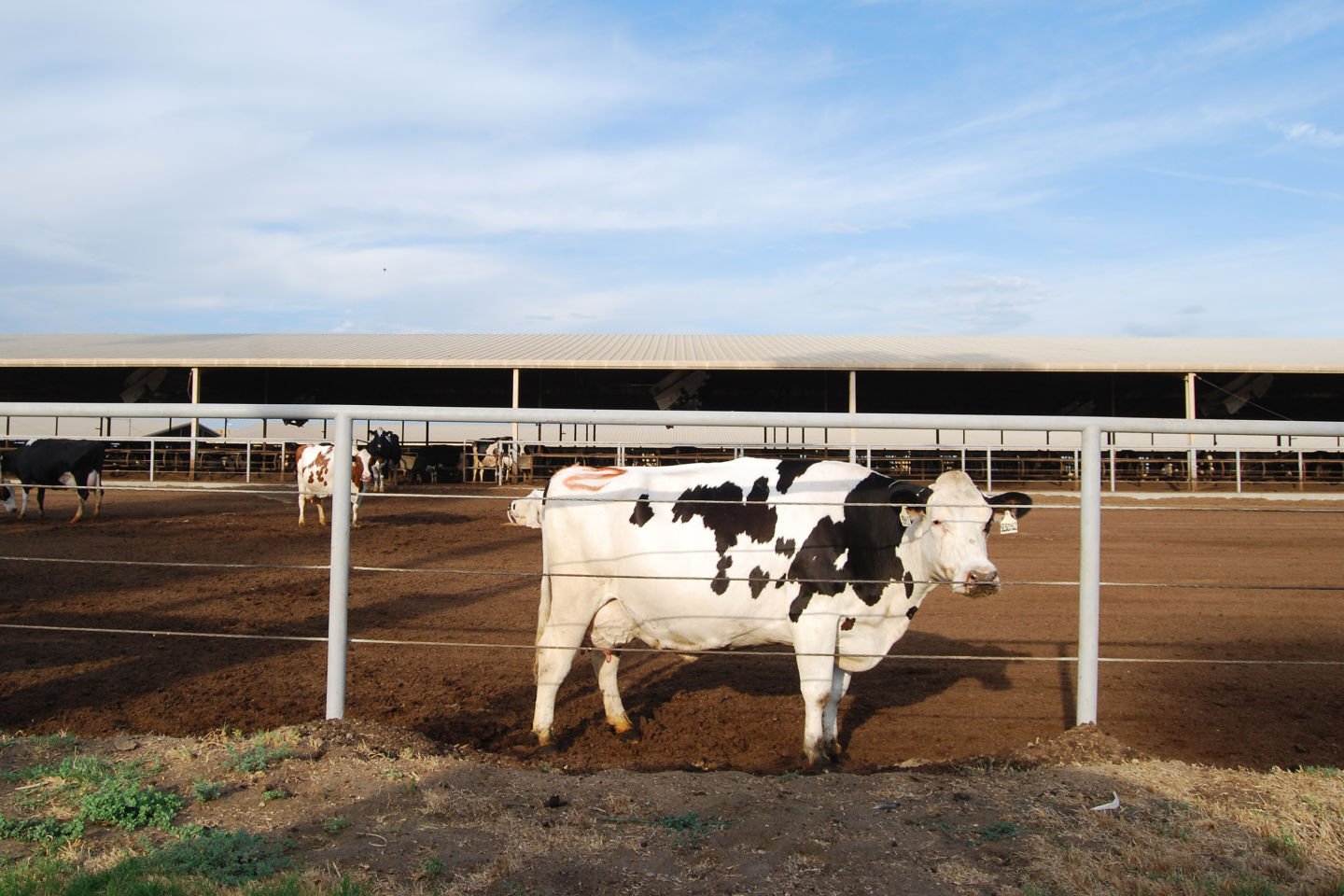
"caption": "One of the hornless Holsteins at Steve Maddox's California dairy farm. Maddox is beginning to breed hornless cattle into his herd, but it's slow going.",
"description": "One of the hornless Holsteins at Steve Maddox's California dairy farm. Maddox is beginning to breed hornless cattle into his herd, but it's slow going",
"title": "One of the hornless Holsteins at Steve Maddox's California dairy farm. Maddox is beginning to breed hornless cattle into his herd, but it's slow going.",
"credit": "Abbie Fentress Swanson for NPR",
"status": "inherit",
"isLoading": false,
"fetchFailed": false
},
"bayareabites_98831": {
"type": "attachments",
"id": "bayareabites_98831",
"meta": {
"index": "attachments_1716263798",
"site": "bayareabites",
"id": "98831",
"found": true
},
"parent": 98830,
"imgSizes": {
"twentyfourteen-full-width": {
"file": "https://ww2.kqed.org/app/uploads/sites/24/2015/08/page-79-duck-confit-lebo_9781607742678_art_147_r1_custom-2c1b071293717417d8068f163cdcf6aea5b0c059-1038x576.jpg",
"width": 1038,
"mimeType": "image/jpeg",
"height": 576
},
"thumbnail": {
"file": "https://ww2.kqed.org/app/uploads/sites/24/2015/08/page-79-duck-confit-lebo_9781607742678_art_147_r1_custom-2c1b071293717417d8068f163cdcf6aea5b0c059-400x297.jpg",
"width": 400,
"mimeType": "image/jpeg",
"height": 297
},
"fd-sm": {
"file": "https://ww2.kqed.org/app/uploads/sites/24/2015/08/page-79-duck-confit-lebo_9781607742678_art_147_r1_custom-2c1b071293717417d8068f163cdcf6aea5b0c059-960x712.jpg",
"width": 960,
"mimeType": "image/jpeg",
"height": 712
},
"post-thumbnail": {
"file": "https://ww2.kqed.org/app/uploads/sites/24/2015/08/page-79-duck-confit-lebo_9781607742678_art_147_r1_custom-2c1b071293717417d8068f163cdcf6aea5b0c059-672x372.jpg",
"width": 672,
"mimeType": "image/jpeg",
"height": 372
},
"kqedFullSize": {
"file": "https://ww2.kqed.org/app/uploads/sites/24/2015/08/page-79-duck-confit-lebo_9781607742678_art_147_r1_custom-2c1b071293717417d8068f163cdcf6aea5b0c059.jpg",
"width": 1998,
"height": 1482
},
"large": {
"file": "https://ww2.kqed.org/app/uploads/sites/24/2015/08/page-79-duck-confit-lebo_9781607742678_art_147_r1_custom-2c1b071293717417d8068f163cdcf6aea5b0c059-1440x1068.jpg",
"width": 1440,
"mimeType": "image/jpeg",
"height": 1068
},
"guest-author-96": {
"file": "https://ww2.kqed.org/app/uploads/sites/24/2015/08/page-79-duck-confit-lebo_9781607742678_art_147_r1_custom-2c1b071293717417d8068f163cdcf6aea5b0c059-96x96.jpg",
"width": 96,
"mimeType": "image/jpeg",
"height": 96
},
"medium": {
"file": "https://ww2.kqed.org/app/uploads/sites/24/2015/08/page-79-duck-confit-lebo_9781607742678_art_147_r1_custom-2c1b071293717417d8068f163cdcf6aea5b0c059-800x593.jpg",
"width": 800,
"mimeType": "image/jpeg",
"height": 593
},
"guest-author-64": {
"file": "https://ww2.kqed.org/app/uploads/sites/24/2015/08/page-79-duck-confit-lebo_9781607742678_art_147_r1_custom-2c1b071293717417d8068f163cdcf6aea5b0c059-64x64.jpg",
"width": 64,
"mimeType": "image/jpeg",
"height": 64
},
"guest-author-32": {
"file": "https://ww2.kqed.org/app/uploads/sites/24/2015/08/page-79-duck-confit-lebo_9781607742678_art_147_r1_custom-2c1b071293717417d8068f163cdcf6aea5b0c059-32x32.jpg",
"width": 32,
"mimeType": "image/jpeg",
"height": 32
},
"cat_post_thumb_sizecategory-posts-2": {
"file": "https://ww2.kqed.org/app/uploads/sites/24/2015/08/page-79-duck-confit-lebo_9781607742678_art_147_r1_custom-2c1b071293717417d8068f163cdcf6aea5b0c059-150x150.jpg",
"width": 150,
"mimeType": "image/jpeg",
"height": 150
},
"fd-lrg": {
"file": "https://ww2.kqed.org/app/uploads/sites/24/2015/08/page-79-duck-confit-lebo_9781607742678_art_147_r1_custom-2c1b071293717417d8068f163cdcf6aea5b0c059-1920x1424.jpg",
"width": 1920,
"mimeType": "image/jpeg",
"height": 1424
},
"fd-med": {
"file": "https://ww2.kqed.org/app/uploads/sites/24/2015/08/page-79-duck-confit-lebo_9781607742678_art_147_r1_custom-2c1b071293717417d8068f163cdcf6aea5b0c059-1180x875.jpg",
"width": 1180,
"mimeType": "image/jpeg",
"height": 875
},
"detail": {
"file": "https://ww2.kqed.org/app/uploads/sites/24/2015/08/page-79-duck-confit-lebo_9781607742678_art_147_r1_custom-2c1b071293717417d8068f163cdcf6aea5b0c059-75x75.jpg",
"width": 75,
"mimeType": "image/jpeg",
"height": 75
},
"guest-author-128": {
"file": "https://ww2.kqed.org/app/uploads/sites/24/2015/08/page-79-duck-confit-lebo_9781607742678_art_147_r1_custom-2c1b071293717417d8068f163cdcf6aea5b0c059-128x128.jpg",
"width": 128,
"mimeType": "image/jpeg",
"height": 128
}
},
"publishDate": 1438528661,
"modified": 1438528932,
"caption": "Traditional recipes for duck confit, or confit de canard, can require dozens of steps to prepare. David Lebovitz's fake take cuts the steps down to five.",
"description": "Traditional recipes for duck confit, or \u003cem>confit de canard, \u003c/em>can require dozens of steps to prepare. David Lebovitz's fake take cuts the steps down to f",
"title": "Traditional recipes for duck confit, or confit de canard, can require dozens of steps to prepare. David Lebovitz's fake take cuts the steps down to five.",
"credit": "Ed Anderson/Courtesy of Ten Speed Press ",
"status": "inherit",
"isLoading": false,
"fetchFailed": false
},
"bayareabites_98792": {
"type": "attachments",
"id": "bayareabites_98792",
"meta": {
"index": "attachments_1716263798",
"site": "bayareabites",
"id": "98792",
"found": true
},
"parent": 98791,
"imgSizes": {
"twentyfourteen-full-width": {
"file": "https://ww2.kqed.org/app/uploads/sites/24/2015/07/einstein-afghan-girl_custom-e08a36ab1bfa09b0d366c4b7d64831990ae6bc6d-946x576.jpg",
"width": 946,
"mimeType": "image/jpeg",
"height": 576
},
"thumbnail": {
"file": "https://ww2.kqed.org/app/uploads/sites/24/2015/07/einstein-afghan-girl_custom-e08a36ab1bfa09b0d366c4b7d64831990ae6bc6d-400x252.jpg",
"width": 400,
"mimeType": "image/jpeg",
"height": 252
},
"post-thumbnail": {
"file": "https://ww2.kqed.org/app/uploads/sites/24/2015/07/einstein-afghan-girl_custom-e08a36ab1bfa09b0d366c4b7d64831990ae6bc6d-672x372.jpg",
"width": 672,
"mimeType": "image/jpeg",
"height": 372
},
"kqedFullSize": {
"file": "https://ww2.kqed.org/app/uploads/sites/24/2015/07/einstein-afghan-girl_custom-e08a36ab1bfa09b0d366c4b7d64831990ae6bc6d.jpg",
"width": 946,
"height": 597
},
"cat_post_thumb_sizecategory-posts-2": {
"file": "https://ww2.kqed.org/app/uploads/sites/24/2015/07/einstein-afghan-girl_custom-e08a36ab1bfa09b0d366c4b7d64831990ae6bc6d-150x150.jpg",
"width": 150,
"mimeType": "image/jpeg",
"height": 150
},
"guest-author-96": {
"file": "https://ww2.kqed.org/app/uploads/sites/24/2015/07/einstein-afghan-girl_custom-e08a36ab1bfa09b0d366c4b7d64831990ae6bc6d-96x96.jpg",
"width": 96,
"mimeType": "image/jpeg",
"height": 96
},
"medium": {
"file": "https://ww2.kqed.org/app/uploads/sites/24/2015/07/einstein-afghan-girl_custom-e08a36ab1bfa09b0d366c4b7d64831990ae6bc6d-800x505.jpg",
"width": 800,
"mimeType": "image/jpeg",
"height": 505
},
"guest-author-64": {
"file": "https://ww2.kqed.org/app/uploads/sites/24/2015/07/einstein-afghan-girl_custom-e08a36ab1bfa09b0d366c4b7d64831990ae6bc6d-64x64.jpg",
"width": 64,
"mimeType": "image/jpeg",
"height": 64
},
"detail": {
"file": "https://ww2.kqed.org/app/uploads/sites/24/2015/07/einstein-afghan-girl_custom-e08a36ab1bfa09b0d366c4b7d64831990ae6bc6d-75x75.jpg",
"width": 75,
"mimeType": "image/jpeg",
"height": 75
},
"guest-author-32": {
"file": "https://ww2.kqed.org/app/uploads/sites/24/2015/07/einstein-afghan-girl_custom-e08a36ab1bfa09b0d366c4b7d64831990ae6bc6d-32x32.jpg",
"width": 32,
"mimeType": "image/jpeg",
"height": 32
},
"guest-author-128": {
"file": "https://ww2.kqed.org/app/uploads/sites/24/2015/07/einstein-afghan-girl_custom-e08a36ab1bfa09b0d366c4b7d64831990ae6bc6d-128x128.jpg",
"width": 128,
"mimeType": "image/jpeg",
"height": 128
}
},
"publishDate": 1438298984,
"modified": 1438299378,
"caption": "(Left) Afghan girl; (Right) Albert Einstein, by Maria Aristidou",
"description": "(Left) Afghan girl; (Right) Albert Einstein, by Maria Aristidou",
"title": "(Left) Afghan girl; (Right) Albert Einstein, by Maria Aristidou",
"credit": "Courtesy of Maria Aristidou",
"status": "inherit",
"isLoading": false,
"fetchFailed": false
},
"bayareabites_98730": {
"type": "attachments",
"id": "bayareabites_98730",
"meta": {
"index": "attachments_1716263798",
"site": "bayareabites",
"id": "98730",
"found": true
},
"parent": 98729,
"imgSizes": {
"twentyfourteen-full-width": {
"file": "https://ww2.kqed.org/app/uploads/sites/24/2015/07/mg_4648-2_wide-f80d18d781fb11b72de615a0d5095ec6ee7574b5-1038x576.jpg",
"width": 1038,
"mimeType": "image/jpeg",
"height": 576
},
"thumbnail": {
"file": "https://ww2.kqed.org/app/uploads/sites/24/2015/07/mg_4648-2_wide-f80d18d781fb11b72de615a0d5095ec6ee7574b5-400x225.jpg",
"width": 400,
"mimeType": "image/jpeg",
"height": 225
},
"fd-sm": {
"file": "https://ww2.kqed.org/app/uploads/sites/24/2015/07/mg_4648-2_wide-f80d18d781fb11b72de615a0d5095ec6ee7574b5-960x540.jpg",
"width": 960,
"mimeType": "image/jpeg",
"height": 540
},
"post-thumbnail": {
"file": "https://ww2.kqed.org/app/uploads/sites/24/2015/07/mg_4648-2_wide-f80d18d781fb11b72de615a0d5095ec6ee7574b5-672x372.jpg",
"width": 672,
"mimeType": "image/jpeg",
"height": 372
},
"kqedFullSize": {
"file": "https://ww2.kqed.org/app/uploads/sites/24/2015/07/mg_4648-2_wide-f80d18d781fb11b72de615a0d5095ec6ee7574b5-e1438271936655.jpg",
"width": 1920,
"height": 1080
},
"large": {
"file": "https://ww2.kqed.org/app/uploads/sites/24/2015/07/mg_4648-2_wide-f80d18d781fb11b72de615a0d5095ec6ee7574b5-1440x810.jpg",
"width": 1440,
"mimeType": "image/jpeg",
"height": 810
},
"guest-author-96": {
"file": "https://ww2.kqed.org/app/uploads/sites/24/2015/07/mg_4648-2_wide-f80d18d781fb11b72de615a0d5095ec6ee7574b5-96x96.jpg",
"width": 96,
"mimeType": "image/jpeg",
"height": 96
},
"medium": {
"file": "https://ww2.kqed.org/app/uploads/sites/24/2015/07/mg_4648-2_wide-f80d18d781fb11b72de615a0d5095ec6ee7574b5-800x450.jpg",
"width": 800,
"mimeType": "image/jpeg",
"height": 450
},
"guest-author-64": {
"file": "https://ww2.kqed.org/app/uploads/sites/24/2015/07/mg_4648-2_wide-f80d18d781fb11b72de615a0d5095ec6ee7574b5-64x64.jpg",
"width": 64,
"mimeType": "image/jpeg",
"height": 64
},
"guest-author-32": {
"file": "https://ww2.kqed.org/app/uploads/sites/24/2015/07/mg_4648-2_wide-f80d18d781fb11b72de615a0d5095ec6ee7574b5-32x32.jpg",
"width": 32,
"mimeType": "image/jpeg",
"height": 32
},
"cat_post_thumb_sizecategory-posts-2": {
"file": "https://ww2.kqed.org/app/uploads/sites/24/2015/07/mg_4648-2_wide-f80d18d781fb11b72de615a0d5095ec6ee7574b5-150x150.jpg",
"width": 150,
"mimeType": "image/jpeg",
"height": 150
},
"fd-lrg": {
"file": "https://ww2.kqed.org/app/uploads/sites/24/2015/07/mg_4648-2_wide-f80d18d781fb11b72de615a0d5095ec6ee7574b5-1920x1080.jpg",
"width": 1920,
"mimeType": "image/jpeg",
"height": 1080
},
"fd-med": {
"file": "https://ww2.kqed.org/app/uploads/sites/24/2015/07/mg_4648-2_wide-f80d18d781fb11b72de615a0d5095ec6ee7574b5-1180x664.jpg",
"width": 1180,
"mimeType": "image/jpeg",
"height": 664
},
"detail": {
"file": "https://ww2.kqed.org/app/uploads/sites/24/2015/07/mg_4648-2_wide-f80d18d781fb11b72de615a0d5095ec6ee7574b5-75x75.jpg",
"width": 75,
"mimeType": "image/jpeg",
"height": 75
},
"guest-author-128": {
"file": "https://ww2.kqed.org/app/uploads/sites/24/2015/07/mg_4648-2_wide-f80d18d781fb11b72de615a0d5095ec6ee7574b5-128x128.jpg",
"width": 128,
"mimeType": "image/jpeg",
"height": 128
}
},
"publishDate": 1438271517,
"modified": 1438271930,
"caption": "Sea bass, pollock, striped bass and other fish species are seen for sale at the Harbor Fish Market in Portland, Maine.",
"description": "Sea bass, pollock, striped bass and other fish species are seen for sale at the Harbor Fish Market in Portland, Maine",
"title": "Sea bass, pollock, striped bass and other fish species are seen for sale at the Harbor Fish Market in Portland, Maine.",
"credit": "Ryan Kellman for NPR ",
"status": "inherit",
"isLoading": false,
"fetchFailed": false
},
"bayareabites_98726": {
"type": "attachments",
"id": "bayareabites_98726",
"meta": {
"index": "attachments_1716263798",
"site": "bayareabites",
"id": "98726",
"found": true
},
"parent": 98724,
"imgSizes": {
"thumbnail": {
"file": "https://ww2.kqed.org/app/uploads/sites/24/2015/07/veg-illustration-400x284.jpg",
"width": 400,
"mimeType": "image/jpeg",
"height": 284
},
"post-thumbnail": {
"file": "https://ww2.kqed.org/app/uploads/sites/24/2015/07/veg-illustration-672x372.jpg",
"width": 672,
"mimeType": "image/jpeg",
"height": 372
},
"kqedFullSize": {
"file": "https://ww2.kqed.org/app/uploads/sites/24/2015/07/veg-illustration.jpg",
"width": 800,
"height": 567
},
"cat_post_thumb_sizecategory-posts-2": {
"file": "https://ww2.kqed.org/app/uploads/sites/24/2015/07/veg-illustration-150x150.jpg",
"width": 150,
"mimeType": "image/jpeg",
"height": 150
},
"guest-author-96": {
"file": "https://ww2.kqed.org/app/uploads/sites/24/2015/07/veg-illustration-96x96.jpg",
"width": 96,
"mimeType": "image/jpeg",
"height": 96
},
"medium": {
"file": "https://ww2.kqed.org/app/uploads/sites/24/2015/07/veg-illustration-800x567.jpg",
"width": 800,
"mimeType": "image/jpeg",
"height": 567
},
"guest-author-64": {
"file": "https://ww2.kqed.org/app/uploads/sites/24/2015/07/veg-illustration-64x64.jpg",
"width": 64,
"mimeType": "image/jpeg",
"height": 64
},
"detail": {
"file": "https://ww2.kqed.org/app/uploads/sites/24/2015/07/veg-illustration-75x75.jpg",
"width": 75,
"mimeType": "image/jpeg",
"height": 75
},
"guest-author-32": {
"file": "https://ww2.kqed.org/app/uploads/sites/24/2015/07/veg-illustration-32x32.jpg",
"width": 32,
"mimeType": "image/jpeg",
"height": 32
},
"guest-author-128": {
"file": "https://ww2.kqed.org/app/uploads/sites/24/2015/07/veg-illustration-128x128.jpg",
"width": 128,
"mimeType": "image/jpeg",
"height": 128
}
},
"publishDate": 1438206568,
"modified": 1438206588,
"caption": "A meta-analysis found that people on vegetarian diets lost around 4.4 pounds more than the control group (who had no change in diet), while those who went vegan dropped 5.5 pounds more.",
"description": "A meta-analysis found that people on vegetarian diets lost around 4.4 pounds more than the control group (who had no change in diet), while those who went vegan dropped 5.5 pounds more.",
"title": "A meta-analysis found that people on vegetarian diets lost around 4.4 pounds more than the control group (who had no change in diet), while those who went vegan dropped 5.5 pounds more.",
"credit": "Marcus Butt/Ikon Images/Corbis",
"status": "inherit",
"isLoading": false,
"fetchFailed": false
},
"bayareabites_98679": {
"type": "attachments",
"id": "bayareabites_98679",
"meta": {
"index": "attachments_1716263798",
"site": "bayareabites",
"id": "98679",
"found": true
},
"parent": 98678,
"imgSizes": {
"twentyfourteen-full-width": {
"file": "https://ww2.kqed.org/app/uploads/sites/24/2015/07/img_1649-baf915798a62add658c5c2412aa2e54103308562-1038x576.jpg",
"width": 1038,
"mimeType": "image/jpeg",
"height": 576
},
"thumbnail": {
"file": "https://ww2.kqed.org/app/uploads/sites/24/2015/07/img_1649-baf915798a62add658c5c2412aa2e54103308562-400x300.jpg",
"width": 400,
"mimeType": "image/jpeg",
"height": 300
},
"fd-sm": {
"file": "https://ww2.kqed.org/app/uploads/sites/24/2015/07/img_1649-baf915798a62add658c5c2412aa2e54103308562-960x720.jpg",
"width": 960,
"mimeType": "image/jpeg",
"height": 720
},
"post-thumbnail": {
"file": "https://ww2.kqed.org/app/uploads/sites/24/2015/07/img_1649-baf915798a62add658c5c2412aa2e54103308562-672x372.jpg",
"width": 672,
"mimeType": "image/jpeg",
"height": 372
},
"kqedFullSize": {
"file": "https://ww2.kqed.org/app/uploads/sites/24/2015/07/img_1649-baf915798a62add658c5c2412aa2e54103308562-e1438106195192.jpg",
"width": 1920,
"height": 1440
},
"large": {
"file": "https://ww2.kqed.org/app/uploads/sites/24/2015/07/img_1649-baf915798a62add658c5c2412aa2e54103308562-1440x1080.jpg",
"width": 1440,
"mimeType": "image/jpeg",
"height": 1080
},
"guest-author-96": {
"file": "https://ww2.kqed.org/app/uploads/sites/24/2015/07/img_1649-baf915798a62add658c5c2412aa2e54103308562-96x96.jpg",
"width": 96,
"mimeType": "image/jpeg",
"height": 96
},
"medium": {
"file": "https://ww2.kqed.org/app/uploads/sites/24/2015/07/img_1649-baf915798a62add658c5c2412aa2e54103308562-800x600.jpg",
"width": 800,
"mimeType": "image/jpeg",
"height": 600
},
"guest-author-64": {
"file": "https://ww2.kqed.org/app/uploads/sites/24/2015/07/img_1649-baf915798a62add658c5c2412aa2e54103308562-64x64.jpg",
"width": 64,
"mimeType": "image/jpeg",
"height": 64
},
"guest-author-32": {
"file": "https://ww2.kqed.org/app/uploads/sites/24/2015/07/img_1649-baf915798a62add658c5c2412aa2e54103308562-32x32.jpg",
"width": 32,
"mimeType": "image/jpeg",
"height": 32
},
"cat_post_thumb_sizecategory-posts-2": {
"file": "https://ww2.kqed.org/app/uploads/sites/24/2015/07/img_1649-baf915798a62add658c5c2412aa2e54103308562-150x150.jpg",
"width": 150,
"mimeType": "image/jpeg",
"height": 150
},
"fd-lrg": {
"file": "https://ww2.kqed.org/app/uploads/sites/24/2015/07/img_1649-baf915798a62add658c5c2412aa2e54103308562-1400x1050.jpg",
"width": 1400,
"mimeType": "image/jpeg",
"height": 1050
},
"fd-med": {
"file": "https://ww2.kqed.org/app/uploads/sites/24/2015/07/img_1649-baf915798a62add658c5c2412aa2e54103308562-1180x885.jpg",
"width": 1180,
"mimeType": "image/jpeg",
"height": 885
},
"detail": {
"file": "https://ww2.kqed.org/app/uploads/sites/24/2015/07/img_1649-baf915798a62add658c5c2412aa2e54103308562-75x75.jpg",
"width": 75,
"mimeType": "image/jpeg",
"height": 75
},
"guest-author-128": {
"file": "https://ww2.kqed.org/app/uploads/sites/24/2015/07/img_1649-baf915798a62add658c5c2412aa2e54103308562-128x128.jpg",
"width": 128,
"mimeType": "image/jpeg",
"height": 128
}
},
"publishDate": 1438105746,
"modified": 1438106166,
"caption": "Gary Broomell and his daughter, Debbie, pose behind a sign on their ranch in San Diego County. Their family has been growing citrus for generations, but lately, it's been hard staying in the black growing oranges, so they started a vineyard a few years ago.",
"description": "Gary Broomell and his daughter, Debbie, pose behind a sign on their ranch in San Diego County. Their family has been growing citrus for generations, but lately, it's been hard staying in the black growing oranges, so they started a vineyard a few years ago.",
"title": "Gary Broomell and his daughter, Debbie, pose behind a sign on their ranch in San Diego County. Their family has been growing citrus for generations, but lately, it's been hard staying in the black growing oranges, so they started a vineyard a few years ago.",
"credit": "Lesley McClurg/ Capital Public Radio ",
"status": "inherit",
"isLoading": false,
"fetchFailed": false
},
"bayareabites_98568": {
"type": "attachments",
"id": "bayareabites_98568",
"meta": {
"index": "attachments_1716263798",
"site": "bayareabites",
"id": "98568",
"found": true
},
"parent": 98567,
"imgSizes": {
"twentyfourteen-full-width": {
"file": "https://ww2.kqed.org/app/uploads/sites/24/2015/07/almond-field.jpg_custom-26bee0b50cfa58d7f8c0cbca7c4b4f8672e02e95-1038x576.jpe",
"width": 1038,
"mimeType": "image/jpeg",
"height": 576
},
"thumbnail": {
"file": "https://ww2.kqed.org/app/uploads/sites/24/2015/07/almond-field.jpg_custom-26bee0b50cfa58d7f8c0cbca7c4b4f8672e02e95-400x280.jpe",
"width": 400,
"mimeType": "image/jpeg",
"height": 280
},
"fd-sm": {
"file": "https://ww2.kqed.org/app/uploads/sites/24/2015/07/almond-field.jpg_custom-26bee0b50cfa58d7f8c0cbca7c4b4f8672e02e95-960x671.jpe",
"width": 960,
"mimeType": "image/jpeg",
"height": 671
},
"post-thumbnail": {
"file": "https://ww2.kqed.org/app/uploads/sites/24/2015/07/almond-field.jpg_custom-26bee0b50cfa58d7f8c0cbca7c4b4f8672e02e95-672x372.jpe",
"width": 672,
"mimeType": "image/jpeg",
"height": 372
},
"kqedFullSize": {
"file": "https://ww2.kqed.org/app/uploads/sites/24/2015/07/almond-field.jpg_custom-26bee0b50cfa58d7f8c0cbca7c4b4f8672e02e95.jpe",
"width": 1600,
"height": 1118
},
"large": {
"file": "https://ww2.kqed.org/app/uploads/sites/24/2015/07/almond-field.jpg_custom-26bee0b50cfa58d7f8c0cbca7c4b4f8672e02e95-1440x1006.jpe",
"width": 1440,
"mimeType": "image/jpeg",
"height": 1006
},
"guest-author-96": {
"file": "https://ww2.kqed.org/app/uploads/sites/24/2015/07/almond-field.jpg_custom-26bee0b50cfa58d7f8c0cbca7c4b4f8672e02e95-96x96.jpe",
"width": 96,
"mimeType": "image/jpeg",
"height": 96
},
"medium": {
"file": "https://ww2.kqed.org/app/uploads/sites/24/2015/07/almond-field.jpg_custom-26bee0b50cfa58d7f8c0cbca7c4b4f8672e02e95-800x559.jpe",
"width": 800,
"mimeType": "image/jpeg",
"height": 559
},
"guest-author-64": {
"file": "https://ww2.kqed.org/app/uploads/sites/24/2015/07/almond-field.jpg_custom-26bee0b50cfa58d7f8c0cbca7c4b4f8672e02e95-64x64.jpe",
"width": 64,
"mimeType": "image/jpeg",
"height": 64
},
"guest-author-32": {
"file": "https://ww2.kqed.org/app/uploads/sites/24/2015/07/almond-field.jpg_custom-26bee0b50cfa58d7f8c0cbca7c4b4f8672e02e95-32x32.jpe",
"width": 32,
"mimeType": "image/jpeg",
"height": 32
},
"cat_post_thumb_sizecategory-posts-2": {
"file": "https://ww2.kqed.org/app/uploads/sites/24/2015/07/almond-field.jpg_custom-26bee0b50cfa58d7f8c0cbca7c4b4f8672e02e95-150x150.jpe",
"width": 150,
"mimeType": "image/jpeg",
"height": 150
},
"fd-lrg": {
"file": "https://ww2.kqed.org/app/uploads/sites/24/2015/07/almond-field.jpg_custom-26bee0b50cfa58d7f8c0cbca7c4b4f8672e02e95-1400x978.jpe",
"width": 1400,
"mimeType": "image/jpeg",
"height": 978
},
"fd-med": {
"file": "https://ww2.kqed.org/app/uploads/sites/24/2015/07/almond-field.jpg_custom-26bee0b50cfa58d7f8c0cbca7c4b4f8672e02e95-1180x825.jpe",
"width": 1180,
"mimeType": "image/jpeg",
"height": 825
},
"detail": {
"file": "https://ww2.kqed.org/app/uploads/sites/24/2015/07/almond-field.jpg_custom-26bee0b50cfa58d7f8c0cbca7c4b4f8672e02e95-75x75.jpe",
"width": 75,
"mimeType": "image/jpeg",
"height": 75
},
"guest-author-128": {
"file": "https://ww2.kqed.org/app/uploads/sites/24/2015/07/almond-field.jpg_custom-26bee0b50cfa58d7f8c0cbca7c4b4f8672e02e95-128x128.jpe",
"width": 128,
"mimeType": "image/jpeg",
"height": 128
}
},
"publishDate": 1437778175,
"modified": 1437778315,
"caption": "Almond orchards across California are dealing with trees showing signs of stress from the drought, such as smaller nuts and salt-burned leaves.",
"description": "Almond orchards across California are dealing with trees showing signs of stress from the drought, such as smaller nuts and salt-burned leaves.",
"title": "Almond orchards across California are dealing with trees showing signs of stress from the drought, such as smaller nuts and salt-burned leaves.",
"credit": "Ezra Romero for NPR ",
"status": "inherit",
"isLoading": false,
"fetchFailed": false
},
"bayareabites_98426": {
"type": "attachments",
"id": "bayareabites_98426",
"meta": {
"index": "attachments_1716263798",
"site": "bayareabites",
"id": "98426",
"found": true
},
"parent": 98425,
"imgSizes": {
"twentyfourteen-full-width": {
"file": "https://ww2.kqed.org/app/uploads/sites/24/2015/07/mg_8498_custom-6e63ef3426f04a6a839caa4c2b072e70cc8b26da-1038x576.jpg",
"width": 1038,
"mimeType": "image/jpeg",
"height": 576
},
"thumbnail": {
"file": "https://ww2.kqed.org/app/uploads/sites/24/2015/07/mg_8498_custom-6e63ef3426f04a6a839caa4c2b072e70cc8b26da-400x245.jpg",
"width": 400,
"mimeType": "image/jpeg",
"height": 245
},
"fd-sm": {
"file": "https://ww2.kqed.org/app/uploads/sites/24/2015/07/mg_8498_custom-6e63ef3426f04a6a839caa4c2b072e70cc8b26da-960x589.jpg",
"width": 960,
"mimeType": "image/jpeg",
"height": 589
},
"post-thumbnail": {
"file": "https://ww2.kqed.org/app/uploads/sites/24/2015/07/mg_8498_custom-6e63ef3426f04a6a839caa4c2b072e70cc8b26da-672x372.jpg",
"width": 672,
"mimeType": "image/jpeg",
"height": 372
},
"kqedFullSize": {
"file": "https://ww2.kqed.org/app/uploads/sites/24/2015/07/mg_8498_custom-6e63ef3426f04a6a839caa4c2b072e70cc8b26da-e1437697728286.jpg",
"width": 1920,
"height": 1178
},
"large": {
"file": "https://ww2.kqed.org/app/uploads/sites/24/2015/07/mg_8498_custom-6e63ef3426f04a6a839caa4c2b072e70cc8b26da-1440x884.jpg",
"width": 1440,
"mimeType": "image/jpeg",
"height": 884
},
"guest-author-96": {
"file": "https://ww2.kqed.org/app/uploads/sites/24/2015/07/mg_8498_custom-6e63ef3426f04a6a839caa4c2b072e70cc8b26da-96x96.jpg",
"width": 96,
"mimeType": "image/jpeg",
"height": 96
},
"medium": {
"file": "https://ww2.kqed.org/app/uploads/sites/24/2015/07/mg_8498_custom-6e63ef3426f04a6a839caa4c2b072e70cc8b26da-800x491.jpg",
"width": 800,
"mimeType": "image/jpeg",
"height": 491
},
"guest-author-64": {
"file": "https://ww2.kqed.org/app/uploads/sites/24/2015/07/mg_8498_custom-6e63ef3426f04a6a839caa4c2b072e70cc8b26da-64x64.jpg",
"width": 64,
"mimeType": "image/jpeg",
"height": 64
},
"guest-author-32": {
"file": "https://ww2.kqed.org/app/uploads/sites/24/2015/07/mg_8498_custom-6e63ef3426f04a6a839caa4c2b072e70cc8b26da-32x32.jpg",
"width": 32,
"mimeType": "image/jpeg",
"height": 32
},
"cat_post_thumb_sizecategory-posts-2": {
"file": "https://ww2.kqed.org/app/uploads/sites/24/2015/07/mg_8498_custom-6e63ef3426f04a6a839caa4c2b072e70cc8b26da-150x150.jpg",
"width": 150,
"mimeType": "image/jpeg",
"height": 150
},
"fd-lrg": {
"file": "https://ww2.kqed.org/app/uploads/sites/24/2015/07/mg_8498_custom-6e63ef3426f04a6a839caa4c2b072e70cc8b26da-1400x859.jpg",
"width": 1400,
"mimeType": "image/jpeg",
"height": 859
},
"fd-med": {
"file": "https://ww2.kqed.org/app/uploads/sites/24/2015/07/mg_8498_custom-6e63ef3426f04a6a839caa4c2b072e70cc8b26da-1180x724.jpg",
"width": 1180,
"mimeType": "image/jpeg",
"height": 724
},
"detail": {
"file": "https://ww2.kqed.org/app/uploads/sites/24/2015/07/mg_8498_custom-6e63ef3426f04a6a839caa4c2b072e70cc8b26da-75x75.jpg",
"width": 75,
"mimeType": "image/jpeg",
"height": 75
},
"guest-author-128": {
"file": "https://ww2.kqed.org/app/uploads/sites/24/2015/07/mg_8498_custom-6e63ef3426f04a6a839caa4c2b072e70cc8b26da-128x128.jpg",
"width": 128,
"mimeType": "image/jpeg",
"height": 128
}
},
"publishDate": 1437697588,
"modified": 1437697722,
"caption": "A daily habit of sugary-sweetened drinks can boost your risk of developing the disease — even if you're not overweight.",
"description": "A daily habit of sugary-sweetened drinks can boost your risk of developing the disease -- even if you're not overweight",
"title": "A daily habit of sugary-sweetened drinks can boost your risk of developing the disease — even if you're not overweight.",
"credit": "Ryan Kellman/NPR",
"status": "inherit",
"isLoading": false,
"fetchFailed": false
},
"bayareabites_98401": {
"type": "attachments",
"id": "bayareabites_98401",
"meta": {
"index": "attachments_1716263798",
"site": "bayareabites",
"id": "98401",
"found": true
},
"parent": 98398,
"imgSizes": {
"twentyfourteen-full-width": {
"file": "https://ww2.kqed.org/app/uploads/sites/24/2015/07/2092436_shapiro_temple-11-_custom-2554261ea02084543f8ed4d3938fad2f4e3f3342-1038x576.jpg",
"width": 1038,
"mimeType": "image/jpeg",
"height": 576
},
"thumbnail": {
"file": "https://ww2.kqed.org/app/uploads/sites/24/2015/07/2092436_shapiro_temple-11-_custom-2554261ea02084543f8ed4d3938fad2f4e3f3342-400x268.jpg",
"width": 400,
"mimeType": "image/jpeg",
"height": 268
},
"fd-sm": {
"file": "https://ww2.kqed.org/app/uploads/sites/24/2015/07/2092436_shapiro_temple-11-_custom-2554261ea02084543f8ed4d3938fad2f4e3f3342-960x643.jpg",
"width": 960,
"mimeType": "image/jpeg",
"height": 643
},
"post-thumbnail": {
"file": "https://ww2.kqed.org/app/uploads/sites/24/2015/07/2092436_shapiro_temple-11-_custom-2554261ea02084543f8ed4d3938fad2f4e3f3342-672x372.jpg",
"width": 672,
"mimeType": "image/jpeg",
"height": 372
},
"kqedFullSize": {
"file": "https://ww2.kqed.org/app/uploads/sites/24/2015/07/2092436_shapiro_temple-11-_custom-2554261ea02084543f8ed4d3938fad2f4e3f3342-e1437670559561.jpg",
"width": 1920,
"height": 1285
},
"large": {
"file": "https://ww2.kqed.org/app/uploads/sites/24/2015/07/2092436_shapiro_temple-11-_custom-2554261ea02084543f8ed4d3938fad2f4e3f3342-1440x964.jpg",
"width": 1440,
"mimeType": "image/jpeg",
"height": 964
},
"guest-author-96": {
"file": "https://ww2.kqed.org/app/uploads/sites/24/2015/07/2092436_shapiro_temple-11-_custom-2554261ea02084543f8ed4d3938fad2f4e3f3342-96x96.jpg",
"width": 96,
"mimeType": "image/jpeg",
"height": 96
},
"medium": {
"file": "https://ww2.kqed.org/app/uploads/sites/24/2015/07/2092436_shapiro_temple-11-_custom-2554261ea02084543f8ed4d3938fad2f4e3f3342-800x535.jpg",
"width": 800,
"mimeType": "image/jpeg",
"height": 535
},
"guest-author-64": {
"file": "https://ww2.kqed.org/app/uploads/sites/24/2015/07/2092436_shapiro_temple-11-_custom-2554261ea02084543f8ed4d3938fad2f4e3f3342-64x64.jpg",
"width": 64,
"mimeType": "image/jpeg",
"height": 64
},
"guest-author-32": {
"file": "https://ww2.kqed.org/app/uploads/sites/24/2015/07/2092436_shapiro_temple-11-_custom-2554261ea02084543f8ed4d3938fad2f4e3f3342-32x32.jpg",
"width": 32,
"mimeType": "image/jpeg",
"height": 32
},
"cat_post_thumb_sizecategory-posts-2": {
"file": "https://ww2.kqed.org/app/uploads/sites/24/2015/07/2092436_shapiro_temple-11-_custom-2554261ea02084543f8ed4d3938fad2f4e3f3342-150x150.jpg",
"width": 150,
"mimeType": "image/jpeg",
"height": 150
},
"fd-lrg": {
"file": "https://ww2.kqed.org/app/uploads/sites/24/2015/07/2092436_shapiro_temple-11-_custom-2554261ea02084543f8ed4d3938fad2f4e3f3342-1400x937.jpg",
"width": 1400,
"mimeType": "image/jpeg",
"height": 937
},
"fd-med": {
"file": "https://ww2.kqed.org/app/uploads/sites/24/2015/07/2092436_shapiro_temple-11-_custom-2554261ea02084543f8ed4d3938fad2f4e3f3342-1180x790.jpg",
"width": 1180,
"mimeType": "image/jpeg",
"height": 790
},
"detail": {
"file": "https://ww2.kqed.org/app/uploads/sites/24/2015/07/2092436_shapiro_temple-11-_custom-2554261ea02084543f8ed4d3938fad2f4e3f3342-75x75.jpg",
"width": 75,
"mimeType": "image/jpeg",
"height": 75
},
"guest-author-128": {
"file": "https://ww2.kqed.org/app/uploads/sites/24/2015/07/2092436_shapiro_temple-11-_custom-2554261ea02084543f8ed4d3938fad2f4e3f3342-128x128.jpg",
"width": 128,
"mimeType": "image/jpeg",
"height": 128
}
},
"publishDate": 1437669545,
"modified": 1437670574,
"caption": "\"The food creates the entire human being,\" says Gye Ho, the nun who runs the table. Above, an array of dishes served at the temple, including root chips, pickled radishes, marinated tofu, potatoes, stir-fried greens, squash, green tea, mushroom fritters and caps. The dishes feature no meat, fish or MSG.",
"description": "\"The food creates the entire human being,\" says Gye Ho, the nun who runs the table. Above, an array of dishes served at the temple, including root chips, pickled radishes, marinated tofu, potatoes, stir-fried greens, squash, green tea, mushroom fritters and caps. The dishes feature no meat, fish or MSG",
"title": "\"The food creates the entire human being,\" says Gye Ho, the nun who runs the table. Above, an array of dishes served at the temple, including root chips, pickled radishes, marinated tofu, potatoes, stir-fried greens, squash, green tea, mushroom fritters and caps. The dishes feature no meat, fish or MSG.",
"credit": "Ari Shapiro/NPR ",
"status": "inherit",
"isLoading": false,
"fetchFailed": false
},
"bayareabites_98415": {
"type": "attachments",
"id": "bayareabites_98415",
"meta": {
"index": "attachments_1716263798",
"site": "bayareabites",
"id": "98415",
"found": true
},
"parent": 98414,
"imgSizes": {
"twentyfourteen-full-width": {
"file": "https://ww2.kqed.org/app/uploads/sites/24/2015/07/gettyimages-154506232_custom-18851ae04c1f3fea206d4e861242ab48f1ea3096-1038x576.jpg",
"width": 1038,
"mimeType": "image/jpeg",
"height": 576
},
"thumbnail": {
"file": "https://ww2.kqed.org/app/uploads/sites/24/2015/07/gettyimages-154506232_custom-18851ae04c1f3fea206d4e861242ab48f1ea3096-400x265.jpg",
"width": 400,
"mimeType": "image/jpeg",
"height": 265
},
"fd-sm": {
"file": "https://ww2.kqed.org/app/uploads/sites/24/2015/07/gettyimages-154506232_custom-18851ae04c1f3fea206d4e861242ab48f1ea3096-960x635.jpg",
"width": 960,
"mimeType": "image/jpeg",
"height": 635
},
"post-thumbnail": {
"file": "https://ww2.kqed.org/app/uploads/sites/24/2015/07/gettyimages-154506232_custom-18851ae04c1f3fea206d4e861242ab48f1ea3096-672x372.jpg",
"width": 672,
"mimeType": "image/jpeg",
"height": 372
},
"kqedFullSize": {
"file": "https://ww2.kqed.org/app/uploads/sites/24/2015/07/gettyimages-154506232_custom-18851ae04c1f3fea206d4e861242ab48f1ea3096-e1437694506906.jpg",
"width": 1920,
"height": 1270
},
"large": {
"file": "https://ww2.kqed.org/app/uploads/sites/24/2015/07/gettyimages-154506232_custom-18851ae04c1f3fea206d4e861242ab48f1ea3096-1440x952.jpg",
"width": 1440,
"mimeType": "image/jpeg",
"height": 952
},
"guest-author-96": {
"file": "https://ww2.kqed.org/app/uploads/sites/24/2015/07/gettyimages-154506232_custom-18851ae04c1f3fea206d4e861242ab48f1ea3096-96x96.jpg",
"width": 96,
"mimeType": "image/jpeg",
"height": 96
},
"medium": {
"file": "https://ww2.kqed.org/app/uploads/sites/24/2015/07/gettyimages-154506232_custom-18851ae04c1f3fea206d4e861242ab48f1ea3096-800x529.jpg",
"width": 800,
"mimeType": "image/jpeg",
"height": 529
},
"guest-author-64": {
"file": "https://ww2.kqed.org/app/uploads/sites/24/2015/07/gettyimages-154506232_custom-18851ae04c1f3fea206d4e861242ab48f1ea3096-64x64.jpg",
"width": 64,
"mimeType": "image/jpeg",
"height": 64
},
"guest-author-32": {
"file": "https://ww2.kqed.org/app/uploads/sites/24/2015/07/gettyimages-154506232_custom-18851ae04c1f3fea206d4e861242ab48f1ea3096-32x32.jpg",
"width": 32,
"mimeType": "image/jpeg",
"height": 32
},
"cat_post_thumb_sizecategory-posts-2": {
"file": "https://ww2.kqed.org/app/uploads/sites/24/2015/07/gettyimages-154506232_custom-18851ae04c1f3fea206d4e861242ab48f1ea3096-150x150.jpg",
"width": 150,
"mimeType": "image/jpeg",
"height": 150
},
"fd-lrg": {
"file": "https://ww2.kqed.org/app/uploads/sites/24/2015/07/gettyimages-154506232_custom-18851ae04c1f3fea206d4e861242ab48f1ea3096-1400x926.jpg",
"width": 1400,
"mimeType": "image/jpeg",
"height": 926
},
"fd-med": {
"file": "https://ww2.kqed.org/app/uploads/sites/24/2015/07/gettyimages-154506232_custom-18851ae04c1f3fea206d4e861242ab48f1ea3096-1180x780.jpg",
"width": 1180,
"mimeType": "image/jpeg",
"height": 780
},
"detail": {
"file": "https://ww2.kqed.org/app/uploads/sites/24/2015/07/gettyimages-154506232_custom-18851ae04c1f3fea206d4e861242ab48f1ea3096-75x75.jpg",
"width": 75,
"mimeType": "image/jpeg",
"height": 75
},
"guest-author-128": {
"file": "https://ww2.kqed.org/app/uploads/sites/24/2015/07/gettyimages-154506232_custom-18851ae04c1f3fea206d4e861242ab48f1ea3096-128x128.jpg",
"width": 128,
"mimeType": "image/jpeg",
"height": 128
}
},
"publishDate": 1437694383,
"modified": 1437694500,
"caption": "A label on a bag of popcorn indicates it is a non-GMO food. House Republicans on Thursday voted in favor of a law that would block states from mandating GMO labels.",
"description": "A label on a bag of popcorn indicates it is a non-GMO food. House Republicans on Thursday voted in favor of a law that would block states from mandating GMO label",
"title": "A label on a bag of popcorn indicates it is a non-GMO food. House Republicans on Thursday voted in favor of a law that would block states from mandating GMO labels.",
"credit": "Robyn Beck/AFP/Getty Images",
"status": "inherit",
"isLoading": false,
"fetchFailed": false
},
"bayareabites_98390": {
"type": "attachments",
"id": "bayareabites_98390",
"meta": {
"index": "attachments_1716263798",
"site": "bayareabites",
"id": "98390",
"found": true
},
"parent": 98389,
"imgSizes": {
"twentyfourteen-full-width": {
"file": "https://ww2.kqed.org/app/uploads/sites/24/2015/07/gettyimages-481598326-4c6bc0c449f7db71cb9e1c2a7a15887e0f5c0249-1038x576.jpg",
"width": 1038,
"mimeType": "image/jpeg",
"height": 576
},
"thumbnail": {
"file": "https://ww2.kqed.org/app/uploads/sites/24/2015/07/gettyimages-481598326-4c6bc0c449f7db71cb9e1c2a7a15887e0f5c0249-400x300.jpg",
"width": 400,
"mimeType": "image/jpeg",
"height": 300
},
"fd-sm": {
"file": "https://ww2.kqed.org/app/uploads/sites/24/2015/07/gettyimages-481598326-4c6bc0c449f7db71cb9e1c2a7a15887e0f5c0249-960x720.jpg",
"width": 960,
"mimeType": "image/jpeg",
"height": 720
},
"post-thumbnail": {
"file": "https://ww2.kqed.org/app/uploads/sites/24/2015/07/gettyimages-481598326-4c6bc0c449f7db71cb9e1c2a7a15887e0f5c0249-672x372.jpg",
"width": 672,
"mimeType": "image/jpeg",
"height": 372
},
"kqedFullSize": {
"file": "https://ww2.kqed.org/app/uploads/sites/24/2015/07/gettyimages-481598326-4c6bc0c449f7db71cb9e1c2a7a15887e0f5c0249-e1437669041900.jpg",
"width": 1920,
"height": 1440
},
"large": {
"file": "https://ww2.kqed.org/app/uploads/sites/24/2015/07/gettyimages-481598326-4c6bc0c449f7db71cb9e1c2a7a15887e0f5c0249-1440x1080.jpg",
"width": 1440,
"mimeType": "image/jpeg",
"height": 1080
},
"guest-author-96": {
"file": "https://ww2.kqed.org/app/uploads/sites/24/2015/07/gettyimages-481598326-4c6bc0c449f7db71cb9e1c2a7a15887e0f5c0249-96x96.jpg",
"width": 96,
"mimeType": "image/jpeg",
"height": 96
},
"medium": {
"file": "https://ww2.kqed.org/app/uploads/sites/24/2015/07/gettyimages-481598326-4c6bc0c449f7db71cb9e1c2a7a15887e0f5c0249-800x600.jpg",
"width": 800,
"mimeType": "image/jpeg",
"height": 600
},
"guest-author-64": {
"file": "https://ww2.kqed.org/app/uploads/sites/24/2015/07/gettyimages-481598326-4c6bc0c449f7db71cb9e1c2a7a15887e0f5c0249-64x64.jpg",
"width": 64,
"mimeType": "image/jpeg",
"height": 64
},
"guest-author-32": {
"file": "https://ww2.kqed.org/app/uploads/sites/24/2015/07/gettyimages-481598326-4c6bc0c449f7db71cb9e1c2a7a15887e0f5c0249-32x32.jpg",
"width": 32,
"mimeType": "image/jpeg",
"height": 32
},
"cat_post_thumb_sizecategory-posts-2": {
"file": "https://ww2.kqed.org/app/uploads/sites/24/2015/07/gettyimages-481598326-4c6bc0c449f7db71cb9e1c2a7a15887e0f5c0249-150x150.jpg",
"width": 150,
"mimeType": "image/jpeg",
"height": 150
},
"fd-lrg": {
"file": "https://ww2.kqed.org/app/uploads/sites/24/2015/07/gettyimages-481598326-4c6bc0c449f7db71cb9e1c2a7a15887e0f5c0249-1400x1050.jpg",
"width": 1400,
"mimeType": "image/jpeg",
"height": 1050
},
"fd-med": {
"file": "https://ww2.kqed.org/app/uploads/sites/24/2015/07/gettyimages-481598326-4c6bc0c449f7db71cb9e1c2a7a15887e0f5c0249-1180x885.jpg",
"width": 1180,
"mimeType": "image/jpeg",
"height": 885
},
"detail": {
"file": "https://ww2.kqed.org/app/uploads/sites/24/2015/07/gettyimages-481598326-4c6bc0c449f7db71cb9e1c2a7a15887e0f5c0249-75x75.jpg",
"width": 75,
"mimeType": "image/jpeg",
"height": 75
},
"guest-author-128": {
"file": "https://ww2.kqed.org/app/uploads/sites/24/2015/07/gettyimages-481598326-4c6bc0c449f7db71cb9e1c2a7a15887e0f5c0249-128x128.jpg",
"width": 128,
"mimeType": "image/jpeg",
"height": 128
}
},
"publishDate": 1437668901,
"modified": 1437669066,
"caption": "Labor leaders, workers and activists attend a rally for a $15 minimum hourly wage Wednesday in New York City. A panel appointed by Gov. Andrew Cuomo recommended the increase.",
"description": "Labor leaders, workers and activists attend a rally for a $15 minimum hourly wage Wednesday in New York City. A panel appointed by Gov. Andrew Cuomo recommended the increase",
"title": "Labor leaders, workers and activists attend a rally for a $15 minimum hourly wage Wednesday in New York City. A panel appointed by Gov. Andrew Cuomo recommended the increase.",
"credit": "Spencer Platt/Getty Images ",
"status": "inherit",
"isLoading": false,
"fetchFailed": false
}
},
"audioPlayerReducer": {
"postId": "stream_live",
"isPaused": true,
"isPlaying": false,
"pfsActive": false,
"pledgeModalIsOpen": true,
"playerDrawerIsOpen": false,
"liveAudioPlayStartedAt": 0,
"liveAudioPlayContext": ""
},
"authorsReducer": {
"byline_bayareabites_98882": {
"type": "authors",
"id": "byline_bayareabites_98882",
"meta": {
"override": true
},
"slug": "byline_bayareabites_98882",
"name": "Dan Charles, \u003ca href=\"https://ww2.kqed.org/bayareabites/author/nprfood/\">NPR Food\u003c/a>",
"isLoading": false
},
"byline_bayareabites_98862": {
"type": "authors",
"id": "byline_bayareabites_98862",
"meta": {
"override": true
},
"slug": "byline_bayareabites_98862",
"name": "Abbie Fentress Swanson, \u003ca href=\"https://ww2.kqed.org/bayareabites/author/nprfood/\">NPR Food\u003c/a>",
"isLoading": false
},
"byline_bayareabites_98830": {
"type": "authors",
"id": "byline_bayareabites_98830",
"meta": {
"override": true
},
"slug": "byline_bayareabites_98830",
"name": "Eleanor Beardsley, \u003ca href=\"https://ww2.kqed.org/bayareabites/author/nprfood/\">NPR Food\u003c/a>",
"isLoading": false
},
"byline_bayareabites_98791": {
"type": "authors",
"id": "byline_bayareabites_98791",
"meta": {
"override": true
},
"slug": "byline_bayareabites_98791",
"name": "Tove Danovich, \u003ca href=\"https://ww2.kqed.org/bayareabites/author/nprfood/\">NPR Food\u003c/a>",
"isLoading": false
},
"byline_bayareabites_98729": {
"type": "authors",
"id": "byline_bayareabites_98729",
"meta": {
"override": true
},
"slug": "byline_bayareabites_98729",
"name": "Clare Leschin-Hoar, \u003ca href=\"https://ww2.kqed.org/bayareabites/author/nprfood/\">NPR Food\u003c/a>",
"isLoading": false
},
"byline_bayareabites_98724": {
"type": "authors",
"id": "byline_bayareabites_98724",
"meta": {
"override": true
},
"slug": "byline_bayareabites_98724",
"name": "Ina Yang, \u003ca href=\"https://ww2.kqed.org/bayareabites/author/nprfood/\">NPR Food\u003c/a>",
"isLoading": false
},
"byline_bayareabites_98678": {
"type": "authors",
"id": "byline_bayareabites_98678",
"meta": {
"override": true
},
"slug": "byline_bayareabites_98678",
"name": "Lesley McClurg, Capital Public Radio at \u003ca href=\"https://ww2.kqed.org/bayareabites/author/nprfood/\">NPR Food\u003c/a>",
"isLoading": false
},
"byline_bayareabites_98567": {
"type": "authors",
"id": "byline_bayareabites_98567",
"meta": {
"override": true
},
"slug": "byline_bayareabites_98567",
"name": "Ezra David Romero, Valley Public Radio at \u003ca href=\"https://ww2.kqed.org/bayareabites/author/nprfood/\">NPR Food\u003c/a>",
"isLoading": false
},
"byline_bayareabites_98425": {
"type": "authors",
"id": "byline_bayareabites_98425",
"meta": {
"override": true
},
"slug": "byline_bayareabites_98425",
"name": "Allison Aubrey, \u003ca href=\"https://ww2.kqed.org/bayareabites/author/nprfood/\">NPR Food\u003c/a>",
"isLoading": false
},
"byline_bayareabites_98398": {
"type": "authors",
"id": "byline_bayareabites_98398",
"meta": {
"override": true
},
"slug": "byline_bayareabites_98398",
"name": "Ari Shapiro, \u003ca href=\"https://ww2.kqed.org/bayareabites/author/nprfood/\">NPR Food\u003c/a>",
"isLoading": false
},
"byline_bayareabites_98414": {
"type": "authors",
"id": "byline_bayareabites_98414",
"meta": {
"override": true
},
"slug": "byline_bayareabites_98414",
"name": "Juana Summers, \u003ca href=\"https://ww2.kqed.org/bayareabites/author/nprfood/\">NPR Food\u003c/a>",
"isLoading": false
},
"byline_bayareabites_98389": {
"type": "authors",
"id": "byline_bayareabites_98389",
"meta": {
"override": true
},
"slug": "byline_bayareabites_98389",
"name": "Hansi Lo Wang, \u003ca href=\"http://ww2.kqed.org/bayareabites/author/nprfood/\">NPR Food\u003c/a>",
"isLoading": false
}
},
"pagesReducer": {
"bayareabites_category_npr-food": {
"type": "terms",
"id": "bayareabites_10916",
"meta": {
"index": "terms_1716263798",
"site": "bayareabites",
"id": "10916",
"score": 13.894667
},
"featImg": null,
"name": "NPR food",
"description": null,
"taxonomy": "category",
"headData": {
"twImgId": null,
"twTitle": null,
"ogTitle": null,
"ogImgId": null,
"twDescription": null,
"description": null,
"title": "NPR food Archives | KQED Bay Area Bites",
"ogDescription": null
},
"ttid": 5375,
"slug": "npr-food",
"isLoading": false,
"title": "NPR food",
"pageMeta": {
"site": "bayareabites",
"WpPageTemplate": "page-topic-editorial",
"currentPage": 18
},
"blocks": [
{
"blockName": "kqed/post-list",
"attrs": {
"layout": "cardArticle2",
"query": "posts/bayareabites?category=npr-food",
"seeMore": false,
"paginated": true,
"page": 18
}
},
{
"blockName": "kqed/ad"
}
]
}
},
"pfsSessionReducer": {},
"postsReducer": {
"stream_live": {
"type": "live",
"id": "stream_live",
"audioUrl": "https://hls.kqed.org/hls/kqed_app/playlist.m3u8",
"title": "Live Stream",
"excerpt": "Live Stream information currently unavailable.",
"link": "/radio",
"featImg": "",
"label": {
"name": "KQED Live",
"link": "/"
}
},
"stream_kqedNewscast": {
"type": "posts",
"id": "stream_kqedNewscast",
"audioUrl": "https://www.kqed.org/.stream/anon/radio/RDnews/newscast.mp3?_=1",
"title": "KQED Newscast",
"featImg": "",
"label": {
"name": "88.5 FM",
"link": "/"
}
},
"bayareabites_98882": {
"type": "posts",
"id": "bayareabites_98882",
"meta": {
"index": "posts_1716263798",
"site": "bayareabites",
"id": "98882",
"score": null,
"sort": [
1438714524000
]
},
"parent": 0,
"labelTerm": {
"site": "bayareabites"
},
"blocks": [],
"publishDate": 1438714524,
"format": "standard",
"disqusTitle": "How New Jersey Tamed The Wild Blueberry For Global Production",
"title": "How New Jersey Tamed The Wild Blueberry For Global Production",
"headTitle": "Bay Area Bites | KQED Food",
"content": "\u003cp>\u003cstrong>Listen to the Story on Morning Edition:\u003c/strong>\u003cbr>\nhttp://pd.npr.org/anon.npr-mp3/npr/me/2015/08/20150804_me_how_new_jersey_tamed_the_wild_blueberry_for_global_production.mp3\u003c/p>\n\u003cp>Nearly every plant that we now depend on for food — from wheat to beans to tomatoes — comes from ancestors that once grew wild on hills and in forests.\u003c/p>\n\u003cp>In most cases, we don't know who, exactly, tamed those plants. We don't know which inventive farmer, thousands of years ago, first selected seeds and planted them for food.\u003c/p>\n\u003cp>The blueberry, though, is different. We know exactly who brought it in from the wild, and where.\u003c/p>\n\u003cp>It happened in the pine barrens of New Jersey.\u003c/p>\n\u003cp>[ad fullwidth]\u003c/p>\n\u003cp>This land is called barren for a reason. \"It's sandy soils, acidic soils, tough conditions,\" says \u003ca href=\"http://www.ars.usda.gov/pandp/people/people.htm?personid=1556\">Mark Ehlenfeldt\u003c/a>, a blueberry breeder with the Agricultural Research Service of the U.S. Department of Agriculture. \"It's not suitable for most agriculture, short of cranberries and blueberries.\"\u003c/p>\n\u003cp>Ehlenfeldt and I are standing in a tiny, historic settlement called \u003ca href=\"http://www.whitesbog.org/\">Whitesbog\u003c/a>. It's a kind of time capsule from a century ago. There are dirt paths and a few old buildings, their sides made of plain, weathered, wooden shingles.\u003c/p>\n\u003cfigure id=\"attachment_98884\" class=\"wp-caption aligncenter\" style=\"max-width: 1920px\">\u003cimg src=\"http://ww2.kqed.org/bayareabites/wp-content/uploads/sites/24/2015/08/img_2160_custom-debbd1b41624cea7c27fa2ff87101581bd848215-e1438713554511.jpg\" alt=\"Mark Ehlenfeldt, a USDA blueberry breeder, in a century-old planting of Rubel blueberries in Whitesbog.\" width=\"1920\" height=\"1279\" class=\"size-full wp-image-98884\">\u003cfigcaption class=\"wp-caption-text\">Mark Ehlenfeldt, a USDA blueberry breeder, in a century-old planting of Rubel blueberries in Whitesbog. \u003ccite>(Dan Charles/NPR )\u003c/cite>\u003c/figcaption>\u003c/figure>\n\u003cp>When these buildings were erected, the White family owned this land. They were Quakers. Joseph White was a big landowner. He grew cranberries. His oldest daughter was named \u003ca href=\"http://gardenstatelegacy.com/files/The_Blueberry_Born___Bred_in_NJ_Knackmuhs_GSL5.pdf\">Elizabeth\u003c/a>.\u003c/p>\n\u003cp>\"I always describe her as the son he never had. When he rode around with his superintendent, she was the one who rode with them on the wagon. She was very interested in the farm work,\" Ehlenfeldt says.\u003c/p>\n\u003cp>She was also alert to new possibilities for this farm. In 1910, when she was 39 years old, she came across a report about blueberries from the U.S. Department of Agriculture, from a botanist named \u003ca href=\"http://hortsci.ashspublications.org/content/41/1/20.full.pdf\">Frederick Coville\u003c/a>.\u003c/p>\n\u003cfigure id=\"attachment_98892\" class=\"wp-caption alignright\" style=\"max-width: 411px\">\u003cimg src=\"http://ww2.kqed.org/bayareabites/wp-content/uploads/sites/24/2015/08/npr-blueberry.jpg\" alt=\"Elizabeth Coleman White inspects a blueberry bush in Whitesbog, N.J., date unknown. White began working with blueberries in 1911.\" width=\"411\" height=\"330\" class=\"size-full wp-image-98892\" srcset=\"https://ww2.kqed.org/app/uploads/sites/24/2015/08/npr-blueberry.jpg 411w, https://ww2.kqed.org/app/uploads/sites/24/2015/08/npr-blueberry-400x321.jpg 400w\" sizes=\"(max-width: 411px) 100vw, 411px\">\u003cfigcaption class=\"wp-caption-text\">Elizabeth Coleman White inspects a blueberry bush in Whitesbog, N.J., date unknown. White began working with blueberries in 1911. \u003ccite>(\u003ca href=\"https://www.flickr.com/photos/usdagov/6839081234/\">USDA/Flickr\u003c/a> )\u003c/cite>\u003c/figcaption>\u003c/figure>\n\u003cp>Coville had been investigating the wild blueberries that grew near his family's vacation home in New Hampshire. He'd figured out, for instance, why wild blueberries usually didn't prosper when people tried to grow them at home, in gardens. Blueberries, he reported, need acidic soils — very different from most food crops.\u003c/p>\n\u003cp>The report suggested that farmers might be able to use this knowledge to grow blueberries as a crop. And it got Elizabeth White's attention. She sat down and wrote a letter to Coville's boss at the USDA. She made sure to keep a carbon copy of this letter; she kept it in a fireproof safe for years afterward.\u003c/p>\n\u003cp>Elizabeth White offered to pay the USDA to carry out additional blueberry experiments on her family's farm. She wrote that this land would be \"admirably suited to blueberries, judging by the way the wild ones flourish\" in the pine forests nearby. These were tall, \"high-bush\" blueberries.\u003c/p>\n\u003cp>Within months, Frederick Coville, the botanist, came to Whitesbog to start the work. Elizabeth White sent word to local people who knew the forests that she would pay generously for any bushes with especially large berries.\u003c/p>\n\u003cfigure id=\"attachment_98886\" class=\"wp-caption aligncenter\" style=\"max-width: 1920px\">\u003cimg src=\"http://ww2.kqed.org/bayareabites/wp-content/uploads/sites/24/2015/08/img_2054_slide-e7b15e33fb26b99e9485b23b3cba7157546489fd-e1438714195355.jpg\" alt=\"Blueberries wait for processing at the Atlantic Blueberry Co. packing facility in Hammonton, N.J.\" width=\"1920\" height=\"1280\" class=\"size-full wp-image-98886\">\u003cfigcaption class=\"wp-caption-text\">Blueberries wait for processing at the Atlantic Blueberry Co. packing facility in Hammonton, N.J. \u003ccite>(Dan Charles/NPR )\u003c/cite>\u003c/figcaption>\u003c/figure>\n\u003cp>The pine people, as they were known, located 100 promising blueberry bushes. \u003cbr>White named each one for the person who found it: Harding, Hanes, Rubel. (Rubel was actually found by a man named Rube Leek. White didn't think she should use Leek as a blueberry name, and \"Rube\" didn't seem polite, so they settled on \"Rubel.\")\u003c/p>\n\u003cp>Coville figured out how to take cuttings from these bushes and grow new ones. These were clones of the original. \"You could take that single bush and make 100 bushes. You could make 1,000 bushes. 10,000 bushes. And they would all be uniform,\" says Ehlenfeldt.\u003c/p>\n\u003cp>A few of those bushes were great berry producers. In fact, some of them still are growing here in a field at Whitesbog, right where they were planted 100 years ago, and they're still putting out berries.\u003c/p>\n\u003cp>But Coville also used these native bushes to start breeding. He cross-pollinated them, collected the seeds and grew them, selecting new bushes from among the offspring that produced the biggest and best crop of berries.\u003c/p>\n\u003cp>Elizabeth White described this work, years later, as a \"joyous memory.\" She wrote that \"encouraging developments came thick and fast. Dr. Coville and I gloated over them together, the enthusiasm of each fanning to brighter flame that of the other.\"\u003c/p>\n\u003cp>In 1916, they had a totally different kind of blueberry harvest to sell: large berries that all looked and tasted the same.\u003c/p>\n\u003cp>The blueberry had been tamed. A new business was born.\u003c/p>\n\u003cp>And in recent years, it's turned into a global phenomenon.\u003c/p>\n\u003cfigure id=\"attachment_98887\" class=\"wp-caption aligncenter\" style=\"max-width: 1920px\">\u003cimg src=\"http://ww2.kqed.org/bayareabites/wp-content/uploads/sites/24/2015/08/img_2073_slide-56b9f162f9a202aa0d78f5c4a495a2219de5f3f8-e1438714273258.jpg\" alt=\"Part of the fresh blueberry packing line at the Atlantic Blueberry Co.\" width=\"1920\" height=\"1279\" class=\"size-full wp-image-98887\">\u003cfigcaption class=\"wp-caption-text\">Part of the fresh blueberry packing line at the Atlantic Blueberry Co. \u003ccite>(Dan Charles/NPR )\u003c/cite>\u003c/figcaption>\u003c/figure>\n\u003cp>I got a small taste of that growth at the \u003ca href=\"http://www.atlanticblueberry.com/#!about/c15v1\">Atlantic Blueberry Co.\u003c/a> of Hammonton, N.J., a town that calls itself the Blueberry Capital Of the World. The Galleta family started this business with four acres of blueberries in 1936. Today, the company is still family owned, but its fields cover more than 1,000 acres.\u003c/p>\n\u003cp>Thousands of tons of blueberries flow through the packing house here during the two-month harvest. A river of blue flows underneath a video camera, which can detect any berries that aren't quite blue enough. A computer instantly activates air jets that blow the not-quite-ripe berry out of the stream.\u003c/p>\n\u003cp>\"If it's red or green, it's coming out!\" shouts Denny Doyle, the company's general manager, over the din of equipment.\u003c/p>\n\u003cp>Some berries go into boxes and straight off to the supermarket. Others go into a supercharged cooler, where it's 15 degrees below zero.\u003c/p>\n\u003cp>\"Within 30 to 60 seconds, it'll start freezing the berries,\" says Doyle. \"I'm running 80-mile-an-hour winds in there. It's very turbulent in there.\"\u003c/p>\n\u003cp>Even though Atlantic Blueberry's production has grown, demand for blueberries has grown even faster.\u003c/p>\n\u003cp>A few decades ago, \u003ca href=\"http://www.news4jax.com/news/uf-leads-way-in-building-better-blueberry/33768282\">plant breeders\u003c/a> in Florida created new kinds of high-bush blueberries that could grow in warmer climates. Blueberry production spread from its traditional sites in New Jersey and Michigan to Florida, Georgia, California and Oregon.\u003c/p>\n\u003cp>\u003ca href=\"http://www.hrt.msu.edu/jim-hancock\">Jim Hancock\u003c/a>, a blueberry breeder at Michigan State University, watched this growth in amazement. \"I couldn't believe that this could be sustained,\" he says. \"And it's never diminished.\"\u003c/p>\n\u003cp>North American consumers can now get fresh blueberries in winter. They grow in Chile and Peru. Europeans are now growing high-bush blueberries.\u003c/p>\n\u003cp>Just in the past 10 years, global blueberry production has \u003ca href=\"http://www.blueberrycouncil.org/blueberry-marketers/\">tripled\u003c/a>. \"It's become a world crop. It's huge!\" says Hancock.\u003c/p>\n\u003cp>And no matter where they grow, these high-bush blueberries trace at least part of their ancestry to Whitesbog, and the enthusiasm of Elizabeth White and Frederick Coville. \u003c/p>\n\u003cp>[ad floatright]\u003c/p>\n\u003cp> \u003cem>Copyright 2015 \u003ca href=\"http://www.npr.org/\" target=\"_blank\">NPR\u003c/a>.\u003c/em> \u003c/p>\n\n",
"disqusIdentifier": "98882 http://ww2.kqed.org/bayareabites/?p=98882",
"disqusUrl": "https://ww2.kqed.org/bayareabites/2015/08/04/how-new-jersey-tamed-the-wild-blueberry-for-global-production/",
"stats": {
"hasVideo": false,
"hasChartOrMap": false,
"hasAudio": false,
"hasPolis": false,
"wordCount": 1182,
"hasGoogleForm": false,
"hasGallery": false,
"hasHearkenModule": false,
"iframeSrcs": [],
"paragraphCount": 36
},
"modified": 1438714685,
"excerpt": "In the past 10 years, the global blueberry crop has tripled. Yet the big, round commercial blueberry is a fairly recent innovation. It was created by breeders exactly 100 years ago, in New Jersey.",
"headData": {
"twImgId": "",
"twTitle": "",
"ogTitle": "",
"ogImgId": "",
"twDescription": "",
"description": "In the past 10 years, the global blueberry crop has tripled. Yet the big, round commercial blueberry is a fairly recent innovation. It was created by breeders exactly 100 years ago, in New Jersey.",
"title": "How New Jersey Tamed The Wild Blueberry For Global Production | KQED",
"ogDescription": "",
"schema": {
"@context": "https://schema.org",
"@type": "Article",
"headline": "How New Jersey Tamed The Wild Blueberry For Global Production",
"datePublished": "2015-08-04T11:55:24-07:00",
"dateModified": "2015-08-04T11:58:05-07:00",
"image": "https://cdn.kqed.org/wp-content/uploads/2020/02/KQED-OG-Image@1x.png"
}
},
"guestAuthors": [],
"slug": "how-new-jersey-tamed-the-wild-blueberry-for-global-production",
"status": "publish",
"nprApiLink": "http://api.npr.org/query?id=428984045&apiKey=MDAxOTAwOTE4MDEyMTkxMDAzNjczZDljZA004",
"nprByline": "Dan Charles, \u003ca href=\"https://ww2.kqed.org/bayareabites/author/nprfood/\">NPR Food\u003c/a>",
"nprStoryDate": "Tue, 04 Aug 2015 05:49:00 -0400",
"nprLastModifiedDate": "Tue, 04 Aug 2015 13:48:13 -0400",
"nprHtmlLink": "http://www.npr.org/sections/thesalt/2015/08/04/428984045/how-new-jersey-tamed-the-wild-blueberry-for-global-production?ft=nprml&f=428984045",
"nprAudio": "http://pd.npr.org/anon.npr-mp3/npr/me/2015/08/20150804_me_how_new_jersey_tamed_the_wild_blueberry_for_global_production.mp3?orgId=1&topicId=1053&d=422&p=3&story=428984045&t=progseg&e=429214006&seg=9&ft=nprml&f=428984045",
"nprAudioM3u": "http://api.npr.org/m3u/1429219704-a68286.m3u?orgId=1&topicId=1053&d=422&p=3&story=428984045&t=progseg&e=429214006&seg=9&ft=nprml&f=428984045",
"nprStoryId": "428984045",
"nprRetrievedStory": "1",
"nprPubDate": "Tue, 04 Aug 2015 13:48:00 -0400",
"path": "/bayareabites/98882/how-new-jersey-tamed-the-wild-blueberry-for-global-production",
"audioUrl": "http://pd.npr.org/anon.npr-mp3/npr/me/2015/08/20150804_me_how_new_jersey_tamed_the_wild_blueberry_for_global_production.mp3?orgId=1&topicId=1053&d=422&p=3&story=428984045&t=progseg&e=429214006&seg=9&ft=nprml&f=428984045",
"audioTrackLength": null,
"parsedContent": [
{
"type": "contentString",
"content": "\u003cdiv class=\"post-body\">\u003cp>\u003cp>\u003cstrong>Listen to the Story on Morning Edition:\u003c/strong>\u003cbr>\nhttp://pd.npr.org/anon.npr-mp3/npr/me/2015/08/20150804_me_how_new_jersey_tamed_the_wild_blueberry_for_global_production.mp3\u003c/p>\n\u003cp>Nearly every plant that we now depend on for food — from wheat to beans to tomatoes — comes from ancestors that once grew wild on hills and in forests.\u003c/p>\n\u003cp>In most cases, we don't know who, exactly, tamed those plants. We don't know which inventive farmer, thousands of years ago, first selected seeds and planted them for food.\u003c/p>\n\u003cp>The blueberry, though, is different. We know exactly who brought it in from the wild, and where.\u003c/p>\n\u003cp>It happened in the pine barrens of New Jersey.\u003c/p>\n\u003cp>\u003c/p>\u003c/div>",
"attributes": {
"named": {},
"numeric": []
}
},
{
"type": "component",
"content": "",
"name": "ad",
"attributes": {
"named": {
"label": "fullwidth"
},
"numeric": [
"fullwidth"
]
}
},
{
"type": "contentString",
"content": "\u003cdiv class=\"post-body\">\u003cp>\u003c/p>\n\u003cp>This land is called barren for a reason. \"It's sandy soils, acidic soils, tough conditions,\" says \u003ca href=\"http://www.ars.usda.gov/pandp/people/people.htm?personid=1556\">Mark Ehlenfeldt\u003c/a>, a blueberry breeder with the Agricultural Research Service of the U.S. Department of Agriculture. \"It's not suitable for most agriculture, short of cranberries and blueberries.\"\u003c/p>\n\u003cp>Ehlenfeldt and I are standing in a tiny, historic settlement called \u003ca href=\"http://www.whitesbog.org/\">Whitesbog\u003c/a>. It's a kind of time capsule from a century ago. There are dirt paths and a few old buildings, their sides made of plain, weathered, wooden shingles.\u003c/p>\n\u003cfigure id=\"attachment_98884\" class=\"wp-caption aligncenter\" style=\"max-width: 1920px\">\u003cimg src=\"http://ww2.kqed.org/bayareabites/wp-content/uploads/sites/24/2015/08/img_2160_custom-debbd1b41624cea7c27fa2ff87101581bd848215-e1438713554511.jpg\" alt=\"Mark Ehlenfeldt, a USDA blueberry breeder, in a century-old planting of Rubel blueberries in Whitesbog.\" width=\"1920\" height=\"1279\" class=\"size-full wp-image-98884\">\u003cfigcaption class=\"wp-caption-text\">Mark Ehlenfeldt, a USDA blueberry breeder, in a century-old planting of Rubel blueberries in Whitesbog. \u003ccite>(Dan Charles/NPR )\u003c/cite>\u003c/figcaption>\u003c/figure>\n\u003cp>When these buildings were erected, the White family owned this land. They were Quakers. Joseph White was a big landowner. He grew cranberries. His oldest daughter was named \u003ca href=\"http://gardenstatelegacy.com/files/The_Blueberry_Born___Bred_in_NJ_Knackmuhs_GSL5.pdf\">Elizabeth\u003c/a>.\u003c/p>\n\u003cp>\"I always describe her as the son he never had. When he rode around with his superintendent, she was the one who rode with them on the wagon. She was very interested in the farm work,\" Ehlenfeldt says.\u003c/p>\n\u003cp>She was also alert to new possibilities for this farm. In 1910, when she was 39 years old, she came across a report about blueberries from the U.S. Department of Agriculture, from a botanist named \u003ca href=\"http://hortsci.ashspublications.org/content/41/1/20.full.pdf\">Frederick Coville\u003c/a>.\u003c/p>\n\u003cfigure id=\"attachment_98892\" class=\"wp-caption alignright\" style=\"max-width: 411px\">\u003cimg src=\"http://ww2.kqed.org/bayareabites/wp-content/uploads/sites/24/2015/08/npr-blueberry.jpg\" alt=\"Elizabeth Coleman White inspects a blueberry bush in Whitesbog, N.J., date unknown. White began working with blueberries in 1911.\" width=\"411\" height=\"330\" class=\"size-full wp-image-98892\" srcset=\"https://ww2.kqed.org/app/uploads/sites/24/2015/08/npr-blueberry.jpg 411w, https://ww2.kqed.org/app/uploads/sites/24/2015/08/npr-blueberry-400x321.jpg 400w\" sizes=\"(max-width: 411px) 100vw, 411px\">\u003cfigcaption class=\"wp-caption-text\">Elizabeth Coleman White inspects a blueberry bush in Whitesbog, N.J., date unknown. White began working with blueberries in 1911. \u003ccite>(\u003ca href=\"https://www.flickr.com/photos/usdagov/6839081234/\">USDA/Flickr\u003c/a> )\u003c/cite>\u003c/figcaption>\u003c/figure>\n\u003cp>Coville had been investigating the wild blueberries that grew near his family's vacation home in New Hampshire. He'd figured out, for instance, why wild blueberries usually didn't prosper when people tried to grow them at home, in gardens. Blueberries, he reported, need acidic soils — very different from most food crops.\u003c/p>\n\u003cp>The report suggested that farmers might be able to use this knowledge to grow blueberries as a crop. And it got Elizabeth White's attention. She sat down and wrote a letter to Coville's boss at the USDA. She made sure to keep a carbon copy of this letter; she kept it in a fireproof safe for years afterward.\u003c/p>\n\u003cp>Elizabeth White offered to pay the USDA to carry out additional blueberry experiments on her family's farm. She wrote that this land would be \"admirably suited to blueberries, judging by the way the wild ones flourish\" in the pine forests nearby. These were tall, \"high-bush\" blueberries.\u003c/p>\n\u003cp>Within months, Frederick Coville, the botanist, came to Whitesbog to start the work. Elizabeth White sent word to local people who knew the forests that she would pay generously for any bushes with especially large berries.\u003c/p>\n\u003cfigure id=\"attachment_98886\" class=\"wp-caption aligncenter\" style=\"max-width: 1920px\">\u003cimg src=\"http://ww2.kqed.org/bayareabites/wp-content/uploads/sites/24/2015/08/img_2054_slide-e7b15e33fb26b99e9485b23b3cba7157546489fd-e1438714195355.jpg\" alt=\"Blueberries wait for processing at the Atlantic Blueberry Co. packing facility in Hammonton, N.J.\" width=\"1920\" height=\"1280\" class=\"size-full wp-image-98886\">\u003cfigcaption class=\"wp-caption-text\">Blueberries wait for processing at the Atlantic Blueberry Co. packing facility in Hammonton, N.J. \u003ccite>(Dan Charles/NPR )\u003c/cite>\u003c/figcaption>\u003c/figure>\n\u003cp>The pine people, as they were known, located 100 promising blueberry bushes. \u003cbr>White named each one for the person who found it: Harding, Hanes, Rubel. (Rubel was actually found by a man named Rube Leek. White didn't think she should use Leek as a blueberry name, and \"Rube\" didn't seem polite, so they settled on \"Rubel.\")\u003c/p>\n\u003cp>Coville figured out how to take cuttings from these bushes and grow new ones. These were clones of the original. \"You could take that single bush and make 100 bushes. You could make 1,000 bushes. 10,000 bushes. And they would all be uniform,\" says Ehlenfeldt.\u003c/p>\n\u003cp>A few of those bushes were great berry producers. In fact, some of them still are growing here in a field at Whitesbog, right where they were planted 100 years ago, and they're still putting out berries.\u003c/p>\n\u003cp>But Coville also used these native bushes to start breeding. He cross-pollinated them, collected the seeds and grew them, selecting new bushes from among the offspring that produced the biggest and best crop of berries.\u003c/p>\n\u003cp>Elizabeth White described this work, years later, as a \"joyous memory.\" She wrote that \"encouraging developments came thick and fast. Dr. Coville and I gloated over them together, the enthusiasm of each fanning to brighter flame that of the other.\"\u003c/p>\n\u003cp>In 1916, they had a totally different kind of blueberry harvest to sell: large berries that all looked and tasted the same.\u003c/p>\n\u003cp>The blueberry had been tamed. A new business was born.\u003c/p>\n\u003cp>And in recent years, it's turned into a global phenomenon.\u003c/p>\n\u003cfigure id=\"attachment_98887\" class=\"wp-caption aligncenter\" style=\"max-width: 1920px\">\u003cimg src=\"http://ww2.kqed.org/bayareabites/wp-content/uploads/sites/24/2015/08/img_2073_slide-56b9f162f9a202aa0d78f5c4a495a2219de5f3f8-e1438714273258.jpg\" alt=\"Part of the fresh blueberry packing line at the Atlantic Blueberry Co.\" width=\"1920\" height=\"1279\" class=\"size-full wp-image-98887\">\u003cfigcaption class=\"wp-caption-text\">Part of the fresh blueberry packing line at the Atlantic Blueberry Co. \u003ccite>(Dan Charles/NPR )\u003c/cite>\u003c/figcaption>\u003c/figure>\n\u003cp>I got a small taste of that growth at the \u003ca href=\"http://www.atlanticblueberry.com/#!about/c15v1\">Atlantic Blueberry Co.\u003c/a> of Hammonton, N.J., a town that calls itself the Blueberry Capital Of the World. The Galleta family started this business with four acres of blueberries in 1936. Today, the company is still family owned, but its fields cover more than 1,000 acres.\u003c/p>\n\u003cp>Thousands of tons of blueberries flow through the packing house here during the two-month harvest. A river of blue flows underneath a video camera, which can detect any berries that aren't quite blue enough. A computer instantly activates air jets that blow the not-quite-ripe berry out of the stream.\u003c/p>\n\u003cp>\"If it's red or green, it's coming out!\" shouts Denny Doyle, the company's general manager, over the din of equipment.\u003c/p>\n\u003cp>Some berries go into boxes and straight off to the supermarket. Others go into a supercharged cooler, where it's 15 degrees below zero.\u003c/p>\n\u003cp>\"Within 30 to 60 seconds, it'll start freezing the berries,\" says Doyle. \"I'm running 80-mile-an-hour winds in there. It's very turbulent in there.\"\u003c/p>\n\u003cp>Even though Atlantic Blueberry's production has grown, demand for blueberries has grown even faster.\u003c/p>\n\u003cp>A few decades ago, \u003ca href=\"http://www.news4jax.com/news/uf-leads-way-in-building-better-blueberry/33768282\">plant breeders\u003c/a> in Florida created new kinds of high-bush blueberries that could grow in warmer climates. Blueberry production spread from its traditional sites in New Jersey and Michigan to Florida, Georgia, California and Oregon.\u003c/p>\n\u003cp>\u003ca href=\"http://www.hrt.msu.edu/jim-hancock\">Jim Hancock\u003c/a>, a blueberry breeder at Michigan State University, watched this growth in amazement. \"I couldn't believe that this could be sustained,\" he says. \"And it's never diminished.\"\u003c/p>\n\u003cp>North American consumers can now get fresh blueberries in winter. They grow in Chile and Peru. Europeans are now growing high-bush blueberries.\u003c/p>\n\u003cp>Just in the past 10 years, global blueberry production has \u003ca href=\"http://www.blueberrycouncil.org/blueberry-marketers/\">tripled\u003c/a>. \"It's become a world crop. It's huge!\" says Hancock.\u003c/p>\n\u003cp>And no matter where they grow, these high-bush blueberries trace at least part of their ancestry to Whitesbog, and the enthusiasm of Elizabeth White and Frederick Coville. \u003c/p>\n\u003cp>\u003c/p>\u003c/div>",
"attributes": {
"named": {},
"numeric": []
}
},
{
"type": "component",
"content": "",
"name": "ad",
"attributes": {
"named": {
"label": "floatright"
},
"numeric": [
"floatright"
]
}
},
{
"type": "contentString",
"content": "\u003cdiv class=\"post-body\">\u003cp>\u003c/p>\n\u003cp> \u003cem>Copyright 2015 \u003ca href=\"http://www.npr.org/\" target=\"_blank\">NPR\u003c/a>.\u003c/em> \u003c/p>\n\n\u003c/div>\u003c/p>",
"attributes": {
"named": {},
"numeric": []
}
}
],
"link": "/bayareabites/98882/how-new-jersey-tamed-the-wild-blueberry-for-global-production",
"authors": [
"byline_bayareabites_98882"
],
"categories": [
"bayareabites_2090",
"bayareabites_10916"
],
"tags": [
"bayareabites_1183",
"bayareabites_14688",
"bayareabites_14689",
"bayareabites_3624",
"bayareabites_8913"
],
"featImg": "bayareabites_98883",
"label": "bayareabites"
},
"bayareabites_98862": {
"type": "posts",
"id": "bayareabites_98862",
"meta": {
"index": "posts_1716263798",
"site": "bayareabites",
"id": "98862",
"score": null,
"sort": [
1438637405000
]
},
"parent": 0,
"labelTerm": {
"site": "bayareabites"
},
"blocks": [],
"publishDate": 1438637405,
"format": "standard",
"disqusTitle": "Wanted: More Bulls With No Horns",
"title": "Wanted: More Bulls With No Horns",
"headTitle": "Bay Area Bites | KQED Food",
"content": "\u003cp>The next time you're in the dairy aisle at the supermarket, take a moment to imagine the animals that produced all that milk. Do these cows have horns? Chances are they do, or at least they did at birth.\u003c/p>\n\u003cp>About \u003ca href=\"http://www.hoards.com/T15july-breed-composition-trends\">85 percent of milk\u003c/a> sold in the United States comes from Holstein cows born with horns. But it's standard practice for farms to remove horns from cattle to prevent injuries to workers, veterinarians and other cows in the herd.\u003c/p>\n\u003cp>\"Horned cattle: You get them on the truck, you get twice as many bruises when you get to the slaughterhouses. Bruises have to be cut out and thrown away,\" says Colorado State University professor and well-known animal advocate Temple Grandin. \"In the dairy industry, removing horns improves safety for the stock people and the farmworkers.\"\u003c/p>\n\u003cp>But not everyone agrees with the practice of dehorning cattle. In recent years, animal welfare groups including The Humane Society and People for the Ethical Treatment of Animals (PETA) \u003ca href=\"http://www.peta.org/issues/animals-used-for-food/factory-farming/cows/dairy-industry/dehorning/http:/www.peta.org/issues/animals-used-for-food/factory-farming/cows/dairy-industry/dehorning/\">have called for \u003c/a> an end to horn removal in cattle.\u003c/p>\n\u003cp>Their research shows it causes animals significant pain and stress, and that painkillers are rarely used during these procedures.\u003c/p>\n\u003cp>[ad fullwidth]\u003c/p>\n\u003cp>In the United States, there are no national rules regarding how farms should remove horns from cattle. Many farms follow the guidelines of the \u003ca href=\"https://www.avma.org/KB/Resources/LiteratureReviews/Documents/dehorning_cattle_bgnd.pdf\">American Veterinary Medical Association\u003c/a> and the \u003ca href=\"http://www.nationaldairyfarm.com/sites/default/files/FARM_manual_2013_WEB.pdf\">National Milk Producers Federation\u003c/a>, which recommend a practice called disbudding. Disbudding halts the growth of horn tissue in very young calves before pointy horns start to grow. Other dehorning techniques, like excising developing horns with metal scoops, are arguably harder on the cows and the workers.\u003c/p>\n\u003cp>Grandin is in favor of disbudding, as long as it's done quickly and with pain relief. \"It's just like the dentist — you've got to wait for the drugs to take effect,\" she says.\u003c/p>\n\u003cp>But PETA and The Humane Society are pushing for a different approach. They want dairy farms to breed more hornless, or polled, animals into their herds. Thanks to advances in genomic selection and DNA testing, farmers can more easily find animals that carry naturally occurring hornless genes and breed the best of these animals with horned cattle. To be clear, this isn't genetic modification but breeding, since the polled gene occurs naturally in cattle.\u003c/p>\n\u003cp>\"What's really exciting is that the polled gene is a dominant gene. Right away you get at least 50 percent of offspring born without the horn gene. Right off the bat, 50 percent of animals are spared from this cruel procedure,\" says PETA spokesman Dave Byer.\u003c/p>\n\u003cp>Until recently, selecting for the hornless gene hasn't been a top priority for the dairy industry, which is more interested in traits like superior milk production, cow health and fertility.\u003c/p>\n\u003cp>\"In the past, there weren't very many polled bulls for farmers to choose from, so the ability to find one with good genetics for milk production and all the other traits was low,\" says Virginia Tech genetics professor Ben Dorshorst. That's changed now: \"It is easier to find a good one, and that gets even more farmers interested in using polled genetics,\" he says.\u003c/p>\n\u003cp>Dorshorst recently conducted an analysis that revealed there are now twice as many polled dairy bulls for farmers to buy semen from than there were two years ago.\u003c/p>\n\u003cp>Bryan Quanbury, whose company, DairyBullsOnline, specializes in polled dairy breeding, says he's seen that uptick in demand firsthand. \"Five years ago, people hardly knew polled dairy cattle existed. Today farmers are asking for polled bulls,\" he says. \"With increased awareness, there is increased demand.\"\u003c/p>\n\u003cp>Aurora Organic Dairy, which milks 19,000 cows in Colorado and Texas, began using polled genetics in its herd more than three years ago. Now nearly 70 percent of the farm's newborn calves are hornless.\u003c/p>\n\u003cp>\"The main reason that we do a lot of these things at Aurora is because cow care, animal wellbeing, is our no. 1 priority. And we share what we're doing with our customers, and they love it,\" says Aurora's vice president, Juan Velez.\u003c/p>\n\u003cfigure id=\"attachment_98864\" class=\"wp-caption aligncenter\" style=\"max-width: 959px\">\u003ca href=\"http://ww2.kqed.org/bayareabites/wp-content/uploads/sites/24/2015/08/holstein-calf_sq-57e8b08f5f2dc59c919487b7b5f9dc7f57b81465.jpg\">\u003cimg src=\"http://ww2.kqed.org/bayareabites/wp-content/uploads/sites/24/2015/08/holstein-calf_sq-57e8b08f5f2dc59c919487b7b5f9dc7f57b81465.jpg\" alt=\"Most of the milk sold in the US comes from Holstein dairy cows that are born with horns. To protect animals and workers, it's standard practice for farms to remove horns from calves soon after they're born.\" width=\"959\" height=\"960\" class=\"size-full wp-image-98864\" srcset=\"https://ww2.kqed.org/app/uploads/sites/24/2015/08/holstein-calf_sq-57e8b08f5f2dc59c919487b7b5f9dc7f57b81465.jpg 959w, https://ww2.kqed.org/app/uploads/sites/24/2015/08/holstein-calf_sq-57e8b08f5f2dc59c919487b7b5f9dc7f57b81465-400x400.jpg 400w, https://ww2.kqed.org/app/uploads/sites/24/2015/08/holstein-calf_sq-57e8b08f5f2dc59c919487b7b5f9dc7f57b81465-800x801.jpg 800w, https://ww2.kqed.org/app/uploads/sites/24/2015/08/holstein-calf_sq-57e8b08f5f2dc59c919487b7b5f9dc7f57b81465-32x32.jpg 32w, https://ww2.kqed.org/app/uploads/sites/24/2015/08/holstein-calf_sq-57e8b08f5f2dc59c919487b7b5f9dc7f57b81465-64x64.jpg 64w, https://ww2.kqed.org/app/uploads/sites/24/2015/08/holstein-calf_sq-57e8b08f5f2dc59c919487b7b5f9dc7f57b81465-96x96.jpg 96w, https://ww2.kqed.org/app/uploads/sites/24/2015/08/holstein-calf_sq-57e8b08f5f2dc59c919487b7b5f9dc7f57b81465-128x128.jpg 128w, https://ww2.kqed.org/app/uploads/sites/24/2015/08/holstein-calf_sq-57e8b08f5f2dc59c919487b7b5f9dc7f57b81465-150x150.jpg 150w, https://ww2.kqed.org/app/uploads/sites/24/2015/08/holstein-calf_sq-57e8b08f5f2dc59c919487b7b5f9dc7f57b81465-75x75.jpg 75w\" sizes=\"(max-width: 959px) 100vw, 959px\">\u003c/a>\u003cfigcaption class=\"wp-caption-text\">Most of the milk sold in the US comes from Holstein dairy cows that are born with horns. To protect animals and workers, it's standard practice for farms to remove horns from calves soon after they're born. \u003ccite>(Abbie Fentress Swanson for NPR)\u003c/cite>\u003c/figcaption>\u003c/figure>\n\u003cp>Responding to calls from PETA, the Humane Society and concerned customers, many food manufacturers, retailers and restaurants are asking their suppliers to integrate more polled cattle into their herds. In July, the nation's largest supermarket, Kroger, \u003ca href=\"http://sustainability.kroger.com/supply-chain.html\">became the latest retailer to get on board\u003c/a>. Other companies with animal welfare policies that address dehorning and polled genetics in the supply chain include Starbucks, Sodexo, Dannon, Aramark, Nestlé, General Mills, Chipotle, Dunkin' Brands and Wal-Mart.\u003c/p>\n\u003cp>But these companies aren't requiring suppliers to act, and farms aren't exactly chomping at the bit to make their herds 100 percent polled. Fair Oaks Farms milks 15,000 cows in Indiana and is one of Kroger's largest milk suppliers.\u003c/p>\n\u003cp>\"We use very little polled breeding,\" says Fair Oaks president Mike McCloskey, because there aren't enough polled dairy bulls that carry the most desirable Holstein traits.\u003c/p>\n\u003cp>\"As soon as bulls start catching up, you'll see dairy producers across the country using polled breeding, because we all would like to eliminate the process of dehorning,\" he says.\u003c/p>\n\u003cp>There's also the question of cost. A \u003ca href=\"http://www.ars.usda.gov/research/publications/publications.htm?SEQ_NO_115=291629\">recent study from Purdue University and the U.S. Department of Agriculture\u003c/a> found adopting polled genetics and phasing out dehorning may save farmers money in labor and veterinary costs. But polled genetics could also cost farmers lost profits if their hornless cattle produce less milk. Farmers may also have to pay a premium for hornless bull semen – a concern that keeps many farmers from making the jump to polled bulls, says Mark Kerndt, an analyst with the cattle reproduction company Select Sires.\u003c/p>\n\u003cp>Even if all of America's dairy farms adopt polled genetics, it will be a while before all the milk we buy comes from cows born without horns. Since polled genes in Holsteins occur at a relatively low frequency, farmers and breeders fear inbreeding if they move too quickly.\u003c/p>\n\u003cp>Steve Maddox, who has 3,200 milking cows on his \u003ca href=\"http://www.maddoxdairy.com/new2011/\">California dairy\u003c/a>, is working hard to identify genetically polled animals in his herd. But he says it's slow going.\u003c/p>\n\u003cp>\"We're trying to stay away from inbreeding, and we're trying to maintain the genetic levels we're at,\" Maddox says. \"You don't want to do it overnight, and you don't want to go back in genetics 20 or 30 years.\"\u003c/p>\n\u003chr>\n\u003cp>\u003cem>Abbie Fentress Swanson is a journalist based in Los Angeles. She covers agriculture, food production, science, health and the environment.\u003c/em> \u003c/p>\n\u003cp>[ad floatright]\u003c/p>\n\u003cp>\u003cem>Copyright 2015 \u003ca href=\"http://www.npr.org/\" target=\"_blank\">NPR\u003c/a>.\u003c/em> \u003c/p>\n\n",
"disqusIdentifier": "98862 http://ww2.kqed.org/bayareabites/?p=98862",
"disqusUrl": "https://ww2.kqed.org/bayareabites/2015/08/03/wanted-more-bulls-with-no-horns/",
"stats": {
"hasVideo": false,
"hasChartOrMap": false,
"hasAudio": false,
"hasPolis": false,
"wordCount": 1143,
"hasGoogleForm": false,
"hasGallery": false,
"hasHearkenModule": false,
"iframeSrcs": [],
"paragraphCount": 27
},
"modified": 1438637467,
"excerpt": "Most U.S. dairy cows are born with horns, but most farms remove them. Animal welfare groups say dehorning is cruel. Instead, they want ranchers to breed more hornless cattle into their herds.",
"headData": {
"twImgId": "",
"twTitle": "",
"ogTitle": "",
"ogImgId": "",
"twDescription": "",
"description": "Most U.S. dairy cows are born with horns, but most farms remove them. Animal welfare groups say dehorning is cruel. Instead, they want ranchers to breed more hornless cattle into their herds.",
"title": "Wanted: More Bulls With No Horns | KQED",
"ogDescription": "",
"schema": {
"@context": "https://schema.org",
"@type": "Article",
"headline": "Wanted: More Bulls With No Horns",
"datePublished": "2015-08-03T14:30:05-07:00",
"dateModified": "2015-08-03T14:31:07-07:00",
"image": "https://cdn.kqed.org/wp-content/uploads/2020/02/KQED-OG-Image@1x.png"
}
},
"guestAuthors": [],
"slug": "wanted-more-bulls-with-no-horns",
"status": "publish",
"nprApiLink": "http://api.npr.org/query?id=429024245&apiKey=MDAxOTAwOTE4MDEyMTkxMDAzNjczZDljZA004",
"nprByline": "Abbie Fentress Swanson, \u003ca href=\"https://ww2.kqed.org/bayareabites/author/nprfood/\">NPR Food\u003c/a>",
"nprStoryDate": "Mon, 03 Aug 2015 16:53:00 -0400",
"nprLastModifiedDate": "Mon, 03 Aug 2015 16:54:01 -0400",
"nprHtmlLink": "http://www.npr.org/sections/thesalt/2015/08/03/429024245/wanted-more-bulls-with-no-horns?ft=nprml&f=429024245",
"nprStoryId": "429024245",
"nprRetrievedStory": "1",
"nprPubDate": "Mon, 03 Aug 2015 16:54:00 -0400",
"path": "/bayareabites/98862/wanted-more-bulls-with-no-horns",
"audioTrackLength": null,
"parsedContent": [
{
"type": "contentString",
"content": "\u003cdiv class=\"post-body\">\u003cp>\u003cp>The next time you're in the dairy aisle at the supermarket, take a moment to imagine the animals that produced all that milk. Do these cows have horns? Chances are they do, or at least they did at birth.\u003c/p>\n\u003cp>About \u003ca href=\"http://www.hoards.com/T15july-breed-composition-trends\">85 percent of milk\u003c/a> sold in the United States comes from Holstein cows born with horns. But it's standard practice for farms to remove horns from cattle to prevent injuries to workers, veterinarians and other cows in the herd.\u003c/p>\n\u003cp>\"Horned cattle: You get them on the truck, you get twice as many bruises when you get to the slaughterhouses. Bruises have to be cut out and thrown away,\" says Colorado State University professor and well-known animal advocate Temple Grandin. \"In the dairy industry, removing horns improves safety for the stock people and the farmworkers.\"\u003c/p>\n\u003cp>But not everyone agrees with the practice of dehorning cattle. In recent years, animal welfare groups including The Humane Society and People for the Ethical Treatment of Animals (PETA) \u003ca href=\"http://www.peta.org/issues/animals-used-for-food/factory-farming/cows/dairy-industry/dehorning/http:/www.peta.org/issues/animals-used-for-food/factory-farming/cows/dairy-industry/dehorning/\">have called for \u003c/a> an end to horn removal in cattle.\u003c/p>\n\u003cp>Their research shows it causes animals significant pain and stress, and that painkillers are rarely used during these procedures.\u003c/p>\n\u003cp>\u003c/p>\u003c/div>",
"attributes": {
"named": {},
"numeric": []
}
},
{
"type": "component",
"content": "",
"name": "ad",
"attributes": {
"named": {
"label": "fullwidth"
},
"numeric": [
"fullwidth"
]
}
},
{
"type": "contentString",
"content": "\u003cdiv class=\"post-body\">\u003cp>\u003c/p>\n\u003cp>In the United States, there are no national rules regarding how farms should remove horns from cattle. Many farms follow the guidelines of the \u003ca href=\"https://www.avma.org/KB/Resources/LiteratureReviews/Documents/dehorning_cattle_bgnd.pdf\">American Veterinary Medical Association\u003c/a> and the \u003ca href=\"http://www.nationaldairyfarm.com/sites/default/files/FARM_manual_2013_WEB.pdf\">National Milk Producers Federation\u003c/a>, which recommend a practice called disbudding. Disbudding halts the growth of horn tissue in very young calves before pointy horns start to grow. Other dehorning techniques, like excising developing horns with metal scoops, are arguably harder on the cows and the workers.\u003c/p>\n\u003cp>Grandin is in favor of disbudding, as long as it's done quickly and with pain relief. \"It's just like the dentist — you've got to wait for the drugs to take effect,\" she says.\u003c/p>\n\u003cp>But PETA and The Humane Society are pushing for a different approach. They want dairy farms to breed more hornless, or polled, animals into their herds. Thanks to advances in genomic selection and DNA testing, farmers can more easily find animals that carry naturally occurring hornless genes and breed the best of these animals with horned cattle. To be clear, this isn't genetic modification but breeding, since the polled gene occurs naturally in cattle.\u003c/p>\n\u003cp>\"What's really exciting is that the polled gene is a dominant gene. Right away you get at least 50 percent of offspring born without the horn gene. Right off the bat, 50 percent of animals are spared from this cruel procedure,\" says PETA spokesman Dave Byer.\u003c/p>\n\u003cp>Until recently, selecting for the hornless gene hasn't been a top priority for the dairy industry, which is more interested in traits like superior milk production, cow health and fertility.\u003c/p>\n\u003cp>\"In the past, there weren't very many polled bulls for farmers to choose from, so the ability to find one with good genetics for milk production and all the other traits was low,\" says Virginia Tech genetics professor Ben Dorshorst. That's changed now: \"It is easier to find a good one, and that gets even more farmers interested in using polled genetics,\" he says.\u003c/p>\n\u003cp>Dorshorst recently conducted an analysis that revealed there are now twice as many polled dairy bulls for farmers to buy semen from than there were two years ago.\u003c/p>\n\u003cp>Bryan Quanbury, whose company, DairyBullsOnline, specializes in polled dairy breeding, says he's seen that uptick in demand firsthand. \"Five years ago, people hardly knew polled dairy cattle existed. Today farmers are asking for polled bulls,\" he says. \"With increased awareness, there is increased demand.\"\u003c/p>\n\u003cp>Aurora Organic Dairy, which milks 19,000 cows in Colorado and Texas, began using polled genetics in its herd more than three years ago. Now nearly 70 percent of the farm's newborn calves are hornless.\u003c/p>\n\u003cp>\"The main reason that we do a lot of these things at Aurora is because cow care, animal wellbeing, is our no. 1 priority. And we share what we're doing with our customers, and they love it,\" says Aurora's vice president, Juan Velez.\u003c/p>\n\u003cfigure id=\"attachment_98864\" class=\"wp-caption aligncenter\" style=\"max-width: 959px\">\u003ca href=\"http://ww2.kqed.org/bayareabites/wp-content/uploads/sites/24/2015/08/holstein-calf_sq-57e8b08f5f2dc59c919487b7b5f9dc7f57b81465.jpg\">\u003cimg src=\"http://ww2.kqed.org/bayareabites/wp-content/uploads/sites/24/2015/08/holstein-calf_sq-57e8b08f5f2dc59c919487b7b5f9dc7f57b81465.jpg\" alt=\"Most of the milk sold in the US comes from Holstein dairy cows that are born with horns. To protect animals and workers, it's standard practice for farms to remove horns from calves soon after they're born.\" width=\"959\" height=\"960\" class=\"size-full wp-image-98864\" srcset=\"https://ww2.kqed.org/app/uploads/sites/24/2015/08/holstein-calf_sq-57e8b08f5f2dc59c919487b7b5f9dc7f57b81465.jpg 959w, https://ww2.kqed.org/app/uploads/sites/24/2015/08/holstein-calf_sq-57e8b08f5f2dc59c919487b7b5f9dc7f57b81465-400x400.jpg 400w, https://ww2.kqed.org/app/uploads/sites/24/2015/08/holstein-calf_sq-57e8b08f5f2dc59c919487b7b5f9dc7f57b81465-800x801.jpg 800w, https://ww2.kqed.org/app/uploads/sites/24/2015/08/holstein-calf_sq-57e8b08f5f2dc59c919487b7b5f9dc7f57b81465-32x32.jpg 32w, https://ww2.kqed.org/app/uploads/sites/24/2015/08/holstein-calf_sq-57e8b08f5f2dc59c919487b7b5f9dc7f57b81465-64x64.jpg 64w, https://ww2.kqed.org/app/uploads/sites/24/2015/08/holstein-calf_sq-57e8b08f5f2dc59c919487b7b5f9dc7f57b81465-96x96.jpg 96w, https://ww2.kqed.org/app/uploads/sites/24/2015/08/holstein-calf_sq-57e8b08f5f2dc59c919487b7b5f9dc7f57b81465-128x128.jpg 128w, https://ww2.kqed.org/app/uploads/sites/24/2015/08/holstein-calf_sq-57e8b08f5f2dc59c919487b7b5f9dc7f57b81465-150x150.jpg 150w, https://ww2.kqed.org/app/uploads/sites/24/2015/08/holstein-calf_sq-57e8b08f5f2dc59c919487b7b5f9dc7f57b81465-75x75.jpg 75w\" sizes=\"(max-width: 959px) 100vw, 959px\">\u003c/a>\u003cfigcaption class=\"wp-caption-text\">Most of the milk sold in the US comes from Holstein dairy cows that are born with horns. To protect animals and workers, it's standard practice for farms to remove horns from calves soon after they're born. \u003ccite>(Abbie Fentress Swanson for NPR)\u003c/cite>\u003c/figcaption>\u003c/figure>\n\u003cp>Responding to calls from PETA, the Humane Society and concerned customers, many food manufacturers, retailers and restaurants are asking their suppliers to integrate more polled cattle into their herds. In July, the nation's largest supermarket, Kroger, \u003ca href=\"http://sustainability.kroger.com/supply-chain.html\">became the latest retailer to get on board\u003c/a>. Other companies with animal welfare policies that address dehorning and polled genetics in the supply chain include Starbucks, Sodexo, Dannon, Aramark, Nestlé, General Mills, Chipotle, Dunkin' Brands and Wal-Mart.\u003c/p>\n\u003cp>But these companies aren't requiring suppliers to act, and farms aren't exactly chomping at the bit to make their herds 100 percent polled. Fair Oaks Farms milks 15,000 cows in Indiana and is one of Kroger's largest milk suppliers.\u003c/p>\n\u003cp>\"We use very little polled breeding,\" says Fair Oaks president Mike McCloskey, because there aren't enough polled dairy bulls that carry the most desirable Holstein traits.\u003c/p>\n\u003cp>\"As soon as bulls start catching up, you'll see dairy producers across the country using polled breeding, because we all would like to eliminate the process of dehorning,\" he says.\u003c/p>\n\u003cp>There's also the question of cost. A \u003ca href=\"http://www.ars.usda.gov/research/publications/publications.htm?SEQ_NO_115=291629\">recent study from Purdue University and the U.S. Department of Agriculture\u003c/a> found adopting polled genetics and phasing out dehorning may save farmers money in labor and veterinary costs. But polled genetics could also cost farmers lost profits if their hornless cattle produce less milk. Farmers may also have to pay a premium for hornless bull semen – a concern that keeps many farmers from making the jump to polled bulls, says Mark Kerndt, an analyst with the cattle reproduction company Select Sires.\u003c/p>\n\u003cp>Even if all of America's dairy farms adopt polled genetics, it will be a while before all the milk we buy comes from cows born without horns. Since polled genes in Holsteins occur at a relatively low frequency, farmers and breeders fear inbreeding if they move too quickly.\u003c/p>\n\u003cp>Steve Maddox, who has 3,200 milking cows on his \u003ca href=\"http://www.maddoxdairy.com/new2011/\">California dairy\u003c/a>, is working hard to identify genetically polled animals in his herd. But he says it's slow going.\u003c/p>\n\u003cp>\"We're trying to stay away from inbreeding, and we're trying to maintain the genetic levels we're at,\" Maddox says. \"You don't want to do it overnight, and you don't want to go back in genetics 20 or 30 years.\"\u003c/p>\n\u003chr>\n\u003cp>\u003cem>Abbie Fentress Swanson is a journalist based in Los Angeles. She covers agriculture, food production, science, health and the environment.\u003c/em> \u003c/p>\n\u003cp>\u003c/p>\u003c/div>",
"attributes": {
"named": {},
"numeric": []
}
},
{
"type": "component",
"content": "",
"name": "ad",
"attributes": {
"named": {
"label": "floatright"
},
"numeric": [
"floatright"
]
}
},
{
"type": "contentString",
"content": "\u003cdiv class=\"post-body\">\u003cp>\u003c/p>\n\u003cp>\u003cem>Copyright 2015 \u003ca href=\"http://www.npr.org/\" target=\"_blank\">NPR\u003c/a>.\u003c/em> \u003c/p>\n\n\u003c/div>\u003c/p>",
"attributes": {
"named": {},
"numeric": []
}
}
],
"link": "/bayareabites/98862/wanted-more-bulls-with-no-horns",
"authors": [
"byline_bayareabites_98862"
],
"categories": [
"bayareabites_4084",
"bayareabites_10916",
"bayareabites_2035"
],
"tags": [
"bayareabites_9887",
"bayareabites_9541",
"bayareabites_14684",
"bayareabites_14686",
"bayareabites_13595",
"bayareabites_14685",
"bayareabites_14683"
],
"featImg": "bayareabites_98863",
"label": "bayareabites"
},
"bayareabites_98830": {
"type": "posts",
"id": "bayareabites_98830",
"meta": {
"index": "posts_1716263798",
"site": "bayareabites",
"id": "98830",
"score": null,
"sort": [
1438529657000
]
},
"parent": 0,
"labelTerm": {
"site": "bayareabites"
},
"blocks": [],
"publishDate": 1438529657,
"format": "audio",
"disqusTitle": "Counterfeit Duck Confit: All Of The Flavor, Without The Labor",
"title": "Counterfeit Duck Confit: All Of The Flavor, Without The Labor",
"headTitle": "Bay Area Bites | KQED Food",
"content": "\u003cp>\u003cstrong>Listen to the Story on Weekend Edition Sunday:\u003c/strong>\u003cbr>\nhttp://pd.npr.org/anon.npr-mp3/npr/wesun/2015/08/20150802_wesun_counterfeit_duck_confit_all_of_the_flavor_without_the_labor.mp3\u003c/p>\n\u003cp>\u003cem>This summer, NPR is getting crafty in the kitchen. As part of Weekend Edition's Do Try This At Home series, chefs are sharing their cleverest hacks and tips — taking expensive, exhausting or intimidating recipes and tweaking them to work in any home kitchen.\u003c/em>\u003c/p>\n\u003cp>\u003cem>This week: We learn to make a \"counterfeit\" version of duck confit, a classic French dish that traditionally can take days to prepare.\u003c/em>\u003c/p>\n\u003ch3>\u003cstrong>The Chef\u003c/strong>\u003c/h3>\n\u003cfigure id=\"attachment_98839\" class=\"wp-caption alignright\" style=\"max-width: 400px\">\u003cimg src=\"http://ww2.kqed.org/bayareabites/wp-content/uploads/sites/24/2015/08/david-lebovitz.jpg\" alt=\"David Lebovitz and his counterfeit duck confit.\" width=\"400\" height=\"533\" class=\"size-full wp-image-98839\">\u003cfigcaption class=\"wp-caption-text\">David Lebovitz and his counterfeit duck confit. \u003ccite>(Eleanor Beardsley/NPR )\u003c/cite>\u003c/figcaption>\u003c/figure>\n\u003cp>David Lebovitz says the first time he tasted duck confit, he declared it the best thing in the world. And 25 years later, he still feels that way.\u003c/p>\n\u003cp>\"I love the slow-braised French dishes that fall off the bone. Tender meats with the crispy skin, and that's why I love \u003cem>confit de canard\u003c/em>,\" says Lebovitz.\u003c/p>\n\u003cp>[ad fullwidth]\u003c/p>\n\u003cp>The California-trained chef loves fresh food and cooking, and he doesn't eat anything that comes out of a box. Lebovitz moved to Paris 11 years ago to write books and what has become a hugely successful blog on both sides of the Atlantic.\u003c/p>\n\u003cp>Lebovitz's latest cookbook-storybook, \u003cem>My Paris Kitchen\u003c/em>, has a fantastic recipe for avoiding the time, heartache and cleanup of a traditional c\u003cem>onfit de canard, \u003c/em>or duck confit.\u003c/p>\n\u003cp>\"Most recipes that you see for confit usually begin with, 'Melt 10 liters of duck fat, then slip in four duck legs.' If you live in the south of France [where confit is from], you can find duck fat easily,\" says Lebovitz. \"If you live in France, you can buy it in the supermarket in little jars the same size as peanut butter.\"\u003c/p>\n\u003ch3>\u003cstrong>The Hard Way\u003c/strong>\u003c/h3>\n\u003cp>\u003cem>Confit de canard\u003c/em> dates back to antiquity. It was used as a way to preserve meat in an airtight grease pack. Henry the VIII was a huge fan of confit duck legs. But he didn't care how long it took or how the grease could smell up the kitchen.\u003c/p>\n\u003cp>If you Google \"confit de canard,\" you can find recipes listing as many as 24 steps, with phrasing such as \"do this the next day.\" The hard way of making this dish involves grinding up duck fat, melting it, cooking the duck legs in the melted duck fat and then recooking them several times in a pan on the stove.\u003c/p>\n\u003ch3>\u003cstrong>The Hack\u003c/strong>\u003c/h3>\n\u003cfigure id=\"attachment_98833\" class=\"wp-caption aligncenter\" style=\"max-width: 1920px\">\u003cimg src=\"http://ww2.kqed.org/bayareabites/wp-content/uploads/sites/24/2015/08/img_4711-b3d0af6ca08e085d800b1e1868302c4283d00113-e1438529288762.jpg\" alt=\"One of most important elements of this method of faking duck confit, says Lebovitz, is the baking dish. It's got to be small, so that the duck legs are pressed snugly together.\" width=\"1920\" height=\"1440\" class=\"size-full wp-image-98833\">\u003cfigcaption class=\"wp-caption-text\">One of most important elements of this method of faking duck confit, says Lebovitz, is the baking dish. It's got to be small, so that the duck legs are pressed snugly together. \u003ccite>(Eleanor Beardsley/NPR )\u003c/cite>\u003c/figcaption>\u003c/figure>\n\u003cp>Lebovitz says his recipe for \"counterfeit duck confit\" avoids all that. \"This technique is great, because it takes zero effort. All you do is season the duck legs — about 2 minutes of active work — let them sit for a few hours or overnight, and bake them for 3 hours.\"\u003c/p>\n\u003cp>One of most important elements, he says, is the baking dish. It's got to be small, so the legs are pressed snugly together, which keeps them surrounded by duck fat as they bake.\u003c/p>\n\u003cp>\"Since it's not preserved in the grease for a long time, it's not a \u003ca href=\"http://www.seriouseats.com/2013/01/ask-the-food-lab-what-the-heck-is-confit.html\">true confit\u003c/a>,\" says Lebovitz.\u003c/p>\n\u003cp>But he believes his technique produces a dish that is every bit as tasty. On the day I visited, he cooked up duck legs with beautifully bronzed, crunchy skin and tender meat underneath.\u003c/p>\n\u003cp>Lebovitz says the nutmeg and allspice he prescribes in his recipe add a barely perceptible, balmy afternote. And that, he says, is the essence of French cooking.\u003c/p>\n\u003cp>\"Seasoning should accent the food, not be the food,\" says Lebovitz. \"Because [the French] like to let the ingredients speak for themselves. They want duck confit to taste like duck. They don't want it to taste like two tablespoons of allspice.\"\u003c/p>\n\u003cp>Lebovitz adds in a tiny bit of gin, because the ingredient that makes gin gin is juniper, and juniper goes very well with duck. It's sort of like cooking with a little wine.\u003c/p>\n\u003cul>\n\u003cem>Ingredients:\u003c/em>\n\u003cli>4 duck thighs (thigh and leg attached)\u003c/li>\n\u003cli>1 tablespoon of sea salt\u003c/li>\n\u003cli>1 tablespoon gin\u003c/li>\n\u003cli>1/4 tablespoon ground nutmeg\u003c/li>\n\u003cli>1/4 tablespoon allspice\u003c/li>\n\u003cli>2 cloves garlic,peeled and halved lengthwise\u003c/li>\n\u003cli>2 bay leaves\u003c/li>\n\u003c/ul>\n\u003cp>\u003cem>Instructions:\u003c/em>\u003c/p>\n\u003cp>1. Prick the duck all over with a needle, piercing the skin.\u003c/p>\n\u003cp>2. Mix the salt, gin, nutmeg and allspice in a baking dish that will fit the duck legs snugly, with no room around them. Rub the spice mixture all over the meat.\u003c/p>\n\u003cp>3. Put the garlic (cut lengthwise) and bay leaves on the bottom of the baking dish and lay the duck legs, flesh-side down, on top. Cover with plastic wrap and refrigerate for at least 8 hours or overnight.\u003c/p>\n\u003cp>4. Put the duck in a cold oven. Turn the oven on to 300 degrees Fahrenheit. Bake the duck thighs for 2.5 hours, taking them out during baking once or twice and basting them with any duck fat pooling around.\u003c/p>\n\u003cp>5. To finish the duck, increase the oven temperature to 375 degrees and bake for 15 to 20 minutes, until the skin is deeply browned and very crispy.\u003c/p>\n\u003cfigure id=\"attachment_98834\" class=\"wp-caption aligncenter\" style=\"max-width: 1920px\">\u003cimg src=\"http://ww2.kqed.org/bayareabites/wp-content/uploads/sites/24/2015/08/afternew_custom-d27faae671b6b05ddfb3ac122fca01ac87b7ba33-e1438529351666.jpg\" alt=\"Once your duck is cooked, keep that fat pooling in your baking dish — it's great for frying up potatoes, or even chicken.\" width=\"1920\" height=\"1405\" class=\"size-full wp-image-98834\">\u003cfigcaption class=\"wp-caption-text\">Once your duck is cooked, keep that fat pooling in your baking dish — it's great for frying up potatoes, or even chicken. \u003ccite>(Eleanor Beardsley/NPR )\u003c/cite>\u003c/figcaption>\u003c/figure>\n\u003ch3>\u003cstrong>The Plate\u003c/strong>\u003c/h3>\n\u003cp>Don't toss that duck fat pooling around the finished dish — Lebovitz says it's great for frying potatoes. And you can use it fry up duck-fat fries, the traditional accompaniment for duck confit. \u003c/p>\n\u003cp>\u003c/p>\n\u003cp>\u003cem>Copyright 2015 \u003ca href=\"http://www.npr.org/\" target=\"_blank\">NPR\u003c/a>.\u003c/em>\u003c/p>\n\n",
"disqusIdentifier": "98830 http://ww2.kqed.org/bayareabites/?p=98830",
"disqusUrl": "https://ww2.kqed.org/bayareabites/2015/08/02/counterfeit-duck-confit-all-of-the-flavor-without-the-labor/",
"stats": {
"hasVideo": false,
"hasChartOrMap": false,
"hasAudio": false,
"hasPolis": false,
"wordCount": 944,
"hasGoogleForm": false,
"hasGallery": false,
"hasHearkenModule": false,
"iframeSrcs": [],
"paragraphCount": 27
},
"modified": 1438529657,
"excerpt": "A classic French dish, \u003cem>confit de canard\u003c/em> was originally a way to preserve meat, and traditional recipes can require dozens of steps to prepare. David Lebovitz's fake take cuts the steps down to five.",
"headData": {
"twImgId": "",
"twTitle": "",
"ogTitle": "",
"ogImgId": "",
"twDescription": "",
"description": "A classic French dish, confit de canard was originally a way to preserve meat, and traditional recipes can require dozens of steps to prepare. David Lebovitz's fake take cuts the steps down to five.",
"title": "Counterfeit Duck Confit: All Of The Flavor, Without The Labor | KQED",
"ogDescription": "",
"schema": {
"@context": "https://schema.org",
"@type": "Article",
"headline": "Counterfeit Duck Confit: All Of The Flavor, Without The Labor",
"datePublished": "2015-08-02T08:34:17-07:00",
"dateModified": "2015-08-02T08:34:17-07:00",
"image": "https://cdn.kqed.org/wp-content/uploads/2020/02/KQED-OG-Image@1x.png"
}
},
"guestAuthors": [],
"slug": "counterfeit-duck-confit-all-of-the-flavor-without-the-labor",
"status": "publish",
"nprApiLink": "http://api.npr.org/query?id=428134024&apiKey=MDAxOTAwOTE4MDEyMTkxMDAzNjczZDljZA004",
"nprByline": "Eleanor Beardsley, \u003ca href=\"https://ww2.kqed.org/bayareabites/author/nprfood/\">NPR Food\u003c/a>",
"nprStoryDate": "Sun, 02 Aug 2015 05:23:00 -0400",
"nprLastModifiedDate": "Sun, 02 Aug 2015 05:23:40 -0400",
"nprHtmlLink": "http://www.npr.org/sections/thesalt/2015/08/02/428134024/counterfeit-duck-confit-all-of-the-flavor-without-the-labor?ft=nprml&f=428134024",
"nprAudio": "http://pd.npr.org/anon.npr-mp3/npr/wesun/2015/08/20150802_wesun_counterfeit_duck_confit_all_of_the_flavor_without_the_labor.mp3?orgId=1&topicId=1053&d=277&p=10&story=428134024&t=progseg&e=428643337&seg=14&ft=nprml&f=428134024",
"nprAudioM3u": "http://api.npr.org/m3u/1428643424-09c233.m3u?orgId=1&topicId=1053&d=277&p=10&story=428134024&t=progseg&e=428643337&seg=14&ft=nprml&f=428134024",
"nprStoryId": "428134024",
"nprRetrievedStory": "1",
"nprPubDate": "Sun, 02 Aug 2015 08:28:00 -0400",
"path": "/bayareabites/98830/counterfeit-duck-confit-all-of-the-flavor-without-the-labor",
"audioUrl": "http://pd.npr.org/anon.npr-mp3/npr/wesun/2015/08/20150802_wesun_counterfeit_duck_confit_all_of_the_flavor_without_the_labor.mp3?orgId=1&topicId=1053&d=277&p=10&story=428134024&t=progseg&e=428643337&seg=14&ft=nprml&f=428134024",
"audioTrackLength": null,
"parsedContent": [
{
"type": "contentString",
"content": "\u003cdiv class=\"post-body\">\u003cp>\u003cp>\u003cstrong>Listen to the Story on Weekend Edition Sunday:\u003c/strong>\u003cbr>\nhttp://pd.npr.org/anon.npr-mp3/npr/wesun/2015/08/20150802_wesun_counterfeit_duck_confit_all_of_the_flavor_without_the_labor.mp3\u003c/p>\n\u003cp>\u003cem>This summer, NPR is getting crafty in the kitchen. As part of Weekend Edition's Do Try This At Home series, chefs are sharing their cleverest hacks and tips — taking expensive, exhausting or intimidating recipes and tweaking them to work in any home kitchen.\u003c/em>\u003c/p>\n\u003cp>\u003cem>This week: We learn to make a \"counterfeit\" version of duck confit, a classic French dish that traditionally can take days to prepare.\u003c/em>\u003c/p>\n\u003ch3>\u003cstrong>The Chef\u003c/strong>\u003c/h3>\n\u003cfigure id=\"attachment_98839\" class=\"wp-caption alignright\" style=\"max-width: 400px\">\u003cimg src=\"http://ww2.kqed.org/bayareabites/wp-content/uploads/sites/24/2015/08/david-lebovitz.jpg\" alt=\"David Lebovitz and his counterfeit duck confit.\" width=\"400\" height=\"533\" class=\"size-full wp-image-98839\">\u003cfigcaption class=\"wp-caption-text\">David Lebovitz and his counterfeit duck confit. \u003ccite>(Eleanor Beardsley/NPR )\u003c/cite>\u003c/figcaption>\u003c/figure>\n\u003cp>David Lebovitz says the first time he tasted duck confit, he declared it the best thing in the world. And 25 years later, he still feels that way.\u003c/p>\n\u003cp>\"I love the slow-braised French dishes that fall off the bone. Tender meats with the crispy skin, and that's why I love \u003cem>confit de canard\u003c/em>,\" says Lebovitz.\u003c/p>\n\u003cp>\u003c/p>\u003c/div>",
"attributes": {
"named": {},
"numeric": []
}
},
{
"type": "component",
"content": "",
"name": "ad",
"attributes": {
"named": {
"label": "fullwidth"
},
"numeric": [
"fullwidth"
]
}
},
{
"type": "contentString",
"content": "\u003cdiv class=\"post-body\">\u003cp>\u003c/p>\n\u003cp>The California-trained chef loves fresh food and cooking, and he doesn't eat anything that comes out of a box. Lebovitz moved to Paris 11 years ago to write books and what has become a hugely successful blog on both sides of the Atlantic.\u003c/p>\n\u003cp>Lebovitz's latest cookbook-storybook, \u003cem>My Paris Kitchen\u003c/em>, has a fantastic recipe for avoiding the time, heartache and cleanup of a traditional c\u003cem>onfit de canard, \u003c/em>or duck confit.\u003c/p>\n\u003cp>\"Most recipes that you see for confit usually begin with, 'Melt 10 liters of duck fat, then slip in four duck legs.' If you live in the south of France [where confit is from], you can find duck fat easily,\" says Lebovitz. \"If you live in France, you can buy it in the supermarket in little jars the same size as peanut butter.\"\u003c/p>\n\u003ch3>\u003cstrong>The Hard Way\u003c/strong>\u003c/h3>\n\u003cp>\u003cem>Confit de canard\u003c/em> dates back to antiquity. It was used as a way to preserve meat in an airtight grease pack. Henry the VIII was a huge fan of confit duck legs. But he didn't care how long it took or how the grease could smell up the kitchen.\u003c/p>\n\u003cp>If you Google \"confit de canard,\" you can find recipes listing as many as 24 steps, with phrasing such as \"do this the next day.\" The hard way of making this dish involves grinding up duck fat, melting it, cooking the duck legs in the melted duck fat and then recooking them several times in a pan on the stove.\u003c/p>\n\u003ch3>\u003cstrong>The Hack\u003c/strong>\u003c/h3>\n\u003cfigure id=\"attachment_98833\" class=\"wp-caption aligncenter\" style=\"max-width: 1920px\">\u003cimg src=\"http://ww2.kqed.org/bayareabites/wp-content/uploads/sites/24/2015/08/img_4711-b3d0af6ca08e085d800b1e1868302c4283d00113-e1438529288762.jpg\" alt=\"One of most important elements of this method of faking duck confit, says Lebovitz, is the baking dish. It's got to be small, so that the duck legs are pressed snugly together.\" width=\"1920\" height=\"1440\" class=\"size-full wp-image-98833\">\u003cfigcaption class=\"wp-caption-text\">One of most important elements of this method of faking duck confit, says Lebovitz, is the baking dish. It's got to be small, so that the duck legs are pressed snugly together. \u003ccite>(Eleanor Beardsley/NPR )\u003c/cite>\u003c/figcaption>\u003c/figure>\n\u003cp>Lebovitz says his recipe for \"counterfeit duck confit\" avoids all that. \"This technique is great, because it takes zero effort. All you do is season the duck legs — about 2 minutes of active work — let them sit for a few hours or overnight, and bake them for 3 hours.\"\u003c/p>\n\u003cp>One of most important elements, he says, is the baking dish. It's got to be small, so the legs are pressed snugly together, which keeps them surrounded by duck fat as they bake.\u003c/p>\n\u003cp>\"Since it's not preserved in the grease for a long time, it's not a \u003ca href=\"http://www.seriouseats.com/2013/01/ask-the-food-lab-what-the-heck-is-confit.html\">true confit\u003c/a>,\" says Lebovitz.\u003c/p>\n\u003cp>But he believes his technique produces a dish that is every bit as tasty. On the day I visited, he cooked up duck legs with beautifully bronzed, crunchy skin and tender meat underneath.\u003c/p>\n\u003cp>Lebovitz says the nutmeg and allspice he prescribes in his recipe add a barely perceptible, balmy afternote. And that, he says, is the essence of French cooking.\u003c/p>\n\u003cp>\"Seasoning should accent the food, not be the food,\" says Lebovitz. \"Because [the French] like to let the ingredients speak for themselves. They want duck confit to taste like duck. They don't want it to taste like two tablespoons of allspice.\"\u003c/p>\n\u003cp>Lebovitz adds in a tiny bit of gin, because the ingredient that makes gin gin is juniper, and juniper goes very well with duck. It's sort of like cooking with a little wine.\u003c/p>\n\u003cul>\n\u003cem>Ingredients:\u003c/em>\n\u003cli>4 duck thighs (thigh and leg attached)\u003c/li>\n\u003cli>1 tablespoon of sea salt\u003c/li>\n\u003cli>1 tablespoon gin\u003c/li>\n\u003cli>1/4 tablespoon ground nutmeg\u003c/li>\n\u003cli>1/4 tablespoon allspice\u003c/li>\n\u003cli>2 cloves garlic,peeled and halved lengthwise\u003c/li>\n\u003cli>2 bay leaves\u003c/li>\n\u003c/ul>\n\u003cp>\u003cem>Instructions:\u003c/em>\u003c/p>\n\u003cp>1. Prick the duck all over with a needle, piercing the skin.\u003c/p>\n\u003cp>2. Mix the salt, gin, nutmeg and allspice in a baking dish that will fit the duck legs snugly, with no room around them. Rub the spice mixture all over the meat.\u003c/p>\n\u003cp>3. Put the garlic (cut lengthwise) and bay leaves on the bottom of the baking dish and lay the duck legs, flesh-side down, on top. Cover with plastic wrap and refrigerate for at least 8 hours or overnight.\u003c/p>\n\u003cp>4. Put the duck in a cold oven. Turn the oven on to 300 degrees Fahrenheit. Bake the duck thighs for 2.5 hours, taking them out during baking once or twice and basting them with any duck fat pooling around.\u003c/p>\n\u003cp>5. To finish the duck, increase the oven temperature to 375 degrees and bake for 15 to 20 minutes, until the skin is deeply browned and very crispy.\u003c/p>\n\u003cfigure id=\"attachment_98834\" class=\"wp-caption aligncenter\" style=\"max-width: 1920px\">\u003cimg src=\"http://ww2.kqed.org/bayareabites/wp-content/uploads/sites/24/2015/08/afternew_custom-d27faae671b6b05ddfb3ac122fca01ac87b7ba33-e1438529351666.jpg\" alt=\"Once your duck is cooked, keep that fat pooling in your baking dish — it's great for frying up potatoes, or even chicken.\" width=\"1920\" height=\"1405\" class=\"size-full wp-image-98834\">\u003cfigcaption class=\"wp-caption-text\">Once your duck is cooked, keep that fat pooling in your baking dish — it's great for frying up potatoes, or even chicken. \u003ccite>(Eleanor Beardsley/NPR )\u003c/cite>\u003c/figcaption>\u003c/figure>\n\u003ch3>\u003cstrong>The Plate\u003c/strong>\u003c/h3>\n\u003cp>Don't toss that duck fat pooling around the finished dish — Lebovitz says it's great for frying potatoes. And you can use it fry up duck-fat fries, the traditional accompaniment for duck confit. \u003c/p>\n\u003cp>\u003c/p>\n\u003cp>\u003cem>Copyright 2015 \u003ca href=\"http://www.npr.org/\" target=\"_blank\">NPR\u003c/a>.\u003c/em>\u003c/p>\n\n\u003c/div>\u003c/p>",
"attributes": {
"named": {},
"numeric": []
}
}
],
"link": "/bayareabites/98830/counterfeit-duck-confit-all-of-the-flavor-without-the-labor",
"authors": [
"byline_bayareabites_98830"
],
"categories": [
"bayareabites_2695",
"bayareabites_10916"
],
"tags": [
"bayareabites_14680",
"bayareabites_1066",
"bayareabites_618",
"bayareabites_14681"
],
"featImg": "bayareabites_98831",
"label": "bayareabites"
},
"bayareabites_98791": {
"type": "posts",
"id": "bayareabites_98791",
"meta": {
"index": "posts_1716263798",
"site": "bayareabites",
"id": "98791",
"score": null,
"sort": [
1438300262000
]
},
"parent": 0,
"labelTerm": {
"site": "bayareabites"
},
"blocks": [],
"publishDate": 1438300262,
"format": "standard",
"disqusTitle": "Coffee Art: When A Spill Turns Into A Masterpiece",
"title": "Coffee Art: When A Spill Turns Into A Masterpiece",
"headTitle": "Bay Area Bites | KQED Food",
"content": "\u003cp>Ever splashed yourself with coffee or sat a dripping cup down on a white tablecloth? Then you're well aware of the beverage's staining powers. But where some see a ruined shirt, others have found a canvas.\u003c/p>\n\u003cp>For artist \u003ca href=\"https://www.facebook.com/Maria.A.Aristidou\">Maria Aristidou\u003c/a>, it all started with a latte. \"I was working on another commission using watercolors, when all the sudden, I spilled all over the drawing,\" she says.\u003c/p>\n\u003cfigure id=\"attachment_98793\" class=\"wp-caption aligncenter\" style=\"max-width: 1920px\">\u003cimg src=\"http://ww2.kqed.org/bayareabites/wp-content/uploads/sites/24/2015/07/10915133_1460041300979314_3624547970471301964_o_custom-5dea22b0c25cfe5f7865e6aa9aa1ae9da92776c0-e1438300083808.jpg\" alt=\"The Beatles, by Maria Aristidou\" width=\"1920\" height=\"1439\" class=\"size-full wp-image-98793\">\u003cfigcaption class=\"wp-caption-text\">The Beatles, by Maria Aristidou \u003ccite>(Courtesy of Maria Aristidou)\u003c/cite>\u003c/figcaption>\u003c/figure>\n\u003cp>Rather than trying to wipe up the mess, she took a moment to look. \"The accidental spill, the shade of coffee, and how it got absorbed in the paper fascinated me.\"\u003c/p>\n\u003cp>Since then, she's continued painting entire images out of coffee. Aristidou feels that she has more control painting with coffee than, say, with a brown watercolor paint.\u003c/p>\n\u003cp>While Aristidou's subjects are mostly related to pop culture — illustrations of Disney characters, Yoda, or the iconic Afghan girl cover of \u003cem>National Geographic\u003c/em> — other artists have turned to more palpable subjects.\u003c/p>\n\u003cfigure id=\"attachment_98794\" class=\"wp-caption aligncenter\" style=\"max-width: 1220px\">\u003cimg src=\"http://ww2.kqed.org/bayareabites/wp-content/uploads/sites/24/2015/07/yoda-hans-solo_custom-728fb7bbe849635518175caf9e05ea3a703e5f2b.jpg\" alt=\"(Left) Yoda; (Right) Hans Solo, by Maria Aristidou\" width=\"1220\" height=\"596\" class=\"size-full wp-image-98794\" srcset=\"https://ww2.kqed.org/app/uploads/sites/24/2015/07/yoda-hans-solo_custom-728fb7bbe849635518175caf9e05ea3a703e5f2b.jpg 1220w, https://ww2.kqed.org/app/uploads/sites/24/2015/07/yoda-hans-solo_custom-728fb7bbe849635518175caf9e05ea3a703e5f2b-400x195.jpg 400w, https://ww2.kqed.org/app/uploads/sites/24/2015/07/yoda-hans-solo_custom-728fb7bbe849635518175caf9e05ea3a703e5f2b-800x391.jpg 800w, https://ww2.kqed.org/app/uploads/sites/24/2015/07/yoda-hans-solo_custom-728fb7bbe849635518175caf9e05ea3a703e5f2b-1180x576.jpg 1180w, https://ww2.kqed.org/app/uploads/sites/24/2015/07/yoda-hans-solo_custom-728fb7bbe849635518175caf9e05ea3a703e5f2b-960x469.jpg 960w\" sizes=\"(max-width: 1220px) 100vw, 1220px\">\u003cfigcaption class=\"wp-caption-text\">(Left) Yoda; (Right) Hans Solo, by Maria Aristidou \u003ccite>(Courtesy of Maria Aristidou)\u003c/cite>\u003c/figcaption>\u003c/figure>\n\u003cp>\u003ca href=\"http://coffeeart.com/gallery/\">Angel Sarkela-Saur and Andy Saur\u003c/a> are a married couple who bill themselves as \"The Coffee Artists.\" Together they've been using coffee to illustrate everything from landscapes to images of a French bulldog licking his lips after spilling a cup of joe on the floor.\u003c/p>\n\u003cfigure id=\"attachment_98795\" class=\"wp-caption aligncenter\" style=\"max-width: 1500px\">\u003cimg src=\"http://ww2.kqed.org/bayareabites/wp-content/uploads/sites/24/2015/07/coffee-art-serene-moment_custom-62abfc28f1338561a3a3ea42d7870866cd2123ca.jpg\" alt=\"Serene Moment, by Andy and Angel Saur\" width=\"1500\" height=\"1199\" class=\"size-full wp-image-98795\" srcset=\"https://ww2.kqed.org/app/uploads/sites/24/2015/07/coffee-art-serene-moment_custom-62abfc28f1338561a3a3ea42d7870866cd2123ca.jpg 1500w, https://ww2.kqed.org/app/uploads/sites/24/2015/07/coffee-art-serene-moment_custom-62abfc28f1338561a3a3ea42d7870866cd2123ca-400x320.jpg 400w, https://ww2.kqed.org/app/uploads/sites/24/2015/07/coffee-art-serene-moment_custom-62abfc28f1338561a3a3ea42d7870866cd2123ca-800x639.jpg 800w, https://ww2.kqed.org/app/uploads/sites/24/2015/07/coffee-art-serene-moment_custom-62abfc28f1338561a3a3ea42d7870866cd2123ca-1440x1151.jpg 1440w, https://ww2.kqed.org/app/uploads/sites/24/2015/07/coffee-art-serene-moment_custom-62abfc28f1338561a3a3ea42d7870866cd2123ca-1180x943.jpg 1180w, https://ww2.kqed.org/app/uploads/sites/24/2015/07/coffee-art-serene-moment_custom-62abfc28f1338561a3a3ea42d7870866cd2123ca-960x767.jpg 960w\" sizes=\"(max-width: 1500px) 100vw, 1500px\">\u003cfigcaption class=\"wp-caption-text\">Serene Moment, by Andy and Angel Saur \u003ccite>( Courtesy of Andy and Angel Saur)\u003c/cite>\u003c/figcaption>\u003c/figure>\n\u003cp>It took them a fair amount of experimentation before they found the best way to draw out coffee's color. Sarkela-Saur says that their first attempt was using whole roast beans \"to see if we could draw with it like charcoal. It didn't work at all.\" They also tried mixing coffee pigment into a pastel block that \"became more of a rock than anything.\"\u003c/p>\n\u003cp>[ad fullwidth]\u003c/p>\n\u003cp>Finally, they settled on using coffee in its simplest form: water and steeped coffee grounds. Over time, they've noticed subtle differences in the roasts. A French roast, Saur says, may have a red tone to it, while espresso produces a dry brown.\u003c/p>\n\u003cfigure id=\"attachment_98796\" class=\"wp-caption aligncenter\" style=\"max-width: 946px\">\u003cimg src=\"http://ww2.kqed.org/bayareabites/wp-content/uploads/sites/24/2015/07/diptych_custom-32e0651f3643a228152b79170b83972984d4e19a.jpg\" alt=\"(Left) Coffee Strategy; (Right) Gidget Sneaks a Taste, by Andy and Angel Saur\" width=\"946\" height=\"666\" class=\"size-full wp-image-98796\" srcset=\"https://ww2.kqed.org/app/uploads/sites/24/2015/07/diptych_custom-32e0651f3643a228152b79170b83972984d4e19a.jpg 946w, https://ww2.kqed.org/app/uploads/sites/24/2015/07/diptych_custom-32e0651f3643a228152b79170b83972984d4e19a-400x282.jpg 400w, https://ww2.kqed.org/app/uploads/sites/24/2015/07/diptych_custom-32e0651f3643a228152b79170b83972984d4e19a-800x563.jpg 800w\" sizes=\"(max-width: 946px) 100vw, 946px\">\u003cfigcaption class=\"wp-caption-text\">(Left) Coffee Strategy; (Right) Gidget Sneaks a Taste, by Andy and Angel Saur \u003ccite>(Courtesy of Andy and Angel Saur)\u003c/cite>\u003c/figcaption>\u003c/figure>\n\u003cp>Few have played with the accidental quality of seeing coffee spilled on a white surface like \u003ca href=\"https://instagram.com/bernulia/\">Giulia Bernardelli\u003c/a>. The majority of her work is a hybrid of painting and photography. First, she creates a small image out of coffee pigment — either on paper or inside the bottom of a cup itself. Then she takes a photo with the cup still in the shot.\u003c/p>\n\u003cul>\n\u003cblockquote class=\"instagram-media\" data-instgrm-captioned data-instgrm-version=\"4\" style=\" background:#FFF; border:0; border-radius:3px; box-shadow:0 0 1px 0 rgba(0,0,0,0.5),0 1px 10px 0 rgba(0,0,0,0.15); margin: 1px; max-width:658px; padding:0; width:99.375%; width:-webkit-calc(100% - 2px); width:calc(100% - 2px);\">\n\u003cdiv style=\"padding:8px;\">\n\u003cdiv style=\" background:#F8F8F8; line-height:0; margin-top:40px; padding:50% 0; text-align:center; width:100%;\">\n\u003cdiv style=\" background:url(data:image/png;base64,iVBORw0KGgoAAAANSUhEUgAAACwAAAAsCAMAAAApWqozAAAAGFBMVEUiIiI9PT0eHh4gIB4hIBkcHBwcHBwcHBydr+JQAAAACHRSTlMABA4YHyQsM5jtaMwAAADfSURBVDjL7ZVBEgMhCAQBAf//42xcNbpAqakcM0ftUmFAAIBE81IqBJdS3lS6zs3bIpB9WED3YYXFPmHRfT8sgyrCP1x8uEUxLMzNWElFOYCV6mHWWwMzdPEKHlhLw7NWJqkHc4uIZphavDzA2JPzUDsBZziNae2S6owH8xPmX8G7zzgKEOPUoYHvGz1TBCxMkd3kwNVbU0gKHkx+iZILf77IofhrY1nYFnB/lQPb79drWOyJVa/DAvg9B/rLB4cC+Nqgdz/TvBbBnr6GBReqn/nRmDgaQEej7WhonozjF+Y2I/fZou/qAAAAAElFTkSuQmCC); display:block; height:44px; margin:0 auto -44px; position:relative; top:-22px; width:44px;\">\u003c/div>\n\u003c/div>\n\u003cp style=\" margin:8px 0 0 0; padding:0 4px;\"> \u003ca href=\"https://instagram.com/p/1Ql2jPHiBw/\" style=\" color:#000; font-family:Arial,sans-serif; font-size:14px; font-style:normal; font-weight:normal; line-height:17px; text-decoration:none; word-wrap:break-word;\" target=\"_top\">Dirty hands, dirty mind. Back to black ☕️ #hello #amywinehouse #black #coffee #foodart #foodlover #foodporn #draw #drawing #sketch #peoplescreatives #portrait #onVtable #onthetable #happiness #graphic #design #magic #art #vsco #craft #vscocam\u003c/a>\u003c/p>\n\u003cp style=\" color:#c9c8cd; font-family:Arial,sans-serif; font-size:14px; line-height:17px; margin-bottom:0; margin-top:8px; overflow:hidden; padding:8px 0 7px; text-align:center; text-overflow:ellipsis; white-space:nowrap;\">A photo posted by Giulia Bernardelli (@bernulia) on \u003ctime style=\" font-family:Arial,sans-serif; font-size:14px; line-height:17px;\" datetime=\"2015-04-09T15:29:31+00:00\">Apr 9, 2015 at 8:29am PDT\u003c/time>\u003c/p>\n\u003c/div>\n\u003c/blockquote>\n\u003cp>\u003cscript async defer src=\"//platform.instagram.com/en_US/embeds.js\">\u003c/script>\u003c/p>\u003c/ul>\n\u003cp>\"I try to catch the magic of a moment — as if the coffee created a story by toppling,\" she says.\u003c/p>\n\u003cul>\n\u003cblockquote class=\"instagram-media\" data-instgrm-captioned data-instgrm-version=\"4\" style=\" background:#FFF; border:0; border-radius:3px; box-shadow:0 0 1px 0 rgba(0,0,0,0.5),0 1px 10px 0 rgba(0,0,0,0.15); margin: 1px; max-width:658px; padding:0; width:99.375%; width:-webkit-calc(100% - 2px); width:calc(100% - 2px);\">\n\u003cdiv style=\"padding:8px;\">\n\u003cdiv style=\" background:#F8F8F8; line-height:0; margin-top:40px; padding:50% 0; text-align:center; width:100%;\">\n\u003cdiv style=\" background:url(data:image/png;base64,iVBORw0KGgoAAAANSUhEUgAAACwAAAAsCAMAAAApWqozAAAAGFBMVEUiIiI9PT0eHh4gIB4hIBkcHBwcHBwcHBydr+JQAAAACHRSTlMABA4YHyQsM5jtaMwAAADfSURBVDjL7ZVBEgMhCAQBAf//42xcNbpAqakcM0ftUmFAAIBE81IqBJdS3lS6zs3bIpB9WED3YYXFPmHRfT8sgyrCP1x8uEUxLMzNWElFOYCV6mHWWwMzdPEKHlhLw7NWJqkHc4uIZphavDzA2JPzUDsBZziNae2S6owH8xPmX8G7zzgKEOPUoYHvGz1TBCxMkd3kwNVbU0gKHkx+iZILf77IofhrY1nYFnB/lQPb79drWOyJVa/DAvg9B/rLB4cC+Nqgdz/TvBbBnr6GBReqn/nRmDgaQEej7WhonozjF+Y2I/fZou/qAAAAAElFTkSuQmCC); display:block; height:44px; margin:0 auto -44px; position:relative; top:-22px; width:44px;\">\u003c/div>\n\u003c/div>\n\u003cp style=\" margin:8px 0 0 0; padding:0 4px;\"> \u003ca href=\"https://instagram.com/p/3g130nniN0/\" style=\" color:#000; font-family:Arial,sans-serif; font-size:14px; font-style:normal; font-weight:normal; line-height:17px; text-decoration:none; word-wrap:break-word;\" target=\"_top\">So come with me, where dreams are born and time is never planned. Just think of happy things, and your heart will fly on wings, forever in never never land ❤️ #love #peterpan #coffee #art #arte #artist #amazing #artwork #arts_gallery #food #foodart #handmade #graphic #design #details #portrait #sweet #diy #draw #drawing #sketch #vsco #vscocam\u003c/a>\u003c/p>\n\u003cp style=\" color:#c9c8cd; font-family:Arial,sans-serif; font-size:14px; line-height:17px; margin-bottom:0; margin-top:8px; overflow:hidden; padding:8px 0 7px; text-align:center; text-overflow:ellipsis; white-space:nowrap;\">A photo posted by Giulia Bernardelli (@bernulia) on \u003ctime style=\" font-family:Arial,sans-serif; font-size:14px; line-height:17px;\" datetime=\"2015-06-04T16:00:08+00:00\">Jun 4, 2015 at 9:00am PDT\u003c/time>\u003c/p>\n\u003c/div>\n\u003c/blockquote>\n\u003cp>\u003cscript async defer src=\"//platform.instagram.com/en_US/embeds.js\">\u003c/script>\u003c/p>\u003c/ul>\n\u003cp>The overall effect is more like spotting familiar shapes in the clouds than looking at art. Even though, unlike clouds, Bernardelli's images are all carefully created. That spontaneous quality to her art is heightened by the fact that she shies away from using paintbrushes or traditional art supplies to turn coffee into images. \"My tools are spoons, fingers, and toothpicks,\" she says.\u003c/p>\n\u003cul>\n\u003cblockquote class=\"instagram-media\" data-instgrm-captioned data-instgrm-version=\"4\" style=\" background:#FFF; border:0; border-radius:3px; box-shadow:0 0 1px 0 rgba(0,0,0,0.5),0 1px 10px 0 rgba(0,0,0,0.15); margin: 1px; max-width:658px; padding:0; width:99.375%; width:-webkit-calc(100% - 2px); width:calc(100% - 2px);\">\n\u003cdiv style=\"padding:8px;\">\n\u003cdiv style=\" background:#F8F8F8; line-height:0; margin-top:40px; padding:50% 0; text-align:center; width:100%;\">\n\u003cdiv style=\" background:url(data:image/png;base64,iVBORw0KGgoAAAANSUhEUgAAACwAAAAsCAMAAAApWqozAAAAGFBMVEUiIiI9PT0eHh4gIB4hIBkcHBwcHBwcHBydr+JQAAAACHRSTlMABA4YHyQsM5jtaMwAAADfSURBVDjL7ZVBEgMhCAQBAf//42xcNbpAqakcM0ftUmFAAIBE81IqBJdS3lS6zs3bIpB9WED3YYXFPmHRfT8sgyrCP1x8uEUxLMzNWElFOYCV6mHWWwMzdPEKHlhLw7NWJqkHc4uIZphavDzA2JPzUDsBZziNae2S6owH8xPmX8G7zzgKEOPUoYHvGz1TBCxMkd3kwNVbU0gKHkx+iZILf77IofhrY1nYFnB/lQPb79drWOyJVa/DAvg9B/rLB4cC+Nqgdz/TvBbBnr6GBReqn/nRmDgaQEej7WhonozjF+Y2I/fZou/qAAAAAElFTkSuQmCC); display:block; height:44px; margin:0 auto -44px; position:relative; top:-22px; width:44px;\">\u003c/div>\n\u003c/div>\n\u003cp style=\" margin:8px 0 0 0; padding:0 4px;\"> \u003ca href=\"https://instagram.com/p/4SDYtYHiGi/\" style=\" color:#000; font-family:Arial,sans-serif; font-size:14px; font-style:normal; font-weight:normal; line-height:17px; text-decoration:none; word-wrap:break-word;\" target=\"_top\">? #mm #marilyn #magic #coffee #art #arte #artistic #creative #create #diy #design #graphic #love #draw #drawing #sketch #portrait #handmade #happy #me #artist #vsco #vscocam #vscogood\u003c/a>\u003c/p>\n\u003cp style=\" color:#c9c8cd; font-family:Arial,sans-serif; font-size:14px; line-height:17px; margin-bottom:0; margin-top:8px; overflow:hidden; padding:8px 0 7px; text-align:center; text-overflow:ellipsis; white-space:nowrap;\">A photo posted by Giulia Bernardelli (@bernulia) on \u003ctime style=\" font-family:Arial,sans-serif; font-size:14px; line-height:17px;\" datetime=\"2015-06-23T18:41:01+00:00\">Jun 23, 2015 at 11:41am PDT\u003c/time>\u003c/p>\n\u003c/div>\n\u003c/blockquote>\n\u003cp>\u003cscript async defer src=\"//platform.instagram.com/en_US/embeds.js\">\u003c/script>\u003c/p>\u003c/ul>\n\u003cp>While many people are attracted to the sepia tones of coffee, the pigment alone probably isn't the reason why so much coffee art exists. People connect with coffee in a way that few non-caffeinated beverages can replicate. Saur says that coffee \"is a universal beverage:\" It not only wakes us up in the morning but gathers people together, too. \u003c/p>\n\u003cp>\u003c/p>\n\u003cp> \u003cem>Copyright 2015 \u003ca href=\"http://www.npr.org/\" target=\"_blank\">NPR\u003c/a>.\u003c/em> \u003c/p>\n\n",
"disqusIdentifier": "98791 http://ww2.kqed.org/bayareabites/?p=98791",
"disqusUrl": "https://ww2.kqed.org/bayareabites/2015/07/30/coffee-art-when-a-spill-turns-into-a-masterpiece/",
"stats": {
"hasVideo": false,
"hasChartOrMap": false,
"hasAudio": false,
"hasPolis": false,
"wordCount": 738,
"hasGoogleForm": false,
"hasGallery": false,
"hasHearkenModule": false,
"iframeSrcs": [],
"paragraphCount": 18
},
"modified": 1438300262,
"excerpt": "Ever splashed yourself with coffee? Then you know its staining powers. But where some see a ruined shirt, others have found a canvas.",
"headData": {
"twImgId": "",
"twTitle": "",
"ogTitle": "",
"ogImgId": "",
"twDescription": "",
"description": "Ever splashed yourself with coffee? Then you know its staining powers. But where some see a ruined shirt, others have found a canvas.",
"title": "Coffee Art: When A Spill Turns Into A Masterpiece | KQED",
"ogDescription": "",
"schema": {
"@context": "https://schema.org",
"@type": "Article",
"headline": "Coffee Art: When A Spill Turns Into A Masterpiece",
"datePublished": "2015-07-30T16:51:02-07:00",
"dateModified": "2015-07-30T16:51:02-07:00",
"image": "https://cdn.kqed.org/wp-content/uploads/2020/02/KQED-OG-Image@1x.png"
}
},
"guestAuthors": [],
"slug": "coffee-art-when-a-spill-turns-into-a-masterpiece",
"status": "publish",
"nprApiLink": "http://api.npr.org/query?id=427540161&apiKey=MDAxOTAwOTE4MDEyMTkxMDAzNjczZDljZA004",
"nprByline": "Tove Danovich, \u003ca href=\"https://ww2.kqed.org/bayareabites/author/nprfood/\">NPR Food\u003c/a>",
"nprStoryDate": "Thu, 30 Jul 2015 14:39:00 -0400",
"nprLastModifiedDate": "Thu, 30 Jul 2015 15:26:37 -0400",
"nprHtmlLink": "http://www.npr.org/sections/thesalt/2015/07/30/427540161/coffee-art-when-a-spill-turns-into-a-masterpiece?ft=nprml&f=427540161",
"nprStoryId": "427540161",
"nprRetrievedStory": "1",
"nprPubDate": "Thu, 30 Jul 2015 15:26:00 -0400",
"path": "/bayareabites/98791/coffee-art-when-a-spill-turns-into-a-masterpiece",
"audioTrackLength": null,
"parsedContent": [
{
"type": "contentString",
"content": "\u003cdiv class=\"post-body\">\u003cp>\u003cp>Ever splashed yourself with coffee or sat a dripping cup down on a white tablecloth? Then you're well aware of the beverage's staining powers. But where some see a ruined shirt, others have found a canvas.\u003c/p>\n\u003cp>For artist \u003ca href=\"https://www.facebook.com/Maria.A.Aristidou\">Maria Aristidou\u003c/a>, it all started with a latte. \"I was working on another commission using watercolors, when all the sudden, I spilled all over the drawing,\" she says.\u003c/p>\n\u003cfigure id=\"attachment_98793\" class=\"wp-caption aligncenter\" style=\"max-width: 1920px\">\u003cimg src=\"http://ww2.kqed.org/bayareabites/wp-content/uploads/sites/24/2015/07/10915133_1460041300979314_3624547970471301964_o_custom-5dea22b0c25cfe5f7865e6aa9aa1ae9da92776c0-e1438300083808.jpg\" alt=\"The Beatles, by Maria Aristidou\" width=\"1920\" height=\"1439\" class=\"size-full wp-image-98793\">\u003cfigcaption class=\"wp-caption-text\">The Beatles, by Maria Aristidou \u003ccite>(Courtesy of Maria Aristidou)\u003c/cite>\u003c/figcaption>\u003c/figure>\n\u003cp>Rather than trying to wipe up the mess, she took a moment to look. \"The accidental spill, the shade of coffee, and how it got absorbed in the paper fascinated me.\"\u003c/p>\n\u003cp>Since then, she's continued painting entire images out of coffee. Aristidou feels that she has more control painting with coffee than, say, with a brown watercolor paint.\u003c/p>\n\u003cp>While Aristidou's subjects are mostly related to pop culture — illustrations of Disney characters, Yoda, or the iconic Afghan girl cover of \u003cem>National Geographic\u003c/em> — other artists have turned to more palpable subjects.\u003c/p>\n\u003cfigure id=\"attachment_98794\" class=\"wp-caption aligncenter\" style=\"max-width: 1220px\">\u003cimg src=\"http://ww2.kqed.org/bayareabites/wp-content/uploads/sites/24/2015/07/yoda-hans-solo_custom-728fb7bbe849635518175caf9e05ea3a703e5f2b.jpg\" alt=\"(Left) Yoda; (Right) Hans Solo, by Maria Aristidou\" width=\"1220\" height=\"596\" class=\"size-full wp-image-98794\" srcset=\"https://ww2.kqed.org/app/uploads/sites/24/2015/07/yoda-hans-solo_custom-728fb7bbe849635518175caf9e05ea3a703e5f2b.jpg 1220w, https://ww2.kqed.org/app/uploads/sites/24/2015/07/yoda-hans-solo_custom-728fb7bbe849635518175caf9e05ea3a703e5f2b-400x195.jpg 400w, https://ww2.kqed.org/app/uploads/sites/24/2015/07/yoda-hans-solo_custom-728fb7bbe849635518175caf9e05ea3a703e5f2b-800x391.jpg 800w, https://ww2.kqed.org/app/uploads/sites/24/2015/07/yoda-hans-solo_custom-728fb7bbe849635518175caf9e05ea3a703e5f2b-1180x576.jpg 1180w, https://ww2.kqed.org/app/uploads/sites/24/2015/07/yoda-hans-solo_custom-728fb7bbe849635518175caf9e05ea3a703e5f2b-960x469.jpg 960w\" sizes=\"(max-width: 1220px) 100vw, 1220px\">\u003cfigcaption class=\"wp-caption-text\">(Left) Yoda; (Right) Hans Solo, by Maria Aristidou \u003ccite>(Courtesy of Maria Aristidou)\u003c/cite>\u003c/figcaption>\u003c/figure>\n\u003cp>\u003ca href=\"http://coffeeart.com/gallery/\">Angel Sarkela-Saur and Andy Saur\u003c/a> are a married couple who bill themselves as \"The Coffee Artists.\" Together they've been using coffee to illustrate everything from landscapes to images of a French bulldog licking his lips after spilling a cup of joe on the floor.\u003c/p>\n\u003cfigure id=\"attachment_98795\" class=\"wp-caption aligncenter\" style=\"max-width: 1500px\">\u003cimg src=\"http://ww2.kqed.org/bayareabites/wp-content/uploads/sites/24/2015/07/coffee-art-serene-moment_custom-62abfc28f1338561a3a3ea42d7870866cd2123ca.jpg\" alt=\"Serene Moment, by Andy and Angel Saur\" width=\"1500\" height=\"1199\" class=\"size-full wp-image-98795\" srcset=\"https://ww2.kqed.org/app/uploads/sites/24/2015/07/coffee-art-serene-moment_custom-62abfc28f1338561a3a3ea42d7870866cd2123ca.jpg 1500w, https://ww2.kqed.org/app/uploads/sites/24/2015/07/coffee-art-serene-moment_custom-62abfc28f1338561a3a3ea42d7870866cd2123ca-400x320.jpg 400w, https://ww2.kqed.org/app/uploads/sites/24/2015/07/coffee-art-serene-moment_custom-62abfc28f1338561a3a3ea42d7870866cd2123ca-800x639.jpg 800w, https://ww2.kqed.org/app/uploads/sites/24/2015/07/coffee-art-serene-moment_custom-62abfc28f1338561a3a3ea42d7870866cd2123ca-1440x1151.jpg 1440w, https://ww2.kqed.org/app/uploads/sites/24/2015/07/coffee-art-serene-moment_custom-62abfc28f1338561a3a3ea42d7870866cd2123ca-1180x943.jpg 1180w, https://ww2.kqed.org/app/uploads/sites/24/2015/07/coffee-art-serene-moment_custom-62abfc28f1338561a3a3ea42d7870866cd2123ca-960x767.jpg 960w\" sizes=\"(max-width: 1500px) 100vw, 1500px\">\u003cfigcaption class=\"wp-caption-text\">Serene Moment, by Andy and Angel Saur \u003ccite>( Courtesy of Andy and Angel Saur)\u003c/cite>\u003c/figcaption>\u003c/figure>\n\u003cp>It took them a fair amount of experimentation before they found the best way to draw out coffee's color. Sarkela-Saur says that their first attempt was using whole roast beans \"to see if we could draw with it like charcoal. It didn't work at all.\" They also tried mixing coffee pigment into a pastel block that \"became more of a rock than anything.\"\u003c/p>\n\u003cp>\u003c/p>\u003c/div>",
"attributes": {
"named": {},
"numeric": []
}
},
{
"type": "component",
"content": "",
"name": "ad",
"attributes": {
"named": {
"label": "fullwidth"
},
"numeric": [
"fullwidth"
]
}
},
{
"type": "contentString",
"content": "\u003cdiv class=\"post-body\">\u003cp>\u003c/p>\n\u003cp>Finally, they settled on using coffee in its simplest form: water and steeped coffee grounds. Over time, they've noticed subtle differences in the roasts. A French roast, Saur says, may have a red tone to it, while espresso produces a dry brown.\u003c/p>\n\u003cfigure id=\"attachment_98796\" class=\"wp-caption aligncenter\" style=\"max-width: 946px\">\u003cimg src=\"http://ww2.kqed.org/bayareabites/wp-content/uploads/sites/24/2015/07/diptych_custom-32e0651f3643a228152b79170b83972984d4e19a.jpg\" alt=\"(Left) Coffee Strategy; (Right) Gidget Sneaks a Taste, by Andy and Angel Saur\" width=\"946\" height=\"666\" class=\"size-full wp-image-98796\" srcset=\"https://ww2.kqed.org/app/uploads/sites/24/2015/07/diptych_custom-32e0651f3643a228152b79170b83972984d4e19a.jpg 946w, https://ww2.kqed.org/app/uploads/sites/24/2015/07/diptych_custom-32e0651f3643a228152b79170b83972984d4e19a-400x282.jpg 400w, https://ww2.kqed.org/app/uploads/sites/24/2015/07/diptych_custom-32e0651f3643a228152b79170b83972984d4e19a-800x563.jpg 800w\" sizes=\"(max-width: 946px) 100vw, 946px\">\u003cfigcaption class=\"wp-caption-text\">(Left) Coffee Strategy; (Right) Gidget Sneaks a Taste, by Andy and Angel Saur \u003ccite>(Courtesy of Andy and Angel Saur)\u003c/cite>\u003c/figcaption>\u003c/figure>\n\u003cp>Few have played with the accidental quality of seeing coffee spilled on a white surface like \u003ca href=\"https://instagram.com/bernulia/\">Giulia Bernardelli\u003c/a>. The majority of her work is a hybrid of painting and photography. First, she creates a small image out of coffee pigment — either on paper or inside the bottom of a cup itself. Then she takes a photo with the cup still in the shot.\u003c/p>\n\u003cul>\n\u003cblockquote class=\"instagram-media\" data-instgrm-captioned data-instgrm-version=\"4\" style=\" background:#FFF; border:0; border-radius:3px; box-shadow:0 0 1px 0 rgba(0,0,0,0.5),0 1px 10px 0 rgba(0,0,0,0.15); margin: 1px; max-width:658px; padding:0; width:99.375%; width:-webkit-calc(100% - 2px); width:calc(100% - 2px);\">\n\u003cdiv style=\"padding:8px;\">\n\u003cdiv style=\" background:#F8F8F8; line-height:0; margin-top:40px; padding:50% 0; text-align:center; width:100%;\">\n\u003cdiv style=\" background:url(data:image/png;base64,iVBORw0KGgoAAAANSUhEUgAAACwAAAAsCAMAAAApWqozAAAAGFBMVEUiIiI9PT0eHh4gIB4hIBkcHBwcHBwcHBydr+JQAAAACHRSTlMABA4YHyQsM5jtaMwAAADfSURBVDjL7ZVBEgMhCAQBAf//42xcNbpAqakcM0ftUmFAAIBE81IqBJdS3lS6zs3bIpB9WED3YYXFPmHRfT8sgyrCP1x8uEUxLMzNWElFOYCV6mHWWwMzdPEKHlhLw7NWJqkHc4uIZphavDzA2JPzUDsBZziNae2S6owH8xPmX8G7zzgKEOPUoYHvGz1TBCxMkd3kwNVbU0gKHkx+iZILf77IofhrY1nYFnB/lQPb79drWOyJVa/DAvg9B/rLB4cC+Nqgdz/TvBbBnr6GBReqn/nRmDgaQEej7WhonozjF+Y2I/fZou/qAAAAAElFTkSuQmCC); display:block; height:44px; margin:0 auto -44px; position:relative; top:-22px; width:44px;\">\u003c/div>\n\u003c/div>\n\u003cp style=\" margin:8px 0 0 0; padding:0 4px;\"> \u003ca href=\"https://instagram.com/p/1Ql2jPHiBw/\" style=\" color:#000; font-family:Arial,sans-serif; font-size:14px; font-style:normal; font-weight:normal; line-height:17px; text-decoration:none; word-wrap:break-word;\" target=\"_top\">Dirty hands, dirty mind. Back to black ☕️ #hello #amywinehouse #black #coffee #foodart #foodlover #foodporn #draw #drawing #sketch #peoplescreatives #portrait #onVtable #onthetable #happiness #graphic #design #magic #art #vsco #craft #vscocam\u003c/a>\u003c/p>\n\u003cp style=\" color:#c9c8cd; font-family:Arial,sans-serif; font-size:14px; line-height:17px; margin-bottom:0; margin-top:8px; overflow:hidden; padding:8px 0 7px; text-align:center; text-overflow:ellipsis; white-space:nowrap;\">A photo posted by Giulia Bernardelli (@bernulia) on \u003ctime style=\" font-family:Arial,sans-serif; font-size:14px; line-height:17px;\" datetime=\"2015-04-09T15:29:31+00:00\">Apr 9, 2015 at 8:29am PDT\u003c/time>\u003c/p>\n\u003c/div>\n\u003c/blockquote>\n\u003cp>\u003cscript async defer src=\"//platform.instagram.com/en_US/embeds.js\">\u003c/script>\u003c/p>\u003c/ul>\n\u003cp>\"I try to catch the magic of a moment — as if the coffee created a story by toppling,\" she says.\u003c/p>\n\u003cul>\n\u003cblockquote class=\"instagram-media\" data-instgrm-captioned data-instgrm-version=\"4\" style=\" background:#FFF; border:0; border-radius:3px; box-shadow:0 0 1px 0 rgba(0,0,0,0.5),0 1px 10px 0 rgba(0,0,0,0.15); margin: 1px; max-width:658px; padding:0; width:99.375%; width:-webkit-calc(100% - 2px); width:calc(100% - 2px);\">\n\u003cdiv style=\"padding:8px;\">\n\u003cdiv style=\" background:#F8F8F8; line-height:0; margin-top:40px; padding:50% 0; text-align:center; width:100%;\">\n\u003cdiv style=\" background:url(data:image/png;base64,iVBORw0KGgoAAAANSUhEUgAAACwAAAAsCAMAAAApWqozAAAAGFBMVEUiIiI9PT0eHh4gIB4hIBkcHBwcHBwcHBydr+JQAAAACHRSTlMABA4YHyQsM5jtaMwAAADfSURBVDjL7ZVBEgMhCAQBAf//42xcNbpAqakcM0ftUmFAAIBE81IqBJdS3lS6zs3bIpB9WED3YYXFPmHRfT8sgyrCP1x8uEUxLMzNWElFOYCV6mHWWwMzdPEKHlhLw7NWJqkHc4uIZphavDzA2JPzUDsBZziNae2S6owH8xPmX8G7zzgKEOPUoYHvGz1TBCxMkd3kwNVbU0gKHkx+iZILf77IofhrY1nYFnB/lQPb79drWOyJVa/DAvg9B/rLB4cC+Nqgdz/TvBbBnr6GBReqn/nRmDgaQEej7WhonozjF+Y2I/fZou/qAAAAAElFTkSuQmCC); display:block; height:44px; margin:0 auto -44px; position:relative; top:-22px; width:44px;\">\u003c/div>\n\u003c/div>\n\u003cp style=\" margin:8px 0 0 0; padding:0 4px;\"> \u003ca href=\"https://instagram.com/p/3g130nniN0/\" style=\" color:#000; font-family:Arial,sans-serif; font-size:14px; font-style:normal; font-weight:normal; line-height:17px; text-decoration:none; word-wrap:break-word;\" target=\"_top\">So come with me, where dreams are born and time is never planned. Just think of happy things, and your heart will fly on wings, forever in never never land ❤️ #love #peterpan #coffee #art #arte #artist #amazing #artwork #arts_gallery #food #foodart #handmade #graphic #design #details #portrait #sweet #diy #draw #drawing #sketch #vsco #vscocam\u003c/a>\u003c/p>\n\u003cp style=\" color:#c9c8cd; font-family:Arial,sans-serif; font-size:14px; line-height:17px; margin-bottom:0; margin-top:8px; overflow:hidden; padding:8px 0 7px; text-align:center; text-overflow:ellipsis; white-space:nowrap;\">A photo posted by Giulia Bernardelli (@bernulia) on \u003ctime style=\" font-family:Arial,sans-serif; font-size:14px; line-height:17px;\" datetime=\"2015-06-04T16:00:08+00:00\">Jun 4, 2015 at 9:00am PDT\u003c/time>\u003c/p>\n\u003c/div>\n\u003c/blockquote>\n\u003cp>\u003cscript async defer src=\"//platform.instagram.com/en_US/embeds.js\">\u003c/script>\u003c/p>\u003c/ul>\n\u003cp>The overall effect is more like spotting familiar shapes in the clouds than looking at art. Even though, unlike clouds, Bernardelli's images are all carefully created. That spontaneous quality to her art is heightened by the fact that she shies away from using paintbrushes or traditional art supplies to turn coffee into images. \"My tools are spoons, fingers, and toothpicks,\" she says.\u003c/p>\n\u003cul>\n\u003cblockquote class=\"instagram-media\" data-instgrm-captioned data-instgrm-version=\"4\" style=\" background:#FFF; border:0; border-radius:3px; box-shadow:0 0 1px 0 rgba(0,0,0,0.5),0 1px 10px 0 rgba(0,0,0,0.15); margin: 1px; max-width:658px; padding:0; width:99.375%; width:-webkit-calc(100% - 2px); width:calc(100% - 2px);\">\n\u003cdiv style=\"padding:8px;\">\n\u003cdiv style=\" background:#F8F8F8; line-height:0; margin-top:40px; padding:50% 0; text-align:center; width:100%;\">\n\u003cdiv style=\" background:url(data:image/png;base64,iVBORw0KGgoAAAANSUhEUgAAACwAAAAsCAMAAAApWqozAAAAGFBMVEUiIiI9PT0eHh4gIB4hIBkcHBwcHBwcHBydr+JQAAAACHRSTlMABA4YHyQsM5jtaMwAAADfSURBVDjL7ZVBEgMhCAQBAf//42xcNbpAqakcM0ftUmFAAIBE81IqBJdS3lS6zs3bIpB9WED3YYXFPmHRfT8sgyrCP1x8uEUxLMzNWElFOYCV6mHWWwMzdPEKHlhLw7NWJqkHc4uIZphavDzA2JPzUDsBZziNae2S6owH8xPmX8G7zzgKEOPUoYHvGz1TBCxMkd3kwNVbU0gKHkx+iZILf77IofhrY1nYFnB/lQPb79drWOyJVa/DAvg9B/rLB4cC+Nqgdz/TvBbBnr6GBReqn/nRmDgaQEej7WhonozjF+Y2I/fZou/qAAAAAElFTkSuQmCC); display:block; height:44px; margin:0 auto -44px; position:relative; top:-22px; width:44px;\">\u003c/div>\n\u003c/div>\n\u003cp style=\" margin:8px 0 0 0; padding:0 4px;\"> \u003ca href=\"https://instagram.com/p/4SDYtYHiGi/\" style=\" color:#000; font-family:Arial,sans-serif; font-size:14px; font-style:normal; font-weight:normal; line-height:17px; text-decoration:none; word-wrap:break-word;\" target=\"_top\">? #mm #marilyn #magic #coffee #art #arte #artistic #creative #create #diy #design #graphic #love #draw #drawing #sketch #portrait #handmade #happy #me #artist #vsco #vscocam #vscogood\u003c/a>\u003c/p>\n\u003cp style=\" color:#c9c8cd; font-family:Arial,sans-serif; font-size:14px; line-height:17px; margin-bottom:0; margin-top:8px; overflow:hidden; padding:8px 0 7px; text-align:center; text-overflow:ellipsis; white-space:nowrap;\">A photo posted by Giulia Bernardelli (@bernulia) on \u003ctime style=\" font-family:Arial,sans-serif; font-size:14px; line-height:17px;\" datetime=\"2015-06-23T18:41:01+00:00\">Jun 23, 2015 at 11:41am PDT\u003c/time>\u003c/p>\n\u003c/div>\n\u003c/blockquote>\n\u003cp>\u003cscript async defer src=\"//platform.instagram.com/en_US/embeds.js\">\u003c/script>\u003c/p>\u003c/ul>\n\u003cp>While many people are attracted to the sepia tones of coffee, the pigment alone probably isn't the reason why so much coffee art exists. People connect with coffee in a way that few non-caffeinated beverages can replicate. Saur says that coffee \"is a universal beverage:\" It not only wakes us up in the morning but gathers people together, too. \u003c/p>\n\u003cp>\u003c/p>\n\u003cp> \u003cem>Copyright 2015 \u003ca href=\"http://www.npr.org/\" target=\"_blank\">NPR\u003c/a>.\u003c/em> \u003c/p>\n\n\u003c/div>\u003c/p>",
"attributes": {
"named": {},
"numeric": []
}
}
],
"link": "/bayareabites/98791/coffee-art-when-a-spill-turns-into-a-masterpiece",
"authors": [
"byline_bayareabites_98791"
],
"categories": [
"bayareabites_11028",
"bayareabites_2407",
"bayareabites_10916",
"bayareabites_1248"
],
"tags": [
"bayareabites_125",
"bayareabites_14678",
"bayareabites_11613"
],
"featImg": "bayareabites_98792",
"label": "bayareabites"
},
"bayareabites_98729": {
"type": "posts",
"id": "bayareabites_98729",
"meta": {
"index": "posts_1716263798",
"site": "bayareabites",
"id": "98729",
"score": null,
"sort": [
1438273290000
]
},
"parent": 0,
"labelTerm": {
"site": "bayareabites"
},
"blocks": [],
"publishDate": 1438273290,
"format": "standard",
"disqusTitle": "Do Fish Names Encourage Fishy Business?",
"title": "Do Fish Names Encourage Fishy Business?",
"headTitle": "Bay Area Bites | KQED Food",
"content": "\u003cp>Order a rockfish at a restaurant in Maryland, and you'll likely get a striped bass. Place the same order in California, and you could end up with a Vermilion rockfish, a Pacific Ocean perch or one of dozens of other fish species on your plate.\u003c/p>\n\u003cp>This jumble of names is perfectly legal. But it's confusing to diners — and it can also hamper efforts to combat illegal fishing and seafood fraud, says the ocean conservation group \u003ca href=\"http://usa.oceana.org/\">Oceana\u003c/a>.\u003c/p>\n\u003cp>Under current Food and Drug Administration \u003ca href=\"http://www.accessdata.fda.gov/scripts/fdcc/index.cfm?set=seafoodlist&sort=SLSN&order=ASC&showAll=true&type=basic&search=sea%20bass\">rules\u003c/a>, a single fish species can go by multiple names from the time it's caught to the time it ends up on your plate. Conversely, lots of different fish legally can be sold under a single name.\u003c/p>\n\u003cp>For example, that \"grouper\" on a menu could be one of 64 different species. It could be a fish known by the common name sand perch (scientific name: \u003ca href=\"http://www.accessdata.fda.gov/scripts/fdcc/index.cfm?set=seafoodlist&id=Diplectrum_formosum&sort=SLSN&order=ASC&startrow=1&type=basic&search=grouper\">\u003cem>Diplectrum formosum\u003c/em>\u003c/a>), which is plentiful. Or it could be a goliath grouper, a critically endangered species. The FDA says all can be sold under the acceptable market name \"grouper.\"\u003c/p>\n\u003cp>Oceana wants the entire supply chain — from boat to plate — to ditch the FDA's list of \"acceptable market names\" for seafood. Instead, it wants the FDA to require that a species' Latin scientific name or common name be used in all cases.\u003c/p>\n\u003ch3>What's In A Fish Name?\u003c/h3>\n\u003cp>A single fish species can go by multiple names from the time it's caught to the time it ends up on your plate. Conversely, lots of different fish legally can be sold under a single name. Here's a look at some popular fish with multiple identities.\u003c/p>\n\u003cfigure id=\"attachment_98735\" class=\"wp-caption aligncenter\" style=\"max-width: 600px\">\u003cimg src=\"http://ww2.kqed.org/bayareabites/wp-content/uploads/sites/24/2015/07/wreckfish.jpg\" alt=\"Wreckfish\" width=\"600\" height=\"450\" class=\"size-full wp-image-98735\" srcset=\"https://ww2.kqed.org/app/uploads/sites/24/2015/07/wreckfish.jpg 600w, https://ww2.kqed.org/app/uploads/sites/24/2015/07/wreckfish-400x300.jpg 400w\" sizes=\"(max-width: 600px) 100vw, 600px\">\u003cfigcaption class=\"wp-caption-text\">Wreckfish \u003ccite>(AlexRaths/iStockphoto)\u003c/cite>\u003c/figcaption>\u003c/figure>\n\u003ch3>“Sea bass”\u003c/h3>\n\u003cp>Based on their common names, you might not think these fish have much in common. But the FDA’s official \u003ca href=\"http://www.accessdata.fda.gov/scripts/fdcc/?set=seafoodlist\">Seafood List\u003c/a> says it’s OK for a fishmarket or chef to label all of these as “sea bass.”\u003c/p>\n\u003cul>\n\u003cli>Wreckfish \u003cem>(Polyprion americanus)\u003c/em>\u003c/li>\n\u003cli>Atlantic creolefish \u003cem>(Paranthias furcifer)\u003c/em>\u003c/li>\n\u003cli>Pacific creolefish \u003cem>(Paranthias colonus)\u003c/em>\u003c/li>\n\u003cli>Hapuka \u003cem>(Polyprion oxygeneios)\u003c/em>\u003c/li>\n\u003c/ul>\n\u003cfigure id=\"attachment_98733\" class=\"wp-caption aligncenter\" style=\"max-width: 398px\">\u003cimg src=\"http://ww2.kqed.org/bayareabites/wp-content/uploads/sites/24/2015/07/pacific-ocean-perch.jpg\" alt=\"Pacific Ocean perch\" width=\"398\" height=\"299\" class=\"size-full wp-image-98733\">\u003cfigcaption class=\"wp-caption-text\">Pacific Ocean perch \u003ccite>(National Oceanic and Atmospheric Administration)\u003c/cite>\u003c/figcaption>\u003c/figure>\n\u003ch3>“Rockfish”\u003c/h3>\n\u003cp>In parts of the East Coast, it’s common to call striped bass “rockfish” — and it’s legal, so long as the fish is sold in the state where it’s caught. But cross a state line, and this tasty fish will need to be called “bass” — the FDA’s only acceptable market name. There are plenty of other “rockfish” out there, though. More than 60 fish species have the FDA’s permission to be sold as “rockfish.” That includes the fish listed below, whose common names don’t even include the word “rockfish:”\u003c/p>\n\u003cul>\n\u003cli>Pacific Ocean perch \u003cem>(Sebastes alutus)\u003c/em>\u003c/li>\n\u003cli>Chilipepper (fish) \u003cem>(Sebastes goodei)\u003c/em>\u003c/li>\n\u003cli>Cowcod \u003cem>(Sebastes levis)\u003c/em>\u003c/li>\n\u003cli>Treefish \u003cem>(Sebastes serriceps)\u003c/em>\u003c/li>\n\u003c/ul>\n\u003cfigure id=\"attachment_98734\" class=\"wp-caption aligncenter\" style=\"max-width: 533px\">\u003cimg src=\"http://ww2.kqed.org/bayareabites/wp-content/uploads/sites/24/2015/07/tiger-grouper.jpg\" alt=\"Tiger grouper\" width=\"533\" height=\"400\" class=\"size-full wp-image-98734\" srcset=\"https://ww2.kqed.org/app/uploads/sites/24/2015/07/tiger-grouper.jpg 533w, https://ww2.kqed.org/app/uploads/sites/24/2015/07/tiger-grouper-400x300.jpg 400w\" sizes=\"(max-width: 533px) 100vw, 533px\">\u003cfigcaption class=\"wp-caption-text\">Tiger grouper \u003ccite>(BrianLasenby/iStockphoto)\u003c/cite>\u003c/figcaption>\u003c/figure>\n\u003ch3>“Grouper”\u003c/h3>\n\u003cp>Surprise! That tasty pan-seared grouper you ordered for dinner could be one of 64 different species, including:\u003c/p>\n\u003cul>\n\u003cli>Sand perch \u003cem>(Diplectrum formosum)\u003c/em>\u003c/li>\n\u003cli>Coney \u003cem>(Cephalopholis fulva)\u003c/em>\u003c/li>\n\u003cli>Graysby \u003cem>(Cephalopholis cruentata)\u003c/em>\u003c/li>\n\u003cli>Tiger grouper \u003cem>(Mycteroperca tigris)\u003c/em>\u003c/li>\n\u003c/ul>\n\u003cfigure id=\"attachment_98737\" class=\"wp-caption aligncenter\" style=\"max-width: 600px\">\u003cimg src=\"http://ww2.kqed.org/bayareabites/wp-content/uploads/sites/24/2015/07/yellowtail-snapper.jpg\" alt=\"Yellowtail snapper\" width=\"600\" height=\"450\" class=\"size-full wp-image-98737\" srcset=\"https://ww2.kqed.org/app/uploads/sites/24/2015/07/yellowtail-snapper.jpg 600w, https://ww2.kqed.org/app/uploads/sites/24/2015/07/yellowtail-snapper-400x300.jpg 400w\" sizes=\"(max-width: 600px) 100vw, 600px\">\u003cfigcaption class=\"wp-caption-text\">Yellowtail snapper \u003ccite>(Florida Sea Grant/Flickr)\u003c/cite>\u003c/figcaption>\u003c/figure>\n\u003ch3>“Snapper”\u003c/h3>\n\u003cp>If these fish show up in your seaside snapper sandwich, that’s OK with the FDA. Their common names are all different, but what they all share is that “snapper” is their FDA-approved accepted market name. All told, some 56 fish species can legally be sold as snapper.\u003c/p>\n\u003cul>\n\u003cli>Wenchman \u003cem>(Pristipomoides aquilonaris)\u003c/em>\u003c/li>\n\u003cli>Crimson jobfish \u003cem>(Pristipomoides filamentosus)\u003c/em>\u003c/li>\n\u003cli>Pinjalo \u003cem>(Pinjalo pinjalo)\u003c/em>\u003c/li>\n\u003cli>Yellowtail snapper \u003cem>(Ocyurus chrysurus)\u003c/em>\u003c/li>\n\u003c/ul>\n\u003cfigure id=\"attachment_98736\" class=\"wp-caption aligncenter\" style=\"max-width: 600px\">\u003cimg src=\"http://ww2.kqed.org/bayareabites/wp-content/uploads/sites/24/2015/07/yellowtail-flounder.jpg\" alt=\"Yellowtail flounder \" width=\"600\" height=\"450\" class=\"size-full wp-image-98736\" srcset=\"https://ww2.kqed.org/app/uploads/sites/24/2015/07/yellowtail-flounder.jpg 600w, https://ww2.kqed.org/app/uploads/sites/24/2015/07/yellowtail-flounder-400x300.jpg 400w\" sizes=\"(max-width: 600px) 100vw, 600px\">\u003cfigcaption class=\"wp-caption-text\">Yellowtail flounder \u003ccite>(Museum of Comparative Zoology, Harvard University via Encyclopedia of Life)\u003c/cite>\u003c/figcaption>\u003c/figure>\n\u003ch3>“Sole”\u003c/h3>\n\u003cp>If it’s a flat fish, can you just stuff it and call it sole? For these fish, the answer is yes. Never mind that the common names for these fish all contain the word flounder. And one of our examples, the \u003ca href=\"http://www.iucnredlist.org/details/17710/0\">yellowtail flounder\u003c/a>, is even listed as a species of concern by the International Union for Conservation of Nature.\u003c/p>\n\u003cul>\n\u003cli>Blackback flounder \u003cem>(Pseudopleuronectes americanus)\u003c/em>\u003c/li>\n\u003cli>Yellowtail flounder \u003cem>(Limanda ferruginea, aka Pleuronectes ferrugineus)\u003c/em>\u003cspan class=\"concern\"> — species of concern\u003c/span>\u003c/li>\n\u003cli>Bigmouth flounder \u003cem>(Hippoglossina stomata)\u003c/em>\u003c/li>\n\u003cli>Witch flounder \u003cem>(Glyptocephalus cynoglossus)\u003c/em>\u003c/li>\n\u003c/ul>\n\u003cp>\u003cem>Source: FDA Seafood List\u003c/em>\u003cbr>\n\u003cem>Credit: Clare Leschin-Hoar, Maria Godoy and Alyson Hurt/NPR\u003c/em>\u003c/p>\n\u003cp>[ad fullwidth]\u003c/p>\n\u003cp>Oceana says more precise labeling of seafood — the kind it calls for in its\u003ca href=\"http://usa.oceana.org/OneNameOneFish\"> One Name, One Fish\u003c/a> report — will go a long way toward protecting vulnerable or endangered species and deterring illegal fishing. And it says it will help to put a stop to seafood fraud — an issue the nonprofit group\u003ca href=\"http://www.npr.org/sections/thesalt/2013/02/21/172589997/one-in-three-fish-sold-at-restaurants-and-grocery-stores-is-mislabeled\"> has been working\u003c/a> on since 2011.\u003c/p>\n\u003cp>\"It's another tool to help with enforcement,\" says Oceana senior campaign director Beth Lowell. \"People have a right to know about the food they eat. It shouldn't be that hard to find out what fish I'm eating without having to do a DNA test or ask the server, who has to ask the manager, who has to ask the distributor.\"\u003c/p>\n\u003cp>Jeremy Sewall is the chef and owner of the Boston-area seafood restaurants Row 34 and Island Creek Oyster Bar. He orders all his fish whole so that he knows exactly what species he's getting. He says he's all for accurate labeling and transparency in the seafood world.\u003c/p>\n\u003cp>\"We work hard to find out where our fish is from and are extremely happy to share it with our consumers,\" he says. But the idea of using only a fish's common name or scientific name on menus \"only adds confusion to an incredibly confusing industry,\" he says.\u003c/p>\n\u003cp>For instance, Sewall notes that he often serves local hake. But there are several local hake species. Does he change the scientific name listed on the menu each night, depending on what the catch of the day is? Requiring that kind of constant updating would be ridiculous, he says, not to mention a nightmare to manage.\u003c/p>\n\u003cp>But if guests do ask for specifics on their seafood supper, he says his staff is always eager and able to answer.\u003c/p>\n\u003cp>For example, \"if we're serving snapper for ceviche or crudo, we buy genuine American Red Snapper from the Gulf of Mexico and adjacent Pacific waters. We try to trace it back to where it comes from, and we label it as American Red Snapper,\" he says.\u003c/p>\n\u003cp>Snapper is one of the species on Oceana's hot list. It calls out the FDA for \u003ca href=\"http://www.accessdata.fda.gov/scripts/fdcc/index.cfm?set=seafoodlist&sort=SLSN&order=ASC&showAll=true&type=basic&search=\">allowing\u003c/a> 56 species — everything from mullet snapper to Colorado snapper to golden snapper — to be sold simply as \"snapper.\" It's not only that so many different fish species can be called \"snapper;\" according to Oceana's sampling of retail outlets, many fish sold as \"snapper\" are something else entirely. Oceana's sampling in 2013 \u003ca href=\"http://www.npr.org/sections/thesalt/2013/02/21/172589997/one-in-three-fish-sold-at-restaurants-and-grocery-stores-is-mislabeled\">found\u003c/a> that, in all, one-third of the seafood sold at the retail level did not match its label.\u003c/p>\n\u003cp>\"People should be able to know what they're buying. If they're buying a snapper, they should get a snapper,\" says Oceana's Lowell.\u003c/p>\n\u003cp>The FDA's own testing at the wholesale level has found fish fraud to be less prevalent but still problematic: A report released by the FDA in 2014 \u003ca href=\"http://www.fda.gov/downloads/Food/GuidanceRegulation/GuidanceDocumentsRegulatoryInformation/Seafood/UCM419983.pdf\">found\u003c/a> that 15 percent of seafood products at the wholesale level were mislabeled.\u003c/p>\n\u003cp>Some in the fishing industry are backing Oceana's call for \"one name, one fish.\" That includes \u003ca href=\"http://www.trimarinegroup.com/\">Tri-Marine\u003c/a>, a Washington-state based global tuna supplier, and the \u003ca href=\"http://www.shrimpalliance.com/\">Southern Shrimp Alliance\u003c/a>, an industry group. Both groups submitted comments in favor of specific labeling to President Obama's task force on illegal fishing and seafood. The shrimp group notes that farmed shrimp — which could have come from countries where antibiotics are widely used — are often mislabeled as Gulf shrimp.\u003c/p>\n\u003cp>But Gavin Gibbons, a spokesman for the \u003ca href=\"https://www.aboutseafood.com/\">National Fisheries Institute\u003c/a>, the seafood industry trade group, says creating a \"one name, one fish\" rule \"will have zero effect.\" He says most fish fraud occurs not because of name confusion, but because of intentional deceit. He says what's really needed is better enforcement through DNA testing, which the FDA is now ramping up.\u003c/p>\n\u003cp>Even if the seafood industry were in agreement behind the \"one name, one fish\" policy, it's not clear most consumers would care. Although many chefs like Sewall are willing to go the extra mile to make sure guests know the snapper is the real deal, the fact is, the effort often goes unnoticed by customers.\u003c/p>\n\u003cp>\"The reality is, they're not interested,\" says Sewall. \"They're hungry.\"\u003c/p>\n\u003chr>\n\u003cp>\u003ca href=\"http://www.leschin-hoar.com/\">Clare Leschin-Hoar\u003c/a>\u003cem> is a journalist based in San Diego who covers food policy and sustainability issues.\u003c/em>\u003c/p>\n\u003cp>[ad floatright]\u003c/p>\n\u003cp>\u003cem>Copyright 2015 \u003ca href=\"http://www.npr.org/\" target=\"_blank\">NPR\u003c/a>.\u003c/em> \u003c/p>\n\n",
"disqusIdentifier": "98729 http://ww2.kqed.org/bayareabites/?p=98729",
"disqusUrl": "https://ww2.kqed.org/bayareabites/2015/07/30/do-fish-names-encourage-fishy-business/",
"stats": {
"hasVideo": false,
"hasChartOrMap": false,
"hasAudio": false,
"hasPolis": false,
"wordCount": 1449,
"hasGoogleForm": false,
"hasGallery": false,
"hasHearkenModule": false,
"iframeSrcs": [],
"paragraphCount": 30
},
"modified": 1438273290,
"excerpt": "Legally, a single fish species can go by many names from sea to plate, and different fish can go by the same name. An environmental group says that hampers efforts to combat illegal fishing and fraud.",
"headData": {
"twImgId": "",
"twTitle": "",
"ogTitle": "",
"ogImgId": "",
"twDescription": "",
"description": "Legally, a single fish species can go by many names from sea to plate, and different fish can go by the same name. An environmental group says that hampers efforts to combat illegal fishing and fraud.",
"title": "Do Fish Names Encourage Fishy Business? | KQED",
"ogDescription": "",
"schema": {
"@context": "https://schema.org",
"@type": "Article",
"headline": "Do Fish Names Encourage Fishy Business?",
"datePublished": "2015-07-30T09:21:30-07:00",
"dateModified": "2015-07-30T09:21:30-07:00",
"image": "https://cdn.kqed.org/wp-content/uploads/2020/02/KQED-OG-Image@1x.png"
}
},
"guestAuthors": [],
"slug": "do-fish-names-encourage-fishy-business",
"status": "publish",
"nprApiLink": "http://api.npr.org/query?id=426832960&apiKey=MDAxOTAwOTE4MDEyMTkxMDAzNjczZDljZA004",
"nprByline": "Clare Leschin-Hoar, \u003ca href=\"https://ww2.kqed.org/bayareabites/author/nprfood/\">NPR Food\u003c/a>",
"nprStoryDate": "Thu, 30 Jul 2015 07:03:00 -0400",
"nprLastModifiedDate": "Thu, 30 Jul 2015 11:13:44 -0400",
"nprHtmlLink": "http://www.npr.org/sections/thesalt/2015/07/30/426832960/you-say-striped-bass-i-say-rockfish-whats-in-a-fish-name?ft=nprml&f=426832960",
"nprStoryId": "426832960",
"nprRetrievedStory": "1",
"nprPubDate": "Thu, 30 Jul 2015 11:13:00 -0400",
"path": "/bayareabites/98729/do-fish-names-encourage-fishy-business",
"audioTrackLength": null,
"parsedContent": [
{
"type": "contentString",
"content": "\u003cdiv class=\"post-body\">\u003cp>\u003cp>Order a rockfish at a restaurant in Maryland, and you'll likely get a striped bass. Place the same order in California, and you could end up with a Vermilion rockfish, a Pacific Ocean perch or one of dozens of other fish species on your plate.\u003c/p>\n\u003cp>This jumble of names is perfectly legal. But it's confusing to diners — and it can also hamper efforts to combat illegal fishing and seafood fraud, says the ocean conservation group \u003ca href=\"http://usa.oceana.org/\">Oceana\u003c/a>.\u003c/p>\n\u003cp>Under current Food and Drug Administration \u003ca href=\"http://www.accessdata.fda.gov/scripts/fdcc/index.cfm?set=seafoodlist&sort=SLSN&order=ASC&showAll=true&type=basic&search=sea%20bass\">rules\u003c/a>, a single fish species can go by multiple names from the time it's caught to the time it ends up on your plate. Conversely, lots of different fish legally can be sold under a single name.\u003c/p>\n\u003cp>For example, that \"grouper\" on a menu could be one of 64 different species. It could be a fish known by the common name sand perch (scientific name: \u003ca href=\"http://www.accessdata.fda.gov/scripts/fdcc/index.cfm?set=seafoodlist&id=Diplectrum_formosum&sort=SLSN&order=ASC&startrow=1&type=basic&search=grouper\">\u003cem>Diplectrum formosum\u003c/em>\u003c/a>), which is plentiful. Or it could be a goliath grouper, a critically endangered species. The FDA says all can be sold under the acceptable market name \"grouper.\"\u003c/p>\n\u003cp>Oceana wants the entire supply chain — from boat to plate — to ditch the FDA's list of \"acceptable market names\" for seafood. Instead, it wants the FDA to require that a species' Latin scientific name or common name be used in all cases.\u003c/p>\n\u003ch3>What's In A Fish Name?\u003c/h3>\n\u003cp>A single fish species can go by multiple names from the time it's caught to the time it ends up on your plate. Conversely, lots of different fish legally can be sold under a single name. Here's a look at some popular fish with multiple identities.\u003c/p>\n\u003cfigure id=\"attachment_98735\" class=\"wp-caption aligncenter\" style=\"max-width: 600px\">\u003cimg src=\"http://ww2.kqed.org/bayareabites/wp-content/uploads/sites/24/2015/07/wreckfish.jpg\" alt=\"Wreckfish\" width=\"600\" height=\"450\" class=\"size-full wp-image-98735\" srcset=\"https://ww2.kqed.org/app/uploads/sites/24/2015/07/wreckfish.jpg 600w, https://ww2.kqed.org/app/uploads/sites/24/2015/07/wreckfish-400x300.jpg 400w\" sizes=\"(max-width: 600px) 100vw, 600px\">\u003cfigcaption class=\"wp-caption-text\">Wreckfish \u003ccite>(AlexRaths/iStockphoto)\u003c/cite>\u003c/figcaption>\u003c/figure>\n\u003ch3>“Sea bass”\u003c/h3>\n\u003cp>Based on their common names, you might not think these fish have much in common. But the FDA’s official \u003ca href=\"http://www.accessdata.fda.gov/scripts/fdcc/?set=seafoodlist\">Seafood List\u003c/a> says it’s OK for a fishmarket or chef to label all of these as “sea bass.”\u003c/p>\n\u003cul>\n\u003cli>Wreckfish \u003cem>(Polyprion americanus)\u003c/em>\u003c/li>\n\u003cli>Atlantic creolefish \u003cem>(Paranthias furcifer)\u003c/em>\u003c/li>\n\u003cli>Pacific creolefish \u003cem>(Paranthias colonus)\u003c/em>\u003c/li>\n\u003cli>Hapuka \u003cem>(Polyprion oxygeneios)\u003c/em>\u003c/li>\n\u003c/ul>\n\u003cfigure id=\"attachment_98733\" class=\"wp-caption aligncenter\" style=\"max-width: 398px\">\u003cimg src=\"http://ww2.kqed.org/bayareabites/wp-content/uploads/sites/24/2015/07/pacific-ocean-perch.jpg\" alt=\"Pacific Ocean perch\" width=\"398\" height=\"299\" class=\"size-full wp-image-98733\">\u003cfigcaption class=\"wp-caption-text\">Pacific Ocean perch \u003ccite>(National Oceanic and Atmospheric Administration)\u003c/cite>\u003c/figcaption>\u003c/figure>\n\u003ch3>“Rockfish”\u003c/h3>\n\u003cp>In parts of the East Coast, it’s common to call striped bass “rockfish” — and it’s legal, so long as the fish is sold in the state where it’s caught. But cross a state line, and this tasty fish will need to be called “bass” — the FDA’s only acceptable market name. There are plenty of other “rockfish” out there, though. More than 60 fish species have the FDA’s permission to be sold as “rockfish.” That includes the fish listed below, whose common names don’t even include the word “rockfish:”\u003c/p>\n\u003cul>\n\u003cli>Pacific Ocean perch \u003cem>(Sebastes alutus)\u003c/em>\u003c/li>\n\u003cli>Chilipepper (fish) \u003cem>(Sebastes goodei)\u003c/em>\u003c/li>\n\u003cli>Cowcod \u003cem>(Sebastes levis)\u003c/em>\u003c/li>\n\u003cli>Treefish \u003cem>(Sebastes serriceps)\u003c/em>\u003c/li>\n\u003c/ul>\n\u003cfigure id=\"attachment_98734\" class=\"wp-caption aligncenter\" style=\"max-width: 533px\">\u003cimg src=\"http://ww2.kqed.org/bayareabites/wp-content/uploads/sites/24/2015/07/tiger-grouper.jpg\" alt=\"Tiger grouper\" width=\"533\" height=\"400\" class=\"size-full wp-image-98734\" srcset=\"https://ww2.kqed.org/app/uploads/sites/24/2015/07/tiger-grouper.jpg 533w, https://ww2.kqed.org/app/uploads/sites/24/2015/07/tiger-grouper-400x300.jpg 400w\" sizes=\"(max-width: 533px) 100vw, 533px\">\u003cfigcaption class=\"wp-caption-text\">Tiger grouper \u003ccite>(BrianLasenby/iStockphoto)\u003c/cite>\u003c/figcaption>\u003c/figure>\n\u003ch3>“Grouper”\u003c/h3>\n\u003cp>Surprise! That tasty pan-seared grouper you ordered for dinner could be one of 64 different species, including:\u003c/p>\n\u003cul>\n\u003cli>Sand perch \u003cem>(Diplectrum formosum)\u003c/em>\u003c/li>\n\u003cli>Coney \u003cem>(Cephalopholis fulva)\u003c/em>\u003c/li>\n\u003cli>Graysby \u003cem>(Cephalopholis cruentata)\u003c/em>\u003c/li>\n\u003cli>Tiger grouper \u003cem>(Mycteroperca tigris)\u003c/em>\u003c/li>\n\u003c/ul>\n\u003cfigure id=\"attachment_98737\" class=\"wp-caption aligncenter\" style=\"max-width: 600px\">\u003cimg src=\"http://ww2.kqed.org/bayareabites/wp-content/uploads/sites/24/2015/07/yellowtail-snapper.jpg\" alt=\"Yellowtail snapper\" width=\"600\" height=\"450\" class=\"size-full wp-image-98737\" srcset=\"https://ww2.kqed.org/app/uploads/sites/24/2015/07/yellowtail-snapper.jpg 600w, https://ww2.kqed.org/app/uploads/sites/24/2015/07/yellowtail-snapper-400x300.jpg 400w\" sizes=\"(max-width: 600px) 100vw, 600px\">\u003cfigcaption class=\"wp-caption-text\">Yellowtail snapper \u003ccite>(Florida Sea Grant/Flickr)\u003c/cite>\u003c/figcaption>\u003c/figure>\n\u003ch3>“Snapper”\u003c/h3>\n\u003cp>If these fish show up in your seaside snapper sandwich, that’s OK with the FDA. Their common names are all different, but what they all share is that “snapper” is their FDA-approved accepted market name. All told, some 56 fish species can legally be sold as snapper.\u003c/p>\n\u003cul>\n\u003cli>Wenchman \u003cem>(Pristipomoides aquilonaris)\u003c/em>\u003c/li>\n\u003cli>Crimson jobfish \u003cem>(Pristipomoides filamentosus)\u003c/em>\u003c/li>\n\u003cli>Pinjalo \u003cem>(Pinjalo pinjalo)\u003c/em>\u003c/li>\n\u003cli>Yellowtail snapper \u003cem>(Ocyurus chrysurus)\u003c/em>\u003c/li>\n\u003c/ul>\n\u003cfigure id=\"attachment_98736\" class=\"wp-caption aligncenter\" style=\"max-width: 600px\">\u003cimg src=\"http://ww2.kqed.org/bayareabites/wp-content/uploads/sites/24/2015/07/yellowtail-flounder.jpg\" alt=\"Yellowtail flounder \" width=\"600\" height=\"450\" class=\"size-full wp-image-98736\" srcset=\"https://ww2.kqed.org/app/uploads/sites/24/2015/07/yellowtail-flounder.jpg 600w, https://ww2.kqed.org/app/uploads/sites/24/2015/07/yellowtail-flounder-400x300.jpg 400w\" sizes=\"(max-width: 600px) 100vw, 600px\">\u003cfigcaption class=\"wp-caption-text\">Yellowtail flounder \u003ccite>(Museum of Comparative Zoology, Harvard University via Encyclopedia of Life)\u003c/cite>\u003c/figcaption>\u003c/figure>\n\u003ch3>“Sole”\u003c/h3>\n\u003cp>If it’s a flat fish, can you just stuff it and call it sole? For these fish, the answer is yes. Never mind that the common names for these fish all contain the word flounder. And one of our examples, the \u003ca href=\"http://www.iucnredlist.org/details/17710/0\">yellowtail flounder\u003c/a>, is even listed as a species of concern by the International Union for Conservation of Nature.\u003c/p>\n\u003cul>\n\u003cli>Blackback flounder \u003cem>(Pseudopleuronectes americanus)\u003c/em>\u003c/li>\n\u003cli>Yellowtail flounder \u003cem>(Limanda ferruginea, aka Pleuronectes ferrugineus)\u003c/em>\u003cspan class=\"concern\"> — species of concern\u003c/span>\u003c/li>\n\u003cli>Bigmouth flounder \u003cem>(Hippoglossina stomata)\u003c/em>\u003c/li>\n\u003cli>Witch flounder \u003cem>(Glyptocephalus cynoglossus)\u003c/em>\u003c/li>\n\u003c/ul>\n\u003cp>\u003cem>Source: FDA Seafood List\u003c/em>\u003cbr>\n\u003cem>Credit: Clare Leschin-Hoar, Maria Godoy and Alyson Hurt/NPR\u003c/em>\u003c/p>\n\u003cp>\u003c/p>\u003c/div>",
"attributes": {
"named": {},
"numeric": []
}
},
{
"type": "component",
"content": "",
"name": "ad",
"attributes": {
"named": {
"label": "fullwidth"
},
"numeric": [
"fullwidth"
]
}
},
{
"type": "contentString",
"content": "\u003cdiv class=\"post-body\">\u003cp>\u003c/p>\n\u003cp>Oceana says more precise labeling of seafood — the kind it calls for in its\u003ca href=\"http://usa.oceana.org/OneNameOneFish\"> One Name, One Fish\u003c/a> report — will go a long way toward protecting vulnerable or endangered species and deterring illegal fishing. And it says it will help to put a stop to seafood fraud — an issue the nonprofit group\u003ca href=\"http://www.npr.org/sections/thesalt/2013/02/21/172589997/one-in-three-fish-sold-at-restaurants-and-grocery-stores-is-mislabeled\"> has been working\u003c/a> on since 2011.\u003c/p>\n\u003cp>\"It's another tool to help with enforcement,\" says Oceana senior campaign director Beth Lowell. \"People have a right to know about the food they eat. It shouldn't be that hard to find out what fish I'm eating without having to do a DNA test or ask the server, who has to ask the manager, who has to ask the distributor.\"\u003c/p>\n\u003cp>Jeremy Sewall is the chef and owner of the Boston-area seafood restaurants Row 34 and Island Creek Oyster Bar. He orders all his fish whole so that he knows exactly what species he's getting. He says he's all for accurate labeling and transparency in the seafood world.\u003c/p>\n\u003cp>\"We work hard to find out where our fish is from and are extremely happy to share it with our consumers,\" he says. But the idea of using only a fish's common name or scientific name on menus \"only adds confusion to an incredibly confusing industry,\" he says.\u003c/p>\n\u003cp>For instance, Sewall notes that he often serves local hake. But there are several local hake species. Does he change the scientific name listed on the menu each night, depending on what the catch of the day is? Requiring that kind of constant updating would be ridiculous, he says, not to mention a nightmare to manage.\u003c/p>\n\u003cp>But if guests do ask for specifics on their seafood supper, he says his staff is always eager and able to answer.\u003c/p>\n\u003cp>For example, \"if we're serving snapper for ceviche or crudo, we buy genuine American Red Snapper from the Gulf of Mexico and adjacent Pacific waters. We try to trace it back to where it comes from, and we label it as American Red Snapper,\" he says.\u003c/p>\n\u003cp>Snapper is one of the species on Oceana's hot list. It calls out the FDA for \u003ca href=\"http://www.accessdata.fda.gov/scripts/fdcc/index.cfm?set=seafoodlist&sort=SLSN&order=ASC&showAll=true&type=basic&search=\">allowing\u003c/a> 56 species — everything from mullet snapper to Colorado snapper to golden snapper — to be sold simply as \"snapper.\" It's not only that so many different fish species can be called \"snapper;\" according to Oceana's sampling of retail outlets, many fish sold as \"snapper\" are something else entirely. Oceana's sampling in 2013 \u003ca href=\"http://www.npr.org/sections/thesalt/2013/02/21/172589997/one-in-three-fish-sold-at-restaurants-and-grocery-stores-is-mislabeled\">found\u003c/a> that, in all, one-third of the seafood sold at the retail level did not match its label.\u003c/p>\n\u003cp>\"People should be able to know what they're buying. If they're buying a snapper, they should get a snapper,\" says Oceana's Lowell.\u003c/p>\n\u003cp>The FDA's own testing at the wholesale level has found fish fraud to be less prevalent but still problematic: A report released by the FDA in 2014 \u003ca href=\"http://www.fda.gov/downloads/Food/GuidanceRegulation/GuidanceDocumentsRegulatoryInformation/Seafood/UCM419983.pdf\">found\u003c/a> that 15 percent of seafood products at the wholesale level were mislabeled.\u003c/p>\n\u003cp>Some in the fishing industry are backing Oceana's call for \"one name, one fish.\" That includes \u003ca href=\"http://www.trimarinegroup.com/\">Tri-Marine\u003c/a>, a Washington-state based global tuna supplier, and the \u003ca href=\"http://www.shrimpalliance.com/\">Southern Shrimp Alliance\u003c/a>, an industry group. Both groups submitted comments in favor of specific labeling to President Obama's task force on illegal fishing and seafood. The shrimp group notes that farmed shrimp — which could have come from countries where antibiotics are widely used — are often mislabeled as Gulf shrimp.\u003c/p>\n\u003cp>But Gavin Gibbons, a spokesman for the \u003ca href=\"https://www.aboutseafood.com/\">National Fisheries Institute\u003c/a>, the seafood industry trade group, says creating a \"one name, one fish\" rule \"will have zero effect.\" He says most fish fraud occurs not because of name confusion, but because of intentional deceit. He says what's really needed is better enforcement through DNA testing, which the FDA is now ramping up.\u003c/p>\n\u003cp>Even if the seafood industry were in agreement behind the \"one name, one fish\" policy, it's not clear most consumers would care. Although many chefs like Sewall are willing to go the extra mile to make sure guests know the snapper is the real deal, the fact is, the effort often goes unnoticed by customers.\u003c/p>\n\u003cp>\"The reality is, they're not interested,\" says Sewall. \"They're hungry.\"\u003c/p>\n\u003chr>\n\u003cp>\u003ca href=\"http://www.leschin-hoar.com/\">Clare Leschin-Hoar\u003c/a>\u003cem> is a journalist based in San Diego who covers food policy and sustainability issues.\u003c/em>\u003c/p>\n\u003cp>\u003c/p>\u003c/div>",
"attributes": {
"named": {},
"numeric": []
}
},
{
"type": "component",
"content": "",
"name": "ad",
"attributes": {
"named": {
"label": "floatright"
},
"numeric": [
"floatright"
]
}
},
{
"type": "contentString",
"content": "\u003cdiv class=\"post-body\">\u003cp>\u003c/p>\n\u003cp>\u003cem>Copyright 2015 \u003ca href=\"http://www.npr.org/\" target=\"_blank\">NPR\u003c/a>.\u003c/em> \u003c/p>\n\n\u003c/div>\u003c/p>",
"attributes": {
"named": {},
"numeric": []
}
}
],
"link": "/bayareabites/98729/do-fish-names-encourage-fishy-business",
"authors": [
"byline_bayareabites_98729"
],
"categories": [
"bayareabites_12555",
"bayareabites_10916",
"bayareabites_60"
],
"tags": [
"bayareabites_2608",
"bayareabites_376",
"bayareabites_323",
"bayareabites_11892"
],
"featImg": "bayareabites_98730",
"label": "bayareabites"
},
"bayareabites_98724": {
"type": "posts",
"id": "bayareabites_98724",
"meta": {
"index": "posts_1716263798",
"site": "bayareabites",
"id": "98724",
"score": null,
"sort": [
1438273135000
]
},
"parent": 0,
"labelTerm": {
"site": "bayareabites"
},
"blocks": [],
"publishDate": 1438273135,
"format": "standard",
"disqusTitle": "To Shed Pounds, Going Vegetarian Or Vegan May Help",
"title": "To Shed Pounds, Going Vegetarian Or Vegan May Help",
"headTitle": "Bay Area Bites | KQED Food",
"content": "\u003cp>Most people go vegetarian out of some combination of ethical, environmental or health concerns.\u003c/p>\n\u003cp>But to drop pounds? That could soon become another reason to go meatless. A meta-analysis published in early July shows that people who followed a vegetarian diet overall lost more weight than people on an average American diet.\u003c/p>\n\u003cp>Previous \u003ca href=\"http://ajcn.nutrition.org/content/89/5/1607S.full.pdf+html\">research\u003c/a> has linked vegetarian diets to decreased risk of type 2 diabetes and coronary heart disease. But there have been few big studies showing whether people can lose weight if they cut out the meat.\u003c/p>\n\u003cp>So a group of researchers affiliated with Harvard University's T. H. Chan School of Public Health combed through published clinical trials – nearly all of them small — that looked at the effects of vegetarian diets on weight loss.\u003c/p>\n\u003cp>The team focused on two \u003ca href=\"http://www.nlm.nih.gov/medlineplus/vegetariandiet.html\">major types\u003c/a> of vegetarian diets: the lacto-ovo diet, which allows for milk and eggs, and the vegan diet, which is typically plant-based with no animal products at all.\u003c/p>\n\u003cp>[ad fullwidth]\u003c/p>\n\u003cp>The researchers started with 1,513 studies and narrowed them down to 12 that met their criteria. The studies had to be original, randomized controlled trials that looked solely at vegan or lacto-ovo-vegetarian diets. They also had to compare them with non-vegetarian diets and evaluate the resulting changes in body weight.\u003c/p>\n\u003cp>The 12 clinical trials selected involved about 1,100 subjects ranging from 18 to 82 years old, some of them obese or diabetic. The follow-up periods across the 12 trials ranged from eight weeks to two years.\u003c/p>\n\u003cp>\"Vegetarian diets have been suggested as one of many dietary approaches to promote weight loss because of high amounts of plant-based foods, but evidence is limited and inconclusive,\" \u003ca href=\"http://www.hsph.harvard.edu/frank-hu/\">Frank Hu\u003c/a>, professor of nutrition and epidemiology at Harvard and an author of the study, tells The Salt. \"We aimed to get a better picture about the effects of vegetarian diets on body weight.\"\u003c/p>\n\u003cp>The \u003ca href=\"http://link.springer.com/article/10.1007%2Fs11606-015-3390-7\">results\u003c/a> of the meta-analysis, published in \u003cem>Journal of General Internal Medicine\u003c/em>, found that those on vegetarian diets lost around 4.4 pounds more than the control group (who had no change in diet), while those on a vegan diet dropped 5.5 pounds more.\u003c/p>\n\u003cp>The Mediterranean-style \u003ca href=\"https://www.nhlbi.nih.gov/health/health-topics/topics/dash\">DASH diet\u003c/a>, which is based on studies by the National Institutes of Health, has come out on top in many recent \u003ca href=\"http://www.npr.org/sections/thesalt/2015/01/06/375387779/from-paleo-to-plant-based-new-report-ranks-top-diets-of-2015\">diet rankings\u003c/a>. Another popular plant-based diet is the \u003ca href=\"http://ornishspectrum.com/proven-program/nutrition/\">Ornish diet\u003c/a>. Low in refined carbs and fat, the Ornish diet ranked first for heart health. And as Allison Aubrey has \u003ca href=\"http://www.npr.org/sections/thesalt/2014/09/01/344315405/cutting-back-on-carbs-not-fat-may-lead-to-more-weight-loss\">reported\u003c/a>, low-carb diets are increasingly outperforming low-fat diets in clinical trials.\u003c/p>\n\u003cp>According to Hu, none of the studies analyzed in his paper did a head-to-head comparison of vegetarian diets with other diets. \"So we can't conclude that vegetarian diets are superior to either low-fat or low-carb diets in terms of weight loss,\" Hu says. \"What we can conclude is that compared to average American diets, vegetarian diets appear to confer some benefits in the amounts of weight loss, especially within a short time [less than a year].\"\u003c/p>\n\u003cp>A possible reason for weight loss may be the large amount of fruits, vegetables and whole grains consumed by the people on the vegetarian diet, according to the researchers. These foods are all high in fiber – a factor associated with lower body weight, they write.\u003c/p>\n\u003cp>In addition, plant-based foods usually have fewer calories and more nutrients than animal-based foods, \u003ca href=\"http://tulane.edu/publichealth/epi/faculty_bazzano.cfm\">Lydia Bazzano\u003c/a>, an associate professor of epidemiology at Tulane University, tells The Salt in an email.\u003c/p>\n\u003cp>But as Bazzano, who was not involved with the study, notes, this isn't the last word on how to diet to lose weight. This study only looked at clinical trials, which \"represent more of an idealized setting than most people encounter in their daily lives.\"\u003c/p>\n\u003cp>\"Patients [recruited for clinical trials] receive more support than when they're on their own,\" Bazzano says, \"There are usually recipes, guidelines, multiple meetings with dieticians and follow-up measurements. If you're switching to a vegetarian diet for weight loss you might not get that.\"\u003c/p>\n\u003cp>You also have to stick with the diet of your choice, Hu says. Studies show how a vegetarian diet or DASH diet helps with weight loss in the short term, but, he says, \"whether these diets can help individuals control their weight in the long run will largely depend on individuals' adherence to these diets.\"\u003c/p>\n\u003cp>And, of course, eliminating meat from your diet still doesn't mean the pounds will necessarily shed themselves.\u003c/p>\n\u003cp>\"One can consume a fattening, unhealthy diet whether vegan, vegetarian, or omnivore,\" says Bazzano. A vegetarian or vegan could still be eating too many \"refined grains or added sugar, which both contributes to obesity and poor health outcomes.\"\u003c/p>\n\u003cp>\u003c/p>\n\u003cp>\u003cem>Copyright 2015 \u003ca href=\"http://www.npr.org/\" target=\"_blank\">NPR\u003c/a>.\u003c/em> \u003c/p>\n\n",
"disqusIdentifier": "98724 http://ww2.kqed.org/bayareabites/?p=98724",
"disqusUrl": "https://ww2.kqed.org/bayareabites/2015/07/30/to-shed-pounds-going-vegetarian-or-vegan-may-help/",
"stats": {
"hasVideo": false,
"hasChartOrMap": false,
"hasAudio": false,
"hasPolis": false,
"wordCount": 799,
"hasGoogleForm": false,
"hasGallery": false,
"hasHearkenModule": false,
"iframeSrcs": [],
"paragraphCount": 21
},
"modified": 1438273135,
"excerpt": "A meta-analysis found that people on vegetarian diets lost around 4.4 pounds more than the control group who had no change in diet. Those who tried a vegan diet dropped 5.5 pounds more.",
"headData": {
"twImgId": "",
"twTitle": "",
"ogTitle": "",
"ogImgId": "",
"twDescription": "",
"description": "A meta-analysis found that people on vegetarian diets lost around 4.4 pounds more than the control group who had no change in diet. Those who tried a vegan diet dropped 5.5 pounds more.",
"title": "To Shed Pounds, Going Vegetarian Or Vegan May Help | KQED",
"ogDescription": "",
"schema": {
"@context": "https://schema.org",
"@type": "Article",
"headline": "To Shed Pounds, Going Vegetarian Or Vegan May Help",
"datePublished": "2015-07-30T09:18:55-07:00",
"dateModified": "2015-07-30T09:18:55-07:00",
"image": "https://cdn.kqed.org/wp-content/uploads/2020/02/KQED-OG-Image@1x.png"
}
},
"guestAuthors": [],
"slug": "to-shed-pounds-going-vegetarian-or-vegan-may-help",
"status": "publish",
"nprApiLink": "http://api.npr.org/query?id=426743443&apiKey=MDAxOTAwOTE4MDEyMTkxMDAzNjczZDljZA004",
"nprByline": "Ina Yang, \u003ca href=\"https://ww2.kqed.org/bayareabites/author/nprfood/\">NPR Food\u003c/a>",
"nprStoryDate": "Wed, 29 Jul 2015 11:30:00 -0400",
"nprLastModifiedDate": "Wed, 29 Jul 2015 11:49:32 -0400",
"nprHtmlLink": "http://www.npr.org/sections/thesalt/2015/07/29/426743443/to-shed-pounds-going-vegetarian-or-vegan-may-help?ft=nprml&f=426743443",
"nprStoryId": "426743443",
"nprRetrievedStory": "1",
"nprPubDate": "Wed, 29 Jul 2015 11:49:00 -0400",
"path": "/bayareabites/98724/to-shed-pounds-going-vegetarian-or-vegan-may-help",
"audioTrackLength": null,
"parsedContent": [
{
"type": "contentString",
"content": "\u003cdiv class=\"post-body\">\u003cp>\u003cp>Most people go vegetarian out of some combination of ethical, environmental or health concerns.\u003c/p>\n\u003cp>But to drop pounds? That could soon become another reason to go meatless. A meta-analysis published in early July shows that people who followed a vegetarian diet overall lost more weight than people on an average American diet.\u003c/p>\n\u003cp>Previous \u003ca href=\"http://ajcn.nutrition.org/content/89/5/1607S.full.pdf+html\">research\u003c/a> has linked vegetarian diets to decreased risk of type 2 diabetes and coronary heart disease. But there have been few big studies showing whether people can lose weight if they cut out the meat.\u003c/p>\n\u003cp>So a group of researchers affiliated with Harvard University's T. H. Chan School of Public Health combed through published clinical trials – nearly all of them small — that looked at the effects of vegetarian diets on weight loss.\u003c/p>\n\u003cp>The team focused on two \u003ca href=\"http://www.nlm.nih.gov/medlineplus/vegetariandiet.html\">major types\u003c/a> of vegetarian diets: the lacto-ovo diet, which allows for milk and eggs, and the vegan diet, which is typically plant-based with no animal products at all.\u003c/p>\n\u003cp>\u003c/p>\u003c/div>",
"attributes": {
"named": {},
"numeric": []
}
},
{
"type": "component",
"content": "",
"name": "ad",
"attributes": {
"named": {
"label": "fullwidth"
},
"numeric": [
"fullwidth"
]
}
},
{
"type": "contentString",
"content": "\u003cdiv class=\"post-body\">\u003cp>\u003c/p>\n\u003cp>The researchers started with 1,513 studies and narrowed them down to 12 that met their criteria. The studies had to be original, randomized controlled trials that looked solely at vegan or lacto-ovo-vegetarian diets. They also had to compare them with non-vegetarian diets and evaluate the resulting changes in body weight.\u003c/p>\n\u003cp>The 12 clinical trials selected involved about 1,100 subjects ranging from 18 to 82 years old, some of them obese or diabetic. The follow-up periods across the 12 trials ranged from eight weeks to two years.\u003c/p>\n\u003cp>\"Vegetarian diets have been suggested as one of many dietary approaches to promote weight loss because of high amounts of plant-based foods, but evidence is limited and inconclusive,\" \u003ca href=\"http://www.hsph.harvard.edu/frank-hu/\">Frank Hu\u003c/a>, professor of nutrition and epidemiology at Harvard and an author of the study, tells The Salt. \"We aimed to get a better picture about the effects of vegetarian diets on body weight.\"\u003c/p>\n\u003cp>The \u003ca href=\"http://link.springer.com/article/10.1007%2Fs11606-015-3390-7\">results\u003c/a> of the meta-analysis, published in \u003cem>Journal of General Internal Medicine\u003c/em>, found that those on vegetarian diets lost around 4.4 pounds more than the control group (who had no change in diet), while those on a vegan diet dropped 5.5 pounds more.\u003c/p>\n\u003cp>The Mediterranean-style \u003ca href=\"https://www.nhlbi.nih.gov/health/health-topics/topics/dash\">DASH diet\u003c/a>, which is based on studies by the National Institutes of Health, has come out on top in many recent \u003ca href=\"http://www.npr.org/sections/thesalt/2015/01/06/375387779/from-paleo-to-plant-based-new-report-ranks-top-diets-of-2015\">diet rankings\u003c/a>. Another popular plant-based diet is the \u003ca href=\"http://ornishspectrum.com/proven-program/nutrition/\">Ornish diet\u003c/a>. Low in refined carbs and fat, the Ornish diet ranked first for heart health. And as Allison Aubrey has \u003ca href=\"http://www.npr.org/sections/thesalt/2014/09/01/344315405/cutting-back-on-carbs-not-fat-may-lead-to-more-weight-loss\">reported\u003c/a>, low-carb diets are increasingly outperforming low-fat diets in clinical trials.\u003c/p>\n\u003cp>According to Hu, none of the studies analyzed in his paper did a head-to-head comparison of vegetarian diets with other diets. \"So we can't conclude that vegetarian diets are superior to either low-fat or low-carb diets in terms of weight loss,\" Hu says. \"What we can conclude is that compared to average American diets, vegetarian diets appear to confer some benefits in the amounts of weight loss, especially within a short time [less than a year].\"\u003c/p>\n\u003cp>A possible reason for weight loss may be the large amount of fruits, vegetables and whole grains consumed by the people on the vegetarian diet, according to the researchers. These foods are all high in fiber – a factor associated with lower body weight, they write.\u003c/p>\n\u003cp>In addition, plant-based foods usually have fewer calories and more nutrients than animal-based foods, \u003ca href=\"http://tulane.edu/publichealth/epi/faculty_bazzano.cfm\">Lydia Bazzano\u003c/a>, an associate professor of epidemiology at Tulane University, tells The Salt in an email.\u003c/p>\n\u003cp>But as Bazzano, who was not involved with the study, notes, this isn't the last word on how to diet to lose weight. This study only looked at clinical trials, which \"represent more of an idealized setting than most people encounter in their daily lives.\"\u003c/p>\n\u003cp>\"Patients [recruited for clinical trials] receive more support than when they're on their own,\" Bazzano says, \"There are usually recipes, guidelines, multiple meetings with dieticians and follow-up measurements. If you're switching to a vegetarian diet for weight loss you might not get that.\"\u003c/p>\n\u003cp>You also have to stick with the diet of your choice, Hu says. Studies show how a vegetarian diet or DASH diet helps with weight loss in the short term, but, he says, \"whether these diets can help individuals control their weight in the long run will largely depend on individuals' adherence to these diets.\"\u003c/p>\n\u003cp>And, of course, eliminating meat from your diet still doesn't mean the pounds will necessarily shed themselves.\u003c/p>\n\u003cp>\"One can consume a fattening, unhealthy diet whether vegan, vegetarian, or omnivore,\" says Bazzano. A vegetarian or vegan could still be eating too many \"refined grains or added sugar, which both contributes to obesity and poor health outcomes.\"\u003c/p>\n\u003cp>\u003c/p>\n\u003cp>\u003cem>Copyright 2015 \u003ca href=\"http://www.npr.org/\" target=\"_blank\">NPR\u003c/a>.\u003c/em> \u003c/p>\n\n\u003c/div>\u003c/p>",
"attributes": {
"named": {},
"numeric": []
}
}
],
"link": "/bayareabites/98724/to-shed-pounds-going-vegetarian-or-vegan-may-help",
"authors": [
"byline_bayareabites_98724"
],
"categories": [
"bayareabites_10916",
"bayareabites_358",
"bayareabites_1873"
],
"tags": [
"bayareabites_663",
"bayareabites_12139",
"bayareabites_11318",
"bayareabites_1871",
"bayareabites_108",
"bayareabites_11836"
],
"featImg": "bayareabites_98726",
"label": "bayareabites"
},
"bayareabites_98678": {
"type": "posts",
"id": "bayareabites_98678",
"meta": {
"index": "posts_1716263798",
"site": "bayareabites",
"id": "98678",
"score": null,
"sort": [
1438106464000
]
},
"parent": 0,
"labelTerm": {
"site": "bayareabites"
},
"blocks": [],
"publishDate": 1438106464,
"format": "aside",
"disqusTitle": "Squeezed By Drought, California Farmers Switch To Less Thirsty Crops",
"title": "Squeezed By Drought, California Farmers Switch To Less Thirsty Crops",
"headTitle": "Bay Area Bites | KQED Food",
"content": "\u003cfigure id=\"attachment_98680\" class=\"wp-caption aligncenter\" style=\"max-width: 1920px\">\u003cimg src=\"http://ww2.kqed.org/bayareabites/wp-content/uploads/sites/24/2015/07/img_1634_wide-6c16c9457f49c53a8ee47000c0bb041ea237cfc2-e1438106184483.jpg\" alt=\"The price of water in San Diego County has more than doubled lately. But vineyards require 25 percent less water than citrus. As a result, the number of wineries in the county has tripled in recent years.\" width=\"1920\" height=\"1080\" class=\"size-full wp-image-98680\">\u003cfigcaption class=\"wp-caption-text\">The price of water in San Diego County has more than doubled lately. But vineyards require 25 percent less water than citrus. As a result, the number of wineries in the county has tripled in recent years. \u003ccite>(Lesley McClurg/Capital Public Radio )\u003c/cite>\u003c/figcaption>\u003c/figure>\n\u003cp>\u003cstrong>Listen to the Story on Morning Edition:\u003c/strong>\u003cbr>\nhttp://pd.npr.org/anon.npr-mp3/npr/me/2015/07/20150728_me_squeezed_by_drought_california_farmers_switch_to_less_thirsty_crops.mp3\u003c/p>\n\u003cp>Water scarcity is driving California farmers to plant different crops. Growers are switching to more profitable, less-thirsty fruits, vegetables and nuts.\u003c/p>\n\u003cp>Nowhere is this truer than San Diego County, where water prices are some of the highest in the state.\u003c/p>\n\u003cp>Grapefruit trees shade the entrance to Triple B Ranches winery in northern San Diego County. The tasting room is a converted kitchen festooned with country knick knacks.\u003c/p>\n\u003cp>Debbie Broomell runs the boutique winery with her father, Gary. Their quaint vineyard is only a few years old. For three generations, the Broomells have grown citrus. But, it's been hard to stay in the black growing oranges.\u003c/p>\n\u003cp>[ad fullwidth]\u003c/p>\n\u003cp>\"With the water problems and all the things that are going on, we're looking for something that takes a little less water, and grapes seem to be it,\" says Gary Broomell.\u003c/p>\n\u003cp>Adds Debbie, \"It's all trying to just kind of keep farming. How do you keep farming?\"\u003c/p>\n\u003cp>The price of water in the area has more than doubled in recent years. But vineyards require 25 percent less water than citrus. As a result, the number of wineries in San Diego County has tripled during the same time period.\u003c/p>\n\u003cp>But the savings might not be enough to ensure survival for the Broomells.\u003c/p>\n\u003cfigure id=\"attachment_98679\" class=\"wp-caption aligncenter\" style=\"max-width: 1920px\">\u003cimg src=\"http://ww2.kqed.org/bayareabites/wp-content/uploads/sites/24/2015/07/img_1649-baf915798a62add658c5c2412aa2e54103308562-e1438106195192.jpg\" alt=\"Gary Broomell and his daughter, Debbie, pose behind a sign on their ranch in San Diego County. Their family has been growing citrus for generations, but lately, it's been hard staying in the black growing oranges, so they started a vineyard a few years ago.\" width=\"1920\" height=\"1440\" class=\"size-full wp-image-98679\">\u003cfigcaption class=\"wp-caption-text\">Gary Broomell and his daughter, Debbie, pose behind a sign on their ranch in San Diego County. Their family has been growing citrus for generations, but lately, it's been hard staying in the black growing oranges, so they started a vineyard a few years ago. \u003ccite>(Lesley McClurg/ Capital Public Radio )\u003c/cite>\u003c/figcaption>\u003c/figure>\n\u003cp>Debbie points to a shallow well in the middle of some grapevines.\u003c/p>\n\u003cp>\"Dad's been cranking it down,\" she says, \"because the water table's been dropping. We're keeping our fingers crossed that [the wells] can kind of keep producing through the summer.\"\u003c/p>\n\u003cp>Gary throws up his hands to the sky.\u003c/p>\n\u003cp>\"We still got July, August, September, October. You know?\" he says.\u003c/p>\n\u003cp>If the drought doesn't end soon, Gary says they'll likely have to pull out of citrus altogether. He says he's looking into persimmons as another alternative.\u003c/p>\n\u003cp>Eric Larson from the \u003ca href=\"http://www.sdfarmbureau.org/Contact/ContactUs.php\">San Diego County Farm Bureau\u003c/a> takes me on a drive nearby through the San Pasqual Valley. Historically, citrus and avocados have been the two leading crops in north San Diego County. But several thousand acres of citrus and more than 10,000 acres of avocados have been taken out of production.\u003c/p>\n\u003cp>\"You end up driving by these 400-acre citrus groves that are just abandoned,\" Larson says. Abandoned, he says, because \"they've turned the water off.\"\u003c/p>\n\u003cp>But, like the Broomells, not all farmers are giving up.\u003c/p>\n\u003cp>Farmers are switching to nurseries or planting unusual crops like pomegranates. Larson points to a field of dragonfruit – it \"uses very, very little water,\" says Larson. \"I guess I could best describe it as a cactus with fruit on it. [Farmers] are getting a lot of money per pound.\"\u003c/p>\n\u003cp>He says it's important to remember that not long ago, avocados were a specialty crop.\u003c/p>\n\u003cp>\"And, it was hard to sell those things. They were called alligator pears. People didn't know what they were,\" explains Larson. \"They got two to three cents a pound for them.\" But, he says, the avocado's popularity exploded as the country's Latino population grew, and more and more Mexican restaurants opened.\u003c/p>\n\u003cp>\u003ca href=\"http://are.ucdavis.edu/en/people/faculty/daniel-sumner/#pk_campaign=short-name-redirect&pk_kwd=sumner\">Daniel Sumner\u003c/a>, an economist at the University of California, Davis, says the drought is intensifying a trend that was already unfolding.\u003c/p>\n\u003cp>\"The context is that what we produce in California has been changing for 200 years,\" Sumner says. You go back 140 years ago, California was the second-biggest wheat state in the country. The Central Valley was dry land, wheat farming. We were second to Kansas.\"\u003c/p>\n\u003cp>As late as the 1980s, California was a leading cotton producer at 1.5 million acres. This year's cotton crop is expected to be about a tenth of that. Sumner says in today's market, cotton farmers can't make ends meet, so they're switching to almonds, pistachios or wine grapes.\u003c/p>\n\u003cp>But, even though water-thirsty crops like almonds are under scrutiny, Sumner expects dry times and high water prices to continue to push California's farmland away from row crops and pasture, and toward higher-value orchards and vineyards.\u003c/p>\n\u003cp>\u003c/p>\n\u003cp>\u003cem>Copyright 2015 \u003ca href=\"http://www.capradio.org\" target=\"_blank\">Capital Public Radio\u003c/a>.\u003c/em> \u003c/p>\n\n",
"disqusIdentifier": "98678 http://ww2.kqed.org/bayareabites/?p=98678",
"disqusUrl": "https://ww2.kqed.org/bayareabites/2015/07/28/squeezed-by-drought-california-farmers-switch-to-less-thirsty-crops/",
"stats": {
"hasVideo": false,
"hasChartOrMap": false,
"hasAudio": false,
"hasPolis": false,
"wordCount": 792,
"hasGoogleForm": false,
"hasGallery": false,
"hasHearkenModule": false,
"iframeSrcs": [],
"paragraphCount": 27
},
"modified": 1438106561,
"excerpt": "Water scarcity is leading farmers away from planting staples and towards planting higher-value, lower-water specialty crops. Think wine grapes and pomegranates instead of citrus and avocados.",
"headData": {
"twImgId": "",
"twTitle": "",
"ogTitle": "",
"ogImgId": "",
"twDescription": "",
"description": "Water scarcity is leading farmers away from planting staples and towards planting higher-value, lower-water specialty crops. Think wine grapes and pomegranates instead of citrus and avocados.",
"title": "Squeezed By Drought, California Farmers Switch To Less Thirsty Crops | KQED",
"ogDescription": "",
"schema": {
"@context": "https://schema.org",
"@type": "Article",
"headline": "Squeezed By Drought, California Farmers Switch To Less Thirsty Crops",
"datePublished": "2015-07-28T11:01:04-07:00",
"dateModified": "2015-07-28T11:02:41-07:00",
"image": "https://cdn.kqed.org/wp-content/uploads/2020/02/KQED-OG-Image@1x.png"
}
},
"guestAuthors": [],
"slug": "squeezed-by-drought-california-farmers-switch-to-less-thirsty-crops",
"status": "publish",
"nprApiLink": "http://api.npr.org/query?id=426886645&apiKey=MDAxOTAwOTE4MDEyMTkxMDAzNjczZDljZA004",
"nprByline": "Lesley McClurg, Capital Public Radio at \u003ca href=\"https://ww2.kqed.org/bayareabites/author/nprfood/\">NPR Food\u003c/a>",
"nprStoryDate": "Tue, 28 Jul 2015 05:05:00 -0400",
"nprLastModifiedDate": "Tue, 28 Jul 2015 07:16:15 -0400",
"nprHtmlLink": "http://www.npr.org/sections/thesalt/2015/07/28/426886645/squeezed-by-drought-california-farmers-switch-to-less-thirsty-crops?ft=nprml&f=426886645",
"nprAudio": "http://pd.npr.org/anon.npr-mp3/npr/me/2015/07/20150728_me_squeezed_by_drought_california_farmers_switch_to_less_thirsty_crops.mp3?orgId=285&topicId=1053&d=233&p=3&story=426886645&t=progseg&e=427016353&seg=9&ft=nprml&f=426886645",
"nprAudioM3u": "http://api.npr.org/m3u/1427018754-2919a5.m3u?orgId=285&topicId=1053&d=233&p=3&story=426886645&t=progseg&e=427016353&seg=9&ft=nprml&f=426886645",
"nprStoryId": "426886645",
"nprRetrievedStory": "1",
"nprPubDate": "Tue, 28 Jul 2015 07:41:00 -0400",
"path": "/bayareabites/98678/squeezed-by-drought-california-farmers-switch-to-less-thirsty-crops",
"audioUrl": "http://pd.npr.org/anon.npr-mp3/npr/me/2015/07/20150728_me_squeezed_by_drought_california_farmers_switch_to_less_thirsty_crops.mp3?orgId=285&topicId=1053&d=233&p=3&story=426886645&t=progseg&e=427016353&seg=9&ft=nprml&f=426886645",
"audioTrackLength": null,
"parsedContent": [
{
"type": "contentString",
"content": "\u003cdiv class=\"post-body\">\u003cp>\u003cfigure id=\"attachment_98680\" class=\"wp-caption aligncenter\" style=\"max-width: 1920px\">\u003cimg src=\"http://ww2.kqed.org/bayareabites/wp-content/uploads/sites/24/2015/07/img_1634_wide-6c16c9457f49c53a8ee47000c0bb041ea237cfc2-e1438106184483.jpg\" alt=\"The price of water in San Diego County has more than doubled lately. But vineyards require 25 percent less water than citrus. As a result, the number of wineries in the county has tripled in recent years.\" width=\"1920\" height=\"1080\" class=\"size-full wp-image-98680\">\u003cfigcaption class=\"wp-caption-text\">The price of water in San Diego County has more than doubled lately. But vineyards require 25 percent less water than citrus. As a result, the number of wineries in the county has tripled in recent years. \u003ccite>(Lesley McClurg/Capital Public Radio )\u003c/cite>\u003c/figcaption>\u003c/figure>\n\u003cp>\u003cstrong>Listen to the Story on Morning Edition:\u003c/strong>\u003cbr>\nhttp://pd.npr.org/anon.npr-mp3/npr/me/2015/07/20150728_me_squeezed_by_drought_california_farmers_switch_to_less_thirsty_crops.mp3\u003c/p>\n\u003cp>Water scarcity is driving California farmers to plant different crops. Growers are switching to more profitable, less-thirsty fruits, vegetables and nuts.\u003c/p>\n\u003cp>Nowhere is this truer than San Diego County, where water prices are some of the highest in the state.\u003c/p>\n\u003cp>Grapefruit trees shade the entrance to Triple B Ranches winery in northern San Diego County. The tasting room is a converted kitchen festooned with country knick knacks.\u003c/p>\n\u003cp>Debbie Broomell runs the boutique winery with her father, Gary. Their quaint vineyard is only a few years old. For three generations, the Broomells have grown citrus. But, it's been hard to stay in the black growing oranges.\u003c/p>\n\u003cp>\u003c/p>\u003c/div>",
"attributes": {
"named": {},
"numeric": []
}
},
{
"type": "component",
"content": "",
"name": "ad",
"attributes": {
"named": {
"label": "fullwidth"
},
"numeric": [
"fullwidth"
]
}
},
{
"type": "contentString",
"content": "\u003cdiv class=\"post-body\">\u003cp>\u003c/p>\n\u003cp>\"With the water problems and all the things that are going on, we're looking for something that takes a little less water, and grapes seem to be it,\" says Gary Broomell.\u003c/p>\n\u003cp>Adds Debbie, \"It's all trying to just kind of keep farming. How do you keep farming?\"\u003c/p>\n\u003cp>The price of water in the area has more than doubled in recent years. But vineyards require 25 percent less water than citrus. As a result, the number of wineries in San Diego County has tripled during the same time period.\u003c/p>\n\u003cp>But the savings might not be enough to ensure survival for the Broomells.\u003c/p>\n\u003cfigure id=\"attachment_98679\" class=\"wp-caption aligncenter\" style=\"max-width: 1920px\">\u003cimg src=\"http://ww2.kqed.org/bayareabites/wp-content/uploads/sites/24/2015/07/img_1649-baf915798a62add658c5c2412aa2e54103308562-e1438106195192.jpg\" alt=\"Gary Broomell and his daughter, Debbie, pose behind a sign on their ranch in San Diego County. Their family has been growing citrus for generations, but lately, it's been hard staying in the black growing oranges, so they started a vineyard a few years ago.\" width=\"1920\" height=\"1440\" class=\"size-full wp-image-98679\">\u003cfigcaption class=\"wp-caption-text\">Gary Broomell and his daughter, Debbie, pose behind a sign on their ranch in San Diego County. Their family has been growing citrus for generations, but lately, it's been hard staying in the black growing oranges, so they started a vineyard a few years ago. \u003ccite>(Lesley McClurg/ Capital Public Radio )\u003c/cite>\u003c/figcaption>\u003c/figure>\n\u003cp>Debbie points to a shallow well in the middle of some grapevines.\u003c/p>\n\u003cp>\"Dad's been cranking it down,\" she says, \"because the water table's been dropping. We're keeping our fingers crossed that [the wells] can kind of keep producing through the summer.\"\u003c/p>\n\u003cp>Gary throws up his hands to the sky.\u003c/p>\n\u003cp>\"We still got July, August, September, October. You know?\" he says.\u003c/p>\n\u003cp>If the drought doesn't end soon, Gary says they'll likely have to pull out of citrus altogether. He says he's looking into persimmons as another alternative.\u003c/p>\n\u003cp>Eric Larson from the \u003ca href=\"http://www.sdfarmbureau.org/Contact/ContactUs.php\">San Diego County Farm Bureau\u003c/a> takes me on a drive nearby through the San Pasqual Valley. Historically, citrus and avocados have been the two leading crops in north San Diego County. But several thousand acres of citrus and more than 10,000 acres of avocados have been taken out of production.\u003c/p>\n\u003cp>\"You end up driving by these 400-acre citrus groves that are just abandoned,\" Larson says. Abandoned, he says, because \"they've turned the water off.\"\u003c/p>\n\u003cp>But, like the Broomells, not all farmers are giving up.\u003c/p>\n\u003cp>Farmers are switching to nurseries or planting unusual crops like pomegranates. Larson points to a field of dragonfruit – it \"uses very, very little water,\" says Larson. \"I guess I could best describe it as a cactus with fruit on it. [Farmers] are getting a lot of money per pound.\"\u003c/p>\n\u003cp>He says it's important to remember that not long ago, avocados were a specialty crop.\u003c/p>\n\u003cp>\"And, it was hard to sell those things. They were called alligator pears. People didn't know what they were,\" explains Larson. \"They got two to three cents a pound for them.\" But, he says, the avocado's popularity exploded as the country's Latino population grew, and more and more Mexican restaurants opened.\u003c/p>\n\u003cp>\u003ca href=\"http://are.ucdavis.edu/en/people/faculty/daniel-sumner/#pk_campaign=short-name-redirect&pk_kwd=sumner\">Daniel Sumner\u003c/a>, an economist at the University of California, Davis, says the drought is intensifying a trend that was already unfolding.\u003c/p>\n\u003cp>\"The context is that what we produce in California has been changing for 200 years,\" Sumner says. You go back 140 years ago, California was the second-biggest wheat state in the country. The Central Valley was dry land, wheat farming. We were second to Kansas.\"\u003c/p>\n\u003cp>As late as the 1980s, California was a leading cotton producer at 1.5 million acres. This year's cotton crop is expected to be about a tenth of that. Sumner says in today's market, cotton farmers can't make ends meet, so they're switching to almonds, pistachios or wine grapes.\u003c/p>\n\u003cp>But, even though water-thirsty crops like almonds are under scrutiny, Sumner expects dry times and high water prices to continue to push California's farmland away from row crops and pasture, and toward higher-value orchards and vineyards.\u003c/p>\n\u003cp>\u003c/p>\n\u003cp>\u003cem>Copyright 2015 \u003ca href=\"http://www.capradio.org\" target=\"_blank\">Capital Public Radio\u003c/a>.\u003c/em> \u003c/p>\n\n\u003c/div>\u003c/p>",
"attributes": {
"named": {},
"numeric": []
}
}
],
"link": "/bayareabites/98678/squeezed-by-drought-california-farmers-switch-to-less-thirsty-crops",
"authors": [
"byline_bayareabites_98678"
],
"categories": [
"bayareabites_10916",
"bayareabites_358",
"bayareabites_60"
],
"tags": [
"bayareabites_10627",
"bayareabites_250",
"bayareabites_55",
"bayareabites_13354",
"bayareabites_11813",
"bayareabites_14672",
"bayareabites_2691"
],
"featImg": "bayareabites_98679",
"label": "bayareabites"
},
"bayareabites_98567": {
"type": "posts",
"id": "bayareabites_98567",
"meta": {
"index": "posts_1716263798",
"site": "bayareabites",
"id": "98567",
"score": null,
"sort": [
1437781364000
]
},
"parent": 0,
"labelTerm": {
"site": "bayareabites"
},
"blocks": [],
"publishDate": 1437781364,
"format": "standard",
"disqusTitle": "Salt Is Slowly Crippling California's Almond Industry",
"title": "Salt Is Slowly Crippling California's Almond Industry",
"headTitle": "Bay Area Bites | KQED Food",
"content": "\u003cp>As California's drought drags on, its almond industry has come under scrutiny. As you've probably heard by now, almonds use \u003cem>a lot\u003c/em> of water — about one gallon per nut. Most growers are relying on groundwater even more this year, because their surface water has been cut off. But that brings a different problem all together: too much salt.\u003c/p>\n\u003cp>Not the salt added to make roasted almonds savory, but salt in groundwater – which is killing trees.\u003c/p>\n\u003cp>\"The trees just don't look healthy,\" says Paul Parreira. He and his brother David ship over 30 million pounds of almonds around the globe each year from \u003ca href=\"http://www.rpacalmonds.com/\">Rpac Almonds\u003c/a>, in California's Central Valley.\u003c/p>\n\u003cp>\"Everybody is watering at the minimum levels with high-salinity water,\" he says. \"It's a double-edged sword.\"\u003c/p>\n\u003cp>High salinity levels in groundwater used for agriculture has long been a problem in the Westside of the Central Valley, but this year, it's also an issue on the Eastside, a growing region at the base of the Sierra Nevada that's usually wet. Many farmers have zero allocation of surface water from the Sacramento-San Joaquin Delta, so they're forced to irrigate with salty groundwater. And the few farmers who do get delta water say it's also saltier than normal these days.\u003c/p>\n\u003cp>[ad fullwidth]\u003c/p>\n\u003cp>\"Without any adequate rainfall to move those salts down through the soil, there's just no way for us to remove those salts,\" Parreira says. \"Not only is it staying there, we're adding to it because of the poor quality [of water] from the delta.\"\u003c/p>\n\u003cp>The brothers and I visit a nearby orchard solely irrigated by salty groundwater. The view is pretty dismal.\u003c/p>\n\u003cp>\"This tree is screwed,\" Parriera says. \"You can actually see, out on the end of this branch, where the tree has tried to re-leaf. You see these small, tender leaves where it defoliated completely and now has tried to leaf out again.\"\u003c/p>\n\u003cp>Salinity is a problem for almond growers throughout the Central Valley, where around 800,000 acres of the nut are harvested. The region is the center of the global almond industry. That's why the \u003ca href=\"http://www.almonds.com/\">Almond Board of California\u003c/a> has a focused effort on salinity.\u003c/p>\n\u003cp>\"Water quality and quantity are very big issues for us,\" says Bob Curtis, the board's director of agricultural affairs. \"To that end, we are funding research on updating the impacts of salinity on almond tree growth and productivity.\"\u003c/p>\n\u003cp>That research will help farm advisers across the region educate growers on the issue. One of those farm advisers is \u003ca href=\"http://thealmonddoctor.com/author/admin/\">David Doll\u003c/a> with the University of California Cooperative Extension based in Merced. He's better known as the \"almond doctor.\"\u003c/p>\n\u003cp>\"We've been seeing this increasing problem over the past couple years — due to the lack of winter rain — of sodium burn, or salt burn on leaves,\" says Doll.\u003c/p>\n\u003cp>Seven years ago, Doll realized there were very few resources for almond farmers on how to grow their crop safely and efficiently. So he started a blog called \"\u003ca href=\"http://thealmonddoctor.com/\">The Almond Doctor\u003c/a>.\" Today there are nine \"almond doctors\" across the state, and his blog is considered a hidden gem by the industry.\u003c/p>\n\u003cp>Doll is diagnosing an orchard in Merced County, where the effects of salty groundwater are evident.\u003c/p>\n\u003cp>\"From a distance, you can see that these trees are just lacking the color that we would normally expect,\" Doll says. \"It's a little bit of a lime greenish. It's not that dark green. As we look down the row, we can even see a little bit of a bronze tinge, kind-of, on the outside canopy of the trees.\"\u003c/p>\n\u003cp>In Merced, the issue isn't just salty groundwater. The kicker is preexisting salt-laden soil. Almond trees have a threshold for how much salt they can take in. The trees fight toxicity as long as they can, but at some point, they give up — and salt wins. Doll says the answer to save the trees is to dilute the potency of salt in groundwater.\u003c/p>\n\u003cp>\"Rain will do it naturally for us,\" Doll says. But when there's no rain, he encourages farmers to dilute the salt in the ground by using irrigation water, if they have extra, to flood the fields.\u003c/p>\n\u003cp>But if rain doesn't come, Doll says to expect a shrinking California almond crop in the years to come. According to the Almond Board, that's already happening: Crop yields for almonds statewide are projected to go down by 4 percent this year.\u003c/p>\n\u003chr>\n\u003cp>\u003cem>Ezra David Romero reports for \u003ca href=\"http://kvpr.org/\">Valley Public Radio\u003c/a> in central California.\u003c/em> \u003c/p>\n\u003cp>\u003c/p>\n\u003cp>Copyright 2015 \u003ca href=\"http://www.kvpr.org/\" target=\"_blank\">Valley Public Radio\u003c/a>. \u003c/p>\n\n",
"disqusIdentifier": "98567 http://ww2.kqed.org/bayareabites/?p=98567",
"disqusUrl": "https://ww2.kqed.org/bayareabites/2015/07/24/salt-is-slowly-crippling-californias-almond-industry/",
"stats": {
"hasVideo": false,
"hasChartOrMap": false,
"hasAudio": false,
"hasPolis": false,
"wordCount": 775,
"hasGoogleForm": false,
"hasGallery": false,
"hasHearkenModule": false,
"iframeSrcs": [],
"paragraphCount": 22
},
"modified": 1437781364,
"excerpt": "California's ongoing drought has forced many almond growers to use groundwater on the thirsty crop. The problem: That water is high in salt, and it's killing almond trees.",
"headData": {
"twImgId": "",
"twTitle": "",
"ogTitle": "",
"ogImgId": "",
"twDescription": "",
"description": "California's ongoing drought has forced many almond growers to use groundwater on the thirsty crop. The problem: That water is high in salt, and it's killing almond trees.",
"title": "Salt Is Slowly Crippling California's Almond Industry | KQED",
"ogDescription": "",
"schema": {
"@context": "https://schema.org",
"@type": "Article",
"headline": "Salt Is Slowly Crippling California's Almond Industry",
"datePublished": "2015-07-24T16:42:44-07:00",
"dateModified": "2015-07-24T16:42:44-07:00",
"image": "https://cdn.kqed.org/wp-content/uploads/2020/02/KQED-OG-Image@1x.png"
}
},
"guestAuthors": [],
"slug": "salt-is-slowly-crippling-californias-almond-industry",
"status": "publish",
"nprApiLink": "http://api.npr.org/query?id=425904033&apiKey=MDAxOTAwOTE4MDEyMTkxMDAzNjczZDljZA004",
"nprByline": "Ezra David Romero, Valley Public Radio at \u003ca href=\"https://ww2.kqed.org/bayareabites/author/nprfood/\">NPR Food\u003c/a>",
"nprStoryDate": "Fri, 24 Jul 2015 16:33:00 -0400",
"nprLastModifiedDate": "Fri, 24 Jul 2015 16:34:36 -0400",
"nprHtmlLink": "http://www.npr.org/sections/thesalt/2015/07/24/425904033/salt-is-slowly-crippling-california-s-almond-industry?ft=nprml&f=425904033",
"nprStoryId": "425904033",
"nprRetrievedStory": "1",
"nprPubDate": "Fri, 24 Jul 2015 16:34:00 -0400",
"path": "/bayareabites/98567/salt-is-slowly-crippling-californias-almond-industry",
"audioTrackLength": null,
"parsedContent": [
{
"type": "contentString",
"content": "\u003cdiv class=\"post-body\">\u003cp>\u003cp>As California's drought drags on, its almond industry has come under scrutiny. As you've probably heard by now, almonds use \u003cem>a lot\u003c/em> of water — about one gallon per nut. Most growers are relying on groundwater even more this year, because their surface water has been cut off. But that brings a different problem all together: too much salt.\u003c/p>\n\u003cp>Not the salt added to make roasted almonds savory, but salt in groundwater – which is killing trees.\u003c/p>\n\u003cp>\"The trees just don't look healthy,\" says Paul Parreira. He and his brother David ship over 30 million pounds of almonds around the globe each year from \u003ca href=\"http://www.rpacalmonds.com/\">Rpac Almonds\u003c/a>, in California's Central Valley.\u003c/p>\n\u003cp>\"Everybody is watering at the minimum levels with high-salinity water,\" he says. \"It's a double-edged sword.\"\u003c/p>\n\u003cp>High salinity levels in groundwater used for agriculture has long been a problem in the Westside of the Central Valley, but this year, it's also an issue on the Eastside, a growing region at the base of the Sierra Nevada that's usually wet. Many farmers have zero allocation of surface water from the Sacramento-San Joaquin Delta, so they're forced to irrigate with salty groundwater. And the few farmers who do get delta water say it's also saltier than normal these days.\u003c/p>\n\u003cp>\u003c/p>\u003c/div>",
"attributes": {
"named": {},
"numeric": []
}
},
{
"type": "component",
"content": "",
"name": "ad",
"attributes": {
"named": {
"label": "fullwidth"
},
"numeric": [
"fullwidth"
]
}
},
{
"type": "contentString",
"content": "\u003cdiv class=\"post-body\">\u003cp>\u003c/p>\n\u003cp>\"Without any adequate rainfall to move those salts down through the soil, there's just no way for us to remove those salts,\" Parreira says. \"Not only is it staying there, we're adding to it because of the poor quality [of water] from the delta.\"\u003c/p>\n\u003cp>The brothers and I visit a nearby orchard solely irrigated by salty groundwater. The view is pretty dismal.\u003c/p>\n\u003cp>\"This tree is screwed,\" Parriera says. \"You can actually see, out on the end of this branch, where the tree has tried to re-leaf. You see these small, tender leaves where it defoliated completely and now has tried to leaf out again.\"\u003c/p>\n\u003cp>Salinity is a problem for almond growers throughout the Central Valley, where around 800,000 acres of the nut are harvested. The region is the center of the global almond industry. That's why the \u003ca href=\"http://www.almonds.com/\">Almond Board of California\u003c/a> has a focused effort on salinity.\u003c/p>\n\u003cp>\"Water quality and quantity are very big issues for us,\" says Bob Curtis, the board's director of agricultural affairs. \"To that end, we are funding research on updating the impacts of salinity on almond tree growth and productivity.\"\u003c/p>\n\u003cp>That research will help farm advisers across the region educate growers on the issue. One of those farm advisers is \u003ca href=\"http://thealmonddoctor.com/author/admin/\">David Doll\u003c/a> with the University of California Cooperative Extension based in Merced. He's better known as the \"almond doctor.\"\u003c/p>\n\u003cp>\"We've been seeing this increasing problem over the past couple years — due to the lack of winter rain — of sodium burn, or salt burn on leaves,\" says Doll.\u003c/p>\n\u003cp>Seven years ago, Doll realized there were very few resources for almond farmers on how to grow their crop safely and efficiently. So he started a blog called \"\u003ca href=\"http://thealmonddoctor.com/\">The Almond Doctor\u003c/a>.\" Today there are nine \"almond doctors\" across the state, and his blog is considered a hidden gem by the industry.\u003c/p>\n\u003cp>Doll is diagnosing an orchard in Merced County, where the effects of salty groundwater are evident.\u003c/p>\n\u003cp>\"From a distance, you can see that these trees are just lacking the color that we would normally expect,\" Doll says. \"It's a little bit of a lime greenish. It's not that dark green. As we look down the row, we can even see a little bit of a bronze tinge, kind-of, on the outside canopy of the trees.\"\u003c/p>\n\u003cp>In Merced, the issue isn't just salty groundwater. The kicker is preexisting salt-laden soil. Almond trees have a threshold for how much salt they can take in. The trees fight toxicity as long as they can, but at some point, they give up — and salt wins. Doll says the answer to save the trees is to dilute the potency of salt in groundwater.\u003c/p>\n\u003cp>\"Rain will do it naturally for us,\" Doll says. But when there's no rain, he encourages farmers to dilute the salt in the ground by using irrigation water, if they have extra, to flood the fields.\u003c/p>\n\u003cp>But if rain doesn't come, Doll says to expect a shrinking California almond crop in the years to come. According to the Almond Board, that's already happening: Crop yields for almonds statewide are projected to go down by 4 percent this year.\u003c/p>\n\u003chr>\n\u003cp>\u003cem>Ezra David Romero reports for \u003ca href=\"http://kvpr.org/\">Valley Public Radio\u003c/a> in central California.\u003c/em> \u003c/p>\n\u003cp>\u003c/p>\n\u003cp>Copyright 2015 \u003ca href=\"http://www.kvpr.org/\" target=\"_blank\">Valley Public Radio\u003c/a>. \u003c/p>\n\n\u003c/div>\u003c/p>",
"attributes": {
"named": {},
"numeric": []
}
}
],
"link": "/bayareabites/98567/salt-is-slowly-crippling-californias-almond-industry",
"authors": [
"byline_bayareabites_98567"
],
"categories": [
"bayareabites_10916",
"bayareabites_358",
"bayareabites_60"
],
"tags": [
"bayareabites_8624",
"bayareabites_13888",
"bayareabites_11813",
"bayareabites_1853"
],
"featImg": "bayareabites_98568",
"label": "bayareabites"
},
"bayareabites_98425": {
"type": "posts",
"id": "bayareabites_98425",
"meta": {
"index": "posts_1716263798",
"site": "bayareabites",
"id": "98425",
"score": null,
"sort": [
1437755754000
]
},
"parent": 0,
"labelTerm": {
"site": "bayareabites"
},
"blocks": [],
"publishDate": 1437755754,
"format": "standard",
"disqusTitle": "Even If You're Lean, 1 Soda Per Day Ups Your Risk Of Diabetes",
"title": "Even If You're Lean, 1 Soda Per Day Ups Your Risk Of Diabetes",
"headTitle": "Bay Area Bites | KQED Food",
"content": "\u003cp>\u003cstrong>Listen to the Story on All Things Considered:\u003c/strong>\u003cbr>\nhttp://pd.npr.org/anon.npr-mp3/npr/atc/2015/07/20150723_atc_even_if_youre_lean_one_soda_per_day_ups_risk_of_diabetes.mp3\u003c/p>\n\u003cp>It's true that being overweight or obese is a leading risk factor for developing Type 2 diabetes.\u003c/p>\n\u003cp>But attention, skinny and normal-weight people: You may be vulnerable, too.\u003c/p>\n\u003cp>Lots of lifestyle choices influence the risk of diabetes: everything from whether you smoke to how much you exercise (or don't). It turns out, what you choose to drink is also a risk factor.\u003c/p>\n\u003cp>A new \u003ca href=\"http://www.bmj.com/content/351/bmj.h3576\">study\u003c/a> published in the \u003cem>British Medical Journal\u003c/em> finds that people in the habit of drinking one sugar-sweetened beverage — such as a soda or sweetened tea — every day had an 18 percent increased risk of developing the disease over a decade. That's compared with people who steer clear of sugary beverages.\u003c/p>\n\u003cp>[ad fullwidth]\u003c/p>\n\u003cp>The researchers reached this estimate by pooling data from 17 previously published studies that had evaluated the link between sugary drinks and diabetes risk.\u003c/p>\n\u003cp>And here's what upends conventional thinking: After the researchers adjusted their estimates for body weight, they found that — even for thin or normal-weight people — one sugary drink per day was associated with a 13 percent increased risk.\u003c/p>\n\u003cp>\"So even if people are lean, if they continue consuming sugar-sweetened beverages, they have a greater likelihood of developing Type 2 diabetes,\" study author \u003ca href=\"http://www.mrc-epid.cam.ac.uk/people/fumiaki-imamura\">Fumiaki Imamura\u003c/a>, of the University of Cambridge School of Clinical Medicine, told us.\u003c/p>\n\u003cp>The studies he looked at were observational, so they can't prove cause and effect. But the link between sugary drinks and diabetes is solid, since researchers say they understand the biological mechanisms of how too much sugar can overwork the endocrine system.\u003c/p>\n\u003cp>As we've\u003ca href=\"http://www.npr.org/sections/thesalt/2014/09/25/351244903/sayonara-to-super-size-me-food-companies-cut-calories-so-do-we\"> reported\u003c/a>, big soda companies including Coca-Cola and Pepsi have agreed to market more water and low-calorie beverages. And they've \u003ca href=\"http://www.ameribev.org/news-media/news-releases-statements/more/334/\">pledged\u003c/a> to cut back on portions, too.\u003c/p>\n\u003cp>But it's not clear that making a switch to diet drinks leads to any advantage.\u003c/p>\n\u003cp>The new BMJ study also points toward an association between artificially sweetened drinks and a higher risk of diabetes, as well as fruit juices, but the evidence wasn't strong enough to make a solid conclusion. The authors say that these drinks \"seemed not to be healthy options for the prevention of Type 2 diabetes.\"\u003c/p>\n\u003cp>This is not the first study to come to point to the \"diet-soda paradox.\" As we've reported, the\u003ca href=\"http://uthscsa.edu/hscnews/singleformat2.asp?newID=1539\"> San Antonio Heart Study\u003c/a> found a significant link between diet soda consumption and weight gain over time.\u003c/p>\n\u003cp>It's tricky to unravel. \"People gaining excessive weight might switch to diet drinks and still get diabetes because of their other risk factors,\" explains David Ludwig, director of the New Balance Foundation Obesity Prevention Center at Boston Children's Hospital.\u003c/p>\n\u003cp>The researchers who published the paper estimate that, if Americans gave up their daily sugary drink habit, 2 million cases of diabetes could be prevented by 2020 — \"so potentially, millions of cases of diabetes [prevented] as the result of this one behavior,\" Ludwig says.\u003c/p>\n\u003cp>It's something to consider the next time you feel thirsty.\u003c/p>\n\u003cp>The soda industry responded to the findings of the BMJ paper with a statement \u003ca href=\"http://www.ameribev.org/news-media/news-releases-statements/more/360/\">saying\u003c/a>:\u003c/p>\n\u003cblockquote>\n\u003cp>\"The authors of this study acknowledge their findings do not show drinking beverages of any type causes chronic disease. Even so, our industry is committed to being part of real solutions to public health challenges.\"\u003c/p>\n\u003c/blockquote>\n\u003cp>\u003c/p>\n\u003cp>\u003cem>Copyright 2015 \u003ca href=\"http://www.npr.org/\" target=\"_blank\">NPR\u003c/a>.\u003c/em>\u003c/p>\n\n",
"disqusIdentifier": "98425 http://ww2.kqed.org/bayareabites/?p=98425",
"disqusUrl": "https://ww2.kqed.org/bayareabites/2015/07/24/even-if-youre-lean-1-soda-per-day-ups-your-risk-of-diabetes/",
"stats": {
"hasVideo": false,
"hasChartOrMap": false,
"hasAudio": false,
"hasPolis": false,
"wordCount": 580,
"hasGoogleForm": false,
"hasGallery": false,
"hasHearkenModule": false,
"iframeSrcs": [],
"paragraphCount": 21
},
"modified": 1437755754,
"excerpt": "A daily habit of sugary-sweetened drinks can boost your risk of developing the disease — even if you're not overweight. And diet soda might not be doing you any favors, either.",
"headData": {
"twImgId": "",
"twTitle": "",
"ogTitle": "",
"ogImgId": "",
"twDescription": "",
"description": "A daily habit of sugary-sweetened drinks can boost your risk of developing the disease — even if you're not overweight. And diet soda might not be doing you any favors, either.",
"title": "Even If You're Lean, 1 Soda Per Day Ups Your Risk Of Diabetes | KQED",
"ogDescription": "",
"schema": {
"@context": "https://schema.org",
"@type": "Article",
"headline": "Even If You're Lean, 1 Soda Per Day Ups Your Risk Of Diabetes",
"datePublished": "2015-07-24T09:35:54-07:00",
"dateModified": "2015-07-24T09:35:54-07:00",
"image": "https://cdn.kqed.org/wp-content/uploads/2020/02/KQED-OG-Image@1x.png"
}
},
"guestAuthors": [],
"slug": "even-if-youre-lean-1-soda-per-day-ups-your-risk-of-diabetes",
"status": "publish",
"nprApiLink": "http://api.npr.org/query?id=425635400&apiKey=MDAxOTAwOTE4MDEyMTkxMDAzNjczZDljZA004",
"nprByline": "Allison Aubrey, \u003ca href=\"https://ww2.kqed.org/bayareabites/author/nprfood/\">NPR Food\u003c/a>",
"nprStoryDate": "Thu, 23 Jul 2015 16:26:00 -0400",
"nprLastModifiedDate": "Thu, 23 Jul 2015 18:59:59 -0400",
"nprHtmlLink": "http://www.npr.org/sections/thesalt/2015/07/23/425635400/even-if-youre-lean-1-soda-per-day-ups-your-risk-of-diabetes?ft=nprml&f=425635400",
"nprAudio": "http://pd.npr.org/anon.npr-mp3/npr/atc/2015/07/20150723_atc_even_if_youre_lean_one_soda_per_day_ups_risk_of_diabetes.mp3?orgId=1&topicId=1134&d=127&p=2&story=425635400&t=progseg&e=425654347&seg=18&ft=nprml&f=425635400",
"nprAudioM3u": "http://api.npr.org/m3u/1425654534-ed14f4.m3u?orgId=1&topicId=1134&d=127&p=2&story=425635400&t=progseg&e=425654347&seg=18&ft=nprml&f=425635400",
"nprStoryId": "425635400",
"nprRetrievedStory": "1",
"nprPubDate": "Thu, 23 Jul 2015 18:59:00 -0400",
"path": "/bayareabites/98425/even-if-youre-lean-1-soda-per-day-ups-your-risk-of-diabetes",
"audioUrl": "http://pd.npr.org/anon.npr-mp3/npr/atc/2015/07/20150723_atc_even_if_youre_lean_one_soda_per_day_ups_risk_of_diabetes.mp3?orgId=1&topicId=1134&d=127&p=2&story=425635400&t=progseg&e=425654347&seg=18&ft=nprml&f=425635400",
"audioTrackLength": null,
"parsedContent": [
{
"type": "contentString",
"content": "\u003cdiv class=\"post-body\">\u003cp>\u003cp>\u003cstrong>Listen to the Story on All Things Considered:\u003c/strong>\u003cbr>\nhttp://pd.npr.org/anon.npr-mp3/npr/atc/2015/07/20150723_atc_even_if_youre_lean_one_soda_per_day_ups_risk_of_diabetes.mp3\u003c/p>\n\u003cp>It's true that being overweight or obese is a leading risk factor for developing Type 2 diabetes.\u003c/p>\n\u003cp>But attention, skinny and normal-weight people: You may be vulnerable, too.\u003c/p>\n\u003cp>Lots of lifestyle choices influence the risk of diabetes: everything from whether you smoke to how much you exercise (or don't). It turns out, what you choose to drink is also a risk factor.\u003c/p>\n\u003cp>A new \u003ca href=\"http://www.bmj.com/content/351/bmj.h3576\">study\u003c/a> published in the \u003cem>British Medical Journal\u003c/em> finds that people in the habit of drinking one sugar-sweetened beverage — such as a soda or sweetened tea — every day had an 18 percent increased risk of developing the disease over a decade. That's compared with people who steer clear of sugary beverages.\u003c/p>\n\u003cp>\u003c/p>\u003c/div>",
"attributes": {
"named": {},
"numeric": []
}
},
{
"type": "component",
"content": "",
"name": "ad",
"attributes": {
"named": {
"label": "fullwidth"
},
"numeric": [
"fullwidth"
]
}
},
{
"type": "contentString",
"content": "\u003cdiv class=\"post-body\">\u003cp>\u003c/p>\n\u003cp>The researchers reached this estimate by pooling data from 17 previously published studies that had evaluated the link between sugary drinks and diabetes risk.\u003c/p>\n\u003cp>And here's what upends conventional thinking: After the researchers adjusted their estimates for body weight, they found that — even for thin or normal-weight people — one sugary drink per day was associated with a 13 percent increased risk.\u003c/p>\n\u003cp>\"So even if people are lean, if they continue consuming sugar-sweetened beverages, they have a greater likelihood of developing Type 2 diabetes,\" study author \u003ca href=\"http://www.mrc-epid.cam.ac.uk/people/fumiaki-imamura\">Fumiaki Imamura\u003c/a>, of the University of Cambridge School of Clinical Medicine, told us.\u003c/p>\n\u003cp>The studies he looked at were observational, so they can't prove cause and effect. But the link between sugary drinks and diabetes is solid, since researchers say they understand the biological mechanisms of how too much sugar can overwork the endocrine system.\u003c/p>\n\u003cp>As we've\u003ca href=\"http://www.npr.org/sections/thesalt/2014/09/25/351244903/sayonara-to-super-size-me-food-companies-cut-calories-so-do-we\"> reported\u003c/a>, big soda companies including Coca-Cola and Pepsi have agreed to market more water and low-calorie beverages. And they've \u003ca href=\"http://www.ameribev.org/news-media/news-releases-statements/more/334/\">pledged\u003c/a> to cut back on portions, too.\u003c/p>\n\u003cp>But it's not clear that making a switch to diet drinks leads to any advantage.\u003c/p>\n\u003cp>The new BMJ study also points toward an association between artificially sweetened drinks and a higher risk of diabetes, as well as fruit juices, but the evidence wasn't strong enough to make a solid conclusion. The authors say that these drinks \"seemed not to be healthy options for the prevention of Type 2 diabetes.\"\u003c/p>\n\u003cp>This is not the first study to come to point to the \"diet-soda paradox.\" As we've reported, the\u003ca href=\"http://uthscsa.edu/hscnews/singleformat2.asp?newID=1539\"> San Antonio Heart Study\u003c/a> found a significant link between diet soda consumption and weight gain over time.\u003c/p>\n\u003cp>It's tricky to unravel. \"People gaining excessive weight might switch to diet drinks and still get diabetes because of their other risk factors,\" explains David Ludwig, director of the New Balance Foundation Obesity Prevention Center at Boston Children's Hospital.\u003c/p>\n\u003cp>The researchers who published the paper estimate that, if Americans gave up their daily sugary drink habit, 2 million cases of diabetes could be prevented by 2020 — \"so potentially, millions of cases of diabetes [prevented] as the result of this one behavior,\" Ludwig says.\u003c/p>\n\u003cp>It's something to consider the next time you feel thirsty.\u003c/p>\n\u003cp>The soda industry responded to the findings of the BMJ paper with a statement \u003ca href=\"http://www.ameribev.org/news-media/news-releases-statements/more/360/\">saying\u003c/a>:\u003c/p>\n\u003cblockquote>\n\u003cp>\"The authors of this study acknowledge their findings do not show drinking beverages of any type causes chronic disease. Even so, our industry is committed to being part of real solutions to public health challenges.\"\u003c/p>\n\u003c/blockquote>\n\u003cp>\u003c/p>\n\u003cp>\u003cem>Copyright 2015 \u003ca href=\"http://www.npr.org/\" target=\"_blank\">NPR\u003c/a>.\u003c/em>\u003c/p>\n\n\u003c/div>\u003c/p>",
"attributes": {
"named": {},
"numeric": []
}
}
],
"link": "/bayareabites/98425/even-if-youre-lean-1-soda-per-day-ups-your-risk-of-diabetes",
"authors": [
"byline_bayareabites_98425"
],
"categories": [
"bayareabites_1245",
"bayareabites_10916"
],
"tags": [
"bayareabites_14663",
"bayareabites_2613",
"bayareabites_14662",
"bayareabites_14781",
"bayareabites_11854",
"bayareabites_11419"
],
"featImg": "bayareabites_98426",
"label": "bayareabites"
},
"bayareabites_98398": {
"type": "posts",
"id": "bayareabites_98398",
"meta": {
"index": "posts_1716263798",
"site": "bayareabites",
"id": "98398",
"score": null,
"sort": [
1437695623000
]
},
"parent": 0,
"labelTerm": {
"site": "bayareabites"
},
"blocks": [],
"publishDate": 1437695623,
"format": "aside",
"disqusTitle": "Detoxing The Buddhist Way: Nuns Preserve Art Of Korean Temple Food",
"title": "Detoxing The Buddhist Way: Nuns Preserve Art Of Korean Temple Food",
"headTitle": "Bay Area Bites | KQED Food",
"content": "\u003cfigure id=\"attachment_98400\" class=\"wp-caption aligncenter\" style=\"max-width: 1920px\">\u003cimg src=\"http://ww2.kqed.org/bayareabites/wp-content/uploads/sites/24/2015/07/2092436_shapiro_temple-21-_custom-d4c0d06c68195f2f82a6931add0ee95194462323-e1437670583746.jpg\" alt=\"Sun Woo directs the visitor program at Jingkwansa, a Buddhist temple outside Seoul famous for preserving the art of Korean temple food. Behind her are giant jars filled with fermented soybeans.\" width=\"1920\" height=\"1402\" class=\"size-full wp-image-98400\">\u003cfigcaption class=\"wp-caption-text\">Sun Woo directs the visitor program at Jingkwansa, a Buddhist temple outside Seoul famous for preserving the art of Korean temple food. Behind her are giant jars filled with fermented soybeans. \u003ccite>(Ari Shapiro/NPR )\u003c/cite>\u003c/figcaption>\u003c/figure>\n\u003cp>\u003cstrong>Listen to the Story on Morning Edition:\u003c/strong>\u003cbr>\nhttp://pd.npr.org/anon.npr-mp3/npr/me/2015/07/20150723_me_detoxing_the_buddhist_way_nuns_preserve_art_of_korean_temple_food.mp3\u003c/p>\n\u003cp>Detox diets come and go, like any other fad. In South Korea, one popular diet has staying power. It has been around for at least 1,600 years, ever since the founding of the Jingkwansa temple in the mountains outside of Seoul.\u003c/p>\n\u003cp>This Buddhist monastery sits at the convergence of two streams, amid twisting leafy trees and soaring peaks. It's one of many temples in the countryside outside of South Korea's capital. Each temple has its own specialty. Jingkwansa is famous for two reasons.\u003c/p>\n\u003cp>First, it's run entirely by women. The day before our visit, Jill Biden, the wife of the U.S. vice president, was at the temple learning about Korean women's education.\u003c/p>\n\u003cp>But we came here to learn about Jingkwansa's second claim to fame. The place is renowned for preserving the ancient art of Korean temple cuisine.\u003c/p>\n\u003cp>[ad fullwidth]\u003c/p>\n\u003cp>\"You can't understand monastic culture without understanding monastic food,\" says Gye Ho, the Overt Nun who runs this temple. She has been a practicing nun for more than 50 years. Like all of the nuns here, Gye Ho has a shaved head and wears traditional gray robes. \"The food creates the entire human being,\" she says. \"It shapes our mind and body.\"\u003c/p>\n\u003cp>My interpreter and I are escorted to a small room with sliding doors. Inside, at least 25 different dishes are arrayed on the table. That variety is typical of a Korean lunch. Sun Woo, who directs the temple visit program, explains what makes monastic food different.\u003c/p>\n\u003cfigure id=\"attachment_98401\" class=\"wp-caption aligncenter\" style=\"max-width: 1920px\">\u003cimg src=\"http://ww2.kqed.org/bayareabites/wp-content/uploads/sites/24/2015/07/2092436_shapiro_temple-11-_custom-2554261ea02084543f8ed4d3938fad2f4e3f3342-e1437670559561.jpg\" alt='\"The food creates the entire human being,\" says Gye Ho, the nun who runs the table. Above, an array of dishes served at the temple, including root chips, pickled radishes, marinated tofu, potatoes, stir-fried greens, squash, green tea, mushroom fritters and caps. The dishes feature no meat, fish or MSG.' width=\"1920\" height=\"1285\" class=\"size-full wp-image-98401\">\u003cfigcaption class=\"wp-caption-text\">\"The food creates the entire human being,\" says Gye Ho, the nun who runs the table. Above, an array of dishes served at the temple, including root chips, pickled radishes, marinated tofu, potatoes, stir-fried greens, squash, green tea, mushroom fritters and caps. The dishes feature no meat, fish or MSG. \u003ccite>(Ari Shapiro/NPR )\u003c/cite>\u003c/figcaption>\u003c/figure>\n\u003cp>\"There is no meat and no fish and no MSG,\" she says. \"And no garlic, no onion, no green onion, no spring onion, or leek.\"\u003c/p>\n\u003cp>That may sound remarkably bland. But the dishes are pungent, fiery, funky, or puckeringly tart. There are fermented radishes, mushroom fritters, marinated tofu, and crispy greens. Thinly sliced eggplant and fried potato slices sit next to clear soup and a bowl of rice.\u003c/p>\n\u003cp>Once we can't eat any more, Sun Woo escorts us to a roped off corner of the temple grounds to divulge one secret of this monastic cuisine.\u003c/p>\n\u003cp>On top of a gravel-covered platform are dozens of ceramic urns of different sizes. Inside these jars, the nun explains, \"we ferment many different soybean sauces, or soybean paste.\"\u003c/p>\n\u003cp>The monastery makes up to 30 different kinds of sauce from fermented soybeans. The jars sit in a spot that gets full sun all day long — that's important for the fermentation process. In these urns, some soybeans have been fermenting for 20 years, others for as long as 50 years. The smell is as layered and complex as any aged whiskey or ripe cheese.\u003c/p>\n\u003cp>Through pickling, fermenting, dehydrating and other traditional practices, the nuns infuse their simple cuisine with dizzying layers of flavor.\u003c/p>\n\u003cfigure id=\"attachment_98399\" class=\"wp-caption aligncenter\" style=\"max-width: 1920px\">\u003cimg src=\"http://ww2.kqed.org/bayareabites/wp-content/uploads/sites/24/2015/07/2092436_shapiro_temple-12-_custom-be2ec87e43e3eca9326a85969e13ba40cf7b2ecf-e1437670544777.jpg\" alt=\"Iced tea made from local berries is served with melon and squares of sweet sticky rice topped with fruits and nuts. The nuns eat these sweets on head-shaving day, to replenish their energy.\" width=\"1920\" height=\"1439\" class=\"size-full wp-image-98399\">\u003cfigcaption class=\"wp-caption-text\">Iced tea made from local berries is served with melon and squares of sweet sticky rice topped with fruits and nuts. The nuns eat these sweets on head-shaving day, to replenish their energy. \u003ccite>(Ari Shapiro/NPR )\u003c/cite>\u003c/figcaption>\u003c/figure>\n\u003cp>People from all over the world come to the monastery to experience this lifestyle. During our visit, 240 visitors were participating in the temple stay program, waking up at 3:30 each morning to meditate and detox.\u003c/p>\n\u003cp>As we speak with head nun Gye Ho about the philosophy of the temple, we sit on mats, drinking iced tea made from local berries. The drink is served with melon and squares of sweet, sticky rice topped with fruits and nuts. The nuns eat these sweets on head-shaving day, to replenish their energy.\u003c/p>\n\u003cp>Gye Ho explains that for the nuns, cooking and eating are spiritual as well as physical practices. \"We prepare our food with a clear mind,\" she says. \"We recognize that the best sauce in the world is the heart that we put into our cooking.\"\u003c/p>\n\u003cp>She says everything here is natural; while the rest of South Korea uses metal chopsticks, those at the monastery are made of wood.\u003c/p>\n\u003cp>At the risk of sounding impolite, I finally ask this aged nun, \"Do you ever just crave french fries or chocolate?\"\u003c/p>\n\u003cp>\"Everyone has cravings,\" she replies. \"When I have them, I focus my mind by making noodles.\"\u003c/p>\n\u003chr>\n\u003ch3>Kongguksu\u003c/h3>\n\u003cp>Here's the temple's recipe for making Kongguksu, or soybean noodles.\u003c/p>\n\u003cfigure id=\"attachment_98402\" class=\"wp-caption aligncenter\" style=\"max-width: 2181px\">\u003cimg src=\"http://ww2.kqed.org/bayareabites/wp-content/uploads/sites/24/2015/07/korean_noodles-kongguksu-01-2a64efef043adc88ab42c632eddd70ab27a90c40.jpg\" alt=\"Kongguksu — Korean soybean noodles\" width=\"2181\" height=\"1636\" class=\"size-full wp-image-98402\" srcset=\"https://ww2.kqed.org/app/uploads/sites/24/2015/07/korean_noodles-kongguksu-01-2a64efef043adc88ab42c632eddd70ab27a90c40.jpg 2181w, https://ww2.kqed.org/app/uploads/sites/24/2015/07/korean_noodles-kongguksu-01-2a64efef043adc88ab42c632eddd70ab27a90c40-400x300.jpg 400w, https://ww2.kqed.org/app/uploads/sites/24/2015/07/korean_noodles-kongguksu-01-2a64efef043adc88ab42c632eddd70ab27a90c40-800x600.jpg 800w, https://ww2.kqed.org/app/uploads/sites/24/2015/07/korean_noodles-kongguksu-01-2a64efef043adc88ab42c632eddd70ab27a90c40-1440x1080.jpg 1440w, https://ww2.kqed.org/app/uploads/sites/24/2015/07/korean_noodles-kongguksu-01-2a64efef043adc88ab42c632eddd70ab27a90c40-1400x1050.jpg 1400w, https://ww2.kqed.org/app/uploads/sites/24/2015/07/korean_noodles-kongguksu-01-2a64efef043adc88ab42c632eddd70ab27a90c40-1180x885.jpg 1180w, https://ww2.kqed.org/app/uploads/sites/24/2015/07/korean_noodles-kongguksu-01-2a64efef043adc88ab42c632eddd70ab27a90c40-960x720.jpg 960w\" sizes=\"(max-width: 2181px) 100vw, 2181px\">\u003cfigcaption class=\"wp-caption-text\">Kongguksu — Korean soybean noodles \u003ccite>(\u003ca href=\"https://commons.wikimedia.org/wiki/File:Korean_noodles-Kongguksu-01.jpg\">Via Wikimedia\u003c/a> )\u003c/cite>\u003c/figcaption>\u003c/figure>\n\u003cul>\n\u003cstrong>Ingredients\u003c/strong>\n\u003cli>Two cups of dried soy beans\u003c/li>\n\u003cli>Half a cup of crushed sesame seeds\u003c/li>\n\u003cli>Two cups of flour\u003c/li>\n\u003cli>For garnish: Thin cucumber strips, black sesame seeds, red chili pepper\u003c/li>\n\u003c/ul>\n\u003col>\n\u003cstrong>Instructions\u003c/strong>\n\u003cli>Soak soybeans in water for at least 6 hours, or overnight.\u003c/li>\n\u003cli>Boil the beans until tender, an hour or so.\u003c/li>\n\u003cli>Grind the cooked beans with sesame seeds.\u003c/li>\n\u003cli>Squeeze the mixture in a cotton cloth. Discard the pulp, and chill the juice.\u003c/li>\n\u003cli>Mix the flour and a pinch of salt with enough water to make a sticky dough. Store the dough in the refrigerator for 4-5 hours.\u003c/li>\n\u003cli>Roll out the dough and slice into thin noodle strips.\u003c/li>\n\u003cli>Boil the noodles for 3-5 minutes, then rinse under cold water.\u003c/li>\n\u003cli>Serve the noodles with cold soybean juice, cucumber strips, black sesame seeds, and sliced red chili pepper.\u003c/li>\n\u003c/ol>\n\u003cp>\u003c/p>\n\u003cp>\u003cem>Copyright 2015 \u003ca href=\"http://www.npr.org/\" target=\"_blank\">NPR\u003c/a>.\u003c/em>\u003c/p>\n\n",
"disqusIdentifier": "98398 http://ww2.kqed.org/bayareabites/?p=98398",
"disqusUrl": "https://ww2.kqed.org/bayareabites/2015/07/23/detoxing-the-buddhist-way-nuns-preserve-art-of-korean-temple-food/",
"stats": {
"hasVideo": false,
"hasChartOrMap": false,
"hasAudio": false,
"hasPolis": false,
"wordCount": 967,
"hasGoogleForm": false,
"hasGallery": false,
"hasHearkenModule": false,
"iframeSrcs": [],
"paragraphCount": 23
},
"modified": 1437695806,
"excerpt": "In South Korea, Buddhist temple food is viewed the way spa food is in the U.S.: curative, cleansing, perhaps even medicinal. Buddhist nuns have preserved these cooking techniques for 1,600 years.",
"headData": {
"twImgId": "",
"twTitle": "",
"ogTitle": "",
"ogImgId": "",
"twDescription": "",
"description": "In South Korea, Buddhist temple food is viewed the way spa food is in the U.S.: curative, cleansing, perhaps even medicinal. Buddhist nuns have preserved these cooking techniques for 1,600 years.",
"title": "Detoxing The Buddhist Way: Nuns Preserve Art Of Korean Temple Food | KQED",
"ogDescription": "",
"schema": {
"@context": "https://schema.org",
"@type": "Article",
"headline": "Detoxing The Buddhist Way: Nuns Preserve Art Of Korean Temple Food",
"datePublished": "2015-07-23T16:53:43-07:00",
"dateModified": "2015-07-23T16:56:46-07:00",
"image": "https://cdn.kqed.org/wp-content/uploads/2020/02/KQED-OG-Image@1x.png"
}
},
"guestAuthors": [],
"slug": "detoxing-the-buddhist-way-nuns-preserve-art-of-korean-temple-food",
"status": "publish",
"nprApiLink": "http://api.npr.org/query?id=425386811&apiKey=MDAxOTAwOTE4MDEyMTkxMDAzNjczZDljZA004",
"nprByline": "Ari Shapiro, \u003ca href=\"https://ww2.kqed.org/bayareabites/author/nprfood/\">NPR Food\u003c/a>",
"nprStoryDate": "Thu, 23 Jul 2015 03:42:00 -0400",
"nprLastModifiedDate": "Thu, 23 Jul 2015 05:54:57 -0400",
"nprHtmlLink": "http://www.npr.org/sections/thesalt/2015/07/23/425386811/detoxing-the-buddhist-way-nuns-preserve-art-of-korean-temple-food?ft=nprml&f=425386811",
"nprAudio": "http://pd.npr.org/anon.npr-mp3/npr/me/2015/07/20150723_me_detoxing_the_buddhist_way_nuns_preserve_art_of_korean_temple_food.mp3?orgId=1&topicId=1053&d=220&p=3&story=425386811&t=progseg&e=425507632&seg=19&ft=nprml&f=425386811",
"nprAudioM3u": "http://api.npr.org/m3u/1425512044-72dd69.m3u?orgId=1&topicId=1053&d=220&p=3&story=425386811&t=progseg&e=425507632&seg=19&ft=nprml&f=425386811",
"nprStoryId": "425386811",
"nprRetrievedStory": "1",
"nprPubDate": "Thu, 23 Jul 2015 09:40:00 -0400",
"path": "/bayareabites/98398/detoxing-the-buddhist-way-nuns-preserve-art-of-korean-temple-food",
"audioUrl": "http://pd.npr.org/anon.npr-mp3/npr/me/2015/07/20150723_me_detoxing_the_buddhist_way_nuns_preserve_art_of_korean_temple_food.mp3?orgId=1&topicId=1053&d=220&p=3&story=425386811&t=progseg&e=425507632&seg=19&ft=nprml&f=425386811",
"audioTrackLength": null,
"parsedContent": [
{
"type": "contentString",
"content": "\u003cdiv class=\"post-body\">\u003cp>\u003cfigure id=\"attachment_98400\" class=\"wp-caption aligncenter\" style=\"max-width: 1920px\">\u003cimg src=\"http://ww2.kqed.org/bayareabites/wp-content/uploads/sites/24/2015/07/2092436_shapiro_temple-21-_custom-d4c0d06c68195f2f82a6931add0ee95194462323-e1437670583746.jpg\" alt=\"Sun Woo directs the visitor program at Jingkwansa, a Buddhist temple outside Seoul famous for preserving the art of Korean temple food. Behind her are giant jars filled with fermented soybeans.\" width=\"1920\" height=\"1402\" class=\"size-full wp-image-98400\">\u003cfigcaption class=\"wp-caption-text\">Sun Woo directs the visitor program at Jingkwansa, a Buddhist temple outside Seoul famous for preserving the art of Korean temple food. Behind her are giant jars filled with fermented soybeans. \u003ccite>(Ari Shapiro/NPR )\u003c/cite>\u003c/figcaption>\u003c/figure>\n\u003cp>\u003cstrong>Listen to the Story on Morning Edition:\u003c/strong>\u003cbr>\nhttp://pd.npr.org/anon.npr-mp3/npr/me/2015/07/20150723_me_detoxing_the_buddhist_way_nuns_preserve_art_of_korean_temple_food.mp3\u003c/p>\n\u003cp>Detox diets come and go, like any other fad. In South Korea, one popular diet has staying power. It has been around for at least 1,600 years, ever since the founding of the Jingkwansa temple in the mountains outside of Seoul.\u003c/p>\n\u003cp>This Buddhist monastery sits at the convergence of two streams, amid twisting leafy trees and soaring peaks. It's one of many temples in the countryside outside of South Korea's capital. Each temple has its own specialty. Jingkwansa is famous for two reasons.\u003c/p>\n\u003cp>First, it's run entirely by women. The day before our visit, Jill Biden, the wife of the U.S. vice president, was at the temple learning about Korean women's education.\u003c/p>\n\u003cp>But we came here to learn about Jingkwansa's second claim to fame. The place is renowned for preserving the ancient art of Korean temple cuisine.\u003c/p>\n\u003cp>\u003c/p>\u003c/div>",
"attributes": {
"named": {},
"numeric": []
}
},
{
"type": "component",
"content": "",
"name": "ad",
"attributes": {
"named": {
"label": "fullwidth"
},
"numeric": [
"fullwidth"
]
}
},
{
"type": "contentString",
"content": "\u003cdiv class=\"post-body\">\u003cp>\u003c/p>\n\u003cp>\"You can't understand monastic culture without understanding monastic food,\" says Gye Ho, the Overt Nun who runs this temple. She has been a practicing nun for more than 50 years. Like all of the nuns here, Gye Ho has a shaved head and wears traditional gray robes. \"The food creates the entire human being,\" she says. \"It shapes our mind and body.\"\u003c/p>\n\u003cp>My interpreter and I are escorted to a small room with sliding doors. Inside, at least 25 different dishes are arrayed on the table. That variety is typical of a Korean lunch. Sun Woo, who directs the temple visit program, explains what makes monastic food different.\u003c/p>\n\u003cfigure id=\"attachment_98401\" class=\"wp-caption aligncenter\" style=\"max-width: 1920px\">\u003cimg src=\"http://ww2.kqed.org/bayareabites/wp-content/uploads/sites/24/2015/07/2092436_shapiro_temple-11-_custom-2554261ea02084543f8ed4d3938fad2f4e3f3342-e1437670559561.jpg\" alt='\"The food creates the entire human being,\" says Gye Ho, the nun who runs the table. Above, an array of dishes served at the temple, including root chips, pickled radishes, marinated tofu, potatoes, stir-fried greens, squash, green tea, mushroom fritters and caps. The dishes feature no meat, fish or MSG.' width=\"1920\" height=\"1285\" class=\"size-full wp-image-98401\">\u003cfigcaption class=\"wp-caption-text\">\"The food creates the entire human being,\" says Gye Ho, the nun who runs the table. Above, an array of dishes served at the temple, including root chips, pickled radishes, marinated tofu, potatoes, stir-fried greens, squash, green tea, mushroom fritters and caps. The dishes feature no meat, fish or MSG. \u003ccite>(Ari Shapiro/NPR )\u003c/cite>\u003c/figcaption>\u003c/figure>\n\u003cp>\"There is no meat and no fish and no MSG,\" she says. \"And no garlic, no onion, no green onion, no spring onion, or leek.\"\u003c/p>\n\u003cp>That may sound remarkably bland. But the dishes are pungent, fiery, funky, or puckeringly tart. There are fermented radishes, mushroom fritters, marinated tofu, and crispy greens. Thinly sliced eggplant and fried potato slices sit next to clear soup and a bowl of rice.\u003c/p>\n\u003cp>Once we can't eat any more, Sun Woo escorts us to a roped off corner of the temple grounds to divulge one secret of this monastic cuisine.\u003c/p>\n\u003cp>On top of a gravel-covered platform are dozens of ceramic urns of different sizes. Inside these jars, the nun explains, \"we ferment many different soybean sauces, or soybean paste.\"\u003c/p>\n\u003cp>The monastery makes up to 30 different kinds of sauce from fermented soybeans. The jars sit in a spot that gets full sun all day long — that's important for the fermentation process. In these urns, some soybeans have been fermenting for 20 years, others for as long as 50 years. The smell is as layered and complex as any aged whiskey or ripe cheese.\u003c/p>\n\u003cp>Through pickling, fermenting, dehydrating and other traditional practices, the nuns infuse their simple cuisine with dizzying layers of flavor.\u003c/p>\n\u003cfigure id=\"attachment_98399\" class=\"wp-caption aligncenter\" style=\"max-width: 1920px\">\u003cimg src=\"http://ww2.kqed.org/bayareabites/wp-content/uploads/sites/24/2015/07/2092436_shapiro_temple-12-_custom-be2ec87e43e3eca9326a85969e13ba40cf7b2ecf-e1437670544777.jpg\" alt=\"Iced tea made from local berries is served with melon and squares of sweet sticky rice topped with fruits and nuts. The nuns eat these sweets on head-shaving day, to replenish their energy.\" width=\"1920\" height=\"1439\" class=\"size-full wp-image-98399\">\u003cfigcaption class=\"wp-caption-text\">Iced tea made from local berries is served with melon and squares of sweet sticky rice topped with fruits and nuts. The nuns eat these sweets on head-shaving day, to replenish their energy. \u003ccite>(Ari Shapiro/NPR )\u003c/cite>\u003c/figcaption>\u003c/figure>\n\u003cp>People from all over the world come to the monastery to experience this lifestyle. During our visit, 240 visitors were participating in the temple stay program, waking up at 3:30 each morning to meditate and detox.\u003c/p>\n\u003cp>As we speak with head nun Gye Ho about the philosophy of the temple, we sit on mats, drinking iced tea made from local berries. The drink is served with melon and squares of sweet, sticky rice topped with fruits and nuts. The nuns eat these sweets on head-shaving day, to replenish their energy.\u003c/p>\n\u003cp>Gye Ho explains that for the nuns, cooking and eating are spiritual as well as physical practices. \"We prepare our food with a clear mind,\" she says. \"We recognize that the best sauce in the world is the heart that we put into our cooking.\"\u003c/p>\n\u003cp>She says everything here is natural; while the rest of South Korea uses metal chopsticks, those at the monastery are made of wood.\u003c/p>\n\u003cp>At the risk of sounding impolite, I finally ask this aged nun, \"Do you ever just crave french fries or chocolate?\"\u003c/p>\n\u003cp>\"Everyone has cravings,\" she replies. \"When I have them, I focus my mind by making noodles.\"\u003c/p>\n\u003chr>\n\u003ch3>Kongguksu\u003c/h3>\n\u003cp>Here's the temple's recipe for making Kongguksu, or soybean noodles.\u003c/p>\n\u003cfigure id=\"attachment_98402\" class=\"wp-caption aligncenter\" style=\"max-width: 2181px\">\u003cimg src=\"http://ww2.kqed.org/bayareabites/wp-content/uploads/sites/24/2015/07/korean_noodles-kongguksu-01-2a64efef043adc88ab42c632eddd70ab27a90c40.jpg\" alt=\"Kongguksu — Korean soybean noodles\" width=\"2181\" height=\"1636\" class=\"size-full wp-image-98402\" srcset=\"https://ww2.kqed.org/app/uploads/sites/24/2015/07/korean_noodles-kongguksu-01-2a64efef043adc88ab42c632eddd70ab27a90c40.jpg 2181w, https://ww2.kqed.org/app/uploads/sites/24/2015/07/korean_noodles-kongguksu-01-2a64efef043adc88ab42c632eddd70ab27a90c40-400x300.jpg 400w, https://ww2.kqed.org/app/uploads/sites/24/2015/07/korean_noodles-kongguksu-01-2a64efef043adc88ab42c632eddd70ab27a90c40-800x600.jpg 800w, https://ww2.kqed.org/app/uploads/sites/24/2015/07/korean_noodles-kongguksu-01-2a64efef043adc88ab42c632eddd70ab27a90c40-1440x1080.jpg 1440w, https://ww2.kqed.org/app/uploads/sites/24/2015/07/korean_noodles-kongguksu-01-2a64efef043adc88ab42c632eddd70ab27a90c40-1400x1050.jpg 1400w, https://ww2.kqed.org/app/uploads/sites/24/2015/07/korean_noodles-kongguksu-01-2a64efef043adc88ab42c632eddd70ab27a90c40-1180x885.jpg 1180w, https://ww2.kqed.org/app/uploads/sites/24/2015/07/korean_noodles-kongguksu-01-2a64efef043adc88ab42c632eddd70ab27a90c40-960x720.jpg 960w\" sizes=\"(max-width: 2181px) 100vw, 2181px\">\u003cfigcaption class=\"wp-caption-text\">Kongguksu — Korean soybean noodles \u003ccite>(\u003ca href=\"https://commons.wikimedia.org/wiki/File:Korean_noodles-Kongguksu-01.jpg\">Via Wikimedia\u003c/a> )\u003c/cite>\u003c/figcaption>\u003c/figure>\n\u003cul>\n\u003cstrong>Ingredients\u003c/strong>\n\u003cli>Two cups of dried soy beans\u003c/li>\n\u003cli>Half a cup of crushed sesame seeds\u003c/li>\n\u003cli>Two cups of flour\u003c/li>\n\u003cli>For garnish: Thin cucumber strips, black sesame seeds, red chili pepper\u003c/li>\n\u003c/ul>\n\u003col>\n\u003cstrong>Instructions\u003c/strong>\n\u003cli>Soak soybeans in water for at least 6 hours, or overnight.\u003c/li>\n\u003cli>Boil the beans until tender, an hour or so.\u003c/li>\n\u003cli>Grind the cooked beans with sesame seeds.\u003c/li>\n\u003cli>Squeeze the mixture in a cotton cloth. Discard the pulp, and chill the juice.\u003c/li>\n\u003cli>Mix the flour and a pinch of salt with enough water to make a sticky dough. Store the dough in the refrigerator for 4-5 hours.\u003c/li>\n\u003cli>Roll out the dough and slice into thin noodle strips.\u003c/li>\n\u003cli>Boil the noodles for 3-5 minutes, then rinse under cold water.\u003c/li>\n\u003cli>Serve the noodles with cold soybean juice, cucumber strips, black sesame seeds, and sliced red chili pepper.\u003c/li>\n\u003c/ol>\n\u003cp>\u003c/p>\n\u003cp>\u003cem>Copyright 2015 \u003ca href=\"http://www.npr.org/\" target=\"_blank\">NPR\u003c/a>.\u003c/em>\u003c/p>\n\n\u003c/div>\u003c/p>",
"attributes": {
"named": {},
"numeric": []
}
}
],
"link": "/bayareabites/98398/detoxing-the-buddhist-way-nuns-preserve-art-of-korean-temple-food",
"authors": [
"byline_bayareabites_98398"
],
"categories": [
"bayareabites_2998",
"bayareabites_12493",
"bayareabites_10916",
"bayareabites_34"
],
"tags": [
"bayareabites_14661",
"bayareabites_494",
"bayareabites_12468",
"bayareabites_14660",
"bayareabites_2048"
],
"featImg": "bayareabites_98401",
"label": "bayareabites"
},
"bayareabites_98414": {
"type": "posts",
"id": "bayareabites_98414",
"meta": {
"index": "posts_1716263798",
"site": "bayareabites",
"id": "98414",
"score": null,
"sort": [
1437694579000
]
},
"parent": 0,
"labelTerm": {
"site": "bayareabites"
},
"blocks": [],
"publishDate": 1437694579,
"format": "standard",
"disqusTitle": "House To States: Don't You Dare Demand GMO Labels",
"title": "House To States: Don't You Dare Demand GMO Labels",
"headTitle": "Bay Area Bites | KQED Food",
"content": "\u003cp>The argument over genetically modified food has been dominated, in recent years, by a debate over food labels — specifically, whether those labels should reveal the presence of GMOs.\u003c/p>\n\u003cp>The battle, until now, has gone state-by-state. California refused to pass a labeling initiative, but Maine, Connecticut, and \u003ca href=\"http://www.npr.org/sections/thesalt/2014/05/07/310414995/vermonts-gmo-bill-expected-to-face-major-legal-challenges\">Vermont\u003c/a> have now passed laws in favor of GMO-labeling.\u003c/p>\n\u003cp>Opponents of GMO labeling, including some of the biggest food manufacturers, have turned to Congress, and this week they achieved their first notable success.\u003c/p>\n\u003cp>A solid majority of the House of Representatives on Thursday voted in favor of a law that would block states from mandating GMO labels.\u003c/p>\n\u003cp>The debate in Congress followed familiar lines. Opponents of the bill, such as \u003ca href=\"https://pingree.house.gov/\">Chellie Pingree,\u003c/a> a House Democrat from Maine who is also an organic farmer, argued that it's important for consumers to know what they are eating.\u003c/p>\n\u003cp>[ad fullwidth]\u003c/p>\n\u003cp>Food labels, she pointed out, already tell consumers many things. \"We know how many calories are in it, thanks to the labels. We know how much vitamin C we get per serving. We know if a fish is farm-raised or wild-caught, and we want to know those things. Shouldn't we also be able to know if the food we are buying has GMO ingredients?\" she asked.\u003c/p>\n\u003cp>Opponents of the bill called it an infringement of the public's right to know what's in their food.\u003c/p>\n\u003cp>Congressional supporters of the bill, meanwhile, argued that mandating labels on foods containing GMOs actually is misleading, because it suggests to consumers that GMOs are somehow risky to eat — which they are not, according to the Food and Drug Administration.\u003c/p>\n\u003cp>\"Mandatory labeling of genetically engineered products has no basis in legitimate health or safety concerns, but is a naked attempt to impose the preferences of a small segment of the populace on the rest of us,\" said Republican \u003ca href=\"https://pompeo.house.gov/\">Mike Pompeo of Kansas\u003c/a>, the bill's primary sponsor.\u003c/p>\n\u003cp>Supporters of the bill also argued that mandatory labels would raise the cost of food.\u003c/p>\n\u003cp>This bill now goes to the Senate, where no similar legislation has been introduced. \u003c/p>\n\u003cp>\u003c/p>\n\u003cp> \u003cem>Copyright 2015 \u003ca href=\"http://www.npr.org/\" target=\"_blank\">NPR\u003c/a>.\u003c/em>\u003c/p>\n\n",
"disqusIdentifier": "98414 http://ww2.kqed.org/bayareabites/?p=98414",
"disqusUrl": "https://ww2.kqed.org/bayareabites/2015/07/23/house-to-states-dont-you-dare-demand-gmo-labels/",
"stats": {
"hasVideo": false,
"hasChartOrMap": false,
"hasAudio": false,
"hasPolis": false,
"wordCount": 357,
"hasGoogleForm": false,
"hasGallery": false,
"hasHearkenModule": false,
"iframeSrcs": [],
"paragraphCount": 14
},
"modified": 1437694579,
"excerpt": "A solid majority in the House of Representatives has voted to block efforts in some states to require labeling of GMOs.",
"headData": {
"twImgId": "",
"twTitle": "",
"ogTitle": "",
"ogImgId": "",
"twDescription": "",
"description": "A solid majority in the House of Representatives has voted to block efforts in some states to require labeling of GMOs.",
"title": "House To States: Don't You Dare Demand GMO Labels | KQED",
"ogDescription": "",
"schema": {
"@context": "https://schema.org",
"@type": "Article",
"headline": "House To States: Don't You Dare Demand GMO Labels",
"datePublished": "2015-07-23T16:36:19-07:00",
"dateModified": "2015-07-23T16:36:19-07:00",
"image": "https://cdn.kqed.org/wp-content/uploads/2020/02/KQED-OG-Image@1x.png"
}
},
"guestAuthors": [],
"slug": "house-to-states-dont-you-dare-demand-gmo-labels",
"status": "publish",
"nprApiLink": "http://api.npr.org/query?id=425664015&apiKey=MDAxOTAwOTE4MDEyMTkxMDAzNjczZDljZA004",
"nprByline": "Juana Summers, \u003ca href=\"https://ww2.kqed.org/bayareabites/author/nprfood/\">NPR Food\u003c/a>",
"nprStoryDate": "Thu, 23 Jul 2015 18:26:00 -0400",
"nprLastModifiedDate": "Thu, 23 Jul 2015 18:26:59 -0400",
"nprHtmlLink": "http://www.npr.org/sections/thesalt/2015/07/23/425664015/house-to-states-dont-you-dare-demand-gmo-labels?ft=nprml&f=425664015",
"nprStoryId": "425664015",
"nprRetrievedStory": "1",
"nprPubDate": "Thu, 23 Jul 2015 18:26:00 -0400",
"path": "/bayareabites/98414/house-to-states-dont-you-dare-demand-gmo-labels",
"audioTrackLength": null,
"parsedContent": [
{
"type": "contentString",
"content": "\u003cdiv class=\"post-body\">\u003cp>\u003cp>The argument over genetically modified food has been dominated, in recent years, by a debate over food labels — specifically, whether those labels should reveal the presence of GMOs.\u003c/p>\n\u003cp>The battle, until now, has gone state-by-state. California refused to pass a labeling initiative, but Maine, Connecticut, and \u003ca href=\"http://www.npr.org/sections/thesalt/2014/05/07/310414995/vermonts-gmo-bill-expected-to-face-major-legal-challenges\">Vermont\u003c/a> have now passed laws in favor of GMO-labeling.\u003c/p>\n\u003cp>Opponents of GMO labeling, including some of the biggest food manufacturers, have turned to Congress, and this week they achieved their first notable success.\u003c/p>\n\u003cp>A solid majority of the House of Representatives on Thursday voted in favor of a law that would block states from mandating GMO labels.\u003c/p>\n\u003cp>The debate in Congress followed familiar lines. Opponents of the bill, such as \u003ca href=\"https://pingree.house.gov/\">Chellie Pingree,\u003c/a> a House Democrat from Maine who is also an organic farmer, argued that it's important for consumers to know what they are eating.\u003c/p>\n\u003cp>\u003c/p>\u003c/div>",
"attributes": {
"named": {},
"numeric": []
}
},
{
"type": "component",
"content": "",
"name": "ad",
"attributes": {
"named": {
"label": "fullwidth"
},
"numeric": [
"fullwidth"
]
}
},
{
"type": "contentString",
"content": "\u003cdiv class=\"post-body\">\u003cp>\u003c/p>\n\u003cp>Food labels, she pointed out, already tell consumers many things. \"We know how many calories are in it, thanks to the labels. We know how much vitamin C we get per serving. We know if a fish is farm-raised or wild-caught, and we want to know those things. Shouldn't we also be able to know if the food we are buying has GMO ingredients?\" she asked.\u003c/p>\n\u003cp>Opponents of the bill called it an infringement of the public's right to know what's in their food.\u003c/p>\n\u003cp>Congressional supporters of the bill, meanwhile, argued that mandating labels on foods containing GMOs actually is misleading, because it suggests to consumers that GMOs are somehow risky to eat — which they are not, according to the Food and Drug Administration.\u003c/p>\n\u003cp>\"Mandatory labeling of genetically engineered products has no basis in legitimate health or safety concerns, but is a naked attempt to impose the preferences of a small segment of the populace on the rest of us,\" said Republican \u003ca href=\"https://pompeo.house.gov/\">Mike Pompeo of Kansas\u003c/a>, the bill's primary sponsor.\u003c/p>\n\u003cp>Supporters of the bill also argued that mandatory labels would raise the cost of food.\u003c/p>\n\u003cp>This bill now goes to the Senate, where no similar legislation has been introduced. \u003c/p>\n\u003cp>\u003c/p>\n\u003cp> \u003cem>Copyright 2015 \u003ca href=\"http://www.npr.org/\" target=\"_blank\">NPR\u003c/a>.\u003c/em>\u003c/p>\n\n\u003c/div>\u003c/p>",
"attributes": {
"named": {},
"numeric": []
}
}
],
"link": "/bayareabites/98414/house-to-states-dont-you-dare-demand-gmo-labels",
"authors": [
"byline_bayareabites_98414"
],
"categories": [
"bayareabites_10028",
"bayareabites_1245",
"bayareabites_10916",
"bayareabites_2035"
],
"tags": [
"bayareabites_10787",
"bayareabites_10774"
],
"featImg": "bayareabites_98415",
"label": "bayareabites"
},
"bayareabites_98389": {
"type": "posts",
"id": "bayareabites_98389",
"meta": {
"index": "posts_1716263798",
"site": "bayareabites",
"id": "98389",
"score": null,
"sort": [
1437669234000
]
},
"parent": 0,
"labelTerm": {
"site": "bayareabites"
},
"blocks": [],
"publishDate": 1437669234,
"format": "audio",
"disqusTitle": "Fast-Food Workers Cheer As $15 Minimum Wage Advances In New York State",
"title": "Fast-Food Workers Cheer As $15 Minimum Wage Advances In New York State",
"headTitle": "Bay Area Bites | KQED Food",
"content": "\u003cp>\u003cstrong>Listen to the Story on Morning Edition:\u003c/strong>\u003cbr>\nhttp://pd.npr.org/anon.npr-mp3/npr/me/2015/07/20150723_me_fast-food_workers_cheer_as_15_minimum_wage_advances_in_new_york_state.mp3\u003c/p>\n\u003cp>There aren't a lot of obscure government board meetings that warrant a watch party, let alone one with a marching band.\u003c/p>\n\u003cp>But that's how fast-food restaurant workers and their supporters celebrated Wednesday on a blocked-off street in Manhattan, as they watched a state panel recommend a $6.25 increase in their hourly wage, to $15.\u003c/p>\n\u003cp>\"It's a victory! We have been fighting, and today we have made history,\" said Alvin Major, a 49-year-old cook at a KFC restaurant in Brooklyn. He said a $15 minimum wage would mean that he could stop relying on food stamps to feed his family of six.\u003c/p>\n\u003cp>\"This will help me to take care of my kids, send them to the right school and put food on the table,\" he said.\u003c/p>\n\u003cp>[ad fullwidth]\u003c/p>\n\u003cp>The bump to $15 an hour in New York, which would affect workers at chains with 30 or more stores nationally, would match recent increases in San Francisco, Seattle and Los Angeles. It would take effect over the next three years for New York City, and over the next six years for the entire state, if the state's labor commissioner approves the proposal.\u003c/p>\n\u003cp>Gov. Andrew Cuomo, who appointed the wage board that recommended the wage hike, called its proposal an important first step.\u003c/p>\n\u003cp>\"We will not stop until we reach true economic justice and we raise the minimum wage for every worker in every job in this state,\" he said.\u003c/p>\n\u003cp>The fast-food industry is one of New York's biggest employers of low-wage workers.\u003c/p>\n\u003cp>Randy Mastro, an attorney for fast-food franchise holders, says his clients are being unfairly targeted.\u003c/p>\n\u003cp>\"There are many other similarly situated restaurants, diners, food counters, not included in this proposal,\" he said.\u003c/p>\n\u003cp>It also could affect business growth, hiring and competition in the state, says Carolyn Richmond, who represents restaurant owners in the New York City Hospitality Alliance.\u003c/p>\n\u003cp>She says the proposed wage hike would mean that some of her clients won't be able to hire more workers, and that smaller fast-food chains that want to expand might think twice before opening in New York.\u003c/p>\n\u003cp>\u003c/p>\n\u003cp>\u003cem>Copyright 2015 \u003ca href=\"http://www.npr.org/\" target=\"_blank\">NPR\u003c/a>.\u003c/em> \u003c/p>\n\n",
"disqusIdentifier": "98389 http://ww2.kqed.org/bayareabites/?p=98389",
"disqusUrl": "https://ww2.kqed.org/bayareabites/2015/07/23/fast-food-workers-cheer-as-15-minimum-wage-advances-in-new-york-state/",
"stats": {
"hasVideo": false,
"hasChartOrMap": false,
"hasAudio": false,
"hasPolis": false,
"wordCount": 384,
"hasGoogleForm": false,
"hasGallery": false,
"hasHearkenModule": false,
"iframeSrcs": [],
"paragraphCount": 16
},
"modified": 1437669364,
"excerpt": "The increase, which boosts the minimum wage for many fast-food workers from $8.75 to $15 over several years, needs the labor commissioner's OK. Franchise holders say they're being targeted unfairly.",
"headData": {
"twImgId": "",
"twTitle": "",
"ogTitle": "",
"ogImgId": "",
"twDescription": "",
"description": "The increase, which boosts the minimum wage for many fast-food workers from $8.75 to $15 over several years, needs the labor commissioner's OK. Franchise holders say they're being targeted unfairly.",
"title": "Fast-Food Workers Cheer As $15 Minimum Wage Advances In New York State | KQED",
"ogDescription": "",
"schema": {
"@context": "https://schema.org",
"@type": "Article",
"headline": "Fast-Food Workers Cheer As $15 Minimum Wage Advances In New York State",
"datePublished": "2015-07-23T09:33:54-07:00",
"dateModified": "2015-07-23T09:36:04-07:00",
"image": "https://cdn.kqed.org/wp-content/uploads/2020/02/KQED-OG-Image@1x.png"
}
},
"guestAuthors": [],
"slug": "fast-food-workers-cheer-as-15-minimum-wage-advances-in-new-york-state",
"status": "publish",
"nprApiLink": "http://api.npr.org/query?id=425460095&apiKey=MDAxOTAwOTE4MDEyMTkxMDAzNjczZDljZA004",
"nprByline": "Hansi Lo Wang, \u003ca href=\"http://ww2.kqed.org/bayareabites/author/nprfood/\">NPR Food\u003c/a>",
"nprStoryDate": "Thu, 23 Jul 2015 04:30:00 -0400",
"nprLastModifiedDate": "Thu, 23 Jul 2015 09:15:31 -0400",
"nprHtmlLink": "http://www.npr.org/sections/thesalt/2015/07/23/425460095/fast-food-workers-cheer-as-15-minimum-wage-advances-in-new-york-state?ft=nprml&f=425460095",
"nprAudio": "http://pd.npr.org/anon.npr-mp3/npr/me/2015/07/20150723_me_fast-food_workers_cheer_as_15_minimum_wage_advances_in_new_york_state.mp3?orgId=1&topicId=1017&d=152&p=3&story=425460095&t=progseg&e=425507632&seg=7&ft=nprml&f=425460095",
"nprAudioM3u": "http://api.npr.org/m3u/1425512002-77d167.m3u?orgId=1&topicId=1017&d=152&p=3&story=425460095&t=progseg&e=425507632&seg=7&ft=nprml&f=425460095",
"nprStoryId": "425460095",
"nprRetrievedStory": "1",
"nprPubDate": "Thu, 23 Jul 2015 09:40:00 -0400",
"path": "/bayareabites/98389/fast-food-workers-cheer-as-15-minimum-wage-advances-in-new-york-state",
"audioUrl": "http://pd.npr.org/anon.npr-mp3/npr/me/2015/07/20150723_me_fast-food_workers_cheer_as_15_minimum_wage_advances_in_new_york_state.mp3?orgId=1&topicId=1017&d=152&p=3&story=425460095&t=progseg&e=425507632&seg=7&ft=nprml&f=425460095",
"audioTrackLength": null,
"parsedContent": [
{
"type": "contentString",
"content": "\u003cdiv class=\"post-body\">\u003cp>\u003cp>\u003cstrong>Listen to the Story on Morning Edition:\u003c/strong>\u003cbr>\nhttp://pd.npr.org/anon.npr-mp3/npr/me/2015/07/20150723_me_fast-food_workers_cheer_as_15_minimum_wage_advances_in_new_york_state.mp3\u003c/p>\n\u003cp>There aren't a lot of obscure government board meetings that warrant a watch party, let alone one with a marching band.\u003c/p>\n\u003cp>But that's how fast-food restaurant workers and their supporters celebrated Wednesday on a blocked-off street in Manhattan, as they watched a state panel recommend a $6.25 increase in their hourly wage, to $15.\u003c/p>\n\u003cp>\"It's a victory! We have been fighting, and today we have made history,\" said Alvin Major, a 49-year-old cook at a KFC restaurant in Brooklyn. He said a $15 minimum wage would mean that he could stop relying on food stamps to feed his family of six.\u003c/p>\n\u003cp>\"This will help me to take care of my kids, send them to the right school and put food on the table,\" he said.\u003c/p>\n\u003cp>\u003c/p>\u003c/div>",
"attributes": {
"named": {},
"numeric": []
}
},
{
"type": "component",
"content": "",
"name": "ad",
"attributes": {
"named": {
"label": "fullwidth"
},
"numeric": [
"fullwidth"
]
}
},
{
"type": "contentString",
"content": "\u003cdiv class=\"post-body\">\u003cp>\u003c/p>\n\u003cp>The bump to $15 an hour in New York, which would affect workers at chains with 30 or more stores nationally, would match recent increases in San Francisco, Seattle and Los Angeles. It would take effect over the next three years for New York City, and over the next six years for the entire state, if the state's labor commissioner approves the proposal.\u003c/p>\n\u003cp>Gov. Andrew Cuomo, who appointed the wage board that recommended the wage hike, called its proposal an important first step.\u003c/p>\n\u003cp>\"We will not stop until we reach true economic justice and we raise the minimum wage for every worker in every job in this state,\" he said.\u003c/p>\n\u003cp>The fast-food industry is one of New York's biggest employers of low-wage workers.\u003c/p>\n\u003cp>Randy Mastro, an attorney for fast-food franchise holders, says his clients are being unfairly targeted.\u003c/p>\n\u003cp>\"There are many other similarly situated restaurants, diners, food counters, not included in this proposal,\" he said.\u003c/p>\n\u003cp>It also could affect business growth, hiring and competition in the state, says Carolyn Richmond, who represents restaurant owners in the New York City Hospitality Alliance.\u003c/p>\n\u003cp>She says the proposed wage hike would mean that some of her clients won't be able to hire more workers, and that smaller fast-food chains that want to expand might think twice before opening in New York.\u003c/p>\n\u003cp>\u003c/p>\n\u003cp>\u003cem>Copyright 2015 \u003ca href=\"http://www.npr.org/\" target=\"_blank\">NPR\u003c/a>.\u003c/em> \u003c/p>\n\n\u003c/div>\u003c/p>",
"attributes": {
"named": {},
"numeric": []
}
}
],
"link": "/bayareabites/98389/fast-food-workers-cheer-as-15-minimum-wage-advances-in-new-york-state",
"authors": [
"byline_bayareabites_98389"
],
"categories": [
"bayareabites_1962",
"bayareabites_10028",
"bayareabites_10916",
"bayareabites_2035",
"bayareabites_34"
],
"tags": [
"bayareabites_12104",
"bayareabites_11502",
"bayareabites_11505",
"bayareabites_2569",
"bayareabites_72"
],
"featImg": "bayareabites_98390",
"label": "bayareabites"
}
},
"podcastsReducer": {
"isFetching": false,
"fetchFailed": false,
"hasFetched": false,
"podcasts": {}
},
"radioProgramsReducer": {
"isFetching": false,
"fetchFailed": false,
"hasFetched": false,
"radioPrograms": {}
},
"radioSearchSegmentsReducer": {},
"programsReducer": {
"all-things-considered": {
"id": "all-things-considered",
"title": "All Things Considered",
"info": "Every weekday, \u003cem>All Things Considered\u003c/em> hosts Robert Siegel, Audie Cornish, Ari Shapiro, and Kelly McEvers present the program's trademark mix of news, interviews, commentaries, reviews, and offbeat features. Michel Martin hosts on the weekends.",
"airtime": "MON-FRI 1pm-2pm, 4:30pm-6:30pm\u003cbr />SAT-SUN 5pm-6pm",
"imageSrc": "https://cdn.kqed.org/wp-content/uploads/2024/04/All-Things-Considered-Podcast-Tile-360x360-1.jpg",
"officialWebsiteLink": "https://www.npr.org/programs/all-things-considered/",
"meta": {
"site": "news",
"source": "npr"
},
"link": "/radio/program/all-things-considered"
},
"american-suburb-podcast": {
"id": "american-suburb-podcast",
"title": "American Suburb: The Podcast",
"tagline": "The flip side of gentrification, told through one town",
"info": "Gentrification is changing cities across America, forcing people from neighborhoods they have long called home. Call them the displaced. Now those priced out of the Bay Area are looking for a better life in an unlikely place. American Suburb follows this migration to one California town along the Delta, 45 miles from San Francisco. But is this once sleepy suburb ready for them?",
"imageSrc": "https://cdn.kqed.org/wp-content/uploads/2024/04/American-Suburb-Podcast-Tile-703x703-1.jpg",
"officialWebsiteLink": "/news/series/american-suburb-podcast",
"meta": {
"site": "news",
"source": "kqed",
"order": 19
},
"link": "/news/series/american-suburb-podcast/",
"subscribe": {
"npr": "https://rpb3r.app.goo.gl/RBrW",
"apple": "https://itunes.apple.com/WebObjects/MZStore.woa/wa/viewPodcast?mt=2&id=1287748328",
"tuneIn": "https://tunein.com/radio/American-Suburb-p1086805/",
"rss": "https://ww2.kqed.org/news/series/american-suburb-podcast/feed/podcast",
"google": "https://podcasts.google.com/feed/aHR0cHM6Ly9mZWVkcy5tZWdhcGhvbmUuZm0vS1FJTkMzMDExODgxNjA5"
}
},
"baycurious": {
"id": "baycurious",
"title": "Bay Curious",
"tagline": "Exploring the Bay Area, one question at a time",
"info": "KQED’s new podcast, Bay Curious, gets to the bottom of the mysteries — both profound and peculiar — that give the Bay Area its unique identity. And we’ll do it with your help! You ask the questions. You decide what Bay Curious investigates. And you join us on the journey to find the answers.",
"imageSrc": "https://cdn.kqed.org/wp-content/uploads/2024/04/Bay-Curious-Podcast-Tile-703x703-1.jpg",
"imageAlt": "KQED Bay Curious",
"officialWebsiteLink": "/news/series/baycurious",
"meta": {
"site": "news",
"source": "kqed",
"order": 3
},
"link": "/podcasts/baycurious",
"subscribe": {
"apple": "https://podcasts.apple.com/us/podcast/bay-curious/id1172473406",
"npr": "https://www.npr.org/podcasts/500557090/bay-curious",
"rss": "https://ww2.kqed.org/news/category/bay-curious-podcast/feed/podcast",
"amazon": "https://music.amazon.com/podcasts/9a90d476-aa04-455d-9a4c-0871ed6216d4/bay-curious",
"stitcher": "https://www.stitcher.com/podcast/kqed/bay-curious",
"spotify": "https://open.spotify.com/show/6O76IdmhixfijmhTZLIJ8k"
}
},
"bbc-world-service": {
"id": "bbc-world-service",
"title": "BBC World Service",
"info": "The day's top stories from BBC News compiled twice daily in the week, once at weekends.",
"airtime": "MON-FRI 9pm-10pm, TUE-FRI 1am-2am",
"imageSrc": "https://cdn.kqed.org/wp-content/uploads/2024/04/BBC-World-Service-Podcast-Tile-360x360-1.jpg",
"officialWebsiteLink": "https://www.bbc.co.uk/sounds/play/live:bbc_world_service",
"meta": {
"site": "news",
"source": "BBC World Service"
},
"link": "/radio/program/bbc-world-service",
"subscribe": {
"apple": "https://itunes.apple.com/us/podcast/global-news-podcast/id135067274?mt=2",
"tuneIn": "https://tunein.com/radio/BBC-World-Service-p455581/",
"rss": "https://podcasts.files.bbci.co.uk/p02nq0gn.rss"
}
},
"californiareport": {
"id": "californiareport",
"title": "The California Report",
"tagline": "California, day by day",
"info": "KQED’s statewide radio news program providing daily coverage of issues, trends and public policy decisions.",
"imageSrc": "https://cdn.kqed.org/wp-content/uploads/2024/04/The-California-Report-Podcast-Tile-703x703-1.jpg",
"imageAlt": "KQED The California Report",
"officialWebsiteLink": "/californiareport",
"meta": {
"site": "news",
"source": "kqed",
"order": 8
},
"link": "/californiareport",
"subscribe": {
"apple": "https://podcasts.apple.com/us/podcast/kqeds-the-california-report/id79681292",
"amazon": "https://music.amazon.com/podcasts/26099305-72af-4542-9dde-ac1807fe36d5/kqed-s-the-california-report",
"npr": "https://www.npr.org/podcasts/432285393/the-california-report",
"stitcher": "https://www.stitcher.com/podcast/kqedfm-kqeds-the-california-report-podcast-8838",
"rss": "https://ww2.kqed.org/news/tag/tcram/feed/podcast"
}
},
"californiareportmagazine": {
"id": "californiareportmagazine",
"title": "The California Report Magazine",
"tagline": "Your state, your stories",
"info": "Every week, The California Report Magazine takes you on a road trip for the ears: to visit the places and meet the people who make California unique. The in-depth storytelling podcast from the California Report.",
"airtime": "FRI 4:30pm-5pm, 6:30pm-7pm, 11pm-11:30pm",
"imageSrc": "https://cdn.kqed.org/wp-content/uploads/2024/04/The-California-Report-Magazine-Podcast-Tile-703x703-1.jpg",
"imageAlt": "KQED The California Report Magazine",
"officialWebsiteLink": "/californiareportmagazine",
"meta": {
"site": "news",
"source": "kqed",
"order": 10
},
"link": "/californiareportmagazine",
"subscribe": {
"apple": "https://podcasts.apple.com/us/podcast/the-california-report-magazine/id1314750545",
"google": "https://podcasts.google.com/feed/aHR0cHM6Ly9mZWVkcy5tZWdhcGhvbmUuZm0vS1FJTkM3NjkwNjk1OTAz",
"npr": "https://www.npr.org/podcasts/564733126/the-california-report-magazine",
"stitcher": "https://www.stitcher.com/podcast/kqed/the-california-report-magazine",
"rss": "https://ww2.kqed.org/news/tag/tcrmag/feed/podcast"
}
},
"city-arts": {
"id": "city-arts",
"title": "City Arts & Lectures",
"info": "A one-hour radio program to hear celebrated writers, artists and thinkers address contemporary ideas and values, often discussing the creative process. Please note: tapes or transcripts are not available",
"imageSrc": "https://ww2.kqed.org/radio/wp-content/uploads/sites/50/2018/05/cityartsandlecture-300x300.jpg",
"officialWebsiteLink": "https://www.cityarts.net/",
"airtime": "SUN 1pm-2pm, TUE 10pm, WED 1am",
"meta": {
"site": "news",
"source": "City Arts & Lectures"
},
"link": "https://www.cityarts.net",
"subscribe": {
"tuneIn": "https://tunein.com/radio/City-Arts-and-Lectures-p692/",
"rss": "https://www.cityarts.net/feed/"
}
},
"closealltabs": {
"id": "closealltabs",
"title": "Close All Tabs",
"tagline": "Your irreverent guide to the trends redefining our world",
"info": "Close All Tabs breaks down how digital culture shapes our world through thoughtful insights and irreverent humor.",
"imageSrc": "https://cdn.kqed.org/wp-content/uploads/2025/02/CAT_2_Tile-scaled.jpg",
"imageAlt": "KQED Close All Tabs",
"officialWebsiteLink": "/podcasts/closealltabs",
"meta": {
"site": "news",
"source": "kqed",
"order": 1
},
"link": "/podcasts/closealltabs",
"subscribe": {
"apple": "https://podcasts.apple.com/us/podcast/close-all-tabs/id214663465",
"rss": "https://feeds.megaphone.fm/KQINC6993880386",
"amazon": "https://music.amazon.com/podcasts/92d9d4ac-67a3-4eed-b10a-fb45d45b1ef2/close-all-tabs",
"spotify": "https://open.spotify.com/show/6LAJFHnGK1pYXYzv6SIol6?si=deb0cae19813417c"
}
},
"code-switch-life-kit": {
"id": "code-switch-life-kit",
"title": "Code Switch / Life Kit",
"info": "\u003cem>Code Switch\u003c/em>, which listeners will hear in the first part of the hour, has fearless and much-needed conversations about race. Hosted by journalists of color, the show tackles the subject of race head-on, exploring how it impacts every part of society — from politics and pop culture to history, sports and more.\u003cbr />\u003cbr />\u003cem>Life Kit\u003c/em>, which will be in the second part of the hour, guides you through spaces and feelings no one prepares you for — from finances to mental health, from workplace microaggressions to imposter syndrome, from relationships to parenting. The show features experts with real world experience and shares their knowledge. Because everyone needs a little help being human.\u003cbr />\u003cbr />\u003ca href=\"https://www.npr.org/podcasts/510312/codeswitch\">\u003cem>Code Switch\u003c/em> offical site and podcast\u003c/a>\u003cbr />\u003ca href=\"https://www.npr.org/lifekit\">\u003cem>Life Kit\u003c/em> offical site and podcast\u003c/a>\u003cbr />",
"airtime": "SUN 9pm-10pm",
"imageSrc": "https://cdn.kqed.org/wp-content/uploads/2024/04/Code-Switch-Life-Kit-Podcast-Tile-360x360-1.jpg",
"meta": {
"site": "radio",
"source": "npr"
},
"link": "/radio/program/code-switch-life-kit",
"subscribe": {
"apple": "https://podcasts.apple.com/podcast/1112190608?mt=2&at=11l79Y&ct=nprdirectory",
"google": "https://podcasts.google.com/feed/aHR0cHM6Ly93d3cubnByLm9yZy9yc3MvcG9kY2FzdC5waHA_aWQ9NTEwMzEy",
"spotify": "https://open.spotify.com/show/3bExJ9JQpkwNhoHvaIIuyV",
"rss": "https://feeds.npr.org/510312/podcast.xml"
}
},
"commonwealth-club": {
"id": "commonwealth-club",
"title": "Commonwealth Club of California Podcast",
"info": "The Commonwealth Club of California is the nation's oldest and largest public affairs forum. As a non-partisan forum, The Club brings to the public airwaves diverse viewpoints on important topics. The Club's weekly radio broadcast - the oldest in the U.S., dating back to 1924 - is carried across the nation on public radio stations and is now podcasting. Our website archive features audio of our recent programs, as well as selected speeches from our long and distinguished history. This podcast feed is usually updated twice a week and is always un-edited.",
"airtime": "THU 10pm, FRI 1am",
"imageSrc": "https://cdn.kqed.org/wp-content/uploads/2024/04/Commonwealth-Club-Podcast-Tile-360x360-1.jpg",
"officialWebsiteLink": "https://www.commonwealthclub.org/podcasts",
"meta": {
"site": "news",
"source": "Commonwealth Club of California"
},
"link": "/radio/program/commonwealth-club",
"subscribe": {
"apple": "https://itunes.apple.com/us/podcast/commonwealth-club-of-california-podcast/id976334034?mt=2",
"google": "https://podcasts.google.com/feed/aHR0cDovL3d3dy5jb21tb253ZWFsdGhjbHViLm9yZy9hdWRpby9wb2RjYXN0L3dlZWtseS54bWw",
"tuneIn": "https://tunein.com/radio/Commonwealth-Club-of-California-p1060/"
}
},
"forum": {
"id": "forum",
"title": "Forum",
"tagline": "The conversation starts here",
"info": "KQED’s live call-in program discussing local, state, national and international issues, as well as in-depth interviews.",
"airtime": "MON-FRI 9am-11am, 10pm-11pm",
"imageSrc": "https://cdn.kqed.org/wp-content/uploads/2024/04/Forum-Podcast-Tile-703x703-1.jpg",
"imageAlt": "KQED Forum with Mina Kim and Alexis Madrigal",
"officialWebsiteLink": "/forum",
"meta": {
"site": "news",
"source": "kqed",
"order": 9
},
"link": "/forum",
"subscribe": {
"apple": "https://podcasts.apple.com/us/podcast/kqeds-forum/id73329719",
"google": "https://podcasts.google.com/feed/aHR0cHM6Ly9mZWVkcy5tZWdhcGhvbmUuZm0vS1FJTkM5NTU3MzgxNjMz",
"npr": "https://www.npr.org/podcasts/432307980/forum",
"stitcher": "https://www.stitcher.com/podcast/kqedfm-kqeds-forum-podcast",
"rss": "https://feeds.megaphone.fm/KQINC9557381633"
}
},
"freakonomics-radio": {
"id": "freakonomics-radio",
"title": "Freakonomics Radio",
"info": "Freakonomics Radio is a one-hour award-winning podcast and public-radio project hosted by Stephen Dubner, with co-author Steve Levitt as a regular guest. It is produced in partnership with WNYC.",
"imageSrc": "https://ww2.kqed.org/news/wp-content/uploads/sites/10/2018/05/freakonomicsRadio.png",
"officialWebsiteLink": "http://freakonomics.com/",
"airtime": "SUN 1am-2am, SAT 3pm-4pm",
"meta": {
"site": "radio",
"source": "WNYC"
},
"link": "/radio/program/freakonomics-radio",
"subscribe": {
"npr": "https://rpb3r.app.goo.gl/4s8b",
"apple": "https://itunes.apple.com/us/podcast/freakonomics-radio/id354668519",
"tuneIn": "https://tunein.com/podcasts/WNYC-Podcasts/Freakonomics-Radio-p272293/",
"rss": "https://feeds.feedburner.com/freakonomicsradio"
}
},
"fresh-air": {
"id": "fresh-air",
"title": "Fresh Air",
"info": "Hosted by Terry Gross, \u003cem>Fresh Air from WHYY\u003c/em> is the Peabody Award-winning weekday magazine of contemporary arts and issues. One of public radio's most popular programs, Fresh Air features intimate conversations with today's biggest luminaries.",
"airtime": "MON-FRI 7pm-8pm",
"imageSrc": "https://cdn.kqed.org/wp-content/uploads/2024/04/Fresh-Air-Podcast-Tile-360x360-1.jpg",
"officialWebsiteLink": "https://www.npr.org/programs/fresh-air/",
"meta": {
"site": "radio",
"source": "npr"
},
"link": "/radio/program/fresh-air",
"subscribe": {
"npr": "https://rpb3r.app.goo.gl/4s8b",
"apple": "https://itunes.apple.com/WebObjects/MZStore.woa/wa/viewPodcast?s=143441&mt=2&id=214089682&at=11l79Y&ct=nprdirectory",
"tuneIn": "https://tunein.com/radio/Fresh-Air-p17/",
"rss": "https://feeds.npr.org/381444908/podcast.xml"
}
},
"here-and-now": {
"id": "here-and-now",
"title": "Here & Now",
"info": "A live production of NPR and WBUR Boston, in collaboration with stations across the country, Here & Now reflects the fluid world of news as it's happening in the middle of the day, with timely, in-depth news, interviews and conversation. Hosted by Robin Young, Jeremy Hobson and Tonya Mosley.",
"airtime": "MON-THU 11am-12pm",
"imageSrc": "https://cdn.kqed.org/wp-content/uploads/2024/04/Here-And-Now-Podcast-Tile-360x360-1.jpg",
"officialWebsiteLink": "http://www.wbur.org/hereandnow",
"meta": {
"site": "news",
"source": "npr"
},
"link": "/radio/program/here-and-now",
"subsdcribe": {
"apple": "https://itunes.apple.com/WebObjects/MZStore.woa/wa/viewPodcast?mt=2&id=426698661",
"tuneIn": "https://tunein.com/radio/Here--Now-p211/",
"rss": "https://feeds.npr.org/510051/podcast.xml"
}
},
"hidden-brain": {
"id": "hidden-brain",
"title": "Hidden Brain",
"info": "Shankar Vedantam uses science and storytelling to reveal the unconscious patterns that drive human behavior, shape our choices and direct our relationships.",
"imageSrc": "https://ww2.kqed.org/radio/wp-content/uploads/sites/50/2018/05/hiddenbrain.jpg",
"officialWebsiteLink": "https://www.npr.org/series/423302056/hidden-brain",
"airtime": "SUN 7pm-8pm",
"meta": {
"site": "news",
"source": "NPR"
},
"link": "/radio/program/hidden-brain",
"subscribe": {
"apple": "https://itunes.apple.com/us/podcast/hidden-brain/id1028908750?mt=2",
"tuneIn": "https://tunein.com/podcasts/Science-Podcasts/Hidden-Brain-p787503/",
"rss": "https://feeds.npr.org/510308/podcast.xml"
}
},
"how-i-built-this": {
"id": "how-i-built-this",
"title": "How I Built This with Guy Raz",
"info": "Guy Raz dives into the stories behind some of the world's best known companies. How I Built This weaves a narrative journey about innovators, entrepreneurs and idealists—and the movements they built.",
"imageSrc": "https://ww2.kqed.org/news/wp-content/uploads/sites/10/2018/05/howIBuiltThis.png",
"officialWebsiteLink": "https://www.npr.org/podcasts/510313/how-i-built-this",
"airtime": "SUN 7:30pm-8pm",
"meta": {
"site": "news",
"source": "npr"
},
"link": "/radio/program/how-i-built-this",
"subscribe": {
"npr": "https://rpb3r.app.goo.gl/3zxy",
"apple": "https://itunes.apple.com/us/podcast/how-i-built-this-with-guy-raz/id1150510297?mt=2",
"tuneIn": "https://tunein.com/podcasts/Arts--Culture-Podcasts/How-I-Built-This-p910896/",
"rss": "https://feeds.npr.org/510313/podcast.xml"
}
},
"hyphenacion": {
"id": "hyphenacion",
"title": "Hyphenación",
"tagline": "Where conversation and cultura meet",
"info": "What kind of no sabo word is Hyphenación? For us, it’s about living within a hyphenation. Like being a third-gen Mexican-American from the Texas border now living that Bay Area Chicano life. Like Xorje! Each week we bring together a couple of hyphenated Latinos to talk all about personal life choices: family, careers, relationships, belonging … everything is on the table. ",
"imageSrc": "https://cdn.kqed.org/wp-content/uploads/2025/03/Hyphenacion_FinalAssets_PodcastTile.png",
"imageAlt": "KQED Hyphenación",
"officialWebsiteLink": "/podcasts/hyphenacion",
"meta": {
"site": "news",
"source": "kqed",
"order": 15
},
"link": "/podcasts/hyphenacion",
"subscribe": {
"apple": "https://podcasts.apple.com/us/podcast/hyphenaci%C3%B3n/id1191591838",
"spotify": "https://open.spotify.com/show/2p3Fifq96nw9BPcmFdIq0o?si=39209f7b25774f38",
"youtube": "https://www.youtube.com/c/kqedarts",
"amazon": "https://music.amazon.com/podcasts/6c3dd23c-93fb-4aab-97ba-1725fa6315f1/hyphenaci%C3%B3n",
"rss": "https://feeds.megaphone.fm/KQINC2275451163"
}
},
"jerrybrown": {
"id": "jerrybrown",
"title": "The Political Mind of Jerry Brown",
"tagline": "Lessons from a lifetime in politics",
"info": "The Political Mind of Jerry Brown brings listeners the wisdom of the former Governor, Mayor, and presidential candidate. Scott Shafer interviewed Brown for more than 40 hours, covering the former governor's life and half-century in the political game – and Brown has some lessons he'd like to share. ",
"imageSrc": "https://cdn.kqed.org/wp-content/uploads/2024/04/The-Political-Mind-of-Jerry-Brown-Podcast-Tile-703x703-1.jpg",
"imageAlt": "KQED The Political Mind of Jerry Brown",
"officialWebsiteLink": "/podcasts/jerrybrown",
"meta": {
"site": "news",
"source": "kqed",
"order": 18
},
"link": "/podcasts/jerrybrown",
"subscribe": {
"npr": "https://www.npr.org/podcasts/790253322/the-political-mind-of-jerry-brown",
"apple": "https://itunes.apple.com/us/podcast/id1492194549",
"rss": "https://ww2.kqed.org/news/series/jerrybrown/feed/podcast/",
"tuneIn": "http://tun.in/pjGcK",
"stitcher": "https://www.stitcher.com/podcast/kqed/the-political-mind-of-jerry-brown",
"spotify": "https://open.spotify.com/show/54C1dmuyFyKMFttY6X2j6r?si=K8SgRCoISNK6ZbjpXrX5-w",
"amazon": "https://music.amazon.com/podcasts/44420f75-3b0e-4301-ab3b-16da6b09e543/the-political-mind-of-jerry-brown"
}
},
"latino-usa": {
"id": "latino-usa",
"title": "Latino USA",
"airtime": "MON 1am-2am, SUN 6pm-7pm",
"info": "Latino USA, the radio journal of news and culture, is the only national, English-language radio program produced from a Latino perspective.",
"imageSrc": "https://ww2.kqed.org/radio/wp-content/uploads/sites/50/2018/04/latinoUsa.jpg",
"officialWebsiteLink": "http://latinousa.org/",
"meta": {
"site": "news",
"source": "npr"
},
"link": "/radio/program/latino-usa",
"subscribe": {
"npr": "https://rpb3r.app.goo.gl/xtTd",
"apple": "https://itunes.apple.com/WebObjects/MZStore.woa/wa/viewPodcast?s=143441&mt=2&id=79681317&at=11l79Y&ct=nprdirectory",
"tuneIn": "https://tunein.com/radio/Latino-USA-p621/",
"rss": "https://feeds.npr.org/510016/podcast.xml"
}
},
"marketplace": {
"id": "marketplace",
"title": "Marketplace",
"info": "Our flagship program, helmed by Kai Ryssdal, examines what the day in money delivered, through stories, conversations, newsworthy numbers and more. Updated Monday through Friday at about 3:30 p.m. PT.",
"airtime": "MON-FRI 4pm-4:30pm, MON-WED 6:30pm-7pm",
"imageSrc": "https://cdn.kqed.org/wp-content/uploads/2024/04/Marketplace-Podcast-Tile-360x360-1.jpg",
"officialWebsiteLink": "https://www.marketplace.org/",
"meta": {
"site": "news",
"source": "American Public Media"
},
"link": "/radio/program/marketplace",
"subscribe": {
"apple": "https://itunes.apple.com/WebObjects/MZStore.woa/wa/viewPodcast?s=143441&mt=2&id=201853034&at=11l79Y&ct=nprdirectory",
"tuneIn": "https://tunein.com/radio/APM-Marketplace-p88/",
"rss": "https://feeds.publicradio.org/public_feeds/marketplace-pm/rss/rss"
}
},
"masters-of-scale": {
"id": "masters-of-scale",
"title": "Masters of Scale",
"info": "Masters of Scale is an original podcast in which LinkedIn co-founder and Greylock Partner Reid Hoffman sets out to describe and prove theories that explain how great entrepreneurs take their companies from zero to a gazillion in ingenious fashion.",
"airtime": "Every other Wednesday June 12 through October 16 at 8pm (repeats Thursdays at 2am)",
"imageSrc": "https://cdn.kqed.org/wp-content/uploads/2024/04/Masters-of-Scale-Podcast-Tile-360x360-1.jpg",
"officialWebsiteLink": "https://mastersofscale.com/",
"meta": {
"site": "radio",
"source": "WaitWhat"
},
"link": "/radio/program/masters-of-scale",
"subscribe": {
"apple": "http://mastersofscale.app.link/",
"rss": "https://rss.art19.com/masters-of-scale"
}
},
"mindshift": {
"id": "mindshift",
"title": "MindShift",
"tagline": "A podcast about the future of learning and how we raise our kids",
"info": "The MindShift podcast explores the innovations in education that are shaping how kids learn. Hosts Ki Sung and Katrina Schwartz introduce listeners to educators, researchers, parents and students who are developing effective ways to improve how kids learn. We cover topics like how fed-up administrators are developing surprising tactics to deal with classroom disruptions; how listening to podcasts are helping kids develop reading skills; the consequences of overparenting; and why interdisciplinary learning can engage students on all ends of the traditional achievement spectrum. This podcast is part of the MindShift education site, a division of KQED News. KQED is an NPR/PBS member station based in San Francisco. You can also visit the MindShift website for episodes and supplemental blog posts or tweet us \u003ca href=\"https://twitter.com/MindShiftKQED\">@MindShiftKQED\u003c/a> or visit us at \u003ca href=\"/mindshift\">MindShift.KQED.org\u003c/a>",
"imageSrc": "https://cdn.kqed.org/wp-content/uploads/2024/04/Mindshift-Podcast-Tile-703x703-1.jpg",
"imageAlt": "KQED MindShift: How We Will Learn",
"officialWebsiteLink": "/mindshift/",
"meta": {
"site": "news",
"source": "kqed",
"order": 12
},
"link": "/podcasts/mindshift",
"subscribe": {
"apple": "https://podcasts.apple.com/us/podcast/mindshift-podcast/id1078765985",
"google": "https://podcasts.google.com/feed/aHR0cHM6Ly9mZWVkcy5tZWdhcGhvbmUuZm0vS1FJTkM1NzY0NjAwNDI5",
"npr": "https://www.npr.org/podcasts/464615685/mind-shift-podcast",
"stitcher": "https://www.stitcher.com/podcast/kqed/stories-teachers-share",
"spotify": "https://open.spotify.com/show/0MxSpNYZKNprFLCl7eEtyx"
}
},
"morning-edition": {
"id": "morning-edition",
"title": "Morning Edition",
"info": "\u003cem>Morning Edition\u003c/em> takes listeners around the country and the world with multi-faceted stories and commentaries every weekday. Hosts Steve Inskeep, David Greene and Rachel Martin bring you the latest breaking news and features to prepare you for the day.",
"airtime": "MON-FRI 3am-9am",
"imageSrc": "https://cdn.kqed.org/wp-content/uploads/2024/04/Morning-Edition-Podcast-Tile-360x360-1.jpg",
"officialWebsiteLink": "https://www.npr.org/programs/morning-edition/",
"meta": {
"site": "news",
"source": "npr"
},
"link": "/radio/program/morning-edition"
},
"onourwatch": {
"id": "onourwatch",
"title": "On Our Watch",
"tagline": "Deeply-reported investigative journalism",
"info": "For decades, the process for how police police themselves has been inconsistent – if not opaque. In some states, like California, these proceedings were completely hidden. After a new police transparency law unsealed scores of internal affairs files, our reporters set out to examine these cases and the shadow world of police discipline. On Our Watch brings listeners into the rooms where officers are questioned and witnesses are interrogated to find out who this system is really protecting. Is it the officers, or the public they've sworn to serve?",
"imageSrc": "https://cdn.kqed.org/wp-content/uploads/2024/04/On-Our-Watch-Podcast-Tile-703x703-1.jpg",
"imageAlt": "On Our Watch from NPR and KQED",
"officialWebsiteLink": "/podcasts/onourwatch",
"meta": {
"site": "news",
"source": "kqed",
"order": 11
},
"link": "/podcasts/onourwatch",
"subscribe": {
"apple": "https://podcasts.apple.com/podcast/id1567098962",
"google": "https://podcasts.google.com/feed/aHR0cHM6Ly9mZWVkcy5ucHIub3JnLzUxMDM2MC9wb2RjYXN0LnhtbD9zYz1nb29nbGVwb2RjYXN0cw",
"npr": "https://rpb3r.app.goo.gl/onourwatch",
"spotify": "https://open.spotify.com/show/0OLWoyizopu6tY1XiuX70x",
"tuneIn": "https://tunein.com/radio/On-Our-Watch-p1436229/",
"stitcher": "https://www.stitcher.com/show/on-our-watch",
"rss": "https://feeds.npr.org/510360/podcast.xml"
}
},
"on-the-media": {
"id": "on-the-media",
"title": "On The Media",
"info": "Our weekly podcast explores how the media 'sausage' is made, casts an incisive eye on fluctuations in the marketplace of ideas, and examines threats to the freedom of information and expression in America and abroad. For one hour a week, the show tries to lift the veil from the process of \"making media,\" especially news media, because it's through that lens that we see the world and the world sees us",
"airtime": "SUN 2pm-3pm, MON 12am-1am",
"imageSrc": "https://ww2.kqed.org/radio/wp-content/uploads/sites/50/2018/04/onTheMedia.png",
"officialWebsiteLink": "https://www.wnycstudios.org/shows/otm",
"meta": {
"site": "news",
"source": "wnyc"
},
"link": "/radio/program/on-the-media",
"subscribe": {
"apple": "https://itunes.apple.com/us/podcast/on-the-media/id73330715?mt=2",
"tuneIn": "https://tunein.com/radio/On-the-Media-p69/",
"rss": "http://feeds.wnyc.org/onthemedia"
}
},
"pbs-newshour": {
"id": "pbs-newshour",
"title": "PBS NewsHour",
"info": "Analysis, background reports and updates from the PBS NewsHour putting today's news in context.",
"airtime": "MON-FRI 3pm-4pm",
"imageSrc": "https://cdn.kqed.org/wp-content/uploads/2024/04/PBS-News-Hour-Podcast-Tile-360x360-1.jpg",
"officialWebsiteLink": "https://www.pbs.org/newshour/",
"meta": {
"site": "news",
"source": "pbs"
},
"link": "/radio/program/pbs-newshour",
"subscribe": {
"apple": "https://itunes.apple.com/us/podcast/pbs-newshour-full-show/id394432287?mt=2",
"tuneIn": "https://tunein.com/radio/PBS-NewsHour---Full-Show-p425698/",
"rss": "https://www.pbs.org/newshour/feeds/rss/podcasts/show"
}
},
"perspectives": {
"id": "perspectives",
"title": "Perspectives",
"tagline": "KQED's series of daily listener commentaries since 1991",
"info": "KQED's series of daily listener commentaries since 1991.",
"imageSrc": "https://cdn.kqed.org/wp-content/uploads/2025/01/Perspectives_Tile_Final.jpg",
"imageAlt": "KQED Perspectives",
"officialWebsiteLink": "/perspectives/",
"meta": {
"site": "radio",
"source": "kqed",
"order": 14
},
"link": "/perspectives",
"subscribe": {
"apple": "https://podcasts.apple.com/us/podcast/id73801135",
"npr": "https://www.npr.org/podcasts/432309616/perspectives",
"rss": "https://ww2.kqed.org/perspectives/category/perspectives/feed/",
"google": "https://podcasts.google.com/feed/aHR0cHM6Ly93dzIua3FlZC5vcmcvcGVyc3BlY3RpdmVzL2NhdGVnb3J5L3BlcnNwZWN0aXZlcy9mZWVkLw"
}
},
"planet-money": {
"id": "planet-money",
"title": "Planet Money",
"info": "The economy explained. Imagine you could call up a friend and say, Meet me at the bar and tell me what's going on with the economy. Now imagine that's actually a fun evening.",
"airtime": "SUN 3pm-4pm",
"imageSrc": "https://ww2.kqed.org/radio/wp-content/uploads/sites/50/2018/04/planetmoney.jpg",
"officialWebsiteLink": "https://www.npr.org/sections/money/",
"meta": {
"site": "news",
"source": "npr"
},
"link": "/radio/program/planet-money",
"subscribe": {
"npr": "https://rpb3r.app.goo.gl/M4f5",
"apple": "https://itunes.apple.com/us/podcast/planet-money/id290783428?mt=2",
"tuneIn": "https://tunein.com/podcasts/Business--Economics-Podcasts/Planet-Money-p164680/",
"rss": "https://feeds.npr.org/510289/podcast.xml"
}
},
"politicalbreakdown": {
"id": "politicalbreakdown",
"title": "Political Breakdown",
"tagline": "Politics from a personal perspective",
"info": "Political Breakdown is a new series that explores the political intersection of California and the nation. Each week hosts Scott Shafer and Marisa Lagos are joined with a new special guest to unpack politics -- with personality — and offer an insider’s glimpse at how politics happens.",
"airtime": "THU 6:30pm-7pm",
"imageSrc": "https://cdn.kqed.org/wp-content/uploads/2024/04/Political-Breakdown-2024-Podcast-Tile-703x703-1.jpg",
"imageAlt": "KQED Political Breakdown",
"officialWebsiteLink": "/podcasts/politicalbreakdown",
"meta": {
"site": "radio",
"source": "kqed",
"order": 5
},
"link": "/podcasts/politicalbreakdown",
"subscribe": {
"apple": "https://podcasts.apple.com/us/podcast/political-breakdown/id1327641087",
"amazon": "https://music.amazon.com/podcasts/e0c2d153-ad36-4c8d-901d-f1da6a724824/political-breakdown",
"npr": "https://www.npr.org/podcasts/572155894/political-breakdown",
"stitcher": "https://www.stitcher.com/podcast/kqed/political-breakdown",
"spotify": "https://open.spotify.com/show/07RVyIjIdk2WDuVehvBMoN",
"rss": "https://ww2.kqed.org/news/tag/political-breakdown/feed/podcast"
}
},
"possible": {
"id": "possible",
"title": "Possible",
"info": "Possible is hosted by entrepreneur Reid Hoffman and writer Aria Finger. Together in Possible, Hoffman and Finger lead enlightening discussions about building a brighter collective future. The show features interviews with visionary guests like Trevor Noah, Sam Altman and Janette Sadik-Khan. Possible paints an optimistic portrait of the world we can create through science, policy, business, art and our shared humanity. It asks: What if everything goes right for once? How can we get there? Each episode also includes a short fiction story generated by advanced AI GPT-4, serving as a thought-provoking springboard to speculate how humanity could leverage technology for good.",
"airtime": "SUN 2pm",
"imageSrc": "https://cdn.kqed.org/wp-content/uploads/2024/04/Possible-Podcast-Tile-360x360-1.jpg",
"officialWebsiteLink": "https://www.possible.fm/",
"meta": {
"site": "news",
"source": "Possible"
},
"link": "/radio/program/possible",
"subscribe": {
"apple": "https://podcasts.apple.com/us/podcast/possible/id1677184070",
"spotify": "https://open.spotify.com/show/730YpdUSNlMyPQwNnyjp4k"
}
},
"pri-the-world": {
"id": "pri-the-world",
"title": "PRI's The World: Latest Edition",
"info": "Each weekday, host Marco Werman and his team of producers bring you the world's most interesting stories in an hour of radio that reminds us just how small our planet really is.",
"airtime": "MON-FRI 2pm-3pm",
"imageSrc": "https://cdn.kqed.org/wp-content/uploads/2024/04/The-World-Podcast-Tile-360x360-1.jpg",
"officialWebsiteLink": "https://www.pri.org/programs/the-world",
"meta": {
"site": "news",
"source": "PRI"
},
"link": "/radio/program/pri-the-world",
"subscribe": {
"apple": "https://itunes.apple.com/us/podcast/pris-the-world-latest-edition/id278196007?mt=2",
"tuneIn": "https://tunein.com/podcasts/News--Politics-Podcasts/PRIs-The-World-p24/",
"rss": "http://feeds.feedburner.com/pri/theworld"
}
},
"radiolab": {
"id": "radiolab",
"title": "Radiolab",
"info": "A two-time Peabody Award-winner, Radiolab is an investigation told through sounds and stories, and centered around one big idea. In the Radiolab world, information sounds like music and science and culture collide. Hosted by Jad Abumrad and Robert Krulwich, the show is designed for listeners who demand skepticism, but appreciate wonder. WNYC Studios is the producer of other leading podcasts including Freakonomics Radio, Death, Sex & Money, On the Media and many more.",
"airtime": "SUN 12am-1am, SAT 2pm-3pm",
"imageSrc": "https://ww2.kqed.org/radio/wp-content/uploads/sites/50/2018/04/radiolab1400.png",
"officialWebsiteLink": "https://www.wnycstudios.org/shows/radiolab/",
"meta": {
"site": "science",
"source": "WNYC"
},
"link": "/radio/program/radiolab",
"subscribe": {
"apple": "https://itunes.apple.com/us/podcast/radiolab/id152249110?mt=2",
"tuneIn": "https://tunein.com/radio/RadioLab-p68032/",
"rss": "https://feeds.wnyc.org/radiolab"
}
},
"reveal": {
"id": "reveal",
"title": "Reveal",
"info": "Created by The Center for Investigative Reporting and PRX, Reveal is public radios first one-hour weekly radio show and podcast dedicated to investigative reporting. Credible, fact based and without a partisan agenda, Reveal combines the power and artistry of driveway moment storytelling with data-rich reporting on critically important issues. The result is stories that inform and inspire, arming our listeners with information to right injustices, hold the powerful accountable and improve lives.Reveal is hosted by Al Letson and showcases the award-winning work of CIR and newsrooms large and small across the nation. In a radio and podcast market crowded with choices, Reveal focuses on important and often surprising stories that illuminate the world for our listeners.",
"airtime": "SAT 4pm-5pm",
"imageSrc": "https://ww2.kqed.org/radio/wp-content/uploads/sites/50/2018/04/reveal300px.png",
"officialWebsiteLink": "https://www.revealnews.org/episodes/",
"meta": {
"site": "news",
"source": "npr"
},
"link": "/radio/program/reveal",
"subscribe": {
"apple": "https://itunes.apple.com/us/podcast/reveal/id886009669",
"tuneIn": "https://tunein.com/radio/Reveal-p679597/",
"rss": "http://feeds.revealradio.org/revealpodcast"
}
},
"rightnowish": {
"id": "rightnowish",
"title": "Rightnowish",
"tagline": "Art is where you find it",
"info": "Rightnowish digs into life in the Bay Area right now… ish. Journalist Pendarvis Harshaw takes us to galleries painted on the sides of liquor stores in West Oakland. We'll dance in warehouses in the Bayview, make smoothies with kids in South Berkeley, and listen to classical music in a 1984 Cutlass Supreme in Richmond. Every week, Pen talks to movers and shakers about how the Bay Area shapes what they create, and how they shape the place we call home.",
"imageSrc": "https://cdn.kqed.org/wp-content/uploads/2024/04/Rightnowish-Podcast-Tile-500x500-1.jpg",
"imageAlt": "KQED Rightnowish with Pendarvis Harshaw",
"officialWebsiteLink": "/podcasts/rightnowish",
"meta": {
"site": "arts",
"source": "kqed",
"order": 16
},
"link": "/podcasts/rightnowish",
"subscribe": {
"npr": "https://www.npr.org/podcasts/721590300/rightnowish",
"rss": "https://ww2.kqed.org/arts/programs/rightnowish/feed/podcast",
"apple": "https://podcasts.apple.com/us/podcast/rightnowish/id1482187648",
"stitcher": "https://www.stitcher.com/podcast/kqed/rightnowish",
"google": "https://podcasts.google.com/feed/aHR0cHM6Ly9mZWVkcy5tZWdhcGhvbmUuZm0vS1FJTkMxMjU5MTY3NDc4",
"spotify": "https://open.spotify.com/show/7kEJuafTzTVan7B78ttz1I"
}
},
"science-friday": {
"id": "science-friday",
"title": "Science Friday",
"info": "Science Friday is a weekly science talk show, broadcast live over public radio stations nationwide. Each week, the show focuses on science topics that are in the news and tries to bring an educated, balanced discussion to bear on the scientific issues at hand. Panels of expert guests join host Ira Flatow, a veteran science journalist, to discuss science and to take questions from listeners during the call-in portion of the program.",
"airtime": "FRI 11am-1pm",
"imageSrc": "https://cdn.kqed.org/wp-content/uploads/2024/04/Science-Friday-Podcast-Tile-360x360-1.jpg",
"officialWebsiteLink": "https://www.wnycstudios.org/shows/science-friday",
"meta": {
"site": "news",
"source": "npr"
},
"link": "/radio/program/science-friday",
"subscribe": {
"apple": "https://itunes.apple.com/WebObjects/MZStore.woa/wa/viewPodcast?s=143441&mt=2&id=73329284&at=11l79Y&ct=nprdirectory",
"tuneIn": "https://tunein.com/radio/Science-Friday-p394/",
"rss": "http://feeds.wnyc.org/science-friday"
}
},
"snap-judgment": {
"id": "snap-judgment",
"title": "Snap Judgment",
"tagline": "Real stories with killer beats",
"info": "The Snap Judgment radio show and podcast mixes real stories with killer beats to produce cinematic, dramatic radio. Snap's musical brand of storytelling dares listeners to see the world through the eyes of another. This is storytelling... with a BEAT!! Snap first aired on public radio stations nationwide in July 2010. Today, Snap Judgment airs on over 450 public radio stations and is brought to the airwaves by KQED & PRX.",
"airtime": "SAT 1pm-2pm, 9pm-10pm",
"imageSrc": "https://cdn.kqed.org/wp-content/uploads/2024/05/Snap-Judgment-Podcast-Tile-703x703-1.jpg",
"imageAlt": "KQED Snap Judgment",
"officialWebsiteLink": "https://snapjudgment.org",
"meta": {
"site": "arts",
"source": "kqed",
"order": 4
},
"link": "https://snapjudgment.org",
"subscribe": {
"apple": "https://podcasts.apple.com/us/podcast/snap-judgment/id283657561",
"npr": "https://www.npr.org/podcasts/449018144/snap-judgment",
"stitcher": "https://www.pandora.com/podcast/snap-judgment/PC:241?source=stitcher-sunset",
"spotify": "https://open.spotify.com/show/3Cct7ZWmxHNAtLgBTqjC5v",
"rss": "https://snap.feed.snapjudgment.org/"
}
},
"soldout": {
"id": "soldout",
"title": "SOLD OUT: Rethinking Housing in America",
"tagline": "A new future for housing",
"info": "Sold Out: Rethinking Housing in America",
"imageSrc": "https://cdn.kqed.org/wp-content/uploads/2024/04/Sold-Out-Podcast-Tile-703x703-1.jpg",
"imageAlt": "KQED Sold Out: Rethinking Housing in America",
"officialWebsiteLink": "/podcasts/soldout",
"meta": {
"site": "news",
"source": "kqed",
"order": 13
},
"link": "/podcasts/soldout",
"subscribe": {
"npr": "https://www.npr.org/podcasts/911586047/s-o-l-d-o-u-t-a-new-future-for-housing",
"apple": "https://podcasts.apple.com/us/podcast/introducing-sold-out-rethinking-housing-in-america/id1531354937",
"rss": "https://feeds.megaphone.fm/soldout",
"spotify": "https://open.spotify.com/show/38dTBSk2ISFoPiyYNoKn1X",
"stitcher": "https://www.stitcher.com/podcast/kqed/sold-out-rethinking-housing-in-america",
"tunein": "https://tunein.com/radio/SOLD-OUT-Rethinking-Housing-in-America-p1365871/"
}
},
"spooked": {
"id": "spooked",
"title": "Spooked",
"tagline": "True-life supernatural stories",
"info": "",
"imageSrc": "https://cdn.kqed.org/wp-content/uploads/2024/10/Spooked-Podcast-Tile-703x703-1.jpg",
"imageAlt": "KQED Spooked",
"officialWebsiteLink": "https://spookedpodcast.org/",
"meta": {
"site": "news",
"source": "kqed",
"order": 7
},
"link": "https://spookedpodcast.org/",
"subscribe": {
"apple": "https://podcasts.apple.com/us/podcast/spooked/id1279361017",
"npr": "https://www.npr.org/podcasts/549547848/snap-judgment-presents-spooked",
"spotify": "https://open.spotify.com/show/76571Rfl3m7PLJQZKQIGCT",
"rss": "https://feeds.simplecast.com/TBotaapn"
}
},
"tech-nation": {
"id": "tech-nation",
"title": "Tech Nation Radio Podcast",
"info": "Tech Nation is a weekly public radio program, hosted by Dr. Moira Gunn. Founded in 1993, it has grown from a simple interview show to a multi-faceted production, featuring conversations with noted technology and science leaders, and a weekly science and technology-related commentary.",
"airtime": "FRI 10pm",
"imageSrc": "https://cdn.kqed.org/wp-content/uploads/2024/04/Tech-Nation-Radio-Podcast-Tile-360x360-1.jpg",
"officialWebsiteLink": "http://technation.podomatic.com/",
"meta": {
"site": "science",
"source": "Tech Nation Media"
},
"link": "/radio/program/tech-nation",
"subscribe": {
"rss": "https://technation.podomatic.com/rss2.xml"
}
},
"ted-radio-hour": {
"id": "ted-radio-hour",
"title": "TED Radio Hour",
"info": "The TED Radio Hour is a journey through fascinating ideas, astonishing inventions, fresh approaches to old problems, and new ways to think and create.",
"airtime": "SUN 3pm-4pm, SAT 10pm-11pm",
"imageSrc": "https://ww2.kqed.org/radio/wp-content/uploads/sites/50/2018/04/tedRadioHour.jpg",
"officialWebsiteLink": "https://www.npr.org/programs/ted-radio-hour/?showDate=2018-06-22",
"meta": {
"site": "news",
"source": "npr"
},
"link": "/radio/program/ted-radio-hour",
"subscribe": {
"npr": "https://rpb3r.app.goo.gl/8vsS",
"apple": "https://itunes.apple.com/WebObjects/MZStore.woa/wa/viewPodcast?s=143441&mt=2&id=523121474&at=11l79Y&ct=nprdirectory",
"tuneIn": "https://tunein.com/radio/TED-Radio-Hour-p418021/",
"rss": "https://feeds.npr.org/510298/podcast.xml"
}
},
"thebay": {
"id": "thebay",
"title": "The Bay",
"tagline": "Local news to keep you rooted",
"info": "Host Devin Katayama walks you through the biggest story of the day with reporters and newsmakers.",
"imageSrc": "https://cdn.kqed.org/wp-content/uploads/2024/04/The-Bay-Podcast-Tile-703x703-1.jpg",
"imageAlt": "KQED The Bay",
"officialWebsiteLink": "/podcasts/thebay",
"meta": {
"site": "radio",
"source": "kqed",
"order": 2
},
"link": "/podcasts/thebay",
"subscribe": {
"apple": "https://podcasts.apple.com/us/podcast/the-bay/id1350043452",
"amazon": "https://music.amazon.com/podcasts/d800ea4c-7a2c-42f2-b861-edaf78a5db0b/the-bay",
"npr": "https://www.npr.org/podcasts/586725995/the-bay",
"stitcher": "https://www.stitcher.com/podcast/kqed/the-bay",
"spotify": "https://open.spotify.com/show/4BIKBKIujizLHlIlBNaAqQ",
"rss": "https://feeds.megaphone.fm/KQINC8259786327"
}
},
"thelatest": {
"id": "thelatest",
"title": "The Latest",
"tagline": "Trusted local news in real time",
"info": "",
"imageSrc": "https://cdn.kqed.org/wp-content/uploads/2025/05/The-Latest-2025-Podcast-Tile-703x703-1.jpg",
"imageAlt": "KQED The Latest",
"officialWebsiteLink": "/thelatest",
"meta": {
"site": "news",
"source": "kqed",
"order": 6
},
"link": "/thelatest",
"subscribe": {
"apple": "https://podcasts.apple.com/us/podcast/the-latest-from-kqed/id1197721799",
"npr": "https://www.npr.org/podcasts/1257949365/the-latest-from-k-q-e-d",
"spotify": "https://open.spotify.com/show/5KIIXMgM9GTi5AepwOYvIZ?si=bd3053fec7244dba",
"rss": "https://feeds.megaphone.fm/KQINC9137121918"
}
},
"theleap": {
"id": "theleap",
"title": "The Leap",
"tagline": "What if you closed your eyes, and jumped?",
"info": "Stories about people making dramatic, risky changes, told by award-winning public radio reporter Judy Campbell.",
"imageSrc": "https://cdn.kqed.org/wp-content/uploads/2024/04/The-Leap-Podcast-Tile-703x703-1.jpg",
"imageAlt": "KQED The Leap",
"officialWebsiteLink": "/podcasts/theleap",
"meta": {
"site": "news",
"source": "kqed",
"order": 17
},
"link": "/podcasts/theleap",
"subscribe": {
"apple": "https://podcasts.apple.com/us/podcast/the-leap/id1046668171",
"npr": "https://www.npr.org/podcasts/447248267/the-leap",
"stitcher": "https://www.stitcher.com/podcast/kqed/the-leap",
"spotify": "https://open.spotify.com/show/3sSlVHHzU0ytLwuGs1SD1U",
"rss": "https://ww2.kqed.org/news/programs/the-leap/feed/podcast"
}
},
"the-moth-radio-hour": {
"id": "the-moth-radio-hour",
"title": "The Moth Radio Hour",
"info": "Since its launch in 1997, The Moth has presented thousands of true stories, told live and without notes, to standing-room-only crowds worldwide. Moth storytellers stand alone, under a spotlight, with only a microphone and a roomful of strangers. The storyteller and the audience embark on a high-wire act of shared experience which is both terrifying and exhilarating. Since 2008, The Moth podcast has featured many of our favorite stories told live on Moth stages around the country. For information on all of our programs and live events, visit themoth.org.",
"airtime": "SAT 8pm-9pm and SUN 11am-12pm",
"imageSrc": "https://ww2.kqed.org/radio/wp-content/uploads/sites/50/2018/04/theMoth.jpg",
"officialWebsiteLink": "https://themoth.org/",
"meta": {
"site": "arts",
"source": "prx"
},
"link": "/radio/program/the-moth-radio-hour",
"subscribe": {
"apple": "https://itunes.apple.com/us/podcast/the-moth-podcast/id275699983?mt=2",
"tuneIn": "https://tunein.com/radio/The-Moth-p273888/",
"rss": "http://feeds.themoth.org/themothpodcast"
}
},
"the-new-yorker-radio-hour": {
"id": "the-new-yorker-radio-hour",
"title": "The New Yorker Radio Hour",
"info": "The New Yorker Radio Hour is a weekly program presented by the magazine's editor, David Remnick, and produced by WNYC Studios and The New Yorker. Each episode features a diverse mix of interviews, profiles, storytelling, and an occasional burst of humor inspired by the magazine, and shaped by its writers, artists, and editors. This isn't a radio version of a magazine, but something all its own, reflecting the rich possibilities of audio storytelling and conversation. Theme music for the show was composed and performed by Merrill Garbus of tUnE-YArDs.",
"airtime": "SAT 10am-11am",
"imageSrc": "https://cdn.kqed.org/wp-content/uploads/2024/04/The-New-Yorker-Podcast-Tile-360x360-1.jpg",
"officialWebsiteLink": "https://www.wnycstudios.org/shows/tnyradiohour",
"meta": {
"site": "arts",
"source": "WNYC"
},
"link": "/radio/program/the-new-yorker-radio-hour",
"subscribe": {
"apple": "https://itunes.apple.com/us/podcast/id1050430296",
"tuneIn": "https://tunein.com/podcasts/WNYC-Podcasts/New-Yorker-Radio-Hour-p803804/",
"rss": "https://feeds.feedburner.com/newyorkerradiohour"
}
},
"the-sam-sanders-show": {
"id": "the-sam-sanders-show",
"title": "The Sam Sanders Show",
"info": "One of public radio's most dynamic voices, Sam Sanders helped launch The NPR Politics Podcast and hosted NPR's hit show It's Been A Minute. Now, the award-winning host returns with something brand new, The Sam Sanders Show. Every week, Sam Sanders and friends dig into the culture that shapes our lives: what's driving the biggest trends, how artists really think, and even the memes you can't stop scrolling past. Sam is beloved for his way of unpacking the world and bringing you up close to fresh currents and engaging conversations. The Sam Sanders Show is smart, funny and always a good time.",
"airtime": "FRI 12-1pm AND SAT 11am-12pm",
"imageSrc": "https://cdn.kqed.org/wp-content/uploads/2025/11/The-Sam-Sanders-Show-Podcast-Tile-400x400-1.jpg",
"officialWebsiteLink": "https://www.kcrw.com/shows/the-sam-sanders-show/latest",
"meta": {
"site": "arts",
"source": "KCRW"
},
"link": "https://www.kcrw.com/shows/the-sam-sanders-show/latest",
"subscribe": {
"rss": "https://feed.cdnstream1.com/zjb/feed/download/ac/28/59/ac28594c-e1d0-4231-8728-61865cdc80e8.xml"
}
},
"the-splendid-table": {
"id": "the-splendid-table",
"title": "The Splendid Table",
"info": "\u003cem>The Splendid Table\u003c/em> hosts our nation's conversations about cooking, sustainability and food culture.",
"imageSrc": "https://cdn.kqed.org/wp-content/uploads/2024/04/The-Splendid-Table-Podcast-Tile-360x360-1.jpg",
"officialWebsiteLink": "https://www.splendidtable.org/",
"airtime": "SUN 10-11 pm",
"meta": {
"site": "radio",
"source": "npr"
},
"link": "/radio/program/the-splendid-table"
},
"this-american-life": {
"id": "this-american-life",
"title": "This American Life",
"info": "This American Life is a weekly public radio show, heard by 2.2 million people on more than 500 stations. Another 2.5 million people download the weekly podcast. It is hosted by Ira Glass, produced in collaboration with Chicago Public Media, delivered to stations by PRX The Public Radio Exchange, and has won all of the major broadcasting awards.",
"airtime": "SAT 12pm-1pm, 7pm-8pm",
"imageSrc": "https://ww2.kqed.org/radio/wp-content/uploads/sites/50/2018/04/thisAmericanLife.png",
"officialWebsiteLink": "https://www.thisamericanlife.org/",
"meta": {
"site": "news",
"source": "wbez"
},
"link": "/radio/program/this-american-life",
"subscribe": {
"apple": "https://itunes.apple.com/WebObjects/MZStore.woa/wa/viewPodcast?s=143441&mt=2&id=201671138&at=11l79Y&ct=nprdirectory",
"rss": "https://www.thisamericanlife.org/podcast/rss.xml"
}
},
"tinydeskradio": {
"id": "tinydeskradio",
"title": "Tiny Desk Radio",
"info": "We're bringing the best of Tiny Desk to the airwaves, only on public radio.",
"airtime": "SUN 8pm and SAT 9pm",
"imageSrc": "https://cdn.kqed.org/wp-content/uploads/2025/04/300x300-For-Member-Station-Logo-Tiny-Desk-Radio-@2x.png",
"officialWebsiteLink": "https://www.npr.org/series/g-s1-52030/tiny-desk-radio",
"meta": {
"site": "news",
"source": "npr"
},
"link": "/radio/program/tinydeskradio",
"subscribe": {
"rss": "https://feeds.npr.org/g-s1-52030/rss.xml"
}
},
"wait-wait-dont-tell-me": {
"id": "wait-wait-dont-tell-me",
"title": "Wait Wait... Don't Tell Me!",
"info": "Peter Sagal and Bill Kurtis host the weekly NPR News quiz show alongside some of the best and brightest news and entertainment personalities.",
"airtime": "SUN 10am-11am, SAT 11am-12pm, SAT 6pm-7pm",
"imageSrc": "https://cdn.kqed.org/wp-content/uploads/2024/04/Wait-Wait-Podcast-Tile-300x300-1.jpg",
"officialWebsiteLink": "https://www.npr.org/programs/wait-wait-dont-tell-me/",
"meta": {
"site": "news",
"source": "npr"
},
"link": "/radio/program/wait-wait-dont-tell-me",
"subscribe": {
"npr": "https://rpb3r.app.goo.gl/Xogv",
"apple": "https://itunes.apple.com/WebObjects/MZStore.woa/wa/viewPodcast?s=143441&mt=2&id=121493804&at=11l79Y&ct=nprdirectory",
"tuneIn": "https://tunein.com/radio/Wait-Wait-Dont-Tell-Me-p46/",
"rss": "https://feeds.npr.org/344098539/podcast.xml"
}
},
"weekend-edition-saturday": {
"id": "weekend-edition-saturday",
"title": "Weekend Edition Saturday",
"info": "Weekend Edition Saturday wraps up the week's news and offers a mix of analysis and features on a wide range of topics, including arts, sports, entertainment, and human interest stories. The two-hour program is hosted by NPR's Peabody Award-winning Scott Simon.",
"airtime": "SAT 5am-10am",
"imageSrc": "https://cdn.kqed.org/wp-content/uploads/2024/04/Weekend-Edition-Podcast-Tile-360x360-1.jpg",
"officialWebsiteLink": "https://www.npr.org/programs/weekend-edition-saturday/",
"meta": {
"site": "news",
"source": "npr"
},
"link": "/radio/program/weekend-edition-saturday"
},
"weekend-edition-sunday": {
"id": "weekend-edition-sunday",
"title": "Weekend Edition Sunday",
"info": "Weekend Edition Sunday features interviews with newsmakers, artists, scientists, politicians, musicians, writers, theologians and historians. The program has covered news events from Nelson Mandela's 1990 release from a South African prison to the capture of Saddam Hussein.",
"airtime": "SUN 5am-10am",
"imageSrc": "https://cdn.kqed.org/wp-content/uploads/2024/04/Weekend-Edition-Podcast-Tile-360x360-1.jpg",
"officialWebsiteLink": "https://www.npr.org/programs/weekend-edition-sunday/",
"meta": {
"site": "news",
"source": "npr"
},
"link": "/radio/program/weekend-edition-sunday"
}
},
"racesReducer": {},
"racesGenElectionReducer": {},
"racesGenElection2026Reducer": {},
"racesGenElection2026PresidentialReducer": {},
"radioSchedulesReducer": {},
"listsReducer": {
"posts/bayareabites?category=npr-food": {
"isFetching": false,
"latestQuery": {
"from": 204,
"size": 12
},
"vitalsOnly": false,
"totalRequested": 12,
"isLoading": false,
"isLoadingMore": true,
"total": {
"value": 1108,
"relation": "eq"
},
"items": [
"bayareabites_98882",
"bayareabites_98862",
"bayareabites_98830",
"bayareabites_98791",
"bayareabites_98729",
"bayareabites_98724",
"bayareabites_98678",
"bayareabites_98567",
"bayareabites_98425",
"bayareabites_98398",
"bayareabites_98414",
"bayareabites_98389"
],
"complete": true
}
},
"recallGuideReducer": {
"intros": {},
"policy": {},
"candidates": {}
},
"savedArticleReducer": {
"articles": [],
"status": {}
},
"newslettersReducer": {
"isFetching": false,
"fetchFailed": false,
"hasFetched": false,
"newsletters": {},
"isSubscribing": false,
"isUnsubscribing": false,
"subscribedNewsletters": {}
},
"termsReducer": {
"about": {
"name": "About",
"type": "terms",
"id": "about",
"slug": "about",
"link": "/about",
"taxonomy": "site"
},
"arts": {
"name": "Arts & Culture",
"grouping": [
"arts",
"pop",
"trulyca"
],
"description": "KQED Arts provides daily in-depth coverage of the Bay Area's music, art, film, performing arts, literature and arts news, as well as cultural commentary and criticism.",
"type": "terms",
"id": "arts",
"slug": "arts",
"link": "/arts",
"taxonomy": "site"
},
"artschool": {
"name": "Art School",
"parent": "arts",
"type": "terms",
"id": "artschool",
"slug": "artschool",
"link": "/artschool",
"taxonomy": "site"
},
"bayareabites": {
"name": "KQED food",
"grouping": [
"food",
"bayareabites",
"checkplease"
],
"parent": "food",
"type": "terms",
"id": "bayareabites",
"slug": "bayareabites",
"link": "/food",
"taxonomy": "site"
},
"bayareahiphop": {
"name": "Bay Area Hiphop",
"type": "terms",
"id": "bayareahiphop",
"slug": "bayareahiphop",
"link": "/bayareahiphop",
"taxonomy": "site"
},
"campaign21": {
"name": "Campaign 21",
"type": "terms",
"id": "campaign21",
"slug": "campaign21",
"link": "/campaign21",
"taxonomy": "site"
},
"careers": {
"name": "Careers",
"type": "terms",
"id": "careers",
"slug": "careers",
"link": "/careers",
"taxonomy": "site"
},
"checkplease": {
"name": "KQED food",
"grouping": [
"food",
"bayareabites",
"checkplease"
],
"parent": "food",
"type": "terms",
"id": "checkplease",
"slug": "checkplease",
"link": "/food",
"taxonomy": "site"
},
"education": {
"name": "Education",
"grouping": [
"education"
],
"type": "terms",
"id": "education",
"slug": "education",
"link": "/education",
"taxonomy": "site"
},
"elections": {
"name": "Elections",
"type": "terms",
"id": "elections",
"slug": "elections",
"link": "/elections",
"taxonomy": "site"
},
"events": {
"name": "Events",
"type": "terms",
"id": "events",
"slug": "events",
"link": "/events",
"taxonomy": "site"
},
"event": {
"name": "Event",
"alias": "events",
"type": "terms",
"id": "event",
"slug": "event",
"link": "/event",
"taxonomy": "site"
},
"filmschoolshorts": {
"name": "Film School Shorts",
"type": "terms",
"id": "filmschoolshorts",
"slug": "filmschoolshorts",
"link": "/filmschoolshorts",
"taxonomy": "site"
},
"food": {
"name": "KQED food",
"grouping": [
"food",
"bayareabites",
"checkplease"
],
"type": "terms",
"id": "food",
"slug": "food",
"link": "/food",
"taxonomy": "site"
},
"forum": {
"name": "Forum",
"relatedContentQuery": "posts/forum?",
"parent": "news",
"type": "terms",
"id": "forum",
"slug": "forum",
"link": "/forum",
"taxonomy": "site"
},
"futureofyou": {
"name": "Future of You",
"grouping": [
"science",
"futureofyou"
],
"parent": "science",
"type": "terms",
"id": "futureofyou",
"slug": "futureofyou",
"link": "/futureofyou",
"taxonomy": "site"
},
"jpepinheart": {
"name": "KQED food",
"relatedContentQuery": "posts/food,bayareabites,checkplease",
"parent": "food",
"type": "terms",
"id": "jpepinheart",
"slug": "jpepinheart",
"link": "/food",
"taxonomy": "site"
},
"liveblog": {
"name": "Live Blog",
"type": "terms",
"id": "liveblog",
"slug": "liveblog",
"link": "/liveblog",
"taxonomy": "site"
},
"livetv": {
"name": "Live TV",
"parent": "tv",
"type": "terms",
"id": "livetv",
"slug": "livetv",
"link": "/livetv",
"taxonomy": "site"
},
"lowdown": {
"name": "The Lowdown",
"relatedContentQuery": "posts/lowdown?",
"parent": "news",
"type": "terms",
"id": "lowdown",
"slug": "lowdown",
"link": "/lowdown",
"taxonomy": "site"
},
"mindshift": {
"name": "Mindshift",
"parent": "news",
"description": "MindShift explores the future of education by highlighting the innovative – and sometimes counterintuitive – ways educators and parents are helping all children succeed.",
"type": "terms",
"id": "mindshift",
"slug": "mindshift",
"link": "/mindshift",
"taxonomy": "site"
},
"news": {
"name": "News",
"grouping": [
"news",
"forum"
],
"type": "terms",
"id": "news",
"slug": "news",
"link": "/news",
"taxonomy": "site"
},
"newsletters": {
"name": "newsletters",
"type": "terms",
"id": "newsletters",
"slug": "newsletters",
"link": "/newsletters",
"taxonomy": "site"
},
"perspectives": {
"name": "Perspectives",
"parent": "radio",
"type": "terms",
"id": "perspectives",
"slug": "perspectives",
"link": "/perspectives",
"taxonomy": "site"
},
"podcasts": {
"name": "Podcasts",
"type": "terms",
"id": "podcasts",
"slug": "podcasts",
"link": "/podcasts",
"taxonomy": "site"
},
"pop": {
"name": "Pop",
"parent": "arts",
"type": "terms",
"id": "pop",
"slug": "pop",
"link": "/pop",
"taxonomy": "site"
},
"pressroom": {
"name": "Pressroom",
"type": "terms",
"id": "pressroom",
"slug": "pressroom",
"link": "/pressroom",
"taxonomy": "site"
},
"quest": {
"name": "Quest",
"parent": "science",
"type": "terms",
"id": "quest",
"slug": "quest",
"link": "/quest",
"taxonomy": "site"
},
"radio": {
"name": "Radio",
"grouping": [
"forum",
"perspectives"
],
"description": "Listen to KQED Public Radio – home of Forum and The California Report – on 88.5 FM in San Francisco, 89.3 FM in Sacramento, 88.3 FM in Santa Rosa and 88.1 FM in Martinez.",
"type": "terms",
"id": "radio",
"slug": "radio",
"link": "/radio",
"taxonomy": "site"
},
"root": {
"name": "KQED",
"image": "https://ww2.kqed.org/app/uploads/2020/02/KQED-OG-Image@1x.png",
"imageWidth": 1200,
"imageHeight": 630,
"headData": {
"title": "KQED | News, Radio, Podcasts, TV | Public Media for Northern California",
"description": "KQED provides public radio, television, and independent reporting on issues that matter to the Bay Area. We’re the NPR and PBS member station for Northern California."
},
"type": "terms",
"id": "root",
"slug": "root",
"link": "/root",
"taxonomy": "site"
},
"science": {
"name": "Science",
"grouping": [
"science",
"futureofyou"
],
"description": "KQED Science brings you award-winning science and environment coverage from the Bay Area and beyond.",
"type": "terms",
"id": "science",
"slug": "science",
"link": "/science",
"taxonomy": "site"
},
"stateofhealth": {
"name": "State of Health",
"parent": "science",
"type": "terms",
"id": "stateofhealth",
"slug": "stateofhealth",
"link": "/stateofhealth",
"taxonomy": "site"
},
"support": {
"name": "Support",
"type": "terms",
"id": "support",
"slug": "support",
"link": "/support",
"taxonomy": "site"
},
"thedolist": {
"name": "The Do List",
"parent": "arts",
"type": "terms",
"id": "thedolist",
"slug": "thedolist",
"link": "/thedolist",
"taxonomy": "site"
},
"trulyca": {
"name": "Truly CA",
"grouping": [
"arts",
"pop",
"trulyca"
],
"parent": "arts",
"type": "terms",
"id": "trulyca",
"slug": "trulyca",
"link": "/trulyca",
"taxonomy": "site"
},
"tv": {
"name": "TV",
"type": "terms",
"id": "tv",
"slug": "tv",
"link": "/tv",
"taxonomy": "site"
},
"voterguide": {
"name": "Voter Guide",
"parent": "elections",
"alias": "elections",
"type": "terms",
"id": "voterguide",
"slug": "voterguide",
"link": "/voterguide",
"taxonomy": "site"
},
"guiaelectoral": {
"name": "Guia Electoral",
"parent": "elections",
"alias": "elections",
"type": "terms",
"id": "guiaelectoral",
"slug": "guiaelectoral",
"link": "/guiaelectoral",
"taxonomy": "site"
},
"bayareabites_category_npr-food": {
"isLoading": true
},
"bayareabites_10916": {
"type": "terms",
"id": "bayareabites_10916",
"meta": {
"index": "terms_1716263798",
"site": "bayareabites",
"id": "10916",
"found": true
},
"relationships": {},
"featImg": null,
"name": "NPR food",
"description": null,
"taxonomy": "category",
"headData": {
"twImgId": null,
"twTitle": null,
"ogTitle": null,
"ogImgId": null,
"twDescription": null,
"description": null,
"title": "NPR food Archives | KQED Bay Area Bites",
"ogDescription": null
},
"ttid": 5375,
"slug": "npr-food",
"isLoading": false,
"link": "/bayareabites/category/npr-food"
},
"bayareabites_2090": {
"type": "terms",
"id": "bayareabites_2090",
"meta": {
"index": "terms_1716263798",
"site": "bayareabites",
"id": "2090",
"found": true
},
"relationships": {},
"featImg": null,
"name": "food history and celebrities",
"description": null,
"taxonomy": "category",
"headData": {
"twImgId": null,
"twTitle": null,
"ogTitle": null,
"ogImgId": null,
"twDescription": null,
"description": null,
"title": "food history and celebrities Archives | KQED Bay Area Bites",
"ogDescription": null
},
"ttid": 1561,
"slug": "food-history-and-celebrities",
"isLoading": false,
"link": "/bayareabites/category/food-history-and-celebrities"
},
"bayareabites_1183": {
"type": "terms",
"id": "bayareabites_1183",
"meta": {
"index": "terms_1716263798",
"site": "bayareabites",
"id": "1183",
"found": true
},
"relationships": {},
"featImg": null,
"name": "blueberries",
"description": null,
"taxonomy": "tag",
"headData": {
"twImgId": null,
"twTitle": null,
"ogTitle": null,
"ogImgId": null,
"twDescription": null,
"description": null,
"title": "blueberries Archives | KQED Bay Area Bites",
"ogDescription": null
},
"ttid": 1042,
"slug": "blueberries",
"isLoading": false,
"link": "/bayareabites/tag/blueberries"
},
"bayareabites_14688": {
"type": "terms",
"id": "bayareabites_14688",
"meta": {
"index": "terms_1716263798",
"site": "bayareabites",
"id": "14688",
"found": true
},
"relationships": {},
"featImg": null,
"name": "Elizabeth White",
"description": null,
"taxonomy": "tag",
"headData": {
"twImgId": null,
"twTitle": null,
"ogTitle": null,
"ogImgId": null,
"twDescription": null,
"description": null,
"title": "Elizabeth White Archives | KQED Bay Area Bites",
"ogDescription": null
},
"ttid": 99064,
"slug": "elizabeth-white",
"isLoading": false,
"link": "/bayareabites/tag/elizabeth-white"
},
"bayareabites_14689": {
"type": "terms",
"id": "bayareabites_14689",
"meta": {
"index": "terms_1716263798",
"site": "bayareabites",
"id": "14689",
"found": true
},
"relationships": {},
"featImg": null,
"name": "Frederick Coville",
"description": null,
"taxonomy": "tag",
"headData": {
"twImgId": null,
"twTitle": null,
"ogTitle": null,
"ogImgId": null,
"twDescription": null,
"description": null,
"title": "Frederick Coville Archives | KQED Bay Area Bites",
"ogDescription": null
},
"ttid": 99065,
"slug": "frederick-coville",
"isLoading": false,
"link": "/bayareabites/tag/frederick-coville"
},
"bayareabites_3624": {
"type": "terms",
"id": "bayareabites_3624",
"meta": {
"index": "terms_1716263798",
"site": "bayareabites",
"id": "3624",
"found": true
},
"relationships": {},
"featImg": null,
"name": "new jersey",
"description": null,
"taxonomy": "tag",
"headData": {
"twImgId": null,
"twTitle": null,
"ogTitle": null,
"ogImgId": null,
"twDescription": null,
"description": null,
"title": "new jersey Archives | KQED Bay Area Bites",
"ogDescription": null
},
"ttid": 2397,
"slug": "new-jersey",
"isLoading": false,
"link": "/bayareabites/tag/new-jersey"
},
"bayareabites_8913": {
"type": "terms",
"id": "bayareabites_8913",
"meta": {
"index": "terms_1716263798",
"site": "bayareabites",
"id": "8913",
"found": true
},
"relationships": {},
"featImg": null,
"name": "usda",
"description": null,
"taxonomy": "tag",
"headData": {
"twImgId": null,
"twTitle": null,
"ogTitle": null,
"ogImgId": null,
"twDescription": null,
"description": null,
"title": "usda Archives | KQED Bay Area Bites",
"ogDescription": null
},
"ttid": 3366,
"slug": "usda",
"isLoading": false,
"link": "/bayareabites/tag/usda"
},
"bayareabites_4084": {
"type": "terms",
"id": "bayareabites_4084",
"meta": {
"index": "terms_1716263798",
"site": "bayareabites",
"id": "4084",
"found": true
},
"relationships": {},
"featImg": null,
"name": "food trends and technology",
"description": null,
"taxonomy": "category",
"headData": {
"twImgId": null,
"twTitle": null,
"ogTitle": null,
"ogImgId": null,
"twDescription": null,
"description": null,
"title": "food trends and technology Archives | KQED Bay Area Bites",
"ogDescription": null
},
"ttid": 2573,
"slug": "food-and-technology",
"isLoading": false,
"link": "/bayareabites/category/food-and-technology"
},
"bayareabites_2035": {
"type": "terms",
"id": "bayareabites_2035",
"meta": {
"index": "terms_1716263798",
"site": "bayareabites",
"id": "2035",
"found": true
},
"relationships": {},
"featImg": null,
"name": "politics, activism, food safety",
"description": null,
"taxonomy": "category",
"headData": {
"twImgId": null,
"twTitle": null,
"ogTitle": null,
"ogImgId": null,
"twDescription": null,
"description": null,
"title": "politics, activism, food safety Archives | KQED Bay Area Bites",
"ogDescription": null
},
"ttid": 943,
"slug": "politics-activism-food-safety",
"isLoading": false,
"link": "/bayareabites/category/politics-activism-food-safety"
},
"bayareabites_9887": {
"type": "terms",
"id": "bayareabites_9887",
"meta": {
"index": "terms_1716263798",
"site": "bayareabites",
"id": "9887",
"found": true
},
"relationships": {},
"featImg": null,
"name": "animal rights",
"description": null,
"taxonomy": "tag",
"headData": {
"twImgId": null,
"twTitle": null,
"ogTitle": null,
"ogImgId": null,
"twDescription": null,
"description": null,
"title": "animal rights Archives | KQED Bay Area Bites",
"ogDescription": null
},
"ttid": 4341,
"slug": "animal-rights",
"isLoading": false,
"link": "/bayareabites/tag/animal-rights"
},
"bayareabites_9541": {
"type": "terms",
"id": "bayareabites_9541",
"meta": {
"index": "terms_1716263798",
"site": "bayareabites",
"id": "9541",
"found": true
},
"relationships": {},
"featImg": null,
"name": "cows",
"description": null,
"taxonomy": "tag",
"headData": {
"twImgId": null,
"twTitle": null,
"ogTitle": null,
"ogImgId": null,
"twDescription": null,
"description": null,
"title": "cows Archives | KQED Bay Area Bites",
"ogDescription": null
},
"ttid": 3995,
"slug": "cows",
"isLoading": false,
"link": "/bayareabites/tag/cows"
},
"bayareabites_14684": {
"type": "terms",
"id": "bayareabites_14684",
"meta": {
"index": "terms_1716263798",
"site": "bayareabites",
"id": "14684",
"found": true
},
"relationships": {},
"featImg": null,
"name": "dairy cows",
"description": null,
"taxonomy": "tag",
"headData": {
"twImgId": null,
"twTitle": null,
"ogTitle": null,
"ogImgId": null,
"twDescription": null,
"description": null,
"title": "dairy cows Archives | KQED Bay Area Bites",
"ogDescription": null
},
"ttid": 99060,
"slug": "dairy-cows",
"isLoading": false,
"link": "/bayareabites/tag/dairy-cows"
},
"bayareabites_14686": {
"type": "terms",
"id": "bayareabites_14686",
"meta": {
"index": "terms_1716263798",
"site": "bayareabites",
"id": "14686",
"found": true
},
"relationships": {},
"featImg": null,
"name": "dehorning",
"description": null,
"taxonomy": "tag",
"headData": {
"twImgId": null,
"twTitle": null,
"ogTitle": null,
"ogImgId": null,
"twDescription": null,
"description": null,
"title": "dehorning Archives | KQED Bay Area Bites",
"ogDescription": null
},
"ttid": 99062,
"slug": "dehorning",
"isLoading": false,
"link": "/bayareabites/tag/dehorning"
},
"bayareabites_13595": {
"type": "terms",
"id": "bayareabites_13595",
"meta": {
"index": "terms_1716263798",
"site": "bayareabites",
"id": "13595",
"found": true
},
"relationships": {},
"featImg": null,
"name": "PETA",
"description": null,
"taxonomy": "tag",
"headData": {
"twImgId": null,
"twTitle": null,
"ogTitle": null,
"ogImgId": null,
"twDescription": null,
"description": null,
"title": "PETA Archives | KQED Bay Area Bites",
"ogDescription": null
},
"ttid": 8065,
"slug": "peta",
"isLoading": false,
"link": "/bayareabites/tag/peta"
},
"bayareabites_14685": {
"type": "terms",
"id": "bayareabites_14685",
"meta": {
"index": "terms_1716263798",
"site": "bayareabites",
"id": "14685",
"found": true
},
"relationships": {},
"featImg": null,
"name": "Temple Grandin",
"description": null,
"taxonomy": "tag",
"headData": {
"twImgId": null,
"twTitle": null,
"ogTitle": null,
"ogImgId": null,
"twDescription": null,
"description": null,
"title": "Temple Grandin Archives | KQED Bay Area Bites",
"ogDescription": null
},
"ttid": 99061,
"slug": "temple-grandin",
"isLoading": false,
"link": "/bayareabites/tag/temple-grandin"
},
"bayareabites_14683": {
"type": "terms",
"id": "bayareabites_14683",
"meta": {
"index": "terms_1716263798",
"site": "bayareabites",
"id": "14683",
"found": true
},
"relationships": {},
"featImg": null,
"name": "The Humane Society",
"description": null,
"taxonomy": "tag",
"headData": {
"twImgId": null,
"twTitle": null,
"ogTitle": null,
"ogImgId": null,
"twDescription": null,
"description": null,
"title": "The Humane Society Archives | KQED Bay Area Bites",
"ogDescription": null
},
"ttid": 99059,
"slug": "the-humane-society",
"isLoading": false,
"link": "/bayareabites/tag/the-humane-society"
},
"bayareabites_2695": {
"type": "terms",
"id": "bayareabites_2695",
"meta": {
"index": "terms_1716263798",
"site": "bayareabites",
"id": "2695",
"found": true
},
"relationships": {},
"featImg": null,
"name": "cooking techniques and tips",
"description": null,
"taxonomy": "category",
"headData": {
"twImgId": null,
"twTitle": null,
"ogTitle": null,
"ogImgId": null,
"twDescription": null,
"description": null,
"title": "cooking techniques and tips Archives | KQED Bay Area Bites",
"ogDescription": null
},
"ttid": 1905,
"slug": "cooking-techniques-and-tips",
"isLoading": false,
"link": "/bayareabites/category/cooking-techniques-and-tips"
},
"bayareabites_14680": {
"type": "terms",
"id": "bayareabites_14680",
"meta": {
"index": "terms_1716263798",
"site": "bayareabites",
"id": "14680",
"found": true
},
"relationships": {},
"featImg": null,
"name": "confit de canard",
"description": null,
"taxonomy": "tag",
"headData": {
"twImgId": null,
"twTitle": null,
"ogTitle": null,
"ogImgId": null,
"twDescription": null,
"description": null,
"title": "confit de canard Archives | KQED Bay Area Bites",
"ogDescription": null
},
"ttid": 99056,
"slug": "confit-de-canard",
"isLoading": false,
"link": "/bayareabites/tag/confit-de-canard"
},
"bayareabites_1066": {
"type": "terms",
"id": "bayareabites_1066",
"meta": {
"index": "terms_1716263798",
"site": "bayareabites",
"id": "1066",
"found": true
},
"relationships": {},
"featImg": null,
"name": "David Lebovitz",
"description": null,
"taxonomy": "tag",
"headData": {
"twImgId": null,
"twTitle": null,
"ogTitle": null,
"ogImgId": null,
"twDescription": null,
"description": null,
"title": "David Lebovitz Archives | KQED Bay Area Bites",
"ogDescription": null
},
"ttid": 964,
"slug": "david-lebovitz",
"isLoading": false,
"link": "/bayareabites/tag/david-lebovitz"
},
"bayareabites_618": {
"type": "terms",
"id": "bayareabites_618",
"meta": {
"index": "terms_1716263798",
"site": "bayareabites",
"id": "618",
"found": true
},
"relationships": {},
"featImg": null,
"name": "duck",
"description": null,
"taxonomy": "tag",
"headData": {
"twImgId": null,
"twTitle": null,
"ogTitle": null,
"ogImgId": null,
"twDescription": null,
"description": null,
"title": "duck Archives | KQED Bay Area Bites",
"ogDescription": null
},
"ttid": 583,
"slug": "duck",
"isLoading": false,
"link": "/bayareabites/tag/duck"
},
"bayareabites_14681": {
"type": "terms",
"id": "bayareabites_14681",
"meta": {
"index": "terms_1716263798",
"site": "bayareabites",
"id": "14681",
"found": true
},
"relationships": {},
"featImg": null,
"name": "duck confit",
"description": null,
"taxonomy": "tag",
"headData": {
"twImgId": null,
"twTitle": null,
"ogTitle": null,
"ogImgId": null,
"twDescription": null,
"description": null,
"title": "duck confit Archives | KQED Bay Area Bites",
"ogDescription": null
},
"ttid": 99057,
"slug": "duck-confit",
"isLoading": false,
"link": "/bayareabites/tag/duck-confit"
},
"bayareabites_11028": {
"type": "terms",
"id": "bayareabites_11028",
"meta": {
"index": "terms_1716263798",
"site": "bayareabites",
"id": "11028",
"found": true
},
"relationships": {},
"featImg": null,
"name": "food art",
"description": null,
"taxonomy": "category",
"headData": {
"twImgId": null,
"twTitle": null,
"ogTitle": null,
"ogImgId": null,
"twDescription": null,
"description": null,
"title": "food art Archives | KQED Bay Area Bites",
"ogDescription": null
},
"ttid": 7736,
"slug": "food-art",
"isLoading": false,
"link": "/bayareabites/category/food-art"
},
"bayareabites_2407": {
"type": "terms",
"id": "bayareabites_2407",
"meta": {
"index": "terms_1716263798",
"site": "bayareabites",
"id": "2407",
"found": true
},
"relationships": {},
"featImg": null,
"name": "food art, writing, music, dance",
"description": null,
"taxonomy": "category",
"headData": {
"twImgId": null,
"twTitle": null,
"ogTitle": null,
"ogImgId": null,
"twDescription": null,
"description": null,
"title": "food art, writing, music, dance Archives | KQED Bay Area Bites",
"ogDescription": null
},
"ttid": 941,
"slug": "food-art-writing-music",
"isLoading": false,
"link": "/bayareabites/category/food-art-writing-music"
},
"bayareabites_1248": {
"type": "terms",
"id": "bayareabites_1248",
"meta": {
"index": "terms_1716263798",
"site": "bayareabites",
"id": "1248",
"found": true
},
"relationships": {},
"featImg": null,
"name": "tea and coffee",
"description": null,
"taxonomy": "category",
"headData": {
"twImgId": null,
"twTitle": null,
"ogTitle": null,
"ogImgId": null,
"twDescription": null,
"description": null,
"title": "tea and coffee Archives | KQED Bay Area Bites",
"ogDescription": null
},
"ttid": 1086,
"slug": "tea-and-coffee",
"isLoading": false,
"link": "/bayareabites/category/tea-and-coffee"
},
"bayareabites_125": {
"type": "terms",
"id": "bayareabites_125",
"meta": {
"index": "terms_1716263798",
"site": "bayareabites",
"id": "125",
"found": true
},
"relationships": {},
"featImg": null,
"name": "coffee",
"description": null,
"taxonomy": "tag",
"headData": {
"twImgId": null,
"twTitle": null,
"ogTitle": null,
"ogImgId": null,
"twDescription": null,
"description": null,
"title": "coffee Archives | KQED Bay Area Bites",
"ogDescription": null
},
"ttid": 89,
"slug": "coffee",
"isLoading": false,
"link": "/bayareabites/tag/coffee"
},
"bayareabites_14678": {
"type": "terms",
"id": "bayareabites_14678",
"meta": {
"index": "terms_1716263798",
"site": "bayareabites",
"id": "14678",
"found": true
},
"relationships": {},
"featImg": null,
"name": "coffee art",
"description": null,
"taxonomy": "tag",
"headData": {
"twImgId": null,
"twTitle": null,
"ogTitle": null,
"ogImgId": null,
"twDescription": null,
"description": null,
"title": "coffee art Archives | KQED Bay Area Bites",
"ogDescription": null
},
"ttid": 99054,
"slug": "coffee-art",
"isLoading": false,
"link": "/bayareabites/tag/coffee-art"
},
"bayareabites_11613": {
"type": "terms",
"id": "bayareabites_11613",
"meta": {
"index": "terms_1716263798",
"site": "bayareabites",
"id": "11613",
"found": true
},
"relationships": {},
"featImg": null,
"name": "latte art",
"description": null,
"taxonomy": "tag",
"headData": {
"twImgId": null,
"twTitle": null,
"ogTitle": null,
"ogImgId": null,
"twDescription": null,
"description": null,
"title": "latte art Archives | KQED Bay Area Bites",
"ogDescription": null
},
"ttid": 6075,
"slug": "latte-art",
"isLoading": false,
"link": "/bayareabites/tag/latte-art"
},
"bayareabites_12555": {
"type": "terms",
"id": "bayareabites_12555",
"meta": {
"index": "terms_1716263798",
"site": "bayareabites",
"id": "12555",
"found": true
},
"relationships": {},
"featImg": null,
"name": "marketing, advertising & labeling",
"description": null,
"taxonomy": "category",
"headData": {
"twImgId": null,
"twTitle": null,
"ogTitle": null,
"ogImgId": null,
"twDescription": null,
"description": null,
"title": "marketing, advertising & labeling Archives | KQED Bay Area Bites",
"ogDescription": null
},
"ttid": 7018,
"slug": "marketing-and-advertising",
"isLoading": false,
"link": "/bayareabites/category/marketing-and-advertising"
},
"bayareabites_60": {
"type": "terms",
"id": "bayareabites_60",
"meta": {
"index": "terms_1716263798",
"site": "bayareabites",
"id": "60",
"found": true
},
"relationships": {},
"featImg": null,
"name": "sustainability, environment, climate change",
"description": null,
"taxonomy": "category",
"headData": {
"twImgId": null,
"twTitle": null,
"ogTitle": null,
"ogImgId": null,
"twDescription": null,
"description": null,
"title": "sustainability, environment, climate change Archives | KQED Bay Area Bites",
"ogDescription": null
},
"ttid": 23,
"slug": "sustainability",
"isLoading": false,
"link": "/bayareabites/category/sustainability"
},
"bayareabites_2608": {
"type": "terms",
"id": "bayareabites_2608",
"meta": {
"index": "terms_1716263798",
"site": "bayareabites",
"id": "2608",
"found": true
},
"relationships": {},
"featImg": null,
"name": "FDA",
"description": null,
"taxonomy": "tag",
"headData": {
"twImgId": null,
"twTitle": null,
"ogTitle": null,
"ogImgId": null,
"twDescription": null,
"description": null,
"title": "FDA Archives | KQED Bay Area Bites",
"ogDescription": null
},
"ttid": 1862,
"slug": "fda",
"isLoading": false,
"link": "/bayareabites/tag/fda"
},
"bayareabites_376": {
"type": "terms",
"id": "bayareabites_376",
"meta": {
"index": "terms_1716263798",
"site": "bayareabites",
"id": "376",
"found": true
},
"relationships": {},
"featImg": null,
"name": "fish",
"description": null,
"taxonomy": "tag",
"headData": {
"twImgId": null,
"twTitle": null,
"ogTitle": null,
"ogImgId": null,
"twDescription": null,
"description": null,
"title": "fish Archives | KQED Bay Area Bites",
"ogDescription": null
},
"ttid": 341,
"slug": "fish",
"isLoading": false,
"link": "/bayareabites/tag/fish"
},
"bayareabites_323": {
"type": "terms",
"id": "bayareabites_323",
"meta": {
"index": "terms_1716263798",
"site": "bayareabites",
"id": "323",
"found": true
},
"relationships": {},
"featImg": null,
"name": "seafood",
"description": null,
"taxonomy": "tag",
"headData": {
"twImgId": null,
"twTitle": null,
"ogTitle": null,
"ogImgId": null,
"twDescription": null,
"description": null,
"title": "seafood Archives | KQED Bay Area Bites",
"ogDescription": null
},
"ttid": 288,
"slug": "seafood",
"isLoading": false,
"link": "/bayareabites/tag/seafood"
},
"bayareabites_11892": {
"type": "terms",
"id": "bayareabites_11892",
"meta": {
"index": "terms_1716263798",
"site": "bayareabites",
"id": "11892",
"found": true
},
"relationships": {},
"featImg": null,
"name": "seafood fraud",
"description": null,
"taxonomy": "tag",
"headData": {
"twImgId": null,
"twTitle": null,
"ogTitle": null,
"ogImgId": null,
"twDescription": null,
"description": null,
"title": "seafood fraud Archives | KQED Bay Area Bites",
"ogDescription": null
},
"ttid": 6354,
"slug": "seafood-fraud",
"isLoading": false,
"link": "/bayareabites/tag/seafood-fraud"
},
"bayareabites_358": {
"type": "terms",
"id": "bayareabites_358",
"meta": {
"index": "terms_1716263798",
"site": "bayareabites",
"id": "358",
"found": true
},
"relationships": {},
"featImg": null,
"name": "science",
"description": null,
"taxonomy": "category",
"headData": {
"twImgId": null,
"twTitle": null,
"ogTitle": null,
"ogImgId": null,
"twDescription": null,
"description": null,
"title": "science Archives | KQED Bay Area Bites",
"ogDescription": null
},
"ttid": 7943,
"slug": "science",
"isLoading": false,
"link": "/bayareabites/category/science"
},
"bayareabites_1873": {
"type": "terms",
"id": "bayareabites_1873",
"meta": {
"index": "terms_1716263798",
"site": "bayareabites",
"id": "1873",
"found": true
},
"relationships": {},
"featImg": null,
"name": "vegetarian and vegan",
"description": null,
"taxonomy": "category",
"headData": {
"twImgId": null,
"twTitle": null,
"ogTitle": null,
"ogImgId": null,
"twDescription": null,
"description": null,
"title": "vegetarian and vegan Archives | KQED Bay Area Bites",
"ogDescription": null
},
"ttid": 1451,
"slug": "vegetarian-and-vegan",
"isLoading": false,
"link": "/bayareabites/category/vegetarian-and-vegan"
},
"bayareabites_663": {
"type": "terms",
"id": "bayareabites_663",
"meta": {
"index": "terms_1716263798",
"site": "bayareabites",
"id": "663",
"found": true
},
"relationships": {},
"featImg": null,
"name": "diet",
"description": null,
"taxonomy": "tag",
"headData": {
"twImgId": null,
"twTitle": null,
"ogTitle": null,
"ogImgId": null,
"twDescription": null,
"description": null,
"title": "diet Archives | KQED Bay Area Bites",
"ogDescription": null
},
"ttid": 628,
"slug": "diet",
"isLoading": false,
"link": "/bayareabites/tag/diet"
},
"bayareabites_12139": {
"type": "terms",
"id": "bayareabites_12139",
"meta": {
"index": "terms_1716263798",
"site": "bayareabites",
"id": "12139",
"found": true
},
"relationships": {},
"featImg": null,
"name": "research",
"description": null,
"taxonomy": "tag",
"headData": {
"twImgId": null,
"twTitle": null,
"ogTitle": null,
"ogImgId": null,
"twDescription": null,
"description": null,
"title": "research Archives | KQED Bay Area Bites",
"ogDescription": null
},
"ttid": 6601,
"slug": "research",
"isLoading": false,
"link": "/bayareabites/tag/research"
},
"bayareabites_11318": {
"type": "terms",
"id": "bayareabites_11318",
"meta": {
"index": "terms_1716263798",
"site": "bayareabites",
"id": "11318",
"found": true
},
"relationships": {},
"featImg": null,
"name": "study",
"description": null,
"taxonomy": "tag",
"headData": {
"twImgId": null,
"twTitle": null,
"ogTitle": null,
"ogImgId": null,
"twDescription": null,
"description": null,
"title": "study Archives | KQED Bay Area Bites",
"ogDescription": null
},
"ttid": 5777,
"slug": "study",
"isLoading": false,
"link": "/bayareabites/tag/study"
},
"bayareabites_1871": {
"type": "terms",
"id": "bayareabites_1871",
"meta": {
"index": "terms_1716263798",
"site": "bayareabites",
"id": "1871",
"found": true
},
"relationships": {},
"featImg": null,
"name": "vegan",
"description": null,
"taxonomy": "tag",
"headData": {
"twImgId": null,
"twTitle": null,
"ogTitle": null,
"ogImgId": null,
"twDescription": null,
"description": null,
"title": "vegan Archives | KQED Bay Area Bites",
"ogDescription": null
},
"ttid": 1450,
"slug": "vegan",
"isLoading": false,
"link": "/bayareabites/tag/vegan"
},
"bayareabites_108": {
"type": "terms",
"id": "bayareabites_108",
"meta": {
"index": "terms_1716263798",
"site": "bayareabites",
"id": "108",
"found": true
},
"relationships": {},
"featImg": null,
"name": "vegetarian",
"description": null,
"taxonomy": "tag",
"headData": {
"twImgId": null,
"twTitle": null,
"ogTitle": null,
"ogImgId": null,
"twDescription": null,
"description": null,
"title": "vegetarian Archives | KQED Bay Area Bites",
"ogDescription": null
},
"ttid": 72,
"slug": "vegetarian",
"isLoading": false,
"link": "/bayareabites/tag/vegetarian"
},
"bayareabites_11836": {
"type": "terms",
"id": "bayareabites_11836",
"meta": {
"index": "terms_1716263798",
"site": "bayareabites",
"id": "11836",
"found": true
},
"relationships": {},
"featImg": null,
"name": "weight loss",
"description": null,
"taxonomy": "tag",
"headData": {
"twImgId": null,
"twTitle": null,
"ogTitle": null,
"ogImgId": null,
"twDescription": null,
"description": null,
"title": "weight loss Archives | KQED Bay Area Bites",
"ogDescription": null
},
"ttid": 6298,
"slug": "weight-loss",
"isLoading": false,
"link": "/bayareabites/tag/weight-loss"
},
"bayareabites_10627": {
"type": "terms",
"id": "bayareabites_10627",
"meta": {
"index": "terms_1716263798",
"site": "bayareabites",
"id": "10627",
"found": true
},
"relationships": {},
"featImg": null,
"name": "avocados",
"description": null,
"taxonomy": "tag",
"headData": {
"twImgId": null,
"twTitle": null,
"ogTitle": null,
"ogImgId": null,
"twDescription": null,
"description": null,
"title": "avocados Archives | KQED Bay Area Bites",
"ogDescription": null
},
"ttid": 5081,
"slug": "avocados",
"isLoading": false,
"link": "/bayareabites/tag/avocados"
},
"bayareabites_250": {
"type": "terms",
"id": "bayareabites_250",
"meta": {
"index": "terms_1716263798",
"site": "bayareabites",
"id": "250",
"found": true
},
"relationships": {},
"featImg": null,
"name": "California",
"description": null,
"taxonomy": "tag",
"headData": {
"twImgId": null,
"twTitle": null,
"ogTitle": null,
"ogImgId": null,
"twDescription": null,
"description": null,
"title": "California Archives | KQED Bay Area Bites",
"ogDescription": null
},
"ttid": 215,
"slug": "california",
"isLoading": false,
"link": "/bayareabites/tag/california"
},
"bayareabites_55": {
"type": "terms",
"id": "bayareabites_55",
"meta": {
"index": "terms_1716263798",
"site": "bayareabites",
"id": "55",
"found": true
},
"relationships": {},
"featImg": null,
"name": "citrus",
"description": null,
"taxonomy": "tag",
"headData": {
"twImgId": null,
"twTitle": null,
"ogTitle": null,
"ogImgId": null,
"twDescription": null,
"description": null,
"title": "citrus Archives | KQED Bay Area Bites",
"ogDescription": null
},
"ttid": 18,
"slug": "citrus",
"isLoading": false,
"link": "/bayareabites/tag/citrus"
},
"bayareabites_13354": {
"type": "terms",
"id": "bayareabites_13354",
"meta": {
"index": "terms_1716263798",
"site": "bayareabites",
"id": "13354",
"found": true
},
"relationships": {},
"featImg": null,
"name": "crops",
"description": null,
"taxonomy": "tag",
"headData": {
"twImgId": null,
"twTitle": null,
"ogTitle": null,
"ogImgId": null,
"twDescription": null,
"description": null,
"title": "crops Archives | KQED Bay Area Bites",
"ogDescription": null
},
"ttid": 7823,
"slug": "crops",
"isLoading": false,
"link": "/bayareabites/tag/crops"
},
"bayareabites_11813": {
"type": "terms",
"id": "bayareabites_11813",
"meta": {
"index": "terms_1716263798",
"site": "bayareabites",
"id": "11813",
"found": true
},
"relationships": {},
"featImg": null,
"name": "drought",
"description": null,
"taxonomy": "tag",
"headData": {
"twImgId": null,
"twTitle": null,
"ogTitle": null,
"ogImgId": null,
"twDescription": null,
"description": null,
"title": "drought Archives | KQED Bay Area Bites",
"ogDescription": null
},
"ttid": 6275,
"slug": "drought",
"isLoading": false,
"link": "/bayareabites/tag/drought"
},
"bayareabites_14672": {
"type": "terms",
"id": "bayareabites_14672",
"meta": {
"index": "terms_1716263798",
"site": "bayareabites",
"id": "14672",
"found": true
},
"relationships": {},
"featImg": null,
"name": "grapevines",
"description": null,
"taxonomy": "tag",
"headData": {
"twImgId": null,
"twTitle": null,
"ogTitle": null,
"ogImgId": null,
"twDescription": null,
"description": null,
"title": "grapevines Archives | KQED Bay Area Bites",
"ogDescription": null
},
"ttid": 99048,
"slug": "grapevines",
"isLoading": false,
"link": "/bayareabites/tag/grapevines"
},
"bayareabites_2691": {
"type": "terms",
"id": "bayareabites_2691",
"meta": {
"index": "terms_1716263798",
"site": "bayareabites",
"id": "2691",
"found": true
},
"relationships": {},
"featImg": null,
"name": "winery",
"description": null,
"taxonomy": "tag",
"headData": {
"twImgId": null,
"twTitle": null,
"ogTitle": null,
"ogImgId": null,
"twDescription": null,
"description": null,
"title": "winery Archives | KQED Bay Area Bites",
"ogDescription": null
},
"ttid": 1901,
"slug": "winery",
"isLoading": false,
"link": "/bayareabites/tag/winery"
},
"bayareabites_8624": {
"type": "terms",
"id": "bayareabites_8624",
"meta": {
"index": "terms_1716263798",
"site": "bayareabites",
"id": "8624",
"found": true
},
"relationships": {},
"featImg": null,
"name": "almonds",
"description": null,
"taxonomy": "tag",
"headData": {
"twImgId": null,
"twTitle": null,
"ogTitle": null,
"ogImgId": null,
"twDescription": null,
"description": null,
"title": "almonds Archives | KQED Bay Area Bites",
"ogDescription": null
},
"ttid": 3077,
"slug": "almonds",
"isLoading": false,
"link": "/bayareabites/tag/almonds"
},
"bayareabites_13888": {
"type": "terms",
"id": "bayareabites_13888",
"meta": {
"index": "terms_1716263798",
"site": "bayareabites",
"id": "13888",
"found": true
},
"relationships": {},
"featImg": null,
"name": "California drought",
"description": null,
"taxonomy": "tag",
"headData": {
"twImgId": null,
"twTitle": null,
"ogTitle": null,
"ogImgId": null,
"twDescription": null,
"description": null,
"title": "California drought Archives | KQED Bay Area Bites",
"ogDescription": null
},
"ttid": 8362,
"slug": "california-drought",
"isLoading": false,
"link": "/bayareabites/tag/california-drought"
},
"bayareabites_1853": {
"type": "terms",
"id": "bayareabites_1853",
"meta": {
"index": "terms_1716263798",
"site": "bayareabites",
"id": "1853",
"found": true
},
"relationships": {},
"featImg": null,
"name": "salt",
"description": null,
"taxonomy": "tag",
"headData": {
"twImgId": null,
"twTitle": null,
"ogTitle": null,
"ogImgId": null,
"twDescription": null,
"description": null,
"title": "salt Archives | KQED Bay Area Bites",
"ogDescription": null
},
"ttid": 1439,
"slug": "salt",
"isLoading": false,
"link": "/bayareabites/tag/salt"
},
"bayareabites_1245": {
"type": "terms",
"id": "bayareabites_1245",
"meta": {
"index": "terms_1716263798",
"site": "bayareabites",
"id": "1245",
"found": true
},
"relationships": {},
"featImg": null,
"name": "health and nutrition",
"description": null,
"taxonomy": "category",
"headData": {
"twImgId": null,
"twTitle": null,
"ogTitle": null,
"ogImgId": null,
"twDescription": null,
"description": null,
"title": "health and nutrition Archives | KQED Bay Area Bites",
"ogDescription": null
},
"ttid": 1078,
"slug": "health-and-nutrition",
"isLoading": false,
"link": "/bayareabites/category/health-and-nutrition"
},
"bayareabites_14663": {
"type": "terms",
"id": "bayareabites_14663",
"meta": {
"index": "terms_1716263798",
"site": "bayareabites",
"id": "14663",
"found": true
},
"relationships": {},
"featImg": null,
"name": "normal weight",
"description": null,
"taxonomy": "tag",
"headData": {
"twImgId": null,
"twTitle": null,
"ogTitle": null,
"ogImgId": null,
"twDescription": null,
"description": null,
"title": "normal weight Archives | KQED Bay Area Bites",
"ogDescription": null
},
"ttid": 99039,
"slug": "normal-weight",
"isLoading": false,
"link": "/bayareabites/tag/normal-weight"
},
"bayareabites_2613": {
"type": "terms",
"id": "bayareabites_2613",
"meta": {
"index": "terms_1716263798",
"site": "bayareabites",
"id": "2613",
"found": true
},
"relationships": {},
"featImg": null,
"name": "obesity",
"description": null,
"taxonomy": "tag",
"headData": {
"twImgId": null,
"twTitle": null,
"ogTitle": null,
"ogImgId": null,
"twDescription": null,
"description": null,
"title": "obesity Archives | KQED Bay Area Bites",
"ogDescription": null
},
"ttid": 1907,
"slug": "obesity",
"isLoading": false,
"link": "/bayareabites/tag/obesity"
},
"bayareabites_14662": {
"type": "terms",
"id": "bayareabites_14662",
"meta": {
"index": "terms_1716263798",
"site": "bayareabites",
"id": "14662",
"found": true
},
"relationships": {},
"featImg": null,
"name": "skinny",
"description": null,
"taxonomy": "tag",
"headData": {
"twImgId": null,
"twTitle": null,
"ogTitle": null,
"ogImgId": null,
"twDescription": null,
"description": null,
"title": "skinny Archives | KQED Bay Area Bites",
"ogDescription": null
},
"ttid": 99038,
"slug": "skinny",
"isLoading": false,
"link": "/bayareabites/tag/skinny"
},
"bayareabites_14781": {
"type": "terms",
"id": "bayareabites_14781",
"meta": {
"index": "terms_1716263798",
"site": "bayareabites",
"id": "14781",
"found": true
},
"relationships": {},
"featImg": null,
"name": "soda",
"description": null,
"taxonomy": "tag",
"headData": {
"twImgId": null,
"twTitle": null,
"ogTitle": null,
"ogImgId": null,
"twDescription": null,
"description": null,
"title": "soda Archives | KQED Bay Area Bites",
"ogDescription": null
},
"ttid": 5529,
"slug": "soda",
"isLoading": false,
"link": "/bayareabites/tag/soda"
},
"bayareabites_11854": {
"type": "terms",
"id": "bayareabites_11854",
"meta": {
"index": "terms_1716263798",
"site": "bayareabites",
"id": "11854",
"found": true
},
"relationships": {},
"featImg": null,
"name": "Type 2 diabetes",
"description": null,
"taxonomy": "tag",
"headData": {
"twImgId": null,
"twTitle": null,
"ogTitle": null,
"ogImgId": null,
"twDescription": null,
"description": null,
"title": "Type 2 diabetes Archives | KQED Bay Area Bites",
"ogDescription": null
},
"ttid": 6316,
"slug": "type-2-diabetes",
"isLoading": false,
"link": "/bayareabites/tag/type-2-diabetes"
},
"bayareabites_11419": {
"type": "terms",
"id": "bayareabites_11419",
"meta": {
"index": "terms_1716263798",
"site": "bayareabites",
"id": "11419",
"found": true
},
"relationships": {},
"featImg": null,
"name": "weight",
"description": null,
"taxonomy": "tag",
"headData": {
"twImgId": null,
"twTitle": null,
"ogTitle": null,
"ogImgId": null,
"twDescription": null,
"description": null,
"title": "weight Archives | KQED Bay Area Bites",
"ogDescription": null
},
"ttid": 5879,
"slug": "weight",
"isLoading": false,
"link": "/bayareabites/tag/weight"
},
"bayareabites_2998": {
"type": "terms",
"id": "bayareabites_2998",
"meta": {
"index": "terms_1716263798",
"site": "bayareabites",
"id": "2998",
"found": true
},
"relationships": {},
"featImg": null,
"name": "asian food and drink",
"description": null,
"taxonomy": "category",
"headData": {
"twImgId": null,
"twTitle": null,
"ogTitle": null,
"ogImgId": null,
"twDescription": null,
"description": null,
"title": "asian food and drink Archives | KQED Bay Area Bites",
"ogDescription": null
},
"ttid": 58,
"slug": "asian-food-and-drink",
"isLoading": false,
"link": "/bayareabites/category/asian-food-and-drink"
},
"bayareabites_12493": {
"type": "terms",
"id": "bayareabites_12493",
"meta": {
"index": "terms_1716263798",
"site": "bayareabites",
"id": "12493",
"found": true
},
"relationships": {},
"featImg": null,
"name": "Food & Spirituality",
"description": null,
"taxonomy": "category",
"headData": {
"twImgId": null,
"twTitle": null,
"ogTitle": null,
"ogImgId": null,
"twDescription": null,
"description": null,
"title": "Food & Spirituality Archives | KQED Bay Area Bites",
"ogDescription": null
},
"ttid": 6956,
"slug": "food-spirituality",
"isLoading": false,
"link": "/bayareabites/category/food-spirituality"
},
"bayareabites_34": {
"type": "terms",
"id": "bayareabites_34",
"meta": {
"index": "terms_1716263798",
"site": "bayareabites",
"id": "34",
"found": true
},
"relationships": {},
"featImg": null,
"name": "radio",
"description": null,
"taxonomy": "category",
"headData": {
"twImgId": null,
"twTitle": null,
"ogTitle": null,
"ogImgId": null,
"twDescription": null,
"description": null,
"title": "radio Archives | KQED Bay Area Bites",
"ogDescription": null
},
"ttid": 1158,
"slug": "radio",
"isLoading": false,
"link": "/bayareabites/category/radio"
},
"bayareabites_14661": {
"type": "terms",
"id": "bayareabites_14661",
"meta": {
"index": "terms_1716263798",
"site": "bayareabites",
"id": "14661",
"found": true
},
"relationships": {},
"featImg": null,
"name": "Buddhism",
"description": null,
"taxonomy": "tag",
"headData": {
"twImgId": null,
"twTitle": null,
"ogTitle": null,
"ogImgId": null,
"twDescription": null,
"description": null,
"title": "Buddhism Archives | KQED Bay Area Bites",
"ogDescription": null
},
"ttid": 99037,
"slug": "buddhism",
"isLoading": false,
"link": "/bayareabites/tag/buddhism"
},
"bayareabites_494": {
"type": "terms",
"id": "bayareabites_494",
"meta": {
"index": "terms_1716263798",
"site": "bayareabites",
"id": "494",
"found": true
},
"relationships": {},
"featImg": null,
"name": "korean",
"description": null,
"taxonomy": "tag",
"headData": {
"twImgId": null,
"twTitle": null,
"ogTitle": null,
"ogImgId": null,
"twDescription": null,
"description": null,
"title": "korean Archives | KQED Bay Area Bites",
"ogDescription": null
},
"ttid": 459,
"slug": "korean",
"isLoading": false,
"link": "/bayareabites/tag/korean"
},
"bayareabites_12468": {
"type": "terms",
"id": "bayareabites_12468",
"meta": {
"index": "terms_1716263798",
"site": "bayareabites",
"id": "12468",
"found": true
},
"relationships": {},
"featImg": null,
"name": "Korean food",
"description": null,
"taxonomy": "tag",
"headData": {
"twImgId": null,
"twTitle": null,
"ogTitle": null,
"ogImgId": null,
"twDescription": null,
"description": null,
"title": "Korean food Archives | KQED Bay Area Bites",
"ogDescription": null
},
"ttid": 6930,
"slug": "korean-food",
"isLoading": false,
"link": "/bayareabites/tag/korean-food"
},
"bayareabites_14660": {
"type": "terms",
"id": "bayareabites_14660",
"meta": {
"index": "terms_1716263798",
"site": "bayareabites",
"id": "14660",
"found": true
},
"relationships": {},
"featImg": null,
"name": "monastic food",
"description": null,
"taxonomy": "tag",
"headData": {
"twImgId": null,
"twTitle": null,
"ogTitle": null,
"ogImgId": null,
"twDescription": null,
"description": null,
"title": "monastic food Archives | KQED Bay Area Bites",
"ogDescription": null
},
"ttid": 99036,
"slug": "monastic-food",
"isLoading": false,
"link": "/bayareabites/tag/monastic-food"
},
"bayareabites_2048": {
"type": "terms",
"id": "bayareabites_2048",
"meta": {
"index": "terms_1716263798",
"site": "bayareabites",
"id": "2048",
"found": true
},
"relationships": {},
"featImg": null,
"name": "zen buddhism",
"description": null,
"taxonomy": "tag",
"headData": {
"twImgId": null,
"twTitle": null,
"ogTitle": null,
"ogImgId": null,
"twDescription": null,
"description": null,
"title": "zen buddhism Archives | KQED Bay Area Bites",
"ogDescription": null
},
"ttid": 1543,
"slug": "zen-buddhism",
"isLoading": false,
"link": "/bayareabites/tag/zen-buddhism"
},
"bayareabites_10028": {
"type": "terms",
"id": "bayareabites_10028",
"meta": {
"index": "terms_1716263798",
"site": "bayareabites",
"id": "10028",
"found": true
},
"relationships": {},
"featImg": null,
"name": "food news",
"description": null,
"taxonomy": "category",
"headData": {
"twImgId": null,
"twTitle": null,
"ogTitle": null,
"ogImgId": null,
"twDescription": null,
"description": null,
"title": "food news Archives | KQED Bay Area Bites",
"ogDescription": null
},
"ttid": 8301,
"slug": "food-news",
"isLoading": false,
"link": "/bayareabites/category/food-news"
},
"bayareabites_10787": {
"type": "terms",
"id": "bayareabites_10787",
"meta": {
"index": "terms_1716263798",
"site": "bayareabites",
"id": "10787",
"found": true
},
"relationships": {},
"featImg": null,
"name": "GMOs",
"description": null,
"taxonomy": "tag",
"headData": {
"twImgId": null,
"twTitle": null,
"ogTitle": null,
"ogImgId": null,
"twDescription": null,
"description": null,
"title": "GMOs Archives | KQED Bay Area Bites",
"ogDescription": null
},
"ttid": 5241,
"slug": "gmos",
"isLoading": false,
"link": "/bayareabites/tag/gmos"
},
"bayareabites_10774": {
"type": "terms",
"id": "bayareabites_10774",
"meta": {
"index": "terms_1716263798",
"site": "bayareabites",
"id": "10774",
"found": true
},
"relationships": {},
"featImg": null,
"name": "labeling",
"description": null,
"taxonomy": "tag",
"headData": {
"twImgId": null,
"twTitle": null,
"ogTitle": null,
"ogImgId": null,
"twDescription": null,
"description": null,
"title": "labeling Archives | KQED Bay Area Bites",
"ogDescription": null
},
"ttid": 5228,
"slug": "labeling",
"isLoading": false,
"link": "/bayareabites/tag/labeling"
},
"bayareabites_1962": {
"type": "terms",
"id": "bayareabites_1962",
"meta": {
"index": "terms_1716263798",
"site": "bayareabites",
"id": "1962",
"found": true
},
"relationships": {},
"featImg": null,
"name": "economy and food costs",
"description": null,
"taxonomy": "category",
"headData": {
"twImgId": null,
"twTitle": null,
"ogTitle": null,
"ogImgId": null,
"twDescription": null,
"description": null,
"title": "economy and food costs Archives | KQED Bay Area Bites",
"ogDescription": null
},
"ttid": 1488,
"slug": "economy-and-food-costs",
"isLoading": false,
"link": "/bayareabites/category/economy-and-food-costs"
},
"bayareabites_12104": {
"type": "terms",
"id": "bayareabites_12104",
"meta": {
"index": "terms_1716263798",
"site": "bayareabites",
"id": "12104",
"found": true
},
"relationships": {},
"featImg": null,
"name": "fast food workers",
"description": null,
"taxonomy": "tag",
"headData": {
"twImgId": null,
"twTitle": null,
"ogTitle": null,
"ogImgId": null,
"twDescription": null,
"description": null,
"title": "fast food workers Archives | KQED Bay Area Bites",
"ogDescription": null
},
"ttid": 6566,
"slug": "fast-food-workers",
"isLoading": false,
"link": "/bayareabites/tag/fast-food-workers"
},
"bayareabites_11502": {
"type": "terms",
"id": "bayareabites_11502",
"meta": {
"index": "terms_1716263798",
"site": "bayareabites",
"id": "11502",
"found": true
},
"relationships": {},
"featImg": null,
"name": "living wage",
"description": null,
"taxonomy": "tag",
"headData": {
"twImgId": null,
"twTitle": null,
"ogTitle": null,
"ogImgId": null,
"twDescription": null,
"description": null,
"title": "living wage Archives | KQED Bay Area Bites",
"ogDescription": null
},
"ttid": 5963,
"slug": "living-wage",
"isLoading": false,
"link": "/bayareabites/tag/living-wage"
},
"bayareabites_11505": {
"type": "terms",
"id": "bayareabites_11505",
"meta": {
"index": "terms_1716263798",
"site": "bayareabites",
"id": "11505",
"found": true
},
"relationships": {},
"featImg": null,
"name": "minimum wage",
"description": null,
"taxonomy": "tag",
"headData": {
"twImgId": null,
"twTitle": null,
"ogTitle": null,
"ogImgId": null,
"twDescription": null,
"description": null,
"title": "minimum wage Archives | KQED Bay Area Bites",
"ogDescription": null
},
"ttid": 5966,
"slug": "minimum-wage",
"isLoading": false,
"link": "/bayareabites/tag/minimum-wage"
},
"bayareabites_2569": {
"type": "terms",
"id": "bayareabites_2569",
"meta": {
"index": "terms_1716263798",
"site": "bayareabites",
"id": "2569",
"found": true
},
"relationships": {},
"featImg": null,
"name": "new york",
"description": null,
"taxonomy": "tag",
"headData": {
"twImgId": null,
"twTitle": null,
"ogTitle": null,
"ogImgId": null,
"twDescription": null,
"description": null,
"title": "new york Archives | KQED Bay Area Bites",
"ogDescription": null
},
"ttid": 1848,
"slug": "new-york",
"isLoading": false,
"link": "/bayareabites/tag/new-york"
},
"bayareabites_72": {
"type": "terms",
"id": "bayareabites_72",
"meta": {
"index": "terms_1716263798",
"site": "bayareabites",
"id": "72",
"found": true
},
"relationships": {},
"featImg": null,
"name": "New York City",
"description": null,
"taxonomy": "tag",
"headData": {
"twImgId": null,
"twTitle": null,
"ogTitle": null,
"ogImgId": null,
"twDescription": null,
"description": null,
"title": "New York City Archives | KQED Bay Area Bites",
"ogDescription": null
},
"ttid": 36,
"slug": "new-york-city",
"isLoading": false,
"link": "/bayareabites/tag/new-york-city"
}
},
"userPermissionsReducer": {
"wpLoggedIn": false
},
"eventsReducer": {},
"fssReducer": {},
"tvDailyScheduleReducer": {},
"tvWeeklyScheduleReducer": {},
"tvPrimetimeScheduleReducer": {},
"tvMonthlyScheduleReducer": {},
"userAccountReducer": {
"user": {
"email": null,
"emailStatus": "EMAIL_UNVALIDATED",
"loggedStatus": "LOGGED_OUT",
"loggingChecked": false,
"articles": [],
"firstName": null,
"lastName": null,
"phoneNumber": null,
"fetchingMembership": false,
"membershipError": false,
"memberships": [
{
"id": null,
"startDate": null,
"firstName": null,
"lastName": null,
"familyNumber": null,
"memberNumber": null,
"memberSince": null,
"expirationDate": null,
"pfsEligible": false,
"isSustaining": false,
"membershipLevel": "Prospect",
"membershipStatus": "Non Member",
"lastGiftDate": null,
"renewalDate": null,
"lastDonationAmount": null
}
]
},
"authModal": {
"isOpen": false,
"view": "LANDING_VIEW"
},
"error": null
},
"youthMediaReducer": {},
"checkPleaseReducer": {
"filterData": {
"region": {
"key": "Restaurant Region",
"filters": [
"Any Region"
]
},
"cuisine": {
"key": "Restaurant Cuisine",
"filters": [
"Any Cuisine"
]
}
},
"restaurantDataById": {},
"restaurantIdsSorted": [],
"error": null
},
"userAgentReducer": {
"userAgent": "Mozilla/5.0 AppleWebKit/537.36 (KHTML, like Gecko; compatible; ClaudeBot/1.0; +claudebot@anthropic.com)",
"isBot": true
},
"requestOutcomesReducer": {
"notFound": []
},
"navPromosReducer": {
"isFetching": false,
"fetchFailed": false,
"hasFetched": true,
"promos": {
"news": {
"name": "2026 Voter Guide",
"link": "/voterguide",
"imageURL": "https://cdn.kqed.org/wp-content/uploads/2026/10/Nav-News-Nov2026ElectionCoverage@2x-7bd4aad4.png",
"description": "Get informed in minutes with our Voter Guide for California’s November 3 election."
},
"podcasts-radio": {},
"video-tv": {},
"events": {},
"support": {}
}
}
}