window.__IS_SSR__=true
window.__INITIAL_STATE__={
"attachmentsReducer": {
"audio_0": {
"type": "attachments",
"id": "audio_0",
"imgSizes": {
"kqedFullSize": {
"file": "https://ww2.kqed.org/news/wp-content/themes/KQED-unified/img/audio_bgs/background0.jpg"
}
}
},
"audio_1": {
"type": "attachments",
"id": "audio_1",
"imgSizes": {
"kqedFullSize": {
"file": "https://ww2.kqed.org/news/wp-content/themes/KQED-unified/img/audio_bgs/background1.jpg"
}
}
},
"audio_2": {
"type": "attachments",
"id": "audio_2",
"imgSizes": {
"kqedFullSize": {
"file": "https://ww2.kqed.org/news/wp-content/themes/KQED-unified/img/audio_bgs/background2.jpg"
}
}
},
"audio_3": {
"type": "attachments",
"id": "audio_3",
"imgSizes": {
"kqedFullSize": {
"file": "https://ww2.kqed.org/news/wp-content/themes/KQED-unified/img/audio_bgs/background3.jpg"
}
}
},
"audio_4": {
"type": "attachments",
"id": "audio_4",
"imgSizes": {
"kqedFullSize": {
"file": "https://ww2.kqed.org/news/wp-content/themes/KQED-unified/img/audio_bgs/background4.jpg"
}
}
},
"placeholder": {
"type": "attachments",
"id": "placeholder",
"imgSizes": {
"thumbnail": {
"file": "https://cdn.kqed.org/wp-content/uploads/2024/12/KQED-Default-Image-816638274-2000x1333-1-160x107.jpg",
"width": 160,
"height": 107,
"mimeType": "image/jpeg"
},
"medium": {
"file": "https://cdn.kqed.org/wp-content/uploads/2024/12/KQED-Default-Image-816638274-2000x1333-1-800x533.jpg",
"width": 800,
"height": 533,
"mimeType": "image/jpeg"
},
"medium_large": {
"file": "https://cdn.kqed.org/wp-content/uploads/2024/12/KQED-Default-Image-816638274-2000x1333-1-768x512.jpg",
"width": 768,
"height": 512,
"mimeType": "image/jpeg"
},
"large": {
"file": "https://cdn.kqed.org/wp-content/uploads/2024/12/KQED-Default-Image-816638274-2000x1333-1-1020x680.jpg",
"width": 1020,
"height": 680,
"mimeType": "image/jpeg"
},
"1536x1536": {
"file": "https://cdn.kqed.org/wp-content/uploads/2024/12/KQED-Default-Image-816638274-2000x1333-1-1536x1024.jpg",
"width": 1536,
"height": 1024,
"mimeType": "image/jpeg"
},
"fd-lrg": {
"file": "https://cdn.kqed.org/wp-content/uploads/2024/12/KQED-Default-Image-816638274-2000x1333-1-1536x1024.jpg",
"width": 1536,
"height": 1024,
"mimeType": "image/jpeg"
},
"fd-med": {
"file": "https://cdn.kqed.org/wp-content/uploads/2024/12/KQED-Default-Image-816638274-2000x1333-1-1020x680.jpg",
"width": 1020,
"height": 680,
"mimeType": "image/jpeg"
},
"fd-sm": {
"file": "https://cdn.kqed.org/wp-content/uploads/2024/12/KQED-Default-Image-816638274-2000x1333-1-800x533.jpg",
"width": 800,
"height": 533,
"mimeType": "image/jpeg"
},
"post-thumbnail": {
"file": "https://cdn.kqed.org/wp-content/uploads/2024/12/KQED-Default-Image-816638274-2000x1333-1-672x372.jpg",
"width": 672,
"height": 372,
"mimeType": "image/jpeg"
},
"twentyfourteen-full-width": {
"file": "https://cdn.kqed.org/wp-content/uploads/2024/12/KQED-Default-Image-816638274-2000x1333-1-1038x576.jpg",
"width": 1038,
"height": 576,
"mimeType": "image/jpeg"
},
"xxsmall": {
"file": "https://cdn.kqed.org/wp-content/uploads/2024/12/KQED-Default-Image-816638274-2000x1333-1-160x107.jpg",
"width": 160,
"height": 107,
"mimeType": "image/jpeg"
},
"xsmall": {
"file": "https://cdn.kqed.org/wp-content/uploads/2024/12/KQED-Default-Image-816638274-2000x1333-1-672x372.jpg",
"width": 672,
"height": 372,
"mimeType": "image/jpeg"
},
"small": {
"file": "https://cdn.kqed.org/wp-content/uploads/2024/12/KQED-Default-Image-816638274-2000x1333-1-672x372.jpg",
"width": 672,
"height": 372,
"mimeType": "image/jpeg"
},
"xlarge": {
"file": "https://cdn.kqed.org/wp-content/uploads/2024/12/KQED-Default-Image-816638274-2000x1333-1-1020x680.jpg",
"width": 1020,
"height": 680,
"mimeType": "image/jpeg"
},
"full-width": {
"file": "https://cdn.kqed.org/wp-content/uploads/2024/12/KQED-Default-Image-816638274-2000x1333-1-1920x1280.jpg",
"width": 1920,
"height": 1280,
"mimeType": "image/jpeg"
},
"guest-author-32": {
"file": "https://cdn.kqed.org/wp-content/uploads/2025/01/KQED-Default-Image-816638274-1333x1333-1-160x160.jpg",
"width": 32,
"height": 32,
"mimeType": "image/jpeg"
},
"guest-author-50": {
"file": "https://cdn.kqed.org/wp-content/uploads/2025/01/KQED-Default-Image-816638274-1333x1333-1-160x160.jpg",
"width": 50,
"height": 50,
"mimeType": "image/jpeg"
},
"guest-author-64": {
"file": "https://cdn.kqed.org/wp-content/uploads/2025/01/KQED-Default-Image-816638274-1333x1333-1-160x160.jpg",
"width": 64,
"height": 64,
"mimeType": "image/jpeg"
},
"guest-author-96": {
"file": "https://cdn.kqed.org/wp-content/uploads/2025/01/KQED-Default-Image-816638274-1333x1333-1-160x160.jpg",
"width": 96,
"height": 96,
"mimeType": "image/jpeg"
},
"guest-author-128": {
"file": "https://cdn.kqed.org/wp-content/uploads/2025/01/KQED-Default-Image-816638274-1333x1333-1-160x160.jpg",
"width": 128,
"height": 128,
"mimeType": "image/jpeg"
},
"detail": {
"file": "https://cdn.kqed.org/wp-content/uploads/2025/01/KQED-Default-Image-816638274-1333x1333-1-160x160.jpg",
"width": 160,
"height": 160,
"mimeType": "image/jpeg"
},
"kqedFullSize": {
"file": "https://cdn.kqed.org/wp-content/uploads/2024/12/KQED-Default-Image-816638274-2000x1333-1.jpg",
"width": 2000,
"height": 1333
}
}
},
"bayareabites_95218": {
"type": "attachments",
"id": "bayareabites_95218",
"meta": {
"index": "attachments_1716263798",
"site": "bayareabites",
"id": "95218",
"found": true
},
"parent": 95214,
"imgSizes": {
"twentyfourteen-full-width": {
"file": "https://ww2.kqed.org/app/uploads/sites/24/2015/04/adrian-tay-green-tiffin1920a-1038x576.jpg",
"width": 1038,
"mimeType": "image/jpeg",
"height": 576
},
"thumbnail": {
"file": "https://ww2.kqed.org/app/uploads/sites/24/2015/04/adrian-tay-green-tiffin1920a-400x429.jpg",
"width": 400,
"mimeType": "image/jpeg",
"height": 429
},
"fd-sm": {
"file": "https://ww2.kqed.org/app/uploads/sites/24/2015/04/adrian-tay-green-tiffin1920a-320x343.jpg",
"width": 320,
"mimeType": "image/jpeg",
"height": 343
},
"post-thumbnail": {
"file": "https://ww2.kqed.org/app/uploads/sites/24/2015/04/adrian-tay-green-tiffin1920a-672x372.jpg",
"width": 672,
"mimeType": "image/jpeg",
"height": 372
},
"kqedFullSize": {
"file": "https://ww2.kqed.org/app/uploads/sites/24/2015/04/adrian-tay-green-tiffin1920a.jpg",
"width": 1920,
"height": 2059
},
"large": {
"file": "https://ww2.kqed.org/app/uploads/sites/24/2015/04/adrian-tay-green-tiffin1920a-1440x1544.jpg",
"width": 1440,
"mimeType": "image/jpeg",
"height": 1544
},
"guest-author-96": {
"file": "https://ww2.kqed.org/app/uploads/sites/24/2015/04/adrian-tay-green-tiffin1920a-96x96.jpg",
"width": 96,
"mimeType": "image/jpeg",
"height": 96
},
"medium": {
"file": "https://ww2.kqed.org/app/uploads/sites/24/2015/04/adrian-tay-green-tiffin1920a-800x858.jpg",
"width": 800,
"mimeType": "image/jpeg",
"height": 858
},
"guest-author-64": {
"file": "https://ww2.kqed.org/app/uploads/sites/24/2015/04/adrian-tay-green-tiffin1920a-64x64.jpg",
"width": 64,
"mimeType": "image/jpeg",
"height": 64
},
"guest-author-32": {
"file": "https://ww2.kqed.org/app/uploads/sites/24/2015/04/adrian-tay-green-tiffin1920a-32x32.jpg",
"width": 32,
"mimeType": "image/jpeg",
"height": 32
},
"cat_post_thumb_sizecategory-posts-2": {
"file": "https://ww2.kqed.org/app/uploads/sites/24/2015/04/adrian-tay-green-tiffin1920a-150x150.jpg",
"width": 150,
"mimeType": "image/jpeg",
"height": 150
},
"fd-lrg": {
"file": "https://ww2.kqed.org/app/uploads/sites/24/2015/04/adrian-tay-green-tiffin1920a-1180x1265.jpg",
"width": 1180,
"mimeType": "image/jpeg",
"height": 1265
},
"fd-med": {
"file": "https://ww2.kqed.org/app/uploads/sites/24/2015/04/adrian-tay-green-tiffin1920a-768x824.jpg",
"width": 768,
"mimeType": "image/jpeg",
"height": 824
},
"detail": {
"file": "https://ww2.kqed.org/app/uploads/sites/24/2015/04/adrian-tay-green-tiffin1920a-75x75.jpg",
"width": 75,
"mimeType": "image/jpeg",
"height": 75
},
"guest-author-128": {
"file": "https://ww2.kqed.org/app/uploads/sites/24/2015/04/adrian-tay-green-tiffin1920a-128x128.jpg",
"width": 128,
"mimeType": "image/jpeg",
"height": 128
}
},
"publishDate": 1429574183,
"modified": 1429580545,
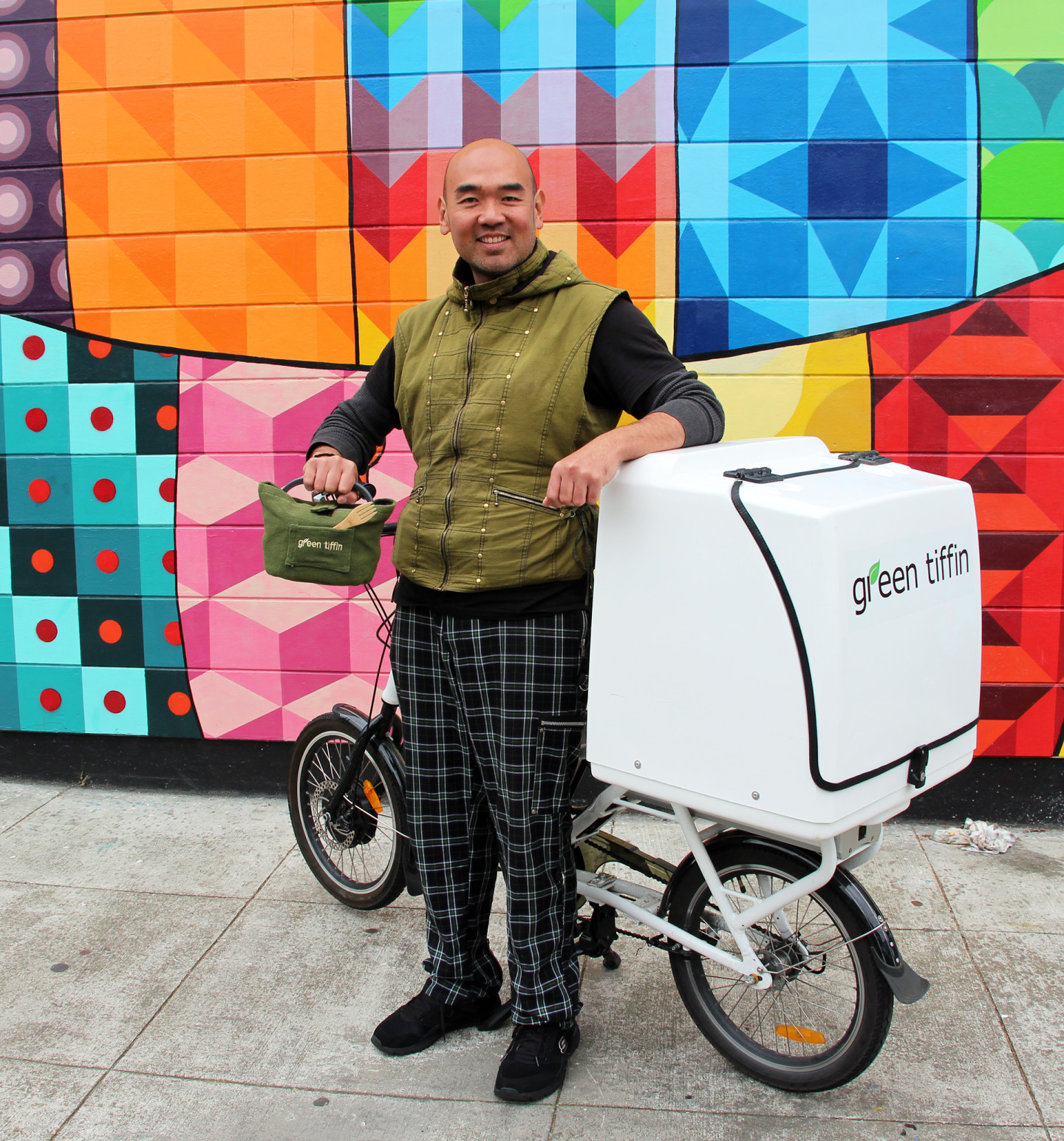
"caption": "Adrian Tay, founder/owner of Green Tiffin with electric delivery bike and tiffin meal",
"description": null,
"title": "Adrian Tay, founder/owner of Green Tiffin",
"credit": "Wendy Goodfriend",
"status": "inherit",
"isLoading": false,
"fetchFailed": false
},
"bayareabites_94977": {
"type": "attachments",
"id": "bayareabites_94977",
"meta": {
"index": "attachments_1716263798",
"site": "bayareabites",
"id": "94977",
"found": true
},
"parent": 94734,
"imgSizes": {
"twentyfourteen-full-width": {
"file": "https://ww2.kqed.org/app/uploads/sites/24/2015/04/Sonoma1920-1038x576.jpg",
"width": 1038,
"mimeType": "image/jpeg",
"height": 576
},
"thumbnail": {
"file": "https://ww2.kqed.org/app/uploads/sites/24/2015/04/Sonoma1920-400x300.jpg",
"width": 400,
"mimeType": "image/jpeg",
"height": 300
},
"fd-sm": {
"file": "https://ww2.kqed.org/app/uploads/sites/24/2015/04/Sonoma1920-320x240.jpg",
"width": 320,
"mimeType": "image/jpeg",
"height": 240
},
"post-thumbnail": {
"file": "https://ww2.kqed.org/app/uploads/sites/24/2015/04/Sonoma1920-672x372.jpg",
"width": 672,
"mimeType": "image/jpeg",
"height": 372
},
"kqedFullSize": {
"file": "https://ww2.kqed.org/app/uploads/sites/24/2015/04/Sonoma1920.jpg",
"width": 1920,
"height": 1440
},
"large": {
"file": "https://ww2.kqed.org/app/uploads/sites/24/2015/04/Sonoma1920-1440x1080.jpg",
"width": 1440,
"mimeType": "image/jpeg",
"height": 1080
},
"guest-author-96": {
"file": "https://ww2.kqed.org/app/uploads/sites/24/2015/04/Sonoma1920-96x96.jpg",
"width": 96,
"mimeType": "image/jpeg",
"height": 96
},
"medium": {
"file": "https://ww2.kqed.org/app/uploads/sites/24/2015/04/Sonoma1920-800x600.jpg",
"width": 800,
"mimeType": "image/jpeg",
"height": 600
},
"guest-author-64": {
"file": "https://ww2.kqed.org/app/uploads/sites/24/2015/04/Sonoma1920-64x64.jpg",
"width": 64,
"mimeType": "image/jpeg",
"height": 64
},
"guest-author-32": {
"file": "https://ww2.kqed.org/app/uploads/sites/24/2015/04/Sonoma1920-32x32.jpg",
"width": 32,
"mimeType": "image/jpeg",
"height": 32
},
"cat_post_thumb_sizecategory-posts-2": {
"file": "https://ww2.kqed.org/app/uploads/sites/24/2015/04/Sonoma1920-150x150.jpg",
"width": 150,
"mimeType": "image/jpeg",
"height": 150
},
"fd-lrg": {
"file": "https://ww2.kqed.org/app/uploads/sites/24/2015/04/Sonoma1920-1180x885.jpg",
"width": 1180,
"mimeType": "image/jpeg",
"height": 885
},
"fd-med": {
"file": "https://ww2.kqed.org/app/uploads/sites/24/2015/04/Sonoma1920-768x576.jpg",
"width": 768,
"mimeType": "image/jpeg",
"height": 576
},
"detail": {
"file": "https://ww2.kqed.org/app/uploads/sites/24/2015/04/Sonoma1920-75x75.jpg",
"width": 75,
"mimeType": "image/jpeg",
"height": 75
},
"guest-author-128": {
"file": "https://ww2.kqed.org/app/uploads/sites/24/2015/04/Sonoma1920-128x128.jpg",
"width": 128,
"mimeType": "image/jpeg",
"height": 128
}
},
"publishDate": 1428634072,
"modified": 1428634450,
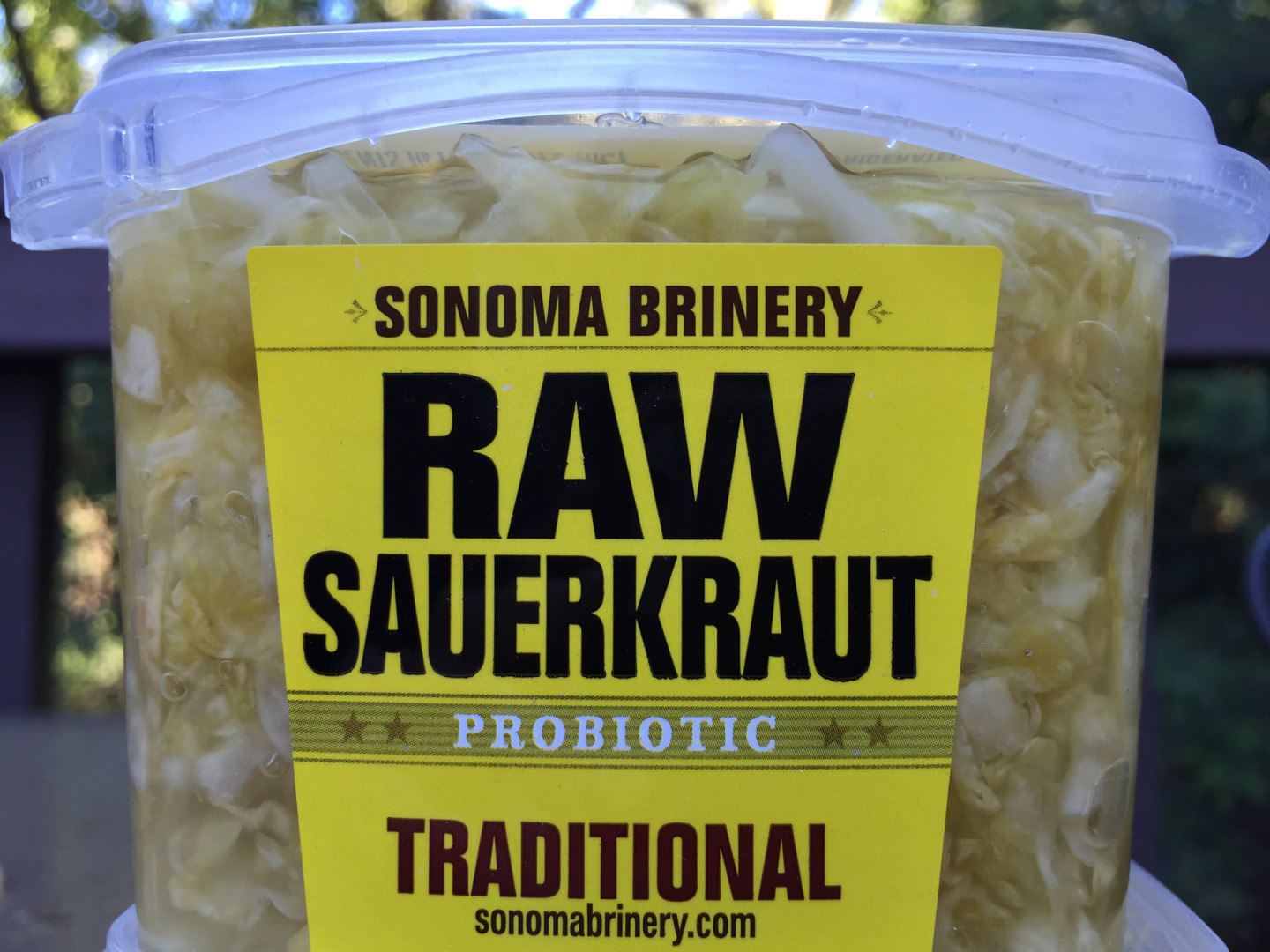
"caption": "Sonoma Brinery’s Raw Sauerkraut. ",
"description": null,
"title": "Sonoma1920",
"credit": "Lisa Landers",
"status": "inherit",
"isLoading": false,
"fetchFailed": false
},
"bayareabites_94740": {
"type": "attachments",
"id": "bayareabites_94740",
"meta": {
"index": "attachments_1716263798",
"site": "bayareabites",
"id": "94740",
"found": true
},
"parent": 93744,
"imgSizes": {
"twentyfourteen-full-width": {
"file": "https://ww2.kqed.org/app/uploads/sites/24/2015/03/Baiaboys1920-1038x576.jpg",
"width": 1038,
"mimeType": "image/jpeg",
"height": 576
},
"thumbnail": {
"file": "https://ww2.kqed.org/app/uploads/sites/24/2015/03/Baiaboys1920-400x266.jpg",
"width": 400,
"mimeType": "image/jpeg",
"height": 266
},
"fd-sm": {
"file": "https://ww2.kqed.org/app/uploads/sites/24/2015/03/Baiaboys1920-320x213.jpg",
"width": 320,
"mimeType": "image/jpeg",
"height": 213
},
"post-thumbnail": {
"file": "https://ww2.kqed.org/app/uploads/sites/24/2015/03/Baiaboys1920-672x372.jpg",
"width": 672,
"mimeType": "image/jpeg",
"height": 372
},
"kqedFullSize": {
"file": "https://ww2.kqed.org/app/uploads/sites/24/2015/03/Baiaboys1920.jpg",
"width": 1920,
"height": 1277
},
"large": {
"file": "https://ww2.kqed.org/app/uploads/sites/24/2015/03/Baiaboys1920-1440x958.jpg",
"width": 1440,
"mimeType": "image/jpeg",
"height": 958
},
"guest-author-96": {
"file": "https://ww2.kqed.org/app/uploads/sites/24/2015/03/Baiaboys1920-96x96.jpg",
"width": 96,
"mimeType": "image/jpeg",
"height": 96
},
"medium": {
"file": "https://ww2.kqed.org/app/uploads/sites/24/2015/03/Baiaboys1920-800x532.jpg",
"width": 800,
"mimeType": "image/jpeg",
"height": 532
},
"guest-author-64": {
"file": "https://ww2.kqed.org/app/uploads/sites/24/2015/03/Baiaboys1920-64x64.jpg",
"width": 64,
"mimeType": "image/jpeg",
"height": 64
},
"guest-author-32": {
"file": "https://ww2.kqed.org/app/uploads/sites/24/2015/03/Baiaboys1920-32x32.jpg",
"width": 32,
"mimeType": "image/jpeg",
"height": 32
},
"cat_post_thumb_sizecategory-posts-2": {
"file": "https://ww2.kqed.org/app/uploads/sites/24/2015/03/Baiaboys1920-150x150.jpg",
"width": 150,
"mimeType": "image/jpeg",
"height": 150
},
"fd-lrg": {
"file": "https://ww2.kqed.org/app/uploads/sites/24/2015/03/Baiaboys1920-1180x785.jpg",
"width": 1180,
"mimeType": "image/jpeg",
"height": 785
},
"fd-med": {
"file": "https://ww2.kqed.org/app/uploads/sites/24/2015/03/Baiaboys1920-768x511.jpg",
"width": 768,
"mimeType": "image/jpeg",
"height": 511
},
"detail": {
"file": "https://ww2.kqed.org/app/uploads/sites/24/2015/03/Baiaboys1920-75x75.jpg",
"width": 75,
"mimeType": "image/jpeg",
"height": 75
},
"guest-author-128": {
"file": "https://ww2.kqed.org/app/uploads/sites/24/2015/03/Baiaboys1920-128x128.jpg",
"width": 128,
"mimeType": "image/jpeg",
"height": 128
}
},
"publishDate": 1428378840,
"modified": 1428515516,
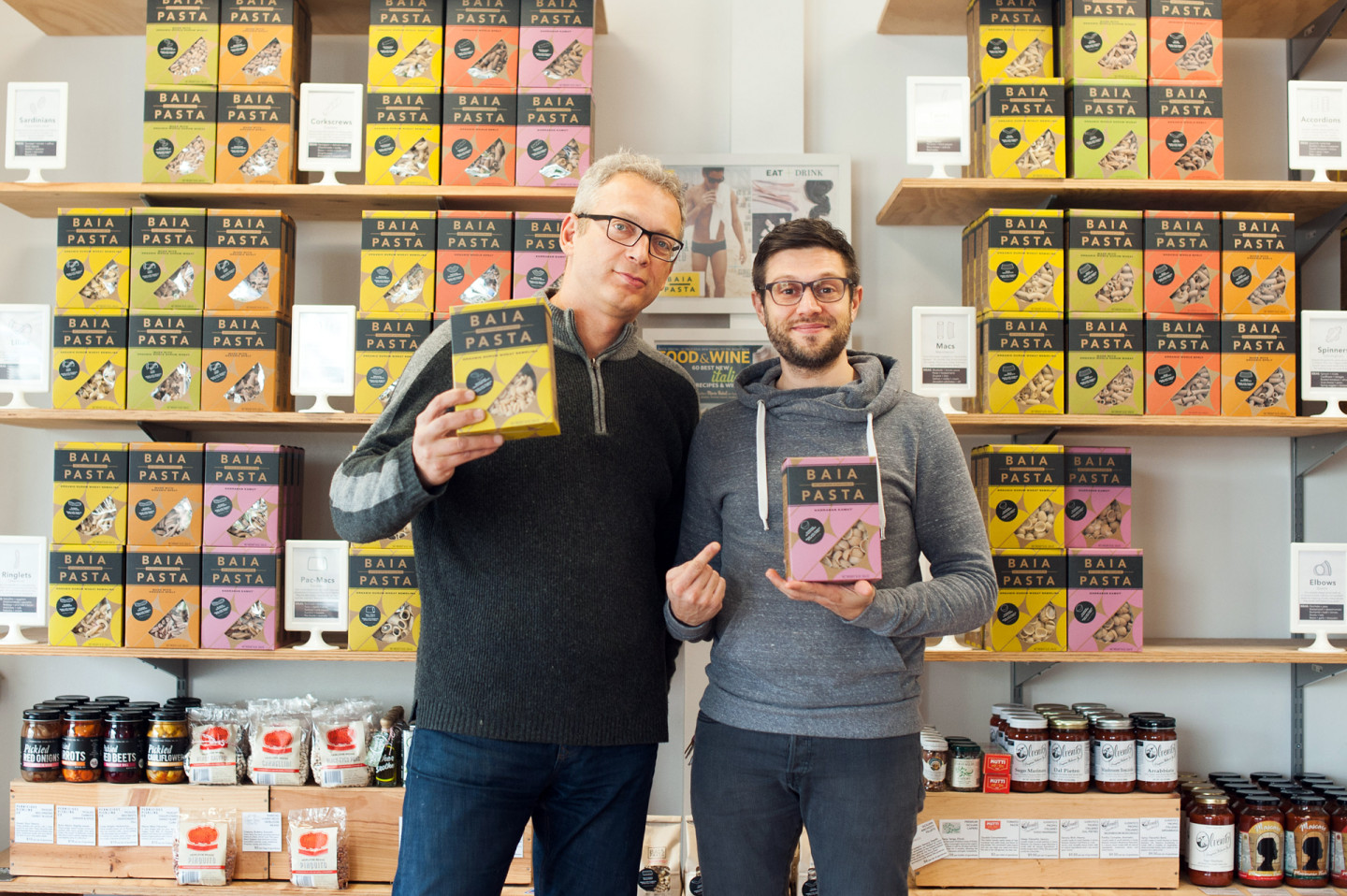
"caption": "Renato Sardo, left, and Dario Barbone started Baia Pasta, which is one of several Bay Area companies started within the last few years making dried pasta. ",
"description": null,
"title": "Baiaboys1920",
"credit": "Meaghin Kennedy/These Salty Oats",
"status": "inherit",
"isLoading": false,
"fetchFailed": false
},
"bayareabites_94667": {
"type": "attachments",
"id": "bayareabites_94667",
"meta": {
"index": "attachments_1716263798",
"site": "bayareabites",
"id": "94667",
"found": true
},
"parent": 94654,
"imgSizes": {
"twentyfourteen-full-width": {
"file": "https://ww2.kqed.org/app/uploads/sites/24/2015/04/bottles-1000x576.jpg",
"width": 1000,
"mimeType": "image/jpeg",
"height": 576
},
"thumbnail": {
"file": "https://ww2.kqed.org/app/uploads/sites/24/2015/04/bottles-400x252.jpg",
"width": 400,
"mimeType": "image/jpeg",
"height": 252
},
"fd-sm": {
"file": "https://ww2.kqed.org/app/uploads/sites/24/2015/04/bottles-320x202.jpg",
"width": 320,
"mimeType": "image/jpeg",
"height": 202
},
"post-thumbnail": {
"file": "https://ww2.kqed.org/app/uploads/sites/24/2015/04/bottles-672x372.jpg",
"width": 672,
"mimeType": "image/jpeg",
"height": 372
},
"kqedFullSize": {
"file": "https://ww2.kqed.org/app/uploads/sites/24/2015/04/bottles.jpg",
"width": 1000,
"height": 631
},
"guest-author-96": {
"file": "https://ww2.kqed.org/app/uploads/sites/24/2015/04/bottles-96x96.jpg",
"width": 96,
"mimeType": "image/jpeg",
"height": 96
},
"medium": {
"file": "https://ww2.kqed.org/app/uploads/sites/24/2015/04/bottles-800x505.jpg",
"width": 800,
"mimeType": "image/jpeg",
"height": 505
},
"guest-author-64": {
"file": "https://ww2.kqed.org/app/uploads/sites/24/2015/04/bottles-64x64.jpg",
"width": 64,
"mimeType": "image/jpeg",
"height": 64
},
"guest-author-32": {
"file": "https://ww2.kqed.org/app/uploads/sites/24/2015/04/bottles-32x32.jpg",
"width": 32,
"mimeType": "image/jpeg",
"height": 32
},
"cat_post_thumb_sizecategory-posts-2": {
"file": "https://ww2.kqed.org/app/uploads/sites/24/2015/04/bottles-150x150.jpg",
"width": 150,
"mimeType": "image/jpeg",
"height": 150
},
"fd-med": {
"file": "https://ww2.kqed.org/app/uploads/sites/24/2015/04/bottles-768x485.jpg",
"width": 768,
"mimeType": "image/jpeg",
"height": 485
},
"detail": {
"file": "https://ww2.kqed.org/app/uploads/sites/24/2015/04/bottles-75x75.jpg",
"width": 75,
"mimeType": "image/jpeg",
"height": 75
},
"guest-author-128": {
"file": "https://ww2.kqed.org/app/uploads/sites/24/2015/04/bottles-128x128.jpg",
"width": 128,
"mimeType": "image/jpeg",
"height": 128
}
},
"publishDate": 1428119187,
"modified": 1428363923,
"caption": "Sonoma Aperitif products not only have intense aromas and great balance but they come in alluring pastel colors. \n",
"description": null,
"title": "bottles",
"credit": "Miranda Rush",
"status": "inherit",
"isLoading": false,
"fetchFailed": false
},
"bayareabites_94272": {
"type": "attachments",
"id": "bayareabites_94272",
"meta": {
"index": "attachments_1716263798",
"site": "bayareabites",
"id": "94272",
"found": true
},
"parent": 94255,
"imgSizes": {
"twentyfourteen-full-width": {
"file": "https://ww2.kqed.org/app/uploads/sites/24/2015/03/TG5-new-800x576.jpg",
"width": 800,
"mimeType": "image/jpeg",
"height": 576
},
"fd-sm": {
"file": "https://ww2.kqed.org/app/uploads/sites/24/2015/03/TG5-new-320x240.jpg",
"width": 320,
"mimeType": "image/jpeg",
"height": 240
},
"post-thumbnail": {
"file": "https://ww2.kqed.org/app/uploads/sites/24/2015/03/TG5-new-672x372.jpg",
"width": 672,
"mimeType": "image/jpeg",
"height": 372
},
"kqedFullSize": {
"file": "https://ww2.kqed.org/app/uploads/sites/24/2015/03/TG5-new.jpg",
"width": 800,
"height": 600
},
"cat_post_thumb_sizecategory-posts-2": {
"file": "https://ww2.kqed.org/app/uploads/sites/24/2015/03/TG5-new-50x50.jpg",
"width": 50,
"mimeType": "image/jpeg",
"height": 50
},
"fd-med": {
"file": "https://ww2.kqed.org/app/uploads/sites/24/2015/03/TG5-new-768x576.jpg",
"width": 768,
"mimeType": "image/jpeg",
"height": 576
},
"guest-author-96": {
"file": "https://ww2.kqed.org/app/uploads/sites/24/2015/03/TG5-new-96x96.jpg",
"width": 96,
"mimeType": "image/jpeg",
"height": 96
},
"medium": {
"file": "https://ww2.kqed.org/app/uploads/sites/24/2015/03/TG5-new-800x600.jpg",
"width": 800,
"mimeType": "image/jpeg",
"height": 600
},
"guest-author-64": {
"file": "https://ww2.kqed.org/app/uploads/sites/24/2015/03/TG5-new-64x64.jpg",
"width": 64,
"mimeType": "image/jpeg",
"height": 64
},
"detail": {
"file": "https://ww2.kqed.org/app/uploads/sites/24/2015/03/TG5-new-75x75.jpg",
"width": 75,
"mimeType": "image/jpeg",
"height": 75
},
"guest-author-32": {
"file": "https://ww2.kqed.org/app/uploads/sites/24/2015/03/TG5-new-32x32.jpg",
"width": 32,
"mimeType": "image/jpeg",
"height": 32
},
"guest-author-128": {
"file": "https://ww2.kqed.org/app/uploads/sites/24/2015/03/TG5-new-128x128.jpg",
"width": 128,
"mimeType": "image/jpeg",
"height": 128
}
},
"publishDate": 1427259154,
"modified": 1427259307,
"caption": "Cari Johnson blanches spinach and then puts it in an ice bath to cool before making ravioli. Photo: Alix Wall",
"description": null,
"title": "TG5-new",
"credit": null,
"status": "inherit",
"isLoading": false,
"fetchFailed": false
},
"bayareabites_94214": {
"type": "attachments",
"id": "bayareabites_94214",
"meta": {
"index": "attachments_1716263798",
"site": "bayareabites",
"id": "94214",
"found": true
},
"parent": 94205,
"imgSizes": {
"thumbnail": {
"file": "https://ww2.kqed.org/app/uploads/sites/24/2015/03/featured1-400x225.jpg",
"width": 400,
"mimeType": "image/jpeg",
"height": 225
},
"fd-sm": {
"file": "https://ww2.kqed.org/app/uploads/sites/24/2015/03/featured1-320x180.jpg",
"width": 320,
"mimeType": "image/jpeg",
"height": 180
},
"kqedFullSize": {
"file": "https://ww2.kqed.org/app/uploads/sites/24/2015/03/featured1.jpg",
"width": 640,
"height": 360
},
"cat_post_thumb_sizecategory-posts-2": {
"file": "https://ww2.kqed.org/app/uploads/sites/24/2015/03/featured1-50x50.jpg",
"width": 50,
"mimeType": "image/jpeg",
"height": 50
},
"guest-author-96": {
"file": "https://ww2.kqed.org/app/uploads/sites/24/2015/03/featured1-96x96.jpg",
"width": 96,
"mimeType": "image/jpeg",
"height": 96
},
"guest-author-64": {
"file": "https://ww2.kqed.org/app/uploads/sites/24/2015/03/featured1-64x64.jpg",
"width": 64,
"mimeType": "image/jpeg",
"height": 64
},
"detail": {
"file": "https://ww2.kqed.org/app/uploads/sites/24/2015/03/featured1-75x75.jpg",
"width": 75,
"mimeType": "image/jpeg",
"height": 75
},
"guest-author-32": {
"file": "https://ww2.kqed.org/app/uploads/sites/24/2015/03/featured1-32x32.jpg",
"width": 32,
"mimeType": "image/jpeg",
"height": 32
},
"guest-author-128": {
"file": "https://ww2.kqed.org/app/uploads/sites/24/2015/03/featured1-128x128.jpg",
"width": 128,
"mimeType": "image/jpeg",
"height": 128
}
},
"publishDate": 1426906782,
"modified": 1426906782,
"caption": null,
"description": null,
"title": "featured",
"credit": null,
"status": "inherit",
"isLoading": false,
"fetchFailed": false
},
"bayareabites_94153": {
"type": "attachments",
"id": "bayareabites_94153",
"meta": {
"index": "attachments_1716263798",
"site": "bayareabites",
"id": "94153",
"found": true
},
"parent": 93953,
"imgSizes": {
"twentyfourteen-full-width": {
"file": "https://ww2.kqed.org/app/uploads/sites/24/2015/03/editedsoupPBR-1038x576.jpg",
"width": 1038,
"mimeType": "image/jpeg",
"height": 576
},
"thumbnail": {
"file": "https://ww2.kqed.org/app/uploads/sites/24/2015/03/editedsoupPBR-400x267.jpg",
"width": 400,
"mimeType": "image/jpeg",
"height": 267
},
"fd-sm": {
"file": "https://ww2.kqed.org/app/uploads/sites/24/2015/03/editedsoupPBR-320x213.jpg",
"width": 320,
"mimeType": "image/jpeg",
"height": 213
},
"post-thumbnail": {
"file": "https://ww2.kqed.org/app/uploads/sites/24/2015/03/editedsoupPBR-672x372.jpg",
"width": 672,
"mimeType": "image/jpeg",
"height": 372
},
"kqedFullSize": {
"file": "https://ww2.kqed.org/app/uploads/sites/24/2015/03/editedsoupPBR.jpg",
"width": 1920,
"height": 1280
},
"large": {
"file": "https://ww2.kqed.org/app/uploads/sites/24/2015/03/editedsoupPBR-1440x960.jpg",
"width": 1440,
"mimeType": "image/jpeg",
"height": 960
},
"guest-author-96": {
"file": "https://ww2.kqed.org/app/uploads/sites/24/2015/03/editedsoupPBR-96x96.jpg",
"width": 96,
"mimeType": "image/jpeg",
"height": 96
},
"medium": {
"file": "https://ww2.kqed.org/app/uploads/sites/24/2015/03/editedsoupPBR-800x533.jpg",
"width": 800,
"mimeType": "image/jpeg",
"height": 533
},
"guest-author-64": {
"file": "https://ww2.kqed.org/app/uploads/sites/24/2015/03/editedsoupPBR-64x64.jpg",
"width": 64,
"mimeType": "image/jpeg",
"height": 64
},
"guest-author-32": {
"file": "https://ww2.kqed.org/app/uploads/sites/24/2015/03/editedsoupPBR-32x32.jpg",
"width": 32,
"mimeType": "image/jpeg",
"height": 32
},
"cat_post_thumb_sizecategory-posts-2": {
"file": "https://ww2.kqed.org/app/uploads/sites/24/2015/03/editedsoupPBR-50x50.jpg",
"width": 50,
"mimeType": "image/jpeg",
"height": 50
},
"fd-lrg": {
"file": "https://ww2.kqed.org/app/uploads/sites/24/2015/03/editedsoupPBR-1180x787.jpg",
"width": 1180,
"mimeType": "image/jpeg",
"height": 787
},
"fd-med": {
"file": "https://ww2.kqed.org/app/uploads/sites/24/2015/03/editedsoupPBR-768x512.jpg",
"width": 768,
"mimeType": "image/jpeg",
"height": 512
},
"detail": {
"file": "https://ww2.kqed.org/app/uploads/sites/24/2015/03/editedsoupPBR-75x75.jpg",
"width": 75,
"mimeType": "image/jpeg",
"height": 75
},
"guest-author-128": {
"file": "https://ww2.kqed.org/app/uploads/sites/24/2015/03/editedsoupPBR-128x128.jpg",
"width": 128,
"mimeType": "image/jpeg",
"height": 128
}
},
"publishDate": 1426806425,
"modified": 1426806425,
"caption": null,
"description": null,
"title": "editedsoupPBR",
"credit": null,
"status": "inherit",
"isLoading": false,
"fetchFailed": false
},
"bayareabites_93665": {
"type": "attachments",
"id": "bayareabites_93665",
"meta": {
"index": "attachments_1716263798",
"site": "bayareabites",
"id": "93665",
"found": true
},
"parent": 93653,
"imgSizes": {
"thumbnail": {
"file": "https://ww2.kqed.org/app/uploads/sites/24/2015/03/featurd-400x225.jpg",
"width": 400,
"mimeType": "image/jpeg",
"height": 225
},
"fd-sm": {
"file": "https://ww2.kqed.org/app/uploads/sites/24/2015/03/featurd-320x180.jpg",
"width": 320,
"mimeType": "image/jpeg",
"height": 180
},
"kqedFullSize": {
"file": "https://ww2.kqed.org/app/uploads/sites/24/2015/03/featurd.jpg",
"width": 640,
"height": 360
},
"cat_post_thumb_sizecategory-posts-2": {
"file": "https://ww2.kqed.org/app/uploads/sites/24/2015/03/featurd-50x50.jpg",
"width": 50,
"mimeType": "image/jpeg",
"height": 50
},
"guest-author-96": {
"file": "https://ww2.kqed.org/app/uploads/sites/24/2015/03/featurd-96x96.jpg",
"width": 96,
"mimeType": "image/jpeg",
"height": 96
},
"guest-author-64": {
"file": "https://ww2.kqed.org/app/uploads/sites/24/2015/03/featurd-64x64.jpg",
"width": 64,
"mimeType": "image/jpeg",
"height": 64
},
"detail": {
"file": "https://ww2.kqed.org/app/uploads/sites/24/2015/03/featurd-75x75.jpg",
"width": 75,
"mimeType": "image/jpeg",
"height": 75
},
"guest-author-32": {
"file": "https://ww2.kqed.org/app/uploads/sites/24/2015/03/featurd-32x32.jpg",
"width": 32,
"mimeType": "image/jpeg",
"height": 32
},
"guest-author-128": {
"file": "https://ww2.kqed.org/app/uploads/sites/24/2015/03/featurd-128x128.jpg",
"width": 128,
"mimeType": "image/jpeg",
"height": 128
}
},
"publishDate": 1425539414,
"modified": 1425539507,
"caption": "Oakland Mayor Libby Schaaf speaks at a Wednesday press conference about the new minimum wage Photo: Shelby Pope",
"description": null,
"title": "featurd",
"credit": null,
"status": "inherit",
"isLoading": false,
"fetchFailed": false
},
"bayareabites_93603": {
"type": "attachments",
"id": "bayareabites_93603",
"meta": {
"index": "attachments_1716263798",
"site": "bayareabites",
"id": "93603",
"found": true
},
"parent": 93579,
"imgSizes": {
"twentyfourteen-full-width": {
"file": "https://ww2.kqed.org/app/uploads/sites/24/2015/02/IMG_9428-1024x587-1024x576.jpg",
"width": 1024,
"mimeType": "image/jpeg",
"height": 576
},
"thumbnail": {
"file": "https://ww2.kqed.org/app/uploads/sites/24/2015/02/IMG_9428-1024x587-400x229.jpg",
"width": 400,
"mimeType": "image/jpeg",
"height": 229
},
"fd-sm": {
"file": "https://ww2.kqed.org/app/uploads/sites/24/2015/02/IMG_9428-1024x587-320x183.jpg",
"width": 320,
"mimeType": "image/jpeg",
"height": 183
},
"post-thumbnail": {
"file": "https://ww2.kqed.org/app/uploads/sites/24/2015/02/IMG_9428-1024x587-672x372.jpg",
"width": 672,
"mimeType": "image/jpeg",
"height": 372
},
"kqedFullSize": {
"file": "https://ww2.kqed.org/app/uploads/sites/24/2015/02/IMG_9428-1024x587.jpg",
"width": 1024,
"height": 587
},
"guest-author-96": {
"file": "https://ww2.kqed.org/app/uploads/sites/24/2015/02/IMG_9428-1024x587-96x96.jpg",
"width": 96,
"mimeType": "image/jpeg",
"height": 96
},
"medium": {
"file": "https://ww2.kqed.org/app/uploads/sites/24/2015/02/IMG_9428-1024x587-800x459.jpg",
"width": 800,
"mimeType": "image/jpeg",
"height": 459
},
"guest-author-64": {
"file": "https://ww2.kqed.org/app/uploads/sites/24/2015/02/IMG_9428-1024x587-64x64.jpg",
"width": 64,
"mimeType": "image/jpeg",
"height": 64
},
"guest-author-32": {
"file": "https://ww2.kqed.org/app/uploads/sites/24/2015/02/IMG_9428-1024x587-32x32.jpg",
"width": 32,
"mimeType": "image/jpeg",
"height": 32
},
"cat_post_thumb_sizecategory-posts-2": {
"file": "https://ww2.kqed.org/app/uploads/sites/24/2015/02/IMG_9428-1024x587-50x50.jpg",
"width": 50,
"mimeType": "image/jpeg",
"height": 50
},
"fd-med": {
"file": "https://ww2.kqed.org/app/uploads/sites/24/2015/02/IMG_9428-1024x587-768x440.jpg",
"width": 768,
"mimeType": "image/jpeg",
"height": 440
},
"detail": {
"file": "https://ww2.kqed.org/app/uploads/sites/24/2015/02/IMG_9428-1024x587-75x75.jpg",
"width": 75,
"mimeType": "image/jpeg",
"height": 75
},
"guest-author-128": {
"file": "https://ww2.kqed.org/app/uploads/sites/24/2015/02/IMG_9428-1024x587-128x128.jpg",
"width": 128,
"mimeType": "image/jpeg",
"height": 128
}
},
"publishDate": 1425169571,
"modified": 1425170366,
"caption": "Assortment of whole and mini-pies behind the counter. Photo: Jasmin Porter",
"description": null,
"title": "IMG_9428-1024x587",
"credit": null,
"status": "inherit",
"isLoading": false,
"fetchFailed": false
},
"bayareabites_93202": {
"type": "attachments",
"id": "bayareabites_93202",
"meta": {
"index": "attachments_1716263798",
"site": "bayareabites",
"id": "93202",
"found": true
},
"parent": 92716,
"imgSizes": {
"twentyfourteen-full-width": {
"file": "https://ww2.kqed.org/app/uploads/sites/24/2015/02/courtney-pantry4-1000x576.jpg",
"width": 1000,
"mimeType": "image/jpeg",
"height": 576
},
"thumbnail": {
"file": "https://ww2.kqed.org/app/uploads/sites/24/2015/02/courtney-pantry4-400x267.jpg",
"width": 400,
"mimeType": "image/jpeg",
"height": 267
},
"fd-sm": {
"file": "https://ww2.kqed.org/app/uploads/sites/24/2015/02/courtney-pantry4-320x213.jpg",
"width": 320,
"mimeType": "image/jpeg",
"height": 213
},
"post-thumbnail": {
"file": "https://ww2.kqed.org/app/uploads/sites/24/2015/02/courtney-pantry4-672x372.jpg",
"width": 672,
"mimeType": "image/jpeg",
"height": 372
},
"kqedFullSize": {
"file": "https://ww2.kqed.org/app/uploads/sites/24/2015/02/courtney-pantry4.jpg",
"width": 1000,
"height": 667
},
"guest-author-96": {
"file": "https://ww2.kqed.org/app/uploads/sites/24/2015/02/courtney-pantry4-96x96.jpg",
"width": 96,
"mimeType": "image/jpeg",
"height": 96
},
"medium": {
"file": "https://ww2.kqed.org/app/uploads/sites/24/2015/02/courtney-pantry4-800x534.jpg",
"width": 800,
"mimeType": "image/jpeg",
"height": 534
},
"guest-author-64": {
"file": "https://ww2.kqed.org/app/uploads/sites/24/2015/02/courtney-pantry4-64x64.jpg",
"width": 64,
"mimeType": "image/jpeg",
"height": 64
},
"guest-author-32": {
"file": "https://ww2.kqed.org/app/uploads/sites/24/2015/02/courtney-pantry4-32x32.jpg",
"width": 32,
"mimeType": "image/jpeg",
"height": 32
},
"cat_post_thumb_sizecategory-posts-2": {
"file": "https://ww2.kqed.org/app/uploads/sites/24/2015/02/courtney-pantry4-50x50.jpg",
"width": 50,
"mimeType": "image/jpeg",
"height": 50
},
"fd-med": {
"file": "https://ww2.kqed.org/app/uploads/sites/24/2015/02/courtney-pantry4-768x512.jpg",
"width": 768,
"mimeType": "image/jpeg",
"height": 512
},
"detail": {
"file": "https://ww2.kqed.org/app/uploads/sites/24/2015/02/courtney-pantry4-75x75.jpg",
"width": 75,
"mimeType": "image/jpeg",
"height": 75
},
"guest-author-128": {
"file": "https://ww2.kqed.org/app/uploads/sites/24/2015/02/courtney-pantry4-128x128.jpg",
"width": 128,
"mimeType": "image/jpeg",
"height": 128
}
},
"publishDate": 1423788699,
"modified": 1424824118,
"caption": "Cortney Burns in the Bar Tartine pantry. Photo: Wendy Goodfriend",
"description": null,
"title": "courtney-pantry4",
"credit": null,
"status": "inherit",
"isLoading": false,
"fetchFailed": false
},
"bayareabites_93333": {
"type": "attachments",
"id": "bayareabites_93333",
"meta": {
"index": "attachments_1716263798",
"site": "bayareabites",
"id": "93333",
"found": true
},
"parent": 93275,
"imgSizes": {
"twentyfourteen-full-width": {
"file": "https://ww2.kqed.org/app/uploads/sites/24/2015/02/Hu-Tieu-1200-1038x576.jpg",
"width": 1038,
"mimeType": "image/jpeg",
"height": 576
},
"fd-sm": {
"file": "https://ww2.kqed.org/app/uploads/sites/24/2015/02/Hu-Tieu-1200-320x240.jpg",
"width": 320,
"mimeType": "image/jpeg",
"height": 240
},
"post-thumbnail": {
"file": "https://ww2.kqed.org/app/uploads/sites/24/2015/02/Hu-Tieu-1200-672x372.jpg",
"width": 672,
"mimeType": "image/jpeg",
"height": 372
},
"kqedFullSize": {
"file": "https://ww2.kqed.org/app/uploads/sites/24/2015/02/Hu-Tieu-1200.jpg",
"width": 1200,
"height": 900
},
"guest-author-96": {
"file": "https://ww2.kqed.org/app/uploads/sites/24/2015/02/Hu-Tieu-1200-96x96.jpg",
"width": 96,
"mimeType": "image/jpeg",
"height": 96
},
"medium": {
"file": "https://ww2.kqed.org/app/uploads/sites/24/2015/02/Hu-Tieu-1200-800x600.jpg",
"width": 800,
"mimeType": "image/jpeg",
"height": 600
},
"guest-author-64": {
"file": "https://ww2.kqed.org/app/uploads/sites/24/2015/02/Hu-Tieu-1200-64x64.jpg",
"width": 64,
"mimeType": "image/jpeg",
"height": 64
},
"guest-author-32": {
"file": "https://ww2.kqed.org/app/uploads/sites/24/2015/02/Hu-Tieu-1200-32x32.jpg",
"width": 32,
"mimeType": "image/jpeg",
"height": 32
},
"cat_post_thumb_sizecategory-posts-2": {
"file": "https://ww2.kqed.org/app/uploads/sites/24/2015/02/Hu-Tieu-1200-50x50.jpg",
"width": 50,
"mimeType": "image/jpeg",
"height": 50
},
"fd-lrg": {
"file": "https://ww2.kqed.org/app/uploads/sites/24/2015/02/Hu-Tieu-1200-1180x885.jpg",
"width": 1180,
"mimeType": "image/jpeg",
"height": 885
},
"fd-med": {
"file": "https://ww2.kqed.org/app/uploads/sites/24/2015/02/Hu-Tieu-1200-768x576.jpg",
"width": 768,
"mimeType": "image/jpeg",
"height": 576
},
"detail": {
"file": "https://ww2.kqed.org/app/uploads/sites/24/2015/02/Hu-Tieu-1200-75x75.jpg",
"width": 75,
"mimeType": "image/jpeg",
"height": 75
},
"guest-author-128": {
"file": "https://ww2.kqed.org/app/uploads/sites/24/2015/02/Hu-Tieu-1200-128x128.jpg",
"width": 128,
"mimeType": "image/jpeg",
"height": 128
}
},
"publishDate": 1424300077,
"modified": 1424300127,
"caption": "There’s no one way to prepare hủ tiếu, a noodle dish that could be considered a cousin of the more famous phở, but Dalat, one of the oldest restaurants in San Jose, is well respected for its version. Photo: Rachael Myrow",
"description": null,
"title": "Hu-Tieu-1200",
"credit": null,
"status": "inherit",
"isLoading": false,
"fetchFailed": false
},
"bayareabites_93219": {
"type": "attachments",
"id": "bayareabites_93219",
"meta": {
"index": "attachments_1716263798",
"site": "bayareabites",
"id": "93219",
"found": true
},
"parent": 93211,
"imgSizes": {
"twentyfourteen-full-width": {
"file": "https://ww2.kqed.org/app/uploads/sites/24/2015/02/offering-Dutch-cookies-e1424206208642-1000x576.jpg",
"width": 1000,
"mimeType": "image/jpeg",
"height": 576
},
"thumbnail": {
"file": "https://ww2.kqed.org/app/uploads/sites/24/2015/02/offering-Dutch-cookies-e1424206208642-400x575.jpg",
"width": 400,
"mimeType": "image/jpeg",
"height": 575
},
"fd-sm": {
"file": "https://ww2.kqed.org/app/uploads/sites/24/2015/02/offering-Dutch-cookies-e1424206208642-320x460.jpg",
"width": 320,
"mimeType": "image/jpeg",
"height": 460
},
"post-thumbnail": {
"file": "https://ww2.kqed.org/app/uploads/sites/24/2015/02/offering-Dutch-cookies-e1424206208642-672x372.jpg",
"width": 672,
"mimeType": "image/jpeg",
"height": 372
},
"kqedFullSize": {
"file": "https://ww2.kqed.org/app/uploads/sites/24/2015/02/offering-Dutch-cookies-e1424206208642.jpg",
"width": 1000,
"height": 1438
},
"guest-author-96": {
"file": "https://ww2.kqed.org/app/uploads/sites/24/2015/02/offering-Dutch-cookies-e1424206208642-96x96.jpg",
"width": 96,
"mimeType": "image/jpeg",
"height": 96
},
"medium": {
"file": "https://ww2.kqed.org/app/uploads/sites/24/2015/02/offering-Dutch-cookies-e1424206208642-800x1150.jpg",
"width": 800,
"mimeType": "image/jpeg",
"height": 1150
},
"guest-author-64": {
"file": "https://ww2.kqed.org/app/uploads/sites/24/2015/02/offering-Dutch-cookies-e1424206208642-64x64.jpg",
"width": 64,
"mimeType": "image/jpeg",
"height": 64
},
"guest-author-32": {
"file": "https://ww2.kqed.org/app/uploads/sites/24/2015/02/offering-Dutch-cookies-e1424206208642-32x32.jpg",
"width": 32,
"mimeType": "image/jpeg",
"height": 32
},
"cat_post_thumb_sizecategory-posts-2": {
"file": "https://ww2.kqed.org/app/uploads/sites/24/2015/02/offering-Dutch-cookies-e1424206208642-50x50.jpg",
"width": 50,
"mimeType": "image/jpeg",
"height": 50
},
"fd-med": {
"file": "https://ww2.kqed.org/app/uploads/sites/24/2015/02/offering-Dutch-cookies-e1424206208642-768x1104.jpg",
"width": 768,
"mimeType": "image/jpeg",
"height": 1104
},
"detail": {
"file": "https://ww2.kqed.org/app/uploads/sites/24/2015/02/offering-Dutch-cookies-e1424206208642-75x75.jpg",
"width": 75,
"mimeType": "image/jpeg",
"height": 75
},
"guest-author-128": {
"file": "https://ww2.kqed.org/app/uploads/sites/24/2015/02/offering-Dutch-cookies-e1424206208642-128x128.jpg",
"width": 128,
"mimeType": "image/jpeg",
"height": 128
}
},
"publishDate": 1423789667,
"modified": 1424206199,
"caption": "Proprietor Ken Kurose of Nak's Oriental Market freely and frequently offers samples, deals and smiles to customers of his tiny Menlo Park store. Photo: Susan Hathaway",
"description": null,
"title": "offering Dutch cookies",
"credit": null,
"status": "inherit",
"isLoading": false,
"fetchFailed": false
}
},
"audioPlayerReducer": {
"postId": "stream_live",
"isPaused": true,
"isPlaying": false,
"pfsActive": false,
"pledgeModalIsOpen": true,
"playerDrawerIsOpen": false,
"liveAudioPlayStartedAt": 0,
"liveAudioPlayContext": ""
},
"authorsReducer": {
"rachael-myrow": {
"type": "authors",
"id": "251",
"meta": {
"index": "authors_1716337520",
"id": "251",
"found": true
},
"name": "Rachael Myrow",
"firstName": "Rachael",
"lastName": "Myrow",
"slug": "rachael-myrow",
"email": "rmyrow@kqed.org",
"display_author_email": true,
"staff_mastheads": [
"news"
],
"title": "Senior Editor of KQED's Silicon Valley News Desk",
"bio": "• I write and edit stories about how Silicon Valley power and policies shape everyday life in California. I’m also passionate about making Bay Area history and culture more accessible to a broad public. • I’ve been a journalist for most of my life, starting in high school with The Franklin Press in Los Angeles, where I grew up. While earning my first degree in English at UC Berkeley, I got my start in public radio at KALX-FM. After completing a second degree in journalism at Cal, I landed my first professional job at Marketplace, then moved on to KPCC (now LAist), and then KQED, where I hosted The California Report for more than seven years. • My reporting has appeared on NPR, The World, WBUR’s \u003ci>Here & Now\u003c/i>, and the BBC. I also guest host for KQED’s \u003ci>Forum\u003c/i>, as well as the Commonwealth Club in San Francisco. • I speak periodically on media, democracy and technology issues, and do voiceover work for documentaries and educational video projects. • Outside of the studio, you'll find me hiking Bay Area trails and whipping up Insta-ready meals in my kitchen. • I do not accept gifts, money, or favors from anyone connected to my reporting, I don't pay people for information, and I do not support or donate to political causes. • I strive to treat the people I report on with fairness, honesty, and respect. I also recognize there are often multiple sides to a story and work to verify information through multiple sources and documentation. If I get something wrong, I correct it.",
"avatar": "https://secure.gravatar.com/avatar/3ed8a3c5f26025e4a805ba634cda8cd764906b97438a6d9ce216b044e340da4e?s=600&d=blank&r=g",
"twitter": "rachaelmyrow",
"bluesky": null,
"facebook": null,
"instagram": null,
"linkedin": "https://www.linkedin.com/in/rachaelmyrow/",
"sites": [
{
"site": "arts",
"roles": [
"administrator"
]
},
{
"site": "news",
"roles": [
"edit_others_posts",
"editor"
]
},
{
"site": "futureofyou",
"roles": [
"editor"
]
},
{
"site": "bayareabites",
"roles": [
"editor"
]
},
{
"site": "stateofhealth",
"roles": [
"editor"
]
},
{
"site": "science",
"roles": [
"editor"
]
},
{
"site": "food",
"roles": [
"editor"
]
},
{
"site": "forum",
"roles": [
"editor"
]
},
{
"site": "liveblog",
"roles": [
"author"
]
}
],
"headData": {
"title": "Rachael Myrow | KQED",
"description": "Senior Editor of KQED's Silicon Valley News Desk",
"ogImgSrc": "https://secure.gravatar.com/avatar/3ed8a3c5f26025e4a805ba634cda8cd764906b97438a6d9ce216b044e340da4e?s=600&d=blank&r=g",
"twImgSrc": "https://secure.gravatar.com/avatar/3ed8a3c5f26025e4a805ba634cda8cd764906b97438a6d9ce216b044e340da4e?s=600&d=blank&r=g"
},
"isLoading": false,
"link": "/author/rachael-myrow"
},
"wendy-goodfriend": {
"type": "authors",
"id": "5014",
"meta": {
"index": "authors_1716337520",
"id": "5014",
"found": true
},
"name": "Wendy Goodfriend",
"firstName": "Wendy",
"lastName": "Goodfriend",
"slug": "wendy-goodfriend",
"email": "wendy@wendygoodfriend.com",
"display_author_email": false,
"staff_mastheads": [],
"title": "KQED Contributor",
"bio": "I was the Senior Digital Producer for KQED Food up until July, 2018. Since 2001, I designed, produced, managed and contributed to mostly food-related websites and blogs for KQED including: KQED.org; KQED Food; Bay Area Bites; Check, Please! Bay Area; Taste This; Celebrity Chefs; seven of Jacques Pepin's TV series websites; and Joanne Weir's Cooking in the City. I initiated the majority of KQED Food's social media feeds and maintained them up until 2017. As far as content creation, photography is my passion and I also shoot video and write stories. My photos have been used in articles for KQED Food, News, Arts, and Science as well as for promotional purposes in print and online. Professional education and training includes: clinical psychology, photography, commercial cooking, web design, information architecture and UX.",
"avatar": "https://secure.gravatar.com/avatar/dfba64372339cc34cf17e446e6f18fa8?s=600&d=blank&r=g",
"twitter": null,
"facebook": "bayareabites",
"instagram": null,
"linkedin": "wendygoodfriend",
"sites": [
{
"site": "jpepinheart",
"roles": []
},
{
"site": "about",
"roles": [
"editor"
]
},
{
"site": "bayareabites",
"roles": [
"subscriber"
]
},
{
"site": "science",
"roles": [
"administrator"
]
},
{
"site": "checkplease",
"roles": [
"subscriber"
]
},
{
"site": "food",
"roles": [
"author"
]
},
{
"site": "essentialpepin",
"roles": [
"administrator"
]
}
],
"headData": {
"title": "Wendy Goodfriend | KQED",
"description": "KQED Contributor",
"ogImgSrc": "https://secure.gravatar.com/avatar/dfba64372339cc34cf17e446e6f18fa8?s=600&d=blank&r=g",
"twImgSrc": "https://secure.gravatar.com/avatar/dfba64372339cc34cf17e446e6f18fa8?s=600&d=blank&r=g"
},
"isLoading": false,
"link": "/author/wendy-goodfriend"
},
"lisalanders": {
"type": "authors",
"id": "5412",
"meta": {
"index": "authors_1716337520",
"id": "5412",
"found": true
},
"name": "Lisa Landers",
"firstName": "Lisa",
"lastName": "Landers",
"slug": "lisalanders",
"email": "llanders@KQED.org",
"display_author_email": false,
"staff_mastheads": [],
"title": "KQED Contributor",
"bio": "Lisa Landers is a producer and writer whose work includes documentaries, museum exhibitions, and educational multimedia. Her work has covered a diversity of subject matter including natural history, ecological and social issues, cultural exploration, food, music, and architecture. She’s developed and produced films for broadcasters such as National Geographic, Smithsonian Channel, and the Discovery Channel. Her work as an exhibition developer and multimedia producer has been featured at institutions including the American Museum of Natural History, the National Building Museum, and The Tech Museum. Her writing has also appeared in a wide variety of print and online publications.",
"avatar": "https://secure.gravatar.com/avatar/1e4aa08f6f0a92ea11a2779a453cb36d?s=600&d=blank&r=g",
"twitter": null,
"bluesky": null,
"facebook": null,
"instagram": null,
"linkedin": null,
"sites": [
{
"site": "bayareabites",
"roles": [
"contributor"
]
},
{
"site": "quest",
"roles": [
"leadcoordinator",
"edit_theme_options",
"subscriber"
]
},
{
"site": "food",
"roles": []
}
],
"headData": {
"title": "Lisa Landers | KQED",
"description": "KQED Contributor",
"ogImgSrc": "https://secure.gravatar.com/avatar/1e4aa08f6f0a92ea11a2779a453cb36d?s=600&d=blank&r=g",
"twImgSrc": "https://secure.gravatar.com/avatar/1e4aa08f6f0a92ea11a2779a453cb36d?s=600&d=blank&r=g"
},
"isLoading": false,
"link": "/author/lisalanders"
},
"oaklandlocal": {
"type": "authors",
"id": "5475",
"meta": {
"index": "authors_1716337520",
"id": "5475",
"found": true
},
"name": "Oakland Local",
"firstName": "Oakland",
"lastName": "Local",
"slug": "oaklandlocal",
"email": "oaklandlocal@oaklandlocal.com",
"display_author_email": false,
"staff_mastheads": [],
"title": null,
"bio": "\u003ca href=\"http://oaklandlocal.com/\">Oakland Local\u003c/a>, Oakland's leading news & community site, is filled with people who love to eat, drink and talk about food equity issues, sometimes all at the same time. We're avid about farm to table, affordable local restaurants, food artisans, intense chefs, butchers, bakers, and gardeners and everyone who wants to talk about what tastes good--and where to get it/make it or grow it--in Oakland, CA",
"avatar": "https://secure.gravatar.com/avatar/487293d74fcce97c7016ed0309409181?s=600&d=blank&r=g",
"twitter": "oaklandlocal",
"facebook": "oaklocal",
"instagram": null,
"linkedin": null,
"sites": [
{
"site": "bayareabites",
"roles": [
"contributor"
]
}
],
"headData": {
"title": "Oakland Local | KQED",
"description": null,
"ogImgSrc": "https://secure.gravatar.com/avatar/487293d74fcce97c7016ed0309409181?s=600&d=blank&r=g",
"twImgSrc": "https://secure.gravatar.com/avatar/487293d74fcce97c7016ed0309409181?s=600&d=blank&r=g"
},
"isLoading": false,
"link": "/author/oaklandlocal"
},
"shelbypope": {
"type": "authors",
"id": "5566",
"meta": {
"index": "authors_1716337520",
"id": "5566",
"found": true
},
"name": "Shelby Pope",
"firstName": "Shelby",
"lastName": "Pope",
"slug": "shelbypope",
"email": "shelbylpope@gmail.com",
"display_author_email": false,
"staff_mastheads": [],
"title": "KQED Contributor",
"bio": "Shelby Pope is a freelance writer living and eating her way through the East Bay. She’s written about food, art and science for publications including the Smithsonian, Lucky Peach, and the Washington Post's pet blog. When she’s not taste testing sourdough bread to find the Bay Area’s best loaf, you can find her on Twitter \u003ca href=\"https://twitter.com/shelbylpope\">@shelbylpope\u003c/a> or at \u003ca href=\"https://shelbypope.com/\">shelbypope.com\u003c/a>",
"avatar": "https://secure.gravatar.com/avatar/df74e904399e45720e48e36c6e1ae7a90c32216eb2c9c82f3b2e1a9641b507d3?s=600&d=blank&r=g",
"twitter": "shelbylpope",
"bluesky": null,
"facebook": null,
"instagram": null,
"linkedin": null,
"sites": [
{
"site": "arts",
"roles": [
"subscriber"
]
},
{
"site": "food",
"roles": [
"subscriber"
]
}
],
"headData": {
"title": "Shelby Pope | KQED",
"description": "KQED Contributor",
"ogImgSrc": "https://secure.gravatar.com/avatar/df74e904399e45720e48e36c6e1ae7a90c32216eb2c9c82f3b2e1a9641b507d3?s=600&d=blank&r=g",
"twImgSrc": "https://secure.gravatar.com/avatar/df74e904399e45720e48e36c6e1ae7a90c32216eb2c9c82f3b2e1a9641b507d3?s=600&d=blank&r=g"
},
"isLoading": false,
"link": "/author/shelbypope"
},
"alexandrawall": {
"type": "authors",
"id": "5567",
"meta": {
"index": "authors_1716337520",
"id": "5567",
"found": true
},
"name": "Alix Wall",
"firstName": "Alix",
"lastName": "Wall",
"slug": "alexandrawall",
"email": "alixwall@sbcglobal.net",
"display_author_email": false,
"staff_mastheads": [],
"title": null,
"bio": "Alix Wall appeared in her hometown paper in Riverside, California as “Chef of the Week” when she was 15 years old, and in high school, she founded “The Bon Appetit Club.” After working as a journalist for many years, Alix became a certified natural foods chef from Bauman College in Berkeley. While she cooks part-time healthy, organic meals for busy families, she is also a contributing editor of j. weekly, the Bay Area’s Jewish newspaper, in which she has a monthly food column. Her food writing can also be found on Berkeleyside’s NOSH and in Edible East Bay. In addition to food, she loves writing about how couples met and fell in love, which she does for The San Francisco Chronicle’s Style section and j. weekly. In 2016, she founded The Illuminoshi: The Not-So-Secret Society of Bay Area Jewish Food Professionals. She is also writer/producer for a documentary-in-progress called \u003ca href=\"https://www.lonelychildmovie.com/\">The Lonely Child\u003c/a>. Follow Alix on Twitter \u003ca href=\"https://twitter.com/WallAlix\">@WallAlix\u003c/a>.",
"avatar": "https://secure.gravatar.com/avatar/421a27f26a185be932f8d567b499b1f1?s=600&d=blank&r=g",
"twitter": null,
"facebook": null,
"instagram": null,
"linkedin": null,
"sites": [
{
"site": "bayareabites",
"roles": [
"contributor"
]
},
{
"site": "food",
"roles": [
"contributor"
]
}
],
"headData": {
"title": "Alix Wall | KQED",
"description": null,
"ogImgSrc": "https://secure.gravatar.com/avatar/421a27f26a185be932f8d567b499b1f1?s=600&d=blank&r=g",
"twImgSrc": "https://secure.gravatar.com/avatar/421a27f26a185be932f8d567b499b1f1?s=600&d=blank&r=g"
},
"isLoading": false,
"link": "/author/alexandrawall"
},
"susanhathaway": {
"type": "authors",
"id": "5578",
"meta": {
"index": "authors_1716337520",
"id": "5578",
"found": true
},
"name": "Susan Hathaway",
"firstName": "Susan",
"lastName": "Hathaway",
"slug": "susanhathaway",
"email": "susan@redpenassoc.com",
"display_author_email": false,
"staff_mastheads": [],
"title": "KQED Contributor",
"bio": "From making blob-shaped pancakes for her family at age 6 to presumptuously reinventing recipes from well-known chefs, Susan has had a life-long food love affair. You'll usually find her sniffing out great ingredient sources, locating intriguing food stories, inventing recipes and exercising like a demon as an antidote to her passion. This Bay Area native is a longtime food & wine journalist and blogger who has contributed to regional publications such as the San Jose Mercury News and its affiliates, Metro, San Francisco Chronicle, South Bay Accent, Urbanspoon and other epistles that are lucky enough not to have been killed off yet by the publishing crisis.",
"avatar": "https://secure.gravatar.com/avatar/50460b73cde689778bd54c5eb183c0993d24c99dd4ed52f8207c15a3af0d7a33?s=600&d=blank&r=g",
"twitter": null,
"bluesky": null,
"facebook": null,
"instagram": null,
"linkedin": null,
"sites": [
{
"site": "bayareabites",
"roles": [
"subscriber"
]
},
{
"site": "food",
"roles": [
"subscriber"
]
}
],
"headData": {
"title": "Susan Hathaway | KQED",
"description": "KQED Contributor",
"ogImgSrc": "https://secure.gravatar.com/avatar/50460b73cde689778bd54c5eb183c0993d24c99dd4ed52f8207c15a3af0d7a33?s=600&d=blank&r=g",
"twImgSrc": "https://secure.gravatar.com/avatar/50460b73cde689778bd54c5eb183c0993d24c99dd4ed52f8207c15a3af0d7a33?s=600&d=blank&r=g"
},
"isLoading": false,
"link": "/author/susanhathaway"
}
},
"pagesReducer": {
"bayareabites_category_local-food-businesses": {
"type": "terms",
"id": "bayareabites_1875",
"meta": {
"index": "terms_1716263798",
"site": "bayareabites",
"id": "1875",
"score": 14.406334
},
"featImg": null,
"name": "local food businesses",
"description": null,
"taxonomy": "category",
"headData": {
"twImgId": null,
"twTitle": null,
"ogTitle": null,
"ogImgId": null,
"twDescription": null,
"description": null,
"title": "local food businesses Archives | KQED Bay Area Bites",
"ogDescription": null
},
"ttid": 1453,
"slug": "local-food-businesses",
"isLoading": false,
"title": "local food businesses",
"pageMeta": {
"site": "bayareabites",
"WpPageTemplate": "page-topic-editorial",
"currentPage": 25
},
"blocks": [
{
"blockName": "kqed/post-list",
"attrs": {
"layout": "cardArticle2",
"query": "posts/bayareabites?category=local-food-businesses",
"seeMore": false,
"paginated": true,
"page": 25
}
},
{
"blockName": "kqed/ad"
}
]
}
},
"pfsSessionReducer": {},
"postsReducer": {
"stream_live": {
"type": "live",
"id": "stream_live",
"audioUrl": "https://hls.kqed.org/hls/kqed_app/playlist.m3u8",
"title": "Live Stream",
"excerpt": "Live Stream information currently unavailable.",
"link": "/radio",
"featImg": "",
"label": {
"name": "KQED Live",
"link": "/"
}
},
"stream_kqedNewscast": {
"type": "posts",
"id": "stream_kqedNewscast",
"audioUrl": "https://www.kqed.org/.stream/anon/radio/RDnews/newscast.mp3?_=1",
"title": "KQED Newscast",
"featImg": "",
"label": {
"name": "88.5 FM",
"link": "/"
}
},
"bayareabites_95214": {
"type": "posts",
"id": "bayareabites_95214",
"meta": {
"index": "posts_1716263798",
"site": "bayareabites",
"id": "95214",
"score": null,
"sort": [
1429581224000
]
},
"parent": 0,
"labelTerm": {
"site": "bayareabites"
},
"blocks": [],
"publishDate": 1429581224,
"format": "standard",
"disqusTitle": "Green Tiffin Offers San Franciscans a Vegetarian Lunch Option, Delivered",
"title": "Green Tiffin Offers San Franciscans a Vegetarian Lunch Option, Delivered",
"headTitle": "Bay Area Bites | KQED Food",
"content": "\u003cp>When Adrian Tay was growing up, the child of working parents in Malaysia, he’d come home from school to find lunch waiting for him in the form of a tiffin; a hot meal prepared in someone else’s kitchen that was delivered in a reusable metal container.\u003c/p>\n\u003cp>“We ate whatever they were making that day, but it was always good,” said Tay.\u003c/p>\n\u003cp>While the tiffin concept is still very much in use in India, it has spread throughout Southeast Asia as well. Meals are delivered by bike or motorbike, and customers return the empty containers when their next delivery comes.\u003c/p>\n\u003cp>Tay was traveling in India a few years ago, on sabbatical from his corporate career. Seeing tiffins hanging from bicycle handlebars reminded him of the concept once more.\u003c/p>\n\u003cp>“If they can do this in India, why not in San Francisco?” he thought.\u003c/p>\n\u003cp>[ad fullwidth]\u003c/p>\n\u003cp>And he’s given the idea a particular Bay Area spin: \u003ca href=\"https://www.greentiffin.com\" target=\"_blank\">Green Tiffin\u003c/a> has launched this month, offering freshly-cooked healthy vegetarian meals delivered to offices in downtown San Francisco – by electric bike.\u003c/p>\n\u003cp>[gallery type=\"slideshow\" link=\"none\" size=\"full\" ids=\"95220,95221,95222,95223,95255,95230\"]\u003cbr>\n\u003cem>Photo slideshow by \u003ca href=\"http://ww2.kqed.org/bayareabites/author/wendy-goodfriend/\">Wendy Goodfriend\u003c/a>\u003c/em>\u003c/p>\n\u003cp>Tay has years of experience in the corporate world, working for companies such as Mars and Coca-Cola. He was always incredibly ambitious, he said, and finally, a few years ago, while living in Sydney, he had an epiphany.\u003c/p>\n\u003cblockquote>\u003cp>“I was living in one of the most beautiful cities in the world, where I could afford whatever I wanted, but it struck me that the gratification of the job I was doing wasn’t there anymore,” he said. “I began to wonder what the purpose was of selling brown sugar water and candy bars.”\u003c/p>\u003c/blockquote>\n\u003cp>Tay knew his gift was in marketing, but he wanted to put it to use selling something he felt passionate about.\u003c/p>\n\u003cp>He quit his job and went traveling. Interestingly, he became vegetarian while in India, because it was there that he realized he could enjoy a delicious meal just as much there, without missing meat.\u003c/p>\n\u003cp>Since Tay had already lived in San Francisco prior, he returned here and began testing the idea out on friends and family. He then began developing recipes with the help of friends. Tay did not have a professional culinary background. So far, the business is small enough that he personally shops at the Alemany and Civic Center farmers' markets for all the produce they use, with most of it coming from local organic farms.\u003c/p>\n\u003cp>The idea is simple; customers subscribe to the service, paying a $25 refundable deposit for the tiffin itself, which is returned each time a new delivery comes. Customers can order one to two meals a week, for $11 a meal and the price drops to $10 a meal if ordered three times a week or more. Delivery is $2, and Tay is working on having pick-up points where people can walk to get their meals to both get out of the office and save on the delivery charge. The tiffins come in a reusable burlap holder with a bamboo spork, which they keep. The holder is returned with the tiffin inside.\u003c/p>\n\u003cp>Tay spent about nine months working on the concept, developing recipes, branding, and such and now has about 100 regular subscribers. He’s making about 50 meals a day so far, (which is a lot for a few weeks in business, he says).\u003c/p>\n\u003cp>In addition to himself, he’s hired several employees, with two in the kitchen, three making deliveries and two doing promotional work.\u003c/p>\n\u003cp>Tay says he has about 70 items on the menu, so that even if one subscribed five days a week, one would only experience repeated items after about three to four weeks.\u003c/p>\n\u003cp>While vegans and gluten-free eaters can easily be accommodated, it’s much more difficult to accommodate individual preferences, like “I don’t like mushrooms or green peppers.” But because the menu is announced Friday the week before, a subscriber can change their days with enough advance notice, if there’s something they want to avoid.\u003c/p>\n\u003cp>Tay says he thought long and hard whether to offer a meat option, and decided against it.\u003c/p>\n\u003cp>“Most of our customers aren’t vegetarian, but are flexitarians who want to eat healthy,” he said. He doesn’t expect anyone to order from him every day (though he’s fine if they do) and feels people who want meat for lunch can get it elsewhere.\u003c/p>\n\u003cblockquote>\u003cp>“Eating vegetarian just fits better with our model of using less energy and conserving resources,” he said.\u003c/p>\u003c/blockquote>\n\u003cp>So what would a subscriber get on an average day?\u003c/p>\n\u003cfigure id=\"attachment_95234\" class=\"wp-caption aligncenter\" style=\"max-width: 1224px\">\u003cimg src=\"http://ww2.kqed.org/bayareabites/wp-content/uploads/sites/24/2015/04/alix-wall-food-new.jpg\" alt=\"Penang curry with tofu, Japanese eggplant and kabocha squash with marinated mushrooms atop a bed of arugula and spinach is a meal on an average day.\" width=\"1224\" height=\"1632\" class=\"size-full wp-image-95234\" srcset=\"https://ww2.kqed.org/app/uploads/sites/24/2015/04/alix-wall-food-new.jpg 1224w, https://ww2.kqed.org/app/uploads/sites/24/2015/04/alix-wall-food-new-400x533.jpg 400w, https://ww2.kqed.org/app/uploads/sites/24/2015/04/alix-wall-food-new-800x1067.jpg 800w, https://ww2.kqed.org/app/uploads/sites/24/2015/04/alix-wall-food-new-1180x1573.jpg 1180w, https://ww2.kqed.org/app/uploads/sites/24/2015/04/alix-wall-food-new-768x1024.jpg 768w, https://ww2.kqed.org/app/uploads/sites/24/2015/04/alix-wall-food-new-320x427.jpg 320w\" sizes=\"(max-width: 1224px) 100vw, 1224px\">\u003cfigcaption class=\"wp-caption-text\">Penang curry with tofu, Japanese eggplant and kabocha squash with marinated mushrooms atop a bed of arugula and spinach is a meal on an average day. \u003ccite>(Alix Wall)\u003c/cite>\u003c/figcaption>\u003c/figure>\n\u003cp>On the day I sampled Green Tiffin, the upper tier (each tiffin has two tiers) was filled with marinated mushrooms and onions over a bed of baby spinach and arugula, and the bottom tier held a Penang curry with Kabocha squash, snow peas, Japanese eggplant and tofu topped with toasted coconut with a brown and wild rice mix on the side.\u003c/p>\n\u003cp>The mushrooms were especially delicious (they were marinated in a mix of red wine and sherry vinegars overnight, with fresh herbs like parsley and oregano) and while the curry could have been spicier for my liking, it was not at all lacking for flavor. The portion was more than enough for me (though consumers with a larger appetite can specify the “green me up” option for extra).\u003c/p>\n\u003cp>While the meal I got didn’t include any superfoods like hemp or chia seeds or koji berries, those are sometimes in the mix, and every once in awhile a dessert is offered too. Raw foods like zucchini noodles are in rotation as are Asian noodle dishes, veggie burgers made from ingredients such as lentils, beets and nuts, and collard green rolls. Tay is dedicated to the notion of making his customers feel sated but not with an over-the-top food coma that makes returning to work difficult.\u003c/p>\n\u003cp>He’s trying to find that balance where his food is healthy but doesn’t sacrifice anything in terms of having excellent flavor, too. Menus show influences from a wide variety of countries.\u003c/p>\n\u003cp>“Eating something healthy that tastes good shouldn’t be that difficult,” he said.\u003c/p>\n\u003cp>Tay is especially proud of how little waste the company produces (since customers order in advance, he knows exactly how much food to buy) and the tiffin system produces no trash. The electric bikes contribute no fossil fuels to the environment.\u003c/p>\n\u003cfigure id=\"attachment_95228\" class=\"wp-caption aligncenter\" style=\"max-width: 576px\">\u003cimg src=\"http://ww2.kqed.org/bayareabites/wp-content/uploads/sites/24/2015/04/GT-E-Bikes.jpg\" alt=\"If you order from Green Tiffin, your food will be delivered on a bike like this.\" width=\"576\" height=\"413\" class=\"size-full wp-image-95228\" srcset=\"https://ww2.kqed.org/app/uploads/sites/24/2015/04/GT-E-Bikes.jpg 576w, https://ww2.kqed.org/app/uploads/sites/24/2015/04/GT-E-Bikes-400x287.jpg 400w, https://ww2.kqed.org/app/uploads/sites/24/2015/04/GT-E-Bikes-320x229.jpg 320w\" sizes=\"(max-width: 576px) 100vw, 576px\">\u003cfigcaption class=\"wp-caption-text\">If you order from Green Tiffin, your food will be delivered on a bike like this. \u003ccite>(Courtesy of Green Tiffin)\u003c/cite>\u003c/figcaption>\u003c/figure>\n\u003cp>He can cater company lunches up to 20 servings, he said, and his delivery area includes downtown and SOMA to the Civic Center.\u003c/p>\n\u003cp>Tay has funded the venture by himself so far, and is looking into becoming a B Corporation. He is wary of outside investors to scale up because he doesn’t want to compromise his values, and once profitable, he intends to donate a portion of each sale to anti-hunger or nutrition education programs.\u003c/p>\n\u003cblockquote>\u003cp>“It happens in businesses all the time, where the goals of the investors are different from that of the original founder, and certain ideals are compromised, like no longer sourcing food from local farms to cut corners,” he said. “I am committed to not letting that happen.”\u003c/p>\u003c/blockquote>\n\u003cfigure id=\"attachment_95219\" class=\"wp-caption aligncenter\" style=\"max-width: 1920px\">\u003cimg src=\"http://ww2.kqed.org/bayareabites/wp-content/uploads/sites/24/2015/04/adrian-tay-green-tiffin1920b.jpg\" alt=\"Adrian Tay, founder/owner of Green Tiffin\" width=\"1920\" height=\"1826\" class=\"size-full wp-image-95219\" srcset=\"https://ww2.kqed.org/app/uploads/sites/24/2015/04/adrian-tay-green-tiffin1920b.jpg 1920w, https://ww2.kqed.org/app/uploads/sites/24/2015/04/adrian-tay-green-tiffin1920b-400x380.jpg 400w, https://ww2.kqed.org/app/uploads/sites/24/2015/04/adrian-tay-green-tiffin1920b-800x761.jpg 800w, https://ww2.kqed.org/app/uploads/sites/24/2015/04/adrian-tay-green-tiffin1920b-1440x1370.jpg 1440w, https://ww2.kqed.org/app/uploads/sites/24/2015/04/adrian-tay-green-tiffin1920b-1180x1122.jpg 1180w, https://ww2.kqed.org/app/uploads/sites/24/2015/04/adrian-tay-green-tiffin1920b-768x730.jpg 768w, https://ww2.kqed.org/app/uploads/sites/24/2015/04/adrian-tay-green-tiffin1920b-320x304.jpg 320w\" sizes=\"(max-width: 1920px) 100vw, 1920px\">\u003cfigcaption class=\"wp-caption-text\">Adrian Tay, founder/owner of Green Tiffin \u003ccite>(Wendy Goodfriend)\u003c/cite>\u003c/figcaption>\u003c/figure>\n\u003cp>[ad floatright]\u003c/p>\n\u003cp>\u003cstrong>Information:\u003c/strong>\u003cbr>\n\u003ca href=\"https://www.greentiffin.com/\" target=\"_blank\">\u003cstrong>Green Tiffin\u003c/strong>\u003c/a>\u003cbr>\nFacebook: \u003ca href=\"https://www.facebook.com/greentiffin\" target=\"_blank\">Green Tiffin\u003c/a>\u003cbr>\nTwitter: \u003ca href=\"https://twitter.com/greentiffin\" target=\"_blank\">@greentiffin\u003c/a>\u003c/p>\n\n",
"disqusIdentifier": "95214 http://ww2.kqed.org/bayareabites/?p=95214",
"disqusUrl": "https://ww2.kqed.org/bayareabites/2015/04/20/green-tiffin-offers-san-franciscans-a-vegetarian-lunch-option-delivered/",
"stats": {
"hasVideo": false,
"hasChartOrMap": false,
"hasAudio": false,
"hasPolis": false,
"wordCount": 1311,
"hasGoogleForm": false,
"hasGallery": true,
"hasHearkenModule": false,
"iframeSrcs": [],
"paragraphCount": 33
},
"modified": 1470970668,
"excerpt": "Start-up Green Tiffin offers vegetarian lunches in downtown San Francisco in reusable containers, delivered via electric bike.",
"headData": {
"twImgId": "",
"twTitle": "",
"ogTitle": "",
"ogImgId": "",
"twDescription": "",
"description": "Start-up Green Tiffin offers vegetarian lunches in downtown San Francisco in reusable containers, delivered via electric bike.",
"title": "Green Tiffin Offers San Franciscans a Vegetarian Lunch Option, Delivered | KQED",
"ogDescription": "",
"schema": {
"@context": "https://schema.org",
"@type": "Article",
"headline": "Green Tiffin Offers San Franciscans a Vegetarian Lunch Option, Delivered",
"datePublished": "2015-04-20T18:53:44-07:00",
"dateModified": "2016-08-11T19:57:48-07:00",
"image": "https://cdn.kqed.org/wp-content/uploads/2020/02/KQED-OG-Image@1x.png"
}
},
"guestAuthors": [],
"slug": "green-tiffin-offers-san-franciscans-a-vegetarian-lunch-option-delivered",
"status": "publish",
"path": "/bayareabites/95214/green-tiffin-offers-san-franciscans-a-vegetarian-lunch-option-delivered",
"audioTrackLength": null,
"parsedContent": [
{
"type": "contentString",
"content": "\u003cdiv class=\"post-body\">\u003cp>\u003cp>When Adrian Tay was growing up, the child of working parents in Malaysia, he’d come home from school to find lunch waiting for him in the form of a tiffin; a hot meal prepared in someone else’s kitchen that was delivered in a reusable metal container.\u003c/p>\n\u003cp>“We ate whatever they were making that day, but it was always good,” said Tay.\u003c/p>\n\u003cp>While the tiffin concept is still very much in use in India, it has spread throughout Southeast Asia as well. Meals are delivered by bike or motorbike, and customers return the empty containers when their next delivery comes.\u003c/p>\n\u003cp>Tay was traveling in India a few years ago, on sabbatical from his corporate career. Seeing tiffins hanging from bicycle handlebars reminded him of the concept once more.\u003c/p>\n\u003cp>“If they can do this in India, why not in San Francisco?” he thought.\u003c/p>\n\u003cp>\u003c/p>\u003c/div>",
"attributes": {
"named": {},
"numeric": []
}
},
{
"type": "component",
"content": "",
"name": "ad",
"attributes": {
"named": {
"label": "fullwidth"
},
"numeric": [
"fullwidth"
]
}
},
{
"type": "contentString",
"content": "\u003cdiv class=\"post-body\">\u003cp>\u003c/p>\n\u003cp>And he’s given the idea a particular Bay Area spin: \u003ca href=\"https://www.greentiffin.com\" target=\"_blank\">Green Tiffin\u003c/a> has launched this month, offering freshly-cooked healthy vegetarian meals delivered to offices in downtown San Francisco – by electric bike.\u003c/p>\n\u003cp>\u003c/p>\u003c/div>",
"attributes": {
"named": {},
"numeric": []
}
},
{
"type": "component",
"content": "",
"name": "gallery",
"attributes": {
"named": {
"type": "slideshow",
"link": "none",
"size": "full",
"ids": "95220,95221,95222,95223,95255,95230",
"label": ""
},
"numeric": []
}
},
{
"type": "contentString",
"content": "\u003cdiv class=\"post-body\">\u003cp>\u003cbr>\n\u003cem>Photo slideshow by \u003ca href=\"http://ww2.kqed.org/bayareabites/author/wendy-goodfriend/\">Wendy Goodfriend\u003c/a>\u003c/em>\u003c/p>\n\u003cp>Tay has years of experience in the corporate world, working for companies such as Mars and Coca-Cola. He was always incredibly ambitious, he said, and finally, a few years ago, while living in Sydney, he had an epiphany.\u003c/p>\n\u003cblockquote>\u003cp>“I was living in one of the most beautiful cities in the world, where I could afford whatever I wanted, but it struck me that the gratification of the job I was doing wasn’t there anymore,” he said. “I began to wonder what the purpose was of selling brown sugar water and candy bars.”\u003c/p>\u003c/blockquote>\n\u003cp>Tay knew his gift was in marketing, but he wanted to put it to use selling something he felt passionate about.\u003c/p>\n\u003cp>He quit his job and went traveling. Interestingly, he became vegetarian while in India, because it was there that he realized he could enjoy a delicious meal just as much there, without missing meat.\u003c/p>\n\u003cp>Since Tay had already lived in San Francisco prior, he returned here and began testing the idea out on friends and family. He then began developing recipes with the help of friends. Tay did not have a professional culinary background. So far, the business is small enough that he personally shops at the Alemany and Civic Center farmers' markets for all the produce they use, with most of it coming from local organic farms.\u003c/p>\n\u003cp>The idea is simple; customers subscribe to the service, paying a $25 refundable deposit for the tiffin itself, which is returned each time a new delivery comes. Customers can order one to two meals a week, for $11 a meal and the price drops to $10 a meal if ordered three times a week or more. Delivery is $2, and Tay is working on having pick-up points where people can walk to get their meals to both get out of the office and save on the delivery charge. The tiffins come in a reusable burlap holder with a bamboo spork, which they keep. The holder is returned with the tiffin inside.\u003c/p>\n\u003cp>Tay spent about nine months working on the concept, developing recipes, branding, and such and now has about 100 regular subscribers. He’s making about 50 meals a day so far, (which is a lot for a few weeks in business, he says).\u003c/p>\n\u003cp>In addition to himself, he’s hired several employees, with two in the kitchen, three making deliveries and two doing promotional work.\u003c/p>\n\u003cp>Tay says he has about 70 items on the menu, so that even if one subscribed five days a week, one would only experience repeated items after about three to four weeks.\u003c/p>\n\u003cp>While vegans and gluten-free eaters can easily be accommodated, it’s much more difficult to accommodate individual preferences, like “I don’t like mushrooms or green peppers.” But because the menu is announced Friday the week before, a subscriber can change their days with enough advance notice, if there’s something they want to avoid.\u003c/p>\n\u003cp>Tay says he thought long and hard whether to offer a meat option, and decided against it.\u003c/p>\n\u003cp>“Most of our customers aren’t vegetarian, but are flexitarians who want to eat healthy,” he said. He doesn’t expect anyone to order from him every day (though he’s fine if they do) and feels people who want meat for lunch can get it elsewhere.\u003c/p>\n\u003cblockquote>\u003cp>“Eating vegetarian just fits better with our model of using less energy and conserving resources,” he said.\u003c/p>\u003c/blockquote>\n\u003cp>So what would a subscriber get on an average day?\u003c/p>\n\u003cfigure id=\"attachment_95234\" class=\"wp-caption aligncenter\" style=\"max-width: 1224px\">\u003cimg src=\"http://ww2.kqed.org/bayareabites/wp-content/uploads/sites/24/2015/04/alix-wall-food-new.jpg\" alt=\"Penang curry with tofu, Japanese eggplant and kabocha squash with marinated mushrooms atop a bed of arugula and spinach is a meal on an average day.\" width=\"1224\" height=\"1632\" class=\"size-full wp-image-95234\" srcset=\"https://ww2.kqed.org/app/uploads/sites/24/2015/04/alix-wall-food-new.jpg 1224w, https://ww2.kqed.org/app/uploads/sites/24/2015/04/alix-wall-food-new-400x533.jpg 400w, https://ww2.kqed.org/app/uploads/sites/24/2015/04/alix-wall-food-new-800x1067.jpg 800w, https://ww2.kqed.org/app/uploads/sites/24/2015/04/alix-wall-food-new-1180x1573.jpg 1180w, https://ww2.kqed.org/app/uploads/sites/24/2015/04/alix-wall-food-new-768x1024.jpg 768w, https://ww2.kqed.org/app/uploads/sites/24/2015/04/alix-wall-food-new-320x427.jpg 320w\" sizes=\"(max-width: 1224px) 100vw, 1224px\">\u003cfigcaption class=\"wp-caption-text\">Penang curry with tofu, Japanese eggplant and kabocha squash with marinated mushrooms atop a bed of arugula and spinach is a meal on an average day. \u003ccite>(Alix Wall)\u003c/cite>\u003c/figcaption>\u003c/figure>\n\u003cp>On the day I sampled Green Tiffin, the upper tier (each tiffin has two tiers) was filled with marinated mushrooms and onions over a bed of baby spinach and arugula, and the bottom tier held a Penang curry with Kabocha squash, snow peas, Japanese eggplant and tofu topped with toasted coconut with a brown and wild rice mix on the side.\u003c/p>\n\u003cp>The mushrooms were especially delicious (they were marinated in a mix of red wine and sherry vinegars overnight, with fresh herbs like parsley and oregano) and while the curry could have been spicier for my liking, it was not at all lacking for flavor. The portion was more than enough for me (though consumers with a larger appetite can specify the “green me up” option for extra).\u003c/p>\n\u003cp>While the meal I got didn’t include any superfoods like hemp or chia seeds or koji berries, those are sometimes in the mix, and every once in awhile a dessert is offered too. Raw foods like zucchini noodles are in rotation as are Asian noodle dishes, veggie burgers made from ingredients such as lentils, beets and nuts, and collard green rolls. Tay is dedicated to the notion of making his customers feel sated but not with an over-the-top food coma that makes returning to work difficult.\u003c/p>\n\u003cp>He’s trying to find that balance where his food is healthy but doesn’t sacrifice anything in terms of having excellent flavor, too. Menus show influences from a wide variety of countries.\u003c/p>\n\u003cp>“Eating something healthy that tastes good shouldn’t be that difficult,” he said.\u003c/p>\n\u003cp>Tay is especially proud of how little waste the company produces (since customers order in advance, he knows exactly how much food to buy) and the tiffin system produces no trash. The electric bikes contribute no fossil fuels to the environment.\u003c/p>\n\u003cfigure id=\"attachment_95228\" class=\"wp-caption aligncenter\" style=\"max-width: 576px\">\u003cimg src=\"http://ww2.kqed.org/bayareabites/wp-content/uploads/sites/24/2015/04/GT-E-Bikes.jpg\" alt=\"If you order from Green Tiffin, your food will be delivered on a bike like this.\" width=\"576\" height=\"413\" class=\"size-full wp-image-95228\" srcset=\"https://ww2.kqed.org/app/uploads/sites/24/2015/04/GT-E-Bikes.jpg 576w, https://ww2.kqed.org/app/uploads/sites/24/2015/04/GT-E-Bikes-400x287.jpg 400w, https://ww2.kqed.org/app/uploads/sites/24/2015/04/GT-E-Bikes-320x229.jpg 320w\" sizes=\"(max-width: 576px) 100vw, 576px\">\u003cfigcaption class=\"wp-caption-text\">If you order from Green Tiffin, your food will be delivered on a bike like this. \u003ccite>(Courtesy of Green Tiffin)\u003c/cite>\u003c/figcaption>\u003c/figure>\n\u003cp>He can cater company lunches up to 20 servings, he said, and his delivery area includes downtown and SOMA to the Civic Center.\u003c/p>\n\u003cp>Tay has funded the venture by himself so far, and is looking into becoming a B Corporation. He is wary of outside investors to scale up because he doesn’t want to compromise his values, and once profitable, he intends to donate a portion of each sale to anti-hunger or nutrition education programs.\u003c/p>\n\u003cblockquote>\u003cp>“It happens in businesses all the time, where the goals of the investors are different from that of the original founder, and certain ideals are compromised, like no longer sourcing food from local farms to cut corners,” he said. “I am committed to not letting that happen.”\u003c/p>\u003c/blockquote>\n\u003cfigure id=\"attachment_95219\" class=\"wp-caption aligncenter\" style=\"max-width: 1920px\">\u003cimg src=\"http://ww2.kqed.org/bayareabites/wp-content/uploads/sites/24/2015/04/adrian-tay-green-tiffin1920b.jpg\" alt=\"Adrian Tay, founder/owner of Green Tiffin\" width=\"1920\" height=\"1826\" class=\"size-full wp-image-95219\" srcset=\"https://ww2.kqed.org/app/uploads/sites/24/2015/04/adrian-tay-green-tiffin1920b.jpg 1920w, https://ww2.kqed.org/app/uploads/sites/24/2015/04/adrian-tay-green-tiffin1920b-400x380.jpg 400w, https://ww2.kqed.org/app/uploads/sites/24/2015/04/adrian-tay-green-tiffin1920b-800x761.jpg 800w, https://ww2.kqed.org/app/uploads/sites/24/2015/04/adrian-tay-green-tiffin1920b-1440x1370.jpg 1440w, https://ww2.kqed.org/app/uploads/sites/24/2015/04/adrian-tay-green-tiffin1920b-1180x1122.jpg 1180w, https://ww2.kqed.org/app/uploads/sites/24/2015/04/adrian-tay-green-tiffin1920b-768x730.jpg 768w, https://ww2.kqed.org/app/uploads/sites/24/2015/04/adrian-tay-green-tiffin1920b-320x304.jpg 320w\" sizes=\"(max-width: 1920px) 100vw, 1920px\">\u003cfigcaption class=\"wp-caption-text\">Adrian Tay, founder/owner of Green Tiffin \u003ccite>(Wendy Goodfriend)\u003c/cite>\u003c/figcaption>\u003c/figure>\n\u003cp>\u003c/p>\u003c/div>",
"attributes": {
"named": {},
"numeric": []
}
},
{
"type": "component",
"content": "",
"name": "ad",
"attributes": {
"named": {
"label": "floatright"
},
"numeric": [
"floatright"
]
}
},
{
"type": "contentString",
"content": "\u003cdiv class=\"post-body\">\u003cp>\u003c/p>\n\u003cp>\u003cstrong>Information:\u003c/strong>\u003cbr>\n\u003ca href=\"https://www.greentiffin.com/\" target=\"_blank\">\u003cstrong>Green Tiffin\u003c/strong>\u003c/a>\u003cbr>\nFacebook: \u003ca href=\"https://www.facebook.com/greentiffin\" target=\"_blank\">Green Tiffin\u003c/a>\u003cbr>\nTwitter: \u003ca href=\"https://twitter.com/greentiffin\" target=\"_blank\">@greentiffin\u003c/a>\u003c/p>\n\n\u003c/div>\u003c/p>",
"attributes": {
"named": {},
"numeric": []
}
}
],
"link": "/bayareabites/95214/green-tiffin-offers-san-franciscans-a-vegetarian-lunch-option-delivered",
"authors": [
"5567",
"5014"
],
"categories": [
"bayareabites_109",
"bayareabites_4084",
"bayareabites_1875",
"bayareabites_60",
"bayareabites_1873"
],
"tags": [
"bayareabites_14381",
"bayareabites_14380",
"bayareabites_14382",
"bayareabites_14745",
"bayareabites_1871",
"bayareabites_108"
],
"featImg": "bayareabites_95218",
"label": "bayareabites"
},
"bayareabites_94734": {
"type": "posts",
"id": "bayareabites_94734",
"meta": {
"index": "posts_1716263798",
"site": "bayareabites",
"id": "94734",
"score": null,
"sort": [
1429032406000
]
},
"parent": 0,
"labelTerm": {
"site": "bayareabites"
},
"blocks": [],
"publishDate": 1429032406,
"format": "standard",
"disqusTitle": "Rediscovering Sauerkraut as a Versatile Health Food",
"title": "Rediscovering Sauerkraut as a Versatile Health Food",
"headTitle": "Bay Area Bites | KQED Food",
"content": "\u003cp>Remember when sauerkraut was just something you slopped on top of your hot dog? These days, people are spooning mounds of it straight onto their plates with hope of reaping the benefits of the “good bugs” found in fermented foods. I knew things had really turned the corner when I saw two women have a veritable showdown at Whole Foods over the last container of \u003ca href=\"http://www.sonomabrinery.com/\" target=\"_blank\" rel=\"noopener\">Sonoma Brinery’s Raw Sauerkraut.\u003c/a>\u003c/p>\n\u003cp>Sauerkraut has recently appeared on my shopping list too (and I don’t eat hotdogs). I’ve even contemplated fermenting my own at home. But I’ve been wondering if these salty-sour cabbage shreds truly merit their re-designation as a health-bestowing food. What exactly are the benefits of eating sauerkraut, and is it any better than eating other kinds of fermented foods? Do all forms of sauerkraut pack the same microbial punch?\u003c/p>\n\u003cp>I’ve also been wondering about how to pair sauerkraut with my meals in more interesting ways, as opposed to sitting like a sad lump on the side of my sandwich.\u003c/p>\n\u003cp>For answers to all of my scientific and culinary questions, I turned to the experts.\u003c/p>\n\u003ch3>Fermentation: Cultivating Bugs with Benefits\u003c/h3>\n\u003cp>At her lab at the University of California, Davis, \u003ca href=\"http://www.marcolab.net/\" target=\"_blank\" rel=\"noopener\">microbiologist Dr. Maria Marco\u003c/a> studies how bacteria and other live organisms can play a role in human health, as well as food quality and safety. She also teaches her students about sauerkraut as a prime example of how the fermentation process works.\u003c/p>\n\u003cfigure id=\"attachment_95052\" class=\"wp-caption aligncenter\" style=\"max-width: 1920px\">\u003cimg class=\"size-full wp-image-95052\" src=\"http://ww2.kqed.org/bayareabites/wp-content/uploads/sites/24/2015/04/BAB-homemade1.jpg\" alt=\"The ferment-your-own sauerkraut trend is on the rise, spurred by the promise of good health.\" width=\"1920\" height=\"1440\" srcset=\"https://ww2.kqed.org/app/uploads/sites/24/2015/04/BAB-homemade1.jpg 1920w, https://ww2.kqed.org/app/uploads/sites/24/2015/04/BAB-homemade1-400x300.jpg 400w, https://ww2.kqed.org/app/uploads/sites/24/2015/04/BAB-homemade1-800x600.jpg 800w, https://ww2.kqed.org/app/uploads/sites/24/2015/04/BAB-homemade1-1440x1080.jpg 1440w, https://ww2.kqed.org/app/uploads/sites/24/2015/04/BAB-homemade1-1180x885.jpg 1180w, https://ww2.kqed.org/app/uploads/sites/24/2015/04/BAB-homemade1-768x576.jpg 768w, https://ww2.kqed.org/app/uploads/sites/24/2015/04/BAB-homemade1-320x240.jpg 320w\" sizes=\"(max-width: 1920px) 100vw, 1920px\">\u003cfigcaption class=\"wp-caption-text\">The ferment-your-own sauerkraut trend is on the rise, spurred by the promise of good health. \u003ccite>(Lisa Landers)\u003c/cite>\u003c/figcaption>\u003c/figure>\n\u003cp>A German word that simply means “sour cabbage,” sauerkraut is traditionally made with just two ingredients: finely shredded cabbage and salt. Fermentation occurs when these ingredients are placed in an airtight container, where the lack of oxygen spawns the growth of lactic acid bacteria. This kind of bacteria causes the natural sugars in the cabbage to convert into lactic acid through a process called “lacto-fermentation, which gives sauerkraut its sour flavor. Both the lactic acid and the added salt help to preserve the cabbage and prevent rotting.\u003c/p>\n\u003cp>[ad fullwidth]\u003c/p>\n\u003cp>After the cabbage has fermented for a few weeks, it’s ready to eat. Brands like Sonoma Brinery package the sauerkraut in its raw form, brimming with life. Live ‘kraut is also sold by other northern California companies like \u003ca href=\"http://www.bubbies.com/\" target=\"_blank\" rel=\"noopener\">Bubbie’s\u003c/a> of San Francisco, \u003ca href=\"http://www.culturedpickleshop.com/index.html\" target=\"_blank\" rel=\"noopener\">Cultured\u003c/a> of Berkeley and \u003ca href=\"http://farmhouseculture.com/\" target=\"_blank\" rel=\"noopener\">Farmhouse Culture\u003c/a> of Santa Cruz, whose sauerkraut comes in a variety of flavors such as ginger beet and horseradish leek. But these are all boutique brands that haven’t quite made the leap into the mainstream yet. The bulk of the sauerkraut sold in American supermarkets and offered at ballparks is not raw; it’s pasteurized to reduce the risk of pathogens. “The problem,” explains Marco, “is that this destroys virtually all of the ‘good’ bacteria along with the bad.”\u003c/p>\n\u003cfigure id=\"attachment_95050\" class=\"wp-caption aligncenter\" style=\"max-width: 1920px\">\u003cimg class=\"size-full wp-image-95050\" src=\"http://ww2.kqed.org/bayareabites/wp-content/uploads/sites/24/2015/04/farmhouse-culture-wendygoodfriend.jpg\" alt=\"Farmhouse Culture of Santa Cruz at the Temescal Farmers' Market in Oakland\" width=\"1920\" height=\"1440\" srcset=\"https://ww2.kqed.org/app/uploads/sites/24/2015/04/farmhouse-culture-wendygoodfriend.jpg 1920w, https://ww2.kqed.org/app/uploads/sites/24/2015/04/farmhouse-culture-wendygoodfriend-400x300.jpg 400w, https://ww2.kqed.org/app/uploads/sites/24/2015/04/farmhouse-culture-wendygoodfriend-800x600.jpg 800w, https://ww2.kqed.org/app/uploads/sites/24/2015/04/farmhouse-culture-wendygoodfriend-1440x1080.jpg 1440w, https://ww2.kqed.org/app/uploads/sites/24/2015/04/farmhouse-culture-wendygoodfriend-1180x885.jpg 1180w, https://ww2.kqed.org/app/uploads/sites/24/2015/04/farmhouse-culture-wendygoodfriend-768x576.jpg 768w, https://ww2.kqed.org/app/uploads/sites/24/2015/04/farmhouse-culture-wendygoodfriend-320x240.jpg 320w\" sizes=\"(max-width: 1920px) 100vw, 1920px\">\u003cfigcaption class=\"wp-caption-text\">Farmhouse Culture of Santa Cruz at the Temescal Farmers' Market in Oakland \u003ccite>(Wendy Goodfriend)\u003c/cite>\u003c/figcaption>\u003c/figure>\n\u003cp>Live bacteria strains like those found in raw sauerkraut are sometimes classified as “probiotic,” a term that’s often stamped on food products to indicate that it contains live bacteria. But according to the World health Organization’s definition, a food should only be classified as probiotic if it contains living microorganisms that are proven to confer health benefits when consumed.\u003c/p>\n\u003cfigure id=\"attachment_95049\" class=\"wp-caption aligncenter\" style=\"max-width: 1920px\">\u003cimg class=\"size-full wp-image-95049\" src=\"http://ww2.kqed.org/bayareabites/wp-content/uploads/sites/24/2015/04/BAB-cultured.jpg\" alt=\"Cultured of Berkeley sells a variety of sauerkraut blends that include more than just cabbage.\" width=\"1920\" height=\"1440\" srcset=\"https://ww2.kqed.org/app/uploads/sites/24/2015/04/BAB-cultured.jpg 1920w, https://ww2.kqed.org/app/uploads/sites/24/2015/04/BAB-cultured-400x300.jpg 400w, https://ww2.kqed.org/app/uploads/sites/24/2015/04/BAB-cultured-800x600.jpg 800w, https://ww2.kqed.org/app/uploads/sites/24/2015/04/BAB-cultured-1440x1080.jpg 1440w, https://ww2.kqed.org/app/uploads/sites/24/2015/04/BAB-cultured-1180x885.jpg 1180w, https://ww2.kqed.org/app/uploads/sites/24/2015/04/BAB-cultured-768x576.jpg 768w, https://ww2.kqed.org/app/uploads/sites/24/2015/04/BAB-cultured-320x240.jpg 320w\" sizes=\"(max-width: 1920px) 100vw, 1920px\">\u003cfigcaption class=\"wp-caption-text\">Cultured of Berkeley sells a variety of sauerkraut blends that include more than just cabbage. \u003ccite>(Lisa Landers)\u003c/cite>\u003c/figcaption>\u003c/figure>\n\u003cp>Semantics aside, eating foods with probiotics is touted as a way to replenish essential microbial communities in our guts that have been diminished by things like antibiotic use. Marco explains that these microbes have little chance of being replaced simply by diet -- especially typical American diets that are loaded with processed and pasteurized foods that are nearly bacteria-free.\u003c/p>\n\u003cp>\u003ca href=\"http://gut.bmj.com/content/62/5/787.full?sid=88412753-52b4-455e-aa7d-abf85121bb87\" target=\"_blank\" rel=\"noopener\">Studies\u003c/a> have shown certain types of lactic acid bacteria can enhance digestion and boost overall immunity, and it’s those bacteria that are responsible for the probiotic buzz. But as Marco points out, most non-toxic bacteria -- including those found in fermented foods -- have not actually been studied enough to warrant a probiotic classification.\u003c/p>\n\u003cp>Another eye-opening fact is that different fermented foods contain different amounts and strains of lactic acid bacteria. So the potential benefits of eating yogurt, for example, may be very different from any benefits associated with eating sauerkraut.\u003c/p>\n\u003ch3>Sauerkraut’s Probiotic Promise\u003c/h3>\n\u003cp>This strain of \u003cem>L. plantarum\u003c/em> that Marco studies is very similar to the one found in the drink product, \u003ca href=\"http://www.goodbelly.com\" target=\"_blank\" rel=\"noopener\">GoodBelly\u003c/a>. But the bacteria in the GoodBelly drinks don’t occur naturally; they are added. Every serving contains billions of these \u003cem>L.\u003c/em> \u003cem>plantarum\u003c/em> cells, as opposed to the million or so in each serving of fermented sauerkraut (and olives). And you never quite know which strains will naturally evolve in your sauerkraut unless each batch is tested, which would be very costly and time consuming for purveyors.\u003c/p>\n\u003cp>\u003ca href=\"http://www.livestrong.com/article/495907-what-are-the-benefits-of-lacto-fermented-sauerkraut/\" target=\"_blank\" rel=\"noopener\">What is known\u003c/a> is that eating lacto-fermented foods generally helps create a healthier environment in your gut, which in turn can help ward-off pathogens and support our bodies’ ability to digest and metabolize nutrients. So while you may never know the full microbial make-up of your sauerkraut, it’s likely that it will offer some benefits. We also know that eating cabbage – whether fermented or not – offers a good dose of vitamins, minerals and other \u003ca href=\"http://www.whfoods.com/genpage.php?tname=foodspice&dbid=19\" target=\"_blank\" rel=\"noopener\">health-promoting phytonutrients\u003c/a>.\u003c/p>\n\u003cfigure id=\"attachment_94985\" class=\"wp-caption aligncenter\" style=\"max-width: 1920px\">\u003cimg class=\"size-full wp-image-94985\" src=\"http://ww2.kqed.org/bayareabites/wp-content/uploads/sites/24/2015/04/raw1920a.jpg\" alt=\"Sonoma Brinery's Raw Sauerkraut.\" width=\"1920\" height=\"1440\" srcset=\"https://ww2.kqed.org/app/uploads/sites/24/2015/04/raw1920a.jpg 1920w, https://ww2.kqed.org/app/uploads/sites/24/2015/04/raw1920a-400x300.jpg 400w, https://ww2.kqed.org/app/uploads/sites/24/2015/04/raw1920a-800x600.jpg 800w, https://ww2.kqed.org/app/uploads/sites/24/2015/04/raw1920a-1440x1080.jpg 1440w, https://ww2.kqed.org/app/uploads/sites/24/2015/04/raw1920a-1180x885.jpg 1180w, https://ww2.kqed.org/app/uploads/sites/24/2015/04/raw1920a-768x576.jpg 768w, https://ww2.kqed.org/app/uploads/sites/24/2015/04/raw1920a-320x240.jpg 320w\" sizes=\"(max-width: 1920px) 100vw, 1920px\">\u003cfigcaption class=\"wp-caption-text\">Sonoma Brinery's Raw Sauerkraut. \u003ccite>(Lisa Landers)\u003c/cite>\u003c/figcaption>\u003c/figure>\n\u003ch3>Coaxing Bugs to Tickle Your Taste Buds\u003c/h3>\n\u003cp>Sonoma Brinery’s founder Dave Ehreth doesn’t know exactly what strains of bacteria are in each vat of his popular sauerkraut. What he does know is how to manipulate the microbial magic so that his brew tastes just right.\u003c/p>\n\u003cp>“We halt the process just before a third stage of fermentation so that it doesn’t have that acerbic bite that many other sauerkrauts have.”\u003c/p>\n\u003cp>An electrical engineer with a 28-year tech industry career under his belt, Ehreth decided to apply his self-described “nerd” know-how to making and marketing New York style kosher pickles and raw sauerkraut on the west coast.\u003c/p>\n\u003cp>Since he sold his first batch some 10 years ago, he’s been conferring with scientists and poring over scholarly articles to stay up-to-date on the latest developments in fermentation and probiotic research. He’s also spent time conducting his own culinary research in the kitchen.\u003c/p>\n\u003cblockquote>\u003cp>“Take a dollop of our smoky chipotle sauerkraut and put it on top of a fresh made batch of mac-n-cheese and it will blow your mind.”\u003c/p>\u003c/blockquote>\n\u003cp>Ehreth also suggests using it as a topping for a sauteed onion and swiss cheese egg-scramble. “Add the sauerkraut just at the very end as the cheese starts to melt and you’ll have the perfect breakfast.” Ehreth says the bacteria remain in tact until they hit about 130 degrees, so while you don’t want to cook your sauerkraut -- you do have a little leeway.\u003c/p>\n\u003cp>I haven’t tried either of his suggested sauerkraut combos yet, but my mouth is watering just writing about them. I did try tossing it in with some miso-glazed cod and sautéed veggies, which added a nice contrast to the sweet glaze. These dishes might tempt microbiologist Maria Marco too, who is also a fan of Sonoma Brinery’s sauerkraut.\u003c/p>\n\u003cp>When I asked her if she ate if for the health benefits or the taste, her answer was “both.”\u003c/p>\n\u003cp>[ad floatright]\u003c/p>\n\u003cp>“I love anything sour. The potential health benefits are a bonus.”\u003c/p>\n\n",
"disqusIdentifier": "94734 http://ww2.kqed.org/bayareabites/?p=94734",
"disqusUrl": "https://ww2.kqed.org/bayareabites/2015/04/14/rediscovering-sauerkraut-as-a-versatile-health-food/",
"stats": {
"hasVideo": false,
"hasChartOrMap": false,
"hasAudio": false,
"hasPolis": false,
"wordCount": 1307,
"hasGoogleForm": false,
"hasGallery": false,
"hasHearkenModule": false,
"iframeSrcs": [],
"paragraphCount": 24
},
"modified": 1554328979,
"excerpt": "Raw sauerkraut is flying off the shelves as more studies emerge about the health benefits of consuming probiotics, but does this fermented food live up to the promise? And what’s the tastiest way to eat it without a hot dog on hand?",
"headData": {
"twImgId": "",
"twTitle": "",
"ogTitle": "",
"ogImgId": "",
"twDescription": "",
"description": "Raw sauerkraut is flying off the shelves as more studies emerge about the health benefits of consuming probiotics, but does this fermented food live up to the promise? And what’s the tastiest way to eat it without a hot dog on hand?",
"title": "Rediscovering Sauerkraut as a Versatile Health Food | KQED",
"ogDescription": "",
"schema": {
"@context": "https://schema.org",
"@type": "Article",
"headline": "Rediscovering Sauerkraut as a Versatile Health Food",
"datePublished": "2015-04-14T10:26:46-07:00",
"dateModified": "2019-04-03T15:02:59-07:00",
"image": "https://cdn.kqed.org/wp-content/uploads/2020/02/KQED-OG-Image@1x.png"
}
},
"guestAuthors": [],
"slug": "rediscovering-sauerkraut-as-a-versatile-health-food",
"status": "publish",
"path": "/bayareabites/94734/rediscovering-sauerkraut-as-a-versatile-health-food",
"audioTrackLength": null,
"parsedContent": [
{
"type": "contentString",
"content": "\u003cdiv class=\"post-body\">\u003cp>\u003cp>Remember when sauerkraut was just something you slopped on top of your hot dog? These days, people are spooning mounds of it straight onto their plates with hope of reaping the benefits of the “good bugs” found in fermented foods. I knew things had really turned the corner when I saw two women have a veritable showdown at Whole Foods over the last container of \u003ca href=\"http://www.sonomabrinery.com/\" target=\"_blank\" rel=\"noopener\">Sonoma Brinery’s Raw Sauerkraut.\u003c/a>\u003c/p>\n\u003cp>Sauerkraut has recently appeared on my shopping list too (and I don’t eat hotdogs). I’ve even contemplated fermenting my own at home. But I’ve been wondering if these salty-sour cabbage shreds truly merit their re-designation as a health-bestowing food. What exactly are the benefits of eating sauerkraut, and is it any better than eating other kinds of fermented foods? Do all forms of sauerkraut pack the same microbial punch?\u003c/p>\n\u003cp>I’ve also been wondering about how to pair sauerkraut with my meals in more interesting ways, as opposed to sitting like a sad lump on the side of my sandwich.\u003c/p>\n\u003cp>For answers to all of my scientific and culinary questions, I turned to the experts.\u003c/p>\n\u003ch3>Fermentation: Cultivating Bugs with Benefits\u003c/h3>\n\u003cp>At her lab at the University of California, Davis, \u003ca href=\"http://www.marcolab.net/\" target=\"_blank\" rel=\"noopener\">microbiologist Dr. Maria Marco\u003c/a> studies how bacteria and other live organisms can play a role in human health, as well as food quality and safety. She also teaches her students about sauerkraut as a prime example of how the fermentation process works.\u003c/p>\n\u003cfigure id=\"attachment_95052\" class=\"wp-caption aligncenter\" style=\"max-width: 1920px\">\u003cimg class=\"size-full wp-image-95052\" src=\"http://ww2.kqed.org/bayareabites/wp-content/uploads/sites/24/2015/04/BAB-homemade1.jpg\" alt=\"The ferment-your-own sauerkraut trend is on the rise, spurred by the promise of good health.\" width=\"1920\" height=\"1440\" srcset=\"https://ww2.kqed.org/app/uploads/sites/24/2015/04/BAB-homemade1.jpg 1920w, https://ww2.kqed.org/app/uploads/sites/24/2015/04/BAB-homemade1-400x300.jpg 400w, https://ww2.kqed.org/app/uploads/sites/24/2015/04/BAB-homemade1-800x600.jpg 800w, https://ww2.kqed.org/app/uploads/sites/24/2015/04/BAB-homemade1-1440x1080.jpg 1440w, https://ww2.kqed.org/app/uploads/sites/24/2015/04/BAB-homemade1-1180x885.jpg 1180w, https://ww2.kqed.org/app/uploads/sites/24/2015/04/BAB-homemade1-768x576.jpg 768w, https://ww2.kqed.org/app/uploads/sites/24/2015/04/BAB-homemade1-320x240.jpg 320w\" sizes=\"(max-width: 1920px) 100vw, 1920px\">\u003cfigcaption class=\"wp-caption-text\">The ferment-your-own sauerkraut trend is on the rise, spurred by the promise of good health. \u003ccite>(Lisa Landers)\u003c/cite>\u003c/figcaption>\u003c/figure>\n\u003cp>A German word that simply means “sour cabbage,” sauerkraut is traditionally made with just two ingredients: finely shredded cabbage and salt. Fermentation occurs when these ingredients are placed in an airtight container, where the lack of oxygen spawns the growth of lactic acid bacteria. This kind of bacteria causes the natural sugars in the cabbage to convert into lactic acid through a process called “lacto-fermentation, which gives sauerkraut its sour flavor. Both the lactic acid and the added salt help to preserve the cabbage and prevent rotting.\u003c/p>\n\u003cp>\u003c/p>\u003c/div>",
"attributes": {
"named": {},
"numeric": []
}
},
{
"type": "component",
"content": "",
"name": "ad",
"attributes": {
"named": {
"label": "fullwidth"
},
"numeric": [
"fullwidth"
]
}
},
{
"type": "contentString",
"content": "\u003cdiv class=\"post-body\">\u003cp>\u003c/p>\n\u003cp>After the cabbage has fermented for a few weeks, it’s ready to eat. Brands like Sonoma Brinery package the sauerkraut in its raw form, brimming with life. Live ‘kraut is also sold by other northern California companies like \u003ca href=\"http://www.bubbies.com/\" target=\"_blank\" rel=\"noopener\">Bubbie’s\u003c/a> of San Francisco, \u003ca href=\"http://www.culturedpickleshop.com/index.html\" target=\"_blank\" rel=\"noopener\">Cultured\u003c/a> of Berkeley and \u003ca href=\"http://farmhouseculture.com/\" target=\"_blank\" rel=\"noopener\">Farmhouse Culture\u003c/a> of Santa Cruz, whose sauerkraut comes in a variety of flavors such as ginger beet and horseradish leek. But these are all boutique brands that haven’t quite made the leap into the mainstream yet. The bulk of the sauerkraut sold in American supermarkets and offered at ballparks is not raw; it’s pasteurized to reduce the risk of pathogens. “The problem,” explains Marco, “is that this destroys virtually all of the ‘good’ bacteria along with the bad.”\u003c/p>\n\u003cfigure id=\"attachment_95050\" class=\"wp-caption aligncenter\" style=\"max-width: 1920px\">\u003cimg class=\"size-full wp-image-95050\" src=\"http://ww2.kqed.org/bayareabites/wp-content/uploads/sites/24/2015/04/farmhouse-culture-wendygoodfriend.jpg\" alt=\"Farmhouse Culture of Santa Cruz at the Temescal Farmers' Market in Oakland\" width=\"1920\" height=\"1440\" srcset=\"https://ww2.kqed.org/app/uploads/sites/24/2015/04/farmhouse-culture-wendygoodfriend.jpg 1920w, https://ww2.kqed.org/app/uploads/sites/24/2015/04/farmhouse-culture-wendygoodfriend-400x300.jpg 400w, https://ww2.kqed.org/app/uploads/sites/24/2015/04/farmhouse-culture-wendygoodfriend-800x600.jpg 800w, https://ww2.kqed.org/app/uploads/sites/24/2015/04/farmhouse-culture-wendygoodfriend-1440x1080.jpg 1440w, https://ww2.kqed.org/app/uploads/sites/24/2015/04/farmhouse-culture-wendygoodfriend-1180x885.jpg 1180w, https://ww2.kqed.org/app/uploads/sites/24/2015/04/farmhouse-culture-wendygoodfriend-768x576.jpg 768w, https://ww2.kqed.org/app/uploads/sites/24/2015/04/farmhouse-culture-wendygoodfriend-320x240.jpg 320w\" sizes=\"(max-width: 1920px) 100vw, 1920px\">\u003cfigcaption class=\"wp-caption-text\">Farmhouse Culture of Santa Cruz at the Temescal Farmers' Market in Oakland \u003ccite>(Wendy Goodfriend)\u003c/cite>\u003c/figcaption>\u003c/figure>\n\u003cp>Live bacteria strains like those found in raw sauerkraut are sometimes classified as “probiotic,” a term that’s often stamped on food products to indicate that it contains live bacteria. But according to the World health Organization’s definition, a food should only be classified as probiotic if it contains living microorganisms that are proven to confer health benefits when consumed.\u003c/p>\n\u003cfigure id=\"attachment_95049\" class=\"wp-caption aligncenter\" style=\"max-width: 1920px\">\u003cimg class=\"size-full wp-image-95049\" src=\"http://ww2.kqed.org/bayareabites/wp-content/uploads/sites/24/2015/04/BAB-cultured.jpg\" alt=\"Cultured of Berkeley sells a variety of sauerkraut blends that include more than just cabbage.\" width=\"1920\" height=\"1440\" srcset=\"https://ww2.kqed.org/app/uploads/sites/24/2015/04/BAB-cultured.jpg 1920w, https://ww2.kqed.org/app/uploads/sites/24/2015/04/BAB-cultured-400x300.jpg 400w, https://ww2.kqed.org/app/uploads/sites/24/2015/04/BAB-cultured-800x600.jpg 800w, https://ww2.kqed.org/app/uploads/sites/24/2015/04/BAB-cultured-1440x1080.jpg 1440w, https://ww2.kqed.org/app/uploads/sites/24/2015/04/BAB-cultured-1180x885.jpg 1180w, https://ww2.kqed.org/app/uploads/sites/24/2015/04/BAB-cultured-768x576.jpg 768w, https://ww2.kqed.org/app/uploads/sites/24/2015/04/BAB-cultured-320x240.jpg 320w\" sizes=\"(max-width: 1920px) 100vw, 1920px\">\u003cfigcaption class=\"wp-caption-text\">Cultured of Berkeley sells a variety of sauerkraut blends that include more than just cabbage. \u003ccite>(Lisa Landers)\u003c/cite>\u003c/figcaption>\u003c/figure>\n\u003cp>Semantics aside, eating foods with probiotics is touted as a way to replenish essential microbial communities in our guts that have been diminished by things like antibiotic use. Marco explains that these microbes have little chance of being replaced simply by diet -- especially typical American diets that are loaded with processed and pasteurized foods that are nearly bacteria-free.\u003c/p>\n\u003cp>\u003ca href=\"http://gut.bmj.com/content/62/5/787.full?sid=88412753-52b4-455e-aa7d-abf85121bb87\" target=\"_blank\" rel=\"noopener\">Studies\u003c/a> have shown certain types of lactic acid bacteria can enhance digestion and boost overall immunity, and it’s those bacteria that are responsible for the probiotic buzz. But as Marco points out, most non-toxic bacteria -- including those found in fermented foods -- have not actually been studied enough to warrant a probiotic classification.\u003c/p>\n\u003cp>Another eye-opening fact is that different fermented foods contain different amounts and strains of lactic acid bacteria. So the potential benefits of eating yogurt, for example, may be very different from any benefits associated with eating sauerkraut.\u003c/p>\n\u003ch3>Sauerkraut’s Probiotic Promise\u003c/h3>\n\u003cp>This strain of \u003cem>L. plantarum\u003c/em> that Marco studies is very similar to the one found in the drink product, \u003ca href=\"http://www.goodbelly.com\" target=\"_blank\" rel=\"noopener\">GoodBelly\u003c/a>. But the bacteria in the GoodBelly drinks don’t occur naturally; they are added. Every serving contains billions of these \u003cem>L.\u003c/em> \u003cem>plantarum\u003c/em> cells, as opposed to the million or so in each serving of fermented sauerkraut (and olives). And you never quite know which strains will naturally evolve in your sauerkraut unless each batch is tested, which would be very costly and time consuming for purveyors.\u003c/p>\n\u003cp>\u003ca href=\"http://www.livestrong.com/article/495907-what-are-the-benefits-of-lacto-fermented-sauerkraut/\" target=\"_blank\" rel=\"noopener\">What is known\u003c/a> is that eating lacto-fermented foods generally helps create a healthier environment in your gut, which in turn can help ward-off pathogens and support our bodies’ ability to digest and metabolize nutrients. So while you may never know the full microbial make-up of your sauerkraut, it’s likely that it will offer some benefits. We also know that eating cabbage – whether fermented or not – offers a good dose of vitamins, minerals and other \u003ca href=\"http://www.whfoods.com/genpage.php?tname=foodspice&dbid=19\" target=\"_blank\" rel=\"noopener\">health-promoting phytonutrients\u003c/a>.\u003c/p>\n\u003cfigure id=\"attachment_94985\" class=\"wp-caption aligncenter\" style=\"max-width: 1920px\">\u003cimg class=\"size-full wp-image-94985\" src=\"http://ww2.kqed.org/bayareabites/wp-content/uploads/sites/24/2015/04/raw1920a.jpg\" alt=\"Sonoma Brinery's Raw Sauerkraut.\" width=\"1920\" height=\"1440\" srcset=\"https://ww2.kqed.org/app/uploads/sites/24/2015/04/raw1920a.jpg 1920w, https://ww2.kqed.org/app/uploads/sites/24/2015/04/raw1920a-400x300.jpg 400w, https://ww2.kqed.org/app/uploads/sites/24/2015/04/raw1920a-800x600.jpg 800w, https://ww2.kqed.org/app/uploads/sites/24/2015/04/raw1920a-1440x1080.jpg 1440w, https://ww2.kqed.org/app/uploads/sites/24/2015/04/raw1920a-1180x885.jpg 1180w, https://ww2.kqed.org/app/uploads/sites/24/2015/04/raw1920a-768x576.jpg 768w, https://ww2.kqed.org/app/uploads/sites/24/2015/04/raw1920a-320x240.jpg 320w\" sizes=\"(max-width: 1920px) 100vw, 1920px\">\u003cfigcaption class=\"wp-caption-text\">Sonoma Brinery's Raw Sauerkraut. \u003ccite>(Lisa Landers)\u003c/cite>\u003c/figcaption>\u003c/figure>\n\u003ch3>Coaxing Bugs to Tickle Your Taste Buds\u003c/h3>\n\u003cp>Sonoma Brinery’s founder Dave Ehreth doesn’t know exactly what strains of bacteria are in each vat of his popular sauerkraut. What he does know is how to manipulate the microbial magic so that his brew tastes just right.\u003c/p>\n\u003cp>“We halt the process just before a third stage of fermentation so that it doesn’t have that acerbic bite that many other sauerkrauts have.”\u003c/p>\n\u003cp>An electrical engineer with a 28-year tech industry career under his belt, Ehreth decided to apply his self-described “nerd” know-how to making and marketing New York style kosher pickles and raw sauerkraut on the west coast.\u003c/p>\n\u003cp>Since he sold his first batch some 10 years ago, he’s been conferring with scientists and poring over scholarly articles to stay up-to-date on the latest developments in fermentation and probiotic research. He’s also spent time conducting his own culinary research in the kitchen.\u003c/p>\n\u003cblockquote>\u003cp>“Take a dollop of our smoky chipotle sauerkraut and put it on top of a fresh made batch of mac-n-cheese and it will blow your mind.”\u003c/p>\u003c/blockquote>\n\u003cp>Ehreth also suggests using it as a topping for a sauteed onion and swiss cheese egg-scramble. “Add the sauerkraut just at the very end as the cheese starts to melt and you’ll have the perfect breakfast.” Ehreth says the bacteria remain in tact until they hit about 130 degrees, so while you don’t want to cook your sauerkraut -- you do have a little leeway.\u003c/p>\n\u003cp>I haven’t tried either of his suggested sauerkraut combos yet, but my mouth is watering just writing about them. I did try tossing it in with some miso-glazed cod and sautéed veggies, which added a nice contrast to the sweet glaze. These dishes might tempt microbiologist Maria Marco too, who is also a fan of Sonoma Brinery’s sauerkraut.\u003c/p>\n\u003cp>When I asked her if she ate if for the health benefits or the taste, her answer was “both.”\u003c/p>\n\u003cp>\u003c/p>\u003c/div>",
"attributes": {
"named": {},
"numeric": []
}
},
{
"type": "component",
"content": "",
"name": "ad",
"attributes": {
"named": {
"label": "floatright"
},
"numeric": [
"floatright"
]
}
},
{
"type": "contentString",
"content": "\u003cdiv class=\"post-body\">\u003cp>\u003c/p>\n\u003cp>“I love anything sour. The potential health benefits are a bonus.”\u003c/p>\n\n\u003c/div>\u003c/p>",
"attributes": {
"named": {},
"numeric": []
}
}
],
"link": "/bayareabites/94734/rediscovering-sauerkraut-as-a-versatile-health-food",
"authors": [
"5412"
],
"categories": [
"bayareabites_109",
"bayareabites_4084",
"bayareabites_1245",
"bayareabites_1875",
"bayareabites_358"
],
"tags": [
"bayareabites_740",
"bayareabites_449",
"bayareabites_16382",
"bayareabites_10079"
],
"featImg": "bayareabites_94977",
"label": "bayareabites"
},
"bayareabites_93744": {
"type": "posts",
"id": "bayareabites_93744",
"meta": {
"index": "posts_1716263798",
"site": "bayareabites",
"id": "93744",
"score": null,
"sort": [
1428531821000
]
},
"parent": 0,
"labelTerm": {
"site": "bayareabites"
},
"blocks": [],
"publishDate": 1428531821,
"format": "standard",
"disqusTitle": "Bay Area Companies Want You to Get Your Whole Grains, in the Form of Dried Pasta",
"title": "Bay Area Companies Want You to Get Your Whole Grains, in the Form of Dried Pasta",
"headTitle": "Bay Area Bites | KQED Food",
"content": "\u003cp>As a food-conscious consumer, you may care deeply about the source of the fresh foods you purchase but do you give the same attention to a box of dried pasta? Do you know where the flour for that pasta came from? Can it be traced to one source? Do you know how it was milled? And if you want to be healthier and buy the whole-wheat variety, while it may say whole grain, are you sure it’s actually 100 percent whole grains?\u003c/p>\n\u003cp>Now there are four Bay Area companies offering full transparency when it comes to that ubiquitous pantry staple: dried pasta, with each company offering its unique spin.\u003c/p>\n\u003cfigure id=\"attachment_94742\" class=\"wp-caption aligncenter\" style=\"max-width: 1920px\">\u003cimg class=\"size-full wp-image-94742\" src=\"http://ww2.kqed.org/bayareabites/wp-content/uploads/sites/24/2015/03/Bob-Klein-credit-Teal-Dudziak1920.jpg\" alt=\"Bob Klein, the owner of Oakland’s Oliveto Restaurant, started Community Grains in 2010 because he wanted more transparency.\" width=\"1920\" height=\"1280\" srcset=\"https://ww2.kqed.org/app/uploads/sites/24/2015/03/Bob-Klein-credit-Teal-Dudziak1920.jpg 1920w, https://ww2.kqed.org/app/uploads/sites/24/2015/03/Bob-Klein-credit-Teal-Dudziak1920-400x267.jpg 400w, https://ww2.kqed.org/app/uploads/sites/24/2015/03/Bob-Klein-credit-Teal-Dudziak1920-800x533.jpg 800w, https://ww2.kqed.org/app/uploads/sites/24/2015/03/Bob-Klein-credit-Teal-Dudziak1920-1440x960.jpg 1440w, https://ww2.kqed.org/app/uploads/sites/24/2015/03/Bob-Klein-credit-Teal-Dudziak1920-1180x787.jpg 1180w, https://ww2.kqed.org/app/uploads/sites/24/2015/03/Bob-Klein-credit-Teal-Dudziak1920-768x512.jpg 768w, https://ww2.kqed.org/app/uploads/sites/24/2015/03/Bob-Klein-credit-Teal-Dudziak1920-320x213.jpg 320w\" sizes=\"(max-width: 1920px) 100vw, 1920px\">\u003cfigcaption class=\"wp-caption-text\">Bob Klein, the co-owner of Oakland’s Oliveto Restaurant, started Community Grains in 2010 because he wanted more transparency. \u003ccite>(Teal Dudziak)\u003c/cite>\u003c/figcaption>\u003c/figure>\n\u003cp>Bob Klein was a pioneer when he founded \u003ca href=\"http://communitygrains.com\" target=\"_blank\" rel=\"noopener\">Community Grains\u003c/a> in 2010. As the co-owner of Oakland's Oliveto Restaurant, he developed relationships with farmers he knew and trusted, and it was from them that he sourced his meat and produce for the restaurant. A self-described “ethics nut” for transparency, he wanted to apply the same strict standards to the wheat he bought, for the restaurant’s pizzas and pastas.\u003c/p>\n\u003cp>Five years later, Community Grains 100 percent whole grain pastas are sold at Whole Foods and are even served in Oakland Unified School District’s macaroni and cheese lunches. It's also sold online.\u003c/p>\n\u003cp>“The vision is immense, but the actual is teeny-weeny,” he said.\u003c/p>\n\u003cp>[ad fullwidth]\u003c/p>\n\u003cp>Klein was frustrated that numerous companies touted their products as “whole grain,” when in fact, the bran, germ and endosperm did not all end up in the final product. In many products, specifically white flour, the bran and germ are separated in the milling process and then sifted back together, and vitamins are frequently added to fortify it.\u003c/p>\n\u003cblockquote>\u003cp>“We buy California conventional wheat and mill it in a special way, so that all the bran and all the germ is in it,” he said. “It’s milled finely so that the bran is not chunky and doesn’t get stuck in your teeth. We make really good pasta out of it, pasta that can be used in many cases, with as good results as all-purpose white flour.”\u003c/p>\u003c/blockquote>\n\u003cp>In Klein’s case, he decided local was a higher priority than organic, and while much of the wheat he gets is indeed organic, there is a lack of fully organic mills and storage facilities in California to handle it, thus much of his product isn’t certified.\u003c/p>\n\u003cp>However, he started an “Identity Preserved” label, in which a box of fettucine gives the \u003cstrong>Item:\u003c/strong> Organically Grown IP Fettucine, \u003cstrong>Breed of wheat:\u003c/strong> Hard Amber Durum; \u003cstrong>Variety:\u003c/strong> Iraqi Durum-Landrace, \u003cstrong>Grown:\u003c/strong> CCOF Certified Full Belly Farm, Yolo County, CA, \u003cstrong>Harvest date:\u003c/strong> September 2013, \u003cstrong>Cleaning & storage:\u003c/strong> Fully Belly Farm, \u003cstrong>Milled:\u003c/strong> Whole Milled Dec 2014, Woodland, CA. There’s also a bar code where you can scan for more information, with the hashtag #knowyourwheat.\u003c/p>\n\u003cfigure id=\"attachment_94739\" class=\"wp-caption aligncenter\" style=\"max-width: 1920px\">\u003cimg class=\"size-full wp-image-94739\" src=\"http://ww2.kqed.org/bayareabites/wp-content/uploads/sites/24/2015/03/CommGrains1920.jpg\" alt=\"Community Grains offers a line called Identity Preserved, in which the label identifies the farm on which the wheat was grown, the date it was harvested, and where and when it was milled.\" width=\"1920\" height=\"1440\" srcset=\"https://ww2.kqed.org/app/uploads/sites/24/2015/03/CommGrains1920.jpg 1920w, https://ww2.kqed.org/app/uploads/sites/24/2015/03/CommGrains1920-400x300.jpg 400w, https://ww2.kqed.org/app/uploads/sites/24/2015/03/CommGrains1920-800x600.jpg 800w, https://ww2.kqed.org/app/uploads/sites/24/2015/03/CommGrains1920-1440x1080.jpg 1440w, https://ww2.kqed.org/app/uploads/sites/24/2015/03/CommGrains1920-1180x885.jpg 1180w, https://ww2.kqed.org/app/uploads/sites/24/2015/03/CommGrains1920-768x576.jpg 768w, https://ww2.kqed.org/app/uploads/sites/24/2015/03/CommGrains1920-320x240.jpg 320w\" sizes=\"(max-width: 1920px) 100vw, 1920px\">\u003cfigcaption class=\"wp-caption-text\">Community Grains offers a line called \"Identity Preserved,\" in which the label identifies the farm on which the wheat was grown, the date it was harvested, and where and when it was milled. \u003ccite>(Alix Wall)\u003c/cite>\u003c/figcaption>\u003c/figure>\n\u003cp>Even though many people know that eating whole grains are healthier for them, Klein says there’s no regulation on products that say “whole wheat,” and they may not actually be whole grains at all. “These companies don’t want to tell you what’s in there. Shouldn’t the government make them? They should, but they don’t.”\u003c/p>\n\u003cp>So while some might not care about that level of detail, Klein is one who does. “Whatever the information is, companies should provide that level of information,” he maintains. “You may not care but someone does care and transparency is so essential.”\u003c/p>\n\u003cp>Also based in Oakland, \u003ca href=\"http://www.baiapasta.com\" target=\"_blank\" rel=\"noopener\">Baia Pasta\u003c/a>, founded by two native Italians, Renato Sardo and Dario Barbone, came along a year later (Baia means “Bay” in Italian.)\u003c/p>\n\u003cp>Baia is available in many specialty markets and larger grocery chains around the Bay Area, as well as two Oakland farmers' markets, in its own store, and online.\u003c/p>\n\u003cp>While all of the pasta is made in the company’s facility in Jack London Square, most of the company’s flour comes neighboring states.\u003c/p>\n\u003cp>Given that Sardo worked for the Slow Food organization for many years, he made organic flour a priority over local, though he says he hopes that eventually they can source more flour from California (their kamut comes from \u003ca href=\"http://www.mooresflourmill.com\" target=\"_blank\" rel=\"noopener\">Moore’s Flour Mill\u003c/a> in Redding, but for now, that’s all that is local).\u003c/p>\n\u003cp>Most of their flour comes from \u003ca href=\"http://centralmilling.com\" target=\"_blank\" rel=\"noopener\">Central Milling\u003c/a>, in Utah, and some comes from \u003ca href=\"http://www.montanaflour.com\" target=\"_blank\" rel=\"noopener\">Montana Flour and Grains\u003c/a>.\u003c/p>\n\u003cp>While Central Milling has grown quite a bit since they began working together, Sardo went to visit its operation when starting out.\u003c/p>\n\u003cp>“You need to have a certain volume to demand customized production for you, but the fact that they have an organic facility was important to us,” said Sardo.\u003c/p>\n\u003cp>Given how difficult it is to find organically-grown durum wheat in California, they had to look further afield for it, he said.\u003c/p>\n\u003cp>While Sardo said he and his partner are happy with the flavor profiles in their pasta varieties, the one thing Central Milling does not offer is full traceability. They do, however, guarantee that all their flour is American and organic.\u003c/p>\n\u003cp>Eventually, Sardo said they hope to have their own mill. That would “allow us to have vertical integration, and direct connection with the farmers. I don’t know if we have to do it ourselves, or if someone can do it for us. There are many passionate people who are starting to get interested in these things,” he said.\u003c/p>\n\u003cfigure id=\"attachment_94741\" class=\"wp-caption aligncenter\" style=\"max-width: 1920px\">\u003cimg class=\"size-full wp-image-94741\" src=\"http://ww2.kqed.org/bayareabites/wp-content/uploads/sites/24/2015/03/Baia1920.jpg\" alt=\"Baia Pasta comes in varieties like kamut and spelt, in addition to whole wheat. \" width=\"1920\" height=\"1440\" srcset=\"https://ww2.kqed.org/app/uploads/sites/24/2015/03/Baia1920.jpg 1920w, https://ww2.kqed.org/app/uploads/sites/24/2015/03/Baia1920-400x300.jpg 400w, https://ww2.kqed.org/app/uploads/sites/24/2015/03/Baia1920-800x600.jpg 800w, https://ww2.kqed.org/app/uploads/sites/24/2015/03/Baia1920-1440x1080.jpg 1440w, https://ww2.kqed.org/app/uploads/sites/24/2015/03/Baia1920-1180x885.jpg 1180w, https://ww2.kqed.org/app/uploads/sites/24/2015/03/Baia1920-768x576.jpg 768w, https://ww2.kqed.org/app/uploads/sites/24/2015/03/Baia1920-320x240.jpg 320w\" sizes=\"(max-width: 1920px) 100vw, 1920px\">\u003cfigcaption class=\"wp-caption-text\">Baia Pasta comes in varieties like kamut and spelt, in addition to whole wheat. \u003ccite>(Alix Wall)\u003c/cite>\u003c/figcaption>\u003c/figure>\n\u003cp>Sardo explained that making dried pasta is more complicated than some other foods made from flour, since the pasta will break easily when extruded if the particles of the flour aren’t uniform.\u003c/p>\n\u003cp>“This is a complicated process,” he said. “We need more consistency than a baker that makes cakes, or even someone who makes fresh pasta and cuts it by hand.”\u003c/p>\n\u003cp>\u003ca href=\"https://www.facebook.com/TrulyGrains?fref=nf\" target=\"_blank\" rel=\"noopener\">Truly Grains\u003c/a> is the latest product to enter the market, and so far, has only one product, whole grain fusilli made with Sonora Wheat, grown organically in California. Made in Greenbrae, the pasta is available in specialty markets in Marin and San Francisco.\u003c/p>\n\u003cfigure id=\"attachment_94737\" class=\"wp-caption aligncenter\" style=\"max-width: 1540px\">\u003cimg class=\"size-full wp-image-94737\" src=\"http://ww2.kqed.org/bayareabites/wp-content/uploads/sites/24/2015/03/JFrank-DGreville.jpg\" alt=\" Jennifer Frank, left, and Daniela Greville started Truly Grains to return to the way wheat was grown and milled in ancient times.\" width=\"1540\" height=\"1350\" srcset=\"https://ww2.kqed.org/app/uploads/sites/24/2015/03/JFrank-DGreville.jpg 1540w, https://ww2.kqed.org/app/uploads/sites/24/2015/03/JFrank-DGreville-400x351.jpg 400w, https://ww2.kqed.org/app/uploads/sites/24/2015/03/JFrank-DGreville-800x701.jpg 800w, https://ww2.kqed.org/app/uploads/sites/24/2015/03/JFrank-DGreville-1440x1262.jpg 1440w, https://ww2.kqed.org/app/uploads/sites/24/2015/03/JFrank-DGreville-1180x1034.jpg 1180w, https://ww2.kqed.org/app/uploads/sites/24/2015/03/JFrank-DGreville-768x673.jpg 768w, https://ww2.kqed.org/app/uploads/sites/24/2015/03/JFrank-DGreville-320x281.jpg 320w\" sizes=\"(max-width: 1540px) 100vw, 1540px\">\u003cfigcaption class=\"wp-caption-text\">Jennifer Frank, left, and Daniela Greville started Truly Grains to return to the way wheat was grown and milled in ancient times. \u003ccite>(Kate Anderson)\u003c/cite>\u003c/figcaption>\u003c/figure>\n\u003cp>Jennifer Frank, a co-founder of Truly Grains, started noticing signs of gluten sensitivity, as did her husband. “It’s really past a tipping point,” she said. “The allergy thing is out of control, and everyone thinks they’re allergic to it.”\u003c/p>\n\u003cp>By connecting with Monica Spiller, of the Mountain View-based \u003ca href=\"http://www.sustainablegrains.org\" target=\"_blank\" rel=\"noopener\">Whole Grain Connection\u003c/a>, Frank and fellow co-founder Daniela Greville came to believe one field of thought about gluten intolerance; that it's not the gluten itself that so many people are intolerant of, it’s the way in which most wheat is processed today.\u003c/p>\n\u003cp>Truly Grains was founded on the premise of providing products that were grown and milled in the methods used before industrial agriculture.\u003c/p>\n\u003cp>They found out about \u003ca href=\"http://cokefarm.com/\" target=\"_blank\" rel=\"noopener\">Coke Farm\u003c/a>, in San Juan Batista (in Monterey County) growing organic Sonora wheat, and began there.\u003c/p>\n\u003cp>The pair are committed to using only organic wheat, only ancient varieties, and it must be stone-milled. The flour is shipped to Sonoma county, where the pasta is made.\u003c/p>\n\u003cfigure id=\"attachment_94738\" class=\"wp-caption aligncenter\" style=\"max-width: 500px\">\u003cimg class=\"size-full wp-image-94738\" src=\"http://ww2.kqed.org/bayareabites/wp-content/uploads/sites/24/2015/03/TrulyGrains-Package-_front_WEB.jpg\" alt=\"Truly Grains only has one product now, but has crackers from sourdough starter in development.\" width=\"500\" srcset=\"https://ww2.kqed.org/app/uploads/sites/24/2015/03/TrulyGrains-Package-_front_WEB.jpg 1240w, https://ww2.kqed.org/app/uploads/sites/24/2015/03/TrulyGrains-Package-_front_WEB-400x663.jpg 400w, https://ww2.kqed.org/app/uploads/sites/24/2015/03/TrulyGrains-Package-_front_WEB-800x1326.jpg 800w, https://ww2.kqed.org/app/uploads/sites/24/2015/03/TrulyGrains-Package-_front_WEB-1180x1957.jpg 1180w, https://ww2.kqed.org/app/uploads/sites/24/2015/03/TrulyGrains-Package-_front_WEB-768x1273.jpg 768w, https://ww2.kqed.org/app/uploads/sites/24/2015/03/TrulyGrains-Package-_front_WEB-320x531.jpg 320w\" sizes=\"(max-width: 1240px) 100vw, 1240px\">\u003cfigcaption class=\"wp-caption-text\">Truly Grains only has one product now, but has crackers from sourdough starter in development. \u003ccite>(courtesy of Truly Grains)\u003c/cite>\u003c/figcaption>\u003c/figure>\n\u003cp>Truly Grains is not intending to only be a pasta company; they are now looking into producing crackers and pasta from sourdough starter.\u003c/p>\n\u003cp>“Using a wild yeast or sourdough starter also makes it more easily digestible,” said Frank.\u003c/p>\n\u003cp>(And while an internet search yielded the website of a Cupertino-based company called \u003ca href=\"http://www.ancientagro.com\" target=\"_blank\" rel=\"noopener\">Ancient Agro\u003c/a> offering whole grain pastas from locally-grown varieties of ancient wheat, its founder didn’t make himself available for this article.)\u003c/p>\n\u003cp>\u003cstrong>So how do these locally-made pastas taste?\u003c/strong> Obviously, pasta is usually coated with some kind of sauce, and we didn’t want to mask the taste of the pasta itself, so we cooked each one al dente, and sprinkled it with a bit of extra virgin olive oil and sea salt.\u003c/p>\n\u003cp>Comparing them was not easy, as they all tasted like, well, whole-wheat pasta (which we eat often at home, saving the white stuff for special occasions in restaurants). Texturally, Baia’s won out, even though the Kamut variety was denser than some of the others, which we liked. All of Baia’s had a wonderful toothsome quality. Flavor-wise, we enjoyed the taste of Truly Grains, and we especially admired Community Grains’ Old World White Spaghetti, for being a whole grain product that masked itself as something made from white flour.\u003c/p>\n\u003cp>[ad floatright]\u003c/p>\n\u003cp>\u003cstrong>Conclusion:\u003c/strong> While definitely having that whole wheat pasta taste (which not all people like) there was not a significant enough difference for us to recommend one brand over the others. So, if you are inclined to support local food businesses and appreciate the commitment to using quality whole grain ingredients, try these three brands out and share your opinions in the comments.\u003c/p>\n\n",
"disqusIdentifier": "93744 http://blogs.kqed.org/bayareabites/?p=93744",
"disqusUrl": "https://ww2.kqed.org/bayareabites/2015/04/08/bay-area-companies-want-you-to-get-your-whole-grains-in-the-form-of-dried-pasta/",
"stats": {
"hasVideo": false,
"hasChartOrMap": false,
"hasAudio": false,
"hasPolis": false,
"wordCount": 1641,
"hasGoogleForm": false,
"hasGallery": false,
"hasHearkenModule": false,
"iframeSrcs": [],
"paragraphCount": 37
},
"modified": 1554327820,
"excerpt": "Dried pasta is a pantry staple in many homes. Here are some Bay Area-made whole grain products, some locally grown, some not, but each with a different niche.",
"headData": {
"twImgId": "",
"twTitle": "",
"ogTitle": "",
"ogImgId": "",
"twDescription": "",
"description": "Dried pasta is a pantry staple in many homes. Here are some Bay Area-made whole grain products, some locally grown, some not, but each with a different niche.",
"title": "Bay Area Companies Want You to Get Your Whole Grains, in the Form of Dried Pasta | KQED",
"ogDescription": "",
"schema": {
"@context": "https://schema.org",
"@type": "Article",
"headline": "Bay Area Companies Want You to Get Your Whole Grains, in the Form of Dried Pasta",
"datePublished": "2015-04-08T15:23:41-07:00",
"dateModified": "2019-04-03T14:43:40-07:00",
"image": "https://cdn.kqed.org/wp-content/uploads/2020/02/KQED-OG-Image@1x.png"
}
},
"guestAuthors": [],
"slug": "bay-area-companies-want-you-to-get-your-whole-grains-in-the-form-of-dried-pasta",
"status": "publish",
"path": "/bayareabites/93744/bay-area-companies-want-you-to-get-your-whole-grains-in-the-form-of-dried-pasta",
"audioTrackLength": null,
"parsedContent": [
{
"type": "contentString",
"content": "\u003cdiv class=\"post-body\">\u003cp>\u003cp>As a food-conscious consumer, you may care deeply about the source of the fresh foods you purchase but do you give the same attention to a box of dried pasta? Do you know where the flour for that pasta came from? Can it be traced to one source? Do you know how it was milled? And if you want to be healthier and buy the whole-wheat variety, while it may say whole grain, are you sure it’s actually 100 percent whole grains?\u003c/p>\n\u003cp>Now there are four Bay Area companies offering full transparency when it comes to that ubiquitous pantry staple: dried pasta, with each company offering its unique spin.\u003c/p>\n\u003cfigure id=\"attachment_94742\" class=\"wp-caption aligncenter\" style=\"max-width: 1920px\">\u003cimg class=\"size-full wp-image-94742\" src=\"http://ww2.kqed.org/bayareabites/wp-content/uploads/sites/24/2015/03/Bob-Klein-credit-Teal-Dudziak1920.jpg\" alt=\"Bob Klein, the owner of Oakland’s Oliveto Restaurant, started Community Grains in 2010 because he wanted more transparency.\" width=\"1920\" height=\"1280\" srcset=\"https://ww2.kqed.org/app/uploads/sites/24/2015/03/Bob-Klein-credit-Teal-Dudziak1920.jpg 1920w, https://ww2.kqed.org/app/uploads/sites/24/2015/03/Bob-Klein-credit-Teal-Dudziak1920-400x267.jpg 400w, https://ww2.kqed.org/app/uploads/sites/24/2015/03/Bob-Klein-credit-Teal-Dudziak1920-800x533.jpg 800w, https://ww2.kqed.org/app/uploads/sites/24/2015/03/Bob-Klein-credit-Teal-Dudziak1920-1440x960.jpg 1440w, https://ww2.kqed.org/app/uploads/sites/24/2015/03/Bob-Klein-credit-Teal-Dudziak1920-1180x787.jpg 1180w, https://ww2.kqed.org/app/uploads/sites/24/2015/03/Bob-Klein-credit-Teal-Dudziak1920-768x512.jpg 768w, https://ww2.kqed.org/app/uploads/sites/24/2015/03/Bob-Klein-credit-Teal-Dudziak1920-320x213.jpg 320w\" sizes=\"(max-width: 1920px) 100vw, 1920px\">\u003cfigcaption class=\"wp-caption-text\">Bob Klein, the co-owner of Oakland’s Oliveto Restaurant, started Community Grains in 2010 because he wanted more transparency. \u003ccite>(Teal Dudziak)\u003c/cite>\u003c/figcaption>\u003c/figure>\n\u003cp>Bob Klein was a pioneer when he founded \u003ca href=\"http://communitygrains.com\" target=\"_blank\" rel=\"noopener\">Community Grains\u003c/a> in 2010. As the co-owner of Oakland's Oliveto Restaurant, he developed relationships with farmers he knew and trusted, and it was from them that he sourced his meat and produce for the restaurant. A self-described “ethics nut” for transparency, he wanted to apply the same strict standards to the wheat he bought, for the restaurant’s pizzas and pastas.\u003c/p>\n\u003cp>Five years later, Community Grains 100 percent whole grain pastas are sold at Whole Foods and are even served in Oakland Unified School District’s macaroni and cheese lunches. It's also sold online.\u003c/p>\n\u003cp>“The vision is immense, but the actual is teeny-weeny,” he said.\u003c/p>\n\u003cp>\u003c/p>\u003c/div>",
"attributes": {
"named": {},
"numeric": []
}
},
{
"type": "component",
"content": "",
"name": "ad",
"attributes": {
"named": {
"label": "fullwidth"
},
"numeric": [
"fullwidth"
]
}
},
{
"type": "contentString",
"content": "\u003cdiv class=\"post-body\">\u003cp>\u003c/p>\n\u003cp>Klein was frustrated that numerous companies touted their products as “whole grain,” when in fact, the bran, germ and endosperm did not all end up in the final product. In many products, specifically white flour, the bran and germ are separated in the milling process and then sifted back together, and vitamins are frequently added to fortify it.\u003c/p>\n\u003cblockquote>\u003cp>“We buy California conventional wheat and mill it in a special way, so that all the bran and all the germ is in it,” he said. “It’s milled finely so that the bran is not chunky and doesn’t get stuck in your teeth. We make really good pasta out of it, pasta that can be used in many cases, with as good results as all-purpose white flour.”\u003c/p>\u003c/blockquote>\n\u003cp>In Klein’s case, he decided local was a higher priority than organic, and while much of the wheat he gets is indeed organic, there is a lack of fully organic mills and storage facilities in California to handle it, thus much of his product isn’t certified.\u003c/p>\n\u003cp>However, he started an “Identity Preserved” label, in which a box of fettucine gives the \u003cstrong>Item:\u003c/strong> Organically Grown IP Fettucine, \u003cstrong>Breed of wheat:\u003c/strong> Hard Amber Durum; \u003cstrong>Variety:\u003c/strong> Iraqi Durum-Landrace, \u003cstrong>Grown:\u003c/strong> CCOF Certified Full Belly Farm, Yolo County, CA, \u003cstrong>Harvest date:\u003c/strong> September 2013, \u003cstrong>Cleaning & storage:\u003c/strong> Fully Belly Farm, \u003cstrong>Milled:\u003c/strong> Whole Milled Dec 2014, Woodland, CA. There’s also a bar code where you can scan for more information, with the hashtag #knowyourwheat.\u003c/p>\n\u003cfigure id=\"attachment_94739\" class=\"wp-caption aligncenter\" style=\"max-width: 1920px\">\u003cimg class=\"size-full wp-image-94739\" src=\"http://ww2.kqed.org/bayareabites/wp-content/uploads/sites/24/2015/03/CommGrains1920.jpg\" alt=\"Community Grains offers a line called Identity Preserved, in which the label identifies the farm on which the wheat was grown, the date it was harvested, and where and when it was milled.\" width=\"1920\" height=\"1440\" srcset=\"https://ww2.kqed.org/app/uploads/sites/24/2015/03/CommGrains1920.jpg 1920w, https://ww2.kqed.org/app/uploads/sites/24/2015/03/CommGrains1920-400x300.jpg 400w, https://ww2.kqed.org/app/uploads/sites/24/2015/03/CommGrains1920-800x600.jpg 800w, https://ww2.kqed.org/app/uploads/sites/24/2015/03/CommGrains1920-1440x1080.jpg 1440w, https://ww2.kqed.org/app/uploads/sites/24/2015/03/CommGrains1920-1180x885.jpg 1180w, https://ww2.kqed.org/app/uploads/sites/24/2015/03/CommGrains1920-768x576.jpg 768w, https://ww2.kqed.org/app/uploads/sites/24/2015/03/CommGrains1920-320x240.jpg 320w\" sizes=\"(max-width: 1920px) 100vw, 1920px\">\u003cfigcaption class=\"wp-caption-text\">Community Grains offers a line called \"Identity Preserved,\" in which the label identifies the farm on which the wheat was grown, the date it was harvested, and where and when it was milled. \u003ccite>(Alix Wall)\u003c/cite>\u003c/figcaption>\u003c/figure>\n\u003cp>Even though many people know that eating whole grains are healthier for them, Klein says there’s no regulation on products that say “whole wheat,” and they may not actually be whole grains at all. “These companies don’t want to tell you what’s in there. Shouldn’t the government make them? They should, but they don’t.”\u003c/p>\n\u003cp>So while some might not care about that level of detail, Klein is one who does. “Whatever the information is, companies should provide that level of information,” he maintains. “You may not care but someone does care and transparency is so essential.”\u003c/p>\n\u003cp>Also based in Oakland, \u003ca href=\"http://www.baiapasta.com\" target=\"_blank\" rel=\"noopener\">Baia Pasta\u003c/a>, founded by two native Italians, Renato Sardo and Dario Barbone, came along a year later (Baia means “Bay” in Italian.)\u003c/p>\n\u003cp>Baia is available in many specialty markets and larger grocery chains around the Bay Area, as well as two Oakland farmers' markets, in its own store, and online.\u003c/p>\n\u003cp>While all of the pasta is made in the company’s facility in Jack London Square, most of the company’s flour comes neighboring states.\u003c/p>\n\u003cp>Given that Sardo worked for the Slow Food organization for many years, he made organic flour a priority over local, though he says he hopes that eventually they can source more flour from California (their kamut comes from \u003ca href=\"http://www.mooresflourmill.com\" target=\"_blank\" rel=\"noopener\">Moore’s Flour Mill\u003c/a> in Redding, but for now, that’s all that is local).\u003c/p>\n\u003cp>Most of their flour comes from \u003ca href=\"http://centralmilling.com\" target=\"_blank\" rel=\"noopener\">Central Milling\u003c/a>, in Utah, and some comes from \u003ca href=\"http://www.montanaflour.com\" target=\"_blank\" rel=\"noopener\">Montana Flour and Grains\u003c/a>.\u003c/p>\n\u003cp>While Central Milling has grown quite a bit since they began working together, Sardo went to visit its operation when starting out.\u003c/p>\n\u003cp>“You need to have a certain volume to demand customized production for you, but the fact that they have an organic facility was important to us,” said Sardo.\u003c/p>\n\u003cp>Given how difficult it is to find organically-grown durum wheat in California, they had to look further afield for it, he said.\u003c/p>\n\u003cp>While Sardo said he and his partner are happy with the flavor profiles in their pasta varieties, the one thing Central Milling does not offer is full traceability. They do, however, guarantee that all their flour is American and organic.\u003c/p>\n\u003cp>Eventually, Sardo said they hope to have their own mill. That would “allow us to have vertical integration, and direct connection with the farmers. I don’t know if we have to do it ourselves, or if someone can do it for us. There are many passionate people who are starting to get interested in these things,” he said.\u003c/p>\n\u003cfigure id=\"attachment_94741\" class=\"wp-caption aligncenter\" style=\"max-width: 1920px\">\u003cimg class=\"size-full wp-image-94741\" src=\"http://ww2.kqed.org/bayareabites/wp-content/uploads/sites/24/2015/03/Baia1920.jpg\" alt=\"Baia Pasta comes in varieties like kamut and spelt, in addition to whole wheat. \" width=\"1920\" height=\"1440\" srcset=\"https://ww2.kqed.org/app/uploads/sites/24/2015/03/Baia1920.jpg 1920w, https://ww2.kqed.org/app/uploads/sites/24/2015/03/Baia1920-400x300.jpg 400w, https://ww2.kqed.org/app/uploads/sites/24/2015/03/Baia1920-800x600.jpg 800w, https://ww2.kqed.org/app/uploads/sites/24/2015/03/Baia1920-1440x1080.jpg 1440w, https://ww2.kqed.org/app/uploads/sites/24/2015/03/Baia1920-1180x885.jpg 1180w, https://ww2.kqed.org/app/uploads/sites/24/2015/03/Baia1920-768x576.jpg 768w, https://ww2.kqed.org/app/uploads/sites/24/2015/03/Baia1920-320x240.jpg 320w\" sizes=\"(max-width: 1920px) 100vw, 1920px\">\u003cfigcaption class=\"wp-caption-text\">Baia Pasta comes in varieties like kamut and spelt, in addition to whole wheat. \u003ccite>(Alix Wall)\u003c/cite>\u003c/figcaption>\u003c/figure>\n\u003cp>Sardo explained that making dried pasta is more complicated than some other foods made from flour, since the pasta will break easily when extruded if the particles of the flour aren’t uniform.\u003c/p>\n\u003cp>“This is a complicated process,” he said. “We need more consistency than a baker that makes cakes, or even someone who makes fresh pasta and cuts it by hand.”\u003c/p>\n\u003cp>\u003ca href=\"https://www.facebook.com/TrulyGrains?fref=nf\" target=\"_blank\" rel=\"noopener\">Truly Grains\u003c/a> is the latest product to enter the market, and so far, has only one product, whole grain fusilli made with Sonora Wheat, grown organically in California. Made in Greenbrae, the pasta is available in specialty markets in Marin and San Francisco.\u003c/p>\n\u003cfigure id=\"attachment_94737\" class=\"wp-caption aligncenter\" style=\"max-width: 1540px\">\u003cimg class=\"size-full wp-image-94737\" src=\"http://ww2.kqed.org/bayareabites/wp-content/uploads/sites/24/2015/03/JFrank-DGreville.jpg\" alt=\" Jennifer Frank, left, and Daniela Greville started Truly Grains to return to the way wheat was grown and milled in ancient times.\" width=\"1540\" height=\"1350\" srcset=\"https://ww2.kqed.org/app/uploads/sites/24/2015/03/JFrank-DGreville.jpg 1540w, https://ww2.kqed.org/app/uploads/sites/24/2015/03/JFrank-DGreville-400x351.jpg 400w, https://ww2.kqed.org/app/uploads/sites/24/2015/03/JFrank-DGreville-800x701.jpg 800w, https://ww2.kqed.org/app/uploads/sites/24/2015/03/JFrank-DGreville-1440x1262.jpg 1440w, https://ww2.kqed.org/app/uploads/sites/24/2015/03/JFrank-DGreville-1180x1034.jpg 1180w, https://ww2.kqed.org/app/uploads/sites/24/2015/03/JFrank-DGreville-768x673.jpg 768w, https://ww2.kqed.org/app/uploads/sites/24/2015/03/JFrank-DGreville-320x281.jpg 320w\" sizes=\"(max-width: 1540px) 100vw, 1540px\">\u003cfigcaption class=\"wp-caption-text\">Jennifer Frank, left, and Daniela Greville started Truly Grains to return to the way wheat was grown and milled in ancient times. \u003ccite>(Kate Anderson)\u003c/cite>\u003c/figcaption>\u003c/figure>\n\u003cp>Jennifer Frank, a co-founder of Truly Grains, started noticing signs of gluten sensitivity, as did her husband. “It’s really past a tipping point,” she said. “The allergy thing is out of control, and everyone thinks they’re allergic to it.”\u003c/p>\n\u003cp>By connecting with Monica Spiller, of the Mountain View-based \u003ca href=\"http://www.sustainablegrains.org\" target=\"_blank\" rel=\"noopener\">Whole Grain Connection\u003c/a>, Frank and fellow co-founder Daniela Greville came to believe one field of thought about gluten intolerance; that it's not the gluten itself that so many people are intolerant of, it’s the way in which most wheat is processed today.\u003c/p>\n\u003cp>Truly Grains was founded on the premise of providing products that were grown and milled in the methods used before industrial agriculture.\u003c/p>\n\u003cp>They found out about \u003ca href=\"http://cokefarm.com/\" target=\"_blank\" rel=\"noopener\">Coke Farm\u003c/a>, in San Juan Batista (in Monterey County) growing organic Sonora wheat, and began there.\u003c/p>\n\u003cp>The pair are committed to using only organic wheat, only ancient varieties, and it must be stone-milled. The flour is shipped to Sonoma county, where the pasta is made.\u003c/p>\n\u003cfigure id=\"attachment_94738\" class=\"wp-caption aligncenter\" style=\"max-width: 500px\">\u003cimg class=\"size-full wp-image-94738\" src=\"http://ww2.kqed.org/bayareabites/wp-content/uploads/sites/24/2015/03/TrulyGrains-Package-_front_WEB.jpg\" alt=\"Truly Grains only has one product now, but has crackers from sourdough starter in development.\" width=\"500\" srcset=\"https://ww2.kqed.org/app/uploads/sites/24/2015/03/TrulyGrains-Package-_front_WEB.jpg 1240w, https://ww2.kqed.org/app/uploads/sites/24/2015/03/TrulyGrains-Package-_front_WEB-400x663.jpg 400w, https://ww2.kqed.org/app/uploads/sites/24/2015/03/TrulyGrains-Package-_front_WEB-800x1326.jpg 800w, https://ww2.kqed.org/app/uploads/sites/24/2015/03/TrulyGrains-Package-_front_WEB-1180x1957.jpg 1180w, https://ww2.kqed.org/app/uploads/sites/24/2015/03/TrulyGrains-Package-_front_WEB-768x1273.jpg 768w, https://ww2.kqed.org/app/uploads/sites/24/2015/03/TrulyGrains-Package-_front_WEB-320x531.jpg 320w\" sizes=\"(max-width: 1240px) 100vw, 1240px\">\u003cfigcaption class=\"wp-caption-text\">Truly Grains only has one product now, but has crackers from sourdough starter in development. \u003ccite>(courtesy of Truly Grains)\u003c/cite>\u003c/figcaption>\u003c/figure>\n\u003cp>Truly Grains is not intending to only be a pasta company; they are now looking into producing crackers and pasta from sourdough starter.\u003c/p>\n\u003cp>“Using a wild yeast or sourdough starter also makes it more easily digestible,” said Frank.\u003c/p>\n\u003cp>(And while an internet search yielded the website of a Cupertino-based company called \u003ca href=\"http://www.ancientagro.com\" target=\"_blank\" rel=\"noopener\">Ancient Agro\u003c/a> offering whole grain pastas from locally-grown varieties of ancient wheat, its founder didn’t make himself available for this article.)\u003c/p>\n\u003cp>\u003cstrong>So how do these locally-made pastas taste?\u003c/strong> Obviously, pasta is usually coated with some kind of sauce, and we didn’t want to mask the taste of the pasta itself, so we cooked each one al dente, and sprinkled it with a bit of extra virgin olive oil and sea salt.\u003c/p>\n\u003cp>Comparing them was not easy, as they all tasted like, well, whole-wheat pasta (which we eat often at home, saving the white stuff for special occasions in restaurants). Texturally, Baia’s won out, even though the Kamut variety was denser than some of the others, which we liked. All of Baia’s had a wonderful toothsome quality. Flavor-wise, we enjoyed the taste of Truly Grains, and we especially admired Community Grains’ Old World White Spaghetti, for being a whole grain product that masked itself as something made from white flour.\u003c/p>\n\u003cp>\u003c/p>\u003c/div>",
"attributes": {
"named": {},
"numeric": []
}
},
{
"type": "component",
"content": "",
"name": "ad",
"attributes": {
"named": {
"label": "floatright"
},
"numeric": [
"floatright"
]
}
},
{
"type": "contentString",
"content": "\u003cdiv class=\"post-body\">\u003cp>\u003c/p>\n\u003cp>\u003cstrong>Conclusion:\u003c/strong> While definitely having that whole wheat pasta taste (which not all people like) there was not a significant enough difference for us to recommend one brand over the others. So, if you are inclined to support local food businesses and appreciate the commitment to using quality whole grain ingredients, try these three brands out and share your opinions in the comments.\u003c/p>\n\n\u003c/div>\u003c/p>",
"attributes": {
"named": {},
"numeric": []
}
}
],
"link": "/bayareabites/93744/bay-area-companies-want-you-to-get-your-whole-grains-in-the-form-of-dried-pasta",
"authors": [
"5567"
],
"categories": [
"bayareabites_109",
"bayareabites_4084",
"bayareabites_1245",
"bayareabites_1875"
],
"tags": [
"bayareabites_14193",
"bayareabites_14191",
"bayareabites_755",
"bayareabites_14192",
"bayareabites_13267"
],
"featImg": "bayareabites_94740",
"label": "bayareabites"
},
"bayareabites_94649": {
"type": "posts",
"id": "bayareabites_94649",
"meta": {
"index": "posts_1716263798",
"site": "bayareabites",
"id": "94649",
"score": null,
"sort": [
1428366515000
]
},
"parent": 0,
"labelTerm": {
"site": "bayareabites"
},
"blocks": [],
"publishDate": 1428366515,
"format": "aside",
"disqusTitle": "Sonoma Aperitif Introducing Exotic Fruit-based Infusions to Bay Area",
"title": "Sonoma Aperitif Introducing Exotic Fruit-based Infusions to Bay Area",
"headTitle": "Bay Area Bites | KQED Food",
"content": "\u003cfigure id=\"attachment_94669\" class=\"wp-caption aligncenter\" style=\"max-width: 500px\">\u003cimg class=\"size-full wp-image-94669\" src=\"http://ww2.kqed.org/bayareabites/wp-content/uploads/sites/24/2015/04/Hagar.jpg\" alt=\"Laura Hagar-Rush is making lovely aperitifs in Sonoma County from heirloom fruit like bergamot, Buddha's hand, yali pear and Chinese quince grown around the Bay Area. \" width=\"500\" srcset=\"https://ww2.kqed.org/app/uploads/sites/24/2015/04/Hagar.jpg 1000w, https://ww2.kqed.org/app/uploads/sites/24/2015/04/Hagar-400x482.jpg 400w, https://ww2.kqed.org/app/uploads/sites/24/2015/04/Hagar-800x965.jpg 800w, https://ww2.kqed.org/app/uploads/sites/24/2015/04/Hagar-768x926.jpg 768w, https://ww2.kqed.org/app/uploads/sites/24/2015/04/Hagar-320x386.jpg 320w\" sizes=\"(max-width: 1000px) 100vw, 1000px\">\u003cfigcaption class=\"wp-caption-text\">Laura Hagar-Rush is making lovely aperitifs in Sonoma County from heirloom fruit like bergamot, Buddha's hand, yali pear and Chinese quince grown around the Bay Area. \u003ccite>(Miranda Rush)\u003c/cite>\u003c/figcaption>\u003c/figure>\n\u003cp>That old-world tradition of having friendly, pre-dinner chitchat while sipping an \u003ca href=\"http://www.foodandwine.com/articles/spirits-the-art-of-the-aperitif\" target=\"_blank\" rel=\"noopener\">aperitif\u003c/a> to relax after the day is done might be at odds with today's hyperspeed lifestyles but one part of the equation is coming back: the beverage. Spurred by the \u003ca href=\"http://www.ypo.org/2014/10/the-art-and-business-of-craft-cocktails/\" target=\"_blank\" rel=\"noopener\">craft cocktail movement\u003c/a> in which yesteryear's ingredients are reinvented but made from scratch, lots better than ever, this wine-based infusion is \u003ca href=\"http://www.mercurynews.com/eat-drink-play/ci_26210597/aperitif-hour\" target=\"_blank\" rel=\"noopener\">reappearing\u003c/a> via a few passionate producers like Laura Hagar-Rush of \u003ca href=\"http://www.sonomaaperitif.com/\" target=\"_blank\" rel=\"noopener\">Sonoma Aperitif\u003c/a>.\u003c/p>\n\u003cp>Her pale, pastel-colored concoctions brewed with various fruits, herbs and flowers are intensely aromatic, complex and exquisitely delicate, belying their 16% alcohol content. Featuring the haunting smells of ingredients like \u003ca href=\"http://en.wikipedia.org/wiki/Oroblanco\" target=\"_blank\" rel=\"noopener\">oroblanco\u003c/a>, \u003ca href=\"http://www.specialtyproduce.com/produce/Yali_Pears_6585.php\" target=\"_blank\" rel=\"noopener\">yali pear\u003c/a>, \u003ca href=\"http://www.louistheplantgeek.com/a-gardening-journal/1053-pseudocydonia-sinensis\" target=\"_blank\" rel=\"noopener\">Chinese quince\u003c/a>, \u003ca href=\"http://en.wikipedia.org/wiki/Bergamot_orange\" target=\"_blank\" rel=\"noopener\">bergamot\u003c/a>, \u003ca href=\"http://en.wikipedia.org/wiki/Blood_orange\" target=\"_blank\" rel=\"noopener\">blood orange\u003c/a> and \u003ca href=\"http://simple.wikipedia.org/wiki/Feijoa\" target=\"_blank\" rel=\"noopener\">feijoa\u003c/a> (pineapple guava), her essences are miles removed from the overly bitter and \"it's-an-acquired-taste\" commercial products like \u003ca href=\"http://en.wikipedia.org/wiki/Campari\" target=\"_blank\" rel=\"noopener\">Campari\u003c/a> and \u003ca href=\"http://en.wikipedia.org/wiki/Fernet-Branca\" target=\"_blank\" rel=\"noopener\">Fernet-Branca\u003c/a> or syrupy mass-market stuff like \u003ca href=\"http://en.wikipedia.org/wiki/Dubonnet\" target=\"_blank\" rel=\"noopener\">Dubonnet\u003c/a>.\u003c/p>\n\u003cfigure id=\"attachment_94671\" class=\"wp-caption aligncenter\" style=\"max-width: 500px\">\u003cimg class=\"size-full wp-image-94671\" src=\"http://ww2.kqed.org/bayareabites/wp-content/uploads/sites/24/2015/04/quince-label.jpg\" alt=\"Quince label\" width=\"500\" srcset=\"https://ww2.kqed.org/app/uploads/sites/24/2015/04/quince-label.jpg 998w, https://ww2.kqed.org/app/uploads/sites/24/2015/04/quince-label-400x610.jpg 400w, https://ww2.kqed.org/app/uploads/sites/24/2015/04/quince-label-800x1220.jpg 800w, https://ww2.kqed.org/app/uploads/sites/24/2015/04/quince-label-768x1171.jpg 768w, https://ww2.kqed.org/app/uploads/sites/24/2015/04/quince-label-320x488.jpg 320w\" sizes=\"(max-width: 998px) 100vw, 998px\">\u003cfigcaption class=\"wp-caption-text\">Quince label \u003ccite>(Laura Hagar-Rush)\u003c/cite>\u003c/figcaption>\u003c/figure>\n\u003cp>A few budding aperitif producers have emerged recently like \u003ca href=\"http://www.jardesca.com/home\" target=\"_blank\" rel=\"noopener\">Jardesca\u003c/a> while others such as \u003ca href=\"http://www.portworks.com\" target=\"_blank\" rel=\"noopener\">Sonoma Portworks\u003c/a>, \u003ca href=\"http://www.charbay.com/\" target=\"_blank\" rel=\"noopener\">Charbay\u003c/a>, \u003ca href=\"http://suttoncellars.com/\" target=\"_blank\" rel=\"noopener\">Sutton Cellars\u003c/a> and \u003ca href=\"http://www.quadywinery.com/\" target=\"_blank\" rel=\"noopener\">Quady\u003c/a> now have aperitifs in their product lines. But Hagar-Rush is the only one focused on seasonal heirloom fruit, grown in her expansive yard in rural \u003ca href=\"http://en.wikipedia.org/wiki/Forestville,_California\" target=\"_blank\" rel=\"noopener\">Forestville\u003c/a> and in the yards of friends and acquaintances throughout the Bay Area.\u003c/p>\n\u003cp>A writer and graphic designer by trade -- she used to write food and wine articles for the \u003ca href=\"http://www.eastbayexpress.com/\" target=\"_blank\" rel=\"noopener\">East Bay Express\u003c/a> -- Hagar-Rush took the giant step from observing to doing after sipping a \"transcendental\" bergamot aperitif a friend made in his garage a few years ago. \"It was really delicious so I went home and made one,\" explains the tall, immediately likable mom of two college-age kids, who's married to an industrial design engineer.\u003c/p>\n\u003cp>Aperitifs -- including familiar iterations like \u003ca href=\"http://vermouth101.com/\" target=\"_blank\" rel=\"noopener\">vermouth\u003c/a> -- start with wine, which is infused with flavoring like herbs, fruit, roots and bark, allowed to percolate for awhile, then strained and dosed with a distilled product like vodka or brandy. Without the infusions, this is roughly how classic before-or-after-dinner \"fortified\" beverages like \u003ca href=\"http://en.wikipedia.org/wiki/Port_wine\" target=\"_blank\" rel=\"noopener\">port\u003c/a>, \u003ca href=\"https://www.yahoo.com/food/what-is-sherry-and-why-should-you-drink-it-100027367111.html\" target=\"_blank\" rel=\"noopener\">sherry\u003c/a> and \u003ca href=\"http://en.wikipedia.org/wiki/Madeira_wine\" target=\"_blank\" rel=\"noopener\">madeira\u003c/a> are made. Varying amounts of sweetener are used in many aperitifs but those made by Hagar-Rush are just sweet enough.\u003c/p>\n\u003cp>[ad fullwidth]\u003c/p>\n\u003cp>Her singular inspiration was showcasing organic, local fruit. \"It's a nice combination of the wine world and the whole local, sustainable produce movement, which I'm interested in,\" she explains. \"This is going to sound a little woo-woo, but I like the idea of connecting people with the earth and the seasons and the cycle -- great food is only available certain times of the year. Like, cherries are only great for a month.\"\u003c/p>\n\u003cp>Current offerings reflect the winter citrus season and include blood orange, bergamot and \u003ca href=\"http://en.wikipedia.org/wiki/Buddha%27s_hand\" target=\"_blank\" rel=\"noopener\">Buddha's hand\u003c/a>, a bizarre-looking fruit with yellow finger-like appendages that is so fragrant that it's used to perfume rooms in parts of Asia. \"Coming up is \u003ca href=\"http://www.nytimes.com/2011/02/23/dining/23limes.html?_r=0\" target=\"_blank\" rel=\"noopener\">Rangpur lime\u003c/a>,\" explains Hagar-Rush. Soon will be the spring aperitifs, which will include \u003ca href=\"http://en.wikipedia.org/wiki/Cherimoya\" target=\"_blank\" rel=\"noopener\">cherimoya\u003c/a>-jasmine.\u003c/p>\n\u003cp>In her ever-changing lineup are delicate summer offerings such as strawberry-basil and white nectarine-rose. Fall will see aperitifs like bosc pear and fig-pear. \"I always have grapefruit,\" she notes, since \"great organic fruit is available year round.\u003c/p>\n\u003cp>\"They are generally less sweet than one expects,\" explains Hagar-Rush. \"People generally say they're refreshing and bright, particularly with the citrus. The point with these is to deliver the essence of the seasonal fruit. All of them are extremely aromatic. The nose is intense and a huge part of the experience. They're perfumey, but in a good way.\"\u003c/p>\n\u003cp>The road to her current level of expertise involved three years of study and experimentation as well as jumping through the endless hoops of the officials who regulate alcoholic beverages. For example, the federal Alcohol and Tobacco Tax and Trade Bureau, nicknamed the TTB, wouldn't allow her to put \"aperitif\" on the label of her Sonoma Aperitif brand. Go figure. So she slyly came up with a substitute, \"Qu'est-ce que c'est,\" which means \"what is it?\" in French.\u003c/p>\n\u003cfigure id=\"attachment_94670\" class=\"wp-caption aligncenter\" style=\"max-width: 500px\">\u003cimg class=\"size-full wp-image-94670\" src=\"http://ww2.kqed.org/bayareabites/wp-content/uploads/sites/24/2015/04/blood-orange-label.jpg\" alt=\"Blood orange label. Strict and sometimes puzzling regulations prohibited Hagar-Rush from putting "aperitif" on her labels so instead, she puckishly calls her essences "Qu'est-ce que c'est" (what is it?)\" width=\"500\" srcset=\"https://ww2.kqed.org/app/uploads/sites/24/2015/04/blood-orange-label.jpg 1000w, https://ww2.kqed.org/app/uploads/sites/24/2015/04/blood-orange-label-400x612.jpg 400w, https://ww2.kqed.org/app/uploads/sites/24/2015/04/blood-orange-label-800x1223.jpg 800w, https://ww2.kqed.org/app/uploads/sites/24/2015/04/blood-orange-label-768x1174.jpg 768w, https://ww2.kqed.org/app/uploads/sites/24/2015/04/blood-orange-label-320x489.jpg 320w\" sizes=\"(max-width: 1000px) 100vw, 1000px\">\u003cfigcaption class=\"wp-caption-text\">Blood orange label. Strict and sometimes puzzling regulations prohibited Hagar-Rush from putting \"aperitif\" on her labels so instead, she puckishly calls her essences \"Qu'est-ce que c'est\" (what is it?) \u003ccite>(Laura Hagar-Rush)\u003c/cite>\u003c/figcaption>\u003c/figure>\n\u003cp>Besides researching 18th and 19th century cookbooks, Hagar-Rush made a lot of samples, learning that Sonoma County's renowned chardonnay doesn't work nearly as well for the base wine as do varietals like sauvignon blanc. Also, \"I did isolated samples of things like basil, rosemary, flowers, thyme,\" she explains. \"I just infused that single thing to see what notes would be added.\"\u003c/p>\n\u003cp>She experimented with an array of fruit, too. \"As the seasons went by, I took every interesting heirloom fruit that I could find and did test research. Some were horrible; cantaloupe was truly repulsive. Some were wonderful. And some were just meh.\"\u003c/p>\n\u003cp>Once she identified the winners, she began relentlessly searching for fruit sources, quizzing friends and acquaintances and putting requests on news groups and elsewhere online. One of her discoveries was a former UC Davis field station not too far from her house that was growing -- and mostly ignoring -- more than a dozen kinds of obscure citrus. She collected other exotica from friends' backyards as well as farmers' markets.\u003c/p>\n\u003cp>Launching her business also required a facility, which she found in the former Eagle Ridge Winery in \u003ca href=\"http://en.wikipedia.org/wiki/Penngrove,_California\" target=\"_blank\" rel=\"noopener\">Penngrove\u003c/a> near \u003ca href=\"http://en.wikipedia.org/wiki/Petaluma,_California\" target=\"_blank\" rel=\"noopener\">Petaluma\u003c/a>, which had earlier been a historic dairy and is now charmingly funky. A fortuitous aspect to leasing this property was the three-plus acres of old syrah vines, whose grapes Hagar-Rush vinifies and uses for her only red-wine-based product, \u003ca href=\"http://en.wikipedia.org/wiki/Nocino\" target=\"_blank\" rel=\"noopener\">\u003cem>nocino\u003c/em>\u003c/a>, an Italian-style green walnut aperitif featuring vanilla, nutmeg and other spices. She currently buys her base white wine -- sauvignon blanc and grenache blanc -- from a Sonoma County winery but plans to buy grapes and make it herself in the future.\u003c/p>\n\u003cp>Much hand labor is involved in producing her elixirs. The citrus -- which comprises a goodly portion of her offerings -- must be carefully peeled before infusion and since she has no staff, she brews her aperitifs in five-gallon jugs that are on the edge of being movable by one person. Her blends infuse for between a couple of days up to four months, she says. \"As it develops, I taste it to see how the infusion is going and it actually changes quite significantly over time.\"\u003c/p>\n\u003cfigure id=\"attachment_94668\" class=\"wp-caption aligncenter\" style=\"max-width: 1000px\">\u003cimg class=\"size-full wp-image-94668\" src=\"http://ww2.kqed.org/bayareabites/wp-content/uploads/sites/24/2015/04/brewing-aperitif.jpg\" alt=\"Some of the Sonoma Aperitif essences being infused with fruit, such as the Buddha's hand, Rangpur lime and Meyer lemon in the foreground.\" width=\"1000\" height=\"1333\" srcset=\"https://ww2.kqed.org/app/uploads/sites/24/2015/04/brewing-aperitif.jpg 1000w, https://ww2.kqed.org/app/uploads/sites/24/2015/04/brewing-aperitif-400x533.jpg 400w, https://ww2.kqed.org/app/uploads/sites/24/2015/04/brewing-aperitif-800x1066.jpg 800w, https://ww2.kqed.org/app/uploads/sites/24/2015/04/brewing-aperitif-768x1024.jpg 768w, https://ww2.kqed.org/app/uploads/sites/24/2015/04/brewing-aperitif-320x427.jpg 320w\" sizes=\"(max-width: 1000px) 100vw, 1000px\">\u003cfigcaption class=\"wp-caption-text\">Some of the Sonoma Aperitif essences being infused with fruit, such as the Buddha's hand, Rangpur lime and Meyer lemon in the foreground. \u003ccite>(Miranda Rush)\u003c/cite>\u003c/figcaption>\u003c/figure>\n\u003cp>Her goal is to \"try to find the highest development of the flavor arc\" for each batch. Like the fruit that perfumes her essences, these aperitifs are somewhat ephemeral. Kept cold, her products are best consumed early. \"I tell people to drink it within six months,\" says Hagar-Rush. No problem -- that creates an opportunity to try different elixirs throughout the year.\u003c/p>\n\u003cp>Sonoma Aperitif products have only been available for a few months now officially and their retail presence is just staring to grow. Despite this, visitors have been traipsing to her facility in the so-called \u003ca href=\"http://en.wikipedia.org/wiki/Petaluma_Gap\" target=\"_blank\" rel=\"noopener\">Petaluma Gap\u003c/a> for tastings, which Hagar-Rush particularly enjoys and which are getting \u003ca href=\"http://www.yelp.com/biz/sonoma-aperitif-penngrove\" target=\"_blank\" rel=\"noopener\">high marks on social media\u003c/a>. She also sometimes sells otherworldly preserves in her winery made from the same wonderful fruit sourced for her aperitifs.\u003c/p>\n\u003cp>\"Since people are often not familiar with aperitifs, the tasting experience is really important,\" says Hagar-Rush. \"It's my favorite thing; turning people on to something new.\" Visitors particularly like it when she mixes her essences with wine in the style of \u003ca href=\"http://en.wikipedia.org/wiki/Kir_%28cocktail%29\" target=\"_blank\" rel=\"noopener\">kir\u003c/a>. \"The stronger flavored ones, like the citrus and the raspberry-lavender that I do in summer, I mix with champagne. There's a trace of the berry in the nose while the bubbles release the lavender in a really interesting way,\" she notes.\u003c/p>\n\u003cp>Given the frequent unfamiliarity with European aperitifs among ordinary Americans, Hagar-Rush usually explains that they are great consumed either before a meal, in the continental style, or as a replacement for dessert wine after a meal. \"Traditionally, they're paired with savory appetizers,\" she says, \"and that's generally what I suggest people do. \u003ca href=\"http://en.wikipedia.org/wiki/Crostino\" target=\"_blank\" rel=\"noopener\">Crostini\u003c/a> with goat cheese, olives, pistachios, that sort of thing.\"\u003c/p>\n\u003cfigure id=\"attachment_94666\" class=\"wp-caption aligncenter\" style=\"max-width: 1000px\">\u003cimg class=\"size-full wp-image-94666\" src=\"http://ww2.kqed.org/bayareabites/wp-content/uploads/sites/24/2015/04/bottles-2.jpg\" alt=\"The various aperitifs produced by Hagar-Rush have lovely botanical prints of fruit from the 18th and 19th centuries on the labels. \" width=\"1000\" height=\"1192\" srcset=\"https://ww2.kqed.org/app/uploads/sites/24/2015/04/bottles-2.jpg 1000w, https://ww2.kqed.org/app/uploads/sites/24/2015/04/bottles-2-400x477.jpg 400w, https://ww2.kqed.org/app/uploads/sites/24/2015/04/bottles-2-800x954.jpg 800w, https://ww2.kqed.org/app/uploads/sites/24/2015/04/bottles-2-768x915.jpg 768w, https://ww2.kqed.org/app/uploads/sites/24/2015/04/bottles-2-320x381.jpg 320w\" sizes=\"(max-width: 1000px) 100vw, 1000px\">\u003cfigcaption class=\"wp-caption-text\">The various aperitifs produced by Hagar-Rush have lovely botanical prints of fruit from the 18th and 19th centuries on the labels. \u003ccite>(Miranda Rush)\u003c/cite>\u003c/figcaption>\u003c/figure>\n\u003cp>Savvy visitors to Sonoma Aperitif might know that Berkeley's \u003ca href=\"http://www.chezpanisse.com/about/chez-panisse/\" target=\"_blank\" rel=\"noopener\">Chez Panisse\u003c/a> has long been serving house-infused aperitifs as part of the downstairs weekend menu -- making this famous restaurant an early local proponent of the beverage. Some trendy cocktail programs in the Bay Area are beginning to include such alcoholic nectars, typically made in-house. There's been \u003ca href=\"http://www.nytimes.com/2010/02/05/dining/05sfdine.html?_r=0\" target=\"_blank\" rel=\"noopener\">particular buzz\u003c/a> around vermouth of late, with house-made or commercial high-end versions being used for more than the usual martinis and manhattans.\u003c/p>\n\u003cp>In fact, Hagar-Rush has been consulting for a Sonoma winery she won't name to produce vermouth to augment their product line. \"We're going to try a couple of different styles and see which one we like,\" she reports. There's a lot of room for experimentation, since this aperitif appears in dry and sweet white-wine versions as well as in the classic red-wine version featured in manhattans and negronis.\u003c/p>\n\u003cp>Whatever the final product, carefully crafted aperitifs seem to be taking their place among other artisanal products being made in the Bay Area. Hagar-Rush views this as an opportunity for people \"to try something new,\" she says. \"It was like my response when I first tasted the bergamot (aperitif) my friend made: 'Wow, this is delicious. Why haven't I had this before?'\"\u003c/p>\n\u003cfigure id=\"attachment_94667\" class=\"wp-caption aligncenter\" style=\"max-width: 1000px\">\u003cimg class=\"size-full wp-image-94667\" src=\"http://ww2.kqed.org/bayareabites/wp-content/uploads/sites/24/2015/04/bottles.jpg\" alt=\"Sonoma Aperitif products not only have intense aromas and great balance but they come in alluring pastel colors. \" width=\"1000\" height=\"631\" srcset=\"https://ww2.kqed.org/app/uploads/sites/24/2015/04/bottles.jpg 1000w, https://ww2.kqed.org/app/uploads/sites/24/2015/04/bottles-400x252.jpg 400w, https://ww2.kqed.org/app/uploads/sites/24/2015/04/bottles-800x505.jpg 800w, https://ww2.kqed.org/app/uploads/sites/24/2015/04/bottles-768x485.jpg 768w, https://ww2.kqed.org/app/uploads/sites/24/2015/04/bottles-320x202.jpg 320w\" sizes=\"(max-width: 1000px) 100vw, 1000px\">\u003cfigcaption class=\"wp-caption-text\">Sonoma Aperitif products not only have intense aromas and great balance but they come in alluring pastel colors. \u003ccite>(Miranda Rush)\u003c/cite>\u003c/figcaption>\u003c/figure>\n\u003cp>\u003ca href=\"http://www.sonomaaperitif.com/\" target=\"_blank\" rel=\"noopener\">\u003cstrong>Sonoma Aperitif\u003c/strong>\u003c/a>\u003c/p>\n\u003cul>\n\u003cli>111 Goodwin Ave., Penngrove; 707-322-8696. Open by appointment.\u003c/li>\n\u003cli>Facebook: \u003ca href=\"https://www.facebook.com/sonomaaperitif?fref=ts\" target=\"_blank\" rel=\"noopener\">Sonoma Aperitif\u003c/a>\u003c/li>\n\u003cli>Twitter: \u003ca href=\"https://twitter.com/laurahagar\" target=\"_blank\" rel=\"noopener\">@LauraHagar\u003c/a>\u003c/li>\n\u003cli>Product: 375ml bottles are priced at approximately $25.\u003c/li>\n\u003c/ul>\n\u003cp>[ad floatright]\u003c/p>\n\u003cp>\u003cstrong>Available at:\u003c/strong>\u003c/p>\n\u003cul>\n\u003cli>\u003ca href=\"http://www.sonomawineshop.com/\" target=\"_blank\" rel=\"noopener\">Sonoma Wine Shop\u003c/a>, 412 First St. E., Sonoma; 707-996-1230\u003c/li>\n\u003cli>\u003ca href=\"http://www.sonomawineshop.com/la-bodega/\" target=\"_blank\" rel=\"noopener\">La Bodega Cheese & Pasta\u003c/a>, 2295 Highway 116 S., Sebastopol, 707-827-1832\u003c/li>\n\u003cli>\u003ca href=\"https://www.winespectrum.com/\" target=\"_blank\" rel=\"noopener\">Wine Spectrum\u003c/a>, 800-933-8466, sales@winespectrum.com\u003c/li>\n\u003cli>\u003ca href=\"http://thebarlow.net/tenant/community-market/\" target=\"_blank\" rel=\"noopener\">Community Market in The Barlow\u003c/a>, 6770 McKinley St. #120, Sebastopol; 707-407-4020\u003c/li>\n\u003c/ul>\n\n",
"disqusIdentifier": "94649 http://ww2.kqed.org/bayareabites/?p=94649",
"disqusUrl": "https://ww2.kqed.org/bayareabites/2015/04/06/sonoma-aperitif-introducing-exotic-fruit-based-infusions-to-bay-area/",
"stats": {
"hasVideo": false,
"hasChartOrMap": false,
"hasAudio": false,
"hasPolis": false,
"wordCount": 1771,
"hasGoogleForm": false,
"hasGallery": false,
"hasHearkenModule": false,
"iframeSrcs": [],
"paragraphCount": 26
},
"modified": 1554326770,
"excerpt": "New-world aperitifs are definitely having a moment. It's another example of how the farm-to-table movement featuring organic produce is reinventing classic products from earlier generations. Some of the most delicious, unique examples in the region are coming from Sonoma Aperitif, where proprietor Laura Hagar-Rush is using spectacularly aromatic heirloom fruit to concoct lovely, intense wine-based elixirs.",
"headData": {
"twImgId": "",
"twTitle": "",
"ogTitle": "",
"ogImgId": "",
"twDescription": "",
"description": "New-world aperitifs are definitely having a moment. It's another example of how the farm-to-table movement featuring organic produce is reinventing classic products from earlier generations. Some of the most delicious, unique examples in the region are coming from Sonoma Aperitif, where proprietor Laura Hagar-Rush is using spectacularly aromatic heirloom fruit to concoct lovely, intense wine-based elixirs.",
"title": "Sonoma Aperitif Introducing Exotic Fruit-based Infusions to Bay Area | KQED",
"ogDescription": "",
"schema": {
"@context": "https://schema.org",
"@type": "Article",
"headline": "Sonoma Aperitif Introducing Exotic Fruit-based Infusions to Bay Area",
"datePublished": "2015-04-06T17:28:35-07:00",
"dateModified": "2019-04-03T14:26:10-07:00",
"image": "https://cdn.kqed.org/wp-content/uploads/2020/02/KQED-OG-Image@1x.png"
}
},
"guestAuthors": [],
"slug": "sonoma-aperitif-introducing-exotic-fruit-based-infusions-to-bay-area",
"status": "publish",
"path": "/bayareabites/94649/sonoma-aperitif-introducing-exotic-fruit-based-infusions-to-bay-area",
"audioTrackLength": null,
"parsedContent": [
{
"type": "contentString",
"content": "\u003cdiv class=\"post-body\">\u003cp>\u003cfigure id=\"attachment_94669\" class=\"wp-caption aligncenter\" style=\"max-width: 500px\">\u003cimg class=\"size-full wp-image-94669\" src=\"http://ww2.kqed.org/bayareabites/wp-content/uploads/sites/24/2015/04/Hagar.jpg\" alt=\"Laura Hagar-Rush is making lovely aperitifs in Sonoma County from heirloom fruit like bergamot, Buddha's hand, yali pear and Chinese quince grown around the Bay Area. \" width=\"500\" srcset=\"https://ww2.kqed.org/app/uploads/sites/24/2015/04/Hagar.jpg 1000w, https://ww2.kqed.org/app/uploads/sites/24/2015/04/Hagar-400x482.jpg 400w, https://ww2.kqed.org/app/uploads/sites/24/2015/04/Hagar-800x965.jpg 800w, https://ww2.kqed.org/app/uploads/sites/24/2015/04/Hagar-768x926.jpg 768w, https://ww2.kqed.org/app/uploads/sites/24/2015/04/Hagar-320x386.jpg 320w\" sizes=\"(max-width: 1000px) 100vw, 1000px\">\u003cfigcaption class=\"wp-caption-text\">Laura Hagar-Rush is making lovely aperitifs in Sonoma County from heirloom fruit like bergamot, Buddha's hand, yali pear and Chinese quince grown around the Bay Area. \u003ccite>(Miranda Rush)\u003c/cite>\u003c/figcaption>\u003c/figure>\n\u003cp>That old-world tradition of having friendly, pre-dinner chitchat while sipping an \u003ca href=\"http://www.foodandwine.com/articles/spirits-the-art-of-the-aperitif\" target=\"_blank\" rel=\"noopener\">aperitif\u003c/a> to relax after the day is done might be at odds with today's hyperspeed lifestyles but one part of the equation is coming back: the beverage. Spurred by the \u003ca href=\"http://www.ypo.org/2014/10/the-art-and-business-of-craft-cocktails/\" target=\"_blank\" rel=\"noopener\">craft cocktail movement\u003c/a> in which yesteryear's ingredients are reinvented but made from scratch, lots better than ever, this wine-based infusion is \u003ca href=\"http://www.mercurynews.com/eat-drink-play/ci_26210597/aperitif-hour\" target=\"_blank\" rel=\"noopener\">reappearing\u003c/a> via a few passionate producers like Laura Hagar-Rush of \u003ca href=\"http://www.sonomaaperitif.com/\" target=\"_blank\" rel=\"noopener\">Sonoma Aperitif\u003c/a>.\u003c/p>\n\u003cp>Her pale, pastel-colored concoctions brewed with various fruits, herbs and flowers are intensely aromatic, complex and exquisitely delicate, belying their 16% alcohol content. Featuring the haunting smells of ingredients like \u003ca href=\"http://en.wikipedia.org/wiki/Oroblanco\" target=\"_blank\" rel=\"noopener\">oroblanco\u003c/a>, \u003ca href=\"http://www.specialtyproduce.com/produce/Yali_Pears_6585.php\" target=\"_blank\" rel=\"noopener\">yali pear\u003c/a>, \u003ca href=\"http://www.louistheplantgeek.com/a-gardening-journal/1053-pseudocydonia-sinensis\" target=\"_blank\" rel=\"noopener\">Chinese quince\u003c/a>, \u003ca href=\"http://en.wikipedia.org/wiki/Bergamot_orange\" target=\"_blank\" rel=\"noopener\">bergamot\u003c/a>, \u003ca href=\"http://en.wikipedia.org/wiki/Blood_orange\" target=\"_blank\" rel=\"noopener\">blood orange\u003c/a> and \u003ca href=\"http://simple.wikipedia.org/wiki/Feijoa\" target=\"_blank\" rel=\"noopener\">feijoa\u003c/a> (pineapple guava), her essences are miles removed from the overly bitter and \"it's-an-acquired-taste\" commercial products like \u003ca href=\"http://en.wikipedia.org/wiki/Campari\" target=\"_blank\" rel=\"noopener\">Campari\u003c/a> and \u003ca href=\"http://en.wikipedia.org/wiki/Fernet-Branca\" target=\"_blank\" rel=\"noopener\">Fernet-Branca\u003c/a> or syrupy mass-market stuff like \u003ca href=\"http://en.wikipedia.org/wiki/Dubonnet\" target=\"_blank\" rel=\"noopener\">Dubonnet\u003c/a>.\u003c/p>\n\u003cfigure id=\"attachment_94671\" class=\"wp-caption aligncenter\" style=\"max-width: 500px\">\u003cimg class=\"size-full wp-image-94671\" src=\"http://ww2.kqed.org/bayareabites/wp-content/uploads/sites/24/2015/04/quince-label.jpg\" alt=\"Quince label\" width=\"500\" srcset=\"https://ww2.kqed.org/app/uploads/sites/24/2015/04/quince-label.jpg 998w, https://ww2.kqed.org/app/uploads/sites/24/2015/04/quince-label-400x610.jpg 400w, https://ww2.kqed.org/app/uploads/sites/24/2015/04/quince-label-800x1220.jpg 800w, https://ww2.kqed.org/app/uploads/sites/24/2015/04/quince-label-768x1171.jpg 768w, https://ww2.kqed.org/app/uploads/sites/24/2015/04/quince-label-320x488.jpg 320w\" sizes=\"(max-width: 998px) 100vw, 998px\">\u003cfigcaption class=\"wp-caption-text\">Quince label \u003ccite>(Laura Hagar-Rush)\u003c/cite>\u003c/figcaption>\u003c/figure>\n\u003cp>A few budding aperitif producers have emerged recently like \u003ca href=\"http://www.jardesca.com/home\" target=\"_blank\" rel=\"noopener\">Jardesca\u003c/a> while others such as \u003ca href=\"http://www.portworks.com\" target=\"_blank\" rel=\"noopener\">Sonoma Portworks\u003c/a>, \u003ca href=\"http://www.charbay.com/\" target=\"_blank\" rel=\"noopener\">Charbay\u003c/a>, \u003ca href=\"http://suttoncellars.com/\" target=\"_blank\" rel=\"noopener\">Sutton Cellars\u003c/a> and \u003ca href=\"http://www.quadywinery.com/\" target=\"_blank\" rel=\"noopener\">Quady\u003c/a> now have aperitifs in their product lines. But Hagar-Rush is the only one focused on seasonal heirloom fruit, grown in her expansive yard in rural \u003ca href=\"http://en.wikipedia.org/wiki/Forestville,_California\" target=\"_blank\" rel=\"noopener\">Forestville\u003c/a> and in the yards of friends and acquaintances throughout the Bay Area.\u003c/p>\n\u003cp>A writer and graphic designer by trade -- she used to write food and wine articles for the \u003ca href=\"http://www.eastbayexpress.com/\" target=\"_blank\" rel=\"noopener\">East Bay Express\u003c/a> -- Hagar-Rush took the giant step from observing to doing after sipping a \"transcendental\" bergamot aperitif a friend made in his garage a few years ago. \"It was really delicious so I went home and made one,\" explains the tall, immediately likable mom of two college-age kids, who's married to an industrial design engineer.\u003c/p>\n\u003cp>Aperitifs -- including familiar iterations like \u003ca href=\"http://vermouth101.com/\" target=\"_blank\" rel=\"noopener\">vermouth\u003c/a> -- start with wine, which is infused with flavoring like herbs, fruit, roots and bark, allowed to percolate for awhile, then strained and dosed with a distilled product like vodka or brandy. Without the infusions, this is roughly how classic before-or-after-dinner \"fortified\" beverages like \u003ca href=\"http://en.wikipedia.org/wiki/Port_wine\" target=\"_blank\" rel=\"noopener\">port\u003c/a>, \u003ca href=\"https://www.yahoo.com/food/what-is-sherry-and-why-should-you-drink-it-100027367111.html\" target=\"_blank\" rel=\"noopener\">sherry\u003c/a> and \u003ca href=\"http://en.wikipedia.org/wiki/Madeira_wine\" target=\"_blank\" rel=\"noopener\">madeira\u003c/a> are made. Varying amounts of sweetener are used in many aperitifs but those made by Hagar-Rush are just sweet enough.\u003c/p>\n\u003cp>\u003c/p>\u003c/div>",
"attributes": {
"named": {},
"numeric": []
}
},
{
"type": "component",
"content": "",
"name": "ad",
"attributes": {
"named": {
"label": "fullwidth"
},
"numeric": [
"fullwidth"
]
}
},
{
"type": "contentString",
"content": "\u003cdiv class=\"post-body\">\u003cp>\u003c/p>\n\u003cp>Her singular inspiration was showcasing organic, local fruit. \"It's a nice combination of the wine world and the whole local, sustainable produce movement, which I'm interested in,\" she explains. \"This is going to sound a little woo-woo, but I like the idea of connecting people with the earth and the seasons and the cycle -- great food is only available certain times of the year. Like, cherries are only great for a month.\"\u003c/p>\n\u003cp>Current offerings reflect the winter citrus season and include blood orange, bergamot and \u003ca href=\"http://en.wikipedia.org/wiki/Buddha%27s_hand\" target=\"_blank\" rel=\"noopener\">Buddha's hand\u003c/a>, a bizarre-looking fruit with yellow finger-like appendages that is so fragrant that it's used to perfume rooms in parts of Asia. \"Coming up is \u003ca href=\"http://www.nytimes.com/2011/02/23/dining/23limes.html?_r=0\" target=\"_blank\" rel=\"noopener\">Rangpur lime\u003c/a>,\" explains Hagar-Rush. Soon will be the spring aperitifs, which will include \u003ca href=\"http://en.wikipedia.org/wiki/Cherimoya\" target=\"_blank\" rel=\"noopener\">cherimoya\u003c/a>-jasmine.\u003c/p>\n\u003cp>In her ever-changing lineup are delicate summer offerings such as strawberry-basil and white nectarine-rose. Fall will see aperitifs like bosc pear and fig-pear. \"I always have grapefruit,\" she notes, since \"great organic fruit is available year round.\u003c/p>\n\u003cp>\"They are generally less sweet than one expects,\" explains Hagar-Rush. \"People generally say they're refreshing and bright, particularly with the citrus. The point with these is to deliver the essence of the seasonal fruit. All of them are extremely aromatic. The nose is intense and a huge part of the experience. They're perfumey, but in a good way.\"\u003c/p>\n\u003cp>The road to her current level of expertise involved three years of study and experimentation as well as jumping through the endless hoops of the officials who regulate alcoholic beverages. For example, the federal Alcohol and Tobacco Tax and Trade Bureau, nicknamed the TTB, wouldn't allow her to put \"aperitif\" on the label of her Sonoma Aperitif brand. Go figure. So she slyly came up with a substitute, \"Qu'est-ce que c'est,\" which means \"what is it?\" in French.\u003c/p>\n\u003cfigure id=\"attachment_94670\" class=\"wp-caption aligncenter\" style=\"max-width: 500px\">\u003cimg class=\"size-full wp-image-94670\" src=\"http://ww2.kqed.org/bayareabites/wp-content/uploads/sites/24/2015/04/blood-orange-label.jpg\" alt=\"Blood orange label. Strict and sometimes puzzling regulations prohibited Hagar-Rush from putting "aperitif" on her labels so instead, she puckishly calls her essences "Qu'est-ce que c'est" (what is it?)\" width=\"500\" srcset=\"https://ww2.kqed.org/app/uploads/sites/24/2015/04/blood-orange-label.jpg 1000w, https://ww2.kqed.org/app/uploads/sites/24/2015/04/blood-orange-label-400x612.jpg 400w, https://ww2.kqed.org/app/uploads/sites/24/2015/04/blood-orange-label-800x1223.jpg 800w, https://ww2.kqed.org/app/uploads/sites/24/2015/04/blood-orange-label-768x1174.jpg 768w, https://ww2.kqed.org/app/uploads/sites/24/2015/04/blood-orange-label-320x489.jpg 320w\" sizes=\"(max-width: 1000px) 100vw, 1000px\">\u003cfigcaption class=\"wp-caption-text\">Blood orange label. Strict and sometimes puzzling regulations prohibited Hagar-Rush from putting \"aperitif\" on her labels so instead, she puckishly calls her essences \"Qu'est-ce que c'est\" (what is it?) \u003ccite>(Laura Hagar-Rush)\u003c/cite>\u003c/figcaption>\u003c/figure>\n\u003cp>Besides researching 18th and 19th century cookbooks, Hagar-Rush made a lot of samples, learning that Sonoma County's renowned chardonnay doesn't work nearly as well for the base wine as do varietals like sauvignon blanc. Also, \"I did isolated samples of things like basil, rosemary, flowers, thyme,\" she explains. \"I just infused that single thing to see what notes would be added.\"\u003c/p>\n\u003cp>She experimented with an array of fruit, too. \"As the seasons went by, I took every interesting heirloom fruit that I could find and did test research. Some were horrible; cantaloupe was truly repulsive. Some were wonderful. And some were just meh.\"\u003c/p>\n\u003cp>Once she identified the winners, she began relentlessly searching for fruit sources, quizzing friends and acquaintances and putting requests on news groups and elsewhere online. One of her discoveries was a former UC Davis field station not too far from her house that was growing -- and mostly ignoring -- more than a dozen kinds of obscure citrus. She collected other exotica from friends' backyards as well as farmers' markets.\u003c/p>\n\u003cp>Launching her business also required a facility, which she found in the former Eagle Ridge Winery in \u003ca href=\"http://en.wikipedia.org/wiki/Penngrove,_California\" target=\"_blank\" rel=\"noopener\">Penngrove\u003c/a> near \u003ca href=\"http://en.wikipedia.org/wiki/Petaluma,_California\" target=\"_blank\" rel=\"noopener\">Petaluma\u003c/a>, which had earlier been a historic dairy and is now charmingly funky. A fortuitous aspect to leasing this property was the three-plus acres of old syrah vines, whose grapes Hagar-Rush vinifies and uses for her only red-wine-based product, \u003ca href=\"http://en.wikipedia.org/wiki/Nocino\" target=\"_blank\" rel=\"noopener\">\u003cem>nocino\u003c/em>\u003c/a>, an Italian-style green walnut aperitif featuring vanilla, nutmeg and other spices. She currently buys her base white wine -- sauvignon blanc and grenache blanc -- from a Sonoma County winery but plans to buy grapes and make it herself in the future.\u003c/p>\n\u003cp>Much hand labor is involved in producing her elixirs. The citrus -- which comprises a goodly portion of her offerings -- must be carefully peeled before infusion and since she has no staff, she brews her aperitifs in five-gallon jugs that are on the edge of being movable by one person. Her blends infuse for between a couple of days up to four months, she says. \"As it develops, I taste it to see how the infusion is going and it actually changes quite significantly over time.\"\u003c/p>\n\u003cfigure id=\"attachment_94668\" class=\"wp-caption aligncenter\" style=\"max-width: 1000px\">\u003cimg class=\"size-full wp-image-94668\" src=\"http://ww2.kqed.org/bayareabites/wp-content/uploads/sites/24/2015/04/brewing-aperitif.jpg\" alt=\"Some of the Sonoma Aperitif essences being infused with fruit, such as the Buddha's hand, Rangpur lime and Meyer lemon in the foreground.\" width=\"1000\" height=\"1333\" srcset=\"https://ww2.kqed.org/app/uploads/sites/24/2015/04/brewing-aperitif.jpg 1000w, https://ww2.kqed.org/app/uploads/sites/24/2015/04/brewing-aperitif-400x533.jpg 400w, https://ww2.kqed.org/app/uploads/sites/24/2015/04/brewing-aperitif-800x1066.jpg 800w, https://ww2.kqed.org/app/uploads/sites/24/2015/04/brewing-aperitif-768x1024.jpg 768w, https://ww2.kqed.org/app/uploads/sites/24/2015/04/brewing-aperitif-320x427.jpg 320w\" sizes=\"(max-width: 1000px) 100vw, 1000px\">\u003cfigcaption class=\"wp-caption-text\">Some of the Sonoma Aperitif essences being infused with fruit, such as the Buddha's hand, Rangpur lime and Meyer lemon in the foreground. \u003ccite>(Miranda Rush)\u003c/cite>\u003c/figcaption>\u003c/figure>\n\u003cp>Her goal is to \"try to find the highest development of the flavor arc\" for each batch. Like the fruit that perfumes her essences, these aperitifs are somewhat ephemeral. Kept cold, her products are best consumed early. \"I tell people to drink it within six months,\" says Hagar-Rush. No problem -- that creates an opportunity to try different elixirs throughout the year.\u003c/p>\n\u003cp>Sonoma Aperitif products have only been available for a few months now officially and their retail presence is just staring to grow. Despite this, visitors have been traipsing to her facility in the so-called \u003ca href=\"http://en.wikipedia.org/wiki/Petaluma_Gap\" target=\"_blank\" rel=\"noopener\">Petaluma Gap\u003c/a> for tastings, which Hagar-Rush particularly enjoys and which are getting \u003ca href=\"http://www.yelp.com/biz/sonoma-aperitif-penngrove\" target=\"_blank\" rel=\"noopener\">high marks on social media\u003c/a>. She also sometimes sells otherworldly preserves in her winery made from the same wonderful fruit sourced for her aperitifs.\u003c/p>\n\u003cp>\"Since people are often not familiar with aperitifs, the tasting experience is really important,\" says Hagar-Rush. \"It's my favorite thing; turning people on to something new.\" Visitors particularly like it when she mixes her essences with wine in the style of \u003ca href=\"http://en.wikipedia.org/wiki/Kir_%28cocktail%29\" target=\"_blank\" rel=\"noopener\">kir\u003c/a>. \"The stronger flavored ones, like the citrus and the raspberry-lavender that I do in summer, I mix with champagne. There's a trace of the berry in the nose while the bubbles release the lavender in a really interesting way,\" she notes.\u003c/p>\n\u003cp>Given the frequent unfamiliarity with European aperitifs among ordinary Americans, Hagar-Rush usually explains that they are great consumed either before a meal, in the continental style, or as a replacement for dessert wine after a meal. \"Traditionally, they're paired with savory appetizers,\" she says, \"and that's generally what I suggest people do. \u003ca href=\"http://en.wikipedia.org/wiki/Crostino\" target=\"_blank\" rel=\"noopener\">Crostini\u003c/a> with goat cheese, olives, pistachios, that sort of thing.\"\u003c/p>\n\u003cfigure id=\"attachment_94666\" class=\"wp-caption aligncenter\" style=\"max-width: 1000px\">\u003cimg class=\"size-full wp-image-94666\" src=\"http://ww2.kqed.org/bayareabites/wp-content/uploads/sites/24/2015/04/bottles-2.jpg\" alt=\"The various aperitifs produced by Hagar-Rush have lovely botanical prints of fruit from the 18th and 19th centuries on the labels. \" width=\"1000\" height=\"1192\" srcset=\"https://ww2.kqed.org/app/uploads/sites/24/2015/04/bottles-2.jpg 1000w, https://ww2.kqed.org/app/uploads/sites/24/2015/04/bottles-2-400x477.jpg 400w, https://ww2.kqed.org/app/uploads/sites/24/2015/04/bottles-2-800x954.jpg 800w, https://ww2.kqed.org/app/uploads/sites/24/2015/04/bottles-2-768x915.jpg 768w, https://ww2.kqed.org/app/uploads/sites/24/2015/04/bottles-2-320x381.jpg 320w\" sizes=\"(max-width: 1000px) 100vw, 1000px\">\u003cfigcaption class=\"wp-caption-text\">The various aperitifs produced by Hagar-Rush have lovely botanical prints of fruit from the 18th and 19th centuries on the labels. \u003ccite>(Miranda Rush)\u003c/cite>\u003c/figcaption>\u003c/figure>\n\u003cp>Savvy visitors to Sonoma Aperitif might know that Berkeley's \u003ca href=\"http://www.chezpanisse.com/about/chez-panisse/\" target=\"_blank\" rel=\"noopener\">Chez Panisse\u003c/a> has long been serving house-infused aperitifs as part of the downstairs weekend menu -- making this famous restaurant an early local proponent of the beverage. Some trendy cocktail programs in the Bay Area are beginning to include such alcoholic nectars, typically made in-house. There's been \u003ca href=\"http://www.nytimes.com/2010/02/05/dining/05sfdine.html?_r=0\" target=\"_blank\" rel=\"noopener\">particular buzz\u003c/a> around vermouth of late, with house-made or commercial high-end versions being used for more than the usual martinis and manhattans.\u003c/p>\n\u003cp>In fact, Hagar-Rush has been consulting for a Sonoma winery she won't name to produce vermouth to augment their product line. \"We're going to try a couple of different styles and see which one we like,\" she reports. There's a lot of room for experimentation, since this aperitif appears in dry and sweet white-wine versions as well as in the classic red-wine version featured in manhattans and negronis.\u003c/p>\n\u003cp>Whatever the final product, carefully crafted aperitifs seem to be taking their place among other artisanal products being made in the Bay Area. Hagar-Rush views this as an opportunity for people \"to try something new,\" she says. \"It was like my response when I first tasted the bergamot (aperitif) my friend made: 'Wow, this is delicious. Why haven't I had this before?'\"\u003c/p>\n\u003cfigure id=\"attachment_94667\" class=\"wp-caption aligncenter\" style=\"max-width: 1000px\">\u003cimg class=\"size-full wp-image-94667\" src=\"http://ww2.kqed.org/bayareabites/wp-content/uploads/sites/24/2015/04/bottles.jpg\" alt=\"Sonoma Aperitif products not only have intense aromas and great balance but they come in alluring pastel colors. \" width=\"1000\" height=\"631\" srcset=\"https://ww2.kqed.org/app/uploads/sites/24/2015/04/bottles.jpg 1000w, https://ww2.kqed.org/app/uploads/sites/24/2015/04/bottles-400x252.jpg 400w, https://ww2.kqed.org/app/uploads/sites/24/2015/04/bottles-800x505.jpg 800w, https://ww2.kqed.org/app/uploads/sites/24/2015/04/bottles-768x485.jpg 768w, https://ww2.kqed.org/app/uploads/sites/24/2015/04/bottles-320x202.jpg 320w\" sizes=\"(max-width: 1000px) 100vw, 1000px\">\u003cfigcaption class=\"wp-caption-text\">Sonoma Aperitif products not only have intense aromas and great balance but they come in alluring pastel colors. \u003ccite>(Miranda Rush)\u003c/cite>\u003c/figcaption>\u003c/figure>\n\u003cp>\u003ca href=\"http://www.sonomaaperitif.com/\" target=\"_blank\" rel=\"noopener\">\u003cstrong>Sonoma Aperitif\u003c/strong>\u003c/a>\u003c/p>\n\u003cul>\n\u003cli>111 Goodwin Ave., Penngrove; 707-322-8696. Open by appointment.\u003c/li>\n\u003cli>Facebook: \u003ca href=\"https://www.facebook.com/sonomaaperitif?fref=ts\" target=\"_blank\" rel=\"noopener\">Sonoma Aperitif\u003c/a>\u003c/li>\n\u003cli>Twitter: \u003ca href=\"https://twitter.com/laurahagar\" target=\"_blank\" rel=\"noopener\">@LauraHagar\u003c/a>\u003c/li>\n\u003cli>Product: 375ml bottles are priced at approximately $25.\u003c/li>\n\u003c/ul>\n\u003cp>\u003c/p>\u003c/div>",
"attributes": {
"named": {},
"numeric": []
}
},
{
"type": "component",
"content": "",
"name": "ad",
"attributes": {
"named": {
"label": "floatright"
},
"numeric": [
"floatright"
]
}
},
{
"type": "contentString",
"content": "\u003cdiv class=\"post-body\">\u003cp>\u003c/p>\n\u003cp>\u003cstrong>Available at:\u003c/strong>\u003c/p>\n\u003cul>\n\u003cli>\u003ca href=\"http://www.sonomawineshop.com/\" target=\"_blank\" rel=\"noopener\">Sonoma Wine Shop\u003c/a>, 412 First St. E., Sonoma; 707-996-1230\u003c/li>\n\u003cli>\u003ca href=\"http://www.sonomawineshop.com/la-bodega/\" target=\"_blank\" rel=\"noopener\">La Bodega Cheese & Pasta\u003c/a>, 2295 Highway 116 S., Sebastopol, 707-827-1832\u003c/li>\n\u003cli>\u003ca href=\"https://www.winespectrum.com/\" target=\"_blank\" rel=\"noopener\">Wine Spectrum\u003c/a>, 800-933-8466, sales@winespectrum.com\u003c/li>\n\u003cli>\u003ca href=\"http://thebarlow.net/tenant/community-market/\" target=\"_blank\" rel=\"noopener\">Community Market in The Barlow\u003c/a>, 6770 McKinley St. #120, Sebastopol; 707-407-4020\u003c/li>\n\u003c/ul>\n\n\u003c/div>\u003c/p>",
"attributes": {
"named": {},
"numeric": []
}
}
],
"link": "/bayareabites/94649/sonoma-aperitif-introducing-exotic-fruit-based-infusions-to-bay-area",
"authors": [
"5578"
],
"categories": [
"bayareabites_109",
"bayareabites_13306",
"bayareabites_1244",
"bayareabites_4084",
"bayareabites_1875"
],
"tags": [
"bayareabites_14224",
"bayareabites_14226"
],
"featImg": "bayareabites_94667",
"label": "bayareabites"
},
"bayareabites_94255": {
"type": "posts",
"id": "bayareabites_94255",
"meta": {
"index": "posts_1716263798",
"site": "bayareabites",
"id": "94255",
"score": null,
"sort": [
1427320374000
]
},
"parent": 0,
"labelTerm": {
"site": "bayareabites"
},
"blocks": [],
"publishDate": 1427320374,
"format": "aside",
"disqusTitle": "Tender Greens' Sustainable Life Project Helps Former Foster Kids Gain Experience in the Culinary Industry",
"title": "Tender Greens' Sustainable Life Project Helps Former Foster Kids Gain Experience in the Culinary Industry",
"headTitle": "Bay Area Bites | KQED Food",
"content": "\u003cfigure id=\"attachment_94268\" class=\"wp-caption aligncenter\" style=\"max-width: 800px\">\u003ca href=\"http://ww2.kqed.org/bayareabites/wp-content/uploads/sites/24/2015/03/TG1-new.jpg\">\u003cimg class=\"size-full wp-image-94268\" src=\"http://ww2.kqed.org/bayareabites/wp-content/uploads/sites/24/2015/03/TG1-new.jpg\" alt=\"Tender Greens in Walnut Creek displays large photos of farmers on its walls; the same farmers who grow much of the food they serve. Photo: Alix Wall\" width=\"800\" height=\"600\" srcset=\"https://ww2.kqed.org/app/uploads/sites/24/2015/03/TG1-new.jpg 800w, https://ww2.kqed.org/app/uploads/sites/24/2015/03/TG1-new-768x576.jpg 768w, https://ww2.kqed.org/app/uploads/sites/24/2015/03/TG1-new-320x240.jpg 320w\" sizes=\"(max-width: 800px) 100vw, 800px\">\u003c/a>\u003cfigcaption class=\"wp-caption-text\">Tender Greens in Walnut Creek displays large photos of farmers on its walls; the same farmers who grow much of the food they serve. Photo: Alix Wall\u003c/figcaption>\u003c/figure>\n\u003cp>To travel to her job at the Walnut Creek casual restaurant \u003ca href=\"http://www.tendergreens.com\" target=\"_blank\" rel=\"noopener\">Tender Greens\u003c/a>, Caridad Johnson commutes by BART and by bus from her Hayward home, an hour and 45 minutes each way.\u003c/p>\n\u003cp>That’s a long way to go for a restaurant job, but there’s a reason that Johnson makes the extra effort. She is part of what’s called the \u003ca href=\"http://www.tendergreens.com/sustainable-life-project\" target=\"_blank\" rel=\"noopener\">Sustainable Life Project\u003c/a>, a program to help former foster kids gain experience and skills in the food service industry.\u003c/p>\n\u003cp>“I grew up in and out of the foster system in the Bay Area,” said Johnson, 19. “And I was getting in trouble.”\u003c/p>\n\u003cp>Instead of getting in trouble on this day, Johnson, who goes by Cari, was blanching spinach to make ravioli filling with English peas, mint and feta. She had already made the dough which was resting. Later she would roll it out and fill it.\u003c/p>\n\u003cfigure id=\"attachment_94269\" class=\"wp-caption aligncenter\" style=\"max-width: 800px\">\u003ca href=\"http://ww2.kqed.org/bayareabites/wp-content/uploads/sites/24/2015/03/TG2-new.jpg\">\u003cimg class=\"size-full wp-image-94269\" src=\"http://ww2.kqed.org/bayareabites/wp-content/uploads/sites/24/2015/03/TG2-new.jpg\" alt=\"Tender Greens executive chef Sean Eastwood supervises Caridad Johnson blanch spinach. Photo: Alix Wall\" width=\"800\" height=\"600\" srcset=\"https://ww2.kqed.org/app/uploads/sites/24/2015/03/TG2-new.jpg 800w, https://ww2.kqed.org/app/uploads/sites/24/2015/03/TG2-new-768x576.jpg 768w, https://ww2.kqed.org/app/uploads/sites/24/2015/03/TG2-new-320x240.jpg 320w\" sizes=\"(max-width: 800px) 100vw, 800px\">\u003c/a>\u003cfigcaption class=\"wp-caption-text\">Tender Greens executive chef Sean Eastwood supervises Caridad Johnson blanch spinach. Photo: Alix Wall\u003c/figcaption>\u003c/figure>\n\u003cp>“This program caught my attention because I had worked with food before,” she said. “My family cooks and it’s in my blood to do it. I grew up cooking whatever was being cooked.”\u003c/p>\n\u003cp>[ad fullwidth]\u003c/p>\n\u003cp>According to Sean Eastwood, executive chef at Walnut Creek’s Tender Greens and Johnson’s boss, there’s a large gap that exists once foster children age out of the system at 18, and before they turn 21.\u003c/p>\n\u003cp>“At age 18 there’s often nothing for these kids to do, they have no structure,” said Eastwood. “Having a place to live is first and foremost and then food.”\u003c/p>\n\u003cp>Having a steady job, of course, helps, especially when one is learning a skill that can help them going forward. “We are providing them with an environment where they can succeed,” said Eastwood, “where they start dishwashing and learn how to show up on time and how to integrate into the systems we have.”\u003c/p>\n\u003cfigure id=\"attachment_94270\" class=\"wp-caption aligncenter\" style=\"max-width: 800px\">\u003ca href=\"http://ww2.kqed.org/bayareabites/wp-content/uploads/sites/24/2015/03/TG3-new.jpg\">\u003cimg class=\"size-full wp-image-94270\" src=\"http://ww2.kqed.org/bayareabites/wp-content/uploads/sites/24/2015/03/TG3-new.jpg\" alt=\"The interior of Tender Greens, Walnut Creek. Photo: Alix Wall\" width=\"800\" height=\"600\" srcset=\"https://ww2.kqed.org/app/uploads/sites/24/2015/03/TG3-new.jpg 800w, https://ww2.kqed.org/app/uploads/sites/24/2015/03/TG3-new-768x576.jpg 768w, https://ww2.kqed.org/app/uploads/sites/24/2015/03/TG3-new-320x240.jpg 320w\" sizes=\"(max-width: 800px) 100vw, 800px\">\u003c/a>\u003cfigcaption class=\"wp-caption-text\">The interior of Tender Greens, Walnut Creek. Photo: Alix Wall\u003c/figcaption>\u003c/figure>\n\u003cp>As a successful restaurant group, the Tender Greens management was often asked to donate to charities, and rather than do that, they developed this program.\u003c/p>\n\u003cp>“They didn’t want to give money to allow charities to do what they wanted to do, they want to engage with people directly, by offering them a vocation and a way of life. Not just simply providing them with funds, but teaching them a skill they can take and use,” said Eastwood.\u003c/p>\n\u003cp>So far, about 30 people like Johnson have gone through the Sustainable Life Project, with a few not completing the program. Eight graduates now have full-time jobs with Tender Greens.\u003c/p>\n\u003cp>Johnson says she hopes to parlay her time at the restaurant into a full-time job, and then perhaps open a café of her own some day.\u003c/p>\n\u003cp>Tender Greens has 23 locations and there are six more in the works, most of them in Southern California, with two new ones in San Francisco, one on King Street and one in the Financial District. Like many of the chefs running Tender Greens restaurants Eastwood has a fine dining background. The native Englishman is classically trained and has worked in such places as Kokkari in San Francisco and the Ritz-Carlton in Half Moon Bay. While working with Chef Laurence Jossel of Nopa, he fell in love with Mediterranean food, and he now brings that influence to Tender Greens.\u003c/p>\n\u003cp>“The cooking of Northern California is synonymous with that style, and it’s found in the identity of Tender Greens,” said Eastwood. “I bring a lot of Mediterranean influence, since that’s my passion.”\u003c/p>\n\u003cp>As for why he gave up fine dining for a restaurant where most entrees are under $12, he said, “I think every single person is entitled and should be exposed to fantastic food at an affordable price.”\u003c/p>\n\u003cp>That’s a mission that he shares with the company’s founders: serving “great food prepared with passion and skill, and great quality ingredients at an affordable price,” he said.\u003c/p>\n\u003cp>The business model works, Eastwood said, because the restaurants are located in high-traffic spots; each one serves up to 600 people a day.\u003c/p>\n\u003cfigure id=\"attachment_94271\" class=\"wp-caption aligncenter\" style=\"max-width: 800px\">\u003ca href=\"http://ww2.kqed.org/bayareabites/wp-content/uploads/sites/24/2015/03/TG4-new.jpg\">\u003cimg class=\"size-full wp-image-94271\" src=\"http://ww2.kqed.org/bayareabites/wp-content/uploads/sites/24/2015/03/TG4-new.jpg\" alt=\"All the meat served at Tender Greens is humanely-raised without hormones or anti-biotics. Photo: Alix Wall\" width=\"800\" height=\"600\" srcset=\"https://ww2.kqed.org/app/uploads/sites/24/2015/03/TG4-new.jpg 800w, https://ww2.kqed.org/app/uploads/sites/24/2015/03/TG4-new-768x576.jpg 768w, https://ww2.kqed.org/app/uploads/sites/24/2015/03/TG4-new-320x240.jpg 320w\" sizes=\"(max-width: 800px) 100vw, 800px\">\u003c/a>\u003cfigcaption class=\"wp-caption-text\">All the meat served at Tender Greens is humanely-raised without hormones or anti-biotics. Photo: Alix Wall\u003c/figcaption>\u003c/figure>\n\u003cp>Tender Greens is a pioneer in the new movement of fast food chains using high quality ingredients. Most of their produce comes from local farms in the Walnut Creek location. Large photographs of farmers who grow the food they serve decorate the walls with short anecdotes from the farmers in their own words – and all the meat is humanely-raised without antibiotics.\u003c/p>\n\u003cfigure id=\"attachment_94272\" class=\"wp-caption aligncenter\" style=\"max-width: 800px\">\u003ca href=\"http://ww2.kqed.org/bayareabites/wp-content/uploads/sites/24/2015/03/TG5-new.jpg\">\u003cimg class=\"size-full wp-image-94272\" src=\"http://ww2.kqed.org/bayareabites/wp-content/uploads/sites/24/2015/03/TG5-new.jpg\" alt=\"Cari Johnson blanches spinach and then puts it in an ice bath to cool before making ravioli. Photo: Alix Wall\" width=\"800\" height=\"600\" srcset=\"https://ww2.kqed.org/app/uploads/sites/24/2015/03/TG5-new.jpg 800w, https://ww2.kqed.org/app/uploads/sites/24/2015/03/TG5-new-768x576.jpg 768w, https://ww2.kqed.org/app/uploads/sites/24/2015/03/TG5-new-320x240.jpg 320w\" sizes=\"(max-width: 800px) 100vw, 800px\">\u003c/a>\u003cfigcaption class=\"wp-caption-text\">Cari Johnson blanches spinach and then puts it in an ice bath to cool before making ravioli. Photo: Alix Wall\u003c/figcaption>\u003c/figure>\n\u003cp>Johnson plans to attend Lainey College in the fall and she also intends to keep working at Tender Greens.\u003c/p>\n\u003cp>In her short time there she has learned about new vegetables like \u003ca href=\"http://en.wikipedia.org/wiki/Romanesco_broccoli\" target=\"_blank\" rel=\"noopener\">Romanesco\u003c/a>. She is also learning about marketing via social networks. The restaurant posts photos of its specials on Instagram and Johnson’s photos are often those that get posted.\u003c/p>\n\u003cp>Eastwood asks employees to research new dishes or specials on the menu and share that information with other employees so everyone will be informed if customers have questions about the dishes.\u003c/p>\n\u003cp>“Cari does a lot of research and tells everyone what it’s about,” said Eastwood. “By educating others about it she’s also educating herself.”\u003c/p>\n\u003cp>\u003c/p>\n\u003cp>\u003cem>Bay Area \u003ca href=\"http://www.tendergreens.com/\" target=\"_blank\" rel=\"noopener\">Tender Greens\u003c/a> are at 1352 Locust Street in Walnut Creek, and at 30 Fremont St., and 266 King St., both in San Francisco.\u003c/em>\u003c/p>\n\n",
"disqusIdentifier": "94255 http://blogs.kqed.org/bayareabites/?p=94255",
"disqusUrl": "https://ww2.kqed.org/bayareabites/2015/03/25/tender-greens-sustainable-life-project-helps-former-foster-kids-gain-experience-in-the-culinary-industry/",
"stats": {
"hasVideo": false,
"hasChartOrMap": false,
"hasAudio": false,
"hasPolis": false,
"wordCount": 1007,
"hasGoogleForm": false,
"hasGallery": false,
"hasHearkenModule": false,
"iframeSrcs": [],
"paragraphCount": 25
},
"modified": 1554323729,
"excerpt": "Foster kids who age out of the system are often at risk of becoming homeless. One restaurant chain is trying to do something about it.",
"headData": {
"twImgId": "",
"twTitle": "",
"ogTitle": "",
"ogImgId": "",
"twDescription": "",
"description": "Foster kids who age out of the system are often at risk of becoming homeless. One restaurant chain is trying to do something about it.",
"title": "Tender Greens' Sustainable Life Project Helps Former Foster Kids Gain Experience in the Culinary Industry | KQED",
"ogDescription": "",
"schema": {
"@context": "https://schema.org",
"@type": "Article",
"headline": "Tender Greens' Sustainable Life Project Helps Former Foster Kids Gain Experience in the Culinary Industry",
"datePublished": "2015-03-25T14:52:54-07:00",
"dateModified": "2019-04-03T13:35:29-07:00",
"image": "https://cdn.kqed.org/wp-content/uploads/2020/02/KQED-OG-Image@1x.png"
}
},
"guestAuthors": [],
"slug": "tender-greens-sustainable-life-project-helps-former-foster-kids-gain-experience-in-the-culinary-industry",
"status": "publish",
"path": "/bayareabites/94255/tender-greens-sustainable-life-project-helps-former-foster-kids-gain-experience-in-the-culinary-industry",
"audioTrackLength": null,
"parsedContent": [
{
"type": "contentString",
"content": "\u003cdiv class=\"post-body\">\u003cp>\u003cfigure id=\"attachment_94268\" class=\"wp-caption aligncenter\" style=\"max-width: 800px\">\u003ca href=\"http://ww2.kqed.org/bayareabites/wp-content/uploads/sites/24/2015/03/TG1-new.jpg\">\u003cimg class=\"size-full wp-image-94268\" src=\"http://ww2.kqed.org/bayareabites/wp-content/uploads/sites/24/2015/03/TG1-new.jpg\" alt=\"Tender Greens in Walnut Creek displays large photos of farmers on its walls; the same farmers who grow much of the food they serve. Photo: Alix Wall\" width=\"800\" height=\"600\" srcset=\"https://ww2.kqed.org/app/uploads/sites/24/2015/03/TG1-new.jpg 800w, https://ww2.kqed.org/app/uploads/sites/24/2015/03/TG1-new-768x576.jpg 768w, https://ww2.kqed.org/app/uploads/sites/24/2015/03/TG1-new-320x240.jpg 320w\" sizes=\"(max-width: 800px) 100vw, 800px\">\u003c/a>\u003cfigcaption class=\"wp-caption-text\">Tender Greens in Walnut Creek displays large photos of farmers on its walls; the same farmers who grow much of the food they serve. Photo: Alix Wall\u003c/figcaption>\u003c/figure>\n\u003cp>To travel to her job at the Walnut Creek casual restaurant \u003ca href=\"http://www.tendergreens.com\" target=\"_blank\" rel=\"noopener\">Tender Greens\u003c/a>, Caridad Johnson commutes by BART and by bus from her Hayward home, an hour and 45 minutes each way.\u003c/p>\n\u003cp>That’s a long way to go for a restaurant job, but there’s a reason that Johnson makes the extra effort. She is part of what’s called the \u003ca href=\"http://www.tendergreens.com/sustainable-life-project\" target=\"_blank\" rel=\"noopener\">Sustainable Life Project\u003c/a>, a program to help former foster kids gain experience and skills in the food service industry.\u003c/p>\n\u003cp>“I grew up in and out of the foster system in the Bay Area,” said Johnson, 19. “And I was getting in trouble.”\u003c/p>\n\u003cp>Instead of getting in trouble on this day, Johnson, who goes by Cari, was blanching spinach to make ravioli filling with English peas, mint and feta. She had already made the dough which was resting. Later she would roll it out and fill it.\u003c/p>\n\u003cfigure id=\"attachment_94269\" class=\"wp-caption aligncenter\" style=\"max-width: 800px\">\u003ca href=\"http://ww2.kqed.org/bayareabites/wp-content/uploads/sites/24/2015/03/TG2-new.jpg\">\u003cimg class=\"size-full wp-image-94269\" src=\"http://ww2.kqed.org/bayareabites/wp-content/uploads/sites/24/2015/03/TG2-new.jpg\" alt=\"Tender Greens executive chef Sean Eastwood supervises Caridad Johnson blanch spinach. Photo: Alix Wall\" width=\"800\" height=\"600\" srcset=\"https://ww2.kqed.org/app/uploads/sites/24/2015/03/TG2-new.jpg 800w, https://ww2.kqed.org/app/uploads/sites/24/2015/03/TG2-new-768x576.jpg 768w, https://ww2.kqed.org/app/uploads/sites/24/2015/03/TG2-new-320x240.jpg 320w\" sizes=\"(max-width: 800px) 100vw, 800px\">\u003c/a>\u003cfigcaption class=\"wp-caption-text\">Tender Greens executive chef Sean Eastwood supervises Caridad Johnson blanch spinach. Photo: Alix Wall\u003c/figcaption>\u003c/figure>\n\u003cp>“This program caught my attention because I had worked with food before,” she said. “My family cooks and it’s in my blood to do it. I grew up cooking whatever was being cooked.”\u003c/p>\n\u003cp>\u003c/p>\u003c/div>",
"attributes": {
"named": {},
"numeric": []
}
},
{
"type": "component",
"content": "",
"name": "ad",
"attributes": {
"named": {
"label": "fullwidth"
},
"numeric": [
"fullwidth"
]
}
},
{
"type": "contentString",
"content": "\u003cdiv class=\"post-body\">\u003cp>\u003c/p>\n\u003cp>According to Sean Eastwood, executive chef at Walnut Creek’s Tender Greens and Johnson’s boss, there’s a large gap that exists once foster children age out of the system at 18, and before they turn 21.\u003c/p>\n\u003cp>“At age 18 there’s often nothing for these kids to do, they have no structure,” said Eastwood. “Having a place to live is first and foremost and then food.”\u003c/p>\n\u003cp>Having a steady job, of course, helps, especially when one is learning a skill that can help them going forward. “We are providing them with an environment where they can succeed,” said Eastwood, “where they start dishwashing and learn how to show up on time and how to integrate into the systems we have.”\u003c/p>\n\u003cfigure id=\"attachment_94270\" class=\"wp-caption aligncenter\" style=\"max-width: 800px\">\u003ca href=\"http://ww2.kqed.org/bayareabites/wp-content/uploads/sites/24/2015/03/TG3-new.jpg\">\u003cimg class=\"size-full wp-image-94270\" src=\"http://ww2.kqed.org/bayareabites/wp-content/uploads/sites/24/2015/03/TG3-new.jpg\" alt=\"The interior of Tender Greens, Walnut Creek. Photo: Alix Wall\" width=\"800\" height=\"600\" srcset=\"https://ww2.kqed.org/app/uploads/sites/24/2015/03/TG3-new.jpg 800w, https://ww2.kqed.org/app/uploads/sites/24/2015/03/TG3-new-768x576.jpg 768w, https://ww2.kqed.org/app/uploads/sites/24/2015/03/TG3-new-320x240.jpg 320w\" sizes=\"(max-width: 800px) 100vw, 800px\">\u003c/a>\u003cfigcaption class=\"wp-caption-text\">The interior of Tender Greens, Walnut Creek. Photo: Alix Wall\u003c/figcaption>\u003c/figure>\n\u003cp>As a successful restaurant group, the Tender Greens management was often asked to donate to charities, and rather than do that, they developed this program.\u003c/p>\n\u003cp>“They didn’t want to give money to allow charities to do what they wanted to do, they want to engage with people directly, by offering them a vocation and a way of life. Not just simply providing them with funds, but teaching them a skill they can take and use,” said Eastwood.\u003c/p>\n\u003cp>So far, about 30 people like Johnson have gone through the Sustainable Life Project, with a few not completing the program. Eight graduates now have full-time jobs with Tender Greens.\u003c/p>\n\u003cp>Johnson says she hopes to parlay her time at the restaurant into a full-time job, and then perhaps open a café of her own some day.\u003c/p>\n\u003cp>Tender Greens has 23 locations and there are six more in the works, most of them in Southern California, with two new ones in San Francisco, one on King Street and one in the Financial District. Like many of the chefs running Tender Greens restaurants Eastwood has a fine dining background. The native Englishman is classically trained and has worked in such places as Kokkari in San Francisco and the Ritz-Carlton in Half Moon Bay. While working with Chef Laurence Jossel of Nopa, he fell in love with Mediterranean food, and he now brings that influence to Tender Greens.\u003c/p>\n\u003cp>“The cooking of Northern California is synonymous with that style, and it’s found in the identity of Tender Greens,” said Eastwood. “I bring a lot of Mediterranean influence, since that’s my passion.”\u003c/p>\n\u003cp>As for why he gave up fine dining for a restaurant where most entrees are under $12, he said, “I think every single person is entitled and should be exposed to fantastic food at an affordable price.”\u003c/p>\n\u003cp>That’s a mission that he shares with the company’s founders: serving “great food prepared with passion and skill, and great quality ingredients at an affordable price,” he said.\u003c/p>\n\u003cp>The business model works, Eastwood said, because the restaurants are located in high-traffic spots; each one serves up to 600 people a day.\u003c/p>\n\u003cfigure id=\"attachment_94271\" class=\"wp-caption aligncenter\" style=\"max-width: 800px\">\u003ca href=\"http://ww2.kqed.org/bayareabites/wp-content/uploads/sites/24/2015/03/TG4-new.jpg\">\u003cimg class=\"size-full wp-image-94271\" src=\"http://ww2.kqed.org/bayareabites/wp-content/uploads/sites/24/2015/03/TG4-new.jpg\" alt=\"All the meat served at Tender Greens is humanely-raised without hormones or anti-biotics. Photo: Alix Wall\" width=\"800\" height=\"600\" srcset=\"https://ww2.kqed.org/app/uploads/sites/24/2015/03/TG4-new.jpg 800w, https://ww2.kqed.org/app/uploads/sites/24/2015/03/TG4-new-768x576.jpg 768w, https://ww2.kqed.org/app/uploads/sites/24/2015/03/TG4-new-320x240.jpg 320w\" sizes=\"(max-width: 800px) 100vw, 800px\">\u003c/a>\u003cfigcaption class=\"wp-caption-text\">All the meat served at Tender Greens is humanely-raised without hormones or anti-biotics. Photo: Alix Wall\u003c/figcaption>\u003c/figure>\n\u003cp>Tender Greens is a pioneer in the new movement of fast food chains using high quality ingredients. Most of their produce comes from local farms in the Walnut Creek location. Large photographs of farmers who grow the food they serve decorate the walls with short anecdotes from the farmers in their own words – and all the meat is humanely-raised without antibiotics.\u003c/p>\n\u003cfigure id=\"attachment_94272\" class=\"wp-caption aligncenter\" style=\"max-width: 800px\">\u003ca href=\"http://ww2.kqed.org/bayareabites/wp-content/uploads/sites/24/2015/03/TG5-new.jpg\">\u003cimg class=\"size-full wp-image-94272\" src=\"http://ww2.kqed.org/bayareabites/wp-content/uploads/sites/24/2015/03/TG5-new.jpg\" alt=\"Cari Johnson blanches spinach and then puts it in an ice bath to cool before making ravioli. Photo: Alix Wall\" width=\"800\" height=\"600\" srcset=\"https://ww2.kqed.org/app/uploads/sites/24/2015/03/TG5-new.jpg 800w, https://ww2.kqed.org/app/uploads/sites/24/2015/03/TG5-new-768x576.jpg 768w, https://ww2.kqed.org/app/uploads/sites/24/2015/03/TG5-new-320x240.jpg 320w\" sizes=\"(max-width: 800px) 100vw, 800px\">\u003c/a>\u003cfigcaption class=\"wp-caption-text\">Cari Johnson blanches spinach and then puts it in an ice bath to cool before making ravioli. Photo: Alix Wall\u003c/figcaption>\u003c/figure>\n\u003cp>Johnson plans to attend Lainey College in the fall and she also intends to keep working at Tender Greens.\u003c/p>\n\u003cp>In her short time there she has learned about new vegetables like \u003ca href=\"http://en.wikipedia.org/wiki/Romanesco_broccoli\" target=\"_blank\" rel=\"noopener\">Romanesco\u003c/a>. She is also learning about marketing via social networks. The restaurant posts photos of its specials on Instagram and Johnson’s photos are often those that get posted.\u003c/p>\n\u003cp>Eastwood asks employees to research new dishes or specials on the menu and share that information with other employees so everyone will be informed if customers have questions about the dishes.\u003c/p>\n\u003cp>“Cari does a lot of research and tells everyone what it’s about,” said Eastwood. “By educating others about it she’s also educating herself.”\u003c/p>\n\u003cp>\u003c/p>\n\u003cp>\u003cem>Bay Area \u003ca href=\"http://www.tendergreens.com/\" target=\"_blank\" rel=\"noopener\">Tender Greens\u003c/a> are at 1352 Locust Street in Walnut Creek, and at 30 Fremont St., and 266 King St., both in San Francisco.\u003c/em>\u003c/p>\n\n\u003c/div>\u003c/p>",
"attributes": {
"named": {},
"numeric": []
}
}
],
"link": "/bayareabites/94255/tender-greens-sustainable-life-project-helps-former-foster-kids-gain-experience-in-the-culinary-industry",
"authors": [
"5567"
],
"categories": [
"bayareabites_109",
"bayareabites_752",
"bayareabites_1875",
"bayareabites_60"
],
"tags": [
"bayareabites_14775",
"bayareabites_14234"
],
"featImg": "bayareabites_94272",
"label": "bayareabites"
},
"bayareabites_94205": {
"type": "posts",
"id": "bayareabites_94205",
"meta": {
"index": "posts_1716263798",
"site": "bayareabites",
"id": "94205",
"score": null,
"sort": [
1427216878000
]
},
"parent": 0,
"labelTerm": {
"site": "bayareabites"
},
"blocks": [],
"publishDate": 1427216878,
"format": "aside",
"disqusTitle": "Two New Berkeley Cafes Offer Butter In Your Coffee And Kava In Your Tea",
"title": "Two New Berkeley Cafes Offer Butter In Your Coffee And Kava In Your Tea",
"headTitle": "Bay Area Bites | KQED Food",
"content": "\u003cp>There is no shortage of non-alcoholic drinks in Berkeley. The \u003ca href=\"http://www.yelp.com/biz/brewed-awakening-berkeley\" target=\"_blank\">first\u003c/a>, \u003ca href=\"http://www.peets.com/\" target=\"_blank\">second \u003c/a>and \u003ca href=\"http://shop.artiscoffee.com/\" target=\"_blank\">third waves \u003c/a>of coffee are all sufficiently represented. There are many \u003ca href=\"http://www.dailycal.org/2013/10/02/best-among-4-tea-houses-berkeley/\" target=\"_blank\">spots for tea\u003c/a> of every variety, including \u003ca href=\"http://www.yelp.com/biz/asha-tea-house-berkeley\" target=\"_blank\">bubble.\u003c/a> There’s even \u003ca href=\"http://www.yelp.com/biz/sweetheart-cafe-berkeley?q=avocado\" target=\"_blank\">more than\u003c/a> one place to get an \u003ca href=\"http://www.yelp.com/biz/bobo-drinks-berkeley-4?q=avocado%20smoothie\" target=\"_blank\">avocado smoothie\u003c/a>.\u003c/p>\n\u003cp>But two new Berkeley cafes have found something new to offer. In the Gourmet Ghetto, the Bay Area’s first dedicated grain-free restaurant, \u003ca href=\"http://www.missionheirloom.com/\" target=\"_blank\">Mission Heirloom\u003c/a>, serves coffee with everything from camel’s milk to butter. Down on University, \u003ca href=\"http://melomelokavabar.com/\" target=\"_blank\">MeloMelo Kava Bar\u003c/a> is introducing customers to drinks made with kava.\u003c/p>\n\u003cp>The two cafes are very similar. Both are beautiful spaces, filled with little details like Mission Heirloom’s elegant Heath Ceramic dishes and MeloMelo’s lighting system, which changes colors if they’re mentioned on Twitter or Instagram. Both inspire evangelical devotion among their respective fans. And both are expensive, with drinks hovering around the six to seven dollar range. Your impression of them will likely depend on your tolerance for both acquired tastes and alternative health.\u003c/p>\n\u003cfigure id=\"attachment_94211\" class=\"wp-caption aligncenter\" style=\"max-width: 1920px\">\u003ca href=\"http://ww2.kqed.org/bayareabites/wp-content/uploads/sites/24/2015/03/DSC_0209.jpg\">\u003cimg class=\"size-full wp-image-94211\" src=\"http://ww2.kqed.org/bayareabites/wp-content/uploads/sites/24/2015/03/DSC_0209.jpg\" alt=\"Interior of Mission Heirloom. Photo: Shelby Pope\" width=\"1920\" height=\"1280\" srcset=\"https://ww2.kqed.org/app/uploads/sites/24/2015/03/DSC_0209.jpg 1920w, https://ww2.kqed.org/app/uploads/sites/24/2015/03/DSC_0209-400x267.jpg 400w, https://ww2.kqed.org/app/uploads/sites/24/2015/03/DSC_0209-800x533.jpg 800w, https://ww2.kqed.org/app/uploads/sites/24/2015/03/DSC_0209-1440x960.jpg 1440w, https://ww2.kqed.org/app/uploads/sites/24/2015/03/DSC_0209-1180x787.jpg 1180w, https://ww2.kqed.org/app/uploads/sites/24/2015/03/DSC_0209-768x512.jpg 768w, https://ww2.kqed.org/app/uploads/sites/24/2015/03/DSC_0209-320x213.jpg 320w\" sizes=\"(max-width: 1920px) 100vw, 1920px\">\u003c/a>\u003cfigcaption class=\"wp-caption-text\">Interior of Mission Heirloom. Photo: Shelby Pope\u003c/figcaption>\u003c/figure>\n\u003cp>It was only a matter of time before the Bay Area got its first paleo eatery. Mission Heirloom, which opened last fall in a former vegetarian Chinese food restaurant, offers an impressive array of options for the modern caveman: not only do they offer breakfast, lunch and dinner, they host classes and events with such Paleo luminaries as Robb Wolf. It’s impressively inclusive and free of every aspect of modern life that could possibly harm you: not only is the food grain, gluten and legume free, they don’t use any plastic and only use steel cookware. Like their neighbors in the Gourmet Ghetto, they’re passionate about sourcing quality ingredients from local farms: their blog is filled with pictures of them visiting the farms where they get everything \u003ca href=\"https://missionheirloom.wordpress.com/category/farm-tours/\" target=\"_blank\">from eggs to raisins\u003c/a>.\u003c/p>\n\u003cp>The space is large, with a sunny patio in the back that's filled with plants and charmingly mismatched furniture, and they’ve obviously found their niche. During the sunny weekend late morning I’m there, there’s a steady stream of customers, and a line stretches to the door.\u003c/p>\n\u003cp>[ad fullwidth]\u003c/p>\n\u003cp>The coffee drinks at Mission Heirloom are a far cry from the ones at the original Peet’s up the street. They proudly serve a non-local coffee, Chicago’s Intelligentsia, a bold move in an area that that prides itself on its number of excellent coffee roasters. \u003ca href=\"https://missionheirloom.wordpress.com/2014/10/04/learning-more-about-coffee-and-tea/\" target=\"_blank\">On their website\u003c/a> they say that they were drawn to the roaster for its commitment to developing a Direct Trade relationship with their farmers and emphasizing seasonality. Don’t expect to see any familiar little pink or blue packets, either: the only sweeteners the cafe offers are honey and coconut sugar.\u003c/p>\n\u003cfigure id=\"attachment_94210\" class=\"wp-caption aligncenter\" style=\"max-width: 1920px\">\u003ca href=\"http://ww2.kqed.org/bayareabites/wp-content/uploads/sites/24/2015/03/interior.jpg\">\u003cimg class=\"size-full wp-image-94210\" src=\"http://ww2.kqed.org/bayareabites/wp-content/uploads/sites/24/2015/03/interior.jpg\" alt=\"The patio at Mission Heirloom. Photo: Shelby Pope\" width=\"1920\" height=\"1434\" srcset=\"https://ww2.kqed.org/app/uploads/sites/24/2015/03/interior.jpg 1920w, https://ww2.kqed.org/app/uploads/sites/24/2015/03/interior-400x299.jpg 400w, https://ww2.kqed.org/app/uploads/sites/24/2015/03/interior-800x598.jpg 800w, https://ww2.kqed.org/app/uploads/sites/24/2015/03/interior-1440x1076.jpg 1440w, https://ww2.kqed.org/app/uploads/sites/24/2015/03/interior-1180x881.jpg 1180w, https://ww2.kqed.org/app/uploads/sites/24/2015/03/interior-768x574.jpg 768w, https://ww2.kqed.org/app/uploads/sites/24/2015/03/interior-320x239.jpg 320w\" sizes=\"(max-width: 1920px) 100vw, 1920px\">\u003c/a>\u003cfigcaption class=\"wp-caption-text\">The patio at Mission Heirloom. Photo: Shelby Pope\u003c/figcaption>\u003c/figure>\n\u003cp>Mission Heirloom gives customers a chance to make any espresso drinks with raw milk, which they source from \u003ca href=\"http://www.organicpastures.com/\" target=\"_blank\">Organic Pastures\u003c/a> in Fresno. Why raw milk? Some believe that consuming milk in its original form, free from pasteurization and processing, is easier to digest. There are also claims that people who are otherwise lactose intolerant can drink raw milk, though \u003ca href=\"http://med.stanford.edu/news/all-news/2014/03/claim-that-raw-milk-reduces-lactose-intolerance-doesnt-pass-smell-test-study-finds.html\" target=\"_blank\">that’s been challenged\u003c/a>.\u003c/p>\n\u003cp>“Buying quality dairy products for cooking and drinking is an important part of our mission. While many of our customers cannot tolerate dairy, those that do deserve the best,” \u003ca href=\"https://missionheirloom.wordpress.com/2014/10/04/learning-more-about-coffee-and-tea/\" target=\"_blank\">explains\u003c/a> their website. “Organic raw milk provides beneficial bacteria for our guts in addition to CLA saturated fats and a beneficial ratio of omega-3 to omega-6 fatty acids.”\u003c/p>\n\u003cfigure id=\"attachment_94208\" class=\"wp-caption aligncenter\" style=\"max-width: 1920px\">\u003ca href=\"http://ww2.kqed.org/bayareabites/wp-content/uploads/sites/24/2015/03/DSC_0180.jpg\">\u003cimg class=\"size-full wp-image-94208\" src=\"http://ww2.kqed.org/bayareabites/wp-content/uploads/sites/24/2015/03/DSC_0180.jpg\" alt=\"Raw milk cappuccino. Photo: Shelby Pope\" width=\"1920\" height=\"1071\" srcset=\"https://ww2.kqed.org/app/uploads/sites/24/2015/03/DSC_0180.jpg 1920w, https://ww2.kqed.org/app/uploads/sites/24/2015/03/DSC_0180-400x223.jpg 400w, https://ww2.kqed.org/app/uploads/sites/24/2015/03/DSC_0180-800x446.jpg 800w, https://ww2.kqed.org/app/uploads/sites/24/2015/03/DSC_0180-1440x803.jpg 1440w, https://ww2.kqed.org/app/uploads/sites/24/2015/03/DSC_0180-1180x658.jpg 1180w, https://ww2.kqed.org/app/uploads/sites/24/2015/03/DSC_0180-768x428.jpg 768w, https://ww2.kqed.org/app/uploads/sites/24/2015/03/DSC_0180-320x179.jpg 320w\" sizes=\"(max-width: 1920px) 100vw, 1920px\">\u003c/a>\u003cfigcaption class=\"wp-caption-text\">Raw milk cappuccino. Photo: Shelby Pope\u003c/figcaption>\u003c/figure>\n\u003cp>A raw milk cappuccino tasted startlingly different from one made with traditional milk--even though you could argue that heating the milk for a cappuccino took the edge off its rawness. It’s thicker than the 2% Clover I grew up eating with my Cheerios, with a sweetness and roundness that complements the fruitiness of \u003ca href=\"http://www.intelligentsiacoffee.com/content/black-cat-project\" target=\"_blank\">Intelligentsia’s Black Cat \u003c/a>espresso blend.\u003c/p>\n\u003cp>The bulletproof coffee is weirder. A mix of special \u003ca href=\"https://www.upgradedself.com/products/bulletproof-upgraded-coffee-5lb\" target=\"_blank\">bulletproof beans\u003c/a>, Straus unsalted butter and “\u003ca href=\"https://www.upgradedself.com/products/bulletproof-upgraded-brain-octane-oil\" target=\"_blank\">brain octane\u003c/a>,” it’s supposed to boost your metabolism, giving you consistent energy throughout the day without any of the crashes typical of a traditional cup.\u003c/p>\n\u003cp>It’s satisfying, in the comforting way that all all warm-creamy drinks are. Thanks to a whiz in their high powered blender, it’s smooth and rich, with a sharp, somewhat aggressively nutty flavor that masks much of the coffee taste. It’s best drunk while warm. When it cools, it becomes increasingly bitter and the butterfat start to separate, pooling in unappetizing yellow dots on the drink’s surface.\u003c/p>\n\u003cp>I hadn’t eaten anything that morning, and the bulletproof coffee seemed to work, staving off my \u003ca href=\"http://www.theguardian.com/science/shortcuts/2014/apr/15/hangry-stupid-made-up-word-angry-hungry\" target=\"_blank\">hangriness\u003c/a>. While normally I would have usually been snapping at my loved ones and rushing to neighboring \u003ca href=\"http://cheeseboardcollective.coop/\" target=\"_blank\">Cheeseboard\u003c/a> for a desperate injection of carbs, my cup of fat left me feeling oddly satisfied, without the usual caffeine crash.\u003c/p>\n\u003cfigure id=\"attachment_94209\" class=\"wp-caption aligncenter\" style=\"max-width: 1920px\">\u003ca href=\"http://ww2.kqed.org/bayareabites/wp-content/uploads/sites/24/2015/03/DSC_0197.jpg\">\u003cimg class=\"size-full wp-image-94209\" src=\"http://ww2.kqed.org/bayareabites/wp-content/uploads/sites/24/2015/03/DSC_0197.jpg\" alt=\"Bulletproof coffee. Photo: Shelby Pope\" width=\"1920\" height=\"1159\" srcset=\"https://ww2.kqed.org/app/uploads/sites/24/2015/03/DSC_0197.jpg 1920w, https://ww2.kqed.org/app/uploads/sites/24/2015/03/DSC_0197-400x241.jpg 400w, https://ww2.kqed.org/app/uploads/sites/24/2015/03/DSC_0197-800x483.jpg 800w, https://ww2.kqed.org/app/uploads/sites/24/2015/03/DSC_0197-1440x869.jpg 1440w, https://ww2.kqed.org/app/uploads/sites/24/2015/03/DSC_0197-1180x712.jpg 1180w, https://ww2.kqed.org/app/uploads/sites/24/2015/03/DSC_0197-768x464.jpg 768w, https://ww2.kqed.org/app/uploads/sites/24/2015/03/DSC_0197-320x193.jpg 320w\" sizes=\"(max-width: 1920px) 100vw, 1920px\">\u003c/a>\u003cfigcaption class=\"wp-caption-text\">Bulletproof coffee. Photo: Shelby Pope\u003c/figcaption>\u003c/figure>\n\u003cp>\u003ca href=\"http://melomelokavabar.com/\" target=\"_blank\">MeloMelo Kava Bar\u003c/a> on University also want to help people avoid that crash, albeit in a caffeine-free way. Their bar is the first in the Bay Area to offer a range of drinks made from root of \u003ca href=\"http://en.wikipedia.org/wiki/Kava\" target=\"_blank\">kava\u003c/a>, the South Pacific plant that’s been used for thousands of years for its calming and anxiety lessening effects. The owners source the kava from a few different sources around the South Pacific and grind it themselves in-house. Legally, it's classified as a supplement, and it's composed of 18 different active ingredients called kavalactones that produce sedative effects. It’s also pretty gross.\u003c/p>\n\u003cfigure id=\"attachment_94212\" class=\"wp-caption aligncenter\" style=\"max-width: 1920px\">\u003ca href=\"http://ww2.kqed.org/bayareabites/wp-content/uploads/sites/24/2015/03/DSC_0258.jpg\">\u003cimg class=\"size-full wp-image-94212\" src=\"http://ww2.kqed.org/bayareabites/wp-content/uploads/sites/24/2015/03/DSC_0258.jpg\" alt=\"Kava looks and tastes like dirt. Photo: Shelby Pope\" width=\"1920\" height=\"972\" srcset=\"https://ww2.kqed.org/app/uploads/sites/24/2015/03/DSC_0258.jpg 1920w, https://ww2.kqed.org/app/uploads/sites/24/2015/03/DSC_0258-400x203.jpg 400w, https://ww2.kqed.org/app/uploads/sites/24/2015/03/DSC_0258-800x405.jpg 800w, https://ww2.kqed.org/app/uploads/sites/24/2015/03/DSC_0258-1440x729.jpg 1440w, https://ww2.kqed.org/app/uploads/sites/24/2015/03/DSC_0258-1180x597.jpg 1180w, https://ww2.kqed.org/app/uploads/sites/24/2015/03/DSC_0258-768x389.jpg 768w, https://ww2.kqed.org/app/uploads/sites/24/2015/03/DSC_0258-320x162.jpg 320w\" sizes=\"(max-width: 1920px) 100vw, 1920px\">\u003c/a>\u003cfigcaption class=\"wp-caption-text\">Kava looks and tastes like dirt. Photo: Shelby Pope\u003c/figcaption>\u003c/figure>\n\u003cp>The cafe’s owners, Nico Rivard and Rami Kayali, encourage all first timers to try kava in its pure form. “The only drawback of kava is that it tastes like the earth it's harvested in,” Kayali warns, and accordingly, it looks like mud in my cup and tastes like it too (He euphemistically refers to it as it as having “pepper notes.”) After clinking coconut shells and toasting “\u003ca href=\"http://gohawaii.about.com/od/fijiculture/a/all-about-bula.htm\" target=\"_blank\">bula\u003c/a>,” (A Fijian toast meaning “life” or health”), I choke it down, the slices of pineapple they offer a welcome chaser. Almost immediately, my mouth started to tingle. I flash back to my first Sephora purchase, a \u003ca href=\"http://shop.duwop.com/lip-venom-lip-plumper-lip-gloss.aspx\" target=\"_blank\">lipgloss made with cinnamon oil\u003c/a>, designed to sting your lips, producing a painfully attractive swollen pout.\u003c/p>\n\u003cfigure id=\"attachment_94215\" class=\"wp-caption aligncenter\" style=\"max-width: 1920px\">\u003ca href=\"http://ww2.kqed.org/bayareabites/wp-content/uploads/sites/24/2015/03/DSC_0269.jpg\">\u003cimg class=\"size-full wp-image-94215\" src=\"http://ww2.kqed.org/bayareabites/wp-content/uploads/sites/24/2015/03/DSC_0269.jpg\" alt=\"MeloMelo interior. Photo: Shelby Pope\" width=\"1920\" height=\"1280\" srcset=\"https://ww2.kqed.org/app/uploads/sites/24/2015/03/DSC_0269.jpg 1920w, https://ww2.kqed.org/app/uploads/sites/24/2015/03/DSC_0269-400x267.jpg 400w, https://ww2.kqed.org/app/uploads/sites/24/2015/03/DSC_0269-800x533.jpg 800w, https://ww2.kqed.org/app/uploads/sites/24/2015/03/DSC_0269-1440x960.jpg 1440w, https://ww2.kqed.org/app/uploads/sites/24/2015/03/DSC_0269-1180x787.jpg 1180w, https://ww2.kqed.org/app/uploads/sites/24/2015/03/DSC_0269-768x512.jpg 768w, https://ww2.kqed.org/app/uploads/sites/24/2015/03/DSC_0269-320x213.jpg 320w\" sizes=\"(max-width: 1920px) 100vw, 1920px\">\u003c/a>\u003cfigcaption class=\"wp-caption-text\">MeloMelo interior. Photo: Shelby Pope\u003c/figcaption>\u003c/figure>\n\u003cp>Eventually, the tingling disappeared and I started to feel relaxed, my internal CNN ticker tape of constant minor worries and anxieties fading away for a few hours. “It’s relaxing, calming,” Rivard said. “I have bartended with and without kava, and I can tell you that I’m certainly much more on my game after I’ve had a little kava. I usually have sleep problems and now that we’re at the point where we’re drinking it every day, I find that my sleep has improved threefold.”\u003c/p>\n\u003cp>In an effort to make kava more palatable, Rivard and Kayali offer a few more variations on their menu, including kava mixed with coconut water and tea infused kava (“It tastes like kava flavored Vitamin Water,” my friend observed.) They’re all enjoyable, especially the “kava koncoction” I tried, a velvety mix of cream of coconut and kava (the koncoction changes weekly, depending what look good at the farmers' market).\u003c/p>\n\u003cp>In the six weeks that the cafe has been open, the cafe has developed a loyal following of locals. On a recent weekday afternoon, a steady stream of customers came through the light-filled, high-ceilinged room. Many were new customers, receiving the bitter initiation, but several were regulars, greeting the owners by name. A Philz barista told me she liked to come there to relax and counteract the effects of chugging coffee all day. Since the cafe is open from 12-12 almost every day, it provides a unique bar-like but alcohol-free environment.\u003c/p>\n\u003cfigure id=\"attachment_94213\" class=\"wp-caption aligncenter\" style=\"max-width: 1920px\">\u003ca href=\"http://ww2.kqed.org/bayareabites/wp-content/uploads/sites/24/2015/03/DSC_0266.jpg\">\u003cimg class=\"size-full wp-image-94213\" src=\"http://ww2.kqed.org/bayareabites/wp-content/uploads/sites/24/2015/03/DSC_0266.jpg\" alt='Owner Rami Kayali gives a toast: \"Bula!\" Photo: Shelby Pope' width=\"1920\" height=\"1280\" srcset=\"https://ww2.kqed.org/app/uploads/sites/24/2015/03/DSC_0266.jpg 1920w, https://ww2.kqed.org/app/uploads/sites/24/2015/03/DSC_0266-400x267.jpg 400w, https://ww2.kqed.org/app/uploads/sites/24/2015/03/DSC_0266-800x533.jpg 800w, https://ww2.kqed.org/app/uploads/sites/24/2015/03/DSC_0266-1440x960.jpg 1440w, https://ww2.kqed.org/app/uploads/sites/24/2015/03/DSC_0266-1180x787.jpg 1180w, https://ww2.kqed.org/app/uploads/sites/24/2015/03/DSC_0266-768x512.jpg 768w, https://ww2.kqed.org/app/uploads/sites/24/2015/03/DSC_0266-320x213.jpg 320w\" sizes=\"(max-width: 1920px) 100vw, 1920px\">\u003c/a>\u003cfigcaption class=\"wp-caption-text\">Owner Rami Kayali gives a toast: \"Bula!\" Photo: Shelby Pope\u003c/figcaption>\u003c/figure>\n\u003cp>“There isn’t any of the aggressiveness or stupor associated with alcohol bars where you’re like “Oh God, was I an idiot the night before, did I do something stupid? Did I say something stupid?’’ Kayali said (There is, however, the danger of becoming “shell-faced,” their term for anyone who imbibes one too many coconut shells of the bitter drink).\u003c/p>\n\u003cp>It’s easy to while away the hours at MeloMelo. There’s a couch, board games, and at night, they project movies on the walls. Rivard just bought seven sets of Jenga in preparation for a tournament they're hosting. Sitting at the bar after trying all the variations of kava, I was surprised to find myself craving the bracing original blend, but Kayali said it’s a common reaction.\u003c/p>\n\u003cp>“Time and again we’ve been noticing that people come back, and after a few drinks, they’ll gravitate back to the traditional serving, and it’s been our best seller,” he said, adding that while they’ll be experimenting with their menu (they currently offer kombucha and yerba mate as well), they’d like to keep it simple and centered around kava. “We like giving that modern twist to this ancient tradition, bringing it and giving it a Bay Area twist.”\u003c/p>\n\u003cp>\u003ca href=\"http://www.missionheirloom.com/\" target=\"_blank\">Mission Heirloom Cafe\u003c/a>\u003cbr>\n2085 Vine St., Berkeley [\u003ca href=\"https://www.google.com/maps/place/Mission:+Heirloom/@37.880399,-122.26993,17z/data=!3m1!4b1!4m2!3m1!1s0x80857ea6b73ed55f:0x7ac84033de579a79\" target=\"_blank\">Map\u003c/a>]\u003cbr>\nPh: (510) 859-4501\u003cbr>\nHours: Tue-Fri 11am-9pm, Sat 10am-9pm, Sun 11am-4pm\u003cbr>\nFacebook: \u003ca href=\"https://www.facebook.com/missionheirloom?ref=br_tf\" target=\"_blank\">Mission Heirloom Garden Cafe\u003c/a>\u003cbr>\nTwitter: \u003ca href=\"https://twitter.com/missionheirloom\" target=\"_blank\">@MissionHeirloom\u003c/a>\u003cbr>\nPrice Range: $$\u003c/p>\n\u003cp>[ad floatright]\u003c/p>\n\u003cp>\u003ca href=\"http://melomelokavabar.com/\" target=\"_blank\">MeloMelo Kava Bar\u003c/a>\u003cbr>\n1701 University Ave, Berkeley [\u003ca href=\"https://www.google.com/maps/place/MeloMelo+Kava+Bar/@37.871194,-122.277398,17z/data=!3m1!4b1!4m2!3m1!1s0x80857e978fd2841f:0x4f821a4e9c7f62c9\" target=\"_blank\">Map\u003c/a>]\u003cbr>\nPh: (510) 900-9316\u003cbr>\nHours: Mon-Sat 12pm-12am, Sun 12pm-10pm\u003cbr>\nFacebook: \u003ca href=\"https://www.facebook.com/melomelokava\" target=\"_blank\">MeloMelo Kava Bar\u003c/a>\u003cbr>\nTwitter: \u003ca href=\"https://twitter.com/melokava\" target=\"_blank\">@MeloKava\u003c/a>\u003cbr>\nPrice Range: $\u003c/p>\n\n",
"disqusIdentifier": "94205 http://blogs.kqed.org/bayareabites/?p=94205",
"disqusUrl": "https://ww2.kqed.org/bayareabites/2015/03/24/two-new-berkeley-cafes-offer-butter-in-your-coffee-and-kava-in-your-tea/",
"stats": {
"hasVideo": false,
"hasChartOrMap": false,
"hasAudio": false,
"hasPolis": false,
"wordCount": 1694,
"hasGoogleForm": false,
"hasGallery": false,
"hasHearkenModule": false,
"iframeSrcs": [],
"paragraphCount": 24
},
"modified": 1428111183,
"excerpt": "Two new Berkeley cafes offer the latest drink trends. \r\n",
"headData": {
"twImgId": "",
"twTitle": "",
"ogTitle": "",
"ogImgId": "",
"twDescription": "",
"description": "Two new Berkeley cafes offer the latest drink trends. \r\n",
"title": "Two New Berkeley Cafes Offer Butter In Your Coffee And Kava In Your Tea | KQED",
"ogDescription": "",
"schema": {
"@context": "https://schema.org",
"@type": "Article",
"headline": "Two New Berkeley Cafes Offer Butter In Your Coffee And Kava In Your Tea",
"datePublished": "2015-03-24T10:07:58-07:00",
"dateModified": "2015-04-03T18:33:03-07:00",
"image": "https://cdn.kqed.org/wp-content/uploads/2020/02/KQED-OG-Image@1x.png"
}
},
"guestAuthors": [],
"slug": "two-new-berkeley-cafes-offer-butter-in-your-coffee-and-kava-in-your-tea",
"status": "publish",
"path": "/bayareabites/94205/two-new-berkeley-cafes-offer-butter-in-your-coffee-and-kava-in-your-tea",
"audioTrackLength": null,
"parsedContent": [
{
"type": "contentString",
"content": "\u003cdiv class=\"post-body\">\u003cp>\u003cp>There is no shortage of non-alcoholic drinks in Berkeley. The \u003ca href=\"http://www.yelp.com/biz/brewed-awakening-berkeley\" target=\"_blank\">first\u003c/a>, \u003ca href=\"http://www.peets.com/\" target=\"_blank\">second \u003c/a>and \u003ca href=\"http://shop.artiscoffee.com/\" target=\"_blank\">third waves \u003c/a>of coffee are all sufficiently represented. There are many \u003ca href=\"http://www.dailycal.org/2013/10/02/best-among-4-tea-houses-berkeley/\" target=\"_blank\">spots for tea\u003c/a> of every variety, including \u003ca href=\"http://www.yelp.com/biz/asha-tea-house-berkeley\" target=\"_blank\">bubble.\u003c/a> There’s even \u003ca href=\"http://www.yelp.com/biz/sweetheart-cafe-berkeley?q=avocado\" target=\"_blank\">more than\u003c/a> one place to get an \u003ca href=\"http://www.yelp.com/biz/bobo-drinks-berkeley-4?q=avocado%20smoothie\" target=\"_blank\">avocado smoothie\u003c/a>.\u003c/p>\n\u003cp>But two new Berkeley cafes have found something new to offer. In the Gourmet Ghetto, the Bay Area’s first dedicated grain-free restaurant, \u003ca href=\"http://www.missionheirloom.com/\" target=\"_blank\">Mission Heirloom\u003c/a>, serves coffee with everything from camel’s milk to butter. Down on University, \u003ca href=\"http://melomelokavabar.com/\" target=\"_blank\">MeloMelo Kava Bar\u003c/a> is introducing customers to drinks made with kava.\u003c/p>\n\u003cp>The two cafes are very similar. Both are beautiful spaces, filled with little details like Mission Heirloom’s elegant Heath Ceramic dishes and MeloMelo’s lighting system, which changes colors if they’re mentioned on Twitter or Instagram. Both inspire evangelical devotion among their respective fans. And both are expensive, with drinks hovering around the six to seven dollar range. Your impression of them will likely depend on your tolerance for both acquired tastes and alternative health.\u003c/p>\n\u003cfigure id=\"attachment_94211\" class=\"wp-caption aligncenter\" style=\"max-width: 1920px\">\u003ca href=\"http://ww2.kqed.org/bayareabites/wp-content/uploads/sites/24/2015/03/DSC_0209.jpg\">\u003cimg class=\"size-full wp-image-94211\" src=\"http://ww2.kqed.org/bayareabites/wp-content/uploads/sites/24/2015/03/DSC_0209.jpg\" alt=\"Interior of Mission Heirloom. Photo: Shelby Pope\" width=\"1920\" height=\"1280\" srcset=\"https://ww2.kqed.org/app/uploads/sites/24/2015/03/DSC_0209.jpg 1920w, https://ww2.kqed.org/app/uploads/sites/24/2015/03/DSC_0209-400x267.jpg 400w, https://ww2.kqed.org/app/uploads/sites/24/2015/03/DSC_0209-800x533.jpg 800w, https://ww2.kqed.org/app/uploads/sites/24/2015/03/DSC_0209-1440x960.jpg 1440w, https://ww2.kqed.org/app/uploads/sites/24/2015/03/DSC_0209-1180x787.jpg 1180w, https://ww2.kqed.org/app/uploads/sites/24/2015/03/DSC_0209-768x512.jpg 768w, https://ww2.kqed.org/app/uploads/sites/24/2015/03/DSC_0209-320x213.jpg 320w\" sizes=\"(max-width: 1920px) 100vw, 1920px\">\u003c/a>\u003cfigcaption class=\"wp-caption-text\">Interior of Mission Heirloom. Photo: Shelby Pope\u003c/figcaption>\u003c/figure>\n\u003cp>It was only a matter of time before the Bay Area got its first paleo eatery. Mission Heirloom, which opened last fall in a former vegetarian Chinese food restaurant, offers an impressive array of options for the modern caveman: not only do they offer breakfast, lunch and dinner, they host classes and events with such Paleo luminaries as Robb Wolf. It’s impressively inclusive and free of every aspect of modern life that could possibly harm you: not only is the food grain, gluten and legume free, they don’t use any plastic and only use steel cookware. Like their neighbors in the Gourmet Ghetto, they’re passionate about sourcing quality ingredients from local farms: their blog is filled with pictures of them visiting the farms where they get everything \u003ca href=\"https://missionheirloom.wordpress.com/category/farm-tours/\" target=\"_blank\">from eggs to raisins\u003c/a>.\u003c/p>\n\u003cp>The space is large, with a sunny patio in the back that's filled with plants and charmingly mismatched furniture, and they’ve obviously found their niche. During the sunny weekend late morning I’m there, there’s a steady stream of customers, and a line stretches to the door.\u003c/p>\n\u003cp>\u003c/p>\u003c/div>",
"attributes": {
"named": {},
"numeric": []
}
},
{
"type": "component",
"content": "",
"name": "ad",
"attributes": {
"named": {
"label": "fullwidth"
},
"numeric": [
"fullwidth"
]
}
},
{
"type": "contentString",
"content": "\u003cdiv class=\"post-body\">\u003cp>\u003c/p>\n\u003cp>The coffee drinks at Mission Heirloom are a far cry from the ones at the original Peet’s up the street. They proudly serve a non-local coffee, Chicago’s Intelligentsia, a bold move in an area that that prides itself on its number of excellent coffee roasters. \u003ca href=\"https://missionheirloom.wordpress.com/2014/10/04/learning-more-about-coffee-and-tea/\" target=\"_blank\">On their website\u003c/a> they say that they were drawn to the roaster for its commitment to developing a Direct Trade relationship with their farmers and emphasizing seasonality. Don’t expect to see any familiar little pink or blue packets, either: the only sweeteners the cafe offers are honey and coconut sugar.\u003c/p>\n\u003cfigure id=\"attachment_94210\" class=\"wp-caption aligncenter\" style=\"max-width: 1920px\">\u003ca href=\"http://ww2.kqed.org/bayareabites/wp-content/uploads/sites/24/2015/03/interior.jpg\">\u003cimg class=\"size-full wp-image-94210\" src=\"http://ww2.kqed.org/bayareabites/wp-content/uploads/sites/24/2015/03/interior.jpg\" alt=\"The patio at Mission Heirloom. Photo: Shelby Pope\" width=\"1920\" height=\"1434\" srcset=\"https://ww2.kqed.org/app/uploads/sites/24/2015/03/interior.jpg 1920w, https://ww2.kqed.org/app/uploads/sites/24/2015/03/interior-400x299.jpg 400w, https://ww2.kqed.org/app/uploads/sites/24/2015/03/interior-800x598.jpg 800w, https://ww2.kqed.org/app/uploads/sites/24/2015/03/interior-1440x1076.jpg 1440w, https://ww2.kqed.org/app/uploads/sites/24/2015/03/interior-1180x881.jpg 1180w, https://ww2.kqed.org/app/uploads/sites/24/2015/03/interior-768x574.jpg 768w, https://ww2.kqed.org/app/uploads/sites/24/2015/03/interior-320x239.jpg 320w\" sizes=\"(max-width: 1920px) 100vw, 1920px\">\u003c/a>\u003cfigcaption class=\"wp-caption-text\">The patio at Mission Heirloom. Photo: Shelby Pope\u003c/figcaption>\u003c/figure>\n\u003cp>Mission Heirloom gives customers a chance to make any espresso drinks with raw milk, which they source from \u003ca href=\"http://www.organicpastures.com/\" target=\"_blank\">Organic Pastures\u003c/a> in Fresno. Why raw milk? Some believe that consuming milk in its original form, free from pasteurization and processing, is easier to digest. There are also claims that people who are otherwise lactose intolerant can drink raw milk, though \u003ca href=\"http://med.stanford.edu/news/all-news/2014/03/claim-that-raw-milk-reduces-lactose-intolerance-doesnt-pass-smell-test-study-finds.html\" target=\"_blank\">that’s been challenged\u003c/a>.\u003c/p>\n\u003cp>“Buying quality dairy products for cooking and drinking is an important part of our mission. While many of our customers cannot tolerate dairy, those that do deserve the best,” \u003ca href=\"https://missionheirloom.wordpress.com/2014/10/04/learning-more-about-coffee-and-tea/\" target=\"_blank\">explains\u003c/a> their website. “Organic raw milk provides beneficial bacteria for our guts in addition to CLA saturated fats and a beneficial ratio of omega-3 to omega-6 fatty acids.”\u003c/p>\n\u003cfigure id=\"attachment_94208\" class=\"wp-caption aligncenter\" style=\"max-width: 1920px\">\u003ca href=\"http://ww2.kqed.org/bayareabites/wp-content/uploads/sites/24/2015/03/DSC_0180.jpg\">\u003cimg class=\"size-full wp-image-94208\" src=\"http://ww2.kqed.org/bayareabites/wp-content/uploads/sites/24/2015/03/DSC_0180.jpg\" alt=\"Raw milk cappuccino. Photo: Shelby Pope\" width=\"1920\" height=\"1071\" srcset=\"https://ww2.kqed.org/app/uploads/sites/24/2015/03/DSC_0180.jpg 1920w, https://ww2.kqed.org/app/uploads/sites/24/2015/03/DSC_0180-400x223.jpg 400w, https://ww2.kqed.org/app/uploads/sites/24/2015/03/DSC_0180-800x446.jpg 800w, https://ww2.kqed.org/app/uploads/sites/24/2015/03/DSC_0180-1440x803.jpg 1440w, https://ww2.kqed.org/app/uploads/sites/24/2015/03/DSC_0180-1180x658.jpg 1180w, https://ww2.kqed.org/app/uploads/sites/24/2015/03/DSC_0180-768x428.jpg 768w, https://ww2.kqed.org/app/uploads/sites/24/2015/03/DSC_0180-320x179.jpg 320w\" sizes=\"(max-width: 1920px) 100vw, 1920px\">\u003c/a>\u003cfigcaption class=\"wp-caption-text\">Raw milk cappuccino. Photo: Shelby Pope\u003c/figcaption>\u003c/figure>\n\u003cp>A raw milk cappuccino tasted startlingly different from one made with traditional milk--even though you could argue that heating the milk for a cappuccino took the edge off its rawness. It’s thicker than the 2% Clover I grew up eating with my Cheerios, with a sweetness and roundness that complements the fruitiness of \u003ca href=\"http://www.intelligentsiacoffee.com/content/black-cat-project\" target=\"_blank\">Intelligentsia’s Black Cat \u003c/a>espresso blend.\u003c/p>\n\u003cp>The bulletproof coffee is weirder. A mix of special \u003ca href=\"https://www.upgradedself.com/products/bulletproof-upgraded-coffee-5lb\" target=\"_blank\">bulletproof beans\u003c/a>, Straus unsalted butter and “\u003ca href=\"https://www.upgradedself.com/products/bulletproof-upgraded-brain-octane-oil\" target=\"_blank\">brain octane\u003c/a>,” it’s supposed to boost your metabolism, giving you consistent energy throughout the day without any of the crashes typical of a traditional cup.\u003c/p>\n\u003cp>It’s satisfying, in the comforting way that all all warm-creamy drinks are. Thanks to a whiz in their high powered blender, it’s smooth and rich, with a sharp, somewhat aggressively nutty flavor that masks much of the coffee taste. It’s best drunk while warm. When it cools, it becomes increasingly bitter and the butterfat start to separate, pooling in unappetizing yellow dots on the drink’s surface.\u003c/p>\n\u003cp>I hadn’t eaten anything that morning, and the bulletproof coffee seemed to work, staving off my \u003ca href=\"http://www.theguardian.com/science/shortcuts/2014/apr/15/hangry-stupid-made-up-word-angry-hungry\" target=\"_blank\">hangriness\u003c/a>. While normally I would have usually been snapping at my loved ones and rushing to neighboring \u003ca href=\"http://cheeseboardcollective.coop/\" target=\"_blank\">Cheeseboard\u003c/a> for a desperate injection of carbs, my cup of fat left me feeling oddly satisfied, without the usual caffeine crash.\u003c/p>\n\u003cfigure id=\"attachment_94209\" class=\"wp-caption aligncenter\" style=\"max-width: 1920px\">\u003ca href=\"http://ww2.kqed.org/bayareabites/wp-content/uploads/sites/24/2015/03/DSC_0197.jpg\">\u003cimg class=\"size-full wp-image-94209\" src=\"http://ww2.kqed.org/bayareabites/wp-content/uploads/sites/24/2015/03/DSC_0197.jpg\" alt=\"Bulletproof coffee. Photo: Shelby Pope\" width=\"1920\" height=\"1159\" srcset=\"https://ww2.kqed.org/app/uploads/sites/24/2015/03/DSC_0197.jpg 1920w, https://ww2.kqed.org/app/uploads/sites/24/2015/03/DSC_0197-400x241.jpg 400w, https://ww2.kqed.org/app/uploads/sites/24/2015/03/DSC_0197-800x483.jpg 800w, https://ww2.kqed.org/app/uploads/sites/24/2015/03/DSC_0197-1440x869.jpg 1440w, https://ww2.kqed.org/app/uploads/sites/24/2015/03/DSC_0197-1180x712.jpg 1180w, https://ww2.kqed.org/app/uploads/sites/24/2015/03/DSC_0197-768x464.jpg 768w, https://ww2.kqed.org/app/uploads/sites/24/2015/03/DSC_0197-320x193.jpg 320w\" sizes=\"(max-width: 1920px) 100vw, 1920px\">\u003c/a>\u003cfigcaption class=\"wp-caption-text\">Bulletproof coffee. Photo: Shelby Pope\u003c/figcaption>\u003c/figure>\n\u003cp>\u003ca href=\"http://melomelokavabar.com/\" target=\"_blank\">MeloMelo Kava Bar\u003c/a> on University also want to help people avoid that crash, albeit in a caffeine-free way. Their bar is the first in the Bay Area to offer a range of drinks made from root of \u003ca href=\"http://en.wikipedia.org/wiki/Kava\" target=\"_blank\">kava\u003c/a>, the South Pacific plant that’s been used for thousands of years for its calming and anxiety lessening effects. The owners source the kava from a few different sources around the South Pacific and grind it themselves in-house. Legally, it's classified as a supplement, and it's composed of 18 different active ingredients called kavalactones that produce sedative effects. It’s also pretty gross.\u003c/p>\n\u003cfigure id=\"attachment_94212\" class=\"wp-caption aligncenter\" style=\"max-width: 1920px\">\u003ca href=\"http://ww2.kqed.org/bayareabites/wp-content/uploads/sites/24/2015/03/DSC_0258.jpg\">\u003cimg class=\"size-full wp-image-94212\" src=\"http://ww2.kqed.org/bayareabites/wp-content/uploads/sites/24/2015/03/DSC_0258.jpg\" alt=\"Kava looks and tastes like dirt. Photo: Shelby Pope\" width=\"1920\" height=\"972\" srcset=\"https://ww2.kqed.org/app/uploads/sites/24/2015/03/DSC_0258.jpg 1920w, https://ww2.kqed.org/app/uploads/sites/24/2015/03/DSC_0258-400x203.jpg 400w, https://ww2.kqed.org/app/uploads/sites/24/2015/03/DSC_0258-800x405.jpg 800w, https://ww2.kqed.org/app/uploads/sites/24/2015/03/DSC_0258-1440x729.jpg 1440w, https://ww2.kqed.org/app/uploads/sites/24/2015/03/DSC_0258-1180x597.jpg 1180w, https://ww2.kqed.org/app/uploads/sites/24/2015/03/DSC_0258-768x389.jpg 768w, https://ww2.kqed.org/app/uploads/sites/24/2015/03/DSC_0258-320x162.jpg 320w\" sizes=\"(max-width: 1920px) 100vw, 1920px\">\u003c/a>\u003cfigcaption class=\"wp-caption-text\">Kava looks and tastes like dirt. Photo: Shelby Pope\u003c/figcaption>\u003c/figure>\n\u003cp>The cafe’s owners, Nico Rivard and Rami Kayali, encourage all first timers to try kava in its pure form. “The only drawback of kava is that it tastes like the earth it's harvested in,” Kayali warns, and accordingly, it looks like mud in my cup and tastes like it too (He euphemistically refers to it as it as having “pepper notes.”) After clinking coconut shells and toasting “\u003ca href=\"http://gohawaii.about.com/od/fijiculture/a/all-about-bula.htm\" target=\"_blank\">bula\u003c/a>,” (A Fijian toast meaning “life” or health”), I choke it down, the slices of pineapple they offer a welcome chaser. Almost immediately, my mouth started to tingle. I flash back to my first Sephora purchase, a \u003ca href=\"http://shop.duwop.com/lip-venom-lip-plumper-lip-gloss.aspx\" target=\"_blank\">lipgloss made with cinnamon oil\u003c/a>, designed to sting your lips, producing a painfully attractive swollen pout.\u003c/p>\n\u003cfigure id=\"attachment_94215\" class=\"wp-caption aligncenter\" style=\"max-width: 1920px\">\u003ca href=\"http://ww2.kqed.org/bayareabites/wp-content/uploads/sites/24/2015/03/DSC_0269.jpg\">\u003cimg class=\"size-full wp-image-94215\" src=\"http://ww2.kqed.org/bayareabites/wp-content/uploads/sites/24/2015/03/DSC_0269.jpg\" alt=\"MeloMelo interior. Photo: Shelby Pope\" width=\"1920\" height=\"1280\" srcset=\"https://ww2.kqed.org/app/uploads/sites/24/2015/03/DSC_0269.jpg 1920w, https://ww2.kqed.org/app/uploads/sites/24/2015/03/DSC_0269-400x267.jpg 400w, https://ww2.kqed.org/app/uploads/sites/24/2015/03/DSC_0269-800x533.jpg 800w, https://ww2.kqed.org/app/uploads/sites/24/2015/03/DSC_0269-1440x960.jpg 1440w, https://ww2.kqed.org/app/uploads/sites/24/2015/03/DSC_0269-1180x787.jpg 1180w, https://ww2.kqed.org/app/uploads/sites/24/2015/03/DSC_0269-768x512.jpg 768w, https://ww2.kqed.org/app/uploads/sites/24/2015/03/DSC_0269-320x213.jpg 320w\" sizes=\"(max-width: 1920px) 100vw, 1920px\">\u003c/a>\u003cfigcaption class=\"wp-caption-text\">MeloMelo interior. Photo: Shelby Pope\u003c/figcaption>\u003c/figure>\n\u003cp>Eventually, the tingling disappeared and I started to feel relaxed, my internal CNN ticker tape of constant minor worries and anxieties fading away for a few hours. “It’s relaxing, calming,” Rivard said. “I have bartended with and without kava, and I can tell you that I’m certainly much more on my game after I’ve had a little kava. I usually have sleep problems and now that we’re at the point where we’re drinking it every day, I find that my sleep has improved threefold.”\u003c/p>\n\u003cp>In an effort to make kava more palatable, Rivard and Kayali offer a few more variations on their menu, including kava mixed with coconut water and tea infused kava (“It tastes like kava flavored Vitamin Water,” my friend observed.) They’re all enjoyable, especially the “kava koncoction” I tried, a velvety mix of cream of coconut and kava (the koncoction changes weekly, depending what look good at the farmers' market).\u003c/p>\n\u003cp>In the six weeks that the cafe has been open, the cafe has developed a loyal following of locals. On a recent weekday afternoon, a steady stream of customers came through the light-filled, high-ceilinged room. Many were new customers, receiving the bitter initiation, but several were regulars, greeting the owners by name. A Philz barista told me she liked to come there to relax and counteract the effects of chugging coffee all day. Since the cafe is open from 12-12 almost every day, it provides a unique bar-like but alcohol-free environment.\u003c/p>\n\u003cfigure id=\"attachment_94213\" class=\"wp-caption aligncenter\" style=\"max-width: 1920px\">\u003ca href=\"http://ww2.kqed.org/bayareabites/wp-content/uploads/sites/24/2015/03/DSC_0266.jpg\">\u003cimg class=\"size-full wp-image-94213\" src=\"http://ww2.kqed.org/bayareabites/wp-content/uploads/sites/24/2015/03/DSC_0266.jpg\" alt='Owner Rami Kayali gives a toast: \"Bula!\" Photo: Shelby Pope' width=\"1920\" height=\"1280\" srcset=\"https://ww2.kqed.org/app/uploads/sites/24/2015/03/DSC_0266.jpg 1920w, https://ww2.kqed.org/app/uploads/sites/24/2015/03/DSC_0266-400x267.jpg 400w, https://ww2.kqed.org/app/uploads/sites/24/2015/03/DSC_0266-800x533.jpg 800w, https://ww2.kqed.org/app/uploads/sites/24/2015/03/DSC_0266-1440x960.jpg 1440w, https://ww2.kqed.org/app/uploads/sites/24/2015/03/DSC_0266-1180x787.jpg 1180w, https://ww2.kqed.org/app/uploads/sites/24/2015/03/DSC_0266-768x512.jpg 768w, https://ww2.kqed.org/app/uploads/sites/24/2015/03/DSC_0266-320x213.jpg 320w\" sizes=\"(max-width: 1920px) 100vw, 1920px\">\u003c/a>\u003cfigcaption class=\"wp-caption-text\">Owner Rami Kayali gives a toast: \"Bula!\" Photo: Shelby Pope\u003c/figcaption>\u003c/figure>\n\u003cp>“There isn’t any of the aggressiveness or stupor associated with alcohol bars where you’re like “Oh God, was I an idiot the night before, did I do something stupid? Did I say something stupid?’’ Kayali said (There is, however, the danger of becoming “shell-faced,” their term for anyone who imbibes one too many coconut shells of the bitter drink).\u003c/p>\n\u003cp>It’s easy to while away the hours at MeloMelo. There’s a couch, board games, and at night, they project movies on the walls. Rivard just bought seven sets of Jenga in preparation for a tournament they're hosting. Sitting at the bar after trying all the variations of kava, I was surprised to find myself craving the bracing original blend, but Kayali said it’s a common reaction.\u003c/p>\n\u003cp>“Time and again we’ve been noticing that people come back, and after a few drinks, they’ll gravitate back to the traditional serving, and it’s been our best seller,” he said, adding that while they’ll be experimenting with their menu (they currently offer kombucha and yerba mate as well), they’d like to keep it simple and centered around kava. “We like giving that modern twist to this ancient tradition, bringing it and giving it a Bay Area twist.”\u003c/p>\n\u003cp>\u003ca href=\"http://www.missionheirloom.com/\" target=\"_blank\">Mission Heirloom Cafe\u003c/a>\u003cbr>\n2085 Vine St., Berkeley [\u003ca href=\"https://www.google.com/maps/place/Mission:+Heirloom/@37.880399,-122.26993,17z/data=!3m1!4b1!4m2!3m1!1s0x80857ea6b73ed55f:0x7ac84033de579a79\" target=\"_blank\">Map\u003c/a>]\u003cbr>\nPh: (510) 859-4501\u003cbr>\nHours: Tue-Fri 11am-9pm, Sat 10am-9pm, Sun 11am-4pm\u003cbr>\nFacebook: \u003ca href=\"https://www.facebook.com/missionheirloom?ref=br_tf\" target=\"_blank\">Mission Heirloom Garden Cafe\u003c/a>\u003cbr>\nTwitter: \u003ca href=\"https://twitter.com/missionheirloom\" target=\"_blank\">@MissionHeirloom\u003c/a>\u003cbr>\nPrice Range: $$\u003c/p>\n\u003cp>\u003c/p>\u003c/div>",
"attributes": {
"named": {},
"numeric": []
}
},
{
"type": "component",
"content": "",
"name": "ad",
"attributes": {
"named": {
"label": "floatright"
},
"numeric": [
"floatright"
]
}
},
{
"type": "contentString",
"content": "\u003cdiv class=\"post-body\">\u003cp>\u003c/p>\n\u003cp>\u003ca href=\"http://melomelokavabar.com/\" target=\"_blank\">MeloMelo Kava Bar\u003c/a>\u003cbr>\n1701 University Ave, Berkeley [\u003ca href=\"https://www.google.com/maps/place/MeloMelo+Kava+Bar/@37.871194,-122.277398,17z/data=!3m1!4b1!4m2!3m1!1s0x80857e978fd2841f:0x4f821a4e9c7f62c9\" target=\"_blank\">Map\u003c/a>]\u003cbr>\nPh: (510) 900-9316\u003cbr>\nHours: Mon-Sat 12pm-12am, Sun 12pm-10pm\u003cbr>\nFacebook: \u003ca href=\"https://www.facebook.com/melomelokava\" target=\"_blank\">MeloMelo Kava Bar\u003c/a>\u003cbr>\nTwitter: \u003ca href=\"https://twitter.com/melokava\" target=\"_blank\">@MeloKava\u003c/a>\u003cbr>\nPrice Range: $\u003c/p>\n\n\u003c/div>\u003c/p>",
"attributes": {
"named": {},
"numeric": []
}
}
],
"link": "/bayareabites/94205/two-new-berkeley-cafes-offer-butter-in-your-coffee-and-kava-in-your-tea",
"authors": [
"5566"
],
"categories": [
"bayareabites_109",
"bayareabites_264",
"bayareabites_13306",
"bayareabites_8770",
"bayareabites_1875",
"bayareabites_1807",
"bayareabites_1248"
],
"tags": [
"bayareabites_14230",
"bayareabites_14229",
"bayareabites_14228",
"bayareabites_9699"
],
"featImg": "bayareabites_94214",
"label": "bayareabites"
},
"bayareabites_93953": {
"type": "posts",
"id": "bayareabites_93953",
"meta": {
"index": "posts_1716263798",
"site": "bayareabites",
"id": "93953",
"score": null,
"sort": [
1426807182000
]
},
"parent": 0,
"labelTerm": {
"site": "bayareabites"
},
"blocks": [],
"publishDate": 1426807182,
"format": "aside",
"disqusTitle": "Why Is There PBR In My Food?",
"title": "Why Is There PBR In My Food?",
"headTitle": "Bay Area Bites | KQED Food",
"content": "\u003cp>It’s a common sight in the Bay Area: menus that don’t just tell you what you’re going to be eating, but where exactly your food is coming from, the closer to the restaurant the better. The bacon’s from Niman Ranch, the eggplant is from Full Belly Farms, and the bread from Acme. And the the butter you’re slathering on it? Fresh from Spring Hill Creamery, no more than two days from farm to table.\u003c/p>\n\u003cp>But at a few restaurants in Oakland, there’s a different ingredient being highlighted: the decidedly non-organic, non-local Pabst Blue Ribbon (The beer has a veneer of being a less corporate alternative to Coors or Budweiser despite being \u003ca href=\"http://fox6now.com/2014/09/22/russian-brewer-taking-over-pabst-but-millercoors-to-continue-brewing-it-for-awhile/\" target=\"_blank\">brewed by Miller\u003c/a>). PBR has not only found a happy home in bars across the city but in its restaurants as well, showing up in chilis, burgers and tomato soups.\u003c/p>\n\u003cfigure id=\"attachment_93955\" class=\"wp-caption aligncenter\" style=\"max-width: 1920px\">\u003ca href=\"http://ww2.kqed.org/bayareabites/wp-content/uploads/sites/24/2015/03/pbrad_edied.jpg\">\u003cimg class=\"size-full wp-image-93955\" src=\"http://ww2.kqed.org/bayareabites/wp-content/uploads/sites/24/2015/03/pbrad_edied.jpg\" alt=\"A 1911 ad for Pabst Blue Ribbon Credit: Public Domain, pre 1923. Back cover of Judge magazine, June 10, 1911.\" width=\"1920\" height=\"2453\" srcset=\"https://ww2.kqed.org/app/uploads/sites/24/2015/03/pbrad_edied.jpg 1920w, https://ww2.kqed.org/app/uploads/sites/24/2015/03/pbrad_edied-400x511.jpg 400w, https://ww2.kqed.org/app/uploads/sites/24/2015/03/pbrad_edied-800x1022.jpg 800w, https://ww2.kqed.org/app/uploads/sites/24/2015/03/pbrad_edied-1440x1840.jpg 1440w, https://ww2.kqed.org/app/uploads/sites/24/2015/03/pbrad_edied-1180x1508.jpg 1180w, https://ww2.kqed.org/app/uploads/sites/24/2015/03/pbrad_edied-768x981.jpg 768w, https://ww2.kqed.org/app/uploads/sites/24/2015/03/pbrad_edied-320x409.jpg 320w\" sizes=\"(max-width: 1920px) 100vw, 1920px\">\u003c/a>\u003cfigcaption class=\"wp-caption-text\">A 1911 ad for Pabst Blue Ribbon Credit: Public Domain, pre 1923. Back cover of Judge magazine, June 10, 1911.\u003c/figcaption>\u003c/figure>\n\u003cp>How did the fizzy yellow beer became a common menu item in an area obsessed with localness? PBR’s ubiquity can be traced back to a canny marketing strategy the company adopted in the early 2000s, when they made the conscious choice to eschew traditional marketing in favor of more subtle advertising, targeted toward hip twenty somethings turned off by traditional beer advertising. Less billboards, more sponsoring art galleries (\u003cem>The New York Times Magazine\u003c/em> article on their efforts \u003ca href=\"http://www.nytimes.com/2003/06/22/magazine/the-marketing-of-no-marketing.html\" target=\"_blank\">opens with a description\u003c/a> of a Pabst sponsored bike polo match).\u003c/p>\n\u003cp>Their efforts paid off. Sales surged, \u003ca href=\"http://www.bloomberg.com/bw/articles/2014-09-19/pabst-blue-ribbon-sells-for-700-million-long-life-of-an-ok-beer\" target=\"_blank\">doubling in the last ten year\u003c/a>s, and PBR became synonymous with the market they were trying to reach: millennials who love cheap beer as much as they like living in large cities like Oakland.\u003c/p>\n\u003cp>But the Oakland restaurants where Pabst has shown up on the menu swear they're not trying to court the Temescal Alley Barber \u003ca href=\"http://oaklandunseen.tumblr.com/post/64838269412/anatomy-of-an-oakland-hipster\" target=\"_blank\">crowd\u003c/a>. They’re using it’s only for the taste it imparts--or the lack thereof.\u003c/p>\n\u003cp>[ad fullwidth]\u003c/p>\n\u003cp>[youtube https://www.youtube.com/watch?v=nTVj5lIkxp4]\u003c/p>\n\u003cp>When Sergio Becerra opened \u003ca href=\"http://www.parkburgeroakland.com/\" target=\"_blank\">Park Burger\u003c/a> in the Lower Hills, he knew he wanted chili on the menu. After settling on a recipe, he decided that beer was a necessary ingredient, so he tested how various beers affected the chili’s taste. He made batches with several local beers--including Linden Street’s Common Lager--but in the end, they all made the chili too bitter. PBR was the victor.\u003c/p>\n\u003cp>“We made, like, six different versions, and the lighter beer was better tasting,” Becerra said. “We have a whole bunch of local beers that we carry here at Park Burger, but nothing’s the same as PBR.”\u003c/p>\n\u003cfigure id=\"attachment_93958\" class=\"wp-caption aligncenter\" style=\"max-width: 1920px\">\u003ca href=\"http://ww2.kqed.org/bayareabites/wp-content/uploads/sites/24/2015/03/edditchiili.jpg\">\u003cimg class=\"size-full wp-image-93958\" src=\"http://ww2.kqed.org/bayareabites/wp-content/uploads/sites/24/2015/03/edditchiili.jpg\" alt=\"Chili with PBR at Park Burger in Oakland Photo: Shelby Pope\" width=\"1920\" height=\"1280\" srcset=\"https://ww2.kqed.org/app/uploads/sites/24/2015/03/edditchiili.jpg 1920w, https://ww2.kqed.org/app/uploads/sites/24/2015/03/edditchiili-400x267.jpg 400w, https://ww2.kqed.org/app/uploads/sites/24/2015/03/edditchiili-800x533.jpg 800w, https://ww2.kqed.org/app/uploads/sites/24/2015/03/edditchiili-1440x960.jpg 1440w, https://ww2.kqed.org/app/uploads/sites/24/2015/03/edditchiili-1180x787.jpg 1180w, https://ww2.kqed.org/app/uploads/sites/24/2015/03/edditchiili-768x512.jpg 768w, https://ww2.kqed.org/app/uploads/sites/24/2015/03/edditchiili-320x213.jpg 320w\" sizes=\"(max-width: 1920px) 100vw, 1920px\">\u003c/a>\u003cfigcaption class=\"wp-caption-text\">Chili with PBR at Park Burger in Oakland Photo: Shelby Pope\u003c/figcaption>\u003c/figure>\n\u003cp>The chili is a fairly traditional: not too spicy, filled with chunks of Marin Sun beef and crowned with a lid of shredded cheddar. Between the small amount of PBR used (the current recipe requires just a can and a half of beer for four quarts of chili), and the hours it simmers, the beer is a subtle addition, contributing a barely there malty sweetness. For chili obsessives, the controversial part of the soup will likely be the \u003ca href=\"http://www.slate.com/articles/life/food/2015/01/chili_history_there_are_no_beans_in_san_antonio_s_specialty.html\" target=\"_blank\">inclusion of beans\u003c/a>, not the PBR. The chili’s available as a side or as a topping for their chili cheese fries, and Becerra said the demand for both was such that they’ve run out almost every day recently.\u003c/p>\n\u003cp>While Becerra tried several beers before settling on Pabst, Temescal’s \u003ca href=\"http://www.sacredwheelcheeseshop.com/\" target=\"_blank\">Sacred Wheel\u003c/a> cheese shop knew immediately that PBR was the right choice for their tomato soup. While developing the menu, owner Jena Davidson Hood experimented with a wine reduction, but didn’t like the flavor it left in the soup. But when she tried cooking down Pabst, she found she loved how it made the soup taste.\u003c/p>\n\u003cp>“The PBR went in [and] gave it this almost nutty flavor,” said BJ Hanson, the Sacred Wheel’s self-proclaimed “cheese dork,” who adds that new customers are often confused when they see “PBR Tomato soup” on the menu. “[They’ll ask] ‘Peanut butter and what?’ It takes a few minutes to realize that oh, we’re doing beer in our soup. We say it puts a little bit of class into our tomato soup.”\u003c/p>\n\u003cp>Their vegan soup is simple, a standard mix of tomatoes, garlic and onions, and the beer works. Instead of masking the tomatoes’ sweetness like cream would, the beer (they add a twelve pack for five gallons of soup) complements it, adding a tangy sweetness. The soup is also pleasantly spicy, creating a nice contrast to their grilled cheese, made with a rotating mix of three cheeses. And with a half combo available for just six dollars, it’s one of the best deals in the area.\u003c/p>\n\u003cfigure id=\"attachment_93956\" class=\"wp-caption aligncenter\" style=\"max-width: 1920px\">\u003ca href=\"http://ww2.kqed.org/bayareabites/wp-content/uploads/sites/24/2015/03/editedsoup.jpg\">\u003cimg class=\"size-full wp-image-93956\" src=\"http://ww2.kqed.org/bayareabites/wp-content/uploads/sites/24/2015/03/editedsoup.jpg\" alt=\"The Sacred Whee's tomato soup with Pabst and grilled cheese combo Photo: Shelby Pope\" width=\"1920\" height=\"1280\" srcset=\"https://ww2.kqed.org/app/uploads/sites/24/2015/03/editedsoup.jpg 1920w, https://ww2.kqed.org/app/uploads/sites/24/2015/03/editedsoup-400x267.jpg 400w, https://ww2.kqed.org/app/uploads/sites/24/2015/03/editedsoup-800x533.jpg 800w, https://ww2.kqed.org/app/uploads/sites/24/2015/03/editedsoup-1440x960.jpg 1440w, https://ww2.kqed.org/app/uploads/sites/24/2015/03/editedsoup-1180x787.jpg 1180w, https://ww2.kqed.org/app/uploads/sites/24/2015/03/editedsoup-768x512.jpg 768w, https://ww2.kqed.org/app/uploads/sites/24/2015/03/editedsoup-320x213.jpg 320w\" sizes=\"(max-width: 1920px) 100vw, 1920px\">\u003c/a>\u003cfigcaption class=\"wp-caption-text\">The Sacred Wheel's tomato soup with Pabst and grilled cheese combo Photo: Shelby Pope\u003c/figcaption>\u003c/figure>\n\u003cp>Similar to how the Sacred Wheel swapped PBR for a wine reduction, Jack London Square's \u003ca href=\"https://www.facebook.com/annexburger\" target=\"_blank\">Annex Burger\u003c/a> uses the beer in lieu of wine for their caramelized onions. Those onions are featured in the Blue Ribbon burger, where the Pabst brings out the sweetness of the onions while the blue cheese added a welcome tang. Owner Rebecca Boyles knew she wanted to cook the onions in beer to add more flavor, and settled on Pabst.\u003c/p>\n\u003cp>“This was a VERY recognizable beer, reliably obtainable, and a relatively easy flavor-profile to match with cooked onions. The other beers we had on tap at the time were not as good a match as PBR for caramelizing onions,” Annex Burger manager Thomas Hopkins wrote in an email.\u003c/p>\n\u003cp>And similar to a high end restaurant that serves duck three ways, Annex Burger offers the rare opportunity to experience a Pabst Blue Ribbon three ways: “That particular [burger] has blue cheese and the PBR onions as toppings, giving a dual value to the ‘blue.’ The natural trifecta would be for customers to enjoy a PBR on draft to compliment their Blue Ribbon burger,” Hopkins added.\u003c/p>\n\u003cfigure id=\"attachment_93959\" class=\"wp-caption aligncenter\" style=\"max-width: 1920px\">\u003ca href=\"http://ww2.kqed.org/bayareabites/wp-content/uploads/sites/24/2015/03/editedburger.jpg\">\u003cimg class=\"size-full wp-image-93959\" src=\"http://ww2.kqed.org/bayareabites/wp-content/uploads/sites/24/2015/03/editedburger.jpg\" alt=\"Annex Burger's Blue Ribbon burger. They're currently out of Pabst, but the onions are typically caramelized in PBR Photo: Shelby Pope\" width=\"1920\" height=\"1280\" srcset=\"https://ww2.kqed.org/app/uploads/sites/24/2015/03/editedburger.jpg 1920w, https://ww2.kqed.org/app/uploads/sites/24/2015/03/editedburger-400x267.jpg 400w, https://ww2.kqed.org/app/uploads/sites/24/2015/03/editedburger-800x533.jpg 800w, https://ww2.kqed.org/app/uploads/sites/24/2015/03/editedburger-1440x960.jpg 1440w, https://ww2.kqed.org/app/uploads/sites/24/2015/03/editedburger-1180x787.jpg 1180w, https://ww2.kqed.org/app/uploads/sites/24/2015/03/editedburger-768x512.jpg 768w, https://ww2.kqed.org/app/uploads/sites/24/2015/03/editedburger-320x213.jpg 320w\" sizes=\"(max-width: 1920px) 100vw, 1920px\">\u003c/a>\u003cfigcaption class=\"wp-caption-text\">Annex Burger's Blue Ribbon burger. They're currently out of Pabst, but the onions are typically caramelized in PBR Photo: Shelby Pope\u003c/figcaption>\u003c/figure>\n\u003cp>The burger’s a good fit for the restaurant. While they offer a small, thoughtful collection of craft beers on tap, they’re loyal to the cheap beers. In addition to the PBR on tap, they sell bottles of Mickey's, and feature a large painting of a mohawked women guzzling a 40 in the dining room. Unfortunately the restaurant's currently out of Pabst, but they’re promising a new keg in a a few weeks.\u003c/p>\n\u003cp>While he doesn’t have it on tap like Annex Burger does, Sergio Becerra also offers PBR outside of his food menu. The beer’s place on his counter, surrounded by the wide variety of craft beers he offers (Drake’s and Line 51 on tap, Racer 5 and Trumer Pils in bottle) echoes the attitude toward Pabst in Oakland. We may love our local beers, but don’t take away corporate-owned Pabst, whether as part of a $5 beer and a shot combination at a dive bar, a cheaper option at places like cocktail bar \u003ca href=\"http://makewesting.com/menu/\" target=\"_blank\">Make Westing\u003c/a>, or even as a seemingly bizarre soup ingredient.\u003c/p>\n\u003cp>Becerra understands this. While he’s passionate about the local beers he offers--he talks excitedly about Linden St and Line 51--he knew he would serve Pabst even before he opened the restaurant. A few years ago, when he worked at Cuban restaurant Caña, he started talking to the owner of Heart And Dagger, the always-packed dive next door. The owner told him the bar’s two biggest sellers were Sierra Nevada Pale Ale and Pabst.\u003c/p>\n\u003cp>[ad floatright]\u003c/p>\n\u003cp>“That’s what put PBR in the back of my head. Some people really like the hoppy, handcrafted stuff, Some people just want to stick to traditional PBR,” he said. “We try to please everybody. When I opened up this place, we could have gone with Corona, Budweiser--but people love their PBR.”\u003c/p>\n\n",
"disqusIdentifier": "93953 http://blogs.kqed.org/bayareabites/?p=93953",
"disqusUrl": "https://ww2.kqed.org/bayareabites/2015/03/19/why-is-there-pbr-in-my-food/",
"stats": {
"hasVideo": true,
"hasChartOrMap": false,
"hasAudio": false,
"hasPolis": false,
"wordCount": 1418,
"hasGoogleForm": false,
"hasGallery": false,
"hasHearkenModule": false,
"iframeSrcs": [],
"paragraphCount": 21
},
"modified": 1426886255,
"excerpt": "How the iconic beer ended up in three Oakland dishes. ",
"headData": {
"twImgId": "",
"twTitle": "",
"ogTitle": "",
"ogImgId": "",
"twDescription": "",
"description": "How the iconic beer ended up in three Oakland dishes. ",
"title": "Why Is There PBR In My Food? | KQED",
"ogDescription": "",
"schema": {
"@context": "https://schema.org",
"@type": "Article",
"headline": "Why Is There PBR In My Food?",
"datePublished": "2015-03-19T16:19:42-07:00",
"dateModified": "2015-03-20T14:17:35-07:00",
"image": "https://cdn.kqed.org/wp-content/uploads/2020/02/KQED-OG-Image@1x.png"
}
},
"guestAuthors": [],
"slug": "why-is-there-pbr-in-my-food",
"status": "publish",
"path": "/bayareabites/93953/why-is-there-pbr-in-my-food",
"audioTrackLength": null,
"parsedContent": [
{
"type": "contentString",
"content": "\u003cdiv class=\"post-body\">\u003cp>\u003cp>It’s a common sight in the Bay Area: menus that don’t just tell you what you’re going to be eating, but where exactly your food is coming from, the closer to the restaurant the better. The bacon’s from Niman Ranch, the eggplant is from Full Belly Farms, and the bread from Acme. And the the butter you’re slathering on it? Fresh from Spring Hill Creamery, no more than two days from farm to table.\u003c/p>\n\u003cp>But at a few restaurants in Oakland, there’s a different ingredient being highlighted: the decidedly non-organic, non-local Pabst Blue Ribbon (The beer has a veneer of being a less corporate alternative to Coors or Budweiser despite being \u003ca href=\"http://fox6now.com/2014/09/22/russian-brewer-taking-over-pabst-but-millercoors-to-continue-brewing-it-for-awhile/\" target=\"_blank\">brewed by Miller\u003c/a>). PBR has not only found a happy home in bars across the city but in its restaurants as well, showing up in chilis, burgers and tomato soups.\u003c/p>\n\u003cfigure id=\"attachment_93955\" class=\"wp-caption aligncenter\" style=\"max-width: 1920px\">\u003ca href=\"http://ww2.kqed.org/bayareabites/wp-content/uploads/sites/24/2015/03/pbrad_edied.jpg\">\u003cimg class=\"size-full wp-image-93955\" src=\"http://ww2.kqed.org/bayareabites/wp-content/uploads/sites/24/2015/03/pbrad_edied.jpg\" alt=\"A 1911 ad for Pabst Blue Ribbon Credit: Public Domain, pre 1923. Back cover of Judge magazine, June 10, 1911.\" width=\"1920\" height=\"2453\" srcset=\"https://ww2.kqed.org/app/uploads/sites/24/2015/03/pbrad_edied.jpg 1920w, https://ww2.kqed.org/app/uploads/sites/24/2015/03/pbrad_edied-400x511.jpg 400w, https://ww2.kqed.org/app/uploads/sites/24/2015/03/pbrad_edied-800x1022.jpg 800w, https://ww2.kqed.org/app/uploads/sites/24/2015/03/pbrad_edied-1440x1840.jpg 1440w, https://ww2.kqed.org/app/uploads/sites/24/2015/03/pbrad_edied-1180x1508.jpg 1180w, https://ww2.kqed.org/app/uploads/sites/24/2015/03/pbrad_edied-768x981.jpg 768w, https://ww2.kqed.org/app/uploads/sites/24/2015/03/pbrad_edied-320x409.jpg 320w\" sizes=\"(max-width: 1920px) 100vw, 1920px\">\u003c/a>\u003cfigcaption class=\"wp-caption-text\">A 1911 ad for Pabst Blue Ribbon Credit: Public Domain, pre 1923. Back cover of Judge magazine, June 10, 1911.\u003c/figcaption>\u003c/figure>\n\u003cp>How did the fizzy yellow beer became a common menu item in an area obsessed with localness? PBR’s ubiquity can be traced back to a canny marketing strategy the company adopted in the early 2000s, when they made the conscious choice to eschew traditional marketing in favor of more subtle advertising, targeted toward hip twenty somethings turned off by traditional beer advertising. Less billboards, more sponsoring art galleries (\u003cem>The New York Times Magazine\u003c/em> article on their efforts \u003ca href=\"http://www.nytimes.com/2003/06/22/magazine/the-marketing-of-no-marketing.html\" target=\"_blank\">opens with a description\u003c/a> of a Pabst sponsored bike polo match).\u003c/p>\n\u003cp>Their efforts paid off. Sales surged, \u003ca href=\"http://www.bloomberg.com/bw/articles/2014-09-19/pabst-blue-ribbon-sells-for-700-million-long-life-of-an-ok-beer\" target=\"_blank\">doubling in the last ten year\u003c/a>s, and PBR became synonymous with the market they were trying to reach: millennials who love cheap beer as much as they like living in large cities like Oakland.\u003c/p>\n\u003cp>But the Oakland restaurants where Pabst has shown up on the menu swear they're not trying to court the Temescal Alley Barber \u003ca href=\"http://oaklandunseen.tumblr.com/post/64838269412/anatomy-of-an-oakland-hipster\" target=\"_blank\">crowd\u003c/a>. They’re using it’s only for the taste it imparts--or the lack thereof.\u003c/p>\n\u003cp>\u003c/p>\u003c/div>",
"attributes": {
"named": {},
"numeric": []
}
},
{
"type": "component",
"content": "",
"name": "ad",
"attributes": {
"named": {
"label": "fullwidth"
},
"numeric": [
"fullwidth"
]
}
},
{
"type": "contentString",
"content": "\u003cdiv class=\"post-body\">\u003cp>\u003c/p>\n\u003cp>\u003c/p>\u003cp>\u003cspan class='utils-parseShortcode-shortcodes-__youtubeShortcode__embedYoutube'>\n \u003cspan class='utils-parseShortcode-shortcodes-__youtubeShortcode__embedYoutubeInside'>\n \u003ciframe\n loading='lazy'\n class='utils-parseShortcode-shortcodes-__youtubeShortcode__youtubePlayer'\n type='text/html'\n src='//www.youtube.com/embed/nTVj5lIkxp4'\n title='//www.youtube.com/embed/nTVj5lIkxp4'\n allowfullscreen='true'\n style='border:0;'>\u003c/iframe>\n \u003c/span>\n \u003c/span>\u003c/p>\u003cp>\u003c/p>\n\u003cp>When Sergio Becerra opened \u003ca href=\"http://www.parkburgeroakland.com/\" target=\"_blank\">Park Burger\u003c/a> in the Lower Hills, he knew he wanted chili on the menu. After settling on a recipe, he decided that beer was a necessary ingredient, so he tested how various beers affected the chili’s taste. He made batches with several local beers--including Linden Street’s Common Lager--but in the end, they all made the chili too bitter. PBR was the victor.\u003c/p>\n\u003cp>“We made, like, six different versions, and the lighter beer was better tasting,” Becerra said. “We have a whole bunch of local beers that we carry here at Park Burger, but nothing’s the same as PBR.”\u003c/p>\n\u003cfigure id=\"attachment_93958\" class=\"wp-caption aligncenter\" style=\"max-width: 1920px\">\u003ca href=\"http://ww2.kqed.org/bayareabites/wp-content/uploads/sites/24/2015/03/edditchiili.jpg\">\u003cimg class=\"size-full wp-image-93958\" src=\"http://ww2.kqed.org/bayareabites/wp-content/uploads/sites/24/2015/03/edditchiili.jpg\" alt=\"Chili with PBR at Park Burger in Oakland Photo: Shelby Pope\" width=\"1920\" height=\"1280\" srcset=\"https://ww2.kqed.org/app/uploads/sites/24/2015/03/edditchiili.jpg 1920w, https://ww2.kqed.org/app/uploads/sites/24/2015/03/edditchiili-400x267.jpg 400w, https://ww2.kqed.org/app/uploads/sites/24/2015/03/edditchiili-800x533.jpg 800w, https://ww2.kqed.org/app/uploads/sites/24/2015/03/edditchiili-1440x960.jpg 1440w, https://ww2.kqed.org/app/uploads/sites/24/2015/03/edditchiili-1180x787.jpg 1180w, https://ww2.kqed.org/app/uploads/sites/24/2015/03/edditchiili-768x512.jpg 768w, https://ww2.kqed.org/app/uploads/sites/24/2015/03/edditchiili-320x213.jpg 320w\" sizes=\"(max-width: 1920px) 100vw, 1920px\">\u003c/a>\u003cfigcaption class=\"wp-caption-text\">Chili with PBR at Park Burger in Oakland Photo: Shelby Pope\u003c/figcaption>\u003c/figure>\n\u003cp>The chili is a fairly traditional: not too spicy, filled with chunks of Marin Sun beef and crowned with a lid of shredded cheddar. Between the small amount of PBR used (the current recipe requires just a can and a half of beer for four quarts of chili), and the hours it simmers, the beer is a subtle addition, contributing a barely there malty sweetness. For chili obsessives, the controversial part of the soup will likely be the \u003ca href=\"http://www.slate.com/articles/life/food/2015/01/chili_history_there_are_no_beans_in_san_antonio_s_specialty.html\" target=\"_blank\">inclusion of beans\u003c/a>, not the PBR. The chili’s available as a side or as a topping for their chili cheese fries, and Becerra said the demand for both was such that they’ve run out almost every day recently.\u003c/p>\n\u003cp>While Becerra tried several beers before settling on Pabst, Temescal’s \u003ca href=\"http://www.sacredwheelcheeseshop.com/\" target=\"_blank\">Sacred Wheel\u003c/a> cheese shop knew immediately that PBR was the right choice for their tomato soup. While developing the menu, owner Jena Davidson Hood experimented with a wine reduction, but didn’t like the flavor it left in the soup. But when she tried cooking down Pabst, she found she loved how it made the soup taste.\u003c/p>\n\u003cp>“The PBR went in [and] gave it this almost nutty flavor,” said BJ Hanson, the Sacred Wheel’s self-proclaimed “cheese dork,” who adds that new customers are often confused when they see “PBR Tomato soup” on the menu. “[They’ll ask] ‘Peanut butter and what?’ It takes a few minutes to realize that oh, we’re doing beer in our soup. We say it puts a little bit of class into our tomato soup.”\u003c/p>\n\u003cp>Their vegan soup is simple, a standard mix of tomatoes, garlic and onions, and the beer works. Instead of masking the tomatoes’ sweetness like cream would, the beer (they add a twelve pack for five gallons of soup) complements it, adding a tangy sweetness. The soup is also pleasantly spicy, creating a nice contrast to their grilled cheese, made with a rotating mix of three cheeses. And with a half combo available for just six dollars, it’s one of the best deals in the area.\u003c/p>\n\u003cfigure id=\"attachment_93956\" class=\"wp-caption aligncenter\" style=\"max-width: 1920px\">\u003ca href=\"http://ww2.kqed.org/bayareabites/wp-content/uploads/sites/24/2015/03/editedsoup.jpg\">\u003cimg class=\"size-full wp-image-93956\" src=\"http://ww2.kqed.org/bayareabites/wp-content/uploads/sites/24/2015/03/editedsoup.jpg\" alt=\"The Sacred Whee's tomato soup with Pabst and grilled cheese combo Photo: Shelby Pope\" width=\"1920\" height=\"1280\" srcset=\"https://ww2.kqed.org/app/uploads/sites/24/2015/03/editedsoup.jpg 1920w, https://ww2.kqed.org/app/uploads/sites/24/2015/03/editedsoup-400x267.jpg 400w, https://ww2.kqed.org/app/uploads/sites/24/2015/03/editedsoup-800x533.jpg 800w, https://ww2.kqed.org/app/uploads/sites/24/2015/03/editedsoup-1440x960.jpg 1440w, https://ww2.kqed.org/app/uploads/sites/24/2015/03/editedsoup-1180x787.jpg 1180w, https://ww2.kqed.org/app/uploads/sites/24/2015/03/editedsoup-768x512.jpg 768w, https://ww2.kqed.org/app/uploads/sites/24/2015/03/editedsoup-320x213.jpg 320w\" sizes=\"(max-width: 1920px) 100vw, 1920px\">\u003c/a>\u003cfigcaption class=\"wp-caption-text\">The Sacred Wheel's tomato soup with Pabst and grilled cheese combo Photo: Shelby Pope\u003c/figcaption>\u003c/figure>\n\u003cp>Similar to how the Sacred Wheel swapped PBR for a wine reduction, Jack London Square's \u003ca href=\"https://www.facebook.com/annexburger\" target=\"_blank\">Annex Burger\u003c/a> uses the beer in lieu of wine for their caramelized onions. Those onions are featured in the Blue Ribbon burger, where the Pabst brings out the sweetness of the onions while the blue cheese added a welcome tang. Owner Rebecca Boyles knew she wanted to cook the onions in beer to add more flavor, and settled on Pabst.\u003c/p>\n\u003cp>“This was a VERY recognizable beer, reliably obtainable, and a relatively easy flavor-profile to match with cooked onions. The other beers we had on tap at the time were not as good a match as PBR for caramelizing onions,” Annex Burger manager Thomas Hopkins wrote in an email.\u003c/p>\n\u003cp>And similar to a high end restaurant that serves duck three ways, Annex Burger offers the rare opportunity to experience a Pabst Blue Ribbon three ways: “That particular [burger] has blue cheese and the PBR onions as toppings, giving a dual value to the ‘blue.’ The natural trifecta would be for customers to enjoy a PBR on draft to compliment their Blue Ribbon burger,” Hopkins added.\u003c/p>\n\u003cfigure id=\"attachment_93959\" class=\"wp-caption aligncenter\" style=\"max-width: 1920px\">\u003ca href=\"http://ww2.kqed.org/bayareabites/wp-content/uploads/sites/24/2015/03/editedburger.jpg\">\u003cimg class=\"size-full wp-image-93959\" src=\"http://ww2.kqed.org/bayareabites/wp-content/uploads/sites/24/2015/03/editedburger.jpg\" alt=\"Annex Burger's Blue Ribbon burger. They're currently out of Pabst, but the onions are typically caramelized in PBR Photo: Shelby Pope\" width=\"1920\" height=\"1280\" srcset=\"https://ww2.kqed.org/app/uploads/sites/24/2015/03/editedburger.jpg 1920w, https://ww2.kqed.org/app/uploads/sites/24/2015/03/editedburger-400x267.jpg 400w, https://ww2.kqed.org/app/uploads/sites/24/2015/03/editedburger-800x533.jpg 800w, https://ww2.kqed.org/app/uploads/sites/24/2015/03/editedburger-1440x960.jpg 1440w, https://ww2.kqed.org/app/uploads/sites/24/2015/03/editedburger-1180x787.jpg 1180w, https://ww2.kqed.org/app/uploads/sites/24/2015/03/editedburger-768x512.jpg 768w, https://ww2.kqed.org/app/uploads/sites/24/2015/03/editedburger-320x213.jpg 320w\" sizes=\"(max-width: 1920px) 100vw, 1920px\">\u003c/a>\u003cfigcaption class=\"wp-caption-text\">Annex Burger's Blue Ribbon burger. They're currently out of Pabst, but the onions are typically caramelized in PBR Photo: Shelby Pope\u003c/figcaption>\u003c/figure>\n\u003cp>The burger’s a good fit for the restaurant. While they offer a small, thoughtful collection of craft beers on tap, they’re loyal to the cheap beers. In addition to the PBR on tap, they sell bottles of Mickey's, and feature a large painting of a mohawked women guzzling a 40 in the dining room. Unfortunately the restaurant's currently out of Pabst, but they’re promising a new keg in a a few weeks.\u003c/p>\n\u003cp>While he doesn’t have it on tap like Annex Burger does, Sergio Becerra also offers PBR outside of his food menu. The beer’s place on his counter, surrounded by the wide variety of craft beers he offers (Drake’s and Line 51 on tap, Racer 5 and Trumer Pils in bottle) echoes the attitude toward Pabst in Oakland. We may love our local beers, but don’t take away corporate-owned Pabst, whether as part of a $5 beer and a shot combination at a dive bar, a cheaper option at places like cocktail bar \u003ca href=\"http://makewesting.com/menu/\" target=\"_blank\">Make Westing\u003c/a>, or even as a seemingly bizarre soup ingredient.\u003c/p>\n\u003cp>Becerra understands this. While he’s passionate about the local beers he offers--he talks excitedly about Linden St and Line 51--he knew he would serve Pabst even before he opened the restaurant. A few years ago, when he worked at Cuban restaurant Caña, he started talking to the owner of Heart And Dagger, the always-packed dive next door. The owner told him the bar’s two biggest sellers were Sierra Nevada Pale Ale and Pabst.\u003c/p>\n\u003cp>\u003c/p>\u003c/div>",
"attributes": {
"named": {},
"numeric": []
}
},
{
"type": "component",
"content": "",
"name": "ad",
"attributes": {
"named": {
"label": "floatright"
},
"numeric": [
"floatright"
]
}
},
{
"type": "contentString",
"content": "\u003cdiv class=\"post-body\">\u003cp>\u003c/p>\n\u003cp>“That’s what put PBR in the back of my head. Some people really like the hoppy, handcrafted stuff, Some people just want to stick to traditional PBR,” he said. “We try to please everybody. When I opened up this place, we could have gone with Corona, Budweiser--but people love their PBR.”\u003c/p>\n\n\u003c/div>\u003c/p>",
"attributes": {
"named": {},
"numeric": []
}
}
],
"link": "/bayareabites/93953/why-is-there-pbr-in-my-food",
"authors": [
"5566"
],
"categories": [
"bayareabites_109",
"bayareabites_752",
"bayareabites_301",
"bayareabites_13306",
"bayareabites_188",
"bayareabites_1875",
"bayareabites_366"
],
"tags": [
"bayareabites_14208",
"bayareabites_14210",
"bayareabites_14209",
"bayareabites_8996"
],
"featImg": "bayareabites_94153",
"label": "bayareabites"
},
"bayareabites_93653": {
"type": "posts",
"id": "bayareabites_93653",
"meta": {
"index": "posts_1716263798",
"site": "bayareabites",
"id": "93653",
"score": null,
"sort": [
1425574511000
]
},
"parent": 0,
"labelTerm": {
"site": "bayareabites"
},
"blocks": [],
"publishDate": 1425574511,
"format": "aside",
"disqusTitle": "“Fair Wage Food Tastes Better”: Oakland Mayor Libby Schaaf Talks Minimum Wage Hike",
"title": "“Fair Wage Food Tastes Better”: Oakland Mayor Libby Schaaf Talks Minimum Wage Hike",
"headTitle": "Bay Area Bites | KQED Food",
"content": "\u003cfigure id=\"attachment_93666\" class=\"wp-caption aligncenter\" style=\"max-width: 1920px\">\u003ca href=\"http://ww2.kqed.org/bayareabites/wp-content/uploads/sites/24/2015/03/edited2.jpg\">\u003cimg class=\"size-full wp-image-93666\" src=\"http://ww2.kqed.org/bayareabites/wp-content/uploads/sites/24/2015/03/edited2.jpg\" alt=\"Oakland Mayor Libby Schaaf speaks at a Wednesday press conference about the new minimum wage. Photo: Shelby Pope\" width=\"1920\" height=\"1626\" srcset=\"https://ww2.kqed.org/app/uploads/sites/24/2015/03/edited2.jpg 1920w, https://ww2.kqed.org/app/uploads/sites/24/2015/03/edited2-400x339.jpg 400w, https://ww2.kqed.org/app/uploads/sites/24/2015/03/edited2-800x678.jpg 800w, https://ww2.kqed.org/app/uploads/sites/24/2015/03/edited2-1440x1220.jpg 1440w, https://ww2.kqed.org/app/uploads/sites/24/2015/03/edited2-1180x999.jpg 1180w, https://ww2.kqed.org/app/uploads/sites/24/2015/03/edited2-768x650.jpg 768w, https://ww2.kqed.org/app/uploads/sites/24/2015/03/edited2-320x271.jpg 320w\" sizes=\"(max-width: 1920px) 100vw, 1920px\">\u003c/a>\u003cfigcaption class=\"wp-caption-text\">Oakland Mayor Libby Schaaf speaks at a Wednesday press conference about the new minimum wage. Also featured: Farley's owner Chris Hillyard (left), Kiara Gomez, a cook at Farley's, and Actual Cafe and Victory Burger owner Sal Bednarz (right). Photo: Shelby Pope\u003c/figcaption>\u003c/figure>\n\u003cp>Oakland mayor \u003ca href=\"http://www2.oaklandnet.com/Government/o/Mayor/index.htm\" target=\"_blank\">Libby Schaaf \u003c/a>has plans for your weekend: “On Thursday, hit happy hour,” she said in a press conference Wednesday morning. “Friday, take your sweetie out to dinner. Saturday, get some breakfast. Sunday, there’s some great brunches around Oakland.”\u003c/p>\n\u003cp>The press conference--and Schaaf’s desire to see you enjoying bottomless mimosas over the weekend--marked the beginning of the city’s public awareness campaign about Oakland’s \u003ca href=\"http://www2.oaklandnet.com/Government/o/CityAdministration/d/MinimumWage/OAK051451\" target=\"_blank\">new minimum wage\u003c/a>. The $12.25 an hour wage went into effect Monday, making it the highest minimum in the state. The hike, up from $9 an hour, was the result of \u003ca href=\"http://ballotpedia.org/City_of_Oakland_Minimum_Wage_Increase_Initiative,_Measure_FF_%28November_2014%29\" target=\"_blank\">Measure FF\u003c/a>, which won with an 82% majority last November.\u003c/p>\n\u003cp>The 36% wage increase has been challenging for many restaurant owners, who are searching for solutions to offset the jump in payroll costs. Some higher-end restaurants, like \u003ca href=\"http://homesteadoakland.com/\" target=\"_blank\">Homestead\u003c/a> and \u003ca href=\"http://bocanova.com/\" target=\"_blank\">Bocanova\u003c/a>, have \u003ca href=\"http://www.eastbayexpress.com/oakland/the-tipping-point/Content?oid=4197067\" target=\"_blank\">jettisoned tipping \u003c/a>entirely, adding an across the board service fee, while many other restaurants have simply raised prices.\u003c/p>\n\u003cp>During the press conference, two restaurant owners--Chris Hillyard of \u003ca href=\"https://www.facebook.com/farleyseast\" target=\"_blank\">Farley’s\u003c/a>, and Sal Bednarz of \u003ca href=\"http://actualcafe.com/\" target=\"_blank\">Actual Cafe\u003c/a> and \u003ca href=\"http://victoryburger.com/\" target=\"_blank\">Victory Burger\u003c/a>--spoke about the challenges they’re facing. Hillyard said it was the largest cost increase they’ve had to deal with during the six years he’s been running the cafe, and they’ve had to raise their prices.\u003c/p>\n\u003cp>Bednarz, who also raised prices, said the most important thing is for Oaklanders to recognize the significance behind the higher prices: “It was a difficult thing for me to do as a business owner, and I'm still unsure what the ongoing customer impact will be of having done that,” he said. “We’re here today to remind all of Oakland that we’re doing this for good reasons. Spend your dollar where your vote was. Support the minimum wage increase by supporting small businesses in Oakland.”\u003c/p>\n\u003cp>[ad fullwidth]\u003c/p>\n\u003cp>It’s a sentiment Mayor Schaaf, echoed in a talk with BAB about the minimum wage and other food issues she’s tackling: “An overwhelming number of Oakland voters voted for Measure FF,” she said. “We will be calling on them to support our restaurants that have stepped up to change the way that we pay our workers. I think fair wage food tastes better.”\u003c/p>\n\u003cfigure id=\"attachment_93668\" class=\"wp-caption aligncenter\" style=\"max-width: 1180px\">\u003ca href=\"http://ww2.kqed.org/bayareabites/wp-content/uploads/sites/24/2015/03/GettyImages_464660186-1180x812.jpg\">\u003cimg class=\"size-full wp-image-93668\" src=\"http://ww2.kqed.org/bayareabites/wp-content/uploads/sites/24/2015/03/GettyImages_464660186-1180x812.jpg\" alt=\"A supporter of Oakland's new $12.25 minimum wage. Photo: Justin Sullivan/Getty Images\" width=\"1180\" height=\"812\" srcset=\"https://ww2.kqed.org/app/uploads/sites/24/2015/03/GettyImages_464660186-1180x812.jpg 1180w, https://ww2.kqed.org/app/uploads/sites/24/2015/03/GettyImages_464660186-1180x812-400x275.jpg 400w, https://ww2.kqed.org/app/uploads/sites/24/2015/03/GettyImages_464660186-1180x812-800x551.jpg 800w, https://ww2.kqed.org/app/uploads/sites/24/2015/03/GettyImages_464660186-1180x812-768x528.jpg 768w, https://ww2.kqed.org/app/uploads/sites/24/2015/03/GettyImages_464660186-1180x812-320x220.jpg 320w\" sizes=\"(max-width: 1180px) 100vw, 1180px\">\u003c/a>\u003cfigcaption class=\"wp-caption-text\">A supporter of Oakland's new $12.25 minimum wage. Photo: Justin Sullivan/Getty Images\u003c/figcaption>\u003c/figure>\n\u003cp>\u003cstrong>How has the restaurant community been adjusting to the new wage?\u003c/strong>\u003c/p>\n\u003cp>We had several restaurant leaders that supported this initiative, even from its earliest stages. Charlie Hallowell, the owner of \u003ca href=\"http://penroseoakland.com/\" target=\"_blank\">Penrose\u003c/a>, \u003ca href=\"http://www.bootandshoeservice.com/\" target=\"_blank\">Boot and Shoe Service\u003c/a>, and \u003ca href=\"http://www.pizzaiolooakland.com/\" target=\"_blank\">Pizzaiolo\u003c/a>, was a very early supporter, recognizing that it’s good for everybody when people make a decent wage and they’re taken care of with things like sick leave.\u003c/p>\n\u003cp>I have expressed a lot of support and empathy for our restaurant community, recognizing that this is a big change and it’s going to be a little painful. But I’m confident that in the final analysis, this will be a really great thing for Oakland and our restaurant community, because at the end of the day people will have more money in their pockets to eat out.\u003c/p>\n\u003cp>\u003cstrong>How is your office helping restaurant owners with the transition?\u003c/strong>\u003c/p>\n\u003cp>One thing we’ve been doing is trying to make sure everyone understands the new laws and they feel like all their questions can be answered, that they have support in knowing what the new expectations are. Secondly, we’re starting a public awareness campaign for Oakland consumers, to encourage them to understand why prices may be going up and ask them to put their money where their vote was. They have the opportunity to put that vote into action by supporting Oakland small businesses. Oakland restaurants are worth it. I mean, where else is there so much creativity and inventiveness in food than in Oakland?\u003c/p>\n\u003cp>\u003cstrong>You’ve been vocal about bringing wealthy businesses into Oakland. How can the city balance new high-end restaurants catering to these new residents with traditional community standbys?\u003c/strong>\u003c/p>\n\u003cp>Oakland has seen explosive growth in our restaurant scene. Last year alone, we saw more than 300 new restaurants and bars open up in Oakland. I have tried to focus on supporting neighborhood businesses. The \u003cem>East Bay Express\u003c/em> just ran a story about their favorite Oakland restaurants, and they were very affordable, small, family-run restaurants that are off the beaten path--not in downtown, Jack London Square, Rockridge, Uptown, but in places like deep East Oakland, in the Bella Vista neighborhood.\u003c/p>\n\u003cp>I mean \u003ca href=\"http://www.yelp.com/biz/champa-garden-oakland\" target=\"_blank\">Champa Garden,\u003c/a> man, that place has a line out the door all the time and it’s not in a neighborhood known for restaurants--or even businesses. Oaklanders are adventurous and they love going off the beaten path, and part of what gives Oakland its charm is its authenticity. We’re not fancy or stuffy, we are creative and real. The cultural diversity in this city is also quite tasty.\u003c/p>\n\u003cp>\u003cstrong>You've waited tables, how did that affect your opinion of the minimum wage increase?\u003c/strong>\u003c/p>\n\u003cp>I have worked several hospitality industry jobs and know how difficult it is to rely on tips. Some nights you have good nights and some weeks you have bad weeks. And that insecurity is extremely difficult. I’m really pleased that Oakland’s seen a lot more service and hospitality jobs but now the people that work in them have a little more security, a little bit more assurance that they can support themselves and take a day off if they’re sick and they need to.\u003c/p>\n\u003cp>\u003cstrong>Do you think $12.25 is enough? Would you like to see a higher minimum wage?\u003c/strong>\u003c/p>\n\u003cp>I appreciate this as a great starting place for Oakland. It is getting close to what we calculated the living wage is for Oakland. I would love to see the Bay Area become a little more affordable and the wages be better. I’d like to see movement on both ends of the spectrum because the cost of housing is a real issue throughout the Bay Area, including in Oakland.\u003c/p>\n\u003cp>This was a big push for businesses to adjust to, but in a perfect world we will get our workers to a living wage, so that when you put in a full week’s work, you have the security that you can live and support a family. Having an economy where someone has to work two full-time jobs just to live in the city where they work is not good for people’s health, it’s not good for their families, it’s not good for our community. I think if we’re looking at a sustainable economy, we’ve got to have fair wages and we’ve got to have affordable housing.\u003c/p>\n\u003cp>\u003cstrong>How are you planning to work on issues of food insecurity?\u003c/strong>\u003c/p>\n\u003cp>I’m very pleased we’re going to be opening a \u003ca href=\"http://www.bizjournals.com/sanfrancisco/blog/real-estate/2014/12/oakland-grocery-store-tom-henderson-tribune-tower.html?page=all\" target=\"_blank\">new grocery store\u003c/a> in West Oakland, which has long needed one. I’m excited about the zoning changes we recently made to make backyard farming easier. We’re seeing some creative expression, where locally grown food is for sale in small baskets at local corner stores. In the meantime, while we wait to get full service grocery stores put into every neighborhood that needs them, [there are] these basket options, food carts, farmers’ markets. Some schools even [have] small farmers' markets from food that they’re growing at community gardens.\u003c/p>\n\u003cp>This whole different approach to awareness of where our food comes from and what healthy eating looks like is incredibly important, not just for sustainable communities, but for healthy families.\u003c/p>\n\u003cp>\u003cstrong>What’s the role of urban agriculture in Oakland’s food system?\u003c/strong>\u003c/p>\n\u003cp>Oakland’s a leader in promoting and encouraging backyard agriculture. We have focused on the growing of fruits and vegetables. I think a lot of people have raised very legitimate concerns around raising animals for meat. Our regulations have been recognized as very progressive and it’s been exciting to see a lot of nonprofits and community groups really embrace awareness of food security and health as something that all communities have an absolute right too.\u003c/p>\n\u003cp>\u003cstrong>Would you ever consider a tax break for urban farms like the one \u003ca href=\"http://www.npr.org/blogs/thesalt/2014/09/09/347141038/tax-breaks-may-turn-san-franciscos-vacant-lots-into-urban-farms\" target=\"_blank\">San Francisco has\u003c/a>?\u003c/strong>\u003c/p>\n\u003cp>I’m always open to creative ideas that are going to create a sustainable economy and make life healthier. It’s certainly something I’d be interested in learning more about.\u003c/p>\n\u003cp>\u003cstrong>What are some other food issues you’re excited to work on?\u003c/strong>\u003c/p>\n\u003cp>Oakland has a growing [number of] food manufacturing businesses and that’s a very promising part of our economy. We have one of the cleanest public water supplies in the country, which makes us very ideal for food manufacturing. \u003ca href=\"http://www.numitea.com/\" target=\"_blank\">Numi Tea\u003c/a> is the largest fair trade tea company in the world and it’s headquartered here in Oakland.\u003c/p>\n\u003cp>\u003ca href=\"http://www.ochocandy.com/\" target=\"_blank\">Ocho Candy,\u003c/a> organic candies that are sold in Whole Foods, are a great success story. I’ll be honest: they initially had a lot of trepidation about the new minimum wage law. And now Dennis Ring is one of the biggest Oakland business boosters. He moved into a larger space, he’s expanded his business, he’s even employing formerly incarcerated workers and is loving it. It’s a really great example of a phenomenal Oakland food business. It’s sweet on so many levels.\u003c/p>\n\u003cp>\u003cstrong>In your campaign, you specifically mentioned food trucks when you talked about making it easier to start a small business.\u003c/strong>\u003c/p>\n\u003cp>That’s another place where Oakland’s food culture and arts culture kind of mesh together in a wonderful explosion of vitality. We are foodies but we also love culture, we love community, we love diversity and so by having this growing culture of local food vending and pods of food trucks, that becomes a social event, and it’s often tied with arts and culture.\u003c/p>\n\u003cp>It’s a lot of what people talk about when they talk about Oakland as one of the hottest new tourist destinations in the country, but it’s also a fantastic way for entrepreneurs to start in the business. I worked for years in the Fruitvale neighborhood. Most of those brick and mortar restaurant owners started out with a truck.\u003c/p>\n\u003cp>Another thing I’m very passionate about is the Kiva Zip lending model. These are interest free loans and we were the \u003ca href=\"http://blog.kiva.org/kivablog/2013/05/24/week-in-review-oakland-is-the-first-city-to-become-a-kiva-zip-trustee\" target=\"_blank\">first city in the country \u003c/a>to be a trustee on Kiva Zip. A lot of the businesses that we’ve endorsed for loans. \u003ca href=\"http://www.popartbakeshop.com/\" target=\"_blank\">Pop Art Bakery\u003c/a> is just my favorite. I mean, oh my God, have you ever had one of their almond tassies? It’s a bite of heaven--with a lot of butter in it. They are just fantastic, a fantastic company that really benefited from a Kiva Zip loan.\u003c/p>\n\u003cfigure id=\"attachment_93667\" class=\"wp-caption aligncenter\" style=\"max-width: 640px\">\u003ca href=\"http://ww2.kqed.org/bayareabites/wp-content/uploads/sites/24/2015/03/927385_1442788919327973_841009208_n.jpg\">\u003cimg class=\"size-full wp-image-93667\" src=\"http://ww2.kqed.org/bayareabites/wp-content/uploads/sites/24/2015/03/927385_1442788919327973_841009208_n.jpg\" alt=\"Mayor Schaaf eats at Genny's Fire Pit during her campaign. Photo: Peggy Moore\" width=\"640\" height=\"640\" srcset=\"https://ww2.kqed.org/app/uploads/sites/24/2015/03/927385_1442788919327973_841009208_n.jpg 640w, https://ww2.kqed.org/app/uploads/sites/24/2015/03/927385_1442788919327973_841009208_n-400x400.jpg 400w, https://ww2.kqed.org/app/uploads/sites/24/2015/03/927385_1442788919327973_841009208_n-320x320.jpg 320w, https://ww2.kqed.org/app/uploads/sites/24/2015/03/927385_1442788919327973_841009208_n-32x32.jpg 32w, https://ww2.kqed.org/app/uploads/sites/24/2015/03/927385_1442788919327973_841009208_n-64x64.jpg 64w, https://ww2.kqed.org/app/uploads/sites/24/2015/03/927385_1442788919327973_841009208_n-96x96.jpg 96w, https://ww2.kqed.org/app/uploads/sites/24/2015/03/927385_1442788919327973_841009208_n-128x128.jpg 128w, https://ww2.kqed.org/app/uploads/sites/24/2015/03/927385_1442788919327973_841009208_n-50x50.jpg 50w, https://ww2.kqed.org/app/uploads/sites/24/2015/03/927385_1442788919327973_841009208_n-75x75.jpg 75w\" sizes=\"(max-width: 640px) 100vw, 640px\">\u003c/a>\u003cfigcaption class=\"wp-caption-text\">Mayor Schaaf eats at Genny's Fire Pit during her campaign. Photo: Peggy Moore\u003c/figcaption>\u003c/figure>\n\u003cp>\u003cstrong>To end on a less serious note: where do you like to eat?\u003c/strong>\u003c/p>\n\u003cp>I love \u003ca href=\"http://penroseoakland.com/\" target=\"_blank\">Penrose\u003c/a>. My husband and I have celebrated Valentine’s Day there for the last two years, partially because we’re not organized enough to make reservations. It just has phenomenal food, such a warm atmosphere and again, their food tastes better because I know that they’ve always paid a living wage to their workers.\u003c/p>\n\u003cp>When my kids were babies, the first restaurant I ever took them out to was called \u003ca href=\"http://www.yelp.com/biz/messob-ethiopian-restaurant-oakland\" target=\"_blank\">Messob\u003c/a> on Piedmont Ave. It’s Ethiopian food and it’s a great place to bring a baby because everyone eats with their fingers. I had this proud Oakland mother moment when my son’s class was studying bread--each child was supposed to bring in their favorite bread, and my son’s favorite bread was injera.\u003c/p>\n\u003cp>[ad floatright]\u003c/p>\n\u003cp>My favorite ice cream is a place called \u003ca href=\"http://www.yelp.com/biz/nieves-cinco-de-mayo-oakland-2\" target=\"_blank\">Nieves Cinco de Mayo \u003c/a>in the Fruitvale Public Market. They have wild flavors, like rose petal, and my favorite is cheese. Cheese ice cream. It’s like the stuffing of my mother-in-law’s cannoli, but made into ice cream. It’s out of this world.\u003c/p>\n\n",
"disqusIdentifier": "93653 http://blogs.kqed.org/bayareabites/?p=93653",
"disqusUrl": "https://ww2.kqed.org/bayareabites/2015/03/05/fair-wage-food-tastes-better-oakland-mayor-libby-schaaf-talks-minimum-wage-hike/",
"stats": {
"hasVideo": false,
"hasChartOrMap": false,
"hasAudio": false,
"hasPolis": false,
"wordCount": 2140,
"hasGoogleForm": false,
"hasGallery": false,
"hasHearkenModule": false,
"iframeSrcs": [],
"paragraphCount": 39
},
"modified": 1426265064,
"excerpt": "Oakland's new mayor discusses the $12.25 minimum wage, urban agriculture, and where to get the best cheese ice cream.",
"headData": {
"twImgId": "",
"twTitle": "",
"ogTitle": "",
"ogImgId": "",
"twDescription": "",
"description": "Oakland's new mayor discusses the $12.25 minimum wage, urban agriculture, and where to get the best cheese ice cream.",
"title": "“Fair Wage Food Tastes Better”: Oakland Mayor Libby Schaaf Talks Minimum Wage Hike | KQED",
"ogDescription": "",
"schema": {
"@context": "https://schema.org",
"@type": "Article",
"headline": "“Fair Wage Food Tastes Better”: Oakland Mayor Libby Schaaf Talks Minimum Wage Hike",
"datePublished": "2015-03-05T08:55:11-08:00",
"dateModified": "2015-03-13T09:44:24-07:00",
"image": "https://cdn.kqed.org/wp-content/uploads/2020/02/KQED-OG-Image@1x.png"
}
},
"guestAuthors": [],
"slug": "fair-wage-food-tastes-better-oakland-mayor-libby-schaaf-talks-minimum-wage-hike",
"status": "publish",
"path": "/bayareabites/93653/fair-wage-food-tastes-better-oakland-mayor-libby-schaaf-talks-minimum-wage-hike",
"audioTrackLength": null,
"parsedContent": [
{
"type": "contentString",
"content": "\u003cdiv class=\"post-body\">\u003cp>\u003cfigure id=\"attachment_93666\" class=\"wp-caption aligncenter\" style=\"max-width: 1920px\">\u003ca href=\"http://ww2.kqed.org/bayareabites/wp-content/uploads/sites/24/2015/03/edited2.jpg\">\u003cimg class=\"size-full wp-image-93666\" src=\"http://ww2.kqed.org/bayareabites/wp-content/uploads/sites/24/2015/03/edited2.jpg\" alt=\"Oakland Mayor Libby Schaaf speaks at a Wednesday press conference about the new minimum wage. Photo: Shelby Pope\" width=\"1920\" height=\"1626\" srcset=\"https://ww2.kqed.org/app/uploads/sites/24/2015/03/edited2.jpg 1920w, https://ww2.kqed.org/app/uploads/sites/24/2015/03/edited2-400x339.jpg 400w, https://ww2.kqed.org/app/uploads/sites/24/2015/03/edited2-800x678.jpg 800w, https://ww2.kqed.org/app/uploads/sites/24/2015/03/edited2-1440x1220.jpg 1440w, https://ww2.kqed.org/app/uploads/sites/24/2015/03/edited2-1180x999.jpg 1180w, https://ww2.kqed.org/app/uploads/sites/24/2015/03/edited2-768x650.jpg 768w, https://ww2.kqed.org/app/uploads/sites/24/2015/03/edited2-320x271.jpg 320w\" sizes=\"(max-width: 1920px) 100vw, 1920px\">\u003c/a>\u003cfigcaption class=\"wp-caption-text\">Oakland Mayor Libby Schaaf speaks at a Wednesday press conference about the new minimum wage. Also featured: Farley's owner Chris Hillyard (left), Kiara Gomez, a cook at Farley's, and Actual Cafe and Victory Burger owner Sal Bednarz (right). Photo: Shelby Pope\u003c/figcaption>\u003c/figure>\n\u003cp>Oakland mayor \u003ca href=\"http://www2.oaklandnet.com/Government/o/Mayor/index.htm\" target=\"_blank\">Libby Schaaf \u003c/a>has plans for your weekend: “On Thursday, hit happy hour,” she said in a press conference Wednesday morning. “Friday, take your sweetie out to dinner. Saturday, get some breakfast. Sunday, there’s some great brunches around Oakland.”\u003c/p>\n\u003cp>The press conference--and Schaaf’s desire to see you enjoying bottomless mimosas over the weekend--marked the beginning of the city’s public awareness campaign about Oakland’s \u003ca href=\"http://www2.oaklandnet.com/Government/o/CityAdministration/d/MinimumWage/OAK051451\" target=\"_blank\">new minimum wage\u003c/a>. The $12.25 an hour wage went into effect Monday, making it the highest minimum in the state. The hike, up from $9 an hour, was the result of \u003ca href=\"http://ballotpedia.org/City_of_Oakland_Minimum_Wage_Increase_Initiative,_Measure_FF_%28November_2014%29\" target=\"_blank\">Measure FF\u003c/a>, which won with an 82% majority last November.\u003c/p>\n\u003cp>The 36% wage increase has been challenging for many restaurant owners, who are searching for solutions to offset the jump in payroll costs. Some higher-end restaurants, like \u003ca href=\"http://homesteadoakland.com/\" target=\"_blank\">Homestead\u003c/a> and \u003ca href=\"http://bocanova.com/\" target=\"_blank\">Bocanova\u003c/a>, have \u003ca href=\"http://www.eastbayexpress.com/oakland/the-tipping-point/Content?oid=4197067\" target=\"_blank\">jettisoned tipping \u003c/a>entirely, adding an across the board service fee, while many other restaurants have simply raised prices.\u003c/p>\n\u003cp>During the press conference, two restaurant owners--Chris Hillyard of \u003ca href=\"https://www.facebook.com/farleyseast\" target=\"_blank\">Farley’s\u003c/a>, and Sal Bednarz of \u003ca href=\"http://actualcafe.com/\" target=\"_blank\">Actual Cafe\u003c/a> and \u003ca href=\"http://victoryburger.com/\" target=\"_blank\">Victory Burger\u003c/a>--spoke about the challenges they’re facing. Hillyard said it was the largest cost increase they’ve had to deal with during the six years he’s been running the cafe, and they’ve had to raise their prices.\u003c/p>\n\u003cp>Bednarz, who also raised prices, said the most important thing is for Oaklanders to recognize the significance behind the higher prices: “It was a difficult thing for me to do as a business owner, and I'm still unsure what the ongoing customer impact will be of having done that,” he said. “We’re here today to remind all of Oakland that we’re doing this for good reasons. Spend your dollar where your vote was. Support the minimum wage increase by supporting small businesses in Oakland.”\u003c/p>\n\u003cp>\u003c/p>\u003c/div>",
"attributes": {
"named": {},
"numeric": []
}
},
{
"type": "component",
"content": "",
"name": "ad",
"attributes": {
"named": {
"label": "fullwidth"
},
"numeric": [
"fullwidth"
]
}
},
{
"type": "contentString",
"content": "\u003cdiv class=\"post-body\">\u003cp>\u003c/p>\n\u003cp>It’s a sentiment Mayor Schaaf, echoed in a talk with BAB about the minimum wage and other food issues she’s tackling: “An overwhelming number of Oakland voters voted for Measure FF,” she said. “We will be calling on them to support our restaurants that have stepped up to change the way that we pay our workers. I think fair wage food tastes better.”\u003c/p>\n\u003cfigure id=\"attachment_93668\" class=\"wp-caption aligncenter\" style=\"max-width: 1180px\">\u003ca href=\"http://ww2.kqed.org/bayareabites/wp-content/uploads/sites/24/2015/03/GettyImages_464660186-1180x812.jpg\">\u003cimg class=\"size-full wp-image-93668\" src=\"http://ww2.kqed.org/bayareabites/wp-content/uploads/sites/24/2015/03/GettyImages_464660186-1180x812.jpg\" alt=\"A supporter of Oakland's new $12.25 minimum wage. Photo: Justin Sullivan/Getty Images\" width=\"1180\" height=\"812\" srcset=\"https://ww2.kqed.org/app/uploads/sites/24/2015/03/GettyImages_464660186-1180x812.jpg 1180w, https://ww2.kqed.org/app/uploads/sites/24/2015/03/GettyImages_464660186-1180x812-400x275.jpg 400w, https://ww2.kqed.org/app/uploads/sites/24/2015/03/GettyImages_464660186-1180x812-800x551.jpg 800w, https://ww2.kqed.org/app/uploads/sites/24/2015/03/GettyImages_464660186-1180x812-768x528.jpg 768w, https://ww2.kqed.org/app/uploads/sites/24/2015/03/GettyImages_464660186-1180x812-320x220.jpg 320w\" sizes=\"(max-width: 1180px) 100vw, 1180px\">\u003c/a>\u003cfigcaption class=\"wp-caption-text\">A supporter of Oakland's new $12.25 minimum wage. Photo: Justin Sullivan/Getty Images\u003c/figcaption>\u003c/figure>\n\u003cp>\u003cstrong>How has the restaurant community been adjusting to the new wage?\u003c/strong>\u003c/p>\n\u003cp>We had several restaurant leaders that supported this initiative, even from its earliest stages. Charlie Hallowell, the owner of \u003ca href=\"http://penroseoakland.com/\" target=\"_blank\">Penrose\u003c/a>, \u003ca href=\"http://www.bootandshoeservice.com/\" target=\"_blank\">Boot and Shoe Service\u003c/a>, and \u003ca href=\"http://www.pizzaiolooakland.com/\" target=\"_blank\">Pizzaiolo\u003c/a>, was a very early supporter, recognizing that it’s good for everybody when people make a decent wage and they’re taken care of with things like sick leave.\u003c/p>\n\u003cp>I have expressed a lot of support and empathy for our restaurant community, recognizing that this is a big change and it’s going to be a little painful. But I’m confident that in the final analysis, this will be a really great thing for Oakland and our restaurant community, because at the end of the day people will have more money in their pockets to eat out.\u003c/p>\n\u003cp>\u003cstrong>How is your office helping restaurant owners with the transition?\u003c/strong>\u003c/p>\n\u003cp>One thing we’ve been doing is trying to make sure everyone understands the new laws and they feel like all their questions can be answered, that they have support in knowing what the new expectations are. Secondly, we’re starting a public awareness campaign for Oakland consumers, to encourage them to understand why prices may be going up and ask them to put their money where their vote was. They have the opportunity to put that vote into action by supporting Oakland small businesses. Oakland restaurants are worth it. I mean, where else is there so much creativity and inventiveness in food than in Oakland?\u003c/p>\n\u003cp>\u003cstrong>You’ve been vocal about bringing wealthy businesses into Oakland. How can the city balance new high-end restaurants catering to these new residents with traditional community standbys?\u003c/strong>\u003c/p>\n\u003cp>Oakland has seen explosive growth in our restaurant scene. Last year alone, we saw more than 300 new restaurants and bars open up in Oakland. I have tried to focus on supporting neighborhood businesses. The \u003cem>East Bay Express\u003c/em> just ran a story about their favorite Oakland restaurants, and they were very affordable, small, family-run restaurants that are off the beaten path--not in downtown, Jack London Square, Rockridge, Uptown, but in places like deep East Oakland, in the Bella Vista neighborhood.\u003c/p>\n\u003cp>I mean \u003ca href=\"http://www.yelp.com/biz/champa-garden-oakland\" target=\"_blank\">Champa Garden,\u003c/a> man, that place has a line out the door all the time and it’s not in a neighborhood known for restaurants--or even businesses. Oaklanders are adventurous and they love going off the beaten path, and part of what gives Oakland its charm is its authenticity. We’re not fancy or stuffy, we are creative and real. The cultural diversity in this city is also quite tasty.\u003c/p>\n\u003cp>\u003cstrong>You've waited tables, how did that affect your opinion of the minimum wage increase?\u003c/strong>\u003c/p>\n\u003cp>I have worked several hospitality industry jobs and know how difficult it is to rely on tips. Some nights you have good nights and some weeks you have bad weeks. And that insecurity is extremely difficult. I’m really pleased that Oakland’s seen a lot more service and hospitality jobs but now the people that work in them have a little more security, a little bit more assurance that they can support themselves and take a day off if they’re sick and they need to.\u003c/p>\n\u003cp>\u003cstrong>Do you think $12.25 is enough? Would you like to see a higher minimum wage?\u003c/strong>\u003c/p>\n\u003cp>I appreciate this as a great starting place for Oakland. It is getting close to what we calculated the living wage is for Oakland. I would love to see the Bay Area become a little more affordable and the wages be better. I’d like to see movement on both ends of the spectrum because the cost of housing is a real issue throughout the Bay Area, including in Oakland.\u003c/p>\n\u003cp>This was a big push for businesses to adjust to, but in a perfect world we will get our workers to a living wage, so that when you put in a full week’s work, you have the security that you can live and support a family. Having an economy where someone has to work two full-time jobs just to live in the city where they work is not good for people’s health, it’s not good for their families, it’s not good for our community. I think if we’re looking at a sustainable economy, we’ve got to have fair wages and we’ve got to have affordable housing.\u003c/p>\n\u003cp>\u003cstrong>How are you planning to work on issues of food insecurity?\u003c/strong>\u003c/p>\n\u003cp>I’m very pleased we’re going to be opening a \u003ca href=\"http://www.bizjournals.com/sanfrancisco/blog/real-estate/2014/12/oakland-grocery-store-tom-henderson-tribune-tower.html?page=all\" target=\"_blank\">new grocery store\u003c/a> in West Oakland, which has long needed one. I’m excited about the zoning changes we recently made to make backyard farming easier. We’re seeing some creative expression, where locally grown food is for sale in small baskets at local corner stores. In the meantime, while we wait to get full service grocery stores put into every neighborhood that needs them, [there are] these basket options, food carts, farmers’ markets. Some schools even [have] small farmers' markets from food that they’re growing at community gardens.\u003c/p>\n\u003cp>This whole different approach to awareness of where our food comes from and what healthy eating looks like is incredibly important, not just for sustainable communities, but for healthy families.\u003c/p>\n\u003cp>\u003cstrong>What’s the role of urban agriculture in Oakland’s food system?\u003c/strong>\u003c/p>\n\u003cp>Oakland’s a leader in promoting and encouraging backyard agriculture. We have focused on the growing of fruits and vegetables. I think a lot of people have raised very legitimate concerns around raising animals for meat. Our regulations have been recognized as very progressive and it’s been exciting to see a lot of nonprofits and community groups really embrace awareness of food security and health as something that all communities have an absolute right too.\u003c/p>\n\u003cp>\u003cstrong>Would you ever consider a tax break for urban farms like the one \u003ca href=\"http://www.npr.org/blogs/thesalt/2014/09/09/347141038/tax-breaks-may-turn-san-franciscos-vacant-lots-into-urban-farms\" target=\"_blank\">San Francisco has\u003c/a>?\u003c/strong>\u003c/p>\n\u003cp>I’m always open to creative ideas that are going to create a sustainable economy and make life healthier. It’s certainly something I’d be interested in learning more about.\u003c/p>\n\u003cp>\u003cstrong>What are some other food issues you’re excited to work on?\u003c/strong>\u003c/p>\n\u003cp>Oakland has a growing [number of] food manufacturing businesses and that’s a very promising part of our economy. We have one of the cleanest public water supplies in the country, which makes us very ideal for food manufacturing. \u003ca href=\"http://www.numitea.com/\" target=\"_blank\">Numi Tea\u003c/a> is the largest fair trade tea company in the world and it’s headquartered here in Oakland.\u003c/p>\n\u003cp>\u003ca href=\"http://www.ochocandy.com/\" target=\"_blank\">Ocho Candy,\u003c/a> organic candies that are sold in Whole Foods, are a great success story. I’ll be honest: they initially had a lot of trepidation about the new minimum wage law. And now Dennis Ring is one of the biggest Oakland business boosters. He moved into a larger space, he’s expanded his business, he’s even employing formerly incarcerated workers and is loving it. It’s a really great example of a phenomenal Oakland food business. It’s sweet on so many levels.\u003c/p>\n\u003cp>\u003cstrong>In your campaign, you specifically mentioned food trucks when you talked about making it easier to start a small business.\u003c/strong>\u003c/p>\n\u003cp>That’s another place where Oakland’s food culture and arts culture kind of mesh together in a wonderful explosion of vitality. We are foodies but we also love culture, we love community, we love diversity and so by having this growing culture of local food vending and pods of food trucks, that becomes a social event, and it’s often tied with arts and culture.\u003c/p>\n\u003cp>It’s a lot of what people talk about when they talk about Oakland as one of the hottest new tourist destinations in the country, but it’s also a fantastic way for entrepreneurs to start in the business. I worked for years in the Fruitvale neighborhood. Most of those brick and mortar restaurant owners started out with a truck.\u003c/p>\n\u003cp>Another thing I’m very passionate about is the Kiva Zip lending model. These are interest free loans and we were the \u003ca href=\"http://blog.kiva.org/kivablog/2013/05/24/week-in-review-oakland-is-the-first-city-to-become-a-kiva-zip-trustee\" target=\"_blank\">first city in the country \u003c/a>to be a trustee on Kiva Zip. A lot of the businesses that we’ve endorsed for loans. \u003ca href=\"http://www.popartbakeshop.com/\" target=\"_blank\">Pop Art Bakery\u003c/a> is just my favorite. I mean, oh my God, have you ever had one of their almond tassies? It’s a bite of heaven--with a lot of butter in it. They are just fantastic, a fantastic company that really benefited from a Kiva Zip loan.\u003c/p>\n\u003cfigure id=\"attachment_93667\" class=\"wp-caption aligncenter\" style=\"max-width: 640px\">\u003ca href=\"http://ww2.kqed.org/bayareabites/wp-content/uploads/sites/24/2015/03/927385_1442788919327973_841009208_n.jpg\">\u003cimg class=\"size-full wp-image-93667\" src=\"http://ww2.kqed.org/bayareabites/wp-content/uploads/sites/24/2015/03/927385_1442788919327973_841009208_n.jpg\" alt=\"Mayor Schaaf eats at Genny's Fire Pit during her campaign. Photo: Peggy Moore\" width=\"640\" height=\"640\" srcset=\"https://ww2.kqed.org/app/uploads/sites/24/2015/03/927385_1442788919327973_841009208_n.jpg 640w, https://ww2.kqed.org/app/uploads/sites/24/2015/03/927385_1442788919327973_841009208_n-400x400.jpg 400w, https://ww2.kqed.org/app/uploads/sites/24/2015/03/927385_1442788919327973_841009208_n-320x320.jpg 320w, https://ww2.kqed.org/app/uploads/sites/24/2015/03/927385_1442788919327973_841009208_n-32x32.jpg 32w, https://ww2.kqed.org/app/uploads/sites/24/2015/03/927385_1442788919327973_841009208_n-64x64.jpg 64w, https://ww2.kqed.org/app/uploads/sites/24/2015/03/927385_1442788919327973_841009208_n-96x96.jpg 96w, https://ww2.kqed.org/app/uploads/sites/24/2015/03/927385_1442788919327973_841009208_n-128x128.jpg 128w, https://ww2.kqed.org/app/uploads/sites/24/2015/03/927385_1442788919327973_841009208_n-50x50.jpg 50w, https://ww2.kqed.org/app/uploads/sites/24/2015/03/927385_1442788919327973_841009208_n-75x75.jpg 75w\" sizes=\"(max-width: 640px) 100vw, 640px\">\u003c/a>\u003cfigcaption class=\"wp-caption-text\">Mayor Schaaf eats at Genny's Fire Pit during her campaign. Photo: Peggy Moore\u003c/figcaption>\u003c/figure>\n\u003cp>\u003cstrong>To end on a less serious note: where do you like to eat?\u003c/strong>\u003c/p>\n\u003cp>I love \u003ca href=\"http://penroseoakland.com/\" target=\"_blank\">Penrose\u003c/a>. My husband and I have celebrated Valentine’s Day there for the last two years, partially because we’re not organized enough to make reservations. It just has phenomenal food, such a warm atmosphere and again, their food tastes better because I know that they’ve always paid a living wage to their workers.\u003c/p>\n\u003cp>When my kids were babies, the first restaurant I ever took them out to was called \u003ca href=\"http://www.yelp.com/biz/messob-ethiopian-restaurant-oakland\" target=\"_blank\">Messob\u003c/a> on Piedmont Ave. It’s Ethiopian food and it’s a great place to bring a baby because everyone eats with their fingers. I had this proud Oakland mother moment when my son’s class was studying bread--each child was supposed to bring in their favorite bread, and my son’s favorite bread was injera.\u003c/p>\n\u003cp>\u003c/p>\u003c/div>",
"attributes": {
"named": {},
"numeric": []
}
},
{
"type": "component",
"content": "",
"name": "ad",
"attributes": {
"named": {
"label": "floatright"
},
"numeric": [
"floatright"
]
}
},
{
"type": "contentString",
"content": "\u003cdiv class=\"post-body\">\u003cp>\u003c/p>\n\u003cp>My favorite ice cream is a place called \u003ca href=\"http://www.yelp.com/biz/nieves-cinco-de-mayo-oakland-2\" target=\"_blank\">Nieves Cinco de Mayo \u003c/a>in the Fruitvale Public Market. They have wild flavors, like rose petal, and my favorite is cheese. Cheese ice cream. It’s like the stuffing of my mother-in-law’s cannoli, but made into ice cream. It’s out of this world.\u003c/p>\n\n\u003c/div>\u003c/p>",
"attributes": {
"named": {},
"numeric": []
}
}
],
"link": "/bayareabites/93653/fair-wage-food-tastes-better-oakland-mayor-libby-schaaf-talks-minimum-wage-hike",
"authors": [
"5566"
],
"categories": [
"bayareabites_109",
"bayareabites_8770",
"bayareabites_1962",
"bayareabites_10028",
"bayareabites_2554",
"bayareabites_1875",
"bayareabites_366",
"bayareabites_2035"
],
"tags": [
"bayareabites_14184",
"bayareabites_14182",
"bayareabites_14183",
"bayareabites_9351"
],
"featImg": "bayareabites_93665",
"label": "bayareabites"
},
"bayareabites_93579": {
"type": "posts",
"id": "bayareabites_93579",
"meta": {
"index": "posts_1716263798",
"site": "bayareabites",
"id": "93579",
"score": null,
"sort": [
1425171861000
]
},
"parent": 0,
"labelTerm": {
"site": "bayareabites"
},
"blocks": [],
"publishDate": 1425171861,
"format": "aside",
"disqusTitle": "Sweet Treat: PieTisserie Gets a Storefront in Oakland",
"title": "Sweet Treat: PieTisserie Gets a Storefront in Oakland",
"headTitle": "Bay Area Bites | KQED Food",
"content": "\u003cfigure id=\"attachment_93606\" class=\"wp-caption aligncenter\" style=\"max-width: 1024px\">\u003ca href=\"http://ww2.kqed.org/bayareabites/wp-content/uploads/sites/24/2015/02/IMG_9458-1024x731.jpg\">\u003cimg src=\"http://ww2.kqed.org/bayareabites/wp-content/uploads/sites/24/2015/02/IMG_9458-1024x731.jpg\" alt=\"Jaynelle St. Jean and two of her employees (Courtesy of Jasmin Porter)\" width=\"1024\" height=\"731\" class=\"size-full wp-image-93606\" srcset=\"https://ww2.kqed.org/app/uploads/sites/24/2015/02/IMG_9458-1024x731.jpg 1024w, https://ww2.kqed.org/app/uploads/sites/24/2015/02/IMG_9458-1024x731-400x286.jpg 400w, https://ww2.kqed.org/app/uploads/sites/24/2015/02/IMG_9458-1024x731-800x571.jpg 800w, https://ww2.kqed.org/app/uploads/sites/24/2015/02/IMG_9458-1024x731-768x548.jpg 768w, https://ww2.kqed.org/app/uploads/sites/24/2015/02/IMG_9458-1024x731-320x228.jpg 320w\" sizes=\"(max-width: 1024px) 100vw, 1024px\">\u003c/a>\u003cfigcaption class=\"wp-caption-text\">Jaynelle St. Jean and two of her employees. Photo: Courtesy of Jasmin Porter\u003c/figcaption>\u003c/figure>\n\u003cp>By \u003ca href=\"http://oaklandlocal.com/author/nmeier/\" target=\"_blank\">Natalie Meier\u003c/a>, \u003ca href=\"http://oaklandlocal.com/2015/02/sweet-treat-pietisserie-gets-a-storefront/\" target=\"_blank\">Oakland Local\u003c/a> (2/24/15)\u003c/p>\n\u003cp>The first time I sat down with Jaynelle St. Jean, founder of \u003ca href=\"http://www.pietisserie.com/\" target=\"_blank\">PieTisserie\u003c/a>, on the Bay Area’s version of a hot day in July, the shop was just a long, empty space. We sat at a lone small table, discussing her infamous blackbottom walnut pie and a detailed potential store layout.\u003c/p>\n\u003cp>Seven months later, PieTisserie threw open its doors just steps away from Lake Merritt on Valentine’s Day weekend. While that marked the opening of the business’s permanent physical location, St. Jean’s pies had been selling for seven months, \u003ca href=\"http://www.pietisserie.com/shop/\" target=\"_blank\">available to order online through PieTisserie’s website\u003c/a> for pick up in-store as it started to come together into a finished product.\u003c/p>\n\u003cp>And a finished product it was. Walking into PieTisserie’s shop for the first time on Valentine’s Day was like waking up in a Pinterest addict’s dream.\u003c/p>\n\u003cfigure id=\"attachment_93603\" class=\"wp-caption aligncenter\" style=\"max-width: 1024px\">\u003ca href=\"http://ww2.kqed.org/bayareabites/wp-content/uploads/sites/24/2015/02/IMG_9428-1024x587.jpg\">\u003cimg src=\"http://ww2.kqed.org/bayareabites/wp-content/uploads/sites/24/2015/02/IMG_9428-1024x587.jpg\" alt=\"Assortment of whole and mini-pies behind the counter. Photo: Jasmin Porter\" width=\"1024\" height=\"587\" class=\"size-full wp-image-93603\" srcset=\"https://ww2.kqed.org/app/uploads/sites/24/2015/02/IMG_9428-1024x587.jpg 1024w, https://ww2.kqed.org/app/uploads/sites/24/2015/02/IMG_9428-1024x587-400x229.jpg 400w, https://ww2.kqed.org/app/uploads/sites/24/2015/02/IMG_9428-1024x587-800x459.jpg 800w, https://ww2.kqed.org/app/uploads/sites/24/2015/02/IMG_9428-1024x587-768x440.jpg 768w, https://ww2.kqed.org/app/uploads/sites/24/2015/02/IMG_9428-1024x587-320x183.jpg 320w\" sizes=\"(max-width: 1024px) 100vw, 1024px\">\u003c/a>\u003cfigcaption class=\"wp-caption-text\">Assortment of whole and mini-pies behind the counter. Photo: Jasmin Porter\u003c/figcaption>\u003c/figure>\n\u003cp>“I was really concerned about being able to realize what I had in mind and that, once I did, the space wouldn’t function the way I thought it would,” St. Jean said. “It turned out awesome. I’ve never built any sort of space at all and so I’m really quite pleased, actually, with how the space works.”\u003c/p>\n\u003cp>[ad fullwidth]\u003c/p>\n\u003cp>PieTisserie offers nine original pies, in both whole and mini sizes, made fresh to order each morning and delivered straight from PieTisserie’s industrial kitchen in Hayward.\u003c/p>\n\u003cfigure id=\"attachment_93608\" class=\"wp-caption aligncenter\" style=\"max-width: 1024px\">\u003ca href=\"http://ww2.kqed.org/bayareabites/wp-content/uploads/sites/24/2015/02/IMG_9398-1024x683.jpg\">\u003cimg src=\"http://ww2.kqed.org/bayareabites/wp-content/uploads/sites/24/2015/02/IMG_9398-1024x683.jpg\" alt=\"From left to right: Mojito Custard, Chocolate Cream Pretzel, Beet, Meyer Lemon. Photo: Courtesy of Jasmin Porter\" width=\"1024\" height=\"683\" class=\"size-full wp-image-93608\" srcset=\"https://ww2.kqed.org/app/uploads/sites/24/2015/02/IMG_9398-1024x683.jpg 1024w, https://ww2.kqed.org/app/uploads/sites/24/2015/02/IMG_9398-1024x683-400x267.jpg 400w, https://ww2.kqed.org/app/uploads/sites/24/2015/02/IMG_9398-1024x683-800x534.jpg 800w, https://ww2.kqed.org/app/uploads/sites/24/2015/02/IMG_9398-1024x683-768x512.jpg 768w, https://ww2.kqed.org/app/uploads/sites/24/2015/02/IMG_9398-1024x683-320x213.jpg 320w\" sizes=\"(max-width: 1024px) 100vw, 1024px\">\u003c/a>\u003cfigcaption class=\"wp-caption-text\">From left to right: Mojito Custard, Chocolate Cream Pretzel, Beet, Meyer Lemon. Photo: Courtesy of Jasmin Porter\u003c/figcaption>\u003c/figure>\n\u003cp>PieTisserie also offers mini-pie boxes and pies by the slice, which are tied with ribbon and sent off with a tiny card that includes all relevant information for getting in touch with PieTisserie, said employee Rebecca Dharmapalan. At PieTisserie, presentation is just as important as the taste of the pie itself.\u003c/p>\n\u003cfigure id=\"attachment_93604\" class=\"wp-caption aligncenter\" style=\"max-width: 1024px\">\u003ca href=\"http://ww2.kqed.org/bayareabites/wp-content/uploads/sites/24/2015/02/IMG_9434-1024x683.jpg\">\u003cimg src=\"http://ww2.kqed.org/bayareabites/wp-content/uploads/sites/24/2015/02/IMG_9434-1024x683.jpg\" alt=\"The mini-pie box is perfect for gifts. Photo: Courtesy of Jasmin Porter\" width=\"1024\" height=\"683\" class=\"size-full wp-image-93604\" srcset=\"https://ww2.kqed.org/app/uploads/sites/24/2015/02/IMG_9434-1024x683.jpg 1024w, https://ww2.kqed.org/app/uploads/sites/24/2015/02/IMG_9434-1024x683-400x267.jpg 400w, https://ww2.kqed.org/app/uploads/sites/24/2015/02/IMG_9434-1024x683-800x534.jpg 800w, https://ww2.kqed.org/app/uploads/sites/24/2015/02/IMG_9434-1024x683-768x512.jpg 768w, https://ww2.kqed.org/app/uploads/sites/24/2015/02/IMG_9434-1024x683-320x213.jpg 320w\" sizes=\"(max-width: 1024px) 100vw, 1024px\">\u003c/a>\u003cfigcaption class=\"wp-caption-text\">The mini-pie box is perfect for gifts. Photo: Courtesy of Jasmin Porter\u003c/figcaption>\u003c/figure>\n\u003cfigure id=\"attachment_93605\" class=\"wp-caption aligncenter\" style=\"max-width: 1024px\">\u003ca href=\"http://ww2.kqed.org/bayareabites/wp-content/uploads/sites/24/2015/02/IMG_9438-1024x683.jpg\">\u003cimg src=\"http://ww2.kqed.org/bayareabites/wp-content/uploads/sites/24/2015/02/IMG_9438-1024x683.jpg\" alt=\"Pie by the slice. Photo: Courtesy of Jasmin Porter\" width=\"1024\" height=\"683\" class=\"size-full wp-image-93605\" srcset=\"https://ww2.kqed.org/app/uploads/sites/24/2015/02/IMG_9438-1024x683.jpg 1024w, https://ww2.kqed.org/app/uploads/sites/24/2015/02/IMG_9438-1024x683-400x267.jpg 400w, https://ww2.kqed.org/app/uploads/sites/24/2015/02/IMG_9438-1024x683-800x534.jpg 800w, https://ww2.kqed.org/app/uploads/sites/24/2015/02/IMG_9438-1024x683-768x512.jpg 768w, https://ww2.kqed.org/app/uploads/sites/24/2015/02/IMG_9438-1024x683-320x213.jpg 320w\" sizes=\"(max-width: 1024px) 100vw, 1024px\">\u003c/a>\u003cfigcaption class=\"wp-caption-text\">Pie by the slice. Photo: Courtesy of Jasmin Porter\u003c/figcaption>\u003c/figure>\n\u003cp>“She really has a vision for this place,” Dharmapalan said. “I love pie, food and Jaynelle. She encompasses what it means to be a hot spot or small business in Oakland.”\u003c/p>\n\u003cp>Mika Ruiz, a longtime customer of St. Jean’s, arrived at the shop a few hours into the opening. She ordered a Meyer Lemon pie — her favorite — for her mother, and said she’s been ordering St. Jean’s pies ever since she sold them at \u003ca href=\"http://www.nidooakland.com/#home-kitchen-and-bar\" target=\"_blank\">NIDO Kitchen & Bar\u003c/a>, a restaurant spot that advertises locally sourced Mexican food and drinks.\u003c/p>\n\u003cp>“I’ve been a fan of [St. Jean’s] for the last three years,” Ruiz said. “I love how PieTisserie has evolved into this, and I really like supporting local businesses.”\u003c/p>\n\u003cfigure id=\"attachment_93609\" class=\"wp-caption aligncenter\" style=\"max-width: 1024px\">\u003ca href=\"http://ww2.kqed.org/bayareabites/wp-content/uploads/sites/24/2015/02/IMG_9417-1024x683.jpg\">\u003cimg src=\"http://ww2.kqed.org/bayareabites/wp-content/uploads/sites/24/2015/02/IMG_9417-1024x683.jpg\" alt=\"Meyer Lemon mini-pie with graham cracker base. Photo: Courtesy of Jasmin Porter\" width=\"1024\" height=\"683\" class=\"size-full wp-image-93609\" srcset=\"https://ww2.kqed.org/app/uploads/sites/24/2015/02/IMG_9417-1024x683.jpg 1024w, https://ww2.kqed.org/app/uploads/sites/24/2015/02/IMG_9417-1024x683-400x267.jpg 400w, https://ww2.kqed.org/app/uploads/sites/24/2015/02/IMG_9417-1024x683-800x534.jpg 800w, https://ww2.kqed.org/app/uploads/sites/24/2015/02/IMG_9417-1024x683-768x512.jpg 768w, https://ww2.kqed.org/app/uploads/sites/24/2015/02/IMG_9417-1024x683-320x213.jpg 320w\" sizes=\"(max-width: 1024px) 100vw, 1024px\">\u003c/a>\u003cfigcaption class=\"wp-caption-text\">Meyer Lemon mini-pie with graham cracker base. Photo: Courtesy of Jasmin Porter\u003c/figcaption>\u003c/figure>\n\u003cp>According to St. Jean, PieTisserie is a community effort that boasts many voluntary supporters who frequently help out behind the counter in addition to regular employees. PieTisserie’s fanbase has also grown and stayed loyal over the past four years, following St. Jean wherever she, and her pies, go.\u003c/p>\n\u003cp>“There are people who have come in saying, ‘Oh, I first had your pies at NIDO!’ or ‘I remember when you were on the lake!’” St Jean said. “All those people are here, but there are also a lot of new people here too, so it’s like making new friends.”\u003c/p>\n\u003cfigure id=\"attachment_93607\" class=\"wp-caption aligncenter\" style=\"max-width: 1024px\">\u003ca href=\"http://ww2.kqed.org/bayareabites/wp-content/uploads/sites/24/2015/02/IMG_9463-1024x683.jpg\">\u003cimg src=\"http://ww2.kqed.org/bayareabites/wp-content/uploads/sites/24/2015/02/IMG_9463-1024x683.jpg\" alt=\"A community member helps out behind the counter. Photo: Courtesy of Jasmin Porter\" width=\"1024\" height=\"683\" class=\"size-full wp-image-93607\" srcset=\"https://ww2.kqed.org/app/uploads/sites/24/2015/02/IMG_9463-1024x683.jpg 1024w, https://ww2.kqed.org/app/uploads/sites/24/2015/02/IMG_9463-1024x683-400x267.jpg 400w, https://ww2.kqed.org/app/uploads/sites/24/2015/02/IMG_9463-1024x683-800x534.jpg 800w, https://ww2.kqed.org/app/uploads/sites/24/2015/02/IMG_9463-1024x683-768x512.jpg 768w, https://ww2.kqed.org/app/uploads/sites/24/2015/02/IMG_9463-1024x683-320x213.jpg 320w\" sizes=\"(max-width: 1024px) 100vw, 1024px\">\u003c/a>\u003cfigcaption class=\"wp-caption-text\">A community member helps out behind the counter. Photo: Courtesy of Jasmin Porter\u003c/figcaption>\u003c/figure>\n\u003cp>Not convinced that you should check out PieTisserie yet? In the future, St. Jean said customers can look forward to more seating options outside the shop where pie-lovers can sit down and enjoy themselves. PieTisserie’s services will also be expanding to catering, special events and weddings, with a few tastings already on the horizon.\u003c/p>\n\u003cp>Simply put, if you live in Oakland and haven’t checked out PieTisserie yet, you’re doing it wrong.\u003c/p>\n\u003cp>“It’s a delicious little hidden gem,” St. Jean said. “You’ll walk out with a pie and a smile on your face.”\u003c/p>\n\u003chr>\n\u003cul>\n\u003cli>Find PieTisserie on Twitter & Instagram: \u003ca href=\"https://twitter.com/PieTisserie\" target=\"_blank\">@pietisserie\u003c/a>\u003c/li>\n\u003cli>Check out the \u003ca href=\"http://oaklandlocal.com/2014/07/pietisserie-to-become-permanent-near-lake-merritt/\" target=\"_blank\">previous Oakland Local story on PieTisserie\u003c/a> settling near Lake Merritt.\u003c/li>\n\u003cli>To see more of Jasmin Porter’s photography, check out her \u003ca href=\"http://jasminporter.com/Portfolio\" target=\"_blank\">website\u003c/a> and her \u003ca href=\"https://www.facebook.com/jasminxassassin?ref=br_tf\" target=\"_blank\">Facebook page\u003c/a>.\u003c/li>\n\u003c/ul>\n\u003cp>\u003c/p>\n\u003cp>1605 2nd Ave., Oakland, CA 94606 | 510.859.7437 | mmmpies@pietisserie.com\u003cbr>\nWednesday – Friday: 12 p.m. – 8 p.m. // Saturday: 10 a.m. – 8 p.m. // Sunday: 10 p.m. – 6 p.m. \u003c/p>\n\n",
"disqusIdentifier": "93579 http://blogs.kqed.org/bayareabites/?p=93579",
"disqusUrl": "https://ww2.kqed.org/bayareabites/2015/02/28/sweet-treat-pietisserie-gets-a-storefront-in-oakland/",
"stats": {
"hasVideo": false,
"hasChartOrMap": false,
"hasAudio": false,
"hasPolis": false,
"wordCount": 830,
"hasGoogleForm": false,
"hasGallery": false,
"hasHearkenModule": false,
"iframeSrcs": [],
"paragraphCount": 18
},
"modified": 1425172138,
"excerpt": "PieTisserie offers nine original pies, in both whole and mini sizes, made fresh to order each morning and delivered straight from PieTisserie’s industrial kitchen in Hayward.",
"headData": {
"twImgId": "",
"twTitle": "",
"ogTitle": "",
"ogImgId": "",
"twDescription": "",
"description": "PieTisserie offers nine original pies, in both whole and mini sizes, made fresh to order each morning and delivered straight from PieTisserie’s industrial kitchen in Hayward.",
"title": "Sweet Treat: PieTisserie Gets a Storefront in Oakland | KQED",
"ogDescription": "",
"schema": {
"@context": "https://schema.org",
"@type": "Article",
"headline": "Sweet Treat: PieTisserie Gets a Storefront in Oakland",
"datePublished": "2015-02-28T17:04:21-08:00",
"dateModified": "2015-02-28T17:08:58-08:00",
"image": "https://cdn.kqed.org/wp-content/uploads/2020/02/KQED-OG-Image@1x.png"
}
},
"guestAuthors": [],
"slug": "sweet-treat-pietisserie-gets-a-storefront-in-oakland",
"status": "publish",
"path": "/bayareabites/93579/sweet-treat-pietisserie-gets-a-storefront-in-oakland",
"audioTrackLength": null,
"parsedContent": [
{
"type": "contentString",
"content": "\u003cdiv class=\"post-body\">\u003cp>\u003cfigure id=\"attachment_93606\" class=\"wp-caption aligncenter\" style=\"max-width: 1024px\">\u003ca href=\"http://ww2.kqed.org/bayareabites/wp-content/uploads/sites/24/2015/02/IMG_9458-1024x731.jpg\">\u003cimg src=\"http://ww2.kqed.org/bayareabites/wp-content/uploads/sites/24/2015/02/IMG_9458-1024x731.jpg\" alt=\"Jaynelle St. Jean and two of her employees (Courtesy of Jasmin Porter)\" width=\"1024\" height=\"731\" class=\"size-full wp-image-93606\" srcset=\"https://ww2.kqed.org/app/uploads/sites/24/2015/02/IMG_9458-1024x731.jpg 1024w, https://ww2.kqed.org/app/uploads/sites/24/2015/02/IMG_9458-1024x731-400x286.jpg 400w, https://ww2.kqed.org/app/uploads/sites/24/2015/02/IMG_9458-1024x731-800x571.jpg 800w, https://ww2.kqed.org/app/uploads/sites/24/2015/02/IMG_9458-1024x731-768x548.jpg 768w, https://ww2.kqed.org/app/uploads/sites/24/2015/02/IMG_9458-1024x731-320x228.jpg 320w\" sizes=\"(max-width: 1024px) 100vw, 1024px\">\u003c/a>\u003cfigcaption class=\"wp-caption-text\">Jaynelle St. Jean and two of her employees. Photo: Courtesy of Jasmin Porter\u003c/figcaption>\u003c/figure>\n\u003cp>By \u003ca href=\"http://oaklandlocal.com/author/nmeier/\" target=\"_blank\">Natalie Meier\u003c/a>, \u003ca href=\"http://oaklandlocal.com/2015/02/sweet-treat-pietisserie-gets-a-storefront/\" target=\"_blank\">Oakland Local\u003c/a> (2/24/15)\u003c/p>\n\u003cp>The first time I sat down with Jaynelle St. Jean, founder of \u003ca href=\"http://www.pietisserie.com/\" target=\"_blank\">PieTisserie\u003c/a>, on the Bay Area’s version of a hot day in July, the shop was just a long, empty space. We sat at a lone small table, discussing her infamous blackbottom walnut pie and a detailed potential store layout.\u003c/p>\n\u003cp>Seven months later, PieTisserie threw open its doors just steps away from Lake Merritt on Valentine’s Day weekend. While that marked the opening of the business’s permanent physical location, St. Jean’s pies had been selling for seven months, \u003ca href=\"http://www.pietisserie.com/shop/\" target=\"_blank\">available to order online through PieTisserie’s website\u003c/a> for pick up in-store as it started to come together into a finished product.\u003c/p>\n\u003cp>And a finished product it was. Walking into PieTisserie’s shop for the first time on Valentine’s Day was like waking up in a Pinterest addict’s dream.\u003c/p>\n\u003cfigure id=\"attachment_93603\" class=\"wp-caption aligncenter\" style=\"max-width: 1024px\">\u003ca href=\"http://ww2.kqed.org/bayareabites/wp-content/uploads/sites/24/2015/02/IMG_9428-1024x587.jpg\">\u003cimg src=\"http://ww2.kqed.org/bayareabites/wp-content/uploads/sites/24/2015/02/IMG_9428-1024x587.jpg\" alt=\"Assortment of whole and mini-pies behind the counter. Photo: Jasmin Porter\" width=\"1024\" height=\"587\" class=\"size-full wp-image-93603\" srcset=\"https://ww2.kqed.org/app/uploads/sites/24/2015/02/IMG_9428-1024x587.jpg 1024w, https://ww2.kqed.org/app/uploads/sites/24/2015/02/IMG_9428-1024x587-400x229.jpg 400w, https://ww2.kqed.org/app/uploads/sites/24/2015/02/IMG_9428-1024x587-800x459.jpg 800w, https://ww2.kqed.org/app/uploads/sites/24/2015/02/IMG_9428-1024x587-768x440.jpg 768w, https://ww2.kqed.org/app/uploads/sites/24/2015/02/IMG_9428-1024x587-320x183.jpg 320w\" sizes=\"(max-width: 1024px) 100vw, 1024px\">\u003c/a>\u003cfigcaption class=\"wp-caption-text\">Assortment of whole and mini-pies behind the counter. Photo: Jasmin Porter\u003c/figcaption>\u003c/figure>\n\u003cp>“I was really concerned about being able to realize what I had in mind and that, once I did, the space wouldn’t function the way I thought it would,” St. Jean said. “It turned out awesome. I’ve never built any sort of space at all and so I’m really quite pleased, actually, with how the space works.”\u003c/p>\n\u003cp>\u003c/p>\u003c/div>",
"attributes": {
"named": {},
"numeric": []
}
},
{
"type": "component",
"content": "",
"name": "ad",
"attributes": {
"named": {
"label": "fullwidth"
},
"numeric": [
"fullwidth"
]
}
},
{
"type": "contentString",
"content": "\u003cdiv class=\"post-body\">\u003cp>\u003c/p>\n\u003cp>PieTisserie offers nine original pies, in both whole and mini sizes, made fresh to order each morning and delivered straight from PieTisserie’s industrial kitchen in Hayward.\u003c/p>\n\u003cfigure id=\"attachment_93608\" class=\"wp-caption aligncenter\" style=\"max-width: 1024px\">\u003ca href=\"http://ww2.kqed.org/bayareabites/wp-content/uploads/sites/24/2015/02/IMG_9398-1024x683.jpg\">\u003cimg src=\"http://ww2.kqed.org/bayareabites/wp-content/uploads/sites/24/2015/02/IMG_9398-1024x683.jpg\" alt=\"From left to right: Mojito Custard, Chocolate Cream Pretzel, Beet, Meyer Lemon. Photo: Courtesy of Jasmin Porter\" width=\"1024\" height=\"683\" class=\"size-full wp-image-93608\" srcset=\"https://ww2.kqed.org/app/uploads/sites/24/2015/02/IMG_9398-1024x683.jpg 1024w, https://ww2.kqed.org/app/uploads/sites/24/2015/02/IMG_9398-1024x683-400x267.jpg 400w, https://ww2.kqed.org/app/uploads/sites/24/2015/02/IMG_9398-1024x683-800x534.jpg 800w, https://ww2.kqed.org/app/uploads/sites/24/2015/02/IMG_9398-1024x683-768x512.jpg 768w, https://ww2.kqed.org/app/uploads/sites/24/2015/02/IMG_9398-1024x683-320x213.jpg 320w\" sizes=\"(max-width: 1024px) 100vw, 1024px\">\u003c/a>\u003cfigcaption class=\"wp-caption-text\">From left to right: Mojito Custard, Chocolate Cream Pretzel, Beet, Meyer Lemon. Photo: Courtesy of Jasmin Porter\u003c/figcaption>\u003c/figure>\n\u003cp>PieTisserie also offers mini-pie boxes and pies by the slice, which are tied with ribbon and sent off with a tiny card that includes all relevant information for getting in touch with PieTisserie, said employee Rebecca Dharmapalan. At PieTisserie, presentation is just as important as the taste of the pie itself.\u003c/p>\n\u003cfigure id=\"attachment_93604\" class=\"wp-caption aligncenter\" style=\"max-width: 1024px\">\u003ca href=\"http://ww2.kqed.org/bayareabites/wp-content/uploads/sites/24/2015/02/IMG_9434-1024x683.jpg\">\u003cimg src=\"http://ww2.kqed.org/bayareabites/wp-content/uploads/sites/24/2015/02/IMG_9434-1024x683.jpg\" alt=\"The mini-pie box is perfect for gifts. Photo: Courtesy of Jasmin Porter\" width=\"1024\" height=\"683\" class=\"size-full wp-image-93604\" srcset=\"https://ww2.kqed.org/app/uploads/sites/24/2015/02/IMG_9434-1024x683.jpg 1024w, https://ww2.kqed.org/app/uploads/sites/24/2015/02/IMG_9434-1024x683-400x267.jpg 400w, https://ww2.kqed.org/app/uploads/sites/24/2015/02/IMG_9434-1024x683-800x534.jpg 800w, https://ww2.kqed.org/app/uploads/sites/24/2015/02/IMG_9434-1024x683-768x512.jpg 768w, https://ww2.kqed.org/app/uploads/sites/24/2015/02/IMG_9434-1024x683-320x213.jpg 320w\" sizes=\"(max-width: 1024px) 100vw, 1024px\">\u003c/a>\u003cfigcaption class=\"wp-caption-text\">The mini-pie box is perfect for gifts. Photo: Courtesy of Jasmin Porter\u003c/figcaption>\u003c/figure>\n\u003cfigure id=\"attachment_93605\" class=\"wp-caption aligncenter\" style=\"max-width: 1024px\">\u003ca href=\"http://ww2.kqed.org/bayareabites/wp-content/uploads/sites/24/2015/02/IMG_9438-1024x683.jpg\">\u003cimg src=\"http://ww2.kqed.org/bayareabites/wp-content/uploads/sites/24/2015/02/IMG_9438-1024x683.jpg\" alt=\"Pie by the slice. Photo: Courtesy of Jasmin Porter\" width=\"1024\" height=\"683\" class=\"size-full wp-image-93605\" srcset=\"https://ww2.kqed.org/app/uploads/sites/24/2015/02/IMG_9438-1024x683.jpg 1024w, https://ww2.kqed.org/app/uploads/sites/24/2015/02/IMG_9438-1024x683-400x267.jpg 400w, https://ww2.kqed.org/app/uploads/sites/24/2015/02/IMG_9438-1024x683-800x534.jpg 800w, https://ww2.kqed.org/app/uploads/sites/24/2015/02/IMG_9438-1024x683-768x512.jpg 768w, https://ww2.kqed.org/app/uploads/sites/24/2015/02/IMG_9438-1024x683-320x213.jpg 320w\" sizes=\"(max-width: 1024px) 100vw, 1024px\">\u003c/a>\u003cfigcaption class=\"wp-caption-text\">Pie by the slice. Photo: Courtesy of Jasmin Porter\u003c/figcaption>\u003c/figure>\n\u003cp>“She really has a vision for this place,” Dharmapalan said. “I love pie, food and Jaynelle. She encompasses what it means to be a hot spot or small business in Oakland.”\u003c/p>\n\u003cp>Mika Ruiz, a longtime customer of St. Jean’s, arrived at the shop a few hours into the opening. She ordered a Meyer Lemon pie — her favorite — for her mother, and said she’s been ordering St. Jean’s pies ever since she sold them at \u003ca href=\"http://www.nidooakland.com/#home-kitchen-and-bar\" target=\"_blank\">NIDO Kitchen & Bar\u003c/a>, a restaurant spot that advertises locally sourced Mexican food and drinks.\u003c/p>\n\u003cp>“I’ve been a fan of [St. Jean’s] for the last three years,” Ruiz said. “I love how PieTisserie has evolved into this, and I really like supporting local businesses.”\u003c/p>\n\u003cfigure id=\"attachment_93609\" class=\"wp-caption aligncenter\" style=\"max-width: 1024px\">\u003ca href=\"http://ww2.kqed.org/bayareabites/wp-content/uploads/sites/24/2015/02/IMG_9417-1024x683.jpg\">\u003cimg src=\"http://ww2.kqed.org/bayareabites/wp-content/uploads/sites/24/2015/02/IMG_9417-1024x683.jpg\" alt=\"Meyer Lemon mini-pie with graham cracker base. Photo: Courtesy of Jasmin Porter\" width=\"1024\" height=\"683\" class=\"size-full wp-image-93609\" srcset=\"https://ww2.kqed.org/app/uploads/sites/24/2015/02/IMG_9417-1024x683.jpg 1024w, https://ww2.kqed.org/app/uploads/sites/24/2015/02/IMG_9417-1024x683-400x267.jpg 400w, https://ww2.kqed.org/app/uploads/sites/24/2015/02/IMG_9417-1024x683-800x534.jpg 800w, https://ww2.kqed.org/app/uploads/sites/24/2015/02/IMG_9417-1024x683-768x512.jpg 768w, https://ww2.kqed.org/app/uploads/sites/24/2015/02/IMG_9417-1024x683-320x213.jpg 320w\" sizes=\"(max-width: 1024px) 100vw, 1024px\">\u003c/a>\u003cfigcaption class=\"wp-caption-text\">Meyer Lemon mini-pie with graham cracker base. Photo: Courtesy of Jasmin Porter\u003c/figcaption>\u003c/figure>\n\u003cp>According to St. Jean, PieTisserie is a community effort that boasts many voluntary supporters who frequently help out behind the counter in addition to regular employees. PieTisserie’s fanbase has also grown and stayed loyal over the past four years, following St. Jean wherever she, and her pies, go.\u003c/p>\n\u003cp>“There are people who have come in saying, ‘Oh, I first had your pies at NIDO!’ or ‘I remember when you were on the lake!’” St Jean said. “All those people are here, but there are also a lot of new people here too, so it’s like making new friends.”\u003c/p>\n\u003cfigure id=\"attachment_93607\" class=\"wp-caption aligncenter\" style=\"max-width: 1024px\">\u003ca href=\"http://ww2.kqed.org/bayareabites/wp-content/uploads/sites/24/2015/02/IMG_9463-1024x683.jpg\">\u003cimg src=\"http://ww2.kqed.org/bayareabites/wp-content/uploads/sites/24/2015/02/IMG_9463-1024x683.jpg\" alt=\"A community member helps out behind the counter. Photo: Courtesy of Jasmin Porter\" width=\"1024\" height=\"683\" class=\"size-full wp-image-93607\" srcset=\"https://ww2.kqed.org/app/uploads/sites/24/2015/02/IMG_9463-1024x683.jpg 1024w, https://ww2.kqed.org/app/uploads/sites/24/2015/02/IMG_9463-1024x683-400x267.jpg 400w, https://ww2.kqed.org/app/uploads/sites/24/2015/02/IMG_9463-1024x683-800x534.jpg 800w, https://ww2.kqed.org/app/uploads/sites/24/2015/02/IMG_9463-1024x683-768x512.jpg 768w, https://ww2.kqed.org/app/uploads/sites/24/2015/02/IMG_9463-1024x683-320x213.jpg 320w\" sizes=\"(max-width: 1024px) 100vw, 1024px\">\u003c/a>\u003cfigcaption class=\"wp-caption-text\">A community member helps out behind the counter. Photo: Courtesy of Jasmin Porter\u003c/figcaption>\u003c/figure>\n\u003cp>Not convinced that you should check out PieTisserie yet? In the future, St. Jean said customers can look forward to more seating options outside the shop where pie-lovers can sit down and enjoy themselves. PieTisserie’s services will also be expanding to catering, special events and weddings, with a few tastings already on the horizon.\u003c/p>\n\u003cp>Simply put, if you live in Oakland and haven’t checked out PieTisserie yet, you’re doing it wrong.\u003c/p>\n\u003cp>“It’s a delicious little hidden gem,” St. Jean said. “You’ll walk out with a pie and a smile on your face.”\u003c/p>\n\u003chr>\n\u003cul>\n\u003cli>Find PieTisserie on Twitter & Instagram: \u003ca href=\"https://twitter.com/PieTisserie\" target=\"_blank\">@pietisserie\u003c/a>\u003c/li>\n\u003cli>Check out the \u003ca href=\"http://oaklandlocal.com/2014/07/pietisserie-to-become-permanent-near-lake-merritt/\" target=\"_blank\">previous Oakland Local story on PieTisserie\u003c/a> settling near Lake Merritt.\u003c/li>\n\u003cli>To see more of Jasmin Porter’s photography, check out her \u003ca href=\"http://jasminporter.com/Portfolio\" target=\"_blank\">website\u003c/a> and her \u003ca href=\"https://www.facebook.com/jasminxassassin?ref=br_tf\" target=\"_blank\">Facebook page\u003c/a>.\u003c/li>\n\u003c/ul>\n\u003cp>\u003c/p>\n\u003cp>1605 2nd Ave., Oakland, CA 94606 | 510.859.7437 | mmmpies@pietisserie.com\u003cbr>\nWednesday – Friday: 12 p.m. – 8 p.m. // Saturday: 10 a.m. – 8 p.m. // Sunday: 10 p.m. – 6 p.m. \u003c/p>\n\n\u003c/div>\u003c/p>",
"attributes": {
"named": {},
"numeric": []
}
}
],
"link": "/bayareabites/93579/sweet-treat-pietisserie-gets-a-storefront-in-oakland",
"authors": [
"5475"
],
"categories": [
"bayareabites_1516",
"bayareabites_109",
"bayareabites_1653",
"bayareabites_8770",
"bayareabites_1875",
"bayareabites_366",
"bayareabites_12093",
"bayareabites_1807"
],
"tags": [
"bayareabites_14179",
"bayareabites_14757",
"bayareabites_12651",
"bayareabites_9850"
],
"featImg": "bayareabites_93603",
"label": "bayareabites"
},
"bayareabites_92716": {
"type": "posts",
"id": "bayareabites_92716",
"meta": {
"index": "posts_1716263798",
"site": "bayareabites",
"id": "92716",
"score": null,
"sort": [
1424975541000
]
},
"parent": 0,
"labelTerm": {
"site": "bayareabites"
},
"blocks": [],
"publishDate": 1424975541,
"format": "aside",
"disqusTitle": "Powders and Ferments Galore: A Peek Inside Bar Tartine's Project Kitchen",
"title": "Powders and Ferments Galore: A Peek Inside Bar Tartine's Project Kitchen",
"headTitle": "Bay Area Bites | KQED Food",
"content": "\u003cfigure id=\"attachment_93202\" class=\"wp-caption aligncenter\" style=\"max-width: 1000px\">\u003ca href=\"http://ww2.kqed.org/bayareabites/wp-content/uploads/sites/24/2015/02/courtney-pantry4.jpg\">\u003cimg src=\"http://ww2.kqed.org/bayareabites/wp-content/uploads/sites/24/2015/02/courtney-pantry4.jpg\" alt=\"Cortney Burns in the Bar Tartine pantry. Photo: Wendy Goodfriend\" width=\"1000\" height=\"667\" class=\"size-full wp-image-93202\" srcset=\"https://ww2.kqed.org/app/uploads/sites/24/2015/02/courtney-pantry4.jpg 1000w, https://ww2.kqed.org/app/uploads/sites/24/2015/02/courtney-pantry4-400x267.jpg 400w, https://ww2.kqed.org/app/uploads/sites/24/2015/02/courtney-pantry4-800x534.jpg 800w, https://ww2.kqed.org/app/uploads/sites/24/2015/02/courtney-pantry4-768x512.jpg 768w, https://ww2.kqed.org/app/uploads/sites/24/2015/02/courtney-pantry4-320x213.jpg 320w\" sizes=\"(max-width: 1000px) 100vw, 1000px\">\u003c/a>\u003cfigcaption class=\"wp-caption-text\">Cortney Burns in the Bar Tartine pantry. Photo: Wendy Goodfriend\u003c/figcaption>\u003c/figure>\n\u003cp>Cortney Burns and Nicolaus Balla could be considered major fermentation geeks.\u003c/p>\n\u003cp>As is evident to anyone who has eaten Bar Tartine's border-crossing food – heavily influenced by Hungary and Japan, but with other culinary influences, too – or seen their new cookbook, \u003ca href=\"http://www.amazon.com/Bar-Tartine-Techniques-Cortney-Burns/dp/1452126461\" target=\"_blank\">\u003cem>Bar Tartine: Techniques and Recipes\u003c/em>\u003c/a> (Chronicle Books) the chefs have exponentially more projects going at any one time than most.\u003c/p>\n\u003cp>So when Bay Area Bites asked for a tour of their pantry, we were thrilled when they said yes.\u003c/p>\n\u003cp>In one smaller refrigerator, they keep things that need to be tasted on a regular basis. “We always are tasting to see what’s going on,” said Burns, “we have to see where things are at from one day to the next.”\u003c/p>\n\u003cfigure id=\"attachment_93193\" class=\"wp-caption aligncenter\" style=\"max-width: 1000px\">\u003ca href=\"http://ww2.kqed.org/bayareabites/wp-content/uploads/sites/24/2015/02/fridge-horizontal1.jpg\">\u003cimg src=\"http://ww2.kqed.org/bayareabites/wp-content/uploads/sites/24/2015/02/fridge-horizontal1.jpg\" alt=\"Inside the Bar Tartine refrigerator. Photo: Wendy Goodfriend\" width=\"1000\" height=\"667\" class=\"size-full wp-image-93193\" srcset=\"https://ww2.kqed.org/app/uploads/sites/24/2015/02/fridge-horizontal1.jpg 1000w, https://ww2.kqed.org/app/uploads/sites/24/2015/02/fridge-horizontal1-400x267.jpg 400w, https://ww2.kqed.org/app/uploads/sites/24/2015/02/fridge-horizontal1-800x534.jpg 800w, https://ww2.kqed.org/app/uploads/sites/24/2015/02/fridge-horizontal1-768x512.jpg 768w, https://ww2.kqed.org/app/uploads/sites/24/2015/02/fridge-horizontal1-320x213.jpg 320w\" sizes=\"(max-width: 1000px) 100vw, 1000px\">\u003c/a>\u003cfigcaption class=\"wp-caption-text\">Inside the Bar Tartine refrigerator. Photo: Wendy Goodfriend\u003c/figcaption>\u003c/figure>\n\u003cp>Just to give you an idea what’s inside: house-made Asian fish sauce, kimchi made from fiddlehead ferns, fermented almonds, pickled green walnuts, sakes that are being turned into vinegars, several varieties of fermented honeys (fermenting honey gives it a bit of acidity and more complex flavor; honey will ferment above a certain temperature and if it’s above a certain moisture content), coriander seeds and elderberries that are salted and brined like capers – since capers don’t grow locally, they pickle other seeds and berries to make them taste like capers, a two month process – preserved lemons, pepper pastes made from thousands of pounds of Hungarian peppers, blood orange vinegar, three year old umeboshi (Japanese sour) plums (“We did a huge batch three years ago, and haven’t had to do anymore in the past few years,” said Burns), several kinds of miso and koji.\u003c/p>\n\u003cfigure id=\"attachment_93197\" class=\"wp-caption aligncenter\" style=\"max-width: 1000px\">\u003ca href=\"http://ww2.kqed.org/bayareabites/wp-content/uploads/sites/24/2015/02/fridge-horizontal2.jpg\">\u003cimg src=\"http://ww2.kqed.org/bayareabites/wp-content/uploads/sites/24/2015/02/fridge-horizontal2.jpg\" alt=\"Inside the Bar Tartine refrigerator. Photo: Wendy Goodfriend\" width=\"1000\" height=\"667\" class=\"size-full wp-image-93197\" srcset=\"https://ww2.kqed.org/app/uploads/sites/24/2015/02/fridge-horizontal2.jpg 1000w, https://ww2.kqed.org/app/uploads/sites/24/2015/02/fridge-horizontal2-400x267.jpg 400w, https://ww2.kqed.org/app/uploads/sites/24/2015/02/fridge-horizontal2-800x534.jpg 800w, https://ww2.kqed.org/app/uploads/sites/24/2015/02/fridge-horizontal2-768x512.jpg 768w, https://ww2.kqed.org/app/uploads/sites/24/2015/02/fridge-horizontal2-320x213.jpg 320w\" sizes=\"(max-width: 1000px) 100vw, 1000px\">\u003c/a>\u003cfigcaption class=\"wp-caption-text\">Inside the Bar Tartine refrigerator. Photo: Wendy Goodfriend\u003c/figcaption>\u003c/figure>\n\u003cp>Their miso is house-made, and comes from their house-made koji, which is made by inoculating cooked grains or legumes with a fungus. They always have koji made from several types of grains fermenting at once.\u003c/p>\n\u003cp>[ad fullwidth]\u003c/p>\n\u003cp>Pickled green walnuts are made from unripe whole nuts. Once pickled, they become like dry, black olives in texture, with a flavor similar to pickled artichokes. Fermenting them is a several month-long process, in which they are submerged in several types of brine with honey and malt vinegar. In the cookbook, Balla and Burns say they use them in their sweet potato salad, but that they pair well with olives and blue cheese.\u003c/p>\n\u003cp>There were also two sodas in their secondary stage of fermentation, sumac and honey ginger turmeric.\u003c/p>\n\u003cfigure id=\"attachment_93509\" class=\"wp-caption aligncenter\" style=\"max-width: 400px\">\u003ca href=\"http://ww2.kqed.org/bayareabites/wp-content/uploads/sites/24/2015/02/fridge-soda.jpg\">\u003cimg src=\"http://ww2.kqed.org/bayareabites/wp-content/uploads/sites/24/2015/02/fridge-soda.jpg\" alt=\"Sodas in their secondary stage of fermentation. Photo: Wendy Goodfriend\" width=\"400\" class=\"size-full wp-image-93509\" srcset=\"https://ww2.kqed.org/app/uploads/sites/24/2015/02/fridge-soda.jpg 1000w, https://ww2.kqed.org/app/uploads/sites/24/2015/02/fridge-soda-400x600.jpg 400w, https://ww2.kqed.org/app/uploads/sites/24/2015/02/fridge-soda-800x1200.jpg 800w, https://ww2.kqed.org/app/uploads/sites/24/2015/02/fridge-soda-768x1152.jpg 768w, https://ww2.kqed.org/app/uploads/sites/24/2015/02/fridge-soda-320x480.jpg 320w\" sizes=\"(max-width: 1000px) 100vw, 1000px\">\u003c/a>\u003cfigcaption class=\"wp-caption-text\">Sodas in their secondary stage of fermentation. Photo: Wendy Goodfriend\u003c/figcaption>\u003c/figure>\n\u003cp>They source very few products from far away (ramps, sour cherries and bottarga, or Mediterranean cured fish roe, are a few), but sumac is another; on a visit to Madison, Wis., where Burns went to college, they were at the farmers' market and came upon a farmer selling the fruit, which is most often ground into a sourish powder to spice up Middle Eastern cuisine (fans of the \u003ca href=\"http://www.ottolenghi.co.uk/\" target=\"_blank\">Yotam Ottolenghi\u003c/a> books will no doubt have it in their pantry). The farmer shipped some to Bar Tartine, where they soaked the stems and pods in warm water to extract the tannins. Later, they added whey, a byproduct from their house-made yogurt, and apple and pear juice with a bit of honey for sweetness. Fermenting causes natural carbonation to occur, resulting in a refreshingly sour soda. Their honey ginger turmeric soda is made from a probiotic non-dairy kefir (kefir is usually a fermented milk product) made with fresh turmeric grown in Sebastopol.\u003c/p>\n\u003cfigure id=\"attachment_93532\" class=\"wp-caption aligncenter\" style=\"max-width: 1000px\">\u003ca href=\"http://ww2.kqed.org/bayareabites/wp-content/uploads/sites/24/2015/02/sodas.jpg\">\u003cimg src=\"http://ww2.kqed.org/bayareabites/wp-content/uploads/sites/24/2015/02/sodas.jpg\" alt=\"House-made honey ginger turmeric and sumac soda. Photo: Wendy Goodfriend\" width=\"1000\" height=\"667\" class=\"size-full wp-image-93532\" srcset=\"https://ww2.kqed.org/app/uploads/sites/24/2015/02/sodas.jpg 1000w, https://ww2.kqed.org/app/uploads/sites/24/2015/02/sodas-400x267.jpg 400w, https://ww2.kqed.org/app/uploads/sites/24/2015/02/sodas-800x534.jpg 800w, https://ww2.kqed.org/app/uploads/sites/24/2015/02/sodas-768x512.jpg 768w, https://ww2.kqed.org/app/uploads/sites/24/2015/02/sodas-320x213.jpg 320w\" sizes=\"(max-width: 1000px) 100vw, 1000px\">\u003c/a>\u003cfigcaption class=\"wp-caption-text\">House-made honey ginger turmeric and sumac soda. Photo: Wendy Goodfriend\u003c/figcaption>\u003c/figure>\n\u003cp>In another section, there is their house-made farmer cheese, butter from kefir, yogurts and sour creams.\u003c/p>\n\u003cp>\u003cstrong>Another unusual find:\u003c/strong> carrot caramel, which is made from slow cooking carrots for 12 hours, caramelizing them in honey, which they use for carrot cake.\u003c/p>\n\u003cp>Leaving that fridge, we turned the corner into the main part of the kitchen, where Burns was most excited about a jar of their house-made paprika. While they had been drying and dehydrating their own peppers to make the pungent spice for years, they found that nothing they did could match the flavor of paprika from Szeged, a region of Hungary known to have the best. Especially important is the essential oils found in the peppers from the region.\u003c/p>\n\u003cfigure id=\"attachment_93534\" class=\"wp-caption aligncenter\" style=\"max-width: 1000px\">\u003ca href=\"http://ww2.kqed.org/bayareabites/wp-content/uploads/sites/24/2015/02/paprika.jpg\">\u003cimg src=\"http://ww2.kqed.org/bayareabites/wp-content/uploads/sites/24/2015/02/paprika.jpg\" alt=\"Jar of house-made paprika. Photo: Wendy Goodfriend\" width=\"1000\" height=\"667\" class=\"size-full wp-image-93534\" srcset=\"https://ww2.kqed.org/app/uploads/sites/24/2015/02/paprika.jpg 1000w, https://ww2.kqed.org/app/uploads/sites/24/2015/02/paprika-400x267.jpg 400w, https://ww2.kqed.org/app/uploads/sites/24/2015/02/paprika-800x534.jpg 800w, https://ww2.kqed.org/app/uploads/sites/24/2015/02/paprika-768x512.jpg 768w, https://ww2.kqed.org/app/uploads/sites/24/2015/02/paprika-320x213.jpg 320w\" sizes=\"(max-width: 1000px) 100vw, 1000px\">\u003c/a>\u003cfigcaption class=\"wp-caption-text\">Jar of house-made paprika. Photo: Wendy Goodfriend\u003c/figcaption>\u003c/figure>\n\u003cp>Some years ago, with help from Balla’s mother and step-father, who were visiting, they deseeded pounds of Hungarian peppers, and gave the seeds to Juston and Mindy Enos of \u003ca href=\"http://www.fulltablefarm.com\" target=\"_blank\">Full Table Farm\u003c/a> in Yountville, who were already growing food for the restaurant.\u003c/p>\n\u003cp>Now, they have locally grown paprika made from peppers in Yountville: “It’s better than the Hungarian stuff we were getting,” Burns said.\u003c/p>\n\u003cp>In addition to the various paprika, we were wowed by the various jars of powders. As anyone who has seen the cookbook knows, these chefs take their powders extremely seriously.\u003c/p>\n\u003cfigure id=\"attachment_93208\" class=\"wp-caption aligncenter\" style=\"max-width: 1000px\">\u003ca href=\"http://ww2.kqed.org/bayareabites/wp-content/uploads/sites/24/2015/02/pantry1.jpg\">\u003cimg src=\"http://ww2.kqed.org/bayareabites/wp-content/uploads/sites/24/2015/02/pantry1.jpg\" alt=\"Paprikas and other items in pantry. Photo: Wendy Goodfriend\" width=\"1000\" height=\"667\" class=\"size-full wp-image-93208\" srcset=\"https://ww2.kqed.org/app/uploads/sites/24/2015/02/pantry1.jpg 1000w, https://ww2.kqed.org/app/uploads/sites/24/2015/02/pantry1-400x267.jpg 400w, https://ww2.kqed.org/app/uploads/sites/24/2015/02/pantry1-800x534.jpg 800w, https://ww2.kqed.org/app/uploads/sites/24/2015/02/pantry1-768x512.jpg 768w, https://ww2.kqed.org/app/uploads/sites/24/2015/02/pantry1-320x213.jpg 320w\" sizes=\"(max-width: 1000px) 100vw, 1000px\">\u003c/a>\u003cfigcaption class=\"wp-caption-text\">Various paprikas and other items in pantry. Photo: Wendy Goodfriend\u003c/figcaption>\u003c/figure>\n\u003cp>Several pages are devoted to how they make them, with six pages devoted to the allium family alone. The items are usually dehydrated (timing varies, it depends on what the vegetable is and its water content), and then ground into a powder, which is then sprinkled into a recipe to add layers of flavor.\u003c/p>\n\u003cp>The allium family includes: charred green onion powder, green onion powder, sweet onion powder, smoked onion powder, black garlic powder, and green garlic powder.\u003c/p>\n\u003cp>They mostly go into soups and stews.\u003c/p>\n\u003cp>“Onion powder goes in anything,” said Burns. “It’s a natural way to create sweetness, so if you have a dish that needs a layer of sweet but you don’t want to add honey to it, if it has an allium base, onion powder will layer that sweetness into it.”\u003c/p>\n\u003cp>They also have burnt bread powder and burnt eggplant powder, as “anything we can burn, we burn, as we’re really into that aroma,” said Burns. “We char all kind of stuff.”\u003c/p>\n\u003cp>Yogurt powder gets added onto a wilted kale dish, “it brings in an acidic lactose aroma, and is mainly there for acidity,” Burns explained, while sauerkraut powder functions like salt, but with a built-in hint of acid, too.\u003c/p>\n\u003cfigure id=\"attachment_93538\" class=\"wp-caption aligncenter\" style=\"max-width: 1920px\">\u003ca href=\"http://ww2.kqed.org/bayareabites/wp-content/uploads/sites/24/2015/02/onion-powders.jpg\">\u003cimg src=\"http://ww2.kqed.org/bayareabites/wp-content/uploads/sites/24/2015/02/onion-powders.jpg\" alt=\"Powders: onion, burnt eggplant, yogurt and more. Photo: Wendy Goodfriend\" width=\"1920\" height=\"1280\" class=\"size-full wp-image-93538\" srcset=\"https://ww2.kqed.org/app/uploads/sites/24/2015/02/onion-powders.jpg 1920w, https://ww2.kqed.org/app/uploads/sites/24/2015/02/onion-powders-400x267.jpg 400w, https://ww2.kqed.org/app/uploads/sites/24/2015/02/onion-powders-800x533.jpg 800w, https://ww2.kqed.org/app/uploads/sites/24/2015/02/onion-powders-1440x960.jpg 1440w, https://ww2.kqed.org/app/uploads/sites/24/2015/02/onion-powders-1180x787.jpg 1180w, https://ww2.kqed.org/app/uploads/sites/24/2015/02/onion-powders-768x512.jpg 768w, https://ww2.kqed.org/app/uploads/sites/24/2015/02/onion-powders-320x213.jpg 320w\" sizes=\"(max-width: 1920px) 100vw, 1920px\">\u003c/a>\u003cfigcaption class=\"wp-caption-text\">Powders: onion, burnt eggplant, yogurt and more. Photo: Wendy Goodfriend\u003c/figcaption>\u003c/figure>\n\u003cp>Other vegetables like mushrooms end up in powdered form as well; parsnip powder is in heavy rotation, due to the fact that the chefs prefer not to use refined sugar in their desserts. Given parsnip’s inherent sweetness, parsnip powder is their go-to to be sprinkled on desserts to add sweetness rather than powdered sugar.\u003c/p>\n\u003cp>“We try to use as little refined sugar as possible,” said Burns. “We’re not about being anti-sugar necessarily, but it doesn’t have as good flavor, and we like working with things that have great flavor.”\u003c/p>\n\u003cp>One section is devoted to flowers and herbs, some of which are used in their teas, and some in their food, like elderflower, for example.\u003c/p>\n\u003cfigure id=\"attachment_93207\" class=\"wp-caption aligncenter\" style=\"max-width: 1000px\">\u003ca href=\"http://ww2.kqed.org/bayareabites/wp-content/uploads/sites/24/2015/02/pantry-mugwort.jpg\">\u003cimg src=\"http://ww2.kqed.org/bayareabites/wp-content/uploads/sites/24/2015/02/pantry-mugwort.jpg\" alt=\"Herbs in the Bar Tartine pantry. Photo: Wendy Goodfriend\" width=\"1000\" height=\"667\" class=\"size-full wp-image-93207\" srcset=\"https://ww2.kqed.org/app/uploads/sites/24/2015/02/pantry-mugwort.jpg 1000w, https://ww2.kqed.org/app/uploads/sites/24/2015/02/pantry-mugwort-400x267.jpg 400w, https://ww2.kqed.org/app/uploads/sites/24/2015/02/pantry-mugwort-800x534.jpg 800w, https://ww2.kqed.org/app/uploads/sites/24/2015/02/pantry-mugwort-768x512.jpg 768w, https://ww2.kqed.org/app/uploads/sites/24/2015/02/pantry-mugwort-320x213.jpg 320w\" sizes=\"(max-width: 1000px) 100vw, 1000px\">\u003c/a>\u003cfigcaption class=\"wp-caption-text\">Herbs in the Bar Tartine pantry. Photo: Wendy Goodfriend\u003c/figcaption>\u003c/figure>\n\u003cp>“We’re not bringing in loose teas at the moment, and we’re seeing if we can get farmers to grow tea and ferment it,” said Burns. “We haven’t formed any good relationships yet with people where we know the source.”\u003c/p>\n\u003cp>While they try to get almost all their spices grown for them locally, of course they have to rely on a few commodity spices, black pepper and coriander are two.\u003c/p>\n\u003cp>“We’re trying to get someone to grow a pepper tree, but we’d need a field of them with how much we go through,” Burns joked.\u003c/p>\n\u003cp>Then there is the sprouting section, where a variety of legumes are sprouting, and nuts are soaked to make nut milks.\u003c/p>\n\u003cp>Along one wall of the prep area are their multi-gallon plastic fermentation tubs. We saw a melon juice made from water kefir that will eventually be turned into a soda or sauce; kefir cream, which will be turned into butter and used in a sauce; red cabbage kraut and whole green cabbage leaves. We saw a green cabbage kraut with horseradish, and one made from mustard greens. One tub held pickling carrots and radishes, and another held a kraut made from Brussels sprouts.\u003c/p>\n\u003cfigure id=\"attachment_93511\" class=\"wp-caption aligncenter\" style=\"max-width: 1920px\">\u003ca href=\"http://ww2.kqed.org/bayareabites/wp-content/uploads/sites/24/2015/02/fermenter-containers.jpg\">\u003cimg src=\"http://ww2.kqed.org/bayareabites/wp-content/uploads/sites/24/2015/02/fermenter-containers.jpg\" alt=\"Fermentation tubs with melon juice and kefir cream, red cabbage kraut and more. Photo: Wendy Goodfriend\" width=\"1920\" height=\"1280\" class=\"size-full wp-image-93511\" srcset=\"https://ww2.kqed.org/app/uploads/sites/24/2015/02/fermenter-containers.jpg 1920w, https://ww2.kqed.org/app/uploads/sites/24/2015/02/fermenter-containers-400x267.jpg 400w, https://ww2.kqed.org/app/uploads/sites/24/2015/02/fermenter-containers-800x533.jpg 800w, https://ww2.kqed.org/app/uploads/sites/24/2015/02/fermenter-containers-1440x960.jpg 1440w, https://ww2.kqed.org/app/uploads/sites/24/2015/02/fermenter-containers-1180x787.jpg 1180w, https://ww2.kqed.org/app/uploads/sites/24/2015/02/fermenter-containers-768x512.jpg 768w, https://ww2.kqed.org/app/uploads/sites/24/2015/02/fermenter-containers-320x213.jpg 320w\" sizes=\"(max-width: 1920px) 100vw, 1920px\">\u003c/a>\u003cfigcaption class=\"wp-caption-text\">Fermentation tubs with melon juice and kefir cream, red cabbage kraut and more. Photo: Wendy Goodfriend\u003c/figcaption>\u003c/figure>\n\u003cp>They generally allow their kraut to sit at room temperature for over a month, though if they get desperate, they’ll serve it before that. “We let it go for as long as can,” said Burns. “I like it after a month or two.”\u003c/p>\n\u003cfigure id=\"attachment_93543\" class=\"wp-caption aligncenter\" style=\"max-width: 400px\">\u003ca href=\"http://ww2.kqed.org/bayareabites/wp-content/uploads/sites/24/2015/02/sauerkraut.jpg\">\u003cimg src=\"http://ww2.kqed.org/bayareabites/wp-content/uploads/sites/24/2015/02/sauerkraut.jpg\" alt=\"Sauerkraut. Photo: Wendy Goodfriend\" width=\"400\" class=\"size-full wp-image-93543\" srcset=\"https://ww2.kqed.org/app/uploads/sites/24/2015/02/sauerkraut.jpg 1000w, https://ww2.kqed.org/app/uploads/sites/24/2015/02/sauerkraut-400x600.jpg 400w, https://ww2.kqed.org/app/uploads/sites/24/2015/02/sauerkraut-800x1200.jpg 800w, https://ww2.kqed.org/app/uploads/sites/24/2015/02/sauerkraut-768x1152.jpg 768w, https://ww2.kqed.org/app/uploads/sites/24/2015/02/sauerkraut-320x480.jpg 320w\" sizes=\"(max-width: 1000px) 100vw, 1000px\">\u003c/a>\u003cfigcaption class=\"wp-caption-text\">Sauerkraut. Photo: Wendy Goodfriend\u003c/figcaption>\u003c/figure>\n\u003cp>Back in another small fridge, we saw jars upon jars of various chile pastes, another condiment they take very seriously.\u003c/p>\n\u003cp>“Chile pastes are one of our passions,” said Burns. Again, in the cookbook, a section on pepper pastes features sweet, charred, chipotle and Southeast Asian \u003cem>sambal\u003c/em> styles.\u003c/p>\n\u003cp>Peppers are first cooked or smoked and then pureed with salt. After fermenting for over a week at room temperature, they are dried in a dehydrator or low oven for 12 to 16 hours, resulting in a tomato paste-like consistency. Then the paste is pureed, and left to mellow in a refrigerator for at least three months, though it’s even better after six.\u003c/p>\n\u003cfigure id=\"attachment_93549\" class=\"wp-caption aligncenter\" style=\"max-width: 1000px\">\u003ca href=\"http://ww2.kqed.org/bayareabites/wp-content/uploads/sites/24/2015/02/chile-paste.jpg\">\u003cimg src=\"http://ww2.kqed.org/bayareabites/wp-content/uploads/sites/24/2015/02/chile-paste.jpg\" alt=\"Chile pastes. Photo: Wendy Goodfriend\" width=\"1000\" height=\"667\" class=\"size-full wp-image-93549\" srcset=\"https://ww2.kqed.org/app/uploads/sites/24/2015/02/chile-paste.jpg 1000w, https://ww2.kqed.org/app/uploads/sites/24/2015/02/chile-paste-400x267.jpg 400w, https://ww2.kqed.org/app/uploads/sites/24/2015/02/chile-paste-800x534.jpg 800w, https://ww2.kqed.org/app/uploads/sites/24/2015/02/chile-paste-768x512.jpg 768w, https://ww2.kqed.org/app/uploads/sites/24/2015/02/chile-paste-320x213.jpg 320w\" sizes=\"(max-width: 1000px) 100vw, 1000px\">\u003c/a>\u003cfigcaption class=\"wp-caption-text\">Chile pastes. Photo: Wendy Goodfriend\u003c/figcaption>\u003c/figure>\n\u003cp>While there were jars of preserved lemons and limes on a shelf overhead, we also saw jars of a lime-pickle condiment in the fridge.\u003c/p>\n\u003cp>A variation of the South Indian \u003cem>achar\u003c/em> lime pickles, they preserve limes with spices like fresh turmeric, dill, coriander, caraway, chiles, garlic and lime juice, and leave it to ferment for several months. To make the limes into a condiment, which they serve with their whole grilled eggplant or pureed and rubbed on grilled meats, the preserved limes are steamed and then cooked with onions, garlic, chiles and honey until it resembles a paste. That is then refrigerated for up to six months.\u003c/p>\n\u003cp>At the very back of the kitchen is the wood-fired oven, where Chad Robertson of Tartine Bakery, fires his famous loaves for the restaurant. If only that smell could be bottled or infused into this web page; the photos will have to do.\u003c/p>\n\u003cfigure id=\"attachment_93206\" class=\"wp-caption aligncenter\" style=\"max-width: 1000px\">\u003ca href=\"http://ww2.kqed.org/bayareabites/wp-content/uploads/sites/24/2015/02/bread.jpg\">\u003cimg src=\"http://ww2.kqed.org/bayareabites/wp-content/uploads/sites/24/2015/02/bread.jpg\" alt=\"Chad Robertson of Tartine Bakery's bread. Photo: Wendy Goodfriend\" width=\"1000\" height=\"667\" class=\"size-full wp-image-93206\" srcset=\"https://ww2.kqed.org/app/uploads/sites/24/2015/02/bread.jpg 1000w, https://ww2.kqed.org/app/uploads/sites/24/2015/02/bread-400x267.jpg 400w, https://ww2.kqed.org/app/uploads/sites/24/2015/02/bread-800x534.jpg 800w, https://ww2.kqed.org/app/uploads/sites/24/2015/02/bread-768x512.jpg 768w, https://ww2.kqed.org/app/uploads/sites/24/2015/02/bread-320x213.jpg 320w\" sizes=\"(max-width: 1000px) 100vw, 1000px\">\u003c/a>\u003cfigcaption class=\"wp-caption-text\">Chad Robertson of Tartine Bakery's bread. Photo: Wendy Goodfriend\u003c/figcaption>\u003c/figure>\n\u003cp>Up at the bar, we saw a few soju infusions. Bar Tartine does not have a liquor license, but because the Korean spirit soju (made from rice) has less alcohol than traditional spirits, they infuse it themselves to make various cocktails. For example, one is infused with buddha’s hand, a citrus, and another with parsnips.\u003c/p>\n\u003cfigure id=\"attachment_93188\" class=\"wp-caption aligncenter\" style=\"max-width: 1000px\">\u003ca href=\"http://ww2.kqed.org/bayareabites/wp-content/uploads/sites/24/2015/02/cortney-burns1.jpg\">\u003cimg src=\"http://ww2.kqed.org/bayareabites/wp-content/uploads/sites/24/2015/02/cortney-burns1.jpg\" alt=\"Cortney Burns at the bar in Bar Tartine. Photo: Wendy Goodfriend\" width=\"1000\" height=\"667\" class=\"size-full wp-image-93188\" srcset=\"https://ww2.kqed.org/app/uploads/sites/24/2015/02/cortney-burns1.jpg 1000w, https://ww2.kqed.org/app/uploads/sites/24/2015/02/cortney-burns1-400x267.jpg 400w, https://ww2.kqed.org/app/uploads/sites/24/2015/02/cortney-burns1-800x534.jpg 800w, https://ww2.kqed.org/app/uploads/sites/24/2015/02/cortney-burns1-768x512.jpg 768w, https://ww2.kqed.org/app/uploads/sites/24/2015/02/cortney-burns1-320x213.jpg 320w\" sizes=\"(max-width: 1000px) 100vw, 1000px\">\u003c/a>\u003cfigcaption class=\"wp-caption-text\">Cortney Burns at the bar in Bar Tartine. Photo: Wendy Goodfriend\u003c/figcaption>\u003c/figure>\n\u003cp>Much of their inspiration comes from earlier projects. With the parsnip soju, Burns said “we had parsnip scraps from juicing it, but the scraps still had a lot of flavor, so we thought, ‘what would happen if we put parsnip in soju?’”\u003c/p>\n\u003cp>So when asked whether they keep a master list of all of their various kitchen projects at Bar Tartine, Burns laughed.\u003c/p>\n\u003cp>“Not at all,” she says. “We’re totally not organized, we’re not those people. We’re lucky to get dates written on, we have to remember to put the years.”\u003c/p>\n\u003cp>Now that they’ve been in business four years, it’s not uncommon for them to find a mysterious jar. Knowing what’s in it is usually easy to figure out, but then they ask “What year did we make this?”\u003c/p>\n\u003cp>It’s this kind of experimentation that keeps the food at Bar Tartine so innovative.\u003c/p>\n\u003cp>And if this article has inspired you to get fermenting or powdering, there’s one thing to know before you begin. Many people assume that preserving or fermenting is a great way to use food that is on it’s way out or was not that great to begin with. Big mistake, Burns warns.\u003c/p>\n\u003cp>“If you don’t start with something delicious, it won’t make it better by fermenting it, so that’s been a good lesson,” she said. “We’ve had to throw away a fair bit. People want to bring us 100 pounds of things, but the first thing we ask is ‘Is it tasty?’”\u003c/p>\n\u003cp>Vegetables headed for fermentation can be cosmetically challenged, she said, but they must taste as good as their better looking cousins.\u003c/p>\n\u003cp>And while many of these projects may seem way too daunting as well as unrealistically labor-intensive for the home cook, Burns said that many of them are much easier than they look.\u003c/p>\n\u003cp>“\u003ca href=\"http://www.amazon.com/Bar-Tartine-Techniques-Cortney-Burns/dp/1452126461\" target=\"_blank\">Buy our book!\u003c/a>” Burns said. “The fermentation stuff in there is pretty straightforward. You can do almost all of it in your own kitchen.”\u003c/p>\n\u003cfigure id=\"attachment_93557\" class=\"wp-caption aligncenter\" style=\"max-width: 1920px\">\u003ca href=\"http://ww2.kqed.org/bayareabites/wp-content/uploads/sites/24/2015/02/restaurant-front.jpg\">\u003cimg src=\"http://ww2.kqed.org/bayareabites/wp-content/uploads/sites/24/2015/02/restaurant-front.jpg\" alt=\"Bar Tartine's facade. Photo: Wendy Goodfriend\" width=\"1920\" height=\"1280\" class=\"size-full wp-image-93557\" srcset=\"https://ww2.kqed.org/app/uploads/sites/24/2015/02/restaurant-front.jpg 1920w, https://ww2.kqed.org/app/uploads/sites/24/2015/02/restaurant-front-400x267.jpg 400w, https://ww2.kqed.org/app/uploads/sites/24/2015/02/restaurant-front-800x533.jpg 800w, https://ww2.kqed.org/app/uploads/sites/24/2015/02/restaurant-front-1440x960.jpg 1440w, https://ww2.kqed.org/app/uploads/sites/24/2015/02/restaurant-front-1180x787.jpg 1180w, https://ww2.kqed.org/app/uploads/sites/24/2015/02/restaurant-front-768x512.jpg 768w, https://ww2.kqed.org/app/uploads/sites/24/2015/02/restaurant-front-320x213.jpg 320w\" sizes=\"(max-width: 1920px) 100vw, 1920px\">\u003c/a>\u003cfigcaption class=\"wp-caption-text\">Bar Tartine's facade. Photo: Wendy Goodfriend\u003c/figcaption>\u003c/figure>\n\u003ch3>Recipe: Pickled Mushrooms\u003c/h3>\n\u003cp>\u003cem>Used with permission from \u003ca href=\"http://www.amazon.com/Bar-Tartine-Techniques-Cortney-Burns/dp/1452126461\" target=\"_blank\">Bar Tartine: Techniques & Recipes\u003c/a> (Chronicle Books, November 2014)\u003c/em> \u003c/p>\n\u003cp>We see versions of these pickles in Russian markets and in Italian delis. Both types are equally addictive. We make our version with lots of paprika, which gives it a strong Hungarian accent. The draw of this dish is the combination of the savory garlic-laced paste that coats the outside and the sweet-and-sour, almost-creamy-textured inside of the button mushroom. This pickle is great to have on the table with all kinds of meals and with the Liptauer dip.\u003c/p>\n\u003cfigure id=\"attachment_92851\" class=\"wp-caption aligncenter\" style=\"max-width: 400px\">\u003ca href=\"http://ww2.kqed.org/bayareabites/wp-content/uploads/sites/24/2015/02/Pickled-Mushrooms1000.jpg\">\u003cimg src=\"http://ww2.kqed.org/bayareabites/wp-content/uploads/sites/24/2015/02/Pickled-Mushrooms1000.jpg\" alt=\"Pickled Mushrooms. Photo credit: Chad Robertson\" width=\"400\" class=\"size-full wp-image-92851\" srcset=\"https://ww2.kqed.org/app/uploads/sites/24/2015/02/Pickled-Mushrooms1000.jpg 1000w, https://ww2.kqed.org/app/uploads/sites/24/2015/02/Pickled-Mushrooms1000-400x345.jpg 400w, https://ww2.kqed.org/app/uploads/sites/24/2015/02/Pickled-Mushrooms1000-800x690.jpg 800w, https://ww2.kqed.org/app/uploads/sites/24/2015/02/Pickled-Mushrooms1000-768x663.jpg 768w, https://ww2.kqed.org/app/uploads/sites/24/2015/02/Pickled-Mushrooms1000-320x276.jpg 320w\" sizes=\"(max-width: 1000px) 100vw, 1000px\">\u003c/a>\u003cfigcaption class=\"wp-caption-text\">Pickled Mushrooms. Photo credit: Chad Robertson\u003c/figcaption>\u003c/figure>\n\u003cp>[ad floatright]\u003c/p>\n\u003cp>\u003cem>Makes 1 1/2 pt/675 ml\u003c/em>\u003c/p>\n\u003cul>\n\u003cstrong>Ingredients:\u003c/strong>\n\u003cli>1 lb/455 g button mushrooms\u003c/li>\n\u003cli>2 tbsp filtered sunflower or grapeseed oil\u003c/li>\n\u003cli>3 tsp kosher salt\u003c/li>\n\u003cli>1/4 cup/60 ml red wine vinegar\u003c/li>\n\u003cli>2 garlic cloves, minced\u003c/li>\n\u003cli>1 tbsp chopped fresh flat-leaf parsley\u003c/li>\n\u003cli>1 tbsp chopped fresh marjoram or 1 tsp dried marjoram\u003c/li>\n\u003cli>2 tbsp sweet paprika, powdered\u003c/li>\n\u003cli>1 tbsp light brown sugar\u003c/li>\n\u003cli>2 tsp sweet onion powder\u003c/li>\n\u003cli>1 tsp garlic powder\u003c/li>\n\u003cli>Minced zest of 1 lemon\u003c/li>\n\u003cli>1 tsp freshly ground black pepper\u003c/li>\n\u003c/ul>\n\u003col>\n\u003cstrong>Instructions:\u003c/strong>\n\u003cli>Preheat the oven to 350°F/180°C. In a large roasting pan, combine the mushrooms with 1 tbsp of the oil and 11/2 tsp of the salt and toss to coat. Roast until tender, about 10 minutes.\u003c/li>\n\u003cli>In a large bowl, combine the vinegar, garlic, parsley, marjoram, paprika, brown sugar, onion powder, garlic powder, lemon zest, pepper, and the remaining 11/2 tsp salt and mix well. Add the warm mushrooms and stir and toss to coat the mushrooms evenly. Chill the mushrooms completely in the refrigerator before serving, about 2 hours. Transfer the mushrooms and brine to one or more nonreactive containers and refrigerate for up to 1 month.\u003c/li>\n\u003c/ol>\n\n",
"disqusIdentifier": "92716 http://blogs.kqed.org/bayareabites/?p=92716",
"disqusUrl": "https://ww2.kqed.org/bayareabites/2015/02/26/powders-and-ferments-galore-a-peek-inside-bar-tartines-project-kitchen/",
"stats": {
"hasVideo": false,
"hasChartOrMap": false,
"hasAudio": false,
"hasPolis": false,
"wordCount": 2545,
"hasGoogleForm": false,
"hasGallery": false,
"hasHearkenModule": false,
"iframeSrcs": [],
"paragraphCount": 52
},
"modified": 1425403944,
"excerpt": "Not every restaurant has something called \"The Project Kitchen,\" but San Francisco's Bar Tartine does. Step inside and take a tour, as chef Cortney Burns shows us around.",
"headData": {
"twImgId": "",
"twTitle": "",
"ogTitle": "",
"ogImgId": "",
"twDescription": "",
"description": "Not every restaurant has something called "The Project Kitchen," but San Francisco's Bar Tartine does. Step inside and take a tour, as chef Cortney Burns shows us around.",
"title": "Powders and Ferments Galore: A Peek Inside Bar Tartine's Project Kitchen | KQED",
"ogDescription": "",
"schema": {
"@context": "https://schema.org",
"@type": "Article",
"headline": "Powders and Ferments Galore: A Peek Inside Bar Tartine's Project Kitchen",
"datePublished": "2015-02-26T10:32:21-08:00",
"dateModified": "2015-03-03T09:32:24-08:00",
"image": "https://cdn.kqed.org/wp-content/uploads/2020/02/KQED-OG-Image@1x.png"
}
},
"guestAuthors": [],
"slug": "powders-and-ferments-galore-a-peek-inside-bar-tartines-project-kitchen",
"status": "publish",
"path": "/bayareabites/92716/powders-and-ferments-galore-a-peek-inside-bar-tartines-project-kitchen",
"audioTrackLength": null,
"parsedContent": [
{
"type": "contentString",
"content": "\u003cdiv class=\"post-body\">\u003cp>\u003cfigure id=\"attachment_93202\" class=\"wp-caption aligncenter\" style=\"max-width: 1000px\">\u003ca href=\"http://ww2.kqed.org/bayareabites/wp-content/uploads/sites/24/2015/02/courtney-pantry4.jpg\">\u003cimg src=\"http://ww2.kqed.org/bayareabites/wp-content/uploads/sites/24/2015/02/courtney-pantry4.jpg\" alt=\"Cortney Burns in the Bar Tartine pantry. Photo: Wendy Goodfriend\" width=\"1000\" height=\"667\" class=\"size-full wp-image-93202\" srcset=\"https://ww2.kqed.org/app/uploads/sites/24/2015/02/courtney-pantry4.jpg 1000w, https://ww2.kqed.org/app/uploads/sites/24/2015/02/courtney-pantry4-400x267.jpg 400w, https://ww2.kqed.org/app/uploads/sites/24/2015/02/courtney-pantry4-800x534.jpg 800w, https://ww2.kqed.org/app/uploads/sites/24/2015/02/courtney-pantry4-768x512.jpg 768w, https://ww2.kqed.org/app/uploads/sites/24/2015/02/courtney-pantry4-320x213.jpg 320w\" sizes=\"(max-width: 1000px) 100vw, 1000px\">\u003c/a>\u003cfigcaption class=\"wp-caption-text\">Cortney Burns in the Bar Tartine pantry. Photo: Wendy Goodfriend\u003c/figcaption>\u003c/figure>\n\u003cp>Cortney Burns and Nicolaus Balla could be considered major fermentation geeks.\u003c/p>\n\u003cp>As is evident to anyone who has eaten Bar Tartine's border-crossing food – heavily influenced by Hungary and Japan, but with other culinary influences, too – or seen their new cookbook, \u003ca href=\"http://www.amazon.com/Bar-Tartine-Techniques-Cortney-Burns/dp/1452126461\" target=\"_blank\">\u003cem>Bar Tartine: Techniques and Recipes\u003c/em>\u003c/a> (Chronicle Books) the chefs have exponentially more projects going at any one time than most.\u003c/p>\n\u003cp>So when Bay Area Bites asked for a tour of their pantry, we were thrilled when they said yes.\u003c/p>\n\u003cp>In one smaller refrigerator, they keep things that need to be tasted on a regular basis. “We always are tasting to see what’s going on,” said Burns, “we have to see where things are at from one day to the next.”\u003c/p>\n\u003cfigure id=\"attachment_93193\" class=\"wp-caption aligncenter\" style=\"max-width: 1000px\">\u003ca href=\"http://ww2.kqed.org/bayareabites/wp-content/uploads/sites/24/2015/02/fridge-horizontal1.jpg\">\u003cimg src=\"http://ww2.kqed.org/bayareabites/wp-content/uploads/sites/24/2015/02/fridge-horizontal1.jpg\" alt=\"Inside the Bar Tartine refrigerator. Photo: Wendy Goodfriend\" width=\"1000\" height=\"667\" class=\"size-full wp-image-93193\" srcset=\"https://ww2.kqed.org/app/uploads/sites/24/2015/02/fridge-horizontal1.jpg 1000w, https://ww2.kqed.org/app/uploads/sites/24/2015/02/fridge-horizontal1-400x267.jpg 400w, https://ww2.kqed.org/app/uploads/sites/24/2015/02/fridge-horizontal1-800x534.jpg 800w, https://ww2.kqed.org/app/uploads/sites/24/2015/02/fridge-horizontal1-768x512.jpg 768w, https://ww2.kqed.org/app/uploads/sites/24/2015/02/fridge-horizontal1-320x213.jpg 320w\" sizes=\"(max-width: 1000px) 100vw, 1000px\">\u003c/a>\u003cfigcaption class=\"wp-caption-text\">Inside the Bar Tartine refrigerator. Photo: Wendy Goodfriend\u003c/figcaption>\u003c/figure>\n\u003cp>Just to give you an idea what’s inside: house-made Asian fish sauce, kimchi made from fiddlehead ferns, fermented almonds, pickled green walnuts, sakes that are being turned into vinegars, several varieties of fermented honeys (fermenting honey gives it a bit of acidity and more complex flavor; honey will ferment above a certain temperature and if it’s above a certain moisture content), coriander seeds and elderberries that are salted and brined like capers – since capers don’t grow locally, they pickle other seeds and berries to make them taste like capers, a two month process – preserved lemons, pepper pastes made from thousands of pounds of Hungarian peppers, blood orange vinegar, three year old umeboshi (Japanese sour) plums (“We did a huge batch three years ago, and haven’t had to do anymore in the past few years,” said Burns), several kinds of miso and koji.\u003c/p>\n\u003cfigure id=\"attachment_93197\" class=\"wp-caption aligncenter\" style=\"max-width: 1000px\">\u003ca href=\"http://ww2.kqed.org/bayareabites/wp-content/uploads/sites/24/2015/02/fridge-horizontal2.jpg\">\u003cimg src=\"http://ww2.kqed.org/bayareabites/wp-content/uploads/sites/24/2015/02/fridge-horizontal2.jpg\" alt=\"Inside the Bar Tartine refrigerator. Photo: Wendy Goodfriend\" width=\"1000\" height=\"667\" class=\"size-full wp-image-93197\" srcset=\"https://ww2.kqed.org/app/uploads/sites/24/2015/02/fridge-horizontal2.jpg 1000w, https://ww2.kqed.org/app/uploads/sites/24/2015/02/fridge-horizontal2-400x267.jpg 400w, https://ww2.kqed.org/app/uploads/sites/24/2015/02/fridge-horizontal2-800x534.jpg 800w, https://ww2.kqed.org/app/uploads/sites/24/2015/02/fridge-horizontal2-768x512.jpg 768w, https://ww2.kqed.org/app/uploads/sites/24/2015/02/fridge-horizontal2-320x213.jpg 320w\" sizes=\"(max-width: 1000px) 100vw, 1000px\">\u003c/a>\u003cfigcaption class=\"wp-caption-text\">Inside the Bar Tartine refrigerator. Photo: Wendy Goodfriend\u003c/figcaption>\u003c/figure>\n\u003cp>Their miso is house-made, and comes from their house-made koji, which is made by inoculating cooked grains or legumes with a fungus. They always have koji made from several types of grains fermenting at once.\u003c/p>\n\u003cp>\u003c/p>\u003c/div>",
"attributes": {
"named": {},
"numeric": []
}
},
{
"type": "component",
"content": "",
"name": "ad",
"attributes": {
"named": {
"label": "fullwidth"
},
"numeric": [
"fullwidth"
]
}
},
{
"type": "contentString",
"content": "\u003cdiv class=\"post-body\">\u003cp>\u003c/p>\n\u003cp>Pickled green walnuts are made from unripe whole nuts. Once pickled, they become like dry, black olives in texture, with a flavor similar to pickled artichokes. Fermenting them is a several month-long process, in which they are submerged in several types of brine with honey and malt vinegar. In the cookbook, Balla and Burns say they use them in their sweet potato salad, but that they pair well with olives and blue cheese.\u003c/p>\n\u003cp>There were also two sodas in their secondary stage of fermentation, sumac and honey ginger turmeric.\u003c/p>\n\u003cfigure id=\"attachment_93509\" class=\"wp-caption aligncenter\" style=\"max-width: 400px\">\u003ca href=\"http://ww2.kqed.org/bayareabites/wp-content/uploads/sites/24/2015/02/fridge-soda.jpg\">\u003cimg src=\"http://ww2.kqed.org/bayareabites/wp-content/uploads/sites/24/2015/02/fridge-soda.jpg\" alt=\"Sodas in their secondary stage of fermentation. Photo: Wendy Goodfriend\" width=\"400\" class=\"size-full wp-image-93509\" srcset=\"https://ww2.kqed.org/app/uploads/sites/24/2015/02/fridge-soda.jpg 1000w, https://ww2.kqed.org/app/uploads/sites/24/2015/02/fridge-soda-400x600.jpg 400w, https://ww2.kqed.org/app/uploads/sites/24/2015/02/fridge-soda-800x1200.jpg 800w, https://ww2.kqed.org/app/uploads/sites/24/2015/02/fridge-soda-768x1152.jpg 768w, https://ww2.kqed.org/app/uploads/sites/24/2015/02/fridge-soda-320x480.jpg 320w\" sizes=\"(max-width: 1000px) 100vw, 1000px\">\u003c/a>\u003cfigcaption class=\"wp-caption-text\">Sodas in their secondary stage of fermentation. Photo: Wendy Goodfriend\u003c/figcaption>\u003c/figure>\n\u003cp>They source very few products from far away (ramps, sour cherries and bottarga, or Mediterranean cured fish roe, are a few), but sumac is another; on a visit to Madison, Wis., where Burns went to college, they were at the farmers' market and came upon a farmer selling the fruit, which is most often ground into a sourish powder to spice up Middle Eastern cuisine (fans of the \u003ca href=\"http://www.ottolenghi.co.uk/\" target=\"_blank\">Yotam Ottolenghi\u003c/a> books will no doubt have it in their pantry). The farmer shipped some to Bar Tartine, where they soaked the stems and pods in warm water to extract the tannins. Later, they added whey, a byproduct from their house-made yogurt, and apple and pear juice with a bit of honey for sweetness. Fermenting causes natural carbonation to occur, resulting in a refreshingly sour soda. Their honey ginger turmeric soda is made from a probiotic non-dairy kefir (kefir is usually a fermented milk product) made with fresh turmeric grown in Sebastopol.\u003c/p>\n\u003cfigure id=\"attachment_93532\" class=\"wp-caption aligncenter\" style=\"max-width: 1000px\">\u003ca href=\"http://ww2.kqed.org/bayareabites/wp-content/uploads/sites/24/2015/02/sodas.jpg\">\u003cimg src=\"http://ww2.kqed.org/bayareabites/wp-content/uploads/sites/24/2015/02/sodas.jpg\" alt=\"House-made honey ginger turmeric and sumac soda. Photo: Wendy Goodfriend\" width=\"1000\" height=\"667\" class=\"size-full wp-image-93532\" srcset=\"https://ww2.kqed.org/app/uploads/sites/24/2015/02/sodas.jpg 1000w, https://ww2.kqed.org/app/uploads/sites/24/2015/02/sodas-400x267.jpg 400w, https://ww2.kqed.org/app/uploads/sites/24/2015/02/sodas-800x534.jpg 800w, https://ww2.kqed.org/app/uploads/sites/24/2015/02/sodas-768x512.jpg 768w, https://ww2.kqed.org/app/uploads/sites/24/2015/02/sodas-320x213.jpg 320w\" sizes=\"(max-width: 1000px) 100vw, 1000px\">\u003c/a>\u003cfigcaption class=\"wp-caption-text\">House-made honey ginger turmeric and sumac soda. Photo: Wendy Goodfriend\u003c/figcaption>\u003c/figure>\n\u003cp>In another section, there is their house-made farmer cheese, butter from kefir, yogurts and sour creams.\u003c/p>\n\u003cp>\u003cstrong>Another unusual find:\u003c/strong> carrot caramel, which is made from slow cooking carrots for 12 hours, caramelizing them in honey, which they use for carrot cake.\u003c/p>\n\u003cp>Leaving that fridge, we turned the corner into the main part of the kitchen, where Burns was most excited about a jar of their house-made paprika. While they had been drying and dehydrating their own peppers to make the pungent spice for years, they found that nothing they did could match the flavor of paprika from Szeged, a region of Hungary known to have the best. Especially important is the essential oils found in the peppers from the region.\u003c/p>\n\u003cfigure id=\"attachment_93534\" class=\"wp-caption aligncenter\" style=\"max-width: 1000px\">\u003ca href=\"http://ww2.kqed.org/bayareabites/wp-content/uploads/sites/24/2015/02/paprika.jpg\">\u003cimg src=\"http://ww2.kqed.org/bayareabites/wp-content/uploads/sites/24/2015/02/paprika.jpg\" alt=\"Jar of house-made paprika. Photo: Wendy Goodfriend\" width=\"1000\" height=\"667\" class=\"size-full wp-image-93534\" srcset=\"https://ww2.kqed.org/app/uploads/sites/24/2015/02/paprika.jpg 1000w, https://ww2.kqed.org/app/uploads/sites/24/2015/02/paprika-400x267.jpg 400w, https://ww2.kqed.org/app/uploads/sites/24/2015/02/paprika-800x534.jpg 800w, https://ww2.kqed.org/app/uploads/sites/24/2015/02/paprika-768x512.jpg 768w, https://ww2.kqed.org/app/uploads/sites/24/2015/02/paprika-320x213.jpg 320w\" sizes=\"(max-width: 1000px) 100vw, 1000px\">\u003c/a>\u003cfigcaption class=\"wp-caption-text\">Jar of house-made paprika. Photo: Wendy Goodfriend\u003c/figcaption>\u003c/figure>\n\u003cp>Some years ago, with help from Balla’s mother and step-father, who were visiting, they deseeded pounds of Hungarian peppers, and gave the seeds to Juston and Mindy Enos of \u003ca href=\"http://www.fulltablefarm.com\" target=\"_blank\">Full Table Farm\u003c/a> in Yountville, who were already growing food for the restaurant.\u003c/p>\n\u003cp>Now, they have locally grown paprika made from peppers in Yountville: “It’s better than the Hungarian stuff we were getting,” Burns said.\u003c/p>\n\u003cp>In addition to the various paprika, we were wowed by the various jars of powders. As anyone who has seen the cookbook knows, these chefs take their powders extremely seriously.\u003c/p>\n\u003cfigure id=\"attachment_93208\" class=\"wp-caption aligncenter\" style=\"max-width: 1000px\">\u003ca href=\"http://ww2.kqed.org/bayareabites/wp-content/uploads/sites/24/2015/02/pantry1.jpg\">\u003cimg src=\"http://ww2.kqed.org/bayareabites/wp-content/uploads/sites/24/2015/02/pantry1.jpg\" alt=\"Paprikas and other items in pantry. Photo: Wendy Goodfriend\" width=\"1000\" height=\"667\" class=\"size-full wp-image-93208\" srcset=\"https://ww2.kqed.org/app/uploads/sites/24/2015/02/pantry1.jpg 1000w, https://ww2.kqed.org/app/uploads/sites/24/2015/02/pantry1-400x267.jpg 400w, https://ww2.kqed.org/app/uploads/sites/24/2015/02/pantry1-800x534.jpg 800w, https://ww2.kqed.org/app/uploads/sites/24/2015/02/pantry1-768x512.jpg 768w, https://ww2.kqed.org/app/uploads/sites/24/2015/02/pantry1-320x213.jpg 320w\" sizes=\"(max-width: 1000px) 100vw, 1000px\">\u003c/a>\u003cfigcaption class=\"wp-caption-text\">Various paprikas and other items in pantry. Photo: Wendy Goodfriend\u003c/figcaption>\u003c/figure>\n\u003cp>Several pages are devoted to how they make them, with six pages devoted to the allium family alone. The items are usually dehydrated (timing varies, it depends on what the vegetable is and its water content), and then ground into a powder, which is then sprinkled into a recipe to add layers of flavor.\u003c/p>\n\u003cp>The allium family includes: charred green onion powder, green onion powder, sweet onion powder, smoked onion powder, black garlic powder, and green garlic powder.\u003c/p>\n\u003cp>They mostly go into soups and stews.\u003c/p>\n\u003cp>“Onion powder goes in anything,” said Burns. “It’s a natural way to create sweetness, so if you have a dish that needs a layer of sweet but you don’t want to add honey to it, if it has an allium base, onion powder will layer that sweetness into it.”\u003c/p>\n\u003cp>They also have burnt bread powder and burnt eggplant powder, as “anything we can burn, we burn, as we’re really into that aroma,” said Burns. “We char all kind of stuff.”\u003c/p>\n\u003cp>Yogurt powder gets added onto a wilted kale dish, “it brings in an acidic lactose aroma, and is mainly there for acidity,” Burns explained, while sauerkraut powder functions like salt, but with a built-in hint of acid, too.\u003c/p>\n\u003cfigure id=\"attachment_93538\" class=\"wp-caption aligncenter\" style=\"max-width: 1920px\">\u003ca href=\"http://ww2.kqed.org/bayareabites/wp-content/uploads/sites/24/2015/02/onion-powders.jpg\">\u003cimg src=\"http://ww2.kqed.org/bayareabites/wp-content/uploads/sites/24/2015/02/onion-powders.jpg\" alt=\"Powders: onion, burnt eggplant, yogurt and more. Photo: Wendy Goodfriend\" width=\"1920\" height=\"1280\" class=\"size-full wp-image-93538\" srcset=\"https://ww2.kqed.org/app/uploads/sites/24/2015/02/onion-powders.jpg 1920w, https://ww2.kqed.org/app/uploads/sites/24/2015/02/onion-powders-400x267.jpg 400w, https://ww2.kqed.org/app/uploads/sites/24/2015/02/onion-powders-800x533.jpg 800w, https://ww2.kqed.org/app/uploads/sites/24/2015/02/onion-powders-1440x960.jpg 1440w, https://ww2.kqed.org/app/uploads/sites/24/2015/02/onion-powders-1180x787.jpg 1180w, https://ww2.kqed.org/app/uploads/sites/24/2015/02/onion-powders-768x512.jpg 768w, https://ww2.kqed.org/app/uploads/sites/24/2015/02/onion-powders-320x213.jpg 320w\" sizes=\"(max-width: 1920px) 100vw, 1920px\">\u003c/a>\u003cfigcaption class=\"wp-caption-text\">Powders: onion, burnt eggplant, yogurt and more. Photo: Wendy Goodfriend\u003c/figcaption>\u003c/figure>\n\u003cp>Other vegetables like mushrooms end up in powdered form as well; parsnip powder is in heavy rotation, due to the fact that the chefs prefer not to use refined sugar in their desserts. Given parsnip’s inherent sweetness, parsnip powder is their go-to to be sprinkled on desserts to add sweetness rather than powdered sugar.\u003c/p>\n\u003cp>“We try to use as little refined sugar as possible,” said Burns. “We’re not about being anti-sugar necessarily, but it doesn’t have as good flavor, and we like working with things that have great flavor.”\u003c/p>\n\u003cp>One section is devoted to flowers and herbs, some of which are used in their teas, and some in their food, like elderflower, for example.\u003c/p>\n\u003cfigure id=\"attachment_93207\" class=\"wp-caption aligncenter\" style=\"max-width: 1000px\">\u003ca href=\"http://ww2.kqed.org/bayareabites/wp-content/uploads/sites/24/2015/02/pantry-mugwort.jpg\">\u003cimg src=\"http://ww2.kqed.org/bayareabites/wp-content/uploads/sites/24/2015/02/pantry-mugwort.jpg\" alt=\"Herbs in the Bar Tartine pantry. Photo: Wendy Goodfriend\" width=\"1000\" height=\"667\" class=\"size-full wp-image-93207\" srcset=\"https://ww2.kqed.org/app/uploads/sites/24/2015/02/pantry-mugwort.jpg 1000w, https://ww2.kqed.org/app/uploads/sites/24/2015/02/pantry-mugwort-400x267.jpg 400w, https://ww2.kqed.org/app/uploads/sites/24/2015/02/pantry-mugwort-800x534.jpg 800w, https://ww2.kqed.org/app/uploads/sites/24/2015/02/pantry-mugwort-768x512.jpg 768w, https://ww2.kqed.org/app/uploads/sites/24/2015/02/pantry-mugwort-320x213.jpg 320w\" sizes=\"(max-width: 1000px) 100vw, 1000px\">\u003c/a>\u003cfigcaption class=\"wp-caption-text\">Herbs in the Bar Tartine pantry. Photo: Wendy Goodfriend\u003c/figcaption>\u003c/figure>\n\u003cp>“We’re not bringing in loose teas at the moment, and we’re seeing if we can get farmers to grow tea and ferment it,” said Burns. “We haven’t formed any good relationships yet with people where we know the source.”\u003c/p>\n\u003cp>While they try to get almost all their spices grown for them locally, of course they have to rely on a few commodity spices, black pepper and coriander are two.\u003c/p>\n\u003cp>“We’re trying to get someone to grow a pepper tree, but we’d need a field of them with how much we go through,” Burns joked.\u003c/p>\n\u003cp>Then there is the sprouting section, where a variety of legumes are sprouting, and nuts are soaked to make nut milks.\u003c/p>\n\u003cp>Along one wall of the prep area are their multi-gallon plastic fermentation tubs. We saw a melon juice made from water kefir that will eventually be turned into a soda or sauce; kefir cream, which will be turned into butter and used in a sauce; red cabbage kraut and whole green cabbage leaves. We saw a green cabbage kraut with horseradish, and one made from mustard greens. One tub held pickling carrots and radishes, and another held a kraut made from Brussels sprouts.\u003c/p>\n\u003cfigure id=\"attachment_93511\" class=\"wp-caption aligncenter\" style=\"max-width: 1920px\">\u003ca href=\"http://ww2.kqed.org/bayareabites/wp-content/uploads/sites/24/2015/02/fermenter-containers.jpg\">\u003cimg src=\"http://ww2.kqed.org/bayareabites/wp-content/uploads/sites/24/2015/02/fermenter-containers.jpg\" alt=\"Fermentation tubs with melon juice and kefir cream, red cabbage kraut and more. Photo: Wendy Goodfriend\" width=\"1920\" height=\"1280\" class=\"size-full wp-image-93511\" srcset=\"https://ww2.kqed.org/app/uploads/sites/24/2015/02/fermenter-containers.jpg 1920w, https://ww2.kqed.org/app/uploads/sites/24/2015/02/fermenter-containers-400x267.jpg 400w, https://ww2.kqed.org/app/uploads/sites/24/2015/02/fermenter-containers-800x533.jpg 800w, https://ww2.kqed.org/app/uploads/sites/24/2015/02/fermenter-containers-1440x960.jpg 1440w, https://ww2.kqed.org/app/uploads/sites/24/2015/02/fermenter-containers-1180x787.jpg 1180w, https://ww2.kqed.org/app/uploads/sites/24/2015/02/fermenter-containers-768x512.jpg 768w, https://ww2.kqed.org/app/uploads/sites/24/2015/02/fermenter-containers-320x213.jpg 320w\" sizes=\"(max-width: 1920px) 100vw, 1920px\">\u003c/a>\u003cfigcaption class=\"wp-caption-text\">Fermentation tubs with melon juice and kefir cream, red cabbage kraut and more. Photo: Wendy Goodfriend\u003c/figcaption>\u003c/figure>\n\u003cp>They generally allow their kraut to sit at room temperature for over a month, though if they get desperate, they’ll serve it before that. “We let it go for as long as can,” said Burns. “I like it after a month or two.”\u003c/p>\n\u003cfigure id=\"attachment_93543\" class=\"wp-caption aligncenter\" style=\"max-width: 400px\">\u003ca href=\"http://ww2.kqed.org/bayareabites/wp-content/uploads/sites/24/2015/02/sauerkraut.jpg\">\u003cimg src=\"http://ww2.kqed.org/bayareabites/wp-content/uploads/sites/24/2015/02/sauerkraut.jpg\" alt=\"Sauerkraut. Photo: Wendy Goodfriend\" width=\"400\" class=\"size-full wp-image-93543\" srcset=\"https://ww2.kqed.org/app/uploads/sites/24/2015/02/sauerkraut.jpg 1000w, https://ww2.kqed.org/app/uploads/sites/24/2015/02/sauerkraut-400x600.jpg 400w, https://ww2.kqed.org/app/uploads/sites/24/2015/02/sauerkraut-800x1200.jpg 800w, https://ww2.kqed.org/app/uploads/sites/24/2015/02/sauerkraut-768x1152.jpg 768w, https://ww2.kqed.org/app/uploads/sites/24/2015/02/sauerkraut-320x480.jpg 320w\" sizes=\"(max-width: 1000px) 100vw, 1000px\">\u003c/a>\u003cfigcaption class=\"wp-caption-text\">Sauerkraut. Photo: Wendy Goodfriend\u003c/figcaption>\u003c/figure>\n\u003cp>Back in another small fridge, we saw jars upon jars of various chile pastes, another condiment they take very seriously.\u003c/p>\n\u003cp>“Chile pastes are one of our passions,” said Burns. Again, in the cookbook, a section on pepper pastes features sweet, charred, chipotle and Southeast Asian \u003cem>sambal\u003c/em> styles.\u003c/p>\n\u003cp>Peppers are first cooked or smoked and then pureed with salt. After fermenting for over a week at room temperature, they are dried in a dehydrator or low oven for 12 to 16 hours, resulting in a tomato paste-like consistency. Then the paste is pureed, and left to mellow in a refrigerator for at least three months, though it’s even better after six.\u003c/p>\n\u003cfigure id=\"attachment_93549\" class=\"wp-caption aligncenter\" style=\"max-width: 1000px\">\u003ca href=\"http://ww2.kqed.org/bayareabites/wp-content/uploads/sites/24/2015/02/chile-paste.jpg\">\u003cimg src=\"http://ww2.kqed.org/bayareabites/wp-content/uploads/sites/24/2015/02/chile-paste.jpg\" alt=\"Chile pastes. Photo: Wendy Goodfriend\" width=\"1000\" height=\"667\" class=\"size-full wp-image-93549\" srcset=\"https://ww2.kqed.org/app/uploads/sites/24/2015/02/chile-paste.jpg 1000w, https://ww2.kqed.org/app/uploads/sites/24/2015/02/chile-paste-400x267.jpg 400w, https://ww2.kqed.org/app/uploads/sites/24/2015/02/chile-paste-800x534.jpg 800w, https://ww2.kqed.org/app/uploads/sites/24/2015/02/chile-paste-768x512.jpg 768w, https://ww2.kqed.org/app/uploads/sites/24/2015/02/chile-paste-320x213.jpg 320w\" sizes=\"(max-width: 1000px) 100vw, 1000px\">\u003c/a>\u003cfigcaption class=\"wp-caption-text\">Chile pastes. Photo: Wendy Goodfriend\u003c/figcaption>\u003c/figure>\n\u003cp>While there were jars of preserved lemons and limes on a shelf overhead, we also saw jars of a lime-pickle condiment in the fridge.\u003c/p>\n\u003cp>A variation of the South Indian \u003cem>achar\u003c/em> lime pickles, they preserve limes with spices like fresh turmeric, dill, coriander, caraway, chiles, garlic and lime juice, and leave it to ferment for several months. To make the limes into a condiment, which they serve with their whole grilled eggplant or pureed and rubbed on grilled meats, the preserved limes are steamed and then cooked with onions, garlic, chiles and honey until it resembles a paste. That is then refrigerated for up to six months.\u003c/p>\n\u003cp>At the very back of the kitchen is the wood-fired oven, where Chad Robertson of Tartine Bakery, fires his famous loaves for the restaurant. If only that smell could be bottled or infused into this web page; the photos will have to do.\u003c/p>\n\u003cfigure id=\"attachment_93206\" class=\"wp-caption aligncenter\" style=\"max-width: 1000px\">\u003ca href=\"http://ww2.kqed.org/bayareabites/wp-content/uploads/sites/24/2015/02/bread.jpg\">\u003cimg src=\"http://ww2.kqed.org/bayareabites/wp-content/uploads/sites/24/2015/02/bread.jpg\" alt=\"Chad Robertson of Tartine Bakery's bread. Photo: Wendy Goodfriend\" width=\"1000\" height=\"667\" class=\"size-full wp-image-93206\" srcset=\"https://ww2.kqed.org/app/uploads/sites/24/2015/02/bread.jpg 1000w, https://ww2.kqed.org/app/uploads/sites/24/2015/02/bread-400x267.jpg 400w, https://ww2.kqed.org/app/uploads/sites/24/2015/02/bread-800x534.jpg 800w, https://ww2.kqed.org/app/uploads/sites/24/2015/02/bread-768x512.jpg 768w, https://ww2.kqed.org/app/uploads/sites/24/2015/02/bread-320x213.jpg 320w\" sizes=\"(max-width: 1000px) 100vw, 1000px\">\u003c/a>\u003cfigcaption class=\"wp-caption-text\">Chad Robertson of Tartine Bakery's bread. Photo: Wendy Goodfriend\u003c/figcaption>\u003c/figure>\n\u003cp>Up at the bar, we saw a few soju infusions. Bar Tartine does not have a liquor license, but because the Korean spirit soju (made from rice) has less alcohol than traditional spirits, they infuse it themselves to make various cocktails. For example, one is infused with buddha’s hand, a citrus, and another with parsnips.\u003c/p>\n\u003cfigure id=\"attachment_93188\" class=\"wp-caption aligncenter\" style=\"max-width: 1000px\">\u003ca href=\"http://ww2.kqed.org/bayareabites/wp-content/uploads/sites/24/2015/02/cortney-burns1.jpg\">\u003cimg src=\"http://ww2.kqed.org/bayareabites/wp-content/uploads/sites/24/2015/02/cortney-burns1.jpg\" alt=\"Cortney Burns at the bar in Bar Tartine. Photo: Wendy Goodfriend\" width=\"1000\" height=\"667\" class=\"size-full wp-image-93188\" srcset=\"https://ww2.kqed.org/app/uploads/sites/24/2015/02/cortney-burns1.jpg 1000w, https://ww2.kqed.org/app/uploads/sites/24/2015/02/cortney-burns1-400x267.jpg 400w, https://ww2.kqed.org/app/uploads/sites/24/2015/02/cortney-burns1-800x534.jpg 800w, https://ww2.kqed.org/app/uploads/sites/24/2015/02/cortney-burns1-768x512.jpg 768w, https://ww2.kqed.org/app/uploads/sites/24/2015/02/cortney-burns1-320x213.jpg 320w\" sizes=\"(max-width: 1000px) 100vw, 1000px\">\u003c/a>\u003cfigcaption class=\"wp-caption-text\">Cortney Burns at the bar in Bar Tartine. Photo: Wendy Goodfriend\u003c/figcaption>\u003c/figure>\n\u003cp>Much of their inspiration comes from earlier projects. With the parsnip soju, Burns said “we had parsnip scraps from juicing it, but the scraps still had a lot of flavor, so we thought, ‘what would happen if we put parsnip in soju?’”\u003c/p>\n\u003cp>So when asked whether they keep a master list of all of their various kitchen projects at Bar Tartine, Burns laughed.\u003c/p>\n\u003cp>“Not at all,” she says. “We’re totally not organized, we’re not those people. We’re lucky to get dates written on, we have to remember to put the years.”\u003c/p>\n\u003cp>Now that they’ve been in business four years, it’s not uncommon for them to find a mysterious jar. Knowing what’s in it is usually easy to figure out, but then they ask “What year did we make this?”\u003c/p>\n\u003cp>It’s this kind of experimentation that keeps the food at Bar Tartine so innovative.\u003c/p>\n\u003cp>And if this article has inspired you to get fermenting or powdering, there’s one thing to know before you begin. Many people assume that preserving or fermenting is a great way to use food that is on it’s way out or was not that great to begin with. Big mistake, Burns warns.\u003c/p>\n\u003cp>“If you don’t start with something delicious, it won’t make it better by fermenting it, so that’s been a good lesson,” she said. “We’ve had to throw away a fair bit. People want to bring us 100 pounds of things, but the first thing we ask is ‘Is it tasty?’”\u003c/p>\n\u003cp>Vegetables headed for fermentation can be cosmetically challenged, she said, but they must taste as good as their better looking cousins.\u003c/p>\n\u003cp>And while many of these projects may seem way too daunting as well as unrealistically labor-intensive for the home cook, Burns said that many of them are much easier than they look.\u003c/p>\n\u003cp>“\u003ca href=\"http://www.amazon.com/Bar-Tartine-Techniques-Cortney-Burns/dp/1452126461\" target=\"_blank\">Buy our book!\u003c/a>” Burns said. “The fermentation stuff in there is pretty straightforward. You can do almost all of it in your own kitchen.”\u003c/p>\n\u003cfigure id=\"attachment_93557\" class=\"wp-caption aligncenter\" style=\"max-width: 1920px\">\u003ca href=\"http://ww2.kqed.org/bayareabites/wp-content/uploads/sites/24/2015/02/restaurant-front.jpg\">\u003cimg src=\"http://ww2.kqed.org/bayareabites/wp-content/uploads/sites/24/2015/02/restaurant-front.jpg\" alt=\"Bar Tartine's facade. Photo: Wendy Goodfriend\" width=\"1920\" height=\"1280\" class=\"size-full wp-image-93557\" srcset=\"https://ww2.kqed.org/app/uploads/sites/24/2015/02/restaurant-front.jpg 1920w, https://ww2.kqed.org/app/uploads/sites/24/2015/02/restaurant-front-400x267.jpg 400w, https://ww2.kqed.org/app/uploads/sites/24/2015/02/restaurant-front-800x533.jpg 800w, https://ww2.kqed.org/app/uploads/sites/24/2015/02/restaurant-front-1440x960.jpg 1440w, https://ww2.kqed.org/app/uploads/sites/24/2015/02/restaurant-front-1180x787.jpg 1180w, https://ww2.kqed.org/app/uploads/sites/24/2015/02/restaurant-front-768x512.jpg 768w, https://ww2.kqed.org/app/uploads/sites/24/2015/02/restaurant-front-320x213.jpg 320w\" sizes=\"(max-width: 1920px) 100vw, 1920px\">\u003c/a>\u003cfigcaption class=\"wp-caption-text\">Bar Tartine's facade. Photo: Wendy Goodfriend\u003c/figcaption>\u003c/figure>\n\u003ch3>Recipe: Pickled Mushrooms\u003c/h3>\n\u003cp>\u003cem>Used with permission from \u003ca href=\"http://www.amazon.com/Bar-Tartine-Techniques-Cortney-Burns/dp/1452126461\" target=\"_blank\">Bar Tartine: Techniques & Recipes\u003c/a> (Chronicle Books, November 2014)\u003c/em> \u003c/p>\n\u003cp>We see versions of these pickles in Russian markets and in Italian delis. Both types are equally addictive. We make our version with lots of paprika, which gives it a strong Hungarian accent. The draw of this dish is the combination of the savory garlic-laced paste that coats the outside and the sweet-and-sour, almost-creamy-textured inside of the button mushroom. This pickle is great to have on the table with all kinds of meals and with the Liptauer dip.\u003c/p>\n\u003cfigure id=\"attachment_92851\" class=\"wp-caption aligncenter\" style=\"max-width: 400px\">\u003ca href=\"http://ww2.kqed.org/bayareabites/wp-content/uploads/sites/24/2015/02/Pickled-Mushrooms1000.jpg\">\u003cimg src=\"http://ww2.kqed.org/bayareabites/wp-content/uploads/sites/24/2015/02/Pickled-Mushrooms1000.jpg\" alt=\"Pickled Mushrooms. Photo credit: Chad Robertson\" width=\"400\" class=\"size-full wp-image-92851\" srcset=\"https://ww2.kqed.org/app/uploads/sites/24/2015/02/Pickled-Mushrooms1000.jpg 1000w, https://ww2.kqed.org/app/uploads/sites/24/2015/02/Pickled-Mushrooms1000-400x345.jpg 400w, https://ww2.kqed.org/app/uploads/sites/24/2015/02/Pickled-Mushrooms1000-800x690.jpg 800w, https://ww2.kqed.org/app/uploads/sites/24/2015/02/Pickled-Mushrooms1000-768x663.jpg 768w, https://ww2.kqed.org/app/uploads/sites/24/2015/02/Pickled-Mushrooms1000-320x276.jpg 320w\" sizes=\"(max-width: 1000px) 100vw, 1000px\">\u003c/a>\u003cfigcaption class=\"wp-caption-text\">Pickled Mushrooms. Photo credit: Chad Robertson\u003c/figcaption>\u003c/figure>\n\u003cp>\u003c/p>\u003c/div>",
"attributes": {
"named": {},
"numeric": []
}
},
{
"type": "component",
"content": "",
"name": "ad",
"attributes": {
"named": {
"label": "floatright"
},
"numeric": [
"floatright"
]
}
},
{
"type": "contentString",
"content": "\u003cdiv class=\"post-body\">\u003cp>\u003c/p>\n\u003cp>\u003cem>Makes 1 1/2 pt/675 ml\u003c/em>\u003c/p>\n\u003cul>\n\u003cstrong>Ingredients:\u003c/strong>\n\u003cli>1 lb/455 g button mushrooms\u003c/li>\n\u003cli>2 tbsp filtered sunflower or grapeseed oil\u003c/li>\n\u003cli>3 tsp kosher salt\u003c/li>\n\u003cli>1/4 cup/60 ml red wine vinegar\u003c/li>\n\u003cli>2 garlic cloves, minced\u003c/li>\n\u003cli>1 tbsp chopped fresh flat-leaf parsley\u003c/li>\n\u003cli>1 tbsp chopped fresh marjoram or 1 tsp dried marjoram\u003c/li>\n\u003cli>2 tbsp sweet paprika, powdered\u003c/li>\n\u003cli>1 tbsp light brown sugar\u003c/li>\n\u003cli>2 tsp sweet onion powder\u003c/li>\n\u003cli>1 tsp garlic powder\u003c/li>\n\u003cli>Minced zest of 1 lemon\u003c/li>\n\u003cli>1 tsp freshly ground black pepper\u003c/li>\n\u003c/ul>\n\u003col>\n\u003cstrong>Instructions:\u003c/strong>\n\u003cli>Preheat the oven to 350°F/180°C. In a large roasting pan, combine the mushrooms with 1 tbsp of the oil and 11/2 tsp of the salt and toss to coat. Roast until tender, about 10 minutes.\u003c/li>\n\u003cli>In a large bowl, combine the vinegar, garlic, parsley, marjoram, paprika, brown sugar, onion powder, garlic powder, lemon zest, pepper, and the remaining 11/2 tsp salt and mix well. Add the warm mushrooms and stir and toss to coat the mushrooms evenly. Chill the mushrooms completely in the refrigerator before serving, about 2 hours. Transfer the mushrooms and brine to one or more nonreactive containers and refrigerate for up to 1 month.\u003c/li>\n\u003c/ol>\n\n\u003c/div>\u003c/p>",
"attributes": {
"named": {},
"numeric": []
}
}
],
"link": "/bayareabites/92716/powders-and-ferments-galore-a-peek-inside-bar-tartines-project-kitchen",
"authors": [
"5567"
],
"categories": [
"bayareabites_109",
"bayareabites_63",
"bayareabites_2695",
"bayareabites_1875",
"bayareabites_90"
],
"tags": [
"bayareabites_3952",
"bayareabites_14148",
"bayareabites_12368",
"bayareabites_14149"
],
"featImg": "bayareabites_93202",
"label": "bayareabites"
},
"bayareabites_93275": {
"type": "posts",
"id": "bayareabites_93275",
"meta": {
"index": "posts_1716263798",
"site": "bayareabites",
"id": "93275",
"score": null,
"sort": [
1424370549000
]
},
"parent": 0,
"labelTerm": {
"site": "bayareabites"
},
"blocks": [],
"publishDate": 1424370549,
"format": "aside",
"disqusTitle": "40 Years of Vietnamese Food in California: A Conversation with Andrew Lam",
"title": "40 Years of Vietnamese Food in California: A Conversation with Andrew Lam",
"headTitle": "Bay Area Bites | KQED Food",
"content": "\u003cfigure id=\"attachment_93333\" class=\"wp-caption aligncenter\" style=\"max-width: 1200px\">\u003ca href=\"http://ww2.kqed.org/bayareabites/wp-content/uploads/sites/24/2015/02/Hu-Tieu-1200.jpg\">\u003cimg class=\"size-full wp-image-93333\" src=\"http://ww2.kqed.org/bayareabites/wp-content/uploads/sites/24/2015/02/Hu-Tieu-1200.jpg\" alt=\"There’s no one way to prepare hủ tiếu, a noodle dish that could be considered a cousin of the more famous phở, but Dalat, one of the oldest restaurants in San Jose, is well respected for its version. Photo: Rachael Myrow\" width=\"1200\" height=\"900\" srcset=\"https://ww2.kqed.org/app/uploads/sites/24/2015/02/Hu-Tieu-1200.jpg 1200w, https://ww2.kqed.org/app/uploads/sites/24/2015/02/Hu-Tieu-1200-800x600.jpg 800w, https://ww2.kqed.org/app/uploads/sites/24/2015/02/Hu-Tieu-1200-1180x885.jpg 1180w, https://ww2.kqed.org/app/uploads/sites/24/2015/02/Hu-Tieu-1200-768x576.jpg 768w, https://ww2.kqed.org/app/uploads/sites/24/2015/02/Hu-Tieu-1200-320x240.jpg 320w\" sizes=\"(max-width: 1200px) 100vw, 1200px\">\u003c/a>\u003cfigcaption class=\"wp-caption-text\">There’s no one way to prepare hủ tiếu, a noodle dish that could be considered a cousin of the more famous phở, but Dalat, one of the oldest restaurants in San Jose, is well respected for its version. Photo: Rachael Myrow\u003c/figcaption>\u003c/figure>\n\u003cp>Like many Americans, I'm highly suggestible when it comes to food. Tell me that Tết has arrived, for example, and I'm suddenly, compulsively in the mood for Vietnamese food. This Lunar New Year has a special historical resonance, too: we're coming up on the 40th anniversary of the \u003ca href=\"http://en.wikipedia.org/wiki/Fall_of_Saigon\" target=\"_blank\" rel=\"noopener noreferrer\">Fall of Saigon\u003c/a>.\u003c/p>\n\u003cp>It wasn't long after 1975 that \u003ca href=\"http://www.yelp.com/biz/dalat-restaurant-san-jose\" target=\"_blank\" rel=\"noopener noreferrer\">Dalat\u003c/a> opened in San Jose, one of California's twin hubs for Vietnamese culture in California, along with Orange County. Today, Dalat is a popular brunch and lunch destination, especially for those in the mood for hủ tiếu, a noodle dish that could be considered a cousin of the phenomenally famous phở.\u003c/p>\n\u003cp>There's no one way to prepare hủ tiếu, but Andrew Lam is game to try describing the dish. He's a writer and editor with \u003ca href=\"http://newamericamedia.org/author/andrew-lam/\" target=\"_blank\" rel=\"noopener noreferrer\">New American Media\u003c/a> and the author of three books, including \u003ca href=\"http://www.amazon.com/East-Eats-West-Writing-Hemispheres/dp/1597141380\" target=\"_blank\" rel=\"noopener noreferrer\">East Eats West\u003c/a>. Hủ tiếu, he says, is \"kind of pan-Asian,\" something the South Vietnamese borrowed from neighbors in Cambodia, Thailand and China and then proceeded to modify. This mashup approach appears to be a theme with Vietnamese cuisine.\u003c/p>\n\u003cfigure id=\"attachment_93339\" class=\"wp-caption aligncenter\" style=\"max-width: 1200px\">\u003ca href=\"http://ww2.kqed.org/bayareabites/wp-content/uploads/sites/24/2015/02/Andrew-digs-in-1200.jpg\">\u003cimg class=\"size-full wp-image-93339\" src=\"http://ww2.kqed.org/bayareabites/wp-content/uploads/sites/24/2015/02/Andrew-digs-in-1200.jpg\" alt=\"Andrew Lam digs in at Dalet in San Jose. Photo: Rachael Myrow\" width=\"1200\" height=\"900\" srcset=\"https://ww2.kqed.org/app/uploads/sites/24/2015/02/Andrew-digs-in-1200.jpg 1200w, https://ww2.kqed.org/app/uploads/sites/24/2015/02/Andrew-digs-in-1200-800x600.jpg 800w, https://ww2.kqed.org/app/uploads/sites/24/2015/02/Andrew-digs-in-1200-1180x885.jpg 1180w, https://ww2.kqed.org/app/uploads/sites/24/2015/02/Andrew-digs-in-1200-768x576.jpg 768w, https://ww2.kqed.org/app/uploads/sites/24/2015/02/Andrew-digs-in-1200-320x240.jpg 320w\" sizes=\"(max-width: 1200px) 100vw, 1200px\">\u003c/a>\u003cfigcaption class=\"wp-caption-text\">Andrew Lam digs in at Dalet in San Jose. Photo: Rachael Myrow\u003c/figcaption>\u003c/figure>\n\u003cp>The way Dalat makes it, there's a lovely pork bone-based broth, rice noodle, shrimp, crab, sliced pork, green onion, cilantro, sauteed garlic and shallots. \"Especially Southern dishes tend to have a lot of herbs and vegetables, cause it's a tropical world,\" says Lam. A lot of Vietnamese like to order it with the soup on the side and the noodle dry, and that's how we order it, spooning the broth over the noodles. For those game to try this at home, here's \u003ca href=\"http://vietworldkitchen.typepad.com/blog/2007/11/hu-tieu-nam-van.html\" target=\"_blank\" rel=\"noopener noreferrer\">one recipe\u003c/a>.\u003c/p>\n\u003cp>In the first days after the Vietnam War, refugees landed in many cities throughout the United States. They began to gather in large numbers in San Jose in the 1980s to take advantage of the manufacturing work available in Silicon Valley. A couple of entrepreneurs, Chieu Le and Henry Le, had a stroke of brilliance: Why not serve banh mi to the hungry masses at lunch out of a food truck? Thus, the chain \u003ca href=\"http://leesandwiches.com/mobile/home.php?act=prodetail&catid=8\" target=\"_blank\" rel=\"noopener noreferrer\">Lee's Sandwiches\u003c/a> was born.\u003c/p>\n\u003cp>[ad fullwidth]\u003c/p>\n\u003cp>The Vietnamese sandwich grew out of French colonialism and the introduction of the baguette, pate, carrots, and mayonnaise. Add chili peppers, cilantro, daikon, and any one of a wide variety of meats or tofu prepared in a Vietnamese fashion, and you have banh mi. Change Le to Lee and you have a going business proposition in the U.S., a business with 55 locations across the American West. Of course, there's no one right way to make banh mi, and aside from the California addition of the jalepeno, chefs are experimenting with a seemingly infinite number of \u003ca href=\"http://www.chow.com/food-news/112081/the-ever-morphing-banh-mi/\" target=\"_blank\" rel=\"noopener noreferrer\">permutations\u003c/a>.\u003c/p>\n\u003cp>Another Vietnamese immigrant, David Tran, came up with the version of sriracha many of us are now addicted to. \u003ca href=\"http://www.huyfong.com/\" target=\"_blank\" rel=\"noopener noreferrer\">Huy Fong Foods\u003c/a> of Irwindale in Southern California makes a hot sauce so ubiquitous on restaurant tables of all kinds, Lam says \"It's become sort of like ketchup.\"\u003c/p>\n\u003cp>By far, the most successful Vietnamese import is pho. Lam muses \"You can tell your dish is successful when \u003ca href=\"http://www.rachaelrayshow.com/recipe/14255_Phunky_BBQ_Pho_with_Pork/\" target=\"_blank\" rel=\"noopener noreferrer\">Rachel Ray\u003c/a> kind of screws it up! You know, it's when someone else teaches your mother's cooking back to you, that's when it transcends ethnic borders to become universal. What once belonged to you, now belongs to the world. Which is the natural progression, I think, of globalization.\"\u003c/p>\n\u003cp>[youtube https://www.youtube.com/watch?v=uwqmwAGXXk8]\u003c/p>\n\u003cp>I suppose it's fair to say all food is fair game for reinterpretation, but Ray does mispronounce sriracha. (Say \"sir-RAH-cha\").\u003c/p>\n\u003cp>Pho is served in a variety of ways in Vietnam. In the North, you don't find the profusion of herbs you find in the South. It's as much a function of geography as anything else, as the South is warmer. Lam has been back to Vietnam several times, and he says pho here in California is notably different from what gets served in the home country. The biggest difference? Portion size. Americans have super-sized their pho. \"In America, what you call extra large is big enough for a family in Vietnam.\"\u003c/p>\n\u003cfigure id=\"attachment_93335\" class=\"wp-caption aligncenter\" style=\"max-width: 1200px\">\u003ca href=\"http://ww2.kqed.org/bayareabites/wp-content/uploads/sites/24/2015/02/goi-mit-tom-thit-1200.jpg\">\u003cimg class=\"size-full wp-image-93335\" src=\"http://ww2.kqed.org/bayareabites/wp-content/uploads/sites/24/2015/02/goi-mit-tom-thit-1200.jpg\" alt=\"Gỏi sứa tôm thịt: Shrimp, jelly fish, pork, lotus stems, mint, peanut, cilantro, carrots, daikon = delicious! Photo: Rachael Myrow\" width=\"1200\" height=\"900\" srcset=\"https://ww2.kqed.org/app/uploads/sites/24/2015/02/goi-mit-tom-thit-1200.jpg 1200w, https://ww2.kqed.org/app/uploads/sites/24/2015/02/goi-mit-tom-thit-1200-800x600.jpg 800w, https://ww2.kqed.org/app/uploads/sites/24/2015/02/goi-mit-tom-thit-1200-1180x885.jpg 1180w, https://ww2.kqed.org/app/uploads/sites/24/2015/02/goi-mit-tom-thit-1200-768x576.jpg 768w, https://ww2.kqed.org/app/uploads/sites/24/2015/02/goi-mit-tom-thit-1200-320x240.jpg 320w\" sizes=\"(max-width: 1200px) 100vw, 1200px\">\u003c/a>\u003cfigcaption class=\"wp-caption-text\">Gỏi sứa tôm thịt: Shrimp, jelly fish, pork, lotus stems, mint, peanut, cilantro, carrots, daikon = delicious! Photo: Rachael Myrow\u003c/figcaption>\u003c/figure>\n\u003cp>\u003c/p>\n\u003cp>As the palate of many Californians grows more sophisticated and adventurous, Lam has no doubt Vietnamese cuisine has other culinary blockbusters waiting in the wings. \"People want that kind of authentic cooking.\"\u003c/p>\n\n",
"disqusIdentifier": "93275 http://blogs.kqed.org/bayareabites/?p=93275",
"disqusUrl": "https://ww2.kqed.org/bayareabites/2015/02/19/40-years-of-vietnamese-food-in-california-a-conversation-with-andrew-lam/",
"stats": {
"hasVideo": true,
"hasChartOrMap": false,
"hasAudio": false,
"hasPolis": false,
"wordCount": 835,
"hasGoogleForm": false,
"hasGallery": false,
"hasHearkenModule": false,
"iframeSrcs": [],
"paragraphCount": 14
},
"modified": 1617137627,
"excerpt": "In the 40 years since Vietnamese came to California in great numbers, they've given us three culinary blockbusters: pho, banh mi and sriracha sauce. \"What once belonged to you, now belongs to the world,\" says author Andrew Lam.",
"headData": {
"twImgId": "",
"twTitle": "",
"ogTitle": "",
"ogImgId": "",
"twDescription": "",
"description": "In the 40 years since Vietnamese came to California in great numbers, they've given us three culinary blockbusters: pho, banh mi and sriracha sauce. "What once belonged to you, now belongs to the world," says author Andrew Lam.",
"title": "40 Years of Vietnamese Food in California: A Conversation with Andrew Lam | KQED",
"ogDescription": "",
"schema": {
"@context": "https://schema.org",
"@type": "Article",
"headline": "40 Years of Vietnamese Food in California: A Conversation with Andrew Lam",
"datePublished": "2015-02-19T10:29:09-08:00",
"dateModified": "2021-03-30T13:53:47-07:00",
"image": "https://cdn.kqed.org/wp-content/uploads/2020/02/KQED-OG-Image@1x.png"
}
},
"guestAuthors": [],
"slug": "40-years-of-vietnamese-food-in-california-a-conversation-with-andrew-lam",
"status": "publish",
"path": "/bayareabites/93275/40-years-of-vietnamese-food-in-california-a-conversation-with-andrew-lam",
"audioTrackLength": null,
"parsedContent": [
{
"type": "contentString",
"content": "\u003cdiv class=\"post-body\">\u003cp>\u003cfigure id=\"attachment_93333\" class=\"wp-caption aligncenter\" style=\"max-width: 1200px\">\u003ca href=\"http://ww2.kqed.org/bayareabites/wp-content/uploads/sites/24/2015/02/Hu-Tieu-1200.jpg\">\u003cimg class=\"size-full wp-image-93333\" src=\"http://ww2.kqed.org/bayareabites/wp-content/uploads/sites/24/2015/02/Hu-Tieu-1200.jpg\" alt=\"There’s no one way to prepare hủ tiếu, a noodle dish that could be considered a cousin of the more famous phở, but Dalat, one of the oldest restaurants in San Jose, is well respected for its version. Photo: Rachael Myrow\" width=\"1200\" height=\"900\" srcset=\"https://ww2.kqed.org/app/uploads/sites/24/2015/02/Hu-Tieu-1200.jpg 1200w, https://ww2.kqed.org/app/uploads/sites/24/2015/02/Hu-Tieu-1200-800x600.jpg 800w, https://ww2.kqed.org/app/uploads/sites/24/2015/02/Hu-Tieu-1200-1180x885.jpg 1180w, https://ww2.kqed.org/app/uploads/sites/24/2015/02/Hu-Tieu-1200-768x576.jpg 768w, https://ww2.kqed.org/app/uploads/sites/24/2015/02/Hu-Tieu-1200-320x240.jpg 320w\" sizes=\"(max-width: 1200px) 100vw, 1200px\">\u003c/a>\u003cfigcaption class=\"wp-caption-text\">There’s no one way to prepare hủ tiếu, a noodle dish that could be considered a cousin of the more famous phở, but Dalat, one of the oldest restaurants in San Jose, is well respected for its version. Photo: Rachael Myrow\u003c/figcaption>\u003c/figure>\n\u003cp>Like many Americans, I'm highly suggestible when it comes to food. Tell me that Tết has arrived, for example, and I'm suddenly, compulsively in the mood for Vietnamese food. This Lunar New Year has a special historical resonance, too: we're coming up on the 40th anniversary of the \u003ca href=\"http://en.wikipedia.org/wiki/Fall_of_Saigon\" target=\"_blank\" rel=\"noopener noreferrer\">Fall of Saigon\u003c/a>.\u003c/p>\n\u003cp>It wasn't long after 1975 that \u003ca href=\"http://www.yelp.com/biz/dalat-restaurant-san-jose\" target=\"_blank\" rel=\"noopener noreferrer\">Dalat\u003c/a> opened in San Jose, one of California's twin hubs for Vietnamese culture in California, along with Orange County. Today, Dalat is a popular brunch and lunch destination, especially for those in the mood for hủ tiếu, a noodle dish that could be considered a cousin of the phenomenally famous phở.\u003c/p>\n\u003cp>There's no one way to prepare hủ tiếu, but Andrew Lam is game to try describing the dish. He's a writer and editor with \u003ca href=\"http://newamericamedia.org/author/andrew-lam/\" target=\"_blank\" rel=\"noopener noreferrer\">New American Media\u003c/a> and the author of three books, including \u003ca href=\"http://www.amazon.com/East-Eats-West-Writing-Hemispheres/dp/1597141380\" target=\"_blank\" rel=\"noopener noreferrer\">East Eats West\u003c/a>. Hủ tiếu, he says, is \"kind of pan-Asian,\" something the South Vietnamese borrowed from neighbors in Cambodia, Thailand and China and then proceeded to modify. This mashup approach appears to be a theme with Vietnamese cuisine.\u003c/p>\n\u003cfigure id=\"attachment_93339\" class=\"wp-caption aligncenter\" style=\"max-width: 1200px\">\u003ca href=\"http://ww2.kqed.org/bayareabites/wp-content/uploads/sites/24/2015/02/Andrew-digs-in-1200.jpg\">\u003cimg class=\"size-full wp-image-93339\" src=\"http://ww2.kqed.org/bayareabites/wp-content/uploads/sites/24/2015/02/Andrew-digs-in-1200.jpg\" alt=\"Andrew Lam digs in at Dalet in San Jose. Photo: Rachael Myrow\" width=\"1200\" height=\"900\" srcset=\"https://ww2.kqed.org/app/uploads/sites/24/2015/02/Andrew-digs-in-1200.jpg 1200w, https://ww2.kqed.org/app/uploads/sites/24/2015/02/Andrew-digs-in-1200-800x600.jpg 800w, https://ww2.kqed.org/app/uploads/sites/24/2015/02/Andrew-digs-in-1200-1180x885.jpg 1180w, https://ww2.kqed.org/app/uploads/sites/24/2015/02/Andrew-digs-in-1200-768x576.jpg 768w, https://ww2.kqed.org/app/uploads/sites/24/2015/02/Andrew-digs-in-1200-320x240.jpg 320w\" sizes=\"(max-width: 1200px) 100vw, 1200px\">\u003c/a>\u003cfigcaption class=\"wp-caption-text\">Andrew Lam digs in at Dalet in San Jose. Photo: Rachael Myrow\u003c/figcaption>\u003c/figure>\n\u003cp>The way Dalat makes it, there's a lovely pork bone-based broth, rice noodle, shrimp, crab, sliced pork, green onion, cilantro, sauteed garlic and shallots. \"Especially Southern dishes tend to have a lot of herbs and vegetables, cause it's a tropical world,\" says Lam. A lot of Vietnamese like to order it with the soup on the side and the noodle dry, and that's how we order it, spooning the broth over the noodles. For those game to try this at home, here's \u003ca href=\"http://vietworldkitchen.typepad.com/blog/2007/11/hu-tieu-nam-van.html\" target=\"_blank\" rel=\"noopener noreferrer\">one recipe\u003c/a>.\u003c/p>\n\u003cp>In the first days after the Vietnam War, refugees landed in many cities throughout the United States. They began to gather in large numbers in San Jose in the 1980s to take advantage of the manufacturing work available in Silicon Valley. A couple of entrepreneurs, Chieu Le and Henry Le, had a stroke of brilliance: Why not serve banh mi to the hungry masses at lunch out of a food truck? Thus, the chain \u003ca href=\"http://leesandwiches.com/mobile/home.php?act=prodetail&catid=8\" target=\"_blank\" rel=\"noopener noreferrer\">Lee's Sandwiches\u003c/a> was born.\u003c/p>\n\u003cp>\u003c/p>\u003c/div>",
"attributes": {
"named": {},
"numeric": []
}
},
{
"type": "component",
"content": "",
"name": "ad",
"attributes": {
"named": {
"label": "fullwidth"
},
"numeric": [
"fullwidth"
]
}
},
{
"type": "contentString",
"content": "\u003cdiv class=\"post-body\">\u003cp>\u003c/p>\n\u003cp>The Vietnamese sandwich grew out of French colonialism and the introduction of the baguette, pate, carrots, and mayonnaise. Add chili peppers, cilantro, daikon, and any one of a wide variety of meats or tofu prepared in a Vietnamese fashion, and you have banh mi. Change Le to Lee and you have a going business proposition in the U.S., a business with 55 locations across the American West. Of course, there's no one right way to make banh mi, and aside from the California addition of the jalepeno, chefs are experimenting with a seemingly infinite number of \u003ca href=\"http://www.chow.com/food-news/112081/the-ever-morphing-banh-mi/\" target=\"_blank\" rel=\"noopener noreferrer\">permutations\u003c/a>.\u003c/p>\n\u003cp>Another Vietnamese immigrant, David Tran, came up with the version of sriracha many of us are now addicted to. \u003ca href=\"http://www.huyfong.com/\" target=\"_blank\" rel=\"noopener noreferrer\">Huy Fong Foods\u003c/a> of Irwindale in Southern California makes a hot sauce so ubiquitous on restaurant tables of all kinds, Lam says \"It's become sort of like ketchup.\"\u003c/p>\n\u003cp>By far, the most successful Vietnamese import is pho. Lam muses \"You can tell your dish is successful when \u003ca href=\"http://www.rachaelrayshow.com/recipe/14255_Phunky_BBQ_Pho_with_Pork/\" target=\"_blank\" rel=\"noopener noreferrer\">Rachel Ray\u003c/a> kind of screws it up! You know, it's when someone else teaches your mother's cooking back to you, that's when it transcends ethnic borders to become universal. What once belonged to you, now belongs to the world. Which is the natural progression, I think, of globalization.\"\u003c/p>\n\u003cp>\u003c/p>\u003cp>\u003cspan class='utils-parseShortcode-shortcodes-__youtubeShortcode__embedYoutube'>\n \u003cspan class='utils-parseShortcode-shortcodes-__youtubeShortcode__embedYoutubeInside'>\n \u003ciframe\n loading='lazy'\n class='utils-parseShortcode-shortcodes-__youtubeShortcode__youtubePlayer'\n type='text/html'\n src='//www.youtube.com/embed/uwqmwAGXXk8'\n title='//www.youtube.com/embed/uwqmwAGXXk8'\n allowfullscreen='true'\n style='border:0;'>\u003c/iframe>\n \u003c/span>\n \u003c/span>\u003c/p>\u003cp>\u003c/p>\n\u003cp>I suppose it's fair to say all food is fair game for reinterpretation, but Ray does mispronounce sriracha. (Say \"sir-RAH-cha\").\u003c/p>\n\u003cp>Pho is served in a variety of ways in Vietnam. In the North, you don't find the profusion of herbs you find in the South. It's as much a function of geography as anything else, as the South is warmer. Lam has been back to Vietnam several times, and he says pho here in California is notably different from what gets served in the home country. The biggest difference? Portion size. Americans have super-sized their pho. \"In America, what you call extra large is big enough for a family in Vietnam.\"\u003c/p>\n\u003cfigure id=\"attachment_93335\" class=\"wp-caption aligncenter\" style=\"max-width: 1200px\">\u003ca href=\"http://ww2.kqed.org/bayareabites/wp-content/uploads/sites/24/2015/02/goi-mit-tom-thit-1200.jpg\">\u003cimg class=\"size-full wp-image-93335\" src=\"http://ww2.kqed.org/bayareabites/wp-content/uploads/sites/24/2015/02/goi-mit-tom-thit-1200.jpg\" alt=\"Gỏi sứa tôm thịt: Shrimp, jelly fish, pork, lotus stems, mint, peanut, cilantro, carrots, daikon = delicious! Photo: Rachael Myrow\" width=\"1200\" height=\"900\" srcset=\"https://ww2.kqed.org/app/uploads/sites/24/2015/02/goi-mit-tom-thit-1200.jpg 1200w, https://ww2.kqed.org/app/uploads/sites/24/2015/02/goi-mit-tom-thit-1200-800x600.jpg 800w, https://ww2.kqed.org/app/uploads/sites/24/2015/02/goi-mit-tom-thit-1200-1180x885.jpg 1180w, https://ww2.kqed.org/app/uploads/sites/24/2015/02/goi-mit-tom-thit-1200-768x576.jpg 768w, https://ww2.kqed.org/app/uploads/sites/24/2015/02/goi-mit-tom-thit-1200-320x240.jpg 320w\" sizes=\"(max-width: 1200px) 100vw, 1200px\">\u003c/a>\u003cfigcaption class=\"wp-caption-text\">Gỏi sứa tôm thịt: Shrimp, jelly fish, pork, lotus stems, mint, peanut, cilantro, carrots, daikon = delicious! Photo: Rachael Myrow\u003c/figcaption>\u003c/figure>\n\u003cp>\u003c/p>\n\u003cp>As the palate of many Californians grows more sophisticated and adventurous, Lam has no doubt Vietnamese cuisine has other culinary blockbusters waiting in the wings. \"People want that kind of authentic cooking.\"\u003c/p>\n\n\u003c/div>\u003c/p>",
"attributes": {
"named": {},
"numeric": []
}
}
],
"link": "/bayareabites/93275/40-years-of-vietnamese-food-in-california-a-conversation-with-andrew-lam",
"authors": [
"251"
],
"categories": [
"bayareabites_2998",
"bayareabites_109",
"bayareabites_1875",
"bayareabites_265",
"bayareabites_91"
],
"tags": [
"bayareabites_10749",
"bayareabites_14163",
"bayareabites_3529",
"bayareabites_1278",
"bayareabites_17080",
"bayareabites_14752",
"bayareabites_8900",
"bayareabites_8892",
"bayareabites_68",
"bayareabites_10756",
"bayareabites_17079"
],
"featImg": "bayareabites_93333",
"label": "bayareabites"
},
"bayareabites_93211": {
"type": "posts",
"id": "bayareabites_93211",
"meta": {
"index": "posts_1716263798",
"site": "bayareabites",
"id": "93211",
"score": null,
"sort": [
1424221985000
]
},
"parent": 0,
"labelTerm": {
"site": "bayareabites"
},
"blocks": [],
"publishDate": 1424221985,
"format": "aside",
"disqusTitle": "Nak’s Oriental Market: This Mom-and-Pop Offers Personalized Service Along with Asian and Dutch Ingredients",
"title": "Nak’s Oriental Market: This Mom-and-Pop Offers Personalized Service Along with Asian and Dutch Ingredients",
"headTitle": "Bay Area Bites | KQED Food",
"content": "\u003cfigure id=\"attachment_93219\" class=\"wp-caption aligncenter\" style=\"max-width: 500px\">\u003ca href=\"http://ww2.kqed.org/bayareabites/wp-content/uploads/sites/24/2015/02/offering-Dutch-cookies-e1424206208642.jpg\">\u003cimg src=\"http://ww2.kqed.org/bayareabites/wp-content/uploads/sites/24/2015/02/offering-Dutch-cookies-e1424206208642.jpg\" alt=\"Proprietor Ken Kurose of Nak's Oriental Market freely and frequently offers samples, deals and smiles to customers of his tiny Menlo Park store. Photo: Susan Hathaway\" width=\"500\" class=\"size-full wp-image-93219\" srcset=\"https://ww2.kqed.org/app/uploads/sites/24/2015/02/offering-Dutch-cookies-e1424206208642.jpg 1000w, https://ww2.kqed.org/app/uploads/sites/24/2015/02/offering-Dutch-cookies-e1424206208642-400x575.jpg 400w, https://ww2.kqed.org/app/uploads/sites/24/2015/02/offering-Dutch-cookies-e1424206208642-800x1150.jpg 800w, https://ww2.kqed.org/app/uploads/sites/24/2015/02/offering-Dutch-cookies-e1424206208642-768x1104.jpg 768w, https://ww2.kqed.org/app/uploads/sites/24/2015/02/offering-Dutch-cookies-e1424206208642-320x460.jpg 320w\" sizes=\"(max-width: 1000px) 100vw, 1000px\">\u003c/a>\u003cfigcaption class=\"wp-caption-text\">Proprietor Ken Kurose of Nak's Oriental Market freely and frequently offers samples, deals and smiles to customers of his tiny Menlo Park store. Photo: Susan Hathaway\u003c/figcaption>\u003c/figure>\n\u003cp>People don't use the word \"love\" very much when it comes to grocery stores. But like virtually all the customers of tiny \u003ca href=\"http://www.yelp.com/biz/naks-oriental-market-menlo-park\" target=\"_blank\">Nak's Oriental Market\u003c/a> located on a shady side street in Menlo Park, I love this place. Love, love, love, actually, echoing a typical \u003ca href=\"http://www.tripadvisor.com/Attraction_Review-g32704-d2534831-Reviews-Nak_s_Oriental_Market-Menlo_Park_California.html\" target=\"_blank\">customer comment online\u003c/a>. There's really nothing else like it, from the eclectic offerings -- many just not available elsewhere or not all in the same place -- to the caring, attentive, generous attitude of friendly proprietor Ken Kurose, who rerouted his career in order to carry on with the store after his father's failing health threatened its closure.\u003c/p>\n\u003cp>Going into Nak's is like a non-fiction version of the \"\u003ca href=\"http://en.wikipedia.org/wiki/Cheers\" target=\"_blank\">Cheers\u003c/a>\" bar on TV, where people know your name and care about making you happy. Curious about an item? Ken is likely to rip open a package and let you try some with no purchase commitment. I'll get to the story of Ken and his family in a moment but first I want to talk about the things I buy there. \u003c/p>\n\u003cp>Nak's is the only place I've regularly found pristine, sushi-quality \u003ca href=\"http://en.wikipedia.org/wiki/Japanese_amberjack\" target=\"_blank\">hamachi\u003c/a> (aka yellowtail) and membrane-free tuna, which are among a few raw fish items that show up twice weekly. And since the store gets in whole hamachi and cuts it on premises, one can buy silky, rich belly cuts as well as \u003ca href=\"http://www.huffingtonpost.com/2013/09/20/hamachi-kama-yellowtail-collar-tuna_n_3957414.html\" target=\"_blank\">\u003cem>kama\u003c/em>, the collar\u003c/a>. Before I knew about Nak's, I only saw this delicacy -- for a pretty price -- in better Japanese restaurants, lightly salted and roasted. It's heavenly, with a juicy, meaty texture and terrific flavor. If you call in advance, you can have Ken set some aside because Nak's doesn't get much.\u003c/p>\n\u003cfigure id=\"attachment_93217\" class=\"wp-caption aligncenter\" style=\"max-width: 1000px\">\u003ca href=\"http://ww2.kqed.org/bayareabites/wp-content/uploads/sites/24/2015/02/hamachi.jpg\">\u003cimg src=\"http://ww2.kqed.org/bayareabites/wp-content/uploads/sites/24/2015/02/hamachi.jpg\" alt=\"This divinely rich fish with its plentitude of healthy omega-3s is cut on premises at Nak's. Photo: Susan Hathaway\" width=\"1000\" height=\"663\" class=\"size-full wp-image-93217\" srcset=\"https://ww2.kqed.org/app/uploads/sites/24/2015/02/hamachi.jpg 1000w, https://ww2.kqed.org/app/uploads/sites/24/2015/02/hamachi-400x265.jpg 400w, https://ww2.kqed.org/app/uploads/sites/24/2015/02/hamachi-800x530.jpg 800w, https://ww2.kqed.org/app/uploads/sites/24/2015/02/hamachi-768x509.jpg 768w, https://ww2.kqed.org/app/uploads/sites/24/2015/02/hamachi-320x212.jpg 320w\" sizes=\"(max-width: 1000px) 100vw, 1000px\">\u003c/a>\u003cfigcaption class=\"wp-caption-text\">This divinely rich fish with its plentitude of healthy omega-3s is cut on premises at Nak's. Photo: Susan Hathaway\u003c/figcaption>\u003c/figure>\n\u003cp>The usual sushi items are available here like good-quality pickled ginger and soy, including (after a pre-order) terrific house-prepared sushi rice. The market has fresh \u003ca href=\"http://en.wikipedia.org/wiki/Shiso\" target=\"_blank\">shiso\u003c/a> -- that cumin-smelling Japanese herb often used in sushi. And thanks to Ken -- and before him, his dad -- I've discovered some obscure items I now can't live without.\u003c/p>\n\u003cp>Certainly, Nak's has wasabi powder, but what I now buy instead --\"better than powder,\" Ken's dad told me a few years ago -- is a divine Japanese product called \u003ca href=\"http://www.gpe.dk/index.php?option=com_content&view=article&id=50%3Akizami-wasabi&catid=4%3Aproducts&Itemid=3&lang=en\" target=\"_blank\">Kizami Wasabi\u003c/a> that is fresh shredded wasabi root marinated in a little soy that comes frozen in small packages. Its multidimensional flavor is way beyond the powdered stuff. I mix some of it with crème fraîche to make an instant and outstandingly delicious sauce for seafood.\u003c/p>\n\u003cp>[ad fullwidth]\u003c/p>\n\u003cp>Thanks to the caring proprietors at Nak's, I've discovered a superior brand of Thai fish sauce and other Oriental ingredients. Full disclosure: I usually don't make standard Asian preparations like sushi and the like with the things I buy here; I use these items for experimental fusion cooking, but good ingredients help any cooking style.\u003c/p>\n\u003cfigure id=\"attachment_93215\" class=\"wp-caption aligncenter\" style=\"max-width: 1000px\">\u003ca href=\"http://ww2.kqed.org/bayareabites/wp-content/uploads/sites/24/2015/02/exotic-groceries.jpg\">\u003cimg src=\"http://ww2.kqed.org/bayareabites/wp-content/uploads/sites/24/2015/02/exotic-groceries.jpg\" alt=\"The small cold case includes hard-to-find ingredients that are great for various Asian preparations -- or for creative fusion cooking at home. Photo: Susan Hathaway\" width=\"1000\" height=\"535\" class=\"size-full wp-image-93215\" srcset=\"https://ww2.kqed.org/app/uploads/sites/24/2015/02/exotic-groceries.jpg 1000w, https://ww2.kqed.org/app/uploads/sites/24/2015/02/exotic-groceries-400x214.jpg 400w, https://ww2.kqed.org/app/uploads/sites/24/2015/02/exotic-groceries-800x428.jpg 800w, https://ww2.kqed.org/app/uploads/sites/24/2015/02/exotic-groceries-768x411.jpg 768w, https://ww2.kqed.org/app/uploads/sites/24/2015/02/exotic-groceries-320x171.jpg 320w\" sizes=\"(max-width: 1000px) 100vw, 1000px\">\u003c/a>\u003cfigcaption class=\"wp-caption-text\">The small cold case includes hard-to-find ingredients that are great for various Asian preparations -- or for creative fusion cooking at home. Photo: Susan Hathaway\u003c/figcaption>\u003c/figure>\n\u003cp>I've bought marvelous, fresh, Japanese-grown, highly prized \u003ca href=\"http://www.mssf.org/cookbook/matsutake.html\" target=\"_blank\">matsutake mushrooms\u003c/a> at Nak's that Ken sold me for an itty-bitty price. He'll bring in things he thinks his customers might like such as \u003ca href=\"http://www.herbalsafety.utep.edu/facts.asp?ID=36\" target=\"_blank\">Korean ginseng root\u003c/a> and \u003ca href=\"http://en.wikipedia.org/wiki/Bhut_jolokia\" target=\"_blank\">ghost peppers\u003c/a> (the hottest in the world, reportedly). Nothing seems too exotic, such as \u003ca href=\"https://www.slowfoodusa.org/ark-item/japanese-massaged-dried-persimmon-hoshigaki\" target=\"_blank\">hoshigaki\u003c/a>, which are difficult-to-find, hand-massaged, dried persimmons with an incomparable taste. When he was still alive, Steve Jobs used to come to Nak's to buy them in quantity.\u003c/p>\n\u003cp>Impossibly fragrant \u003ca href=\"http://en.wikipedia.org/wiki/Kaffir_lime\" target=\"_blank\">kaffir lime leaves\u003c/a>, \u003ca href=\"http://ww2.kqed.org/bayareabites/2014/06/16/handmade-tofu-and-mochi-keep-traditions-alive-in-san-joses-japantown/\" target=\"_blank\">fresh tofu\u003c/a> from a plant in San Jose, fresh \u003ca href=\"http://www.thekitchn.com/ingredient-spotlight-what-is-g-43841\" target=\"_blank\">galangal\u003c/a> root (Thai ginger) -- these are just some of the special things available here. I've been talking to Ken about finding some fresh \u003ca href=\"http://www.bbc.com/news/business-29082091\" target=\"_blank\">wasabi root\u003c/a> and fresh \u003ca href=\"http://www.dailymail.co.uk/femail/article-2474802/Yuzu-new-superfruit-Rare-citrus-Japan-predicted-big-thing.html\" target=\"_blank\">yuzu\u003c/a>, that uniquely aromatic Japanese citrus that is so hard to find outside four-star restaurant menus. I have no doubt he's looking for sources this very minute.\u003c/p>\n\u003cfigure id=\"attachment_93213\" class=\"wp-caption aligncenter\" style=\"max-width: 1000px\">\u003ca href=\"http://ww2.kqed.org/bayareabites/wp-content/uploads/sites/24/2015/02/cluttered-interior.jpg\">\u003cimg src=\"http://ww2.kqed.org/bayareabites/wp-content/uploads/sites/24/2015/02/cluttered-interior.jpg\" alt=\"With only about 700 square feet of space in the store, the shelves at Nak's overflow with a variety of items. Photo: Susan Hathaway\" width=\"1000\" height=\"663\" class=\"size-full wp-image-93213\" srcset=\"https://ww2.kqed.org/app/uploads/sites/24/2015/02/cluttered-interior.jpg 1000w, https://ww2.kqed.org/app/uploads/sites/24/2015/02/cluttered-interior-400x265.jpg 400w, https://ww2.kqed.org/app/uploads/sites/24/2015/02/cluttered-interior-800x530.jpg 800w, https://ww2.kqed.org/app/uploads/sites/24/2015/02/cluttered-interior-768x509.jpg 768w, https://ww2.kqed.org/app/uploads/sites/24/2015/02/cluttered-interior-320x212.jpg 320w\" sizes=\"(max-width: 1000px) 100vw, 1000px\">\u003c/a>\u003cfigcaption class=\"wp-caption-text\">With only about 700 square feet of space in the store, the shelves at Nak's overflow with a variety of items. Photo: Susan Hathaway\u003c/figcaption>\u003c/figure>\n\u003cp>A recent addition is seasonal tropical fruit like \u003ca href=\"http://www.cancer.org/treatment/treatmentsandsideeffects/complementaryandalternativemedicine/pharmacologicalandbiologicaltreatment/mangosteen-juice\" target=\"_blank\">mangosteen\u003c/a>, \u003ca href=\"http://www.nutrition-and-you.com/Lychee.html\" target=\"_blank\">lychee\u003c/a>, \u003ca href=\"http://zesprikiwi.com/home-consumers/zespri-kiwifruit/gold-kiwifruit\" target=\"_blank\">golden kiwi\u003c/a>, \u003ca href=\"http://en.wikipedia.org/wiki/Pitaya\" target=\"_blank\">dragonfruit\u003c/a> and \u003ca href=\"http://www.rambutan.com/\" target=\"_blank\">rambutan\u003c/a>. After a request, Ken even carried \u003ca href=\"http://www.nytimes.com/2013/12/08/travel/a-love-letter-to-a-smelly-fruit.html?pagewanted=all&_r=0\" target=\"_blank\">durian\u003c/a> -- that Southeast Asian fruit with a smell like a ripe compost pile -- before his neighbors started complaining.\u003c/p>\n\u003cp>Beyond the short, cluttered grocery aisles -- Nak's contains only about 700 square feet of space -- are irresistible take-out edibles like dim sum and pork buns that Ken gets in Chinatown in San Francisco. His assistant, Sergio, is making fantastic fresh sushi on alternating Saturdays, utilizing skills learned from years spent in a South Bay Japanese restaurant. Ken often happily hands out samples to anyone walking in.\u003c/p>\n\u003cfigure id=\"attachment_93216\" class=\"wp-caption aligncenter\" style=\"max-width: 1000px\">\u003ca href=\"http://ww2.kqed.org/bayareabites/wp-content/uploads/sites/24/2015/02/fresh-sushi.jpg\">\u003cimg src=\"http://ww2.kqed.org/bayareabites/wp-content/uploads/sites/24/2015/02/fresh-sushi.jpg\" alt=\"A gorgeously cut, unique style of take-out sushi is available at Nak's that's hard to beat at twice the price in Japanese restaurants. Photo: Susan Hathaway\" width=\"1000\" height=\"668\" class=\"size-full wp-image-93216\" srcset=\"https://ww2.kqed.org/app/uploads/sites/24/2015/02/fresh-sushi.jpg 1000w, https://ww2.kqed.org/app/uploads/sites/24/2015/02/fresh-sushi-400x267.jpg 400w, https://ww2.kqed.org/app/uploads/sites/24/2015/02/fresh-sushi-800x534.jpg 800w, https://ww2.kqed.org/app/uploads/sites/24/2015/02/fresh-sushi-768x513.jpg 768w, https://ww2.kqed.org/app/uploads/sites/24/2015/02/fresh-sushi-320x214.jpg 320w\" sizes=\"(max-width: 1000px) 100vw, 1000px\">\u003c/a>\u003cfigcaption class=\"wp-caption-text\">A gorgeously cut, unique style of take-out sushi is available at Nak's that's hard to beat at twice the price in Japanese restaurants. Photo: Susan Hathaway\u003c/figcaption>\u003c/figure>\n\u003cp>This may be called an \"Oriental\" market but Nak's probably has one of the largest selections of \u003ca href=\"http://www.thedutchstore.com\" target=\"_blank\">Dutch packaged foods\u003c/a> in the region. Beginning years ago to support a customer request, the supply now takes up a couple of rows and Dutch residents of the Bay Area regularly stream through the store to buy the crackers, licorice, chocolates and sweets that make them homesick. One can find odds and ends of Indonesian, Chinese and other grocery items in this many-sided little market. \u003c/p>\n\u003cp>Nak's opened in 1968 and was named for its initial proprietor, Fred Nakamura. Twelve years later, recent Japanese immigrant \u003ca href=\"http://inmenlo.com/2011/01/03/sam-kurose-revealing-the-secrets-of-naks-oriental-market/\" target=\"_blank\">Seikichi Kurose\u003c/a> took it over from his brother-in-law, Nakamura, keeping the name unchanged. Eventually working with his wife, Ikie, in the store, Kurose lived nearby and practiced a humble but incredibly warm style of customer service that built loyalty that has lasted decades.\u003c/p>\n\u003cfigure id=\"attachment_93214\" class=\"wp-caption aligncenter\" style=\"max-width: 1000px\">\u003ca href=\"http://ww2.kqed.org/bayareabites/wp-content/uploads/sites/24/2015/02/Dutch-specialties.jpg\">\u003cimg src=\"http://ww2.kqed.org/bayareabites/wp-content/uploads/sites/24/2015/02/Dutch-specialties.jpg\" alt=\"Nak's has become the go-to spot for Dutch residents seeking nostalgic treats from their homeland. Photo: Susan Hathaway\" width=\"1000\" height=\"663\" class=\"size-full wp-image-93214\" srcset=\"https://ww2.kqed.org/app/uploads/sites/24/2015/02/Dutch-specialties.jpg 1000w, https://ww2.kqed.org/app/uploads/sites/24/2015/02/Dutch-specialties-400x265.jpg 400w, https://ww2.kqed.org/app/uploads/sites/24/2015/02/Dutch-specialties-800x530.jpg 800w, https://ww2.kqed.org/app/uploads/sites/24/2015/02/Dutch-specialties-768x509.jpg 768w, https://ww2.kqed.org/app/uploads/sites/24/2015/02/Dutch-specialties-320x212.jpg 320w\" sizes=\"(max-width: 1000px) 100vw, 1000px\">\u003c/a>\u003cfigcaption class=\"wp-caption-text\">Nak's has become the go-to spot for Dutch residents seeking nostalgic treats from their homeland. Photo: Susan Hathaway\u003c/figcaption>\u003c/figure>\n\u003cp>Kurose was known as \"Sam\" to his customers because, he once told me with a twinkle, the mispronunciation of his name by well-meaning Western patrons came out sounding like the word for male genitalia in Japanese. Or maybe he was pulling my leg.\u003c/p>\n\u003cp>Sam ran the store from 1980 on, dealing with high rent, a neglectful landlord (the scuffed old floors have never been replaced) and the usual economic vicissitudes that can be particularly acute for small businesses. He eventually remortgaged his house and took out additional loans a few years ago to keep it afloat. The stress, his age -- he's currently in his 70s --- and an undiagnosed malady caused him to \u003ca href=\"http://www2.almanacnews.com/news/2013/07/12/naks-oriental-market-fights-for-its-life\" target=\"_blank\">collapse in mid-2013\u003c/a>. \u003c/p>\n\u003cp>American-born son Ken had been working in high tech, then as a successful antiques dealer, but seeing the enormous community reaction to the possibility of closing the store -- with petitions and emails of support flying around -- made him feel that he was honor-bound to continue the operation of beloved Nak's, which has now been around for 46 years. \u003c/p>\n\u003cfigure id=\"attachment_93218\" class=\"wp-caption aligncenter\" style=\"max-width: 1000px\">\u003ca href=\"http://ww2.kqed.org/bayareabites/wp-content/uploads/sites/24/2015/02/Naks-outside.jpg\">\u003cimg src=\"http://ww2.kqed.org/bayareabites/wp-content/uploads/sites/24/2015/02/Naks-outside.jpg\" alt=\"It's not the fancy looks, expansive size or modern interior that have turned Nak's customers into fanatical fans all these years. Photo: Susan Hathaway\" width=\"1000\" height=\"663\" class=\"size-full wp-image-93218\" srcset=\"https://ww2.kqed.org/app/uploads/sites/24/2015/02/Naks-outside.jpg 1000w, https://ww2.kqed.org/app/uploads/sites/24/2015/02/Naks-outside-400x265.jpg 400w, https://ww2.kqed.org/app/uploads/sites/24/2015/02/Naks-outside-800x530.jpg 800w, https://ww2.kqed.org/app/uploads/sites/24/2015/02/Naks-outside-768x509.jpg 768w, https://ww2.kqed.org/app/uploads/sites/24/2015/02/Naks-outside-320x212.jpg 320w\" sizes=\"(max-width: 1000px) 100vw, 1000px\">\u003c/a>\u003cfigcaption class=\"wp-caption-text\">It's not the fancy looks, expansive size or modern interior that have turned Nak's customers into fanatical fans all these years. Photo: Susan Hathaway\u003c/figcaption>\u003c/figure>\n\u003cp>\"I give the service my parents always gave,\" he explains. Since he literally grew up in the store, Ken spent his life seeing how his mom and dad treated their customers, with politeness and extra care.\u003c/p>\n\u003cp>But it hasn't been an easy financial path given his costs and continued worry about his father's health. That hasn't kept him from focusing on customers, however. If just one customer requests an item, \"I buy it,\" says Ken. \"I know you don't make money that way but I do it. I saw my dad do it that way. If they really, really want it, I want to make them happy.\"\u003c/p>\n\u003cp>In an \u003ca href=\"http://www.cnbc.com/id/101673188#\" target=\"_blank\">era of supermarkets and discount grocery stores\u003c/a> with bored, inattentive staffs who seem to look forward more to the end of their shift than the needs of their customers, Nak's is a venerated anomaly. It would be distressing not to be able to buy the things I can find only at Nak's if this delightful, somewhat ramshackle little store were no longer around. But it's downright depressing to contemplate a time when such classic mom-and-pop neighborhood treasures might become extinct.\u003c/p>\n\u003cp>[ad floatright]\u003c/p>\n\u003cp>\u003ca href=\"http://www.yelp.com/biz/naks-oriental-market-menlo-park\" target=\"_blank\">Nak's Oriental Market\u003c/a>\u003cbr>\n1151 Chestnut St., Menlo Park\u003cbr>\n650-325-2046\u003cbr>\nHours: Monday-Friday, 10-6:30; Saturday until 5:30.\u003cbr>\nFacebook: \u003ca href=\"https://www.facebook.com/pages/Naks-Oriental-Market/145160192172424\" target=\"_blank\">Nak's Oriental Market\u003c/a>\u003c/p>\n\n",
"disqusIdentifier": "93211 http://blogs.kqed.org/bayareabites/?p=93211",
"disqusUrl": "https://ww2.kqed.org/bayareabites/2015/02/17/naks-oriental-market-this-mom-and-pop-offers-personalized-service-along-with-asian-and-dutch-ingredients/",
"stats": {
"hasVideo": false,
"hasChartOrMap": false,
"hasAudio": false,
"hasPolis": false,
"wordCount": 1483,
"hasGoogleForm": false,
"hasGallery": false,
"hasHearkenModule": false,
"iframeSrcs": [],
"paragraphCount": 21
},
"modified": 1424372312,
"excerpt": "Sure, many people shop at indifferent, overlit discount grocery stores to save a few bucks but you can still find special items and exceptional, personalized service if you know where to look. My favorite is eclectic, beloved, miniscule Nak's Oriental Market, which has been offering everything from pristine hamachi belly and the best \u003cem>nuoc mam\u003c/em> to Dutch cookies for 46 years.",
"headData": {
"twImgId": "",
"twTitle": "",
"ogTitle": "",
"ogImgId": "",
"twDescription": "",
"description": "Sure, many people shop at indifferent, overlit discount grocery stores to save a few bucks but you can still find special items and exceptional, personalized service if you know where to look. My favorite is eclectic, beloved, miniscule Nak's Oriental Market, which has been offering everything from pristine hamachi belly and the best nuoc mam to Dutch cookies for 46 years.",
"title": "Nak’s Oriental Market: This Mom-and-Pop Offers Personalized Service Along with Asian and Dutch Ingredients | KQED",
"ogDescription": "",
"schema": {
"@context": "https://schema.org",
"@type": "Article",
"headline": "Nak’s Oriental Market: This Mom-and-Pop Offers Personalized Service Along with Asian and Dutch Ingredients",
"datePublished": "2015-02-17T17:13:05-08:00",
"dateModified": "2015-02-19T10:58:32-08:00",
"image": "https://cdn.kqed.org/wp-content/uploads/2020/02/KQED-OG-Image@1x.png"
}
},
"guestAuthors": [],
"slug": "naks-oriental-market-this-mom-and-pop-offers-personalized-service-along-with-asian-and-dutch-ingredients",
"status": "publish",
"path": "/bayareabites/93211/naks-oriental-market-this-mom-and-pop-offers-personalized-service-along-with-asian-and-dutch-ingredients",
"audioTrackLength": null,
"parsedContent": [
{
"type": "contentString",
"content": "\u003cdiv class=\"post-body\">\u003cp>\u003cfigure id=\"attachment_93219\" class=\"wp-caption aligncenter\" style=\"max-width: 500px\">\u003ca href=\"http://ww2.kqed.org/bayareabites/wp-content/uploads/sites/24/2015/02/offering-Dutch-cookies-e1424206208642.jpg\">\u003cimg src=\"http://ww2.kqed.org/bayareabites/wp-content/uploads/sites/24/2015/02/offering-Dutch-cookies-e1424206208642.jpg\" alt=\"Proprietor Ken Kurose of Nak's Oriental Market freely and frequently offers samples, deals and smiles to customers of his tiny Menlo Park store. Photo: Susan Hathaway\" width=\"500\" class=\"size-full wp-image-93219\" srcset=\"https://ww2.kqed.org/app/uploads/sites/24/2015/02/offering-Dutch-cookies-e1424206208642.jpg 1000w, https://ww2.kqed.org/app/uploads/sites/24/2015/02/offering-Dutch-cookies-e1424206208642-400x575.jpg 400w, https://ww2.kqed.org/app/uploads/sites/24/2015/02/offering-Dutch-cookies-e1424206208642-800x1150.jpg 800w, https://ww2.kqed.org/app/uploads/sites/24/2015/02/offering-Dutch-cookies-e1424206208642-768x1104.jpg 768w, https://ww2.kqed.org/app/uploads/sites/24/2015/02/offering-Dutch-cookies-e1424206208642-320x460.jpg 320w\" sizes=\"(max-width: 1000px) 100vw, 1000px\">\u003c/a>\u003cfigcaption class=\"wp-caption-text\">Proprietor Ken Kurose of Nak's Oriental Market freely and frequently offers samples, deals and smiles to customers of his tiny Menlo Park store. Photo: Susan Hathaway\u003c/figcaption>\u003c/figure>\n\u003cp>People don't use the word \"love\" very much when it comes to grocery stores. But like virtually all the customers of tiny \u003ca href=\"http://www.yelp.com/biz/naks-oriental-market-menlo-park\" target=\"_blank\">Nak's Oriental Market\u003c/a> located on a shady side street in Menlo Park, I love this place. Love, love, love, actually, echoing a typical \u003ca href=\"http://www.tripadvisor.com/Attraction_Review-g32704-d2534831-Reviews-Nak_s_Oriental_Market-Menlo_Park_California.html\" target=\"_blank\">customer comment online\u003c/a>. There's really nothing else like it, from the eclectic offerings -- many just not available elsewhere or not all in the same place -- to the caring, attentive, generous attitude of friendly proprietor Ken Kurose, who rerouted his career in order to carry on with the store after his father's failing health threatened its closure.\u003c/p>\n\u003cp>Going into Nak's is like a non-fiction version of the \"\u003ca href=\"http://en.wikipedia.org/wiki/Cheers\" target=\"_blank\">Cheers\u003c/a>\" bar on TV, where people know your name and care about making you happy. Curious about an item? Ken is likely to rip open a package and let you try some with no purchase commitment. I'll get to the story of Ken and his family in a moment but first I want to talk about the things I buy there. \u003c/p>\n\u003cp>Nak's is the only place I've regularly found pristine, sushi-quality \u003ca href=\"http://en.wikipedia.org/wiki/Japanese_amberjack\" target=\"_blank\">hamachi\u003c/a> (aka yellowtail) and membrane-free tuna, which are among a few raw fish items that show up twice weekly. And since the store gets in whole hamachi and cuts it on premises, one can buy silky, rich belly cuts as well as \u003ca href=\"http://www.huffingtonpost.com/2013/09/20/hamachi-kama-yellowtail-collar-tuna_n_3957414.html\" target=\"_blank\">\u003cem>kama\u003c/em>, the collar\u003c/a>. Before I knew about Nak's, I only saw this delicacy -- for a pretty price -- in better Japanese restaurants, lightly salted and roasted. It's heavenly, with a juicy, meaty texture and terrific flavor. If you call in advance, you can have Ken set some aside because Nak's doesn't get much.\u003c/p>\n\u003cfigure id=\"attachment_93217\" class=\"wp-caption aligncenter\" style=\"max-width: 1000px\">\u003ca href=\"http://ww2.kqed.org/bayareabites/wp-content/uploads/sites/24/2015/02/hamachi.jpg\">\u003cimg src=\"http://ww2.kqed.org/bayareabites/wp-content/uploads/sites/24/2015/02/hamachi.jpg\" alt=\"This divinely rich fish with its plentitude of healthy omega-3s is cut on premises at Nak's. Photo: Susan Hathaway\" width=\"1000\" height=\"663\" class=\"size-full wp-image-93217\" srcset=\"https://ww2.kqed.org/app/uploads/sites/24/2015/02/hamachi.jpg 1000w, https://ww2.kqed.org/app/uploads/sites/24/2015/02/hamachi-400x265.jpg 400w, https://ww2.kqed.org/app/uploads/sites/24/2015/02/hamachi-800x530.jpg 800w, https://ww2.kqed.org/app/uploads/sites/24/2015/02/hamachi-768x509.jpg 768w, https://ww2.kqed.org/app/uploads/sites/24/2015/02/hamachi-320x212.jpg 320w\" sizes=\"(max-width: 1000px) 100vw, 1000px\">\u003c/a>\u003cfigcaption class=\"wp-caption-text\">This divinely rich fish with its plentitude of healthy omega-3s is cut on premises at Nak's. Photo: Susan Hathaway\u003c/figcaption>\u003c/figure>\n\u003cp>The usual sushi items are available here like good-quality pickled ginger and soy, including (after a pre-order) terrific house-prepared sushi rice. The market has fresh \u003ca href=\"http://en.wikipedia.org/wiki/Shiso\" target=\"_blank\">shiso\u003c/a> -- that cumin-smelling Japanese herb often used in sushi. And thanks to Ken -- and before him, his dad -- I've discovered some obscure items I now can't live without.\u003c/p>\n\u003cp>Certainly, Nak's has wasabi powder, but what I now buy instead --\"better than powder,\" Ken's dad told me a few years ago -- is a divine Japanese product called \u003ca href=\"http://www.gpe.dk/index.php?option=com_content&view=article&id=50%3Akizami-wasabi&catid=4%3Aproducts&Itemid=3&lang=en\" target=\"_blank\">Kizami Wasabi\u003c/a> that is fresh shredded wasabi root marinated in a little soy that comes frozen in small packages. Its multidimensional flavor is way beyond the powdered stuff. I mix some of it with crème fraîche to make an instant and outstandingly delicious sauce for seafood.\u003c/p>\n\u003cp>\u003c/p>\u003c/div>",
"attributes": {
"named": {},
"numeric": []
}
},
{
"type": "component",
"content": "",
"name": "ad",
"attributes": {
"named": {
"label": "fullwidth"
},
"numeric": [
"fullwidth"
]
}
},
{
"type": "contentString",
"content": "\u003cdiv class=\"post-body\">\u003cp>\u003c/p>\n\u003cp>Thanks to the caring proprietors at Nak's, I've discovered a superior brand of Thai fish sauce and other Oriental ingredients. Full disclosure: I usually don't make standard Asian preparations like sushi and the like with the things I buy here; I use these items for experimental fusion cooking, but good ingredients help any cooking style.\u003c/p>\n\u003cfigure id=\"attachment_93215\" class=\"wp-caption aligncenter\" style=\"max-width: 1000px\">\u003ca href=\"http://ww2.kqed.org/bayareabites/wp-content/uploads/sites/24/2015/02/exotic-groceries.jpg\">\u003cimg src=\"http://ww2.kqed.org/bayareabites/wp-content/uploads/sites/24/2015/02/exotic-groceries.jpg\" alt=\"The small cold case includes hard-to-find ingredients that are great for various Asian preparations -- or for creative fusion cooking at home. Photo: Susan Hathaway\" width=\"1000\" height=\"535\" class=\"size-full wp-image-93215\" srcset=\"https://ww2.kqed.org/app/uploads/sites/24/2015/02/exotic-groceries.jpg 1000w, https://ww2.kqed.org/app/uploads/sites/24/2015/02/exotic-groceries-400x214.jpg 400w, https://ww2.kqed.org/app/uploads/sites/24/2015/02/exotic-groceries-800x428.jpg 800w, https://ww2.kqed.org/app/uploads/sites/24/2015/02/exotic-groceries-768x411.jpg 768w, https://ww2.kqed.org/app/uploads/sites/24/2015/02/exotic-groceries-320x171.jpg 320w\" sizes=\"(max-width: 1000px) 100vw, 1000px\">\u003c/a>\u003cfigcaption class=\"wp-caption-text\">The small cold case includes hard-to-find ingredients that are great for various Asian preparations -- or for creative fusion cooking at home. Photo: Susan Hathaway\u003c/figcaption>\u003c/figure>\n\u003cp>I've bought marvelous, fresh, Japanese-grown, highly prized \u003ca href=\"http://www.mssf.org/cookbook/matsutake.html\" target=\"_blank\">matsutake mushrooms\u003c/a> at Nak's that Ken sold me for an itty-bitty price. He'll bring in things he thinks his customers might like such as \u003ca href=\"http://www.herbalsafety.utep.edu/facts.asp?ID=36\" target=\"_blank\">Korean ginseng root\u003c/a> and \u003ca href=\"http://en.wikipedia.org/wiki/Bhut_jolokia\" target=\"_blank\">ghost peppers\u003c/a> (the hottest in the world, reportedly). Nothing seems too exotic, such as \u003ca href=\"https://www.slowfoodusa.org/ark-item/japanese-massaged-dried-persimmon-hoshigaki\" target=\"_blank\">hoshigaki\u003c/a>, which are difficult-to-find, hand-massaged, dried persimmons with an incomparable taste. When he was still alive, Steve Jobs used to come to Nak's to buy them in quantity.\u003c/p>\n\u003cp>Impossibly fragrant \u003ca href=\"http://en.wikipedia.org/wiki/Kaffir_lime\" target=\"_blank\">kaffir lime leaves\u003c/a>, \u003ca href=\"http://ww2.kqed.org/bayareabites/2014/06/16/handmade-tofu-and-mochi-keep-traditions-alive-in-san-joses-japantown/\" target=\"_blank\">fresh tofu\u003c/a> from a plant in San Jose, fresh \u003ca href=\"http://www.thekitchn.com/ingredient-spotlight-what-is-g-43841\" target=\"_blank\">galangal\u003c/a> root (Thai ginger) -- these are just some of the special things available here. I've been talking to Ken about finding some fresh \u003ca href=\"http://www.bbc.com/news/business-29082091\" target=\"_blank\">wasabi root\u003c/a> and fresh \u003ca href=\"http://www.dailymail.co.uk/femail/article-2474802/Yuzu-new-superfruit-Rare-citrus-Japan-predicted-big-thing.html\" target=\"_blank\">yuzu\u003c/a>, that uniquely aromatic Japanese citrus that is so hard to find outside four-star restaurant menus. I have no doubt he's looking for sources this very minute.\u003c/p>\n\u003cfigure id=\"attachment_93213\" class=\"wp-caption aligncenter\" style=\"max-width: 1000px\">\u003ca href=\"http://ww2.kqed.org/bayareabites/wp-content/uploads/sites/24/2015/02/cluttered-interior.jpg\">\u003cimg src=\"http://ww2.kqed.org/bayareabites/wp-content/uploads/sites/24/2015/02/cluttered-interior.jpg\" alt=\"With only about 700 square feet of space in the store, the shelves at Nak's overflow with a variety of items. Photo: Susan Hathaway\" width=\"1000\" height=\"663\" class=\"size-full wp-image-93213\" srcset=\"https://ww2.kqed.org/app/uploads/sites/24/2015/02/cluttered-interior.jpg 1000w, https://ww2.kqed.org/app/uploads/sites/24/2015/02/cluttered-interior-400x265.jpg 400w, https://ww2.kqed.org/app/uploads/sites/24/2015/02/cluttered-interior-800x530.jpg 800w, https://ww2.kqed.org/app/uploads/sites/24/2015/02/cluttered-interior-768x509.jpg 768w, https://ww2.kqed.org/app/uploads/sites/24/2015/02/cluttered-interior-320x212.jpg 320w\" sizes=\"(max-width: 1000px) 100vw, 1000px\">\u003c/a>\u003cfigcaption class=\"wp-caption-text\">With only about 700 square feet of space in the store, the shelves at Nak's overflow with a variety of items. Photo: Susan Hathaway\u003c/figcaption>\u003c/figure>\n\u003cp>A recent addition is seasonal tropical fruit like \u003ca href=\"http://www.cancer.org/treatment/treatmentsandsideeffects/complementaryandalternativemedicine/pharmacologicalandbiologicaltreatment/mangosteen-juice\" target=\"_blank\">mangosteen\u003c/a>, \u003ca href=\"http://www.nutrition-and-you.com/Lychee.html\" target=\"_blank\">lychee\u003c/a>, \u003ca href=\"http://zesprikiwi.com/home-consumers/zespri-kiwifruit/gold-kiwifruit\" target=\"_blank\">golden kiwi\u003c/a>, \u003ca href=\"http://en.wikipedia.org/wiki/Pitaya\" target=\"_blank\">dragonfruit\u003c/a> and \u003ca href=\"http://www.rambutan.com/\" target=\"_blank\">rambutan\u003c/a>. After a request, Ken even carried \u003ca href=\"http://www.nytimes.com/2013/12/08/travel/a-love-letter-to-a-smelly-fruit.html?pagewanted=all&_r=0\" target=\"_blank\">durian\u003c/a> -- that Southeast Asian fruit with a smell like a ripe compost pile -- before his neighbors started complaining.\u003c/p>\n\u003cp>Beyond the short, cluttered grocery aisles -- Nak's contains only about 700 square feet of space -- are irresistible take-out edibles like dim sum and pork buns that Ken gets in Chinatown in San Francisco. His assistant, Sergio, is making fantastic fresh sushi on alternating Saturdays, utilizing skills learned from years spent in a South Bay Japanese restaurant. Ken often happily hands out samples to anyone walking in.\u003c/p>\n\u003cfigure id=\"attachment_93216\" class=\"wp-caption aligncenter\" style=\"max-width: 1000px\">\u003ca href=\"http://ww2.kqed.org/bayareabites/wp-content/uploads/sites/24/2015/02/fresh-sushi.jpg\">\u003cimg src=\"http://ww2.kqed.org/bayareabites/wp-content/uploads/sites/24/2015/02/fresh-sushi.jpg\" alt=\"A gorgeously cut, unique style of take-out sushi is available at Nak's that's hard to beat at twice the price in Japanese restaurants. Photo: Susan Hathaway\" width=\"1000\" height=\"668\" class=\"size-full wp-image-93216\" srcset=\"https://ww2.kqed.org/app/uploads/sites/24/2015/02/fresh-sushi.jpg 1000w, https://ww2.kqed.org/app/uploads/sites/24/2015/02/fresh-sushi-400x267.jpg 400w, https://ww2.kqed.org/app/uploads/sites/24/2015/02/fresh-sushi-800x534.jpg 800w, https://ww2.kqed.org/app/uploads/sites/24/2015/02/fresh-sushi-768x513.jpg 768w, https://ww2.kqed.org/app/uploads/sites/24/2015/02/fresh-sushi-320x214.jpg 320w\" sizes=\"(max-width: 1000px) 100vw, 1000px\">\u003c/a>\u003cfigcaption class=\"wp-caption-text\">A gorgeously cut, unique style of take-out sushi is available at Nak's that's hard to beat at twice the price in Japanese restaurants. Photo: Susan Hathaway\u003c/figcaption>\u003c/figure>\n\u003cp>This may be called an \"Oriental\" market but Nak's probably has one of the largest selections of \u003ca href=\"http://www.thedutchstore.com\" target=\"_blank\">Dutch packaged foods\u003c/a> in the region. Beginning years ago to support a customer request, the supply now takes up a couple of rows and Dutch residents of the Bay Area regularly stream through the store to buy the crackers, licorice, chocolates and sweets that make them homesick. One can find odds and ends of Indonesian, Chinese and other grocery items in this many-sided little market. \u003c/p>\n\u003cp>Nak's opened in 1968 and was named for its initial proprietor, Fred Nakamura. Twelve years later, recent Japanese immigrant \u003ca href=\"http://inmenlo.com/2011/01/03/sam-kurose-revealing-the-secrets-of-naks-oriental-market/\" target=\"_blank\">Seikichi Kurose\u003c/a> took it over from his brother-in-law, Nakamura, keeping the name unchanged. Eventually working with his wife, Ikie, in the store, Kurose lived nearby and practiced a humble but incredibly warm style of customer service that built loyalty that has lasted decades.\u003c/p>\n\u003cfigure id=\"attachment_93214\" class=\"wp-caption aligncenter\" style=\"max-width: 1000px\">\u003ca href=\"http://ww2.kqed.org/bayareabites/wp-content/uploads/sites/24/2015/02/Dutch-specialties.jpg\">\u003cimg src=\"http://ww2.kqed.org/bayareabites/wp-content/uploads/sites/24/2015/02/Dutch-specialties.jpg\" alt=\"Nak's has become the go-to spot for Dutch residents seeking nostalgic treats from their homeland. Photo: Susan Hathaway\" width=\"1000\" height=\"663\" class=\"size-full wp-image-93214\" srcset=\"https://ww2.kqed.org/app/uploads/sites/24/2015/02/Dutch-specialties.jpg 1000w, https://ww2.kqed.org/app/uploads/sites/24/2015/02/Dutch-specialties-400x265.jpg 400w, https://ww2.kqed.org/app/uploads/sites/24/2015/02/Dutch-specialties-800x530.jpg 800w, https://ww2.kqed.org/app/uploads/sites/24/2015/02/Dutch-specialties-768x509.jpg 768w, https://ww2.kqed.org/app/uploads/sites/24/2015/02/Dutch-specialties-320x212.jpg 320w\" sizes=\"(max-width: 1000px) 100vw, 1000px\">\u003c/a>\u003cfigcaption class=\"wp-caption-text\">Nak's has become the go-to spot for Dutch residents seeking nostalgic treats from their homeland. Photo: Susan Hathaway\u003c/figcaption>\u003c/figure>\n\u003cp>Kurose was known as \"Sam\" to his customers because, he once told me with a twinkle, the mispronunciation of his name by well-meaning Western patrons came out sounding like the word for male genitalia in Japanese. Or maybe he was pulling my leg.\u003c/p>\n\u003cp>Sam ran the store from 1980 on, dealing with high rent, a neglectful landlord (the scuffed old floors have never been replaced) and the usual economic vicissitudes that can be particularly acute for small businesses. He eventually remortgaged his house and took out additional loans a few years ago to keep it afloat. The stress, his age -- he's currently in his 70s --- and an undiagnosed malady caused him to \u003ca href=\"http://www2.almanacnews.com/news/2013/07/12/naks-oriental-market-fights-for-its-life\" target=\"_blank\">collapse in mid-2013\u003c/a>. \u003c/p>\n\u003cp>American-born son Ken had been working in high tech, then as a successful antiques dealer, but seeing the enormous community reaction to the possibility of closing the store -- with petitions and emails of support flying around -- made him feel that he was honor-bound to continue the operation of beloved Nak's, which has now been around for 46 years. \u003c/p>\n\u003cfigure id=\"attachment_93218\" class=\"wp-caption aligncenter\" style=\"max-width: 1000px\">\u003ca href=\"http://ww2.kqed.org/bayareabites/wp-content/uploads/sites/24/2015/02/Naks-outside.jpg\">\u003cimg src=\"http://ww2.kqed.org/bayareabites/wp-content/uploads/sites/24/2015/02/Naks-outside.jpg\" alt=\"It's not the fancy looks, expansive size or modern interior that have turned Nak's customers into fanatical fans all these years. Photo: Susan Hathaway\" width=\"1000\" height=\"663\" class=\"size-full wp-image-93218\" srcset=\"https://ww2.kqed.org/app/uploads/sites/24/2015/02/Naks-outside.jpg 1000w, https://ww2.kqed.org/app/uploads/sites/24/2015/02/Naks-outside-400x265.jpg 400w, https://ww2.kqed.org/app/uploads/sites/24/2015/02/Naks-outside-800x530.jpg 800w, https://ww2.kqed.org/app/uploads/sites/24/2015/02/Naks-outside-768x509.jpg 768w, https://ww2.kqed.org/app/uploads/sites/24/2015/02/Naks-outside-320x212.jpg 320w\" sizes=\"(max-width: 1000px) 100vw, 1000px\">\u003c/a>\u003cfigcaption class=\"wp-caption-text\">It's not the fancy looks, expansive size or modern interior that have turned Nak's customers into fanatical fans all these years. Photo: Susan Hathaway\u003c/figcaption>\u003c/figure>\n\u003cp>\"I give the service my parents always gave,\" he explains. Since he literally grew up in the store, Ken spent his life seeing how his mom and dad treated their customers, with politeness and extra care.\u003c/p>\n\u003cp>But it hasn't been an easy financial path given his costs and continued worry about his father's health. That hasn't kept him from focusing on customers, however. If just one customer requests an item, \"I buy it,\" says Ken. \"I know you don't make money that way but I do it. I saw my dad do it that way. If they really, really want it, I want to make them happy.\"\u003c/p>\n\u003cp>In an \u003ca href=\"http://www.cnbc.com/id/101673188#\" target=\"_blank\">era of supermarkets and discount grocery stores\u003c/a> with bored, inattentive staffs who seem to look forward more to the end of their shift than the needs of their customers, Nak's is a venerated anomaly. It would be distressing not to be able to buy the things I can find only at Nak's if this delightful, somewhat ramshackle little store were no longer around. But it's downright depressing to contemplate a time when such classic mom-and-pop neighborhood treasures might become extinct.\u003c/p>\n\u003cp>\u003c/p>\u003c/div>",
"attributes": {
"named": {},
"numeric": []
}
},
{
"type": "component",
"content": "",
"name": "ad",
"attributes": {
"named": {
"label": "floatright"
},
"numeric": [
"floatright"
]
}
},
{
"type": "contentString",
"content": "\u003cdiv class=\"post-body\">\u003cp>\u003c/p>\n\u003cp>\u003ca href=\"http://www.yelp.com/biz/naks-oriental-market-menlo-park\" target=\"_blank\">Nak's Oriental Market\u003c/a>\u003cbr>\n1151 Chestnut St., Menlo Park\u003cbr>\n650-325-2046\u003cbr>\nHours: Monday-Friday, 10-6:30; Saturday until 5:30.\u003cbr>\nFacebook: \u003ca href=\"https://www.facebook.com/pages/Naks-Oriental-Market/145160192172424\" target=\"_blank\">Nak's Oriental Market\u003c/a>\u003c/p>\n\n\u003c/div>\u003c/p>",
"attributes": {
"named": {},
"numeric": []
}
}
],
"link": "/bayareabites/93211/naks-oriental-market-this-mom-and-pop-offers-personalized-service-along-with-asian-and-dutch-ingredients",
"authors": [
"5578"
],
"categories": [
"bayareabites_2998",
"bayareabites_109",
"bayareabites_752",
"bayareabites_1875",
"bayareabites_13687",
"bayareabites_91"
],
"tags": [
"bayareabites_11082",
"bayareabites_335",
"bayareabites_10989",
"bayareabites_14153",
"bayareabites_336"
],
"featImg": "bayareabites_93219",
"label": "bayareabites"
}
},
"podcastsReducer": {
"isFetching": false,
"fetchFailed": false,
"hasFetched": false,
"podcasts": {}
},
"radioProgramsReducer": {
"isFetching": false,
"fetchFailed": false,
"hasFetched": false,
"radioPrograms": {}
},
"radioSearchSegmentsReducer": {},
"programsReducer": {
"all-things-considered": {
"id": "all-things-considered",
"title": "All Things Considered",
"info": "Every weekday, \u003cem>All Things Considered\u003c/em> hosts Robert Siegel, Audie Cornish, Ari Shapiro, and Kelly McEvers present the program's trademark mix of news, interviews, commentaries, reviews, and offbeat features. Michel Martin hosts on the weekends.",
"airtime": "MON-FRI 1pm-2pm, 4:30pm-6:30pm\u003cbr />SAT-SUN 5pm-6pm",
"imageSrc": "https://cdn.kqed.org/wp-content/uploads/2024/04/All-Things-Considered-Podcast-Tile-360x360-1.jpg",
"officialWebsiteLink": "https://www.npr.org/programs/all-things-considered/",
"meta": {
"site": "news",
"source": "npr"
},
"link": "/radio/program/all-things-considered"
},
"american-suburb-podcast": {
"id": "american-suburb-podcast",
"title": "American Suburb: The Podcast",
"tagline": "The flip side of gentrification, told through one town",
"info": "Gentrification is changing cities across America, forcing people from neighborhoods they have long called home. Call them the displaced. Now those priced out of the Bay Area are looking for a better life in an unlikely place. American Suburb follows this migration to one California town along the Delta, 45 miles from San Francisco. But is this once sleepy suburb ready for them?",
"imageSrc": "https://cdn.kqed.org/wp-content/uploads/2024/04/American-Suburb-Podcast-Tile-703x703-1.jpg",
"officialWebsiteLink": "/news/series/american-suburb-podcast",
"meta": {
"site": "news",
"source": "kqed",
"order": 19
},
"link": "/news/series/american-suburb-podcast/",
"subscribe": {
"npr": "https://rpb3r.app.goo.gl/RBrW",
"apple": "https://itunes.apple.com/WebObjects/MZStore.woa/wa/viewPodcast?mt=2&id=1287748328",
"tuneIn": "https://tunein.com/radio/American-Suburb-p1086805/",
"rss": "https://ww2.kqed.org/news/series/american-suburb-podcast/feed/podcast",
"google": "https://podcasts.google.com/feed/aHR0cHM6Ly9mZWVkcy5tZWdhcGhvbmUuZm0vS1FJTkMzMDExODgxNjA5"
}
},
"baycurious": {
"id": "baycurious",
"title": "Bay Curious",
"tagline": "Exploring the Bay Area, one question at a time",
"info": "KQED’s new podcast, Bay Curious, gets to the bottom of the mysteries — both profound and peculiar — that give the Bay Area its unique identity. And we’ll do it with your help! You ask the questions. You decide what Bay Curious investigates. And you join us on the journey to find the answers.",
"imageSrc": "https://cdn.kqed.org/wp-content/uploads/2024/04/Bay-Curious-Podcast-Tile-703x703-1.jpg",
"imageAlt": "KQED Bay Curious",
"officialWebsiteLink": "/news/series/baycurious",
"meta": {
"site": "news",
"source": "kqed",
"order": 3
},
"link": "/podcasts/baycurious",
"subscribe": {
"apple": "https://podcasts.apple.com/us/podcast/bay-curious/id1172473406",
"npr": "https://www.npr.org/podcasts/500557090/bay-curious",
"rss": "https://ww2.kqed.org/news/category/bay-curious-podcast/feed/podcast",
"amazon": "https://music.amazon.com/podcasts/9a90d476-aa04-455d-9a4c-0871ed6216d4/bay-curious",
"stitcher": "https://www.stitcher.com/podcast/kqed/bay-curious",
"spotify": "https://open.spotify.com/show/6O76IdmhixfijmhTZLIJ8k"
}
},
"bbc-world-service": {
"id": "bbc-world-service",
"title": "BBC World Service",
"info": "The day's top stories from BBC News compiled twice daily in the week, once at weekends.",
"airtime": "MON-FRI 9pm-10pm, TUE-FRI 1am-2am",
"imageSrc": "https://cdn.kqed.org/wp-content/uploads/2024/04/BBC-World-Service-Podcast-Tile-360x360-1.jpg",
"officialWebsiteLink": "https://www.bbc.co.uk/sounds/play/live:bbc_world_service",
"meta": {
"site": "news",
"source": "BBC World Service"
},
"link": "/radio/program/bbc-world-service",
"subscribe": {
"apple": "https://itunes.apple.com/us/podcast/global-news-podcast/id135067274?mt=2",
"tuneIn": "https://tunein.com/radio/BBC-World-Service-p455581/",
"rss": "https://podcasts.files.bbci.co.uk/p02nq0gn.rss"
}
},
"californiareport": {
"id": "californiareport",
"title": "The California Report",
"tagline": "California, day by day",
"info": "KQED’s statewide radio news program providing daily coverage of issues, trends and public policy decisions.",
"imageSrc": "https://cdn.kqed.org/wp-content/uploads/2024/04/The-California-Report-Podcast-Tile-703x703-1.jpg",
"imageAlt": "KQED The California Report",
"officialWebsiteLink": "/californiareport",
"meta": {
"site": "news",
"source": "kqed",
"order": 8
},
"link": "/californiareport",
"subscribe": {
"apple": "https://podcasts.apple.com/us/podcast/kqeds-the-california-report/id79681292",
"amazon": "https://music.amazon.com/podcasts/26099305-72af-4542-9dde-ac1807fe36d5/kqed-s-the-california-report",
"npr": "https://www.npr.org/podcasts/432285393/the-california-report",
"stitcher": "https://www.stitcher.com/podcast/kqedfm-kqeds-the-california-report-podcast-8838",
"rss": "https://ww2.kqed.org/news/tag/tcram/feed/podcast"
}
},
"californiareportmagazine": {
"id": "californiareportmagazine",
"title": "The California Report Magazine",
"tagline": "Your state, your stories",
"info": "Every week, The California Report Magazine takes you on a road trip for the ears: to visit the places and meet the people who make California unique. The in-depth storytelling podcast from the California Report.",
"airtime": "FRI 4:30pm-5pm, 6:30pm-7pm, 11pm-11:30pm",
"imageSrc": "https://cdn.kqed.org/wp-content/uploads/2024/04/The-California-Report-Magazine-Podcast-Tile-703x703-1.jpg",
"imageAlt": "KQED The California Report Magazine",
"officialWebsiteLink": "/californiareportmagazine",
"meta": {
"site": "news",
"source": "kqed",
"order": 10
},
"link": "/californiareportmagazine",
"subscribe": {
"apple": "https://podcasts.apple.com/us/podcast/the-california-report-magazine/id1314750545",
"google": "https://podcasts.google.com/feed/aHR0cHM6Ly9mZWVkcy5tZWdhcGhvbmUuZm0vS1FJTkM3NjkwNjk1OTAz",
"npr": "https://www.npr.org/podcasts/564733126/the-california-report-magazine",
"stitcher": "https://www.stitcher.com/podcast/kqed/the-california-report-magazine",
"rss": "https://ww2.kqed.org/news/tag/tcrmag/feed/podcast"
}
},
"city-arts": {
"id": "city-arts",
"title": "City Arts & Lectures",
"info": "A one-hour radio program to hear celebrated writers, artists and thinkers address contemporary ideas and values, often discussing the creative process. Please note: tapes or transcripts are not available",
"imageSrc": "https://ww2.kqed.org/radio/wp-content/uploads/sites/50/2018/05/cityartsandlecture-300x300.jpg",
"officialWebsiteLink": "https://www.cityarts.net/",
"airtime": "SUN 1pm-2pm, TUE 10pm, WED 1am",
"meta": {
"site": "news",
"source": "City Arts & Lectures"
},
"link": "https://www.cityarts.net",
"subscribe": {
"tuneIn": "https://tunein.com/radio/City-Arts-and-Lectures-p692/",
"rss": "https://www.cityarts.net/feed/"
}
},
"closealltabs": {
"id": "closealltabs",
"title": "Close All Tabs",
"tagline": "Your irreverent guide to the trends redefining our world",
"info": "Close All Tabs breaks down how digital culture shapes our world through thoughtful insights and irreverent humor.",
"imageSrc": "https://cdn.kqed.org/wp-content/uploads/2025/02/CAT_2_Tile-scaled.jpg",
"imageAlt": "KQED Close All Tabs",
"officialWebsiteLink": "/podcasts/closealltabs",
"meta": {
"site": "news",
"source": "kqed",
"order": 1
},
"link": "/podcasts/closealltabs",
"subscribe": {
"apple": "https://podcasts.apple.com/us/podcast/close-all-tabs/id214663465",
"rss": "https://feeds.megaphone.fm/KQINC6993880386",
"amazon": "https://music.amazon.com/podcasts/92d9d4ac-67a3-4eed-b10a-fb45d45b1ef2/close-all-tabs",
"spotify": "https://open.spotify.com/show/6LAJFHnGK1pYXYzv6SIol6?si=deb0cae19813417c"
}
},
"code-switch-life-kit": {
"id": "code-switch-life-kit",
"title": "Code Switch / Life Kit",
"info": "\u003cem>Code Switch\u003c/em>, which listeners will hear in the first part of the hour, has fearless and much-needed conversations about race. Hosted by journalists of color, the show tackles the subject of race head-on, exploring how it impacts every part of society — from politics and pop culture to history, sports and more.\u003cbr />\u003cbr />\u003cem>Life Kit\u003c/em>, which will be in the second part of the hour, guides you through spaces and feelings no one prepares you for — from finances to mental health, from workplace microaggressions to imposter syndrome, from relationships to parenting. The show features experts with real world experience and shares their knowledge. Because everyone needs a little help being human.\u003cbr />\u003cbr />\u003ca href=\"https://www.npr.org/podcasts/510312/codeswitch\">\u003cem>Code Switch\u003c/em> offical site and podcast\u003c/a>\u003cbr />\u003ca href=\"https://www.npr.org/lifekit\">\u003cem>Life Kit\u003c/em> offical site and podcast\u003c/a>\u003cbr />",
"airtime": "SUN 9pm-10pm",
"imageSrc": "https://cdn.kqed.org/wp-content/uploads/2024/04/Code-Switch-Life-Kit-Podcast-Tile-360x360-1.jpg",
"meta": {
"site": "radio",
"source": "npr"
},
"link": "/radio/program/code-switch-life-kit",
"subscribe": {
"apple": "https://podcasts.apple.com/podcast/1112190608?mt=2&at=11l79Y&ct=nprdirectory",
"google": "https://podcasts.google.com/feed/aHR0cHM6Ly93d3cubnByLm9yZy9yc3MvcG9kY2FzdC5waHA_aWQ9NTEwMzEy",
"spotify": "https://open.spotify.com/show/3bExJ9JQpkwNhoHvaIIuyV",
"rss": "https://feeds.npr.org/510312/podcast.xml"
}
},
"commonwealth-club": {
"id": "commonwealth-club",
"title": "Commonwealth Club of California Podcast",
"info": "The Commonwealth Club of California is the nation's oldest and largest public affairs forum. As a non-partisan forum, The Club brings to the public airwaves diverse viewpoints on important topics. The Club's weekly radio broadcast - the oldest in the U.S., dating back to 1924 - is carried across the nation on public radio stations and is now podcasting. Our website archive features audio of our recent programs, as well as selected speeches from our long and distinguished history. This podcast feed is usually updated twice a week and is always un-edited.",
"airtime": "THU 10pm, FRI 1am",
"imageSrc": "https://cdn.kqed.org/wp-content/uploads/2024/04/Commonwealth-Club-Podcast-Tile-360x360-1.jpg",
"officialWebsiteLink": "https://www.commonwealthclub.org/podcasts",
"meta": {
"site": "news",
"source": "Commonwealth Club of California"
},
"link": "/radio/program/commonwealth-club",
"subscribe": {
"apple": "https://itunes.apple.com/us/podcast/commonwealth-club-of-california-podcast/id976334034?mt=2",
"google": "https://podcasts.google.com/feed/aHR0cDovL3d3dy5jb21tb253ZWFsdGhjbHViLm9yZy9hdWRpby9wb2RjYXN0L3dlZWtseS54bWw",
"tuneIn": "https://tunein.com/radio/Commonwealth-Club-of-California-p1060/"
}
},
"forum": {
"id": "forum",
"title": "Forum",
"tagline": "The conversation starts here",
"info": "KQED’s live call-in program discussing local, state, national and international issues, as well as in-depth interviews.",
"airtime": "MON-FRI 9am-11am, 10pm-11pm",
"imageSrc": "https://cdn.kqed.org/wp-content/uploads/2024/04/Forum-Podcast-Tile-703x703-1.jpg",
"imageAlt": "KQED Forum with Mina Kim and Alexis Madrigal",
"officialWebsiteLink": "/forum",
"meta": {
"site": "news",
"source": "kqed",
"order": 9
},
"link": "/forum",
"subscribe": {
"apple": "https://podcasts.apple.com/us/podcast/kqeds-forum/id73329719",
"google": "https://podcasts.google.com/feed/aHR0cHM6Ly9mZWVkcy5tZWdhcGhvbmUuZm0vS1FJTkM5NTU3MzgxNjMz",
"npr": "https://www.npr.org/podcasts/432307980/forum",
"stitcher": "https://www.stitcher.com/podcast/kqedfm-kqeds-forum-podcast",
"rss": "https://feeds.megaphone.fm/KQINC9557381633"
}
},
"freakonomics-radio": {
"id": "freakonomics-radio",
"title": "Freakonomics Radio",
"info": "Freakonomics Radio is a one-hour award-winning podcast and public-radio project hosted by Stephen Dubner, with co-author Steve Levitt as a regular guest. It is produced in partnership with WNYC.",
"imageSrc": "https://ww2.kqed.org/news/wp-content/uploads/sites/10/2018/05/freakonomicsRadio.png",
"officialWebsiteLink": "http://freakonomics.com/",
"airtime": "SUN 1am-2am, SAT 3pm-4pm",
"meta": {
"site": "radio",
"source": "WNYC"
},
"link": "/radio/program/freakonomics-radio",
"subscribe": {
"npr": "https://rpb3r.app.goo.gl/4s8b",
"apple": "https://itunes.apple.com/us/podcast/freakonomics-radio/id354668519",
"tuneIn": "https://tunein.com/podcasts/WNYC-Podcasts/Freakonomics-Radio-p272293/",
"rss": "https://feeds.feedburner.com/freakonomicsradio"
}
},
"fresh-air": {
"id": "fresh-air",
"title": "Fresh Air",
"info": "Hosted by Terry Gross, \u003cem>Fresh Air from WHYY\u003c/em> is the Peabody Award-winning weekday magazine of contemporary arts and issues. One of public radio's most popular programs, Fresh Air features intimate conversations with today's biggest luminaries.",
"airtime": "MON-FRI 7pm-8pm",
"imageSrc": "https://cdn.kqed.org/wp-content/uploads/2024/04/Fresh-Air-Podcast-Tile-360x360-1.jpg",
"officialWebsiteLink": "https://www.npr.org/programs/fresh-air/",
"meta": {
"site": "radio",
"source": "npr"
},
"link": "/radio/program/fresh-air",
"subscribe": {
"npr": "https://rpb3r.app.goo.gl/4s8b",
"apple": "https://itunes.apple.com/WebObjects/MZStore.woa/wa/viewPodcast?s=143441&mt=2&id=214089682&at=11l79Y&ct=nprdirectory",
"tuneIn": "https://tunein.com/radio/Fresh-Air-p17/",
"rss": "https://feeds.npr.org/381444908/podcast.xml"
}
},
"here-and-now": {
"id": "here-and-now",
"title": "Here & Now",
"info": "A live production of NPR and WBUR Boston, in collaboration with stations across the country, Here & Now reflects the fluid world of news as it's happening in the middle of the day, with timely, in-depth news, interviews and conversation. Hosted by Robin Young, Jeremy Hobson and Tonya Mosley.",
"airtime": "MON-THU 11am-12pm",
"imageSrc": "https://cdn.kqed.org/wp-content/uploads/2024/04/Here-And-Now-Podcast-Tile-360x360-1.jpg",
"officialWebsiteLink": "http://www.wbur.org/hereandnow",
"meta": {
"site": "news",
"source": "npr"
},
"link": "/radio/program/here-and-now",
"subsdcribe": {
"apple": "https://itunes.apple.com/WebObjects/MZStore.woa/wa/viewPodcast?mt=2&id=426698661",
"tuneIn": "https://tunein.com/radio/Here--Now-p211/",
"rss": "https://feeds.npr.org/510051/podcast.xml"
}
},
"hidden-brain": {
"id": "hidden-brain",
"title": "Hidden Brain",
"info": "Shankar Vedantam uses science and storytelling to reveal the unconscious patterns that drive human behavior, shape our choices and direct our relationships.",
"imageSrc": "https://ww2.kqed.org/radio/wp-content/uploads/sites/50/2018/05/hiddenbrain.jpg",
"officialWebsiteLink": "https://www.npr.org/series/423302056/hidden-brain",
"airtime": "SUN 7pm-8pm",
"meta": {
"site": "news",
"source": "NPR"
},
"link": "/radio/program/hidden-brain",
"subscribe": {
"apple": "https://itunes.apple.com/us/podcast/hidden-brain/id1028908750?mt=2",
"tuneIn": "https://tunein.com/podcasts/Science-Podcasts/Hidden-Brain-p787503/",
"rss": "https://feeds.npr.org/510308/podcast.xml"
}
},
"how-i-built-this": {
"id": "how-i-built-this",
"title": "How I Built This with Guy Raz",
"info": "Guy Raz dives into the stories behind some of the world's best known companies. How I Built This weaves a narrative journey about innovators, entrepreneurs and idealists—and the movements they built.",
"imageSrc": "https://ww2.kqed.org/news/wp-content/uploads/sites/10/2018/05/howIBuiltThis.png",
"officialWebsiteLink": "https://www.npr.org/podcasts/510313/how-i-built-this",
"airtime": "SUN 7:30pm-8pm",
"meta": {
"site": "news",
"source": "npr"
},
"link": "/radio/program/how-i-built-this",
"subscribe": {
"npr": "https://rpb3r.app.goo.gl/3zxy",
"apple": "https://itunes.apple.com/us/podcast/how-i-built-this-with-guy-raz/id1150510297?mt=2",
"tuneIn": "https://tunein.com/podcasts/Arts--Culture-Podcasts/How-I-Built-This-p910896/",
"rss": "https://feeds.npr.org/510313/podcast.xml"
}
},
"hyphenacion": {
"id": "hyphenacion",
"title": "Hyphenación",
"tagline": "Where conversation and cultura meet",
"info": "What kind of no sabo word is Hyphenación? For us, it’s about living within a hyphenation. Like being a third-gen Mexican-American from the Texas border now living that Bay Area Chicano life. Like Xorje! Each week we bring together a couple of hyphenated Latinos to talk all about personal life choices: family, careers, relationships, belonging … everything is on the table. ",
"imageSrc": "https://cdn.kqed.org/wp-content/uploads/2025/03/Hyphenacion_FinalAssets_PodcastTile.png",
"imageAlt": "KQED Hyphenación",
"officialWebsiteLink": "/podcasts/hyphenacion",
"meta": {
"site": "news",
"source": "kqed",
"order": 15
},
"link": "/podcasts/hyphenacion",
"subscribe": {
"apple": "https://podcasts.apple.com/us/podcast/hyphenaci%C3%B3n/id1191591838",
"spotify": "https://open.spotify.com/show/2p3Fifq96nw9BPcmFdIq0o?si=39209f7b25774f38",
"youtube": "https://www.youtube.com/c/kqedarts",
"amazon": "https://music.amazon.com/podcasts/6c3dd23c-93fb-4aab-97ba-1725fa6315f1/hyphenaci%C3%B3n",
"rss": "https://feeds.megaphone.fm/KQINC2275451163"
}
},
"jerrybrown": {
"id": "jerrybrown",
"title": "The Political Mind of Jerry Brown",
"tagline": "Lessons from a lifetime in politics",
"info": "The Political Mind of Jerry Brown brings listeners the wisdom of the former Governor, Mayor, and presidential candidate. Scott Shafer interviewed Brown for more than 40 hours, covering the former governor's life and half-century in the political game – and Brown has some lessons he'd like to share. ",
"imageSrc": "https://cdn.kqed.org/wp-content/uploads/2024/04/The-Political-Mind-of-Jerry-Brown-Podcast-Tile-703x703-1.jpg",
"imageAlt": "KQED The Political Mind of Jerry Brown",
"officialWebsiteLink": "/podcasts/jerrybrown",
"meta": {
"site": "news",
"source": "kqed",
"order": 18
},
"link": "/podcasts/jerrybrown",
"subscribe": {
"npr": "https://www.npr.org/podcasts/790253322/the-political-mind-of-jerry-brown",
"apple": "https://itunes.apple.com/us/podcast/id1492194549",
"rss": "https://ww2.kqed.org/news/series/jerrybrown/feed/podcast/",
"tuneIn": "http://tun.in/pjGcK",
"stitcher": "https://www.stitcher.com/podcast/kqed/the-political-mind-of-jerry-brown",
"spotify": "https://open.spotify.com/show/54C1dmuyFyKMFttY6X2j6r?si=K8SgRCoISNK6ZbjpXrX5-w",
"amazon": "https://music.amazon.com/podcasts/44420f75-3b0e-4301-ab3b-16da6b09e543/the-political-mind-of-jerry-brown"
}
},
"latino-usa": {
"id": "latino-usa",
"title": "Latino USA",
"airtime": "MON 1am-2am, SUN 6pm-7pm",
"info": "Latino USA, the radio journal of news and culture, is the only national, English-language radio program produced from a Latino perspective.",
"imageSrc": "https://ww2.kqed.org/radio/wp-content/uploads/sites/50/2018/04/latinoUsa.jpg",
"officialWebsiteLink": "http://latinousa.org/",
"meta": {
"site": "news",
"source": "npr"
},
"link": "/radio/program/latino-usa",
"subscribe": {
"npr": "https://rpb3r.app.goo.gl/xtTd",
"apple": "https://itunes.apple.com/WebObjects/MZStore.woa/wa/viewPodcast?s=143441&mt=2&id=79681317&at=11l79Y&ct=nprdirectory",
"tuneIn": "https://tunein.com/radio/Latino-USA-p621/",
"rss": "https://feeds.npr.org/510016/podcast.xml"
}
},
"marketplace": {
"id": "marketplace",
"title": "Marketplace",
"info": "Our flagship program, helmed by Kai Ryssdal, examines what the day in money delivered, through stories, conversations, newsworthy numbers and more. Updated Monday through Friday at about 3:30 p.m. PT.",
"airtime": "MON-FRI 4pm-4:30pm, MON-WED 6:30pm-7pm",
"imageSrc": "https://cdn.kqed.org/wp-content/uploads/2024/04/Marketplace-Podcast-Tile-360x360-1.jpg",
"officialWebsiteLink": "https://www.marketplace.org/",
"meta": {
"site": "news",
"source": "American Public Media"
},
"link": "/radio/program/marketplace",
"subscribe": {
"apple": "https://itunes.apple.com/WebObjects/MZStore.woa/wa/viewPodcast?s=143441&mt=2&id=201853034&at=11l79Y&ct=nprdirectory",
"tuneIn": "https://tunein.com/radio/APM-Marketplace-p88/",
"rss": "https://feeds.publicradio.org/public_feeds/marketplace-pm/rss/rss"
}
},
"masters-of-scale": {
"id": "masters-of-scale",
"title": "Masters of Scale",
"info": "Masters of Scale is an original podcast in which LinkedIn co-founder and Greylock Partner Reid Hoffman sets out to describe and prove theories that explain how great entrepreneurs take their companies from zero to a gazillion in ingenious fashion.",
"airtime": "Every other Wednesday June 12 through October 16 at 8pm (repeats Thursdays at 2am)",
"imageSrc": "https://cdn.kqed.org/wp-content/uploads/2024/04/Masters-of-Scale-Podcast-Tile-360x360-1.jpg",
"officialWebsiteLink": "https://mastersofscale.com/",
"meta": {
"site": "radio",
"source": "WaitWhat"
},
"link": "/radio/program/masters-of-scale",
"subscribe": {
"apple": "http://mastersofscale.app.link/",
"rss": "https://rss.art19.com/masters-of-scale"
}
},
"mindshift": {
"id": "mindshift",
"title": "MindShift",
"tagline": "A podcast about the future of learning and how we raise our kids",
"info": "The MindShift podcast explores the innovations in education that are shaping how kids learn. Hosts Ki Sung and Katrina Schwartz introduce listeners to educators, researchers, parents and students who are developing effective ways to improve how kids learn. We cover topics like how fed-up administrators are developing surprising tactics to deal with classroom disruptions; how listening to podcasts are helping kids develop reading skills; the consequences of overparenting; and why interdisciplinary learning can engage students on all ends of the traditional achievement spectrum. This podcast is part of the MindShift education site, a division of KQED News. KQED is an NPR/PBS member station based in San Francisco. You can also visit the MindShift website for episodes and supplemental blog posts or tweet us \u003ca href=\"https://twitter.com/MindShiftKQED\">@MindShiftKQED\u003c/a> or visit us at \u003ca href=\"/mindshift\">MindShift.KQED.org\u003c/a>",
"imageSrc": "https://cdn.kqed.org/wp-content/uploads/2024/04/Mindshift-Podcast-Tile-703x703-1.jpg",
"imageAlt": "KQED MindShift: How We Will Learn",
"officialWebsiteLink": "/mindshift/",
"meta": {
"site": "news",
"source": "kqed",
"order": 12
},
"link": "/podcasts/mindshift",
"subscribe": {
"apple": "https://podcasts.apple.com/us/podcast/mindshift-podcast/id1078765985",
"google": "https://podcasts.google.com/feed/aHR0cHM6Ly9mZWVkcy5tZWdhcGhvbmUuZm0vS1FJTkM1NzY0NjAwNDI5",
"npr": "https://www.npr.org/podcasts/464615685/mind-shift-podcast",
"stitcher": "https://www.stitcher.com/podcast/kqed/stories-teachers-share",
"spotify": "https://open.spotify.com/show/0MxSpNYZKNprFLCl7eEtyx"
}
},
"morning-edition": {
"id": "morning-edition",
"title": "Morning Edition",
"info": "\u003cem>Morning Edition\u003c/em> takes listeners around the country and the world with multi-faceted stories and commentaries every weekday. Hosts Steve Inskeep, David Greene and Rachel Martin bring you the latest breaking news and features to prepare you for the day.",
"airtime": "MON-FRI 3am-9am",
"imageSrc": "https://cdn.kqed.org/wp-content/uploads/2024/04/Morning-Edition-Podcast-Tile-360x360-1.jpg",
"officialWebsiteLink": "https://www.npr.org/programs/morning-edition/",
"meta": {
"site": "news",
"source": "npr"
},
"link": "/radio/program/morning-edition"
},
"onourwatch": {
"id": "onourwatch",
"title": "On Our Watch",
"tagline": "Deeply-reported investigative journalism",
"info": "For decades, the process for how police police themselves has been inconsistent – if not opaque. In some states, like California, these proceedings were completely hidden. After a new police transparency law unsealed scores of internal affairs files, our reporters set out to examine these cases and the shadow world of police discipline. On Our Watch brings listeners into the rooms where officers are questioned and witnesses are interrogated to find out who this system is really protecting. Is it the officers, or the public they've sworn to serve?",
"imageSrc": "https://cdn.kqed.org/wp-content/uploads/2024/04/On-Our-Watch-Podcast-Tile-703x703-1.jpg",
"imageAlt": "On Our Watch from NPR and KQED",
"officialWebsiteLink": "/podcasts/onourwatch",
"meta": {
"site": "news",
"source": "kqed",
"order": 11
},
"link": "/podcasts/onourwatch",
"subscribe": {
"apple": "https://podcasts.apple.com/podcast/id1567098962",
"google": "https://podcasts.google.com/feed/aHR0cHM6Ly9mZWVkcy5ucHIub3JnLzUxMDM2MC9wb2RjYXN0LnhtbD9zYz1nb29nbGVwb2RjYXN0cw",
"npr": "https://rpb3r.app.goo.gl/onourwatch",
"spotify": "https://open.spotify.com/show/0OLWoyizopu6tY1XiuX70x",
"tuneIn": "https://tunein.com/radio/On-Our-Watch-p1436229/",
"stitcher": "https://www.stitcher.com/show/on-our-watch",
"rss": "https://feeds.npr.org/510360/podcast.xml"
}
},
"on-the-media": {
"id": "on-the-media",
"title": "On The Media",
"info": "Our weekly podcast explores how the media 'sausage' is made, casts an incisive eye on fluctuations in the marketplace of ideas, and examines threats to the freedom of information and expression in America and abroad. For one hour a week, the show tries to lift the veil from the process of \"making media,\" especially news media, because it's through that lens that we see the world and the world sees us",
"airtime": "SUN 2pm-3pm, MON 12am-1am",
"imageSrc": "https://ww2.kqed.org/radio/wp-content/uploads/sites/50/2018/04/onTheMedia.png",
"officialWebsiteLink": "https://www.wnycstudios.org/shows/otm",
"meta": {
"site": "news",
"source": "wnyc"
},
"link": "/radio/program/on-the-media",
"subscribe": {
"apple": "https://itunes.apple.com/us/podcast/on-the-media/id73330715?mt=2",
"tuneIn": "https://tunein.com/radio/On-the-Media-p69/",
"rss": "http://feeds.wnyc.org/onthemedia"
}
},
"pbs-newshour": {
"id": "pbs-newshour",
"title": "PBS NewsHour",
"info": "Analysis, background reports and updates from the PBS NewsHour putting today's news in context.",
"airtime": "MON-FRI 3pm-4pm",
"imageSrc": "https://cdn.kqed.org/wp-content/uploads/2024/04/PBS-News-Hour-Podcast-Tile-360x360-1.jpg",
"officialWebsiteLink": "https://www.pbs.org/newshour/",
"meta": {
"site": "news",
"source": "pbs"
},
"link": "/radio/program/pbs-newshour",
"subscribe": {
"apple": "https://itunes.apple.com/us/podcast/pbs-newshour-full-show/id394432287?mt=2",
"tuneIn": "https://tunein.com/radio/PBS-NewsHour---Full-Show-p425698/",
"rss": "https://www.pbs.org/newshour/feeds/rss/podcasts/show"
}
},
"perspectives": {
"id": "perspectives",
"title": "Perspectives",
"tagline": "KQED's series of daily listener commentaries since 1991",
"info": "KQED's series of daily listener commentaries since 1991.",
"imageSrc": "https://cdn.kqed.org/wp-content/uploads/2025/01/Perspectives_Tile_Final.jpg",
"imageAlt": "KQED Perspectives",
"officialWebsiteLink": "/perspectives/",
"meta": {
"site": "radio",
"source": "kqed",
"order": 14
},
"link": "/perspectives",
"subscribe": {
"apple": "https://podcasts.apple.com/us/podcast/id73801135",
"npr": "https://www.npr.org/podcasts/432309616/perspectives",
"rss": "https://ww2.kqed.org/perspectives/category/perspectives/feed/",
"google": "https://podcasts.google.com/feed/aHR0cHM6Ly93dzIua3FlZC5vcmcvcGVyc3BlY3RpdmVzL2NhdGVnb3J5L3BlcnNwZWN0aXZlcy9mZWVkLw"
}
},
"planet-money": {
"id": "planet-money",
"title": "Planet Money",
"info": "The economy explained. Imagine you could call up a friend and say, Meet me at the bar and tell me what's going on with the economy. Now imagine that's actually a fun evening.",
"airtime": "SUN 3pm-4pm",
"imageSrc": "https://ww2.kqed.org/radio/wp-content/uploads/sites/50/2018/04/planetmoney.jpg",
"officialWebsiteLink": "https://www.npr.org/sections/money/",
"meta": {
"site": "news",
"source": "npr"
},
"link": "/radio/program/planet-money",
"subscribe": {
"npr": "https://rpb3r.app.goo.gl/M4f5",
"apple": "https://itunes.apple.com/us/podcast/planet-money/id290783428?mt=2",
"tuneIn": "https://tunein.com/podcasts/Business--Economics-Podcasts/Planet-Money-p164680/",
"rss": "https://feeds.npr.org/510289/podcast.xml"
}
},
"politicalbreakdown": {
"id": "politicalbreakdown",
"title": "Political Breakdown",
"tagline": "Politics from a personal perspective",
"info": "Political Breakdown is a new series that explores the political intersection of California and the nation. Each week hosts Scott Shafer and Marisa Lagos are joined with a new special guest to unpack politics -- with personality — and offer an insider’s glimpse at how politics happens.",
"airtime": "THU 6:30pm-7pm",
"imageSrc": "https://cdn.kqed.org/wp-content/uploads/2024/04/Political-Breakdown-2024-Podcast-Tile-703x703-1.jpg",
"imageAlt": "KQED Political Breakdown",
"officialWebsiteLink": "/podcasts/politicalbreakdown",
"meta": {
"site": "radio",
"source": "kqed",
"order": 5
},
"link": "/podcasts/politicalbreakdown",
"subscribe": {
"apple": "https://podcasts.apple.com/us/podcast/political-breakdown/id1327641087",
"amazon": "https://music.amazon.com/podcasts/e0c2d153-ad36-4c8d-901d-f1da6a724824/political-breakdown",
"npr": "https://www.npr.org/podcasts/572155894/political-breakdown",
"stitcher": "https://www.stitcher.com/podcast/kqed/political-breakdown",
"spotify": "https://open.spotify.com/show/07RVyIjIdk2WDuVehvBMoN",
"rss": "https://ww2.kqed.org/news/tag/political-breakdown/feed/podcast"
}
},
"possible": {
"id": "possible",
"title": "Possible",
"info": "Possible is hosted by entrepreneur Reid Hoffman and writer Aria Finger. Together in Possible, Hoffman and Finger lead enlightening discussions about building a brighter collective future. The show features interviews with visionary guests like Trevor Noah, Sam Altman and Janette Sadik-Khan. Possible paints an optimistic portrait of the world we can create through science, policy, business, art and our shared humanity. It asks: What if everything goes right for once? How can we get there? Each episode also includes a short fiction story generated by advanced AI GPT-4, serving as a thought-provoking springboard to speculate how humanity could leverage technology for good.",
"airtime": "SUN 2pm",
"imageSrc": "https://cdn.kqed.org/wp-content/uploads/2024/04/Possible-Podcast-Tile-360x360-1.jpg",
"officialWebsiteLink": "https://www.possible.fm/",
"meta": {
"site": "news",
"source": "Possible"
},
"link": "/radio/program/possible",
"subscribe": {
"apple": "https://podcasts.apple.com/us/podcast/possible/id1677184070",
"spotify": "https://open.spotify.com/show/730YpdUSNlMyPQwNnyjp4k"
}
},
"pri-the-world": {
"id": "pri-the-world",
"title": "PRI's The World: Latest Edition",
"info": "Each weekday, host Marco Werman and his team of producers bring you the world's most interesting stories in an hour of radio that reminds us just how small our planet really is.",
"airtime": "MON-FRI 2pm-3pm",
"imageSrc": "https://cdn.kqed.org/wp-content/uploads/2024/04/The-World-Podcast-Tile-360x360-1.jpg",
"officialWebsiteLink": "https://www.pri.org/programs/the-world",
"meta": {
"site": "news",
"source": "PRI"
},
"link": "/radio/program/pri-the-world",
"subscribe": {
"apple": "https://itunes.apple.com/us/podcast/pris-the-world-latest-edition/id278196007?mt=2",
"tuneIn": "https://tunein.com/podcasts/News--Politics-Podcasts/PRIs-The-World-p24/",
"rss": "http://feeds.feedburner.com/pri/theworld"
}
},
"radiolab": {
"id": "radiolab",
"title": "Radiolab",
"info": "A two-time Peabody Award-winner, Radiolab is an investigation told through sounds and stories, and centered around one big idea. In the Radiolab world, information sounds like music and science and culture collide. Hosted by Jad Abumrad and Robert Krulwich, the show is designed for listeners who demand skepticism, but appreciate wonder. WNYC Studios is the producer of other leading podcasts including Freakonomics Radio, Death, Sex & Money, On the Media and many more.",
"airtime": "SUN 12am-1am, SAT 2pm-3pm",
"imageSrc": "https://ww2.kqed.org/radio/wp-content/uploads/sites/50/2018/04/radiolab1400.png",
"officialWebsiteLink": "https://www.wnycstudios.org/shows/radiolab/",
"meta": {
"site": "science",
"source": "WNYC"
},
"link": "/radio/program/radiolab",
"subscribe": {
"apple": "https://itunes.apple.com/us/podcast/radiolab/id152249110?mt=2",
"tuneIn": "https://tunein.com/radio/RadioLab-p68032/",
"rss": "https://feeds.wnyc.org/radiolab"
}
},
"reveal": {
"id": "reveal",
"title": "Reveal",
"info": "Created by The Center for Investigative Reporting and PRX, Reveal is public radios first one-hour weekly radio show and podcast dedicated to investigative reporting. Credible, fact based and without a partisan agenda, Reveal combines the power and artistry of driveway moment storytelling with data-rich reporting on critically important issues. The result is stories that inform and inspire, arming our listeners with information to right injustices, hold the powerful accountable and improve lives.Reveal is hosted by Al Letson and showcases the award-winning work of CIR and newsrooms large and small across the nation. In a radio and podcast market crowded with choices, Reveal focuses on important and often surprising stories that illuminate the world for our listeners.",
"airtime": "SAT 4pm-5pm",
"imageSrc": "https://ww2.kqed.org/radio/wp-content/uploads/sites/50/2018/04/reveal300px.png",
"officialWebsiteLink": "https://www.revealnews.org/episodes/",
"meta": {
"site": "news",
"source": "npr"
},
"link": "/radio/program/reveal",
"subscribe": {
"apple": "https://itunes.apple.com/us/podcast/reveal/id886009669",
"tuneIn": "https://tunein.com/radio/Reveal-p679597/",
"rss": "http://feeds.revealradio.org/revealpodcast"
}
},
"rightnowish": {
"id": "rightnowish",
"title": "Rightnowish",
"tagline": "Art is where you find it",
"info": "Rightnowish digs into life in the Bay Area right now… ish. Journalist Pendarvis Harshaw takes us to galleries painted on the sides of liquor stores in West Oakland. We'll dance in warehouses in the Bayview, make smoothies with kids in South Berkeley, and listen to classical music in a 1984 Cutlass Supreme in Richmond. Every week, Pen talks to movers and shakers about how the Bay Area shapes what they create, and how they shape the place we call home.",
"imageSrc": "https://cdn.kqed.org/wp-content/uploads/2024/04/Rightnowish-Podcast-Tile-500x500-1.jpg",
"imageAlt": "KQED Rightnowish with Pendarvis Harshaw",
"officialWebsiteLink": "/podcasts/rightnowish",
"meta": {
"site": "arts",
"source": "kqed",
"order": 16
},
"link": "/podcasts/rightnowish",
"subscribe": {
"npr": "https://www.npr.org/podcasts/721590300/rightnowish",
"rss": "https://ww2.kqed.org/arts/programs/rightnowish/feed/podcast",
"apple": "https://podcasts.apple.com/us/podcast/rightnowish/id1482187648",
"stitcher": "https://www.stitcher.com/podcast/kqed/rightnowish",
"google": "https://podcasts.google.com/feed/aHR0cHM6Ly9mZWVkcy5tZWdhcGhvbmUuZm0vS1FJTkMxMjU5MTY3NDc4",
"spotify": "https://open.spotify.com/show/7kEJuafTzTVan7B78ttz1I"
}
},
"science-friday": {
"id": "science-friday",
"title": "Science Friday",
"info": "Science Friday is a weekly science talk show, broadcast live over public radio stations nationwide. Each week, the show focuses on science topics that are in the news and tries to bring an educated, balanced discussion to bear on the scientific issues at hand. Panels of expert guests join host Ira Flatow, a veteran science journalist, to discuss science and to take questions from listeners during the call-in portion of the program.",
"airtime": "FRI 11am-1pm",
"imageSrc": "https://cdn.kqed.org/wp-content/uploads/2024/04/Science-Friday-Podcast-Tile-360x360-1.jpg",
"officialWebsiteLink": "https://www.wnycstudios.org/shows/science-friday",
"meta": {
"site": "news",
"source": "npr"
},
"link": "/radio/program/science-friday",
"subscribe": {
"apple": "https://itunes.apple.com/WebObjects/MZStore.woa/wa/viewPodcast?s=143441&mt=2&id=73329284&at=11l79Y&ct=nprdirectory",
"tuneIn": "https://tunein.com/radio/Science-Friday-p394/",
"rss": "http://feeds.wnyc.org/science-friday"
}
},
"snap-judgment": {
"id": "snap-judgment",
"title": "Snap Judgment",
"tagline": "Real stories with killer beats",
"info": "The Snap Judgment radio show and podcast mixes real stories with killer beats to produce cinematic, dramatic radio. Snap's musical brand of storytelling dares listeners to see the world through the eyes of another. This is storytelling... with a BEAT!! Snap first aired on public radio stations nationwide in July 2010. Today, Snap Judgment airs on over 450 public radio stations and is brought to the airwaves by KQED & PRX.",
"airtime": "SAT 1pm-2pm, 9pm-10pm",
"imageSrc": "https://cdn.kqed.org/wp-content/uploads/2024/05/Snap-Judgment-Podcast-Tile-703x703-1.jpg",
"imageAlt": "KQED Snap Judgment",
"officialWebsiteLink": "https://snapjudgment.org",
"meta": {
"site": "arts",
"source": "kqed",
"order": 4
},
"link": "https://snapjudgment.org",
"subscribe": {
"apple": "https://podcasts.apple.com/us/podcast/snap-judgment/id283657561",
"npr": "https://www.npr.org/podcasts/449018144/snap-judgment",
"stitcher": "https://www.pandora.com/podcast/snap-judgment/PC:241?source=stitcher-sunset",
"spotify": "https://open.spotify.com/show/3Cct7ZWmxHNAtLgBTqjC5v",
"rss": "https://snap.feed.snapjudgment.org/"
}
},
"soldout": {
"id": "soldout",
"title": "SOLD OUT: Rethinking Housing in America",
"tagline": "A new future for housing",
"info": "Sold Out: Rethinking Housing in America",
"imageSrc": "https://cdn.kqed.org/wp-content/uploads/2024/04/Sold-Out-Podcast-Tile-703x703-1.jpg",
"imageAlt": "KQED Sold Out: Rethinking Housing in America",
"officialWebsiteLink": "/podcasts/soldout",
"meta": {
"site": "news",
"source": "kqed",
"order": 13
},
"link": "/podcasts/soldout",
"subscribe": {
"npr": "https://www.npr.org/podcasts/911586047/s-o-l-d-o-u-t-a-new-future-for-housing",
"apple": "https://podcasts.apple.com/us/podcast/introducing-sold-out-rethinking-housing-in-america/id1531354937",
"rss": "https://feeds.megaphone.fm/soldout",
"spotify": "https://open.spotify.com/show/38dTBSk2ISFoPiyYNoKn1X",
"stitcher": "https://www.stitcher.com/podcast/kqed/sold-out-rethinking-housing-in-america",
"tunein": "https://tunein.com/radio/SOLD-OUT-Rethinking-Housing-in-America-p1365871/"
}
},
"spooked": {
"id": "spooked",
"title": "Spooked",
"tagline": "True-life supernatural stories",
"info": "",
"imageSrc": "https://cdn.kqed.org/wp-content/uploads/2024/10/Spooked-Podcast-Tile-703x703-1.jpg",
"imageAlt": "KQED Spooked",
"officialWebsiteLink": "https://spookedpodcast.org/",
"meta": {
"site": "news",
"source": "kqed",
"order": 7
},
"link": "https://spookedpodcast.org/",
"subscribe": {
"apple": "https://podcasts.apple.com/us/podcast/spooked/id1279361017",
"npr": "https://www.npr.org/podcasts/549547848/snap-judgment-presents-spooked",
"spotify": "https://open.spotify.com/show/76571Rfl3m7PLJQZKQIGCT",
"rss": "https://feeds.simplecast.com/TBotaapn"
}
},
"tech-nation": {
"id": "tech-nation",
"title": "Tech Nation Radio Podcast",
"info": "Tech Nation is a weekly public radio program, hosted by Dr. Moira Gunn. Founded in 1993, it has grown from a simple interview show to a multi-faceted production, featuring conversations with noted technology and science leaders, and a weekly science and technology-related commentary.",
"airtime": "FRI 10pm",
"imageSrc": "https://cdn.kqed.org/wp-content/uploads/2024/04/Tech-Nation-Radio-Podcast-Tile-360x360-1.jpg",
"officialWebsiteLink": "http://technation.podomatic.com/",
"meta": {
"site": "science",
"source": "Tech Nation Media"
},
"link": "/radio/program/tech-nation",
"subscribe": {
"rss": "https://technation.podomatic.com/rss2.xml"
}
},
"ted-radio-hour": {
"id": "ted-radio-hour",
"title": "TED Radio Hour",
"info": "The TED Radio Hour is a journey through fascinating ideas, astonishing inventions, fresh approaches to old problems, and new ways to think and create.",
"airtime": "SUN 3pm-4pm, SAT 10pm-11pm",
"imageSrc": "https://ww2.kqed.org/radio/wp-content/uploads/sites/50/2018/04/tedRadioHour.jpg",
"officialWebsiteLink": "https://www.npr.org/programs/ted-radio-hour/?showDate=2018-06-22",
"meta": {
"site": "news",
"source": "npr"
},
"link": "/radio/program/ted-radio-hour",
"subscribe": {
"npr": "https://rpb3r.app.goo.gl/8vsS",
"apple": "https://itunes.apple.com/WebObjects/MZStore.woa/wa/viewPodcast?s=143441&mt=2&id=523121474&at=11l79Y&ct=nprdirectory",
"tuneIn": "https://tunein.com/radio/TED-Radio-Hour-p418021/",
"rss": "https://feeds.npr.org/510298/podcast.xml"
}
},
"thebay": {
"id": "thebay",
"title": "The Bay",
"tagline": "Local news to keep you rooted",
"info": "Host Devin Katayama walks you through the biggest story of the day with reporters and newsmakers.",
"imageSrc": "https://cdn.kqed.org/wp-content/uploads/2024/04/The-Bay-Podcast-Tile-703x703-1.jpg",
"imageAlt": "KQED The Bay",
"officialWebsiteLink": "/podcasts/thebay",
"meta": {
"site": "radio",
"source": "kqed",
"order": 2
},
"link": "/podcasts/thebay",
"subscribe": {
"apple": "https://podcasts.apple.com/us/podcast/the-bay/id1350043452",
"amazon": "https://music.amazon.com/podcasts/d800ea4c-7a2c-42f2-b861-edaf78a5db0b/the-bay",
"npr": "https://www.npr.org/podcasts/586725995/the-bay",
"stitcher": "https://www.stitcher.com/podcast/kqed/the-bay",
"spotify": "https://open.spotify.com/show/4BIKBKIujizLHlIlBNaAqQ",
"rss": "https://feeds.megaphone.fm/KQINC8259786327"
}
},
"thelatest": {
"id": "thelatest",
"title": "The Latest",
"tagline": "Trusted local news in real time",
"info": "",
"imageSrc": "https://cdn.kqed.org/wp-content/uploads/2025/05/The-Latest-2025-Podcast-Tile-703x703-1.jpg",
"imageAlt": "KQED The Latest",
"officialWebsiteLink": "/thelatest",
"meta": {
"site": "news",
"source": "kqed",
"order": 6
},
"link": "/thelatest",
"subscribe": {
"apple": "https://podcasts.apple.com/us/podcast/the-latest-from-kqed/id1197721799",
"npr": "https://www.npr.org/podcasts/1257949365/the-latest-from-k-q-e-d",
"spotify": "https://open.spotify.com/show/5KIIXMgM9GTi5AepwOYvIZ?si=bd3053fec7244dba",
"rss": "https://feeds.megaphone.fm/KQINC9137121918"
}
},
"theleap": {
"id": "theleap",
"title": "The Leap",
"tagline": "What if you closed your eyes, and jumped?",
"info": "Stories about people making dramatic, risky changes, told by award-winning public radio reporter Judy Campbell.",
"imageSrc": "https://cdn.kqed.org/wp-content/uploads/2024/04/The-Leap-Podcast-Tile-703x703-1.jpg",
"imageAlt": "KQED The Leap",
"officialWebsiteLink": "/podcasts/theleap",
"meta": {
"site": "news",
"source": "kqed",
"order": 17
},
"link": "/podcasts/theleap",
"subscribe": {
"apple": "https://podcasts.apple.com/us/podcast/the-leap/id1046668171",
"npr": "https://www.npr.org/podcasts/447248267/the-leap",
"stitcher": "https://www.stitcher.com/podcast/kqed/the-leap",
"spotify": "https://open.spotify.com/show/3sSlVHHzU0ytLwuGs1SD1U",
"rss": "https://ww2.kqed.org/news/programs/the-leap/feed/podcast"
}
},
"the-moth-radio-hour": {
"id": "the-moth-radio-hour",
"title": "The Moth Radio Hour",
"info": "Since its launch in 1997, The Moth has presented thousands of true stories, told live and without notes, to standing-room-only crowds worldwide. Moth storytellers stand alone, under a spotlight, with only a microphone and a roomful of strangers. The storyteller and the audience embark on a high-wire act of shared experience which is both terrifying and exhilarating. Since 2008, The Moth podcast has featured many of our favorite stories told live on Moth stages around the country. For information on all of our programs and live events, visit themoth.org.",
"airtime": "SAT 8pm-9pm and SUN 11am-12pm",
"imageSrc": "https://ww2.kqed.org/radio/wp-content/uploads/sites/50/2018/04/theMoth.jpg",
"officialWebsiteLink": "https://themoth.org/",
"meta": {
"site": "arts",
"source": "prx"
},
"link": "/radio/program/the-moth-radio-hour",
"subscribe": {
"apple": "https://itunes.apple.com/us/podcast/the-moth-podcast/id275699983?mt=2",
"tuneIn": "https://tunein.com/radio/The-Moth-p273888/",
"rss": "http://feeds.themoth.org/themothpodcast"
}
},
"the-new-yorker-radio-hour": {
"id": "the-new-yorker-radio-hour",
"title": "The New Yorker Radio Hour",
"info": "The New Yorker Radio Hour is a weekly program presented by the magazine's editor, David Remnick, and produced by WNYC Studios and The New Yorker. Each episode features a diverse mix of interviews, profiles, storytelling, and an occasional burst of humor inspired by the magazine, and shaped by its writers, artists, and editors. This isn't a radio version of a magazine, but something all its own, reflecting the rich possibilities of audio storytelling and conversation. Theme music for the show was composed and performed by Merrill Garbus of tUnE-YArDs.",
"airtime": "SAT 10am-11am",
"imageSrc": "https://cdn.kqed.org/wp-content/uploads/2024/04/The-New-Yorker-Podcast-Tile-360x360-1.jpg",
"officialWebsiteLink": "https://www.wnycstudios.org/shows/tnyradiohour",
"meta": {
"site": "arts",
"source": "WNYC"
},
"link": "/radio/program/the-new-yorker-radio-hour",
"subscribe": {
"apple": "https://itunes.apple.com/us/podcast/id1050430296",
"tuneIn": "https://tunein.com/podcasts/WNYC-Podcasts/New-Yorker-Radio-Hour-p803804/",
"rss": "https://feeds.feedburner.com/newyorkerradiohour"
}
},
"the-sam-sanders-show": {
"id": "the-sam-sanders-show",
"title": "The Sam Sanders Show",
"info": "One of public radio's most dynamic voices, Sam Sanders helped launch The NPR Politics Podcast and hosted NPR's hit show It's Been A Minute. Now, the award-winning host returns with something brand new, The Sam Sanders Show. Every week, Sam Sanders and friends dig into the culture that shapes our lives: what's driving the biggest trends, how artists really think, and even the memes you can't stop scrolling past. Sam is beloved for his way of unpacking the world and bringing you up close to fresh currents and engaging conversations. The Sam Sanders Show is smart, funny and always a good time.",
"airtime": "FRI 12-1pm AND SAT 11am-12pm",
"imageSrc": "https://cdn.kqed.org/wp-content/uploads/2025/11/The-Sam-Sanders-Show-Podcast-Tile-400x400-1.jpg",
"officialWebsiteLink": "https://www.kcrw.com/shows/the-sam-sanders-show/latest",
"meta": {
"site": "arts",
"source": "KCRW"
},
"link": "https://www.kcrw.com/shows/the-sam-sanders-show/latest",
"subscribe": {
"rss": "https://feed.cdnstream1.com/zjb/feed/download/ac/28/59/ac28594c-e1d0-4231-8728-61865cdc80e8.xml"
}
},
"the-splendid-table": {
"id": "the-splendid-table",
"title": "The Splendid Table",
"info": "\u003cem>The Splendid Table\u003c/em> hosts our nation's conversations about cooking, sustainability and food culture.",
"imageSrc": "https://cdn.kqed.org/wp-content/uploads/2024/04/The-Splendid-Table-Podcast-Tile-360x360-1.jpg",
"officialWebsiteLink": "https://www.splendidtable.org/",
"airtime": "SUN 10-11 pm",
"meta": {
"site": "radio",
"source": "npr"
},
"link": "/radio/program/the-splendid-table"
},
"this-american-life": {
"id": "this-american-life",
"title": "This American Life",
"info": "This American Life is a weekly public radio show, heard by 2.2 million people on more than 500 stations. Another 2.5 million people download the weekly podcast. It is hosted by Ira Glass, produced in collaboration with Chicago Public Media, delivered to stations by PRX The Public Radio Exchange, and has won all of the major broadcasting awards.",
"airtime": "SAT 12pm-1pm, 7pm-8pm",
"imageSrc": "https://ww2.kqed.org/radio/wp-content/uploads/sites/50/2018/04/thisAmericanLife.png",
"officialWebsiteLink": "https://www.thisamericanlife.org/",
"meta": {
"site": "news",
"source": "wbez"
},
"link": "/radio/program/this-american-life",
"subscribe": {
"apple": "https://itunes.apple.com/WebObjects/MZStore.woa/wa/viewPodcast?s=143441&mt=2&id=201671138&at=11l79Y&ct=nprdirectory",
"rss": "https://www.thisamericanlife.org/podcast/rss.xml"
}
},
"tinydeskradio": {
"id": "tinydeskradio",
"title": "Tiny Desk Radio",
"info": "We're bringing the best of Tiny Desk to the airwaves, only on public radio.",
"airtime": "SUN 8pm and SAT 9pm",
"imageSrc": "https://cdn.kqed.org/wp-content/uploads/2025/04/300x300-For-Member-Station-Logo-Tiny-Desk-Radio-@2x.png",
"officialWebsiteLink": "https://www.npr.org/series/g-s1-52030/tiny-desk-radio",
"meta": {
"site": "news",
"source": "npr"
},
"link": "/radio/program/tinydeskradio",
"subscribe": {
"rss": "https://feeds.npr.org/g-s1-52030/rss.xml"
}
},
"wait-wait-dont-tell-me": {
"id": "wait-wait-dont-tell-me",
"title": "Wait Wait... Don't Tell Me!",
"info": "Peter Sagal and Bill Kurtis host the weekly NPR News quiz show alongside some of the best and brightest news and entertainment personalities.",
"airtime": "SUN 10am-11am, SAT 11am-12pm, SAT 6pm-7pm",
"imageSrc": "https://cdn.kqed.org/wp-content/uploads/2024/04/Wait-Wait-Podcast-Tile-300x300-1.jpg",
"officialWebsiteLink": "https://www.npr.org/programs/wait-wait-dont-tell-me/",
"meta": {
"site": "news",
"source": "npr"
},
"link": "/radio/program/wait-wait-dont-tell-me",
"subscribe": {
"npr": "https://rpb3r.app.goo.gl/Xogv",
"apple": "https://itunes.apple.com/WebObjects/MZStore.woa/wa/viewPodcast?s=143441&mt=2&id=121493804&at=11l79Y&ct=nprdirectory",
"tuneIn": "https://tunein.com/radio/Wait-Wait-Dont-Tell-Me-p46/",
"rss": "https://feeds.npr.org/344098539/podcast.xml"
}
},
"weekend-edition-saturday": {
"id": "weekend-edition-saturday",
"title": "Weekend Edition Saturday",
"info": "Weekend Edition Saturday wraps up the week's news and offers a mix of analysis and features on a wide range of topics, including arts, sports, entertainment, and human interest stories. The two-hour program is hosted by NPR's Peabody Award-winning Scott Simon.",
"airtime": "SAT 5am-10am",
"imageSrc": "https://cdn.kqed.org/wp-content/uploads/2024/04/Weekend-Edition-Podcast-Tile-360x360-1.jpg",
"officialWebsiteLink": "https://www.npr.org/programs/weekend-edition-saturday/",
"meta": {
"site": "news",
"source": "npr"
},
"link": "/radio/program/weekend-edition-saturday"
},
"weekend-edition-sunday": {
"id": "weekend-edition-sunday",
"title": "Weekend Edition Sunday",
"info": "Weekend Edition Sunday features interviews with newsmakers, artists, scientists, politicians, musicians, writers, theologians and historians. The program has covered news events from Nelson Mandela's 1990 release from a South African prison to the capture of Saddam Hussein.",
"airtime": "SUN 5am-10am",
"imageSrc": "https://cdn.kqed.org/wp-content/uploads/2024/04/Weekend-Edition-Podcast-Tile-360x360-1.jpg",
"officialWebsiteLink": "https://www.npr.org/programs/weekend-edition-sunday/",
"meta": {
"site": "news",
"source": "npr"
},
"link": "/radio/program/weekend-edition-sunday"
}
},
"racesReducer": {},
"racesGenElectionReducer": {},
"racesGenElection2026Reducer": {},
"racesGeneralEl2026Reducer": {},
"radioSchedulesReducer": {},
"listsReducer": {
"posts/bayareabites?category=local-food-businesses": {
"isFetching": false,
"latestQuery": {
"from": 288,
"size": 12
},
"vitalsOnly": false,
"totalRequested": 12,
"isLoading": false,
"isLoadingMore": true,
"total": {
"value": 808,
"relation": "eq"
},
"items": [
"bayareabites_95214",
"bayareabites_94734",
"bayareabites_93744",
"bayareabites_94649",
"bayareabites_94255",
"bayareabites_94205",
"bayareabites_93953",
"bayareabites_93653",
"bayareabites_93579",
"bayareabites_92716",
"bayareabites_93275",
"bayareabites_93211"
],
"complete": true
}
},
"recallGuideReducer": {
"intros": {},
"policy": {},
"candidates": {}
},
"savedArticleReducer": {
"articles": [],
"status": {}
},
"newslettersReducer": {
"isFetching": false,
"fetchFailed": false,
"hasFetched": false,
"newsletters": {},
"isSubscribing": false,
"isUnsubscribing": false,
"subscribedNewsletters": {}
},
"termsReducer": {
"about": {
"name": "About",
"type": "terms",
"id": "about",
"slug": "about",
"link": "/about",
"taxonomy": "site"
},
"arts": {
"name": "Arts & Culture",
"grouping": [
"arts",
"pop",
"trulyca"
],
"description": "KQED Arts provides daily in-depth coverage of the Bay Area's music, art, film, performing arts, literature and arts news, as well as cultural commentary and criticism.",
"type": "terms",
"id": "arts",
"slug": "arts",
"link": "/arts",
"taxonomy": "site"
},
"artschool": {
"name": "Art School",
"parent": "arts",
"type": "terms",
"id": "artschool",
"slug": "artschool",
"link": "/artschool",
"taxonomy": "site"
},
"bayareabites": {
"name": "KQED food",
"grouping": [
"food",
"bayareabites",
"checkplease"
],
"parent": "food",
"type": "terms",
"id": "bayareabites",
"slug": "bayareabites",
"link": "/food",
"taxonomy": "site"
},
"bayareahiphop": {
"name": "Bay Area Hiphop",
"type": "terms",
"id": "bayareahiphop",
"slug": "bayareahiphop",
"link": "/bayareahiphop",
"taxonomy": "site"
},
"campaign21": {
"name": "Campaign 21",
"type": "terms",
"id": "campaign21",
"slug": "campaign21",
"link": "/campaign21",
"taxonomy": "site"
},
"careers": {
"name": "Careers",
"type": "terms",
"id": "careers",
"slug": "careers",
"link": "/careers",
"taxonomy": "site"
},
"checkplease": {
"name": "KQED food",
"grouping": [
"food",
"bayareabites",
"checkplease"
],
"parent": "food",
"type": "terms",
"id": "checkplease",
"slug": "checkplease",
"link": "/food",
"taxonomy": "site"
},
"education": {
"name": "Education",
"grouping": [
"education"
],
"type": "terms",
"id": "education",
"slug": "education",
"link": "/education",
"taxonomy": "site"
},
"elections": {
"name": "Elections",
"type": "terms",
"id": "elections",
"slug": "elections",
"link": "/elections",
"taxonomy": "site"
},
"events": {
"name": "Events",
"type": "terms",
"id": "events",
"slug": "events",
"link": "/events",
"taxonomy": "site"
},
"event": {
"name": "Event",
"alias": "events",
"type": "terms",
"id": "event",
"slug": "event",
"link": "/event",
"taxonomy": "site"
},
"filmschoolshorts": {
"name": "Film School Shorts",
"type": "terms",
"id": "filmschoolshorts",
"slug": "filmschoolshorts",
"link": "/filmschoolshorts",
"taxonomy": "site"
},
"food": {
"name": "KQED food",
"grouping": [
"food",
"bayareabites",
"checkplease"
],
"type": "terms",
"id": "food",
"slug": "food",
"link": "/food",
"taxonomy": "site"
},
"forum": {
"name": "Forum",
"relatedContentQuery": "posts/forum?",
"parent": "news",
"type": "terms",
"id": "forum",
"slug": "forum",
"link": "/forum",
"taxonomy": "site"
},
"futureofyou": {
"name": "Future of You",
"grouping": [
"science",
"futureofyou"
],
"parent": "science",
"type": "terms",
"id": "futureofyou",
"slug": "futureofyou",
"link": "/futureofyou",
"taxonomy": "site"
},
"jpepinheart": {
"name": "KQED food",
"relatedContentQuery": "posts/food,bayareabites,checkplease",
"parent": "food",
"type": "terms",
"id": "jpepinheart",
"slug": "jpepinheart",
"link": "/food",
"taxonomy": "site"
},
"liveblog": {
"name": "Live Blog",
"type": "terms",
"id": "liveblog",
"slug": "liveblog",
"link": "/liveblog",
"taxonomy": "site"
},
"livetv": {
"name": "Live TV",
"parent": "tv",
"type": "terms",
"id": "livetv",
"slug": "livetv",
"link": "/livetv",
"taxonomy": "site"
},
"lowdown": {
"name": "The Lowdown",
"relatedContentQuery": "posts/lowdown?",
"parent": "news",
"type": "terms",
"id": "lowdown",
"slug": "lowdown",
"link": "/lowdown",
"taxonomy": "site"
},
"mindshift": {
"name": "Mindshift",
"parent": "news",
"description": "MindShift explores the future of education by highlighting the innovative – and sometimes counterintuitive – ways educators and parents are helping all children succeed.",
"type": "terms",
"id": "mindshift",
"slug": "mindshift",
"link": "/mindshift",
"taxonomy": "site"
},
"news": {
"name": "News",
"grouping": [
"news",
"forum"
],
"type": "terms",
"id": "news",
"slug": "news",
"link": "/news",
"taxonomy": "site"
},
"newsletters": {
"name": "newsletters",
"type": "terms",
"id": "newsletters",
"slug": "newsletters",
"link": "/newsletters",
"taxonomy": "site"
},
"perspectives": {
"name": "Perspectives",
"parent": "radio",
"type": "terms",
"id": "perspectives",
"slug": "perspectives",
"link": "/perspectives",
"taxonomy": "site"
},
"podcasts": {
"name": "Podcasts",
"type": "terms",
"id": "podcasts",
"slug": "podcasts",
"link": "/podcasts",
"taxonomy": "site"
},
"pop": {
"name": "Pop",
"parent": "arts",
"type": "terms",
"id": "pop",
"slug": "pop",
"link": "/pop",
"taxonomy": "site"
},
"pressroom": {
"name": "Pressroom",
"type": "terms",
"id": "pressroom",
"slug": "pressroom",
"link": "/pressroom",
"taxonomy": "site"
},
"quest": {
"name": "Quest",
"parent": "science",
"type": "terms",
"id": "quest",
"slug": "quest",
"link": "/quest",
"taxonomy": "site"
},
"radio": {
"name": "Radio",
"grouping": [
"forum",
"perspectives"
],
"description": "Listen to KQED Public Radio – home of Forum and The California Report – on 88.5 FM in San Francisco, 89.3 FM in Sacramento, 88.3 FM in Santa Rosa and 88.1 FM in Martinez.",
"type": "terms",
"id": "radio",
"slug": "radio",
"link": "/radio",
"taxonomy": "site"
},
"root": {
"name": "KQED",
"image": "https://ww2.kqed.org/app/uploads/2020/02/KQED-OG-Image@1x.png",
"imageWidth": 1200,
"imageHeight": 630,
"headData": {
"title": "KQED | News, Radio, Podcasts, TV | Public Media for Northern California",
"description": "KQED provides public radio, television, and independent reporting on issues that matter to the Bay Area. We’re the NPR and PBS member station for Northern California."
},
"type": "terms",
"id": "root",
"slug": "root",
"link": "/root",
"taxonomy": "site"
},
"science": {
"name": "Science",
"grouping": [
"science",
"futureofyou"
],
"description": "KQED Science brings you award-winning science and environment coverage from the Bay Area and beyond.",
"type": "terms",
"id": "science",
"slug": "science",
"link": "/science",
"taxonomy": "site"
},
"stateofhealth": {
"name": "State of Health",
"parent": "science",
"type": "terms",
"id": "stateofhealth",
"slug": "stateofhealth",
"link": "/stateofhealth",
"taxonomy": "site"
},
"support": {
"name": "Support",
"type": "terms",
"id": "support",
"slug": "support",
"link": "/support",
"taxonomy": "site"
},
"thedolist": {
"name": "The Do List",
"parent": "arts",
"type": "terms",
"id": "thedolist",
"slug": "thedolist",
"link": "/thedolist",
"taxonomy": "site"
},
"trulyca": {
"name": "Truly CA",
"grouping": [
"arts",
"pop",
"trulyca"
],
"parent": "arts",
"type": "terms",
"id": "trulyca",
"slug": "trulyca",
"link": "/trulyca",
"taxonomy": "site"
},
"tv": {
"name": "TV",
"type": "terms",
"id": "tv",
"slug": "tv",
"link": "/tv",
"taxonomy": "site"
},
"voterguide": {
"name": "Voter Guide",
"parent": "elections",
"alias": "elections",
"type": "terms",
"id": "voterguide",
"slug": "voterguide",
"link": "/voterguide",
"taxonomy": "site"
},
"guiaelectoral": {
"name": "Guia Electoral",
"parent": "elections",
"alias": "elections",
"type": "terms",
"id": "guiaelectoral",
"slug": "guiaelectoral",
"link": "/guiaelectoral",
"taxonomy": "site"
},
"bayareabites_category_local-food-businesses": {
"isLoading": true
},
"bayareabites_1875": {
"type": "terms",
"id": "bayareabites_1875",
"meta": {
"index": "terms_1716263798",
"site": "bayareabites",
"id": "1875",
"found": true
},
"relationships": {},
"featImg": null,
"name": "local food businesses",
"description": null,
"taxonomy": "category",
"headData": {
"twImgId": null,
"twTitle": null,
"ogTitle": null,
"ogImgId": null,
"twDescription": null,
"description": null,
"title": "local food businesses Archives | KQED Bay Area Bites",
"ogDescription": null
},
"ttid": 1453,
"slug": "local-food-businesses",
"isLoading": false,
"link": "/bayareabites/category/local-food-businesses"
},
"bayareabites_109": {
"type": "terms",
"id": "bayareabites_109",
"meta": {
"index": "terms_1716263798",
"site": "bayareabites",
"id": "109",
"found": true
},
"relationships": {},
"featImg": null,
"name": "bay area",
"description": null,
"taxonomy": "category",
"headData": {
"twImgId": null,
"twTitle": null,
"ogTitle": null,
"ogImgId": null,
"twDescription": null,
"description": null,
"title": "bay area Archives | KQED Bay Area Bites",
"ogDescription": null
},
"ttid": 73,
"slug": "bay-area",
"isLoading": false,
"link": "/bayareabites/category/bay-area"
},
"bayareabites_4084": {
"type": "terms",
"id": "bayareabites_4084",
"meta": {
"index": "terms_1716263798",
"site": "bayareabites",
"id": "4084",
"found": true
},
"relationships": {},
"featImg": null,
"name": "food trends and technology",
"description": null,
"taxonomy": "category",
"headData": {
"twImgId": null,
"twTitle": null,
"ogTitle": null,
"ogImgId": null,
"twDescription": null,
"description": null,
"title": "food trends and technology Archives | KQED Bay Area Bites",
"ogDescription": null
},
"ttid": 2573,
"slug": "food-and-technology",
"isLoading": false,
"link": "/bayareabites/category/food-and-technology"
},
"bayareabites_60": {
"type": "terms",
"id": "bayareabites_60",
"meta": {
"index": "terms_1716263798",
"site": "bayareabites",
"id": "60",
"found": true
},
"relationships": {},
"featImg": null,
"name": "sustainability, environment, climate change",
"description": null,
"taxonomy": "category",
"headData": {
"twImgId": null,
"twTitle": null,
"ogTitle": null,
"ogImgId": null,
"twDescription": null,
"description": null,
"title": "sustainability, environment, climate change Archives | KQED Bay Area Bites",
"ogDescription": null
},
"ttid": 23,
"slug": "sustainability",
"isLoading": false,
"link": "/bayareabites/category/sustainability"
},
"bayareabites_1873": {
"type": "terms",
"id": "bayareabites_1873",
"meta": {
"index": "terms_1716263798",
"site": "bayareabites",
"id": "1873",
"found": true
},
"relationships": {},
"featImg": null,
"name": "vegetarian and vegan",
"description": null,
"taxonomy": "category",
"headData": {
"twImgId": null,
"twTitle": null,
"ogTitle": null,
"ogImgId": null,
"twDescription": null,
"description": null,
"title": "vegetarian and vegan Archives | KQED Bay Area Bites",
"ogDescription": null
},
"ttid": 1451,
"slug": "vegetarian-and-vegan",
"isLoading": false,
"link": "/bayareabites/category/vegetarian-and-vegan"
},
"bayareabites_14381": {
"type": "terms",
"id": "bayareabites_14381",
"meta": {
"index": "terms_1716263798",
"site": "bayareabites",
"id": "14381",
"found": true
},
"relationships": {},
"featImg": null,
"name": "food delivery",
"description": null,
"taxonomy": "tag",
"headData": {
"twImgId": null,
"twTitle": null,
"ogTitle": null,
"ogImgId": null,
"twDescription": null,
"description": null,
"title": "food delivery Archives | KQED Bay Area Bites",
"ogDescription": null
},
"ttid": 98757,
"slug": "food-delivery",
"isLoading": false,
"link": "/bayareabites/tag/food-delivery"
},
"bayareabites_14380": {
"type": "terms",
"id": "bayareabites_14380",
"meta": {
"index": "terms_1716263798",
"site": "bayareabites",
"id": "14380",
"found": true
},
"relationships": {},
"featImg": null,
"name": "green tiffin",
"description": null,
"taxonomy": "tag",
"headData": {
"twImgId": null,
"twTitle": null,
"ogTitle": null,
"ogImgId": null,
"twDescription": null,
"description": null,
"title": "green tiffin Archives | KQED Bay Area Bites",
"ogDescription": null
},
"ttid": 98756,
"slug": "green-tiffin",
"isLoading": false,
"link": "/bayareabites/tag/green-tiffin"
},
"bayareabites_14382": {
"type": "terms",
"id": "bayareabites_14382",
"meta": {
"index": "terms_1716263798",
"site": "bayareabites",
"id": "14382",
"found": true
},
"relationships": {},
"featImg": null,
"name": "plant-based meals",
"description": null,
"taxonomy": "tag",
"headData": {
"twImgId": null,
"twTitle": null,
"ogTitle": null,
"ogImgId": null,
"twDescription": null,
"description": null,
"title": "plant-based meals Archives | KQED Bay Area Bites",
"ogDescription": null
},
"ttid": 98758,
"slug": "plant-based-meals",
"isLoading": false,
"link": "/bayareabites/tag/plant-based-meals"
},
"bayareabites_14745": {
"type": "terms",
"id": "bayareabites_14745",
"meta": {
"index": "terms_1716263798",
"site": "bayareabites",
"id": "14745",
"found": true
},
"relationships": {},
"featImg": null,
"name": "san francisco",
"description": null,
"taxonomy": "tag",
"headData": {
"twImgId": null,
"twTitle": null,
"ogTitle": null,
"ogImgId": null,
"twDescription": null,
"description": null,
"title": "san francisco Archives | KQED Bay Area Bites",
"ogDescription": null
},
"ttid": 817,
"slug": "san-francisco",
"isLoading": false,
"link": "/bayareabites/tag/san-francisco"
},
"bayareabites_1871": {
"type": "terms",
"id": "bayareabites_1871",
"meta": {
"index": "terms_1716263798",
"site": "bayareabites",
"id": "1871",
"found": true
},
"relationships": {},
"featImg": null,
"name": "vegan",
"description": null,
"taxonomy": "tag",
"headData": {
"twImgId": null,
"twTitle": null,
"ogTitle": null,
"ogImgId": null,
"twDescription": null,
"description": null,
"title": "vegan Archives | KQED Bay Area Bites",
"ogDescription": null
},
"ttid": 1450,
"slug": "vegan",
"isLoading": false,
"link": "/bayareabites/tag/vegan"
},
"bayareabites_108": {
"type": "terms",
"id": "bayareabites_108",
"meta": {
"index": "terms_1716263798",
"site": "bayareabites",
"id": "108",
"found": true
},
"relationships": {},
"featImg": null,
"name": "vegetarian",
"description": null,
"taxonomy": "tag",
"headData": {
"twImgId": null,
"twTitle": null,
"ogTitle": null,
"ogImgId": null,
"twDescription": null,
"description": null,
"title": "vegetarian Archives | KQED Bay Area Bites",
"ogDescription": null
},
"ttid": 72,
"slug": "vegetarian",
"isLoading": false,
"link": "/bayareabites/tag/vegetarian"
},
"bayareabites_1245": {
"type": "terms",
"id": "bayareabites_1245",
"meta": {
"index": "terms_1716263798",
"site": "bayareabites",
"id": "1245",
"found": true
},
"relationships": {},
"featImg": null,
"name": "health and nutrition",
"description": null,
"taxonomy": "category",
"headData": {
"twImgId": null,
"twTitle": null,
"ogTitle": null,
"ogImgId": null,
"twDescription": null,
"description": null,
"title": "health and nutrition Archives | KQED Bay Area Bites",
"ogDescription": null
},
"ttid": 1078,
"slug": "health-and-nutrition",
"isLoading": false,
"link": "/bayareabites/category/health-and-nutrition"
},
"bayareabites_358": {
"type": "terms",
"id": "bayareabites_358",
"meta": {
"index": "terms_1716263798",
"site": "bayareabites",
"id": "358",
"found": true
},
"relationships": {},
"featImg": null,
"name": "science",
"description": null,
"taxonomy": "category",
"headData": {
"twImgId": null,
"twTitle": null,
"ogTitle": null,
"ogImgId": null,
"twDescription": null,
"description": null,
"title": "science Archives | KQED Bay Area Bites",
"ogDescription": null
},
"ttid": 7943,
"slug": "science",
"isLoading": false,
"link": "/bayareabites/category/science"
},
"bayareabites_740": {
"type": "terms",
"id": "bayareabites_740",
"meta": {
"index": "terms_1716263798",
"site": "bayareabites",
"id": "740",
"found": true
},
"relationships": {},
"featImg": null,
"name": "cabbage",
"description": null,
"taxonomy": "tag",
"headData": {
"twImgId": null,
"twTitle": null,
"ogTitle": null,
"ogImgId": null,
"twDescription": null,
"description": null,
"title": "cabbage Archives | KQED Bay Area Bites",
"ogDescription": null
},
"ttid": 705,
"slug": "cabbage",
"isLoading": false,
"link": "/bayareabites/tag/cabbage"
},
"bayareabites_449": {
"type": "terms",
"id": "bayareabites_449",
"meta": {
"index": "terms_1716263798",
"site": "bayareabites",
"id": "449",
"found": true
},
"relationships": {},
"featImg": null,
"name": "nutrition",
"description": null,
"taxonomy": "tag",
"headData": {
"twImgId": null,
"twTitle": null,
"ogTitle": null,
"ogImgId": null,
"twDescription": null,
"description": null,
"title": "nutrition Archives | KQED Bay Area Bites",
"ogDescription": null
},
"ttid": 414,
"slug": "nutrition",
"isLoading": false,
"link": "/bayareabites/tag/nutrition"
},
"bayareabites_16382": {
"type": "terms",
"id": "bayareabites_16382",
"meta": {
"index": "terms_1716263798",
"site": "bayareabites",
"id": "16382",
"found": true
},
"relationships": {},
"featImg": null,
"name": "probiotic",
"description": null,
"taxonomy": "tag",
"headData": {
"twImgId": null,
"twTitle": null,
"ogTitle": null,
"ogImgId": null,
"twDescription": null,
"description": null,
"title": "probiotic Archives | KQED Bay Area Bites",
"ogDescription": null
},
"ttid": 100712,
"slug": "probiotic",
"isLoading": false,
"link": "/bayareabites/tag/probiotic"
},
"bayareabites_10079": {
"type": "terms",
"id": "bayareabites_10079",
"meta": {
"index": "terms_1716263798",
"site": "bayareabites",
"id": "10079",
"found": true
},
"relationships": {},
"featImg": null,
"name": "sauerkraut",
"description": null,
"taxonomy": "tag",
"headData": {
"twImgId": null,
"twTitle": null,
"ogTitle": null,
"ogImgId": null,
"twDescription": null,
"description": null,
"title": "sauerkraut Archives | KQED Bay Area Bites",
"ogDescription": null
},
"ttid": 4533,
"slug": "sauerkraut",
"isLoading": false,
"link": "/bayareabites/tag/sauerkraut"
},
"bayareabites_14193": {
"type": "terms",
"id": "bayareabites_14193",
"meta": {
"index": "terms_1716263798",
"site": "bayareabites",
"id": "14193",
"found": true
},
"relationships": {},
"featImg": null,
"name": "Ancient Agro",
"description": null,
"taxonomy": "tag",
"headData": {
"twImgId": null,
"twTitle": null,
"ogTitle": null,
"ogImgId": null,
"twDescription": null,
"description": null,
"title": "Ancient Agro Archives | KQED Bay Area Bites",
"ogDescription": null
},
"ttid": 8669,
"slug": "ancient-agro",
"isLoading": false,
"link": "/bayareabites/tag/ancient-agro"
},
"bayareabites_14191": {
"type": "terms",
"id": "bayareabites_14191",
"meta": {
"index": "terms_1716263798",
"site": "bayareabites",
"id": "14191",
"found": true
},
"relationships": {},
"featImg": null,
"name": "Baia Pasta",
"description": null,
"taxonomy": "tag",
"headData": {
"twImgId": null,
"twTitle": null,
"ogTitle": null,
"ogImgId": null,
"twDescription": null,
"description": null,
"title": "Baia Pasta Archives | KQED Bay Area Bites",
"ogDescription": null
},
"ttid": 8667,
"slug": "baia-pasta",
"isLoading": false,
"link": "/bayareabites/tag/baia-pasta"
},
"bayareabites_755": {
"type": "terms",
"id": "bayareabites_755",
"meta": {
"index": "terms_1716263798",
"site": "bayareabites",
"id": "755",
"found": true
},
"relationships": {},
"featImg": null,
"name": "pasta",
"description": null,
"taxonomy": "tag",
"headData": {
"twImgId": null,
"twTitle": null,
"ogTitle": null,
"ogImgId": null,
"twDescription": null,
"description": null,
"title": "pasta Archives | KQED Bay Area Bites",
"ogDescription": null
},
"ttid": 896,
"slug": "pasta",
"isLoading": false,
"link": "/bayareabites/tag/pasta"
},
"bayareabites_14192": {
"type": "terms",
"id": "bayareabites_14192",
"meta": {
"index": "terms_1716263798",
"site": "bayareabites",
"id": "14192",
"found": true
},
"relationships": {},
"featImg": null,
"name": "Truly Grains",
"description": null,
"taxonomy": "tag",
"headData": {
"twImgId": null,
"twTitle": null,
"ogTitle": null,
"ogImgId": null,
"twDescription": null,
"description": null,
"title": "Truly Grains Archives | KQED Bay Area Bites",
"ogDescription": null
},
"ttid": 8668,
"slug": "truly-grains",
"isLoading": false,
"link": "/bayareabites/tag/truly-grains"
},
"bayareabites_13267": {
"type": "terms",
"id": "bayareabites_13267",
"meta": {
"index": "terms_1716263798",
"site": "bayareabites",
"id": "13267",
"found": true
},
"relationships": {},
"featImg": null,
"name": "whole grain",
"description": null,
"taxonomy": "tag",
"headData": {
"twImgId": null,
"twTitle": null,
"ogTitle": null,
"ogImgId": null,
"twDescription": null,
"description": null,
"title": "whole grain Archives | KQED Bay Area Bites",
"ogDescription": null
},
"ttid": 7733,
"slug": "whole-grain",
"isLoading": false,
"link": "/bayareabites/tag/whole-grain"
},
"bayareabites_13306": {
"type": "terms",
"id": "bayareabites_13306",
"meta": {
"index": "terms_1716263798",
"site": "bayareabites",
"id": "13306",
"found": true
},
"relationships": {},
"featImg": null,
"name": "beverages",
"description": null,
"taxonomy": "category",
"headData": {
"twImgId": null,
"twTitle": null,
"ogTitle": null,
"ogImgId": null,
"twDescription": null,
"description": null,
"title": "beverages Archives | KQED Bay Area Bites",
"ogDescription": null
},
"ttid": 7773,
"slug": "beverages",
"isLoading": false,
"link": "/bayareabites/category/beverages"
},
"bayareabites_1244": {
"type": "terms",
"id": "bayareabites_1244",
"meta": {
"index": "terms_1716263798",
"site": "bayareabites",
"id": "1244",
"found": true
},
"relationships": {},
"featImg": null,
"name": "cocktails and spirits",
"description": null,
"taxonomy": "category",
"headData": {
"twImgId": null,
"twTitle": null,
"ogTitle": null,
"ogImgId": null,
"twDescription": null,
"description": null,
"title": "cocktails and spirits Archives | KQED Bay Area Bites",
"ogDescription": null
},
"ttid": 53,
"slug": "cocktails-and-spirits",
"isLoading": false,
"link": "/bayareabites/category/cocktails-and-spirits"
},
"bayareabites_14224": {
"type": "terms",
"id": "bayareabites_14224",
"meta": {
"index": "terms_1716263798",
"site": "bayareabites",
"id": "14224",
"found": true
},
"relationships": {},
"featImg": null,
"name": "aperitifs",
"description": null,
"taxonomy": "tag",
"headData": {
"twImgId": null,
"twTitle": null,
"ogTitle": null,
"ogImgId": null,
"twDescription": null,
"description": null,
"title": "aperitifs Archives | KQED Bay Area Bites",
"ogDescription": null
},
"ttid": 8700,
"slug": "aperitifs",
"isLoading": false,
"link": "/bayareabites/tag/aperitifs"
},
"bayareabites_14226": {
"type": "terms",
"id": "bayareabites_14226",
"meta": {
"index": "terms_1716263798",
"site": "bayareabites",
"id": "14226",
"found": true
},
"relationships": {},
"featImg": null,
"name": "Sonoma Aperitif",
"description": null,
"taxonomy": "tag",
"headData": {
"twImgId": null,
"twTitle": null,
"ogTitle": null,
"ogImgId": null,
"twDescription": null,
"description": null,
"title": "Sonoma Aperitif Archives | KQED Bay Area Bites",
"ogDescription": null
},
"ttid": 8702,
"slug": "sonoma-aperitif",
"isLoading": false,
"link": "/bayareabites/tag/sonoma-aperitif"
},
"bayareabites_752": {
"type": "terms",
"id": "bayareabites_752",
"meta": {
"index": "terms_1716263798",
"site": "bayareabites",
"id": "752",
"found": true
},
"relationships": {},
"featImg": null,
"name": "Bay Area Bites Food + Drink",
"description": null,
"taxonomy": "category",
"headData": {
"twImgId": null,
"twTitle": null,
"ogTitle": null,
"ogImgId": null,
"twDescription": null,
"description": null,
"title": "Bay Area Bites Food + Drink Archives | KQED Bay Area Bites",
"ogDescription": null
},
"ttid": 1,
"slug": "food-and-drink",
"isLoading": false,
"link": "/bayareabites/category/food-and-drink"
},
"bayareabites_14775": {
"type": "terms",
"id": "bayareabites_14775",
"meta": {
"index": "terms_1716263798",
"site": "bayareabites",
"id": "14775",
"found": true
},
"relationships": {},
"featImg": null,
"name": "food news",
"description": null,
"taxonomy": "tag",
"headData": {
"twImgId": null,
"twTitle": null,
"ogTitle": null,
"ogImgId": null,
"twDescription": null,
"description": null,
"title": "food news Archives | KQED Bay Area Bites",
"ogDescription": null
},
"ttid": 4482,
"slug": "food-news",
"isLoading": false,
"link": "/bayareabites/tag/food-news"
},
"bayareabites_14234": {
"type": "terms",
"id": "bayareabites_14234",
"meta": {
"index": "terms_1716263798",
"site": "bayareabites",
"id": "14234",
"found": true
},
"relationships": {},
"featImg": null,
"name": "Tender Greens",
"description": null,
"taxonomy": "tag",
"headData": {
"twImgId": null,
"twTitle": null,
"ogTitle": null,
"ogImgId": null,
"twDescription": null,
"description": null,
"title": "Tender Greens Archives | KQED Bay Area Bites",
"ogDescription": null
},
"ttid": 8710,
"slug": "tender-greens",
"isLoading": false,
"link": "/bayareabites/tag/tender-greens"
},
"bayareabites_264": {
"type": "terms",
"id": "bayareabites_264",
"meta": {
"index": "terms_1716263798",
"site": "bayareabites",
"id": "264",
"found": true
},
"relationships": {},
"featImg": null,
"name": "berkeley",
"description": null,
"taxonomy": "category",
"headData": {
"twImgId": null,
"twTitle": null,
"ogTitle": null,
"ogImgId": null,
"twDescription": null,
"description": null,
"title": "berkeley Archives | KQED Bay Area Bites",
"ogDescription": null
},
"ttid": 7636,
"slug": "berkeley",
"isLoading": false,
"link": "/bayareabites/category/berkeley"
},
"bayareabites_8770": {
"type": "terms",
"id": "bayareabites_8770",
"meta": {
"index": "terms_1716263798",
"site": "bayareabites",
"id": "8770",
"found": true
},
"relationships": {},
"featImg": null,
"name": "east bay",
"description": null,
"taxonomy": "category",
"headData": {
"twImgId": null,
"twTitle": null,
"ogTitle": null,
"ogImgId": null,
"twDescription": null,
"description": null,
"title": "east bay Archives | KQED Bay Area Bites",
"ogDescription": null
},
"ttid": 7634,
"slug": "east-bay",
"isLoading": false,
"link": "/bayareabites/category/east-bay"
},
"bayareabites_1807": {
"type": "terms",
"id": "bayareabites_1807",
"meta": {
"index": "terms_1716263798",
"site": "bayareabites",
"id": "1807",
"found": true
},
"relationships": {},
"featImg": null,
"name": "restaurants, bars, cafes, pop-ups",
"description": null,
"taxonomy": "category",
"headData": {
"twImgId": null,
"twTitle": null,
"ogTitle": null,
"ogImgId": null,
"twDescription": null,
"description": null,
"title": "restaurants, bars, cafes, pop-ups Archives | KQED Bay Area Bites",
"ogDescription": null
},
"ttid": 56,
"slug": "restaurants-and-bars",
"isLoading": false,
"link": "/bayareabites/category/restaurants-and-bars"
},
"bayareabites_1248": {
"type": "terms",
"id": "bayareabites_1248",
"meta": {
"index": "terms_1716263798",
"site": "bayareabites",
"id": "1248",
"found": true
},
"relationships": {},
"featImg": null,
"name": "tea and coffee",
"description": null,
"taxonomy": "category",
"headData": {
"twImgId": null,
"twTitle": null,
"ogTitle": null,
"ogImgId": null,
"twDescription": null,
"description": null,
"title": "tea and coffee Archives | KQED Bay Area Bites",
"ogDescription": null
},
"ttid": 1086,
"slug": "tea-and-coffee",
"isLoading": false,
"link": "/bayareabites/category/tea-and-coffee"
},
"bayareabites_14230": {
"type": "terms",
"id": "bayareabites_14230",
"meta": {
"index": "terms_1716263798",
"site": "bayareabites",
"id": "14230",
"found": true
},
"relationships": {},
"featImg": null,
"name": "kava",
"description": null,
"taxonomy": "tag",
"headData": {
"twImgId": null,
"twTitle": null,
"ogTitle": null,
"ogImgId": null,
"twDescription": null,
"description": null,
"title": "kava Archives | KQED Bay Area Bites",
"ogDescription": null
},
"ttid": 8706,
"slug": "kava",
"isLoading": false,
"link": "/bayareabites/tag/kava"
},
"bayareabites_14229": {
"type": "terms",
"id": "bayareabites_14229",
"meta": {
"index": "terms_1716263798",
"site": "bayareabites",
"id": "14229",
"found": true
},
"relationships": {},
"featImg": null,
"name": "melomelo kava",
"description": null,
"taxonomy": "tag",
"headData": {
"twImgId": null,
"twTitle": null,
"ogTitle": null,
"ogImgId": null,
"twDescription": null,
"description": null,
"title": "melomelo kava Archives | KQED Bay Area Bites",
"ogDescription": null
},
"ttid": 8705,
"slug": "melomelo-kava",
"isLoading": false,
"link": "/bayareabites/tag/melomelo-kava"
},
"bayareabites_14228": {
"type": "terms",
"id": "bayareabites_14228",
"meta": {
"index": "terms_1716263798",
"site": "bayareabites",
"id": "14228",
"found": true
},
"relationships": {},
"featImg": null,
"name": "mission heirloom",
"description": null,
"taxonomy": "tag",
"headData": {
"twImgId": null,
"twTitle": null,
"ogTitle": null,
"ogImgId": null,
"twDescription": null,
"description": null,
"title": "mission heirloom Archives | KQED Bay Area Bites",
"ogDescription": null
},
"ttid": 8704,
"slug": "mission-heirloom",
"isLoading": false,
"link": "/bayareabites/tag/mission-heirloom"
},
"bayareabites_9699": {
"type": "terms",
"id": "bayareabites_9699",
"meta": {
"index": "terms_1716263798",
"site": "bayareabites",
"id": "9699",
"found": true
},
"relationships": {},
"featImg": null,
"name": "Paleo Diet",
"description": null,
"taxonomy": "tag",
"headData": {
"twImgId": null,
"twTitle": null,
"ogTitle": null,
"ogImgId": null,
"twDescription": null,
"description": null,
"title": "Paleo Diet Archives | KQED Bay Area Bites",
"ogDescription": null
},
"ttid": 4153,
"slug": "paleo-diet",
"isLoading": false,
"link": "/bayareabites/tag/paleo-diet"
},
"bayareabites_301": {
"type": "terms",
"id": "bayareabites_301",
"meta": {
"index": "terms_1716263798",
"site": "bayareabites",
"id": "301",
"found": true
},
"relationships": {},
"featImg": null,
"name": "beer",
"description": "Beer",
"taxonomy": "category",
"headData": {
"twImgId": null,
"twTitle": null,
"ogTitle": null,
"ogImgId": null,
"twDescription": null,
"description": "beer",
"title": "beer Archives | KQED Bay Area Bites",
"ogDescription": null
},
"ttid": 1071,
"slug": "beer",
"isLoading": false,
"link": "/bayareabites/category/beer"
},
"bayareabites_188": {
"type": "terms",
"id": "bayareabites_188",
"meta": {
"index": "terms_1716263798",
"site": "bayareabites",
"id": "188",
"found": true
},
"relationships": {},
"featImg": null,
"name": "cheese",
"description": null,
"taxonomy": "category",
"headData": {
"twImgId": null,
"twTitle": null,
"ogTitle": null,
"ogImgId": null,
"twDescription": null,
"description": null,
"title": "cheese Archives | KQED Bay Area Bites",
"ogDescription": null
},
"ttid": 5989,
"slug": "cheese",
"isLoading": false,
"link": "/bayareabites/category/cheese"
},
"bayareabites_366": {
"type": "terms",
"id": "bayareabites_366",
"meta": {
"index": "terms_1716263798",
"site": "bayareabites",
"id": "366",
"found": true
},
"relationships": {},
"featImg": null,
"name": "oakland",
"description": null,
"taxonomy": "category",
"headData": {
"twImgId": null,
"twTitle": null,
"ogTitle": null,
"ogImgId": null,
"twDescription": null,
"description": null,
"title": "oakland Archives | KQED Bay Area Bites",
"ogDescription": null
},
"ttid": 7635,
"slug": "oakland",
"isLoading": false,
"link": "/bayareabites/category/oakland"
},
"bayareabites_14208": {
"type": "terms",
"id": "bayareabites_14208",
"meta": {
"index": "terms_1716263798",
"site": "bayareabites",
"id": "14208",
"found": true
},
"relationships": {},
"featImg": null,
"name": "annex burger",
"description": null,
"taxonomy": "tag",
"headData": {
"twImgId": null,
"twTitle": null,
"ogTitle": null,
"ogImgId": null,
"twDescription": null,
"description": null,
"title": "annex burger Archives | KQED Bay Area Bites",
"ogDescription": null
},
"ttid": 8684,
"slug": "annex-burger",
"isLoading": false,
"link": "/bayareabites/tag/annex-burger"
},
"bayareabites_14210": {
"type": "terms",
"id": "bayareabites_14210",
"meta": {
"index": "terms_1716263798",
"site": "bayareabites",
"id": "14210",
"found": true
},
"relationships": {},
"featImg": null,
"name": "pabst blue ribbon",
"description": null,
"taxonomy": "tag",
"headData": {
"twImgId": null,
"twTitle": null,
"ogTitle": null,
"ogImgId": null,
"twDescription": null,
"description": null,
"title": "pabst blue ribbon Archives | KQED Bay Area Bites",
"ogDescription": null
},
"ttid": 8686,
"slug": "pabst-blue-ribbon",
"isLoading": false,
"link": "/bayareabites/tag/pabst-blue-ribbon"
},
"bayareabites_14209": {
"type": "terms",
"id": "bayareabites_14209",
"meta": {
"index": "terms_1716263798",
"site": "bayareabites",
"id": "14209",
"found": true
},
"relationships": {},
"featImg": null,
"name": "park burger",
"description": null,
"taxonomy": "tag",
"headData": {
"twImgId": null,
"twTitle": null,
"ogTitle": null,
"ogImgId": null,
"twDescription": null,
"description": null,
"title": "park burger Archives | KQED Bay Area Bites",
"ogDescription": null
},
"ttid": 8685,
"slug": "park-burger",
"isLoading": false,
"link": "/bayareabites/tag/park-burger"
},
"bayareabites_8996": {
"type": "terms",
"id": "bayareabites_8996",
"meta": {
"index": "terms_1716263798",
"site": "bayareabites",
"id": "8996",
"found": true
},
"relationships": {},
"featImg": null,
"name": "Sacred Wheel Cheese and Specialty Market",
"description": null,
"taxonomy": "tag",
"headData": {
"twImgId": null,
"twTitle": null,
"ogTitle": null,
"ogImgId": null,
"twDescription": null,
"description": null,
"title": "Sacred Wheel Cheese and Specialty Market Archives | KQED Bay Area Bites",
"ogDescription": null
},
"ttid": 3449,
"slug": "sacred-wheel-cheese-and-specialty-market",
"isLoading": false,
"link": "/bayareabites/tag/sacred-wheel-cheese-and-specialty-market"
},
"bayareabites_1962": {
"type": "terms",
"id": "bayareabites_1962",
"meta": {
"index": "terms_1716263798",
"site": "bayareabites",
"id": "1962",
"found": true
},
"relationships": {},
"featImg": null,
"name": "economy and food costs",
"description": null,
"taxonomy": "category",
"headData": {
"twImgId": null,
"twTitle": null,
"ogTitle": null,
"ogImgId": null,
"twDescription": null,
"description": null,
"title": "economy and food costs Archives | KQED Bay Area Bites",
"ogDescription": null
},
"ttid": 1488,
"slug": "economy-and-food-costs",
"isLoading": false,
"link": "/bayareabites/category/economy-and-food-costs"
},
"bayareabites_10028": {
"type": "terms",
"id": "bayareabites_10028",
"meta": {
"index": "terms_1716263798",
"site": "bayareabites",
"id": "10028",
"found": true
},
"relationships": {},
"featImg": null,
"name": "food news",
"description": null,
"taxonomy": "category",
"headData": {
"twImgId": null,
"twTitle": null,
"ogTitle": null,
"ogImgId": null,
"twDescription": null,
"description": null,
"title": "food news Archives | KQED Bay Area Bites",
"ogDescription": null
},
"ttid": 8301,
"slug": "food-news",
"isLoading": false,
"link": "/bayareabites/category/food-news"
},
"bayareabites_2554": {
"type": "terms",
"id": "bayareabites_2554",
"meta": {
"index": "terms_1716263798",
"site": "bayareabites",
"id": "2554",
"found": true
},
"relationships": {},
"featImg": null,
"name": "gardening and urban farming",
"description": null,
"taxonomy": "category",
"headData": {
"twImgId": null,
"twTitle": null,
"ogTitle": null,
"ogImgId": null,
"twDescription": null,
"description": null,
"title": "gardening and urban farming Archives | KQED Bay Area Bites",
"ogDescription": null
},
"ttid": 1016,
"slug": "gardening-and-urban-farming",
"isLoading": false,
"link": "/bayareabites/category/gardening-and-urban-farming"
},
"bayareabites_2035": {
"type": "terms",
"id": "bayareabites_2035",
"meta": {
"index": "terms_1716263798",
"site": "bayareabites",
"id": "2035",
"found": true
},
"relationships": {},
"featImg": null,
"name": "politics, activism, food safety",
"description": null,
"taxonomy": "category",
"headData": {
"twImgId": null,
"twTitle": null,
"ogTitle": null,
"ogImgId": null,
"twDescription": null,
"description": null,
"title": "politics, activism, food safety Archives | KQED Bay Area Bites",
"ogDescription": null
},
"ttid": 943,
"slug": "politics-activism-food-safety",
"isLoading": false,
"link": "/bayareabites/category/politics-activism-food-safety"
},
"bayareabites_14184": {
"type": "terms",
"id": "bayareabites_14184",
"meta": {
"index": "terms_1716263798",
"site": "bayareabites",
"id": "14184",
"found": true
},
"relationships": {},
"featImg": null,
"name": "libby schaaf",
"description": null,
"taxonomy": "tag",
"headData": {
"twImgId": null,
"twTitle": null,
"ogTitle": null,
"ogImgId": null,
"twDescription": null,
"description": null,
"title": "libby schaaf Archives | KQED Bay Area Bites",
"ogDescription": null
},
"ttid": 8660,
"slug": "libby-schaaf",
"isLoading": false,
"link": "/bayareabites/tag/libby-schaaf"
},
"bayareabites_14182": {
"type": "terms",
"id": "bayareabites_14182",
"meta": {
"index": "terms_1716263798",
"site": "bayareabites",
"id": "14182",
"found": true
},
"relationships": {},
"featImg": null,
"name": "measure ff",
"description": null,
"taxonomy": "tag",
"headData": {
"twImgId": null,
"twTitle": null,
"ogTitle": null,
"ogImgId": null,
"twDescription": null,
"description": null,
"title": "measure ff Archives | KQED Bay Area Bites",
"ogDescription": null
},
"ttid": 8658,
"slug": "measure-ff",
"isLoading": false,
"link": "/bayareabites/tag/measure-ff"
},
"bayareabites_14183": {
"type": "terms",
"id": "bayareabites_14183",
"meta": {
"index": "terms_1716263798",
"site": "bayareabites",
"id": "14183",
"found": true
},
"relationships": {},
"featImg": null,
"name": "Oakland minimum wage",
"description": null,
"taxonomy": "tag",
"headData": {
"twImgId": null,
"twTitle": null,
"ogTitle": null,
"ogImgId": null,
"twDescription": null,
"description": null,
"title": "Oakland minimum wage Archives | KQED Bay Area Bites",
"ogDescription": null
},
"ttid": 8659,
"slug": "oakland-minimum-wage",
"isLoading": false,
"link": "/bayareabites/tag/oakland-minimum-wage"
},
"bayareabites_9351": {
"type": "terms",
"id": "bayareabites_9351",
"meta": {
"index": "terms_1716263798",
"site": "bayareabites",
"id": "9351",
"found": true
},
"relationships": {},
"featImg": null,
"name": "urban agriculture",
"description": null,
"taxonomy": "tag",
"headData": {
"twImgId": null,
"twTitle": null,
"ogTitle": null,
"ogImgId": null,
"twDescription": null,
"description": null,
"title": "urban agriculture Archives | KQED Bay Area Bites",
"ogDescription": null
},
"ttid": 3805,
"slug": "urban-agriculture",
"isLoading": false,
"link": "/bayareabites/tag/urban-agriculture"
},
"bayareabites_1516": {
"type": "terms",
"id": "bayareabites_1516",
"meta": {
"index": "terms_1716263798",
"site": "bayareabites",
"id": "1516",
"found": true
},
"relationships": {},
"featImg": null,
"name": "baking and bakeries",
"description": null,
"taxonomy": "category",
"headData": {
"twImgId": null,
"twTitle": null,
"ogTitle": null,
"ogImgId": null,
"twDescription": null,
"description": null,
"title": "baking and bakeries Archives | KQED Bay Area Bites",
"ogDescription": null
},
"ttid": 1253,
"slug": "baking-and-bakeries",
"isLoading": false,
"link": "/bayareabites/category/baking-and-bakeries"
},
"bayareabites_1653": {
"type": "terms",
"id": "bayareabites_1653",
"meta": {
"index": "terms_1716263798",
"site": "bayareabites",
"id": "1653",
"found": true
},
"relationships": {},
"featImg": null,
"name": "dessert and chocolate",
"description": null,
"taxonomy": "category",
"headData": {
"twImgId": null,
"twTitle": null,
"ogTitle": null,
"ogImgId": null,
"twDescription": null,
"description": null,
"title": "dessert and chocolate Archives | KQED Bay Area Bites",
"ogDescription": null
},
"ttid": 12,
"slug": "dessert-and-chocolate",
"isLoading": false,
"link": "/bayareabites/category/dessert-and-chocolate"
},
"bayareabites_12093": {
"type": "terms",
"id": "bayareabites_12093",
"meta": {
"index": "terms_1716263798",
"site": "bayareabites",
"id": "12093",
"found": true
},
"relationships": {},
"featImg": null,
"name": "Oakland Local",
"description": null,
"taxonomy": "category",
"headData": {
"twImgId": null,
"twTitle": null,
"ogTitle": null,
"ogImgId": null,
"twDescription": null,
"description": null,
"title": "Oakland Local Archives | KQED Bay Area Bites",
"ogDescription": null
},
"ttid": 6555,
"slug": "oakland-local",
"isLoading": false,
"link": "/bayareabites/category/oakland-local"
},
"bayareabites_14179": {
"type": "terms",
"id": "bayareabites_14179",
"meta": {
"index": "terms_1716263798",
"site": "bayareabites",
"id": "14179",
"found": true
},
"relationships": {},
"featImg": null,
"name": "Jaynelle St. Jean",
"description": null,
"taxonomy": "tag",
"headData": {
"twImgId": null,
"twTitle": null,
"ogTitle": null,
"ogImgId": null,
"twDescription": null,
"description": null,
"title": "Jaynelle St. Jean Archives | KQED Bay Area Bites",
"ogDescription": null
},
"ttid": 8655,
"slug": "jaynelle-st-jean",
"isLoading": false,
"link": "/bayareabites/tag/jaynelle-st-jean"
},
"bayareabites_14757": {
"type": "terms",
"id": "bayareabites_14757",
"meta": {
"index": "terms_1716263798",
"site": "bayareabites",
"id": "14757",
"found": true
},
"relationships": {},
"featImg": null,
"name": "oakland",
"description": null,
"taxonomy": "tag",
"headData": {
"twImgId": null,
"twTitle": null,
"ogTitle": null,
"ogImgId": null,
"twDescription": null,
"description": null,
"title": "oakland Archives | KQED Bay Area Bites",
"ogDescription": null
},
"ttid": 331,
"slug": "oakland",
"isLoading": false,
"link": "/bayareabites/tag/oakland"
},
"bayareabites_12651": {
"type": "terms",
"id": "bayareabites_12651",
"meta": {
"index": "terms_1716263798",
"site": "bayareabites",
"id": "12651",
"found": true
},
"relationships": {},
"featImg": null,
"name": "pies",
"description": null,
"taxonomy": "tag",
"headData": {
"twImgId": null,
"twTitle": null,
"ogTitle": null,
"ogImgId": null,
"twDescription": null,
"description": null,
"title": "pies Archives | KQED Bay Area Bites",
"ogDescription": null
},
"ttid": 7114,
"slug": "pies",
"isLoading": false,
"link": "/bayareabites/tag/pies"
},
"bayareabites_9850": {
"type": "terms",
"id": "bayareabites_9850",
"meta": {
"index": "terms_1716263798",
"site": "bayareabites",
"id": "9850",
"found": true
},
"relationships": {},
"featImg": null,
"name": "Pietisserie",
"description": null,
"taxonomy": "tag",
"headData": {
"twImgId": null,
"twTitle": null,
"ogTitle": null,
"ogImgId": null,
"twDescription": null,
"description": null,
"title": "Pietisserie Archives | KQED Bay Area Bites",
"ogDescription": null
},
"ttid": 4304,
"slug": "pietisserie",
"isLoading": false,
"link": "/bayareabites/tag/pietisserie"
},
"bayareabites_63": {
"type": "terms",
"id": "bayareabites_63",
"meta": {
"index": "terms_1716263798",
"site": "bayareabites",
"id": "63",
"found": true
},
"relationships": {},
"featImg": null,
"name": "chefs",
"description": null,
"taxonomy": "category",
"headData": {
"twImgId": null,
"twTitle": null,
"ogTitle": null,
"ogImgId": null,
"twDescription": null,
"description": null,
"title": "chefs Archives | KQED Bay Area Bites",
"ogDescription": null
},
"ttid": 27,
"slug": "chefs",
"isLoading": false,
"link": "/bayareabites/category/chefs"
},
"bayareabites_2695": {
"type": "terms",
"id": "bayareabites_2695",
"meta": {
"index": "terms_1716263798",
"site": "bayareabites",
"id": "2695",
"found": true
},
"relationships": {},
"featImg": null,
"name": "cooking techniques and tips",
"description": null,
"taxonomy": "category",
"headData": {
"twImgId": null,
"twTitle": null,
"ogTitle": null,
"ogImgId": null,
"twDescription": null,
"description": null,
"title": "cooking techniques and tips Archives | KQED Bay Area Bites",
"ogDescription": null
},
"ttid": 1905,
"slug": "cooking-techniques-and-tips",
"isLoading": false,
"link": "/bayareabites/category/cooking-techniques-and-tips"
},
"bayareabites_90": {
"type": "terms",
"id": "bayareabites_90",
"meta": {
"index": "terms_1716263798",
"site": "bayareabites",
"id": "90",
"found": true
},
"relationships": {},
"featImg": null,
"name": "san francisco",
"description": null,
"taxonomy": "category",
"headData": {
"twImgId": null,
"twTitle": null,
"ogTitle": null,
"ogImgId": null,
"twDescription": null,
"description": null,
"title": "san francisco Archives | KQED Bay Area Bites",
"ogDescription": null
},
"ttid": 54,
"slug": "san-francisco",
"isLoading": false,
"link": "/bayareabites/category/san-francisco"
},
"bayareabites_3952": {
"type": "terms",
"id": "bayareabites_3952",
"meta": {
"index": "terms_1716263798",
"site": "bayareabites",
"id": "3952",
"found": true
},
"relationships": {},
"featImg": null,
"name": "bar tartine",
"description": null,
"taxonomy": "tag",
"headData": {
"twImgId": null,
"twTitle": null,
"ogTitle": null,
"ogImgId": null,
"twDescription": null,
"description": null,
"title": "bar tartine Archives | KQED Bay Area Bites",
"ogDescription": null
},
"ttid": 2512,
"slug": "bar-tartine",
"isLoading": false,
"link": "/bayareabites/tag/bar-tartine"
},
"bayareabites_14148": {
"type": "terms",
"id": "bayareabites_14148",
"meta": {
"index": "terms_1716263798",
"site": "bayareabites",
"id": "14148",
"found": true
},
"relationships": {},
"featImg": null,
"name": "Bar Tartine: Techniques and Recipes",
"description": null,
"taxonomy": "tag",
"headData": {
"twImgId": null,
"twTitle": null,
"ogTitle": null,
"ogImgId": null,
"twDescription": null,
"description": null,
"title": "Bar Tartine: Techniques and Recipes Archives | KQED Bay Area Bites",
"ogDescription": null
},
"ttid": 8624,
"slug": "bar-tartine-techniques-and-recipes",
"isLoading": false,
"link": "/bayareabites/tag/bar-tartine-techniques-and-recipes"
},
"bayareabites_12368": {
"type": "terms",
"id": "bayareabites_12368",
"meta": {
"index": "terms_1716263798",
"site": "bayareabites",
"id": "12368",
"found": true
},
"relationships": {},
"featImg": null,
"name": "Cortney Burns",
"description": null,
"taxonomy": "tag",
"headData": {
"twImgId": null,
"twTitle": null,
"ogTitle": null,
"ogImgId": null,
"twDescription": null,
"description": null,
"title": "Cortney Burns Archives | KQED Bay Area Bites",
"ogDescription": null
},
"ttid": 6830,
"slug": "cortney-burns",
"isLoading": false,
"link": "/bayareabites/tag/cortney-burns"
},
"bayareabites_14149": {
"type": "terms",
"id": "bayareabites_14149",
"meta": {
"index": "terms_1716263798",
"site": "bayareabites",
"id": "14149",
"found": true
},
"relationships": {},
"featImg": null,
"name": "Nicolaus Balla",
"description": null,
"taxonomy": "tag",
"headData": {
"twImgId": null,
"twTitle": null,
"ogTitle": null,
"ogImgId": null,
"twDescription": null,
"description": null,
"title": "Nicolaus Balla Archives | KQED Bay Area Bites",
"ogDescription": null
},
"ttid": 8625,
"slug": "nicolaus-balla",
"isLoading": false,
"link": "/bayareabites/tag/nicolaus-balla"
},
"bayareabites_2998": {
"type": "terms",
"id": "bayareabites_2998",
"meta": {
"index": "terms_1716263798",
"site": "bayareabites",
"id": "2998",
"found": true
},
"relationships": {},
"featImg": null,
"name": "asian food and drink",
"description": null,
"taxonomy": "category",
"headData": {
"twImgId": null,
"twTitle": null,
"ogTitle": null,
"ogImgId": null,
"twDescription": null,
"description": null,
"title": "asian food and drink Archives | KQED Bay Area Bites",
"ogDescription": null
},
"ttid": 58,
"slug": "asian-food-and-drink",
"isLoading": false,
"link": "/bayareabites/category/asian-food-and-drink"
},
"bayareabites_265": {
"type": "terms",
"id": "bayareabites_265",
"meta": {
"index": "terms_1716263798",
"site": "bayareabites",
"id": "265",
"found": true
},
"relationships": {},
"featImg": null,
"name": "san jose",
"description": null,
"taxonomy": "category",
"headData": {
"twImgId": null,
"twTitle": null,
"ogTitle": null,
"ogImgId": null,
"twDescription": null,
"description": null,
"title": "san jose Archives | KQED Bay Area Bites",
"ogDescription": null
},
"ttid": 8158,
"slug": "san-jose",
"isLoading": false,
"link": "/bayareabites/category/san-jose"
},
"bayareabites_91": {
"type": "terms",
"id": "bayareabites_91",
"meta": {
"index": "terms_1716263798",
"site": "bayareabites",
"id": "91",
"found": true
},
"relationships": {},
"featImg": null,
"name": "south bay",
"description": null,
"taxonomy": "category",
"headData": {
"twImgId": null,
"twTitle": null,
"ogTitle": null,
"ogImgId": null,
"twDescription": null,
"description": null,
"title": "south bay Archives | KQED Bay Area Bites",
"ogDescription": null
},
"ttid": 8157,
"slug": "south-bay",
"isLoading": false,
"link": "/bayareabites/category/south-bay"
},
"bayareabites_10749": {
"type": "terms",
"id": "bayareabites_10749",
"meta": {
"index": "terms_1716263798",
"site": "bayareabites",
"id": "10749",
"found": true
},
"relationships": {},
"featImg": null,
"name": "banh mi",
"description": null,
"taxonomy": "tag",
"headData": {
"twImgId": null,
"twTitle": null,
"ogTitle": null,
"ogImgId": null,
"twDescription": null,
"description": null,
"title": "banh mi Archives | KQED Bay Area Bites",
"ogDescription": null
},
"ttid": 5203,
"slug": "banh-mi",
"isLoading": false,
"link": "/bayareabites/tag/banh-mi"
},
"bayareabites_14163": {
"type": "terms",
"id": "bayareabites_14163",
"meta": {
"index": "terms_1716263798",
"site": "bayareabites",
"id": "14163",
"found": true
},
"relationships": {},
"featImg": null,
"name": "hu tieu",
"description": null,
"taxonomy": "tag",
"headData": {
"twImgId": null,
"twTitle": null,
"ogTitle": null,
"ogImgId": null,
"twDescription": null,
"description": null,
"title": "hu tieu Archives | KQED Bay Area Bites",
"ogDescription": null
},
"ttid": 8639,
"slug": "hu-tieu",
"isLoading": false,
"link": "/bayareabites/tag/hu-tieu"
},
"bayareabites_3529": {
"type": "terms",
"id": "bayareabites_3529",
"meta": {
"index": "terms_1716263798",
"site": "bayareabites",
"id": "3529",
"found": true
},
"relationships": {},
"featImg": null,
"name": "lunar new year",
"description": null,
"taxonomy": "tag",
"headData": {
"twImgId": null,
"twTitle": null,
"ogTitle": null,
"ogImgId": null,
"twDescription": null,
"description": null,
"title": "lunar new year Archives | KQED Bay Area Bites",
"ogDescription": null
},
"ttid": 2343,
"slug": "lunar-new-year",
"isLoading": false,
"link": "/bayareabites/tag/lunar-new-year"
},
"bayareabites_1278": {
"type": "terms",
"id": "bayareabites_1278",
"meta": {
"index": "terms_1716263798",
"site": "bayareabites",
"id": "1278",
"found": true
},
"relationships": {},
"featImg": null,
"name": "pho",
"description": null,
"taxonomy": "tag",
"headData": {
"twImgId": null,
"twTitle": null,
"ogTitle": null,
"ogImgId": null,
"twDescription": null,
"description": null,
"title": "pho Archives | KQED Bay Area Bites",
"ogDescription": null
},
"ttid": 1119,
"slug": "pho",
"isLoading": false,
"link": "/bayareabites/tag/pho"
},
"bayareabites_17080": {
"type": "terms",
"id": "bayareabites_17080",
"meta": {
"index": "terms_1716263798",
"site": "bayareabites",
"id": "17080",
"found": true
},
"relationships": {},
"featImg": null,
"name": "Rachael Myrow",
"description": null,
"taxonomy": "tag",
"headData": {
"twImgId": null,
"twTitle": null,
"ogTitle": null,
"ogImgId": null,
"twDescription": null,
"description": null,
"title": "Rachael Myrow Archives | KQED Bay Area Bites",
"ogDescription": null
},
"ttid": 101410,
"slug": "rachael-myrow",
"isLoading": false,
"link": "/bayareabites/tag/rachael-myrow"
},
"bayareabites_14752": {
"type": "terms",
"id": "bayareabites_14752",
"meta": {
"index": "terms_1716263798",
"site": "bayareabites",
"id": "14752",
"found": true
},
"relationships": {},
"featImg": null,
"name": "san jose",
"description": null,
"taxonomy": "tag",
"headData": {
"twImgId": null,
"twTitle": null,
"ogTitle": null,
"ogImgId": null,
"twDescription": null,
"description": null,
"title": "san jose Archives | KQED Bay Area Bites",
"ogDescription": null
},
"ttid": 230,
"slug": "san-jose",
"isLoading": false,
"link": "/bayareabites/tag/san-jose"
},
"bayareabites_8900": {
"type": "terms",
"id": "bayareabites_8900",
"meta": {
"index": "terms_1716263798",
"site": "bayareabites",
"id": "8900",
"found": true
},
"relationships": {},
"featImg": null,
"name": "tet",
"description": null,
"taxonomy": "tag",
"headData": {
"twImgId": null,
"twTitle": null,
"ogTitle": null,
"ogImgId": null,
"twDescription": null,
"description": null,
"title": "tet Archives | KQED Bay Area Bites",
"ogDescription": null
},
"ttid": 3353,
"slug": "tet",
"isLoading": false,
"link": "/bayareabites/tag/tet"
},
"bayareabites_8892": {
"type": "terms",
"id": "bayareabites_8892",
"meta": {
"index": "terms_1716263798",
"site": "bayareabites",
"id": "8892",
"found": true
},
"relationships": {},
"featImg": null,
"name": "Tet vietnamese new year",
"description": null,
"taxonomy": "tag",
"headData": {
"twImgId": null,
"twTitle": null,
"ogTitle": null,
"ogImgId": null,
"twDescription": null,
"description": null,
"title": "Tet vietnamese new year Archives | KQED Bay Area Bites",
"ogDescription": null
},
"ttid": 3345,
"slug": "tet-vietnamese-new-year",
"isLoading": false,
"link": "/bayareabites/tag/tet-vietnamese-new-year"
},
"bayareabites_68": {
"type": "terms",
"id": "bayareabites_68",
"meta": {
"index": "terms_1716263798",
"site": "bayareabites",
"id": "68",
"found": true
},
"relationships": {},
"featImg": null,
"name": "vietnamese",
"description": null,
"taxonomy": "tag",
"headData": {
"twImgId": null,
"twTitle": null,
"ogTitle": null,
"ogImgId": null,
"twDescription": null,
"description": null,
"title": "vietnamese Archives | KQED Bay Area Bites",
"ogDescription": null
},
"ttid": 32,
"slug": "vietnamese",
"isLoading": false,
"link": "/bayareabites/tag/vietnamese"
},
"bayareabites_10756": {
"type": "terms",
"id": "bayareabites_10756",
"meta": {
"index": "terms_1716263798",
"site": "bayareabites",
"id": "10756",
"found": true
},
"relationships": {},
"featImg": null,
"name": "vietnamese food",
"description": null,
"taxonomy": "tag",
"headData": {
"twImgId": null,
"twTitle": null,
"ogTitle": null,
"ogImgId": null,
"twDescription": null,
"description": null,
"title": "vietnamese food Archives | KQED Bay Area Bites",
"ogDescription": null
},
"ttid": 5210,
"slug": "vietnamese-food",
"isLoading": false,
"link": "/bayareabites/tag/vietnamese-food"
},
"bayareabites_17079": {
"type": "terms",
"id": "bayareabites_17079",
"meta": {
"index": "terms_1716263798",
"site": "bayareabites",
"id": "17079",
"found": true
},
"relationships": {},
"featImg": null,
"name": "Vietnamese-Americans",
"description": null,
"taxonomy": "tag",
"headData": {
"twImgId": null,
"twTitle": null,
"ogTitle": null,
"ogImgId": null,
"twDescription": null,
"description": null,
"title": "Vietnamese-Americans Archives | KQED Bay Area Bites",
"ogDescription": null
},
"ttid": 101409,
"slug": "vietnamese-americans",
"isLoading": false,
"link": "/bayareabites/tag/vietnamese-americans"
},
"bayareabites_13687": {
"type": "terms",
"id": "bayareabites_13687",
"meta": {
"index": "terms_1716263798",
"site": "bayareabites",
"id": "13687",
"found": true
},
"relationships": {},
"featImg": null,
"name": "menlo park",
"description": null,
"taxonomy": "category",
"headData": {
"twImgId": null,
"twTitle": null,
"ogTitle": null,
"ogImgId": null,
"twDescription": null,
"description": null,
"title": "menlo park Archives | KQED Bay Area Bites",
"ogDescription": null
},
"ttid": 8159,
"slug": "menlo-park-south-bay",
"isLoading": false,
"link": "/bayareabites/category/menlo-park-south-bay"
},
"bayareabites_11082": {
"type": "terms",
"id": "bayareabites_11082",
"meta": {
"index": "terms_1716263798",
"site": "bayareabites",
"id": "11082",
"found": true
},
"relationships": {},
"featImg": null,
"name": "dutch",
"description": null,
"taxonomy": "tag",
"headData": {
"twImgId": null,
"twTitle": null,
"ogTitle": null,
"ogImgId": null,
"twDescription": null,
"description": null,
"title": "dutch Archives | KQED Bay Area Bites",
"ogDescription": null
},
"ttid": 5541,
"slug": "dutch",
"isLoading": false,
"link": "/bayareabites/tag/dutch"
},
"bayareabites_335": {
"type": "terms",
"id": "bayareabites_335",
"meta": {
"index": "terms_1716263798",
"site": "bayareabites",
"id": "335",
"found": true
},
"relationships": {},
"featImg": null,
"name": "Japanese",
"description": null,
"taxonomy": "tag",
"headData": {
"twImgId": null,
"twTitle": null,
"ogTitle": null,
"ogImgId": null,
"twDescription": null,
"description": null,
"title": "Japanese Archives | KQED Bay Area Bites",
"ogDescription": null
},
"ttid": 300,
"slug": "japanese",
"isLoading": false,
"link": "/bayareabites/tag/japanese"
},
"bayareabites_10989": {
"type": "terms",
"id": "bayareabites_10989",
"meta": {
"index": "terms_1716263798",
"site": "bayareabites",
"id": "10989",
"found": true
},
"relationships": {},
"featImg": null,
"name": "Menlo Park",
"description": null,
"taxonomy": "tag",
"headData": {
"twImgId": null,
"twTitle": null,
"ogTitle": null,
"ogImgId": null,
"twDescription": null,
"description": null,
"title": "Menlo Park Archives | KQED Bay Area Bites",
"ogDescription": null
},
"ttid": 5448,
"slug": "menlo-park",
"isLoading": false,
"link": "/bayareabites/tag/menlo-park"
},
"bayareabites_14153": {
"type": "terms",
"id": "bayareabites_14153",
"meta": {
"index": "terms_1716263798",
"site": "bayareabites",
"id": "14153",
"found": true
},
"relationships": {},
"featImg": null,
"name": "Nak's Oriental Market",
"description": null,
"taxonomy": "tag",
"headData": {
"twImgId": null,
"twTitle": null,
"ogTitle": null,
"ogImgId": null,
"twDescription": null,
"description": null,
"title": "Nak's Oriental Market Archives | KQED Bay Area Bites",
"ogDescription": null
},
"ttid": 8629,
"slug": "naks-oriental-market",
"isLoading": false,
"link": "/bayareabites/tag/naks-oriental-market"
},
"bayareabites_336": {
"type": "terms",
"id": "bayareabites_336",
"meta": {
"index": "terms_1716263798",
"site": "bayareabites",
"id": "336",
"found": true
},
"relationships": {},
"featImg": null,
"name": "sushi",
"description": null,
"taxonomy": "tag",
"headData": {
"twImgId": null,
"twTitle": null,
"ogTitle": null,
"ogImgId": null,
"twDescription": null,
"description": null,
"title": "sushi Archives | KQED Bay Area Bites",
"ogDescription": null
},
"ttid": 301,
"slug": "sushi",
"isLoading": false,
"link": "/bayareabites/tag/sushi"
}
},
"userPermissionsReducer": {
"wpLoggedIn": false
},
"eventsReducer": {},
"fssReducer": {},
"tvDailyScheduleReducer": {},
"tvWeeklyScheduleReducer": {},
"tvPrimetimeScheduleReducer": {},
"tvMonthlyScheduleReducer": {},
"userAccountReducer": {
"user": {
"email": null,
"emailStatus": "EMAIL_UNVALIDATED",
"loggedStatus": "LOGGED_OUT",
"loggingChecked": false,
"articles": [],
"firstName": null,
"lastName": null,
"phoneNumber": null,
"fetchingMembership": false,
"membershipError": false,
"memberships": [
{
"id": null,
"startDate": null,
"firstName": null,
"lastName": null,
"familyNumber": null,
"memberNumber": null,
"memberSince": null,
"expirationDate": null,
"pfsEligible": false,
"isSustaining": false,
"membershipLevel": "Prospect",
"membershipStatus": "Non Member",
"lastGiftDate": null,
"renewalDate": null,
"lastDonationAmount": null
}
]
},
"authModal": {
"isOpen": false,
"view": "LANDING_VIEW"
},
"error": null
},
"youthMediaReducer": {},
"checkPleaseReducer": {
"filterData": {
"region": {
"key": "Restaurant Region",
"filters": [
"Any Region"
]
},
"cuisine": {
"key": "Restaurant Cuisine",
"filters": [
"Any Cuisine"
]
}
},
"restaurantDataById": {},
"restaurantIdsSorted": [],
"error": null
},
"userAgentReducer": {
"userAgent": "Mozilla/5.0 AppleWebKit/537.36 (KHTML, like Gecko; compatible; ClaudeBot/1.0; +claudebot@anthropic.com)",
"isBot": true
},
"requestOutcomesReducer": {
"notFound": []
},
"navPromosReducer": {
"isFetching": false,
"fetchFailed": false,
"hasFetched": true,
"promos": {
"news": {
"name": "2026 Voter Guide",
"link": "/voterguide",
"imageURL": "https://cdn.kqed.org/wp-content/uploads/2026/10/Nav-News-Nov2026ElectionCoverage@2x-7bd4aad4.png",
"description": "Get informed in minutes with our Voter Guide for California’s November 3 election."
},
"podcasts-radio": {},
"video-tv": {},
"events": {},
"support": {}
}
}
}