window.__IS_SSR__=true
window.__INITIAL_STATE__={
"attachmentsReducer": {
"audio_0": {
"type": "attachments",
"id": "audio_0",
"imgSizes": {
"kqedFullSize": {
"file": "https://ww2.kqed.org/news/wp-content/themes/KQED-unified/img/audio_bgs/background0.jpg"
}
}
},
"audio_1": {
"type": "attachments",
"id": "audio_1",
"imgSizes": {
"kqedFullSize": {
"file": "https://ww2.kqed.org/news/wp-content/themes/KQED-unified/img/audio_bgs/background1.jpg"
}
}
},
"audio_2": {
"type": "attachments",
"id": "audio_2",
"imgSizes": {
"kqedFullSize": {
"file": "https://ww2.kqed.org/news/wp-content/themes/KQED-unified/img/audio_bgs/background2.jpg"
}
}
},
"audio_3": {
"type": "attachments",
"id": "audio_3",
"imgSizes": {
"kqedFullSize": {
"file": "https://ww2.kqed.org/news/wp-content/themes/KQED-unified/img/audio_bgs/background3.jpg"
}
}
},
"audio_4": {
"type": "attachments",
"id": "audio_4",
"imgSizes": {
"kqedFullSize": {
"file": "https://ww2.kqed.org/news/wp-content/themes/KQED-unified/img/audio_bgs/background4.jpg"
}
}
},
"placeholder": {
"type": "attachments",
"id": "placeholder",
"imgSizes": {
"thumbnail": {
"file": "https://cdn.kqed.org/wp-content/uploads/2024/12/KQED-Default-Image-816638274-2000x1333-1-160x107.jpg",
"width": 160,
"height": 107,
"mimeType": "image/jpeg"
},
"medium": {
"file": "https://cdn.kqed.org/wp-content/uploads/2024/12/KQED-Default-Image-816638274-2000x1333-1-800x533.jpg",
"width": 800,
"height": 533,
"mimeType": "image/jpeg"
},
"medium_large": {
"file": "https://cdn.kqed.org/wp-content/uploads/2024/12/KQED-Default-Image-816638274-2000x1333-1-768x512.jpg",
"width": 768,
"height": 512,
"mimeType": "image/jpeg"
},
"large": {
"file": "https://cdn.kqed.org/wp-content/uploads/2024/12/KQED-Default-Image-816638274-2000x1333-1-1020x680.jpg",
"width": 1020,
"height": 680,
"mimeType": "image/jpeg"
},
"1536x1536": {
"file": "https://cdn.kqed.org/wp-content/uploads/2024/12/KQED-Default-Image-816638274-2000x1333-1-1536x1024.jpg",
"width": 1536,
"height": 1024,
"mimeType": "image/jpeg"
},
"fd-lrg": {
"file": "https://cdn.kqed.org/wp-content/uploads/2024/12/KQED-Default-Image-816638274-2000x1333-1-1536x1024.jpg",
"width": 1536,
"height": 1024,
"mimeType": "image/jpeg"
},
"fd-med": {
"file": "https://cdn.kqed.org/wp-content/uploads/2024/12/KQED-Default-Image-816638274-2000x1333-1-1020x680.jpg",
"width": 1020,
"height": 680,
"mimeType": "image/jpeg"
},
"fd-sm": {
"file": "https://cdn.kqed.org/wp-content/uploads/2024/12/KQED-Default-Image-816638274-2000x1333-1-800x533.jpg",
"width": 800,
"height": 533,
"mimeType": "image/jpeg"
},
"post-thumbnail": {
"file": "https://cdn.kqed.org/wp-content/uploads/2024/12/KQED-Default-Image-816638274-2000x1333-1-672x372.jpg",
"width": 672,
"height": 372,
"mimeType": "image/jpeg"
},
"twentyfourteen-full-width": {
"file": "https://cdn.kqed.org/wp-content/uploads/2024/12/KQED-Default-Image-816638274-2000x1333-1-1038x576.jpg",
"width": 1038,
"height": 576,
"mimeType": "image/jpeg"
},
"xxsmall": {
"file": "https://cdn.kqed.org/wp-content/uploads/2024/12/KQED-Default-Image-816638274-2000x1333-1-160x107.jpg",
"width": 160,
"height": 107,
"mimeType": "image/jpeg"
},
"xsmall": {
"file": "https://cdn.kqed.org/wp-content/uploads/2024/12/KQED-Default-Image-816638274-2000x1333-1-672x372.jpg",
"width": 672,
"height": 372,
"mimeType": "image/jpeg"
},
"small": {
"file": "https://cdn.kqed.org/wp-content/uploads/2024/12/KQED-Default-Image-816638274-2000x1333-1-672x372.jpg",
"width": 672,
"height": 372,
"mimeType": "image/jpeg"
},
"xlarge": {
"file": "https://cdn.kqed.org/wp-content/uploads/2024/12/KQED-Default-Image-816638274-2000x1333-1-1020x680.jpg",
"width": 1020,
"height": 680,
"mimeType": "image/jpeg"
},
"full-width": {
"file": "https://cdn.kqed.org/wp-content/uploads/2024/12/KQED-Default-Image-816638274-2000x1333-1-1920x1280.jpg",
"width": 1920,
"height": 1280,
"mimeType": "image/jpeg"
},
"guest-author-32": {
"file": "https://cdn.kqed.org/wp-content/uploads/2025/01/KQED-Default-Image-816638274-1333x1333-1-160x160.jpg",
"width": 32,
"height": 32,
"mimeType": "image/jpeg"
},
"guest-author-50": {
"file": "https://cdn.kqed.org/wp-content/uploads/2025/01/KQED-Default-Image-816638274-1333x1333-1-160x160.jpg",
"width": 50,
"height": 50,
"mimeType": "image/jpeg"
},
"guest-author-64": {
"file": "https://cdn.kqed.org/wp-content/uploads/2025/01/KQED-Default-Image-816638274-1333x1333-1-160x160.jpg",
"width": 64,
"height": 64,
"mimeType": "image/jpeg"
},
"guest-author-96": {
"file": "https://cdn.kqed.org/wp-content/uploads/2025/01/KQED-Default-Image-816638274-1333x1333-1-160x160.jpg",
"width": 96,
"height": 96,
"mimeType": "image/jpeg"
},
"guest-author-128": {
"file": "https://cdn.kqed.org/wp-content/uploads/2025/01/KQED-Default-Image-816638274-1333x1333-1-160x160.jpg",
"width": 128,
"height": 128,
"mimeType": "image/jpeg"
},
"detail": {
"file": "https://cdn.kqed.org/wp-content/uploads/2025/01/KQED-Default-Image-816638274-1333x1333-1-160x160.jpg",
"width": 160,
"height": 160,
"mimeType": "image/jpeg"
},
"kqedFullSize": {
"file": "https://cdn.kqed.org/wp-content/uploads/2024/12/KQED-Default-Image-816638274-2000x1333-1.jpg",
"width": 2000,
"height": 1333
}
}
},
"bayareabites_126390": {
"type": "attachments",
"id": "bayareabites_126390",
"meta": {
"index": "attachments_1716263798",
"site": "bayareabites",
"id": "126390",
"found": true
},
"parent": 126389,
"imgSizes": {
"small": {
"file": "https://ww2.kqed.org/app/uploads/sites/24/2018/04/gluten-free-011-484832608130c28d762519882b7d2923377558cb-520x390.jpg",
"width": 520,
"mimeType": "image/jpeg",
"height": 390
},
"twentyfourteen-full-width": {
"file": "https://ww2.kqed.org/app/uploads/sites/24/2018/04/gluten-free-011-484832608130c28d762519882b7d2923377558cb-1038x576.jpg",
"width": 1038,
"mimeType": "image/jpeg",
"height": 576
},
"thumbnail": {
"file": "https://ww2.kqed.org/app/uploads/sites/24/2018/04/gluten-free-011-484832608130c28d762519882b7d2923377558cb-160x120.jpg",
"width": 160,
"mimeType": "image/jpeg",
"height": 120
},
"fd-sm": {
"file": "https://ww2.kqed.org/app/uploads/sites/24/2018/04/gluten-free-011-484832608130c28d762519882b7d2923377558cb-960x720.jpg",
"width": 960,
"mimeType": "image/jpeg",
"height": 720
},
"post-thumbnail": {
"file": "https://ww2.kqed.org/app/uploads/sites/24/2018/04/gluten-free-011-484832608130c28d762519882b7d2923377558cb-672x372.jpg",
"width": 672,
"mimeType": "image/jpeg",
"height": 372
},
"xsmall": {
"file": "https://ww2.kqed.org/app/uploads/sites/24/2018/04/gluten-free-011-484832608130c28d762519882b7d2923377558cb-375x281.jpg",
"width": 375,
"mimeType": "image/jpeg",
"height": 281
},
"kqedFullSize": {
"file": "https://ww2.kqed.org/app/uploads/sites/24/2018/04/gluten-free-011-484832608130c28d762519882b7d2923377558cb.jpg",
"width": 1776,
"height": 1332
},
"large": {
"file": "https://ww2.kqed.org/app/uploads/sites/24/2018/04/gluten-free-011-484832608130c28d762519882b7d2923377558cb-1020x765.jpg",
"width": 1020,
"mimeType": "image/jpeg",
"height": 765
},
"xlarge": {
"file": "https://ww2.kqed.org/app/uploads/sites/24/2018/04/gluten-free-011-484832608130c28d762519882b7d2923377558cb-1180x885.jpg",
"width": 1180,
"mimeType": "image/jpeg",
"height": 885
},
"guest-author-50": {
"file": "https://ww2.kqed.org/app/uploads/sites/24/2018/04/gluten-free-011-484832608130c28d762519882b7d2923377558cb-50x50.jpg",
"width": 50,
"mimeType": "image/jpeg",
"height": 50
},
"guest-author-96": {
"file": "https://ww2.kqed.org/app/uploads/sites/24/2018/04/gluten-free-011-484832608130c28d762519882b7d2923377558cb-96x96.jpg",
"width": 96,
"mimeType": "image/jpeg",
"height": 96
},
"medium": {
"file": "https://ww2.kqed.org/app/uploads/sites/24/2018/04/gluten-free-011-484832608130c28d762519882b7d2923377558cb-800x600.jpg",
"width": 800,
"mimeType": "image/jpeg",
"height": 600
},
"guest-author-64": {
"file": "https://ww2.kqed.org/app/uploads/sites/24/2018/04/gluten-free-011-484832608130c28d762519882b7d2923377558cb-64x64.jpg",
"width": 64,
"mimeType": "image/jpeg",
"height": 64
},
"guest-author-32": {
"file": "https://ww2.kqed.org/app/uploads/sites/24/2018/04/gluten-free-011-484832608130c28d762519882b7d2923377558cb-32x32.jpg",
"width": 32,
"mimeType": "image/jpeg",
"height": 32
},
"fd-med": {
"file": "https://ww2.kqed.org/app/uploads/sites/24/2018/04/gluten-free-011-484832608130c28d762519882b7d2923377558cb-1180x885.jpg",
"width": 1180,
"mimeType": "image/jpeg",
"height": 885
},
"detail": {
"file": "https://ww2.kqed.org/app/uploads/sites/24/2018/04/gluten-free-011-484832608130c28d762519882b7d2923377558cb-150x150.jpg",
"width": 150,
"mimeType": "image/jpeg",
"height": 150
},
"medium_large": {
"file": "https://ww2.kqed.org/app/uploads/sites/24/2018/04/gluten-free-011-484832608130c28d762519882b7d2923377558cb-768x576.jpg",
"width": 768,
"mimeType": "image/jpeg",
"height": 576
},
"guest-author-128": {
"file": "https://ww2.kqed.org/app/uploads/sites/24/2018/04/gluten-free-011-484832608130c28d762519882b7d2923377558cb-128x128.jpg",
"width": 128,
"mimeType": "image/jpeg",
"height": 128
},
"xxsmall": {
"file": "https://ww2.kqed.org/app/uploads/sites/24/2018/04/gluten-free-011-484832608130c28d762519882b7d2923377558cb-240x180.jpg",
"width": 240,
"mimeType": "image/jpeg",
"height": 180
}
},
"publishDate": 1522778598,
"modified": 1522778708,
"caption": "A tray of gluten-free pastries. For people with celiac disease, incidental ingestion of gluten can lead to to painful symptoms and lasting intestinal damage. Two new studies suggest such exposure may be greater than many realize, even for those following gluten-free diets.",
"description": "A tray of gluten-free pastries. For people with celiac disease, incidental ingestion of gluten can lead to to painful symptoms and lasting intestinal damage. Two new studies suggest such exposure may be greater than many realize, even for those following gluten-free diets",
"title": "A tray of gluten-free pastries. For people with celiac disease, incidental ingestion of gluten can lead to to painful symptoms and lasting intestinal damage. Two new studies suggest such exposure may be greater than many realize, even for those following gluten-free diets.",
"credit": "JPM/Getty Images/Image Source",
"status": "inherit",
"isLoading": false,
"fetchFailed": false
},
"bayareabites_126359": {
"type": "attachments",
"id": "bayareabites_126359",
"meta": {
"index": "attachments_1716263798",
"site": "bayareabites",
"id": "126359",
"found": true
},
"parent": 126358,
"imgSizes": {
"small": {
"file": "https://ww2.kqed.org/app/uploads/sites/24/2018/03/37251155882_7a55b674b7_o-828256e28cafb7218b19c3c369909eadf88a95f1-520x390.jpg",
"width": 520,
"mimeType": "image/jpeg",
"height": 390
},
"twentyfourteen-full-width": {
"file": "https://ww2.kqed.org/app/uploads/sites/24/2018/03/37251155882_7a55b674b7_o-828256e28cafb7218b19c3c369909eadf88a95f1-1038x576.jpg",
"width": 1038,
"mimeType": "image/jpeg",
"height": 576
},
"thumbnail": {
"file": "https://ww2.kqed.org/app/uploads/sites/24/2018/03/37251155882_7a55b674b7_o-828256e28cafb7218b19c3c369909eadf88a95f1-160x120.jpg",
"width": 160,
"mimeType": "image/jpeg",
"height": 120
},
"fd-sm": {
"file": "https://ww2.kqed.org/app/uploads/sites/24/2018/03/37251155882_7a55b674b7_o-828256e28cafb7218b19c3c369909eadf88a95f1-960x720.jpg",
"width": 960,
"mimeType": "image/jpeg",
"height": 720
},
"post-thumbnail": {
"file": "https://ww2.kqed.org/app/uploads/sites/24/2018/03/37251155882_7a55b674b7_o-828256e28cafb7218b19c3c369909eadf88a95f1-672x372.jpg",
"width": 672,
"mimeType": "image/jpeg",
"height": 372
},
"xsmall": {
"file": "https://ww2.kqed.org/app/uploads/sites/24/2018/03/37251155882_7a55b674b7_o-828256e28cafb7218b19c3c369909eadf88a95f1-375x281.jpg",
"width": 375,
"mimeType": "image/jpeg",
"height": 281
},
"kqedFullSize": {
"file": "https://ww2.kqed.org/app/uploads/sites/24/2018/03/37251155882_7a55b674b7_o-828256e28cafb7218b19c3c369909eadf88a95f1.jpg",
"width": 4353,
"height": 3264
},
"large": {
"file": "https://ww2.kqed.org/app/uploads/sites/24/2018/03/37251155882_7a55b674b7_o-828256e28cafb7218b19c3c369909eadf88a95f1-1020x765.jpg",
"width": 1020,
"mimeType": "image/jpeg",
"height": 765
},
"xlarge": {
"file": "https://ww2.kqed.org/app/uploads/sites/24/2018/03/37251155882_7a55b674b7_o-828256e28cafb7218b19c3c369909eadf88a95f1-1180x885.jpg",
"width": 1180,
"mimeType": "image/jpeg",
"height": 885
},
"guest-author-50": {
"file": "https://ww2.kqed.org/app/uploads/sites/24/2018/03/37251155882_7a55b674b7_o-828256e28cafb7218b19c3c369909eadf88a95f1-50x50.jpg",
"width": 50,
"mimeType": "image/jpeg",
"height": 50
},
"guest-author-96": {
"file": "https://ww2.kqed.org/app/uploads/sites/24/2018/03/37251155882_7a55b674b7_o-828256e28cafb7218b19c3c369909eadf88a95f1-96x96.jpg",
"width": 96,
"mimeType": "image/jpeg",
"height": 96
},
"medium": {
"file": "https://ww2.kqed.org/app/uploads/sites/24/2018/03/37251155882_7a55b674b7_o-828256e28cafb7218b19c3c369909eadf88a95f1-800x600.jpg",
"width": 800,
"mimeType": "image/jpeg",
"height": 600
},
"guest-author-64": {
"file": "https://ww2.kqed.org/app/uploads/sites/24/2018/03/37251155882_7a55b674b7_o-828256e28cafb7218b19c3c369909eadf88a95f1-64x64.jpg",
"width": 64,
"mimeType": "image/jpeg",
"height": 64
},
"guest-author-32": {
"file": "https://ww2.kqed.org/app/uploads/sites/24/2018/03/37251155882_7a55b674b7_o-828256e28cafb7218b19c3c369909eadf88a95f1-32x32.jpg",
"width": 32,
"mimeType": "image/jpeg",
"height": 32
},
"fd-lrg": {
"file": "https://ww2.kqed.org/app/uploads/sites/24/2018/03/37251155882_7a55b674b7_o-828256e28cafb7218b19c3c369909eadf88a95f1-1920x1440.jpg",
"width": 1920,
"mimeType": "image/jpeg",
"height": 1440
},
"fd-med": {
"file": "https://ww2.kqed.org/app/uploads/sites/24/2018/03/37251155882_7a55b674b7_o-828256e28cafb7218b19c3c369909eadf88a95f1-1180x885.jpg",
"width": 1180,
"mimeType": "image/jpeg",
"height": 885
},
"full-width": {
"file": "https://ww2.kqed.org/app/uploads/sites/24/2018/03/37251155882_7a55b674b7_o-828256e28cafb7218b19c3c369909eadf88a95f1-1920x1440.jpg",
"width": 1920,
"mimeType": "image/jpeg",
"height": 1440
},
"detail": {
"file": "https://ww2.kqed.org/app/uploads/sites/24/2018/03/37251155882_7a55b674b7_o-828256e28cafb7218b19c3c369909eadf88a95f1-150x150.jpg",
"width": 150,
"mimeType": "image/jpeg",
"height": 150
},
"medium_large": {
"file": "https://ww2.kqed.org/app/uploads/sites/24/2018/03/37251155882_7a55b674b7_o-828256e28cafb7218b19c3c369909eadf88a95f1-768x576.jpg",
"width": 768,
"mimeType": "image/jpeg",
"height": 576
},
"guest-author-128": {
"file": "https://ww2.kqed.org/app/uploads/sites/24/2018/03/37251155882_7a55b674b7_o-828256e28cafb7218b19c3c369909eadf88a95f1-128x128.jpg",
"width": 128,
"mimeType": "image/jpeg",
"height": 128
},
"xxsmall": {
"file": "https://ww2.kqed.org/app/uploads/sites/24/2018/03/37251155882_7a55b674b7_o-828256e28cafb7218b19c3c369909eadf88a95f1-240x180.jpg",
"width": 240,
"mimeType": "image/jpeg",
"height": 180
}
},
"publishDate": 1522683539,
"modified": 1522683663,
"caption": null,
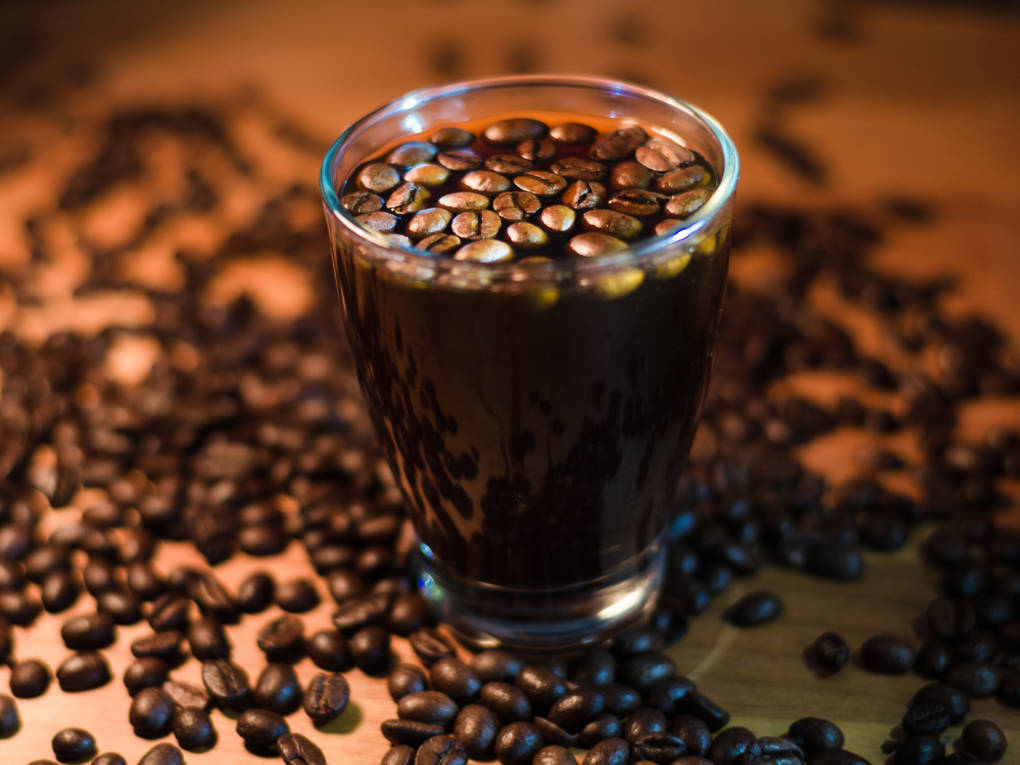
"description": "A Los Angeles judge ruled that coffee companies in California must carry a cancer warning label because of a chemical that is produced during the bean-roasting process.",
"title": "A Los Angeles judge ruled that coffee companies in California must carry a cancer warning label because of a chemical that is produced during the bean-roasting process.",
"credit": " \u003ca href=\"https://www.flickr.com/photos/theocrazzolara/37251155882/\">Theo Crazzolara/Flickr\u003c/a>",
"status": "inherit",
"isLoading": false,
"fetchFailed": false
},
"bayareabites_126352": {
"type": "attachments",
"id": "bayareabites_126352",
"meta": {
"index": "attachments_1716263798",
"site": "bayareabites",
"id": "126352",
"found": true
},
"parent": 126351,
"imgSizes": {
"small": {
"file": "https://ww2.kqed.org/app/uploads/sites/24/2018/04/calories-01-619c9d60e8bb0ca205439b5523f5d965069a30e3-520x390.jpg",
"width": 520,
"mimeType": "image/jpeg",
"height": 390
},
"twentyfourteen-full-width": {
"file": "https://ww2.kqed.org/app/uploads/sites/24/2018/04/calories-01-619c9d60e8bb0ca205439b5523f5d965069a30e3-1038x576.jpg",
"width": 1038,
"mimeType": "image/jpeg",
"height": 576
},
"thumbnail": {
"file": "https://ww2.kqed.org/app/uploads/sites/24/2018/04/calories-01-619c9d60e8bb0ca205439b5523f5d965069a30e3-160x120.jpg",
"width": 160,
"mimeType": "image/jpeg",
"height": 120
},
"fd-sm": {
"file": "https://ww2.kqed.org/app/uploads/sites/24/2018/04/calories-01-619c9d60e8bb0ca205439b5523f5d965069a30e3-960x720.jpg",
"width": 960,
"mimeType": "image/jpeg",
"height": 720
},
"post-thumbnail": {
"file": "https://ww2.kqed.org/app/uploads/sites/24/2018/04/calories-01-619c9d60e8bb0ca205439b5523f5d965069a30e3-672x372.jpg",
"width": 672,
"mimeType": "image/jpeg",
"height": 372
},
"xsmall": {
"file": "https://ww2.kqed.org/app/uploads/sites/24/2018/04/calories-01-619c9d60e8bb0ca205439b5523f5d965069a30e3-375x281.jpg",
"width": 375,
"mimeType": "image/jpeg",
"height": 281
},
"kqedFullSize": {
"file": "https://ww2.kqed.org/app/uploads/sites/24/2018/04/calories-01-619c9d60e8bb0ca205439b5523f5d965069a30e3.jpg",
"width": 1980,
"height": 1485
},
"large": {
"file": "https://ww2.kqed.org/app/uploads/sites/24/2018/04/calories-01-619c9d60e8bb0ca205439b5523f5d965069a30e3-1020x765.jpg",
"width": 1020,
"mimeType": "image/jpeg",
"height": 765
},
"xlarge": {
"file": "https://ww2.kqed.org/app/uploads/sites/24/2018/04/calories-01-619c9d60e8bb0ca205439b5523f5d965069a30e3-1180x885.jpg",
"width": 1180,
"mimeType": "image/jpeg",
"height": 885
},
"guest-author-50": {
"file": "https://ww2.kqed.org/app/uploads/sites/24/2018/04/calories-01-619c9d60e8bb0ca205439b5523f5d965069a30e3-50x50.jpg",
"width": 50,
"mimeType": "image/jpeg",
"height": 50
},
"guest-author-96": {
"file": "https://ww2.kqed.org/app/uploads/sites/24/2018/04/calories-01-619c9d60e8bb0ca205439b5523f5d965069a30e3-96x96.jpg",
"width": 96,
"mimeType": "image/jpeg",
"height": 96
},
"medium": {
"file": "https://ww2.kqed.org/app/uploads/sites/24/2018/04/calories-01-619c9d60e8bb0ca205439b5523f5d965069a30e3-800x600.jpg",
"width": 800,
"mimeType": "image/jpeg",
"height": 600
},
"guest-author-64": {
"file": "https://ww2.kqed.org/app/uploads/sites/24/2018/04/calories-01-619c9d60e8bb0ca205439b5523f5d965069a30e3-64x64.jpg",
"width": 64,
"mimeType": "image/jpeg",
"height": 64
},
"guest-author-32": {
"file": "https://ww2.kqed.org/app/uploads/sites/24/2018/04/calories-01-619c9d60e8bb0ca205439b5523f5d965069a30e3-32x32.jpg",
"width": 32,
"mimeType": "image/jpeg",
"height": 32
},
"fd-lrg": {
"file": "https://ww2.kqed.org/app/uploads/sites/24/2018/04/calories-01-619c9d60e8bb0ca205439b5523f5d965069a30e3-1920x1440.jpg",
"width": 1920,
"mimeType": "image/jpeg",
"height": 1440
},
"fd-med": {
"file": "https://ww2.kqed.org/app/uploads/sites/24/2018/04/calories-01-619c9d60e8bb0ca205439b5523f5d965069a30e3-1180x885.jpg",
"width": 1180,
"mimeType": "image/jpeg",
"height": 885
},
"full-width": {
"file": "https://ww2.kqed.org/app/uploads/sites/24/2018/04/calories-01-619c9d60e8bb0ca205439b5523f5d965069a30e3-1920x1440.jpg",
"width": 1920,
"mimeType": "image/jpeg",
"height": 1440
},
"detail": {
"file": "https://ww2.kqed.org/app/uploads/sites/24/2018/04/calories-01-619c9d60e8bb0ca205439b5523f5d965069a30e3-150x150.jpg",
"width": 150,
"mimeType": "image/jpeg",
"height": 150
},
"medium_large": {
"file": "https://ww2.kqed.org/app/uploads/sites/24/2018/04/calories-01-619c9d60e8bb0ca205439b5523f5d965069a30e3-768x576.jpg",
"width": 768,
"mimeType": "image/jpeg",
"height": 576
},
"guest-author-128": {
"file": "https://ww2.kqed.org/app/uploads/sites/24/2018/04/calories-01-619c9d60e8bb0ca205439b5523f5d965069a30e3-128x128.jpg",
"width": 128,
"mimeType": "image/jpeg",
"height": 128
},
"xxsmall": {
"file": "https://ww2.kqed.org/app/uploads/sites/24/2018/04/calories-01-619c9d60e8bb0ca205439b5523f5d965069a30e3-240x180.jpg",
"width": 240,
"mimeType": "image/jpeg",
"height": 180
}
},
"publishDate": 1522683191,
"modified": 1522683355,
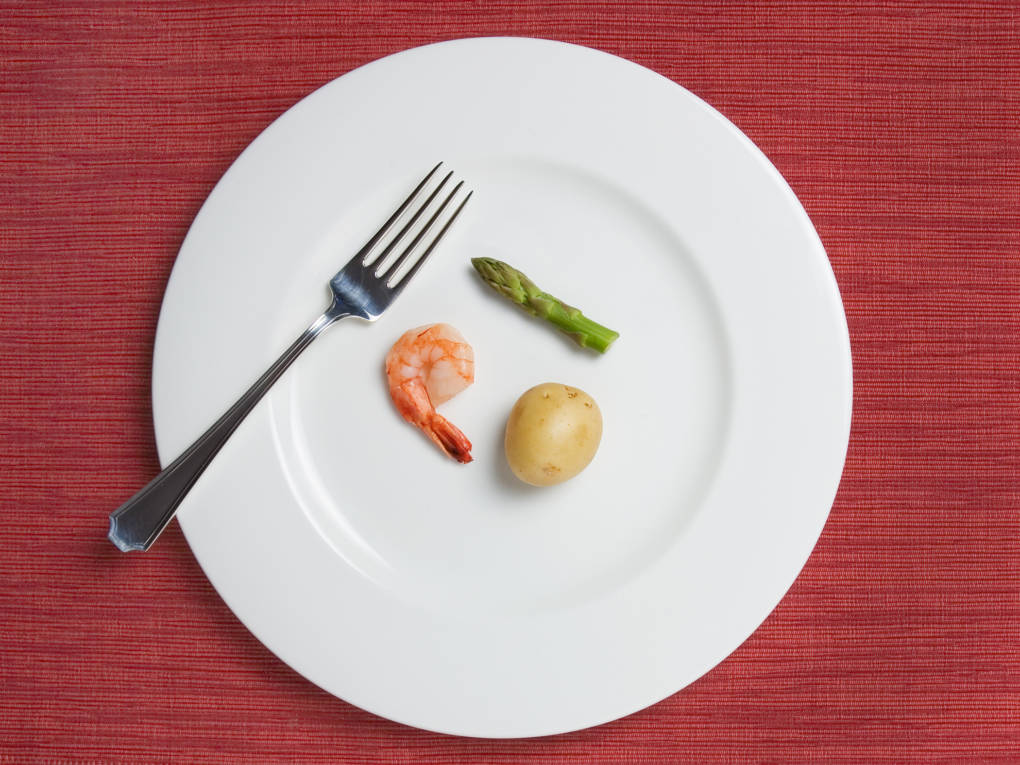
"caption": "Cutting back up to 25 percent of your calories per day helps slow your metabolism and reduce free radicals that cause cell damage and aging. But would you want to?",
"description": "Cutting back up to 25 percent of your calories per day helps slow your metabolism and reduce free radicals that cause cell damage and aging. But would you want to?",
"title": "Cutting back up to 25 percent of your calories per day helps slow your metabolism and reduce free radicals that cause cell damage and aging. But would you want to?",
"credit": "VisualField/Getty Images",
"status": "inherit",
"isLoading": false,
"fetchFailed": false
},
"bayareabites_126200": {
"type": "attachments",
"id": "bayareabites_126200",
"meta": {
"index": "attachments_1716263798",
"site": "bayareabites",
"id": "126200",
"found": true
},
"parent": 126199,
"imgSizes": {
"small": {
"file": "https://ww2.kqed.org/app/uploads/sites/24/2018/03/dmg-store_wide-8ac56ea44b37817664378a09407133dfc274ac07-520x292.jpg",
"width": 520,
"mimeType": "image/jpeg",
"height": 292
},
"thumbnail": {
"file": "https://ww2.kqed.org/app/uploads/sites/24/2018/03/dmg-store_wide-8ac56ea44b37817664378a09407133dfc274ac07-160x90.jpg",
"width": 160,
"mimeType": "image/jpeg",
"height": 90
},
"post-thumbnail": {
"file": "https://ww2.kqed.org/app/uploads/sites/24/2018/03/dmg-store_wide-8ac56ea44b37817664378a09407133dfc274ac07-672x372.jpg",
"width": 672,
"mimeType": "image/jpeg",
"height": 372
},
"xsmall": {
"file": "https://ww2.kqed.org/app/uploads/sites/24/2018/03/dmg-store_wide-8ac56ea44b37817664378a09407133dfc274ac07-375x211.jpg",
"width": 375,
"mimeType": "image/jpeg",
"height": 211
},
"kqedFullSize": {
"file": "https://ww2.kqed.org/app/uploads/sites/24/2018/03/dmg-store_wide-8ac56ea44b37817664378a09407133dfc274ac07.jpg",
"width": 730,
"height": 410
},
"guest-author-50": {
"file": "https://ww2.kqed.org/app/uploads/sites/24/2018/03/dmg-store_wide-8ac56ea44b37817664378a09407133dfc274ac07-50x50.jpg",
"width": 50,
"mimeType": "image/jpeg",
"height": 50
},
"guest-author-96": {
"file": "https://ww2.kqed.org/app/uploads/sites/24/2018/03/dmg-store_wide-8ac56ea44b37817664378a09407133dfc274ac07-96x96.jpg",
"width": 96,
"mimeType": "image/jpeg",
"height": 96
},
"guest-author-64": {
"file": "https://ww2.kqed.org/app/uploads/sites/24/2018/03/dmg-store_wide-8ac56ea44b37817664378a09407133dfc274ac07-64x64.jpg",
"width": 64,
"mimeType": "image/jpeg",
"height": 64
},
"detail": {
"file": "https://ww2.kqed.org/app/uploads/sites/24/2018/03/dmg-store_wide-8ac56ea44b37817664378a09407133dfc274ac07-150x150.jpg",
"width": 150,
"mimeType": "image/jpeg",
"height": 150
},
"guest-author-32": {
"file": "https://ww2.kqed.org/app/uploads/sites/24/2018/03/dmg-store_wide-8ac56ea44b37817664378a09407133dfc274ac07-32x32.jpg",
"width": 32,
"mimeType": "image/jpeg",
"height": 32
},
"guest-author-128": {
"file": "https://ww2.kqed.org/app/uploads/sites/24/2018/03/dmg-store_wide-8ac56ea44b37817664378a09407133dfc274ac07-128x128.jpg",
"width": 128,
"mimeType": "image/jpeg",
"height": 128
},
"xxsmall": {
"file": "https://ww2.kqed.org/app/uploads/sites/24/2018/03/dmg-store_wide-8ac56ea44b37817664378a09407133dfc274ac07-240x135.jpg",
"width": 240,
"mimeType": "image/jpeg",
"height": 135
}
},
"publishDate": 1522190057,
"modified": 1522190153,
"caption": "DMG Foods, the Salvation Army's first supermarket, offers discount groceries to nutritional assistance beneficiaries and anyone else who walks through the door.",
"description": "DMG Foods, the Salvation Army's first supermarket, offers discount groceries to nutritional assistance beneficiaries and anyone else who walks through the door",
"title": "DMG Foods, the Salvation Army's first supermarket, offers discount groceries to nutritional assistance beneficiaries and anyone else who walks through the door.",
"credit": "dmgfoods.org",
"status": "inherit",
"isLoading": false,
"fetchFailed": false
},
"bayareabites_126146": {
"type": "attachments",
"id": "bayareabites_126146",
"meta": {
"index": "attachments_1716263798",
"site": "bayareabites",
"id": "126146",
"found": true
},
"parent": 126145,
"imgSizes": {
"small": {
"file": "https://ww2.kqed.org/app/uploads/sites/24/2018/03/gettyimages-479552090-f7179166cd49e4412fbbfb1498a8014bd32c085a-520x390.jpg",
"width": 520,
"mimeType": "image/jpeg",
"height": 390
},
"twentyfourteen-full-width": {
"file": "https://ww2.kqed.org/app/uploads/sites/24/2018/03/gettyimages-479552090-f7179166cd49e4412fbbfb1498a8014bd32c085a-1038x576.jpg",
"width": 1038,
"mimeType": "image/jpeg",
"height": 576
},
"thumbnail": {
"file": "https://ww2.kqed.org/app/uploads/sites/24/2018/03/gettyimages-479552090-f7179166cd49e4412fbbfb1498a8014bd32c085a-160x120.jpg",
"width": 160,
"mimeType": "image/jpeg",
"height": 120
},
"fd-sm": {
"file": "https://ww2.kqed.org/app/uploads/sites/24/2018/03/gettyimages-479552090-f7179166cd49e4412fbbfb1498a8014bd32c085a-960x720.jpg",
"width": 960,
"mimeType": "image/jpeg",
"height": 720
},
"post-thumbnail": {
"file": "https://ww2.kqed.org/app/uploads/sites/24/2018/03/gettyimages-479552090-f7179166cd49e4412fbbfb1498a8014bd32c085a-672x372.jpg",
"width": 672,
"mimeType": "image/jpeg",
"height": 372
},
"xsmall": {
"file": "https://ww2.kqed.org/app/uploads/sites/24/2018/03/gettyimages-479552090-f7179166cd49e4412fbbfb1498a8014bd32c085a-375x281.jpg",
"width": 375,
"mimeType": "image/jpeg",
"height": 281
},
"kqedFullSize": {
"file": "https://ww2.kqed.org/app/uploads/sites/24/2018/03/gettyimages-479552090-f7179166cd49e4412fbbfb1498a8014bd32c085a.jpg",
"width": 1882,
"height": 1412
},
"large": {
"file": "https://ww2.kqed.org/app/uploads/sites/24/2018/03/gettyimages-479552090-f7179166cd49e4412fbbfb1498a8014bd32c085a-1020x765.jpg",
"width": 1020,
"mimeType": "image/jpeg",
"height": 765
},
"xlarge": {
"file": "https://ww2.kqed.org/app/uploads/sites/24/2018/03/gettyimages-479552090-f7179166cd49e4412fbbfb1498a8014bd32c085a-1180x885.jpg",
"width": 1180,
"mimeType": "image/jpeg",
"height": 885
},
"guest-author-50": {
"file": "https://ww2.kqed.org/app/uploads/sites/24/2018/03/gettyimages-479552090-f7179166cd49e4412fbbfb1498a8014bd32c085a-50x50.jpg",
"width": 50,
"mimeType": "image/jpeg",
"height": 50
},
"guest-author-96": {
"file": "https://ww2.kqed.org/app/uploads/sites/24/2018/03/gettyimages-479552090-f7179166cd49e4412fbbfb1498a8014bd32c085a-96x96.jpg",
"width": 96,
"mimeType": "image/jpeg",
"height": 96
},
"medium": {
"file": "https://ww2.kqed.org/app/uploads/sites/24/2018/03/gettyimages-479552090-f7179166cd49e4412fbbfb1498a8014bd32c085a-800x600.jpg",
"width": 800,
"mimeType": "image/jpeg",
"height": 600
},
"guest-author-64": {
"file": "https://ww2.kqed.org/app/uploads/sites/24/2018/03/gettyimages-479552090-f7179166cd49e4412fbbfb1498a8014bd32c085a-64x64.jpg",
"width": 64,
"mimeType": "image/jpeg",
"height": 64
},
"guest-author-32": {
"file": "https://ww2.kqed.org/app/uploads/sites/24/2018/03/gettyimages-479552090-f7179166cd49e4412fbbfb1498a8014bd32c085a-32x32.jpg",
"width": 32,
"mimeType": "image/jpeg",
"height": 32
},
"fd-med": {
"file": "https://ww2.kqed.org/app/uploads/sites/24/2018/03/gettyimages-479552090-f7179166cd49e4412fbbfb1498a8014bd32c085a-1180x885.jpg",
"width": 1180,
"mimeType": "image/jpeg",
"height": 885
},
"detail": {
"file": "https://ww2.kqed.org/app/uploads/sites/24/2018/03/gettyimages-479552090-f7179166cd49e4412fbbfb1498a8014bd32c085a-150x150.jpg",
"width": 150,
"mimeType": "image/jpeg",
"height": 150
},
"medium_large": {
"file": "https://ww2.kqed.org/app/uploads/sites/24/2018/03/gettyimages-479552090-f7179166cd49e4412fbbfb1498a8014bd32c085a-768x576.jpg",
"width": 768,
"mimeType": "image/jpeg",
"height": 576
},
"guest-author-128": {
"file": "https://ww2.kqed.org/app/uploads/sites/24/2018/03/gettyimages-479552090-f7179166cd49e4412fbbfb1498a8014bd32c085a-128x128.jpg",
"width": 128,
"mimeType": "image/jpeg",
"height": 128
},
"xxsmall": {
"file": "https://ww2.kqed.org/app/uploads/sites/24/2018/03/gettyimages-479552090-f7179166cd49e4412fbbfb1498a8014bd32c085a-240x180.jpg",
"width": 240,
"mimeType": "image/jpeg",
"height": 180
}
},
"publishDate": 1521825150,
"modified": 1521825260,
"caption": "Iron pops up in everything from spinach to steaks. But it's not the same from every source – and how much you absorb depends in part on what you eat with it.",
"description": "Iron pops up in everything from spinach to steaks. But it's not the same from every source – and how much you absorb depends in part on what you eat with",
"title": "Iron pops up in everything from spinach to steaks. But it's not the same from every source – and how much you absorb depends in part on what you eat with it.",
"credit": "Xsandra/Getty Images",
"status": "inherit",
"isLoading": false,
"fetchFailed": false
},
"bayareabites_126048": {
"type": "attachments",
"id": "bayareabites_126048",
"meta": {
"index": "attachments_1716263798",
"site": "bayareabites",
"id": "126048",
"found": true
},
"parent": 126047,
"imgSizes": {
"small": {
"file": "https://ww2.kqed.org/app/uploads/sites/24/2018/03/gettyimages-128610291-58ce8055c8de5e53661d34ca80c3a019ec3a7691-520x390.jpg",
"width": 520,
"mimeType": "image/jpeg",
"height": 390
},
"twentyfourteen-full-width": {
"file": "https://ww2.kqed.org/app/uploads/sites/24/2018/03/gettyimages-128610291-58ce8055c8de5e53661d34ca80c3a019ec3a7691-1038x576.jpg",
"width": 1038,
"mimeType": "image/jpeg",
"height": 576
},
"thumbnail": {
"file": "https://ww2.kqed.org/app/uploads/sites/24/2018/03/gettyimages-128610291-58ce8055c8de5e53661d34ca80c3a019ec3a7691-160x120.jpg",
"width": 160,
"mimeType": "image/jpeg",
"height": 120
},
"fd-sm": {
"file": "https://ww2.kqed.org/app/uploads/sites/24/2018/03/gettyimages-128610291-58ce8055c8de5e53661d34ca80c3a019ec3a7691-960x720.jpg",
"width": 960,
"mimeType": "image/jpeg",
"height": 720
},
"post-thumbnail": {
"file": "https://ww2.kqed.org/app/uploads/sites/24/2018/03/gettyimages-128610291-58ce8055c8de5e53661d34ca80c3a019ec3a7691-672x372.jpg",
"width": 672,
"mimeType": "image/jpeg",
"height": 372
},
"xsmall": {
"file": "https://ww2.kqed.org/app/uploads/sites/24/2018/03/gettyimages-128610291-58ce8055c8de5e53661d34ca80c3a019ec3a7691-375x281.jpg",
"width": 375,
"mimeType": "image/jpeg",
"height": 281
},
"kqedFullSize": {
"file": "https://ww2.kqed.org/app/uploads/sites/24/2018/03/gettyimages-128610291-58ce8055c8de5e53661d34ca80c3a019ec3a7691.jpg",
"width": 1889,
"height": 1416
},
"large": {
"file": "https://ww2.kqed.org/app/uploads/sites/24/2018/03/gettyimages-128610291-58ce8055c8de5e53661d34ca80c3a019ec3a7691-1020x765.jpg",
"width": 1020,
"mimeType": "image/jpeg",
"height": 765
},
"xlarge": {
"file": "https://ww2.kqed.org/app/uploads/sites/24/2018/03/gettyimages-128610291-58ce8055c8de5e53661d34ca80c3a019ec3a7691-1180x885.jpg",
"width": 1180,
"mimeType": "image/jpeg",
"height": 885
},
"guest-author-50": {
"file": "https://ww2.kqed.org/app/uploads/sites/24/2018/03/gettyimages-128610291-58ce8055c8de5e53661d34ca80c3a019ec3a7691-50x50.jpg",
"width": 50,
"mimeType": "image/jpeg",
"height": 50
},
"guest-author-96": {
"file": "https://ww2.kqed.org/app/uploads/sites/24/2018/03/gettyimages-128610291-58ce8055c8de5e53661d34ca80c3a019ec3a7691-96x96.jpg",
"width": 96,
"mimeType": "image/jpeg",
"height": 96
},
"medium": {
"file": "https://ww2.kqed.org/app/uploads/sites/24/2018/03/gettyimages-128610291-58ce8055c8de5e53661d34ca80c3a019ec3a7691-800x600.jpg",
"width": 800,
"mimeType": "image/jpeg",
"height": 600
},
"guest-author-64": {
"file": "https://ww2.kqed.org/app/uploads/sites/24/2018/03/gettyimages-128610291-58ce8055c8de5e53661d34ca80c3a019ec3a7691-64x64.jpg",
"width": 64,
"mimeType": "image/jpeg",
"height": 64
},
"guest-author-32": {
"file": "https://ww2.kqed.org/app/uploads/sites/24/2018/03/gettyimages-128610291-58ce8055c8de5e53661d34ca80c3a019ec3a7691-32x32.jpg",
"width": 32,
"mimeType": "image/jpeg",
"height": 32
},
"fd-med": {
"file": "https://ww2.kqed.org/app/uploads/sites/24/2018/03/gettyimages-128610291-58ce8055c8de5e53661d34ca80c3a019ec3a7691-1180x885.jpg",
"width": 1180,
"mimeType": "image/jpeg",
"height": 885
},
"detail": {
"file": "https://ww2.kqed.org/app/uploads/sites/24/2018/03/gettyimages-128610291-58ce8055c8de5e53661d34ca80c3a019ec3a7691-150x150.jpg",
"width": 150,
"mimeType": "image/jpeg",
"height": 150
},
"medium_large": {
"file": "https://ww2.kqed.org/app/uploads/sites/24/2018/03/gettyimages-128610291-58ce8055c8de5e53661d34ca80c3a019ec3a7691-768x576.jpg",
"width": 768,
"mimeType": "image/jpeg",
"height": 576
},
"guest-author-128": {
"file": "https://ww2.kqed.org/app/uploads/sites/24/2018/03/gettyimages-128610291-58ce8055c8de5e53661d34ca80c3a019ec3a7691-128x128.jpg",
"width": 128,
"mimeType": "image/jpeg",
"height": 128
},
"xxsmall": {
"file": "https://ww2.kqed.org/app/uploads/sites/24/2018/03/gettyimages-128610291-58ce8055c8de5e53661d34ca80c3a019ec3a7691-240x180.jpg",
"width": 240,
"mimeType": "image/jpeg",
"height": 180
}
},
"publishDate": 1521578232,
"modified": 1521578358,
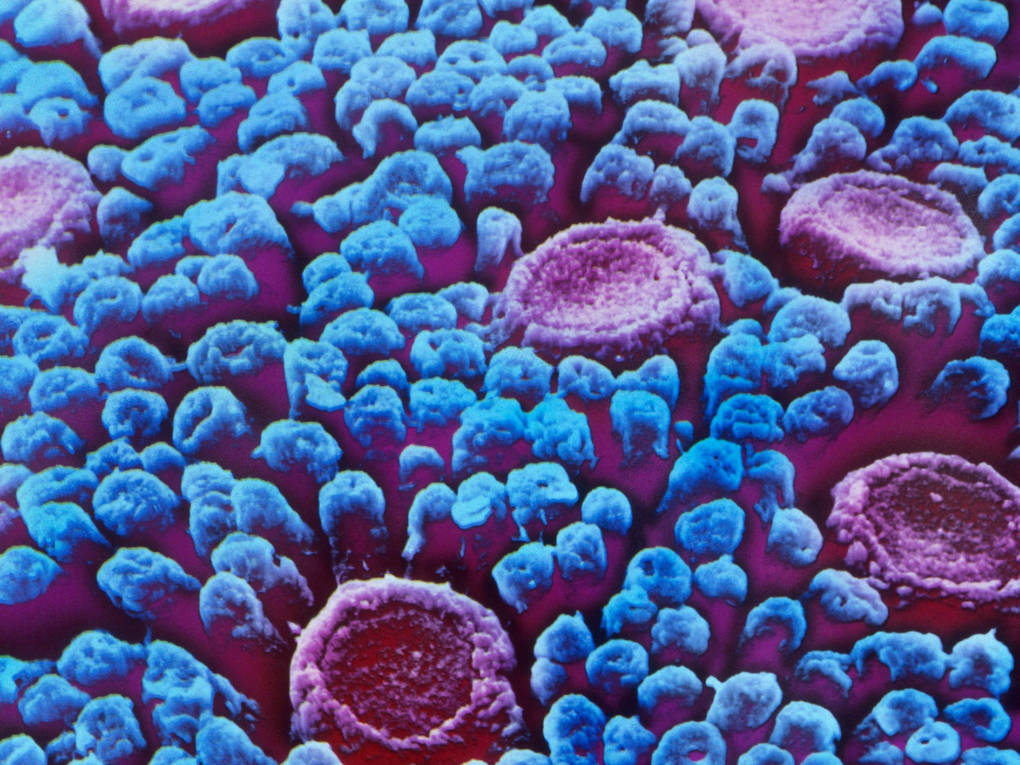
"caption": "A color-enhanced scanning electron micrograph of the surface of the human tongue. Taste buds are shown in purple. Doctors have known that as people pack on the pounds, their sense of taste diminishes. New research in mice suggests one reason why: Inflammation brought on by obesity may be killing taste buds.",
"description": "A color-enhanced scanning electron micrograph of the surface of the human tongue. Taste buds are shown in purple. Doctors have known that as people pack on the pounds, their sense of taste diminishes. New research in mice suggests one reason why: Inflammation brought on by obesity may be killing taste buds.",
"title": "A color-enhanced scanning electron micrograph of the surface of the human tongue. Taste buds are shown in purple. Doctors have known that as people pack on the pounds, their sense of taste diminishes. New research in mice suggests one reason why: Inflammation brought on by obesity may be killing taste buds.",
"credit": "Omikron Omikron/Getty Images/Science Source",
"status": "inherit",
"isLoading": false,
"fetchFailed": false
},
"bayareabites_126040": {
"type": "attachments",
"id": "bayareabites_126040",
"meta": {
"index": "attachments_1716263798",
"site": "bayareabites",
"id": "126040",
"found": true
},
"parent": 126036,
"imgSizes": {
"small": {
"file": "https://ww2.kqed.org/app/uploads/sites/24/2018/03/180312-regenerative-agriculture-top1-520x347.jpg",
"width": 520,
"mimeType": "image/jpeg",
"height": 347
},
"twentyfourteen-full-width": {
"file": "https://ww2.kqed.org/app/uploads/sites/24/2018/03/180312-regenerative-agriculture-top1-1038x576.jpg",
"width": 1038,
"mimeType": "image/jpeg",
"height": 576
},
"thumbnail": {
"file": "https://ww2.kqed.org/app/uploads/sites/24/2018/03/180312-regenerative-agriculture-top1-160x107.jpg",
"width": 160,
"mimeType": "image/jpeg",
"height": 107
},
"fd-sm": {
"file": "https://ww2.kqed.org/app/uploads/sites/24/2018/03/180312-regenerative-agriculture-top1-960x640.jpg",
"width": 960,
"mimeType": "image/jpeg",
"height": 640
},
"post-thumbnail": {
"file": "https://ww2.kqed.org/app/uploads/sites/24/2018/03/180312-regenerative-agriculture-top1-672x372.jpg",
"width": 672,
"mimeType": "image/jpeg",
"height": 372
},
"xsmall": {
"file": "https://ww2.kqed.org/app/uploads/sites/24/2018/03/180312-regenerative-agriculture-top1-375x250.jpg",
"width": 375,
"mimeType": "image/jpeg",
"height": 250
},
"kqedFullSize": {
"file": "https://ww2.kqed.org/app/uploads/sites/24/2018/03/180312-regenerative-agriculture-top1.jpg",
"width": 1200,
"height": 800
},
"large": {
"file": "https://ww2.kqed.org/app/uploads/sites/24/2018/03/180312-regenerative-agriculture-top1-1020x680.jpg",
"width": 1020,
"mimeType": "image/jpeg",
"height": 680
},
"xlarge": {
"file": "https://ww2.kqed.org/app/uploads/sites/24/2018/03/180312-regenerative-agriculture-top1-1180x787.jpg",
"width": 1180,
"mimeType": "image/jpeg",
"height": 787
},
"guest-author-50": {
"file": "https://ww2.kqed.org/app/uploads/sites/24/2018/03/180312-regenerative-agriculture-top1-50x50.jpg",
"width": 50,
"mimeType": "image/jpeg",
"height": 50
},
"guest-author-96": {
"file": "https://ww2.kqed.org/app/uploads/sites/24/2018/03/180312-regenerative-agriculture-top1-96x96.jpg",
"width": 96,
"mimeType": "image/jpeg",
"height": 96
},
"medium": {
"file": "https://ww2.kqed.org/app/uploads/sites/24/2018/03/180312-regenerative-agriculture-top1-800x533.jpg",
"width": 800,
"mimeType": "image/jpeg",
"height": 533
},
"guest-author-64": {
"file": "https://ww2.kqed.org/app/uploads/sites/24/2018/03/180312-regenerative-agriculture-top1-64x64.jpg",
"width": 64,
"mimeType": "image/jpeg",
"height": 64
},
"guest-author-32": {
"file": "https://ww2.kqed.org/app/uploads/sites/24/2018/03/180312-regenerative-agriculture-top1-32x32.jpg",
"width": 32,
"mimeType": "image/jpeg",
"height": 32
},
"fd-med": {
"file": "https://ww2.kqed.org/app/uploads/sites/24/2018/03/180312-regenerative-agriculture-top1-1180x787.jpg",
"width": 1180,
"mimeType": "image/jpeg",
"height": 787
},
"detail": {
"file": "https://ww2.kqed.org/app/uploads/sites/24/2018/03/180312-regenerative-agriculture-top1-150x150.jpg",
"width": 150,
"mimeType": "image/jpeg",
"height": 150
},
"medium_large": {
"file": "https://ww2.kqed.org/app/uploads/sites/24/2018/03/180312-regenerative-agriculture-top1-768x512.jpg",
"width": 768,
"mimeType": "image/jpeg",
"height": 512
},
"guest-author-128": {
"file": "https://ww2.kqed.org/app/uploads/sites/24/2018/03/180312-regenerative-agriculture-top1-128x128.jpg",
"width": 128,
"mimeType": "image/jpeg",
"height": 128
},
"xxsmall": {
"file": "https://ww2.kqed.org/app/uploads/sites/24/2018/03/180312-regenerative-agriculture-top1-240x160.jpg",
"width": 240,
"mimeType": "image/jpeg",
"height": 160
}
},
"publishDate": 1521565668,
"modified": 1521565755,
"caption": null,
"description": null,
"title": "180312-regenerative-agriculture-top1",
"credit": "\u003ca href=\"https://rodaleinstitute.org/\">The Rodale Institute\u003c/a>",
"status": "inherit",
"isLoading": false,
"fetchFailed": false
},
"bayareabites_125500": {
"type": "attachments",
"id": "bayareabites_125500",
"meta": {
"index": "attachments_1716263798",
"site": "bayareabites",
"id": "125500",
"found": true
},
"parent": 125499,
"imgSizes": {
"small": {
"file": "https://ww2.kqed.org/app/uploads/sites/24/2018/02/2017-readers-to-eaters-3-0dec8d84af797569be887b77b3da272add886305-520x390.jpg",
"width": 520,
"mimeType": "image/jpeg",
"height": 390
},
"twentyfourteen-full-width": {
"file": "https://ww2.kqed.org/app/uploads/sites/24/2018/02/2017-readers-to-eaters-3-0dec8d84af797569be887b77b3da272add886305-1038x576.jpg",
"width": 1038,
"mimeType": "image/jpeg",
"height": 576
},
"thumbnail": {
"file": "https://ww2.kqed.org/app/uploads/sites/24/2018/02/2017-readers-to-eaters-3-0dec8d84af797569be887b77b3da272add886305-160x120.jpg",
"width": 160,
"mimeType": "image/jpeg",
"height": 120
},
"fd-sm": {
"file": "https://ww2.kqed.org/app/uploads/sites/24/2018/02/2017-readers-to-eaters-3-0dec8d84af797569be887b77b3da272add886305-960x720.jpg",
"width": 960,
"mimeType": "image/jpeg",
"height": 720
},
"post-thumbnail": {
"file": "https://ww2.kqed.org/app/uploads/sites/24/2018/02/2017-readers-to-eaters-3-0dec8d84af797569be887b77b3da272add886305-672x372.jpg",
"width": 672,
"mimeType": "image/jpeg",
"height": 372
},
"xsmall": {
"file": "https://ww2.kqed.org/app/uploads/sites/24/2018/02/2017-readers-to-eaters-3-0dec8d84af797569be887b77b3da272add886305-375x281.jpg",
"width": 375,
"mimeType": "image/jpeg",
"height": 281
},
"kqedFullSize": {
"file": "https://ww2.kqed.org/app/uploads/sites/24/2018/02/2017-readers-to-eaters-3-0dec8d84af797569be887b77b3da272add886305.jpg",
"width": 1406,
"height": 1054
},
"large": {
"file": "https://ww2.kqed.org/app/uploads/sites/24/2018/02/2017-readers-to-eaters-3-0dec8d84af797569be887b77b3da272add886305-1020x765.jpg",
"width": 1020,
"mimeType": "image/jpeg",
"height": 765
},
"xlarge": {
"file": "https://ww2.kqed.org/app/uploads/sites/24/2018/02/2017-readers-to-eaters-3-0dec8d84af797569be887b77b3da272add886305-1180x885.jpg",
"width": 1180,
"mimeType": "image/jpeg",
"height": 885
},
"guest-author-50": {
"file": "https://ww2.kqed.org/app/uploads/sites/24/2018/02/2017-readers-to-eaters-3-0dec8d84af797569be887b77b3da272add886305-50x50.jpg",
"width": 50,
"mimeType": "image/jpeg",
"height": 50
},
"guest-author-96": {
"file": "https://ww2.kqed.org/app/uploads/sites/24/2018/02/2017-readers-to-eaters-3-0dec8d84af797569be887b77b3da272add886305-96x96.jpg",
"width": 96,
"mimeType": "image/jpeg",
"height": 96
},
"medium": {
"file": "https://ww2.kqed.org/app/uploads/sites/24/2018/02/2017-readers-to-eaters-3-0dec8d84af797569be887b77b3da272add886305-800x600.jpg",
"width": 800,
"mimeType": "image/jpeg",
"height": 600
},
"guest-author-64": {
"file": "https://ww2.kqed.org/app/uploads/sites/24/2018/02/2017-readers-to-eaters-3-0dec8d84af797569be887b77b3da272add886305-64x64.jpg",
"width": 64,
"mimeType": "image/jpeg",
"height": 64
},
"guest-author-32": {
"file": "https://ww2.kqed.org/app/uploads/sites/24/2018/02/2017-readers-to-eaters-3-0dec8d84af797569be887b77b3da272add886305-32x32.jpg",
"width": 32,
"mimeType": "image/jpeg",
"height": 32
},
"fd-med": {
"file": "https://ww2.kqed.org/app/uploads/sites/24/2018/02/2017-readers-to-eaters-3-0dec8d84af797569be887b77b3da272add886305-1180x885.jpg",
"width": 1180,
"mimeType": "image/jpeg",
"height": 885
},
"detail": {
"file": "https://ww2.kqed.org/app/uploads/sites/24/2018/02/2017-readers-to-eaters-3-0dec8d84af797569be887b77b3da272add886305-150x150.jpg",
"width": 150,
"mimeType": "image/jpeg",
"height": 150
},
"medium_large": {
"file": "https://ww2.kqed.org/app/uploads/sites/24/2018/02/2017-readers-to-eaters-3-0dec8d84af797569be887b77b3da272add886305-768x576.jpg",
"width": 768,
"mimeType": "image/jpeg",
"height": 576
},
"guest-author-128": {
"file": "https://ww2.kqed.org/app/uploads/sites/24/2018/02/2017-readers-to-eaters-3-0dec8d84af797569be887b77b3da272add886305-128x128.jpg",
"width": 128,
"mimeType": "image/jpeg",
"height": 128
},
"xxsmall": {
"file": "https://ww2.kqed.org/app/uploads/sites/24/2018/02/2017-readers-to-eaters-3-0dec8d84af797569be887b77b3da272add886305-240x180.jpg",
"width": 240,
"mimeType": "image/jpeg",
"height": 180
}
},
"publishDate": 1520530462,
"modified": 1520573944,
"caption": "June Jo Lee's interest in food anthropology inspired her husband Philip Lee to create a publishing company that would bring books about good food to kids.",
"description": "June Jo Lee's interest in food anthropology inspired her husband Philip Lee to create a publishing company that would bring books about good food to kids.",
"title": "June Jo Lee's interest in food anthropology inspired her husband Philip Lee to create a publishing company that would bring books about good food to kids.",
"credit": "Readers to Eaters",
"status": "inherit",
"isLoading": false,
"fetchFailed": false
},
"bayareabites_125426": {
"type": "attachments",
"id": "bayareabites_125426",
"meta": {
"index": "attachments_1716263798",
"site": "bayareabites",
"id": "125426",
"found": true
},
"parent": 125425,
"imgSizes": {
"small": {
"file": "https://ww2.kqed.org/app/uploads/sites/24/2018/03/digitalrx-1_wide-e146e8af837beb0c44d1dc98d3f96beb17ee4398-520x292.jpe",
"width": 520,
"mimeType": "image/jpeg",
"height": 292
},
"twentyfourteen-full-width": {
"file": "https://ww2.kqed.org/app/uploads/sites/24/2018/03/digitalrx-1_wide-e146e8af837beb0c44d1dc98d3f96beb17ee4398-1038x576.jpe",
"width": 1038,
"mimeType": "image/jpeg",
"height": 576
},
"thumbnail": {
"file": "https://ww2.kqed.org/app/uploads/sites/24/2018/03/digitalrx-1_wide-e146e8af837beb0c44d1dc98d3f96beb17ee4398-160x90.jpe",
"width": 160,
"mimeType": "image/jpeg",
"height": 90
},
"fd-sm": {
"file": "https://ww2.kqed.org/app/uploads/sites/24/2018/03/digitalrx-1_wide-e146e8af837beb0c44d1dc98d3f96beb17ee4398-960x540.jpe",
"width": 960,
"mimeType": "image/jpeg",
"height": 540
},
"post-thumbnail": {
"file": "https://ww2.kqed.org/app/uploads/sites/24/2018/03/digitalrx-1_wide-e146e8af837beb0c44d1dc98d3f96beb17ee4398-672x372.jpe",
"width": 672,
"mimeType": "image/jpeg",
"height": 372
},
"xsmall": {
"file": "https://ww2.kqed.org/app/uploads/sites/24/2018/03/digitalrx-1_wide-e146e8af837beb0c44d1dc98d3f96beb17ee4398-375x211.jpe",
"width": 375,
"mimeType": "image/jpeg",
"height": 211
},
"kqedFullSize": {
"file": "https://ww2.kqed.org/app/uploads/sites/24/2018/03/digitalrx-1_wide-e146e8af837beb0c44d1dc98d3f96beb17ee4398.jpe",
"width": 2994,
"height": 1684
},
"large": {
"file": "https://ww2.kqed.org/app/uploads/sites/24/2018/03/digitalrx-1_wide-e146e8af837beb0c44d1dc98d3f96beb17ee4398-1020x574.jpe",
"width": 1020,
"mimeType": "image/jpeg",
"height": 574
},
"xlarge": {
"file": "https://ww2.kqed.org/app/uploads/sites/24/2018/03/digitalrx-1_wide-e146e8af837beb0c44d1dc98d3f96beb17ee4398-1180x664.jpe",
"width": 1180,
"mimeType": "image/jpeg",
"height": 664
},
"guest-author-50": {
"file": "https://ww2.kqed.org/app/uploads/sites/24/2018/03/digitalrx-1_wide-e146e8af837beb0c44d1dc98d3f96beb17ee4398-50x50.jpe",
"width": 50,
"mimeType": "image/jpeg",
"height": 50
},
"guest-author-96": {
"file": "https://ww2.kqed.org/app/uploads/sites/24/2018/03/digitalrx-1_wide-e146e8af837beb0c44d1dc98d3f96beb17ee4398-96x96.jpe",
"width": 96,
"mimeType": "image/jpeg",
"height": 96
},
"medium": {
"file": "https://ww2.kqed.org/app/uploads/sites/24/2018/03/digitalrx-1_wide-e146e8af837beb0c44d1dc98d3f96beb17ee4398-800x450.jpe",
"width": 800,
"mimeType": "image/jpeg",
"height": 450
},
"guest-author-64": {
"file": "https://ww2.kqed.org/app/uploads/sites/24/2018/03/digitalrx-1_wide-e146e8af837beb0c44d1dc98d3f96beb17ee4398-64x64.jpe",
"width": 64,
"mimeType": "image/jpeg",
"height": 64
},
"guest-author-32": {
"file": "https://ww2.kqed.org/app/uploads/sites/24/2018/03/digitalrx-1_wide-e146e8af837beb0c44d1dc98d3f96beb17ee4398-32x32.jpe",
"width": 32,
"mimeType": "image/jpeg",
"height": 32
},
"fd-lrg": {
"file": "https://ww2.kqed.org/app/uploads/sites/24/2018/03/digitalrx-1_wide-e146e8af837beb0c44d1dc98d3f96beb17ee4398-1920x1080.jpe",
"width": 1920,
"mimeType": "image/jpeg",
"height": 1080
},
"fd-med": {
"file": "https://ww2.kqed.org/app/uploads/sites/24/2018/03/digitalrx-1_wide-e146e8af837beb0c44d1dc98d3f96beb17ee4398-1180x664.jpe",
"width": 1180,
"mimeType": "image/jpeg",
"height": 664
},
"full-width": {
"file": "https://ww2.kqed.org/app/uploads/sites/24/2018/03/digitalrx-1_wide-e146e8af837beb0c44d1dc98d3f96beb17ee4398-1920x1080.jpe",
"width": 1920,
"mimeType": "image/jpeg",
"height": 1080
},
"detail": {
"file": "https://ww2.kqed.org/app/uploads/sites/24/2018/03/digitalrx-1_wide-e146e8af837beb0c44d1dc98d3f96beb17ee4398-150x150.jpe",
"width": 150,
"mimeType": "image/jpeg",
"height": 150
},
"medium_large": {
"file": "https://ww2.kqed.org/app/uploads/sites/24/2018/03/digitalrx-1_wide-e146e8af837beb0c44d1dc98d3f96beb17ee4398-768x432.jpe",
"width": 768,
"mimeType": "image/jpeg",
"height": 432
},
"guest-author-128": {
"file": "https://ww2.kqed.org/app/uploads/sites/24/2018/03/digitalrx-1_wide-e146e8af837beb0c44d1dc98d3f96beb17ee4398-128x128.jpe",
"width": 128,
"mimeType": "image/jpeg",
"height": 128
},
"xxsmall": {
"file": "https://ww2.kqed.org/app/uploads/sites/24/2018/03/digitalrx-1_wide-e146e8af837beb0c44d1dc98d3f96beb17ee4398-240x135.jpe",
"width": 240,
"mimeType": "image/jpeg",
"height": 135
}
},
"publishDate": 1520360884,
"modified": 1520361151,
"caption": "Harnessing the power of wearable devices, data, education and a peer support group, people with prediabetes can lose weight and fend off the disease.",
"description": "Harnessing the power of wearable devices, data, education and a peer support group, people with prediabetes can lose weight and fend off the disease.",
"title": "Harnessing the power of wearable devices, data, education and a peer support group, people with prediabetes can lose weight and fend off the disease.",
"credit": "Katherine Streeter for NPR",
"status": "inherit",
"isLoading": false,
"fetchFailed": false
},
"bayareabites_125360": {
"type": "attachments",
"id": "bayareabites_125360",
"meta": {
"index": "attachments_1716263798",
"site": "bayareabites",
"id": "125360",
"found": true
},
"parent": 125357,
"imgSizes": {
"small": {
"file": "https://ww2.kqed.org/app/uploads/sites/24/2018/02/GettyImages-487150973-1920-520x371.jpg",
"width": 520,
"mimeType": "image/jpeg",
"height": 371
},
"twentyfourteen-full-width": {
"file": "https://ww2.kqed.org/app/uploads/sites/24/2018/02/GettyImages-487150973-1920-1038x576.jpg",
"width": 1038,
"mimeType": "image/jpeg",
"height": 576
},
"thumbnail": {
"file": "https://ww2.kqed.org/app/uploads/sites/24/2018/02/GettyImages-487150973-1920-160x114.jpg",
"width": 160,
"mimeType": "image/jpeg",
"height": 114
},
"fd-sm": {
"file": "https://ww2.kqed.org/app/uploads/sites/24/2018/02/GettyImages-487150973-1920-960x685.jpg",
"width": 960,
"mimeType": "image/jpeg",
"height": 685
},
"post-thumbnail": {
"file": "https://ww2.kqed.org/app/uploads/sites/24/2018/02/GettyImages-487150973-1920-672x372.jpg",
"width": 672,
"mimeType": "image/jpeg",
"height": 372
},
"xsmall": {
"file": "https://ww2.kqed.org/app/uploads/sites/24/2018/02/GettyImages-487150973-1920-375x267.jpg",
"width": 375,
"mimeType": "image/jpeg",
"height": 267
},
"kqedFullSize": {
"file": "https://ww2.kqed.org/app/uploads/sites/24/2018/02/GettyImages-487150973-1920.jpg",
"width": 1920,
"height": 1369
},
"large": {
"file": "https://ww2.kqed.org/app/uploads/sites/24/2018/02/GettyImages-487150973-1920-1020x727.jpg",
"width": 1020,
"mimeType": "image/jpeg",
"height": 727
},
"xlarge": {
"file": "https://ww2.kqed.org/app/uploads/sites/24/2018/02/GettyImages-487150973-1920-1180x841.jpg",
"width": 1180,
"mimeType": "image/jpeg",
"height": 841
},
"guest-author-50": {
"file": "https://ww2.kqed.org/app/uploads/sites/24/2018/02/GettyImages-487150973-1920-50x50.jpg",
"width": 50,
"mimeType": "image/jpeg",
"height": 50
},
"guest-author-96": {
"file": "https://ww2.kqed.org/app/uploads/sites/24/2018/02/GettyImages-487150973-1920-96x96.jpg",
"width": 96,
"mimeType": "image/jpeg",
"height": 96
},
"medium": {
"file": "https://ww2.kqed.org/app/uploads/sites/24/2018/02/GettyImages-487150973-1920-800x570.jpg",
"width": 800,
"mimeType": "image/jpeg",
"height": 570
},
"guest-author-64": {
"file": "https://ww2.kqed.org/app/uploads/sites/24/2018/02/GettyImages-487150973-1920-64x64.jpg",
"width": 64,
"mimeType": "image/jpeg",
"height": 64
},
"guest-author-32": {
"file": "https://ww2.kqed.org/app/uploads/sites/24/2018/02/GettyImages-487150973-1920-32x32.jpg",
"width": 32,
"mimeType": "image/jpeg",
"height": 32
},
"fd-lrg": {
"file": "https://ww2.kqed.org/app/uploads/sites/24/2018/02/GettyImages-487150973-1920-1920x1369.jpg",
"width": 1920,
"mimeType": "image/jpeg",
"height": 1369
},
"fd-med": {
"file": "https://ww2.kqed.org/app/uploads/sites/24/2018/02/GettyImages-487150973-1920-1180x841.jpg",
"width": 1180,
"mimeType": "image/jpeg",
"height": 841
},
"full-width": {
"file": "https://ww2.kqed.org/app/uploads/sites/24/2018/02/GettyImages-487150973-1920-1920x1369.jpg",
"width": 1920,
"mimeType": "image/jpeg",
"height": 1369
},
"detail": {
"file": "https://ww2.kqed.org/app/uploads/sites/24/2018/02/GettyImages-487150973-1920-150x150.jpg",
"width": 150,
"mimeType": "image/jpeg",
"height": 150
},
"medium_large": {
"file": "https://ww2.kqed.org/app/uploads/sites/24/2018/02/GettyImages-487150973-1920-768x548.jpg",
"width": 768,
"mimeType": "image/jpeg",
"height": 548
},
"guest-author-128": {
"file": "https://ww2.kqed.org/app/uploads/sites/24/2018/02/GettyImages-487150973-1920-128x128.jpg",
"width": 128,
"mimeType": "image/jpeg",
"height": 128
},
"xxsmall": {
"file": "https://ww2.kqed.org/app/uploads/sites/24/2018/02/GettyImages-487150973-1920-240x171.jpg",
"width": 240,
"mimeType": "image/jpeg",
"height": 171
}
},
"publishDate": 1519845490,
"modified": 1519845691,
"caption": "A study in mice suggests that our brains tell us when to start and stop drinking long before our bodies are fully hydrated.",
"description": null,
"title": "GettyImages-487150973-1920",
"credit": "FRANCK FIFE/AFP/Getty Images",
"status": "inherit",
"isLoading": false,
"fetchFailed": false
},
"bayareabites_125120": {
"type": "attachments",
"id": "bayareabites_125120",
"meta": {
"index": "attachments_1716263798",
"site": "bayareabites",
"id": "125120",
"found": true
},
"parent": 125119,
"imgSizes": {
"small": {
"file": "https://ww2.kqed.org/app/uploads/sites/24/2018/02/food-scientists-5bad0ae87ccdb6b6a4af37fed41b1cafff0bd3bc-520x390.jpg",
"width": 520,
"mimeType": "image/jpeg",
"height": 390
},
"twentyfourteen-full-width": {
"file": "https://ww2.kqed.org/app/uploads/sites/24/2018/02/food-scientists-5bad0ae87ccdb6b6a4af37fed41b1cafff0bd3bc-1038x576.jpg",
"width": 1038,
"mimeType": "image/jpeg",
"height": 576
},
"thumbnail": {
"file": "https://ww2.kqed.org/app/uploads/sites/24/2018/02/food-scientists-5bad0ae87ccdb6b6a4af37fed41b1cafff0bd3bc-160x120.jpg",
"width": 160,
"mimeType": "image/jpeg",
"height": 120
},
"fd-sm": {
"file": "https://ww2.kqed.org/app/uploads/sites/24/2018/02/food-scientists-5bad0ae87ccdb6b6a4af37fed41b1cafff0bd3bc-960x720.jpg",
"width": 960,
"mimeType": "image/jpeg",
"height": 720
},
"post-thumbnail": {
"file": "https://ww2.kqed.org/app/uploads/sites/24/2018/02/food-scientists-5bad0ae87ccdb6b6a4af37fed41b1cafff0bd3bc-672x372.jpg",
"width": 672,
"mimeType": "image/jpeg",
"height": 372
},
"xsmall": {
"file": "https://ww2.kqed.org/app/uploads/sites/24/2018/02/food-scientists-5bad0ae87ccdb6b6a4af37fed41b1cafff0bd3bc-375x281.jpg",
"width": 375,
"mimeType": "image/jpeg",
"height": 281
},
"kqedFullSize": {
"file": "https://ww2.kqed.org/app/uploads/sites/24/2018/02/food-scientists-5bad0ae87ccdb6b6a4af37fed41b1cafff0bd3bc.jpg",
"width": 1615,
"height": 1211
},
"large": {
"file": "https://ww2.kqed.org/app/uploads/sites/24/2018/02/food-scientists-5bad0ae87ccdb6b6a4af37fed41b1cafff0bd3bc-1020x765.jpg",
"width": 1020,
"mimeType": "image/jpeg",
"height": 765
},
"xlarge": {
"file": "https://ww2.kqed.org/app/uploads/sites/24/2018/02/food-scientists-5bad0ae87ccdb6b6a4af37fed41b1cafff0bd3bc-1180x885.jpg",
"width": 1180,
"mimeType": "image/jpeg",
"height": 885
},
"guest-author-50": {
"file": "https://ww2.kqed.org/app/uploads/sites/24/2018/02/food-scientists-5bad0ae87ccdb6b6a4af37fed41b1cafff0bd3bc-50x50.jpg",
"width": 50,
"mimeType": "image/jpeg",
"height": 50
},
"guest-author-96": {
"file": "https://ww2.kqed.org/app/uploads/sites/24/2018/02/food-scientists-5bad0ae87ccdb6b6a4af37fed41b1cafff0bd3bc-96x96.jpg",
"width": 96,
"mimeType": "image/jpeg",
"height": 96
},
"medium": {
"file": "https://ww2.kqed.org/app/uploads/sites/24/2018/02/food-scientists-5bad0ae87ccdb6b6a4af37fed41b1cafff0bd3bc-800x600.jpg",
"width": 800,
"mimeType": "image/jpeg",
"height": 600
},
"guest-author-64": {
"file": "https://ww2.kqed.org/app/uploads/sites/24/2018/02/food-scientists-5bad0ae87ccdb6b6a4af37fed41b1cafff0bd3bc-64x64.jpg",
"width": 64,
"mimeType": "image/jpeg",
"height": 64
},
"guest-author-32": {
"file": "https://ww2.kqed.org/app/uploads/sites/24/2018/02/food-scientists-5bad0ae87ccdb6b6a4af37fed41b1cafff0bd3bc-32x32.jpg",
"width": 32,
"mimeType": "image/jpeg",
"height": 32
},
"fd-med": {
"file": "https://ww2.kqed.org/app/uploads/sites/24/2018/02/food-scientists-5bad0ae87ccdb6b6a4af37fed41b1cafff0bd3bc-1180x885.jpg",
"width": 1180,
"mimeType": "image/jpeg",
"height": 885
},
"detail": {
"file": "https://ww2.kqed.org/app/uploads/sites/24/2018/02/food-scientists-5bad0ae87ccdb6b6a4af37fed41b1cafff0bd3bc-150x150.jpg",
"width": 150,
"mimeType": "image/jpeg",
"height": 150
},
"medium_large": {
"file": "https://ww2.kqed.org/app/uploads/sites/24/2018/02/food-scientists-5bad0ae87ccdb6b6a4af37fed41b1cafff0bd3bc-768x576.jpg",
"width": 768,
"mimeType": "image/jpeg",
"height": 576
},
"guest-author-128": {
"file": "https://ww2.kqed.org/app/uploads/sites/24/2018/02/food-scientists-5bad0ae87ccdb6b6a4af37fed41b1cafff0bd3bc-128x128.jpg",
"width": 128,
"mimeType": "image/jpeg",
"height": 128
},
"xxsmall": {
"file": "https://ww2.kqed.org/app/uploads/sites/24/2018/02/food-scientists-5bad0ae87ccdb6b6a4af37fed41b1cafff0bd3bc-240x180.jpg",
"width": 240,
"mimeType": "image/jpeg",
"height": 180
}
},
"publishDate": 1519064249,
"modified": 1519064342,
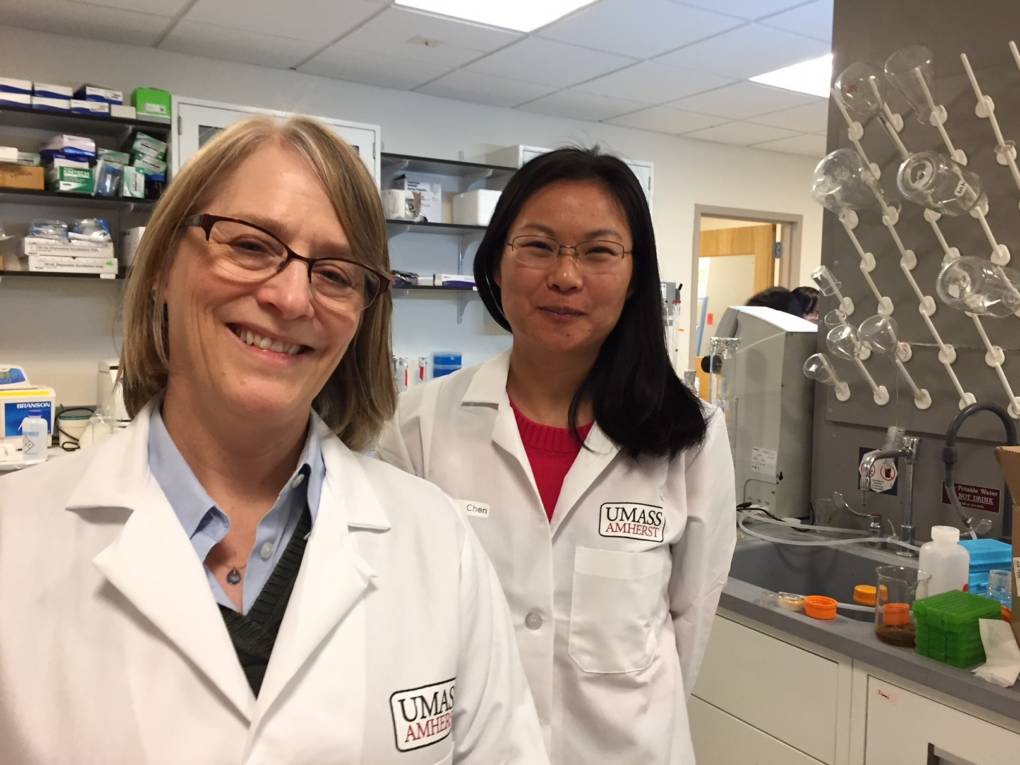
"caption": "UMass food scientists Lynne McLandsborough, left, and Lili He are researching ways to use your smartphone to detect bacteria in food.",
"description": "UMass food scientists Lynne McLandsborough, left, and Lili He are researching ways to use your smartphone to detect bacteria in food.",
"title": "UMass food scientists Lynne McLandsborough, left, and Lili He are researching ways to use your smartphone to detect bacteria in food.",
"credit": "Karen Brown/New England Public Radio",
"status": "inherit",
"isLoading": false,
"fetchFailed": false
},
"bayareabites_125096": {
"type": "attachments",
"id": "bayareabites_125096",
"meta": {
"index": "attachments_1716263798",
"site": "bayareabites",
"id": "125096",
"found": true
},
"parent": 125092,
"imgSizes": {
"small": {
"file": "https://ww2.kqed.org/app/uploads/sites/24/2018/02/180201-diaspora-turmeric-top1-520x347.jpg",
"width": 520,
"mimeType": "image/jpeg",
"height": 347
},
"twentyfourteen-full-width": {
"file": "https://ww2.kqed.org/app/uploads/sites/24/2018/02/180201-diaspora-turmeric-top1-1038x576.jpg",
"width": 1038,
"mimeType": "image/jpeg",
"height": 576
},
"thumbnail": {
"file": "https://ww2.kqed.org/app/uploads/sites/24/2018/02/180201-diaspora-turmeric-top1-160x107.jpg",
"width": 160,
"mimeType": "image/jpeg",
"height": 107
},
"fd-sm": {
"file": "https://ww2.kqed.org/app/uploads/sites/24/2018/02/180201-diaspora-turmeric-top1-960x640.jpg",
"width": 960,
"mimeType": "image/jpeg",
"height": 640
},
"post-thumbnail": {
"file": "https://ww2.kqed.org/app/uploads/sites/24/2018/02/180201-diaspora-turmeric-top1-672x372.jpg",
"width": 672,
"mimeType": "image/jpeg",
"height": 372
},
"xsmall": {
"file": "https://ww2.kqed.org/app/uploads/sites/24/2018/02/180201-diaspora-turmeric-top1-375x250.jpg",
"width": 375,
"mimeType": "image/jpeg",
"height": 250
},
"kqedFullSize": {
"file": "https://ww2.kqed.org/app/uploads/sites/24/2018/02/180201-diaspora-turmeric-top1.jpg",
"width": 1200,
"height": 800
},
"large": {
"file": "https://ww2.kqed.org/app/uploads/sites/24/2018/02/180201-diaspora-turmeric-top1-1020x680.jpg",
"width": 1020,
"mimeType": "image/jpeg",
"height": 680
},
"xlarge": {
"file": "https://ww2.kqed.org/app/uploads/sites/24/2018/02/180201-diaspora-turmeric-top1-1180x787.jpg",
"width": 1180,
"mimeType": "image/jpeg",
"height": 787
},
"guest-author-50": {
"file": "https://ww2.kqed.org/app/uploads/sites/24/2018/02/180201-diaspora-turmeric-top1-50x50.jpg",
"width": 50,
"mimeType": "image/jpeg",
"height": 50
},
"guest-author-96": {
"file": "https://ww2.kqed.org/app/uploads/sites/24/2018/02/180201-diaspora-turmeric-top1-96x96.jpg",
"width": 96,
"mimeType": "image/jpeg",
"height": 96
},
"medium": {
"file": "https://ww2.kqed.org/app/uploads/sites/24/2018/02/180201-diaspora-turmeric-top1-800x533.jpg",
"width": 800,
"mimeType": "image/jpeg",
"height": 533
},
"guest-author-64": {
"file": "https://ww2.kqed.org/app/uploads/sites/24/2018/02/180201-diaspora-turmeric-top1-64x64.jpg",
"width": 64,
"mimeType": "image/jpeg",
"height": 64
},
"guest-author-32": {
"file": "https://ww2.kqed.org/app/uploads/sites/24/2018/02/180201-diaspora-turmeric-top1-32x32.jpg",
"width": 32,
"mimeType": "image/jpeg",
"height": 32
},
"fd-med": {
"file": "https://ww2.kqed.org/app/uploads/sites/24/2018/02/180201-diaspora-turmeric-top1-1180x787.jpg",
"width": 1180,
"mimeType": "image/jpeg",
"height": 787
},
"detail": {
"file": "https://ww2.kqed.org/app/uploads/sites/24/2018/02/180201-diaspora-turmeric-top1-150x150.jpg",
"width": 150,
"mimeType": "image/jpeg",
"height": 150
},
"medium_large": {
"file": "https://ww2.kqed.org/app/uploads/sites/24/2018/02/180201-diaspora-turmeric-top1-768x512.jpg",
"width": 768,
"mimeType": "image/jpeg",
"height": 512
},
"guest-author-128": {
"file": "https://ww2.kqed.org/app/uploads/sites/24/2018/02/180201-diaspora-turmeric-top1-128x128.jpg",
"width": 128,
"mimeType": "image/jpeg",
"height": 128
},
"xxsmall": {
"file": "https://ww2.kqed.org/app/uploads/sites/24/2018/02/180201-diaspora-turmeric-top1-240x160.jpg",
"width": 240,
"mimeType": "image/jpeg",
"height": 160
}
},
"publishDate": 1518808342,
"modified": 1518821179,
"caption": "Sana Javeri Kadri",
"description": null,
"title": "180201-diaspora-turmeric-top1",
"credit": "Photo: Laila Bahman",
"status": "inherit",
"isLoading": false,
"fetchFailed": false
}
},
"audioPlayerReducer": {
"postId": "stream_live",
"isPaused": true,
"isPlaying": false,
"pfsActive": false,
"pledgeModalIsOpen": true,
"playerDrawerIsOpen": false,
"liveAudioPlayStartedAt": 0,
"liveAudioPlayContext": ""
},
"authorsReducer": {
"byline_bayareabites_126389": {
"type": "authors",
"id": "byline_bayareabites_126389",
"meta": {
"override": true
},
"slug": "byline_bayareabites_126389",
"name": "Jill Neimark, NPR Food",
"isLoading": false
},
"byline_bayareabites_126358": {
"type": "authors",
"id": "byline_bayareabites_126358",
"meta": {
"override": true
},
"slug": "byline_bayareabites_126358",
"name": "Sasha Ingber, the two-way, NPR Food",
"isLoading": false
},
"byline_bayareabites_126351": {
"type": "authors",
"id": "byline_bayareabites_126351",
"meta": {
"override": true
},
"slug": "byline_bayareabites_126351",
"name": "April Fulton, NPR Food",
"isLoading": false
},
"byline_bayareabites_126199": {
"type": "authors",
"id": "byline_bayareabites_126199",
"meta": {
"override": true
},
"slug": "byline_bayareabites_126199",
"name": "Dominique Maria Bonessi",
"isLoading": false
},
"byline_bayareabites_126145": {
"type": "authors",
"id": "byline_bayareabites_126145",
"meta": {
"override": true
},
"slug": "byline_bayareabites_126145",
"name": "Natalie Jacewicz, NPR Food",
"isLoading": false
},
"byline_bayareabites_126047": {
"type": "authors",
"id": "byline_bayareabites_126047",
"meta": {
"override": true
},
"slug": "byline_bayareabites_126047",
"name": "Angus Chen, NPR Food",
"isLoading": false
},
"byline_bayareabites_126036": {
"type": "authors",
"id": "byline_bayareabites_126036",
"meta": {
"override": true
},
"slug": "byline_bayareabites_126036",
"name": "\u003ca href=\"https://civileats.com/author/areguzzoni/\">Ariana Reguzzoni,\u003c/a> \u003ca href=\"https://civileats.com/\">Civil Eats\u003c/a>",
"isLoading": false
},
"byline_bayareabites_125499": {
"type": "authors",
"id": "byline_bayareabites_125499",
"meta": {
"override": true
},
"slug": "byline_bayareabites_125499",
"name": "Lela Nargi, NPR Food",
"isLoading": false
},
"byline_bayareabites_125425": {
"type": "authors",
"id": "byline_bayareabites_125425",
"meta": {
"override": true
},
"slug": "byline_bayareabites_125425",
"name": "Allison Aubrey, NPR Food",
"isLoading": false
},
"byline_bayareabites_125357": {
"type": "authors",
"id": "byline_bayareabites_125357",
"meta": {
"override": true
},
"slug": "byline_bayareabites_125357",
"name": "Jon Hamilton, NPR Food",
"isLoading": false
},
"byline_bayareabites_125119": {
"type": "authors",
"id": "byline_bayareabites_125119",
"meta": {
"override": true
},
"slug": "byline_bayareabites_125119",
"name": "Karen Brown, \u003ca href=\"http://nepr.net/post/scientists-develop-smartphone-app-prevent-food-poisoning#stream/0\">New England Public Radio\u003c/a>, NPR Food",
"isLoading": false
},
"byline_bayareabites_125092": {
"type": "authors",
"id": "byline_bayareabites_125092",
"meta": {
"override": true
},
"slug": "byline_bayareabites_125092",
"name": "\u003ca href=\"https://civileats.com/author/esontag/\">Elazar Sontag\u003c/a>, \u003ca href=\"https://ww2.kqed.org/bayareabites/author/civileat/\">Civil Eats\u003c/a>",
"isLoading": false
}
},
"pagesReducer": {
"bayareabites_category_health-and-nutrition": {
"type": "terms",
"id": "bayareabites_1245",
"meta": {
"index": "terms_1716263798",
"site": "bayareabites",
"id": "1245",
"score": 14.407673
},
"featImg": null,
"name": "health and nutrition",
"description": null,
"taxonomy": "category",
"headData": {
"twImgId": null,
"twTitle": null,
"ogTitle": null,
"ogImgId": null,
"twDescription": null,
"description": null,
"title": "health and nutrition Archives | KQED Bay Area Bites",
"ogDescription": null
},
"ttid": 1078,
"slug": "health-and-nutrition",
"isLoading": false,
"title": "health and nutrition",
"pageMeta": {
"site": "bayareabites",
"WpPageTemplate": "page-topic-editorial",
"currentPage": 8
},
"blocks": [
{
"blockName": "kqed/post-list",
"attrs": {
"layout": "cardArticle2",
"query": "posts/bayareabites?category=health-and-nutrition",
"seeMore": false,
"paginated": true,
"page": 8
}
},
{
"blockName": "kqed/ad"
}
]
}
},
"pfsSessionReducer": {},
"postsReducer": {
"stream_live": {
"type": "live",
"id": "stream_live",
"audioUrl": "https://streams.kqed.org/kqedradio",
"title": "Live Stream",
"excerpt": "Live Stream information currently unavailable.",
"link": "/radio",
"featImg": "",
"label": {
"name": "KQED Live",
"link": "/"
}
},
"stream_kqedNewscast": {
"type": "posts",
"id": "stream_kqedNewscast",
"audioUrl": "https://www.kqed.org/.stream/anon/radio/RDnews/newscast.mp3?_=1",
"title": "KQED Newscast",
"featImg": "",
"label": {
"name": "88.5 FM",
"link": "/"
}
},
"bayareabites_126389": {
"type": "posts",
"id": "bayareabites_126389",
"meta": {
"index": "posts_1716263798",
"site": "bayareabites",
"id": "126389",
"score": null,
"sort": [
1522778806000
]
},
"parent": 0,
"labelTerm": {},
"blocks": [],
"publishDate": 1522778806,
"format": "standard",
"disqusTitle": "When Going Gluten-Free Is Not Enough: New Tests Detect Hidden Exposure",
"title": "When Going Gluten-Free Is Not Enough: New Tests Detect Hidden Exposure",
"headTitle": "Bay Area Bites | KQED Food",
"content": "\u003cp>For the 3 million people in America (myself included) with celiac disease — an autoimmune disorder triggered by the ingestion of gluten — culinary life is a series of intricate leaps, accommodations and back-steps. We peer at labels, know the difference between \"gluten-free\" and \"certified-gluten free\" and keep a dedicated set of dishes and pots at home to avoid contamination by flour dust, crumbs of bread, and bits of pasta indulged in by family members or roommates.\u003c/p>\n\u003cp>Even so, there are regular mishaps — like the \u003ca href=\"https://www.buzzfeed.com/venessawong/people-with-celiac-still-complaining-about-cheerios\">gluten free Cheerios\u003c/a> that weren't, or the news this past February that Chobani had \u003ca href=\"https://www.foodqualitynews.com/Article/2018/02/28/Chobani-recalls-yogurt-because-of-labelling-error\">recalled almost 85,000 cases\u003c/a> of Flip Key Lime Crumble yogurt because they contained gluten, even though the containers were labeled gluten free.\u003c/p>\n\u003cp>But now, two worrying new studies suggest that accidental gluten exposure, even among celiacs following a gluten-free diet, may be far greater than we ever realized. A February study in the \u003ca href=\"https://academic.oup.com/ajcn/article/107/2/201/4911450\">American Journal of Clinical Nutrition\u003c/a> looked at gluten exposure detected by two new tests, one for urine and the other for stool. The tests detect peptides of gluten that make it through the digestive tract intact in all of us. (Nobody completely digests gluten, but most individuals don't have an adverse reaction to the undigested molecules).\u003c/p>\n\u003cp>\u003ca href=\"http://www.bmj.com/content/357/bmj.j1892\">Amounts of daily gluten in a regular diet\u003c/a> can soar as high as 7,500 mg on average for women, and 10,000 mg on average for men. For celiacs, the recommended limit for safe consumption of gluten is a mere 10 mg a day — any more than that tiny amount can trigger symptoms and if exposure is ongoing, intestinal damage. That's because in celiac disease, gluten triggers an autoimmune response that damages the intestinal lining and impairs absorption of nutrients. The study, which examined data on individuals from two different clinical programs, found the average amount of gluten consumed on a gluten-free diet was 244 mg (by stool analysis) or 363 mg (by urine analysis).\u003c/p>\n\u003cp>\"This study reflects what many celiacs experience in real life,\" explains analytical chemist Jennifer Sealey-Voyksner, one of the study's authors. \"I was diagnosed with celiac in the early 2000s and even on a gluten-free diet, I was still getting sick. I began to actually analyze my own food using mass spectrometry techniques, and I found out that some of the gluten-free pastas I was eating, and even a body wash I was using, contained gluten.\"\u003c/p>\n\u003cp>[ad fullwidth]\u003c/p>\n\u003cp>In another \u003ca href=\"https://www.ncbi.nlm.nih.gov/pubmed/26608460\">study last year\u003c/a>, the urine test for gluten exposure found that an astonishing 45 percent of children and 48 percent of adults on a long-term gluten-free diet were nonetheless being exposed to measurable amounts of gluten.\u003c/p>\n\u003cp>The results go a long way toward explaining the decades of reports showing that somewhere between 30 and 50 percent of patients with celiac disease and on a gluten-free diet still have damaged intestines that have not fully recovered — even in the absence of obvious symptoms. That raises their risk of numerous health problems including infertility, osteoporosis and bone fracture and even lymphoma.\u003c/p>\n\u003cp>\"This analysis rocked me to the core,\" says dietitian Tricia Thompson, who founded \u003ca href=\"https://www.glutenfreewatchdog.org/\">Gluten Free Watchdog\u003c/a>, a site that offers education, gluten-free food testing, and sometimes wrangles with the FDA or corporations to press for stricter oversight.\u003c/p>\n\u003cp>\"If the gluten levels reported in this analysis are reasonably accurate and can be corroborated by additional studies,\" says Thompson, \"this raises so many questions — such as, how good is our counseling of celiac sufferers, and how often are they being exposed through cross-contact?\"\u003c/p>\n\u003cp>Cross contact can start at the farm, where gluten-free crops might be grown adjacent to, or rotated with, gluten-containing crops. It can also occur anywhere down the line in processing, packaging and shipping. When Thompson reported the study on her Facebook page, which has over 17,000 followers, worried comments spooled out, ranging from concerns about airborne gluten from the bakery section of supermarkets, to cross contact from wheat-eating family members, to a report from one woman with a \u003ca href=\"https://www.today.com/health/gluten-sniffing-dogs-help-people-celiac-disease-t112149\">gluten-detection dog\u003c/a> able to reportedly detect down to 1 part per million (the dog alerted her to gluten on her shopping cart). A lament from one person with celiac disease seemed to sum it up: \"There is no safe place in this world for a celiac. It breaks my heart.\"\u003c/p>\n\u003cp>If individuals with celiac disease want to know whether their diets are compliant, the bowel and urine tests are now available for home testing from a company called \u003ca href=\"https://glutendetective.com/\">Glutenostics,\u003c/a> without a prescription. It is recommended that a patient work with his or her doctor and a dietitian to interpret results and get subsequent counseling. The urine test, says Glutenostic's managing partner, organic chemist David Winternheimer, is probably not sensitive enough to detect inadvertent exposure to gluten.\u003c/p>\n\u003cp>\"You have to eat 500 mg of gluten, or about two bites of bread, for the urine test to be positive,\" says Winternheimer, \"and most people on a gluten-free diet don't get that much.\" Instead, the urine test is recommended primarily for caregivers and parents who want to be sure their children are adhering to the diet, especially when away from home.\u003c/p>\n\u003cp>The stool test, in contrast, requires only 50 mg of gluten (roughly the amount present in a \u003ca href=\"https://www.glutenfreewatchdog.org/news/gluten-detective-consumer-test-kits-for-detecting-gluten-in-stool-and-urine/\">dime-sized bundle of bread crumbs\u003c/a>) and can measure intake accumulating over several days. The stool test is unlikely to catch a low-level, one-off cross contact event, but could be useful for detecting highly contaminated food or ongoing consumption of low levels of hidden gluten. \"If you are concerned that you have been regularly exposed to cross contact from gluten over a period of days,\" says Thompson, \"you may find the stool test useful.\"\u003c/p>\n\u003cp>Winternheimer confirms: \"Patients who are symptomatic and not sure if the cause is gluten, or patients whose blood work still tests positive for gluten exposure, may want to utilize this test.\"\u003c/p>\n\u003cp>If the stool test is positive, an audit of possible sources of exposure is in order — from other household members to foods or medicines that may contain hidden sources of gluten. \"A dietitian may choose to have patients keep detailed food records,\" says Thompson, \"that can be used alongside the results of stool testing to help determine possible sources of exposure.\"\u003c/p>\n\u003cp>For Jennifer Sealey-Voyksner, these results point to the fact that a gluten-free diet may just be inadequate as a solitary treatment option for many individuals.\u003c/p>\n\u003cp>\"I just got 'glutened' yesterday at a restaurant,\" she says. When she ordered a sandwich on gluten-free bread at her regular deli, a new person in the kitchen mistakenly used regular bread. Several bites in, she started to experience symptoms – \"brain fog and some cramps,\" as well as other gastrointestinal distress, she says, knocking her out of commission for another day.\u003c/p>\n\u003cp>\"I'm one of the more sensitive folks,\" she says. \"It doesn't take very much gluten for me to show symptoms. There is a great need for more accurate tests to measure gluten in foods, as well as therapeutic drugs, either to work alone or in concert with a gluten-free diet.\" \u003c/p>\n\u003cp>[ad floatright]\u003c/p>\n\u003cp>\u003cem>Copyright 2018 \u003ca href=\"http://www.npr.org/\">NPR\u003c/a>.\u003c/em> \u003c/p>\n\n",
"disqusIdentifier": "126389 https://ww2.kqed.org/bayareabites/?p=126389",
"disqusUrl": "https://ww2.kqed.org/bayareabites/2018/04/03/when-going-gluten-free-is-not-enough-new-tests-detect-hidden-exposure/",
"stats": {
"hasVideo": false,
"hasChartOrMap": false,
"hasAudio": false,
"hasPolis": false,
"wordCount": 1213,
"hasGoogleForm": false,
"hasGallery": false,
"hasHearkenModule": false,
"iframeSrcs": [],
"paragraphCount": 21
},
"modified": 1522952967,
"excerpt": "For people with celiac disease, incidental ingestion of gluten can lead to painful symptoms and lasting intestinal damage. Two new studies suggest such exposure may be greater than many realize.",
"headData": {
"twImgId": "",
"twTitle": "",
"ogTitle": "",
"ogImgId": "",
"twDescription": "",
"description": "For people with celiac disease, incidental ingestion of gluten can lead to painful symptoms and lasting intestinal damage. Two new studies suggest such exposure may be greater than many realize.",
"title": "When Going Gluten-Free Is Not Enough: New Tests Detect Hidden Exposure | KQED",
"ogDescription": "",
"schema": {
"@context": "https://schema.org",
"@type": "Article",
"headline": "When Going Gluten-Free Is Not Enough: New Tests Detect Hidden Exposure",
"datePublished": "2018-04-03T11:06:46-07:00",
"dateModified": "2018-04-05T11:29:27-07:00",
"image": "https://cdn.kqed.org/wp-content/uploads/2020/02/KQED-OG-Image@1x.png"
}
},
"guestAuthors": [],
"slug": "when-going-gluten-free-is-not-enough-new-tests-detect-hidden-exposure",
"status": "publish",
"sourceUrl": "https://www.kqed.org/bayareabites/category/health-and-nutrition",
"nprApiLink": "http://api.npr.org/query?id=598990638&apiKey=MDAxOTAwOTE4MDEyMTkxMDAzNjczZDljZA004",
"nprByline": "Jill Neimark, NPR Food",
"nprStoryDate": "Tue, 03 Apr 2018 08:00:00 -0400",
"nprLastModifiedDate": "Tue, 03 Apr 2018 12:06:18 -0400",
"nprHtmlLink": "https://www.npr.org/sections/thesalt/2018/04/03/598990638/when-going-gluten-free-is-not-enough-new-tests-detect-hidden-exposure?ft=nprml&f=598990638",
"nprImageAgency": "Getty Images/Image Source",
"nprImageCredit": "JPM",
"source": "Health and Nutrition",
"nprStoryId": "598990638",
"nprRetrievedStory": "1",
"nprPubDate": "Tue, 03 Apr 2018 12:06:00 -0400",
"path": "/bayareabites/126389/when-going-gluten-free-is-not-enough-new-tests-detect-hidden-exposure",
"audioTrackLength": null,
"parsedContent": [
{
"type": "contentString",
"content": "\u003cdiv class=\"post-body\">\u003cp>\u003cp>For the 3 million people in America (myself included) with celiac disease — an autoimmune disorder triggered by the ingestion of gluten — culinary life is a series of intricate leaps, accommodations and back-steps. We peer at labels, know the difference between \"gluten-free\" and \"certified-gluten free\" and keep a dedicated set of dishes and pots at home to avoid contamination by flour dust, crumbs of bread, and bits of pasta indulged in by family members or roommates.\u003c/p>\n\u003cp>Even so, there are regular mishaps — like the \u003ca href=\"https://www.buzzfeed.com/venessawong/people-with-celiac-still-complaining-about-cheerios\">gluten free Cheerios\u003c/a> that weren't, or the news this past February that Chobani had \u003ca href=\"https://www.foodqualitynews.com/Article/2018/02/28/Chobani-recalls-yogurt-because-of-labelling-error\">recalled almost 85,000 cases\u003c/a> of Flip Key Lime Crumble yogurt because they contained gluten, even though the containers were labeled gluten free.\u003c/p>\n\u003cp>But now, two worrying new studies suggest that accidental gluten exposure, even among celiacs following a gluten-free diet, may be far greater than we ever realized. A February study in the \u003ca href=\"https://academic.oup.com/ajcn/article/107/2/201/4911450\">American Journal of Clinical Nutrition\u003c/a> looked at gluten exposure detected by two new tests, one for urine and the other for stool. The tests detect peptides of gluten that make it through the digestive tract intact in all of us. (Nobody completely digests gluten, but most individuals don't have an adverse reaction to the undigested molecules).\u003c/p>\n\u003cp>\u003ca href=\"http://www.bmj.com/content/357/bmj.j1892\">Amounts of daily gluten in a regular diet\u003c/a> can soar as high as 7,500 mg on average for women, and 10,000 mg on average for men. For celiacs, the recommended limit for safe consumption of gluten is a mere 10 mg a day — any more than that tiny amount can trigger symptoms and if exposure is ongoing, intestinal damage. That's because in celiac disease, gluten triggers an autoimmune response that damages the intestinal lining and impairs absorption of nutrients. The study, which examined data on individuals from two different clinical programs, found the average amount of gluten consumed on a gluten-free diet was 244 mg (by stool analysis) or 363 mg (by urine analysis).\u003c/p>\n\u003cp>\"This study reflects what many celiacs experience in real life,\" explains analytical chemist Jennifer Sealey-Voyksner, one of the study's authors. \"I was diagnosed with celiac in the early 2000s and even on a gluten-free diet, I was still getting sick. I began to actually analyze my own food using mass spectrometry techniques, and I found out that some of the gluten-free pastas I was eating, and even a body wash I was using, contained gluten.\"\u003c/p>\n\u003cp>\u003c/p>\u003c/div>",
"attributes": {
"named": {},
"numeric": []
}
},
{
"type": "component",
"content": "",
"name": "ad",
"attributes": {
"named": {
"label": "fullwidth"
},
"numeric": [
"fullwidth"
]
}
},
{
"type": "contentString",
"content": "\u003cdiv class=\"post-body\">\u003cp>\u003c/p>\n\u003cp>In another \u003ca href=\"https://www.ncbi.nlm.nih.gov/pubmed/26608460\">study last year\u003c/a>, the urine test for gluten exposure found that an astonishing 45 percent of children and 48 percent of adults on a long-term gluten-free diet were nonetheless being exposed to measurable amounts of gluten.\u003c/p>\n\u003cp>The results go a long way toward explaining the decades of reports showing that somewhere between 30 and 50 percent of patients with celiac disease and on a gluten-free diet still have damaged intestines that have not fully recovered — even in the absence of obvious symptoms. That raises their risk of numerous health problems including infertility, osteoporosis and bone fracture and even lymphoma.\u003c/p>\n\u003cp>\"This analysis rocked me to the core,\" says dietitian Tricia Thompson, who founded \u003ca href=\"https://www.glutenfreewatchdog.org/\">Gluten Free Watchdog\u003c/a>, a site that offers education, gluten-free food testing, and sometimes wrangles with the FDA or corporations to press for stricter oversight.\u003c/p>\n\u003cp>\"If the gluten levels reported in this analysis are reasonably accurate and can be corroborated by additional studies,\" says Thompson, \"this raises so many questions — such as, how good is our counseling of celiac sufferers, and how often are they being exposed through cross-contact?\"\u003c/p>\n\u003cp>Cross contact can start at the farm, where gluten-free crops might be grown adjacent to, or rotated with, gluten-containing crops. It can also occur anywhere down the line in processing, packaging and shipping. When Thompson reported the study on her Facebook page, which has over 17,000 followers, worried comments spooled out, ranging from concerns about airborne gluten from the bakery section of supermarkets, to cross contact from wheat-eating family members, to a report from one woman with a \u003ca href=\"https://www.today.com/health/gluten-sniffing-dogs-help-people-celiac-disease-t112149\">gluten-detection dog\u003c/a> able to reportedly detect down to 1 part per million (the dog alerted her to gluten on her shopping cart). A lament from one person with celiac disease seemed to sum it up: \"There is no safe place in this world for a celiac. It breaks my heart.\"\u003c/p>\n\u003cp>If individuals with celiac disease want to know whether their diets are compliant, the bowel and urine tests are now available for home testing from a company called \u003ca href=\"https://glutendetective.com/\">Glutenostics,\u003c/a> without a prescription. It is recommended that a patient work with his or her doctor and a dietitian to interpret results and get subsequent counseling. The urine test, says Glutenostic's managing partner, organic chemist David Winternheimer, is probably not sensitive enough to detect inadvertent exposure to gluten.\u003c/p>\n\u003cp>\"You have to eat 500 mg of gluten, or about two bites of bread, for the urine test to be positive,\" says Winternheimer, \"and most people on a gluten-free diet don't get that much.\" Instead, the urine test is recommended primarily for caregivers and parents who want to be sure their children are adhering to the diet, especially when away from home.\u003c/p>\n\u003cp>The stool test, in contrast, requires only 50 mg of gluten (roughly the amount present in a \u003ca href=\"https://www.glutenfreewatchdog.org/news/gluten-detective-consumer-test-kits-for-detecting-gluten-in-stool-and-urine/\">dime-sized bundle of bread crumbs\u003c/a>) and can measure intake accumulating over several days. The stool test is unlikely to catch a low-level, one-off cross contact event, but could be useful for detecting highly contaminated food or ongoing consumption of low levels of hidden gluten. \"If you are concerned that you have been regularly exposed to cross contact from gluten over a period of days,\" says Thompson, \"you may find the stool test useful.\"\u003c/p>\n\u003cp>Winternheimer confirms: \"Patients who are symptomatic and not sure if the cause is gluten, or patients whose blood work still tests positive for gluten exposure, may want to utilize this test.\"\u003c/p>\n\u003cp>If the stool test is positive, an audit of possible sources of exposure is in order — from other household members to foods or medicines that may contain hidden sources of gluten. \"A dietitian may choose to have patients keep detailed food records,\" says Thompson, \"that can be used alongside the results of stool testing to help determine possible sources of exposure.\"\u003c/p>\n\u003cp>For Jennifer Sealey-Voyksner, these results point to the fact that a gluten-free diet may just be inadequate as a solitary treatment option for many individuals.\u003c/p>\n\u003cp>\"I just got 'glutened' yesterday at a restaurant,\" she says. When she ordered a sandwich on gluten-free bread at her regular deli, a new person in the kitchen mistakenly used regular bread. Several bites in, she started to experience symptoms – \"brain fog and some cramps,\" as well as other gastrointestinal distress, she says, knocking her out of commission for another day.\u003c/p>\n\u003cp>\"I'm one of the more sensitive folks,\" she says. \"It doesn't take very much gluten for me to show symptoms. There is a great need for more accurate tests to measure gluten in foods, as well as therapeutic drugs, either to work alone or in concert with a gluten-free diet.\" \u003c/p>\n\u003cp>\u003c/p>\u003c/div>",
"attributes": {
"named": {},
"numeric": []
}
},
{
"type": "component",
"content": "",
"name": "ad",
"attributes": {
"named": {
"label": "floatright"
},
"numeric": [
"floatright"
]
}
},
{
"type": "contentString",
"content": "\u003cdiv class=\"post-body\">\u003cp>\u003c/p>\n\u003cp>\u003cem>Copyright 2018 \u003ca href=\"http://www.npr.org/\">NPR\u003c/a>.\u003c/em> \u003c/p>\n\n\u003c/div>\u003c/p>",
"attributes": {
"named": {},
"numeric": []
}
}
],
"link": "/bayareabites/126389/when-going-gluten-free-is-not-enough-new-tests-detect-hidden-exposure",
"authors": [
"byline_bayareabites_126389"
],
"categories": [
"bayareabites_11028",
"bayareabites_10028",
"bayareabites_4084",
"bayareabites_1245",
"bayareabites_358"
],
"tags": [
"bayareabites_1859",
"bayareabites_10343",
"bayareabites_138"
],
"featImg": "bayareabites_126390",
"label": "source_bayareabites_126389"
},
"bayareabites_126358": {
"type": "posts",
"id": "bayareabites_126358",
"meta": {
"index": "posts_1716263798",
"site": "bayareabites",
"id": "126358",
"score": null,
"sort": [
1522683852000
]
},
"parent": 0,
"labelTerm": {},
"blocks": [],
"publishDate": 1522683852,
"format": "standard",
"disqusTitle": "FACT CHECK: Calif. Judge Rules Coffee Must Come With A Cancer Warning, But Should It?",
"title": "FACT CHECK: Calif. Judge Rules Coffee Must Come With A Cancer Warning, But Should It?",
"headTitle": "Bay Area Bites | KQED Food",
"content": "\u003cp>Coffee companies in California must carry a cancer warning label because of a chemical produced while beans roast, a California judge tentatively ruled Wednesday. \u003c/p>\n\u003cp>The decision was the result of a lawsuit filed in 2008 by a California-based nonprofit called the Council for Education and Research on Toxics. \u003c/p>\n\u003cp>The lawsuit targets Starbucks and dozens of other coffee purveyors under the state's \u003ca href=\"https://www.arb.ca.gov/bluebook/bb08/head/hea_d_20_ch_6_6.htm\">Safe Drinking Water and Toxic Enforcement Act\u003c/a>, which requires companies with more than 10 employees to warn their customers about the prevalence of carcinogenic and toxic chemicals in their products.\u003c/p>\n\u003cp>Acrylamide, a chemical compound that is produced naturally in the preparation of certain foods like the roasting of coffee beans, is on the \u003ca href=\"https://oehha.ca.gov/media/downloads/proposition-65/p65122917.pdf\">state's list\u003c/a> of chemicals known to cause cancer or reproductive toxicity.\u003c/p>\n\u003cp>Nobody was debating whether acrylamide is found in coffee. But what was up for debate was whether it's harmful in java. The burden of proof fell on coffee brewers and retailers to show that acrylamide posed no significant health risk, according to the judge. \u003c/p>\n\u003cp>[ad fullwidth]\u003c/p>\n\u003cp>In his ruling, Los Angeles Superior Court Judge Elihu Berle said Starbucks and other companies did not show that coffee provided health benefits nor that coffee posed no health risks, \u003ca href=\"https://apnews.com/6379f3f40e634f3382d9459b44ffe1c6/APNewsBreak:-California-Judge:-Coffee-needs-cancer-warnings?utm_campaign=SocialFlow&utm_source=Twitter&utm_medium=APWestRegion\">reported\u003c/a> the AP. \u003c/p>\n\u003cp>In an earlier phase of the trial, Berle also ruled that coffee companies failed to show that the risks posed by acrylamide were insignificant. \u003c/p>\n\u003cp>\"While plaintiff offered evidence that consumption of coffee increases the risk of harm to the fetus, to infants, to children and to adults, defendants' medical and epidemiology experts testified that they had no opinion on causation,\" Berle wrote. \"Defendants failed to satisfy their burden of proving by a preponderance of evidence that consumption of coffee confers a benefit to human health.\"\u003c/p>\n\u003cp>The decision is at odds, however, with a large body of evidence that drinking coffee is safe and may have health benefits such as reducing the risk for some cancers. \u003c/p>\n\u003cp>The International Agency for Research on Cancer, after reviewing more than 1,000 human and animal studies, \u003ca href=\"https://www.iarc.fr/en/media-centre/pr/2016/pdfs/pr244_E.pdf\">stated\u003c/a> in 2016 that it \"found no conclusive evidence for a carcinogenic effect of drinking coffee.\"\u003c/p>\n\u003cp>Numerous studies have suggested that coffee actually decreases cancer risks. One 2017 review \u003ca href=\"https://www.ncbi.nlm.nih.gov/pubmed/28288025\">found\u003c/a> that a daily cup of coffee is associated with a reduced risk of liver cancer and endometrial cancer. \u003c/p>\n\u003cp>A 2018 \u003ca href=\"http://www.gastrojournal.org/article/S0016-5085(17)36368-0/abstract\">study found\u003c/a> that coffee was associated with lower risk of death after being diagnosed with colorectal cancer. \u003c/p>\n\u003cp>And a 2018 \u003ca href=\"http://www.mdpi.com/2072-6643/10/2/112\">meta-analysis found\u003c/a> that drinking four cups of coffee per day was associated with a lower\u003cem> \u003c/em>risk of postmenopausal breast cancer.\u003c/p>\n\u003cp>Metzger Law Group, which sued the coffee companies on behalf of CERT, cited a Swedish study that determined that foods prepared at high temperatures — such as potatoes, fries and coffee — contain high levels of acrylamide. \u003c/p>\n\u003cp>The law firm \u003ca href=\"http://www.toxictorts.com/index.php/toxic-chemicals/acrylamide.html\">wrote\u003c/a> on its website that it is \"concerned that this carcinogen is in so many foods that we eat\" and that it is \"seriously undertaking efforts\" to make food companies reduce the amount of acrylamide in their products or to \"warn California consumers\" about the chemical in foods being sold.\u003c/p>\n\u003cp>The Metzger Law Group previously sued McDonald's and Burger King, which eventually settled and agreed to put warning labels on their fries, \u003ca href=\"https://newfoodeconomy.org/coffee-acrylamide-california-proposition-65/\">reported\u003c/a> The New Food Economy. The law firm applied the same formula to \u003ca href=\"https://oag.ca.gov/system/files/attachments/press_releases/n1595_kettle_cj_as_entered.pdf\">potato chip manufacturers\u003c/a>.\u003c/p>\n\u003cp>Skeptics abound. At least one lawyer previously \u003ca href=\"http://schachtmanlaw.com/the-council-for-education-and-research-on-toxics/\">questioned\u003c/a> Metzger and his relationship with CERT, wondering why the nonprofit and law firm had the same address. \u003c/p>\n\u003cp>The American Council on Science and Health called such lawsuits an attempt to grab \"a giant bag of money,\" \u003ca href=\"https://www.forbes.com/sites/stevensalzberg/2018/02/26/coffee-causes-cancer-coffee-prevents-cancer-wait-what/#1b4eedaf15ee\">reported\u003c/a> Forbes.\u003c/p>\n\u003cp>The Associated Press \u003ca href=\"https://apnews.com/6379f3f40e634f3382d9459b44ffe1c6/APNewsBreak:-California-Judge:-Coffee-needs-cancer-warnings?utm_campaign=SocialFlow&utm_source=Twitter&utm_medium=APWestRegion\">reported\u003c/a> that the judge has given coffee companies a few weeks to file their objections before the proposed ruling is finalized. \u003c/p>\n\u003cp>Some defendants in the coffee lawsuit have already settled, including 7-Eleven, which agreed to pay $900,000, reported the AP. \u003c/p>\n\u003cp>In response to a request for comment, Starbucks referred NPR to the National Coffee Association's \u003ca href=\"http://www.ncausa.org/Portals/56/PDFs/Communication/NCA_Statement_Prop65_Ruling_Newsroom.pdf?ver=2018-03-29-185131-987\">statement\u003c/a> from Thursday: \u003c/p>\n\u003cp>\"Coffee has been shown, over and over again, to be a healthy beverage,\" stated William Murray, president and CEO of the National Coffee Association. \"This lawsuit has made a mockery of Prop 65, has confused consumers, and does nothing to improve public health.\"\u003c/p>\n\u003cp>Prop 65 is the state's \u003ca href=\"https://oehha.ca.gov/proposition-65/law/proposition-65-law-and-regulations\">Safe Drinking Water and Toxic Enforcement Act of 1986\u003c/a> that was enacted by ballot initiative.\u003c/p>\n\u003cp>The coffee association is also considering appealing the ruling and taking further legal action. \u003c/p>\n\u003cp>The lawsuit has not concluded. A third phase could determine civil penalties of up to $2,500 per person exposed each day over eight years, reported the AP. \u003c/p>\n\u003cp>\u003c/p>\n\u003cp>\u003cem>Copyright 2018 \u003ca href=\"http://www.npr.org/\">NPR\u003c/a>.\u003c/em> \u003c/p>\n\n",
"disqusIdentifier": "126358 https://ww2.kqed.org/bayareabites/?p=126358",
"disqusUrl": "https://ww2.kqed.org/bayareabites/2018/04/02/fact-check-calif-judge-rules-coffee-must-come-with-a-cancer-warning-but-should-it/",
"stats": {
"hasVideo": false,
"hasChartOrMap": false,
"hasAudio": false,
"hasPolis": false,
"wordCount": 779,
"hasGoogleForm": false,
"hasGallery": false,
"hasHearkenModule": false,
"iframeSrcs": [],
"paragraphCount": 28
},
"modified": 1522683852,
"excerpt": "The alleged culprit is acrylamide, a chemical found in roasted beans. ",
"headData": {
"twImgId": "",
"twTitle": "",
"ogTitle": "",
"ogImgId": "",
"twDescription": "",
"description": "The alleged culprit is acrylamide, a chemical found in roasted beans. ",
"title": "FACT CHECK: Calif. Judge Rules Coffee Must Come With A Cancer Warning, But Should It? | KQED",
"ogDescription": "",
"schema": {
"@context": "https://schema.org",
"@type": "Article",
"headline": "FACT CHECK: Calif. Judge Rules Coffee Must Come With A Cancer Warning, But Should It?",
"datePublished": "2018-04-02T08:44:12-07:00",
"dateModified": "2018-04-02T08:44:12-07:00",
"image": "https://cdn.kqed.org/wp-content/uploads/2020/02/KQED-OG-Image@1x.png"
}
},
"guestAuthors": [],
"slug": "fact-check-calif-judge-rules-coffee-must-come-with-a-cancer-warning-but-should-it",
"status": "publish",
"sourceUrl": "https://www.kqed.org/bayareabites/category/politics-activism-food-safety",
"nprApiLink": "http://api.npr.org/query?id=598348764&apiKey=MDAxOTAwOTE4MDEyMTkxMDAzNjczZDljZA004",
"nprByline": "Sasha Ingber, the two-way, NPR Food",
"nprStoryDate": "Fri, 30 Mar 2018 15:56:43 -0400",
"nprLastModifiedDate": "Fri, 30 Mar 2018 17:36:53 -0400",
"nprHtmlLink": "https://www.npr.org/sections/thetwo-way/2018/03/30/598348764/fact-check-calif-judge-rules-coffee-must-come-with-a-cancer-warning-but-should-i?ft=nprml&f=598348764",
"nprImageAgency": "Flickr ",
"nprImageCredit": "Theo Crazzolara",
"source": "Politics, Activism, Food Safety",
"nprStoryId": "598348764",
"nprRetrievedStory": "1",
"nprPubDate": "Fri, 30 Mar 2018 17:36:00 -0400",
"path": "/bayareabites/126358/fact-check-calif-judge-rules-coffee-must-come-with-a-cancer-warning-but-should-it",
"audioTrackLength": null,
"parsedContent": [
{
"type": "contentString",
"content": "\u003cdiv class=\"post-body\">\u003cp>\u003cp>Coffee companies in California must carry a cancer warning label because of a chemical produced while beans roast, a California judge tentatively ruled Wednesday. \u003c/p>\n\u003cp>The decision was the result of a lawsuit filed in 2008 by a California-based nonprofit called the Council for Education and Research on Toxics. \u003c/p>\n\u003cp>The lawsuit targets Starbucks and dozens of other coffee purveyors under the state's \u003ca href=\"https://www.arb.ca.gov/bluebook/bb08/head/hea_d_20_ch_6_6.htm\">Safe Drinking Water and Toxic Enforcement Act\u003c/a>, which requires companies with more than 10 employees to warn their customers about the prevalence of carcinogenic and toxic chemicals in their products.\u003c/p>\n\u003cp>Acrylamide, a chemical compound that is produced naturally in the preparation of certain foods like the roasting of coffee beans, is on the \u003ca href=\"https://oehha.ca.gov/media/downloads/proposition-65/p65122917.pdf\">state's list\u003c/a> of chemicals known to cause cancer or reproductive toxicity.\u003c/p>\n\u003cp>Nobody was debating whether acrylamide is found in coffee. But what was up for debate was whether it's harmful in java. The burden of proof fell on coffee brewers and retailers to show that acrylamide posed no significant health risk, according to the judge. \u003c/p>\n\u003cp>\u003c/p>\u003c/div>",
"attributes": {
"named": {},
"numeric": []
}
},
{
"type": "component",
"content": "",
"name": "ad",
"attributes": {
"named": {
"label": "fullwidth"
},
"numeric": [
"fullwidth"
]
}
},
{
"type": "contentString",
"content": "\u003cdiv class=\"post-body\">\u003cp>\u003c/p>\n\u003cp>In his ruling, Los Angeles Superior Court Judge Elihu Berle said Starbucks and other companies did not show that coffee provided health benefits nor that coffee posed no health risks, \u003ca href=\"https://apnews.com/6379f3f40e634f3382d9459b44ffe1c6/APNewsBreak:-California-Judge:-Coffee-needs-cancer-warnings?utm_campaign=SocialFlow&utm_source=Twitter&utm_medium=APWestRegion\">reported\u003c/a> the AP. \u003c/p>\n\u003cp>In an earlier phase of the trial, Berle also ruled that coffee companies failed to show that the risks posed by acrylamide were insignificant. \u003c/p>\n\u003cp>\"While plaintiff offered evidence that consumption of coffee increases the risk of harm to the fetus, to infants, to children and to adults, defendants' medical and epidemiology experts testified that they had no opinion on causation,\" Berle wrote. \"Defendants failed to satisfy their burden of proving by a preponderance of evidence that consumption of coffee confers a benefit to human health.\"\u003c/p>\n\u003cp>The decision is at odds, however, with a large body of evidence that drinking coffee is safe and may have health benefits such as reducing the risk for some cancers. \u003c/p>\n\u003cp>The International Agency for Research on Cancer, after reviewing more than 1,000 human and animal studies, \u003ca href=\"https://www.iarc.fr/en/media-centre/pr/2016/pdfs/pr244_E.pdf\">stated\u003c/a> in 2016 that it \"found no conclusive evidence for a carcinogenic effect of drinking coffee.\"\u003c/p>\n\u003cp>Numerous studies have suggested that coffee actually decreases cancer risks. One 2017 review \u003ca href=\"https://www.ncbi.nlm.nih.gov/pubmed/28288025\">found\u003c/a> that a daily cup of coffee is associated with a reduced risk of liver cancer and endometrial cancer. \u003c/p>\n\u003cp>A 2018 \u003ca href=\"http://www.gastrojournal.org/article/S0016-5085(17)36368-0/abstract\">study found\u003c/a> that coffee was associated with lower risk of death after being diagnosed with colorectal cancer. \u003c/p>\n\u003cp>And a 2018 \u003ca href=\"http://www.mdpi.com/2072-6643/10/2/112\">meta-analysis found\u003c/a> that drinking four cups of coffee per day was associated with a lower\u003cem> \u003c/em>risk of postmenopausal breast cancer.\u003c/p>\n\u003cp>Metzger Law Group, which sued the coffee companies on behalf of CERT, cited a Swedish study that determined that foods prepared at high temperatures — such as potatoes, fries and coffee — contain high levels of acrylamide. \u003c/p>\n\u003cp>The law firm \u003ca href=\"http://www.toxictorts.com/index.php/toxic-chemicals/acrylamide.html\">wrote\u003c/a> on its website that it is \"concerned that this carcinogen is in so many foods that we eat\" and that it is \"seriously undertaking efforts\" to make food companies reduce the amount of acrylamide in their products or to \"warn California consumers\" about the chemical in foods being sold.\u003c/p>\n\u003cp>The Metzger Law Group previously sued McDonald's and Burger King, which eventually settled and agreed to put warning labels on their fries, \u003ca href=\"https://newfoodeconomy.org/coffee-acrylamide-california-proposition-65/\">reported\u003c/a> The New Food Economy. The law firm applied the same formula to \u003ca href=\"https://oag.ca.gov/system/files/attachments/press_releases/n1595_kettle_cj_as_entered.pdf\">potato chip manufacturers\u003c/a>.\u003c/p>\n\u003cp>Skeptics abound. At least one lawyer previously \u003ca href=\"http://schachtmanlaw.com/the-council-for-education-and-research-on-toxics/\">questioned\u003c/a> Metzger and his relationship with CERT, wondering why the nonprofit and law firm had the same address. \u003c/p>\n\u003cp>The American Council on Science and Health called such lawsuits an attempt to grab \"a giant bag of money,\" \u003ca href=\"https://www.forbes.com/sites/stevensalzberg/2018/02/26/coffee-causes-cancer-coffee-prevents-cancer-wait-what/#1b4eedaf15ee\">reported\u003c/a> Forbes.\u003c/p>\n\u003cp>The Associated Press \u003ca href=\"https://apnews.com/6379f3f40e634f3382d9459b44ffe1c6/APNewsBreak:-California-Judge:-Coffee-needs-cancer-warnings?utm_campaign=SocialFlow&utm_source=Twitter&utm_medium=APWestRegion\">reported\u003c/a> that the judge has given coffee companies a few weeks to file their objections before the proposed ruling is finalized. \u003c/p>\n\u003cp>Some defendants in the coffee lawsuit have already settled, including 7-Eleven, which agreed to pay $900,000, reported the AP. \u003c/p>\n\u003cp>In response to a request for comment, Starbucks referred NPR to the National Coffee Association's \u003ca href=\"http://www.ncausa.org/Portals/56/PDFs/Communication/NCA_Statement_Prop65_Ruling_Newsroom.pdf?ver=2018-03-29-185131-987\">statement\u003c/a> from Thursday: \u003c/p>\n\u003cp>\"Coffee has been shown, over and over again, to be a healthy beverage,\" stated William Murray, president and CEO of the National Coffee Association. \"This lawsuit has made a mockery of Prop 65, has confused consumers, and does nothing to improve public health.\"\u003c/p>\n\u003cp>Prop 65 is the state's \u003ca href=\"https://oehha.ca.gov/proposition-65/law/proposition-65-law-and-regulations\">Safe Drinking Water and Toxic Enforcement Act of 1986\u003c/a> that was enacted by ballot initiative.\u003c/p>\n\u003cp>The coffee association is also considering appealing the ruling and taking further legal action. \u003c/p>\n\u003cp>The lawsuit has not concluded. A third phase could determine civil penalties of up to $2,500 per person exposed each day over eight years, reported the AP. \u003c/p>\n\u003cp>\u003c/p>\n\u003cp>\u003cem>Copyright 2018 \u003ca href=\"http://www.npr.org/\">NPR\u003c/a>.\u003c/em> \u003c/p>\n\n\u003c/div>\u003c/p>",
"attributes": {
"named": {},
"numeric": []
}
}
],
"link": "/bayareabites/126358/fact-check-calif-judge-rules-coffee-must-come-with-a-cancer-warning-but-should-it",
"authors": [
"byline_bayareabites_126358"
],
"categories": [
"bayareabites_11028",
"bayareabites_10028",
"bayareabites_1245",
"bayareabites_2035",
"bayareabites_358"
],
"tags": [
"bayareabites_16090",
"bayareabites_635",
"bayareabites_125"
],
"featImg": "bayareabites_126359",
"label": "source_bayareabites_126358"
},
"bayareabites_126351": {
"type": "posts",
"id": "bayareabites_126351",
"meta": {
"index": "posts_1716263798",
"site": "bayareabites",
"id": "126351",
"score": null,
"sort": [
1522683393000
]
},
"parent": 0,
"labelTerm": {},
"blocks": [],
"publishDate": 1522683393,
"format": "audio",
"disqusTitle": "Scientists Say You May Live Longer By Severely Restricting Calories",
"title": "Scientists Say You May Live Longer By Severely Restricting Calories",
"headTitle": "Bay Area Bites | KQED Food",
"content": "\u003cp>Research has shown that sharp reductions in the amount of food consumed can help fish, rats, and monkeys live longer. But there have been very few studies in humans.\u003c/p>\n\u003cp>Now, some researchers have found that when people severely cut calories, they can slow their metabolism and possibly the aging process.\u003c/p>\n\u003cp>https://ondemand.npr.org/anon.npr-mp3/npr/me/2018/04/20180402_me_scientists_say_you_may_live_longer_by_severely_restricting_calories.mp3\u003c/p>\n\u003cp>Clinical physiologist \u003ca href=\"https://www.pbrc.edu/research-and-faculty/faculty/?faculty=2493\">Leanne Redman\u003c/a>, who headed the \u003ca href=\"https://www.sciencedirect.com/science/article/pii/S155041311830130X?via%3Dihub\">study\u003c/a> at Pennington Biomedical Research Center in Baton Rouge, says the first challenge was finding people willing to take part. After all, they would have to cut their typical plate for breakfast, lunch, and dinner by up to 25 percent.\u003c/p>\n\u003cp>And, she says, none of them were overweight.\u003c/p>\n\u003cp>[ad fullwidth]\u003c/p>\n\u003cp>Ultimately, she recruited 53 healthy volunteers. One third ate their regular meals. The rest were on the severe calorie reduction plan for two years.\u003c/p>\n\u003cp>\"I don't know if you understand the rigor of what it means to do calorie restriction every day,\" she says, but the volunteers were committed.\u003c/p>\n\u003cp>Not surprisingly, the people cutting calories lost quite a bit of weight — on average — 25 pounds. Those in the control group gained as much as four pounds.\u003c/p>\n\u003cp>But weight loss was not the point. Redman wanted to know whether this dramatic reduction in calories could affect how quickly people age.\u003c/p>\n\u003cp>For testing, participants spent 24 hours in special rooms that measured their metabolic rates via gas, oxygen, and carbon dioxide, and how it changed over time.\u003c/p>\n\u003cp>Redman noticed that for those on the restricted diet, their metabolism slowed and became more efficient.\u003c/p>\n\u003cp>\"Basically it just means that cells are needing less oxygen in order to generate the energy the body needs to survive; and so the body and the cells are becoming more energy efficient,\" Redman explains. And if less oxygen is needed to burn energy, then dangerous by-products of that burning — \u003ca href=\"https://www.mayoclinic.org/healthy-lifestyle/nutrition-and-healthy-eating/multimedia/antioxidants/sls-20076428\">free radicals\u003c/a> — can be reduced.\u003c/p>\n\u003cp>\"Oxygen can actually be damaging to tissues and cells, and so if the cells have become more efficient, then they've got less oxygen left over that can cause this damage,\" she says. And that damage can accelerate aging.\u003c/p>\n\u003cp>The study was published in the journal \u003cem>Cell Metabolism\u003c/em> last month.\u003c/p>\n\u003cp>Now, these findings don't directly prove drastic calorie-cutting will actually help people live longer. People would have to be followed for their lifetimes to prove that. But the study did find that blood pressure, cholesterol and triglycerides were lower in the group on severe calorie restriction. When those numbers are high, they can lead to life-shortening diseases.\u003c/p>\n\u003cp>The challenge is, most people may not be able to do a severe calorie-restricted diet, or even want to do it. Lowering metabolism can cause other problems.\u003c/p>\n\u003cp>Biochemist \u003ca href=\"http://gero.usc.edu/faculty/longo/\">Valter Longo\u003c/a>, who studies longevity at the University of Southern California, says severely restricting calories for a time can mean you're more likely to gain weight in the end.\u003c/p>\n\u003cp>\"Basically, you have to eat progressively less to maintain the same weight.\"\u003c/p>\n\u003cp>Most Americans struggle with carrying around too much weight, which can cause countless health problems.\u003c/p>\n\u003cp>\"For most people, if you consider 70 percent of Americans are either overweight or obese, then you can see how, for most people, this would be a big problem,\" Longo says. It could lead to more \"yo-yo dieting,\" where people who go off the diet eat more and return to their previous weight or even gain more weight.\u003c/p>\n\u003cp>He is also concerned about the potential for muscle loss and a weakened immune system in those on severe calorie-restricted diets.\u003c/p>\n\u003cp>Instead of chronic calorie restriction, Longo is a proponent of mini-fasts. These are short reductions in calories to just 900 a day for five days a month, which he says have the benefits of fasting without the potentially negative long-term effects. In fact, he wrote \u003ca href=\"https://www.penguin.co.uk/books/307064/the-longevity-diet/\">the book\u003c/a> on it: \u003cem>The Longevity Diet\u003c/em>. Longo stresses the importance of \u003ca href=\"https://www.npr.org/sections/thesalt/2014/03/04/285879644/eat-plants-and-prosper-for-longevity-go-easy-on-the-meat-study-says\">eating more fruits and vegetables\u003c/a> and less meat.\u003c/p>\n\u003cp>It may not ultimately lengthen your life, he says, but it can certainly help you maintain a healthy weight and avoid the kinds of chronic illnesses that can shorten it. \u003c/p>\n\u003cp>\u003c/p>\n\u003cp>\u003cem>Copyright 2018 \u003ca href=\"http://www.npr.org/\">NPR\u003c/a>.\u003c/em> \u003c/p>\n\n",
"disqusIdentifier": "126351 https://ww2.kqed.org/bayareabites/?p=126351",
"disqusUrl": "https://ww2.kqed.org/bayareabites/2018/04/02/scientists-say-you-may-live-longer-by-severely-restricting-calories/",
"stats": {
"hasVideo": false,
"hasChartOrMap": false,
"hasAudio": false,
"hasPolis": false,
"wordCount": 699,
"hasGoogleForm": false,
"hasGallery": false,
"hasHearkenModule": false,
"iframeSrcs": [],
"paragraphCount": 25
},
"modified": 1522683447,
"excerpt": "Scientists have long been fascinated with whether dramatic restrictions in the amount of food we eat can help us live longer. New research suggests it might, but the question is, is it worth it?",
"headData": {
"twImgId": "",
"twTitle": "",
"ogTitle": "",
"ogImgId": "",
"twDescription": "",
"description": "Scientists have long been fascinated with whether dramatic restrictions in the amount of food we eat can help us live longer. New research suggests it might, but the question is, is it worth it?",
"title": "Scientists Say You May Live Longer By Severely Restricting Calories | KQED",
"ogDescription": "",
"schema": {
"@context": "https://schema.org",
"@type": "Article",
"headline": "Scientists Say You May Live Longer By Severely Restricting Calories",
"datePublished": "2018-04-02T08:36:33-07:00",
"dateModified": "2018-04-02T08:37:27-07:00",
"image": "https://cdn.kqed.org/wp-content/uploads/2020/02/KQED-OG-Image@1x.png"
}
},
"guestAuthors": [],
"slug": "scientists-say-you-may-live-longer-by-severely-restricting-calories",
"status": "publish",
"nprApiLink": "http://api.npr.org/query?id=598295025&apiKey=MDAxOTAwOTE4MDEyMTkxMDAzNjczZDljZA004",
"nprStoryDate": "Mon, 02 Apr 2018 05:00:00 -0400",
"nprLastModifiedDate": "Mon, 02 Apr 2018 06:34:03 -0400",
"nprHtmlLink": "https://www.npr.org/sections/thesalt/2018/04/02/598295025/scientists-say-you-may-live-longer-by-severely-restricting-calories?ft=nprml&f=598295025",
"nprAudio": "https://ondemand.npr.org/anon.npr-mp3/npr/me/2018/04/20180402_me_scientists_say_you_may_live_longer_by_severely_restricting_calories.mp3?orgId=1&topicId=1128&d=194&p=3&story=598295025&ft=nprml&f=598295025",
"nprImageAgency": "Getty Images",
"source": "Health and Nutrition",
"nprAudioM3u": "http://api.npr.org/m3u/1598756654-5ed64a.m3u?orgId=1&topicId=1128&d=194&p=3&story=598295025&ft=nprml&f=598295025",
"nprStoryId": "598295025",
"sourceUrl": "https://www.kqed.org/bayareabites/category/health-and-nutrition",
"nprByline": "April Fulton, NPR Food",
"nprImageCredit": "VisualField",
"nprRetrievedStory": "1",
"nprPubDate": "Mon, 02 Apr 2018 07:55:00 -0400",
"path": "/bayareabites/126351/scientists-say-you-may-live-longer-by-severely-restricting-calories",
"audioUrl": "https://ondemand.npr.org/anon.npr-mp3/npr/me/2018/04/20180402_me_scientists_say_you_may_live_longer_by_severely_restricting_calories.mp3?orgId=1&topicId=1128&d=194&p=3&story=598295025&ft=nprml&f=598295025",
"audioTrackLength": null,
"parsedContent": [
{
"type": "contentString",
"content": "\u003cdiv class=\"post-body\">\u003cp>\u003cp>Research has shown that sharp reductions in the amount of food consumed can help fish, rats, and monkeys live longer. But there have been very few studies in humans.\u003c/p>\n\u003cp>Now, some researchers have found that when people severely cut calories, they can slow their metabolism and possibly the aging process.\u003c/p>\n\u003cp>\u003c/p>\u003c/div>",
"attributes": {
"named": {},
"numeric": []
}
},
{
"type": "component",
"content": "",
"name": "nprOneAudioLink",
"attributes": {
"named": {
"src": "https://ondemand.npr.org/anon.npr-mp3/npr/me/2018/04/20180402_me_scientists_say_you_may_live_longer_by_severely_restricting_calories.mp3"
},
"numeric": []
}
},
{
"type": "contentString",
"content": "\u003cdiv class=\"post-body\">\u003cp>\u003c/p>\n\u003cp>Clinical physiologist \u003ca href=\"https://www.pbrc.edu/research-and-faculty/faculty/?faculty=2493\">Leanne Redman\u003c/a>, who headed the \u003ca href=\"https://www.sciencedirect.com/science/article/pii/S155041311830130X?via%3Dihub\">study\u003c/a> at Pennington Biomedical Research Center in Baton Rouge, says the first challenge was finding people willing to take part. After all, they would have to cut their typical plate for breakfast, lunch, and dinner by up to 25 percent.\u003c/p>\n\u003cp>And, she says, none of them were overweight.\u003c/p>\n\u003cp>\u003c/p>\u003c/div>",
"attributes": {
"named": {},
"numeric": []
}
},
{
"type": "component",
"content": "",
"name": "ad",
"attributes": {
"named": {
"label": "fullwidth"
},
"numeric": [
"fullwidth"
]
}
},
{
"type": "contentString",
"content": "\u003cdiv class=\"post-body\">\u003cp>\u003c/p>\n\u003cp>Ultimately, she recruited 53 healthy volunteers. One third ate their regular meals. The rest were on the severe calorie reduction plan for two years.\u003c/p>\n\u003cp>\"I don't know if you understand the rigor of what it means to do calorie restriction every day,\" she says, but the volunteers were committed.\u003c/p>\n\u003cp>Not surprisingly, the people cutting calories lost quite a bit of weight — on average — 25 pounds. Those in the control group gained as much as four pounds.\u003c/p>\n\u003cp>But weight loss was not the point. Redman wanted to know whether this dramatic reduction in calories could affect how quickly people age.\u003c/p>\n\u003cp>For testing, participants spent 24 hours in special rooms that measured their metabolic rates via gas, oxygen, and carbon dioxide, and how it changed over time.\u003c/p>\n\u003cp>Redman noticed that for those on the restricted diet, their metabolism slowed and became more efficient.\u003c/p>\n\u003cp>\"Basically it just means that cells are needing less oxygen in order to generate the energy the body needs to survive; and so the body and the cells are becoming more energy efficient,\" Redman explains. And if less oxygen is needed to burn energy, then dangerous by-products of that burning — \u003ca href=\"https://www.mayoclinic.org/healthy-lifestyle/nutrition-and-healthy-eating/multimedia/antioxidants/sls-20076428\">free radicals\u003c/a> — can be reduced.\u003c/p>\n\u003cp>\"Oxygen can actually be damaging to tissues and cells, and so if the cells have become more efficient, then they've got less oxygen left over that can cause this damage,\" she says. And that damage can accelerate aging.\u003c/p>\n\u003cp>The study was published in the journal \u003cem>Cell Metabolism\u003c/em> last month.\u003c/p>\n\u003cp>Now, these findings don't directly prove drastic calorie-cutting will actually help people live longer. People would have to be followed for their lifetimes to prove that. But the study did find that blood pressure, cholesterol and triglycerides were lower in the group on severe calorie restriction. When those numbers are high, they can lead to life-shortening diseases.\u003c/p>\n\u003cp>The challenge is, most people may not be able to do a severe calorie-restricted diet, or even want to do it. Lowering metabolism can cause other problems.\u003c/p>\n\u003cp>Biochemist \u003ca href=\"http://gero.usc.edu/faculty/longo/\">Valter Longo\u003c/a>, who studies longevity at the University of Southern California, says severely restricting calories for a time can mean you're more likely to gain weight in the end.\u003c/p>\n\u003cp>\"Basically, you have to eat progressively less to maintain the same weight.\"\u003c/p>\n\u003cp>Most Americans struggle with carrying around too much weight, which can cause countless health problems.\u003c/p>\n\u003cp>\"For most people, if you consider 70 percent of Americans are either overweight or obese, then you can see how, for most people, this would be a big problem,\" Longo says. It could lead to more \"yo-yo dieting,\" where people who go off the diet eat more and return to their previous weight or even gain more weight.\u003c/p>\n\u003cp>He is also concerned about the potential for muscle loss and a weakened immune system in those on severe calorie-restricted diets.\u003c/p>\n\u003cp>Instead of chronic calorie restriction, Longo is a proponent of mini-fasts. These are short reductions in calories to just 900 a day for five days a month, which he says have the benefits of fasting without the potentially negative long-term effects. In fact, he wrote \u003ca href=\"https://www.penguin.co.uk/books/307064/the-longevity-diet/\">the book\u003c/a> on it: \u003cem>The Longevity Diet\u003c/em>. Longo stresses the importance of \u003ca href=\"https://www.npr.org/sections/thesalt/2014/03/04/285879644/eat-plants-and-prosper-for-longevity-go-easy-on-the-meat-study-says\">eating more fruits and vegetables\u003c/a> and less meat.\u003c/p>\n\u003cp>It may not ultimately lengthen your life, he says, but it can certainly help you maintain a healthy weight and avoid the kinds of chronic illnesses that can shorten it. \u003c/p>\n\u003cp>\u003c/p>\n\u003cp>\u003cem>Copyright 2018 \u003ca href=\"http://www.npr.org/\">NPR\u003c/a>.\u003c/em> \u003c/p>\n\n\u003c/div>\u003c/p>",
"attributes": {
"named": {},
"numeric": []
}
}
],
"link": "/bayareabites/126351/scientists-say-you-may-live-longer-by-severely-restricting-calories",
"authors": [
"byline_bayareabites_126351"
],
"categories": [
"bayareabites_11028",
"bayareabites_10028",
"bayareabites_1245",
"bayareabites_358"
],
"tags": [
"bayareabites_10501",
"bayareabites_663",
"bayareabites_1220"
],
"featImg": "bayareabites_126352",
"label": "source_bayareabites_126351"
},
"bayareabites_126199": {
"type": "posts",
"id": "bayareabites_126199",
"meta": {
"index": "posts_1716263798",
"site": "bayareabites",
"id": "126199",
"score": null,
"sort": [
1522190474000
]
},
"parent": 0,
"labelTerm": {},
"blocks": [],
"publishDate": 1522190474,
"format": "standard",
"disqusTitle": "Salvation Army Opens First Grocery Store Ever In Baltimore",
"title": "Salvation Army Opens First Grocery Store Ever In Baltimore",
"headTitle": "Bay Area Bites | KQED Food",
"content": "\u003cp>Nearly a quarter of the residents of Baltimore lack adequate access to healthy food. For many, the nearest grocery stores are mini-marts with limited produce. And, lower incomes impact the ability of people to afford healthier food, according to a \u003ca href=\"https://www.jhsph.edu/research/centers-and-institutes/johns-hopkins-center-for-a-livable-future/_pdf/projects/bal-city-food-env/baltimore-food-environment-digital.pdf\">study\u003c/a> by Johns Hopkins that looked at the regions of the city where the need for more healthy food options is the greatest.\u003c/p>\n\u003cp>https://ondemand.npr.org/anon.npr-mp3/npr/atc/2018/03/20180327_atc_salvation_army_opens_first_grocery_store_ever_in_baltimore.mp3\u003c/p>\n\u003cp>While hunger and access to good food is not a new problem for the city, long-time time religious charity, the Salvation Army, is trying something new to tackle it. The Salvation Army recently opened its first non-profit grocery store in the country in East Baltimore.\u003c/p>\n\u003cp>Lawrence Pollard and his wife, Faith, are shopping at the Salvation Army grocery store for the first time. The store is called \u003ca href=\"https://www.dmgfoods.org\">DMG Foods\u003c/a>, which stands for the Salvation Army's motto, \"Doing the Most Good.\"\u003c/p>\n\u003cp>Pollard looks around and seems impressed. \"So far, so good. It's clean place,\" he says.\u003c/p>\n\u003cp>[ad fullwidth]\u003c/p>\n\u003cp>The 7,000-square foot space looks like your average grocery store. The couple admires the stacks of fresh-looking asparagus, juicy Gala apples, and a variety of lettuce. Lawrence clutches a paper with the store's weekly deal.\u003c/p>\n\u003cp>\"I see a couple of deals already,\" he says, \"especially on the fruits and the salads.\"\u003c/p>\n\u003cp>Now, many grocery stores brag about having the lowest prices, but we checked. The milk, eggs, butter, and canned tuna at DMG are \u003ca href=\"http://wypr.org/post/getting-biggest-bang-your-buck-local-grocery-stores\">50 cents to $3 cheaper\u003c/a> than at the nearest chain grocery store.\u003c/p>\n\u003cp>In addition to offering the usual grocery store experience, DMG Foods also offers nutritional guidance, shopping education, workforce development training, and meal planning.\u003c/p>\n\u003cp>While the store caters to beneficiaries of the Supplemental Nutrition Assistance Program or SNAP, Major Gene Hogg, the Salvation Army's central Maryland commander, says anyone can shop here.\u003c/p>\n\u003cp>\"Our business is not really selling food,\" he says. \"What we're in the business of doing is helping and loving people. And the qualifications to shop here is to walk in the door.\"\u003c/p>\n\u003cp>The Salvation Army decided to go into the food business because, Hogg says, they found a niche where many chain grocery stores could not survive.\u003c/p>\n\u003cp>Hogg says they did research around what they could \"do to sustain a community, rather than entering into it on an as-need-basis.\"\u003c/p>\n\u003cp>\"This is where we live, this is where we minister,\" says Hogg. \"Moving into that space, I think we can make a viable impact into the community.\"\u003c/p>\n\u003cp>The DMG store has some help making products available to its customers. Some of the non-perishable food is donated by the Maryland Food Bank, while produce is bought from a large distributor that sells it to DMG at a steep discount. Since the store opened a couple of weeks ago, Hogg says business so far is good.\u003cstrong>\u003cem>\u003c/em>\u003c/strong>\u003c/p>\n\u003cp>He says the goal is to get to 300 customers in one day. To entice more customers each week, it offers free items for SNAP beneficiaries. This week, the store is giving away 10-pound bags of frozen\u003cstrong> \u003c/strong>chicken.\u003c/p>\n\u003cp>The grocery store is an experiment. Hogg says if it makes enough money beyond expenses, proceeds can go to Salvation Army's home for survivors of human trafficking. \"So not only are you just shopping and meeting your needs for your household, but in the end you could be actually helping someone who could be rescued from human trafficking.\"\u003c/p>\n\u003cp>Over at the cash register, Lawrence and Faith Pollards are ready to check out. They leave the store clutching three full grocery bags. They've only spent about $17.\u003c/p>\n\u003cp>If the store is successful in attracting enough customers, Hogg says the Salvation Army may be able to expand to other parts of Baltimore. And if that works out, it hopes to open in more areas across the country.\u003c/p>\n\u003cp>The Salvation Army has high hopes that the Baltimore DMG store will succeed. Hogg says DMG is not just a motto, it's a promise. \u003c/p>\n\u003cp>\u003c/p>\n\u003cp>\u003cem>Copyright 2018 \u003ca href=\"http://www.wypr.org/\">WYPR - 88.1 FM Baltimore\u003c/a>.\u003c/em> \u003c/p>\n\n",
"disqusIdentifier": "126199 https://ww2.kqed.org/bayareabites/?p=126199",
"disqusUrl": "https://ww2.kqed.org/bayareabites/2018/03/27/salvation-army-opens-first-grocery-store-ever-in-baltimore/",
"stats": {
"hasVideo": false,
"hasChartOrMap": false,
"hasAudio": false,
"hasPolis": false,
"wordCount": 686,
"hasGoogleForm": false,
"hasGallery": false,
"hasHearkenModule": false,
"iframeSrcs": [],
"paragraphCount": 22
},
"modified": 1522190474,
"excerpt": "Long-time religious charity the Salvation Army, known for providing clothing and shelter, is trying a new tactic to help low-income residents in Baltimore — offering them access to healthy food.",
"headData": {
"twImgId": "",
"twTitle": "",
"ogTitle": "",
"ogImgId": "",
"twDescription": "",
"description": "Long-time religious charity the Salvation Army, known for providing clothing and shelter, is trying a new tactic to help low-income residents in Baltimore — offering them access to healthy food.",
"title": "Salvation Army Opens First Grocery Store Ever In Baltimore | KQED",
"ogDescription": "",
"schema": {
"@context": "https://schema.org",
"@type": "Article",
"headline": "Salvation Army Opens First Grocery Store Ever In Baltimore",
"datePublished": "2018-03-27T15:41:14-07:00",
"dateModified": "2018-03-27T15:41:14-07:00",
"image": "https://cdn.kqed.org/wp-content/uploads/2020/02/KQED-OG-Image@1x.png"
}
},
"guestAuthors": [],
"slug": "salvation-army-opens-first-grocery-store-ever-in-baltimore",
"status": "publish",
"nprApiLink": "http://api.npr.org/query?id=597304848&apiKey=MDAxOTAwOTE4MDEyMTkxMDAzNjczZDljZA004",
"nprStoryDate": "Tue, 27 Mar 2018 16:06:00 -0400",
"nprLastModifiedDate": "Tue, 27 Mar 2018 17:58:31 -0400",
"nprHtmlLink": "https://www.npr.org/sections/thesalt/2018/03/27/597304848/salvation-army-opens-first-grocery-store-ever-in-baltimore?ft=nprml&f=597304848",
"nprAudio": "https://ondemand.npr.org/anon.npr-mp3/npr/atc/2018/03/20180327_atc_salvation_army_opens_first_grocery_store_ever_in_baltimore.mp3?orgId=725&topicId=1053&d=211&p=2&story=597304848&ft=nprml&f=597304848",
"nprImageAgency": "dmgfoods.org",
"source": "Economy and Food Costs",
"nprAudioM3u": "http://api.npr.org/m3u/1597390731-40c616.m3u?orgId=725&topicId=1053&d=211&p=2&story=597304848&ft=nprml&f=597304848",
"nprStoryId": "597304848",
"sourceUrl": "https://www.kqed.org/bayareabites/category/economy-and-food-costs",
"nprByline": "Dominique Maria Bonessi",
"nprRetrievedStory": "1",
"nprPubDate": "Tue, 27 Mar 2018 18:21:00 -0400",
"path": "/bayareabites/126199/salvation-army-opens-first-grocery-store-ever-in-baltimore",
"audioUrl": "https://ondemand.npr.org/anon.npr-mp3/npr/atc/2018/03/20180327_atc_salvation_army_opens_first_grocery_store_ever_in_baltimore.mp3?orgId=725&topicId=1053&d=211&p=2&story=597304848&ft=nprml&f=597304848",
"audioTrackLength": null,
"parsedContent": [
{
"type": "contentString",
"content": "\u003cdiv class=\"post-body\">\u003cp>\u003cp>Nearly a quarter of the residents of Baltimore lack adequate access to healthy food. For many, the nearest grocery stores are mini-marts with limited produce. And, lower incomes impact the ability of people to afford healthier food, according to a \u003ca href=\"https://www.jhsph.edu/research/centers-and-institutes/johns-hopkins-center-for-a-livable-future/_pdf/projects/bal-city-food-env/baltimore-food-environment-digital.pdf\">study\u003c/a> by Johns Hopkins that looked at the regions of the city where the need for more healthy food options is the greatest.\u003c/p>\n\u003cp>\u003c/p>\u003c/div>",
"attributes": {
"named": {},
"numeric": []
}
},
{
"type": "component",
"content": "",
"name": "nprOneAudioLink",
"attributes": {
"named": {
"src": "https://ondemand.npr.org/anon.npr-mp3/npr/atc/2018/03/20180327_atc_salvation_army_opens_first_grocery_store_ever_in_baltimore.mp3"
},
"numeric": []
}
},
{
"type": "contentString",
"content": "\u003cdiv class=\"post-body\">\u003cp>\u003c/p>\n\u003cp>While hunger and access to good food is not a new problem for the city, long-time time religious charity, the Salvation Army, is trying something new to tackle it. The Salvation Army recently opened its first non-profit grocery store in the country in East Baltimore.\u003c/p>\n\u003cp>Lawrence Pollard and his wife, Faith, are shopping at the Salvation Army grocery store for the first time. The store is called \u003ca href=\"https://www.dmgfoods.org\">DMG Foods\u003c/a>, which stands for the Salvation Army's motto, \"Doing the Most Good.\"\u003c/p>\n\u003cp>Pollard looks around and seems impressed. \"So far, so good. It's clean place,\" he says.\u003c/p>\n\u003cp>\u003c/p>\u003c/div>",
"attributes": {
"named": {},
"numeric": []
}
},
{
"type": "component",
"content": "",
"name": "ad",
"attributes": {
"named": {
"label": "fullwidth"
},
"numeric": [
"fullwidth"
]
}
},
{
"type": "contentString",
"content": "\u003cdiv class=\"post-body\">\u003cp>\u003c/p>\n\u003cp>The 7,000-square foot space looks like your average grocery store. The couple admires the stacks of fresh-looking asparagus, juicy Gala apples, and a variety of lettuce. Lawrence clutches a paper with the store's weekly deal.\u003c/p>\n\u003cp>\"I see a couple of deals already,\" he says, \"especially on the fruits and the salads.\"\u003c/p>\n\u003cp>Now, many grocery stores brag about having the lowest prices, but we checked. The milk, eggs, butter, and canned tuna at DMG are \u003ca href=\"http://wypr.org/post/getting-biggest-bang-your-buck-local-grocery-stores\">50 cents to $3 cheaper\u003c/a> than at the nearest chain grocery store.\u003c/p>\n\u003cp>In addition to offering the usual grocery store experience, DMG Foods also offers nutritional guidance, shopping education, workforce development training, and meal planning.\u003c/p>\n\u003cp>While the store caters to beneficiaries of the Supplemental Nutrition Assistance Program or SNAP, Major Gene Hogg, the Salvation Army's central Maryland commander, says anyone can shop here.\u003c/p>\n\u003cp>\"Our business is not really selling food,\" he says. \"What we're in the business of doing is helping and loving people. And the qualifications to shop here is to walk in the door.\"\u003c/p>\n\u003cp>The Salvation Army decided to go into the food business because, Hogg says, they found a niche where many chain grocery stores could not survive.\u003c/p>\n\u003cp>Hogg says they did research around what they could \"do to sustain a community, rather than entering into it on an as-need-basis.\"\u003c/p>\n\u003cp>\"This is where we live, this is where we minister,\" says Hogg. \"Moving into that space, I think we can make a viable impact into the community.\"\u003c/p>\n\u003cp>The DMG store has some help making products available to its customers. Some of the non-perishable food is donated by the Maryland Food Bank, while produce is bought from a large distributor that sells it to DMG at a steep discount. Since the store opened a couple of weeks ago, Hogg says business so far is good.\u003cstrong>\u003cem>\u003c/em>\u003c/strong>\u003c/p>\n\u003cp>He says the goal is to get to 300 customers in one day. To entice more customers each week, it offers free items for SNAP beneficiaries. This week, the store is giving away 10-pound bags of frozen\u003cstrong> \u003c/strong>chicken.\u003c/p>\n\u003cp>The grocery store is an experiment. Hogg says if it makes enough money beyond expenses, proceeds can go to Salvation Army's home for survivors of human trafficking. \"So not only are you just shopping and meeting your needs for your household, but in the end you could be actually helping someone who could be rescued from human trafficking.\"\u003c/p>\n\u003cp>Over at the cash register, Lawrence and Faith Pollards are ready to check out. They leave the store clutching three full grocery bags. They've only spent about $17.\u003c/p>\n\u003cp>If the store is successful in attracting enough customers, Hogg says the Salvation Army may be able to expand to other parts of Baltimore. And if that works out, it hopes to open in more areas across the country.\u003c/p>\n\u003cp>The Salvation Army has high hopes that the Baltimore DMG store will succeed. Hogg says DMG is not just a motto, it's a promise. \u003c/p>\n\u003cp>\u003c/p>\n\u003cp>\u003cem>Copyright 2018 \u003ca href=\"http://www.wypr.org/\">WYPR - 88.1 FM Baltimore\u003c/a>.\u003c/em> \u003c/p>\n\n\u003c/div>\u003c/p>",
"attributes": {
"named": {},
"numeric": []
}
}
],
"link": "/bayareabites/126199/salvation-army-opens-first-grocery-store-ever-in-baltimore",
"authors": [
"byline_bayareabites_126199"
],
"categories": [
"bayareabites_1962",
"bayareabites_3032",
"bayareabites_10028",
"bayareabites_1245"
],
"tags": [
"bayareabites_16085",
"bayareabites_16086",
"bayareabites_16084"
],
"featImg": "bayareabites_126200",
"label": "source_bayareabites_126199"
},
"bayareabites_126145": {
"type": "posts",
"id": "bayareabites_126145",
"meta": {
"index": "posts_1716263798",
"site": "bayareabites",
"id": "126145",
"score": null,
"sort": [
1521825348000
]
},
"parent": 0,
"labelTerm": {},
"blocks": [],
"publishDate": 1521825348,
"format": "standard",
"disqusTitle": "What Are The Different Kinds Of Dietary Iron, And How Should I Get Enough?",
"title": "What Are The Different Kinds Of Dietary Iron, And How Should I Get Enough?",
"headTitle": "Bay Area Bites | KQED Food",
"content": "\u003cp>Iron has always struck me as the nutritional equivalent of \u003ca href=\"http://www.imdb.com/name/nm0001804/\">Stanley Tucci\u003c/a>: It's frequently popping up in unexpected places, and \u003ca href=\"http://www.nbc.com/saturday-night-live/video/tucci-gang/3650360?snl=1\">experts say that's a good thing\u003c/a>. One of those mysterious minerals that can be found in \u003ca href=\"https://ods.od.nih.gov/factsheets/Iron-HealthProfessional/#h3\">lentils or a steak\u003c/a>, iron is critical to health, but to understand exactly why it's so important and whether some sources of iron are better than others, I asked nutritional specialists.\u003c/p>\n\u003cp>\"Iron is a mineral, and what's unique about iron and makes it so beneficial to humans is that it can actually change its [chemical] state pretty easily,\" says \u003ca href=\"https://sph.umich.edu/faculty-profiles/jones-andrew.html\">Andrew Jones\u003c/a>, an assistant professor of nutritional sciences at the University of Michigan School of Public Health. \"That allows it to have a number of different roles in the body.\"\u003c/p>\n\u003cp>Iron's most conspicuous role is as a part of hemoglobin, the protein in red blood cells that transports oxygen throughout the body. Though iron is essential to anyone trying to stay alive, the amount one needs changes over the years. Children need varying levels of iron \u003ca href=\"http://lpi.oregonstate.edu/mic/minerals/iron#RDA\">depending on age\u003c/a>. Men ages 19 and older should get 8 mg of iron per day, while women ages 19-50 should get 18 mg daily and then 8 mg in the years after.\u003c/p>\n\u003cp>\"It's more common for women to be low in iron,\" says \u003ca href=\"https://www.vandanasheth.com/\">Vandana Sheth\u003c/a>, a spokesperson for the Academy of Nutrition and Dietetics and a nutritionist practicing in the Los Angeles area. \"Our body stores iron, but some of our storage capacity goes away every month during our menstrual cycle.\" A pregnant woman needs even more iron — 27 mg per day — because she must share hers with a fetus. People who aren't getting enough iron may have \u003ca href=\"https://www.nhlbi.nih.gov/health-topics/iron-deficiency-anemia\">pale skin, feel easily tired, and develop headaches\u003c/a>.\u003c/p>\n\u003cp>Not all iron is the same. There are two types: heme iron and non-heme iron. Heme iron is found in meats, especially in red meat and in organ meat like liver, which stores excess iron in humans and other animals. Non-heme iron, on the other hand, is found in beans, lentils, spinach, kale and apricots, to name a few sources. The body does not absorb non-heme iron as well as heme iron, so vegetarians may need to consume as much as double the daily amount of iron as someone who eats meat.\u003c/p>\n\u003cp>[ad fullwidth]\u003c/p>\n\u003cp>Fortunately, according to Andrews and Sheth, most people who eat a balanced diet get enough iron without actively thinking about it. This is thanks in part to iron's Tucci-ness; it shows up in a lot of things. In addition to foods in which iron occurs naturally, grain products, like cereals and pasta, are often iron-fortified. People can also influence the amount of iron they actually\u003cstrong> \u003c/strong>absorb based on what foods they pair with iron.\u003c/p>\n\u003cp>For instance, \"Vitamin C can help to increase the absorption of non-heme iron. So if you're eating a meal and you have some orange juice or other citrus fruits with it, that can increase the absorption,\" says Jones. \"Animal[-based] foods themselves... independent of containing heme iron ... can help enhance absorption of non-heme iron. And we don't actually understand why this is.\" In other words, eating a steak not only has a lot of heme iron; it also helps to better absorb the non-heme iron in a side of beans.\u003c/p>\n\u003cp>Some foods, by contrast, decrease the ability to absorb iron. Because they contain compounds called \u003ca href=\"https://www.ncbi.nlm.nih.gov/pubmed/22417433\">polyphenols\u003c/a>, tea and red wine can reduce iron uptake if enjoyed in the same meal as, say, an iron-rich hamburger. Polyphenols are also found in leafy greens like spinach, so although spinach is rich in iron, a spinach muncher may only have limited iron uptake. (Sorry, Popeye.) Sheth recommends pairing a salad of leafy greens with a citrus vinaigrette, to \u003ca href=\"https://www.ncbi.nlm.nih.gov/pubmed/15880905?dopt=Abstract\">increase the iron absorbed\u003c/a>, and Jones says cooking spinach can also help absorption.\u003c/p>\n\u003cp>Making sure young children get enough iron may require a little thought, according to Jones, because they eat less in general, so the foods they eat need to be especially nutrient-dense. For this reason, Jones has made the decision to feed his young children meat to ensure they get enough iron, even though he is a vegetarian himself. \"I do see some young kids who don't have enough variety in their diet\" and have low iron, says Sheth. \"It's actually really easy to get iron from plant-based foods. ... A simple way is to make sure their cereal is fortified with iron.\" Sheth also recommends pairing a peanut butter and jelly sandwich on iron-laden whole wheat bread with a glass of orange juice to increase absorption.\u003c/p>\n\u003cp>Sheth adds that for children, it's important to remember that calcium can inhibit iron uptake. She advises against giving children a glass of milk to wash down an iron supplement.\u003c/p>\n\u003cp>Despite iron's importance, people shouldn't be double-fisting iron supplements, according to Jones and Sheth. Although supplements can be important for people at risk of deficiency, there\u003cem> is\u003c/em> such a thing as too much iron.\u003c/p>\n\u003cp>\"You want to have the right balance,\" says Jones, \"and that's why through evolution, we've developed really elegant ways of regulating our amount of absorption.\" People who have a lot of iron in their bodies tend to absorb less iron, thanks to action by regulatory proteins, while people who have low iron tend to absorb iron more efficiently.\u003c/p>\n\u003cp>But humans have evolved consuming iron from food, not from pills. The body may be less well evolved to regulate absorption of a \"big lump of iron coming through in a supplement,\" says Jones.\u003c/p>\n\u003cp>Sheth also advises against too much supplementary iron. \"If you get more than you need, you can have GI issues,\" says Sheth. \"Abdominal pain, constipation, nausea — some of those things.\"\u003c/p>\n\u003cp>Presumably, the same cannot be said of having too much Stanley Tucci.\u003c/p>\n\u003cp>\u003cem>Natalie Jacewicz is a science writer based in New York City. You can find more of her work \u003c/em>\u003ca href=\"http://nataliejacewicz.com/\">\u003cem>here\u003c/em>\u003c/a>\u003cem>. \u003c/em>\u003ca href=\"https://www.npr.org/sections/thesalt/524730163/gnawing-questions\">\u003cem>Gnawing Questions\u003c/em>\u003c/a>\u003cem> is a semi-regular column answering the food mysteries puzzling us and our readers. Got a question you want us to explore? \u003c/em>\u003cem>\u003cstrong>Let us know via our \u003c/strong>\u003c/em>\u003ca href=\"https://help.npr.org/customer/portal/emails/new?i=1&s=The%20Salt\">\u003cem>\u003cstrong>contact form\u003c/strong>\u003c/em>\u003c/a>\u003cem>\u003cstrong>.\u003c/strong>\u003c/em> \u003c/p>\n\u003cp>[ad floatright]\u003c/p>\n\u003cp>\u003cem>Copyright 2018 \u003ca href=\"http://www.npr.org/\">NPR\u003c/a>.\u003c/em>\u003c/p>\n\n",
"disqusIdentifier": "126145 https://ww2.kqed.org/bayareabites/?p=126145",
"disqusUrl": "https://ww2.kqed.org/bayareabites/2018/03/23/what-are-the-different-kinds-of-dietary-iron-and-how-should-i-get-enough/",
"stats": {
"hasVideo": false,
"hasChartOrMap": false,
"hasAudio": false,
"hasPolis": false,
"wordCount": 1046,
"hasGoogleForm": false,
"hasGallery": false,
"hasHearkenModule": false,
"iframeSrcs": [],
"paragraphCount": 19
},
"modified": 1521825348,
"excerpt": "Iron pops up in everything from oatmeal to rib-eye. But it's not the same from every source – and how much you absorb depends in part on what you eat with it.",
"headData": {
"twImgId": "",
"twTitle": "",
"ogTitle": "",
"ogImgId": "",
"twDescription": "",
"description": "Iron pops up in everything from oatmeal to rib-eye. But it's not the same from every source – and how much you absorb depends in part on what you eat with it.",
"title": "What Are The Different Kinds Of Dietary Iron, And How Should I Get Enough? | KQED",
"ogDescription": "",
"schema": {
"@context": "https://schema.org",
"@type": "Article",
"headline": "What Are The Different Kinds Of Dietary Iron, And How Should I Get Enough?",
"datePublished": "2018-03-23T10:15:48-07:00",
"dateModified": "2018-03-23T10:15:48-07:00",
"image": "https://cdn.kqed.org/wp-content/uploads/2020/02/KQED-OG-Image@1x.png"
}
},
"guestAuthors": [],
"slug": "what-are-the-different-kinds-of-dietary-iron-and-how-should-i-get-enough",
"status": "publish",
"sourceUrl": "https://www.kqed.org/bayareabites/category/health-and-nutrition",
"nprApiLink": "http://api.npr.org/query?id=596192448&apiKey=MDAxOTAwOTE4MDEyMTkxMDAzNjczZDljZA004",
"nprByline": "Natalie Jacewicz, NPR Food",
"nprStoryDate": "Fri, 23 Mar 2018 12:43:43 -0400",
"nprLastModifiedDate": "Fri, 23 Mar 2018 12:43:43 -0400",
"nprHtmlLink": "https://www.npr.org/sections/thesalt/2018/03/23/596192448/what-are-the-different-kinds-of-dietary-iron-and-how-should-i-get-enough?ft=nprml&f=596192448",
"nprImageAgency": "Getty Images",
"nprImageCredit": "Xsandra",
"source": "Health and Nutrition",
"nprStoryId": "596192448",
"nprRetrievedStory": "1",
"nprPubDate": "Fri, 23 Mar 2018 12:43:00 -0400",
"path": "/bayareabites/126145/what-are-the-different-kinds-of-dietary-iron-and-how-should-i-get-enough",
"audioTrackLength": null,
"parsedContent": [
{
"type": "contentString",
"content": "\u003cdiv class=\"post-body\">\u003cp>\u003cp>Iron has always struck me as the nutritional equivalent of \u003ca href=\"http://www.imdb.com/name/nm0001804/\">Stanley Tucci\u003c/a>: It's frequently popping up in unexpected places, and \u003ca href=\"http://www.nbc.com/saturday-night-live/video/tucci-gang/3650360?snl=1\">experts say that's a good thing\u003c/a>. One of those mysterious minerals that can be found in \u003ca href=\"https://ods.od.nih.gov/factsheets/Iron-HealthProfessional/#h3\">lentils or a steak\u003c/a>, iron is critical to health, but to understand exactly why it's so important and whether some sources of iron are better than others, I asked nutritional specialists.\u003c/p>\n\u003cp>\"Iron is a mineral, and what's unique about iron and makes it so beneficial to humans is that it can actually change its [chemical] state pretty easily,\" says \u003ca href=\"https://sph.umich.edu/faculty-profiles/jones-andrew.html\">Andrew Jones\u003c/a>, an assistant professor of nutritional sciences at the University of Michigan School of Public Health. \"That allows it to have a number of different roles in the body.\"\u003c/p>\n\u003cp>Iron's most conspicuous role is as a part of hemoglobin, the protein in red blood cells that transports oxygen throughout the body. Though iron is essential to anyone trying to stay alive, the amount one needs changes over the years. Children need varying levels of iron \u003ca href=\"http://lpi.oregonstate.edu/mic/minerals/iron#RDA\">depending on age\u003c/a>. Men ages 19 and older should get 8 mg of iron per day, while women ages 19-50 should get 18 mg daily and then 8 mg in the years after.\u003c/p>\n\u003cp>\"It's more common for women to be low in iron,\" says \u003ca href=\"https://www.vandanasheth.com/\">Vandana Sheth\u003c/a>, a spokesperson for the Academy of Nutrition and Dietetics and a nutritionist practicing in the Los Angeles area. \"Our body stores iron, but some of our storage capacity goes away every month during our menstrual cycle.\" A pregnant woman needs even more iron — 27 mg per day — because she must share hers with a fetus. People who aren't getting enough iron may have \u003ca href=\"https://www.nhlbi.nih.gov/health-topics/iron-deficiency-anemia\">pale skin, feel easily tired, and develop headaches\u003c/a>.\u003c/p>\n\u003cp>Not all iron is the same. There are two types: heme iron and non-heme iron. Heme iron is found in meats, especially in red meat and in organ meat like liver, which stores excess iron in humans and other animals. Non-heme iron, on the other hand, is found in beans, lentils, spinach, kale and apricots, to name a few sources. The body does not absorb non-heme iron as well as heme iron, so vegetarians may need to consume as much as double the daily amount of iron as someone who eats meat.\u003c/p>\n\u003cp>\u003c/p>\u003c/div>",
"attributes": {
"named": {},
"numeric": []
}
},
{
"type": "component",
"content": "",
"name": "ad",
"attributes": {
"named": {
"label": "fullwidth"
},
"numeric": [
"fullwidth"
]
}
},
{
"type": "contentString",
"content": "\u003cdiv class=\"post-body\">\u003cp>\u003c/p>\n\u003cp>Fortunately, according to Andrews and Sheth, most people who eat a balanced diet get enough iron without actively thinking about it. This is thanks in part to iron's Tucci-ness; it shows up in a lot of things. In addition to foods in which iron occurs naturally, grain products, like cereals and pasta, are often iron-fortified. People can also influence the amount of iron they actually\u003cstrong> \u003c/strong>absorb based on what foods they pair with iron.\u003c/p>\n\u003cp>For instance, \"Vitamin C can help to increase the absorption of non-heme iron. So if you're eating a meal and you have some orange juice or other citrus fruits with it, that can increase the absorption,\" says Jones. \"Animal[-based] foods themselves... independent of containing heme iron ... can help enhance absorption of non-heme iron. And we don't actually understand why this is.\" In other words, eating a steak not only has a lot of heme iron; it also helps to better absorb the non-heme iron in a side of beans.\u003c/p>\n\u003cp>Some foods, by contrast, decrease the ability to absorb iron. Because they contain compounds called \u003ca href=\"https://www.ncbi.nlm.nih.gov/pubmed/22417433\">polyphenols\u003c/a>, tea and red wine can reduce iron uptake if enjoyed in the same meal as, say, an iron-rich hamburger. Polyphenols are also found in leafy greens like spinach, so although spinach is rich in iron, a spinach muncher may only have limited iron uptake. (Sorry, Popeye.) Sheth recommends pairing a salad of leafy greens with a citrus vinaigrette, to \u003ca href=\"https://www.ncbi.nlm.nih.gov/pubmed/15880905?dopt=Abstract\">increase the iron absorbed\u003c/a>, and Jones says cooking spinach can also help absorption.\u003c/p>\n\u003cp>Making sure young children get enough iron may require a little thought, according to Jones, because they eat less in general, so the foods they eat need to be especially nutrient-dense. For this reason, Jones has made the decision to feed his young children meat to ensure they get enough iron, even though he is a vegetarian himself. \"I do see some young kids who don't have enough variety in their diet\" and have low iron, says Sheth. \"It's actually really easy to get iron from plant-based foods. ... A simple way is to make sure their cereal is fortified with iron.\" Sheth also recommends pairing a peanut butter and jelly sandwich on iron-laden whole wheat bread with a glass of orange juice to increase absorption.\u003c/p>\n\u003cp>Sheth adds that for children, it's important to remember that calcium can inhibit iron uptake. She advises against giving children a glass of milk to wash down an iron supplement.\u003c/p>\n\u003cp>Despite iron's importance, people shouldn't be double-fisting iron supplements, according to Jones and Sheth. Although supplements can be important for people at risk of deficiency, there\u003cem> is\u003c/em> such a thing as too much iron.\u003c/p>\n\u003cp>\"You want to have the right balance,\" says Jones, \"and that's why through evolution, we've developed really elegant ways of regulating our amount of absorption.\" People who have a lot of iron in their bodies tend to absorb less iron, thanks to action by regulatory proteins, while people who have low iron tend to absorb iron more efficiently.\u003c/p>\n\u003cp>But humans have evolved consuming iron from food, not from pills. The body may be less well evolved to regulate absorption of a \"big lump of iron coming through in a supplement,\" says Jones.\u003c/p>\n\u003cp>Sheth also advises against too much supplementary iron. \"If you get more than you need, you can have GI issues,\" says Sheth. \"Abdominal pain, constipation, nausea — some of those things.\"\u003c/p>\n\u003cp>Presumably, the same cannot be said of having too much Stanley Tucci.\u003c/p>\n\u003cp>\u003cem>Natalie Jacewicz is a science writer based in New York City. You can find more of her work \u003c/em>\u003ca href=\"http://nataliejacewicz.com/\">\u003cem>here\u003c/em>\u003c/a>\u003cem>. \u003c/em>\u003ca href=\"https://www.npr.org/sections/thesalt/524730163/gnawing-questions\">\u003cem>Gnawing Questions\u003c/em>\u003c/a>\u003cem> is a semi-regular column answering the food mysteries puzzling us and our readers. Got a question you want us to explore? \u003c/em>\u003cem>\u003cstrong>Let us know via our \u003c/strong>\u003c/em>\u003ca href=\"https://help.npr.org/customer/portal/emails/new?i=1&s=The%20Salt\">\u003cem>\u003cstrong>contact form\u003c/strong>\u003c/em>\u003c/a>\u003cem>\u003cstrong>.\u003c/strong>\u003c/em> \u003c/p>\n\u003cp>\u003c/p>\u003c/div>",
"attributes": {
"named": {},
"numeric": []
}
},
{
"type": "component",
"content": "",
"name": "ad",
"attributes": {
"named": {
"label": "floatright"
},
"numeric": [
"floatright"
]
}
},
{
"type": "contentString",
"content": "\u003cdiv class=\"post-body\">\u003cp>\u003c/p>\n\u003cp>\u003cem>Copyright 2018 \u003ca href=\"http://www.npr.org/\">NPR\u003c/a>.\u003c/em>\u003c/p>\n\n\u003c/div>\u003c/p>",
"attributes": {
"named": {},
"numeric": []
}
}
],
"link": "/bayareabites/126145/what-are-the-different-kinds-of-dietary-iron-and-how-should-i-get-enough",
"authors": [
"byline_bayareabites_126145"
],
"categories": [
"bayareabites_10028",
"bayareabites_1245",
"bayareabites_358"
],
"tags": [
"bayareabites_16083"
],
"featImg": "bayareabites_126146",
"label": "source_bayareabites_126145"
},
"bayareabites_126047": {
"type": "posts",
"id": "bayareabites_126047",
"meta": {
"index": "posts_1716263798",
"site": "bayareabites",
"id": "126047",
"score": null,
"sort": [
1521578404000
]
},
"parent": 0,
"labelTerm": {
"site": "bayareabites"
},
"blocks": [],
"publishDate": 1521578404,
"format": "standard",
"disqusTitle": "Taste Buds Dull As People Gain Weight. Now Scientists Think They Know Why",
"title": "Taste Buds Dull As People Gain Weight. Now Scientists Think They Know Why",
"headTitle": "Bay Area Bites | KQED Food",
"content": "\u003cp>In Robin Dando's lab, several mice chowed down on a specialized diet designed to make them as fat as possible. \"I can say the mice are happy. They love this unhealthy diet, and pretty fast they get pretty overweight,\" says Dando, an assistant professor of food science at Cornell University.\u003c/p>\n\u003cp>But the mice were not long for this world. Eight weeks after they started their delicious nosh, they were euthanized and their tongues were excised for direct comparison against their\u003cstrong> \u003c/strong>skinnier brethren.\u003c/p>\n\u003cp>Dando's work, which he and his graduate students \u003ca href=\"http://blogs.cornell.edu/dandolab/lab-members/\">Andrew Kaufman and Ezen Choo\u003c/a> published \u003ca href=\"http://journals.plos.org/plosbiology/article?id=10.1371/journal.pbio.2001959\">Tuesday\u003c/a> in PLoS Biology, attacks a curious effect of being obese: why people's sense of taste seems to dull as they gain weight. Doctors have known about the phenomenon for the last few years, after reports published in the last decade showed that\u003cstrong> \u003c/strong>obese people performed poorly on taste tests compared with normal weight individuals.\u003c/p>\n\u003cp>But the fundamental question remained: why? \"We didn't have a good grip on cause and effect,\" Dando says. For instance, was it that a habit of eating heavy foods dulled the tongue's sensitivity to flavors? Or did this have something to do with the mere presence of excess body fat?\u003c/p>\n\u003cp>To find out, Dando looked at the tongues of his fat and normal-weight mice. Under the fatty diet, he found the taste buds were withering. \"The obese ones have about 25 percent fewer taste buds,\" he says. Taste buds are structures on the tongue made up of about 100 cells and, when the mice got fat, Dando says the older cells were dying off more quickly and being replaced with new, young cells more slowly.\u003c/p>\n\u003cp>[ad fullwidth]\u003c/p>\n\u003cp>The team had two other groups of mice in the experiment. One was a set of mutants that were practically incapable of gaining weight no matter how fatty their food. \"It's a genetically engineered mouse that's obesity resistant,\" Dando says. These mice got the same fatty food as the regular obese mice but didn't gain much weight. At the end of eight weeks, Dando and his students sliced out the mice's tongues. \"We looked at their taste buds, and they looked totally normal. They [had] the same number of taste buds as lean mice,\" he says. That suggested\u003cstrong> \u003c/strong>the diet itself wasn't responsible for the damage to the mice's taste buds – it had something to do with being obese.\u003c/p>\n\u003cp>So Dando looked at one more group of mice – a bunch of mutants that can't produce a molecule called TNF alpha, a compound that creates inflammation in the body. TNF alpha and other compounds that create inflammation are naturally higher in obese individuals \u003cstrong>– \u003c/strong>\u003ca href=\"http://journals.plos.org/plosone/article?id=10.1371/journal.pone.0121971\">both humans and mice \u003c/a>-- and cause them to have a higher background levels of inflammation. Even when these mice became very fat, they also didn't lose any taste buds. \"[It means] taste bud loss is really related to that inflammatory state,\" Dando says.\u003c/p>\n\u003cp>That's a key finding, says \u003ca href=\"https://profiles.stanford.edu/john-morton\">Dr. John Morton\u003c/a>, the chief of bariatric medicine at Stanford University, who was not involved in the new study. \"We've known for a long time that obesity is a disease of inflammation,\" he says. \"Before this study, we didn't know that there is a connection between inflammation and the proliferation of taste buds, and that actually leads to the decrease in taste sensitivity.\"\u003c/p>\n\u003cp>It's important to note that this study was done in mere mice, but Morton says that the situation is likely the same for human beings, too. \"In this particular circumstance, it's reasonable to make that extrapolation [to humans.] We've done human studies that have similar findings,\" he says.\u003c/p>\n\u003cp>That blunting of taste may make it more difficult for obese individuals to adhere to certain diets, Morton says. With a diminished sense of taste, people need stronger, more richly flavored food in order to enjoy it as much as someone with 25 percent more taste buds. \"Often that means more sugar and fat,\" Morton says. \"And more calories.\"\u003c/p>\n\u003cp>It's not a permanent loss, though. Studies on bariatric surgery patients show that they start noticing food tastes better and more intense a couple of months after their operation. \"This is a two-way mechanism. Probably the opposite happens,\" Dando says. Taste buds do come back. \u003cstrong> \u003c/strong>\u003c/p>\n\u003cp>That leaves some hope for obese individuals who feel many foods are just too bland, now that Dando's work has narrowed down some potential causes of taste decline from weight gain. \"If I were a pharmacist looking for drug development, I would look for a way to block this inflammation in the hope of mitigating this effect from weight,\" Morton says. A drug like that just might help some people regain gustatory mojo. \u003c/p>\n\u003cp>\u003c/p>\n\u003cp>\u003cem>Copyright 2018 \u003ca href=\"http://www.npr.org/\">NPR\u003c/a>.\u003c/em> \u003c/p>\n\n",
"disqusIdentifier": "126047 https://ww2.kqed.org/bayareabites/?p=126047",
"disqusUrl": "https://ww2.kqed.org/bayareabites/2018/03/20/taste-buds-dull-as-people-gain-weight-now-scientists-think-they-know-why/",
"stats": {
"hasVideo": false,
"hasChartOrMap": false,
"hasAudio": false,
"hasPolis": false,
"wordCount": 805,
"hasGoogleForm": false,
"hasGallery": false,
"hasHearkenModule": false,
"iframeSrcs": [],
"paragraphCount": 15
},
"modified": 1521578404,
"excerpt": "Doctors have known that as people pack on the pounds, their sense of taste diminishes. New research in mice helps explain what's going on: Inflammation brought on by obesity may be killing taste buds.",
"headData": {
"twImgId": "",
"twTitle": "",
"ogTitle": "",
"ogImgId": "",
"twDescription": "",
"description": "Doctors have known that as people pack on the pounds, their sense of taste diminishes. New research in mice helps explain what's going on: Inflammation brought on by obesity may be killing taste buds.",
"title": "Taste Buds Dull As People Gain Weight. Now Scientists Think They Know Why | KQED",
"ogDescription": "",
"schema": {
"@context": "https://schema.org",
"@type": "Article",
"headline": "Taste Buds Dull As People Gain Weight. Now Scientists Think They Know Why",
"datePublished": "2018-03-20T13:40:04-07:00",
"dateModified": "2018-03-20T13:40:04-07:00",
"image": "https://cdn.kqed.org/wp-content/uploads/2020/02/KQED-OG-Image@1x.png"
}
},
"guestAuthors": [],
"slug": "taste-buds-dull-as-people-gain-weight-now-scientists-think-they-know-why",
"status": "publish",
"nprApiLink": "http://api.npr.org/query?id=595237542&apiKey=MDAxOTAwOTE4MDEyMTkxMDAzNjczZDljZA004",
"nprByline": "Angus Chen, NPR Food",
"nprStoryDate": "Tue, 20 Mar 2018 14:01:12 -0400",
"nprLastModifiedDate": "Tue, 20 Mar 2018 14:01:12 -0400",
"nprHtmlLink": "https://www.npr.org/sections/thesalt/2018/03/20/595237542/taste-buds-dull-as-people-gain-weight-now-scientists-think-they-know-why?ft=nprml&f=595237542",
"nprImageAgency": "Getty Images/Science Source",
"nprImageCredit": "Omikron Omikron",
"nprStoryId": "595237542",
"nprRetrievedStory": "1",
"nprPubDate": "Tue, 20 Mar 2018 14:01:00 -0400",
"path": "/bayareabites/126047/taste-buds-dull-as-people-gain-weight-now-scientists-think-they-know-why",
"audioTrackLength": null,
"parsedContent": [
{
"type": "contentString",
"content": "\u003cdiv class=\"post-body\">\u003cp>\u003cp>In Robin Dando's lab, several mice chowed down on a specialized diet designed to make them as fat as possible. \"I can say the mice are happy. They love this unhealthy diet, and pretty fast they get pretty overweight,\" says Dando, an assistant professor of food science at Cornell University.\u003c/p>\n\u003cp>But the mice were not long for this world. Eight weeks after they started their delicious nosh, they were euthanized and their tongues were excised for direct comparison against their\u003cstrong> \u003c/strong>skinnier brethren.\u003c/p>\n\u003cp>Dando's work, which he and his graduate students \u003ca href=\"http://blogs.cornell.edu/dandolab/lab-members/\">Andrew Kaufman and Ezen Choo\u003c/a> published \u003ca href=\"http://journals.plos.org/plosbiology/article?id=10.1371/journal.pbio.2001959\">Tuesday\u003c/a> in PLoS Biology, attacks a curious effect of being obese: why people's sense of taste seems to dull as they gain weight. Doctors have known about the phenomenon for the last few years, after reports published in the last decade showed that\u003cstrong> \u003c/strong>obese people performed poorly on taste tests compared with normal weight individuals.\u003c/p>\n\u003cp>But the fundamental question remained: why? \"We didn't have a good grip on cause and effect,\" Dando says. For instance, was it that a habit of eating heavy foods dulled the tongue's sensitivity to flavors? Or did this have something to do with the mere presence of excess body fat?\u003c/p>\n\u003cp>To find out, Dando looked at the tongues of his fat and normal-weight mice. Under the fatty diet, he found the taste buds were withering. \"The obese ones have about 25 percent fewer taste buds,\" he says. Taste buds are structures on the tongue made up of about 100 cells and, when the mice got fat, Dando says the older cells were dying off more quickly and being replaced with new, young cells more slowly.\u003c/p>\n\u003cp>\u003c/p>\u003c/div>",
"attributes": {
"named": {},
"numeric": []
}
},
{
"type": "component",
"content": "",
"name": "ad",
"attributes": {
"named": {
"label": "fullwidth"
},
"numeric": [
"fullwidth"
]
}
},
{
"type": "contentString",
"content": "\u003cdiv class=\"post-body\">\u003cp>\u003c/p>\n\u003cp>The team had two other groups of mice in the experiment. One was a set of mutants that were practically incapable of gaining weight no matter how fatty their food. \"It's a genetically engineered mouse that's obesity resistant,\" Dando says. These mice got the same fatty food as the regular obese mice but didn't gain much weight. At the end of eight weeks, Dando and his students sliced out the mice's tongues. \"We looked at their taste buds, and they looked totally normal. They [had] the same number of taste buds as lean mice,\" he says. That suggested\u003cstrong> \u003c/strong>the diet itself wasn't responsible for the damage to the mice's taste buds – it had something to do with being obese.\u003c/p>\n\u003cp>So Dando looked at one more group of mice – a bunch of mutants that can't produce a molecule called TNF alpha, a compound that creates inflammation in the body. TNF alpha and other compounds that create inflammation are naturally higher in obese individuals \u003cstrong>– \u003c/strong>\u003ca href=\"http://journals.plos.org/plosone/article?id=10.1371/journal.pone.0121971\">both humans and mice \u003c/a>-- and cause them to have a higher background levels of inflammation. Even when these mice became very fat, they also didn't lose any taste buds. \"[It means] taste bud loss is really related to that inflammatory state,\" Dando says.\u003c/p>\n\u003cp>That's a key finding, says \u003ca href=\"https://profiles.stanford.edu/john-morton\">Dr. John Morton\u003c/a>, the chief of bariatric medicine at Stanford University, who was not involved in the new study. \"We've known for a long time that obesity is a disease of inflammation,\" he says. \"Before this study, we didn't know that there is a connection between inflammation and the proliferation of taste buds, and that actually leads to the decrease in taste sensitivity.\"\u003c/p>\n\u003cp>It's important to note that this study was done in mere mice, but Morton says that the situation is likely the same for human beings, too. \"In this particular circumstance, it's reasonable to make that extrapolation [to humans.] We've done human studies that have similar findings,\" he says.\u003c/p>\n\u003cp>That blunting of taste may make it more difficult for obese individuals to adhere to certain diets, Morton says. With a diminished sense of taste, people need stronger, more richly flavored food in order to enjoy it as much as someone with 25 percent more taste buds. \"Often that means more sugar and fat,\" Morton says. \"And more calories.\"\u003c/p>\n\u003cp>It's not a permanent loss, though. Studies on bariatric surgery patients show that they start noticing food tastes better and more intense a couple of months after their operation. \"This is a two-way mechanism. Probably the opposite happens,\" Dando says. Taste buds do come back. \u003cstrong> \u003c/strong>\u003c/p>\n\u003cp>That leaves some hope for obese individuals who feel many foods are just too bland, now that Dando's work has narrowed down some potential causes of taste decline from weight gain. \"If I were a pharmacist looking for drug development, I would look for a way to block this inflammation in the hope of mitigating this effect from weight,\" Morton says. A drug like that just might help some people regain gustatory mojo. \u003c/p>\n\u003cp>\u003c/p>\n\u003cp>\u003cem>Copyright 2018 \u003ca href=\"http://www.npr.org/\">NPR\u003c/a>.\u003c/em> \u003c/p>\n\n\u003c/div>\u003c/p>",
"attributes": {
"named": {},
"numeric": []
}
}
],
"link": "/bayareabites/126047/taste-buds-dull-as-people-gain-weight-now-scientists-think-they-know-why",
"authors": [
"byline_bayareabites_126047"
],
"categories": [
"bayareabites_10028",
"bayareabites_1245",
"bayareabites_358"
],
"tags": [
"bayareabites_11096",
"bayareabites_2613",
"bayareabites_3972"
],
"featImg": "bayareabites_126048",
"label": "bayareabites"
},
"bayareabites_126036": {
"type": "posts",
"id": "bayareabites_126036",
"meta": {
"index": "posts_1716263798",
"site": "bayareabites",
"id": "126036",
"score": null,
"sort": [
1521566603000
]
},
"parent": 0,
"labelTerm": {},
"blocks": [],
"publishDate": 1521566603,
"format": "standard",
"disqusTitle": "What Does the New Regenerative Organic Certification Mean for the Future of Good Food?",
"title": "What Does the New Regenerative Organic Certification Mean for the Future of Good Food?",
"headTitle": "Bay Area Bites | KQED Food",
"content": "\u003cp>\u003cem>Several new labels introduced recently seek to move beyond USDA organic. Can they shore up sustainable practices, or will they sow consumer confusion?\u003c/em>\u003c/p>\n\u003cp>Organic is not enough. Or that’s the thinking behind the new \u003ca href=\"https://regenorganic.org/\">Regenerative Organic Certification\u003c/a> (ROC) that was officially launched at the Natural Products Expo West trade show last week. The Regenerative Organic Alliance, a coalition of organizations and businesses led by the Rodale Institute, Patagonia, and Dr. Bronner’s, have joined the seemingly \u003ca href=\"https://civileats.com/2017/07/10/should-regenerative-agriculture-get-its-own-label/\">unstoppable engine propelling\u003c/a>sustainable agriculture beyond the term “organic,” or, as some believe, bringing it back to its original meaning.\u003c/p>\n\u003cp>“[The USDA] Organic [label] is super important—thank goodness it was put into play,” says Birgit Cameron, senior director of Patagonia Provisions, an arm of Patagonia that aims to solve environmental issues by supporting climate-friendly food producers. “The ROC is absolutely never meant to replace it, but rather to keep it strong to the original intention.”\u003c/p>\n\u003cp>Like other newly proposed certifications—including the “\u003ca href=\"https://www.realorganicproject.org/\">The Real Organic Project\u003c/a>,” which was also announced last week—one of the Alliance’s primary goals is to require growers to focus on soil health and carbon sequestration. But, as Cameron explains, it is also an attempt to be a “north star” for the industry as a certification that encompasses the health of the planet, animal welfare, and social fairness.\u003c/p>\n\u003cp>As producers move up through its tier system (bronze, silver, and gold) they will eventually set an even “higher bar” than any other labels offered right now. According to Jeff Moyer, executive director of the Rodale Institute, this built-in incentive to constantly improve on-farm practices is something the U.S. Department of Agriculture’s (USDA) organic requirements lack.\u003c/p>\n\u003cp>[ad fullwidth]\u003c/p>\n\u003cp>\u003ca href=\"https://ww2.kqed.org/bayareabites/wp-content/uploads/sites/24/2018/03/180312-regenerative-agriculture-standards.jpg\">\u003cimg src=\"https://ww2.kqed.org/bayareabites/wp-content/uploads/sites/24/2018/03/180312-regenerative-agriculture-standards.jpg\" alt=\"\" width=\"2000\" height=\"1059\" class=\"aligncenter size-full wp-image-126039\" srcset=\"https://ww2.kqed.org/app/uploads/sites/24/2018/03/180312-regenerative-agriculture-standards.jpg 2000w, https://ww2.kqed.org/app/uploads/sites/24/2018/03/180312-regenerative-agriculture-standards-160x85.jpg 160w, https://ww2.kqed.org/app/uploads/sites/24/2018/03/180312-regenerative-agriculture-standards-800x424.jpg 800w, https://ww2.kqed.org/app/uploads/sites/24/2018/03/180312-regenerative-agriculture-standards-768x407.jpg 768w, https://ww2.kqed.org/app/uploads/sites/24/2018/03/180312-regenerative-agriculture-standards-1020x540.jpg 1020w, https://ww2.kqed.org/app/uploads/sites/24/2018/03/180312-regenerative-agriculture-standards-1180x625.jpg 1180w, https://ww2.kqed.org/app/uploads/sites/24/2018/03/180312-regenerative-agriculture-standards-960x508.jpg 960w, https://ww2.kqed.org/app/uploads/sites/24/2018/03/180312-regenerative-agriculture-standards-240x127.jpg 240w, https://ww2.kqed.org/app/uploads/sites/24/2018/03/180312-regenerative-agriculture-standards-375x199.jpg 375w, https://ww2.kqed.org/app/uploads/sites/24/2018/03/180312-regenerative-agriculture-standards-520x275.jpg 520w\" sizes=\"(max-width: 2000px) 100vw, 2000px\">\u003c/a>\u003c/p>\n\u003cp>“When you play with the federal government, you have to give up some things,” Moyer says. “Organic is a fairly static standard … once you become certified you’re in the club and there’s no incentive to move beyond that.”\u003c/p>\n\u003ch4>\u003cstrong>Mechanics of a New Regenerative Label\u003c/strong>\u003c/h4>\n\u003cp>There are still nuances that need to be worked out, but, as it stands now, USDA organic certification (or an international equivalent) is a baseline requirement for ROC certification—a company or farm must at least be USDA Organic certified to earn the ROC label. However, the Alliance—instead of the USDA—will oversee ROC certification. ROC-certified producers must also meet the requirements of one of the existing certifications for animal welfare and social fairness, such as \u003ca href=\"https://animalwelfareapproved.us/\">Animal-Welfare Approved\u003c/a> or \u003ca href=\"https://www.fairtradecertified.org/\">Fair Trade Certified\u003c/a>.\u003c/p>\n\u003cp>And the Alliance’s goal is that ROC will be enforced through the same third-party certifier with whom producers are already working, such as Oregon Tilth or CCOF. Proponents say that requirements will be regularly reevaluated and updated as new practices emerge, and that in this way, it will be a living document.\u003c/p>\n\u003cp>USDA organic requirements are also meant to be updated through the \u003ca href=\"https://www.ams.usda.gov/rules-regulations/organic/nosb\">National Organic Standards Boards\u003c/a> (NOSB), a group of farmers, industry reps, and scientists that meets twice yearly in a public setting to discuss and vote on recommendations for the \u003ca href=\"https://www.ams.usda.gov/about-ams/programs-offices/national-organic-program\">National Organic Program\u003c/a>.\u003c/p>\n\u003cp>The Alliance is part of a growing group of activists and producers disillusioned with the NOSB’s decisions last year to \u003ca href=\"https://civileats.com/2017/10/31/opinion-keep-organic-in-the-soil/\">allow soil-free crops\u003c/a>–such as those grown using hydroponics–to qualify as certified organic and the \u003ca href=\"https://civileats.com/2017/12/18/years-in-the-making-trumps-usda-kills-organic-animal-welfare-rules/\">withdrawal of a rule that required improvements in animal welfare\u003c/a>.\u003c/p>\n\u003cp>Many view the co-opting of the word “organic” by \u003ca href=\"https://www.washingtonpost.com/business/economy/why-your-organic-milk-may-not-be-organic/2017/05/01/708ce5bc-ed76-11e6-9662-6eedf1627882_story.html?utm_term=.a36bfca5d8b8\">large corporations\u003c/a> and mono-crop farms as more evidence of the label’s erosion. They also worry about the \u003ca href=\"https://www.washingtonpost.com/news/wonk/wp/2017/09/18/lax-enforcement-at-ports-allows-bogus-organic-foods-to-reach-u-s-government-report-says/?utm_term=.9153c0fb9a1d\">influx of fraudulent organic\u003c/a> food being imported into the country. And the fact that the current \u003ca href=\"https://civileats.com/2017/10/17/the-state-of-trumps-usda-what-you-need-to-know/\">USDA\u003c/a> and U.S. Environmental Protection Agency (\u003ca href=\"https://civileats.com/2018/02/05/trumps-epa-chief-is-reshaping-food-and-farming-what-you-need-to-know/\">EPA\u003c/a>) have both moved away from many of the values embraced by the organic movement in the last year seems to be spurring this new movement along.\u003c/p>\n\u003cp>The groups behind these labels are also slowly introducing the term “regenerative” to the mainstream. While there is not yet one official definition of the term, Kevin Boyer, project director at the newly established \u003ca href=\"http://regenerativeagriculturefoundation.org/\">Regenerative Agriculture Foundation\u003c/a>, an education and grant-making organization, summed regenerative ag up as “any system of agriculture that continuously improves the cycles on which it relies, including the human community, the biological community, and the economic community.”\u003c/p>\n\u003cp>Boyer says he knows of at least four other regenerative labels that are currently in the works, but ROC is the farthest along. (Not all will use organic certification as a baseline.) This influx of new standards contributes to the urgency the Alliance feels to get out in front of the crowd.\u003c/p>\n\u003cp>“The more popular it gets, the more vulnerable it is to having someone who is not part of the regenerative agriculture community come in and use it,” says Boyer.\u003c/p>\n\u003cp>Last year, the Alliance held \u003ca href=\"http://standards.nsf.org/apps/group_public/document.php?document_id=39305\">a public comment period\u003c/a> facilitated by NSF International, a certifier with whom they have an established relationship. The certification has also gone through two revisions so far, but the Alliance deliberately chose not to pass it through a large committee of reviewers. Instead, they want to “put a stake in the ground” now by presenting it to the public.\u003c/p>\n\u003cp>Despite goals that are broadly supported by many people in the sustainable agriculture community, ROC has garnered skepticism among those who believe it is working in a vacuum and further confusing a marketplace where consumers are already overwhelmed by an abundance of third-party labels such as \u003ca href=\"https://www.nongmoproject.org/\">Non-GMO\u003c/a> and \u003ca href=\"https://www.rainforest-alliance.org/faqs/what-does-rainforest-alliance-certified-mean\">Rainforest Alliance Certified\u003c/a>.\u003c/p>\n\u003cp>“I think ROC did a really beautiful job in addressing all the things that regenerative agriculture is supposed to care about, but it has to be a conversation with the whole community and built in a way that truly promotes the inclusion the movement has had since the very beginning,” says Boyer.\u003c/p>\n\u003ch4>\u003cstrong>Adding Confusion in a Crowded Marketplace?\u003c/strong>\u003c/h4>\n\u003cp>Bob Scowcroft, the retired executive director of the Organic Farming Research Foundation and a 35-year activist and leader in the organic farming movement, also has concerns about splintering support for organic food. At the Ecological Farming Conference in January, he was dismayed to hear \u003ca href=\"https://eco-farm.org/conference/2018/session/scaling-soil-health-deliver-climate-solutions\">a panel of ROC underwriters\u003c/a> tell an audience of successful organic farmers, some of whom undoubtedly spent thousands of dollars on USDA organic certification, that it wasn’t enough.\u003c/p>\n\u003cp>“I try to remind people … organic is only 4.8 percent of the food economy,” he says. “Ninety-five percent of the economy is still sprayed [with synthetic pesticides] or [made up of] CAFOs, so we’re going to shred each other? We can only afford to do that when organic is 45 percent of the economy.”\u003c/p>\n\u003cp>Scowcroft welcomes a “certain amount of agitation” within the umbrella of sustainable agriculture and believes that everything can be improved, but he says adding yet another label into the mix—especially one that is wrapped up in a strong marketing platform instead of extensive research—might not make any significant improvements.\u003c/p>\n\u003cp>“Regenerative agriculture is probably the 262nd term for organic. We really don’t want to do this again,” said Scowcroft.\u003c/p>\n\u003cp>Rather, he would like to see more energy and faith put into the systems that are already established. He points to the \u003ca href=\"https://www.nrcs.usda.gov/wps/portal/nrcs/main/national/soils/health/\">increased awareness\u003c/a> within the USDA’s Natural Resources Conservation Service about cover crops and soil runoff as evidence of the shared value for some “regenerative” requirements. And he supports more research on soil fertility, carbon sequestration, crop rotation, and perennial grasses.\u003c/p>\n\u003cp>As Scowcroft sees it, the finish line of the “30-year march” toward a better food system isn’t even close to being crossed, but there are many important placeholders that have already been set. Programs like the \u003ca href=\"https://nifa.usda.gov/funding-opportunity/organic-agriculture-research-and-extension-initiative\">Organic Agriculture Research and Extension Initiative\u003c/a> and \u003ca href=\"https://www.sare.org/\">Sustainable Agriculture Research and Education\u003c/a> grants have ushered in tremendous positive changes, he says, asking why anyone would want to give up on a system that is still malleable and able to get even stronger.\u003c/p>\n\u003cp>“The model is already there to bring that language to the National Organic Standard Board to further the conversation on eventual improvement,” Scowcroft says. “There shouldn’t be anything stopping anybody from doing that.”\u003c/p>\n\u003cfigure id=\"attachment_126038\" class=\"wp-caption aligncenter\" style=\"max-width: 1200px\">\u003ca href=\"https://ww2.kqed.org/bayareabites/wp-content/uploads/sites/24/2018/03/180312-regenerative-agriculture-grocery-foods.jpg\">\u003cimg src=\"https://ww2.kqed.org/bayareabites/wp-content/uploads/sites/24/2018/03/180312-regenerative-agriculture-grocery-foods.jpg\" alt=\"\" width=\"1200\" height=\"800\" class=\"size-full wp-image-126038\" srcset=\"https://ww2.kqed.org/app/uploads/sites/24/2018/03/180312-regenerative-agriculture-grocery-foods.jpg 1200w, https://ww2.kqed.org/app/uploads/sites/24/2018/03/180312-regenerative-agriculture-grocery-foods-160x107.jpg 160w, https://ww2.kqed.org/app/uploads/sites/24/2018/03/180312-regenerative-agriculture-grocery-foods-800x533.jpg 800w, https://ww2.kqed.org/app/uploads/sites/24/2018/03/180312-regenerative-agriculture-grocery-foods-768x512.jpg 768w, https://ww2.kqed.org/app/uploads/sites/24/2018/03/180312-regenerative-agriculture-grocery-foods-1020x680.jpg 1020w, https://ww2.kqed.org/app/uploads/sites/24/2018/03/180312-regenerative-agriculture-grocery-foods-1180x787.jpg 1180w, https://ww2.kqed.org/app/uploads/sites/24/2018/03/180312-regenerative-agriculture-grocery-foods-960x640.jpg 960w, https://ww2.kqed.org/app/uploads/sites/24/2018/03/180312-regenerative-agriculture-grocery-foods-240x160.jpg 240w, https://ww2.kqed.org/app/uploads/sites/24/2018/03/180312-regenerative-agriculture-grocery-foods-375x250.jpg 375w, https://ww2.kqed.org/app/uploads/sites/24/2018/03/180312-regenerative-agriculture-grocery-foods-520x347.jpg 520w\" sizes=\"(max-width: 1200px) 100vw, 1200px\">\u003c/a>\u003cfigcaption class=\"wp-caption-text\">Photo courtesy of \u003ca href=\"https://vimeo.com/176791286\">Lee Health\u003c/a>\u003c/figcaption>\u003c/figure>\n\u003cp>For other good food advocates, however, the NOSB’s recent decision not to ban hydroponic operations from organic certification was just the latest example of the fact that the board itself is now composed of a number of representatives of large corporations that would \u003ca href=\"http://inthesetimes.com/rural-america/entry/20672/national-organic-standards-board-organic-integrity-usda-corporate-power\">like to see the standards further watered down\u003c/a>.\u003c/p>\n\u003cp>“Some folks fought so long and hard to get [federal organic standards] only to see these things trying to displace them,” says Boyer. “I credit the organic movement for creating an atmosphere that even allows this conversation. But, especially here in California, you don’t have to drive very far to see an organic farm that is not fulfilling the ideal organic vision.”\u003c/p>\n\u003cp>Some ranchers, like Julie Morris of \u003ca href=\"https://www.morrisgrassfed.com/\">Morris Grassfed Beef\u003c/a> in California’s San Benito County, say the organic label has never worked for her family’s operation. Unlike ROC, Morris says the original organic standards were written for fruit and vegetable growers and did not take adequately into account livestock practices. Morris Grassfed’s pastures are certified organic, but their beef is not because they work with smaller butchers who can’t always afford certification.\u003c/p>\n\u003cp>On the other hand, Morris is excited about the coming wave of regenerative standards because, she believes it will consider more of the practices she and her husband already use on their land, with their animals and their employees. For years they have been “first-person certified”—a term Morris uses to describe how they earn customers’ loyalty by showing them first-hand how they run their ranch. But, as more people seek out these kinds of products she says those direct connections don’t always happen.\u003c/p>\n\u003cp>“Consumers want to know that we nurture the earth, raise our animals humanely, and pay our workers fairly,” she said. “We will now have a chance to share that and be transparent.”\u003c/p>\n\u003cp>In the meantime, the Alliance hopes that farmers will also choose to get on board because of the potential market pull and additional premium they could receive for something with the ROC stamp. As Cameron explains, the Alliance is counting on the fact that a significant portion of consumers are already searching for something that exceeds organic.\u003c/p>\n\u003cp>At this point, however, any premiums are speculative. The Alliance is still in the process of deciding whether the label will be consumer-facing or will just come into play in business-to-business interactions. Patagonia, for example, could say they will only buy cotton from farms that are regenerative organic certified, which would be a boon to the farmers, but not much of a step toward educating the public.\u003c/p>\n\u003cp>“[Producers] may or may not advertise to consumers,” says Moyer. “If the market says ‘this is confusing me,’ they might not.”\u003c/p>\n\u003cp>Like Morris, Loren Poncia, rancher and owner of \u003ca href=\"https://stemplecreek.com/\">Stemple Creek Ranch\u003c/a> in Marin County, California, is intrigued by the possibility that this one certification could help consolidate several of the certifications he already earns. And since his pastures are already certified organic and part of the Global Animal Partnership, Stemple Creek might be a prime contender for ROC. But it will also depend on how laborious the certification process is. It’s a challenge, Poncia says, to manage the ranch, the business, and also keep up with all the certifications.\u003c/p>\n\u003cp>“Unless customers are coming to me and asking, ‘Are you certified by this?’ it’s probably not going to motivate me to get another certification,” he says.\u003c/p>\n\u003cp>Another sticking point for some people is the question of specific practices versus outcomes. Right now, ROC, like other certifications, is primarily practice-based rather than measuring specific data-driven outcomes. At first glance, focusing on practices might help regulate the methods (i.e., inputs, tillage, irrigation) a farmer or rancher might employ and get them to their goal more quickly. But Boyer from the Regenerative Agriculture Foundation argues that the opposite tends to happen. He says that a practice-based standard restricts farmers by telling them what they can and cannot do instead of fostering innovation.\u003c/p>\n\u003cp>“A lot of people are good at ticking the boxes, but nothing new comes out of that,” Boyer says. “That doesn’t grow the movement.”\u003c/p>\n\u003cp>On the other hand, an outcomes-based standard encourages farmers to “employ their creativity.” It makes loopholes less appealing because there is more freedom for farmers to utilize practices that are specific to their operations and, therefore, more successful.\u003c/p>\n\u003cp>One thing that everyone agrees on is that the Alliance has more work to do. The next step is to run pilot programs with interested farmers—many of whom are already on their way to reaching the standards.\u003c/p>\n\u003cp>[ad floatright]\u003c/p>\n\u003cp>\u003cem>This article was originally published on\u003c/em> \u003ca href=\"https://civileats.com/2018/03/12/what-does-the-new-regenerative-organic-certification-mean-for-the-future-of-good-food/\">\u003cem>Civil Eats\u003c/em>\u003c/a>.\u003c/p>\n\n",
"disqusIdentifier": "126036 https://ww2.kqed.org/bayareabites/?p=126036",
"disqusUrl": "https://ww2.kqed.org/bayareabites/2018/03/20/what-does-the-new-regenerative-organic-certification-mean-for-the-future-of-good-food/",
"stats": {
"hasVideo": false,
"hasChartOrMap": false,
"hasAudio": false,
"hasPolis": false,
"wordCount": 2278,
"hasGoogleForm": false,
"hasGallery": false,
"hasHearkenModule": false,
"iframeSrcs": [],
"paragraphCount": 42
},
"modified": 1521651198,
"excerpt": "Several new labels introduced recently seek to move beyond USDA organic. Can they shore up sustainable practices, or will they sow consumer confusion?",
"headData": {
"twImgId": "",
"twTitle": "",
"ogTitle": "",
"ogImgId": "",
"twDescription": "",
"description": "Several new labels introduced recently seek to move beyond USDA organic. Can they shore up sustainable practices, or will they sow consumer confusion?",
"title": "What Does the New Regenerative Organic Certification Mean for the Future of Good Food? | KQED",
"ogDescription": "",
"schema": {
"@context": "https://schema.org",
"@type": "Article",
"headline": "What Does the New Regenerative Organic Certification Mean for the Future of Good Food?",
"datePublished": "2018-03-20T10:23:23-07:00",
"dateModified": "2018-03-21T09:53:18-07:00",
"image": "https://cdn.kqed.org/wp-content/uploads/2020/02/KQED-OG-Image@1x.png"
}
},
"guestAuthors": [],
"slug": "what-does-the-new-regenerative-organic-certification-mean-for-the-future-of-good-food",
"status": "publish",
"sourceUrl": "https://www.kqed.org/bayareabites/category/marketing-and-advertising",
"nprByline": "\u003ca href=\"https://civileats.com/author/areguzzoni/\">Ariana Reguzzoni,\u003c/a> \u003ca href=\"https://civileats.com/\">Civil Eats\u003c/a>",
"source": "Labeling",
"path": "/bayareabites/126036/what-does-the-new-regenerative-organic-certification-mean-for-the-future-of-good-food",
"audioTrackLength": null,
"parsedContent": [
{
"type": "contentString",
"content": "\u003cdiv class=\"post-body\">\u003cp>\u003cp>\u003cem>Several new labels introduced recently seek to move beyond USDA organic. Can they shore up sustainable practices, or will they sow consumer confusion?\u003c/em>\u003c/p>\n\u003cp>Organic is not enough. Or that’s the thinking behind the new \u003ca href=\"https://regenorganic.org/\">Regenerative Organic Certification\u003c/a> (ROC) that was officially launched at the Natural Products Expo West trade show last week. The Regenerative Organic Alliance, a coalition of organizations and businesses led by the Rodale Institute, Patagonia, and Dr. Bronner’s, have joined the seemingly \u003ca href=\"https://civileats.com/2017/07/10/should-regenerative-agriculture-get-its-own-label/\">unstoppable engine propelling\u003c/a>sustainable agriculture beyond the term “organic,” or, as some believe, bringing it back to its original meaning.\u003c/p>\n\u003cp>“[The USDA] Organic [label] is super important—thank goodness it was put into play,” says Birgit Cameron, senior director of Patagonia Provisions, an arm of Patagonia that aims to solve environmental issues by supporting climate-friendly food producers. “The ROC is absolutely never meant to replace it, but rather to keep it strong to the original intention.”\u003c/p>\n\u003cp>Like other newly proposed certifications—including the “\u003ca href=\"https://www.realorganicproject.org/\">The Real Organic Project\u003c/a>,” which was also announced last week—one of the Alliance’s primary goals is to require growers to focus on soil health and carbon sequestration. But, as Cameron explains, it is also an attempt to be a “north star” for the industry as a certification that encompasses the health of the planet, animal welfare, and social fairness.\u003c/p>\n\u003cp>As producers move up through its tier system (bronze, silver, and gold) they will eventually set an even “higher bar” than any other labels offered right now. According to Jeff Moyer, executive director of the Rodale Institute, this built-in incentive to constantly improve on-farm practices is something the U.S. Department of Agriculture’s (USDA) organic requirements lack.\u003c/p>\n\u003cp>\u003c/p>\u003c/div>",
"attributes": {
"named": {},
"numeric": []
}
},
{
"type": "component",
"content": "",
"name": "ad",
"attributes": {
"named": {
"label": "fullwidth"
},
"numeric": [
"fullwidth"
]
}
},
{
"type": "contentString",
"content": "\u003cdiv class=\"post-body\">\u003cp>\u003c/p>\n\u003cp>\u003ca href=\"https://ww2.kqed.org/bayareabites/wp-content/uploads/sites/24/2018/03/180312-regenerative-agriculture-standards.jpg\">\u003cimg src=\"https://ww2.kqed.org/bayareabites/wp-content/uploads/sites/24/2018/03/180312-regenerative-agriculture-standards.jpg\" alt=\"\" width=\"2000\" height=\"1059\" class=\"aligncenter size-full wp-image-126039\" srcset=\"https://ww2.kqed.org/app/uploads/sites/24/2018/03/180312-regenerative-agriculture-standards.jpg 2000w, https://ww2.kqed.org/app/uploads/sites/24/2018/03/180312-regenerative-agriculture-standards-160x85.jpg 160w, https://ww2.kqed.org/app/uploads/sites/24/2018/03/180312-regenerative-agriculture-standards-800x424.jpg 800w, https://ww2.kqed.org/app/uploads/sites/24/2018/03/180312-regenerative-agriculture-standards-768x407.jpg 768w, https://ww2.kqed.org/app/uploads/sites/24/2018/03/180312-regenerative-agriculture-standards-1020x540.jpg 1020w, https://ww2.kqed.org/app/uploads/sites/24/2018/03/180312-regenerative-agriculture-standards-1180x625.jpg 1180w, https://ww2.kqed.org/app/uploads/sites/24/2018/03/180312-regenerative-agriculture-standards-960x508.jpg 960w, https://ww2.kqed.org/app/uploads/sites/24/2018/03/180312-regenerative-agriculture-standards-240x127.jpg 240w, https://ww2.kqed.org/app/uploads/sites/24/2018/03/180312-regenerative-agriculture-standards-375x199.jpg 375w, https://ww2.kqed.org/app/uploads/sites/24/2018/03/180312-regenerative-agriculture-standards-520x275.jpg 520w\" sizes=\"(max-width: 2000px) 100vw, 2000px\">\u003c/a>\u003c/p>\n\u003cp>“When you play with the federal government, you have to give up some things,” Moyer says. “Organic is a fairly static standard … once you become certified you’re in the club and there’s no incentive to move beyond that.”\u003c/p>\n\u003ch4>\u003cstrong>Mechanics of a New Regenerative Label\u003c/strong>\u003c/h4>\n\u003cp>There are still nuances that need to be worked out, but, as it stands now, USDA organic certification (or an international equivalent) is a baseline requirement for ROC certification—a company or farm must at least be USDA Organic certified to earn the ROC label. However, the Alliance—instead of the USDA—will oversee ROC certification. ROC-certified producers must also meet the requirements of one of the existing certifications for animal welfare and social fairness, such as \u003ca href=\"https://animalwelfareapproved.us/\">Animal-Welfare Approved\u003c/a> or \u003ca href=\"https://www.fairtradecertified.org/\">Fair Trade Certified\u003c/a>.\u003c/p>\n\u003cp>And the Alliance’s goal is that ROC will be enforced through the same third-party certifier with whom producers are already working, such as Oregon Tilth or CCOF. Proponents say that requirements will be regularly reevaluated and updated as new practices emerge, and that in this way, it will be a living document.\u003c/p>\n\u003cp>USDA organic requirements are also meant to be updated through the \u003ca href=\"https://www.ams.usda.gov/rules-regulations/organic/nosb\">National Organic Standards Boards\u003c/a> (NOSB), a group of farmers, industry reps, and scientists that meets twice yearly in a public setting to discuss and vote on recommendations for the \u003ca href=\"https://www.ams.usda.gov/about-ams/programs-offices/national-organic-program\">National Organic Program\u003c/a>.\u003c/p>\n\u003cp>The Alliance is part of a growing group of activists and producers disillusioned with the NOSB’s decisions last year to \u003ca href=\"https://civileats.com/2017/10/31/opinion-keep-organic-in-the-soil/\">allow soil-free crops\u003c/a>–such as those grown using hydroponics–to qualify as certified organic and the \u003ca href=\"https://civileats.com/2017/12/18/years-in-the-making-trumps-usda-kills-organic-animal-welfare-rules/\">withdrawal of a rule that required improvements in animal welfare\u003c/a>.\u003c/p>\n\u003cp>Many view the co-opting of the word “organic” by \u003ca href=\"https://www.washingtonpost.com/business/economy/why-your-organic-milk-may-not-be-organic/2017/05/01/708ce5bc-ed76-11e6-9662-6eedf1627882_story.html?utm_term=.a36bfca5d8b8\">large corporations\u003c/a> and mono-crop farms as more evidence of the label’s erosion. They also worry about the \u003ca href=\"https://www.washingtonpost.com/news/wonk/wp/2017/09/18/lax-enforcement-at-ports-allows-bogus-organic-foods-to-reach-u-s-government-report-says/?utm_term=.9153c0fb9a1d\">influx of fraudulent organic\u003c/a> food being imported into the country. And the fact that the current \u003ca href=\"https://civileats.com/2017/10/17/the-state-of-trumps-usda-what-you-need-to-know/\">USDA\u003c/a> and U.S. Environmental Protection Agency (\u003ca href=\"https://civileats.com/2018/02/05/trumps-epa-chief-is-reshaping-food-and-farming-what-you-need-to-know/\">EPA\u003c/a>) have both moved away from many of the values embraced by the organic movement in the last year seems to be spurring this new movement along.\u003c/p>\n\u003cp>The groups behind these labels are also slowly introducing the term “regenerative” to the mainstream. While there is not yet one official definition of the term, Kevin Boyer, project director at the newly established \u003ca href=\"http://regenerativeagriculturefoundation.org/\">Regenerative Agriculture Foundation\u003c/a>, an education and grant-making organization, summed regenerative ag up as “any system of agriculture that continuously improves the cycles on which it relies, including the human community, the biological community, and the economic community.”\u003c/p>\n\u003cp>Boyer says he knows of at least four other regenerative labels that are currently in the works, but ROC is the farthest along. (Not all will use organic certification as a baseline.) This influx of new standards contributes to the urgency the Alliance feels to get out in front of the crowd.\u003c/p>\n\u003cp>“The more popular it gets, the more vulnerable it is to having someone who is not part of the regenerative agriculture community come in and use it,” says Boyer.\u003c/p>\n\u003cp>Last year, the Alliance held \u003ca href=\"http://standards.nsf.org/apps/group_public/document.php?document_id=39305\">a public comment period\u003c/a> facilitated by NSF International, a certifier with whom they have an established relationship. The certification has also gone through two revisions so far, but the Alliance deliberately chose not to pass it through a large committee of reviewers. Instead, they want to “put a stake in the ground” now by presenting it to the public.\u003c/p>\n\u003cp>Despite goals that are broadly supported by many people in the sustainable agriculture community, ROC has garnered skepticism among those who believe it is working in a vacuum and further confusing a marketplace where consumers are already overwhelmed by an abundance of third-party labels such as \u003ca href=\"https://www.nongmoproject.org/\">Non-GMO\u003c/a> and \u003ca href=\"https://www.rainforest-alliance.org/faqs/what-does-rainforest-alliance-certified-mean\">Rainforest Alliance Certified\u003c/a>.\u003c/p>\n\u003cp>“I think ROC did a really beautiful job in addressing all the things that regenerative agriculture is supposed to care about, but it has to be a conversation with the whole community and built in a way that truly promotes the inclusion the movement has had since the very beginning,” says Boyer.\u003c/p>\n\u003ch4>\u003cstrong>Adding Confusion in a Crowded Marketplace?\u003c/strong>\u003c/h4>\n\u003cp>Bob Scowcroft, the retired executive director of the Organic Farming Research Foundation and a 35-year activist and leader in the organic farming movement, also has concerns about splintering support for organic food. At the Ecological Farming Conference in January, he was dismayed to hear \u003ca href=\"https://eco-farm.org/conference/2018/session/scaling-soil-health-deliver-climate-solutions\">a panel of ROC underwriters\u003c/a> tell an audience of successful organic farmers, some of whom undoubtedly spent thousands of dollars on USDA organic certification, that it wasn’t enough.\u003c/p>\n\u003cp>“I try to remind people … organic is only 4.8 percent of the food economy,” he says. “Ninety-five percent of the economy is still sprayed [with synthetic pesticides] or [made up of] CAFOs, so we’re going to shred each other? We can only afford to do that when organic is 45 percent of the economy.”\u003c/p>\n\u003cp>Scowcroft welcomes a “certain amount of agitation” within the umbrella of sustainable agriculture and believes that everything can be improved, but he says adding yet another label into the mix—especially one that is wrapped up in a strong marketing platform instead of extensive research—might not make any significant improvements.\u003c/p>\n\u003cp>“Regenerative agriculture is probably the 262nd term for organic. We really don’t want to do this again,” said Scowcroft.\u003c/p>\n\u003cp>Rather, he would like to see more energy and faith put into the systems that are already established. He points to the \u003ca href=\"https://www.nrcs.usda.gov/wps/portal/nrcs/main/national/soils/health/\">increased awareness\u003c/a> within the USDA’s Natural Resources Conservation Service about cover crops and soil runoff as evidence of the shared value for some “regenerative” requirements. And he supports more research on soil fertility, carbon sequestration, crop rotation, and perennial grasses.\u003c/p>\n\u003cp>As Scowcroft sees it, the finish line of the “30-year march” toward a better food system isn’t even close to being crossed, but there are many important placeholders that have already been set. Programs like the \u003ca href=\"https://nifa.usda.gov/funding-opportunity/organic-agriculture-research-and-extension-initiative\">Organic Agriculture Research and Extension Initiative\u003c/a> and \u003ca href=\"https://www.sare.org/\">Sustainable Agriculture Research and Education\u003c/a> grants have ushered in tremendous positive changes, he says, asking why anyone would want to give up on a system that is still malleable and able to get even stronger.\u003c/p>\n\u003cp>“The model is already there to bring that language to the National Organic Standard Board to further the conversation on eventual improvement,” Scowcroft says. “There shouldn’t be anything stopping anybody from doing that.”\u003c/p>\n\u003cfigure id=\"attachment_126038\" class=\"wp-caption aligncenter\" style=\"max-width: 1200px\">\u003ca href=\"https://ww2.kqed.org/bayareabites/wp-content/uploads/sites/24/2018/03/180312-regenerative-agriculture-grocery-foods.jpg\">\u003cimg src=\"https://ww2.kqed.org/bayareabites/wp-content/uploads/sites/24/2018/03/180312-regenerative-agriculture-grocery-foods.jpg\" alt=\"\" width=\"1200\" height=\"800\" class=\"size-full wp-image-126038\" srcset=\"https://ww2.kqed.org/app/uploads/sites/24/2018/03/180312-regenerative-agriculture-grocery-foods.jpg 1200w, https://ww2.kqed.org/app/uploads/sites/24/2018/03/180312-regenerative-agriculture-grocery-foods-160x107.jpg 160w, https://ww2.kqed.org/app/uploads/sites/24/2018/03/180312-regenerative-agriculture-grocery-foods-800x533.jpg 800w, https://ww2.kqed.org/app/uploads/sites/24/2018/03/180312-regenerative-agriculture-grocery-foods-768x512.jpg 768w, https://ww2.kqed.org/app/uploads/sites/24/2018/03/180312-regenerative-agriculture-grocery-foods-1020x680.jpg 1020w, https://ww2.kqed.org/app/uploads/sites/24/2018/03/180312-regenerative-agriculture-grocery-foods-1180x787.jpg 1180w, https://ww2.kqed.org/app/uploads/sites/24/2018/03/180312-regenerative-agriculture-grocery-foods-960x640.jpg 960w, https://ww2.kqed.org/app/uploads/sites/24/2018/03/180312-regenerative-agriculture-grocery-foods-240x160.jpg 240w, https://ww2.kqed.org/app/uploads/sites/24/2018/03/180312-regenerative-agriculture-grocery-foods-375x250.jpg 375w, https://ww2.kqed.org/app/uploads/sites/24/2018/03/180312-regenerative-agriculture-grocery-foods-520x347.jpg 520w\" sizes=\"(max-width: 1200px) 100vw, 1200px\">\u003c/a>\u003cfigcaption class=\"wp-caption-text\">Photo courtesy of \u003ca href=\"https://vimeo.com/176791286\">Lee Health\u003c/a>\u003c/figcaption>\u003c/figure>\n\u003cp>For other good food advocates, however, the NOSB’s recent decision not to ban hydroponic operations from organic certification was just the latest example of the fact that the board itself is now composed of a number of representatives of large corporations that would \u003ca href=\"http://inthesetimes.com/rural-america/entry/20672/national-organic-standards-board-organic-integrity-usda-corporate-power\">like to see the standards further watered down\u003c/a>.\u003c/p>\n\u003cp>“Some folks fought so long and hard to get [federal organic standards] only to see these things trying to displace them,” says Boyer. “I credit the organic movement for creating an atmosphere that even allows this conversation. But, especially here in California, you don’t have to drive very far to see an organic farm that is not fulfilling the ideal organic vision.”\u003c/p>\n\u003cp>Some ranchers, like Julie Morris of \u003ca href=\"https://www.morrisgrassfed.com/\">Morris Grassfed Beef\u003c/a> in California’s San Benito County, say the organic label has never worked for her family’s operation. Unlike ROC, Morris says the original organic standards were written for fruit and vegetable growers and did not take adequately into account livestock practices. Morris Grassfed’s pastures are certified organic, but their beef is not because they work with smaller butchers who can’t always afford certification.\u003c/p>\n\u003cp>On the other hand, Morris is excited about the coming wave of regenerative standards because, she believes it will consider more of the practices she and her husband already use on their land, with their animals and their employees. For years they have been “first-person certified”—a term Morris uses to describe how they earn customers’ loyalty by showing them first-hand how they run their ranch. But, as more people seek out these kinds of products she says those direct connections don’t always happen.\u003c/p>\n\u003cp>“Consumers want to know that we nurture the earth, raise our animals humanely, and pay our workers fairly,” she said. “We will now have a chance to share that and be transparent.”\u003c/p>\n\u003cp>In the meantime, the Alliance hopes that farmers will also choose to get on board because of the potential market pull and additional premium they could receive for something with the ROC stamp. As Cameron explains, the Alliance is counting on the fact that a significant portion of consumers are already searching for something that exceeds organic.\u003c/p>\n\u003cp>At this point, however, any premiums are speculative. The Alliance is still in the process of deciding whether the label will be consumer-facing or will just come into play in business-to-business interactions. Patagonia, for example, could say they will only buy cotton from farms that are regenerative organic certified, which would be a boon to the farmers, but not much of a step toward educating the public.\u003c/p>\n\u003cp>“[Producers] may or may not advertise to consumers,” says Moyer. “If the market says ‘this is confusing me,’ they might not.”\u003c/p>\n\u003cp>Like Morris, Loren Poncia, rancher and owner of \u003ca href=\"https://stemplecreek.com/\">Stemple Creek Ranch\u003c/a> in Marin County, California, is intrigued by the possibility that this one certification could help consolidate several of the certifications he already earns. And since his pastures are already certified organic and part of the Global Animal Partnership, Stemple Creek might be a prime contender for ROC. But it will also depend on how laborious the certification process is. It’s a challenge, Poncia says, to manage the ranch, the business, and also keep up with all the certifications.\u003c/p>\n\u003cp>“Unless customers are coming to me and asking, ‘Are you certified by this?’ it’s probably not going to motivate me to get another certification,” he says.\u003c/p>\n\u003cp>Another sticking point for some people is the question of specific practices versus outcomes. Right now, ROC, like other certifications, is primarily practice-based rather than measuring specific data-driven outcomes. At first glance, focusing on practices might help regulate the methods (i.e., inputs, tillage, irrigation) a farmer or rancher might employ and get them to their goal more quickly. But Boyer from the Regenerative Agriculture Foundation argues that the opposite tends to happen. He says that a practice-based standard restricts farmers by telling them what they can and cannot do instead of fostering innovation.\u003c/p>\n\u003cp>“A lot of people are good at ticking the boxes, but nothing new comes out of that,” Boyer says. “That doesn’t grow the movement.”\u003c/p>\n\u003cp>On the other hand, an outcomes-based standard encourages farmers to “employ their creativity.” It makes loopholes less appealing because there is more freedom for farmers to utilize practices that are specific to their operations and, therefore, more successful.\u003c/p>\n\u003cp>One thing that everyone agrees on is that the Alliance has more work to do. The next step is to run pilot programs with interested farmers—many of whom are already on their way to reaching the standards.\u003c/p>\n\u003cp>\u003c/p>\u003c/div>",
"attributes": {
"named": {},
"numeric": []
}
},
{
"type": "component",
"content": "",
"name": "ad",
"attributes": {
"named": {
"label": "floatright"
},
"numeric": [
"floatright"
]
}
},
{
"type": "contentString",
"content": "\u003cdiv class=\"post-body\">\u003cp>\u003c/p>\n\u003cp>\u003cem>This article was originally published on\u003c/em> \u003ca href=\"https://civileats.com/2018/03/12/what-does-the-new-regenerative-organic-certification-mean-for-the-future-of-good-food/\">\u003cem>Civil Eats\u003c/em>\u003c/a>.\u003c/p>\n\n\u003c/div>\u003c/p>",
"attributes": {
"named": {},
"numeric": []
}
}
],
"link": "/bayareabites/126036/what-does-the-new-regenerative-organic-certification-mean-for-the-future-of-good-food",
"authors": [
"byline_bayareabites_126036"
],
"categories": [
"bayareabites_10028",
"bayareabites_4084",
"bayareabites_1245",
"bayareabites_12555",
"bayareabites_2035",
"bayareabites_358",
"bayareabites_60"
],
"tags": [
"bayareabites_65"
],
"featImg": "bayareabites_126040",
"label": "source_bayareabites_126036"
},
"bayareabites_125499": {
"type": "posts",
"id": "bayareabites_125499",
"meta": {
"index": "posts_1716263798",
"site": "bayareabites",
"id": "125499",
"score": null,
"sort": [
1520614027000
]
},
"parent": 0,
"labelTerm": {
"site": "bayareabites"
},
"blocks": [],
"publishDate": 1520614027,
"format": "standard",
"disqusTitle": "Children's Publishing House Takes Food Literacy Literally",
"title": "Children's Publishing House Takes Food Literacy Literally",
"headTitle": "Bay Area Bites | KQED Food",
"content": "\u003cp>Veteran children's book publisher Philip Lee is describing his a-ha moment. Nine years ago, he was visiting with members of \u003ca href=\"http://www.wafarmtoschool.org/Page/3/wsda-farm-to-school\">Washington State's Farm to School\u003c/a> office. Someone began talking about the achievement gap for low-income students and its implications for test scores. \"But they pointed out, 'Kids that don't have a proper breakfast can't learn by 10 a.m., so we don't really have a learning problem; we have a public health problem,' \" Lee remembers.\u003c/p>\n\u003cp>Almost right then and there, he decided to start a food publishing house to address the link between kids' diets and how well they learn.\u003c/p>\n\u003cp>It wasn't exactly an obvious line of thinking, even for a person whose whole life is wrapped up in books. His first publishing house, \u003ca href=\"https://www.leeandlow.com/\">Lee & Low Books\u003c/a>, is known for diversity-focused titles about nearly extinct Puerto Rican parrots and fatherhood as celebrated by African American poets (Lee left the company in 2004). But thanks in part to the interests of his wife, June Jo Lee, a food anthropologist and ethnographer, Lee had become more interested in what kids were (or weren't) eating in school and elsewhere, how it affected their health, and how it affected their ability to do well in school.\u003c/p>\n\u003cfigure id=\"attachment_125511\" class=\"wp-caption aligncenter\" style=\"max-width: 600px\">\u003cimg src=\"https://ww2.kqed.org/bayareabites/wp-content/uploads/sites/24/2018/03/schoolgarden_custom-97621916488f6e5c7c7a80b48253724960aa5d5d-s600-c85.jpg\" alt=\"Our School Garden! by Rick Swann and Christy Hale\" width=\"600\" height=\"750\" class=\"size-full wp-image-125511\" srcset=\"https://ww2.kqed.org/app/uploads/sites/24/2018/03/schoolgarden_custom-97621916488f6e5c7c7a80b48253724960aa5d5d-s600-c85.jpg 600w, https://ww2.kqed.org/app/uploads/sites/24/2018/03/schoolgarden_custom-97621916488f6e5c7c7a80b48253724960aa5d5d-s600-c85-160x200.jpg 160w, https://ww2.kqed.org/app/uploads/sites/24/2018/03/schoolgarden_custom-97621916488f6e5c7c7a80b48253724960aa5d5d-s600-c85-240x300.jpg 240w, https://ww2.kqed.org/app/uploads/sites/24/2018/03/schoolgarden_custom-97621916488f6e5c7c7a80b48253724960aa5d5d-s600-c85-375x469.jpg 375w, https://ww2.kqed.org/app/uploads/sites/24/2018/03/schoolgarden_custom-97621916488f6e5c7c7a80b48253724960aa5d5d-s600-c85-520x650.jpg 520w\" sizes=\"(max-width: 600px) 100vw, 600px\">\u003cfigcaption class=\"wp-caption-text\">Our School Garden! by Rick Swann and Christy Hale \u003ccite>(Readers to Eaters)\u003c/cite>\u003c/figcaption>\u003c/figure>\n\u003cp>One month after Michelle Obama opened her \u003ca href=\"https://www.npr.org/2016/10/06/496894618/michelle-obamas-kitchen-garden-will-keep-blooming-even-after-she-leaves\">White House garden\u003c/a> in March of 2009, the Lees launched \u003ca href=\"http://www.readerstoeaters.com/\">Readers to Eaters\u003c/a> — a pop-up shop selling food-themed books for both adults and children that help promote understanding about where food comes from and the diverse stories about how we eat.\u003c/p>\n\u003cp>\"We didn't even have a business plan,\" Lee says. \"But suddenly, there was all this public dialog about food literacy, and school food directors were coming to me saying, 'We need an education program around food.' \" In other words, the timing for such a venture was suddenly just right.\u003c/p>\n\u003cp>[ad fullwidth]\u003c/p>\n\u003cp>Says Lee, \"Our biggest customers were parents, and books for them [to read with their kids] were the most consistently lacking.\" So, in 2010, he began acquiring kids titles to publish himself. Readers to Eaters released its first picture book in 2012: \u003ca href=\"http://www.readerstoeaters.com/our-books/our-school-garden\">\u003cem>Our School Garden\u003c/em>\u003c/a>\u003cem>!\u003c/em> by Rick Swann and Christy Hale, in which a kid acclimates to a new town once he discovers his school has a garden. Quick on its heels was \u003ca href=\"http://www.readerstoeaters.com/our-books/sylvias-spinach\">\u003cem>Sylvia's Spinach\u003c/em>\u003c/a> by Katherine Pryor and Anna Raff, about a picky eater who comes to terms with her least favorite vegetable when she's able to grow it for herself.\u003c/p>\n\u003cfigure id=\"attachment_125512\" class=\"wp-caption aligncenter\" style=\"max-width: 600px\">\u003cimg src=\"https://ww2.kqed.org/bayareabites/wp-content/uploads/sites/24/2018/03/roychoi_custom-ba9438961688f071c75db203f3a5721484a96aa6-s600-c85.jpg\" alt=\"Chef Roy Choi And The Street Food Remix by Jo Lee and Jacqueline Briggs Martin\" width=\"600\" height=\"800\" class=\"size-full wp-image-125512\" srcset=\"https://ww2.kqed.org/app/uploads/sites/24/2018/03/roychoi_custom-ba9438961688f071c75db203f3a5721484a96aa6-s600-c85.jpg 600w, https://ww2.kqed.org/app/uploads/sites/24/2018/03/roychoi_custom-ba9438961688f071c75db203f3a5721484a96aa6-s600-c85-160x213.jpg 160w, https://ww2.kqed.org/app/uploads/sites/24/2018/03/roychoi_custom-ba9438961688f071c75db203f3a5721484a96aa6-s600-c85-240x320.jpg 240w, https://ww2.kqed.org/app/uploads/sites/24/2018/03/roychoi_custom-ba9438961688f071c75db203f3a5721484a96aa6-s600-c85-375x500.jpg 375w, https://ww2.kqed.org/app/uploads/sites/24/2018/03/roychoi_custom-ba9438961688f071c75db203f3a5721484a96aa6-s600-c85-520x693.jpg 520w\" sizes=\"(max-width: 600px) 100vw, 600px\">\u003cfigcaption class=\"wp-caption-text\">Chef Roy Choi And The Street Food Remix by Jo Lee and Jacqueline Briggs Martin \u003ccite>(Readers to Eaters)\u003c/cite>\u003c/figcaption>\u003c/figure>\n\u003cp>The stories weren't meant to preach, or even necessarily to change kids' minds about what they were consuming — at least, not in the short term. Rather, they aimed to start a critical conversation between parents and children. As Lee explains it, \"If kids aren't eating salad at school, it's because they don't eat it at home. Where our books come in is in getting families excited to talk about food around the dinner table.\"\u003c/p>\n\u003cp>Readers to Eaters has now published eight books, and five more are in the works. Its titles have been steadily garnering acclaim among educators.\u003c/p>\n\u003cp>Its latest offering is \u003cem>Chef Roy Choi and the Street Food Remix\u003c/em> by Jo Lee and Jacqueline Briggs Martin. It follows the days of a real-life Korean-American food truck cook in Los Angeles, illustrated by Mexican-Angeleno graffiti artist Man One. The book recently won an award from the \u003ca href=\"https://www.socialstudies.org/\">National Council for Social Studies\u003c/a> and two others from professional organizations that recognized it as an outstanding non-fiction text. What these awards mean, practically speaking, says Lee, is that teachers around the country will begin using the book as a teaching tool.\u003c/p>\n\u003cp>Already, Lee estimates that as much as 80 percent of the company's sales are made to schools and libraries. Elementary teacher and librarian Craig Seasholes has used at least two Readers to Eaters titles in his Seattle-area classrooms. He says that his Mexican- and African-American students especially connect with the books' gentle, healthy-food message and relatable protagonists.\u003c/p>\n\u003cfigure id=\"attachment_125513\" class=\"wp-caption aligncenter\" style=\"max-width: 600px\">\u003cimg src=\"https://ww2.kqed.org/bayareabites/wp-content/uploads/sites/24/2018/03/sylvia_custom-0170e83d74d7e399e9da24579fbb210004c6d3a0-s600-c85.jpg\" alt=\"\" width=\"600\" height=\"596\" class=\"size-full wp-image-125513\" srcset=\"https://ww2.kqed.org/app/uploads/sites/24/2018/03/sylvia_custom-0170e83d74d7e399e9da24579fbb210004c6d3a0-s600-c85.jpg 600w, https://ww2.kqed.org/app/uploads/sites/24/2018/03/sylvia_custom-0170e83d74d7e399e9da24579fbb210004c6d3a0-s600-c85-160x159.jpg 160w, https://ww2.kqed.org/app/uploads/sites/24/2018/03/sylvia_custom-0170e83d74d7e399e9da24579fbb210004c6d3a0-s600-c85-240x238.jpg 240w, https://ww2.kqed.org/app/uploads/sites/24/2018/03/sylvia_custom-0170e83d74d7e399e9da24579fbb210004c6d3a0-s600-c85-375x373.jpg 375w, https://ww2.kqed.org/app/uploads/sites/24/2018/03/sylvia_custom-0170e83d74d7e399e9da24579fbb210004c6d3a0-s600-c85-520x517.jpg 520w, https://ww2.kqed.org/app/uploads/sites/24/2018/03/sylvia_custom-0170e83d74d7e399e9da24579fbb210004c6d3a0-s600-c85-32x32.jpg 32w, https://ww2.kqed.org/app/uploads/sites/24/2018/03/sylvia_custom-0170e83d74d7e399e9da24579fbb210004c6d3a0-s600-c85-50x50.jpg 50w, https://ww2.kqed.org/app/uploads/sites/24/2018/03/sylvia_custom-0170e83d74d7e399e9da24579fbb210004c6d3a0-s600-c85-64x64.jpg 64w, https://ww2.kqed.org/app/uploads/sites/24/2018/03/sylvia_custom-0170e83d74d7e399e9da24579fbb210004c6d3a0-s600-c85-96x96.jpg 96w, https://ww2.kqed.org/app/uploads/sites/24/2018/03/sylvia_custom-0170e83d74d7e399e9da24579fbb210004c6d3a0-s600-c85-128x128.jpg 128w, https://ww2.kqed.org/app/uploads/sites/24/2018/03/sylvia_custom-0170e83d74d7e399e9da24579fbb210004c6d3a0-s600-c85-150x150.jpg 150w\" sizes=\"(max-width: 600px) 100vw, 600px\">\u003cfigcaption class=\"wp-caption-text\">Sylvia's Spinach by Katherine Pryor \u003ccite>(Readers to Eaters)\u003c/cite>\u003c/figcaption>\u003c/figure>\n\u003cp>The books have also been used in conjunction with the California Library Association's \u003ca href=\"http://www.cla-net.org/?587\">Lunch at the Library program\u003c/a>, which feeds school-age kids throughout the summer. Library manager Gia Paolini read \u003cem>Farmer Will Allen and the Growing Table\u003c/em> at her branch in Contra Costa County—a community where she says the vast majority of children qualify for free or reduced-price lunches. \"Just as we have to expose kids to as many words as possible, it's important to expose them to concepts, too,\" she says. \"Books about food plant the seed that [healthy] food is important and fun.\"\u003c/p>\n\u003cp>Lee has also organized a book give-away program through Washington State's farmers markets, and is talking to librarians in New York State about collaborating on a literacy program.\" I'm not inventing anything here,\" Lee says. \"I'm just making obvious connections.\"\u003c/p>\n\u003cp>Others are also beginning to make the connection between the desire of families to learn about food's origins and the need for books about it. The American Farm Bureau Foundation for Agriculture \u003ca href=\"https://www.publishersweekly.com/pw/by-topic/childrens/childrens-industry-news/article/76069-feeding-minds-press-to-bring-farm-to-readers-tables.html\">announced\u003c/a> in February that it was starting a line of picture books about how food is grown. It's a testament, says \u003cem>Publishers Weekly\u003c/em> associate children's book editor Emma Kantor, to the importance of linking \"literacy and healthy living — both practices that start young.\"\u003c/p>\n\u003cp>\"Parents want these kinds of books to read to their kids,\" says Lee. He then quotes a troubling statistic: In low-income neighborhoods where families struggle to get healthy meals on the table, there is one book, on average, \u003ca href=\"http://clifonline.org/resources/research/\">for every 300 children\u003c/a>. \"How do we get books out to them? That's my mission.\" \u003c/p>\n\u003cp>\u003c/p>\n\u003cp>\u003cem>Copyright 2018 \u003ca href=\"http://www.npr.org/\">NPR\u003c/a>.\u003c/em>\u003c/p>\n\n",
"disqusIdentifier": "125499 https://ww2.kqed.org/bayareabites/?p=125499",
"disqusUrl": "https://ww2.kqed.org/bayareabites/2018/03/09/childrens-publishing-house-takes-food-literacy-literally/",
"stats": {
"hasVideo": false,
"hasChartOrMap": false,
"hasAudio": false,
"hasPolis": false,
"wordCount": 999,
"hasGoogleForm": false,
"hasGallery": false,
"hasHearkenModule": false,
"iframeSrcs": [],
"paragraphCount": 17
},
"modified": 1526137800,
"excerpt": "Teaching kids how to eat healthfully and appreciate the cultural diversity of food begins with getting books about these themes into their hands, says Readers to Eaters' founding publisher.",
"headData": {
"twImgId": "",
"twTitle": "",
"ogTitle": "",
"ogImgId": "",
"twDescription": "",
"description": "Teaching kids how to eat healthfully and appreciate the cultural diversity of food begins with getting books about these themes into their hands, says Readers to Eaters' founding publisher.",
"title": "Children's Publishing House Takes Food Literacy Literally | KQED",
"ogDescription": "",
"schema": {
"@context": "https://schema.org",
"@type": "Article",
"headline": "Children's Publishing House Takes Food Literacy Literally",
"datePublished": "2018-03-09T08:47:07-08:00",
"dateModified": "2018-05-12T08:10:00-07:00",
"image": "https://cdn.kqed.org/wp-content/uploads/2020/02/KQED-OG-Image@1x.png"
}
},
"guestAuthors": [],
"slug": "childrens-publishing-house-takes-food-literacy-literally",
"status": "publish",
"nprApiLink": "http://api.npr.org/query?id=588927183&apiKey=MDAxOTAwOTE4MDEyMTkxMDAzNjczZDljZA004",
"nprByline": "Lela Nargi, NPR Food",
"nprStoryDate": "Tue, 27 Feb 2018 14:48:00 -0500",
"nprLastModifiedDate": "Tue, 27 Feb 2018 14:48:56 -0500",
"nprHtmlLink": "https://www.npr.org/sections/thesalt/2018/02/27/588927183/children-s-publishing-house-takes-food-literacy-literally?ft=nprml&f=588927183",
"nprImageAgency": "Readers to Eaters",
"nprStoryId": "588927183",
"nprRetrievedStory": "1",
"nprPubDate": "Tue, 27 Feb 2018 14:48:00 -0500",
"path": "/bayareabites/125499/childrens-publishing-house-takes-food-literacy-literally",
"audioTrackLength": null,
"parsedContent": [
{
"type": "contentString",
"content": "\u003cdiv class=\"post-body\">\u003cp>\u003cp>Veteran children's book publisher Philip Lee is describing his a-ha moment. Nine years ago, he was visiting with members of \u003ca href=\"http://www.wafarmtoschool.org/Page/3/wsda-farm-to-school\">Washington State's Farm to School\u003c/a> office. Someone began talking about the achievement gap for low-income students and its implications for test scores. \"But they pointed out, 'Kids that don't have a proper breakfast can't learn by 10 a.m., so we don't really have a learning problem; we have a public health problem,' \" Lee remembers.\u003c/p>\n\u003cp>Almost right then and there, he decided to start a food publishing house to address the link between kids' diets and how well they learn.\u003c/p>\n\u003cp>It wasn't exactly an obvious line of thinking, even for a person whose whole life is wrapped up in books. His first publishing house, \u003ca href=\"https://www.leeandlow.com/\">Lee & Low Books\u003c/a>, is known for diversity-focused titles about nearly extinct Puerto Rican parrots and fatherhood as celebrated by African American poets (Lee left the company in 2004). But thanks in part to the interests of his wife, June Jo Lee, a food anthropologist and ethnographer, Lee had become more interested in what kids were (or weren't) eating in school and elsewhere, how it affected their health, and how it affected their ability to do well in school.\u003c/p>\n\u003cfigure id=\"attachment_125511\" class=\"wp-caption aligncenter\" style=\"max-width: 600px\">\u003cimg src=\"https://ww2.kqed.org/bayareabites/wp-content/uploads/sites/24/2018/03/schoolgarden_custom-97621916488f6e5c7c7a80b48253724960aa5d5d-s600-c85.jpg\" alt=\"Our School Garden! by Rick Swann and Christy Hale\" width=\"600\" height=\"750\" class=\"size-full wp-image-125511\" srcset=\"https://ww2.kqed.org/app/uploads/sites/24/2018/03/schoolgarden_custom-97621916488f6e5c7c7a80b48253724960aa5d5d-s600-c85.jpg 600w, https://ww2.kqed.org/app/uploads/sites/24/2018/03/schoolgarden_custom-97621916488f6e5c7c7a80b48253724960aa5d5d-s600-c85-160x200.jpg 160w, https://ww2.kqed.org/app/uploads/sites/24/2018/03/schoolgarden_custom-97621916488f6e5c7c7a80b48253724960aa5d5d-s600-c85-240x300.jpg 240w, https://ww2.kqed.org/app/uploads/sites/24/2018/03/schoolgarden_custom-97621916488f6e5c7c7a80b48253724960aa5d5d-s600-c85-375x469.jpg 375w, https://ww2.kqed.org/app/uploads/sites/24/2018/03/schoolgarden_custom-97621916488f6e5c7c7a80b48253724960aa5d5d-s600-c85-520x650.jpg 520w\" sizes=\"(max-width: 600px) 100vw, 600px\">\u003cfigcaption class=\"wp-caption-text\">Our School Garden! by Rick Swann and Christy Hale \u003ccite>(Readers to Eaters)\u003c/cite>\u003c/figcaption>\u003c/figure>\n\u003cp>One month after Michelle Obama opened her \u003ca href=\"https://www.npr.org/2016/10/06/496894618/michelle-obamas-kitchen-garden-will-keep-blooming-even-after-she-leaves\">White House garden\u003c/a> in March of 2009, the Lees launched \u003ca href=\"http://www.readerstoeaters.com/\">Readers to Eaters\u003c/a> — a pop-up shop selling food-themed books for both adults and children that help promote understanding about where food comes from and the diverse stories about how we eat.\u003c/p>\n\u003cp>\"We didn't even have a business plan,\" Lee says. \"But suddenly, there was all this public dialog about food literacy, and school food directors were coming to me saying, 'We need an education program around food.' \" In other words, the timing for such a venture was suddenly just right.\u003c/p>\n\u003cp>\u003c/p>\u003c/div>",
"attributes": {
"named": {},
"numeric": []
}
},
{
"type": "component",
"content": "",
"name": "ad",
"attributes": {
"named": {
"label": "fullwidth"
},
"numeric": [
"fullwidth"
]
}
},
{
"type": "contentString",
"content": "\u003cdiv class=\"post-body\">\u003cp>\u003c/p>\n\u003cp>Says Lee, \"Our biggest customers were parents, and books for them [to read with their kids] were the most consistently lacking.\" So, in 2010, he began acquiring kids titles to publish himself. Readers to Eaters released its first picture book in 2012: \u003ca href=\"http://www.readerstoeaters.com/our-books/our-school-garden\">\u003cem>Our School Garden\u003c/em>\u003c/a>\u003cem>!\u003c/em> by Rick Swann and Christy Hale, in which a kid acclimates to a new town once he discovers his school has a garden. Quick on its heels was \u003ca href=\"http://www.readerstoeaters.com/our-books/sylvias-spinach\">\u003cem>Sylvia's Spinach\u003c/em>\u003c/a> by Katherine Pryor and Anna Raff, about a picky eater who comes to terms with her least favorite vegetable when she's able to grow it for herself.\u003c/p>\n\u003cfigure id=\"attachment_125512\" class=\"wp-caption aligncenter\" style=\"max-width: 600px\">\u003cimg src=\"https://ww2.kqed.org/bayareabites/wp-content/uploads/sites/24/2018/03/roychoi_custom-ba9438961688f071c75db203f3a5721484a96aa6-s600-c85.jpg\" alt=\"Chef Roy Choi And The Street Food Remix by Jo Lee and Jacqueline Briggs Martin\" width=\"600\" height=\"800\" class=\"size-full wp-image-125512\" srcset=\"https://ww2.kqed.org/app/uploads/sites/24/2018/03/roychoi_custom-ba9438961688f071c75db203f3a5721484a96aa6-s600-c85.jpg 600w, https://ww2.kqed.org/app/uploads/sites/24/2018/03/roychoi_custom-ba9438961688f071c75db203f3a5721484a96aa6-s600-c85-160x213.jpg 160w, https://ww2.kqed.org/app/uploads/sites/24/2018/03/roychoi_custom-ba9438961688f071c75db203f3a5721484a96aa6-s600-c85-240x320.jpg 240w, https://ww2.kqed.org/app/uploads/sites/24/2018/03/roychoi_custom-ba9438961688f071c75db203f3a5721484a96aa6-s600-c85-375x500.jpg 375w, https://ww2.kqed.org/app/uploads/sites/24/2018/03/roychoi_custom-ba9438961688f071c75db203f3a5721484a96aa6-s600-c85-520x693.jpg 520w\" sizes=\"(max-width: 600px) 100vw, 600px\">\u003cfigcaption class=\"wp-caption-text\">Chef Roy Choi And The Street Food Remix by Jo Lee and Jacqueline Briggs Martin \u003ccite>(Readers to Eaters)\u003c/cite>\u003c/figcaption>\u003c/figure>\n\u003cp>The stories weren't meant to preach, or even necessarily to change kids' minds about what they were consuming — at least, not in the short term. Rather, they aimed to start a critical conversation between parents and children. As Lee explains it, \"If kids aren't eating salad at school, it's because they don't eat it at home. Where our books come in is in getting families excited to talk about food around the dinner table.\"\u003c/p>\n\u003cp>Readers to Eaters has now published eight books, and five more are in the works. Its titles have been steadily garnering acclaim among educators.\u003c/p>\n\u003cp>Its latest offering is \u003cem>Chef Roy Choi and the Street Food Remix\u003c/em> by Jo Lee and Jacqueline Briggs Martin. It follows the days of a real-life Korean-American food truck cook in Los Angeles, illustrated by Mexican-Angeleno graffiti artist Man One. The book recently won an award from the \u003ca href=\"https://www.socialstudies.org/\">National Council for Social Studies\u003c/a> and two others from professional organizations that recognized it as an outstanding non-fiction text. What these awards mean, practically speaking, says Lee, is that teachers around the country will begin using the book as a teaching tool.\u003c/p>\n\u003cp>Already, Lee estimates that as much as 80 percent of the company's sales are made to schools and libraries. Elementary teacher and librarian Craig Seasholes has used at least two Readers to Eaters titles in his Seattle-area classrooms. He says that his Mexican- and African-American students especially connect with the books' gentle, healthy-food message and relatable protagonists.\u003c/p>\n\u003cfigure id=\"attachment_125513\" class=\"wp-caption aligncenter\" style=\"max-width: 600px\">\u003cimg src=\"https://ww2.kqed.org/bayareabites/wp-content/uploads/sites/24/2018/03/sylvia_custom-0170e83d74d7e399e9da24579fbb210004c6d3a0-s600-c85.jpg\" alt=\"\" width=\"600\" height=\"596\" class=\"size-full wp-image-125513\" srcset=\"https://ww2.kqed.org/app/uploads/sites/24/2018/03/sylvia_custom-0170e83d74d7e399e9da24579fbb210004c6d3a0-s600-c85.jpg 600w, https://ww2.kqed.org/app/uploads/sites/24/2018/03/sylvia_custom-0170e83d74d7e399e9da24579fbb210004c6d3a0-s600-c85-160x159.jpg 160w, https://ww2.kqed.org/app/uploads/sites/24/2018/03/sylvia_custom-0170e83d74d7e399e9da24579fbb210004c6d3a0-s600-c85-240x238.jpg 240w, https://ww2.kqed.org/app/uploads/sites/24/2018/03/sylvia_custom-0170e83d74d7e399e9da24579fbb210004c6d3a0-s600-c85-375x373.jpg 375w, https://ww2.kqed.org/app/uploads/sites/24/2018/03/sylvia_custom-0170e83d74d7e399e9da24579fbb210004c6d3a0-s600-c85-520x517.jpg 520w, https://ww2.kqed.org/app/uploads/sites/24/2018/03/sylvia_custom-0170e83d74d7e399e9da24579fbb210004c6d3a0-s600-c85-32x32.jpg 32w, https://ww2.kqed.org/app/uploads/sites/24/2018/03/sylvia_custom-0170e83d74d7e399e9da24579fbb210004c6d3a0-s600-c85-50x50.jpg 50w, https://ww2.kqed.org/app/uploads/sites/24/2018/03/sylvia_custom-0170e83d74d7e399e9da24579fbb210004c6d3a0-s600-c85-64x64.jpg 64w, https://ww2.kqed.org/app/uploads/sites/24/2018/03/sylvia_custom-0170e83d74d7e399e9da24579fbb210004c6d3a0-s600-c85-96x96.jpg 96w, https://ww2.kqed.org/app/uploads/sites/24/2018/03/sylvia_custom-0170e83d74d7e399e9da24579fbb210004c6d3a0-s600-c85-128x128.jpg 128w, https://ww2.kqed.org/app/uploads/sites/24/2018/03/sylvia_custom-0170e83d74d7e399e9da24579fbb210004c6d3a0-s600-c85-150x150.jpg 150w\" sizes=\"(max-width: 600px) 100vw, 600px\">\u003cfigcaption class=\"wp-caption-text\">Sylvia's Spinach by Katherine Pryor \u003ccite>(Readers to Eaters)\u003c/cite>\u003c/figcaption>\u003c/figure>\n\u003cp>The books have also been used in conjunction with the California Library Association's \u003ca href=\"http://www.cla-net.org/?587\">Lunch at the Library program\u003c/a>, which feeds school-age kids throughout the summer. Library manager Gia Paolini read \u003cem>Farmer Will Allen and the Growing Table\u003c/em> at her branch in Contra Costa County—a community where she says the vast majority of children qualify for free or reduced-price lunches. \"Just as we have to expose kids to as many words as possible, it's important to expose them to concepts, too,\" she says. \"Books about food plant the seed that [healthy] food is important and fun.\"\u003c/p>\n\u003cp>Lee has also organized a book give-away program through Washington State's farmers markets, and is talking to librarians in New York State about collaborating on a literacy program.\" I'm not inventing anything here,\" Lee says. \"I'm just making obvious connections.\"\u003c/p>\n\u003cp>Others are also beginning to make the connection between the desire of families to learn about food's origins and the need for books about it. The American Farm Bureau Foundation for Agriculture \u003ca href=\"https://www.publishersweekly.com/pw/by-topic/childrens/childrens-industry-news/article/76069-feeding-minds-press-to-bring-farm-to-readers-tables.html\">announced\u003c/a> in February that it was starting a line of picture books about how food is grown. It's a testament, says \u003cem>Publishers Weekly\u003c/em> associate children's book editor Emma Kantor, to the importance of linking \"literacy and healthy living — both practices that start young.\"\u003c/p>\n\u003cp>\"Parents want these kinds of books to read to their kids,\" says Lee. He then quotes a troubling statistic: In low-income neighborhoods where families struggle to get healthy meals on the table, there is one book, on average, \u003ca href=\"http://clifonline.org/resources/research/\">for every 300 children\u003c/a>. \"How do we get books out to them? That's my mission.\" \u003c/p>\n\u003cp>\u003c/p>\n\u003cp>\u003cem>Copyright 2018 \u003ca href=\"http://www.npr.org/\">NPR\u003c/a>.\u003c/em>\u003c/p>\n\n\u003c/div>\u003c/p>",
"attributes": {
"named": {},
"numeric": []
}
}
],
"link": "/bayareabites/125499/childrens-publishing-house-takes-food-literacy-literally",
"authors": [
"byline_bayareabites_125499"
],
"categories": [
"bayareabites_2254",
"bayareabites_11028",
"bayareabites_1245",
"bayareabites_1246",
"bayareabites_2035"
],
"tags": [
"bayareabites_10442",
"bayareabites_16074",
"bayareabites_16073"
],
"featImg": "bayareabites_125500",
"label": "bayareabites"
},
"bayareabites_125425": {
"type": "posts",
"id": "bayareabites_125425",
"meta": {
"index": "posts_1716263798",
"site": "bayareabites",
"id": "125425",
"score": null,
"sort": [
1520361346000
]
},
"parent": 0,
"labelTerm": {},
"blocks": [],
"publishDate": 1520361346,
"format": "audio",
"disqusTitle": "This Chef Lost 50 Pounds And Reversed Prediabetes With A Digital Program",
"title": "This Chef Lost 50 Pounds And Reversed Prediabetes With A Digital Program",
"headTitle": "Bay Area Bites | KQED Food",
"content": "\u003cp>\u003cstrong>Listen to the story on Morning Edition:\u003c/strong>\u003cbr>\nhttps://ondemand.npr.org/anon.npr-mp3/npr/me/2018/03/20180305_me_this_chef_lost_50_pounds_and_reversed_pre-diabetes_with_a_digital_program.mp3\u003c/p>\n\u003cp>People who are diagnosed with prediabetes can delay or prevent the disease if they change their lifestyle and lose a significant amount of weight. But here's the challenge: How can people be motivated to eat healthier and move more? Increasingly, the answer might include digital medicine.\u003c/p>\n\u003cp>\"Just telling people to do things doesn't work,\" says Sean Duffy, CEO of \u003ca href=\"https://www.omadahealth.com/\">Omada Health\u003c/a>. If it were easy, there wouldn't be more than \u003ca href=\"https://www.cdc.gov/diabetes/basics/prediabetes.html\">80 million adults\u003c/a> in the U.S. with prediabetes.\u003c/p>\n\u003cp>Omada has rolled out a digital program, delivered on smartphones and other devices, that incorporates all the ingredients known to help people overhaul their habits. It includes e-coaching; peer support; education; diet and exercise tracking; and electronic nudging. (Forget to weigh in or track your meals? You'll get texts or emails reminding you to do it.)\u003c/p>\n\u003cp>\"Week by week we have lessons on different themes, \" Duffy explains. \"They're interactive, and there's little games\" to keep it dynamic. Participants are matched with a group of peers (online) and they're led by a coach, who they can text or email back and forth with. \"We call it the symphony effect,\" Duffy says, because there are multiple methods working together to help participants stay on track.\u003c/p>\n\u003cp>[ad fullwidth]\u003c/p>\n\u003cp>\u003cstrong>Getting started\u003c/strong>\u003c/p>\n\u003cp>Sometimes fear is a good motivator for losing weight. Don Speranza is in his late 60s and lives on a farm along the Columbia River in Washington state, where he runs a bed and breakfast with his wife. He's also the chef at the inn. \"I'm immersed in food all day,\" Speranza says.\u003c/p>\n\u003cp>Last year he received an email from his doctor at Kaiser Permanente with some test results. \"It was like a gut punch, \" Speranza says.\u003c/p>\n\u003cfigure id=\"attachment_125427\" class=\"wp-caption alignright\" style=\"max-width: 2291px\">\u003cimg src=\"https://ww2.kqed.org/bayareabites/wp-content/uploads/sites/24/2018/03/don-speranza-1_enl-2b1af9fa1f7b46efee060e423e8ba4bb9e209557.jpg\" alt=\"Don Speranza (left) in 2003, and after losing weight, in 2018.\" width=\"2291\" height=\"1594\" class=\"size-full wp-image-125427\" srcset=\"https://ww2.kqed.org/app/uploads/sites/24/2018/03/don-speranza-1_enl-2b1af9fa1f7b46efee060e423e8ba4bb9e209557.jpg 2291w, https://ww2.kqed.org/app/uploads/sites/24/2018/03/don-speranza-1_enl-2b1af9fa1f7b46efee060e423e8ba4bb9e209557-160x111.jpg 160w, https://ww2.kqed.org/app/uploads/sites/24/2018/03/don-speranza-1_enl-2b1af9fa1f7b46efee060e423e8ba4bb9e209557-800x557.jpg 800w, https://ww2.kqed.org/app/uploads/sites/24/2018/03/don-speranza-1_enl-2b1af9fa1f7b46efee060e423e8ba4bb9e209557-768x534.jpg 768w, https://ww2.kqed.org/app/uploads/sites/24/2018/03/don-speranza-1_enl-2b1af9fa1f7b46efee060e423e8ba4bb9e209557-1020x710.jpg 1020w, https://ww2.kqed.org/app/uploads/sites/24/2018/03/don-speranza-1_enl-2b1af9fa1f7b46efee060e423e8ba4bb9e209557-1180x821.jpg 1180w, https://ww2.kqed.org/app/uploads/sites/24/2018/03/don-speranza-1_enl-2b1af9fa1f7b46efee060e423e8ba4bb9e209557-960x668.jpg 960w, https://ww2.kqed.org/app/uploads/sites/24/2018/03/don-speranza-1_enl-2b1af9fa1f7b46efee060e423e8ba4bb9e209557-240x167.jpg 240w, https://ww2.kqed.org/app/uploads/sites/24/2018/03/don-speranza-1_enl-2b1af9fa1f7b46efee060e423e8ba4bb9e209557-375x261.jpg 375w, https://ww2.kqed.org/app/uploads/sites/24/2018/03/don-speranza-1_enl-2b1af9fa1f7b46efee060e423e8ba4bb9e209557-520x362.jpg 520w\" sizes=\"(max-width: 2291px) 100vw, 2291px\">\u003cfigcaption class=\"wp-caption-text\">Don Speranza (left) in 2003, and after losing weight, in 2018. \u003ccite>(Courtesy of Don Speranza)\u003c/cite>\u003c/figcaption>\u003c/figure>\n\u003cp>Based on his weight, which had been crept up to 210 pounds, and the results of his bloodwork to test his glucose, he was diagnosed with prediabetes. This means his blood sugar level was elevated, but not yet high enough to be diagnosed with the condition.\u003c/p>\n\u003cp>\"It was a real come-to-Jesus moment,\" Speranza recalls. He knew that diabetes increased the risk of heart disease and can lead to many other complications including vision loss and amputations.\u003c/p>\n\u003cp>When he signed up for the Omada program, the first thing he received was a scale. He began to weigh himself daily. He also began to track what he was eating. Each day he'd log his weight and meals and upload the data to a dashboard. His coach could see the data, too, and give him advice and encouragement.\u003c/p>\n\u003cp>\"Oh, my coach, \" Speranza says. \"I can't sing her praises enough, she was so responsive.\"\u003cstrong> \u003c/strong>Even though they never met in person, they bonded. He took her advice and suggestions.\u003c/p>\n\u003cp>He realized, for instance, that he ate too much of the wrong things. \"Homemade breads and croissants, pasta and pizza,\" Speranza ticks off the list of baked treats with a mix of reverence and resolve in his voice.\u003c/p>\n\u003cp>Speranza realized he had to change his relationship with these foods. Temporarily, he cut out all these refined carbohydrates. He had to train himself to resist all the treats he bakes for his guests.\u003c/p>\n\u003cp>Instead, he began to fill his plate with more protein, vegetables and healthy fats. He raises animals on his organic farm, so he eats pastured meats, and a lot of salmon.\u003c/p>\n\u003cp>\"Week by week, I'd make one or two little changes at a time, \" Speranza says. \"It was a game changer.\"\u003c/p>\n\u003cp>The weight began to fall off, and he started to move more. His coach nudged him to switch up his morning routine. He says he was accustomed to sitting each morning for an hour or so just drinking coffee. \"Now, I'll start the coffee,\" he says, but before he drinks it, \"I'll go outside and walk.\" He tracks his movement withe a wearable electronic device. He began with 2,000 steps logged during his morning walk but has now increased his steps significantly. And he rides a stationary bike, too.\u003c/p>\n\u003cp>\"Now, I can almost keep up with my wife,\" Speranza says with a laugh.\u003c/p>\n\u003cp>Since last May, he has lost about 50 pounds (52, to be exact, but it fluctuates a bit) and his blood sugar has returned to the normal range. He no longer has prediabetes.\u003c/p>\n\u003cp>\"I feel so much better,\" Speranza says. As a baker, he buys flour in 50 pound sacks. \"Now, when I look at [the sacks] I'm aghast to think that's what I was carrying around.\"\u003c/p>\n\u003cp>\u003cstrong>Success is not automatic\u003c/strong>\u003c/p>\n\u003cp>Not every Omada Health participant makes the progress they're aiming for. After all, pulling off these changes is difficult\u003c/p>\n\u003cp>\"I'm still on the journey to get to more optimal, health\" says Lonny Northrup, who lives in Utah. He lost weight while participating in the program, but when he hit a plateau in his weight loss, he felt stuck and he says he didn't get the personal support he would have liked from the program. \"For [many] days in a row I got an email saying, 'Hey, we noticed you didn't step on the scale,' \" he says. \"For some reason that didn't get escalated to the coach.\" So he says that was a disappointment.\u003c/p>\n\u003cp>Overall, he says he would recommend the Omada Health program to a friend. \"I got really good, specific recommendations that worked for me and my lifestyle,\" Northrup says. And he says the convenience of having the program delivered on a smartphone was key, too.\u003c/p>\n\u003cp>There is some evidence that these kinds of programs are working. A recent pilot study with Utah-based \u003ca href=\"https://intermountainhealthcare.org/\">Intermountain Healthcare\u003c/a> that included about 200 people, all of whom were at high risk of Type 2 diabetes, found that 75 percent of the participants completed the Omada program and lost at least 5 percent of their body weight. And about 1 in 4 participants lost 7 percent of their body weight or more. That's promising, because there's evidence that a 7 percent body weight loss \u003ca href=\"https://www.npr.org/templates/story/story.php?storyId=122104219\">cuts the risk\u003c/a> of developing diabetes by about 60 percent.\u003c/p>\n\u003cp>\"This is one of the most exciting things,\" says Mark Greenwood, a physician with Intermountain.\u003c/p>\n\u003cp>Omada Health is not the only player in this space. The Centers for Disease Control and Prevention \u003ca href=\"https://nccd.cdc.gov/DDT_DPRP/City.aspx?STATE=OTH&CITY=OTH\">recognizes\u003c/a> many diabetes prevention lifestyle change programs, delivered both in-person and online, including \u003ca href=\"https://www.vida.com/direct/\">Vida\u003c/a>, which bills itself as a \"health transformation team\" that is data and tech-driven.\u003c/p>\n\u003cp>Additionally, traditional players in the weight loss space, such as Weight Watchers, now offer some \u003ca href=\"https://www.weightwatchers.com/us/new-weight-watchers-personal-coaching-offering\">similar incentives\u003c/a>, such as personal coaching.\u003c/p>\n\u003cp>Greenwood says he'd like to see many more patients try diabetes prevention programs. And he says he's pleased with the results of the pilot study of Omada's program.\u003c/p>\n\u003cp>\"The data really does confirm that when you give people tools and help, instead of just preaching to them, it really does help.\" \u003c/p>\n\u003cp>[ad floatright]\u003c/p>\n\u003cp>\u003cem>Copyright 2018 \u003ca href=\"http://www.npr.org/\">NPR\u003c/a>.\u003c/em> \u003c/p>\n\n",
"disqusIdentifier": "125425 https://ww2.kqed.org/bayareabites/?p=125425",
"disqusUrl": "https://ww2.kqed.org/bayareabites/2018/03/06/this-chef-lost-50-pounds-and-reversed-prediabetes-with-a-digital-program/",
"stats": {
"hasVideo": false,
"hasChartOrMap": false,
"hasAudio": false,
"hasPolis": false,
"wordCount": 1200,
"hasGoogleForm": false,
"hasGallery": false,
"hasHearkenModule": false,
"iframeSrcs": [],
"paragraphCount": 33
},
"modified": 1520361366,
"excerpt": "People with prediabetes like a Washington state chef reversed the diagnosis using a digital program that harnesses the power of wearable devices, data, education, e-coaching and peer support.",
"headData": {
"twImgId": "",
"twTitle": "",
"ogTitle": "",
"ogImgId": "",
"twDescription": "",
"description": "People with prediabetes like a Washington state chef reversed the diagnosis using a digital program that harnesses the power of wearable devices, data, education, e-coaching and peer support.",
"title": "This Chef Lost 50 Pounds And Reversed Prediabetes With A Digital Program | KQED",
"ogDescription": "",
"schema": {
"@context": "https://schema.org",
"@type": "Article",
"headline": "This Chef Lost 50 Pounds And Reversed Prediabetes With A Digital Program",
"datePublished": "2018-03-06T10:35:46-08:00",
"dateModified": "2018-03-06T10:36:06-08:00",
"image": "https://cdn.kqed.org/wp-content/uploads/2020/02/KQED-OG-Image@1x.png"
}
},
"guestAuthors": [],
"slug": "this-chef-lost-50-pounds-and-reversed-prediabetes-with-a-digital-program",
"status": "publish",
"nprApiLink": "http://api.npr.org/query?id=589286575&apiKey=MDAxOTAwOTE4MDEyMTkxMDAzNjczZDljZA004",
"nprStoryDate": "Mon, 05 Mar 2018 05:01:00 -0500",
"nprLastModifiedDate": "Mon, 05 Mar 2018 13:11:56 -0500",
"nprHtmlLink": "https://www.npr.org/sections/thesalt/2018/03/05/589286575/this-chef-lost-50-pounds-and-reversed-pre-diabetes-with-a-digital-program?ft=nprml&f=589286575",
"nprAudio": "https://ondemand.npr.org/anon.npr-mp3/npr/me/2018/03/20180305_me_this_chef_lost_50_pounds_and_reversed_pre-diabetes_with_a_digital_program.mp3?orgId=1&topicId=1128&d=240&p=3&story=589286575&ft=nprml&f=589286575",
"nprImageAgency": " Katherine Streeter for NPR",
"source": "Health and Nutrition",
"nprAudioM3u": "http://api.npr.org/m3u/1590803681-4dd5e3.m3u?orgId=1&topicId=1128&d=240&p=3&story=589286575&ft=nprml&f=589286575",
"nprStoryId": "589286575",
"sourceUrl": "https://www.kqed.org/bayareabites/category/health-and-nutrition",
"nprByline": "Allison Aubrey, NPR Food",
"nprRetrievedStory": "1",
"nprPubDate": "Mon, 05 Mar 2018 13:11:00 -0500",
"path": "/bayareabites/125425/this-chef-lost-50-pounds-and-reversed-prediabetes-with-a-digital-program",
"audioUrl": "https://ondemand.npr.org/anon.npr-mp3/npr/me/2018/03/20180305_me_this_chef_lost_50_pounds_and_reversed_pre-diabetes_with_a_digital_program.mp3?orgId=1&topicId=1128&d=240&p=3&story=589286575&ft=nprml&f=589286575",
"audioTrackLength": null,
"parsedContent": [
{
"type": "contentString",
"content": "\u003cdiv class=\"post-body\">\u003cp>\u003cp>\u003cstrong>Listen to the story on Morning Edition:\u003c/strong>\u003cbr>\n\u003c/p>\u003c/div>",
"attributes": {
"named": {},
"numeric": []
}
},
{
"type": "component",
"content": "",
"name": "nprOneAudioLink",
"attributes": {
"named": {
"src": "https://ondemand.npr.org/anon.npr-mp3/npr/me/2018/03/20180305_me_this_chef_lost_50_pounds_and_reversed_pre-diabetes_with_a_digital_program.mp3"
},
"numeric": []
}
},
{
"type": "contentString",
"content": "\u003cdiv class=\"post-body\">\u003cp>\u003c/p>\n\u003cp>People who are diagnosed with prediabetes can delay or prevent the disease if they change their lifestyle and lose a significant amount of weight. But here's the challenge: How can people be motivated to eat healthier and move more? Increasingly, the answer might include digital medicine.\u003c/p>\n\u003cp>\"Just telling people to do things doesn't work,\" says Sean Duffy, CEO of \u003ca href=\"https://www.omadahealth.com/\">Omada Health\u003c/a>. If it were easy, there wouldn't be more than \u003ca href=\"https://www.cdc.gov/diabetes/basics/prediabetes.html\">80 million adults\u003c/a> in the U.S. with prediabetes.\u003c/p>\n\u003cp>Omada has rolled out a digital program, delivered on smartphones and other devices, that incorporates all the ingredients known to help people overhaul their habits. It includes e-coaching; peer support; education; diet and exercise tracking; and electronic nudging. (Forget to weigh in or track your meals? You'll get texts or emails reminding you to do it.)\u003c/p>\n\u003cp>\"Week by week we have lessons on different themes, \" Duffy explains. \"They're interactive, and there's little games\" to keep it dynamic. Participants are matched with a group of peers (online) and they're led by a coach, who they can text or email back and forth with. \"We call it the symphony effect,\" Duffy says, because there are multiple methods working together to help participants stay on track.\u003c/p>\n\u003cp>\u003c/p>\u003c/div>",
"attributes": {
"named": {},
"numeric": []
}
},
{
"type": "component",
"content": "",
"name": "ad",
"attributes": {
"named": {
"label": "fullwidth"
},
"numeric": [
"fullwidth"
]
}
},
{
"type": "contentString",
"content": "\u003cdiv class=\"post-body\">\u003cp>\u003c/p>\n\u003cp>\u003cstrong>Getting started\u003c/strong>\u003c/p>\n\u003cp>Sometimes fear is a good motivator for losing weight. Don Speranza is in his late 60s and lives on a farm along the Columbia River in Washington state, where he runs a bed and breakfast with his wife. He's also the chef at the inn. \"I'm immersed in food all day,\" Speranza says.\u003c/p>\n\u003cp>Last year he received an email from his doctor at Kaiser Permanente with some test results. \"It was like a gut punch, \" Speranza says.\u003c/p>\n\u003cfigure id=\"attachment_125427\" class=\"wp-caption alignright\" style=\"max-width: 2291px\">\u003cimg src=\"https://ww2.kqed.org/bayareabites/wp-content/uploads/sites/24/2018/03/don-speranza-1_enl-2b1af9fa1f7b46efee060e423e8ba4bb9e209557.jpg\" alt=\"Don Speranza (left) in 2003, and after losing weight, in 2018.\" width=\"2291\" height=\"1594\" class=\"size-full wp-image-125427\" srcset=\"https://ww2.kqed.org/app/uploads/sites/24/2018/03/don-speranza-1_enl-2b1af9fa1f7b46efee060e423e8ba4bb9e209557.jpg 2291w, https://ww2.kqed.org/app/uploads/sites/24/2018/03/don-speranza-1_enl-2b1af9fa1f7b46efee060e423e8ba4bb9e209557-160x111.jpg 160w, https://ww2.kqed.org/app/uploads/sites/24/2018/03/don-speranza-1_enl-2b1af9fa1f7b46efee060e423e8ba4bb9e209557-800x557.jpg 800w, https://ww2.kqed.org/app/uploads/sites/24/2018/03/don-speranza-1_enl-2b1af9fa1f7b46efee060e423e8ba4bb9e209557-768x534.jpg 768w, https://ww2.kqed.org/app/uploads/sites/24/2018/03/don-speranza-1_enl-2b1af9fa1f7b46efee060e423e8ba4bb9e209557-1020x710.jpg 1020w, https://ww2.kqed.org/app/uploads/sites/24/2018/03/don-speranza-1_enl-2b1af9fa1f7b46efee060e423e8ba4bb9e209557-1180x821.jpg 1180w, https://ww2.kqed.org/app/uploads/sites/24/2018/03/don-speranza-1_enl-2b1af9fa1f7b46efee060e423e8ba4bb9e209557-960x668.jpg 960w, https://ww2.kqed.org/app/uploads/sites/24/2018/03/don-speranza-1_enl-2b1af9fa1f7b46efee060e423e8ba4bb9e209557-240x167.jpg 240w, https://ww2.kqed.org/app/uploads/sites/24/2018/03/don-speranza-1_enl-2b1af9fa1f7b46efee060e423e8ba4bb9e209557-375x261.jpg 375w, https://ww2.kqed.org/app/uploads/sites/24/2018/03/don-speranza-1_enl-2b1af9fa1f7b46efee060e423e8ba4bb9e209557-520x362.jpg 520w\" sizes=\"(max-width: 2291px) 100vw, 2291px\">\u003cfigcaption class=\"wp-caption-text\">Don Speranza (left) in 2003, and after losing weight, in 2018. \u003ccite>(Courtesy of Don Speranza)\u003c/cite>\u003c/figcaption>\u003c/figure>\n\u003cp>Based on his weight, which had been crept up to 210 pounds, and the results of his bloodwork to test his glucose, he was diagnosed with prediabetes. This means his blood sugar level was elevated, but not yet high enough to be diagnosed with the condition.\u003c/p>\n\u003cp>\"It was a real come-to-Jesus moment,\" Speranza recalls. He knew that diabetes increased the risk of heart disease and can lead to many other complications including vision loss and amputations.\u003c/p>\n\u003cp>When he signed up for the Omada program, the first thing he received was a scale. He began to weigh himself daily. He also began to track what he was eating. Each day he'd log his weight and meals and upload the data to a dashboard. His coach could see the data, too, and give him advice and encouragement.\u003c/p>\n\u003cp>\"Oh, my coach, \" Speranza says. \"I can't sing her praises enough, she was so responsive.\"\u003cstrong> \u003c/strong>Even though they never met in person, they bonded. He took her advice and suggestions.\u003c/p>\n\u003cp>He realized, for instance, that he ate too much of the wrong things. \"Homemade breads and croissants, pasta and pizza,\" Speranza ticks off the list of baked treats with a mix of reverence and resolve in his voice.\u003c/p>\n\u003cp>Speranza realized he had to change his relationship with these foods. Temporarily, he cut out all these refined carbohydrates. He had to train himself to resist all the treats he bakes for his guests.\u003c/p>\n\u003cp>Instead, he began to fill his plate with more protein, vegetables and healthy fats. He raises animals on his organic farm, so he eats pastured meats, and a lot of salmon.\u003c/p>\n\u003cp>\"Week by week, I'd make one or two little changes at a time, \" Speranza says. \"It was a game changer.\"\u003c/p>\n\u003cp>The weight began to fall off, and he started to move more. His coach nudged him to switch up his morning routine. He says he was accustomed to sitting each morning for an hour or so just drinking coffee. \"Now, I'll start the coffee,\" he says, but before he drinks it, \"I'll go outside and walk.\" He tracks his movement withe a wearable electronic device. He began with 2,000 steps logged during his morning walk but has now increased his steps significantly. And he rides a stationary bike, too.\u003c/p>\n\u003cp>\"Now, I can almost keep up with my wife,\" Speranza says with a laugh.\u003c/p>\n\u003cp>Since last May, he has lost about 50 pounds (52, to be exact, but it fluctuates a bit) and his blood sugar has returned to the normal range. He no longer has prediabetes.\u003c/p>\n\u003cp>\"I feel so much better,\" Speranza says. As a baker, he buys flour in 50 pound sacks. \"Now, when I look at [the sacks] I'm aghast to think that's what I was carrying around.\"\u003c/p>\n\u003cp>\u003cstrong>Success is not automatic\u003c/strong>\u003c/p>\n\u003cp>Not every Omada Health participant makes the progress they're aiming for. After all, pulling off these changes is difficult\u003c/p>\n\u003cp>\"I'm still on the journey to get to more optimal, health\" says Lonny Northrup, who lives in Utah. He lost weight while participating in the program, but when he hit a plateau in his weight loss, he felt stuck and he says he didn't get the personal support he would have liked from the program. \"For [many] days in a row I got an email saying, 'Hey, we noticed you didn't step on the scale,' \" he says. \"For some reason that didn't get escalated to the coach.\" So he says that was a disappointment.\u003c/p>\n\u003cp>Overall, he says he would recommend the Omada Health program to a friend. \"I got really good, specific recommendations that worked for me and my lifestyle,\" Northrup says. And he says the convenience of having the program delivered on a smartphone was key, too.\u003c/p>\n\u003cp>There is some evidence that these kinds of programs are working. A recent pilot study with Utah-based \u003ca href=\"https://intermountainhealthcare.org/\">Intermountain Healthcare\u003c/a> that included about 200 people, all of whom were at high risk of Type 2 diabetes, found that 75 percent of the participants completed the Omada program and lost at least 5 percent of their body weight. And about 1 in 4 participants lost 7 percent of their body weight or more. That's promising, because there's evidence that a 7 percent body weight loss \u003ca href=\"https://www.npr.org/templates/story/story.php?storyId=122104219\">cuts the risk\u003c/a> of developing diabetes by about 60 percent.\u003c/p>\n\u003cp>\"This is one of the most exciting things,\" says Mark Greenwood, a physician with Intermountain.\u003c/p>\n\u003cp>Omada Health is not the only player in this space. The Centers for Disease Control and Prevention \u003ca href=\"https://nccd.cdc.gov/DDT_DPRP/City.aspx?STATE=OTH&CITY=OTH\">recognizes\u003c/a> many diabetes prevention lifestyle change programs, delivered both in-person and online, including \u003ca href=\"https://www.vida.com/direct/\">Vida\u003c/a>, which bills itself as a \"health transformation team\" that is data and tech-driven.\u003c/p>\n\u003cp>Additionally, traditional players in the weight loss space, such as Weight Watchers, now offer some \u003ca href=\"https://www.weightwatchers.com/us/new-weight-watchers-personal-coaching-offering\">similar incentives\u003c/a>, such as personal coaching.\u003c/p>\n\u003cp>Greenwood says he'd like to see many more patients try diabetes prevention programs. And he says he's pleased with the results of the pilot study of Omada's program.\u003c/p>\n\u003cp>\"The data really does confirm that when you give people tools and help, instead of just preaching to them, it really does help.\" \u003c/p>\n\u003cp>\u003c/p>\u003c/div>",
"attributes": {
"named": {},
"numeric": []
}
},
{
"type": "component",
"content": "",
"name": "ad",
"attributes": {
"named": {
"label": "floatright"
},
"numeric": [
"floatright"
]
}
},
{
"type": "contentString",
"content": "\u003cdiv class=\"post-body\">\u003cp>\u003c/p>\n\u003cp>\u003cem>Copyright 2018 \u003ca href=\"http://www.npr.org/\">NPR\u003c/a>.\u003c/em> \u003c/p>\n\n\u003c/div>\u003c/p>",
"attributes": {
"named": {},
"numeric": []
}
}
],
"link": "/bayareabites/125425/this-chef-lost-50-pounds-and-reversed-prediabetes-with-a-digital-program",
"authors": [
"byline_bayareabites_125425"
],
"categories": [
"bayareabites_10028",
"bayareabites_1245",
"bayareabites_358"
],
"tags": [
"bayareabites_11215",
"bayareabites_663",
"bayareabites_16069"
],
"featImg": "bayareabites_125426",
"label": "source_bayareabites_125425"
},
"bayareabites_125357": {
"type": "posts",
"id": "bayareabites_125357",
"meta": {
"index": "posts_1716263798",
"site": "bayareabites",
"id": "125357",
"score": null,
"sort": [
1519845852000
]
},
"parent": 0,
"labelTerm": {
"site": "bayareabites"
},
"blocks": [],
"publishDate": 1519845852,
"format": "standard",
"disqusTitle": "Still Thirsty? It's Up To Your Brain, Not Your Body",
"title": "Still Thirsty? It's Up To Your Brain, Not Your Body",
"headTitle": "Bay Area Bites | KQED Food",
"content": "\u003cp>When the body gets dehydrated, the brain tells us to start chugging fluids. But what tells us when to stop?\u003c/p>\n\u003cp>The answer appears to be a brain circuit that acts like a water meter, constantly measuring how much fluid we are taking in, a team \u003ca href=\"http://nature.com/articles/doi:10.1038/nature25488\">reports\u003c/a> Wednesday in the journal \u003cem>Nature\u003c/em>.\u003c/p>\n\u003cp>\"This is amazing,\" says \u003ca href=\"http://www.bbe.caltech.edu/content/yuki-oka\">Yuki Oka\u003c/a>, the study's lead author and a researcher at the California Institute of Technology. The finding appears to explain why our thirst disappears almost immediately when we start drinking, he says.\u003c/p>\n\u003cp>The study comes decades after researchers discovered a tiny area of the brain known as the thirst center. But how the thirst center works had remained a mystery until the past few years, when new tools and technologies have allowed researchers to manipulate specific circuits in the brain.\u003c/p>\n\u003cp>In 2015, Oka was part of a team that helped show precisely which cells in the thirst center sense dehydration and make us feel thirsty. Then he turned his attention to a puzzling behavior related to thirst.\u003c/p>\n\u003cp>[ad fullwidth]\u003c/p>\n\u003cp>\"When animals are thirsty, they start drinking,\" he says. \"But they [also] have to stop drinking, otherwise they are going to just drink a huge amount of water, which is not healthy.\"\u003c/p>\n\u003cp>And they do stop, of course. But what's surprising is that animals stop drinking long before their bodies have a chance to absorb the liquid they're consuming.\u003c/p>\n\u003cp>\"Hydration of the body takes 10 to 15 minutes,\" Oka says. \"But normally, animals stop drinking within one minute.\"\u003c/p>\n\u003cp>Somehow the brain figures out that liquid is on the way and sends a signal that quenches thirst, even though the body is still dehydrated.\u003c/p>\n\u003cp>Oka wondered, \"Where is this signal coming from? How does the brain know that we are drinking water?\"\u003c/p>\n\u003cp>To find out, he had his team study mice using techniques including \u003ca href=\"https://www.ncbi.nlm.nih.gov/pmc/articles/PMC4756725/\">optogenetics\u003c/a>, which lets researchers turn brain circuits on and off in living mice. This allowed the team to identify specialized cells in the animal's thirst center that would fire when a mouse was drinking, but stayed quiet if the mouse was eating.\u003c/p>\n\u003cp>The ability is remarkable because both activities use the same muscles in the throat, Oka says. He suspects that the cells can tell the difference between the fast muscle movements of gulping and the slower pace of chewing and swallowing.\u003c/p>\n\u003cp>The team also showed that these specialized brain cells were part of a circuit that could switch off the brain's thirsty signal. \"If we stimulate those neurons in [a] thirsty animal, you can completely stop [it from] drinking water,\" he says.\u003c/p>\n\u003cp>The finding in mice could explain a rare disorder that occurs in humans, says \u003ca href=\"https://www.ninds.nih.gov/node/8854\">Walter Koroshetz\u003c/a>, director of the National Institute of Neurological Disorders and Stroke, which helped fund the study.\u003c/p>\n\u003cp>It's called \u003cem>psychogenic polydipsia\u003c/em>, and it causes people to drink dangerous amounts of water. \"You become really sick,\" Koroshetz says.\u003c/p>\n\u003cp>It's possible, he says, that the disorder is caused by some sort of fault in the brain circuit that usually tells us when to stop drinking.\u003c/p>\n\u003cp>The research shows how new tools are allowing scientists to tweak specific brain circuits in ways they never could before, Koroshetz says. These tools are partly the result of a federal effort launched during the Obama administration called the \u003ca href=\"https://www.braininitiative.nih.gov/\">BRAIN Initiative\u003c/a> that is aimed at deepening our understanding of how our brains work.\u003c/p>\n\u003cp>\"I'm in awe of what's been coming out,\" Koroshetz says. \"No one could imagine doing any of this four or five years ago.\"\u003c/p>\n\u003cp>Scientists are starting with brain circuits that control basic functions, like drinking, Koroshetz says. But a long-term goal, he says, is to learn how to manipulate the circuits involved in complex psychiatric disorders like depression and schizophrenia.\u003c/p>\n\u003cp>\u003c/p>\n\u003cp>\u003cem>Copyright 2018 \u003ca href=\"http://www.npr.org/\">NPR.\u003c/a> \u003c/em>\u003c/p>\n\n",
"disqusIdentifier": "125357 https://ww2.kqed.org/bayareabites/?p=125357",
"disqusUrl": "https://ww2.kqed.org/bayareabites/2018/02/28/still-thirsty-its-up-to-your-brain-not-your-body/",
"stats": {
"hasVideo": false,
"hasChartOrMap": false,
"hasAudio": false,
"hasPolis": false,
"wordCount": 633,
"hasGoogleForm": false,
"hasGallery": false,
"hasHearkenModule": false,
"iframeSrcs": [],
"paragraphCount": 22
},
"modified": 1519845852,
"excerpt": "Thirst is what compels us to start hydrating. Now scientists have found a brain circuit in mice that seems to switch off thirst when they've taken in enough fluid and before it gets dangerous.",
"headData": {
"twImgId": "",
"twTitle": "",
"ogTitle": "",
"ogImgId": "",
"twDescription": "",
"description": "Thirst is what compels us to start hydrating. Now scientists have found a brain circuit in mice that seems to switch off thirst when they've taken in enough fluid and before it gets dangerous.",
"title": "Still Thirsty? It's Up To Your Brain, Not Your Body | KQED",
"ogDescription": "",
"schema": {
"@context": "https://schema.org",
"@type": "Article",
"headline": "Still Thirsty? It's Up To Your Brain, Not Your Body",
"datePublished": "2018-02-28T11:24:12-08:00",
"dateModified": "2018-02-28T11:24:12-08:00",
"image": "https://cdn.kqed.org/wp-content/uploads/2020/02/KQED-OG-Image@1x.png"
}
},
"guestAuthors": [],
"slug": "still-thirsty-its-up-to-your-brain-not-your-body",
"status": "publish",
"nprApiLink": "http://api.npr.org/query?id=589295404&apiKey=MDAxOTAwOTE4MDEyMTkxMDAzNjczZDljZA004",
"nprByline": "Jon Hamilton, NPR Food",
"nprStoryDate": "Wed, 28 Feb 2018 13:00:24 -0500",
"nprLastModifiedDate": "Wed, 28 Feb 2018 13:00:24 -0500",
"nprHtmlLink": "https://www.npr.org/sections/thesalt/2018/02/28/589295404/still-thirsty-its-up-to-your-brain-not-your-body?ft=nprml&f=589295404",
"nprImageAgency": "Getty Images",
"nprImageCredit": "Guido Mieth",
"nprStoryId": "589295404",
"nprRetrievedStory": "1",
"nprPubDate": "Wed, 28 Feb 2018 13:00:00 -0500",
"path": "/bayareabites/125357/still-thirsty-its-up-to-your-brain-not-your-body",
"audioTrackLength": null,
"parsedContent": [
{
"type": "contentString",
"content": "\u003cdiv class=\"post-body\">\u003cp>\u003cp>When the body gets dehydrated, the brain tells us to start chugging fluids. But what tells us when to stop?\u003c/p>\n\u003cp>The answer appears to be a brain circuit that acts like a water meter, constantly measuring how much fluid we are taking in, a team \u003ca href=\"http://nature.com/articles/doi:10.1038/nature25488\">reports\u003c/a> Wednesday in the journal \u003cem>Nature\u003c/em>.\u003c/p>\n\u003cp>\"This is amazing,\" says \u003ca href=\"http://www.bbe.caltech.edu/content/yuki-oka\">Yuki Oka\u003c/a>, the study's lead author and a researcher at the California Institute of Technology. The finding appears to explain why our thirst disappears almost immediately when we start drinking, he says.\u003c/p>\n\u003cp>The study comes decades after researchers discovered a tiny area of the brain known as the thirst center. But how the thirst center works had remained a mystery until the past few years, when new tools and technologies have allowed researchers to manipulate specific circuits in the brain.\u003c/p>\n\u003cp>In 2015, Oka was part of a team that helped show precisely which cells in the thirst center sense dehydration and make us feel thirsty. Then he turned his attention to a puzzling behavior related to thirst.\u003c/p>\n\u003cp>\u003c/p>\u003c/div>",
"attributes": {
"named": {},
"numeric": []
}
},
{
"type": "component",
"content": "",
"name": "ad",
"attributes": {
"named": {
"label": "fullwidth"
},
"numeric": [
"fullwidth"
]
}
},
{
"type": "contentString",
"content": "\u003cdiv class=\"post-body\">\u003cp>\u003c/p>\n\u003cp>\"When animals are thirsty, they start drinking,\" he says. \"But they [also] have to stop drinking, otherwise they are going to just drink a huge amount of water, which is not healthy.\"\u003c/p>\n\u003cp>And they do stop, of course. But what's surprising is that animals stop drinking long before their bodies have a chance to absorb the liquid they're consuming.\u003c/p>\n\u003cp>\"Hydration of the body takes 10 to 15 minutes,\" Oka says. \"But normally, animals stop drinking within one minute.\"\u003c/p>\n\u003cp>Somehow the brain figures out that liquid is on the way and sends a signal that quenches thirst, even though the body is still dehydrated.\u003c/p>\n\u003cp>Oka wondered, \"Where is this signal coming from? How does the brain know that we are drinking water?\"\u003c/p>\n\u003cp>To find out, he had his team study mice using techniques including \u003ca href=\"https://www.ncbi.nlm.nih.gov/pmc/articles/PMC4756725/\">optogenetics\u003c/a>, which lets researchers turn brain circuits on and off in living mice. This allowed the team to identify specialized cells in the animal's thirst center that would fire when a mouse was drinking, but stayed quiet if the mouse was eating.\u003c/p>\n\u003cp>The ability is remarkable because both activities use the same muscles in the throat, Oka says. He suspects that the cells can tell the difference between the fast muscle movements of gulping and the slower pace of chewing and swallowing.\u003c/p>\n\u003cp>The team also showed that these specialized brain cells were part of a circuit that could switch off the brain's thirsty signal. \"If we stimulate those neurons in [a] thirsty animal, you can completely stop [it from] drinking water,\" he says.\u003c/p>\n\u003cp>The finding in mice could explain a rare disorder that occurs in humans, says \u003ca href=\"https://www.ninds.nih.gov/node/8854\">Walter Koroshetz\u003c/a>, director of the National Institute of Neurological Disorders and Stroke, which helped fund the study.\u003c/p>\n\u003cp>It's called \u003cem>psychogenic polydipsia\u003c/em>, and it causes people to drink dangerous amounts of water. \"You become really sick,\" Koroshetz says.\u003c/p>\n\u003cp>It's possible, he says, that the disorder is caused by some sort of fault in the brain circuit that usually tells us when to stop drinking.\u003c/p>\n\u003cp>The research shows how new tools are allowing scientists to tweak specific brain circuits in ways they never could before, Koroshetz says. These tools are partly the result of a federal effort launched during the Obama administration called the \u003ca href=\"https://www.braininitiative.nih.gov/\">BRAIN Initiative\u003c/a> that is aimed at deepening our understanding of how our brains work.\u003c/p>\n\u003cp>\"I'm in awe of what's been coming out,\" Koroshetz says. \"No one could imagine doing any of this four or five years ago.\"\u003c/p>\n\u003cp>Scientists are starting with brain circuits that control basic functions, like drinking, Koroshetz says. But a long-term goal, he says, is to learn how to manipulate the circuits involved in complex psychiatric disorders like depression and schizophrenia.\u003c/p>\n\u003cp>\u003c/p>\n\u003cp>\u003cem>Copyright 2018 \u003ca href=\"http://www.npr.org/\">NPR.\u003c/a> \u003c/em>\u003c/p>\n\n\u003c/div>\u003c/p>",
"attributes": {
"named": {},
"numeric": []
}
}
],
"link": "/bayareabites/125357/still-thirsty-its-up-to-your-brain-not-your-body",
"authors": [
"byline_bayareabites_125357"
],
"categories": [
"bayareabites_10028",
"bayareabites_1245",
"bayareabites_358"
],
"tags": [
"bayareabites_16064"
],
"featImg": "bayareabites_125360",
"label": "bayareabites"
},
"bayareabites_125119": {
"type": "posts",
"id": "bayareabites_125119",
"meta": {
"index": "posts_1716263798",
"site": "bayareabites",
"id": "125119",
"score": null,
"sort": [
1519064590000
]
},
"parent": 0,
"labelTerm": {},
"blocks": [],
"publishDate": 1519064590,
"format": "standard",
"disqusTitle": "Scientists Develop A Way To Use A Smartphone To Prevent Food Poisoning",
"title": "Scientists Develop A Way To Use A Smartphone To Prevent Food Poisoning",
"headTitle": "Bay Area Bites | KQED Food",
"content": "\u003cp>Food scientists at the University of Massachussetts Amherst have come up with a technique they say could make it a lot easier to avoid food poisoning.\u003c/p>\n\u003cp>The main piece of equipment? Your smartphone.\u003c/p>\n\u003cp>Currently, to identify the bacteria that can get you sick, like E. coli or salmonella, food scientists often use DNA testing.\u003c/p>\n\u003cp>They obtain samples from, say, raw spinach or chicken skin, by rinsing the food and collecting a tiny bit of bacteria from the water. Then they let that bacteria multiply over 24 hours to get a big enough sample.\u003c/p>\n\u003cp>All this takes time and specialized equipment.\u003c/p>\n\u003cp>[ad fullwidth]\u003c/p>\n\u003cp>\"Bacteria can be in the very, very low numbers, and cause illness,\" said UMass microbiologist Lynne McLandsborough. \"So that detection needs to detect low numbers.\"\u003c/p>\n\u003cp>McLandsborough is working with UMass food science professor Lili He on what they say is a much simpler — and more accessible — tool to detect harmful bacteria in food: a smartphone app that uses a $30 microscope attachment.\u003c/p>\n\u003cp>The device works in conjunction with a chemically-coated chip that binds to bacteria, even in tiny amounts.\u003c/p>\n\u003cp>Dipping the chip into contaminated water for half an hour will reveal bacteria, as Adam Salhaney, an undergraduate in He's lab, demonstrated.\u003c/p>\n\u003cp>\"You can take this ... microscope attachment for any smart phone,\" Salhaney said, gripping the iPhone 7 they use as a prototype, \"and you can clip it right onto the camera.\"\u003c/p>\n\u003cp>After pointing the microscope at a gold chip they'd coated with salmonella, Salhaney enlarged an image with a number of black dots set against the gold background of the chip. The dots were bacteria.\u003c/p>\n\u003cp>Since his hand was shaking a bit, Salhaney had to work to get the image into focus. \"But I think the average consumer will be able to figure it out without much trouble,\" he said.\u003c/p>\n\u003cfigure id=\"attachment_125121\" class=\"wp-caption aligncenter\" style=\"max-width: 1165px\">\u003cimg src=\"https://ww2.kqed.org/bayareabites/wp-content/uploads/sites/24/2018/02/smartphone2-2c1c18ee7f275de89f127627fa89a139e40b62a0.jpg\" alt=\"To detect bacteria, a microscope attachment clips right on to the phone's camera.\" width=\"1165\" height=\"874\" class=\"size-full wp-image-125121\" srcset=\"https://ww2.kqed.org/app/uploads/sites/24/2018/02/smartphone2-2c1c18ee7f275de89f127627fa89a139e40b62a0.jpg 1165w, https://ww2.kqed.org/app/uploads/sites/24/2018/02/smartphone2-2c1c18ee7f275de89f127627fa89a139e40b62a0-160x120.jpg 160w, https://ww2.kqed.org/app/uploads/sites/24/2018/02/smartphone2-2c1c18ee7f275de89f127627fa89a139e40b62a0-800x600.jpg 800w, https://ww2.kqed.org/app/uploads/sites/24/2018/02/smartphone2-2c1c18ee7f275de89f127627fa89a139e40b62a0-768x576.jpg 768w, https://ww2.kqed.org/app/uploads/sites/24/2018/02/smartphone2-2c1c18ee7f275de89f127627fa89a139e40b62a0-1020x765.jpg 1020w, https://ww2.kqed.org/app/uploads/sites/24/2018/02/smartphone2-2c1c18ee7f275de89f127627fa89a139e40b62a0-960x720.jpg 960w, https://ww2.kqed.org/app/uploads/sites/24/2018/02/smartphone2-2c1c18ee7f275de89f127627fa89a139e40b62a0-240x180.jpg 240w, https://ww2.kqed.org/app/uploads/sites/24/2018/02/smartphone2-2c1c18ee7f275de89f127627fa89a139e40b62a0-375x281.jpg 375w, https://ww2.kqed.org/app/uploads/sites/24/2018/02/smartphone2-2c1c18ee7f275de89f127627fa89a139e40b62a0-520x390.jpg 520w\" sizes=\"(max-width: 1165px) 100vw, 1165px\">\u003cfigcaption class=\"wp-caption-text\">To detect bacteria, a microscope attachment clips right on to the phone's camera. \u003ccite>(Karen Brown/New England Public Radio)\u003c/cite>\u003c/figcaption>\u003c/figure>\n\u003cp>They hope consumers will eventually buy the testing kit for their own kitchens. It could also prove useful after natural disasters to test drinking water.\u003c/p>\n\u003cp>The UMass scientists say several food-processing companies have contacted them since the research went public last month. But it's still several years away from market.\u003c/p>\n\u003cp>\"Right now, this is really preliminary,\" said McLandsborough. \"We can detect bacteria with the iPhone, but we don't know if they're pathogenic — if they're harmful bacteria or good bacteria.\"\u003c/p>\n\u003cp>She said they're trying to develop a technique that will identify the exact type of bacteria.\u003c/p>\n\u003cp>In the meantime, for her own food safety, McLandsborough avoids raw sprouts and raw oysters, and cooks her hamburgers to medium.\u003c/p>\n\u003cp>\u003cem>A version of \u003ca href=\"http://nepr.net/post/scientists-develop-smartphone-app-prevent-food-poisoning#stream/0\">this story\u003c/a> first appeared on New England Public Radio, where Karen Brown is a senior reporter.\u003c/em> \u003c/p>\n\u003cp>\u003c/p>\n\u003cp> \u003cem>Copyright 2018 \u003ca href=\"http://nepr.net/\">New England Public Radio\u003c/a>.\u003c/em>\u003c/p>\n\n",
"disqusIdentifier": "125119 https://ww2.kqed.org/bayareabites/?p=125119",
"disqusUrl": "https://ww2.kqed.org/bayareabites/2018/02/19/scientists-develop-a-way-to-use-a-smartphone-to-prevent-food-poisoning/",
"stats": {
"hasVideo": false,
"hasChartOrMap": false,
"hasAudio": false,
"hasPolis": false,
"wordCount": 475,
"hasGoogleForm": false,
"hasGallery": false,
"hasHearkenModule": false,
"iframeSrcs": [],
"paragraphCount": 21
},
"modified": 1519064590,
"excerpt": "A microscope that clips on to your phone's camera can detect bacteria, such as salmonella or E. coli, even in tiny amounts. But the technology can't yet distinguish between good and bad bacteria.",
"headData": {
"twImgId": "",
"twTitle": "",
"ogTitle": "",
"ogImgId": "",
"twDescription": "",
"description": "A microscope that clips on to your phone's camera can detect bacteria, such as salmonella or E. coli, even in tiny amounts. But the technology can't yet distinguish between good and bad bacteria.",
"title": "Scientists Develop A Way To Use A Smartphone To Prevent Food Poisoning | KQED",
"ogDescription": "",
"schema": {
"@context": "https://schema.org",
"@type": "Article",
"headline": "Scientists Develop A Way To Use A Smartphone To Prevent Food Poisoning",
"datePublished": "2018-02-19T10:23:10-08:00",
"dateModified": "2018-02-19T10:23:10-08:00",
"image": "https://cdn.kqed.org/wp-content/uploads/2020/02/KQED-OG-Image@1x.png"
}
},
"guestAuthors": [],
"slug": "scientists-develop-a-way-to-use-a-smartphone-to-prevent-food-poisoning",
"status": "publish",
"sourceUrl": "https://ww2.kqed.org/bayareabites/category/politics-activism-food-safety/",
"nprApiLink": "http://api.npr.org/query?id=584526195&apiKey=MDAxOTAwOTE4MDEyMTkxMDAzNjczZDljZA004",
"nprByline": "Karen Brown, \u003ca href=\"http://nepr.net/post/scientists-develop-smartphone-app-prevent-food-poisoning#stream/0\">New England Public Radio\u003c/a>, NPR Food",
"nprStoryDate": "Mon, 19 Feb 2018 07:00:21 -0500",
"nprLastModifiedDate": "Mon, 19 Feb 2018 07:00:21 -0500",
"nprHtmlLink": "https://www.npr.org/sections/thesalt/2018/02/19/584526195/scientists-develop-a-way-to-use-a-smartphone-to-prevent-food-poisoning?ft=nprml&f=584526195",
"nprImageAgency": "New England Public Radio",
"nprImageCredit": "Karen Brown",
"source": "Politics, Activism, Food Safety",
"nprStoryId": "584526195",
"nprRetrievedStory": "1",
"nprPubDate": "Mon, 19 Feb 2018 07:00:00 -0500",
"path": "/bayareabites/125119/scientists-develop-a-way-to-use-a-smartphone-to-prevent-food-poisoning",
"audioTrackLength": null,
"parsedContent": [
{
"type": "contentString",
"content": "\u003cdiv class=\"post-body\">\u003cp>\u003cp>Food scientists at the University of Massachussetts Amherst have come up with a technique they say could make it a lot easier to avoid food poisoning.\u003c/p>\n\u003cp>The main piece of equipment? Your smartphone.\u003c/p>\n\u003cp>Currently, to identify the bacteria that can get you sick, like E. coli or salmonella, food scientists often use DNA testing.\u003c/p>\n\u003cp>They obtain samples from, say, raw spinach or chicken skin, by rinsing the food and collecting a tiny bit of bacteria from the water. Then they let that bacteria multiply over 24 hours to get a big enough sample.\u003c/p>\n\u003cp>All this takes time and specialized equipment.\u003c/p>\n\u003cp>\u003c/p>\u003c/div>",
"attributes": {
"named": {},
"numeric": []
}
},
{
"type": "component",
"content": "",
"name": "ad",
"attributes": {
"named": {
"label": "fullwidth"
},
"numeric": [
"fullwidth"
]
}
},
{
"type": "contentString",
"content": "\u003cdiv class=\"post-body\">\u003cp>\u003c/p>\n\u003cp>\"Bacteria can be in the very, very low numbers, and cause illness,\" said UMass microbiologist Lynne McLandsborough. \"So that detection needs to detect low numbers.\"\u003c/p>\n\u003cp>McLandsborough is working with UMass food science professor Lili He on what they say is a much simpler — and more accessible — tool to detect harmful bacteria in food: a smartphone app that uses a $30 microscope attachment.\u003c/p>\n\u003cp>The device works in conjunction with a chemically-coated chip that binds to bacteria, even in tiny amounts.\u003c/p>\n\u003cp>Dipping the chip into contaminated water for half an hour will reveal bacteria, as Adam Salhaney, an undergraduate in He's lab, demonstrated.\u003c/p>\n\u003cp>\"You can take this ... microscope attachment for any smart phone,\" Salhaney said, gripping the iPhone 7 they use as a prototype, \"and you can clip it right onto the camera.\"\u003c/p>\n\u003cp>After pointing the microscope at a gold chip they'd coated with salmonella, Salhaney enlarged an image with a number of black dots set against the gold background of the chip. The dots were bacteria.\u003c/p>\n\u003cp>Since his hand was shaking a bit, Salhaney had to work to get the image into focus. \"But I think the average consumer will be able to figure it out without much trouble,\" he said.\u003c/p>\n\u003cfigure id=\"attachment_125121\" class=\"wp-caption aligncenter\" style=\"max-width: 1165px\">\u003cimg src=\"https://ww2.kqed.org/bayareabites/wp-content/uploads/sites/24/2018/02/smartphone2-2c1c18ee7f275de89f127627fa89a139e40b62a0.jpg\" alt=\"To detect bacteria, a microscope attachment clips right on to the phone's camera.\" width=\"1165\" height=\"874\" class=\"size-full wp-image-125121\" srcset=\"https://ww2.kqed.org/app/uploads/sites/24/2018/02/smartphone2-2c1c18ee7f275de89f127627fa89a139e40b62a0.jpg 1165w, https://ww2.kqed.org/app/uploads/sites/24/2018/02/smartphone2-2c1c18ee7f275de89f127627fa89a139e40b62a0-160x120.jpg 160w, https://ww2.kqed.org/app/uploads/sites/24/2018/02/smartphone2-2c1c18ee7f275de89f127627fa89a139e40b62a0-800x600.jpg 800w, https://ww2.kqed.org/app/uploads/sites/24/2018/02/smartphone2-2c1c18ee7f275de89f127627fa89a139e40b62a0-768x576.jpg 768w, https://ww2.kqed.org/app/uploads/sites/24/2018/02/smartphone2-2c1c18ee7f275de89f127627fa89a139e40b62a0-1020x765.jpg 1020w, https://ww2.kqed.org/app/uploads/sites/24/2018/02/smartphone2-2c1c18ee7f275de89f127627fa89a139e40b62a0-960x720.jpg 960w, https://ww2.kqed.org/app/uploads/sites/24/2018/02/smartphone2-2c1c18ee7f275de89f127627fa89a139e40b62a0-240x180.jpg 240w, https://ww2.kqed.org/app/uploads/sites/24/2018/02/smartphone2-2c1c18ee7f275de89f127627fa89a139e40b62a0-375x281.jpg 375w, https://ww2.kqed.org/app/uploads/sites/24/2018/02/smartphone2-2c1c18ee7f275de89f127627fa89a139e40b62a0-520x390.jpg 520w\" sizes=\"(max-width: 1165px) 100vw, 1165px\">\u003cfigcaption class=\"wp-caption-text\">To detect bacteria, a microscope attachment clips right on to the phone's camera. \u003ccite>(Karen Brown/New England Public Radio)\u003c/cite>\u003c/figcaption>\u003c/figure>\n\u003cp>They hope consumers will eventually buy the testing kit for their own kitchens. It could also prove useful after natural disasters to test drinking water.\u003c/p>\n\u003cp>The UMass scientists say several food-processing companies have contacted them since the research went public last month. But it's still several years away from market.\u003c/p>\n\u003cp>\"Right now, this is really preliminary,\" said McLandsborough. \"We can detect bacteria with the iPhone, but we don't know if they're pathogenic — if they're harmful bacteria or good bacteria.\"\u003c/p>\n\u003cp>She said they're trying to develop a technique that will identify the exact type of bacteria.\u003c/p>\n\u003cp>In the meantime, for her own food safety, McLandsborough avoids raw sprouts and raw oysters, and cooks her hamburgers to medium.\u003c/p>\n\u003cp>\u003cem>A version of \u003ca href=\"http://nepr.net/post/scientists-develop-smartphone-app-prevent-food-poisoning#stream/0\">this story\u003c/a> first appeared on New England Public Radio, where Karen Brown is a senior reporter.\u003c/em> \u003c/p>\n\u003cp>\u003c/p>\n\u003cp> \u003cem>Copyright 2018 \u003ca href=\"http://nepr.net/\">New England Public Radio\u003c/a>.\u003c/em>\u003c/p>\n\n\u003c/div>\u003c/p>",
"attributes": {
"named": {},
"numeric": []
}
}
],
"link": "/bayareabites/125119/scientists-develop-a-way-to-use-a-smartphone-to-prevent-food-poisoning",
"authors": [
"byline_bayareabites_125119"
],
"categories": [
"bayareabites_10028",
"bayareabites_4084",
"bayareabites_1245",
"bayareabites_2035",
"bayareabites_358"
],
"tags": [
"bayareabites_11456",
"bayareabites_13078",
"bayareabites_16059"
],
"featImg": "bayareabites_125120",
"label": "source_bayareabites_125119"
},
"bayareabites_125092": {
"type": "posts",
"id": "bayareabites_125092",
"meta": {
"index": "posts_1716263798",
"site": "bayareabites",
"id": "125092",
"score": null,
"sort": [
1519064044000
]
},
"parent": 0,
"labelTerm": {
"site": "bayareabites"
},
"blocks": [],
"publishDate": 1519064044,
"format": "standard",
"disqusTitle": "A Queer, Female Entrepreneur is Taking Back Turmeric for Indian Farmers",
"title": "A Queer, Female Entrepreneur is Taking Back Turmeric for Indian Farmers",
"headTitle": "Bay Area Bites | KQED Food",
"content": "\u003cp>\u003cem>The founder of Oakland-based Diaspora Co. aims to deconstruct colonial trade practices and champion women and queer people of color.\u003c/em>\u003c/p>\n\u003cp>Sana Javeri Kadri is a 24-year-old queer immigrant woman of color. And as far as she is concerned, that has everything to do with how she runs her business, \u003ca href=\"https://www.diasporaco.com/\">Diaspora Co.\u003c/a>, a turmeric company that puts money into the hands of farmers in her home country of India and queer people of color in her current community of Oakland, California.\u003c/p>\n\u003cp>With the hope of changing centuries-old trade practices left over from colonial times, Javeri Kadri sources all her turmeric from Kasaraneni Prabhu, and compensates him fairly. Prabhu is a fourth-generation turmeric farmer in the Andhra Pradesh state in Southeast India. While all of the neighboring turmeric farms are sprayed with pesticides, Prabhu’s is pesticide-free.\u003c/p>\n\u003cp>“A traditional pest control method,” Javeri Kadri explained, “is to grow marigolds alongside the turmeric, which acts as a perfect companion crop and pest repellent.” When the marigolds bloom—revealing a stunning array of orange and yellow petals—Prabhu knows his turmeric is ready to harvest.\u003c/p>\n\u003cfigure id=\"attachment_125100\" class=\"wp-caption aligncenter\" style=\"max-width: 1200px\">\u003cimg src=\"https://ww2.kqed.org/bayareabites/wp-content/uploads/sites/24/2018/02/180201-diaspora-turmeric-field2.jpg\" alt=\"Turmeric seedlings in the field. \" width=\"1200\" height=\"1012\" class=\"size-full wp-image-125100\" srcset=\"https://ww2.kqed.org/app/uploads/sites/24/2018/02/180201-diaspora-turmeric-field2.jpg 1200w, https://ww2.kqed.org/app/uploads/sites/24/2018/02/180201-diaspora-turmeric-field2-160x135.jpg 160w, https://ww2.kqed.org/app/uploads/sites/24/2018/02/180201-diaspora-turmeric-field2-800x675.jpg 800w, https://ww2.kqed.org/app/uploads/sites/24/2018/02/180201-diaspora-turmeric-field2-768x648.jpg 768w, https://ww2.kqed.org/app/uploads/sites/24/2018/02/180201-diaspora-turmeric-field2-1020x860.jpg 1020w, https://ww2.kqed.org/app/uploads/sites/24/2018/02/180201-diaspora-turmeric-field2-1180x995.jpg 1180w, https://ww2.kqed.org/app/uploads/sites/24/2018/02/180201-diaspora-turmeric-field2-960x810.jpg 960w, https://ww2.kqed.org/app/uploads/sites/24/2018/02/180201-diaspora-turmeric-field2-240x202.jpg 240w, https://ww2.kqed.org/app/uploads/sites/24/2018/02/180201-diaspora-turmeric-field2-375x316.jpg 375w, https://ww2.kqed.org/app/uploads/sites/24/2018/02/180201-diaspora-turmeric-field2-520x439.jpg 520w\" sizes=\"(max-width: 1200px) 100vw, 1200px\">\u003cfigcaption class=\"wp-caption-text\">Turmeric seedlings in the field. \u003ccite>(Sana Javeri Kadri)\u003c/cite>\u003c/figcaption>\u003c/figure>\n\u003cp>“I truly, truly believe that the correct way to do business is to be completely transparent—about your sourcing, your sustainability, your commitments, your finances, all of it,” she said.\u003c/p>\n\u003cp>[ad fullwidth]\u003c/p>\n\u003cp>With this conviction, she’s frank about what she pays Prabhu—$1.50 to $1.75 per pound of turmeric, compared to the going rate of roughly 15 cents per pound that other buyers around the world pay Indian farmers for bulk orders of their product. “That’s just evil,” Javeri Kadri said about the market rate of the spice.\u003c/p>\n\u003cp>And in Oakland, where she has lived for the past year and a half, she’s committed to making Diaspora “radically inclusive” as a way of supporting marginalized communities whenever possible. At a time in the food industry when allegations of sexual assault come out daily, and woman, queer people, and people of color continue to get the short end of the stick, Javeri Kadri wants to create a business that will combat that toxicity.\u003c/p>\n\u003cp>For Javeri Kadri, that started with the hiring of queer people—especially those of color—whenever possible. When she first got Diaspora up and running, she considered working with a large company to pack her turmeric. “But,” she said, “I quickly realized that getting to pay my community was so much more wonderful.” The time was right, it seemed, to claim space for a new kind of business—a business that Kadri says is, “committed to social justice, to equity, and to making space for people that are disadvantaged by Plain-Jane capitalism.”\u003c/p>\n\u003cp>Javeri Kadri sells her product through \u003ca href=\"https://www.diasporaco.com/new-products/\">the shop on her website\u003c/a>. It comes in mason jars, tins, and bags, all recognizable from their brightly colored yellow and pink labels containing the silhouette of a single marigold. Customers pay more for Diaspora turmeric than they would for most other brands, but Javeri Kadri says this is because she pays her farmer much more for his product than other companies.\u003c/p>\n\u003cfigure id=\"attachment_125097\" class=\"wp-caption aligncenter\" style=\"max-width: 1200px\">\u003cimg src=\"https://ww2.kqed.org/bayareabites/wp-content/uploads/sites/24/2018/02/180201-diaspora-turmeric-packaging.jpg\" alt=\"Diaspora turmeric in packages.\" width=\"1200\" height=\"800\" class=\"size-full wp-image-125097\" srcset=\"https://ww2.kqed.org/app/uploads/sites/24/2018/02/180201-diaspora-turmeric-packaging.jpg 1200w, https://ww2.kqed.org/app/uploads/sites/24/2018/02/180201-diaspora-turmeric-packaging-160x107.jpg 160w, https://ww2.kqed.org/app/uploads/sites/24/2018/02/180201-diaspora-turmeric-packaging-800x533.jpg 800w, https://ww2.kqed.org/app/uploads/sites/24/2018/02/180201-diaspora-turmeric-packaging-768x512.jpg 768w, https://ww2.kqed.org/app/uploads/sites/24/2018/02/180201-diaspora-turmeric-packaging-1020x680.jpg 1020w, https://ww2.kqed.org/app/uploads/sites/24/2018/02/180201-diaspora-turmeric-packaging-1180x787.jpg 1180w, https://ww2.kqed.org/app/uploads/sites/24/2018/02/180201-diaspora-turmeric-packaging-960x640.jpg 960w, https://ww2.kqed.org/app/uploads/sites/24/2018/02/180201-diaspora-turmeric-packaging-240x160.jpg 240w, https://ww2.kqed.org/app/uploads/sites/24/2018/02/180201-diaspora-turmeric-packaging-375x250.jpg 375w, https://ww2.kqed.org/app/uploads/sites/24/2018/02/180201-diaspora-turmeric-packaging-520x347.jpg 520w\" sizes=\"(max-width: 1200px) 100vw, 1200px\">\u003cfigcaption class=\"wp-caption-text\">Diaspora turmeric in packages. \u003ccite>(photo courtesy of Diaspora Co.)\u003c/cite>\u003c/figcaption>\u003c/figure>\n\u003cp>Javeri Kadri’s little company has already made an impact in both Andhra Pradesh and Oakland, supporting an Indian farmer’s operations, and offering American consumers an equitable model for how spices can be both sourced and sold—but before she had a business at all, her fascination with spices was sparked by a need to know more about herself and her home country.\u003c/p>\n\u003ch4>\u003cstrong>Out of Place Everywhere\u003c/strong>\u003c/h4>\n\u003cp>In 1992, around the time Javeri Kadri was born, Mumbai was a city torn in two. Muslim-Hindu riots were exploding. Houses were aflame, bodies lay in the streets, and hundreds of people were killed. For her Muslim-Hindu family, it was a time of profound anxiety that set the tone for Javeri Kadri’s early life. India was also opening its gates to Western trade, and American pop culture was flooding into the country. Her Indian-born, U.S.-educated parents had a foot in each world. As Javeri Kadri got older, she did not feel she belonged in either place.\u003c/p>\n\u003cfigure id=\"attachment_125098\" class=\"wp-caption aligncenter\" style=\"max-width: 960px\">\u003cimg src=\"https://ww2.kqed.org/bayareabites/wp-content/uploads/sites/24/2018/02/180201-diaspora-turmeric-mother.jpg\" alt=\"Javeri Kadri with her mother as a child.\" width=\"960\" height=\"720\" class=\"size-full wp-image-125098\" srcset=\"https://ww2.kqed.org/app/uploads/sites/24/2018/02/180201-diaspora-turmeric-mother.jpg 960w, https://ww2.kqed.org/app/uploads/sites/24/2018/02/180201-diaspora-turmeric-mother-160x120.jpg 160w, https://ww2.kqed.org/app/uploads/sites/24/2018/02/180201-diaspora-turmeric-mother-800x600.jpg 800w, https://ww2.kqed.org/app/uploads/sites/24/2018/02/180201-diaspora-turmeric-mother-768x576.jpg 768w, https://ww2.kqed.org/app/uploads/sites/24/2018/02/180201-diaspora-turmeric-mother-240x180.jpg 240w, https://ww2.kqed.org/app/uploads/sites/24/2018/02/180201-diaspora-turmeric-mother-375x281.jpg 375w, https://ww2.kqed.org/app/uploads/sites/24/2018/02/180201-diaspora-turmeric-mother-520x390.jpg 520w\" sizes=\"(max-width: 960px) 100vw, 960px\">\u003cfigcaption class=\"wp-caption-text\">Javeri Kadri with her mother as a child. \u003ccite>(Photo courtesy of Sana Javeri Kadri)\u003c/cite>\u003c/figcaption>\u003c/figure>\n\u003cp>Although she did not yet have the vocabulary to describe herself, Javeri Kadri was gay. And as is so common for young queer kids, school was a challenge. After moving to Italy for high school, she found herself in Southern California for college, where she hoped she would finally fit in. But in America, nothing felt quite right. She took to spending her time at the supermarket, wandering through the aisles. “I found that food was the lens that was easiest to approach things from,” she said. “America is a culture of consumption, so studying consumption was the easiest way to understand America.”\u003c/p>\n\u003cp>Javeri Kadri’s fascination with consumption carried her through college, and into a job analyzing food trends at \u003ca href=\"http://www.biritemarket.com/who-we-are/\">Bi-Rite\u003c/a> market in San Francisco. She began to see turmeric touted everywhere as a holistic remedy for inflammation and other modern ailments—notably in the “\u003ca href=\"http://blog.myfitnesspal.com/golden-milk-turmeric-latte/\">golden milk\u003c/a>” or turmeric latte that had taken the world by storm. In 2016, a \u003ca href=\"https://think.storage.googleapis.com/docs/FoodTrends-2016.pdf\">Google report on food trends\u003c/a> identified turmeric as the year’s “rising star.” Between November 2015 and January 2016, online searches for the golden spice shot up by 56 percent. From 2013 to 2017, the amount of turmeric exported from India grew rapidly, climbing from 77,000 to \u003ca href=\"http://www.indianspices.com/sites/default/files/Major%20Item%20wise%20Export%202016-17.pdf\">116,000 tons\u003c/a>.\u003c/p>\n\u003cp>Western consumers were finally catching on to what Ayurvedic medicine had taught for thousands of years—that turmeric can do wonders for one’s health. \u003ca href=\"https://www.umm.edu/health/medical/altmed/herb/turmeric\">Researchers\u003c/a> were suggesting that \u003ca href=\"https://examine.com/supplements/curcumin/\">curcumin\u003c/a>, the chemical that colors turmeric such a bright orange, might aid in reducing inflammation and could fight off or cure indigestion, depression, heart disease, and even cancer.\u003c/p>\n\u003cfigure id=\"attachment_125099\" class=\"wp-caption aligncenter\" style=\"max-width: 1200px\">\u003cimg src=\"https://ww2.kqed.org/bayareabites/wp-content/uploads/sites/24/2018/02/180201-diaspora-turmeric-front2.jpg\" alt=\"\" width=\"1200\" height=\"800\" class=\"size-full wp-image-125099\" srcset=\"https://ww2.kqed.org/app/uploads/sites/24/2018/02/180201-diaspora-turmeric-front2.jpg 1200w, https://ww2.kqed.org/app/uploads/sites/24/2018/02/180201-diaspora-turmeric-front2-160x107.jpg 160w, https://ww2.kqed.org/app/uploads/sites/24/2018/02/180201-diaspora-turmeric-front2-800x533.jpg 800w, https://ww2.kqed.org/app/uploads/sites/24/2018/02/180201-diaspora-turmeric-front2-768x512.jpg 768w, https://ww2.kqed.org/app/uploads/sites/24/2018/02/180201-diaspora-turmeric-front2-1020x680.jpg 1020w, https://ww2.kqed.org/app/uploads/sites/24/2018/02/180201-diaspora-turmeric-front2-1180x787.jpg 1180w, https://ww2.kqed.org/app/uploads/sites/24/2018/02/180201-diaspora-turmeric-front2-960x640.jpg 960w, https://ww2.kqed.org/app/uploads/sites/24/2018/02/180201-diaspora-turmeric-front2-240x160.jpg 240w, https://ww2.kqed.org/app/uploads/sites/24/2018/02/180201-diaspora-turmeric-front2-375x250.jpg 375w, https://ww2.kqed.org/app/uploads/sites/24/2018/02/180201-diaspora-turmeric-front2-520x347.jpg 520w\" sizes=\"(max-width: 1200px) 100vw, 1200px\">\u003cfigcaption class=\"wp-caption-text\">Turmeric \u003ccite>(photo courtesy of Diaspora Co.)\u003c/cite>\u003c/figcaption>\u003c/figure>\n\u003cp>As the American turmeric craze grew, Javeri Kadri wondered, “Why is turmeric important now, when Gwyneth Paltrow is \u003ca href=\"https://goop.com/recipes/ginger-turmeric-latte/\">raving\u003c/a> about it? Why was it not important when thousands of Indian immigrants were eating it?” She wanted to know who was benefiting from the spice’s newfound popularity.\u003c/p>\n\u003ch4>\u003cstrong>A Company Connected to Culture\u003c/strong>\u003c/h4>\n\u003cp>These questions stuck with Javeri Kadri. Then, in a flurry of events, her entire life changed. In late January, President Trump announced his travel ban. Concerned she would have trouble returning to India in the future, she bought a one-way ticket home. It was a chance to be closer to family, and an opportunity to learn more about the Indian spice industry.\u003c/p>\n\u003cp>Her plan: to find the farmers who were growing turmeric and begin her own single-source spice company. Javeri Kadri hoped that in doing this, she would be able to connect with an ancient part of her culture, one she knew so little about.\u003c/p>\n\u003cp>When she first began to meet farmers, she found their turmeric was unusable. “Often,” she said, “[Indian] farmers are in a real bind and have to sprinkle a cocktail of pesticides over everything they grow because that’s the only way to survive.” A 2013-14 \u003ca href=\"https://economictimes.indiatimes.com/news/economy/agriculture/high-pesticides-in-vegetables-and-other-foods-government-report/articleshow/46108223.cms\">Indian government report,\u003c/a> in fact, noted 11 percent of spice samples contained higher pesticide residue than was considered safe.\u003c/p>\n\u003cfigure id=\"attachment_125095\" class=\"wp-caption aligncenter\" style=\"max-width: 1200px\">\u003cimg src=\"https://ww2.kqed.org/bayareabites/wp-content/uploads/sites/24/2018/02/180201-diaspora-turmeric-institute.jpg\" alt=\"The Indian Institute of Spices Research.\" width=\"1200\" height=\"1036\" class=\"size-full wp-image-125095\" srcset=\"https://ww2.kqed.org/app/uploads/sites/24/2018/02/180201-diaspora-turmeric-institute.jpg 1200w, https://ww2.kqed.org/app/uploads/sites/24/2018/02/180201-diaspora-turmeric-institute-160x138.jpg 160w, https://ww2.kqed.org/app/uploads/sites/24/2018/02/180201-diaspora-turmeric-institute-800x691.jpg 800w, https://ww2.kqed.org/app/uploads/sites/24/2018/02/180201-diaspora-turmeric-institute-768x663.jpg 768w, https://ww2.kqed.org/app/uploads/sites/24/2018/02/180201-diaspora-turmeric-institute-1020x881.jpg 1020w, https://ww2.kqed.org/app/uploads/sites/24/2018/02/180201-diaspora-turmeric-institute-1180x1019.jpg 1180w, https://ww2.kqed.org/app/uploads/sites/24/2018/02/180201-diaspora-turmeric-institute-960x829.jpg 960w, https://ww2.kqed.org/app/uploads/sites/24/2018/02/180201-diaspora-turmeric-institute-240x207.jpg 240w, https://ww2.kqed.org/app/uploads/sites/24/2018/02/180201-diaspora-turmeric-institute-375x324.jpg 375w, https://ww2.kqed.org/app/uploads/sites/24/2018/02/180201-diaspora-turmeric-institute-520x449.jpg 520w\" sizes=\"(max-width: 1200px) 100vw, 1200px\">\u003cfigcaption class=\"wp-caption-text\">The Indian Institute of Spices Research. \u003ccite>(Sana Javeri Kadri)\u003c/cite>\u003c/figcaption>\u003c/figure>\n\u003cp>Just when she was on the brink of giving up, Javeri Kadri met Dr. D Prasath, head scientist at the Indian \u003ca href=\"http://www.spices.res.in/\">Institute of Spices Research\u003c/a>. He presented her with a new proposition. “It’s not just that there’s no upscale [wholesale] market for these spices. There’s a problem in the story that’s being told. And somebody needs to fix that.” Long after the British rule in India ended, an image of India as the “fiery land of exotic spices,” as Javeri Kadri described it, stuck, often supplanting any real information about the spice trade.\u003c/p>\n\u003cp>Having studied both American and Indian consumption and in the divide between the two cultures, Javeri Kadri was uniquely positioned to address the problem. She wanted to tell her farmers’ stories, pay them well, and present consumers with a new image of her country. It was no small task for a 23-year-old first-time business owner. But after Prasath connected Javeri Kadri with Prabhu, she had her source in place and scrambled to put all the pieces of her business together.\u003c/p>\n\u003cp>Diaspora has grown quickly since it was founded in August 2017. So far, Javeri Kadri has bought one ton of Prabhu’s turmeric, but with orders already streaming in for 2018, she plans to place another large order soon. For the foreseeable future, at least, Prabhu grows enough turmeric to continue meeting her demand. “He has enough supply for me [to buy] 25 tons, and I’ve bought one ton. So until I grow by 25, I don’t need to change farmers,” she said.\u003c/p>\n\u003cfigure id=\"attachment_125101\" class=\"wp-caption aligncenter\" style=\"max-width: 1200px\">\u003cimg src=\"https://ww2.kqed.org/bayareabites/wp-content/uploads/sites/24/2018/02/180201-diaspora-turmeric-farmer.jpg\" alt=\"Kasareni Prabhu (center) with his nephew (left), and Javeri Kadri (right). \" width=\"1200\" height=\"987\" class=\"size-full wp-image-125101\" srcset=\"https://ww2.kqed.org/app/uploads/sites/24/2018/02/180201-diaspora-turmeric-farmer.jpg 1200w, https://ww2.kqed.org/app/uploads/sites/24/2018/02/180201-diaspora-turmeric-farmer-160x132.jpg 160w, https://ww2.kqed.org/app/uploads/sites/24/2018/02/180201-diaspora-turmeric-farmer-800x658.jpg 800w, https://ww2.kqed.org/app/uploads/sites/24/2018/02/180201-diaspora-turmeric-farmer-768x632.jpg 768w, https://ww2.kqed.org/app/uploads/sites/24/2018/02/180201-diaspora-turmeric-farmer-1020x839.jpg 1020w, https://ww2.kqed.org/app/uploads/sites/24/2018/02/180201-diaspora-turmeric-farmer-1180x971.jpg 1180w, https://ww2.kqed.org/app/uploads/sites/24/2018/02/180201-diaspora-turmeric-farmer-960x790.jpg 960w, https://ww2.kqed.org/app/uploads/sites/24/2018/02/180201-diaspora-turmeric-farmer-240x197.jpg 240w, https://ww2.kqed.org/app/uploads/sites/24/2018/02/180201-diaspora-turmeric-farmer-375x308.jpg 375w, https://ww2.kqed.org/app/uploads/sites/24/2018/02/180201-diaspora-turmeric-farmer-520x428.jpg 520w\" sizes=\"(max-width: 1200px) 100vw, 1200px\">\u003cfigcaption class=\"wp-caption-text\">Kasareni Prabhu (center) with his nephew (left), and Javeri Kadri (right). \u003ccite>(Sana Javeri Kadri)\u003c/cite>\u003c/figcaption>\u003c/figure>\n\u003cp>Even so, Prabhu’s farming methods are spreading among farmers in his area: Slowly, seeing what a good return Prabhu gets and how healthy his soil is, some have moved away from pesticide-heavy farming. Additionally, the\u003ca href=\"http://www.spices.res.in/index.php?option=com_content&view=article&id=244\"> turmeric variety\u003c/a> Prabhu grows requires less water than some and has a higher content of curcumin.\u003c/p>\n\u003cp>Meanwhile in the U.S., Javeri Kadri’s turmeric has piqued the interest of home cooks around the country, and a \u003ca href=\"https://www.diasporaco.com/cooking-with-gold/\">community-sourced cookbook\u003c/a> is in the works.\u003c/p>\n\u003ch4>\u003cstrong>Dreaming Big\u003c/strong>\u003c/h4>\n\u003cp>From the farmer she works with to the people she employs, Javeri Kadri has been able to create the kind of business she longed for when she felt so lost in America.\u003c/p>\n\u003cp>“I can use my business to champion for fellow women of color and queers of color,” she says. “It’s been so wonderful to use the business as a way to collaborate with and hire people that I feel aren’t getting the recognition they deserve.”\u003c/p>\n\u003cp>Recently, Javeri Kadri traveled to Andhra Pradesh and saw the marigolds in full bloom. She watched in delight as turmeric was pulled from the soil and piled high next to the golden flowers. She hopes some day to expand her business beyond turmeric to other spices like vanilla, cloves, and cinnamon.\u003c/p>\n\u003cp>“The dream,” Javeri Kadri said, “is eventually there will be this kind of transparency around all spices. To be a radical spice company that is putting money in the hands of farmers but also feeding the world… Big dreams, big dreams.”\u003c/p>\n\u003cp>[ad floatright]\u003c/p>\n\u003cp>\u003cem>This post originally published on\u003c/em> \u003ca href=\"https://civileats.com/2018/02/01/a-queer-female-entrepreneur-is-taking-back-turmeric-for-indian-farmers/\">\u003cem>Civil Eats\u003c/em>\u003c/a>.\u003c/p>\n\n",
"disqusIdentifier": "125092 https://ww2.kqed.org/bayareabites/?p=125092",
"disqusUrl": "https://ww2.kqed.org/bayareabites/2018/02/19/a-queer-female-entrepreneur-is-taking-back-turmeric-for-indian-farmers/",
"stats": {
"hasVideo": false,
"hasChartOrMap": false,
"hasAudio": false,
"hasPolis": false,
"wordCount": 1864,
"hasGoogleForm": false,
"hasGallery": false,
"hasHearkenModule": false,
"iframeSrcs": [],
"paragraphCount": 30
},
"modified": 1519064044,
"excerpt": "The founder of Oakland-based Diaspora Co. aims to deconstruct colonial trade practices and champion women and queer people of color.",
"headData": {
"twImgId": "",
"twTitle": "",
"ogTitle": "",
"ogImgId": "",
"twDescription": "",
"description": "The founder of Oakland-based Diaspora Co. aims to deconstruct colonial trade practices and champion women and queer people of color.",
"title": "A Queer, Female Entrepreneur is Taking Back Turmeric for Indian Farmers | KQED",
"ogDescription": "",
"schema": {
"@context": "https://schema.org",
"@type": "Article",
"headline": "A Queer, Female Entrepreneur is Taking Back Turmeric for Indian Farmers",
"datePublished": "2018-02-19T10:14:04-08:00",
"dateModified": "2018-02-19T10:14:04-08:00",
"image": "https://cdn.kqed.org/wp-content/uploads/2020/02/KQED-OG-Image@1x.png"
}
},
"guestAuthors": [],
"slug": "a-queer-female-entrepreneur-is-taking-back-turmeric-for-indian-farmers",
"status": "publish",
"nprByline": "\u003ca href=\"https://civileats.com/author/esontag/\">Elazar Sontag\u003c/a>, \u003ca href=\"https://ww2.kqed.org/bayareabites/author/civileat/\">Civil Eats\u003c/a>",
"path": "/bayareabites/125092/a-queer-female-entrepreneur-is-taking-back-turmeric-for-indian-farmers",
"audioTrackLength": null,
"parsedContent": [
{
"type": "contentString",
"content": "\u003cdiv class=\"post-body\">\u003cp>\u003cp>\u003cem>The founder of Oakland-based Diaspora Co. aims to deconstruct colonial trade practices and champion women and queer people of color.\u003c/em>\u003c/p>\n\u003cp>Sana Javeri Kadri is a 24-year-old queer immigrant woman of color. And as far as she is concerned, that has everything to do with how she runs her business, \u003ca href=\"https://www.diasporaco.com/\">Diaspora Co.\u003c/a>, a turmeric company that puts money into the hands of farmers in her home country of India and queer people of color in her current community of Oakland, California.\u003c/p>\n\u003cp>With the hope of changing centuries-old trade practices left over from colonial times, Javeri Kadri sources all her turmeric from Kasaraneni Prabhu, and compensates him fairly. Prabhu is a fourth-generation turmeric farmer in the Andhra Pradesh state in Southeast India. While all of the neighboring turmeric farms are sprayed with pesticides, Prabhu’s is pesticide-free.\u003c/p>\n\u003cp>“A traditional pest control method,” Javeri Kadri explained, “is to grow marigolds alongside the turmeric, which acts as a perfect companion crop and pest repellent.” When the marigolds bloom—revealing a stunning array of orange and yellow petals—Prabhu knows his turmeric is ready to harvest.\u003c/p>\n\u003cfigure id=\"attachment_125100\" class=\"wp-caption aligncenter\" style=\"max-width: 1200px\">\u003cimg src=\"https://ww2.kqed.org/bayareabites/wp-content/uploads/sites/24/2018/02/180201-diaspora-turmeric-field2.jpg\" alt=\"Turmeric seedlings in the field. \" width=\"1200\" height=\"1012\" class=\"size-full wp-image-125100\" srcset=\"https://ww2.kqed.org/app/uploads/sites/24/2018/02/180201-diaspora-turmeric-field2.jpg 1200w, https://ww2.kqed.org/app/uploads/sites/24/2018/02/180201-diaspora-turmeric-field2-160x135.jpg 160w, https://ww2.kqed.org/app/uploads/sites/24/2018/02/180201-diaspora-turmeric-field2-800x675.jpg 800w, https://ww2.kqed.org/app/uploads/sites/24/2018/02/180201-diaspora-turmeric-field2-768x648.jpg 768w, https://ww2.kqed.org/app/uploads/sites/24/2018/02/180201-diaspora-turmeric-field2-1020x860.jpg 1020w, https://ww2.kqed.org/app/uploads/sites/24/2018/02/180201-diaspora-turmeric-field2-1180x995.jpg 1180w, https://ww2.kqed.org/app/uploads/sites/24/2018/02/180201-diaspora-turmeric-field2-960x810.jpg 960w, https://ww2.kqed.org/app/uploads/sites/24/2018/02/180201-diaspora-turmeric-field2-240x202.jpg 240w, https://ww2.kqed.org/app/uploads/sites/24/2018/02/180201-diaspora-turmeric-field2-375x316.jpg 375w, https://ww2.kqed.org/app/uploads/sites/24/2018/02/180201-diaspora-turmeric-field2-520x439.jpg 520w\" sizes=\"(max-width: 1200px) 100vw, 1200px\">\u003cfigcaption class=\"wp-caption-text\">Turmeric seedlings in the field. \u003ccite>(Sana Javeri Kadri)\u003c/cite>\u003c/figcaption>\u003c/figure>\n\u003cp>“I truly, truly believe that the correct way to do business is to be completely transparent—about your sourcing, your sustainability, your commitments, your finances, all of it,” she said.\u003c/p>\n\u003cp>\u003c/p>\u003c/div>",
"attributes": {
"named": {},
"numeric": []
}
},
{
"type": "component",
"content": "",
"name": "ad",
"attributes": {
"named": {
"label": "fullwidth"
},
"numeric": [
"fullwidth"
]
}
},
{
"type": "contentString",
"content": "\u003cdiv class=\"post-body\">\u003cp>\u003c/p>\n\u003cp>With this conviction, she’s frank about what she pays Prabhu—$1.50 to $1.75 per pound of turmeric, compared to the going rate of roughly 15 cents per pound that other buyers around the world pay Indian farmers for bulk orders of their product. “That’s just evil,” Javeri Kadri said about the market rate of the spice.\u003c/p>\n\u003cp>And in Oakland, where she has lived for the past year and a half, she’s committed to making Diaspora “radically inclusive” as a way of supporting marginalized communities whenever possible. At a time in the food industry when allegations of sexual assault come out daily, and woman, queer people, and people of color continue to get the short end of the stick, Javeri Kadri wants to create a business that will combat that toxicity.\u003c/p>\n\u003cp>For Javeri Kadri, that started with the hiring of queer people—especially those of color—whenever possible. When she first got Diaspora up and running, she considered working with a large company to pack her turmeric. “But,” she said, “I quickly realized that getting to pay my community was so much more wonderful.” The time was right, it seemed, to claim space for a new kind of business—a business that Kadri says is, “committed to social justice, to equity, and to making space for people that are disadvantaged by Plain-Jane capitalism.”\u003c/p>\n\u003cp>Javeri Kadri sells her product through \u003ca href=\"https://www.diasporaco.com/new-products/\">the shop on her website\u003c/a>. It comes in mason jars, tins, and bags, all recognizable from their brightly colored yellow and pink labels containing the silhouette of a single marigold. Customers pay more for Diaspora turmeric than they would for most other brands, but Javeri Kadri says this is because she pays her farmer much more for his product than other companies.\u003c/p>\n\u003cfigure id=\"attachment_125097\" class=\"wp-caption aligncenter\" style=\"max-width: 1200px\">\u003cimg src=\"https://ww2.kqed.org/bayareabites/wp-content/uploads/sites/24/2018/02/180201-diaspora-turmeric-packaging.jpg\" alt=\"Diaspora turmeric in packages.\" width=\"1200\" height=\"800\" class=\"size-full wp-image-125097\" srcset=\"https://ww2.kqed.org/app/uploads/sites/24/2018/02/180201-diaspora-turmeric-packaging.jpg 1200w, https://ww2.kqed.org/app/uploads/sites/24/2018/02/180201-diaspora-turmeric-packaging-160x107.jpg 160w, https://ww2.kqed.org/app/uploads/sites/24/2018/02/180201-diaspora-turmeric-packaging-800x533.jpg 800w, https://ww2.kqed.org/app/uploads/sites/24/2018/02/180201-diaspora-turmeric-packaging-768x512.jpg 768w, https://ww2.kqed.org/app/uploads/sites/24/2018/02/180201-diaspora-turmeric-packaging-1020x680.jpg 1020w, https://ww2.kqed.org/app/uploads/sites/24/2018/02/180201-diaspora-turmeric-packaging-1180x787.jpg 1180w, https://ww2.kqed.org/app/uploads/sites/24/2018/02/180201-diaspora-turmeric-packaging-960x640.jpg 960w, https://ww2.kqed.org/app/uploads/sites/24/2018/02/180201-diaspora-turmeric-packaging-240x160.jpg 240w, https://ww2.kqed.org/app/uploads/sites/24/2018/02/180201-diaspora-turmeric-packaging-375x250.jpg 375w, https://ww2.kqed.org/app/uploads/sites/24/2018/02/180201-diaspora-turmeric-packaging-520x347.jpg 520w\" sizes=\"(max-width: 1200px) 100vw, 1200px\">\u003cfigcaption class=\"wp-caption-text\">Diaspora turmeric in packages. \u003ccite>(photo courtesy of Diaspora Co.)\u003c/cite>\u003c/figcaption>\u003c/figure>\n\u003cp>Javeri Kadri’s little company has already made an impact in both Andhra Pradesh and Oakland, supporting an Indian farmer’s operations, and offering American consumers an equitable model for how spices can be both sourced and sold—but before she had a business at all, her fascination with spices was sparked by a need to know more about herself and her home country.\u003c/p>\n\u003ch4>\u003cstrong>Out of Place Everywhere\u003c/strong>\u003c/h4>\n\u003cp>In 1992, around the time Javeri Kadri was born, Mumbai was a city torn in two. Muslim-Hindu riots were exploding. Houses were aflame, bodies lay in the streets, and hundreds of people were killed. For her Muslim-Hindu family, it was a time of profound anxiety that set the tone for Javeri Kadri’s early life. India was also opening its gates to Western trade, and American pop culture was flooding into the country. Her Indian-born, U.S.-educated parents had a foot in each world. As Javeri Kadri got older, she did not feel she belonged in either place.\u003c/p>\n\u003cfigure id=\"attachment_125098\" class=\"wp-caption aligncenter\" style=\"max-width: 960px\">\u003cimg src=\"https://ww2.kqed.org/bayareabites/wp-content/uploads/sites/24/2018/02/180201-diaspora-turmeric-mother.jpg\" alt=\"Javeri Kadri with her mother as a child.\" width=\"960\" height=\"720\" class=\"size-full wp-image-125098\" srcset=\"https://ww2.kqed.org/app/uploads/sites/24/2018/02/180201-diaspora-turmeric-mother.jpg 960w, https://ww2.kqed.org/app/uploads/sites/24/2018/02/180201-diaspora-turmeric-mother-160x120.jpg 160w, https://ww2.kqed.org/app/uploads/sites/24/2018/02/180201-diaspora-turmeric-mother-800x600.jpg 800w, https://ww2.kqed.org/app/uploads/sites/24/2018/02/180201-diaspora-turmeric-mother-768x576.jpg 768w, https://ww2.kqed.org/app/uploads/sites/24/2018/02/180201-diaspora-turmeric-mother-240x180.jpg 240w, https://ww2.kqed.org/app/uploads/sites/24/2018/02/180201-diaspora-turmeric-mother-375x281.jpg 375w, https://ww2.kqed.org/app/uploads/sites/24/2018/02/180201-diaspora-turmeric-mother-520x390.jpg 520w\" sizes=\"(max-width: 960px) 100vw, 960px\">\u003cfigcaption class=\"wp-caption-text\">Javeri Kadri with her mother as a child. \u003ccite>(Photo courtesy of Sana Javeri Kadri)\u003c/cite>\u003c/figcaption>\u003c/figure>\n\u003cp>Although she did not yet have the vocabulary to describe herself, Javeri Kadri was gay. And as is so common for young queer kids, school was a challenge. After moving to Italy for high school, she found herself in Southern California for college, where she hoped she would finally fit in. But in America, nothing felt quite right. She took to spending her time at the supermarket, wandering through the aisles. “I found that food was the lens that was easiest to approach things from,” she said. “America is a culture of consumption, so studying consumption was the easiest way to understand America.”\u003c/p>\n\u003cp>Javeri Kadri’s fascination with consumption carried her through college, and into a job analyzing food trends at \u003ca href=\"http://www.biritemarket.com/who-we-are/\">Bi-Rite\u003c/a> market in San Francisco. She began to see turmeric touted everywhere as a holistic remedy for inflammation and other modern ailments—notably in the “\u003ca href=\"http://blog.myfitnesspal.com/golden-milk-turmeric-latte/\">golden milk\u003c/a>” or turmeric latte that had taken the world by storm. In 2016, a \u003ca href=\"https://think.storage.googleapis.com/docs/FoodTrends-2016.pdf\">Google report on food trends\u003c/a> identified turmeric as the year’s “rising star.” Between November 2015 and January 2016, online searches for the golden spice shot up by 56 percent. From 2013 to 2017, the amount of turmeric exported from India grew rapidly, climbing from 77,000 to \u003ca href=\"http://www.indianspices.com/sites/default/files/Major%20Item%20wise%20Export%202016-17.pdf\">116,000 tons\u003c/a>.\u003c/p>\n\u003cp>Western consumers were finally catching on to what Ayurvedic medicine had taught for thousands of years—that turmeric can do wonders for one’s health. \u003ca href=\"https://www.umm.edu/health/medical/altmed/herb/turmeric\">Researchers\u003c/a> were suggesting that \u003ca href=\"https://examine.com/supplements/curcumin/\">curcumin\u003c/a>, the chemical that colors turmeric such a bright orange, might aid in reducing inflammation and could fight off or cure indigestion, depression, heart disease, and even cancer.\u003c/p>\n\u003cfigure id=\"attachment_125099\" class=\"wp-caption aligncenter\" style=\"max-width: 1200px\">\u003cimg src=\"https://ww2.kqed.org/bayareabites/wp-content/uploads/sites/24/2018/02/180201-diaspora-turmeric-front2.jpg\" alt=\"\" width=\"1200\" height=\"800\" class=\"size-full wp-image-125099\" srcset=\"https://ww2.kqed.org/app/uploads/sites/24/2018/02/180201-diaspora-turmeric-front2.jpg 1200w, https://ww2.kqed.org/app/uploads/sites/24/2018/02/180201-diaspora-turmeric-front2-160x107.jpg 160w, https://ww2.kqed.org/app/uploads/sites/24/2018/02/180201-diaspora-turmeric-front2-800x533.jpg 800w, https://ww2.kqed.org/app/uploads/sites/24/2018/02/180201-diaspora-turmeric-front2-768x512.jpg 768w, https://ww2.kqed.org/app/uploads/sites/24/2018/02/180201-diaspora-turmeric-front2-1020x680.jpg 1020w, https://ww2.kqed.org/app/uploads/sites/24/2018/02/180201-diaspora-turmeric-front2-1180x787.jpg 1180w, https://ww2.kqed.org/app/uploads/sites/24/2018/02/180201-diaspora-turmeric-front2-960x640.jpg 960w, https://ww2.kqed.org/app/uploads/sites/24/2018/02/180201-diaspora-turmeric-front2-240x160.jpg 240w, https://ww2.kqed.org/app/uploads/sites/24/2018/02/180201-diaspora-turmeric-front2-375x250.jpg 375w, https://ww2.kqed.org/app/uploads/sites/24/2018/02/180201-diaspora-turmeric-front2-520x347.jpg 520w\" sizes=\"(max-width: 1200px) 100vw, 1200px\">\u003cfigcaption class=\"wp-caption-text\">Turmeric \u003ccite>(photo courtesy of Diaspora Co.)\u003c/cite>\u003c/figcaption>\u003c/figure>\n\u003cp>As the American turmeric craze grew, Javeri Kadri wondered, “Why is turmeric important now, when Gwyneth Paltrow is \u003ca href=\"https://goop.com/recipes/ginger-turmeric-latte/\">raving\u003c/a> about it? Why was it not important when thousands of Indian immigrants were eating it?” She wanted to know who was benefiting from the spice’s newfound popularity.\u003c/p>\n\u003ch4>\u003cstrong>A Company Connected to Culture\u003c/strong>\u003c/h4>\n\u003cp>These questions stuck with Javeri Kadri. Then, in a flurry of events, her entire life changed. In late January, President Trump announced his travel ban. Concerned she would have trouble returning to India in the future, she bought a one-way ticket home. It was a chance to be closer to family, and an opportunity to learn more about the Indian spice industry.\u003c/p>\n\u003cp>Her plan: to find the farmers who were growing turmeric and begin her own single-source spice company. Javeri Kadri hoped that in doing this, she would be able to connect with an ancient part of her culture, one she knew so little about.\u003c/p>\n\u003cp>When she first began to meet farmers, she found their turmeric was unusable. “Often,” she said, “[Indian] farmers are in a real bind and have to sprinkle a cocktail of pesticides over everything they grow because that’s the only way to survive.” A 2013-14 \u003ca href=\"https://economictimes.indiatimes.com/news/economy/agriculture/high-pesticides-in-vegetables-and-other-foods-government-report/articleshow/46108223.cms\">Indian government report,\u003c/a> in fact, noted 11 percent of spice samples contained higher pesticide residue than was considered safe.\u003c/p>\n\u003cfigure id=\"attachment_125095\" class=\"wp-caption aligncenter\" style=\"max-width: 1200px\">\u003cimg src=\"https://ww2.kqed.org/bayareabites/wp-content/uploads/sites/24/2018/02/180201-diaspora-turmeric-institute.jpg\" alt=\"The Indian Institute of Spices Research.\" width=\"1200\" height=\"1036\" class=\"size-full wp-image-125095\" srcset=\"https://ww2.kqed.org/app/uploads/sites/24/2018/02/180201-diaspora-turmeric-institute.jpg 1200w, https://ww2.kqed.org/app/uploads/sites/24/2018/02/180201-diaspora-turmeric-institute-160x138.jpg 160w, https://ww2.kqed.org/app/uploads/sites/24/2018/02/180201-diaspora-turmeric-institute-800x691.jpg 800w, https://ww2.kqed.org/app/uploads/sites/24/2018/02/180201-diaspora-turmeric-institute-768x663.jpg 768w, https://ww2.kqed.org/app/uploads/sites/24/2018/02/180201-diaspora-turmeric-institute-1020x881.jpg 1020w, https://ww2.kqed.org/app/uploads/sites/24/2018/02/180201-diaspora-turmeric-institute-1180x1019.jpg 1180w, https://ww2.kqed.org/app/uploads/sites/24/2018/02/180201-diaspora-turmeric-institute-960x829.jpg 960w, https://ww2.kqed.org/app/uploads/sites/24/2018/02/180201-diaspora-turmeric-institute-240x207.jpg 240w, https://ww2.kqed.org/app/uploads/sites/24/2018/02/180201-diaspora-turmeric-institute-375x324.jpg 375w, https://ww2.kqed.org/app/uploads/sites/24/2018/02/180201-diaspora-turmeric-institute-520x449.jpg 520w\" sizes=\"(max-width: 1200px) 100vw, 1200px\">\u003cfigcaption class=\"wp-caption-text\">The Indian Institute of Spices Research. \u003ccite>(Sana Javeri Kadri)\u003c/cite>\u003c/figcaption>\u003c/figure>\n\u003cp>Just when she was on the brink of giving up, Javeri Kadri met Dr. D Prasath, head scientist at the Indian \u003ca href=\"http://www.spices.res.in/\">Institute of Spices Research\u003c/a>. He presented her with a new proposition. “It’s not just that there’s no upscale [wholesale] market for these spices. There’s a problem in the story that’s being told. And somebody needs to fix that.” Long after the British rule in India ended, an image of India as the “fiery land of exotic spices,” as Javeri Kadri described it, stuck, often supplanting any real information about the spice trade.\u003c/p>\n\u003cp>Having studied both American and Indian consumption and in the divide between the two cultures, Javeri Kadri was uniquely positioned to address the problem. She wanted to tell her farmers’ stories, pay them well, and present consumers with a new image of her country. It was no small task for a 23-year-old first-time business owner. But after Prasath connected Javeri Kadri with Prabhu, she had her source in place and scrambled to put all the pieces of her business together.\u003c/p>\n\u003cp>Diaspora has grown quickly since it was founded in August 2017. So far, Javeri Kadri has bought one ton of Prabhu’s turmeric, but with orders already streaming in for 2018, she plans to place another large order soon. For the foreseeable future, at least, Prabhu grows enough turmeric to continue meeting her demand. “He has enough supply for me [to buy] 25 tons, and I’ve bought one ton. So until I grow by 25, I don’t need to change farmers,” she said.\u003c/p>\n\u003cfigure id=\"attachment_125101\" class=\"wp-caption aligncenter\" style=\"max-width: 1200px\">\u003cimg src=\"https://ww2.kqed.org/bayareabites/wp-content/uploads/sites/24/2018/02/180201-diaspora-turmeric-farmer.jpg\" alt=\"Kasareni Prabhu (center) with his nephew (left), and Javeri Kadri (right). \" width=\"1200\" height=\"987\" class=\"size-full wp-image-125101\" srcset=\"https://ww2.kqed.org/app/uploads/sites/24/2018/02/180201-diaspora-turmeric-farmer.jpg 1200w, https://ww2.kqed.org/app/uploads/sites/24/2018/02/180201-diaspora-turmeric-farmer-160x132.jpg 160w, https://ww2.kqed.org/app/uploads/sites/24/2018/02/180201-diaspora-turmeric-farmer-800x658.jpg 800w, https://ww2.kqed.org/app/uploads/sites/24/2018/02/180201-diaspora-turmeric-farmer-768x632.jpg 768w, https://ww2.kqed.org/app/uploads/sites/24/2018/02/180201-diaspora-turmeric-farmer-1020x839.jpg 1020w, https://ww2.kqed.org/app/uploads/sites/24/2018/02/180201-diaspora-turmeric-farmer-1180x971.jpg 1180w, https://ww2.kqed.org/app/uploads/sites/24/2018/02/180201-diaspora-turmeric-farmer-960x790.jpg 960w, https://ww2.kqed.org/app/uploads/sites/24/2018/02/180201-diaspora-turmeric-farmer-240x197.jpg 240w, https://ww2.kqed.org/app/uploads/sites/24/2018/02/180201-diaspora-turmeric-farmer-375x308.jpg 375w, https://ww2.kqed.org/app/uploads/sites/24/2018/02/180201-diaspora-turmeric-farmer-520x428.jpg 520w\" sizes=\"(max-width: 1200px) 100vw, 1200px\">\u003cfigcaption class=\"wp-caption-text\">Kasareni Prabhu (center) with his nephew (left), and Javeri Kadri (right). \u003ccite>(Sana Javeri Kadri)\u003c/cite>\u003c/figcaption>\u003c/figure>\n\u003cp>Even so, Prabhu’s farming methods are spreading among farmers in his area: Slowly, seeing what a good return Prabhu gets and how healthy his soil is, some have moved away from pesticide-heavy farming. Additionally, the\u003ca href=\"http://www.spices.res.in/index.php?option=com_content&view=article&id=244\"> turmeric variety\u003c/a> Prabhu grows requires less water than some and has a higher content of curcumin.\u003c/p>\n\u003cp>Meanwhile in the U.S., Javeri Kadri’s turmeric has piqued the interest of home cooks around the country, and a \u003ca href=\"https://www.diasporaco.com/cooking-with-gold/\">community-sourced cookbook\u003c/a> is in the works.\u003c/p>\n\u003ch4>\u003cstrong>Dreaming Big\u003c/strong>\u003c/h4>\n\u003cp>From the farmer she works with to the people she employs, Javeri Kadri has been able to create the kind of business she longed for when she felt so lost in America.\u003c/p>\n\u003cp>“I can use my business to champion for fellow women of color and queers of color,” she says. “It’s been so wonderful to use the business as a way to collaborate with and hire people that I feel aren’t getting the recognition they deserve.”\u003c/p>\n\u003cp>Recently, Javeri Kadri traveled to Andhra Pradesh and saw the marigolds in full bloom. She watched in delight as turmeric was pulled from the soil and piled high next to the golden flowers. She hopes some day to expand her business beyond turmeric to other spices like vanilla, cloves, and cinnamon.\u003c/p>\n\u003cp>“The dream,” Javeri Kadri said, “is eventually there will be this kind of transparency around all spices. To be a radical spice company that is putting money in the hands of farmers but also feeding the world… Big dreams, big dreams.”\u003c/p>\n\u003cp>\u003c/p>\u003c/div>",
"attributes": {
"named": {},
"numeric": []
}
},
{
"type": "component",
"content": "",
"name": "ad",
"attributes": {
"named": {
"label": "floatright"
},
"numeric": [
"floatright"
]
}
},
{
"type": "contentString",
"content": "\u003cdiv class=\"post-body\">\u003cp>\u003c/p>\n\u003cp>\u003cem>This post originally published on\u003c/em> \u003ca href=\"https://civileats.com/2018/02/01/a-queer-female-entrepreneur-is-taking-back-turmeric-for-indian-farmers/\">\u003cem>Civil Eats\u003c/em>\u003c/a>.\u003c/p>\n\n\u003c/div>\u003c/p>",
"attributes": {
"named": {},
"numeric": []
}
}
],
"link": "/bayareabites/125092/a-queer-female-entrepreneur-is-taking-back-turmeric-for-indian-farmers",
"authors": [
"byline_bayareabites_125092"
],
"categories": [
"bayareabites_109",
"bayareabites_11028",
"bayareabites_10028",
"bayareabites_4084",
"bayareabites_1245",
"bayareabites_1875",
"bayareabites_366",
"bayareabites_2035"
],
"tags": [
"bayareabites_2329",
"bayareabites_14589"
],
"featImg": "bayareabites_125096",
"label": "bayareabites"
}
},
"podcastsReducer": {
"isFetching": false,
"fetchFailed": false,
"hasFetched": false,
"podcasts": {}
},
"radioProgramsReducer": {
"isFetching": false,
"fetchFailed": false,
"hasFetched": false,
"radioPrograms": {}
},
"radioSearchSegmentsReducer": {},
"programsReducer": {
"all-things-considered": {
"id": "all-things-considered",
"title": "All Things Considered",
"info": "Every weekday, \u003cem>All Things Considered\u003c/em> hosts Robert Siegel, Audie Cornish, Ari Shapiro, and Kelly McEvers present the program's trademark mix of news, interviews, commentaries, reviews, and offbeat features. Michel Martin hosts on the weekends.",
"airtime": "MON-FRI 1pm-2pm, 4:30pm-6:30pm\u003cbr />SAT-SUN 5pm-6pm",
"imageSrc": "https://cdn.kqed.org/wp-content/uploads/2024/04/All-Things-Considered-Podcast-Tile-360x360-1.jpg",
"officialWebsiteLink": "https://www.npr.org/programs/all-things-considered/",
"meta": {
"site": "news",
"source": "npr"
},
"link": "/radio/program/all-things-considered"
},
"american-suburb-podcast": {
"id": "american-suburb-podcast",
"title": "American Suburb: The Podcast",
"tagline": "The flip side of gentrification, told through one town",
"info": "Gentrification is changing cities across America, forcing people from neighborhoods they have long called home. Call them the displaced. Now those priced out of the Bay Area are looking for a better life in an unlikely place. American Suburb follows this migration to one California town along the Delta, 45 miles from San Francisco. But is this once sleepy suburb ready for them?",
"imageSrc": "https://cdn.kqed.org/wp-content/uploads/2024/04/American-Suburb-Podcast-Tile-703x703-1.jpg",
"officialWebsiteLink": "/news/series/american-suburb-podcast",
"meta": {
"site": "news",
"source": "kqed",
"order": 19
},
"link": "/news/series/american-suburb-podcast/",
"subscribe": {
"npr": "https://rpb3r.app.goo.gl/RBrW",
"apple": "https://itunes.apple.com/WebObjects/MZStore.woa/wa/viewPodcast?mt=2&id=1287748328",
"tuneIn": "https://tunein.com/radio/American-Suburb-p1086805/",
"rss": "https://ww2.kqed.org/news/series/american-suburb-podcast/feed/podcast",
"google": "https://podcasts.google.com/feed/aHR0cHM6Ly9mZWVkcy5tZWdhcGhvbmUuZm0vS1FJTkMzMDExODgxNjA5"
}
},
"baycurious": {
"id": "baycurious",
"title": "Bay Curious",
"tagline": "Exploring the Bay Area, one question at a time",
"info": "KQED’s new podcast, Bay Curious, gets to the bottom of the mysteries — both profound and peculiar — that give the Bay Area its unique identity. And we’ll do it with your help! You ask the questions. You decide what Bay Curious investigates. And you join us on the journey to find the answers.",
"imageSrc": "https://cdn.kqed.org/wp-content/uploads/2024/04/Bay-Curious-Podcast-Tile-703x703-1.jpg",
"imageAlt": "KQED Bay Curious",
"officialWebsiteLink": "/news/series/baycurious",
"meta": {
"site": "news",
"source": "kqed",
"order": 3
},
"link": "/podcasts/baycurious",
"subscribe": {
"apple": "https://podcasts.apple.com/us/podcast/bay-curious/id1172473406",
"npr": "https://www.npr.org/podcasts/500557090/bay-curious",
"rss": "https://ww2.kqed.org/news/category/bay-curious-podcast/feed/podcast",
"amazon": "https://music.amazon.com/podcasts/9a90d476-aa04-455d-9a4c-0871ed6216d4/bay-curious",
"stitcher": "https://www.stitcher.com/podcast/kqed/bay-curious",
"spotify": "https://open.spotify.com/show/6O76IdmhixfijmhTZLIJ8k"
}
},
"bbc-world-service": {
"id": "bbc-world-service",
"title": "BBC World Service",
"info": "The day's top stories from BBC News compiled twice daily in the week, once at weekends.",
"airtime": "MON-FRI 9pm-10pm, TUE-FRI 1am-2am",
"imageSrc": "https://cdn.kqed.org/wp-content/uploads/2024/04/BBC-World-Service-Podcast-Tile-360x360-1.jpg",
"officialWebsiteLink": "https://www.bbc.co.uk/sounds/play/live:bbc_world_service",
"meta": {
"site": "news",
"source": "BBC World Service"
},
"link": "/radio/program/bbc-world-service",
"subscribe": {
"apple": "https://itunes.apple.com/us/podcast/global-news-podcast/id135067274?mt=2",
"tuneIn": "https://tunein.com/radio/BBC-World-Service-p455581/",
"rss": "https://podcasts.files.bbci.co.uk/p02nq0gn.rss"
}
},
"californiareport": {
"id": "californiareport",
"title": "The California Report",
"tagline": "California, day by day",
"info": "KQED’s statewide radio news program providing daily coverage of issues, trends and public policy decisions.",
"imageSrc": "https://cdn.kqed.org/wp-content/uploads/2024/04/The-California-Report-Podcast-Tile-703x703-1.jpg",
"imageAlt": "KQED The California Report",
"officialWebsiteLink": "/californiareport",
"meta": {
"site": "news",
"source": "kqed",
"order": 8
},
"link": "/californiareport",
"subscribe": {
"apple": "https://podcasts.apple.com/us/podcast/kqeds-the-california-report/id79681292",
"amazon": "https://music.amazon.com/podcasts/26099305-72af-4542-9dde-ac1807fe36d5/kqed-s-the-california-report",
"npr": "https://www.npr.org/podcasts/432285393/the-california-report",
"stitcher": "https://www.stitcher.com/podcast/kqedfm-kqeds-the-california-report-podcast-8838",
"rss": "https://ww2.kqed.org/news/tag/tcram/feed/podcast"
}
},
"californiareportmagazine": {
"id": "californiareportmagazine",
"title": "The California Report Magazine",
"tagline": "Your state, your stories",
"info": "Every week, The California Report Magazine takes you on a road trip for the ears: to visit the places and meet the people who make California unique. The in-depth storytelling podcast from the California Report.",
"airtime": "FRI 4:30pm-5pm, 6:30pm-7pm, 11pm-11:30pm",
"imageSrc": "https://cdn.kqed.org/wp-content/uploads/2024/04/The-California-Report-Magazine-Podcast-Tile-703x703-1.jpg",
"imageAlt": "KQED The California Report Magazine",
"officialWebsiteLink": "/californiareportmagazine",
"meta": {
"site": "news",
"source": "kqed",
"order": 10
},
"link": "/californiareportmagazine",
"subscribe": {
"apple": "https://podcasts.apple.com/us/podcast/the-california-report-magazine/id1314750545",
"google": "https://podcasts.google.com/feed/aHR0cHM6Ly9mZWVkcy5tZWdhcGhvbmUuZm0vS1FJTkM3NjkwNjk1OTAz",
"npr": "https://www.npr.org/podcasts/564733126/the-california-report-magazine",
"stitcher": "https://www.stitcher.com/podcast/kqed/the-california-report-magazine",
"rss": "https://ww2.kqed.org/news/tag/tcrmag/feed/podcast"
}
},
"city-arts": {
"id": "city-arts",
"title": "City Arts & Lectures",
"info": "A one-hour radio program to hear celebrated writers, artists and thinkers address contemporary ideas and values, often discussing the creative process. Please note: tapes or transcripts are not available",
"imageSrc": "https://ww2.kqed.org/radio/wp-content/uploads/sites/50/2018/05/cityartsandlecture-300x300.jpg",
"officialWebsiteLink": "https://www.cityarts.net/",
"airtime": "SUN 1pm-2pm, TUE 10pm, WED 1am",
"meta": {
"site": "news",
"source": "City Arts & Lectures"
},
"link": "https://www.cityarts.net",
"subscribe": {
"tuneIn": "https://tunein.com/radio/City-Arts-and-Lectures-p692/",
"rss": "https://www.cityarts.net/feed/"
}
},
"closealltabs": {
"id": "closealltabs",
"title": "Close All Tabs",
"tagline": "Your irreverent guide to the trends redefining our world",
"info": "Close All Tabs breaks down how digital culture shapes our world through thoughtful insights and irreverent humor.",
"imageSrc": "https://cdn.kqed.org/wp-content/uploads/2025/02/CAT_2_Tile-scaled.jpg",
"imageAlt": "KQED Close All Tabs",
"officialWebsiteLink": "/podcasts/closealltabs",
"meta": {
"site": "news",
"source": "kqed",
"order": 1
},
"link": "/podcasts/closealltabs",
"subscribe": {
"apple": "https://podcasts.apple.com/us/podcast/close-all-tabs/id214663465",
"rss": "https://feeds.megaphone.fm/KQINC6993880386",
"amazon": "https://music.amazon.com/podcasts/92d9d4ac-67a3-4eed-b10a-fb45d45b1ef2/close-all-tabs",
"spotify": "https://open.spotify.com/show/6LAJFHnGK1pYXYzv6SIol6?si=deb0cae19813417c"
}
},
"code-switch-life-kit": {
"id": "code-switch-life-kit",
"title": "Code Switch / Life Kit",
"info": "\u003cem>Code Switch\u003c/em>, which listeners will hear in the first part of the hour, has fearless and much-needed conversations about race. Hosted by journalists of color, the show tackles the subject of race head-on, exploring how it impacts every part of society — from politics and pop culture to history, sports and more.\u003cbr />\u003cbr />\u003cem>Life Kit\u003c/em>, which will be in the second part of the hour, guides you through spaces and feelings no one prepares you for — from finances to mental health, from workplace microaggressions to imposter syndrome, from relationships to parenting. The show features experts with real world experience and shares their knowledge. Because everyone needs a little help being human.\u003cbr />\u003cbr />\u003ca href=\"https://www.npr.org/podcasts/510312/codeswitch\">\u003cem>Code Switch\u003c/em> offical site and podcast\u003c/a>\u003cbr />\u003ca href=\"https://www.npr.org/lifekit\">\u003cem>Life Kit\u003c/em> offical site and podcast\u003c/a>\u003cbr />",
"airtime": "SUN 9pm-10pm",
"imageSrc": "https://cdn.kqed.org/wp-content/uploads/2024/04/Code-Switch-Life-Kit-Podcast-Tile-360x360-1.jpg",
"meta": {
"site": "radio",
"source": "npr"
},
"link": "/radio/program/code-switch-life-kit",
"subscribe": {
"apple": "https://podcasts.apple.com/podcast/1112190608?mt=2&at=11l79Y&ct=nprdirectory",
"google": "https://podcasts.google.com/feed/aHR0cHM6Ly93d3cubnByLm9yZy9yc3MvcG9kY2FzdC5waHA_aWQ9NTEwMzEy",
"spotify": "https://open.spotify.com/show/3bExJ9JQpkwNhoHvaIIuyV",
"rss": "https://feeds.npr.org/510312/podcast.xml"
}
},
"commonwealth-club": {
"id": "commonwealth-club",
"title": "Commonwealth Club of California Podcast",
"info": "The Commonwealth Club of California is the nation's oldest and largest public affairs forum. As a non-partisan forum, The Club brings to the public airwaves diverse viewpoints on important topics. The Club's weekly radio broadcast - the oldest in the U.S., dating back to 1924 - is carried across the nation on public radio stations and is now podcasting. Our website archive features audio of our recent programs, as well as selected speeches from our long and distinguished history. This podcast feed is usually updated twice a week and is always un-edited.",
"airtime": "THU 10pm, FRI 1am",
"imageSrc": "https://cdn.kqed.org/wp-content/uploads/2024/04/Commonwealth-Club-Podcast-Tile-360x360-1.jpg",
"officialWebsiteLink": "https://www.commonwealthclub.org/podcasts",
"meta": {
"site": "news",
"source": "Commonwealth Club of California"
},
"link": "/radio/program/commonwealth-club",
"subscribe": {
"apple": "https://itunes.apple.com/us/podcast/commonwealth-club-of-california-podcast/id976334034?mt=2",
"google": "https://podcasts.google.com/feed/aHR0cDovL3d3dy5jb21tb253ZWFsdGhjbHViLm9yZy9hdWRpby9wb2RjYXN0L3dlZWtseS54bWw",
"tuneIn": "https://tunein.com/radio/Commonwealth-Club-of-California-p1060/"
}
},
"forum": {
"id": "forum",
"title": "Forum",
"tagline": "The conversation starts here",
"info": "KQED’s live call-in program discussing local, state, national and international issues, as well as in-depth interviews.",
"airtime": "MON-FRI 9am-11am, 10pm-11pm",
"imageSrc": "https://cdn.kqed.org/wp-content/uploads/2024/04/Forum-Podcast-Tile-703x703-1.jpg",
"imageAlt": "KQED Forum with Mina Kim and Alexis Madrigal",
"officialWebsiteLink": "/forum",
"meta": {
"site": "news",
"source": "kqed",
"order": 9
},
"link": "/forum",
"subscribe": {
"apple": "https://podcasts.apple.com/us/podcast/kqeds-forum/id73329719",
"google": "https://podcasts.google.com/feed/aHR0cHM6Ly9mZWVkcy5tZWdhcGhvbmUuZm0vS1FJTkM5NTU3MzgxNjMz",
"npr": "https://www.npr.org/podcasts/432307980/forum",
"stitcher": "https://www.stitcher.com/podcast/kqedfm-kqeds-forum-podcast",
"rss": "https://feeds.megaphone.fm/KQINC9557381633"
}
},
"freakonomics-radio": {
"id": "freakonomics-radio",
"title": "Freakonomics Radio",
"info": "Freakonomics Radio is a one-hour award-winning podcast and public-radio project hosted by Stephen Dubner, with co-author Steve Levitt as a regular guest. It is produced in partnership with WNYC.",
"imageSrc": "https://ww2.kqed.org/news/wp-content/uploads/sites/10/2018/05/freakonomicsRadio.png",
"officialWebsiteLink": "http://freakonomics.com/",
"airtime": "SUN 1am-2am, SAT 3pm-4pm",
"meta": {
"site": "radio",
"source": "WNYC"
},
"link": "/radio/program/freakonomics-radio",
"subscribe": {
"npr": "https://rpb3r.app.goo.gl/4s8b",
"apple": "https://itunes.apple.com/us/podcast/freakonomics-radio/id354668519",
"tuneIn": "https://tunein.com/podcasts/WNYC-Podcasts/Freakonomics-Radio-p272293/",
"rss": "https://feeds.feedburner.com/freakonomicsradio"
}
},
"fresh-air": {
"id": "fresh-air",
"title": "Fresh Air",
"info": "Hosted by Terry Gross, \u003cem>Fresh Air from WHYY\u003c/em> is the Peabody Award-winning weekday magazine of contemporary arts and issues. One of public radio's most popular programs, Fresh Air features intimate conversations with today's biggest luminaries.",
"airtime": "MON-FRI 7pm-8pm",
"imageSrc": "https://cdn.kqed.org/wp-content/uploads/2024/04/Fresh-Air-Podcast-Tile-360x360-1.jpg",
"officialWebsiteLink": "https://www.npr.org/programs/fresh-air/",
"meta": {
"site": "radio",
"source": "npr"
},
"link": "/radio/program/fresh-air",
"subscribe": {
"npr": "https://rpb3r.app.goo.gl/4s8b",
"apple": "https://itunes.apple.com/WebObjects/MZStore.woa/wa/viewPodcast?s=143441&mt=2&id=214089682&at=11l79Y&ct=nprdirectory",
"tuneIn": "https://tunein.com/radio/Fresh-Air-p17/",
"rss": "https://feeds.npr.org/381444908/podcast.xml"
}
},
"here-and-now": {
"id": "here-and-now",
"title": "Here & Now",
"info": "A live production of NPR and WBUR Boston, in collaboration with stations across the country, Here & Now reflects the fluid world of news as it's happening in the middle of the day, with timely, in-depth news, interviews and conversation. Hosted by Robin Young, Jeremy Hobson and Tonya Mosley.",
"airtime": "MON-THU 11am-12pm",
"imageSrc": "https://cdn.kqed.org/wp-content/uploads/2024/04/Here-And-Now-Podcast-Tile-360x360-1.jpg",
"officialWebsiteLink": "http://www.wbur.org/hereandnow",
"meta": {
"site": "news",
"source": "npr"
},
"link": "/radio/program/here-and-now",
"subsdcribe": {
"apple": "https://itunes.apple.com/WebObjects/MZStore.woa/wa/viewPodcast?mt=2&id=426698661",
"tuneIn": "https://tunein.com/radio/Here--Now-p211/",
"rss": "https://feeds.npr.org/510051/podcast.xml"
}
},
"hidden-brain": {
"id": "hidden-brain",
"title": "Hidden Brain",
"info": "Shankar Vedantam uses science and storytelling to reveal the unconscious patterns that drive human behavior, shape our choices and direct our relationships.",
"imageSrc": "https://ww2.kqed.org/radio/wp-content/uploads/sites/50/2018/05/hiddenbrain.jpg",
"officialWebsiteLink": "https://www.npr.org/series/423302056/hidden-brain",
"airtime": "SUN 7pm-8pm",
"meta": {
"site": "news",
"source": "NPR"
},
"link": "/radio/program/hidden-brain",
"subscribe": {
"apple": "https://itunes.apple.com/us/podcast/hidden-brain/id1028908750?mt=2",
"tuneIn": "https://tunein.com/podcasts/Science-Podcasts/Hidden-Brain-p787503/",
"rss": "https://feeds.npr.org/510308/podcast.xml"
}
},
"how-i-built-this": {
"id": "how-i-built-this",
"title": "How I Built This with Guy Raz",
"info": "Guy Raz dives into the stories behind some of the world's best known companies. How I Built This weaves a narrative journey about innovators, entrepreneurs and idealists—and the movements they built.",
"imageSrc": "https://ww2.kqed.org/news/wp-content/uploads/sites/10/2018/05/howIBuiltThis.png",
"officialWebsiteLink": "https://www.npr.org/podcasts/510313/how-i-built-this",
"airtime": "SUN 7:30pm-8pm",
"meta": {
"site": "news",
"source": "npr"
},
"link": "/radio/program/how-i-built-this",
"subscribe": {
"npr": "https://rpb3r.app.goo.gl/3zxy",
"apple": "https://itunes.apple.com/us/podcast/how-i-built-this-with-guy-raz/id1150510297?mt=2",
"tuneIn": "https://tunein.com/podcasts/Arts--Culture-Podcasts/How-I-Built-This-p910896/",
"rss": "https://feeds.npr.org/510313/podcast.xml"
}
},
"hyphenacion": {
"id": "hyphenacion",
"title": "Hyphenación",
"tagline": "Where conversation and cultura meet",
"info": "What kind of no sabo word is Hyphenación? For us, it’s about living within a hyphenation. Like being a third-gen Mexican-American from the Texas border now living that Bay Area Chicano life. Like Xorje! Each week we bring together a couple of hyphenated Latinos to talk all about personal life choices: family, careers, relationships, belonging … everything is on the table. ",
"imageSrc": "https://cdn.kqed.org/wp-content/uploads/2025/03/Hyphenacion_FinalAssets_PodcastTile.png",
"imageAlt": "KQED Hyphenación",
"officialWebsiteLink": "/podcasts/hyphenacion",
"meta": {
"site": "news",
"source": "kqed",
"order": 15
},
"link": "/podcasts/hyphenacion",
"subscribe": {
"apple": "https://podcasts.apple.com/us/podcast/hyphenaci%C3%B3n/id1191591838",
"spotify": "https://open.spotify.com/show/2p3Fifq96nw9BPcmFdIq0o?si=39209f7b25774f38",
"youtube": "https://www.youtube.com/c/kqedarts",
"amazon": "https://music.amazon.com/podcasts/6c3dd23c-93fb-4aab-97ba-1725fa6315f1/hyphenaci%C3%B3n",
"rss": "https://feeds.megaphone.fm/KQINC2275451163"
}
},
"jerrybrown": {
"id": "jerrybrown",
"title": "The Political Mind of Jerry Brown",
"tagline": "Lessons from a lifetime in politics",
"info": "The Political Mind of Jerry Brown brings listeners the wisdom of the former Governor, Mayor, and presidential candidate. Scott Shafer interviewed Brown for more than 40 hours, covering the former governor's life and half-century in the political game – and Brown has some lessons he'd like to share. ",
"imageSrc": "https://cdn.kqed.org/wp-content/uploads/2024/04/The-Political-Mind-of-Jerry-Brown-Podcast-Tile-703x703-1.jpg",
"imageAlt": "KQED The Political Mind of Jerry Brown",
"officialWebsiteLink": "/podcasts/jerrybrown",
"meta": {
"site": "news",
"source": "kqed",
"order": 18
},
"link": "/podcasts/jerrybrown",
"subscribe": {
"npr": "https://www.npr.org/podcasts/790253322/the-political-mind-of-jerry-brown",
"apple": "https://itunes.apple.com/us/podcast/id1492194549",
"rss": "https://ww2.kqed.org/news/series/jerrybrown/feed/podcast/",
"tuneIn": "http://tun.in/pjGcK",
"stitcher": "https://www.stitcher.com/podcast/kqed/the-political-mind-of-jerry-brown",
"spotify": "https://open.spotify.com/show/54C1dmuyFyKMFttY6X2j6r?si=K8SgRCoISNK6ZbjpXrX5-w",
"amazon": "https://music.amazon.com/podcasts/44420f75-3b0e-4301-ab3b-16da6b09e543/the-political-mind-of-jerry-brown"
}
},
"latino-usa": {
"id": "latino-usa",
"title": "Latino USA",
"airtime": "MON 1am-2am, SUN 6pm-7pm",
"info": "Latino USA, the radio journal of news and culture, is the only national, English-language radio program produced from a Latino perspective.",
"imageSrc": "https://ww2.kqed.org/radio/wp-content/uploads/sites/50/2018/04/latinoUsa.jpg",
"officialWebsiteLink": "http://latinousa.org/",
"meta": {
"site": "news",
"source": "npr"
},
"link": "/radio/program/latino-usa",
"subscribe": {
"npr": "https://rpb3r.app.goo.gl/xtTd",
"apple": "https://itunes.apple.com/WebObjects/MZStore.woa/wa/viewPodcast?s=143441&mt=2&id=79681317&at=11l79Y&ct=nprdirectory",
"tuneIn": "https://tunein.com/radio/Latino-USA-p621/",
"rss": "https://feeds.npr.org/510016/podcast.xml"
}
},
"marketplace": {
"id": "marketplace",
"title": "Marketplace",
"info": "Our flagship program, helmed by Kai Ryssdal, examines what the day in money delivered, through stories, conversations, newsworthy numbers and more. Updated Monday through Friday at about 3:30 p.m. PT.",
"airtime": "MON-FRI 4pm-4:30pm, MON-WED 6:30pm-7pm",
"imageSrc": "https://cdn.kqed.org/wp-content/uploads/2024/04/Marketplace-Podcast-Tile-360x360-1.jpg",
"officialWebsiteLink": "https://www.marketplace.org/",
"meta": {
"site": "news",
"source": "American Public Media"
},
"link": "/radio/program/marketplace",
"subscribe": {
"apple": "https://itunes.apple.com/WebObjects/MZStore.woa/wa/viewPodcast?s=143441&mt=2&id=201853034&at=11l79Y&ct=nprdirectory",
"tuneIn": "https://tunein.com/radio/APM-Marketplace-p88/",
"rss": "https://feeds.publicradio.org/public_feeds/marketplace-pm/rss/rss"
}
},
"masters-of-scale": {
"id": "masters-of-scale",
"title": "Masters of Scale",
"info": "Masters of Scale is an original podcast in which LinkedIn co-founder and Greylock Partner Reid Hoffman sets out to describe and prove theories that explain how great entrepreneurs take their companies from zero to a gazillion in ingenious fashion.",
"airtime": "Every other Wednesday June 12 through October 16 at 8pm (repeats Thursdays at 2am)",
"imageSrc": "https://cdn.kqed.org/wp-content/uploads/2024/04/Masters-of-Scale-Podcast-Tile-360x360-1.jpg",
"officialWebsiteLink": "https://mastersofscale.com/",
"meta": {
"site": "radio",
"source": "WaitWhat"
},
"link": "/radio/program/masters-of-scale",
"subscribe": {
"apple": "http://mastersofscale.app.link/",
"rss": "https://rss.art19.com/masters-of-scale"
}
},
"mindshift": {
"id": "mindshift",
"title": "MindShift",
"tagline": "A podcast about the future of learning and how we raise our kids",
"info": "The MindShift podcast explores the innovations in education that are shaping how kids learn. Hosts Ki Sung and Katrina Schwartz introduce listeners to educators, researchers, parents and students who are developing effective ways to improve how kids learn. We cover topics like how fed-up administrators are developing surprising tactics to deal with classroom disruptions; how listening to podcasts are helping kids develop reading skills; the consequences of overparenting; and why interdisciplinary learning can engage students on all ends of the traditional achievement spectrum. This podcast is part of the MindShift education site, a division of KQED News. KQED is an NPR/PBS member station based in San Francisco. You can also visit the MindShift website for episodes and supplemental blog posts or tweet us \u003ca href=\"https://twitter.com/MindShiftKQED\">@MindShiftKQED\u003c/a> or visit us at \u003ca href=\"/mindshift\">MindShift.KQED.org\u003c/a>",
"imageSrc": "https://cdn.kqed.org/wp-content/uploads/2024/04/Mindshift-Podcast-Tile-703x703-1.jpg",
"imageAlt": "KQED MindShift: How We Will Learn",
"officialWebsiteLink": "/mindshift/",
"meta": {
"site": "news",
"source": "kqed",
"order": 12
},
"link": "/podcasts/mindshift",
"subscribe": {
"apple": "https://podcasts.apple.com/us/podcast/mindshift-podcast/id1078765985",
"google": "https://podcasts.google.com/feed/aHR0cHM6Ly9mZWVkcy5tZWdhcGhvbmUuZm0vS1FJTkM1NzY0NjAwNDI5",
"npr": "https://www.npr.org/podcasts/464615685/mind-shift-podcast",
"stitcher": "https://www.stitcher.com/podcast/kqed/stories-teachers-share",
"spotify": "https://open.spotify.com/show/0MxSpNYZKNprFLCl7eEtyx"
}
},
"morning-edition": {
"id": "morning-edition",
"title": "Morning Edition",
"info": "\u003cem>Morning Edition\u003c/em> takes listeners around the country and the world with multi-faceted stories and commentaries every weekday. Hosts Steve Inskeep, David Greene and Rachel Martin bring you the latest breaking news and features to prepare you for the day.",
"airtime": "MON-FRI 3am-9am",
"imageSrc": "https://cdn.kqed.org/wp-content/uploads/2024/04/Morning-Edition-Podcast-Tile-360x360-1.jpg",
"officialWebsiteLink": "https://www.npr.org/programs/morning-edition/",
"meta": {
"site": "news",
"source": "npr"
},
"link": "/radio/program/morning-edition"
},
"onourwatch": {
"id": "onourwatch",
"title": "On Our Watch",
"tagline": "Deeply-reported investigative journalism",
"info": "For decades, the process for how police police themselves has been inconsistent – if not opaque. In some states, like California, these proceedings were completely hidden. After a new police transparency law unsealed scores of internal affairs files, our reporters set out to examine these cases and the shadow world of police discipline. On Our Watch brings listeners into the rooms where officers are questioned and witnesses are interrogated to find out who this system is really protecting. Is it the officers, or the public they've sworn to serve?",
"imageSrc": "https://cdn.kqed.org/wp-content/uploads/2024/04/On-Our-Watch-Podcast-Tile-703x703-1.jpg",
"imageAlt": "On Our Watch from NPR and KQED",
"officialWebsiteLink": "/podcasts/onourwatch",
"meta": {
"site": "news",
"source": "kqed",
"order": 11
},
"link": "/podcasts/onourwatch",
"subscribe": {
"apple": "https://podcasts.apple.com/podcast/id1567098962",
"google": "https://podcasts.google.com/feed/aHR0cHM6Ly9mZWVkcy5ucHIub3JnLzUxMDM2MC9wb2RjYXN0LnhtbD9zYz1nb29nbGVwb2RjYXN0cw",
"npr": "https://rpb3r.app.goo.gl/onourwatch",
"spotify": "https://open.spotify.com/show/0OLWoyizopu6tY1XiuX70x",
"tuneIn": "https://tunein.com/radio/On-Our-Watch-p1436229/",
"stitcher": "https://www.stitcher.com/show/on-our-watch",
"rss": "https://feeds.npr.org/510360/podcast.xml"
}
},
"on-the-media": {
"id": "on-the-media",
"title": "On The Media",
"info": "Our weekly podcast explores how the media 'sausage' is made, casts an incisive eye on fluctuations in the marketplace of ideas, and examines threats to the freedom of information and expression in America and abroad. For one hour a week, the show tries to lift the veil from the process of \"making media,\" especially news media, because it's through that lens that we see the world and the world sees us",
"airtime": "SUN 2pm-3pm, MON 12am-1am",
"imageSrc": "https://ww2.kqed.org/radio/wp-content/uploads/sites/50/2018/04/onTheMedia.png",
"officialWebsiteLink": "https://www.wnycstudios.org/shows/otm",
"meta": {
"site": "news",
"source": "wnyc"
},
"link": "/radio/program/on-the-media",
"subscribe": {
"apple": "https://itunes.apple.com/us/podcast/on-the-media/id73330715?mt=2",
"tuneIn": "https://tunein.com/radio/On-the-Media-p69/",
"rss": "http://feeds.wnyc.org/onthemedia"
}
},
"pbs-newshour": {
"id": "pbs-newshour",
"title": "PBS NewsHour",
"info": "Analysis, background reports and updates from the PBS NewsHour putting today's news in context.",
"airtime": "MON-FRI 3pm-4pm",
"imageSrc": "https://cdn.kqed.org/wp-content/uploads/2024/04/PBS-News-Hour-Podcast-Tile-360x360-1.jpg",
"officialWebsiteLink": "https://www.pbs.org/newshour/",
"meta": {
"site": "news",
"source": "pbs"
},
"link": "/radio/program/pbs-newshour",
"subscribe": {
"apple": "https://itunes.apple.com/us/podcast/pbs-newshour-full-show/id394432287?mt=2",
"tuneIn": "https://tunein.com/radio/PBS-NewsHour---Full-Show-p425698/",
"rss": "https://www.pbs.org/newshour/feeds/rss/podcasts/show"
}
},
"perspectives": {
"id": "perspectives",
"title": "Perspectives",
"tagline": "KQED's series of daily listener commentaries since 1991",
"info": "KQED's series of daily listener commentaries since 1991.",
"imageSrc": "https://cdn.kqed.org/wp-content/uploads/2025/01/Perspectives_Tile_Final.jpg",
"imageAlt": "KQED Perspectives",
"officialWebsiteLink": "/perspectives/",
"meta": {
"site": "radio",
"source": "kqed",
"order": 14
},
"link": "/perspectives",
"subscribe": {
"apple": "https://podcasts.apple.com/us/podcast/id73801135",
"npr": "https://www.npr.org/podcasts/432309616/perspectives",
"rss": "https://ww2.kqed.org/perspectives/category/perspectives/feed/",
"google": "https://podcasts.google.com/feed/aHR0cHM6Ly93dzIua3FlZC5vcmcvcGVyc3BlY3RpdmVzL2NhdGVnb3J5L3BlcnNwZWN0aXZlcy9mZWVkLw"
}
},
"planet-money": {
"id": "planet-money",
"title": "Planet Money",
"info": "The economy explained. Imagine you could call up a friend and say, Meet me at the bar and tell me what's going on with the economy. Now imagine that's actually a fun evening.",
"airtime": "SUN 3pm-4pm",
"imageSrc": "https://ww2.kqed.org/radio/wp-content/uploads/sites/50/2018/04/planetmoney.jpg",
"officialWebsiteLink": "https://www.npr.org/sections/money/",
"meta": {
"site": "news",
"source": "npr"
},
"link": "/radio/program/planet-money",
"subscribe": {
"npr": "https://rpb3r.app.goo.gl/M4f5",
"apple": "https://itunes.apple.com/us/podcast/planet-money/id290783428?mt=2",
"tuneIn": "https://tunein.com/podcasts/Business--Economics-Podcasts/Planet-Money-p164680/",
"rss": "https://feeds.npr.org/510289/podcast.xml"
}
},
"politicalbreakdown": {
"id": "politicalbreakdown",
"title": "Political Breakdown",
"tagline": "Politics from a personal perspective",
"info": "Political Breakdown is a new series that explores the political intersection of California and the nation. Each week hosts Scott Shafer and Marisa Lagos are joined with a new special guest to unpack politics -- with personality — and offer an insider’s glimpse at how politics happens.",
"airtime": "THU 6:30pm-7pm",
"imageSrc": "https://cdn.kqed.org/wp-content/uploads/2024/04/Political-Breakdown-2024-Podcast-Tile-703x703-1.jpg",
"imageAlt": "KQED Political Breakdown",
"officialWebsiteLink": "/podcasts/politicalbreakdown",
"meta": {
"site": "radio",
"source": "kqed",
"order": 5
},
"link": "/podcasts/politicalbreakdown",
"subscribe": {
"apple": "https://podcasts.apple.com/us/podcast/political-breakdown/id1327641087",
"amazon": "https://music.amazon.com/podcasts/e0c2d153-ad36-4c8d-901d-f1da6a724824/political-breakdown",
"npr": "https://www.npr.org/podcasts/572155894/political-breakdown",
"stitcher": "https://www.stitcher.com/podcast/kqed/political-breakdown",
"spotify": "https://open.spotify.com/show/07RVyIjIdk2WDuVehvBMoN",
"rss": "https://ww2.kqed.org/news/tag/political-breakdown/feed/podcast"
}
},
"possible": {
"id": "possible",
"title": "Possible",
"info": "Possible is hosted by entrepreneur Reid Hoffman and writer Aria Finger. Together in Possible, Hoffman and Finger lead enlightening discussions about building a brighter collective future. The show features interviews with visionary guests like Trevor Noah, Sam Altman and Janette Sadik-Khan. Possible paints an optimistic portrait of the world we can create through science, policy, business, art and our shared humanity. It asks: What if everything goes right for once? How can we get there? Each episode also includes a short fiction story generated by advanced AI GPT-4, serving as a thought-provoking springboard to speculate how humanity could leverage technology for good.",
"airtime": "SUN 2pm",
"imageSrc": "https://cdn.kqed.org/wp-content/uploads/2024/04/Possible-Podcast-Tile-360x360-1.jpg",
"officialWebsiteLink": "https://www.possible.fm/",
"meta": {
"site": "news",
"source": "Possible"
},
"link": "/radio/program/possible",
"subscribe": {
"apple": "https://podcasts.apple.com/us/podcast/possible/id1677184070",
"spotify": "https://open.spotify.com/show/730YpdUSNlMyPQwNnyjp4k"
}
},
"pri-the-world": {
"id": "pri-the-world",
"title": "PRI's The World: Latest Edition",
"info": "Each weekday, host Marco Werman and his team of producers bring you the world's most interesting stories in an hour of radio that reminds us just how small our planet really is.",
"airtime": "MON-FRI 2pm-3pm",
"imageSrc": "https://cdn.kqed.org/wp-content/uploads/2024/04/The-World-Podcast-Tile-360x360-1.jpg",
"officialWebsiteLink": "https://www.pri.org/programs/the-world",
"meta": {
"site": "news",
"source": "PRI"
},
"link": "/radio/program/pri-the-world",
"subscribe": {
"apple": "https://itunes.apple.com/us/podcast/pris-the-world-latest-edition/id278196007?mt=2",
"tuneIn": "https://tunein.com/podcasts/News--Politics-Podcasts/PRIs-The-World-p24/",
"rss": "http://feeds.feedburner.com/pri/theworld"
}
},
"radiolab": {
"id": "radiolab",
"title": "Radiolab",
"info": "A two-time Peabody Award-winner, Radiolab is an investigation told through sounds and stories, and centered around one big idea. In the Radiolab world, information sounds like music and science and culture collide. Hosted by Jad Abumrad and Robert Krulwich, the show is designed for listeners who demand skepticism, but appreciate wonder. WNYC Studios is the producer of other leading podcasts including Freakonomics Radio, Death, Sex & Money, On the Media and many more.",
"airtime": "SUN 12am-1am, SAT 2pm-3pm",
"imageSrc": "https://ww2.kqed.org/radio/wp-content/uploads/sites/50/2018/04/radiolab1400.png",
"officialWebsiteLink": "https://www.wnycstudios.org/shows/radiolab/",
"meta": {
"site": "science",
"source": "WNYC"
},
"link": "/radio/program/radiolab",
"subscribe": {
"apple": "https://itunes.apple.com/us/podcast/radiolab/id152249110?mt=2",
"tuneIn": "https://tunein.com/radio/RadioLab-p68032/",
"rss": "https://feeds.wnyc.org/radiolab"
}
},
"reveal": {
"id": "reveal",
"title": "Reveal",
"info": "Created by The Center for Investigative Reporting and PRX, Reveal is public radios first one-hour weekly radio show and podcast dedicated to investigative reporting. Credible, fact based and without a partisan agenda, Reveal combines the power and artistry of driveway moment storytelling with data-rich reporting on critically important issues. The result is stories that inform and inspire, arming our listeners with information to right injustices, hold the powerful accountable and improve lives.Reveal is hosted by Al Letson and showcases the award-winning work of CIR and newsrooms large and small across the nation. In a radio and podcast market crowded with choices, Reveal focuses on important and often surprising stories that illuminate the world for our listeners.",
"airtime": "SAT 4pm-5pm",
"imageSrc": "https://ww2.kqed.org/radio/wp-content/uploads/sites/50/2018/04/reveal300px.png",
"officialWebsiteLink": "https://www.revealnews.org/episodes/",
"meta": {
"site": "news",
"source": "npr"
},
"link": "/radio/program/reveal",
"subscribe": {
"apple": "https://itunes.apple.com/us/podcast/reveal/id886009669",
"tuneIn": "https://tunein.com/radio/Reveal-p679597/",
"rss": "http://feeds.revealradio.org/revealpodcast"
}
},
"rightnowish": {
"id": "rightnowish",
"title": "Rightnowish",
"tagline": "Art is where you find it",
"info": "Rightnowish digs into life in the Bay Area right now… ish. Journalist Pendarvis Harshaw takes us to galleries painted on the sides of liquor stores in West Oakland. We'll dance in warehouses in the Bayview, make smoothies with kids in South Berkeley, and listen to classical music in a 1984 Cutlass Supreme in Richmond. Every week, Pen talks to movers and shakers about how the Bay Area shapes what they create, and how they shape the place we call home.",
"imageSrc": "https://cdn.kqed.org/wp-content/uploads/2024/04/Rightnowish-Podcast-Tile-500x500-1.jpg",
"imageAlt": "KQED Rightnowish with Pendarvis Harshaw",
"officialWebsiteLink": "/podcasts/rightnowish",
"meta": {
"site": "arts",
"source": "kqed",
"order": 16
},
"link": "/podcasts/rightnowish",
"subscribe": {
"npr": "https://www.npr.org/podcasts/721590300/rightnowish",
"rss": "https://ww2.kqed.org/arts/programs/rightnowish/feed/podcast",
"apple": "https://podcasts.apple.com/us/podcast/rightnowish/id1482187648",
"stitcher": "https://www.stitcher.com/podcast/kqed/rightnowish",
"google": "https://podcasts.google.com/feed/aHR0cHM6Ly9mZWVkcy5tZWdhcGhvbmUuZm0vS1FJTkMxMjU5MTY3NDc4",
"spotify": "https://open.spotify.com/show/7kEJuafTzTVan7B78ttz1I"
}
},
"science-friday": {
"id": "science-friday",
"title": "Science Friday",
"info": "Science Friday is a weekly science talk show, broadcast live over public radio stations nationwide. Each week, the show focuses on science topics that are in the news and tries to bring an educated, balanced discussion to bear on the scientific issues at hand. Panels of expert guests join host Ira Flatow, a veteran science journalist, to discuss science and to take questions from listeners during the call-in portion of the program.",
"airtime": "FRI 11am-1pm",
"imageSrc": "https://cdn.kqed.org/wp-content/uploads/2024/04/Science-Friday-Podcast-Tile-360x360-1.jpg",
"officialWebsiteLink": "https://www.wnycstudios.org/shows/science-friday",
"meta": {
"site": "news",
"source": "npr"
},
"link": "/radio/program/science-friday",
"subscribe": {
"apple": "https://itunes.apple.com/WebObjects/MZStore.woa/wa/viewPodcast?s=143441&mt=2&id=73329284&at=11l79Y&ct=nprdirectory",
"tuneIn": "https://tunein.com/radio/Science-Friday-p394/",
"rss": "http://feeds.wnyc.org/science-friday"
}
},
"snap-judgment": {
"id": "snap-judgment",
"title": "Snap Judgment",
"tagline": "Real stories with killer beats",
"info": "The Snap Judgment radio show and podcast mixes real stories with killer beats to produce cinematic, dramatic radio. Snap's musical brand of storytelling dares listeners to see the world through the eyes of another. This is storytelling... with a BEAT!! Snap first aired on public radio stations nationwide in July 2010. Today, Snap Judgment airs on over 450 public radio stations and is brought to the airwaves by KQED & PRX.",
"airtime": "SAT 1pm-2pm, 9pm-10pm",
"imageSrc": "https://cdn.kqed.org/wp-content/uploads/2024/05/Snap-Judgment-Podcast-Tile-703x703-1.jpg",
"imageAlt": "KQED Snap Judgment",
"officialWebsiteLink": "https://snapjudgment.org",
"meta": {
"site": "arts",
"source": "kqed",
"order": 4
},
"link": "https://snapjudgment.org",
"subscribe": {
"apple": "https://podcasts.apple.com/us/podcast/snap-judgment/id283657561",
"npr": "https://www.npr.org/podcasts/449018144/snap-judgment",
"stitcher": "https://www.pandora.com/podcast/snap-judgment/PC:241?source=stitcher-sunset",
"spotify": "https://open.spotify.com/show/3Cct7ZWmxHNAtLgBTqjC5v",
"rss": "https://snap.feed.snapjudgment.org/"
}
},
"soldout": {
"id": "soldout",
"title": "SOLD OUT: Rethinking Housing in America",
"tagline": "A new future for housing",
"info": "Sold Out: Rethinking Housing in America",
"imageSrc": "https://cdn.kqed.org/wp-content/uploads/2024/04/Sold-Out-Podcast-Tile-703x703-1.jpg",
"imageAlt": "KQED Sold Out: Rethinking Housing in America",
"officialWebsiteLink": "/podcasts/soldout",
"meta": {
"site": "news",
"source": "kqed",
"order": 13
},
"link": "/podcasts/soldout",
"subscribe": {
"npr": "https://www.npr.org/podcasts/911586047/s-o-l-d-o-u-t-a-new-future-for-housing",
"apple": "https://podcasts.apple.com/us/podcast/introducing-sold-out-rethinking-housing-in-america/id1531354937",
"rss": "https://feeds.megaphone.fm/soldout",
"spotify": "https://open.spotify.com/show/38dTBSk2ISFoPiyYNoKn1X",
"stitcher": "https://www.stitcher.com/podcast/kqed/sold-out-rethinking-housing-in-america",
"tunein": "https://tunein.com/radio/SOLD-OUT-Rethinking-Housing-in-America-p1365871/"
}
},
"spooked": {
"id": "spooked",
"title": "Spooked",
"tagline": "True-life supernatural stories",
"info": "",
"imageSrc": "https://cdn.kqed.org/wp-content/uploads/2024/10/Spooked-Podcast-Tile-703x703-1.jpg",
"imageAlt": "KQED Spooked",
"officialWebsiteLink": "https://spookedpodcast.org/",
"meta": {
"site": "news",
"source": "kqed",
"order": 7
},
"link": "https://spookedpodcast.org/",
"subscribe": {
"apple": "https://podcasts.apple.com/us/podcast/spooked/id1279361017",
"npr": "https://www.npr.org/podcasts/549547848/snap-judgment-presents-spooked",
"spotify": "https://open.spotify.com/show/76571Rfl3m7PLJQZKQIGCT",
"rss": "https://feeds.simplecast.com/TBotaapn"
}
},
"tech-nation": {
"id": "tech-nation",
"title": "Tech Nation Radio Podcast",
"info": "Tech Nation is a weekly public radio program, hosted by Dr. Moira Gunn. Founded in 1993, it has grown from a simple interview show to a multi-faceted production, featuring conversations with noted technology and science leaders, and a weekly science and technology-related commentary.",
"airtime": "FRI 10pm",
"imageSrc": "https://cdn.kqed.org/wp-content/uploads/2024/04/Tech-Nation-Radio-Podcast-Tile-360x360-1.jpg",
"officialWebsiteLink": "http://technation.podomatic.com/",
"meta": {
"site": "science",
"source": "Tech Nation Media"
},
"link": "/radio/program/tech-nation",
"subscribe": {
"rss": "https://technation.podomatic.com/rss2.xml"
}
},
"ted-radio-hour": {
"id": "ted-radio-hour",
"title": "TED Radio Hour",
"info": "The TED Radio Hour is a journey through fascinating ideas, astonishing inventions, fresh approaches to old problems, and new ways to think and create.",
"airtime": "SUN 3pm-4pm, SAT 10pm-11pm",
"imageSrc": "https://ww2.kqed.org/radio/wp-content/uploads/sites/50/2018/04/tedRadioHour.jpg",
"officialWebsiteLink": "https://www.npr.org/programs/ted-radio-hour/?showDate=2018-06-22",
"meta": {
"site": "news",
"source": "npr"
},
"link": "/radio/program/ted-radio-hour",
"subscribe": {
"npr": "https://rpb3r.app.goo.gl/8vsS",
"apple": "https://itunes.apple.com/WebObjects/MZStore.woa/wa/viewPodcast?s=143441&mt=2&id=523121474&at=11l79Y&ct=nprdirectory",
"tuneIn": "https://tunein.com/radio/TED-Radio-Hour-p418021/",
"rss": "https://feeds.npr.org/510298/podcast.xml"
}
},
"thebay": {
"id": "thebay",
"title": "The Bay",
"tagline": "Local news to keep you rooted",
"info": "Host Devin Katayama walks you through the biggest story of the day with reporters and newsmakers.",
"imageSrc": "https://cdn.kqed.org/wp-content/uploads/2024/04/The-Bay-Podcast-Tile-703x703-1.jpg",
"imageAlt": "KQED The Bay",
"officialWebsiteLink": "/podcasts/thebay",
"meta": {
"site": "radio",
"source": "kqed",
"order": 2
},
"link": "/podcasts/thebay",
"subscribe": {
"apple": "https://podcasts.apple.com/us/podcast/the-bay/id1350043452",
"amazon": "https://music.amazon.com/podcasts/d800ea4c-7a2c-42f2-b861-edaf78a5db0b/the-bay",
"npr": "https://www.npr.org/podcasts/586725995/the-bay",
"stitcher": "https://www.stitcher.com/podcast/kqed/the-bay",
"spotify": "https://open.spotify.com/show/4BIKBKIujizLHlIlBNaAqQ",
"rss": "https://feeds.megaphone.fm/KQINC8259786327"
}
},
"thelatest": {
"id": "thelatest",
"title": "The Latest",
"tagline": "Trusted local news in real time",
"info": "",
"imageSrc": "https://cdn.kqed.org/wp-content/uploads/2025/05/The-Latest-2025-Podcast-Tile-703x703-1.jpg",
"imageAlt": "KQED The Latest",
"officialWebsiteLink": "/thelatest",
"meta": {
"site": "news",
"source": "kqed",
"order": 6
},
"link": "/thelatest",
"subscribe": {
"apple": "https://podcasts.apple.com/us/podcast/the-latest-from-kqed/id1197721799",
"npr": "https://www.npr.org/podcasts/1257949365/the-latest-from-k-q-e-d",
"spotify": "https://open.spotify.com/show/5KIIXMgM9GTi5AepwOYvIZ?si=bd3053fec7244dba",
"rss": "https://feeds.megaphone.fm/KQINC9137121918"
}
},
"theleap": {
"id": "theleap",
"title": "The Leap",
"tagline": "What if you closed your eyes, and jumped?",
"info": "Stories about people making dramatic, risky changes, told by award-winning public radio reporter Judy Campbell.",
"imageSrc": "https://cdn.kqed.org/wp-content/uploads/2024/04/The-Leap-Podcast-Tile-703x703-1.jpg",
"imageAlt": "KQED The Leap",
"officialWebsiteLink": "/podcasts/theleap",
"meta": {
"site": "news",
"source": "kqed",
"order": 17
},
"link": "/podcasts/theleap",
"subscribe": {
"apple": "https://podcasts.apple.com/us/podcast/the-leap/id1046668171",
"npr": "https://www.npr.org/podcasts/447248267/the-leap",
"stitcher": "https://www.stitcher.com/podcast/kqed/the-leap",
"spotify": "https://open.spotify.com/show/3sSlVHHzU0ytLwuGs1SD1U",
"rss": "https://ww2.kqed.org/news/programs/the-leap/feed/podcast"
}
},
"the-moth-radio-hour": {
"id": "the-moth-radio-hour",
"title": "The Moth Radio Hour",
"info": "Since its launch in 1997, The Moth has presented thousands of true stories, told live and without notes, to standing-room-only crowds worldwide. Moth storytellers stand alone, under a spotlight, with only a microphone and a roomful of strangers. The storyteller and the audience embark on a high-wire act of shared experience which is both terrifying and exhilarating. Since 2008, The Moth podcast has featured many of our favorite stories told live on Moth stages around the country. For information on all of our programs and live events, visit themoth.org.",
"airtime": "SAT 8pm-9pm and SUN 11am-12pm",
"imageSrc": "https://ww2.kqed.org/radio/wp-content/uploads/sites/50/2018/04/theMoth.jpg",
"officialWebsiteLink": "https://themoth.org/",
"meta": {
"site": "arts",
"source": "prx"
},
"link": "/radio/program/the-moth-radio-hour",
"subscribe": {
"apple": "https://itunes.apple.com/us/podcast/the-moth-podcast/id275699983?mt=2",
"tuneIn": "https://tunein.com/radio/The-Moth-p273888/",
"rss": "http://feeds.themoth.org/themothpodcast"
}
},
"the-new-yorker-radio-hour": {
"id": "the-new-yorker-radio-hour",
"title": "The New Yorker Radio Hour",
"info": "The New Yorker Radio Hour is a weekly program presented by the magazine's editor, David Remnick, and produced by WNYC Studios and The New Yorker. Each episode features a diverse mix of interviews, profiles, storytelling, and an occasional burst of humor inspired by the magazine, and shaped by its writers, artists, and editors. This isn't a radio version of a magazine, but something all its own, reflecting the rich possibilities of audio storytelling and conversation. Theme music for the show was composed and performed by Merrill Garbus of tUnE-YArDs.",
"airtime": "SAT 10am-11am",
"imageSrc": "https://cdn.kqed.org/wp-content/uploads/2024/04/The-New-Yorker-Podcast-Tile-360x360-1.jpg",
"officialWebsiteLink": "https://www.wnycstudios.org/shows/tnyradiohour",
"meta": {
"site": "arts",
"source": "WNYC"
},
"link": "/radio/program/the-new-yorker-radio-hour",
"subscribe": {
"apple": "https://itunes.apple.com/us/podcast/id1050430296",
"tuneIn": "https://tunein.com/podcasts/WNYC-Podcasts/New-Yorker-Radio-Hour-p803804/",
"rss": "https://feeds.feedburner.com/newyorkerradiohour"
}
},
"the-sam-sanders-show": {
"id": "the-sam-sanders-show",
"title": "The Sam Sanders Show",
"info": "One of public radio's most dynamic voices, Sam Sanders helped launch The NPR Politics Podcast and hosted NPR's hit show It's Been A Minute. Now, the award-winning host returns with something brand new, The Sam Sanders Show. Every week, Sam Sanders and friends dig into the culture that shapes our lives: what's driving the biggest trends, how artists really think, and even the memes you can't stop scrolling past. Sam is beloved for his way of unpacking the world and bringing you up close to fresh currents and engaging conversations. The Sam Sanders Show is smart, funny and always a good time.",
"airtime": "FRI 12-1pm AND SAT 11am-12pm",
"imageSrc": "https://cdn.kqed.org/wp-content/uploads/2025/11/The-Sam-Sanders-Show-Podcast-Tile-400x400-1.jpg",
"officialWebsiteLink": "https://www.kcrw.com/shows/the-sam-sanders-show/latest",
"meta": {
"site": "arts",
"source": "KCRW"
},
"link": "https://www.kcrw.com/shows/the-sam-sanders-show/latest",
"subscribe": {
"rss": "https://feed.cdnstream1.com/zjb/feed/download/ac/28/59/ac28594c-e1d0-4231-8728-61865cdc80e8.xml"
}
},
"the-splendid-table": {
"id": "the-splendid-table",
"title": "The Splendid Table",
"info": "\u003cem>The Splendid Table\u003c/em> hosts our nation's conversations about cooking, sustainability and food culture.",
"imageSrc": "https://cdn.kqed.org/wp-content/uploads/2024/04/The-Splendid-Table-Podcast-Tile-360x360-1.jpg",
"officialWebsiteLink": "https://www.splendidtable.org/",
"airtime": "SUN 10-11 pm",
"meta": {
"site": "radio",
"source": "npr"
},
"link": "/radio/program/the-splendid-table"
},
"this-american-life": {
"id": "this-american-life",
"title": "This American Life",
"info": "This American Life is a weekly public radio show, heard by 2.2 million people on more than 500 stations. Another 2.5 million people download the weekly podcast. It is hosted by Ira Glass, produced in collaboration with Chicago Public Media, delivered to stations by PRX The Public Radio Exchange, and has won all of the major broadcasting awards.",
"airtime": "SAT 12pm-1pm, 7pm-8pm",
"imageSrc": "https://ww2.kqed.org/radio/wp-content/uploads/sites/50/2018/04/thisAmericanLife.png",
"officialWebsiteLink": "https://www.thisamericanlife.org/",
"meta": {
"site": "news",
"source": "wbez"
},
"link": "/radio/program/this-american-life",
"subscribe": {
"apple": "https://itunes.apple.com/WebObjects/MZStore.woa/wa/viewPodcast?s=143441&mt=2&id=201671138&at=11l79Y&ct=nprdirectory",
"rss": "https://www.thisamericanlife.org/podcast/rss.xml"
}
},
"tinydeskradio": {
"id": "tinydeskradio",
"title": "Tiny Desk Radio",
"info": "We're bringing the best of Tiny Desk to the airwaves, only on public radio.",
"airtime": "SUN 8pm and SAT 9pm",
"imageSrc": "https://cdn.kqed.org/wp-content/uploads/2025/04/300x300-For-Member-Station-Logo-Tiny-Desk-Radio-@2x.png",
"officialWebsiteLink": "https://www.npr.org/series/g-s1-52030/tiny-desk-radio",
"meta": {
"site": "news",
"source": "npr"
},
"link": "/radio/program/tinydeskradio",
"subscribe": {
"rss": "https://feeds.npr.org/g-s1-52030/rss.xml"
}
},
"wait-wait-dont-tell-me": {
"id": "wait-wait-dont-tell-me",
"title": "Wait Wait... Don't Tell Me!",
"info": "Peter Sagal and Bill Kurtis host the weekly NPR News quiz show alongside some of the best and brightest news and entertainment personalities.",
"airtime": "SUN 10am-11am, SAT 11am-12pm, SAT 6pm-7pm",
"imageSrc": "https://cdn.kqed.org/wp-content/uploads/2024/04/Wait-Wait-Podcast-Tile-300x300-1.jpg",
"officialWebsiteLink": "https://www.npr.org/programs/wait-wait-dont-tell-me/",
"meta": {
"site": "news",
"source": "npr"
},
"link": "/radio/program/wait-wait-dont-tell-me",
"subscribe": {
"npr": "https://rpb3r.app.goo.gl/Xogv",
"apple": "https://itunes.apple.com/WebObjects/MZStore.woa/wa/viewPodcast?s=143441&mt=2&id=121493804&at=11l79Y&ct=nprdirectory",
"tuneIn": "https://tunein.com/radio/Wait-Wait-Dont-Tell-Me-p46/",
"rss": "https://feeds.npr.org/344098539/podcast.xml"
}
},
"weekend-edition-saturday": {
"id": "weekend-edition-saturday",
"title": "Weekend Edition Saturday",
"info": "Weekend Edition Saturday wraps up the week's news and offers a mix of analysis and features on a wide range of topics, including arts, sports, entertainment, and human interest stories. The two-hour program is hosted by NPR's Peabody Award-winning Scott Simon.",
"airtime": "SAT 5am-10am",
"imageSrc": "https://cdn.kqed.org/wp-content/uploads/2024/04/Weekend-Edition-Podcast-Tile-360x360-1.jpg",
"officialWebsiteLink": "https://www.npr.org/programs/weekend-edition-saturday/",
"meta": {
"site": "news",
"source": "npr"
},
"link": "/radio/program/weekend-edition-saturday"
},
"weekend-edition-sunday": {
"id": "weekend-edition-sunday",
"title": "Weekend Edition Sunday",
"info": "Weekend Edition Sunday features interviews with newsmakers, artists, scientists, politicians, musicians, writers, theologians and historians. The program has covered news events from Nelson Mandela's 1990 release from a South African prison to the capture of Saddam Hussein.",
"airtime": "SUN 5am-10am",
"imageSrc": "https://cdn.kqed.org/wp-content/uploads/2024/04/Weekend-Edition-Podcast-Tile-360x360-1.jpg",
"officialWebsiteLink": "https://www.npr.org/programs/weekend-edition-sunday/",
"meta": {
"site": "news",
"source": "npr"
},
"link": "/radio/program/weekend-edition-sunday"
}
},
"racesReducer": {},
"racesGenElectionReducer": {},
"racesGenElection2026Reducer": {},
"racesGenElection2026PresidentialReducer": {},
"radioSchedulesReducer": {},
"listsReducer": {
"posts/bayareabites?category=health-and-nutrition": {
"isFetching": false,
"latestQuery": {
"from": 84,
"size": 12
},
"vitalsOnly": false,
"totalRequested": 12,
"isLoading": false,
"isLoadingMore": true,
"total": {
"value": 759,
"relation": "eq"
},
"items": [
"bayareabites_126389",
"bayareabites_126358",
"bayareabites_126351",
"bayareabites_126199",
"bayareabites_126145",
"bayareabites_126047",
"bayareabites_126036",
"bayareabites_125499",
"bayareabites_125425",
"bayareabites_125357",
"bayareabites_125119",
"bayareabites_125092"
],
"complete": true
}
},
"recallGuideReducer": {
"intros": {},
"policy": {},
"candidates": {}
},
"savedArticleReducer": {
"articles": [],
"status": {}
},
"newslettersReducer": {
"isFetching": false,
"fetchFailed": false,
"hasFetched": false,
"newsletters": {},
"isSubscribing": false,
"isUnsubscribing": false,
"subscribedNewsletters": {}
},
"termsReducer": {
"about": {
"name": "About",
"type": "terms",
"id": "about",
"slug": "about",
"link": "/about",
"taxonomy": "site"
},
"arts": {
"name": "Arts & Culture",
"grouping": [
"arts",
"pop",
"trulyca"
],
"description": "KQED Arts provides daily in-depth coverage of the Bay Area's music, art, film, performing arts, literature and arts news, as well as cultural commentary and criticism.",
"type": "terms",
"id": "arts",
"slug": "arts",
"link": "/arts",
"taxonomy": "site"
},
"artschool": {
"name": "Art School",
"parent": "arts",
"type": "terms",
"id": "artschool",
"slug": "artschool",
"link": "/artschool",
"taxonomy": "site"
},
"bayareabites": {
"name": "KQED food",
"grouping": [
"food",
"bayareabites",
"checkplease"
],
"parent": "food",
"type": "terms",
"id": "bayareabites",
"slug": "bayareabites",
"link": "/food",
"taxonomy": "site"
},
"bayareahiphop": {
"name": "Bay Area Hiphop",
"type": "terms",
"id": "bayareahiphop",
"slug": "bayareahiphop",
"link": "/bayareahiphop",
"taxonomy": "site"
},
"campaign21": {
"name": "Campaign 21",
"type": "terms",
"id": "campaign21",
"slug": "campaign21",
"link": "/campaign21",
"taxonomy": "site"
},
"careers": {
"name": "Careers",
"type": "terms",
"id": "careers",
"slug": "careers",
"link": "/careers",
"taxonomy": "site"
},
"checkplease": {
"name": "KQED food",
"grouping": [
"food",
"bayareabites",
"checkplease"
],
"parent": "food",
"type": "terms",
"id": "checkplease",
"slug": "checkplease",
"link": "/food",
"taxonomy": "site"
},
"education": {
"name": "Education",
"grouping": [
"education"
],
"type": "terms",
"id": "education",
"slug": "education",
"link": "/education",
"taxonomy": "site"
},
"elections": {
"name": "Elections",
"type": "terms",
"id": "elections",
"slug": "elections",
"link": "/elections",
"taxonomy": "site"
},
"events": {
"name": "Events",
"type": "terms",
"id": "events",
"slug": "events",
"link": "/events",
"taxonomy": "site"
},
"event": {
"name": "Event",
"alias": "events",
"type": "terms",
"id": "event",
"slug": "event",
"link": "/event",
"taxonomy": "site"
},
"filmschoolshorts": {
"name": "Film School Shorts",
"type": "terms",
"id": "filmschoolshorts",
"slug": "filmschoolshorts",
"link": "/filmschoolshorts",
"taxonomy": "site"
},
"food": {
"name": "KQED food",
"grouping": [
"food",
"bayareabites",
"checkplease"
],
"type": "terms",
"id": "food",
"slug": "food",
"link": "/food",
"taxonomy": "site"
},
"forum": {
"name": "Forum",
"relatedContentQuery": "posts/forum?",
"parent": "news",
"type": "terms",
"id": "forum",
"slug": "forum",
"link": "/forum",
"taxonomy": "site"
},
"futureofyou": {
"name": "Future of You",
"grouping": [
"science",
"futureofyou"
],
"parent": "science",
"type": "terms",
"id": "futureofyou",
"slug": "futureofyou",
"link": "/futureofyou",
"taxonomy": "site"
},
"jpepinheart": {
"name": "KQED food",
"relatedContentQuery": "posts/food,bayareabites,checkplease",
"parent": "food",
"type": "terms",
"id": "jpepinheart",
"slug": "jpepinheart",
"link": "/food",
"taxonomy": "site"
},
"liveblog": {
"name": "Live Blog",
"type": "terms",
"id": "liveblog",
"slug": "liveblog",
"link": "/liveblog",
"taxonomy": "site"
},
"livetv": {
"name": "Live TV",
"parent": "tv",
"type": "terms",
"id": "livetv",
"slug": "livetv",
"link": "/livetv",
"taxonomy": "site"
},
"lowdown": {
"name": "The Lowdown",
"relatedContentQuery": "posts/lowdown?",
"parent": "news",
"type": "terms",
"id": "lowdown",
"slug": "lowdown",
"link": "/lowdown",
"taxonomy": "site"
},
"mindshift": {
"name": "Mindshift",
"parent": "news",
"description": "MindShift explores the future of education by highlighting the innovative – and sometimes counterintuitive – ways educators and parents are helping all children succeed.",
"type": "terms",
"id": "mindshift",
"slug": "mindshift",
"link": "/mindshift",
"taxonomy": "site"
},
"news": {
"name": "News",
"grouping": [
"news",
"forum"
],
"type": "terms",
"id": "news",
"slug": "news",
"link": "/news",
"taxonomy": "site"
},
"newsletters": {
"name": "newsletters",
"type": "terms",
"id": "newsletters",
"slug": "newsletters",
"link": "/newsletters",
"taxonomy": "site"
},
"perspectives": {
"name": "Perspectives",
"parent": "radio",
"type": "terms",
"id": "perspectives",
"slug": "perspectives",
"link": "/perspectives",
"taxonomy": "site"
},
"podcasts": {
"name": "Podcasts",
"type": "terms",
"id": "podcasts",
"slug": "podcasts",
"link": "/podcasts",
"taxonomy": "site"
},
"pop": {
"name": "Pop",
"parent": "arts",
"type": "terms",
"id": "pop",
"slug": "pop",
"link": "/pop",
"taxonomy": "site"
},
"pressroom": {
"name": "Pressroom",
"type": "terms",
"id": "pressroom",
"slug": "pressroom",
"link": "/pressroom",
"taxonomy": "site"
},
"quest": {
"name": "Quest",
"parent": "science",
"type": "terms",
"id": "quest",
"slug": "quest",
"link": "/quest",
"taxonomy": "site"
},
"radio": {
"name": "Radio",
"grouping": [
"forum",
"perspectives"
],
"description": "Listen to KQED Public Radio – home of Forum and The California Report – on 88.5 FM in San Francisco, 89.3 FM in Sacramento, 88.3 FM in Santa Rosa and 88.1 FM in Martinez.",
"type": "terms",
"id": "radio",
"slug": "radio",
"link": "/radio",
"taxonomy": "site"
},
"root": {
"name": "KQED",
"image": "https://ww2.kqed.org/app/uploads/2020/02/KQED-OG-Image@1x.png",
"imageWidth": 1200,
"imageHeight": 630,
"headData": {
"title": "KQED | News, Radio, Podcasts, TV | Public Media for Northern California",
"description": "KQED provides public radio, television, and independent reporting on issues that matter to the Bay Area. We’re the NPR and PBS member station for Northern California."
},
"type": "terms",
"id": "root",
"slug": "root",
"link": "/root",
"taxonomy": "site"
},
"science": {
"name": "Science",
"grouping": [
"science",
"futureofyou"
],
"description": "KQED Science brings you award-winning science and environment coverage from the Bay Area and beyond.",
"type": "terms",
"id": "science",
"slug": "science",
"link": "/science",
"taxonomy": "site"
},
"stateofhealth": {
"name": "State of Health",
"parent": "science",
"type": "terms",
"id": "stateofhealth",
"slug": "stateofhealth",
"link": "/stateofhealth",
"taxonomy": "site"
},
"support": {
"name": "Support",
"type": "terms",
"id": "support",
"slug": "support",
"link": "/support",
"taxonomy": "site"
},
"thedolist": {
"name": "The Do List",
"parent": "arts",
"type": "terms",
"id": "thedolist",
"slug": "thedolist",
"link": "/thedolist",
"taxonomy": "site"
},
"trulyca": {
"name": "Truly CA",
"grouping": [
"arts",
"pop",
"trulyca"
],
"parent": "arts",
"type": "terms",
"id": "trulyca",
"slug": "trulyca",
"link": "/trulyca",
"taxonomy": "site"
},
"tv": {
"name": "TV",
"type": "terms",
"id": "tv",
"slug": "tv",
"link": "/tv",
"taxonomy": "site"
},
"voterguide": {
"name": "Voter Guide",
"parent": "elections",
"alias": "elections",
"type": "terms",
"id": "voterguide",
"slug": "voterguide",
"link": "/voterguide",
"taxonomy": "site"
},
"guiaelectoral": {
"name": "Guia Electoral",
"parent": "elections",
"alias": "elections",
"type": "terms",
"id": "guiaelectoral",
"slug": "guiaelectoral",
"link": "/guiaelectoral",
"taxonomy": "site"
},
"bayareabites_category_health-and-nutrition": {
"isLoading": true
},
"bayareabites_1245": {
"type": "terms",
"id": "bayareabites_1245",
"meta": {
"index": "terms_1716263798",
"site": "bayareabites",
"id": "1245",
"found": true
},
"relationships": {},
"featImg": null,
"name": "health and nutrition",
"description": null,
"taxonomy": "category",
"headData": {
"twImgId": null,
"twTitle": null,
"ogTitle": null,
"ogImgId": null,
"twDescription": null,
"description": null,
"title": "health and nutrition Archives | KQED Bay Area Bites",
"ogDescription": null
},
"ttid": 1078,
"slug": "health-and-nutrition",
"isLoading": false,
"link": "/bayareabites/category/health-and-nutrition"
},
"source_bayareabites_126389": {
"type": "terms",
"id": "source_bayareabites_126389",
"meta": {
"override": true
},
"name": "Health and Nutrition",
"link": "https://www.kqed.org/bayareabites/category/health-and-nutrition",
"isLoading": false
},
"source_bayareabites_126358": {
"type": "terms",
"id": "source_bayareabites_126358",
"meta": {
"override": true
},
"name": "Politics, Activism, Food Safety",
"link": "https://www.kqed.org/bayareabites/category/politics-activism-food-safety",
"isLoading": false
},
"source_bayareabites_126351": {
"type": "terms",
"id": "source_bayareabites_126351",
"meta": {
"override": true
},
"name": "Health and Nutrition",
"link": "https://www.kqed.org/bayareabites/category/health-and-nutrition",
"isLoading": false
},
"source_bayareabites_126199": {
"type": "terms",
"id": "source_bayareabites_126199",
"meta": {
"override": true
},
"name": "Economy and Food Costs",
"link": "https://www.kqed.org/bayareabites/category/economy-and-food-costs",
"isLoading": false
},
"source_bayareabites_126145": {
"type": "terms",
"id": "source_bayareabites_126145",
"meta": {
"override": true
},
"name": "Health and Nutrition",
"link": "https://www.kqed.org/bayareabites/category/health-and-nutrition",
"isLoading": false
},
"source_bayareabites_126036": {
"type": "terms",
"id": "source_bayareabites_126036",
"meta": {
"override": true
},
"name": "Labeling",
"link": "https://www.kqed.org/bayareabites/category/marketing-and-advertising",
"isLoading": false
},
"source_bayareabites_125425": {
"type": "terms",
"id": "source_bayareabites_125425",
"meta": {
"override": true
},
"name": "Health and Nutrition",
"link": "https://www.kqed.org/bayareabites/category/health-and-nutrition",
"isLoading": false
},
"source_bayareabites_125119": {
"type": "terms",
"id": "source_bayareabites_125119",
"meta": {
"override": true
},
"name": "Politics, Activism, Food Safety",
"link": "https://ww2.kqed.org/bayareabites/category/politics-activism-food-safety/",
"isLoading": false
},
"bayareabites_11028": {
"type": "terms",
"id": "bayareabites_11028",
"meta": {
"index": "terms_1716263798",
"site": "bayareabites",
"id": "11028",
"found": true
},
"relationships": {},
"featImg": null,
"name": "food art",
"description": null,
"taxonomy": "category",
"headData": {
"twImgId": null,
"twTitle": null,
"ogTitle": null,
"ogImgId": null,
"twDescription": null,
"description": null,
"title": "food art Archives | KQED Bay Area Bites",
"ogDescription": null
},
"ttid": 7736,
"slug": "food-art",
"isLoading": false,
"link": "/bayareabites/category/food-art"
},
"bayareabites_10028": {
"type": "terms",
"id": "bayareabites_10028",
"meta": {
"index": "terms_1716263798",
"site": "bayareabites",
"id": "10028",
"found": true
},
"relationships": {},
"featImg": null,
"name": "food news",
"description": null,
"taxonomy": "category",
"headData": {
"twImgId": null,
"twTitle": null,
"ogTitle": null,
"ogImgId": null,
"twDescription": null,
"description": null,
"title": "food news Archives | KQED Bay Area Bites",
"ogDescription": null
},
"ttid": 8301,
"slug": "food-news",
"isLoading": false,
"link": "/bayareabites/category/food-news"
},
"bayareabites_4084": {
"type": "terms",
"id": "bayareabites_4084",
"meta": {
"index": "terms_1716263798",
"site": "bayareabites",
"id": "4084",
"found": true
},
"relationships": {},
"featImg": null,
"name": "food trends and technology",
"description": null,
"taxonomy": "category",
"headData": {
"twImgId": null,
"twTitle": null,
"ogTitle": null,
"ogImgId": null,
"twDescription": null,
"description": null,
"title": "food trends and technology Archives | KQED Bay Area Bites",
"ogDescription": null
},
"ttid": 2573,
"slug": "food-and-technology",
"isLoading": false,
"link": "/bayareabites/category/food-and-technology"
},
"bayareabites_358": {
"type": "terms",
"id": "bayareabites_358",
"meta": {
"index": "terms_1716263798",
"site": "bayareabites",
"id": "358",
"found": true
},
"relationships": {},
"featImg": null,
"name": "science",
"description": null,
"taxonomy": "category",
"headData": {
"twImgId": null,
"twTitle": null,
"ogTitle": null,
"ogImgId": null,
"twDescription": null,
"description": null,
"title": "science Archives | KQED Bay Area Bites",
"ogDescription": null
},
"ttid": 7943,
"slug": "science",
"isLoading": false,
"link": "/bayareabites/category/science"
},
"bayareabites_1859": {
"type": "terms",
"id": "bayareabites_1859",
"meta": {
"index": "terms_1716263798",
"site": "bayareabites",
"id": "1859",
"found": true
},
"relationships": {},
"featImg": null,
"name": "celiac",
"description": null,
"taxonomy": "tag",
"headData": {
"twImgId": null,
"twTitle": null,
"ogTitle": null,
"ogImgId": null,
"twDescription": null,
"description": null,
"title": "celiac Archives | KQED Bay Area Bites",
"ogDescription": null
},
"ttid": 1445,
"slug": "celiac",
"isLoading": false,
"link": "/bayareabites/tag/celiac"
},
"bayareabites_10343": {
"type": "terms",
"id": "bayareabites_10343",
"meta": {
"index": "terms_1716263798",
"site": "bayareabites",
"id": "10343",
"found": true
},
"relationships": {},
"featImg": null,
"name": "celiac disease",
"description": null,
"taxonomy": "tag",
"headData": {
"twImgId": null,
"twTitle": null,
"ogTitle": null,
"ogImgId": null,
"twDescription": null,
"description": null,
"title": "celiac disease Archives | KQED Bay Area Bites",
"ogDescription": null
},
"ttid": 4797,
"slug": "celiac-disease",
"isLoading": false,
"link": "/bayareabites/tag/celiac-disease"
},
"bayareabites_138": {
"type": "terms",
"id": "bayareabites_138",
"meta": {
"index": "terms_1716263798",
"site": "bayareabites",
"id": "138",
"found": true
},
"relationships": {},
"featImg": null,
"name": "gluten-free",
"description": null,
"taxonomy": "tag",
"headData": {
"twImgId": null,
"twTitle": null,
"ogTitle": null,
"ogImgId": null,
"twDescription": null,
"description": null,
"title": "gluten-free Archives | KQED Bay Area Bites",
"ogDescription": null
},
"ttid": 103,
"slug": "gluten-free",
"isLoading": false,
"link": "/bayareabites/tag/gluten-free"
},
"bayareabites_2035": {
"type": "terms",
"id": "bayareabites_2035",
"meta": {
"index": "terms_1716263798",
"site": "bayareabites",
"id": "2035",
"found": true
},
"relationships": {},
"featImg": null,
"name": "politics, activism, food safety",
"description": null,
"taxonomy": "category",
"headData": {
"twImgId": null,
"twTitle": null,
"ogTitle": null,
"ogImgId": null,
"twDescription": null,
"description": null,
"title": "politics, activism, food safety Archives | KQED Bay Area Bites",
"ogDescription": null
},
"ttid": 943,
"slug": "politics-activism-food-safety",
"isLoading": false,
"link": "/bayareabites/category/politics-activism-food-safety"
},
"bayareabites_16090": {
"type": "terms",
"id": "bayareabites_16090",
"meta": {
"index": "terms_1716263798",
"site": "bayareabites",
"id": "16090",
"found": true
},
"relationships": {},
"featImg": null,
"name": "acrylamide",
"description": null,
"taxonomy": "tag",
"headData": {
"twImgId": null,
"twTitle": null,
"ogTitle": null,
"ogImgId": null,
"twDescription": null,
"description": null,
"title": "acrylamide Archives | KQED Bay Area Bites",
"ogDescription": null
},
"ttid": 100420,
"slug": "acrylamide",
"isLoading": false,
"link": "/bayareabites/tag/acrylamide"
},
"bayareabites_635": {
"type": "terms",
"id": "bayareabites_635",
"meta": {
"index": "terms_1716263798",
"site": "bayareabites",
"id": "635",
"found": true
},
"relationships": {},
"featImg": null,
"name": "cancer",
"description": null,
"taxonomy": "tag",
"headData": {
"twImgId": null,
"twTitle": null,
"ogTitle": null,
"ogImgId": null,
"twDescription": null,
"description": null,
"title": "cancer Archives | KQED Bay Area Bites",
"ogDescription": null
},
"ttid": 600,
"slug": "cancer",
"isLoading": false,
"link": "/bayareabites/tag/cancer"
},
"bayareabites_125": {
"type": "terms",
"id": "bayareabites_125",
"meta": {
"index": "terms_1716263798",
"site": "bayareabites",
"id": "125",
"found": true
},
"relationships": {},
"featImg": null,
"name": "coffee",
"description": null,
"taxonomy": "tag",
"headData": {
"twImgId": null,
"twTitle": null,
"ogTitle": null,
"ogImgId": null,
"twDescription": null,
"description": null,
"title": "coffee Archives | KQED Bay Area Bites",
"ogDescription": null
},
"ttid": 89,
"slug": "coffee",
"isLoading": false,
"link": "/bayareabites/tag/coffee"
},
"bayareabites_10501": {
"type": "terms",
"id": "bayareabites_10501",
"meta": {
"index": "terms_1716263798",
"site": "bayareabites",
"id": "10501",
"found": true
},
"relationships": {},
"featImg": null,
"name": "calories",
"description": null,
"taxonomy": "tag",
"headData": {
"twImgId": null,
"twTitle": null,
"ogTitle": null,
"ogImgId": null,
"twDescription": null,
"description": null,
"title": "calories Archives | KQED Bay Area Bites",
"ogDescription": null
},
"ttid": 4955,
"slug": "calories",
"isLoading": false,
"link": "/bayareabites/tag/calories"
},
"bayareabites_663": {
"type": "terms",
"id": "bayareabites_663",
"meta": {
"index": "terms_1716263798",
"site": "bayareabites",
"id": "663",
"found": true
},
"relationships": {},
"featImg": null,
"name": "diet",
"description": null,
"taxonomy": "tag",
"headData": {
"twImgId": null,
"twTitle": null,
"ogTitle": null,
"ogImgId": null,
"twDescription": null,
"description": null,
"title": "diet Archives | KQED Bay Area Bites",
"ogDescription": null
},
"ttid": 628,
"slug": "diet",
"isLoading": false,
"link": "/bayareabites/tag/diet"
},
"bayareabites_1220": {
"type": "terms",
"id": "bayareabites_1220",
"meta": {
"index": "terms_1716263798",
"site": "bayareabites",
"id": "1220",
"found": true
},
"relationships": {},
"featImg": null,
"name": "fasting",
"description": null,
"taxonomy": "tag",
"headData": {
"twImgId": null,
"twTitle": null,
"ogTitle": null,
"ogImgId": null,
"twDescription": null,
"description": null,
"title": "fasting Archives | KQED Bay Area Bites",
"ogDescription": null
},
"ttid": 1077,
"slug": "fasting",
"isLoading": false,
"link": "/bayareabites/tag/fasting"
},
"bayareabites_1962": {
"type": "terms",
"id": "bayareabites_1962",
"meta": {
"index": "terms_1716263798",
"site": "bayareabites",
"id": "1962",
"found": true
},
"relationships": {},
"featImg": null,
"name": "economy and food costs",
"description": null,
"taxonomy": "category",
"headData": {
"twImgId": null,
"twTitle": null,
"ogTitle": null,
"ogImgId": null,
"twDescription": null,
"description": null,
"title": "economy and food costs Archives | KQED Bay Area Bites",
"ogDescription": null
},
"ttid": 1488,
"slug": "economy-and-food-costs",
"isLoading": false,
"link": "/bayareabites/category/economy-and-food-costs"
},
"bayareabites_3032": {
"type": "terms",
"id": "bayareabites_3032",
"meta": {
"index": "terms_1716263798",
"site": "bayareabites",
"id": "3032",
"found": true
},
"relationships": {},
"featImg": null,
"name": "food banks, hunger, volunteer",
"description": null,
"taxonomy": "category",
"headData": {
"twImgId": null,
"twTitle": null,
"ogTitle": null,
"ogImgId": null,
"twDescription": null,
"description": null,
"title": "food banks, hunger, volunteer Archives | KQED Bay Area Bites",
"ogDescription": null
},
"ttid": 2109,
"slug": "food-banks-hunger-volunteer",
"isLoading": false,
"link": "/bayareabites/category/food-banks-hunger-volunteer"
},
"bayareabites_16085": {
"type": "terms",
"id": "bayareabites_16085",
"meta": {
"index": "terms_1716263798",
"site": "bayareabites",
"id": "16085",
"found": true
},
"relationships": {},
"featImg": null,
"name": "Baltimore",
"description": null,
"taxonomy": "tag",
"headData": {
"twImgId": null,
"twTitle": null,
"ogTitle": null,
"ogImgId": null,
"twDescription": null,
"description": null,
"title": "Baltimore Archives | KQED Bay Area Bites",
"ogDescription": null
},
"ttid": 100415,
"slug": "baltimore",
"isLoading": false,
"link": "/bayareabites/tag/baltimore"
},
"bayareabites_16086": {
"type": "terms",
"id": "bayareabites_16086",
"meta": {
"index": "terms_1716263798",
"site": "bayareabites",
"id": "16086",
"found": true
},
"relationships": {},
"featImg": null,
"name": "DMG Foods",
"description": null,
"taxonomy": "tag",
"headData": {
"twImgId": null,
"twTitle": null,
"ogTitle": null,
"ogImgId": null,
"twDescription": null,
"description": null,
"title": "DMG Foods Archives | KQED Bay Area Bites",
"ogDescription": null
},
"ttid": 100416,
"slug": "dmg-foods",
"isLoading": false,
"link": "/bayareabites/tag/dmg-foods"
},
"bayareabites_16084": {
"type": "terms",
"id": "bayareabites_16084",
"meta": {
"index": "terms_1716263798",
"site": "bayareabites",
"id": "16084",
"found": true
},
"relationships": {},
"featImg": null,
"name": "Salvation Army",
"description": null,
"taxonomy": "tag",
"headData": {
"twImgId": null,
"twTitle": null,
"ogTitle": null,
"ogImgId": null,
"twDescription": null,
"description": null,
"title": "Salvation Army Archives | KQED Bay Area Bites",
"ogDescription": null
},
"ttid": 100414,
"slug": "salvation-army",
"isLoading": false,
"link": "/bayareabites/tag/salvation-army"
},
"bayareabites_16083": {
"type": "terms",
"id": "bayareabites_16083",
"meta": {
"index": "terms_1716263798",
"site": "bayareabites",
"id": "16083",
"found": true
},
"relationships": {},
"featImg": null,
"name": "iron",
"description": null,
"taxonomy": "tag",
"headData": {
"twImgId": null,
"twTitle": null,
"ogTitle": null,
"ogImgId": null,
"twDescription": null,
"description": null,
"title": "iron Archives | KQED Bay Area Bites",
"ogDescription": null
},
"ttid": 100413,
"slug": "iron",
"isLoading": false,
"link": "/bayareabites/tag/iron"
},
"bayareabites_11096": {
"type": "terms",
"id": "bayareabites_11096",
"meta": {
"index": "terms_1716263798",
"site": "bayareabites",
"id": "11096",
"found": true
},
"relationships": {},
"featImg": null,
"name": "inflammation",
"description": null,
"taxonomy": "tag",
"headData": {
"twImgId": null,
"twTitle": null,
"ogTitle": null,
"ogImgId": null,
"twDescription": null,
"description": null,
"title": "inflammation Archives | KQED Bay Area Bites",
"ogDescription": null
},
"ttid": 5555,
"slug": "inflammation",
"isLoading": false,
"link": "/bayareabites/tag/inflammation"
},
"bayareabites_2613": {
"type": "terms",
"id": "bayareabites_2613",
"meta": {
"index": "terms_1716263798",
"site": "bayareabites",
"id": "2613",
"found": true
},
"relationships": {},
"featImg": null,
"name": "obesity",
"description": null,
"taxonomy": "tag",
"headData": {
"twImgId": null,
"twTitle": null,
"ogTitle": null,
"ogImgId": null,
"twDescription": null,
"description": null,
"title": "obesity Archives | KQED Bay Area Bites",
"ogDescription": null
},
"ttid": 1907,
"slug": "obesity",
"isLoading": false,
"link": "/bayareabites/tag/obesity"
},
"bayareabites_3972": {
"type": "terms",
"id": "bayareabites_3972",
"meta": {
"index": "terms_1716263798",
"site": "bayareabites",
"id": "3972",
"found": true
},
"relationships": {},
"featImg": null,
"name": "taste",
"description": null,
"taxonomy": "tag",
"headData": {
"twImgId": null,
"twTitle": null,
"ogTitle": null,
"ogImgId": null,
"twDescription": null,
"description": null,
"title": "taste Archives | KQED Bay Area Bites",
"ogDescription": null
},
"ttid": 2519,
"slug": "taste",
"isLoading": false,
"link": "/bayareabites/tag/taste"
},
"bayareabites_12555": {
"type": "terms",
"id": "bayareabites_12555",
"meta": {
"index": "terms_1716263798",
"site": "bayareabites",
"id": "12555",
"found": true
},
"relationships": {},
"featImg": null,
"name": "marketing, advertising & labeling",
"description": null,
"taxonomy": "category",
"headData": {
"twImgId": null,
"twTitle": null,
"ogTitle": null,
"ogImgId": null,
"twDescription": null,
"description": null,
"title": "marketing, advertising & labeling Archives | KQED Bay Area Bites",
"ogDescription": null
},
"ttid": 7018,
"slug": "marketing-and-advertising",
"isLoading": false,
"link": "/bayareabites/category/marketing-and-advertising"
},
"bayareabites_60": {
"type": "terms",
"id": "bayareabites_60",
"meta": {
"index": "terms_1716263798",
"site": "bayareabites",
"id": "60",
"found": true
},
"relationships": {},
"featImg": null,
"name": "sustainability, environment, climate change",
"description": null,
"taxonomy": "category",
"headData": {
"twImgId": null,
"twTitle": null,
"ogTitle": null,
"ogImgId": null,
"twDescription": null,
"description": null,
"title": "sustainability, environment, climate change Archives | KQED Bay Area Bites",
"ogDescription": null
},
"ttid": 23,
"slug": "sustainability",
"isLoading": false,
"link": "/bayareabites/category/sustainability"
},
"bayareabites_65": {
"type": "terms",
"id": "bayareabites_65",
"meta": {
"index": "terms_1716263798",
"site": "bayareabites",
"id": "65",
"found": true
},
"relationships": {},
"featImg": null,
"name": "organic",
"description": null,
"taxonomy": "tag",
"headData": {
"twImgId": null,
"twTitle": null,
"ogTitle": null,
"ogImgId": null,
"twDescription": null,
"description": null,
"title": "organic Archives | KQED Bay Area Bites",
"ogDescription": null
},
"ttid": 29,
"slug": "organic",
"isLoading": false,
"link": "/bayareabites/tag/organic"
},
"bayareabites_2254": {
"type": "terms",
"id": "bayareabites_2254",
"meta": {
"index": "terms_1716263798",
"site": "bayareabites",
"id": "2254",
"found": true
},
"relationships": {},
"featImg": null,
"name": "books, magazines, newspapers",
"description": null,
"taxonomy": "category",
"headData": {
"twImgId": null,
"twTitle": null,
"ogTitle": null,
"ogImgId": null,
"twDescription": null,
"description": null,
"title": "books, magazines, newspapers Archives | KQED Bay Area Bites",
"ogDescription": null
},
"ttid": 11,
"slug": "books-and-magazines",
"isLoading": false,
"link": "/bayareabites/category/books-and-magazines"
},
"bayareabites_1246": {
"type": "terms",
"id": "bayareabites_1246",
"meta": {
"index": "terms_1716263798",
"site": "bayareabites",
"id": "1246",
"found": true
},
"relationships": {},
"featImg": null,
"name": "kids and family",
"description": null,
"taxonomy": "category",
"headData": {
"twImgId": null,
"twTitle": null,
"ogTitle": null,
"ogImgId": null,
"twDescription": null,
"description": null,
"title": "kids and family Archives | KQED Bay Area Bites",
"ogDescription": null
},
"ttid": 1085,
"slug": "kids-and-family",
"isLoading": false,
"link": "/bayareabites/category/kids-and-family"
},
"bayareabites_10442": {
"type": "terms",
"id": "bayareabites_10442",
"meta": {
"index": "terms_1716263798",
"site": "bayareabites",
"id": "10442",
"found": true
},
"relationships": {},
"featImg": null,
"name": "children's book",
"description": null,
"taxonomy": "tag",
"headData": {
"twImgId": null,
"twTitle": null,
"ogTitle": null,
"ogImgId": null,
"twDescription": null,
"description": null,
"title": "children's book Archives | KQED Bay Area Bites",
"ogDescription": null
},
"ttid": 4896,
"slug": "childrens-book",
"isLoading": false,
"link": "/bayareabites/tag/childrens-book"
},
"bayareabites_16074": {
"type": "terms",
"id": "bayareabites_16074",
"meta": {
"index": "terms_1716263798",
"site": "bayareabites",
"id": "16074",
"found": true
},
"relationships": {},
"featImg": null,
"name": "food literacy",
"description": null,
"taxonomy": "tag",
"headData": {
"twImgId": null,
"twTitle": null,
"ogTitle": null,
"ogImgId": null,
"twDescription": null,
"description": null,
"title": "food literacy Archives | KQED Bay Area Bites",
"ogDescription": null
},
"ttid": 100404,
"slug": "food-literacy",
"isLoading": false,
"link": "/bayareabites/tag/food-literacy"
},
"bayareabites_16073": {
"type": "terms",
"id": "bayareabites_16073",
"meta": {
"index": "terms_1716263798",
"site": "bayareabites",
"id": "16073",
"found": true
},
"relationships": {},
"featImg": null,
"name": "Readers to Eaters",
"description": null,
"taxonomy": "tag",
"headData": {
"twImgId": null,
"twTitle": null,
"ogTitle": null,
"ogImgId": null,
"twDescription": null,
"description": null,
"title": "Readers to Eaters Archives | KQED Bay Area Bites",
"ogDescription": null
},
"ttid": 100403,
"slug": "readers-to-eaters",
"isLoading": false,
"link": "/bayareabites/tag/readers-to-eaters"
},
"bayareabites_11215": {
"type": "terms",
"id": "bayareabites_11215",
"meta": {
"index": "terms_1716263798",
"site": "bayareabites",
"id": "11215",
"found": true
},
"relationships": {},
"featImg": null,
"name": "diabetes",
"description": null,
"taxonomy": "tag",
"headData": {
"twImgId": null,
"twTitle": null,
"ogTitle": null,
"ogImgId": null,
"twDescription": null,
"description": null,
"title": "diabetes Archives | KQED Bay Area Bites",
"ogDescription": null
},
"ttid": 5674,
"slug": "diabetes",
"isLoading": false,
"link": "/bayareabites/tag/diabetes"
},
"bayareabites_16069": {
"type": "terms",
"id": "bayareabites_16069",
"meta": {
"index": "terms_1716263798",
"site": "bayareabites",
"id": "16069",
"found": true
},
"relationships": {},
"featImg": null,
"name": "prediabetes",
"description": null,
"taxonomy": "tag",
"headData": {
"twImgId": null,
"twTitle": null,
"ogTitle": null,
"ogImgId": null,
"twDescription": null,
"description": null,
"title": "prediabetes Archives | KQED Bay Area Bites",
"ogDescription": null
},
"ttid": 100399,
"slug": "prediabetes",
"isLoading": false,
"link": "/bayareabites/tag/prediabetes"
},
"bayareabites_16064": {
"type": "terms",
"id": "bayareabites_16064",
"meta": {
"index": "terms_1716263798",
"site": "bayareabites",
"id": "16064",
"found": true
},
"relationships": {},
"featImg": null,
"name": "thirst",
"description": null,
"taxonomy": "tag",
"headData": {
"twImgId": null,
"twTitle": null,
"ogTitle": null,
"ogImgId": null,
"twDescription": null,
"description": null,
"title": "thirst Archives | KQED Bay Area Bites",
"ogDescription": null
},
"ttid": 100394,
"slug": "thirst",
"isLoading": false,
"link": "/bayareabites/tag/thirst"
},
"bayareabites_11456": {
"type": "terms",
"id": "bayareabites_11456",
"meta": {
"index": "terms_1716263798",
"site": "bayareabites",
"id": "11456",
"found": true
},
"relationships": {},
"featImg": null,
"name": "bacteria",
"description": null,
"taxonomy": "tag",
"headData": {
"twImgId": null,
"twTitle": null,
"ogTitle": null,
"ogImgId": null,
"twDescription": null,
"description": null,
"title": "bacteria Archives | KQED Bay Area Bites",
"ogDescription": null
},
"ttid": 5917,
"slug": "bacteria",
"isLoading": false,
"link": "/bayareabites/tag/bacteria"
},
"bayareabites_13078": {
"type": "terms",
"id": "bayareabites_13078",
"meta": {
"index": "terms_1716263798",
"site": "bayareabites",
"id": "13078",
"found": true
},
"relationships": {},
"featImg": null,
"name": "food poisoning",
"description": null,
"taxonomy": "tag",
"headData": {
"twImgId": null,
"twTitle": null,
"ogTitle": null,
"ogImgId": null,
"twDescription": null,
"description": null,
"title": "food poisoning Archives | KQED Bay Area Bites",
"ogDescription": null
},
"ttid": 7541,
"slug": "food-poisoning",
"isLoading": false,
"link": "/bayareabites/tag/food-poisoning"
},
"bayareabites_16059": {
"type": "terms",
"id": "bayareabites_16059",
"meta": {
"index": "terms_1716263798",
"site": "bayareabites",
"id": "16059",
"found": true
},
"relationships": {},
"featImg": null,
"name": "smartphone",
"description": null,
"taxonomy": "tag",
"headData": {
"twImgId": null,
"twTitle": null,
"ogTitle": null,
"ogImgId": null,
"twDescription": null,
"description": null,
"title": "smartphone Archives | KQED Bay Area Bites",
"ogDescription": null
},
"ttid": 100389,
"slug": "smartphone",
"isLoading": false,
"link": "/bayareabites/tag/smartphone"
},
"bayareabites_109": {
"type": "terms",
"id": "bayareabites_109",
"meta": {
"index": "terms_1716263798",
"site": "bayareabites",
"id": "109",
"found": true
},
"relationships": {},
"featImg": null,
"name": "bay area",
"description": null,
"taxonomy": "category",
"headData": {
"twImgId": null,
"twTitle": null,
"ogTitle": null,
"ogImgId": null,
"twDescription": null,
"description": null,
"title": "bay area Archives | KQED Bay Area Bites",
"ogDescription": null
},
"ttid": 73,
"slug": "bay-area",
"isLoading": false,
"link": "/bayareabites/category/bay-area"
},
"bayareabites_1875": {
"type": "terms",
"id": "bayareabites_1875",
"meta": {
"index": "terms_1716263798",
"site": "bayareabites",
"id": "1875",
"found": true
},
"relationships": {},
"featImg": null,
"name": "local food businesses",
"description": null,
"taxonomy": "category",
"headData": {
"twImgId": null,
"twTitle": null,
"ogTitle": null,
"ogImgId": null,
"twDescription": null,
"description": null,
"title": "local food businesses Archives | KQED Bay Area Bites",
"ogDescription": null
},
"ttid": 1453,
"slug": "local-food-businesses",
"isLoading": false,
"link": "/bayareabites/category/local-food-businesses"
},
"bayareabites_366": {
"type": "terms",
"id": "bayareabites_366",
"meta": {
"index": "terms_1716263798",
"site": "bayareabites",
"id": "366",
"found": true
},
"relationships": {},
"featImg": null,
"name": "oakland",
"description": null,
"taxonomy": "category",
"headData": {
"twImgId": null,
"twTitle": null,
"ogTitle": null,
"ogImgId": null,
"twDescription": null,
"description": null,
"title": "oakland Archives | KQED Bay Area Bites",
"ogDescription": null
},
"ttid": 7635,
"slug": "oakland",
"isLoading": false,
"link": "/bayareabites/category/oakland"
},
"bayareabites_2329": {
"type": "terms",
"id": "bayareabites_2329",
"meta": {
"index": "terms_1716263798",
"site": "bayareabites",
"id": "2329",
"found": true
},
"relationships": {},
"featImg": null,
"name": "lgbt",
"description": null,
"taxonomy": "tag",
"headData": {
"twImgId": null,
"twTitle": null,
"ogTitle": null,
"ogImgId": null,
"twDescription": null,
"description": null,
"title": "lgbt Archives | KQED Bay Area Bites",
"ogDescription": null
},
"ttid": 1733,
"slug": "lgbt",
"isLoading": false,
"link": "/bayareabites/tag/lgbt"
},
"bayareabites_14589": {
"type": "terms",
"id": "bayareabites_14589",
"meta": {
"index": "terms_1716263798",
"site": "bayareabites",
"id": "14589",
"found": true
},
"relationships": {},
"featImg": null,
"name": "Turmeric",
"description": null,
"taxonomy": "tag",
"headData": {
"twImgId": null,
"twTitle": null,
"ogTitle": null,
"ogImgId": null,
"twDescription": null,
"description": null,
"title": "Turmeric Archives | KQED Bay Area Bites",
"ogDescription": null
},
"ttid": 98965,
"slug": "turmeric",
"isLoading": false,
"link": "/bayareabites/tag/turmeric"
}
},
"userPermissionsReducer": {
"wpLoggedIn": false
},
"eventsReducer": {},
"fssReducer": {},
"tvDailyScheduleReducer": {},
"tvWeeklyScheduleReducer": {},
"tvPrimetimeScheduleReducer": {},
"tvMonthlyScheduleReducer": {},
"userAccountReducer": {
"user": {
"email": null,
"emailStatus": "EMAIL_UNVALIDATED",
"loggedStatus": "LOGGED_OUT",
"loggingChecked": false,
"articles": [],
"firstName": null,
"lastName": null,
"phoneNumber": null,
"fetchingMembership": false,
"membershipError": false,
"memberships": [
{
"id": null,
"startDate": null,
"firstName": null,
"lastName": null,
"familyNumber": null,
"memberNumber": null,
"memberSince": null,
"expirationDate": null,
"pfsEligible": false,
"isSustaining": false,
"membershipLevel": "Prospect",
"membershipStatus": "Non Member",
"lastGiftDate": null,
"renewalDate": null,
"lastDonationAmount": null
}
]
},
"authModal": {
"isOpen": false,
"view": "LANDING_VIEW"
},
"error": null
},
"youthMediaReducer": {},
"checkPleaseReducer": {
"filterData": {
"region": {
"key": "Restaurant Region",
"filters": [
"Any Region"
]
},
"cuisine": {
"key": "Restaurant Cuisine",
"filters": [
"Any Cuisine"
]
}
},
"restaurantDataById": {},
"restaurantIdsSorted": [],
"error": null
},
"userAgentReducer": {
"userAgent": "Mozilla/5.0 AppleWebKit/537.36 (KHTML, like Gecko; compatible; ClaudeBot/1.0; +claudebot@anthropic.com)",
"isBot": true
},
"requestOutcomesReducer": {
"notFound": []
}
}