window.__IS_SSR__=true
window.__INITIAL_STATE__={
"attachmentsReducer": {
"audio_0": {
"type": "attachments",
"id": "audio_0",
"imgSizes": {
"kqedFullSize": {
"file": "https://ww2.kqed.org/news/wp-content/themes/KQED-unified/img/audio_bgs/background0.jpg"
}
}
},
"audio_1": {
"type": "attachments",
"id": "audio_1",
"imgSizes": {
"kqedFullSize": {
"file": "https://ww2.kqed.org/news/wp-content/themes/KQED-unified/img/audio_bgs/background1.jpg"
}
}
},
"audio_2": {
"type": "attachments",
"id": "audio_2",
"imgSizes": {
"kqedFullSize": {
"file": "https://ww2.kqed.org/news/wp-content/themes/KQED-unified/img/audio_bgs/background2.jpg"
}
}
},
"audio_3": {
"type": "attachments",
"id": "audio_3",
"imgSizes": {
"kqedFullSize": {
"file": "https://ww2.kqed.org/news/wp-content/themes/KQED-unified/img/audio_bgs/background3.jpg"
}
}
},
"audio_4": {
"type": "attachments",
"id": "audio_4",
"imgSizes": {
"kqedFullSize": {
"file": "https://ww2.kqed.org/news/wp-content/themes/KQED-unified/img/audio_bgs/background4.jpg"
}
}
},
"placeholder": {
"type": "attachments",
"id": "placeholder",
"imgSizes": {
"thumbnail": {
"file": "https://cdn.kqed.org/wp-content/uploads/2024/12/KQED-Default-Image-816638274-2000x1333-1-160x107.jpg",
"width": 160,
"height": 107,
"mimeType": "image/jpeg"
},
"medium": {
"file": "https://cdn.kqed.org/wp-content/uploads/2024/12/KQED-Default-Image-816638274-2000x1333-1-800x533.jpg",
"width": 800,
"height": 533,
"mimeType": "image/jpeg"
},
"medium_large": {
"file": "https://cdn.kqed.org/wp-content/uploads/2024/12/KQED-Default-Image-816638274-2000x1333-1-768x512.jpg",
"width": 768,
"height": 512,
"mimeType": "image/jpeg"
},
"large": {
"file": "https://cdn.kqed.org/wp-content/uploads/2024/12/KQED-Default-Image-816638274-2000x1333-1-1020x680.jpg",
"width": 1020,
"height": 680,
"mimeType": "image/jpeg"
},
"1536x1536": {
"file": "https://cdn.kqed.org/wp-content/uploads/2024/12/KQED-Default-Image-816638274-2000x1333-1-1536x1024.jpg",
"width": 1536,
"height": 1024,
"mimeType": "image/jpeg"
},
"fd-lrg": {
"file": "https://cdn.kqed.org/wp-content/uploads/2024/12/KQED-Default-Image-816638274-2000x1333-1-1536x1024.jpg",
"width": 1536,
"height": 1024,
"mimeType": "image/jpeg"
},
"fd-med": {
"file": "https://cdn.kqed.org/wp-content/uploads/2024/12/KQED-Default-Image-816638274-2000x1333-1-1020x680.jpg",
"width": 1020,
"height": 680,
"mimeType": "image/jpeg"
},
"fd-sm": {
"file": "https://cdn.kqed.org/wp-content/uploads/2024/12/KQED-Default-Image-816638274-2000x1333-1-800x533.jpg",
"width": 800,
"height": 533,
"mimeType": "image/jpeg"
},
"post-thumbnail": {
"file": "https://cdn.kqed.org/wp-content/uploads/2024/12/KQED-Default-Image-816638274-2000x1333-1-672x372.jpg",
"width": 672,
"height": 372,
"mimeType": "image/jpeg"
},
"twentyfourteen-full-width": {
"file": "https://cdn.kqed.org/wp-content/uploads/2024/12/KQED-Default-Image-816638274-2000x1333-1-1038x576.jpg",
"width": 1038,
"height": 576,
"mimeType": "image/jpeg"
},
"xxsmall": {
"file": "https://cdn.kqed.org/wp-content/uploads/2024/12/KQED-Default-Image-816638274-2000x1333-1-160x107.jpg",
"width": 160,
"height": 107,
"mimeType": "image/jpeg"
},
"xsmall": {
"file": "https://cdn.kqed.org/wp-content/uploads/2024/12/KQED-Default-Image-816638274-2000x1333-1-672x372.jpg",
"width": 672,
"height": 372,
"mimeType": "image/jpeg"
},
"small": {
"file": "https://cdn.kqed.org/wp-content/uploads/2024/12/KQED-Default-Image-816638274-2000x1333-1-672x372.jpg",
"width": 672,
"height": 372,
"mimeType": "image/jpeg"
},
"xlarge": {
"file": "https://cdn.kqed.org/wp-content/uploads/2024/12/KQED-Default-Image-816638274-2000x1333-1-1020x680.jpg",
"width": 1020,
"height": 680,
"mimeType": "image/jpeg"
},
"full-width": {
"file": "https://cdn.kqed.org/wp-content/uploads/2024/12/KQED-Default-Image-816638274-2000x1333-1-1920x1280.jpg",
"width": 1920,
"height": 1280,
"mimeType": "image/jpeg"
},
"guest-author-32": {
"file": "https://cdn.kqed.org/wp-content/uploads/2025/01/KQED-Default-Image-816638274-1333x1333-1-160x160.jpg",
"width": 32,
"height": 32,
"mimeType": "image/jpeg"
},
"guest-author-50": {
"file": "https://cdn.kqed.org/wp-content/uploads/2025/01/KQED-Default-Image-816638274-1333x1333-1-160x160.jpg",
"width": 50,
"height": 50,
"mimeType": "image/jpeg"
},
"guest-author-64": {
"file": "https://cdn.kqed.org/wp-content/uploads/2025/01/KQED-Default-Image-816638274-1333x1333-1-160x160.jpg",
"width": 64,
"height": 64,
"mimeType": "image/jpeg"
},
"guest-author-96": {
"file": "https://cdn.kqed.org/wp-content/uploads/2025/01/KQED-Default-Image-816638274-1333x1333-1-160x160.jpg",
"width": 96,
"height": 96,
"mimeType": "image/jpeg"
},
"guest-author-128": {
"file": "https://cdn.kqed.org/wp-content/uploads/2025/01/KQED-Default-Image-816638274-1333x1333-1-160x160.jpg",
"width": 128,
"height": 128,
"mimeType": "image/jpeg"
},
"detail": {
"file": "https://cdn.kqed.org/wp-content/uploads/2025/01/KQED-Default-Image-816638274-1333x1333-1-160x160.jpg",
"width": 160,
"height": 160,
"mimeType": "image/jpeg"
},
"kqedFullSize": {
"file": "https://cdn.kqed.org/wp-content/uploads/2024/12/KQED-Default-Image-816638274-2000x1333-1.jpg",
"width": 2000,
"height": 1333
}
}
},
"bayareabites_90553": {
"type": "attachments",
"id": "bayareabites_90553",
"meta": {
"index": "attachments_1716263798",
"site": "bayareabites",
"id": "90553",
"found": true
},
"parent": 90552,
"imgSizes": {
"kqedFullSize": {
"file": "https://ww2.kqed.org/app/uploads/sites/24/2014/12/cheerios-ancient-grains_enl-5391fbb23d8f4de5bf7f776b5b8324ac8e6ff855.jpe",
"width": 450,
"height": 600
}
},
"publishDate": 1418065096,
"modified": 1418065468,
"caption": "The new box of Cheerios + Ancient grains cereal. Image: General Mills ",
"description": "The new box of Cheerios Ancient grains cereal.",
"title": "The new box of Cheerios + Ancient grains cereal.",
"credit": null,
"status": "inherit",
"isLoading": false,
"fetchFailed": false
},
"bayareabites_90525": {
"type": "attachments",
"id": "bayareabites_90525",
"meta": {
"index": "attachments_1716263798",
"site": "bayareabites",
"id": "90525",
"found": true
},
"parent": 90524,
"imgSizes": {
"kqedFullSize": {
"file": "https://ww2.kqed.org/app/uploads/sites/24/2014/12/grapenuts2_wide-f7263377e1fe948d93390f9144f18783a0d28bee-e1417817835786.jpg",
"width": 1000,
"height": 562
}
},
"publishDate": 1417817634,
"modified": 1417817830,
"caption": "The Original Grape-Nuts, which now bear a non-GMO label, no longer contain vitamins A, D, B-12 and B-2. Photo: Claire Eggers/NPR",
"description": "The Original Grape-Nuts, which now bear a non-GMO label, no longer contain vitamins A, D, B-12 and B-2.",
"title": "The Original Grape-Nuts, which now bear a non-GMO label, no longer contain vitamins A, D, B-12 and B-2.",
"credit": null,
"status": "inherit",
"isLoading": false,
"fetchFailed": false
},
"bayareabites_90457": {
"type": "attachments",
"id": "bayareabites_90457",
"meta": {
"index": "attachments_1716263798",
"site": "bayareabites",
"id": "90457",
"found": true
},
"parent": 90389,
"imgSizes": {
"kqedFullSize": {
"file": "https://ww2.kqed.org/app/uploads/sites/24/2014/12/kh2-1000.jpg",
"width": 1000,
"height": 750
}
},
"publishDate": 1417732203,
"modified": 1417732496,
"caption": "Fresh cheese does not age more than a few days. Photo: Alix Wall",
"description": null,
"title": "kh2-1000",
"credit": null,
"status": "inherit",
"isLoading": false,
"fetchFailed": false
},
"bayareabites_90445": {
"type": "attachments",
"id": "bayareabites_90445",
"meta": {
"index": "attachments_1716263798",
"site": "bayareabites",
"id": "90445",
"found": true
},
"parent": 90444,
"imgSizes": {
"kqedFullSize": {
"file": "https://ww2.kqed.org/app/uploads/sites/24/2014/12/food-babe-7fc83677c3c8154da9bd0841cd8f2a77e861eb08-e1417720282954.jpg",
"width": 1000,
"height": 749
}
},
"publishDate": 1417720059,
"modified": 1417720276,
"caption": "Vani Hari, known as the \"Food Babe,\" speaks at the Green Festival in Los Angeles on Sept. 12. Hari has made a name for herself by investigating ingredients in Big Food products that she deems potentially harmful. But critics accuse her of stoking unfounded fears. Photo: Jonathan Alcorn/Bloomberg via Getty Images ",
"description": "Vani Hari, known as the \"Food Babe,\" speaks at the Green Festival in Los Angeles on Sept. 12. Hari has made a name for herself by investigating ingredients in Big Food products that she deems potentially harmful. But critics accuse her of stoking unfounded fears.",
"title": "Vani Hari, known as the \"Food Babe,\" speaks at the Green Festival in Los Angeles on Sept. 12. Hari has made a name for herself by investigating ingredients in Big Food products that she deems potentially harmful. But critics accuse her of stoking unfounded fears.",
"credit": null,
"status": "inherit",
"isLoading": false,
"fetchFailed": false
},
"bayareabites_90427": {
"type": "attachments",
"id": "bayareabites_90427",
"meta": {
"index": "attachments_1716263798",
"site": "bayareabites",
"id": "90427",
"found": true
},
"parent": 90426,
"imgSizes": {
"kqedFullSize": {
"file": "https://ww2.kqed.org/app/uploads/sites/24/2014/12/rottenfruit_enl-43d3a5e98d8e96b604f752658a679f089485e14c-e1417628674499.jpg",
"width": 1000,
"height": 662
}
},
"publishDate": 1417628313,
"modified": 1417628724,
"caption": "Rotten, fermented fruit has some nutritional value, and may have looked pretty good to our hungry ancient ancestors. Evolving the ability to metabolize the alcohol in fermented fruit may have helped us adapt to a changing climate 10 million years ago, research suggests. Photo; iStockphoto ",
"description": "Rotten, fermented fruit has some nutritional value, and may have looked pretty good to our hungry ancient ancestors. Evolving the ability to metabolize the alcohol in fermented fruit may have helped us adapt to a changing climate 10 million years ago, research suggests.",
"title": "Rotten, fermented fruit has some nutritional value, and may have looked pretty good to our hungry ancient ancestors. Evolving the ability to metabolize the alcohol in fermented fruit may have helped us adapt to a changing climate 10 million years ago, research suggests.",
"credit": null,
"status": "inherit",
"isLoading": false,
"fetchFailed": false
},
"bayareabites_90380": {
"type": "attachments",
"id": "bayareabites_90380",
"meta": {
"index": "attachments_1716263798",
"site": "bayareabites",
"id": "90380",
"found": true
},
"parent": 90379,
"imgSizes": {
"kqedFullSize": {
"file": "https://ww2.kqed.org/app/uploads/sites/24/2014/12/fasting_enl-c294b0c99f3f619635c8f367091b850cc7001973-e1417480139809.jpg",
"width": 1000,
"height": 666
}
},
"publishDate": 1417475894,
"modified": 1417475894,
"caption": "Nothing: It's what's for dinner. Photo: Meredith Rizzo/NPR",
"description": "Nothing: It's what's for dinner.",
"title": "Nothing: It's what's for dinner.",
"credit": null,
"status": "inherit",
"isLoading": false,
"fetchFailed": false
},
"bayareabites_89836": {
"type": "attachments",
"id": "bayareabites_89836",
"meta": {
"index": "attachments_1716263798",
"site": "bayareabites",
"id": "89836",
"found": true
},
"parent": 89594,
"imgSizes": {
"kqedFullSize": {
"file": "https://ww2.kqed.org/app/uploads/sites/24/2014/11/gluten-free-cornbreadstuff1000.jpg",
"width": 1000,
"height": 667
}
},
"publishDate": 1415583603,
"modified": 1543965532,
"caption": "Gluten-Free Cornbread and Red Pepper Stuffing.",
"description": "Gluten-Free Cornbread and Red Pepper Stuffing.",
"title": "Gluten-Free Cornbread and Red Pepper Stuffing.",
"credit": "Wendy Goodfriend",
"status": "inherit",
"isLoading": false,
"fetchFailed": false
},
"bayareabites_89509": {
"type": "attachments",
"id": "bayareabites_89509",
"meta": {
"index": "attachments_1716263798",
"site": "bayareabites",
"id": "89509",
"found": true
},
"parent": 89508,
"imgSizes": {
"kqedFullSize": {
"file": "https://ww2.kqed.org/app/uploads/sites/24/2014/11/sodasalt_enl-51109bffff722f5cc0ae2dfc9b1d5c194b53a02e1.jpg",
"width": 2000,
"height": 1359
}
},
"publishDate": 1415231307,
"modified": 1415231307,
"caption": null,
"description": "Berkeley's efforts to pass a penny-per-ounce tax on sugary drinks faced opposition with deep pockets -- but it also got sizable cash infusions from some big-name donors.",
"title": "Berkeley's efforts to pass a penny-per-ounce tax on sugary drinks faced opposition with deep pockets — but it also got sizable cash infusions from some big-name donors.",
"credit": null,
"status": "inherit",
"isLoading": false,
"fetchFailed": false
},
"bayareabites_89179": {
"type": "attachments",
"id": "bayareabites_89179",
"meta": {
"index": "attachments_1716263798",
"site": "bayareabites",
"id": "89179",
"found": true
},
"parent": 89178,
"imgSizes": {
"kqedFullSize": {
"file": "https://ww2.kqed.org/app/uploads/sites/24/2014/10/bee-pollen-c47eebae2521d6d2f773a2ac336eb87a463638b6-e1414000602780.jpg",
"width": 1000,
"height": 750
}
},
"publishDate": 1414000334,
"modified": 1414000334,
"caption": "Even versions of Zi Xiu Tang Bee Pollen labeled \"genuine\" and \"anti-counterfeit\" have been found to contain the drug sibutramine, which was supposed to come off the U.S. market in 2010 for safety reasons. Photo: Food and Drug Administration",
"description": "Even versions of Zi Xiu Tang Bee Pollen labeled \"genuine\" and \"anti-counterfeit\" have been found to contain the drug sibutramine, which was supposed to come off the U.S. market in 2010 for safety reasons.",
"title": "Even versions of Zi Xiu Tang Bee Pollen labeled \"genuine\" and \"anti-counterfeit\" have been found to contain the drug sibutramine, which was supposed to come off the U.S. market in 2010 for safety reasons.",
"credit": null,
"status": "inherit",
"isLoading": false,
"fetchFailed": false
},
"bayareabites_88861": {
"type": "attachments",
"id": "bayareabites_88861",
"meta": {
"index": "attachments_1716263798",
"site": "bayareabites",
"id": "88861",
"found": true
},
"parent": 88860,
"imgSizes": {
"kqedFullSize": {
"file": "https://ww2.kqed.org/app/uploads/sites/24/2014/10/mcdonalds-burger-4d92bc88f77d8605c93677461b06bce934fc91ba-e1413481350784.jpg",
"width": 1000,
"height": 750
}
},
"publishDate": 1413467439,
"modified": 1413467439,
"caption": "McDonald's still won't reveal the recipe for its secret sauce, but it will show you how that Big Mac patty gets made. Photo: Keith Srakocic/AP",
"description": "McDonald's still won't reveal the recipe for its secret sauce, but it will show you how that Big Mac patty gets made",
"title": "McDonald's still won't reveal the recipe for its secret sauce, but it will show you how that Big Mac patty gets made.",
"credit": null,
"status": "inherit",
"isLoading": false,
"fetchFailed": false
},
"bayareabites_88429": {
"type": "attachments",
"id": "bayareabites_88429",
"meta": {
"index": "attachments_1716263798",
"site": "bayareabites",
"id": "88429",
"found": true
},
"parent": 88428,
"imgSizes": {
"kqedFullSize": {
"file": "https://ww2.kqed.org/app/uploads/sites/24/2014/10/foodbucks_wide-04980f86fa9d971eaa9fbea8dc3c3a658144cf9b-e1412441141115.jpg",
"width": 1000,
"height": 563
}
},
"publishDate": 1412440914,
"modified": 1412440914,
"caption": "Tokens representing $1, which can be used specifically for fresh fruits and vegetables, are displayed at a Electronic Benefits Transfer, or food stamp, station in the GrowNYC Greenmarket in Union Square on September 18, 2013 in New York City. Photo: Andrew Burton/Getty Images ",
"description": "Tokens representing $1, which can be used specifically for fresh fruits and vegetables, are displayed at a Electronic Benefits Transfer, or food stamp, station in the GrowNYC Greenmarket in Union Square on September 18, 2013 in New York City.",
"title": "Tokens representing $1, which can be used specifically for fresh fruits and vegetables, are displayed at a Electronic Benefits Transfer, or food stamp, station in the GrowNYC Greenmarket in Union Square on September 18, 2013 in New York City.",
"credit": null,
"status": "inherit",
"isLoading": false,
"fetchFailed": false
},
"bayareabites_88221": {
"type": "attachments",
"id": "bayareabites_88221",
"meta": {
"index": "attachments_1716263798",
"site": "bayareabites",
"id": "88221",
"found": true
},
"parent": 88217,
"imgSizes": {
"kqedFullSize": {
"file": "https://ww2.kqed.org/app/uploads/sites/24/2014/09/chickens-europe-e1412093628761.jpg",
"width": 1000,
"height": 562
}
},
"publishDate": 1412093594,
"modified": 1412093594,
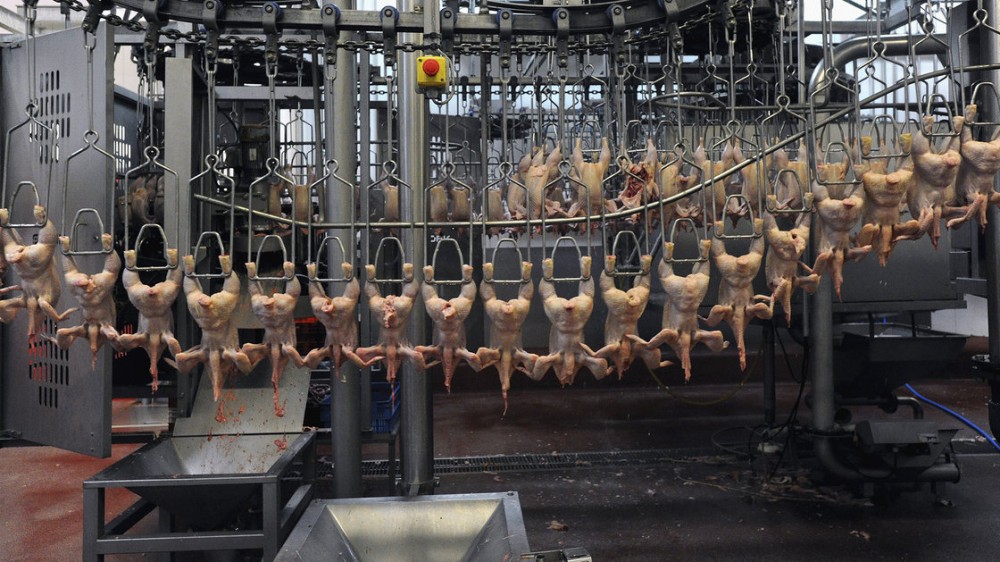
"caption": "A poultry processing plant in France. Europe banned treating chicken carcasses with chlorine in the 1990s out of fear that it could cause cancer. Photo: Christophe Di Pascale/Corbis ",
"description": null,
"title": "chickens-europe",
"credit": null,
"status": "inherit",
"isLoading": false,
"fetchFailed": false
}
},
"audioPlayerReducer": {
"postId": "stream_live",
"isPaused": true,
"isPlaying": false,
"pfsActive": false,
"pledgeModalIsOpen": true,
"playerDrawerIsOpen": false,
"liveAudioPlayStartedAt": 0,
"liveAudioPlayContext": ""
},
"authorsReducer": {
"byline_bayareabites_90552": {
"type": "authors",
"id": "byline_bayareabites_90552",
"meta": {
"override": true
},
"slug": "byline_bayareabites_90552",
"name": "Dan Charles",
"isLoading": false
},
"byline_bayareabites_90524": {
"type": "authors",
"id": "byline_bayareabites_90524",
"meta": {
"override": true
},
"slug": "byline_bayareabites_90524",
"name": "Dan Charles",
"isLoading": false
},
"byline_bayareabites_90444": {
"type": "authors",
"id": "byline_bayareabites_90444",
"meta": {
"override": true
},
"slug": "byline_bayareabites_90444",
"name": "Maria Godoy",
"isLoading": false
},
"byline_bayareabites_90426": {
"type": "authors",
"id": "byline_bayareabites_90426",
"meta": {
"override": true
},
"slug": "byline_bayareabites_90426",
"name": "Eliza Barclay",
"isLoading": false
},
"byline_bayareabites_90379": {
"type": "authors",
"id": "byline_bayareabites_90379",
"meta": {
"override": true
},
"slug": "byline_bayareabites_90379",
"name": "Eliza Barclay",
"isLoading": false
},
"byline_bayareabites_89508": {
"type": "authors",
"id": "byline_bayareabites_89508",
"meta": {
"override": true
},
"slug": "byline_bayareabites_89508",
"name": "Allison Aubrey",
"isLoading": false
},
"byline_bayareabites_89178": {
"type": "authors",
"id": "byline_bayareabites_89178",
"meta": {
"override": true
},
"slug": "byline_bayareabites_89178",
"name": "Allison Aubrey",
"isLoading": false
},
"byline_bayareabites_88860": {
"type": "authors",
"id": "byline_bayareabites_88860",
"meta": {
"override": true
},
"slug": "byline_bayareabites_88860",
"name": "Maria Godoy",
"isLoading": false
},
"byline_bayareabites_88428": {
"type": "authors",
"id": "byline_bayareabites_88428",
"meta": {
"override": true
},
"slug": "byline_bayareabites_88428",
"name": "Allison Aubrey and Dan Charles",
"isLoading": false
},
"byline_bayareabites_88217": {
"type": "authors",
"id": "byline_bayareabites_88217",
"meta": {
"override": true
},
"slug": "byline_bayareabites_88217",
"name": "Susanna Capelouto",
"isLoading": false
},
"wendy-goodfriend": {
"type": "authors",
"id": "5014",
"meta": {
"index": "authors_1716337520",
"id": "5014",
"found": true
},
"name": "Wendy Goodfriend",
"firstName": "Wendy",
"lastName": "Goodfriend",
"slug": "wendy-goodfriend",
"email": "wendy@wendygoodfriend.com",
"display_author_email": false,
"staff_mastheads": [],
"title": "KQED Contributor",
"bio": "I was the Senior Digital Producer for KQED Food up until July, 2018. Since 2001, I designed, produced, managed and contributed to mostly food-related websites and blogs for KQED including: KQED.org; KQED Food; Bay Area Bites; Check, Please! Bay Area; Taste This; Celebrity Chefs; seven of Jacques Pepin's TV series websites; and Joanne Weir's Cooking in the City. I initiated the majority of KQED Food's social media feeds and maintained them up until 2017. As far as content creation, photography is my passion and I also shoot video and write stories. My photos have been used in articles for KQED Food, News, Arts, and Science as well as for promotional purposes in print and online. Professional education and training includes: clinical psychology, photography, commercial cooking, web design, information architecture and UX.",
"avatar": "https://secure.gravatar.com/avatar/dfba64372339cc34cf17e446e6f18fa8?s=600&d=blank&r=g",
"twitter": null,
"facebook": "bayareabites",
"instagram": null,
"linkedin": "wendygoodfriend",
"sites": [
{
"site": "jpepinheart",
"roles": []
},
{
"site": "about",
"roles": [
"editor"
]
},
{
"site": "bayareabites",
"roles": [
"subscriber"
]
},
{
"site": "science",
"roles": [
"administrator"
]
},
{
"site": "checkplease",
"roles": [
"subscriber"
]
},
{
"site": "food",
"roles": [
"author"
]
},
{
"site": "essentialpepin",
"roles": [
"administrator"
]
}
],
"headData": {
"title": "Wendy Goodfriend | KQED",
"description": "KQED Contributor",
"ogImgSrc": "https://secure.gravatar.com/avatar/dfba64372339cc34cf17e446e6f18fa8?s=600&d=blank&r=g",
"twImgSrc": "https://secure.gravatar.com/avatar/dfba64372339cc34cf17e446e6f18fa8?s=600&d=blank&r=g"
},
"isLoading": false,
"link": "/author/wendy-goodfriend"
},
"kim-laidlaw": {
"type": "authors",
"id": "5015",
"meta": {
"index": "authors_1716337520",
"id": "5015",
"found": true
},
"name": "Kim Laidlaw",
"firstName": "Kim",
"lastName": "Laidlaw",
"slug": "kim-laidlaw",
"email": "kim_laidlaw@yahoo.com",
"display_author_email": false,
"staff_mastheads": [],
"title": null,
"bio": "Kim Laidlaw is a cookbook author, editor, food writer, producer, project manager, and baker who has been in the kitchen covered in flour since she was big enough to stir the biscuit dough. She has over 16 years of experience in book and online publishing, and a lifetime of experience in the kitchen. \r\n\r\nHer first cookbook, Home Baked Comfort, was published in 2011; her second cookbook, Baby & Toddler On the Go, was published in April 2013; and her third cookbook, Williams-Sonoma Dessert of the Day, was published in October 2013. \r\n\r\nShe was the first blogger on KQED’s Bay Area Bites blog, which launched in 2005, and previously worked as a professional baker at La Farine French Bakery in Oakland, CA. She lives in Petaluma with her husband and their child, whom she cooks for everyday. Find out more at \u003ca href=\"http://www.kimlaidlaw.com\">http://www.kimlaidlaw.com\u003c/a>.",
"avatar": "https://secure.gravatar.com/avatar/284503bc296b6f7822eb38b816292376?s=600&d=blank&r=g",
"twitter": null,
"facebook": "kimilaw",
"instagram": null,
"linkedin": "kimlaidlaw",
"sites": [
{
"site": "bayareabites",
"roles": [
"contributor"
]
},
{
"site": "food",
"roles": [
"contributor"
]
}
],
"headData": {
"title": "Kim Laidlaw | KQED",
"description": null,
"ogImgSrc": "https://secure.gravatar.com/avatar/284503bc296b6f7822eb38b816292376?s=600&d=blank&r=g",
"twImgSrc": "https://secure.gravatar.com/avatar/284503bc296b6f7822eb38b816292376?s=600&d=blank&r=g"
},
"isLoading": false,
"link": "/author/kim-laidlaw"
},
"alexandrawall": {
"type": "authors",
"id": "5567",
"meta": {
"index": "authors_1716337520",
"id": "5567",
"found": true
},
"name": "Alix Wall",
"firstName": "Alix",
"lastName": "Wall",
"slug": "alexandrawall",
"email": "alixwall@sbcglobal.net",
"display_author_email": false,
"staff_mastheads": [],
"title": null,
"bio": "Alix Wall appeared in her hometown paper in Riverside, California as “Chef of the Week” when she was 15 years old, and in high school, she founded “The Bon Appetit Club.” After working as a journalist for many years, Alix became a certified natural foods chef from Bauman College in Berkeley. While she cooks part-time healthy, organic meals for busy families, she is also a contributing editor of j. weekly, the Bay Area’s Jewish newspaper, in which she has a monthly food column. Her food writing can also be found on Berkeleyside’s NOSH and in Edible East Bay. In addition to food, she loves writing about how couples met and fell in love, which she does for The San Francisco Chronicle’s Style section and j. weekly. In 2016, she founded The Illuminoshi: The Not-So-Secret Society of Bay Area Jewish Food Professionals. She is also writer/producer for a documentary-in-progress called \u003ca href=\"https://www.lonelychildmovie.com/\">The Lonely Child\u003c/a>. Follow Alix on Twitter \u003ca href=\"https://twitter.com/WallAlix\">@WallAlix\u003c/a>.",
"avatar": "https://secure.gravatar.com/avatar/421a27f26a185be932f8d567b499b1f1?s=600&d=blank&r=g",
"twitter": null,
"facebook": null,
"instagram": null,
"linkedin": null,
"sites": [
{
"site": "bayareabites",
"roles": [
"contributor"
]
},
{
"site": "food",
"roles": [
"contributor"
]
}
],
"headData": {
"title": "Alix Wall | KQED",
"description": null,
"ogImgSrc": "https://secure.gravatar.com/avatar/421a27f26a185be932f8d567b499b1f1?s=600&d=blank&r=g",
"twImgSrc": "https://secure.gravatar.com/avatar/421a27f26a185be932f8d567b499b1f1?s=600&d=blank&r=g"
},
"isLoading": false,
"link": "/author/alexandrawall"
}
},
"pagesReducer": {
"bayareabites_category_health-and-nutrition": {
"type": "terms",
"id": "bayareabites_1245",
"meta": {
"index": "terms_1716263798",
"site": "bayareabites",
"id": "1245",
"score": 14.4079685
},
"featImg": null,
"name": "health and nutrition",
"description": null,
"taxonomy": "category",
"headData": {
"twImgId": null,
"twTitle": null,
"ogTitle": null,
"ogImgId": null,
"twDescription": null,
"description": null,
"title": "health and nutrition Archives | KQED Bay Area Bites",
"ogDescription": null
},
"ttid": 1078,
"slug": "health-and-nutrition",
"isLoading": false,
"title": "health and nutrition",
"pageMeta": {
"site": "bayareabites",
"WpPageTemplate": "page-topic-editorial",
"currentPage": 29
},
"blocks": [
{
"blockName": "kqed/post-list",
"attrs": {
"layout": "cardArticle2",
"query": "posts/bayareabites?category=health-and-nutrition",
"seeMore": false,
"paginated": true,
"page": 29
}
},
{
"blockName": "kqed/ad"
}
]
}
},
"pfsSessionReducer": {},
"postsReducer": {
"stream_live": {
"type": "live",
"id": "stream_live",
"audioUrl": "https://streams.kqed.org/kqedradio",
"title": "Live Stream",
"excerpt": "Live Stream information currently unavailable.",
"link": "/radio",
"featImg": "",
"label": {
"name": "KQED Live",
"link": "/"
}
},
"stream_kqedNewscast": {
"type": "posts",
"id": "stream_kqedNewscast",
"audioUrl": "https://www.kqed.org/.stream/anon/radio/RDnews/newscast.mp3?_=1",
"title": "KQED Newscast",
"featImg": "",
"label": {
"name": "88.5 FM",
"link": "/"
}
},
"bayareabites_90552": {
"type": "posts",
"id": "bayareabites_90552",
"meta": {
"index": "posts_1716263798",
"site": "bayareabites",
"id": "90552",
"score": null,
"sort": [
1418065624000
]
},
"parent": 0,
"labelTerm": {
"site": "bayareabites"
},
"blocks": [],
"publishDate": 1418065624,
"format": "aside",
"disqusTitle": "Fringe No More: 'Ancient Grains' Will Soon Be A Cheerios Variety",
"title": "Fringe No More: 'Ancient Grains' Will Soon Be A Cheerios Variety",
"headTitle": "Bay Area Bites | KQED Food",
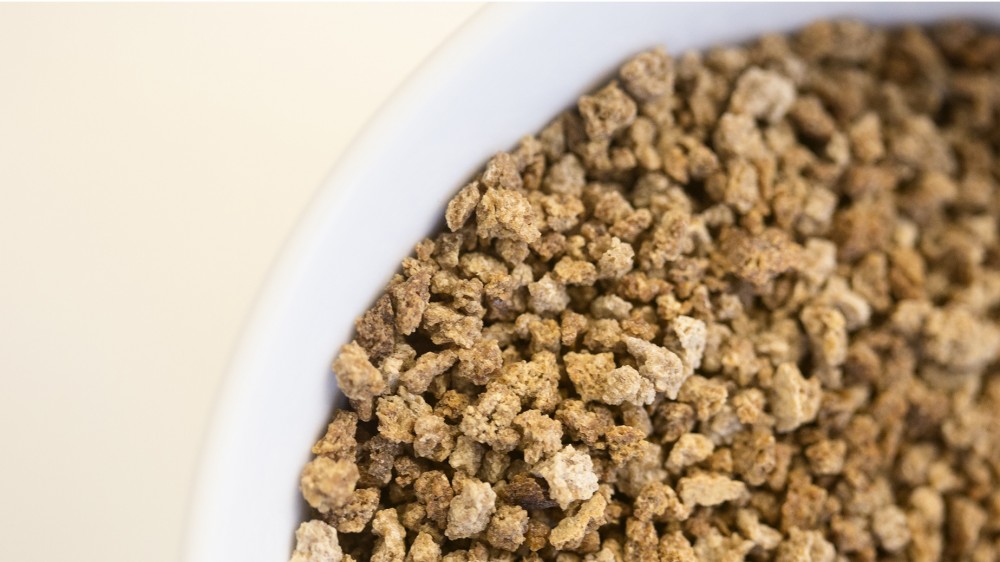
"content": "\u003cp>post by \u003ca href=\"http://www.npr.org/people/143160021/daniel-charles\" target=\"_blank\">Dan Charles\u003c/a>, \u003ca href=\"http://www.npr.org/blogs/thesalt/2014/12/08/368689124/fringe-no-more-ancient-grains-will-soon-be-a-cheerios-variety\" target=\"_blank\">The Salt at NPR Food\u003c/a> (12/8/14)\u003c/p>\n\u003cfigure id=\"attachment_90553\" class=\"wp-caption alignleft\" style=\"max-width: 300px\">\u003ca href=\"http://ww2.kqed.org/bayareabites/wp-content/uploads/sites/24/2014/12/cheerios-ancient-grains_enl-5391fbb23d8f4de5bf7f776b5b8324ac8e6ff855.jpe\">\u003cimg src=\"http://ww2.kqed.org/bayareabites/wp-content/uploads/sites/24/2014/12/cheerios-ancient-grains_enl-5391fbb23d8f4de5bf7f776b5b8324ac8e6ff855.jpe\" alt=\"The new box of Cheerios + Ancient grains cereal. Image: General Mills \" width=\"300\" class=\"size-full wp-image-90553\">\u003c/a>\u003cfigcaption class=\"wp-caption-text\">The new box of Cheerios + Ancient grains cereal. Image: General Mills\u003c/figcaption>\u003c/figure>\n\u003cp>So-called \"ancient grains\" have moved with breathtaking momentum from America's culinary dissident fringe toward the mainstream — and now they've arrived. After all, what's more mainstream than Cheerios? In January, General Mills will introduce a new version of its flagship breakfast cereal, called Cheerios + Ancient Grains.\u003c/p>\n\u003cp>The new version of Cheerios will contain small amounts of \u003ca href=\"http://www.npr.org/templates/story/story.php?storyId=15749697\">quinoa\u003c/a>, Kamut wheat and spelt along with the traditional oats.\u003c/p>\n\u003cp>\"They're keeping their ears attuned to what's hot and trendy,\" says Topher Ellis, who's been monitoring the world of breakfast cereals ever since he and his two brothers fought over the prizes at the bottom of each new box. Topher co-authored \u003cem>\u003ca href=\"http://www.amazon.com/The-Great-American-Cereal-Book/dp/0810997991\">The Great American Cereal Book: How Breakfast Got Its Crunch\u003c/a>, \u003c/em>and edits a newsletter on cereals called \u003ca href=\"http://www.lavasurfer.com/boxtop/boxtop-162.html\">The Boxtop\u003c/a>.\u003c/p>\n\u003cp>No one seems to know who first came up with the term \"ancient grains.\" It certainly has little basis in history or botany. Spelt or quinoa or millet aren't older than oats or regular wheat; they're just more hard to find, and they've been relatively neglected by crop breeders. \"You could just call them 'whole grains,' \" admits \u003ca href=\"http://mariaspeck.com/\">Maria Speck\u003c/a>, author of the cookbook \u003ca href=\"http://www.amazon.com/Ancient-Grains-Modern-Meals-Mediterranean/dp/1580083544\">Ancient Grains for Modern Meals\u003c/a>\u003cem>.\u003c/em>\u003c/p>\n\u003cp>[ad fullwidth]\u003c/p>\n\u003cp>But calling these grains \"ancient,\" with its sense of mystery and archeological discovery, helped to express Speck's fascination with traditional whole grains. \"I'm mesmerized by them,\" she says.\u003c/p>\n\u003cp>Speck did not, however, invent the term. Cynthia Harriman, director of food and nutrition strategies for Oldways, which promotes traditional foods, searched through her email archives and discovered that Nature's Path, the organic food company, was talking about \"ancient grains\" in 2005.\u003c/p>\n\u003cp>Now, General Mills hopes that these allegedly ancient ingredients will invigorate a brand that's showing signs of age itself.\u003c/p>\n\u003cp>Cheerios helped to define the industrial era of American breakfasting when General Mills launched the product as Cheery Oats in 1941. But breakfast cereal sales have been sagging in recent years.\u003c/p>\n\u003cp>Ellis points out that General Mills has actually done a lot of experimenting with its venerable franchise. Since 1979, it has spun off a whole family of Cheerios subgenres. There are now 15 in all, including Honey Nut (which now outsells the original Cheerios), Dulce De Leche, Chocolate, Multi Grain and Protein.\u003c/p>\n\u003cp>All of the new versions are sweeter than the original. A serving of unadorned Cheerios has one gram of sugar, compared to nine grams in Honey Nut Cheerios. A serving of Cheerios + Ancient Grains will have five grams of sugar.\u003c/p>\n\u003cp>Speck seems uncertain how she should react to this ancient grains version of Cheerios. Part of her is quite pleased. \"For me, it's beautiful that 'ancient grains' has this appeal,\" she says. On the other hand, she doesn't eat manufactured breakfast cereal, and isn't really interested in promoting it. \"My interest is, I want people to cook more,\" she says.\u003c/p>\n\u003cp>\u003c/p>\n\u003cp> \u003cem>Copyright 2014 \u003ca href=\"http://www.npr.org/\" target=\"_blank\">NPR\u003c/a>.\u003c/em>\u003c/p>\n\n",
"disqusIdentifier": "90552 http://blogs.kqed.org/bayareabites/?p=90552",
"disqusUrl": "https://ww2.kqed.org/bayareabites/2014/12/08/fringe-no-more-ancient-grains-will-soon-be-a-cheerios-variety/",
"stats": {
"hasVideo": false,
"hasChartOrMap": false,
"hasAudio": false,
"hasPolis": false,
"wordCount": 512,
"hasGoogleForm": false,
"hasGallery": false,
"hasHearkenModule": false,
"iframeSrcs": [],
"paragraphCount": 15
},
"modified": 1418066284,
"excerpt": "General Mills helped define the industrial era of American breakfasting with its ringlets of processed oats. Soon, it'll put out a version with \"ancient grains,\" which aren't, actually, very ancient.",
"headData": {
"twImgId": "",
"twTitle": "",
"ogTitle": "",
"ogImgId": "",
"twDescription": "",
"description": "General Mills helped define the industrial era of American breakfasting with its ringlets of processed oats. Soon, it'll put out a version with "ancient grains," which aren't, actually, very ancient.",
"title": "Fringe No More: 'Ancient Grains' Will Soon Be A Cheerios Variety | KQED",
"ogDescription": "",
"schema": {
"@context": "https://schema.org",
"@type": "Article",
"headline": "Fringe No More: 'Ancient Grains' Will Soon Be A Cheerios Variety",
"datePublished": "2014-12-08T11:07:04-08:00",
"dateModified": "2014-12-08T11:18:04-08:00",
"image": "https://cdn.kqed.org/wp-content/uploads/2020/02/KQED-OG-Image@1x.png"
}
},
"guestAuthors": [],
"slug": "fringe-no-more-ancient-grains-will-soon-be-a-cheerios-variety",
"status": "publish",
"nprApiLink": "http://api.npr.org/query?id=368689124&apiKey=MDAxOTAwOTE4MDEyMTkxMDAzNjczZDljZA004",
"nprByline": "Dan Charles",
"nprStoryDate": "Mon, 08 Dec 2014 13:05:26 -0500",
"nprLastModifiedDate": "Mon, 08 Dec 2014 13:05:26 -0500",
"nprHtmlLink": "http://www.npr.org/blogs/thesalt/2014/12/08/368689124/fringe-no-more-ancient-grains-will-soon-be-a-cheerios-variety?ft=3&f=368689124",
"nprStoryId": "368689124",
"nprRetrievedStory": "1",
"nprPubDate": "Mon, 08 Dec 2014 13:05:00 -0500",
"path": "/bayareabites/90552/fringe-no-more-ancient-grains-will-soon-be-a-cheerios-variety",
"audioTrackLength": null,
"parsedContent": [
{
"type": "contentString",
"content": "\u003cdiv class=\"post-body\">\u003cp>\u003cp>post by \u003ca href=\"http://www.npr.org/people/143160021/daniel-charles\" target=\"_blank\">Dan Charles\u003c/a>, \u003ca href=\"http://www.npr.org/blogs/thesalt/2014/12/08/368689124/fringe-no-more-ancient-grains-will-soon-be-a-cheerios-variety\" target=\"_blank\">The Salt at NPR Food\u003c/a> (12/8/14)\u003c/p>\n\u003cfigure id=\"attachment_90553\" class=\"wp-caption alignleft\" style=\"max-width: 300px\">\u003ca href=\"http://ww2.kqed.org/bayareabites/wp-content/uploads/sites/24/2014/12/cheerios-ancient-grains_enl-5391fbb23d8f4de5bf7f776b5b8324ac8e6ff855.jpe\">\u003cimg src=\"http://ww2.kqed.org/bayareabites/wp-content/uploads/sites/24/2014/12/cheerios-ancient-grains_enl-5391fbb23d8f4de5bf7f776b5b8324ac8e6ff855.jpe\" alt=\"The new box of Cheerios + Ancient grains cereal. Image: General Mills \" width=\"300\" class=\"size-full wp-image-90553\">\u003c/a>\u003cfigcaption class=\"wp-caption-text\">The new box of Cheerios + Ancient grains cereal. Image: General Mills\u003c/figcaption>\u003c/figure>\n\u003cp>So-called \"ancient grains\" have moved with breathtaking momentum from America's culinary dissident fringe toward the mainstream — and now they've arrived. After all, what's more mainstream than Cheerios? In January, General Mills will introduce a new version of its flagship breakfast cereal, called Cheerios + Ancient Grains.\u003c/p>\n\u003cp>The new version of Cheerios will contain small amounts of \u003ca href=\"http://www.npr.org/templates/story/story.php?storyId=15749697\">quinoa\u003c/a>, Kamut wheat and spelt along with the traditional oats.\u003c/p>\n\u003cp>\"They're keeping their ears attuned to what's hot and trendy,\" says Topher Ellis, who's been monitoring the world of breakfast cereals ever since he and his two brothers fought over the prizes at the bottom of each new box. Topher co-authored \u003cem>\u003ca href=\"http://www.amazon.com/The-Great-American-Cereal-Book/dp/0810997991\">The Great American Cereal Book: How Breakfast Got Its Crunch\u003c/a>, \u003c/em>and edits a newsletter on cereals called \u003ca href=\"http://www.lavasurfer.com/boxtop/boxtop-162.html\">The Boxtop\u003c/a>.\u003c/p>\n\u003cp>No one seems to know who first came up with the term \"ancient grains.\" It certainly has little basis in history or botany. Spelt or quinoa or millet aren't older than oats or regular wheat; they're just more hard to find, and they've been relatively neglected by crop breeders. \"You could just call them 'whole grains,' \" admits \u003ca href=\"http://mariaspeck.com/\">Maria Speck\u003c/a>, author of the cookbook \u003ca href=\"http://www.amazon.com/Ancient-Grains-Modern-Meals-Mediterranean/dp/1580083544\">Ancient Grains for Modern Meals\u003c/a>\u003cem>.\u003c/em>\u003c/p>\n\u003cp>\u003c/p>\u003c/div>",
"attributes": {
"named": {},
"numeric": []
}
},
{
"type": "component",
"content": "",
"name": "ad",
"attributes": {
"named": {
"label": "fullwidth"
},
"numeric": [
"fullwidth"
]
}
},
{
"type": "contentString",
"content": "\u003cdiv class=\"post-body\">\u003cp>\u003c/p>\n\u003cp>But calling these grains \"ancient,\" with its sense of mystery and archeological discovery, helped to express Speck's fascination with traditional whole grains. \"I'm mesmerized by them,\" she says.\u003c/p>\n\u003cp>Speck did not, however, invent the term. Cynthia Harriman, director of food and nutrition strategies for Oldways, which promotes traditional foods, searched through her email archives and discovered that Nature's Path, the organic food company, was talking about \"ancient grains\" in 2005.\u003c/p>\n\u003cp>Now, General Mills hopes that these allegedly ancient ingredients will invigorate a brand that's showing signs of age itself.\u003c/p>\n\u003cp>Cheerios helped to define the industrial era of American breakfasting when General Mills launched the product as Cheery Oats in 1941. But breakfast cereal sales have been sagging in recent years.\u003c/p>\n\u003cp>Ellis points out that General Mills has actually done a lot of experimenting with its venerable franchise. Since 1979, it has spun off a whole family of Cheerios subgenres. There are now 15 in all, including Honey Nut (which now outsells the original Cheerios), Dulce De Leche, Chocolate, Multi Grain and Protein.\u003c/p>\n\u003cp>All of the new versions are sweeter than the original. A serving of unadorned Cheerios has one gram of sugar, compared to nine grams in Honey Nut Cheerios. A serving of Cheerios + Ancient Grains will have five grams of sugar.\u003c/p>\n\u003cp>Speck seems uncertain how she should react to this ancient grains version of Cheerios. Part of her is quite pleased. \"For me, it's beautiful that 'ancient grains' has this appeal,\" she says. On the other hand, she doesn't eat manufactured breakfast cereal, and isn't really interested in promoting it. \"My interest is, I want people to cook more,\" she says.\u003c/p>\n\u003cp>\u003c/p>\n\u003cp> \u003cem>Copyright 2014 \u003ca href=\"http://www.npr.org/\" target=\"_blank\">NPR\u003c/a>.\u003c/em>\u003c/p>\n\n\u003c/div>\u003c/p>",
"attributes": {
"named": {},
"numeric": []
}
}
],
"link": "/bayareabites/90552/fringe-no-more-ancient-grains-will-soon-be-a-cheerios-variety",
"authors": [
"byline_bayareabites_90552"
],
"categories": [
"bayareabites_1245",
"bayareabites_1246",
"bayareabites_12555",
"bayareabites_10916"
],
"tags": [
"bayareabites_4208",
"bayareabites_13969",
"bayareabites_13970",
"bayareabites_11270",
"bayareabites_511",
"bayareabites_10921"
],
"featImg": "bayareabites_90553",
"label": "bayareabites"
},
"bayareabites_90524": {
"type": "posts",
"id": "bayareabites_90524",
"meta": {
"index": "posts_1716263798",
"site": "bayareabites",
"id": "90524",
"score": null,
"sort": [
1417818181000
]
},
"parent": 0,
"labelTerm": {
"site": "bayareabites"
},
"blocks": [],
"publishDate": 1417818181,
"format": "aside",
"disqusTitle": "Why Did Vitamins Disappear From Non-GMO Breakfast Cereal?",
"title": "Why Did Vitamins Disappear From Non-GMO Breakfast Cereal?",
"headTitle": "Bay Area Bites | KQED Food",
"content": "\u003cfigure id=\"attachment_90525\" class=\"wp-caption aligncenter\" style=\"max-width: 1000px\">\u003ca href=\"http://ww2.kqed.org/bayareabites/wp-content/uploads/sites/24/2014/12/grapenuts2_wide-f7263377e1fe948d93390f9144f18783a0d28bee-e1417817835786.jpg\">\u003cimg src=\"http://ww2.kqed.org/bayareabites/wp-content/uploads/sites/24/2014/12/grapenuts2_wide-f7263377e1fe948d93390f9144f18783a0d28bee-e1417817835786.jpg\" alt=\"The Original Grape-Nuts, which now bear a non-GMO label, no longer contain vitamins A, D, B-12 and B-2. Photo: Claire Eggers/NPR\" width=\"1000\" height=\"562\" class=\"size-full wp-image-90525\">\u003c/a>\u003cfigcaption class=\"wp-caption-text\">The Original Grape-Nuts, which now bear a non-GMO label, no longer contain vitamins A, D, B-12 and B-2. Photo: Claire Eggers/NPR\u003c/figcaption>\u003c/figure>\n\u003cp>by \u003ca href=\"http://www.npr.org/people/143160021/daniel-charles\" target=\"_blank\">Dan Charles\u003c/a>, \u003ca href=\"http://www.npr.org/blogs/thesalt/2014/12/05/368248812/why-did-vitamins-disappear-from-non-gmo-breakfast-cereal\" target=\"_blank\">The Salt at NPR Food\u003c/a> (12/5/14)\u003c/p>\n\u003cp>Remember when Cheerios and Grape-Nuts went GMO-free? That was about a year ago, when their corporate creators \u003ca href=\"http://www.foodnavigator-usa.com/Manufacturers/Post-unveils-non-GMO-verified-Grape-Nuts-as-Gen-Mills-says-goodbye-to-GMOs-in-Original-Cheerios\">announced\u003c/a> that these products would no longer contain ingredients made from genetically modified organisms like common types of corn, soybeans or sugar beets.\u003c/p>\n\u003cp>When they actually arrived on supermarket shelves, though, there was a mysterious change in their list of ingredients. Four vitamins that previously had been added to Grape-Nuts — Vitamins A, D, B-12 and B-2 (also known as riboflavin) — were gone. Riboflavin vanished from Cheerios.\u003c/p>\n\u003cp>\u003ca href=\"http://www.cropsoil.uga.edu/personnel/faculty/parrott.html\">Wayne Parrott\u003c/a>, a professor of crop science at the University of Georgia and defender of GMOs, was among the first to point out the change. He \u003ca href=\"http://www.foodnavigator-usa.com/R-D/Goodbye-GMOs-and-vitamin-B12-D-A-and-Riboflavin-New-non-GMO-Grape-Nuts-and-Original-Cheerios-are-certainly-less-nutritious-claims-professor\">criticized\u003c/a> General Mills and Post Foods for marketing their non-GMO cereals as especially wholesome. \"The new version [of Cheerios] is certainly less nutritious,\" he told a reporter for Foodnavigator-usa.com, which covers the food industry.\u003c/p>\n\u003cfigure id=\"attachment_90526\" class=\"wp-caption alignleft\" style=\"max-width: 250px\">\u003ca href=\"http://ww2.kqed.org/bayareabites/wp-content/uploads/sites/24/2014/12/box_custom-fc9fb5f7add2ba52beb64df33b453cfdfcaa2f18-e1417817897119.jpg\">\u003cimg src=\"http://ww2.kqed.org/bayareabites/wp-content/uploads/sites/24/2014/12/box_custom-fc9fb5f7add2ba52beb64df33b453cfdfcaa2f18-e1417817897119.jpg\" alt=\"Vitamins may fail the non-GMO test for a variety of reasons, but they may not necessarily come from GMO microbes. Photo: Claire Eggers/NPR\" width=\"250\" class=\"size-full wp-image-90526\">\u003c/a>\u003cfigcaption class=\"wp-caption-text\">Vitamins may fail the non-GMO test for a variety of reasons, but they may not necessarily come from GMO microbes. Photo: Claire Eggers/NPR\u003c/figcaption>\u003c/figure>\n\u003cp>This mini-controversy never got much attention. Recently, though, as we \u003ca href=\"http://www.npr.org/blogs/thesalt/2014/12/04/368001548/who-made-that-flavor-maybe-a-genetically-altered-microbe\">interviewed scientists\u003c/a> who are using genetically altered yeast and bacteria to make nutrients and flavors, we recalled the strange case of the vanishing vitamins. We wondered: Do GMO microbes make vitamins, too? Is that why they can't be used in non-GMO cereals?\u003c/p>\n\u003cp>[ad fullwidth]\u003c/p>\n\u003cp>The companies directly involved weren't terribly helpful. Post Foods, the maker of Grape-Nuts, informed us in a prepared statement that vitamins were removed because \"they did not meet non-GMO standards,\" but refused to explain why this was so.\u003c/p>\n\u003cp>Two of the world's major vitamin makers, \u003ca href=\"http://www.newtrition.basf.com/web/global/newtrition/en_GB/market_segments/dietary_supplements/index\">BASF\u003c/a> and \u003ca href=\"http://www.dsm.com/markets/foodandbeverages/en_US/products/vitamins.html\">DSM\u003c/a>, declined to provide details of their manufacturing. \"There is very little non-proprietary information I could talk to you about,\" a spokesman for DSM wrote in an email.\u003c/p>\n\u003cp>We dug further and discovered that vitamins may fail the non-GMO test for a variety of reasons.\u003c/p>\n\u003cp>Some companies are most likely making vitamin B-12 and riboflavin using genetically modified microbes; they have, at least, \u003ca href=\"http://link.springer.com/article/10.1038/sj.jim.2900604#page-1\">published\u003c/a> scientific papers showing how this can be done.\u003c/p>\n\u003cp>On the other hand, these vitamins don't \u003cem>necessarily\u003c/em> come from GMO microbes. There are strains of bacteria that produce these vitamins naturally. Yet even such microbes may not qualify for non-GMO status, because there's another hurdle. Vitamin-makers have to show that their microbes consumed feed — glucose, for instance — that came from non-GMO sources.\u003c/p>\n\u003cp>There's a further complication. Some vitamins have to be mixed with other substances, such as cornstarch, to handle them easily. Can't prove that the cornstarch was free of genetic modification? Sorry, no non-GMO certification from the \u003ca href=\"http://www.nongmoproject.org/\">Non GMO Project\u003c/a>, an independent organization.\u003c/p>\n\u003cp>Bethany Davis, director of regulatory affairs at \u003ca href=\"http://www.foodstate.com/\">FoodState\u003c/a>, which sells nutritional supplements, says that for all those reasons, vitamins get very tight scrutiny before they can be certified as non-GMO.\u003c/p>\n\u003cp>It is still possible to find non-GMO vitamins, she says. Increasingly, you can get them from China. But it requires additional time and attention. Big cereal manufacturers like General Mills or Post Foods, Davis says, may find it easier just to drop vitamins from the recipe.\u003c/p>\n\u003cp>Extracting vitamins from ordinary foods like carrots is possible, but it's generally much more expensive.\u003c/p>\n\u003cp>That leaves one method of vitamin production that's cheap, industrial-scale, and reliably non-GMO: synthetic chemistry. Vitamins are commonly manufactured from scratch in chemical factories, using ingredients that cannot be linked to any genes or biological process at all. That technology may not inspire great affection, but it does, at least, qualify as non-GMO.\u003c/p>\n\u003cp>\u003c/p>\n\u003cp> \u003cem>Copyright 2014 \u003ca href=\"http://www.npr.org/\" target=\"_blank\">NPR\u003c/a>.\u003c/em> \u003c/p>\n\n",
"disqusIdentifier": "90524 http://blogs.kqed.org/bayareabites/?p=90524",
"disqusUrl": "https://ww2.kqed.org/bayareabites/2014/12/05/why-did-vitamins-disappear-from-non-gmo-breakfast-cereal/",
"stats": {
"hasVideo": false,
"hasChartOrMap": false,
"hasAudio": false,
"hasPolis": false,
"wordCount": 657,
"hasGoogleForm": false,
"hasGallery": false,
"hasHearkenModule": false,
"iframeSrcs": [],
"paragraphCount": 18
},
"modified": 1417818181,
"excerpt": "When GMO-free cereals landed in supermarkets, some vitamins had mysteriously vanished from them. But these vitamins don't necessarily come from genetically altered organisms.",
"headData": {
"twImgId": "",
"twTitle": "",
"ogTitle": "",
"ogImgId": "",
"twDescription": "",
"description": "When GMO-free cereals landed in supermarkets, some vitamins had mysteriously vanished from them. But these vitamins don't necessarily come from genetically altered organisms.",
"title": "Why Did Vitamins Disappear From Non-GMO Breakfast Cereal? | KQED",
"ogDescription": "",
"schema": {
"@context": "https://schema.org",
"@type": "Article",
"headline": "Why Did Vitamins Disappear From Non-GMO Breakfast Cereal?",
"datePublished": "2014-12-05T14:23:01-08:00",
"dateModified": "2014-12-05T14:23:01-08:00",
"image": "https://cdn.kqed.org/wp-content/uploads/2020/02/KQED-OG-Image@1x.png"
}
},
"guestAuthors": [],
"slug": "why-did-vitamins-disappear-from-non-gmo-breakfast-cereal",
"status": "publish",
"nprApiLink": "http://api.npr.org/query?id=368248812&apiKey=MDAxOTAwOTE4MDEyMTkxMDAzNjczZDljZA004",
"nprByline": "Dan Charles",
"nprStoryDate": "Fri, 05 Dec 2014 15:50:00 -0500",
"nprLastModifiedDate": "Fri, 05 Dec 2014 16:15:50 -0500",
"nprHtmlLink": "http://www.npr.org/blogs/thesalt/2014/12/05/368248812/why-did-vitamins-disappear-from-non-gmo-breakfast-cereal?ft=3&f=368248812",
"nprStoryId": "368248812",
"nprRetrievedStory": "1",
"nprPubDate": "Fri, 05 Dec 2014 16:15:00 -0500",
"path": "/bayareabites/90524/why-did-vitamins-disappear-from-non-gmo-breakfast-cereal",
"audioTrackLength": null,
"parsedContent": [
{
"type": "contentString",
"content": "\u003cdiv class=\"post-body\">\u003cp>\u003cfigure id=\"attachment_90525\" class=\"wp-caption aligncenter\" style=\"max-width: 1000px\">\u003ca href=\"http://ww2.kqed.org/bayareabites/wp-content/uploads/sites/24/2014/12/grapenuts2_wide-f7263377e1fe948d93390f9144f18783a0d28bee-e1417817835786.jpg\">\u003cimg src=\"http://ww2.kqed.org/bayareabites/wp-content/uploads/sites/24/2014/12/grapenuts2_wide-f7263377e1fe948d93390f9144f18783a0d28bee-e1417817835786.jpg\" alt=\"The Original Grape-Nuts, which now bear a non-GMO label, no longer contain vitamins A, D, B-12 and B-2. Photo: Claire Eggers/NPR\" width=\"1000\" height=\"562\" class=\"size-full wp-image-90525\">\u003c/a>\u003cfigcaption class=\"wp-caption-text\">The Original Grape-Nuts, which now bear a non-GMO label, no longer contain vitamins A, D, B-12 and B-2. Photo: Claire Eggers/NPR\u003c/figcaption>\u003c/figure>\n\u003cp>by \u003ca href=\"http://www.npr.org/people/143160021/daniel-charles\" target=\"_blank\">Dan Charles\u003c/a>, \u003ca href=\"http://www.npr.org/blogs/thesalt/2014/12/05/368248812/why-did-vitamins-disappear-from-non-gmo-breakfast-cereal\" target=\"_blank\">The Salt at NPR Food\u003c/a> (12/5/14)\u003c/p>\n\u003cp>Remember when Cheerios and Grape-Nuts went GMO-free? That was about a year ago, when their corporate creators \u003ca href=\"http://www.foodnavigator-usa.com/Manufacturers/Post-unveils-non-GMO-verified-Grape-Nuts-as-Gen-Mills-says-goodbye-to-GMOs-in-Original-Cheerios\">announced\u003c/a> that these products would no longer contain ingredients made from genetically modified organisms like common types of corn, soybeans or sugar beets.\u003c/p>\n\u003cp>When they actually arrived on supermarket shelves, though, there was a mysterious change in their list of ingredients. Four vitamins that previously had been added to Grape-Nuts — Vitamins A, D, B-12 and B-2 (also known as riboflavin) — were gone. Riboflavin vanished from Cheerios.\u003c/p>\n\u003cp>\u003ca href=\"http://www.cropsoil.uga.edu/personnel/faculty/parrott.html\">Wayne Parrott\u003c/a>, a professor of crop science at the University of Georgia and defender of GMOs, was among the first to point out the change. He \u003ca href=\"http://www.foodnavigator-usa.com/R-D/Goodbye-GMOs-and-vitamin-B12-D-A-and-Riboflavin-New-non-GMO-Grape-Nuts-and-Original-Cheerios-are-certainly-less-nutritious-claims-professor\">criticized\u003c/a> General Mills and Post Foods for marketing their non-GMO cereals as especially wholesome. \"The new version [of Cheerios] is certainly less nutritious,\" he told a reporter for Foodnavigator-usa.com, which covers the food industry.\u003c/p>\n\u003cfigure id=\"attachment_90526\" class=\"wp-caption alignleft\" style=\"max-width: 250px\">\u003ca href=\"http://ww2.kqed.org/bayareabites/wp-content/uploads/sites/24/2014/12/box_custom-fc9fb5f7add2ba52beb64df33b453cfdfcaa2f18-e1417817897119.jpg\">\u003cimg src=\"http://ww2.kqed.org/bayareabites/wp-content/uploads/sites/24/2014/12/box_custom-fc9fb5f7add2ba52beb64df33b453cfdfcaa2f18-e1417817897119.jpg\" alt=\"Vitamins may fail the non-GMO test for a variety of reasons, but they may not necessarily come from GMO microbes. Photo: Claire Eggers/NPR\" width=\"250\" class=\"size-full wp-image-90526\">\u003c/a>\u003cfigcaption class=\"wp-caption-text\">Vitamins may fail the non-GMO test for a variety of reasons, but they may not necessarily come from GMO microbes. Photo: Claire Eggers/NPR\u003c/figcaption>\u003c/figure>\n\u003cp>This mini-controversy never got much attention. Recently, though, as we \u003ca href=\"http://www.npr.org/blogs/thesalt/2014/12/04/368001548/who-made-that-flavor-maybe-a-genetically-altered-microbe\">interviewed scientists\u003c/a> who are using genetically altered yeast and bacteria to make nutrients and flavors, we recalled the strange case of the vanishing vitamins. We wondered: Do GMO microbes make vitamins, too? Is that why they can't be used in non-GMO cereals?\u003c/p>\n\u003cp>\u003c/p>\u003c/div>",
"attributes": {
"named": {},
"numeric": []
}
},
{
"type": "component",
"content": "",
"name": "ad",
"attributes": {
"named": {
"label": "fullwidth"
},
"numeric": [
"fullwidth"
]
}
},
{
"type": "contentString",
"content": "\u003cdiv class=\"post-body\">\u003cp>\u003c/p>\n\u003cp>The companies directly involved weren't terribly helpful. Post Foods, the maker of Grape-Nuts, informed us in a prepared statement that vitamins were removed because \"they did not meet non-GMO standards,\" but refused to explain why this was so.\u003c/p>\n\u003cp>Two of the world's major vitamin makers, \u003ca href=\"http://www.newtrition.basf.com/web/global/newtrition/en_GB/market_segments/dietary_supplements/index\">BASF\u003c/a> and \u003ca href=\"http://www.dsm.com/markets/foodandbeverages/en_US/products/vitamins.html\">DSM\u003c/a>, declined to provide details of their manufacturing. \"There is very little non-proprietary information I could talk to you about,\" a spokesman for DSM wrote in an email.\u003c/p>\n\u003cp>We dug further and discovered that vitamins may fail the non-GMO test for a variety of reasons.\u003c/p>\n\u003cp>Some companies are most likely making vitamin B-12 and riboflavin using genetically modified microbes; they have, at least, \u003ca href=\"http://link.springer.com/article/10.1038/sj.jim.2900604#page-1\">published\u003c/a> scientific papers showing how this can be done.\u003c/p>\n\u003cp>On the other hand, these vitamins don't \u003cem>necessarily\u003c/em> come from GMO microbes. There are strains of bacteria that produce these vitamins naturally. Yet even such microbes may not qualify for non-GMO status, because there's another hurdle. Vitamin-makers have to show that their microbes consumed feed — glucose, for instance — that came from non-GMO sources.\u003c/p>\n\u003cp>There's a further complication. Some vitamins have to be mixed with other substances, such as cornstarch, to handle them easily. Can't prove that the cornstarch was free of genetic modification? Sorry, no non-GMO certification from the \u003ca href=\"http://www.nongmoproject.org/\">Non GMO Project\u003c/a>, an independent organization.\u003c/p>\n\u003cp>Bethany Davis, director of regulatory affairs at \u003ca href=\"http://www.foodstate.com/\">FoodState\u003c/a>, which sells nutritional supplements, says that for all those reasons, vitamins get very tight scrutiny before they can be certified as non-GMO.\u003c/p>\n\u003cp>It is still possible to find non-GMO vitamins, she says. Increasingly, you can get them from China. But it requires additional time and attention. Big cereal manufacturers like General Mills or Post Foods, Davis says, may find it easier just to drop vitamins from the recipe.\u003c/p>\n\u003cp>Extracting vitamins from ordinary foods like carrots is possible, but it's generally much more expensive.\u003c/p>\n\u003cp>That leaves one method of vitamin production that's cheap, industrial-scale, and reliably non-GMO: synthetic chemistry. Vitamins are commonly manufactured from scratch in chemical factories, using ingredients that cannot be linked to any genes or biological process at all. That technology may not inspire great affection, but it does, at least, qualify as non-GMO.\u003c/p>\n\u003cp>\u003c/p>\n\u003cp> \u003cem>Copyright 2014 \u003ca href=\"http://www.npr.org/\" target=\"_blank\">NPR\u003c/a>.\u003c/em> \u003c/p>\n\n\u003c/div>\u003c/p>",
"attributes": {
"named": {},
"numeric": []
}
}
],
"link": "/bayareabites/90524/why-did-vitamins-disappear-from-non-gmo-breakfast-cereal",
"authors": [
"byline_bayareabites_90524"
],
"categories": [
"bayareabites_4084",
"bayareabites_1245",
"bayareabites_10916",
"bayareabites_2035"
],
"tags": [
"bayareabites_11198",
"bayareabites_11270",
"bayareabites_10787",
"bayareabites_10921",
"bayareabites_1598"
],
"featImg": "bayareabites_90525",
"label": "bayareabites"
},
"bayareabites_90389": {
"type": "posts",
"id": "bayareabites_90389",
"meta": {
"index": "posts_1716263798",
"site": "bayareabites",
"id": "90389",
"score": null,
"sort": [
1417803649000
]
},
"parent": 0,
"labelTerm": {
"site": "bayareabites"
},
"blocks": [],
"publishDate": 1417803649,
"format": "aside",
"disqusTitle": "It's Here: Vegan Cheese That Actually Tastes Good",
"title": "It's Here: Vegan Cheese That Actually Tastes Good",
"headTitle": "Bay Area Bites | KQED Food",
"content": "\u003cfigure id=\"attachment_90461\" class=\"wp-caption aligncenter\" style=\"max-width: 1000px\">\u003ca href=\"http://ww2.kqed.org/bayareabites/wp-content/uploads/sites/24/2014/12/m6-1000.jpg\">\u003cimg src=\"http://ww2.kqed.org/bayareabites/wp-content/uploads/sites/24/2014/12/m6-1000.jpg\" alt=\"Now this is a vegan cheese plate, as created by Miyoko’s Kitchen. Photo: Alix Wall\" width=\"1000\" height=\"750\" class=\"size-full wp-image-90461\">\u003c/a>\u003cfigcaption class=\"wp-caption-text\">Now this is a vegan cheese plate, as created by Miyoko’s Kitchen. Photo: Alix Wall\u003c/figcaption>\u003c/figure>\n\u003cp>For those considering a vegan diet, dairy is often the last hurdle, the most difficult to give up. Many who want to eat lower on the food chain, and reduce their environmental impact, think “I’d go vegan, but I can’t give up cheese.”\u003c/p>\n\u003cp>Thanks to two Bay Area companies, giving up cheese has become that much easier. Between the Hayward-based \u003ca href=\"http://kite-hill.com/\" target=\"_blank\">Kite Hill\u003c/a> and Fairfax-based \u003ca href=\"http://miyokoskitchen.com/\" target=\"_blank\">Miyoko’s Kitchen\u003c/a>, vegans and those who are lactose-intolerant now have numerous artisanal cheeses to choose from. And while the two companies are competitors in that there is nothing else on the market that remotely comes close to what they’re offering, the products they make are so different from each other, that it seems both companies could be poised to be game-changers in terms of making non-dairy cheese products that are close enough to the real thing that even non-vegans will enjoy them.\u003c/p>\n\u003cp>Most vegan cheeses now on the market are highly processed, with upwards of 15 ingredients, and many vegans avoid them because they don’t come close to the real thing.\u003c/p>\n\u003cp>Kite Hill was co-founded in 2012 by Tal Ronnen, a vegan chef who is chef/owner of L.A.’s \u003ca href=\"http://www.crossroadskitchen.com/\" target=\"_blank\">Crossroads\u003c/a> restaurant, and who gained notoriety for designing a cleanse for Oprah Winfrey. Ronnen, who is also a collaborating chef for the Wynn and Encore Hotels in Las Vegas, brought a vegan cheese there for a chef to try on his menu. The chef spit it out. \u003c/p>\n\u003cp>With the help of some friends and colleagues, his experiment began. Pat Brown, a Stanford biochemistry professor who had been experimenting with nut milks, would FedEx freshly-processed almond milk to Monte Casino, a chef and instructor at Le Cordon Bleu in Boston. With Silicon Valley investors backing the project, Casino was convinced to move to California, and the team hired Jean Prevot, a Frenchman steeped in cheese-making, who worked most recently for \u003ca href=\"http://laurachenel.com/\" target=\"_blank\">Laura Chenel\u003c/a>, to oversee building its facility in Hayward. In July of 2012 they bought an empty warehouse, creating a cheese-making facility and began production in March of 2013.\u003c/p>\n\u003cp>[ad fullwidth]\u003c/p>\n\u003cp>[gallery type=\"slideshow\" link=\"none\" size=\"full\" ids=\"90462,90455,90463\"]\u003c/p>\n\u003cp>All of Kite Hill’s cheeses come from almonds grown in California’s San Joaquin Valley, over 20 varieties of almonds were tested until they got the results they were looking for. The almonds are not organic, to keep prices down, but in six months, they will have non-GMO as well as kosher certification. They make four products now, with a cream cheese hitting the market early next year. The \u003cstrong>Soft Fresh Original\u003c/strong> and \u003cstrong>Soft Fresh Truffle Dill & Chive\u003c/strong> both fall into the soft fresh category, somewhat resembling farmer cheese. The \u003cstrong>Soft-Ripened\u003c/strong> is aged for 15 days, and has a silky texture and fluffy rind, and while careful not to draw a comparison, Prevot said it’s most like a Camembert. And then there is the \u003cstrong>Ricotta\u003c/strong>, which is currently being used in vegan lasagnes and other items made in the Whole Foods prepared foods section, but can be sold by weight, and will be available in individual packages next year.\u003c/p>\n\u003cfigure id=\"attachment_90456\" class=\"wp-caption aligncenter\" style=\"max-width: 1000px\">\u003ca href=\"http://ww2.kqed.org/bayareabites/wp-content/uploads/sites/24/2014/12/kh1-1000.jpg\">\u003cimg src=\"http://ww2.kqed.org/bayareabites/wp-content/uploads/sites/24/2014/12/kh1-1000.jpg\" alt=\"Where the almond milk is pasteurized at Kite Hill. Photo: Alix Wall\" width=\"1000\" height=\"750\" class=\"size-full wp-image-90456\">\u003c/a>\u003cfigcaption class=\"wp-caption-text\">Where the almond milk is pasteurized at Kite Hill. Photo: Alix Wall\u003c/figcaption>\u003c/figure>\n\u003cp>Prevot emphasized that most almond milks on the market use various thickeners and additives, and it was important to them that they have a product that is as unadulterated as possible: the ingredient list on all of Kite Hill’s cheeses is just almonds, water, cultures, enzymes and salt.\u003c/p>\n\u003cp>While Kite Hill has an exclusive deal with \u003ca href=\"http://www.wholefoodsmarket.com/values-matter\" target=\"_blank\">Whole Foods\u003c/a>, and is sold nationally there, its ricotta is used in its prepared foods department in vegan entrees and can be dished out into to-go containers for home use; it will soon join the lineup and be sold in tubs.\u003c/p>\n\u003cp>While most of the team members – except for Ronnen – aren’t vegan, both Prevot and Casino said they eat much less meat and dairy than they used to.\u003c/p>\n\u003cfigure id=\"attachment_90458\" class=\"wp-caption aligncenter\" style=\"max-width: 1000px\">\u003ca href=\"http://ww2.kqed.org/bayareabites/wp-content/uploads/sites/24/2014/12/kh3-1000.jpg\">\u003cimg src=\"http://ww2.kqed.org/bayareabites/wp-content/uploads/sites/24/2014/12/kh3-1000.jpg\" alt=\"A Kite Hill employee hand-wraps each wheel of Soft Ripened. Photo: Alix Wall\" width=\"1000\" height=\"750\" class=\"size-full wp-image-90458\">\u003c/a>\u003cfigcaption class=\"wp-caption-text\">A Kite Hill employee hand-wraps each wheel of Soft Ripened. Photo: Alix Wall\u003c/figcaption>\u003c/figure>\n\u003cp>Prevot said he wasn’t drawn to the company by the goal of putting a vegan product on the market, per se, but by the challenge of figuring out how to make a dairy-free product using age-old methods for cheese-making.\u003c/p>\n\u003cp>“The challenge was to put a cheese on the market, not a substitute or an alternative,” he said. “To make it by applying traditional techniques to a non-dairy milk was very interesting to figure out.”\u003c/p>\n\u003cfigure id=\"attachment_90457\" class=\"wp-caption aligncenter\" style=\"max-width: 1000px\">\u003ca href=\"http://ww2.kqed.org/bayareabites/wp-content/uploads/sites/24/2014/12/kh2-1000.jpg\">\u003cimg src=\"http://ww2.kqed.org/bayareabites/wp-content/uploads/sites/24/2014/12/kh2-1000.jpg\" alt=\"Fresh cheese does not age more than a few days. Photo: Alix Wall\" width=\"1000\" height=\"750\" class=\"size-full wp-image-90457\">\u003c/a>\u003cfigcaption class=\"wp-caption-text\">Fresh cheese does not age more than a few days. Photo: Alix Wall\u003c/figcaption>\u003c/figure>\n\u003cp>Matthew Sade, CEO of Kite Hill, added that he preferred the term “plant-based” as “any time you put vegan in front of it, people presume it’s a subpar substitute for something you’d rather be eating, which isn’t the case here.”\u003c/p>\n\u003cp>Meanwhile, while Casino is the day-to-day developer, and cooked a fabulous lunch for me using Kite Hill Ricotta in stuffed shells with tomato sauce, and an amaretto cheesecake which completely would have fooled me had I forgotten where I was, Ronnen uses his Los Angeles restaurant as a development lab; Kite Hill cheeses appear regularly in dishes in his restaurant, where he can solicit feedback from diners that same night.\u003c/p>\n\u003cfigure id=\"attachment_90450\" class=\"wp-caption aligncenter\" style=\"max-width: 1000px\">\u003ca href=\"http://ww2.kqed.org/bayareabites/wp-content/uploads/sites/24/2014/12/kh5-1000.jpg\">\u003cimg src=\"http://ww2.kqed.org/bayareabites/wp-content/uploads/sites/24/2014/12/kh5-1000.jpg\" alt=\"Kite Hill’s Monte Casino cooked up these shells with its ricotta, which could have fooled this reporter. Photo: Alix Wall\" width=\"1000\" height=\"750\" class=\"size-full wp-image-90450\">\u003c/a>\u003cfigcaption class=\"wp-caption-text\">Kite Hill’s Monte Casino cooked up these shells with its ricotta, which could have fooled this reporter. Photo: Alix Wall\u003c/figcaption>\u003c/figure>\n\u003cp>Of course, exactly what enzymes they use to make their cheese is top secret – as is the secret behind Miyoko’s Kitchen’s cheeses, which unlike Kite Hill’s, are made from cashew milk.\u003c/p>\n\u003cp>Organic and fair trade cashews are grown by a collective of farmers in Vietnam, and are processed into nine varieties of cheese in a facility in Fairfax. Soon customers will be allowed to buy the products on site, as well as attend events in its demo kitchen and event space.\u003c/p>\n\u003cp>The Miyoko behind Miyoko’s Kitchen is Miyoko Shinner, whose 2012 \u003ca href=\"http://www.amazon.com/Artisan-Vegan-Cheese-Miyoko-Schinner/dp/1570672830\" target=\"_blank\">Artisan Vegan Cheese\u003c/a> cookbook is a must-have for many vegans. A former vegan caterer, she also was the chef/owner of the now defunct Now and Zen in San Francisco. A vegan for many years, Shinner said the company grew out of her own desire to relax on Friday nights with a glass of wine and a cheese plate.\u003c/p>\n\u003cp>“I have really good palate memory,” she said. “I was a true cheese aficionado, and was addicted to fine cheeses, it was very hard for me to give up. I missed cheese so much, that I decided it’s now or never, I might as well develop these, which I’ve come up with, after many years of experimentation.”\u003c/p>\n\u003cp>Shinner already knew her cheeses would pass for the real thing; at catering gigs she sometimes put her own cheeses among those on a cheese plate, and even non-vegans couldn’t tell the difference.\u003c/p>\n\u003cfigure id=\"attachment_90451\" class=\"wp-caption aligncenter\" style=\"max-width: 1000px\">\u003ca href=\"http://ww2.kqed.org/bayareabites/wp-content/uploads/sites/24/2014/12/m1-1000.jpg\">\u003cimg src=\"http://ww2.kqed.org/bayareabites/wp-content/uploads/sites/24/2014/12/m1-1000.jpg\" alt=\"Miyoko Shinner stands in her aging room. Photo: Alix Wall\" width=\"1000\" height=\"750\" class=\"size-full wp-image-90451\">\u003c/a>\u003cfigcaption class=\"wp-caption-text\">Miyoko Shinner stands in her aging room. Photo: Alix Wall\u003c/figcaption>\u003c/figure>\n\u003cp>Her cheeses include several flavors of creamy cheeses like truffle and sun-dried tomato, and her hard cheeses include a rustic alpine style, a goat-like one covered with Herbes De Provence, and one wrapped in a wine-cured fig leaf.\u003c/p>\n\u003cp>Shinner felt it was important to offer a variety of cheeses and didn’t feel comfortable launching her company until she had accomplished that goal. “We’re the only one with this range of flavors and styles, which was one of my goals,” she said. “I didn’t want to start out with three kinds of cheese, I wanted a cheese platter for a party, I wanted to be the one-stock source for fine vegan cheeses.”\u003c/p>\n\u003cfigure id=\"attachment_90452\" class=\"wp-caption aligncenter\" style=\"max-width: 1000px\">\u003ca href=\"http://ww2.kqed.org/bayareabites/wp-content/uploads/sites/24/2014/12/m2-1000.jpg\">\u003cimg src=\"http://ww2.kqed.org/bayareabites/wp-content/uploads/sites/24/2014/12/m2-1000.jpg\" alt=\"Wheels of Country Style Herbes de Provence are aging. Photo: Alix Wall\" width=\"1000\" height=\"750\" class=\"size-full wp-image-90452\">\u003c/a>\u003cfigcaption class=\"wp-caption-text\">Wheels of Country Style Herbes de Provence are aging. Photo: Alix Wall\u003c/figcaption>\u003c/figure>\n\u003cp>Shinner has some high-profile investors backing her, including \u003ca href=\"https://twitter.com/ev\" target=\"_blank\">Evan Williams\u003c/a>, cofounder of \u003ca href=\"https://twitter.com/\" target=\"_blank\">Twitter\u003c/a> and CEO of \u003ca href=\"https://medium.com/@ev/\" target=\"_blank\">Medium\u003c/a>; Billy Bramblett, co-founder of \u003ca href=\"http://www.wildwoodfoods.com/products/meat-alternatives/tofu\" target=\"_blank\">Wildwood Tofu\u003c/a> and Co-CEO of \u003ca href=\"http://hodosoy.com/\" target=\"_blank\">Hodo Soy\u003c/a>, and \u003ca href=\"http://www.tofurky.com/\" target=\"_blank\">Tofurky\u003c/a> founder Seth Tibbot.\u003c/p>\n\u003cp>“We’re a mission-based company,” said Shinner. “I’m an ardent vegan, and have been for almost 30 years. We’re doing this because we believe in the mission, to save animals and create a lower environmental footprint, to save the planet and people’s health. Our products are not just for vegans, as there are so many lactose-intolerant people or those watching their cholesterol.”\u003c/p>\n\u003cp>Shinner says all of her cheeses can be used in cooking, for example, she recommends using several in risotto. Recipes can be found in the \u003ca href=\"http://miyokoskitchen.com/blog/\" target=\"_blank\">blog\u003c/a> section of her website. \u003c/p>\n\u003cfigure id=\"attachment_90453\" class=\"wp-caption aligncenter\" style=\"max-width: 1000px\">\u003ca href=\"http://ww2.kqed.org/bayareabites/wp-content/uploads/sites/24/2014/12/m3-1000.jpg\">\u003cimg src=\"http://ww2.kqed.org/bayareabites/wp-content/uploads/sites/24/2014/12/m3-1000.jpg\" alt=\"An employee of Miyoko’s Kitchen molds each wheel. Photo: Alix Wall\" width=\"1000\" height=\"750\" class=\"size-full wp-image-90453\">\u003c/a>\u003cfigcaption class=\"wp-caption-text\">An employee of Miyoko’s Kitchen molds each wheel. Photo: Alix Wall\u003c/figcaption>\u003c/figure>\n\u003cp>Whole Foods in Northern California are now carrying four varieties of Miyoko’s Kitchen cheeses and since her website went live three months ago, she has been doing a brisk mail-order business (one must buy three units in one purchase). Locally, her cheeses are also for sale at \u003ca href=\"http://www.republicofvegan.com/\" target=\"_blank\">Republic of V\u003c/a> in Berkeley and at \u003ca href=\"http://www.genatural.com/\" target=\"_blank\">Good Earth Natural Foods\u003c/a> in Fairfax. She plans to be in more natural food stores and Whole Foods nationally by next year.\u003c/p>\n\u003cp>Shinner won’t reveal what cultures she’s using, but she does use chickpea miso in addition to the cashew milk, sometimes uses nutritional yeast and all her products are certified organic. \u003c/p>\n\u003cp>And while Shinner’s repertoire is more varied than Kite Hill’s, both companies have more cheeses in the works.\u003c/p>\n\u003cfigure id=\"attachment_90454\" class=\"wp-caption aligncenter\" style=\"max-width: 1000px\">\u003ca href=\"http://ww2.kqed.org/bayareabites/wp-content/uploads/sites/24/2014/12/m41000.jpg\">\u003cimg src=\"http://ww2.kqed.org/bayareabites/wp-content/uploads/sites/24/2014/12/m41000.jpg\" alt=\"An employee makes the cashew slurry. Photo: Alix Wall\" width=\"1000\" height=\"750\" class=\"size-full wp-image-90454\">\u003c/a>\u003cfigcaption class=\"wp-caption-text\">An employee makes the cashew slurry. Photo: Alix Wall\u003c/figcaption>\u003c/figure>\n\u003cp>Shinner is working on a lower-end line of products to use in making grilled cheese sandwiches and Casino said hard cheeses are next up at Kite Hill. “While we work on one project, we always have another project in mind at all times,” he said.\u003c/p>\n\u003cp>And while Kite Hill is not available online yet, it will be in the future.\u003c/p>\n\u003cfigure id=\"attachment_90459\" class=\"wp-caption aligncenter\" style=\"max-width: 1000px\">\u003ca href=\"http://ww2.kqed.org/bayareabites/wp-content/uploads/sites/24/2014/12/kh4-1000.jpg\">\u003cimg src=\"http://ww2.kqed.org/bayareabites/wp-content/uploads/sites/24/2014/12/kh4-1000.jpg\" alt=\"Kite Hill’s two soft fresh cheeses with its soft ripened. Photo: Alix Wall\" width=\"1000\" height=\"750\" class=\"size-full wp-image-90459\">\u003c/a>\u003cfigcaption class=\"wp-caption-text\">Kite Hill’s two soft fresh cheeses with its soft ripened. Photo: Alix Wall\u003c/figcaption>\u003c/figure>\n\u003cblockquote>\n\u003ch3>A guide to Kite Hill and Miyoko’s Kitchen’s plant-based cheeses\u003c/h3>\n\u003cp>I’ll admit I’m not vegan, and I love cheese. But I was so impressed by both company’s products, that I would happily cook with them for dairy-intolerant guests (and there is no other product I’ve tried that I would say that about). My interest in these products was as a cheese-lover, and was pleasantly surprised to find two companies making products that I would be more than happy to eat, and perhaps most importantly, wouldn’t feel like I was sacrificing my own enjoyment just to please my guests.\u003c/p>\n\u003cp>All of Kite Hill’s cheeses are sold nationally at Whole Foods, and sometime next year they will be available for purchase from the \u003ca href=\"http://kite-hill.com/\" target=\"_blank\">Kite Hill\u003c/a> website.\u003c/p>\n\u003cul>\n\u003cp>\u003cstrong>Kite Hill’s cheeses:\u003c/strong>\u003c/p>\n\u003cli>\u003cstrong>Soft Fresh Original:\u003c/strong> like a farmer cheese, it’s good on crackers or sliced in salad.\u003c/li>\n\u003cli>\u003cstrong>Soft Fresh Truffle Dill & Chive:\u003c/strong> also good on crackers, but with more flavor than Soft Fresh Original.\u003c/li>\n\u003cli>\u003cstrong>Soft Ripened:\u003c/strong> Aged for 15 days, this one is bit like Camembert, with a fluffy rind. Pairs well with grapes.\u003c/li>\n\u003cli>\u003cstrong>Ricotta:\u003c/strong> I tasted this prepared two different ways by Kite Hill’s chef, and his cheesecake could have fooled me. The flavor and mouth feel was as good as a regular cheesecake, and I would probably use this again since many people who love dairy maybe don’t want that much of it.\u003c/li>\n\u003cli>\u003cstrong>Cream Cheese:\u003c/strong> while not on the market yet, another excellent product. This was exceptionally close to the real thing.\u003c/li>\n\u003c/ul>\n\u003cp>Miyoko’s Kitchen products are available at local \u003ca href=\"http://www.wholefoodsmarket.com/stores/list\" target=\"_blank\">Whole Foods\u003c/a>, \u003ca href=\"http://www.republicofvegan.com/\" target=\"_blank\">The Republic of V\u003c/a> in Berkeley and \u003ca href=\"http://www.genatural.com/\" target=\"_blank\">Good Earth\u003c/a> in Fairfax, and soon, at Miyoko’s \u003ca href=\"http://miyokoskitchen.com/contact/\" target=\"_blank\">location\u003c/a>. For now, though, \u003ca href=\"http://shop.miyokoskitchen.com/\" target=\"_blank\">buy them online\u003c/a>. \u003c/p>\n\u003cul>\n\u003cstrong>Miyoko’s Kitchen cheeses:\u003c/strong>\n\u003cli>\u003cstrong>Classic Double Cream Chive:\u003c/strong> This one is the only one of Miyoko’s that has any similarity to what Kite Hill is doing. A soft, spreadable cheese flavored with chives.\u003c/li>\n\u003cli>\u003cstrong>Double Cream Sundried Tomato Garlic:\u003c/strong> Miyoko recommends this one for a pasta sauce, while this cheese would be my preference for a bagel topping.\u003c/li>\n\u003cli>\u003cstrong>High Sierra Rustic Alpine:\u003c/strong> Miyoko describes this one as “slightly nutty with sweet overtones and a lot of umami finish.” It gets harder as it ages.\u003c/li>\n\u003cli>\u003cstrong>Fresh Loire Valley in a Fig Leaf:\u003c/strong> the most similar to a soft, fresh goat cheese.\u003c/li>\n\u003cli>\u003cstrong>French Style Winter Truffle:\u003c/strong> This was my favorite of Miyoko’s. While she recommends this one tossed in risotto, it’s equally delicious as is, on a cracker. It also has a real funk to it, due to the truffles, I used it in a veggie casserole with mushrooms.\u003c/li>\n\u003cli>\u003cstrong>Aged English Sharp Farmhouse:\u003c/strong> Miyoko recommends using this one with your favorite non-dairy milk for mac and cheese.\u003c/li>\n\u003cli>\u003cstrong>Aged English Smoked Farmhouse:\u003c/strong> Similar to Aged English Sharp Farmhouse, except with a delicious smoky flavor.\u003c/li>\n\u003cli>\u003cstrong>Country Style Herbes De Provence:\u003c/strong> This one is more like an aged goat cheese, covered with said herbs.\u003c/li>\n\u003c/ul>\n\u003cp>With so many to sample, I liked some of Miyoko’s cheeses better than others, and some were more likely to fool me than others. Eating a wedge makes it easier to discern that it’s not real cheese, so I can’t say that hers fooled me like Kite Hill’s Ricotta. However, I enjoyed eating all of her cheeses, would buy them to serve to guests, and would be happy to eat them again myself.\n\u003c/p>\u003c/blockquote>\n\u003ch3>RECIPES\u003c/h3>\n\u003cfigure id=\"attachment_90473\" class=\"wp-caption aligncenter\" style=\"max-width: 538px\">\u003ca href=\"http://ww2.kqed.org/bayareabites/wp-content/uploads/sites/24/2014/12/Potato1.jpg\">\u003cimg src=\"http://ww2.kqed.org/bayareabites/wp-content/uploads/sites/24/2014/12/Potato1.jpg\" alt=\"Classic Double Cream Chive Mashed Potatoes. Photo courtesy of Miyoko's Kitchen\" width=\"538\" height=\"395\" class=\"size-full wp-image-90473\">\u003c/a>\u003cfigcaption class=\"wp-caption-text\">Classic Double Cream Chive Mashed Potatoes. Photo courtesy of Miyoko's Kitchen\u003c/figcaption>\u003c/figure>\n\u003ch3>Classic Double Cream Chive Mashed Potatoes\u003c/h3>\n\u003cp>\u003cem>Recipe courtesy of Miyoko's Kitchen\u003c/em>\u003c/p>\n\u003cp>\u003cem>Serves 8 to 10\u003c/em> \u003c/p>\n\u003cul>\n\u003cstrong>Ingredients:\u003c/strong>\n\u003cli>4 lbs. potatoes, peeled or well-scrubbed, quartered\u003c/li>\n\u003cli>2 teaspoons sea salt\u003c/li>\n\u003cli>Water to cover\u003c/li>\n\u003cli>1 cup plain, unsweetened non-dairy milk (soy, almond, coconut)\u003c/li>\n\u003cli>1 wheel (6 1/2 ounces) \u003ca href=\"http://miyokoskitchen.com/products-miyoko/\" target=\"_blank\">Miyoko’s Creamery Classic Double Cream Chive\u003c/a>\u003c/li>\n\u003cli>Salt and pepper to taste\u003c/li>\n\u003c/ul>\n\u003cp>\u003cstrong>Instructions:\u003c/strong>\u003cbr>\nPlace the potatoes in a pot and cover with water. Add salt, bring to a boil, and simmer until fork-tender, about 20 minutes. Drain. Return to the pot, and add the milk. Using a whisk, mash the potatoes well. Stir in the Classic Double Cream Chive until melted. Season to taste with salt and pepper.\u003c/p>\n\u003cp>This same simple recipe makes an excellent filler for twice baked potatoes. Simply bake six large fork-poked potatoes (an hour at 400°) and set aside to let cool. Cut each potato into a bowl shape, removing the top 1/3 of each potato, and scoop out the filling (don’t forget the extra potato in the “lid.”) Follow the directions above for mashed and using this mash, over-stuff each potato. Bake again at 400° for 20 minutes and top with your favorite toppings.\u003c/p>\n\u003chr>\n\u003ch3>Kite Hill Meyer Lemon Cheesecake\u003c/h3>\n\u003cp>\u003cem>Recipe courtesy of Kite Hill\u003c/em>\u003c/p>\n\u003cp>Use 10-inch spring form pan\u003c/p>\n\u003cul>\n\u003cstrong>Crust:\u003c/strong>\n\u003cli>5 oz. graham cracker crumbs\u003c/li>\n\u003cli>1 oz. organic sugar\u003c/li>\n\u003cli>3 oz. vegan butter (Earth Balance)\u003c/li>\n\u003c/ul>\n\u003cp>Melt butter, allow to cool. Add graham cracker crumbs and sugar in food processor, and pulse to mix. Add cooled butter to dry mix and stir with spoon.\u003c/p>\n\u003cp>\u003cstrong>To Shape Crust:\u003c/strong>\u003cbr>\nSprinkle crumb mixture into the bottom of the pan and press evenly to 1/4 of an inch thick. Store pan in freezer for 10 minutes to chill. \u003c/p>\n\u003cul>\n\u003cstrong>Cheesecake Filling:\u003c/strong>\n\u003cli>20 oz. Kite Hill Ricotta\u003c/li>\n\u003cli>4 oz. organic sugar\u003c/li>\n\u003cli>1 tablespoon vanilla extract\u003c/li>\n\u003cli>2 tablespoons fresh Meyer lemon juice\u003c/li>\n\u003cli>1 teaspoon Ener-G egg replacer hydrated in 1/8 cup of cold water\u003c/li>\n\u003c/ul>\n\u003cp>Blend first four ingredients in food processor until smooth and creamy consistency is achieved.\u003c/p>\n\u003cp>[ad floatright]\u003c/p>\n\u003cp>Add blended filling and hydrated egg replacer in a bowl and stir evenly. Pour mixture into prepared pan. Place onto a baking sheet and bake in a preheated oven at 300 degrees for 25 min. Rotate pan in oven halfway through baking. Allow to cool thoroughly and refrigerate four hours before serving.\u003c/p>\n\n",
"disqusIdentifier": "90389 http://blogs.kqed.org/bayareabites/?p=90389",
"disqusUrl": "https://ww2.kqed.org/bayareabites/2014/12/05/its-here-vegan-cheese-that-actually-tastes-good/",
"stats": {
"hasVideo": false,
"hasChartOrMap": false,
"hasAudio": false,
"hasPolis": false,
"wordCount": 2762,
"hasGoogleForm": false,
"hasGallery": true,
"hasHearkenModule": false,
"iframeSrcs": [],
"paragraphCount": 46
},
"modified": 1435191123,
"excerpt": "Both vegans and non-vegans alike are pretty much in agreement that most vegan cheeses on the market are a poor substitute for the real thing. But two Bay Area companies, Kite Hill and Miyoko's Kitchen, are crafting artisanal plant-based cheeses that might indeed surprise even the most discerning cheese-lover.",
"headData": {
"twImgId": "",
"twTitle": "",
"ogTitle": "",
"ogImgId": "",
"twDescription": "",
"description": "Both vegans and non-vegans alike are pretty much in agreement that most vegan cheeses on the market are a poor substitute for the real thing. But two Bay Area companies, Kite Hill and Miyoko's Kitchen, are crafting artisanal plant-based cheeses that might indeed surprise even the most discerning cheese-lover.",
"title": "It's Here: Vegan Cheese That Actually Tastes Good | KQED",
"ogDescription": "",
"schema": {
"@context": "https://schema.org",
"@type": "Article",
"headline": "It's Here: Vegan Cheese That Actually Tastes Good",
"datePublished": "2014-12-05T10:20:49-08:00",
"dateModified": "2015-06-24T17:12:03-07:00",
"image": "https://cdn.kqed.org/wp-content/uploads/2020/02/KQED-OG-Image@1x.png"
}
},
"guestAuthors": [],
"slug": "its-here-vegan-cheese-that-actually-tastes-good",
"status": "publish",
"path": "/bayareabites/90389/its-here-vegan-cheese-that-actually-tastes-good",
"audioTrackLength": null,
"parsedContent": [
{
"type": "contentString",
"content": "\u003cdiv class=\"post-body\">\u003cp>\u003cfigure id=\"attachment_90461\" class=\"wp-caption aligncenter\" style=\"max-width: 1000px\">\u003ca href=\"http://ww2.kqed.org/bayareabites/wp-content/uploads/sites/24/2014/12/m6-1000.jpg\">\u003cimg src=\"http://ww2.kqed.org/bayareabites/wp-content/uploads/sites/24/2014/12/m6-1000.jpg\" alt=\"Now this is a vegan cheese plate, as created by Miyoko’s Kitchen. Photo: Alix Wall\" width=\"1000\" height=\"750\" class=\"size-full wp-image-90461\">\u003c/a>\u003cfigcaption class=\"wp-caption-text\">Now this is a vegan cheese plate, as created by Miyoko’s Kitchen. Photo: Alix Wall\u003c/figcaption>\u003c/figure>\n\u003cp>For those considering a vegan diet, dairy is often the last hurdle, the most difficult to give up. Many who want to eat lower on the food chain, and reduce their environmental impact, think “I’d go vegan, but I can’t give up cheese.”\u003c/p>\n\u003cp>Thanks to two Bay Area companies, giving up cheese has become that much easier. Between the Hayward-based \u003ca href=\"http://kite-hill.com/\" target=\"_blank\">Kite Hill\u003c/a> and Fairfax-based \u003ca href=\"http://miyokoskitchen.com/\" target=\"_blank\">Miyoko’s Kitchen\u003c/a>, vegans and those who are lactose-intolerant now have numerous artisanal cheeses to choose from. And while the two companies are competitors in that there is nothing else on the market that remotely comes close to what they’re offering, the products they make are so different from each other, that it seems both companies could be poised to be game-changers in terms of making non-dairy cheese products that are close enough to the real thing that even non-vegans will enjoy them.\u003c/p>\n\u003cp>Most vegan cheeses now on the market are highly processed, with upwards of 15 ingredients, and many vegans avoid them because they don’t come close to the real thing.\u003c/p>\n\u003cp>Kite Hill was co-founded in 2012 by Tal Ronnen, a vegan chef who is chef/owner of L.A.’s \u003ca href=\"http://www.crossroadskitchen.com/\" target=\"_blank\">Crossroads\u003c/a> restaurant, and who gained notoriety for designing a cleanse for Oprah Winfrey. Ronnen, who is also a collaborating chef for the Wynn and Encore Hotels in Las Vegas, brought a vegan cheese there for a chef to try on his menu. The chef spit it out. \u003c/p>\n\u003cp>With the help of some friends and colleagues, his experiment began. Pat Brown, a Stanford biochemistry professor who had been experimenting with nut milks, would FedEx freshly-processed almond milk to Monte Casino, a chef and instructor at Le Cordon Bleu in Boston. With Silicon Valley investors backing the project, Casino was convinced to move to California, and the team hired Jean Prevot, a Frenchman steeped in cheese-making, who worked most recently for \u003ca href=\"http://laurachenel.com/\" target=\"_blank\">Laura Chenel\u003c/a>, to oversee building its facility in Hayward. In July of 2012 they bought an empty warehouse, creating a cheese-making facility and began production in March of 2013.\u003c/p>\n\u003cp>\u003c/p>\u003c/div>",
"attributes": {
"named": {},
"numeric": []
}
},
{
"type": "component",
"content": "",
"name": "ad",
"attributes": {
"named": {
"label": "fullwidth"
},
"numeric": [
"fullwidth"
]
}
},
{
"type": "contentString",
"content": "\u003cdiv class=\"post-body\">\u003cp>\u003c/p>\n\u003cp>\u003c/p>\u003c/div>",
"attributes": {
"named": {},
"numeric": []
}
},
{
"type": "component",
"content": "",
"name": "gallery",
"attributes": {
"named": {
"type": "slideshow",
"link": "none",
"size": "full",
"ids": "90462,90455,90463",
"label": ""
},
"numeric": []
}
},
{
"type": "contentString",
"content": "\u003cdiv class=\"post-body\">\u003cp>\u003c/p>\n\u003cp>All of Kite Hill’s cheeses come from almonds grown in California’s San Joaquin Valley, over 20 varieties of almonds were tested until they got the results they were looking for. The almonds are not organic, to keep prices down, but in six months, they will have non-GMO as well as kosher certification. They make four products now, with a cream cheese hitting the market early next year. The \u003cstrong>Soft Fresh Original\u003c/strong> and \u003cstrong>Soft Fresh Truffle Dill & Chive\u003c/strong> both fall into the soft fresh category, somewhat resembling farmer cheese. The \u003cstrong>Soft-Ripened\u003c/strong> is aged for 15 days, and has a silky texture and fluffy rind, and while careful not to draw a comparison, Prevot said it’s most like a Camembert. And then there is the \u003cstrong>Ricotta\u003c/strong>, which is currently being used in vegan lasagnes and other items made in the Whole Foods prepared foods section, but can be sold by weight, and will be available in individual packages next year.\u003c/p>\n\u003cfigure id=\"attachment_90456\" class=\"wp-caption aligncenter\" style=\"max-width: 1000px\">\u003ca href=\"http://ww2.kqed.org/bayareabites/wp-content/uploads/sites/24/2014/12/kh1-1000.jpg\">\u003cimg src=\"http://ww2.kqed.org/bayareabites/wp-content/uploads/sites/24/2014/12/kh1-1000.jpg\" alt=\"Where the almond milk is pasteurized at Kite Hill. Photo: Alix Wall\" width=\"1000\" height=\"750\" class=\"size-full wp-image-90456\">\u003c/a>\u003cfigcaption class=\"wp-caption-text\">Where the almond milk is pasteurized at Kite Hill. Photo: Alix Wall\u003c/figcaption>\u003c/figure>\n\u003cp>Prevot emphasized that most almond milks on the market use various thickeners and additives, and it was important to them that they have a product that is as unadulterated as possible: the ingredient list on all of Kite Hill’s cheeses is just almonds, water, cultures, enzymes and salt.\u003c/p>\n\u003cp>While Kite Hill has an exclusive deal with \u003ca href=\"http://www.wholefoodsmarket.com/values-matter\" target=\"_blank\">Whole Foods\u003c/a>, and is sold nationally there, its ricotta is used in its prepared foods department in vegan entrees and can be dished out into to-go containers for home use; it will soon join the lineup and be sold in tubs.\u003c/p>\n\u003cp>While most of the team members – except for Ronnen – aren’t vegan, both Prevot and Casino said they eat much less meat and dairy than they used to.\u003c/p>\n\u003cfigure id=\"attachment_90458\" class=\"wp-caption aligncenter\" style=\"max-width: 1000px\">\u003ca href=\"http://ww2.kqed.org/bayareabites/wp-content/uploads/sites/24/2014/12/kh3-1000.jpg\">\u003cimg src=\"http://ww2.kqed.org/bayareabites/wp-content/uploads/sites/24/2014/12/kh3-1000.jpg\" alt=\"A Kite Hill employee hand-wraps each wheel of Soft Ripened. Photo: Alix Wall\" width=\"1000\" height=\"750\" class=\"size-full wp-image-90458\">\u003c/a>\u003cfigcaption class=\"wp-caption-text\">A Kite Hill employee hand-wraps each wheel of Soft Ripened. Photo: Alix Wall\u003c/figcaption>\u003c/figure>\n\u003cp>Prevot said he wasn’t drawn to the company by the goal of putting a vegan product on the market, per se, but by the challenge of figuring out how to make a dairy-free product using age-old methods for cheese-making.\u003c/p>\n\u003cp>“The challenge was to put a cheese on the market, not a substitute or an alternative,” he said. “To make it by applying traditional techniques to a non-dairy milk was very interesting to figure out.”\u003c/p>\n\u003cfigure id=\"attachment_90457\" class=\"wp-caption aligncenter\" style=\"max-width: 1000px\">\u003ca href=\"http://ww2.kqed.org/bayareabites/wp-content/uploads/sites/24/2014/12/kh2-1000.jpg\">\u003cimg src=\"http://ww2.kqed.org/bayareabites/wp-content/uploads/sites/24/2014/12/kh2-1000.jpg\" alt=\"Fresh cheese does not age more than a few days. Photo: Alix Wall\" width=\"1000\" height=\"750\" class=\"size-full wp-image-90457\">\u003c/a>\u003cfigcaption class=\"wp-caption-text\">Fresh cheese does not age more than a few days. Photo: Alix Wall\u003c/figcaption>\u003c/figure>\n\u003cp>Matthew Sade, CEO of Kite Hill, added that he preferred the term “plant-based” as “any time you put vegan in front of it, people presume it’s a subpar substitute for something you’d rather be eating, which isn’t the case here.”\u003c/p>\n\u003cp>Meanwhile, while Casino is the day-to-day developer, and cooked a fabulous lunch for me using Kite Hill Ricotta in stuffed shells with tomato sauce, and an amaretto cheesecake which completely would have fooled me had I forgotten where I was, Ronnen uses his Los Angeles restaurant as a development lab; Kite Hill cheeses appear regularly in dishes in his restaurant, where he can solicit feedback from diners that same night.\u003c/p>\n\u003cfigure id=\"attachment_90450\" class=\"wp-caption aligncenter\" style=\"max-width: 1000px\">\u003ca href=\"http://ww2.kqed.org/bayareabites/wp-content/uploads/sites/24/2014/12/kh5-1000.jpg\">\u003cimg src=\"http://ww2.kqed.org/bayareabites/wp-content/uploads/sites/24/2014/12/kh5-1000.jpg\" alt=\"Kite Hill’s Monte Casino cooked up these shells with its ricotta, which could have fooled this reporter. Photo: Alix Wall\" width=\"1000\" height=\"750\" class=\"size-full wp-image-90450\">\u003c/a>\u003cfigcaption class=\"wp-caption-text\">Kite Hill’s Monte Casino cooked up these shells with its ricotta, which could have fooled this reporter. Photo: Alix Wall\u003c/figcaption>\u003c/figure>\n\u003cp>Of course, exactly what enzymes they use to make their cheese is top secret – as is the secret behind Miyoko’s Kitchen’s cheeses, which unlike Kite Hill’s, are made from cashew milk.\u003c/p>\n\u003cp>Organic and fair trade cashews are grown by a collective of farmers in Vietnam, and are processed into nine varieties of cheese in a facility in Fairfax. Soon customers will be allowed to buy the products on site, as well as attend events in its demo kitchen and event space.\u003c/p>\n\u003cp>The Miyoko behind Miyoko’s Kitchen is Miyoko Shinner, whose 2012 \u003ca href=\"http://www.amazon.com/Artisan-Vegan-Cheese-Miyoko-Schinner/dp/1570672830\" target=\"_blank\">Artisan Vegan Cheese\u003c/a> cookbook is a must-have for many vegans. A former vegan caterer, she also was the chef/owner of the now defunct Now and Zen in San Francisco. A vegan for many years, Shinner said the company grew out of her own desire to relax on Friday nights with a glass of wine and a cheese plate.\u003c/p>\n\u003cp>“I have really good palate memory,” she said. “I was a true cheese aficionado, and was addicted to fine cheeses, it was very hard for me to give up. I missed cheese so much, that I decided it’s now or never, I might as well develop these, which I’ve come up with, after many years of experimentation.”\u003c/p>\n\u003cp>Shinner already knew her cheeses would pass for the real thing; at catering gigs she sometimes put her own cheeses among those on a cheese plate, and even non-vegans couldn’t tell the difference.\u003c/p>\n\u003cfigure id=\"attachment_90451\" class=\"wp-caption aligncenter\" style=\"max-width: 1000px\">\u003ca href=\"http://ww2.kqed.org/bayareabites/wp-content/uploads/sites/24/2014/12/m1-1000.jpg\">\u003cimg src=\"http://ww2.kqed.org/bayareabites/wp-content/uploads/sites/24/2014/12/m1-1000.jpg\" alt=\"Miyoko Shinner stands in her aging room. Photo: Alix Wall\" width=\"1000\" height=\"750\" class=\"size-full wp-image-90451\">\u003c/a>\u003cfigcaption class=\"wp-caption-text\">Miyoko Shinner stands in her aging room. Photo: Alix Wall\u003c/figcaption>\u003c/figure>\n\u003cp>Her cheeses include several flavors of creamy cheeses like truffle and sun-dried tomato, and her hard cheeses include a rustic alpine style, a goat-like one covered with Herbes De Provence, and one wrapped in a wine-cured fig leaf.\u003c/p>\n\u003cp>Shinner felt it was important to offer a variety of cheeses and didn’t feel comfortable launching her company until she had accomplished that goal. “We’re the only one with this range of flavors and styles, which was one of my goals,” she said. “I didn’t want to start out with three kinds of cheese, I wanted a cheese platter for a party, I wanted to be the one-stock source for fine vegan cheeses.”\u003c/p>\n\u003cfigure id=\"attachment_90452\" class=\"wp-caption aligncenter\" style=\"max-width: 1000px\">\u003ca href=\"http://ww2.kqed.org/bayareabites/wp-content/uploads/sites/24/2014/12/m2-1000.jpg\">\u003cimg src=\"http://ww2.kqed.org/bayareabites/wp-content/uploads/sites/24/2014/12/m2-1000.jpg\" alt=\"Wheels of Country Style Herbes de Provence are aging. Photo: Alix Wall\" width=\"1000\" height=\"750\" class=\"size-full wp-image-90452\">\u003c/a>\u003cfigcaption class=\"wp-caption-text\">Wheels of Country Style Herbes de Provence are aging. Photo: Alix Wall\u003c/figcaption>\u003c/figure>\n\u003cp>Shinner has some high-profile investors backing her, including \u003ca href=\"https://twitter.com/ev\" target=\"_blank\">Evan Williams\u003c/a>, cofounder of \u003ca href=\"https://twitter.com/\" target=\"_blank\">Twitter\u003c/a> and CEO of \u003ca href=\"https://medium.com/@ev/\" target=\"_blank\">Medium\u003c/a>; Billy Bramblett, co-founder of \u003ca href=\"http://www.wildwoodfoods.com/products/meat-alternatives/tofu\" target=\"_blank\">Wildwood Tofu\u003c/a> and Co-CEO of \u003ca href=\"http://hodosoy.com/\" target=\"_blank\">Hodo Soy\u003c/a>, and \u003ca href=\"http://www.tofurky.com/\" target=\"_blank\">Tofurky\u003c/a> founder Seth Tibbot.\u003c/p>\n\u003cp>“We’re a mission-based company,” said Shinner. “I’m an ardent vegan, and have been for almost 30 years. We’re doing this because we believe in the mission, to save animals and create a lower environmental footprint, to save the planet and people’s health. Our products are not just for vegans, as there are so many lactose-intolerant people or those watching their cholesterol.”\u003c/p>\n\u003cp>Shinner says all of her cheeses can be used in cooking, for example, she recommends using several in risotto. Recipes can be found in the \u003ca href=\"http://miyokoskitchen.com/blog/\" target=\"_blank\">blog\u003c/a> section of her website. \u003c/p>\n\u003cfigure id=\"attachment_90453\" class=\"wp-caption aligncenter\" style=\"max-width: 1000px\">\u003ca href=\"http://ww2.kqed.org/bayareabites/wp-content/uploads/sites/24/2014/12/m3-1000.jpg\">\u003cimg src=\"http://ww2.kqed.org/bayareabites/wp-content/uploads/sites/24/2014/12/m3-1000.jpg\" alt=\"An employee of Miyoko’s Kitchen molds each wheel. Photo: Alix Wall\" width=\"1000\" height=\"750\" class=\"size-full wp-image-90453\">\u003c/a>\u003cfigcaption class=\"wp-caption-text\">An employee of Miyoko’s Kitchen molds each wheel. Photo: Alix Wall\u003c/figcaption>\u003c/figure>\n\u003cp>Whole Foods in Northern California are now carrying four varieties of Miyoko’s Kitchen cheeses and since her website went live three months ago, she has been doing a brisk mail-order business (one must buy three units in one purchase). Locally, her cheeses are also for sale at \u003ca href=\"http://www.republicofvegan.com/\" target=\"_blank\">Republic of V\u003c/a> in Berkeley and at \u003ca href=\"http://www.genatural.com/\" target=\"_blank\">Good Earth Natural Foods\u003c/a> in Fairfax. She plans to be in more natural food stores and Whole Foods nationally by next year.\u003c/p>\n\u003cp>Shinner won’t reveal what cultures she’s using, but she does use chickpea miso in addition to the cashew milk, sometimes uses nutritional yeast and all her products are certified organic. \u003c/p>\n\u003cp>And while Shinner’s repertoire is more varied than Kite Hill’s, both companies have more cheeses in the works.\u003c/p>\n\u003cfigure id=\"attachment_90454\" class=\"wp-caption aligncenter\" style=\"max-width: 1000px\">\u003ca href=\"http://ww2.kqed.org/bayareabites/wp-content/uploads/sites/24/2014/12/m41000.jpg\">\u003cimg src=\"http://ww2.kqed.org/bayareabites/wp-content/uploads/sites/24/2014/12/m41000.jpg\" alt=\"An employee makes the cashew slurry. Photo: Alix Wall\" width=\"1000\" height=\"750\" class=\"size-full wp-image-90454\">\u003c/a>\u003cfigcaption class=\"wp-caption-text\">An employee makes the cashew slurry. Photo: Alix Wall\u003c/figcaption>\u003c/figure>\n\u003cp>Shinner is working on a lower-end line of products to use in making grilled cheese sandwiches and Casino said hard cheeses are next up at Kite Hill. “While we work on one project, we always have another project in mind at all times,” he said.\u003c/p>\n\u003cp>And while Kite Hill is not available online yet, it will be in the future.\u003c/p>\n\u003cfigure id=\"attachment_90459\" class=\"wp-caption aligncenter\" style=\"max-width: 1000px\">\u003ca href=\"http://ww2.kqed.org/bayareabites/wp-content/uploads/sites/24/2014/12/kh4-1000.jpg\">\u003cimg src=\"http://ww2.kqed.org/bayareabites/wp-content/uploads/sites/24/2014/12/kh4-1000.jpg\" alt=\"Kite Hill’s two soft fresh cheeses with its soft ripened. Photo: Alix Wall\" width=\"1000\" height=\"750\" class=\"size-full wp-image-90459\">\u003c/a>\u003cfigcaption class=\"wp-caption-text\">Kite Hill’s two soft fresh cheeses with its soft ripened. Photo: Alix Wall\u003c/figcaption>\u003c/figure>\n\u003cblockquote>\n\u003ch3>A guide to Kite Hill and Miyoko’s Kitchen’s plant-based cheeses\u003c/h3>\n\u003cp>I’ll admit I’m not vegan, and I love cheese. But I was so impressed by both company’s products, that I would happily cook with them for dairy-intolerant guests (and there is no other product I’ve tried that I would say that about). My interest in these products was as a cheese-lover, and was pleasantly surprised to find two companies making products that I would be more than happy to eat, and perhaps most importantly, wouldn’t feel like I was sacrificing my own enjoyment just to please my guests.\u003c/p>\n\u003cp>All of Kite Hill’s cheeses are sold nationally at Whole Foods, and sometime next year they will be available for purchase from the \u003ca href=\"http://kite-hill.com/\" target=\"_blank\">Kite Hill\u003c/a> website.\u003c/p>\n\u003cul>\n\u003cp>\u003cstrong>Kite Hill’s cheeses:\u003c/strong>\u003c/p>\n\u003cli>\u003cstrong>Soft Fresh Original:\u003c/strong> like a farmer cheese, it’s good on crackers or sliced in salad.\u003c/li>\n\u003cli>\u003cstrong>Soft Fresh Truffle Dill & Chive:\u003c/strong> also good on crackers, but with more flavor than Soft Fresh Original.\u003c/li>\n\u003cli>\u003cstrong>Soft Ripened:\u003c/strong> Aged for 15 days, this one is bit like Camembert, with a fluffy rind. Pairs well with grapes.\u003c/li>\n\u003cli>\u003cstrong>Ricotta:\u003c/strong> I tasted this prepared two different ways by Kite Hill’s chef, and his cheesecake could have fooled me. The flavor and mouth feel was as good as a regular cheesecake, and I would probably use this again since many people who love dairy maybe don’t want that much of it.\u003c/li>\n\u003cli>\u003cstrong>Cream Cheese:\u003c/strong> while not on the market yet, another excellent product. This was exceptionally close to the real thing.\u003c/li>\n\u003c/ul>\n\u003cp>Miyoko’s Kitchen products are available at local \u003ca href=\"http://www.wholefoodsmarket.com/stores/list\" target=\"_blank\">Whole Foods\u003c/a>, \u003ca href=\"http://www.republicofvegan.com/\" target=\"_blank\">The Republic of V\u003c/a> in Berkeley and \u003ca href=\"http://www.genatural.com/\" target=\"_blank\">Good Earth\u003c/a> in Fairfax, and soon, at Miyoko’s \u003ca href=\"http://miyokoskitchen.com/contact/\" target=\"_blank\">location\u003c/a>. For now, though, \u003ca href=\"http://shop.miyokoskitchen.com/\" target=\"_blank\">buy them online\u003c/a>. \u003c/p>\n\u003cul>\n\u003cstrong>Miyoko’s Kitchen cheeses:\u003c/strong>\n\u003cli>\u003cstrong>Classic Double Cream Chive:\u003c/strong> This one is the only one of Miyoko’s that has any similarity to what Kite Hill is doing. A soft, spreadable cheese flavored with chives.\u003c/li>\n\u003cli>\u003cstrong>Double Cream Sundried Tomato Garlic:\u003c/strong> Miyoko recommends this one for a pasta sauce, while this cheese would be my preference for a bagel topping.\u003c/li>\n\u003cli>\u003cstrong>High Sierra Rustic Alpine:\u003c/strong> Miyoko describes this one as “slightly nutty with sweet overtones and a lot of umami finish.” It gets harder as it ages.\u003c/li>\n\u003cli>\u003cstrong>Fresh Loire Valley in a Fig Leaf:\u003c/strong> the most similar to a soft, fresh goat cheese.\u003c/li>\n\u003cli>\u003cstrong>French Style Winter Truffle:\u003c/strong> This was my favorite of Miyoko’s. While she recommends this one tossed in risotto, it’s equally delicious as is, on a cracker. It also has a real funk to it, due to the truffles, I used it in a veggie casserole with mushrooms.\u003c/li>\n\u003cli>\u003cstrong>Aged English Sharp Farmhouse:\u003c/strong> Miyoko recommends using this one with your favorite non-dairy milk for mac and cheese.\u003c/li>\n\u003cli>\u003cstrong>Aged English Smoked Farmhouse:\u003c/strong> Similar to Aged English Sharp Farmhouse, except with a delicious smoky flavor.\u003c/li>\n\u003cli>\u003cstrong>Country Style Herbes De Provence:\u003c/strong> This one is more like an aged goat cheese, covered with said herbs.\u003c/li>\n\u003c/ul>\n\u003cp>With so many to sample, I liked some of Miyoko’s cheeses better than others, and some were more likely to fool me than others. Eating a wedge makes it easier to discern that it’s not real cheese, so I can’t say that hers fooled me like Kite Hill’s Ricotta. However, I enjoyed eating all of her cheeses, would buy them to serve to guests, and would be happy to eat them again myself.\n\u003c/p>\u003c/blockquote>\n\u003ch3>RECIPES\u003c/h3>\n\u003cfigure id=\"attachment_90473\" class=\"wp-caption aligncenter\" style=\"max-width: 538px\">\u003ca href=\"http://ww2.kqed.org/bayareabites/wp-content/uploads/sites/24/2014/12/Potato1.jpg\">\u003cimg src=\"http://ww2.kqed.org/bayareabites/wp-content/uploads/sites/24/2014/12/Potato1.jpg\" alt=\"Classic Double Cream Chive Mashed Potatoes. Photo courtesy of Miyoko's Kitchen\" width=\"538\" height=\"395\" class=\"size-full wp-image-90473\">\u003c/a>\u003cfigcaption class=\"wp-caption-text\">Classic Double Cream Chive Mashed Potatoes. Photo courtesy of Miyoko's Kitchen\u003c/figcaption>\u003c/figure>\n\u003ch3>Classic Double Cream Chive Mashed Potatoes\u003c/h3>\n\u003cp>\u003cem>Recipe courtesy of Miyoko's Kitchen\u003c/em>\u003c/p>\n\u003cp>\u003cem>Serves 8 to 10\u003c/em> \u003c/p>\n\u003cul>\n\u003cstrong>Ingredients:\u003c/strong>\n\u003cli>4 lbs. potatoes, peeled or well-scrubbed, quartered\u003c/li>\n\u003cli>2 teaspoons sea salt\u003c/li>\n\u003cli>Water to cover\u003c/li>\n\u003cli>1 cup plain, unsweetened non-dairy milk (soy, almond, coconut)\u003c/li>\n\u003cli>1 wheel (6 1/2 ounces) \u003ca href=\"http://miyokoskitchen.com/products-miyoko/\" target=\"_blank\">Miyoko’s Creamery Classic Double Cream Chive\u003c/a>\u003c/li>\n\u003cli>Salt and pepper to taste\u003c/li>\n\u003c/ul>\n\u003cp>\u003cstrong>Instructions:\u003c/strong>\u003cbr>\nPlace the potatoes in a pot and cover with water. Add salt, bring to a boil, and simmer until fork-tender, about 20 minutes. Drain. Return to the pot, and add the milk. Using a whisk, mash the potatoes well. Stir in the Classic Double Cream Chive until melted. Season to taste with salt and pepper.\u003c/p>\n\u003cp>This same simple recipe makes an excellent filler for twice baked potatoes. Simply bake six large fork-poked potatoes (an hour at 400°) and set aside to let cool. Cut each potato into a bowl shape, removing the top 1/3 of each potato, and scoop out the filling (don’t forget the extra potato in the “lid.”) Follow the directions above for mashed and using this mash, over-stuff each potato. Bake again at 400° for 20 minutes and top with your favorite toppings.\u003c/p>\n\u003chr>\n\u003ch3>Kite Hill Meyer Lemon Cheesecake\u003c/h3>\n\u003cp>\u003cem>Recipe courtesy of Kite Hill\u003c/em>\u003c/p>\n\u003cp>Use 10-inch spring form pan\u003c/p>\n\u003cul>\n\u003cstrong>Crust:\u003c/strong>\n\u003cli>5 oz. graham cracker crumbs\u003c/li>\n\u003cli>1 oz. organic sugar\u003c/li>\n\u003cli>3 oz. vegan butter (Earth Balance)\u003c/li>\n\u003c/ul>\n\u003cp>Melt butter, allow to cool. Add graham cracker crumbs and sugar in food processor, and pulse to mix. Add cooled butter to dry mix and stir with spoon.\u003c/p>\n\u003cp>\u003cstrong>To Shape Crust:\u003c/strong>\u003cbr>\nSprinkle crumb mixture into the bottom of the pan and press evenly to 1/4 of an inch thick. Store pan in freezer for 10 minutes to chill. \u003c/p>\n\u003cul>\n\u003cstrong>Cheesecake Filling:\u003c/strong>\n\u003cli>20 oz. Kite Hill Ricotta\u003c/li>\n\u003cli>4 oz. organic sugar\u003c/li>\n\u003cli>1 tablespoon vanilla extract\u003c/li>\n\u003cli>2 tablespoons fresh Meyer lemon juice\u003c/li>\n\u003cli>1 teaspoon Ener-G egg replacer hydrated in 1/8 cup of cold water\u003c/li>\n\u003c/ul>\n\u003cp>Blend first four ingredients in food processor until smooth and creamy consistency is achieved.\u003c/p>\n\u003cp>\u003c/p>\u003c/div>",
"attributes": {
"named": {},
"numeric": []
}
},
{
"type": "component",
"content": "",
"name": "ad",
"attributes": {
"named": {
"label": "floatright"
},
"numeric": [
"floatright"
]
}
},
{
"type": "contentString",
"content": "\u003cdiv class=\"post-body\">\u003cp>\u003c/p>\n\u003cp>Add blended filling and hydrated egg replacer in a bowl and stir evenly. Pour mixture into prepared pan. Place onto a baking sheet and bake in a preheated oven at 300 degrees for 25 min. Rotate pan in oven halfway through baking. Allow to cool thoroughly and refrigerate four hours before serving.\u003c/p>\n\n\u003c/div>\u003c/p>",
"attributes": {
"named": {},
"numeric": []
}
}
],
"link": "/bayareabites/90389/its-here-vegan-cheese-that-actually-tastes-good",
"authors": [
"5567"
],
"categories": [
"bayareabites_109",
"bayareabites_752",
"bayareabites_188",
"bayareabites_1245",
"bayareabites_1875",
"bayareabites_1873"
],
"tags": [
"bayareabites_13953",
"bayareabites_13954",
"bayareabites_1871",
"bayareabites_13952"
],
"featImg": "bayareabites_90457",
"label": "bayareabites"
},
"bayareabites_90444": {
"type": "posts",
"id": "bayareabites_90444",
"meta": {
"index": "posts_1716263798",
"site": "bayareabites",
"id": "90444",
"score": null,
"sort": [
1417720390000
]
},
"parent": 0,
"labelTerm": {
"site": "bayareabites"
},
"blocks": [],
"publishDate": 1417720390,
"format": "aside",
"disqusTitle": "Is The Food Babe A Fearmonger? Scientists Are Speaking Out",
"title": "Is The Food Babe A Fearmonger? Scientists Are Speaking Out",
"headTitle": "Bay Area Bites | KQED Food",
"content": "\u003cfigure id=\"attachment_90445\" class=\"wp-caption aligncenter\" style=\"max-width: 1000px\">\u003ca href=\"http://ww2.kqed.org/bayareabites/wp-content/uploads/sites/24/2014/12/food-babe-7fc83677c3c8154da9bd0841cd8f2a77e861eb08-e1417720282954.jpg\">\u003cimg src=\"http://ww2.kqed.org/bayareabites/wp-content/uploads/sites/24/2014/12/food-babe-7fc83677c3c8154da9bd0841cd8f2a77e861eb08-e1417720282954.jpg\" alt='Vani Hari, known as the \"Food Babe,\" speaks at the Green Festival in Los Angeles on Sept. 12. Hari has made a name for herself by investigating ingredients in Big Food products that she deems potentially harmful. But critics accuse her of stoking unfounded fears. Photo: Jonathan Alcorn/Bloomberg via Getty Images' width=\"1000\" height=\"749\" class=\"size-full wp-image-90445\">\u003c/a>\u003cfigcaption class=\"wp-caption-text\">Vani Hari, known as the \"Food Babe,\" speaks at the Green Festival in Los Angeles on Sept. 12. Hari has made a name for herself by investigating ingredients in Big Food products that she deems potentially harmful. But critics accuse her of stoking unfounded fears. Photo: Jonathan Alcorn/Bloomberg via Getty Images\u003c/figcaption>\u003c/figure>\n\u003cp>by Maria Godoy, \u003ca href=\"http://www.npr.org/blogs/thesalt/2014/12/04/364745790/food-babe-or-fear-babe-as-activist-s-profile-grows-so-do-her-critics\" target=\"_blank\">The Salt at NPR Food\u003c/a> (12/4/14) \u003c/p>\n\u003cp>In an age when consumers have become increasingly suspicious of processed food, the Internet has become a powerful platform for activists who want to hold Big Food accountable.\u003c/p>\n\u003cp>One of the highest-profile of these new food crusaders is Vani Hari, better known by her online moniker, Food Babe. Among her victories: a petition that nudged Kraft to drop the \u003ca href=\"http://www.npr.org/blogs/thesalt/2013/11/01/242412024/kraft-dims-that-mac-and-cheese-artificially-orange-glow\">artificial orange color\u003c/a> from its mac and cheese, and another one that helped get Subway to do away with the \u003ca href=\"http://www.npr.org/blogs/thesalt/2014/02/06/272455631/subway-phasing-out-bread-additive-after-blogger-flags-health-concerns\">common bread additive azodicarbonamide\u003c/a> — which Hari noted was also used in making yoga mats.\u003c/p>\n\u003cp>To followers on her \u003ca href=\"http://foodbabe.com/\">website\u003c/a> and on social media, who are known as the Food Babe Army, Hari is a hero. And with a book and TV development deal in the works, her platform is about to get a lot bigger.\u003c/p>\n\u003cp>But as her profile grows, so too do the criticisms of her approach. Detractors, many of them academics, say she stokes unfounded fears about what's in our food to garner publicity. Steve Novella, a Yale neuroscientist and prominent pseudoscience warrior, among others, has dubbed Hari the \"Jenny McCarthy of food\" after the celebrity known for championing thoroughly debunked claims that vaccines cause autism.\u003c/p>\n\u003cp>[ad fullwidth]\u003c/p>\n\u003cp>Hari is a self-styled consumer advocate and adviser on healthful eating. Her website, \u003ca href=\"http://foodbabe.com/\">FoodBabe.com\u003c/a>, offers recipes, tips for nutritious dining while traveling, and, for $17.99 a month, \"\u003ca href=\"http://foodbabe.com/eating-guides/\">eating guides\u003c/a>\" that include recipes, meal calendars and shopping lists. But she's best-known for her food investigations, frequently shared on social media — posts in which she flags what she deems to be questionable ingredients.\u003c/p>\n\u003cp>Take, for example, Hari's campaign urging beer-makers to reveal the \u003ca href=\"http://foodbabe.com/2013/07/17/the-shocking-ingredients-in-beer/\">ingredients in their brews\u003c/a>. Among the ingredients that concerned Hari was propylene glycol, a chemical used in antifreeze. But, as cancer surgeon and blogger David Gorski \u003ca href=\"http://scienceblogs.com/insolence/2014/06/23/the-food-babe-is-to-food-as-jenny-mccarthy-is-to-vaccines/\">writes\u003c/a>\u003ca href=\"http://scienceblogs.com/insolence/2014/06/23/the-food-babe-is-to-food-as-jenny-mccarthy-is-to-vaccines/\">,\u003c/a> the product used in some beers to stabilize foam is actually propylene glycol alginate — which is derived from kelp. \"It is not the same chemical as propylene glycol, not even close. It is not antifreeze,\" he wrote.\u003c/p>\n\u003cp>Another beer ingredient that got Hari up in arms? Isinglass, or dried fish swim bladders, which may sound, well, fishy, but has been used to clarify beers for well over a century. Such mix-ups prompted historian Maureen Ogle, the author of \u003cem>Ambitious Brew: The Story of American Beer,\u003c/em> to dissect Hari's claims, point by point, in a post on her site titled \"\u003ca href=\"http://www.maureenogle.com/maureen-ogle/2013/08/18/whats-in-your-beer-or-the-dangers-of-dumbassery\">What's In YOUR Beer? Or, The Dangers of Dumbassery\u003c/a>.\"\u003c/p>\n\u003cp>Hari's approach capitalizes on growing consumer distrust of both Big Food companies and their unfamiliar, industrial-sounding ingredients, and of regulators' ability to oversee them effectively. Some of these chemicals and additives may indeed be questionable, but food scientists would argue that nearly all are safe. So why do food companies respond to her demands, if they have nothing to hide?\u003c/p>\n\u003cp>Because, Gorski \u003ca href=\"http://www.sciencebasedmedicine.org/vani-hari-a-k-a-the-food-babe-the-jenny-mccarthy-of-food/?utm_source=twitterfeed&utm_medium=facebook&utm_campaign=vani-hari-a-k-a-the-food-babe-the-jenny-mccarthy-of-food\">writes\u003c/a>, \"companies live and die by public perception. It's far easier to give a blackmailer like Hari what she wants than to try to resist or to counter her propaganda by educating the public.\"\u003c/p>\n\u003cp>Critics note that Hari lacks credentials in nutrition or food science; she's a former consultant who studied computer science. Hari declined to be interviewed for this story; through her publicist, she told NPR she isn't speaking to media until her new book is released in February. But when the \u003cem>Charlotte Observer\u003c/em> \u003ca href=\"http://www.charlotteobserver.com/2014/07/13/5040109/charlottes-food-babe-has-lots.html#.VGuIZTTF98E\">asked her\u003c/a> about such criticisms, Hari answered, \"I've never claimed to be a nutritionist. I'm an investigator.\"\u003c/p>\n\u003cp>But that lack of training often leads her to misinterpret peer-reviewed research and technical details about food chemistry, nutrition and health, says \u003ca href=\"http://www.hos.ufl.edu/faculty/kmfolta\">Kevin Folta\u003c/a>, a professor of horticultural sciences at the University of Florida and vocal online critic of Hari. \"She really conflates the science,\" he tells The Salt.\u003c/p>\n\u003cp>\"If anything, she's created more confusion about food, more confusion about the role of chemicals and additives,\" Folta says.\u003c/p>\n\u003cp>More recently, as \u003ca href=\"http://www.npr.org/blogs/thesalt/2014/11/19/365213805/just-what-is-in-pumpkin-spice-flavor-hint-not-pumpkin\">we've reported\u003c/a>, Hari's attacks on the lack of pumpkin in Starbucks' Pumpkin Spice lattes prompted the Institute of Food Technologists to release a video explaining the chemicals that replicate that squash flavor in a cup of Joe.\u003c/p>\n\u003cp>\"What she does is exploit the scientific ignorance and fear of her followers,\" says Kavin Senepathy, an anti-pseudoscience blogger who frequently challenges the assertions in Hari's posts. \"And most of us are in agreement that we simply can't accept that.\"\u003c/p>\n\u003cp>Senepathy and other online critics, using parody names like \u003ca href=\"https://twitter.com/sciencebabe\">Science Babe\u003c/a>, \u003ca href=\"https://twitter.com/chow_babe\">Chow Babe\u003c/a> and \u003ca href=\"https://www.facebook.com/FoodHunk\">Food Hunk\u003c/a>, have taken to Twitter and Facebook in an organized effort to engage with Hari's followers and counter her scientific claims.\u003c/p>\n\u003cp>So why not simply ignore Hari? Because her reach is growing: Last month her \u003ca href=\"http://www.nytimes.com/roomfordebate/2014/11/10/should-the-fda-regulate-the-use-of-natural-on-food-products-15/the-word-natural-like-our-food-has-become-polluted\">op-ed\u003c/a> was featured in \u003cem>The New York Times'\u003c/em>\u003cem> \u003c/em>Room for Debate section. In October, \u003cem>Experience Life\u003c/em> magazine, a health and fitness publication, featured her on its cover. That decision prompted critics to bombard the \u003ca href=\"http://www.amazon.com/gp/product/B002PXW1NY/ref=as_li_qf_sp_asin_il_tl?ie=UTF8&camp=1789&creative=9325&creativeASIN=B002PXW1NY&linkCode=as2&tag=foobab-20&linkId=TWJE33AKIOL7OUZE\">magazine's Amazon page\u003c/a> with single-star reviews for putting \"an uneducated fearmonger\" on its cover.\u003c/p>\n\u003cp>And this fall, Hari addressed the University of Florida as part of a lecture series for freshmen on \"The Good Food Revolution.\" That talk prompted Folta to write a \u003ca href=\"http://kfolta.blogspot.com/2014/10/food-babe-visits-my-university.html\">scathing blog post\u003c/a> about her visit in which he accused her of being \"afraid of science and intellectual engagement.\"\u003c/p>\n\u003cp>He was angry that her talk didn't include a question and answer period in which he could challenge her on some of her scientific assertions. \"When you bring in a self-appointed expert, a celebrity more than a scientific figure, it does have the effect of undoing the science we are trying to instill in our students,\" Folta told me.\u003c/p>\n\u003cp>Ultimately, Folta says, he thinks Hari's heart is in the right place. \"She does seem to come from an honest intention of wanting people to think about good food choices and health.\" But, he says, \"it's a question of science.\"\u003c/p>\n\u003cp>Other critics are less generous in their assessment, noting that Hari isn't just raising the alarm about food additives. Through affiliated marketing partnerships, she is also making money by referring her website readers to organic and non-GMO food brands, as \u003ca href=\"http://adage.com/article/news/activist-capitalist-food-babe-makes-money/294032/\">Ad Age has reported\u003c/a>. Indeed, the Food Babe brand, a registered LLC, has become a full-time job for Hari, who also earns fees from speaking appearances.\u003c/p>\n\u003cp>\"Unfortunately, the web is cluttered with people who really have no idea what they are talking about giving advice as if it were authoritative, and often that advice is colored by either an ideological agenda or a commercial interest,\" Yale's Novella \u003ca href=\"http://theness.com/neurologicablog/index.php/food-babe-misinformation-on-travel/\">writes\u003c/a> on his blog. \"The Food Babe is now the poster child for this phenomenon.\"\u003c/p>\n\u003cp>Hari has brushed off such questions about her motivations and scientific proficiency. \"I know that I'm doing the right thing,\" she told the \u003cem>Observer\u003c/em>. \"I'm trying to help people understand things that no one else has spoken out about.\"\u003c/p>\n\u003cp>But the message of Hari's campaigns boils down to \"this toxic secret thing they are putting in my food is making me [sick],\" says \u003ca href=\"http://foodscience.psu.edu/directory/jnc3\">John Coupland\u003c/a>, a food scientist at Penn State, in an email to The Salt.\u003c/p>\n\u003cp>\"I personally think this is largely a distraction from more real concerns,\" about the food system, says Coupland. Problems, he says, like advertising aimed at kids, the environmental impacts of food production, food waste and hunger. \u003c/p>\n\u003cp>[ad floatright]\u003c/p>\n\u003cp>\u003cem>Copyright 2014 \u003ca href=\"http://www.npr.org/\" target=\"_blank\">NPR\u003c/a>.\u003c/em> \u003c/p>\n\n",
"disqusIdentifier": "90444 http://blogs.kqed.org/bayareabites/?p=90444",
"disqusUrl": "https://ww2.kqed.org/bayareabites/2014/12/04/is-the-food-babe-a-fearmonger-scientists-are-speaking-out/",
"stats": {
"hasVideo": false,
"hasChartOrMap": false,
"hasAudio": false,
"hasPolis": false,
"wordCount": 1309,
"hasGoogleForm": false,
"hasGallery": false,
"hasHearkenModule": false,
"iframeSrcs": [],
"paragraphCount": 28
},
"modified": 1417720390,
"excerpt": "The food system is awash in chemicals and additives. One woman has made a career out of investigating them. But a cadre of critics says she's creating more confusion than clarity about food.",
"headData": {
"twImgId": "",
"twTitle": "",
"ogTitle": "",
"ogImgId": "",
"twDescription": "",
"description": "The food system is awash in chemicals and additives. One woman has made a career out of investigating them. But a cadre of critics says she's creating more confusion than clarity about food.",
"title": "Is The Food Babe A Fearmonger? Scientists Are Speaking Out | KQED",
"ogDescription": "",
"schema": {
"@context": "https://schema.org",
"@type": "Article",
"headline": "Is The Food Babe A Fearmonger? Scientists Are Speaking Out",
"datePublished": "2014-12-04T11:13:10-08:00",
"dateModified": "2014-12-04T11:13:10-08:00",
"image": "https://cdn.kqed.org/wp-content/uploads/2020/02/KQED-OG-Image@1x.png"
}
},
"guestAuthors": [],
"slug": "is-the-food-babe-a-fearmonger-scientists-are-speaking-out",
"status": "publish",
"nprApiLink": "http://api.npr.org/query?id=364745790&apiKey=MDAxOTAwOTE4MDEyMTkxMDAzNjczZDljZA004",
"nprByline": "Maria Godoy",
"nprStoryDate": "Thu, 04 Dec 2014 13:26:00 -0500",
"nprLastModifiedDate": "Thu, 04 Dec 2014 14:04:20 -0500",
"nprHtmlLink": "http://www.npr.org/blogs/thesalt/2014/12/04/364745790/food-babe-or-fear-babe-as-activist-s-profile-grows-so-do-her-critics?ft=3&f=364745790",
"nprStoryId": "364745790",
"nprRetrievedStory": "1",
"nprPubDate": "Thu, 04 Dec 2014 14:04:00 -0500",
"path": "/bayareabites/90444/is-the-food-babe-a-fearmonger-scientists-are-speaking-out",
"audioTrackLength": null,
"parsedContent": [
{
"type": "contentString",
"content": "\u003cdiv class=\"post-body\">\u003cp>\u003cfigure id=\"attachment_90445\" class=\"wp-caption aligncenter\" style=\"max-width: 1000px\">\u003ca href=\"http://ww2.kqed.org/bayareabites/wp-content/uploads/sites/24/2014/12/food-babe-7fc83677c3c8154da9bd0841cd8f2a77e861eb08-e1417720282954.jpg\">\u003cimg src=\"http://ww2.kqed.org/bayareabites/wp-content/uploads/sites/24/2014/12/food-babe-7fc83677c3c8154da9bd0841cd8f2a77e861eb08-e1417720282954.jpg\" alt='Vani Hari, known as the \"Food Babe,\" speaks at the Green Festival in Los Angeles on Sept. 12. Hari has made a name for herself by investigating ingredients in Big Food products that she deems potentially harmful. But critics accuse her of stoking unfounded fears. Photo: Jonathan Alcorn/Bloomberg via Getty Images' width=\"1000\" height=\"749\" class=\"size-full wp-image-90445\">\u003c/a>\u003cfigcaption class=\"wp-caption-text\">Vani Hari, known as the \"Food Babe,\" speaks at the Green Festival in Los Angeles on Sept. 12. Hari has made a name for herself by investigating ingredients in Big Food products that she deems potentially harmful. But critics accuse her of stoking unfounded fears. Photo: Jonathan Alcorn/Bloomberg via Getty Images\u003c/figcaption>\u003c/figure>\n\u003cp>by Maria Godoy, \u003ca href=\"http://www.npr.org/blogs/thesalt/2014/12/04/364745790/food-babe-or-fear-babe-as-activist-s-profile-grows-so-do-her-critics\" target=\"_blank\">The Salt at NPR Food\u003c/a> (12/4/14) \u003c/p>\n\u003cp>In an age when consumers have become increasingly suspicious of processed food, the Internet has become a powerful platform for activists who want to hold Big Food accountable.\u003c/p>\n\u003cp>One of the highest-profile of these new food crusaders is Vani Hari, better known by her online moniker, Food Babe. Among her victories: a petition that nudged Kraft to drop the \u003ca href=\"http://www.npr.org/blogs/thesalt/2013/11/01/242412024/kraft-dims-that-mac-and-cheese-artificially-orange-glow\">artificial orange color\u003c/a> from its mac and cheese, and another one that helped get Subway to do away with the \u003ca href=\"http://www.npr.org/blogs/thesalt/2014/02/06/272455631/subway-phasing-out-bread-additive-after-blogger-flags-health-concerns\">common bread additive azodicarbonamide\u003c/a> — which Hari noted was also used in making yoga mats.\u003c/p>\n\u003cp>To followers on her \u003ca href=\"http://foodbabe.com/\">website\u003c/a> and on social media, who are known as the Food Babe Army, Hari is a hero. And with a book and TV development deal in the works, her platform is about to get a lot bigger.\u003c/p>\n\u003cp>But as her profile grows, so too do the criticisms of her approach. Detractors, many of them academics, say she stokes unfounded fears about what's in our food to garner publicity. Steve Novella, a Yale neuroscientist and prominent pseudoscience warrior, among others, has dubbed Hari the \"Jenny McCarthy of food\" after the celebrity known for championing thoroughly debunked claims that vaccines cause autism.\u003c/p>\n\u003cp>\u003c/p>\u003c/div>",
"attributes": {
"named": {},
"numeric": []
}
},
{
"type": "component",
"content": "",
"name": "ad",
"attributes": {
"named": {
"label": "fullwidth"
},
"numeric": [
"fullwidth"
]
}
},
{
"type": "contentString",
"content": "\u003cdiv class=\"post-body\">\u003cp>\u003c/p>\n\u003cp>Hari is a self-styled consumer advocate and adviser on healthful eating. Her website, \u003ca href=\"http://foodbabe.com/\">FoodBabe.com\u003c/a>, offers recipes, tips for nutritious dining while traveling, and, for $17.99 a month, \"\u003ca href=\"http://foodbabe.com/eating-guides/\">eating guides\u003c/a>\" that include recipes, meal calendars and shopping lists. But she's best-known for her food investigations, frequently shared on social media — posts in which she flags what she deems to be questionable ingredients.\u003c/p>\n\u003cp>Take, for example, Hari's campaign urging beer-makers to reveal the \u003ca href=\"http://foodbabe.com/2013/07/17/the-shocking-ingredients-in-beer/\">ingredients in their brews\u003c/a>. Among the ingredients that concerned Hari was propylene glycol, a chemical used in antifreeze. But, as cancer surgeon and blogger David Gorski \u003ca href=\"http://scienceblogs.com/insolence/2014/06/23/the-food-babe-is-to-food-as-jenny-mccarthy-is-to-vaccines/\">writes\u003c/a>\u003ca href=\"http://scienceblogs.com/insolence/2014/06/23/the-food-babe-is-to-food-as-jenny-mccarthy-is-to-vaccines/\">,\u003c/a> the product used in some beers to stabilize foam is actually propylene glycol alginate — which is derived from kelp. \"It is not the same chemical as propylene glycol, not even close. It is not antifreeze,\" he wrote.\u003c/p>\n\u003cp>Another beer ingredient that got Hari up in arms? Isinglass, or dried fish swim bladders, which may sound, well, fishy, but has been used to clarify beers for well over a century. Such mix-ups prompted historian Maureen Ogle, the author of \u003cem>Ambitious Brew: The Story of American Beer,\u003c/em> to dissect Hari's claims, point by point, in a post on her site titled \"\u003ca href=\"http://www.maureenogle.com/maureen-ogle/2013/08/18/whats-in-your-beer-or-the-dangers-of-dumbassery\">What's In YOUR Beer? Or, The Dangers of Dumbassery\u003c/a>.\"\u003c/p>\n\u003cp>Hari's approach capitalizes on growing consumer distrust of both Big Food companies and their unfamiliar, industrial-sounding ingredients, and of regulators' ability to oversee them effectively. Some of these chemicals and additives may indeed be questionable, but food scientists would argue that nearly all are safe. So why do food companies respond to her demands, if they have nothing to hide?\u003c/p>\n\u003cp>Because, Gorski \u003ca href=\"http://www.sciencebasedmedicine.org/vani-hari-a-k-a-the-food-babe-the-jenny-mccarthy-of-food/?utm_source=twitterfeed&utm_medium=facebook&utm_campaign=vani-hari-a-k-a-the-food-babe-the-jenny-mccarthy-of-food\">writes\u003c/a>, \"companies live and die by public perception. It's far easier to give a blackmailer like Hari what she wants than to try to resist or to counter her propaganda by educating the public.\"\u003c/p>\n\u003cp>Critics note that Hari lacks credentials in nutrition or food science; she's a former consultant who studied computer science. Hari declined to be interviewed for this story; through her publicist, she told NPR she isn't speaking to media until her new book is released in February. But when the \u003cem>Charlotte Observer\u003c/em> \u003ca href=\"http://www.charlotteobserver.com/2014/07/13/5040109/charlottes-food-babe-has-lots.html#.VGuIZTTF98E\">asked her\u003c/a> about such criticisms, Hari answered, \"I've never claimed to be a nutritionist. I'm an investigator.\"\u003c/p>\n\u003cp>But that lack of training often leads her to misinterpret peer-reviewed research and technical details about food chemistry, nutrition and health, says \u003ca href=\"http://www.hos.ufl.edu/faculty/kmfolta\">Kevin Folta\u003c/a>, a professor of horticultural sciences at the University of Florida and vocal online critic of Hari. \"She really conflates the science,\" he tells The Salt.\u003c/p>\n\u003cp>\"If anything, she's created more confusion about food, more confusion about the role of chemicals and additives,\" Folta says.\u003c/p>\n\u003cp>More recently, as \u003ca href=\"http://www.npr.org/blogs/thesalt/2014/11/19/365213805/just-what-is-in-pumpkin-spice-flavor-hint-not-pumpkin\">we've reported\u003c/a>, Hari's attacks on the lack of pumpkin in Starbucks' Pumpkin Spice lattes prompted the Institute of Food Technologists to release a video explaining the chemicals that replicate that squash flavor in a cup of Joe.\u003c/p>\n\u003cp>\"What she does is exploit the scientific ignorance and fear of her followers,\" says Kavin Senepathy, an anti-pseudoscience blogger who frequently challenges the assertions in Hari's posts. \"And most of us are in agreement that we simply can't accept that.\"\u003c/p>\n\u003cp>Senepathy and other online critics, using parody names like \u003ca href=\"https://twitter.com/sciencebabe\">Science Babe\u003c/a>, \u003ca href=\"https://twitter.com/chow_babe\">Chow Babe\u003c/a> and \u003ca href=\"https://www.facebook.com/FoodHunk\">Food Hunk\u003c/a>, have taken to Twitter and Facebook in an organized effort to engage with Hari's followers and counter her scientific claims.\u003c/p>\n\u003cp>So why not simply ignore Hari? Because her reach is growing: Last month her \u003ca href=\"http://www.nytimes.com/roomfordebate/2014/11/10/should-the-fda-regulate-the-use-of-natural-on-food-products-15/the-word-natural-like-our-food-has-become-polluted\">op-ed\u003c/a> was featured in \u003cem>The New York Times'\u003c/em>\u003cem> \u003c/em>Room for Debate section. In October, \u003cem>Experience Life\u003c/em> magazine, a health and fitness publication, featured her on its cover. That decision prompted critics to bombard the \u003ca href=\"http://www.amazon.com/gp/product/B002PXW1NY/ref=as_li_qf_sp_asin_il_tl?ie=UTF8&camp=1789&creative=9325&creativeASIN=B002PXW1NY&linkCode=as2&tag=foobab-20&linkId=TWJE33AKIOL7OUZE\">magazine's Amazon page\u003c/a> with single-star reviews for putting \"an uneducated fearmonger\" on its cover.\u003c/p>\n\u003cp>And this fall, Hari addressed the University of Florida as part of a lecture series for freshmen on \"The Good Food Revolution.\" That talk prompted Folta to write a \u003ca href=\"http://kfolta.blogspot.com/2014/10/food-babe-visits-my-university.html\">scathing blog post\u003c/a> about her visit in which he accused her of being \"afraid of science and intellectual engagement.\"\u003c/p>\n\u003cp>He was angry that her talk didn't include a question and answer period in which he could challenge her on some of her scientific assertions. \"When you bring in a self-appointed expert, a celebrity more than a scientific figure, it does have the effect of undoing the science we are trying to instill in our students,\" Folta told me.\u003c/p>\n\u003cp>Ultimately, Folta says, he thinks Hari's heart is in the right place. \"She does seem to come from an honest intention of wanting people to think about good food choices and health.\" But, he says, \"it's a question of science.\"\u003c/p>\n\u003cp>Other critics are less generous in their assessment, noting that Hari isn't just raising the alarm about food additives. Through affiliated marketing partnerships, she is also making money by referring her website readers to organic and non-GMO food brands, as \u003ca href=\"http://adage.com/article/news/activist-capitalist-food-babe-makes-money/294032/\">Ad Age has reported\u003c/a>. Indeed, the Food Babe brand, a registered LLC, has become a full-time job for Hari, who also earns fees from speaking appearances.\u003c/p>\n\u003cp>\"Unfortunately, the web is cluttered with people who really have no idea what they are talking about giving advice as if it were authoritative, and often that advice is colored by either an ideological agenda or a commercial interest,\" Yale's Novella \u003ca href=\"http://theness.com/neurologicablog/index.php/food-babe-misinformation-on-travel/\">writes\u003c/a> on his blog. \"The Food Babe is now the poster child for this phenomenon.\"\u003c/p>\n\u003cp>Hari has brushed off such questions about her motivations and scientific proficiency. \"I know that I'm doing the right thing,\" she told the \u003cem>Observer\u003c/em>. \"I'm trying to help people understand things that no one else has spoken out about.\"\u003c/p>\n\u003cp>But the message of Hari's campaigns boils down to \"this toxic secret thing they are putting in my food is making me [sick],\" says \u003ca href=\"http://foodscience.psu.edu/directory/jnc3\">John Coupland\u003c/a>, a food scientist at Penn State, in an email to The Salt.\u003c/p>\n\u003cp>\"I personally think this is largely a distraction from more real concerns,\" about the food system, says Coupland. Problems, he says, like advertising aimed at kids, the environmental impacts of food production, food waste and hunger. \u003c/p>\n\u003cp>\u003c/p>\u003c/div>",
"attributes": {
"named": {},
"numeric": []
}
},
{
"type": "component",
"content": "",
"name": "ad",
"attributes": {
"named": {
"label": "floatright"
},
"numeric": [
"floatright"
]
}
},
{
"type": "contentString",
"content": "\u003cdiv class=\"post-body\">\u003cp>\u003c/p>\n\u003cp>\u003cem>Copyright 2014 \u003ca href=\"http://www.npr.org/\" target=\"_blank\">NPR\u003c/a>.\u003c/em> \u003c/p>\n\n\u003c/div>\u003c/p>",
"attributes": {
"named": {},
"numeric": []
}
}
],
"link": "/bayareabites/90444/is-the-food-babe-a-fearmonger-scientists-are-speaking-out",
"authors": [
"byline_bayareabites_90444"
],
"categories": [
"bayareabites_1865",
"bayareabites_4084",
"bayareabites_1245",
"bayareabites_10916",
"bayareabites_358"
],
"tags": [
"bayareabites_13962",
"bayareabites_10921",
"bayareabites_13961"
],
"featImg": "bayareabites_90445",
"label": "bayareabites"
},
"bayareabites_90426": {
"type": "posts",
"id": "bayareabites_90426",
"meta": {
"index": "posts_1716263798",
"site": "bayareabites",
"id": "90426",
"score": null,
"sort": [
1417628878000
]
},
"parent": 0,
"labelTerm": {
"site": "bayareabites"
},
"blocks": [],
"publishDate": 1417628878,
"format": "aside",
"disqusTitle": "Our Ability To Digest Alcohol May Have Been Key To Our Survival",
"title": "Our Ability To Digest Alcohol May Have Been Key To Our Survival",
"headTitle": "Bay Area Bites | KQED Food",
"content": "\u003cfigure id=\"attachment_90427\" class=\"wp-caption aligncenter\" style=\"max-width: 1000px\">\u003ca href=\"http://ww2.kqed.org/bayareabites/wp-content/uploads/sites/24/2014/12/rottenfruit_enl-43d3a5e98d8e96b604f752658a679f089485e14c-e1417628674499.jpg\">\u003cimg src=\"http://ww2.kqed.org/bayareabites/wp-content/uploads/sites/24/2014/12/rottenfruit_enl-43d3a5e98d8e96b604f752658a679f089485e14c-e1417628674499.jpg\" alt=\"Rotten, fermented fruit has some nutritional value, and may have looked pretty good to our hungry ancient ancestors. Evolving the ability to metabolize the alcohol in fermented fruit may have helped us adapt to a changing climate 10 million years ago, research suggests. Photo: iStockphoto \" width=\"1000\" height=\"662\" class=\"size-full wp-image-90427\">\u003c/a>\u003cfigcaption class=\"wp-caption-text\">Rotten, fermented fruit has some nutritional value, and may have looked pretty good to our hungry ancient ancestors. Evolving the ability to metabolize the alcohol in fermented fruit may have helped us adapt to a changing climate 10 million years ago, research suggests. Photo: iStockphoto\u003c/figcaption>\u003c/figure>\n\u003cp>by \u003ca href=\"http://www.npr.org/people/348764033/eliza-barclay\" target=\"_blank\">Eliza Barclay\u003c/a>, \u003ca href=\"http://www.npr.org/blogs/thesalt/2014/12/03/368044880/our-ability-to-digest-alcohol-may-have-been-key-to-our-survival\" target=\"_blank\">The Salt at NPR Food\u003c/a> (12/3/14)\u003c/p>\n\u003cp>As we're sipping away on a glass of stout or Merlot, we probably take for granted our ability to digest the alcohol in the drink. Alcohol, or dietary ethanol (as scientists like to call it), is technically a toxin — imbibing too much can lead to a \u003ca href=\"http://www.npr.org/blogs/thesalt/2014/08/18/341360729/seeking-proof-for-why-we-feel-terrible-after-too-many-drinks\">hangover\u003c/a> and even poisoning, of course.\u003c/p>\n\u003cp>But thanks to enzymes in our gut, and particularly one called ADH4, we can make use of the calories in alcohol. And, according to a new scientific \u003ca href=\"http://www.pnas.org/content/early/2014/11/26/1404167111\">paper\u003c/a>, we gained that ability a very long time ago, at a critical moment in our evolution.\u003c/p>\n\u003cp>\u003ca href=\"http://www.sfcollege.edu/naturalsciences/?section=biology_faculty\">Matthew Carrigan\u003c/a> is an evolutionary biologist at Santa Fe College in Gainsville, Fla., and lead author on the paper. He discovered that the ADH4 enzyme started showing up in the ancestor we share with chimps and gorillas 10 million years ago, around the time when these ancestors started eating fallen, fermented fruit off the forest floor. The findings appear in the latest \u003cem>Proceedings of the National Academy of Sciences.\u003c/em>\u003c/p>\n\u003cp>That was a long time before we \u003ca href=\"http://www.penn.museum/research/research-asian-section/783-the-earliest-alcoholic-beverage-in-the-world.html\">started making alcohol ourselves\u003c/a> around 7,000 BC. And the timing was important, says Carrigan, because 10 million years ago, the climate was changing rapidly, and the East African forest ecosystem where our ancestors were roaming was replaced with more fragmented forests and grassland ecosystems. The change meant our tree-loving ancestors were probably spending more time on the ground.\u003c/p>\n\u003cp>[ad fullwidth]\u003c/p>\n\u003cp>Down there on all fours, ancestors had access to fruit that had fallen from the trees and was fermenting — so it had a buzzy kick. And that's when that ADH4 enzyme seemed to really come in handy.\u003c/p>\n\u003cp>\"The emergence of ADH4 in our ancestors wasn't slow and gradual; it was a rather abrupt shift of a large magnitude,\" Carrigan tells The Salt.\u003c/p>\n\u003cp>To figure out when the enzyme might have become a regular in our gut, Carrigan used \u003ca href=\"http://www.plosone.org/article/info%3Adoi%2F10.1371%2Fjournal.pone.0041175\">paleogenetics\u003c/a>, an experimental approach in which gene sequences from contemporary species are used to estimate how proteins, and in this case enzymes, evolved over time.\u003c/p>\n\u003cp>This ability to eat fermented fruit — not just ripe fruit — and use the alcohol for energy, as well as the sugars, vitamins and proteins in that fruit might have helped us survive the changing climate, Carrigan says. But he says, it also elucidates another dimension of our long relationship with alcohol.\u003c/p>\n\u003cp>\"There are hypotheses that the reason humans consume ethanol is because of our recent transition to farming, and how we learned how to ferment, grains or fruit, maybe because we wanted to escape consciousness,\" he says. \"But my study shows that maybe it has its roots in our ancient history as fruitivores.\"\u003c/p>\n\u003cp>The findings have intriguing implications for research into the evolutionary origins of alcoholism, Carrigan says. We humans have only been fermenting alcohol for 9,000 years, but his research shows we've actually been drinking it for millions of years. So when and why did our relationship to booze become problematic? That's a mystery that remains to be solved. \u003c/p>\n\u003cp>\u003c/p>\n\u003cp>\u003cem>Copyright 2014 \u003ca href=\"http://www.npr.org/\" target=\"_blank\">NPR\u003c/a>.\u003c/em> \u003c/p>\n\n",
"disqusIdentifier": "90426 http://blogs.kqed.org/bayareabites/?p=90426",
"disqusUrl": "https://ww2.kqed.org/bayareabites/2014/12/03/our-ability-to-digest-alcohol-may-have-been-key-to-our-survival/",
"stats": {
"hasVideo": false,
"hasChartOrMap": false,
"hasAudio": false,
"hasPolis": false,
"wordCount": 566,
"hasGoogleForm": false,
"hasGallery": false,
"hasHearkenModule": false,
"iframeSrcs": [],
"paragraphCount": 14
},
"modified": 1417628878,
"excerpt": "Our primate ancestors were consuming alcohol 10 million years ago in the form of fermented fruit, researchers have discovered. The finding suggests our relationship with alcohol is ancient.",
"headData": {
"twImgId": "",
"twTitle": "",
"ogTitle": "",
"ogImgId": "",
"twDescription": "",
"description": "Our primate ancestors were consuming alcohol 10 million years ago in the form of fermented fruit, researchers have discovered. The finding suggests our relationship with alcohol is ancient.",
"title": "Our Ability To Digest Alcohol May Have Been Key To Our Survival | KQED",
"ogDescription": "",
"schema": {
"@context": "https://schema.org",
"@type": "Article",
"headline": "Our Ability To Digest Alcohol May Have Been Key To Our Survival",
"datePublished": "2014-12-03T09:47:58-08:00",
"dateModified": "2014-12-03T09:47:58-08:00",
"image": "https://cdn.kqed.org/wp-content/uploads/2020/02/KQED-OG-Image@1x.png"
}
},
"guestAuthors": [],
"slug": "our-ability-to-digest-alcohol-may-have-been-key-to-our-survival",
"status": "publish",
"nprApiLink": "http://api.npr.org/query?id=368044880&apiKey=MDAxOTAwOTE4MDEyMTkxMDAzNjczZDljZA004",
"nprByline": "Eliza Barclay",
"nprStoryDate": "Wed, 03 Dec 2014 12:19:00 -0500",
"nprLastModifiedDate": "Wed, 03 Dec 2014 12:37:47 -0500",
"nprHtmlLink": "http://www.npr.org/blogs/thesalt/2014/12/03/368044880/our-ability-to-digest-alcohol-may-have-been-key-to-our-survival?ft=3&f=368044880",
"nprStoryId": "368044880",
"nprRetrievedStory": "1",
"nprPubDate": "Wed, 03 Dec 2014 12:37:00 -0500",
"path": "/bayareabites/90426/our-ability-to-digest-alcohol-may-have-been-key-to-our-survival",
"audioTrackLength": null,
"parsedContent": [
{
"type": "contentString",
"content": "\u003cdiv class=\"post-body\">\u003cp>\u003cfigure id=\"attachment_90427\" class=\"wp-caption aligncenter\" style=\"max-width: 1000px\">\u003ca href=\"http://ww2.kqed.org/bayareabites/wp-content/uploads/sites/24/2014/12/rottenfruit_enl-43d3a5e98d8e96b604f752658a679f089485e14c-e1417628674499.jpg\">\u003cimg src=\"http://ww2.kqed.org/bayareabites/wp-content/uploads/sites/24/2014/12/rottenfruit_enl-43d3a5e98d8e96b604f752658a679f089485e14c-e1417628674499.jpg\" alt=\"Rotten, fermented fruit has some nutritional value, and may have looked pretty good to our hungry ancient ancestors. Evolving the ability to metabolize the alcohol in fermented fruit may have helped us adapt to a changing climate 10 million years ago, research suggests. Photo: iStockphoto \" width=\"1000\" height=\"662\" class=\"size-full wp-image-90427\">\u003c/a>\u003cfigcaption class=\"wp-caption-text\">Rotten, fermented fruit has some nutritional value, and may have looked pretty good to our hungry ancient ancestors. Evolving the ability to metabolize the alcohol in fermented fruit may have helped us adapt to a changing climate 10 million years ago, research suggests. Photo: iStockphoto\u003c/figcaption>\u003c/figure>\n\u003cp>by \u003ca href=\"http://www.npr.org/people/348764033/eliza-barclay\" target=\"_blank\">Eliza Barclay\u003c/a>, \u003ca href=\"http://www.npr.org/blogs/thesalt/2014/12/03/368044880/our-ability-to-digest-alcohol-may-have-been-key-to-our-survival\" target=\"_blank\">The Salt at NPR Food\u003c/a> (12/3/14)\u003c/p>\n\u003cp>As we're sipping away on a glass of stout or Merlot, we probably take for granted our ability to digest the alcohol in the drink. Alcohol, or dietary ethanol (as scientists like to call it), is technically a toxin — imbibing too much can lead to a \u003ca href=\"http://www.npr.org/blogs/thesalt/2014/08/18/341360729/seeking-proof-for-why-we-feel-terrible-after-too-many-drinks\">hangover\u003c/a> and even poisoning, of course.\u003c/p>\n\u003cp>But thanks to enzymes in our gut, and particularly one called ADH4, we can make use of the calories in alcohol. And, according to a new scientific \u003ca href=\"http://www.pnas.org/content/early/2014/11/26/1404167111\">paper\u003c/a>, we gained that ability a very long time ago, at a critical moment in our evolution.\u003c/p>\n\u003cp>\u003ca href=\"http://www.sfcollege.edu/naturalsciences/?section=biology_faculty\">Matthew Carrigan\u003c/a> is an evolutionary biologist at Santa Fe College in Gainsville, Fla., and lead author on the paper. He discovered that the ADH4 enzyme started showing up in the ancestor we share with chimps and gorillas 10 million years ago, around the time when these ancestors started eating fallen, fermented fruit off the forest floor. The findings appear in the latest \u003cem>Proceedings of the National Academy of Sciences.\u003c/em>\u003c/p>\n\u003cp>That was a long time before we \u003ca href=\"http://www.penn.museum/research/research-asian-section/783-the-earliest-alcoholic-beverage-in-the-world.html\">started making alcohol ourselves\u003c/a> around 7,000 BC. And the timing was important, says Carrigan, because 10 million years ago, the climate was changing rapidly, and the East African forest ecosystem where our ancestors were roaming was replaced with more fragmented forests and grassland ecosystems. The change meant our tree-loving ancestors were probably spending more time on the ground.\u003c/p>\n\u003cp>\u003c/p>\u003c/div>",
"attributes": {
"named": {},
"numeric": []
}
},
{
"type": "component",
"content": "",
"name": "ad",
"attributes": {
"named": {
"label": "fullwidth"
},
"numeric": [
"fullwidth"
]
}
},
{
"type": "contentString",
"content": "\u003cdiv class=\"post-body\">\u003cp>\u003c/p>\n\u003cp>Down there on all fours, ancestors had access to fruit that had fallen from the trees and was fermenting — so it had a buzzy kick. And that's when that ADH4 enzyme seemed to really come in handy.\u003c/p>\n\u003cp>\"The emergence of ADH4 in our ancestors wasn't slow and gradual; it was a rather abrupt shift of a large magnitude,\" Carrigan tells The Salt.\u003c/p>\n\u003cp>To figure out when the enzyme might have become a regular in our gut, Carrigan used \u003ca href=\"http://www.plosone.org/article/info%3Adoi%2F10.1371%2Fjournal.pone.0041175\">paleogenetics\u003c/a>, an experimental approach in which gene sequences from contemporary species are used to estimate how proteins, and in this case enzymes, evolved over time.\u003c/p>\n\u003cp>This ability to eat fermented fruit — not just ripe fruit — and use the alcohol for energy, as well as the sugars, vitamins and proteins in that fruit might have helped us survive the changing climate, Carrigan says. But he says, it also elucidates another dimension of our long relationship with alcohol.\u003c/p>\n\u003cp>\"There are hypotheses that the reason humans consume ethanol is because of our recent transition to farming, and how we learned how to ferment, grains or fruit, maybe because we wanted to escape consciousness,\" he says. \"But my study shows that maybe it has its roots in our ancient history as fruitivores.\"\u003c/p>\n\u003cp>The findings have intriguing implications for research into the evolutionary origins of alcoholism, Carrigan says. We humans have only been fermenting alcohol for 9,000 years, but his research shows we've actually been drinking it for millions of years. So when and why did our relationship to booze become problematic? That's a mystery that remains to be solved. \u003c/p>\n\u003cp>\u003c/p>\n\u003cp>\u003cem>Copyright 2014 \u003ca href=\"http://www.npr.org/\" target=\"_blank\">NPR\u003c/a>.\u003c/em> \u003c/p>\n\n\u003c/div>\u003c/p>",
"attributes": {
"named": {},
"numeric": []
}
}
],
"link": "/bayareabites/90426/our-ability-to-digest-alcohol-may-have-been-key-to-our-survival",
"authors": [
"byline_bayareabites_90426"
],
"categories": [
"bayareabites_301",
"bayareabites_13306",
"bayareabites_1244",
"bayareabites_2090",
"bayareabites_1245",
"bayareabites_10916"
],
"tags": [
"bayareabites_8359",
"bayareabites_11566",
"bayareabites_13959",
"bayareabites_10921"
],
"featImg": "bayareabites_90427",
"label": "bayareabites"
},
"bayareabites_90379": {
"type": "posts",
"id": "bayareabites_90379",
"meta": {
"index": "posts_1716263798",
"site": "bayareabites",
"id": "90379",
"score": null,
"sort": [
1417480321000
]
},
"parent": 0,
"labelTerm": {
"site": "bayareabites"
},
"blocks": [],
"publishDate": 1417480321,
"format": "aside",
"disqusTitle": "Feeling Like A Holiday Glutton? It May Be Time To Try A Fast",
"title": "Feeling Like A Holiday Glutton? It May Be Time To Try A Fast",
"headTitle": "Bay Area Bites | KQED Food",
"content": "\u003cfigure id=\"attachment_90380\" class=\"wp-caption aligncenter\" style=\"max-width: 1000px\">\u003ca href=\"http://ww2.kqed.org/bayareabites/wp-content/uploads/sites/24/2014/12/fasting_enl-c294b0c99f3f619635c8f367091b850cc7001973-e1417480139809.jpg\">\u003cimg src=\"http://ww2.kqed.org/bayareabites/wp-content/uploads/sites/24/2014/12/fasting_enl-c294b0c99f3f619635c8f367091b850cc7001973-e1417480139809.jpg\" alt=\"Nothing: It's what's for dinner. Photo: Meredith Rizzo/NPR\" width=\"1000\" height=\"666\" class=\"size-full wp-image-90380\">\u003c/a>\u003cfigcaption class=\"wp-caption-text\">Nothing: It's what's for dinner. Photo: Meredith Rizzo/NPR\u003c/figcaption>\u003c/figure>\n\u003cp>by \u003ca href=\"http://www.npr.org/people/348764033/eliza-barclay\" target=\"_blank\">Eliza Barclay\u003c/a>, \u003ca href=\"http://www.npr.org/blogs/thesalt/2014/12/01/365277943/feeling-like-a-holiday-glutton-it-may-be-time-to-try-a-fast\" target=\"_blank\">The Salt at NPR Food\u003c/a> (12/1/14)\u003c/p>\n\u003cp>Before this season of over-indulgence freights us with unwanted pounds or a glutton's guilt complex, why not try the opposite of the holiday feast: the fast.\u003c/p>\n\u003cp>Fasting need not be a punishing, multi-day ordeal of deprivation. Increasingly, scientists are warming to the intermittent fast, which can be as brief as one skipped meal once or twice a week.\u003c/p>\n\u003cp>The benefits of fasting seem to extend far beyond managing weight. A recent \u003ca href=\"http://www.pnas.org/content/111/47/16647.abstract\">paper\u003c/a> in the \u003cem>Proceedings of the National Academy of Sciences \u003c/em>makes a cautious but encouraging case for how regularly\u003cstrong> \u003c/strong>cutting way back on calories for a short period of time may be good for your health (and that we need to study it more).\u003c/p>\n\u003cp>The lead author is \u003ca href=\"http://www.irp.nia.nih.gov/branches/irp/mmattson.htm\">Mark Mattson\u003c/a>, a researcher at the National Institutes of Health and Johns Hopkins University. As he and his co-authors write, \u003ca href=\"http://www.npr.org/blogs/thesalt/2013/07/29/205845319/two-day-diets-how-mini-fasts-can-help-maximize-weight-loss\">mini-fasts\u003c/a> — consuming just 500 to 600 calories two days a week — or skipping breakfast and/or lunch several days a week could boost the immune system, sharpen the mind and fight off disease.\u003c/p>\n\u003cp>[ad fullwidth]\u003c/p>\n\u003cp>Keep in mind that the scientific evidence on this is still quite limited. Scientists still don't know which diets that alter meal frequency or sharply restrict calories will work best for which people.\u003c/p>\n\u003cp>But the findings from the handful of human and animal studies exploring \"intermittent energy restriction\" seem to support one fundamental idea: that exposing our cells to this \"mild stress results in adaptive changes that protect against more severe stress,\" according to Mattson's paper.\u003c/p>\n\u003cp>This makes sense, since humans (and other animals) have fasted intermittently for much of our time on Earth. As the paper notes, \"The most common eating pattern in modern societies, three meals plus snacks every day, is abnormal from an evolutionary perspective.\" Thousands of years ago, we began fasting to express religious devotion, and to this day all of the world's major religions \u003ca href=\"http://www.beliefnet.com/Faiths/2001/02/Fasting-Chart.aspx\">encourage it\u003c/a> at least once a year.\u003c/p>\n\u003cp>But fasting may seem extremely daunting if you've never attempted it. The healthy among us have enough fat stored to survive, on average, for about 40 days without eating (don't try this one at home). But we get all kinds of signals from our bodies and the environment to eat at least twice a day. And it's those biochemical and psychological messages that we have to override if we're going to disrupt that cycle of habitual eating, however briefly.\u003c/p>\n\u003cp>Back in the spring, when I did the \u003ca href=\"http://www.npr.org/blogs/thesalt/2014/07/10/327854051/alcohol-test-does-eating-yeast-keep-you-from-getting-drunk\">yeast-beer experiment\u003c/a> with two colleagues, I fasted on four Sundays – skipping both lunch and dinner – so that I could \"test\" the effects of alcohol when combined with yeast and yogurt on an empty stomach.\u003c/p>\n\u003cp>While I'd had moments of weakness when I doubted the endeavor and was seriously tempted to grab a snack, in hindsight, I found that I actually enjoyed forgoing food for most of a day. I felt liberated, lighter, clearer of mind. And I really appreciated food when I finally was \"allowed\" to eat again.\u003c/p>\n\u003cp>Lately, I've been pondering the secrets to successful fasting, since a fast might be exactly what I'll want to do this month and next to counter holiday gluttony.\u003c/p>\n\u003cp>My first question: How long, and how, to do it? Well, turns out that the answer depends on your objective. If you're shooting high for big perks – anti-aging, immune system regeneration and disease fighting – a mini-fast may not cut it, according to \u003ca href=\"http://gero.usc.edu/faculty/longo/\">Valter Longo\u003c/a>, a gerentologist at the University of Southern California who studies the health benefits of fasting.\u003c/p>\n\u003cp>Longo argues that four to five days is the minimum amount of time you have to go with little to no food to see real changes and improvements in the immune system, for one. Anything less than that isn't a true fast, he tells me.\u003c/p>\n\u003cp>But since that's impractical (and potentially unsafe without the supervision of a doctor) to do regularly, Longo recommends skipping lunch instead. \"I think skipping a meal – lunch or dinner — is probably the best thing that everybody can do. I skip lunch because I love dinner, and I want to be able to have pasta,\" says the researcher, who's from Italy.\u003c/p>\n\u003cp>Holding out for a big bowl of tagliatelle may be enough to keep Longo away from the cafeteria at noon, but some of us may need another strategy.\u003c/p>\n\u003cp>One approach is the 5-2 diet, which involves eating a low-calorie (around 500 calories) diet of lean protein and very few carbs twice a week. As my colleague Allison Aubrey \u003ca href=\"http://www.npr.org/blogs/thesalt/2013/07/29/205845319/two-day-diets-how-mini-fasts-can-help-maximize-weight-loss\">reported\u003c/a>, that approach is gaining traction in the U.K. and here in the U.S.\u003c/p>\n\u003cp>\u003ca href=\"http://hnrca.tufts.edu/people/scientists/q-z/susan-b-roberts-ph-d/\">Susan Roberts\u003c/a>, a senior scientist and director of the Energy Metabolism Laboratory at the Human Nutrition Research Center on Aging at Tufts University, offers a different view on practical fasting.\u003c/p>\n\u003cp>Roberts designed the \u003ca href=\"http://www.instinctdiet.com/\">\"I\" or Instinct Diet\u003c/a>, with hunger management as its principle objective. She recommends a modified fast of 600 to 800 calories per day for one to two days a few times a year to people on the diet.\u003c/p>\n\u003cp>She says the fast can be useful for people who've learned how to curb cravings for cakes or doughnuts, but who feel the temptation to gorge creeping back, she says. This is especially likely to happen around the holidays, Roberts says, when huge, decadent meals have the potential to knock people back into their old ways.\u003c/p>\n\u003cp>\"If they go through the holidays eating garbage, they're going to get back some of the temptation for unhealthy food,\" she says. \"Doing a modified fast in January to zap away the cravings again can be helpful for some people.\"\u003c/p>\n\u003cp>And in the long run, Roberts tells me she thinks one of the principle benefit of doing a modified fast a few times a year is that it can make you more insulin sensitive. \"Someone who is more insulin sensitive won't have blood glucose swings, which means they'll have a better ability to balance the amount of calories they take in and regulate their weight,\" she says. In other words, being more insulin sensitive means being less hungry, and less likely to overeat.\u003c/p>\n\u003cp>But to get there, you'll have to endure some hunger during a fast, Roberts says. Soldiering through it is essential to getting the benefit of insulin sensitivity.\u003c/p>\n\u003cp>So how do you get through those hunger pangs?\u003c/p>\n\u003cul>\n\u003cli>Fasting is easier with a buddy. I had the bulwark of my fellow fasting colleagues to steel me against the hunger pangs that occasionally gnawed at me during our mini-fasts. And the faithful who fast for Ramadan and Yom Kippur of course rely on peer pressure to keep them out of the kitchen.\u003c/li>\n\u003cli>On a mini-fast, choose the food you do eat carefully. Roberts recommends high-protein, high-fiber foods, with some carbohydrates as well. Avoiding \u003ca href=\"http://www.npr.org/blogs/thesalt/2014/09/01/344315405/cutting-back-on-carbs-not-fat-may-lead-to-more-weight-loss\">refined carbs and sugar\u003c/a>, which will spike blood sugar, is best, she says.\u003c/li>\n\u003cli>To minimize temptation, stay out of the kitchen and away from food, if you can. Take a walk; get outside.\u003c/li>\n\u003cli>Try a pattern of weekly intermittent fasting for at least a month. The \u003cem>PNAS\u003c/em> paper notes that studies have shown that a long-term lifestyle change (and the benefits associated with it) is more likely for people who can stick with the diet for at least a month. And tolerating some hunger gets easier the longer you do it.\u003c/li>\n\u003cli>Don't be surprised if there are some side effects. Longo cautions that caloric restriction may cause some people to have trouble sleeping or have gastrointestinal issues because of how it affects the circadian clock. \"It would not be surprising for some people to be getting GI issues, because the system needs the meal, when it gets going. It may be that meal buffers the acids in the stomach and without the meal, the acids are released.\"\u003c/li>\n\u003cli>Experiment with different intermittent fasting patterns. The \u003cem>PNAS\u003c/em> paper proposes several possibilities: eating nothing for 16 hours, skipping breakfast, eating three small meals and skipping breakfast and lunch or dinner.\u003c/li>\n\u003c/ul>\n\u003cp>[ad floatright]\u003c/p>\n\u003cp> \u003cem>Copyright 2014 \u003ca href=\"http://www.npr.org/\" target=\"_blank\">NPR\u003c/a>.\u003c/em> \u003c/p>\n\n",
"disqusIdentifier": "90379 http://blogs.kqed.org/bayareabites/?p=90379",
"disqusUrl": "https://ww2.kqed.org/bayareabites/2014/12/01/feeling-like-a-holiday-glutton-it-may-be-time-to-try-a-fast/",
"stats": {
"hasVideo": false,
"hasChartOrMap": false,
"hasAudio": false,
"hasPolis": false,
"wordCount": 1388,
"hasGoogleForm": false,
"hasGallery": false,
"hasHearkenModule": false,
"iframeSrcs": [],
"paragraphCount": 27
},
"modified": 1417480321,
"excerpt": "Restricting your calories for short periods of time may be one way to counter seasonal overeating. A few studies make a cautious but encouraging case for the health benefits of regular \"mini-fasts.\"",
"headData": {
"twImgId": "",
"twTitle": "",
"ogTitle": "",
"ogImgId": "",
"twDescription": "",
"description": "Restricting your calories for short periods of time may be one way to counter seasonal overeating. A few studies make a cautious but encouraging case for the health benefits of regular "mini-fasts."",
"title": "Feeling Like A Holiday Glutton? It May Be Time To Try A Fast | KQED",
"ogDescription": "",
"schema": {
"@context": "https://schema.org",
"@type": "Article",
"headline": "Feeling Like A Holiday Glutton? It May Be Time To Try A Fast",
"datePublished": "2014-12-01T16:32:01-08:00",
"dateModified": "2014-12-01T16:32:01-08:00",
"image": "https://cdn.kqed.org/wp-content/uploads/2020/02/KQED-OG-Image@1x.png"
}
},
"guestAuthors": [],
"slug": "feeling-like-a-holiday-glutton-it-may-be-time-to-try-a-fast",
"status": "publish",
"nprApiLink": "http://api.npr.org/query?id=365277943&apiKey=MDAxOTAwOTE4MDEyMTkxMDAzNjczZDljZA004",
"nprByline": "Eliza Barclay",
"nprStoryDate": "Mon, 01 Dec 2014 17:31:00 -0500",
"nprLastModifiedDate": "Mon, 01 Dec 2014 17:54:03 -0500",
"nprHtmlLink": "http://www.npr.org/blogs/thesalt/2014/12/01/365277943/feeling-like-a-holiday-glutton-it-may-be-time-to-try-a-fast?ft=3&f=365277943",
"nprStoryId": "365277943",
"nprRetrievedStory": "1",
"nprPubDate": "Mon, 01 Dec 2014 17:54:00 -0500",
"path": "/bayareabites/90379/feeling-like-a-holiday-glutton-it-may-be-time-to-try-a-fast",
"audioTrackLength": null,
"parsedContent": [
{
"type": "contentString",
"content": "\u003cdiv class=\"post-body\">\u003cp>\u003cfigure id=\"attachment_90380\" class=\"wp-caption aligncenter\" style=\"max-width: 1000px\">\u003ca href=\"http://ww2.kqed.org/bayareabites/wp-content/uploads/sites/24/2014/12/fasting_enl-c294b0c99f3f619635c8f367091b850cc7001973-e1417480139809.jpg\">\u003cimg src=\"http://ww2.kqed.org/bayareabites/wp-content/uploads/sites/24/2014/12/fasting_enl-c294b0c99f3f619635c8f367091b850cc7001973-e1417480139809.jpg\" alt=\"Nothing: It's what's for dinner. Photo: Meredith Rizzo/NPR\" width=\"1000\" height=\"666\" class=\"size-full wp-image-90380\">\u003c/a>\u003cfigcaption class=\"wp-caption-text\">Nothing: It's what's for dinner. Photo: Meredith Rizzo/NPR\u003c/figcaption>\u003c/figure>\n\u003cp>by \u003ca href=\"http://www.npr.org/people/348764033/eliza-barclay\" target=\"_blank\">Eliza Barclay\u003c/a>, \u003ca href=\"http://www.npr.org/blogs/thesalt/2014/12/01/365277943/feeling-like-a-holiday-glutton-it-may-be-time-to-try-a-fast\" target=\"_blank\">The Salt at NPR Food\u003c/a> (12/1/14)\u003c/p>\n\u003cp>Before this season of over-indulgence freights us with unwanted pounds or a glutton's guilt complex, why not try the opposite of the holiday feast: the fast.\u003c/p>\n\u003cp>Fasting need not be a punishing, multi-day ordeal of deprivation. Increasingly, scientists are warming to the intermittent fast, which can be as brief as one skipped meal once or twice a week.\u003c/p>\n\u003cp>The benefits of fasting seem to extend far beyond managing weight. A recent \u003ca href=\"http://www.pnas.org/content/111/47/16647.abstract\">paper\u003c/a> in the \u003cem>Proceedings of the National Academy of Sciences \u003c/em>makes a cautious but encouraging case for how regularly\u003cstrong> \u003c/strong>cutting way back on calories for a short period of time may be good for your health (and that we need to study it more).\u003c/p>\n\u003cp>The lead author is \u003ca href=\"http://www.irp.nia.nih.gov/branches/irp/mmattson.htm\">Mark Mattson\u003c/a>, a researcher at the National Institutes of Health and Johns Hopkins University. As he and his co-authors write, \u003ca href=\"http://www.npr.org/blogs/thesalt/2013/07/29/205845319/two-day-diets-how-mini-fasts-can-help-maximize-weight-loss\">mini-fasts\u003c/a> — consuming just 500 to 600 calories two days a week — or skipping breakfast and/or lunch several days a week could boost the immune system, sharpen the mind and fight off disease.\u003c/p>\n\u003cp>\u003c/p>\u003c/div>",
"attributes": {
"named": {},
"numeric": []
}
},
{
"type": "component",
"content": "",
"name": "ad",
"attributes": {
"named": {
"label": "fullwidth"
},
"numeric": [
"fullwidth"
]
}
},
{
"type": "contentString",
"content": "\u003cdiv class=\"post-body\">\u003cp>\u003c/p>\n\u003cp>Keep in mind that the scientific evidence on this is still quite limited. Scientists still don't know which diets that alter meal frequency or sharply restrict calories will work best for which people.\u003c/p>\n\u003cp>But the findings from the handful of human and animal studies exploring \"intermittent energy restriction\" seem to support one fundamental idea: that exposing our cells to this \"mild stress results in adaptive changes that protect against more severe stress,\" according to Mattson's paper.\u003c/p>\n\u003cp>This makes sense, since humans (and other animals) have fasted intermittently for much of our time on Earth. As the paper notes, \"The most common eating pattern in modern societies, three meals plus snacks every day, is abnormal from an evolutionary perspective.\" Thousands of years ago, we began fasting to express religious devotion, and to this day all of the world's major religions \u003ca href=\"http://www.beliefnet.com/Faiths/2001/02/Fasting-Chart.aspx\">encourage it\u003c/a> at least once a year.\u003c/p>\n\u003cp>But fasting may seem extremely daunting if you've never attempted it. The healthy among us have enough fat stored to survive, on average, for about 40 days without eating (don't try this one at home). But we get all kinds of signals from our bodies and the environment to eat at least twice a day. And it's those biochemical and psychological messages that we have to override if we're going to disrupt that cycle of habitual eating, however briefly.\u003c/p>\n\u003cp>Back in the spring, when I did the \u003ca href=\"http://www.npr.org/blogs/thesalt/2014/07/10/327854051/alcohol-test-does-eating-yeast-keep-you-from-getting-drunk\">yeast-beer experiment\u003c/a> with two colleagues, I fasted on four Sundays – skipping both lunch and dinner – so that I could \"test\" the effects of alcohol when combined with yeast and yogurt on an empty stomach.\u003c/p>\n\u003cp>While I'd had moments of weakness when I doubted the endeavor and was seriously tempted to grab a snack, in hindsight, I found that I actually enjoyed forgoing food for most of a day. I felt liberated, lighter, clearer of mind. And I really appreciated food when I finally was \"allowed\" to eat again.\u003c/p>\n\u003cp>Lately, I've been pondering the secrets to successful fasting, since a fast might be exactly what I'll want to do this month and next to counter holiday gluttony.\u003c/p>\n\u003cp>My first question: How long, and how, to do it? Well, turns out that the answer depends on your objective. If you're shooting high for big perks – anti-aging, immune system regeneration and disease fighting – a mini-fast may not cut it, according to \u003ca href=\"http://gero.usc.edu/faculty/longo/\">Valter Longo\u003c/a>, a gerentologist at the University of Southern California who studies the health benefits of fasting.\u003c/p>\n\u003cp>Longo argues that four to five days is the minimum amount of time you have to go with little to no food to see real changes and improvements in the immune system, for one. Anything less than that isn't a true fast, he tells me.\u003c/p>\n\u003cp>But since that's impractical (and potentially unsafe without the supervision of a doctor) to do regularly, Longo recommends skipping lunch instead. \"I think skipping a meal – lunch or dinner — is probably the best thing that everybody can do. I skip lunch because I love dinner, and I want to be able to have pasta,\" says the researcher, who's from Italy.\u003c/p>\n\u003cp>Holding out for a big bowl of tagliatelle may be enough to keep Longo away from the cafeteria at noon, but some of us may need another strategy.\u003c/p>\n\u003cp>One approach is the 5-2 diet, which involves eating a low-calorie (around 500 calories) diet of lean protein and very few carbs twice a week. As my colleague Allison Aubrey \u003ca href=\"http://www.npr.org/blogs/thesalt/2013/07/29/205845319/two-day-diets-how-mini-fasts-can-help-maximize-weight-loss\">reported\u003c/a>, that approach is gaining traction in the U.K. and here in the U.S.\u003c/p>\n\u003cp>\u003ca href=\"http://hnrca.tufts.edu/people/scientists/q-z/susan-b-roberts-ph-d/\">Susan Roberts\u003c/a>, a senior scientist and director of the Energy Metabolism Laboratory at the Human Nutrition Research Center on Aging at Tufts University, offers a different view on practical fasting.\u003c/p>\n\u003cp>Roberts designed the \u003ca href=\"http://www.instinctdiet.com/\">\"I\" or Instinct Diet\u003c/a>, with hunger management as its principle objective. She recommends a modified fast of 600 to 800 calories per day for one to two days a few times a year to people on the diet.\u003c/p>\n\u003cp>She says the fast can be useful for people who've learned how to curb cravings for cakes or doughnuts, but who feel the temptation to gorge creeping back, she says. This is especially likely to happen around the holidays, Roberts says, when huge, decadent meals have the potential to knock people back into their old ways.\u003c/p>\n\u003cp>\"If they go through the holidays eating garbage, they're going to get back some of the temptation for unhealthy food,\" she says. \"Doing a modified fast in January to zap away the cravings again can be helpful for some people.\"\u003c/p>\n\u003cp>And in the long run, Roberts tells me she thinks one of the principle benefit of doing a modified fast a few times a year is that it can make you more insulin sensitive. \"Someone who is more insulin sensitive won't have blood glucose swings, which means they'll have a better ability to balance the amount of calories they take in and regulate their weight,\" she says. In other words, being more insulin sensitive means being less hungry, and less likely to overeat.\u003c/p>\n\u003cp>But to get there, you'll have to endure some hunger during a fast, Roberts says. Soldiering through it is essential to getting the benefit of insulin sensitivity.\u003c/p>\n\u003cp>So how do you get through those hunger pangs?\u003c/p>\n\u003cul>\n\u003cli>Fasting is easier with a buddy. I had the bulwark of my fellow fasting colleagues to steel me against the hunger pangs that occasionally gnawed at me during our mini-fasts. And the faithful who fast for Ramadan and Yom Kippur of course rely on peer pressure to keep them out of the kitchen.\u003c/li>\n\u003cli>On a mini-fast, choose the food you do eat carefully. Roberts recommends high-protein, high-fiber foods, with some carbohydrates as well. Avoiding \u003ca href=\"http://www.npr.org/blogs/thesalt/2014/09/01/344315405/cutting-back-on-carbs-not-fat-may-lead-to-more-weight-loss\">refined carbs and sugar\u003c/a>, which will spike blood sugar, is best, she says.\u003c/li>\n\u003cli>To minimize temptation, stay out of the kitchen and away from food, if you can. Take a walk; get outside.\u003c/li>\n\u003cli>Try a pattern of weekly intermittent fasting for at least a month. The \u003cem>PNAS\u003c/em> paper notes that studies have shown that a long-term lifestyle change (and the benefits associated with it) is more likely for people who can stick with the diet for at least a month. And tolerating some hunger gets easier the longer you do it.\u003c/li>\n\u003cli>Don't be surprised if there are some side effects. Longo cautions that caloric restriction may cause some people to have trouble sleeping or have gastrointestinal issues because of how it affects the circadian clock. \"It would not be surprising for some people to be getting GI issues, because the system needs the meal, when it gets going. It may be that meal buffers the acids in the stomach and without the meal, the acids are released.\"\u003c/li>\n\u003cli>Experiment with different intermittent fasting patterns. The \u003cem>PNAS\u003c/em> paper proposes several possibilities: eating nothing for 16 hours, skipping breakfast, eating three small meals and skipping breakfast and lunch or dinner.\u003c/li>\n\u003c/ul>\n\u003cp>\u003c/p>\u003c/div>",
"attributes": {
"named": {},
"numeric": []
}
},
{
"type": "component",
"content": "",
"name": "ad",
"attributes": {
"named": {
"label": "floatright"
},
"numeric": [
"floatright"
]
}
},
{
"type": "contentString",
"content": "\u003cdiv class=\"post-body\">\u003cp>\u003c/p>\n\u003cp> \u003cem>Copyright 2014 \u003ca href=\"http://www.npr.org/\" target=\"_blank\">NPR\u003c/a>.\u003c/em> \u003c/p>\n\n\u003c/div>\u003c/p>",
"attributes": {
"named": {},
"numeric": []
}
}
],
"link": "/bayareabites/90379/feeling-like-a-holiday-glutton-it-may-be-time-to-try-a-fast",
"authors": [
"byline_bayareabites_90379"
],
"categories": [
"bayareabites_1245",
"bayareabites_10916"
],
"tags": [
"bayareabites_1219",
"bayareabites_1220",
"bayareabites_13951",
"bayareabites_10921"
],
"featImg": "bayareabites_90380",
"label": "bayareabites"
},
"bayareabites_89594": {
"type": "posts",
"id": "bayareabites_89594",
"meta": {
"index": "posts_1716263798",
"site": "bayareabites",
"id": "89594",
"score": null,
"sort": [
1415808952000
]
},
"parent": 0,
"labelTerm": {
"site": "bayareabites",
"term": 15012
},
"blocks": [],
"publishDate": 1415808952,
"format": "aside",
"disqusTitle": "Decadent Gluten-Free Thanksgiving Cornbread and Red Pepper Stuffing",
"title": "Decadent Gluten-Free Thanksgiving Cornbread and Red Pepper Stuffing",
"headTitle": "Thanksgiving Recipes | Bay Area Bites | KQED Food",
"content": "\u003cfigure id=\"attachment_89836\" class=\"wp-caption aligncenter\" style=\"max-width: 1000px\">\u003ca href=\"http://ww2.kqed.org/bayareabites/wp-content/uploads/sites/24/2014/11/gluten-free-cornbreadstuff1000.jpg\">\u003cimg class=\"size-full wp-image-89836\" src=\"http://ww2.kqed.org/bayareabites/wp-content/uploads/sites/24/2014/11/gluten-free-cornbreadstuff1000.jpg\" alt=\"Gluten-Free Cornbread and Red Pepper Stuffing. Photo: Wendy Goodfriend\" width=\"1000\" height=\"667\">\u003c/a>\u003cfigcaption class=\"wp-caption-text\">Gluten-Free Cornbread and Red Pepper Stuffing. \u003ccite>(Wendy Goodfriend)\u003c/cite>\u003c/figcaption>\u003c/figure>\n\u003cp>\u003cem>All Photos:\u003c/em> \u003ca href=\"http://ww2.kqed.org/bayareabites/author/wendy-goodfriend/\">\u003cem>Wendy Goodfriend\u003c/em>\u003c/a>\u003c/p>\n\u003cp>When I made this and a similar \u003ca href=\"http://ww2.kqed.org/bayareabites/2014/11/12/sweet-and-savory-thanksgiving-cornbread-and-red-pepper-stuffing/\" target=\"_blank\" rel=\"noopener\">cornbread stuffing\u003c/a> (which contained wheat flour), placed them side by side, and invited folks to compare, no one could tell the difference! Rich and moist, crisp-crunchy on the outside, and full of flavor, this stuffing will probably cause you to you hoard your leftovers.\u003c/p>\n\u003cp>I highly recommend making your own cornbread for this stuffing, as there are plenty of not-so-great boxed gluten-free mixes out there, so it’s hard to know what you are going to end up with. And even better, now you have a great go-to cornbread recipe next time you cook up a big pot of chili. Yum!\u003c/p>\n\u003cfigure id=\"attachment_89886\" class=\"wp-caption aligncenter\" style=\"max-width: 1000px\">\u003ca href=\"http://ww2.kqed.org/bayareabites/wp-content/uploads/sites/24/2014/11/ingredients.jpg\">\u003cimg class=\"size-full wp-image-89886\" src=\"http://ww2.kqed.org/bayareabites/wp-content/uploads/sites/24/2014/11/ingredients.jpg\" alt=\"Gluten-Free Cornbread and Red Pepper Stuffing ingredients. Photo: Wendy Goodfriend\" width=\"1000\" height=\"667\">\u003c/a>\u003cfigcaption class=\"wp-caption-text\">Gluten-Free Cornbread and Red Pepper Stuffing ingredients.\u003c/figcaption>\u003c/figure>\n\u003ch3>Recipe: Gluten-Free Cornbread and Red Pepper Stuffing\u003c/h3>\n\u003cp>\u003cem>Makes 10 to 12 servings\u003c/em>\u003c/p>\n\u003cp>\u003cstrong>Ingredients:\u003c/strong>\u003c/p>\n\u003cp>[ad fullwidth]\u003c/p>\n\u003cp>\u003cstrong>For the cornbread (if making your own):\u003c/strong>\u003c/p>\n\u003cul>\n\u003cli>2 cups fine cornmeal (gluten-free)\u003c/li>\n\u003cli>3/4 cup brown or white rice flour\u003c/li>\n\u003cli>1/4 cup plus 2 tbsp tapioca starch\u003c/li>\n\u003cli>3 tsp baking powder\u003c/li>\n\u003cli>3/4 tsp baking soda\u003c/li>\n\u003cli>3/4 tsp kosher salt\u003c/li>\n\u003cli>3 large eggs\u003c/li>\n\u003cli>1⁄4 cup brown sugar\u003c/li>\n\u003cli>2 cups buttermilk\u003c/li>\n\u003cli>5 tbsp unsalted butter, melted\u003c/li>\n\u003c/ul>\n\u003cp>\u003cstrong>For the stuffing:\u003c/strong>\u003c/p>\n\u003cul>\n\u003cli>About 8 heaping cups cubed gluten-free cornbread, homemade (see recipe) or purchased\u003c/li>\n\u003cli>1/2 cup unsalted butter, plus more for greasing\u003c/li>\n\u003cli>1 large yellow onion, finely chopped\u003c/li>\n\u003cli>3 celery stalks, finely chopped\u003c/li>\n\u003cli>1 large red bell pepper\u003c/li>\n\u003cli>1 tbsp fresh thyme leaves, chopped\u003c/li>\n\u003cli>1/4 cup chopped fresh flat-leaf parsley leaves\u003c/li>\n\u003cli>Kosher salt, as needed\u003c/li>\n\u003cli>2 eggs\u003c/li>\n\u003cli>3/4 cup chicken stock, plus more as needed\u003c/li>\n\u003cli>1/4 cup heavy cream\u003c/li>\n\u003c/ul>\n\u003cp>\u003cstrong>Instructions:\u003c/strong>\u003c/p>\n\u003col>\n\u003cli style=\"list-style-type: none\">\n\u003col>\n\u003cli>If making the cornbread, position a rack in the middle of the oven and preheat to 400°F. Generously grease a 9-by-13-inch baking dish (I use cooking spray). In a bowl, whisk together the cornmeal, rice flour, tapioca starch, baking powder, baking soda, and salt. In another bowl, whisk together the eggs, brown sugar, buttermilk, and melted butter and whisk until blended. Add the dry ingredients and stir until evenly moistened. Scrape the batter into the prepared pan and smooth the top. Bake until a toothpick inserted into the center comes out clean, about 20 minutes. Let the bread cool in the pan on a wire rack. You can make the bread up to 3 days in advance. When cool, remove it from the pan and wrap tightly in plastic wrap. Store in a cool place at room temperature or in the refrigerator.\u003c/li>\n\u003c/ol>\n\u003c/li>\n\u003c/ol>\n\u003cp>[gallery type=\"slideshow\" link=\"file\" ids=\"89868,89875,89885\"]\u003c/p>\n\u003cfigure id=\"attachment_89874\" class=\"wp-caption aligncenter\" style=\"max-width: 1000px\">\u003ca href=\"http://ww2.kqed.org/bayareabites/wp-content/uploads/sites/24/2014/11/cornbread-baked.jpg\">\u003cimg class=\"size-full wp-image-89874\" src=\"http://ww2.kqed.org/bayareabites/wp-content/uploads/sites/24/2014/11/cornbread-baked.jpg\" alt=\"Let the bread cool in the pan on a wire rack. You can make the bread up to 3 days in advance. Photo: Wendy Goodfriend\" width=\"1000\" height=\"667\">\u003c/a>\u003cfigcaption class=\"wp-caption-text\">Let the bread cool in the pan on a wire rack. You can make the bread up to 3 days in advance.\u003c/figcaption>\u003c/figure>\n\u003col>\n\u003cli style=\"list-style-type: none\">\n\u003col>\n\u003cli>When ready to make the stuffing, remove the cornbread from the plastic wrap (if stored), and cut into bite-sized chunks. Spread on two large rimmed baking sheets and set aside.\u003c/li>\n\u003c/ol>\n\u003c/li>\n\u003c/ol>\n\u003cfigure id=\"attachment_89878\" class=\"wp-caption aligncenter\" style=\"max-width: 1000px\">\u003ca href=\"http://ww2.kqed.org/bayareabites/wp-content/uploads/sites/24/2014/11/cubed-cornbread1.jpg\">\u003cimg class=\"size-full wp-image-89878\" src=\"http://ww2.kqed.org/bayareabites/wp-content/uploads/sites/24/2014/11/cubed-cornbread1.jpg\" alt=\"When ready to make the stuffing, cut the cornbread into bite-sized chunks. Spread on two large rimmed baking sheets and set aside. Photo: Wendy Goodfriend\" width=\"1000\" height=\"667\">\u003c/a>\u003cfigcaption class=\"wp-caption-text\">When ready to make the stuffing, cut the cornbread into bite-sized chunks. Spread on two large rimmed baking sheets and set aside.\u003c/figcaption>\u003c/figure>\n\u003col>\n\u003cli style=\"list-style-type: none\">\n\u003col>\n\u003cli>Preheat the oven to 375F. Generously butter or spray a 9-by-13-inch baking dish.\u003c/li>\n\u003cli>Toast the cornbread cubes in the oven until lightly browned, turning occasionally, about 15 minutes.\u003c/li>\n\u003cli>Meanwhile, in a large sauté pan, melt 1/2 cup butter over medium-high heat. Add the onion, celery, bell pepper, and thyme and sauté until the vegetables are tender and starting to brown, about 10 minutes. Scrape into a large bowl and stir in the parsley.\u003c/li>\n\u003c/ol>\n\u003c/li>\n\u003c/ol>\n\u003cp>[gallery type=\"slideshow\" link=\"file\" ids=\"89873,89870,89871\"]\u003c/p>\n\u003col>\n\u003cli style=\"list-style-type: none\">\n\u003col>\n\u003cli>Add the toasted cornbread cubes and toss to combine. Taste for seasoning and add a sprinkle of salt as needed. In a bowl, whisk together the eggs, chicken stock, and cream. Douse the stuffing and stir to combine. If the stuffing feels a bit dry, add up to 1/4 cup more chicken stock.\u003c/li>\n\u003c/ol>\n\u003c/li>\n\u003c/ol>\n\u003cp>\u003c/p>\n\u003cp>[gallery type=\"slideshow\" link=\"file\" ids=\"89869,89867,89883\"]\u003c/p>\n\u003col>\n\u003cli style=\"list-style-type: none\">\n\u003col>\n\u003cli>Scrape into the baking dish and spread into a thick, even layer. Cover with foil and bake for 30 minutes. Remove the foil and bake until browned and crisp on the top and edges, 20-30 minutes longer.\u003c/li>\n\u003c/ol>\n\u003c/li>\n\u003c/ol>\n\u003cfigure id=\"attachment_89881\" class=\"wp-caption aligncenter\" style=\"max-width: 1000px\">\u003ca href=\"http://ww2.kqed.org/bayareabites/wp-content/uploads/sites/24/2014/11/glutenfree-cornbread-final.jpg\">\u003cimg class=\"size-full wp-image-89881\" src=\"http://ww2.kqed.org/bayareabites/wp-content/uploads/sites/24/2014/11/glutenfree-cornbread-final.jpg\" alt=\"The finished Decadent Gluten-Free Thanksgiving Cornbread and Red Pepper Stuffing. Photo: Wendy Goodfriend\" width=\"1000\" height=\"667\">\u003c/a>\u003cfigcaption class=\"wp-caption-text\">The finished Decadent Gluten-Free Thanksgiving Cornbread and Red Pepper Stuffing\u003c/figcaption>\u003c/figure>\n\n",
"disqusIdentifier": "89594 http://blogs.kqed.org/bayareabites/?p=89594",
"disqusUrl": "https://ww2.kqed.org/bayareabites/2014/11/12/decadent-gluten-free-thanksgiving-cornbread-and-red-pepper-stuffing/",
"stats": {
"hasVideo": false,
"hasChartOrMap": false,
"hasAudio": false,
"hasPolis": false,
"wordCount": 721,
"hasGoogleForm": false,
"hasGallery": true,
"hasHearkenModule": false,
"iframeSrcs": [],
"paragraphCount": 13
},
"modified": 1571963189,
"excerpt": "Just because you (or your guests) are gluten-free doesn’t mean you don’t get to enjoy all the classic Thanksgiving dishes, especially stuffing. Try this one, you won’t even know the difference.",
"headData": {
"twImgId": "",
"twTitle": "",
"ogTitle": "",
"ogImgId": "",
"twDescription": "",
"description": "Just because you (or your guests) are gluten-free doesn’t mean you don’t get to enjoy all the classic Thanksgiving dishes, especially stuffing. Try this one, you won’t even know the difference.",
"title": "Decadent Gluten-Free Thanksgiving Cornbread and Red Pepper Stuffing | KQED",
"ogDescription": "",
"schema": {
"@context": "https://schema.org",
"@type": "Article",
"headline": "Decadent Gluten-Free Thanksgiving Cornbread and Red Pepper Stuffing",
"datePublished": "2014-11-12T08:15:52-08:00",
"dateModified": "2019-10-24T17:26:29-07:00",
"image": "https://cdn.kqed.org/wp-content/uploads/2020/02/KQED-OG-Image@1x.png"
}
},
"guestAuthors": [],
"slug": "decadent-gluten-free-thanksgiving-cornbread-and-red-pepper-stuffing",
"status": "publish",
"path": "/bayareabites/89594/decadent-gluten-free-thanksgiving-cornbread-and-red-pepper-stuffing",
"audioTrackLength": null,
"parsedContent": [
{
"type": "contentString",
"content": "\u003cdiv class=\"post-body\">\u003cp>\u003cfigure id=\"attachment_89836\" class=\"wp-caption aligncenter\" style=\"max-width: 1000px\">\u003ca href=\"http://ww2.kqed.org/bayareabites/wp-content/uploads/sites/24/2014/11/gluten-free-cornbreadstuff1000.jpg\">\u003cimg class=\"size-full wp-image-89836\" src=\"http://ww2.kqed.org/bayareabites/wp-content/uploads/sites/24/2014/11/gluten-free-cornbreadstuff1000.jpg\" alt=\"Gluten-Free Cornbread and Red Pepper Stuffing. Photo: Wendy Goodfriend\" width=\"1000\" height=\"667\">\u003c/a>\u003cfigcaption class=\"wp-caption-text\">Gluten-Free Cornbread and Red Pepper Stuffing. \u003ccite>(Wendy Goodfriend)\u003c/cite>\u003c/figcaption>\u003c/figure>\n\u003cp>\u003cem>All Photos:\u003c/em> \u003ca href=\"http://ww2.kqed.org/bayareabites/author/wendy-goodfriend/\">\u003cem>Wendy Goodfriend\u003c/em>\u003c/a>\u003c/p>\n\u003cp>When I made this and a similar \u003ca href=\"http://ww2.kqed.org/bayareabites/2014/11/12/sweet-and-savory-thanksgiving-cornbread-and-red-pepper-stuffing/\" target=\"_blank\" rel=\"noopener\">cornbread stuffing\u003c/a> (which contained wheat flour), placed them side by side, and invited folks to compare, no one could tell the difference! Rich and moist, crisp-crunchy on the outside, and full of flavor, this stuffing will probably cause you to you hoard your leftovers.\u003c/p>\n\u003cp>I highly recommend making your own cornbread for this stuffing, as there are plenty of not-so-great boxed gluten-free mixes out there, so it’s hard to know what you are going to end up with. And even better, now you have a great go-to cornbread recipe next time you cook up a big pot of chili. Yum!\u003c/p>\n\u003cfigure id=\"attachment_89886\" class=\"wp-caption aligncenter\" style=\"max-width: 1000px\">\u003ca href=\"http://ww2.kqed.org/bayareabites/wp-content/uploads/sites/24/2014/11/ingredients.jpg\">\u003cimg class=\"size-full wp-image-89886\" src=\"http://ww2.kqed.org/bayareabites/wp-content/uploads/sites/24/2014/11/ingredients.jpg\" alt=\"Gluten-Free Cornbread and Red Pepper Stuffing ingredients. Photo: Wendy Goodfriend\" width=\"1000\" height=\"667\">\u003c/a>\u003cfigcaption class=\"wp-caption-text\">Gluten-Free Cornbread and Red Pepper Stuffing ingredients.\u003c/figcaption>\u003c/figure>\n\u003ch3>Recipe: Gluten-Free Cornbread and Red Pepper Stuffing\u003c/h3>\n\u003cp>\u003cem>Makes 10 to 12 servings\u003c/em>\u003c/p>\n\u003cp>\u003cstrong>Ingredients:\u003c/strong>\u003c/p>\n\u003cp>\u003c/p>\u003c/div>",
"attributes": {
"named": {},
"numeric": []
}
},
{
"type": "component",
"content": "",
"name": "ad",
"attributes": {
"named": {
"label": "fullwidth"
},
"numeric": [
"fullwidth"
]
}
},
{
"type": "contentString",
"content": "\u003cdiv class=\"post-body\">\u003cp>\u003c/p>\n\u003cp>\u003cstrong>For the cornbread (if making your own):\u003c/strong>\u003c/p>\n\u003cul>\n\u003cli>2 cups fine cornmeal (gluten-free)\u003c/li>\n\u003cli>3/4 cup brown or white rice flour\u003c/li>\n\u003cli>1/4 cup plus 2 tbsp tapioca starch\u003c/li>\n\u003cli>3 tsp baking powder\u003c/li>\n\u003cli>3/4 tsp baking soda\u003c/li>\n\u003cli>3/4 tsp kosher salt\u003c/li>\n\u003cli>3 large eggs\u003c/li>\n\u003cli>1⁄4 cup brown sugar\u003c/li>\n\u003cli>2 cups buttermilk\u003c/li>\n\u003cli>5 tbsp unsalted butter, melted\u003c/li>\n\u003c/ul>\n\u003cp>\u003cstrong>For the stuffing:\u003c/strong>\u003c/p>\n\u003cul>\n\u003cli>About 8 heaping cups cubed gluten-free cornbread, homemade (see recipe) or purchased\u003c/li>\n\u003cli>1/2 cup unsalted butter, plus more for greasing\u003c/li>\n\u003cli>1 large yellow onion, finely chopped\u003c/li>\n\u003cli>3 celery stalks, finely chopped\u003c/li>\n\u003cli>1 large red bell pepper\u003c/li>\n\u003cli>1 tbsp fresh thyme leaves, chopped\u003c/li>\n\u003cli>1/4 cup chopped fresh flat-leaf parsley leaves\u003c/li>\n\u003cli>Kosher salt, as needed\u003c/li>\n\u003cli>2 eggs\u003c/li>\n\u003cli>3/4 cup chicken stock, plus more as needed\u003c/li>\n\u003cli>1/4 cup heavy cream\u003c/li>\n\u003c/ul>\n\u003cp>\u003cstrong>Instructions:\u003c/strong>\u003c/p>\n\u003col>\n\u003cli style=\"list-style-type: none\">\n\u003col>\n\u003cli>If making the cornbread, position a rack in the middle of the oven and preheat to 400°F. Generously grease a 9-by-13-inch baking dish (I use cooking spray). In a bowl, whisk together the cornmeal, rice flour, tapioca starch, baking powder, baking soda, and salt. In another bowl, whisk together the eggs, brown sugar, buttermilk, and melted butter and whisk until blended. Add the dry ingredients and stir until evenly moistened. Scrape the batter into the prepared pan and smooth the top. Bake until a toothpick inserted into the center comes out clean, about 20 minutes. Let the bread cool in the pan on a wire rack. You can make the bread up to 3 days in advance. When cool, remove it from the pan and wrap tightly in plastic wrap. Store in a cool place at room temperature or in the refrigerator.\u003c/li>\n\u003c/ol>\n\u003c/li>\n\u003c/ol>\n\u003cp>\u003c/p>\u003c/div>",
"attributes": {
"named": {},
"numeric": []
}
},
{
"type": "component",
"content": "",
"name": "gallery",
"attributes": {
"named": {
"type": "slideshow",
"link": "file",
"ids": "89868,89875,89885",
"label": ""
},
"numeric": []
}
},
{
"type": "contentString",
"content": "\u003cdiv class=\"post-body\">\u003cp>\u003c/p>\n\u003cfigure id=\"attachment_89874\" class=\"wp-caption aligncenter\" style=\"max-width: 1000px\">\u003ca href=\"http://ww2.kqed.org/bayareabites/wp-content/uploads/sites/24/2014/11/cornbread-baked.jpg\">\u003cimg class=\"size-full wp-image-89874\" src=\"http://ww2.kqed.org/bayareabites/wp-content/uploads/sites/24/2014/11/cornbread-baked.jpg\" alt=\"Let the bread cool in the pan on a wire rack. You can make the bread up to 3 days in advance. Photo: Wendy Goodfriend\" width=\"1000\" height=\"667\">\u003c/a>\u003cfigcaption class=\"wp-caption-text\">Let the bread cool in the pan on a wire rack. You can make the bread up to 3 days in advance.\u003c/figcaption>\u003c/figure>\n\u003col>\n\u003cli style=\"list-style-type: none\">\n\u003col>\n\u003cli>When ready to make the stuffing, remove the cornbread from the plastic wrap (if stored), and cut into bite-sized chunks. Spread on two large rimmed baking sheets and set aside.\u003c/li>\n\u003c/ol>\n\u003c/li>\n\u003c/ol>\n\u003cfigure id=\"attachment_89878\" class=\"wp-caption aligncenter\" style=\"max-width: 1000px\">\u003ca href=\"http://ww2.kqed.org/bayareabites/wp-content/uploads/sites/24/2014/11/cubed-cornbread1.jpg\">\u003cimg class=\"size-full wp-image-89878\" src=\"http://ww2.kqed.org/bayareabites/wp-content/uploads/sites/24/2014/11/cubed-cornbread1.jpg\" alt=\"When ready to make the stuffing, cut the cornbread into bite-sized chunks. Spread on two large rimmed baking sheets and set aside. Photo: Wendy Goodfriend\" width=\"1000\" height=\"667\">\u003c/a>\u003cfigcaption class=\"wp-caption-text\">When ready to make the stuffing, cut the cornbread into bite-sized chunks. Spread on two large rimmed baking sheets and set aside.\u003c/figcaption>\u003c/figure>\n\u003col>\n\u003cli style=\"list-style-type: none\">\n\u003col>\n\u003cli>Preheat the oven to 375F. Generously butter or spray a 9-by-13-inch baking dish.\u003c/li>\n\u003cli>Toast the cornbread cubes in the oven until lightly browned, turning occasionally, about 15 minutes.\u003c/li>\n\u003cli>Meanwhile, in a large sauté pan, melt 1/2 cup butter over medium-high heat. Add the onion, celery, bell pepper, and thyme and sauté until the vegetables are tender and starting to brown, about 10 minutes. Scrape into a large bowl and stir in the parsley.\u003c/li>\n\u003c/ol>\n\u003c/li>\n\u003c/ol>\n\u003cp>\u003c/p>\u003c/div>",
"attributes": {
"named": {},
"numeric": []
}
},
{
"type": "component",
"content": "",
"name": "gallery",
"attributes": {
"named": {
"type": "slideshow",
"link": "file",
"ids": "89873,89870,89871",
"label": ""
},
"numeric": []
}
},
{
"type": "contentString",
"content": "\u003cdiv class=\"post-body\">\u003cp>\u003c/p>\n\u003col>\n\u003cli style=\"list-style-type: none\">\n\u003col>\n\u003cli>Add the toasted cornbread cubes and toss to combine. Taste for seasoning and add a sprinkle of salt as needed. In a bowl, whisk together the eggs, chicken stock, and cream. Douse the stuffing and stir to combine. If the stuffing feels a bit dry, add up to 1/4 cup more chicken stock.\u003c/li>\n\u003c/ol>\n\u003c/li>\n\u003c/ol>\n\u003cp>\u003c/p>\n\u003cp>\u003c/p>\u003c/div>",
"attributes": {
"named": {},
"numeric": []
}
},
{
"type": "component",
"content": "",
"name": "gallery",
"attributes": {
"named": {
"type": "slideshow",
"link": "file",
"ids": "89869,89867,89883",
"label": ""
},
"numeric": []
}
},
{
"type": "contentString",
"content": "\u003cdiv class=\"post-body\">\u003cp>\u003c/p>\n\u003col>\n\u003cli style=\"list-style-type: none\">\n\u003col>\n\u003cli>Scrape into the baking dish and spread into a thick, even layer. Cover with foil and bake for 30 minutes. Remove the foil and bake until browned and crisp on the top and edges, 20-30 minutes longer.\u003c/li>\n\u003c/ol>\n\u003c/li>\n\u003c/ol>\n\u003cfigure id=\"attachment_89881\" class=\"wp-caption aligncenter\" style=\"max-width: 1000px\">\u003ca href=\"http://ww2.kqed.org/bayareabites/wp-content/uploads/sites/24/2014/11/glutenfree-cornbread-final.jpg\">\u003cimg class=\"size-full wp-image-89881\" src=\"http://ww2.kqed.org/bayareabites/wp-content/uploads/sites/24/2014/11/glutenfree-cornbread-final.jpg\" alt=\"The finished Decadent Gluten-Free Thanksgiving Cornbread and Red Pepper Stuffing. Photo: Wendy Goodfriend\" width=\"1000\" height=\"667\">\u003c/a>\u003cfigcaption class=\"wp-caption-text\">The finished Decadent Gluten-Free Thanksgiving Cornbread and Red Pepper Stuffing\u003c/figcaption>\u003c/figure>\n\n\u003c/div>\u003c/p>",
"attributes": {
"named": {},
"numeric": []
}
}
],
"link": "/bayareabites/89594/decadent-gluten-free-thanksgiving-cornbread-and-red-pepper-stuffing",
"authors": [
"5015",
"5014"
],
"series": [
"bayareabites_15012"
],
"categories": [
"bayareabites_1516",
"bayareabites_752",
"bayareabites_1245",
"bayareabites_12550",
"bayareabites_1246",
"bayareabites_12"
],
"tags": [
"bayareabites_3059",
"bayareabites_138",
"bayareabites_1587",
"bayareabites_530",
"bayareabites_2962",
"bayareabites_543"
],
"featImg": "bayareabites_89836",
"label": "bayareabites_15012"
},
"bayareabites_89508": {
"type": "posts",
"id": "bayareabites_89508",
"meta": {
"index": "posts_1716263798",
"site": "bayareabites",
"id": "89508",
"score": null,
"sort": [
1415231708000
]
},
"parent": 0,
"labelTerm": {
"site": "bayareabites"
},
"blocks": [],
"publishDate": 1415231708,
"format": "aside",
"disqusTitle": "How Did Berkeley Pass A Soda Tax? Bloomberg's Cash Didn't Hurt",
"title": "How Did Berkeley Pass A Soda Tax? Bloomberg's Cash Didn't Hurt",
"headTitle": "Bay Area Bites | KQED Food",
"content": "\u003cfigure id=\"attachment_89507\" class=\"wp-caption aligncenter\" style=\"max-width: 1000px\">\u003ca href=\"http://ww2.kqed.org/bayareabites/wp-content/uploads/sites/24/2014/11/sodasalt_enl-51109bffff722f5cc0ae2dfc9b1d5c194b53a02e-e1415231470574.jpg\">\u003cimg src=\"http://ww2.kqed.org/bayareabites/wp-content/uploads/sites/24/2014/11/sodasalt_enl-51109bffff722f5cc0ae2dfc9b1d5c194b53a02e-e1415231470574.jpg\" alt=\"Berkeley's efforts to pass a penny-per-ounce tax on sugary drinks faced opposition with deep pockets — but it also got sizable cash infusions from some big-name donors. Photo: Justin Sullivan/Getty Images\" width=\"1000\" height=\"680\" class=\"size-full wp-image-89507\">\u003c/a>\u003cfigcaption class=\"wp-caption-text\">Berkeley's efforts to pass a penny-per-ounce tax on sugary drinks faced opposition with deep pockets — but it also got sizable cash infusions from some big-name donors. Photo: Justin Sullivan/Getty Images\u003c/figcaption>\u003c/figure>\n\u003cp>by Allison Aubrey, \u003ca href=\"http://www.npr.org/blogs/thesalt/2014/11/05/361793296/how-did-berkeley-pass-a-soda-tax-bloombergs-cash-didnt-hurt\" target=\"_blank\">The Salt at NPR Food\u003c/a> (11/5/14)\u003c/p>\n\u003cp>It's no secret that the American Beverage Association spent a lot of money to \u003ca href=\"http://www.npr.org/blogs/thesalt/2014/10/27/359325115/soda-makers-try-to-take-fizz-out-of-bay-area-tax-campaigns\">defeat soda tax initiatives\u003c/a> in California this election season.\u003c/p>\n\u003cp>As local media \u003ca href=\"http://www.berkeleyside.com/2014/10/09/beverage-companies-spend-1-675-million-to-defeat-berkeley-soda-tax/\">reported\u003c/a>, ABA ads blanketed a Berkeley train station in the weeks leading up to Election Day. They were \"plastered on the walls across from the trains, pinned to spaces near the ticket machine, and laid out on the floor of the station,\" according to Berkeleyside.com.\u003c/p>\n\u003cp>So the grass-roots \u003ca href=\"http://www.berkeleyvsbigsoda.com/\">coalition\u003c/a> in Berkeley, Calif., that succeeded in getting 75 percent of voters to support the first-of-its-kind \u003ca href=\"http://www.npr.org/blogs/health/2014/11/05/361730578/berkeley-decides-to-try-taxing-away-its-soda-habit\">soda tax \u003c/a> in the nation is celebrating.\u003c/p>\n\u003cp>\"It was a thrilling campaign, and I think it will be the first of many,\"\u003ca href=\"http://www.tramutola.com/\"> Larry Tramutola\u003c/a>, a consultant to the coalition, said during a post-election debrief Wednesday.\u003c/p>\n\u003cp>[ad fullwidth]\u003c/p>\n\u003cp>The measure imposes a penny-per-ounce tax on most sugar-sweetened beverages. The coalition says it studied how the American Beverage Association worked to \u003ca href=\"http://www.mercurynews.com/breaking-news/ci_21857220/more-than-2-million-spending-richmond-soda-tax\">defeat\u003c/a> a similar sugar-sweetened-beverage tax initiative in Richmond, Calif., in 2012.\u003c/p>\n\u003cp>\"Knowing the opposition, and knowing what they were likely to do, was important,\" Tramutola says.\u003c/p>\n\u003cp>One thing that most likely helped the Berkeley coalition succeed: sizable infusions of cash.\u003c/p>\n\u003cp>The American Heart Association and the Center for Science in the Public Interest put their \u003ca href=\"http://www.capoliticalreview.com/capoliticalnewsandviews/former-nyc-mayor-michael-bloomberg-donates-85000-to-support-berkeleys-proposed-soda-tax/\">support\u003c/a> behind the effort. And perhaps the most notable donor: \u003ca href=\"http://www.bloomberg.org/about/?gclid=Cj0KEQiAsueiBRCT8YOM4PDElsYBEiQAaiI4IHN4E71poB4YbGV0CrTkFIhY1OqxKTAbschojrt6xwIaAqJD8P8HAQ\">Michael Bloomberg\u003c/a> — who, during his tenure as the mayor of New York City,\u003ca href=\"http://www.npr.org/blogs/thesalt/2013/03/11/174037195/judge-overturns-new-york-city-ban-on-big-sugary-sodas\"> pushed for\u003c/a> limits on big, sugary drinks — stepped in during the final weeks of this election season with \u003ca href=\"http://www.berkeleyside.com/2014/10/27/michael-bloomberg-has-now-spent-370k-in-support-of-measure-d-other-berkeley-election-news/\">donations\u003c/a>. Reports suggest Bloomberg gave $370,000 during the course of the campaign.\u003c/p>\n\u003cp>The Bloomberg cash infusions helped pay for television ads that ran on local, San Francisco-area broadcasts during the World Series.\u003c/p>\n\u003cp>During a conference call Wednesday, Howard Wolfson, senior adviser to Michael Bloomberg, said, \"Last night was a huge defeat for Big Soda and a big victory for public health. The results will surely encourage other municipalities across the nation to pursue similar initiatives to fight obesity and diabetes.\"\u003c/p>\n\u003cp>Wolfson also indicated that Bloomberg may be willing to support organizers in other towns or municipalities that want to rally behind a soda tax in their communities. \"We look for a strong, locally led effort,\" Wolfson explains.\u003c/p>\n\u003cp>He says the movement can't be led from the top down; it's got to be bottom up. So, he says, \"we stand ready to assess and assist other local efforts in the coming election cycle.\"\u003c/p>\n\u003cp>Following its defeat in the Berkeley soda tax battle, the American Beverage Association \u003ca href=\"http://www.ameribev.org/news-media/news-releases-statements/more/337/\">released a statement\u003c/a> on its website saying, \"People don't support taxes and bans on common grocery items, like soft drinks.\"\u003c/p>\n\u003cp>And the ABA says the debate should move on from taxes and bans \"onto \u003ca href=\"http://deliveringchoices.org/\">real solutions\u003c/a>.\" Leading beverage companies, the ABA says, have \"set a goal to reduce beverage calories consumed per person by 20 percent by 2025.\"\u003c/p>\n\u003cp>\u003c/p>\n\u003cp> \u003cem>Copyright 2014 \u003ca href=\"http://www.npr.org/\" target=\"_blank\">NPR\u003c/a>.\u003c/em> \u003c/p>\n\n",
"disqusIdentifier": "89508 http://blogs.kqed.org/bayareabites/?p=89508",
"disqusUrl": "https://ww2.kqed.org/bayareabites/2014/11/05/how-did-berkeley-pass-a-soda-tax-bloombergs-cash-didnt-hurt/",
"stats": {
"hasVideo": false,
"hasChartOrMap": false,
"hasAudio": false,
"hasPolis": false,
"wordCount": 537,
"hasGoogleForm": false,
"hasGallery": false,
"hasHearkenModule": false,
"iframeSrcs": [],
"paragraphCount": 18
},
"modified": 1415231708,
"excerpt": "The American Beverage Association poured tons of cash into the effort to defeat the penny-per-ounce sugary-drink tax. But the effort to pass the tax also got cash infusions from some big-name donors.",
"headData": {
"twImgId": "",
"twTitle": "",
"ogTitle": "",
"ogImgId": "",
"twDescription": "",
"description": "The American Beverage Association poured tons of cash into the effort to defeat the penny-per-ounce sugary-drink tax. But the effort to pass the tax also got cash infusions from some big-name donors.",
"title": "How Did Berkeley Pass A Soda Tax? Bloomberg's Cash Didn't Hurt | KQED",
"ogDescription": "",
"schema": {
"@context": "https://schema.org",
"@type": "Article",
"headline": "How Did Berkeley Pass A Soda Tax? Bloomberg's Cash Didn't Hurt",
"datePublished": "2014-11-05T15:55:08-08:00",
"dateModified": "2014-11-05T15:55:08-08:00",
"image": "https://cdn.kqed.org/wp-content/uploads/2020/02/KQED-OG-Image@1x.png"
}
},
"guestAuthors": [],
"slug": "how-did-berkeley-pass-a-soda-tax-bloombergs-cash-didnt-hurt",
"status": "publish",
"nprApiLink": "http://api.npr.org/query?id=361793296&apiKey=MDAxOTAwOTE4MDEyMTkxMDAzNjczZDljZA004",
"nprByline": "Allison Aubrey",
"nprStoryDate": "Wed, 05 Nov 2014 17:50:00 -0500",
"nprLastModifiedDate": "Wed, 05 Nov 2014 18:35:25 -0500",
"nprHtmlLink": "http://www.npr.org/blogs/thesalt/2014/11/05/361793296/how-did-berkeley-pass-a-soda-tax-bloombergs-cash-didnt-hurt?ft=3&f=361793296",
"nprStoryId": "361793296",
"nprRetrievedStory": "1",
"nprPubDate": "Wed, 05 Nov 2014 18:35:00 -0500",
"path": "/bayareabites/89508/how-did-berkeley-pass-a-soda-tax-bloombergs-cash-didnt-hurt",
"audioTrackLength": null,
"parsedContent": [
{
"type": "contentString",
"content": "\u003cdiv class=\"post-body\">\u003cp>\u003cfigure id=\"attachment_89507\" class=\"wp-caption aligncenter\" style=\"max-width: 1000px\">\u003ca href=\"http://ww2.kqed.org/bayareabites/wp-content/uploads/sites/24/2014/11/sodasalt_enl-51109bffff722f5cc0ae2dfc9b1d5c194b53a02e-e1415231470574.jpg\">\u003cimg src=\"http://ww2.kqed.org/bayareabites/wp-content/uploads/sites/24/2014/11/sodasalt_enl-51109bffff722f5cc0ae2dfc9b1d5c194b53a02e-e1415231470574.jpg\" alt=\"Berkeley's efforts to pass a penny-per-ounce tax on sugary drinks faced opposition with deep pockets — but it also got sizable cash infusions from some big-name donors. Photo: Justin Sullivan/Getty Images\" width=\"1000\" height=\"680\" class=\"size-full wp-image-89507\">\u003c/a>\u003cfigcaption class=\"wp-caption-text\">Berkeley's efforts to pass a penny-per-ounce tax on sugary drinks faced opposition with deep pockets — but it also got sizable cash infusions from some big-name donors. Photo: Justin Sullivan/Getty Images\u003c/figcaption>\u003c/figure>\n\u003cp>by Allison Aubrey, \u003ca href=\"http://www.npr.org/blogs/thesalt/2014/11/05/361793296/how-did-berkeley-pass-a-soda-tax-bloombergs-cash-didnt-hurt\" target=\"_blank\">The Salt at NPR Food\u003c/a> (11/5/14)\u003c/p>\n\u003cp>It's no secret that the American Beverage Association spent a lot of money to \u003ca href=\"http://www.npr.org/blogs/thesalt/2014/10/27/359325115/soda-makers-try-to-take-fizz-out-of-bay-area-tax-campaigns\">defeat soda tax initiatives\u003c/a> in California this election season.\u003c/p>\n\u003cp>As local media \u003ca href=\"http://www.berkeleyside.com/2014/10/09/beverage-companies-spend-1-675-million-to-defeat-berkeley-soda-tax/\">reported\u003c/a>, ABA ads blanketed a Berkeley train station in the weeks leading up to Election Day. They were \"plastered on the walls across from the trains, pinned to spaces near the ticket machine, and laid out on the floor of the station,\" according to Berkeleyside.com.\u003c/p>\n\u003cp>So the grass-roots \u003ca href=\"http://www.berkeleyvsbigsoda.com/\">coalition\u003c/a> in Berkeley, Calif., that succeeded in getting 75 percent of voters to support the first-of-its-kind \u003ca href=\"http://www.npr.org/blogs/health/2014/11/05/361730578/berkeley-decides-to-try-taxing-away-its-soda-habit\">soda tax \u003c/a> in the nation is celebrating.\u003c/p>\n\u003cp>\"It was a thrilling campaign, and I think it will be the first of many,\"\u003ca href=\"http://www.tramutola.com/\"> Larry Tramutola\u003c/a>, a consultant to the coalition, said during a post-election debrief Wednesday.\u003c/p>\n\u003cp>\u003c/p>\u003c/div>",
"attributes": {
"named": {},
"numeric": []
}
},
{
"type": "component",
"content": "",
"name": "ad",
"attributes": {
"named": {
"label": "fullwidth"
},
"numeric": [
"fullwidth"
]
}
},
{
"type": "contentString",
"content": "\u003cdiv class=\"post-body\">\u003cp>\u003c/p>\n\u003cp>The measure imposes a penny-per-ounce tax on most sugar-sweetened beverages. The coalition says it studied how the American Beverage Association worked to \u003ca href=\"http://www.mercurynews.com/breaking-news/ci_21857220/more-than-2-million-spending-richmond-soda-tax\">defeat\u003c/a> a similar sugar-sweetened-beverage tax initiative in Richmond, Calif., in 2012.\u003c/p>\n\u003cp>\"Knowing the opposition, and knowing what they were likely to do, was important,\" Tramutola says.\u003c/p>\n\u003cp>One thing that most likely helped the Berkeley coalition succeed: sizable infusions of cash.\u003c/p>\n\u003cp>The American Heart Association and the Center for Science in the Public Interest put their \u003ca href=\"http://www.capoliticalreview.com/capoliticalnewsandviews/former-nyc-mayor-michael-bloomberg-donates-85000-to-support-berkeleys-proposed-soda-tax/\">support\u003c/a> behind the effort. And perhaps the most notable donor: \u003ca href=\"http://www.bloomberg.org/about/?gclid=Cj0KEQiAsueiBRCT8YOM4PDElsYBEiQAaiI4IHN4E71poB4YbGV0CrTkFIhY1OqxKTAbschojrt6xwIaAqJD8P8HAQ\">Michael Bloomberg\u003c/a> — who, during his tenure as the mayor of New York City,\u003ca href=\"http://www.npr.org/blogs/thesalt/2013/03/11/174037195/judge-overturns-new-york-city-ban-on-big-sugary-sodas\"> pushed for\u003c/a> limits on big, sugary drinks — stepped in during the final weeks of this election season with \u003ca href=\"http://www.berkeleyside.com/2014/10/27/michael-bloomberg-has-now-spent-370k-in-support-of-measure-d-other-berkeley-election-news/\">donations\u003c/a>. Reports suggest Bloomberg gave $370,000 during the course of the campaign.\u003c/p>\n\u003cp>The Bloomberg cash infusions helped pay for television ads that ran on local, San Francisco-area broadcasts during the World Series.\u003c/p>\n\u003cp>During a conference call Wednesday, Howard Wolfson, senior adviser to Michael Bloomberg, said, \"Last night was a huge defeat for Big Soda and a big victory for public health. The results will surely encourage other municipalities across the nation to pursue similar initiatives to fight obesity and diabetes.\"\u003c/p>\n\u003cp>Wolfson also indicated that Bloomberg may be willing to support organizers in other towns or municipalities that want to rally behind a soda tax in their communities. \"We look for a strong, locally led effort,\" Wolfson explains.\u003c/p>\n\u003cp>He says the movement can't be led from the top down; it's got to be bottom up. So, he says, \"we stand ready to assess and assist other local efforts in the coming election cycle.\"\u003c/p>\n\u003cp>Following its defeat in the Berkeley soda tax battle, the American Beverage Association \u003ca href=\"http://www.ameribev.org/news-media/news-releases-statements/more/337/\">released a statement\u003c/a> on its website saying, \"People don't support taxes and bans on common grocery items, like soft drinks.\"\u003c/p>\n\u003cp>And the ABA says the debate should move on from taxes and bans \"onto \u003ca href=\"http://deliveringchoices.org/\">real solutions\u003c/a>.\" Leading beverage companies, the ABA says, have \"set a goal to reduce beverage calories consumed per person by 20 percent by 2025.\"\u003c/p>\n\u003cp>\u003c/p>\n\u003cp> \u003cem>Copyright 2014 \u003ca href=\"http://www.npr.org/\" target=\"_blank\">NPR\u003c/a>.\u003c/em> \u003c/p>\n\n\u003c/div>\u003c/p>",
"attributes": {
"named": {},
"numeric": []
}
}
],
"link": "/bayareabites/89508/how-did-berkeley-pass-a-soda-tax-bloombergs-cash-didnt-hurt",
"authors": [
"byline_bayareabites_89508"
],
"categories": [
"bayareabites_109",
"bayareabites_264",
"bayareabites_13306",
"bayareabites_8770",
"bayareabites_10028",
"bayareabites_1245",
"bayareabites_1246",
"bayareabites_10916",
"bayareabites_2035",
"bayareabites_11070"
],
"tags": [
"bayareabites_13910",
"bayareabites_12116",
"bayareabites_14781",
"bayareabites_10800",
"bayareabites_511",
"bayareabites_10921"
],
"featImg": "bayareabites_89509",
"label": "bayareabites"
},
"bayareabites_89178": {
"type": "posts",
"id": "bayareabites_89178",
"meta": {
"index": "posts_1716263798",
"site": "bayareabites",
"id": "89178",
"score": null,
"sort": [
1414000999000
]
},
"parent": 0,
"labelTerm": {
"site": "bayareabites"
},
"blocks": [],
"publishDate": 1414000999,
"format": "aside",
"disqusTitle": "Banned Drugs Still Turning Up In Weight-Loss Supplements",
"title": "Banned Drugs Still Turning Up In Weight-Loss Supplements",
"headTitle": "Bay Area Bites | KQED Food",
"content": "\u003cfigure id=\"attachment_89179\" class=\"wp-caption aligncenter\" style=\"max-width: 1000px\">\u003ca href=\"http://ww2.kqed.org/bayareabites/wp-content/uploads/sites/24/2014/10/bee-pollen-c47eebae2521d6d2f773a2ac336eb87a463638b6-e1414000602780.jpg\">\u003cimg src=\"http://ww2.kqed.org/bayareabites/wp-content/uploads/sites/24/2014/10/bee-pollen-c47eebae2521d6d2f773a2ac336eb87a463638b6-e1414000602780.jpg\" alt='Even versions of Zi Xiu Tang Bee Pollen labeled \"genuine\" and \"anti-counterfeit\" have been found to contain the drug sibutramine, which was supposed to come off the U.S. market in 2010 for safety reasons. Photo: Food and Drug Administration' width=\"1000\" height=\"750\" class=\"size-full wp-image-89179\">\u003c/a>\u003cfigcaption class=\"wp-caption-text\">Even versions of Zi Xiu Tang Bee Pollen labeled \"genuine\" and \"anti-counterfeit\" have been found to contain the drug sibutramine, which was supposed to come off the U.S. market in 2010 for safety reasons. Photo: Food and Drug Administration\u003c/figcaption>\u003c/figure>\n\u003cp>\u003cstrong>Listen to the Story\u003c/strong> on Morning Edition:\u003cbr>\nhttp://pd.npr.org/anon.npr-mp3/npr/me/2014/10/20141022_me_banned_drugs_still_turning_up_in_weight_loss_supplements.mp3\u003c/p>\n\u003cp>by \u003ca href=\"http://www.npr.org/people/2100208/allison-aubrey\" target=\"_blank\">Allison Aubrey\u003c/a>, \u003ca href=\"http://www.npr.org/blogs/health/2014/10/22/357831203/banned-drugs-still-turning-up-in-weight-loss-supplements\" target=\"_blank\">Shots at NPR Health\u003c/a> (10/22/14)\u003c/p>\n\u003cp>Americans spend about $4 billion a year on weight-loss supplements. And the Food and Drug Administration spends a lot of effort policing distributors who market fraudulent products that are tainted with unsafe, banned drugs.\u003c/p>\n\u003cp>But a study published Tuesday finds that buyers should beware: Just because the FDA recalls a product because it contains dangerous substances, doesn't mean the product disappears from the market.\u003c/p>\n\u003cp>Researchers from the Cambridge Health Alliance, a health care network affiliated with Harvard University, got a list of 274 dietary supplements that the FDA recalled between 2009 and 2012.\u003c/p>\n\u003cp>[ad fullwidth]\u003c/p>\n\u003cp>Then, they analyzed 27 products (including supplements marketed for weight loss, sexual enhancement and sports performance enhancement) that were still being sold months after being recalled. They found that two-thirds of the products still contained banned ingredients.\u003c/p>\n\u003cp>\"I was so disheartened to see that manufacturers would have the chutzpah to sell the exact same product\" even after it had been recalled, says Harvard's \u003ca href=\"http://www.challiance.org/Main/PhysicianLocator/Cohen_Pieter_MD_7.aspx\">Dr. Pieter Cohen\u003c/a>, a Cambridge Health Alliance researcher and internist. His findings are published in the current issue of \u003cem>JAMA,\u003c/em> the Journal of the American Medical Association.\u003c/p>\n\u003cp>Consider, for example, a weight-loss product called Zi Xiu Tang Bee Pollen Capsule.\u003c/p>\n\u003cp>The FDA took action to recall the product in October 2012. But when Cohen and his colleagues purchased the product in July 2013, it still contained sibutramine — the banned drug that led to its recall in 2012.\u003c/p>\n\u003cp>Sibutramine, once marketed as the diet drug Meridia, was \u003ca href=\"http://www.npr.org/blogs/health/2010/10/08/130430170/abbott-pulls-plug-on-meridia-diet-drug\">pulled from the market\u003c/a> in 2010 after research linked it to an increased risk of heart attack and stroke. (Six of the 27 recalled products analyzed in the \u003cem>JAMA\u003c/em> study contained sibutramine.)\u003c/p>\n\u003cp>And, despite \u003ca href=\"http://www.fda.gov/safety/medwatch/safetyinformation/safetyalertsforhumanmedicalproducts/ucm392202.htm\">warnings\u003c/a> by the FDA, Zi Xiu Tang Bee Pollen is still \u003ca href=\"http://zixiutangofficial.com/\">marketed\u003c/a> on the Internet.\u003c/p>\n\u003cp>It's possible that the manufacturer has changed the formulation since the \u003cem>JAMA\u003c/em> study testing was conducted, but we were unable to reach the distributor for comment. Our email was returned as undeliverable.\u003c/p>\n\u003cp>\"People selling these products should be enforced against to the fullest extent of the law,\" says \u003ca href=\"http://www.nutraingredients-usa.com/Regulation/Fabricant-leaves-FDA-replaces-Shaw-as-head-of-NPA\">Daniel Fabricant\u003c/a>, CEO of the Natural Product Association, a nonprofit trade association that represents supplement makers and other companies.\u003c/p>\n\u003cp>Fabricant points out that products adulterated with drugs are not considered to be supplements, so he chafed at the use of the term \"dietary supplements\" to describe the products analyzed in the \u003cem>JAMA\u003c/em> study.\u003c/p>\n\u003cp>\"The products analyzed in this study aren't supplements,\" Fabricant told NPR. \"People selling these products online don't represent the industry.\"\u003c/p>\n\u003cp>In a written statement, the FDA told NPR that the agency has pursued civil and criminal enforcement against people who illegally market these products, but it's tough to crack down.\u003c/p>\n\u003cp>\"The supply chain for these products is extremely fragmented,\" an FDA spokesperson said in an email. \"One product manufactured by an unknown company overseas may be sold by dozens of different distributors in the United States.\"\u003c/p>\n\u003cp>In the case of the Zi Xiu Tang Bee Pollen capsules, for example, even if one distributor is detected and shut down, many more may still be selling the product.\u003c/p>\n\u003cp>And it can be tough for consumers to know which products might pose dangers.\u003c/p>\n\u003cp>Given the uncertainty, \u003ca href=\"http://clinicalpharmacy.ucsf.edu/faculty/bio.asp?bioid=%7BE6FB98E8-1170-4B8C-A5A1-622F3343B78A%7D\">Candy Tsourounis\u003c/a>, a professor of clinical pharmacy at the University of California, San Francisco, says her advice is to steer clear of all weight-loss supplements.\u003c/p>\n\u003cp>\"I think what's most striking about [the findings of the study] is that these supplements pose a significant health risk,\" Tsourounis says.\u003c/p>\n\u003cp>And even when weight loss products don't contain banned substances, she says, they're unlikely to help.\u003c/p>\n\u003cp>\"None of these supplements,\" Tsourounis says, \"has been adequately tested to demonstrate that it will work\" to help sustain weight loss over time. \u003c/p>\n\u003cp>\u003c/p>\n\u003cp>\u003cem>Copyright 2014 \u003ca href=\"http://www.npr.org/\" target=\"_blank\">NPR\u003c/a>.\u003c/em> \u003c/p>\n\n",
"disqusIdentifier": "89178 http://blogs.kqed.org/bayareabites/?p=89178",
"disqusUrl": "https://ww2.kqed.org/bayareabites/2014/10/22/banned-drugs-still-turning-up-in-weight-loss-supplements/",
"stats": {
"hasVideo": false,
"hasChartOrMap": false,
"hasAudio": false,
"hasPolis": false,
"wordCount": 701,
"hasGoogleForm": false,
"hasGallery": false,
"hasHearkenModule": false,
"iframeSrcs": [],
"paragraphCount": 26
},
"modified": 1414000999,
"excerpt": "Just because the Food and Drug Administration recalls a supplement because it contains dangerous substances, doesn't mean the product disappears from the market.",
"headData": {
"twImgId": "",
"twTitle": "",
"ogTitle": "",
"ogImgId": "",
"twDescription": "",
"description": "Just because the Food and Drug Administration recalls a supplement because it contains dangerous substances, doesn't mean the product disappears from the market.",
"title": "Banned Drugs Still Turning Up In Weight-Loss Supplements | KQED",
"ogDescription": "",
"schema": {
"@context": "https://schema.org",
"@type": "Article",
"headline": "Banned Drugs Still Turning Up In Weight-Loss Supplements",
"datePublished": "2014-10-22T11:03:19-07:00",
"dateModified": "2014-10-22T11:03:19-07:00",
"image": "https://cdn.kqed.org/wp-content/uploads/2020/02/KQED-OG-Image@1x.png"
}
},
"guestAuthors": [],
"slug": "banned-drugs-still-turning-up-in-weight-loss-supplements",
"status": "publish",
"nprApiLink": "http://api.npr.org/query?id=357831203&apiKey=MDAxOTAwOTE4MDEyMTkxMDAzNjczZDljZA004",
"nprByline": "Allison Aubrey",
"nprStoryDate": "Wed, 22 Oct 2014 08:49:00 -0400",
"nprLastModifiedDate": "Wed, 22 Oct 2014 10:10:38 -0400",
"nprHtmlLink": "http://www.npr.org/blogs/health/2014/10/22/357831203/banned-drugs-still-turning-up-in-weight-loss-supplements?ft=3&f=357831203",
"nprAudio": "http://pd.npr.org/anon.npr-mp3/npr/me/2014/10/20141022_me_banned_drugs_still_turning_up_in_weight_loss_supplements.mp3?orgId=1&topicId=1128&ft=3&f=357831203",
"nprAudioM3u": "http://api.npr.org/m3u/1357998918-cbb74c.m3u?orgId=1&topicId=1128&ft=3&f=357831203",
"nprStoryId": "357831203",
"nprRetrievedStory": "1",
"nprPubDate": "Wed, 22 Oct 2014 10:10:00 -0400",
"path": "/bayareabites/89178/banned-drugs-still-turning-up-in-weight-loss-supplements",
"audioUrl": "http://pd.npr.org/anon.npr-mp3/npr/me/2014/10/20141022_me_banned_drugs_still_turning_up_in_weight_loss_supplements.mp3",
"audioDuration": null,
"audioTrackLength": null,
"parsedContent": [
{
"type": "contentString",
"content": "\u003cdiv class=\"post-body\">\u003cp>\u003cfigure id=\"attachment_89179\" class=\"wp-caption aligncenter\" style=\"max-width: 1000px\">\u003ca href=\"http://ww2.kqed.org/bayareabites/wp-content/uploads/sites/24/2014/10/bee-pollen-c47eebae2521d6d2f773a2ac336eb87a463638b6-e1414000602780.jpg\">\u003cimg src=\"http://ww2.kqed.org/bayareabites/wp-content/uploads/sites/24/2014/10/bee-pollen-c47eebae2521d6d2f773a2ac336eb87a463638b6-e1414000602780.jpg\" alt='Even versions of Zi Xiu Tang Bee Pollen labeled \"genuine\" and \"anti-counterfeit\" have been found to contain the drug sibutramine, which was supposed to come off the U.S. market in 2010 for safety reasons. Photo: Food and Drug Administration' width=\"1000\" height=\"750\" class=\"size-full wp-image-89179\">\u003c/a>\u003cfigcaption class=\"wp-caption-text\">Even versions of Zi Xiu Tang Bee Pollen labeled \"genuine\" and \"anti-counterfeit\" have been found to contain the drug sibutramine, which was supposed to come off the U.S. market in 2010 for safety reasons. Photo: Food and Drug Administration\u003c/figcaption>\u003c/figure>\n\u003cp>\u003cstrong>Listen to the Story\u003c/strong> on Morning Edition:\u003cbr>\nhttp://pd.npr.org/anon.npr-mp3/npr/me/2014/10/20141022_me_banned_drugs_still_turning_up_in_weight_loss_supplements.mp3\u003c/p>\n\u003cp>by \u003ca href=\"http://www.npr.org/people/2100208/allison-aubrey\" target=\"_blank\">Allison Aubrey\u003c/a>, \u003ca href=\"http://www.npr.org/blogs/health/2014/10/22/357831203/banned-drugs-still-turning-up-in-weight-loss-supplements\" target=\"_blank\">Shots at NPR Health\u003c/a> (10/22/14)\u003c/p>\n\u003cp>Americans spend about $4 billion a year on weight-loss supplements. And the Food and Drug Administration spends a lot of effort policing distributors who market fraudulent products that are tainted with unsafe, banned drugs.\u003c/p>\n\u003cp>But a study published Tuesday finds that buyers should beware: Just because the FDA recalls a product because it contains dangerous substances, doesn't mean the product disappears from the market.\u003c/p>\n\u003cp>Researchers from the Cambridge Health Alliance, a health care network affiliated with Harvard University, got a list of 274 dietary supplements that the FDA recalled between 2009 and 2012.\u003c/p>\n\u003cp>\u003c/p>\u003c/div>",
"attributes": {
"named": {},
"numeric": []
}
},
{
"type": "component",
"content": "",
"name": "ad",
"attributes": {
"named": {
"label": "fullwidth"
},
"numeric": [
"fullwidth"
]
}
},
{
"type": "contentString",
"content": "\u003cdiv class=\"post-body\">\u003cp>\u003c/p>\n\u003cp>Then, they analyzed 27 products (including supplements marketed for weight loss, sexual enhancement and sports performance enhancement) that were still being sold months after being recalled. They found that two-thirds of the products still contained banned ingredients.\u003c/p>\n\u003cp>\"I was so disheartened to see that manufacturers would have the chutzpah to sell the exact same product\" even after it had been recalled, says Harvard's \u003ca href=\"http://www.challiance.org/Main/PhysicianLocator/Cohen_Pieter_MD_7.aspx\">Dr. Pieter Cohen\u003c/a>, a Cambridge Health Alliance researcher and internist. His findings are published in the current issue of \u003cem>JAMA,\u003c/em> the Journal of the American Medical Association.\u003c/p>\n\u003cp>Consider, for example, a weight-loss product called Zi Xiu Tang Bee Pollen Capsule.\u003c/p>\n\u003cp>The FDA took action to recall the product in October 2012. But when Cohen and his colleagues purchased the product in July 2013, it still contained sibutramine — the banned drug that led to its recall in 2012.\u003c/p>\n\u003cp>Sibutramine, once marketed as the diet drug Meridia, was \u003ca href=\"http://www.npr.org/blogs/health/2010/10/08/130430170/abbott-pulls-plug-on-meridia-diet-drug\">pulled from the market\u003c/a> in 2010 after research linked it to an increased risk of heart attack and stroke. (Six of the 27 recalled products analyzed in the \u003cem>JAMA\u003c/em> study contained sibutramine.)\u003c/p>\n\u003cp>And, despite \u003ca href=\"http://www.fda.gov/safety/medwatch/safetyinformation/safetyalertsforhumanmedicalproducts/ucm392202.htm\">warnings\u003c/a> by the FDA, Zi Xiu Tang Bee Pollen is still \u003ca href=\"http://zixiutangofficial.com/\">marketed\u003c/a> on the Internet.\u003c/p>\n\u003cp>It's possible that the manufacturer has changed the formulation since the \u003cem>JAMA\u003c/em> study testing was conducted, but we were unable to reach the distributor for comment. Our email was returned as undeliverable.\u003c/p>\n\u003cp>\"People selling these products should be enforced against to the fullest extent of the law,\" says \u003ca href=\"http://www.nutraingredients-usa.com/Regulation/Fabricant-leaves-FDA-replaces-Shaw-as-head-of-NPA\">Daniel Fabricant\u003c/a>, CEO of the Natural Product Association, a nonprofit trade association that represents supplement makers and other companies.\u003c/p>\n\u003cp>Fabricant points out that products adulterated with drugs are not considered to be supplements, so he chafed at the use of the term \"dietary supplements\" to describe the products analyzed in the \u003cem>JAMA\u003c/em> study.\u003c/p>\n\u003cp>\"The products analyzed in this study aren't supplements,\" Fabricant told NPR. \"People selling these products online don't represent the industry.\"\u003c/p>\n\u003cp>In a written statement, the FDA told NPR that the agency has pursued civil and criminal enforcement against people who illegally market these products, but it's tough to crack down.\u003c/p>\n\u003cp>\"The supply chain for these products is extremely fragmented,\" an FDA spokesperson said in an email. \"One product manufactured by an unknown company overseas may be sold by dozens of different distributors in the United States.\"\u003c/p>\n\u003cp>In the case of the Zi Xiu Tang Bee Pollen capsules, for example, even if one distributor is detected and shut down, many more may still be selling the product.\u003c/p>\n\u003cp>And it can be tough for consumers to know which products might pose dangers.\u003c/p>\n\u003cp>Given the uncertainty, \u003ca href=\"http://clinicalpharmacy.ucsf.edu/faculty/bio.asp?bioid=%7BE6FB98E8-1170-4B8C-A5A1-622F3343B78A%7D\">Candy Tsourounis\u003c/a>, a professor of clinical pharmacy at the University of California, San Francisco, says her advice is to steer clear of all weight-loss supplements.\u003c/p>\n\u003cp>\"I think what's most striking about [the findings of the study] is that these supplements pose a significant health risk,\" Tsourounis says.\u003c/p>\n\u003cp>And even when weight loss products don't contain banned substances, she says, they're unlikely to help.\u003c/p>\n\u003cp>\"None of these supplements,\" Tsourounis says, \"has been adequately tested to demonstrate that it will work\" to help sustain weight loss over time. \u003c/p>\n\u003cp>\u003c/p>\n\u003cp>\u003cem>Copyright 2014 \u003ca href=\"http://www.npr.org/\" target=\"_blank\">NPR\u003c/a>.\u003c/em> \u003c/p>\n\n\u003c/div>\u003c/p>",
"attributes": {
"named": {},
"numeric": []
}
}
],
"link": "/bayareabites/89178/banned-drugs-still-turning-up-in-weight-loss-supplements",
"authors": [
"byline_bayareabites_89178"
],
"categories": [
"bayareabites_752",
"bayareabites_10028",
"bayareabites_1245",
"bayareabites_10916",
"bayareabites_34",
"bayareabites_358"
],
"tags": [
"bayareabites_663",
"bayareabites_2608",
"bayareabites_11018",
"bayareabites_12463",
"bayareabites_13898"
],
"featImg": "bayareabites_89179",
"label": "bayareabites"
},
"bayareabites_88860": {
"type": "posts",
"id": "bayareabites_88860",
"meta": {
"index": "posts_1716263798",
"site": "bayareabites",
"id": "88860",
"score": null,
"sort": [
1413481492000
]
},
"parent": 0,
"labelTerm": {
"site": "bayareabites"
},
"blocks": [],
"publishDate": 1413481492,
"format": "aside",
"disqusTitle": "What's Really In A Big Mac? McDonald's Says It's Ready To Tell All",
"title": "What's Really In A Big Mac? McDonald's Says It's Ready To Tell All",
"headTitle": "Bay Area Bites | KQED Food",
"content": "\u003cfigure id=\"attachment_88861\" class=\"wp-caption aligncenter\" style=\"max-width: 1000px\">\u003ca href=\"http://ww2.kqed.org/bayareabites/wp-content/uploads/sites/24/2014/10/mcdonalds-burger-4d92bc88f77d8605c93677461b06bce934fc91ba-e1413481350784.jpg\">\u003cimg src=\"http://ww2.kqed.org/bayareabites/wp-content/uploads/sites/24/2014/10/mcdonalds-burger-4d92bc88f77d8605c93677461b06bce934fc91ba-e1413481350784.jpg\" alt=\"McDonald's still won't reveal the recipe for its secret sauce, but it will show you how that Big Mac patty gets made. Photo: Keith Srakocic/AP\" width=\"1000\" height=\"750\" class=\"size-full wp-image-88861\">\u003c/a>\u003cfigcaption class=\"wp-caption-text\">McDonald's still won't reveal the recipe for its secret sauce, but it will show you how that Big Mac patty gets made. Photo: Keith Srakocic/AP\u003c/figcaption>\u003c/figure>\n\u003cp>by Maria Godoy, \u003ca href=\"http://www.npr.org/blogs/thesalt/2014/10/14/356115015/what-s-really-in-that-big-mac-mcdonald-s-is-ready-to-tell-almost-all\" target=\"_blank\">The Salt at NPR Food\u003c/a> (10/14/14)\u003c/p>\n\u003cp>Did you hear the one about the McDonald's hamburger that \u003ca href=\"http://oldesthamburger.blogspot.com/2013/02/new-pictures-of-oldest-hamburger.html\">still hadn't decomposed\u003c/a> after 14 years?\u003c/p>\n\u003cp>And \"pink slime\" — how much goes into McDonald's beef?\u003c/p>\n\u003cp>Over the years, fast-food behemoth McDonald's has faced some pretty disturbing questions about the ingredients that go into its meals. And lately, its North American sales have been slumping. That may have something to do with the growing ranks of consumers asking pesky questions about what Big Food is feeding them.\u003c/p>\n\u003cp>So perhaps it's not so surprising that this week, McDonald's USA decided to tell the public, all right, we're throwing open the doors. On Monday, the company launched \"\u003ca href=\"http://www.mcdonalds.com/content/us/en/your_questions/our_food.html\">Your Questions, Our Food\u003c/a>,\" a new advertising blitz aimed at dispelling the rumors and convincing consumers it has nothing to hide.\u003c/p>\n\u003cp>[ad fullwidth]\u003c/p>\n\u003cp>This new tell-all, social media-based approach\u003cstrong> — \u003c/strong>\"in many ways, it's the way the world is going,\" Ben Stringfellow, vice president of communications for McDonald's USA, \u003ca href=\"http://bigstory.ap.org/article/a8951f4b99d749ebba8986cd192b450e/mcdonalds-invites-questions-about-its-food\">told the Associated Press\u003c/a>.\u003c/p>\n\u003cp>As part of that effort, the company is inviting questions via Facebook and Twitter. And it has enlisted the help of Grant Imahara, former co-host of the Discovery Channel's \u003cem>Mythbusters,\u003c/em> to help address some of the most persistent concerns. In a video posted on the company's website, Imahara tours a factory in Fresno, Calif., run by Cargill, which supplies the beef used in McD's burgers.\u003c/p>\n\u003cp>During the tour, we learn that no, there are no eyeballs or lips in the meat and no, there's no ammonia or lean, finely textured beef (the so-called pink slime), either.\u003c/p>\n\u003cp>\"Beef in and beef out — nothing else is added,\" one Cargill worker tells Imahara.\u003c/p>\n\u003cp>[youtube //www.youtube.com/watch?v=wXgSnUmhdws]\u003c/p>\n\u003cp>What the video fails to mention is that yes, McDonald's burgers at one point did contain lean, finely textured beef, though the company phased it out in 2011. The company does acknowledge this in a \u003ca href=\"http://www.mcdonalds.com/us/en/your_questions/our_food/burgers-and-sandwiches.html\">longer Q&A\u003c/a> on its website, which addresses other unsavory issues, like the fact that most of its beef comes from cattle treated with hormones.\u003c/p>\n\u003cp>The new campaign follows similar efforts to pull back the curtain at McDonald's Australian and Canadian divisions, which released a highly publicized video that let us \u003ca href=\"http://www.npr.org/blogs/thesalt/2014/02/06/272112028/oh-so-thats-what-goes-into-a-mcdonalds-chicken-mcnugget\">witness the birth of a chicken McNugget\u003c/a> earlier this year. (Perhaps the most illuminating bit of information from that video was that the iconic chicken lumps are made in four shapes — the bell, ball, bow tie and boot.)\u003c/p>\n\u003cp>The shift in tone also comes as McDonald's sales falter at its U.S. stores. Same-store sales slipped 1.5 percent during the most recent fiscal quarter, and the company is having a tough time appealing to millennials. Since 2011, the number of 19- to 21-year-olds who visited a McDonald's each month has dropped by 12.9 percentage points, as the demographic flocks to fast-casual chains like Chipotle and Five Guys, according to \u003ca href=\"http://online.wsj.com/articles/mcdonalds-faces-millennial-challenge-1408928743\">data\u003c/a> the restaurant consulting group Technomic gathered for \u003cem>The Wall Street Journal. \u003c/em>\u003cem>\u003c/em>\u003c/p>\n\u003cp>While consumers may welcome McDonald's move toward more transparency, some critics say what's really needed is a change in its core menu.\u003c/p>\n\u003cp>\"Most people simply don't think of McDonald's as a healthy place to eat, despite its efforts to offer more menu choices,\" Civil Eats co-founder Naomi Starkman\u003ca href=\"http://civileats.com/2014/10/13/how-mcdonalds-could-serve-up-a-happier-meal/\"> writes\u003c/a>. In a world where farm-to-table increasingly dominates eating ethos, McDonald's is still essentially serving up \"factory farm-to-table,\" she says.\u003c/p>\n\u003cp>\"The truth is,\" she writes, \"McDonald's is facing a marketplace where people no longer want fast food, but good food served fast.\"\u003c/p>\n\u003cp>Adds Sriram Madhusoodanan of Corporate Accountability International, an advocacy group that has called on McDonald's to stop marketing to kids, \"Instead of addressing people's concerns with the corporation's marketing practices and food quality, McDonald's continues to double-down on advertising that simply won't make its problems go away.\"\u003c/p>\n\u003cp>Speaking of things that won't go away, remember that burger-that-never ages we mentioned? Yeah, it's scientifically possible, McDonald's has \u003ca href=\"http://news.mcdonalds.com/US/Media-Statements/Response-to-Happy-Meal-Food--Experiment-\">previously acknowledged\u003c/a>, if you stored the thing in superdry conditions where bacteria and mold can't form. \u003c/p>\n\u003cp>\u003c/p>\n\u003cp>\u003cem>Copyright 2014 \u003ca href=\"http://www.npr.org/\" target=\"_blank\">NPR\u003c/a>.\u003c/em>\u003c/p>\n\n",
"disqusIdentifier": "88860 http://blogs.kqed.org/bayareabites/?p=88860",
"disqusUrl": "https://ww2.kqed.org/bayareabites/2014/10/16/whats-really-in-a-big-mac-mcdonalds-says-its-ready-to-tell-all/",
"stats": {
"hasVideo": true,
"hasChartOrMap": false,
"hasAudio": false,
"hasPolis": false,
"wordCount": 750,
"hasGoogleForm": false,
"hasGallery": false,
"hasHearkenModule": false,
"iframeSrcs": [],
"paragraphCount": 21
},
"modified": 1413481633,
"excerpt": "Pink slime? Eyeballs? Rumors about what goes into McD's food have dogged it for years. As U.S. sales falter, the firm's new ad campaign aims to tackle those concerns by inviting consumers' questions.",
"headData": {
"twImgId": "",
"twTitle": "",
"ogTitle": "",
"ogImgId": "",
"twDescription": "",
"description": "Pink slime? Eyeballs? Rumors about what goes into McD's food have dogged it for years. As U.S. sales falter, the firm's new ad campaign aims to tackle those concerns by inviting consumers' questions.",
"title": "What's Really In A Big Mac? McDonald's Says It's Ready To Tell All | KQED",
"ogDescription": "",
"schema": {
"@context": "https://schema.org",
"@type": "Article",
"headline": "What's Really In A Big Mac? McDonald's Says It's Ready To Tell All",
"datePublished": "2014-10-16T10:44:52-07:00",
"dateModified": "2014-10-16T10:47:13-07:00",
"image": "https://cdn.kqed.org/wp-content/uploads/2020/02/KQED-OG-Image@1x.png"
}
},
"guestAuthors": [],
"slug": "whats-really-in-a-big-mac-mcdonalds-says-its-ready-to-tell-all",
"status": "publish",
"nprApiLink": "http://api.npr.org/query?id=356115015&apiKey=MDAxOTAwOTE4MDEyMTkxMDAzNjczZDljZA004",
"nprByline": "Maria Godoy",
"nprStoryDate": "Tue, 14 Oct 2014 16:27:00 -0400",
"nprLastModifiedDate": "Tue, 14 Oct 2014 20:20:23 -0400",
"nprHtmlLink": "http://www.npr.org/blogs/thesalt/2014/10/14/356115015/what-s-really-in-that-big-mac-mcdonald-s-is-ready-to-tell-almost-all?ft=3&f=356115015",
"nprStoryId": "356115015",
"nprRetrievedStory": "1",
"nprPubDate": "Tue, 14 Oct 2014 19:58:00 -0400",
"path": "/bayareabites/88860/whats-really-in-a-big-mac-mcdonalds-says-its-ready-to-tell-all",
"audioTrackLength": null,
"parsedContent": [
{
"type": "contentString",
"content": "\u003cdiv class=\"post-body\">\u003cp>\u003cfigure id=\"attachment_88861\" class=\"wp-caption aligncenter\" style=\"max-width: 1000px\">\u003ca href=\"http://ww2.kqed.org/bayareabites/wp-content/uploads/sites/24/2014/10/mcdonalds-burger-4d92bc88f77d8605c93677461b06bce934fc91ba-e1413481350784.jpg\">\u003cimg src=\"http://ww2.kqed.org/bayareabites/wp-content/uploads/sites/24/2014/10/mcdonalds-burger-4d92bc88f77d8605c93677461b06bce934fc91ba-e1413481350784.jpg\" alt=\"McDonald's still won't reveal the recipe for its secret sauce, but it will show you how that Big Mac patty gets made. Photo: Keith Srakocic/AP\" width=\"1000\" height=\"750\" class=\"size-full wp-image-88861\">\u003c/a>\u003cfigcaption class=\"wp-caption-text\">McDonald's still won't reveal the recipe for its secret sauce, but it will show you how that Big Mac patty gets made. Photo: Keith Srakocic/AP\u003c/figcaption>\u003c/figure>\n\u003cp>by Maria Godoy, \u003ca href=\"http://www.npr.org/blogs/thesalt/2014/10/14/356115015/what-s-really-in-that-big-mac-mcdonald-s-is-ready-to-tell-almost-all\" target=\"_blank\">The Salt at NPR Food\u003c/a> (10/14/14)\u003c/p>\n\u003cp>Did you hear the one about the McDonald's hamburger that \u003ca href=\"http://oldesthamburger.blogspot.com/2013/02/new-pictures-of-oldest-hamburger.html\">still hadn't decomposed\u003c/a> after 14 years?\u003c/p>\n\u003cp>And \"pink slime\" — how much goes into McDonald's beef?\u003c/p>\n\u003cp>Over the years, fast-food behemoth McDonald's has faced some pretty disturbing questions about the ingredients that go into its meals. And lately, its North American sales have been slumping. That may have something to do with the growing ranks of consumers asking pesky questions about what Big Food is feeding them.\u003c/p>\n\u003cp>So perhaps it's not so surprising that this week, McDonald's USA decided to tell the public, all right, we're throwing open the doors. On Monday, the company launched \"\u003ca href=\"http://www.mcdonalds.com/content/us/en/your_questions/our_food.html\">Your Questions, Our Food\u003c/a>,\" a new advertising blitz aimed at dispelling the rumors and convincing consumers it has nothing to hide.\u003c/p>\n\u003cp>\u003c/p>\u003c/div>",
"attributes": {
"named": {},
"numeric": []
}
},
{
"type": "component",
"content": "",
"name": "ad",
"attributes": {
"named": {
"label": "fullwidth"
},
"numeric": [
"fullwidth"
]
}
},
{
"type": "contentString",
"content": "\u003cdiv class=\"post-body\">\u003cp>\u003c/p>\n\u003cp>This new tell-all, social media-based approach\u003cstrong> — \u003c/strong>\"in many ways, it's the way the world is going,\" Ben Stringfellow, vice president of communications for McDonald's USA, \u003ca href=\"http://bigstory.ap.org/article/a8951f4b99d749ebba8986cd192b450e/mcdonalds-invites-questions-about-its-food\">told the Associated Press\u003c/a>.\u003c/p>\n\u003cp>As part of that effort, the company is inviting questions via Facebook and Twitter. And it has enlisted the help of Grant Imahara, former co-host of the Discovery Channel's \u003cem>Mythbusters,\u003c/em> to help address some of the most persistent concerns. In a video posted on the company's website, Imahara tours a factory in Fresno, Calif., run by Cargill, which supplies the beef used in McD's burgers.\u003c/p>\n\u003cp>During the tour, we learn that no, there are no eyeballs or lips in the meat and no, there's no ammonia or lean, finely textured beef (the so-called pink slime), either.\u003c/p>\n\u003cp>\"Beef in and beef out — nothing else is added,\" one Cargill worker tells Imahara.\u003c/p>\n\u003cp>\u003c/p>\u003cp>\u003cspan class='utils-parseShortcode-shortcodes-__youtubeShortcode__embedYoutube'>\n \u003cspan class='utils-parseShortcode-shortcodes-__youtubeShortcode__embedYoutubeInside'>\n \u003ciframe\n loading='lazy'\n class='utils-parseShortcode-shortcodes-__youtubeShortcode__youtubePlayer'\n type='text/html'\n src='//www.youtube.com/embed/wXgSnUmhdws'\n title='//www.youtube.com/embed/wXgSnUmhdws'\n allowfullscreen='true'\n style='border:0;'>\u003c/iframe>\n \u003c/span>\n \u003c/span>\u003c/p>\u003cp>\u003c/p>\n\u003cp>What the video fails to mention is that yes, McDonald's burgers at one point did contain lean, finely textured beef, though the company phased it out in 2011. The company does acknowledge this in a \u003ca href=\"http://www.mcdonalds.com/us/en/your_questions/our_food/burgers-and-sandwiches.html\">longer Q&A\u003c/a> on its website, which addresses other unsavory issues, like the fact that most of its beef comes from cattle treated with hormones.\u003c/p>\n\u003cp>The new campaign follows similar efforts to pull back the curtain at McDonald's Australian and Canadian divisions, which released a highly publicized video that let us \u003ca href=\"http://www.npr.org/blogs/thesalt/2014/02/06/272112028/oh-so-thats-what-goes-into-a-mcdonalds-chicken-mcnugget\">witness the birth of a chicken McNugget\u003c/a> earlier this year. (Perhaps the most illuminating bit of information from that video was that the iconic chicken lumps are made in four shapes — the bell, ball, bow tie and boot.)\u003c/p>\n\u003cp>The shift in tone also comes as McDonald's sales falter at its U.S. stores. Same-store sales slipped 1.5 percent during the most recent fiscal quarter, and the company is having a tough time appealing to millennials. Since 2011, the number of 19- to 21-year-olds who visited a McDonald's each month has dropped by 12.9 percentage points, as the demographic flocks to fast-casual chains like Chipotle and Five Guys, according to \u003ca href=\"http://online.wsj.com/articles/mcdonalds-faces-millennial-challenge-1408928743\">data\u003c/a> the restaurant consulting group Technomic gathered for \u003cem>The Wall Street Journal. \u003c/em>\u003cem>\u003c/em>\u003c/p>\n\u003cp>While consumers may welcome McDonald's move toward more transparency, some critics say what's really needed is a change in its core menu.\u003c/p>\n\u003cp>\"Most people simply don't think of McDonald's as a healthy place to eat, despite its efforts to offer more menu choices,\" Civil Eats co-founder Naomi Starkman\u003ca href=\"http://civileats.com/2014/10/13/how-mcdonalds-could-serve-up-a-happier-meal/\"> writes\u003c/a>. In a world where farm-to-table increasingly dominates eating ethos, McDonald's is still essentially serving up \"factory farm-to-table,\" she says.\u003c/p>\n\u003cp>\"The truth is,\" she writes, \"McDonald's is facing a marketplace where people no longer want fast food, but good food served fast.\"\u003c/p>\n\u003cp>Adds Sriram Madhusoodanan of Corporate Accountability International, an advocacy group that has called on McDonald's to stop marketing to kids, \"Instead of addressing people's concerns with the corporation's marketing practices and food quality, McDonald's continues to double-down on advertising that simply won't make its problems go away.\"\u003c/p>\n\u003cp>Speaking of things that won't go away, remember that burger-that-never ages we mentioned? Yeah, it's scientifically possible, McDonald's has \u003ca href=\"http://news.mcdonalds.com/US/Media-Statements/Response-to-Happy-Meal-Food--Experiment-\">previously acknowledged\u003c/a>, if you stored the thing in superdry conditions where bacteria and mold can't form. \u003c/p>\n\u003cp>\u003c/p>\n\u003cp>\u003cem>Copyright 2014 \u003ca href=\"http://www.npr.org/\" target=\"_blank\">NPR\u003c/a>.\u003c/em>\u003c/p>\n\n\u003c/div>\u003c/p>",
"attributes": {
"named": {},
"numeric": []
}
}
],
"link": "/bayareabites/88860/whats-really-in-a-big-mac-mcdonalds-says-its-ready-to-tell-all",
"authors": [
"byline_bayareabites_88860"
],
"categories": [
"bayareabites_10028",
"bayareabites_4084",
"bayareabites_1245",
"bayareabites_10916",
"bayareabites_2035"
],
"tags": [
"bayareabites_9807",
"bayareabites_9101",
"bayareabites_13474",
"bayareabites_10921"
],
"featImg": "bayareabites_88861",
"label": "bayareabites"
},
"bayareabites_88428": {
"type": "posts",
"id": "bayareabites_88428",
"meta": {
"index": "posts_1716263798",
"site": "bayareabites",
"id": "88428",
"score": null,
"sort": [
1412441294000
]
},
"parent": 0,
"labelTerm": {
"site": "bayareabites"
},
"blocks": [],
"publishDate": 1412441294,
"format": "aside",
"disqusTitle": "Two For One: Subsidies Help Food Stamp Recipients Buy Fresh Food",
"title": "Two For One: Subsidies Help Food Stamp Recipients Buy Fresh Food",
"headTitle": "Bay Area Bites | KQED Food",
"content": "\u003cfigure id=\"attachment_88429\" class=\"wp-caption aligncenter\" style=\"max-width: 1000px\">\u003ca href=\"http://ww2.kqed.org/bayareabites/wp-content/uploads/sites/24/2014/10/foodbucks_wide-04980f86fa9d971eaa9fbea8dc3c3a658144cf9b-e1412441141115.jpg\">\u003cimg src=\"http://ww2.kqed.org/bayareabites/wp-content/uploads/sites/24/2014/10/foodbucks_wide-04980f86fa9d971eaa9fbea8dc3c3a658144cf9b-e1412441141115.jpg\" alt=\"Tokens representing $1, which can be used specifically for fresh fruits and vegetables, are displayed at a Electronic Benefits Transfer, or food stamp, station in the GrowNYC Greenmarket in Union Square on September 18, 2013 in New York City. Photo: Andrew Burton/Getty Images\" width=\"1000\" height=\"563\" class=\"size-full wp-image-88429\">\u003c/a>\u003cfigcaption class=\"wp-caption-text\">Tokens representing $1, which can be used specifically for fresh fruits and vegetables, are displayed at a Electronic Benefits Transfer, or food stamp, station in the GrowNYC Greenmarket in Union Square on September 18, 2013 in New York City. Photo: Andrew Burton/Getty Images\u003c/figcaption>\u003c/figure>\n\u003cp>by Allison Aubrey and Dan Charles, \u003ca href=\"http://www.npr.org/blogs/thesalt/2014/10/04/353522055/two-for-one-subsidies-help-food-stamp-recipients-buy-fresh-food\" target=\"_blank\">The Salt at NPR Food\u003c/a> (10/4/14)\u003c/p>\n\u003cp>The U.S. Department of Agriculture \u003ca href=\"http://www.fns.usda.gov/pressrelease/2014/021514\">just announced\u003c/a> that $31.5 million is now available as grants to programs that help make farm-fresh fruits and vegetables more affordable for families who rely on food stamps.\u003c/p>\n\u003cp>The Food Insecurity Nutrition Program is modeled on the Fair Food Network's \u003ca href=\"http://www.fairfoodnetwork.org/what-we-do/projects/double-up-food-bucks\">Double Up Food Bucks\u003c/a> initiative in Michigan and Wholesome Wave's \u003ca href=\"http://www.wholesomewave.org/our-initiatives/double-value-coupon-program/\">Double Value Coupon program\u003c/a> at 350 farmers markets across the country.\u003c/p>\n\u003cp>Both programs boost the purchasing power of SNAP, or food stamps, at farmers markets. If a SNAP recipient uses $10 of their benefits at a farm market, they get $20 dollars worth of produce. The USDA grants, which have to be matched by private donations, will provide the $10 subsidy.\u003c/p>\n\u003cp>Those dollars benefit both low-income consumers and local, small-scale farmers. Backers of such programs say that's good for public health and local communities. \"Helping families purchase more fresh produce is clearly good for families' health, helps contribute to lower health costs for the country, and increases local food sales for family farmers,\" Agriculture Secretary Tom Vilsack said in a statement.\u003c/p>\n\u003cp>[ad fullwidth]\u003c/p>\n\u003cp>The USDA also \u003ca href=\"http://www.usda.gov/wps/portal/usda/usdahome?contentid=2014/09/0216.xml&navid=NEWS_RELEASE&navtype=RT&parentnav=LATEST_RELEASES&edeployment_action=retrievecontent\">announced\u003c/a> $52 million in grants to support organic farming and local and regional \"food hubs.\" To illustrate what this means, Vilsack paid a visit to a Virginia farm operation (and USDA grantee) called Milton's Local Harvest, which calls itself a virtual marketplace. It connects local farmers with large-scale institutional purchasers of food who'd like to buy local but aren't set up to deal with lots of small farmers.\u003c/p>\n\u003cp>Both pots of money were created through the 2014 Farm Bill. \"These new programs will not only empower low-income Americans to provide their families with more healthy fruits and vegetables, they will also help strengthen local economies by investing in local food systems and organic agriculture,\" wrote Michigan Sen. Debbie Stabenow in \u003ca href=\"http://www.ag.senate.gov/newsroom/press/release/chairwoman-stabenow-applauds-new-programs\">statement\u003c/a>. Stabenow chairs the Senate's agriculture committee, and played a big role in creating the new programs.\u003c/p>\n\u003cp>Sales of locally produced food have expanded a lot over the last few years, and the USDA says this has led to new jobs. A 2011 USDA \u003ca href=\"http://www.usda.gov/documents/1-Whatandwhy.pdf\">study\u003c/a> concluded that produce growers supplying local and regional markets generate 13 full-time operator jobs for each million dollars in revenue earned, for a total of 61,000 jobs in 2008.\u003c/p>\n\u003cp>\"Consumers are increasingly demanding more local and organic options. Investing in local and regional food systems supports the livelihoods of farmers and ranchers, especially smaller operations, while strengthening economies in communities across the country, \" Vilsack said.\u003c/p>\n\u003cp>We sat down with the founder of Wholesome Wave, \u003ca href=\"http://www.wholesomewave.org/about-us/board/michel-nischan/\">Michel Nischan\u003c/a>, to chat about what these initiatives are likely to accomplish. He thinks they'll have a huge impact. SNAP purchases, he points out, add up to close to $80 billion a year. \"We think that if we can shift a good chunk of that $80 billion towards local and regional farming, it can actually change the food system.\" \u003c/p>\n\u003cp>\u003c/p>\n\u003cp>\u003cem>Copyright 2014 \u003ca href=\"http://www.npr.org/\" target=\"_blank\">NPR\u003c/a>.\u003c/em>\u003c/p>\n\n",
"disqusIdentifier": "88428 http://blogs.kqed.org/bayareabites/?p=88428",
"disqusUrl": "https://ww2.kqed.org/bayareabites/2014/10/04/two-for-one-subsidies-help-food-stamp-recipients-buy-fresh-food/",
"stats": {
"hasVideo": false,
"hasChartOrMap": false,
"hasAudio": false,
"hasPolis": false,
"wordCount": 557,
"hasGoogleForm": false,
"hasGallery": false,
"hasHearkenModule": false,
"iframeSrcs": [],
"paragraphCount": 13
},
"modified": 1412441294,
"excerpt": "There a big new pot of government money available for programs that boost the buying power of food stamps. But there's a catch: The cash has to spent on local fruit and vegetables.",
"headData": {
"twImgId": "",
"twTitle": "",
"ogTitle": "",
"ogImgId": "",
"twDescription": "",
"description": "There a big new pot of government money available for programs that boost the buying power of food stamps. But there's a catch: The cash has to spent on local fruit and vegetables.",
"title": "Two For One: Subsidies Help Food Stamp Recipients Buy Fresh Food | KQED",
"ogDescription": "",
"schema": {
"@context": "https://schema.org",
"@type": "Article",
"headline": "Two For One: Subsidies Help Food Stamp Recipients Buy Fresh Food",
"datePublished": "2014-10-04T09:48:14-07:00",
"dateModified": "2014-10-04T09:48:14-07:00",
"image": "https://cdn.kqed.org/wp-content/uploads/2020/02/KQED-OG-Image@1x.png"
}
},
"guestAuthors": [],
"slug": "two-for-one-subsidies-help-food-stamp-recipients-buy-fresh-food",
"status": "publish",
"nprApiLink": "http://api.npr.org/query?id=353522055&apiKey=MDAxOTAwOTE4MDEyMTkxMDAzNjczZDljZA004",
"nprByline": "Allison Aubrey and Dan Charles",
"nprStoryDate": "Sat, 04 Oct 2014 10:23:25 -0400",
"nprLastModifiedDate": "Sat, 04 Oct 2014 10:23:25 -0400",
"nprHtmlLink": "http://www.npr.org/blogs/thesalt/2014/10/04/353522055/two-for-one-subsidies-help-food-stamp-recipients-buy-fresh-food?ft=3&f=353522055",
"nprStoryId": "353522055",
"nprRetrievedStory": "1",
"nprPubDate": "Sat, 04 Oct 2014 10:23:00 -0400",
"path": "/bayareabites/88428/two-for-one-subsidies-help-food-stamp-recipients-buy-fresh-food",
"audioTrackLength": null,
"parsedContent": [
{
"type": "contentString",
"content": "\u003cdiv class=\"post-body\">\u003cp>\u003cfigure id=\"attachment_88429\" class=\"wp-caption aligncenter\" style=\"max-width: 1000px\">\u003ca href=\"http://ww2.kqed.org/bayareabites/wp-content/uploads/sites/24/2014/10/foodbucks_wide-04980f86fa9d971eaa9fbea8dc3c3a658144cf9b-e1412441141115.jpg\">\u003cimg src=\"http://ww2.kqed.org/bayareabites/wp-content/uploads/sites/24/2014/10/foodbucks_wide-04980f86fa9d971eaa9fbea8dc3c3a658144cf9b-e1412441141115.jpg\" alt=\"Tokens representing $1, which can be used specifically for fresh fruits and vegetables, are displayed at a Electronic Benefits Transfer, or food stamp, station in the GrowNYC Greenmarket in Union Square on September 18, 2013 in New York City. Photo: Andrew Burton/Getty Images\" width=\"1000\" height=\"563\" class=\"size-full wp-image-88429\">\u003c/a>\u003cfigcaption class=\"wp-caption-text\">Tokens representing $1, which can be used specifically for fresh fruits and vegetables, are displayed at a Electronic Benefits Transfer, or food stamp, station in the GrowNYC Greenmarket in Union Square on September 18, 2013 in New York City. Photo: Andrew Burton/Getty Images\u003c/figcaption>\u003c/figure>\n\u003cp>by Allison Aubrey and Dan Charles, \u003ca href=\"http://www.npr.org/blogs/thesalt/2014/10/04/353522055/two-for-one-subsidies-help-food-stamp-recipients-buy-fresh-food\" target=\"_blank\">The Salt at NPR Food\u003c/a> (10/4/14)\u003c/p>\n\u003cp>The U.S. Department of Agriculture \u003ca href=\"http://www.fns.usda.gov/pressrelease/2014/021514\">just announced\u003c/a> that $31.5 million is now available as grants to programs that help make farm-fresh fruits and vegetables more affordable for families who rely on food stamps.\u003c/p>\n\u003cp>The Food Insecurity Nutrition Program is modeled on the Fair Food Network's \u003ca href=\"http://www.fairfoodnetwork.org/what-we-do/projects/double-up-food-bucks\">Double Up Food Bucks\u003c/a> initiative in Michigan and Wholesome Wave's \u003ca href=\"http://www.wholesomewave.org/our-initiatives/double-value-coupon-program/\">Double Value Coupon program\u003c/a> at 350 farmers markets across the country.\u003c/p>\n\u003cp>Both programs boost the purchasing power of SNAP, or food stamps, at farmers markets. If a SNAP recipient uses $10 of their benefits at a farm market, they get $20 dollars worth of produce. The USDA grants, which have to be matched by private donations, will provide the $10 subsidy.\u003c/p>\n\u003cp>Those dollars benefit both low-income consumers and local, small-scale farmers. Backers of such programs say that's good for public health and local communities. \"Helping families purchase more fresh produce is clearly good for families' health, helps contribute to lower health costs for the country, and increases local food sales for family farmers,\" Agriculture Secretary Tom Vilsack said in a statement.\u003c/p>\n\u003cp>\u003c/p>\u003c/div>",
"attributes": {
"named": {},
"numeric": []
}
},
{
"type": "component",
"content": "",
"name": "ad",
"attributes": {
"named": {
"label": "fullwidth"
},
"numeric": [
"fullwidth"
]
}
},
{
"type": "contentString",
"content": "\u003cdiv class=\"post-body\">\u003cp>\u003c/p>\n\u003cp>The USDA also \u003ca href=\"http://www.usda.gov/wps/portal/usda/usdahome?contentid=2014/09/0216.xml&navid=NEWS_RELEASE&navtype=RT&parentnav=LATEST_RELEASES&edeployment_action=retrievecontent\">announced\u003c/a> $52 million in grants to support organic farming and local and regional \"food hubs.\" To illustrate what this means, Vilsack paid a visit to a Virginia farm operation (and USDA grantee) called Milton's Local Harvest, which calls itself a virtual marketplace. It connects local farmers with large-scale institutional purchasers of food who'd like to buy local but aren't set up to deal with lots of small farmers.\u003c/p>\n\u003cp>Both pots of money were created through the 2014 Farm Bill. \"These new programs will not only empower low-income Americans to provide their families with more healthy fruits and vegetables, they will also help strengthen local economies by investing in local food systems and organic agriculture,\" wrote Michigan Sen. Debbie Stabenow in \u003ca href=\"http://www.ag.senate.gov/newsroom/press/release/chairwoman-stabenow-applauds-new-programs\">statement\u003c/a>. Stabenow chairs the Senate's agriculture committee, and played a big role in creating the new programs.\u003c/p>\n\u003cp>Sales of locally produced food have expanded a lot over the last few years, and the USDA says this has led to new jobs. A 2011 USDA \u003ca href=\"http://www.usda.gov/documents/1-Whatandwhy.pdf\">study\u003c/a> concluded that produce growers supplying local and regional markets generate 13 full-time operator jobs for each million dollars in revenue earned, for a total of 61,000 jobs in 2008.\u003c/p>\n\u003cp>\"Consumers are increasingly demanding more local and organic options. Investing in local and regional food systems supports the livelihoods of farmers and ranchers, especially smaller operations, while strengthening economies in communities across the country, \" Vilsack said.\u003c/p>\n\u003cp>We sat down with the founder of Wholesome Wave, \u003ca href=\"http://www.wholesomewave.org/about-us/board/michel-nischan/\">Michel Nischan\u003c/a>, to chat about what these initiatives are likely to accomplish. He thinks they'll have a huge impact. SNAP purchases, he points out, add up to close to $80 billion a year. \"We think that if we can shift a good chunk of that $80 billion towards local and regional farming, it can actually change the food system.\" \u003c/p>\n\u003cp>\u003c/p>\n\u003cp>\u003cem>Copyright 2014 \u003ca href=\"http://www.npr.org/\" target=\"_blank\">NPR\u003c/a>.\u003c/em>\u003c/p>\n\n\u003c/div>\u003c/p>",
"attributes": {
"named": {},
"numeric": []
}
}
],
"link": "/bayareabites/88428/two-for-one-subsidies-help-food-stamp-recipients-buy-fresh-food",
"authors": [
"byline_bayareabites_88428"
],
"categories": [
"bayareabites_1962",
"bayareabites_95",
"bayareabites_3032",
"bayareabites_10028",
"bayareabites_1245",
"bayareabites_10916",
"bayareabites_2035"
],
"tags": [
"bayareabites_135",
"bayareabites_10011",
"bayareabites_11838",
"bayareabites_10921",
"bayareabites_8913",
"bayareabites_13865"
],
"featImg": "bayareabites_88429",
"label": "bayareabites"
},
"bayareabites_88217": {
"type": "posts",
"id": "bayareabites_88217",
"meta": {
"index": "posts_1716263798",
"site": "bayareabites",
"id": "88217",
"score": null,
"sort": [
1412094248000
]
},
"parent": 0,
"labelTerm": {
"site": "bayareabites"
},
"blocks": [],
"publishDate": 1412094248,
"format": "aside",
"disqusTitle": "European Activists Say They Don't Want Any U.S. 'Chlorine Chicken'",
"title": "European Activists Say They Don't Want Any U.S. 'Chlorine Chicken'",
"headTitle": "Bay Area Bites | KQED Food",
"content": "\u003cfigure id=\"attachment_88221\" class=\"wp-caption aligncenter\" style=\"max-width: 1000px\">\u003ca href=\"http://ww2.kqed.org/bayareabites/wp-content/uploads/sites/24/2014/09/chickens-europe-e1412093628761.jpg\">\u003cimg src=\"http://ww2.kqed.org/bayareabites/wp-content/uploads/sites/24/2014/09/chickens-europe-e1412093628761.jpg\" alt=\"A poultry processing plant in France. Europe banned treating chicken carcasses with chlorine in the 1990s out of fear that it could cause cancer. Photo: Christophe Di Pascale/Corbis\" width=\"1000\" height=\"562\" class=\"size-full wp-image-88221\">\u003c/a>\u003cfigcaption class=\"wp-caption-text\">A poultry processing plant in France. Europe banned treating chicken carcasses with chlorine in the 1990s out of fear that it could cause cancer. Photo: Christophe Di Pascale/Corbis\u003c/figcaption>\u003c/figure>\n\u003cp>\u003cstrong>Listen to the Story\u003c/strong> on Morning Edition:\u003cbr>\nhttp://pd.npr.org/anon.npr-mp3/npr/me/2014/09/20140930_me_european_activists_say_they_dont_want_any_us_chlorine_chicken.mp3\u003c/p>\n\u003cp>by Susanna Capelouto, \u003ca href=\"http://www.gpb.org/\" target=\"_blank\">Georgia Public Broadcasting\u003c/a> at \u003ca href=\"http://www.npr.org/blogs/thesalt/2014/09/30/351774240/european-activists-say-they-dont-want-any-u-s-chlorine-chicken\" target=\"_blank\">The Salt at NPR Food\u003c/a> (9/30/14)\u003c/p>\n\u003cp>Mute Schimpf doesn't want to eat American chicken. That's because most U.S. poultry is chilled in antimicrobial baths that can include chlorine to keep salmonella and other bacteria in check. In Europe, chlorine treatment was banned in the 1990s out of fear that it could cause cancer.\u003cstrong> \u003c/strong>\u003c/p>\n\u003cp>\"In Europe there is definitely a disgust about chlorinated chicken,\" says Schimpf, a food activist with Friends of the Earth Europe, an environmental group.\u003c/p>\n\u003cp>The chlorine vs. no chlorine debate has come up a lot recently in the context of a massive trans-Atlantic trade agreement. This week, negotiators from Europe and the U.S. are meeting in Washington for a seventh round of talks aimed at creating the Transatlantic Trade and Investment Partnership, or TTIP.\u003c/p>\n\u003cp>[ad fullwidth]\u003c/p>\n\u003cp>The agreement would create the world's biggest free-trade zone and touch everything from banking to agriculture. But there's a lot of opposition to TTIP in Europe, where some fear it would degrade their food standards. And activists have found the perfect symbol for their fight in chlorinated American chicken.\u003c/p>\n\u003cp>On the German equivalent of \u003cem>The Daily Show\u003c/em>, called the \u003cem>\u003ca href=\"http://heuteshow.zdf.de/\">Heute Show\u003c/a>,\u003c/em> American poultry has become a running joke. In one \u003ca href=\"https://www.youtube.com/watch?v=smRF8R7Ug6s\">skit\u003c/a>, a reporter is in the White House kitchen eating a chicken nugget.\u003c/p>\n\u003cp>\"You can't be mad at someone who makes such a tasty chlorinated chicken,\" he quips. \"Mmm, it has a slight aroma of kiddy pool.\"\u003c/p>\n\u003cp>But the chlorine isn't really a public health concern, says \u003ca href=\"http://www.poultry.uga.edu/personnel/russell.htm\">Scott Russell\u003c/a>, a professor of poultry processing at the University of Georgia. \"Most of these concerns about chemical use and those kinds of things are blown up in the media to become a problem that really doesn't exist,\" he says.\u003c/p>\n\u003cp>American processors use about a cap full of chlorine per gallon, or 50 parts per million, in a water tank that chills the chicken carcasses. That chlorine, he explains, is used to disinfect the poultry. He says it gets washed off and poses no health threat to consumers.\u003c/p>\n\u003cp>But the EU takes a different approach — it operates on the precautionary principle, a kind of abundance of caution when it comes to any substance that enters your body.\u003c/p>\n\u003cp>\"In Europe, their efforts to control foodborne illness is all in the live bird. For example, the grandparent stock, the breeder stock that makes the egg of the chicken we eat eventually — all of those flocks of chicken are tested regularly for salmonella,\" Russell says. If any of these chickens test positive, farmers have to get rid of the entire flock.\u003c/p>\n\u003cp>With this method, Europeans have reduced salmonella in their chicken to just 2 percent, Russell says, but the process took 20 years.\u003c/p>\n\u003cp>Europeans have pushed for some of the toughest food-safety standards in the world. They want to eat fresh chicken that's air-chilled rather than dumped in chlorinated water tanks, says \u003ca href=\"http://www.avec-poultry.eu/structure\">Cees Vermeeren\u003c/a>, who manages the European Association of Poultry Processors and Poultry Trade.\u003c/p>\n\u003cp>\"The main principle of the European food policy is a farm-to-fork approach, and you may say that is fundamentally different from what's happening outside Europe in many places,\" Vermeeren says.\u003c/p>\n\u003cp>That strict food policy makes poultry production more expensive. A \u003ca href=\"http://www.avec-poultry.eu/communications-position-papers\">study \u003c/a>by Wageningen University in the Netherlands found it takes about a dollar in Europe to produce a pound of chicken, compared with less than 80 cents in America.\u003c/p>\n\u003cp>Over 120 countries accept the U.S. processing method, says \u003ca href=\"http://www.usapeec.org/contact/\">James Sumner\u003c/a>, the president of the U.S.A. Poultry and Egg Export Council. It's cheaper, he says, and Europe doesn't want U.S. competition. \"If the truth were to be known, that's the real reason they don't want is there, and chlorine is a convenient excuse,\" he says.\u003c/p>\n\u003cp>For activists like Mute Schimpf who are trying to sway the public to reject a big treaty that's full of legal jargon and complicated regulations, the chicken argument works. \"Very often the chlorinated chicken is used as a symbol of what European citizens and consumers don't want to have as an outcome from the trade talks,\" she says.\u003c/p>\n\u003cp>Besides changes in chicken production, activists are also fighting the possibility of hormone-treated beef and genetically engineered crops entering the European market if TTIP succeeds.\u003c/p>\n\u003cp>Though the talks between the U.S. and the EU are held in secret, any agreement needs approval from the European parliament, which is elected by a public that worries a lot about its food supply. \u003c/p>\n\u003cp>\u003c/p>\n\u003cp>\u003cem>Copyright 2014 \u003ca href=\"http://www.gpb.org/\" target=\"_blank\">Georgia Public Broadcasting\u003c/a>.\u003c/em> \u003c/p>\n\n",
"disqusIdentifier": "88217 http://blogs.kqed.org/bayareabites/?p=88217",
"disqusUrl": "https://ww2.kqed.org/bayareabites/2014/09/30/european-activists-say-they-dont-want-any-u-s-chlorine-chicken/",
"stats": {
"hasVideo": false,
"hasChartOrMap": false,
"hasAudio": false,
"hasPolis": false,
"wordCount": 824,
"hasGoogleForm": false,
"hasGallery": false,
"hasHearkenModule": false,
"iframeSrcs": [],
"paragraphCount": 23
},
"modified": 1412094248,
"excerpt": "Most U.S. poultry is bathed in a little chlorine on the way to your plate. But that treatment is banned in Europe. Now \"chlorinated chickens\" are a sticking point in a trans-Atlantic trade deal.",
"headData": {
"twImgId": "",
"twTitle": "",
"ogTitle": "",
"ogImgId": "",
"twDescription": "",
"description": "Most U.S. poultry is bathed in a little chlorine on the way to your plate. But that treatment is banned in Europe. Now "chlorinated chickens" are a sticking point in a trans-Atlantic trade deal.",
"title": "European Activists Say They Don't Want Any U.S. 'Chlorine Chicken' | KQED",
"ogDescription": "",
"schema": {
"@context": "https://schema.org",
"@type": "Article",
"headline": "European Activists Say They Don't Want Any U.S. 'Chlorine Chicken'",
"datePublished": "2014-09-30T09:24:08-07:00",
"dateModified": "2014-09-30T09:24:08-07:00",
"image": "https://cdn.kqed.org/wp-content/uploads/2020/02/KQED-OG-Image@1x.png"
}
},
"guestAuthors": [],
"slug": "european-activists-say-they-dont-want-any-u-s-chlorine-chicken",
"status": "publish",
"nprApiLink": "http://api.npr.org/query?id=351774240&apiKey=MDAxOTAwOTE4MDEyMTkxMDAzNjczZDljZA004",
"nprByline": "Susanna Capelouto",
"nprStoryDate": "Tue, 30 Sep 2014 03:37:00 -0400",
"nprLastModifiedDate": "Tue, 30 Sep 2014 07:20:34 -0400",
"nprHtmlLink": "http://www.npr.org/blogs/thesalt/2014/09/30/351774240/european-activists-say-they-dont-want-any-u-s-chlorine-chicken?ft=3&f=351774240",
"nprAudio": "http://pd.npr.org/anon.npr-mp3/npr/me/2014/09/20140930_me_european_activists_say_they_dont_want_any_us_chlorine_chicken.mp3?orgId=448&topicId=1053&ft=3&f=351774240",
"nprAudioM3u": "http://api.npr.org/m3u/1352661430-509923.m3u?orgId=448&topicId=1053&ft=3&f=351774240",
"nprStoryId": "351774240",
"nprRetrievedStory": "1",
"nprPubDate": "Tue, 30 Sep 2014 08:39:00 -0400",
"path": "/bayareabites/88217/european-activists-say-they-dont-want-any-u-s-chlorine-chicken",
"audioUrl": "http://pd.npr.org/anon.npr-mp3/npr/me/2014/09/20140930_me_european_activists_say_they_dont_want_any_us_chlorine_chicken.mp3",
"audioDuration": null,
"audioTrackLength": null,
"parsedContent": [
{
"type": "contentString",
"content": "\u003cdiv class=\"post-body\">\u003cp>\u003cfigure id=\"attachment_88221\" class=\"wp-caption aligncenter\" style=\"max-width: 1000px\">\u003ca href=\"http://ww2.kqed.org/bayareabites/wp-content/uploads/sites/24/2014/09/chickens-europe-e1412093628761.jpg\">\u003cimg src=\"http://ww2.kqed.org/bayareabites/wp-content/uploads/sites/24/2014/09/chickens-europe-e1412093628761.jpg\" alt=\"A poultry processing plant in France. Europe banned treating chicken carcasses with chlorine in the 1990s out of fear that it could cause cancer. Photo: Christophe Di Pascale/Corbis\" width=\"1000\" height=\"562\" class=\"size-full wp-image-88221\">\u003c/a>\u003cfigcaption class=\"wp-caption-text\">A poultry processing plant in France. Europe banned treating chicken carcasses with chlorine in the 1990s out of fear that it could cause cancer. Photo: Christophe Di Pascale/Corbis\u003c/figcaption>\u003c/figure>\n\u003cp>\u003cstrong>Listen to the Story\u003c/strong> on Morning Edition:\u003cbr>\nhttp://pd.npr.org/anon.npr-mp3/npr/me/2014/09/20140930_me_european_activists_say_they_dont_want_any_us_chlorine_chicken.mp3\u003c/p>\n\u003cp>by Susanna Capelouto, \u003ca href=\"http://www.gpb.org/\" target=\"_blank\">Georgia Public Broadcasting\u003c/a> at \u003ca href=\"http://www.npr.org/blogs/thesalt/2014/09/30/351774240/european-activists-say-they-dont-want-any-u-s-chlorine-chicken\" target=\"_blank\">The Salt at NPR Food\u003c/a> (9/30/14)\u003c/p>\n\u003cp>Mute Schimpf doesn't want to eat American chicken. That's because most U.S. poultry is chilled in antimicrobial baths that can include chlorine to keep salmonella and other bacteria in check. In Europe, chlorine treatment was banned in the 1990s out of fear that it could cause cancer.\u003cstrong> \u003c/strong>\u003c/p>\n\u003cp>\"In Europe there is definitely a disgust about chlorinated chicken,\" says Schimpf, a food activist with Friends of the Earth Europe, an environmental group.\u003c/p>\n\u003cp>The chlorine vs. no chlorine debate has come up a lot recently in the context of a massive trans-Atlantic trade agreement. This week, negotiators from Europe and the U.S. are meeting in Washington for a seventh round of talks aimed at creating the Transatlantic Trade and Investment Partnership, or TTIP.\u003c/p>\n\u003cp>\u003c/p>\u003c/div>",
"attributes": {
"named": {},
"numeric": []
}
},
{
"type": "component",
"content": "",
"name": "ad",
"attributes": {
"named": {
"label": "fullwidth"
},
"numeric": [
"fullwidth"
]
}
},
{
"type": "contentString",
"content": "\u003cdiv class=\"post-body\">\u003cp>\u003c/p>\n\u003cp>The agreement would create the world's biggest free-trade zone and touch everything from banking to agriculture. But there's a lot of opposition to TTIP in Europe, where some fear it would degrade their food standards. And activists have found the perfect symbol for their fight in chlorinated American chicken.\u003c/p>\n\u003cp>On the German equivalent of \u003cem>The Daily Show\u003c/em>, called the \u003cem>\u003ca href=\"http://heuteshow.zdf.de/\">Heute Show\u003c/a>,\u003c/em> American poultry has become a running joke. In one \u003ca href=\"https://www.youtube.com/watch?v=smRF8R7Ug6s\">skit\u003c/a>, a reporter is in the White House kitchen eating a chicken nugget.\u003c/p>\n\u003cp>\"You can't be mad at someone who makes such a tasty chlorinated chicken,\" he quips. \"Mmm, it has a slight aroma of kiddy pool.\"\u003c/p>\n\u003cp>But the chlorine isn't really a public health concern, says \u003ca href=\"http://www.poultry.uga.edu/personnel/russell.htm\">Scott Russell\u003c/a>, a professor of poultry processing at the University of Georgia. \"Most of these concerns about chemical use and those kinds of things are blown up in the media to become a problem that really doesn't exist,\" he says.\u003c/p>\n\u003cp>American processors use about a cap full of chlorine per gallon, or 50 parts per million, in a water tank that chills the chicken carcasses. That chlorine, he explains, is used to disinfect the poultry. He says it gets washed off and poses no health threat to consumers.\u003c/p>\n\u003cp>But the EU takes a different approach — it operates on the precautionary principle, a kind of abundance of caution when it comes to any substance that enters your body.\u003c/p>\n\u003cp>\"In Europe, their efforts to control foodborne illness is all in the live bird. For example, the grandparent stock, the breeder stock that makes the egg of the chicken we eat eventually — all of those flocks of chicken are tested regularly for salmonella,\" Russell says. If any of these chickens test positive, farmers have to get rid of the entire flock.\u003c/p>\n\u003cp>With this method, Europeans have reduced salmonella in their chicken to just 2 percent, Russell says, but the process took 20 years.\u003c/p>\n\u003cp>Europeans have pushed for some of the toughest food-safety standards in the world. They want to eat fresh chicken that's air-chilled rather than dumped in chlorinated water tanks, says \u003ca href=\"http://www.avec-poultry.eu/structure\">Cees Vermeeren\u003c/a>, who manages the European Association of Poultry Processors and Poultry Trade.\u003c/p>\n\u003cp>\"The main principle of the European food policy is a farm-to-fork approach, and you may say that is fundamentally different from what's happening outside Europe in many places,\" Vermeeren says.\u003c/p>\n\u003cp>That strict food policy makes poultry production more expensive. A \u003ca href=\"http://www.avec-poultry.eu/communications-position-papers\">study \u003c/a>by Wageningen University in the Netherlands found it takes about a dollar in Europe to produce a pound of chicken, compared with less than 80 cents in America.\u003c/p>\n\u003cp>Over 120 countries accept the U.S. processing method, says \u003ca href=\"http://www.usapeec.org/contact/\">James Sumner\u003c/a>, the president of the U.S.A. Poultry and Egg Export Council. It's cheaper, he says, and Europe doesn't want U.S. competition. \"If the truth were to be known, that's the real reason they don't want is there, and chlorine is a convenient excuse,\" he says.\u003c/p>\n\u003cp>For activists like Mute Schimpf who are trying to sway the public to reject a big treaty that's full of legal jargon and complicated regulations, the chicken argument works. \"Very often the chlorinated chicken is used as a symbol of what European citizens and consumers don't want to have as an outcome from the trade talks,\" she says.\u003c/p>\n\u003cp>Besides changes in chicken production, activists are also fighting the possibility of hormone-treated beef and genetically engineered crops entering the European market if TTIP succeeds.\u003c/p>\n\u003cp>Though the talks between the U.S. and the EU are held in secret, any agreement needs approval from the European parliament, which is elected by a public that worries a lot about its food supply. \u003c/p>\n\u003cp>\u003c/p>\n\u003cp>\u003cem>Copyright 2014 \u003ca href=\"http://www.gpb.org/\" target=\"_blank\">Georgia Public Broadcasting\u003c/a>.\u003c/em> \u003c/p>\n\n\u003c/div>\u003c/p>",
"attributes": {
"named": {},
"numeric": []
}
}
],
"link": "/bayareabites/88217/european-activists-say-they-dont-want-any-u-s-chlorine-chicken",
"authors": [
"byline_bayareabites_88217"
],
"categories": [
"bayareabites_10028",
"bayareabites_4084",
"bayareabites_1245",
"bayareabites_10916",
"bayareabites_2035",
"bayareabites_34"
],
"tags": [
"bayareabites_635",
"bayareabites_621",
"bayareabites_13848",
"bayareabites_9102",
"bayareabites_12328",
"bayareabites_10921"
],
"featImg": "bayareabites_88221",
"label": "bayareabites"
}
},
"podcastsReducer": {
"isFetching": false,
"fetchFailed": false,
"hasFetched": false,
"podcasts": {}
},
"radioProgramsReducer": {
"isFetching": false,
"fetchFailed": false,
"hasFetched": false,
"radioPrograms": {}
},
"radioSearchSegmentsReducer": {},
"programsReducer": {
"all-things-considered": {
"id": "all-things-considered",
"title": "All Things Considered",
"info": "Every weekday, \u003cem>All Things Considered\u003c/em> hosts Robert Siegel, Audie Cornish, Ari Shapiro, and Kelly McEvers present the program's trademark mix of news, interviews, commentaries, reviews, and offbeat features. Michel Martin hosts on the weekends.",
"airtime": "MON-FRI 1pm-2pm, 4:30pm-6:30pm\u003cbr />SAT-SUN 5pm-6pm",
"imageSrc": "https://cdn.kqed.org/wp-content/uploads/2024/04/All-Things-Considered-Podcast-Tile-360x360-1.jpg",
"officialWebsiteLink": "https://www.npr.org/programs/all-things-considered/",
"meta": {
"site": "news",
"source": "npr"
},
"link": "/radio/program/all-things-considered"
},
"american-suburb-podcast": {
"id": "american-suburb-podcast",
"title": "American Suburb: The Podcast",
"tagline": "The flip side of gentrification, told through one town",
"info": "Gentrification is changing cities across America, forcing people from neighborhoods they have long called home. Call them the displaced. Now those priced out of the Bay Area are looking for a better life in an unlikely place. American Suburb follows this migration to one California town along the Delta, 45 miles from San Francisco. But is this once sleepy suburb ready for them?",
"imageSrc": "https://cdn.kqed.org/wp-content/uploads/2024/04/American-Suburb-Podcast-Tile-703x703-1.jpg",
"officialWebsiteLink": "/news/series/american-suburb-podcast",
"meta": {
"site": "news",
"source": "kqed",
"order": 19
},
"link": "/news/series/american-suburb-podcast/",
"subscribe": {
"npr": "https://rpb3r.app.goo.gl/RBrW",
"apple": "https://itunes.apple.com/WebObjects/MZStore.woa/wa/viewPodcast?mt=2&id=1287748328",
"tuneIn": "https://tunein.com/radio/American-Suburb-p1086805/",
"rss": "https://ww2.kqed.org/news/series/american-suburb-podcast/feed/podcast",
"google": "https://podcasts.google.com/feed/aHR0cHM6Ly9mZWVkcy5tZWdhcGhvbmUuZm0vS1FJTkMzMDExODgxNjA5"
}
},
"baycurious": {
"id": "baycurious",
"title": "Bay Curious",
"tagline": "Exploring the Bay Area, one question at a time",
"info": "KQED’s new podcast, Bay Curious, gets to the bottom of the mysteries — both profound and peculiar — that give the Bay Area its unique identity. And we’ll do it with your help! You ask the questions. You decide what Bay Curious investigates. And you join us on the journey to find the answers.",
"imageSrc": "https://cdn.kqed.org/wp-content/uploads/2024/04/Bay-Curious-Podcast-Tile-703x703-1.jpg",
"imageAlt": "KQED Bay Curious",
"officialWebsiteLink": "/news/series/baycurious",
"meta": {
"site": "news",
"source": "kqed",
"order": 3
},
"link": "/podcasts/baycurious",
"subscribe": {
"apple": "https://podcasts.apple.com/us/podcast/bay-curious/id1172473406",
"npr": "https://www.npr.org/podcasts/500557090/bay-curious",
"rss": "https://ww2.kqed.org/news/category/bay-curious-podcast/feed/podcast",
"amazon": "https://music.amazon.com/podcasts/9a90d476-aa04-455d-9a4c-0871ed6216d4/bay-curious",
"stitcher": "https://www.stitcher.com/podcast/kqed/bay-curious",
"spotify": "https://open.spotify.com/show/6O76IdmhixfijmhTZLIJ8k"
}
},
"bbc-world-service": {
"id": "bbc-world-service",
"title": "BBC World Service",
"info": "The day's top stories from BBC News compiled twice daily in the week, once at weekends.",
"airtime": "MON-FRI 9pm-10pm, TUE-FRI 1am-2am",
"imageSrc": "https://cdn.kqed.org/wp-content/uploads/2024/04/BBC-World-Service-Podcast-Tile-360x360-1.jpg",
"officialWebsiteLink": "https://www.bbc.co.uk/sounds/play/live:bbc_world_service",
"meta": {
"site": "news",
"source": "BBC World Service"
},
"link": "/radio/program/bbc-world-service",
"subscribe": {
"apple": "https://itunes.apple.com/us/podcast/global-news-podcast/id135067274?mt=2",
"tuneIn": "https://tunein.com/radio/BBC-World-Service-p455581/",
"rss": "https://podcasts.files.bbci.co.uk/p02nq0gn.rss"
}
},
"californiareport": {
"id": "californiareport",
"title": "The California Report",
"tagline": "California, day by day",
"info": "KQED’s statewide radio news program providing daily coverage of issues, trends and public policy decisions.",
"imageSrc": "https://cdn.kqed.org/wp-content/uploads/2024/04/The-California-Report-Podcast-Tile-703x703-1.jpg",
"imageAlt": "KQED The California Report",
"officialWebsiteLink": "/californiareport",
"meta": {
"site": "news",
"source": "kqed",
"order": 8
},
"link": "/californiareport",
"subscribe": {
"apple": "https://podcasts.apple.com/us/podcast/kqeds-the-california-report/id79681292",
"amazon": "https://music.amazon.com/podcasts/26099305-72af-4542-9dde-ac1807fe36d5/kqed-s-the-california-report",
"npr": "https://www.npr.org/podcasts/432285393/the-california-report",
"stitcher": "https://www.stitcher.com/podcast/kqedfm-kqeds-the-california-report-podcast-8838",
"rss": "https://ww2.kqed.org/news/tag/tcram/feed/podcast"
}
},
"californiareportmagazine": {
"id": "californiareportmagazine",
"title": "The California Report Magazine",
"tagline": "Your state, your stories",
"info": "Every week, The California Report Magazine takes you on a road trip for the ears: to visit the places and meet the people who make California unique. The in-depth storytelling podcast from the California Report.",
"airtime": "FRI 4:30pm-5pm, 6:30pm-7pm, 11pm-11:30pm",
"imageSrc": "https://cdn.kqed.org/wp-content/uploads/2024/04/The-California-Report-Magazine-Podcast-Tile-703x703-1.jpg",
"imageAlt": "KQED The California Report Magazine",
"officialWebsiteLink": "/californiareportmagazine",
"meta": {
"site": "news",
"source": "kqed",
"order": 10
},
"link": "/californiareportmagazine",
"subscribe": {
"apple": "https://podcasts.apple.com/us/podcast/the-california-report-magazine/id1314750545",
"google": "https://podcasts.google.com/feed/aHR0cHM6Ly9mZWVkcy5tZWdhcGhvbmUuZm0vS1FJTkM3NjkwNjk1OTAz",
"npr": "https://www.npr.org/podcasts/564733126/the-california-report-magazine",
"stitcher": "https://www.stitcher.com/podcast/kqed/the-california-report-magazine",
"rss": "https://ww2.kqed.org/news/tag/tcrmag/feed/podcast"
}
},
"city-arts": {
"id": "city-arts",
"title": "City Arts & Lectures",
"info": "A one-hour radio program to hear celebrated writers, artists and thinkers address contemporary ideas and values, often discussing the creative process. Please note: tapes or transcripts are not available",
"imageSrc": "https://ww2.kqed.org/radio/wp-content/uploads/sites/50/2018/05/cityartsandlecture-300x300.jpg",
"officialWebsiteLink": "https://www.cityarts.net/",
"airtime": "SUN 1pm-2pm, TUE 10pm, WED 1am",
"meta": {
"site": "news",
"source": "City Arts & Lectures"
},
"link": "https://www.cityarts.net",
"subscribe": {
"tuneIn": "https://tunein.com/radio/City-Arts-and-Lectures-p692/",
"rss": "https://www.cityarts.net/feed/"
}
},
"closealltabs": {
"id": "closealltabs",
"title": "Close All Tabs",
"tagline": "Your irreverent guide to the trends redefining our world",
"info": "Close All Tabs breaks down how digital culture shapes our world through thoughtful insights and irreverent humor.",
"imageSrc": "https://cdn.kqed.org/wp-content/uploads/2025/02/CAT_2_Tile-scaled.jpg",
"imageAlt": "KQED Close All Tabs",
"officialWebsiteLink": "/podcasts/closealltabs",
"meta": {
"site": "news",
"source": "kqed",
"order": 1
},
"link": "/podcasts/closealltabs",
"subscribe": {
"apple": "https://podcasts.apple.com/us/podcast/close-all-tabs/id214663465",
"rss": "https://feeds.megaphone.fm/KQINC6993880386",
"amazon": "https://music.amazon.com/podcasts/92d9d4ac-67a3-4eed-b10a-fb45d45b1ef2/close-all-tabs",
"spotify": "https://open.spotify.com/show/6LAJFHnGK1pYXYzv6SIol6?si=deb0cae19813417c"
}
},
"code-switch-life-kit": {
"id": "code-switch-life-kit",
"title": "Code Switch / Life Kit",
"info": "\u003cem>Code Switch\u003c/em>, which listeners will hear in the first part of the hour, has fearless and much-needed conversations about race. Hosted by journalists of color, the show tackles the subject of race head-on, exploring how it impacts every part of society — from politics and pop culture to history, sports and more.\u003cbr />\u003cbr />\u003cem>Life Kit\u003c/em>, which will be in the second part of the hour, guides you through spaces and feelings no one prepares you for — from finances to mental health, from workplace microaggressions to imposter syndrome, from relationships to parenting. The show features experts with real world experience and shares their knowledge. Because everyone needs a little help being human.\u003cbr />\u003cbr />\u003ca href=\"https://www.npr.org/podcasts/510312/codeswitch\">\u003cem>Code Switch\u003c/em> offical site and podcast\u003c/a>\u003cbr />\u003ca href=\"https://www.npr.org/lifekit\">\u003cem>Life Kit\u003c/em> offical site and podcast\u003c/a>\u003cbr />",
"airtime": "SUN 9pm-10pm",
"imageSrc": "https://cdn.kqed.org/wp-content/uploads/2024/04/Code-Switch-Life-Kit-Podcast-Tile-360x360-1.jpg",
"meta": {
"site": "radio",
"source": "npr"
},
"link": "/radio/program/code-switch-life-kit",
"subscribe": {
"apple": "https://podcasts.apple.com/podcast/1112190608?mt=2&at=11l79Y&ct=nprdirectory",
"google": "https://podcasts.google.com/feed/aHR0cHM6Ly93d3cubnByLm9yZy9yc3MvcG9kY2FzdC5waHA_aWQ9NTEwMzEy",
"spotify": "https://open.spotify.com/show/3bExJ9JQpkwNhoHvaIIuyV",
"rss": "https://feeds.npr.org/510312/podcast.xml"
}
},
"commonwealth-club": {
"id": "commonwealth-club",
"title": "Commonwealth Club of California Podcast",
"info": "The Commonwealth Club of California is the nation's oldest and largest public affairs forum. As a non-partisan forum, The Club brings to the public airwaves diverse viewpoints on important topics. The Club's weekly radio broadcast - the oldest in the U.S., dating back to 1924 - is carried across the nation on public radio stations and is now podcasting. Our website archive features audio of our recent programs, as well as selected speeches from our long and distinguished history. This podcast feed is usually updated twice a week and is always un-edited.",
"airtime": "THU 10pm, FRI 1am",
"imageSrc": "https://cdn.kqed.org/wp-content/uploads/2024/04/Commonwealth-Club-Podcast-Tile-360x360-1.jpg",
"officialWebsiteLink": "https://www.commonwealthclub.org/podcasts",
"meta": {
"site": "news",
"source": "Commonwealth Club of California"
},
"link": "/radio/program/commonwealth-club",
"subscribe": {
"apple": "https://itunes.apple.com/us/podcast/commonwealth-club-of-california-podcast/id976334034?mt=2",
"google": "https://podcasts.google.com/feed/aHR0cDovL3d3dy5jb21tb253ZWFsdGhjbHViLm9yZy9hdWRpby9wb2RjYXN0L3dlZWtseS54bWw",
"tuneIn": "https://tunein.com/radio/Commonwealth-Club-of-California-p1060/"
}
},
"forum": {
"id": "forum",
"title": "Forum",
"tagline": "The conversation starts here",
"info": "KQED’s live call-in program discussing local, state, national and international issues, as well as in-depth interviews.",
"airtime": "MON-FRI 9am-11am, 10pm-11pm",
"imageSrc": "https://cdn.kqed.org/wp-content/uploads/2024/04/Forum-Podcast-Tile-703x703-1.jpg",
"imageAlt": "KQED Forum with Mina Kim and Alexis Madrigal",
"officialWebsiteLink": "/forum",
"meta": {
"site": "news",
"source": "kqed",
"order": 9
},
"link": "/forum",
"subscribe": {
"apple": "https://podcasts.apple.com/us/podcast/kqeds-forum/id73329719",
"google": "https://podcasts.google.com/feed/aHR0cHM6Ly9mZWVkcy5tZWdhcGhvbmUuZm0vS1FJTkM5NTU3MzgxNjMz",
"npr": "https://www.npr.org/podcasts/432307980/forum",
"stitcher": "https://www.stitcher.com/podcast/kqedfm-kqeds-forum-podcast",
"rss": "https://feeds.megaphone.fm/KQINC9557381633"
}
},
"freakonomics-radio": {
"id": "freakonomics-radio",
"title": "Freakonomics Radio",
"info": "Freakonomics Radio is a one-hour award-winning podcast and public-radio project hosted by Stephen Dubner, with co-author Steve Levitt as a regular guest. It is produced in partnership with WNYC.",
"imageSrc": "https://ww2.kqed.org/news/wp-content/uploads/sites/10/2018/05/freakonomicsRadio.png",
"officialWebsiteLink": "http://freakonomics.com/",
"airtime": "SUN 1am-2am, SAT 3pm-4pm",
"meta": {
"site": "radio",
"source": "WNYC"
},
"link": "/radio/program/freakonomics-radio",
"subscribe": {
"npr": "https://rpb3r.app.goo.gl/4s8b",
"apple": "https://itunes.apple.com/us/podcast/freakonomics-radio/id354668519",
"tuneIn": "https://tunein.com/podcasts/WNYC-Podcasts/Freakonomics-Radio-p272293/",
"rss": "https://feeds.feedburner.com/freakonomicsradio"
}
},
"fresh-air": {
"id": "fresh-air",
"title": "Fresh Air",
"info": "Hosted by Terry Gross, \u003cem>Fresh Air from WHYY\u003c/em> is the Peabody Award-winning weekday magazine of contemporary arts and issues. One of public radio's most popular programs, Fresh Air features intimate conversations with today's biggest luminaries.",
"airtime": "MON-FRI 7pm-8pm",
"imageSrc": "https://cdn.kqed.org/wp-content/uploads/2024/04/Fresh-Air-Podcast-Tile-360x360-1.jpg",
"officialWebsiteLink": "https://www.npr.org/programs/fresh-air/",
"meta": {
"site": "radio",
"source": "npr"
},
"link": "/radio/program/fresh-air",
"subscribe": {
"npr": "https://rpb3r.app.goo.gl/4s8b",
"apple": "https://itunes.apple.com/WebObjects/MZStore.woa/wa/viewPodcast?s=143441&mt=2&id=214089682&at=11l79Y&ct=nprdirectory",
"tuneIn": "https://tunein.com/radio/Fresh-Air-p17/",
"rss": "https://feeds.npr.org/381444908/podcast.xml"
}
},
"here-and-now": {
"id": "here-and-now",
"title": "Here & Now",
"info": "A live production of NPR and WBUR Boston, in collaboration with stations across the country, Here & Now reflects the fluid world of news as it's happening in the middle of the day, with timely, in-depth news, interviews and conversation. Hosted by Robin Young, Jeremy Hobson and Tonya Mosley.",
"airtime": "MON-THU 11am-12pm",
"imageSrc": "https://cdn.kqed.org/wp-content/uploads/2024/04/Here-And-Now-Podcast-Tile-360x360-1.jpg",
"officialWebsiteLink": "http://www.wbur.org/hereandnow",
"meta": {
"site": "news",
"source": "npr"
},
"link": "/radio/program/here-and-now",
"subsdcribe": {
"apple": "https://itunes.apple.com/WebObjects/MZStore.woa/wa/viewPodcast?mt=2&id=426698661",
"tuneIn": "https://tunein.com/radio/Here--Now-p211/",
"rss": "https://feeds.npr.org/510051/podcast.xml"
}
},
"hidden-brain": {
"id": "hidden-brain",
"title": "Hidden Brain",
"info": "Shankar Vedantam uses science and storytelling to reveal the unconscious patterns that drive human behavior, shape our choices and direct our relationships.",
"imageSrc": "https://ww2.kqed.org/radio/wp-content/uploads/sites/50/2018/05/hiddenbrain.jpg",
"officialWebsiteLink": "https://www.npr.org/series/423302056/hidden-brain",
"airtime": "SUN 7pm-8pm",
"meta": {
"site": "news",
"source": "NPR"
},
"link": "/radio/program/hidden-brain",
"subscribe": {
"apple": "https://itunes.apple.com/us/podcast/hidden-brain/id1028908750?mt=2",
"tuneIn": "https://tunein.com/podcasts/Science-Podcasts/Hidden-Brain-p787503/",
"rss": "https://feeds.npr.org/510308/podcast.xml"
}
},
"how-i-built-this": {
"id": "how-i-built-this",
"title": "How I Built This with Guy Raz",
"info": "Guy Raz dives into the stories behind some of the world's best known companies. How I Built This weaves a narrative journey about innovators, entrepreneurs and idealists—and the movements they built.",
"imageSrc": "https://ww2.kqed.org/news/wp-content/uploads/sites/10/2018/05/howIBuiltThis.png",
"officialWebsiteLink": "https://www.npr.org/podcasts/510313/how-i-built-this",
"airtime": "SUN 7:30pm-8pm",
"meta": {
"site": "news",
"source": "npr"
},
"link": "/radio/program/how-i-built-this",
"subscribe": {
"npr": "https://rpb3r.app.goo.gl/3zxy",
"apple": "https://itunes.apple.com/us/podcast/how-i-built-this-with-guy-raz/id1150510297?mt=2",
"tuneIn": "https://tunein.com/podcasts/Arts--Culture-Podcasts/How-I-Built-This-p910896/",
"rss": "https://feeds.npr.org/510313/podcast.xml"
}
},
"hyphenacion": {
"id": "hyphenacion",
"title": "Hyphenación",
"tagline": "Where conversation and cultura meet",
"info": "What kind of no sabo word is Hyphenación? For us, it’s about living within a hyphenation. Like being a third-gen Mexican-American from the Texas border now living that Bay Area Chicano life. Like Xorje! Each week we bring together a couple of hyphenated Latinos to talk all about personal life choices: family, careers, relationships, belonging … everything is on the table. ",
"imageSrc": "https://cdn.kqed.org/wp-content/uploads/2025/03/Hyphenacion_FinalAssets_PodcastTile.png",
"imageAlt": "KQED Hyphenación",
"officialWebsiteLink": "/podcasts/hyphenacion",
"meta": {
"site": "news",
"source": "kqed",
"order": 15
},
"link": "/podcasts/hyphenacion",
"subscribe": {
"apple": "https://podcasts.apple.com/us/podcast/hyphenaci%C3%B3n/id1191591838",
"spotify": "https://open.spotify.com/show/2p3Fifq96nw9BPcmFdIq0o?si=39209f7b25774f38",
"youtube": "https://www.youtube.com/c/kqedarts",
"amazon": "https://music.amazon.com/podcasts/6c3dd23c-93fb-4aab-97ba-1725fa6315f1/hyphenaci%C3%B3n",
"rss": "https://feeds.megaphone.fm/KQINC2275451163"
}
},
"jerrybrown": {
"id": "jerrybrown",
"title": "The Political Mind of Jerry Brown",
"tagline": "Lessons from a lifetime in politics",
"info": "The Political Mind of Jerry Brown brings listeners the wisdom of the former Governor, Mayor, and presidential candidate. Scott Shafer interviewed Brown for more than 40 hours, covering the former governor's life and half-century in the political game – and Brown has some lessons he'd like to share. ",
"imageSrc": "https://cdn.kqed.org/wp-content/uploads/2024/04/The-Political-Mind-of-Jerry-Brown-Podcast-Tile-703x703-1.jpg",
"imageAlt": "KQED The Political Mind of Jerry Brown",
"officialWebsiteLink": "/podcasts/jerrybrown",
"meta": {
"site": "news",
"source": "kqed",
"order": 18
},
"link": "/podcasts/jerrybrown",
"subscribe": {
"npr": "https://www.npr.org/podcasts/790253322/the-political-mind-of-jerry-brown",
"apple": "https://itunes.apple.com/us/podcast/id1492194549",
"rss": "https://ww2.kqed.org/news/series/jerrybrown/feed/podcast/",
"tuneIn": "http://tun.in/pjGcK",
"stitcher": "https://www.stitcher.com/podcast/kqed/the-political-mind-of-jerry-brown",
"spotify": "https://open.spotify.com/show/54C1dmuyFyKMFttY6X2j6r?si=K8SgRCoISNK6ZbjpXrX5-w",
"amazon": "https://music.amazon.com/podcasts/44420f75-3b0e-4301-ab3b-16da6b09e543/the-political-mind-of-jerry-brown"
}
},
"latino-usa": {
"id": "latino-usa",
"title": "Latino USA",
"airtime": "MON 1am-2am, SUN 6pm-7pm",
"info": "Latino USA, the radio journal of news and culture, is the only national, English-language radio program produced from a Latino perspective.",
"imageSrc": "https://ww2.kqed.org/radio/wp-content/uploads/sites/50/2018/04/latinoUsa.jpg",
"officialWebsiteLink": "http://latinousa.org/",
"meta": {
"site": "news",
"source": "npr"
},
"link": "/radio/program/latino-usa",
"subscribe": {
"npr": "https://rpb3r.app.goo.gl/xtTd",
"apple": "https://itunes.apple.com/WebObjects/MZStore.woa/wa/viewPodcast?s=143441&mt=2&id=79681317&at=11l79Y&ct=nprdirectory",
"tuneIn": "https://tunein.com/radio/Latino-USA-p621/",
"rss": "https://feeds.npr.org/510016/podcast.xml"
}
},
"marketplace": {
"id": "marketplace",
"title": "Marketplace",
"info": "Our flagship program, helmed by Kai Ryssdal, examines what the day in money delivered, through stories, conversations, newsworthy numbers and more. Updated Monday through Friday at about 3:30 p.m. PT.",
"airtime": "MON-FRI 4pm-4:30pm, MON-WED 6:30pm-7pm",
"imageSrc": "https://cdn.kqed.org/wp-content/uploads/2024/04/Marketplace-Podcast-Tile-360x360-1.jpg",
"officialWebsiteLink": "https://www.marketplace.org/",
"meta": {
"site": "news",
"source": "American Public Media"
},
"link": "/radio/program/marketplace",
"subscribe": {
"apple": "https://itunes.apple.com/WebObjects/MZStore.woa/wa/viewPodcast?s=143441&mt=2&id=201853034&at=11l79Y&ct=nprdirectory",
"tuneIn": "https://tunein.com/radio/APM-Marketplace-p88/",
"rss": "https://feeds.publicradio.org/public_feeds/marketplace-pm/rss/rss"
}
},
"masters-of-scale": {
"id": "masters-of-scale",
"title": "Masters of Scale",
"info": "Masters of Scale is an original podcast in which LinkedIn co-founder and Greylock Partner Reid Hoffman sets out to describe and prove theories that explain how great entrepreneurs take their companies from zero to a gazillion in ingenious fashion.",
"airtime": "Every other Wednesday June 12 through October 16 at 8pm (repeats Thursdays at 2am)",
"imageSrc": "https://cdn.kqed.org/wp-content/uploads/2024/04/Masters-of-Scale-Podcast-Tile-360x360-1.jpg",
"officialWebsiteLink": "https://mastersofscale.com/",
"meta": {
"site": "radio",
"source": "WaitWhat"
},
"link": "/radio/program/masters-of-scale",
"subscribe": {
"apple": "http://mastersofscale.app.link/",
"rss": "https://rss.art19.com/masters-of-scale"
}
},
"mindshift": {
"id": "mindshift",
"title": "MindShift",
"tagline": "A podcast about the future of learning and how we raise our kids",
"info": "The MindShift podcast explores the innovations in education that are shaping how kids learn. Hosts Ki Sung and Katrina Schwartz introduce listeners to educators, researchers, parents and students who are developing effective ways to improve how kids learn. We cover topics like how fed-up administrators are developing surprising tactics to deal with classroom disruptions; how listening to podcasts are helping kids develop reading skills; the consequences of overparenting; and why interdisciplinary learning can engage students on all ends of the traditional achievement spectrum. This podcast is part of the MindShift education site, a division of KQED News. KQED is an NPR/PBS member station based in San Francisco. You can also visit the MindShift website for episodes and supplemental blog posts or tweet us \u003ca href=\"https://twitter.com/MindShiftKQED\">@MindShiftKQED\u003c/a> or visit us at \u003ca href=\"/mindshift\">MindShift.KQED.org\u003c/a>",
"imageSrc": "https://cdn.kqed.org/wp-content/uploads/2024/04/Mindshift-Podcast-Tile-703x703-1.jpg",
"imageAlt": "KQED MindShift: How We Will Learn",
"officialWebsiteLink": "/mindshift/",
"meta": {
"site": "news",
"source": "kqed",
"order": 12
},
"link": "/podcasts/mindshift",
"subscribe": {
"apple": "https://podcasts.apple.com/us/podcast/mindshift-podcast/id1078765985",
"google": "https://podcasts.google.com/feed/aHR0cHM6Ly9mZWVkcy5tZWdhcGhvbmUuZm0vS1FJTkM1NzY0NjAwNDI5",
"npr": "https://www.npr.org/podcasts/464615685/mind-shift-podcast",
"stitcher": "https://www.stitcher.com/podcast/kqed/stories-teachers-share",
"spotify": "https://open.spotify.com/show/0MxSpNYZKNprFLCl7eEtyx"
}
},
"morning-edition": {
"id": "morning-edition",
"title": "Morning Edition",
"info": "\u003cem>Morning Edition\u003c/em> takes listeners around the country and the world with multi-faceted stories and commentaries every weekday. Hosts Steve Inskeep, David Greene and Rachel Martin bring you the latest breaking news and features to prepare you for the day.",
"airtime": "MON-FRI 3am-9am",
"imageSrc": "https://cdn.kqed.org/wp-content/uploads/2024/04/Morning-Edition-Podcast-Tile-360x360-1.jpg",
"officialWebsiteLink": "https://www.npr.org/programs/morning-edition/",
"meta": {
"site": "news",
"source": "npr"
},
"link": "/radio/program/morning-edition"
},
"onourwatch": {
"id": "onourwatch",
"title": "On Our Watch",
"tagline": "Deeply-reported investigative journalism",
"info": "For decades, the process for how police police themselves has been inconsistent – if not opaque. In some states, like California, these proceedings were completely hidden. After a new police transparency law unsealed scores of internal affairs files, our reporters set out to examine these cases and the shadow world of police discipline. On Our Watch brings listeners into the rooms where officers are questioned and witnesses are interrogated to find out who this system is really protecting. Is it the officers, or the public they've sworn to serve?",
"imageSrc": "https://cdn.kqed.org/wp-content/uploads/2024/04/On-Our-Watch-Podcast-Tile-703x703-1.jpg",
"imageAlt": "On Our Watch from NPR and KQED",
"officialWebsiteLink": "/podcasts/onourwatch",
"meta": {
"site": "news",
"source": "kqed",
"order": 11
},
"link": "/podcasts/onourwatch",
"subscribe": {
"apple": "https://podcasts.apple.com/podcast/id1567098962",
"google": "https://podcasts.google.com/feed/aHR0cHM6Ly9mZWVkcy5ucHIub3JnLzUxMDM2MC9wb2RjYXN0LnhtbD9zYz1nb29nbGVwb2RjYXN0cw",
"npr": "https://rpb3r.app.goo.gl/onourwatch",
"spotify": "https://open.spotify.com/show/0OLWoyizopu6tY1XiuX70x",
"tuneIn": "https://tunein.com/radio/On-Our-Watch-p1436229/",
"stitcher": "https://www.stitcher.com/show/on-our-watch",
"rss": "https://feeds.npr.org/510360/podcast.xml"
}
},
"on-the-media": {
"id": "on-the-media",
"title": "On The Media",
"info": "Our weekly podcast explores how the media 'sausage' is made, casts an incisive eye on fluctuations in the marketplace of ideas, and examines threats to the freedom of information and expression in America and abroad. For one hour a week, the show tries to lift the veil from the process of \"making media,\" especially news media, because it's through that lens that we see the world and the world sees us",
"airtime": "SUN 2pm-3pm, MON 12am-1am",
"imageSrc": "https://ww2.kqed.org/radio/wp-content/uploads/sites/50/2018/04/onTheMedia.png",
"officialWebsiteLink": "https://www.wnycstudios.org/shows/otm",
"meta": {
"site": "news",
"source": "wnyc"
},
"link": "/radio/program/on-the-media",
"subscribe": {
"apple": "https://itunes.apple.com/us/podcast/on-the-media/id73330715?mt=2",
"tuneIn": "https://tunein.com/radio/On-the-Media-p69/",
"rss": "http://feeds.wnyc.org/onthemedia"
}
},
"pbs-newshour": {
"id": "pbs-newshour",
"title": "PBS NewsHour",
"info": "Analysis, background reports and updates from the PBS NewsHour putting today's news in context.",
"airtime": "MON-FRI 3pm-4pm",
"imageSrc": "https://cdn.kqed.org/wp-content/uploads/2024/04/PBS-News-Hour-Podcast-Tile-360x360-1.jpg",
"officialWebsiteLink": "https://www.pbs.org/newshour/",
"meta": {
"site": "news",
"source": "pbs"
},
"link": "/radio/program/pbs-newshour",
"subscribe": {
"apple": "https://itunes.apple.com/us/podcast/pbs-newshour-full-show/id394432287?mt=2",
"tuneIn": "https://tunein.com/radio/PBS-NewsHour---Full-Show-p425698/",
"rss": "https://www.pbs.org/newshour/feeds/rss/podcasts/show"
}
},
"perspectives": {
"id": "perspectives",
"title": "Perspectives",
"tagline": "KQED's series of daily listener commentaries since 1991",
"info": "KQED's series of daily listener commentaries since 1991.",
"imageSrc": "https://cdn.kqed.org/wp-content/uploads/2025/01/Perspectives_Tile_Final.jpg",
"imageAlt": "KQED Perspectives",
"officialWebsiteLink": "/perspectives/",
"meta": {
"site": "radio",
"source": "kqed",
"order": 14
},
"link": "/perspectives",
"subscribe": {
"apple": "https://podcasts.apple.com/us/podcast/id73801135",
"npr": "https://www.npr.org/podcasts/432309616/perspectives",
"rss": "https://ww2.kqed.org/perspectives/category/perspectives/feed/",
"google": "https://podcasts.google.com/feed/aHR0cHM6Ly93dzIua3FlZC5vcmcvcGVyc3BlY3RpdmVzL2NhdGVnb3J5L3BlcnNwZWN0aXZlcy9mZWVkLw"
}
},
"planet-money": {
"id": "planet-money",
"title": "Planet Money",
"info": "The economy explained. Imagine you could call up a friend and say, Meet me at the bar and tell me what's going on with the economy. Now imagine that's actually a fun evening.",
"airtime": "SUN 3pm-4pm",
"imageSrc": "https://ww2.kqed.org/radio/wp-content/uploads/sites/50/2018/04/planetmoney.jpg",
"officialWebsiteLink": "https://www.npr.org/sections/money/",
"meta": {
"site": "news",
"source": "npr"
},
"link": "/radio/program/planet-money",
"subscribe": {
"npr": "https://rpb3r.app.goo.gl/M4f5",
"apple": "https://itunes.apple.com/us/podcast/planet-money/id290783428?mt=2",
"tuneIn": "https://tunein.com/podcasts/Business--Economics-Podcasts/Planet-Money-p164680/",
"rss": "https://feeds.npr.org/510289/podcast.xml"
}
},
"politicalbreakdown": {
"id": "politicalbreakdown",
"title": "Political Breakdown",
"tagline": "Politics from a personal perspective",
"info": "Political Breakdown is a new series that explores the political intersection of California and the nation. Each week hosts Scott Shafer and Marisa Lagos are joined with a new special guest to unpack politics -- with personality — and offer an insider’s glimpse at how politics happens.",
"airtime": "THU 6:30pm-7pm",
"imageSrc": "https://cdn.kqed.org/wp-content/uploads/2024/04/Political-Breakdown-2024-Podcast-Tile-703x703-1.jpg",
"imageAlt": "KQED Political Breakdown",
"officialWebsiteLink": "/podcasts/politicalbreakdown",
"meta": {
"site": "radio",
"source": "kqed",
"order": 5
},
"link": "/podcasts/politicalbreakdown",
"subscribe": {
"apple": "https://podcasts.apple.com/us/podcast/political-breakdown/id1327641087",
"amazon": "https://music.amazon.com/podcasts/e0c2d153-ad36-4c8d-901d-f1da6a724824/political-breakdown",
"npr": "https://www.npr.org/podcasts/572155894/political-breakdown",
"stitcher": "https://www.stitcher.com/podcast/kqed/political-breakdown",
"spotify": "https://open.spotify.com/show/07RVyIjIdk2WDuVehvBMoN",
"rss": "https://ww2.kqed.org/news/tag/political-breakdown/feed/podcast"
}
},
"possible": {
"id": "possible",
"title": "Possible",
"info": "Possible is hosted by entrepreneur Reid Hoffman and writer Aria Finger. Together in Possible, Hoffman and Finger lead enlightening discussions about building a brighter collective future. The show features interviews with visionary guests like Trevor Noah, Sam Altman and Janette Sadik-Khan. Possible paints an optimistic portrait of the world we can create through science, policy, business, art and our shared humanity. It asks: What if everything goes right for once? How can we get there? Each episode also includes a short fiction story generated by advanced AI GPT-4, serving as a thought-provoking springboard to speculate how humanity could leverage technology for good.",
"airtime": "SUN 2pm",
"imageSrc": "https://cdn.kqed.org/wp-content/uploads/2024/04/Possible-Podcast-Tile-360x360-1.jpg",
"officialWebsiteLink": "https://www.possible.fm/",
"meta": {
"site": "news",
"source": "Possible"
},
"link": "/radio/program/possible",
"subscribe": {
"apple": "https://podcasts.apple.com/us/podcast/possible/id1677184070",
"spotify": "https://open.spotify.com/show/730YpdUSNlMyPQwNnyjp4k"
}
},
"pri-the-world": {
"id": "pri-the-world",
"title": "PRI's The World: Latest Edition",
"info": "Each weekday, host Marco Werman and his team of producers bring you the world's most interesting stories in an hour of radio that reminds us just how small our planet really is.",
"airtime": "MON-FRI 2pm-3pm",
"imageSrc": "https://cdn.kqed.org/wp-content/uploads/2024/04/The-World-Podcast-Tile-360x360-1.jpg",
"officialWebsiteLink": "https://www.pri.org/programs/the-world",
"meta": {
"site": "news",
"source": "PRI"
},
"link": "/radio/program/pri-the-world",
"subscribe": {
"apple": "https://itunes.apple.com/us/podcast/pris-the-world-latest-edition/id278196007?mt=2",
"tuneIn": "https://tunein.com/podcasts/News--Politics-Podcasts/PRIs-The-World-p24/",
"rss": "http://feeds.feedburner.com/pri/theworld"
}
},
"radiolab": {
"id": "radiolab",
"title": "Radiolab",
"info": "A two-time Peabody Award-winner, Radiolab is an investigation told through sounds and stories, and centered around one big idea. In the Radiolab world, information sounds like music and science and culture collide. Hosted by Jad Abumrad and Robert Krulwich, the show is designed for listeners who demand skepticism, but appreciate wonder. WNYC Studios is the producer of other leading podcasts including Freakonomics Radio, Death, Sex & Money, On the Media and many more.",
"airtime": "SUN 12am-1am, SAT 2pm-3pm",
"imageSrc": "https://ww2.kqed.org/radio/wp-content/uploads/sites/50/2018/04/radiolab1400.png",
"officialWebsiteLink": "https://www.wnycstudios.org/shows/radiolab/",
"meta": {
"site": "science",
"source": "WNYC"
},
"link": "/radio/program/radiolab",
"subscribe": {
"apple": "https://itunes.apple.com/us/podcast/radiolab/id152249110?mt=2",
"tuneIn": "https://tunein.com/radio/RadioLab-p68032/",
"rss": "https://feeds.wnyc.org/radiolab"
}
},
"reveal": {
"id": "reveal",
"title": "Reveal",
"info": "Created by The Center for Investigative Reporting and PRX, Reveal is public radios first one-hour weekly radio show and podcast dedicated to investigative reporting. Credible, fact based and without a partisan agenda, Reveal combines the power and artistry of driveway moment storytelling with data-rich reporting on critically important issues. The result is stories that inform and inspire, arming our listeners with information to right injustices, hold the powerful accountable and improve lives.Reveal is hosted by Al Letson and showcases the award-winning work of CIR and newsrooms large and small across the nation. In a radio and podcast market crowded with choices, Reveal focuses on important and often surprising stories that illuminate the world for our listeners.",
"airtime": "SAT 4pm-5pm",
"imageSrc": "https://ww2.kqed.org/radio/wp-content/uploads/sites/50/2018/04/reveal300px.png",
"officialWebsiteLink": "https://www.revealnews.org/episodes/",
"meta": {
"site": "news",
"source": "npr"
},
"link": "/radio/program/reveal",
"subscribe": {
"apple": "https://itunes.apple.com/us/podcast/reveal/id886009669",
"tuneIn": "https://tunein.com/radio/Reveal-p679597/",
"rss": "http://feeds.revealradio.org/revealpodcast"
}
},
"rightnowish": {
"id": "rightnowish",
"title": "Rightnowish",
"tagline": "Art is where you find it",
"info": "Rightnowish digs into life in the Bay Area right now… ish. Journalist Pendarvis Harshaw takes us to galleries painted on the sides of liquor stores in West Oakland. We'll dance in warehouses in the Bayview, make smoothies with kids in South Berkeley, and listen to classical music in a 1984 Cutlass Supreme in Richmond. Every week, Pen talks to movers and shakers about how the Bay Area shapes what they create, and how they shape the place we call home.",
"imageSrc": "https://cdn.kqed.org/wp-content/uploads/2024/04/Rightnowish-Podcast-Tile-500x500-1.jpg",
"imageAlt": "KQED Rightnowish with Pendarvis Harshaw",
"officialWebsiteLink": "/podcasts/rightnowish",
"meta": {
"site": "arts",
"source": "kqed",
"order": 16
},
"link": "/podcasts/rightnowish",
"subscribe": {
"npr": "https://www.npr.org/podcasts/721590300/rightnowish",
"rss": "https://ww2.kqed.org/arts/programs/rightnowish/feed/podcast",
"apple": "https://podcasts.apple.com/us/podcast/rightnowish/id1482187648",
"stitcher": "https://www.stitcher.com/podcast/kqed/rightnowish",
"google": "https://podcasts.google.com/feed/aHR0cHM6Ly9mZWVkcy5tZWdhcGhvbmUuZm0vS1FJTkMxMjU5MTY3NDc4",
"spotify": "https://open.spotify.com/show/7kEJuafTzTVan7B78ttz1I"
}
},
"science-friday": {
"id": "science-friday",
"title": "Science Friday",
"info": "Science Friday is a weekly science talk show, broadcast live over public radio stations nationwide. Each week, the show focuses on science topics that are in the news and tries to bring an educated, balanced discussion to bear on the scientific issues at hand. Panels of expert guests join host Ira Flatow, a veteran science journalist, to discuss science and to take questions from listeners during the call-in portion of the program.",
"airtime": "FRI 11am-1pm",
"imageSrc": "https://cdn.kqed.org/wp-content/uploads/2024/04/Science-Friday-Podcast-Tile-360x360-1.jpg",
"officialWebsiteLink": "https://www.wnycstudios.org/shows/science-friday",
"meta": {
"site": "news",
"source": "npr"
},
"link": "/radio/program/science-friday",
"subscribe": {
"apple": "https://itunes.apple.com/WebObjects/MZStore.woa/wa/viewPodcast?s=143441&mt=2&id=73329284&at=11l79Y&ct=nprdirectory",
"tuneIn": "https://tunein.com/radio/Science-Friday-p394/",
"rss": "http://feeds.wnyc.org/science-friday"
}
},
"snap-judgment": {
"id": "snap-judgment",
"title": "Snap Judgment",
"tagline": "Real stories with killer beats",
"info": "The Snap Judgment radio show and podcast mixes real stories with killer beats to produce cinematic, dramatic radio. Snap's musical brand of storytelling dares listeners to see the world through the eyes of another. This is storytelling... with a BEAT!! Snap first aired on public radio stations nationwide in July 2010. Today, Snap Judgment airs on over 450 public radio stations and is brought to the airwaves by KQED & PRX.",
"airtime": "SAT 1pm-2pm, 9pm-10pm",
"imageSrc": "https://cdn.kqed.org/wp-content/uploads/2024/05/Snap-Judgment-Podcast-Tile-703x703-1.jpg",
"imageAlt": "KQED Snap Judgment",
"officialWebsiteLink": "https://snapjudgment.org",
"meta": {
"site": "arts",
"source": "kqed",
"order": 4
},
"link": "https://snapjudgment.org",
"subscribe": {
"apple": "https://podcasts.apple.com/us/podcast/snap-judgment/id283657561",
"npr": "https://www.npr.org/podcasts/449018144/snap-judgment",
"stitcher": "https://www.pandora.com/podcast/snap-judgment/PC:241?source=stitcher-sunset",
"spotify": "https://open.spotify.com/show/3Cct7ZWmxHNAtLgBTqjC5v",
"rss": "https://snap.feed.snapjudgment.org/"
}
},
"soldout": {
"id": "soldout",
"title": "SOLD OUT: Rethinking Housing in America",
"tagline": "A new future for housing",
"info": "Sold Out: Rethinking Housing in America",
"imageSrc": "https://cdn.kqed.org/wp-content/uploads/2024/04/Sold-Out-Podcast-Tile-703x703-1.jpg",
"imageAlt": "KQED Sold Out: Rethinking Housing in America",
"officialWebsiteLink": "/podcasts/soldout",
"meta": {
"site": "news",
"source": "kqed",
"order": 13
},
"link": "/podcasts/soldout",
"subscribe": {
"npr": "https://www.npr.org/podcasts/911586047/s-o-l-d-o-u-t-a-new-future-for-housing",
"apple": "https://podcasts.apple.com/us/podcast/introducing-sold-out-rethinking-housing-in-america/id1531354937",
"rss": "https://feeds.megaphone.fm/soldout",
"spotify": "https://open.spotify.com/show/38dTBSk2ISFoPiyYNoKn1X",
"stitcher": "https://www.stitcher.com/podcast/kqed/sold-out-rethinking-housing-in-america",
"tunein": "https://tunein.com/radio/SOLD-OUT-Rethinking-Housing-in-America-p1365871/"
}
},
"spooked": {
"id": "spooked",
"title": "Spooked",
"tagline": "True-life supernatural stories",
"info": "",
"imageSrc": "https://cdn.kqed.org/wp-content/uploads/2024/10/Spooked-Podcast-Tile-703x703-1.jpg",
"imageAlt": "KQED Spooked",
"officialWebsiteLink": "https://spookedpodcast.org/",
"meta": {
"site": "news",
"source": "kqed",
"order": 7
},
"link": "https://spookedpodcast.org/",
"subscribe": {
"apple": "https://podcasts.apple.com/us/podcast/spooked/id1279361017",
"npr": "https://www.npr.org/podcasts/549547848/snap-judgment-presents-spooked",
"spotify": "https://open.spotify.com/show/76571Rfl3m7PLJQZKQIGCT",
"rss": "https://feeds.simplecast.com/TBotaapn"
}
},
"tech-nation": {
"id": "tech-nation",
"title": "Tech Nation Radio Podcast",
"info": "Tech Nation is a weekly public radio program, hosted by Dr. Moira Gunn. Founded in 1993, it has grown from a simple interview show to a multi-faceted production, featuring conversations with noted technology and science leaders, and a weekly science and technology-related commentary.",
"airtime": "FRI 10pm",
"imageSrc": "https://cdn.kqed.org/wp-content/uploads/2024/04/Tech-Nation-Radio-Podcast-Tile-360x360-1.jpg",
"officialWebsiteLink": "http://technation.podomatic.com/",
"meta": {
"site": "science",
"source": "Tech Nation Media"
},
"link": "/radio/program/tech-nation",
"subscribe": {
"rss": "https://technation.podomatic.com/rss2.xml"
}
},
"ted-radio-hour": {
"id": "ted-radio-hour",
"title": "TED Radio Hour",
"info": "The TED Radio Hour is a journey through fascinating ideas, astonishing inventions, fresh approaches to old problems, and new ways to think and create.",
"airtime": "SUN 3pm-4pm, SAT 10pm-11pm",
"imageSrc": "https://ww2.kqed.org/radio/wp-content/uploads/sites/50/2018/04/tedRadioHour.jpg",
"officialWebsiteLink": "https://www.npr.org/programs/ted-radio-hour/?showDate=2018-06-22",
"meta": {
"site": "news",
"source": "npr"
},
"link": "/radio/program/ted-radio-hour",
"subscribe": {
"npr": "https://rpb3r.app.goo.gl/8vsS",
"apple": "https://itunes.apple.com/WebObjects/MZStore.woa/wa/viewPodcast?s=143441&mt=2&id=523121474&at=11l79Y&ct=nprdirectory",
"tuneIn": "https://tunein.com/radio/TED-Radio-Hour-p418021/",
"rss": "https://feeds.npr.org/510298/podcast.xml"
}
},
"thebay": {
"id": "thebay",
"title": "The Bay",
"tagline": "Local news to keep you rooted",
"info": "Host Devin Katayama walks you through the biggest story of the day with reporters and newsmakers.",
"imageSrc": "https://cdn.kqed.org/wp-content/uploads/2024/04/The-Bay-Podcast-Tile-703x703-1.jpg",
"imageAlt": "KQED The Bay",
"officialWebsiteLink": "/podcasts/thebay",
"meta": {
"site": "radio",
"source": "kqed",
"order": 2
},
"link": "/podcasts/thebay",
"subscribe": {
"apple": "https://podcasts.apple.com/us/podcast/the-bay/id1350043452",
"amazon": "https://music.amazon.com/podcasts/d800ea4c-7a2c-42f2-b861-edaf78a5db0b/the-bay",
"npr": "https://www.npr.org/podcasts/586725995/the-bay",
"stitcher": "https://www.stitcher.com/podcast/kqed/the-bay",
"spotify": "https://open.spotify.com/show/4BIKBKIujizLHlIlBNaAqQ",
"rss": "https://feeds.megaphone.fm/KQINC8259786327"
}
},
"thelatest": {
"id": "thelatest",
"title": "The Latest",
"tagline": "Trusted local news in real time",
"info": "",
"imageSrc": "https://cdn.kqed.org/wp-content/uploads/2025/05/The-Latest-2025-Podcast-Tile-703x703-1.jpg",
"imageAlt": "KQED The Latest",
"officialWebsiteLink": "/thelatest",
"meta": {
"site": "news",
"source": "kqed",
"order": 6
},
"link": "/thelatest",
"subscribe": {
"apple": "https://podcasts.apple.com/us/podcast/the-latest-from-kqed/id1197721799",
"npr": "https://www.npr.org/podcasts/1257949365/the-latest-from-k-q-e-d",
"spotify": "https://open.spotify.com/show/5KIIXMgM9GTi5AepwOYvIZ?si=bd3053fec7244dba",
"rss": "https://feeds.megaphone.fm/KQINC9137121918"
}
},
"theleap": {
"id": "theleap",
"title": "The Leap",
"tagline": "What if you closed your eyes, and jumped?",
"info": "Stories about people making dramatic, risky changes, told by award-winning public radio reporter Judy Campbell.",
"imageSrc": "https://cdn.kqed.org/wp-content/uploads/2024/04/The-Leap-Podcast-Tile-703x703-1.jpg",
"imageAlt": "KQED The Leap",
"officialWebsiteLink": "/podcasts/theleap",
"meta": {
"site": "news",
"source": "kqed",
"order": 17
},
"link": "/podcasts/theleap",
"subscribe": {
"apple": "https://podcasts.apple.com/us/podcast/the-leap/id1046668171",
"npr": "https://www.npr.org/podcasts/447248267/the-leap",
"stitcher": "https://www.stitcher.com/podcast/kqed/the-leap",
"spotify": "https://open.spotify.com/show/3sSlVHHzU0ytLwuGs1SD1U",
"rss": "https://ww2.kqed.org/news/programs/the-leap/feed/podcast"
}
},
"the-moth-radio-hour": {
"id": "the-moth-radio-hour",
"title": "The Moth Radio Hour",
"info": "Since its launch in 1997, The Moth has presented thousands of true stories, told live and without notes, to standing-room-only crowds worldwide. Moth storytellers stand alone, under a spotlight, with only a microphone and a roomful of strangers. The storyteller and the audience embark on a high-wire act of shared experience which is both terrifying and exhilarating. Since 2008, The Moth podcast has featured many of our favorite stories told live on Moth stages around the country. For information on all of our programs and live events, visit themoth.org.",
"airtime": "SAT 8pm-9pm and SUN 11am-12pm",
"imageSrc": "https://ww2.kqed.org/radio/wp-content/uploads/sites/50/2018/04/theMoth.jpg",
"officialWebsiteLink": "https://themoth.org/",
"meta": {
"site": "arts",
"source": "prx"
},
"link": "/radio/program/the-moth-radio-hour",
"subscribe": {
"apple": "https://itunes.apple.com/us/podcast/the-moth-podcast/id275699983?mt=2",
"tuneIn": "https://tunein.com/radio/The-Moth-p273888/",
"rss": "http://feeds.themoth.org/themothpodcast"
}
},
"the-new-yorker-radio-hour": {
"id": "the-new-yorker-radio-hour",
"title": "The New Yorker Radio Hour",
"info": "The New Yorker Radio Hour is a weekly program presented by the magazine's editor, David Remnick, and produced by WNYC Studios and The New Yorker. Each episode features a diverse mix of interviews, profiles, storytelling, and an occasional burst of humor inspired by the magazine, and shaped by its writers, artists, and editors. This isn't a radio version of a magazine, but something all its own, reflecting the rich possibilities of audio storytelling and conversation. Theme music for the show was composed and performed by Merrill Garbus of tUnE-YArDs.",
"airtime": "SAT 10am-11am",
"imageSrc": "https://cdn.kqed.org/wp-content/uploads/2024/04/The-New-Yorker-Podcast-Tile-360x360-1.jpg",
"officialWebsiteLink": "https://www.wnycstudios.org/shows/tnyradiohour",
"meta": {
"site": "arts",
"source": "WNYC"
},
"link": "/radio/program/the-new-yorker-radio-hour",
"subscribe": {
"apple": "https://itunes.apple.com/us/podcast/id1050430296",
"tuneIn": "https://tunein.com/podcasts/WNYC-Podcasts/New-Yorker-Radio-Hour-p803804/",
"rss": "https://feeds.feedburner.com/newyorkerradiohour"
}
},
"the-sam-sanders-show": {
"id": "the-sam-sanders-show",
"title": "The Sam Sanders Show",
"info": "One of public radio's most dynamic voices, Sam Sanders helped launch The NPR Politics Podcast and hosted NPR's hit show It's Been A Minute. Now, the award-winning host returns with something brand new, The Sam Sanders Show. Every week, Sam Sanders and friends dig into the culture that shapes our lives: what's driving the biggest trends, how artists really think, and even the memes you can't stop scrolling past. Sam is beloved for his way of unpacking the world and bringing you up close to fresh currents and engaging conversations. The Sam Sanders Show is smart, funny and always a good time.",
"airtime": "FRI 12-1pm AND SAT 11am-12pm",
"imageSrc": "https://cdn.kqed.org/wp-content/uploads/2025/11/The-Sam-Sanders-Show-Podcast-Tile-400x400-1.jpg",
"officialWebsiteLink": "https://www.kcrw.com/shows/the-sam-sanders-show/latest",
"meta": {
"site": "arts",
"source": "KCRW"
},
"link": "https://www.kcrw.com/shows/the-sam-sanders-show/latest",
"subscribe": {
"rss": "https://feed.cdnstream1.com/zjb/feed/download/ac/28/59/ac28594c-e1d0-4231-8728-61865cdc80e8.xml"
}
},
"the-splendid-table": {
"id": "the-splendid-table",
"title": "The Splendid Table",
"info": "\u003cem>The Splendid Table\u003c/em> hosts our nation's conversations about cooking, sustainability and food culture.",
"imageSrc": "https://cdn.kqed.org/wp-content/uploads/2024/04/The-Splendid-Table-Podcast-Tile-360x360-1.jpg",
"officialWebsiteLink": "https://www.splendidtable.org/",
"airtime": "SUN 10-11 pm",
"meta": {
"site": "radio",
"source": "npr"
},
"link": "/radio/program/the-splendid-table"
},
"this-american-life": {
"id": "this-american-life",
"title": "This American Life",
"info": "This American Life is a weekly public radio show, heard by 2.2 million people on more than 500 stations. Another 2.5 million people download the weekly podcast. It is hosted by Ira Glass, produced in collaboration with Chicago Public Media, delivered to stations by PRX The Public Radio Exchange, and has won all of the major broadcasting awards.",
"airtime": "SAT 12pm-1pm, 7pm-8pm",
"imageSrc": "https://ww2.kqed.org/radio/wp-content/uploads/sites/50/2018/04/thisAmericanLife.png",
"officialWebsiteLink": "https://www.thisamericanlife.org/",
"meta": {
"site": "news",
"source": "wbez"
},
"link": "/radio/program/this-american-life",
"subscribe": {
"apple": "https://itunes.apple.com/WebObjects/MZStore.woa/wa/viewPodcast?s=143441&mt=2&id=201671138&at=11l79Y&ct=nprdirectory",
"rss": "https://www.thisamericanlife.org/podcast/rss.xml"
}
},
"tinydeskradio": {
"id": "tinydeskradio",
"title": "Tiny Desk Radio",
"info": "We're bringing the best of Tiny Desk to the airwaves, only on public radio.",
"airtime": "SUN 8pm and SAT 9pm",
"imageSrc": "https://cdn.kqed.org/wp-content/uploads/2025/04/300x300-For-Member-Station-Logo-Tiny-Desk-Radio-@2x.png",
"officialWebsiteLink": "https://www.npr.org/series/g-s1-52030/tiny-desk-radio",
"meta": {
"site": "news",
"source": "npr"
},
"link": "/radio/program/tinydeskradio",
"subscribe": {
"rss": "https://feeds.npr.org/g-s1-52030/rss.xml"
}
},
"wait-wait-dont-tell-me": {
"id": "wait-wait-dont-tell-me",
"title": "Wait Wait... Don't Tell Me!",
"info": "Peter Sagal and Bill Kurtis host the weekly NPR News quiz show alongside some of the best and brightest news and entertainment personalities.",
"airtime": "SUN 10am-11am, SAT 11am-12pm, SAT 6pm-7pm",
"imageSrc": "https://cdn.kqed.org/wp-content/uploads/2024/04/Wait-Wait-Podcast-Tile-300x300-1.jpg",
"officialWebsiteLink": "https://www.npr.org/programs/wait-wait-dont-tell-me/",
"meta": {
"site": "news",
"source": "npr"
},
"link": "/radio/program/wait-wait-dont-tell-me",
"subscribe": {
"npr": "https://rpb3r.app.goo.gl/Xogv",
"apple": "https://itunes.apple.com/WebObjects/MZStore.woa/wa/viewPodcast?s=143441&mt=2&id=121493804&at=11l79Y&ct=nprdirectory",
"tuneIn": "https://tunein.com/radio/Wait-Wait-Dont-Tell-Me-p46/",
"rss": "https://feeds.npr.org/344098539/podcast.xml"
}
},
"weekend-edition-saturday": {
"id": "weekend-edition-saturday",
"title": "Weekend Edition Saturday",
"info": "Weekend Edition Saturday wraps up the week's news and offers a mix of analysis and features on a wide range of topics, including arts, sports, entertainment, and human interest stories. The two-hour program is hosted by NPR's Peabody Award-winning Scott Simon.",
"airtime": "SAT 5am-10am",
"imageSrc": "https://cdn.kqed.org/wp-content/uploads/2024/04/Weekend-Edition-Podcast-Tile-360x360-1.jpg",
"officialWebsiteLink": "https://www.npr.org/programs/weekend-edition-saturday/",
"meta": {
"site": "news",
"source": "npr"
},
"link": "/radio/program/weekend-edition-saturday"
},
"weekend-edition-sunday": {
"id": "weekend-edition-sunday",
"title": "Weekend Edition Sunday",
"info": "Weekend Edition Sunday features interviews with newsmakers, artists, scientists, politicians, musicians, writers, theologians and historians. The program has covered news events from Nelson Mandela's 1990 release from a South African prison to the capture of Saddam Hussein.",
"airtime": "SUN 5am-10am",
"imageSrc": "https://cdn.kqed.org/wp-content/uploads/2024/04/Weekend-Edition-Podcast-Tile-360x360-1.jpg",
"officialWebsiteLink": "https://www.npr.org/programs/weekend-edition-sunday/",
"meta": {
"site": "news",
"source": "npr"
},
"link": "/radio/program/weekend-edition-sunday"
}
},
"racesReducer": {},
"racesGenElectionReducer": {},
"racesGenElection2026Reducer": {},
"racesGenElection2026PresidentialReducer": {},
"radioSchedulesReducer": {},
"listsReducer": {
"posts/bayareabites?category=health-and-nutrition": {
"isFetching": false,
"latestQuery": {
"from": 336,
"size": 12
},
"vitalsOnly": false,
"totalRequested": 12,
"isLoading": false,
"isLoadingMore": true,
"total": {
"value": 759,
"relation": "eq"
},
"items": [
"bayareabites_90552",
"bayareabites_90524",
"bayareabites_90389",
"bayareabites_90444",
"bayareabites_90426",
"bayareabites_90379",
"bayareabites_89594",
"bayareabites_89508",
"bayareabites_89178",
"bayareabites_88860",
"bayareabites_88428",
"bayareabites_88217"
],
"complete": true
}
},
"recallGuideReducer": {
"intros": {},
"policy": {},
"candidates": {}
},
"savedArticleReducer": {
"articles": [],
"status": {}
},
"newslettersReducer": {
"isFetching": false,
"fetchFailed": false,
"hasFetched": false,
"newsletters": {},
"isSubscribing": false,
"isUnsubscribing": false,
"subscribedNewsletters": {}
},
"termsReducer": {
"about": {
"name": "About",
"type": "terms",
"id": "about",
"slug": "about",
"link": "/about",
"taxonomy": "site"
},
"arts": {
"name": "Arts & Culture",
"grouping": [
"arts",
"pop",
"trulyca"
],
"description": "KQED Arts provides daily in-depth coverage of the Bay Area's music, art, film, performing arts, literature and arts news, as well as cultural commentary and criticism.",
"type": "terms",
"id": "arts",
"slug": "arts",
"link": "/arts",
"taxonomy": "site"
},
"artschool": {
"name": "Art School",
"parent": "arts",
"type": "terms",
"id": "artschool",
"slug": "artschool",
"link": "/artschool",
"taxonomy": "site"
},
"bayareabites": {
"name": "KQED food",
"grouping": [
"food",
"bayareabites",
"checkplease"
],
"parent": "food",
"type": "terms",
"id": "bayareabites",
"slug": "bayareabites",
"link": "/food",
"taxonomy": "site"
},
"bayareahiphop": {
"name": "Bay Area Hiphop",
"type": "terms",
"id": "bayareahiphop",
"slug": "bayareahiphop",
"link": "/bayareahiphop",
"taxonomy": "site"
},
"campaign21": {
"name": "Campaign 21",
"type": "terms",
"id": "campaign21",
"slug": "campaign21",
"link": "/campaign21",
"taxonomy": "site"
},
"careers": {
"name": "Careers",
"type": "terms",
"id": "careers",
"slug": "careers",
"link": "/careers",
"taxonomy": "site"
},
"checkplease": {
"name": "KQED food",
"grouping": [
"food",
"bayareabites",
"checkplease"
],
"parent": "food",
"type": "terms",
"id": "checkplease",
"slug": "checkplease",
"link": "/food",
"taxonomy": "site"
},
"education": {
"name": "Education",
"grouping": [
"education"
],
"type": "terms",
"id": "education",
"slug": "education",
"link": "/education",
"taxonomy": "site"
},
"elections": {
"name": "Elections",
"type": "terms",
"id": "elections",
"slug": "elections",
"link": "/elections",
"taxonomy": "site"
},
"events": {
"name": "Events",
"type": "terms",
"id": "events",
"slug": "events",
"link": "/events",
"taxonomy": "site"
},
"event": {
"name": "Event",
"alias": "events",
"type": "terms",
"id": "event",
"slug": "event",
"link": "/event",
"taxonomy": "site"
},
"filmschoolshorts": {
"name": "Film School Shorts",
"type": "terms",
"id": "filmschoolshorts",
"slug": "filmschoolshorts",
"link": "/filmschoolshorts",
"taxonomy": "site"
},
"food": {
"name": "KQED food",
"grouping": [
"food",
"bayareabites",
"checkplease"
],
"type": "terms",
"id": "food",
"slug": "food",
"link": "/food",
"taxonomy": "site"
},
"forum": {
"name": "Forum",
"relatedContentQuery": "posts/forum?",
"parent": "news",
"type": "terms",
"id": "forum",
"slug": "forum",
"link": "/forum",
"taxonomy": "site"
},
"futureofyou": {
"name": "Future of You",
"grouping": [
"science",
"futureofyou"
],
"parent": "science",
"type": "terms",
"id": "futureofyou",
"slug": "futureofyou",
"link": "/futureofyou",
"taxonomy": "site"
},
"jpepinheart": {
"name": "KQED food",
"relatedContentQuery": "posts/food,bayareabites,checkplease",
"parent": "food",
"type": "terms",
"id": "jpepinheart",
"slug": "jpepinheart",
"link": "/food",
"taxonomy": "site"
},
"liveblog": {
"name": "Live Blog",
"type": "terms",
"id": "liveblog",
"slug": "liveblog",
"link": "/liveblog",
"taxonomy": "site"
},
"livetv": {
"name": "Live TV",
"parent": "tv",
"type": "terms",
"id": "livetv",
"slug": "livetv",
"link": "/livetv",
"taxonomy": "site"
},
"lowdown": {
"name": "The Lowdown",
"relatedContentQuery": "posts/lowdown?",
"parent": "news",
"type": "terms",
"id": "lowdown",
"slug": "lowdown",
"link": "/lowdown",
"taxonomy": "site"
},
"mindshift": {
"name": "Mindshift",
"parent": "news",
"description": "MindShift explores the future of education by highlighting the innovative – and sometimes counterintuitive – ways educators and parents are helping all children succeed.",
"type": "terms",
"id": "mindshift",
"slug": "mindshift",
"link": "/mindshift",
"taxonomy": "site"
},
"news": {
"name": "News",
"grouping": [
"news",
"forum"
],
"type": "terms",
"id": "news",
"slug": "news",
"link": "/news",
"taxonomy": "site"
},
"newsletters": {
"name": "newsletters",
"type": "terms",
"id": "newsletters",
"slug": "newsletters",
"link": "/newsletters",
"taxonomy": "site"
},
"perspectives": {
"name": "Perspectives",
"parent": "radio",
"type": "terms",
"id": "perspectives",
"slug": "perspectives",
"link": "/perspectives",
"taxonomy": "site"
},
"podcasts": {
"name": "Podcasts",
"type": "terms",
"id": "podcasts",
"slug": "podcasts",
"link": "/podcasts",
"taxonomy": "site"
},
"pop": {
"name": "Pop",
"parent": "arts",
"type": "terms",
"id": "pop",
"slug": "pop",
"link": "/pop",
"taxonomy": "site"
},
"pressroom": {
"name": "Pressroom",
"type": "terms",
"id": "pressroom",
"slug": "pressroom",
"link": "/pressroom",
"taxonomy": "site"
},
"quest": {
"name": "Quest",
"parent": "science",
"type": "terms",
"id": "quest",
"slug": "quest",
"link": "/quest",
"taxonomy": "site"
},
"radio": {
"name": "Radio",
"grouping": [
"forum",
"perspectives"
],
"description": "Listen to KQED Public Radio – home of Forum and The California Report – on 88.5 FM in San Francisco, 89.3 FM in Sacramento, 88.3 FM in Santa Rosa and 88.1 FM in Martinez.",
"type": "terms",
"id": "radio",
"slug": "radio",
"link": "/radio",
"taxonomy": "site"
},
"root": {
"name": "KQED",
"image": "https://ww2.kqed.org/app/uploads/2020/02/KQED-OG-Image@1x.png",
"imageWidth": 1200,
"imageHeight": 630,
"headData": {
"title": "KQED | News, Radio, Podcasts, TV | Public Media for Northern California",
"description": "KQED provides public radio, television, and independent reporting on issues that matter to the Bay Area. We’re the NPR and PBS member station for Northern California."
},
"type": "terms",
"id": "root",
"slug": "root",
"link": "/root",
"taxonomy": "site"
},
"science": {
"name": "Science",
"grouping": [
"science",
"futureofyou"
],
"description": "KQED Science brings you award-winning science and environment coverage from the Bay Area and beyond.",
"type": "terms",
"id": "science",
"slug": "science",
"link": "/science",
"taxonomy": "site"
},
"stateofhealth": {
"name": "State of Health",
"parent": "science",
"type": "terms",
"id": "stateofhealth",
"slug": "stateofhealth",
"link": "/stateofhealth",
"taxonomy": "site"
},
"support": {
"name": "Support",
"type": "terms",
"id": "support",
"slug": "support",
"link": "/support",
"taxonomy": "site"
},
"thedolist": {
"name": "The Do List",
"parent": "arts",
"type": "terms",
"id": "thedolist",
"slug": "thedolist",
"link": "/thedolist",
"taxonomy": "site"
},
"trulyca": {
"name": "Truly CA",
"grouping": [
"arts",
"pop",
"trulyca"
],
"parent": "arts",
"type": "terms",
"id": "trulyca",
"slug": "trulyca",
"link": "/trulyca",
"taxonomy": "site"
},
"tv": {
"name": "TV",
"type": "terms",
"id": "tv",
"slug": "tv",
"link": "/tv",
"taxonomy": "site"
},
"voterguide": {
"name": "Voter Guide",
"parent": "elections",
"alias": "elections",
"type": "terms",
"id": "voterguide",
"slug": "voterguide",
"link": "/voterguide",
"taxonomy": "site"
},
"guiaelectoral": {
"name": "Guia Electoral",
"parent": "elections",
"alias": "elections",
"type": "terms",
"id": "guiaelectoral",
"slug": "guiaelectoral",
"link": "/guiaelectoral",
"taxonomy": "site"
},
"bayareabites_category_health-and-nutrition": {
"isLoading": true
},
"bayareabites_1245": {
"type": "terms",
"id": "bayareabites_1245",
"meta": {
"index": "terms_1716263798",
"site": "bayareabites",
"id": "1245",
"found": true
},
"relationships": {},
"featImg": null,
"name": "health and nutrition",
"description": null,
"taxonomy": "category",
"headData": {
"twImgId": null,
"twTitle": null,
"ogTitle": null,
"ogImgId": null,
"twDescription": null,
"description": null,
"title": "health and nutrition Archives | KQED Bay Area Bites",
"ogDescription": null
},
"ttid": 1078,
"slug": "health-and-nutrition",
"isLoading": false,
"link": "/bayareabites/category/health-and-nutrition"
},
"bayareabites_1246": {
"type": "terms",
"id": "bayareabites_1246",
"meta": {
"index": "terms_1716263798",
"site": "bayareabites",
"id": "1246",
"found": true
},
"relationships": {},
"featImg": null,
"name": "kids and family",
"description": null,
"taxonomy": "category",
"headData": {
"twImgId": null,
"twTitle": null,
"ogTitle": null,
"ogImgId": null,
"twDescription": null,
"description": null,
"title": "kids and family Archives | KQED Bay Area Bites",
"ogDescription": null
},
"ttid": 1085,
"slug": "kids-and-family",
"isLoading": false,
"link": "/bayareabites/category/kids-and-family"
},
"bayareabites_12555": {
"type": "terms",
"id": "bayareabites_12555",
"meta": {
"index": "terms_1716263798",
"site": "bayareabites",
"id": "12555",
"found": true
},
"relationships": {},
"featImg": null,
"name": "marketing, advertising & labeling",
"description": null,
"taxonomy": "category",
"headData": {
"twImgId": null,
"twTitle": null,
"ogTitle": null,
"ogImgId": null,
"twDescription": null,
"description": null,
"title": "marketing, advertising & labeling Archives | KQED Bay Area Bites",
"ogDescription": null
},
"ttid": 7018,
"slug": "marketing-and-advertising",
"isLoading": false,
"link": "/bayareabites/category/marketing-and-advertising"
},
"bayareabites_10916": {
"type": "terms",
"id": "bayareabites_10916",
"meta": {
"index": "terms_1716263798",
"site": "bayareabites",
"id": "10916",
"found": true
},
"relationships": {},
"featImg": null,
"name": "NPR food",
"description": null,
"taxonomy": "category",
"headData": {
"twImgId": null,
"twTitle": null,
"ogTitle": null,
"ogImgId": null,
"twDescription": null,
"description": null,
"title": "NPR food Archives | KQED Bay Area Bites",
"ogDescription": null
},
"ttid": 5375,
"slug": "npr-food",
"isLoading": false,
"link": "/bayareabites/category/npr-food"
},
"bayareabites_4208": {
"type": "terms",
"id": "bayareabites_4208",
"meta": {
"index": "terms_1716263798",
"site": "bayareabites",
"id": "4208",
"found": true
},
"relationships": {},
"featImg": null,
"name": "ancient grain",
"description": null,
"taxonomy": "tag",
"headData": {
"twImgId": null,
"twTitle": null,
"ogTitle": null,
"ogImgId": null,
"twDescription": null,
"description": null,
"title": "ancient grain Archives | KQED Bay Area Bites",
"ogDescription": null
},
"ttid": 2637,
"slug": "ancient-grain",
"isLoading": false,
"link": "/bayareabites/tag/ancient-grain"
},
"bayareabites_13969": {
"type": "terms",
"id": "bayareabites_13969",
"meta": {
"index": "terms_1716263798",
"site": "bayareabites",
"id": "13969",
"found": true
},
"relationships": {},
"featImg": null,
"name": "ancient grains",
"description": null,
"taxonomy": "tag",
"headData": {
"twImgId": null,
"twTitle": null,
"ogTitle": null,
"ogImgId": null,
"twDescription": null,
"description": null,
"title": "ancient grains Archives | KQED Bay Area Bites",
"ogDescription": null
},
"ttid": 8443,
"slug": "ancient-grains",
"isLoading": false,
"link": "/bayareabites/tag/ancient-grains"
},
"bayareabites_13970": {
"type": "terms",
"id": "bayareabites_13970",
"meta": {
"index": "terms_1716263798",
"site": "bayareabites",
"id": "13970",
"found": true
},
"relationships": {},
"featImg": null,
"name": "cherrios",
"description": null,
"taxonomy": "tag",
"headData": {
"twImgId": null,
"twTitle": null,
"ogTitle": null,
"ogImgId": null,
"twDescription": null,
"description": null,
"title": "cherrios Archives | KQED Bay Area Bites",
"ogDescription": null
},
"ttid": 8444,
"slug": "cherrios",
"isLoading": false,
"link": "/bayareabites/tag/cherrios"
},
"bayareabites_11270": {
"type": "terms",
"id": "bayareabites_11270",
"meta": {
"index": "terms_1716263798",
"site": "bayareabites",
"id": "11270",
"found": true
},
"relationships": {},
"featImg": null,
"name": "dan charles",
"description": null,
"taxonomy": "tag",
"headData": {
"twImgId": null,
"twTitle": null,
"ogTitle": null,
"ogImgId": null,
"twDescription": null,
"description": null,
"title": "dan charles Archives | KQED Bay Area Bites",
"ogDescription": null
},
"ttid": 5729,
"slug": "dan-charles",
"isLoading": false,
"link": "/bayareabites/tag/dan-charles"
},
"bayareabites_511": {
"type": "terms",
"id": "bayareabites_511",
"meta": {
"index": "terms_1716263798",
"site": "bayareabites",
"id": "511",
"found": true
},
"relationships": {},
"featImg": null,
"name": "sugar",
"description": null,
"taxonomy": "tag",
"headData": {
"twImgId": null,
"twTitle": null,
"ogTitle": null,
"ogImgId": null,
"twDescription": null,
"description": null,
"title": "sugar Archives | KQED Bay Area Bites",
"ogDescription": null
},
"ttid": 476,
"slug": "sugar",
"isLoading": false,
"link": "/bayareabites/tag/sugar"
},
"bayareabites_10921": {
"type": "terms",
"id": "bayareabites_10921",
"meta": {
"index": "terms_1716263798",
"site": "bayareabites",
"id": "10921",
"found": true
},
"relationships": {},
"featImg": null,
"name": "the salt",
"description": null,
"taxonomy": "tag",
"headData": {
"twImgId": null,
"twTitle": null,
"ogTitle": null,
"ogImgId": null,
"twDescription": null,
"description": null,
"title": "the salt Archives | KQED Bay Area Bites",
"ogDescription": null
},
"ttid": 5380,
"slug": "the-salt",
"isLoading": false,
"link": "/bayareabites/tag/the-salt"
},
"bayareabites_4084": {
"type": "terms",
"id": "bayareabites_4084",
"meta": {
"index": "terms_1716263798",
"site": "bayareabites",
"id": "4084",
"found": true
},
"relationships": {},
"featImg": null,
"name": "food trends and technology",
"description": null,
"taxonomy": "category",
"headData": {
"twImgId": null,
"twTitle": null,
"ogTitle": null,
"ogImgId": null,
"twDescription": null,
"description": null,
"title": "food trends and technology Archives | KQED Bay Area Bites",
"ogDescription": null
},
"ttid": 2573,
"slug": "food-and-technology",
"isLoading": false,
"link": "/bayareabites/category/food-and-technology"
},
"bayareabites_2035": {
"type": "terms",
"id": "bayareabites_2035",
"meta": {
"index": "terms_1716263798",
"site": "bayareabites",
"id": "2035",
"found": true
},
"relationships": {},
"featImg": null,
"name": "politics, activism, food safety",
"description": null,
"taxonomy": "category",
"headData": {
"twImgId": null,
"twTitle": null,
"ogTitle": null,
"ogImgId": null,
"twDescription": null,
"description": null,
"title": "politics, activism, food safety Archives | KQED Bay Area Bites",
"ogDescription": null
},
"ttid": 943,
"slug": "politics-activism-food-safety",
"isLoading": false,
"link": "/bayareabites/category/politics-activism-food-safety"
},
"bayareabites_11198": {
"type": "terms",
"id": "bayareabites_11198",
"meta": {
"index": "terms_1716263798",
"site": "bayareabites",
"id": "11198",
"found": true
},
"relationships": {},
"featImg": null,
"name": "cereal",
"description": null,
"taxonomy": "tag",
"headData": {
"twImgId": null,
"twTitle": null,
"ogTitle": null,
"ogImgId": null,
"twDescription": null,
"description": null,
"title": "cereal Archives | KQED Bay Area Bites",
"ogDescription": null
},
"ttid": 5657,
"slug": "cereal",
"isLoading": false,
"link": "/bayareabites/tag/cereal"
},
"bayareabites_10787": {
"type": "terms",
"id": "bayareabites_10787",
"meta": {
"index": "terms_1716263798",
"site": "bayareabites",
"id": "10787",
"found": true
},
"relationships": {},
"featImg": null,
"name": "GMOs",
"description": null,
"taxonomy": "tag",
"headData": {
"twImgId": null,
"twTitle": null,
"ogTitle": null,
"ogImgId": null,
"twDescription": null,
"description": null,
"title": "GMOs Archives | KQED Bay Area Bites",
"ogDescription": null
},
"ttid": 5241,
"slug": "gmos",
"isLoading": false,
"link": "/bayareabites/tag/gmos"
},
"bayareabites_1598": {
"type": "terms",
"id": "bayareabites_1598",
"meta": {
"index": "terms_1716263798",
"site": "bayareabites",
"id": "1598",
"found": true
},
"relationships": {},
"featImg": null,
"name": "vitamins",
"description": null,
"taxonomy": "tag",
"headData": {
"twImgId": null,
"twTitle": null,
"ogTitle": null,
"ogImgId": null,
"twDescription": null,
"description": null,
"title": "vitamins Archives | KQED Bay Area Bites",
"ogDescription": null
},
"ttid": 1300,
"slug": "vitamins",
"isLoading": false,
"link": "/bayareabites/tag/vitamins"
},
"bayareabites_109": {
"type": "terms",
"id": "bayareabites_109",
"meta": {
"index": "terms_1716263798",
"site": "bayareabites",
"id": "109",
"found": true
},
"relationships": {},
"featImg": null,
"name": "bay area",
"description": null,
"taxonomy": "category",
"headData": {
"twImgId": null,
"twTitle": null,
"ogTitle": null,
"ogImgId": null,
"twDescription": null,
"description": null,
"title": "bay area Archives | KQED Bay Area Bites",
"ogDescription": null
},
"ttid": 73,
"slug": "bay-area",
"isLoading": false,
"link": "/bayareabites/category/bay-area"
},
"bayareabites_752": {
"type": "terms",
"id": "bayareabites_752",
"meta": {
"index": "terms_1716263798",
"site": "bayareabites",
"id": "752",
"found": true
},
"relationships": {},
"featImg": null,
"name": "Bay Area Bites Food + Drink",
"description": null,
"taxonomy": "category",
"headData": {
"twImgId": null,
"twTitle": null,
"ogTitle": null,
"ogImgId": null,
"twDescription": null,
"description": null,
"title": "Bay Area Bites Food + Drink Archives | KQED Bay Area Bites",
"ogDescription": null
},
"ttid": 1,
"slug": "food-and-drink",
"isLoading": false,
"link": "/bayareabites/category/food-and-drink"
},
"bayareabites_188": {
"type": "terms",
"id": "bayareabites_188",
"meta": {
"index": "terms_1716263798",
"site": "bayareabites",
"id": "188",
"found": true
},
"relationships": {},
"featImg": null,
"name": "cheese",
"description": null,
"taxonomy": "category",
"headData": {
"twImgId": null,
"twTitle": null,
"ogTitle": null,
"ogImgId": null,
"twDescription": null,
"description": null,
"title": "cheese Archives | KQED Bay Area Bites",
"ogDescription": null
},
"ttid": 5989,
"slug": "cheese",
"isLoading": false,
"link": "/bayareabites/category/cheese"
},
"bayareabites_1875": {
"type": "terms",
"id": "bayareabites_1875",
"meta": {
"index": "terms_1716263798",
"site": "bayareabites",
"id": "1875",
"found": true
},
"relationships": {},
"featImg": null,
"name": "local food businesses",
"description": null,
"taxonomy": "category",
"headData": {
"twImgId": null,
"twTitle": null,
"ogTitle": null,
"ogImgId": null,
"twDescription": null,
"description": null,
"title": "local food businesses Archives | KQED Bay Area Bites",
"ogDescription": null
},
"ttid": 1453,
"slug": "local-food-businesses",
"isLoading": false,
"link": "/bayareabites/category/local-food-businesses"
},
"bayareabites_1873": {
"type": "terms",
"id": "bayareabites_1873",
"meta": {
"index": "terms_1716263798",
"site": "bayareabites",
"id": "1873",
"found": true
},
"relationships": {},
"featImg": null,
"name": "vegetarian and vegan",
"description": null,
"taxonomy": "category",
"headData": {
"twImgId": null,
"twTitle": null,
"ogTitle": null,
"ogImgId": null,
"twDescription": null,
"description": null,
"title": "vegetarian and vegan Archives | KQED Bay Area Bites",
"ogDescription": null
},
"ttid": 1451,
"slug": "vegetarian-and-vegan",
"isLoading": false,
"link": "/bayareabites/category/vegetarian-and-vegan"
},
"bayareabites_13953": {
"type": "terms",
"id": "bayareabites_13953",
"meta": {
"index": "terms_1716263798",
"site": "bayareabites",
"id": "13953",
"found": true
},
"relationships": {},
"featImg": null,
"name": "Kite Hill",
"description": null,
"taxonomy": "tag",
"headData": {
"twImgId": null,
"twTitle": null,
"ogTitle": null,
"ogImgId": null,
"twDescription": null,
"description": null,
"title": "Kite Hill Archives | KQED Bay Area Bites",
"ogDescription": null
},
"ttid": 8427,
"slug": "kite-hill",
"isLoading": false,
"link": "/bayareabites/tag/kite-hill"
},
"bayareabites_13954": {
"type": "terms",
"id": "bayareabites_13954",
"meta": {
"index": "terms_1716263798",
"site": "bayareabites",
"id": "13954",
"found": true
},
"relationships": {},
"featImg": null,
"name": "Miyoko's Kitchen",
"description": null,
"taxonomy": "tag",
"headData": {
"twImgId": null,
"twTitle": null,
"ogTitle": null,
"ogImgId": null,
"twDescription": null,
"description": null,
"title": "Miyoko's Kitchen Archives | KQED Bay Area Bites",
"ogDescription": null
},
"ttid": 8428,
"slug": "miyokos-kitchen",
"isLoading": false,
"link": "/bayareabites/tag/miyokos-kitchen"
},
"bayareabites_1871": {
"type": "terms",
"id": "bayareabites_1871",
"meta": {
"index": "terms_1716263798",
"site": "bayareabites",
"id": "1871",
"found": true
},
"relationships": {},
"featImg": null,
"name": "vegan",
"description": null,
"taxonomy": "tag",
"headData": {
"twImgId": null,
"twTitle": null,
"ogTitle": null,
"ogImgId": null,
"twDescription": null,
"description": null,
"title": "vegan Archives | KQED Bay Area Bites",
"ogDescription": null
},
"ttid": 1450,
"slug": "vegan",
"isLoading": false,
"link": "/bayareabites/tag/vegan"
},
"bayareabites_13952": {
"type": "terms",
"id": "bayareabites_13952",
"meta": {
"index": "terms_1716263798",
"site": "bayareabites",
"id": "13952",
"found": true
},
"relationships": {},
"featImg": null,
"name": "vegan cheese",
"description": null,
"taxonomy": "tag",
"headData": {
"twImgId": null,
"twTitle": null,
"ogTitle": null,
"ogImgId": null,
"twDescription": null,
"description": null,
"title": "vegan cheese Archives | KQED Bay Area Bites",
"ogDescription": null
},
"ttid": 8426,
"slug": "vegan-cheese",
"isLoading": false,
"link": "/bayareabites/tag/vegan-cheese"
},
"bayareabites_1865": {
"type": "terms",
"id": "bayareabites_1865",
"meta": {
"index": "terms_1716263798",
"site": "bayareabites",
"id": "1865",
"found": true
},
"relationships": {},
"featImg": null,
"name": "food bloggers and social media",
"description": null,
"taxonomy": "category",
"headData": {
"twImgId": null,
"twTitle": null,
"ogTitle": null,
"ogImgId": null,
"twDescription": null,
"description": null,
"title": "food bloggers and social media Archives | KQED Bay Area Bites",
"ogDescription": null
},
"ttid": 1240,
"slug": "food-bloggers-and-social-media",
"isLoading": false,
"link": "/bayareabites/category/food-bloggers-and-social-media"
},
"bayareabites_358": {
"type": "terms",
"id": "bayareabites_358",
"meta": {
"index": "terms_1716263798",
"site": "bayareabites",
"id": "358",
"found": true
},
"relationships": {},
"featImg": null,
"name": "science",
"description": null,
"taxonomy": "category",
"headData": {
"twImgId": null,
"twTitle": null,
"ogTitle": null,
"ogImgId": null,
"twDescription": null,
"description": null,
"title": "science Archives | KQED Bay Area Bites",
"ogDescription": null
},
"ttid": 7943,
"slug": "science",
"isLoading": false,
"link": "/bayareabites/category/science"
},
"bayareabites_13962": {
"type": "terms",
"id": "bayareabites_13962",
"meta": {
"index": "terms_1716263798",
"site": "bayareabites",
"id": "13962",
"found": true
},
"relationships": {},
"featImg": null,
"name": "Food Babe",
"description": null,
"taxonomy": "tag",
"headData": {
"twImgId": null,
"twTitle": null,
"ogTitle": null,
"ogImgId": null,
"twDescription": null,
"description": null,
"title": "Food Babe Archives | KQED Bay Area Bites",
"ogDescription": null
},
"ttid": 8436,
"slug": "food-babe",
"isLoading": false,
"link": "/bayareabites/tag/food-babe"
},
"bayareabites_13961": {
"type": "terms",
"id": "bayareabites_13961",
"meta": {
"index": "terms_1716263798",
"site": "bayareabites",
"id": "13961",
"found": true
},
"relationships": {},
"featImg": null,
"name": "Vani Hari",
"description": null,
"taxonomy": "tag",
"headData": {
"twImgId": null,
"twTitle": null,
"ogTitle": null,
"ogImgId": null,
"twDescription": null,
"description": null,
"title": "Vani Hari Archives | KQED Bay Area Bites",
"ogDescription": null
},
"ttid": 8435,
"slug": "vani-hari",
"isLoading": false,
"link": "/bayareabites/tag/vani-hari"
},
"bayareabites_301": {
"type": "terms",
"id": "bayareabites_301",
"meta": {
"index": "terms_1716263798",
"site": "bayareabites",
"id": "301",
"found": true
},
"relationships": {},
"featImg": null,
"name": "beer",
"description": "Beer",
"taxonomy": "category",
"headData": {
"twImgId": null,
"twTitle": null,
"ogTitle": null,
"ogImgId": null,
"twDescription": null,
"description": "beer",
"title": "beer Archives | KQED Bay Area Bites",
"ogDescription": null
},
"ttid": 1071,
"slug": "beer",
"isLoading": false,
"link": "/bayareabites/category/beer"
},
"bayareabites_13306": {
"type": "terms",
"id": "bayareabites_13306",
"meta": {
"index": "terms_1716263798",
"site": "bayareabites",
"id": "13306",
"found": true
},
"relationships": {},
"featImg": null,
"name": "beverages",
"description": null,
"taxonomy": "category",
"headData": {
"twImgId": null,
"twTitle": null,
"ogTitle": null,
"ogImgId": null,
"twDescription": null,
"description": null,
"title": "beverages Archives | KQED Bay Area Bites",
"ogDescription": null
},
"ttid": 7773,
"slug": "beverages",
"isLoading": false,
"link": "/bayareabites/category/beverages"
},
"bayareabites_1244": {
"type": "terms",
"id": "bayareabites_1244",
"meta": {
"index": "terms_1716263798",
"site": "bayareabites",
"id": "1244",
"found": true
},
"relationships": {},
"featImg": null,
"name": "cocktails and spirits",
"description": null,
"taxonomy": "category",
"headData": {
"twImgId": null,
"twTitle": null,
"ogTitle": null,
"ogImgId": null,
"twDescription": null,
"description": null,
"title": "cocktails and spirits Archives | KQED Bay Area Bites",
"ogDescription": null
},
"ttid": 53,
"slug": "cocktails-and-spirits",
"isLoading": false,
"link": "/bayareabites/category/cocktails-and-spirits"
},
"bayareabites_2090": {
"type": "terms",
"id": "bayareabites_2090",
"meta": {
"index": "terms_1716263798",
"site": "bayareabites",
"id": "2090",
"found": true
},
"relationships": {},
"featImg": null,
"name": "food history and celebrities",
"description": null,
"taxonomy": "category",
"headData": {
"twImgId": null,
"twTitle": null,
"ogTitle": null,
"ogImgId": null,
"twDescription": null,
"description": null,
"title": "food history and celebrities Archives | KQED Bay Area Bites",
"ogDescription": null
},
"ttid": 1561,
"slug": "food-history-and-celebrities",
"isLoading": false,
"link": "/bayareabites/category/food-history-and-celebrities"
},
"bayareabites_8359": {
"type": "terms",
"id": "bayareabites_8359",
"meta": {
"index": "terms_1716263798",
"site": "bayareabites",
"id": "8359",
"found": true
},
"relationships": {},
"featImg": null,
"name": "alcohol",
"description": null,
"taxonomy": "tag",
"headData": {
"twImgId": null,
"twTitle": null,
"ogTitle": null,
"ogImgId": null,
"twDescription": null,
"description": null,
"title": "alcohol Archives | KQED Bay Area Bites",
"ogDescription": null
},
"ttid": 2812,
"slug": "alcohol",
"isLoading": false,
"link": "/bayareabites/tag/alcohol"
},
"bayareabites_11566": {
"type": "terms",
"id": "bayareabites_11566",
"meta": {
"index": "terms_1716263798",
"site": "bayareabites",
"id": "11566",
"found": true
},
"relationships": {},
"featImg": null,
"name": "digestion",
"description": null,
"taxonomy": "tag",
"headData": {
"twImgId": null,
"twTitle": null,
"ogTitle": null,
"ogImgId": null,
"twDescription": null,
"description": null,
"title": "digestion Archives | KQED Bay Area Bites",
"ogDescription": null
},
"ttid": 6028,
"slug": "digestion",
"isLoading": false,
"link": "/bayareabites/tag/digestion"
},
"bayareabites_13959": {
"type": "terms",
"id": "bayareabites_13959",
"meta": {
"index": "terms_1716263798",
"site": "bayareabites",
"id": "13959",
"found": true
},
"relationships": {},
"featImg": null,
"name": "paleogenetics",
"description": null,
"taxonomy": "tag",
"headData": {
"twImgId": null,
"twTitle": null,
"ogTitle": null,
"ogImgId": null,
"twDescription": null,
"description": null,
"title": "paleogenetics Archives | KQED Bay Area Bites",
"ogDescription": null
},
"ttid": 8433,
"slug": "paleogenetics",
"isLoading": false,
"link": "/bayareabites/tag/paleogenetics"
},
"bayareabites_1219": {
"type": "terms",
"id": "bayareabites_1219",
"meta": {
"index": "terms_1716263798",
"site": "bayareabites",
"id": "1219",
"found": true
},
"relationships": {},
"featImg": null,
"name": "cleanse",
"description": null,
"taxonomy": "tag",
"headData": {
"twImgId": null,
"twTitle": null,
"ogTitle": null,
"ogImgId": null,
"twDescription": null,
"description": null,
"title": "cleanse Archives | KQED Bay Area Bites",
"ogDescription": null
},
"ttid": 1076,
"slug": "cleanse",
"isLoading": false,
"link": "/bayareabites/tag/cleanse"
},
"bayareabites_1220": {
"type": "terms",
"id": "bayareabites_1220",
"meta": {
"index": "terms_1716263798",
"site": "bayareabites",
"id": "1220",
"found": true
},
"relationships": {},
"featImg": null,
"name": "fasting",
"description": null,
"taxonomy": "tag",
"headData": {
"twImgId": null,
"twTitle": null,
"ogTitle": null,
"ogImgId": null,
"twDescription": null,
"description": null,
"title": "fasting Archives | KQED Bay Area Bites",
"ogDescription": null
},
"ttid": 1077,
"slug": "fasting",
"isLoading": false,
"link": "/bayareabites/tag/fasting"
},
"bayareabites_13951": {
"type": "terms",
"id": "bayareabites_13951",
"meta": {
"index": "terms_1716263798",
"site": "bayareabites",
"id": "13951",
"found": true
},
"relationships": {},
"featImg": null,
"name": "mini-fast",
"description": null,
"taxonomy": "tag",
"headData": {
"twImgId": null,
"twTitle": null,
"ogTitle": null,
"ogImgId": null,
"twDescription": null,
"description": null,
"title": "mini-fast Archives | KQED Bay Area Bites",
"ogDescription": null
},
"ttid": 8425,
"slug": "mini-fast",
"isLoading": false,
"link": "/bayareabites/tag/mini-fast"
},
"bayareabites_15012": {
"type": "terms",
"id": "bayareabites_15012",
"meta": {
"index": "terms_1716263798",
"site": "bayareabites",
"id": "15012",
"found": true
},
"relationships": {},
"featImg": null,
"name": "Thanksgiving Recipes",
"description": "\u003cimg src=\"http://ww2.kqed.org/bayareabites/wp-content/uploads/sites/24/2015/11/THANKSGIVING-centerpiece1000-1.jpg\" alt=\"THANKSGIVING-centerpiece1000 (1)\" width=\"1000\" height=\"666\" class=\"aligncenter size-full wp-image-103674\" />\r\n\r\nEntrees, sides, desserts, vegan and gluten-free -- our special collection of autumn-themed recipes will help you create a sumptuous Thanksgiving feast for any of your holiday guests. ",
"taxonomy": "series",
"headData": {
"twImgId": null,
"twTitle": null,
"ogTitle": null,
"ogImgId": null,
"twDescription": null,
"description": "Entrees, sides, desserts, vegan and gluten-free -- our special collection of autumn-themed recipes will help you create a sumptuous Thanksgiving feast for any of your holiday guests.",
"title": "Thanksgiving Recipes Archives | KQED Bay Area Bites",
"ogDescription": null
},
"ttid": 99342,
"slug": "thanksgiving-recipes",
"isLoading": false,
"link": "/bayareabites/series/thanksgiving-recipes"
},
"bayareabites_1516": {
"type": "terms",
"id": "bayareabites_1516",
"meta": {
"index": "terms_1716263798",
"site": "bayareabites",
"id": "1516",
"found": true
},
"relationships": {},
"featImg": null,
"name": "baking and bakeries",
"description": null,
"taxonomy": "category",
"headData": {
"twImgId": null,
"twTitle": null,
"ogTitle": null,
"ogImgId": null,
"twDescription": null,
"description": null,
"title": "baking and bakeries Archives | KQED Bay Area Bites",
"ogDescription": null
},
"ttid": 1253,
"slug": "baking-and-bakeries",
"isLoading": false,
"link": "/bayareabites/category/baking-and-bakeries"
},
"bayareabites_12550": {
"type": "terms",
"id": "bayareabites_12550",
"meta": {
"index": "terms_1716263798",
"site": "bayareabites",
"id": "12550",
"found": true
},
"relationships": {},
"featImg": null,
"name": "holiday recipes",
"description": null,
"taxonomy": "category",
"headData": {
"twImgId": null,
"twTitle": null,
"ogTitle": null,
"ogImgId": null,
"twDescription": null,
"description": null,
"title": "holiday recipes Archives | KQED Bay Area Bites",
"ogDescription": null
},
"ttid": 7013,
"slug": "holiday-recipes",
"isLoading": false,
"link": "/bayareabites/category/holiday-recipes"
},
"bayareabites_12": {
"type": "terms",
"id": "bayareabites_12",
"meta": {
"index": "terms_1716263798",
"site": "bayareabites",
"id": "12",
"found": true
},
"relationships": {},
"featImg": null,
"name": "recipes",
"description": null,
"taxonomy": "category",
"headData": {
"twImgId": null,
"twTitle": null,
"ogTitle": null,
"ogImgId": null,
"twDescription": null,
"description": null,
"title": "recipes Archives | KQED Bay Area Bites",
"ogDescription": null
},
"ttid": 10,
"slug": "recipes",
"isLoading": false,
"link": "/bayareabites/category/recipes"
},
"bayareabites_3059": {
"type": "terms",
"id": "bayareabites_3059",
"meta": {
"index": "terms_1716263798",
"site": "bayareabites",
"id": "3059",
"found": true
},
"relationships": {},
"featImg": null,
"name": "dressing",
"description": null,
"taxonomy": "tag",
"headData": {
"twImgId": null,
"twTitle": null,
"ogTitle": null,
"ogImgId": null,
"twDescription": null,
"description": null,
"title": "dressing Archives | KQED Bay Area Bites",
"ogDescription": null
},
"ttid": 2126,
"slug": "dressing",
"isLoading": false,
"link": "/bayareabites/tag/dressing"
},
"bayareabites_138": {
"type": "terms",
"id": "bayareabites_138",
"meta": {
"index": "terms_1716263798",
"site": "bayareabites",
"id": "138",
"found": true
},
"relationships": {},
"featImg": null,
"name": "gluten-free",
"description": null,
"taxonomy": "tag",
"headData": {
"twImgId": null,
"twTitle": null,
"ogTitle": null,
"ogImgId": null,
"twDescription": null,
"description": null,
"title": "gluten-free Archives | KQED Bay Area Bites",
"ogDescription": null
},
"ttid": 103,
"slug": "gluten-free",
"isLoading": false,
"link": "/bayareabites/tag/gluten-free"
},
"bayareabites_1587": {
"type": "terms",
"id": "bayareabites_1587",
"meta": {
"index": "terms_1716263798",
"site": "bayareabites",
"id": "1587",
"found": true
},
"relationships": {},
"featImg": null,
"name": "stuffing",
"description": null,
"taxonomy": "tag",
"headData": {
"twImgId": null,
"twTitle": null,
"ogTitle": null,
"ogImgId": null,
"twDescription": null,
"description": null,
"title": "stuffing Archives | KQED Bay Area Bites",
"ogDescription": null
},
"ttid": 1289,
"slug": "stuffing",
"isLoading": false,
"link": "/bayareabites/tag/stuffing"
},
"bayareabites_530": {
"type": "terms",
"id": "bayareabites_530",
"meta": {
"index": "terms_1716263798",
"site": "bayareabites",
"id": "530",
"found": true
},
"relationships": {},
"featImg": null,
"name": "thanksgiving",
"description": null,
"taxonomy": "tag",
"headData": {
"twImgId": null,
"twTitle": null,
"ogTitle": null,
"ogImgId": null,
"twDescription": null,
"description": null,
"title": "thanksgiving Archives | KQED Bay Area Bites",
"ogDescription": null
},
"ttid": 495,
"slug": "thanksgiving",
"isLoading": false,
"link": "/bayareabites/tag/thanksgiving"
},
"bayareabites_2962": {
"type": "terms",
"id": "bayareabites_2962",
"meta": {
"index": "terms_1716263798",
"site": "bayareabites",
"id": "2962",
"found": true
},
"relationships": {},
"featImg": null,
"name": "thanksgiving recipes",
"description": null,
"taxonomy": "tag",
"headData": {
"twImgId": null,
"twTitle": null,
"ogTitle": null,
"ogImgId": null,
"twDescription": null,
"description": null,
"title": "thanksgiving recipes Archives | KQED Bay Area Bites",
"ogDescription": null
},
"ttid": 2067,
"slug": "thanksgiving-recipes",
"isLoading": false,
"link": "/bayareabites/tag/thanksgiving-recipes"
},
"bayareabites_543": {
"type": "terms",
"id": "bayareabites_543",
"meta": {
"index": "terms_1716263798",
"site": "bayareabites",
"id": "543",
"found": true
},
"relationships": {},
"featImg": null,
"name": "turkey",
"description": null,
"taxonomy": "tag",
"headData": {
"twImgId": null,
"twTitle": null,
"ogTitle": null,
"ogImgId": null,
"twDescription": null,
"description": null,
"title": "turkey Archives | KQED Bay Area Bites",
"ogDescription": null
},
"ttid": 508,
"slug": "turkey",
"isLoading": false,
"link": "/bayareabites/tag/turkey"
},
"bayareabites_264": {
"type": "terms",
"id": "bayareabites_264",
"meta": {
"index": "terms_1716263798",
"site": "bayareabites",
"id": "264",
"found": true
},
"relationships": {},
"featImg": null,
"name": "berkeley",
"description": null,
"taxonomy": "category",
"headData": {
"twImgId": null,
"twTitle": null,
"ogTitle": null,
"ogImgId": null,
"twDescription": null,
"description": null,
"title": "berkeley Archives | KQED Bay Area Bites",
"ogDescription": null
},
"ttid": 7636,
"slug": "berkeley",
"isLoading": false,
"link": "/bayareabites/category/berkeley"
},
"bayareabites_8770": {
"type": "terms",
"id": "bayareabites_8770",
"meta": {
"index": "terms_1716263798",
"site": "bayareabites",
"id": "8770",
"found": true
},
"relationships": {},
"featImg": null,
"name": "east bay",
"description": null,
"taxonomy": "category",
"headData": {
"twImgId": null,
"twTitle": null,
"ogTitle": null,
"ogImgId": null,
"twDescription": null,
"description": null,
"title": "east bay Archives | KQED Bay Area Bites",
"ogDescription": null
},
"ttid": 7634,
"slug": "east-bay",
"isLoading": false,
"link": "/bayareabites/category/east-bay"
},
"bayareabites_10028": {
"type": "terms",
"id": "bayareabites_10028",
"meta": {
"index": "terms_1716263798",
"site": "bayareabites",
"id": "10028",
"found": true
},
"relationships": {},
"featImg": null,
"name": "food news",
"description": null,
"taxonomy": "category",
"headData": {
"twImgId": null,
"twTitle": null,
"ogTitle": null,
"ogImgId": null,
"twDescription": null,
"description": null,
"title": "food news Archives | KQED Bay Area Bites",
"ogDescription": null
},
"ttid": 8301,
"slug": "food-news",
"isLoading": false,
"link": "/bayareabites/category/food-news"
},
"bayareabites_11070": {
"type": "terms",
"id": "bayareabites_11070",
"meta": {
"index": "terms_1716263798",
"site": "bayareabites",
"id": "11070",
"found": true
},
"relationships": {},
"featImg": null,
"name": "soda",
"description": null,
"taxonomy": "category",
"headData": {
"twImgId": null,
"twTitle": null,
"ogTitle": null,
"ogImgId": null,
"twDescription": null,
"description": null,
"title": "soda Archives | KQED Bay Area Bites",
"ogDescription": null
},
"ttid": 7810,
"slug": "soda",
"isLoading": false,
"link": "/bayareabites/category/soda"
},
"bayareabites_13910": {
"type": "terms",
"id": "bayareabites_13910",
"meta": {
"index": "terms_1716263798",
"site": "bayareabites",
"id": "13910",
"found": true
},
"relationships": {},
"featImg": null,
"name": "American Beverage Association",
"description": null,
"taxonomy": "tag",
"headData": {
"twImgId": null,
"twTitle": null,
"ogTitle": null,
"ogImgId": null,
"twDescription": null,
"description": null,
"title": "American Beverage Association Archives | KQED Bay Area Bites",
"ogDescription": null
},
"ttid": 8384,
"slug": "american-beverage-association",
"isLoading": false,
"link": "/bayareabites/tag/american-beverage-association"
},
"bayareabites_12116": {
"type": "terms",
"id": "bayareabites_12116",
"meta": {
"index": "terms_1716263798",
"site": "bayareabites",
"id": "12116",
"found": true
},
"relationships": {},
"featImg": null,
"name": "bloomberg",
"description": null,
"taxonomy": "tag",
"headData": {
"twImgId": null,
"twTitle": null,
"ogTitle": null,
"ogImgId": null,
"twDescription": null,
"description": null,
"title": "bloomberg Archives | KQED Bay Area Bites",
"ogDescription": null
},
"ttid": 6578,
"slug": "bloomberg",
"isLoading": false,
"link": "/bayareabites/tag/bloomberg"
},
"bayareabites_14781": {
"type": "terms",
"id": "bayareabites_14781",
"meta": {
"index": "terms_1716263798",
"site": "bayareabites",
"id": "14781",
"found": true
},
"relationships": {},
"featImg": null,
"name": "soda",
"description": null,
"taxonomy": "tag",
"headData": {
"twImgId": null,
"twTitle": null,
"ogTitle": null,
"ogImgId": null,
"twDescription": null,
"description": null,
"title": "soda Archives | KQED Bay Area Bites",
"ogDescription": null
},
"ttid": 5529,
"slug": "soda",
"isLoading": false,
"link": "/bayareabites/tag/soda"
},
"bayareabites_10800": {
"type": "terms",
"id": "bayareabites_10800",
"meta": {
"index": "terms_1716263798",
"site": "bayareabites",
"id": "10800",
"found": true
},
"relationships": {},
"featImg": null,
"name": "soda tax",
"description": null,
"taxonomy": "tag",
"headData": {
"twImgId": null,
"twTitle": null,
"ogTitle": null,
"ogImgId": null,
"twDescription": null,
"description": null,
"title": "soda tax Archives | KQED Bay Area Bites",
"ogDescription": null
},
"ttid": 5254,
"slug": "soda-tax",
"isLoading": false,
"link": "/bayareabites/tag/soda-tax"
},
"bayareabites_34": {
"type": "terms",
"id": "bayareabites_34",
"meta": {
"index": "terms_1716263798",
"site": "bayareabites",
"id": "34",
"found": true
},
"relationships": {},
"featImg": null,
"name": "radio",
"description": null,
"taxonomy": "category",
"headData": {
"twImgId": null,
"twTitle": null,
"ogTitle": null,
"ogImgId": null,
"twDescription": null,
"description": null,
"title": "radio Archives | KQED Bay Area Bites",
"ogDescription": null
},
"ttid": 1158,
"slug": "radio",
"isLoading": false,
"link": "/bayareabites/category/radio"
},
"bayareabites_663": {
"type": "terms",
"id": "bayareabites_663",
"meta": {
"index": "terms_1716263798",
"site": "bayareabites",
"id": "663",
"found": true
},
"relationships": {},
"featImg": null,
"name": "diet",
"description": null,
"taxonomy": "tag",
"headData": {
"twImgId": null,
"twTitle": null,
"ogTitle": null,
"ogImgId": null,
"twDescription": null,
"description": null,
"title": "diet Archives | KQED Bay Area Bites",
"ogDescription": null
},
"ttid": 628,
"slug": "diet",
"isLoading": false,
"link": "/bayareabites/tag/diet"
},
"bayareabites_2608": {
"type": "terms",
"id": "bayareabites_2608",
"meta": {
"index": "terms_1716263798",
"site": "bayareabites",
"id": "2608",
"found": true
},
"relationships": {},
"featImg": null,
"name": "FDA",
"description": null,
"taxonomy": "tag",
"headData": {
"twImgId": null,
"twTitle": null,
"ogTitle": null,
"ogImgId": null,
"twDescription": null,
"description": null,
"title": "FDA Archives | KQED Bay Area Bites",
"ogDescription": null
},
"ttid": 1862,
"slug": "fda",
"isLoading": false,
"link": "/bayareabites/tag/fda"
},
"bayareabites_11018": {
"type": "terms",
"id": "bayareabites_11018",
"meta": {
"index": "terms_1716263798",
"site": "bayareabites",
"id": "11018",
"found": true
},
"relationships": {},
"featImg": null,
"name": "shots",
"description": null,
"taxonomy": "tag",
"headData": {
"twImgId": null,
"twTitle": null,
"ogTitle": null,
"ogImgId": null,
"twDescription": null,
"description": null,
"title": "shots Archives | KQED Bay Area Bites",
"ogDescription": null
},
"ttid": 5477,
"slug": "shots",
"isLoading": false,
"link": "/bayareabites/tag/shots"
},
"bayareabites_12463": {
"type": "terms",
"id": "bayareabites_12463",
"meta": {
"index": "terms_1716263798",
"site": "bayareabites",
"id": "12463",
"found": true
},
"relationships": {},
"featImg": null,
"name": "supplements",
"description": null,
"taxonomy": "tag",
"headData": {
"twImgId": null,
"twTitle": null,
"ogTitle": null,
"ogImgId": null,
"twDescription": null,
"description": null,
"title": "supplements Archives | KQED Bay Area Bites",
"ogDescription": null
},
"ttid": 6925,
"slug": "supplements",
"isLoading": false,
"link": "/bayareabites/tag/supplements"
},
"bayareabites_13898": {
"type": "terms",
"id": "bayareabites_13898",
"meta": {
"index": "terms_1716263798",
"site": "bayareabites",
"id": "13898",
"found": true
},
"relationships": {},
"featImg": null,
"name": "weight-loss supplements",
"description": null,
"taxonomy": "tag",
"headData": {
"twImgId": null,
"twTitle": null,
"ogTitle": null,
"ogImgId": null,
"twDescription": null,
"description": null,
"title": "weight-loss supplements Archives | KQED Bay Area Bites",
"ogDescription": null
},
"ttid": 8372,
"slug": "weight-loss-supplements",
"isLoading": false,
"link": "/bayareabites/tag/weight-loss-supplements"
},
"bayareabites_9807": {
"type": "terms",
"id": "bayareabites_9807",
"meta": {
"index": "terms_1716263798",
"site": "bayareabites",
"id": "9807",
"found": true
},
"relationships": {},
"featImg": null,
"name": "hamburger",
"description": null,
"taxonomy": "tag",
"headData": {
"twImgId": null,
"twTitle": null,
"ogTitle": null,
"ogImgId": null,
"twDescription": null,
"description": null,
"title": "hamburger Archives | KQED Bay Area Bites",
"ogDescription": null
},
"ttid": 4261,
"slug": "hamburger",
"isLoading": false,
"link": "/bayareabites/tag/hamburger"
},
"bayareabites_9101": {
"type": "terms",
"id": "bayareabites_9101",
"meta": {
"index": "terms_1716263798",
"site": "bayareabites",
"id": "9101",
"found": true
},
"relationships": {},
"featImg": null,
"name": "mcdonald's",
"description": null,
"taxonomy": "tag",
"headData": {
"twImgId": null,
"twTitle": null,
"ogTitle": null,
"ogImgId": null,
"twDescription": null,
"description": null,
"title": "mcdonald's Archives | KQED Bay Area Bites",
"ogDescription": null
},
"ttid": 3555,
"slug": "mcdonalds",
"isLoading": false,
"link": "/bayareabites/tag/mcdonalds"
},
"bayareabites_13474": {
"type": "terms",
"id": "bayareabites_13474",
"meta": {
"index": "terms_1716263798",
"site": "bayareabites",
"id": "13474",
"found": true
},
"relationships": {},
"featImg": null,
"name": "pink slime",
"description": null,
"taxonomy": "tag",
"headData": {
"twImgId": null,
"twTitle": null,
"ogTitle": null,
"ogImgId": null,
"twDescription": null,
"description": null,
"title": "pink slime Archives | KQED Bay Area Bites",
"ogDescription": null
},
"ttid": 7944,
"slug": "pink-slime",
"isLoading": false,
"link": "/bayareabites/tag/pink-slime"
},
"bayareabites_1962": {
"type": "terms",
"id": "bayareabites_1962",
"meta": {
"index": "terms_1716263798",
"site": "bayareabites",
"id": "1962",
"found": true
},
"relationships": {},
"featImg": null,
"name": "economy and food costs",
"description": null,
"taxonomy": "category",
"headData": {
"twImgId": null,
"twTitle": null,
"ogTitle": null,
"ogImgId": null,
"twDescription": null,
"description": null,
"title": "economy and food costs Archives | KQED Bay Area Bites",
"ogDescription": null
},
"ttid": 1488,
"slug": "economy-and-food-costs",
"isLoading": false,
"link": "/bayareabites/category/economy-and-food-costs"
},
"bayareabites_95": {
"type": "terms",
"id": "bayareabites_95",
"meta": {
"index": "terms_1716263798",
"site": "bayareabites",
"id": "95",
"found": true
},
"relationships": {},
"featImg": null,
"name": "farmers markets",
"description": null,
"taxonomy": "category",
"headData": {
"twImgId": null,
"twTitle": null,
"ogTitle": null,
"ogImgId": null,
"twDescription": null,
"description": null,
"title": "farmers markets Archives | KQED Bay Area Bites",
"ogDescription": null
},
"ttid": 59,
"slug": "farmers-markets",
"isLoading": false,
"link": "/bayareabites/category/farmers-markets"
},
"bayareabites_3032": {
"type": "terms",
"id": "bayareabites_3032",
"meta": {
"index": "terms_1716263798",
"site": "bayareabites",
"id": "3032",
"found": true
},
"relationships": {},
"featImg": null,
"name": "food banks, hunger, volunteer",
"description": null,
"taxonomy": "category",
"headData": {
"twImgId": null,
"twTitle": null,
"ogTitle": null,
"ogImgId": null,
"twDescription": null,
"description": null,
"title": "food banks, hunger, volunteer Archives | KQED Bay Area Bites",
"ogDescription": null
},
"ttid": 2109,
"slug": "food-banks-hunger-volunteer",
"isLoading": false,
"link": "/bayareabites/category/food-banks-hunger-volunteer"
},
"bayareabites_135": {
"type": "terms",
"id": "bayareabites_135",
"meta": {
"index": "terms_1716263798",
"site": "bayareabites",
"id": "135",
"found": true
},
"relationships": {},
"featImg": null,
"name": "farm bill",
"description": null,
"taxonomy": "tag",
"headData": {
"twImgId": null,
"twTitle": null,
"ogTitle": null,
"ogImgId": null,
"twDescription": null,
"description": null,
"title": "farm bill Archives | KQED Bay Area Bites",
"ogDescription": null
},
"ttid": 100,
"slug": "farm-bill",
"isLoading": false,
"link": "/bayareabites/tag/farm-bill"
},
"bayareabites_10011": {
"type": "terms",
"id": "bayareabites_10011",
"meta": {
"index": "terms_1716263798",
"site": "bayareabites",
"id": "10011",
"found": true
},
"relationships": {},
"featImg": null,
"name": "food stamps",
"description": null,
"taxonomy": "tag",
"headData": {
"twImgId": null,
"twTitle": null,
"ogTitle": null,
"ogImgId": null,
"twDescription": null,
"description": null,
"title": "food stamps Archives | KQED Bay Area Bites",
"ogDescription": null
},
"ttid": 4465,
"slug": "food-stamps",
"isLoading": false,
"link": "/bayareabites/tag/food-stamps"
},
"bayareabites_11838": {
"type": "terms",
"id": "bayareabites_11838",
"meta": {
"index": "terms_1716263798",
"site": "bayareabites",
"id": "11838",
"found": true
},
"relationships": {},
"featImg": null,
"name": "SNAP",
"description": null,
"taxonomy": "tag",
"headData": {
"twImgId": null,
"twTitle": null,
"ogTitle": null,
"ogImgId": null,
"twDescription": null,
"description": null,
"title": "SNAP Archives | KQED Bay Area Bites",
"ogDescription": null
},
"ttid": 6300,
"slug": "snap",
"isLoading": false,
"link": "/bayareabites/tag/snap"
},
"bayareabites_8913": {
"type": "terms",
"id": "bayareabites_8913",
"meta": {
"index": "terms_1716263798",
"site": "bayareabites",
"id": "8913",
"found": true
},
"relationships": {},
"featImg": null,
"name": "usda",
"description": null,
"taxonomy": "tag",
"headData": {
"twImgId": null,
"twTitle": null,
"ogTitle": null,
"ogImgId": null,
"twDescription": null,
"description": null,
"title": "usda Archives | KQED Bay Area Bites",
"ogDescription": null
},
"ttid": 3366,
"slug": "usda",
"isLoading": false,
"link": "/bayareabites/tag/usda"
},
"bayareabites_13865": {
"type": "terms",
"id": "bayareabites_13865",
"meta": {
"index": "terms_1716263798",
"site": "bayareabites",
"id": "13865",
"found": true
},
"relationships": {},
"featImg": null,
"name": "Wholesome Wave",
"description": null,
"taxonomy": "tag",
"headData": {
"twImgId": null,
"twTitle": null,
"ogTitle": null,
"ogImgId": null,
"twDescription": null,
"description": null,
"title": "Wholesome Wave Archives | KQED Bay Area Bites",
"ogDescription": null
},
"ttid": 8339,
"slug": "wholesome-wave",
"isLoading": false,
"link": "/bayareabites/tag/wholesome-wave"
},
"bayareabites_635": {
"type": "terms",
"id": "bayareabites_635",
"meta": {
"index": "terms_1716263798",
"site": "bayareabites",
"id": "635",
"found": true
},
"relationships": {},
"featImg": null,
"name": "cancer",
"description": null,
"taxonomy": "tag",
"headData": {
"twImgId": null,
"twTitle": null,
"ogTitle": null,
"ogImgId": null,
"twDescription": null,
"description": null,
"title": "cancer Archives | KQED Bay Area Bites",
"ogDescription": null
},
"ttid": 600,
"slug": "cancer",
"isLoading": false,
"link": "/bayareabites/tag/cancer"
},
"bayareabites_621": {
"type": "terms",
"id": "bayareabites_621",
"meta": {
"index": "terms_1716263798",
"site": "bayareabites",
"id": "621",
"found": true
},
"relationships": {},
"featImg": null,
"name": "chicken",
"description": null,
"taxonomy": "tag",
"headData": {
"twImgId": null,
"twTitle": null,
"ogTitle": null,
"ogImgId": null,
"twDescription": null,
"description": null,
"title": "chicken Archives | KQED Bay Area Bites",
"ogDescription": null
},
"ttid": 586,
"slug": "chicken",
"isLoading": false,
"link": "/bayareabites/tag/chicken"
},
"bayareabites_13848": {
"type": "terms",
"id": "bayareabites_13848",
"meta": {
"index": "terms_1716263798",
"site": "bayareabites",
"id": "13848",
"found": true
},
"relationships": {},
"featImg": null,
"name": "chlorine",
"description": null,
"taxonomy": "tag",
"headData": {
"twImgId": null,
"twTitle": null,
"ogTitle": null,
"ogImgId": null,
"twDescription": null,
"description": null,
"title": "chlorine Archives | KQED Bay Area Bites",
"ogDescription": null
},
"ttid": 8322,
"slug": "chlorine",
"isLoading": false,
"link": "/bayareabites/tag/chlorine"
},
"bayareabites_9102": {
"type": "terms",
"id": "bayareabites_9102",
"meta": {
"index": "terms_1716263798",
"site": "bayareabites",
"id": "9102",
"found": true
},
"relationships": {},
"featImg": null,
"name": "europe",
"description": null,
"taxonomy": "tag",
"headData": {
"twImgId": null,
"twTitle": null,
"ogTitle": null,
"ogImgId": null,
"twDescription": null,
"description": null,
"title": "europe Archives | KQED Bay Area Bites",
"ogDescription": null
},
"ttid": 3556,
"slug": "europe",
"isLoading": false,
"link": "/bayareabites/tag/europe"
},
"bayareabites_12328": {
"type": "terms",
"id": "bayareabites_12328",
"meta": {
"index": "terms_1716263798",
"site": "bayareabites",
"id": "12328",
"found": true
},
"relationships": {},
"featImg": null,
"name": "poultry",
"description": null,
"taxonomy": "tag",
"headData": {
"twImgId": null,
"twTitle": null,
"ogTitle": null,
"ogImgId": null,
"twDescription": null,
"description": null,
"title": "poultry Archives | KQED Bay Area Bites",
"ogDescription": null
},
"ttid": 6790,
"slug": "poultry",
"isLoading": false,
"link": "/bayareabites/tag/poultry"
}
},
"userPermissionsReducer": {
"wpLoggedIn": false
},
"eventsReducer": {},
"fssReducer": {},
"tvDailyScheduleReducer": {},
"tvWeeklyScheduleReducer": {},
"tvPrimetimeScheduleReducer": {},
"tvMonthlyScheduleReducer": {},
"userAccountReducer": {
"user": {
"email": null,
"emailStatus": "EMAIL_UNVALIDATED",
"loggedStatus": "LOGGED_OUT",
"loggingChecked": false,
"articles": [],
"firstName": null,
"lastName": null,
"phoneNumber": null,
"fetchingMembership": false,
"membershipError": false,
"memberships": [
{
"id": null,
"startDate": null,
"firstName": null,
"lastName": null,
"familyNumber": null,
"memberNumber": null,
"memberSince": null,
"expirationDate": null,
"pfsEligible": false,
"isSustaining": false,
"membershipLevel": "Prospect",
"membershipStatus": "Non Member",
"lastGiftDate": null,
"renewalDate": null,
"lastDonationAmount": null
}
]
},
"authModal": {
"isOpen": false,
"view": "LANDING_VIEW"
},
"error": null
},
"youthMediaReducer": {},
"checkPleaseReducer": {
"filterData": {
"region": {
"key": "Restaurant Region",
"filters": [
"Any Region"
]
},
"cuisine": {
"key": "Restaurant Cuisine",
"filters": [
"Any Cuisine"
]
}
},
"restaurantDataById": {},
"restaurantIdsSorted": [],
"error": null
},
"userAgentReducer": {
"userAgent": "Mozilla/5.0 AppleWebKit/537.36 (KHTML, like Gecko; compatible; ClaudeBot/1.0; +claudebot@anthropic.com)",
"isBot": true
},
"requestOutcomesReducer": {
"notFound": []
}
}